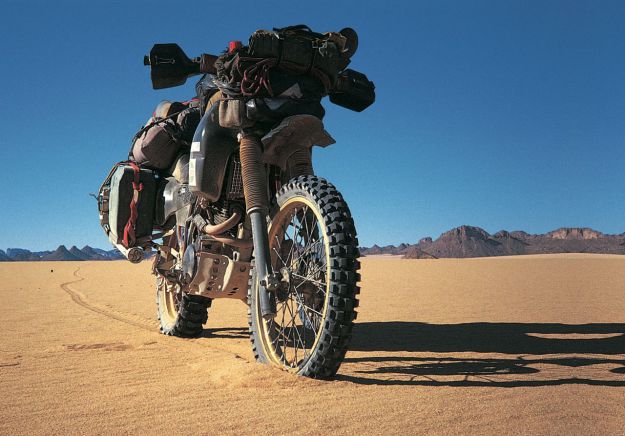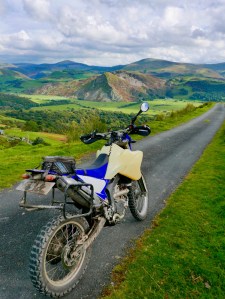
CB500X Rally Raid ready to roll

CB500X RR Index page
Tubeless Conversion Index Page

wgr
cbxL309

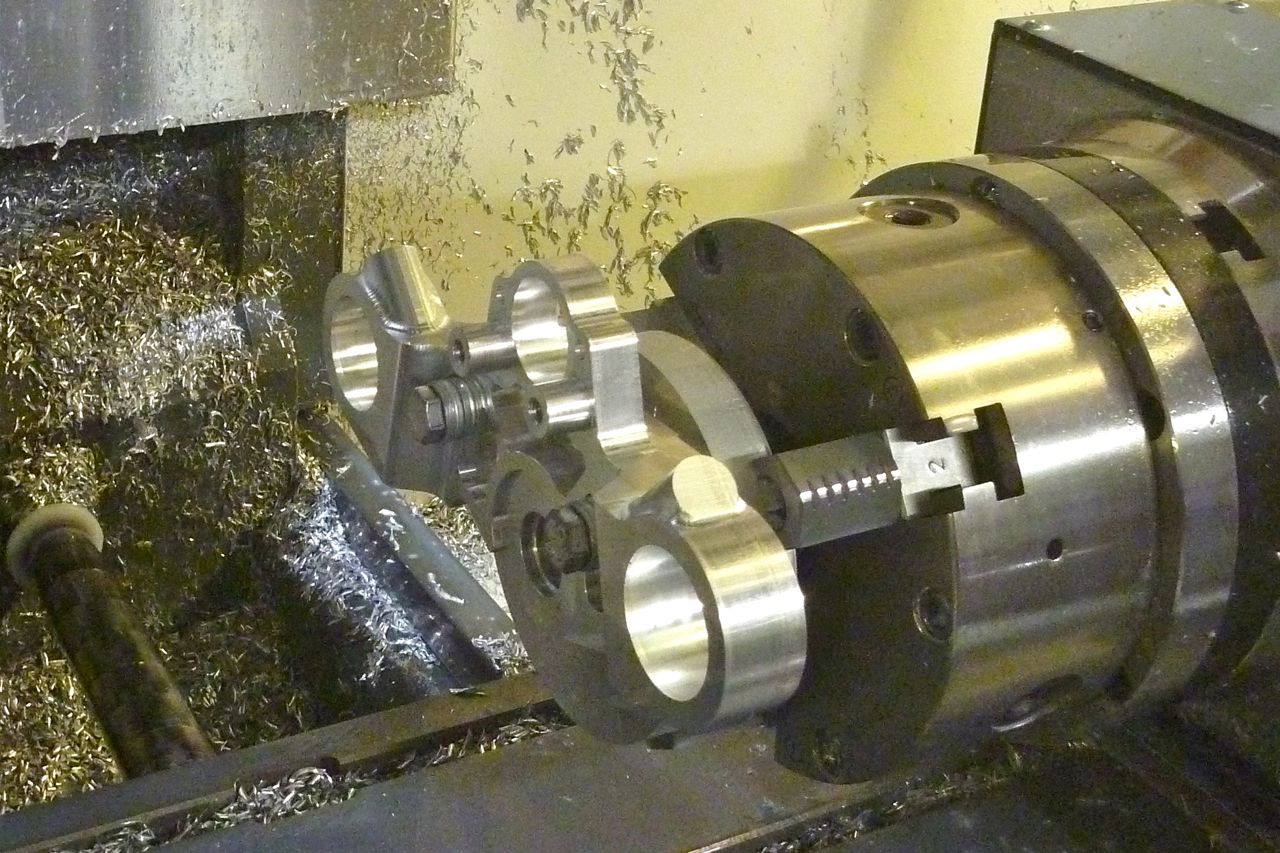
Just a couple of days before I’m off and I’ve finally got the CB-X converted to full Level III spec at Rally Raid. I started the job at home by fitting the clever drop top clamp, precision milled on John’s CNC 4-axis milling machine (right). Marvel what a 5-axis miller can do in this mind-boggling vid. The clamp enables positioning the fork tops 20mm lower which with the 30mm longer damper rods gives two inches more travel and room for the bigger wheel. It’s a more expensive solution to screwing on dodgy fork extenders – something I looked into when trying to Tenerise a TDM900 earlier in the year.
cbxL304

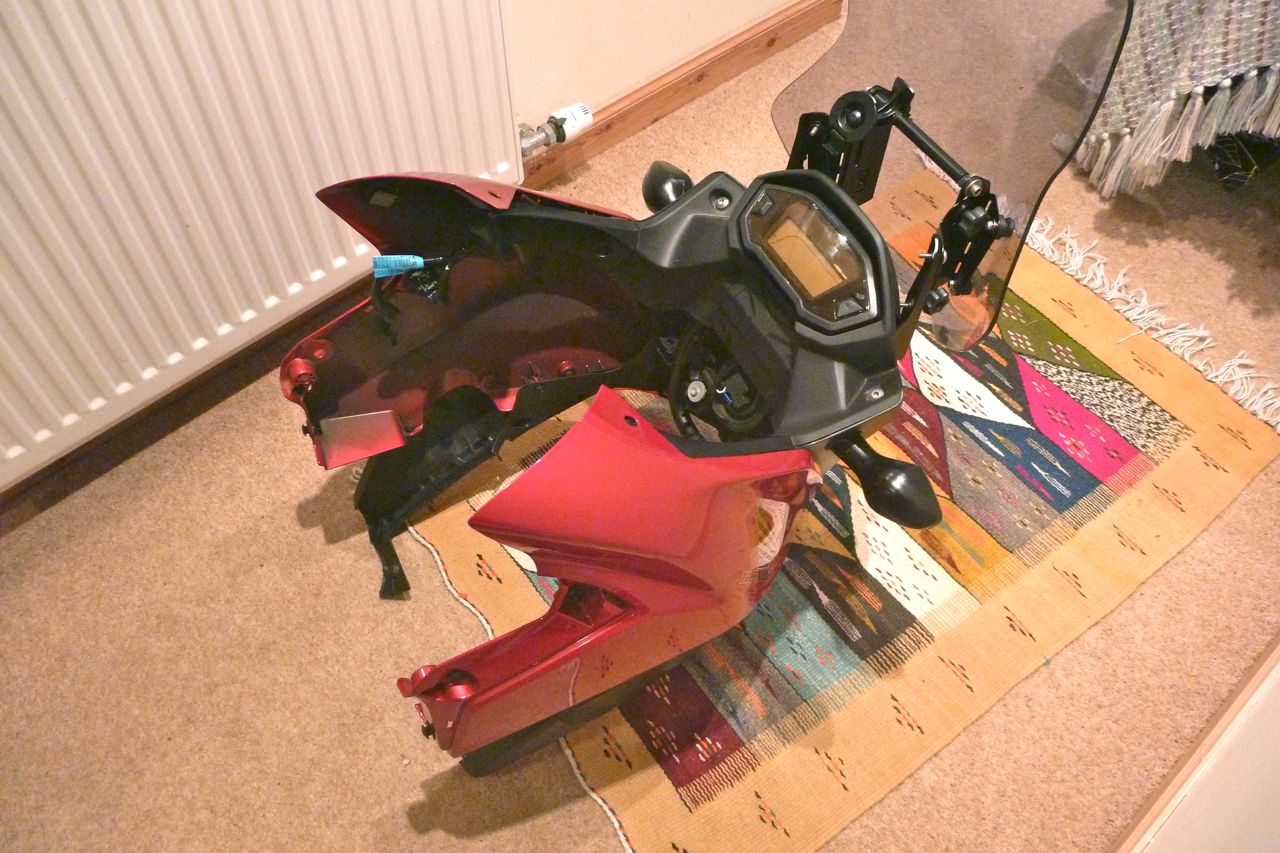
Removing the whole headlight/fairing/dash unit (left) is actually quite simple once you get your head around it. The pdf instructions from RRP are all clear – all the more so when you look back at them. Side panels off then three screws on each side of the fairing and then the crucial double 12-mil bolts on the steering head which take all the weight. Ease back the LHS to unplug a couple of connector blocks and away it comes. RRP include some alternative 12 mils with nylocs in the kit. I saved them for later and a 1000 miles down the road, when I got to their workshop one had fallen out. RTFpdf.
JIS

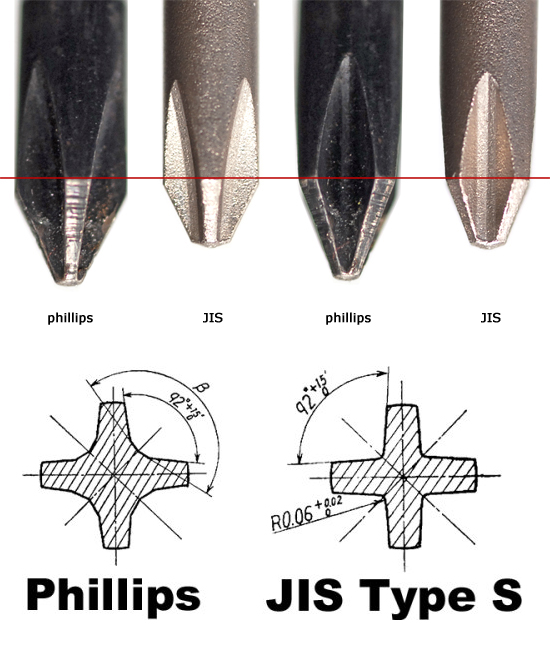
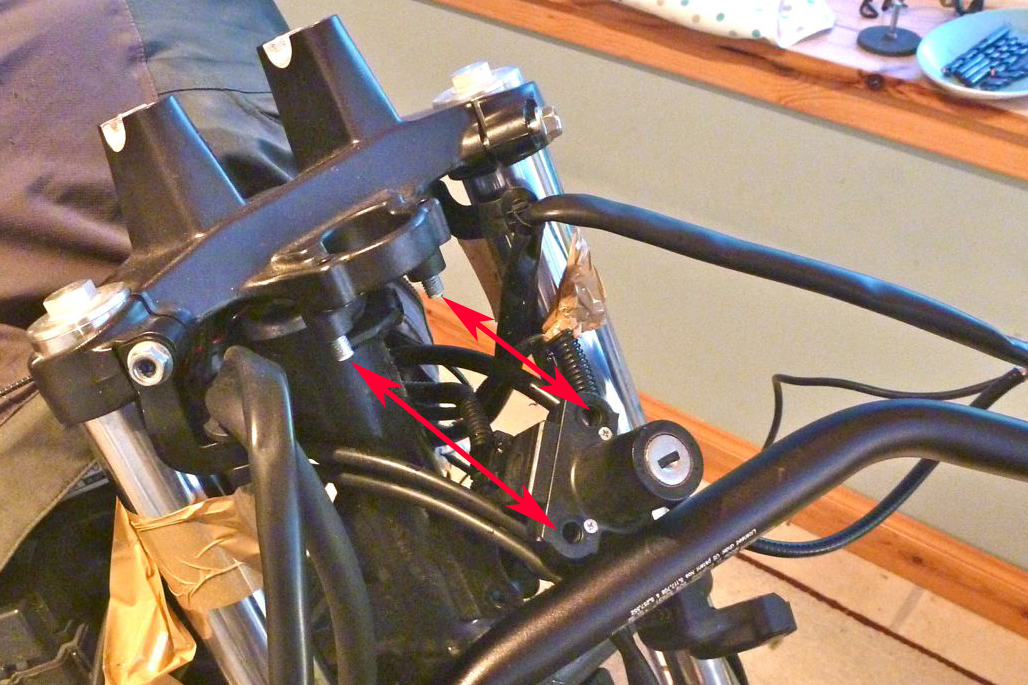
Removing the ignition barrel from the OE top clamp is where things slowed down. First, two crosshead screws holding on the HISS ring needed undoing from underneath. Why crossheads FFS? I almost lifted the bike off the ground getting the pressure in there – luckily they both turned with a nice crack of shearing Loctite. Later John advised these are actually JIS head screws – some sort of Japanese standard that’s possibly better than Phillips. Could that be why we had all that trouble using Phillips drivers on Jap monkey metal crossheads in the bad old days? Probably not.
cbxL303

The next step required drilling out the chunkier undoable barrel security bolts (left) and – long story short – that took me days of faffing: blunting and crudely resharpening drill bits over and over on a distant neighbour’s grinding wheel. It’s an awkward job with an upside-down drill just off centre and the chuck spinning close to cables and wires, but I got one out then Mr Postie delivered a few cobalt drills the day before we had to pack up and relocate cross country. never heard of cobalt drill bits but with a better technique (slow rpm, nib in oil), the second bolt head fell away in a few seconds. John at RRP says he may include a cobalt 9mm with future kits.

cbxL305

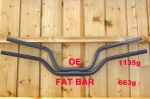
I was hoping to fit some stronger Renthal fatbars (right) but the taller RRP clamps aren’t quite ready yet, so it was back on with the taller OE bars, (left) – there’s plenty of cable slack to do this – the lift is not that great. On went my trusty Barkbuster Storms (now on their 4th bike) as well as some Daytona heated grips I’ve had lying around for so long the rubber’s gone grey. They look a bit crap compared to the Oxfords that came with my last couple of bikes, but they’ll last as long as they last and were dead easy to fit. I also fitted RRP’s 12-volt double PTO mounting plate – much neater than having the PTO zip-tied to the ignition barrel. The Barks required the usual compromises with lever angles – apparently, a Bark V-Strom mount has the curve to get under or over a brake hose. I have some neat shortie adjustable levers (right) from RRP too but will fit them if mine snap. The Storms ought to reduce the chances of that.
cbxL308

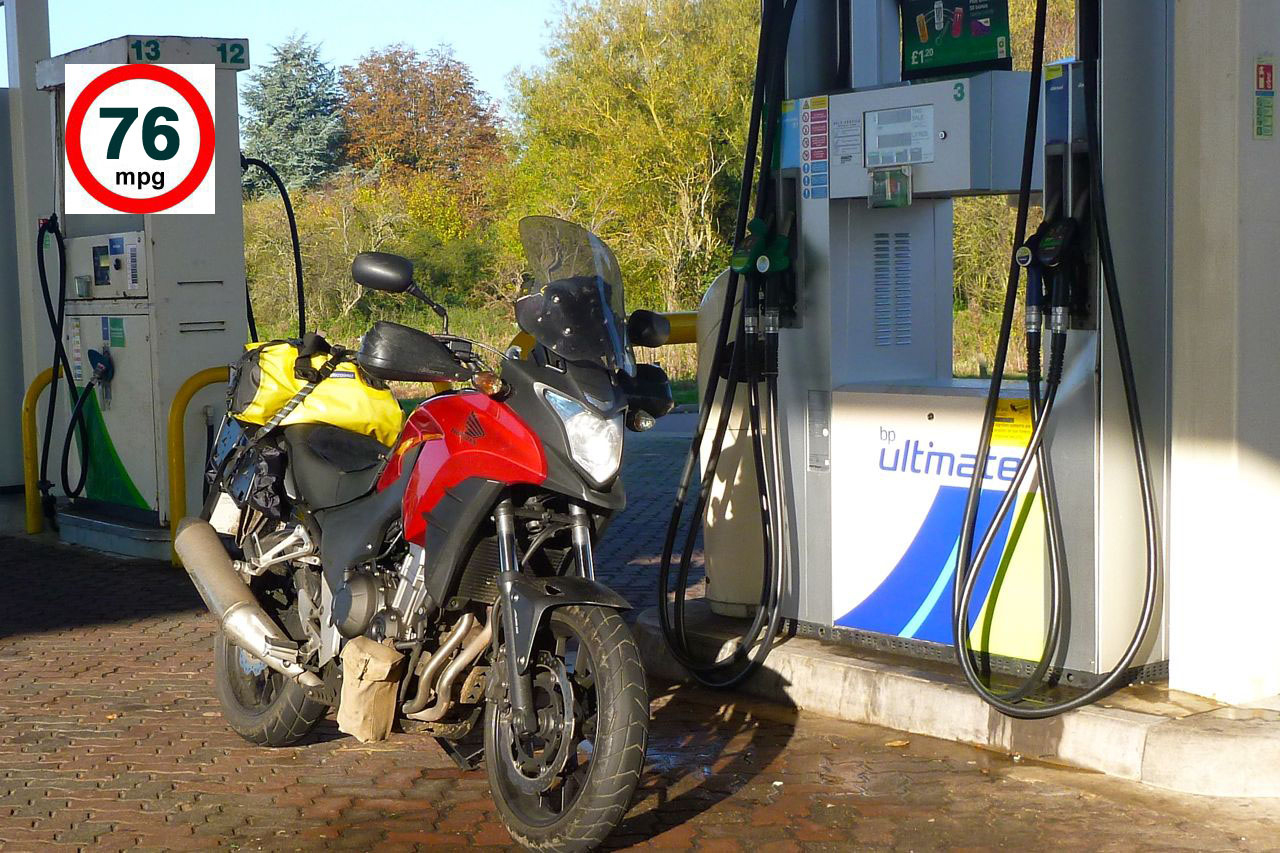
The next day I set off on a 480-mile run down to North Yorkshire, including the full length of the fabulous A68. I was trying out a new Powerlet heated vest which I’m sure helped me arrive less tired, with just one stop at a Gregg’s 350 miles in. The 500X returning an average of 76mpg while I marvelled at the OE Pirelli tyres’ grip in the wet.
tech7
reduce

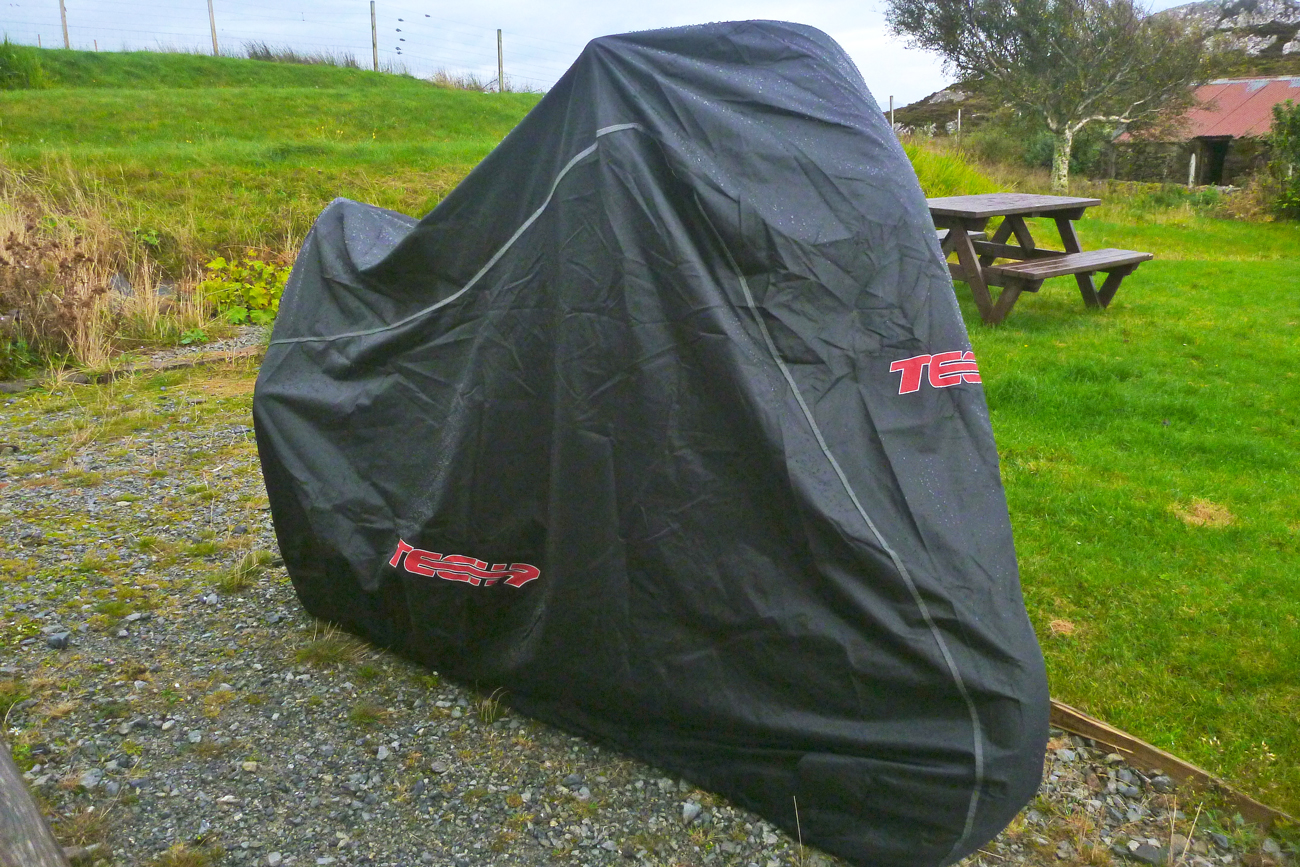
BTW, let me put in a good word for the big Tech 7 Adventure Bike cover. Yes, there is such a thing, and it fits bikes up to tall screened GS12s and S10s. Still only £23 from M&P, I’m sure it’s much tougher than those £10, last-a-year silver jobbies, has two under straps just inside each wheel, but also has an elastic bottom to make those straps unnecessary unless it’s very windy.  Low-profile black to reduce visibility on dark streets and compact enough to make a handy travel cover or groundsheet.
Update 2019: After 3.5 years the waterproofish laminate is shot and the fabric is sun faded, but all the stitching and elasticity and clips are intact and it all hangs together. I need waterproofing, so bought an Oxford Aquatex for £20 for my Himalayan.


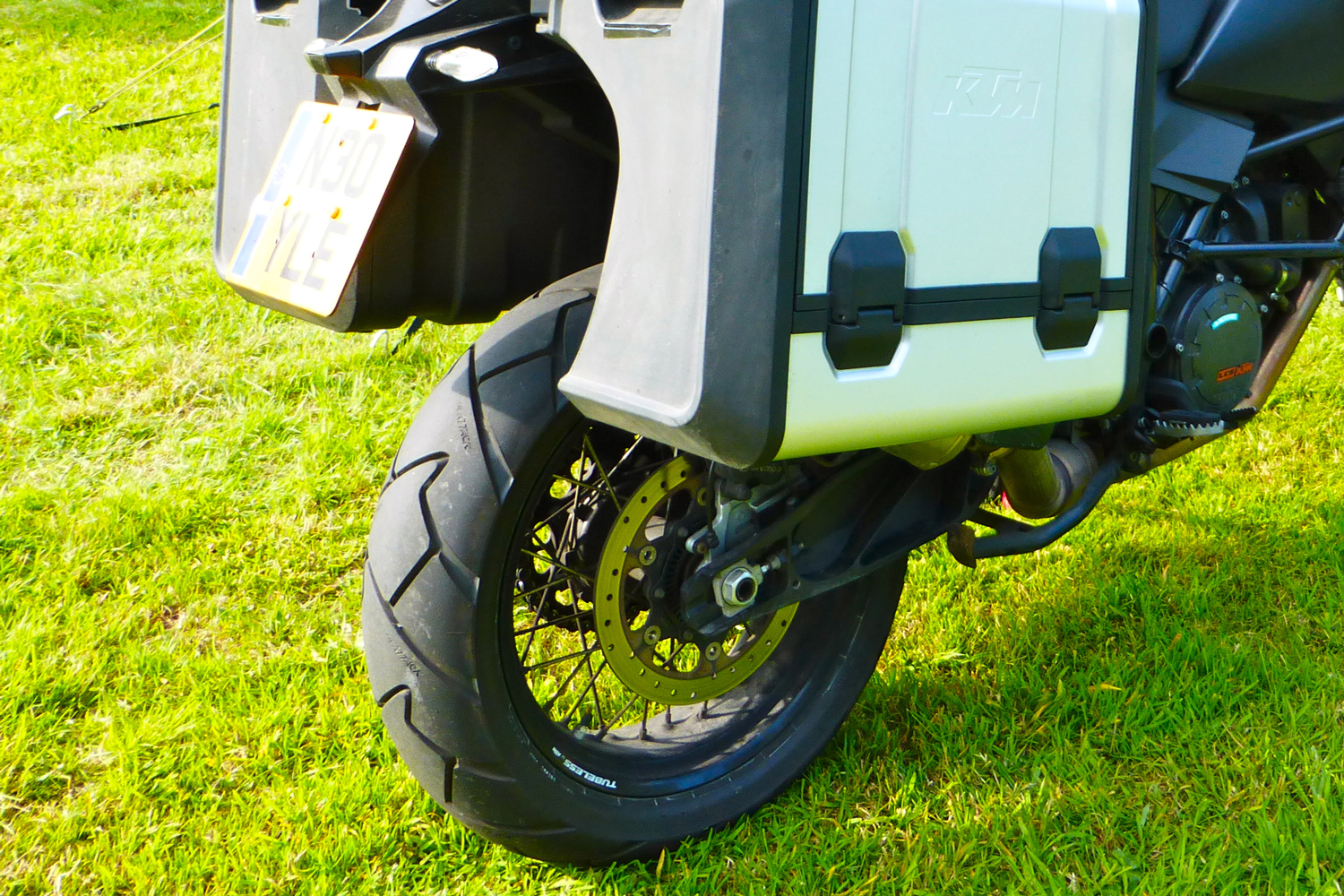
A few days later at John’s workshop near Bedford wheels and suspension were needed to finish the Level 3 job. I’m trying out some RRP wheels sealed with a mystery polymer by BARtubeless in Italy to run tyres tubeless. With his rally racing background John’s more of a tube or mousse man. For less aggressive solo travels to which the CB-X is more suited, I err towards tubeless and gel, as do a few other potential RRP customers. RRP may end up being the UK supplier for BARTubeless.
cbxL315
cbxL320

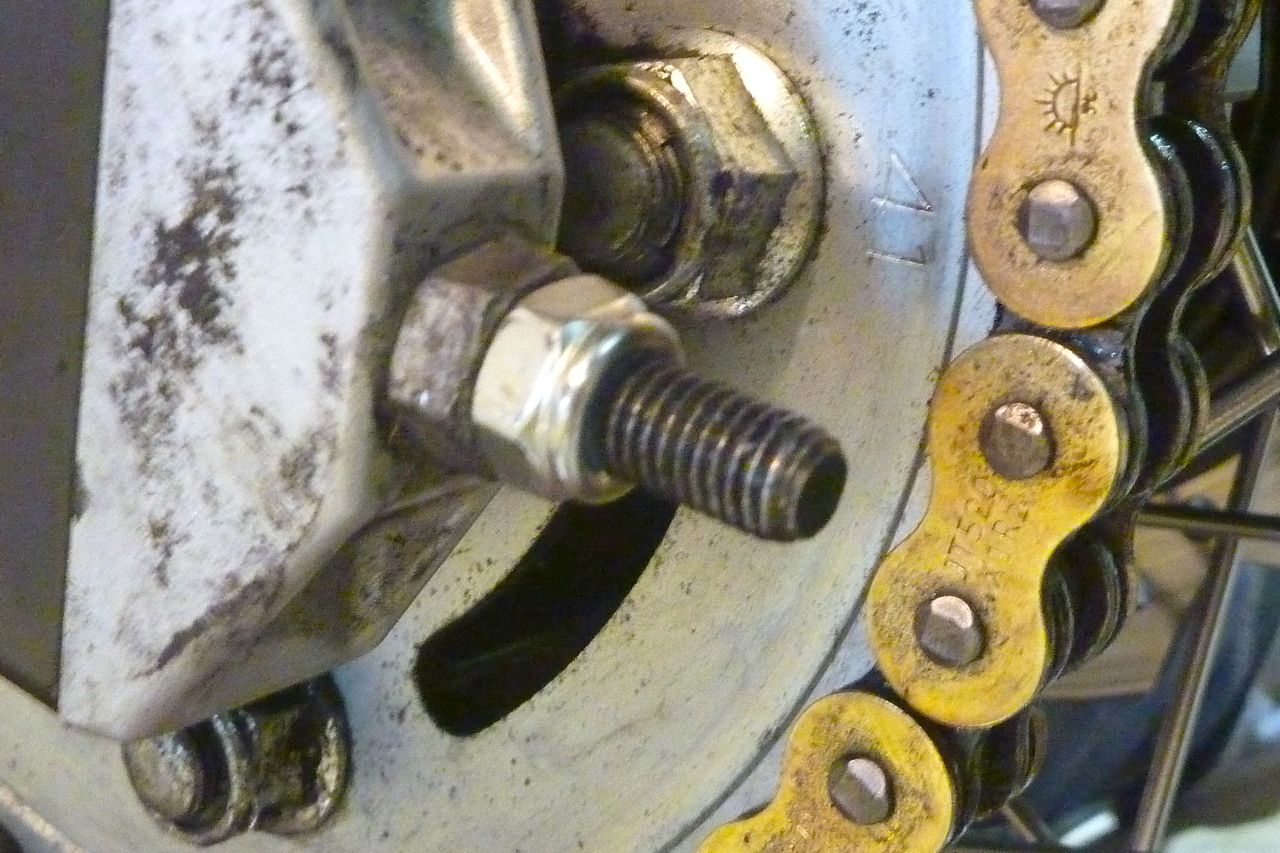
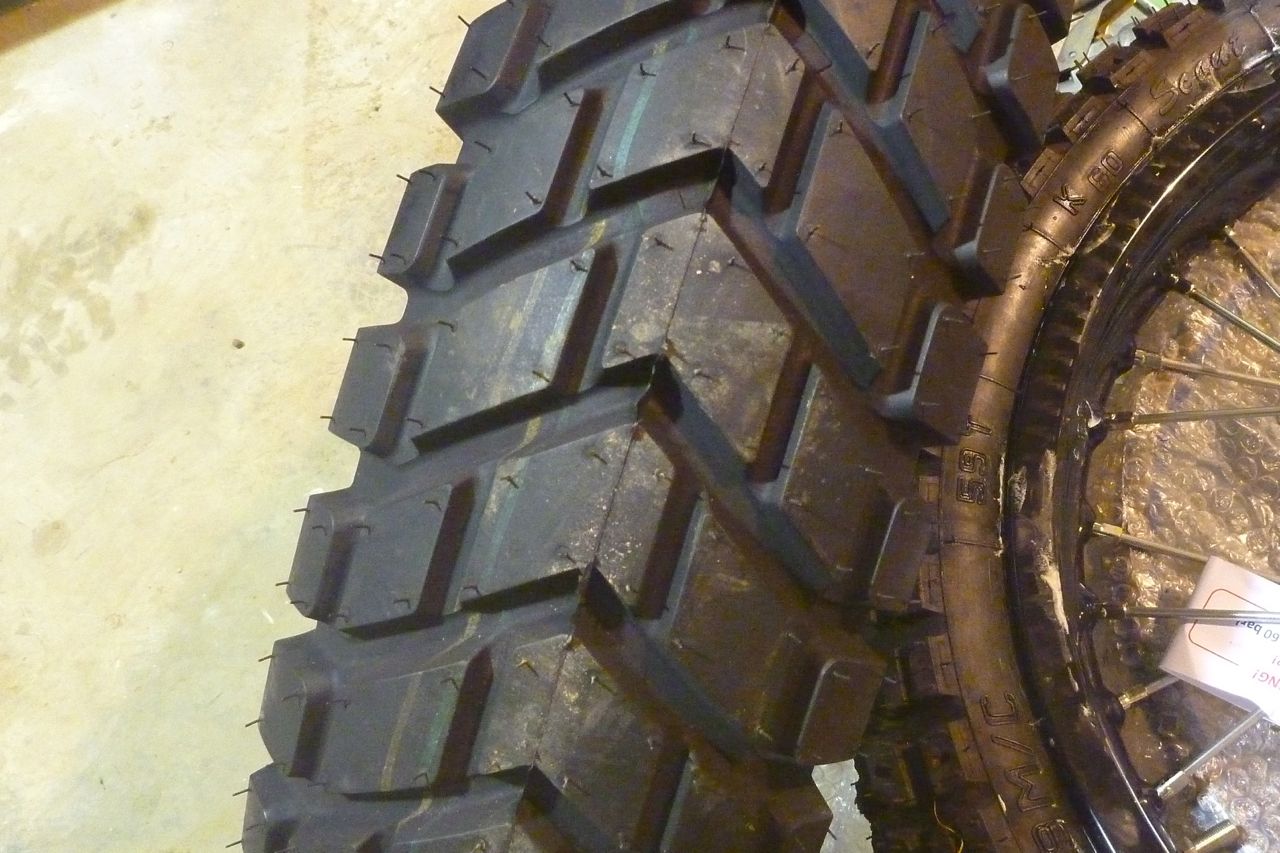
One problem with them is the thick layer of polymer in the well of the rear rim making tyre mounting difficult. That’s what they found earlier fitting a Golden Tyre GT 201 (left; 150 / 70 R 17 TL 69V) I bought from Adv Spec. You need the depth in the rim’s well to give enough slack in the bead when doing that last bit of levering. Of course, some tyres are harder to mount than others and the GT201 (a K60/MT60 look-alike) is stiffer than the TKC which RRP typically use. While in the area they adjusted my recently bedded-in x-ring chain and John recommended fitting a nyloc nut on the chain adjuster bolt (right); apparently the OE nuts fall off.
cbxL314

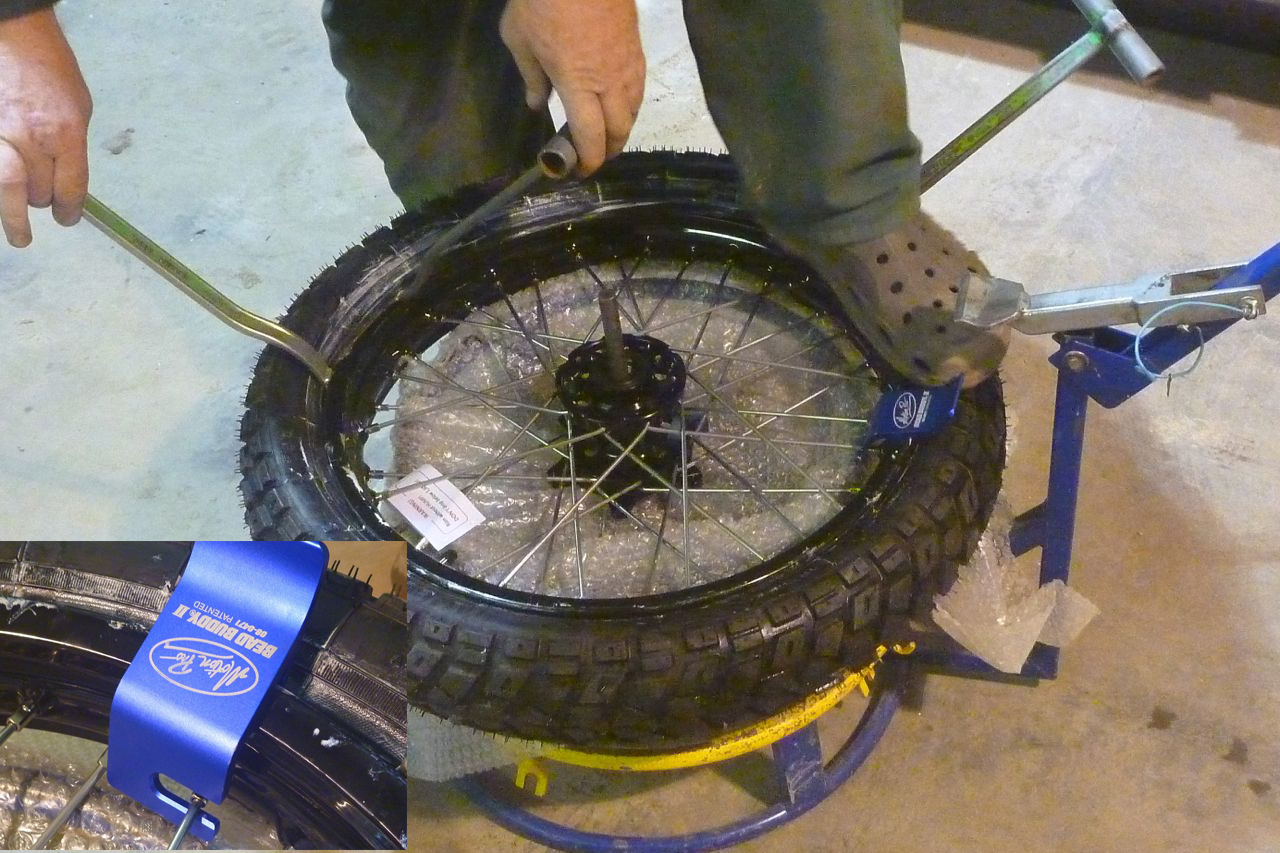
Heidenau K60 19-er leftover from my old GS500 project went onto the front rim with no hassle. I got a chance to try out my Motion Pro Bead Buddy II (left, blue), a ‘hands-free’ clamp that forces the bead down in the well when levering on the opposite side. It’s the same as putting your weight on the tyre to push it down (not so easy on the tyre rack, left) and it did the job.

cbxL311
cbxL312

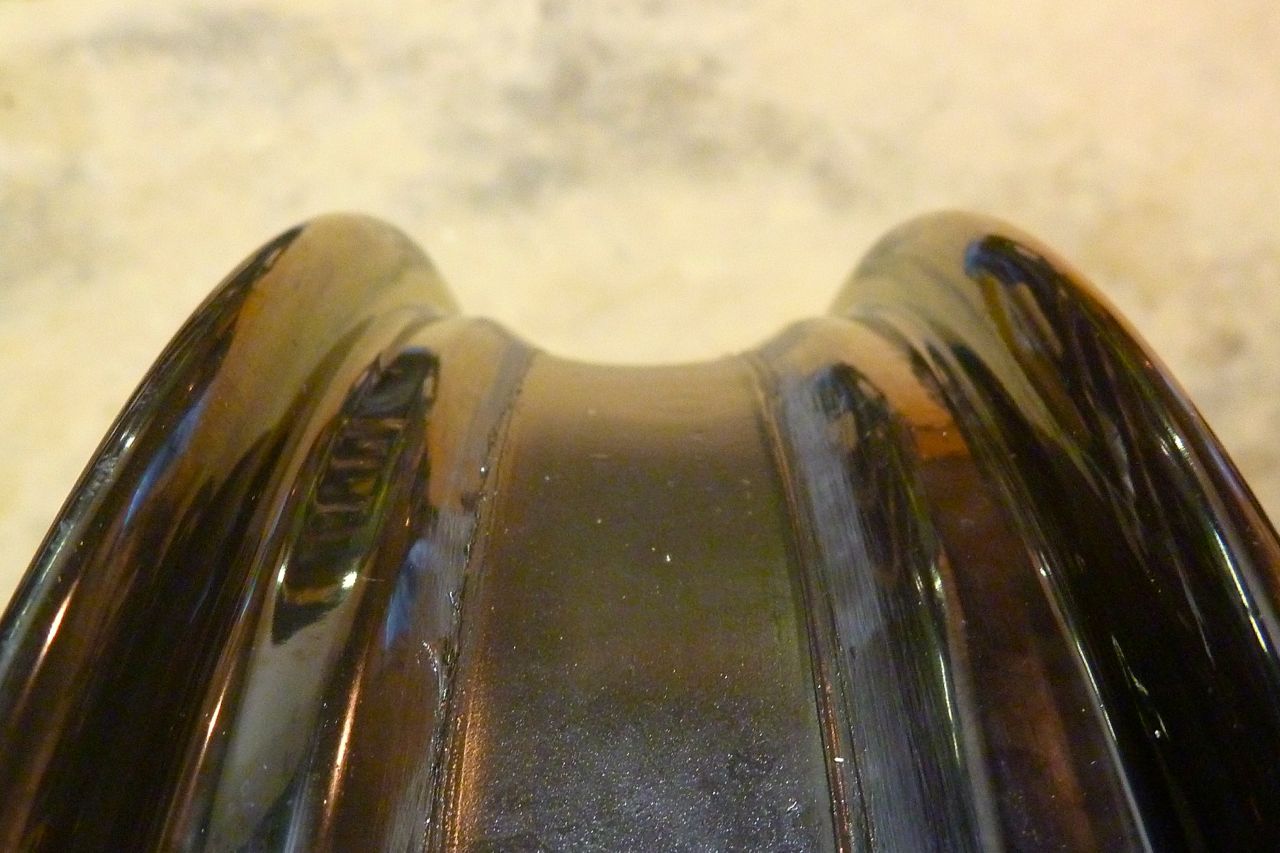
Another problem is this RRP front wheel doesn’t have a rim with the vital bead retaining lip for tubeless use. A label from BARTubeless warned to keep the pressure at least at 1.6 bar or 23 psi to reduce the risk of it dislodging into the well and losing pressure. As it is, 1.6 bar is the lowest I’d run tyres on a CB-X at anyway, so it should be OK. I know when I DIY sealed my Tenere’s 21-inch front wheel (also no lip, unlike the rear) I had leaking problems, but that could be down to the 21’s narrower section (don’t ask me how or why). Anyway, I’ve Slime’d both wheels, will keep checks on the pressure and am taking a light inner tube just in case (although that embossing – above – would need nuking to stop rubbing a tube up the wrong way). Hopefully, this experimentation won’t impinge on my Morocco ride, as it did with the Tenere.
cbxrrpsprings
rrp-dampers

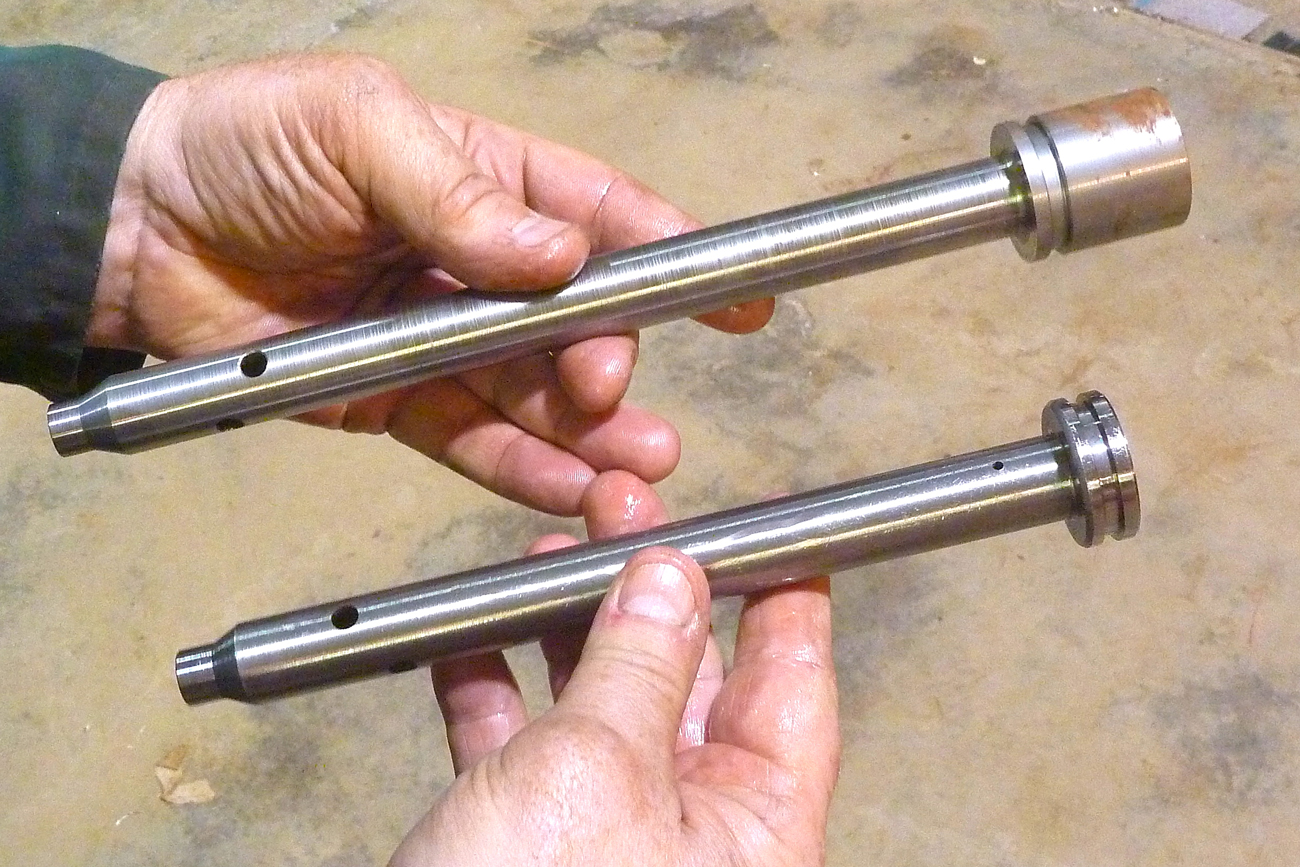
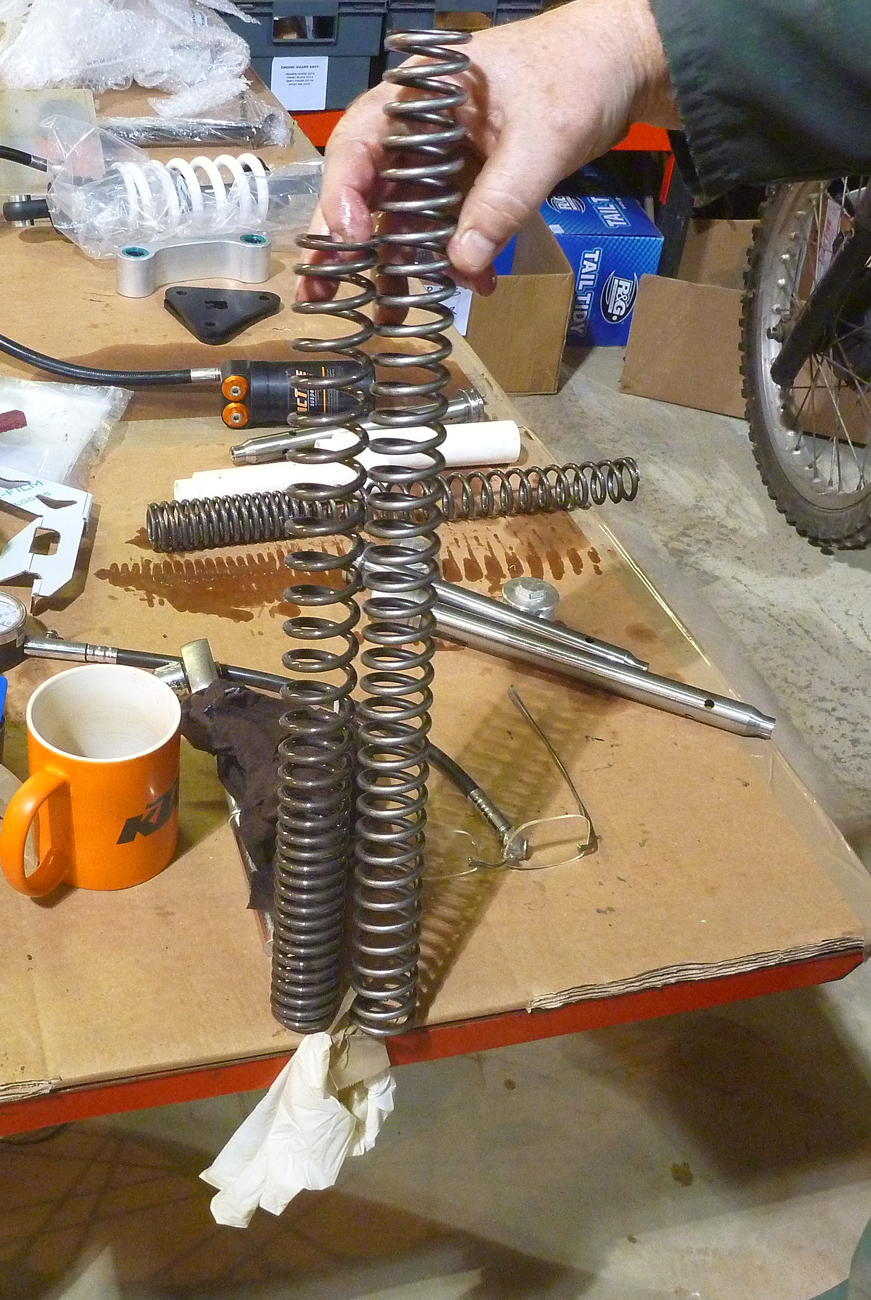
The forks came out, got cleaned up and the internals were all replaced. John showed me the Honda ‘progressive’ spring which is really a ‘twin rate’ coil off something shorter with a tacky white plastic spacer to elongate it for the CB-X (visible back left). John replaces it with a full length linear spring from Tractive (left) and tackles the progressive response with a 30mm-longer damper rod (right) using some clever deforming shims as well as some much lighter fork oil that’s less prone to losing viscosity when hot. On top, the forks get pre-load adjusters (as will 2016 CB500Xs)  and air bleeders.
cbxL301

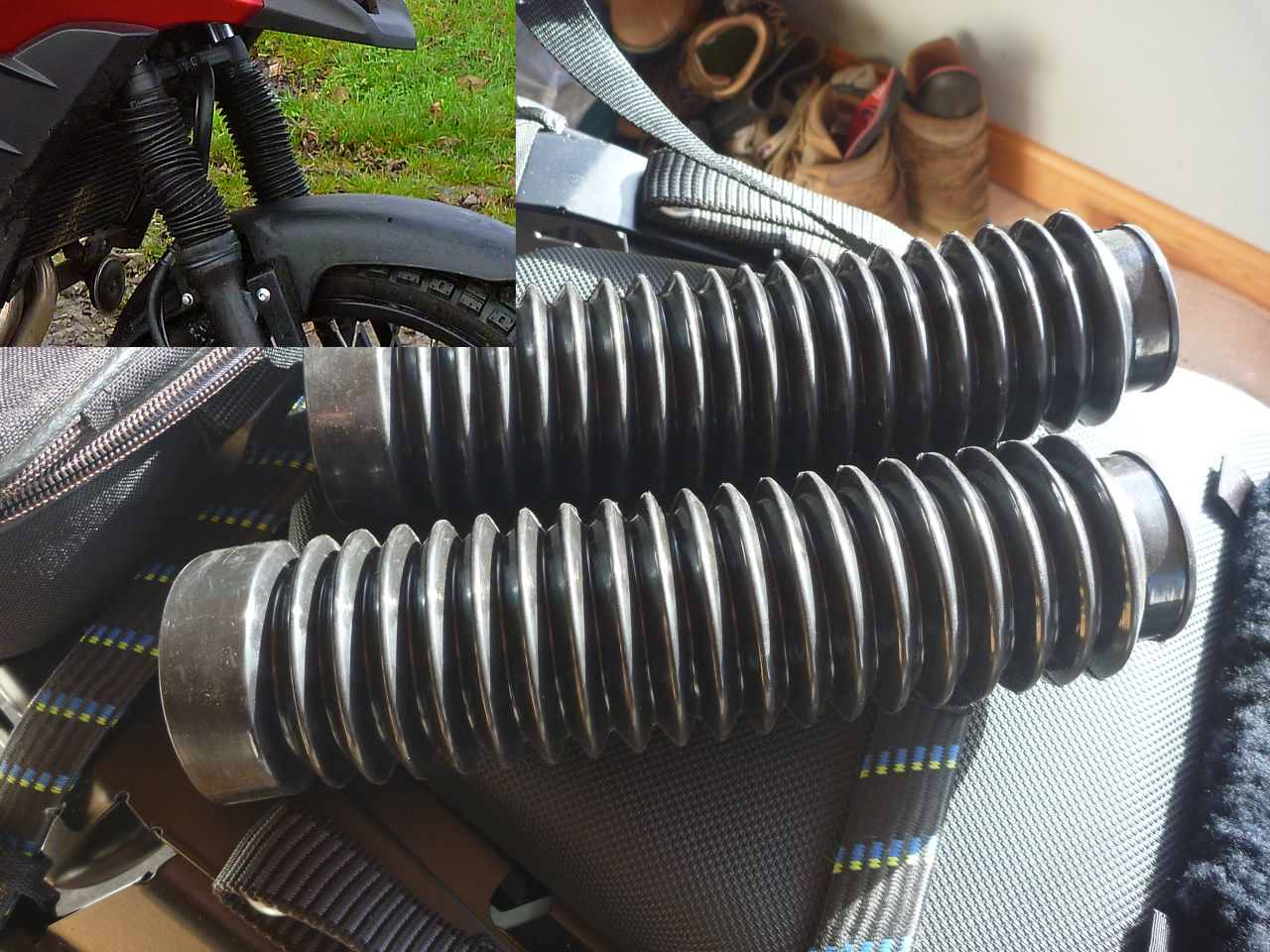
While the forks were off he slipped on some gaiters I tracked down on ebay and which John told me where the best fit he’d found so far. Gaiters are an old-school thing so it’s hard to find sets that are short enough for a modern 41mm fork which in the gaiters’ heyday would have correlated with a ten-inch travel MX fork. As you can see left, these 41 x 60 x 250 fit well on the 2-inch longer travel forks.
cbxL318

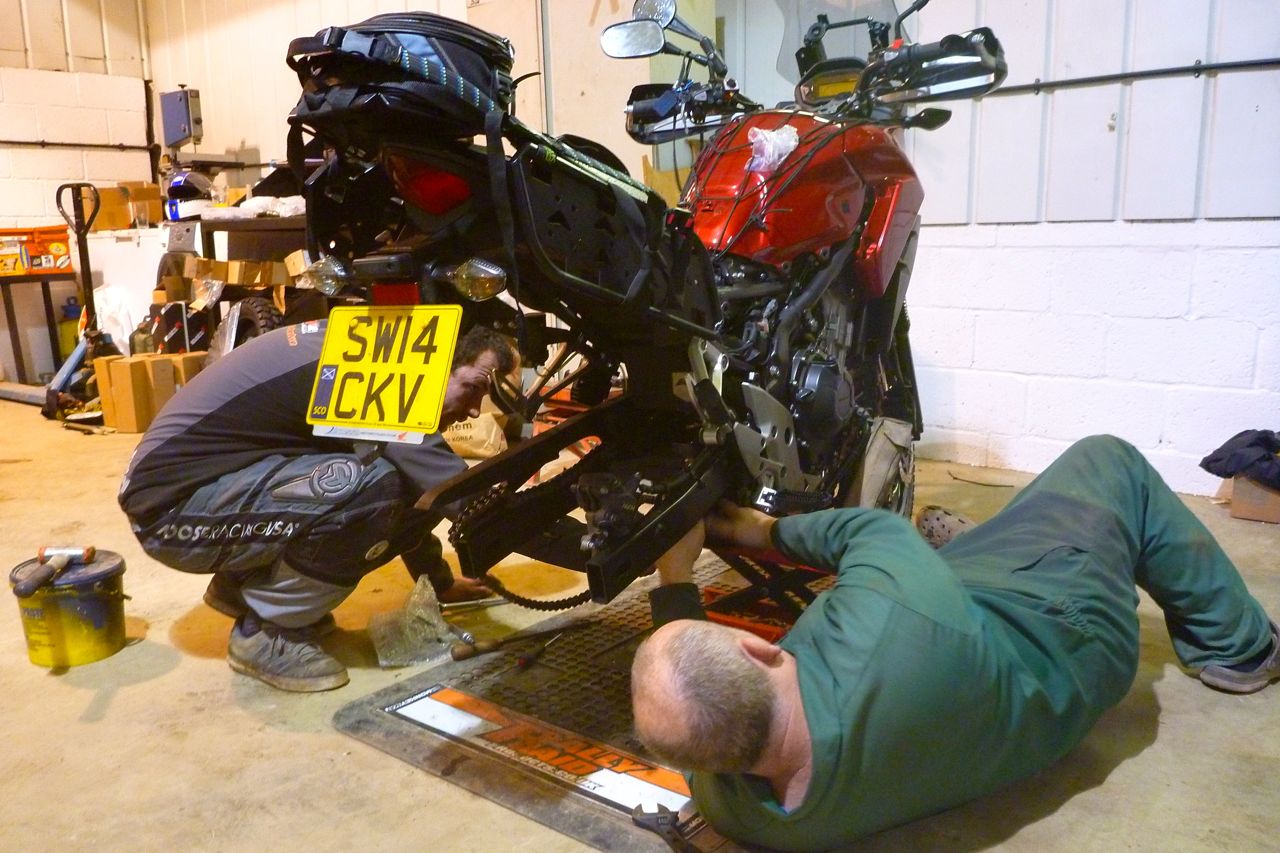
Like a pampered factory rider letting his pit crew take care of things, I wasn’t paying attention when the Tractive shock and revised linkage plates got fitted, but that looks like a tricky job needing a spare pair of hands. A small dent needs bashing into the silencer and the remote reservoir fitted by the engine on the other side.
There’s full 3-way adjustment on the Tractive, but apparently, the shock preload is a bit of a faff with the Tractive took supplied. What I’d like is a hydraulic preload knob option. I found that so handy on last year’s Xcountry as loads changed, but I never touched my Hyperpro’s other settings once set up for me. TBH I’d struggle to know exactly what needed doing. Again, it’s a rally vs travel thing. I spec’d a 120Nm spring as I’m fond of food.

All this extra suspension needs a two-inch longer sidestand which Rally Raid fitted. It’s a shame it doesn’t include an extended foot for soft terrain support, but something can be bodged on down the road. They did mention that with the longer stand the greater weight can cause the stand to swing down on heavy drops which can engage the engine cut out. Another reason to get ride of those annoying switches. Or maybe more spring tension.
cbxL321
cbxL307

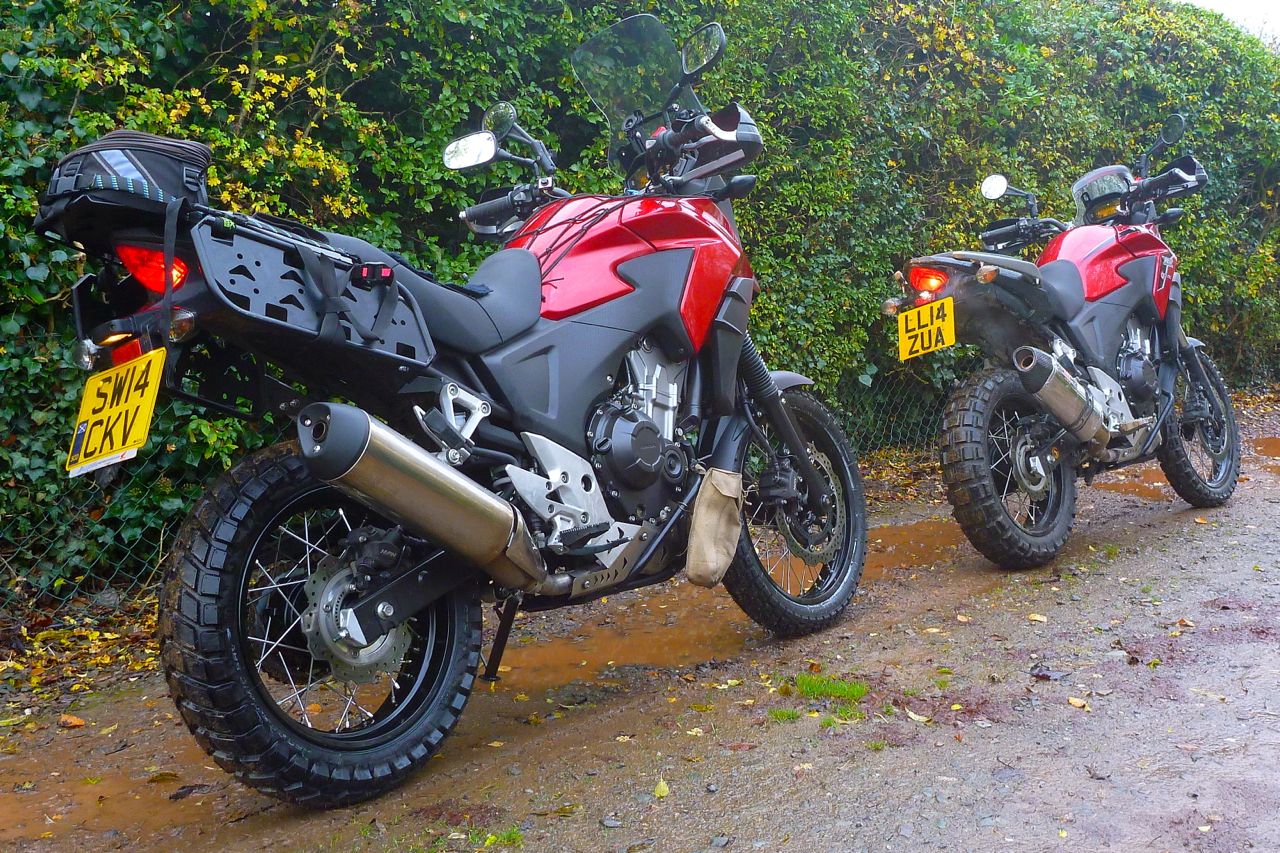
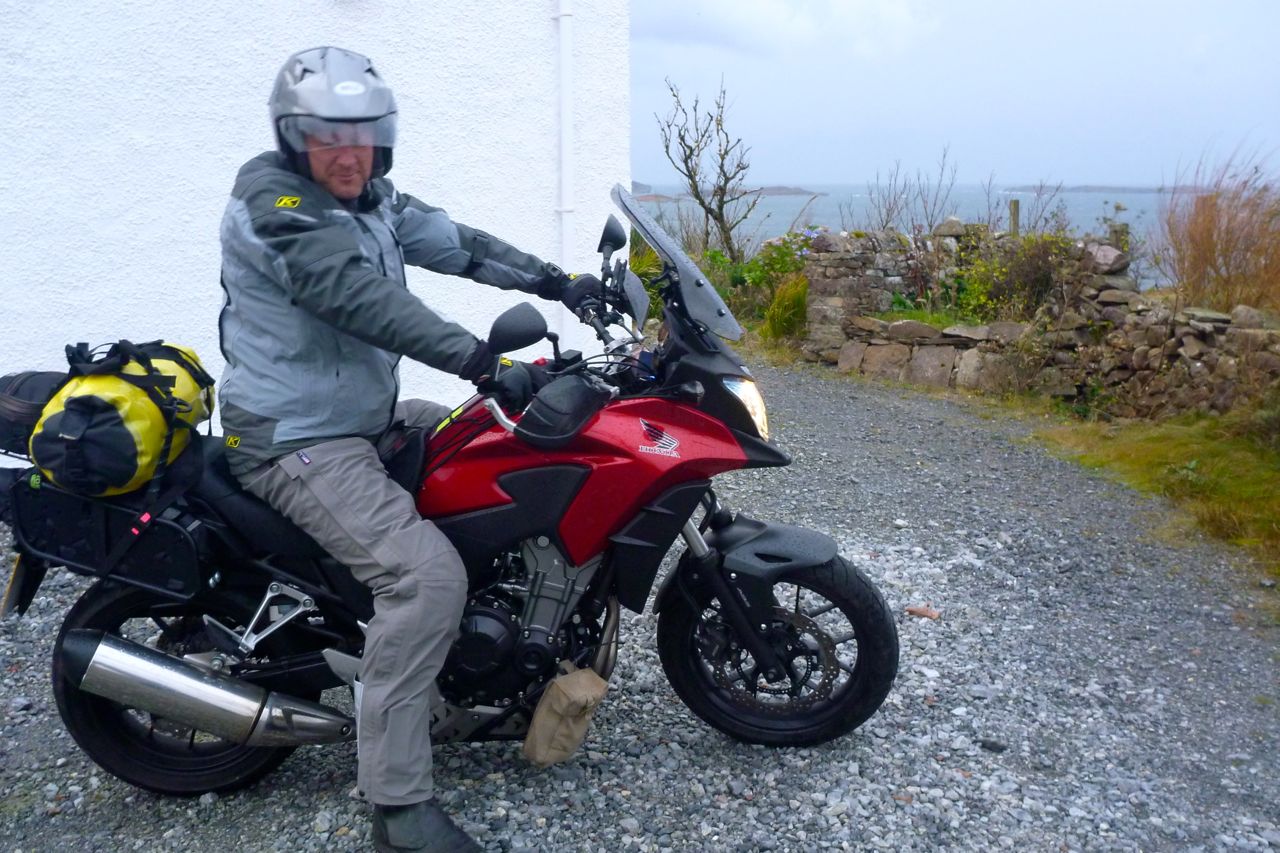
We went out for a quick spin around the back lanes, but new tyres, wet leaves and the completely new feel to the front end made for an edgy ‘on marbles’ ride. The bike’s added tallness suits my 6′ 1″ much better (you can see how low the bike sat on the right, with a bit of baggage on the back). Now I can still almost get both feet flat on the ground, though the shock is bound to loosen and sag a bit in the upcoming miles.
cbx-footrests
rrp-footresters

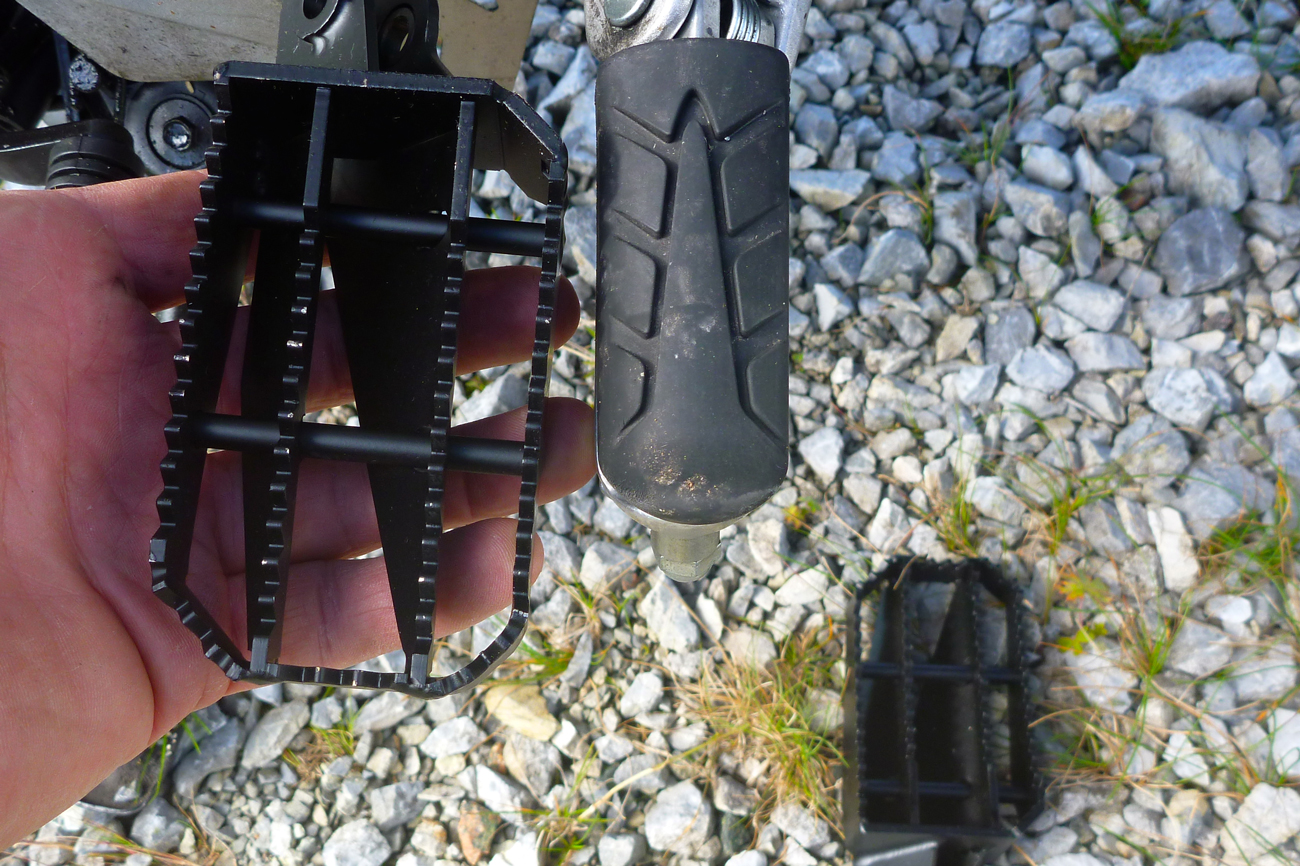
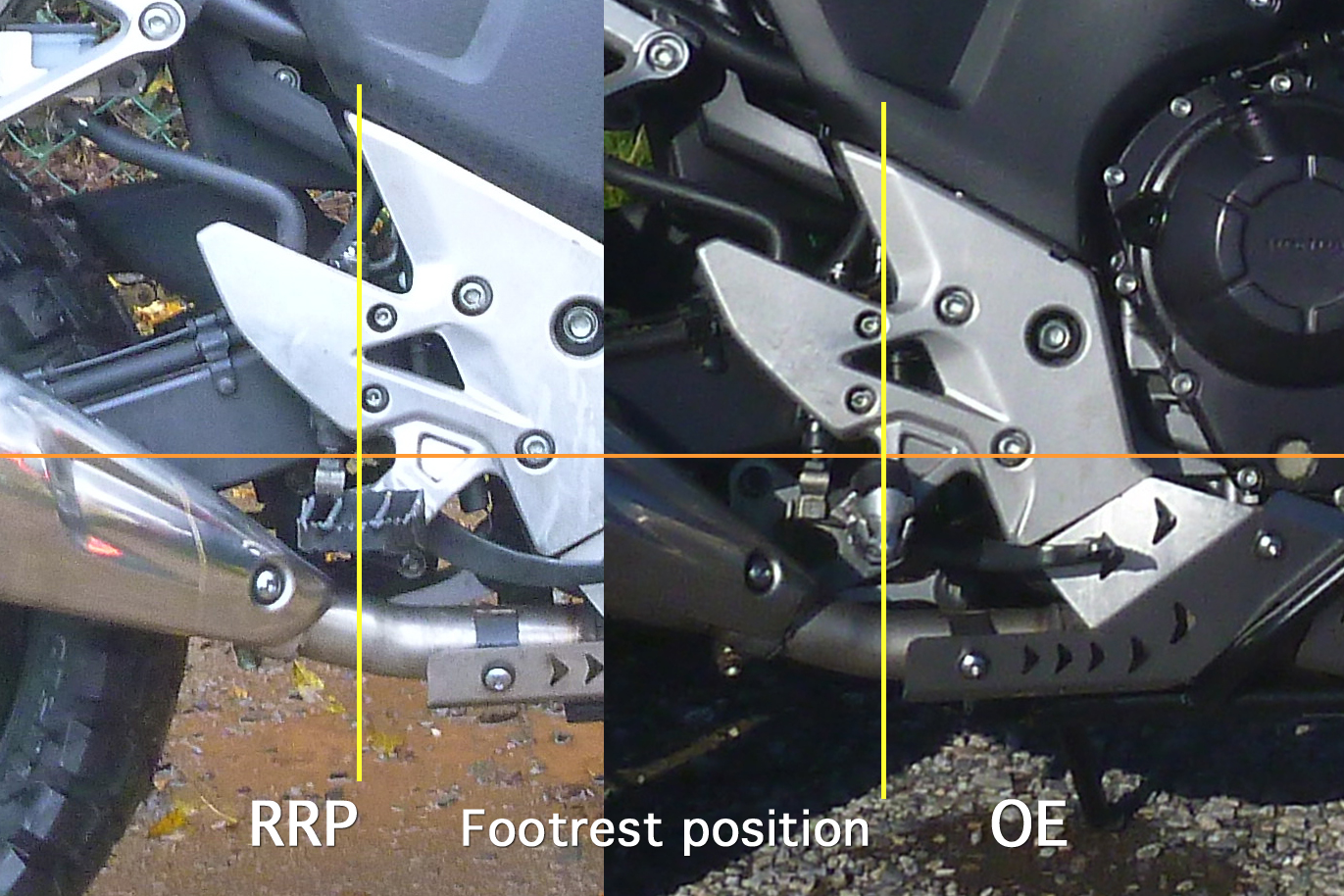
One good thing is the RRP platform footrests (left) feel up to an inch lower than the rubber-capped OEs which makes less of a leg bend and also standing up less effort. Turns out they’re a bit further back too (see image, right).
We rode up a local potholed ‘dogging’ lane (complete with a scrunched-up copy of Razzle – that takes me back…) and standing on the X felt spot-on for my height – very comfy indeed – thanks to retaining the higher OE bars and helped by those big pegs. No more stooping, as on last year’s X bike.
hyper

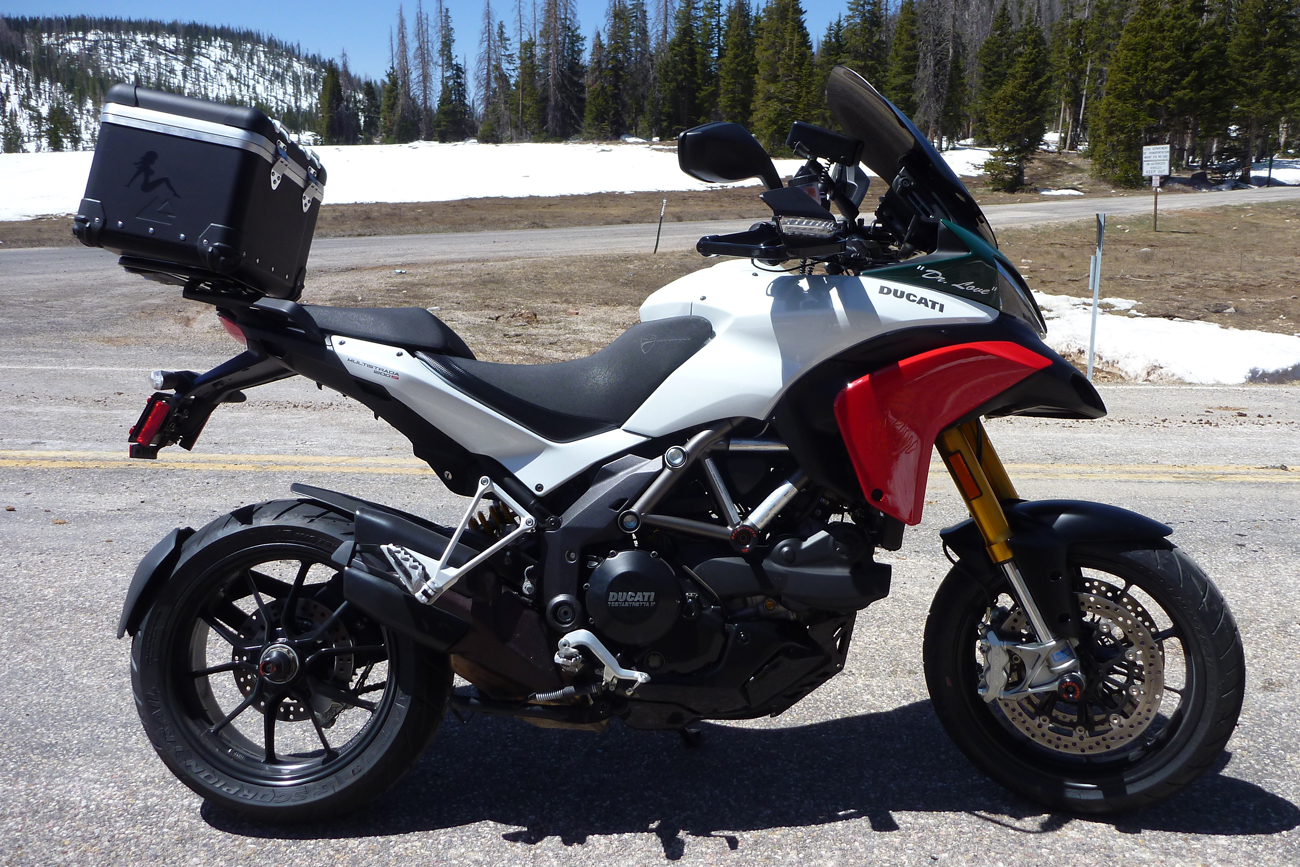
A bigger diametre front wheel has a greater gyroscopic effect which makes changes in direction (aka: steering) slower. That’s why road bikes run 17s, even if they look all wrong when fitted to an ‘adventure’ bike like the Ducati, right. Initially, it feels like the rake’s gone all Easy Rider or the head bearings are too tight, though actually the new K60 19-er noticeably lightens the steering – good for pivoting through traffic. That greater force also improves tracking (straight-line stability), not that the OE X was deficient in that respect.

cbx-sp

Setting off back to London in the dark and the rain I took it easy, and once I dead reckoned my way out of Bedford and onto the M1 (compass on my jacket sleeve proving useful), I sat it out on the motorway and by the time it came to tackling Hyde Park Corner at Friday rush hour I was fully accustomed to the Honda’s new feel. Taller may mean higher CoG, fewer dabbing chances and the need to step on a footrest to get on, but it’s all given the CB-X that trail bike stance which I know and love. Only thing is this time it won’t be accompanied by the thump of a big single, but a smooth and as economical 500 twin.

logo-rallyraid

Thanks to John and Adam for doing in half a day what would take me half a week. There’s more on their CB500X conversions here – and more from me and the bike later.
Some of the RRP parts I bought, some were exchanged for advertising in the 2016 edition of AMH.

Best street-legal 50/50 knobblies

See also: ‘Do-It-All’ 80/20 travel tyres
D-tkc
tyr-5050

Most of the tyres compared here are what you’d call ‘street-legal knobblies’. They work fine on dry roads as long as you remember what you’re riding, but some may give you a bit of a fright if you don’t, especially in the wet.

tyr-beans

There’s no free lunch: road-legal knobblies wear faster than Road Touring or Do-It-All 80/20 tyres – the reward is more secure grip on loose surfaces which may be more of a priority on your trip. It’s certainly less tiring to ride the dirt with tyres like this. Traction is OK on a dry road where there’s usually plenty to spare anyway, but at the cost of smoothness, noise, braking and perhaps, getting the pegs down. Up to a point modern ABS systems compensate for a knobbly’s reduced traction on road, but that won’t stop you sliding off a wet hairpin. I’d designate these tyres as 50/50 road/dirt use; they do the job on the dry highway and work better than anything else on the dirt, including sand and mud.

D-MT21
D-MT63

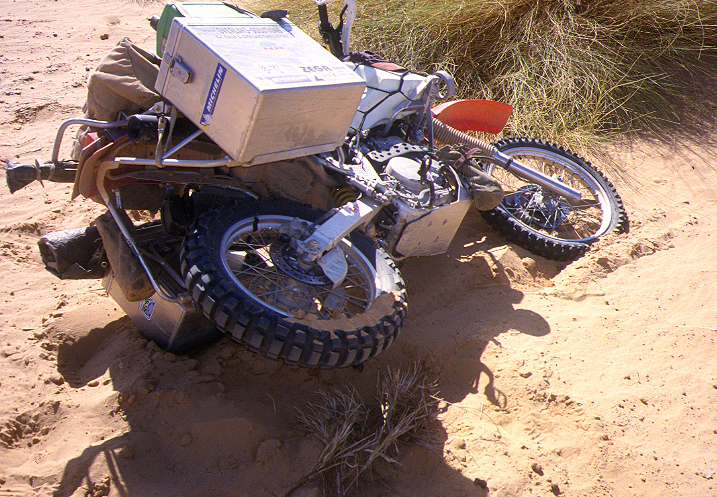
Tyres include Continental’s TKC 80 on the Tenere above, a discontinued Michelin T63 (replaced with Anakee Wild) on the fallen XRL, an original Michelin Desert on the black Tenere below.

The BMW Funduro anove has a Pirelli MT21 Rallycross which has been around since the 1980s. It’s a Mitas MC23 Rockrider on the WR250 (below left), and a Mitas E09 on the XR400 below right.

jak-17

One time I spent the weekend in Wales with my WR on its original Bridgestone TW 301/2s (left) and expected the worst. Though they were at least eight years old they managed just fine in everything except perhaps wet grassy ruts. Not a single slide in 150 miles. And with a dense knob pattern they ought to last OK and made no noise that I could hear.

wale-18

There are scores more examples of full-on, balls-out, off-road racing knobblies. But on a big, loaded travel bike their aggressive tread patterns with tall, widely spaced knobs will wear very quickly on loaded edges, causing cupping on the front (uneven knob wear; below) to eventually give a horrible ride on the road, as well as gripping poorly and squirming (knob-flexing) on road bends. Knobs may even break off at high speeds when a tyre gets hot.

crgr-maxxis

These tyres can work on a light and low-powered bike like the CRF250L left (Maxxis Desert) but Conti’s popular TKC80 have shallow knobs for just that reason; to avoid flexing and cupping

The best do-it-all Adventure Motorcycling Tyres

Page moved here

Adventure Motorcycling 90/10 Tyres

See also:
Do-It-All Road & Trail tyres 
Off-Road Focussed Tyres
And this

R-k181
9010

On the left, my Yamaha XT500 travel bike in 1982, fitted with Dunlop K70 and Avon Speedmaster tyres. Both are now classed as ‘vintage’ but they got me to the Sahara and back.
Fast forward a few decades past the invention of adventure motorcycling, and the tyres listed below from long-established brands are often what you’ll get fitted to a new adventure-style bike. They include:

  • Avon Trailrider
  • R-anakBridgestone Battle Wing and some Trail Wings
  • Conti Trail Attack (right) and TKC70
  • Dunlop TrailSmart or Max (below left)
  • Metzeler Tourance
  • Michelin Anakee (Adventure)
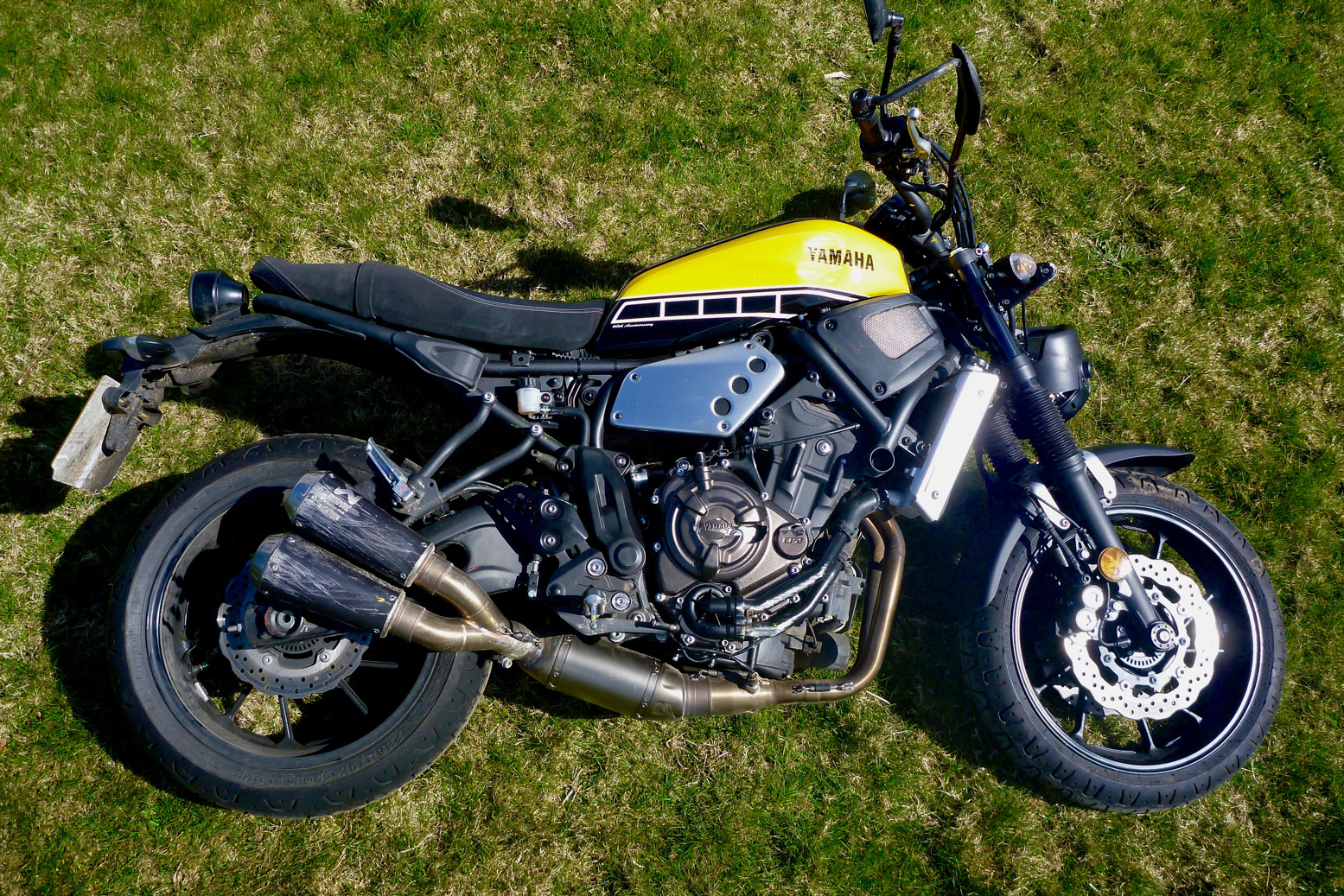
  • Pirelli Scorpion Trail II (yellow bike, below)
R-DunTmx

They may have sexy names shared with genuine off-road tyres from the same brands, as well as a token wide and shallow blocky pattern (below). In dry and consolidated conditions it’s amazing how well they work (as will any street tyre) and just a 15% drop in road pressures can make a big difference. But in deep sand or mud don’t kid yourself: they’ll be no better than an actual road tyre. Some, like the TKC70 self-designate themselves as 70/30 road/dirt. I’d say they’re more like 90/10 at best – in other words, virtually the same as a regular road tyre.

road-tyre
xsrlawnboy

The better-known brands in radial and tubeless are suited to heavy, powerful bikes sticking to the road (in both senses); they’ll give excellent mileage, run cool and quiet, and grip securely in all conditions. Just don’t be under any illusions that they possess any special attributes off the bitumen just because they have the word ‘trail’ in their names.

tyr-beans

If you’re heading out on a long overland trip into the AM Zone where transportation infrastructure is less developed, think about fitting ‘do-it-all’ road and trail tyres instead. They can last as long, grip nearly as well providing you’re not seeking to get your elbows down, and behave much more predictably on the loose surfaces you’re bound to encounter from time to time.

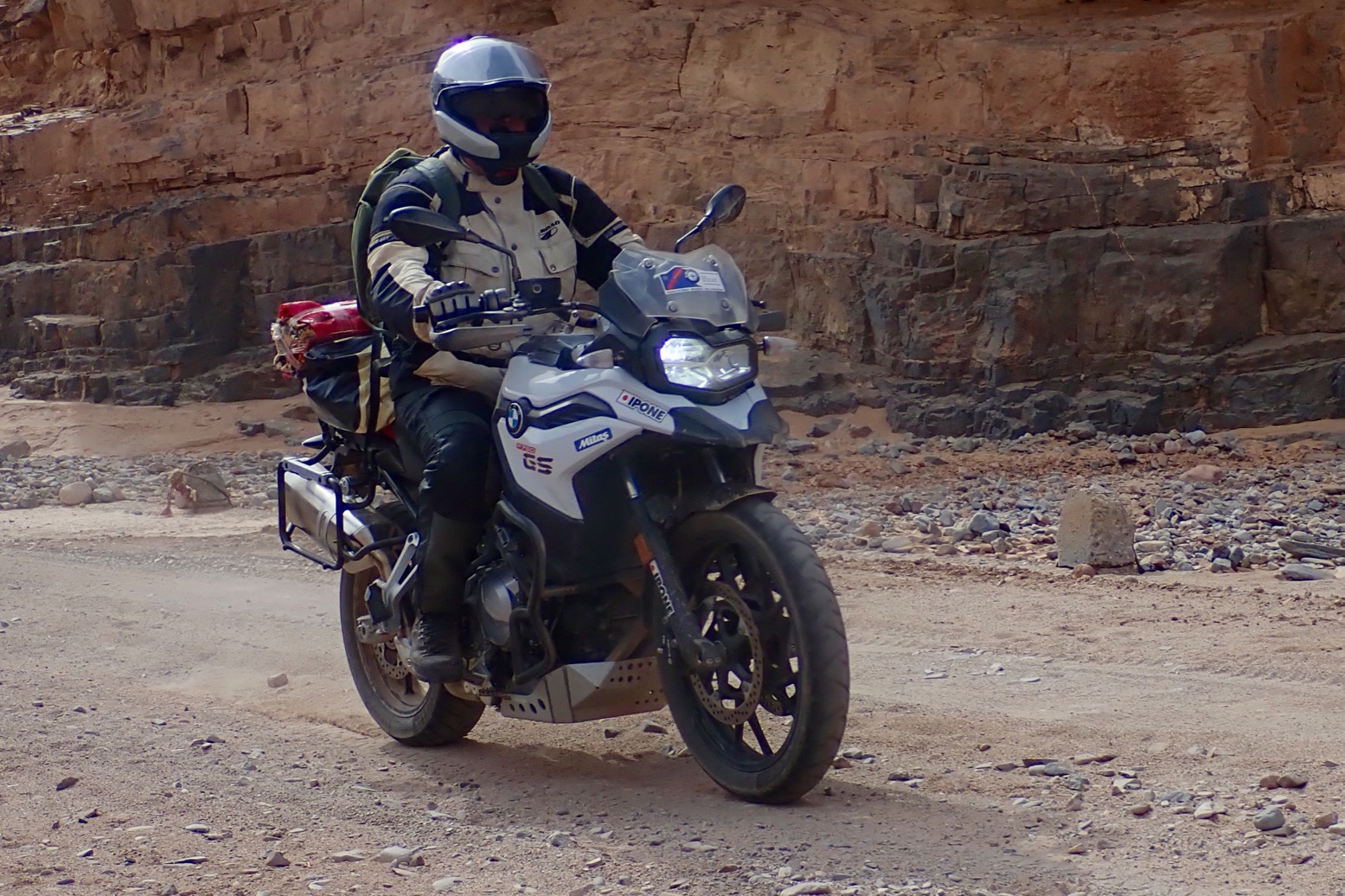
Below: an old F700GS on Anakees. Left, a 750GS on the same. Both worked fine on familiar, dry desert tracks providing I took it easy. But on mountain roads commonly sprinkled with gravel or other loose detritus, they can roll sideways and slip a little in bends. In the same situation, a shallow-blocked, wider-gaped ‘do-it-all’ tyre slips less and grips more.

700 - 6

Klim Overland jacket – first impressions

Full Klim Overland review here
klimov-11

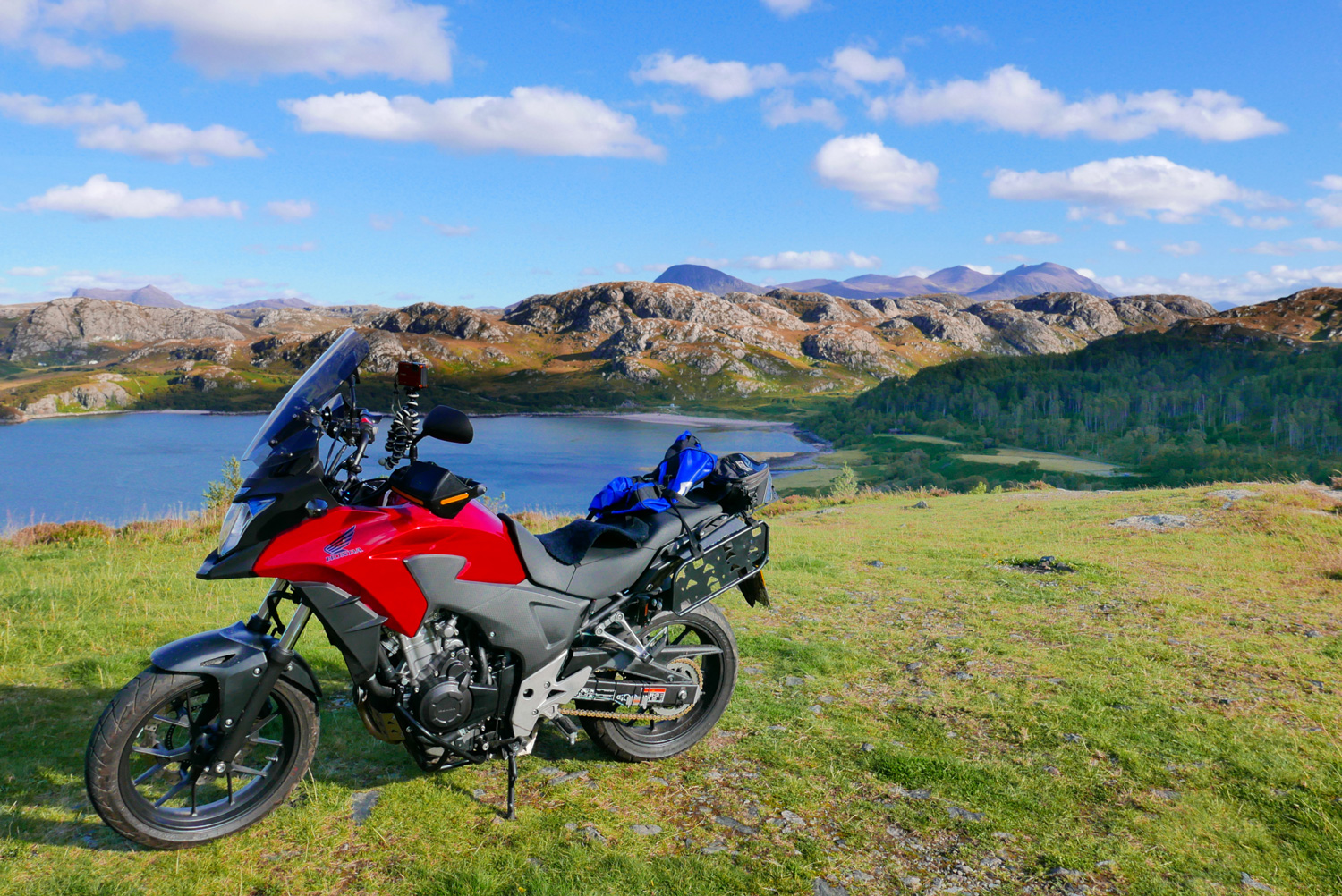
The cupboard was bare, the fridge was an icy cavern bereft of succulent goodies, and the sun was shining. It was high time for a shopping run to Ullapool. And, finding myself between chapters on the new AMH, it was also high time to saddle up the CB-X for a ride along the lochs and glens to try out some new gear.

Adventure Spec supply me with free or reduced cost gear in return for advertising in AMH

klimov-01

In need of a decent coat for a winter getting to and from the desert, Adventure Spec recently sent me a Powerlet Rapidfire heated jacket and Klim’s Overland jacket. AS had already sent me a Latitude to look at a couple of months back. But considering the investment in such a key item of gear, I found the Latitude either a little small in L, or way too big in XL. And in other ways it didn’t quite compare with an Aerostich Darien Light which I still consider a benchmark in travelling jackets.

klim_jacket_size_guide

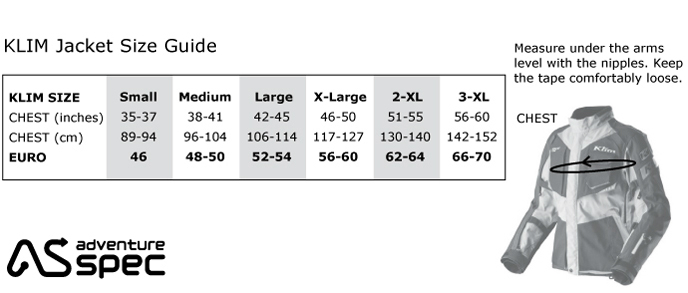
Wearing the Powerlet liner (about the bulk of a fleece), the Overland in Large felt tight across the chest and shoulders and yet, according to the chart on the right, I’m (42″ chest, 6’1″, 95kg) at the lower end of their Large range. The Overland was snug on me dressed in full gear – but still useable.

What Klim say
If you’re taking your first steps into Adventure and Adventure Touring, the all new Overland series from KLIM® is a tremendous value [sic].

My first impressions
Good value, solidly built three-season shell that’s well-designed, has some tidy features and an understated look. Warmer than you think too, but could use more- or just bigger pockets in and out. And beware: Klim sizing comes up small.

Klim Overland – a quick look
• The Overland costs £379 with tax from AS and is listed as $429 + tax in the US or another $50 for the huge 3XL size
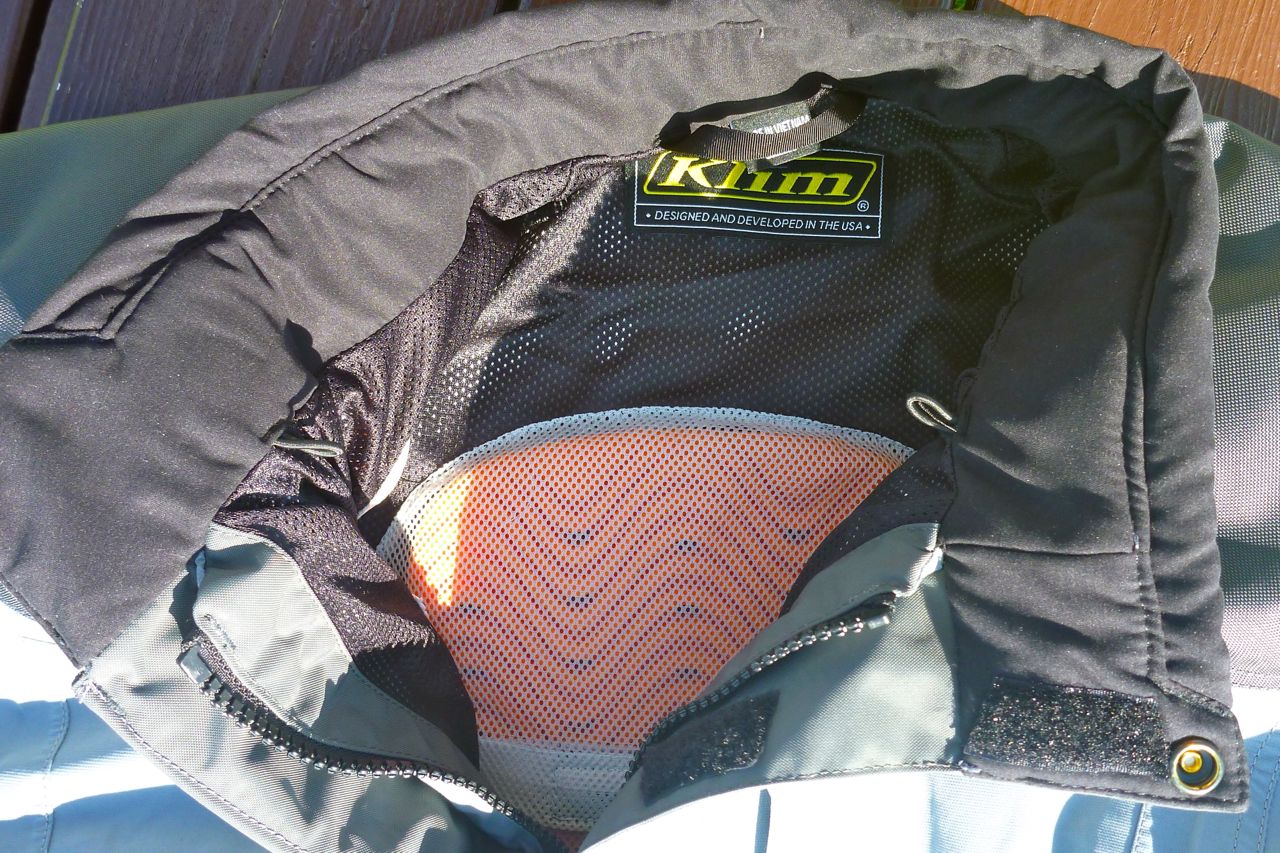
• My Large weighs 2.04kg, less 330g without back armour pad
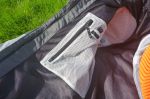
• It has four pockets: two hand pockets the hem with vertical entry water-resistant zips, a smaller vertical chest pocket and a similarly small one on the mesh inside (right)
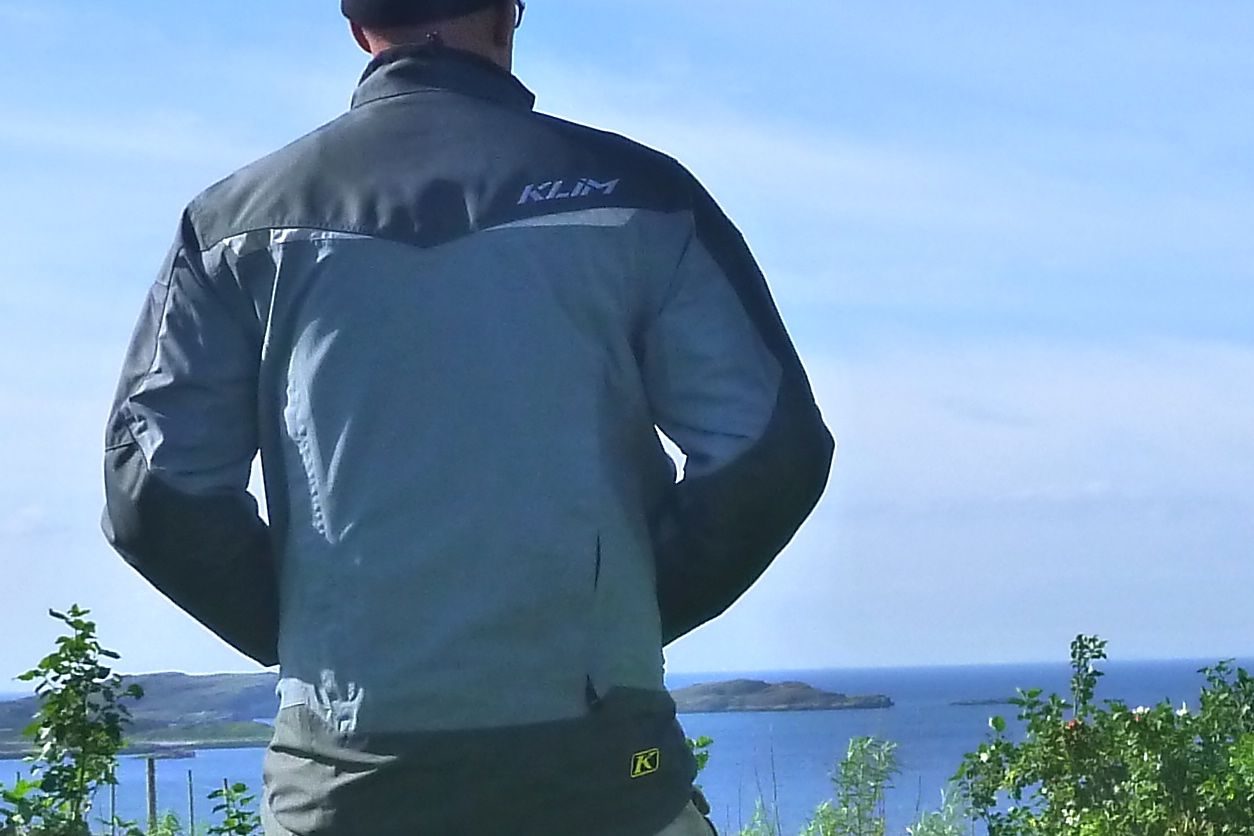
• There are water-resistant zipped armpit vents down the sides that you might just undo on the move, and two corresponding long vertical back vents (right)
• The front two-way zip lies under a velcro flap with a stud at each end, and the soft, Tricot-lined collar can be cinched for a snug seal. There are also cinch cords on each side of the hem, velcro arm tabs below the elbow and velcro at the wrists
• The jacket has ventilated D30 E5 EVO XT armour on elbows, shoulders with a slightly less highly rated slab of non T5 D30 across the back (right)
• Eight discreet 3M Scotchlite reflective flashes front and back
• The cut is boxy and most of the arms and shoulders are over-layered with coarser and darker abrasion-resistant panels of 840D weight Cordura. The light grey body is made of much less stiff regular nylon fabric of about half that weight. The mesh lining is polyester and the membrane is Gore-Tex tw0-layer Performance Shell which is ‘Guaranteed to keep you dry ®’ and the jacket has a lifetime warranty too.

klimov-04

Review
A few years ago when Klim first came to the UK, I remember looking at a Badlands or something at the Ace Cafe Adventure Day and thinking: £800 for a jacket – really? Of course Rukka had come to price themselves up there too, incorporating what I considered fussy, over-complicated ‘technical’ designs that seems to be a way of justifying high prices on a lot of stuff these days. But 800 quid for a garment made in Southeast Asia?

Maybe ‘start high – bring in the cheaper stuff later’ is a recognised marketing strategy. That’s how it looks to me with Klim in the UK and now we have more normally priced jackets like the Traverse, and the second take on the Traverse which is known as the Overland.

As I say in the book, setting off on a long trip you’ll be wearing your jacket just about all the time for weeks or months. It’s got to work well, feel right and be up to the task as it’ll become your second skin. One thing that categorises Klim as a serious contender is they only make rugged waterproof shells and eschew what is to me the cheap measure of a zip-out membrane. If you want a serious Gore-tex type jacket, get one where it’s laminated to the outer shell. Yes, it costs more.

klimov-10

I set off for what turned out to be a 180-mile ride on an October day with temps peaking at 13° and strong winds forecast. Underneath I was wearing the Powerlet, a thick shirt and a vest, and leather trousers plus thin unlined gloves. I planned to fire up the Powerlet when the chill got to me. As it turned out – perhaps because I was stopping a lot – that never happened. The Overland kept me warm all day right up to sunset which was impressive. It means you can wear less clobber underneath but I suppose may get hot working hard off road in a warmer climate. For that reason I chose the grey version rather than the black. It really can make a difference.

klimov-07
neander

Doing it up I noticed that with the Powerlet’s high wire-laden collar and a shirt collar too, there wasn’t really room for my thin neck buff I usually wear. The front collar stud was a two hand squeeze to do up and the collar felt tight at the front while loose at the back where the cinch is. In other words the collar fitting was too upright or – like many humans in this digital, screen-staring era – my neck and head stick forward like a round-spined Australopithecus. Trying it again now it definitely presses on my Adam’s apple, but not unbearably so. Normally I prefer loose clothing and the Overland is a ‘snug’ fit round the neck and in the arms  and across the shoulders with arms pulled backed which is probably more flattering, cosier and aerodynamic.

klimov-09

klimov-08

Riding along I thought I felt a chill under the arms through the vent zips, but not enough to plug in the heated jacket. And anyway this could be attributable to my bike / screen /posture / speed. Later on I didn’t even notice it.

P1000435

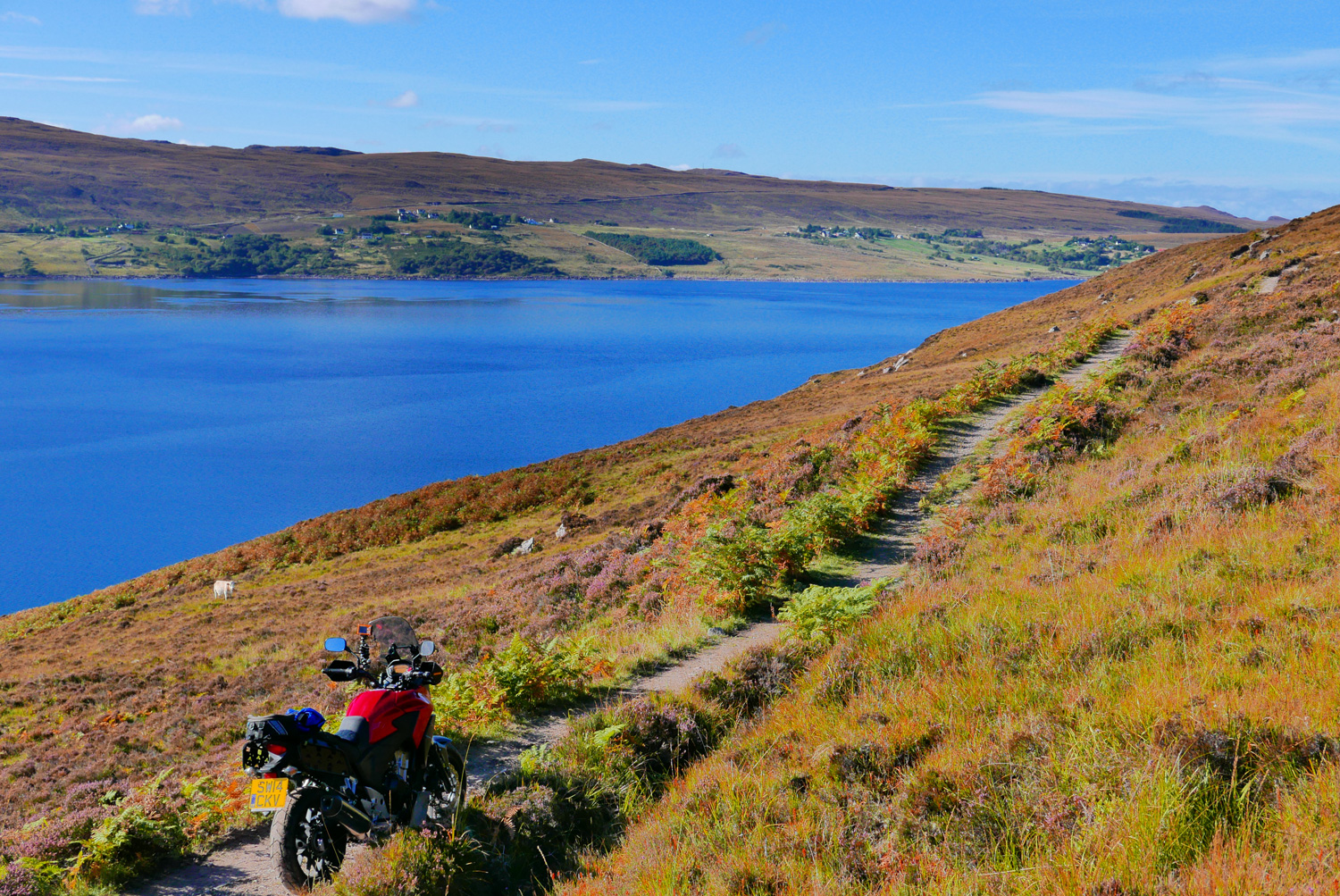
At one point I left the bike perched on a sunlit hillside track and walked on to recce the route. In a black jacket I’d have cooked like a Findus boil-in the-bag cod in parsley sauce, but the Overland was surprisingly cool. By the time I got back to the bike I did have a bit of a glow on, but rode back the few miles to the main road unzipped and flapping by which time normal operating temps had resumed.

klimov-05

An hour and lots of lipsmacking pics later I pulled in at a cafe near Poolewe and instinctively went to slot my gloves into a pocket to came up against the Overland’s main flaw: too small pockets. I suppose I could have stuffed then into one of the lower pockets but what I’d like a decent, map-sized chest pocket or some meshy drop pockets low down inside (they could actually be easily tacked on to the mesh. What do other riders do? – cart around a tank bag or backpack – or slip them in a topbox I suppose. A jacket called Overland needs overlandable storage. For the return run I also removed the back armour to free up some room. It made the jacket lighter and more flexible, but I can’t say it felt significantly more roomy. For that the shoulder pads need to come out but I’ll keep those for the moment.

P1130862

Riding back with the sun now dipping behind the hills, I expected to resort to the Powerlet, but riding up to 80mph the Klim still hung in there. The wind was up now too, pushing me around on the single track roads and at one point coming over a pass I distinctly felt the wind catch the back vent flaps and pull me around in the seat.

klimov-12

So – preliminary findings on the Klim Overland adventure touring jacket. Warmer than you’d think, under pocketed but the plain looks that are growing on me. Great armour and adjustability too. Resistance to pelting rain and ventability to be established. I always wonder if the latter might compromise the former.

Full Klim Overland review here
P1000489