Adventurising the RE Himalayan

Himalayan Index Page
himalio

For what you pay and compared to vaguely similar bikes, Royal Enfield’s 2018 BS4 Himalayan comes very well equipped: centre stand; small tail rack plus tank sideracks; small screen; 15-litre tank giving a 400-km range; a small bashplate plus suspension that need not be instantly written off.
Most of those items won’t need improving, but when did that ever stop anyone? Below, I throw out some ideas to help turn the Himalayan into a functional overlander. As with all my project bikes dating right back to the XT500 of 1982, I like to experiment with new stuff and new ways of doing things, much like Enfield’s Himalayan itself.
It’s all part of the adventure and if nothing else, it’s good for the book.
MT60

Wheels & Tyres
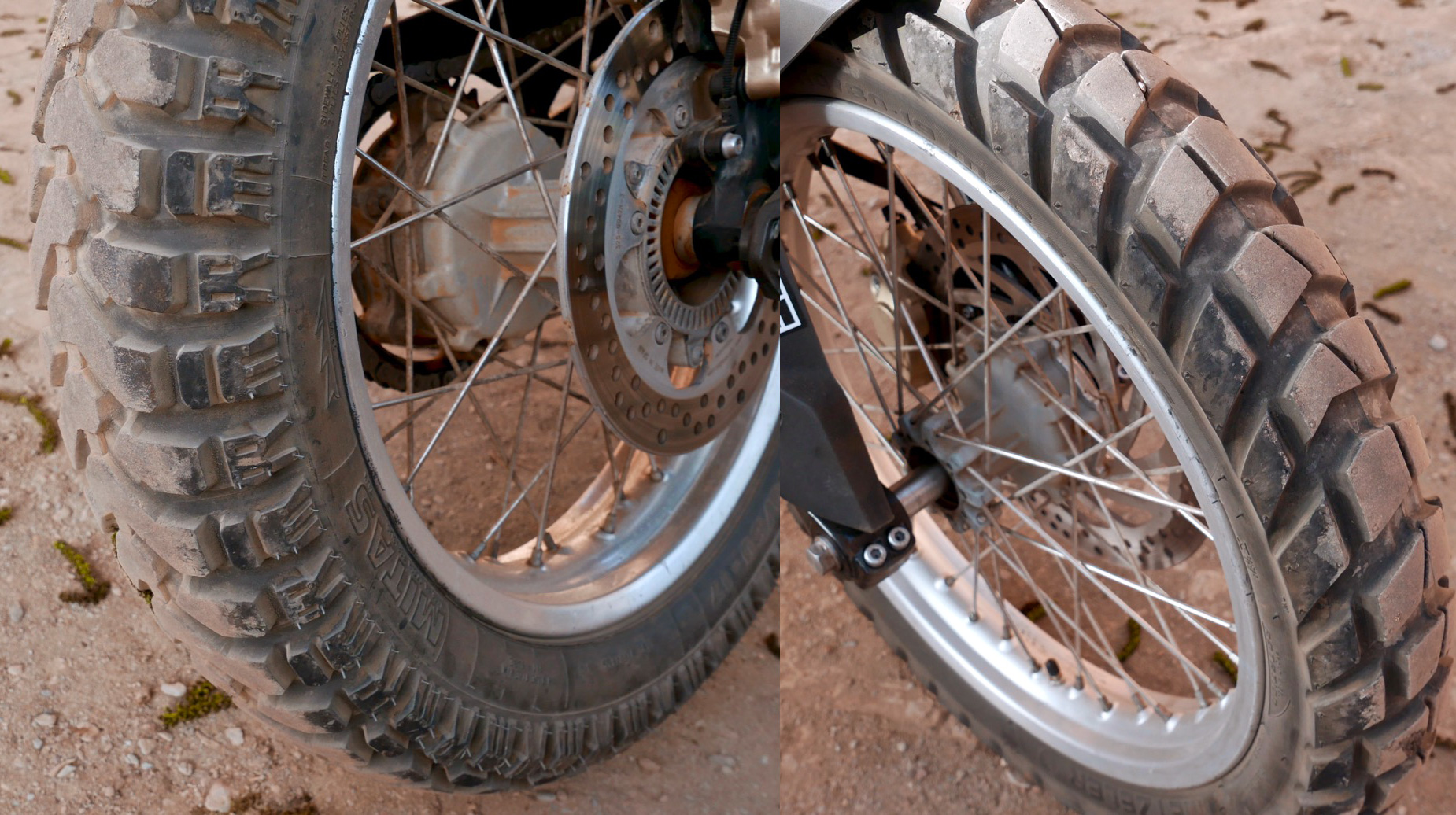
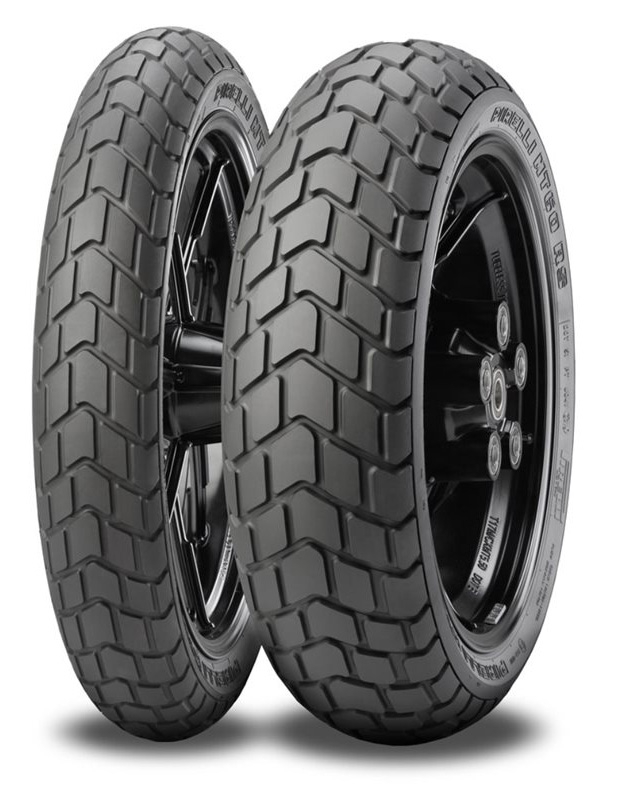
Out of the showroom REH’s come shod with Brazilian Pirelli MT60s (right; mine stamped ‘2012’…). The spoked rims are steel: 21 front, 17 on the back. The Pirellis would have been OK for a regular Moroccan ride, but because I’ll be heading into the sands this time, tread becomes a little more critical. Below, some tyres of interestMotoz Tractionator Adventure; Anlas Capra X and Michelin Anakee Wild.

himtyre
unsprungweight
him-17-18
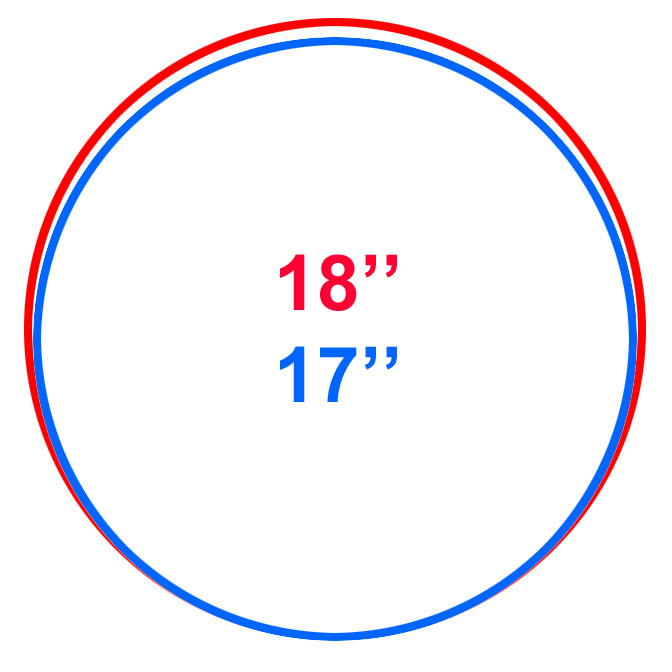
Confirmed: 17 is smaller than 18!
him-swingspace

One thing I’ve quickly discovered is that none of the above tyres come in the stock 120/90 17 size. The only similar tyre I know of is Mitas’ E-09 which I tried on the XR400 in Algeria; a great desert tyre. Generally 17s tend to be low profile tubeless-ready adventure tyres suited to bigger, more powerful machines, and 18s are for traditional dirt bikes with taller profiles giving more sidewall ‘suspension’ or ‘footprint’ at low pressures. The above trio come no smaller than 130/80 17. There’s probably only a few mil in it, but I’d rather not go overboard with a ‘bigger-must-be-better’ rear tyre. Too much rubber to rotate will make the Him even more sluggish.
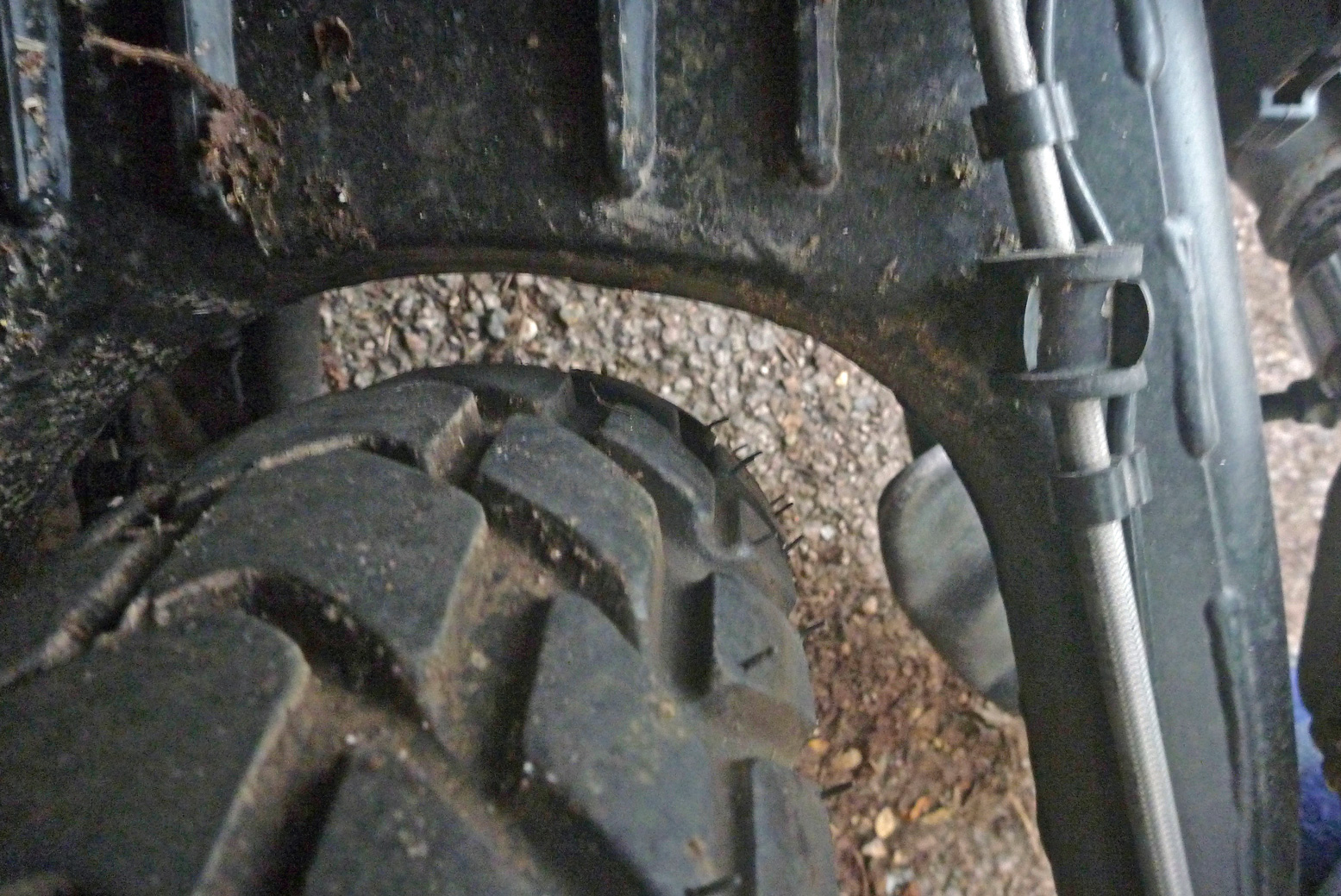
Swingarm space with the stock MT60s (left) shows plenty of room to the sides but about an inch at the front, so for a replacement, actual dimensions may matter. The MT60 is 122mm wide and currently 93mm high from the edge of the rim. The swingarm gap will increase a little as the tyre wears and the chain stretches. Ratio-wise, 120 x 90% technically = 108mm tyre height, while 130 x 80% = only 104mm, so a 130 ought to have a lower profile or height. So even a 10mm wider 130/80 17 tyre will easily fit the Himalayan. Interestingly, an Anakee Wild 130/80-17 M/C 65R TL weighs nearly 50% more than a Wild in 120/80-18 M/C 62S TT (5kg) because the former is tubeless and aimed at heavier 17-rear bikes. An  Anlas CapraX 130/80 B17 weighs 6.1kg. Motoz don’t know yet.
Fitting an 18-inch rim might expand tyre choice at the slim 120/90-ish end. But with half an inch more radius in the rim, taller 18s could become a squeeze against the front of the swingarm unless a chain link is added to move the wheel back a bit.
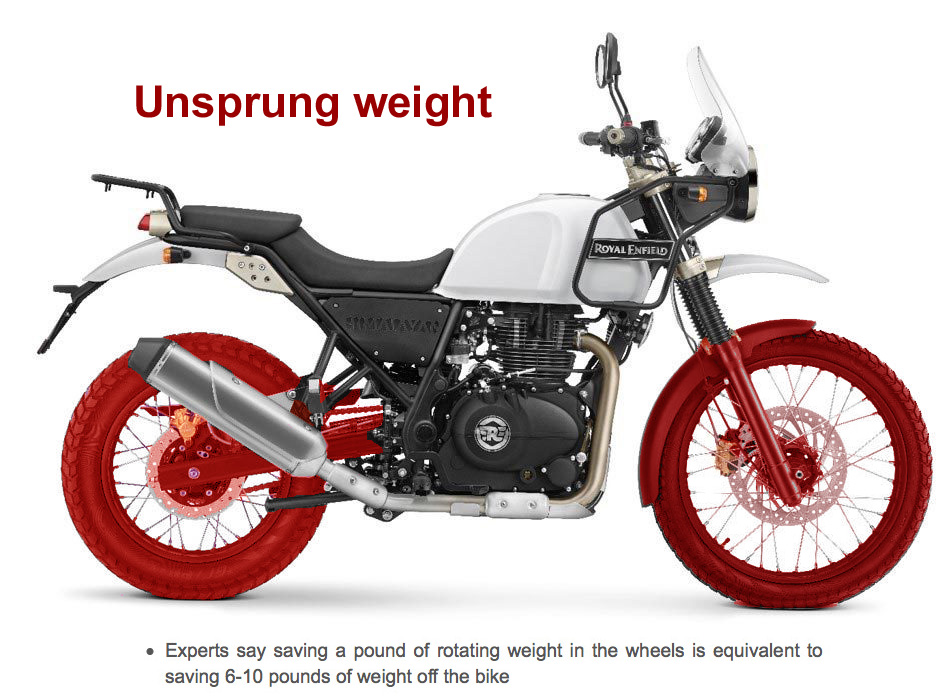
An additional incentive to move to an 18 is a chance to replace the stock steel rim with an alloy rim which will be a bit lighter. Suspension and steering, as well as acceleration/braking all react more readily if the unsprung weight red, below – is kept to a minimum.

I read on the internet that the effects of unsprung weight includes the rotational mass of the gyroscoping wheel, plus – at non-rallying speeds – the less critical up-and-down mass the suspension has to control (image below). Additional unsprung weight takes more power to turn that mass, more brakes to slow it and better suspension to control it. This mass can be reduced by carefully considering tyre weight, not just the size, tread and price, going tubeless (eliminating heavy-duty inner tubes), as well as lighter rims, chain, rear sprocket materials; forks/swing arms and braking components.
I’ve always thought this is a much overlooked area of weight saving on bikes, where changing a pipe is often used as an excuse to save weight. I remember the alloy front wheel on my XT660Z weighed a ton, partly because of the OTT twin discs when one good disc was all that was needed. Cheap stuff can be heavy, even in alloy.
The image below illustrates how much greater the reaction forces are with heavier wheels. Put another way, it’s why your trainers weigh only 320g. ‘Add lightness’ as the old racing adage goes.

him-unsprsus
Unsprung durch Technik
tubliss-section

And if I’m messing about with rims it would be a shame not to go tubeless, for all the usual reasons. See the link, but basically it’s: DIY mastic as on my 660 Tenere, Outex tape (~£70, never tried), BARTubeless (~£320, as on the 500X RR) and Tubliss (~£180 a pair; as on my GS500R), or a suitable rim (rare/expensive).
If I go to an 18 I’m thinking of giving the 2nd generation Tubliss (right) another go as it’s an easy and inexpensive fit, but they only come in 21, 19 and 18 inch, not 17.

Is this all going a bit far with a humble Himalayan, or making the most of its potential? Will I or the bike notice the difference of a lighter wheelset, once all the other junk is added? Unfortunately I don’t have enough time to get a solid riding impression of the stock bike before setting off.

him-tankrak

Load Carrying
One of the REH’s distinctive features are the tank racks which some mistake for tank protectors. They’ll do that too but to me they’re clearly a handy place to lash items or bags. The previous owner had a similar set-up using Kriega drypacks and helpfully wrapped the Royal Enfield badge in string to stop it getting worn away.
rigg
Lomobags

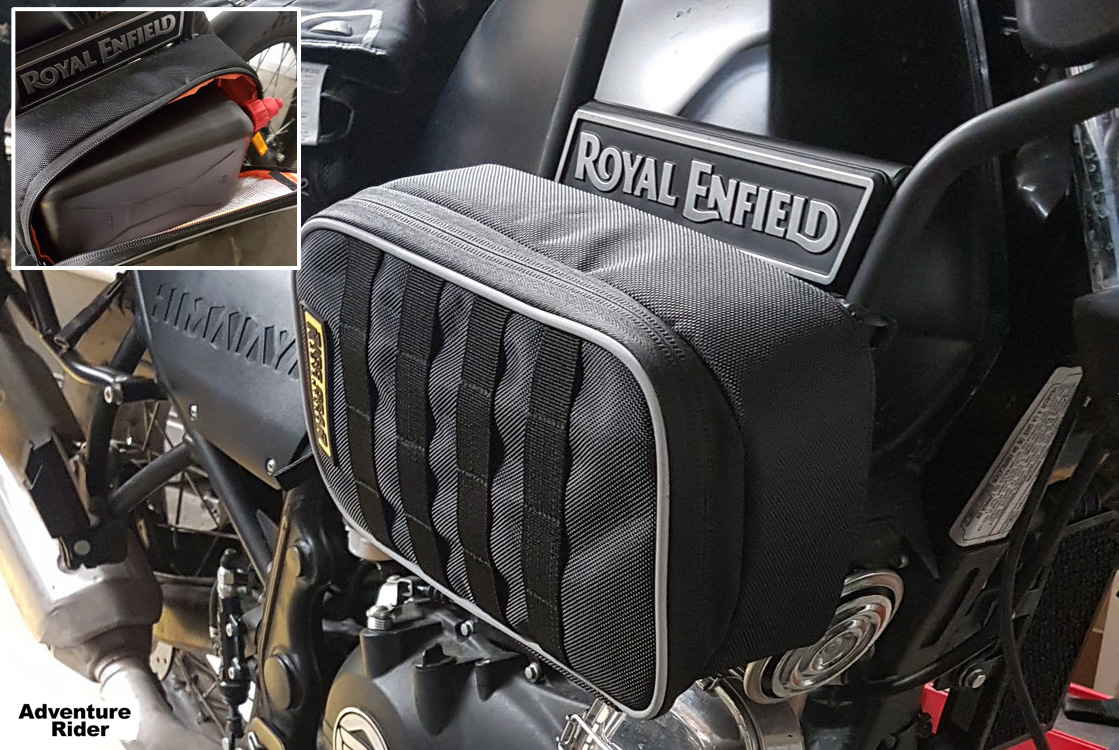
Kriega is one way of doing it, so is Lomo who’ve sent me a pair of their PVC roll-top crash bar dry bags to try (£39 pair). At around 6 litres each they look ideally suited to the racks. I plan to mount them semi-permanently and will use Lomo’s same-sized orange ultralight dry bags (£3) to lift everything out easily when lodging. In the US the more boxy, 3L Rigg fender bags (right) look like a neat fit too.

Then, once I zip on my Giant Loop tank bag, most of my daytime needs will be in view and at arm’s reach, meaning what’s behind can be left strapped in place. It may even mean I can do without a daypack on my back, plus the crash bags will keep the wind and rain off my creaking knees.

him-rak

For the back an Enfield pannier rack is has just turned from India for under 80 quid. Looks like a hefty set up – it weighs over 5kg. You’ll find them sold on ebay, or at twice the price from UK sellers. I’ve not decided what bags I’ll use on the side. At the simplest I can just lash on a couple of rugged PVC dry bags, as I did with the Rally Raid 500X a couple of years back.
him-tail

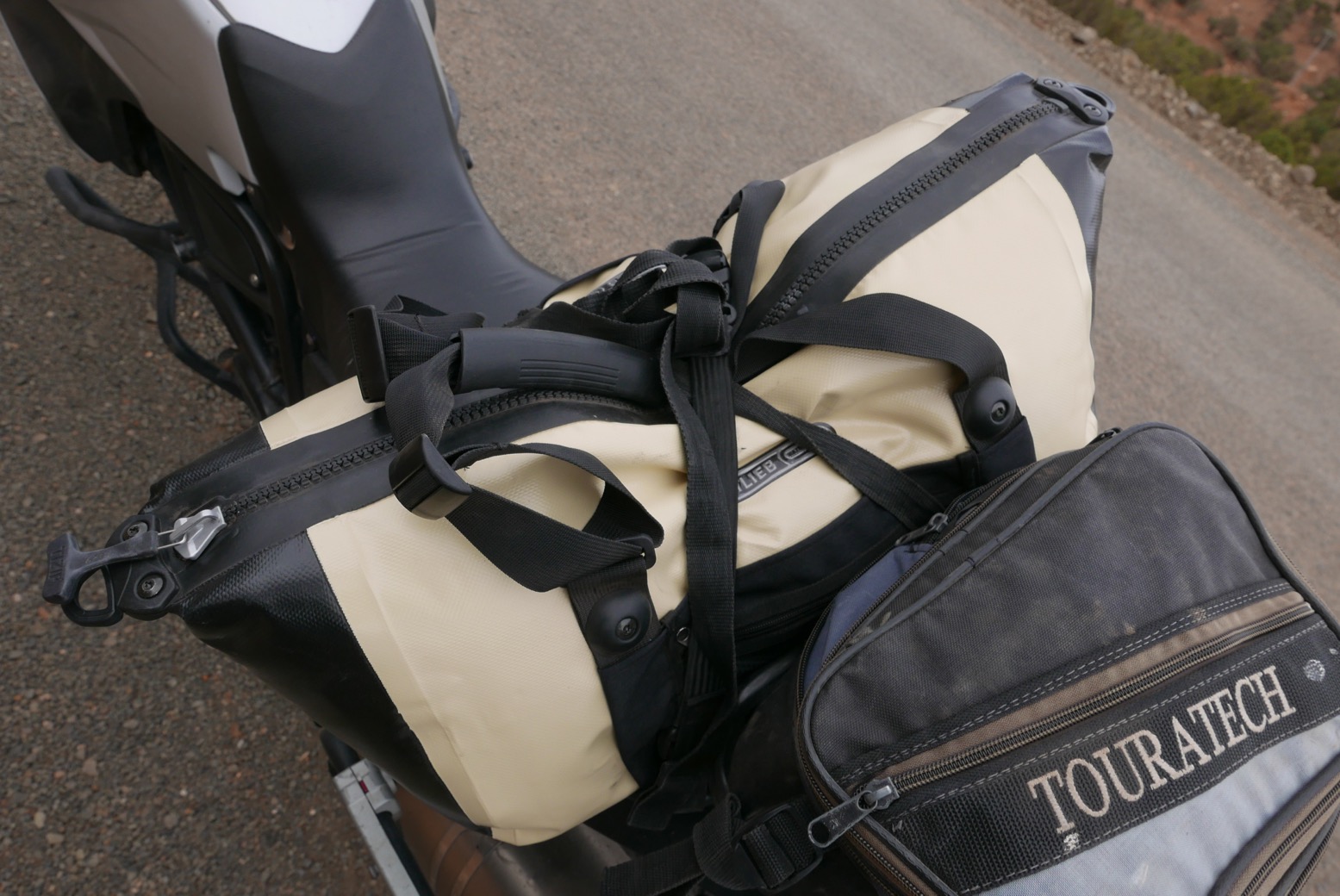
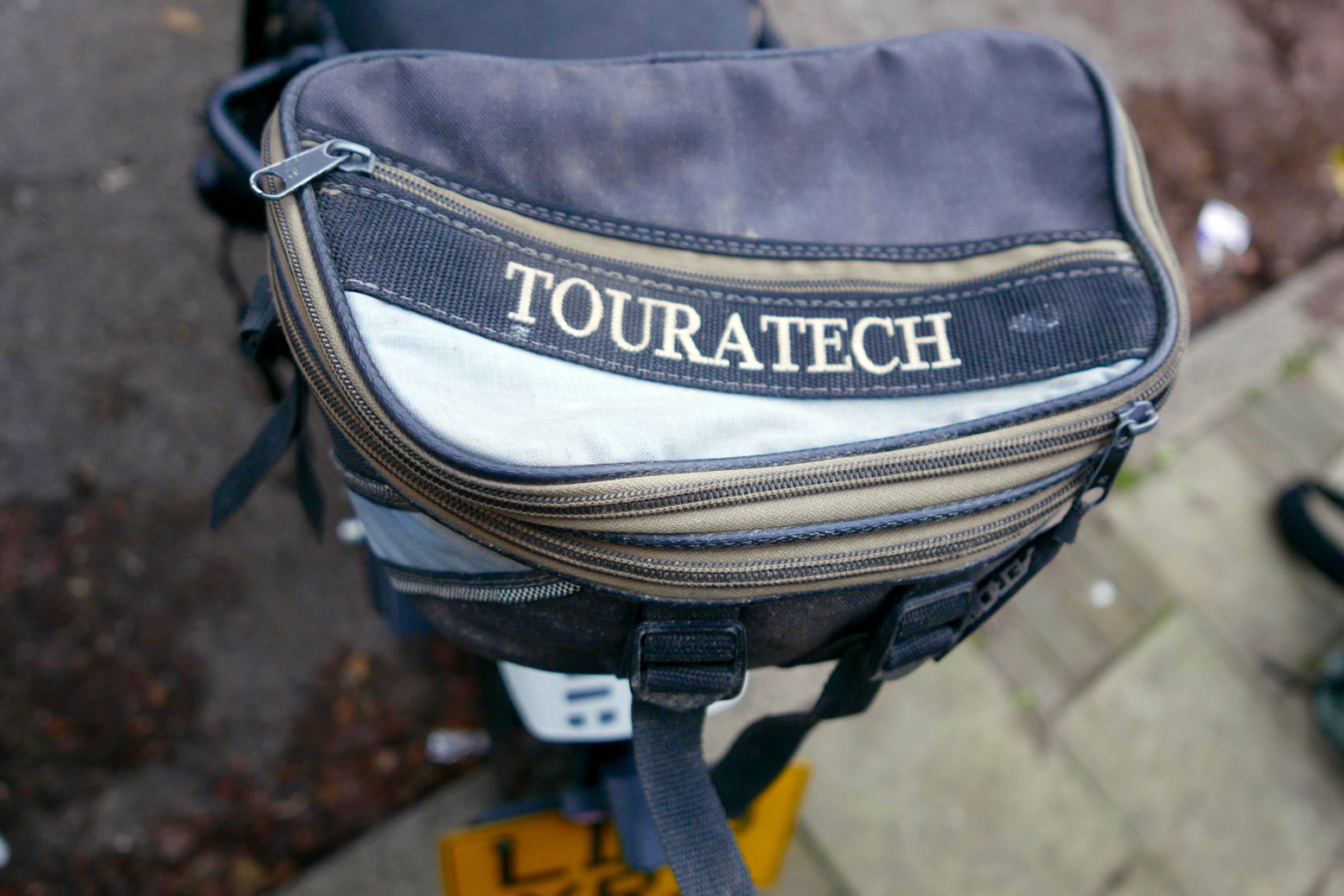
And right at the back the narrow tail rack has taken my long-suffering Touratech tail bag – one of my all-time travel luggage favourites.
Having all these bags spread around the bike is handy for access, compartmentalisation and weight distribution but at, quite literally, the end of a day, it does mean more faffing about to get it all indoors when the parking is less than secure.
barkbt06

Comfort: handlebars; screen; saddle
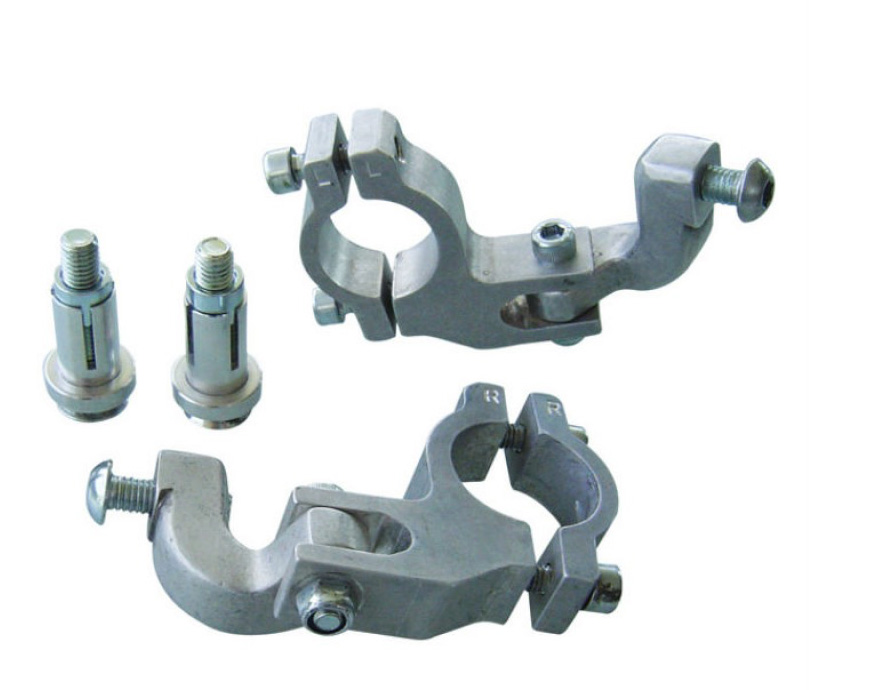
The bike came with Oxford heated grips – luvlay juvlay. My old Barkbuster Storms will also get their nth outing on an AMW project bike, but it looks like they’ll require BTC 06 curved adaptor clamps (right) to get under the brake lines and so on (they didn’t fit).
him-bars

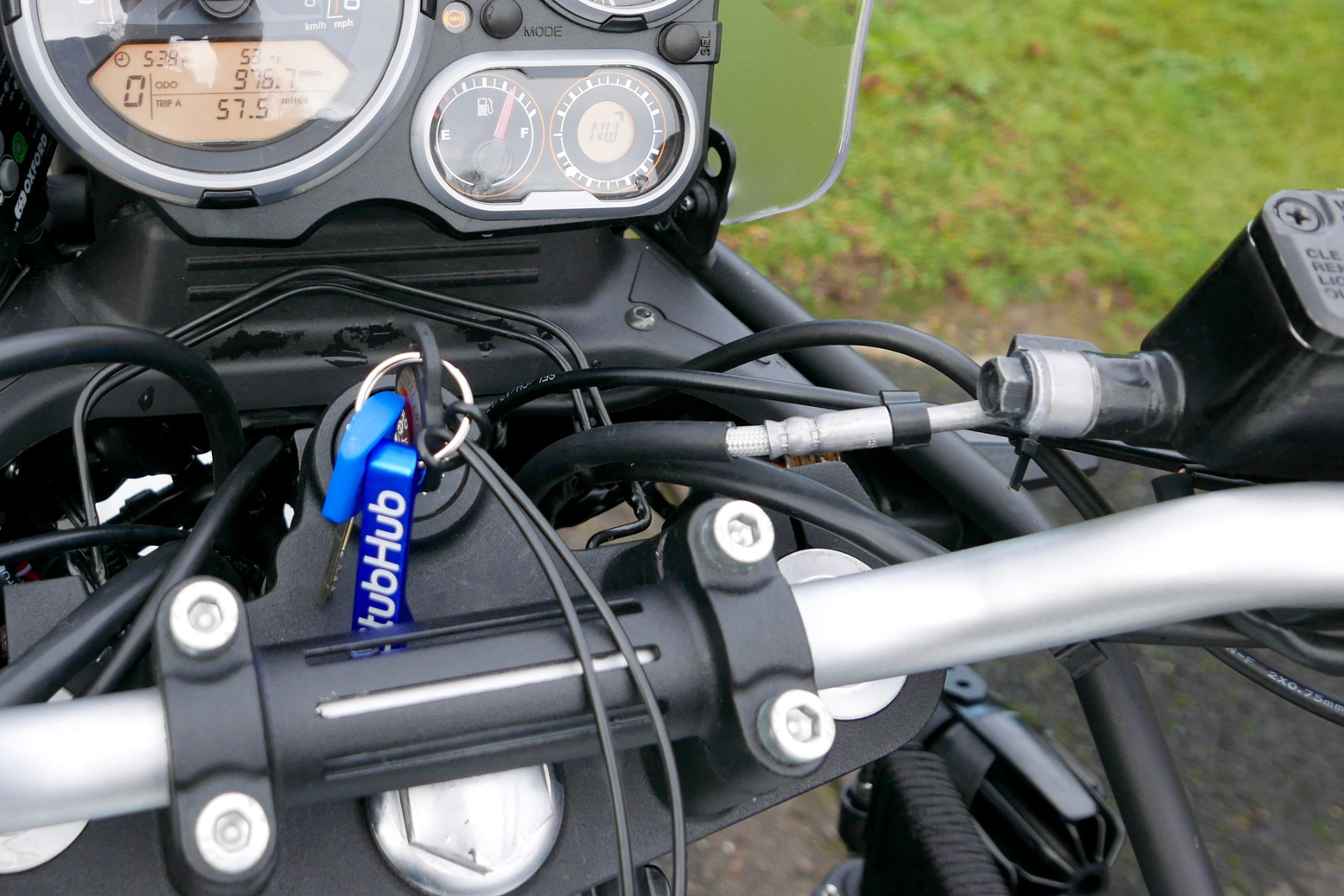
Talking of which, with this ABS model (brake line goes under tank to the pump, not straight down to the wheel) I’m not sure there’s enough slack to get much more than an inch of lift on the bars, which means my 50mm Rox Risers may have to sit this one out (they didn’t). Non-ABS Hims ought not have this problem. As it is the stoop for me isn’t too bad and the general position is of course much better than the XSR. I only tend to stand when I must, but that’s partly because I rarely ride a bike where prolonged standing off road is comfortable. One way to dodge the stoop is to lower my height by removing footpeg rubbers. Wearing very thin socks also helps. Fyi: ABS switch hack.
him-screen
mra_x-creen_sport_xcsa_spoiler_animation

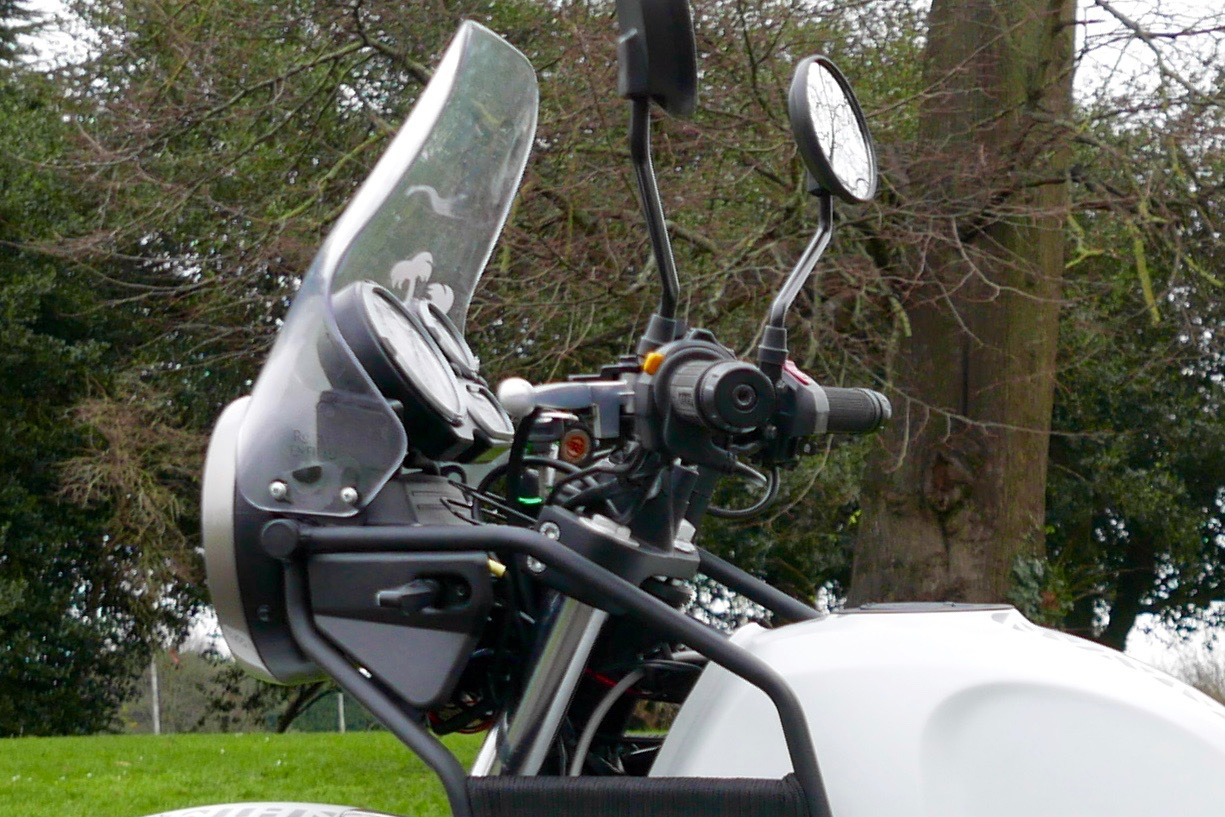
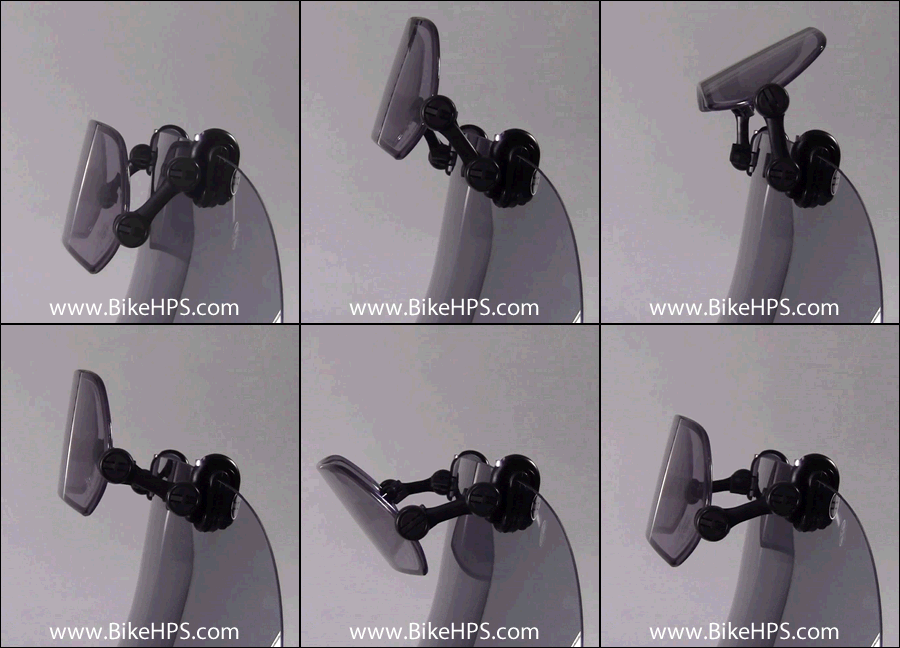
The screen is better than nothing and has a tiny bit of fore and aft adjustment. It’ll be all that’s needed off-road; less so for a long cross-country ride. You can get those clip-  or bolt-on deflectors like the adjustable MRA Xcreen (below right) which I had on a recent Tiger (we don’t talk about that bike) and which worked well for what it was. Or Hitchcocks Enfield specialists do a taller version, but only by 60cm. Changing a fixed screen is a gamble while others have found chopping it right down greatly reduces buffeting. Much depends on your helmet, height and attitude to discomfort. You’ll never get it right all the time and it’s all part of the biking experience, so unless you know what works for you, by far the best screen is something adjustable like the Xcreen or the Palmer I had on the CB-X.
aerosheepad
coolcover

It doesn’t feel like the seat will sustain my post Xmas mass, sprung or otherwise, for more than an hour or two. Nothing new there.
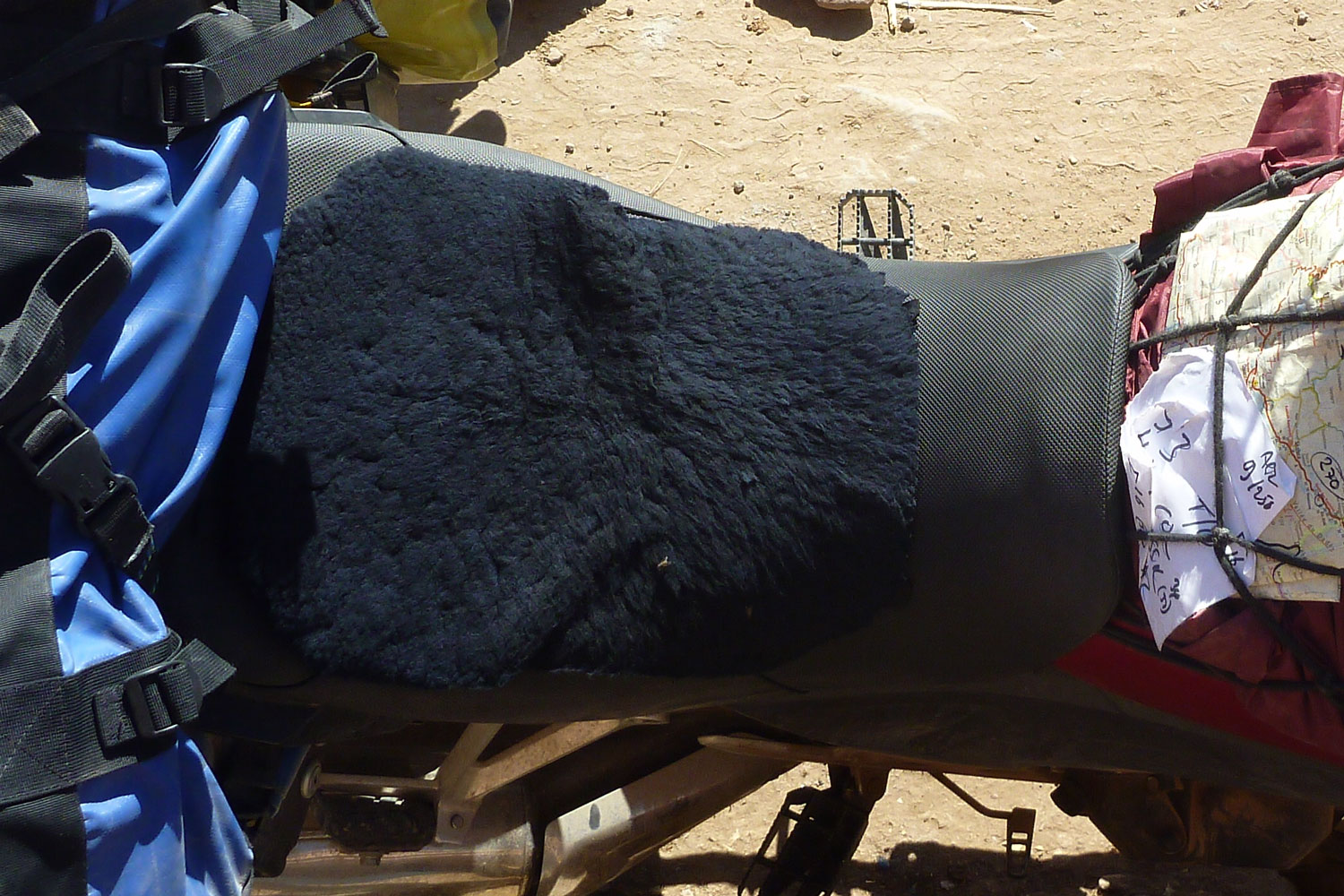
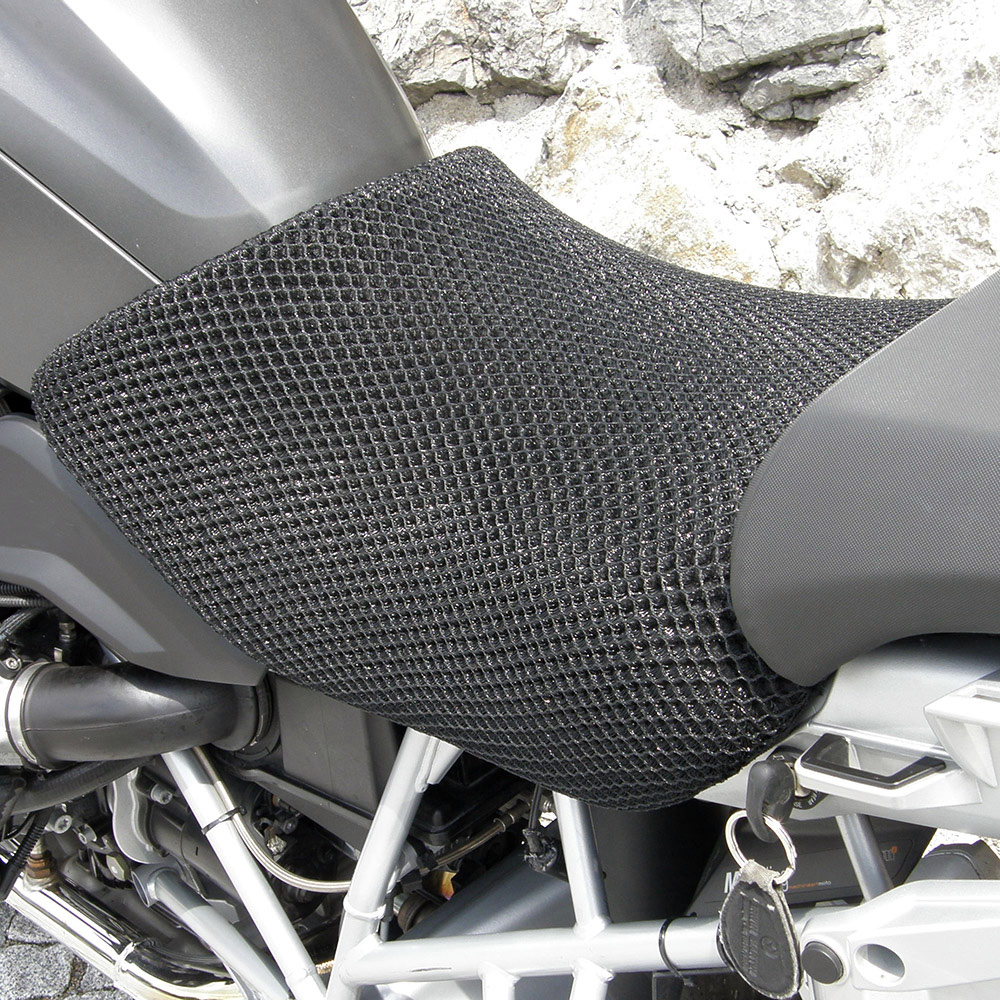
I’m getting a mesh Cool Cover to test. One good thing with fitted covers like this, as opposed to airbag seat bags, is that you can securely stuff added padding underneath without having to do a reupholstery job. I’ve got an old Aerostich lambs wool seatpad (left) which used alone may have had its day, but under the Cool Cover may add a bit more cushioning. One good thing on the REH is the two-part seat; it makes any foam-hacking job a bit less terminal.

Suspension
I’ve often wondered how much more it costs in time and money to make stock suspension which works out of the crate. There must be no shortage of data and algorithms, so maybe it’s the time in fine tuning an individual model where the costs pile up. We’re so used to regular bikes coming with great engines which can sing and dance in four time zones, but have adequate suspension which presumably is expected to work for most riders at moderate speeds. Crank up the speed or reduce the surface quality and composure soon slips away as suspension travel gets eaten up, as I found on my CB500X and XSR700. But on my BMW XCountry I discovered what decent suspension actually meant: not that obvious on road, but a whole new world of control as dirt turns gnarly. Problem is that’ll be no change from €1000 and trip to Holland, please.
him-shock
yss himalayan
hypershock

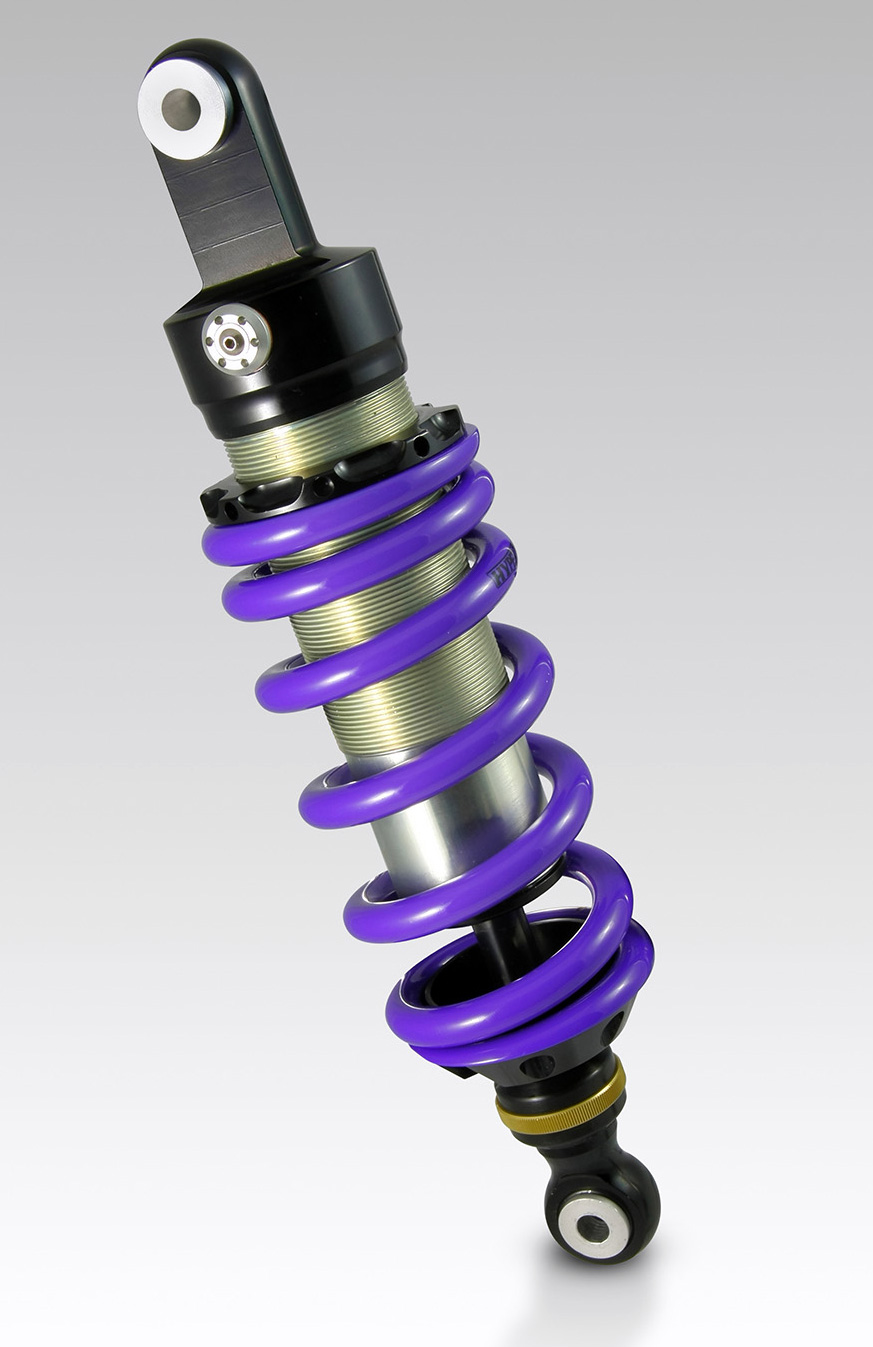
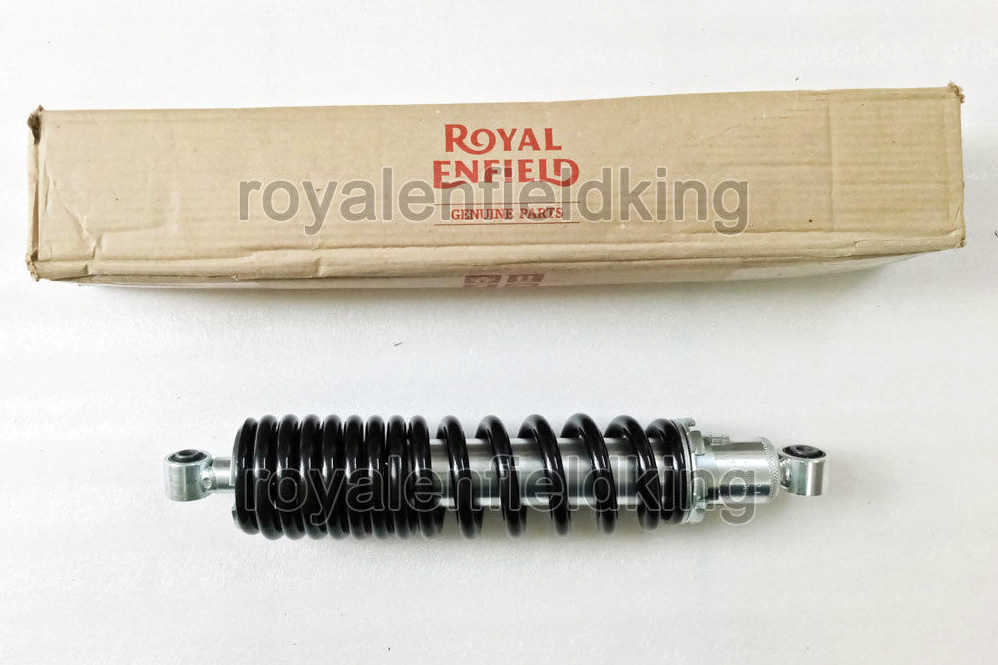
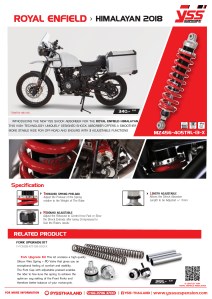
Many reviews say the Himalayan’s suspension is pretty good for what it is, which is all the more surprising when you look at the seemingly spring-bound stock shock above. I read it’s not trying to be progressive but a dual rate spring and in fact there is a 2mm gap between the closely set coils.
Currently the only outfits offering shocks are Hyperpro (right; €500) and YSS (left; made in Thailand). Unusually, both come with rebound damping but the YSS also has adjustable height and was just £270 from Wemoto on special. For that price it’ll be worth a shot and the option of dialling in a bit of extra height will be handy. As it is, the bike tends to sit a little too upright on the sidestand and adding a sandfoot won’t help. And also if I do go for an 18-inch rim where the tyre range is taller, a bit more space will be handy
him-fkprl

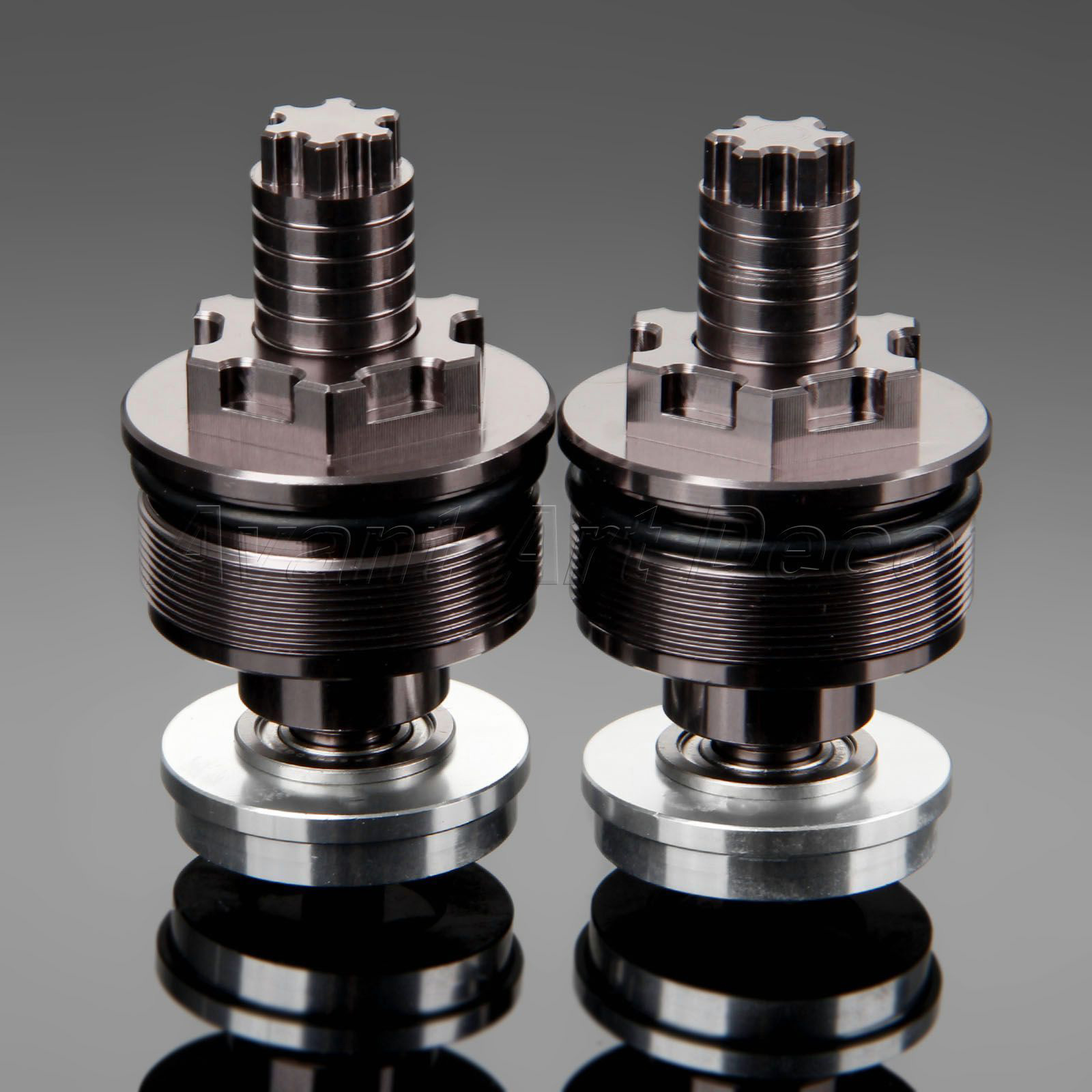
For the fork YSS also make a kit (above left) costing not much less than the shock. It includes valve emulators (available separately for around £80), something I’ve read of but never tried. For the moment there’s nothing to be lost by starting with some Chinese ebay fork pre-loaders (£10; left; as tried on the XSR). After that I may move up to a firmer K-Tech spring if they’ll make me one. Firmer springs may be enough to bring the front end back up if an 18-inch rear rim is fitted.
temp

Ancillaries
I’ll hard wire the trusty Montana in and fit a RAM mount on the bars. I’ll also add a PTO for the Powerlet heated vest and type pump. The claimed 220w alternator output is nothing special, but some wattage has been freed up with dinky LED indicators and there’s a spare LED headlamp which came with the bike. Otherwise I plan to add a switch so the lights aren’t on 24/7. There are times when you don’t want to be seen too easily.
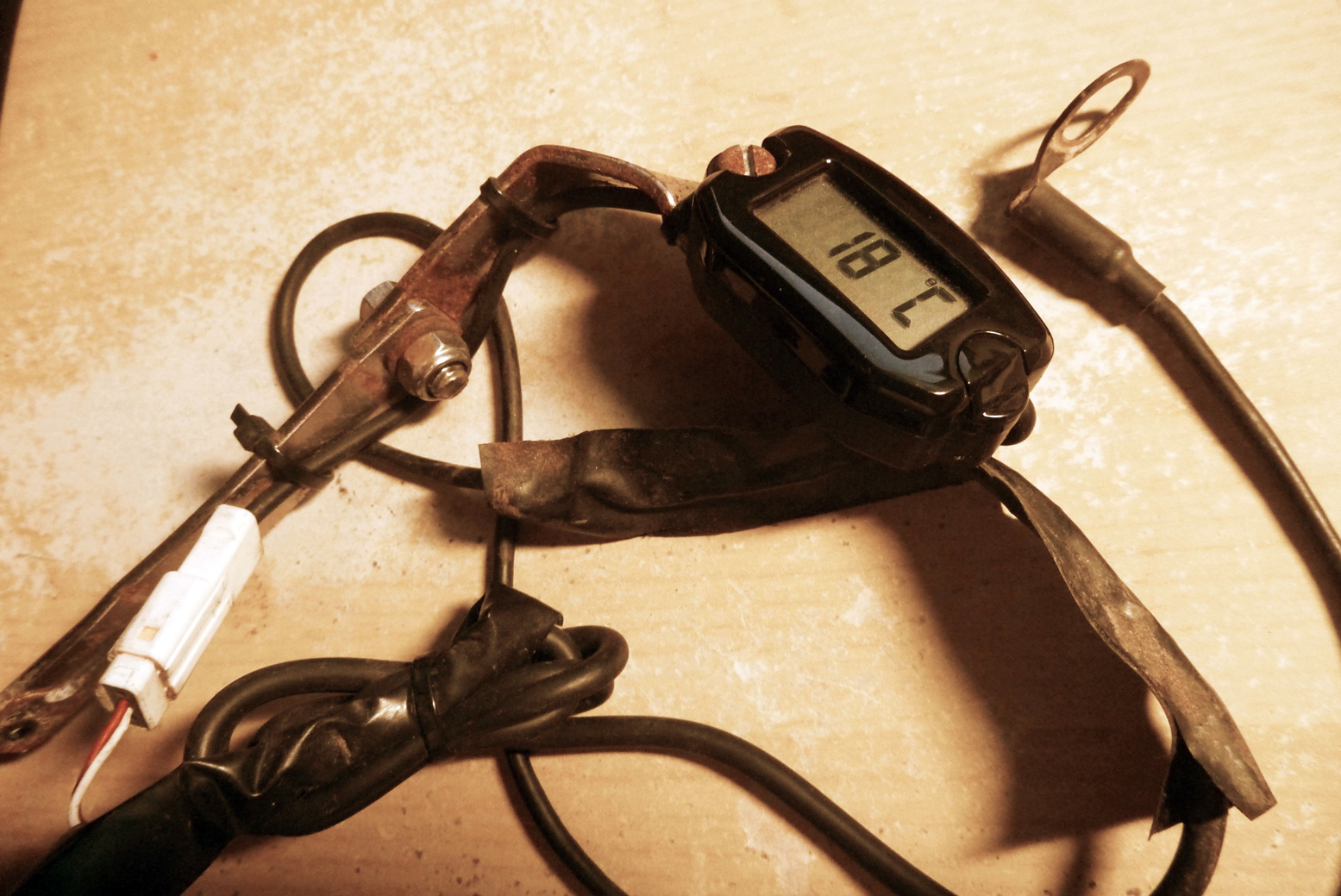
Last but not least, the Trail Tech engine temperature gauge from last year’s XR will get wired on to some very hot part of the Enfield’s engine. With an oil and air-cooled motor, even a low output one like the REH, it’s all the more important know how hot things are getting down in the engine room.

Himalayan Index Page

ROK Straps – why they work

ROK_LogoWhite_x100

‘Click – Yank; Click – Yank’.
That 4-second procedure is all it takes to securely mount a tailbag or duffle to your bike using a pair of RokStraps. The click of the plastic clips; a yank on the strap’s loose end to tension it against the elastic.
It’s not ROKet science, but watching some riders faff about mounting or removing tailbags by other means makes me realise how brilliant two-part ROK straps are.

Regular adjustable webbing straps also work but fail to account for a loose bag’s tendency to ‘shift & shuffle’ on the back of a bike, which tensioned elastic reliably compensates for. And you effectively need double the length of webbing to loop across frame loops and back.

flintmoto
bung

Before ROK
Back in the Flintstone era but after the invention of string and mild steel, bungies were the next best thing; a bunch of elastic strands encased in a jaunty woven nylon sheath tipped with two coiled and plastic-coated metal hooks. Bungies were such a hit they spawned the daredevil activity of bungy jumping.
BungyBut even then we knew bungies were a cheap and nasty convenience, and sometimes it was the bungy that was jumping back at you. Because they were way too stretchy you had to tension them to the max to eliminate movement of anything heavier than a copy of MCN, and there was no adjustment other than knotting them. Add some UV, rain, more UV plus persistent over-stretching, and over the years several unfortunates have suffered nasty injuries from a stray hook recoiling into their face at 350mph. It’s said that was the motivation behind the invention of ROKs in Australia back in the 1990s.

rok.jpg

Stiff elastic + clips + adjustable strap + tethering loops = ROK Strap

ROK Straps come in two parts: a shorter sheathed section of thick, flat rubber producing minimal recoil. It clips to a regular webbing strap with an adjustment buckle and best of all, both chunky sections end with a sewn loop to thread round a subframe or rack tube. Result: all pieces of ROK Strap are always attached to the bike (but remove easily) for lashing down loads quickly and reliably.
At the end of a long ride when you can often be weary or forgetful, just click your two straps apart, lift off your bag and stroll into a velvet-lined riad for a poolside aperitif while others are still fumbling with buckles or stumbling around clutching their eye in agony. It can be that simple. A pair of 16mm, 1.1 metre (42″) ROKs (above left) got for 15 quid discounted at SportsBikeShop. Rok On.

ort - 3

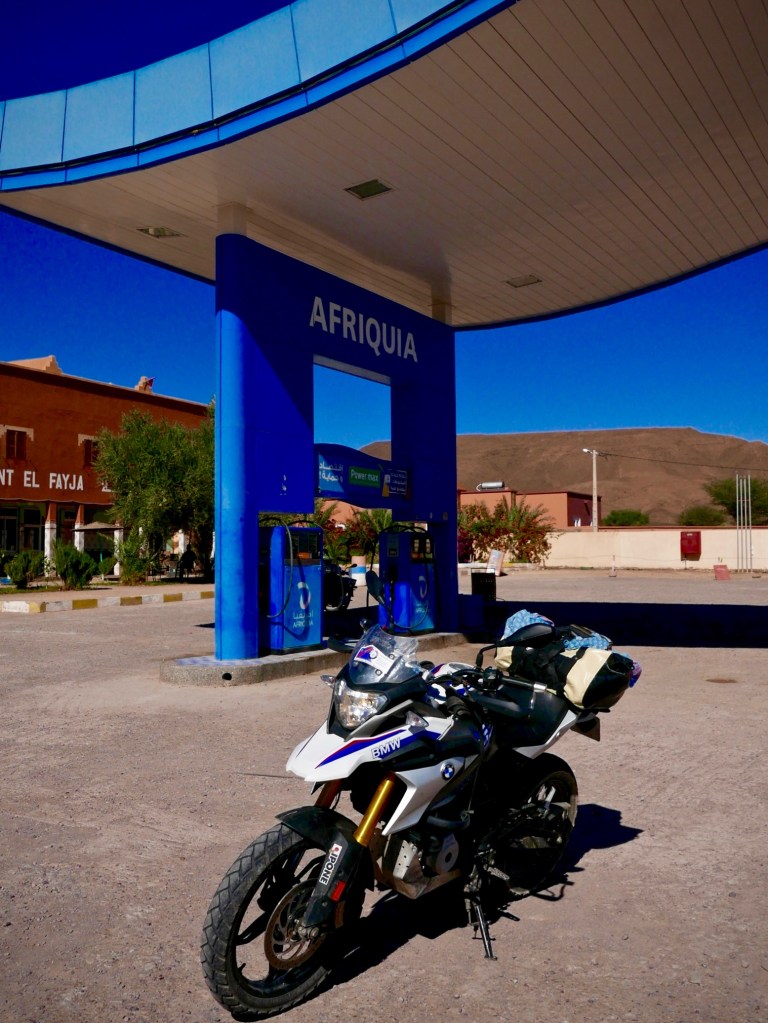
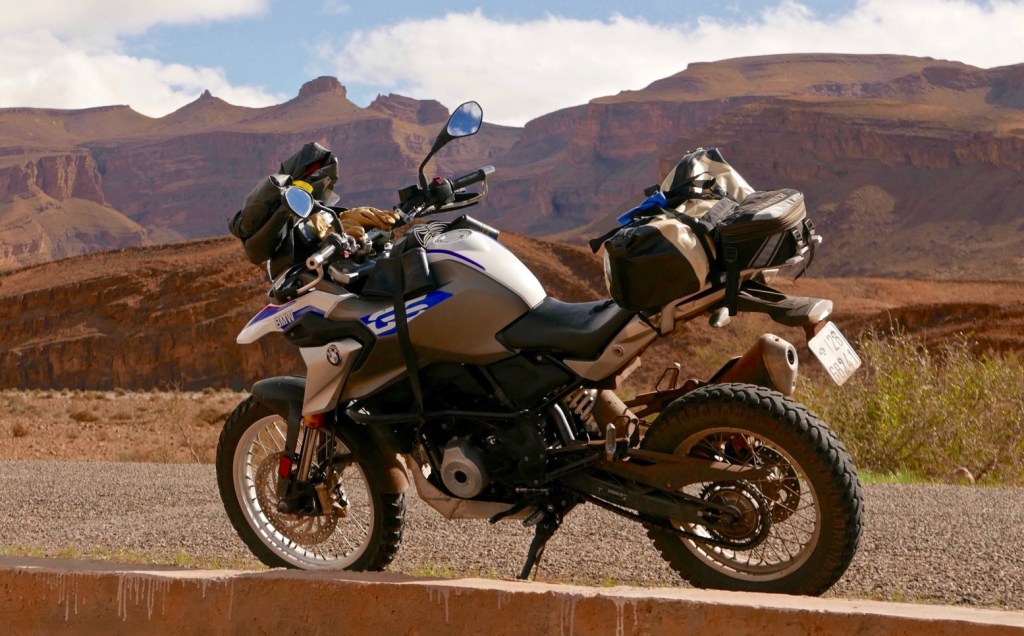
BMW G310GS in Morocco – 2200km review

Updated November 2022
Read the April 2018 test ride for more background detail

Update 2022: After a week with a KTM 890R and another on a BMW F800GS Adventure, I think I like the little GS even more. It’s easier to manage than both those other bikes on the piste and is a great backroads bomber up to 90-100kph. Brakes aren’t so hot now and press on and the suspension will bottom out. And standing up is hopeless for me. But the fact that 60,000 rental kms have not killed them is a good sign.

310r - 18

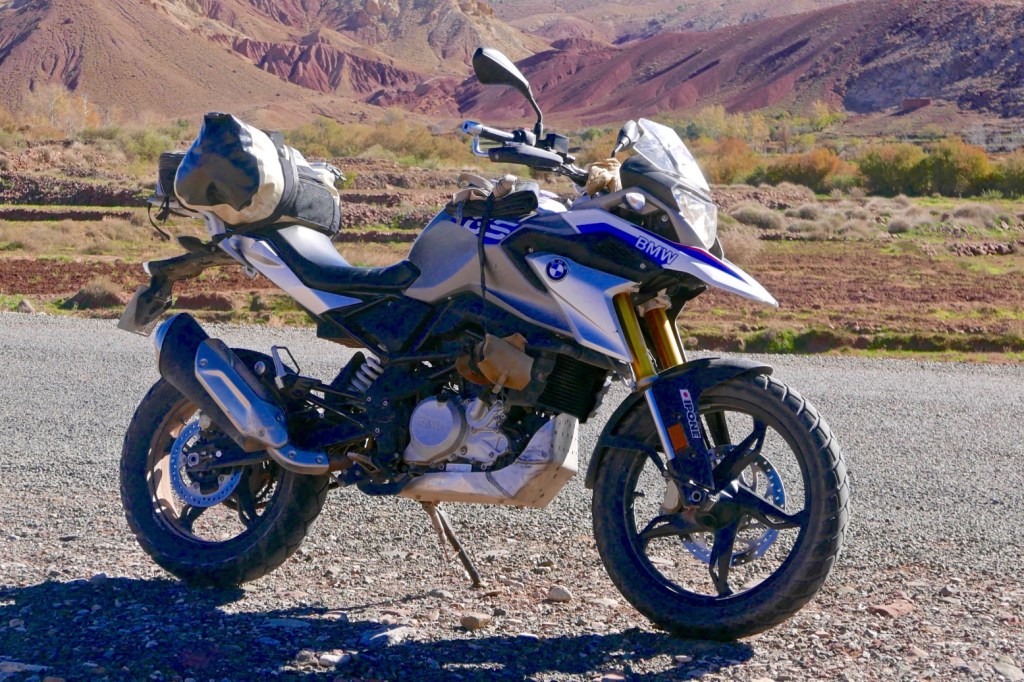
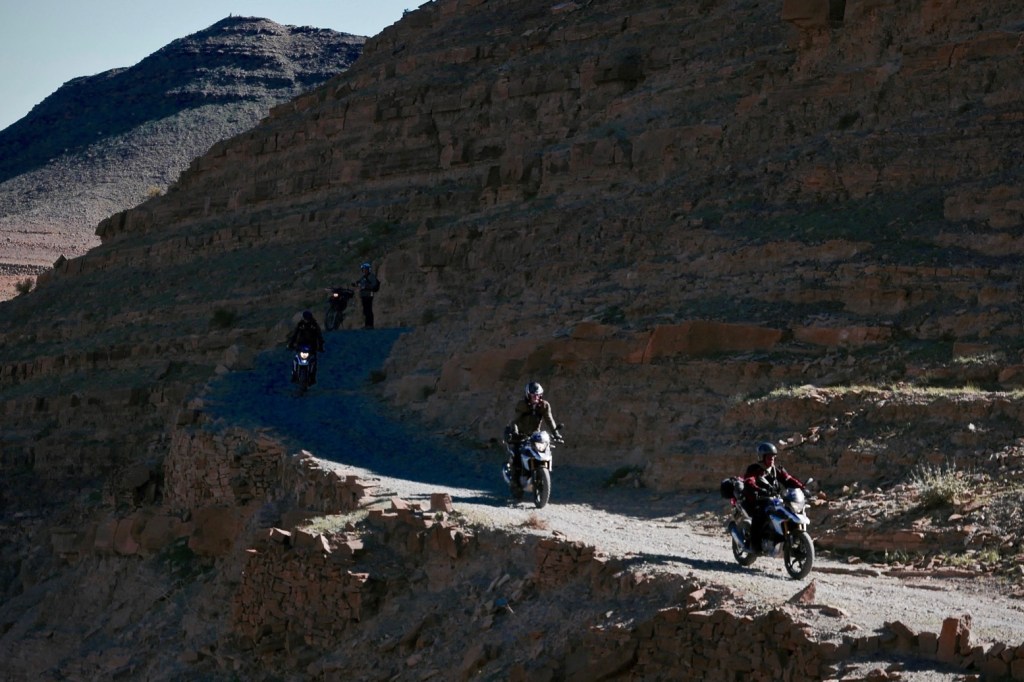
In April 2018 a couple of us tested two brand new but modified rental G310GSs in the High Atlas, alongside one of the aged XR250 Tornados these bikes were replacing.
A year later I’ve now had a chance to ride for several weeks with or on more rental GS310s, effectively covering 11,000 rider kilometres, with me accounting for 2200km.

In a line
Enough poke and agility to be a fun canyon bike and, all things considered, satisfactory on the dirt.

310r - 15

• Indian build still keeping up
Efi motor fuels smoothly at all altitudes
• OK brakes and easily switchable rear ABS disable
Mitas E-07/ Metz Karoo 3 do-it-all tyres better than stock Anakees
19″ front wheel good road/trail compromise
Suspension surprisingly well damped
• Chunky subframe manages loads fine
• Very good economy – I averaged 90 mpg (75 US; 31.8kpl; 3.13L/100k)
• Range from the 11-litre tank well over 300km, or about 200 miles
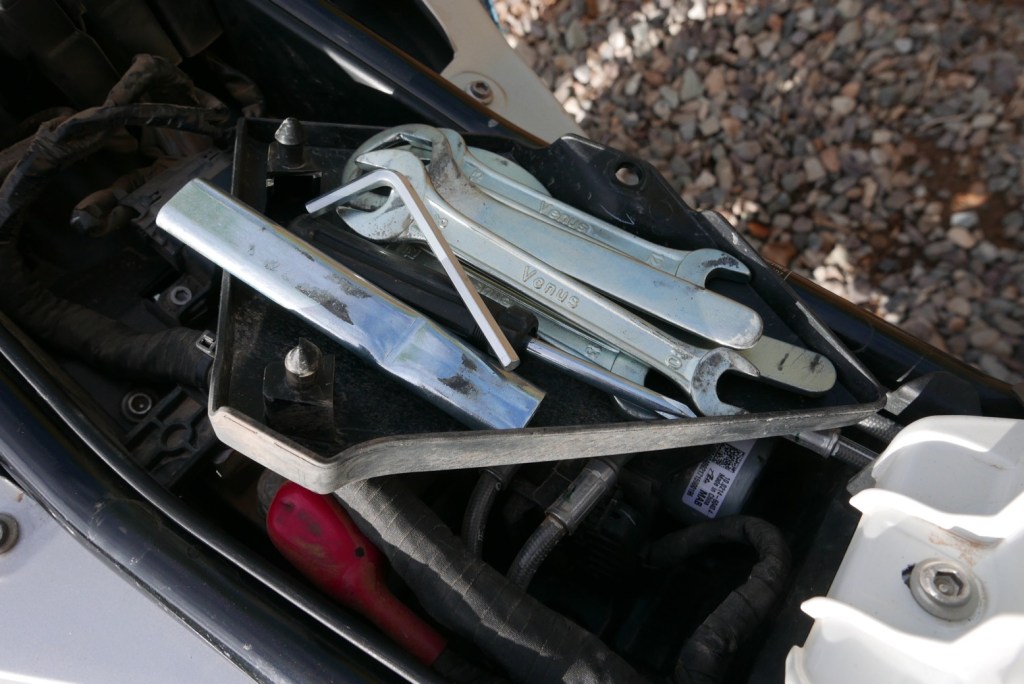
• Hallelujah, a near-proper toolkit (once)!
• Useful dash data too, scrolled or edited with one button
• Yes it’s 169kg wet (claimed) but it carries it well

Side stand bracket breaks off at the frame – recall up to May 2019 (see below)
Thin seat lasts a couple of hours, but so do most stages
• Tank covers too wide for comfortable off-road standing (no risers)
Over geared; could easily lose a tooth off the front sprocket
• Some bikes had starting issues at <5°C
Stalls occasionally when pulling away or cold (lack of grunt)
ABS malfunction light due to dust on sensor

310r - 11
310r-1
310r - 19

Review
In late 2022 now with 60,000km on the clock, give or take, the bikes I used on my tours had loosened up noticeably since the new 310s we tried in April. Selecting neutral is still difficult from a standstill, but at higher or lower revs, they pulled better and felt less harsh.
The first 310 I used was a spoked conversion with a brand new Metz Karoo on the front and a worn E-07 on the back. Once the  Karoo’s unnerving edginess quickly wore down, or the Moroccan backroads we ride, this (or similar) is a much better tyre combination than the stock Anakee road tyres. No surprise there: on your typical gravel-strewn, bendy Moroccan mountain road, the Michelin rolls sideways over gravel patches, where the widely blocked Karoo or 07 find grip sooner. And once aired down to 2 bar (28psi), on full dirt the blocked tyres obviously provided more reassurance.

310-canyon.jpg
This time on both 310s I used I bothered to jack up the rear shock at the end of day one. The job’s easily done with the under-seat toolkit: pull off the LHS side panel with a 5mm hex key and with the C-spanner I cranked up the shock to max or one below. With my 100kg-in-kit and 10-kilo load the bike rode much better over lumpier highway bends and on the dirt – occasionally bottoming out where you’d expect it to. You can’t adjust the forks but, like the F700GS I also rode for a week, for a budget bike BMWs stock set up was much better than many Jap bikes I’ve owned.

310r - 6
310r-9
310seater

This time round I meddled with the dash too. Besides rpm, gear position, fuel level and time of day, you can scroll through read-outs for: odo, 2 trips, engine temperature, date, current and average kpl and remaining range. The only one I miss there is ambient temp, but I didn’t have difficulty reading it as I did in April. It was the way with many of the GS’s small irritations we registered back then: after a while you just get used to them.
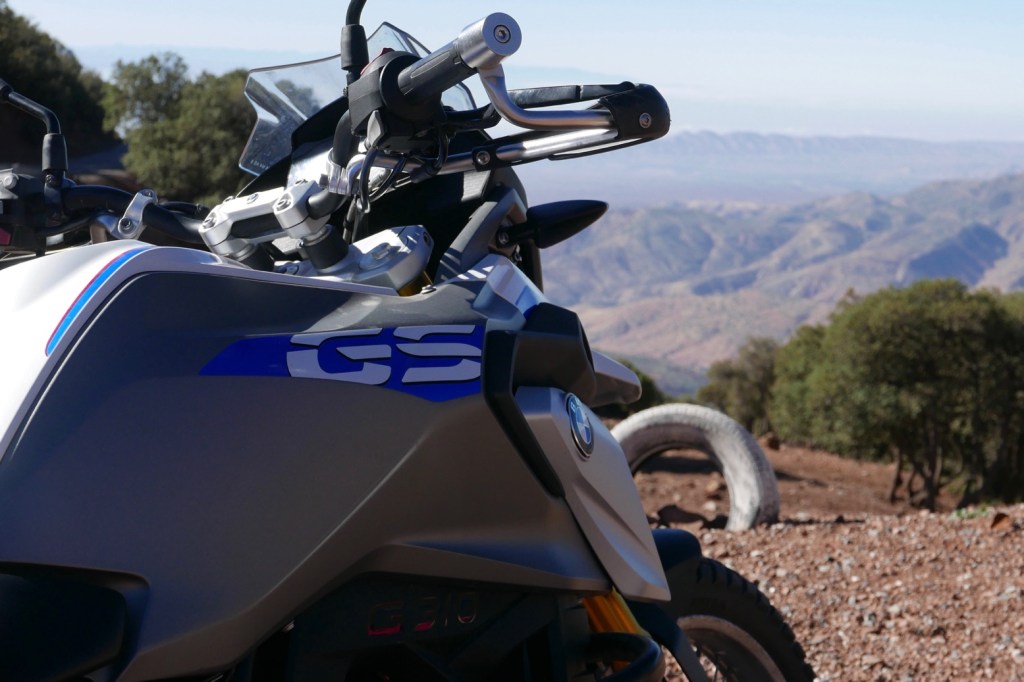
A good example was the wide 11-litre tank – or tank casing (left) which helps bulk up the 310’s look. Many riders found it annoying when trying to stand up and get their weight forward, and (depending on your footwear) the narrow footrests don’t help. Or so I thought, but after a couple of days I didn’t notice or just gave up standing up as the bars were a bit too low and anyway, I’m a bit lazy.
A couple of riders could have used the 15mm lower saddle option and others, like me, could have done with bar risers. Comfort wise, the secret with all duff saddles is get off every hour, which I Morocco we end up doing. Failing that, standing up into the 90-kph breeze is all you can do. The screen too looks ineffective, it’s just a layer of the front cowling but it works as an air lip, jetting air up without the in-your-face plastic which, BMW say, newbie riders don’t like. I used mine to lash down waterproofs and can’t say I noticed the wind blast, but I rarely exceeded 90kph (55mph). In the rain no air-dam effect will keep it off you. I’m sure the usual aftermarket suspects have released full height options.

310r - 4One thing that really needs changing is the tall gearing. The rental agency told me it runs a 19T on the front – unusually large. Most others say stock is 16T and that a 15T works much better. As it is, a 310GS is over-geared and won’t pull to the red line in top. I briefly clocked 140kph with a few hundred rpm left (claimed top speed is 144kph/89mph). So dropping a tooth may allow it to rev out at the top end while making the GS hopefully less stall prone and more manageable at low speeds. Many times riders would stall and stall pulling away from cold. It could be unfamiliarity with the low-down gutlessness not helped by the short range of clutch movement, but lower gearing would surely help.
Almost every time I recorded it, I got the best fuel consumption of the group, probably helped by the fact that I’m paying for the fuel, knew the roads and wasn’t on holiday. The highest is got was 93mpg with others on 310s mostly in the mid-80s and as low as 78mpg. BMW claim an average of 85 (3.33k/100L) which seems spot on. So our figures give a range of between 300km and 360km from the 11-litre tank (conversion table, right). The fuel light comes on with a good two litres left. This fuel consumption was better than the aged Tornados being replaced.
On one circuit an R1200GSLC ridden at our moderate, sub 100-kph pace got no better than 66mpg, so this may be just about the best possible mpg from this powerful machine, which is well over 400km range.

Problems with our G310GSs

• One one wet morning and on a couple of chilly <5°C mornings, a couple of the bikes wouldn’t start straight away. One guy ending up jump starting, needing to get into 4th gear. To be precise, if you didn’t get the engine to fire up first time, it took a minute or three to catch, initially misfiring before firing properly. Switching off to possibly reset something, and ‘no throttle’ seemed to do the trick.

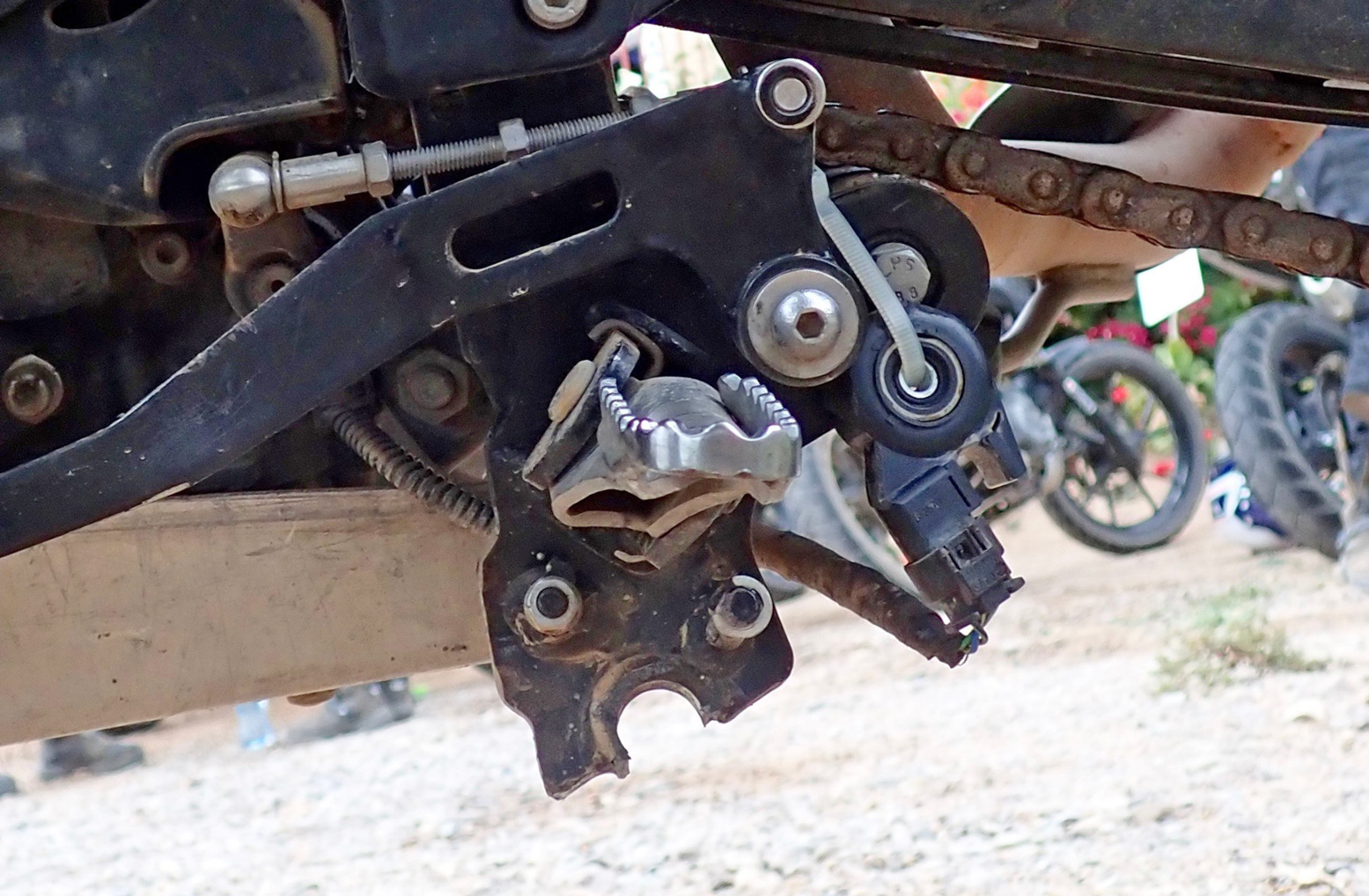
The agency has had a few breaking sidestand mounts; a couple on one of my tours on a biker with 15,000km. The skimpy mount is part of the frame, not bolted to it, so is a tricky repair to do well. Post May 2018s were redesigned, they say.
We didn’t notice worn cush-drive rubbers.

gs310sidestand
New frames, please

Summary
Perhaps because it’s trying to disingenuously capitalise on the reputation of the bigger GSs by brand association alone, the 310GS isn’t a bike riders initially warm to. The buzzy engine lacks grunt and like any machine this size, needs to be wrung out to get a move on. On my previous tours riders often came back looking for something like the 250 Tornado, they’d just ridden (often ending up with a CRF), but none of the mature riders expressed the same interest in adding BMW’s mini GS to their fleets, far less a sole bike. Try one out on a flat open road and – like any road bike of this capacity – you’ll be underwhelmed unless you’ve only ever ridden smaller machines.

310r - 12

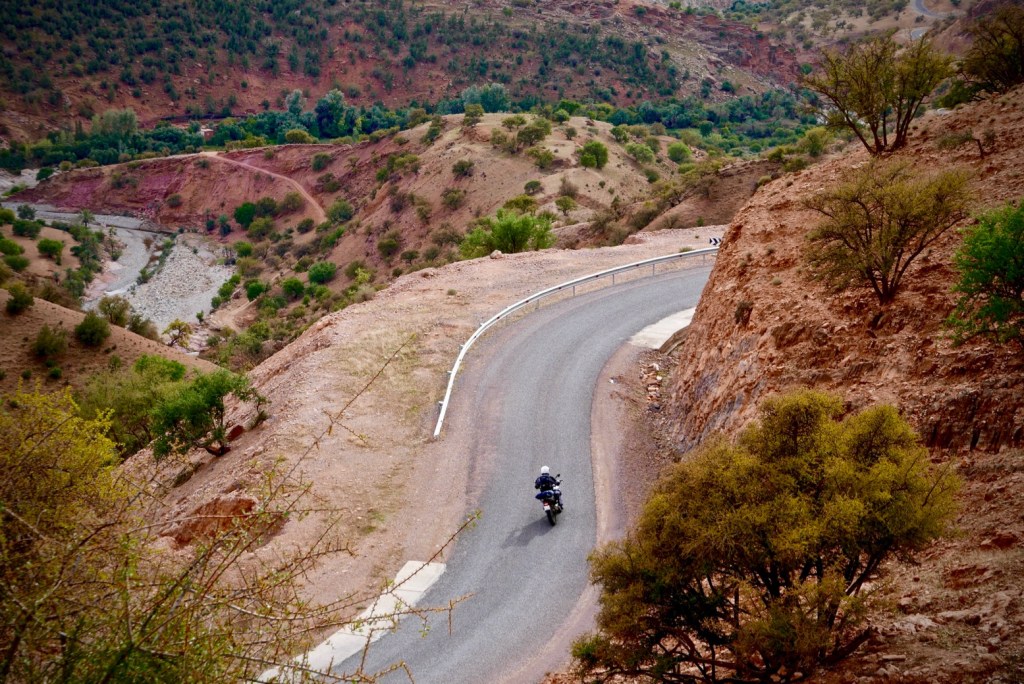
But on the 1100 clicks we cover over a week, its no exaggeration to say we swing through thousands of bends, and up in the mountains, through the canyons and over High Atlas passes, the 310GS is all the bike you need. It’s not fast enough to get you in trouble, it’s not heavy enough to get out of shape, and it has just enough braking, grip and chassis stability to keep you on the right side of the Armco.
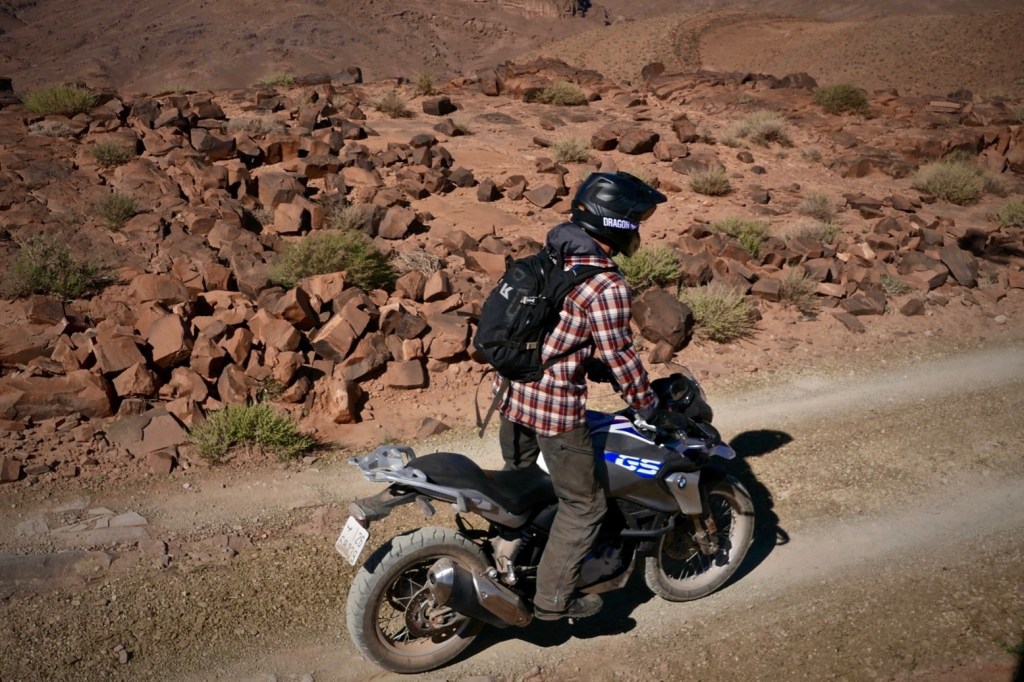
On the trail the stock tyres will hold you back, as does the weight and modest suspension travel. But ridden within these limits and your own ability the GS manages fine on gravel tracks and briefly rough sections, while still being a fun backroad bike. Asking round the dinner table on the last night, we all agreed the G310GS scored a solid 7/10.

310ender.jpg

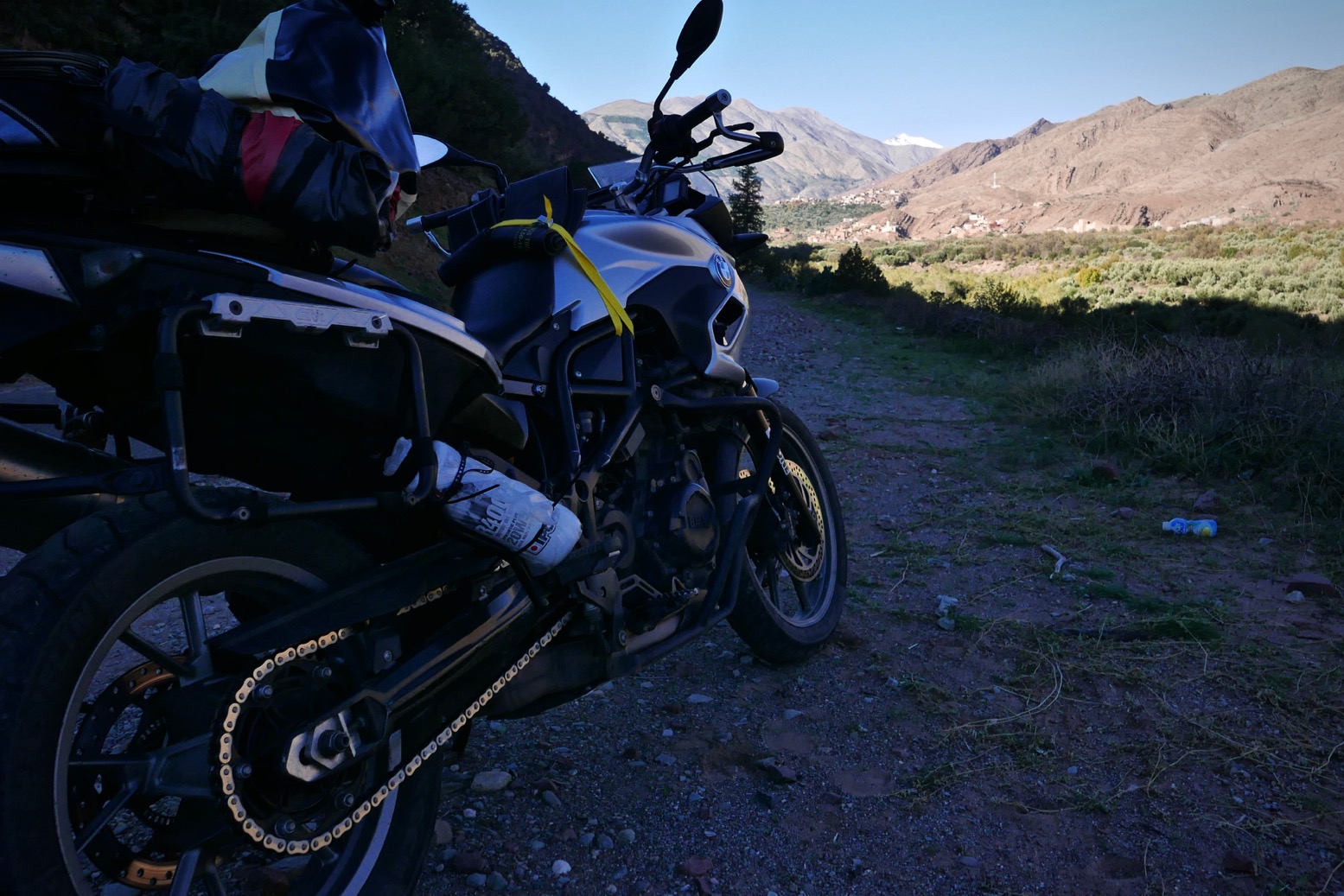
Review: BMW F700GS 1100km test

700 - 7
See also: F750GS

In a line
Economical and easy-to-ride big twin on road or trail, only held back by the staid image.

• Still running well at 110,000 rental kms
• 19″ front wheel ideal for road and trail
• Suspension surprisingly good at sustainable off-road speeds
• Great economy – averaged 81 mpg (28.7kpl)
• Torquey boxer-sounding motor has all the power you need
• You really notice the benefit of a low centre of gravity, especially on the dirt
• Yes it’s 209kg wet (claimed) but like they say of a GS12, it carries it well.

• Seat (low version) is as bad as the 650 version, if not worse
• Long wheelbase and low CoG? [+ road tyres] can make turning hard
on dirt switchbacks
• Tall first gear for off-road (as with most road bikes)
• ABS and gear position indicator didn’t work
• No screen to speak of
• FSH-type owners mean used prices remain annoyingly high

700 - 4
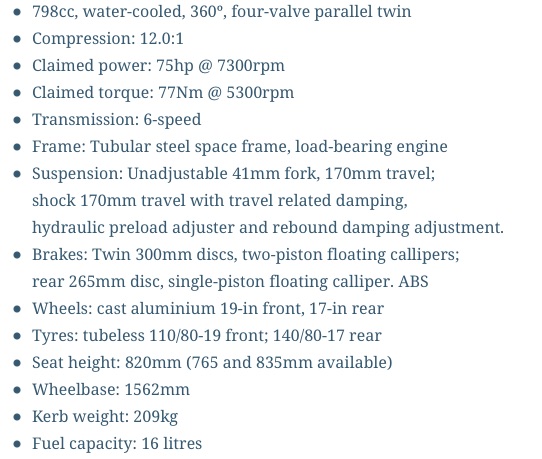
700specs

Review
A few years ago I rode a brand new F650GS SE down to Morocco, covering around 4000 miles while updating my guidebook. The ‘SE’ was a fully accessorised and snazzed-up version of the regular 650, just before that model got renamed the ‘700GS’ to help differentiate it from the 650GS single which had long caused confusion.
Six fifty or ‘700’, the actual engine is a detuned 798cc as used in the pricier and flashier F800GS. These parallel twins were launched in 2008 with an Austrian-made motor, soon followed by a well-documented slew of teething problems. The popular 800s were finally replaced in 2018 with the F750/850GS. The motor is now made in China but final assembly remains in Germany.

700 - 9

I reckoned that for most, the 650 twin made a much better travel bike over the 800. It was lower, more economical, more torquey and has tubeless tyres and a 19-inch front wheel, while still having great suspension and more than enough grunt to get the job done. After a week on a bike with over 110,000 rental kms on the clock, I feel the same about the 700 for all the same reasons. I’d take this bike over an 800 any day, not that that’s stopped them being far more popular travel bikes. Image is a big part of the adventure and, hampered by its ‘entry-level’ stigma, the 700 looks boring alongside an 800GS.

700 - 1

Guiding a group of 250s and 310s, I wasn’t pushing the 700’s limits on the road. Most of the time the throttle was barely open, resulting in fuel consumption in the low 80s mpg (68 US; 3.4 l/100km; 29kpl). I know I’ve been going on about 270-degree parallel twins lately, but the 360°-cranked 700 – cunningly acoustically tuned to replicate the sound of a GS12 – was easy to ride on the road or the dirt. I never had reason to go over 120kph for long, but I’m sure it would make a great road tourer once you sorted out the seat and fitted a worthwhile screen. Back in 2012, the 650 was an effortless ride back to the UK across Spain.

700 - 2

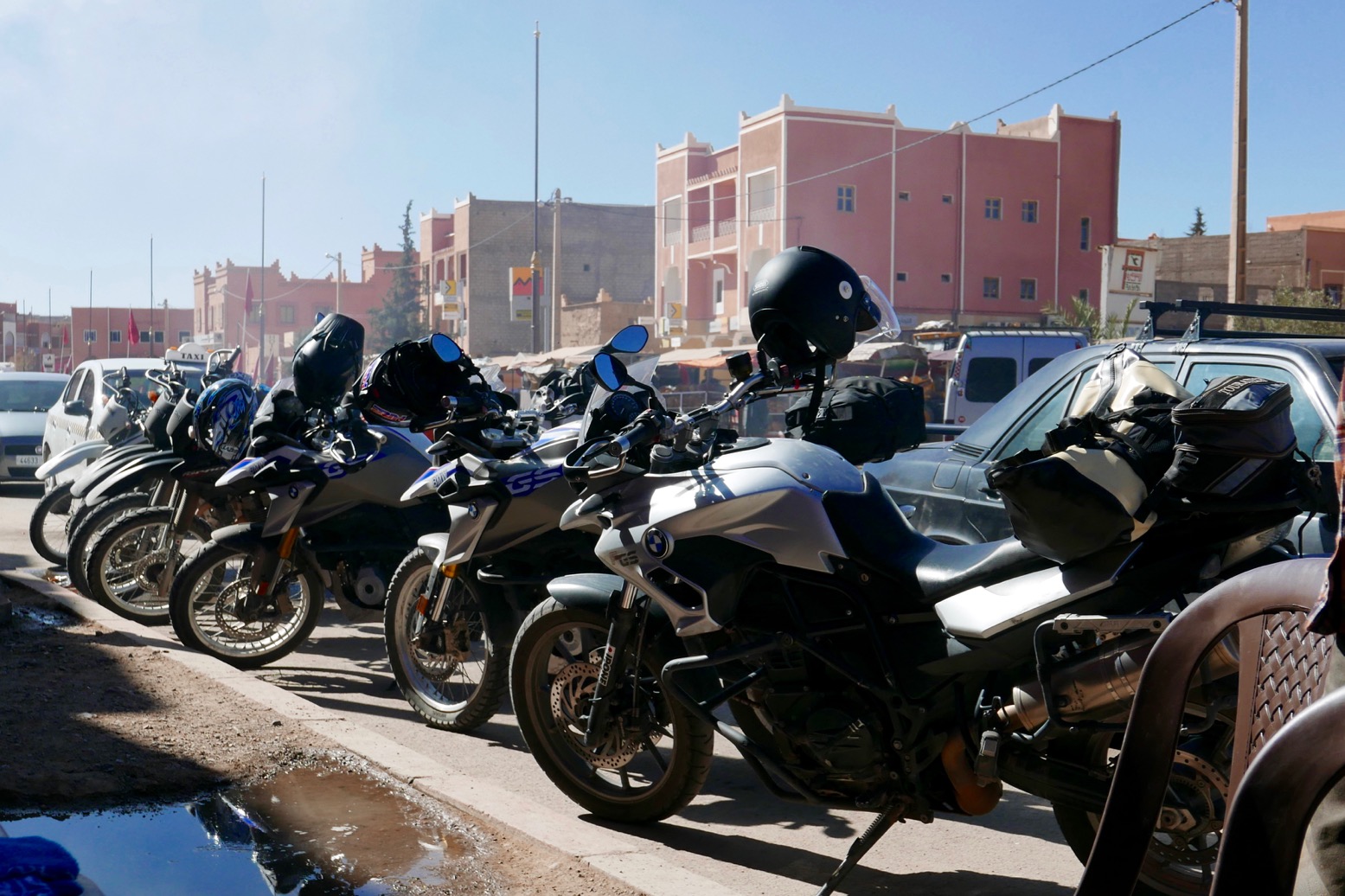
The bike I was using was fitted with a low seat and had picked up a few minor faults over the years: the ABS didn’t work and neither did the gear indicator on the dash. Out of Marrakech there was a bit of misfiring, possibly because the throttle was barely open. It cleared up and never came back. But it came with a centre stand and the heated grips still worked. The tyres were plain old Anakees which slipped a little across road-surface gravel and held me back from swinging around too freely on the dirt, but as long as things stayed dry they were as predictable, as other bikes used out here with road tyres.
Like the 650 I found the 700 a hard bike to turn on dirt switchbacks due, I think, to a combination of long wheelbase and low centre of gravity, where leaning the bike has less effect on shifting the CoG. At any other time I appreciated the long, low-slung bike; it helped the bike track straight in soft sand – again as I  recall from the 650.

700 - 6

The 700 supposedly had less torque and more power than the 650 I used, but I felt little difference. It’s still a great motor for my sort of backroads- and easy trail riding. First gear was too high off course (I specifically got my 650 cogged down a tooth on the front) but the low-rpm grunt of the engine and smooth hydraulic clutch made feeding in the power easy at just over walking pace. It was never uncontrollable unless you wanted a bit of wheelspin. I doubt I was ever using half of the available horsepower but it’s good to know there’s plenty there for a long ride home.

700 - 3The suspension is nothing flash up front: an unadjustable fork, but the spring rate and damping seemed just right on the roads and the pistes. It goes to prove you can make a plain fork effective out of the crate without needing to offer expensive adjustments. Same with the back, although this bike had an Ohlins with a HPA, but who knows how old it was and what it’s been through. I never felt the need to adjust the preload, easy though it would’ve been. Occasionally both ends bottomed out which shows the full range of travel was being used.
I really did marvel at how this unprepossessing old tug managed the rough pistes – better than my Rally Raid CB500X and last year’s XSR700 Scrambler.

700 - 5The low seat – probably under 800mm – was as bad as the 650’s, if not worse, due to scant padding, but standing up wasn’t noticeably hard and it certainly eased getting on and off. I can’t say there was any intrusive vibration through the worn-out grips or pegs and although there was no screen, I never sustained high enough specs to make that a issue either.
Conclusion
After a week and 1100 clicks on the rental-ravaged 700GS I found myself on ebay looking used prices. I have to admit that engine, suspension and comfort the 700 felt as good if not better than my similar XSR700 and a lot more gratifying to ride than the CB-X.

700 - 8

Bonneville ’78

Read an illustrated and lightly massaged excerpt from The Street Riding Years
View the 1978 Gallery

These days Triumph Motorcycles are doing all right, particularly with the parallel twins on which the company made its name. But in the 1970s success wasn’t a word you associated with Triumph or much else manufactured in a Britain blighted by industrial unrest.
The late seventies may have seen an evolutionary spike in motorcycle development, but the British bike industry had crippled itself with a complacent, post-war mentality and no longer ruled the roads.

z900
78-bmwmeister

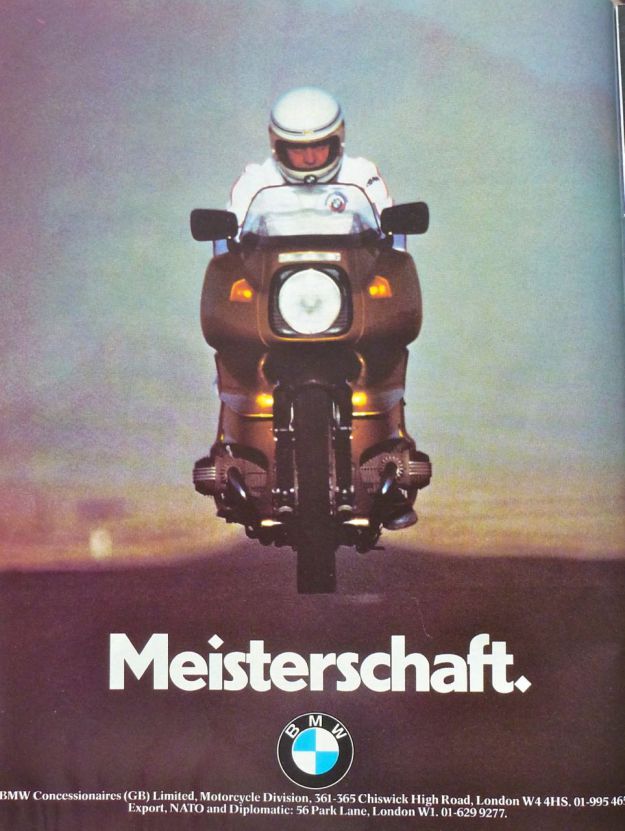
Meanwhile, the modern motorcycle era was taking shape, exemplified by Italian V-twins and Kawasaki’s sexy Z900s. Acquiring a full bike license at just 17, I could let rip on any of those; bikers could then have their cake and eat it – usually served by a nurse and with a limb in plaster. Only my £20 weekly wage kept me in check – well for another year at least.
    What then, would be my first proper bike? The big Zeds apart, I mindlessly subscribed to the pejorative ‘UJM’ (Universal Japanese Motorcycle) tag: reliable, fast but bland. BMW produced expensive, well-engineered flat-twins ridden by smug, know-all beardies, not dashing young blades like me. Harleys were largely scoffed at in the UK while Italian bikes were gradually consolidating their glamorous image, outriding the best of the Japs so long as the electrics held out.

77-powerchoice

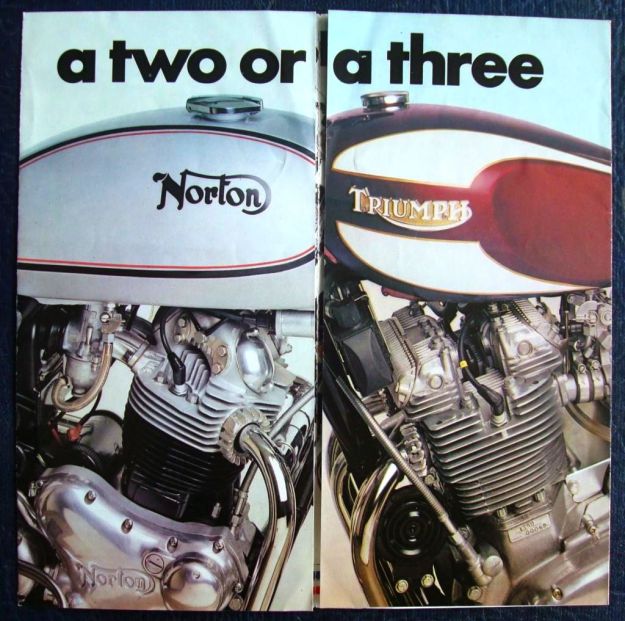
You might think the Brits only had nostalgia and heritage on their side, but there was another less tangible attraction that over-shadowed merely riding what your dad rode. In ’78 the surviving flagships from Triumph and Norton were still something to aspire to, virile survivors of the Jap invasion with something your yen couldn’t buy: lashings of ‘character’. Proper bikes of this era possessed the love-hate quality, paraphrased by TV comedian Dick Emery’s catchline: ‘Ooh you are a maddening bastard, but I love you’.

78-comando
77-nortonape

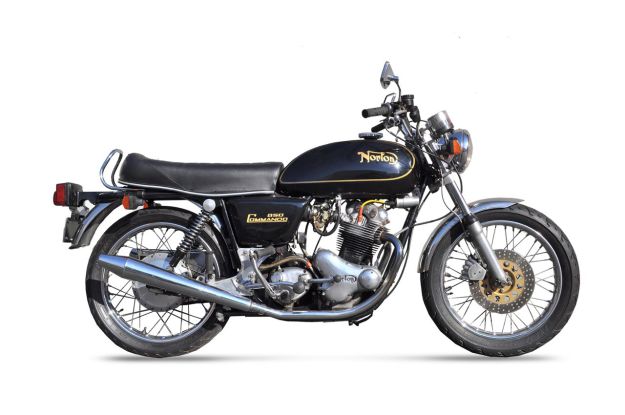
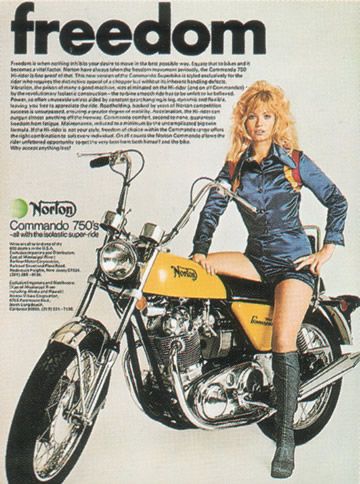
There was something about the understated charisma of Triumphs and Nortons that was unrelated to blind patriotism. I’d never really fancied a T160 Trident, but in black and gold, Norton’s 850 Interstate Commando (above) looked like a rumbling bundle of motorcycling bliss. Commando – what a great name for a British bike! What red-blooded young seventies male wouldn’t want to be associated with a plucky wartime saboteur, crouched in readiness with his Sten gun.
The same could be said of Triumph’s Bonneville, by this time only 20 years old and assembled in Meriden by a loyal and motivated workers’ co-operative where fitter and director all earned the same low wage. Sure, both these bikes were dinosaurs on their last gasps after the Japanese meteor impact changed the motorcycling climate for good. But they still managed to exude a rugged pre-PC manliness that left a seventies teenager starstruck.

In the spring of 1978 I ordered a UK-spec T140V in burgundy for £899. What I actually got was a blue, US-spec model with a few bits loose or missing, and “mate, you can take it or leave it”. Despite the efforts of TV consumer champion Esther Ranzten, American levels of customer service were still floundering some way offshore.

T140V

The US model came with a smaller teardrop tank and high bars – foretelling the naff ’mock chopper’ trend that was just around the corner. But high bar or low, the T140V displayed an attribute I’d not experienced on my execrable MZs: torque, or low-down pulling power. I don’t think I ever became immune to the Bonnie’s loin-stirring, smile-inducing shove persuasively unleashed between 2500 and 3000rpm before the vibration really set in. The Triumph had another sort of pulling power too. Girls quite possibly gave me a second look as I torqued along in my Fonze-like, high-bared pose.
After three-too-many MZs, riding the Triumph was like being carried out of the castle’s benighted dungeon into a field full of buttercups on the shoulders of the town’s fairest maidens. Suddenly I knew what biking was about – the surge of a powerful engine, the throb from the pipes and the actual stopping power of hydraulic disc brakes.

OLYMPUS DIGITAL CAMERA

With my new-found status, I eagerly bought into the ‘Brit biker look’: open face lid with flat-glass Stadium goggles. A cream silk-like scarf just like Biggles or Douglas Bader, fluttered jauntily from the top of a nylon Belstaff Trialmaster jacket. My outfit was topped off by gigantic gauntlets resembling something you might attach to a cow’s udder.
Kick-starting the Bonneville demanded an exacting ritual. Turn on the fuel taps and ‘tickle’ or prime the carbs by pressing on tiny plungers. Once petrol was dripping onto the gearbox, you turned the ignition key then pressed the kickstart against the engine compression. Let it swing it back up and you were now ready to enact a triumphant lunge by coming down on the kick-starter with all you had.

78-bonnie140

It was a mechanism perfected over the eons so there was no risk of overdoing it, but any pussyfooting resulted in a knee-snapping backfire. This beast had to be grabbed by the mane and wrestled into life. I never failed to get a thrill from starting the Bonnie, and so long as you lunged down with gusto, it worked every time, hot or cold, rain or shine.

In 1978 one in three new 750s sold in the UK was a Triumph, but unfortunately, I’d bought mine during a three-month ban for riding on a motorway with L-plates stashed in my pockets. Like many others at that time, I carried on riding discreetly, cunningly taking the back streets to sixth-form college.

78-tiger
tri-cenotaph

Once my A-levels were done I enjoyed a fabulous summer’s riding with a mate on a similar 750 Tiger (above), visiting the climbing crags in the Sussexc Weald, Peak District or Snowdonia’s famous Llanberis Pass, then down to the Gower and back via Avon Gorge for more of the same. Near Shrewsbury one time the battery exploded, but it was all part of the adventure – a carefree interlude between school and further education or work.
And once the exam results came in, work it was to be – no further education for me. At that time the back of Motorcycle News was packed with adverts for despatch riders – an exciting way to pass the time until I worked out what I really wanted to do. One phone call and I was in business at Capital Couriers in Kentish Town.

tri-monopoly

Why was Kentish Town in North London, miles from Kent which is south of London? As I was soon to learn, the capital was not an intuitive city to navigate. At that time my knowledge of London’s streets was based on the Monopoly board game – the expensive dark blues, greens and yellows were posh areas in the West End. The cheapies like Pentonville, and Whitechapel? Out east somewhere.
 Armed with my Monopoly mind map and a good sense of direction, I collected my very first job to Chiswick in west London by the Thames. That’ll be easy: south to the river and simply follow it upstream, a foolproof strategy refined along the banks of the Nile by the likes of Burton and Speke.
That might have worked had the Thames run as straight as a Roman aqueduct, but rivers meander and roads followed the Thames only intermittently. Some two hours after what should have been a twenty-five-minute ride, I timidly delivered the package with no word of complaint. That came to be the abiding paradox of messengering: clients were paying twenty times the cost of overnight postage, but most of the time few gave a toss on prompt delivery.

tri-750:4

At Capital I made friends with Nick on a CB750K6, descendant of the revolutionary 1969 superbike that had brought about the current megabike frenzy. Nick and I soon engaged in a ‘Brit Shit/Jap Crap’ banter that ran for days at a time, but always with a twinkle of affability. Of course, I was only partly joking. At that time I was besotted with my Bonneville, but that wasn’t the only thing. One morning I bounded up the stairs of a redbrick Edwardian block off Oxford Circus. A pretty receptionist was just tidying up some photocopies.

Ooh, are you the bike? Won’t be a minute,’ she said with a smile, glancing over her shoulder at the skinny bloke at the Xerox.
‘Are you new? I haven’t seen you before.’
Her optimal blend of nice hair, posh accent, and comely figure produced a pleasing, knee-weakening effect.
Yes, last week. I just started,’ I spluttered.
Ooh. What sort of motorbike do you ride?’
Triumph Bonneville. Seven-fifty.’
Oh,’ she replied, touching her lip with a light gasp and which I unhesitatingly interpreted as dazzled admiration.
 I reached out for something to hold on to, but then Xerox bloke chucked some documents in front of her in a huff and broke the spell.
Ah, finally. Thank you, JEFFrey.’ With a shuffle, she slipped the documents into an envelope and handed it over with another smile.
There. Don’t ride too fast now. See you soon!’

Sadly, I was never to collect from John Princes Street again, but my faith in the Triumph’s magical charisma was enshrined. Another time while leafing through my A-Z an Australian tourist asked to take my picture.
My son back in Melbourne will love it. He’s always wanted a real motorbike.’
 Another day in Victoria Street I came trotting back to the bike to see a pinstripey old chap stooped over the Bonnie’s Smith’s speedo.
Oh, do excuse me. I was just admiring your superb motor cycle. Does it really do a hundred-and-sixty-miles-per-hour?’

tri-bonrecord
triumph-parasite-motorcycle-dragster-1

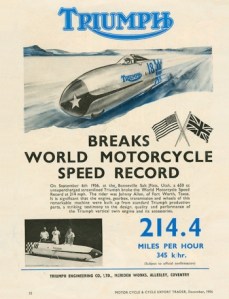
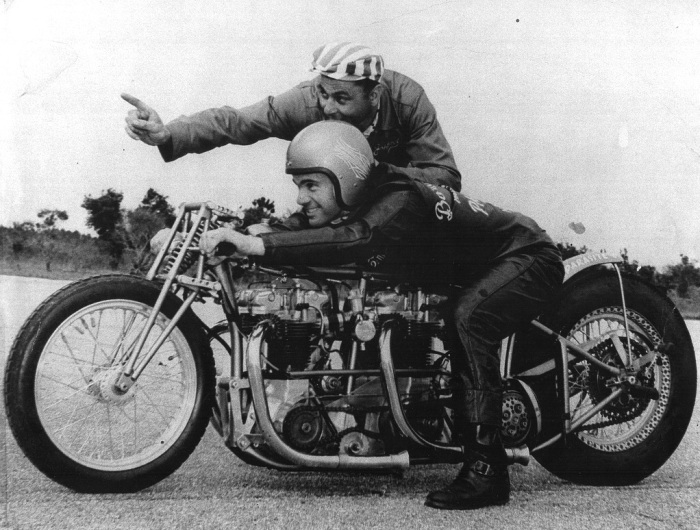
Non-biking civilians who didn’t know a pushrod from a pram responded to the Bonnie in a way no other bike of mine ever inspired. I put it down to a warm nostalgia for British engineering in its gentlemanly post-war apogee: sporty, but never aggressive or ostentatious. And the appeal was international. In the sixties, three out of four new Triumphs went to North America. After all, the Bonneville was named after the Utah salt flats where in the fifties American daredevils had set land-speed records on Triumph twins.
    One evening at Colindale Blood Bank I had a chance to enact my own speed record. Handed a padded case with ‘Urgent – Human Tissue’ emblazoned across the top, the woman asked
How long will it take to get there?’
Er… Children’s Hospital, Great Ormond Street? About twenty-five minutes?’
Oh,’ she said with a frown. ‘Well, please be as quick as you can.’
    Crikey, this was urgent. Was some child actually hemorrhaging on the slab, nine miles away? I thought for a few seconds, then kicked the Bonnie over and flicked the headlight on full. Tonight the Highway Code was being temporarily suspended.
With a squeal from the K181, I roared off down the Edgware Road for Staples Corner, hitting sixty-five along the North Circular before slicing through the traffic for the roundabout under the Brent Cross flyover. From here the Hendon Way was always a reliably fast run apart from the lights. I screeched in then pushed out past the cars. Cross-traffic swept from left and right, but once a space opened up I launched myself across the red light and belted on towards Finchley Road.
This stage was dicey, with heavy traffic and at least half a dozen lights before Swiss Cottage. So where necessary I skipped round the traffic islands, pulled up on the reds, watched for a gap, then gunned it. Around Regent’s Park I kept it down to 55mph: we all knew that in a ‘30’, 40-ish was the working limit. Stray beyond that for too long and things happened too fast or fines involved a ban.
The Bonnie’s side-stand scraped hard towards Hampstead Road, ETA just a couple of minutes now. Down the side of Euston Station – watch out for taxis! – then barge onto the busy Euston Road and heave over to the right for the turn into Woburn Place.

78-ogri

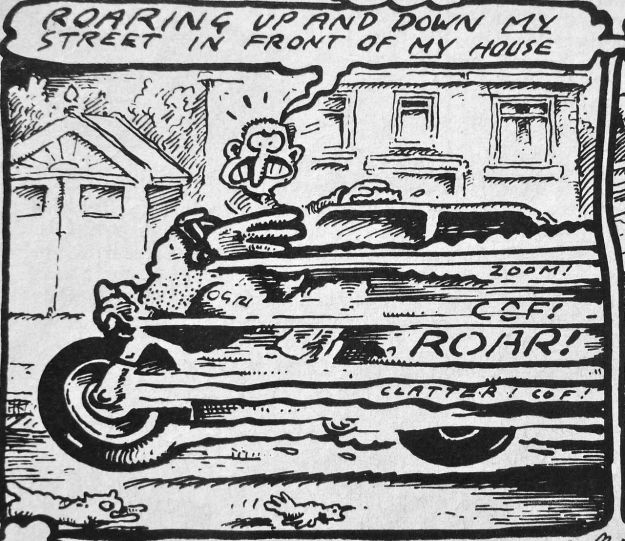
Once barrelling towards Russell Square I ran all the reds like something out of Ogri, then mounted the pavement for a pedestrian passage that led directly to Great Ormond Street. Tourists froze, startled by the revving Triumph’s full beam and my determined glare. With the tormented engine baking my shins, I sprinted down to the hospital, grabbed the blood, leapt the steps in a single stride and landed at reception like a hyper-caffeinated cat.
Hi. Got some blood from Colindale.’
I checked my watch. Fifteen minutes and as many reds. No bad.
That memorable cross-town blast was typical of the ‘you’ll-never-take-me-alive’ immunity we despatchers felt from the Law and the laws of physics, engendered on this occasion by a well-meaning if missplaced sense of entitlement. And it was why we were to become notorious and targeted as London’s dormant economy began to recover.

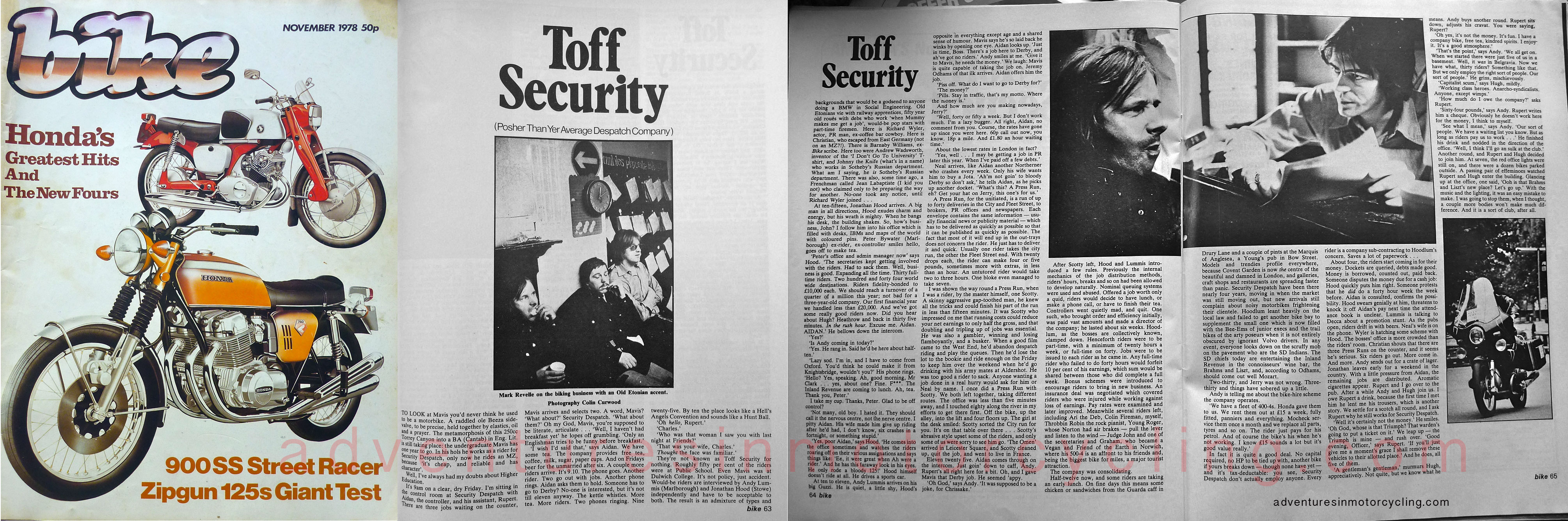
78-toff-security-bike-1978An article appeared in Bike magazine about Security Despatch, one of the big players, based in trendy Covent Garden,. It depicted SD as an exclusive club of louche, articulate dropouts, and the antics and attitudes of this maverick band of bikers sounded a lot more glamorous than crumby Capital Couriers, opposite a pub with lunchtime strippers.
Now with a bit of experience, I signed up at SD, my T140V slipping in well with the other unconventional machines. SD wasn’t for those bib-wearing saps at Mercury; it drew on a pool of free-styling, hard-charging dissenters committed to expressing their individuality and belief in personal freedom.

hj-seddonbike

Shaun ran a Z900 with a raucous four-into-one; swaggering Tim rode an R80 with a Windjammer fairing, GDR escapee Klaus ran a bat-shit R90 proddy racer he campaigned on weekends and the late eccentric, Maurice Seddon, part-timed on a bonkers BSA older than me and which powered his hand-made electrically heated silk underwear.
 At the Friday evening spin-down wages were paid, spliffs rolled and beers cracked open. The throng would offload their week’s burdens, query payments and then head for the pub, milling among the smartly dressed trendies we’d soon be calling yuppies.
Considering the use it was getting, my young Bonnie was doing a lot better than I had a right to expect and had never let me down, hard though that is to believe. I didn’t run it hard as the grin-factor was all about exploiting that low-rpm torque – high speeds were unpleasant.
My ride home to mum’s included a grippy left-hander at the bottom of Brixton Hill. Even after a long day in the saddle, I’d always do my best to line myself up to hit it ahead of the pack and shower them in a long trail of sparks. Banked over far less than I imagined, the Triumph remained planted like a chubby genie on his magic carpet. Shifting into fourth for the charge up to the lights by the prison, it was a great way to sign off the day.
I joined SD in early winter when the students and fair-weather dilettantes had scarpered like rats from a shipwreck. There was loads of work and soon I was regularly earning over £250 for a fifty-hour week. With all this money and learning the craft, it seemed a waste to throw it all away and do what, exactly? Unemployment was rising, and with Thatcher’s imminent ascendancy, it was about to go off the scale. So I decided to turn pro and knuckle down on a more conventional machine (what a mistake that was). The Bonneville was too good for all this rushing about, and the hefty kick-starting ritual was losing its shine when done forty-four times a day. 

I sold the Triumph to another young pup enamoured by the cult of the Bonneville. Years later I saw it parked off Fleet Street and gave it an affectionate pat on the tank, like McQueen caught in the wire at the end of The Great Escape. Then, as now, I recall the reg’ without hesitation: WHX 791S. Can’t say that of the dozens bikes I’ve owned since. Rock on Triumph!

78-bonnie