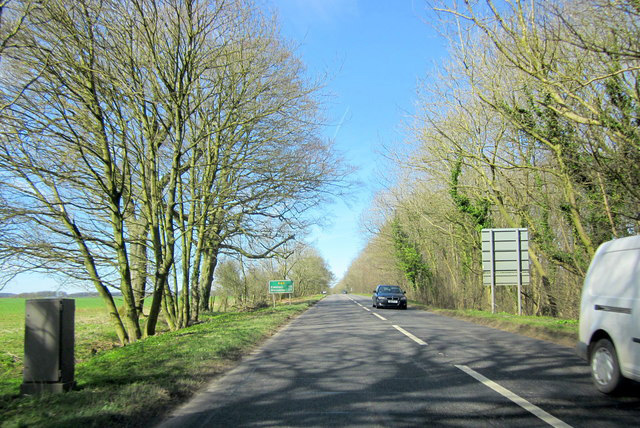
Just back from my first long ride on the REH; a chilly 130 miles up to Simon’s near Bromsgrove to get some work done while I’m away. After what feels like weeks of dawn-to-dusk clouds, I picked a bright sunny day with a very cold northwest headwind. Wiring up the heated jacket would have been too obvious; instead I settled for my old onesie which did pretty well considering it was 2-4°C. I did lessen the windchill by spinning off the M40 at Oxford onto the lovely A44 through the Cotswolds, instead of slabbing all the way up the M40/42/5. So a good road test: weaving across busy London, dual carriageway then motorway, A roads and finishing off on B and C roads. All that was missing was some piste. That will come later.
I have to say I am really quite impressed with the Him. Or should that be relief it’s not anywhere near half as crap as I feared. It starts from near freezing with a bit of cold-start lever and settles readily down to an efi-steady tickover; it manoeuvres through town easily, then spins up to an indicated 65mph with no effort and with what feels like a little in reserve. Things may change but there’s something about the wide, 5-speed gear ratios allied with a long-stroke and low-compression motor which makes the Himalayan satisfying to ride not very fast. Maybe it’s the high torque-to-power ratio – an engine characteristic that’s always appealed to me but rare these days. You’re never in a rush to change up a gear to avoid annoying buzziness because there isn’t any. The speed range in each gear is broad so you can chug through villages without changing. It’s something I’ve not felt on a bike for years – a ride to Cornwall on an SR500 in 1980 comes to mind. And I suspect the weight with a low centre of gravity is a factor too, aiding the planted feeling. Whatever, it works for me for the moment. In the city it felt manoeuvrable, slim and adequately responsive and on the motorway I didn’t feel unduly vulnerable. Once warmed up the fuelling feels spot on and the gearbox is fine as long as you don’t rush it. With long shadows all day, the country roads stayed wet with dew or melted frost, but the Pirelli MT60 tyres gave no moments. The brakes are OK for the speed potential, with one ‘ABS moment’ which unnerved the hard-braking car in front more than me. The shock preload is on the lowest setting but suspension is firm and might even be classified as harsh. Better that than the opposite, although I presume it will soften up and eventually go off. I’m wondering if the YSS shock will even be needed for Morocco. So, my first impressions pretty much match those of my short test ride a few months ago. Some of the negatives I’ve got used to or have proved not to be deal breakers. End of February I look forward to picking up a much transformed machine, ready for the desert.
• Feels easy to ride and manoeuvre, despite the 194-kg kerb weight • Low seat height (800mm; 31.5″) • Indian build quality looks solid • Torquey efi motor starts and fuels smoothly • Pirelli MT60 tyres (as opposed to some obscure brand) • Suspension surprisingly firm • No vibration at up to 65-70 • Oxford grips pack out some heat • It’s different!
• Soft seat foam (for my weight) • Screen too small (for my height) • LED display could be larger and tidier
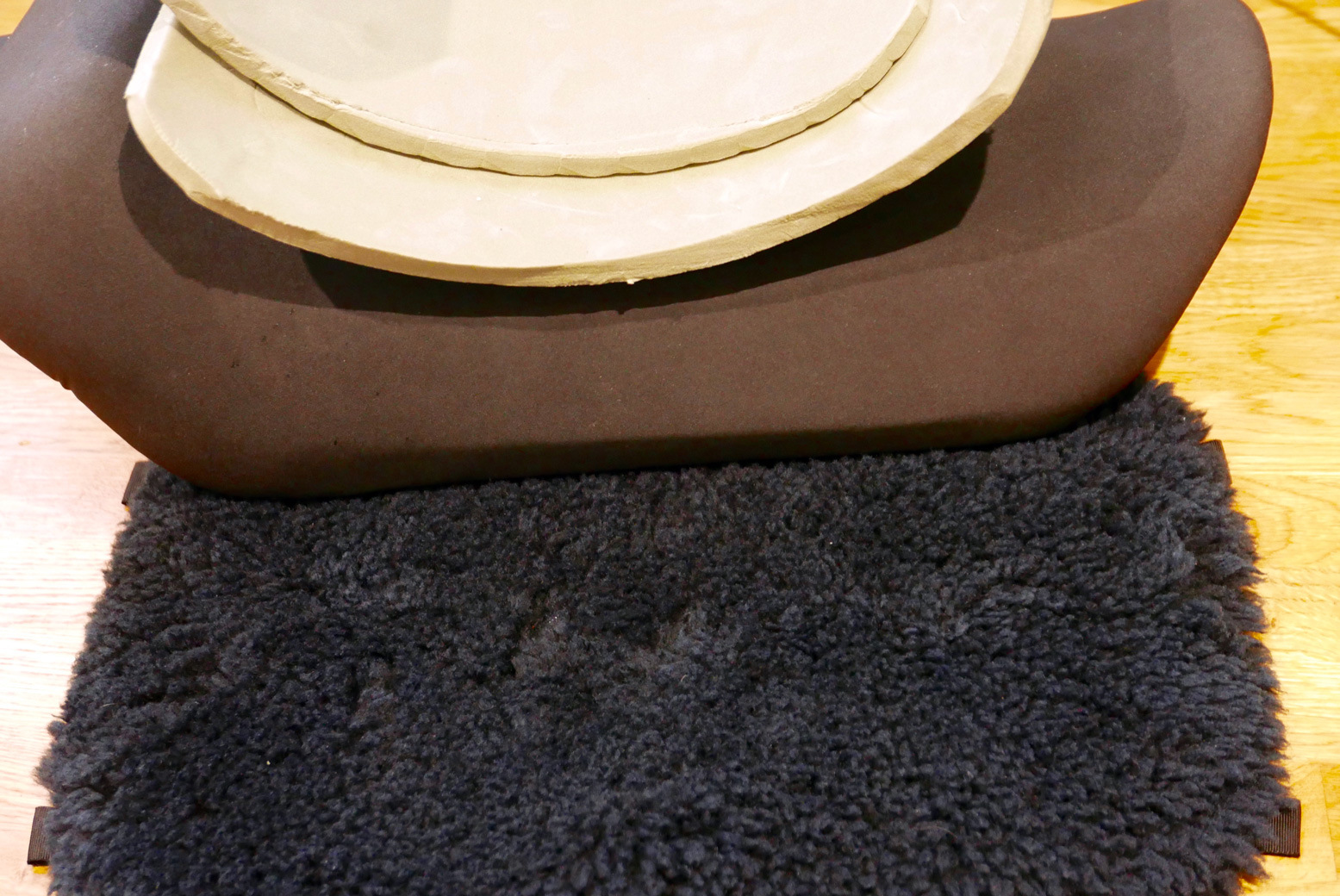
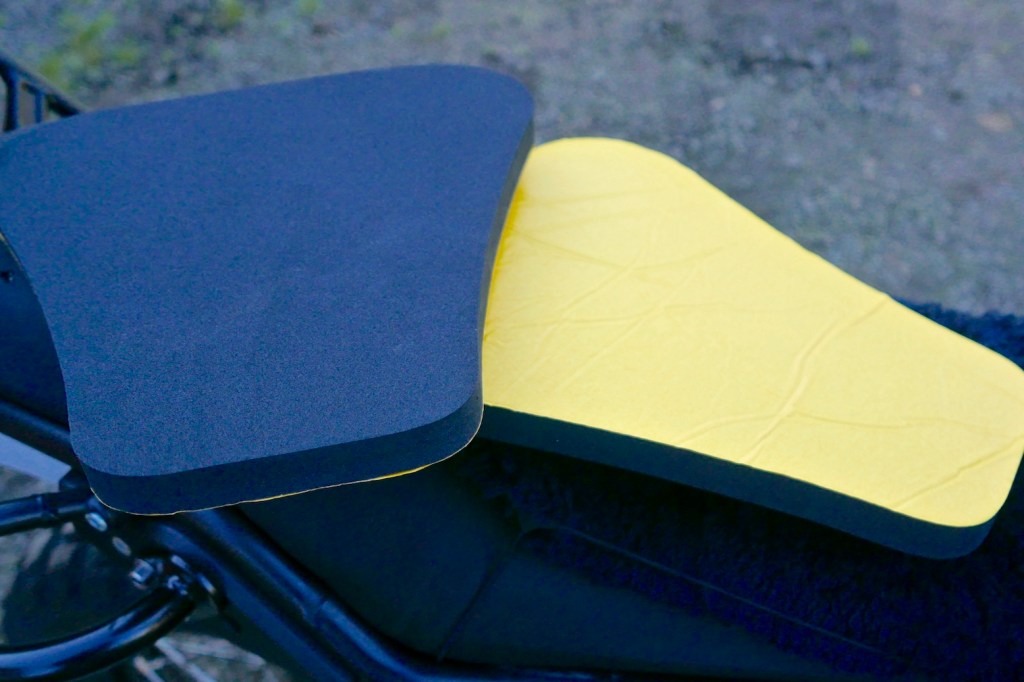
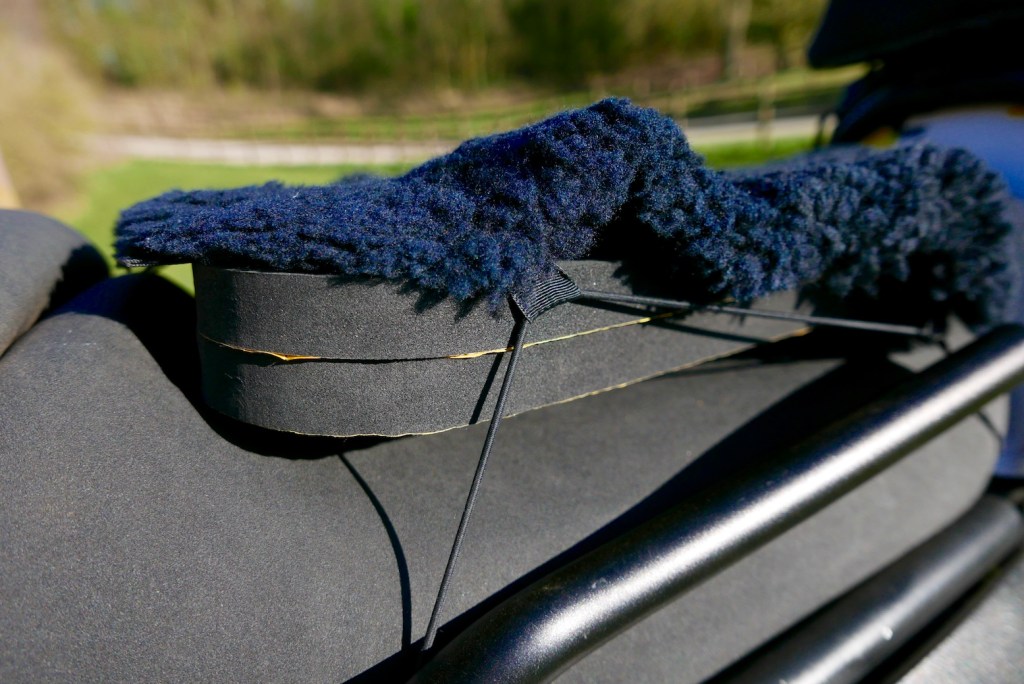
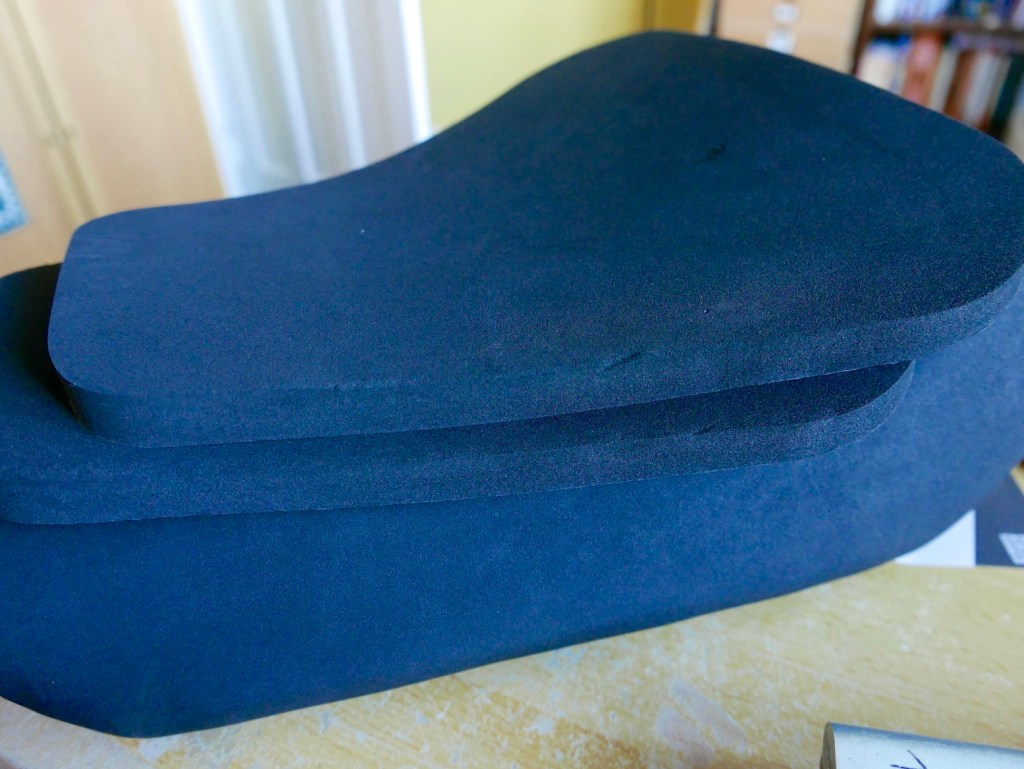
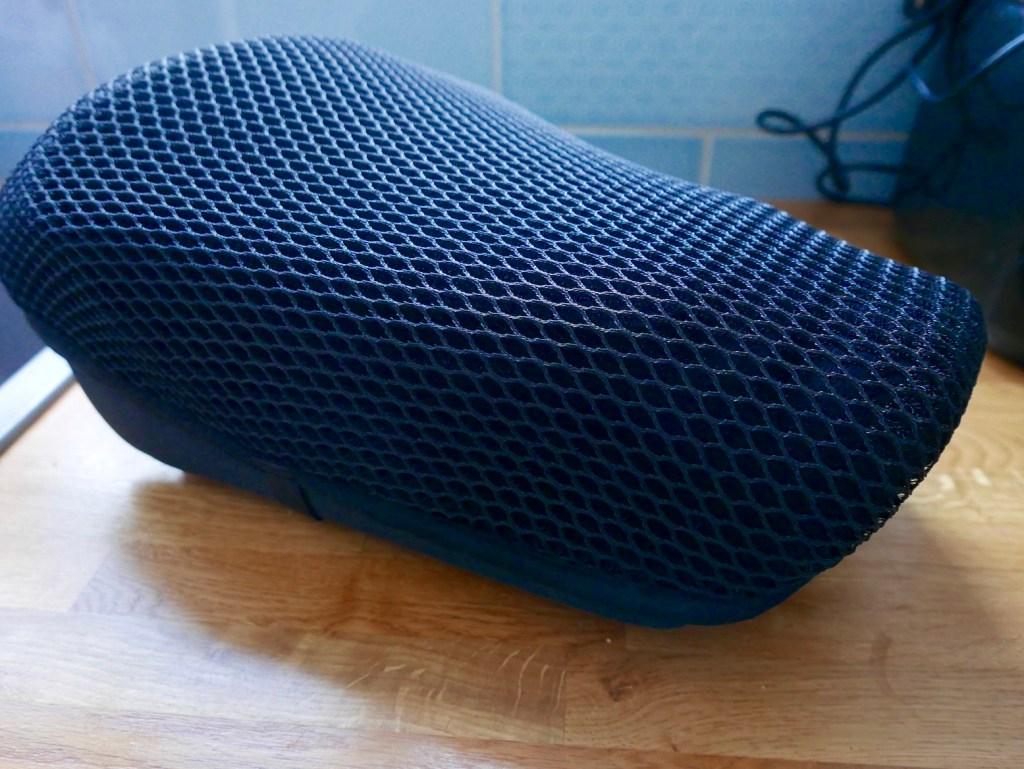
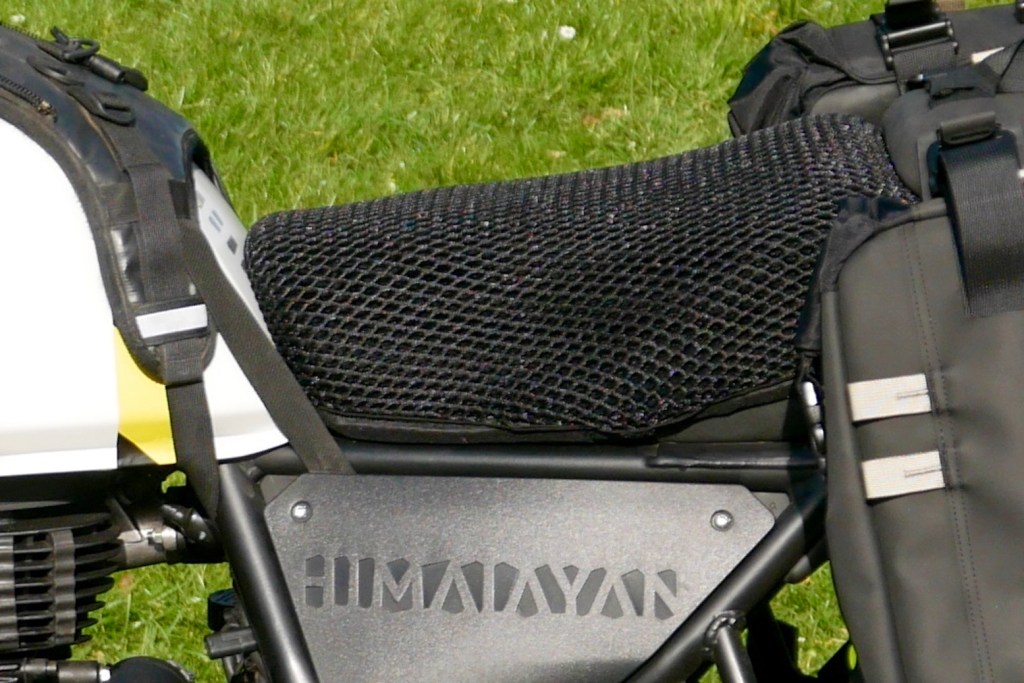
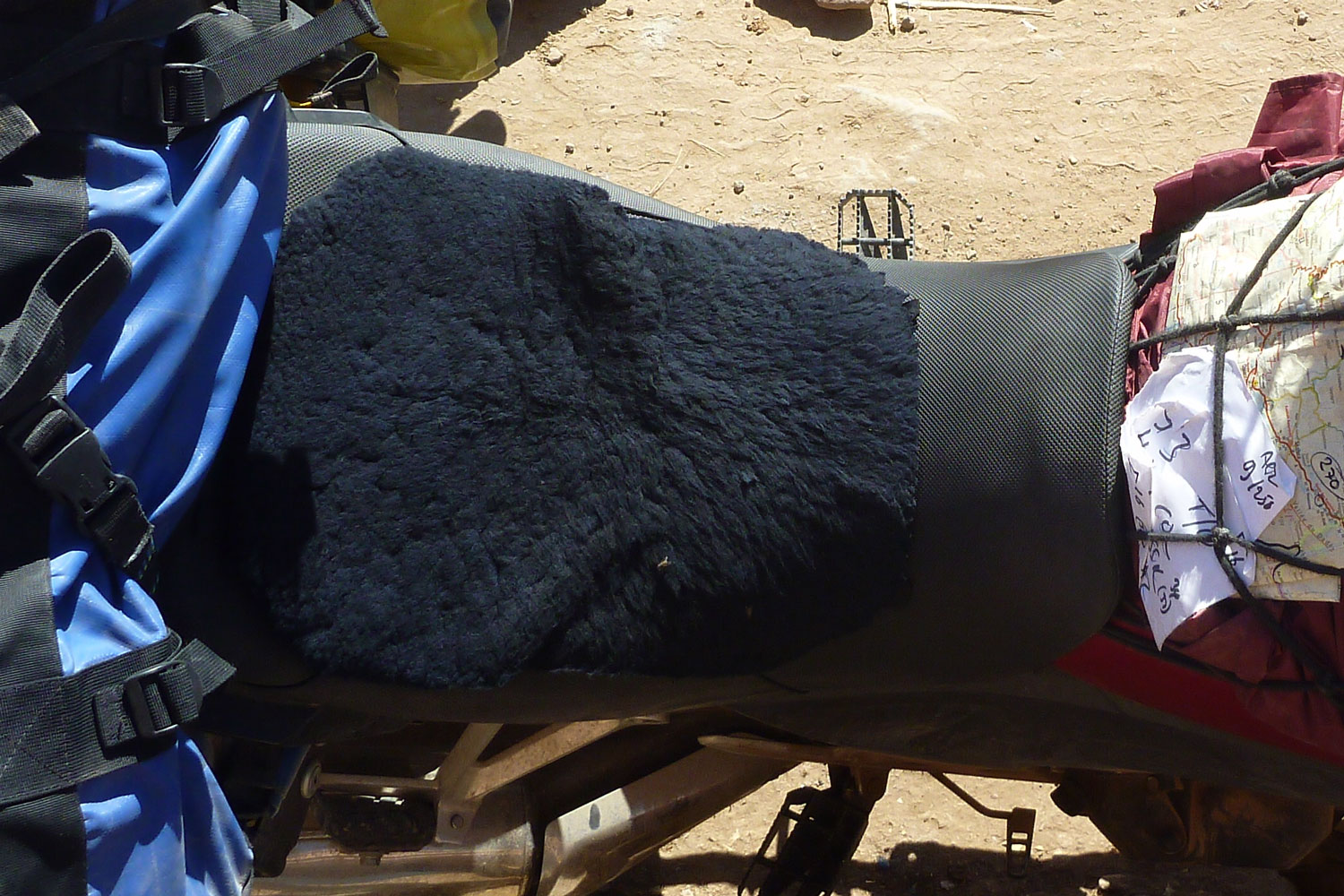
Quick seat bodge A 50-mile round trip to Crawley revealed the need for some urgent attention to the seat, just as I noted on the original test ride. The seat sets my back off, like the WR250 did two years ago. That led to months off games – don’t want that again. I couldn’t put my finger on what’s wrong but assume it’s a combination of dead upright seating position on to soft foam + cramped shuffle space due to the seat step + lowseatheight for my stature (too much knee bend). Unlike the WR, the Him has loads of seat height to spare for my height, so the simplest fix is more padding. I snipped out a couple of layers of cheap 10mm closed-cell sleeping pad (‘karrimat’) kept in place by my Aerostich Sheepskin Saddle pad. You can buy something similar on ebay.uk for £22 but they look rather ‘nice-to-stroke’ furry rather than the tight, woolly curls of the Aeropad which is presumably what provides the required spring and ventilation. The foam sits against the bike’s grippy seat, and the underside of the Aero also has a non-slip texture (right). Came the day I set off up the A44 and… for the 10-minutes of bodging the ride comfort was a slight improvement, but not night-and-day. I did the 3-hour run non-stop and didn’t feel crippled on arrival which must say something, but I was too cold to feel anything much. Any height gain felt negligible but the step did feel a little reduced so I can move back a bit from time to time. The cheapo foam I fitted was way too soft, but now the idea’s proven, I found some firmer slabs of rubber foam, trimmed and rounded them off to profile the seat, then fixed it under Aeropad. It looks a bit rubbish and the wool of course prone to getting- and staying wet. I later fitted the foam slabs under a Cool Cover and it worked well.
Rubber foam slabs cut to shape. Not sure it’s rubber? Stick a lighter to it; you’ll recognise the smell.Under the Aeropad – it helped level off the 2-part seat but looks a bit crap.Adhesive surfece peeled back and two 20mm trimmed pads stuck together.Underneath the Cool CoverInstalled on the bike – nearly level. A few years later I used the same bits of foam to improve my 300L
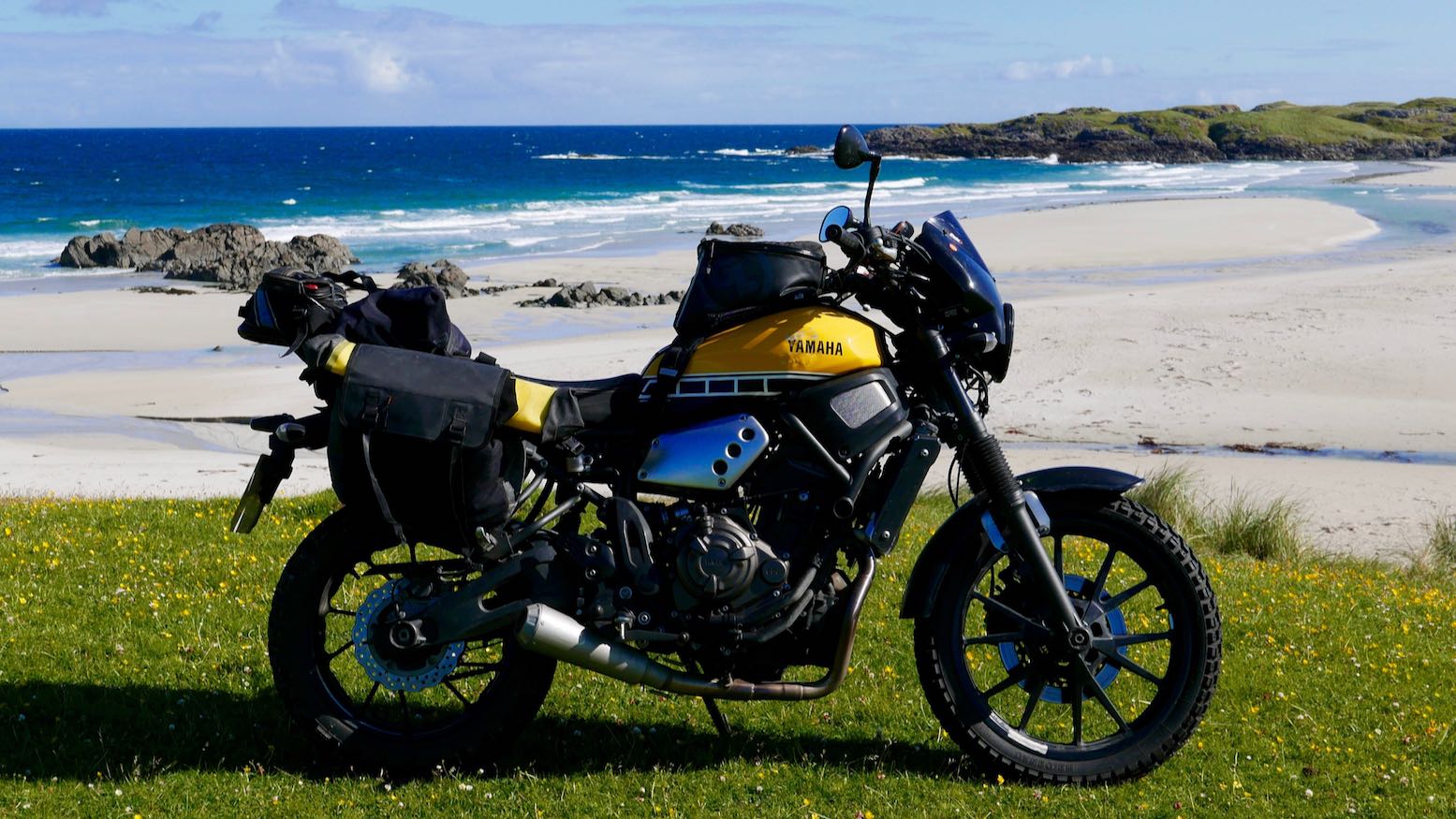
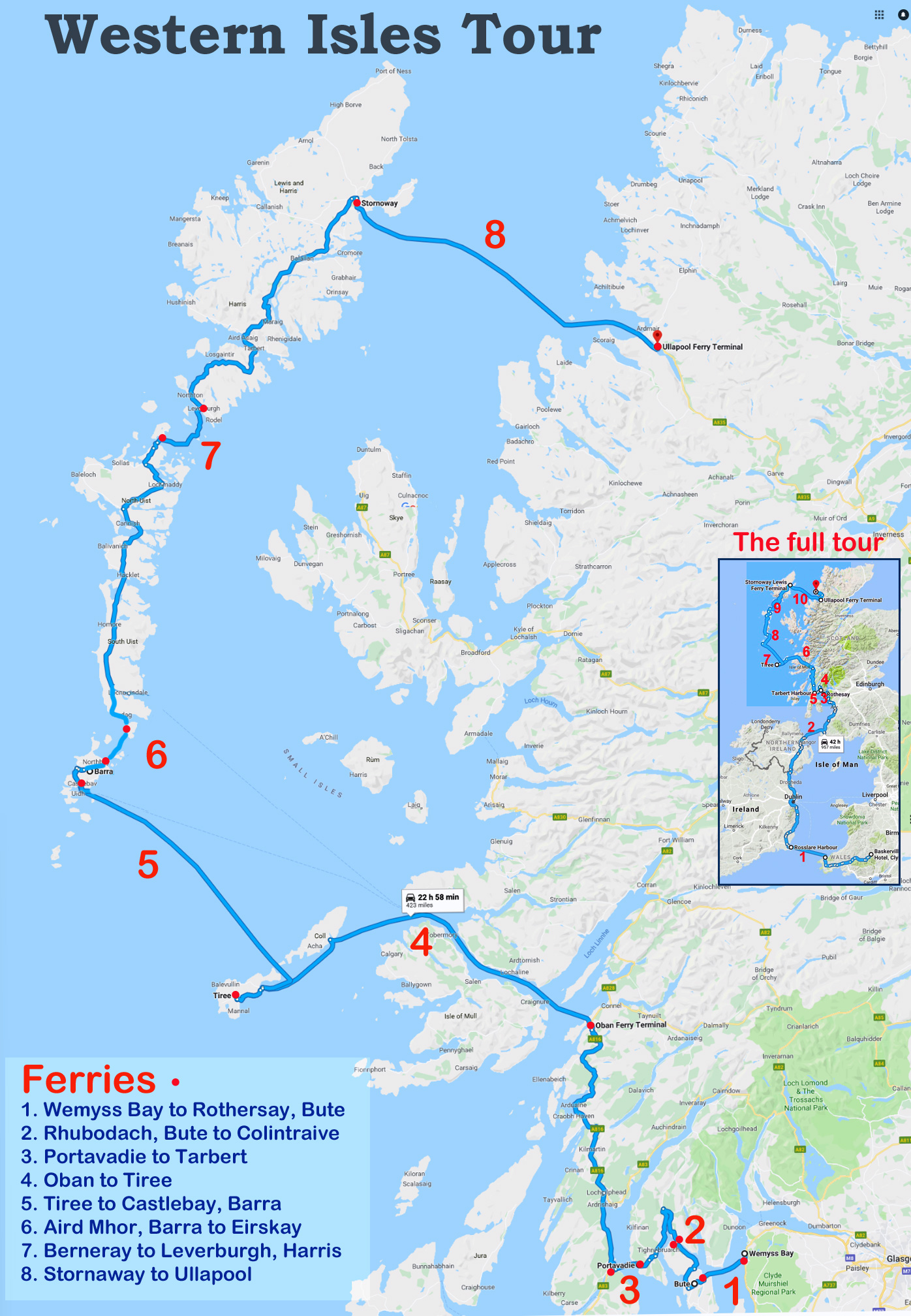
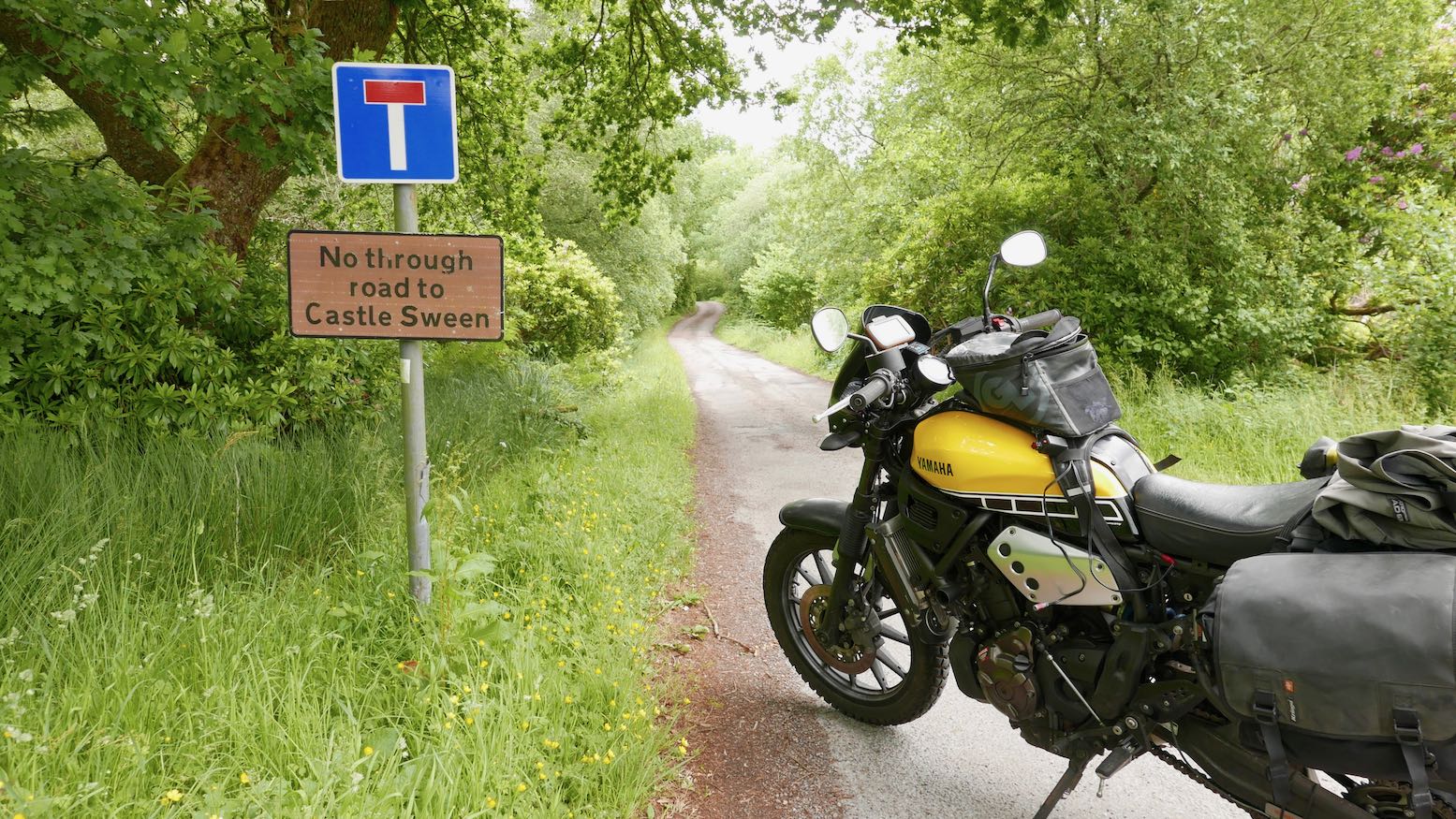
In mid-summer 2018 I rode my XSR Scrambler from Wales via Ireland to Tarbert on the Kintyre peninsula of southwest Scotland got published in RIDE magazine. Here is the rest of the story and the missing photos.
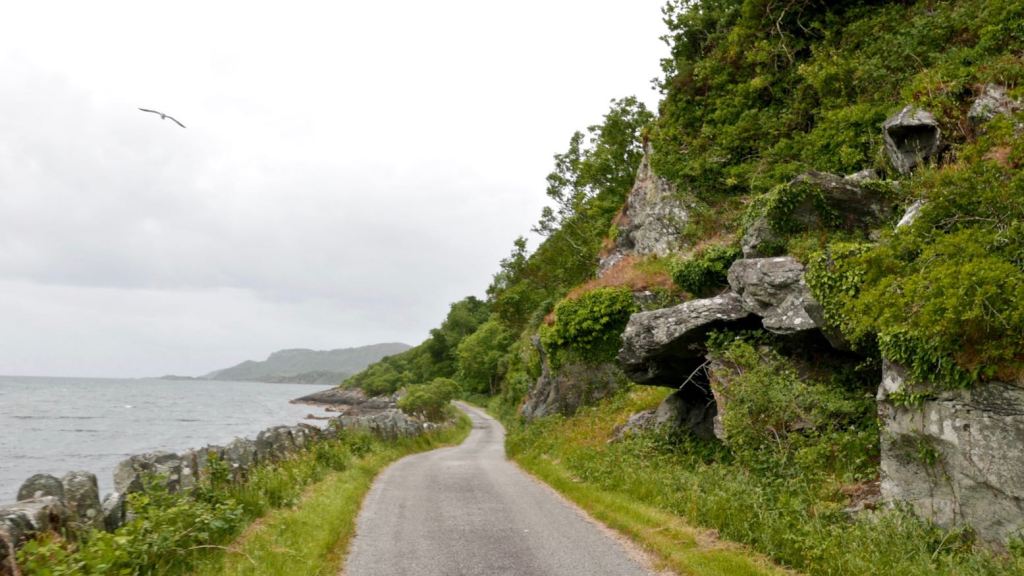
West of Tarbert a single-track road wraps round the Knapdale peninsula to face the isle of Jura where a dying George Orwell wrote 1984 in the late 1940s. Riding along the B8024, I passed the huge and sinister-named Landcatch Natural Selection fish farm towards Loch Caolisport.
The B8024 leads back to the east coast of the Kintyre peninsula, while on the north side of Loch Caolisport, a side road ends within a couple of miles at Ellary. However, study an OS map and you will see an intriguing hill track which leads up and over the spur to join up with the backroad on the west side. It’s a shame that green laning as we know it in England and Wales is outlawed in Scotland. Walkers, mountain bikers and kayakers can roam and camp freely, but estate landowners and locked gates exclude motorised vehicles. Actually, as someone who enjoys all those recreational activities as much as I do trail biking, I support the restriction. Open to one and you must open to all, including irresponsible twats – in the Covid staycation summer of 2020, this right to roam rule was pushed to the limit in Scotland by motorhomers and the like. This track was closed but some private roads can be used with permission.
Yes there is if you ask nicely.
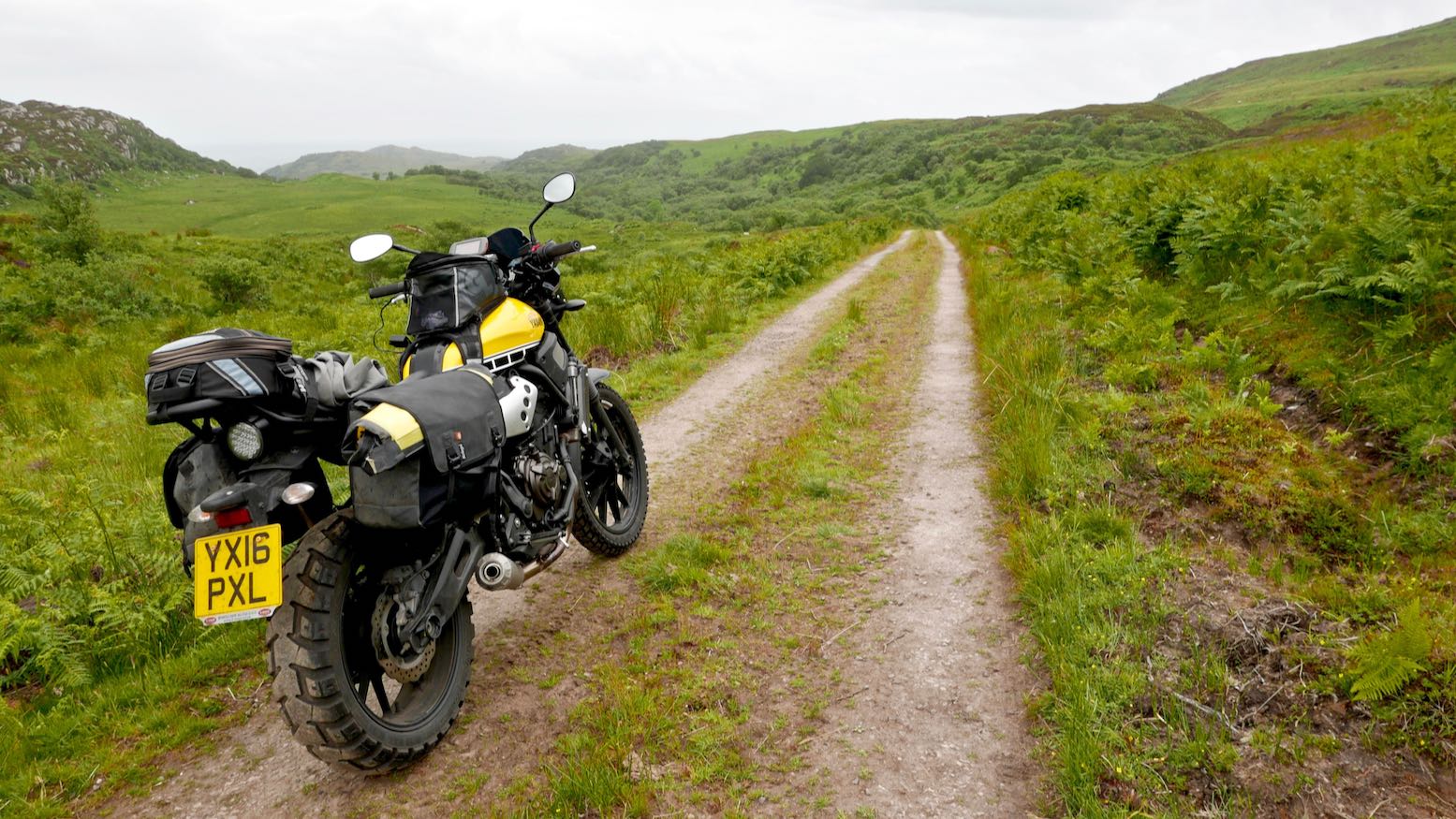
Contacting Ellary estate office a few days earlier, I’d got permission to take the 3-mile hill track over to Kilmory Chapel. The part-eroded road was do-able on the semi-scrambled XSR and as always, it sure is fun to get off a regular road, park up and enjoy the views.
Coast road to EllaryOn the hill track; not so exciting.
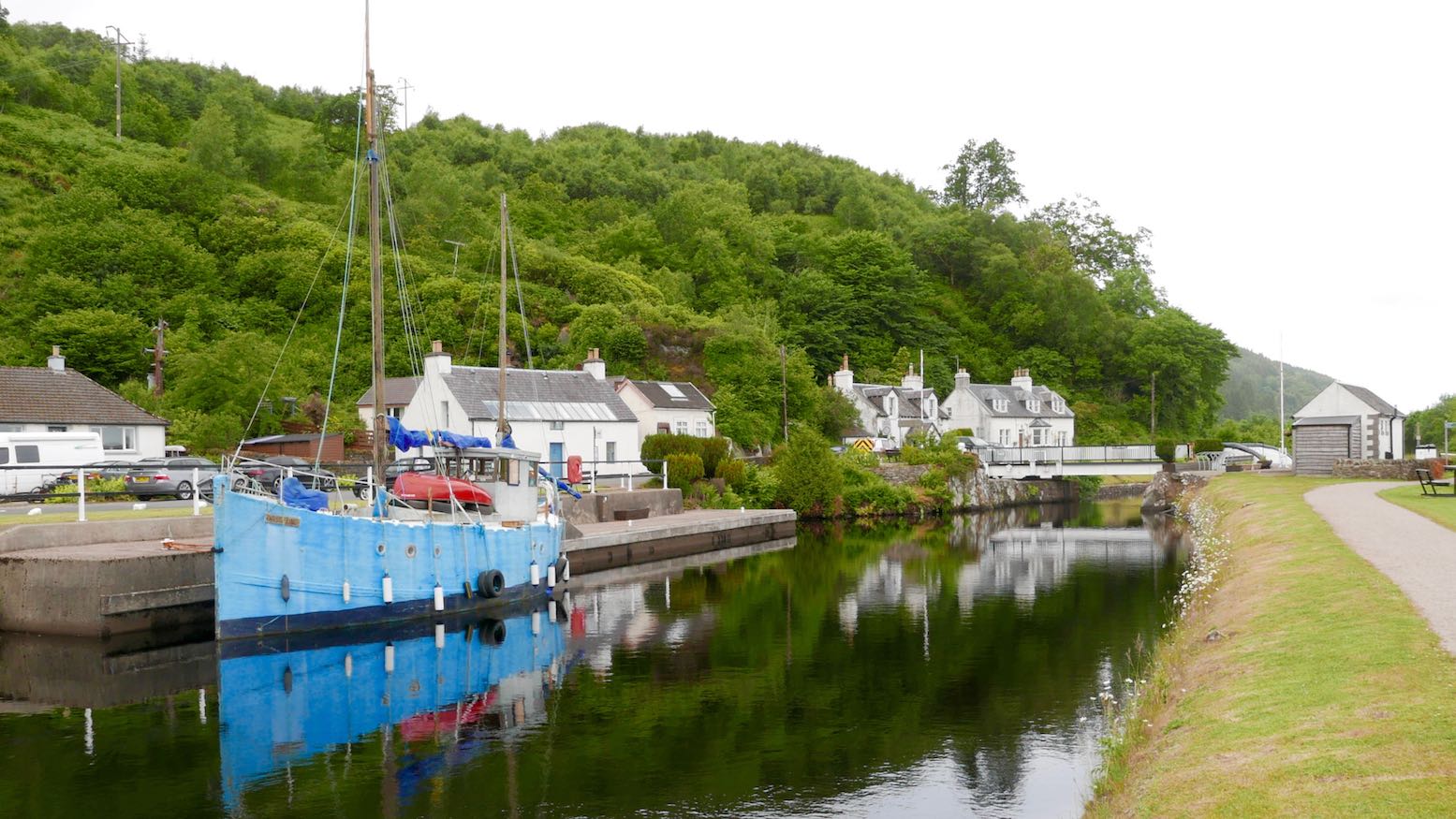
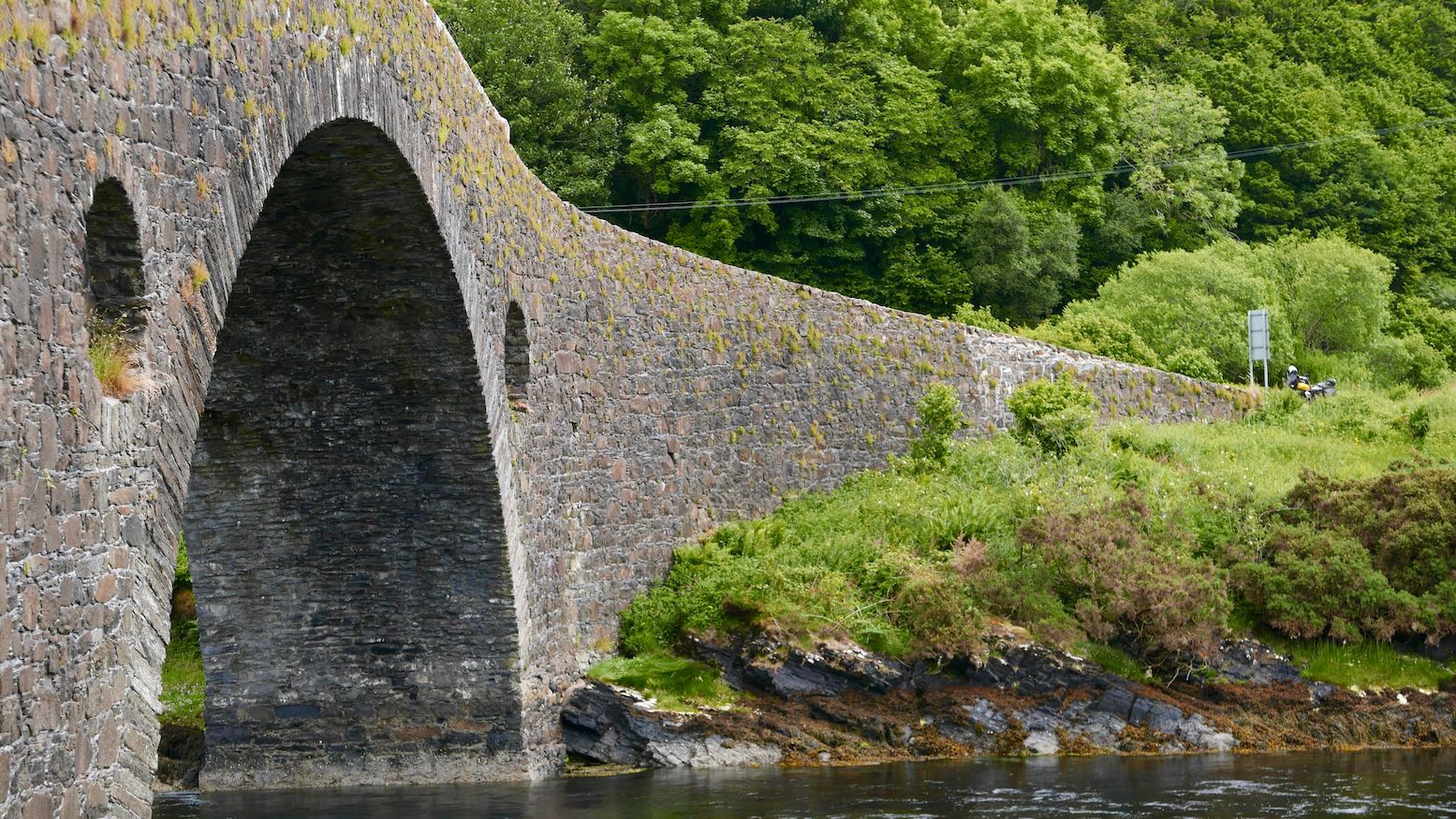
Heading on towards Oban along on the A816, I took a detour to Seil Island over the elegantly hump-backed Clachan Bridge. Built well over two centuries ago to help access the islands’ slate quarries, it’s grandly known as the original ‘Bridge over the Atlantic’ Scotland has gained a few more of them since then.
Crossing the Crinan canal.Clachan Bridge, 1793.
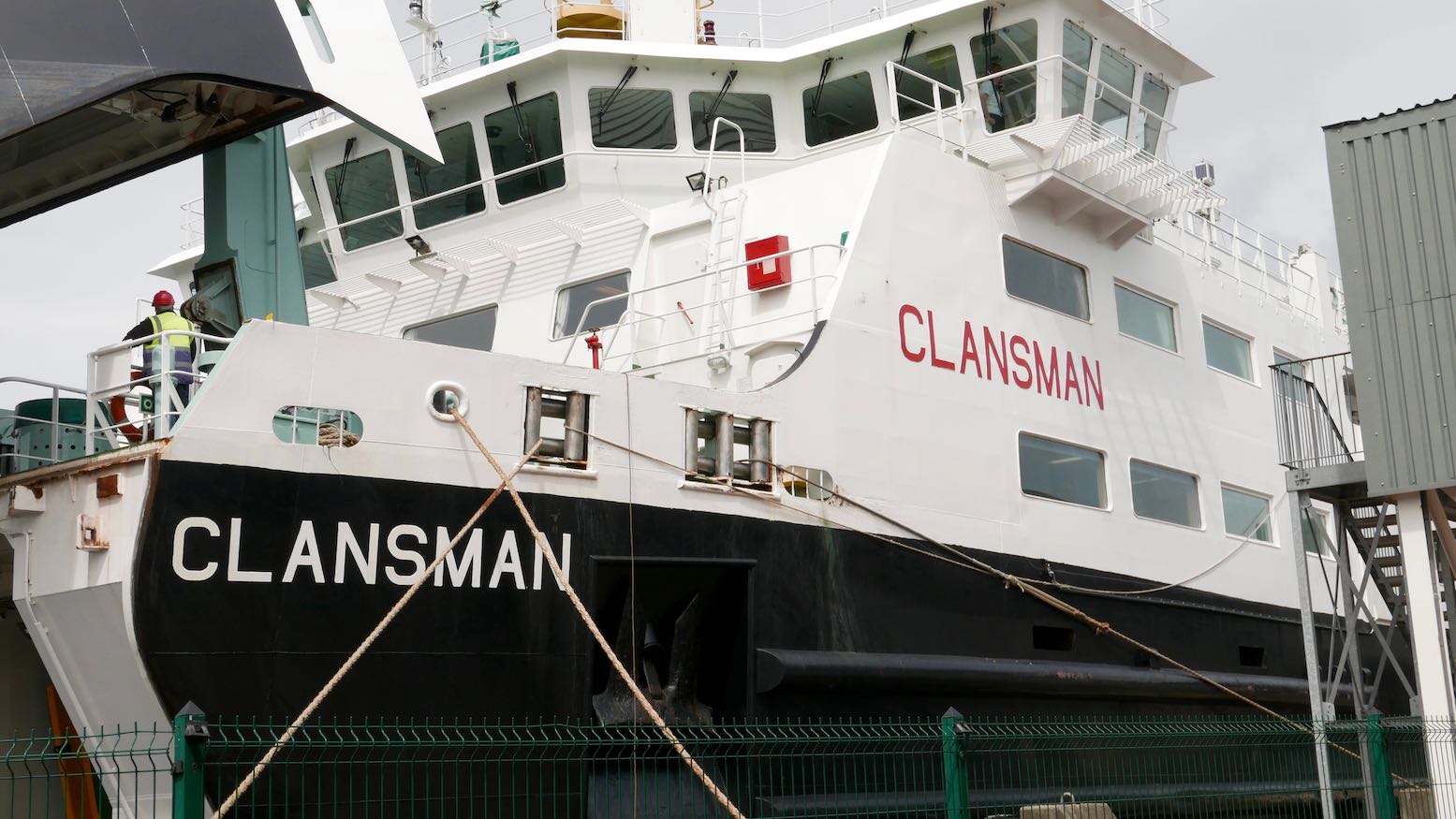
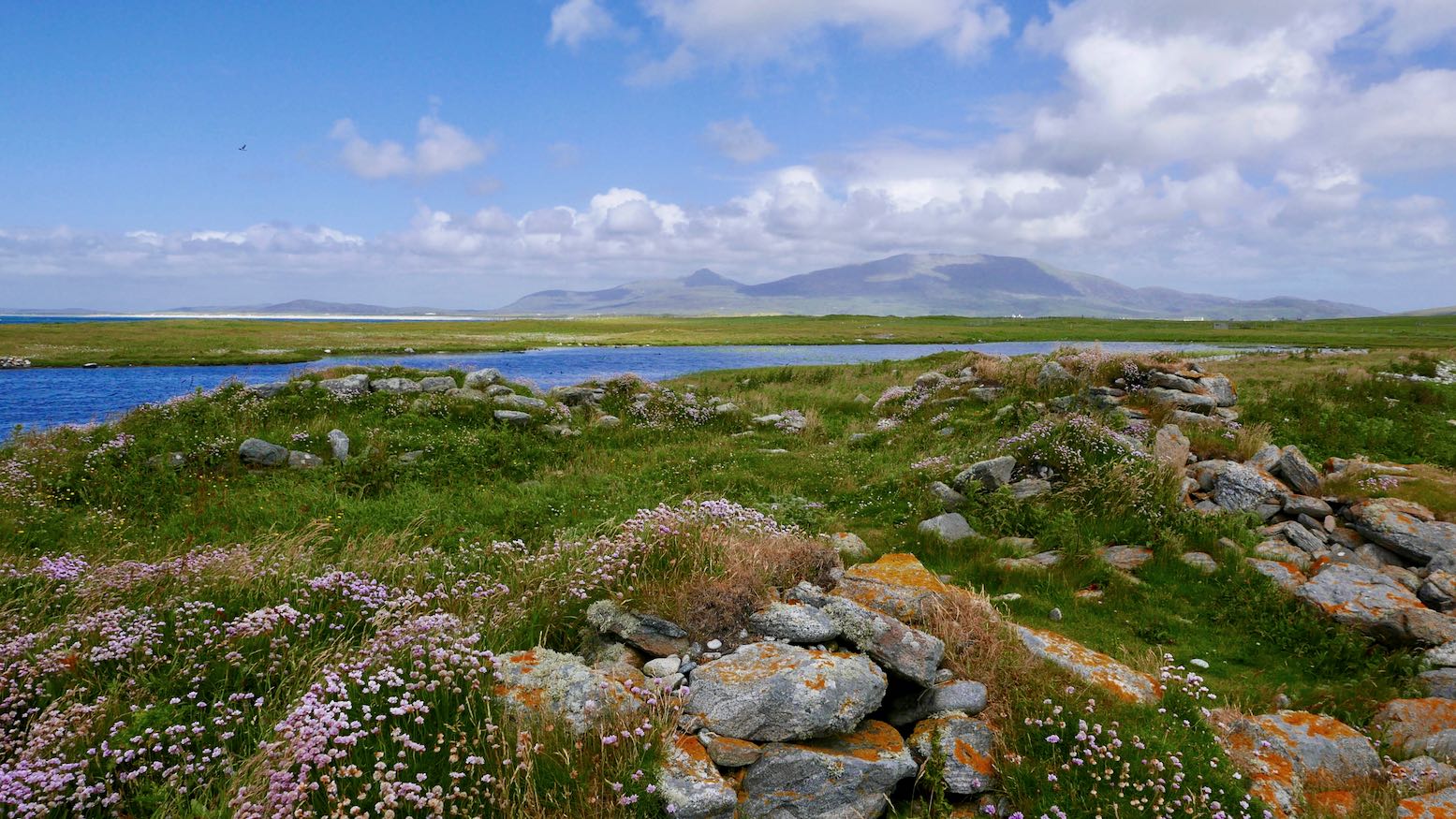
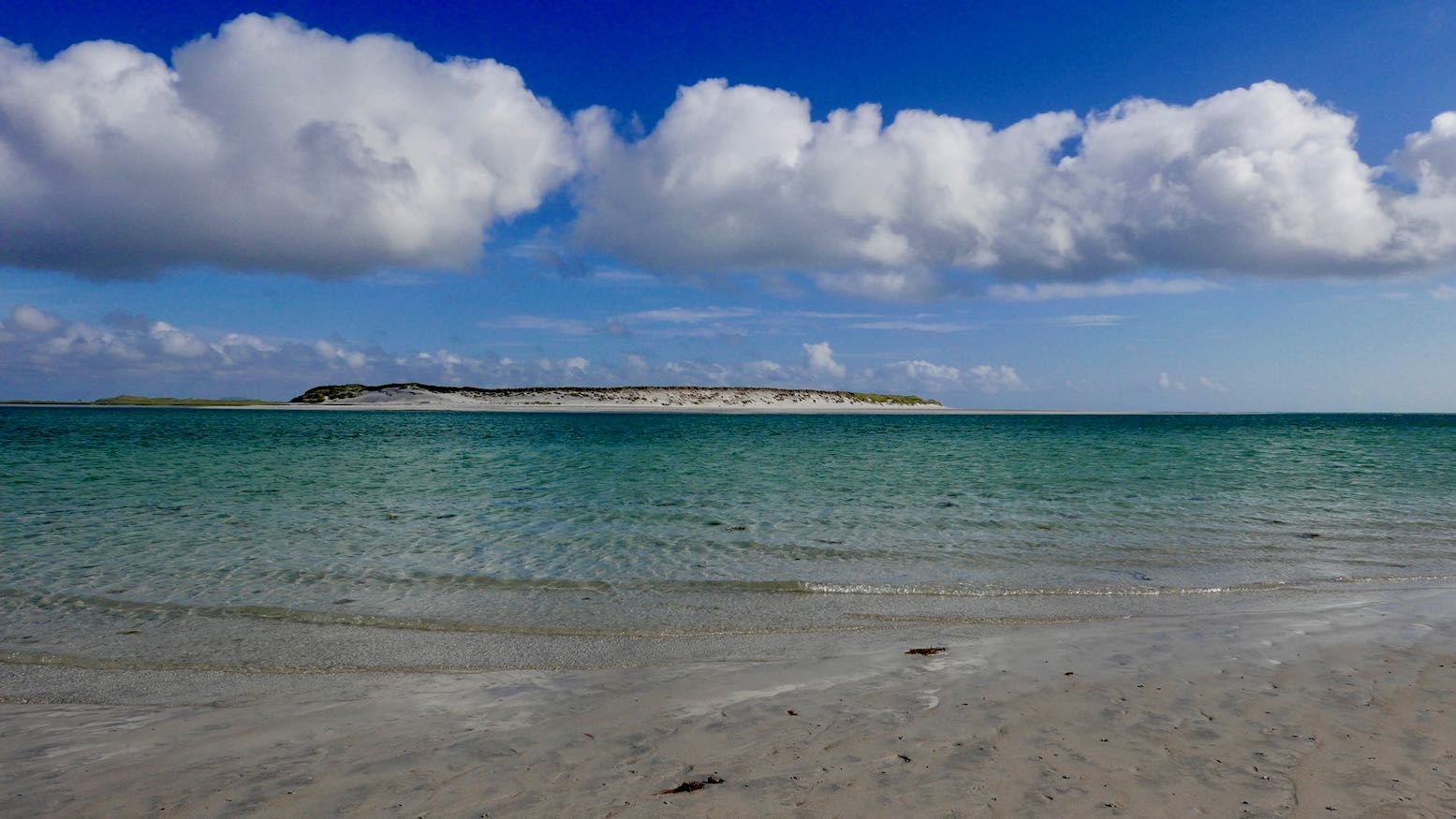
Later that evening the Calmac ferry nudged into the harbour at Tiree. Said to be among Britain’s sunniest places, it’s also one of the windiest, giving clouds little chance to hang about. Only ten miles long and half as wide, you could ride the entire road network in less than an hour, but of course that’s not the point of visiting such places. One of the Hebridean ‘machair islands’, the fine, wind-proof grass thrives alongside azure sandy bays.
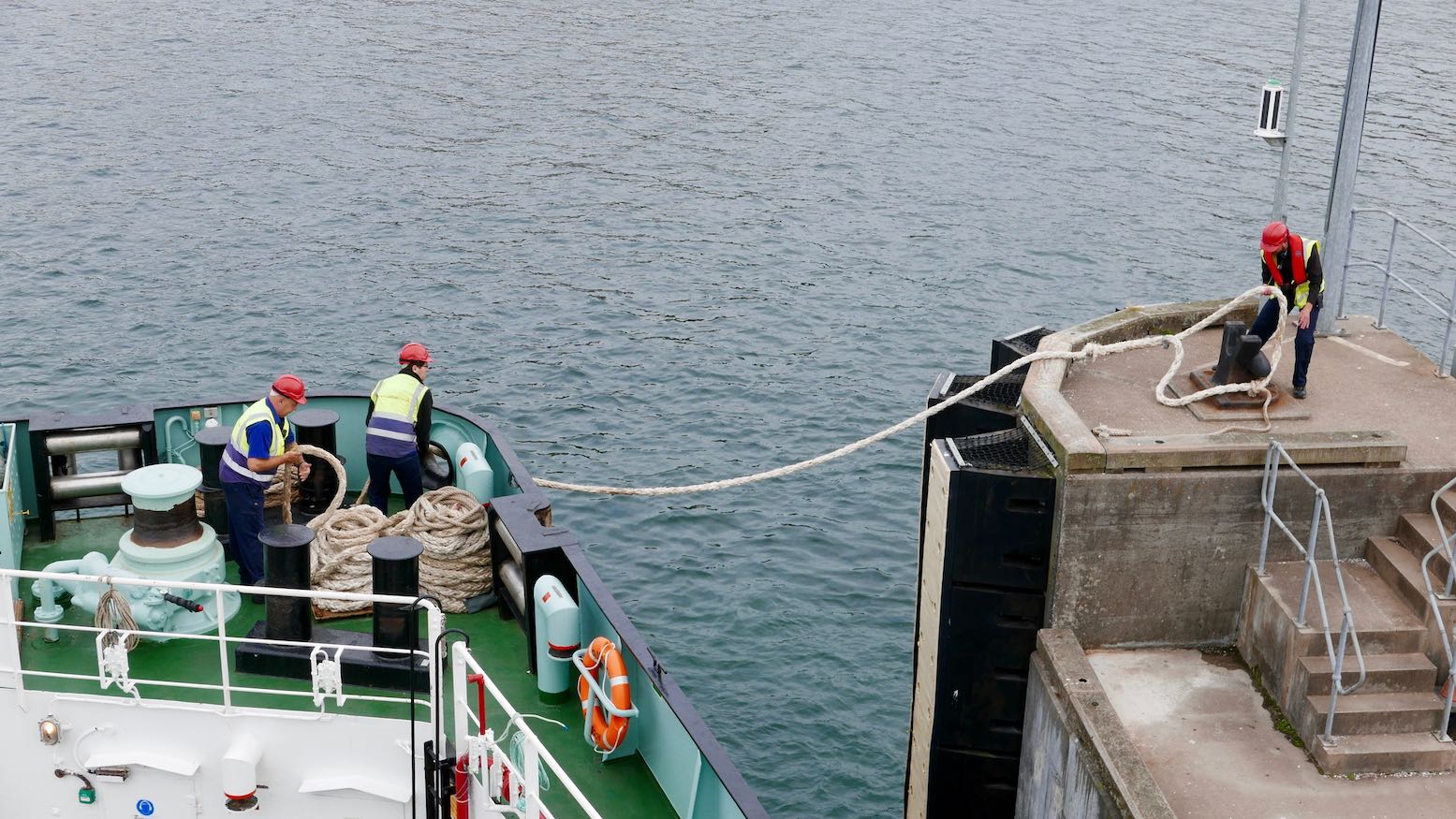
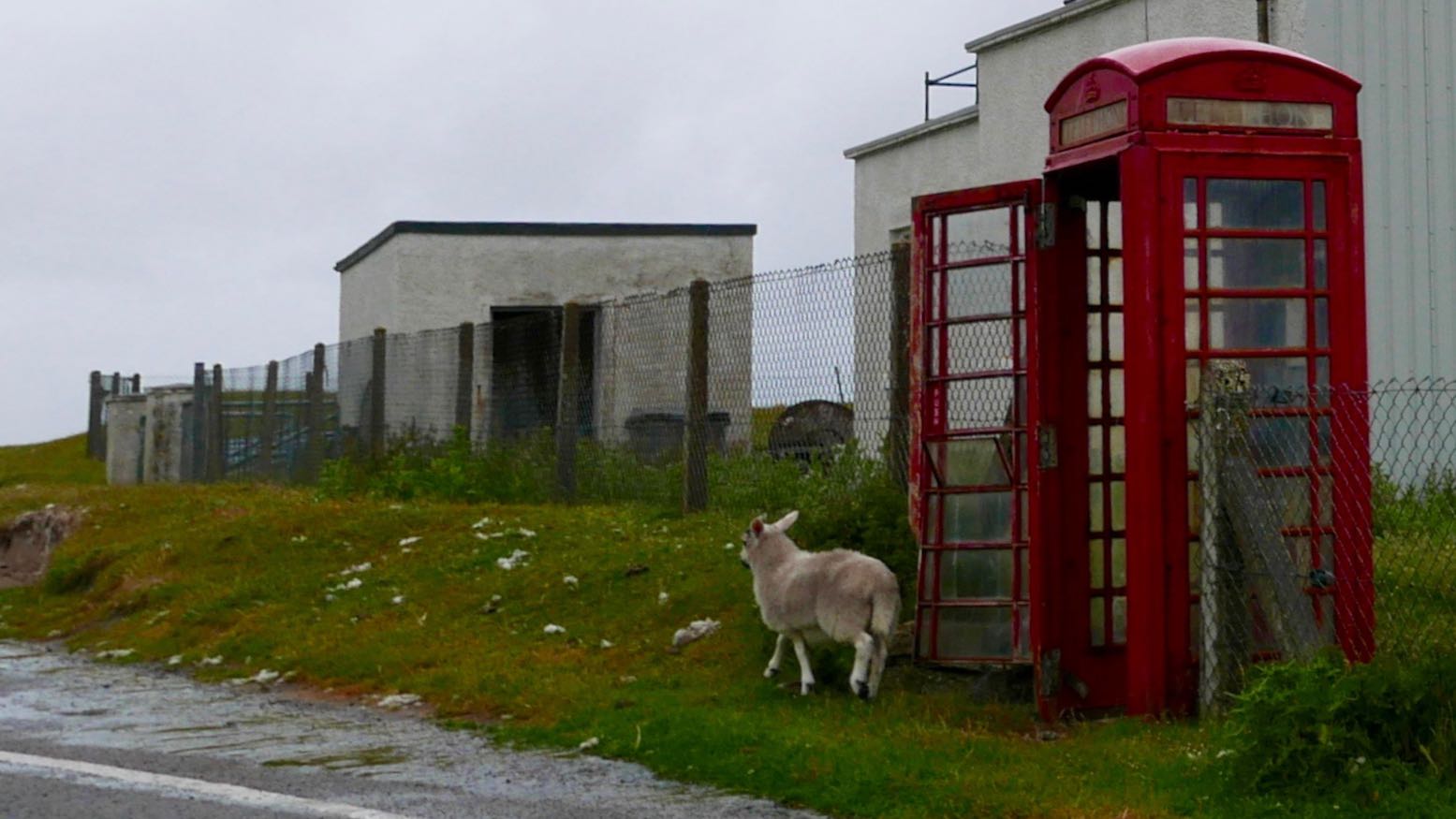
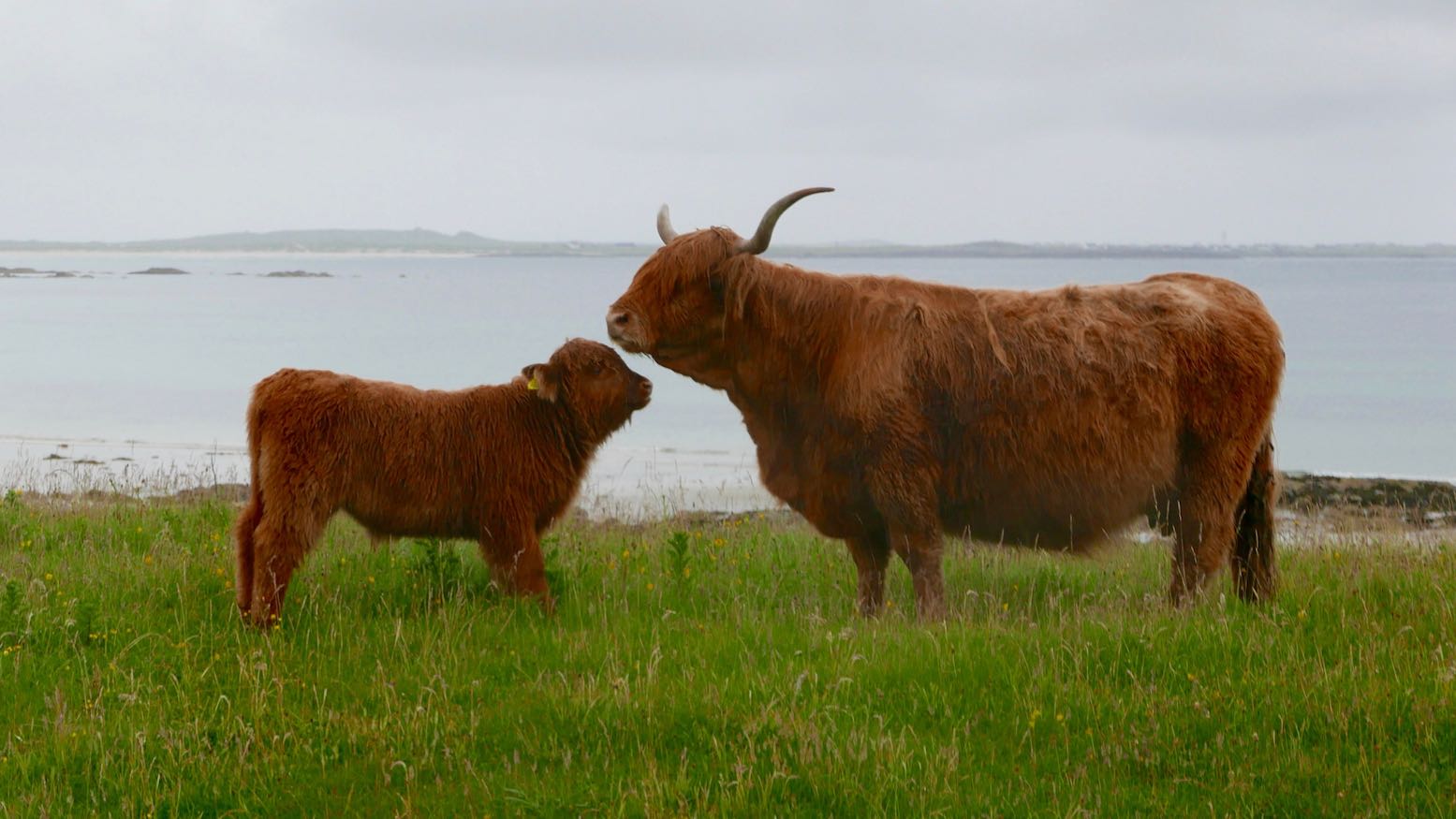
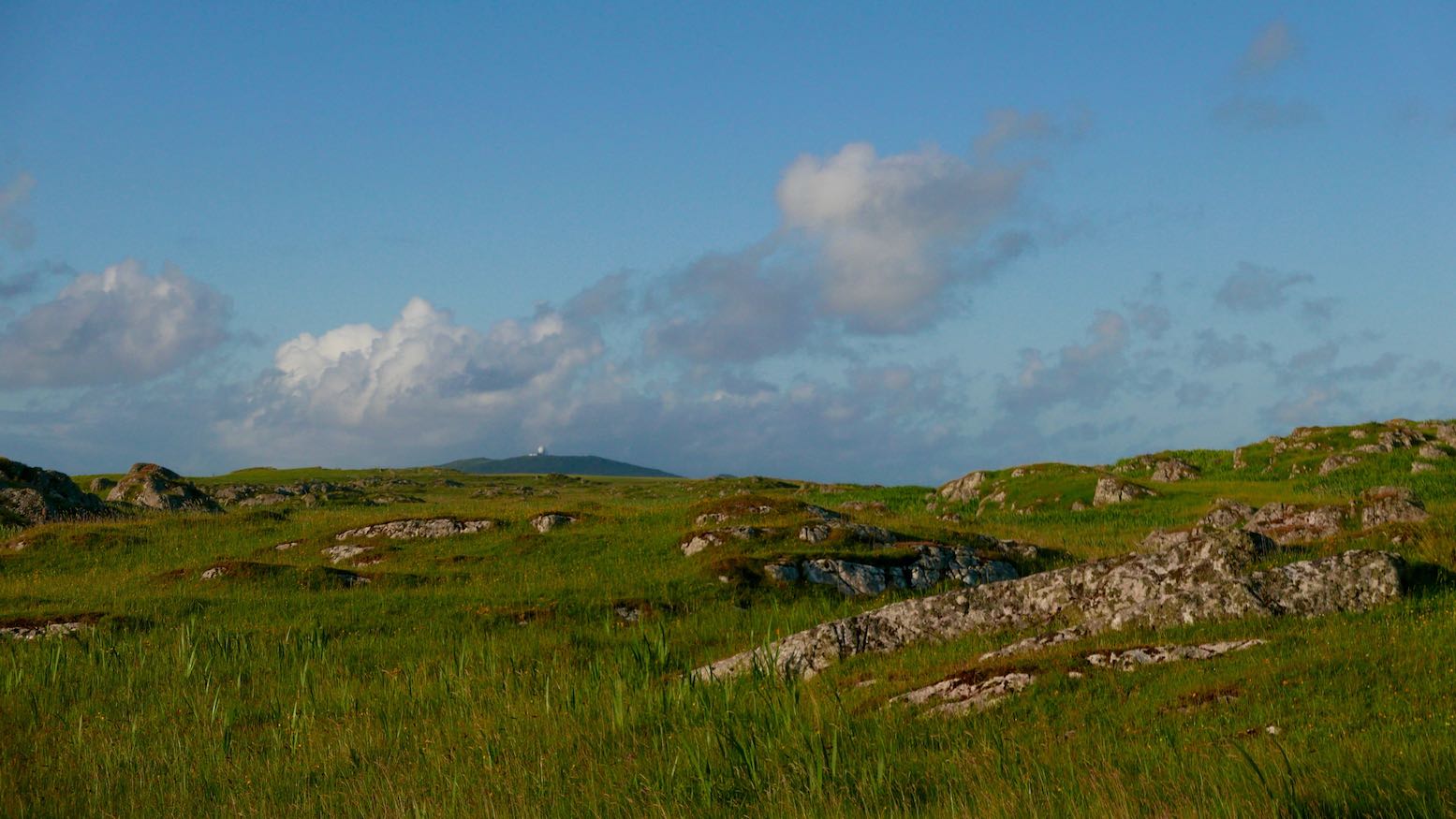
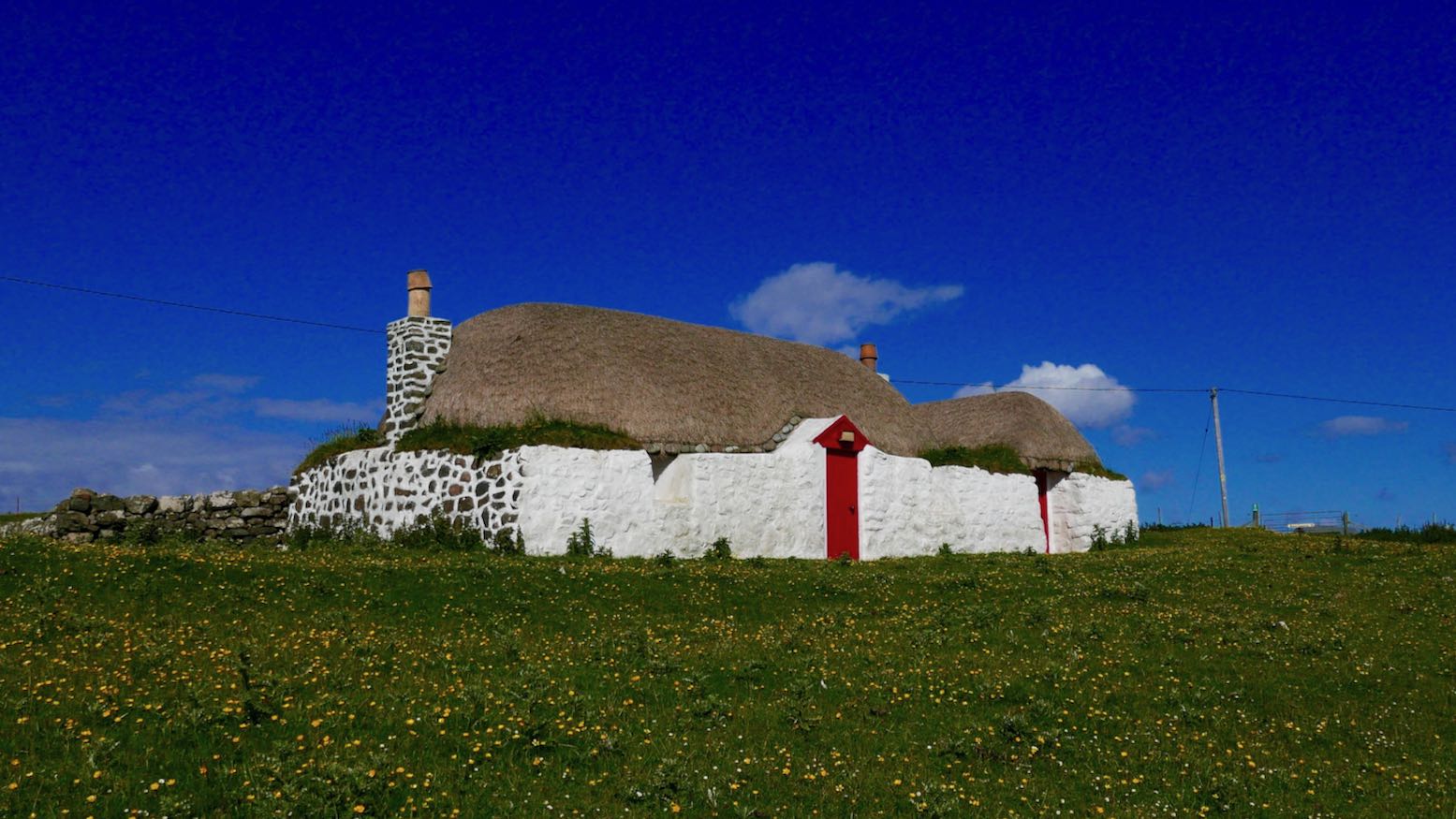
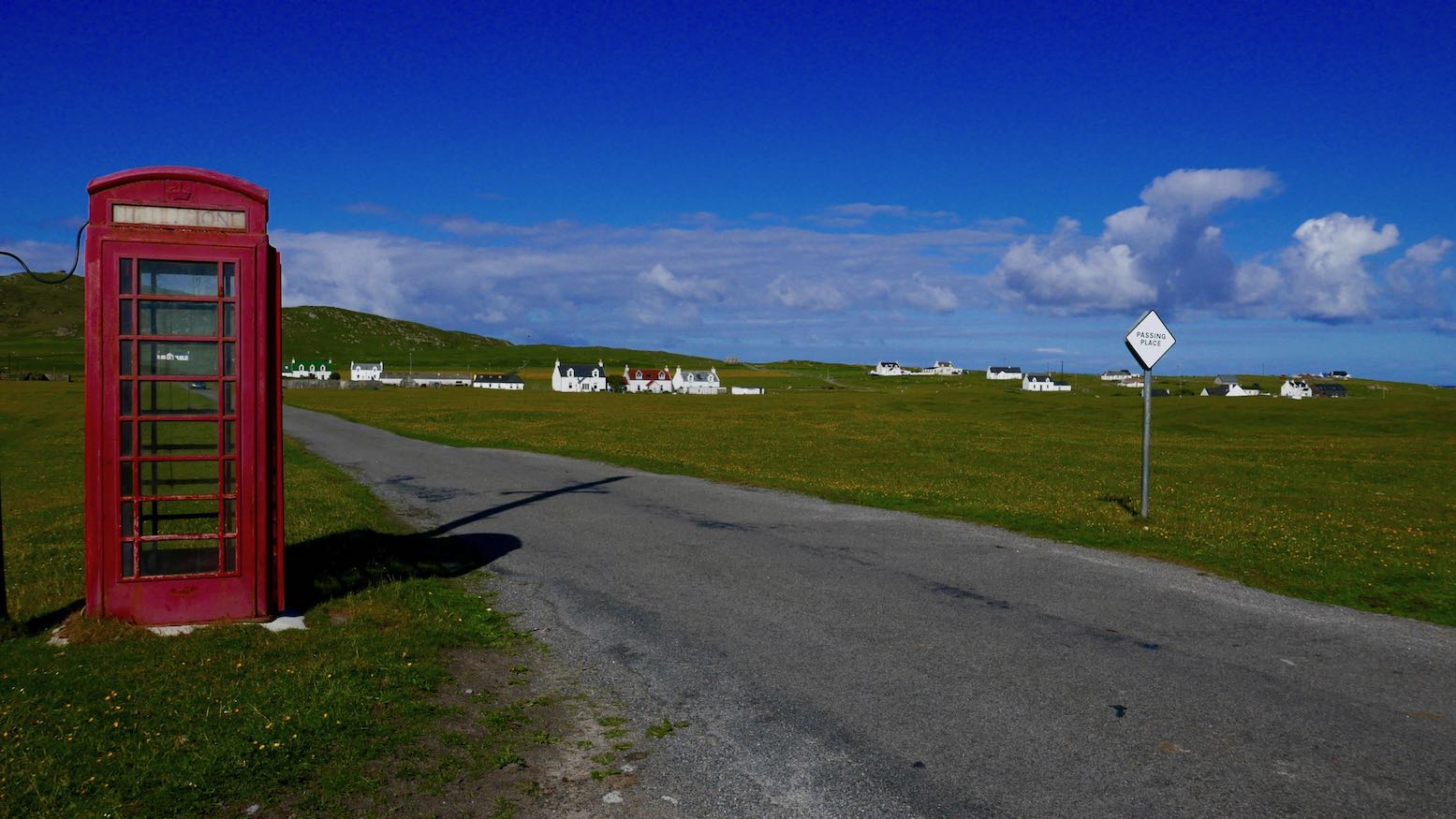
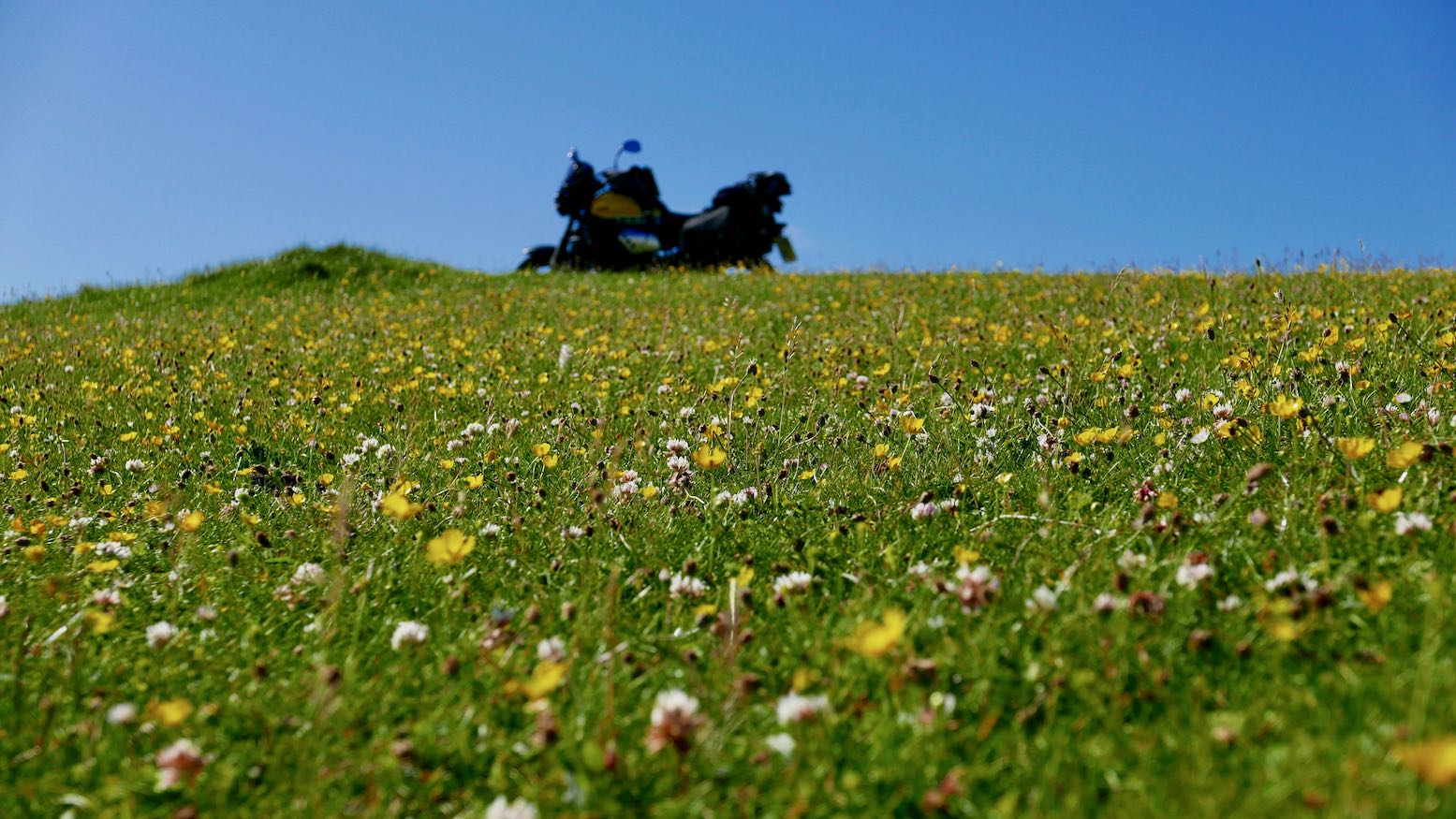
Oban ferry to Tiree.Mooring ropes: as unimprovable as shoelaces.Caught this lamb having a slash in the phone box.Highland cows.Coming down fromView back to the radio dome on xxxx Hill next morning.Hobbit house.Once the sun’s out the colours punch you in the face.Wildflowers.
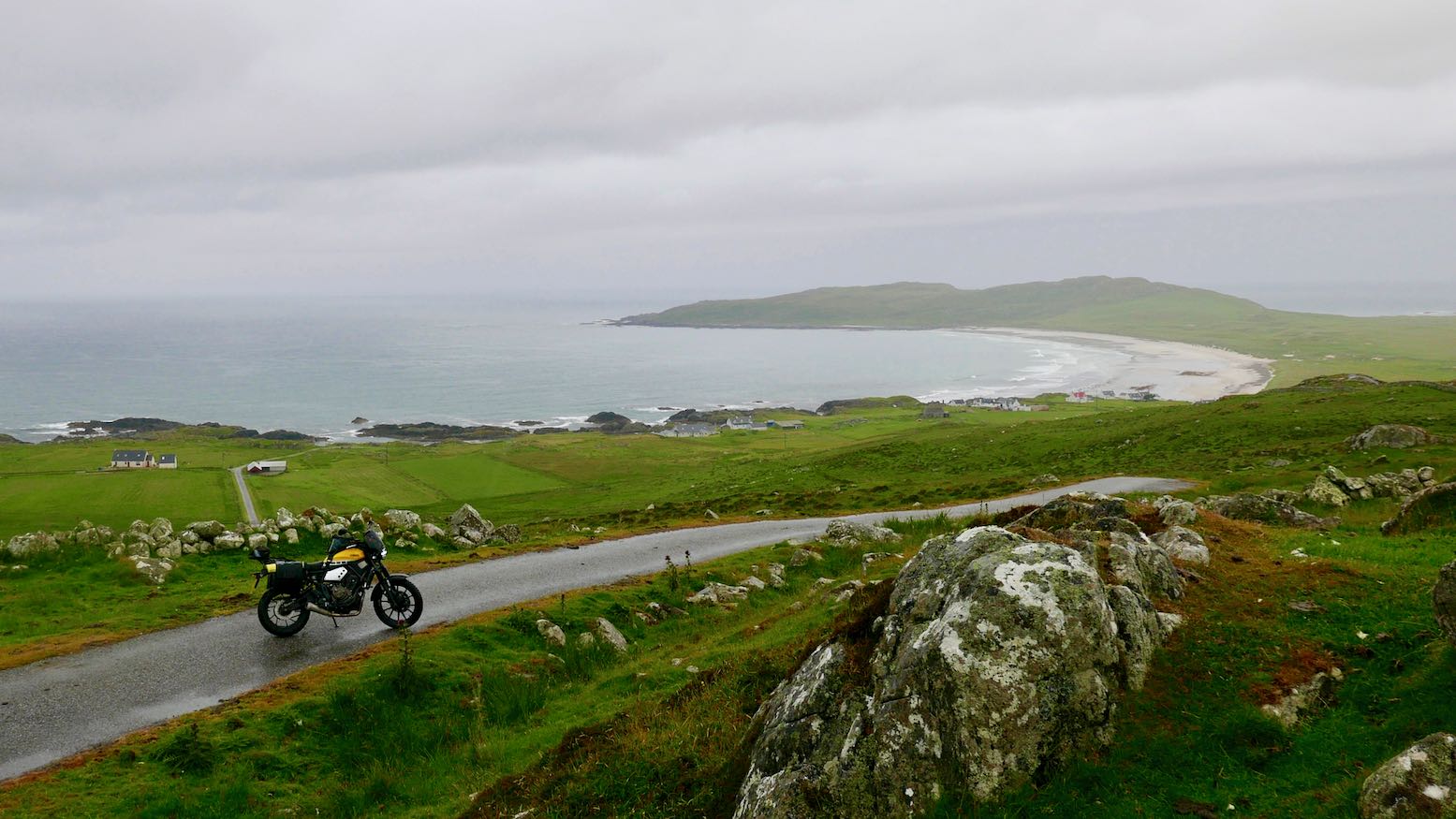
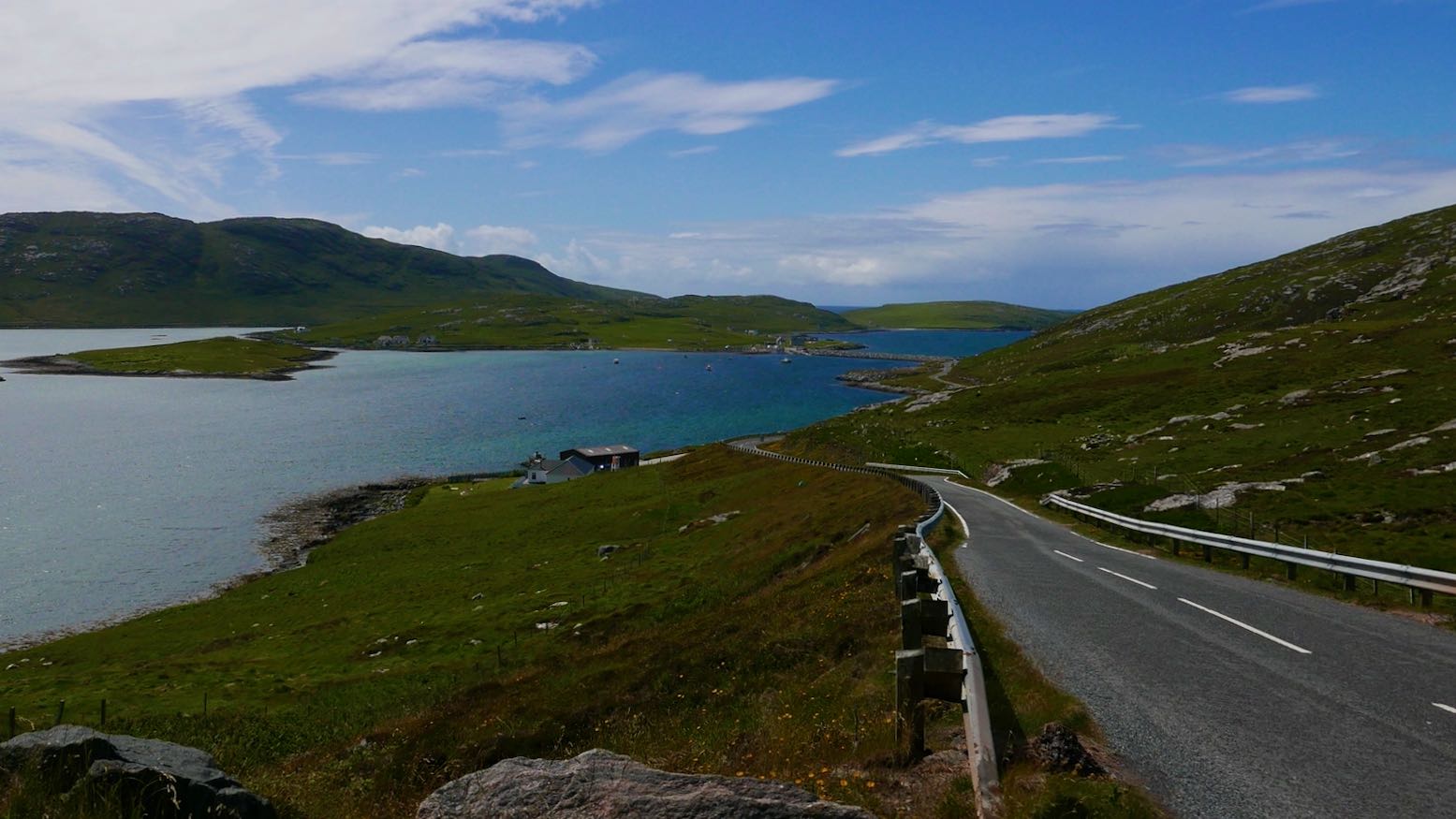
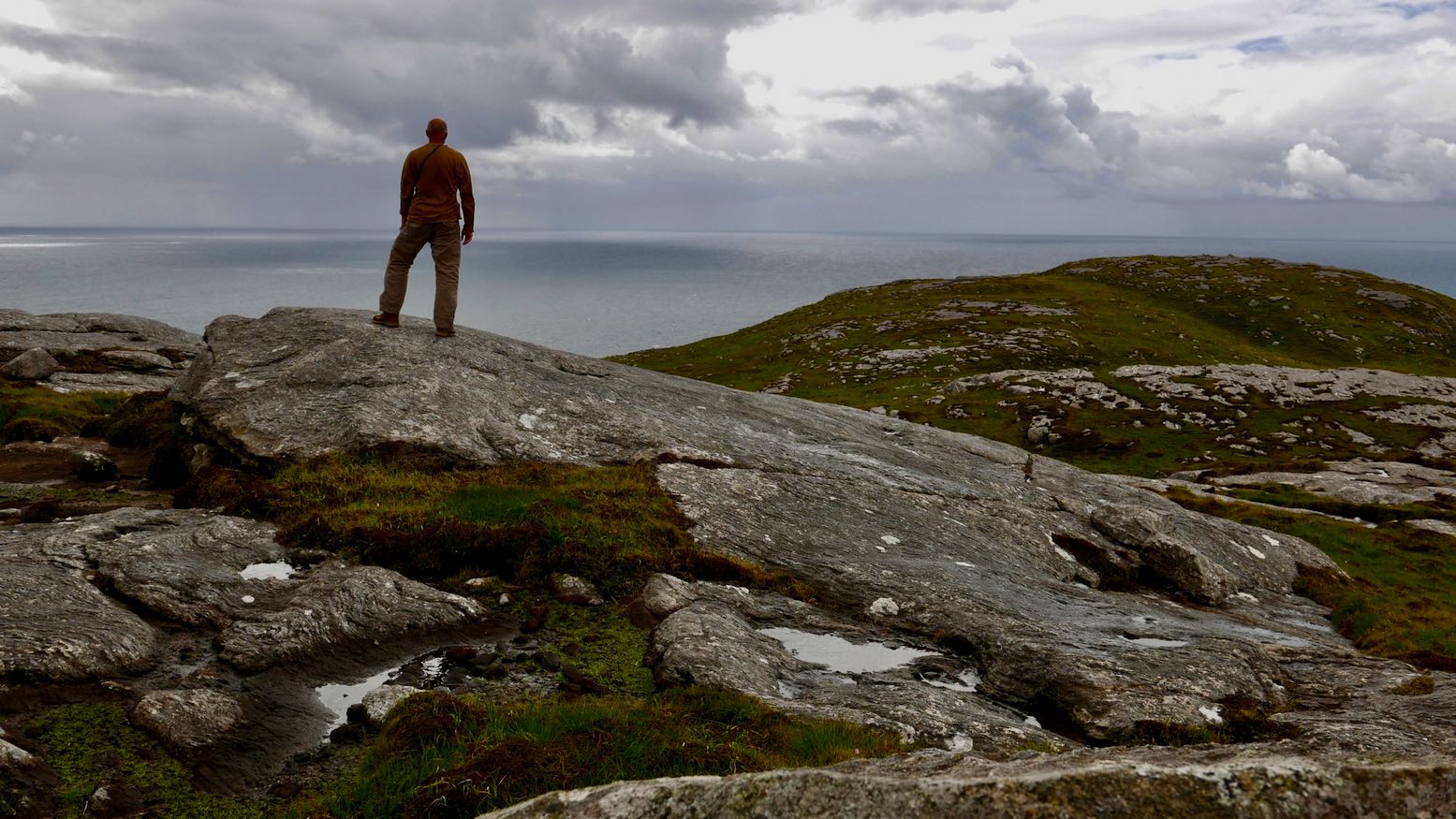
Next day I did another sunny lap of the island then caught the once-weekly ferry to Barra at the southern end of the Outer Hebridean archipelago and once ashore wiggled my way down south over a causeway to Vatersay. Evoking the former Nordic occupation of what they’d called Havbredey, the ‘Isles on the Edge of the Sea’, I parked up and scrambled up to the trig point on Heiseabhal Mor, the westernmost hill in Britain accessible by road and scheduled ferry services. Formed of three-billion-year-old Lewisian gneiss (the oldest rock in Britain) eons of Atlantic gales had shorn the rounded summit into a bald dome.
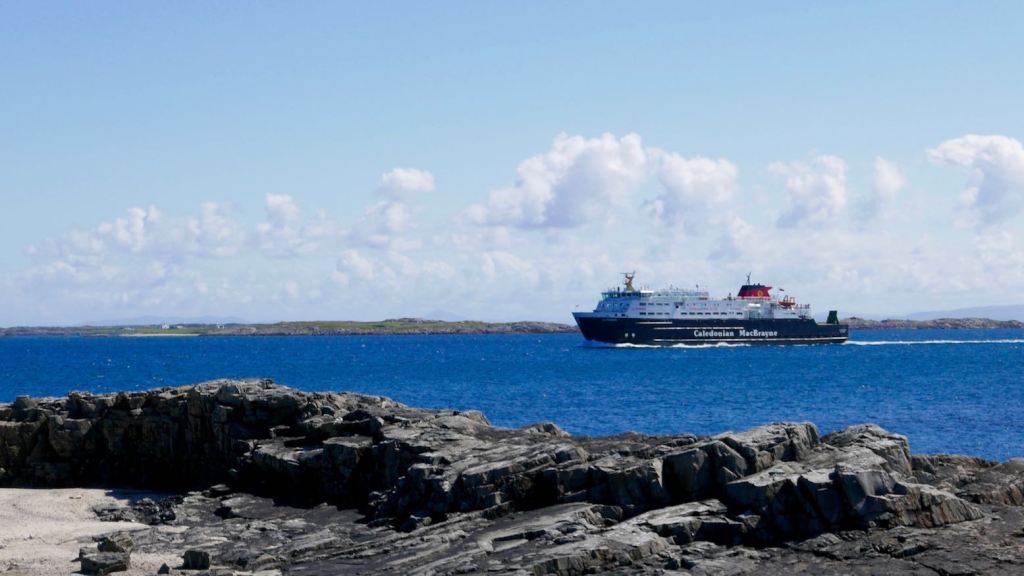
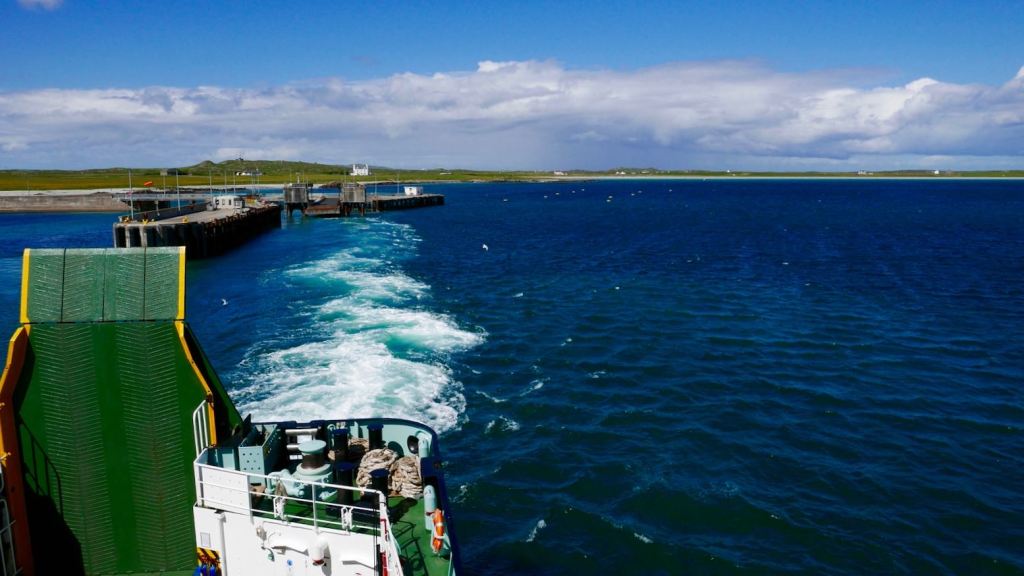
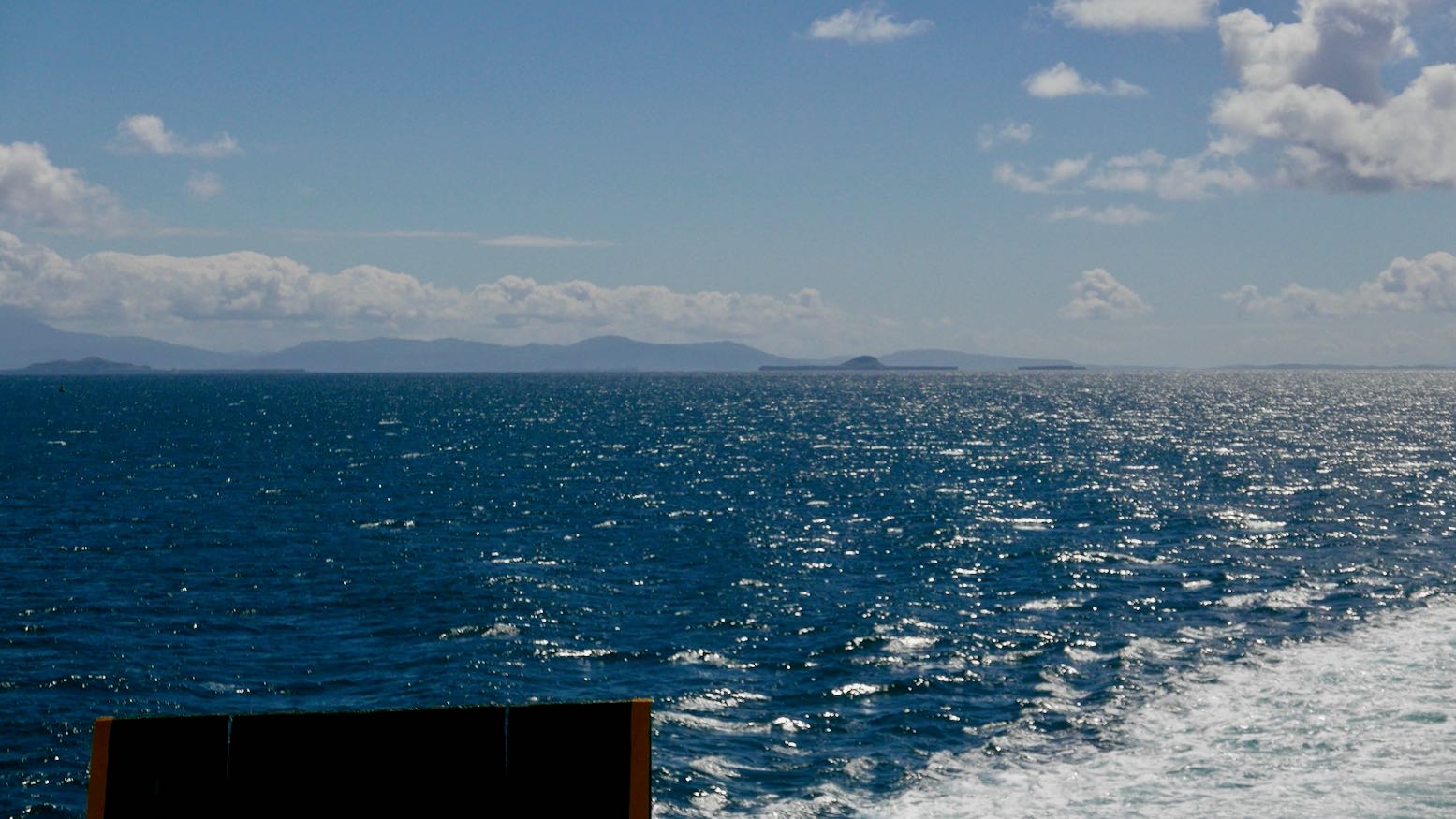
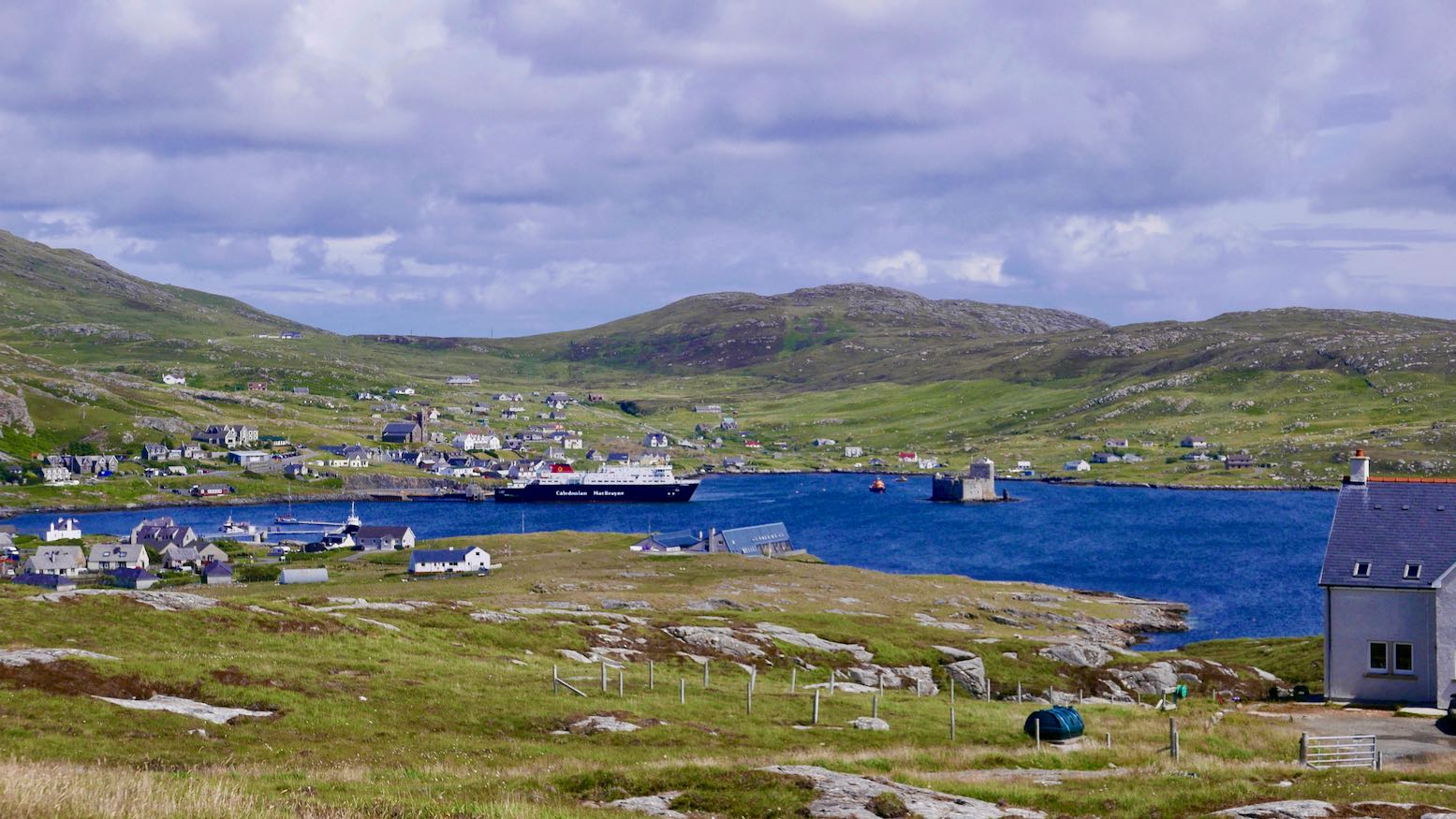
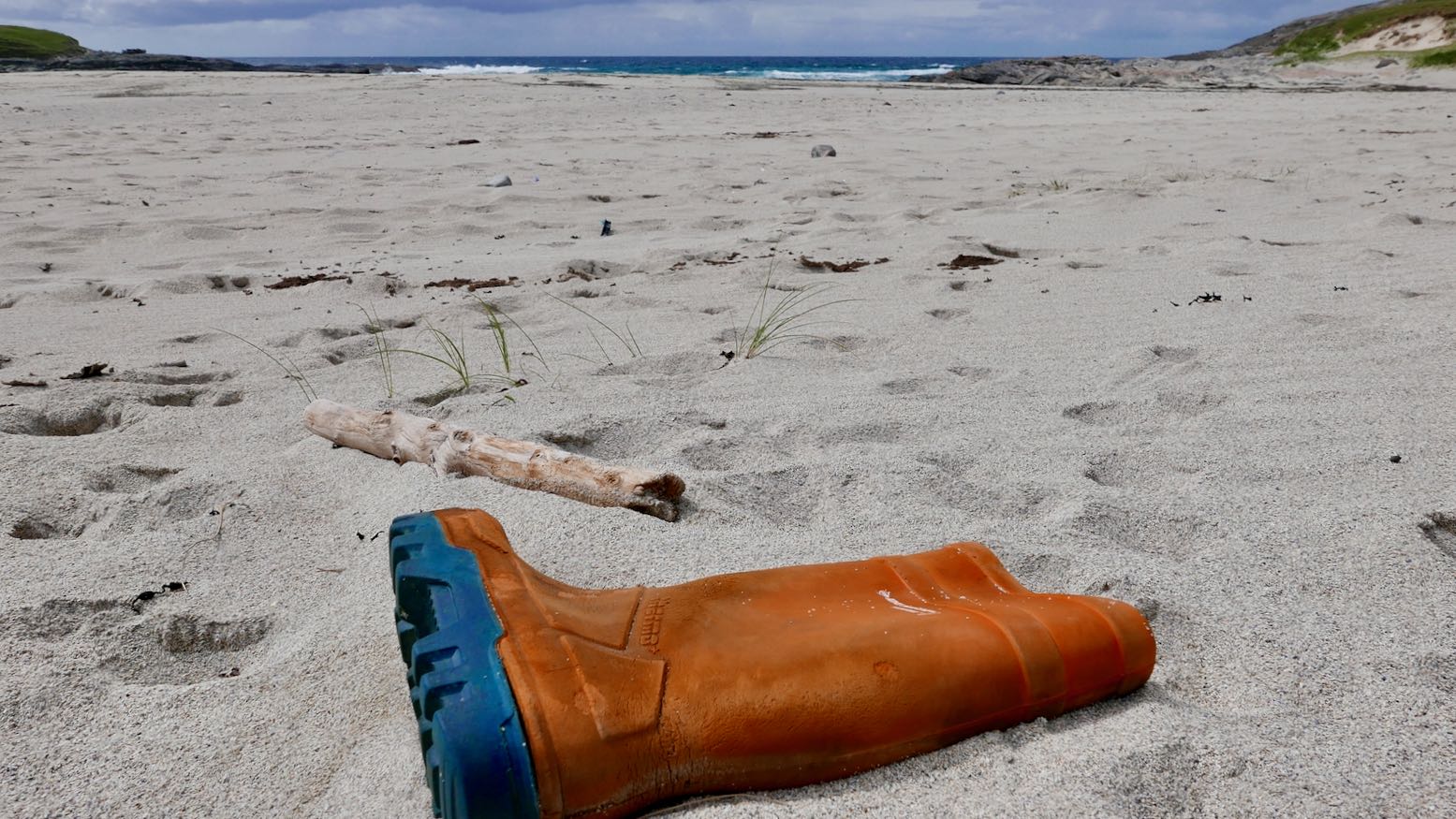
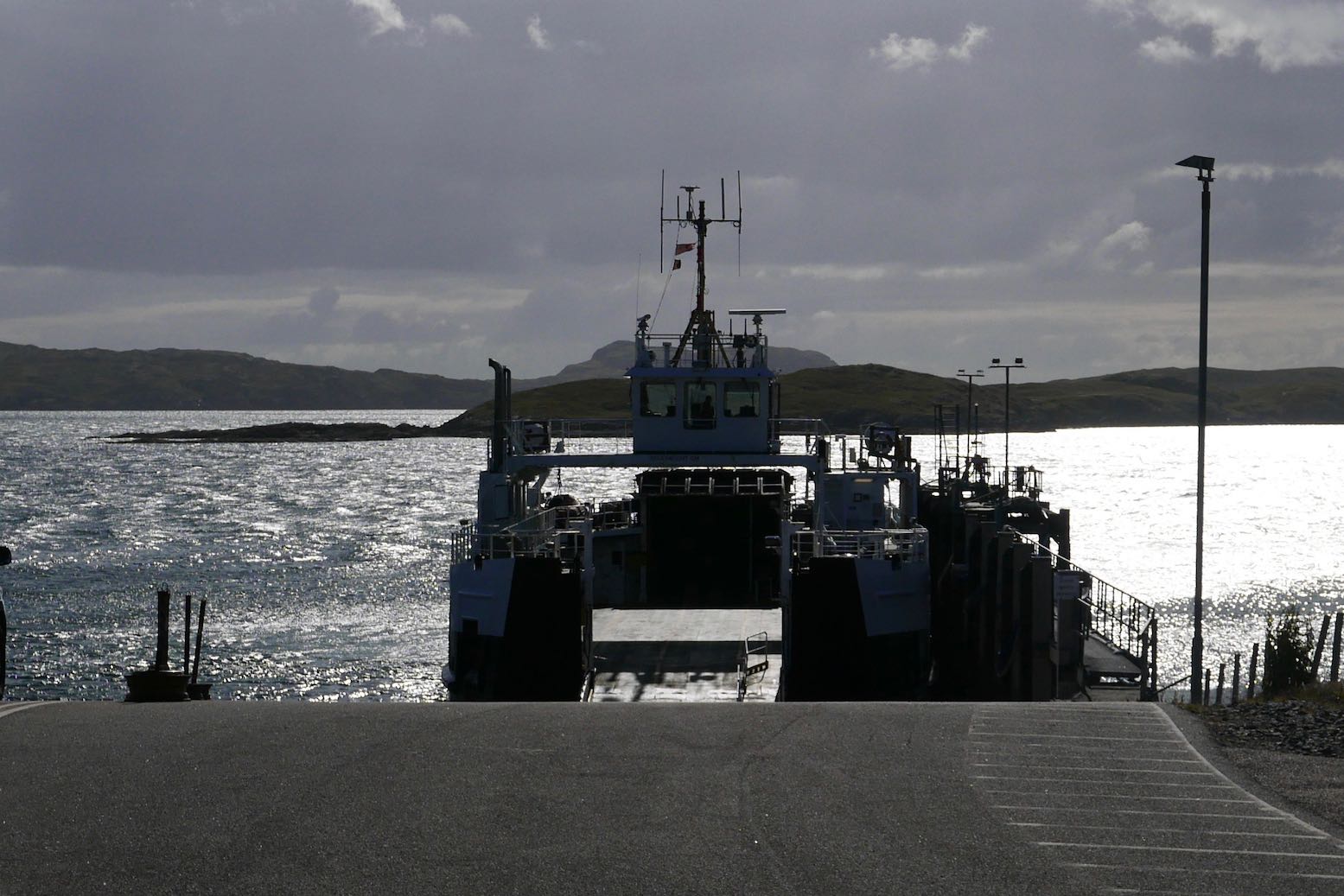
Barra ferry comesBarra ferry leavesThey call that island Dutchman’s Cap. Treshnish islands, halfway to Mull.Castlebay on Barra.Down to the causeway for Vatersay.The wellie at the end of the universeHeiseabhal Mor: the westernmost hill in Britain.
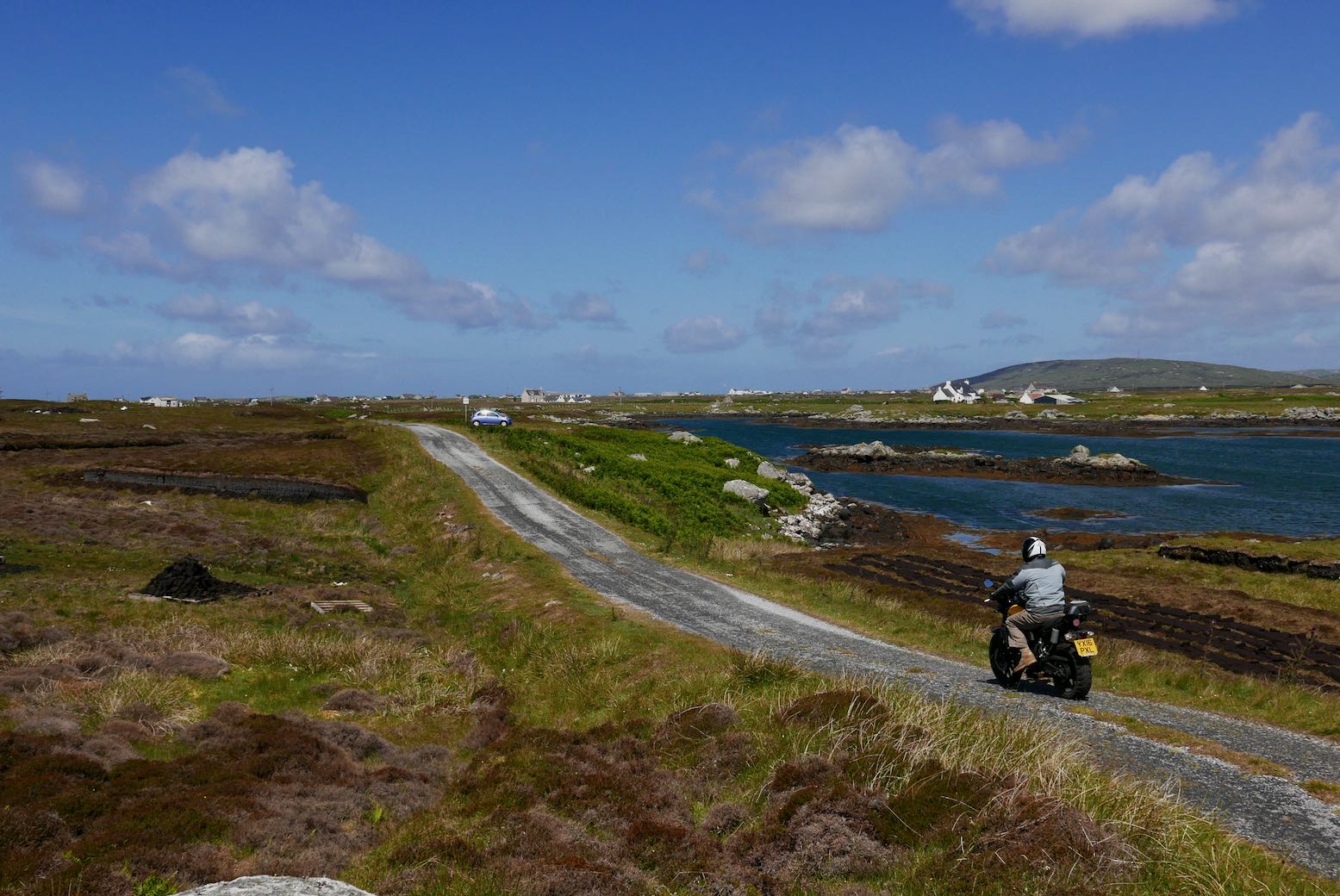
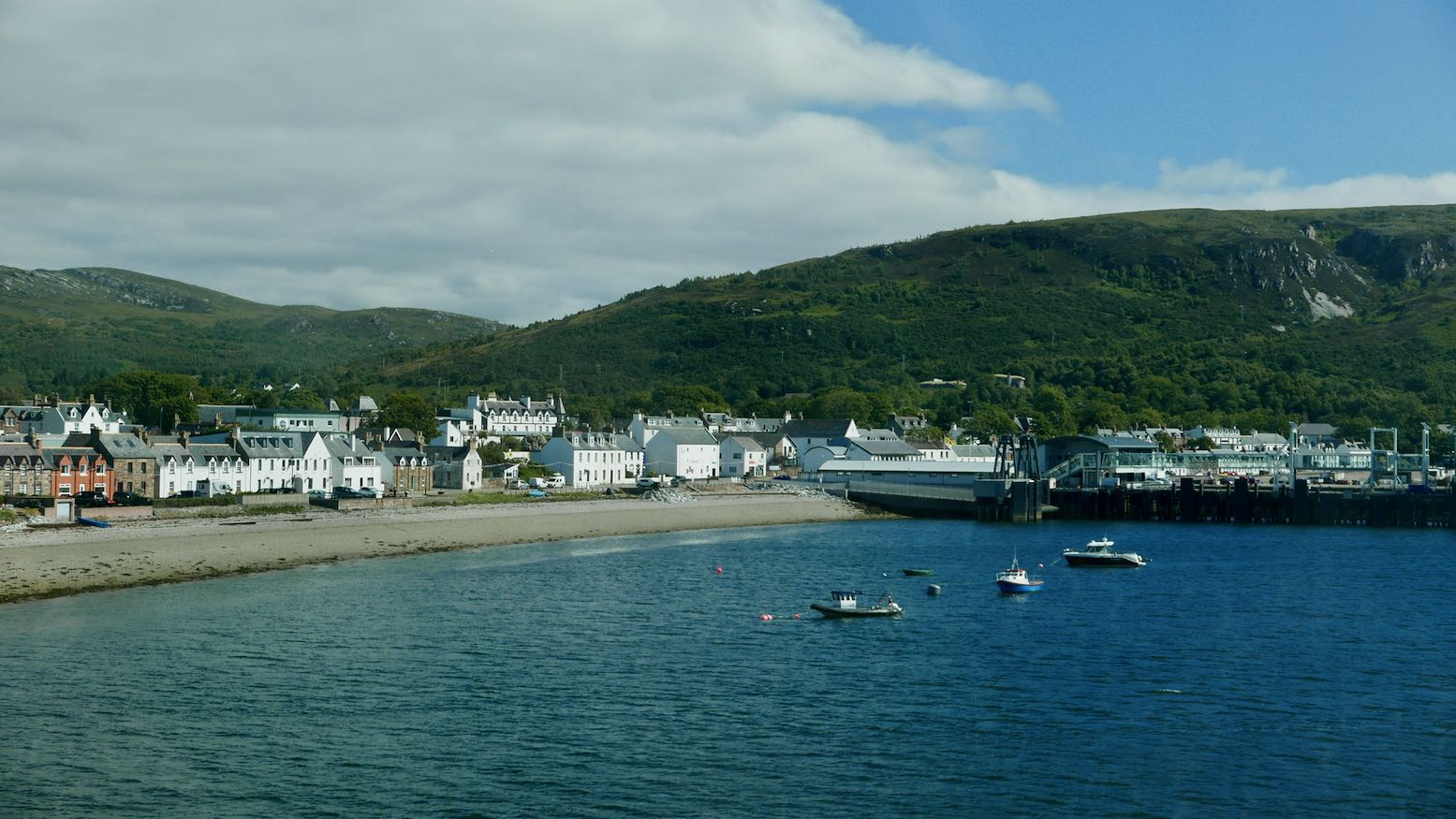
North of here I was on familiar ground, scooting across the archipelago linked by causeways and ferries to Lewis and my last ferry: Stornoway bound for Ullapool. Whether you get here by bike or on the end of a cormorant’s beak as Norse legends recall, it’s always a thrill to visit such wild places, even if they’re just a couple of days ride away.
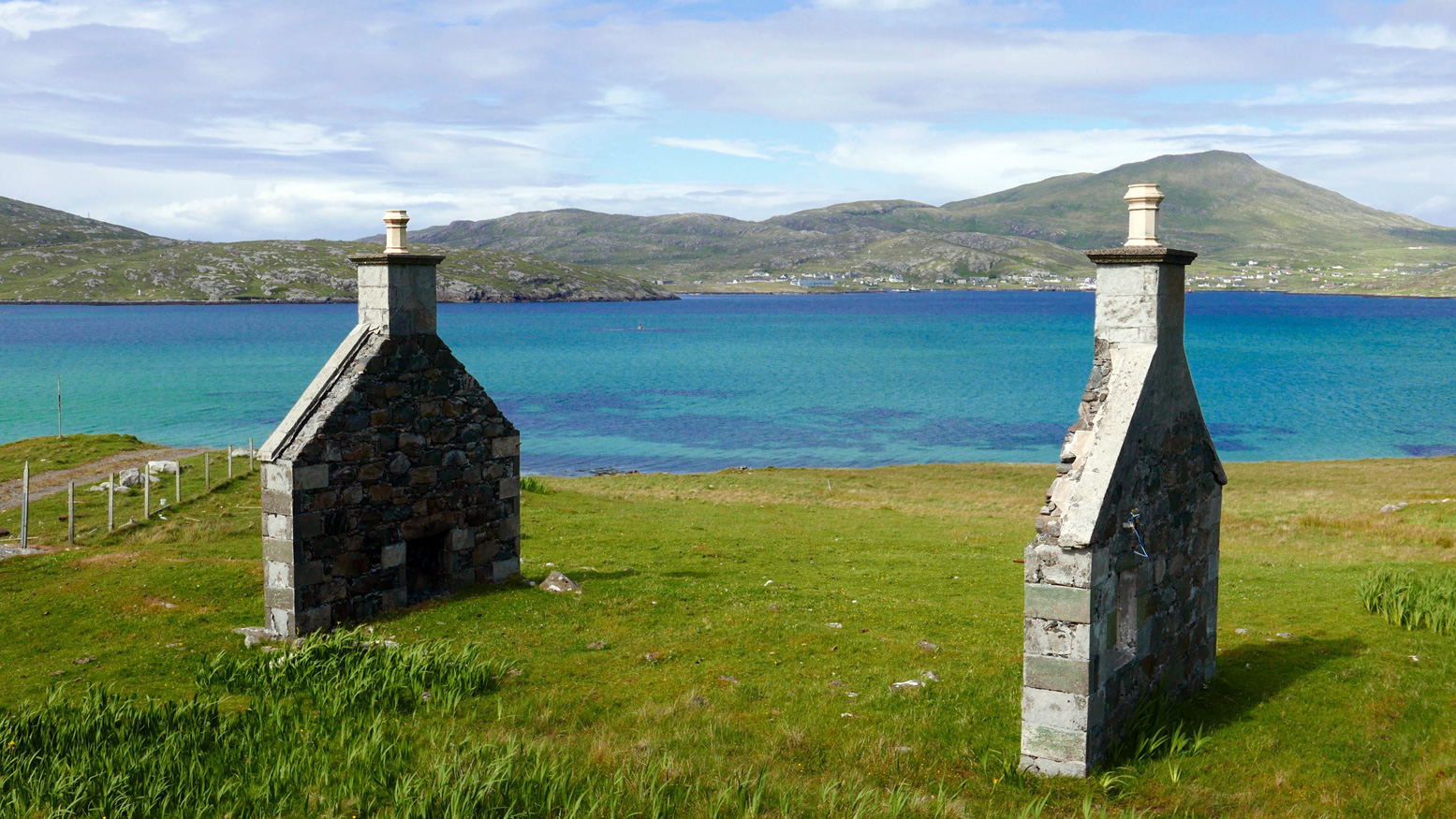
Gives a new meaning to Airbnb. It’s called The Gables.
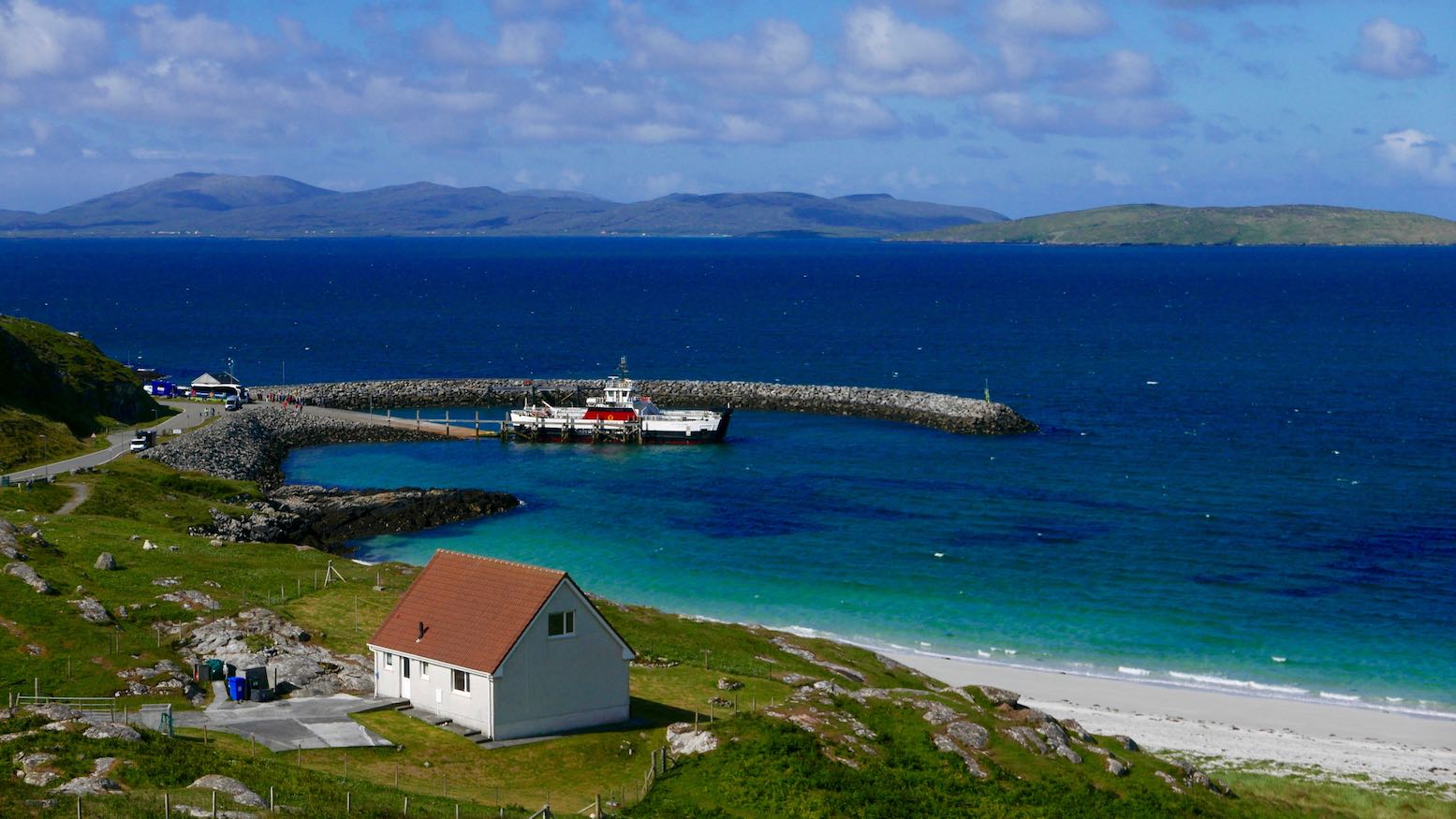
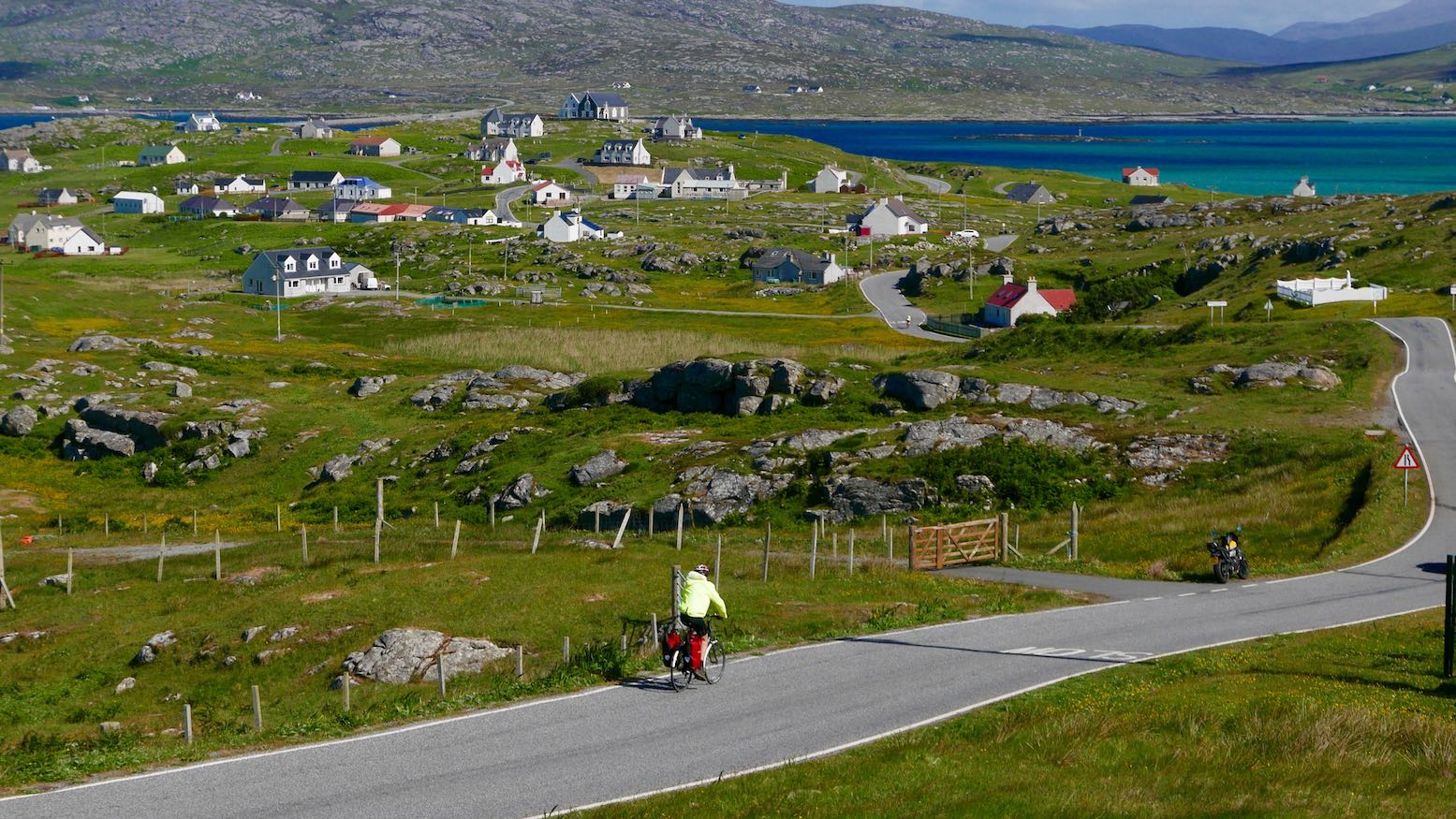
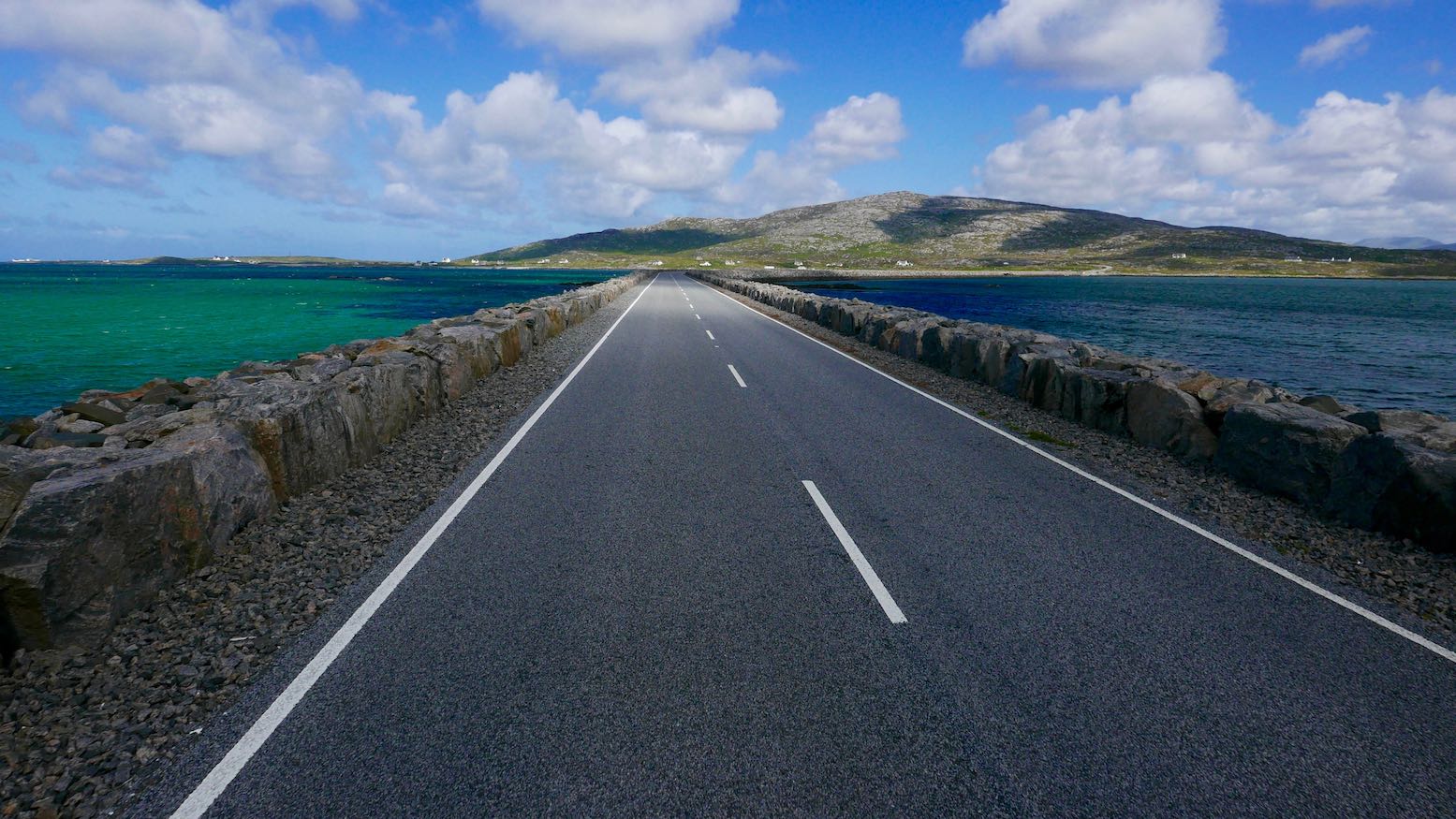
Ferry from Barra to Eriskay.Eriskay port, looking back to Barra.Eriskay town.Causeway to South Uist.Uist backroads.Clearly more sheep needed here.You won’t catch any oysters up there, chum.Another lovely Uistean beach.Across Harris and Lewis and arriving in Ullapool.Short ride home.
It’s not impossible to get a bit cynical about the flood of gimmicky gadgets, products or optional features which modern technology has enabled, not least when associated with ‘adventure’ + ‘motorcycling’. But I believe that for the: • price • ease of fitting and • non-interfering redundancy a wireless Tyre Pressure Monitoring System is a worthwhile addition to your bike, whatever you do with it.
For as long as I’ve been on the road, tyre makers and road safety tsars have harped on about the importance of maintaining correct tyre pressures. They’re right of course: doing so is a major contribution to road safety for the reasons illustrated vividly in the videos below. But modern bike tyres are so good that I’ve often inadvertently ridden on drastically under-inflated tyres for weeks and not even noticed.
Add the fact that on some bikes the valves can be awkward to access with tyre gauges which themselves are hard to read or flakey in les developed countries. Plus it’s all grubby down there and your knees/back are no longer like Nureyev in his prime. Unless you’re a certain type of ATGATT swot, for day-to-day riding it’s all a bit of a faff to check tyre pressures as regularly as they advise. And yet your bike’s other vital signs: oil pressure, battery charge, temperature, lights and even which gear you’re in – are all conveniently lit up right there on the dash.
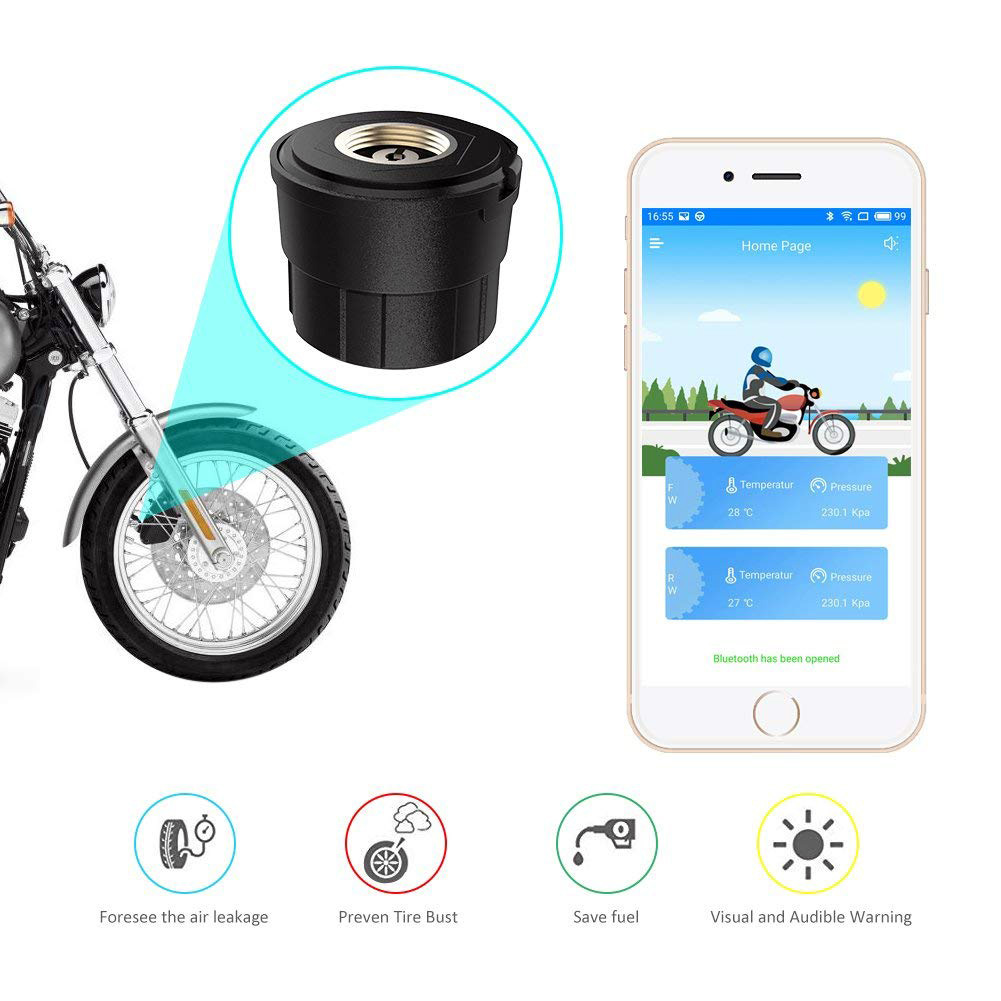
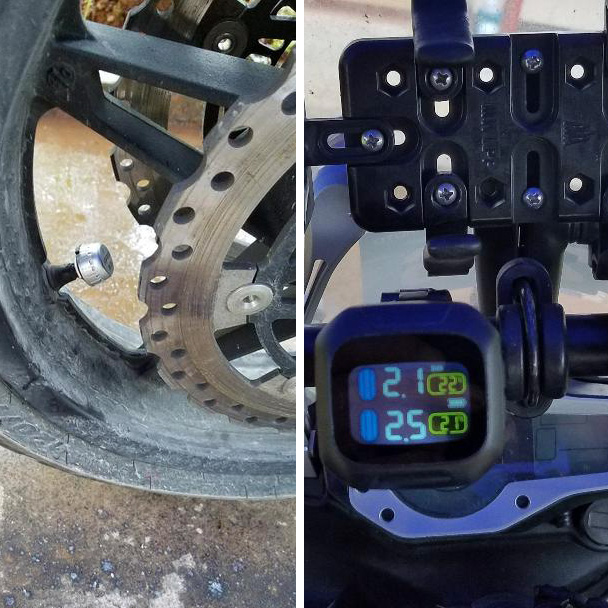
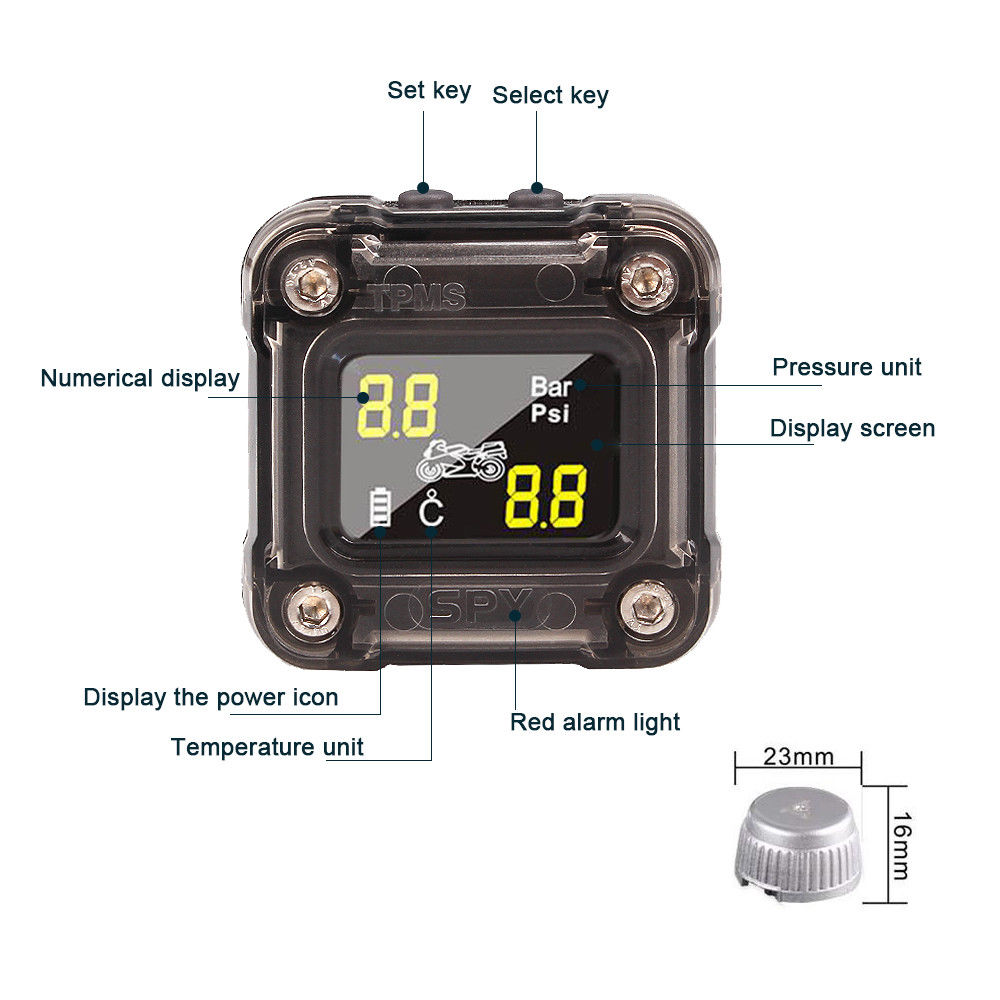
Tyre Pressure Monitoring System The problem has always been how to read the pressure inside a tyre that’s spinning around at 1050rpm. Solution: inexpensive wireless technology. A TPMS is ingeniously composed of two replacement valve caps fitted with centrifugally activated pressure sensors.
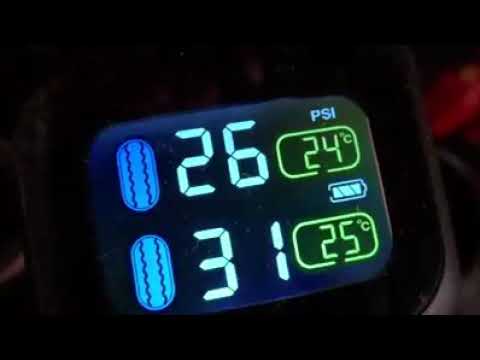
They pair wirelessly with a watch-sized display mounted where you can see it (or beamed to your indispensable smartphone; right). The TPMS display is either powered off the bike’s battery or is rechargeable in some way, so it’ll work on anything else with a regular Schrader valve, even a pushbike. Result: real-time tyre pressure and even temperature monitoring (right). And best of all, the USB rechargeable ones like the Michelin-branded one I tried, don’t interfere with the bike’s systems in any way. If the caps play up, just refit the old ones. They weigh as little as 8 grams so are unlikely to cause tyre-balancing issues at normal road speeds. Over the years I’ve found DIY, as well as other tubeless conversions like Tubliss and BARTubeless, have gradually lost air pressure faster than a regular tyre, tubed or OEM tubeless. And this is even when not run at very low psi where the tyre could conceivably ‘burp’ out some air over a bump. With any sort of DIY tubeless conversion, I highly recommend fitting a TPMS; certainly in the early days until you know how good the seal is.
Tyre pressures increase with elevation as ambient pressure falls, but they also drop as temperatures fall. For every 2000 feet (600m) you climb, the pressure will increase by 1 psi and will fall by the same amount for every drop of 4°C (10°F). But as temperatures naturally drop with elevation, things kind of balance themselves out.
Riding Off-Road As we all know, lowering tyre pressures greatly improves traction on loose surfaces and can transform a bike from a mindless shopping trolley into a hyper-sapient roller blade. But when you lower tyre pressures, temperatures in the tyre carcass soar as it flexes and influxes much more on each rotation, just as you get hot exercising because your muscle tissue is rubbing. And as tyres heat up pressure readings climb. (This is why cold tyre pressures should be your baseline). In this hot, rubber-softened state a tyre is much more prone to punctures and other woes.
Off-road I tend to keep pressures as low as necessary but as high as possible. Usually erring on the high side at the cost of a comfy ride, so weary am I of repairing flats on tubed tyres in the middle of nowhere (left). A TPMS won’t stop punctures but at least you’re able to observe how pressures climb from a cold start and what they’re actually doing on the dirt, so helping eliminate the guesswork of ‘press valve for 2-3 seconds’ or the nagging feeling of ‘should I stop and inflate a bit?’
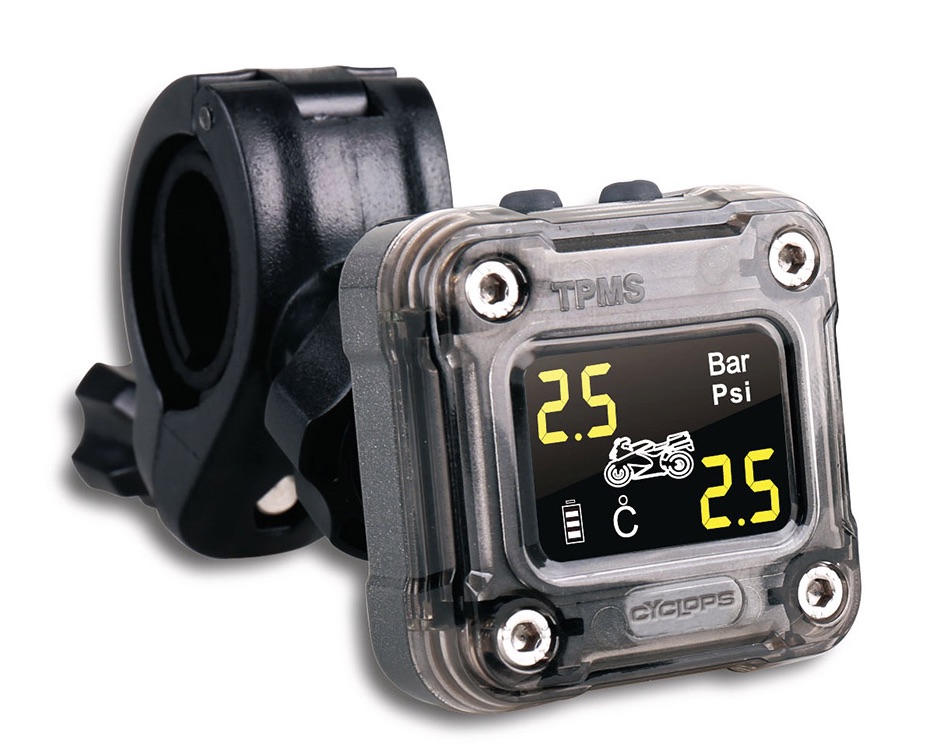
You can buy obscure-brand TPMS kits for your bike off ebay from £30 for the smartphone-only ones. About £50 seems a good price for a decent one. Here’s an Advpulse review on a hardwire Cyclops TPMS (above left) which sells in the US for $130. Cyclops aren’t tyre specialists, they just sell gadgets and a near-identicallooking kit can be bought on ebay UK for about half that price (above right).
A TPMS is one gadget I wish I’d had on my Tenere back in 2007, if not all my desert bikes over the years. I fitted Michelin’s one to my all-tubeless Himalayan and semi-tubeless Africa Twin in 2020. Read the review.
For what you pay and compared to vaguely similar bikes, Royal Enfield’s 2018 BS4 Himalayan comes very well equipped: centre stand; small tail rack plus tank sideracks; small screen; 15-litre tank giving a 400-km range; a small bashplate plus suspension that need not be instantly written off. Most of those items won’t need improving, but when did that ever stop anyone? Below, I throw out some ideas to help turn the Himalayan into a functional overlander. As with all my project bikes dating right back to the XT500 of 1982, I like to experiment with new stuff and new ways of doing things, much like Enfield’s Himalayan itself. It’s all part of the adventure and if nothing else, it’s good for the book.
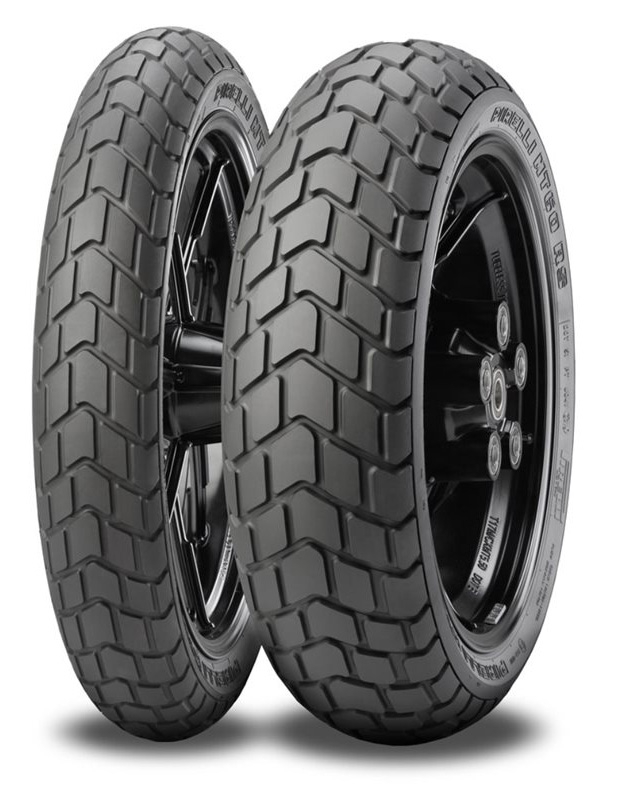
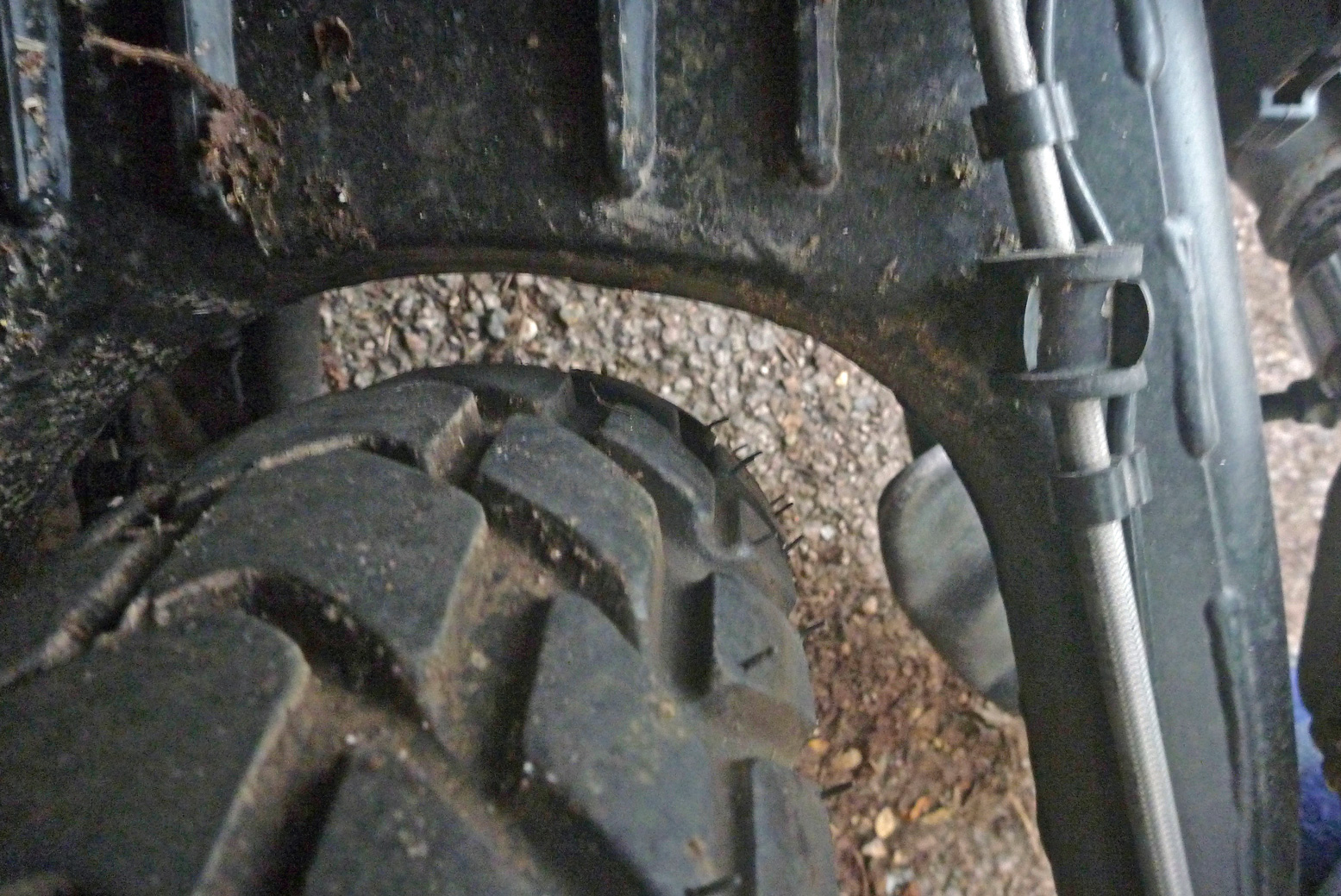
Wheels & Tyres Out of the showroom REH’s come shod with Brazilian Pirelli MT60s (right; mine stamped ‘2012’…). The spoked rims are steel: 21 front, 17 on the back. The Pirellis would have been OK for a regular Moroccan ride, but because I’ll be heading into the sands this time, tread becomes a little more critical. Below, some tyres of interest: Motoz Tractionator Adventure; Anlas Capra X and Michelin Anakee Wild.
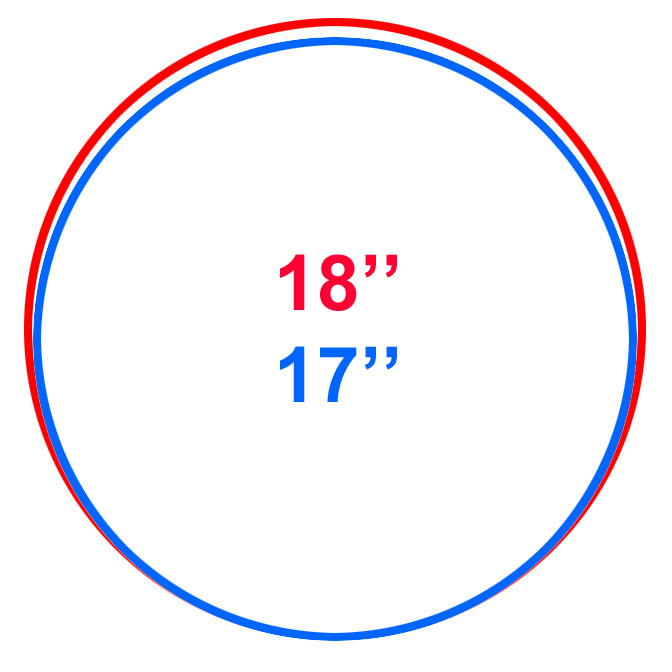
Confirmed: 17 is smaller than 18!
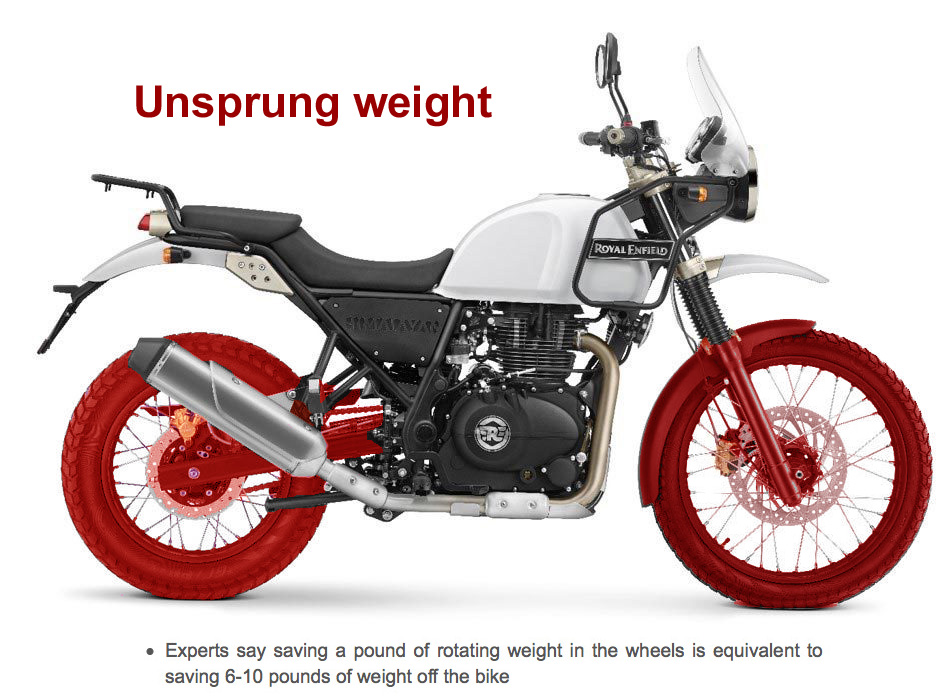
One thing I’ve quickly discovered is that none of the above tyres come in the stock 120/90 17 size. The only similar tyre I know of is Mitas’ E-09 which I tried on the XR400 in Algeria; a great desert tyre. Generally 17s tend to be low profile tubeless-ready adventure tyres suited to bigger, more powerful machines, and 18s are for traditional dirt bikes with taller profiles giving more sidewall ‘suspension’ or ‘footprint’ at low pressures. The above trio come no smaller than 130/80 17. There’s probably only a few mil in it, but I’d rather not go overboard with a ‘bigger-must-be-better’ rear tyre. Too much rubber to rotate will make the Him even more sluggish. Swingarm space with the stock MT60s (left) shows plenty of room to the sides but about an inch at the front, so for a replacement, actual dimensions may matter. The MT60 is 122mm wide and currently 93mm high from the edge of the rim. The swingarm gap will increase a little as the tyre wears and the chain stretches. Ratio-wise, 120 x 90% technically = 108mm tyre height, while 130 x 80% = only 104mm, so a 130 ought to have a lower profile or height. So even a 10mm wider 130/80 17 tyre will easily fit the Himalayan. Interestingly, an Anakee Wild 130/80-17 M/C 65R TL weighs nearly 50% more than a Wild in 120/80-18 M/C 62S TT (5kg) because the former is tubeless and aimed at heavier 17-rear bikes. An Anlas CapraX 130/80 B17 weighs 6.1kg. Motoz don’t know yet. Fitting an 18-inch rim might expand tyre choice at the slim 120/90-ish end. But with half an inch more radius in the rim, taller 18s could become a squeeze against the front of the swingarm unless a chain link is added to move the wheel back a bit. An additional incentive to move to an 18 is a chance to replace the stock steel rim with an alloy rim which will be a bit lighter. Suspension and steering, as well as acceleration/braking all react more readily if the unsprung weight– red, below – is kept to a minimum.
I read on the internet that the effects of unsprung weight includes the rotational mass of the gyroscoping wheel, plus – at non-rallying speeds – the less critical up-and-down mass the suspension has to control (image below). Additional unsprung weight takes more power to turn that mass, more brakes to slow it and better suspension to control it. This mass can be reduced by carefully considering tyre weight, not just the size, tread and price, going tubeless (eliminating heavy-duty inner tubes), as well as lighter rims, chain, rear sprocket materials; forks/swing arms and braking components. I’ve always thought this is a much overlooked area of weight saving on bikes, where changing a pipe is often used as an excuse to save weight. I remember the alloy front wheel on my XT660Z weighed a ton, partly because of the OTT twin discs when one good disc was all that was needed. Cheap stuff can be heavy, even in alloy. The image below illustrates how much greater the reaction forces are with heavier wheels. Put another way, it’s why your trainers weigh only 320g. ‘Add lightness’ as the old racing adage goes.
Unsprung durch Technik
And if I’m messing about with rims it would be a shame not to go tubeless, for all the usual reasons. See the link, but basically it’s: DIY mastic as on my 660 Tenere, Outex tape (~£70, never tried), BARTubeless (~£320, as on the 500X RR) and Tubliss (~£180 a pair; as on my GS500R), or a suitable rim (rare/expensive). If I go to an 18 I’m thinking of giving the 2nd generation Tubliss (right) another go as it’s an easy and inexpensive fit, but they only come in 21, 19 and 18 inch, not 17.
Is this all going a bit far with a humble Himalayan, or making the most of its potential? Will I or the bike notice the difference of a lighter wheelset, once all the other junk is added? Unfortunately I don’t have enough time to get a solid riding impression of the stock bike before setting off.
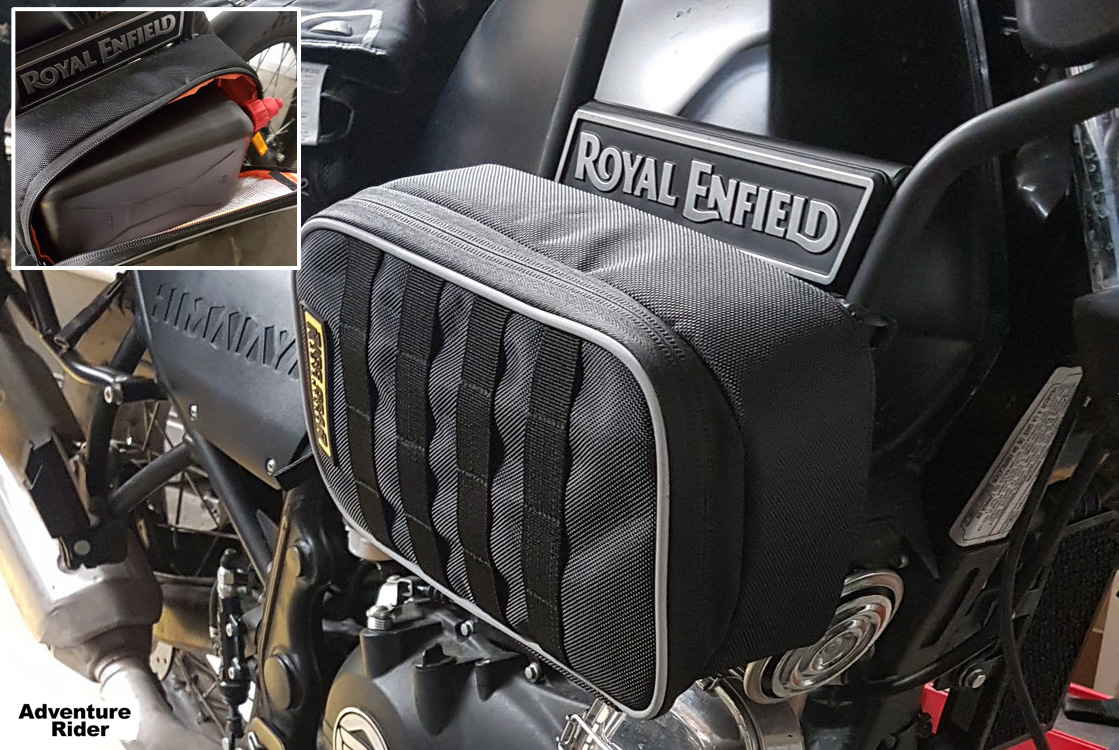
Load Carrying One of the REH’s distinctive features are the tank racks which some mistake for tank protectors. They’ll do that too but to me they’re clearly a handy place to lash items or bags. The previous owner had a similar set-up using Kriega drypacks and helpfully wrapped the Royal Enfield badge in string to stop it getting worn away.
Kriega is one way of doing it, so is Lomo who’ve sent me a pair of their PVC roll-top crash bar dry bags to try (£39 pair). At around 6 litres each they look ideally suited to the racks. I plan to mount them semi-permanently and will use Lomo’s same-sized orange ultralight dry bags (£3) to lift everything out easily when lodging. In the US the more boxy, 3L Rigg fender bags (right) look like a neat fit too.
Then, once I zip on my Giant Loop tank bag, most of my daytime needs will be in view and at arm’s reach, meaning what’s behind can be left strapped in place. It may even mean I can do without a daypack on my back, plus the crash bags will keep the wind and rain off my creaking knees.
For the back an Enfield pannier rack is has just turned from India for under 80 quid. Looks like a hefty set up – it weighs over 5kg. You’ll find them sold on ebay, or at twice the price from UK sellers. I’ve not decided what bags I’ll use on the side. At the simplest I can just lash on a couple of rugged PVC dry bags, as I did with the Rally Raid 500X a couple of years back.
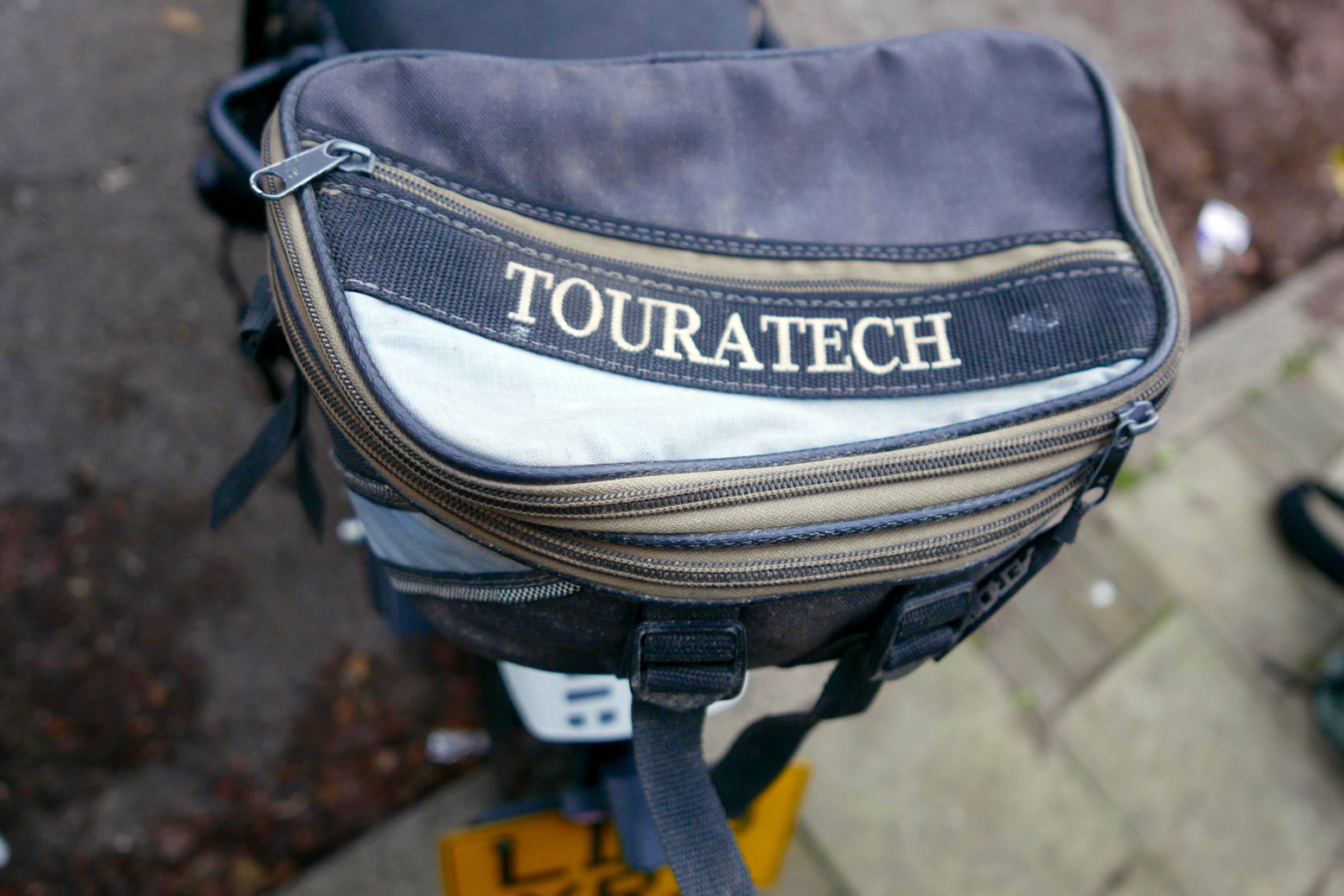
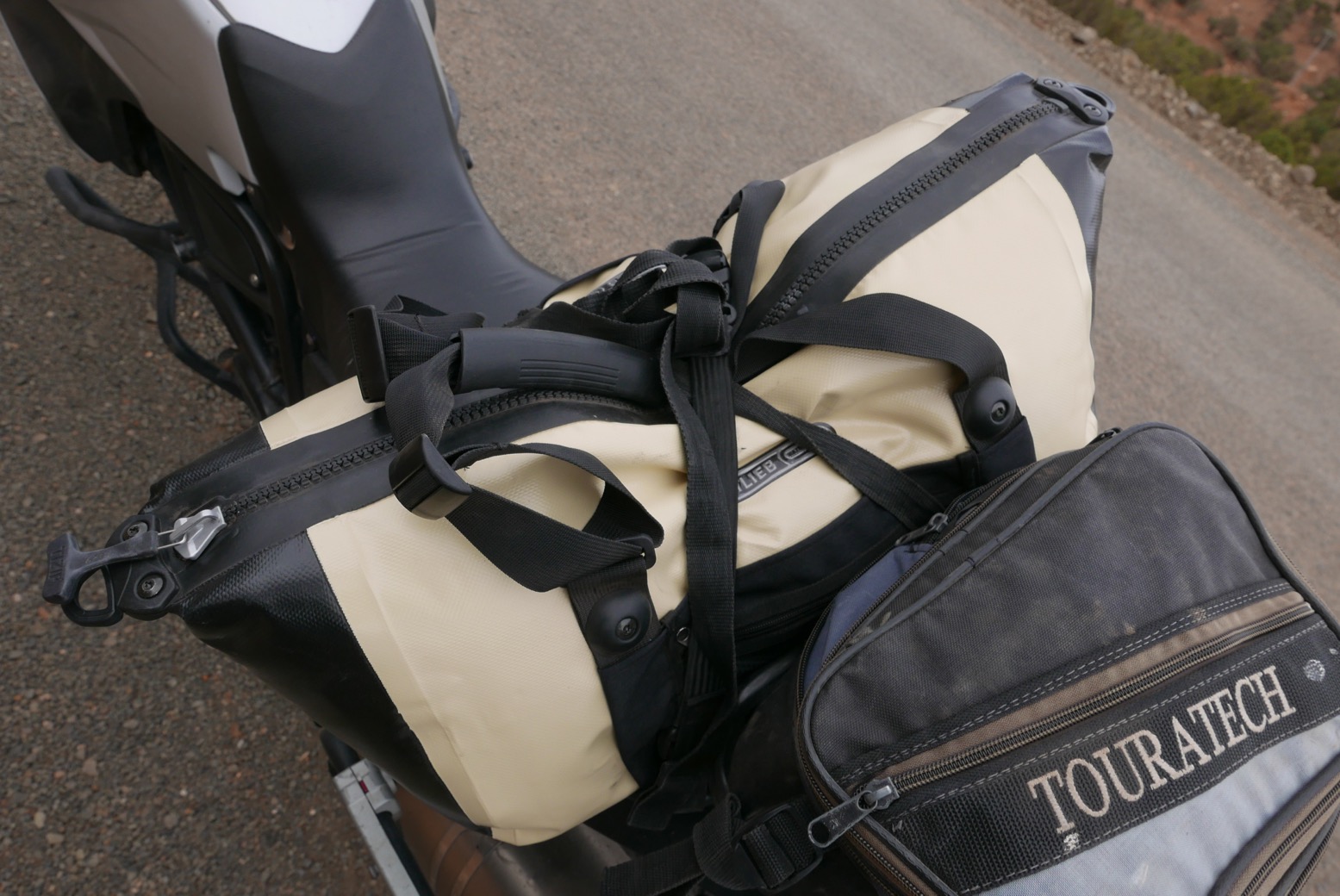
And right at the back the narrow tail rack has taken my long-suffering Touratech tail bag – one of my all-time travel luggage favourites. Having all these bags spread around the bike is handy for access, compartmentalisation and weight distribution but at, quite literally, the end of a day, it does mean more faffing about to get it all indoors when the parking is less than secure.
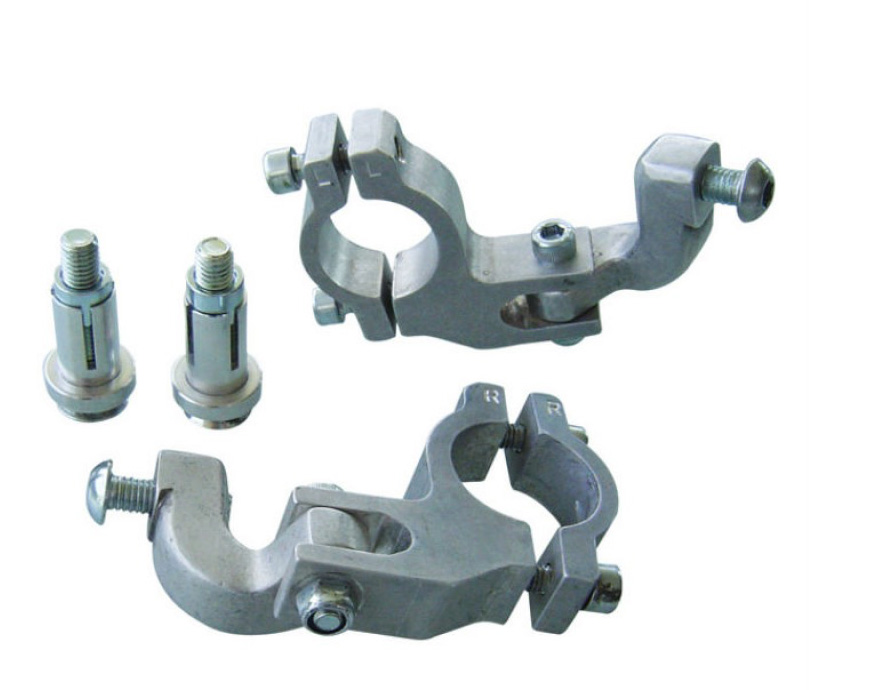
Comfort: handlebars; screen; saddle The bike came with Oxford heated grips – luvlay juvlay. My old Barkbuster Storms will also get their nth outing on an AMW project bike, but it looks like they’ll require BTC 06 curved adaptor clamps (right) to get under the brake lines and so on (they didn’t fit).
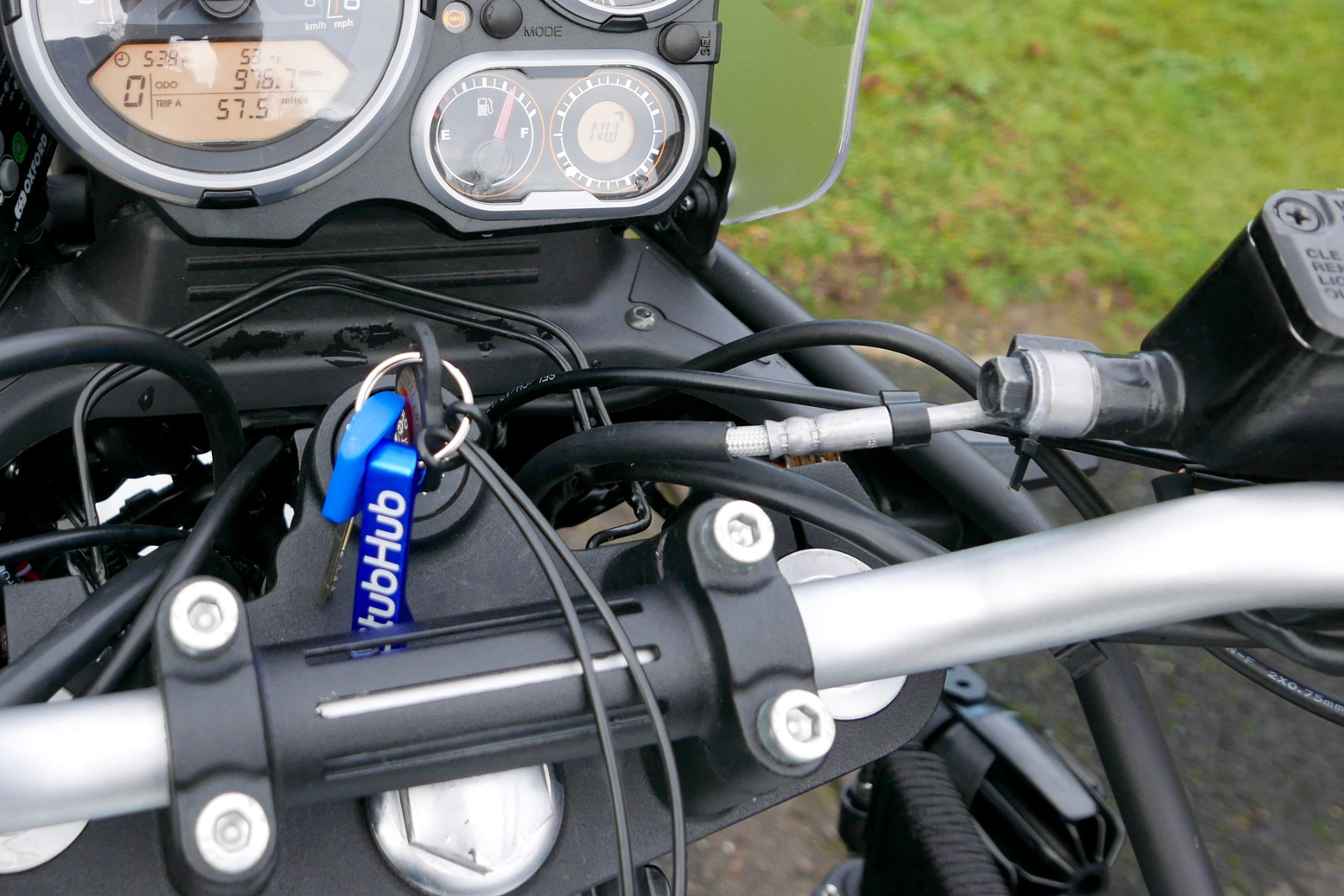
Talking of which, with this ABS model (brake line goes under tank to the pump, not straight down to the wheel) I’m not sure there’s enough slack to get much more than an inch of lift on the bars, which means my 50mm Rox Risers may have to sit this one out (they didn’t). Non-ABS Hims ought not have this problem. As it is the stoop for me isn’t too bad and the general position is of course much better than the XSR. I only tend to stand when I must, but that’s partly because I rarely ride a bike where prolonged standing off road is comfortable. One way to dodge the stoop is to lower my height by removing footpeg rubbers. Wearing very thin socks also helps. Fyi: ABS switch hack.
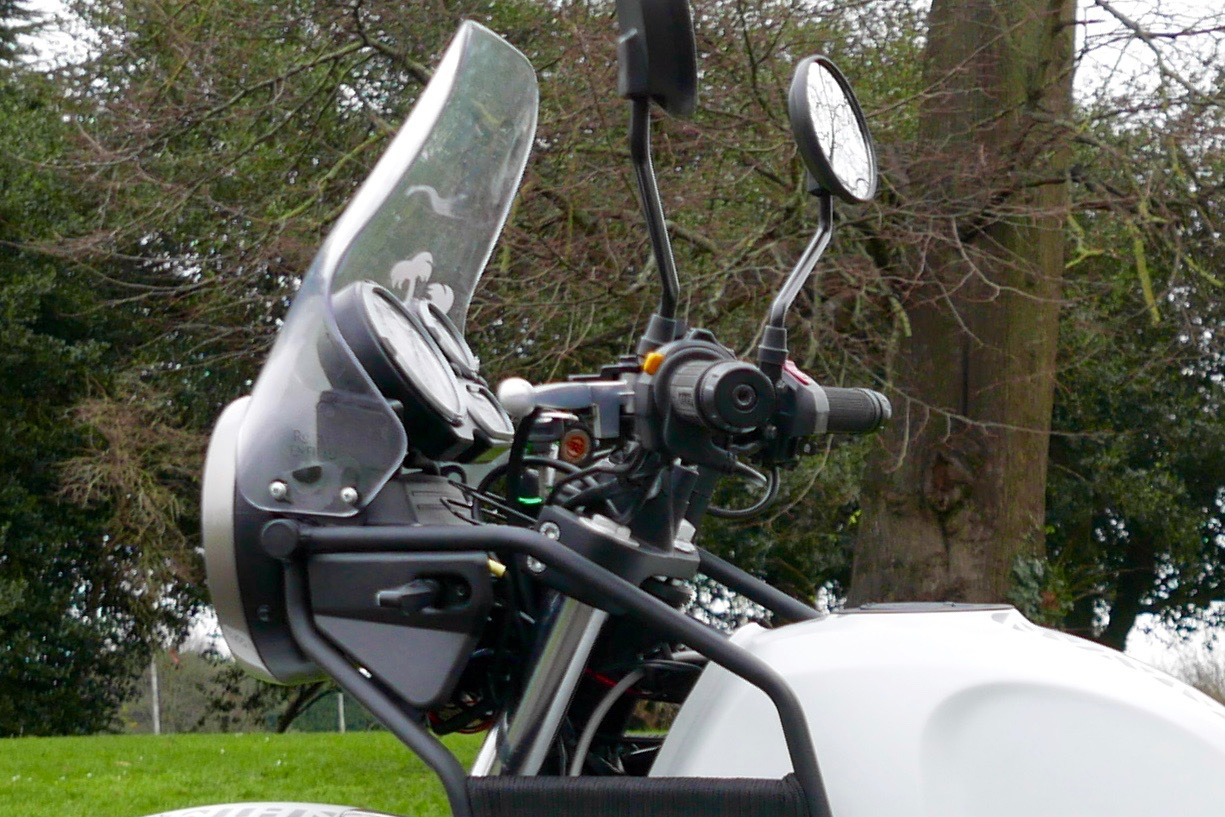
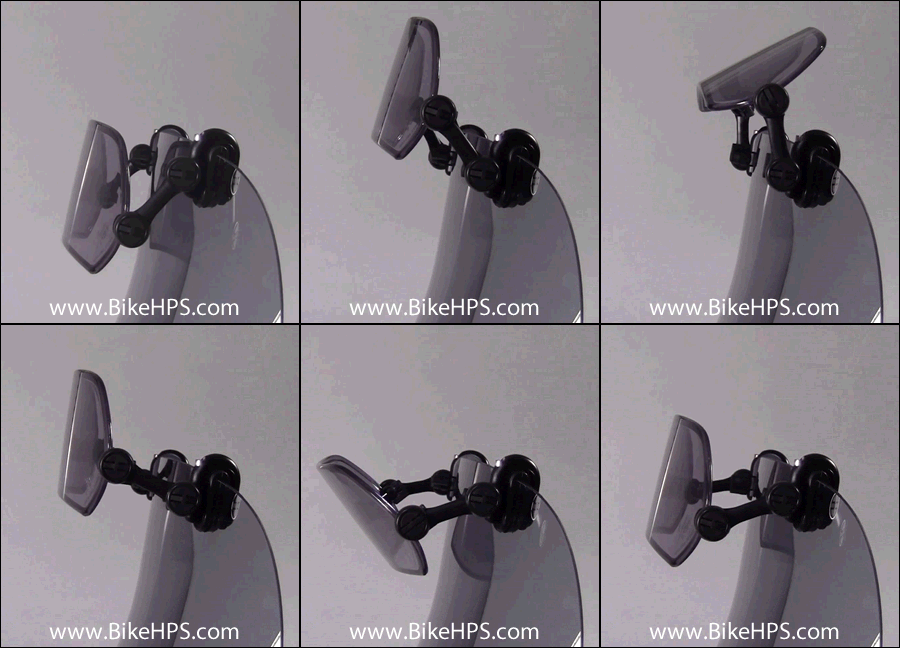
The screen is better than nothing and has a tiny bit of fore and aft adjustment. It’ll be all that’s needed off-road; less so for a long cross-country ride. You can get those clip- or bolt-on deflectors like the adjustable MRA Xcreen (below right) which I had on a recent Tiger (we don’t talk about that bike) and which worked well for what it was. Or Hitchcocks Enfield specialists do a taller version, but only by 60cm. Changing a fixed screen is a gamble while others have found chopping it right down greatly reduces buffeting. Much depends on your helmet, height and attitude to discomfort. You’ll never get it right all the time and it’s all part of the biking experience, so unless you know what works for you, by far the best screen is something adjustable like the Xcreen or the Palmer I had on the CB-X.
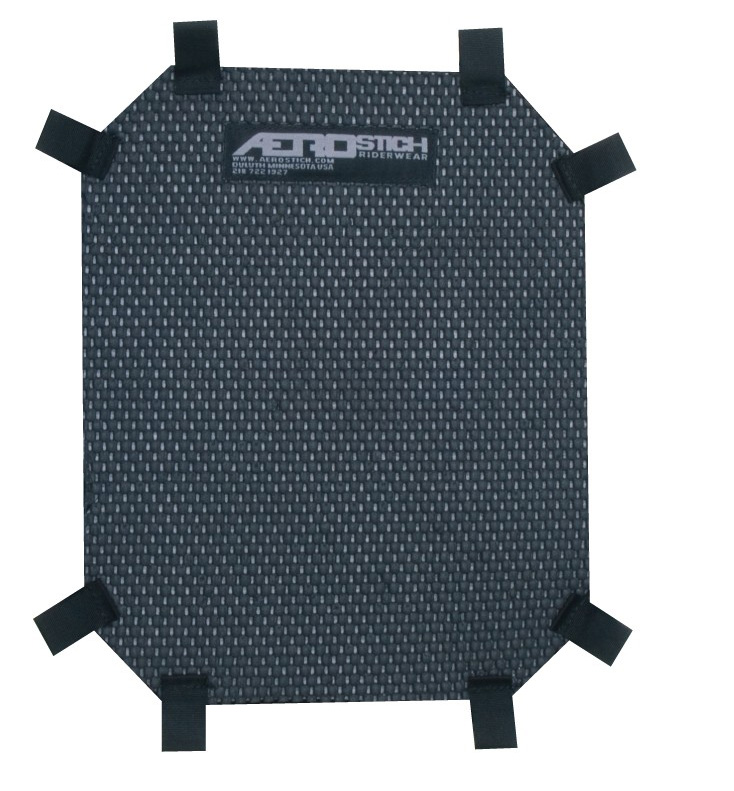
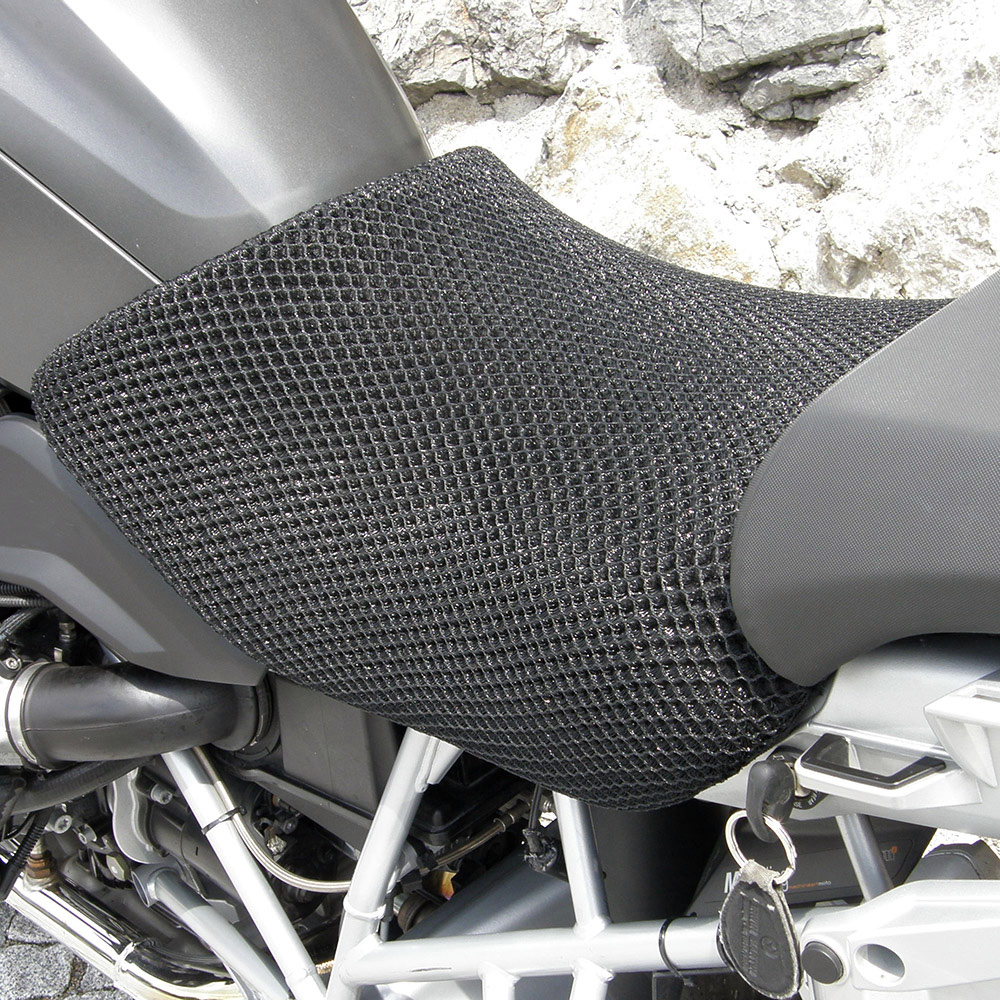
It doesn’t feel like the seat will sustain my post Xmas mass, sprung or otherwise, for more than an hour or two. Nothing new there. I’m getting a mesh Cool Cover to test. One good thing with fitted covers like this, as opposed to airbag seat bags, is that you can securely stuff added padding underneath without having to do a reupholstery job. I’ve got an old Aerostich lambs wool seatpad (left) which used alone may have had its day, but under the Cool Cover may add a bit more cushioning. One good thing on the REH is the two-part seat; it makes any foam-hacking job a bit less terminal.
Suspension I’ve often wondered how much more it costs in time and money to make stock suspension which works out of the crate. There must be no shortage of data and algorithms, so maybe it’s the time in fine tuning an individual model where the costs pile up. We’re so used to regular bikes coming with great engines which can sing and dance in four time zones, but have adequate suspension which presumably is expected to work for most riders at moderate speeds. Crank up the speed or reduce the surface quality and composure soon slips away as suspension travel gets eaten up, as I found on my CB500X and XSR700. But on my BMW XCountry I discovered what decent suspension actually meant: not that obvious on road, but a whole new world of control as dirt turns gnarly. Problem is that’ll be no change from €1000 and trip to Holland, please.
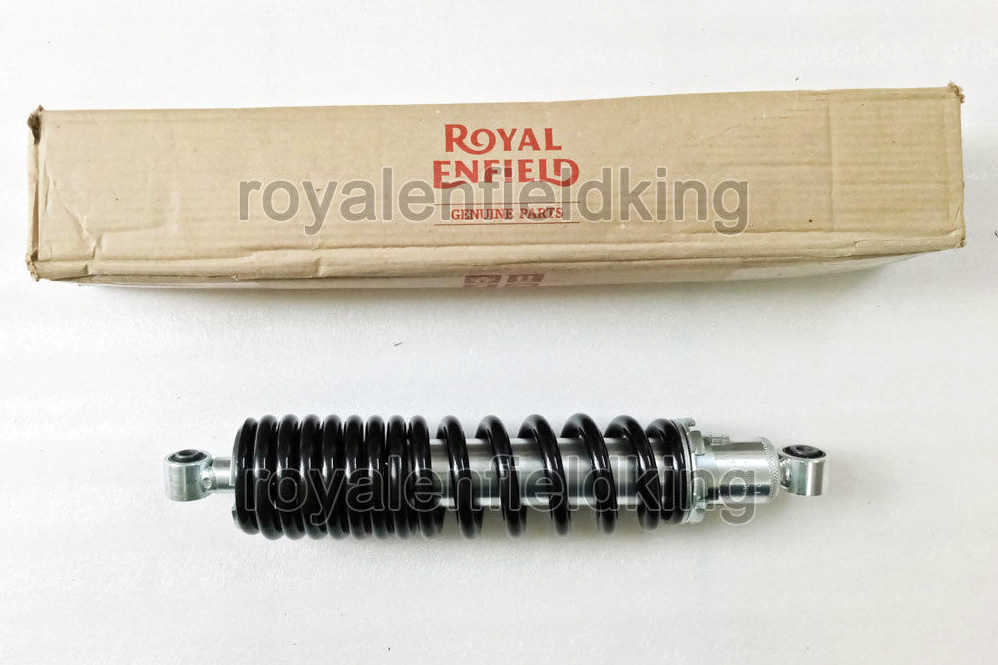
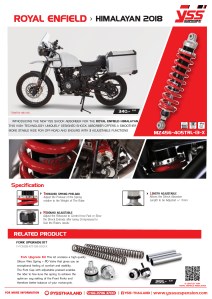
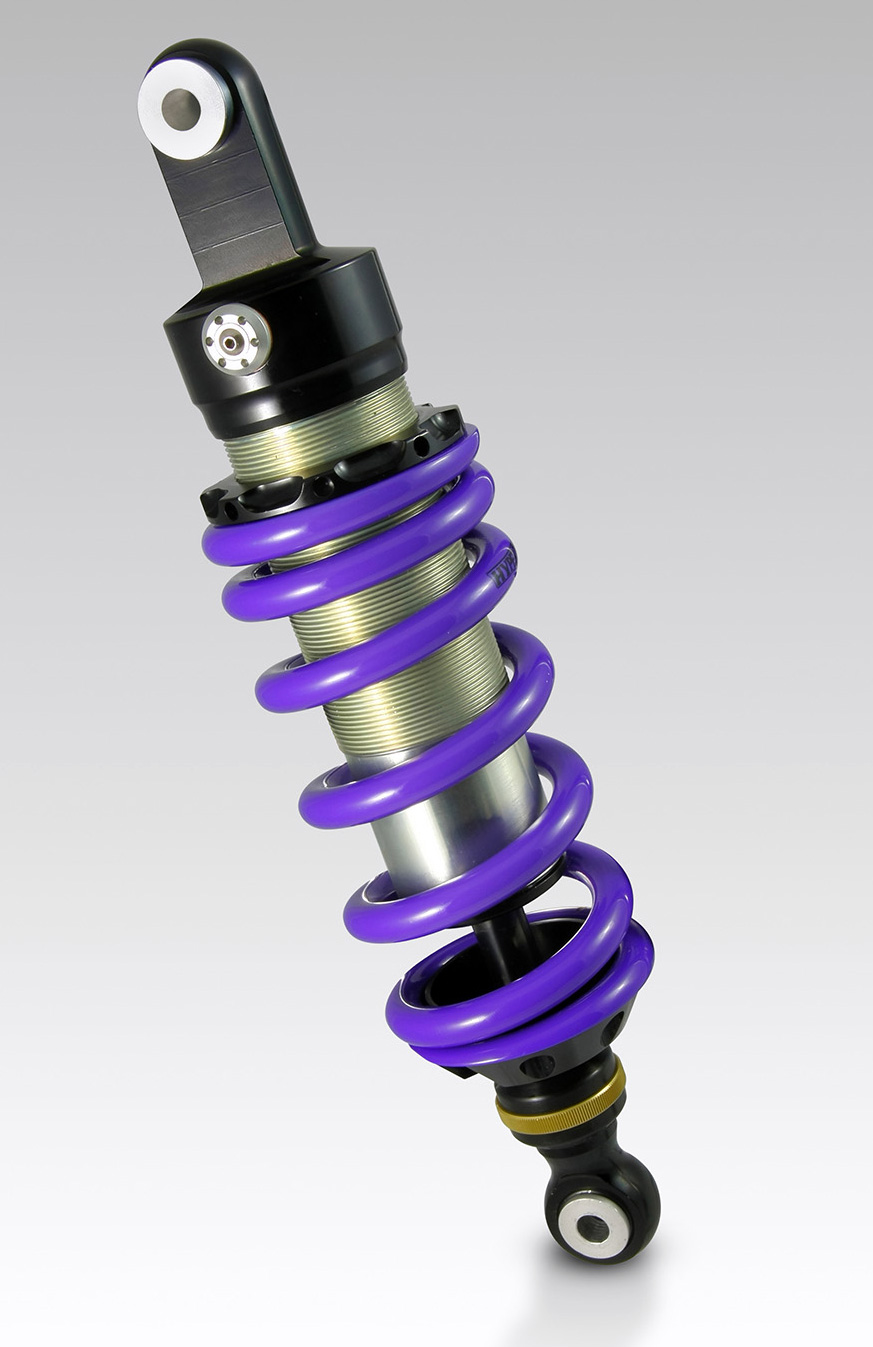
Many reviews say the Himalayan’s suspension is pretty good for what it is, which is all the more surprising when you look at the seemingly spring-bound stock shock above. I read it’s not trying to be progressive but a dual rate spring and in fact there is a 2mm gap between the closely set coils. Currently the only outfits offering shocks are Hyperpro (right; €500) and YSS (left; made in Thailand). Unusually, both come with rebound damping but the YSS also has adjustable height and was just £270 from Wemoto on special. For that price it’ll be worth a shot and the option of dialling in a bit of extra height will be handy. As it is, the bike tends to sit a little too upright on the sidestand and adding a sandfoot won’t help. And also if I do go for an 18-inch rim where the tyre range is taller, a bit more space will be handy
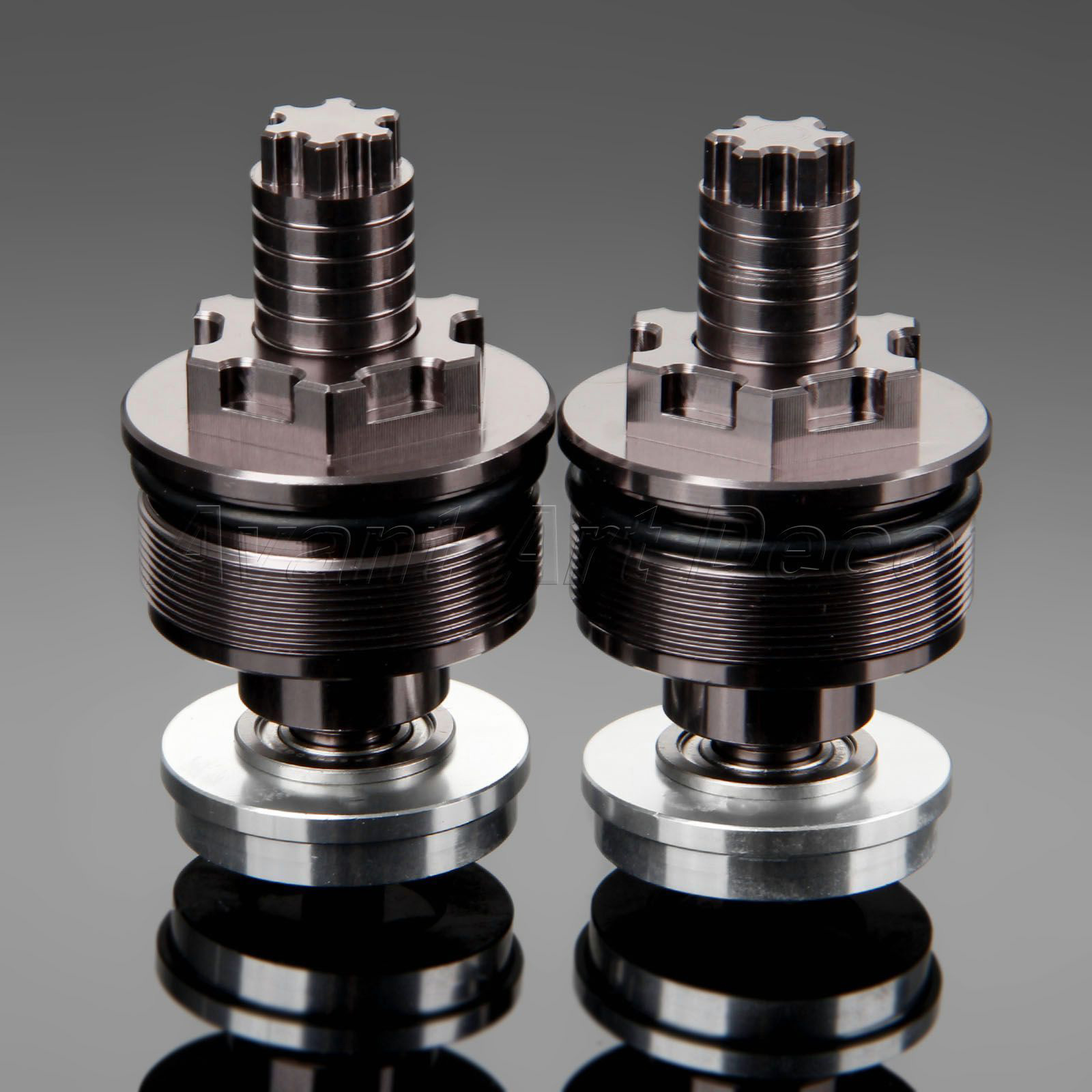
For the fork YSS also make a kit (above left) costing not much less than the shock. It includes valve emulators (available separately for around £80), something I’ve read of but never tried. For the moment there’s nothing to be lost by starting with some Chinese ebay fork pre-loaders (£10; left; as tried on the XSR). After that I may move up to a firmer K-Tech spring if they’ll make me one. Firmer springs may be enough to bring the front end back up if an 18-inch rear rim is fitted.
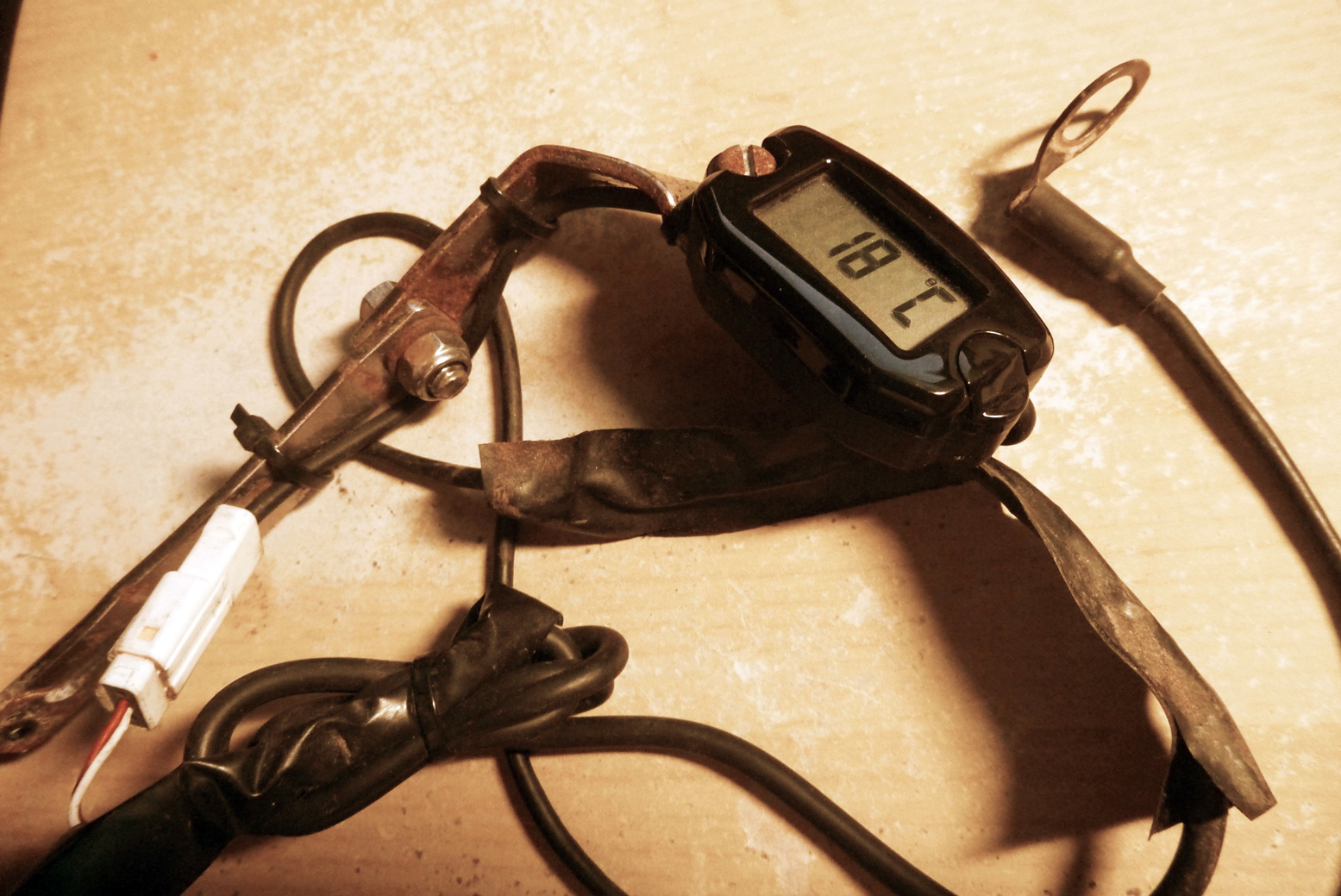
Ancillaries I’ll hard wire the trusty Montana in and fit a RAM mount on the bars. I’ll also add a PTO for the Powerlet heated vest and type pump. The claimed 220w alternator output is nothing special, but some wattage has been freed up with dinky LED indicators and there’s a spare LED headlamp which came with the bike. Otherwise I plan to add a switch so the lights aren’t on 24/7. There are times when you don’t want to be seen too easily. Last but not least, the Trail Tech engine temperature gauge from last year’s XR will get wired on to some very hot part of the Enfield’s engine. With an oil and air-cooled motor, even a low output one like the REH, it’s all the more important know how hot things are getting down in the engine room.
‘Click – Yank; Click – Yank’. That 4-second procedure is all it takes to securely mount a tailbag or duffle to your bike using a pair of RokStraps. The click of the plastic clips; a yank on the strap’s loose end to tension it against the elastic. It’s not ROKet science, but watching some riders faff about mounting or removing tailbags by other means makes me realise how brilliant two-part ROK straps are.
Regular adjustablewebbing straps also work but fail to account for a loose bag’s tendency to ‘shift & shuffle’ on the back of a bike, which tensioned elastic reliably compensates for. And you effectively need double the length of webbing to loop across frame loops and back.
Before ROK Back in the Flintstone era but after the invention of string and mild steel, bungies were the next best thing; a bunch of elastic strands encased in a jaunty woven nylon sheath tipped with two coiled and plastic-coated metal hooks. Bungies were such a hit they spawned the daredevil activity of bungy jumping. But even then we knew bungies were a cheap and nasty convenience, and sometimes it was the bungy that was jumping back at you. Because they were way too stretchy you had to tension them to the max to eliminate movement of anything heavier than a copy of MCN, and there was no adjustment other than knotting them. Add some UV, rain, more UV plus persistent over-stretching, and over the years several unfortunates have suffered nasty injuries from a stray hook recoiling into their face at 350mph. It’s said that was the motivation behind the invention of ROKs in Australia back in the 1990s.
ROK Straps come in two parts: a shorter sheathed section of thick, flat rubber producing minimal recoil. It clips to a regular webbing strap with an adjustment buckle and best of all, both chunky sections end with a sewn loop to thread round a subframe or rack tube. Result: all pieces of ROK Strap are always attached to the bike (but remove easily) for lashing down loads quickly and reliably. At the end of a long ride when you can often be weary or forgetful, just click your two straps apart, lift off your bag and stroll into a velvet-lined riad for a poolside aperitif while others are still fumbling with buckles or stumbling around clutching their eye in agony. It can be that simple. A pair of 16mm, 1.1 metre (42″) ROKs (above left) got for 15 quid discounted at SportsBikeShop. Rok On.

















 Adventure Motorcycling Handbook