In a line Economical and easy-to-ride big twin on road or trail, only held back by the staid image.
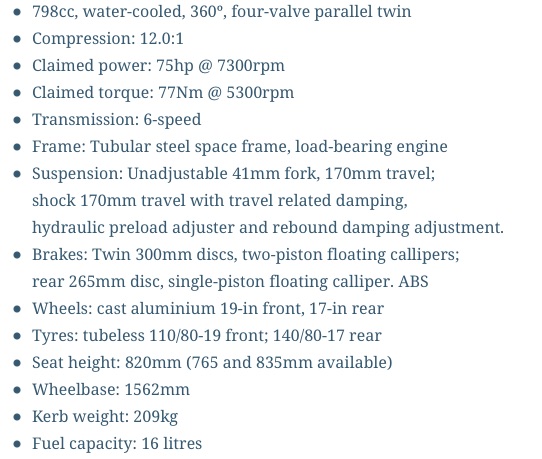
• Still running well at 110,000 rental kms • 19″ front wheel ideal for road and trail • Suspension surprisingly good at sustainable off-road speeds • Great economy – averaged 81 mpg (28.7kpl) • Torquey boxer-sounding motor has all the power you need • You really notice the benefit of a low centre of gravity, especially on the dirt • Yes it’s 209kg wet (claimed) but like they say of a GS12, it carries it well.
• Seat (low version) is as bad as the 650 version, if not worse • Long wheelbase and low CoG? [+ road tyres] can make turning hard on dirt switchbacks • Tall first gear for off-road (as with most road bikes) • ABS and gear position indicator didn’t work • No screen to speak of • FSH-type owners mean used prices remain annoyingly high
Review A few years ago I rode a brand new F650GS SE down to Morocco, covering around 4000 miles while updating my guidebook. The ‘SE’ was a fully accessorised and snazzed-up version of the regular 650, just before that model got renamed the ‘700GS’ to help differentiate it from the 650GS single which had long caused confusion. Six fifty or ‘700’, the actual engine is a detuned 798cc as used in the pricier and flashier F800GS. These parallel twins were launched in 2008 with an Austrian-made motor, soon followed by a well-documented slew of teething problems. The popular 800s were finally replaced in 2018 with the F750/850GS. The motor is now made in China but final assembly remains in Germany.
I reckoned that for most, the 650 twin made a much better travel bike over the 800. It was lower, more economical, more torquey and has tubeless tyres and a 19-inch front wheel, while still having great suspension and more than enough grunt to get the job done. After a week on a bike with over 110,000 rental kms on the clock, I feel the same about the 700 for all the same reasons. I’d take this bike over an 800 any day, not that that’s stopped them being far more popular travel bikes. Image is a big part of the adventure and, hampered by its ‘entry-level’ stigma, the 700 looks boring alongside an 800GS.
Guiding a group of 250s and 310s, I wasn’t pushing the 700’s limits on the road. Most of the time the throttle was barely open, resulting in fuel consumption in the low 80s mpg (68 US; 3.4 l/100km; 29kpl). I know I’ve been going on about 270-degree parallel twins lately, but the 360°-cranked 700 – cunningly acoustically tuned to replicate the sound of a GS12 – was easy to ride on the road or the dirt. I never had reason to go over 120kph for long, but I’m sure it would make a great road tourer once you sorted out the seat and fitted a worthwhile screen. Back in 2012, the 650 was an effortless ride back to the UK across Spain.
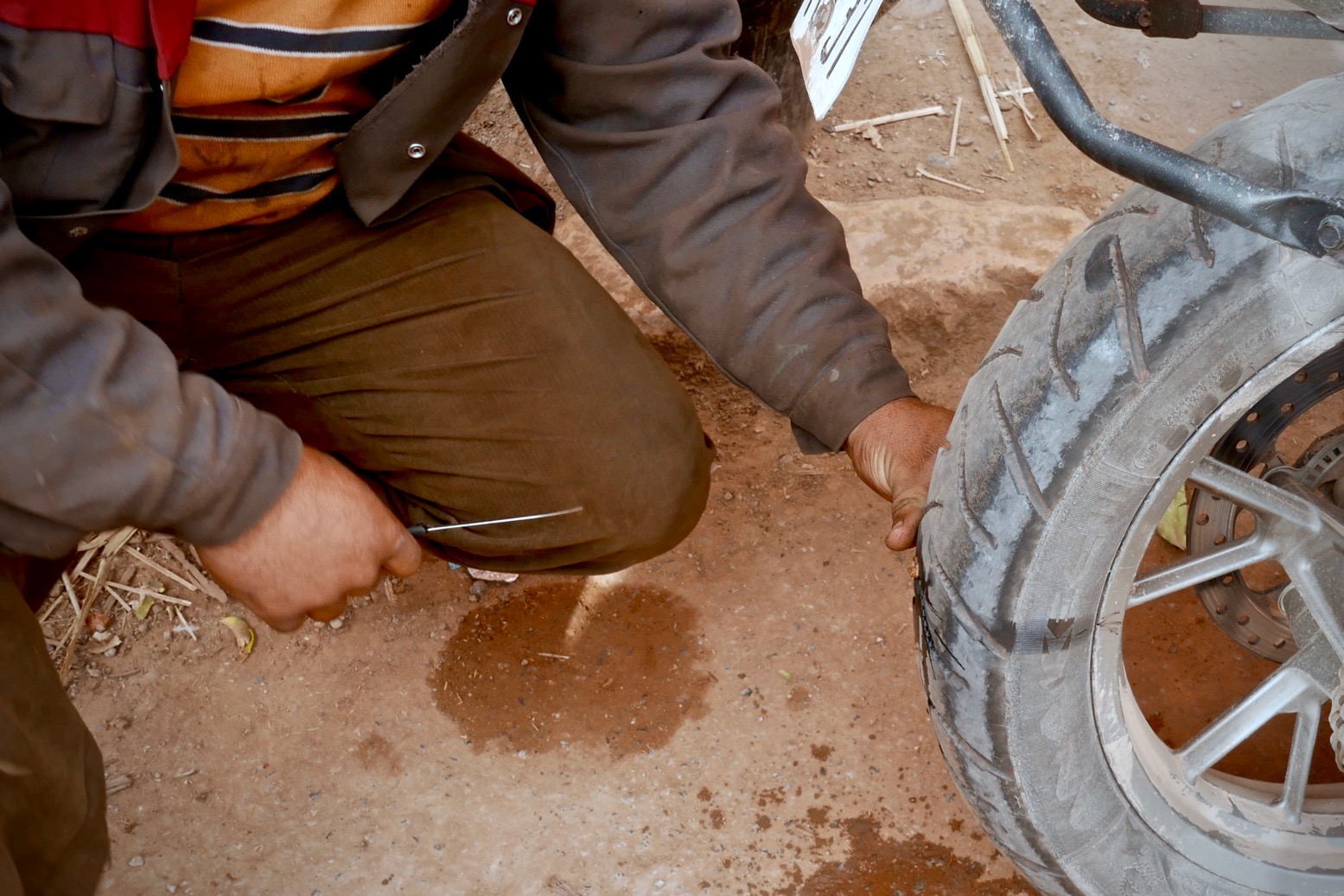
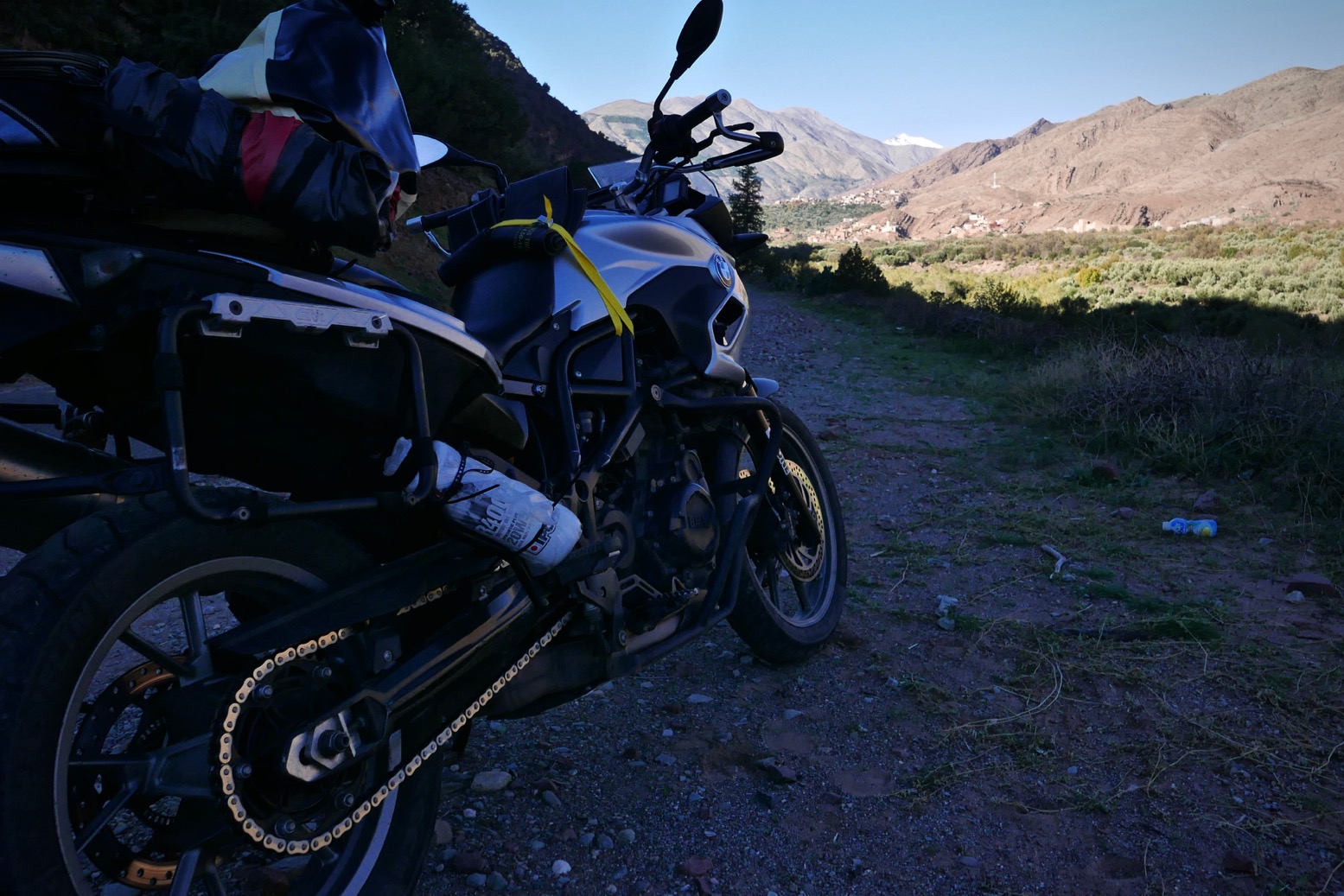
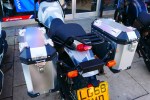
The bike I was using was fitted with a low seat and had picked up a few minor faults over the years: the ABS didn’t work and neither did the gear indicator on the dash. Out of Marrakech there was a bit of misfiring, possibly because the throttle was barely open. It cleared up and never came back. But it came with a centre stand and the heated grips still worked. The tyres were plain old Anakees which slipped a little across road-surface gravel and held me back from swinging around too freely on the dirt, but as long as things stayed dry they were as predictable, as other bikes used out here with road tyres. Like the 650 I found the 700 a hard bike to turn on dirt switchbacks due, I think, to a combination of long wheelbase and low centre of gravity, where leaning the bike has less effect on shifting the CoG. At any other time I appreciated the long, low-slung bike; it helped the bike track straight in soft sand – again as I recall from the 650.
The 700 supposedly had less torque and more power than the 650 I used, but I felt little difference. It’s still a great motor for my sort of backroads- and easy trail riding. First gear was too high off course (I specifically got my 650 cogged down a tooth on the front) but the low-rpm grunt of the engine and smooth hydraulic clutch made feeding in the power easy at just over walking pace. It was never uncontrollable unless you wanted a bit of wheelspin. I doubt I was ever using half of the available horsepower but it’s good to know there’s plenty there for a long ride home.
The suspension is nothing flash up front: an unadjustable fork, but the spring rate and damping seemed just right on the roads and the pistes. It goes to prove you can make a plain fork effective out of the crate without needing to offer expensive adjustments. Same with the back, although this bike had an Ohlins with a HPA, but who knows how old it was and what it’s been through. I never felt the need to adjust the preload, easy though it would’ve been. Occasionally both ends bottomed out which shows the full range of travel was being used. I really did marvel at how this unprepossessing old tug managed the rough pistes – better than my Rally Raid CB500X and last year’s XSR700 Scrambler.
The low seat – probably under 800mm – was as bad as the 650’s, if not worse, due to scant padding, but standing up wasn’t noticeably hard and it certainly eased getting on and off. I can’t say there was any intrusive vibration through the worn-out grips or pegs and although there was no screen, I never sustained high enough specs to make that a issue either.
Conclusion After a week and 1100 clicks on the rental-ravaged 700GS I found myself on ebay looking used prices. I have to admit that engine, suspension and comfort the 700 felt as good if not better than my similar XSR700 and a lot more gratifying to ride than the CB-X.
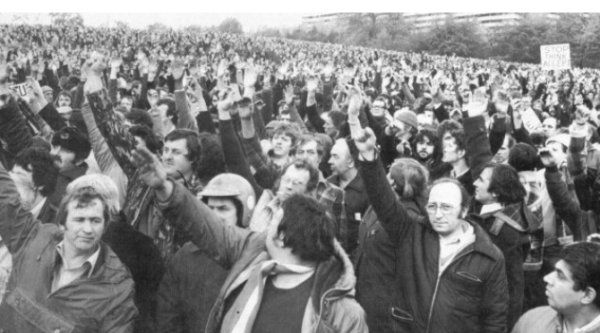
These days Triumph Motorcycles are doing all right, particularly with the parallel twins on which the company made its name. But in the 1970s success wasn’t a word you associated with Triumph or much else manufactured in a Britain blighted by industrial unrest. The late seventies may have seen an evolutionary spike in motorcycle development, but the British bike industry had crippled itself with a complacent, post-war mentality and no longer ruled the roads.
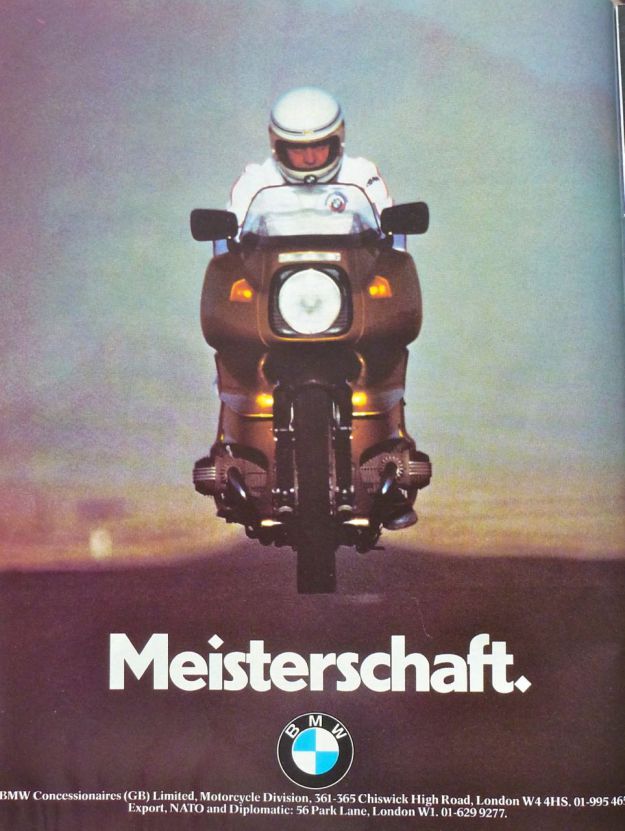
“Meanwhile, the modern motorcycle era was taking shape, exemplified by Italian V-twins and Kawasaki’s sexy Z900s. Acquiring a full bike license at just 17, I could let rip on any of those; bikers could then have their cake and eat it – usually served by a nurse and with a limb in plaster. Only my £20 weekly wage kept me in check – well for another year at least. What then, would be my first proper bike? The big Zeds apart, I mindlessly subscribed to the pejorative ‘UJM’ (Universal Japanese Motorcycle) tag: reliable, fast but bland. BMW produced expensive, well-engineered flat-twins ridden by smug, know-all beardies, not dashing young blades like me. Harleys were largely scoffed at in the UK while Italian bikes were gradually consolidating their glamorous image, outriding the best of the Japs so long as the electrics held out.
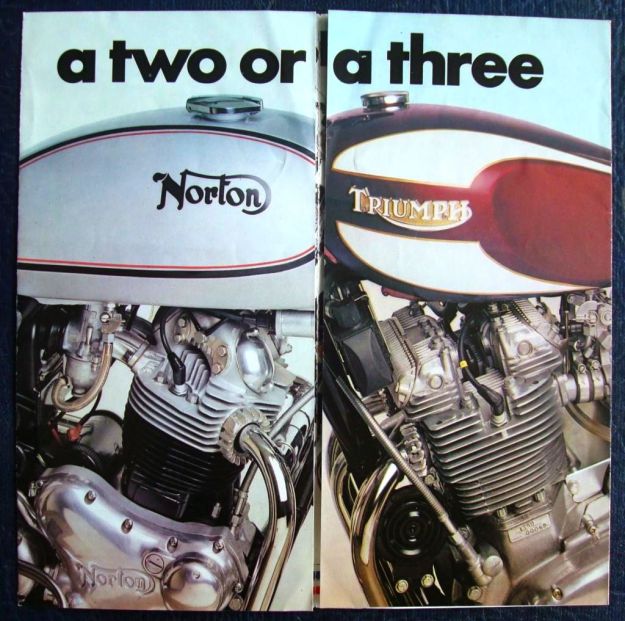
You might think the Brits only had nostalgia and heritage on their side, but there was another less tangible attraction that over-shadowed merely riding what your dad rode. In ’78 the surviving flagships from Triumph and Norton were still something to aspire to, virile survivors of the Jap invasion with something your yen couldn’t buy: lashings of ‘character’. Proper bikes of this era possessed the love-hate quality, paraphrased by TV comedian Dick Emery’s catchline: ‘Ooh you are a maddening bastard, but I love you’.
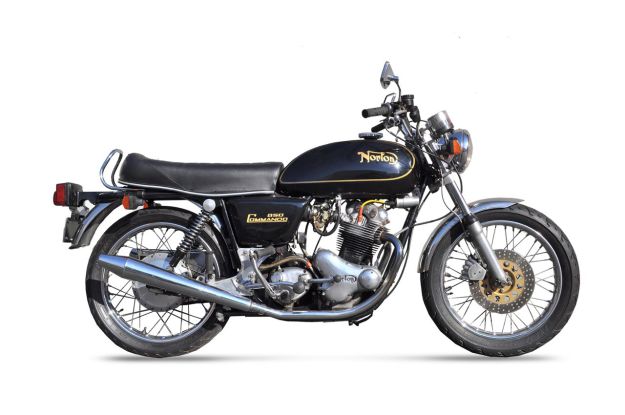
There was something about the understated charisma of Triumphs and Nortons that was unrelated to blind patriotism. I’d never really fancied a T160 Trident, but in black and gold, Norton’s 850 Interstate Commando (above) looked like a rumbling bundle of motorcycling bliss. Commando – what a great name for a British bike! What red-blooded young seventies male wouldn’t want to be associated with a plucky wartime saboteur, crouched in readiness with his Sten gun. The same could be said of Triumph’s Bonneville, by this time only 20 years old and assembled in Meriden by a loyal and motivated workers’ co-operative where fitter and director all earned the same low wage. Sure, both these bikes were dinosaurs on their last gasps after the Japanese meteor impact changed the motorcycling climate for good. But they still managed to exude a rugged pre-PC manliness that left a seventies teenager starstruck.
In the spring of 1978 I ordered a UK-spec T140V in burgundy for £899. What I actually got was a blue, US-spec model with a few bits loose or missing, and “mate, you can take it or leave it”. Despite the efforts of TV consumer champion Esther Ranzten, American levels of customer service were still floundering some way offshore.
The US model came with a smaller teardrop tank and high bars – foretelling the naff ’mock chopper’ trend that was just around the corner. But high bar or low, the T140V displayed an attribute I’d not experienced on my execrable MZs: torque, or low-down pulling power. I don’t think I ever became immune to the Bonnie’s loin-stirring, smile-inducing shove persuasively unleashed between 2500 and 3000rpm before the vibration really set in. The Triumph had another sort of pulling power too. Girls quite possibly gave me a second look as I torqued along in my Fonze-like, high-bared pose. After three-too-many MZs, riding the Triumph was like being carried out of the castle’s benighted dungeon into a field full of buttercups on the shoulders of the town’s fairest maidens. Suddenly I knew what biking was about – the surge of a powerful engine, the throb from the pipes and the actual stopping power of hydraulic disc brakes.
With my new-found status, I eagerly bought into the ‘Brit biker look’: open face lid with flat-glass Stadium goggles. A cream silk-like scarf just like Biggles or Douglas Bader, fluttered jauntily from the top of a nylon Belstaff Trialmaster jacket. My outfit was topped off by gigantic gauntlets resembling something you might attach to a cow’s udder. Kick-starting the Bonneville demanded an exacting ritual. Turn on the fuel taps and ‘tickle’ or prime the carbs by pressing on tiny plungers. Once petrol was dripping onto the gearbox, you turned the ignition key then pressed the kickstart against the engine compression. Let it swing it back up and you were now ready to enact a triumphant lunge by coming down on the kick-starter with all you had.
It was a mechanism perfected over the eons so there was no risk of overdoing it, but any pussyfooting resulted in a knee-snapping backfire. This beast had to be grabbed by the mane and wrestled into life. I never failed to get a thrill from starting the Bonnie, and so long as you lunged down with gusto, it worked every time, hot or cold, rain or shine.
In 1978 one in three new 750s sold in the UK was a Triumph, but unfortunately, I’d bought mine during a three-month ban for riding on a motorway with L-plates stashed in my pockets. Like many others at that time, I carried on riding discreetly, cunningly taking the back streets to sixth-form college.
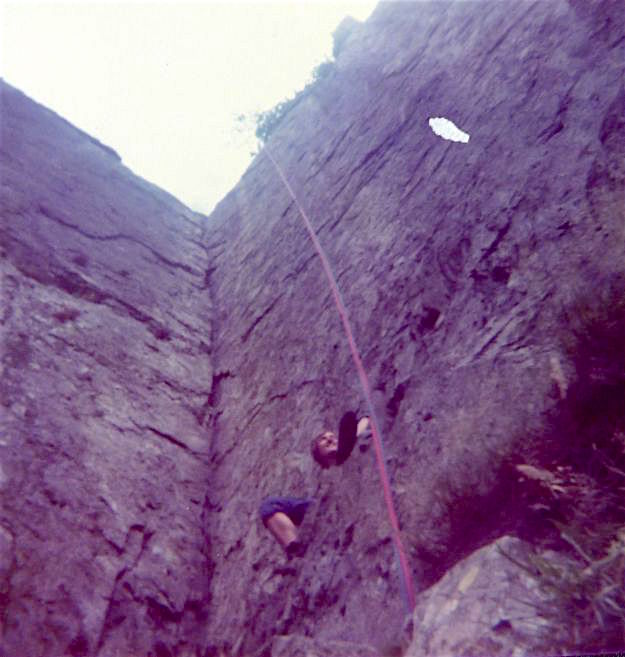
Once my A-levels were done I enjoyed a fabulous summer’s riding with a mate on a similar 750 Tiger (above), visiting the climbing crags in the Sussexc Weald, Peak District or Snowdonia’s famous Llanberis Pass, then down to the Gower and back via Avon Gorge for more of the same. Near Shrewsbury one time the battery exploded, but it was all part of the adventure – a carefree interlude between school and further education or work. And once the exam results came in, work it was to be – no further education for me. At that time the back of Motorcycle News was packed with adverts for despatch riders – an exciting way to pass the time until I worked out what I really wanted to do. One phone call and I was in business at Capital Couriers in Kentish Town.
Why was Kentish Town in North London, miles from Kent which is south of London? As I was soon to learn, the capital was not an intuitive city to navigate. At that time my knowledge of London’s streets was based on the Monopoly board game – the expensive dark blues, greens and yellows were posh areas in the West End. The cheapies like Pentonville, and Whitechapel? Out east somewhere. Armed with my Monopoly mind map and a good sense of direction, I collected my very first job to Chiswick in west London by the Thames. That’ll be easy: south to the river and simply follow it upstream, a foolproof strategy refined along the banks of the Nile by the likes of Burton and Speke. That might have worked had the Thames run as straight as a Roman aqueduct, but rivers meander and roads followed the Thames only intermittently. Some two hours after what should have been a twenty-five-minute ride, I timidly delivered the package with no word of complaint. That came to be the abiding paradox of messengering: clients were paying twenty times the cost of overnight postage, but most of the time few gave a toss on prompt delivery.
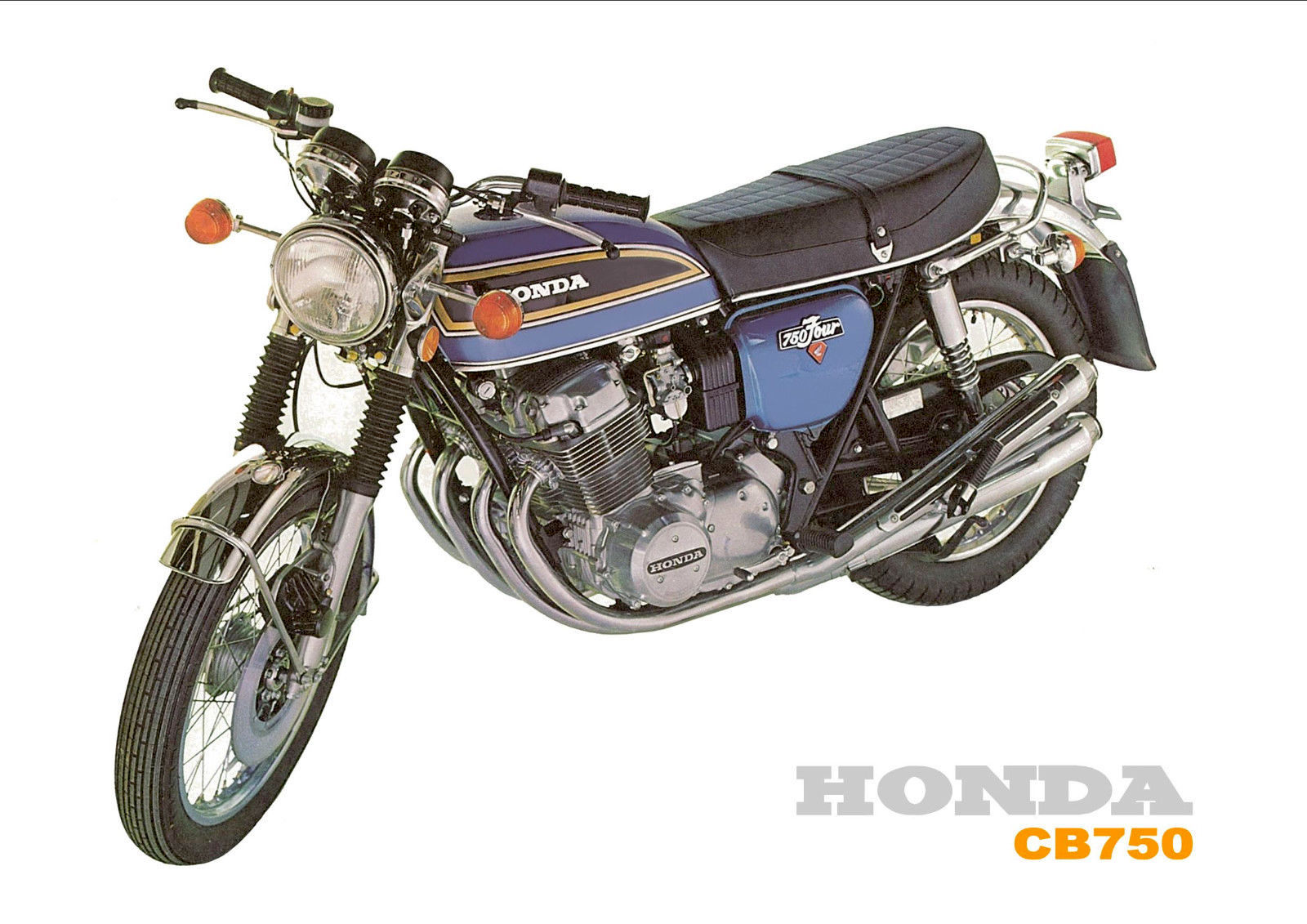
At Capital I made friends with Nick on a CB750K6, descendant of the revolutionary 1969 superbike that had brought about the current megabike frenzy. Nick and I soon engaged in a ‘Brit Shit/Jap Crap’ banter that ran for days at a time, but always with a twinkle of affability. Of course, I was only partly joking. At that time I was besotted with my Bonneville, but that wasn’t the only thing. One morning I bounded up the stairs of a redbrick Edwardian block off Oxford Circus. A pretty receptionist was just tidying up some photocopies.
‘Ooh, are you the bike? Won’t be a minute,’ she said with a smile, glancing over her shoulder at the skinny bloke at the Xerox. ‘Are you new? I haven’t seen you before.’ Her optimal blend of nice hair, posh accent, and comely figure produced a pleasing, knee-weakening effect. ‘Yes, last week. I just started,’ I spluttered. ‘Ooh. What sort of motorbike do you ride?’ ‘Triumph Bonneville. Seven-fifty.’ ‘Oh,’ she replied, touching her lip with a light gasp and which I unhesitatingly interpreted as dazzled admiration. I reached out for something to hold on to, but then Xerox bloke chucked some documents in front of her in a huff and broke the spell. ‘Ah, finally. Thank you, JEFFrey.’ With a shuffle, she slipped the documents into an envelope and handed it over with another smile. ‘There. Don’t ride too fast now. See you soon!’
Sadly, I was never to collect from John Princes Street again, but my faith in the Triumph’s magical charisma was enshrined. Another time while leafing through my A-Z an Australian tourist asked to take my picture. ‘My son back in Melbourne will love it. He’s always wanted a real motorbike.’ Another day in Victoria Street I came trotting back to the bike to see a pinstripey old chap stooped over the Bonnie’s Smith’s speedo. ‘Oh, do excuse me. I was just admiring your superb motor cycle. Does it really do a hundred-and-sixty-miles-per-hour?’
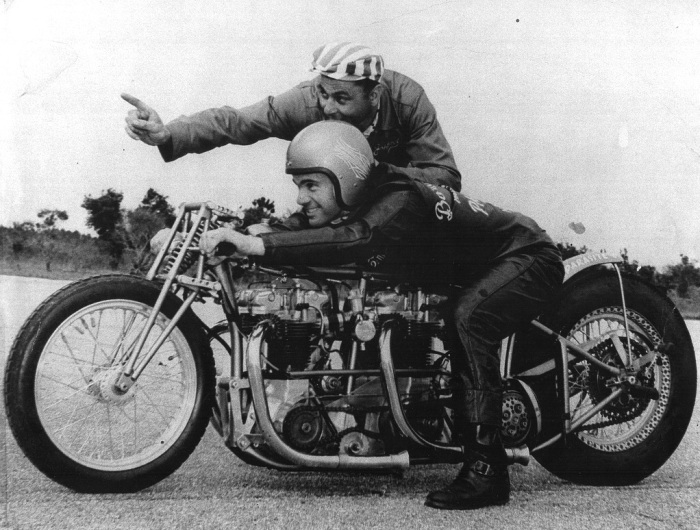
Non-biking civilians who didn’t know a pushrod from a pram responded to the Bonnie in a way no other bike of mine ever inspired. I put it down to a warm nostalgia for British engineering in its gentlemanly post-war apogee: sporty, but never aggressive or ostentatious. And the appeal was international. In the sixties, three out of four new Triumphs went to North America. After all, the Bonneville was named after the Utah salt flats where in the fifties American daredevils had set land-speed records on Triumph twins. One evening at Colindale Blood Bank I had a chance to enact my own speed record. Handed a padded case with ‘Urgent – Human Tissue’ emblazoned across the top, the woman asked ‘How long will it take to get there?’ ‘Er… Children’s Hospital, Great Ormond Street? About twenty-five minutes?’ ‘Oh,’ she said with a frown. ‘Well, please be as quick as you can.’ Crikey, this was urgent. Was some child actually hemorrhaging on the slab, nine miles away? I thought for a few seconds, then kicked the Bonnie over and flicked the headlight on full. Tonight the Highway Code was being temporarily suspended. With a squeal from the K181, I roared off down the Edgware Road for Staples Corner, hitting sixty-five along the North Circular before slicing through the traffic for the roundabout under the Brent Cross flyover. From here the Hendon Way was always a reliably fast run apart from the lights. I screeched in then pushed out past the cars. Cross-traffic swept from left and right, but once a space opened up I launched myself across the red light and belted on towards Finchley Road. This stage was dicey, with heavy traffic and at least half a dozen lights before Swiss Cottage. So where necessary I skipped round the traffic islands, pulled up on the reds, watched for a gap, then gunned it. Around Regent’s Park I kept it down to 55mph: we all knew that in a ‘30’, 40-ish was the working limit. Stray beyond that for too long and things happened too fast or fines involved a ban. The Bonnie’s side-stand scraped hard towards Hampstead Road, ETA just a couple of minutes now. Down the side of Euston Station – watch out for taxis! – then barge onto the busy Euston Road and heave over to the right for the turn into Woburn Place.
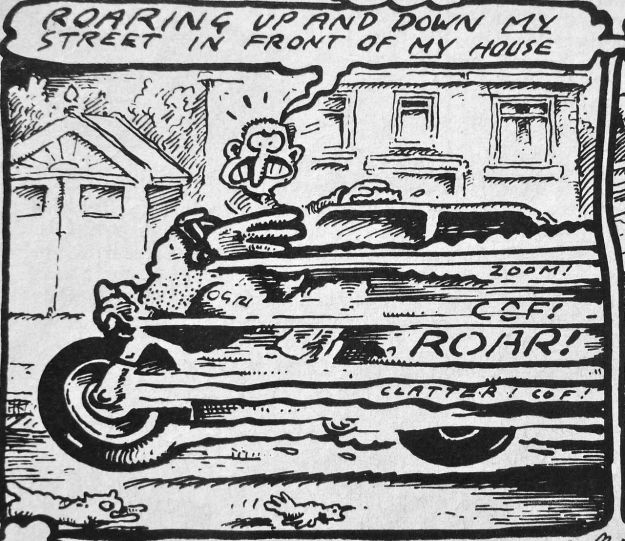
Once barrelling towards Russell Square I ran all the reds like something out of Ogri, then mounted the pavement for a pedestrian passage that led directly to Great Ormond Street. Tourists froze, startled by the revving Triumph’s full beam and my determined glare. With the tormented engine baking my shins, I sprinted down to the hospital, grabbed the blood, leapt the steps in a single stride and landed at reception like a hyper-caffeinated cat. ‘Hi. Got some blood from Colindale.’ I checked my watch. Fifteen minutes and as many reds. No bad. That memorable cross-town blast was typical of the ‘you’ll-never-take-me-alive’ immunity we despatchers felt from the Law and the laws of physics, engendered on this occasion by a well-meaning if missplaced sense of entitlement. And it was why we were to become notorious and targeted as London’s dormant economy began to recover.
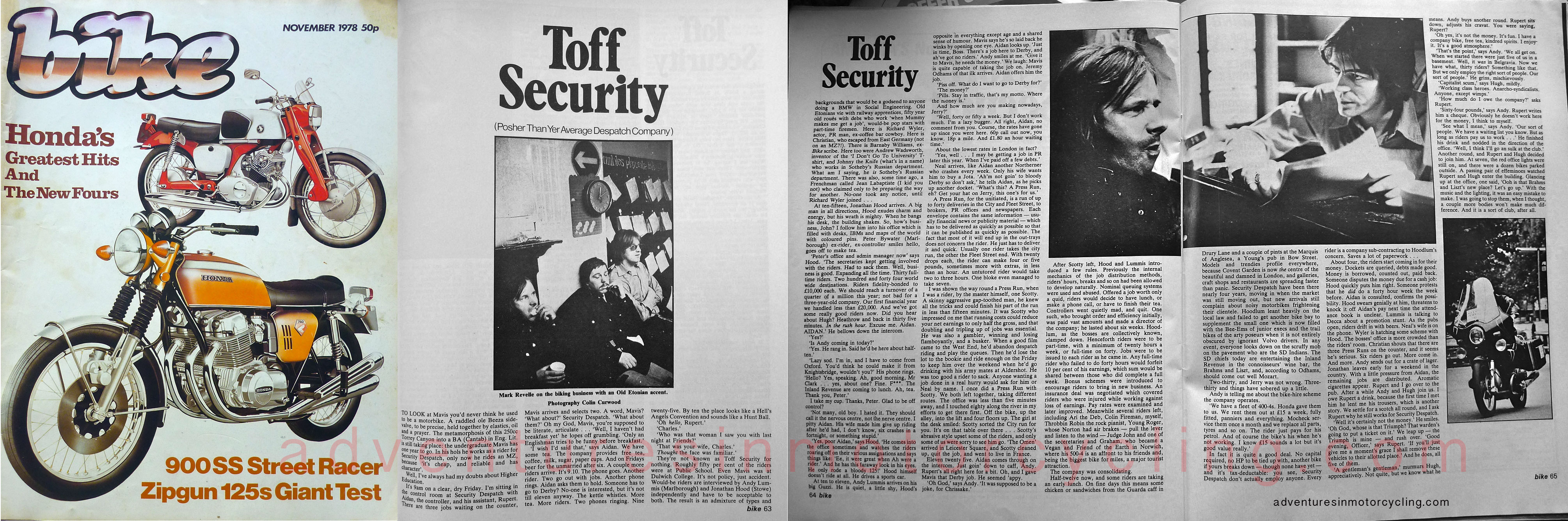
An article appeared in Bike magazine about Security Despatch, one of the big players, based in trendy Covent Garden,. It depicted SD as an exclusive club of louche, articulate dropouts, and the antics and attitudes of this maverick band of bikers sounded a lot more glamorous than crumby Capital Couriers, opposite a pub with lunchtime strippers. Now with a bit of experience, I signed up at SD, my T140V slipping in well with the other unconventional machines. SD wasn’t for those bib-wearing saps at Mercury; it drew on a pool of free-styling, hard-charging dissenters committed to expressing their individuality and belief in personal freedom.
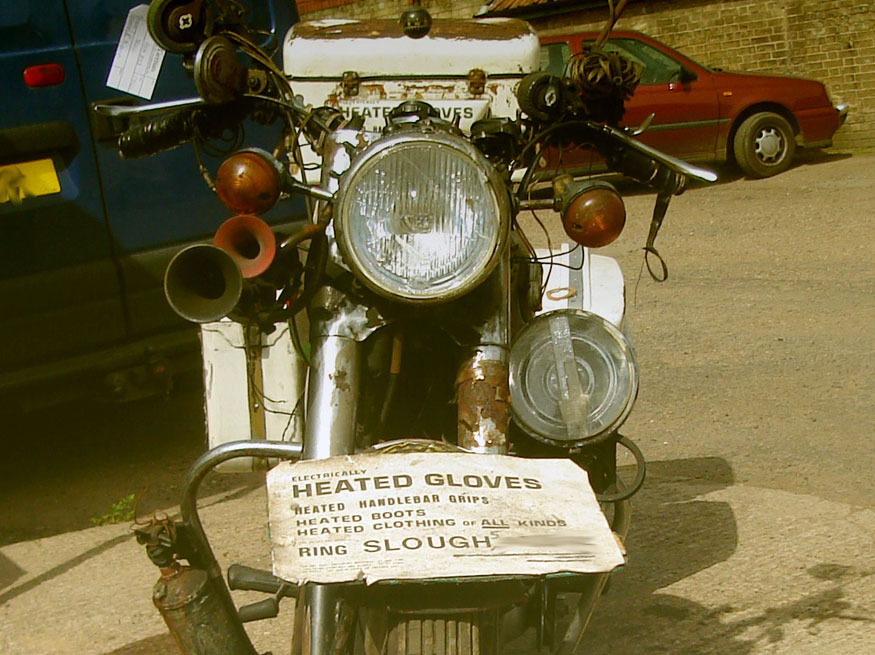
Shaun ran a Z900 with a raucous four-into-one; swaggering Tim rode an R80 with a Windjammer fairing, GDR escapee Klaus ran a bat-shit R90 proddy racer he campaigned on weekends and the late eccentric, Maurice Seddon, part-timed on a bonkers BSA older than me and which powered his hand-made electrically heated silk underwear. At the Friday evening spin-down wages were paid, spliffs rolled and beers cracked open. The throng would offload their week’s burdens, query payments and then head for the pub, milling among the smartly dressed trendies we’d soon be calling yuppies. Considering the use it was getting, my young Bonnie was doing a lot better than I had a right to expect and had never let me down, hard though that is to believe. I didn’t run it hard as the grin-factor was all about exploiting that low-rpm torque – high speeds were unpleasant. My ride home to mum’s included a grippy left-hander at the bottom of Brixton Hill. Even after a long day in the saddle, I’d always do my best to line myself up to hit it ahead of the pack and shower them in a long trail of sparks. Banked over far less than I imagined, the Triumph remained planted like a chubby genie on his magic carpet. Shifting into fourth for the charge up to the lights by the prison, it was a great way to sign off the day. I joined SD in early winter when the students and fair-weather dilettantes had scarpered like rats from a shipwreck. There was loads of work and soon I was regularly earning over £250 for a fifty-hour week. With all this money and learning the craft, it seemed a waste to throw it all away and do what, exactly? Unemployment was rising, and with Thatcher’s imminent ascendancy, it was about to go off the scale. So I decided to turn pro and knuckle down on a more conventional machine (what a mistake that was). The Bonneville was too good for all this rushing about, and the hefty kick-starting ritual was losing its shine when done forty-four times a day.
I sold the Triumph to another young pup enamoured by the cult of the Bonneville. Years later I saw it parked off Fleet Street and gave it an affectionate pat on the tank, like McQueen caught in the wire at the end of The Great Escape. Then, as now, I recall the reg’ without hesitation: WHX 791S. Can’t say that of the dozens bikes I’ve owned since. Rock on Triumph!
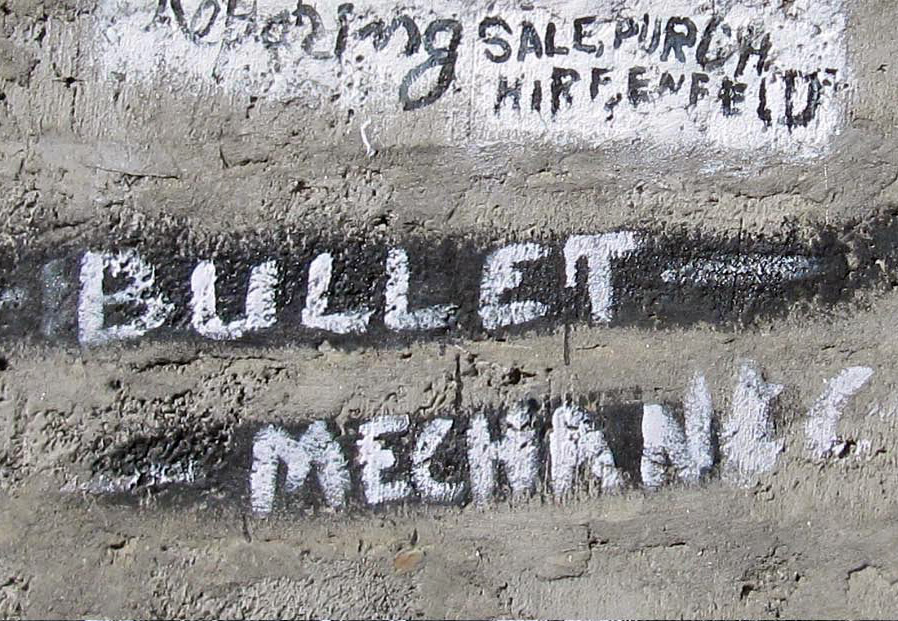
In the 1990s, long before retro-looking bikes became a thing, buying and running a locally built Enfield Bullet around the Indian subcontinent caught on with Western tourists. It was a proper adventure all right, tinged with a certain ‘open face and goggles’ romance. Always sick; never terminal was how one early AMH contributor described running her Bullet around India and back to the UK. It staggered home, but she sure met a lot of roadside mechanics along the way. Jacqui Furneaux is another intrepid Bulletriste, covering over 40,000 miles across the planet. At bike shows visitors literally get a kick out of trying to start her old bike.
Not High As a travel bike I can very much see the appeal of a low-revving, low consumption, low compression, low priced, low saddled plodder – now more than ever. But you want low maintenance on that list, too. With my desert riding background, reliability, economy, durability (and lately, comfort) have long trounced anything else. Now, 30 years after taking a clapped-out Bullet up the Khyber became a travel biking niche, we’re told the Indian economy booms and RE are booming with it. It’s India, not China, who’s now the world’s biggest motorcycle manufacturer. Annually, 17.5m bikes (albeit mostly <125s) are sold there. In the US it’s just half a million, and on the home market RE sell more bikes in a year than all other manufactures can manage across Europe.
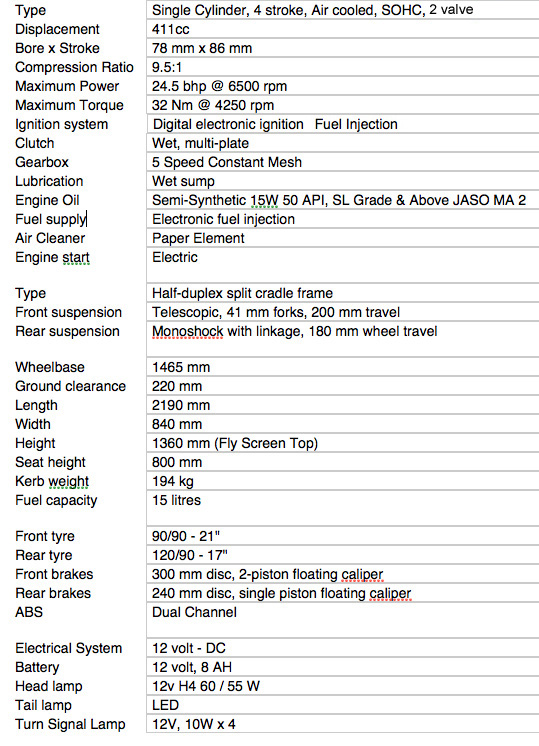
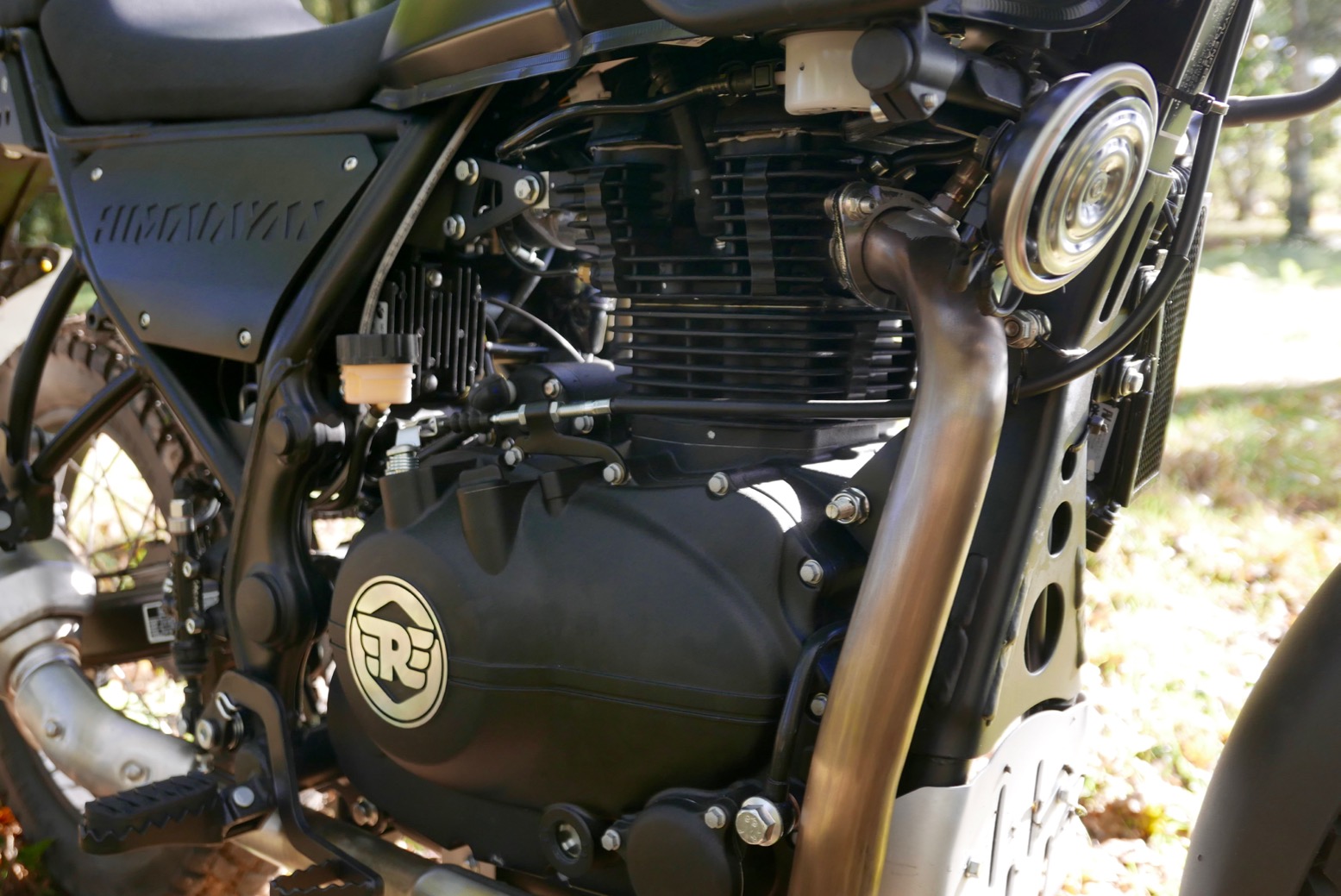
Released in 2016, the Himalayan was RE’s first stab at a do-it-all, adventure-styled machine. It wasn’t just yet another restyled spin-off from the Bullet range, but it did retain some of the Bullet’s better DNA, a 411-cc, long-stroke, two-valve single recalling a 1960s BSA thumper. Unfortunately many found that the Himalayan’s first iteration – the BS3 carb model (reviewed here) paid a little too much homage to the slapdash nadir of the Brit bike industry. A litany of widely reported faults and failures saw production suspended, problems addressed and assembly workers spanked and retrained. In 2018 the BS4 version was released abroad, with some Western export markets (notably not Australia and NZ) getting fuel injection and in Europe, Euro 4-compliant motors come with the now-mandatory ABS. The near-new bike I tried came from Hartgate in Mitcham. They’ve been around since before I started riding in the mid-70s, but these days sell only Chinese and Taiwanese 125s and scooters, plus Benellis and with a special part of their showroom designated for Enfields.
What they say Royal Enfield’s most versatile motorcycle, able to take riders almost everywhere they want to go – on road or off-road. The only motorcycle you will ever need. The Himalayan combines outstanding versatility and all-day comfort for all rides. Long-travel suspension, natural upright riding position, a durable and torquey engine all add up to a comfortable ride for you, whether it’s on the highway, city streets, or remote mountain roads.The Himalayan is fit to be your only motorcycle.
In a line Give it a look; it’s much better than you might expect.
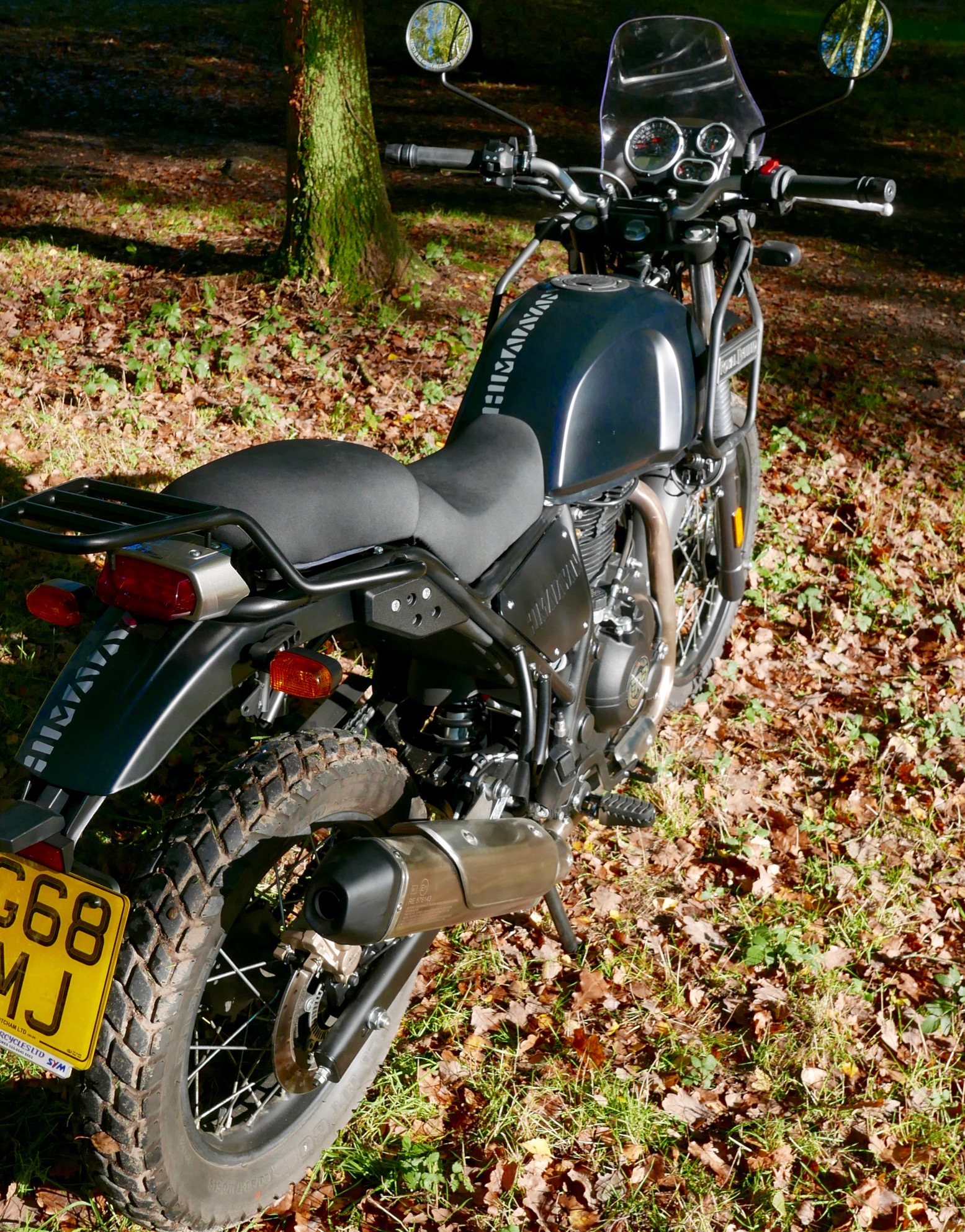
• Feels easy to ride and manoeuvre, despite the 194-kg kerb weight • Low seat height (800mm; 31.5″) • Indian build quality looks solid • Efi motor starts and fuels smoothly • Great price • Pirelli MT60 tyres (as opposed to some obscure brand) • Suspension surprisingly firm • Can’t verify economy yet, but 15-L tank should be good for 400km. • Love the tank bars as supplementary baggage racks • Comes with slim tail rack and centre stand
• Soft seat foam (for my weight) • Feels like a tall first gear (for off-road) • LCD display hard to read • Screen a bit small (for my height) • Front end felt a bit heavy (it is) • 3000-miles valve checks • Front brake lacks bite • A bit cramped for me at 6’1″ • Low, 220-watt alternator output
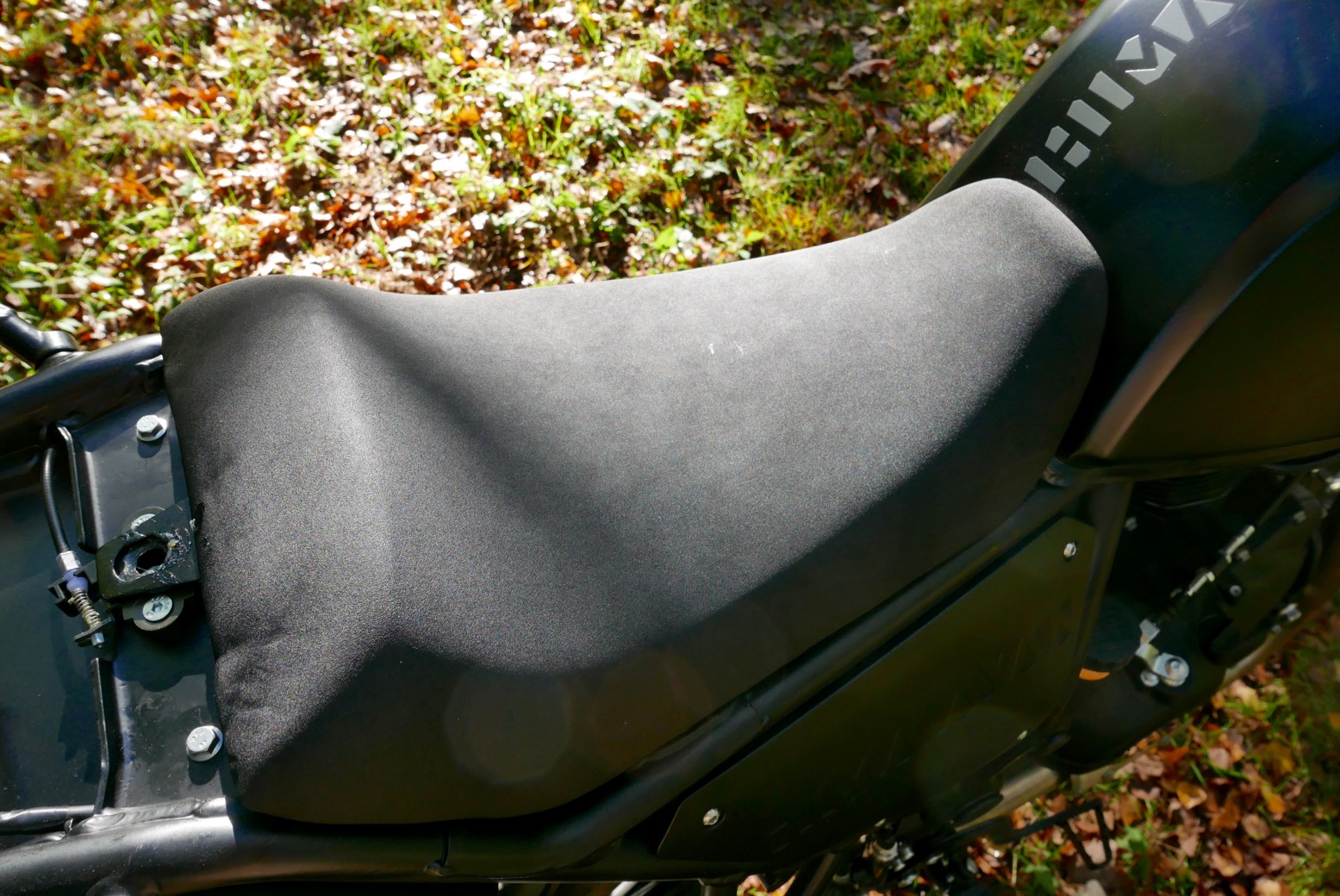
Review Pulling away from Hartgate’s, the seat was nice and low but felt way too soft. I could see it being agony in an hour or two, but I’ve had that on BMWs costing twice as much. At 6’1″ I was also a bit cramped between the stepped seat which angled me forward a little, and my knees are just an inch from the tank rack bars. Removing peg rubbers might provide more leg room and I’d have turned the bars back a tad. The gear change lever also felt too short for my size-11 Blunnies, but I soon adapted. The clutch was light, the gears clicked reassuringly and fuelling felt glitch-free. It’s an effortless bike to ride, with the power of a Jap 250 single or a Chinese Mash 400.
It may only have the 24-hp of a 2nd-gen CRF250L, but on paper it puts out nearby 50% more torque at just 4250rpm, 2500rpm lower than the Honda. Riding along the flat A24 towards Box Hill in 40- and a brief 60mph limit, I can’t say I noticed the torque, but the bike never felt under-powered or noticeably vibey. Pulling away from lights, I did find myself consciously slipping the clutch to get over the tall first gear – or maybe to avoid stalling an unfamiliar bike. While you don’t want to sacrifice too much of the modest 82-mph top speed, for off-roading I’d consider dropping a tooth to 14T on the front.
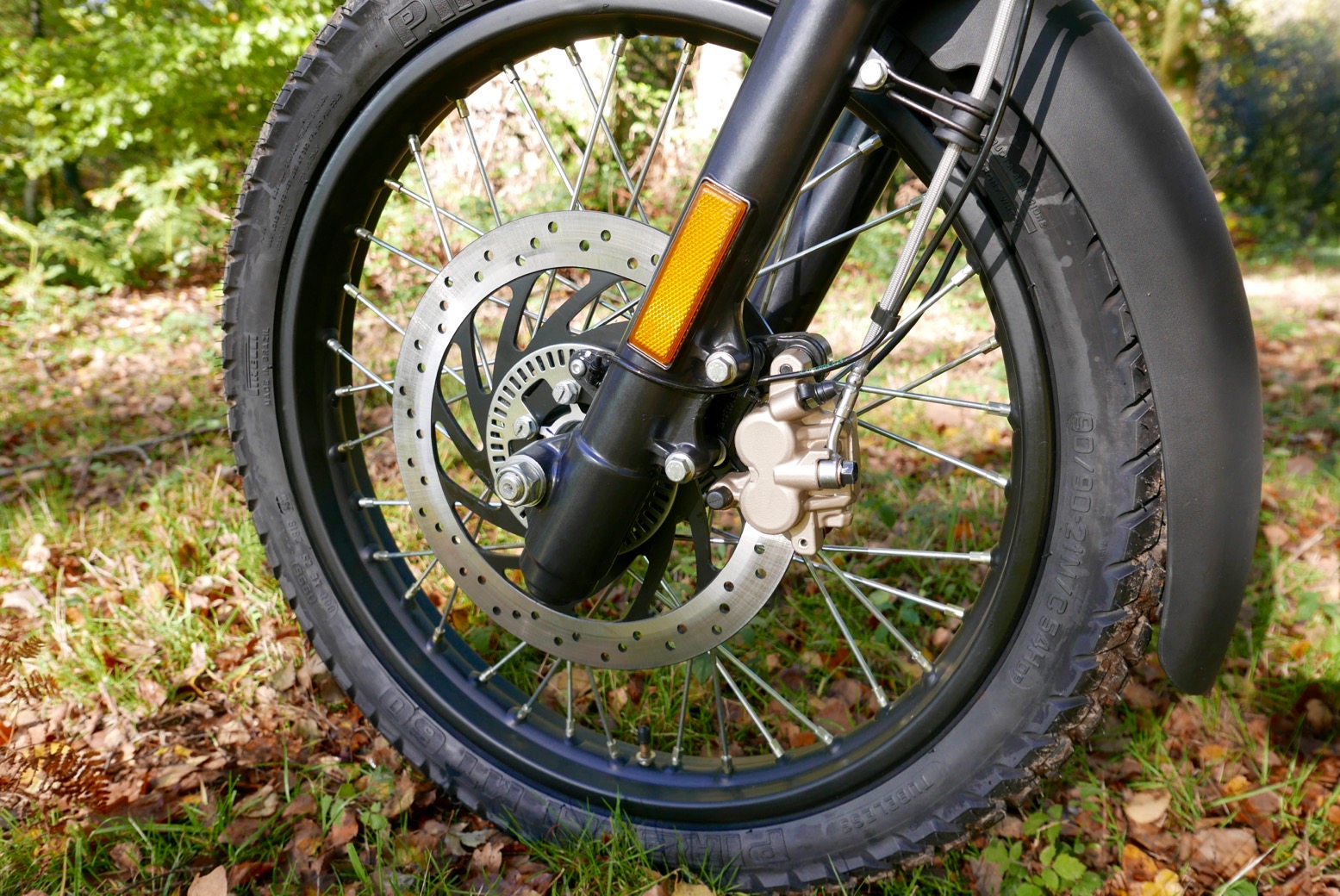
The front end felt oddly sluggish (maybe the tyre was soft, or you can feel those 194kgs?) and I was surprised to learn the rims are steel. To be expected on Bullets, but I didn’t think modern bikes use steel wheels any more. Minimising unsprung weight has a big effect on efficiency, acceleration and suspension. But then cheek-distorting acceleration isn’t really a Himalayan’s USP and perhaps the wheels’ flywheel effect helps maintain momentum once up to speed.
As had been widely reported, despite a steel braided line the front brake lacks bite (perhaps the ABS dulls response) while the rear may have a little too much, but up to a point the non-switchable (but probably disable-able) ABS ought to iron out ham-fisted braking. It didn’t engage in a bit of a panic when a car pulled out across a dual carriageway. Not had one of those in a while…
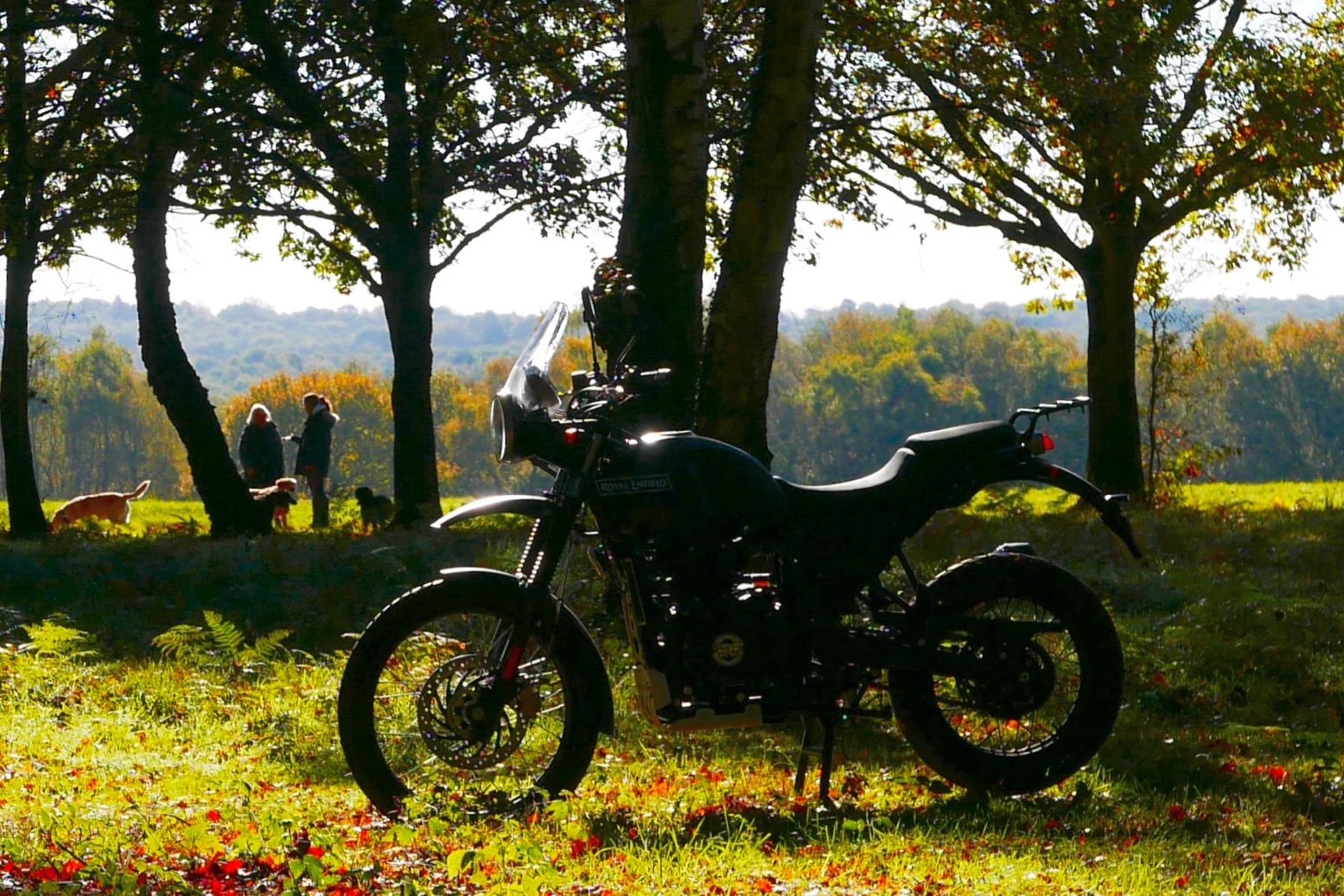
Both for road riding and when manoeuvring it in the woodland mud for photos, I find it hard to believe it really weighs 194 kilos wet (it does). That weight is clearly set low which, along with the low seat, will make a big difference in control and confidence on rough terrain, as well as picking it up when the terrain gets the better of you. And yet you still get a reasonable 220mm (8.5″) of ground clearance which makes the Himalayan a rare and much sought-after thing: a functional trail bike for shorter legged riders who don’t want to have to settle for a TW200. I stood up on the pegs and – with the usual risers added under the narrow-ish bars – would find gripping the slim bike sustainable on the trail.
The dash’s lit section usefully shows time of day; ambient temperature, then gear position, odo and trip metre (and average speed), plus ‘side stand down’. But apart from the gear position it’s too small and messy to easily read at a glance. Chances are, familiarity will improve reading skills.
To the right below the small rev counter (red-lined at 6500rpm) is the digital compass. It’s a gimmicky nod to the bike’s adventurous intent, but as many users have found, most of the time it’s way off. If ‘CA HO’ flash up, recalibrate the compass by pushing the bike in a circle four times while patting your head. It may have to be done fairly regularly so I’d sooner rely on the sun or of course, a GPS compass, if orientation is that important. Talking of plugging in accessories, the Himalayan’s claimed 220w alternator output is not so impressive when you need heated grips and a heated vest approaching the north face of Kanchenjunga. Fitting a switch to the always-on headlights may help, as well as fitting LED lighting.
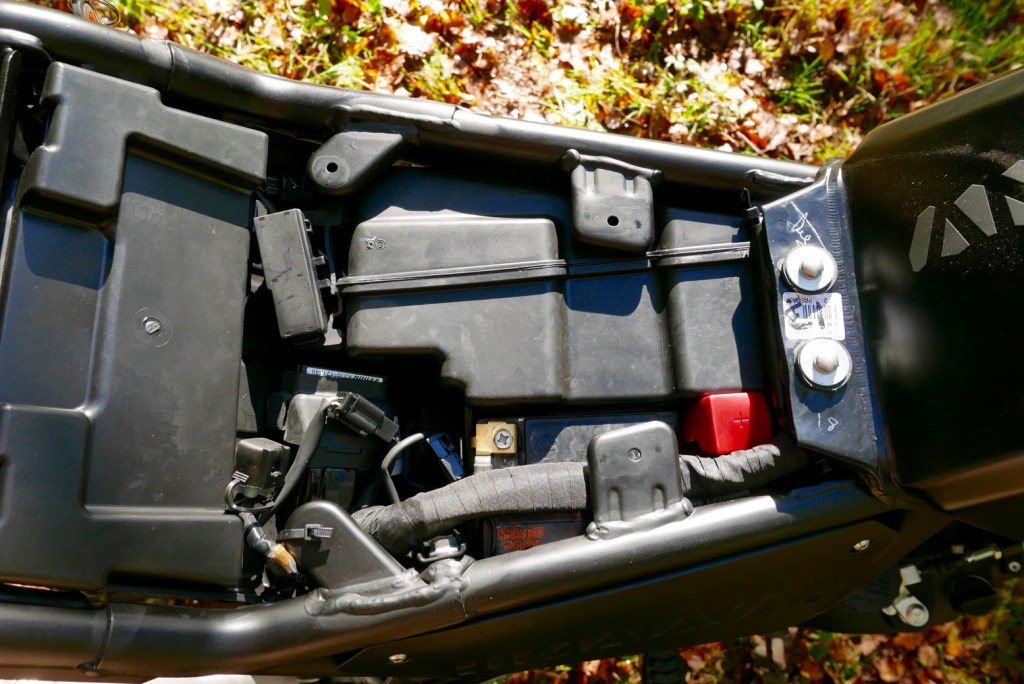
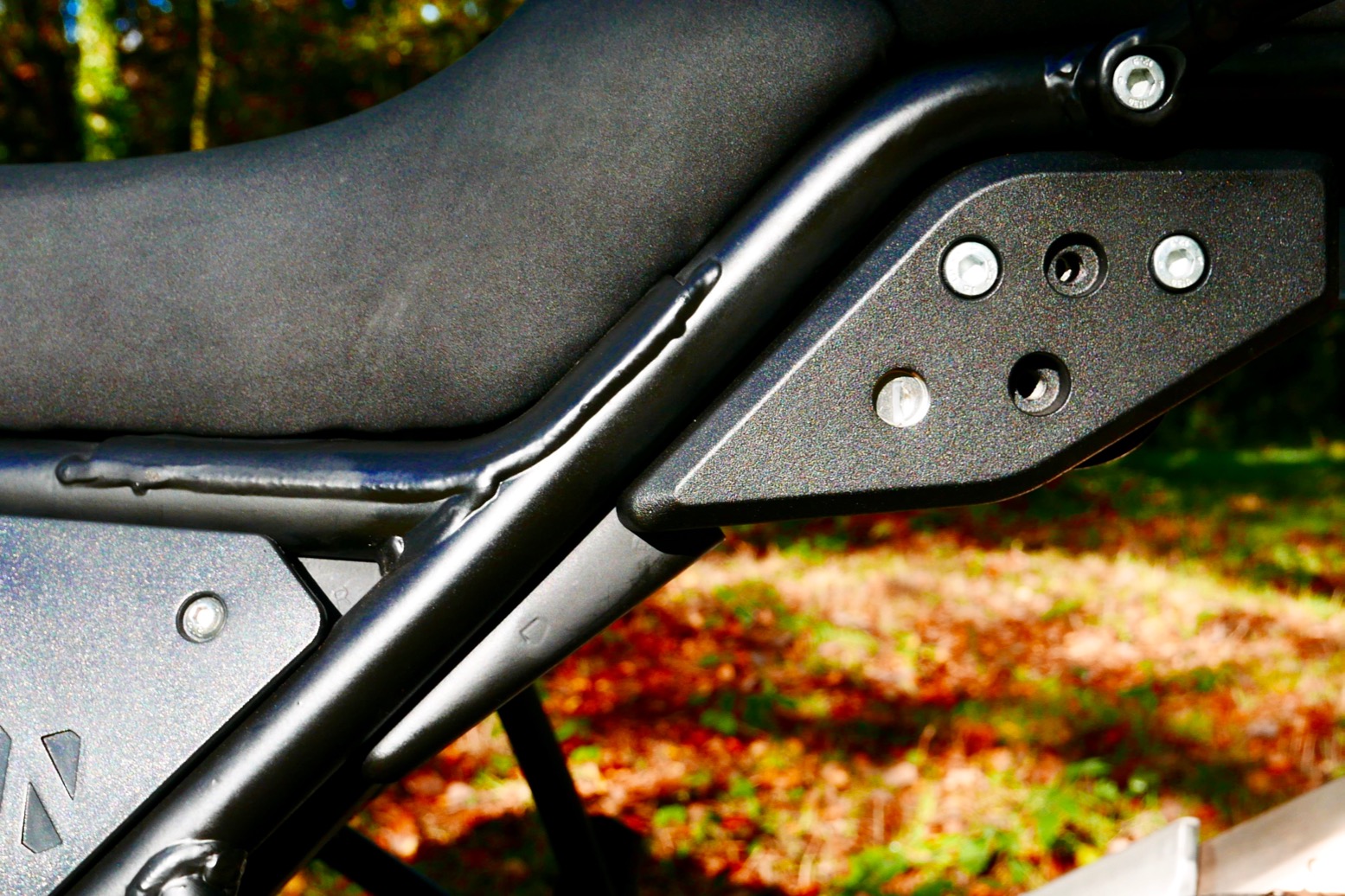
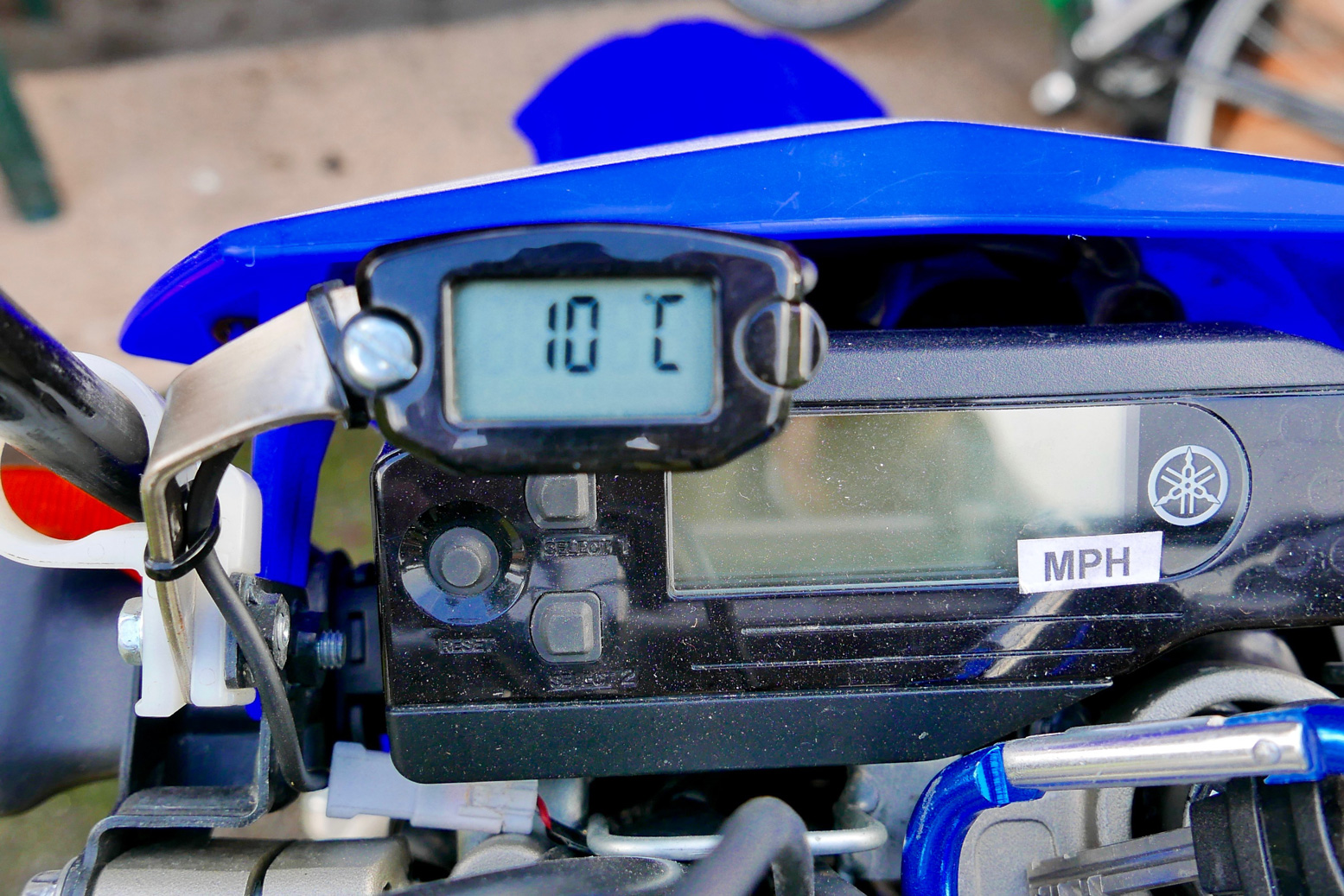
The fit and finish looked pretty good, but only time will tell how it all holds up. Zinc paint brushed over rusty headers looks clumsy. Welds (left) are robotic and if some of that near-200-kilo heft is in the subframe, that’s right where you want it for load-carrying duties off road. By the book you need to dealer adjust the valves every 3000 miles (only two and they’re easy screw and locknut jobs) to keep the two-year warranty running. Unless they’re made from the final remnants of 1970s monkey metal, it’s hard to think a low-revving bike like this needs the tappets done twice as frequently as recommended oil changes, but valves clearances tend to tighten not increase. Some say its a way of subsidising the low purchase price. Unusually for an efi bike, there’s a cold-start lever on the left bar, and the air-an-oil cooled engine comes with a big oil cooler. Some say the ambient air temp sensor under the seat could do with repositioning to give a truer reading away from the warmed up engine, but one thing I’d definitely add is an engine temp sensor, like the Trail Tech one off my WR250R, right.
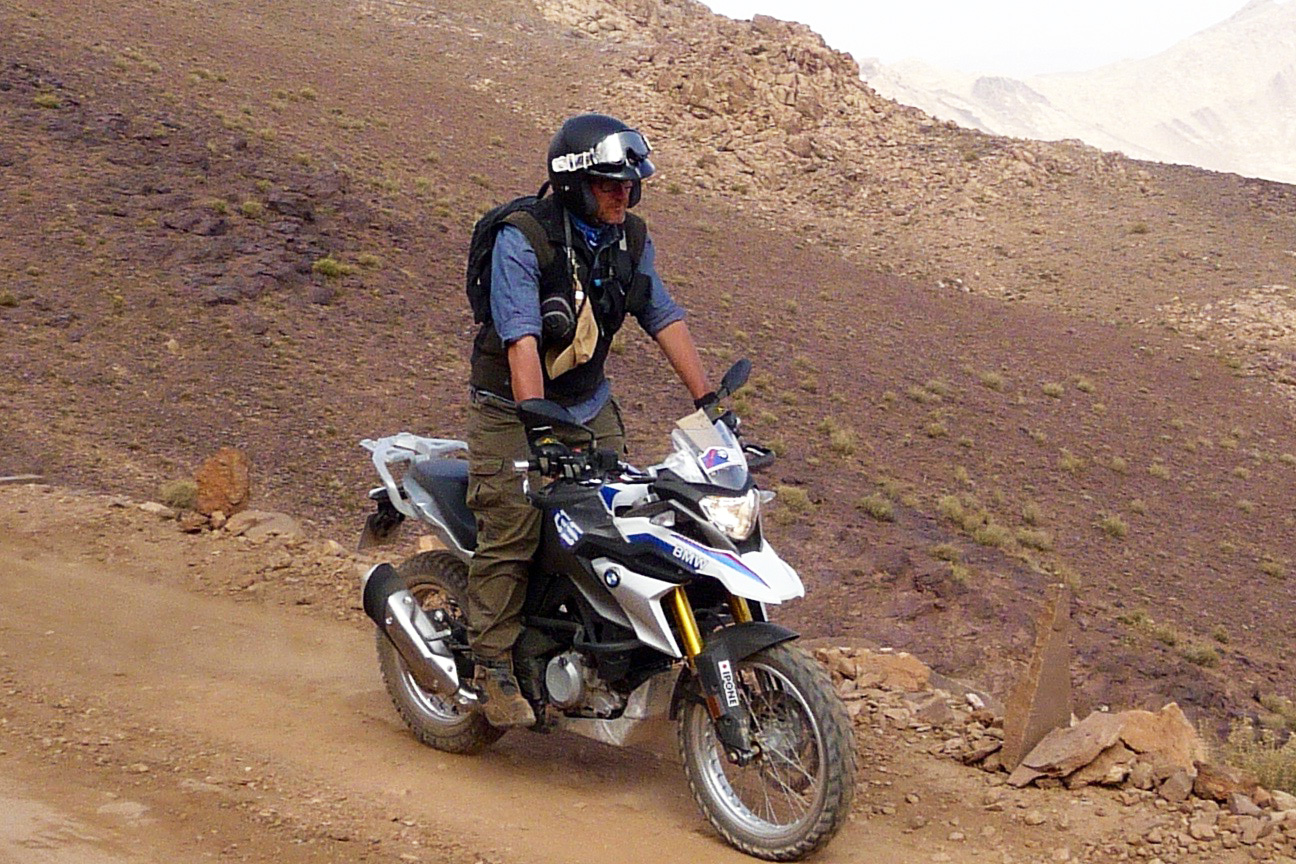
Himalayan alternatives For the money, spec and intended use, very little comes close to the Himalayan’s simple, agricultural charm. Comparing it with the BMW 310GS (right; also Indian built), Versys 300, Suzuki 250 V-Strom or Honda CRF250L misses the Himalayan’s distinctive niche. Riders aren’t buying Hims solely by its displacement category, and to its credit the Himalayan isn’t a repurposed high-revving road bike motor slotted in an adv-styled bike. It was planned from the ground up ‘fit to be your only motorcycle.’
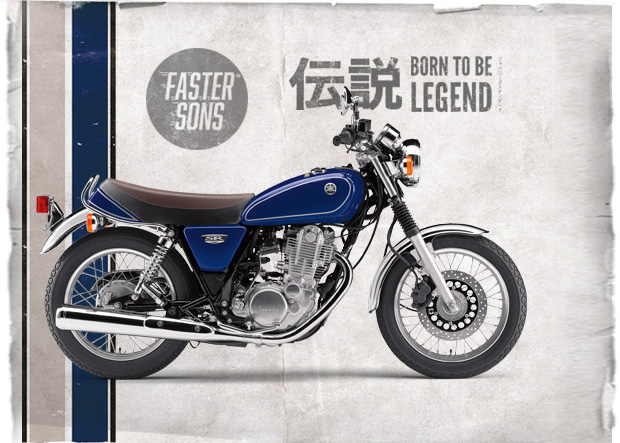
I’d say its low-seat and low rpm characteristics have more in common with Honda’s unfashionable but quietly popular NC twins, Yamaha’s stillborn SR400 (left; dropped in 2017) or your Chinese-made Mash 400s and the like. It’s closest true competitor is the now seemingly discontinued Mash 400 Adventure (right) / WK Trail 400, which used a 400cc Chinese Shineray engine based on the old Honda XBR500. You may find new, end-of-line Mash Advs in the UK for the same price as a Himalayan. The frames on these Chinese mini Advs are different from the many twin-shock road models, but the motor’s the same.
Conclusion All of an hour spent on the Himalayan pretty much matched what I’d read and seen, but not what I thought. Cynically, I assumed testers where being a bit soft on the old-style thumper, but after the ride I warmed to the concept too.
People will say ‘Just a bit more power and it would be perfect’ and my experience with similar-hp 250s, loaded up at modest altitude can leave nothing in reserve at 50mph. Sure, you’re still moving forward, but on busier roads and steeper hills, that speed can make you feel vulnerable which induces fatigue over a long day. But out in the slower-paced AM Zone the Himalayan ought to slip right in. The added capacity over a typical Jap 250 only delivers more torque and less revviness which will certainly help on rough trails. Elsewhere, the hefty weight and low power may leave you struggling in headwinds and on long climbs. Maybe it’s just nostalgia but I’ve had bikes like this in mind for years. Something like my old Triumph T140V or XT500. My GS500R project or more recently, XSR Scrambler were attempts to realise it, but despite weighing less than RE’s claim, the XSR sure didn’t feel lighter. The Himalayan is the first mid-sized thumper that could fit the bill as a long-range travel bike, much more than the variously badged Shineray 400cc equivalents mentioned above and of course, much more than the CRF450L. By now there’s enough Himalayan chat and know-how online, much of it in India. Setting off for a long trip what would this bike actually need? Handguards, a bigger screen, a rack for panniers (£500 fitted; right). The upswept pipe might hamper an ideal pannier position low down (here’s one solution) but the nifty tank racks mean less bulk at the back. People looking for the ideal light weight, low-displacement travel bike are comparing it with BMW’s 310GS, but only because they’ve come out around the same time and are also Indian made. Knowing the 310 quite well now, as a travel bike I’d sooner get a Himalayan.
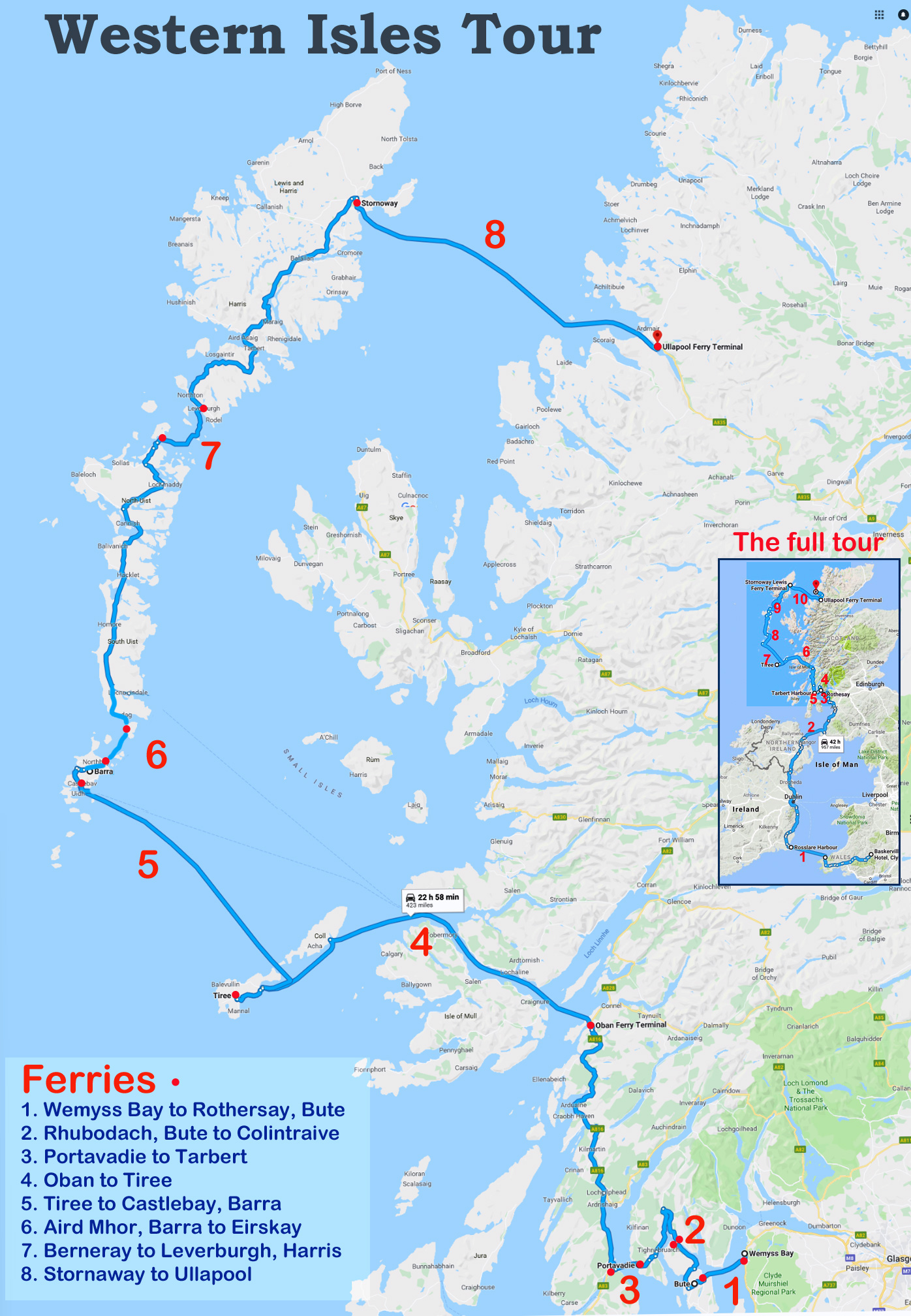
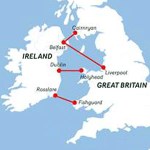
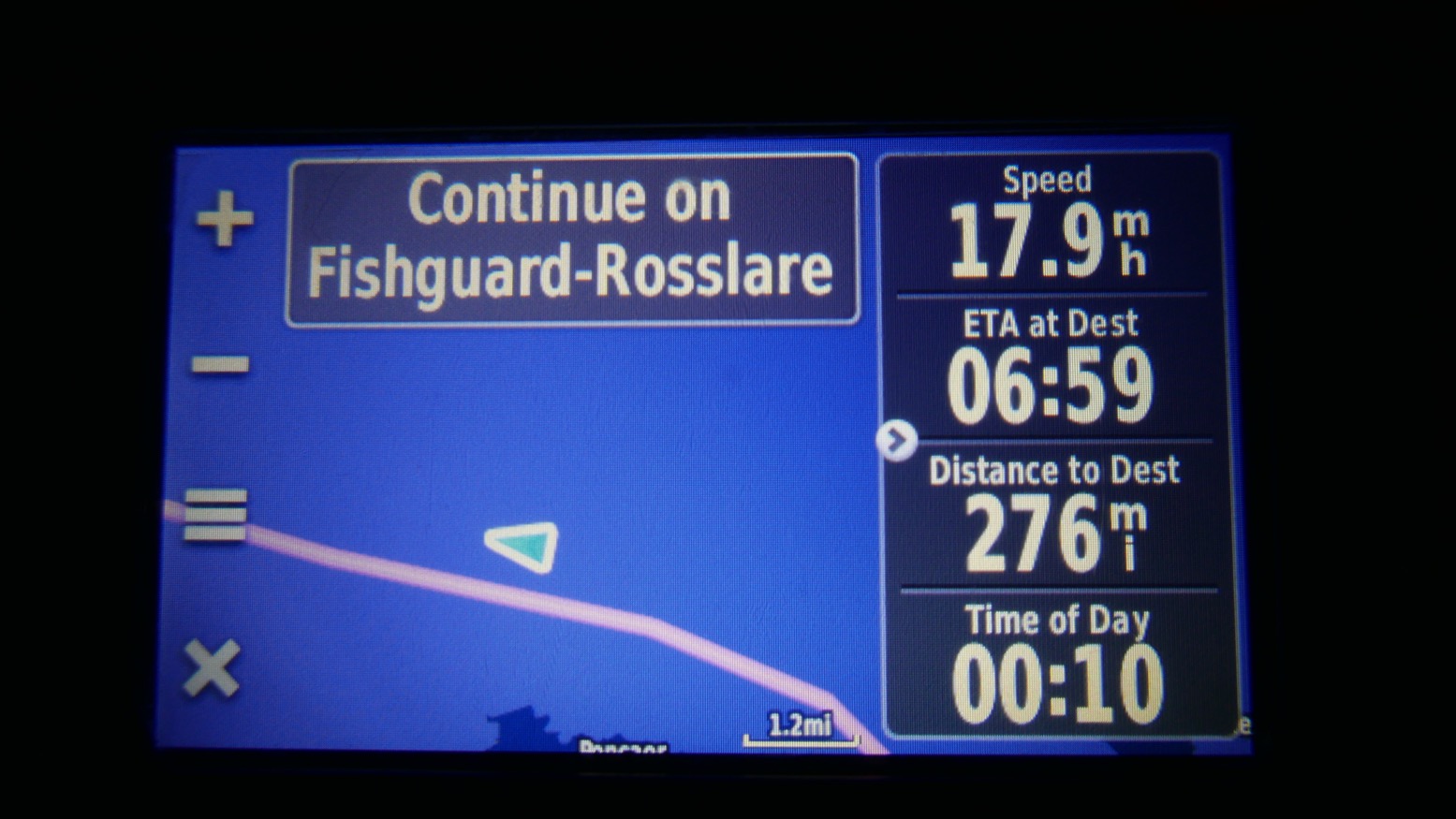
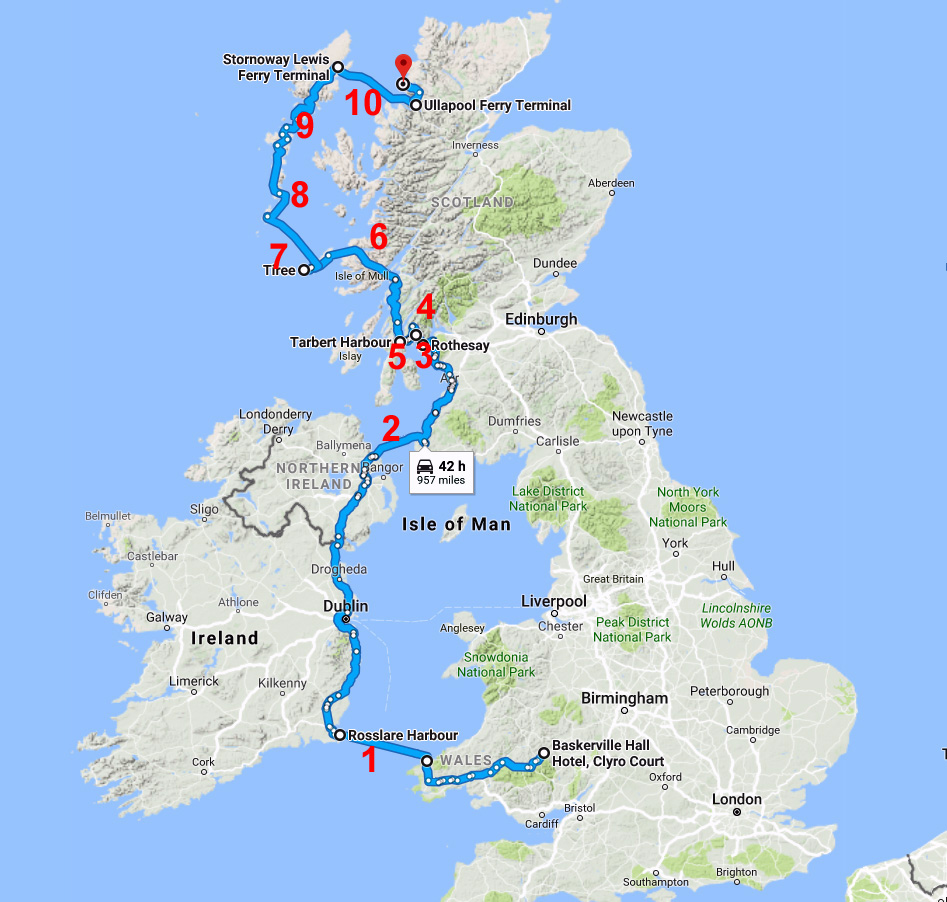
It’s about 900 miles from Hay-on-Wye on the Welsh border back to Ullapool near where we were living at the time, and including a detour via Tiree and the Outer Hebrides. But go via Ireland and it’s about the same, thanks to Stena’s handy Irish Sea ferries, including Fishguard to Rosslare, and Belfast to Galloway in southwest Scotland. I’d already done the ride up through England a few years back on the BMW XCountry, so after the HUBBUK 2018 meeting in Clyro near Hay, I decided via Ireland would make a great ride back north. The full story was in RIDE magazine’s February 2019 issue. You can read it below with a few extra photos.
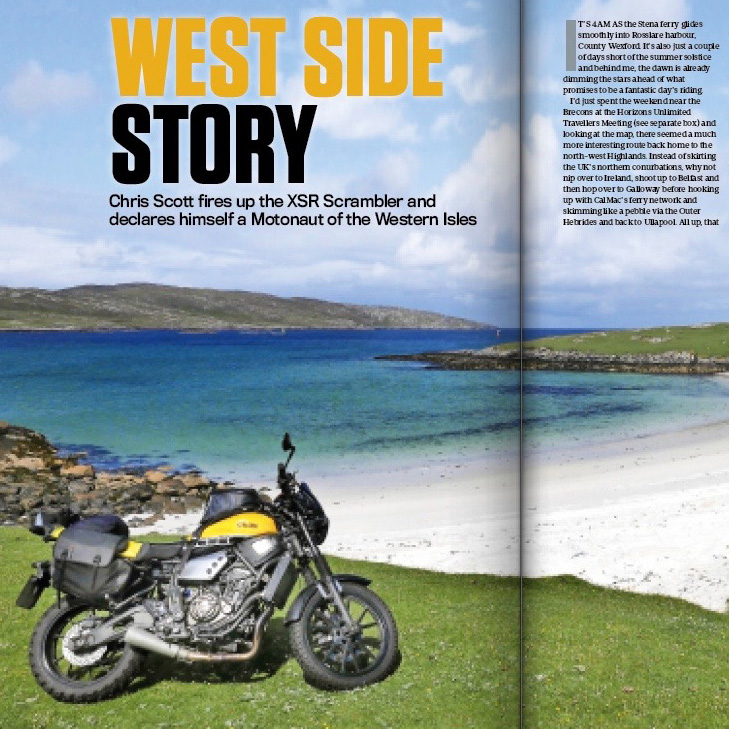
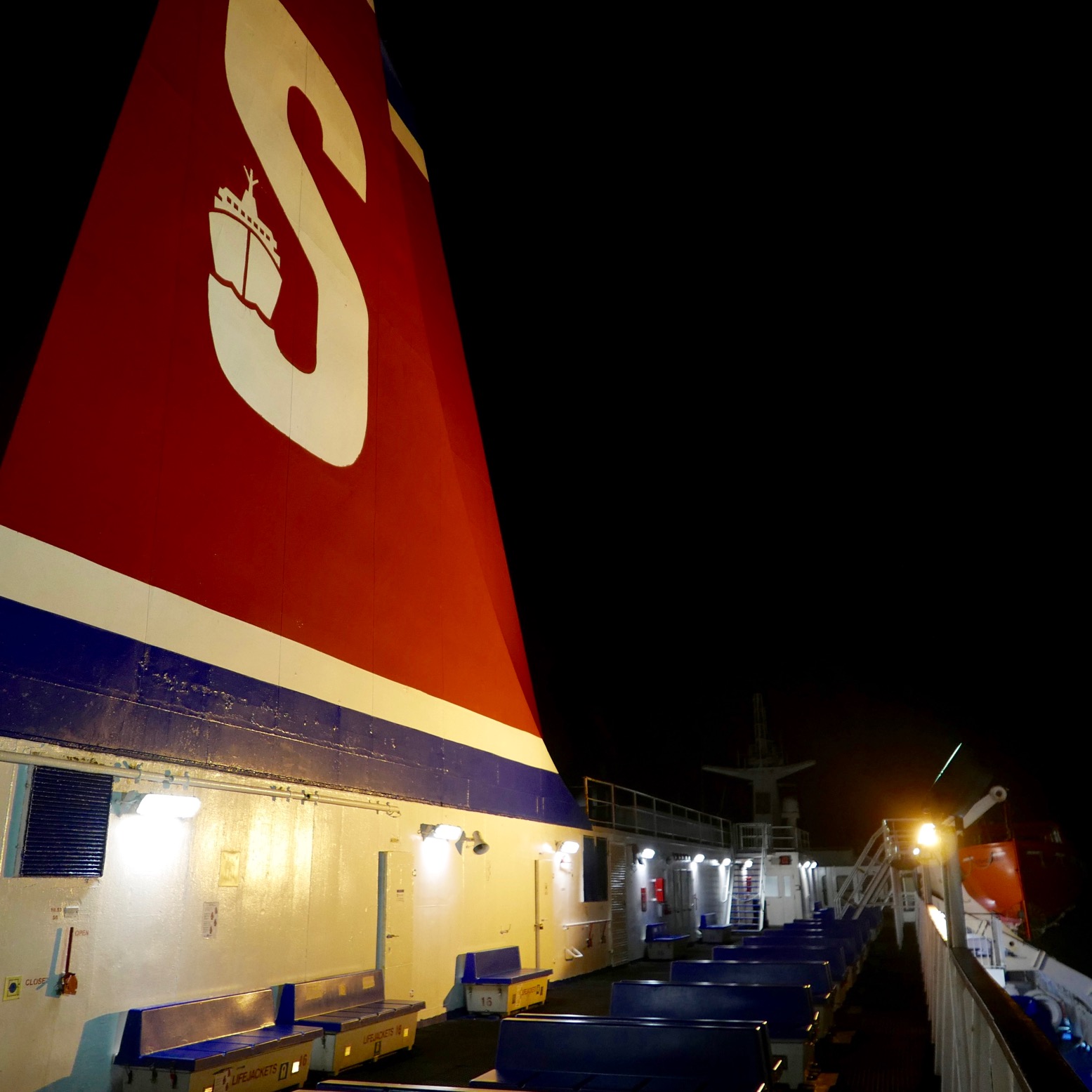
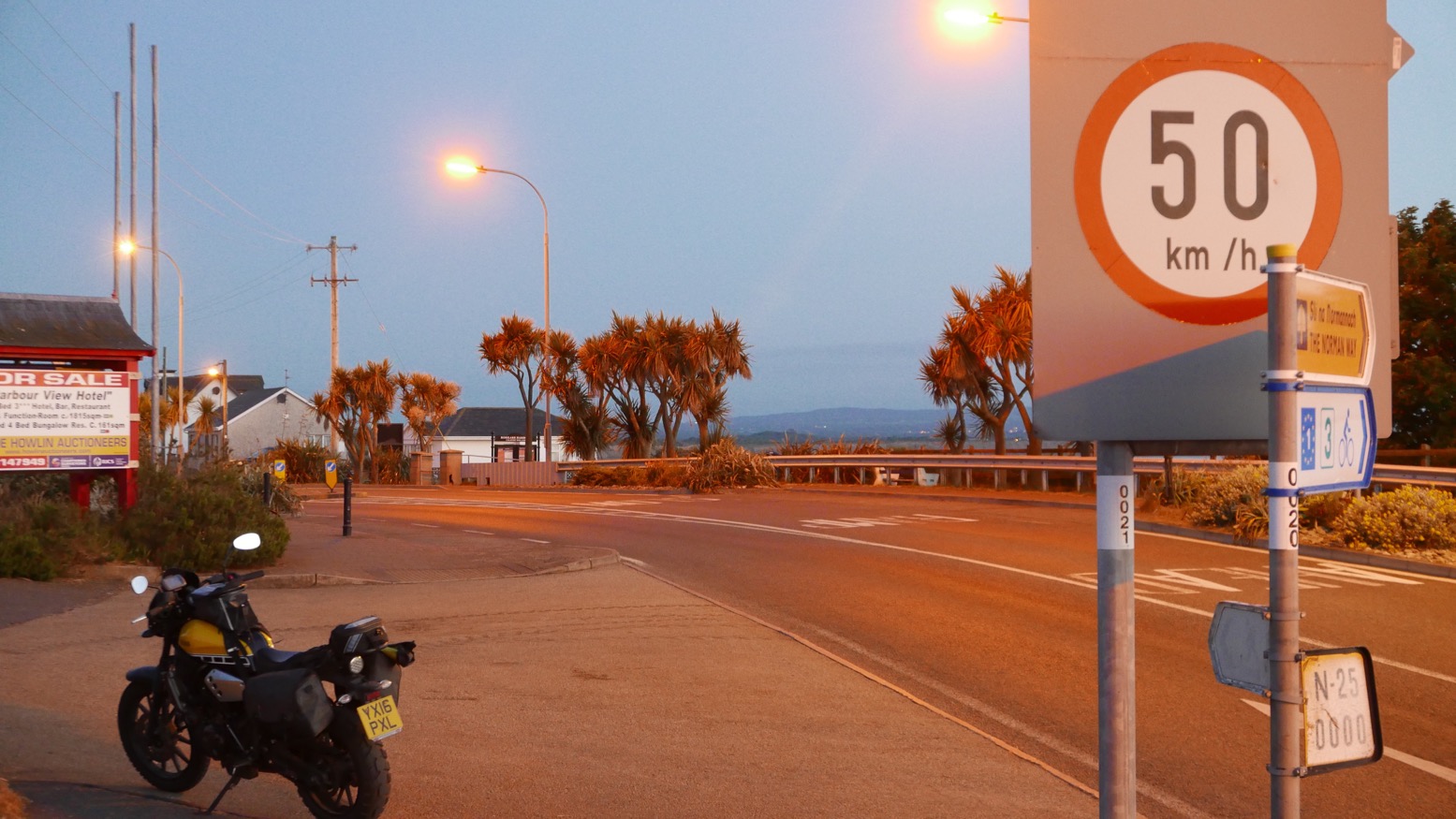
It’s just after 4am as the Stena ferry glides smoothly into the harbour at Rosslare, County Wexford. It’s also just a couple of days short of the summer solstice and behind me the sky is already beginning to lighten, dimming the stars ahead of what promises to be a great day’s riding.
I’d just spent the weekend at the Horizons Unlimited Travellers Meeting near and, looking at the map of the British Isles, there seemed a much more exciting and seemingly more direct route back home near Ullapool. Instead of looking for another new way to dodge the conurbations of northwest England, why not nip over to Ireland, shoot up to Belfast, over to Galloway and then hook up with Calmac’s ferry network, skimming like a pebble to the Outer Hebrides and back to Ullapool – a Motonaut of the Western Isles.
With only a couple of hours sleep on the floor of the ferry’s lounge, I knew I’d not make Belfast Docks without succumbing to an urge to sleep. But I’d given myself a comfortable six hours to cover the 220 miles, which allowed for cock-ups, refills and a power nap behind a hedge.
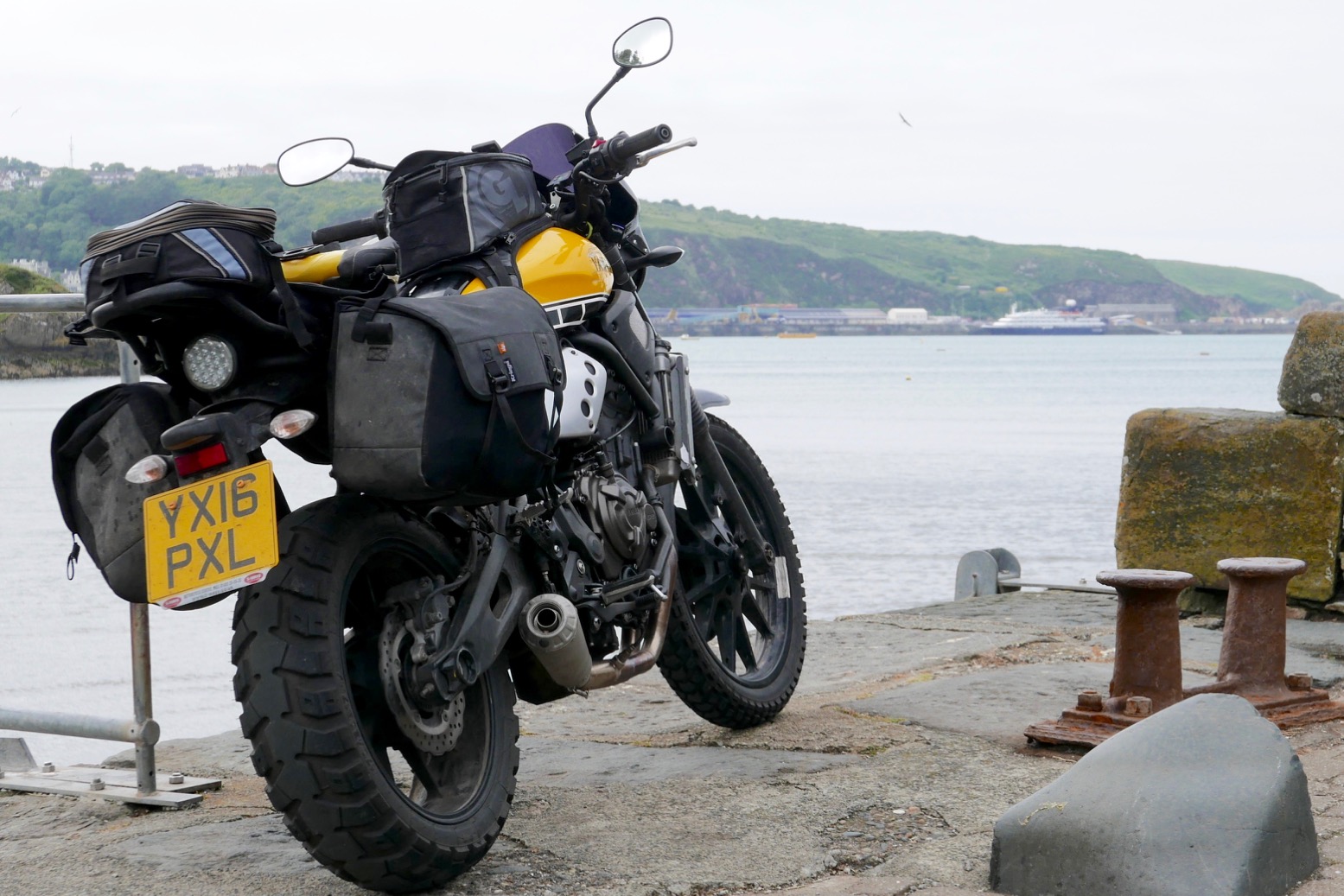
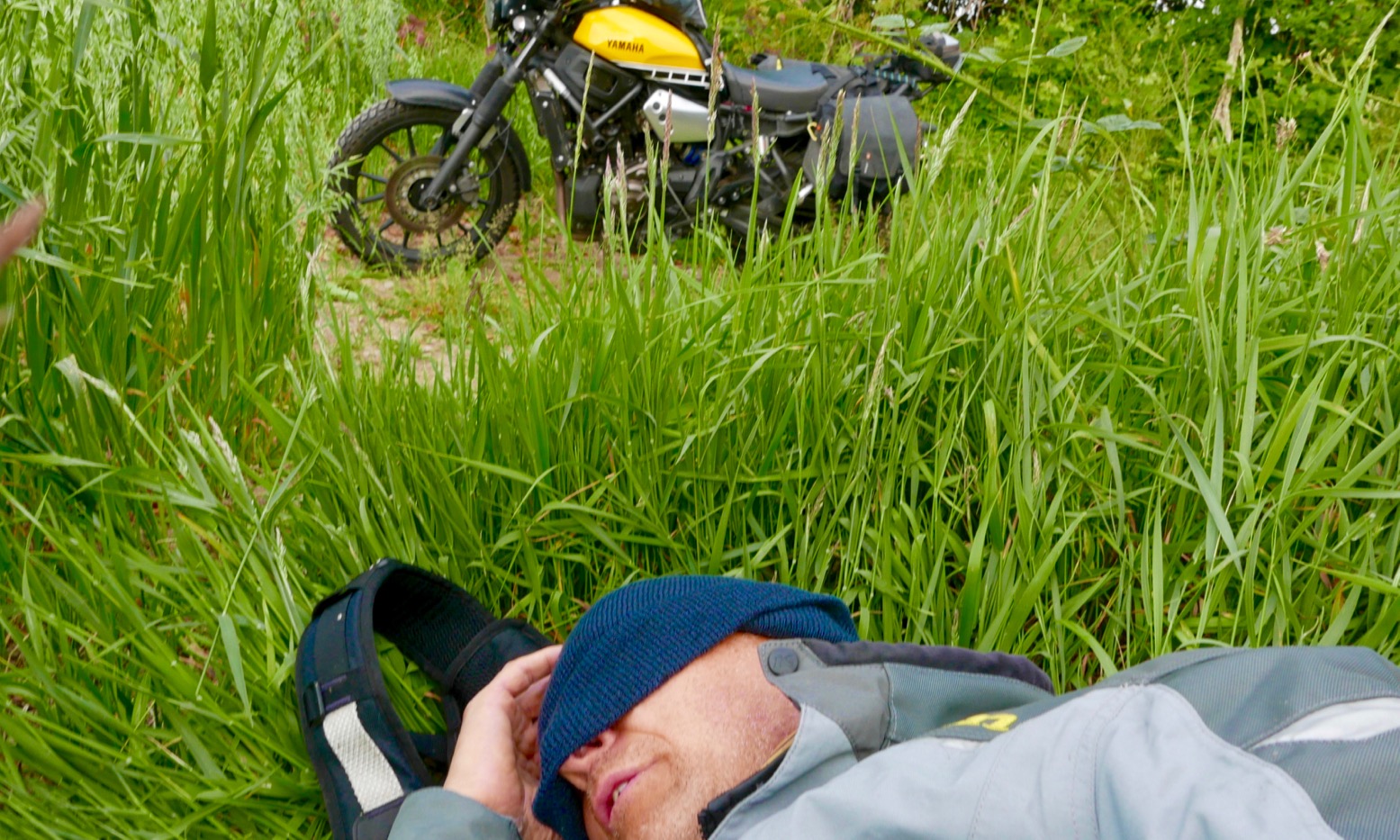
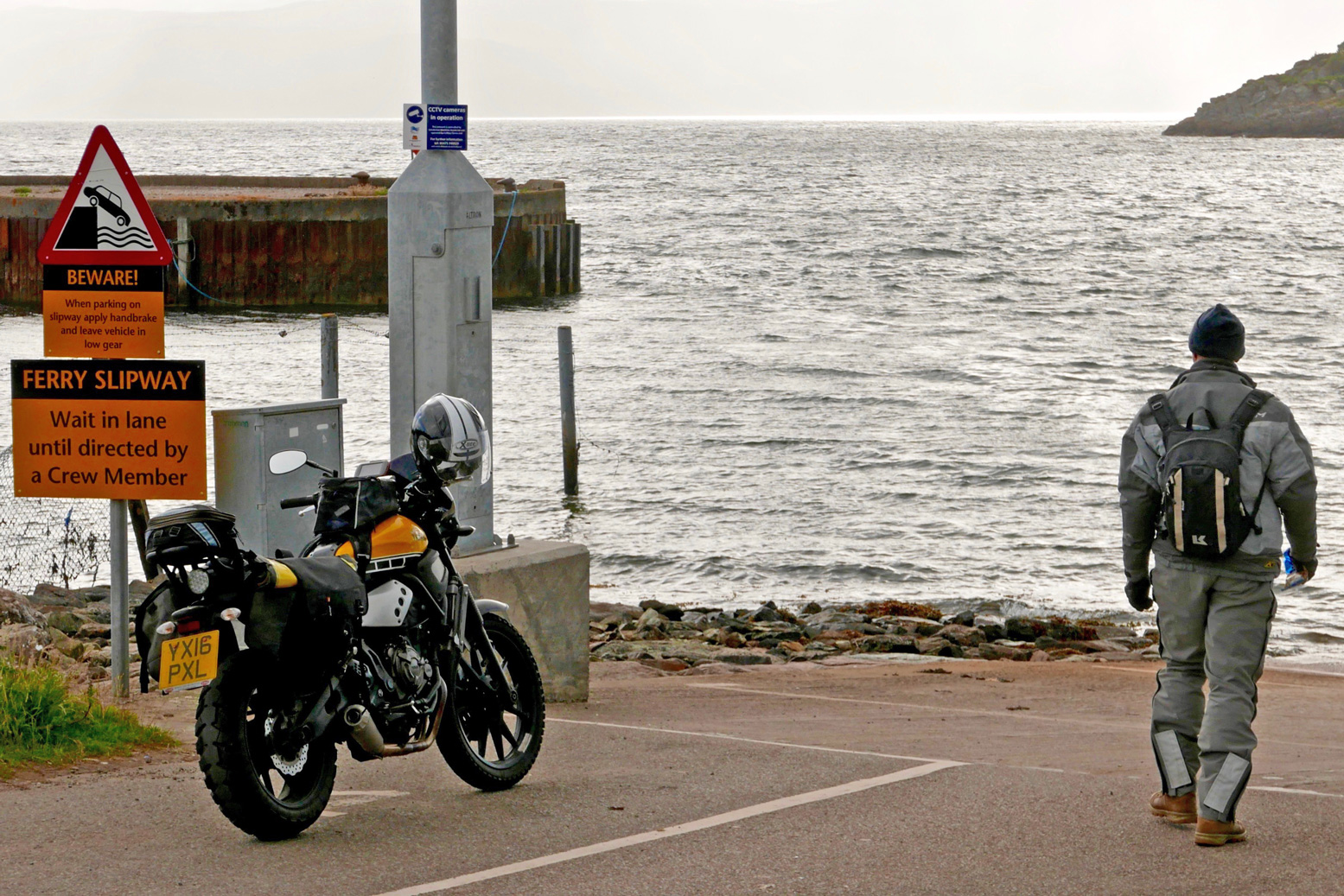
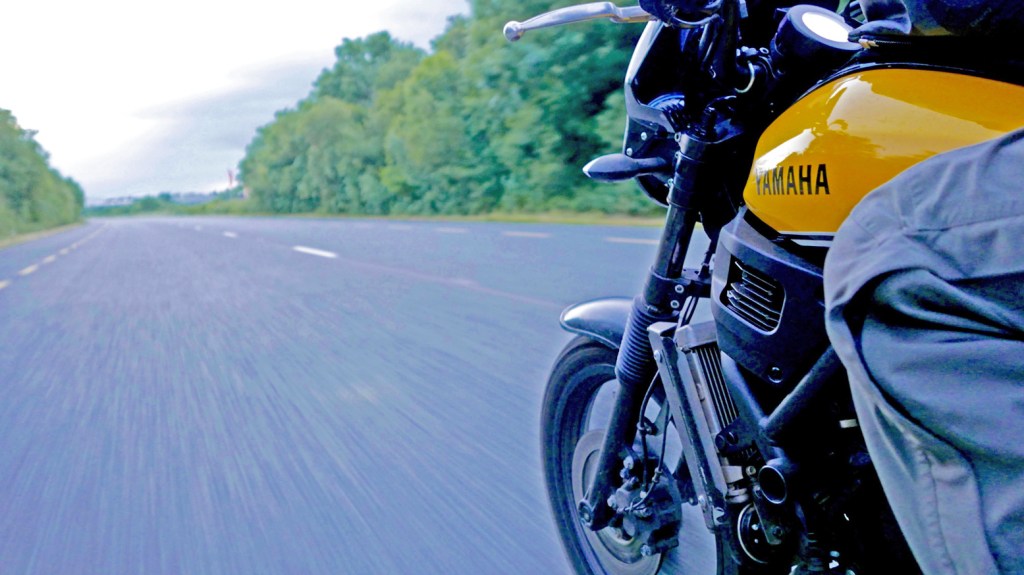
The XSR’s rorty pipe reverberated through the slumbering backstreets of Rosslare and once I’d picked up the N11 Dublin road and passed Wexford, I could open it up without frightening the horses. By the time it was fully light I’d split off the N11 which soon became a boring motorway. I may have a ferry to catch, but taking the N81 west of the Wicklow mountains was irresistible. If I got behind, at Dublin I could pick up the M1 to the Ulster border. The thrill of the new kept me alert till about 10am when all those well-worn tricks to stay awake couldn’t stop Humpty from falling of his bike if he wasn’t careful. I knew well that just 15 minutes could do the trick, so pre-emptively crashed out behind a barn and rolled into at Belfast docks with an hour to spare.
After snoozing my way back across the Irish Sea, heading along the A77 Ayrshire coast, road signs listed familiar names of towns I’d never actually visited, as well as one of Trump’s many Scottish golf resorts at sandy Turnberry Bay.
Ever heard of Wemyss Bay? Me neither until the other day, but it was here that the more intricate part of my ride kicked off. Three short ferry crossings via the Isle of Bute saved over 70 road miles via congested Clydeside to reach the Kintyre peninsula which dangles down just 13 miles off the Antrim coast. And now in 2021 there is talk of a bridge to Northern Ireland to help hold the Union together.
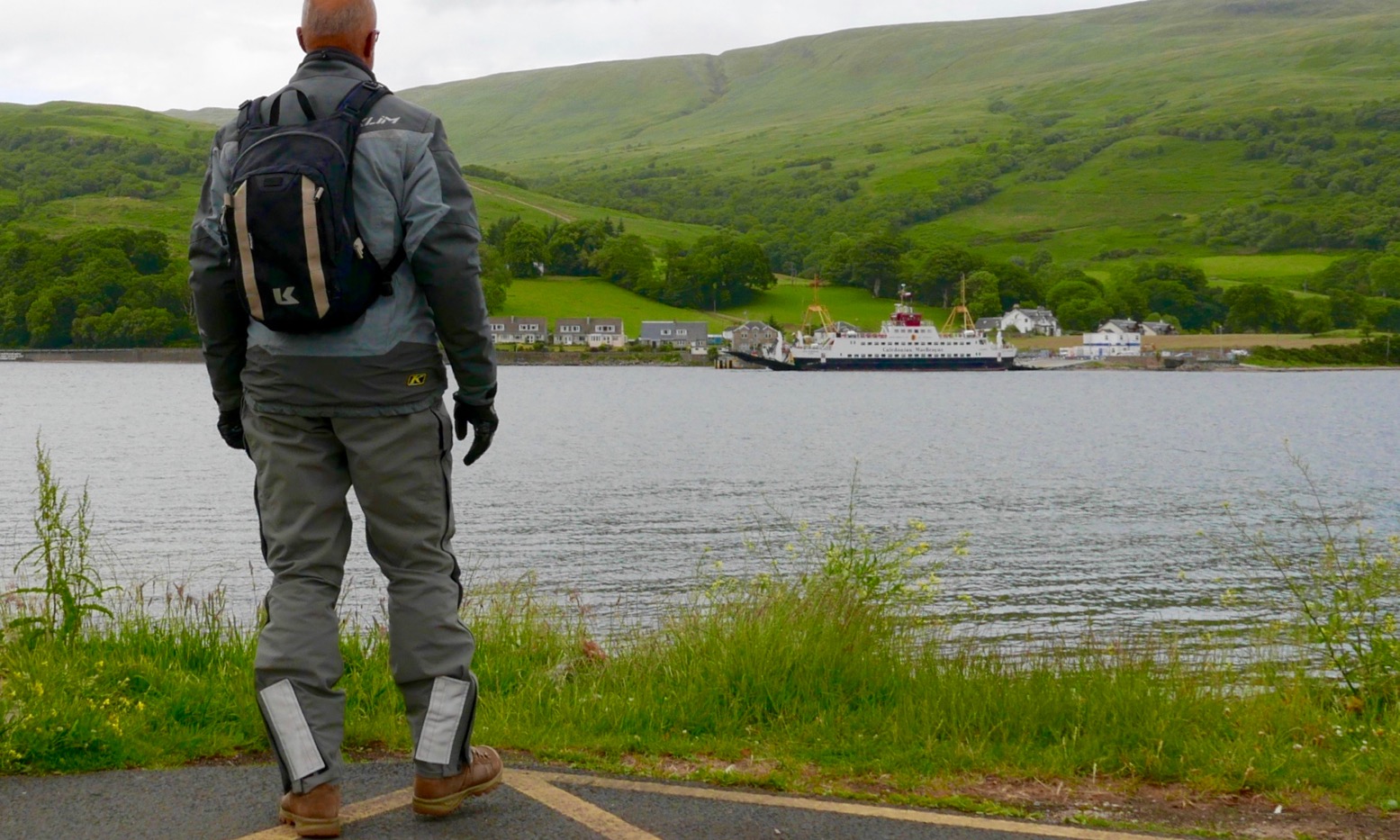
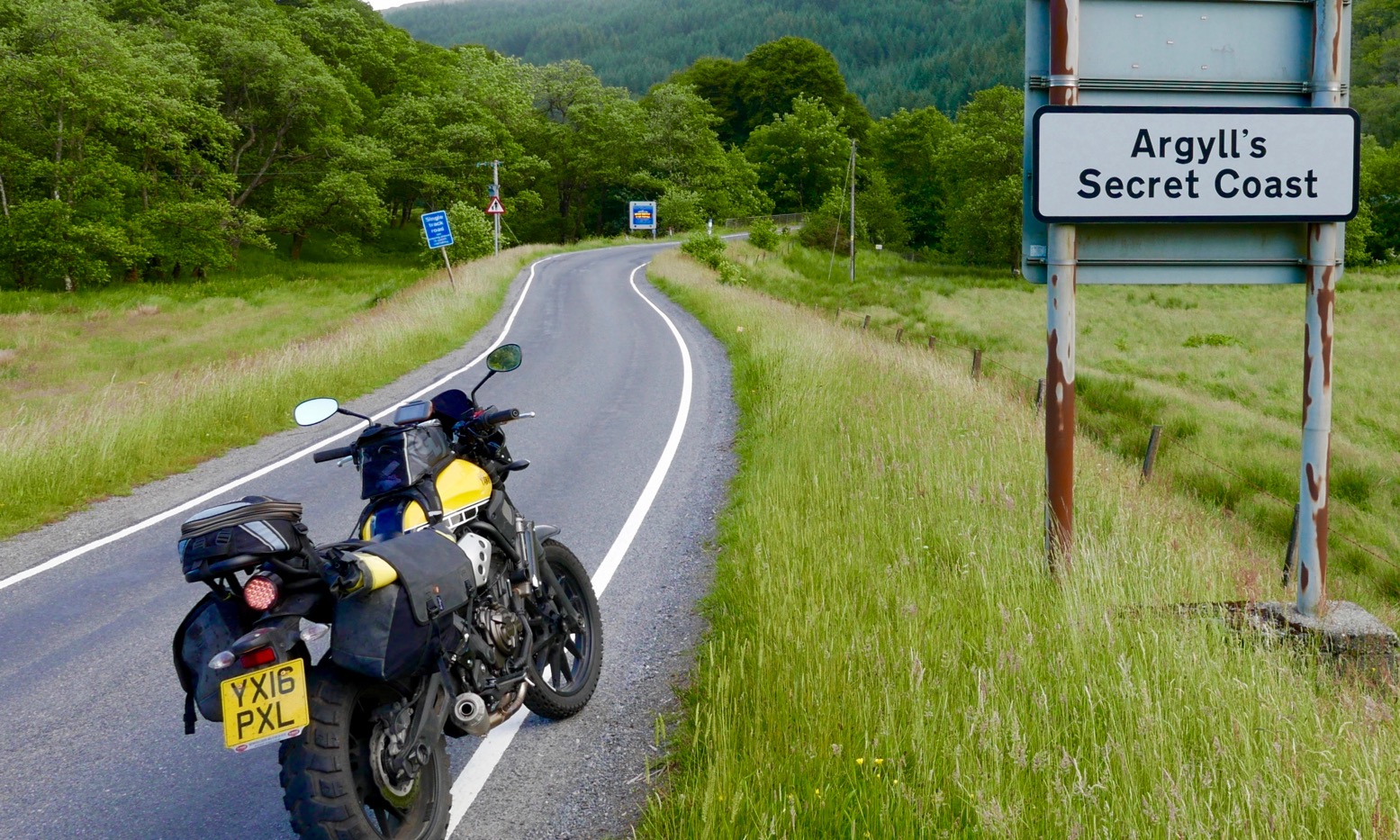
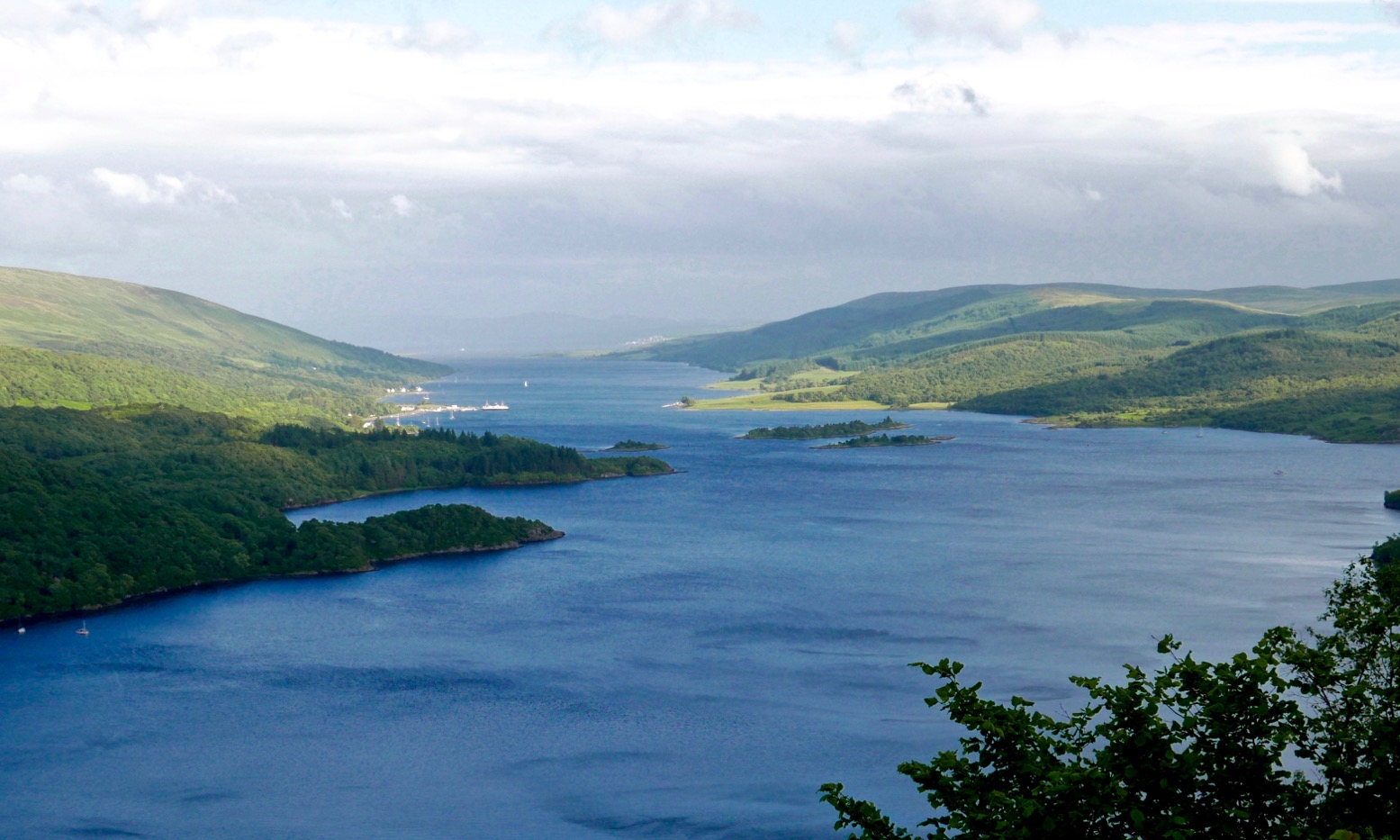
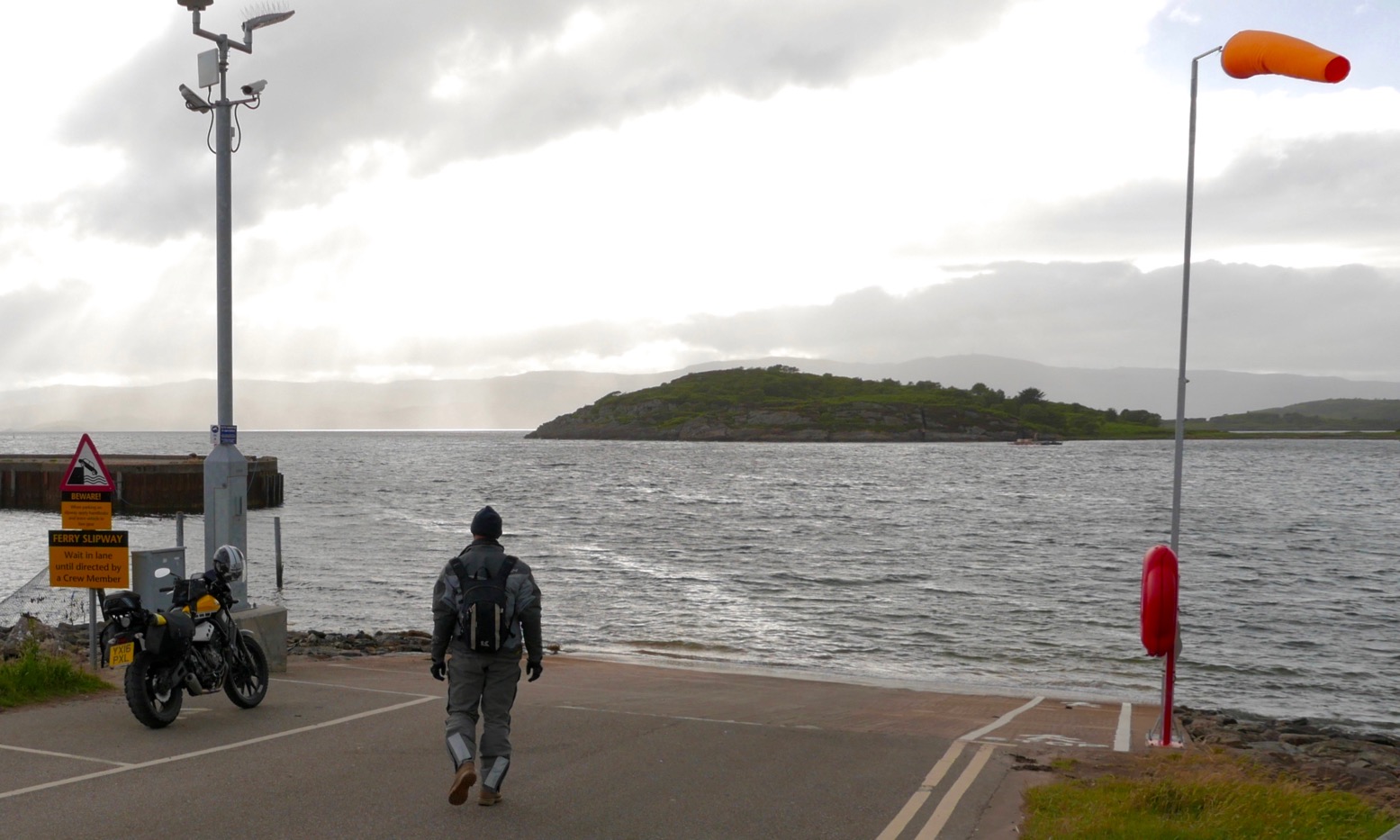
From Bute it was a short run up the road to Rhubodach and Britain’s shortest island-mainland ferry back on to the South Argyle mainland and a windy ride around Loch Riddon to Portavadie jetty for the boat over to Tarbert on the Kintyre peninsula.
Around here I was expecting to run out of steam, and with plenty of daylight and spare time to catch tomorrow afternoon’s ferry from Oban to Tiree, I checked in to a bed-sized room in the town’s somewhat dank hotel.
Part Two later today.
Some photos below from Hay on Wye to Tarbert.
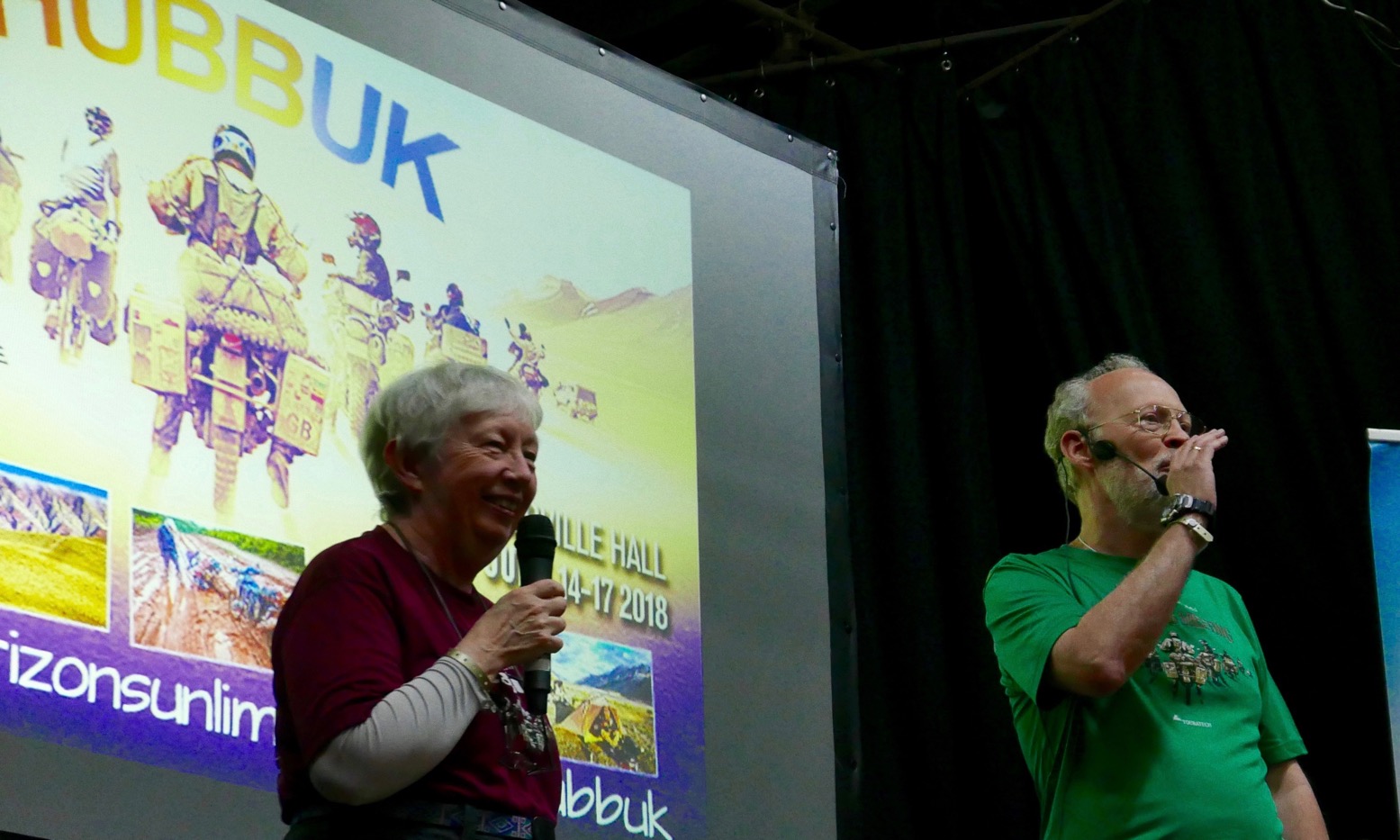
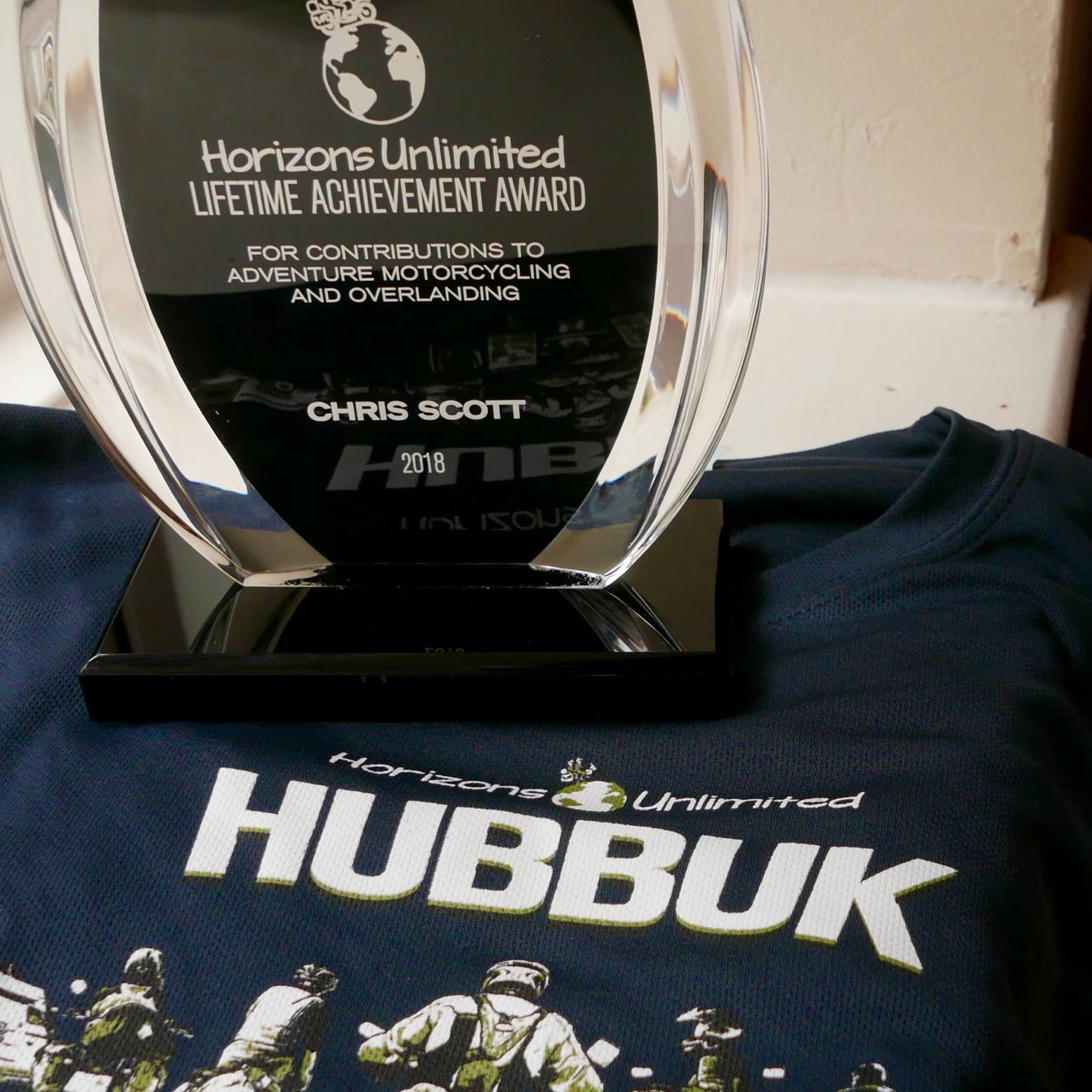
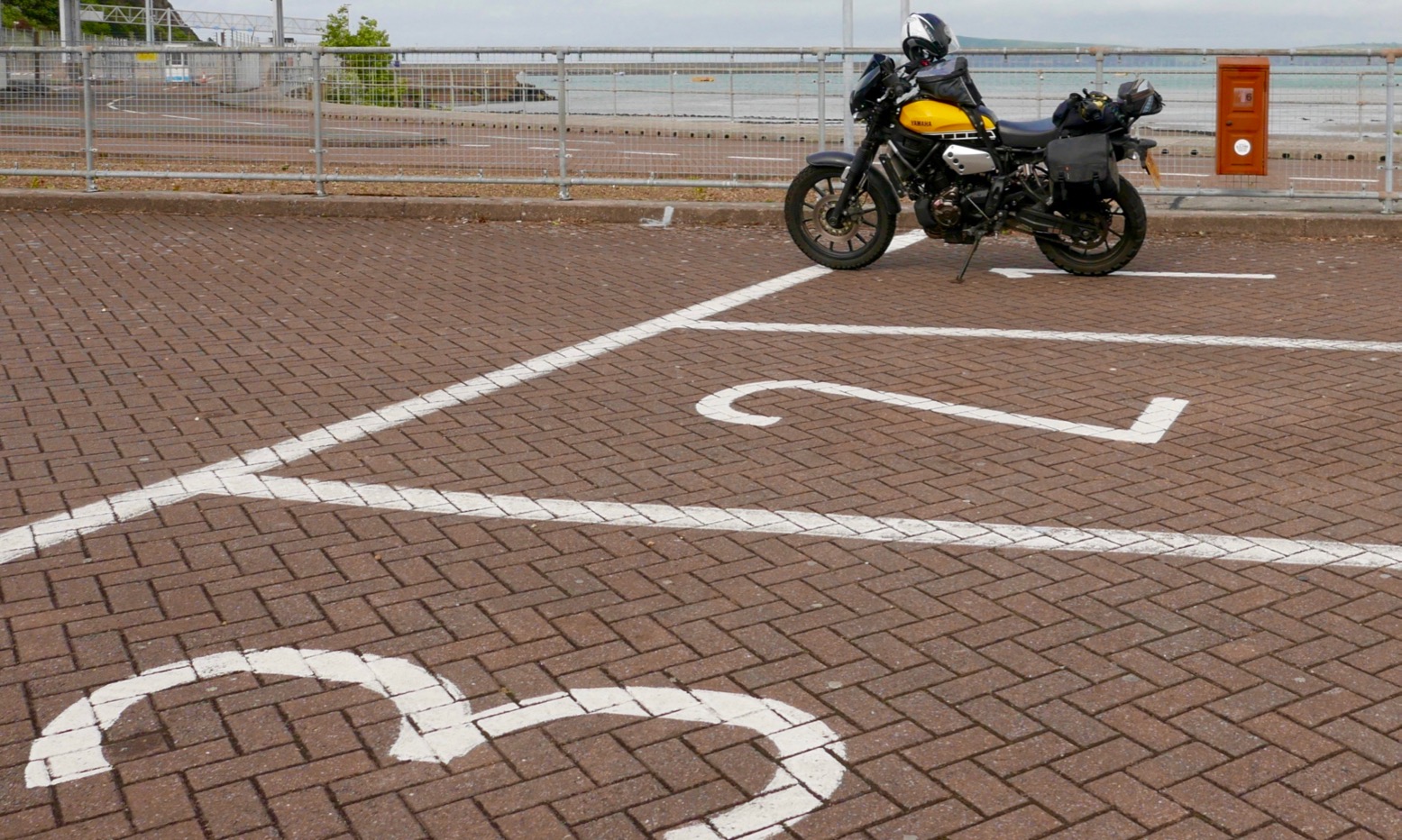
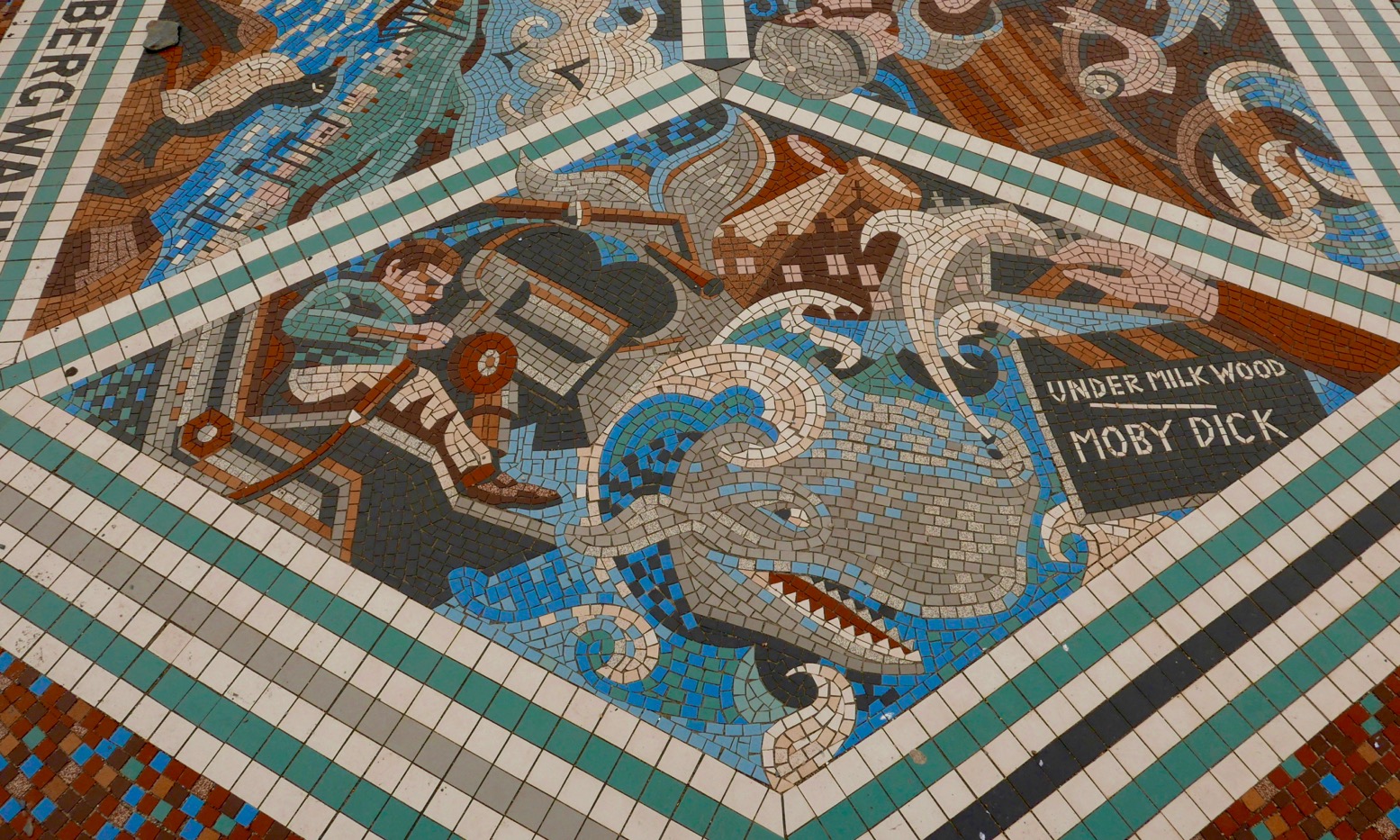
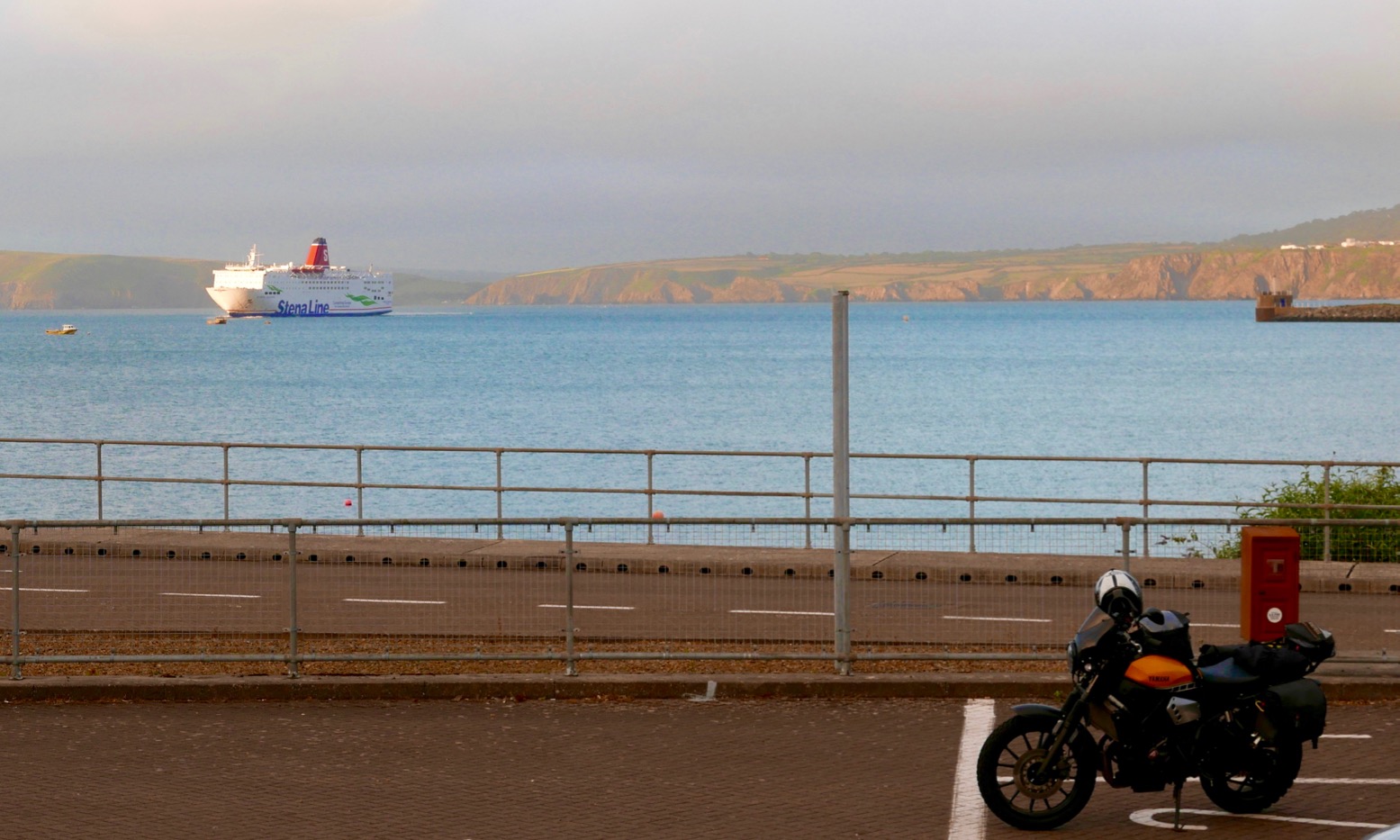
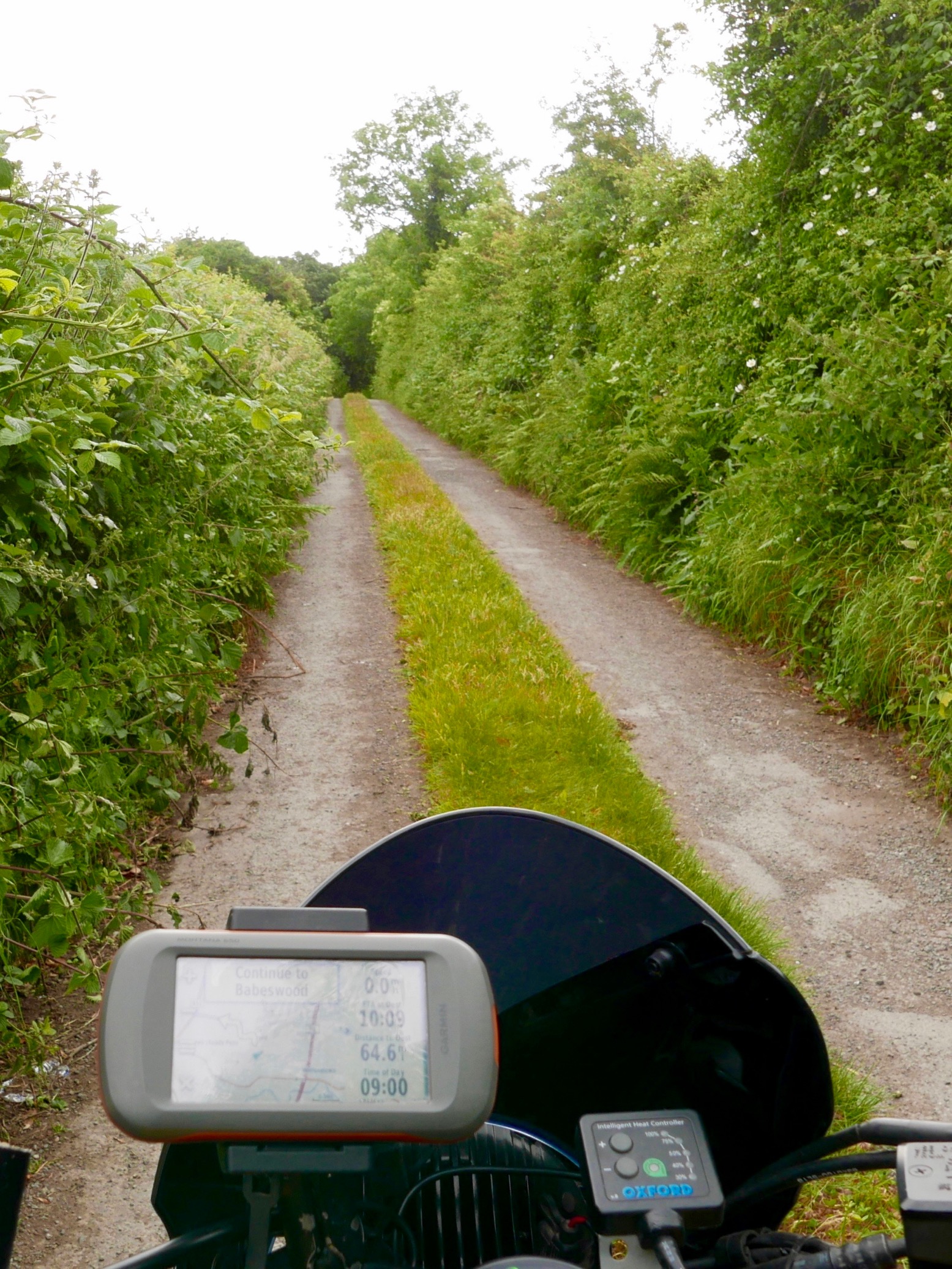
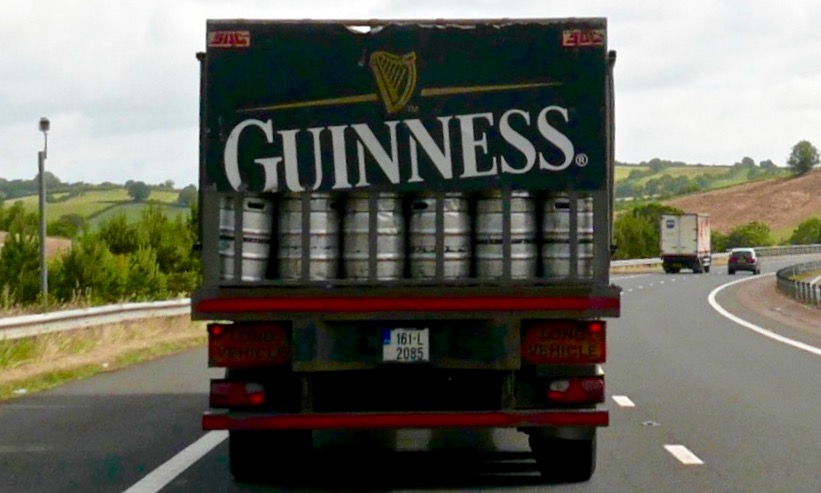
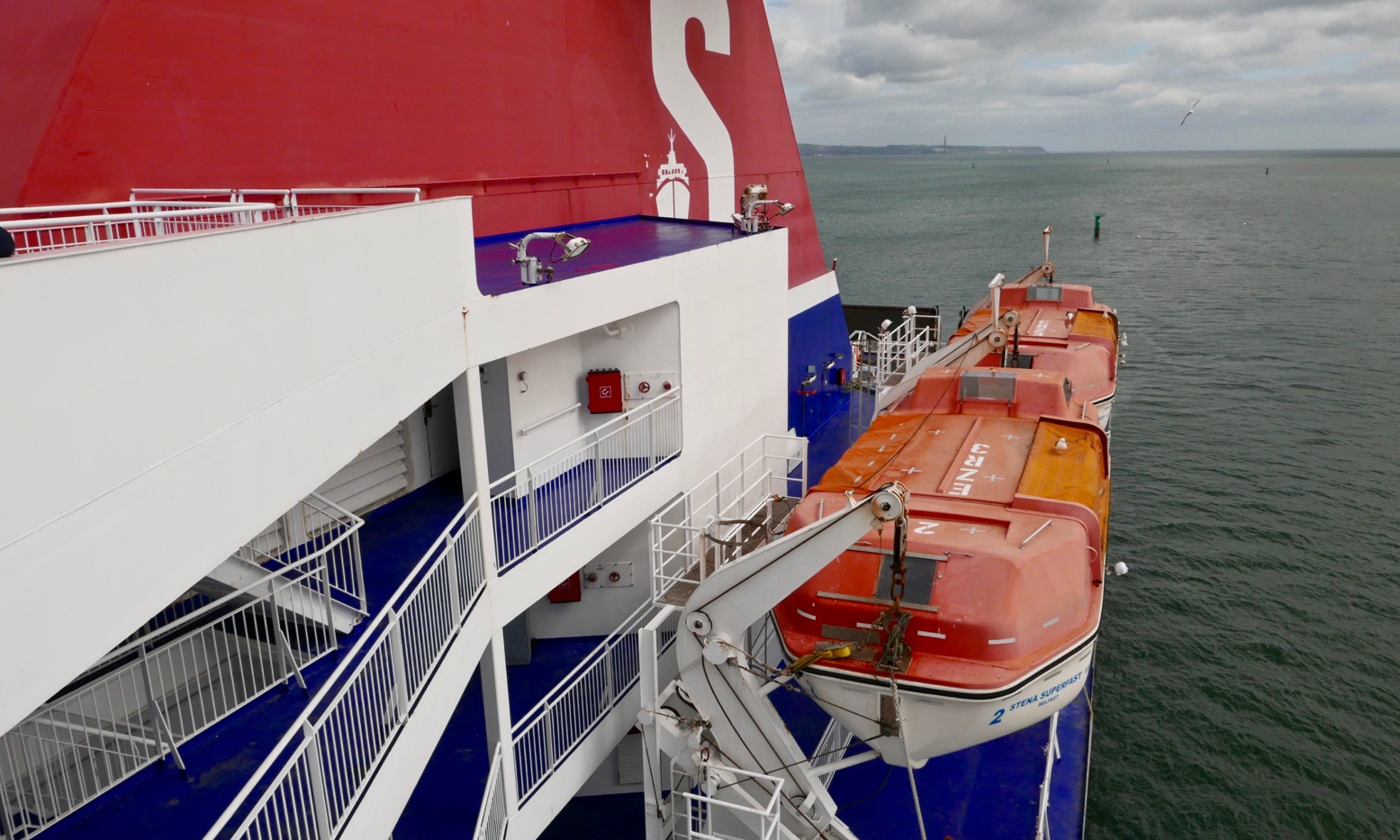
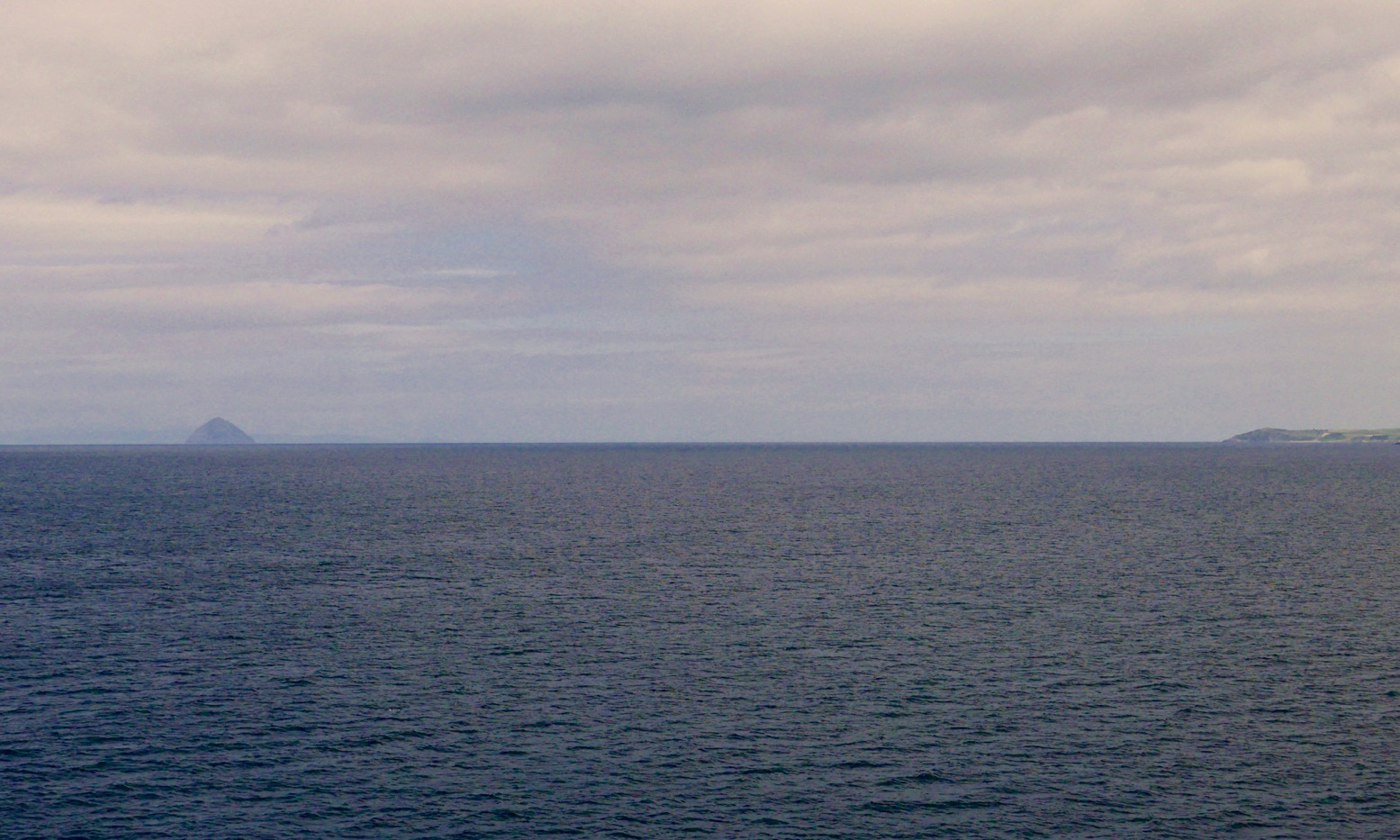
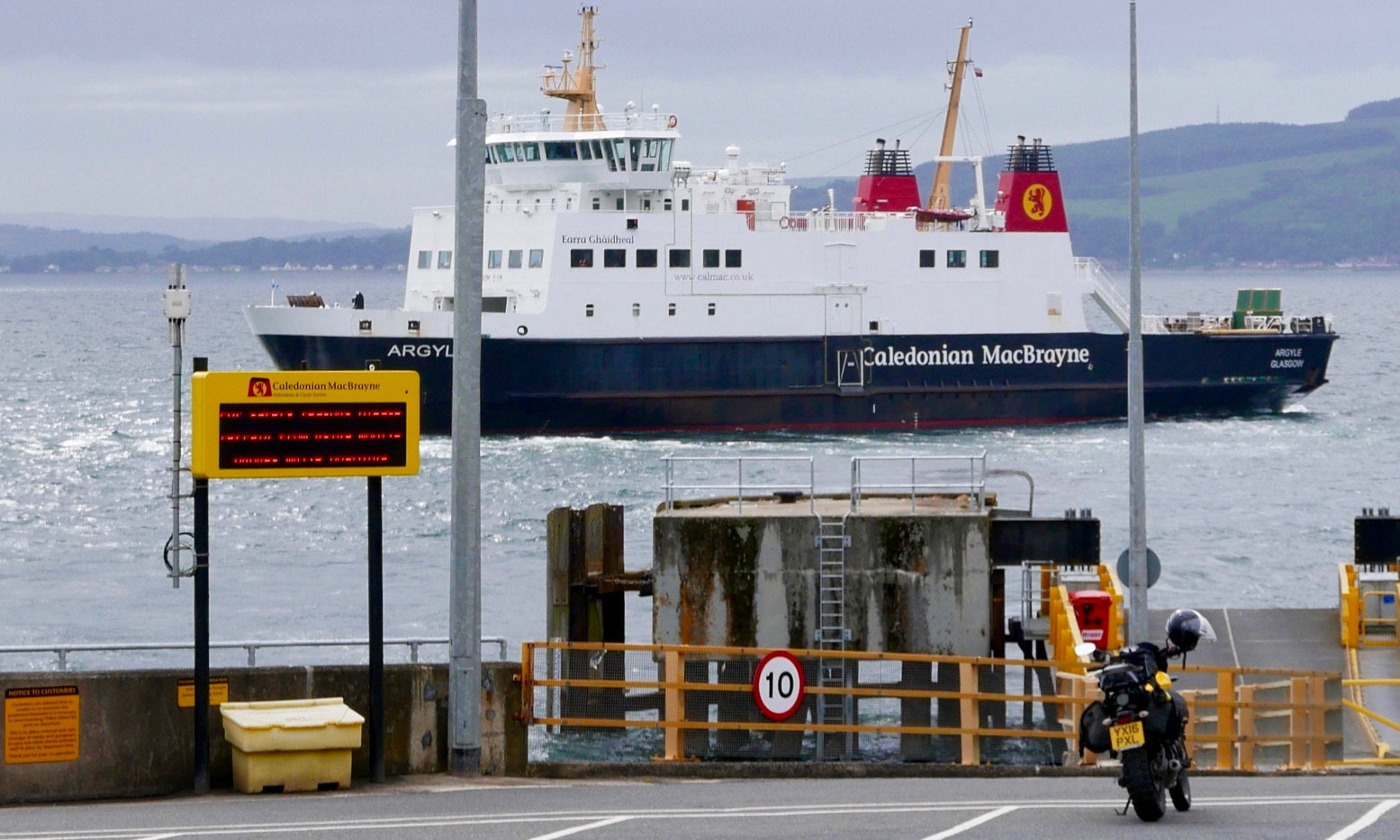
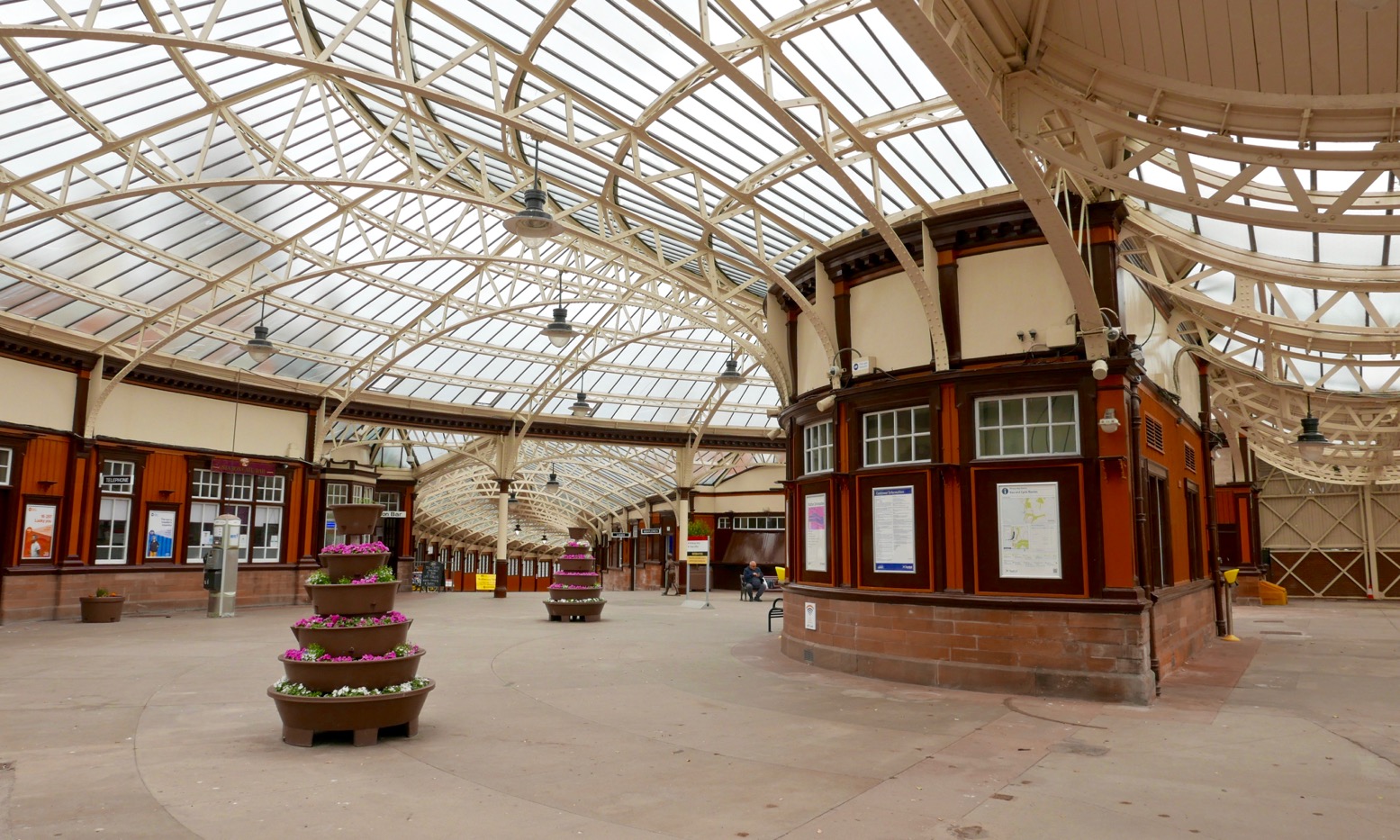
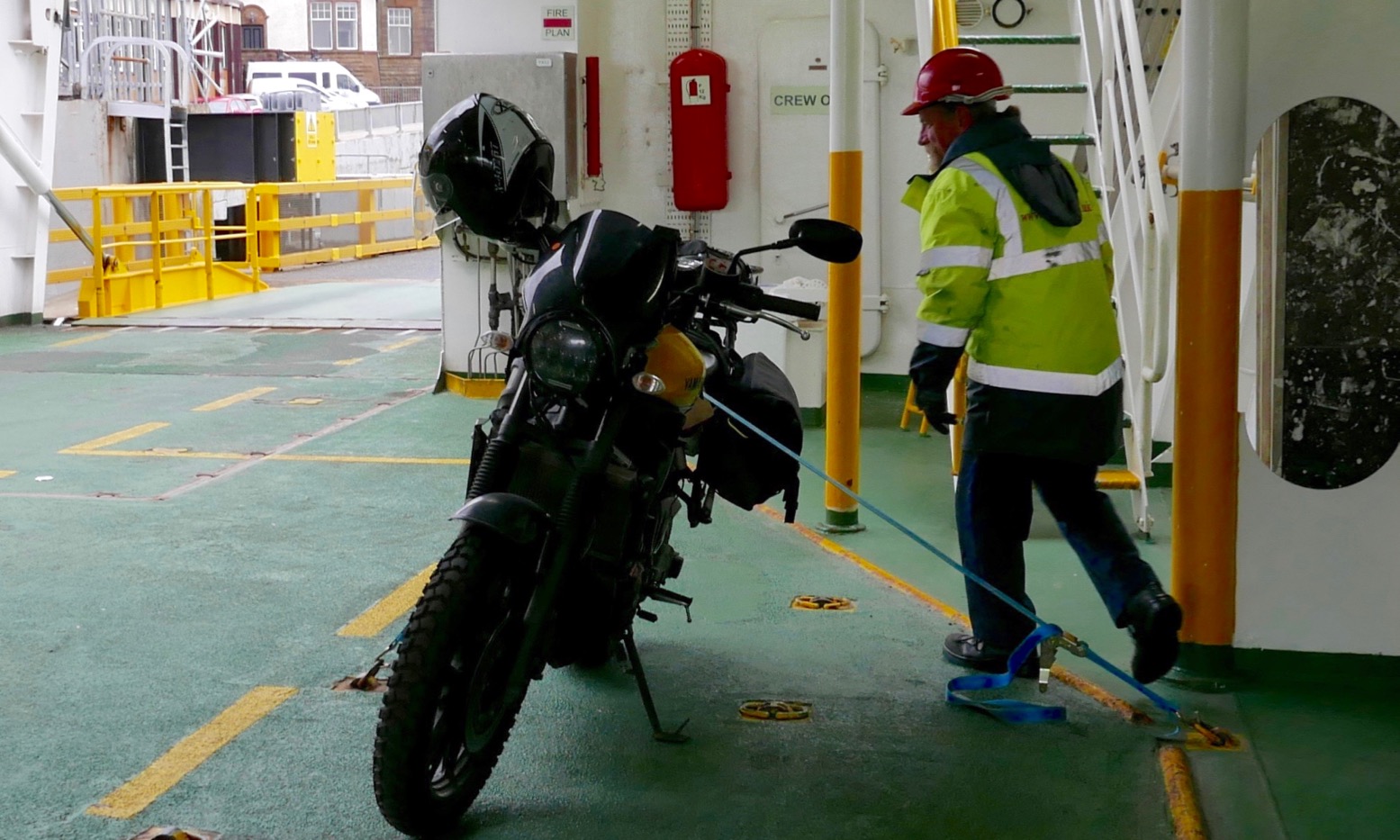
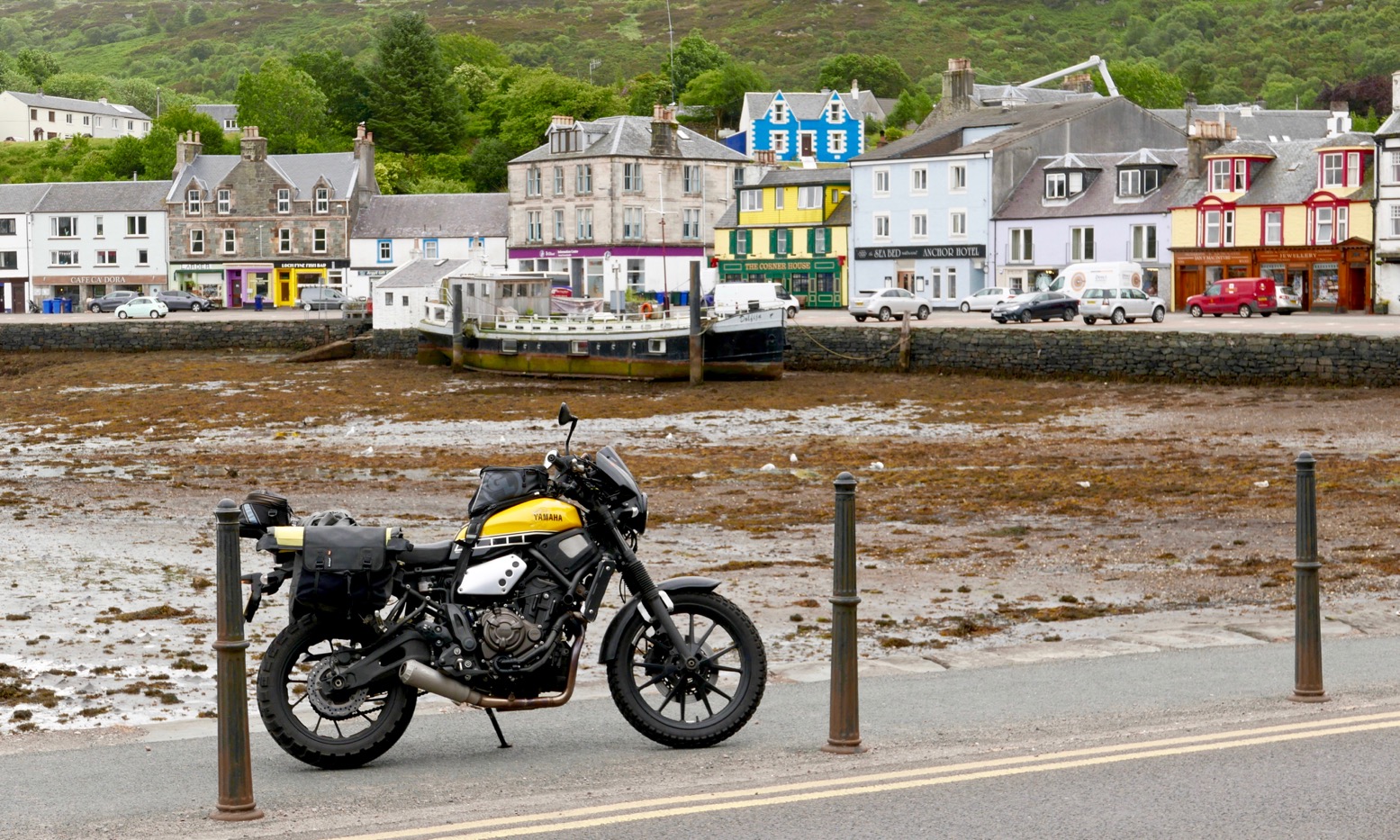
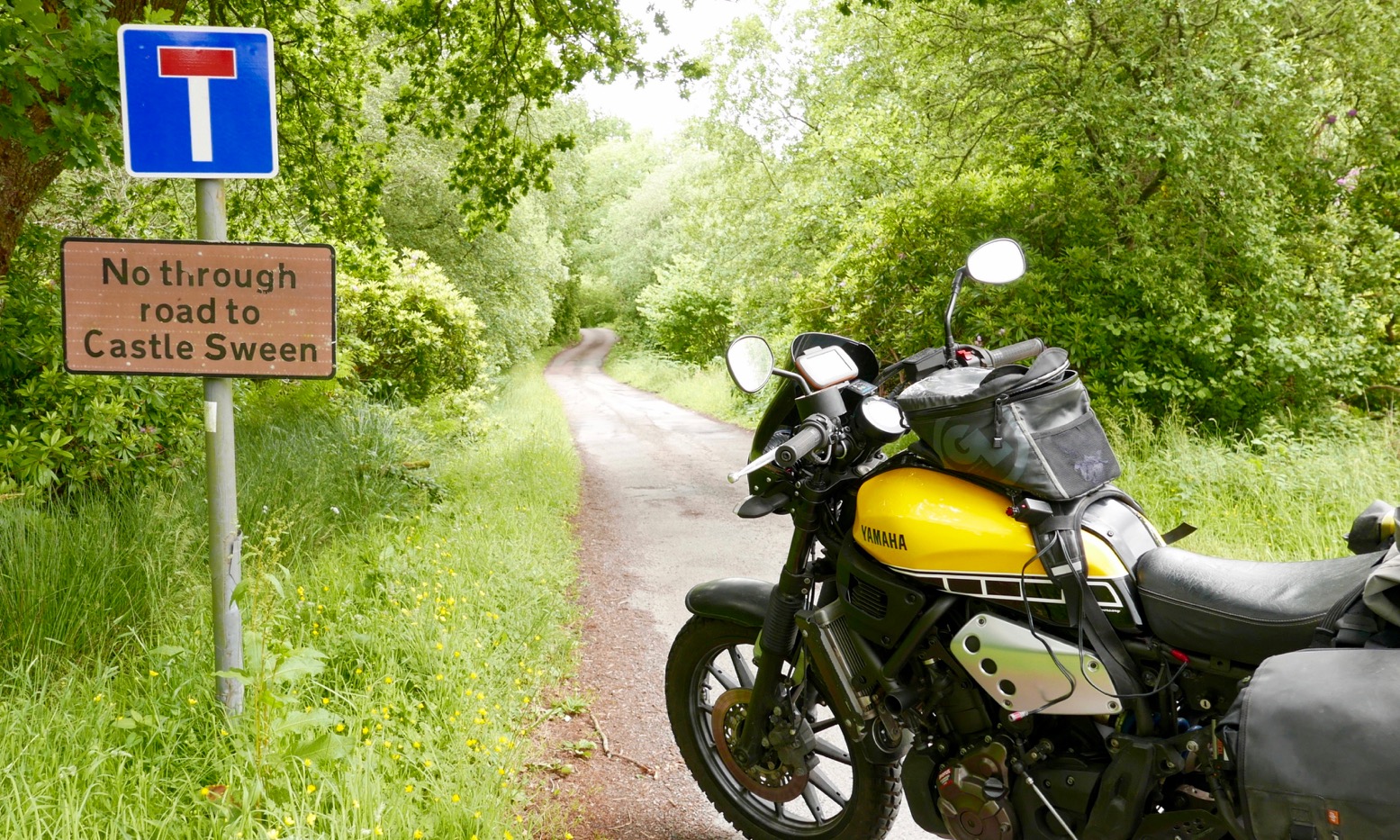
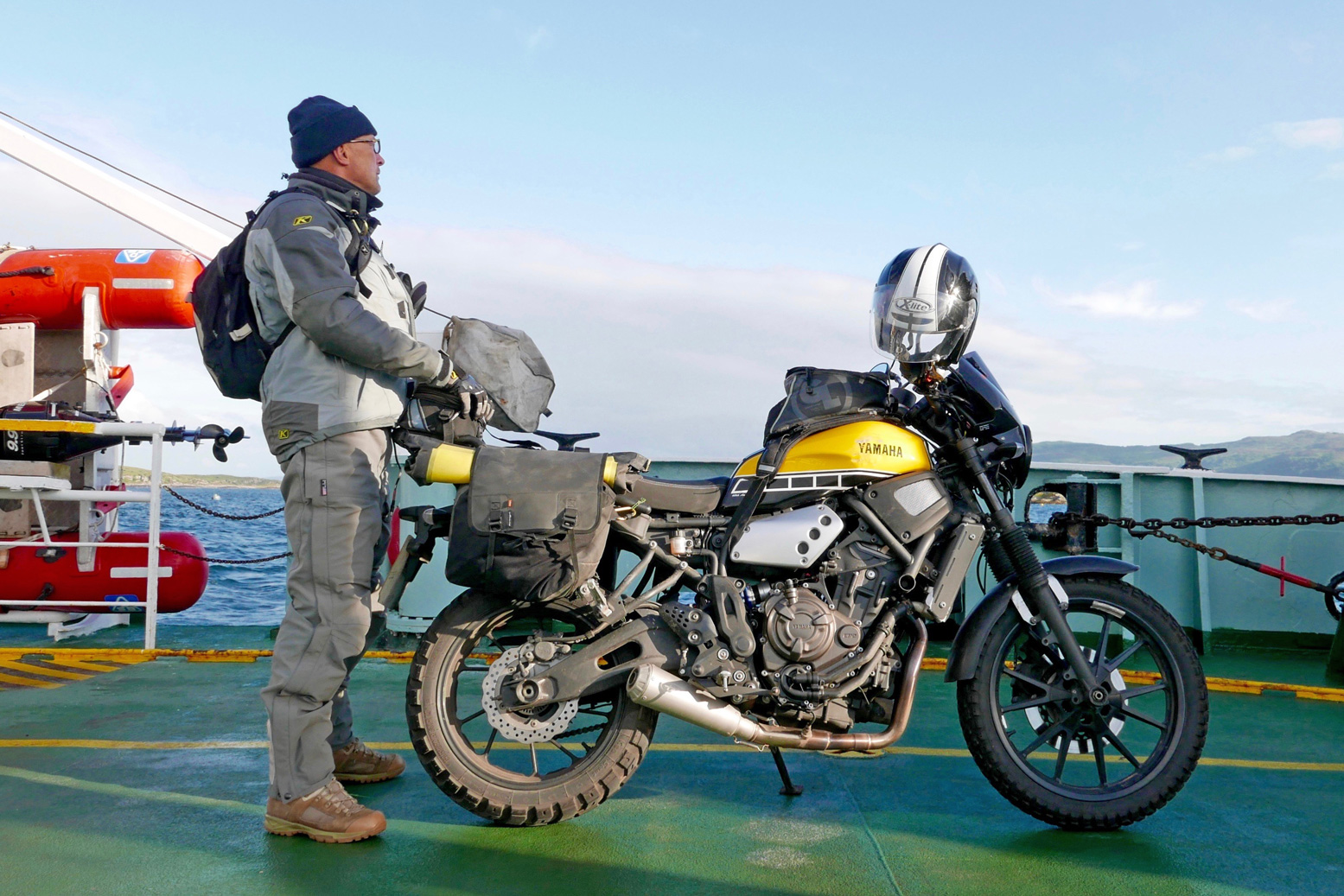
HUBBUK at Baskerville Hall in Wales.Horizons’ founders, Grant and Susan Johnson have an announcement…… I am honoured to win an award ;-)After the event I ride in the Welsh rain to Fishguard docks. Will a Stena ferry fit in here?Oh, wrong side of the docks. What an idiot.Pole position and the right docks.I go for a wander. In 1955 John Houston filmed Moby Dick here.“For there is no folly of the beast of the earth which is not infinitely outdone by the madness of men.” Tell me about it, bro!A border as soft as a toasty marshmallow. Happy days…Meet Jonathan – Stena’s steadfast yellow-beaked mascot. We’ll see more of him later.Stena swings into Fishguard Bay.Midnight, the horn parps and we sail into the cetacean abyss.Bloody satnavs. Distance more like 60 miles; ETA 4am.Four a.m. in Rosslare.An amber pre-dawn glow on balmy Gulf Stream palms.Only a few hours to get to Belfast Docks. Better step on it.But this EU funding for new roads is not all it’s cracked up to be.I’ve barely slept so I crash out in a cornfield.Back on the road. It’s good for you!Alwasy fancied a JPS Commando. JSP Vespa? Not so sure.Leaving Belfast. Like the Titanic 106 years ago, but with wifi and cappuccino.Jonathan escorts us back out into the glassy Irish Sea.Ailsa Crag, an old volcano and source of the world’s finest curling-stone basalt.Turning round the Rhins (headland) of Galloway.Bombing up the Ayrshire Coast. I got three more ferries to catch before sunset!Rats! Just missed the CalMac from Wemyss Bay to Bute.But it gives me time to explore the amazing Edwardian-era train terminus.Those were the days my friend. We thought they’d never end…XSR gets strapped down again. Might be getting a taste for bondage.Once on Bute, a short ride up to the end of the road at Rhubodach jetty.Another short CalMac back to the Argyll mainland.I squeeze aboard the UK’s shortest scheduled sea ferry crossing – about 420 metres.Great riding up here, but don’t tell anyone.View back down Loch Riddon to the ferry terminal.Waiting for the ferry at Portavadie, Argyle to Tarbert, Kintyre. Sunshine and showers.Only passenger again across Loch Fyne.‘Go on, do an Evel Kinevel’, says the ferryman.Tarbert. Actually still 3 hours of daylight left but I’ve been up since 4am.So I head for the town hotel. It’s seen better days but haven’t we all.Next day: backroads to Tiree, Rest of the story shortly….
What they say: Perfect for dual-sport, adventure, touring and daily riding. Fully seam taped, unlined, HT200D Nylon GORE-TEX® jeans-cut pant with full length separating side zips inner and outer weather flaps to help the pants go on and off fast yet keep rain and wind out.
• Usual excellent Aero taped-seam quality • Dead easy to put on and take off • The right amount of useful pockets • Great contoured cut; don’t feel bulky • Breath well and waterproof so far • Long, but OK because ankle can be cinched in • No complicated washing requirements
• Quite pricey from the UK • Sold only via Aerostich USA • TF3 armour pads too bulky (others available) • Bulky to stash when not wearing, but isn’t everything • Need to be hot-ironed or tumble dried to revive the DWR
Review About time I reviewed my Aerostich AD-1 Light pants. They’re pitched as lighter weight 200D Cordura Gore-tex overtrousers; less stiff to suit the occasional rider rather than ice-road commuters who’ll want Dariens or Roadcrafters in heavyweight 500D; two names which helped make Aerostich’s name in the US among Iron-Butt long-haul pros. Riding hard, fast and often, a 500D Roadcrafter is the best thing for 85-mph slides down the highway. But who does that any more? Indeed, unlike many riders it seems, I rarely wear overtrousers at all, unless it’s actually pouring or very chilly. I don’t mind getting wet legs if the end is nigh, but when it isn’t I like the fact that I’m tucked, zipped, studded and velcro’d into my AD1s. Strict trademark laws make casual use of the V-word forbidden in the US. Jeez – and I thought I making a quick joke! Looks like I guessed right: in the US they must say ‘hook-and-loop’ which rolls off the tongue like a mouthful of old wool.
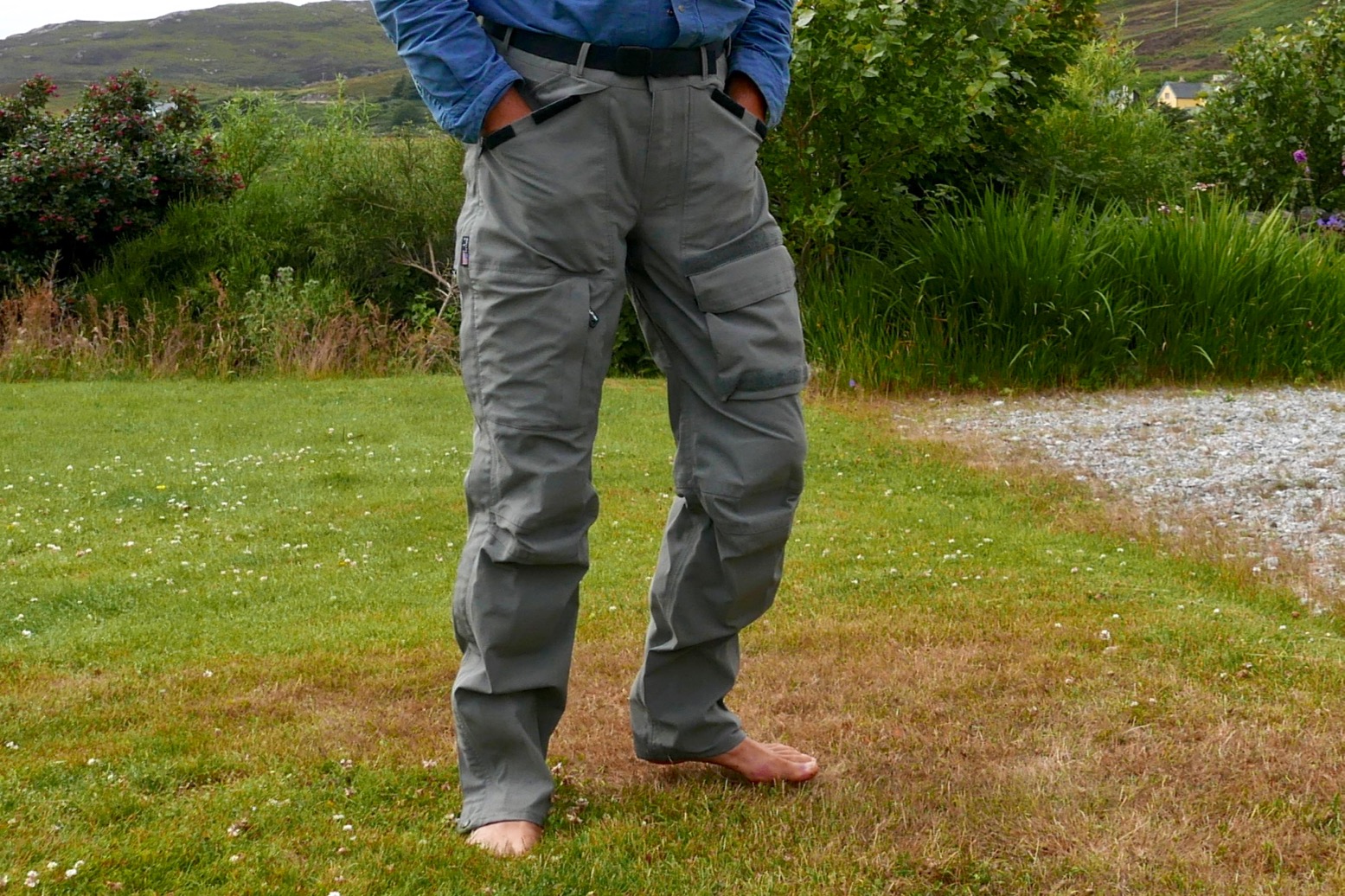
On me the AD-1s fit is just right: comfy and unobtrusive – as high praise as you can bestow on motorcycle clobber. You don’t feel like you’re schlepping around in a pair of baggy, swish-swooshing bin bags. The curved cut of the double-stitched seat and knees all help, and Aerostich do go out of their way to give you more than just S, M, L and XL. With their detailed sizing chart (right) you have little excuse to not get the right fit. No complaints with breathability or waterproofing either – legs don’t really sweat or get cold. But when they do, one of the best things is with the full-length side zips the ADs are easy to put on and take off; a big incentive when you really ought to pull over and do one or the other, but don’t want to faff about or risk tripping over, banging your head on your rocker cover and waking up in a hospital corridor.
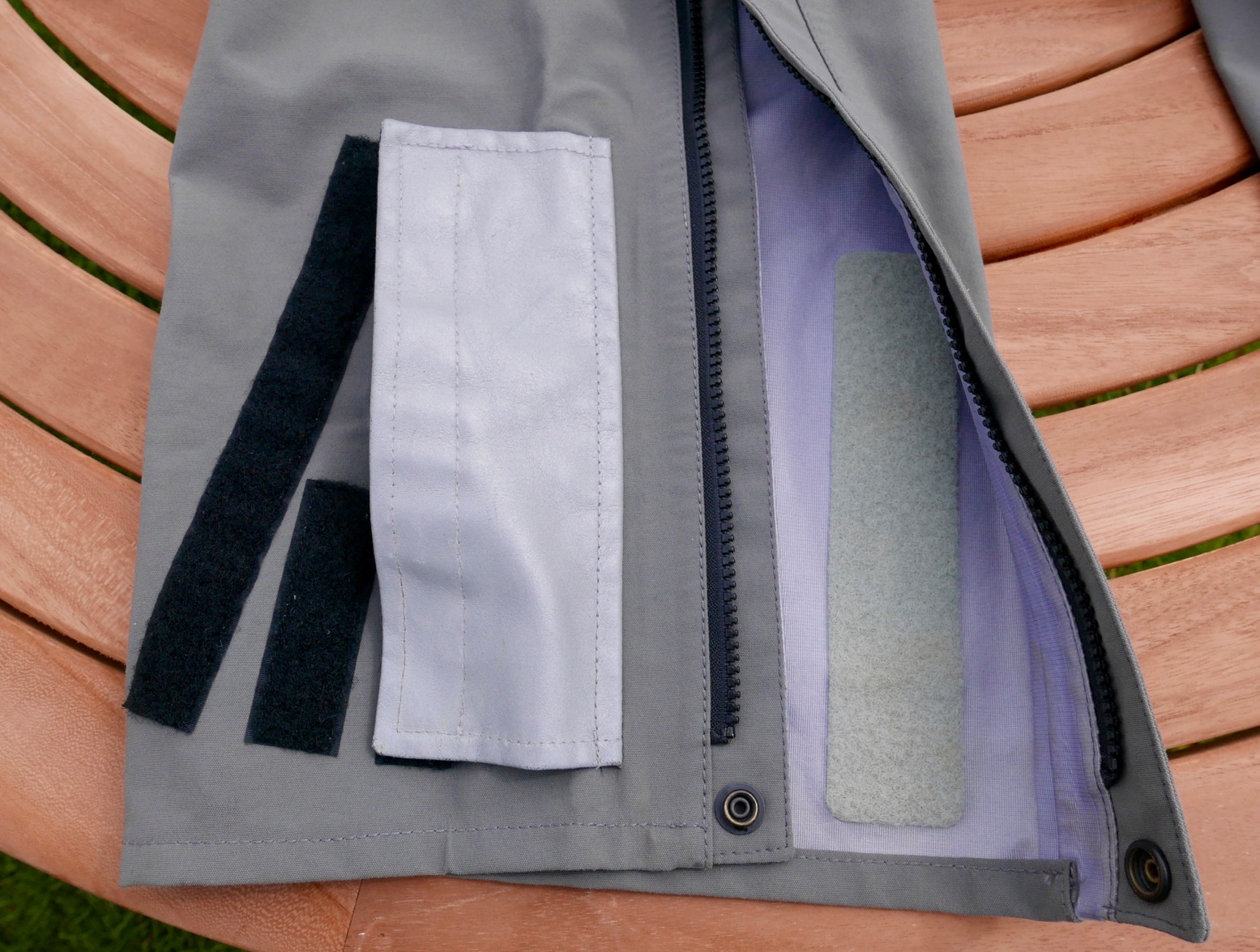
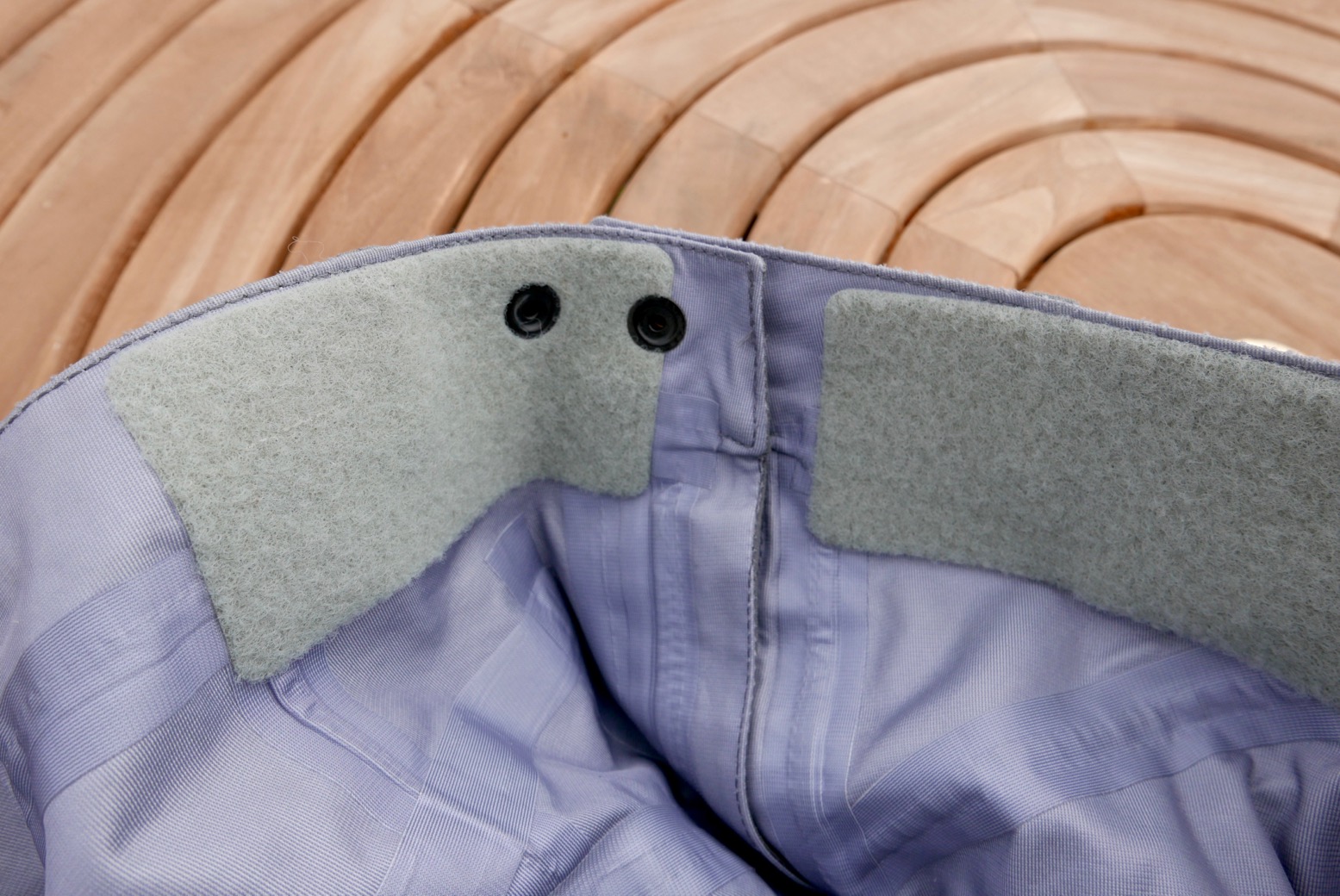
What you get I chose my ADs in ‘long’ to get right down over the boot. They have two-way 47-inch zips right down the outside of each leg, so if you want to vent you can modulate down from waist or up from ankle (or just use Twitter like everyone else). At the top you can also reset the waist circumference with studs by an inch on each side (above right). I have my 38″ Ls on the bigger setting and there’s a short elastic triangle at the back to take up the slack when lunch catches you with your trousers down. The zips have a full length rain flap of course, and the ankles have a big reflective panel (above left) allowing you to pull them in over boots or whatever. This is also effective in taking some of the 1220-g weight off the knees, especially as they’re so long (on my 38 Ls the inside leg is 34″). I wish my Klim Outriders did that (before I got it done myself). This support also avoids the need for braces.
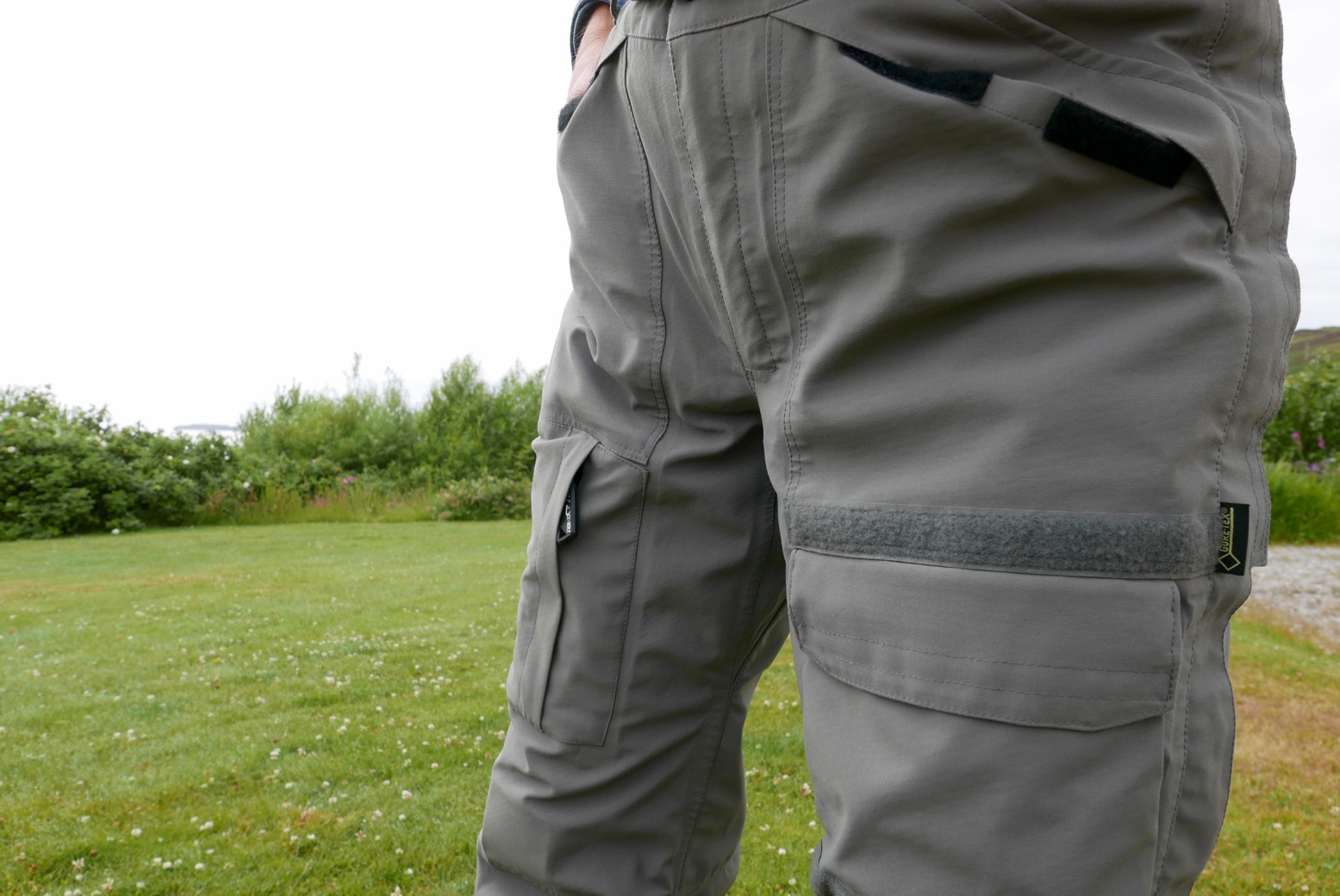
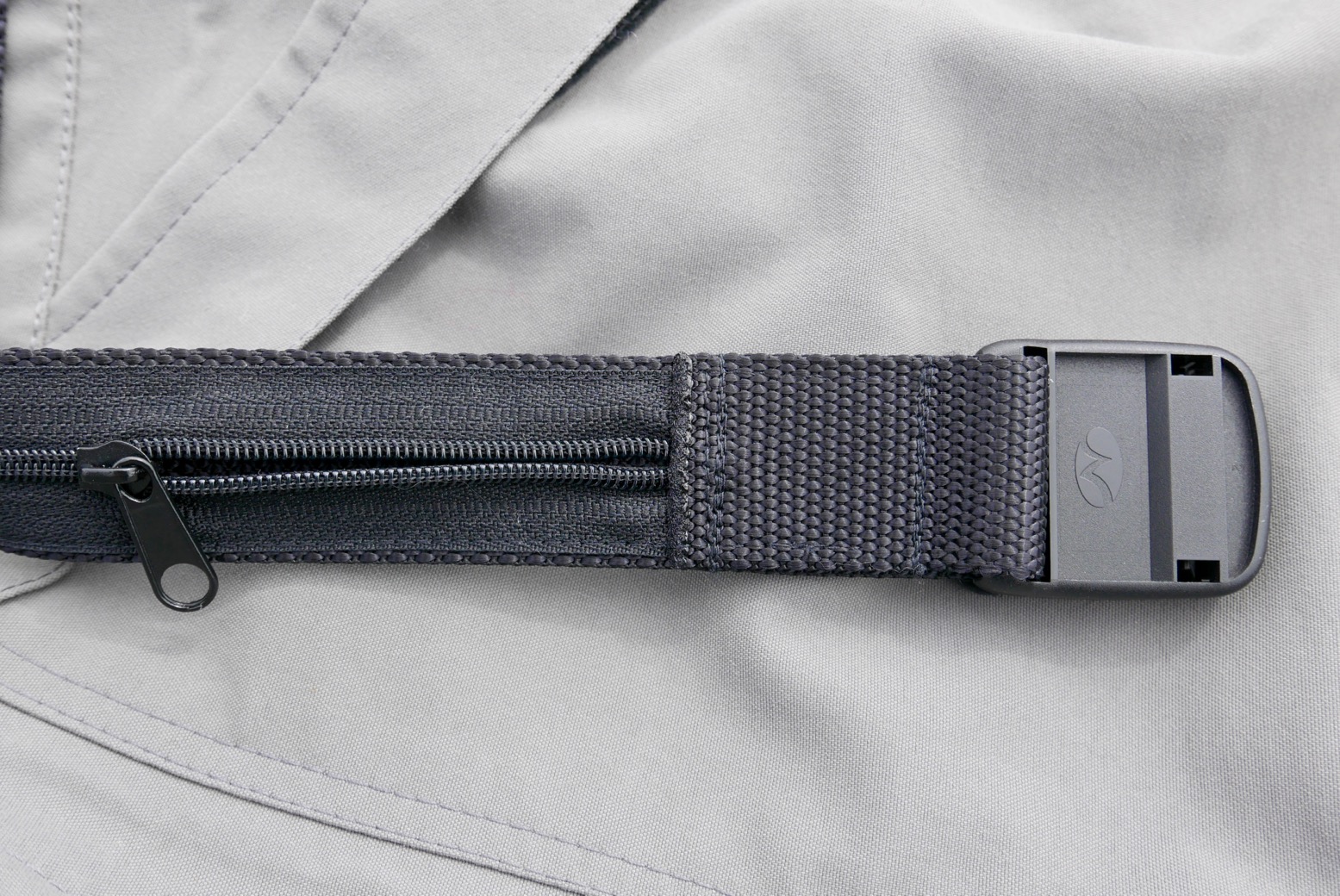
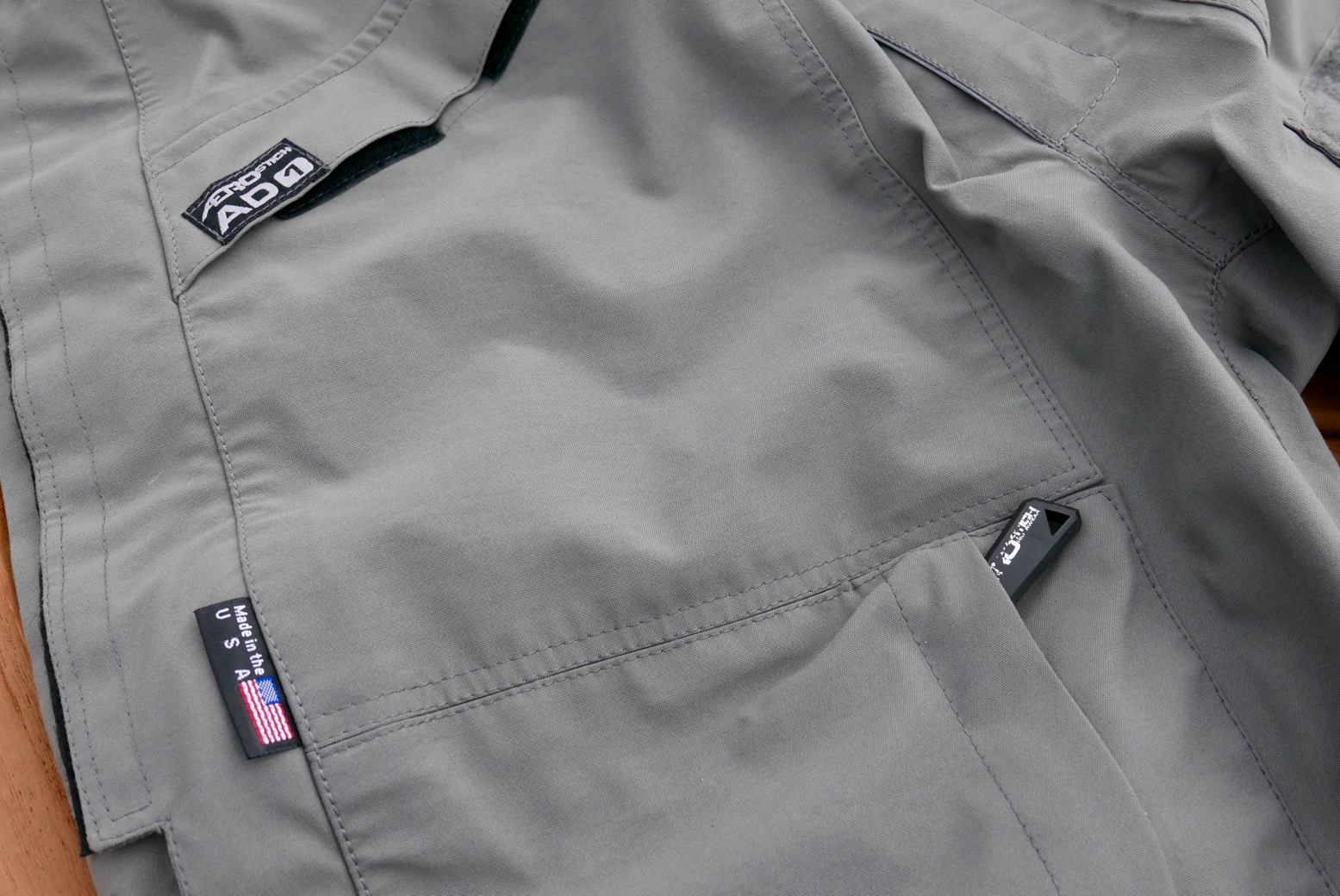
This is Aero County, Minnesota so you know there’ll be a few pockets knocking about. Left thigh has a 8 x 7-inch velcro™ flap pocket with more v*****™ over the top to take a map pocket. On the other thigh is a same-sized pocket with a water-repellant side zipper. At the hips are two more velcro™ flap pockets and there’s another v-free open pocket at the back, plus a cunning, easily missed SAS-style zipped stash belt (below).
SAS belt
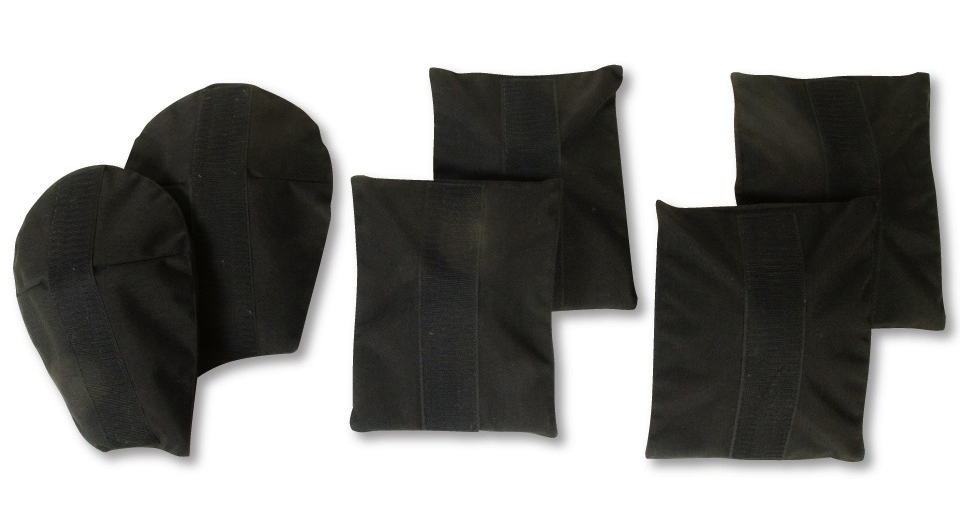
I’m not a great fan of the bulky TF3 Aero-armour (left), even if it might be technically better than slimmer examples like D30 (right) which will attach to the velcro™ inside the knee, or ForceField lattice armour which won’t. Knee pads are handy for kneeling by the bike of course, not just crashing. There’s more you-know-what™ along the sides of the waist hem and inside the shins, for more armour perhaps.
Recent trips have included coming back across close-to-freezing then rainy Spain one December, a dawn-to-dusk mid-summer ride up the left side of the British Isles where in June the chances of rain were high, a freezing ride across France in late 2021 on the Africa Twin,and see below 2024. On all occasions the AD-1s did the job unobtrusively, keeping the chill out, the rain off and the stuff in [the many pockets]. A classic unfussy and functional design as you’d expect from Aerostich, and quite probably comparable with any other high-end membrane rainwear out there.
Update 2024-5 After ditching my well-worn Klim Outriders and waiting for some ASpec Linesman pants, I wore my much underused AD-1s (on bare legs) for a fortnight’s riding in Jan-Feb in the mountains of Morocco. It was expected to be a chilly trip up to 3000m and down to 0°C some mornings, but was never that cold in the sun (it was in fact the warmest February ever in Morocco and RTW).
I was surprised how comfy and unobtrusive the AD-1s were. I never felt like I was wearing heavy nylon trousers. Part of this may have been good quality Gore-tex breathing away quietly, but more likely it was those close ankle closures which lifted the weight off the spacious knees while riding, reducing drag when getting on and off. I’m not sure they would have been so comfy in March, or if I had to get physical, but at least you have a full-length zip down the sides so can open them out like a dress and vent yourself into a trance. Having now tried the AS Linesmans, I prefer AD1s for what I do. October 2024 I rode my 450MT down across Spain and left it in Morocco for the winter. February 2025 was a lot chillier than 2024, and for the first time in a decade, I wore my AD1’s over my trousers every day, even down in the desert. Like I say, I barely notice I’m wearing them. Normally I sell stuff to try new, different or better. But I’m holding on to the 10-year-old AD1’s until they’ve had it.





 The suspension is nothing flash up front: an unadjustable fork, but the spring rate and damping seemed just right on the roads and the pistes. It goes to prove you can make a plain fork effective out of the crate without needing to offer expensive adjustments. Same with the back, although this bike had an Ohlins with a HPA, but who knows how old it was and what it’s been through. I never felt the need to adjust the preload, easy though it would’ve been. Occasionally both ends bottomed out which shows the full range of travel was being used.
 The low seat – probably under 800mm – was as bad as the 650’s, if not worse, due to scant padding, but standing up wasn’t noticeably hard and it certainly eased getting on and off. I can’t say there was any intrusive vibration through the worn-out grips or pegs and although there was no screen, I never sustained high enough specs to make that a issue either.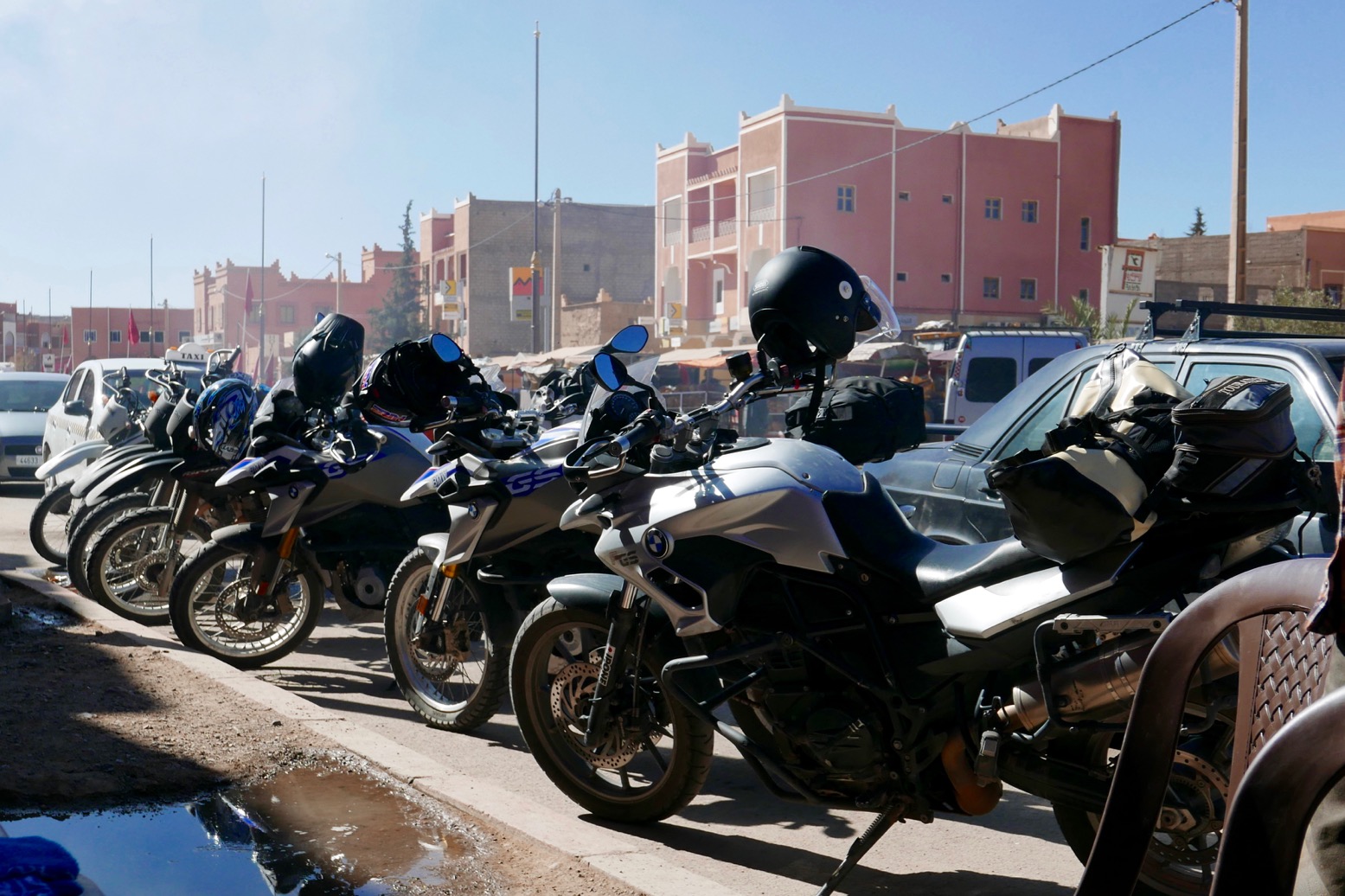





































 Adventure Motorcycling Handbook