Unlike most riders, I am curious to know what my bikes actually weigh – especially before and after a makeover. For years I’ve used the bathroom scales trick; balancing the bike with the scales under one wheel, then the other then add the two figures.
You will find this old thread on Advrider with the usual mix of sneering, humour, muddled thinking and bare-faced logic. Read to the end and you’ll see the single bathroom scales technique has been proved to vary at just 1% over other methods like recycling weigh stations or hanging scales. Also, the over-thought need to horizontally level one wheel to match the height of the other resting on the scales has proved not to be significant. But the ground surface must be horizontal and the actuating feet under the scales must all be in contact with the ground (or stick the scales on a board).
I went to a car park with lots of space and excellent horizontality. It can take a few goes to get consistency; eventually for my GS500R I got a reading: Rear: 104kg Front: 86kg Total 190kg with half a tank of fuel, or about the same as a BMW Sertao.
That is about what I expected: a few kilos added over the 186kg claimed stock weigh following the addition of a DR650 fork, crash bars, the pipe rack, SV shock, screen, bigger bars and a handful of other bits. Don’t know how the 19-inch SM Pro wheels with Tubliss compare to stock GS500 casts. You’d hope a small weight saving but cast wheels have a habit of being lighter
Since then I got some Salter Razor (right), now only 14 quid off amazon. Who knows about actual accuracy but this one is much more consistent than the round one above and much easier to use.
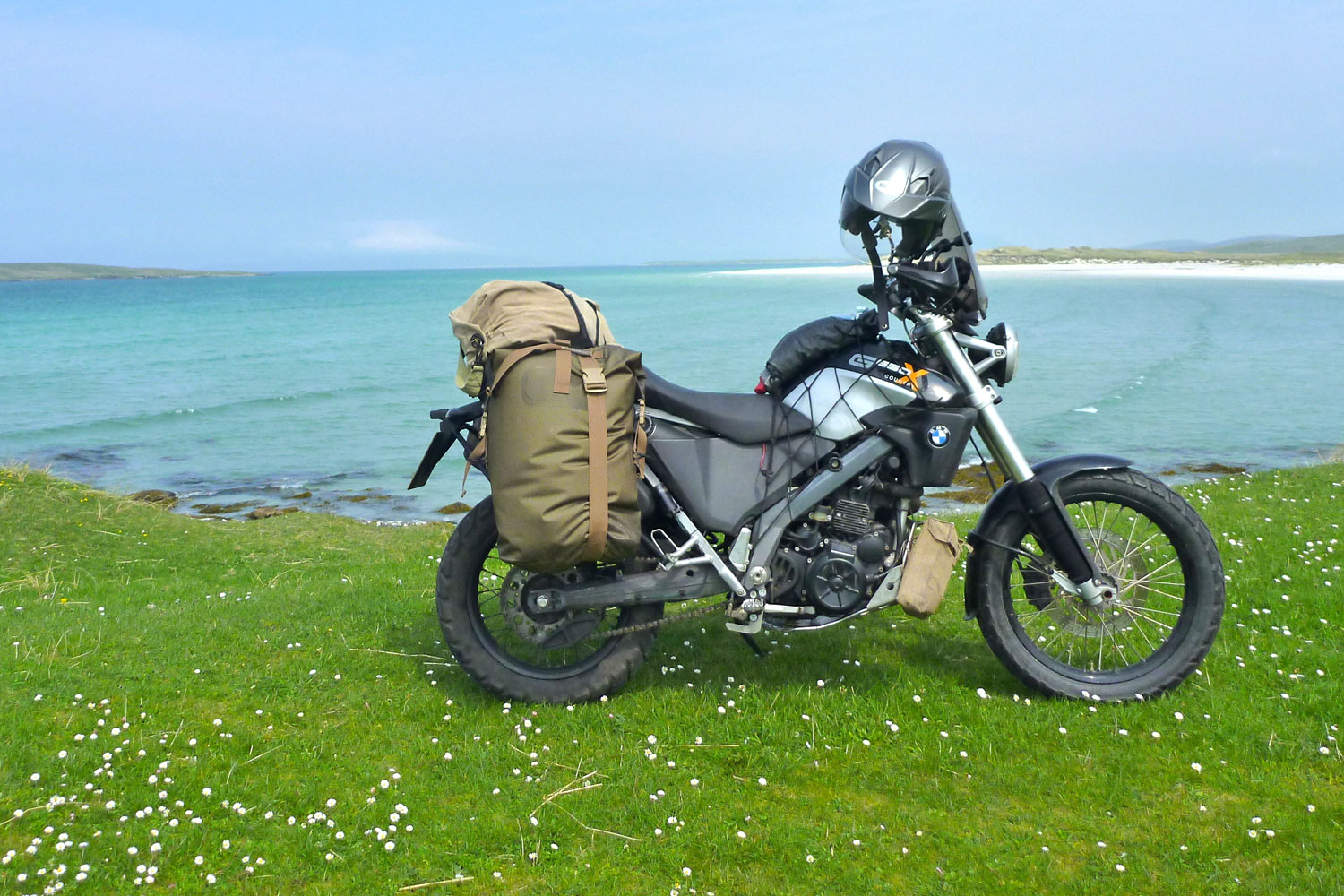
BMW X Country ABS, full tank, plastic handguards Front wheel 73kg Rear wheel 90kg Total 163kg – a very good weight for a pokey 650, if I may say so myself.
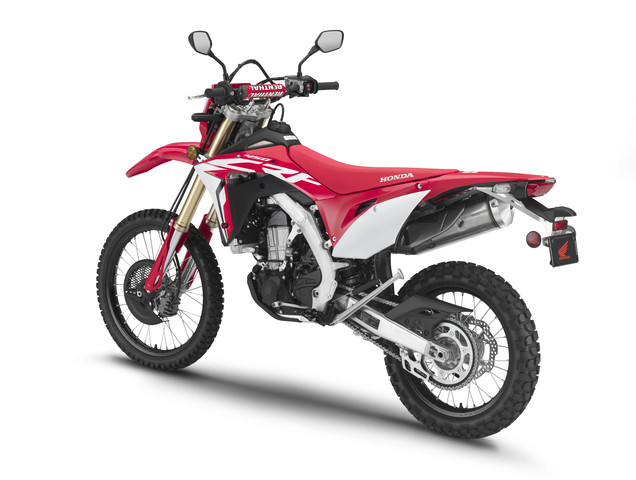
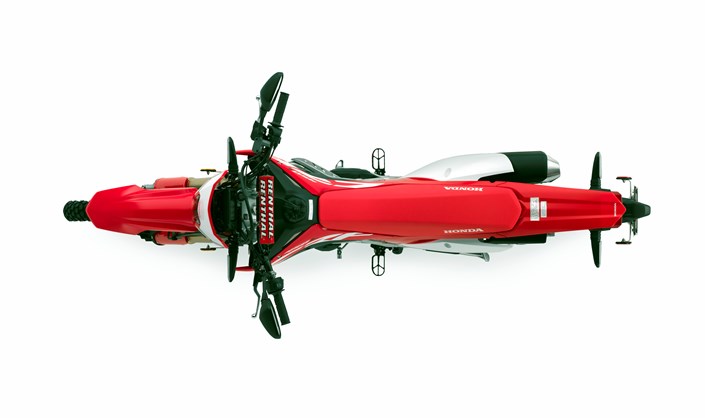
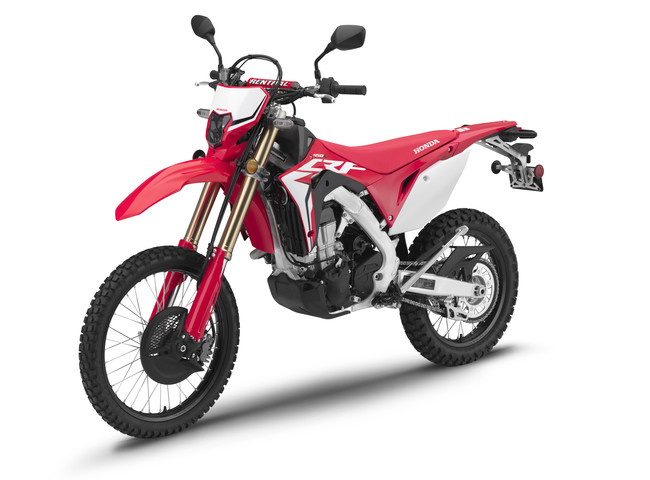
The two specs of CRF450L have merged. The full power, barely-road-legal, ‘red KTM’ dual sporter of the US is now effectively sold in the EU and Oz in a bid to help sales. Except the massively detuned, 25-hp version now comes with the power booster kit (ECU + pipe). More here.
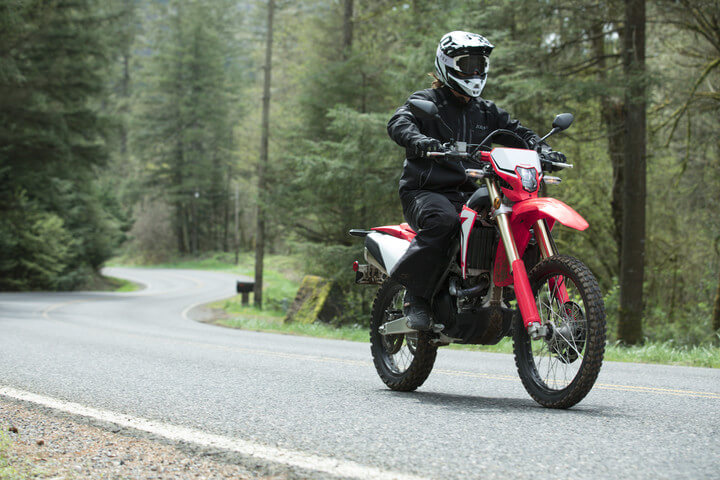
In May 2018 several people pointed me towards Honda’s announcement of their upcoming CRF450L. Was this finally the bike I’ve been droning on about for years? A lightweight, all-road modern travel machine, based on the now proven CRF250L trail bike (right) which I bought myself soon after it came out?
Short answer: no.
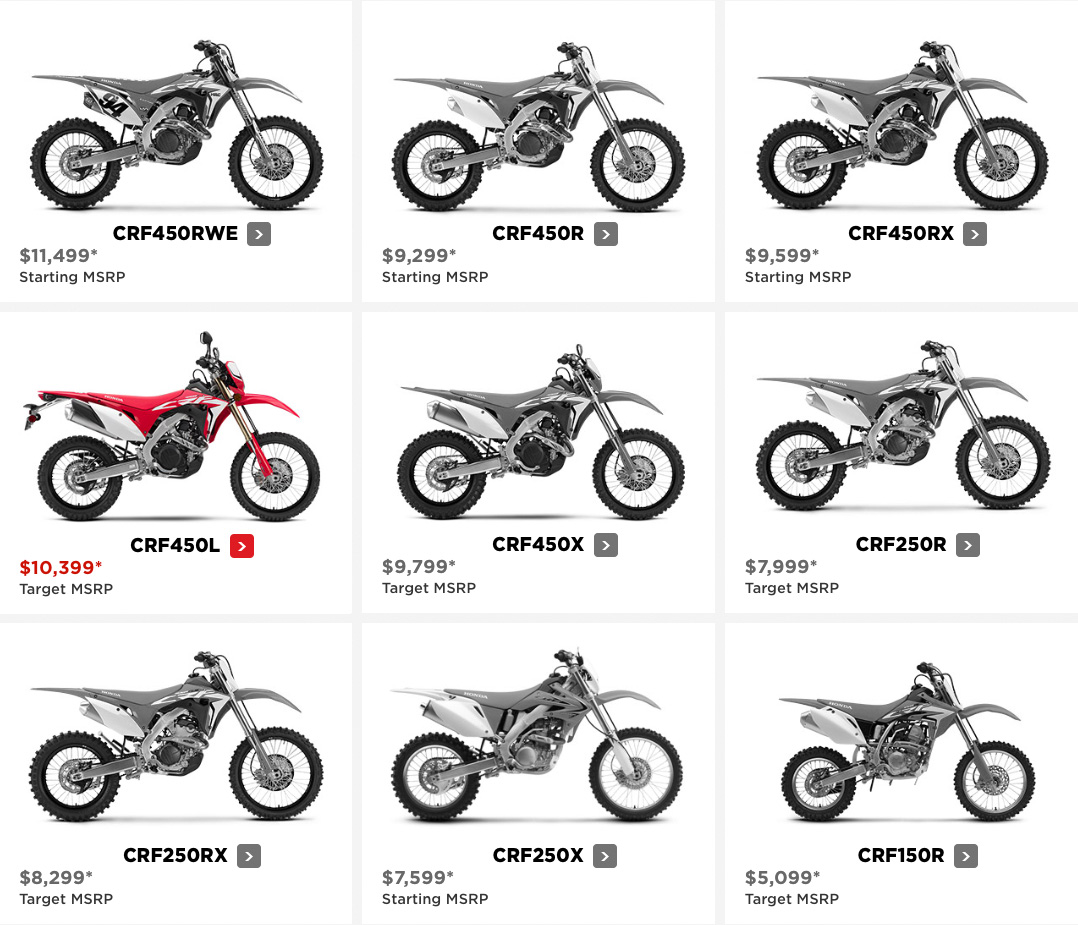
When I first noticed its very close resemblance to the long-established 450R dirt racer, or indeed the similar, street plate-able (in the UK, at least) CRF450XRL (right), I was disappointed. It was just a barely street-legal dirt bike for the US with the same yard-high razor saddle and crazy 50+hp with maintenance intervals measured in hours. Blink and you’d miss it among the spread of near-identical current Honda powersports dirt racers on the left.
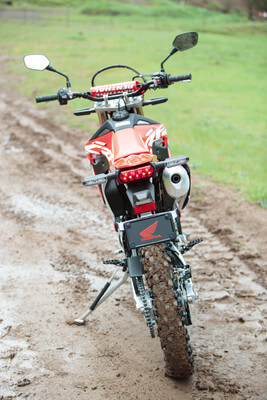
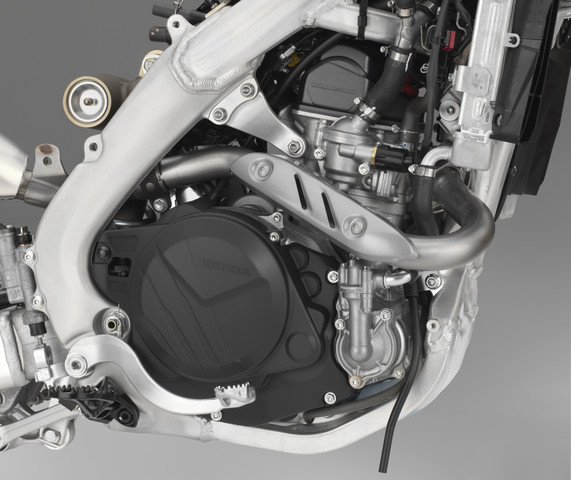
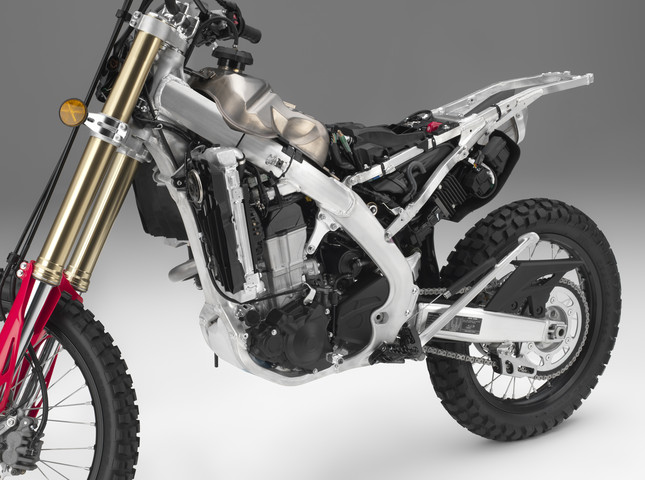
But, based mostly on the thoughtful preview on this unusually well informed enthusiast’s website (a Honda proxy?) I’ve given the 450L a second look. Images here are mostly all pinched from there, but are probably all Honda’s anyway.The problem has always been that Honda lacked a suitable 450 engine to stick in this dream all-road travel bike of ours. And on the road the 450 class seems a bit dormant. Plus, the idea of a rugged, lightweight adventure biking in the mould of CCM’s short-lived 450GP may be much talked about in our tiny adv echo chamber, but as we know, adventure motorcycling is really another name for big ‘sports utility’ bikes. Honda would never sell enough 450Ls to make it worth their while.
The 250L trail bike uses a heavy but durable CBR road-bike engine which in 2014 became a CBR300 with just 36 more cc but more bottom end. Some have been waiting for a CRF300L to follow or have shoehorned in CBR300 motors into 250Ls. But clearly you can’t squeeze another 150cc out of that barrel.
What Honda have done for the Europe market seems unlikely to be successful: they’ve detuned a 450R racer by over 50% to the 250L’s output – less than my similarly high-spec WR250R (left) which weighed about the same 131kg. But to help poor sales they now throw in the pipe and ECU kit to regain full power.
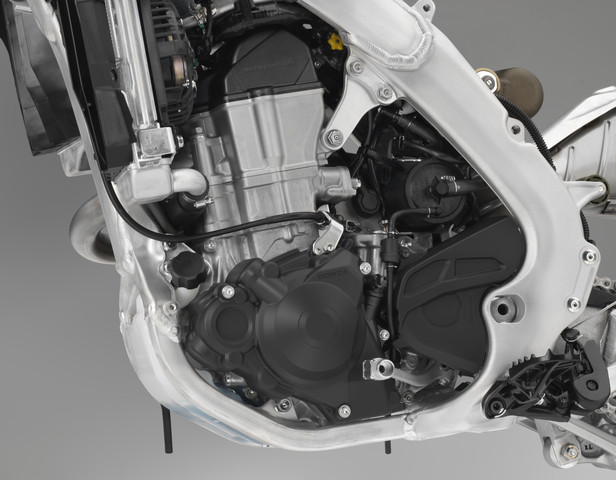
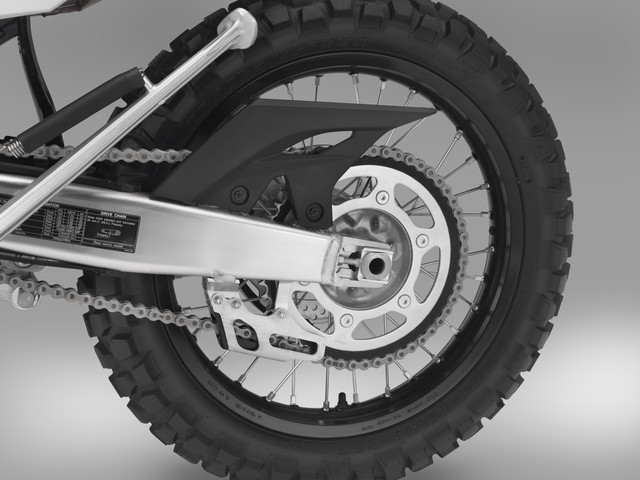
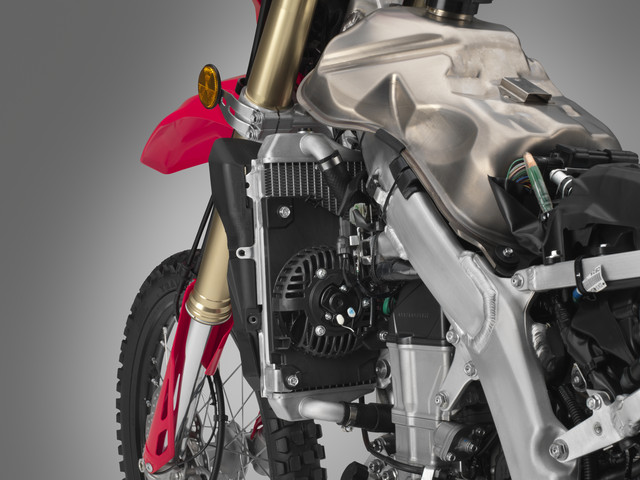
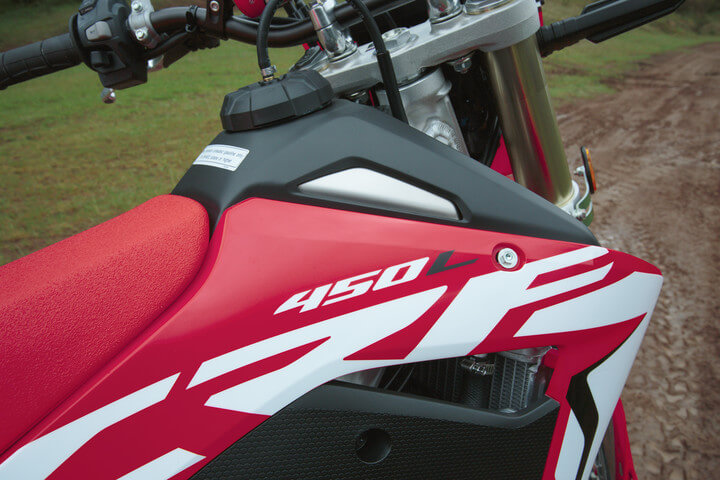
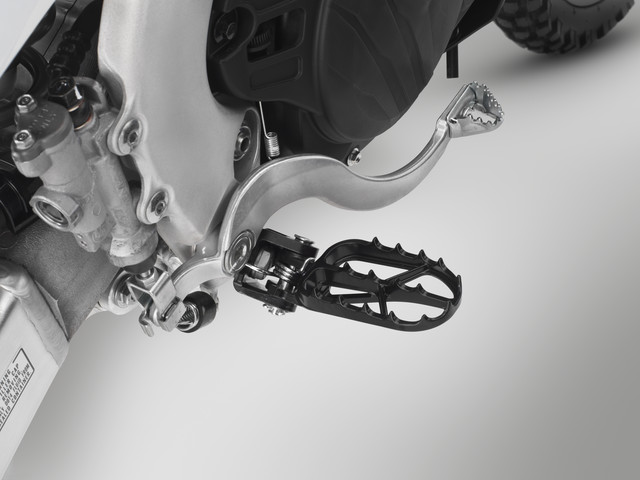
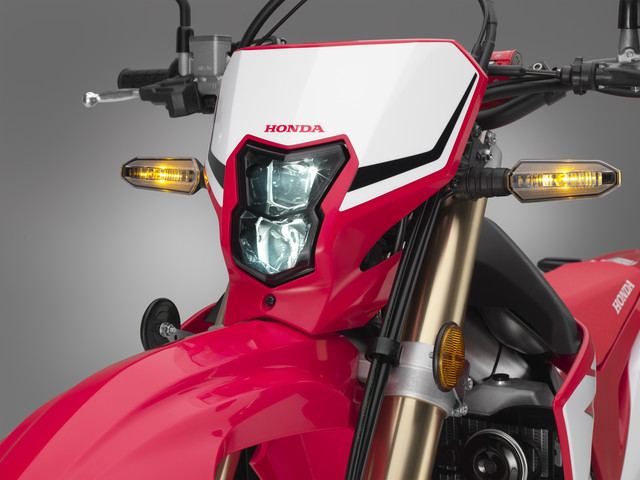
To achieve this they added the lightest possible road-legal LED lights, a battery and decent alternator, a more durable three-ring piston, side stand, necessary emissions stuff including a cat and big pipe (weight to be saved there), cooling fans on the extra big rads, a wide-ratio 6-speed box, an 18-inch rear with the all-important cush drive rear hub and even a lockable fuel cap on the tiny titanium tank. All this adds a hefty 19kg over the 450R racer, but at 131 kilos that’s still pretty good.
But what still throws me is the new 450L’s schizophrenic nature:
• fully adjustable suspension but 25hp – 1hp more than the 250L; a few less than a WR250R
• ‘enlarged’ tank in titanium, no less, but still only 7.6-litres (1.66 Imp gal)
• disingenuously carries the ‘L’ road bike label but nothing like a 250L
• 20,000-mile rebuilds and 620-mile oil changes
• Puny 135-watt stator
The power may be modest, but with compression down to 12:1, the claimed torque is 40% more than a 250L which, along with more crank mass, proven efi and six wide ratios, ought to make the 450L a tractable trail bike that’s less revvy and vibey on the road. It ought to be easy to lower too. Just a shame they couldn’t have managed another 10hp and normal oil change intervals. The power kit sees to the former need.
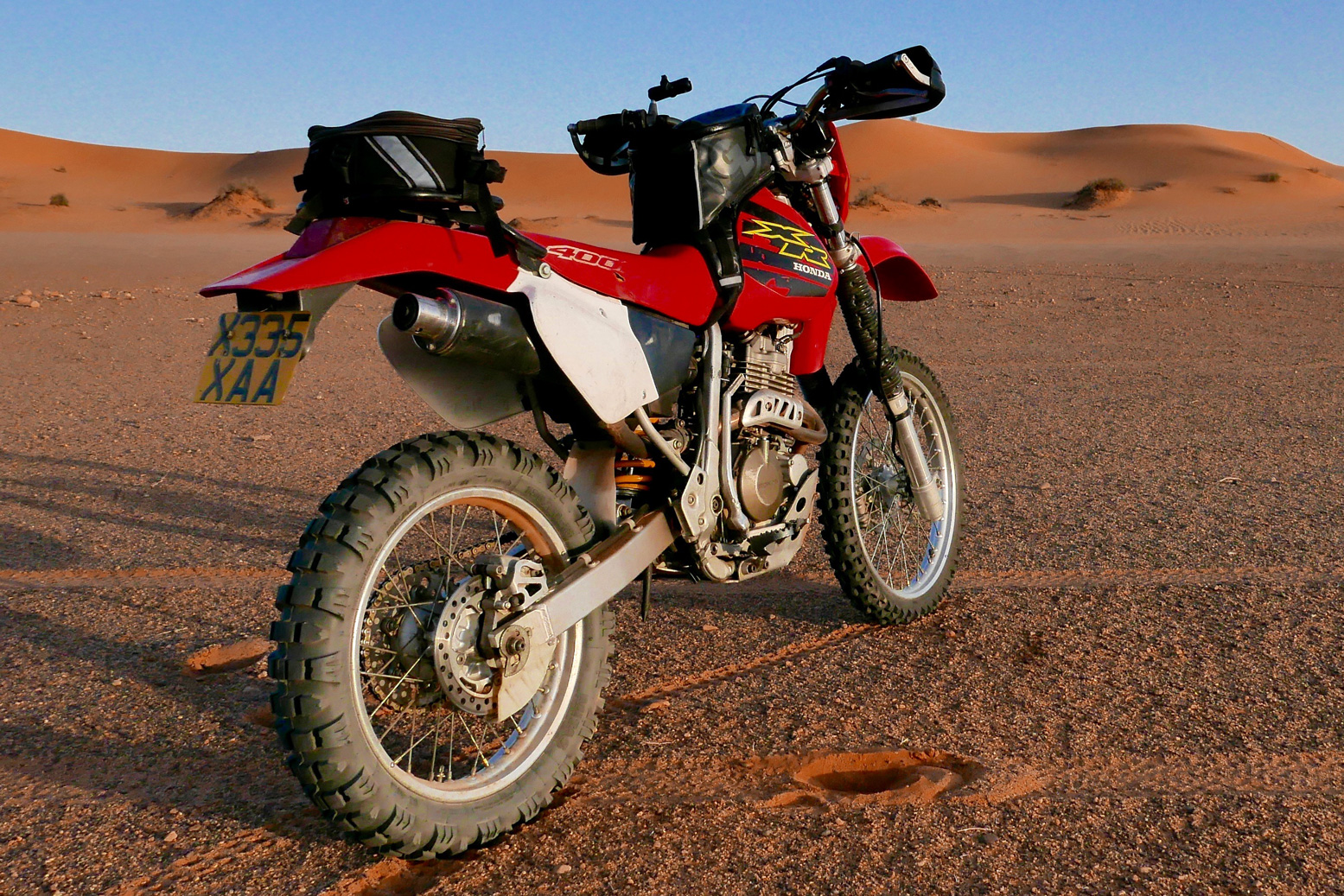
The new XR400? It’s as close as we’re going to get from Honda, not that the XR4 (right) was any kind of travel bike in its day. A great dirt bike for sure, but the tall saddle, kickstart and the frail subframe held it back for long hauling. I’m probably thinking of a modern DRZ400S (left), a proven if unsophisticated small travel bike which I’ve nearly bought many, many times. It’s been unavailable in the UK for over a decade, but it’s still sold new in the US for under $7000.
The question is: could the 450L’s claimed 25hp be enough? Possibly, but with the tiny tank and crazy ‘Africa Twin’ price, and high maintenance no one I know is that interested in finding out.
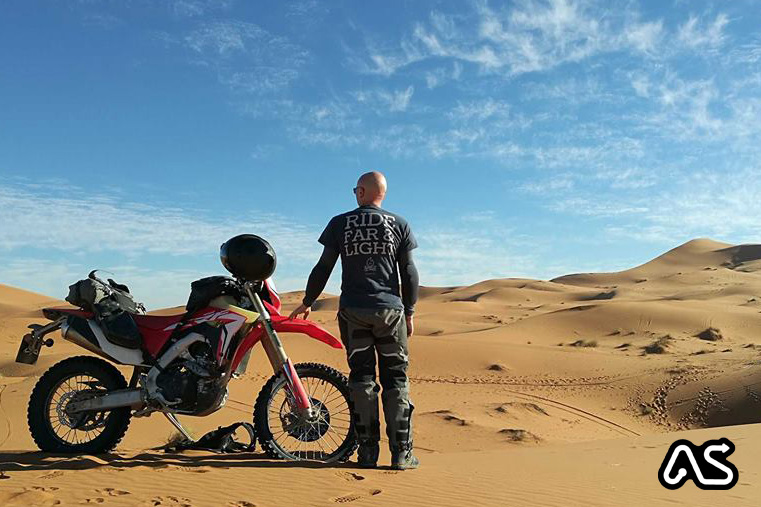
Update: over New Year 2018/9, Adventure Spec’s Dave Lomax (above) was exploring Morocco on a lightly modified 450L. Look on their Facebook for more.
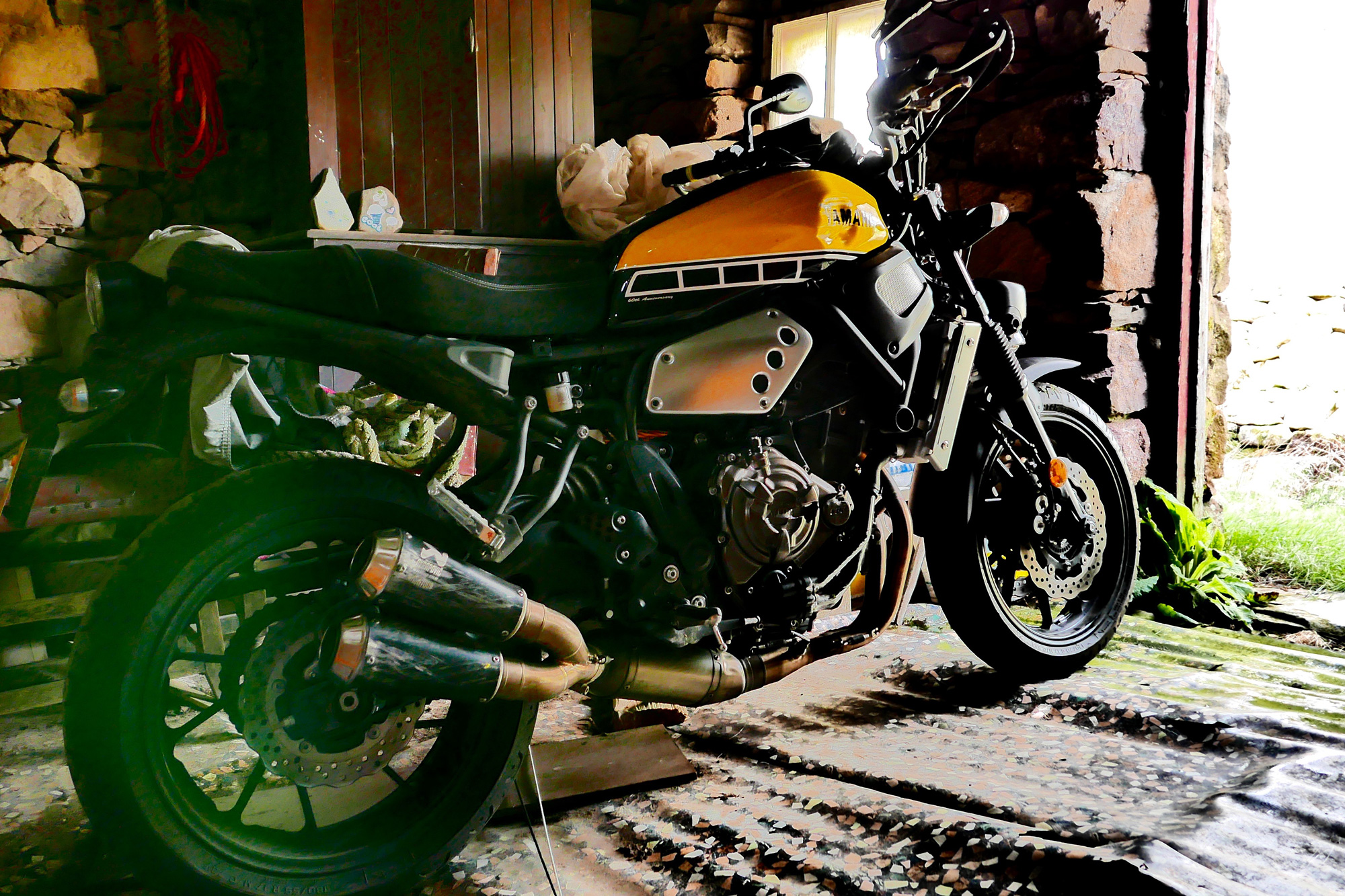
My XSR came with a great-sounding Akrapovic twin-pipe system (right). OK, it was pretty scratched, but so was the rest of the bike. In Morocco last year I was expecting the engine’s low sump to be vulnerable so figured better to let a bulkier stock pipe take the beating than the tasty-sounding but skinnier Akrapovic. Used stock XSR pipes go for £100.
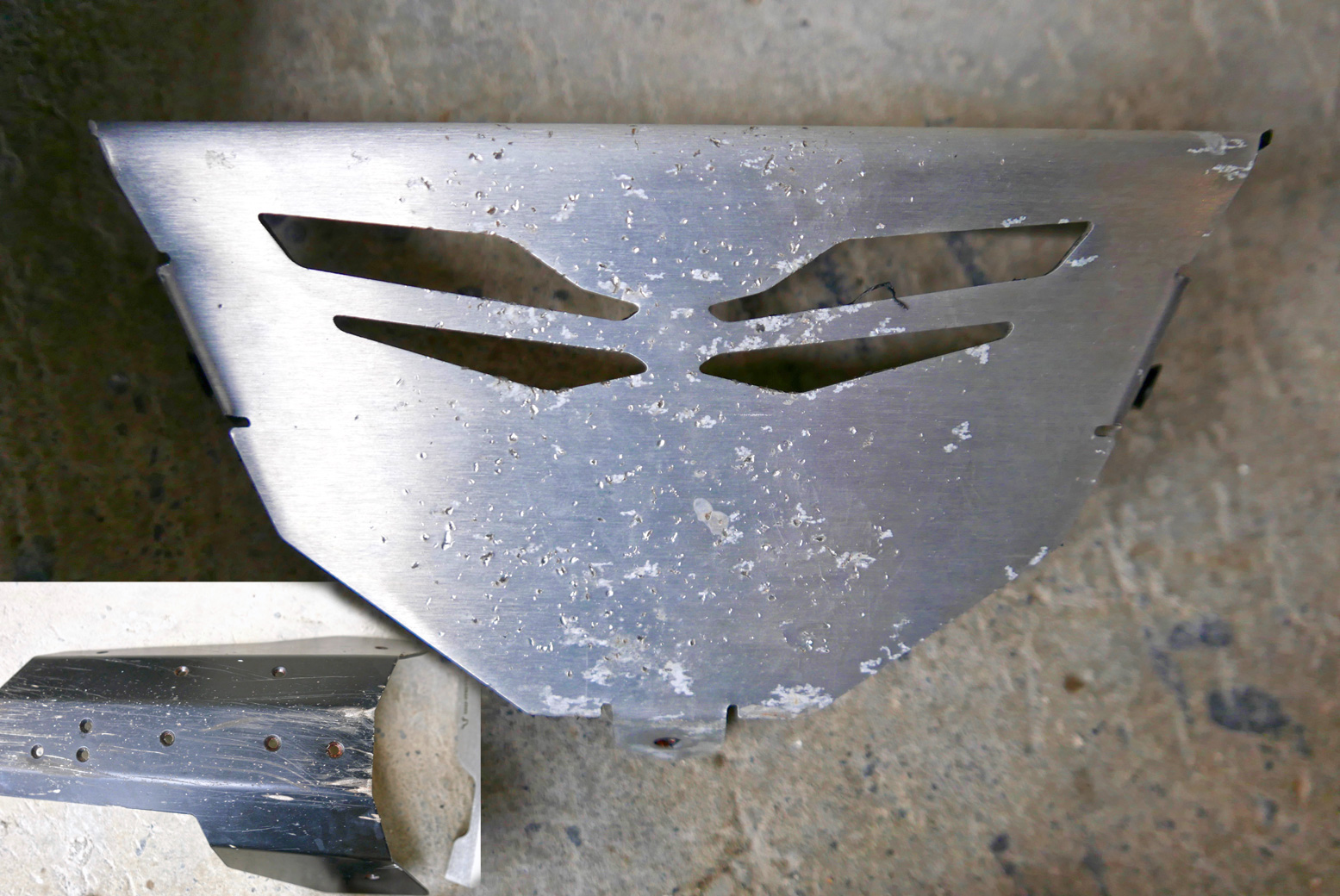
Turns out, thanks to the one-inch lift and the modest speeds I rode in Morocco, the XSR barely scratched the sump. Most of the damage was from flying stones on the front plate of a SW Motech spoiler I fitted (left). The flimsy spoiler doesn’t claim to be a proper bash plate, and as it didn’t do that much I’ve since flogged that too. Now I’ve decided to keep the XScrambleR I figured it might be fun to unleash some of the engine’s characterful sound with a rorty pipe. Maybe I should have kept that Akra, but actually I prefer a stubby stock-style pipe which keeps the back sides slim for baggage.
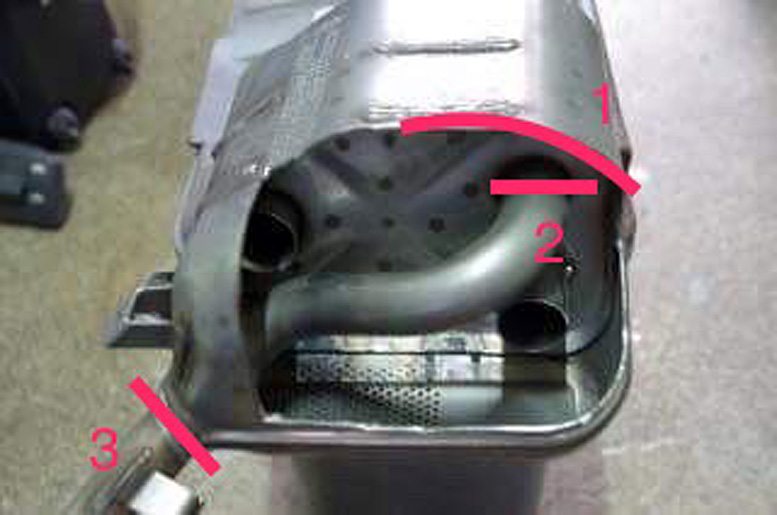
On the XSR forum a guy shows how to extract a fruity noise from a stock system by cutting open the box, excising a section of tube as shown left, adding a bigger bore out-pipe and closing it all up with weld. I like the compactness and partial protection of the under-engine system, but this was all too much work for me with a junior hacksaw and some Chemical Metal.
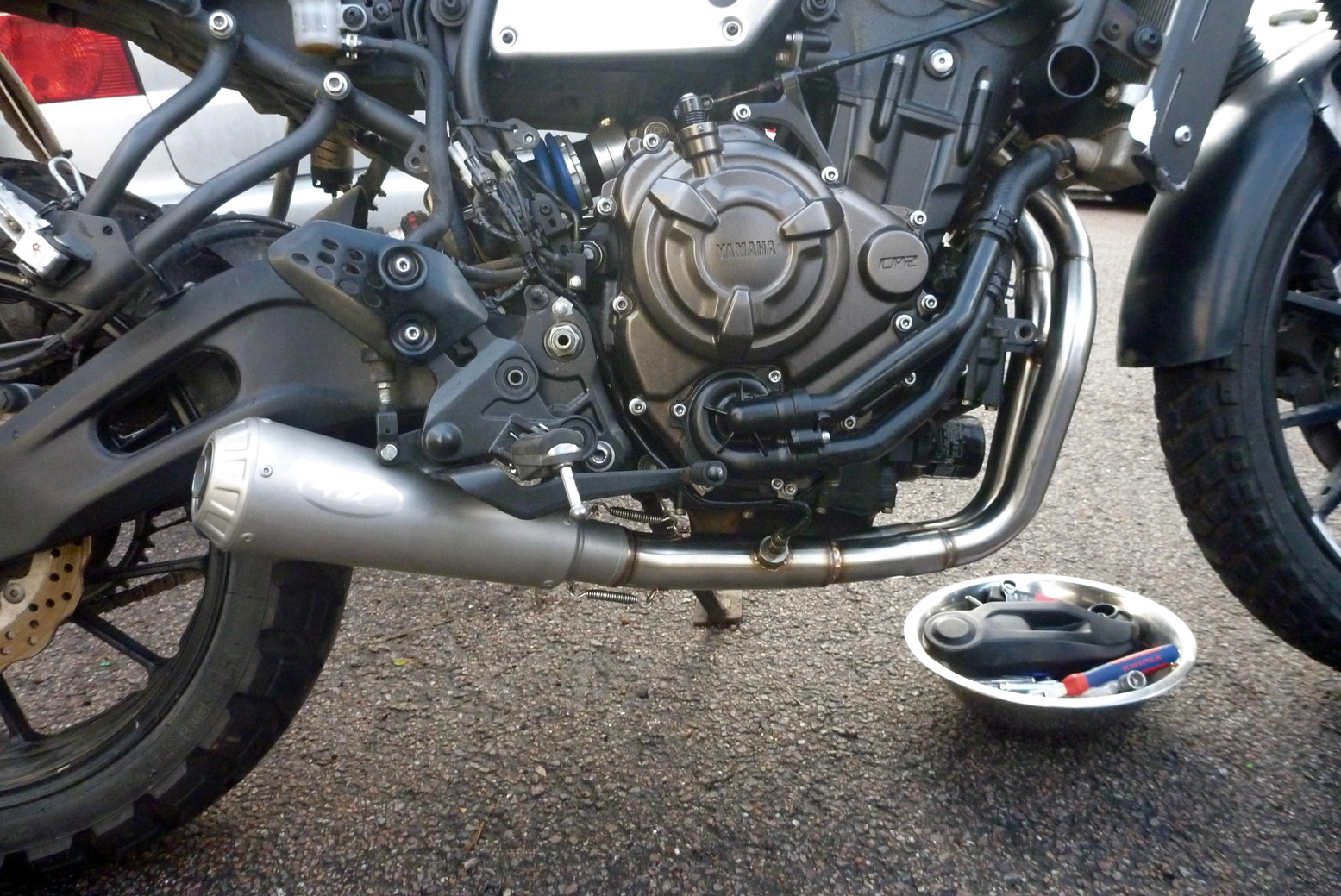
TEC’s XSR system is possibly made in the UK and cost just £260 – the cheapest aftermarket pipe for an XSR as far as I can tell. As I learned with my TDM900, aftermarket pipes are pretty much the same [range of] silencers added to bespoke headers with an O2 sensor to fit your bike. There’s no science or research in finely tuning the entire system to fit your particular machine, but as long as the bike runs much like it did before, most are happy enough with the better sound. TEC’s silencer is straight-through, like an old Conti, and I worried it might be too loud. Turned out it’s just right to my ears; louder than the Akra but loads better sounding than the stocker. It fitted easily enough; one supplied mounting bolt was way too long and the whole thing sits fairly close to the swing arm. The pipe weighs just over 2.5kg; 4.5kg less than the stock unit which is worth keeping for an MoT.
Running through town I didn’t feel it was anti-social, and at 70 on the motorway you can hear the rumble without being worn-down by the racket (compared to the wind noise and all the rest at that speed). Some talk of getting an ECU re-flash; not even sure what that means but no warning lights came on. Others talk of running it without the baffle; I wouldn’t consider that for a second. There’s a difference between a good, deep sound and an outright, wince-inducing din. Of course the offset beat on any 270-degree parallel twin like the XSR produces one of the best sounds in biking, so you get a free pass from Neighbours Watch, anyway.
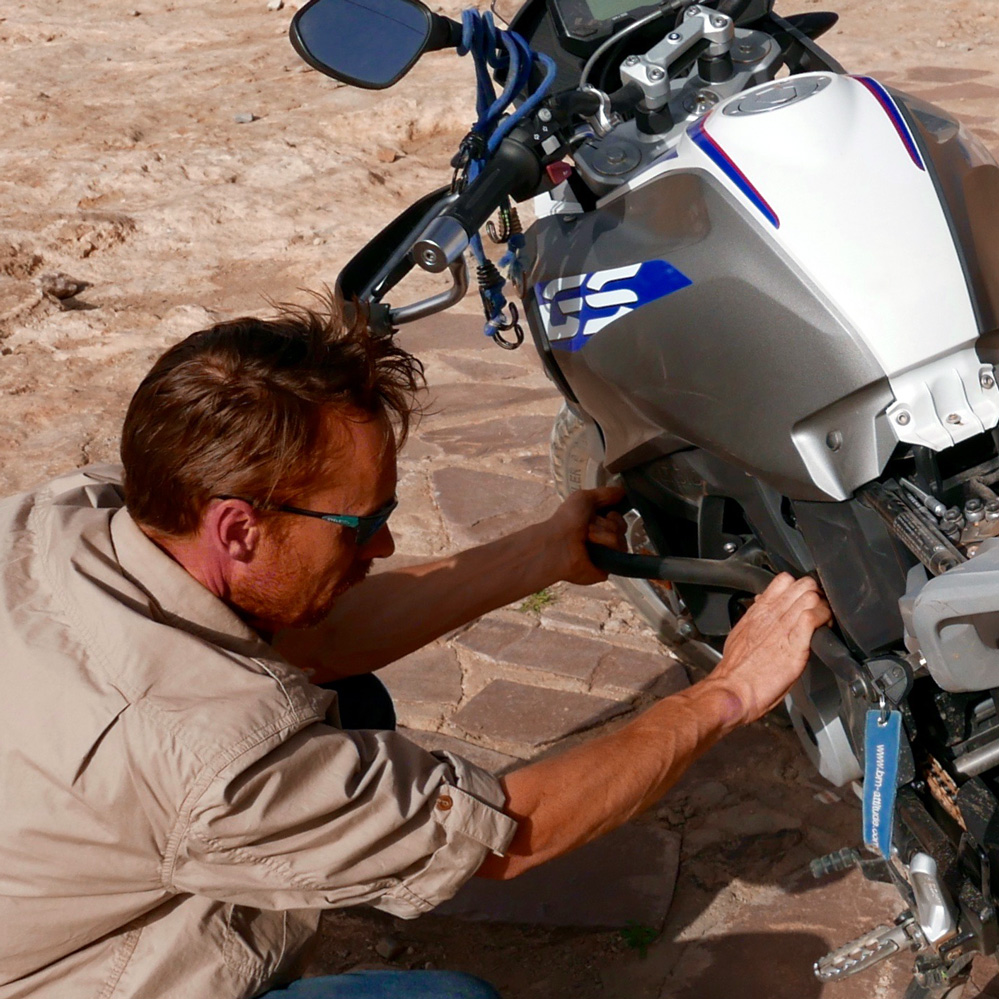
Just before going away I rode my now fruity-sounding XSR up to Simon’s who helped do up and then rebuild my XR400 after riding with us in Algeria and more recently in Morocco on the G310GS. Simon (right; more below) likes to engineer and is currently completing an electric-start XR400 as well as a ‘350’ barrel and piston kit’ for a TTR250, his trail bike de choix.
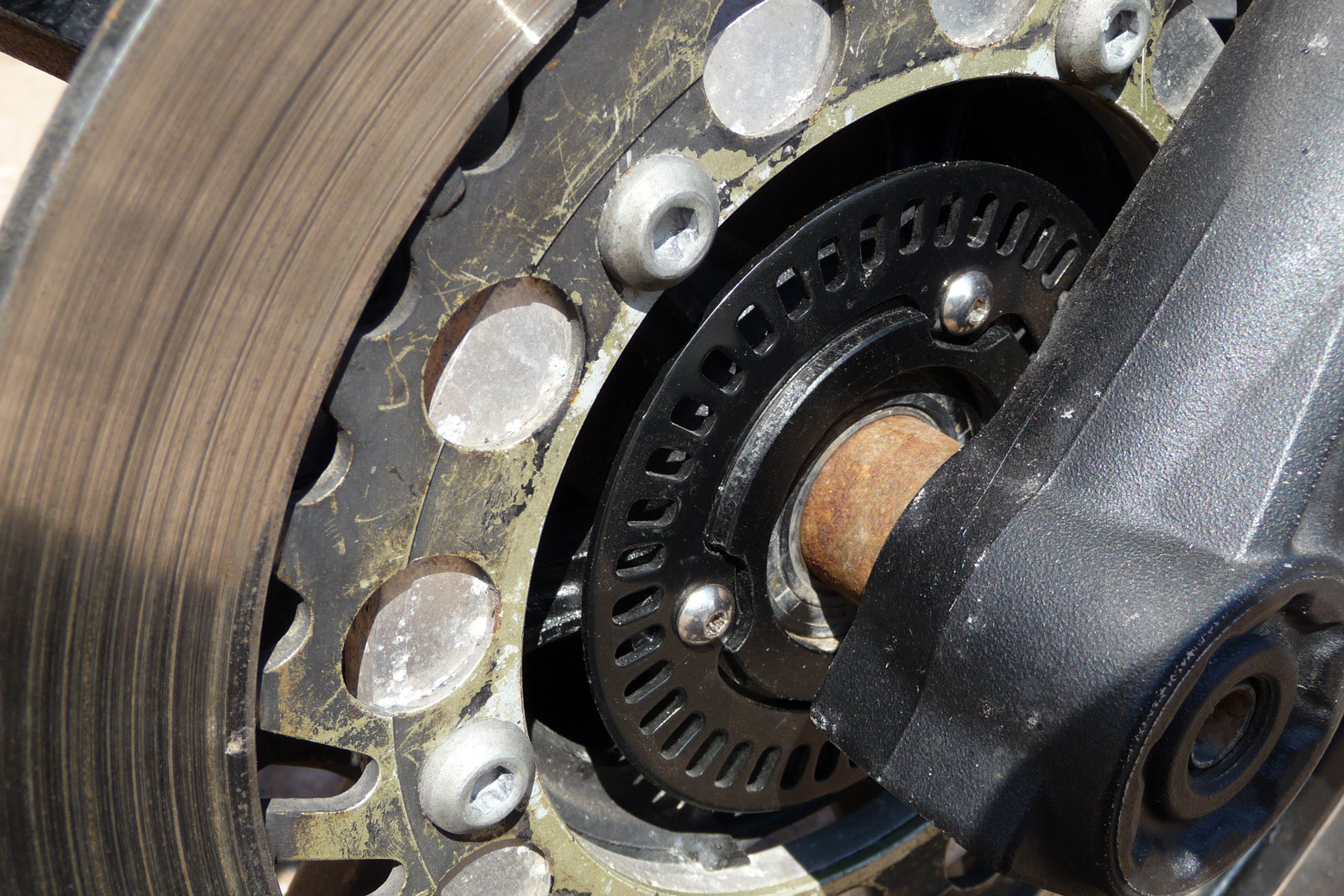
Equipped with a lavish, well-lit workshop and not a humble kerb, he worked out a way to attach the original ABS ring from the XSR front wheel onto my 19-inch XVS950 so the XSR-specific slots communicate via the adjacent sensor and the ECU to make the mildly annoying ‘Warning! ABS-not-working’ light go out. Can’t say I missed ABS, certainly not on the dirt in Morocco, but overall it’s a benefit.
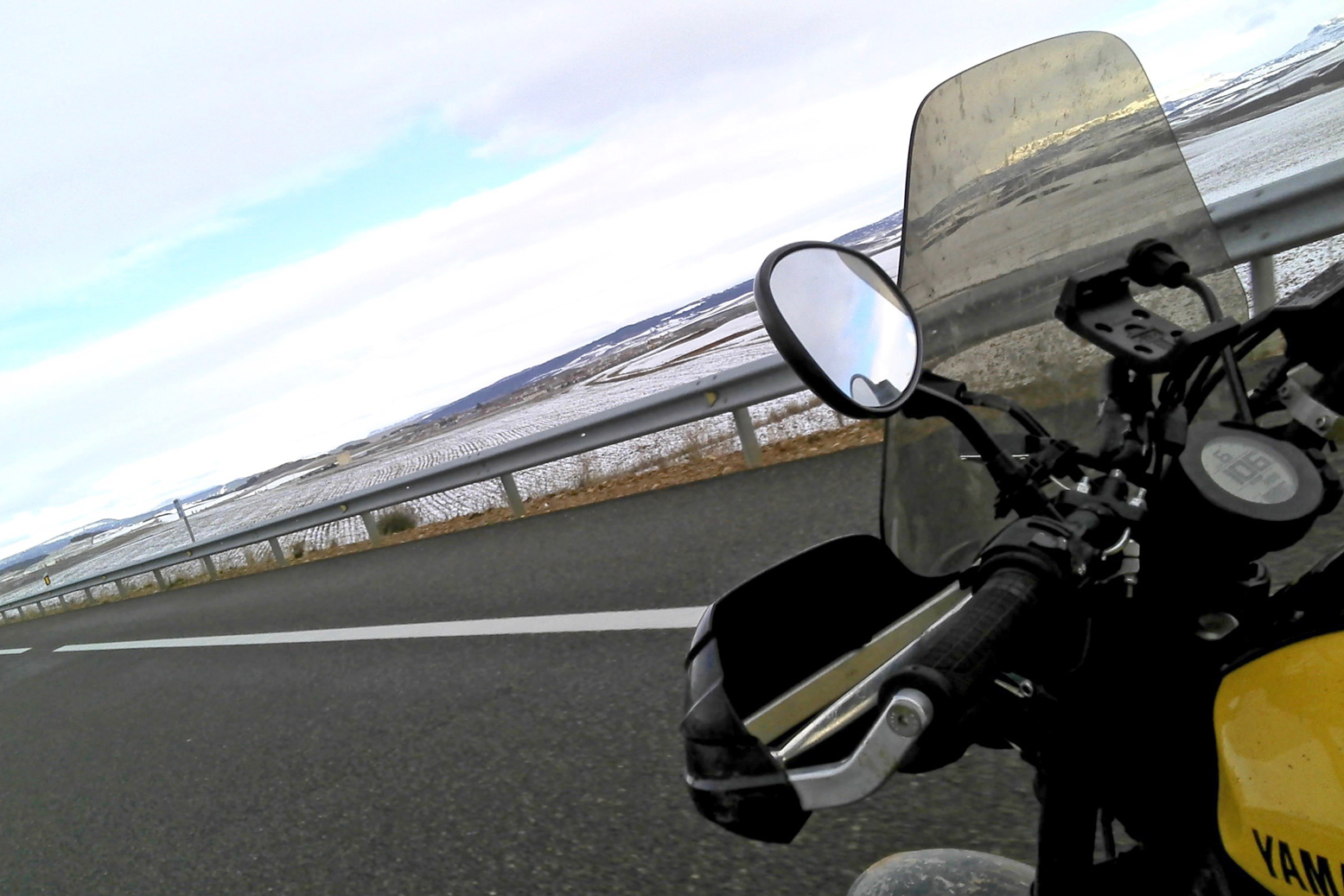
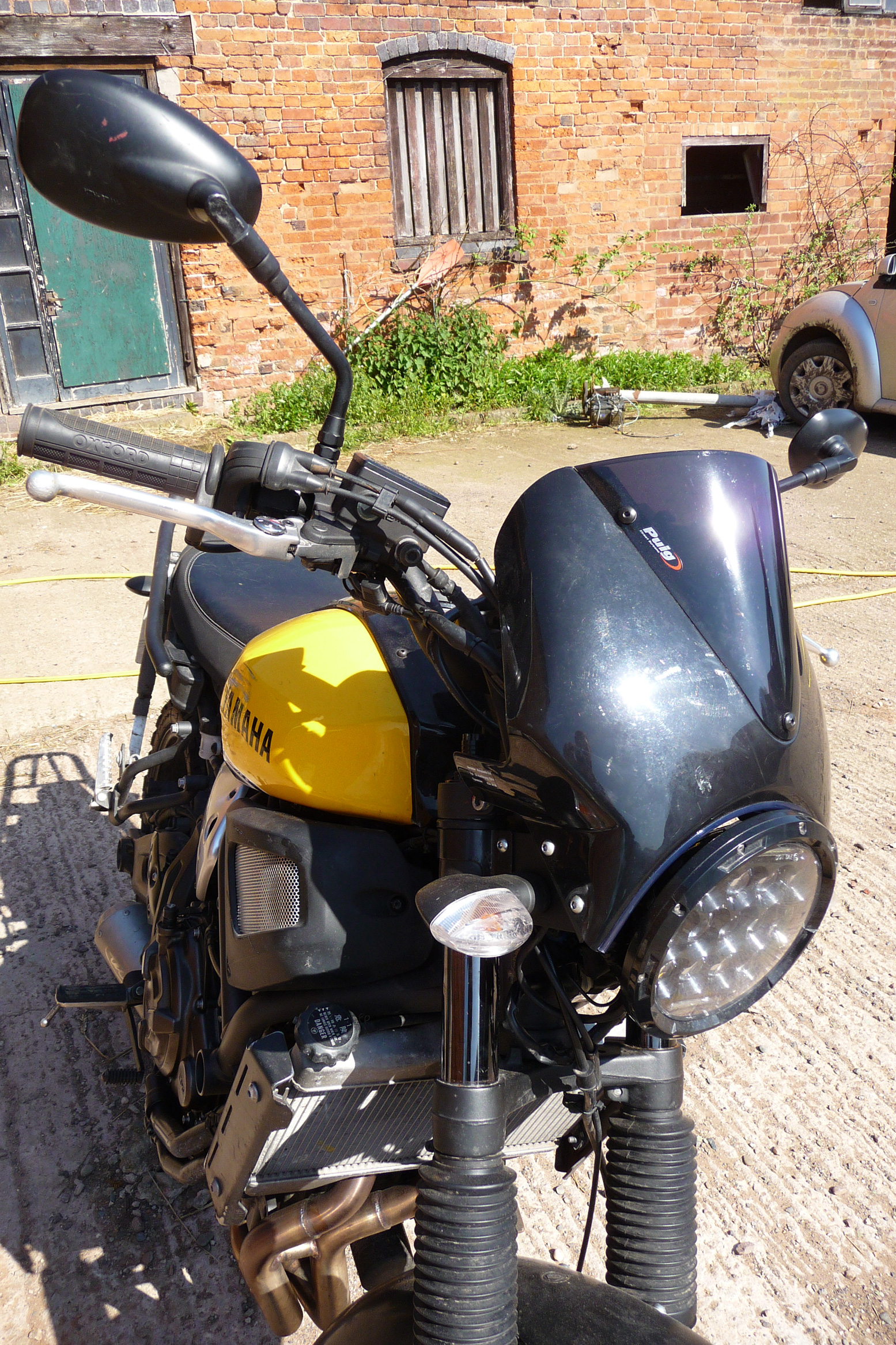
My much reused Spitfire screen I fitted to get to Morocco (right) was too low for long road days and got removed. For the moment Simon mounted a cheapo Puig headlight cowling to cover the wiring exposed by my non-standard LED headlamp. It actually fits pretty well, even if it’ll provide even less protection for the ride down to Algeria this winter. I’ll probably fit something taller or may even Motorail to Marseille, like we used to do.
Those inexpensive fork preloaders worked surprisingly well on the stock springs in Morocco and seeing as the bike was OK on the dirt, I also decided to invest in a set of firmer fork springs. They say MT-07s and maybe XSRs too originally came with springs rated too soft at ‘7.8’ Newton somethings. Later they went up to 88 (on MTs only?) but you’ll also read that 90 or even 95 is best.
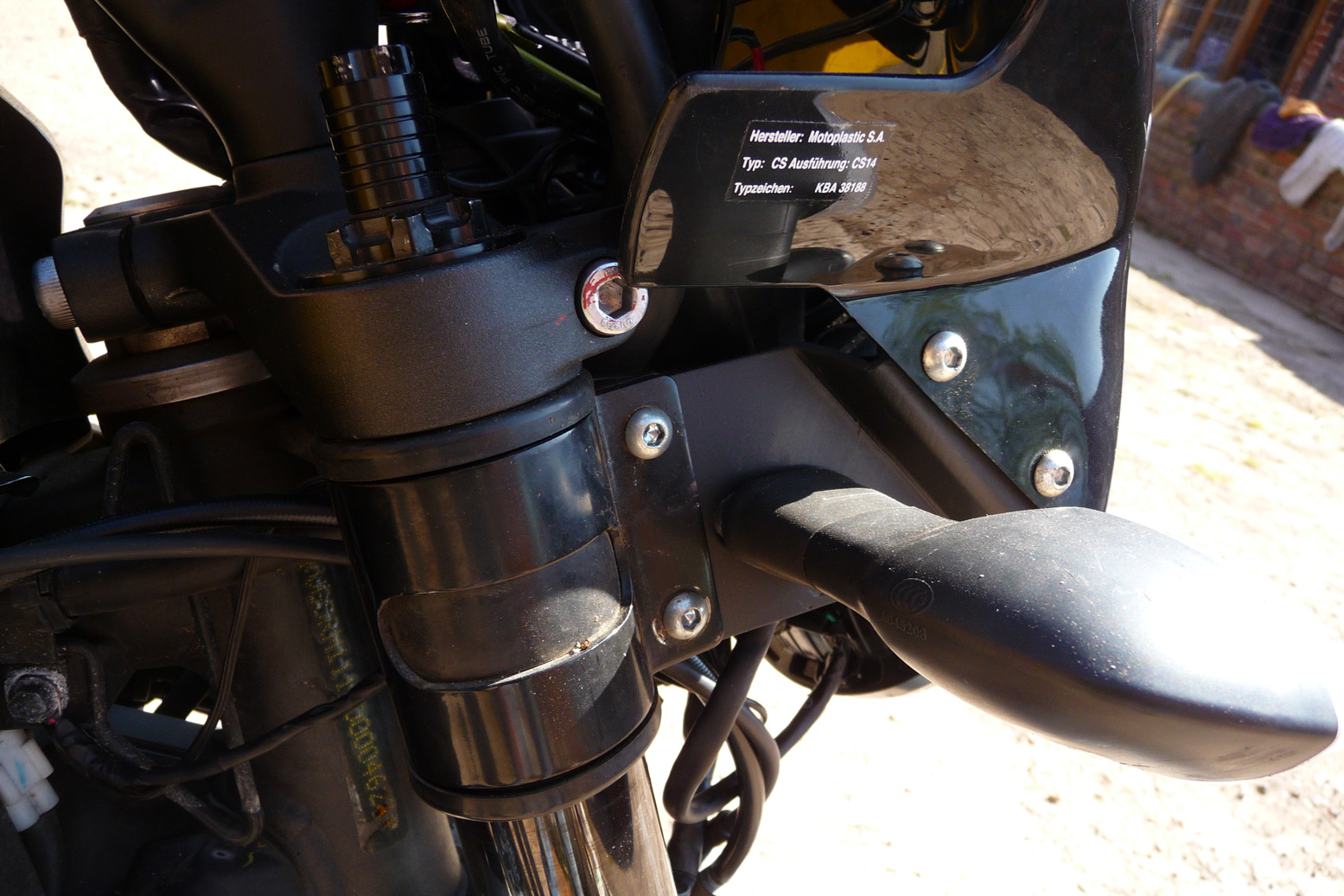
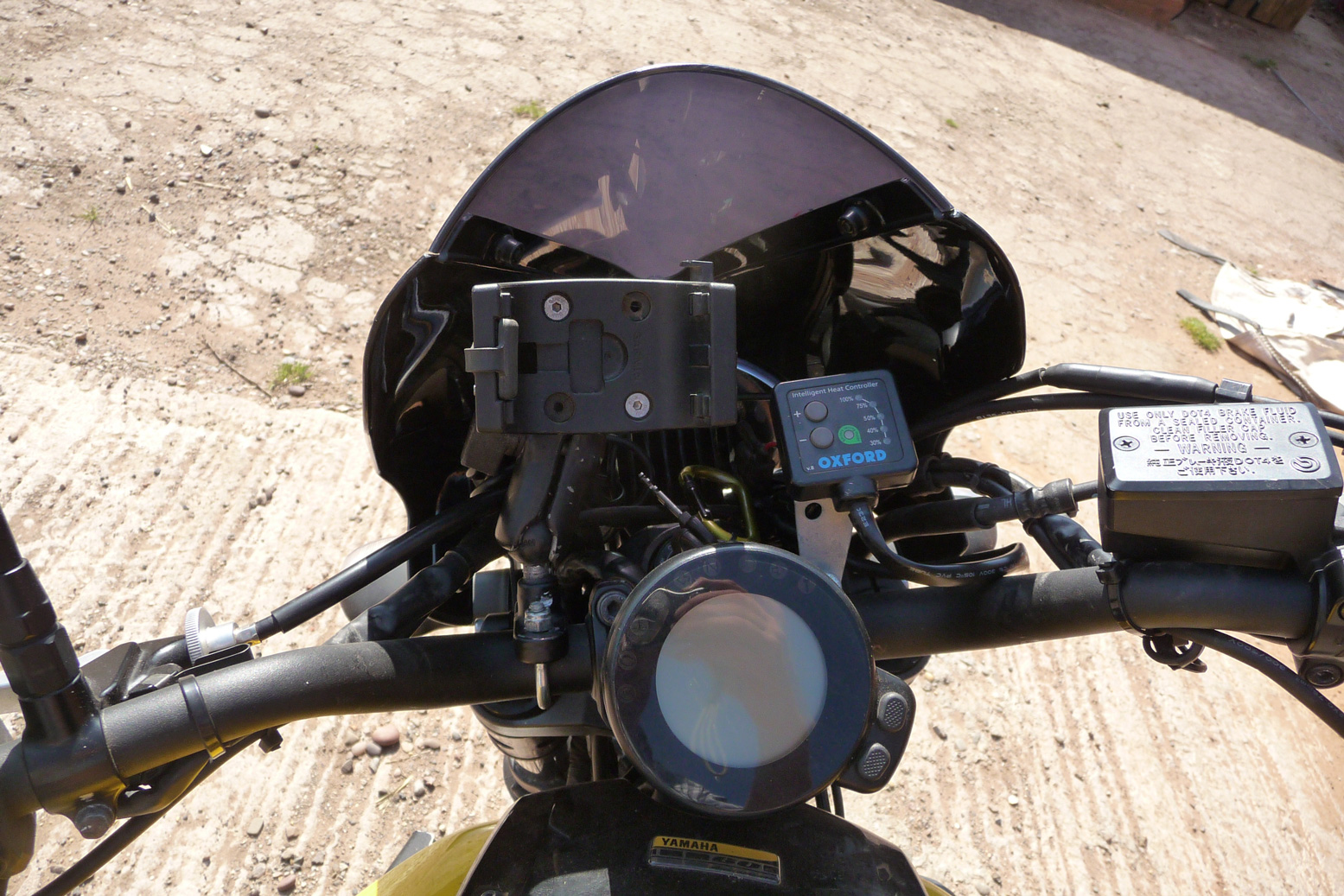
TEC sell XSR progressives for about £110 but flog them with fork preloaders which I don’t need. instead, long-established suspension specialists K-Tech (who we used to fork-up our XR650Ls back in 2003) sell linear-wound coils rated at 9 or 9.5 for £85. For my 93kg I chose the heavier ones. Fyi and to the best of my knowledge the debate over linear vs progressive springs goes like this: linear easier to reliably fine tune for set conditions (good for road racers); progressive better all round but may be hard to get just right. But all this only matters on rough trails or at high speeds. The humble XScrambleR isn’t really native to those categories. Other jobs Simon did was hardwire my GPS bracket back in and replace last year’s Formica front indicator brackets with neat, all-in-one headlamp mount brackets (above left) from a new wonder material called m-e-t-a-l. Oh, and he properly fitted the trials fender over the front wheel. Well done Simon. I could now sell this bike knowing there are no bodged up loose ends.
With all this done I got him to reweigh the bike. 186kg is the claimed wet weight which I seem to recall was on the money. I now have lighter front brakes, a lighter pipe, less weight around the headlight, a heavier front wheel, side stand and probably tyres, plus a tail rack, flyscreen, hot grips and a GPS mount. All that comes in at… 189kg.
Need some work done? If it’s your bike, not your teeth we’re talking about then Simon’s you man. Born under a combine harvester (the machine, not the pub chain), 10 years overlanding with Bedfords and Mercs and a now a part-time Land Rover mechanic and metal-bending hobbyist. So anything you offer him will be like a cup of warm unpasteurised milk. I’ve found him meticulous, unflustered and inexpensive; finally someone to implement or finish off odd jobs on my odd bikes. He’s based near Bromsgrove, a mere 31 miles from the geographic centre of England, with space and a farm workshop with all the welding, cutting and tooling gear needed to transform your bike into a galactic battleship or just a street-scrambling hack. Email him with your needs.
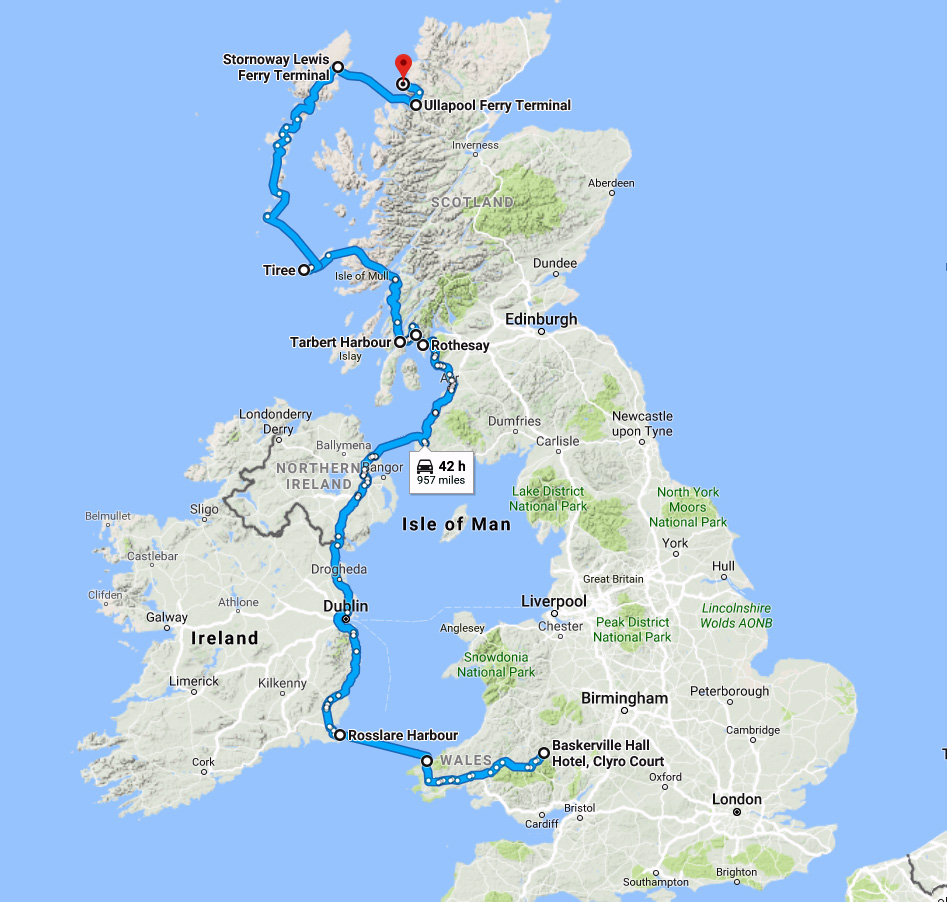
Can’t wait to test out all these mods in June when I ride the XSR from Simon’s over to #HUBBUK18 in Wales, then hook up with my self-styled Marine Highway back to northwest Scotland (right). That, unless I’m very much mistaken, is going to be a great midsummer’s ride.
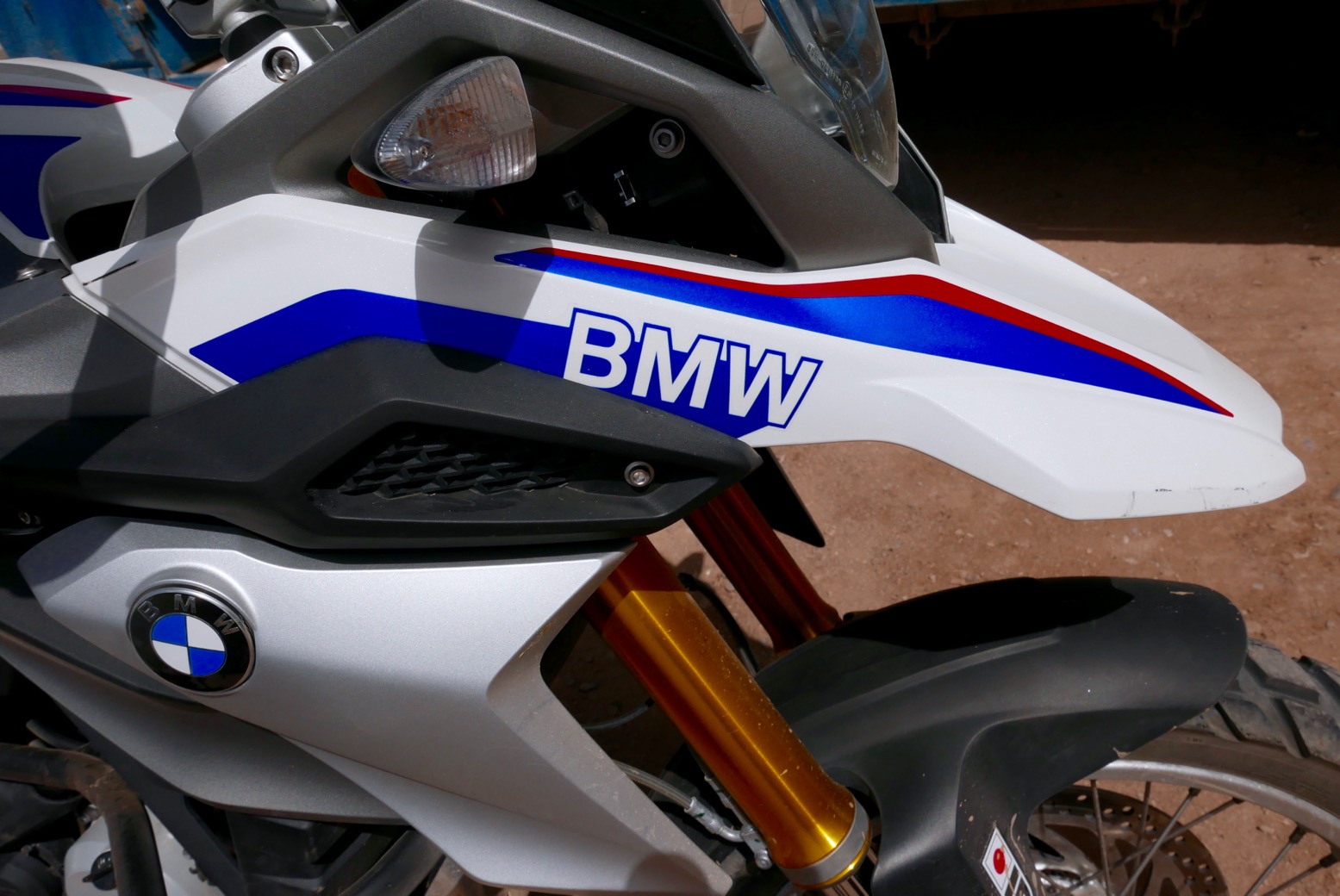
In a line Great-looking mini GS that’s not at all bad for what it is, but don’t kid yourself it’s anything other than a 30-hp road-bike motor packed into a 170-kilo bike.
Note: this was a brand new bike but with several non-standard mods. More below.
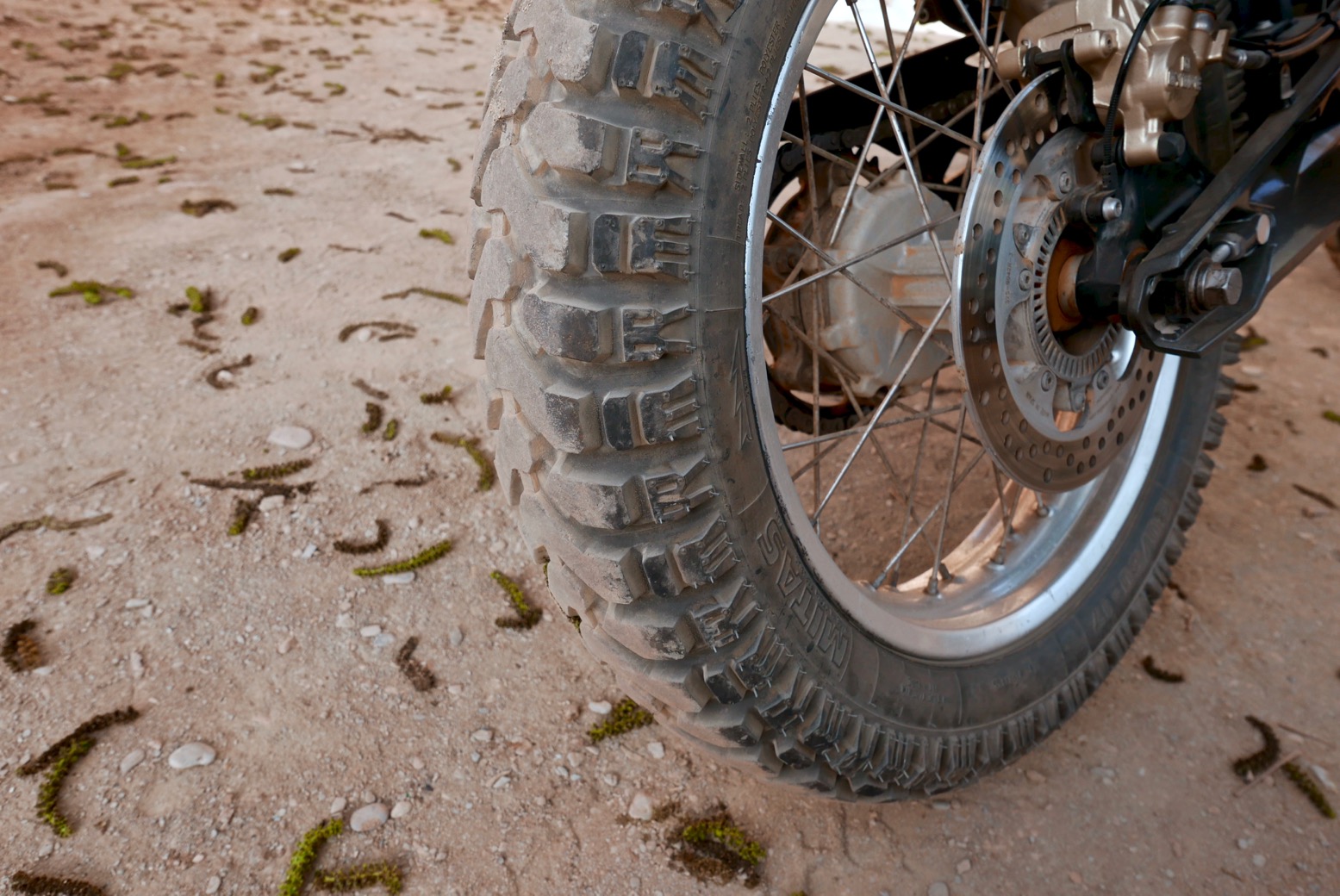
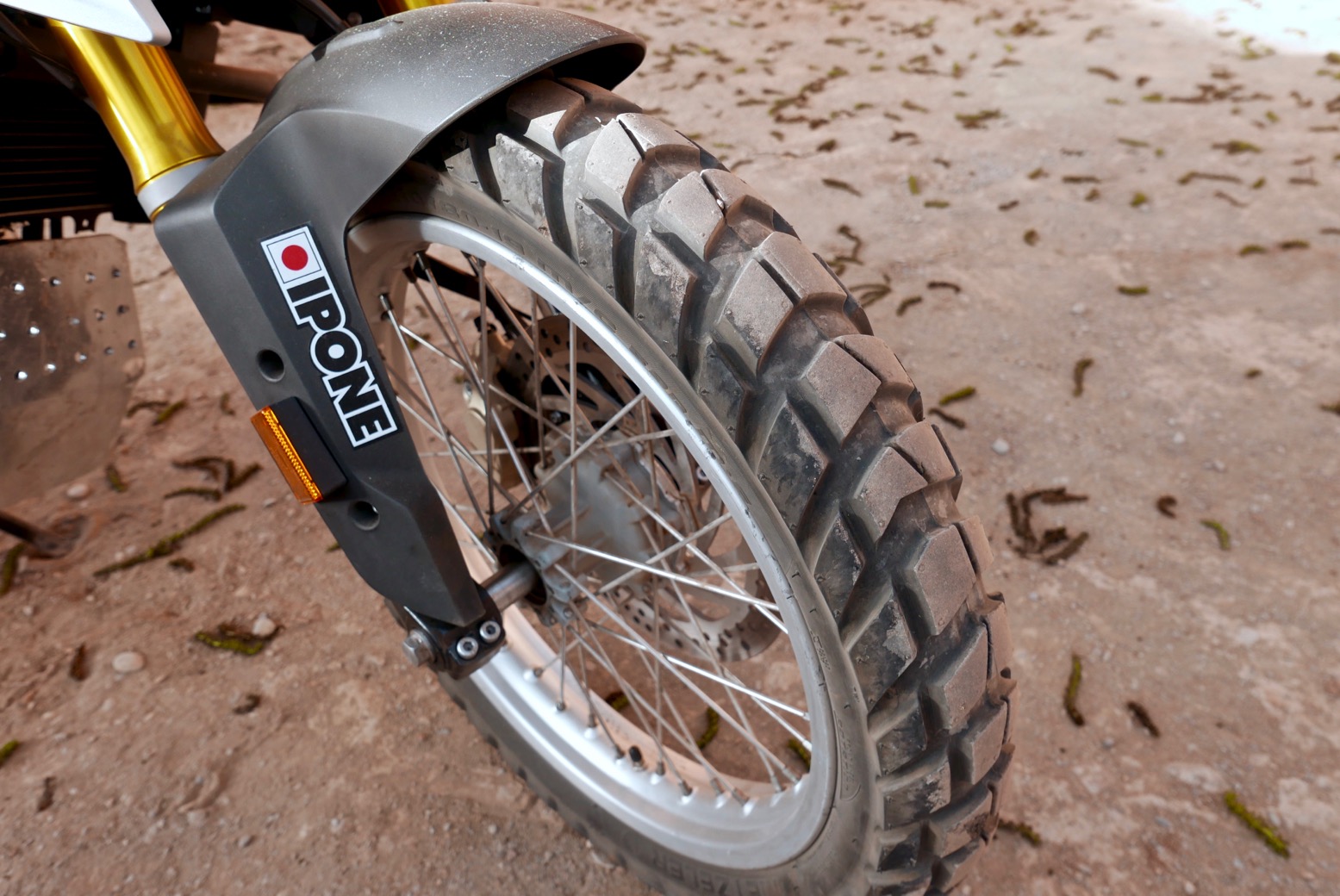
• Feels like a full-size mini GS • Indian-made build quality looks solid • Efi motor runs smoothly up to 2200m/7200′ • Great brakes and easily switchable ABS • * Mitas E-07/ Metz Karoo 3 do-it-all tyres better than stock • 19″ front wheel great on road and trail • Suspension, including USD forks, surprisingly well damped • Good economy – averaged 88 mpg (73.2 US; 31.3kpl; 3.21L/100k) • Range looks good too; well over 300km or about 200 miles • Yes it’s 169kg wet (claimed) but like a GS12, it carries it well.
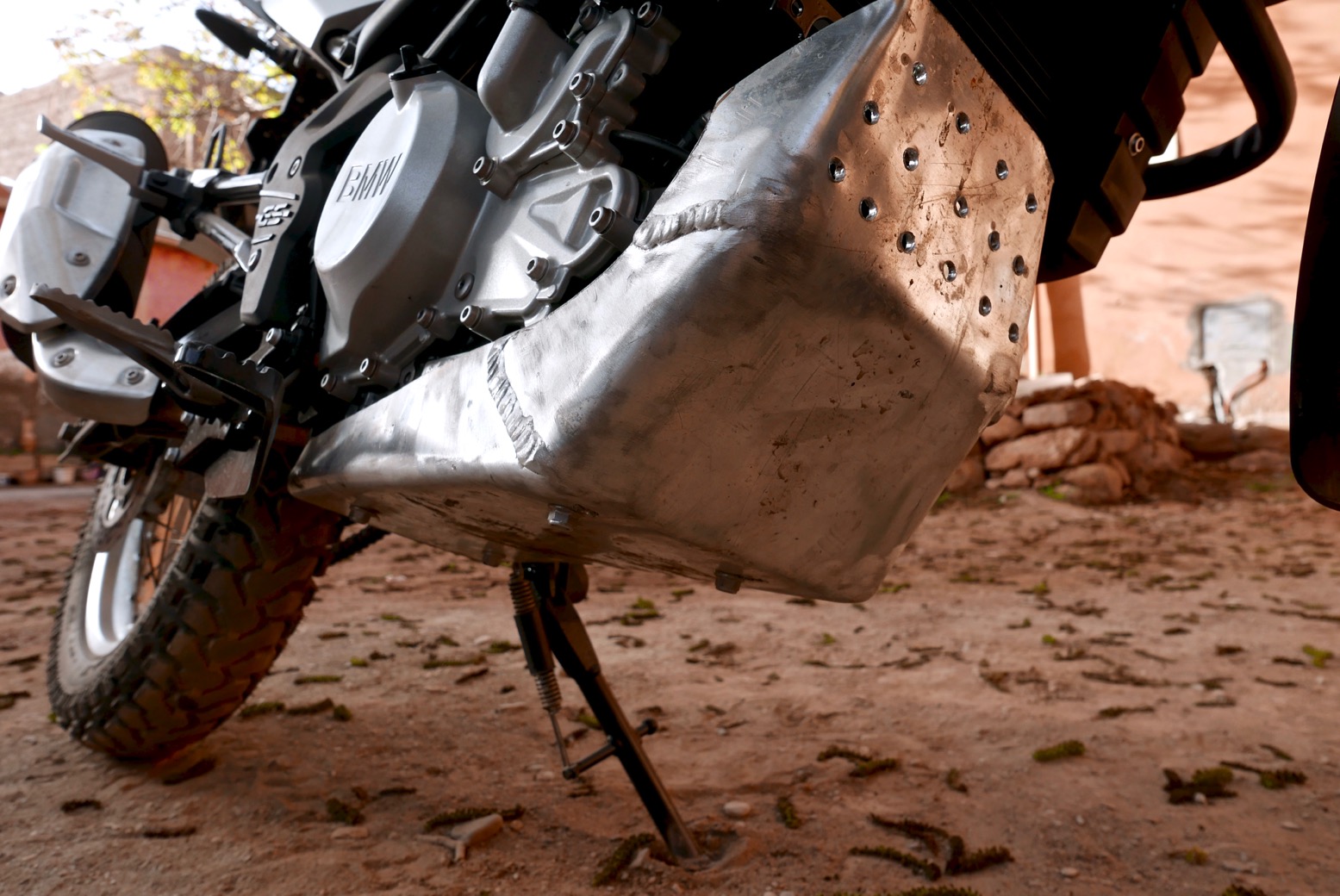
• Thin, soft seat • Occasional stalling off 1st gear • Mirrors blur above 90kph as vibes set in • LCD display a bit hard to read in bright sun • Tiny screen • * G650GS spoke wheel conversion loses tubeless feature • * Clanking DIY bashplate and front fender hits DIY engine bar on compression • It’s only a ‘310’
* Non-factory modifications
Note this recall: dodgy sidestand. Followed by owners’ comments. Long termer – also interesting to read
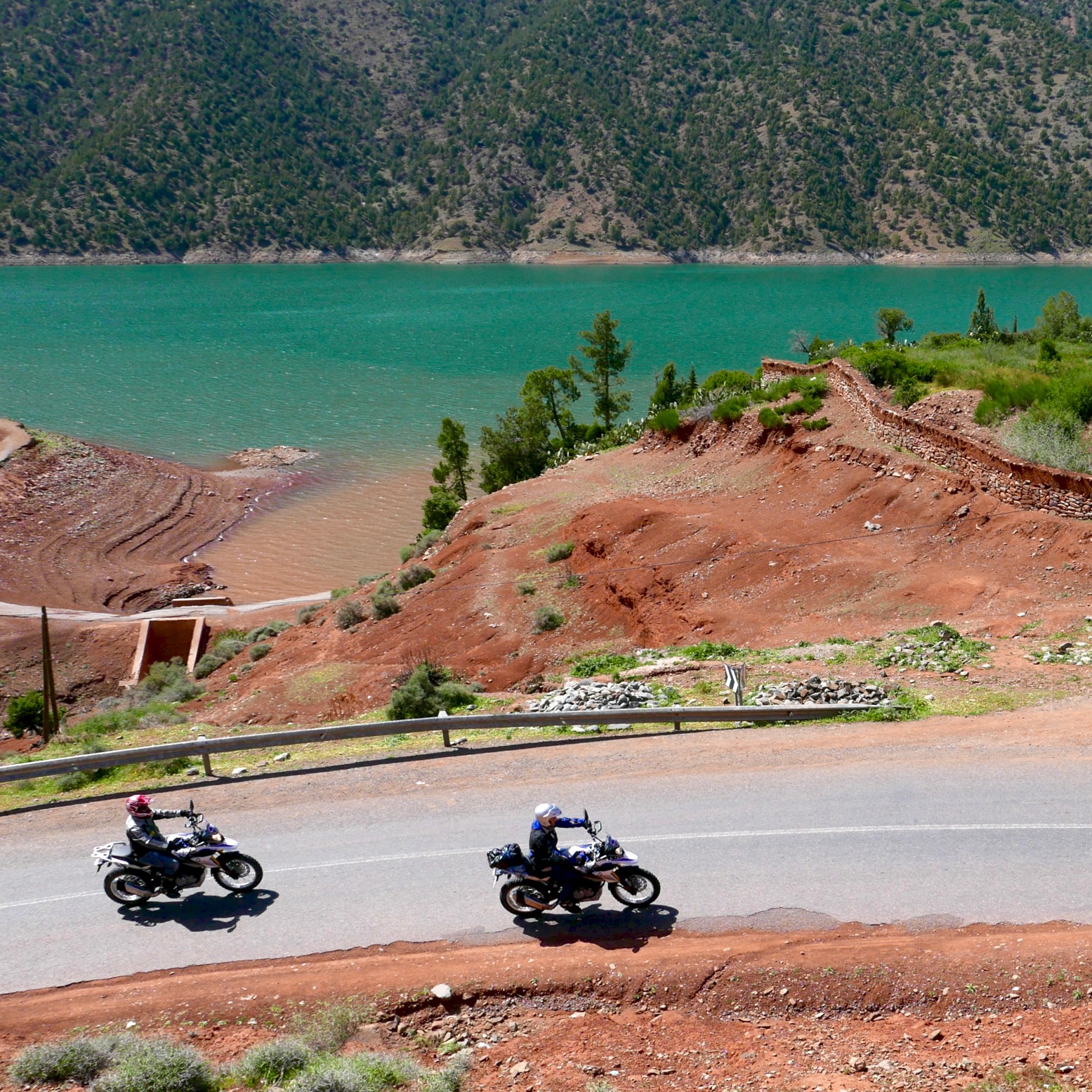
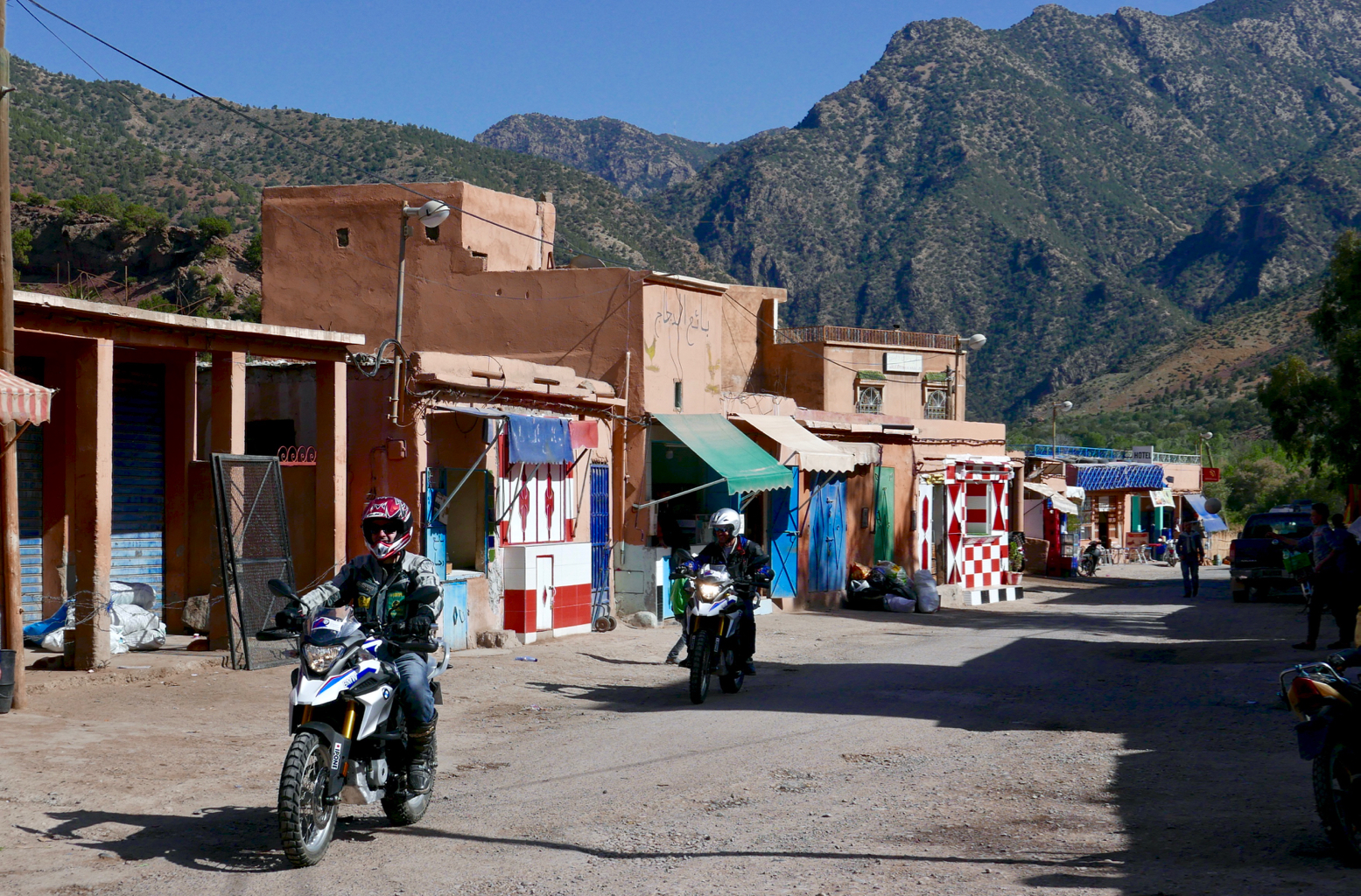
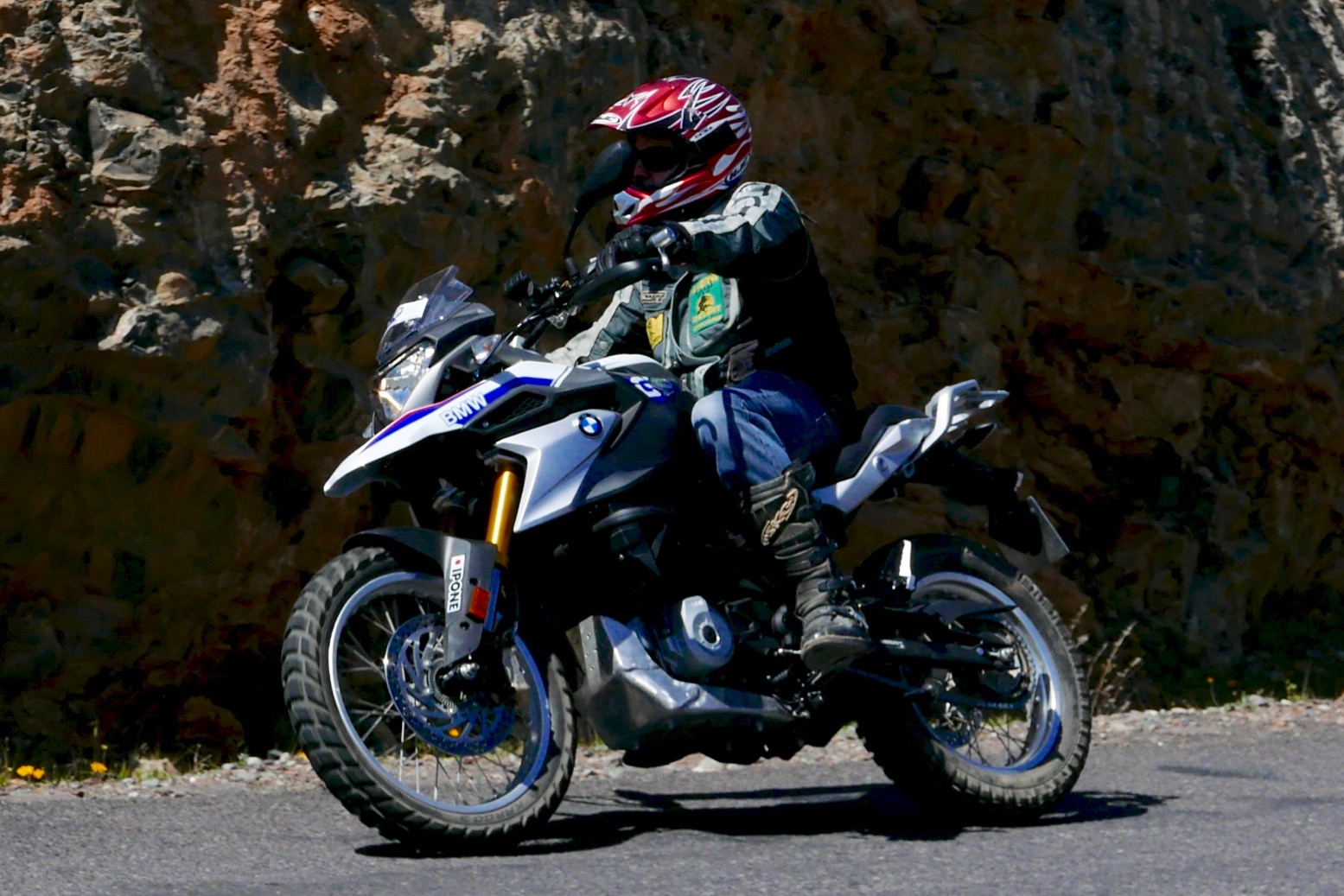
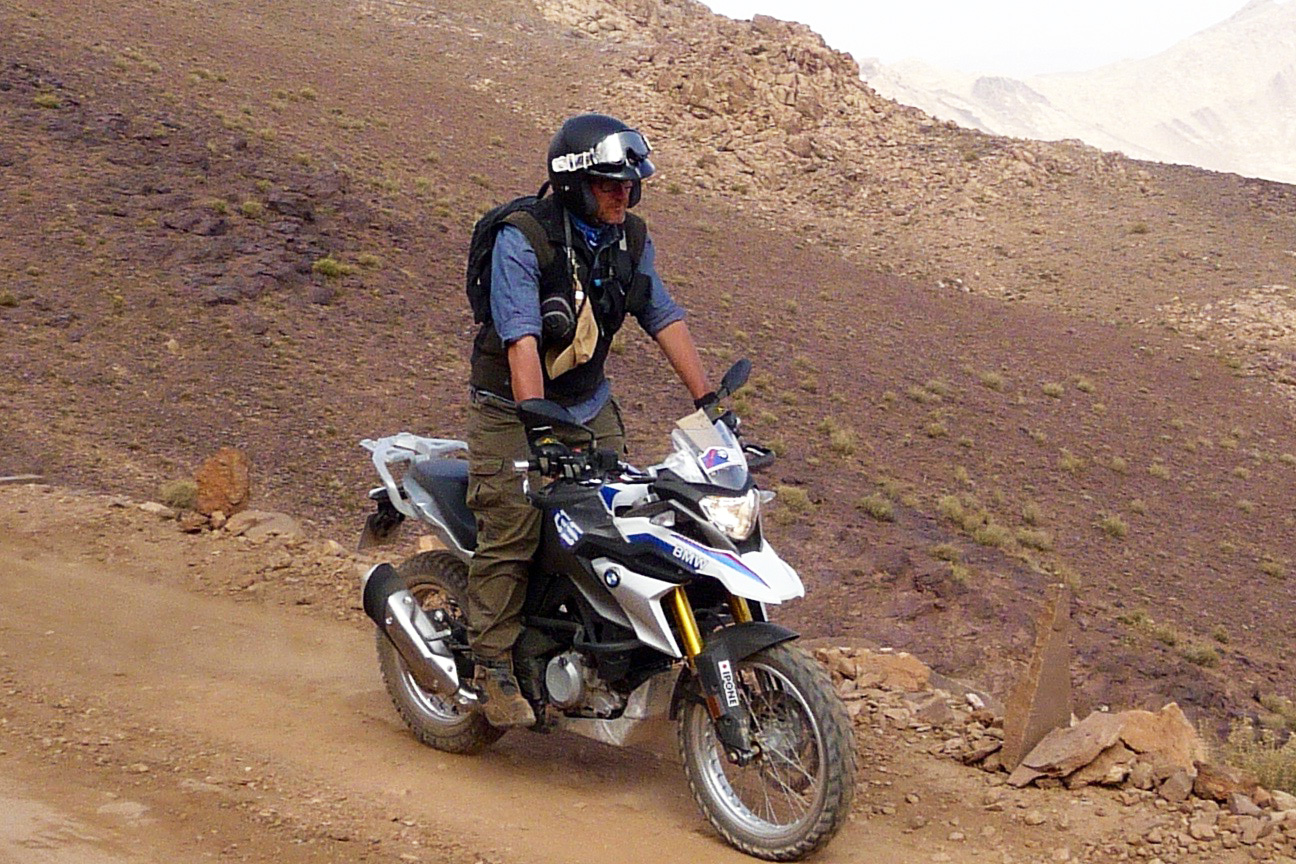
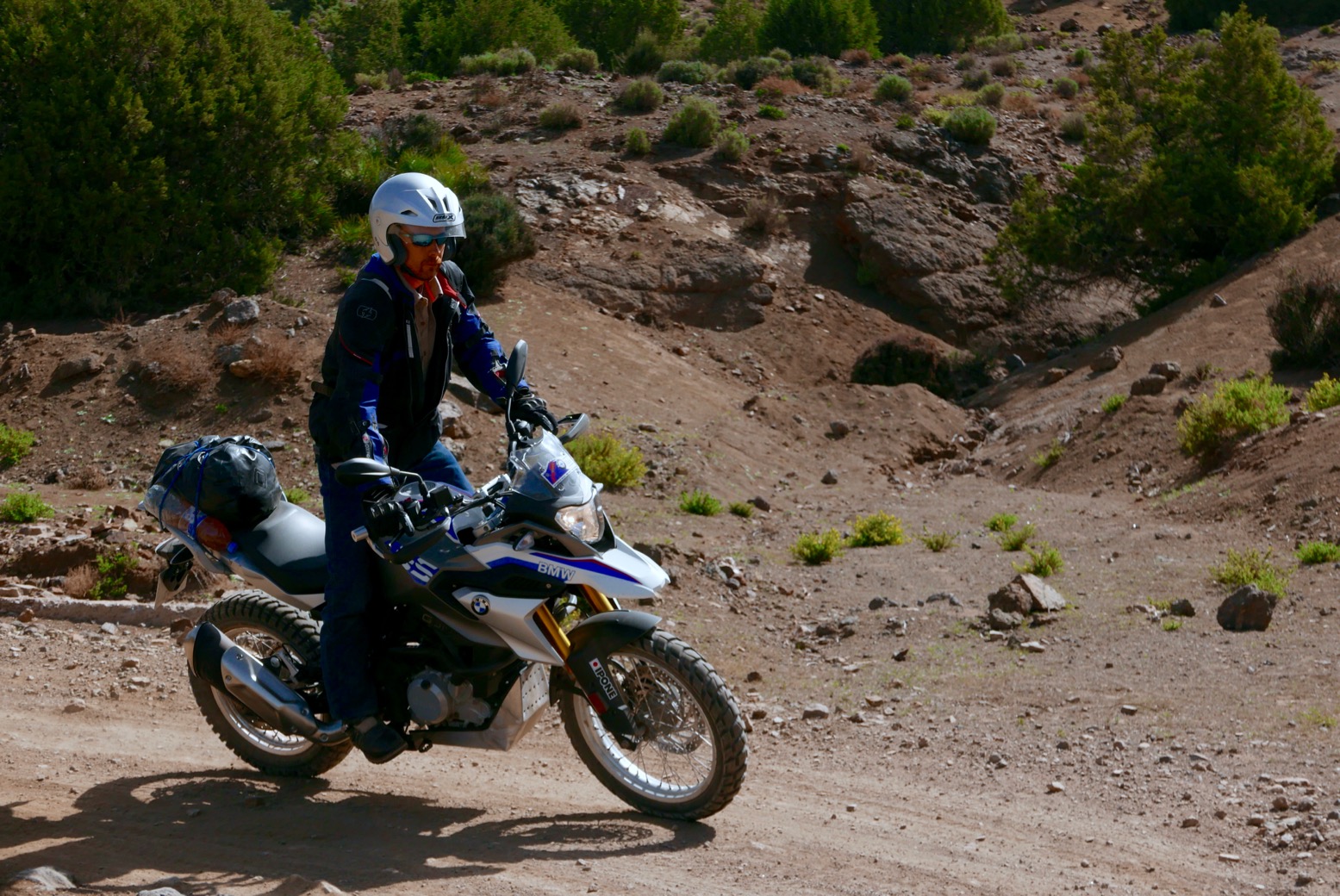
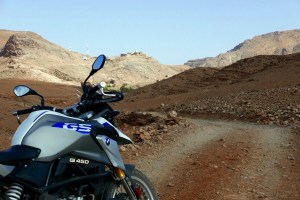
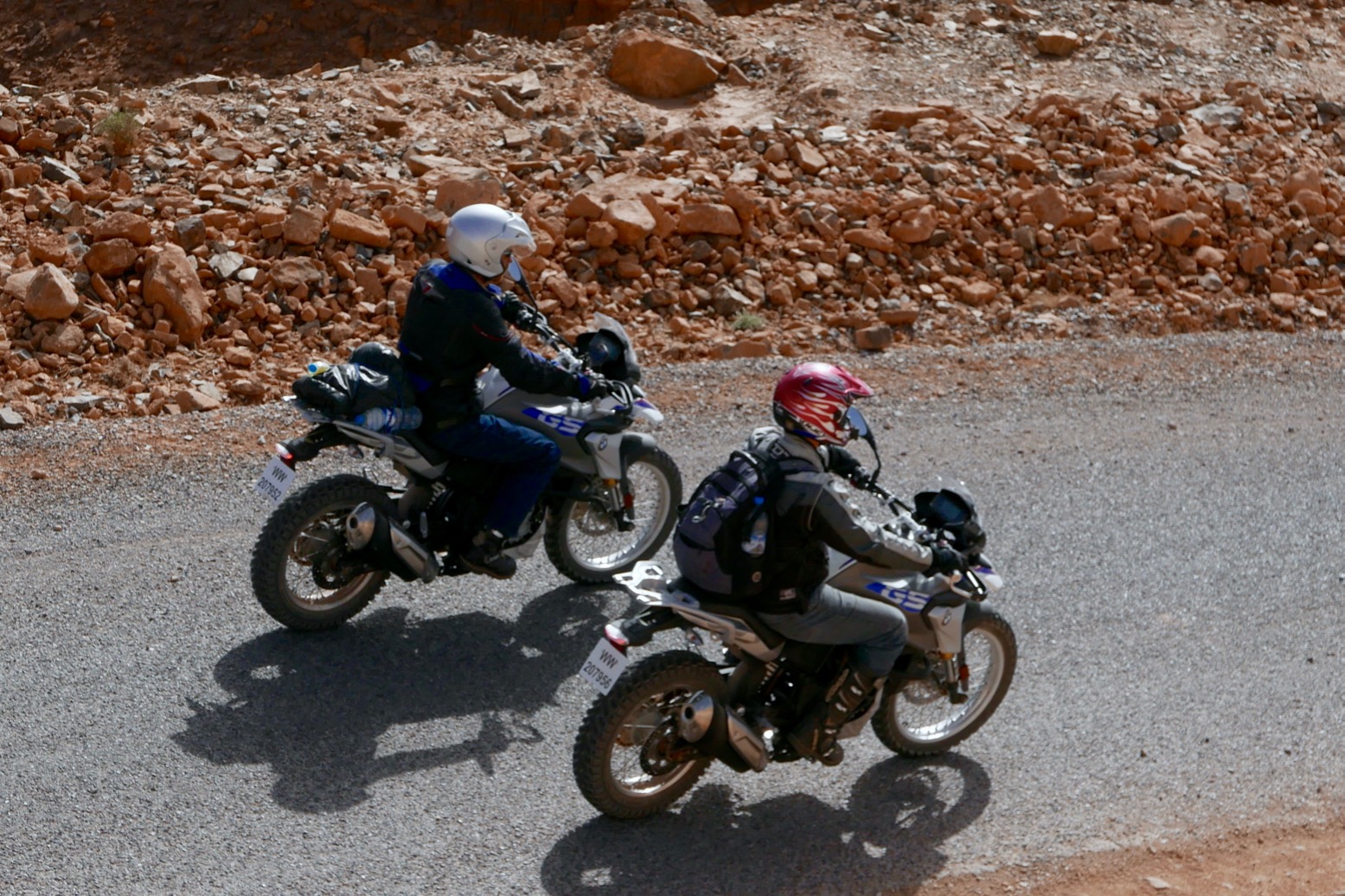
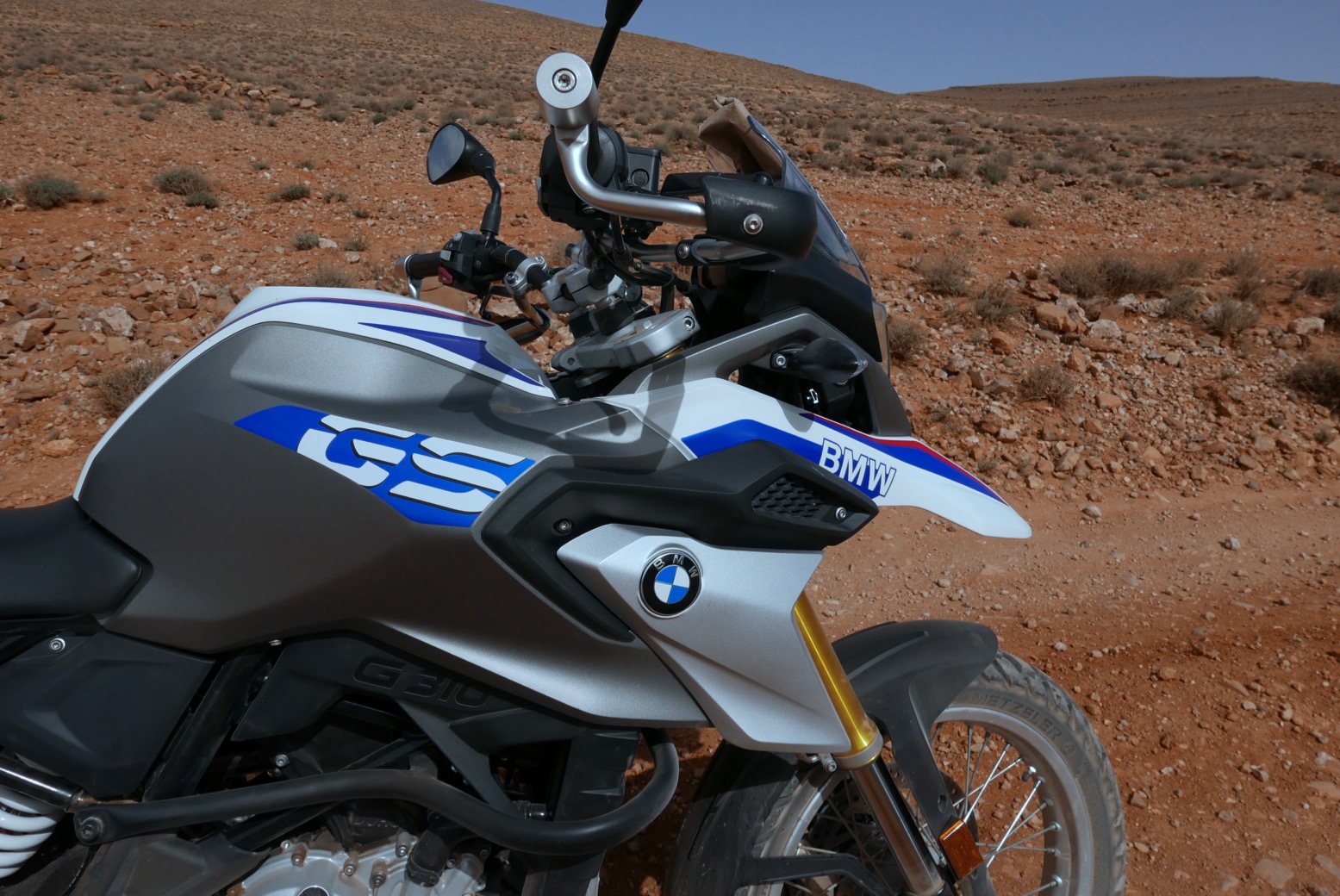
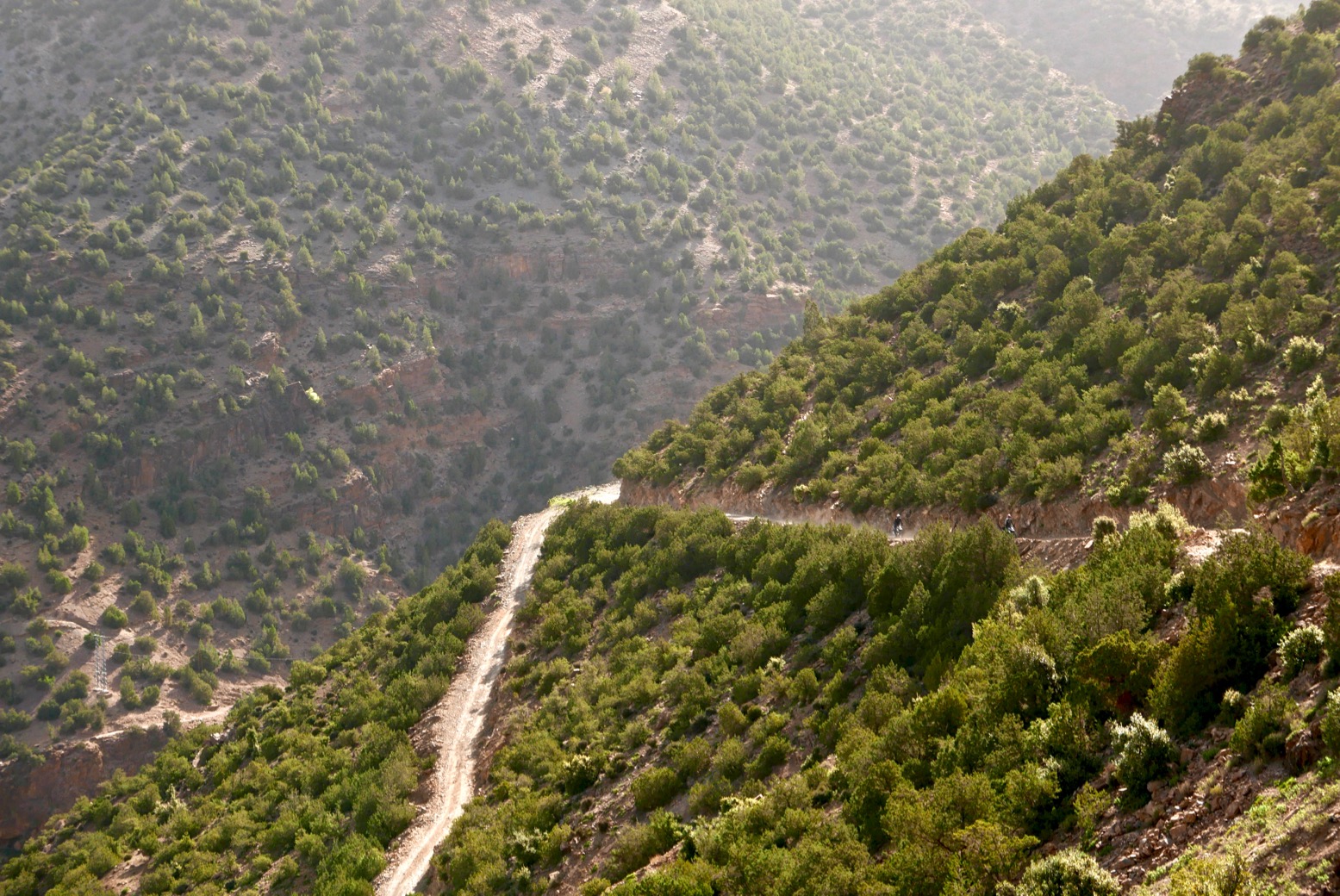
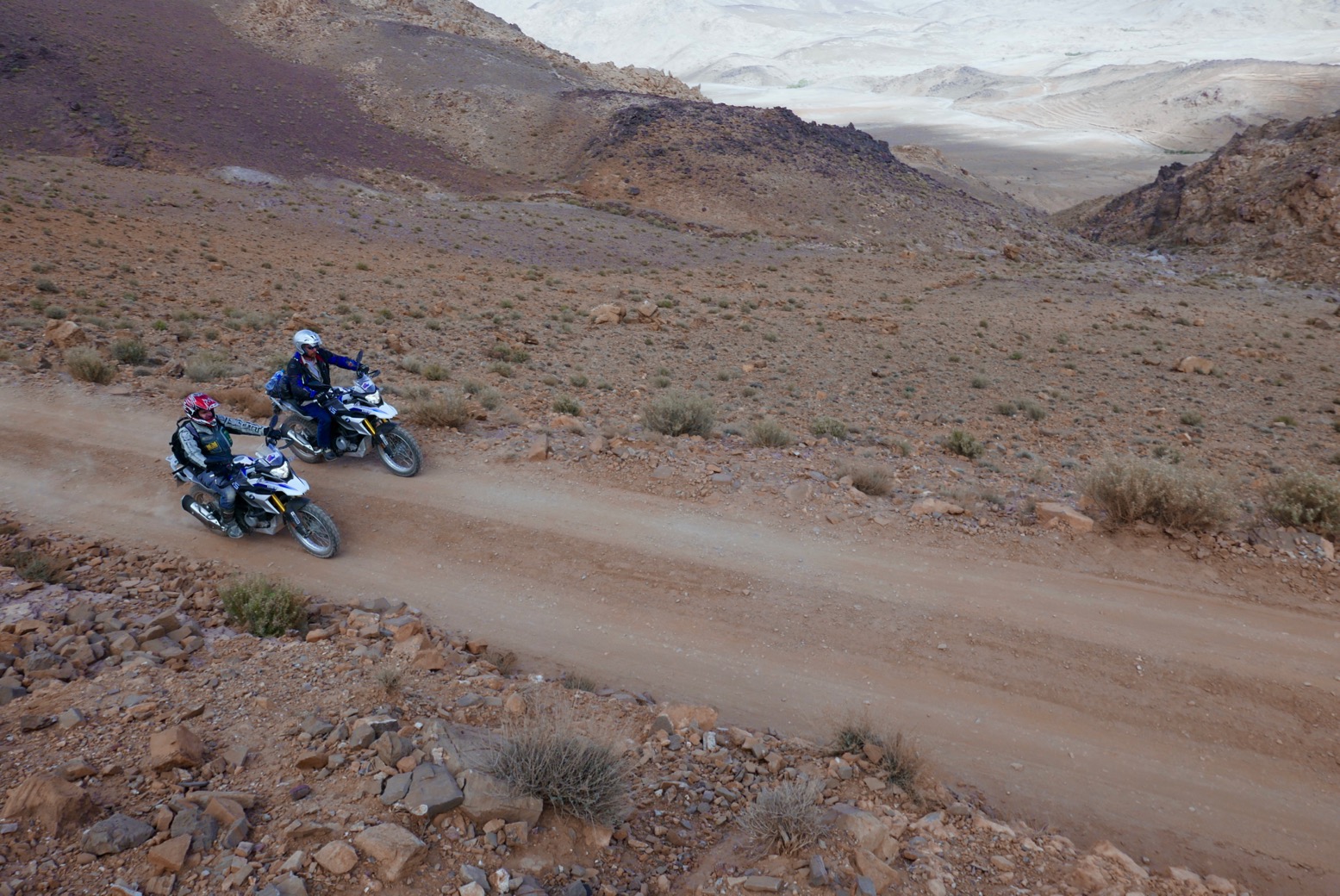
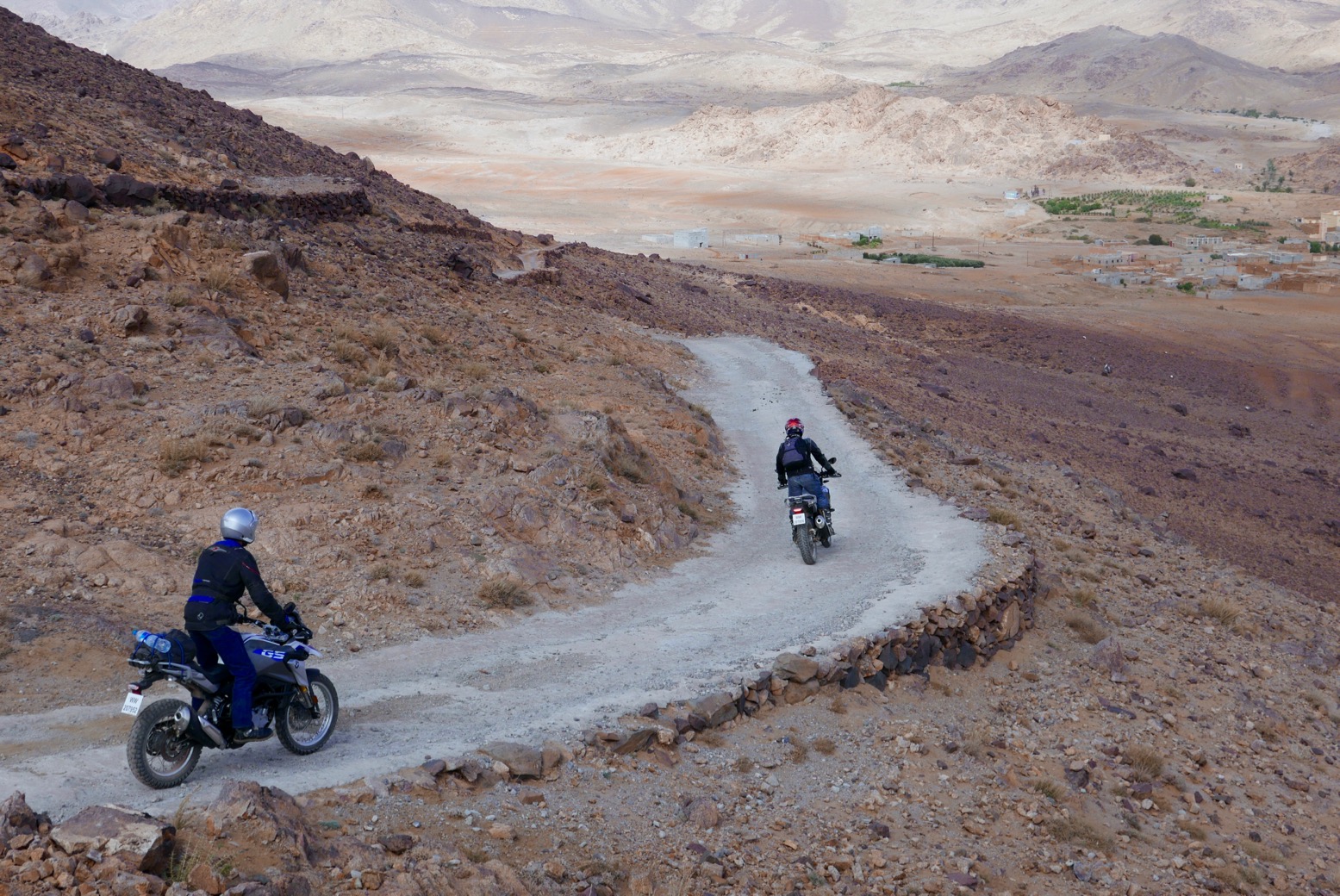
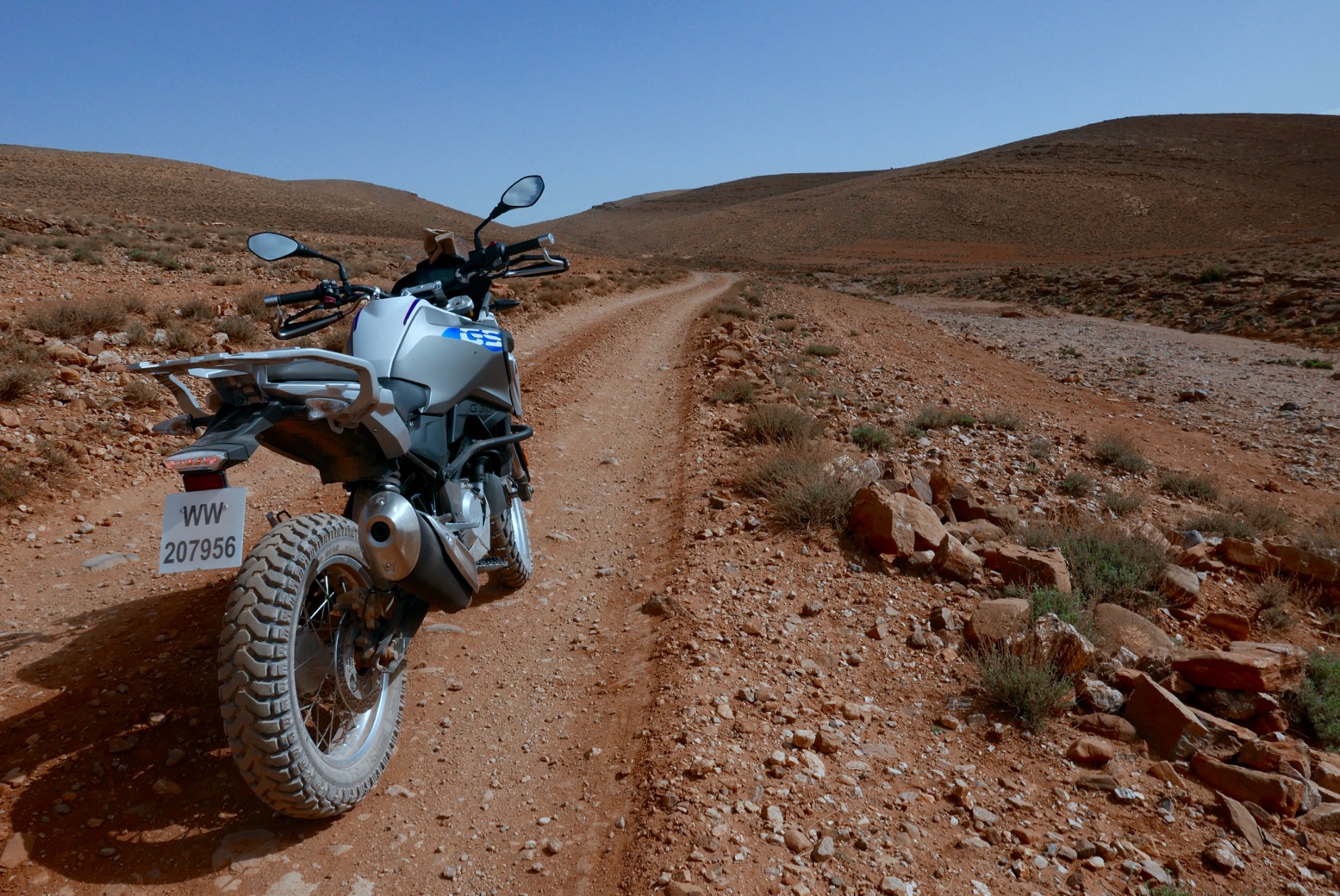
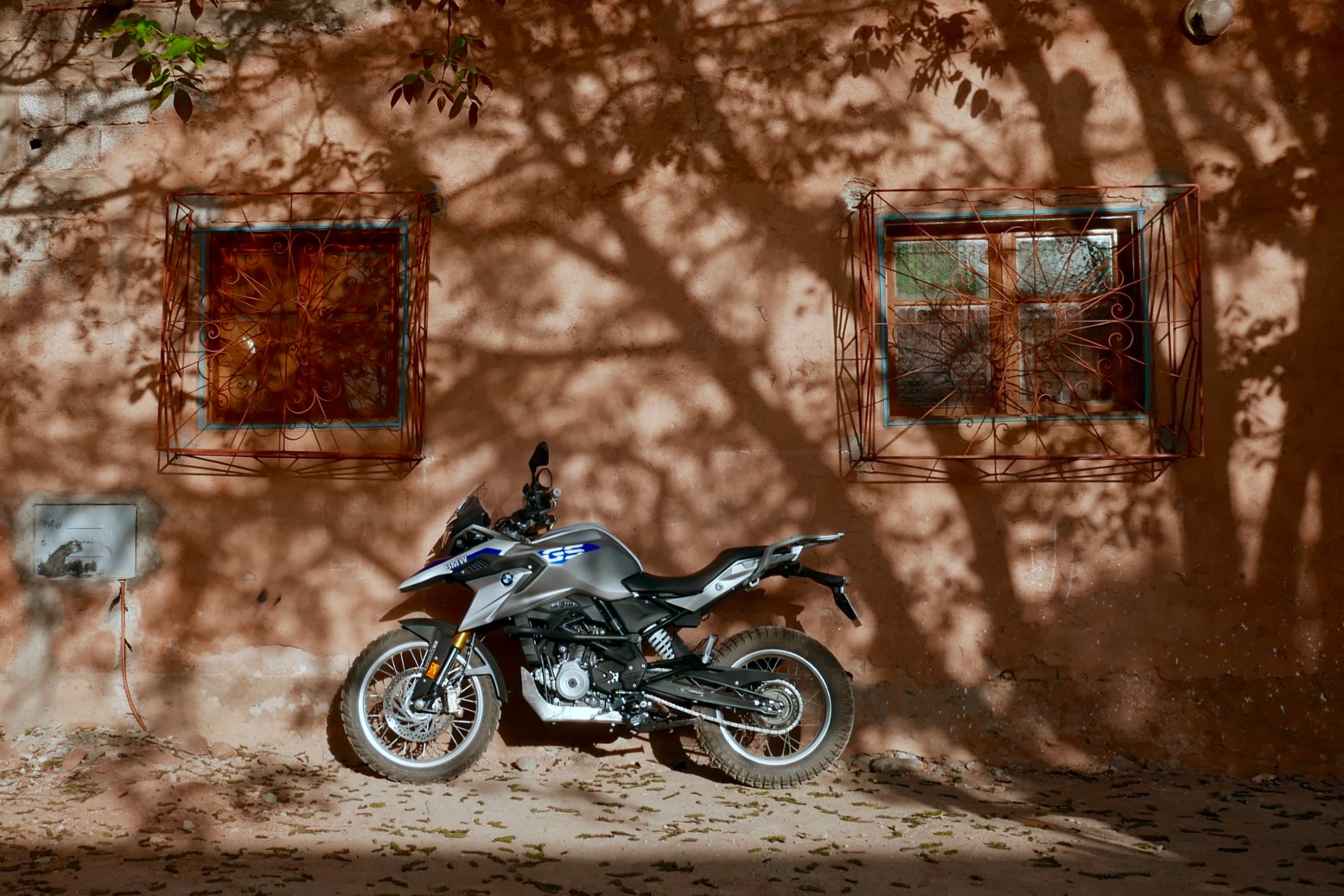
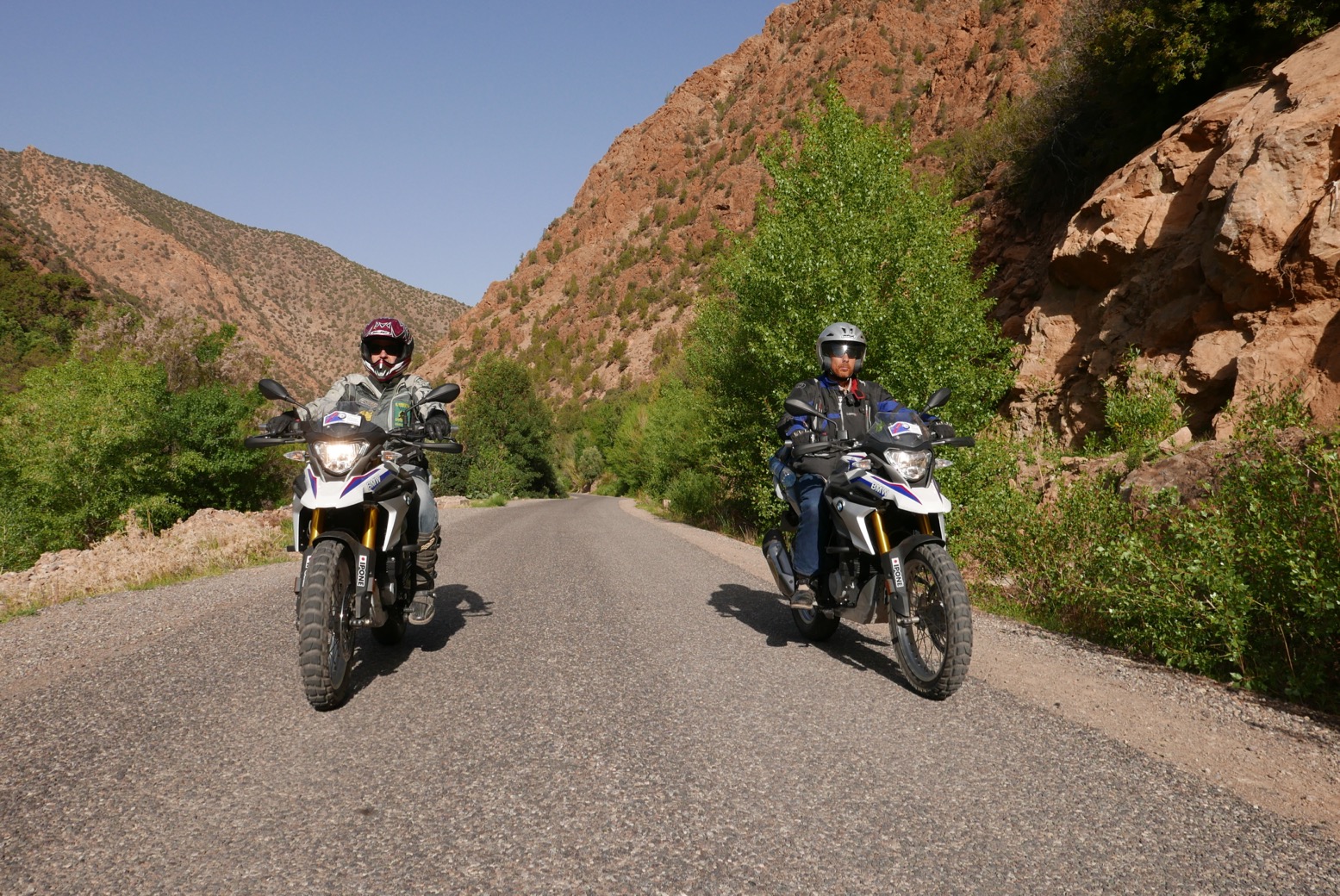
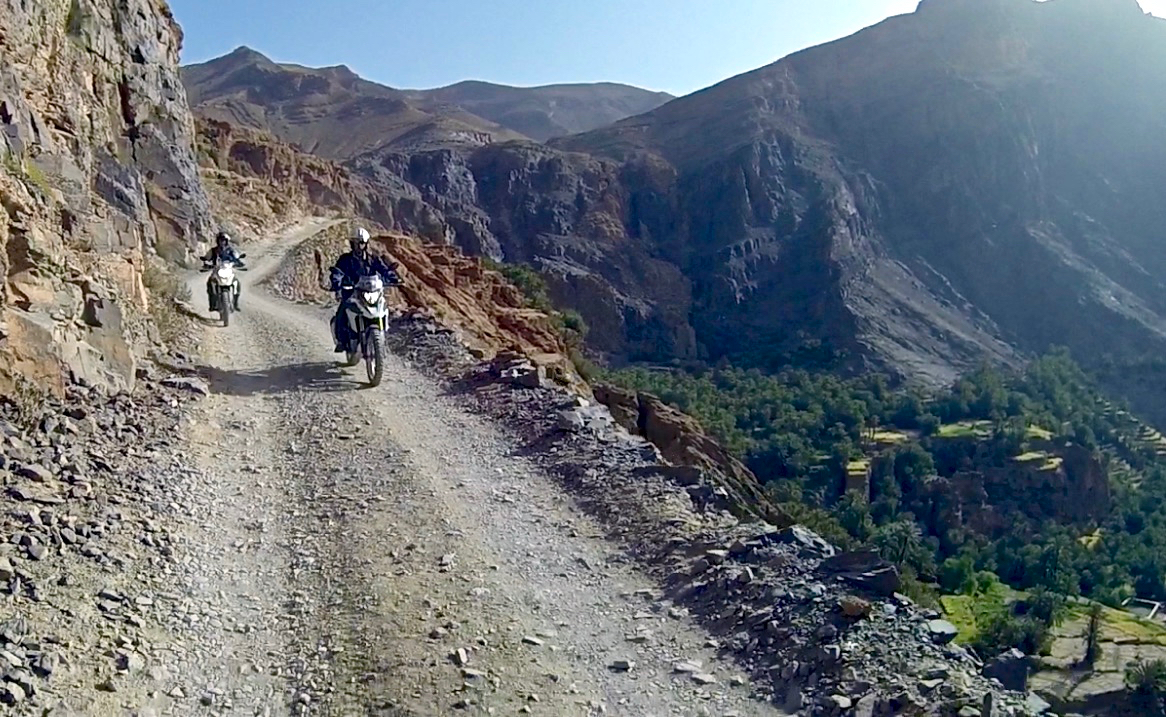
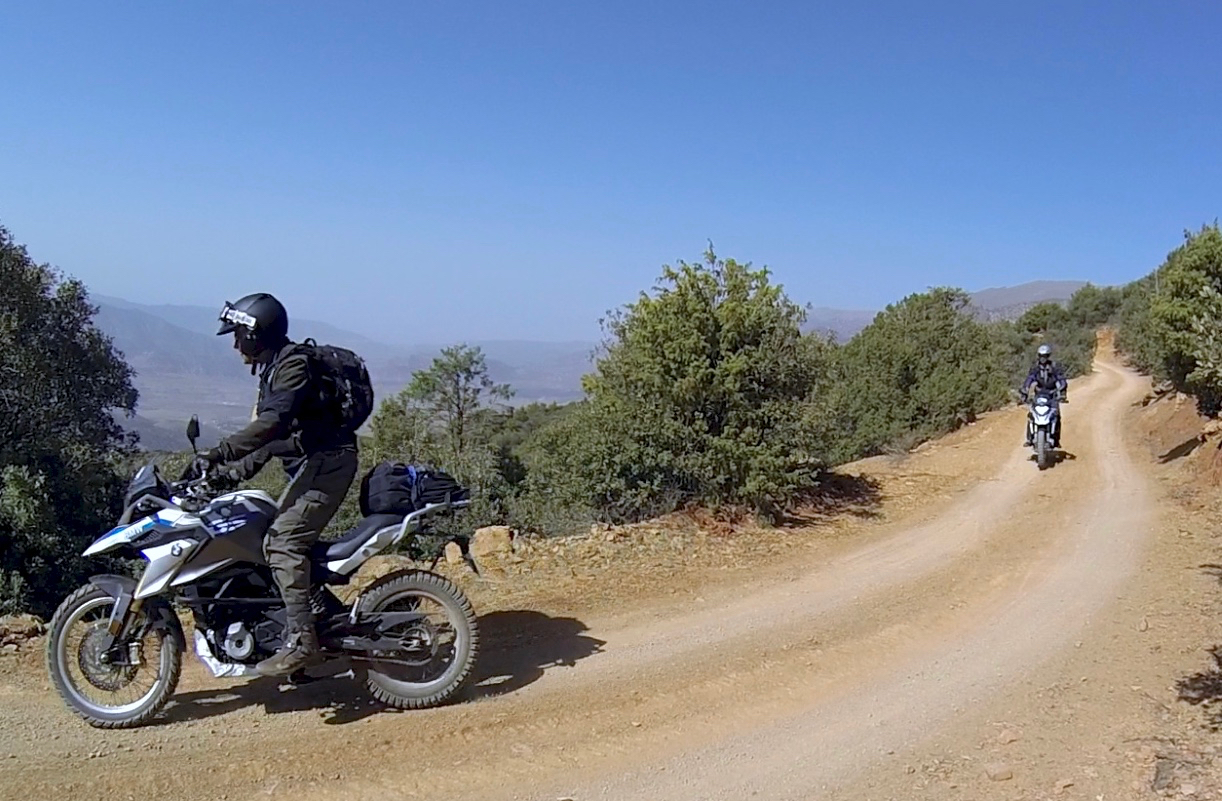
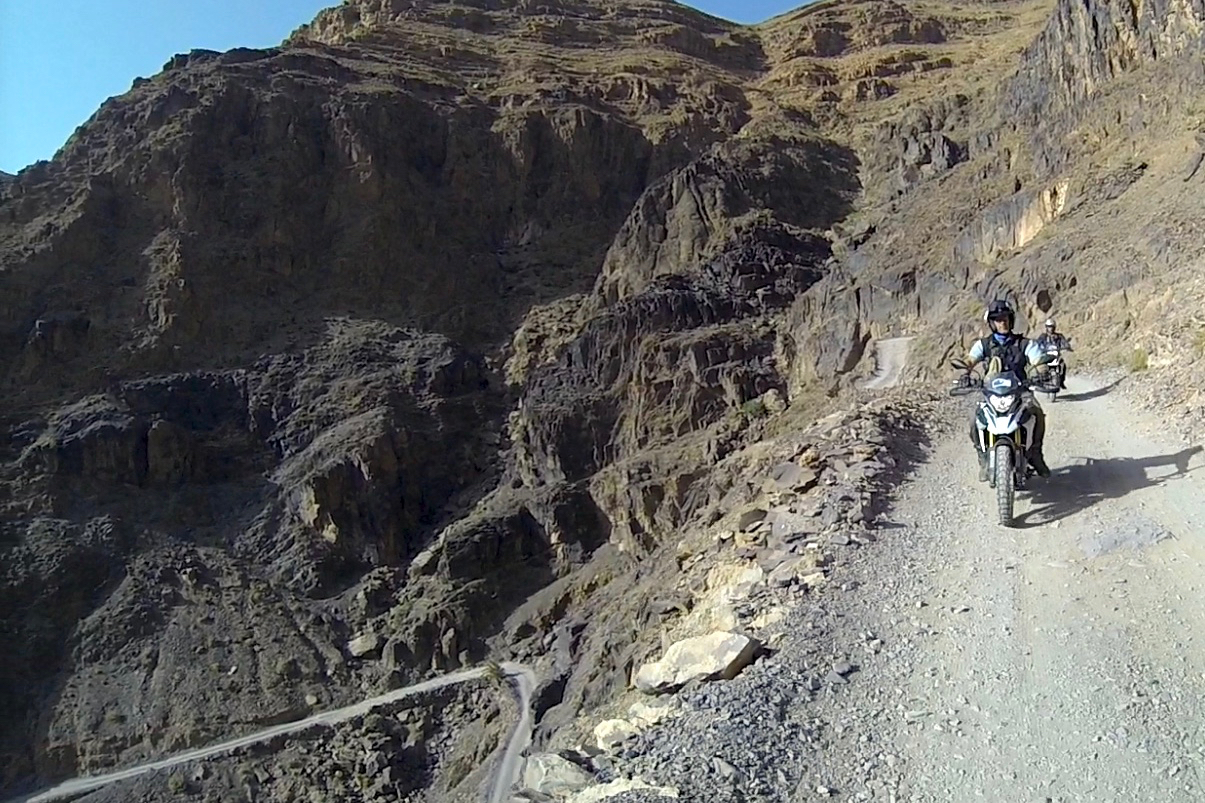
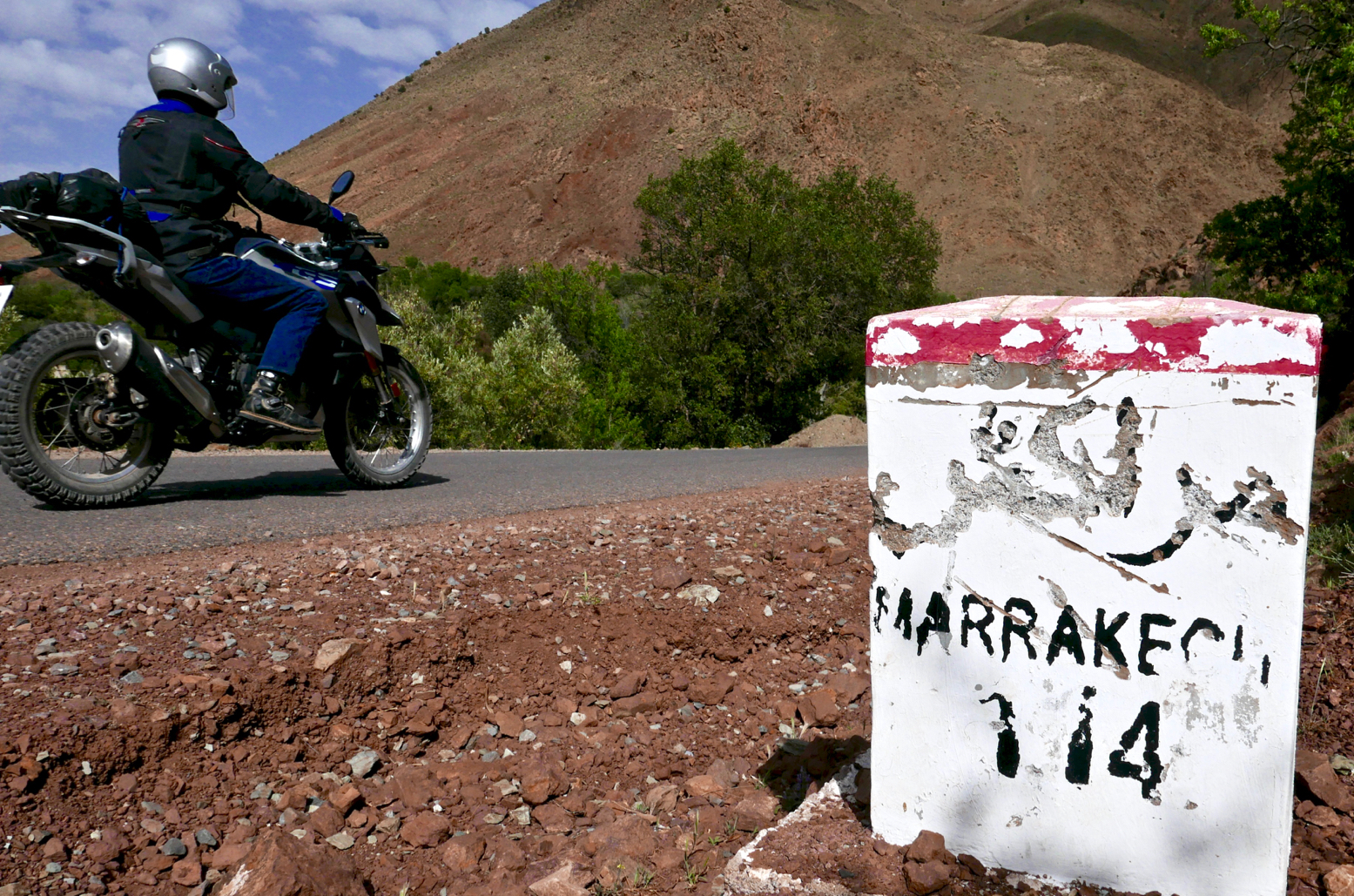
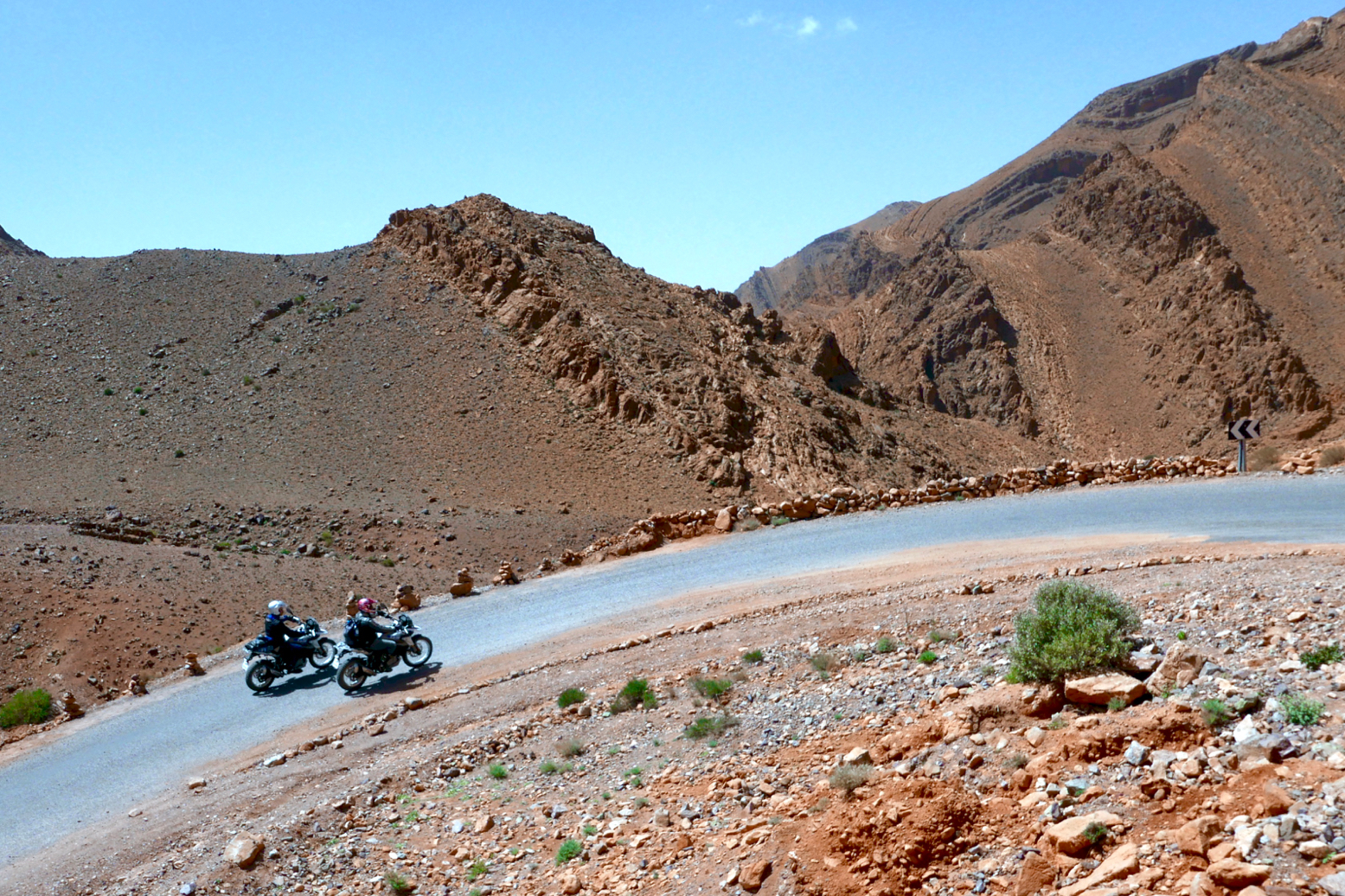
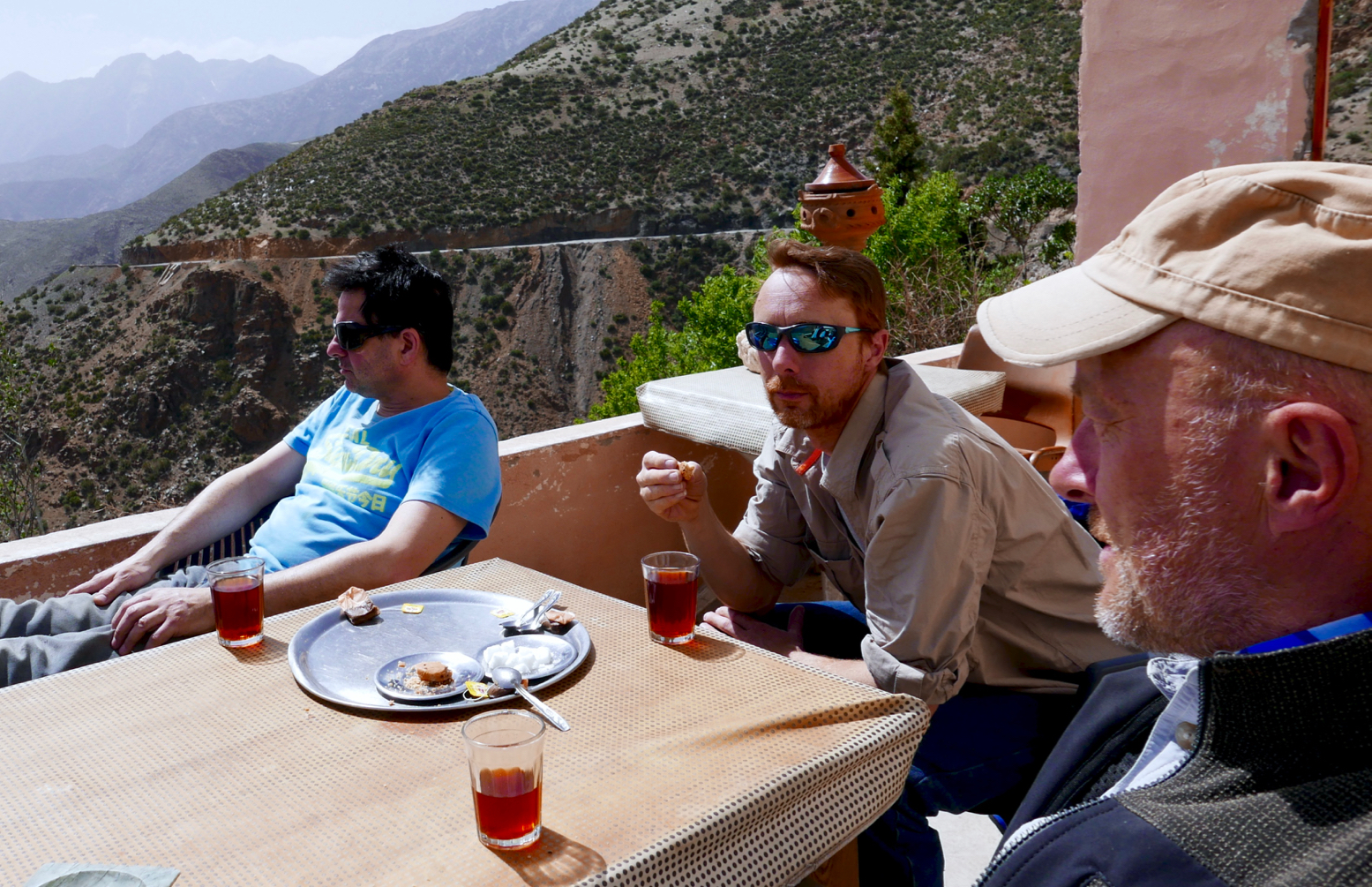
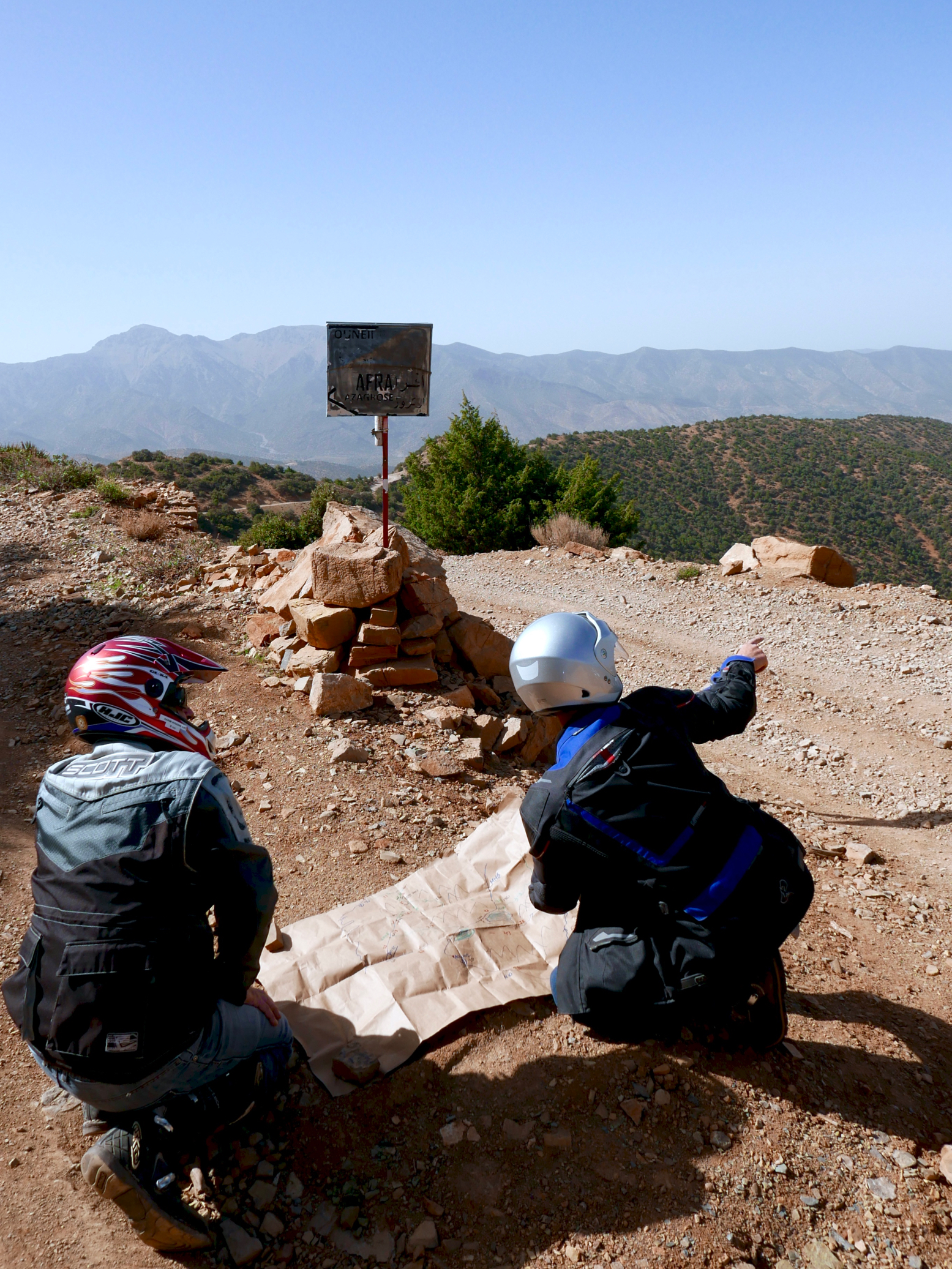
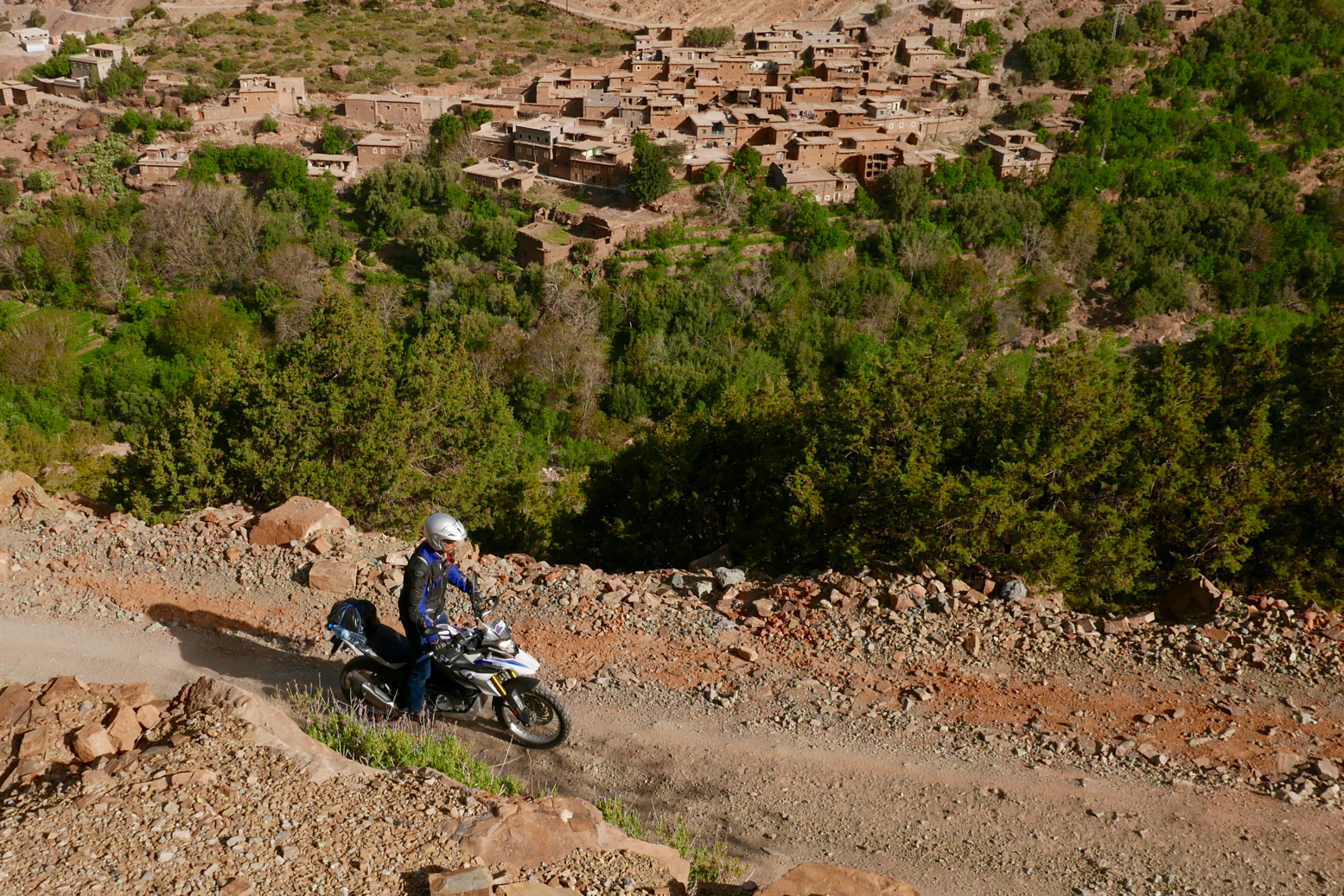
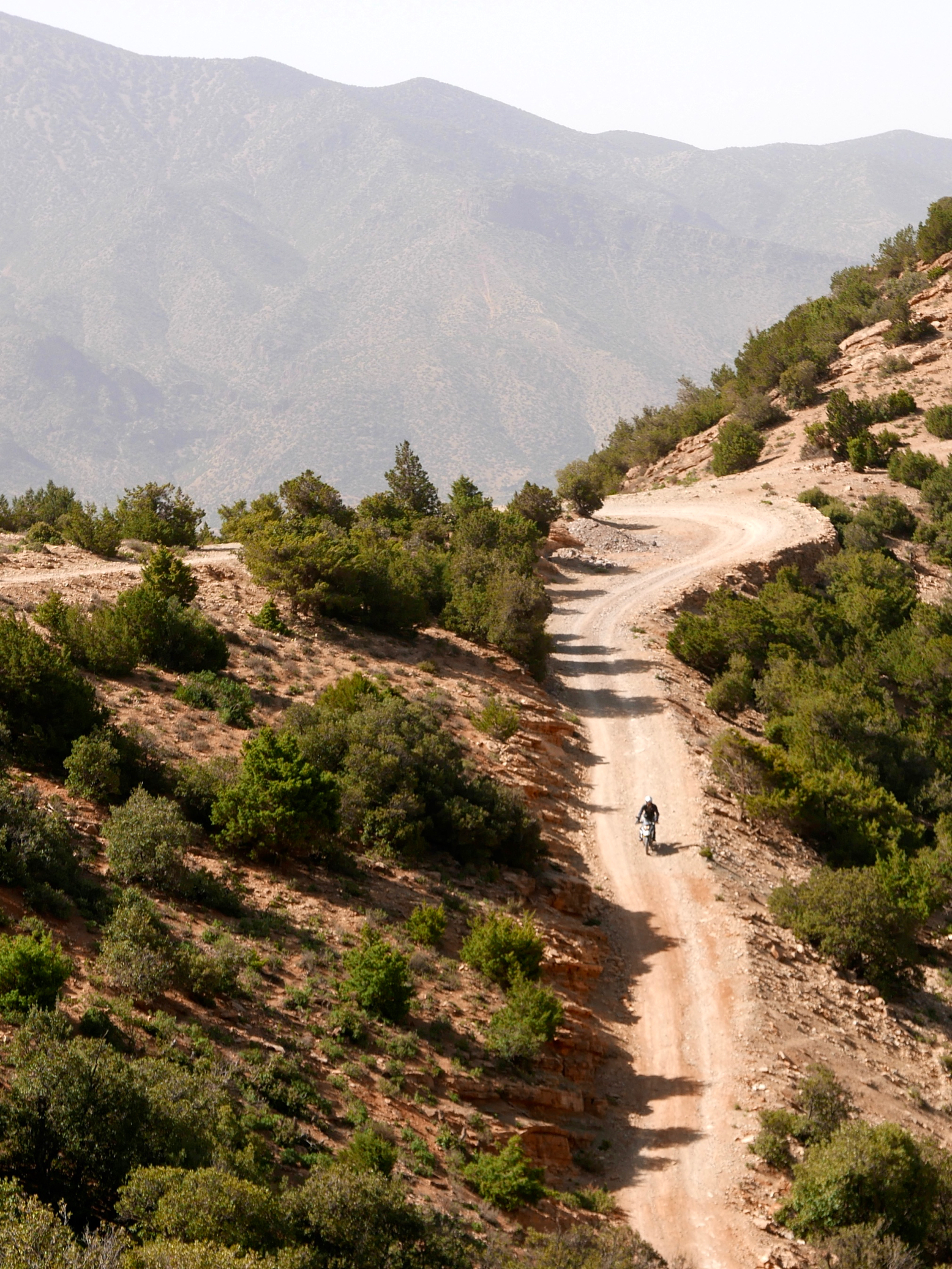
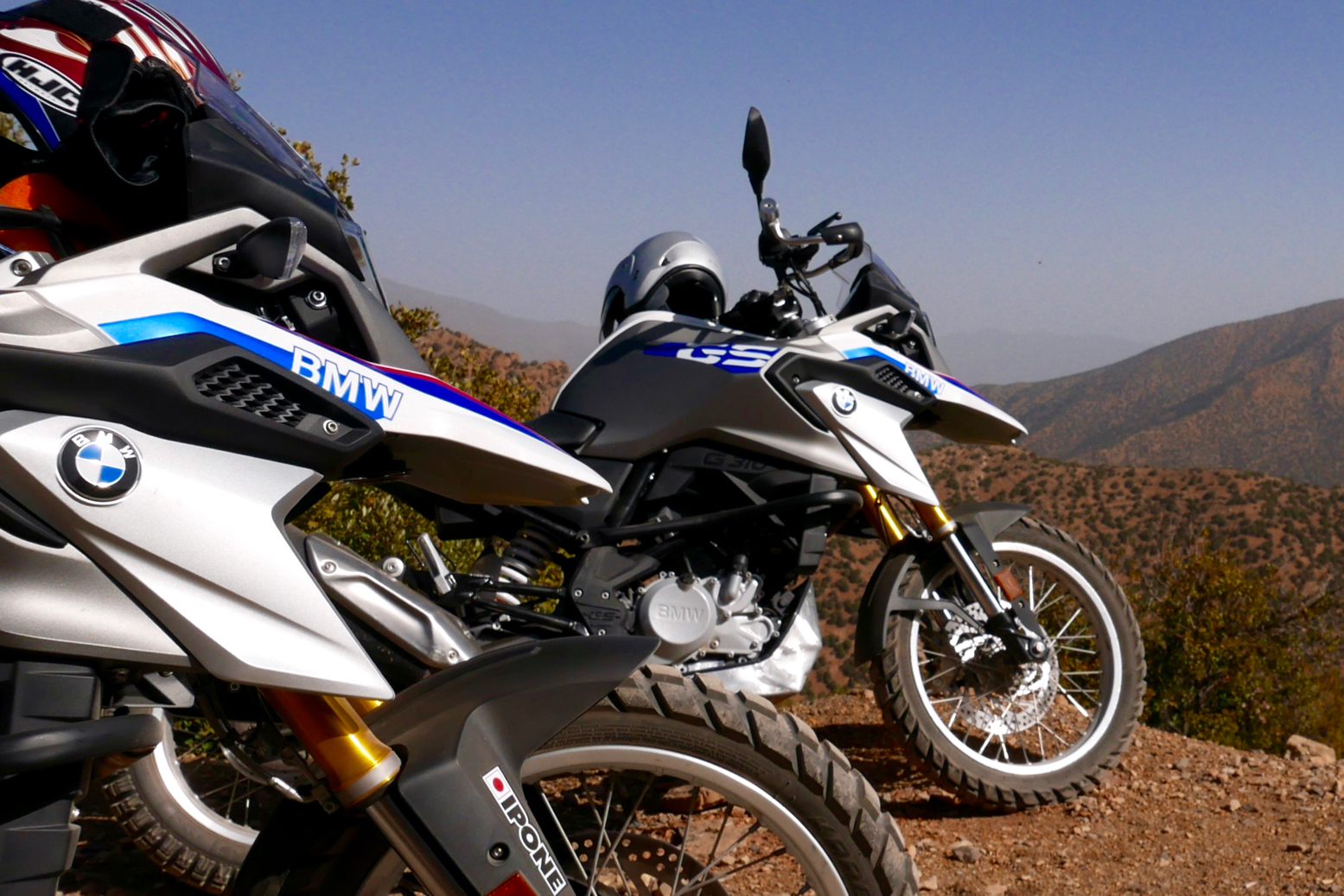
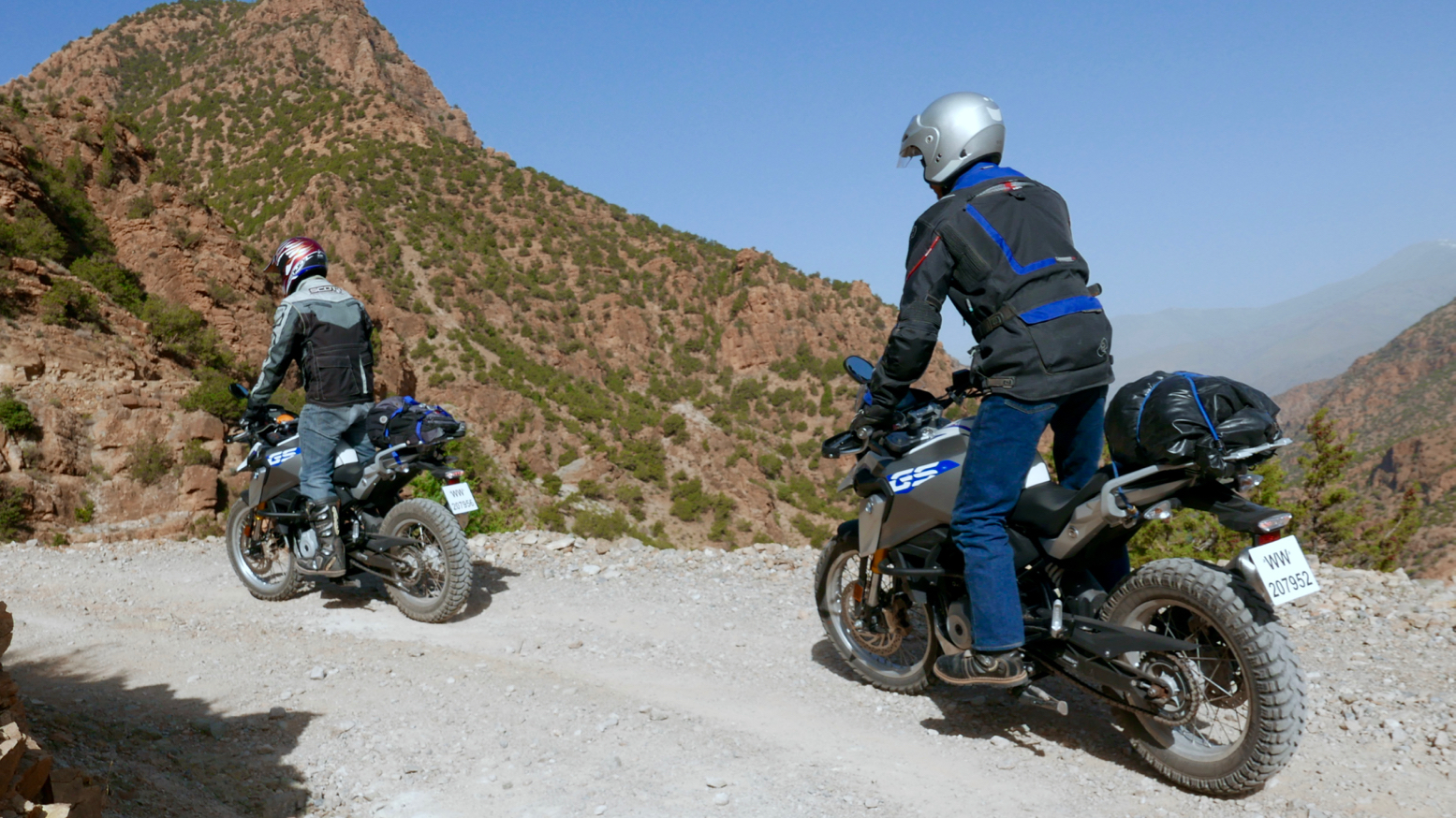
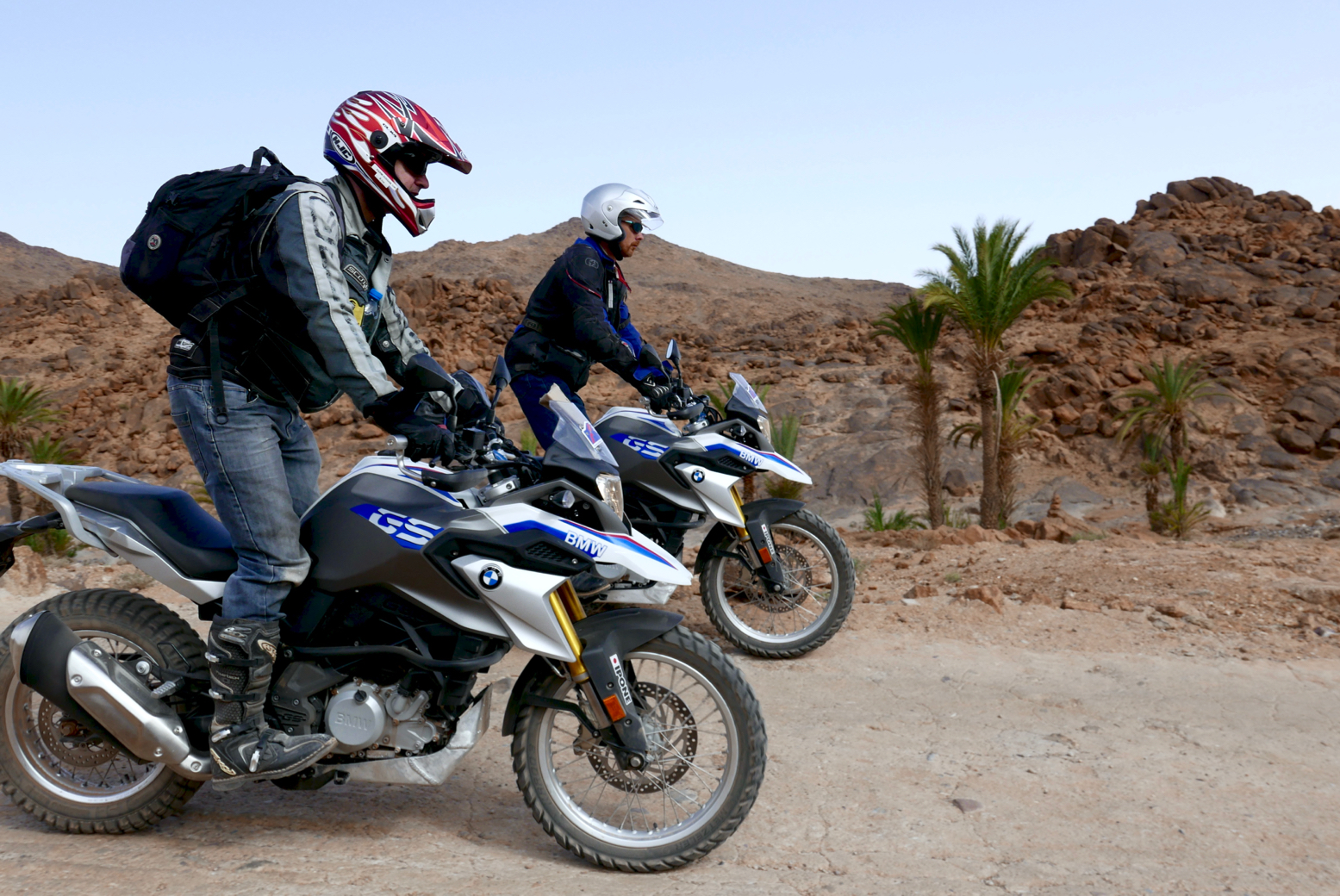
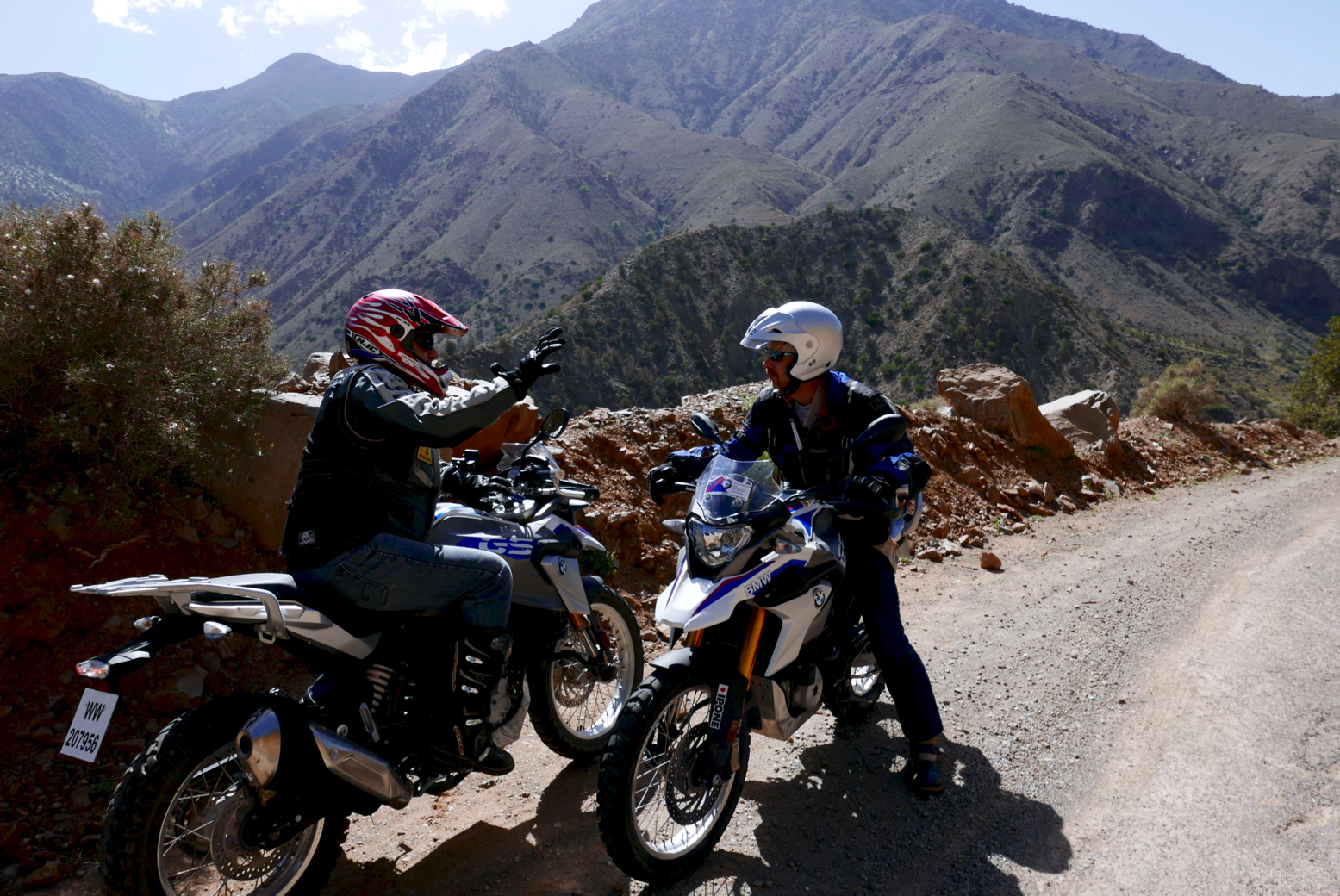
Review In Morocco Honda XR250 Tornado imports stopped a couple of years back and the Marrakech rental agency I use for my fly-in tours is finally replacing their weary 7-year old XRs with the BMW G310GS. Honda’s newer CRF250L had been a contender too, but Honda Morocco don’t list it. As it is, the 310s suit the agency’s BMW profile and their brilliant, unkillable Tornados, some with over 100,000km on the clock, have paid for themselves many times over. It will be interesting to see if the 310GS stand up as well and for as long. I flew out for three days with two mates, both experienced desert and overland riders. At the end of it neither were that excited by the 310; it’s a big bike with a small engine. I myself was pleasantly surprised.
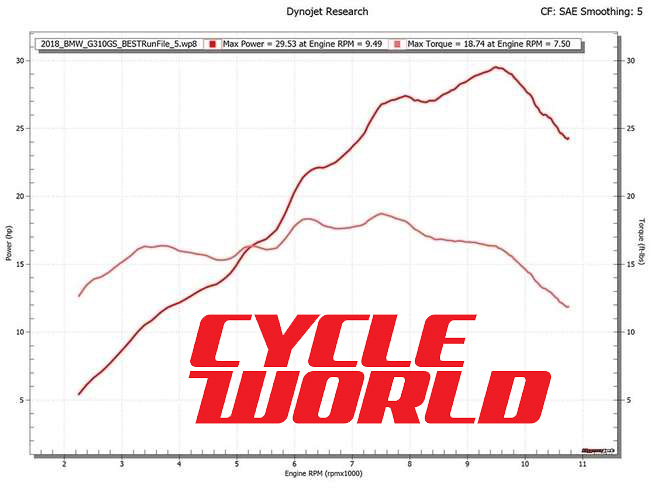
Performance Officially, BMW claim the 310GS makes 34hp at 9500rpm. An independent dyno run here shows it’s more like 30hp and Cycle World got a similar figure (left). No great surprise there; most official manufacturers’ figures are optimised. Although the bike doesn’t feel that heavy once on the move, the additional 20% of power over a regular 250 is negated by a similar weight gain adding up to a claimed 169kg. Coming down the twisty R203 back to Marrakech, the old Tornado (135kg) could just about keep up. Climbing up to the pass it struggled, especially once the carb started choking on the elevation. I never revved the 310 over 5-6000rpm, nor really needed or wanted to; the efi helps it pull smoothly but above 6000 it all got unpleasantly buzzy. And yet, according to the Cycle World power graph it’s only making 20hp at 6000rpm after which the extra 10hp pile in. Even then, I suspect that like any bike this size, riding across Spain on a mission to Morocco wouldn’t be much fun. Brakes were great as you’d expect. On the dirt it was the weight and suspension which held us back alongside the XR, and on road or trail I tend not to brake hard to maintain momentum. I forced the ABS on a couple of times to see how it responded and, with no frights, was happy to leave it on. Overall it’s a huge potential benefit, especially on the front. The slightly notchy gearbox I can forgive at such low mileage, but the occasional stalling on pulling away or at low rpm was irritating and I read is not unique to our two GSs. It’s possibly a gutless, negligible-flywheel small-bike knack to overcome with experience and more rpm. Cutting out as I tried to ease round a steep hairpin without feathering the clutch nearly tipped me over. You’d hope a remap at a service may iron this out.
Economy and range Over three fill ups my 310 averaged 88 mpg/73.2 US – 31.3kpl – 3.21L/100k. The official BMW website claims 3.33L/100km (94mpg) which like the hp, also sounds massaged. Still, that was some 20% more than the 88,000-km old XR which, with the same sized 11-litre tank, completed a 230km loop on fumes. Meanwhile, it looked like the 310 was good for at least 300km at that consumption. But – I hardly ever exceeded 90kph (56mph) at which point the vibes set in. As I often observe with these small-bike mpg comparisons, if I rode a bigger bike like my XSR and especially the ultra frugal CB500X RR at such modest speeds, I bet (in fact, I have) got similar fuel mileage, but with the benefit of proper overtaking and cruising speeds when wanted or needed. It’s possible of course that the mileage could improve as the bike runs in, and that our lowered 21/25 psi tyre pressures didn’t help efficiency.
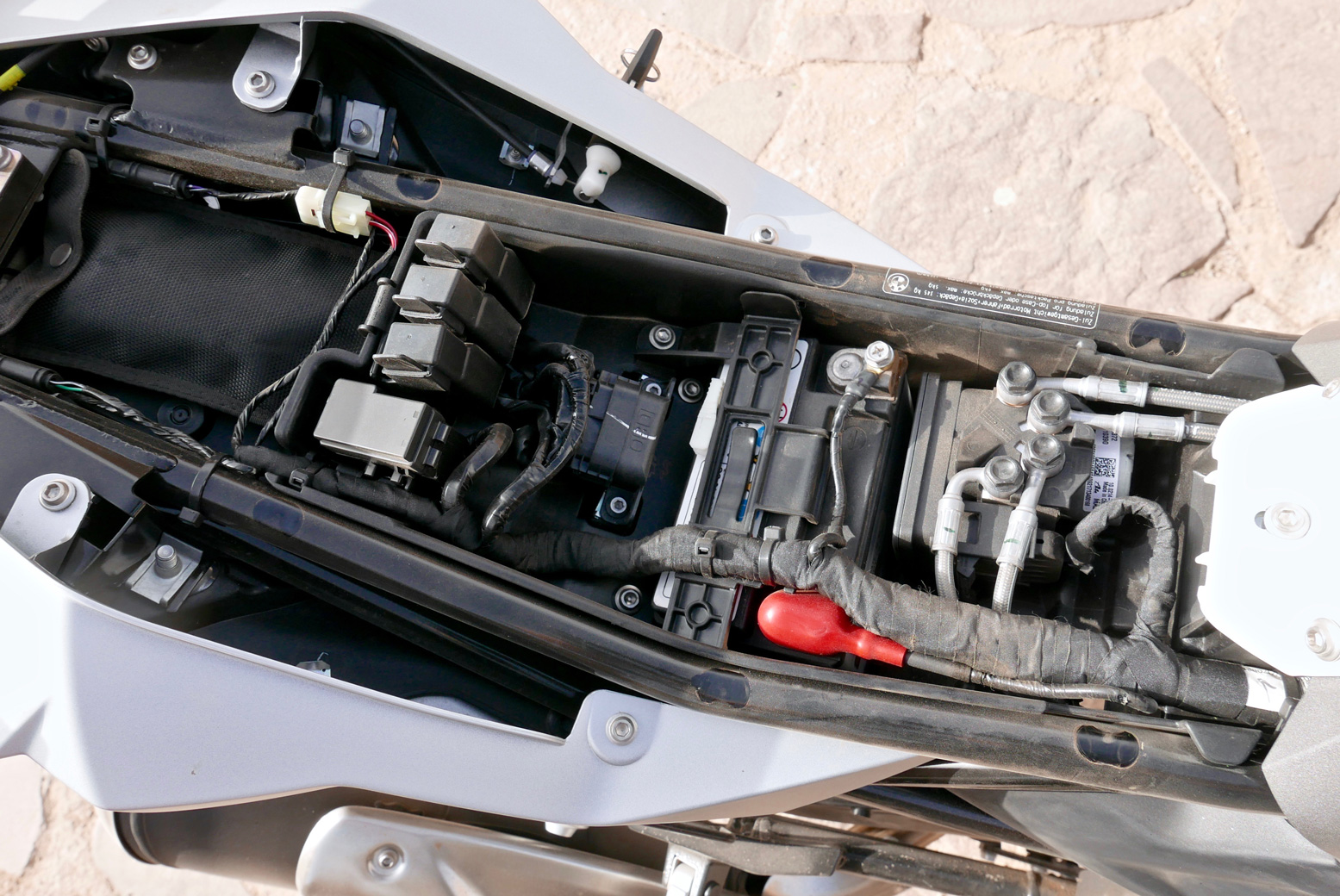
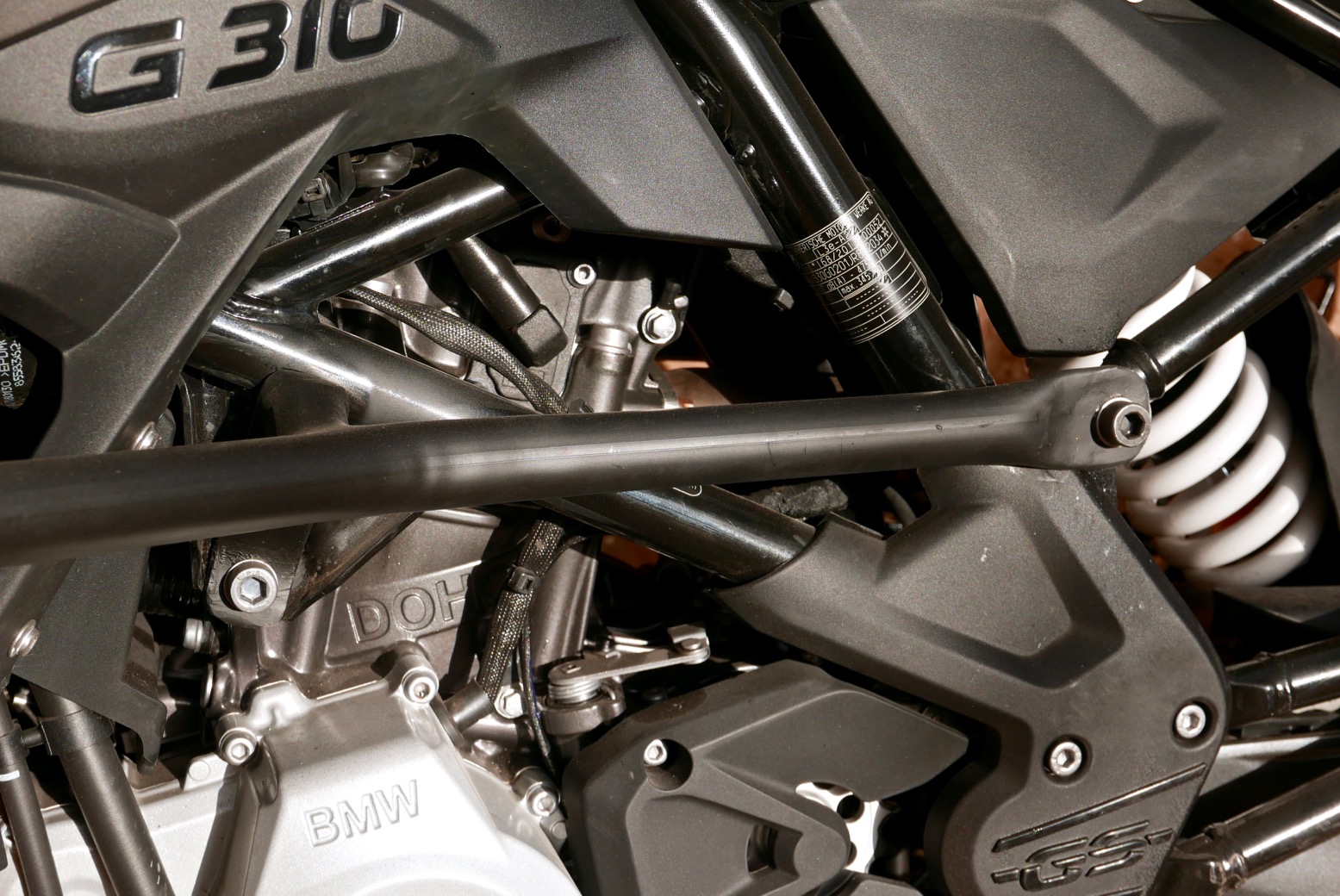
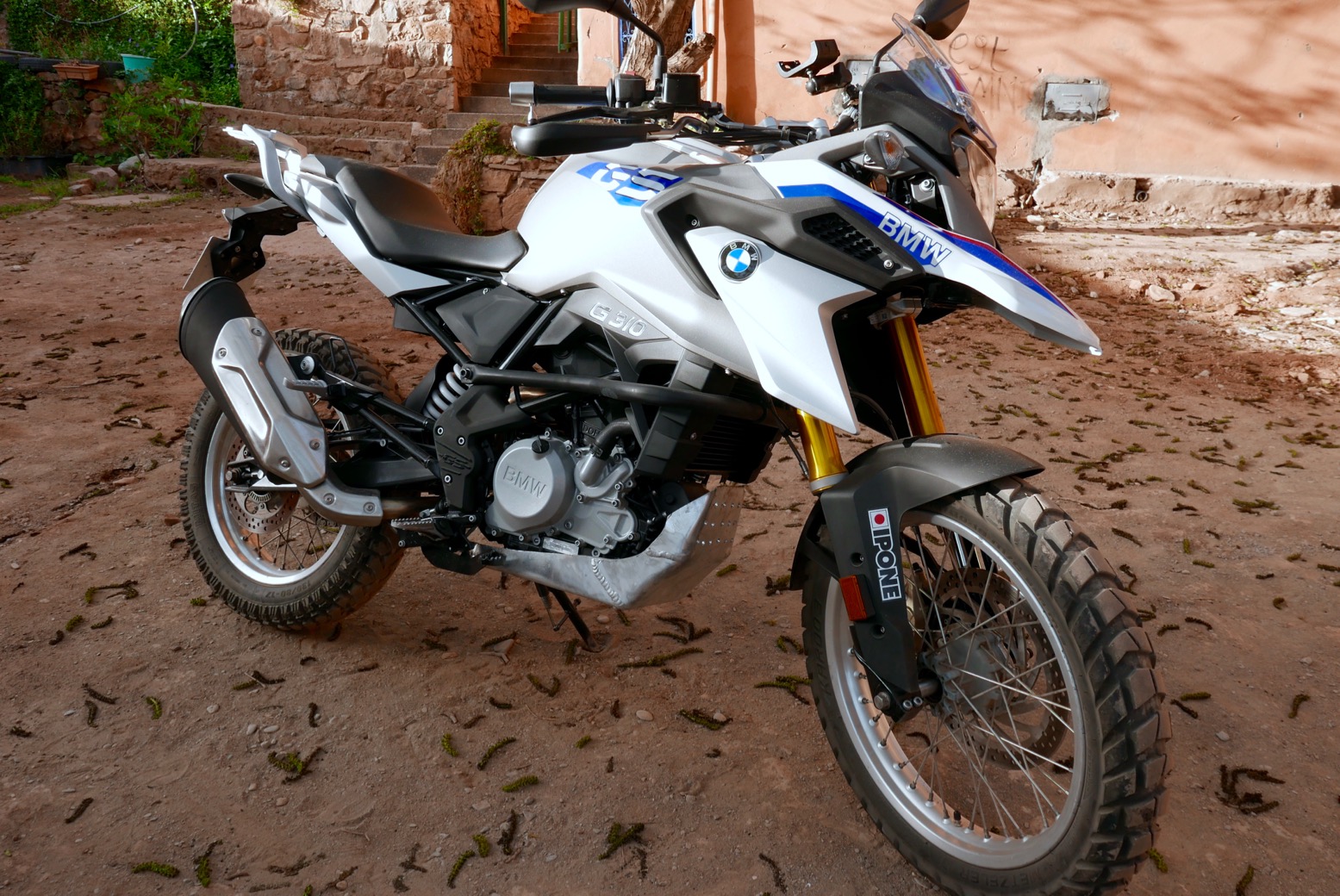
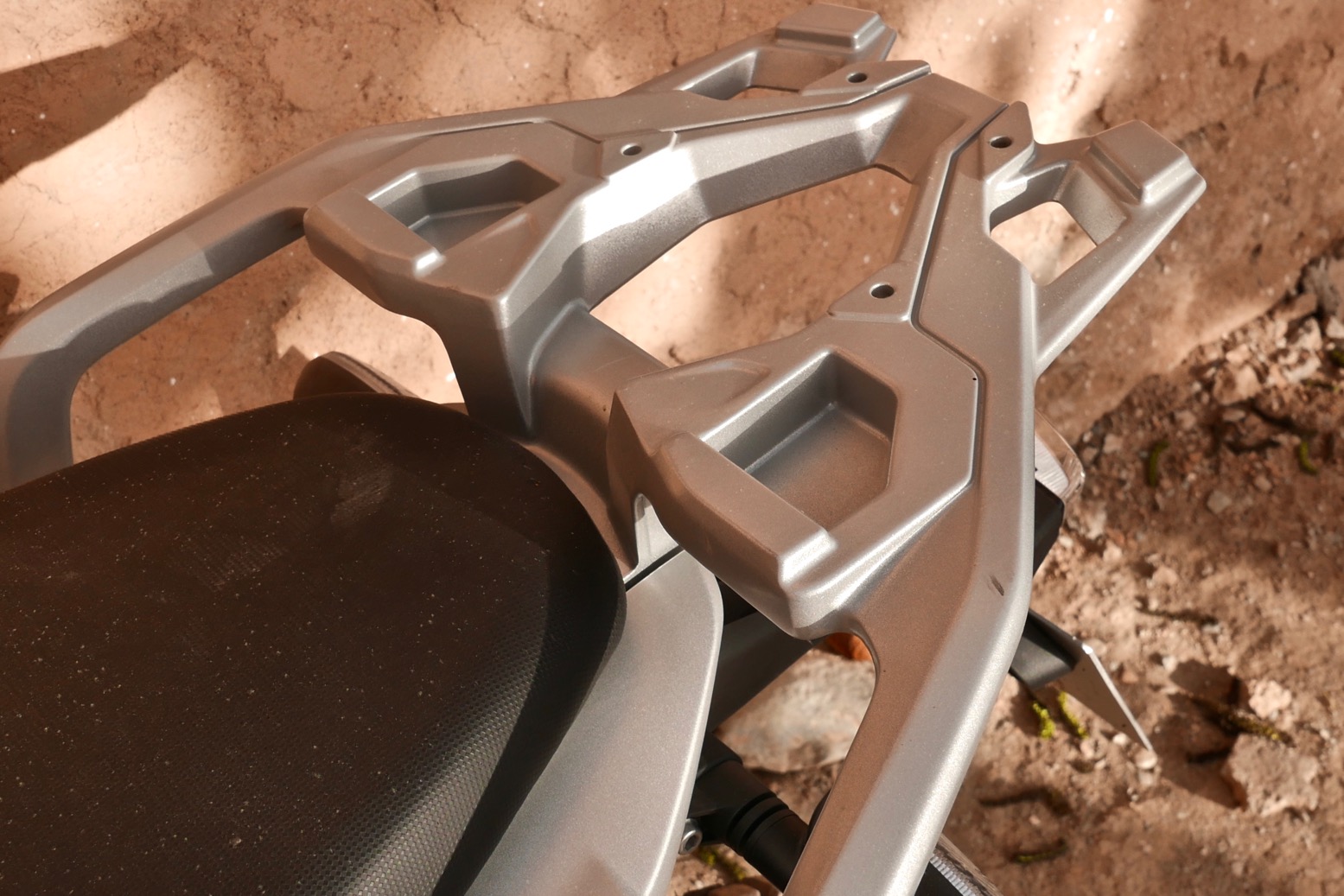
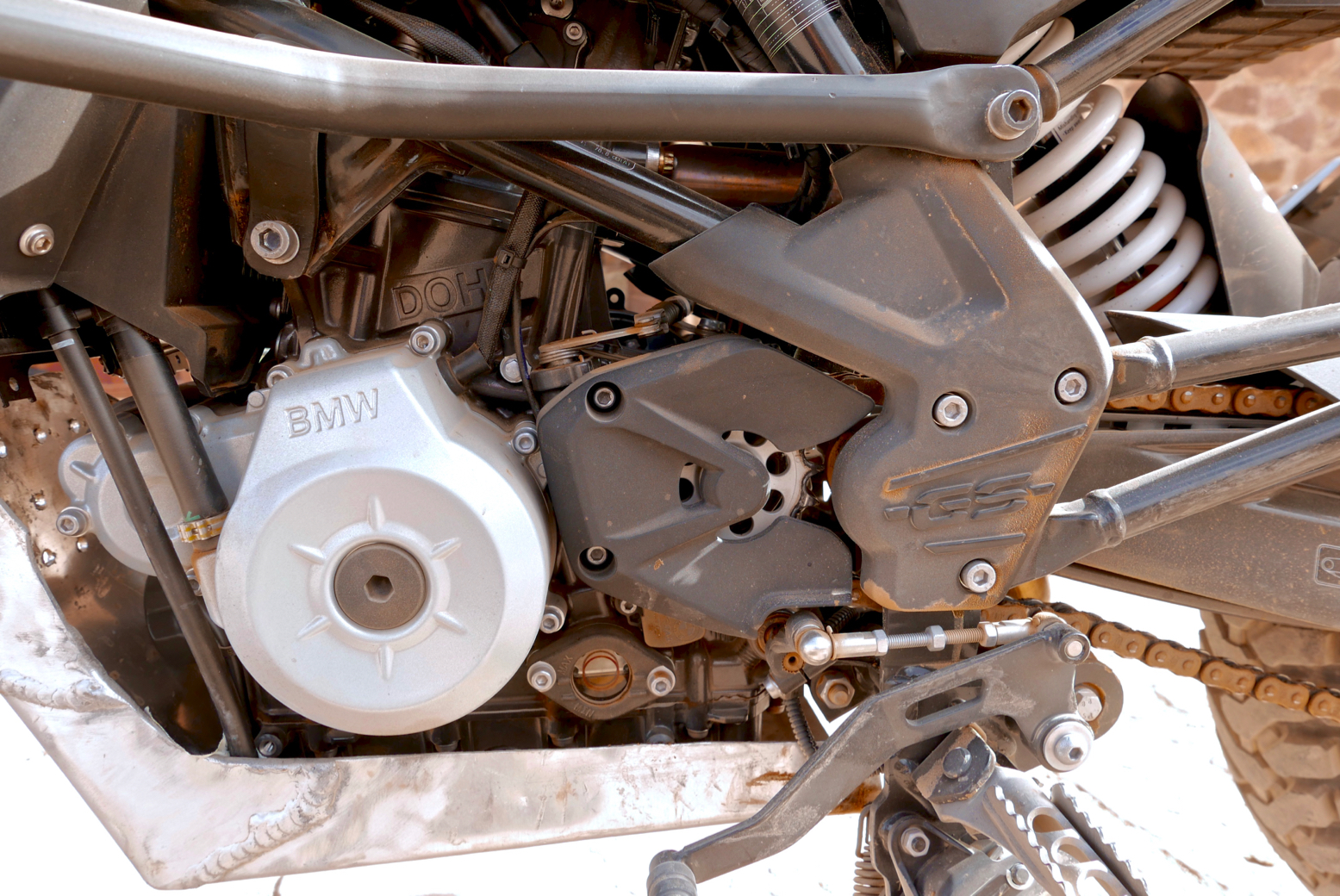
Build quality Looking the new bike over, there’s nothing glaringly cheap or shoddy to suggest this bike is made in the same place they build Enfield Bullets. Paint, welds, plastics, assembly and finish all look well up to BMW’s standards. That may all change after a few months rental use. At the end of the first day’s piste bashing we thumped and waggled various bits to make sure nothing had come loose or broken, but apart from the fender and non-stock crash bar or bashplate clanking, all looked in order. Under the seat was a handbook in Turkish and a near-proper toolkit which included spindle spanners (won’t fit the new spoke wheel nuts) and a C-spanner for the shock. And for load-carrying duties the rear subframe looked a lot more chunky than what you’d find on a CRF250L for example.
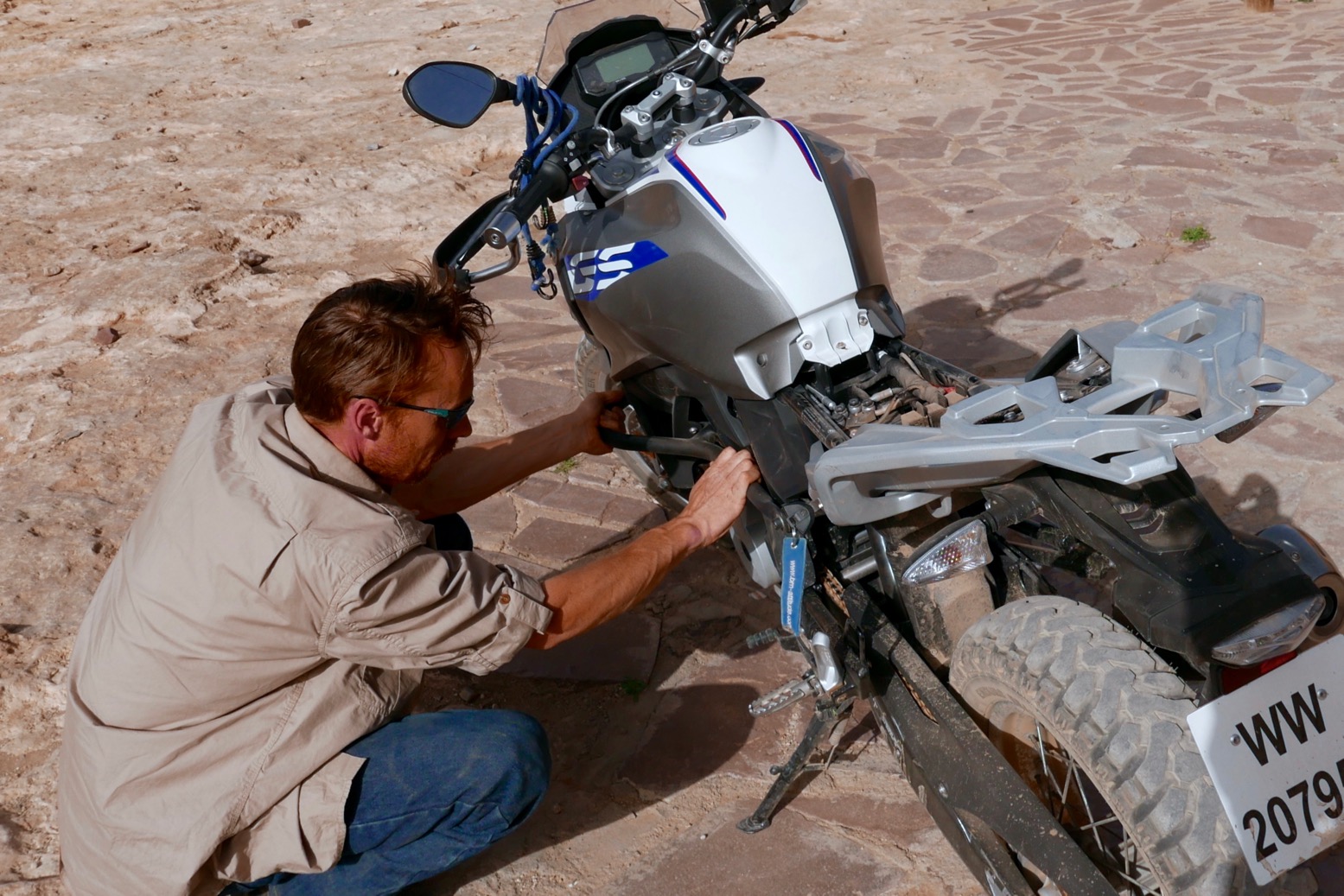
Suspension I was pleasantly surprised or should I say relieved by the springing. Weighing 92kg (Simon is nearer 70kg), I was expecting the hefty GS with 180mm/7 inches oftravel to cripple me on the dirt- or on broken roads. The 310 was certainly slower on the dirt than the clapped-out XR, but road or trail the spring rates and suspension damping felt unusually good compared to cheaply sprung Jap bikes like my XSR before I did it up. Like any big or modestly sprung bike, as long as you progressed smoothly, rough roads and trails were fine. On our bikes the front fender pushed against the DIY engine crash bar and somehow rubbed on the tyre knobs underneath (you can hear it in the video above at 2:48). They ought to fix that before the fender cracks. If I owned a G310GS I’d fit some firmer forks springs and consider a shock spring, but it’s a relief to have half-decent suspension out of the crate, as I recalled on the F650GS SE from 2012. The USD forks aren’t adjustable but USDs usually have better action than conventional forks; the back shock can be cranked with a C-spanner once you remove the LHS side panel. We thought about it but didn’t bother.
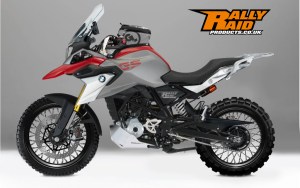
The Rally Raid G310GS RR kit
Following their deservedly successful Honda CB500X RR conversion which I also used in Morocco, Rally Raid have developed a similar kit for the G310GS in their quest for supporting smaller machines to use as real-world, all-road travel bikes. I’ve not seen, far less ridden this bike but there’s a lengthy development thread on the advrider vendor forum, and on the same website Jenny Morgan has just set off to ride a new 310GS RR along the Trans America Trail, as she did with a CB500X RR a couple of years back. Rally Raid’s kit replicates some of what Loc2roues have done to the 310s we rode: proper bash plate and engine guard, hand guards, tail rack, all-road tyres and a conversion to spoked wheels. IMO this last modification is redundant on a road-oriented travel bike – this isn’t a WR250 – but at least Rally Raid offer to make the spoked wheels (1150g lighter up front; 2kg heavier at the back) tubeless which is a real benefit on the road. Beyond that, Rally Raid will do you a taller screen, suspension improvements, swaps and height increases, bar risers, lighter pipes and other accessories, but I see no wider footrests listed, nor a seat. I’d imagine they’ll get round to those. You could spend over two grand to end up with a slightly heavier but much more functional bike that still only makes 30-hp. But heck, it sure looks good and the suspension upgrades ought to eat up the trails.
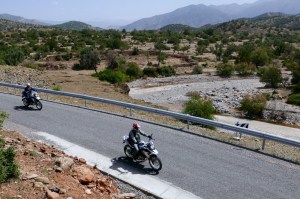
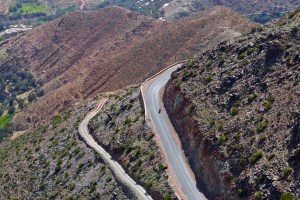
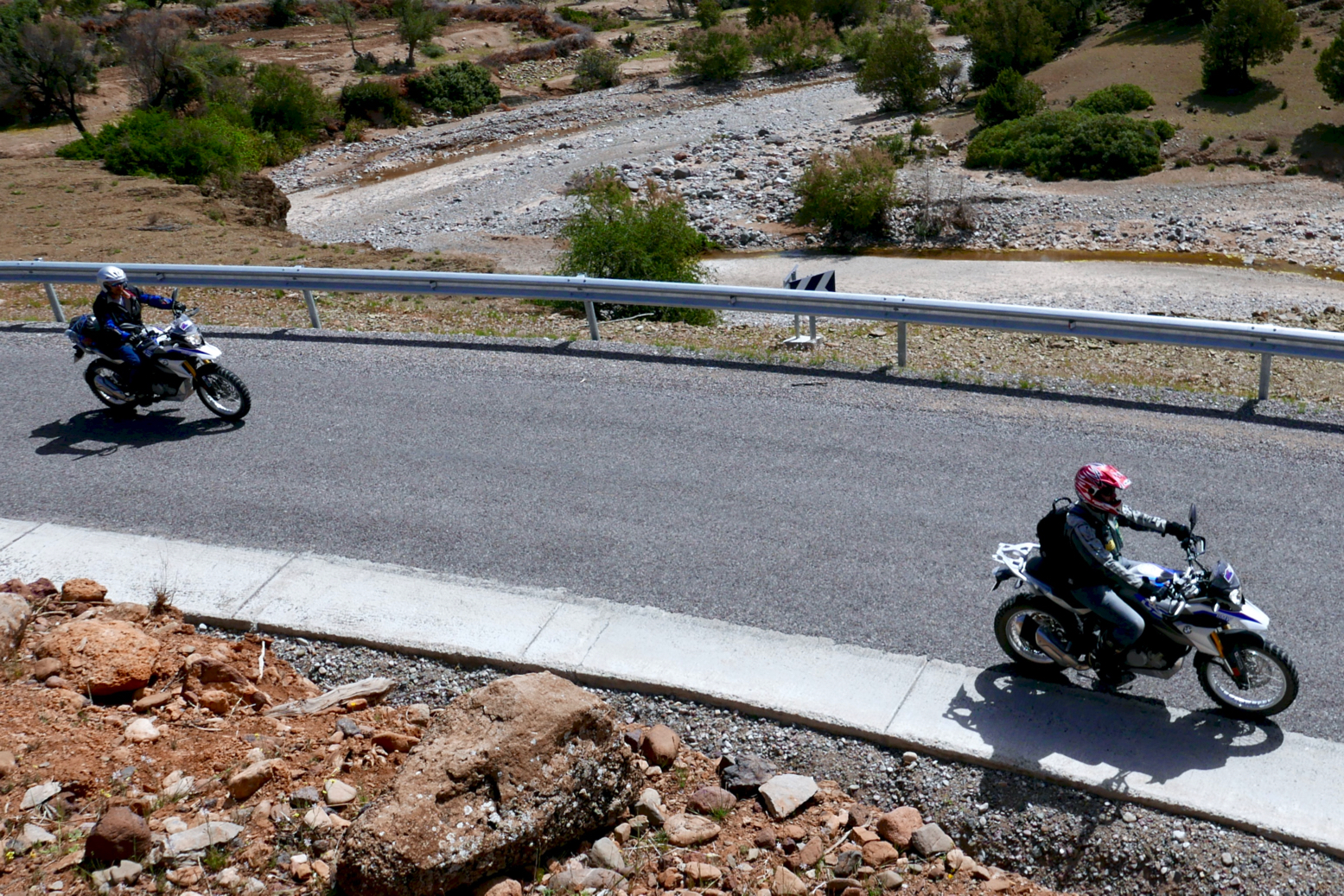
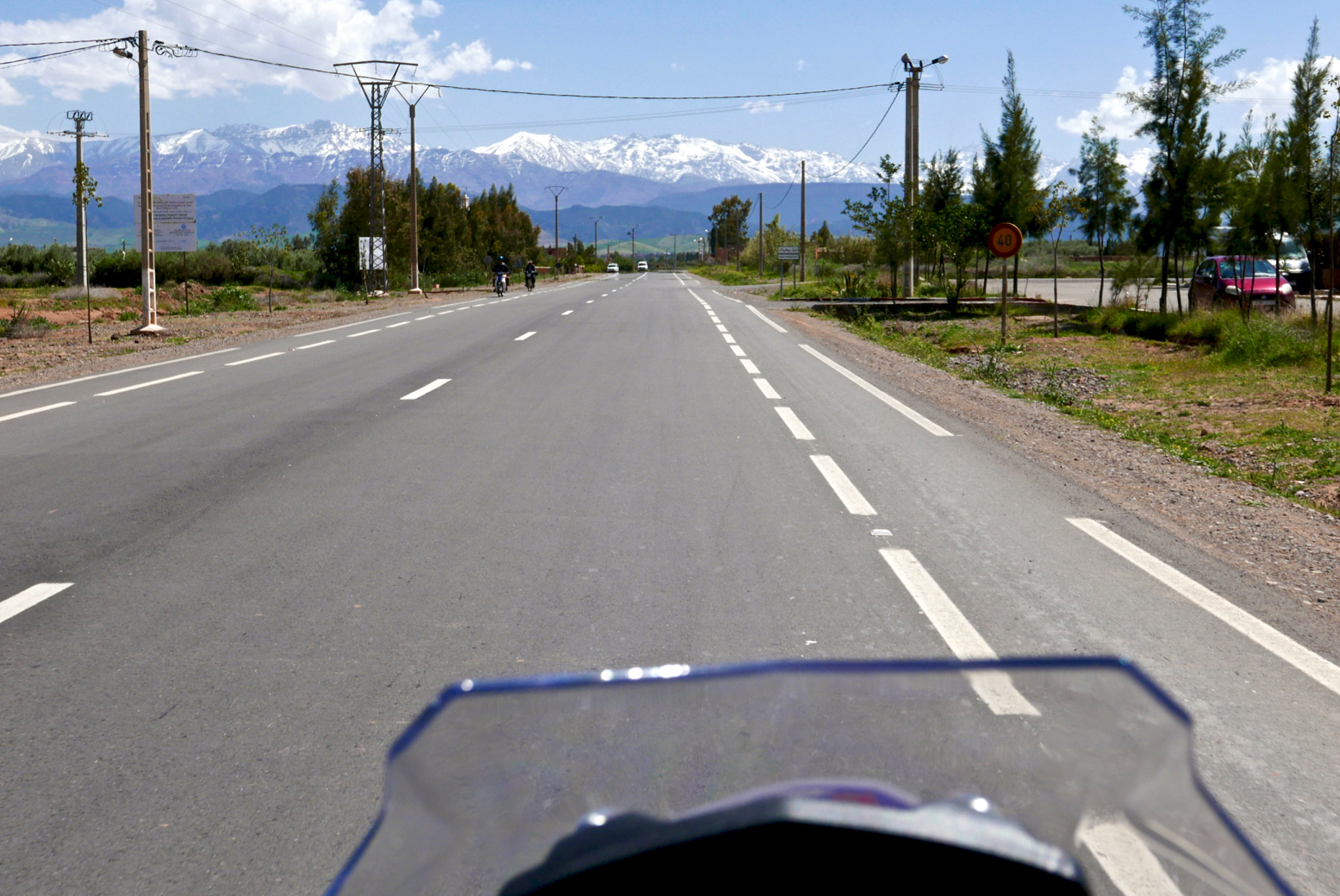
Road riding Coming back over the High Atlas with the tyres back at 2 bar (BMW manual recommends a rather low 1.7-1.9 bar), me ‘broken in’ to the machine and in a bit of a rush to catch the plane, the 310 swung effortlessly through the hundreds of bends up and down the R203 Test n Test road. Along with me knowing this road well, great ABS brakes the now worn-in new Karoo 3 tyre on a 19-inch wheel all helped with stability and confidence to make the GS fun to ride.
But on a flat straight road and reluctant to cane the new engine, the 310 feels little better than a 250, albeit still adequate for the quiet Moroccan backroads. Initially the bike’s bulk can trick your brain into thinking you’re on a 650 until you try and nip past something. This is to be expected with any bike of this size and weight, but at 90kph the usefully wide mirrors blurred and the motor got unpleasantly buzzy. Top speed they say is 144kph/89mph but at the speeds we rode, the handling and brakes have little danger of being outrun by the engine’s performance; ideal for inexperienced riders, especially in wet conditions or on the dirt.
Comfort The seating position feels natural; for once I’m not cramped nor look it. But it took just a couple of minutes out of Marrakech to notice the thin and soft padding of the 835mm/33″ seat. I thought it might be a thinner, lowered option but was told it was standard. This was by far the worse thing on the 310, recalling my agony on the F650GS SE I rode here a few years back. Add the big step and it means you can’t slide back. As mentioned, the vibes over 6000rpm (about 100kph) make it uncomfortable to travel above this speed, but the vibes may fade with some miles or the engine smooth out at higher rpm. You sit fairly far back; the tiny screen was too short to be effective, although if crouched right down I could just get under the vented wind blast. Taller screens will be an easy fitment. I didn’t meddle much with the modes of the LCD display whose digits I found a bit thin or too small to read in bright sunshine, but all the basic functions are there, hopefully including the ability to swap between kph and mph when abroad.
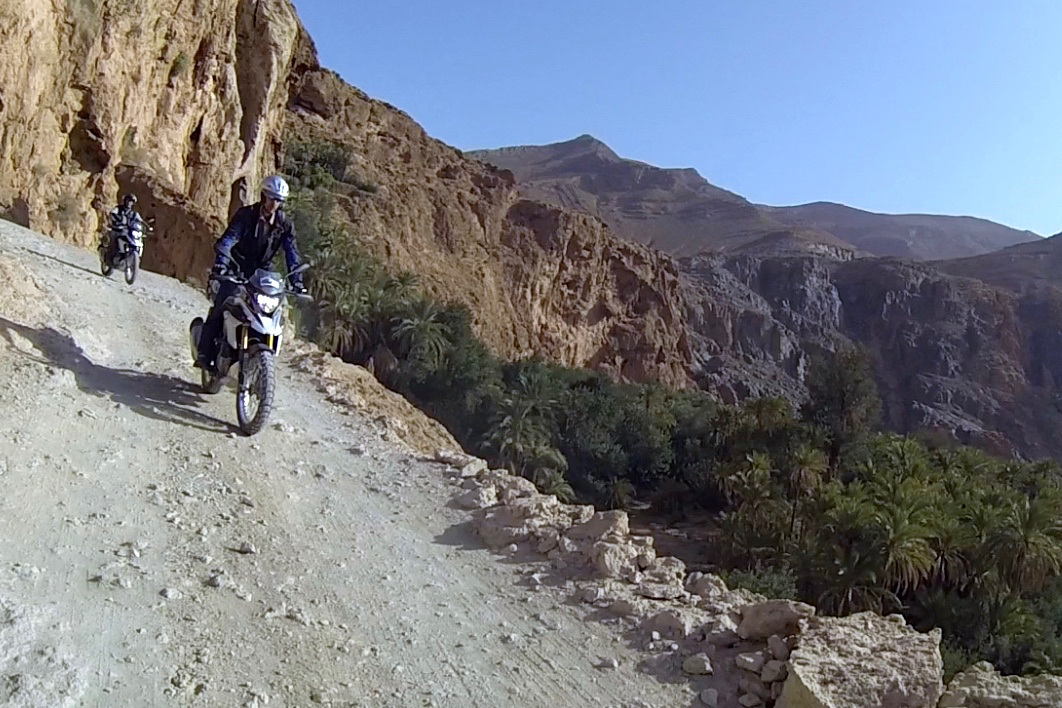
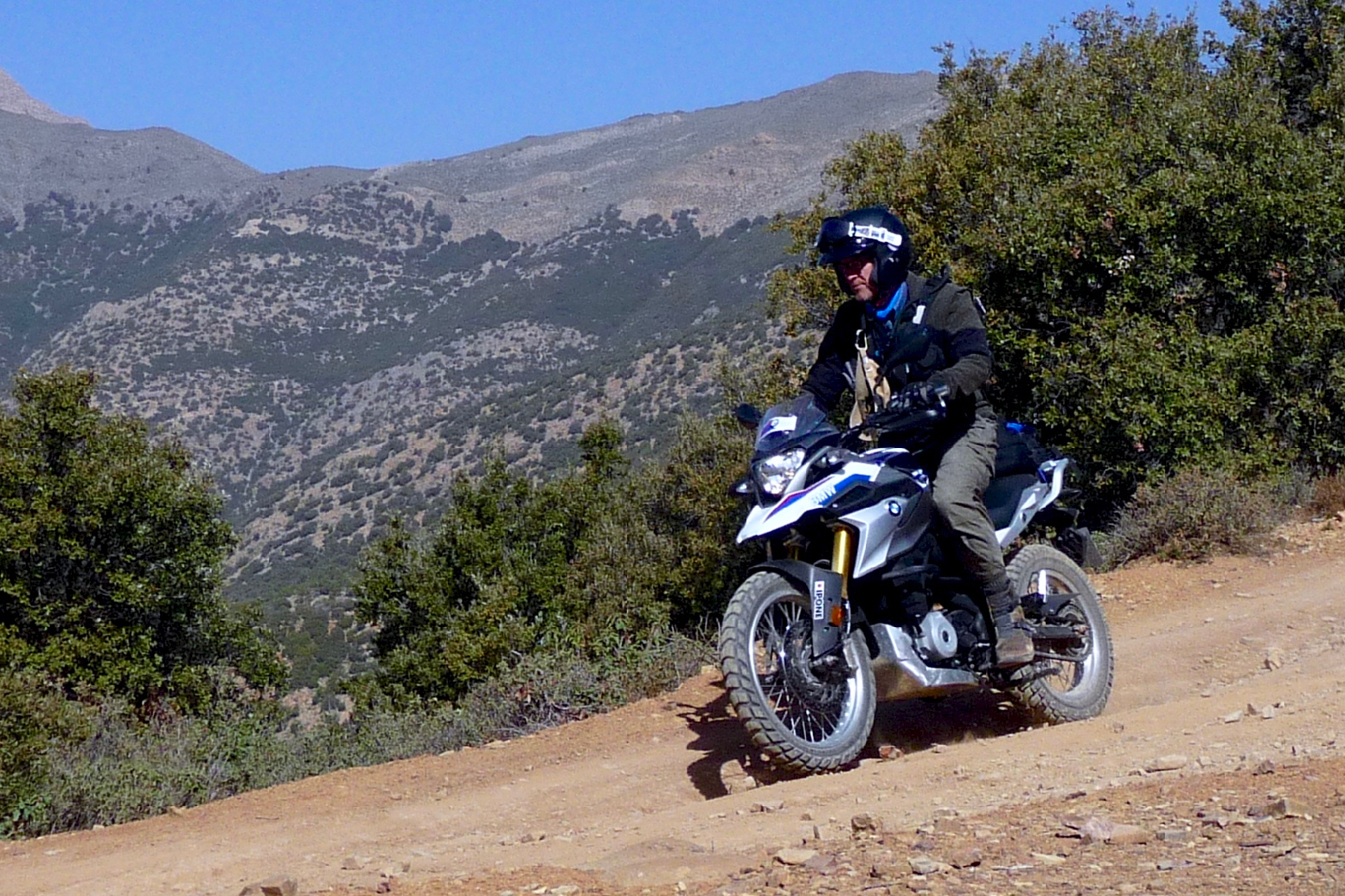
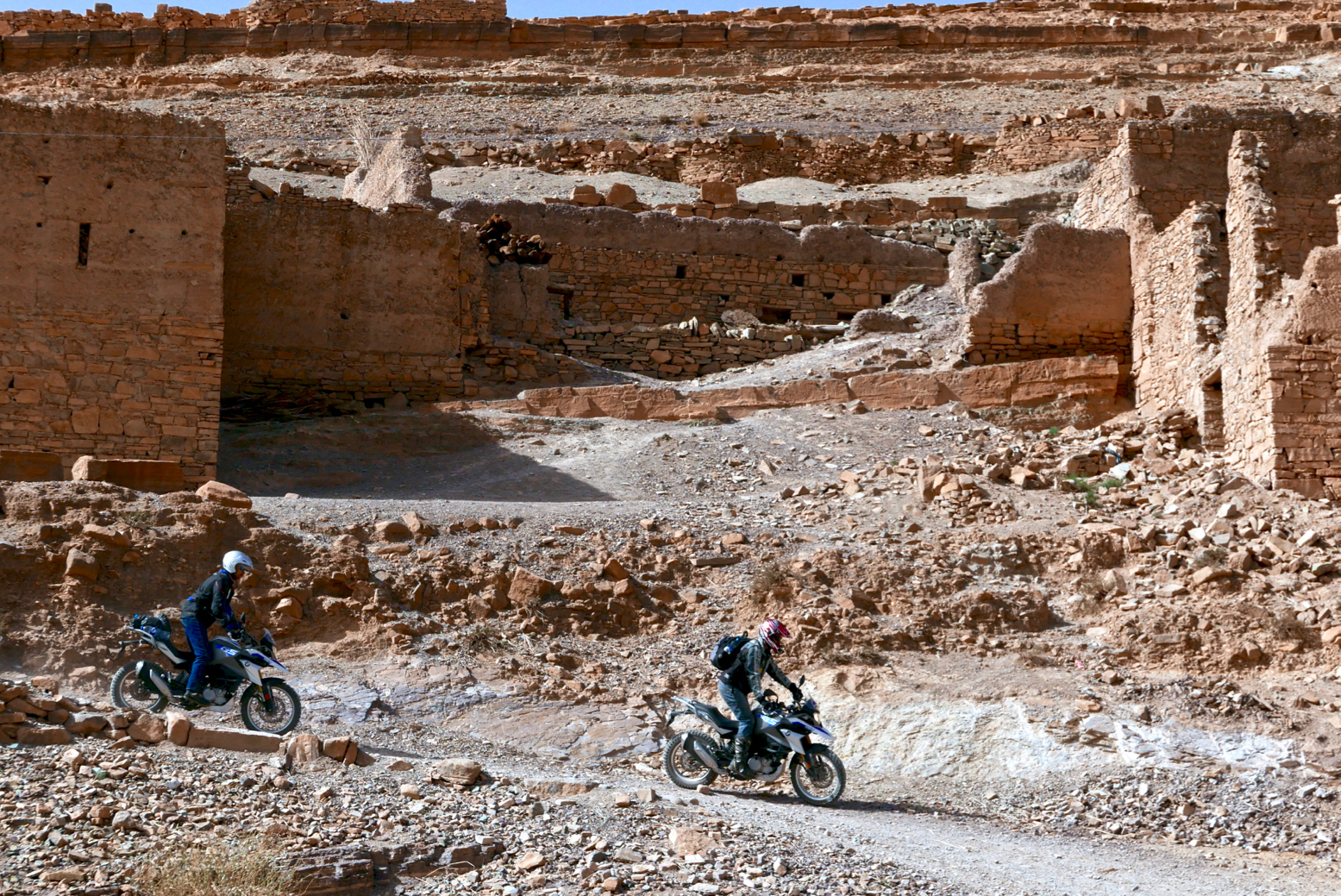
Off road Swapping with the MTB-like XR on the trail, you notice straight away how much more slowly and carefully you need to pilot the 310. That’s to be expected for what it is (I keep saying this!), but it was still possible to roll along smoothly thanks to the efi, suspension and general layout (dropping the tyres to 21/25 definitely helped). The suspension never bottomed out hard, not did the ally bashplate clang on anything other than kicked-up stones or the engine.
Even without risers I (6′ 1″) could stand up with only a small stoop (above left), but after a while the narrow pegs became uncomfortable, even on my off-road boots, compelling me to sit back down. On the slow, rough track up to the 2200-m Tizi n Oumerzi pass the other two said the fans kicked in and the bikes were hard work, but when I took over on the smoother descent the 310 was great fun – to be honest like any adv bike, large or small. (With ambient temperatures up to 34°C, I myself never heard the fan come on. You wonder if the reversed engine – exhaust pipe at the back – may help keep the radiator cool).
Conclusion This new-ish 300-cc category is a bit obscure in the UK and much of the developed world; offering little extra over the well-established and huge selection of 250s. Elsewhere class or power categories may be different and must be where the main market for this bike lies (in India it costs about £3260). Before I rode it I assumed that the G310GS would be poor compromise for my sort of riding: too heavy and road-oriented for off-road exploring beyond smooth gravel tracks (like my current XScrambleR), but too underpowered on the open road in the face of hills, headwinds, traffic and payloads unless you cane the nuts off it (like last year’s WR250R). This may be so but inMorocco the GS felt right in its element. The easy trails and quiet, sub-100kph backroads suited the 310 (or any ‘250’, tbh). That ought to translate to a good small RTW travel bike where the last thing you actually need is a quarter-ton, 140-hp behemoth. But I’ve found choosing a bike with this little power depends a lot on your weight (if not your size), the load carried and your expectations. When overlanders settle for the clear-cut limitations of a 250 they hope to gain a more manageable machine off-road. You wont get that with the 310. For my one-week tours it’ll probably be more suited to experienced riders comfortable with its weight and bulk on the dirt; the lowish seat helps here over the annoyingly tall XR. So if you’ve owned a lot of bikes, large and small, the 310GS isn’t such an exciting proposition, but I’m sure its great looks, price, spec and bulk will lure newer, younger riders into the all-conquering Cult of GS.
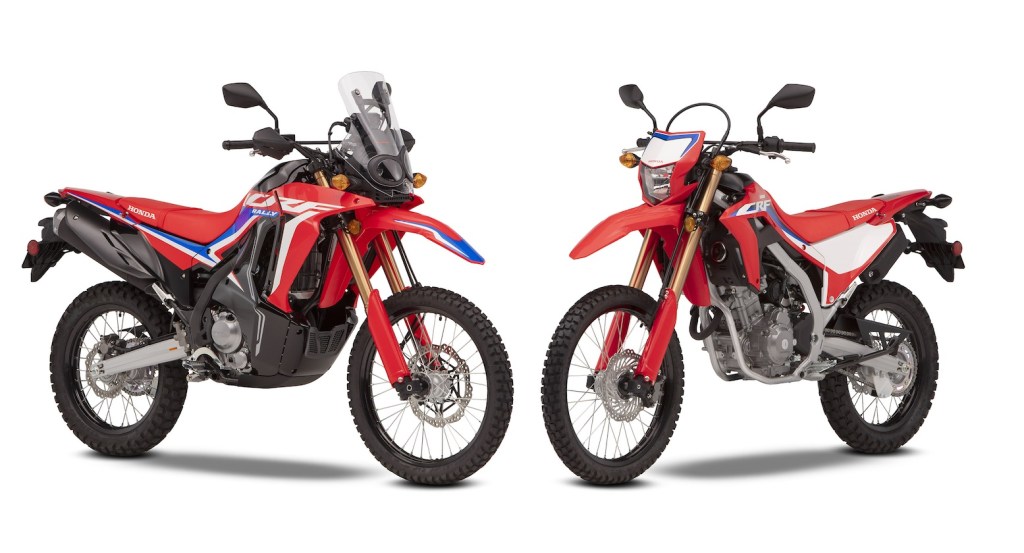
Otherwise, at about the same price Honda’s new for 2021 CRF300L Rally might be worth a look: lighter, better protection and the similarly great looks which these image-conscious millennial demand. And it’ll surely be more nimble on the dirt.
Additional photos by Dan W, Dave K, Karim H and Robin W
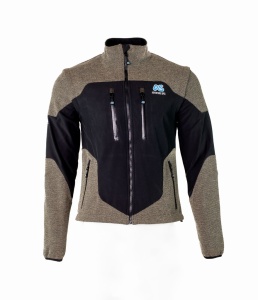
• Light and comfy to wear • Stylish, low-key design makes it wearable off the bike • Ready for armour (not included) • Lots of pockets, including on the back • High collar • Sleeves zip off • Vertical back vents work with a daypack
• Expensive now • New colour scheme (right) looks less good than 1st-gen green • Not that breathable; for warm conditions try the similar but open-weave Mongolia or the Atacama Race • Don’t expect the protected feel of a fully armoured Cordura jacket
What they say: A windproof and breathable trail riding/rally jacket reinforced with Du Pont™ Kevlar® fabric on the key abrasion zones. Reinventing the trail riding jacket, via the tracks of the Trans Euro Trail. For decades the trail rider had very limited options when it came to riding jackets. Either big bulky motorcycle kit that was restrictive and heavy, or lightweight outdoor gear that offered little protection. It always seemed like too much of a compromise. The Linesman Jacket is the culmination of the depth of expertise that Adventure Spec has established helping many tens of thousands of riders travel untold miles around the world.
Review In 2018 Adv Spec introduced a batch of own-branded jackets including the vented Atacama Race, the similar open-weave Mongolia and a softshell Linesman aimed at trail riders. It has been named after the volunteer researchers on the Trans Europe Trail (TET) which Adv Spec support – comparable with Touratech US’s Backcountry Discovery Routes (BDR); a riding gear outlet sponsoring and even under-writing well researched ride routes.
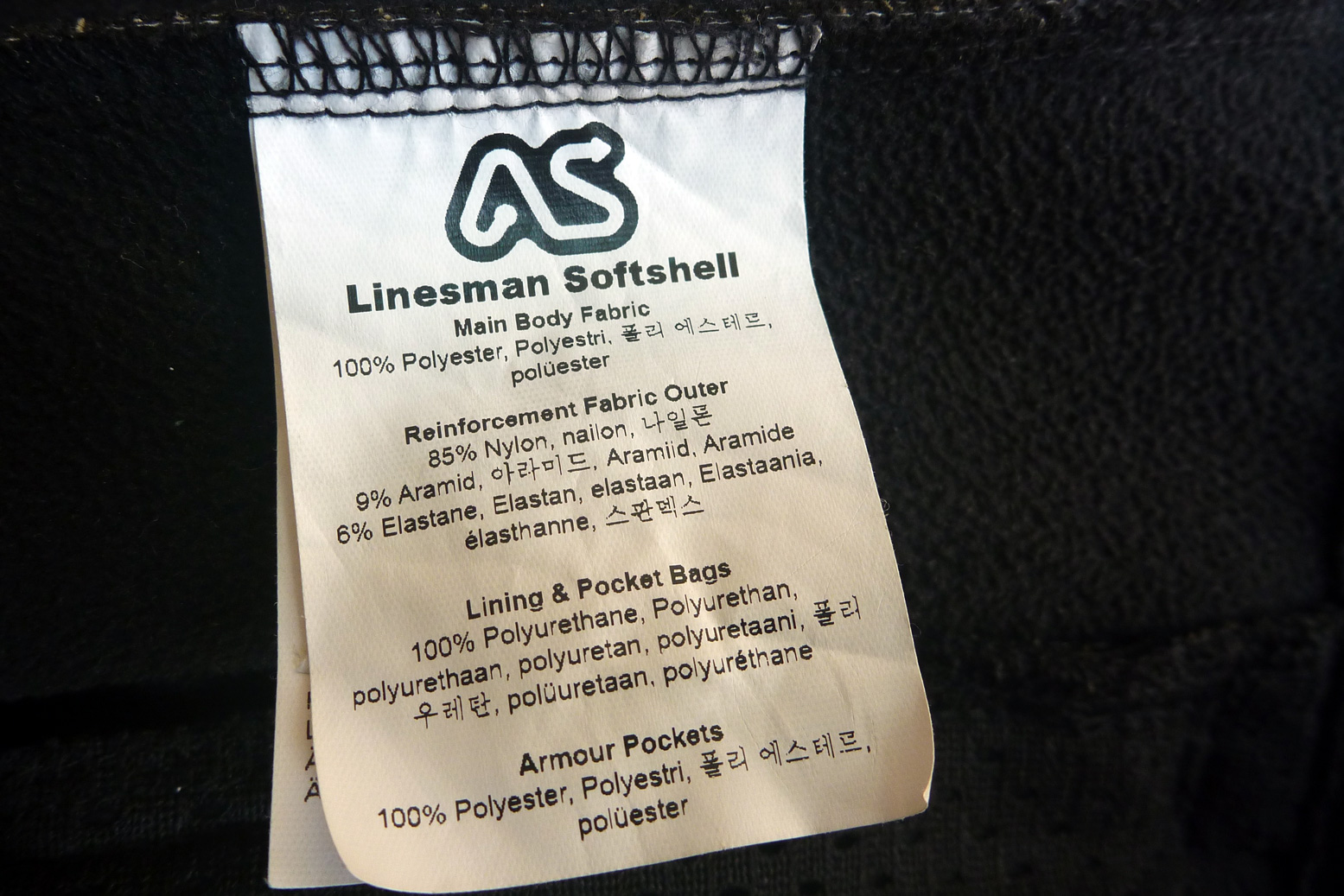
I miss my old Mountain Hardwear softshell (right), left on a bus in Delhi after a couple of epic Himalayan bike rides. Back then, outdoorsy softshell was quite pricey; a stretchy polyester outer fabric bonded (sometimes via a breathable membrane) to a soft, micro-fleece liner producing a lightweight shell that’s nice and non-rustly to wear while keeping the windchill at bay. What makes Adv Spec’s Linesman different from an outdoor-sports softshell is the lack of a membrane (my Mountain Hardwear was annoyingly sweaty; not really breathable) or even a DWR coating. Instead you get a kevlar overlay on the high-wear or impact areas (the green parts) as well as front chest pockets which work as vents to purge through similar zipped slots on the back.
Your Linesman is not intended for tearing around Brands Hatch on you Gixxer, nor touring Alpine passes in late summer. It’s aimed at trail riders who’ll be doing their riding and crashing at much lower speeds. To make that less painful there are armour pockets at the elbow, shoulders and the back.
If you add in a hook or velcro tab at the top, this back sleeve could double up as a bladder holder. The Atacama Race comes with this feature; however it’s done, it would be good to see it added to the Linesman, even if a useful two litres might put a strain on the jacket. It’s nice to not have to use a day pack to contain your hydrator.
The shoulder armour pockets thoughtfully pin up out of the way towards the collar because on the Linesman you can zip-off the sleeves. The theory is, with the sleeves stashed in the rear pouches, the jacket more wearable in hot conditions. While I’m pretty blasé about armour, I’d still rather ride with sleeves. If I’m getting stuck into a sweaty work like a tube puncture, I’d probably just take the jacket off. But I can see the value in removing them while retaining the security and utility of the pockets, perhaps on a warm TET evening in southern Europe for an amble down to the village bar. Update: In Morocco in April it was over 30°C so I did ride unsleeved and very pleasant it was too. The other two were cooking in their membrane jackets.
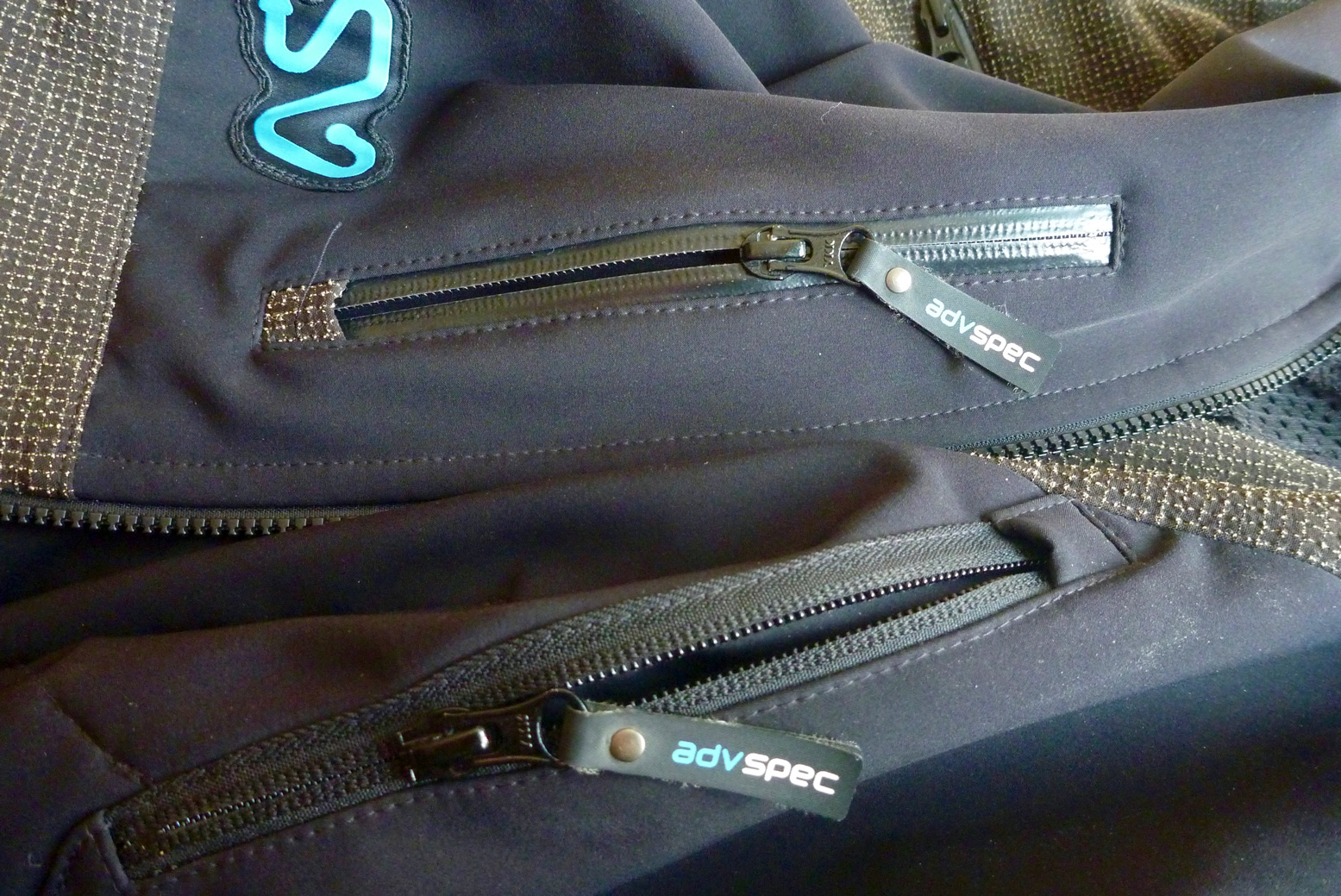
There are no less than eight pockets: two on the outside at the hem as big as your hand; two smaller vertical chest pockets which double up as vents (so probably not a place for your phone or wallet); two more zipped pouches above the back hem which you can just reach with the jacket on; and two huge and very handy mesh ‘drop pockets’ inside (below left). I find these most useful and have added mesh versions to my other riding jackets; an easy and secure place to stash gloves of maps without having to interact with zips apart from the front one.
I can see the thinking behind water-resistant YKK zips on the front pockets/vents, but unfortunately this makes them too stiff to operate one-handed on the move and as you can see left on the top zip, the press-seal doesn’t close up fully to keep water out. Seeing as these are the more-used zips, I’d prefer the conventional, freer-flowing zips as used on the rear vents and pockets (the lower zip pictured above). After all, the main front zip is the same. This ease of use applies especially to the front chest pocket/vents which are handy to open or close on the move while leaving the rear vents open. Like on my Klim Overland, these rear vents are inaccessible with the jacket on, let alone on the move; it’s often easier to ask another rider to zip you up or down. If it’s raining valuables are better off in a waterproof pouch while you either get a bit wet or pull on a mac.
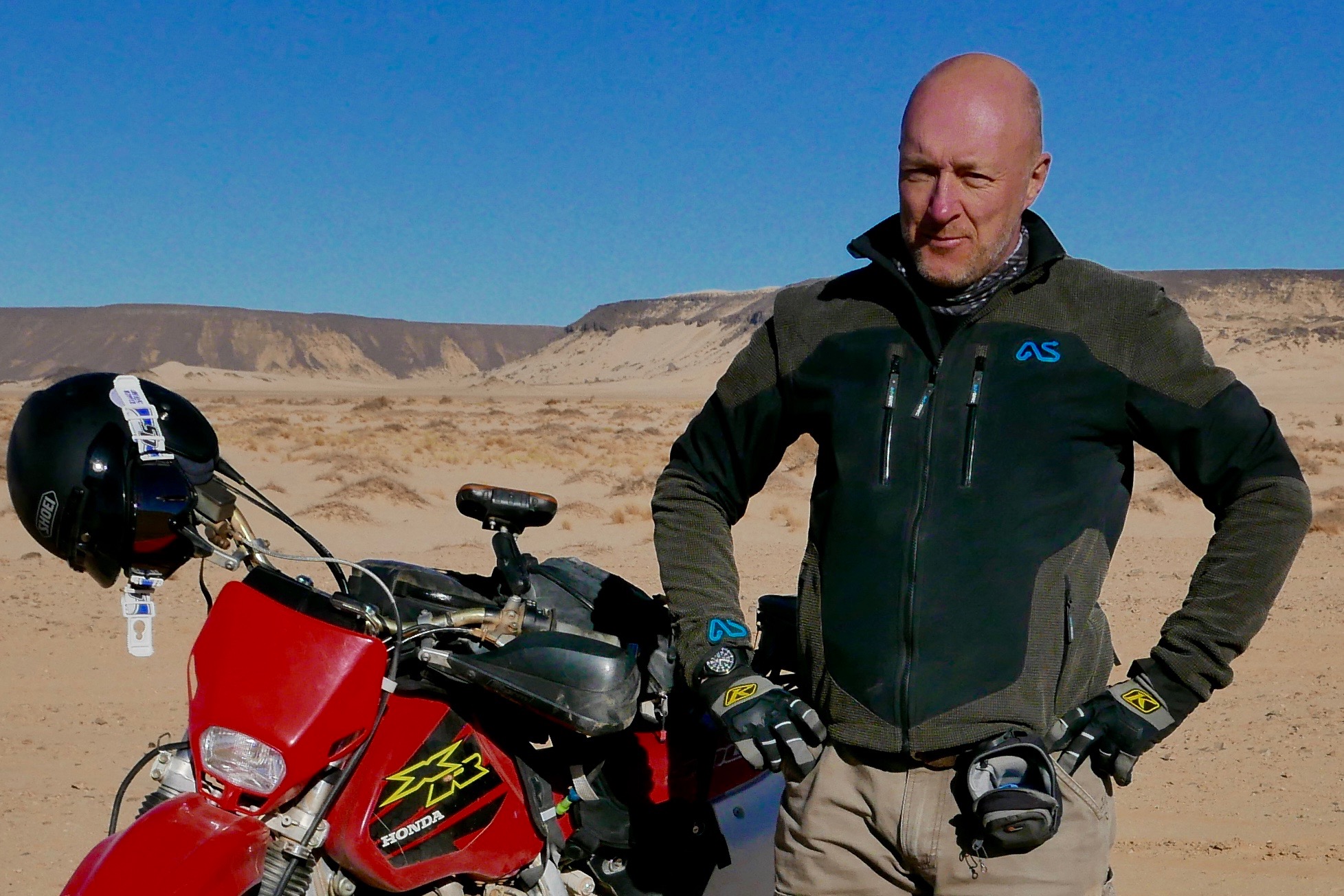
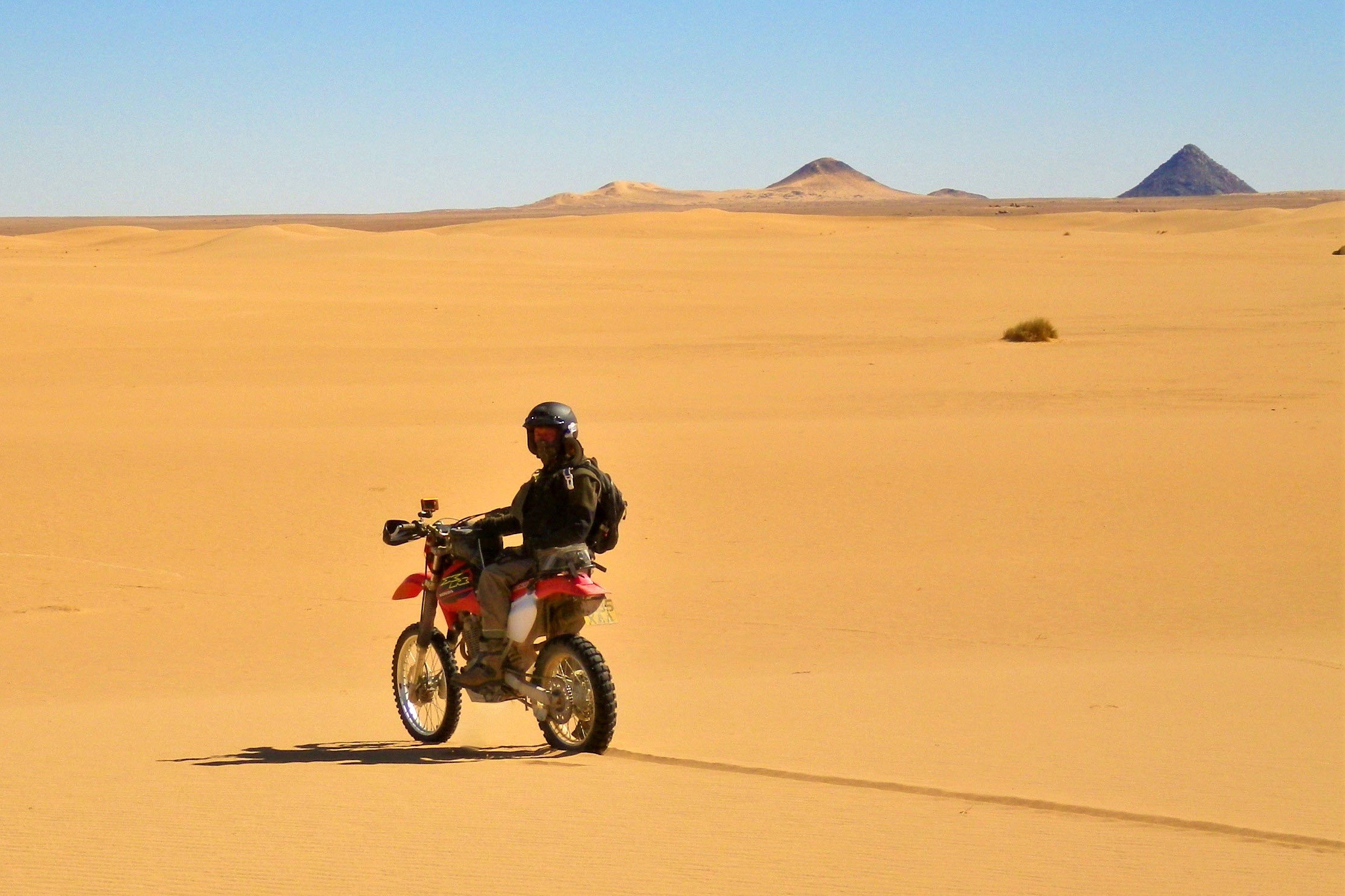
What did the others wear in Algeria? I have a rather casual sense of dress in the desert and prefer not to feel hot or sweaty. I don’t like being weighed down or in-your-full-face lids or synthetic legwear and I don’t mind being cold for a short while. I wore: TKC Baja boots, Klim Outrider trousers, the Linesman with a wicky/merino undershirt plus a Shoei open face. I was comfortable with these choices and unlike many, couldn’t be bothered change once at the camp. Of the dozen other riders; 10 wore full-face MX, most with goggles; 3 had neck braces; at least 5 wore full armour underjackets over vests or jackets; 7 wore Cordura riding jackets all the time and probably with armour – the rest wore jerseys most of the time; 1 wore waxed cotton + armour; 10 wore nylon riding (over?) pants probably with armour; 1 wore jeans with armour and 1 wore leather trousers.
The sort of riding I did in Algeria added up to a half-day on the plateau highway at elevations up to 1600-m, regular gravel pistes, gnarlier soft sand and 2nd-gear sandy tussock oueds, short dune crossings, churned up sandy canyons, and wide-open sand sheet down at 500m, all with regular stops to allow regrouping and playing the sand. Temperatures ranged from freezing mornings to the upper-20s Centigrade.
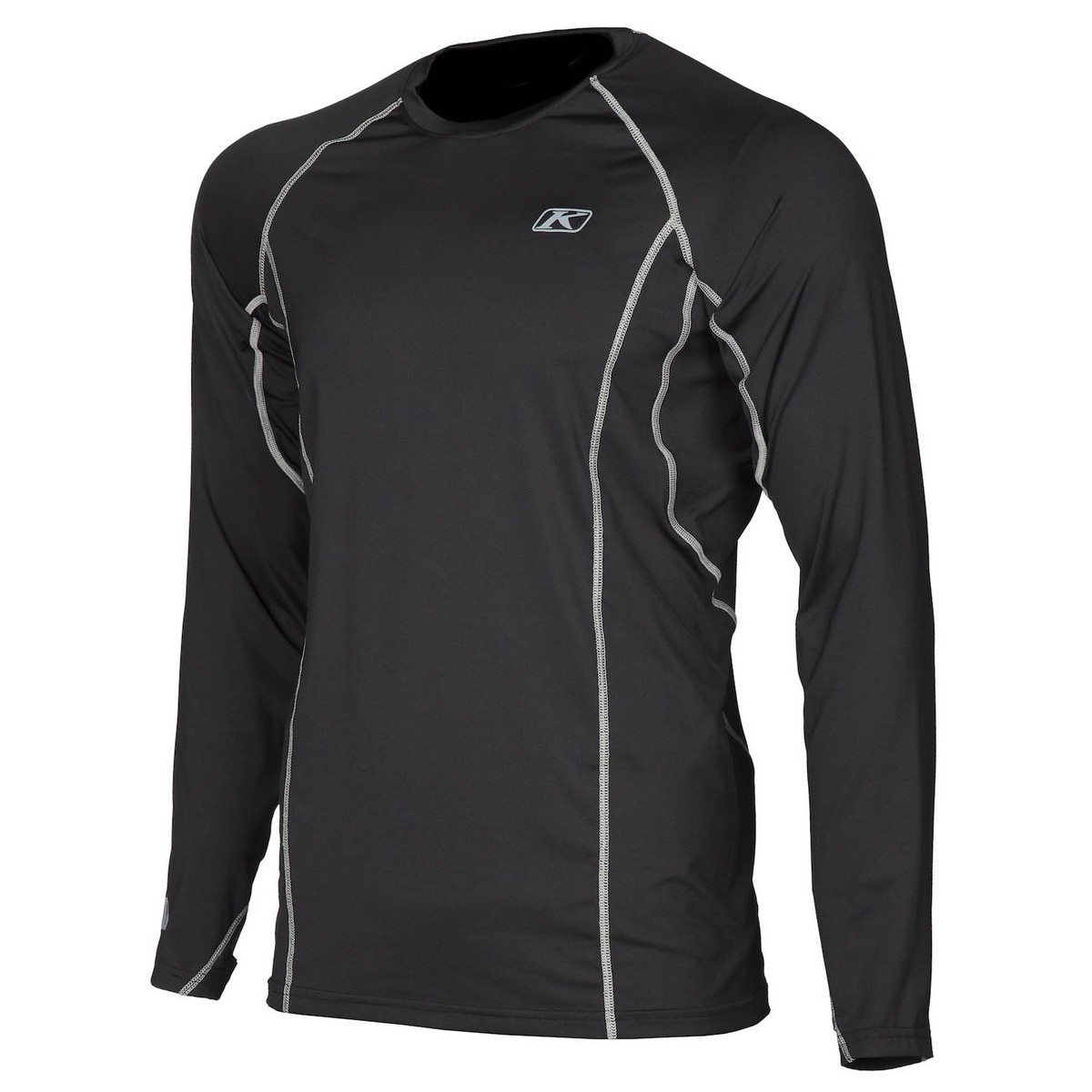
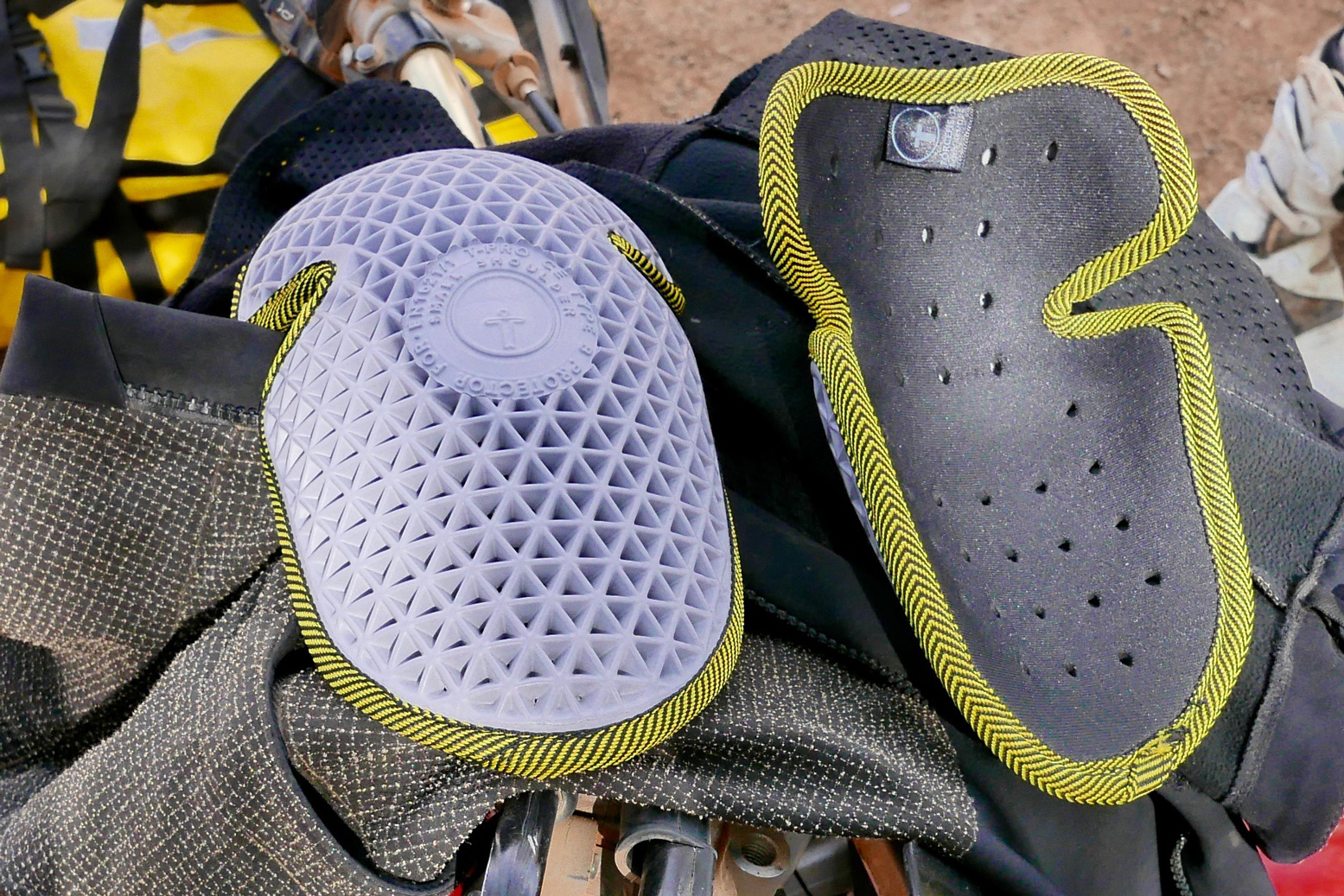
Underneath I wore a wicky T-shirt or long sleeve, either synthetic (right) or merino when chillier. That’s quite a mix of terrain, speeds and temperatures wearing similar kit; I tend to put up with short-term discomforts rather than faff about with layers. Through it all the Linesman unobtrusively coped with the occasional opening or closure of the rear vents. I wore mine with only Forcefield elbow armour (left). I must admit I’d have felt better crashing hard in a Cordura jacket, with or without armour. Softshell has a rubbery feel which would snag as you slide and tumble, especially on the road where thick Cordura abrades almost as well as leather. Luckily that’s not something I’ve done for decades and on this trip it was just the usual slow/no speed spills.
Best of all, I like the Linesman’s plain styling while not being yet more boring grey or all-black. Others, including non-bikey types, commented on the stylish, look too; something you can wear off the bike without handing over a pizza. Maybe it’s the design or maybe it’s the stretchy fabric which see a total lack of adjustability using cinch-cord, poppers or velcro. The plain elasticated cuffs and neck don’t need doing up or pinning down once the Linesman’s on. It all helps enhance the look without detracting from the jacket’s function.
It’s probably not the only biking jacket you’d want to own, and you do wonder how durable the softshell will be after a couple of years of inevitable scuffing, but the Linesman does represent a new type of biking jacket with as much optional impact protection and storage as a typical Cordura-and-membrane coat, but more on-the-road windproofing than the fully vented jackets like Revit’s Cayenne Pro, Klim’s Inverse or Adv Spec’s own Mongolia and Atacama.





























 Adventure Motorcycling Handbook