Tag Archives: rally raid cb500x

Quick spin • Africa Twin DCT review

See also:
Honda X-ADV
Yamaha XT700 Tenere
Honda NC750X DCT
BMW F750GS
In 2020 I bought myself a manual AT
at1

There’s one problem with marrying Honda’s ‘have your cake and eat it’ DCT transmission with their 270°-crank parallel-twin engine: you can’t dip the clutch and blip the throttle for the sheer fun of unleashing the motor’s V-twin-like growl.

dctct

As for the other 999 reasons, after less than an hour’s riding I can see why this third generation of Honda’s sophisticated electro-hydraulic Dual Clutch Transmission system (baffling image right, baffling video below) is expected to outsell manual ATs. They say last year, of the Hondas sold with optional DCT (VFR1200X, Crosstourer, VFR1200F, NC750X and -S), less than half were manuals.

at2.jpg
at-old
Honda-VaraderoXL1000V

I’ve not read the recent rush of road tests to glean the impression, but Honda’s prolonged promo campaign for the Africa Twin appears to have paid off. Their nostalgia-tinted hype in reviving the rugged spirit of the original 1980s Africa Twin (right) conveniently skips the similar XL1000V Varadero (left) which sold in the UK till about 2011 and now goes used from two grand. That seems to be a bike which most actual owners recall far more fondly than reviewers or pundits, and is what Honda have succeeded in comprehensively eclipsing with the new AT – not the original AT which is from another era. Good technical article on the AT.
at9
at7

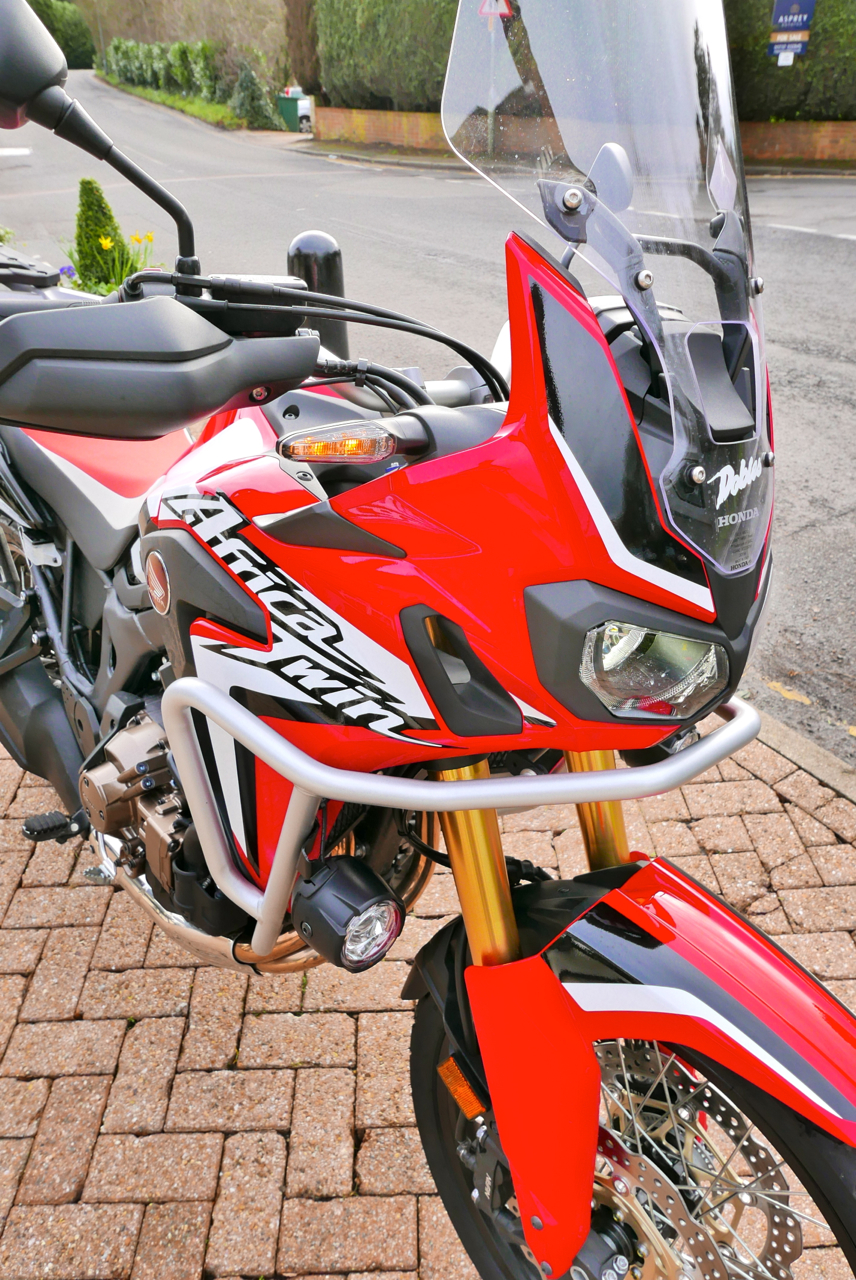
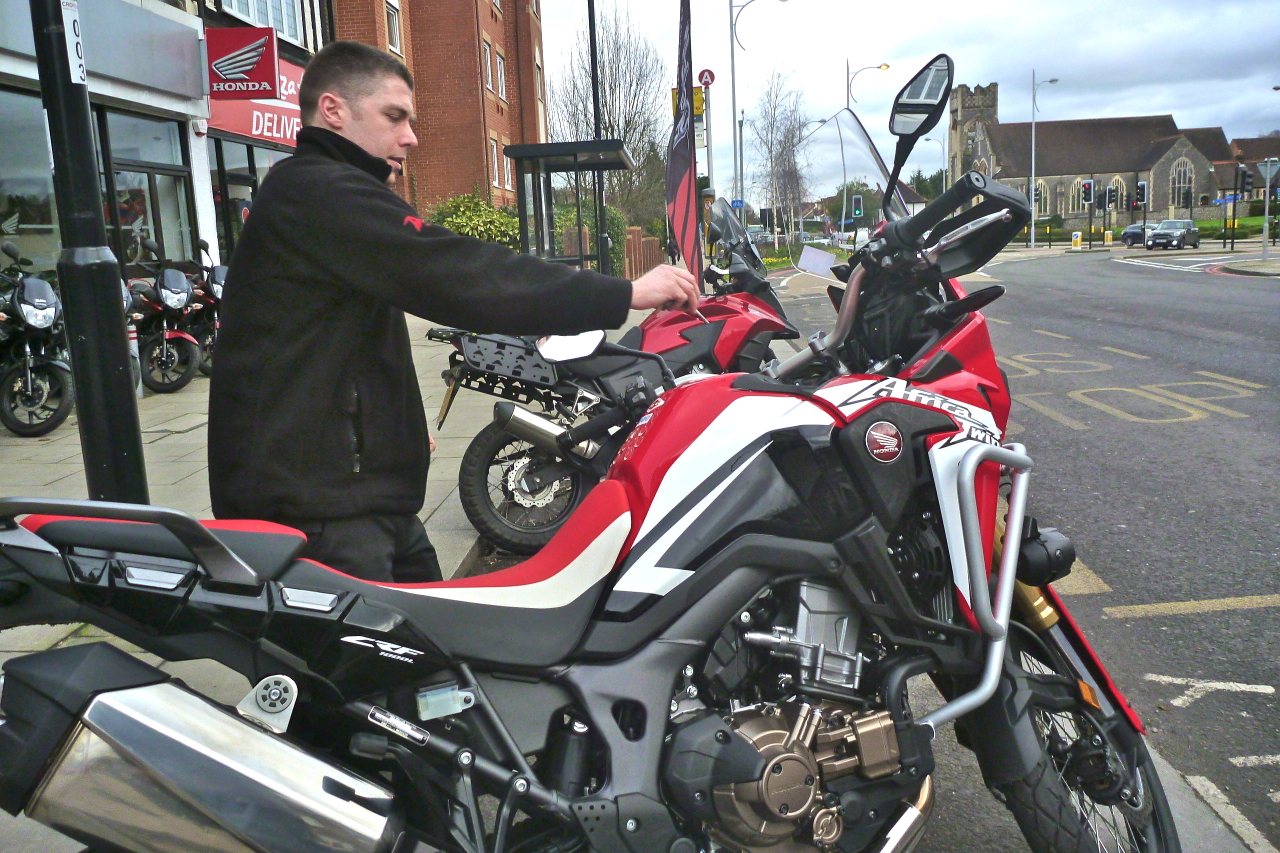
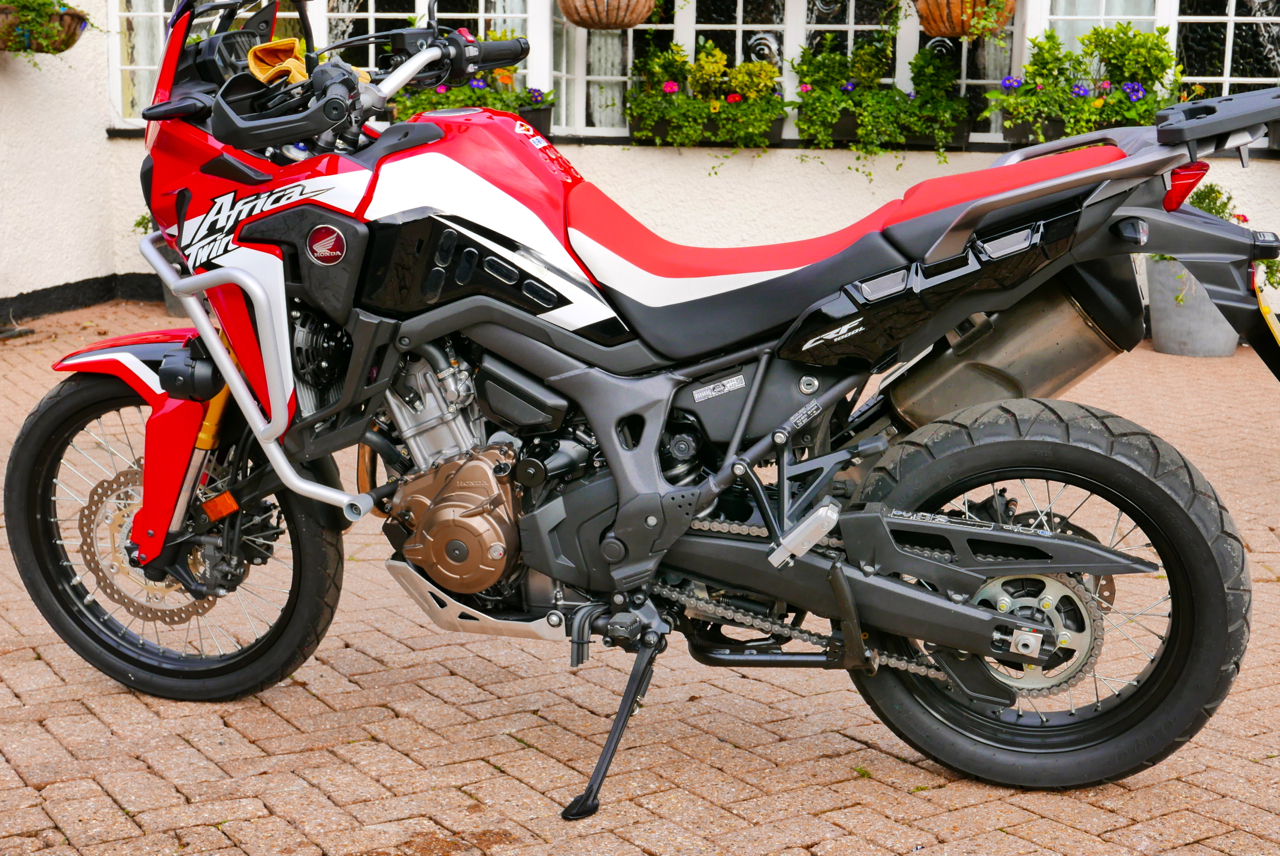
The test bike I tried was fully optioned: luggage racks (hideous topbox removed on request), crash bars, spots, centre stand, taller screen. Maybe the hot grips were extras too.
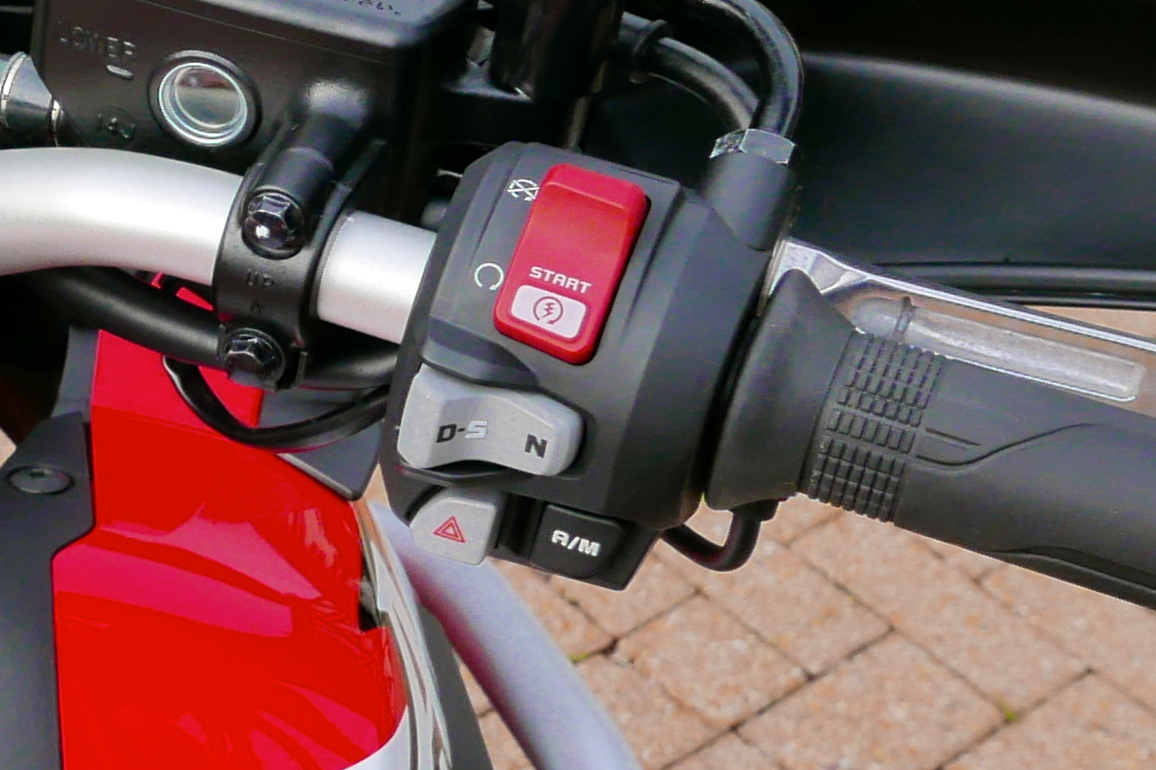
Outside the shop the dealer explained how the DCT works. On the right bar you have a rocker switch (below left) marked Neutral; Drive and – on this latest DCT – three Sport settings. Once the stand is up you press D, open the throttle and glide away like a scooter.
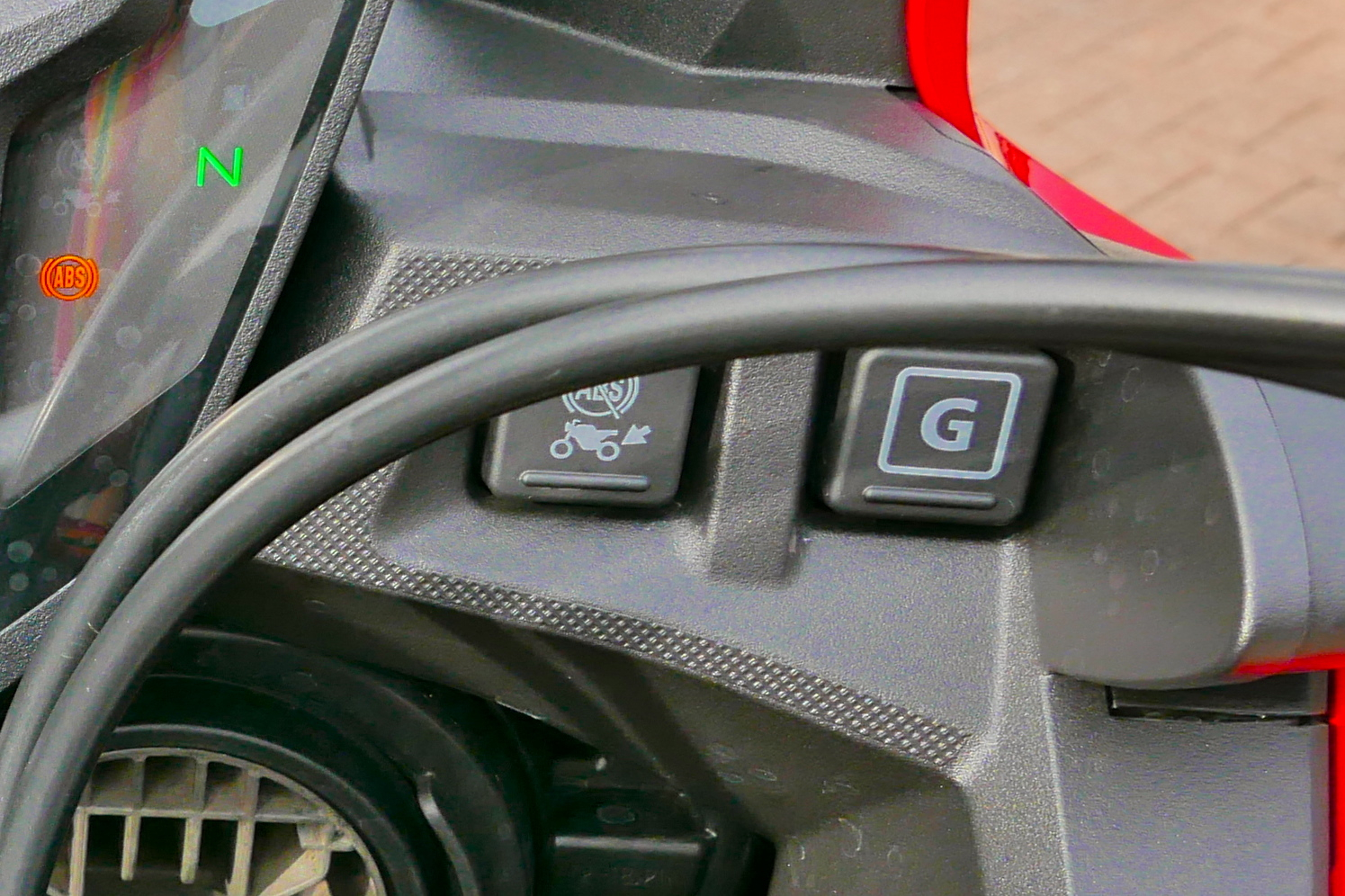
And this version of DCT (also on 2016 NC750s) includes refinements like gear-holding gradient sensors and a clutch-slip reducing ‘G switch’ (right), all with a matching array of ABS/Traction Control settings to help align the model’s aspirational CRF1000L moniker and potential with the like-named CRF dirt racers.
at8

The sales guy recommended the S1 mode which holds revs longer before changing gears, and within a few miles I agreed with him. As you decelerate the DCT smoothly drops down through the gears at just the right pace – on my unhurried test ride at least. In the Sport modes it’ll do so more briskly. The regular D setting was up in sixth by 30mph which made acceleration unpleasantly juddery. It’s presumably great for economy but it felt less good for the chain and transmission. I neglected to see if there was a ‘floor it’ kickdown like on an auto car, but at any time you can use the MTB-like thumb and forefinger shifters on the left bar to manually change up or down. You can lock it in Manual too, using the A/M button below the Drive selector.
hondamatic.jpg

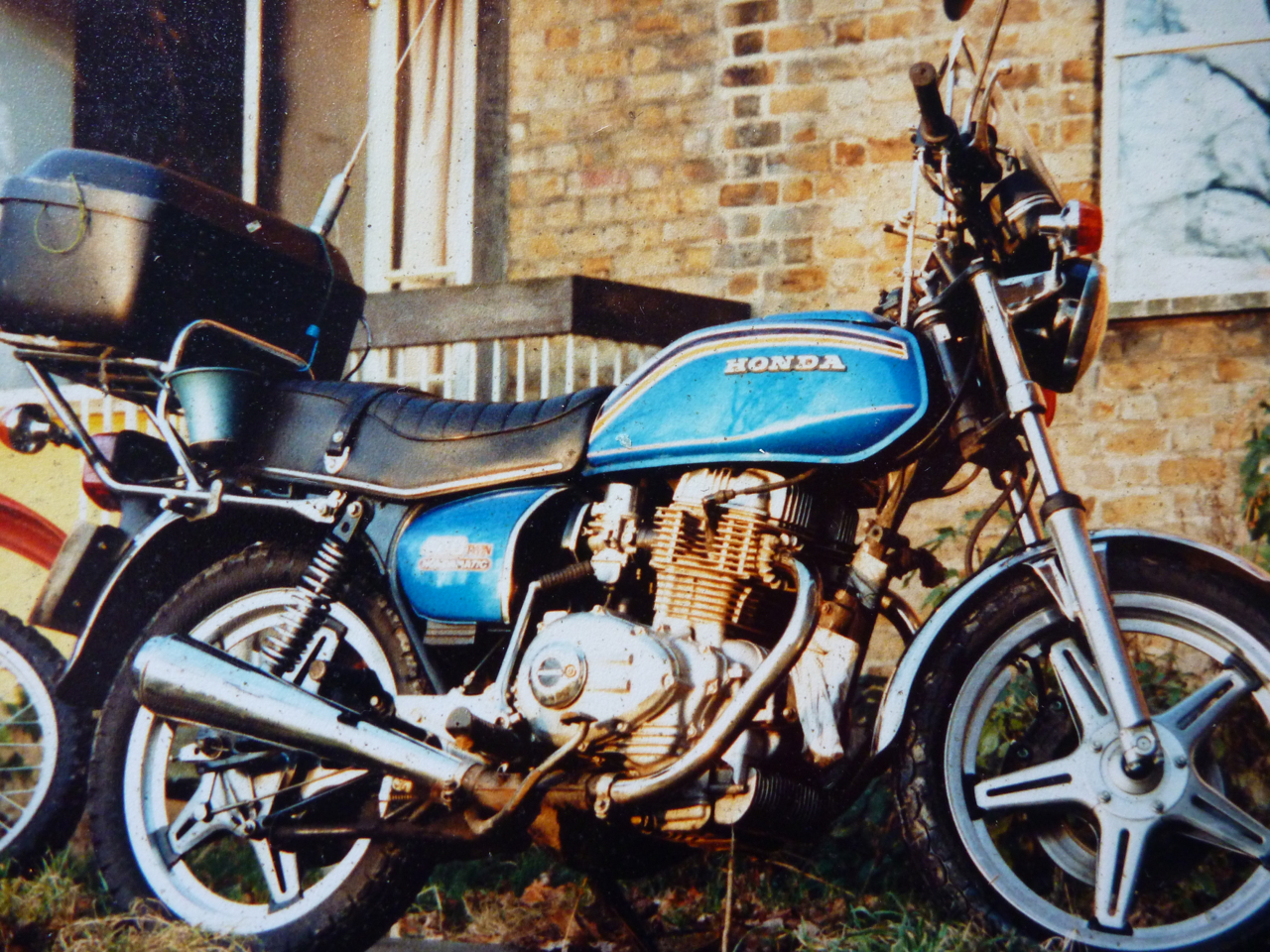
The clutch-like lever on the left bar is actually an out-of-reach handbrake, a bit like on my late 1970s 400AT (right). That bike ran a less efficient two-speed, foot-shifted torque converter using fluid and turbines. Don’t ask me exactly how, but with DCT there’s no power-robbing slippage apart from at rest and momentarily when it changes gear, so the bike responds to acceleration and deceleration much like a manual bike. And if you still have trouble getting your head around your DCT you can get an optional electronic foot-shift lever to emulate the left-bar shifters.
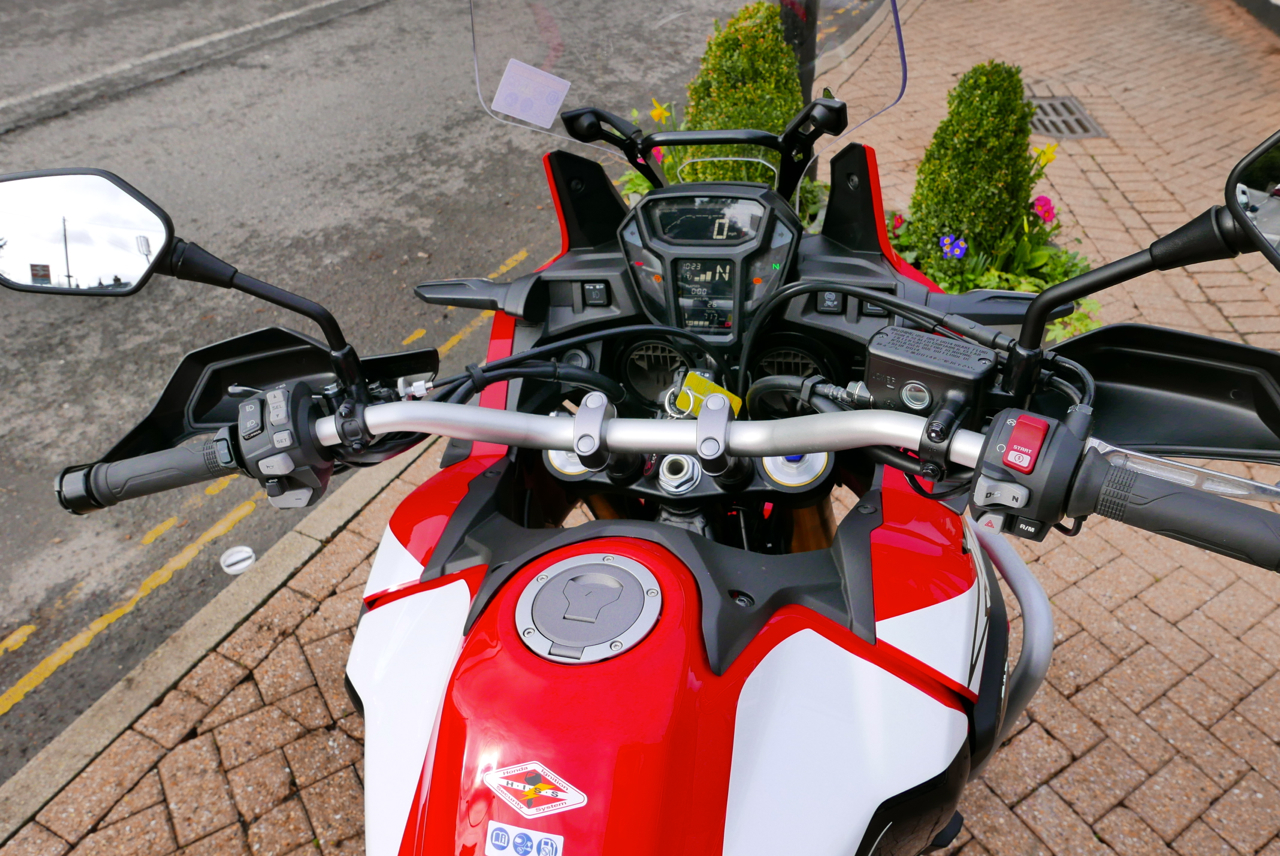
at4

I did sense the weight on pulling away (probably a quarter of a ton fully fuelled), but once on the move I was surprised how quickly I adapted to that mass, as well as the DCT. No twitching left hand or foot, just the novelty of smooth, scooter-like propulsion without the small-wheel stigma. Riding gently in Drive you can detect the shifting – ride harder and it becomes barely perceptible.
Some bikers proclaim such automation emasculates the motorcycling experience – for a young, hard-charging Gixxer pilot with licence points to spare, perhaps. But aren’t sports bike quickshifters also chasing smoother progress through automation? Me, I’ve had my share of tearing around – it was my job for over a decade – but 37 years ago my 400 Hondamatic made town riding a whole lot less tiresome. I’ve had a lot of bikes before and since, but I can’t say many have had a slick gearbox and a light, smooth clutch operation which enhanced the riding experience. For the moment I’d be happy to experiment with an alternative, and just as with 4WDs, I believe auto shifting can actually make some off-roading easier. On a bike this size I bet crawling up a rocky, washed-out hairpin in the Anti Atlas would be much easier than feathering a clutch or risking a sudden stall and tip over, just because first gear is typically too high or you misjudged the input required.
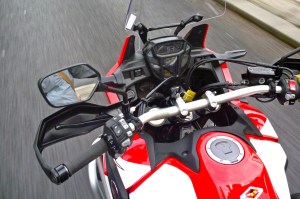
at999

Back in mid-winter Surrey. Once I popped out onto the Epsom bypass I was able to open it up and couldn’t suppress a broad grin spreading across my face. At this speed you have to concentrate hard to detect any gear changing activity as the bars on the reversed LCD digital speedo hurriedly rearrange themselves to match the pace.
That’s probably the best thing you can say about DCT – after 40-odd years of mostly manual shifting you adapt to it in no time – it’s no harder than trying an auto car for the first time, but much more fun. A better test for the DCT AT might be charging down some switchback canyon where conventional engine- and wheel-braking give the impression of greater control. That’ll have to be for another time but I do wonder how the front 21-incher would perform. Meanwhile, at the other end of the speed dial, I found feet-up, walking pace U-turns close on lock-to-lock as easy as you’d expect on a direct drive automatic. Until that tank is full, the bike feels very well balanced for its low-set weight.
CRF-rally
at3

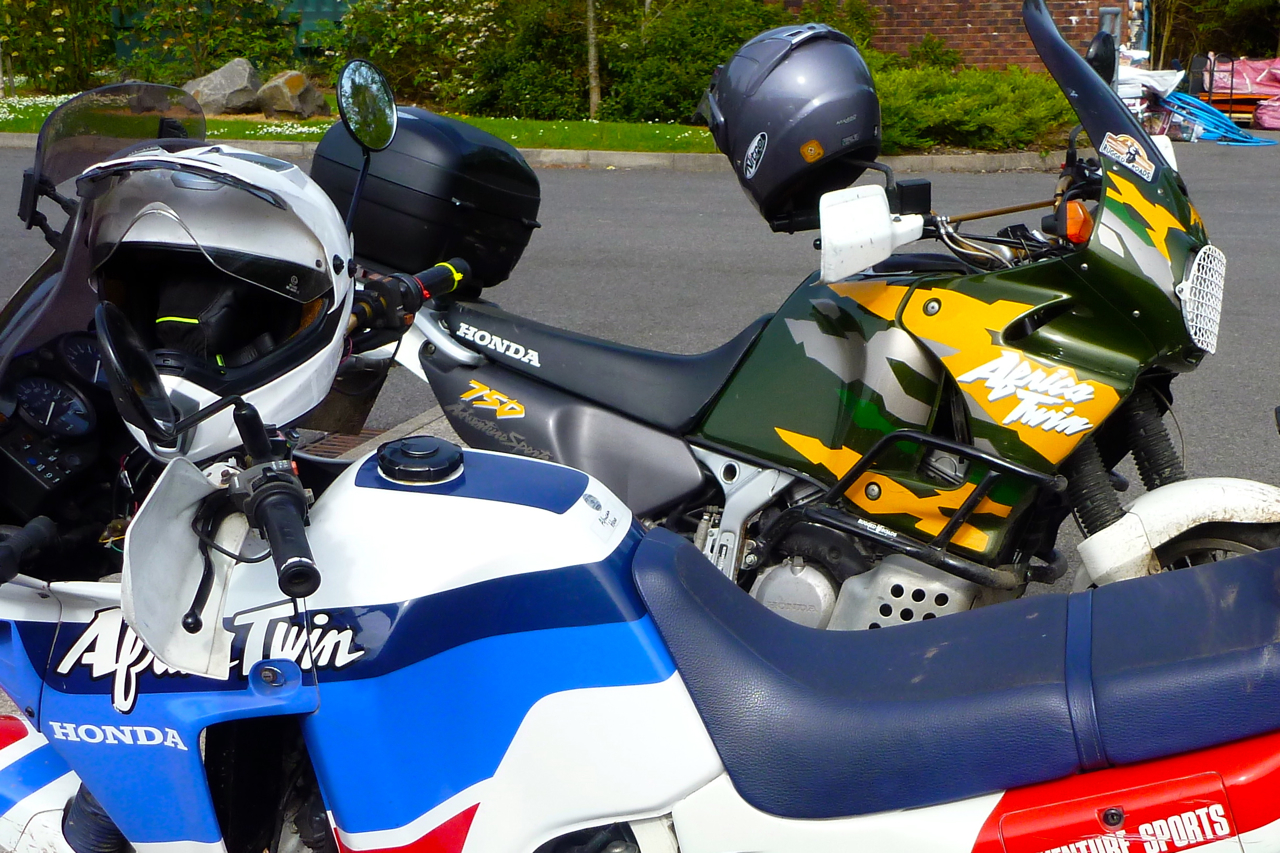
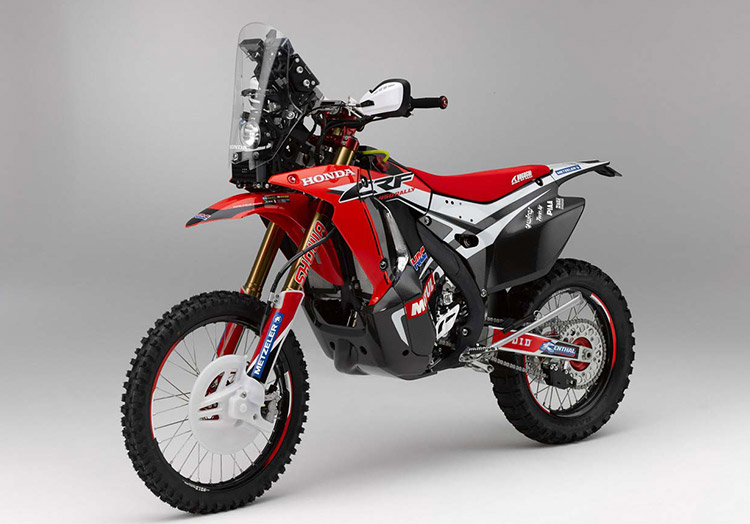
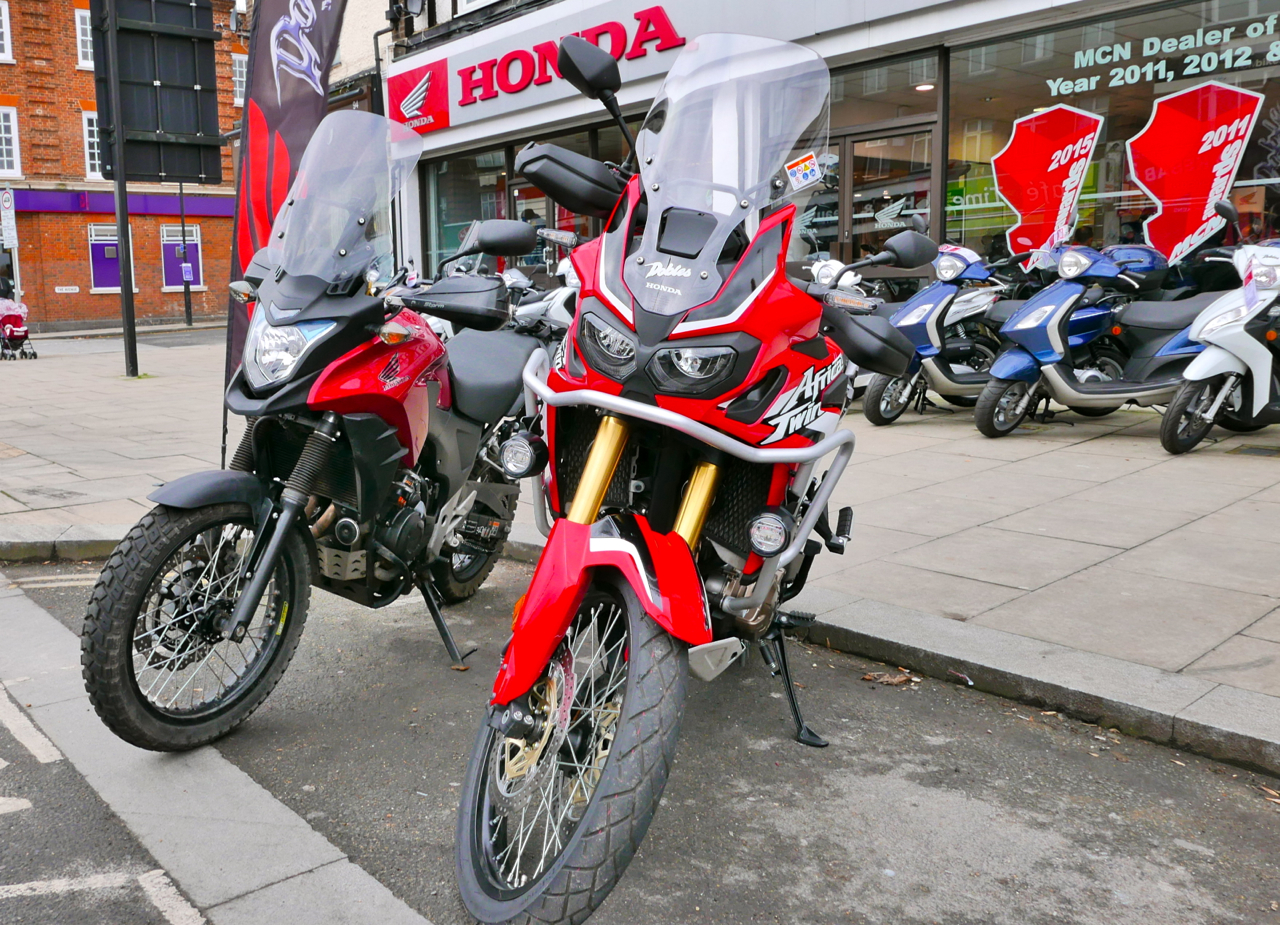
Other stuff on the DCT AT? It looks great in black, white and red, the colours of Honda’s nearly Dakar winning CRF450R-based desert racer (right). The coppery-bronze crankcases (like the new Husky 701) add a nice touch, too.

sat

They’ve really got to grips with seat height on this bike – something that stops so many riders enjoying big Advs. With two levels (850mm and 870) and two seats offered, there’s about 50mm of potential variation, assuming I heard the dealer right. I had mine set at 870 (34.25″) and it felt lower than my CB500X RR. The suspension felt plusher too, though right now my 500X is still set for load carrying, and one back lane pothole shot a harsh jolt through the AT’s bars. On the picture above left you can see a rear spring preload adjustment knob, and doubtless there are more compression settings front and back than a squad of saturation divers.


africatime
About the same time I was riding around north Surrey two Italian guys took a brand new and old XRV AT for a ride around Mauritania.

at5

Among the accessories, the high screen worked great for me at up to 90. Heated grips were another seamless addition, with a heat-level bar packed in on the busy lower LCD display. Real-time rumination over the innovative DCT took my mind off the bike’s more mundane aspects, but the real question here is: would it make a good overlander? Or, in what way is it better than the all-conquering R1200GS?

I’ve long thought that by the time such bikes are properly equipped and loaded, they’re just too heavy for the sort of all-terrain travel I like to do, but that doesn’t stop masses buying, equipping and actually taking them on the road. The Honda looks significantly less colossal than a GSA, even if it’s probably no lighter, though I imagine it’s more economical. And the benefits of DCT is either something you appreciate or not. For overlanding I’d take it.
at6

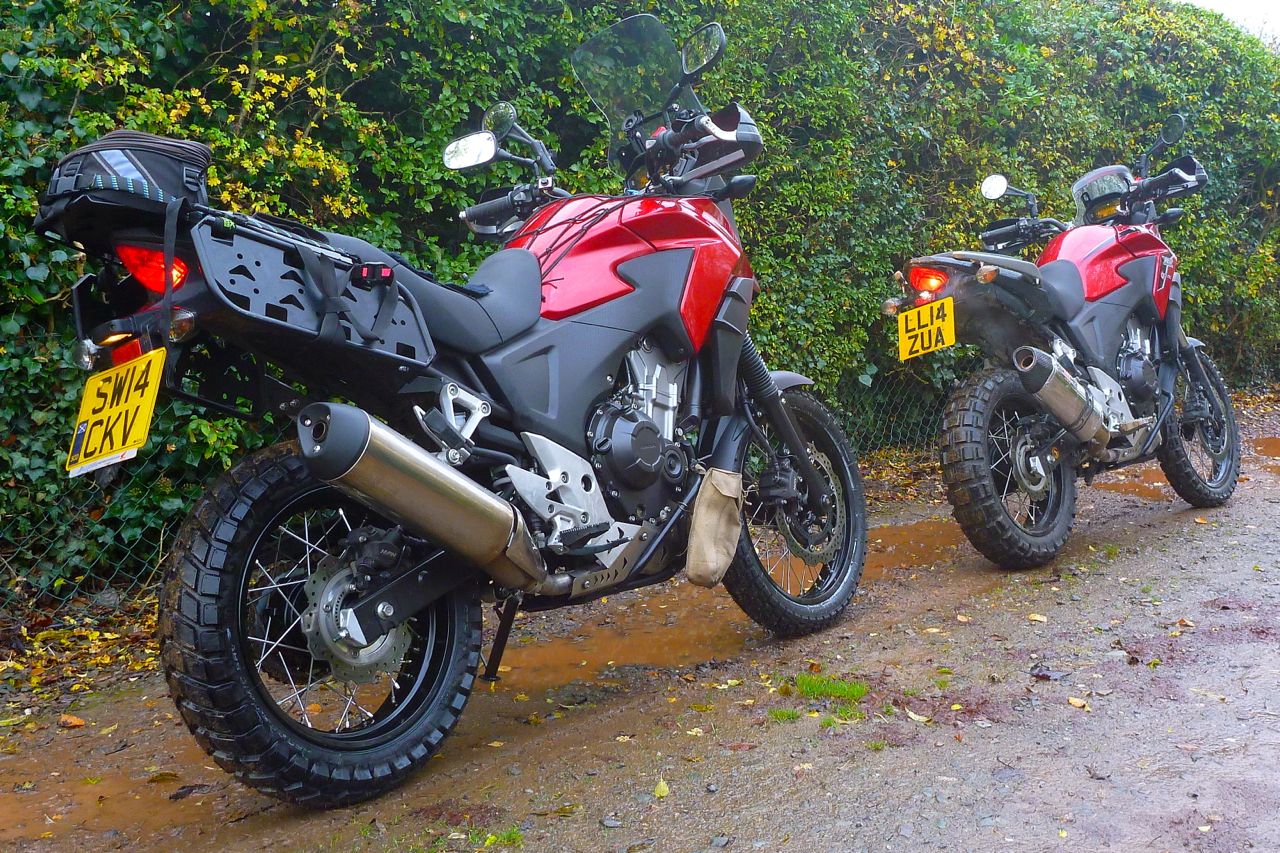
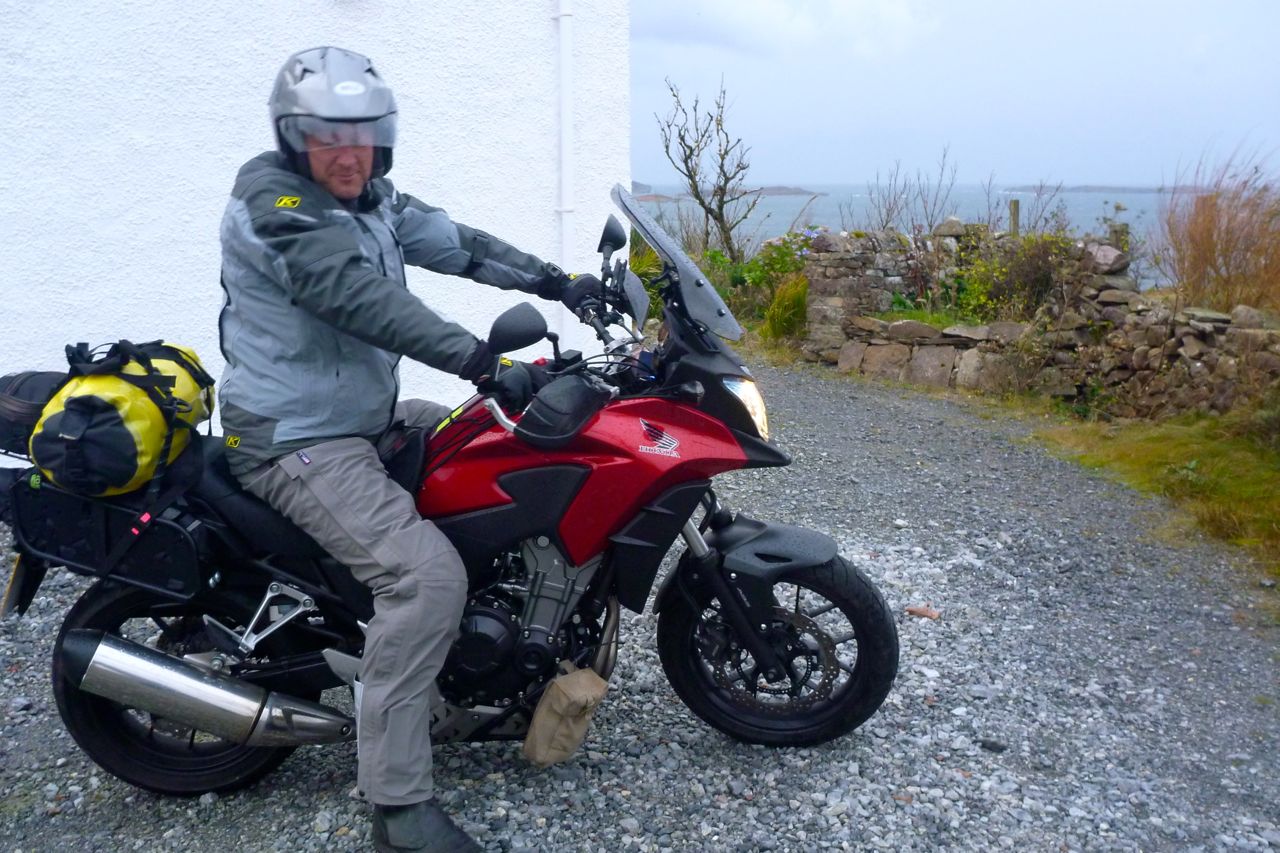
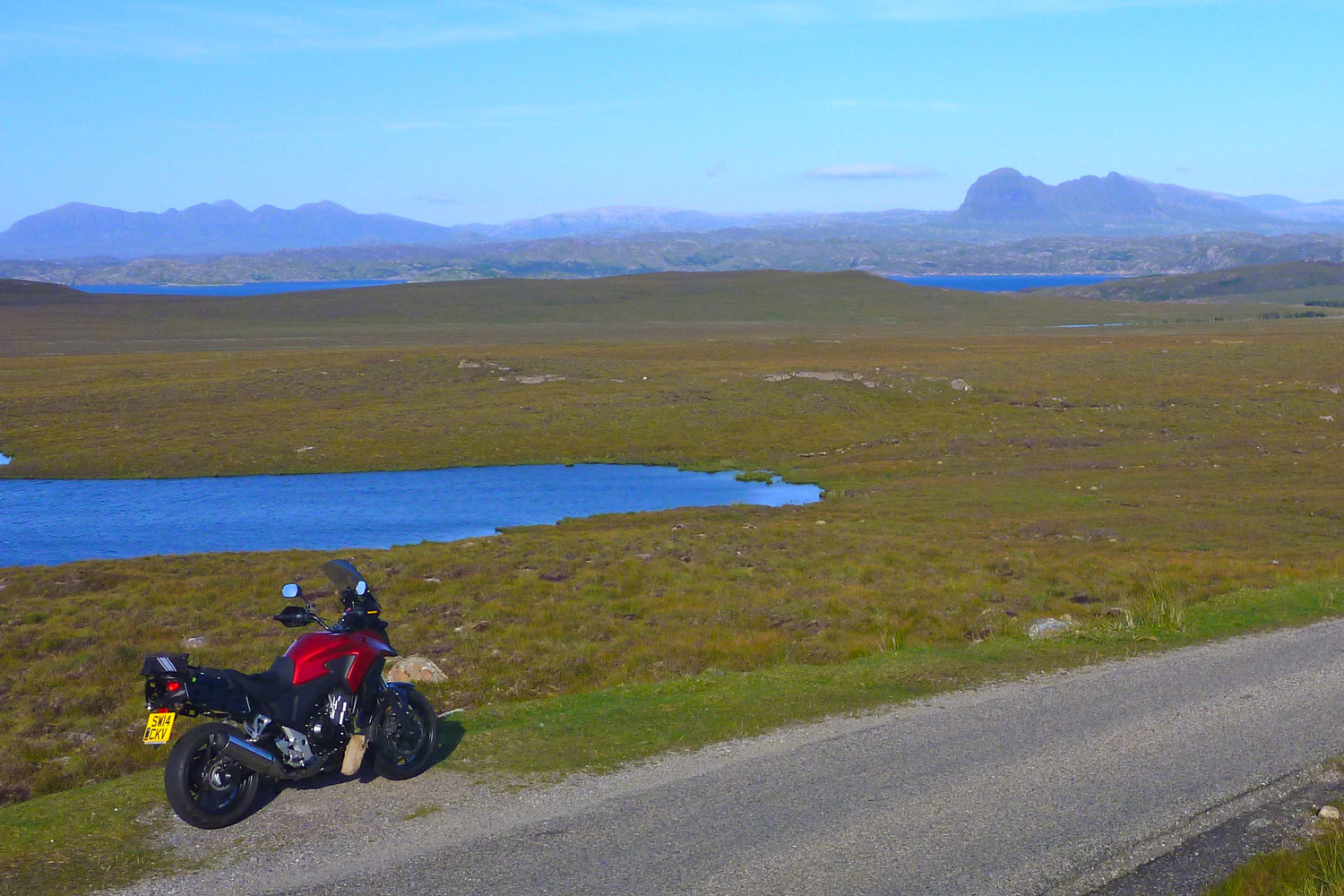
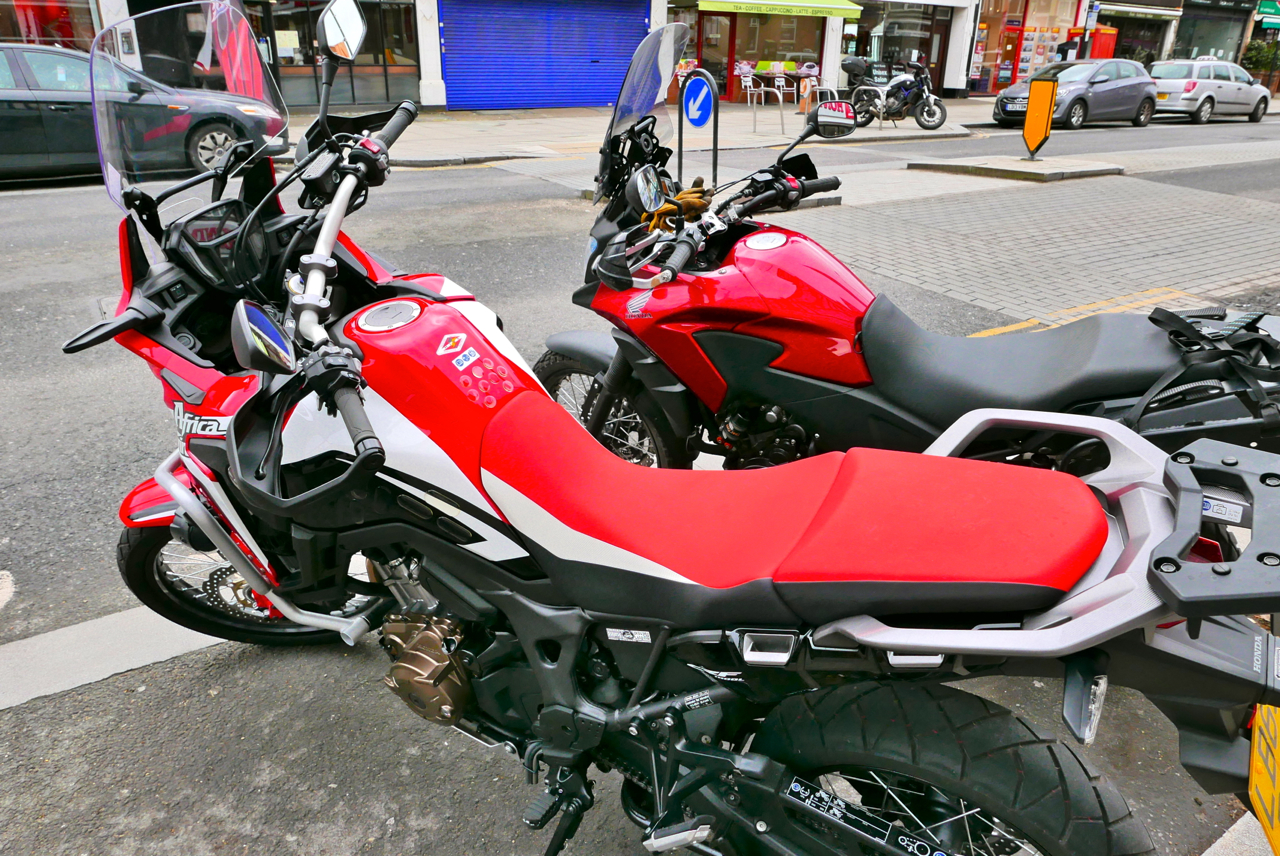
Riding back home I was reminded what a great all-round machine my Rally Raided CB500X is (left). Off-road ready for half the price with a used base bike, 10-15% lighter on the dirt, and more economical by the same amount too. The AT builds on the same great looks and performance – far outdoing what I recall of the original Africa Twin which I occasionally encountered in the Sahara. It was regarded back then as a heavy and juicy machine. I also like the fact that Honda ignored engaging in the current 150-hp mania with the latest mega Advs from Ducati, KTM and BMW. Instead, they’ve focussed hard on trying to create a full-sized machine with better gravel-road manners than most, even if the antics demonstrated in the video below require surnames like Marquez and Barreda.
at88

The transmission system’s complexity on the road can’t be any worse than a regular gearbox, except you have two clutches to share the load. All the electronic engine management – well we’re all getting accustomed to that aren’t we, and I’d sooner it came on a high-end Honda than some other marques.
rideapart1

The new Africa Twin is clearly a brilliant road bike and I imagine a pretty good gravel roader, but there are a few of those already. It’s also heavier and costs way more than I’d ever spend on a travel bike – and there are many more in that category too.
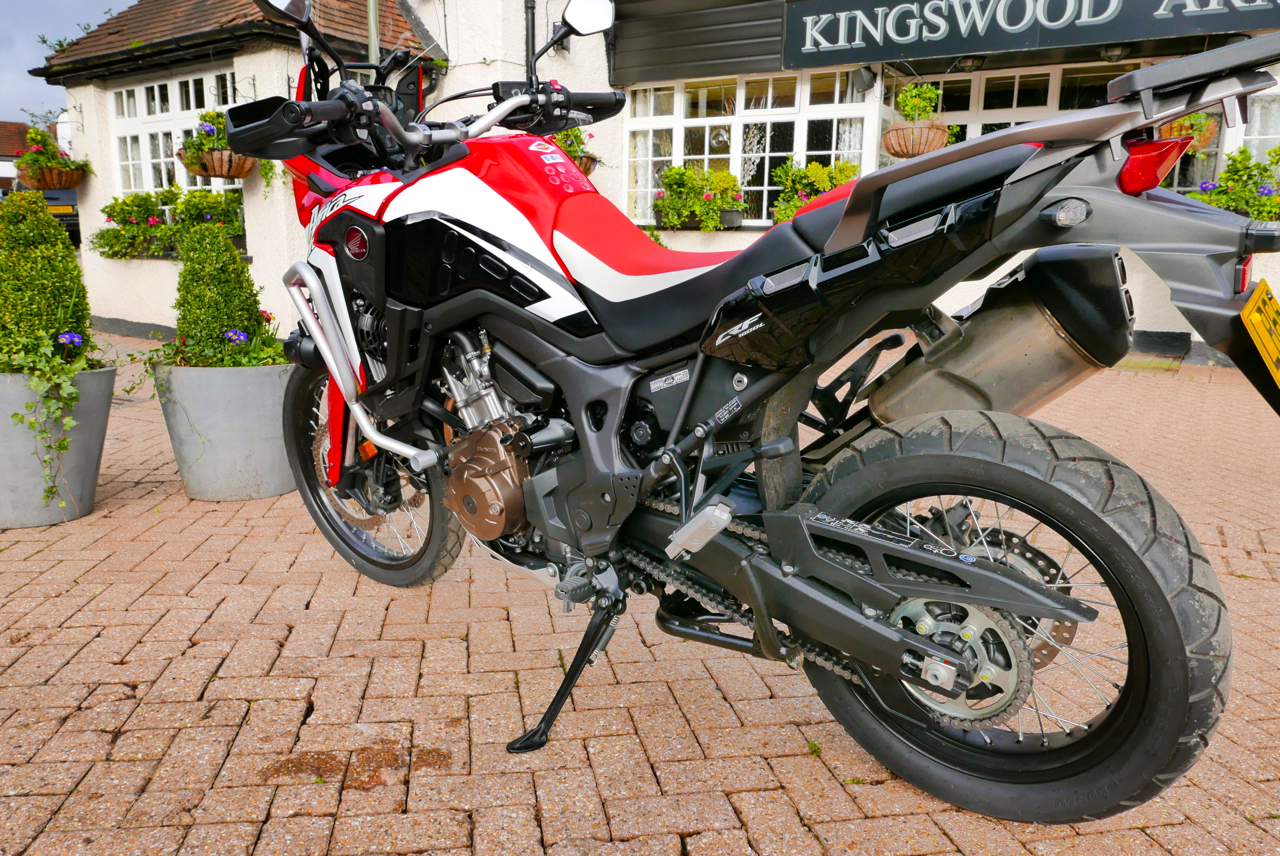
But finally encountering the marvel of DCT does make me reappraise bikes like a DCT-equipped NC750X which, in the original 700 form (left) now goes for about £3000 used. Problem is NC-Xs come with the same soft, budget-level suspension as the CB500X and, like my 500, probably don’t have a bar/seat/peg set-up suited to me standing, unless I get into cable transplants. Meanwhile, for the moment there’s CRF1000L at your nearest UK main dealer so you can decide for yourself.
at99

CB500X Rally Raid ready to roll

CB500X RR Index page
Tubeless Conversion Index Page
wgr
cbxL309

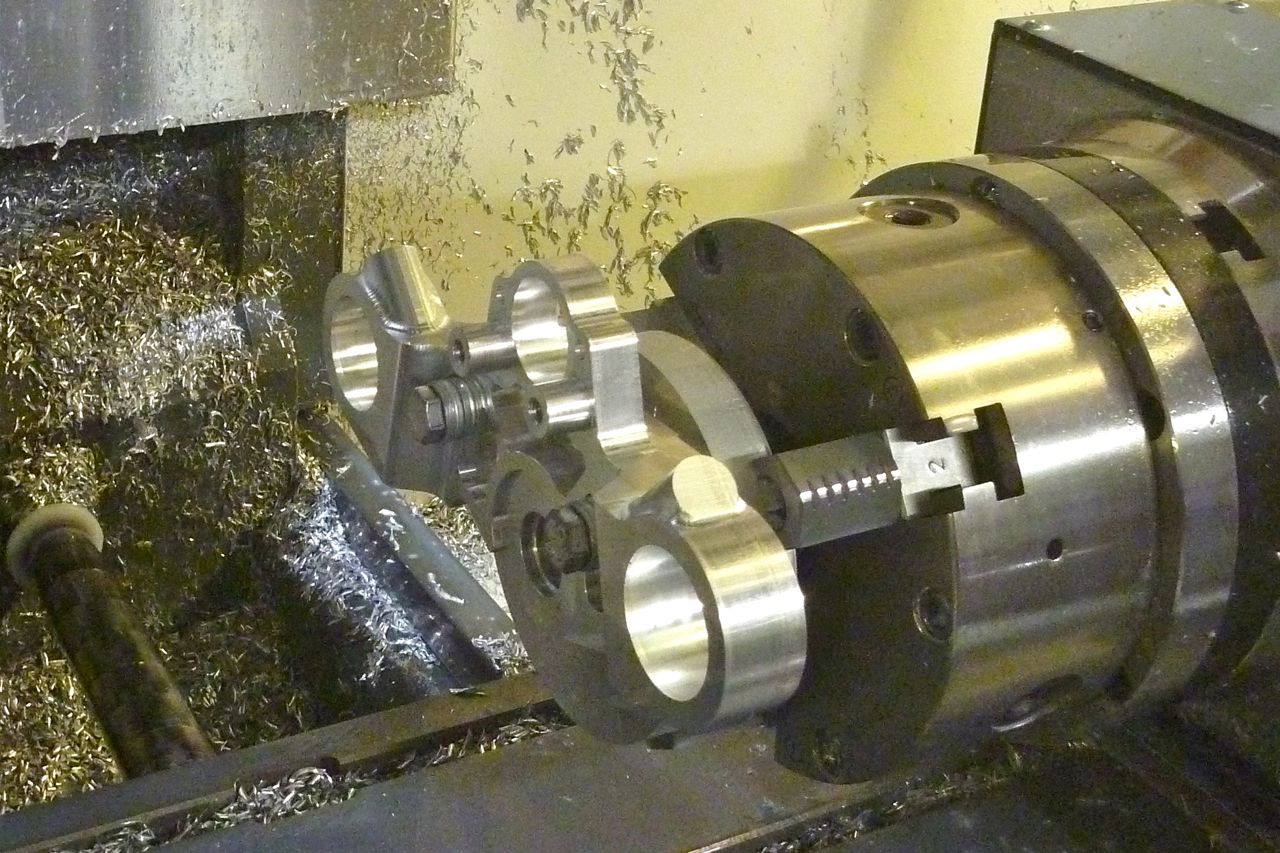
Just a couple of days before I’m off and I’ve finally got the CB-X converted to full Level III spec at Rally Raid. I started the job at home by fitting the clever drop top clamp, precision milled on John’s CNC 4-axis milling machine (right). Marvel what a 5-axis miller can do in this mind-boggling vid. The clamp enables positioning the fork tops 20mm lower which with the 30mm longer damper rods gives two inches more travel and room for the bigger wheel. It’s a more expensive solution to screwing on dodgy fork extenders – something I looked into when trying to Tenerise a TDM900 earlier in the year.

cbxL304

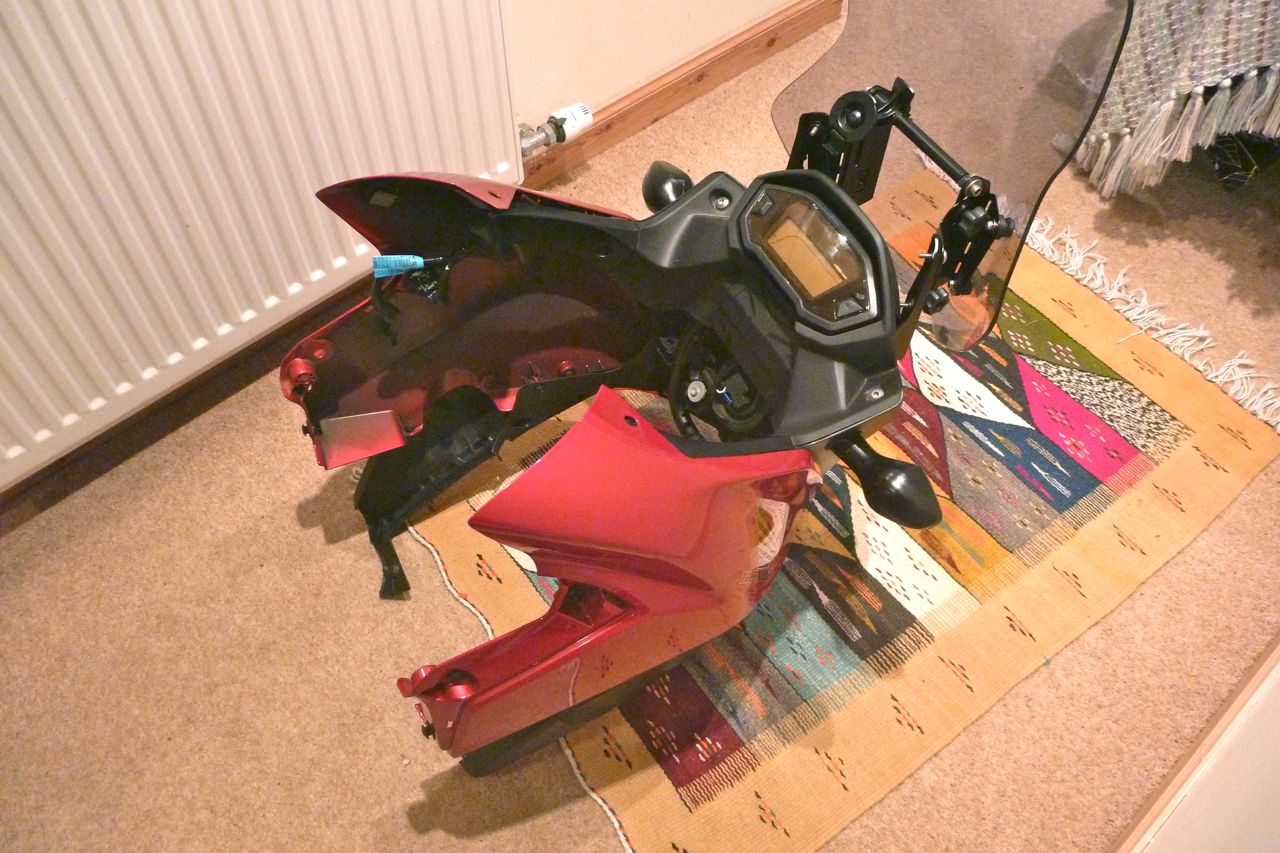
Removing the whole headlight/fairing/dash unit (left) is actually quite simple once you get your head around it. The pdf instructions from RRP are all clear – all the more so when you look back at them. Side panels off then three screws on each side of the fairing and then the crucial double 12-mil bolts on the steering head which take all the weight. Ease back the LHS to unplug a couple of connector blocks and away it comes. RRP include some alternative 12 mils with nylocs in the kit. I saved them for later and a 1000 miles down the road, when I got to their workshop one had fallen out. RTFpdf.
JIS

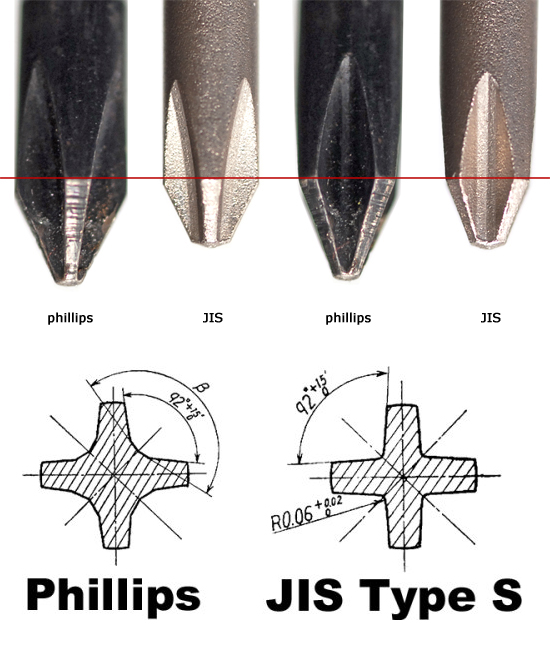
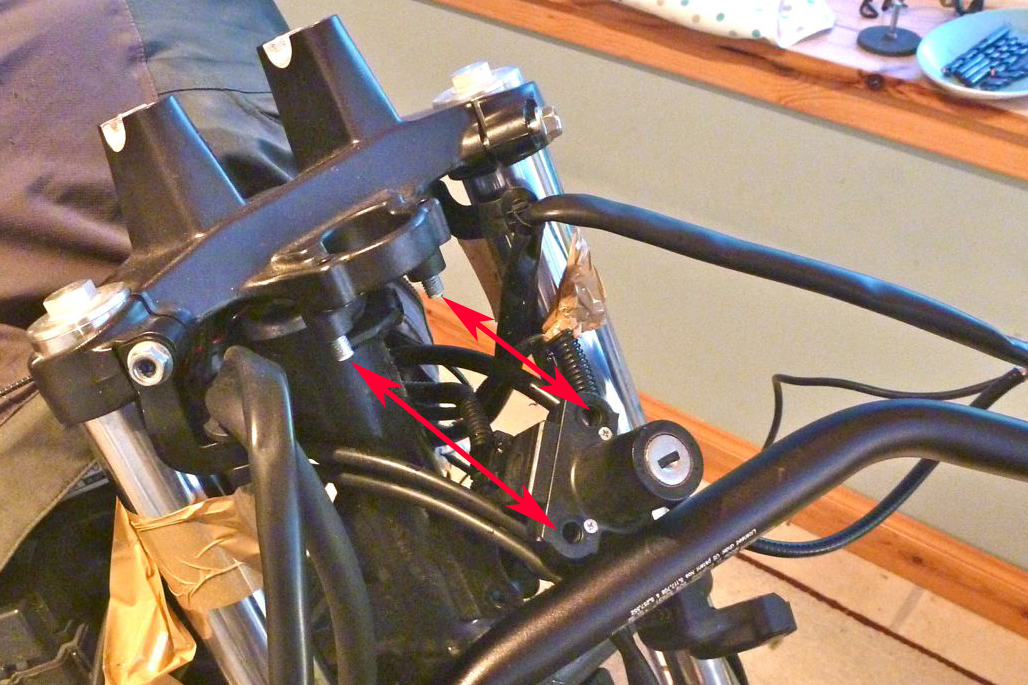
Removing the ignition barrel from the OE top clamp is where things slowed down. First, two crosshead screws holding on the HISS ring needed undoing from underneath. Why crossheads FFS? I almost lifted the bike off the ground getting the pressure in there – luckily they both turned with a nice crack of shearing Loctite. Later John advised these are actually JIS head screws – some sort of Japanese standard that’s possibly better than Phillips. Could that be why we had all that trouble using Phillips drivers on Jap monkey metal crossheads in the bad old days? Probably not.
cbxL303

The next step required drilling out the chunkier undoable barrel security bolts (left) and – long story short – that took me days of faffing: blunting and crudely resharpening drill bits over and over on a distant neighbour’s grinding wheel. It’s an awkward job with an upside-down drill just off centre and the chuck spinning close to cables and wires, but I got one out then Mr Postie delivered a few cobalt drills the day before we had to pack up and relocate cross country. never heard of cobalt drill bits but with a better technique (slow rpm, nib in oil), the second bolt head fell away in a few seconds. John at RRP says he may include a cobalt 9mm with future kits.

cbxL305

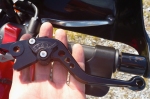
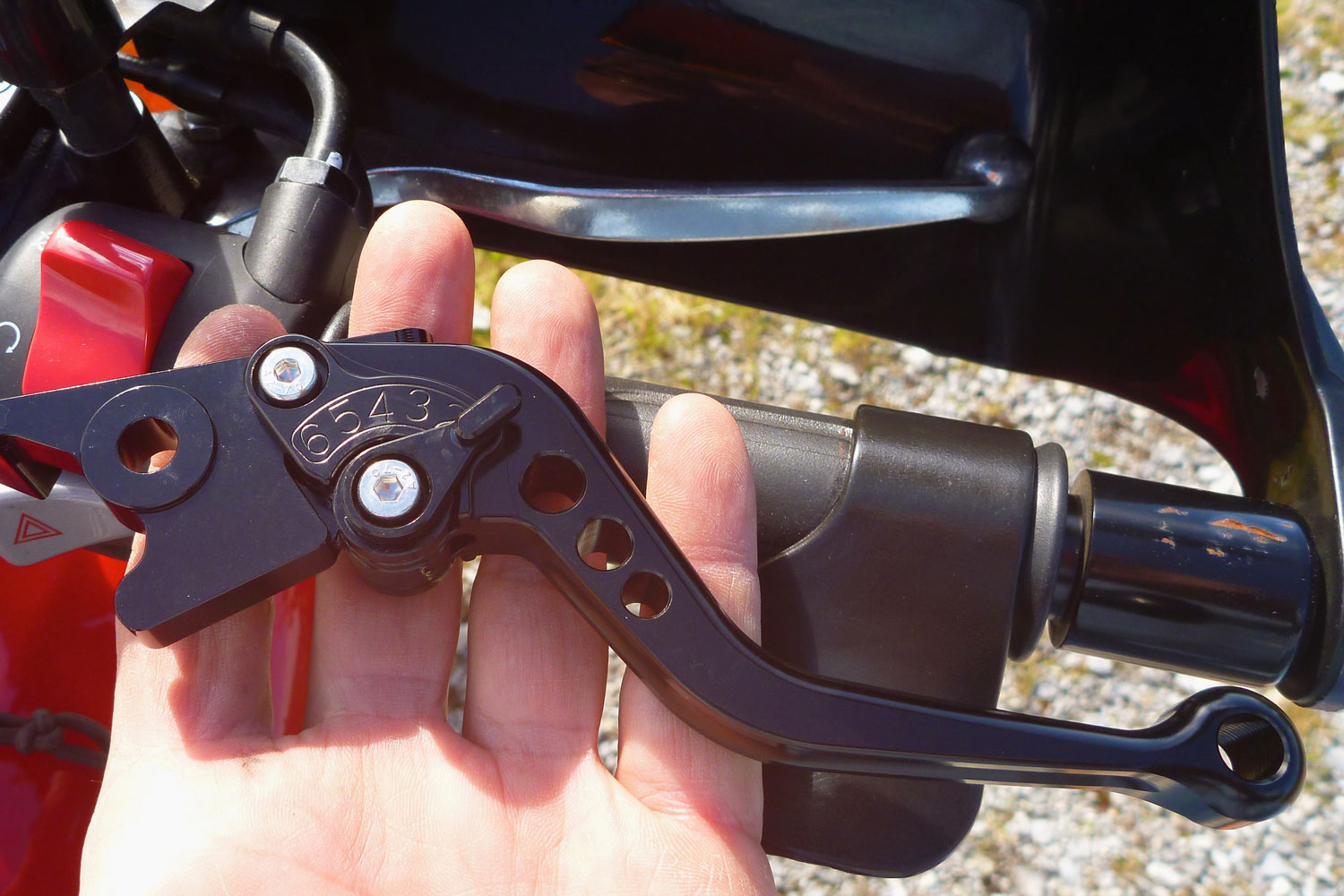
I was hoping to fit some stronger Renthal fatbars (right) but the taller RRP clamps aren’t quite ready yet, so it was back on with the taller OE bars, (left) – there’s plenty of cable slack to do this – the lift is not that great. On went my trusty Barkbuster Storms (now on their 4th bike) as well as some Daytona heated grips I’ve had lying around for so long the rubber’s gone grey. They look a bit crap compared to the Oxfords that came with my last couple of bikes, but they’ll last as long as they last and were dead easy to fit. I also fitted RRP’s 12-volt double PTO mounting plate – much neater than having the PTO zip-tied to the ignition barrel. The Barks required the usual compromises with lever angles – apparently, a Bark V-Strom mount has the curve to get under or over a brake hose. I have some neat shortie adjustable levers (right) from RRP too but will fit them if mine snap. The Storms ought to reduce the chances of that.

cbxL308

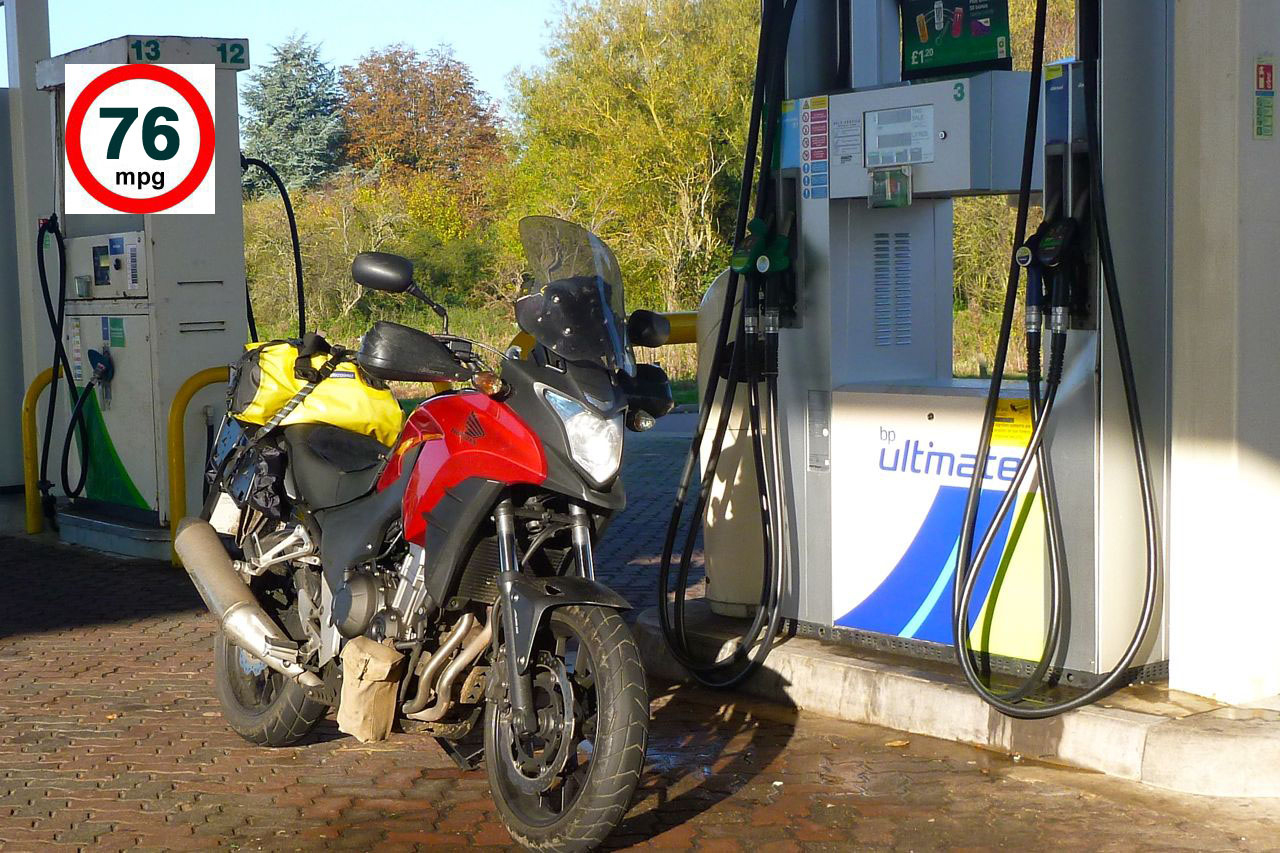
The next day I set off on a 480-mile run down to North Yorkshire, including the full length of the fabulous A68. I was trying out a new Powerlet heated vest which I’m sure helped me arrive less tired, with just one stop at a Gregg’s 350 miles in. The 500X returning an average of 76mpg while I marvelled at the OE Pirelli tyres’ grip in the wet.

tech7
reduce

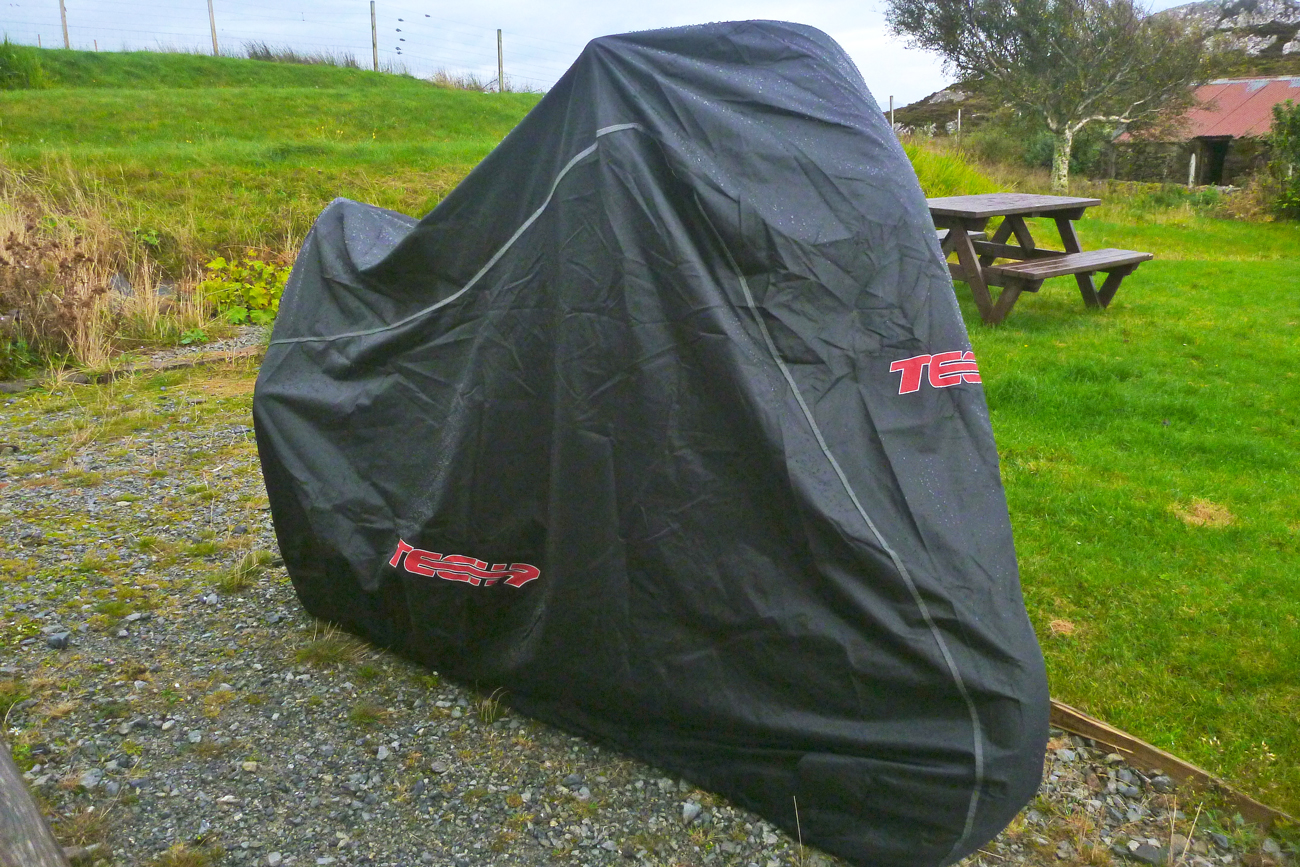
BTW, let me put in a good word for the big Tech 7 Adventure Bike cover. Yes, there is such a thing, and it fits bikes up to tall screened GS12s and S10s. Still only £23 from M&P, I’m sure it’s much tougher than those £10, last-a-year silver jobbies, has two under straps just inside each wheel, but also has an elastic bottom to make those straps unnecessary unless it’s very windy.  Low-profile black to reduce visibility on dark streets and compact enough to make a handy travel cover or groundsheet.
Update 2019: After 3.5 years the waterproofish laminate is shot and the fabric is sun faded, but all the stitching and elasticity and clips are intact and it all hangs together. I need waterproofing, so bought an Oxford Aquatex for £20 for my Himalayan.


A few days later at John’s workshop near Bedford wheels and suspension were needed to finish the Level 3 job. I’m trying out some RRP wheels sealed with a mystery polymer by BARtubeless in Italy to run tyres tubeless. With his rally racing background John’s more of a tube or mousse man. For less aggressive solo travels to which the CB-X is more suited, I err towards tubeless and gel, as do a few other potential RRP customers. RRP may end up being the UK supplier for BARTubeless.

cbxL315
cbxL320

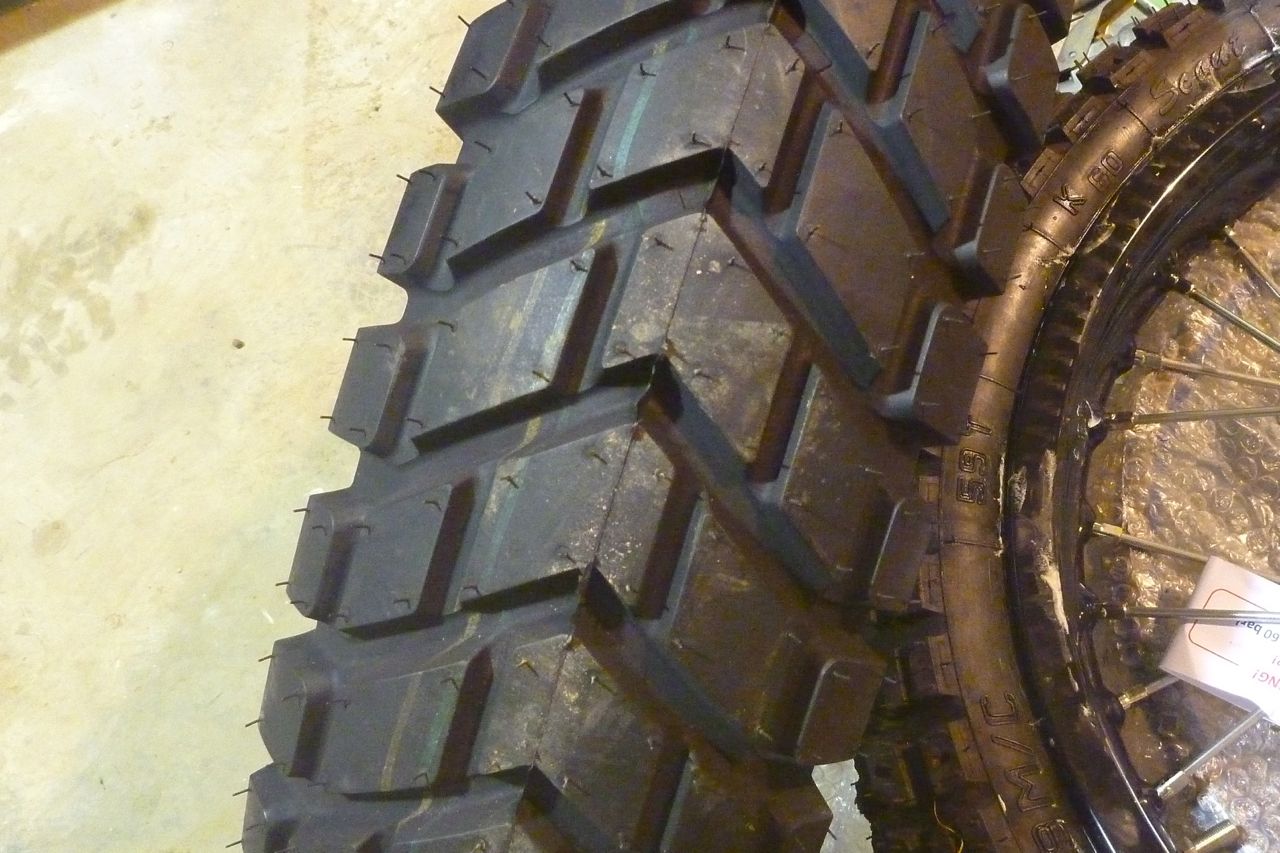
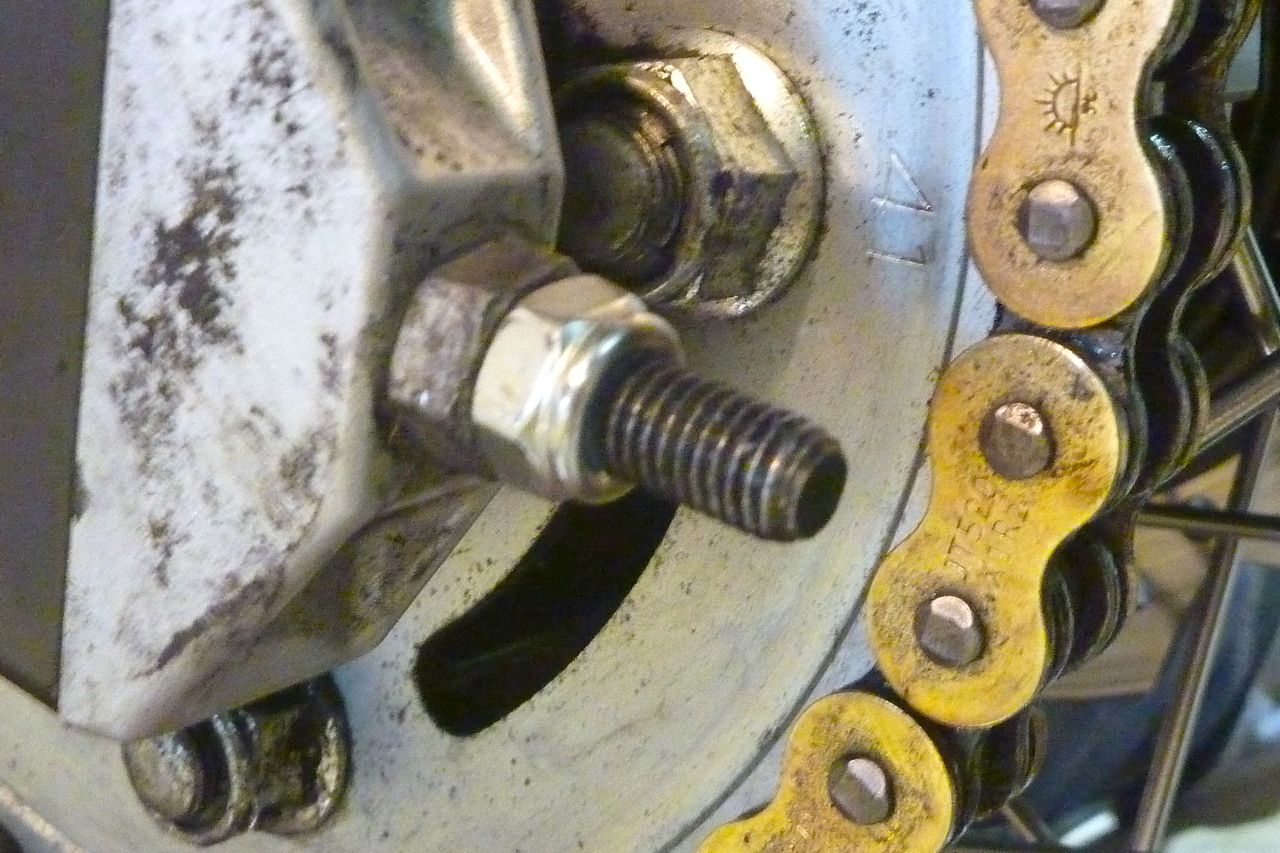
One problem with them is the thick layer of polymer in the well of the rear rim making tyre mounting difficult. That’s what they found earlier fitting a Golden Tyre GT 201 (left; 150 / 70 R 17 TL 69V) I bought from Adv Spec. You need the depth in the rim’s well to give enough slack in the bead when doing that last bit of levering. Of course, some tyres are harder to mount than others and the GT201 (a K60/MT60 look-alike) is stiffer than the TKC which RRP typically use. While in the area they adjusted my recently bedded-in x-ring chain and John recommended fitting a nyloc nut on the chain adjuster bolt (right); apparently the OE nuts fall off.

cbxL314

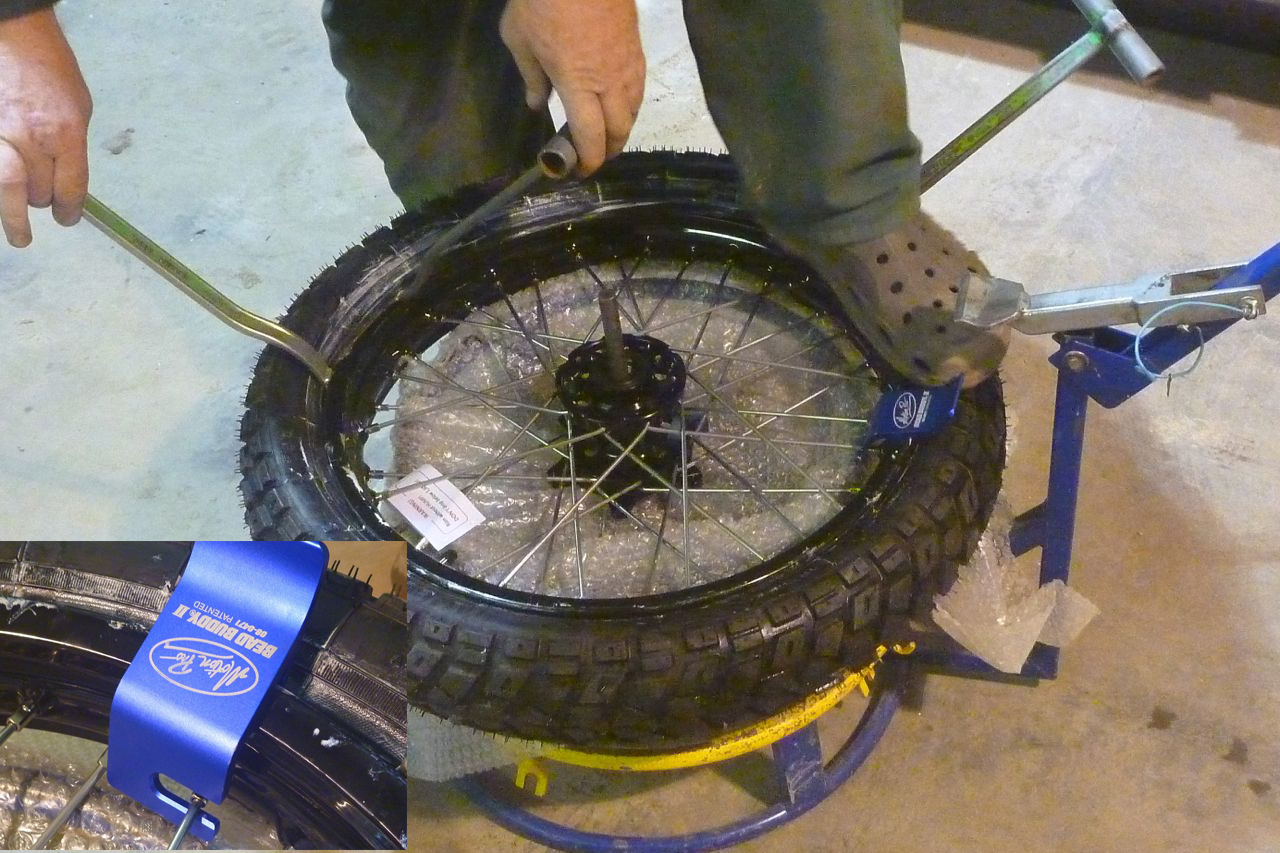
Heidenau K60 19-er leftover from my old GS500 project went onto the front rim with no hassle. I got a chance to try out my Motion Pro Bead Buddy II (left, blue), a ‘hands-free’ clamp that forces the bead down in the well when levering on the opposite side. It’s the same as putting your weight on the tyre to push it down (not so easy on the tyre rack, left) and it did the job.

cbxL311
cbxL312

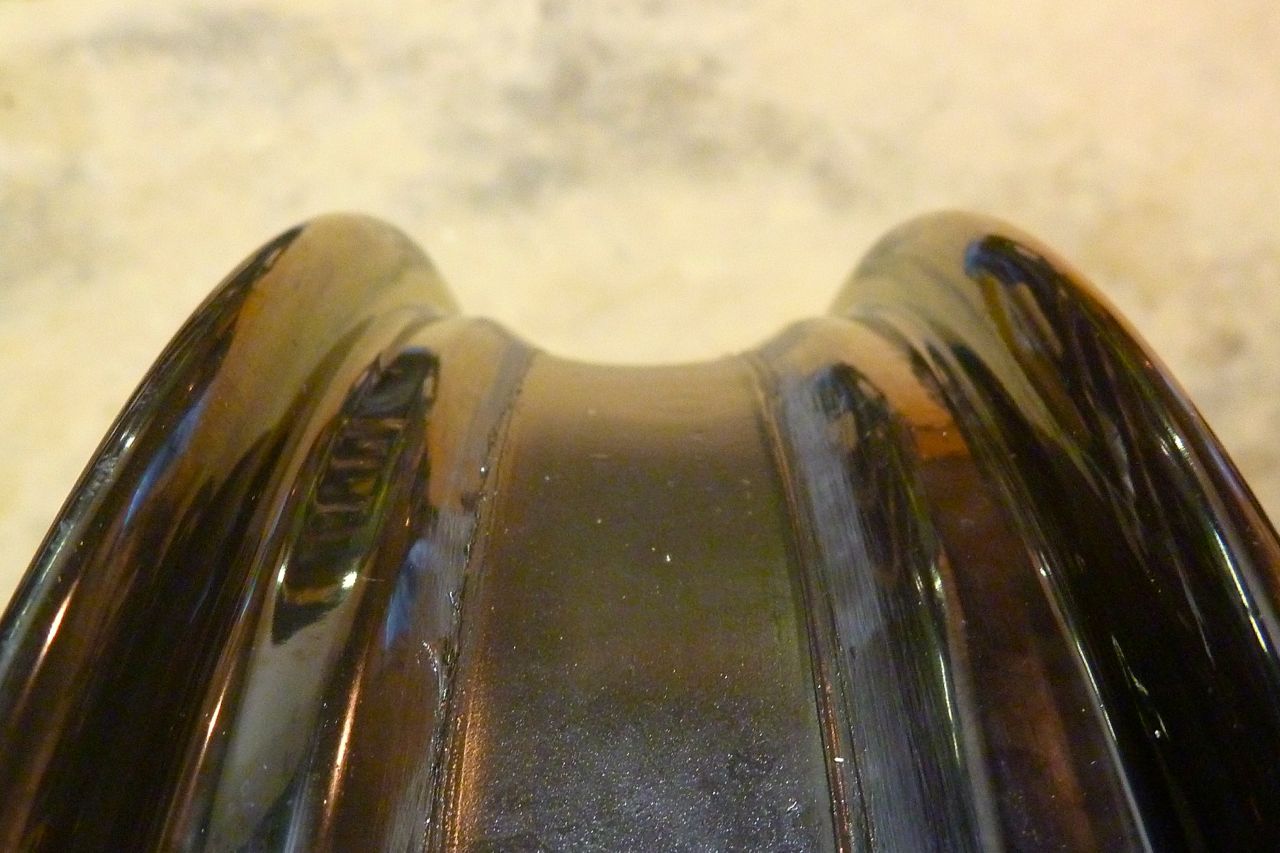
Another problem is this RRP front wheel doesn’t have a rim with the vital bead retaining lip for tubeless use. A label from BARTubeless warned to keep the pressure at least at 1.6 bar or 23 psi to reduce the risk of it dislodging into the well and losing pressure. As it is, 1.6 bar is the lowest I’d run tyres on a CB-X at anyway, so it should be OK. I know when I DIY sealed my Tenere’s 21-inch front wheel (also no lip, unlike the rear) I had leaking problems, but that could be down to the 21’s narrower section (don’t ask me how or why). Anyway, I’ve Slime’d both wheels, will keep checks on the pressure and am taking a light inner tube just in case (although that embossing – above – would need nuking to stop rubbing a tube up the wrong way). Hopefully, this experimentation won’t impinge on my Morocco ride, as it did with the Tenere.

cbxrrpsprings
rrp-dampers

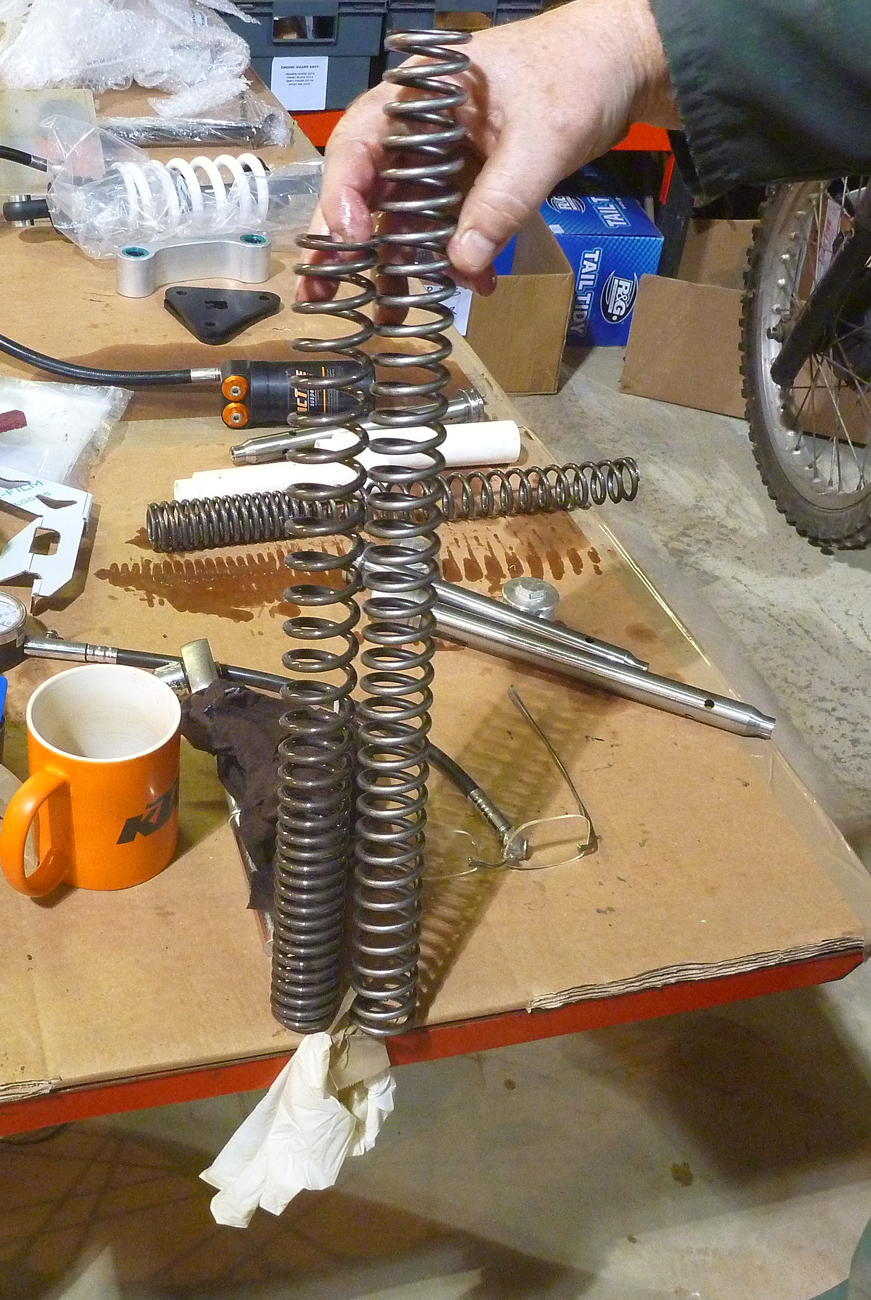
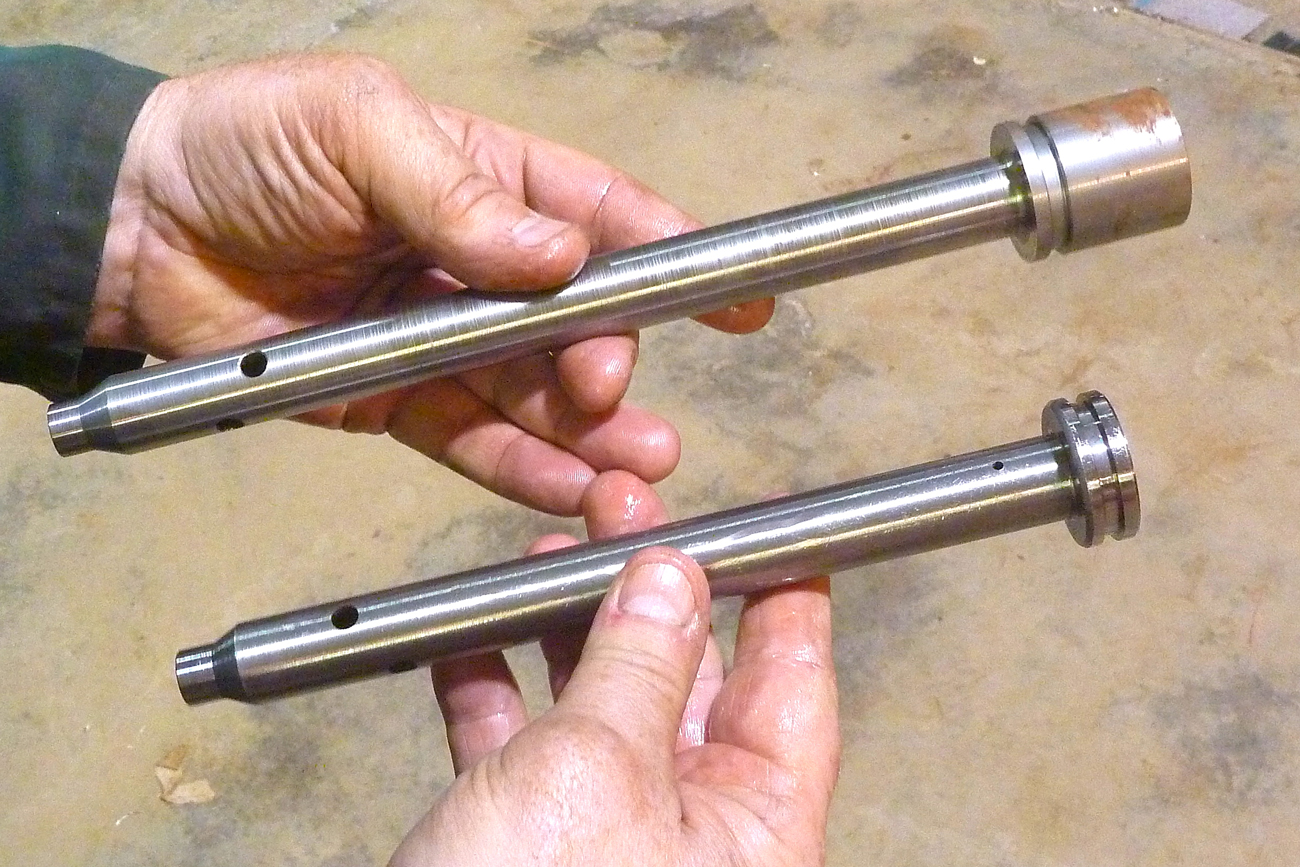
The forks came out, got cleaned up and the internals were all replaced. John showed me the Honda ‘progressive’ spring which is really a ‘twin rate’ coil off something shorter with a tacky white plastic spacer to elongate it for the CB-X (visible back left). John replaces it with a full length linear spring from Tractive (left) and tackles the progressive response with a 30mm-longer damper rod (right) using some clever deforming shims as well as some much lighter fork oil that’s less prone to losing viscosity when hot. On top, the forks get pre-load adjusters (as will 2016 CB500Xs)  and air bleeders.

cbxL301

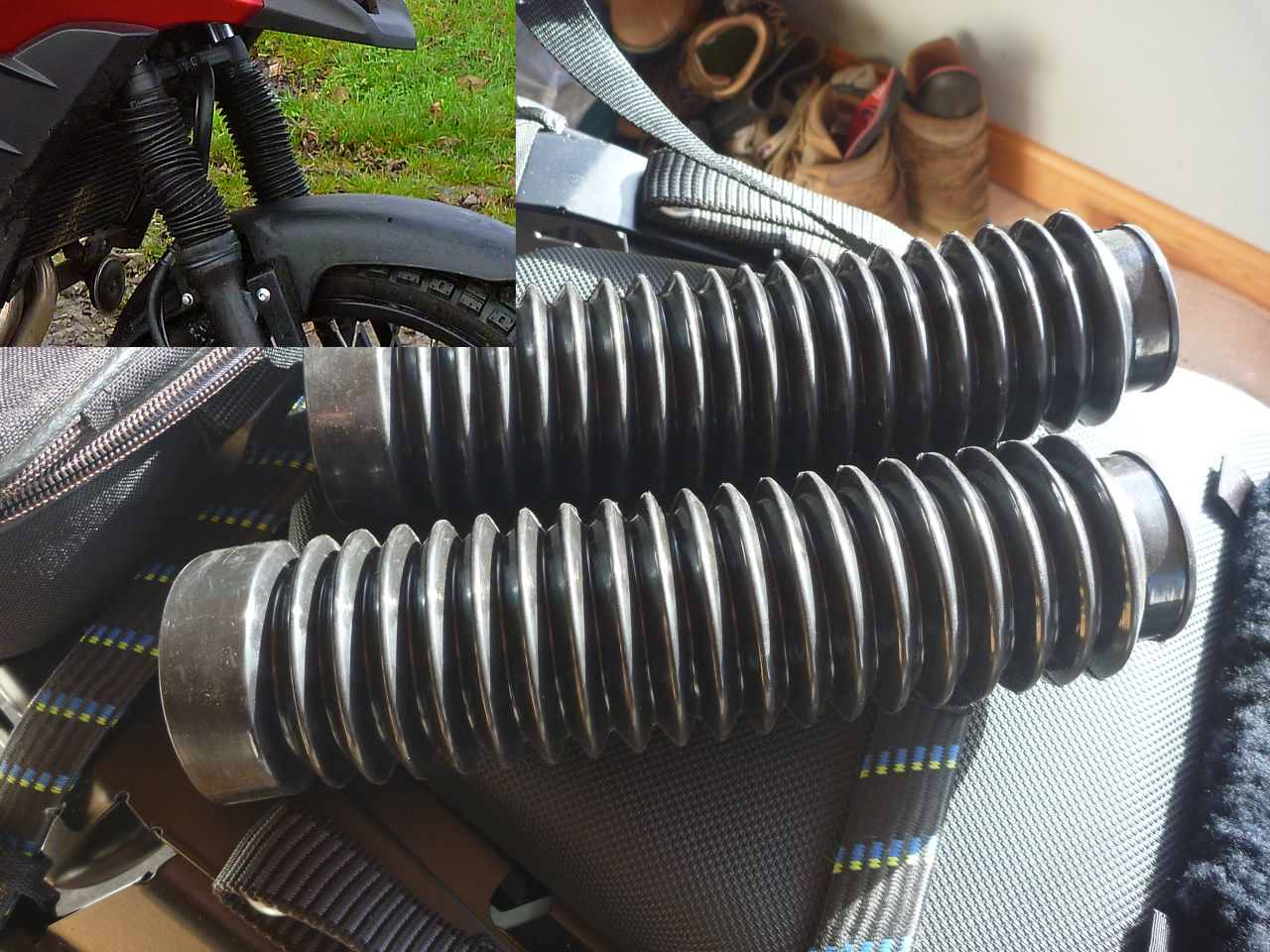
While the forks were off he slipped on some gaiters I tracked down on ebay and which John told me where the best fit he’d found so far. Gaiters are an old-school thing so it’s hard to find sets that are short enough for a modern 41mm fork which in the gaiters’ heyday would have correlated with a ten-inch travel MX fork. As you can see left, these 41 x 60 x 250 fit well on the 2-inch longer travel forks.

cbxL318

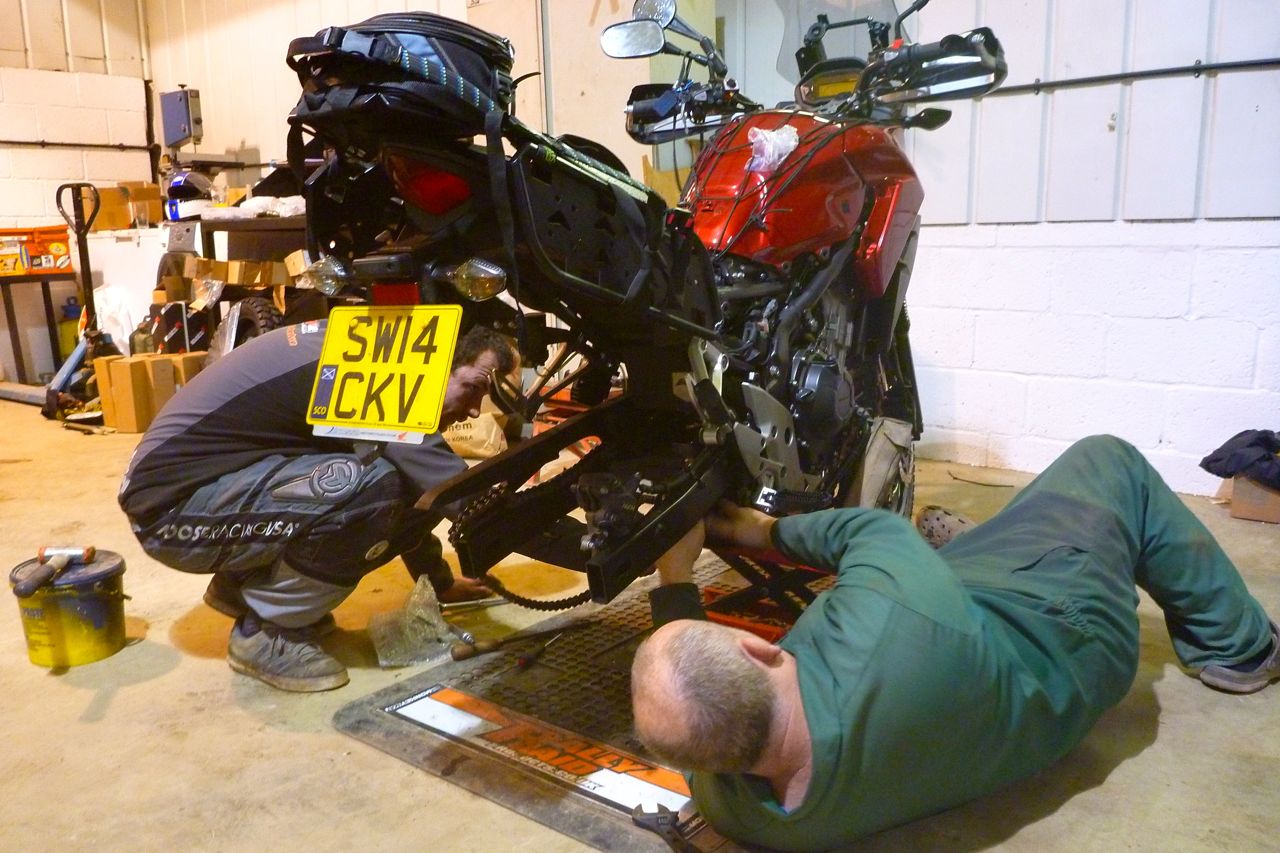
Like a pampered factory rider letting his pit crew take care of things, I wasn’t paying attention when the Tractive shock and revised linkage plates got fitted, but that looks like a tricky job needing a spare pair of hands. A small dent needs bashing into the silencer and the remote reservoir fitted by the engine on the other side.
There’s full 3-way adjustment on the Tractive, but apparently, the shock preload is a bit of a faff with the Tractive took supplied. What I’d like is a hydraulic preload knob option. I found that so handy on last year’s Xcountry as loads changed, but I never touched my Hyperpro’s other settings once set up for me. TBH I’d struggle to know exactly what needed doing. Again, it’s a rally vs travel thing. I spec’d a 120Nm spring as I’m fond of food.

All this extra suspension needs a two-inch longer sidestand which Rally Raid fitted. It’s a shame it doesn’t include an extended foot for soft terrain support, but something can be bodged on down the road. They did mention that with the longer stand the greater weight can cause the stand to swing down on heavy drops which can engage the engine cut out. Another reason to get ride of those annoying switches. Or maybe more spring tension.

cbxL321
cbxL307

We went out for a quick spin around the back lanes, but new tyres, wet leaves and the completely new feel to the front end made for an edgy ‘on marbles’ ride. The bike’s added tallness suits my 6′ 1″ much better (you can see how low the bike sat on the right, with a bit of baggage on the back). Now I can still almost get both feet flat on the ground, though the shock is bound to loosen and sag a bit in the upcoming miles.

cbx-footrests
rrp-footresters

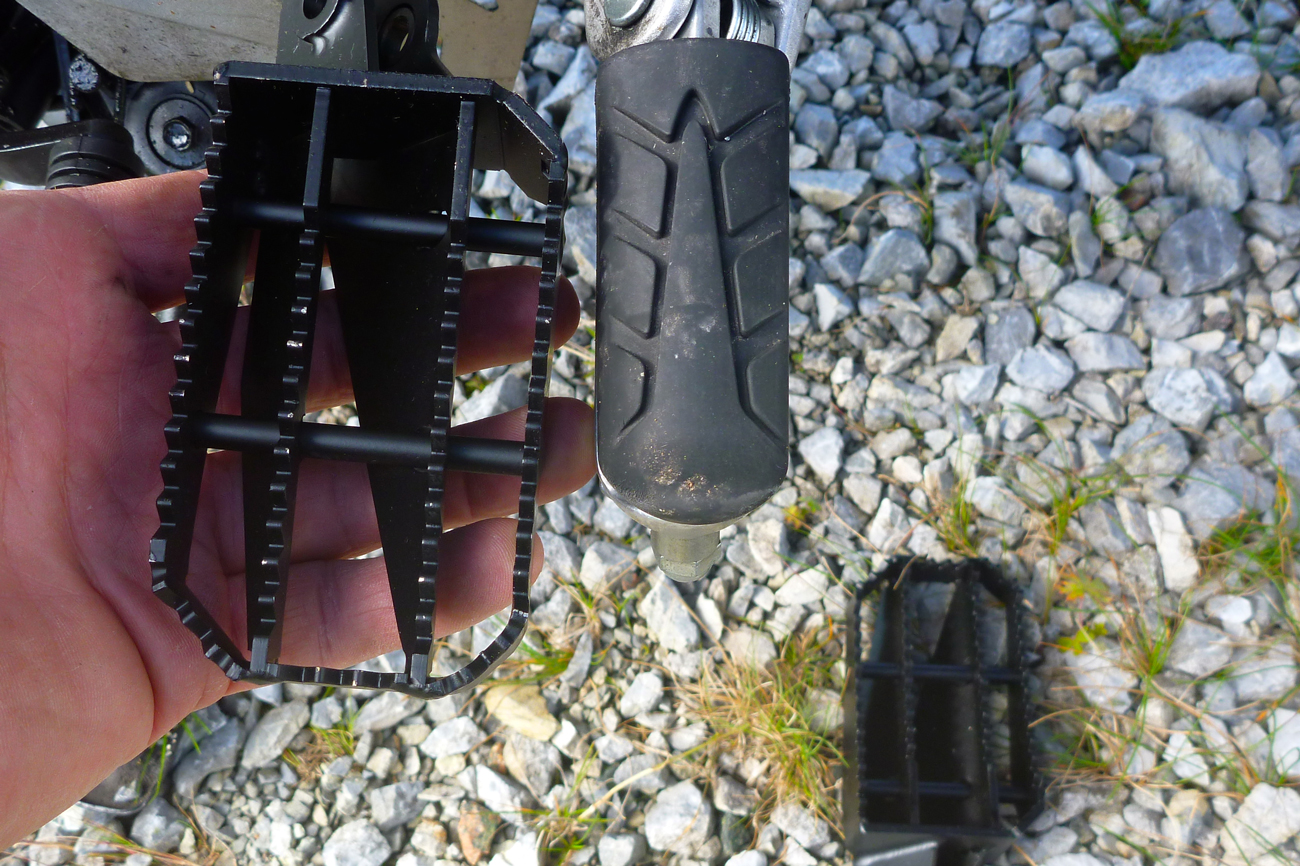
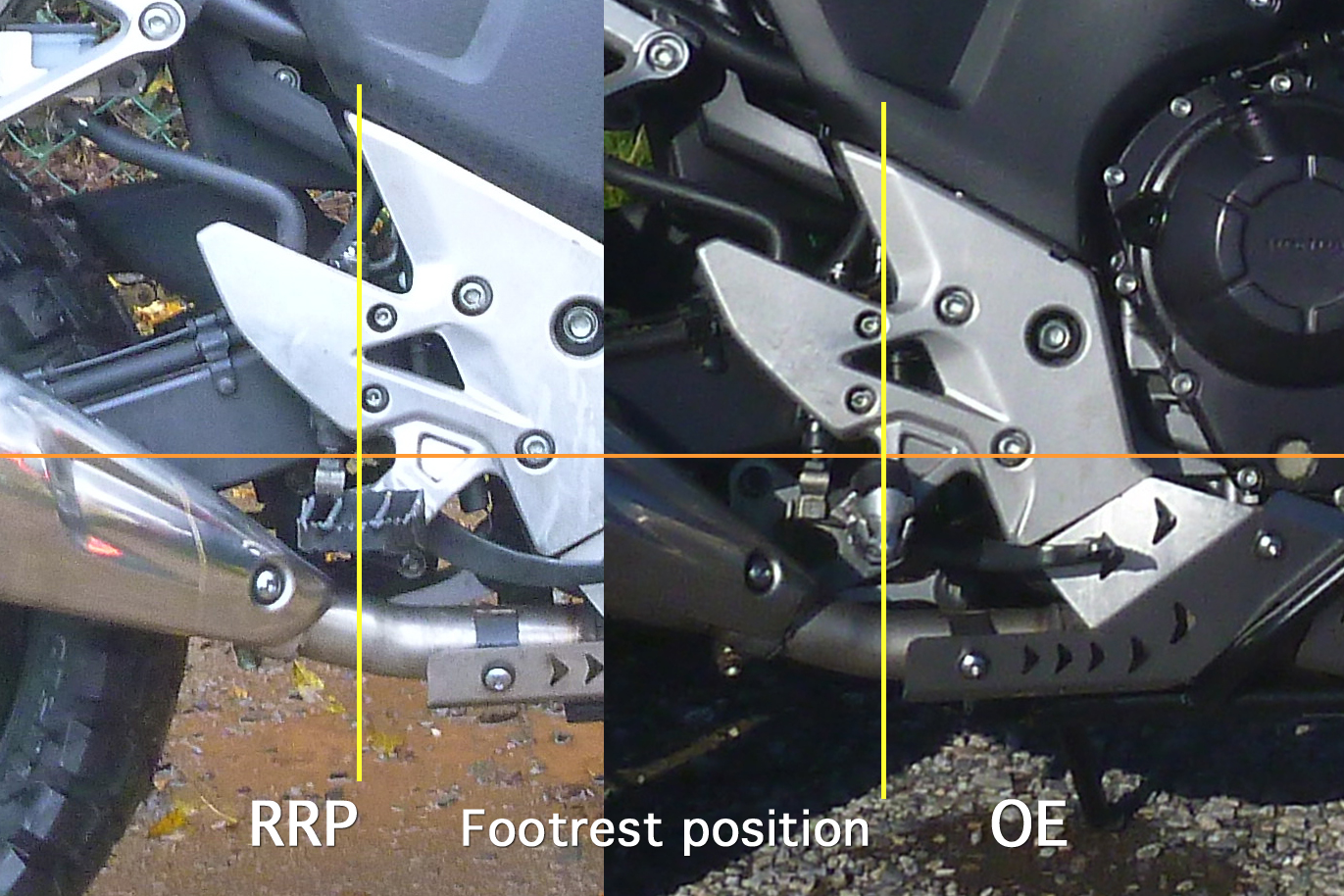
One good thing is the RRP platform footrests (left) feel up to an inch lower than the rubber-capped OEs which makes less of a leg bend and also standing up less effort. Turns out they’re a bit further back too (see image, right).
We rode up a local potholed ‘dogging’ lane (complete with a scrunched-up copy of Razzle – that takes me back…) and standing on the X felt spot-on for my height – very comfy indeed – thanks to retaining the higher OE bars and helped by those big pegs. No more stooping, as on last year’s X bike.

hyper

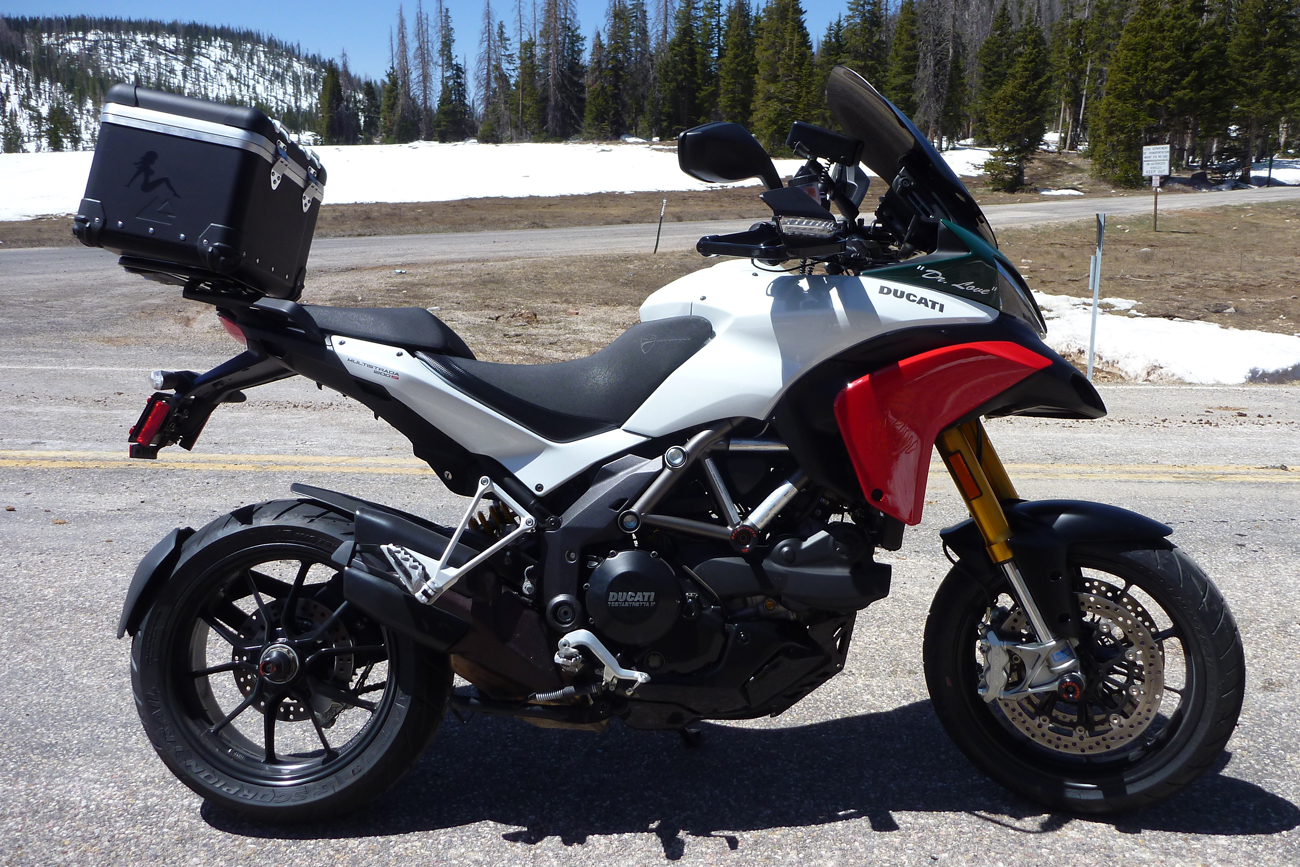
A bigger diametre front wheel has a greater gyroscopic effect which makes changes in direction (aka: steering) slower. That’s why road bikes run 17s, even if they look all wrong when fitted to an ‘adventure’ bike like the Ducati, right. Initially, it feels like the rake’s gone all Easy Rider or the head bearings are too tight, though actually the new K60 19-er noticeably lightens the steering – good for pivoting through traffic. That greater force also improves tracking (straight-line stability), not that the OE X was deficient in that respect.

cbx-sp

Setting off back to London in the dark and the rain I took it easy, and once I dead reckoned my way out of Bedford and onto the M1 (compass on my jacket sleeve proving useful), I sat it out on the motorway and by the time it came to tackling Hyde Park Corner at Friday rush hour I was fully accustomed to the Honda’s new feel. Taller may mean higher CoG, fewer dabbing chances and the need to step on a footrest to get on, but it’s all given the CB-X that trail bike stance which I know and love. Only thing is this time it won’t be accompanied by the thump of a big single, but a smooth and as economical 500 twin.

logo-rallyraid

Thanks to John and Adam for doing in half a day what would take me half a week. There’s more on their CB500X conversions here – and more from me and the bike later.

Some of the RRP parts I bought, some were exchanged for advertising in the 2016 edition of AMH.

CB500X – chain oiler and rack

CB500x Index page
cbx4-tut1

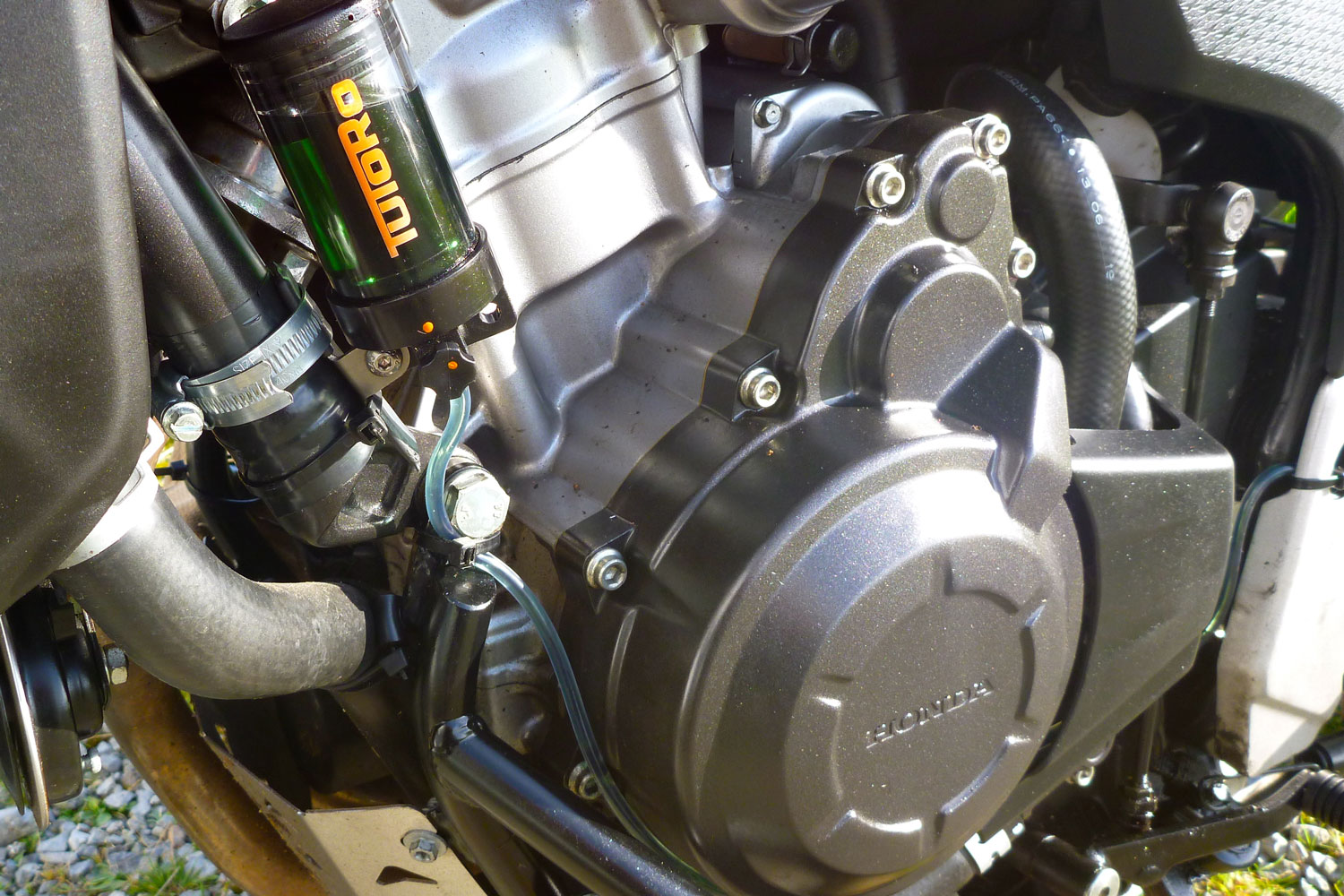
On the CB-X there wasn’t an obvious place around the back to mount a new model Auto Pro 1 Tutoro chain oiler. I saw a couple of people on the forum perched theirs on the pillion footpeg mount, but with off-roading and stone flying on the agenda, I can’t see mine lasting too long back there, even with the reservoir rock guard that comes with the latest model.

cbx4-tut2

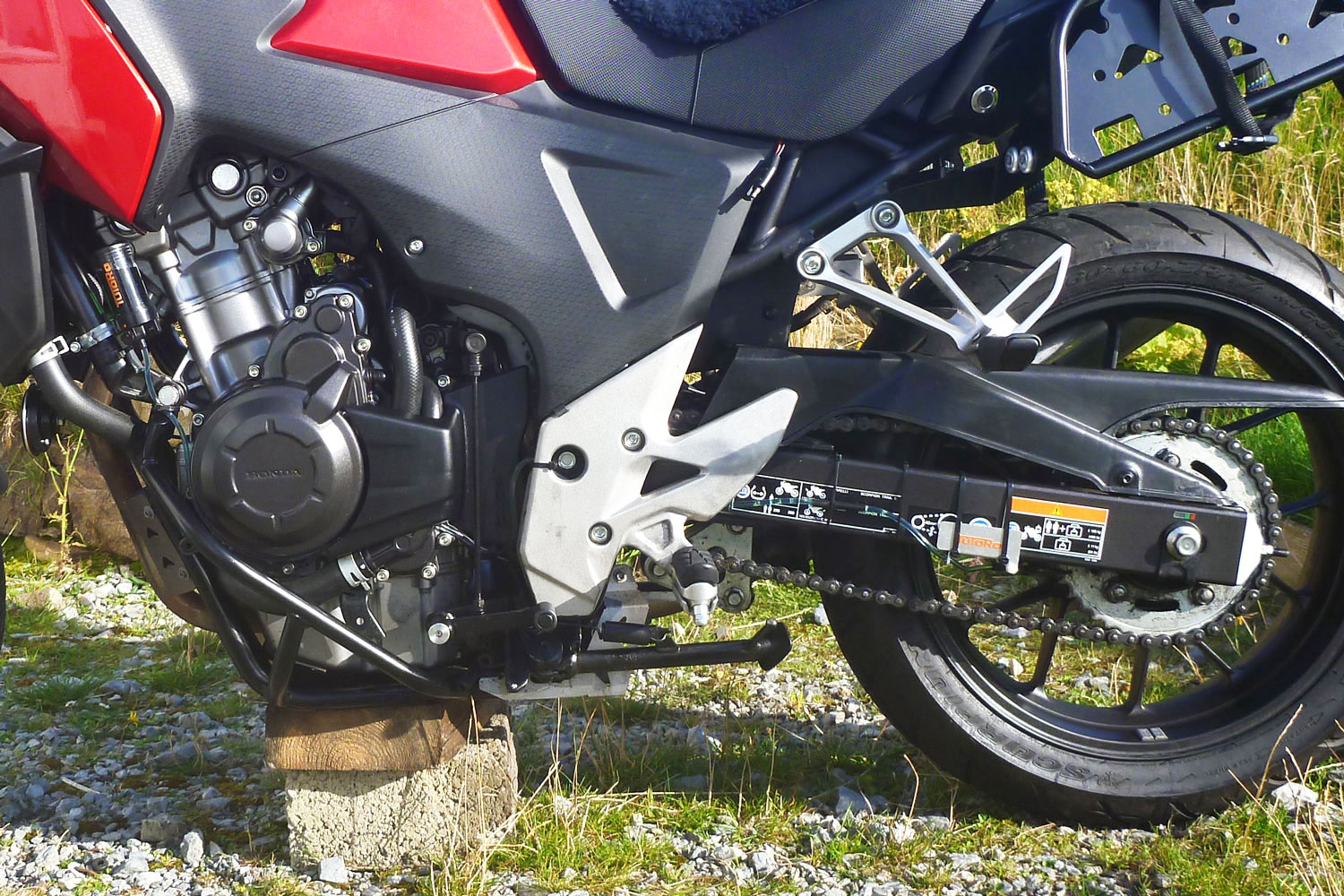
The next best place I could find was on a front downtube behind the radiator. Who knows, the warmth might make the oil runnier and better penetrating – or maybe just more splashy. The delivery tube needed an extra 6 inches which I had from an old Tuturo kit.

cbx4-tut3

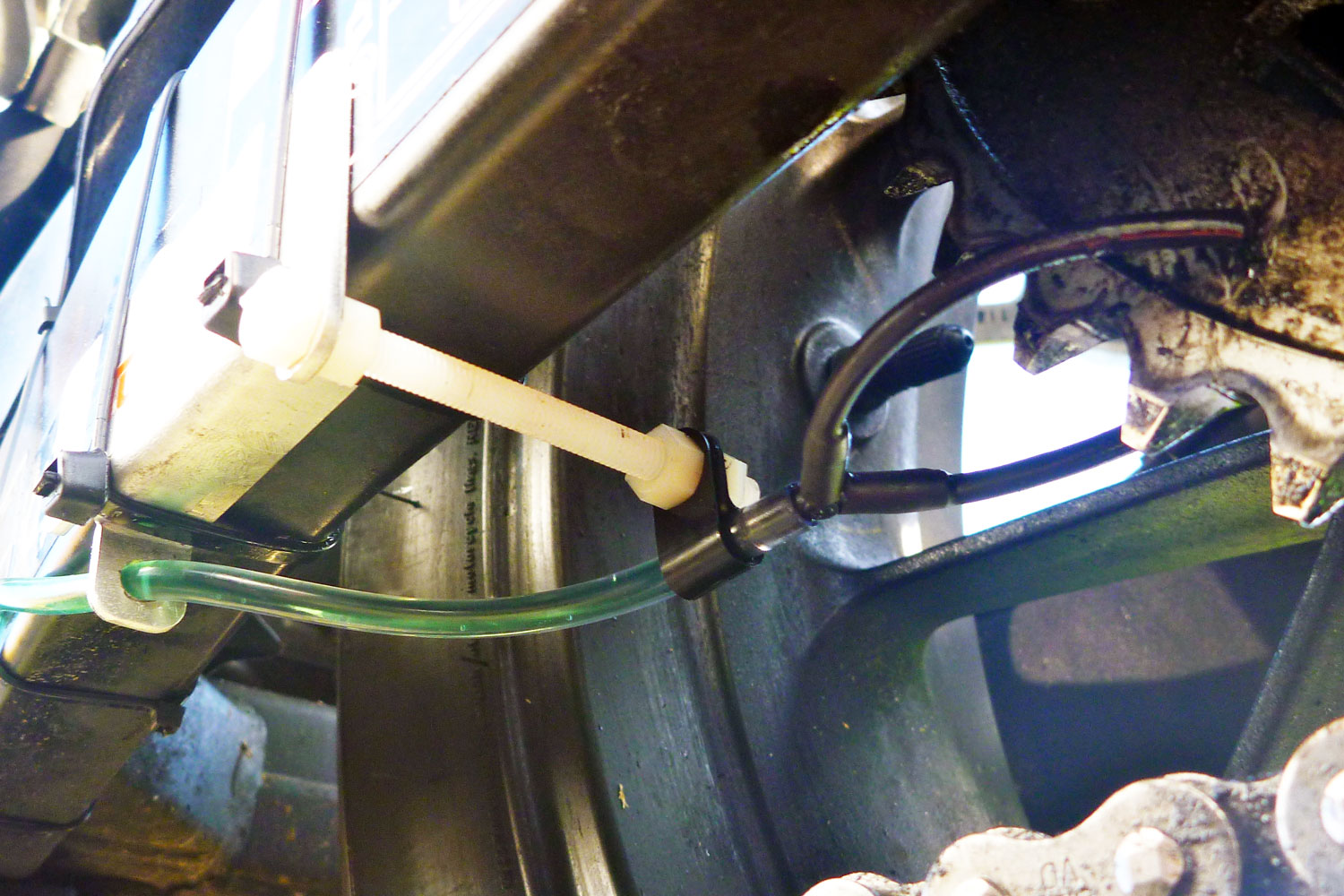
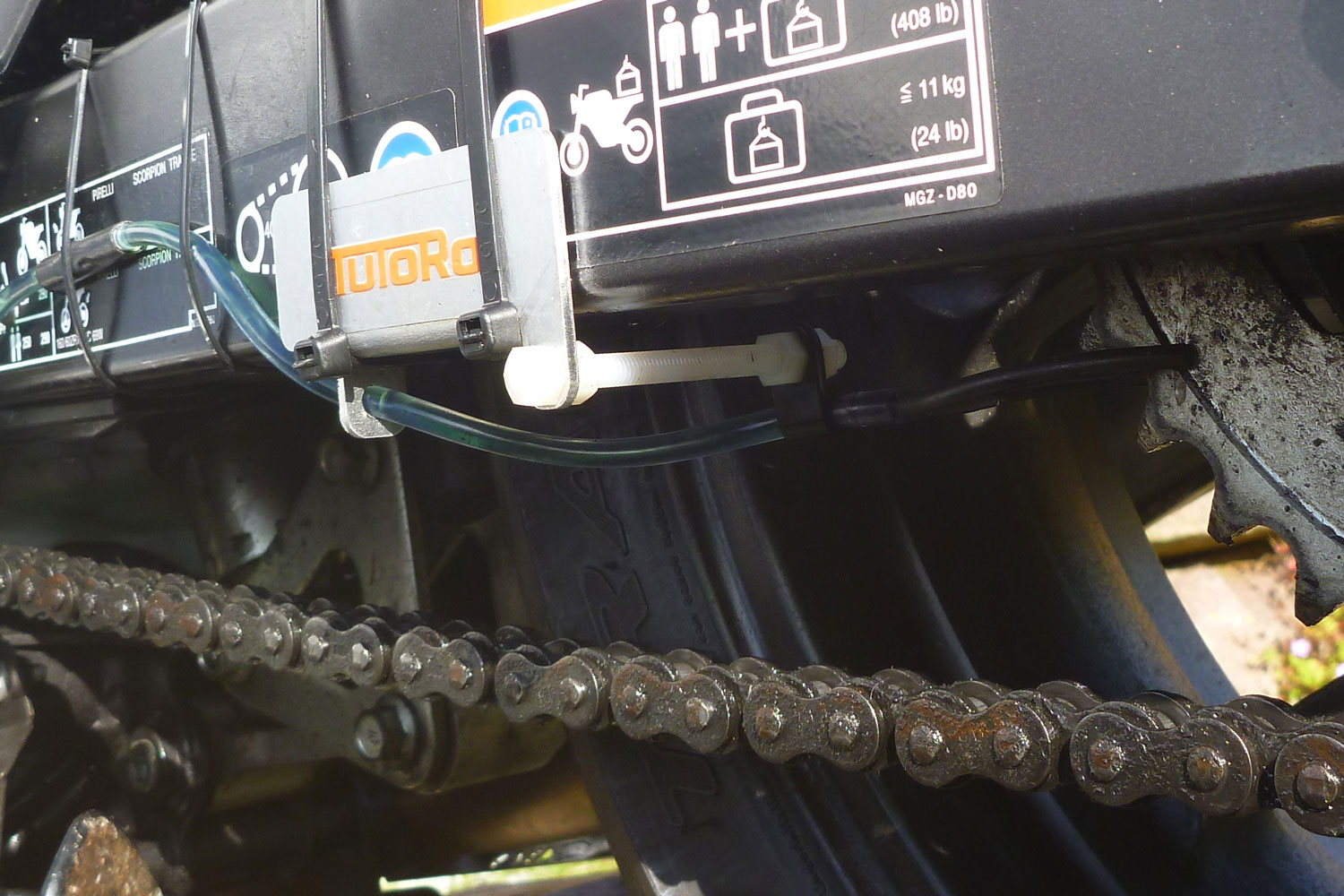
They have a new nozzle swingarm mount too: a plate and nylon bolt (right) you zip tie on to better secure the twin nozzle in front of the sprocket, instead of positioning it with a coil of bent wire. I think I’ll add some more support to the nylon bolt at the inside of the swingarm to stop it getting snapped off. As it is, I can see it all getting swept off by off-road debris. At least with the bendy coil you can bend it back. I may add that too.

cbx4-chain

I’m a bit concerned about the state of my chain. At only 3000 miles there’s rust on the outer plates which probably means rust on the inside too which will ruin the o-rings soon enough. Neither I nor I doubt the previous owners neglected it that much, so it must have been a cheap batch, like those that found their way onto some F-series BMW twins a few years back.

Even though it’s far from worn out, I think I’ll have to take a leaf out of my own book and fit new. The upcoming trip to Western Sahara and back will rack up at least 7000 miles, and even with the new oiler, in the sands I doubt my dud OE chain will make it to 10k.

cbx4-libya

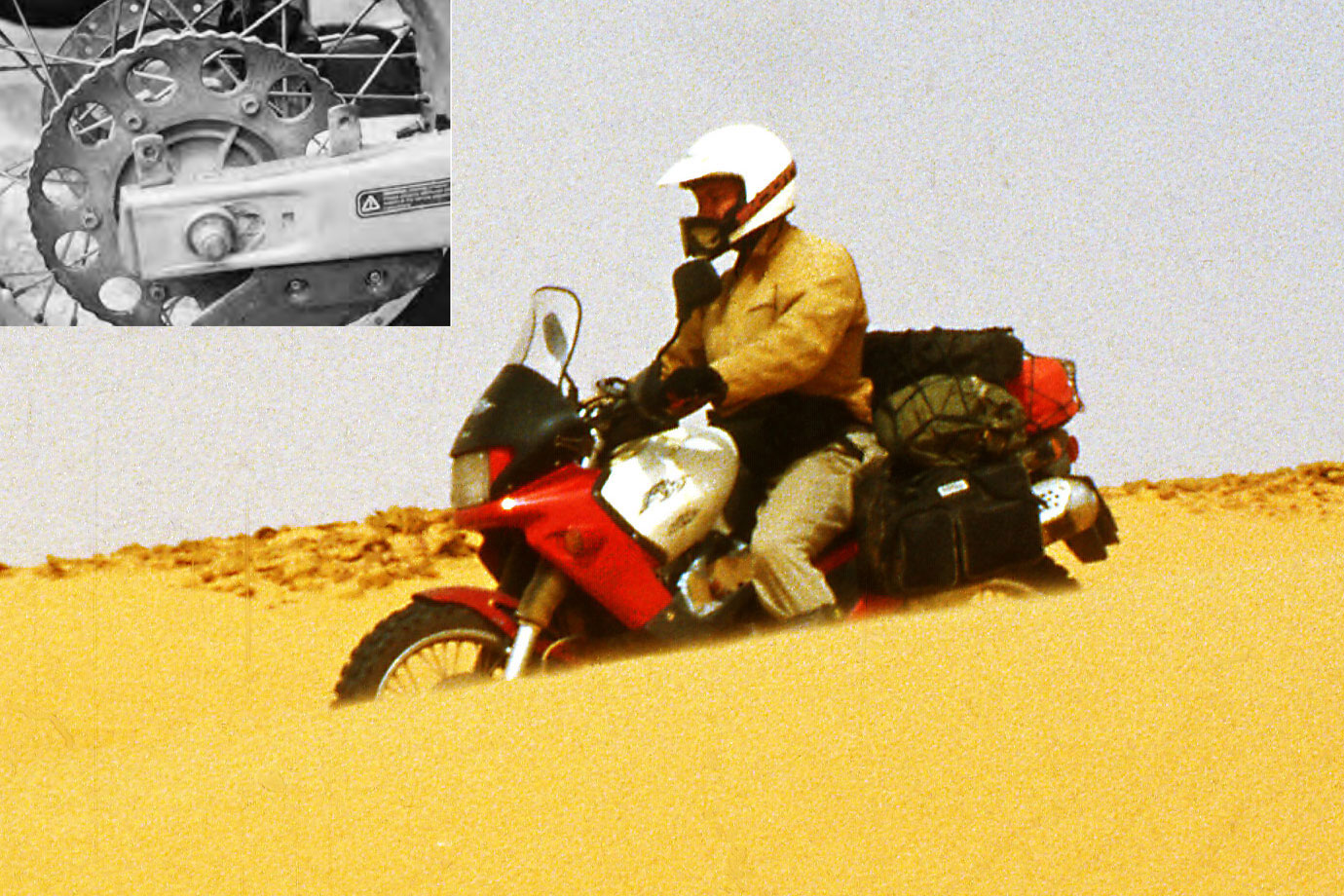
I made that mistake on a Funduro ride to Libya once  (left). Lots of sand on that trip and the no-name chain was slipping by Tunisia on the way back and despite my best efforts, the back sprocket was totally shot by Maidstone. I had to hire a van the last 25 miles home. On other Sahara trips o-ring DIDs have lasted fine.

cbx4-xring

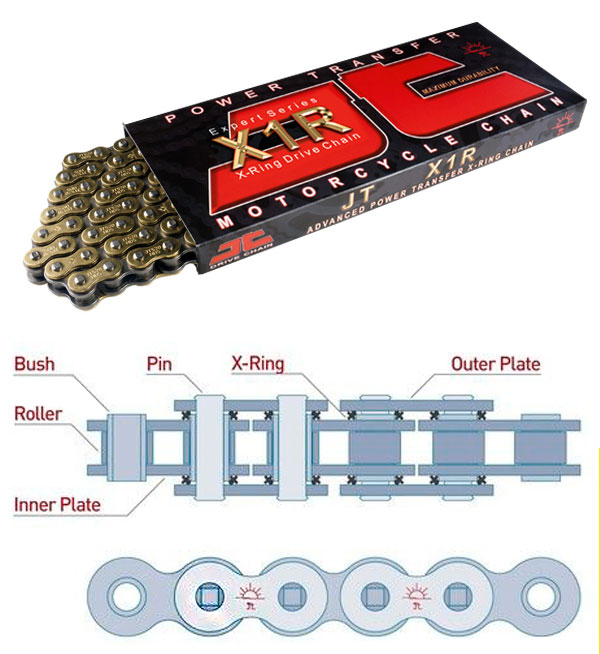
Again the forum has mixed reports on chain life, even with very regular maintenance. A quality chain wants to get on there quick before the sprockets wear. Normally that would be a DID gold x-ring, but I couldn’t find an X on ebay so let’s take a chance on a JT X1R version for £53. It’s good to try new stuff anyway, and I’m sure it will last the run in the desert sands, now the Tutoro is lubing it.

cbx4-lawn

cbx4-hepco

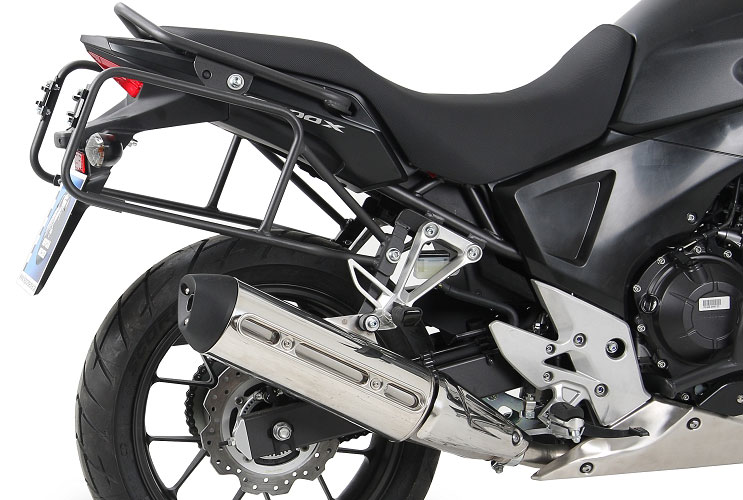
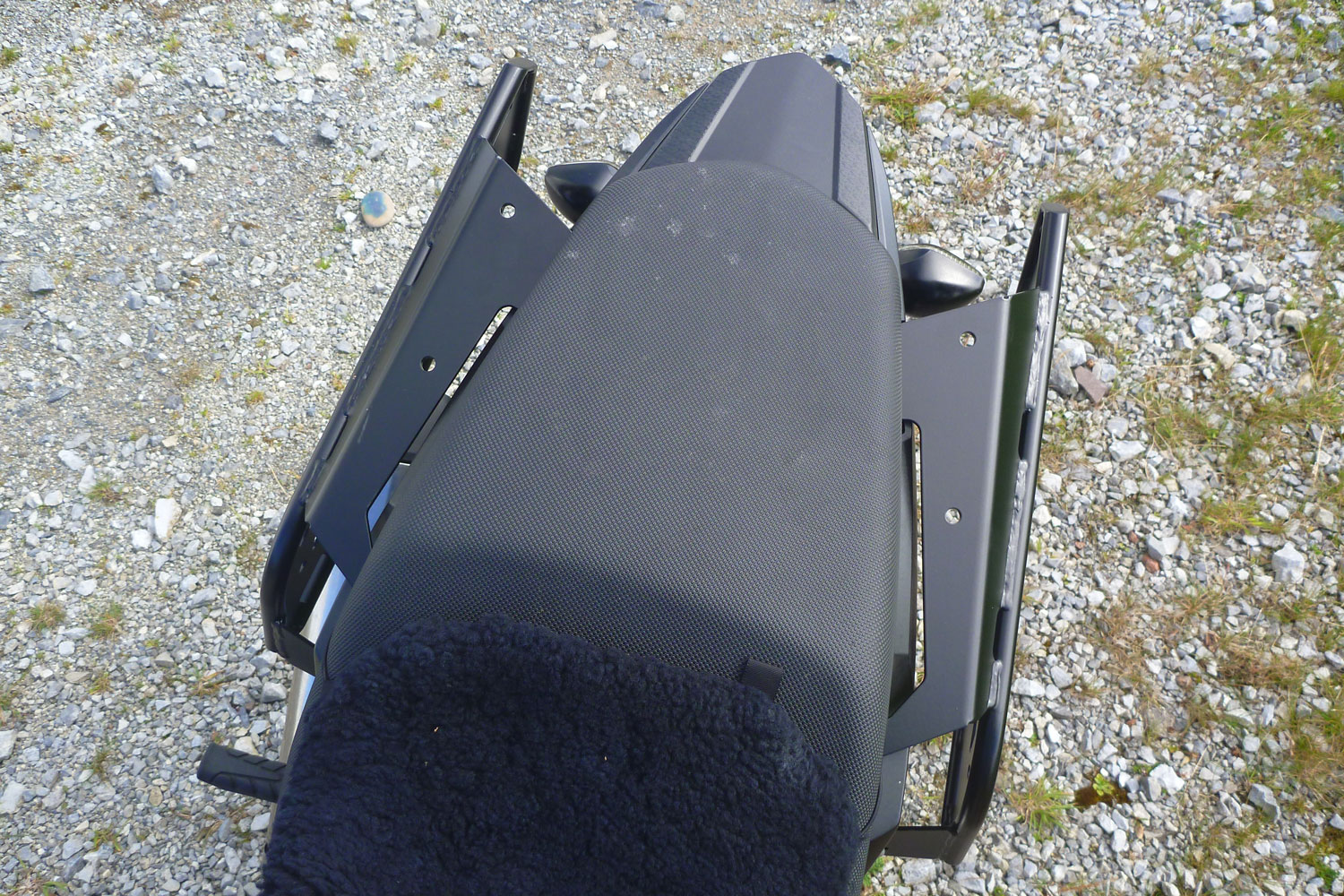
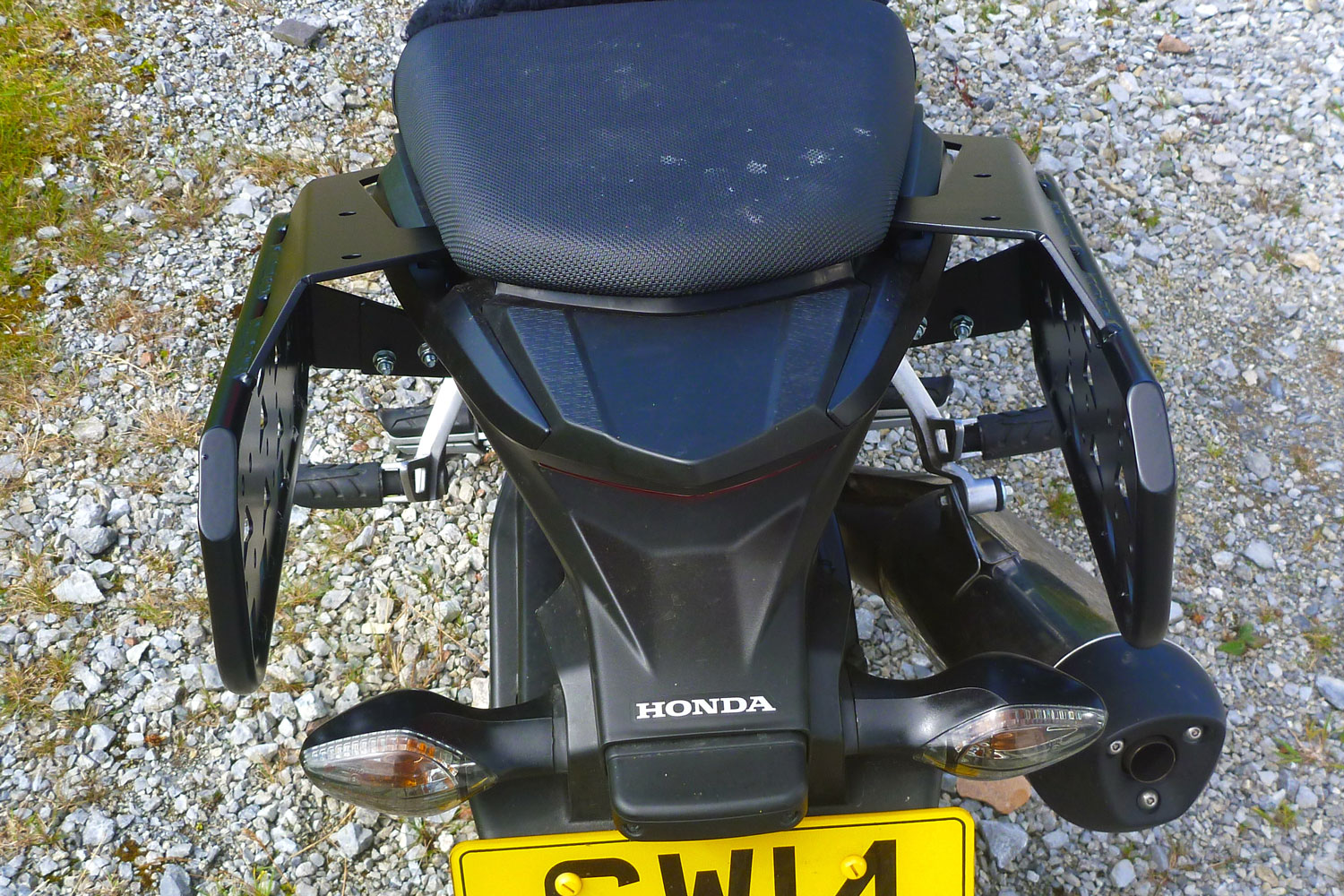
Rally Raid’s pannier rack arrived, along with a few extras. At £230 delivered, it was a good deal more expensive than a regular Hepco pannier rack (right) which seems to be the only one that’s a general purpose rack, and not specified for a certain type of luggage. As it is, it’s way too far back like so many of these racks, though with throwovers that doesn’t matter too much.

cbx4-sidrak

The RRP side rack weights 4.7kg in steel and seems based on their KTM690 rack, a bike whose plastic fuel tank is the rear subframe and so needs a bit of extra support. Being more heavily built than your H&B, the RRP CB-X rack does away with the rear cross brace and is said to be made to fit the Giant Loop Siskiyou throwovers.

cbx4-toprak

The rack replaces the 1.8kg pair of grabrails and uses their six mounts on the chunky subframe, so that’s actually less than 3 kilos added overall. The third mount is a bracket that goes behind the pillion peg mounts and the whole lot was easy to fit and lined up precisely.

cbx4-bakrak

I did wonder if the short side height might not support my tall Magadans so well. As it is on the right the upswept silencer will get in the way whatever set up you use. Sticking out equally on both sides, there’s heaps of room to stash stuff behind (left) or fit one of those tool tubes. Though I’d rather have a slim rack, I can see those spaces becoming handy.

cbx4-tailrak

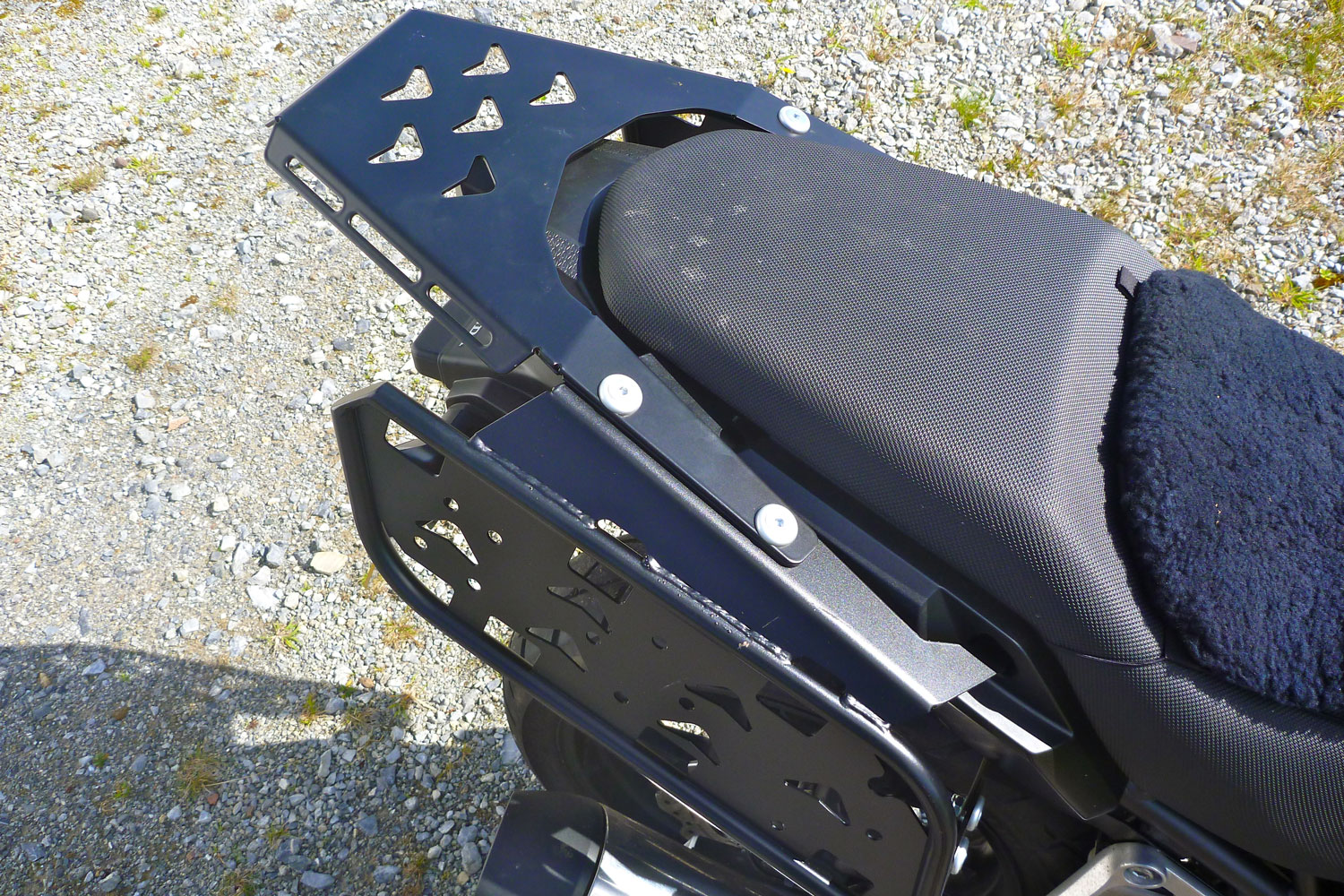
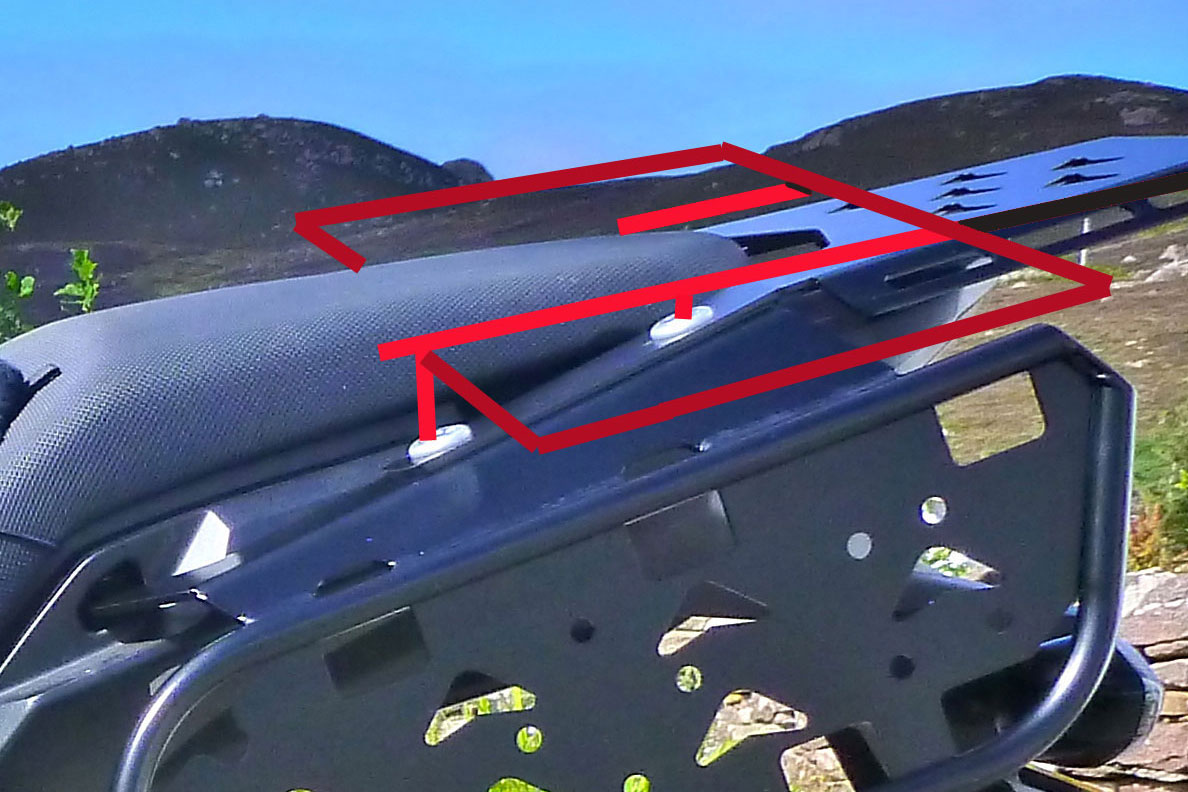
RRP also sent me their 1.8kg tail rack to look at, though I’m not a fan of these CNC ‘plate racks’.  I fitted it anyway to see how it looks, as it mounts on the side racks very easily.

cbx4-xrak

I prefer traditional tube racks and the reason becomes clear once the grab rails are removed: there’s nothing to grab on to! Not so much for a pillion but when picking up or manoeuvering or back-end dragging the bike into the cow shed where it currently lives. It’s really quite frustrating. For a while I thought I might bolt on grab loops to the tail rack mounts, but have decided to try and get an X-rack style sheep rack made (right).

cbx4-resgard
cbx4-levers

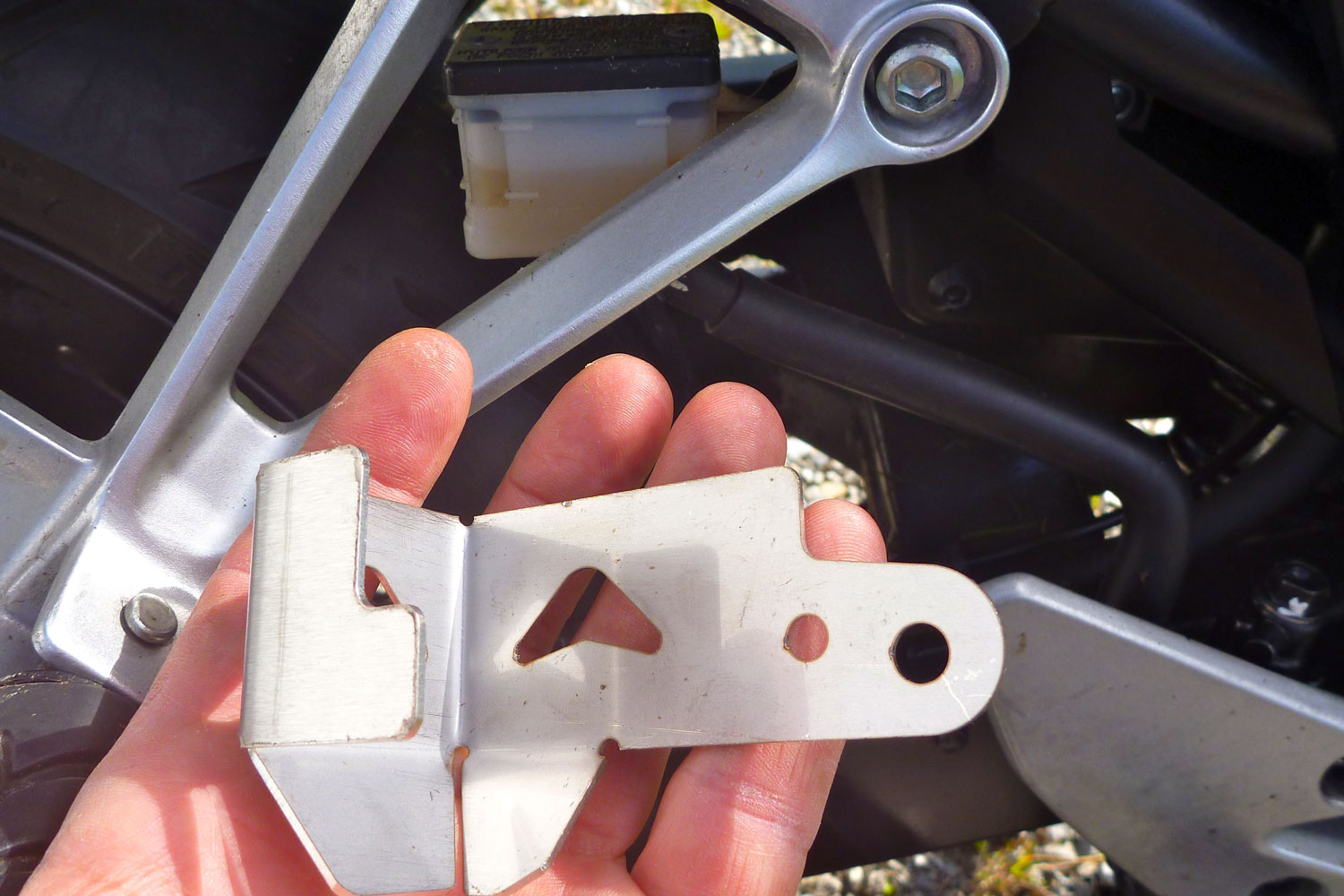
Other RRP goodies included a nifty rear brake reservoir guard (left). Now I look at it, it’s quite exposed, just as the oiler would have been back there. And a nifty pair of adjustable shorty levers. I’ll get round to them when the new front end arrives.

cbx4-landrak