Tag Archives: Enduristan Monsoon panniers

Exactly how big is soft baggage?

See also: Soft Baggage Comparison
packer

I said this already: soft bags may be ancient, pack animal-era technology but they have very much caught on in advworld. Some are little different to the things I was throwing over my bike 40 years ago; one or two feature significant innovations in mounting, fabrics, lockability and more.

On advrider (as well as in my own review) questions got asked about the volume claims of the GL Siskiyou pannier: 34L said GL, while me and another guy measured l x h x w as near as we could and came up with 24L.

‘Aha!’ the bloke from GL replied – we establish volume by filling out our bags with beans until they bulge out and that way get 35 litres so that’s what we rate them at. It sounded plausible and got me thinking: what is the maximum volume of a shaped, non-elastic but flexible rectilinear container like a motorcycle side pannier? Logic suggests as the box form flexes out sideways under the weight on contents, the shorter side will pull in and the volume will remain constant.


lomo
Envelope

But intuition (or maybe logic too) suggests capacity ought to increase: the classic Envelope Test performed by an obscure Cartesian monk, Antoine de Connerie in front of a disbelieving King Philippe V in 1444:
An envelope is a flat container with a volume of next to nothing; open it a little and volume increases, open it a lot and volume increases some more up to a point when opening it out too much will reduce volume to near zero again as it folds back in on itself.

Al Jesse [Luggage] and I discussed this: he reckoned volume of a rectilinear vessel is fixed, but I was not convinced and now I have the answer: If the flexible container is a cube (l x h x w all the same) volume when filled (with beans, water, anything non-compacting) will not be altered much. There may be some fabric bulge.

magdims

But a rectilinear flexible box (‘suitcase’) seeks to attain the geometric nirvana of cubic equilibrium and does deform and expand substantially. L x w x h on my Magadans rolled up and clipped came in at 24L (left). It doesn’t sound so much and would be identical to a 24L metal box.

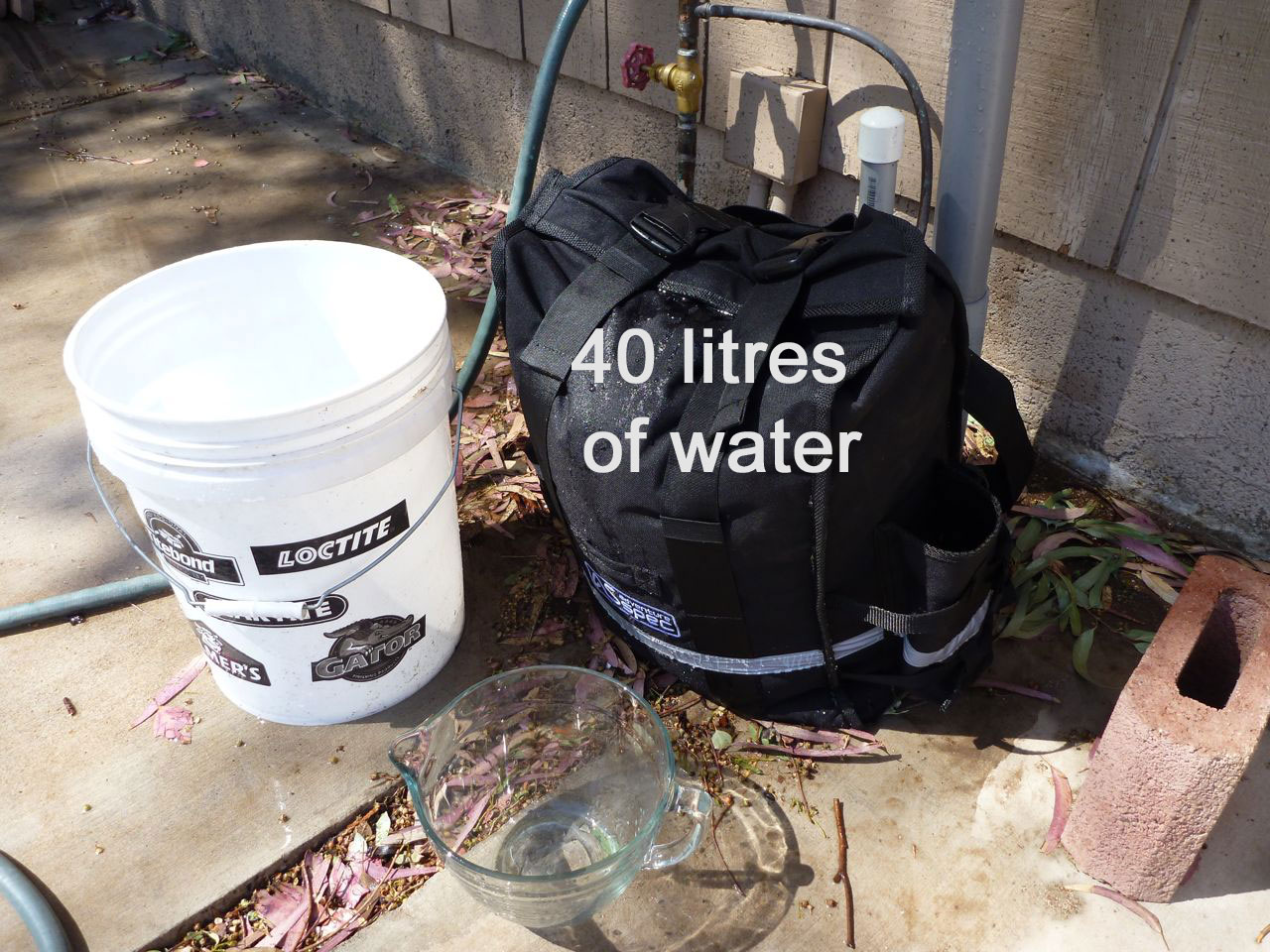
But, fill the Mags with water and you’ll easily get 40 litres in each side, as the pictures right and below show. Seems hard to believe but there are no less than two fills of that 20L white bucket inside the Mag bag, rolled up, clipped down and ready to roll were it not for the fact that it would give me a hernia trying to lift 40kg (88lbs).
magwalter

Does this all really matter? Yes, it does because for a start, the l x w x h method doesn’t truly represent the maximum potential volume (MPV) of a flexible, non-cuboid container, even if the maxed-out 40L capacity demonstrated on the left is unlikely to be achieved in the real world of packing your panniers with normal travel stuff.

It matters all the more when trying to compare stated fabric pannier volumes with rigid metal or plastic boxes as a guide to buying one or the other. My comparisons in the table at the bottom uses the l x w x h method but that only compares like against like. In all cases you can get more in your bags.

monbaguette

Even then, I think the dimension ratios of a flexible container may also have something to do with it. I recall the guy from Enduristan saying something like the reason their original Monsoons (left, reviewed here) are wide (closer to a cube form) is that they have/can make more volume (by presumably having less far to go to reach ‘cubic optimisation’).

But on a motorcycle I still believe slimness is a desirable attribute and is something that for example, Jesse Luggage strive to maintain in their mounting systems and cases. Al likes to boast that some of his rack and box setups are narrower than competitors’ racks alone.

So, in summary, think carefully when comparing stated rigid box volumes against fabric panniers. A rigid box’s capacity is immutable but a soft bag may be more than you think.

The Magadan was used because it was the pannier I used at the time, but this test would work and give similar results with any similar product. 

Giant Loop Siskiyou Panniers – a close look

See also: Soft Baggage Comparison

sysdims

Giant Loop are well known for their innovative ‘horseshoe’ bags which wrap around the back of a dirt bike but which, in my opinion, are not especially easy to use day-in, day-out and have been proven not to be waterproof and have zips which can be weak points. That may not matter for a weekend run with your mates in the hills, but does on the overland.

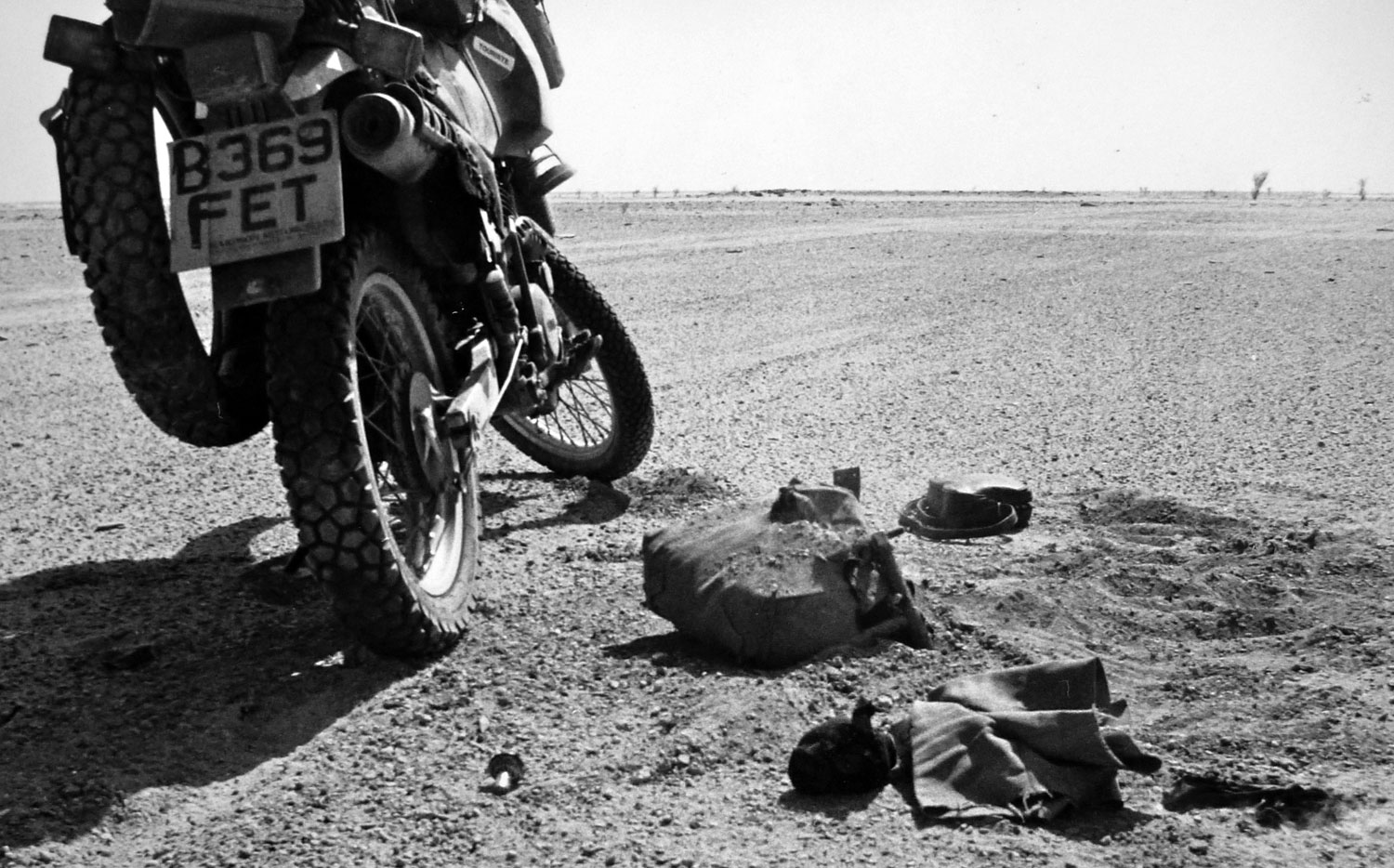
Now Giant Loop have joined the likes of Enduristan, Adventure Spec and a few others in producing a conventional throwover pannier, the Siskiyou, named after a mountain range in southern Oregon. These types of panniers are just about as old as motorcycling of course, up till a few years ago Ortliebs were widely used by moto travellers. I recall my first pair of ‘soft bags’ in the late 70s, elegant lightweight cases (left) crafted from a lustrous space-age combination of vinyl-coated cardboard. But this was the advent of the monoshock era where soon they’d be no more twin shocks to keep the swinging pannier backs out of the rear wheel or final drive. As I say elsewhere, over the years I’ve melted my fair share of soft panniers and even dealt with small luggage fires (right). Nevertheless, I still prefer soft luggage for overland or adventure travel despite the drawbacks of security, perhaps combined with one small detachable hard case for valuables.

These panniers were sent to me for a quick look by Adv Spec

WHAT GIANT LOOP SAID AT THE TIME
… A ‘round-the-world contender, Giant Loop’s Siskiyou Panniers™ combine the convenience of hard panniers with all of Giant Loop’s performance advantages. Rugged, rackless, lightweight — and damn sexy…. Backed by a Limited Lifetime Warranty…

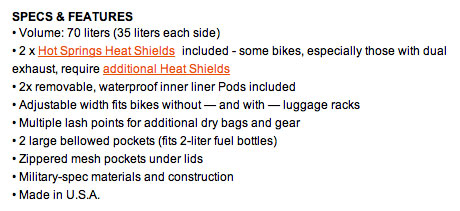
The GL website specs shown above left also claim each pannier has a volume of ’35 litres’. I’m not the first person to question how they arrived at this figure; my calcs put it at more like 24 litres. We’re all used to exaggerated claims, but that was quite a discrepancy. I read that they measure their luggage products by filling them with beans and doing so I suppose it’s possible that a soft fabric pannier would bulge out. In fact I’ve since found that that is exactly the case so Giant Loop’s estimate of 35 litres is right in the ball park.
GL are fairly ambiguous about what they’re made from other than ‘military-spec materials and construction‘, but it looks like the well-proven and widely used combination of a Cordura shell with a vinyl back, interior and lid. Unusually, sandwiched inside this thick shell is an unseen additional layer of closed cell foam, or something similar. It helps shape the bags and also reduce damage by padding the contents when you crash. GL wisely suggest that any hard-edged items in the baggage are well wrapped for such an eventuality: it’s standard practice in packing soft baggage.

P1030901
P1030898

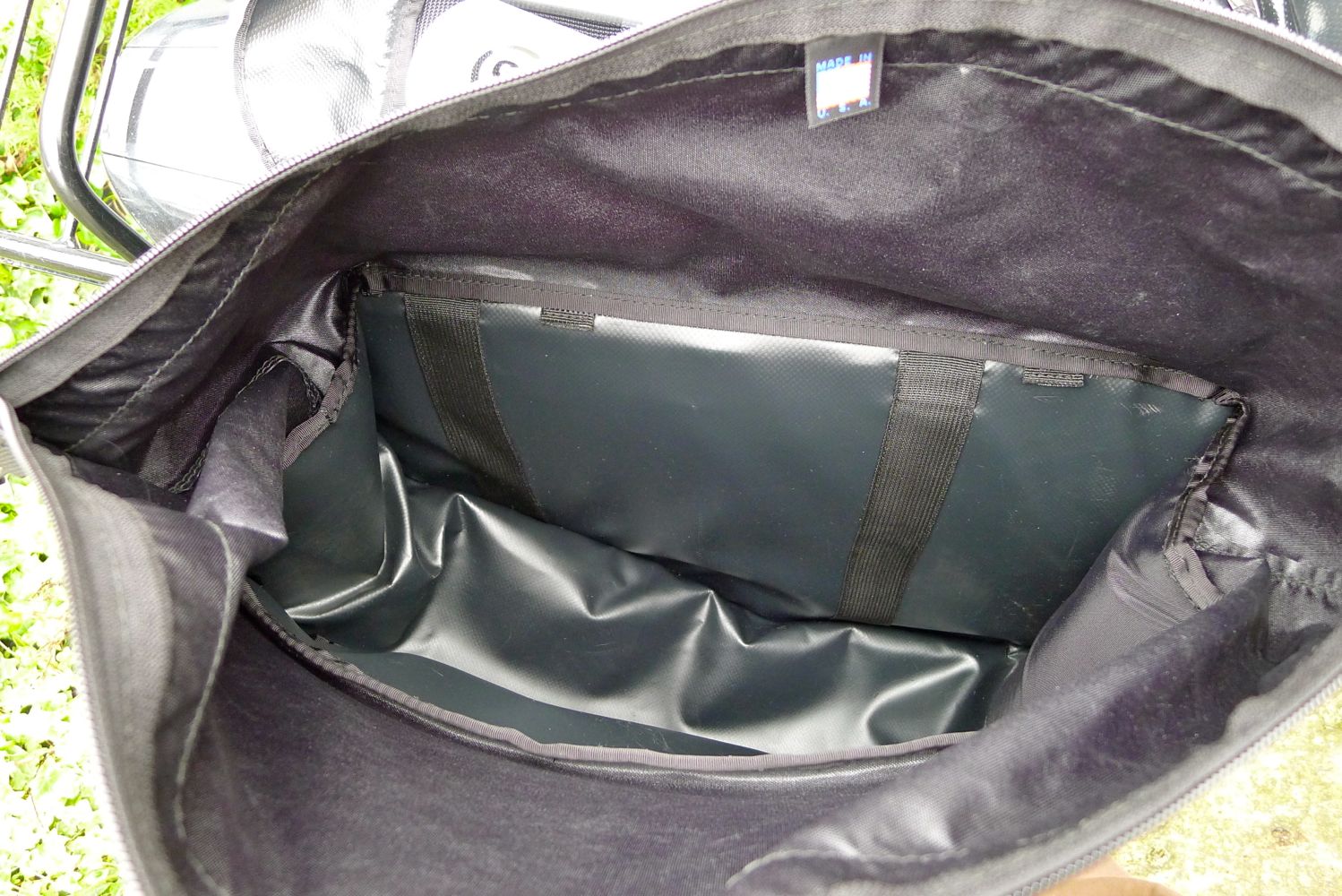
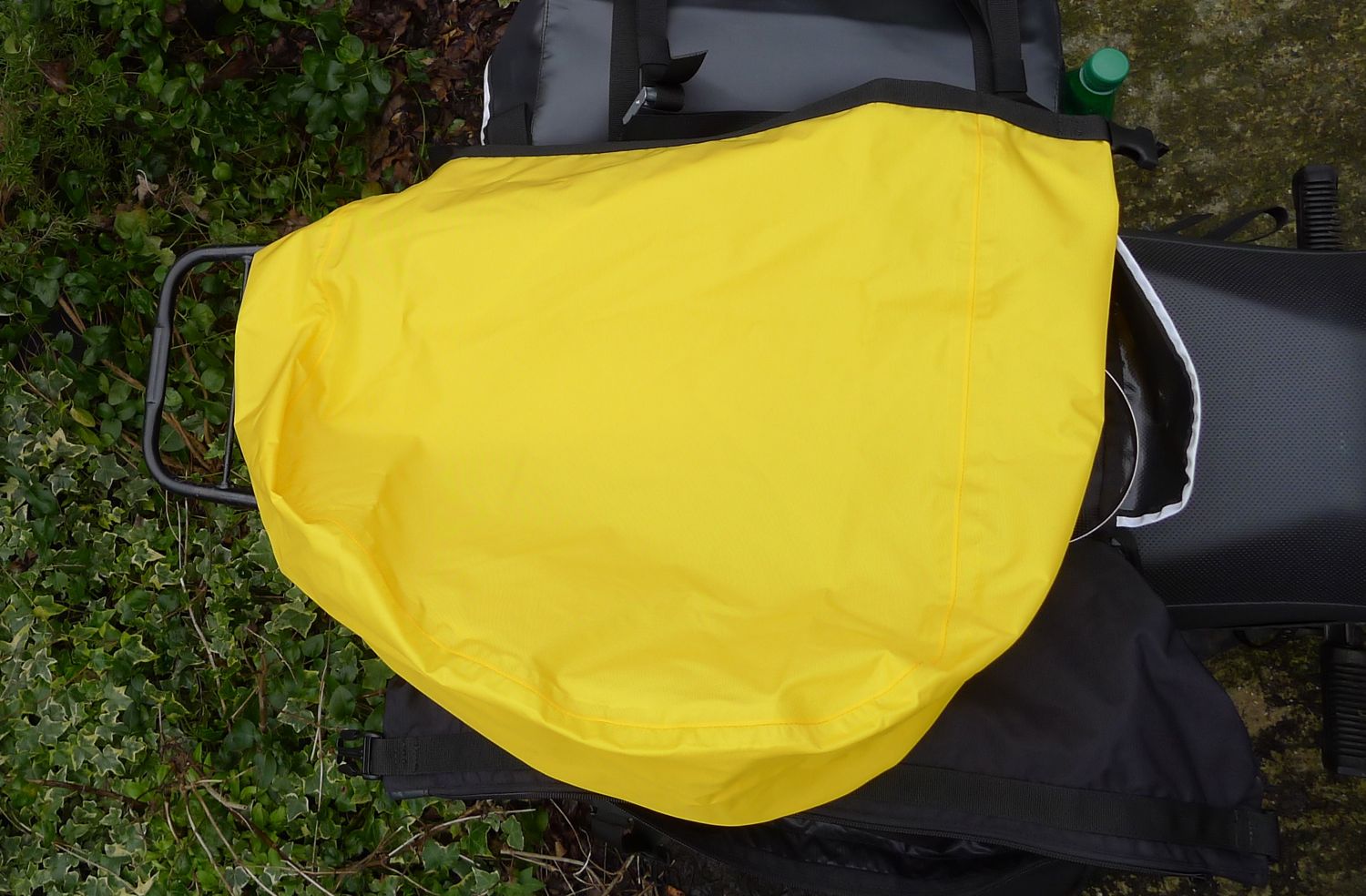
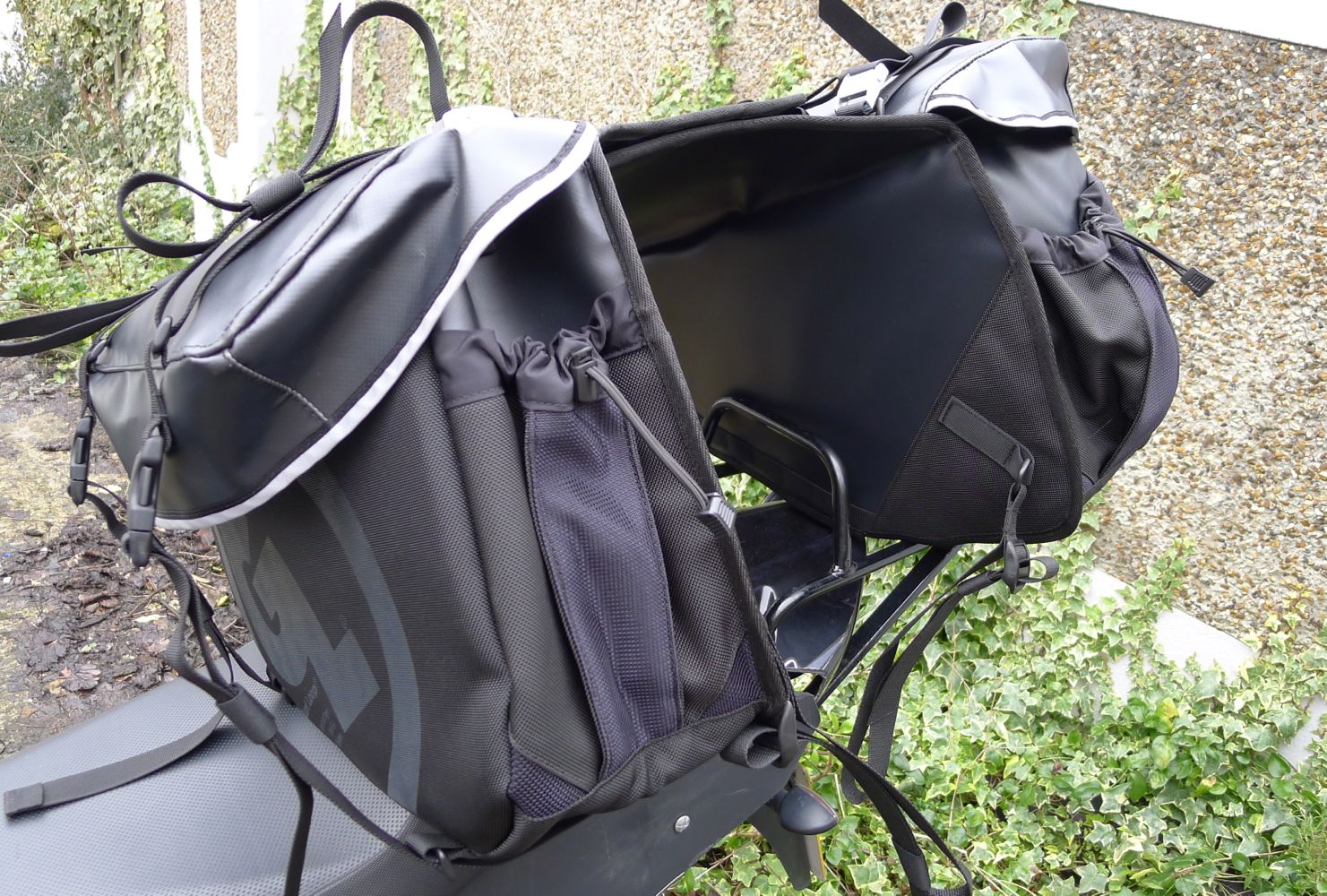
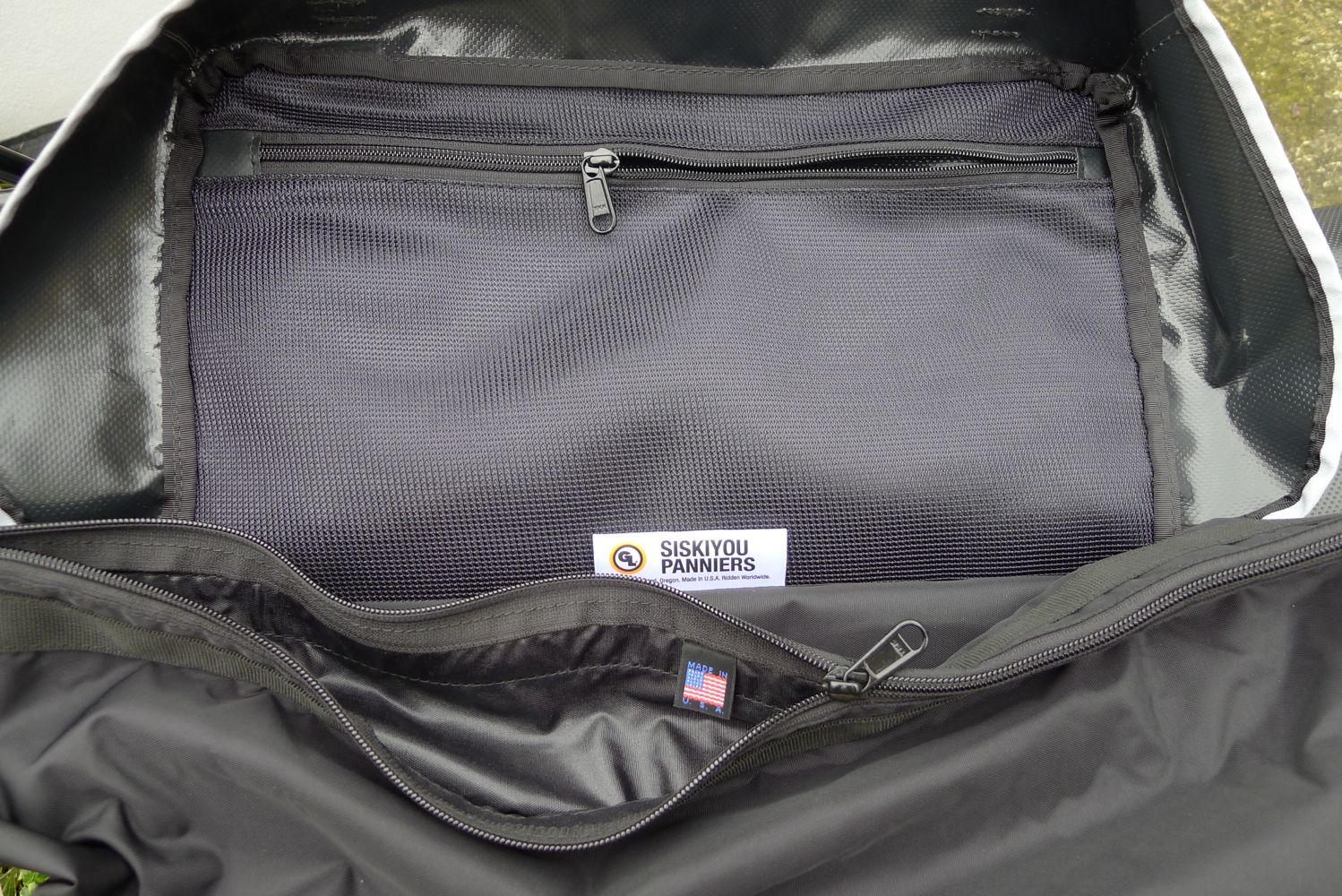
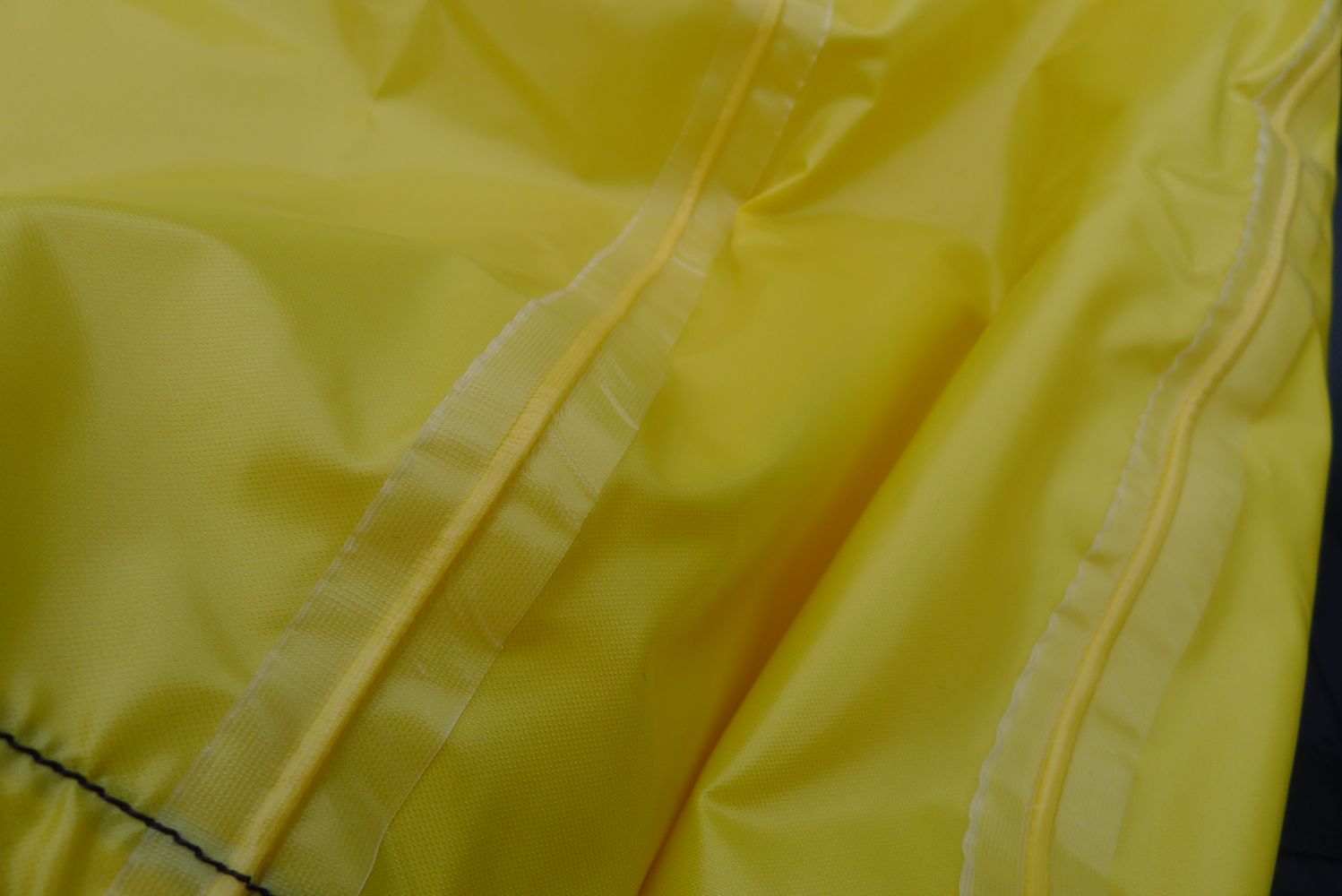
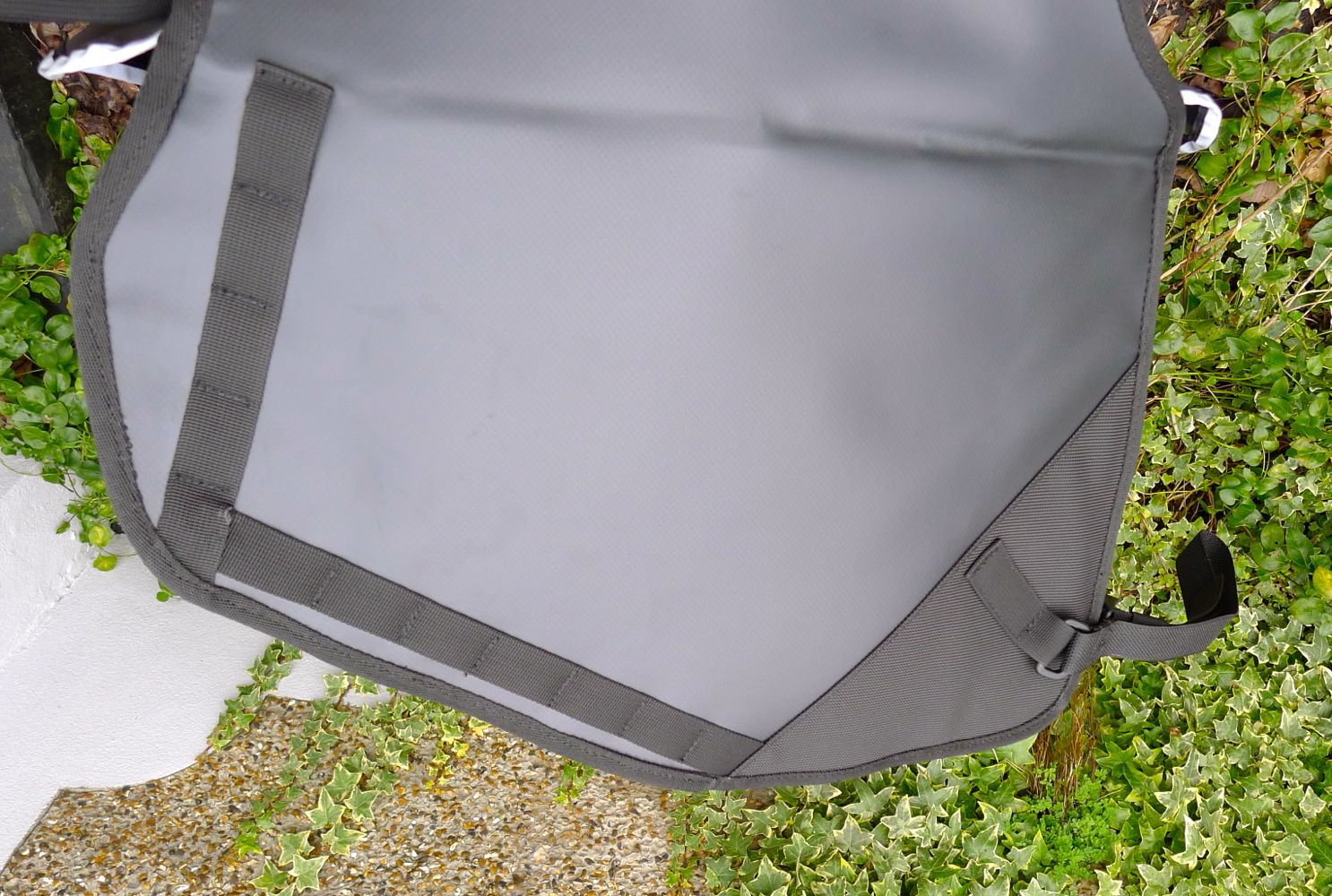
Rather like the Monsoons, the top edge of the Siksiyou’s shell has a sewn-on sleeve of coated nylon with a thin zip and roll-up clips, similar to a dry bag. Inside you get a separate yellow nylon liner (below right) cut more or less to fit in the panniers, with well-taped seams, a thick layer of TPU coating on one side, plus another thin zip and roll-top clips. Over the top of this drops the thick PVC lid which clips down on straps, with additional separate straps for attaching stuff to the top of the lid rather than tucking it under the lid straps – another nice touch. Inside the lid is a flat zipped mesh map pocket.

P1030887
tbottle

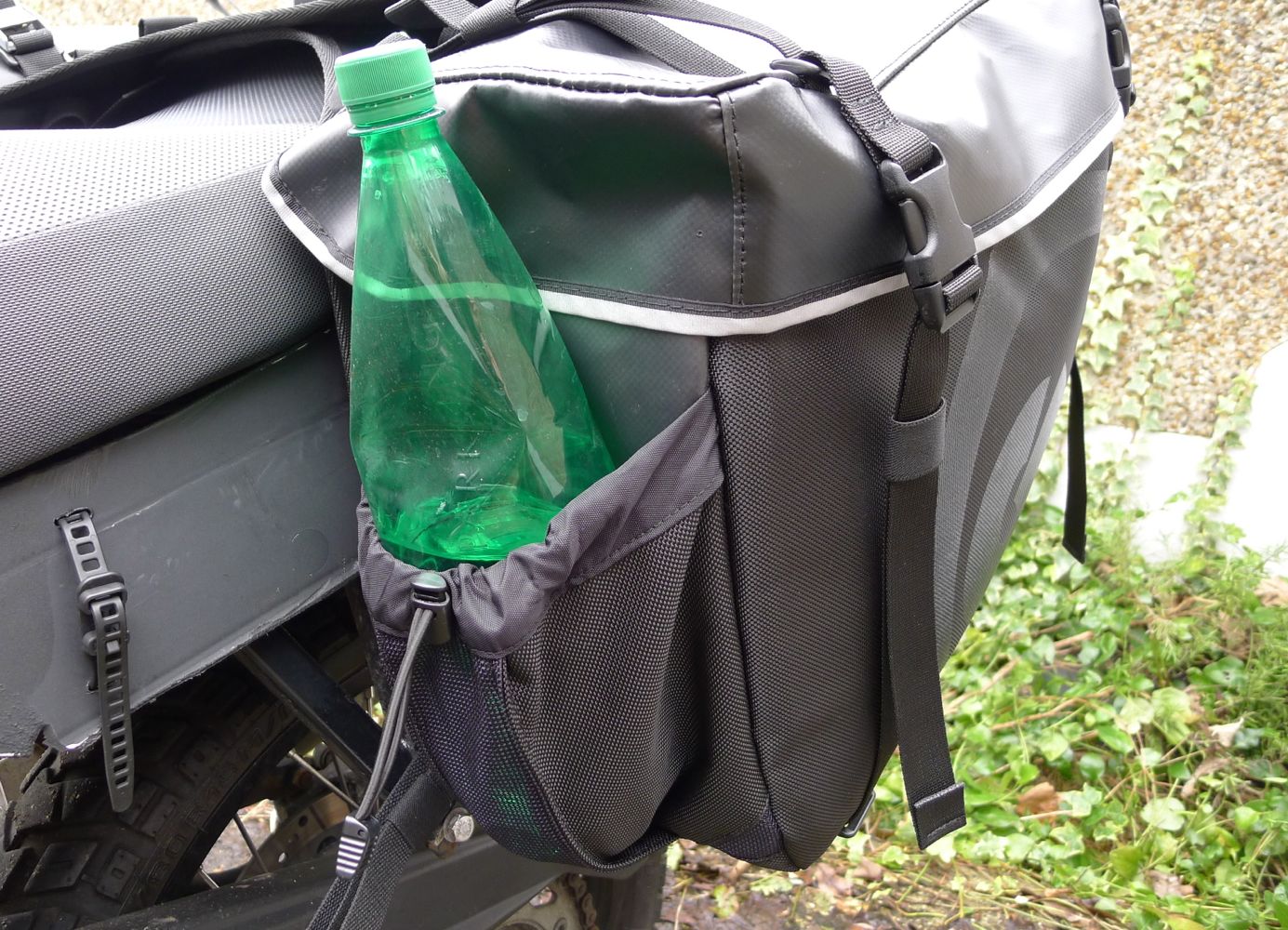
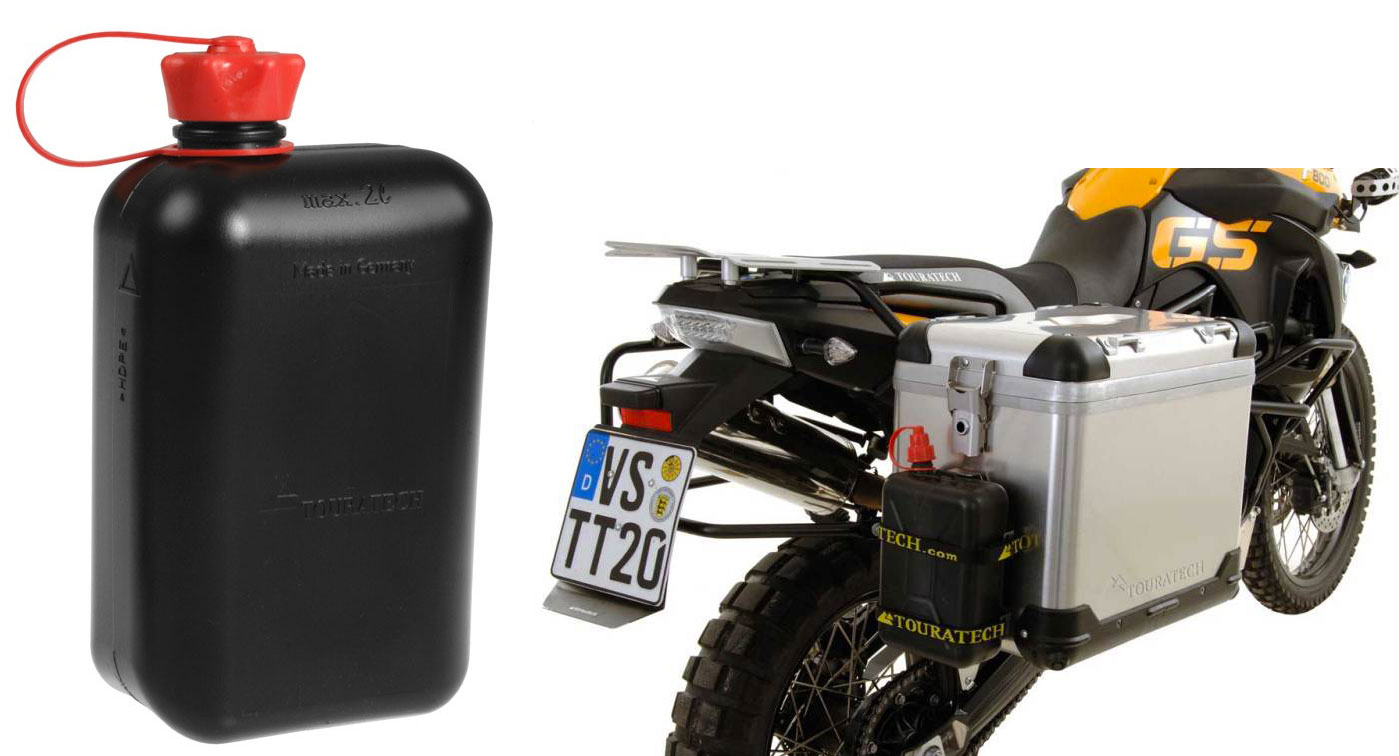
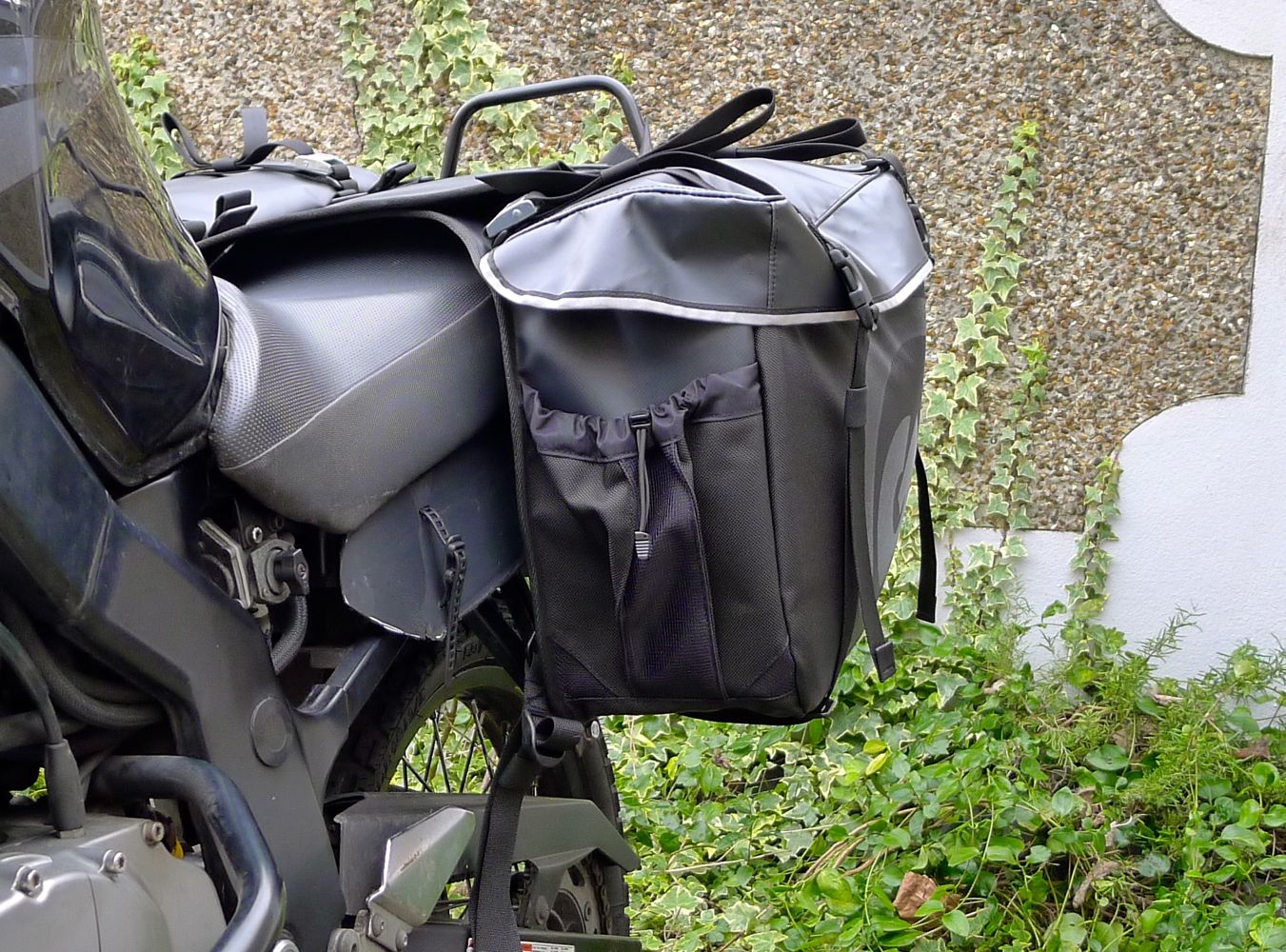
There’s also a small cinch-cord pocket on the front of each pannier, but although they describe it as ‘bellowed’ it’s actually a simple wedge that’s nowhere near as big nor usefully box-shaped as the four pockets you get on Magadans although it’s said they’ve been designed to take 2-litre Touratech cans, as pictured left. On the right, a 1.5 litre water bottle in the pannier’s pocket.

P1030909
P1030886

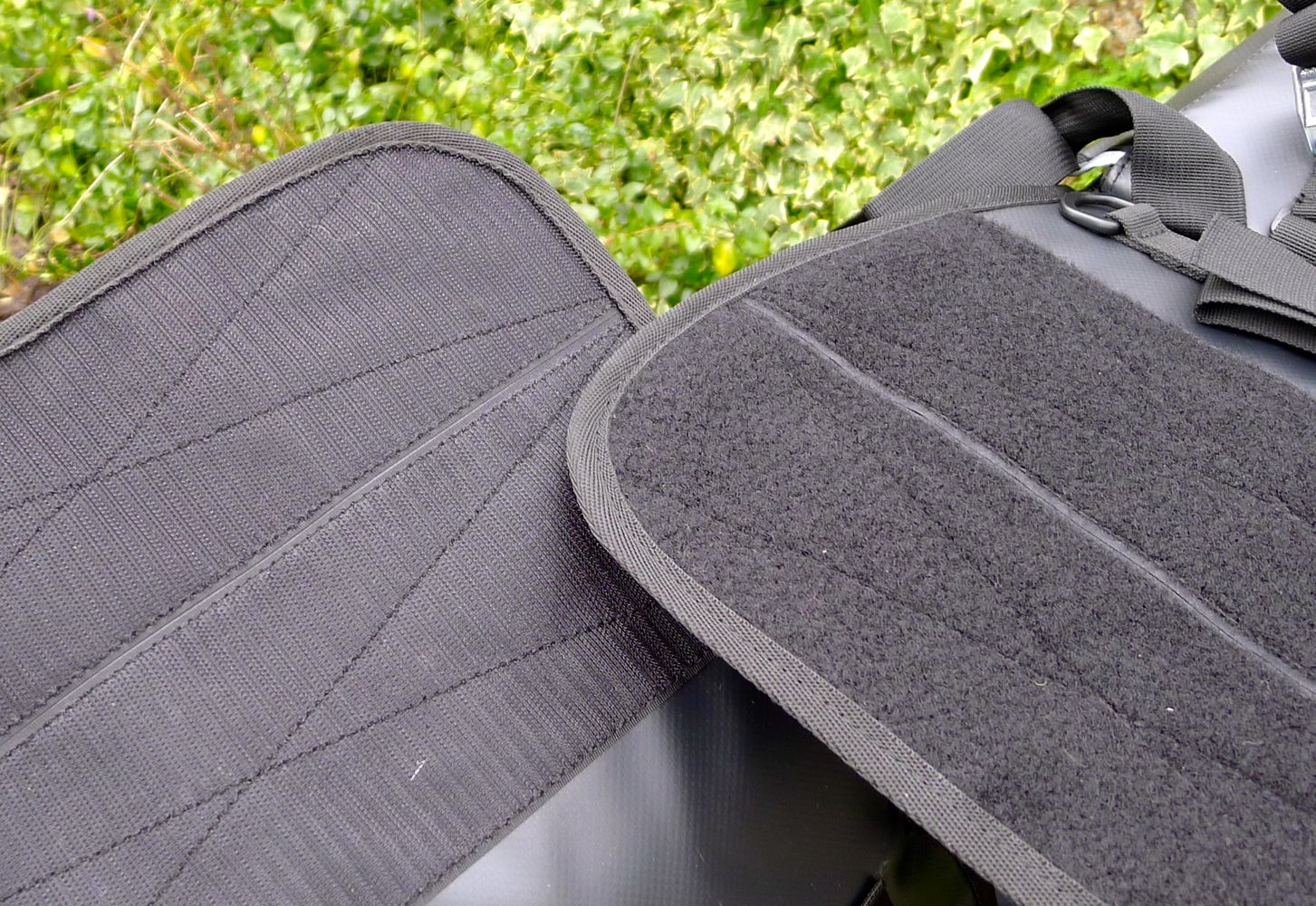
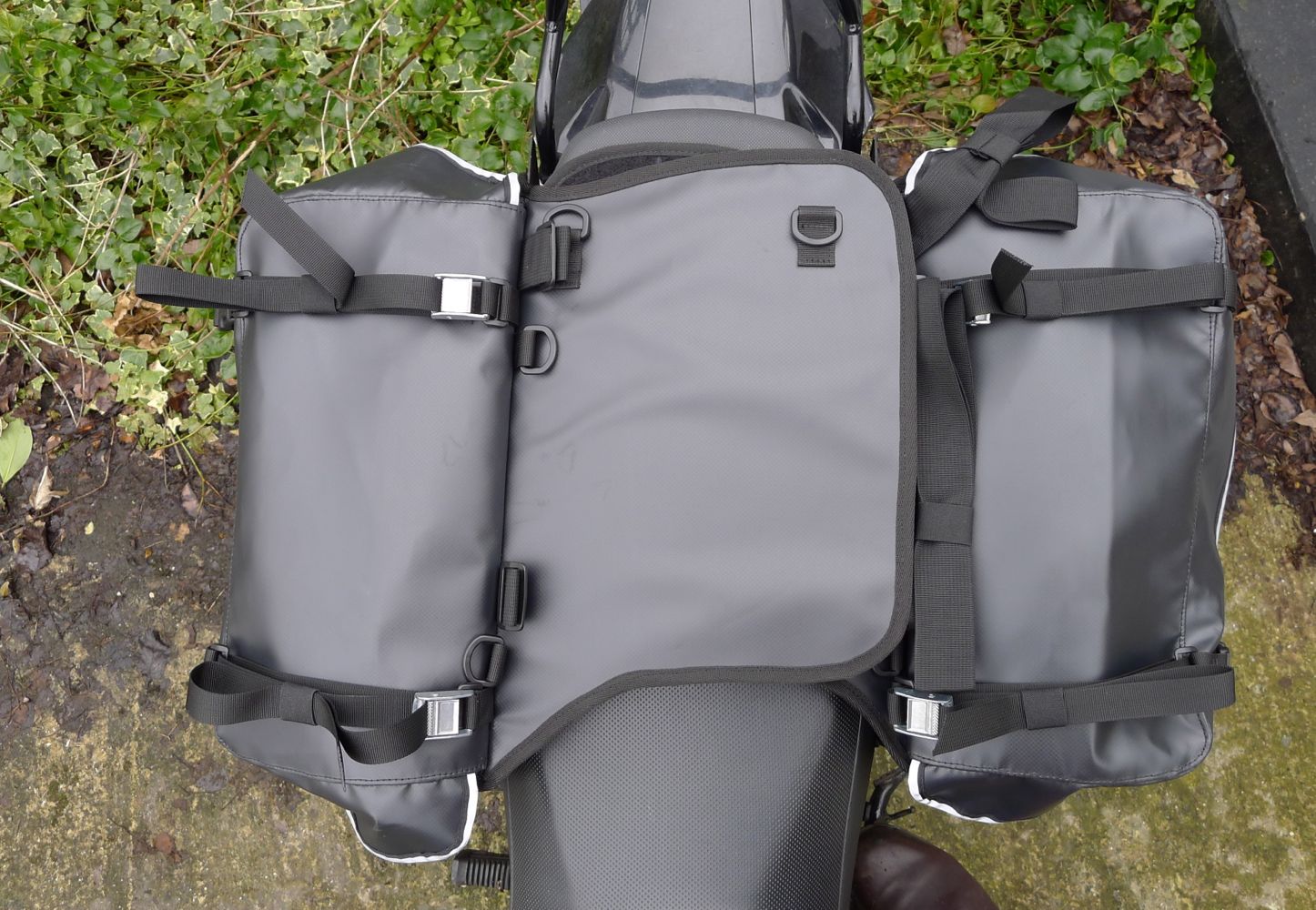
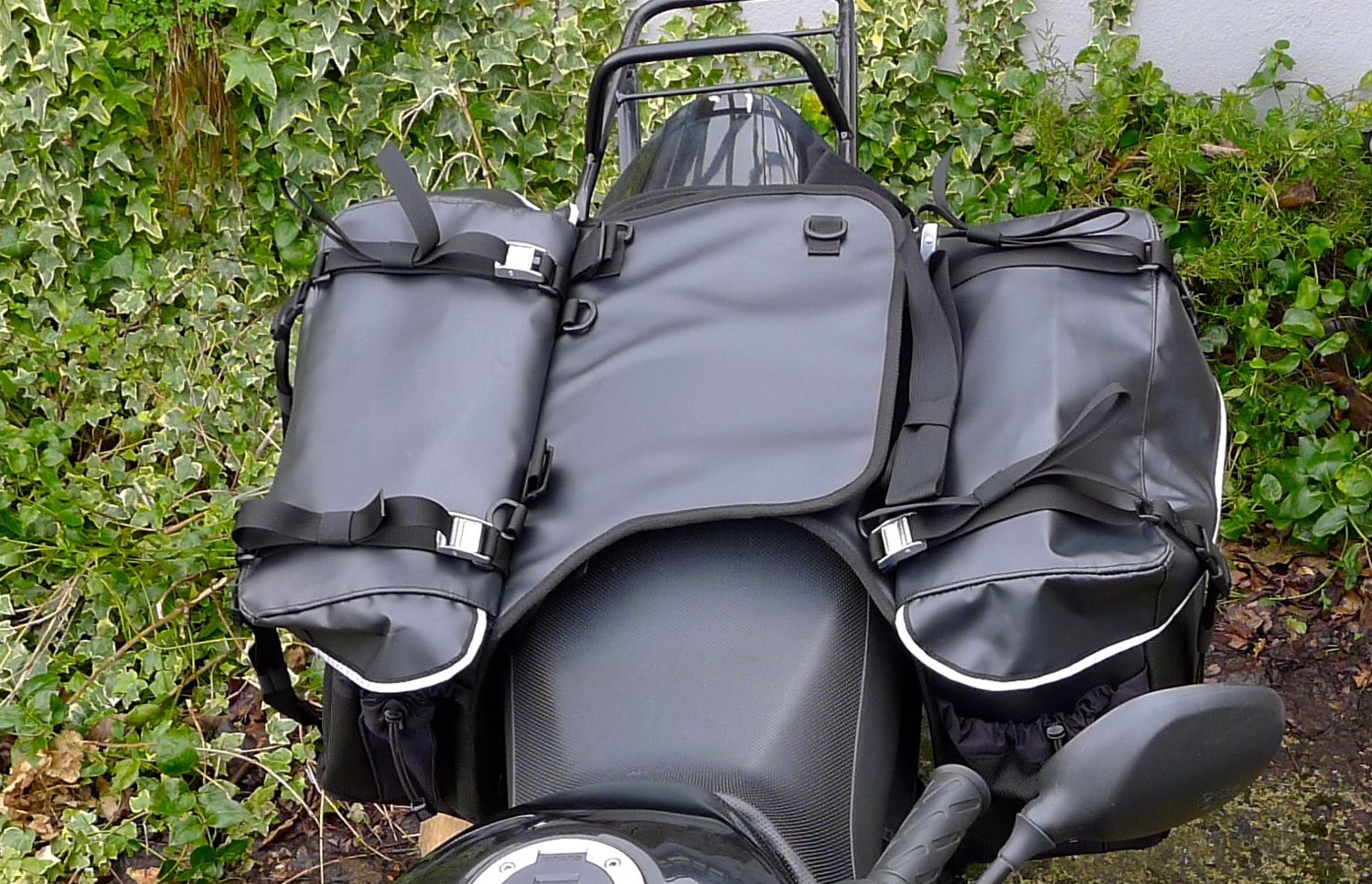
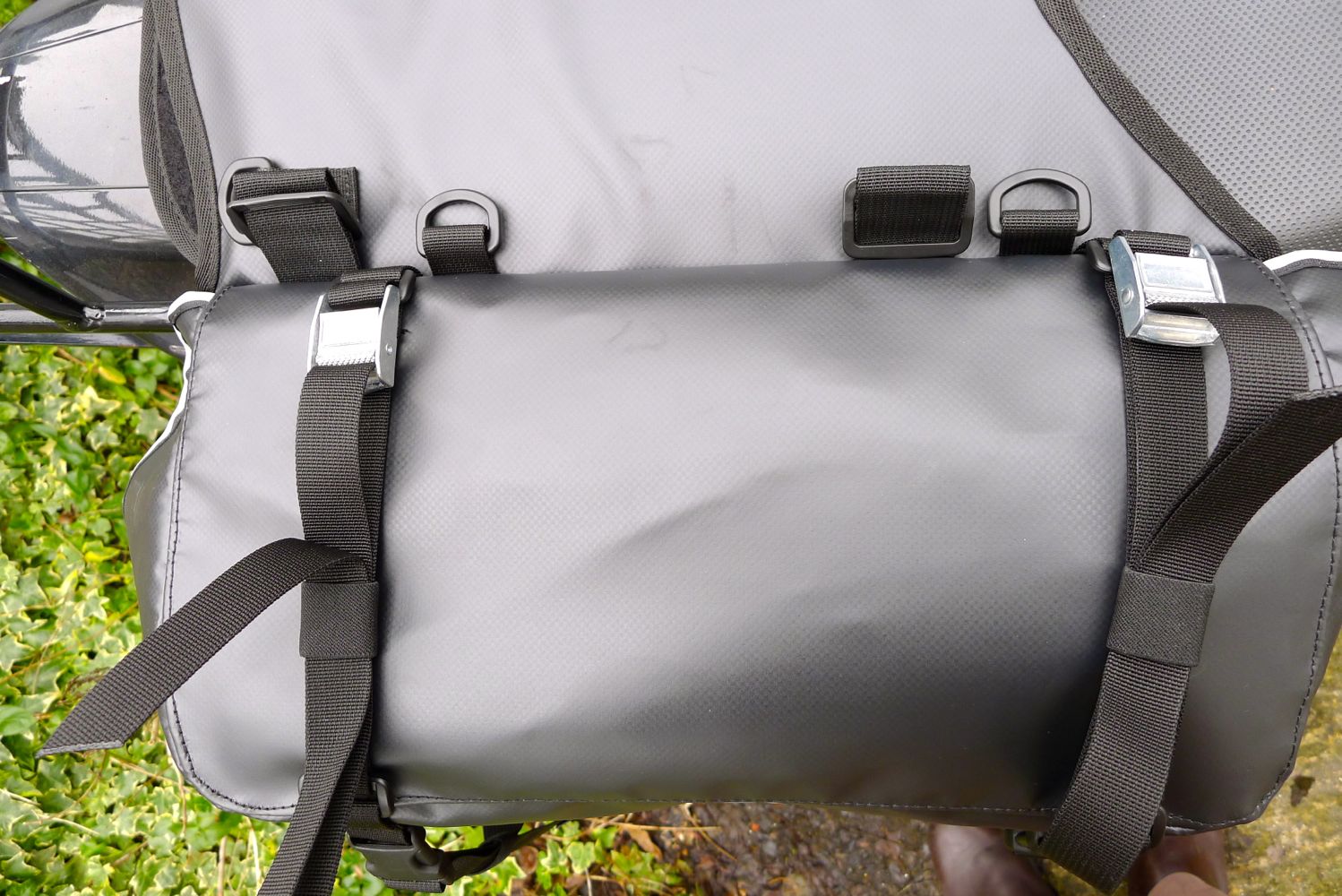
The two bags join together using broad vinyl velcro pads. These pads feature additional lashing rings to secure other luggage or to fix it all to your bike. The Magadans use the same system, but  with a pair of wide velcro straps rather than full-width pads which seems bit OTT. Me, I’d prefer buckles and straps over velcro anyway, because as the volume of your load changes or rough roads take their toll, fine tuning the tension may be required – and that’s much more easily done with adjustable buckles that super sticky velcro, be it strap or pad. On the Mags such a buckle mod is easy to do – with the Siskies you’re stuck with the pad which I’m also not sure would be great to sit on on a hot day. The GL installation page suggests: “For 2-up riding, affix a small seat cushion to the top of the Siskiyou Panniers“.

P1030906

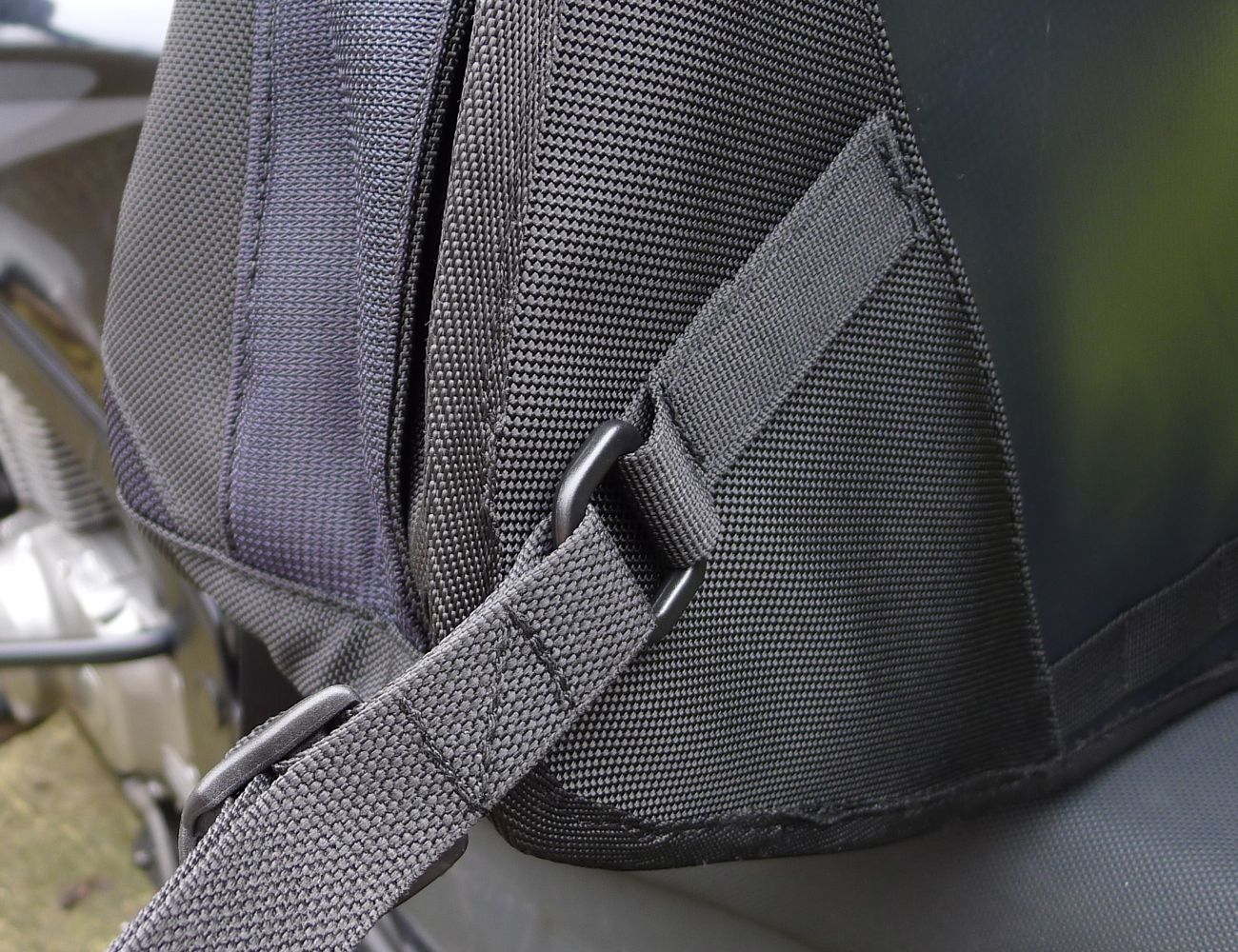
To stop the bags sliding back you get a strap to attach to the pillion footrest or thereabouts (left), as on the Monsoons but something that was missing from the Magadans’ first version. Subsequent versions low have a tie-off D-ring.

P1030893

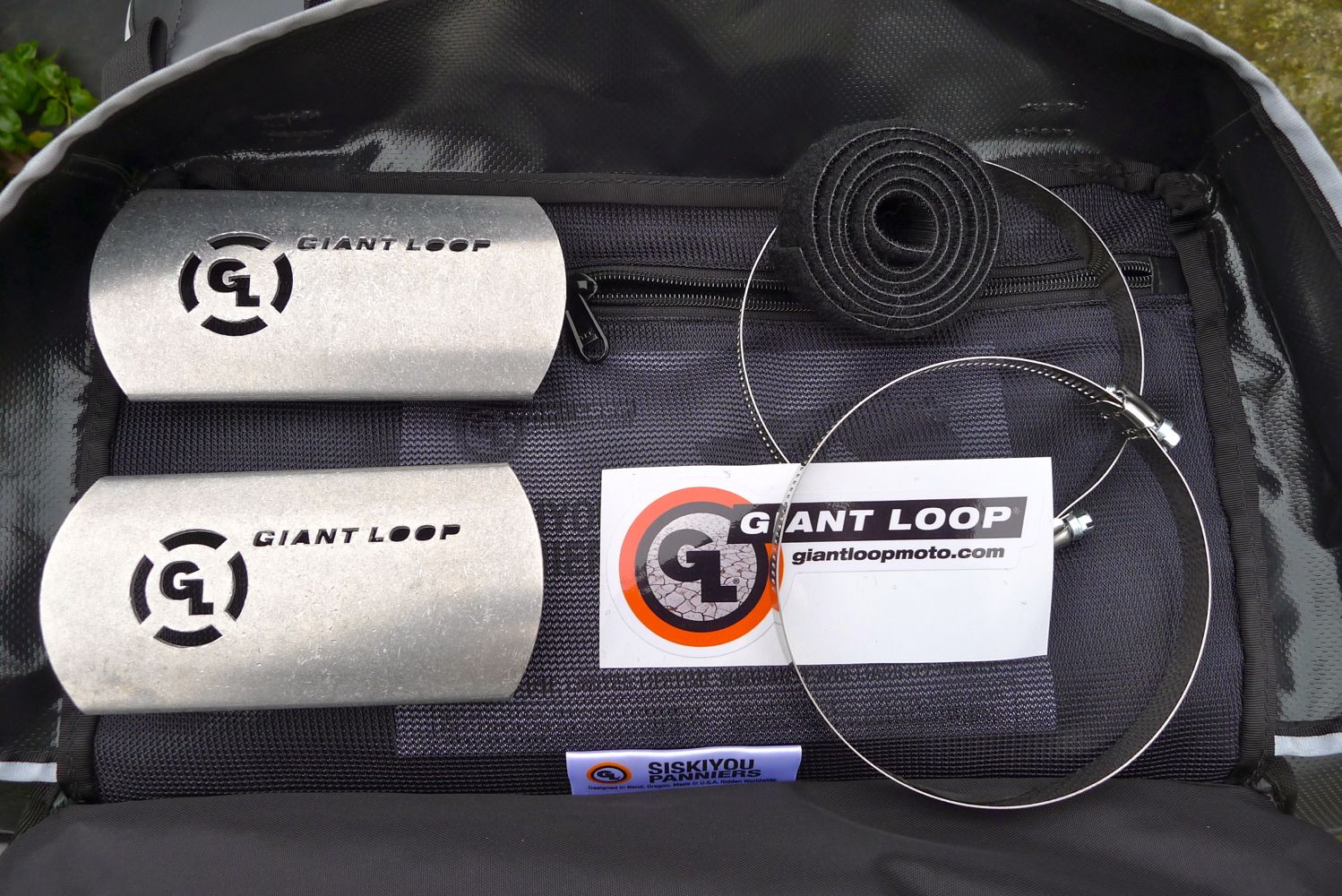
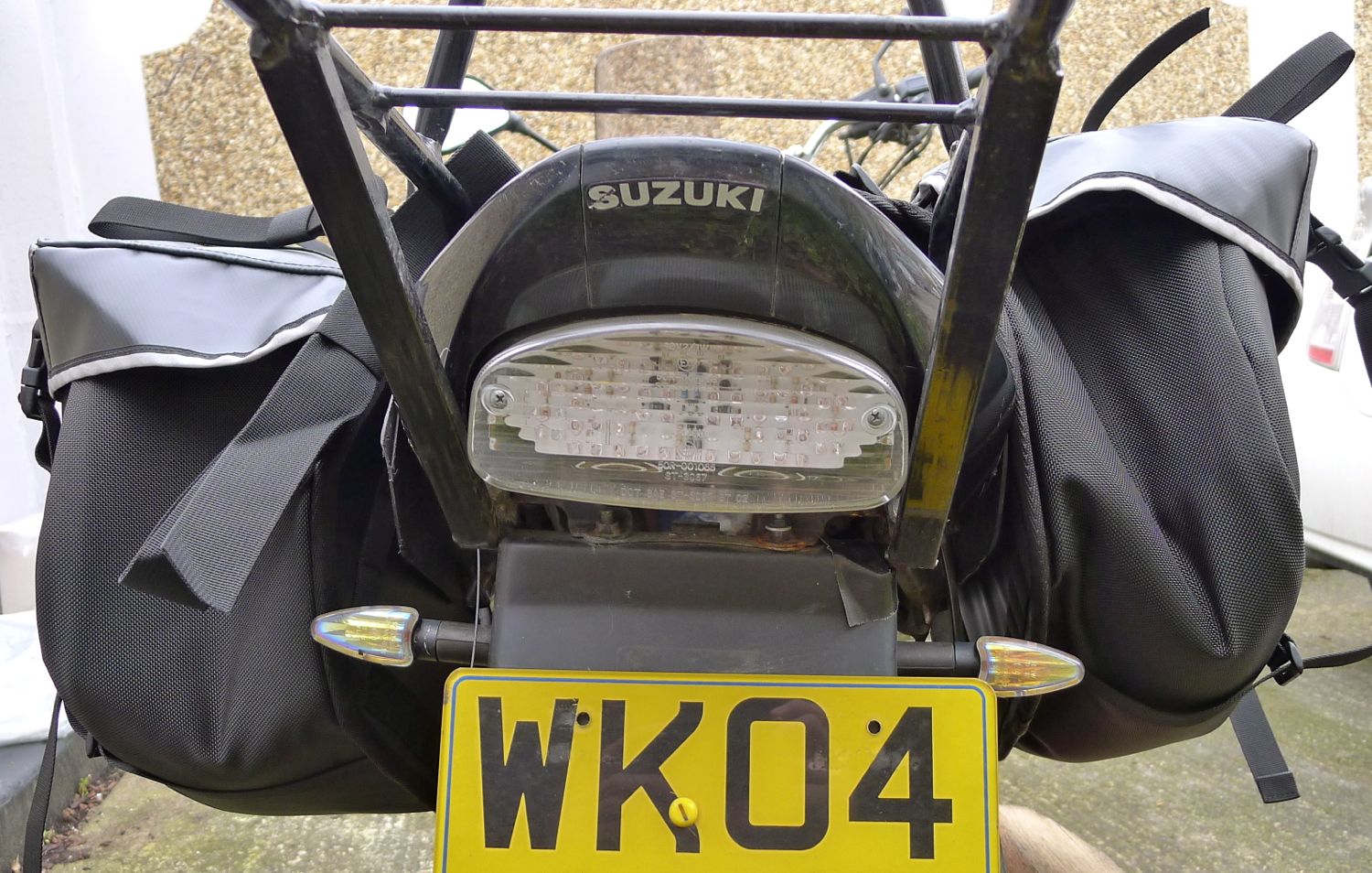
Included with the Siskiyou bags are a pair of alloy exhaust guards (rather like I bodged on my Suzuki – I got the idea from GL). You also get two hose clips, some instructions and a sticker and to stop your sidepanels getting scuffed GL can also supply some protective vinyl film. The exhaust guards are an admission that many a soft pannier has melted like a Cornetto when it shifted or otherwise got too close to the pipe. Modern efi bikes with catalysers run especially hot and indeed the Siskiyou panniers tested on a Husky Terra by Cycle World magazine (April 2013) melted. So like GL say, additional guards may be neededOn any bike you need to think carefully how loaded throwovers will react when they shift on rough roads against a hot pipe. This need avoid or deal with meltdowns with soft bags is why some riders understandably prefer hard alloy or firm resin boxes, although in my opinion mounting soft bags on some sort of rack is the way round this flaw.

P1030902

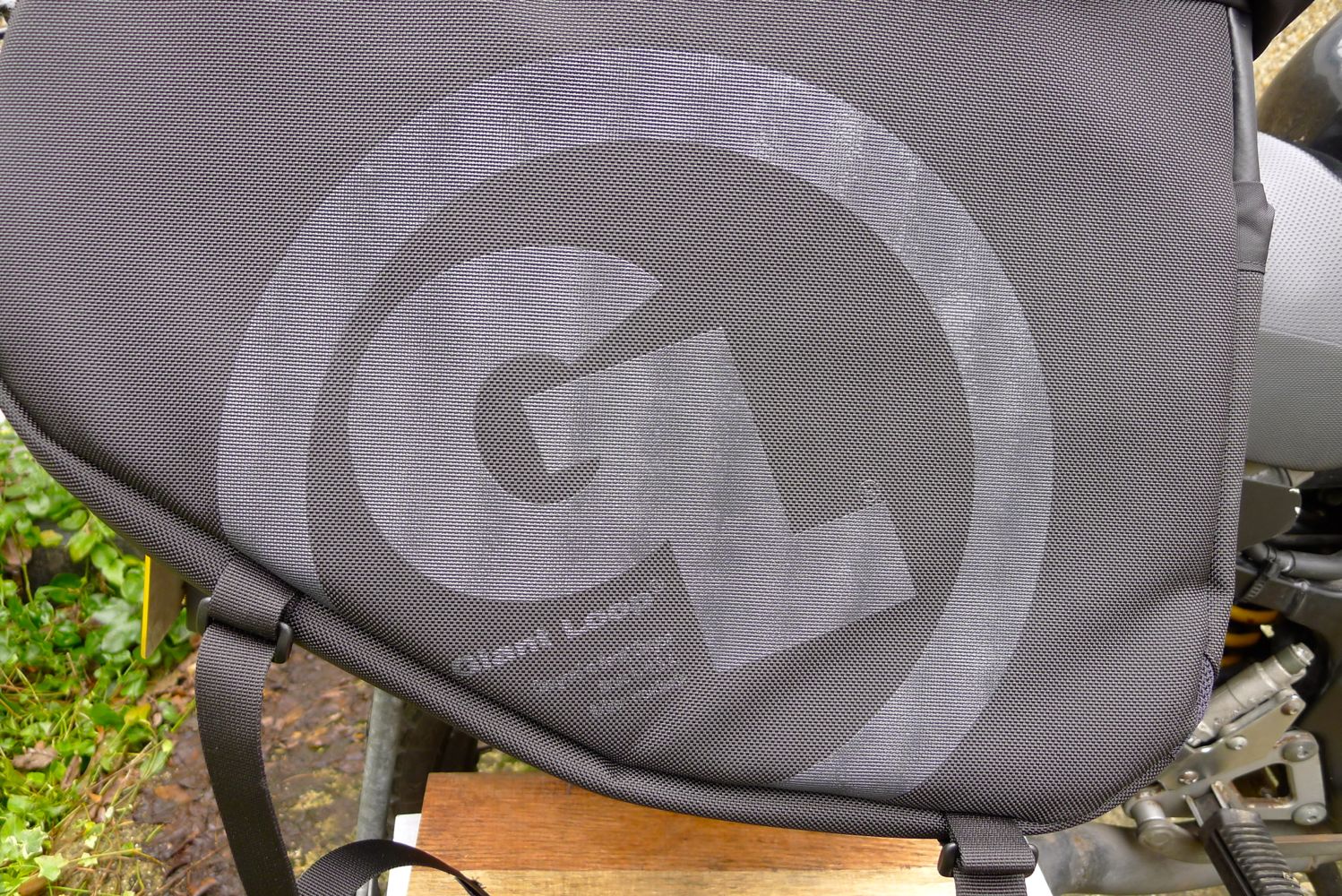
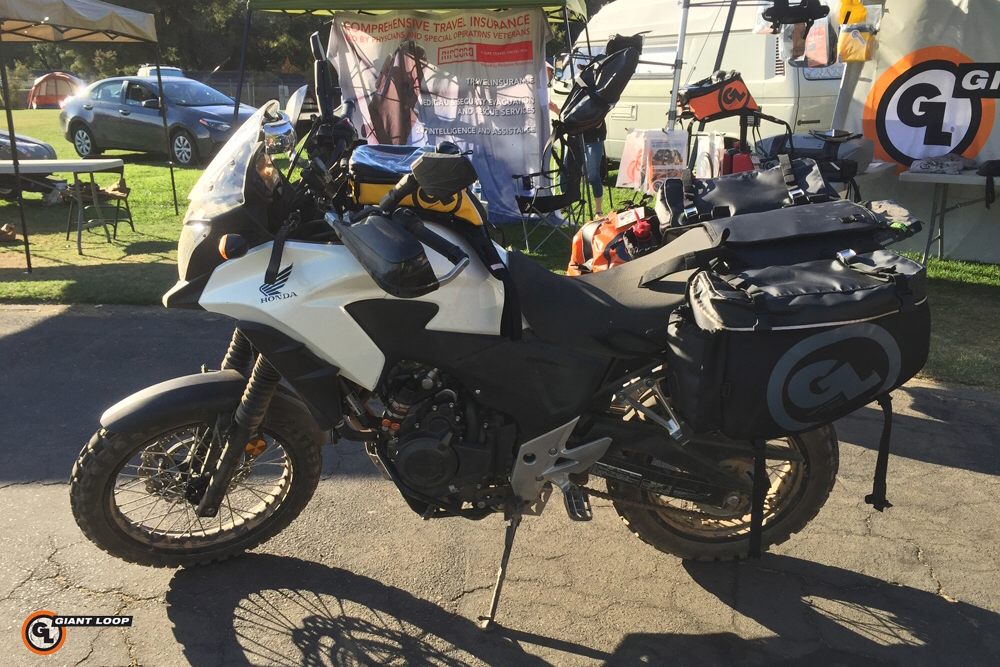
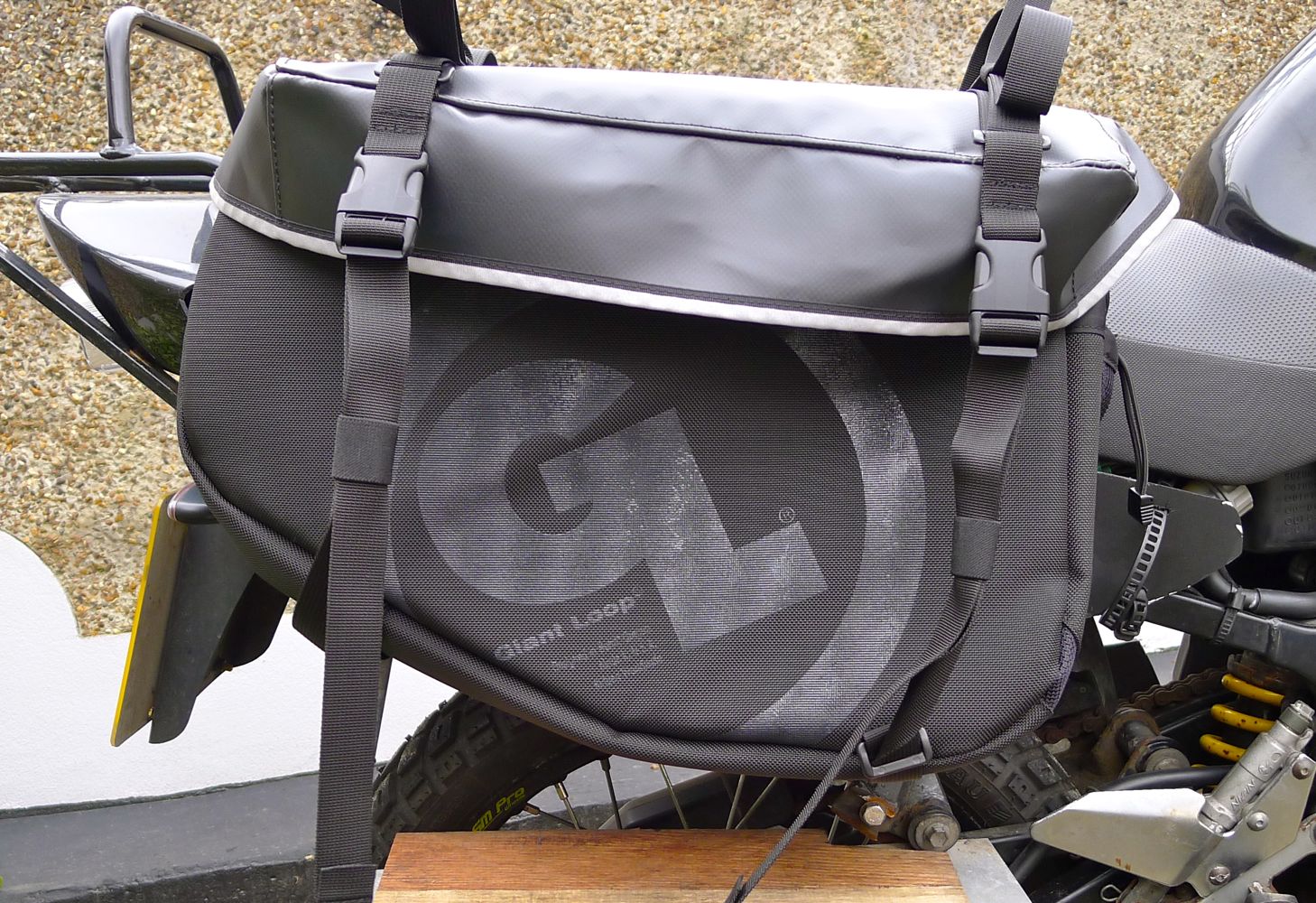
The Siskiyous have a sporty cutback base which makes them more suitable for regular bikes with low, upswept pipes. Whatever, this shape will greatly increase the Siskiyou’s fitting options to many more bikes than the usual adv suspects. The GL logo is emblazoned on the sides, but in a pleasingly understated way. Unless that ‘GL’ logo glows, I’m not sure there any reflective surfaces as found on the Mags and Monsoons – possibly the thin edge of the lid?

I did also wonder if access would be a bit of a faff. If they’re fully locked down you unclip the two lid straps, unclip and unroll the outer bag and unzip it, then unclip and unroll the inner bag and unzip that – and you’re in! Of course you don’t need to use those zips; their protection against waterproofing is minimal and zips can jam or break when dirty or used carelessly. In this respect I prefer the bomb-proof, roll-top simplicity of the Magadans and the Monsoons.

P1030882

So all up you’re getting a good sized touring pannier that looks well made and is usefully featured. The foam protection sandwich is a nice touch, as is including exhaust guards and several lashing points on under and behind the bags; you get a feeling they took a lead from Enduristan here. But – is this £475 ($700) worth of pannier when in the UK Magadans go for £350 and Monsoons for just £230? I wondered that perhaps if you’re paying for the ‘limited lifetime warranty‘ but that only covers the “original purchaser… against … defective materials and craftsmanship only, and does not include damage due to normal wear and tear or misuse“, so no big deal there; after a year they could just put any failure down to wear or misuse.

sisky
Siskiyous look like they were designed for on a Honda CB550X Rally Raid

The Siskiyou panniers certainly feel like they’re up to the rigours of overland travel and design and features fit the bill without any radical innovation. You just need to ask yourself in turn whether the bill for a set lives up to your expectations.

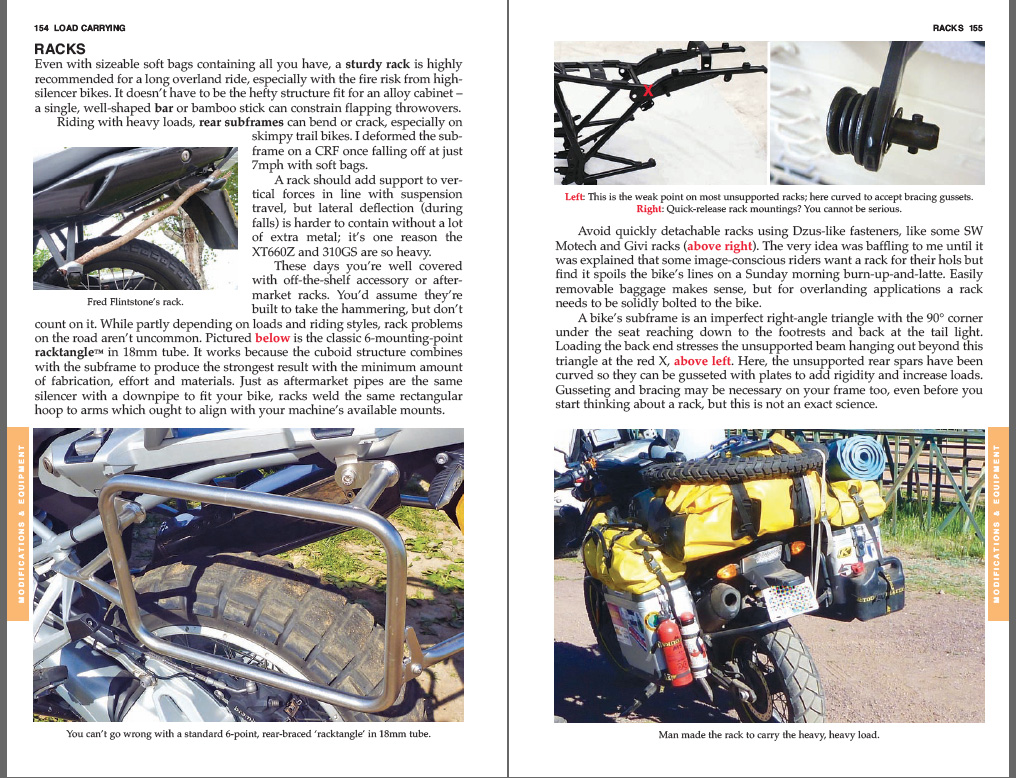
Motorcycle Luggage Racks

Originally written 2012, overhauled 2020
There are 24 pages on luggage and racks in AMH8
See also MYO racks on this sticky HUBB thread

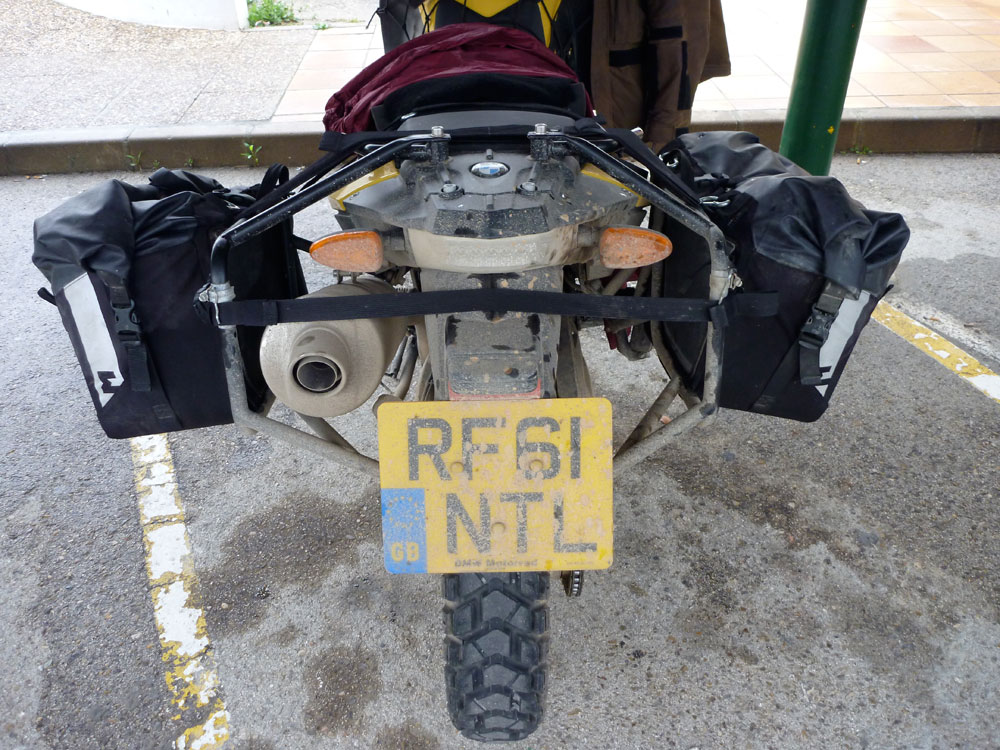
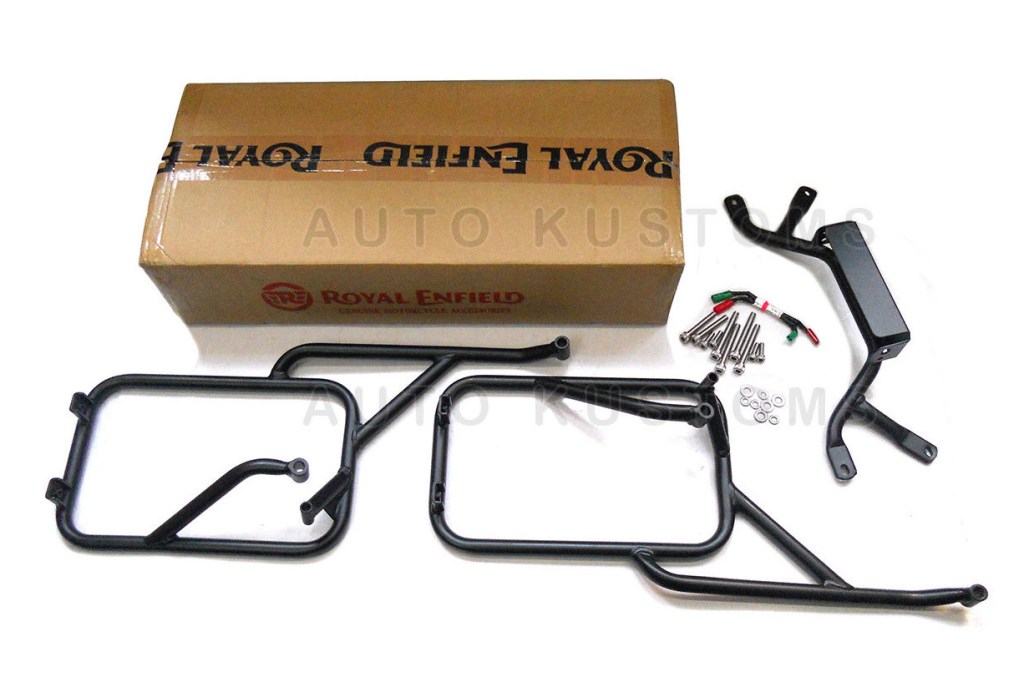
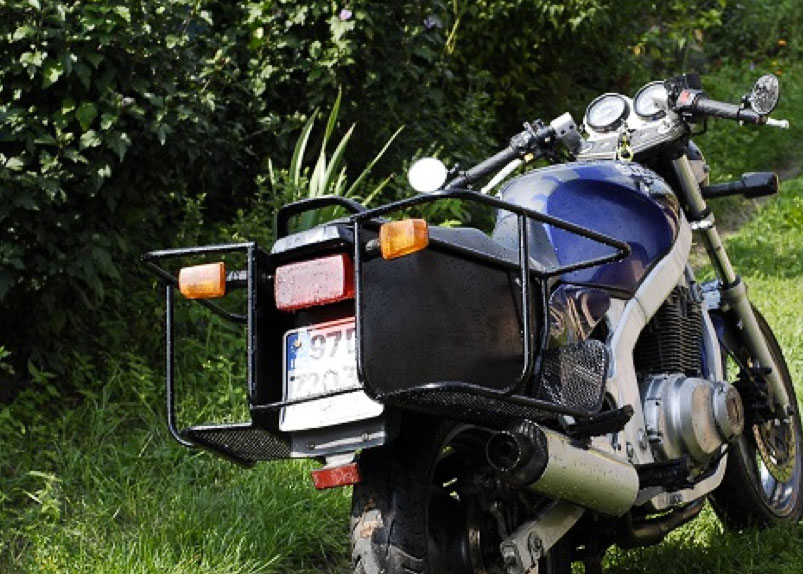
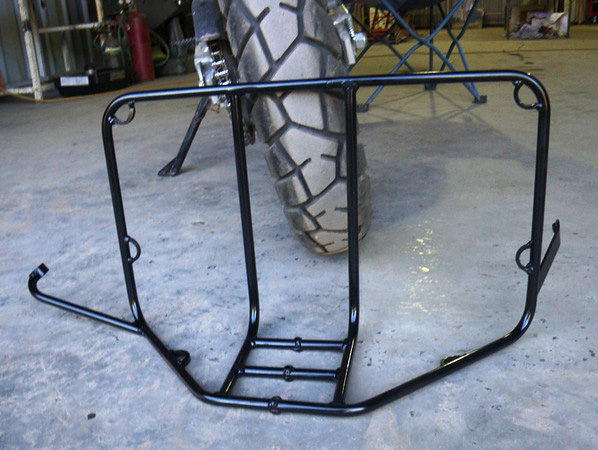
The problem with off the shelf pannier racks like the classic ‘racktangle’, above left and right, is that they:

• may not make them for your bike
• may cost more than you’d like
• are too wide
• are often too far back

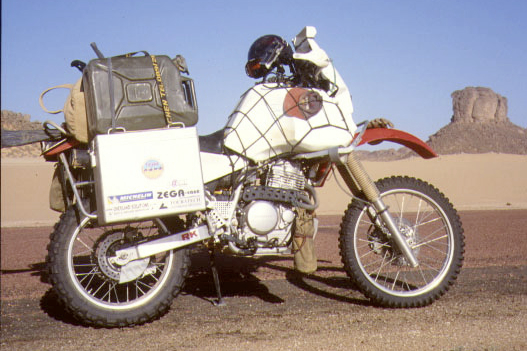
Those are some of the reasons I made my own rack for my first travel bike, an XT 500 (below), way back in 1982. It was rubbish but it did the job.

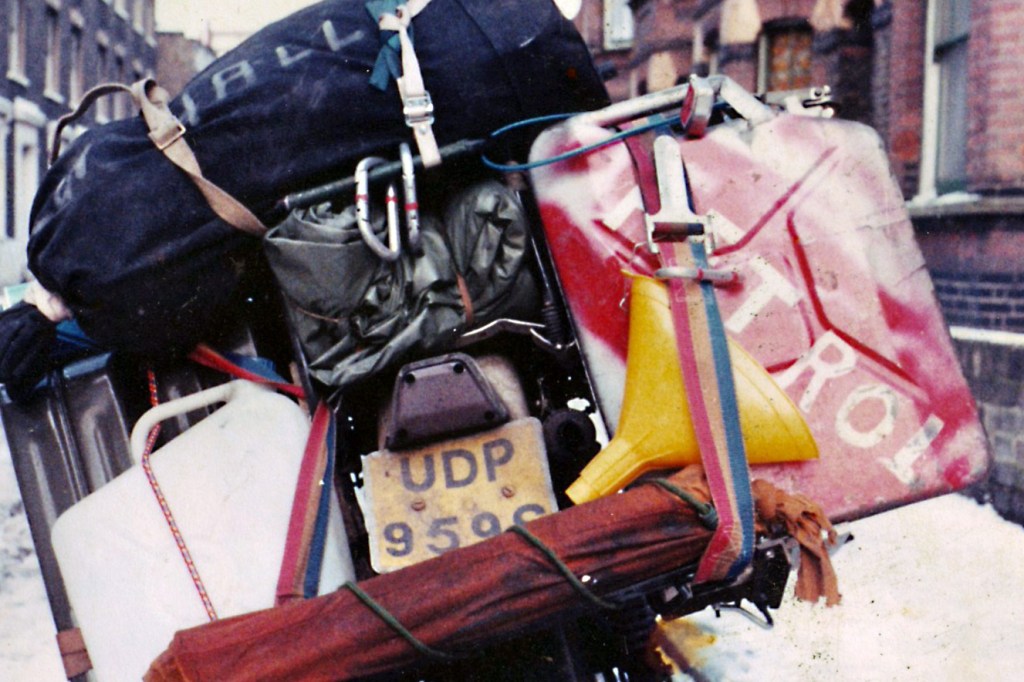
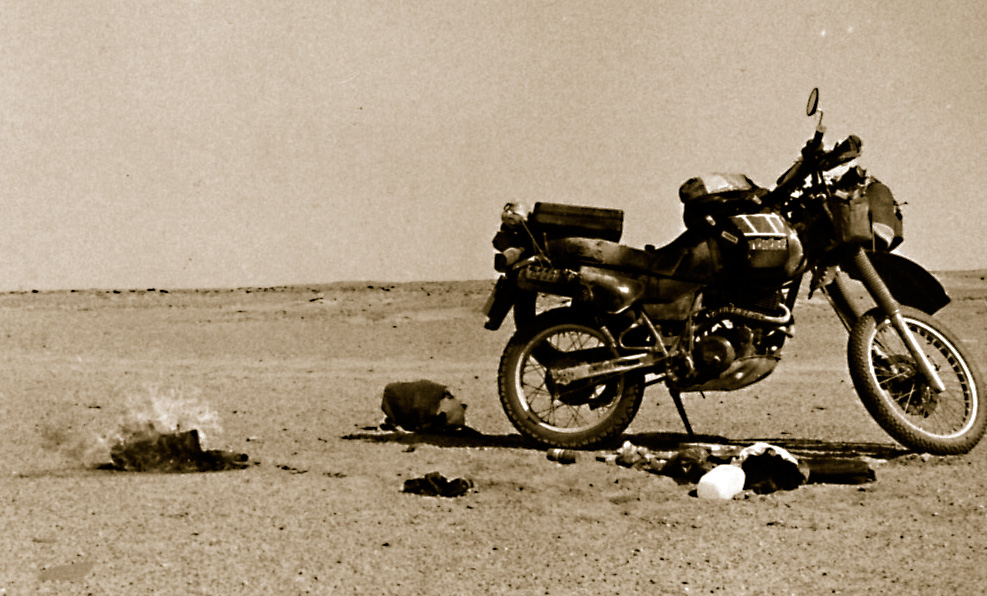
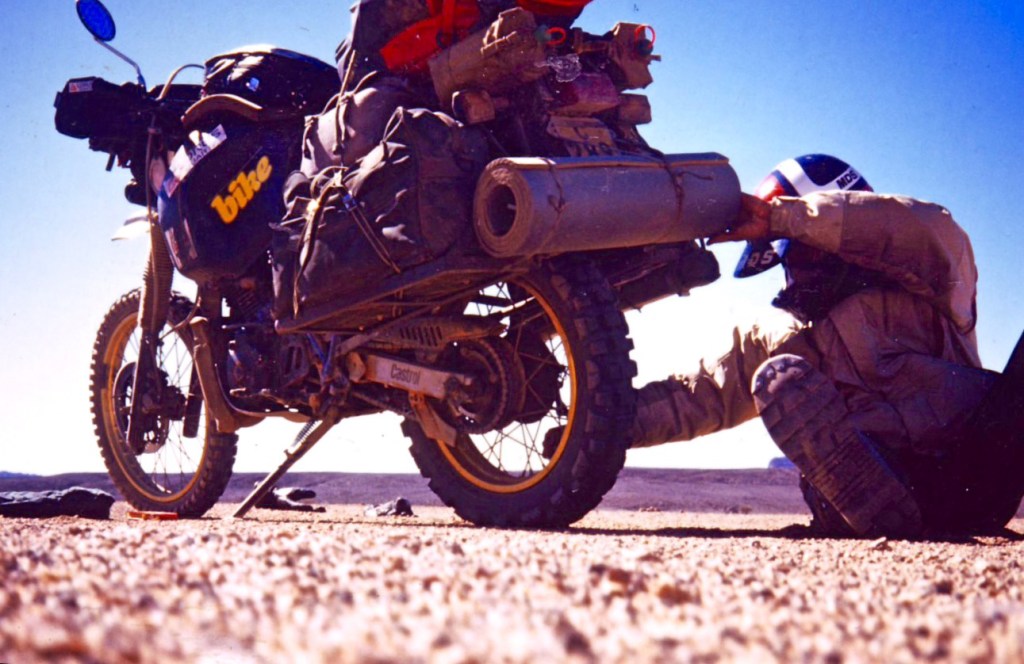
On the next couple of trips I used no rack. People do manage – usually on smaller bikes with lighter loads – but for overland travel, classic, strap-over throwovers are a throwback to a twin-shock era. The problem is usually with the high pipe of a trail bike. The bag presses on the panel which melts and – on a hot day on the south side of the Sahara (below) – the plastic catches fire soon followed by the ex-army canvas panniers and your favourite pyjamas.

Small baggage fire near Arlit, Niger.

What is wanted is a rear rack that attaches to the subframe and other key points as low, forward and close to the bike as possible so the mass follows suit, while allowing for those instinctive corrective dabs when losing control, as well as paddling in soft terrain.

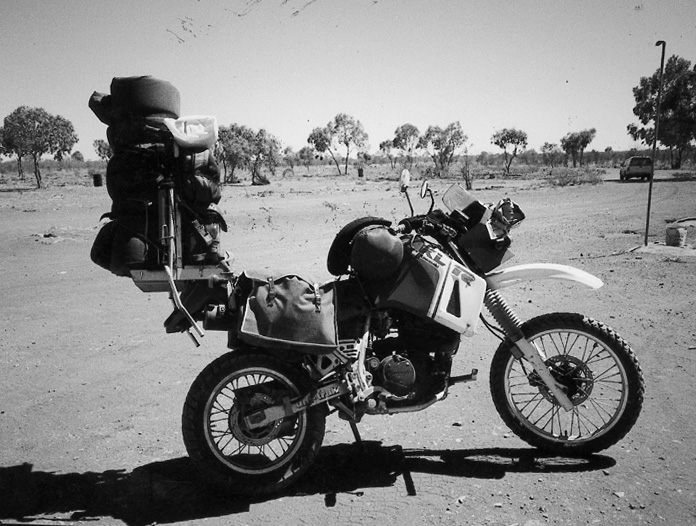
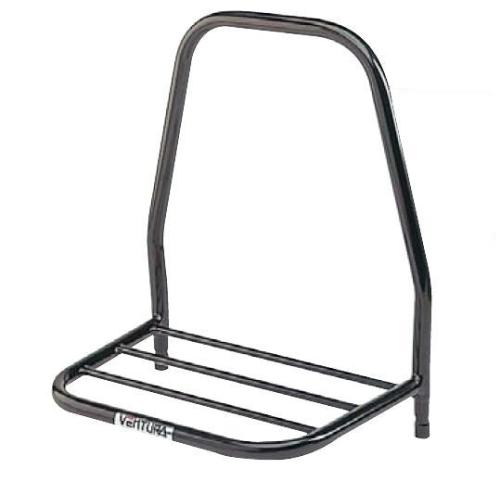
I first saw a ventura rack in the early 1990s on the Tanami Track in northern Australia (left) and was so staggered that dirt touring bikes (admittedly, possibly two-up?) could be loaded like this that that I put a picture in the first AMHandbook and nearly every edition since. Ventura’s idea is that you can reverse the upright bar to point forward to load your sack forward to improve ‘weight distribution’. Tell me about it.

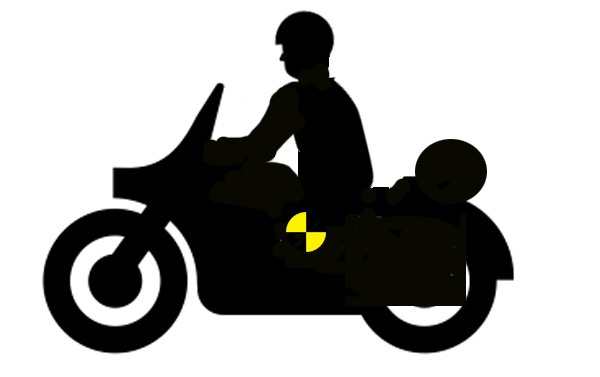
In a nutshell the mass wants to be as close to the bike’s supposed centre of gravity as possible which, with a load and rider aboard, is in the region of the injectors (right).
‘Mass centralisation’ became a buzz word with Honda bike design a few years ago, and was a concept applied by bike makers like Buell. 

It makes sense, especially on a loaded motorcycle traversing less than perfect roads. The more central the mass the more predictably the overland-loaded machine responds to the forces of its own inertia as the suspension moves the sprung weight up and down over rough terrain. That adds up to better control, no freaky handling vagaries like tank-slappers, smoother riding and so less fatigue. All up, the key to surviving a long day on the road in the AM Zone.
Above left: mass decentralisation. Think of the leverage!

Platform racks

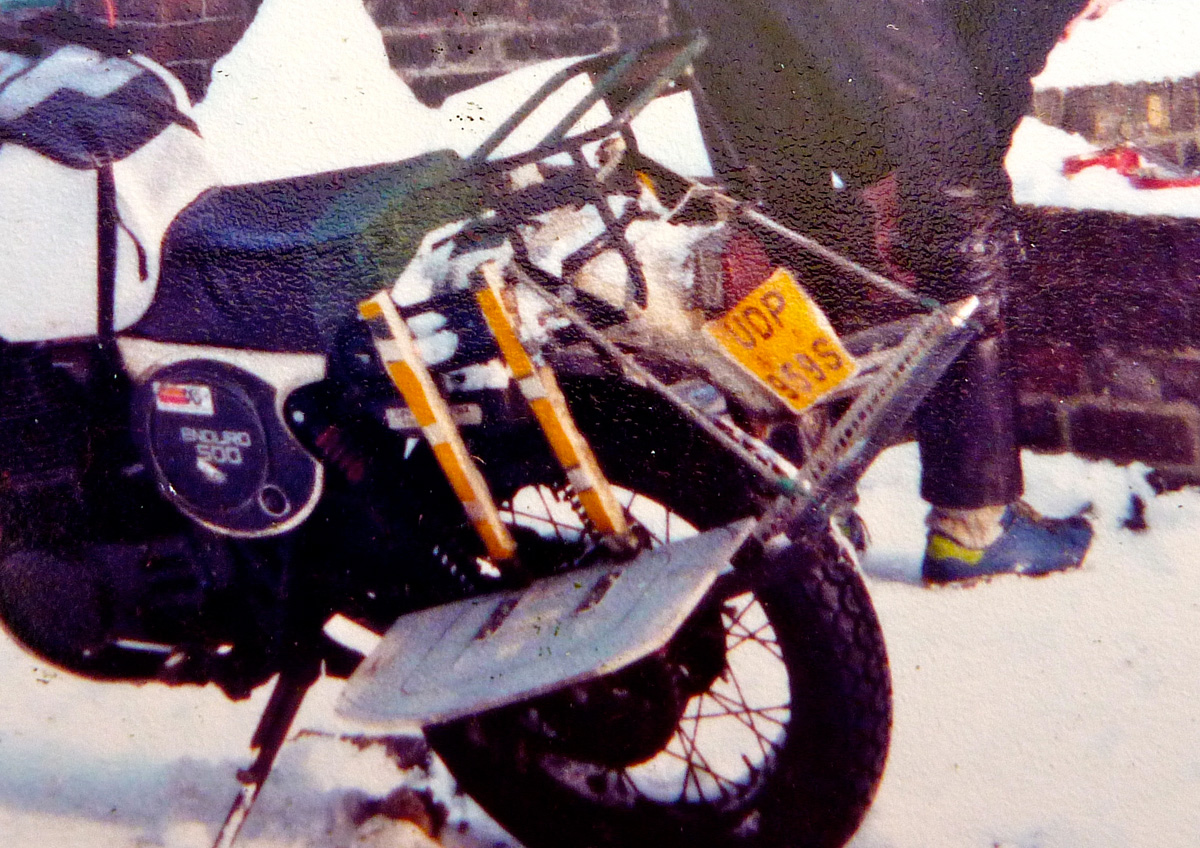
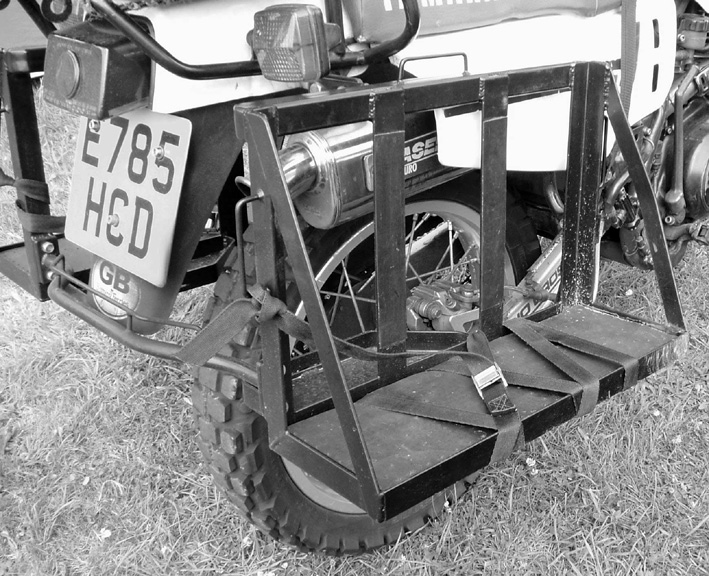
As mentioned, when it came to making a rack for my XT500, the idea was fairly obvious: make platforms (left).
Even though I’d been despatching for a few years with throwovers or more commonly just a big top box, when it came to carrying a big load to the desert, a low platform down on the sides made intuitive sense.

The execution using Dexion shelving was poor, although that slack-rack did carry the load to the desert and back – albeit with a radically reduced once I came to my senses. It probably survived because there was so much jelly-like flex it was unable to summon up the tension to snap outright. The mld steel ‘L’ platform element was bolted onto a Craven rack – the ‘Jesse Luggage’ of its day, with plywood planks screwed on and sharp corners trimmed

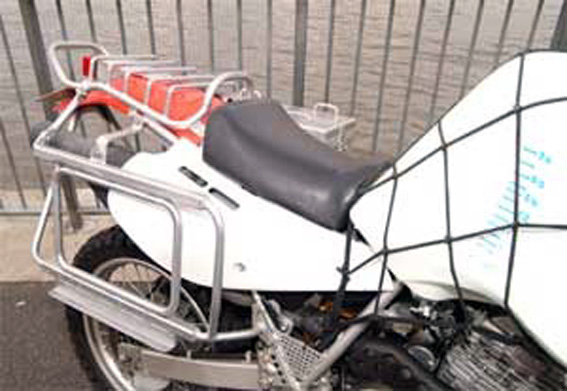
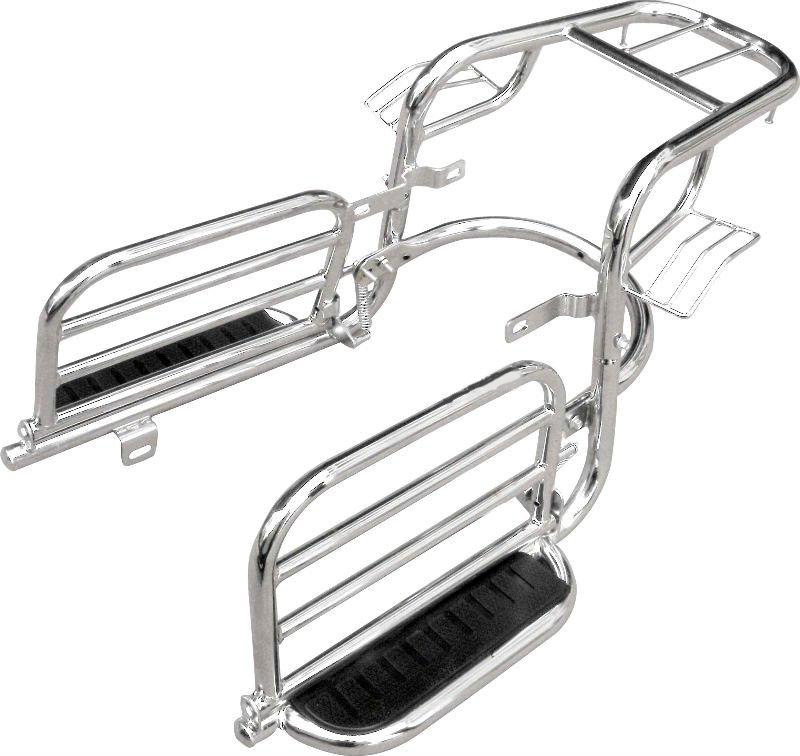
Platform racks have been around for years, among other places used on army BSAs in the 50s and 60s (left). I’ve always liked the principle but these tinny, hinged trays were designed to take a specific panniers or to swivel up out of the way when not in use. It’s a logical and effective form of support. Within limits you can securely load anything on there; box, bag, sickly calf, bulging sack, except the sliding support arms get in the way of bigger loads.

Same goes for the solid (unhinging) version, left (notice the nifty mini inner platforms too). A secure placement for alloy boxes which would need next to nothing to stay in place.
I had similar racks made for the Sahara, but using soft bags (below), but you can’t help worrying about that hard front edge on your lower legs. This never occurred to me until Desert Riders when we added big metal boxes to remind us how they might hurt.

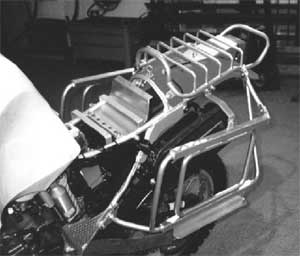
When using a rigid container like an alloy box there’s no need to have a full-width shelf; an inch-wide ledge will support a metal box, as it did on our Desert Riders XRL racks (below). The welding was superb but that rack was over-built, slapping metal over metal in search of strength but actually blinding the function by adding excessive weight. We did carry very heavy loads at times (left), but two of the XRLs cracked their subframes.

The reason platforms are not used these days is that sticking out looks inelegant, injury inducing and damage-prone in a fall. But when overlanding, your gear is on there all the time and so a fixed platform rack is no different from the angular edge of an ally box, except when it comes to removing baggage and wheeling a bike indoors overnight.
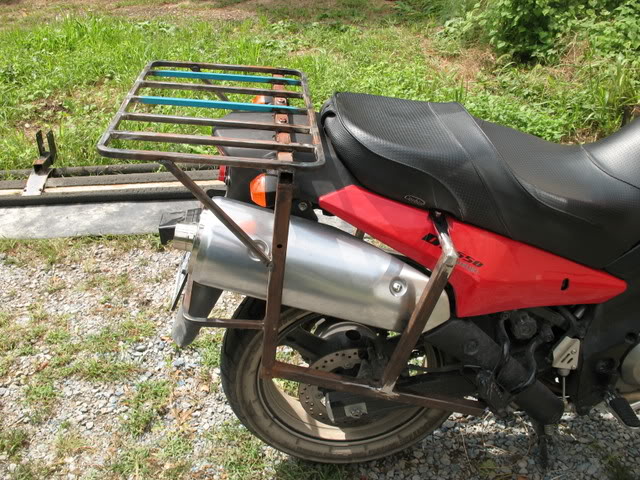
Below, Sean F’s very neat fixed platform rack addressing some of the issues for his soft-bagged DR650. if you get platform racks, this would be an idea to copy.

I still like the idea a platform rack with a hinged element so as to carry anything that fits while being slim when unloaded. The problem is without using the BSA sliding struts requires some sort of unsupported platform or cantilever. As always, you need to visualise how it will respond to slides down the road or hours of corrugations with maximum loads

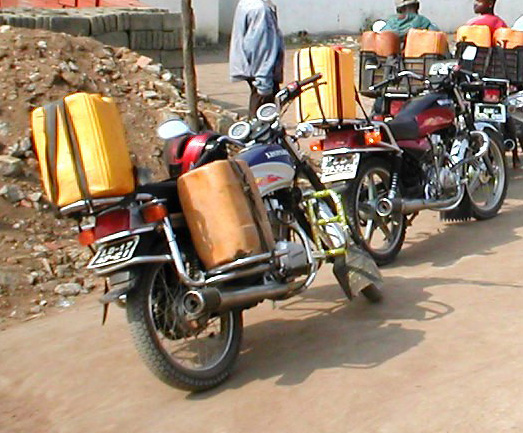
There are various ways of arranging this cantilever, but the only one I’ve seen was on these Chinese 125s (left) pictured in Angola. If you look closely you’ll see the pivoting platform swings out to rest on a shallow ‘L’ bar. Providing it’s chunky enough, the leverage on the pivot and load on the bar ought to be met. A wider ‘L’ rest bar means less stress but you don’t want the fixed part being too wide.

A search on Google Images most probably identified that ‘Angolan’ rack (right) as one produced by none other than The Chongqing Meihuan Machine Manufacturing Company.
With a closer look you can see the pivot/support works by lowering on a spring to rest horizontally on the pillion footplate. Note the sub-racklets at the back, too.

And here is another hinged plat-rack made for this lightweight utility bike by former Italian custom bike maker, Borile. Like the Angolan rack, it’s a bit on the wide side for overlanding duties rather than transporting your goods to market, but the principle is the same.

There loads more on racks and baggage in the book.

GS500R Overlander – progress report

GS500R Index page

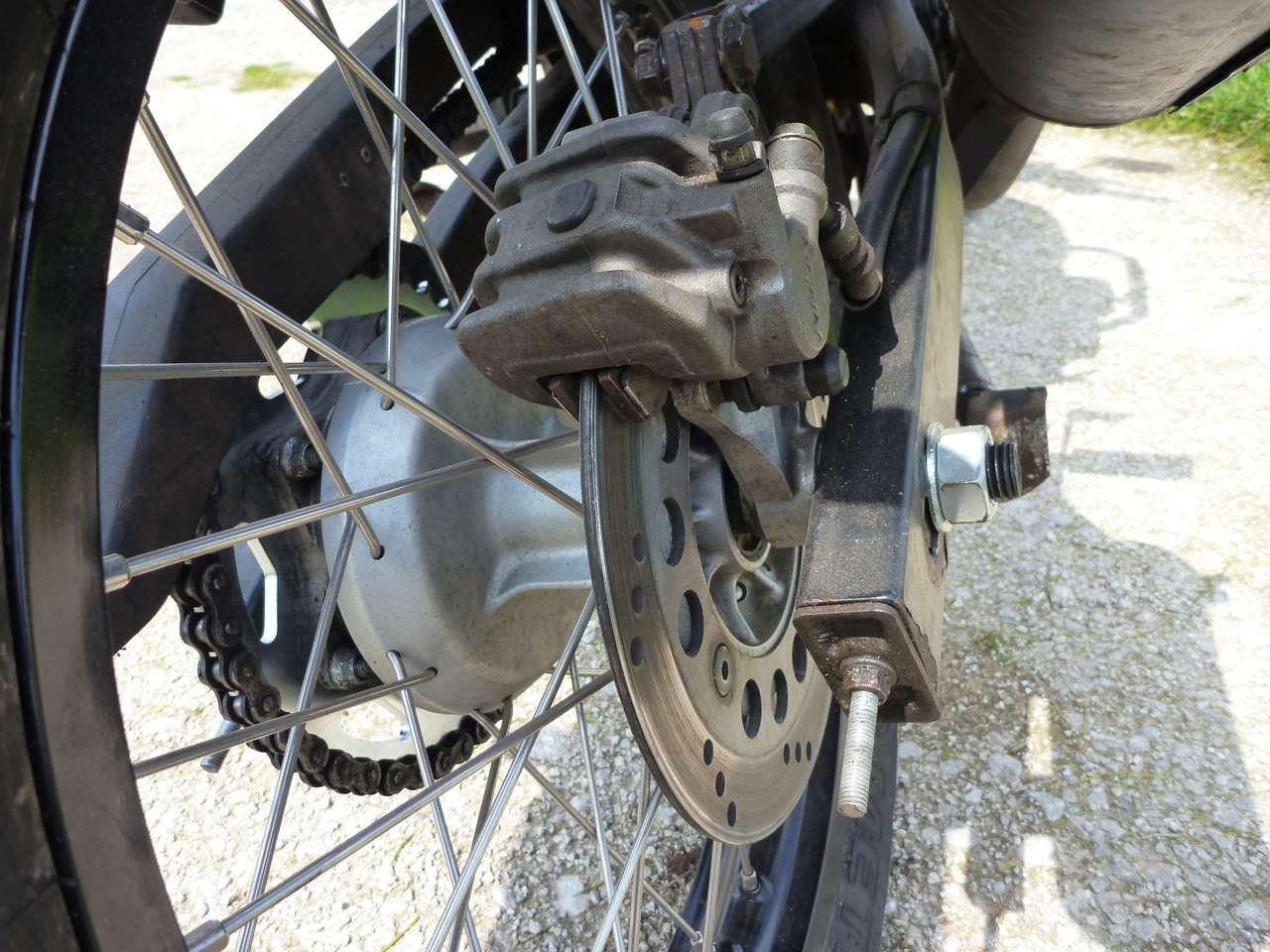
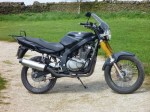
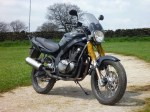
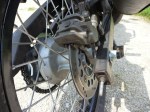
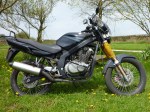
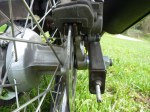
The GS500R Overlander project bike is taking shape, although it’s not quite a fully set jelly. The critical mod: adapting the rear DR650 hub and brake to fit the donor bike’s swing arm and chain run has been completed pretty seamlessly by Matt and his team of farmyard engineers (see pic below).

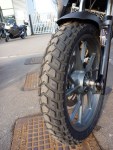
I know what you’re thinking: why does the front tyre look fatter than the back – is it the camera angle? No, it’s just that at the time I didn’t want to waste money on new 19-inch tyres in case the GS turned into what the French would call, un piège de mort. So I bought used cheapies just to get the thing rolling, first for the front, and a while later another for the back which was not identical. Just as well really, as following my recent Morocco trip I’ve discovered that Heidenau K60s are the ‘bomb’, as the bloke on the right would say.

Half-built impressions of half-baked bike
It took a bit of firing up off Matt’s V8 Landrover offroader to get the GS running while whipping out a plug to dry and blowtorch. Even then the GS didn’t seem to run well. Was there a badger nest in the air filter? I could barely pull up the track to the road, and while slipping the clutch mistakenly thought it was because the gearing was way off. As with most things on this build, we took an educated guess here, but at 42/16 the gearing’s actually turned out to be in or around the ball park.

Running down to the village to top up on fuel I thought, jeez, this 500 really is a lot slower than the BMW FGS650 twin I’ve been riding lately. Of course that bike has got at least twice the horsepower and 20 years of development on the G. Heading back, the weight of that extra tenner of unleaded in the tank saw the bike struggle to escape the dale. Something was not right. I pulled over and pulled off the left plug cap – no difference. A ha! as the bloke on the right would say. A little bit of fiddling with the plug cap got past more cobwebs, the second barrel fired up like a Saturn V and suddenly the GS500 was running like… a GS500.

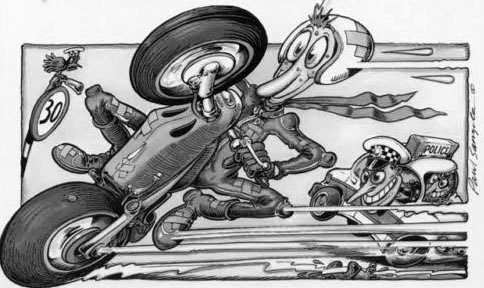
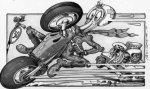
I tore off up the lane like a teenager on his first moped, awestruck at the feeling of raw power. Like Ogri’s beaky-nosed mate Malcolm (left) I was heading for a prang, so it was time to consider braking. The DR650 front end’s disc had been binding a bit as the pads off one scrapped DR got to know the disc rotor from another. A quick check at the fill up proved that the rotor wasn’t getting hot and causing the lame performance. In fact, yanking the lever did see the forks dip hard in response so it can get there if it has to. I guess it’s just not the quality of braking I’d got used to while running the 2012 BMW. The back brake was considerably slacker, partly we suspect because the DR650 calliper which had to be used to clear the Talon spokes, may not compliment the bore of the GS’s master cylinder. So the back brake is mushy and with a long throw. Maybe a bleed or a braided hose will bring it round, or a master cylinder off a DR.

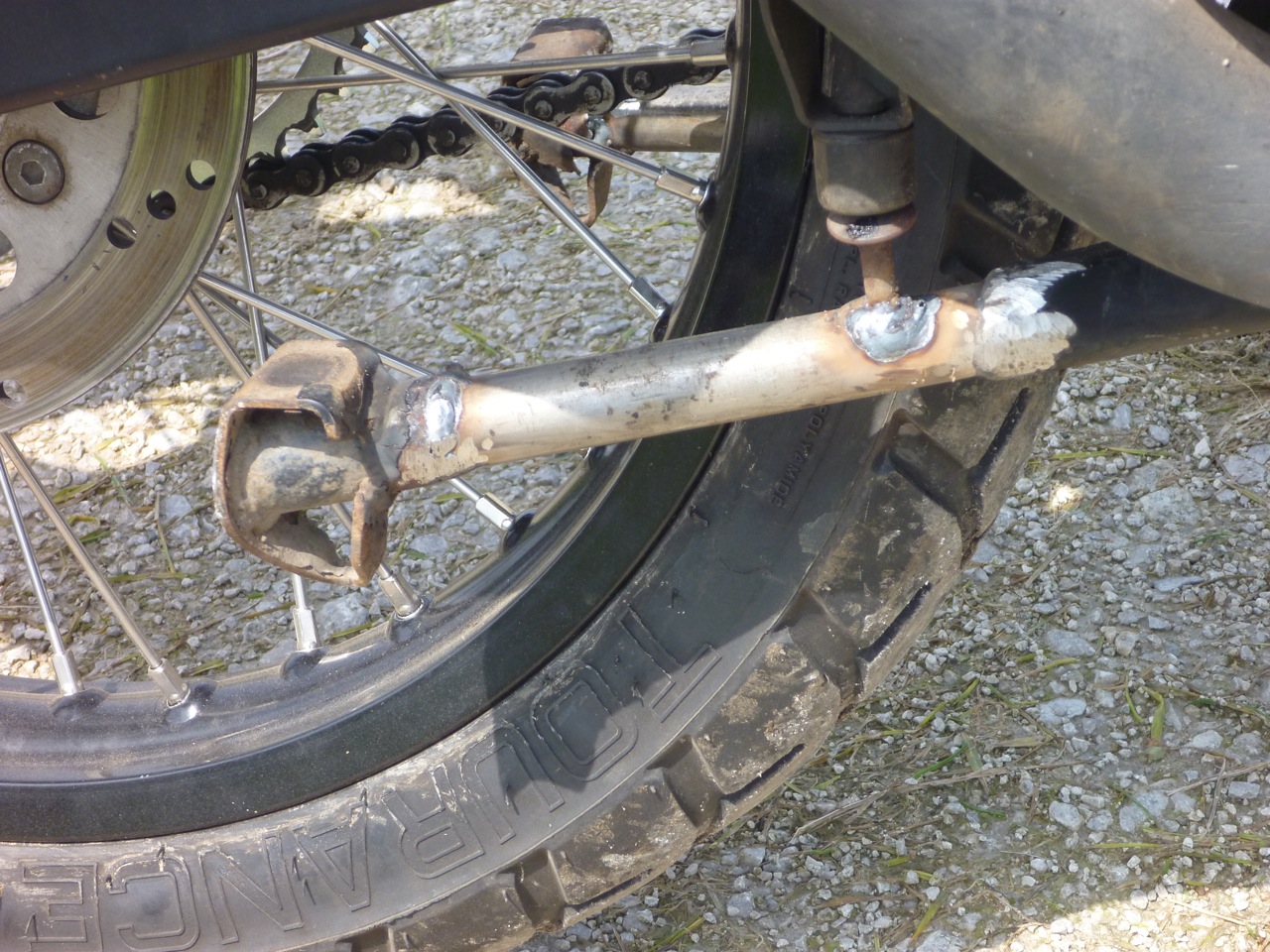
Another problem. The main stand had to be extended by several inches (right) and it now takes an extreme heave to get the bike up; not something I could see myself being able to do with baggage at the and of a tough day on the road. The feet are now clearly too far back from the pivot point for the factory-set leverage. And yet it’s as long as it needs to be, lifting the back a couple of inches off the deck, like a normal stand. Curved stand feet could get round this.

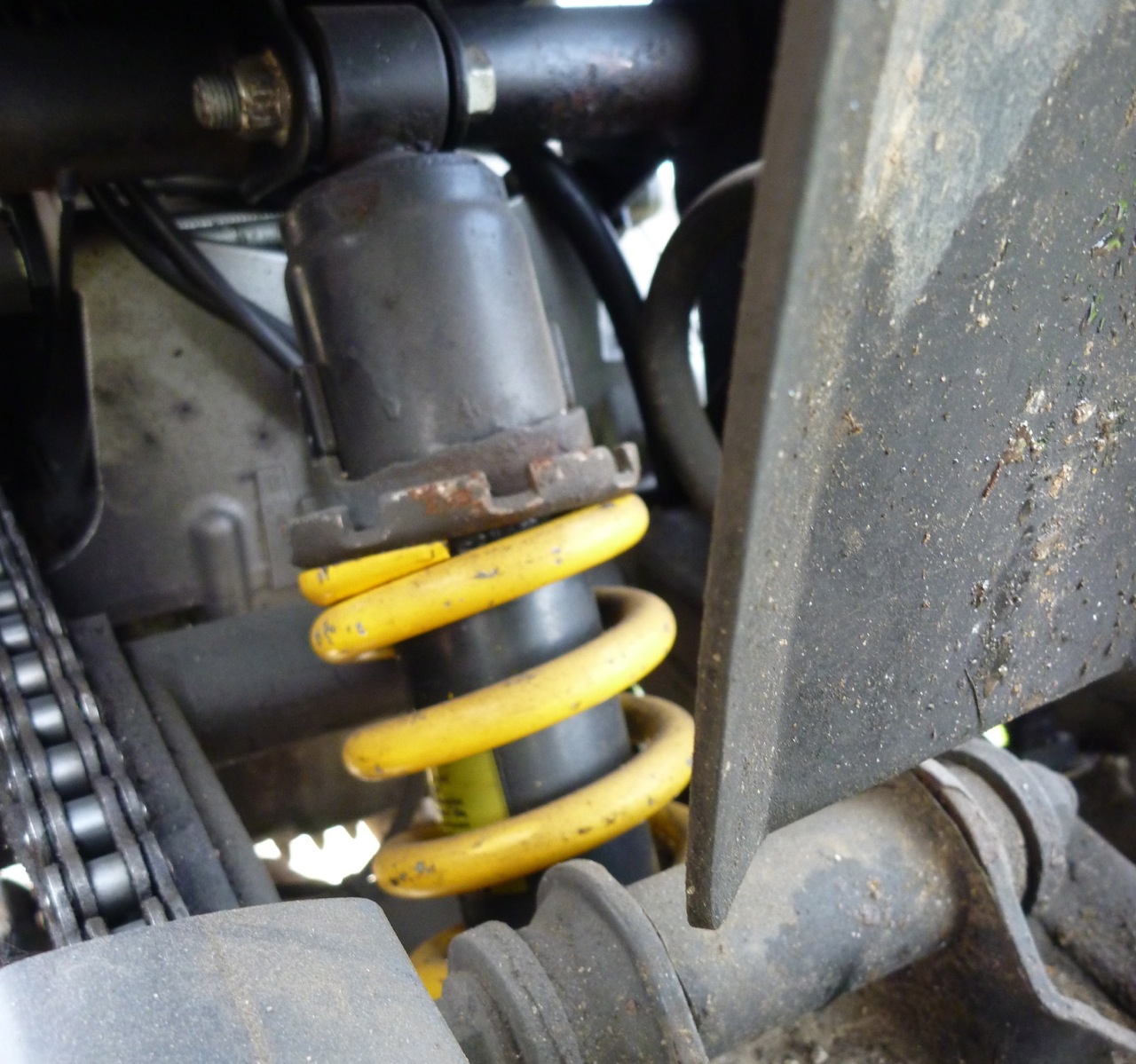
But in fact when I think about it, the GS is a bit too high; I can’t get my feet flat on the ground. With the new suspension and the 19s it’s probably jumped up at least four inches judging by at the extended stand. I really appreciated the BMs low height on the dirt in Morocco and am not looking for masses of clearance on the GS-R. In fact this will be easy to modify: slide the forks up the clamps and back the shock off max preload where it is set now (left). Didn’t get a chance to do all that, as it was a flying visit to the Mattlabs.

Steering feels a bit slow too, but I think the height may have something to do with that. As it is I don’t think the steering of a regular GS500 would get a job in a bread slicing factory. Getting used to the bike and modulating suspension levels may fix all that, and anyway there are new tyres to come. The dirt bars too felt a bit narrow for my liking, or no wider than stock and maybe could do with a lift. Again, easily done.
It’s hard to tell if a thinner back tyre greatly affected the steering or ride, not having ridden a bike with back-to-front tyres before. My plan is to run identical-sized tyres front and back. One thing’s for sure, the seat feels great, although as mentioned earlier, the rear-set pegs could stitch the knees up on a long day – and that could be crippling. So maybe some sort of highway peg off the crash bars will work.
One good thing, even though it’s tall right now the GS feels pretty light for what it is and a good 20 kilos lighter than the BMW GS650 which was at least 200kg. Might try and weigh it one time.

What’s left to do
Once the above mods are seen to Matt the Mig or Andy the Arc are going to fabricate a rack, but not just another off-the-shelf, too-far-back, 18-mil loop jobbie like I used on Morocco on the BMW. Something as securely mounted, but with a hinged or somehow retractable platform plus a ‘sheep rack’ platform on the back – always handy. That way the pans can sit rather than hang – a much better arrangement for an overland load, IMHO.

I was going to fab’ some PVC pannier liners with a heat gun and roller, and a mate had offered to sew me up some Cordura outers. I would have kept the Monsoons I used in Morocco if only they had been my ‘Fibonnacci shape’: less wide, more long and bigger, but since writing this Adventure Spec have started selling a ‘Magadan bag‘ with input from Walter Colebatch and based on the Steel Pony Gascoyne he’s used in Russia and a bag whose dimensions I’ve admired myself, if not the canvas fabric. If all the hard work’s been I’m be happy to order me a pair.

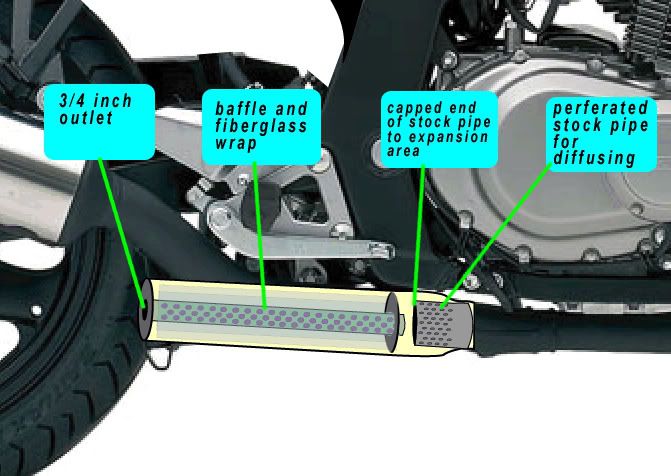
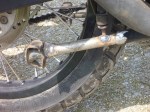
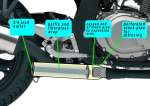
One thing I was also thinking of is junking the fat OE pipe and fitting something like this (right). A cheap ‘one-size-fits-all’ mega can be bought of ebay for 30 quid but I’m not 17 anymore and couldn’t bear a loud pipe or unravelling all the jetting and valve-burning issues. It seems the GS muffler only weighs some 5 kilos anyway so if pannier space is so important why not just chop the regular pipe at the neck and drop the angle as in the gif below. It’ll be good to have the bags in close and the pipe underneath, and its an easy job, giving what, at least four inches more bag space. After my over-width Morocco experience and seeing how slim the GS is, it would be nice to keep it that way.

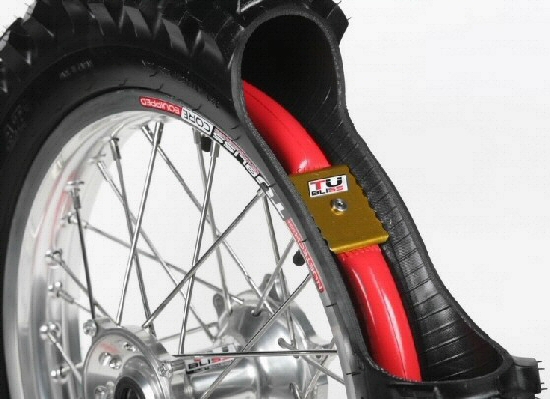
Anyway, I’m off to the Overland Expo in Arizona in a couple of weeks, a great chance to pick up some goodies in the US, including a pair of Tubliss liners (left) which enable you to run tyres tubelessly on spoked rims. As you may know, I tried doing that before without complete success.

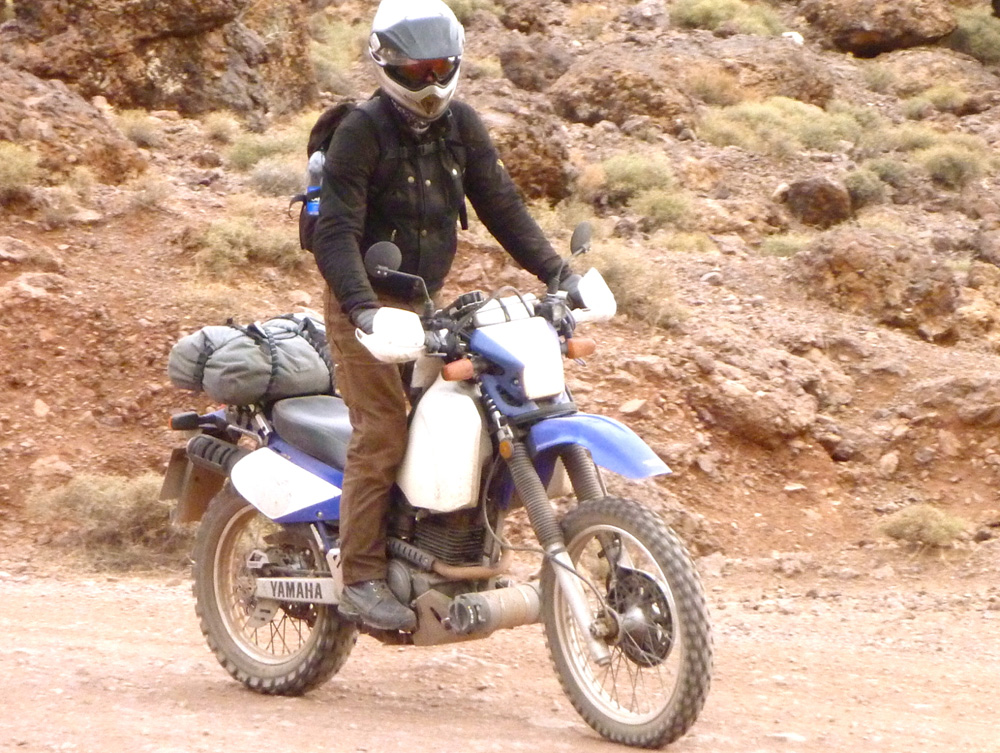
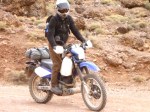
I know Tubliss are said to be for off-road use only, but I’ve interpreted this to be an issue of legal liability on the pubic highway rather than anything to do function or real-world safety. Robin, with whom I rode in Morocco last month has run Tubliss on his TT250R all over the world for years (that’s him right with all his kit – including full camping gear).

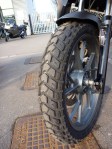
A meekly powered GS500 with a modest payload isn’t going to tie the tyres in knots. I plan to fit the front 110/80B (59 T) K60 Scout (my review) I used on the BM in Morocco (left) and another new one for the back. The 100/90 57 H is a tempting 30% cheaper and still with a load index 230 kilos and a 130mph rating, neither of which the GS will see in its lifetime, but I’d need two so I’ll stick with the wider 110/80 at another 100 quid.

More news as it happens.