Originally written 2012, overhauled 2020 There are 24 pages on luggage and racks in AMH8 See also MYO racks on this sticky HUBB thread
Off The Road rack; not too far backHorribly wide combo of throwovers and rack
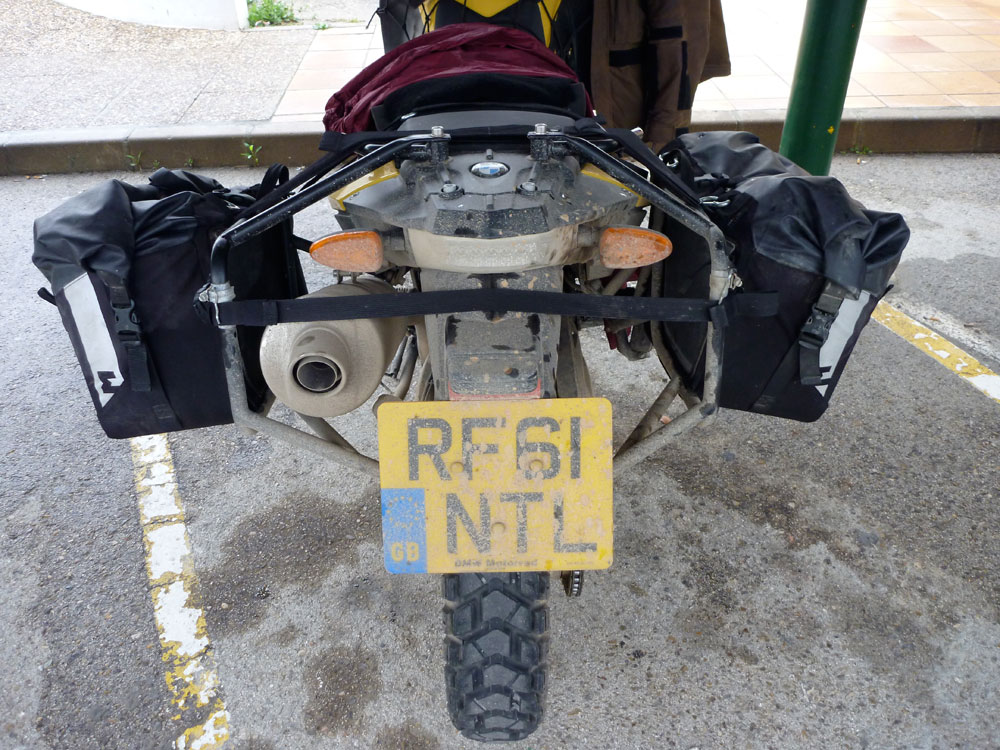
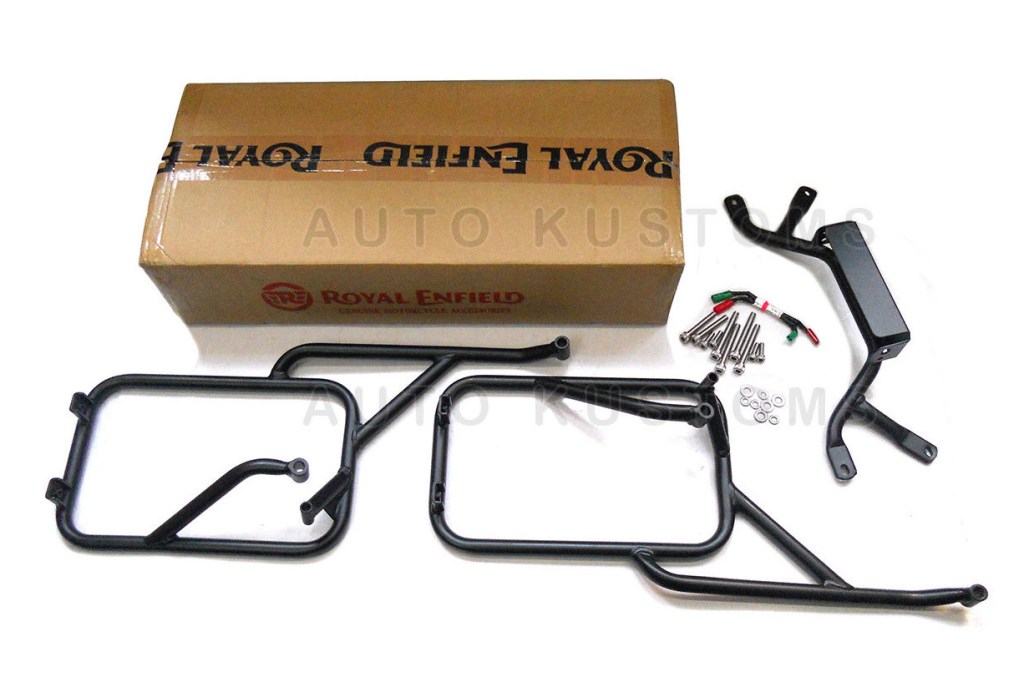
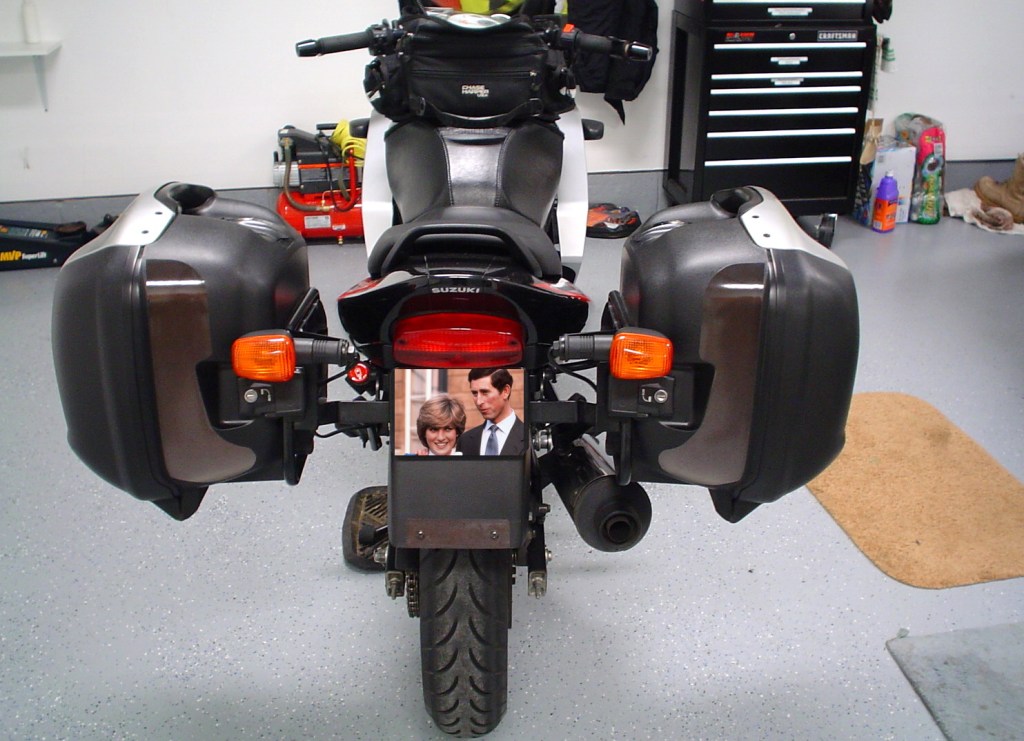
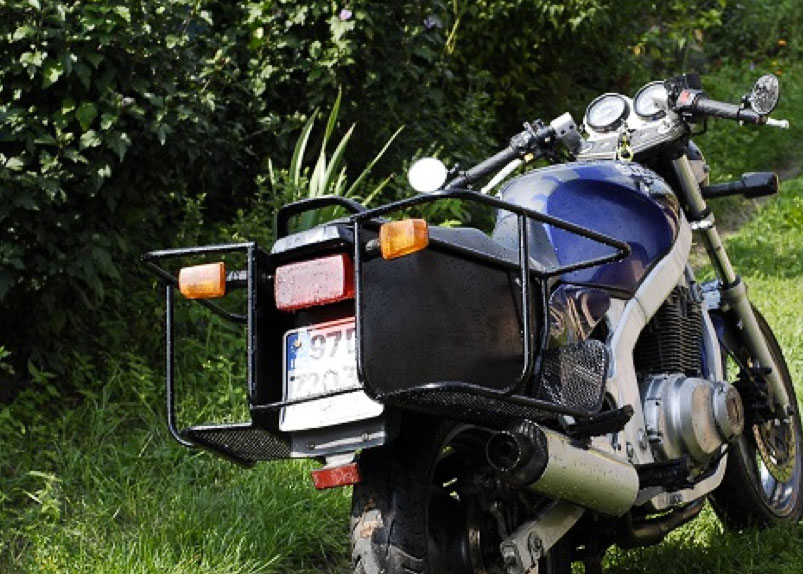
The problem with off the shelf pannier racks like the classic ‘racktangle’, above left and right, is that they:
• may not make them for your bike • may cost more than you’d like • are too wide • are often too far back
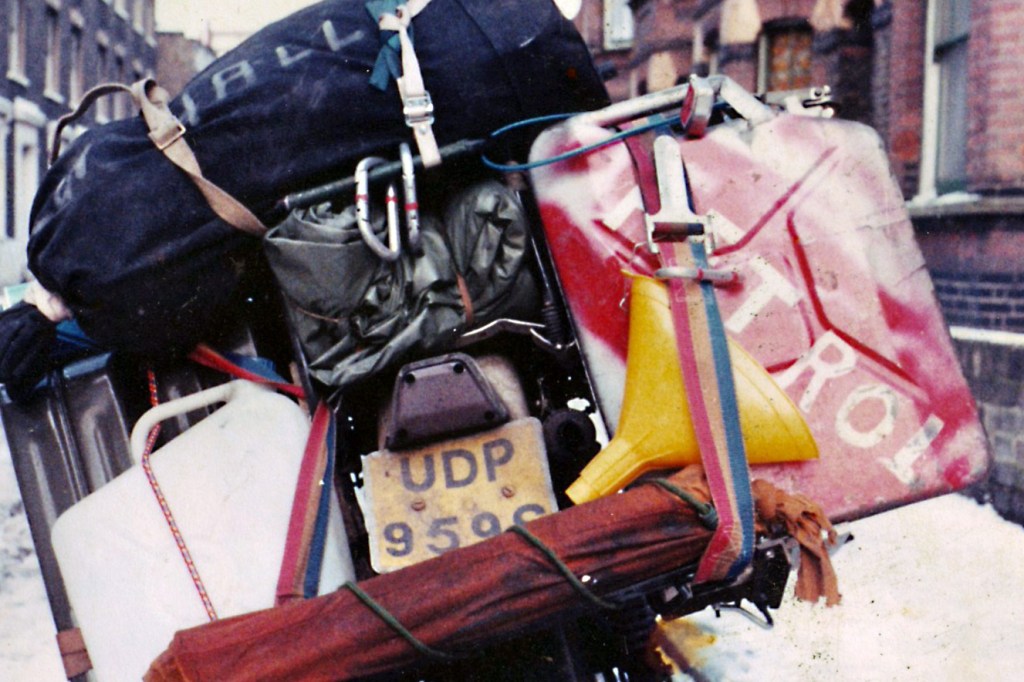
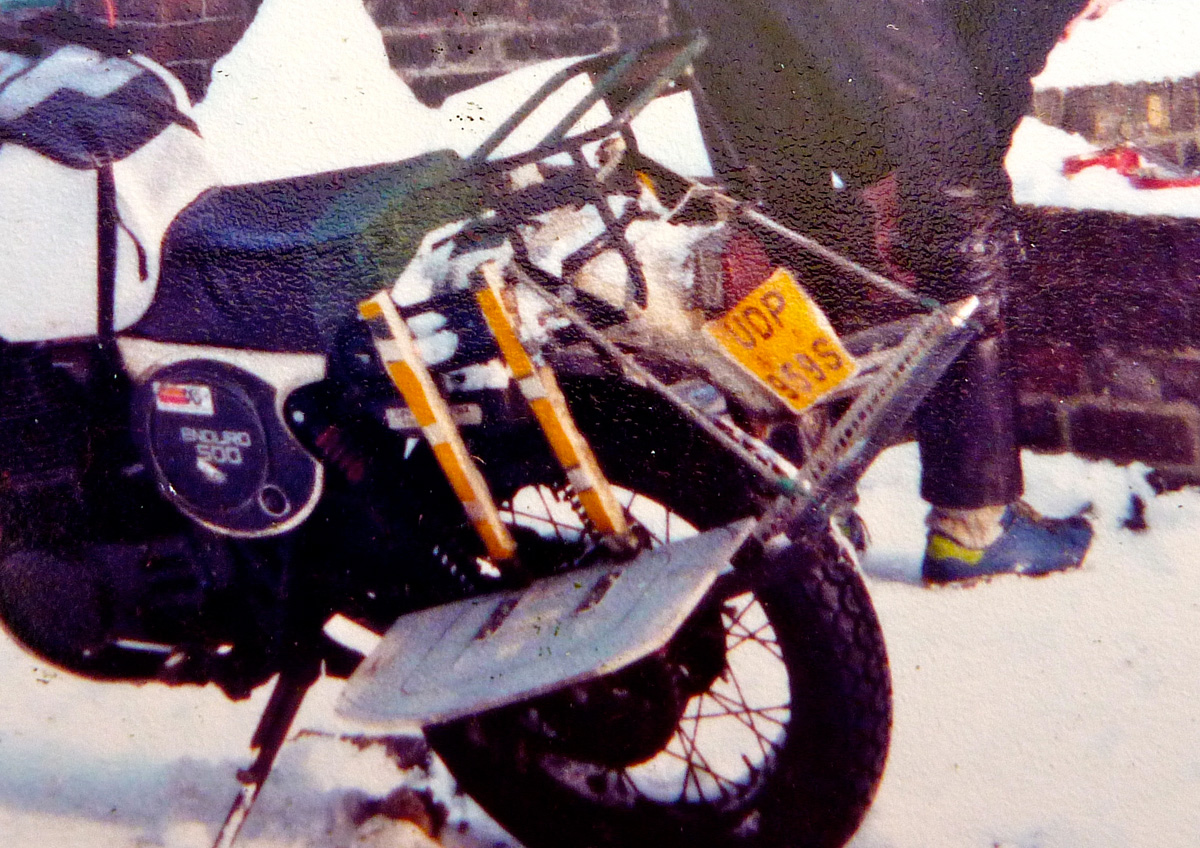
Those are some of the reasons I made my own rack for my first travel bike, an XT 500 (below), way back in 1982. It was rubbish but it did the job.
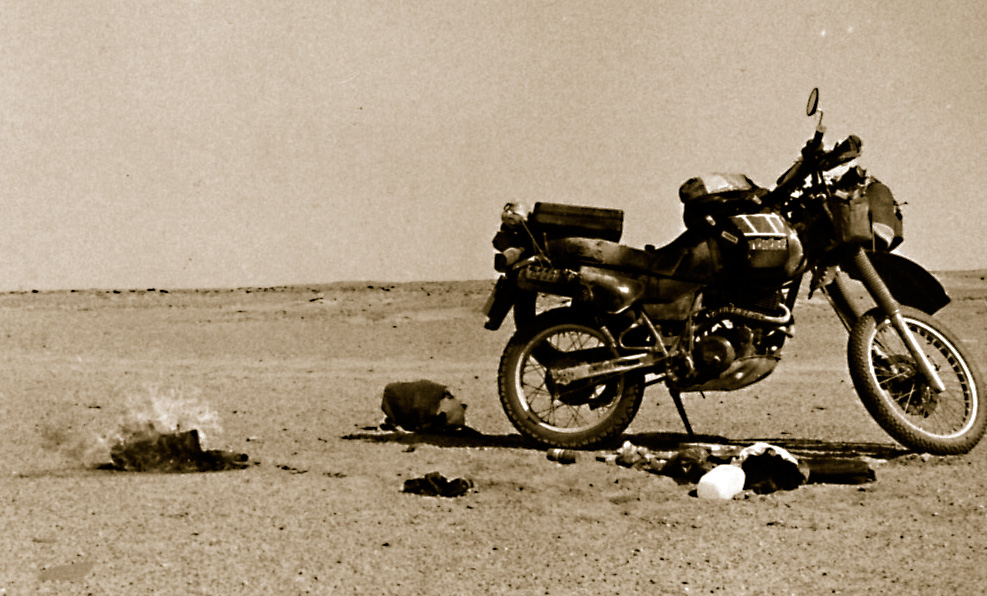
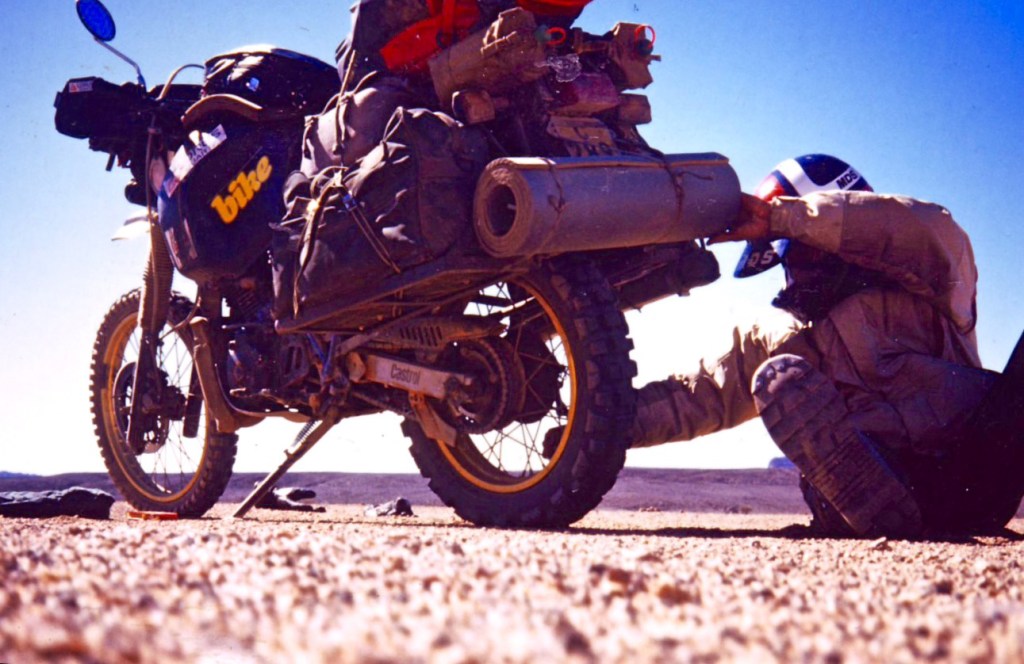
On the next couple of trips I used no rack. People do manage – usually on smaller bikes with lighter loads – but for overland travel, classic, strap-over throwovers are a throwback to a twin-shock era. The problem is usually with the high pipe of a trail bike. The bag presses on the panel which melts and – on a hot day on the south side of the Sahara (below) – the plastic catches fire soon followed by the ex-army canvas panniers and your favourite pyjamas.
Small baggage fire near Arlit, Niger.
What is wanted is a rear rack that attaches to the subframe and other key points as low, forward and close to the bike as possible so the mass follows suit, while allowing for those instinctive corrective dabs when losing control, as well as paddling in soft terrain.
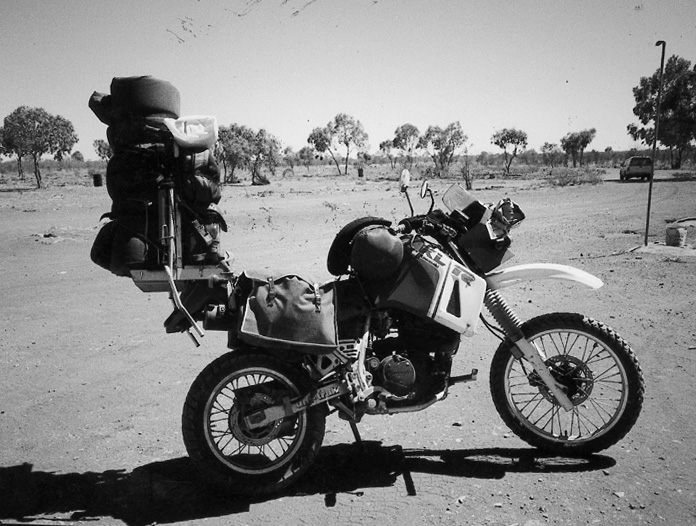
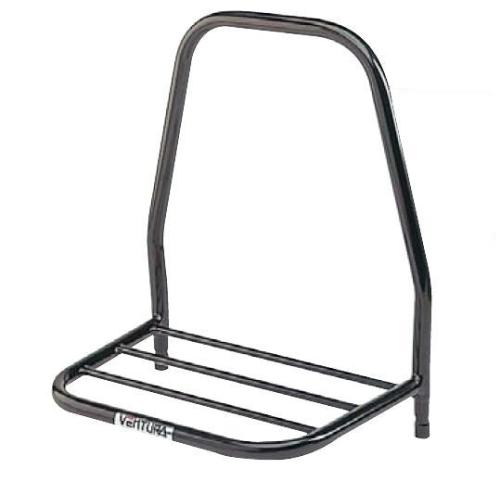
I first saw a ventura rack in the early 1990s on the Tanami Track in northern Australia (left) and was so staggered that dirt touring bikes (admittedly, possibly two-up?) could be loaded like this that that I put a picture in the first AMHandbook and nearly every edition since. Ventura’s idea is that you can reverse the upright bar to point forward to load your sack forward to improve ‘weight distribution’. Tell me about it.
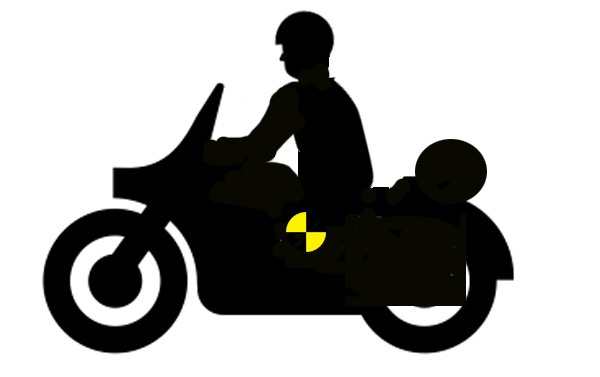
In a nutshell the mass wants to be as close to the bike’s supposed centre of gravity as possible which, with a load and rider aboard, is in the region of the injectors (right). ‘Mass centralisation’ became a buzz word with Honda bike design a few years ago, and was a concept applied by bike makers like Buell.
It makes sense, especially on a loaded motorcycle traversing less than perfect roads. The more central the mass the more predictably the overland-loaded machine responds to the forces of its own inertia as the suspension moves the sprung weight up and down over rough terrain. That adds up to better control, no freaky handling vagaries like tank-slappers, smoother riding and so less fatigue. All up, the key to surviving a long day on the road in the AM Zone. Above left: mass decentralisation. Think of the leverage!
Basket rackSheep rack
Platform racks
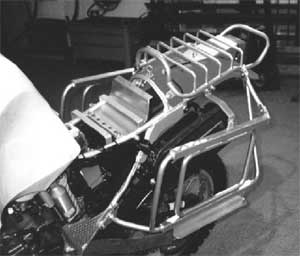
As mentioned, when it came to making a rack for my XT500, the idea was fairly obvious: make platforms (left). Even though I’d been despatching for a few years with throwovers or more commonly just a big top box, when it came to carrying a big load to the desert, a low platform down on the sides made intuitive sense.
The execution using Dexion shelving was poor, although that slack-rack did carry the load to the desert and back – albeit with a radically reduced once I came to my senses. It probably survived because there was so much jelly-like flex it was unable to summon up the tension to snap outright. The mld steel ‘L’ platform element was bolted onto a Craven rack – the ‘Jesse Luggage’ of its day, with plywood planks screwed on and sharp corners trimmed
Platform racks have been around for years, among other places used on army BSAs in the 50s and 60s (left). I’ve always liked the principle but these tinny, hinged trays were designed to take a specific panniers or to swivel up out of the way when not in use. It’s a logical and effective form of support. Within limits you can securely load anything on there; box, bag, sickly calf, bulging sack, except the sliding support arms get in the way of bigger loads.
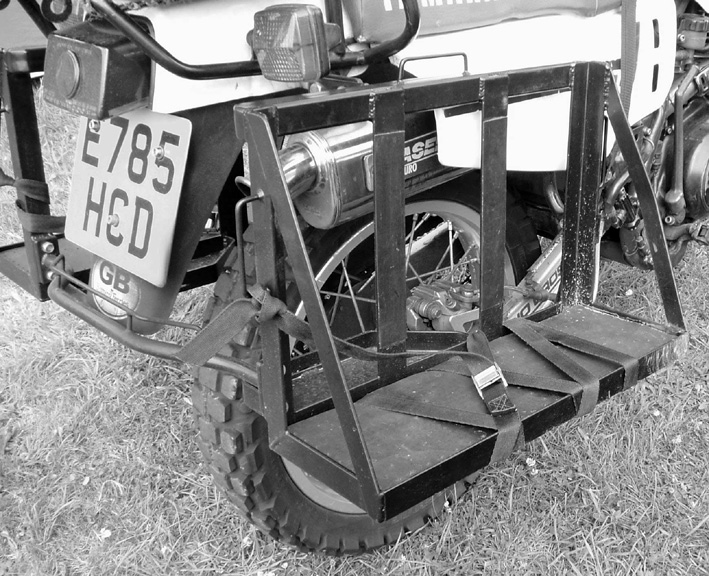
Same goes for the solid (unhinging) version, left (notice the nifty mini inner platforms too). A secure placement for alloy boxes which would need next to nothing to stay in place. I had similar racks made for the Sahara, but using soft bags (below), but you can’t help worrying about that hard front edge on your lower legs. This never occurred to me until Desert Riders when we added big metal boxes to remind us how they might hurt.
Full-width shelf rack; perceived risk of shin snapping when off road
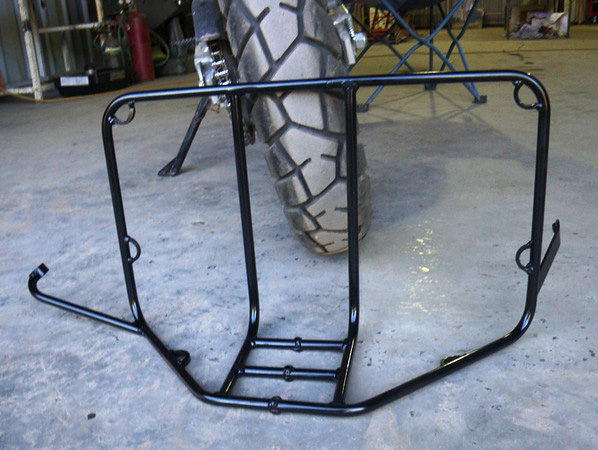
When using a rigid container like an alloy box there’s no need to have a full-width shelf; an inch-wide ledge will support a metal box, as it did on our Desert Riders XRL racks (below). The welding was superb but that rack was over-built, slapping metal over metal in search of strength but actually blinding the function by adding excessive weight. We did carry very heavy loads at times (left), but two of the XRLs cracked their subframes.
Way too much metal on this rack
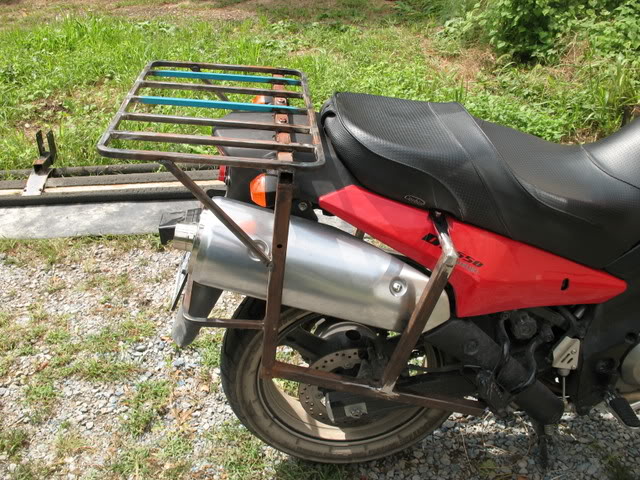
The reason platforms are not used these days is that sticking out looks inelegant, injury inducing and damage-prone in a fall. But when overlanding, your gear is on there all the time and so a fixed platform rack is no different from the angular edge of an ally box, except when it comes to removing baggage and wheeling a bike indoors overnight. Below, Sean F’s very neat fixed platform rack addressing some of the issues for his soft-bagged DR650. if you get platform racks, this would be an idea to copy.
I still like the idea a platform rack with a hinged element so as to carry anything that fits while being slim when unloaded. The problem is without using the BSA sliding struts requires some sort of unsupported platform or cantilever. As always, you need to visualise how it will respond to slides down the road or hours of corrugations with maximum loads
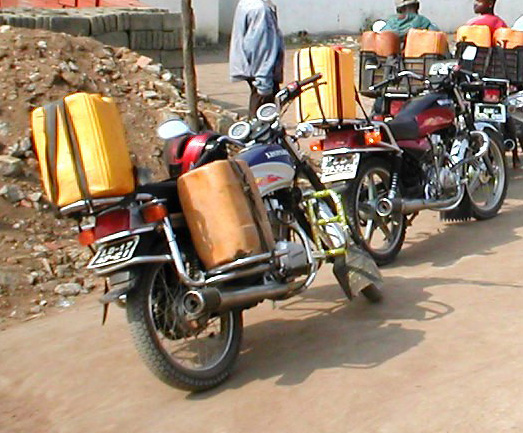
There are various ways of arranging this cantilever, but the only one I’ve seen was on these Chinese 125s (left) pictured in Angola. If you look closely you’ll see the pivoting platform swings out to rest on a shallow ‘L’ bar. Providing it’s chunky enough, the leverage on the pivot and load on the bar ought to be met. A wider ‘L’ rest bar means less stress but you don’t want the fixed part being too wide.
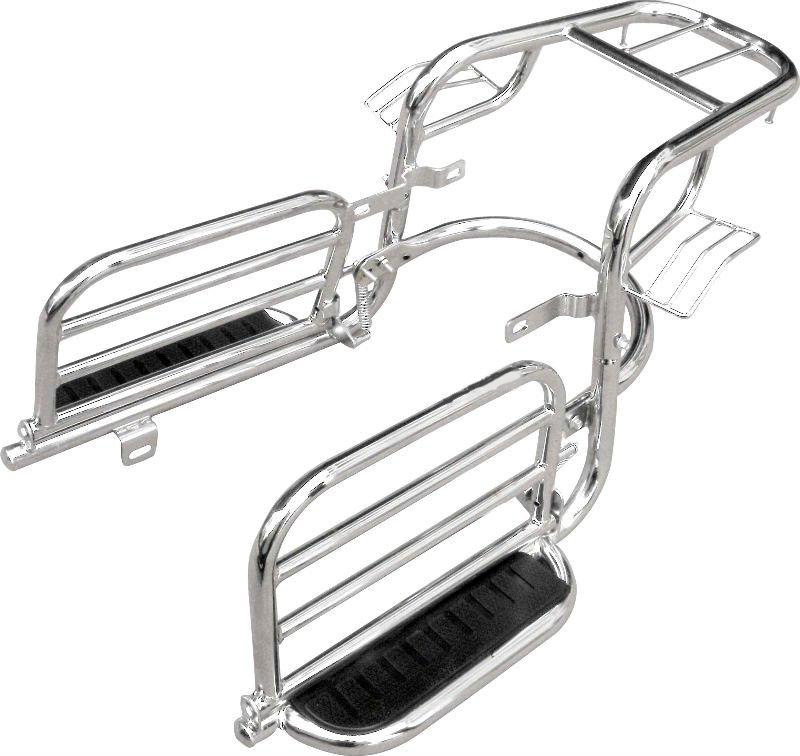
A search on Google Images most probably identified that ‘Angolan’ rack (right) as one produced by none other than The Chongqing Meihuan Machine Manufacturing Company. With a closer look you can see the pivot/support works by lowering on a spring to rest horizontally on the pillion footplate. Note the sub-racklets at the back, too.
And here is another hinged plat-rack made for this lightweight utility bike by former Italian custom bike maker, Borile. Like the Angolan rack, it’s a bit on the wide side for overlanding duties rather than transporting your goods to market, but the principle is the same.
There loads more on racks and baggage in the book.
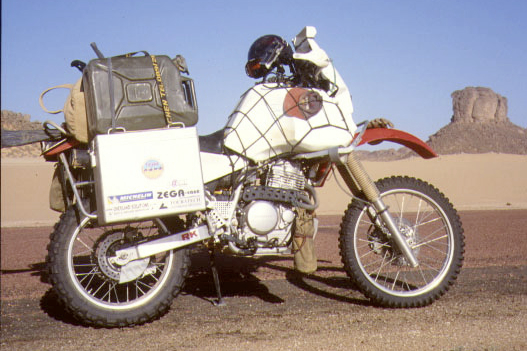
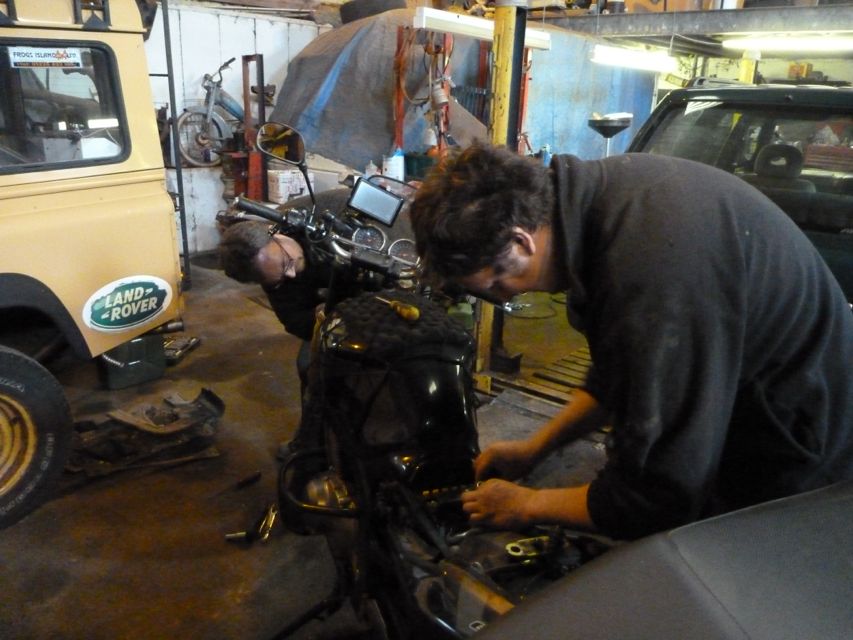
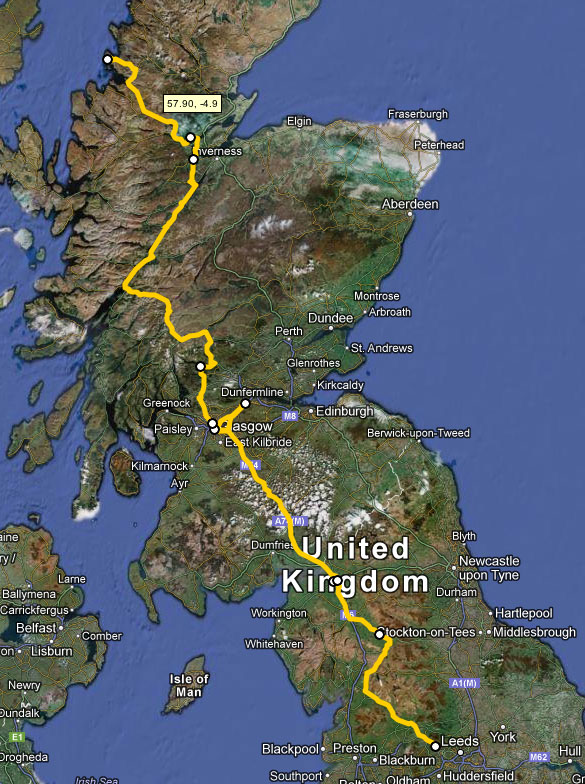
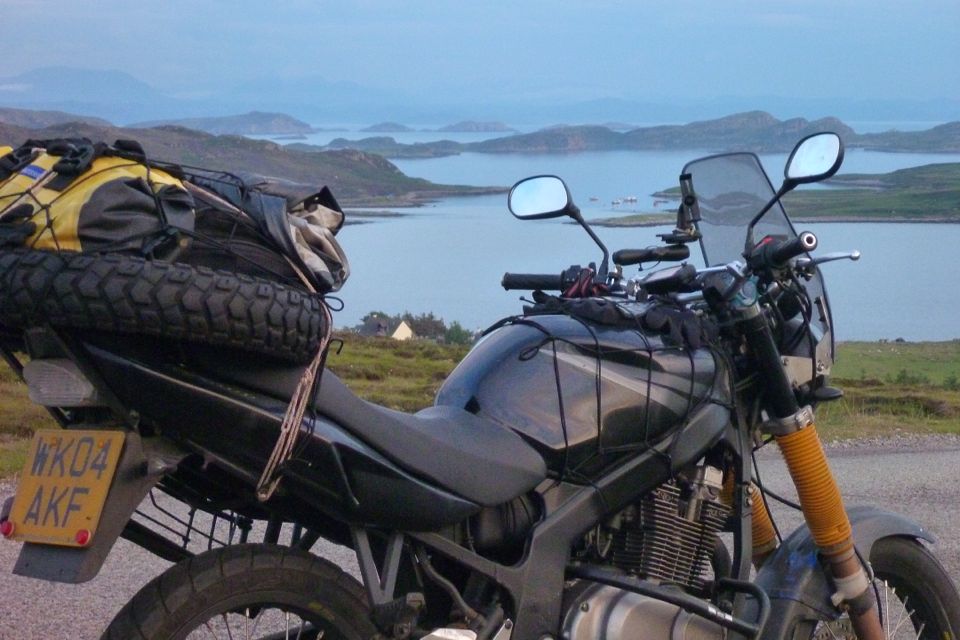
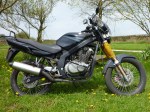
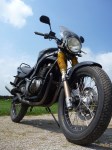
A little more than three years after I bought it, my GS-R got wheeled out of a Derbyshire hilltop hangar to prepare for it’s maiden flight – a run of a few hundred miles to far northern Scotland where development is set to continue.
Since my last brief ride round the lanes, the suspension got lowered a bit, the stands trimmed to fit and the pipe levelled off to make room for a rack and low/forward luggage, when that day comes.
As I pulled on my clobber Matt and Andy wired in a cig socket (left) to run a satnav, and with that done I set off into the rain to see how far I’d get that night.
There were small problems of course. The only way to securely load my gear was to pile most of it on the back – some 20kg right off the back; anathema to good loading and balanced handling. The GS is especially bad as it has a short back; I sit only just in front of the back axle. If I took my hands off the bars they flapped like a flag in the breeze. Then there was the limp back brake. As mentioned, I suspect it’s down to a too large GS master cylinder working the DR650 calliper so the ‘hydraulic advantage’ is cocked up (well explained here). Even extreme pedal pressure won’t lock the wheel. And besides that, the bike was long unused and untested – the new front end, wheels, the chain run and so on. With a lot of scope for something to go wrong, I initially kept off the motorways to simplify a recovery or roadside repair.
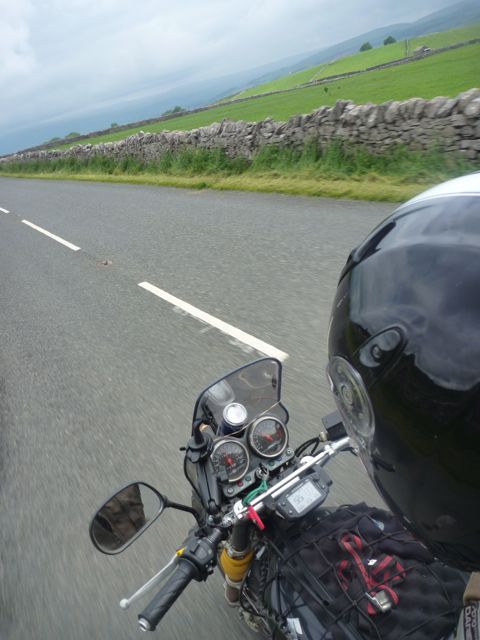
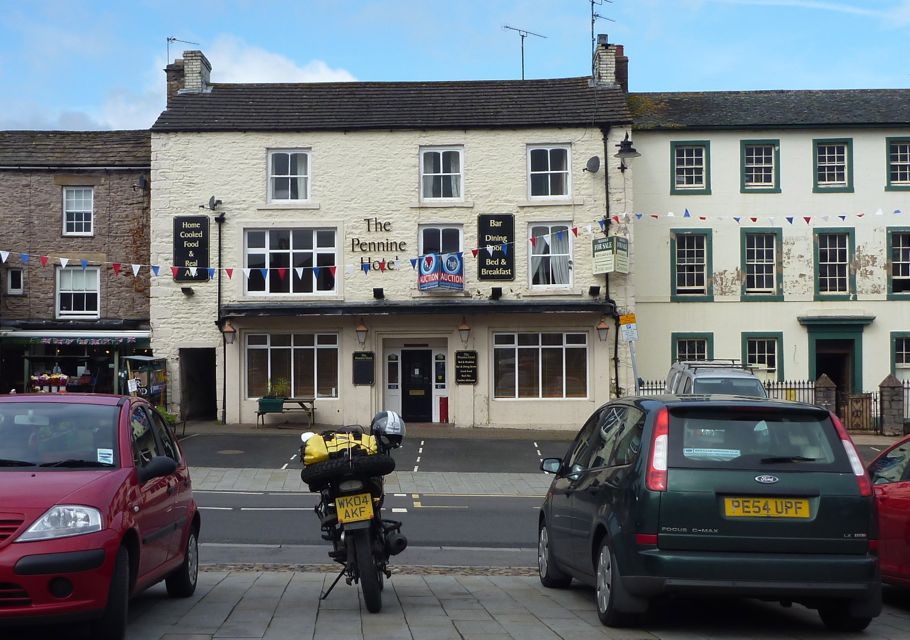
I splashed my way through the grim industrial conurbations between Sheffield and Leeds and spent the night at a mate’s in Shipley, trying to revive my Garmin Nuvi which either got wet or died of its own accord. Next day promised to be brighter before the next apocalyptic weather event (due to the displaced jet stream) bore down onto the UK. So I set off early to cross the Pennines I knew well as a walker, scooting up the A65 across the Yorkshire Dales before taking the A683 moorland backroad (left) to Kirkby Stephen for a snack in the Market Square (right). I knew this bench well too, having last sat on it at the end of a long day’s walk from Shap on the Coast to Coast path. The sun was out, but that was to be the last I’d see of it for another 10 hours.
I followed the A66 onto the M6 where the Suzuki held its own, stable enough up to around 80. I’d heard Halfords were doing specials on satnavs, but in the Carlisle branch there were no worthwhile deals. However, filling up gave here me a nice surprise: 176 miles on just 11.1 litres. That’s 25.35 kpl or 71.5 mpg (nearly 60US) – as good as the modern efi BMW I rode last March at about the same speeds. Not bad at all. With the GS’s 20-litre tank that’s 500 clicks or 300 miles to a tank. The rest of the ride got occasionally faster and fuel economy dipped by around 10%.
The weather was supposed to improve as I got further north but they got that wrong, and then I made a right mess of getting across Glasgow. I should have gone under and up the left side for Dumbarton and Loch Lomond, but with only the compass on the Voyager and not enough signs, I ploughed on northward and after an interlude in some suburbs, went back in and up on the A81 signed to Loch Lomond – but the wrong side.
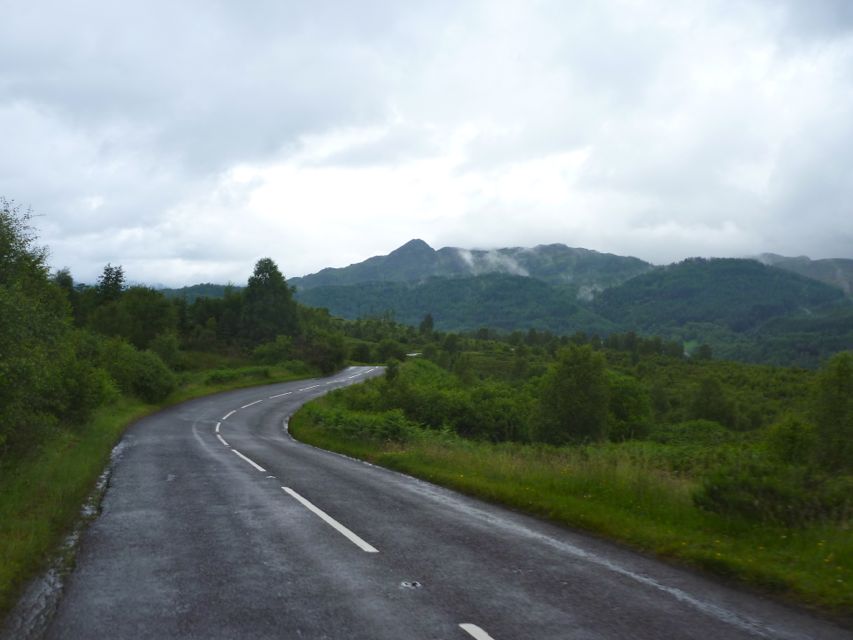
Still, there was more daylight than I had energy to keep riding, so I stayed on the A81 over Dukes Pass (left). ‘It’s a bikers’ road’ said the green-haired girl at the servo in Aberfoyle – but not in the rain with a balcony hanging off the back of your GS5. Like everywhere else, she had no map for me but said turn left at Callander, by which time I was back on roads I knew; the way to Glencoe and the Highlands.
Five pm. Nine hours on the road, I should have been starving and wilting, but was feeling OK. Fish and chips is one of the most over-rated Brit dishes, but I tell you what, a haddock supper at the Real Food Cafe in Tyndrum with their home-made tartare sauce might be a bit skimpy and pricey, but was just about the best I’ve ever eaten.
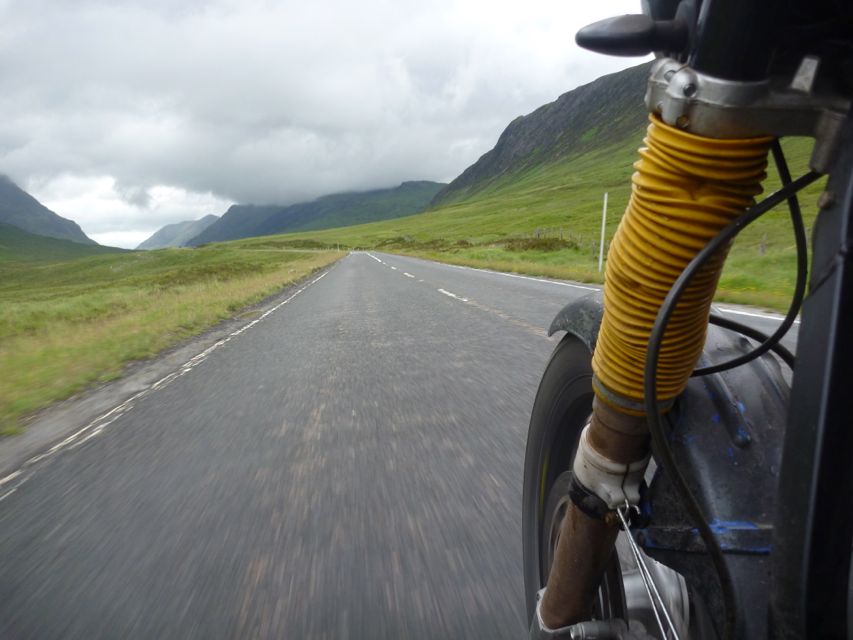
From here it was about another 200 miles – probably four hours with another fuel and snack break. Up over lonely Rannoch Moor, a tempting nod towards the cosy Kingshouse Hotel and down through the famous valley of Glencoe (right). In and out of Fort William – Scotland’s ugly but functional outdoor adventure capital, and then a route I’d not done for 30 years, up the side of Loch Ness.
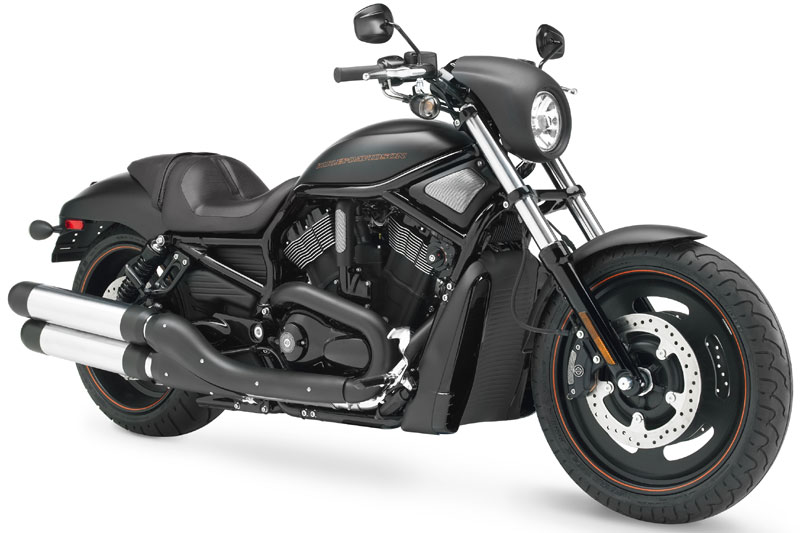
By now roads were drying out and the ill-balanced GS and I had melded into one amorphous lump. You know that feeling at the end of a long day’s immersion on a bike; you’re shagged out but riding intuitively while the bike itself is warmed through and on song. But you’re not a machine and eventually you’ll get too tired to concentrate, so I pulled into a village servo for a chocolate injection and took a quick sit on a German bloke’s knee-high Harley Night Rod (top left) with a back tyre three times wider than mine. On my near empty stomach the Star Bar the trick. I perked up and rode away from the uninspiring east coast farmland, west over the moors and down to the Hebridean shore. A moment’s rest on Ullapool waterfront to wipe the bug-splattered visor against the setting sun, followed by another hour’s ride into the mountains of Assynt and touchdown.
Five hundred and fifty miles or nearly 900km in 14 hours, with about 12 hours of actual riding rarely over 60mph. Nineteen hours of daylight helps of course, but this wasn’t like crossing the Montana prairie. I’ve not ridden anywhere near that far in the UK before, but was surprised to arrive with no single source of discomfort, be it back, butt, neck or knees. That suggests that the GS is pretty comfortable overall, even tensed up riding an unfamiliar bike in wet weather. As on any bike, the over high footrests can be dealt with by stretching the legs forward once in a while, and I plan to fit some flat track bars off an American Bonnie. The screen needs to grow to a useful height, too but must have had some positive effect. And when I think how I suffered on that BMW in March, you got to give full marks to the Suzuki seat.
The DR front end brakes fine too; it’ll be great to have the back doing the same. Most of all I feel the 19-inch front wheel was worthwhile. On a 21-incher the wet bends and higher speeds would have been a little more edgy. As for the skinny back tyre, no moments there (a pretty worn Metz Tourance 110/80 radial marked ‘front’, plus a Chen Shin Hi-Max 110/90 on the actual front). I wonder if that back radial at 36 psi helped the mpg? Either way, I look forward to having the GS shod with new Heidi K60s on Tubliss.
Didn’t have a chance to test the headlight – it’s never fully dark up here at the moment – but I’m sure it’s terrible. And that light is on all the time, even when electric starting which seems dumb. A switch is needed. The indicators and back light are aftermarket LEDs, but some sort of HID will be in order to help light the path. A mate’s recommended the VisionX Solstice for nearly £100.
According to the Trail Tech Voyager’s wheel-sensor based data, the GS’s cable speedo reads 12% over with the 19-inch front wheel on a [21″] DR hub, but the odometre is only 2% over. The Trail Tech packed up towards the end of the ride – it wasn’t charging off the bike (loose at the battery, easily fixed) but while it worked I loved it. Engine temp, air temp, compass, speed and odo – all things I like to know. And it’s has a map page too, though aimed at short range trail riding it can only handle small maps. Looking forward to delving more into this gadget.
At 30-something hp, the GS doesn’t exactly crease tarmac on steep climbs. And it needs to be spun at over 4000 to respond. At 5300 it’s indicting 70 – a true 63mph. I rarely rev it higher through the gears, but that’s still only halfway to the rather far-fetched redline of 11,000 rpm. Compared to other things I’ve ridden there’s not much torque low down in this thing, so I suspect the GS-R would be unresponsive on the dirt. It’s still on the tall side and heavy for that too, plus the pegs as so high the bars would be at knee level when standing, but the suspension isn’t flabby or harsh, and there’s more than enough of it. I do wonder about the strength of the frame for overland travel. I know it’s only a cheap a Suzuki, but it doesn’t look especially robust close up. All the more reason then to keep the load light and low.
What’s it all cost me? The bike was £1500 (five years old and 11,000 miles at the time). The Talon wheels built onto DR hubs were £400. Back shock £40, DR front end £200 by the time I bought a spindle and speedo drive. Other bits £200. I got back a few hundred quid selling the original GS500 front end, wheels, shock and other bits which paid for the labour, so we’re looking at around £2500. Add the new tyres and Tubliss cores for £250 and whatever it will cost to fabricate a rack. Spread over the years that’s not had too much of an impact, and the great thing with the GS5 (less so the DR650) is that parts are dirt cheap. There are chassis on ebay now from £30. Once completed it ought not cost much to run the GS-R.
Here in the south of England, 2012 had the rainiest April and June ‘since records began’. It hardly ever rains in the southern UK these days, but when it does I still can’t resist looking out of the streaming window and delight in the fact that I’m not out riding for a living anymore. Although, in a way, I suppose I still am.
I still recall a despatching June in the late ’70s or early ’80s when it rained every single day. At some point every day of that month I had to haul myself into my plastic body sack and splash about the streets of greater London, delivering stuff. I still hate wearing waterproofs any longer than absolutely necessary, but if you’re riding 10 + hours a day you’ve got to at least try and keep dry.
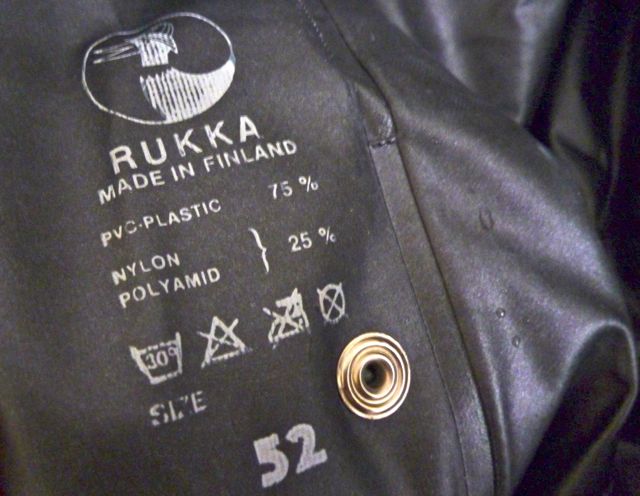
EU52 = UK 42″ chest. Caveat emptor.
Back in the late 70s, before Gore Textiles pulled off one of the biggest illusions in the history of rainwear, London despatchers by choice wore the classic silver-grey Rukka PVC waterproof, most commonly the lightweight jacket, or the one-piece (left). Have a look at this gallery of despatchers from 1986 and spot the Rukkas.
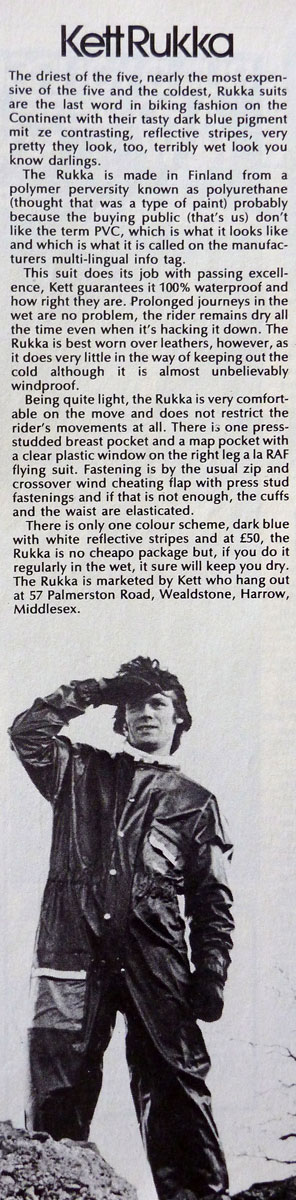
As elegantly cut as you can expect, neither took too much space in a top box, nor constricted you too greatly once worn. I myself was too dim or tight to make this smart choice; I can’t recall what I wore, either a £5 trawlerman’s PVC smock, or a compressed polystyrene, one-piece balloon which, when allied with the ring-ding-ding of my MZ, would quite rightly irritate nearby drivers so much that they couldn’t resist taking a swipe at me just on general principles. On the right: 1980 review of the Rukka one piece from Bike magazine.
PVC seems to get singled out for not being ‘green’ but it is waterproof like a bottle of beer is beer proof. If it has a hydrostatic head, like proofed nylon or polyester tent fabric, it would be measured in miles, not inches. Of course PVC breathes as well as a canary in jam jar and so what you perspire stays locked in your own muggy microclimate which I grew to detest, especially when schlepping artwork up to the 5th floor with no lift to some receptionist that I thought I fancied.
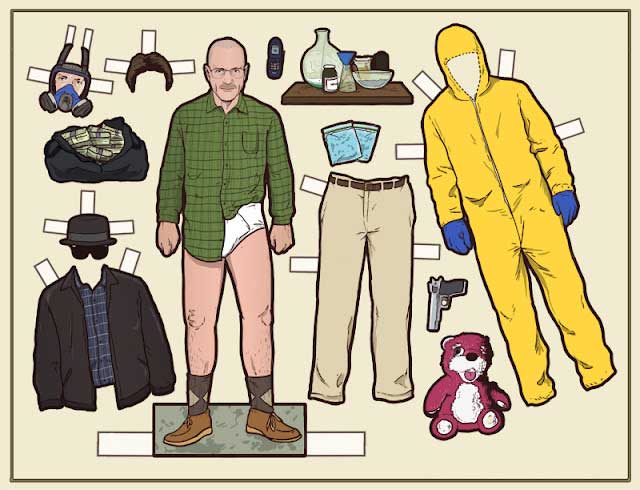
Actually I’m not sure it was just the inner damp that put me off. My sartorial vanity could also not bear being swathed in the amorphous, baggy blob. Whatever I looked like, it certainly wasn’t Tom Cruise out of Top Gun. More like Walter White (right) suiting up prior to cooking up another batch of Blue in the superlab.
Now I’ve finally caught up with my sodden past and picked up a used Rukka one-piece off ebay. First one at EU52 was too tight as an oversuit. I wore the legs only with the top wrapped underneath my waxed Falstaff jacket through a 3-hour downpour and from the waist down at least, I wasn’t surprised to get home completely dry.
Who says men are crap at buying clothes, but I now know EU52 equals UK chest 42 inches – a common trap when buying Rukkas. So I sat on ebay until an XXL EU 58 turned up (left). Loads of space to easily climb in fully clothed with boots on without stressing the welded seams.
Construction-wise, what a great garment it is! I don’t know when they stopped making them (now they only produce dog cags in probably the same PVC polyamid fabric), but let’s assume my one-piece is from the 80s. The material is still pliant, the leg map pocket has yellowed but other than that, the studs are all still there, the half zip runs smoothly and you have an overall feeling of quality that I’m not sure you’d get today in the similar, proofed-nylon one-piece suits. PVC is thickly layered from the outside and is easy to repair with glued patch or piece of tape.
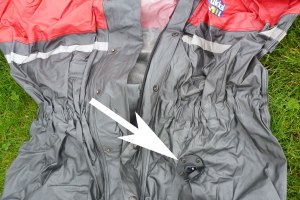
The front of the Rukka one-piece has an ingenious sewn-in, chest-high tongue/bellows (above), a bit like a hiking shoe, to eliminate anything getting past the studs or zip, bringing on that unwelcome cold-drip-in-the-crotch sensation. It rolls up and tucks in behind the studs with a zip, effectively making a chest-high Not sure if anyone still makes anything like the classic Rukka. Cheaper proofed nylon seems the current way, and what Rukka make today for bikers is the usual over-designed, over-techincal and over-priced gear which, being based on breathables, will fail in the long run and requires special cleaning. One problem was running my Aerostich Kanetsu electric vest without wires coming out the sleeves. Solution on the left below and detailed here.
If you’re looking for used Rukka pvc on ebay they usually turn up in great, barely used condition as anything less is barely worth selling. Avoid anything heavily repaired, dirty or with rusty studs.
And also search under ‘Protectorl (of London)’. They seemed to make identical garments in blue – same fabric, quality and era. I came across a brand new Protectorl lined jacket for 25 quid (abov) but again, it was a little too small. Both brands come with quilted linings. Me, I prefer unlined to roll up into a compact waterproof for rainy days only. My onesie weighs 1300 grams. The day I start wearing a Rukka as a regular bike jacket is the day I start eating with a spoon.
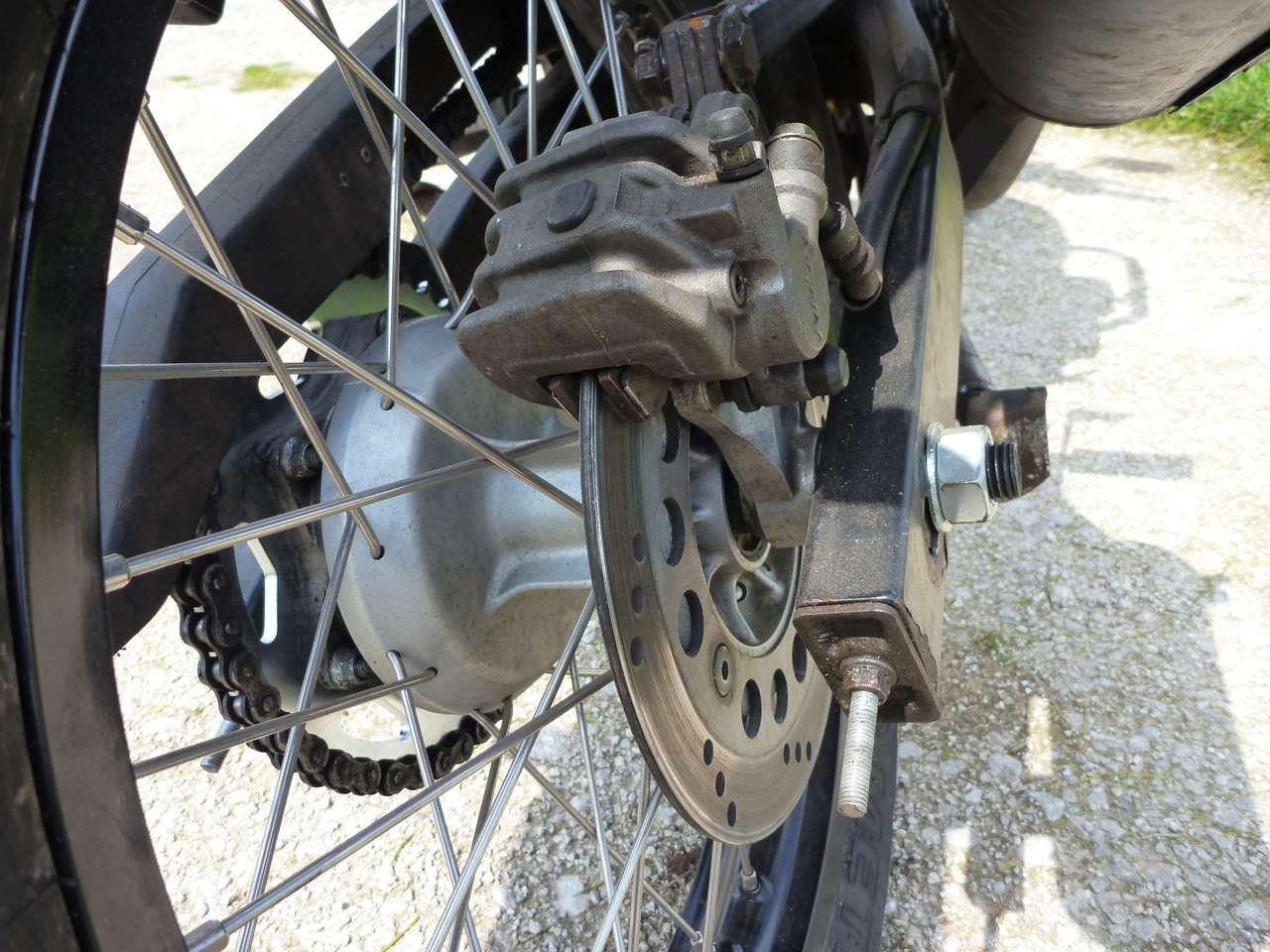
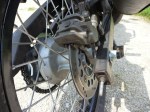
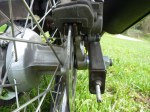
The GS500R Overlander project bike is taking shape, although it’s not quite a fully set jelly. The critical mod: adapting the rear DR650 hub and brake to fit the donor bike’s swing arm and chain run has been completed pretty seamlessly by Matt and his team of farmyard engineers (see pic below).
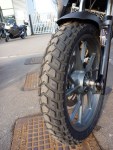
I know what you’re thinking: why does the front tyre look fatter than the back – is it the camera angle? No, it’s just that at the time I didn’t want to waste money on new 19-inch tyres in case the GS turned into what the French would call, unpiège de mort. So I bought used cheapies just to get the thing rolling, first for the front, and a while later another for the back which was not identical. Just as well really, as following my recent Morocco trip I’ve discovered that Heidenau K60s are the ‘bomb’, as the bloke on the right would say.
Half-built impressions of half-baked bike It took a bit of firing up off Matt’s V8 Landrover offroader to get the GS running while whipping out a plug to dry and blowtorch. Even then the GS didn’t seem to run well. Was there a badger nest in the air filter? I could barely pull up the track to the road, and while slipping the clutch mistakenly thought it was because the gearing was way off. As with most things on this build, we took an educated guess here, but at 42/16 the gearing’s actually turned out to be in or around the ball park.
Running down to the village to top up on fuel I thought, jeez, this 500 really is a lot slower than the BMW FGS650 twin I’ve been riding lately. Of course that bike has got at least twice the horsepower and 20 years of development on the G. Heading back, the weight of that extra tenner of unleaded in the tank saw the bike struggle to escape the dale. Something was not right. I pulled over and pulled off the left plug cap – no difference. A ha! as the bloke on the right would say. A little bit of fiddling with the plug cap got past more cobwebs, the second barrel fired up like a Saturn V and suddenly the GS500 was running like… a GS500.
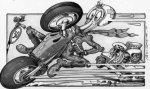
I tore off up the lane like a teenager on his first moped, awestruck at the feeling of raw power. Like Ogri’s beaky-nosed mate Malcolm (left) I was heading for a prang, so it was time to consider braking. The DR650 front end’s disc had been binding a bit as the pads off one scrapped DR got to know the disc rotor from another. A quick check at the fill up proved that the rotor wasn’t getting hot and causing the lame performance. In fact, yanking the lever did see the forks dip hard in response so it can get there if it has to. I guess it’s just not the quality of braking I’d got used to while running the 2012 BMW. The back brake was considerably slacker, partly we suspect because the DR650 calliper which had to be used to clear the Talon spokes, may not compliment the bore of the GS’s master cylinder. So the back brake is mushy and with a long throw. Maybe a bleed or a braided hose will bring it round, or a master cylinder off a DR.
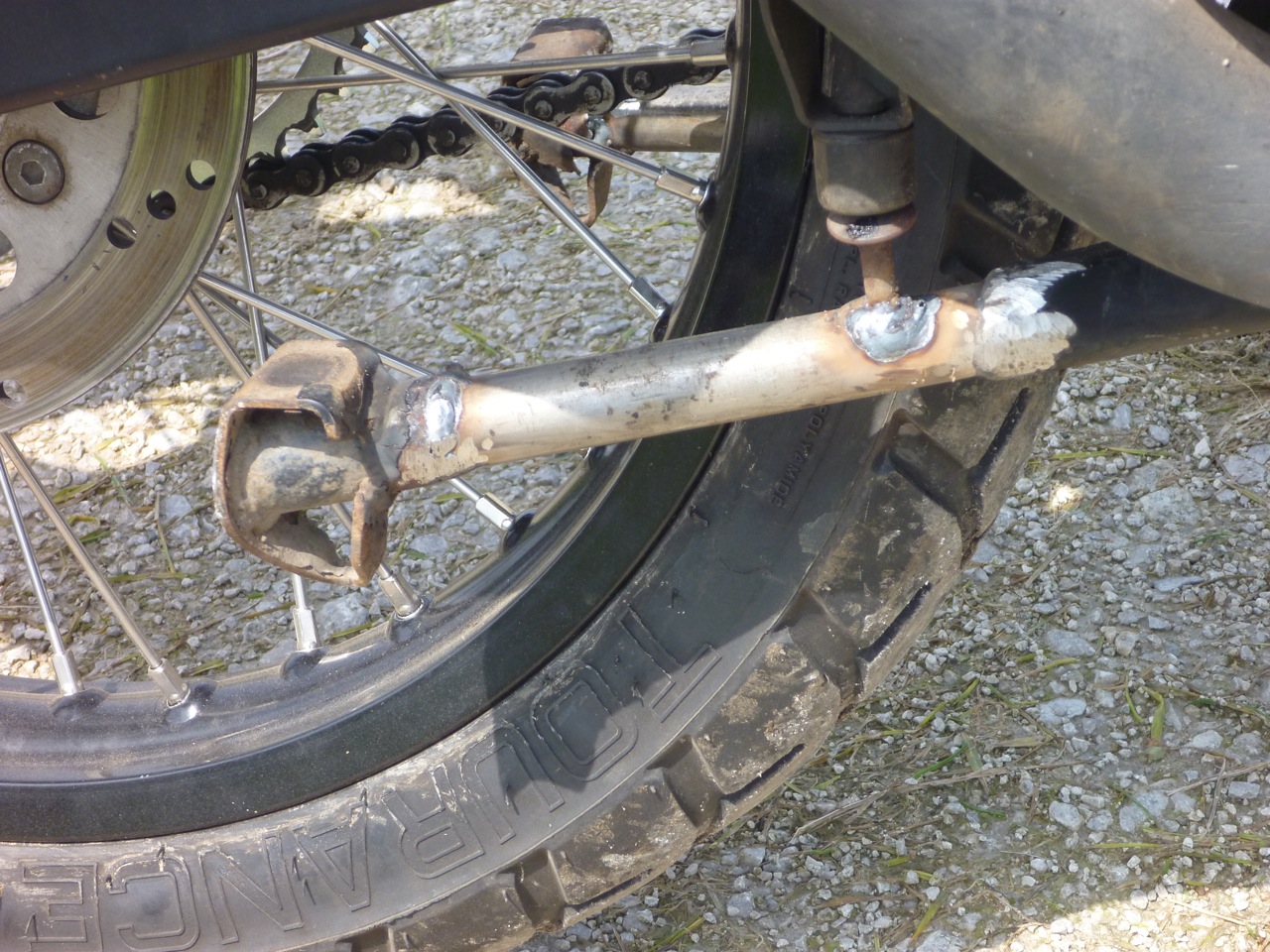
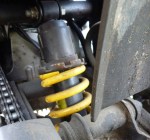
Another problem. The main stand had to be extended by several inches (right) and it now takes an extreme heave to get the bike up; not something I could see myself being able to do with baggage at the and of a tough day on the road. The feet are now clearly too far back from the pivot point for the factory-set leverage. And yet it’s as long as it needs to be, lifting the back a couple of inches off the deck, like a normal stand. Curved stand feet could get round this.
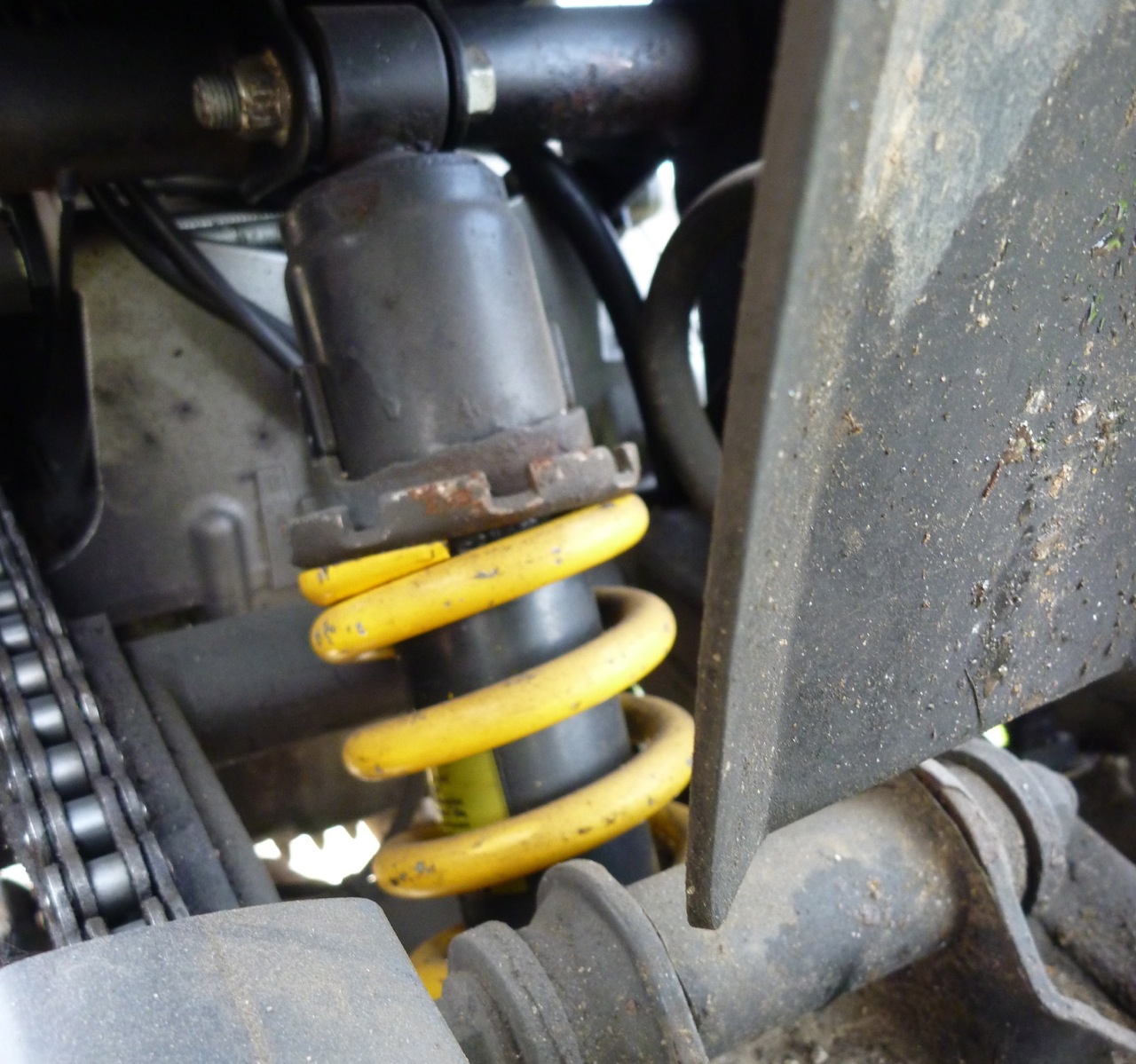
But in fact when I think about it, the GS is a bit too high; I can’t get my feet flat on the ground. With the new suspension and the 19s it’s probably jumped up at least four inches judging by at the extended stand. I really appreciated the BMs low height on the dirt in Morocco and am not looking for masses of clearance on the GS-R. In fact this will be easy to modify: slide the forks up the clamps and back the shock off max preload where it is set now (left). Didn’t get a chance to do all that, as it was a flying visit to the Mattlabs.
Steering feels a bit slow too, but I think the height may have something to do with that. As it is I don’t think the steering of a regular GS500 would get a job in a bread slicing factory. Getting used to the bike and modulating suspension levels may fix all that, and anyway there are new tyres to come. The dirt bars too felt a bit narrow for my liking, or no wider than stock and maybe could do with a lift. Again, easily done. It’s hard to tell if a thinner back tyre greatly affected the steering or ride, not having ridden a bike with back-to-front tyres before. My plan is to run identical-sized tyres front and back. One thing’s for sure, the seat feels great, although as mentioned earlier, the rear-set pegs could stitch the knees up on a long day – and that could be crippling. So maybe some sort of highway peg off the crash bars will work. One good thing, even though it’s tall right now the GS feels pretty light for what it is and a good 20 kilos lighter than the BMW GS650 which was at least 200kg. Might try and weigh it one time.
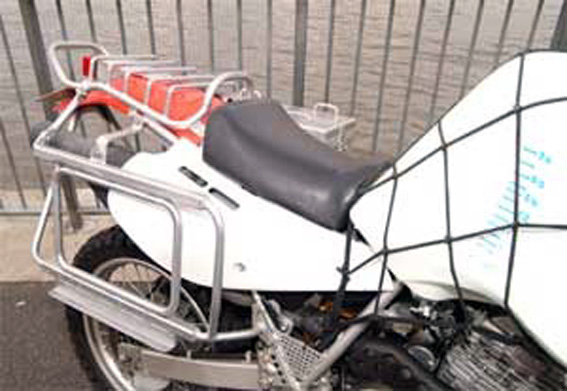
What’s left to do Once the above mods are seen to Matt the Mig or Andy the Arc are going to fabricate a rack, but not just another off-the-shelf, too-far-back, 18-mil loop jobbie like I used on Morocco on the BMW. Something as securely mounted, but with a hinged or somehow retractable platform plus a ‘sheep rack’ platform on the back – always handy. That way the pans can sit rather than hang – a much better arrangement for an overland load, IMHO.
I was going to fab’ some PVC pannier liners with a heat gun and roller, and a mate had offered to sew me up some Cordura outers. I would have kept the Monsoons I used in Morocco if only they had been my ‘Fibonnacci shape’: less wide, more long and bigger, but since writing this Adventure Spec have started selling a ‘Magadan bag‘ with input from Walter Colebatch and based on the Steel Pony Gascoyne he’s used in Russia and a bag whose dimensions I’ve admired myself, if not the canvas fabric. If all the hard work’s been I’m be happy to order me a pair.
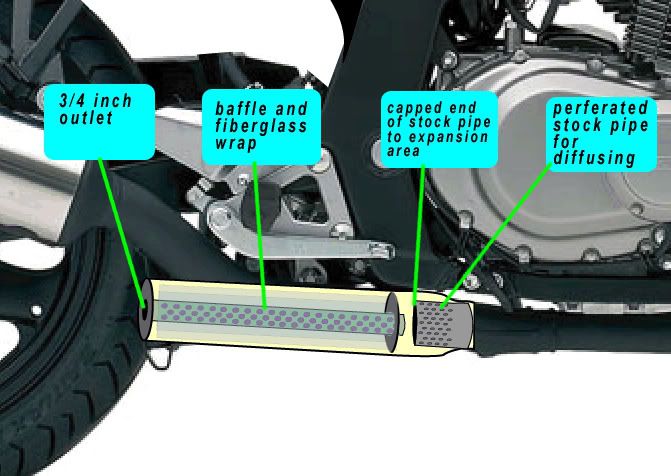
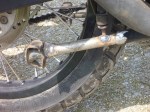
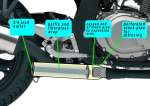
One thing I was also thinking of is junking the fat OE pipe and fitting something like this (right). A cheap ‘one-size-fits-all’ mega can be bought of ebay for 30 quid but I’m not 17 anymore and couldn’t bear a loud pipe or unravelling all the jetting and valve-burning issues. It seems the GS muffler only weighs some 5 kilos anyway so if pannier space is so important why not just chop the regular pipe at the neck and drop the angle as in the gif below. It’ll be good to have the bags in close and the pipe underneath, and its an easy job, giving what, at least four inches more bag space. After my over-width Morocco experience and seeing how slim the GS is, it would be nice to keep it that way.
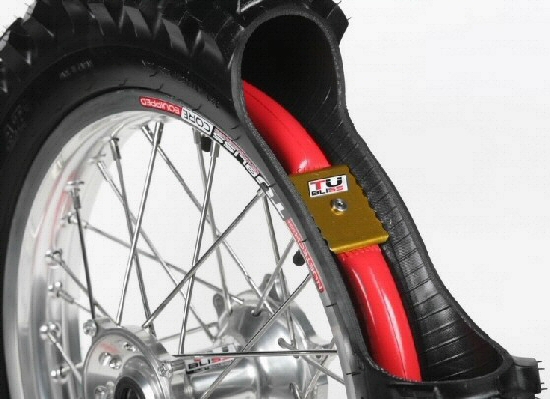
Anyway, I’m off to the Overland Expo in Arizona in a couple of weeks, a great chance to pick up some goodies in the US, including a pair of Tubliss liners (left)which enable you to run tyres tubelessly on spoked rims. As you may know, I tried doing that before without complete success.
I know Tubliss are said to be for off-road use only, but I’ve interpreted this to be an issue of legal liability on the pubic highway rather than anything to do function or real-world safety. Robin, with whom I rode in Morocco last month has run Tubliss on his TT250R all over the world for years (that’s him right with all his kit – including full camping gear).
A meekly powered GS500 with a modest payload isn’t going to tie the tyres in knots. I plan to fit the front 110/80B (59 T) K60 Scout (my review) I used on the BM in Morocco (left) and another new one for the back. The 100/90 57 H is a tempting 30% cheaper and still with a load index 230 kilos and a 130mph rating, neither of which the GS will see in its lifetime, but I’d need two so I’ll stick with the wider 110/80 at another 100 quid.
IN A LINE
Chunky, well featured waxed cotton touring jacket, but fabric coating may not suit everyone and mine leaked through the arms.
WHERE TESTED
From new on a 4000-mile ride to Morocco and back across Spain in Spring 2012 riding a BMW F650GS SE. Worn around Britain since.
• Plain, elegant design
Fits me just right
Well thought out features: velcro belt, vents, storm flap, chunky two-way zip, water-resistant zips on outer pockets and vents – and no less than 12 pockets
A rugged organic compromise between leather and Cordura
Feels more windproof than Cordura
Wax coating feels mucky and soon acquires a grubby, blackened patina where it wears on itself
Leaks through the velcro arm-cinching straps
Soon loses it good looks from new and can’t be washed
Less good in temperature extremes than alternatives: stiff when cold and sweaty when hot and humid, but bulky cut enables layering
Heavier than a Cordura equivalent
Abrades less well than Cordura or leather when sliding down a road, although the protector pads are more useful in most crashes
COST
Aerostich Falstaff page. Only sold in the US, as far as I know. This jacket was supplied free in return for Aerostich advertising in my books.
DESCRIPTION
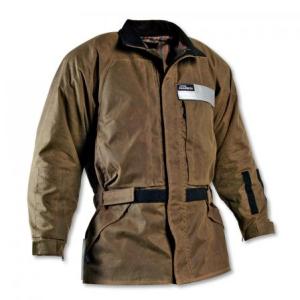
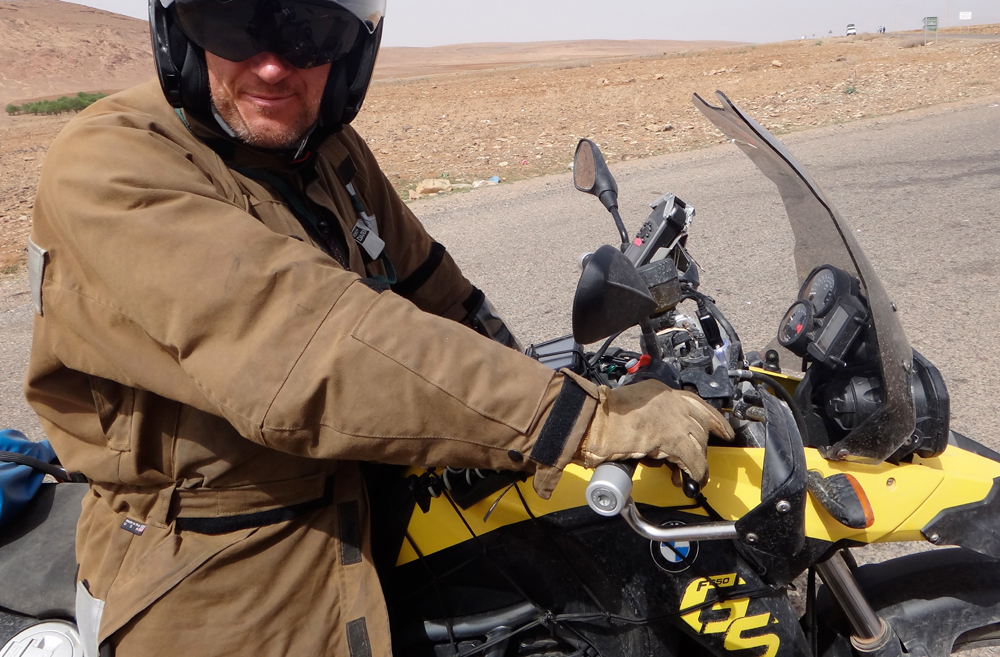
The fittingly-named Falstaff evokes a solid British tradition and is Aerostich’s only waxed cotton jacket, cut to their classic Darien pattern in a dark tan waxed cotton. Inside is a tartan or plaid cotton lining that’s de rigeur with waxed leisure clothing. The Falstaff has under-arm and a back-width vents with water-resistant exterior pocket zips and pockets galore, large and small. I was still finding new pockets weeks after receiving it. I read that the Darien is a baggier and longer cut to Aero’s other popular suit, the shorter and closer fitting Roadcrafter which you commonly zip to Roadcfrafter pants. Like all Dariens there are elbow and shoulder pads and I was also sent a spine protector, but preferring a less bulky jacket, I didn’t take any of these pads on my ride to Morocco. There are four 3M reflective patches too, though you can specify ‘no reflection’ for a subtler appearance. (I read that France now requires riders to have a certain area of reflectiveness on their clothing – hopefully no more than a typical ‘Stich jacket). In fact with Aerostich you can specify any mod you like – with a few clearly labelled exceptions it’s all made in Duluth, MN and they’re happy to oblige. Great customer service plus the cool cataloguis one of Aero’s hallmarks. The size I have is large which weighs about 2.3 kilos or just over 5lbs without the padding. Though I read complaints in reviews about short arms, they were just fine on me.
REVIEW
The Falstaff replaced my 9-year old Aerostich Darien Light. There was nothing wrong with my little-used DL, but I fancied a change and wanted to see what was new and so gave it away a an auction for the Ted Simon Foundation. On the big night my DL scored the second highest bid just behind Ted’s famous Jupiter’s Travels open face helmet. Before the Darien Light I also owned a Darien which is identical but made from a heavier Cordura fabric. I used that in BC on a very rainy ride, but found it a bit too stiff (they say they do give over time). Scanning the web for a replacement in the understated and functional Darien style was much less successful than expected. Obviously there’s plenty of cheap stuff out there, but also too much over-designed or over-priced gear for my taste or wallet. And then there’s this new trend for separate breathable liners that you wear if it’s raining/cold, or not if it’s warm. That means the outer jacket gets soaked or ‘wetted-out’ in rain which makes the inner liner’s job of breathing through it all the more difficult. As it is, I suggest in the new AMH that I doubt membrane type clothing works that well when applied to relatively passive motorcycling; sitting still in the rain at 70mph is less effective in getting the membrane working than hiking up a hill which produces sufficient energy to purge the built-up moisture as the active body generates heat. I suspect this separate breathable liners trend is nothing more than a cost saving measure that’s being sold as a ‘have your cake and eat it’ option, but I’m happy to be corrected on that.
Anyway, after an afternoon’s browsing, on looks alone I think I was heading towards a Dainese Evo or whatever cropped up used in my size on ebay when Aero offered another Darien. I like to keep trying new stuff as it’s good for the book so after some discussion we settled on a Falstaff – an ‘organic’ Darien. So you know, the Falstaff and other gear I get from Aero is a contra deal in return for an advert in my AM Handbook and associated titles. Having worn waxed cotton Belstaff clothing back in the 1970s and avoided it since, I was a bit ambivalent about going down that road again with the Falstaff but hoped things may have changed. My recollection was a robust-feeling material (compared to a regular nylon Belstaff of the era), but with a messy coating that left indoor smears on my mum’s prize-winning wallpaper, felt unpleasant to touch and was not so snug in the cold. This was all just before the Cordura + Goretex revolution in moto clothing. Out of the box the Falstaff looked great – I like that tan deserty colour, what a shame it’s now mostly gone under an oily brown patina. The fit too was just right for me once the TF3 pads warmed up.
A functional touring jacket has to be at the core of your overlanding gear; a place to stash stuff and feel protected from the elements and possible crashes.
On my ride the temperatures ranged from 1°C with snow flurries while crossing the High Atlas, to about 30°C (86°F) on the hotter days down on the Sahara’s edge; days which also coincided with slow riding and pushing the bike through the sands. I also wore heavy leather trousers, and under the Falstaff either the electric Kanetsu liner over a thick shirt, or just the shirt.
Above all I love the array of pockets – no less than a dozen, but you don’t have to use them all. I don’t like to wear daypacks or use a tank bag and so my jacket becomes a kind of ‘ditch bag’ containing everything I think I need or can’t afford to lose. It’s all there in the pockets at hand’s reach, not in a backpack that needs talking off, or a tank bag that needs removing when you’re stray from the bike. I especially like the big ‘Napolean’ pockets inside and out, and just as I was thinking of getting a pocket sewn into the back lining to carry my iPad while away from hotel rooms, I realised there was a huge net pocket inside the back vent which could take a 17-inch MacBook Pro if need be. It’s an Aerostich, I should have known they’d not waste that opportunity! (In fact it mentions that pocket on the website, so RTFM). As expected, the strong initial whiff of wax or paraffin lessened after a few weeks in Morocco, though it took a good few months to go away. It’s just about gone now but if it smelled of warm leather there’d be no complaints here! In Morocco I was deliberately wearing only a shirt plus my Aero Kanetsu electric liner to put it all to the test, and never got chilled except when I got in a muddle with the Kanestu’s switches. Even then I do wonder if a Kanetsu is essential with a chunky Falstaff. Depends where you live and when you ride of course, but if your bike can’t handle the output I suspect a thick fleece and a Merino under layer would still keep you warm – the waxed cotton feels very wind-proof, even if in itself it can’t be described as a cozy garment.
One piste I did in Morocco was a hot day which ended up with a lot paddling and pushing the GS through soft sand. At this time the Falstaff was just too hot and all the vents in all the world, including the front zipped down made little difference with a hot backwind and speeds of less than 10mph. I ended that afternoon with the liner soaked and evaporated sweat encrusted as salt on my shirt. I have to say it would probably have been the same with any jacket, but I have a feeling my nylon Darien Light might have been less sweaty or maybe just less heavy. The Falstaff can feel as hot as a leather jacket. As I neared my destination that evening and got onto easier terrain, I undid the front zip completely and let the jacket flap around and air itself out. By the time I got to my lodgings it and I were almost dry. I do wonder though if something different – more modern dare I say – could line the jacket interior instead of cotton plaid and if, as the blog guy suggests below, it might even be removable for washing, so you don’t get bogged down in washing the whole garment. As it is waxed cotton doesn’t seem to be washable with any detergent, all you can do is wipe it down with a sponge which won’t shift road grime. Something wickable maybe? Cotton is notorious for sapping away body heat when wet and had I had a long ride in colder temps following that sweaty afternoon I might have got really quite chilled. Of course powering up the Kanetsu electric vest would have seen to that.
All of which makes me wonder, does waxed cotton breathe? Intuitively I’d say no and if it does then it’s at the cost of waterproofedness, but Aero and this googled blog post (worth reading, plus his half-dozen follow-up posts) suggests it does a bit, while the chat here says not really. If it does breathe then I’d say not as much as Goretex in optimum conditions and circumstances, but a lot better than a PVC bin bag sealed up with duct tape. I must admit I never felt sweaty on the ride as I’d have done in an impermeable PVC mac, so perhaps it breathes better than I think. Knowing what wax is, I find it hard to see how while retaining waterproof qualities, unless the wax-impregnated cotton fibres swell when wet (like cotton tents supposedly do) to seal against rain, then as it dries a little porosity returns. Interestingly, I’ve also learned that ‘oilskins’ is another name for waxed cotton.
My thoughts on Goretex
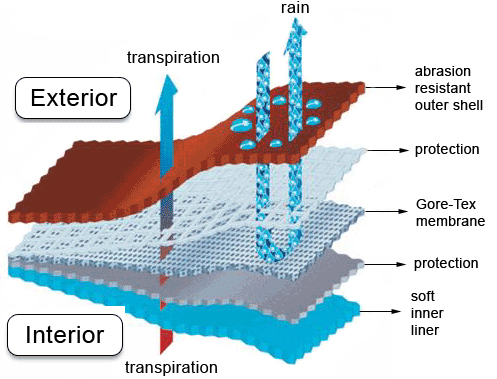
Like the blogger, part of my rationale in thinking the Falstaff was a good choice was that unlike GoreTex, wax cotton can be reproofed indefinitely, just like an old pair of leather boots. (Have you tried getting a pair of non-membrane hiking footwear lately, btw? – near impossible). Goretex might work well when it’s new, clean and undamaged, but as far as I know we’re talking about a cling-film-like miracle pore layer bonded onto the inside of the jacket onto which is bonded a permeable inner liner, more or less (left). Although in the middle of a sandwich, once that film gets damaged or the nylon either side gets clogged with body oils or grime, it will let in water for good and/or it won’t breathe like it did.
Goretex seems a short-term solution but you still have to marvel in how WL Gore have managed to so dominate the market in ‘waterproof’ leisure wear, although work wear, I’m no so sure. There must be something to it but I do remember thinking when it came out in the late 70s that the whole ‘condensation vapour out / no water in’ malarkey sounded a little far-fetched and I think the same now.
I really wasn’t keen on buying another expensive GTX jacket, even an Aerostich, that would require washing in special soaps and curing with DWR (surface water repellent) only to know the ‘magic film’ would eventually fail. This is a jacket that I like to think I’ll be wearing on a long trans-continental trip, not a touring holiday. The infinite reproofability of the Falstaff was an attraction and as the chat site above notes, it’s tough (maybe no more so than a 500-weight Darien; Aero say it’s a bit less abrasion proof) but also immune to melt holes from campfire sparks.
Waterproof?
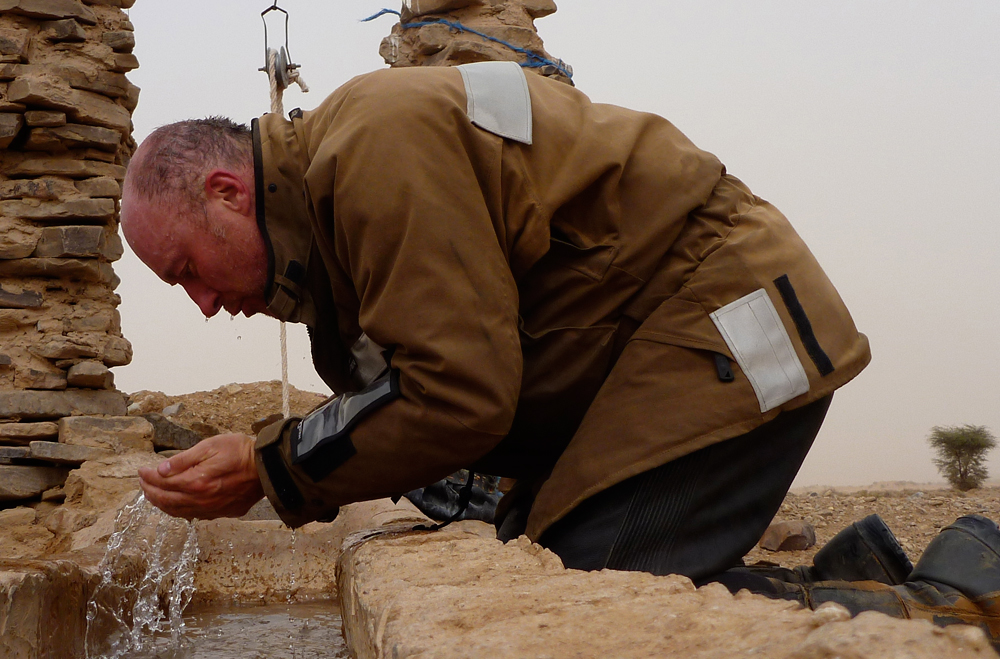
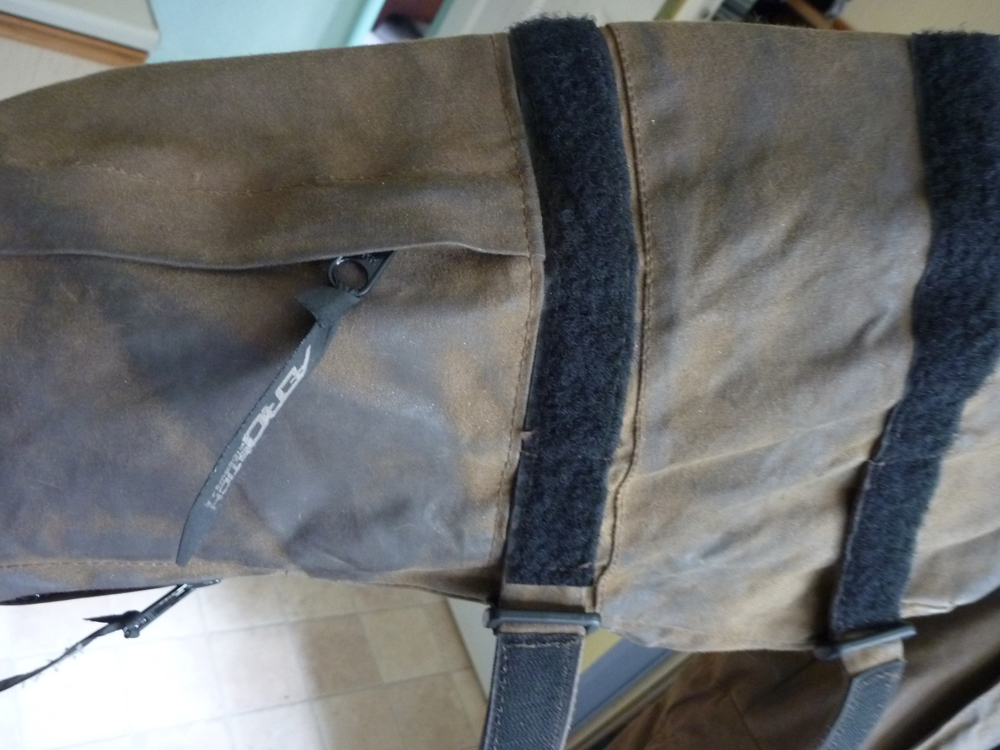
In Morocco there were a few showers. Unlike Cordura once it’s lost it’s DWR treatment, water rolls off the waxy Falstaff as off a duck’s back. There seems little possibility of the fabric letting any rain through (but see below), but of course on any garment the stitching is the weak point. I know Aero’s synthetic clothing is finely sealed with taped seams, but I’m not sure how the Falstaff’s panels are joined together and sealed. Maybe the wax impregnation takes care of it. It was on a long day across Spain that I had a chance to put the Falstaff to the rainproof test. Several short spells of heavy rain had no effect but a huge deluge let rip by early evening at which time both lightning and a rainbow where arcing across the stormy sky simultaneously. I turned off into some town to pull on the €3 waterproof leggings I’d bought in Fez (my ageing Darien pants got stolen on the Morocco ferry – I’ll miss those). By the time I turned the bike around the roads were ankle-deep in run-off and commuters were inching through the flood. Back on the motorway the rains pelted against the screen which admittedly largely protected the front of the jacket, but after maybe half an hour I felt the tell-tale twinge of wetness at the more exposed right elbow. Getting to a hotel that night after the 800-km day, I pulled the jacket inside out and the cotton lining of both arms was damp. It had then come through the Kanetsu vest (not turned on) and a thick cotton shirt. Nowhere else had let the rain through, neither pockets or front zip nor even the cuffs exposed by the BM’s undersized hand guards, nor the neck with its suede trim. The front inside lining had soaked up some run-off from the overtrousers. (Amazingly the cheap overtrousers held up and so did my leather boots which I’d waxed before departure and got quite a beating on the dirt in Morocco. I attribute it to wearing thin socks that day which were loose and so are slow to wick in any leaks – or perhaps the well waxed boots just simply worked – like a waxed jacket should…) My theory is that the rain leaked through the sewn-on velcro straps (left) which cinch in the sleeves to stop them flapping, hold the elbow pad in place or to reduce the air gap to keep you warmer. Many bike jackets seem to have this feature now. Without cutting the lining open it’s hard to tell if the velcro seams are glued and taped from behind. It doesn’t feel like it and on the inside of waxed cotton that would be tricky anyway. But if that’s a weak spot it’s surprising Aero didn’t think of it or owner reviews mention it.
In summary, my reticence with the Falstaff is the same as with any waxed garment, the ‘ickyness’ of the weatherproof coating. It’s something you only notice when putting it on, using the pockets or walking around, but you wouldn’t want to slump onto your mother-in-law’s albino calfskin sofa in it. Like leather it certainly steadily acquires characterful creases, unlike a nylon Darien or any other synthetic moto jacket.
Update
Six months from originally writing this, I have to say the Falstaff hasn’t grown on me. I don’t particularly relish putting it on as I do with favourite clothing, because of the feel and appearance of the waxed cotton; that stuff won’t wash off with soap. The jacket now looks like I’ve used it to make several messy oil changes under a car. Waxheads know it’s just the polished wax coating, but some civilians will just perceive you as another grubby biker. Then there was the annoyance of popping a car satnav into one of the outer chest pockets during a downpour – it never recovered. The pocket was wet inside; now I know I should have used an inside pocket, but as you’ll see below, even that is not immune. I’ve since performed a EU-accredited suction test: clamping your mouth around a bit of fabric and sucking. On a plastic bag – full seal of course, no breathing possible; on unpolished parts of the Falstaff like the back, slow suction possible, but slightly more than on my near-new breathable Rab Bergen Event™ jacket. On the grubbier, patina’d front pocket of the Falstaff, notably more suction possible – the fabric here is more breathable and so less waterproof than other sections. Perhaps it all just needs a light reproof on the shiny sections followed by a hair dry, as this article recommends.
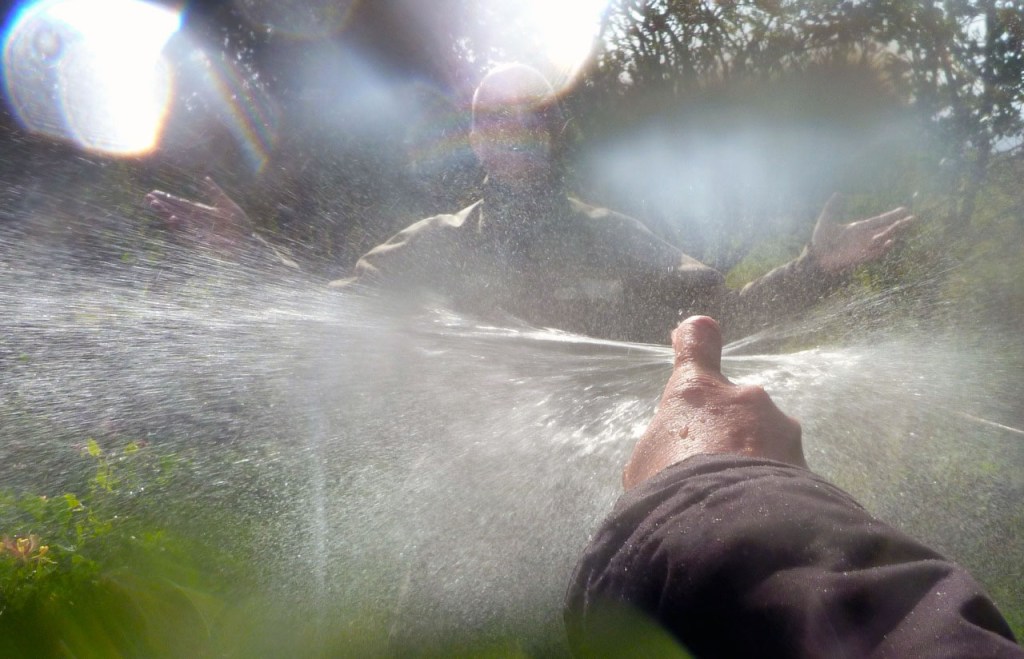
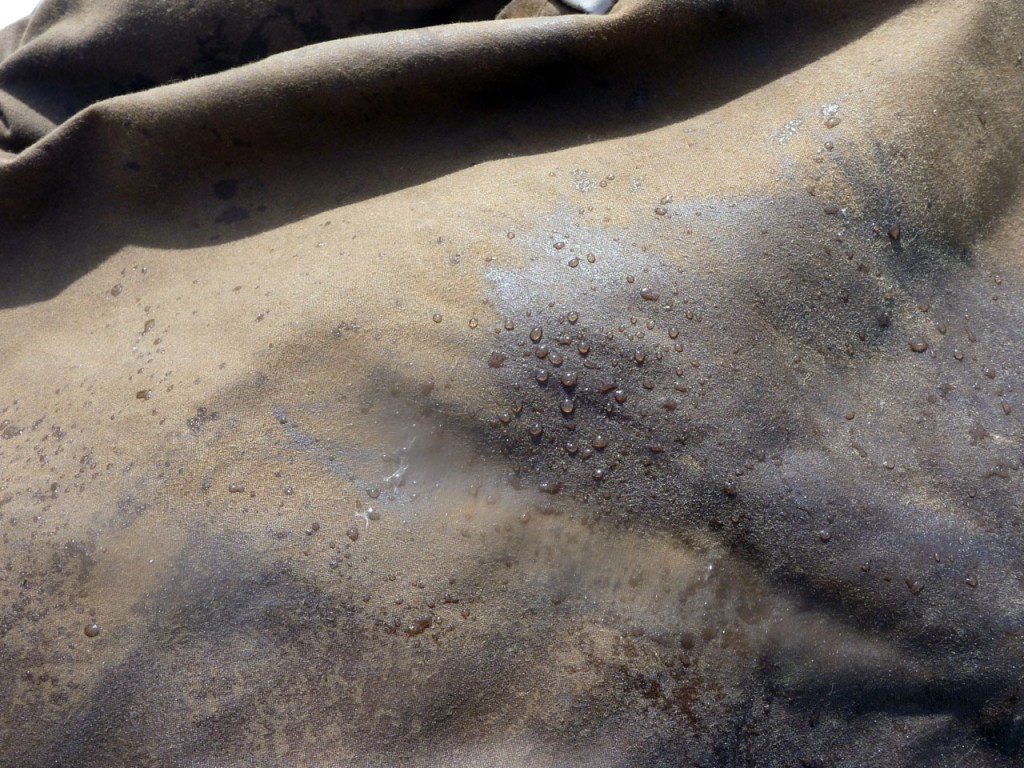
I’ve since carefully reproofed the pockets on one side of the front with Granger’s Waxed Cotton Dressing which as expected failed to resort the Aero’s original sandy colour – in fact it’s gone quite dark and shiny, but at least dried to a less waxy mess than I anticipated. It certainly doesn’t look as good and smart as when it was new, but I got the g-friend to give me a damn good hosing (above) and the re-waxed outside pocket was dry inside, the patina’d one on the other side damp. And on the shoulder where I reproofed a bit, the droplets clearly pool on the wax while they get absorbed into the original, unpolished matt, tan section. So reproofing looks like it works but will re-patina and in my opinion ruin the jacket’s original appearance.
In a couple of weeks I’ll be riding back south to London during which time I’m bound to get rained on. More news then but as I’ve written elsewhere, to keep dry from all-day rain, whatever you wear, get an impermeable one-piece riding suit in coated nylon or better still, PVC, like the old style Rukka (left).
A couple of weeks later…
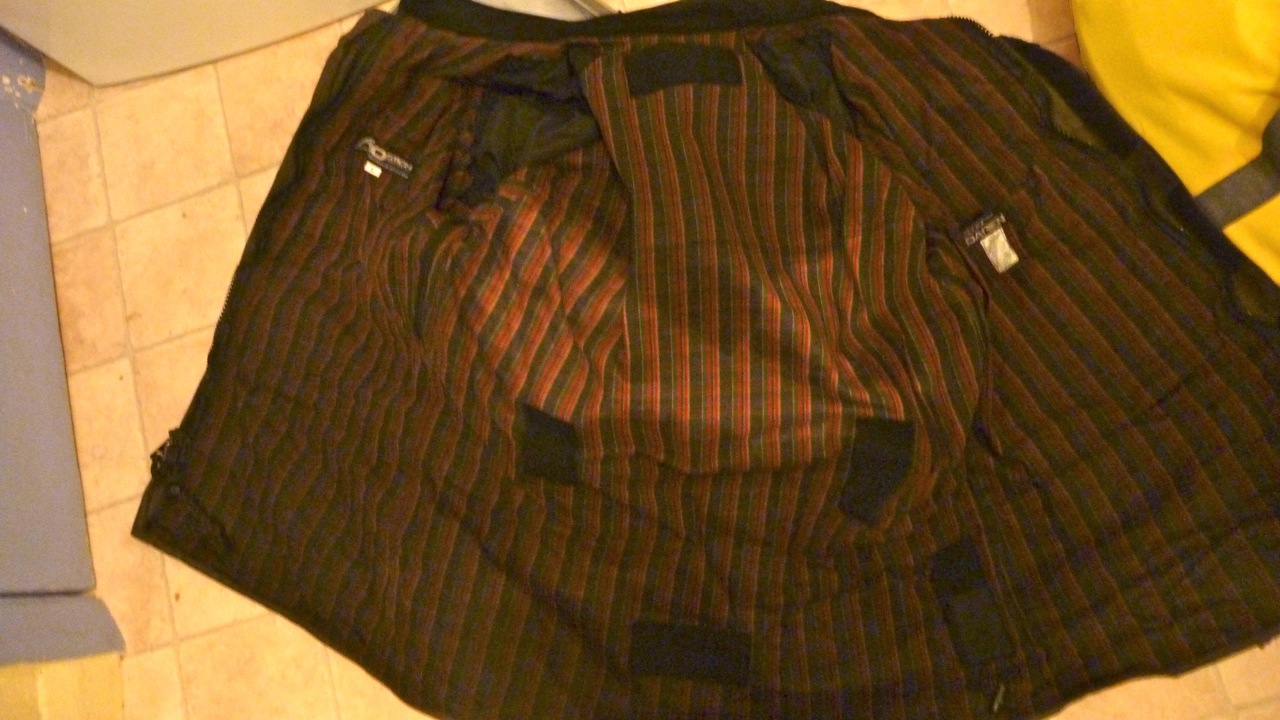
I got rained on. At the end of a cold, 450-mile day, for two hours on the motorway and another two across town the skies let go. I pulled on my Rukka one-piece over my legs which stayed as dry as, same as my boots which I waxed months ago. But within an hour I could feel wet arms, as in Spain months earlier. And when I got back home I found the entire lining of the jacket was wet apart from a small patch in the middle of the back (below).
The inside pocket was wet with my phone and wallet – one place you hope to be dry. My thick merino cardigan was damp but kept the wet off my trunk, but the arms were soaked right through. Exterior pockets that I had judiciously wax-proofed a fortnight earlier also had wet contents, maybe through the zip. The jacket took a day or more to dry. Imagine being mid-trip and having to put on a sodden Falstaff for another long day at 6–9°C. It’s possible that seepage through the jacket’s leaking arms may have spread right across the lining, but whatever the reason, it was soaked inside. Not good.
PS. I’m informed the similar £500 Belstaff Trailmaster comes with a ‘waterproof seam-sealed jacket in light coated nylon‘ … and in the US this Melville wax jacket from Rev’It comes with a removable Hydratex waterproof membrane liner. I believe ‘oilskins’ must work on a certain level but there’s a message in there somewhere.






















 Adventure Motorcycling Handbook