In a line: Looks cool and works great with Qwik-Strap goggles, but not practical.
What they say The iconic legend has returned! When the original Moto-3 was created back in the late 70s it was a product ahead of its time. Quickly becoming the industry standard in performance and style, today’s Moto-3 is everything it was style-wise, with the added benefits of modern safety and production advancements. From the fiberglass composite shell to the EPS-lined chin bar, we left no detail unpolished. The solid colors use the original style terrycloth liner, which is removable and washable.
What I think:
• Looks cool • Feels light • Chin guard not too close • No visor hinges or other fittings to break • Works well with Qwik-Strap goggle straps • Good price, compared to recent X-Lites • Yellow
• D-rings a bit fiddly and pin-down stud came away • Not full visor protection; the old bug or chip will get through • As unaerodynamic as it looks
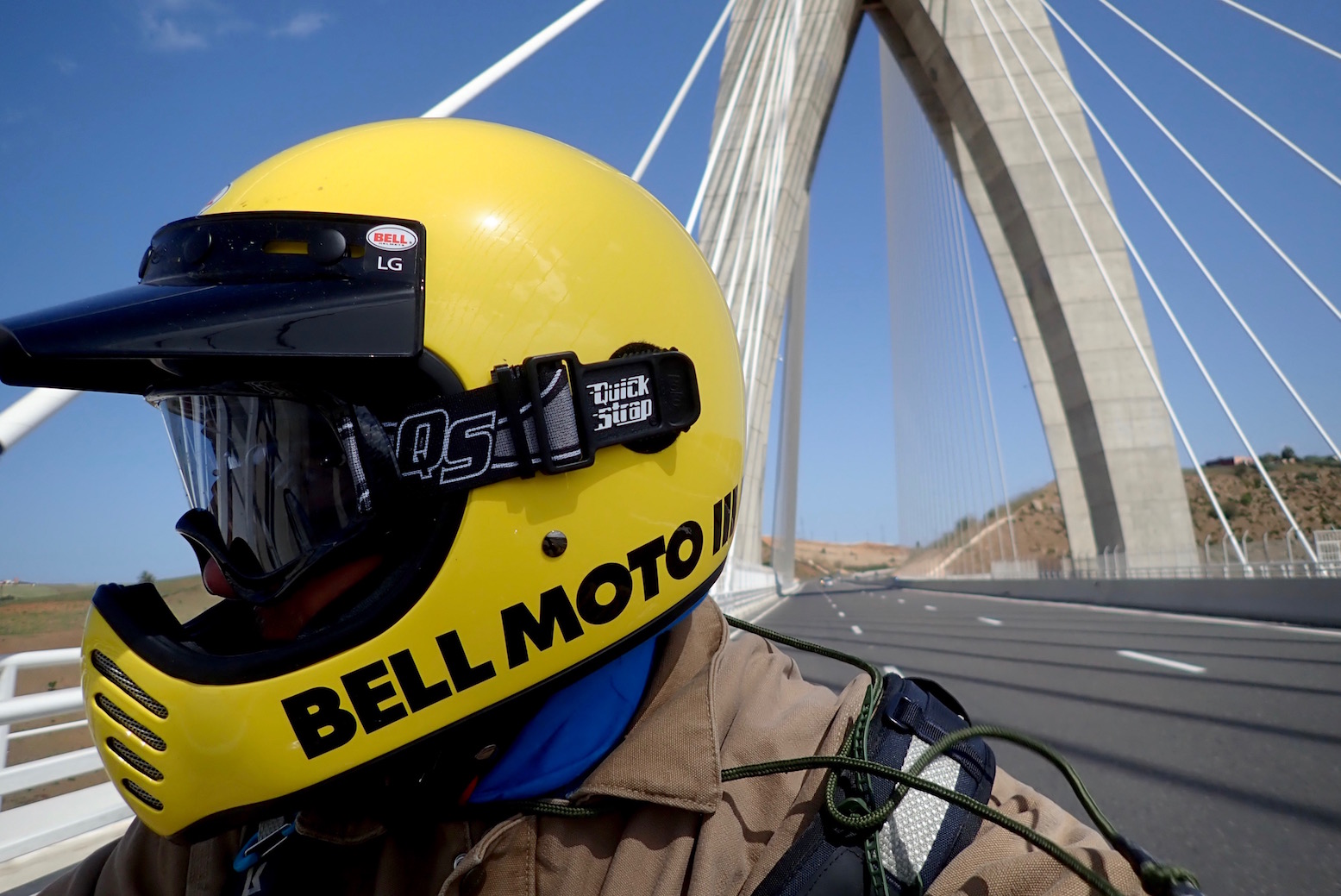
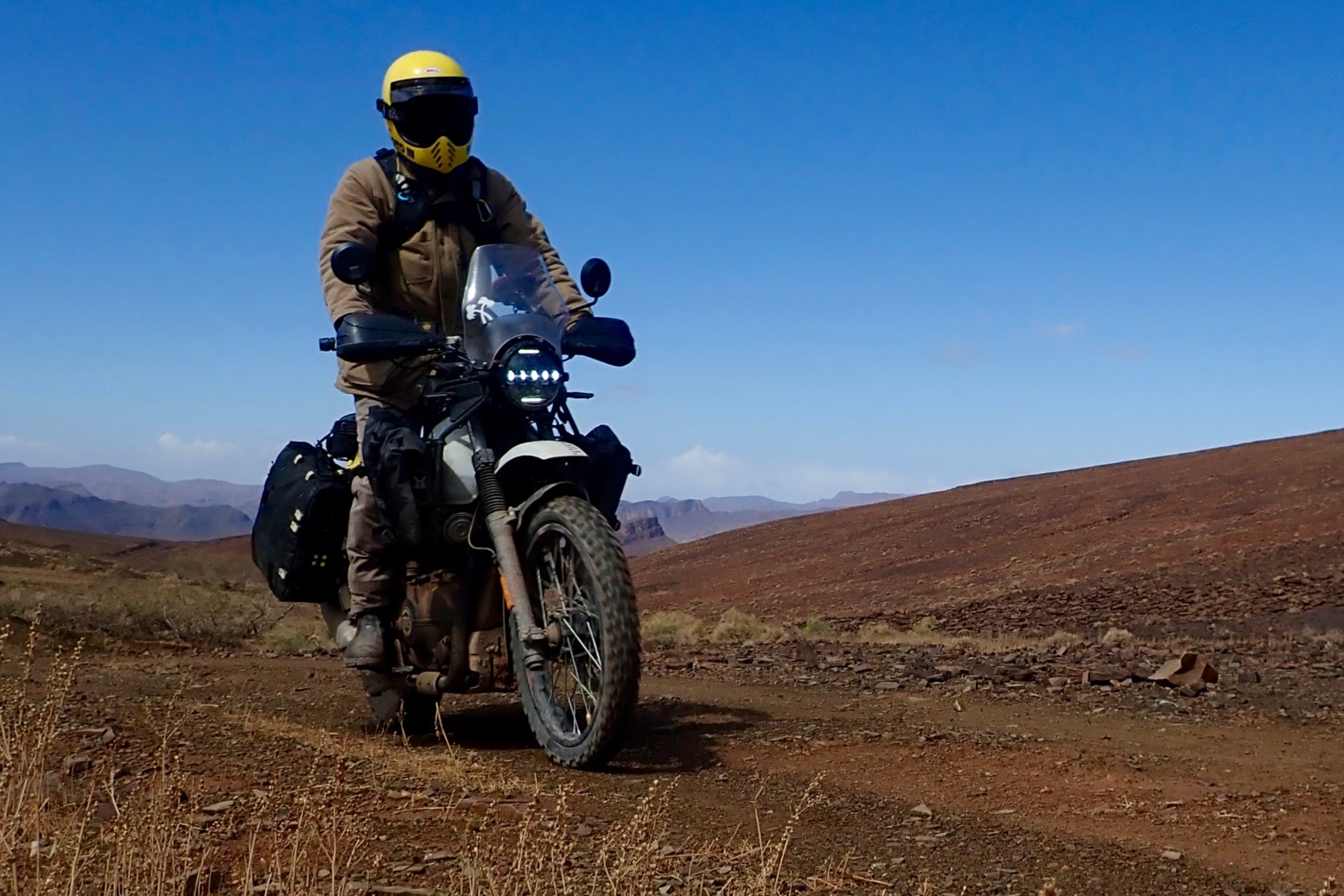
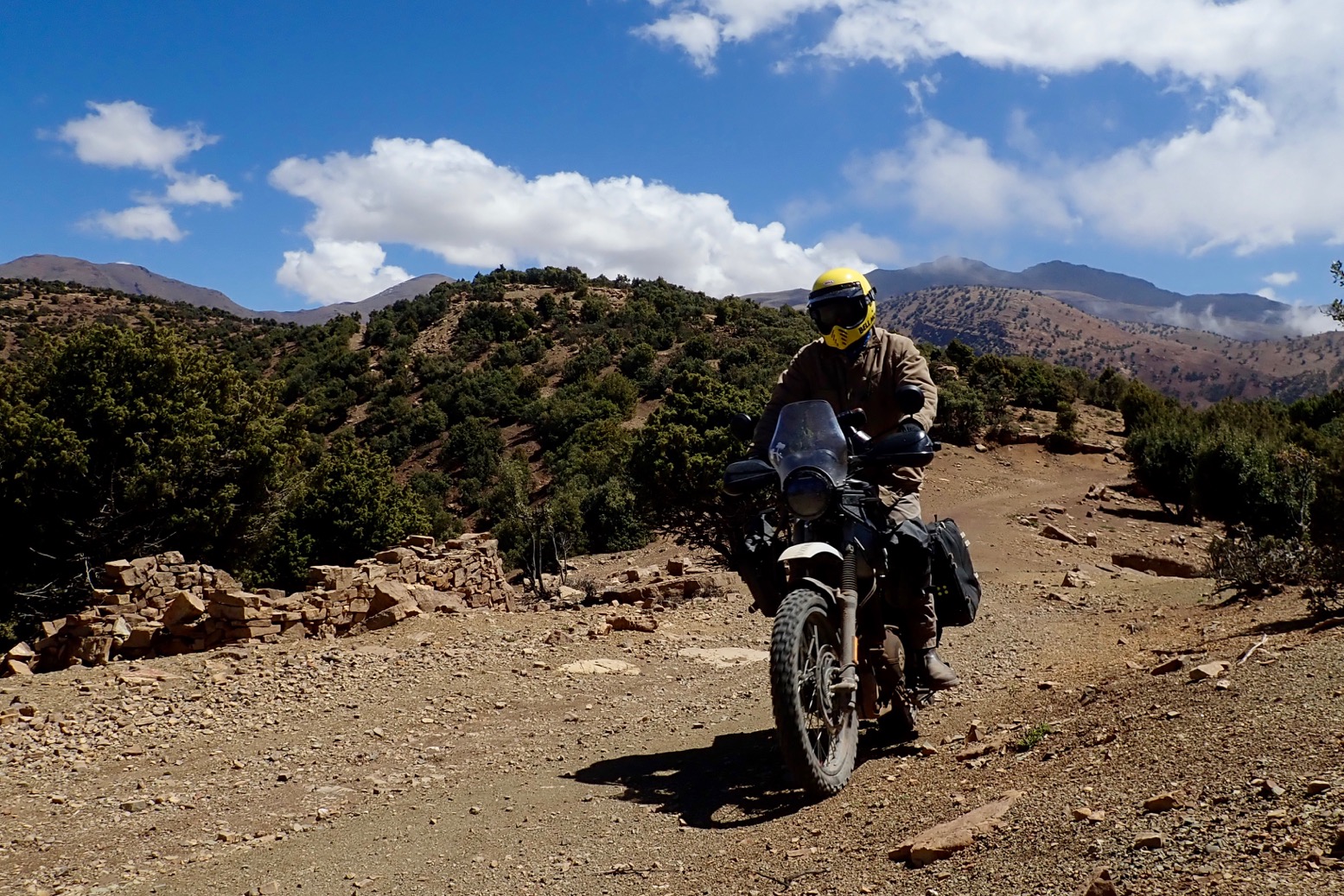
Review For years I’ve been mostly wearing a costly open face X-Lite 402 or an inexpensive Bell Mag 9 with full face visors. Best thing is the great visibility and protection plus you leave it on to talk to people (less faff with glasses, too). But sometimes I miss a full face’s ability to be securely cable-locked to the bike via the chin bar (doing so via the D-rings never fooled anyone). And it has to be said thee types lids look good too. I don’t usually get on with ‘in your’ full face lids like an X-Lite X551 I tried, but after few thousand miles the BellMoto III has suited me just fine. The wide aperture and the fact that the chin guard isn’t right in against your mouth makes it unobtrusive on the road while not feeling too claustrophobic when not on the move. Usually I can’t wait to get a full face helmet off my face. I’ve been riding a Himalayan with a low screen at no more that 65mph, and at that speed buffeting or neck strain hasn’t been a problem. There’s no annoying bobbing around and the wind noise is what you’d expect when riding a motorbike. Inside the lining has a nice, towel-like surface (terrycloth they call it) and all of it removed and refitted easily after washing – not all lids manage that. Only the double D-rings can be a bit fiddly – I seem to recall the X-Lite does it better.
I had an original, but beaten up old Moto III in the early 1980s – a nice-looking lid but as cozy as a brick-like inside. Goggles were always a bit awkward to move easily one-handed while riding. Decades later we have Qwik-Straps which I tried in Algeria last year and bought again for the Moto III.
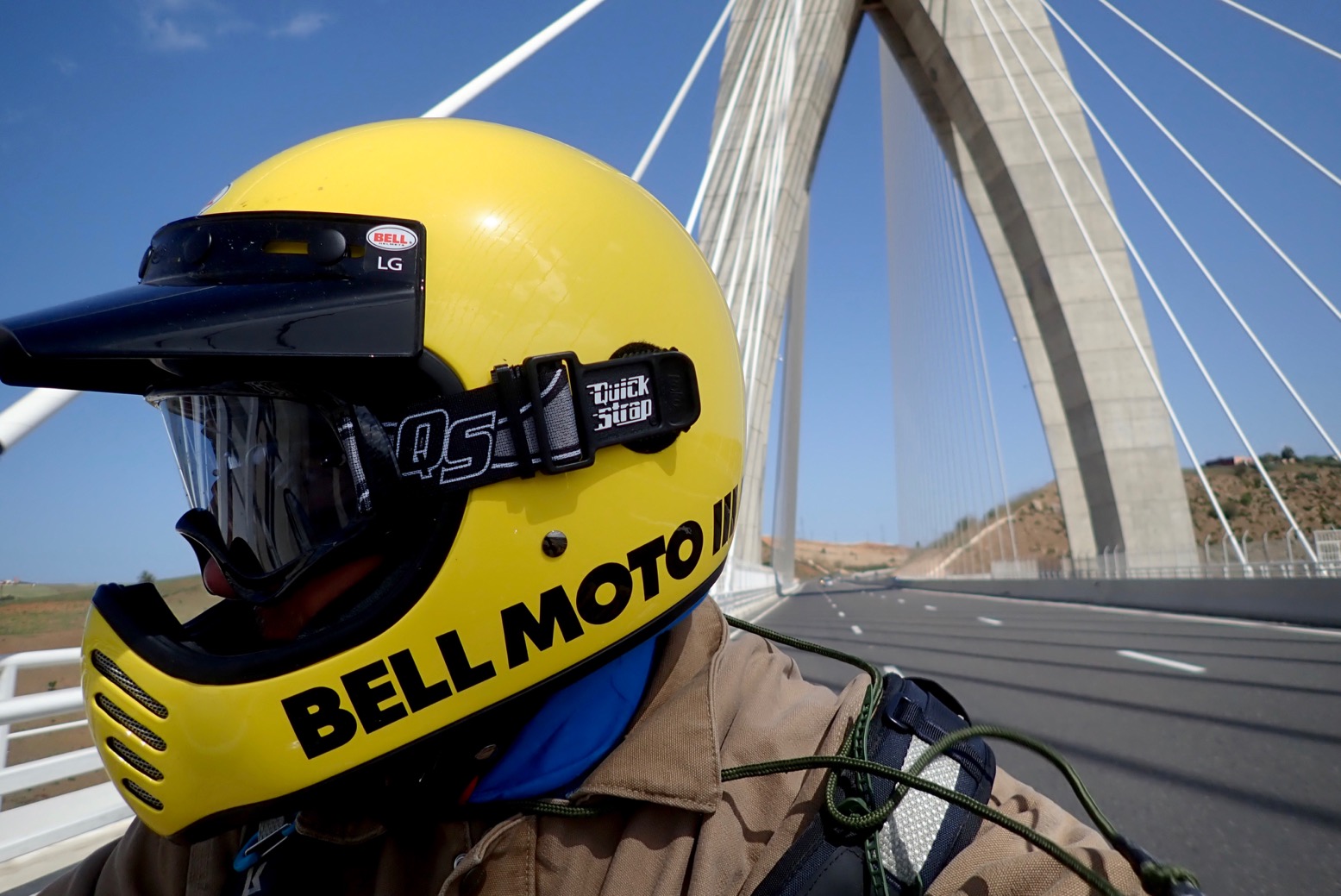
As you can see in the pictures, two short straps fit in your regular goggle anchor slots, then two separate attachment pads glue to the side of your lid. One is velcro (best fitted on the left); the other is a clip-and-pivot stud. Clip the right strap to this pivot then pass the goggles over your face attach to the velcro. Undo the velcro and the goggles swing down to the right. Or – as I got used to doing – unvelcro and swing the goggles over to the back and re-velcro. Goggles are securely out the way but not dangling. It’s a clever system which definitely helped make the Moto III a much better travel lid than I expected.
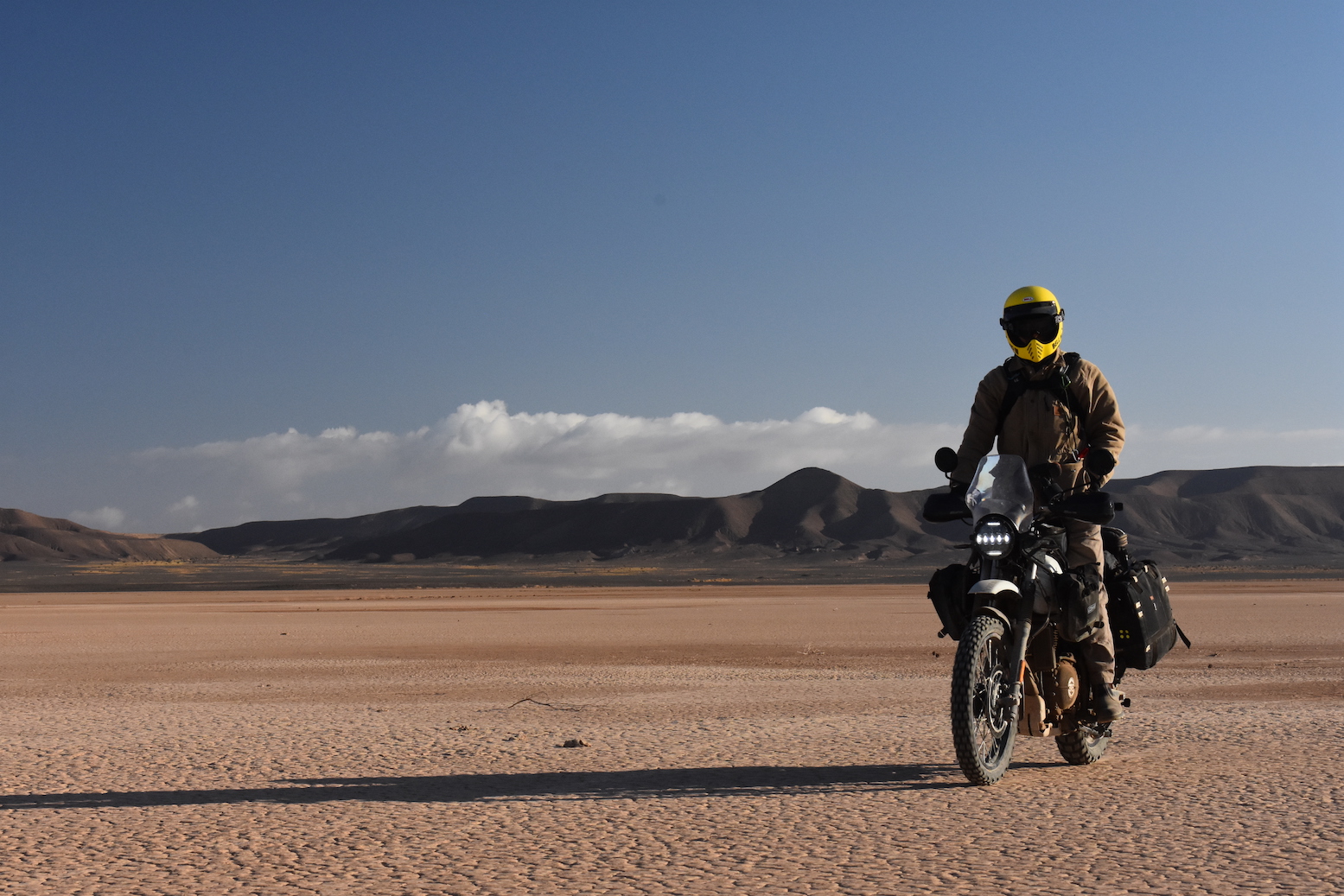
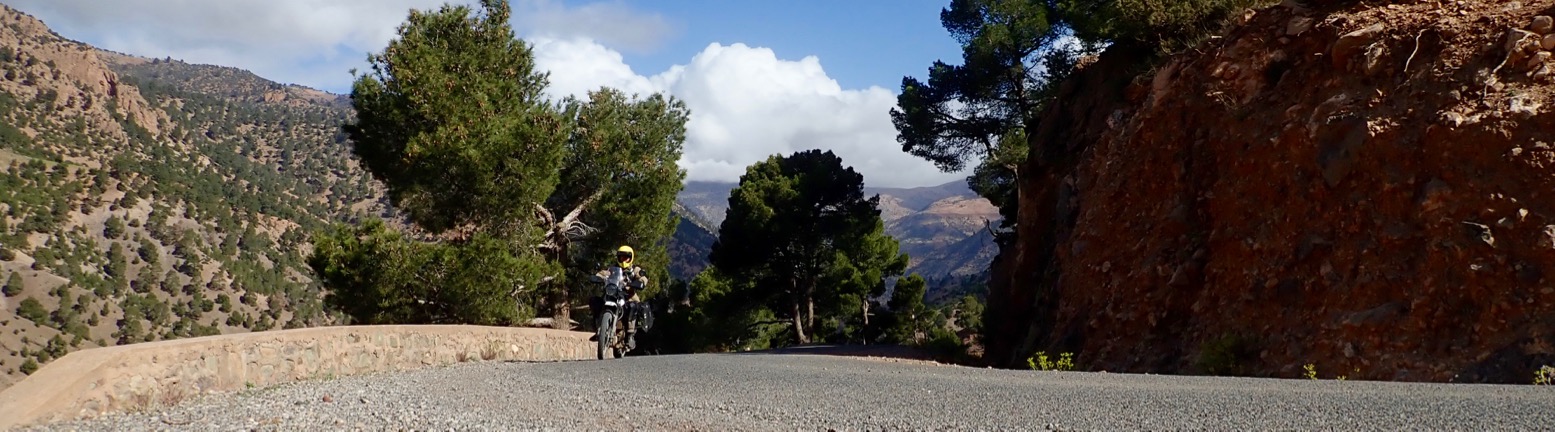
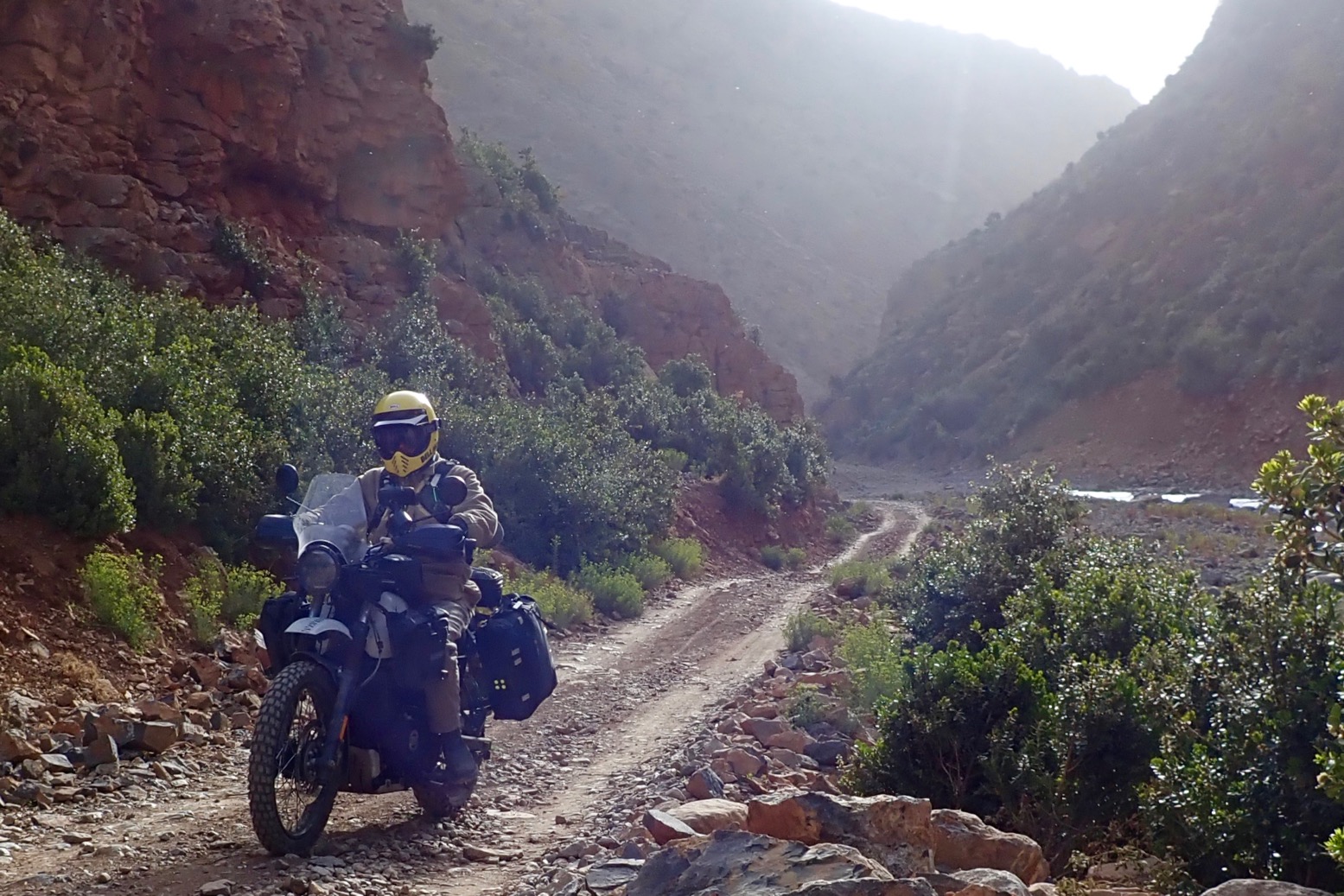
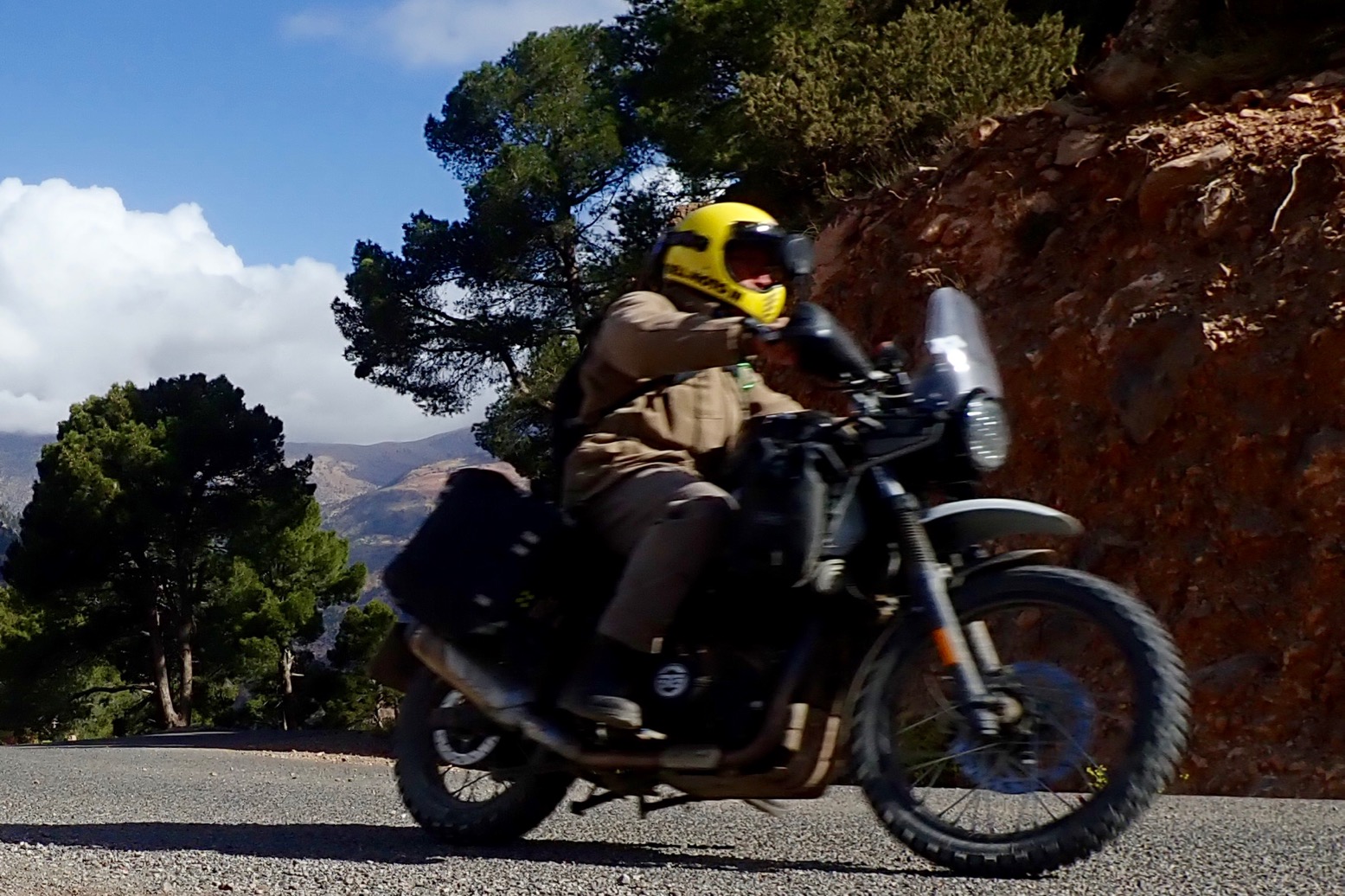
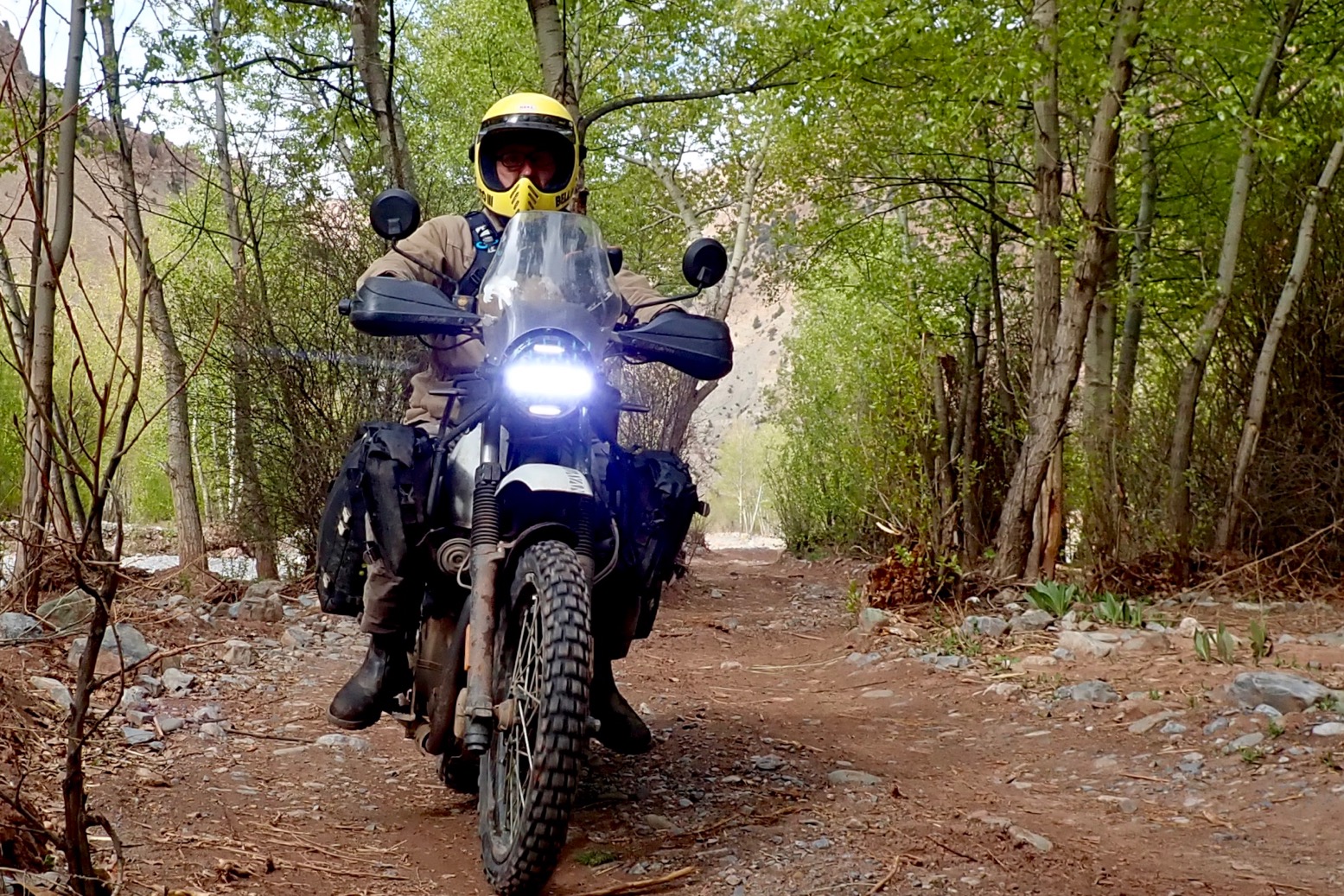
I enjoyed riding around in my Moto 3 but after one final ride in Morocco in 2025 (below), I sold it. For what I do: stopping frequently, riding slowly, taking pics and making notes, an open face full visor lid like my HJC suits my needs much more.
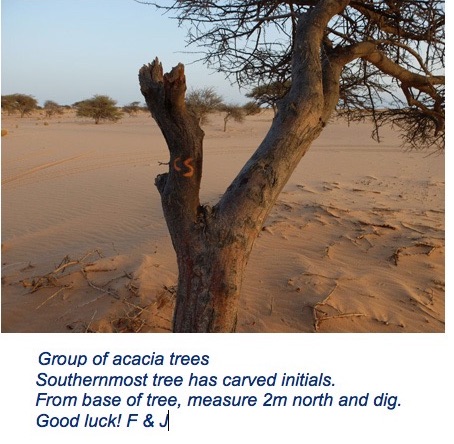
With back up from Mark in a 4×4 sat alongside Colin on a Nikon, we set off for the 1100-km ride from Assa through the Western Saharan interior to Dakhla via Smara and the Digtree (left), a fuel cache I had buried in 2015. I tried to get there alone on a WR250 in 2017 but when push came to turn left, it felt too risky.
The fuel may have been getting a bit ripe by now, but all was going well until I hit irreparable tyre troubles just 100km from the Digtree. I limped back 250km to Layounne, got fixed up and, now out of time before I meet my tour group, we settled for a leisurely drive north up the windswept Atlantic coast. Not for the first time, my Sahara plans slipped through my fingers.
Hooning about on a clay pan.
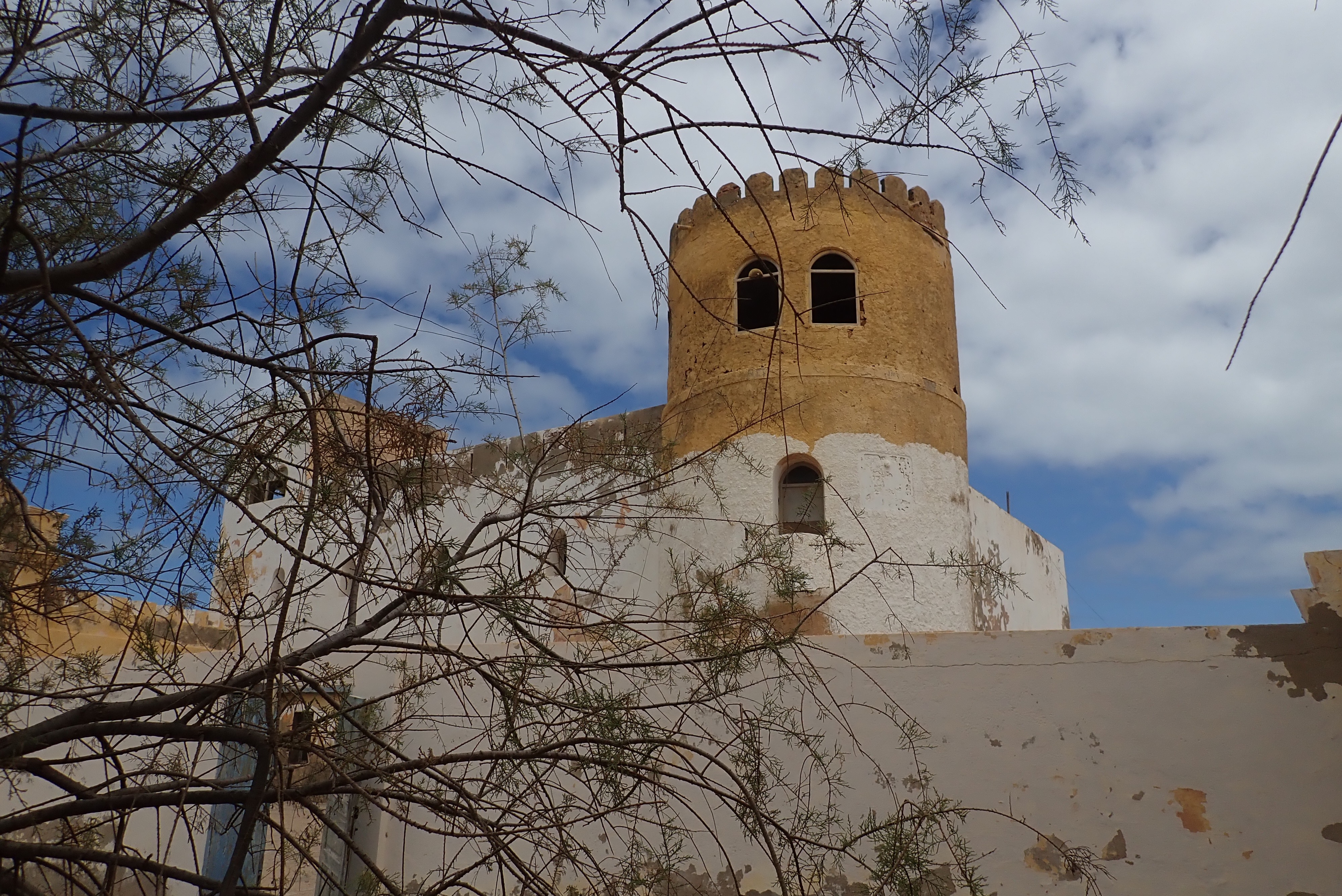
The century-old Aéropostale base at Cape Juby (Tarfaya).
Inside the base.
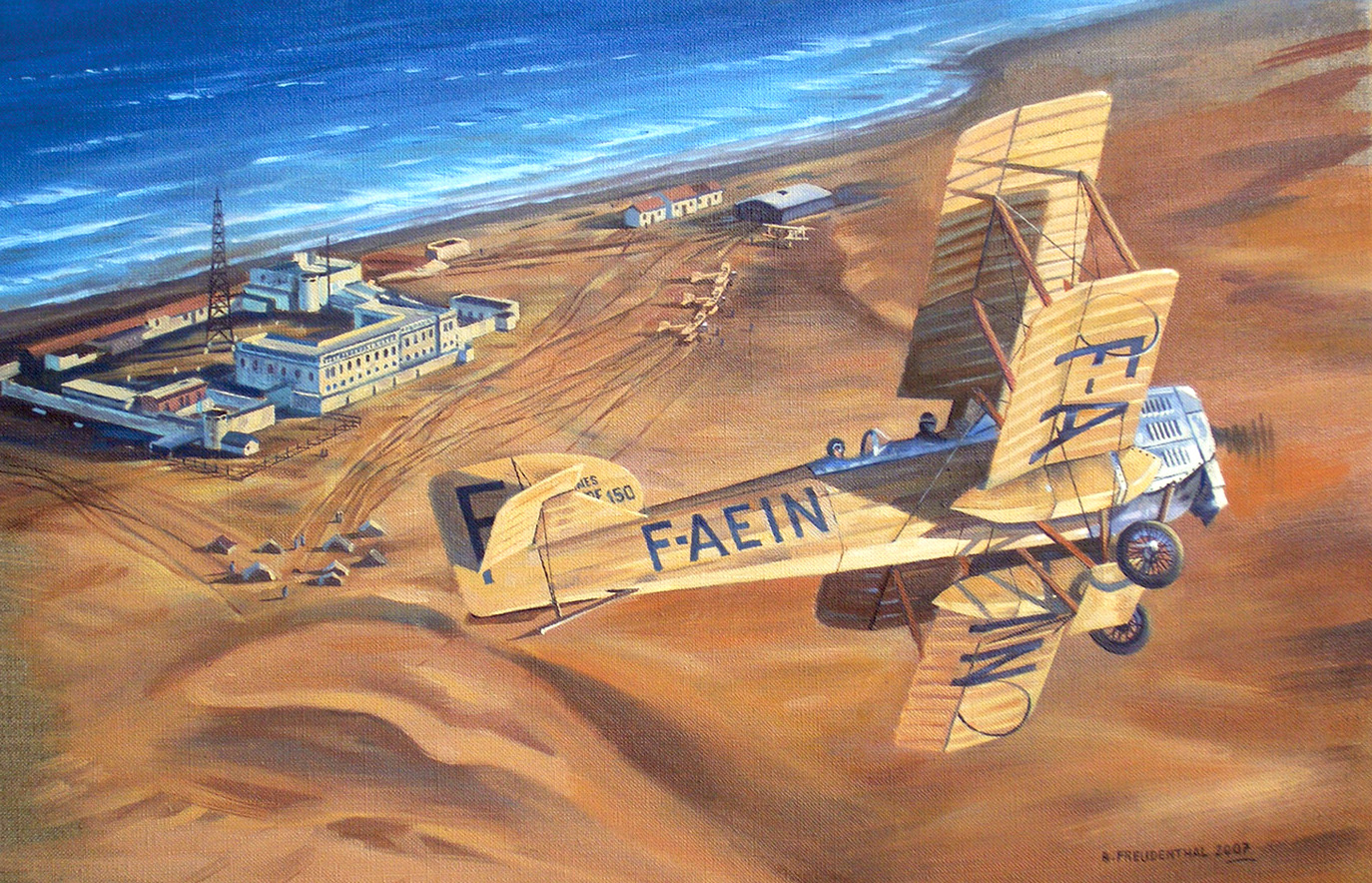
Cap Juby in its heyday.
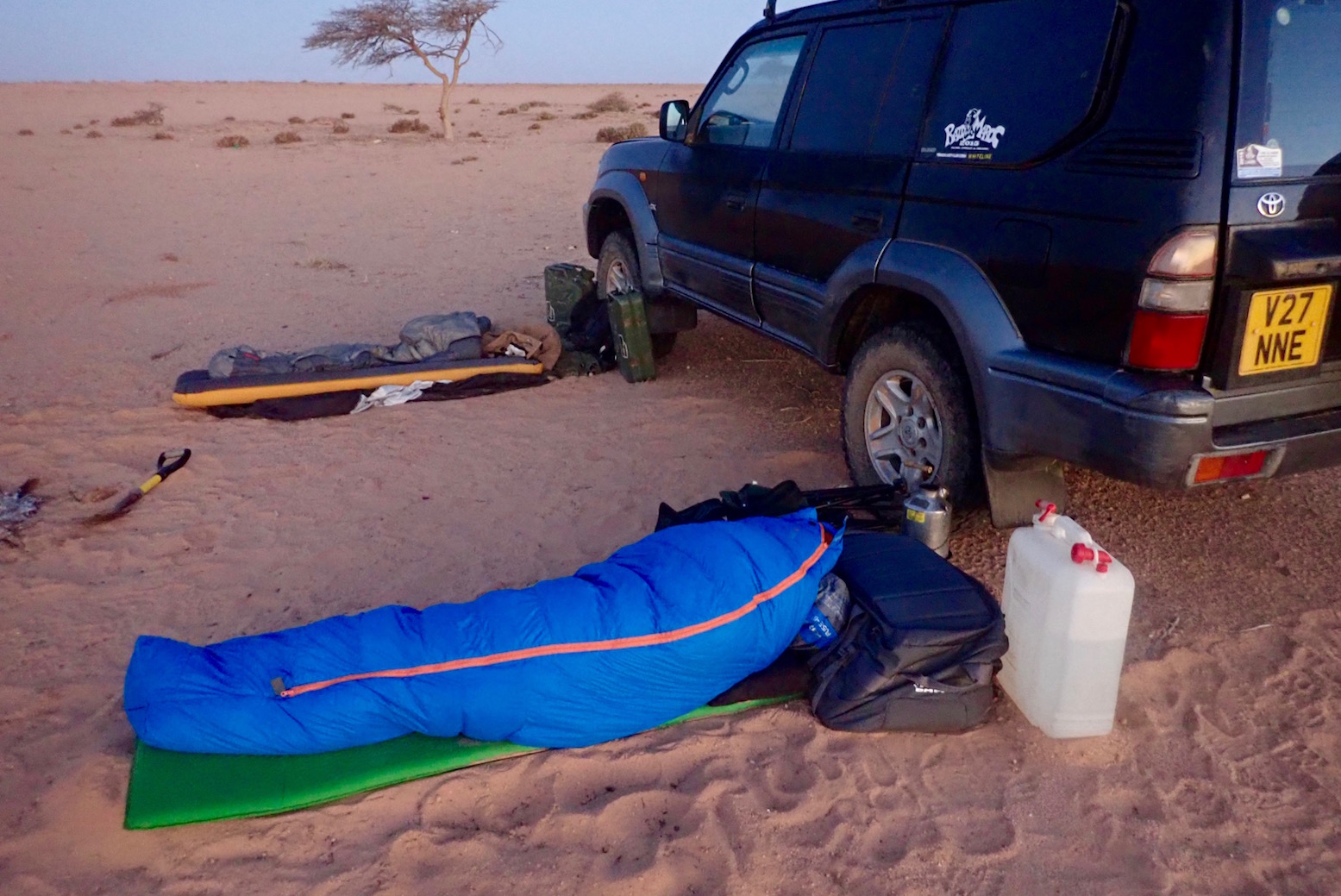
Tojo wheels + jerries – the only windbreaks for miles.
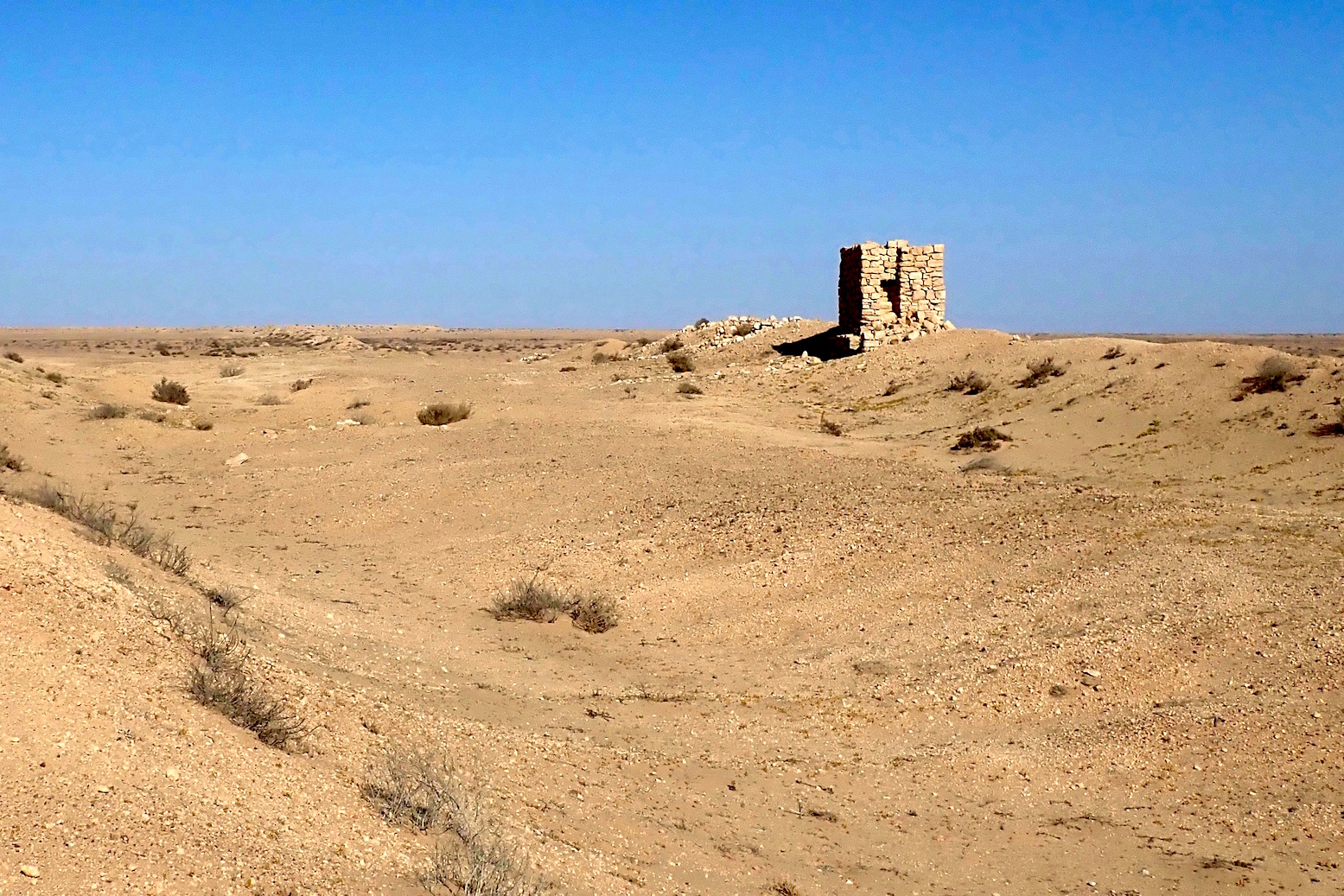
Watchtower on a berm just 50km from the Mauritanian border.
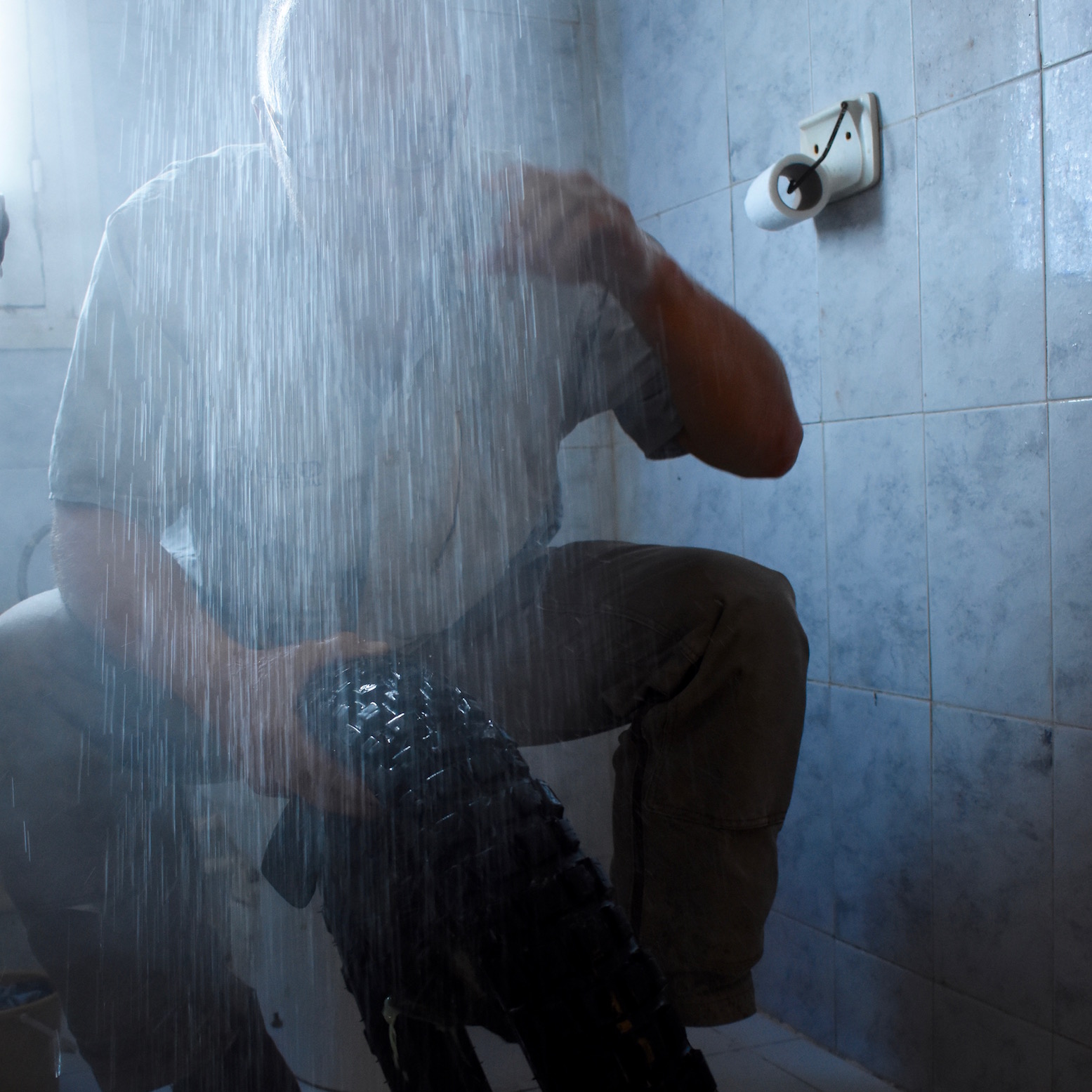
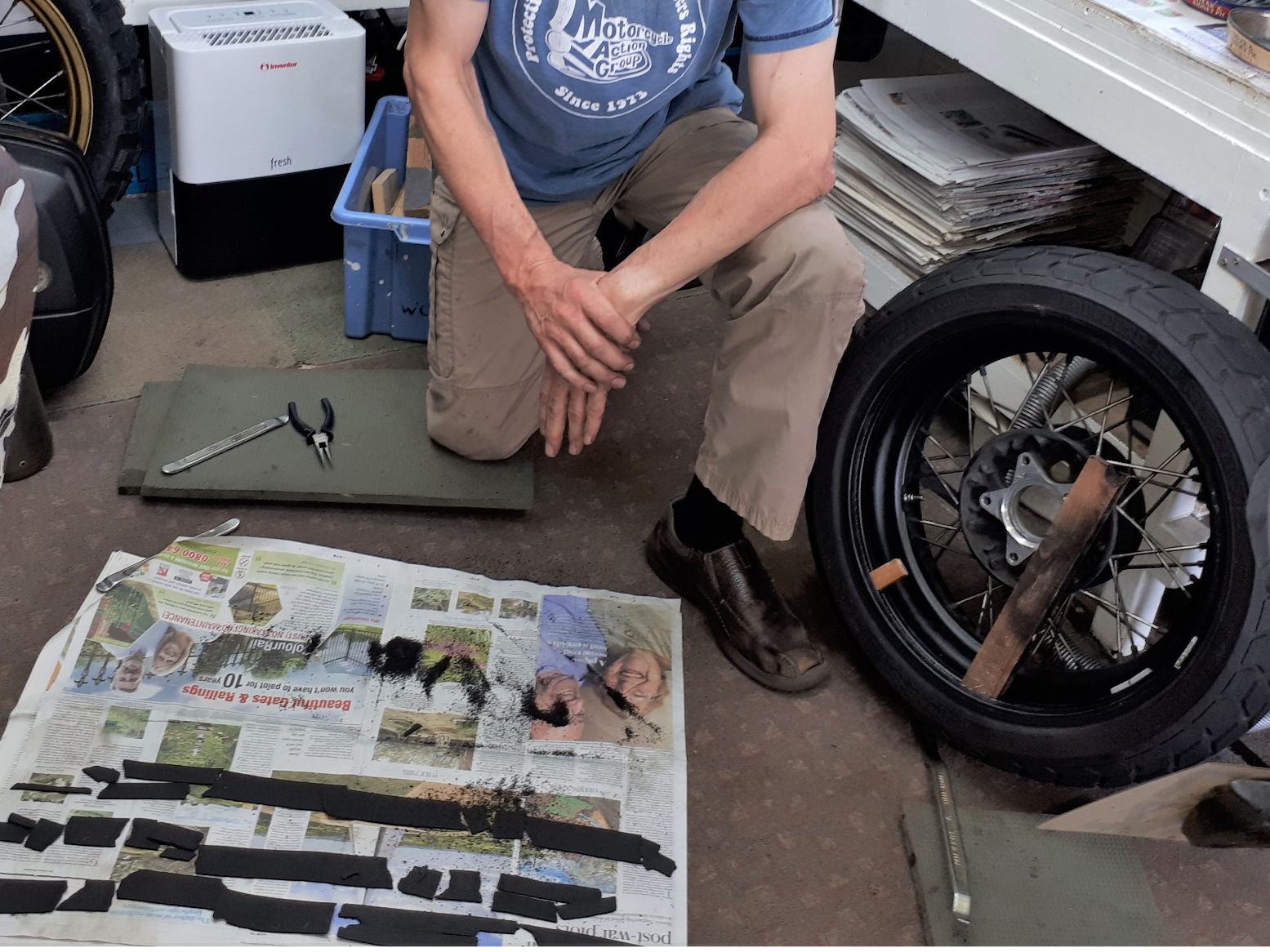
Hot steam and rubber. Cleaning out the Slime.
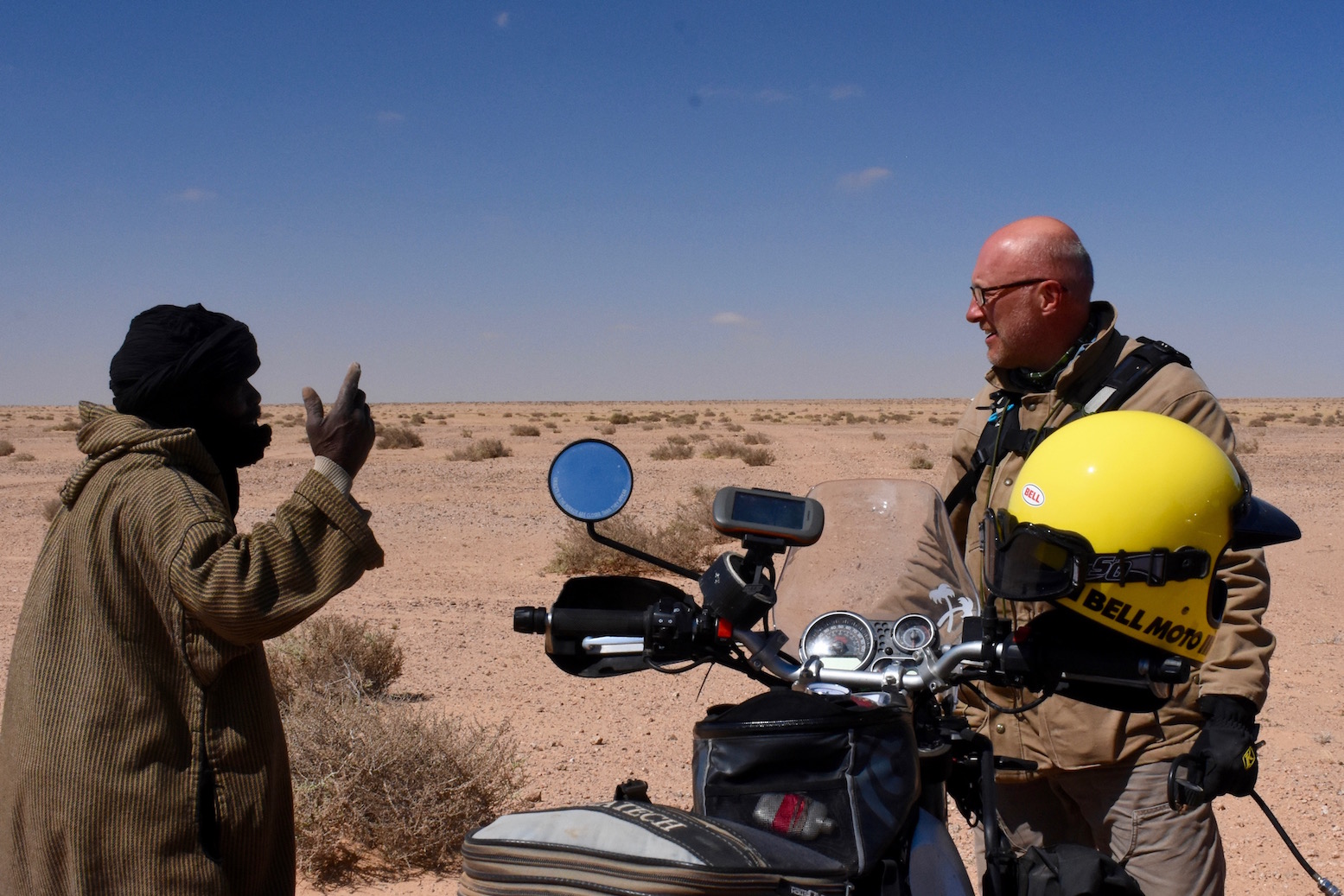
‘Moto – Landrover – Layounne?’ I point to each and try and persuade a Saharawi to transport my bike to the coast.
Churned up, sandy gorge at MW6 KM246. The Himalayan meets it’s limit.
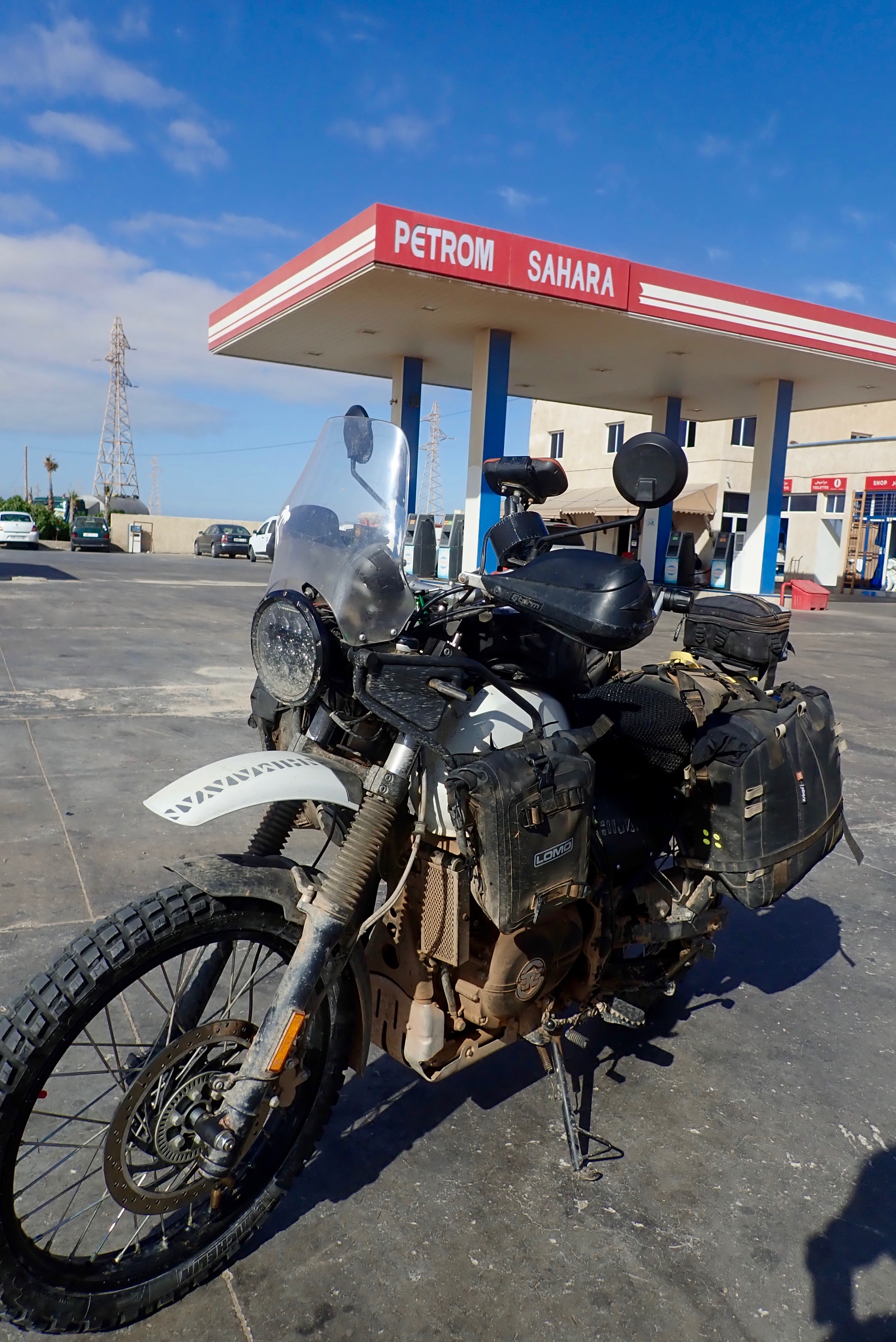
They like the word Sahara out here.
Crossroads where MW6 joins MW7. Came from the left on the WR in 2017.
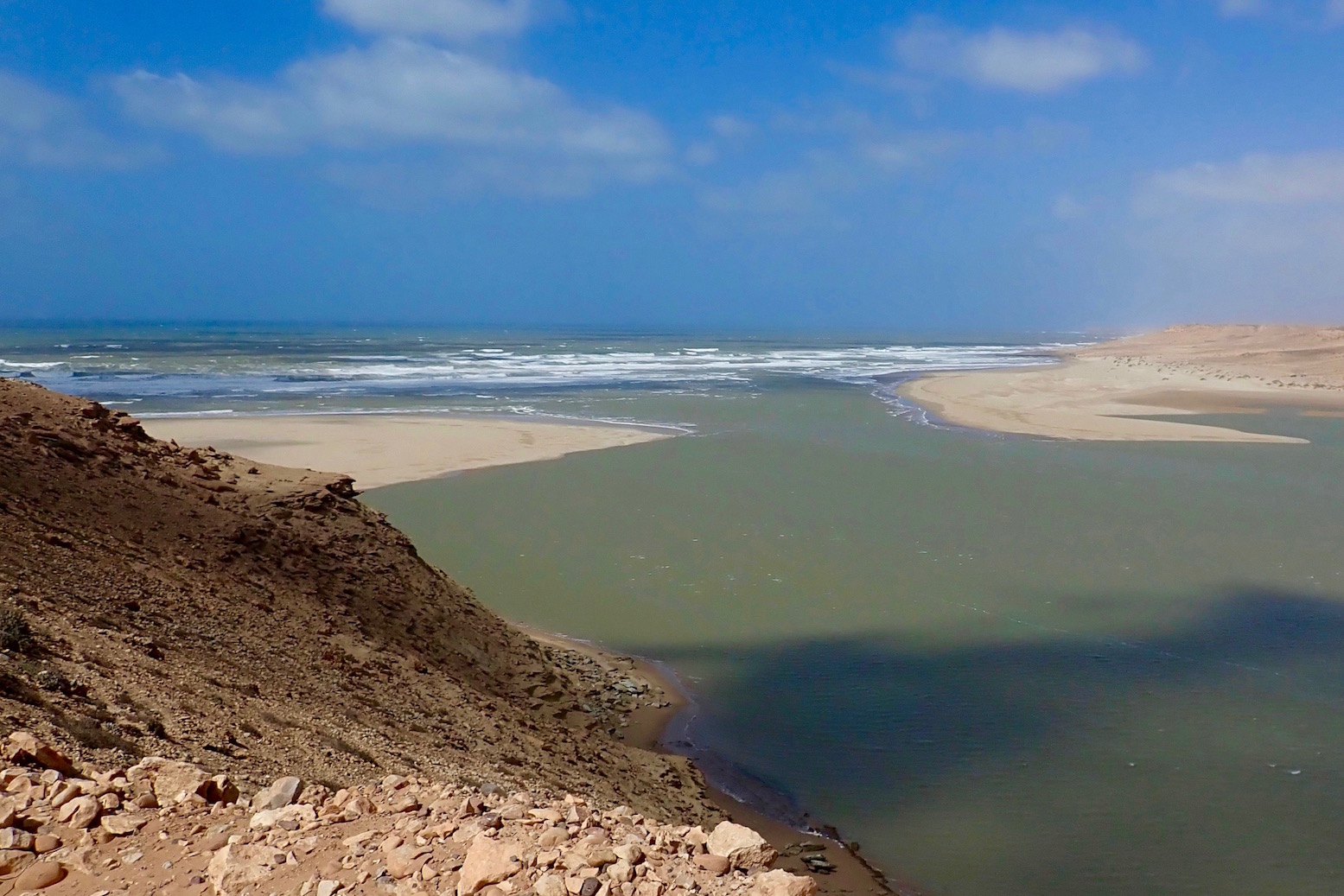
Khnifiss Bird Lagoon.
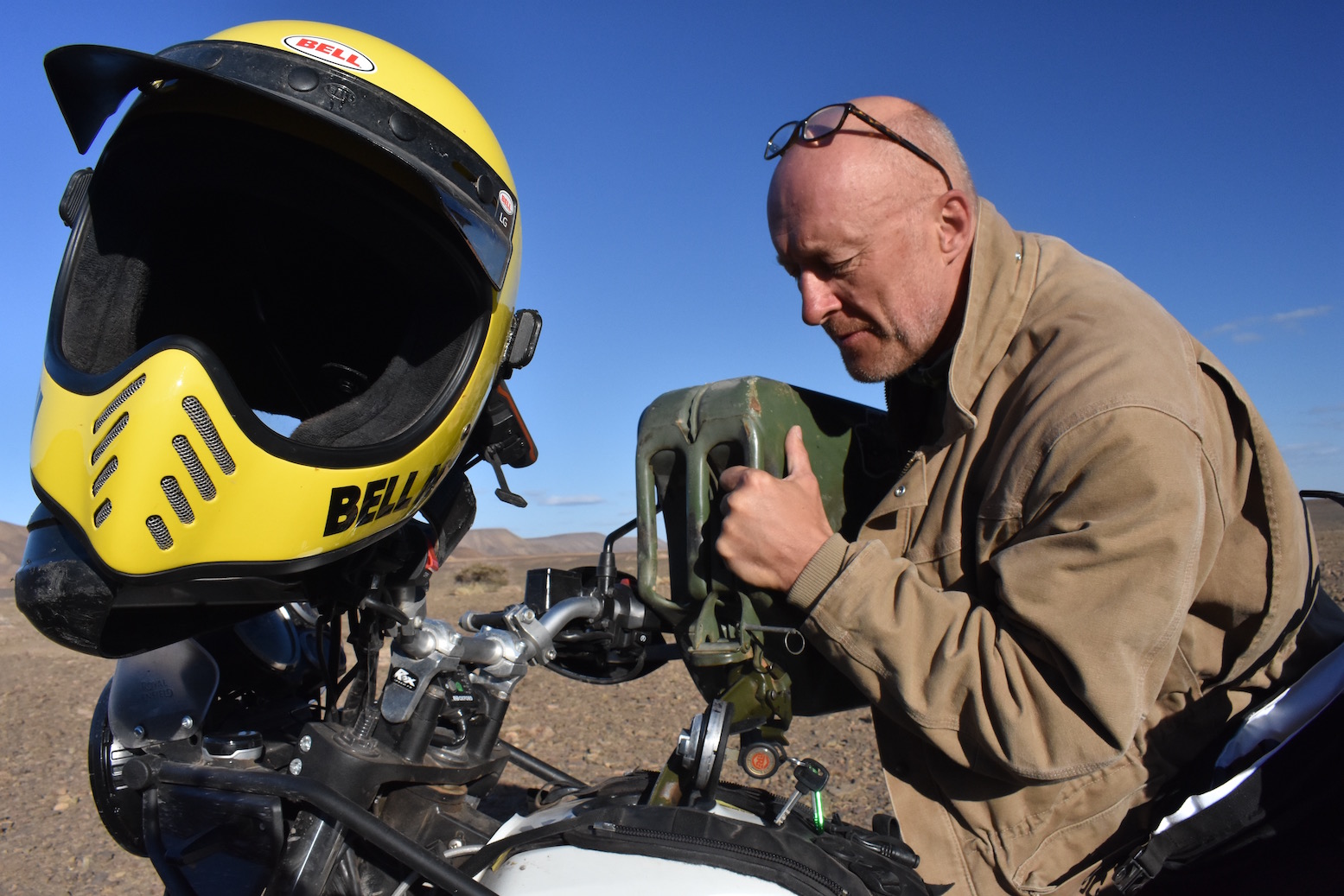
Topping up for the day. A can will do me at least 500km.
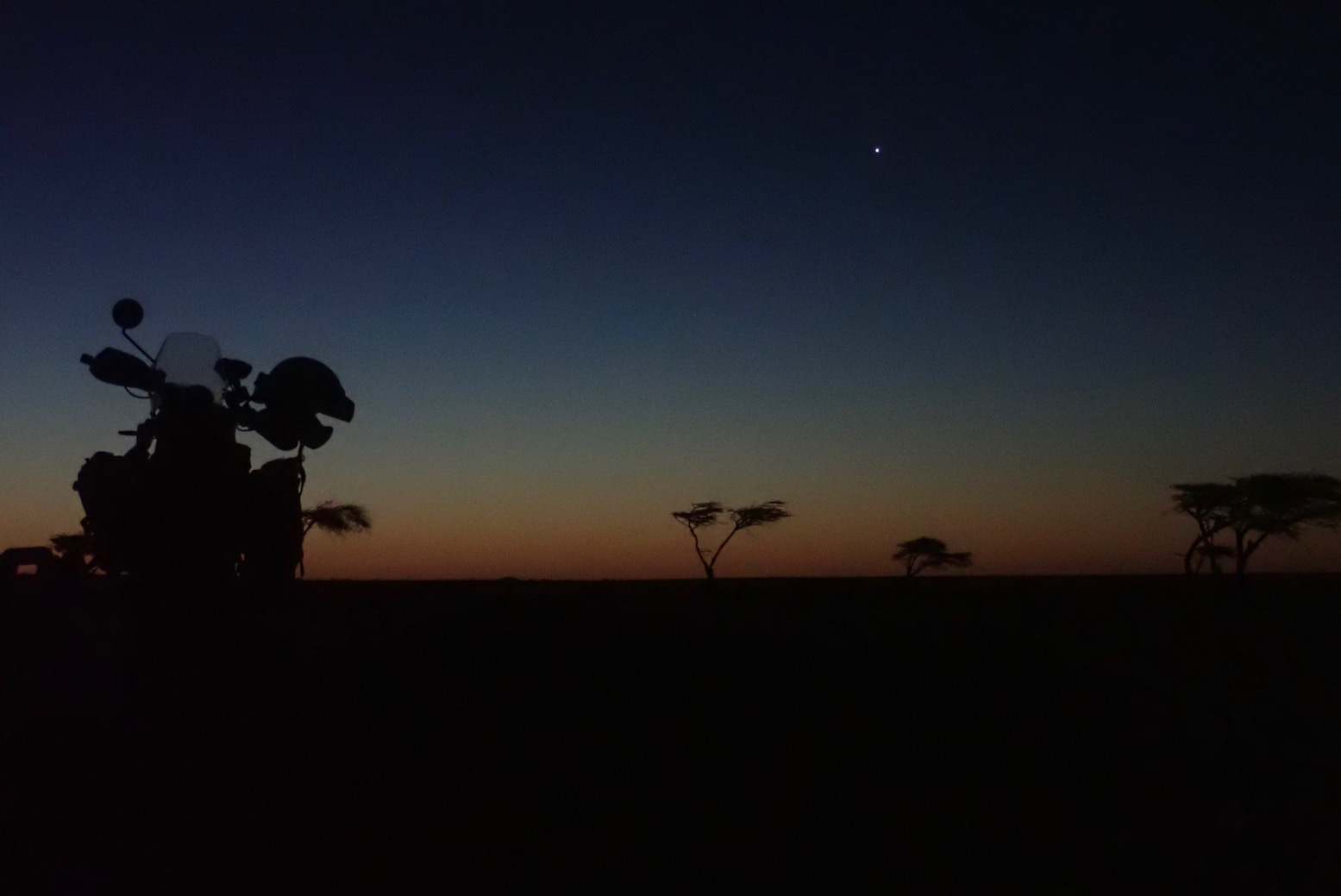
Desert dawn near Gueltat Zemmour.
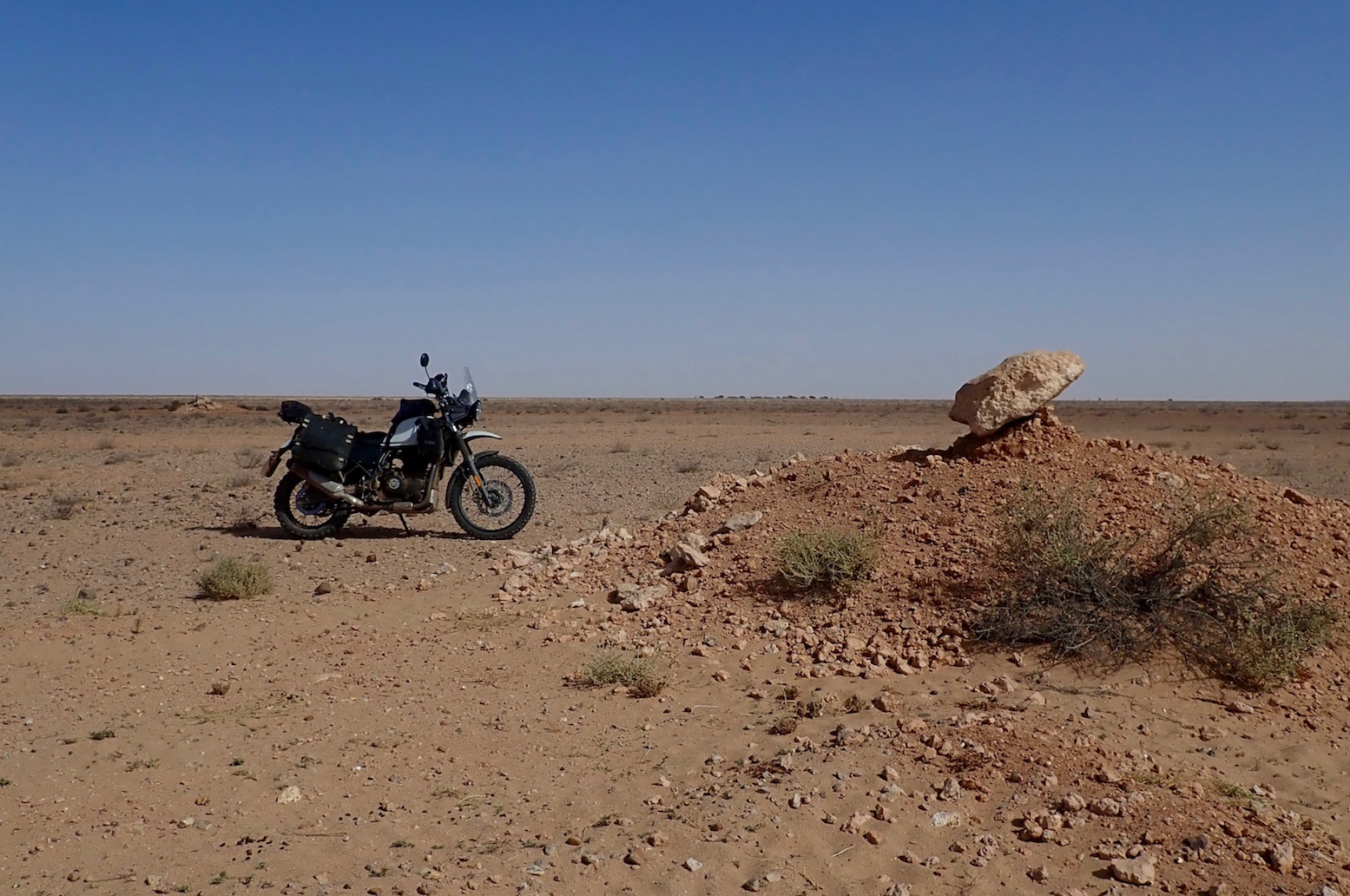
A Dakar Rally mound. Pushed up every kilometre or so as landmarks right along our route to the Digtree and beyond.
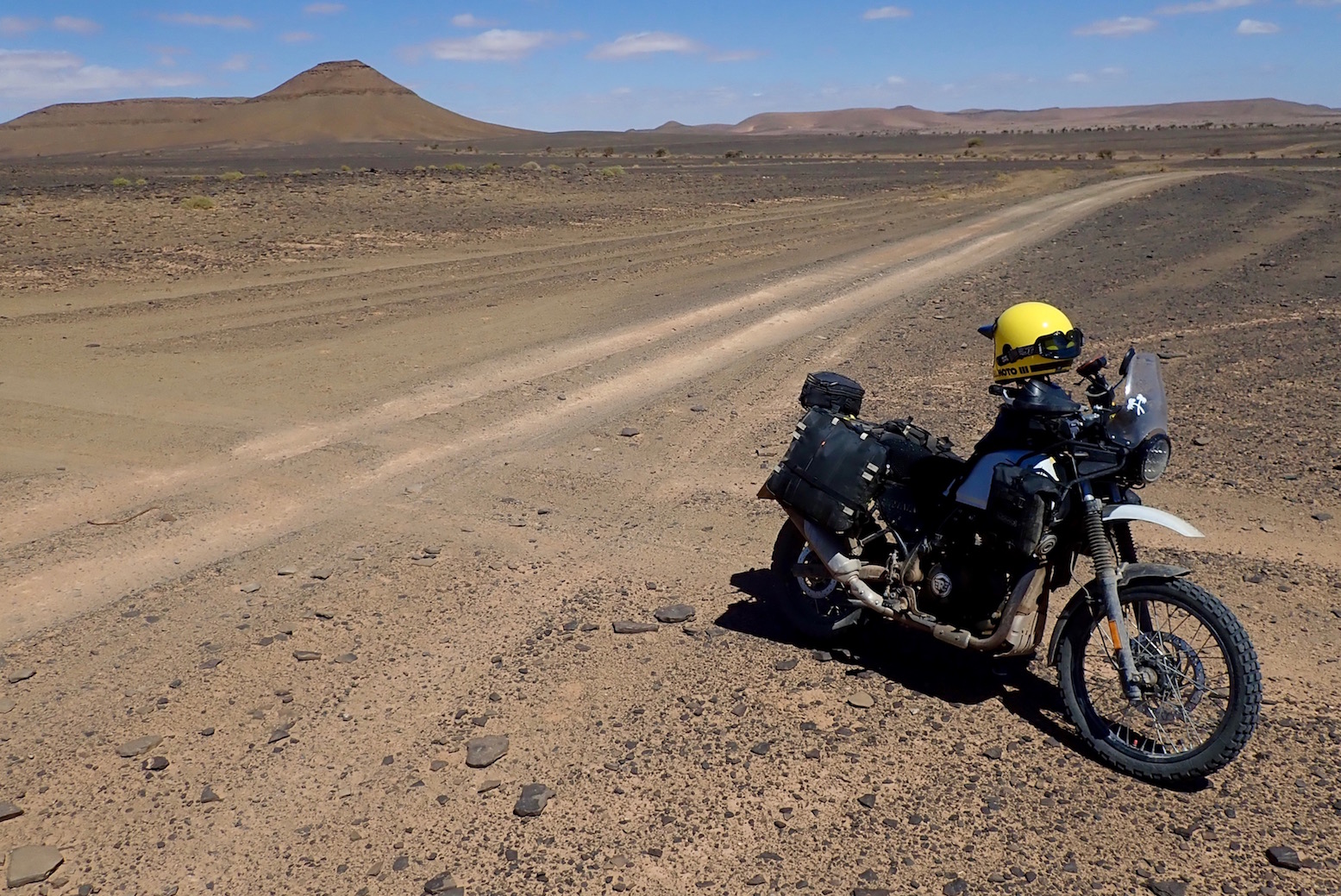
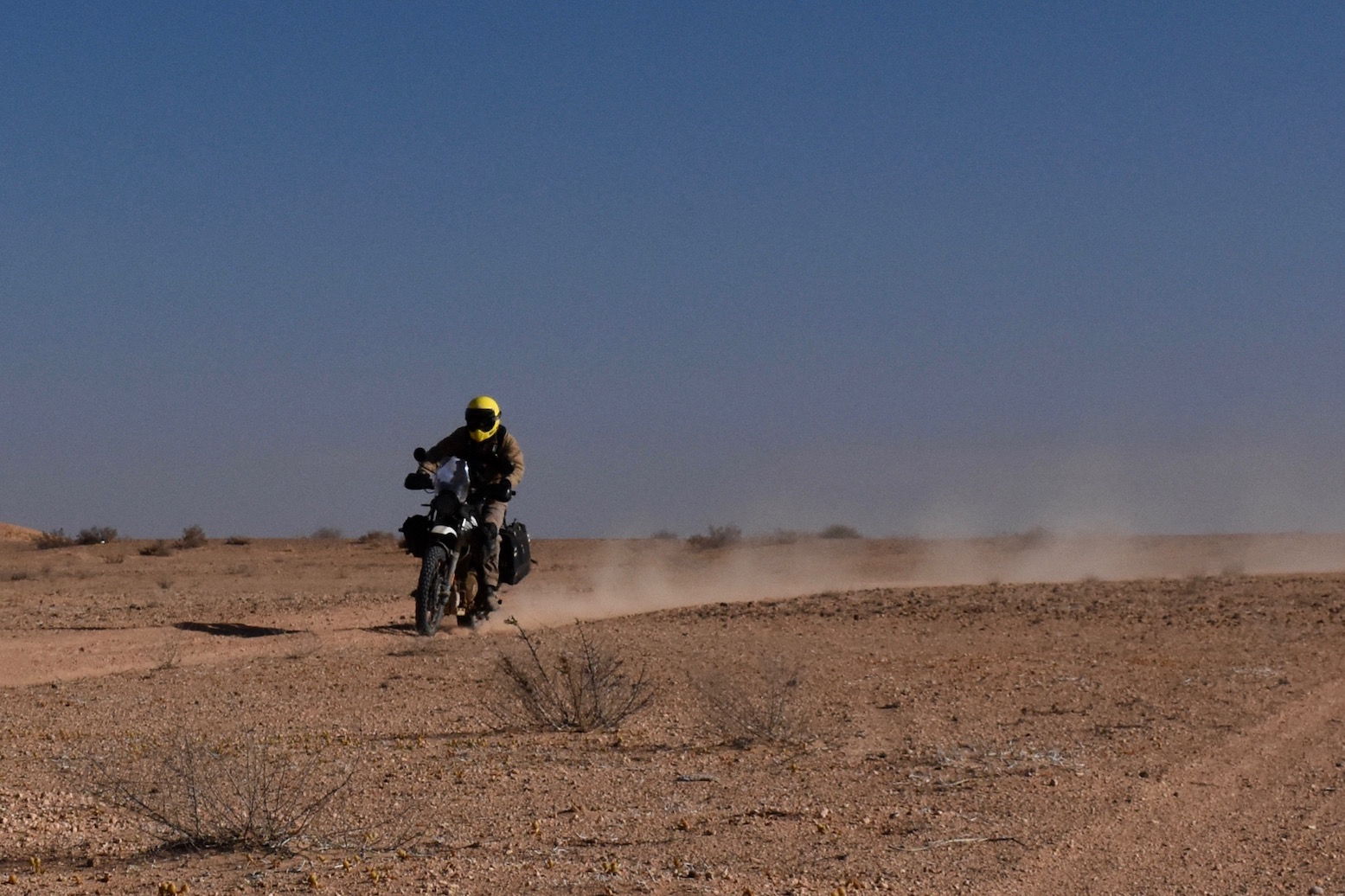
Most of the riding is easy, as above. But it only takes one lapse in concentration.
Removing the punctured Tubliss core in Layounne.
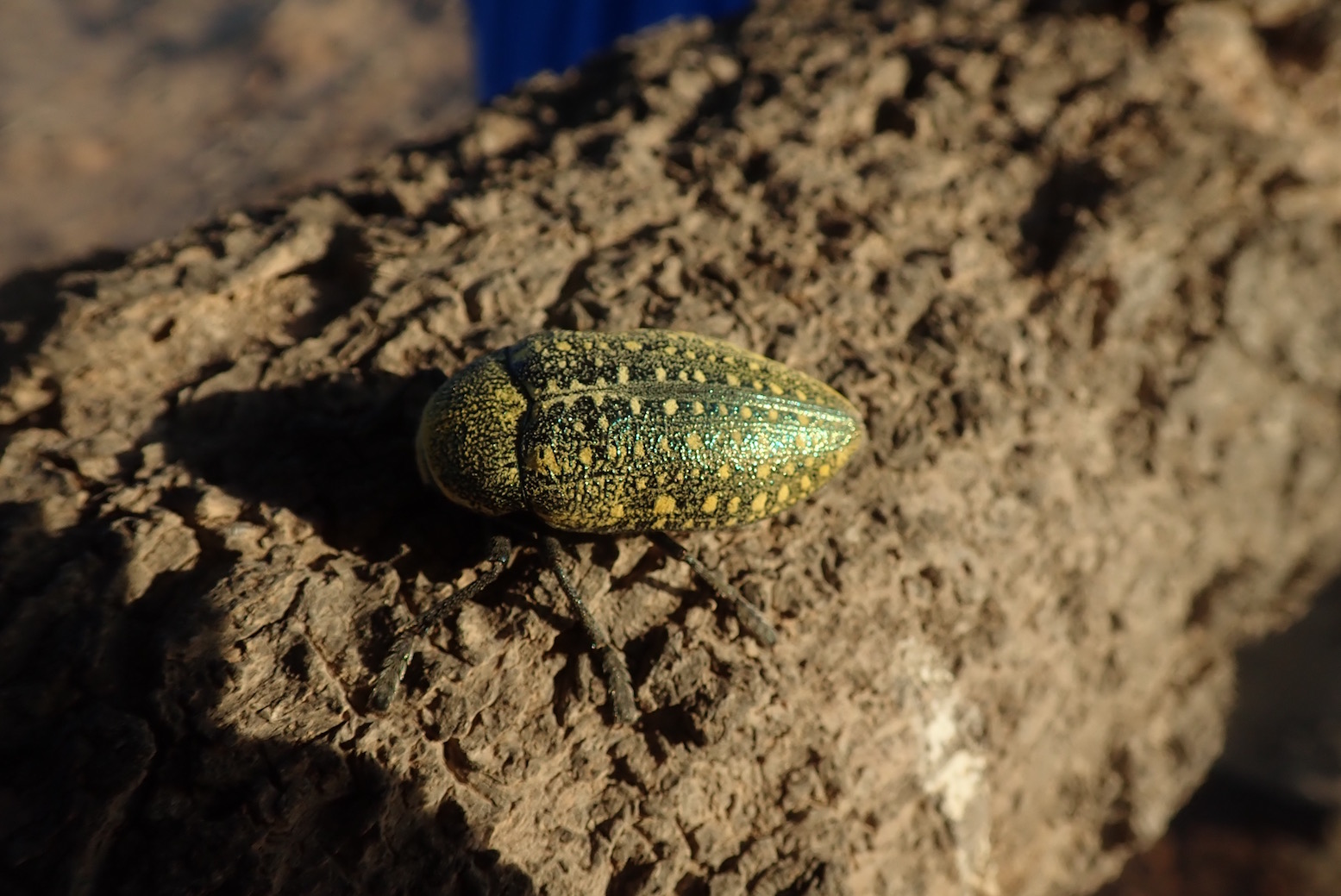
Colourful beetle.
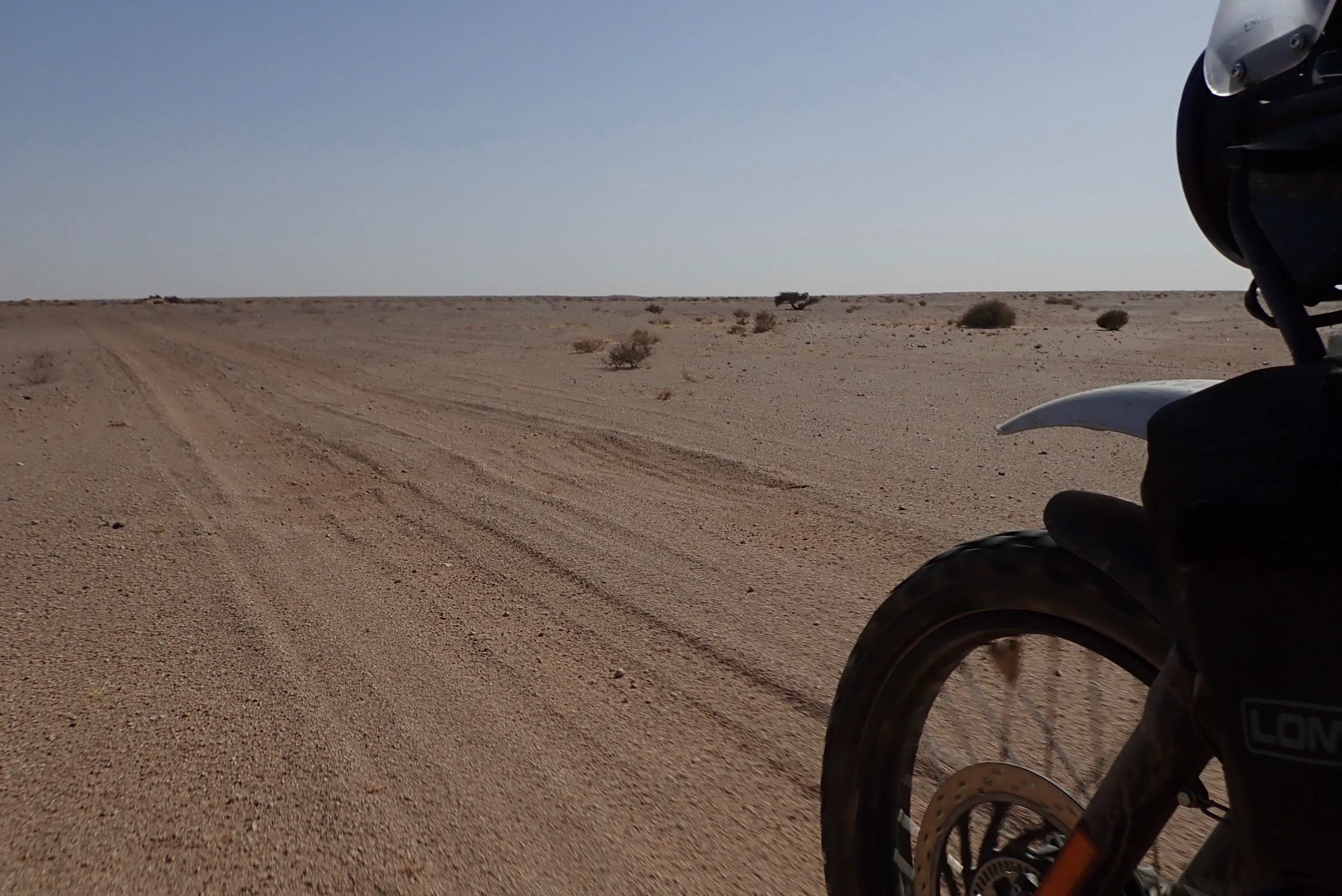
Ex-Dakar track.
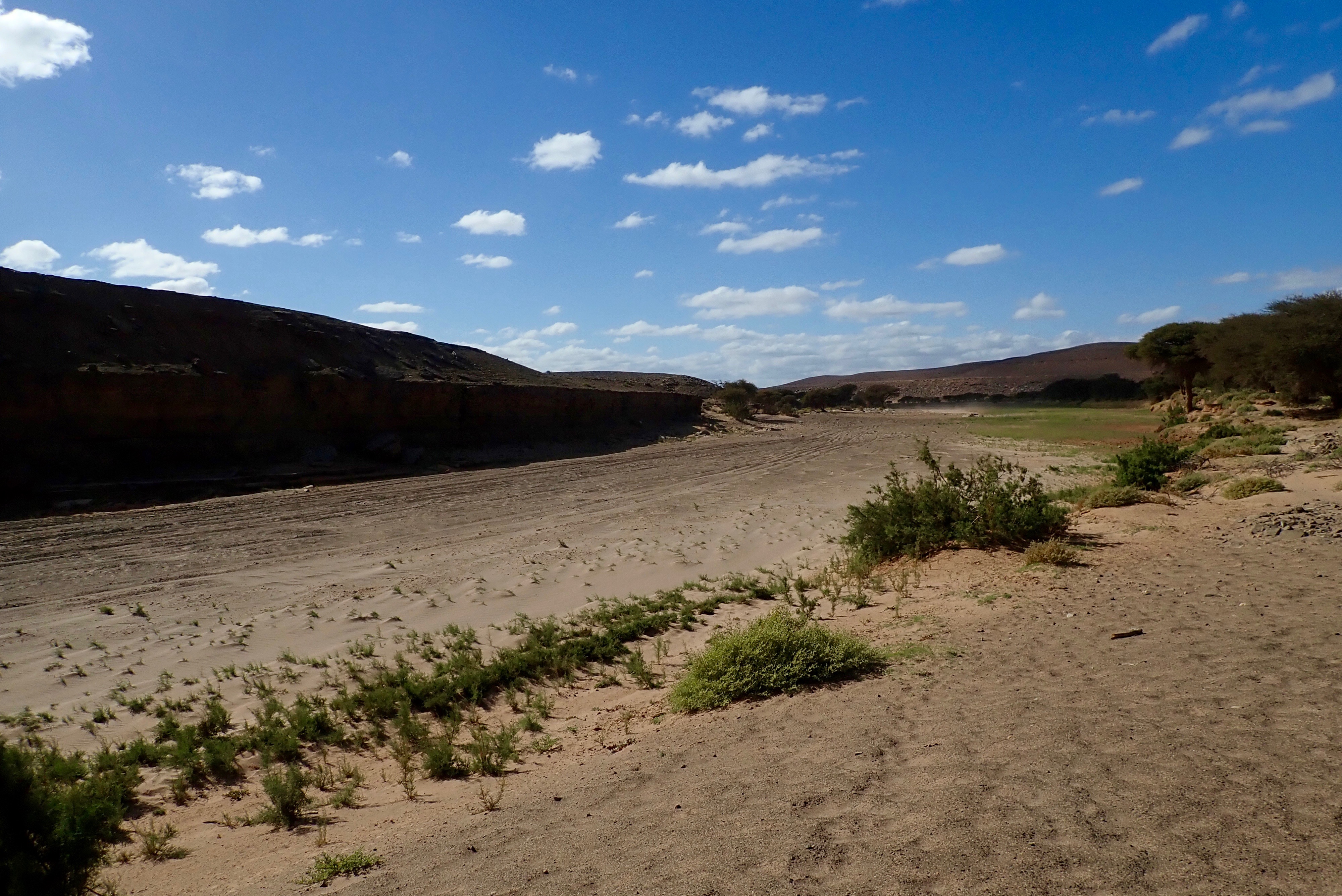
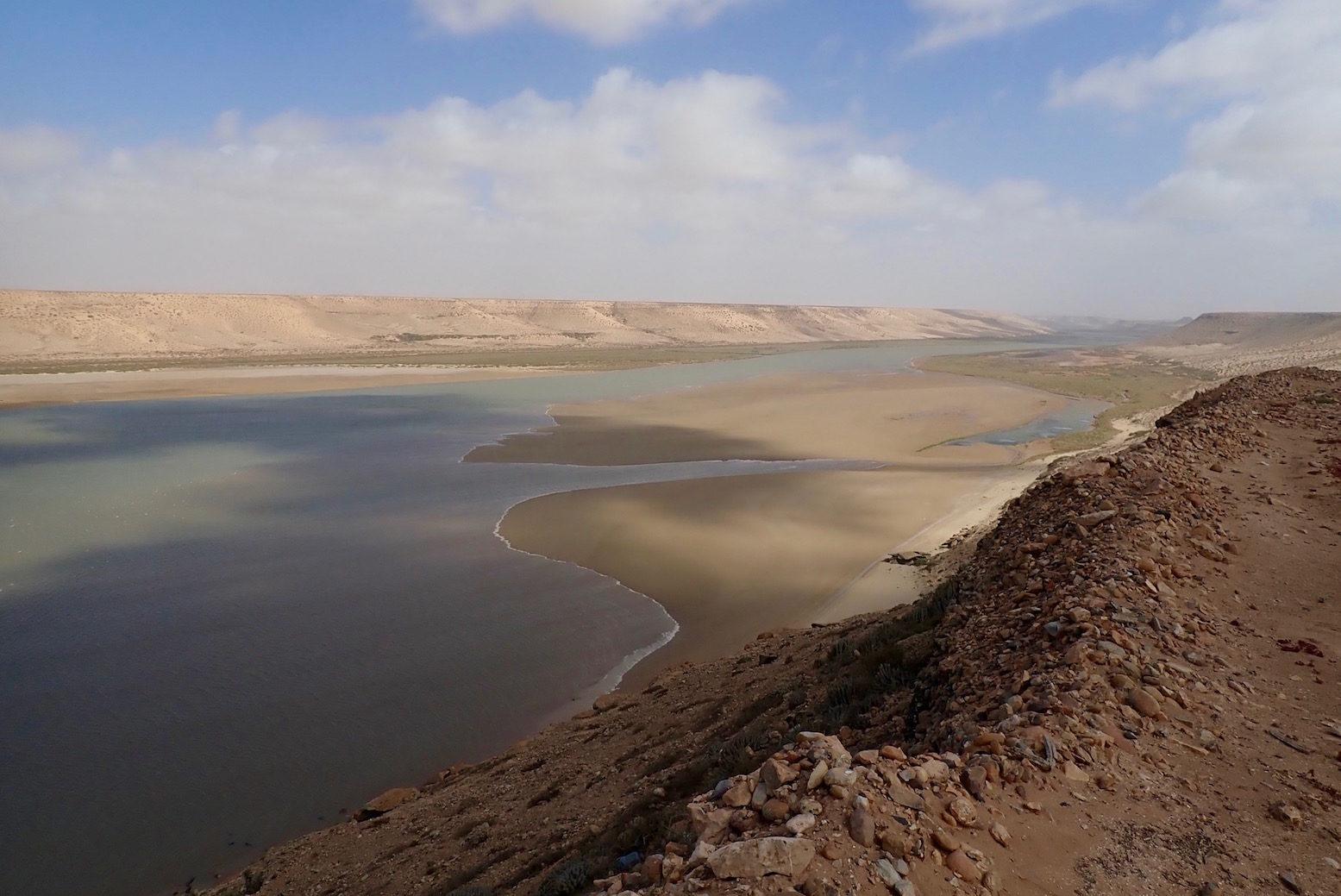
The mouth of the Draa which rises near Ouarzazate in the High Atlas, but very rarely flows in its entirety the 1000-odd km to the ocean.
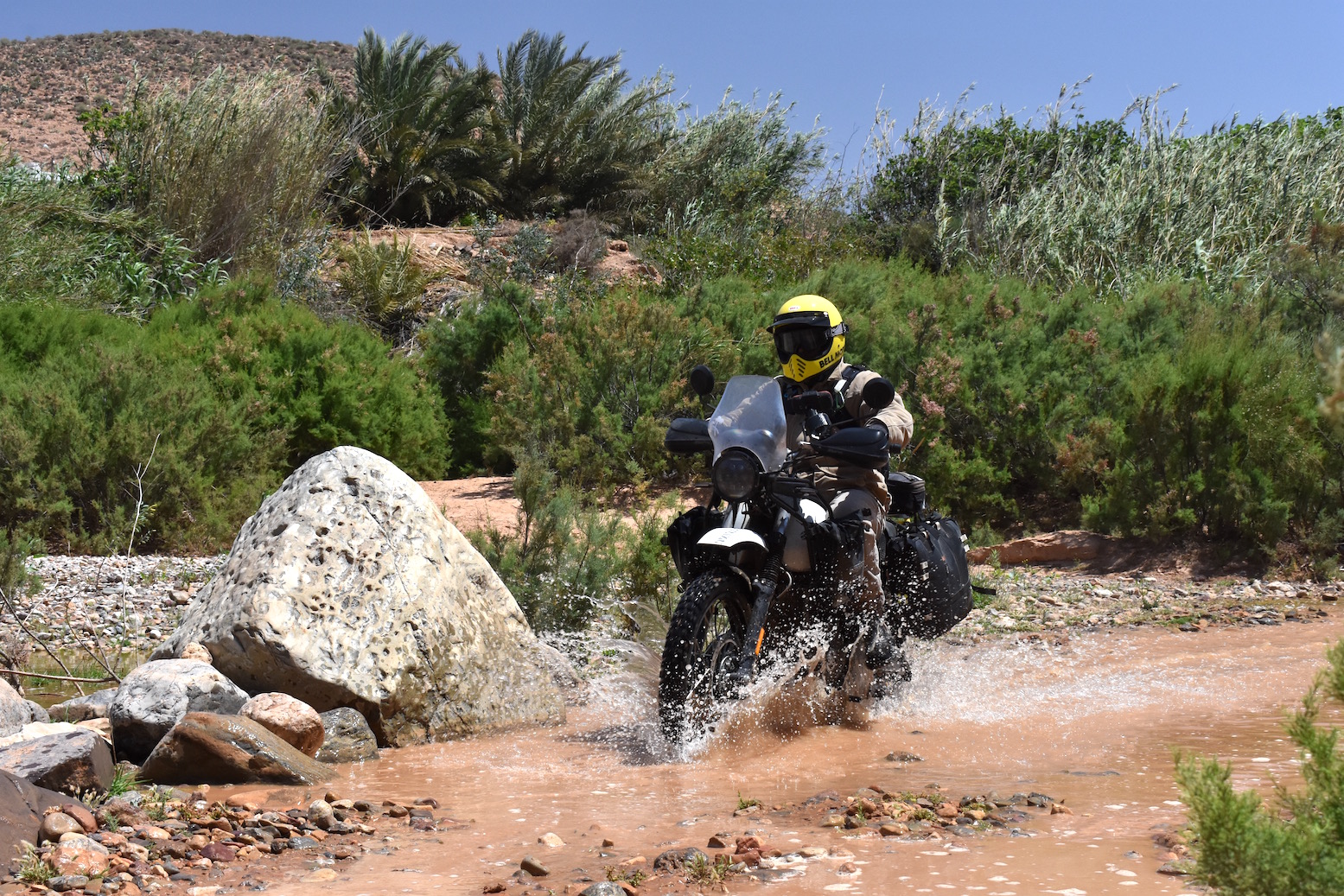
Out of Tiznit we took an interesting track along the Oued Assaka to Fort Bou Serif ruins for a spot of lunch and some filming.
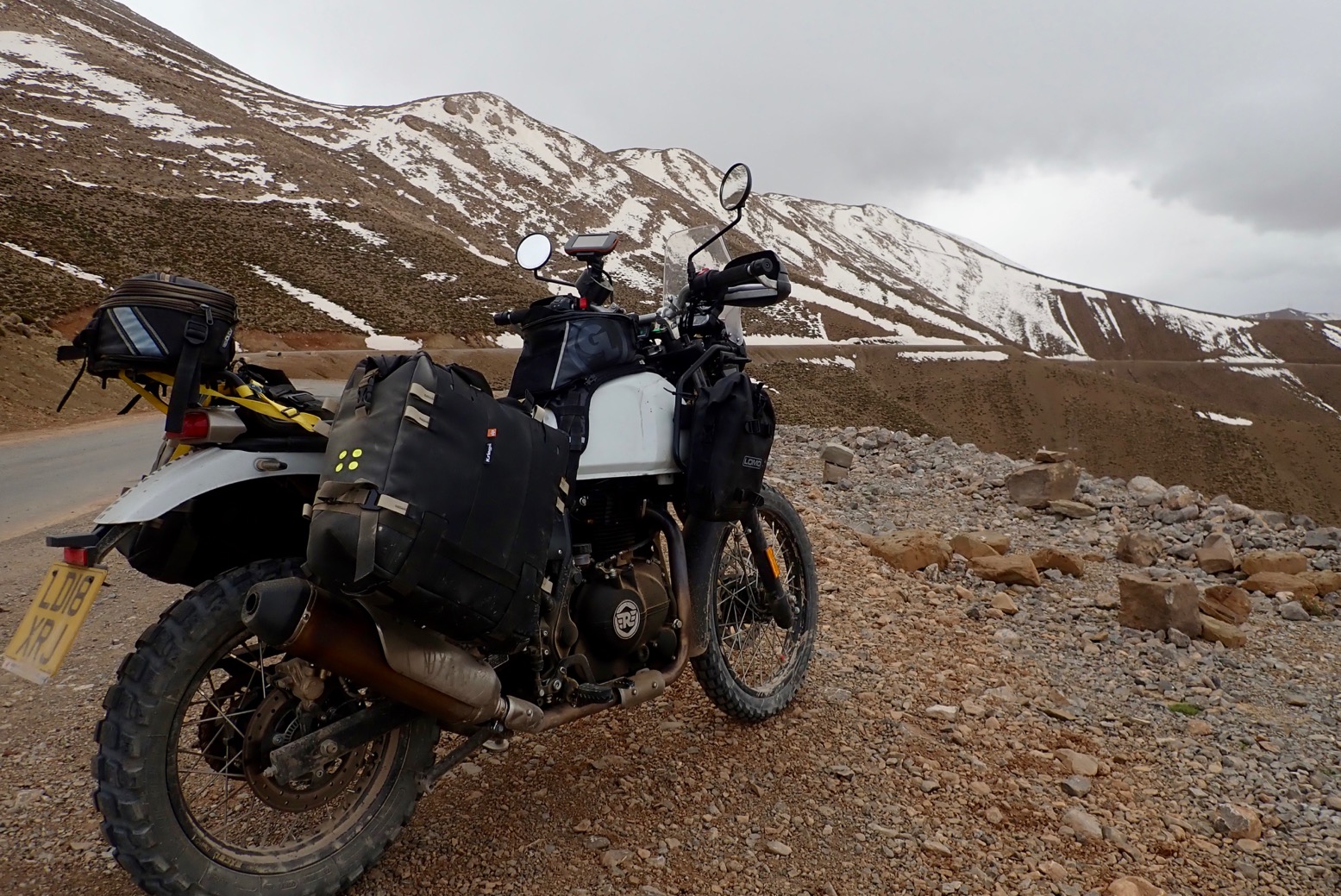
Just got to the desert about a 1200 miles in. Two wheels on my wagon and the Himalayan still humming along. Hard to believe it hasn’t missed a beat running down from Malaga over the High Atlas and down here to the edge of the Sahara. The tension is unbearable! Fuel economy has slowly improved and is now averaging 77mpg Imp (about 27.2kpl; 64.1 US). Bear in mind since leaving the autoroute from Tangier I rarely go over 60, where that’s possible. At yet at these modest speeds the REH is a very satisfying and undemanding ride. It’s an ideal low-profile machine for Morocco, if not so much the getting here. That’s because the seat still needs work; an easy enough fix.
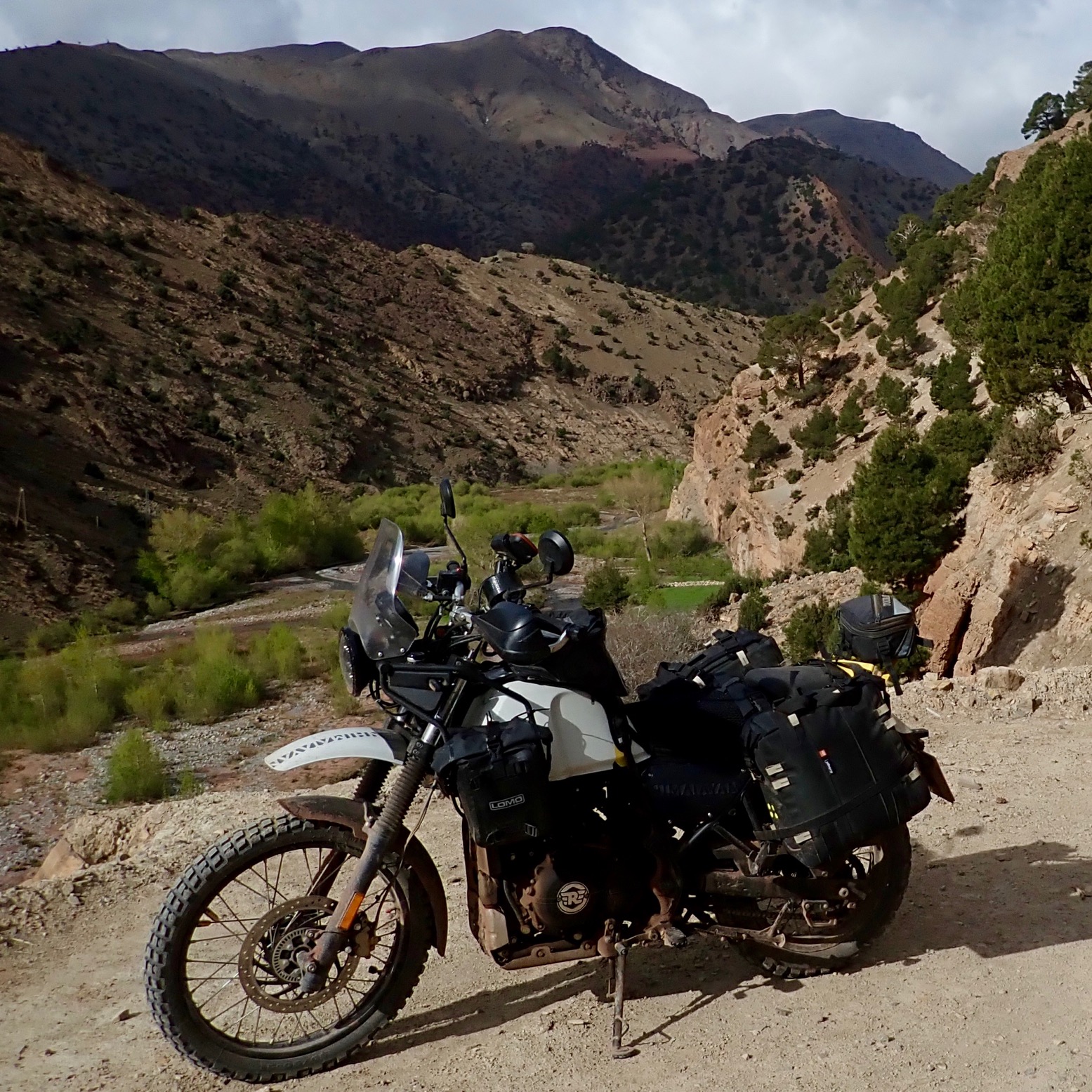
I’m really impressed how well this thing rides on the dry stony mountain tracks which sum up most of ‘mainland’ Morocco. It’s so effortless you don’t even notice at first. Can’t say the same of a 310GS which I’ve also ridden out here a lot: more concentration required on the dirt. The 310 motor and brakes are more suited to shredding tarmac canyons – another adventure-styled bike that’s not really an off-roader. The REH doesn’t look like anything you’d know – maybe a civil partnership of Rokon and MZ. It must be down to the Him’s combination of low CoG, torquey, long-stroke motor, wide gearing and 21-inch front, plus on my bike, the Anakee Wilds and YSS shock which help make it one of the best bikes I’ve ridden in Morocco for years. On one epic high mountain day I even managed to zing the centre stand on the supermoto track they call the to Sidi Ouaziz.
Brakes are fine on the dirt. The weak-on-road front is as you’d want; the back a tad sharp, but that’s normal, easy to manage and even useful. To me the ABS is not an issue at the speeds either I or the bike can manage on the dirt. If it engages you probably need to slow down. Both wheels lock easily on really loose stuff before the ABS even reaches for the alarm clock. On the road I’m sure there will come a day when I welcome it.
My proof-of-seat concept (2 x 20mm foam sandwich under a Cool Cover) is an improvement but not there yet. Two days over 400km more or less non-stop and I wonder if the foam slabs are crushed out already. It’s worse on rocky dirt where I tend to stand only when I must. The aerated Cool Cover may help, but it’s slippery and tends to slide me forward. Next version wants to be more level and maybe more foam. I think what’s still a short distance between seat and footrest (for me) makes levering the body upwards harder that it would be on a KTM450 for example. Removing the footrest rubbers will add an inch more leverage while the 2-inch rise in the bars is nearly just right for me.
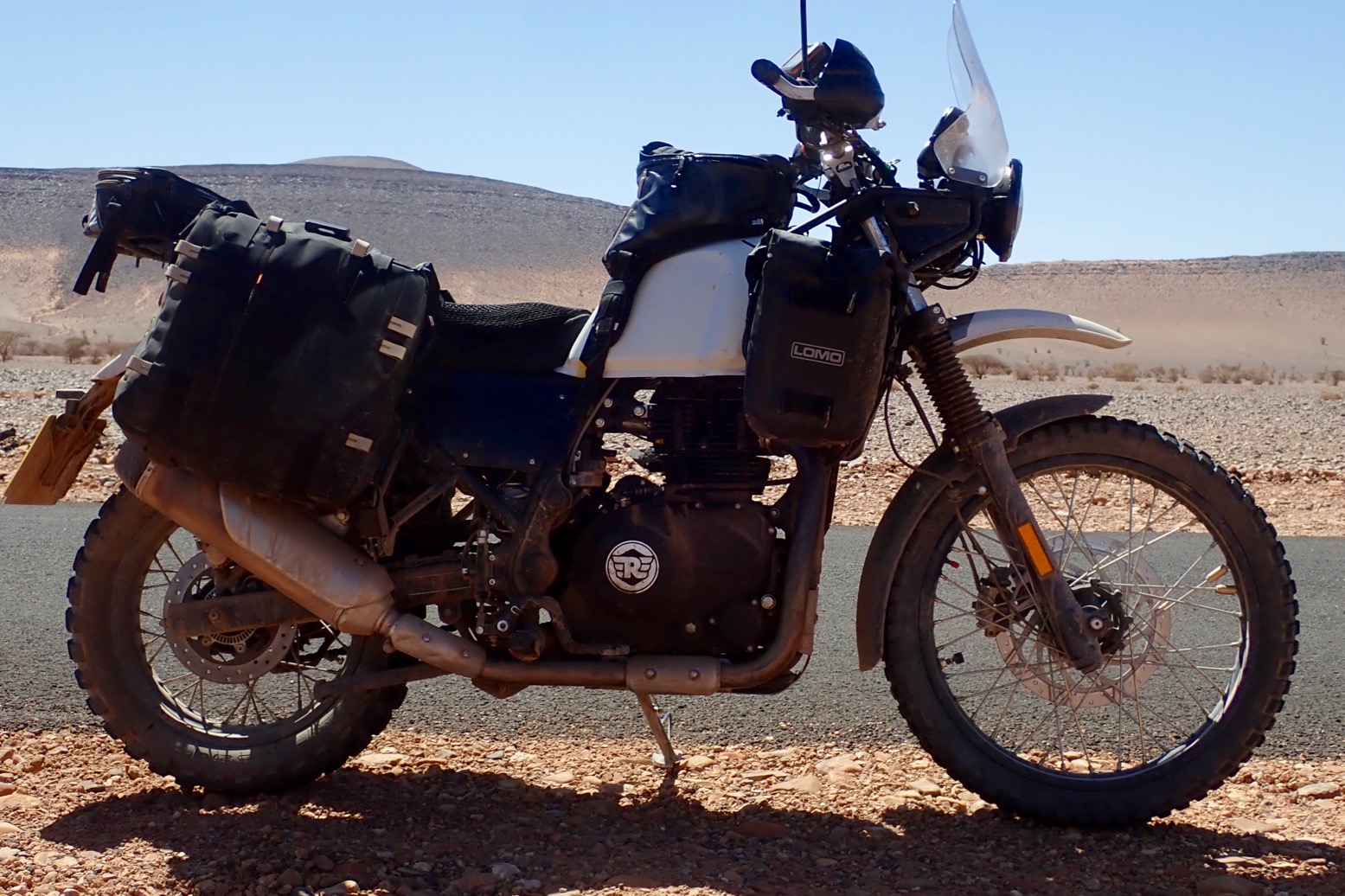
Even though I’m wearing a Bell Moto III I don’t find the buffeting from the short screen intrusive at 65 – my self-imposed max until I know better. It needs to be about 4 inches higher to push the wind over my head but I wonder if one of those air lip/dams might also help lift the airstream. I bought the MRA one but it was too wide to fit without drilling or other bodging. Of course on the dirt the screen is as unobtrusive as you want which is why a spoiler is a better idea than adding height. The Enfield catches you out with firm stock suspension – the opposite of most of my recent bikes, especially the Jap ones. I bought a YSS shock and fork preloaders as soon as I got the bike, and the YSS shock works as well or better than the Hyperpro (XCo, WR), Tractive (CB500X) or Wilber (XSR700) I’ve run out here recently. All it needs is a pricey HPA to be truly useful, because adjusting preload will be a right pain (unlike a 310GS, for example). I suppose they’re now a bit shown up by the YSS shock, but road and trail the RWUp forks are just right for my sort of speeds and load. The preloaders are set on zero – rats! that’s ten quid down the drain. Because my Anakees are knobbly I tend to leave them at road pressures on the trail, which makes the suspension feel harsher than it is. I know dropping just a few pounds will make a difference, but I tend to endure rather than fiddle, until necessary. Fyi I’m 95kg (210lb) and my gear is probably another 20%.
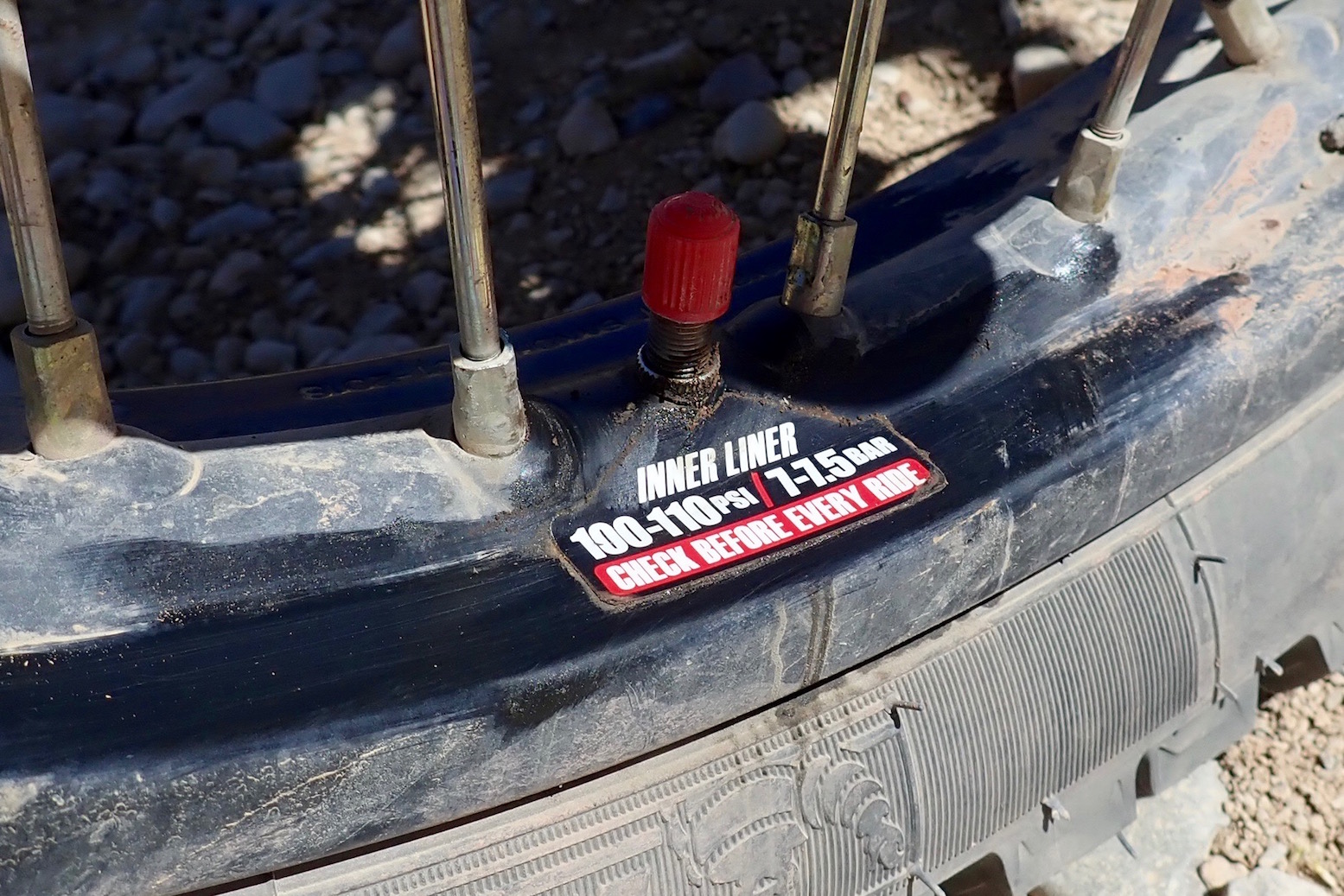
My tubeless tyres hadn’t lost any air on collection but the back (vulcanised band) lost a couple of pounds after a few days then settled down. The Tubliss front was doing the job until I saw a bit of Slime oozing from the red valve which means it’s getting past the 7-bar high-pressure core. I tried to top it up, but the crumby garage hose was split and purged more air than it put in. Don’t meddle until you must! Now I realise my pressure gauge doesn’t read to a lofty 7 bar (100 psi) and my Cycle Pump has no gauge. I pumped it up for 3 minutes which hopefully has got up to 7 bar until I find a better garage pump. I said this years ago when I fitted it on the GS500R: Tubliss is a pain for overlanding rather than rec dirt biking. Or maybe I should have anticipated the need for a gauge that reads 7 bar +… Out of Malaga the fully charged Michelin TPMS took many hours to pair up and show readings, but since was very handy in monitoring the experimental tubeless tyre pressures. Sadly, 10 days in it appears to have packed up – not even the battery level is indicated. Now I’ve refined the strapping, the slim Kriega OS20s throwovers sit tight and are easy and quick to access. Total demounting would be easier with the HDPE Kriega platform, but I just pull out the white liners if I need to strip the bike overnight (rare). Their slimness is a real benefit on some narrow and gnarly canyon tracks where catching the cliffside with metre+ wide alloy cabinets risks being ejected into the abyss.
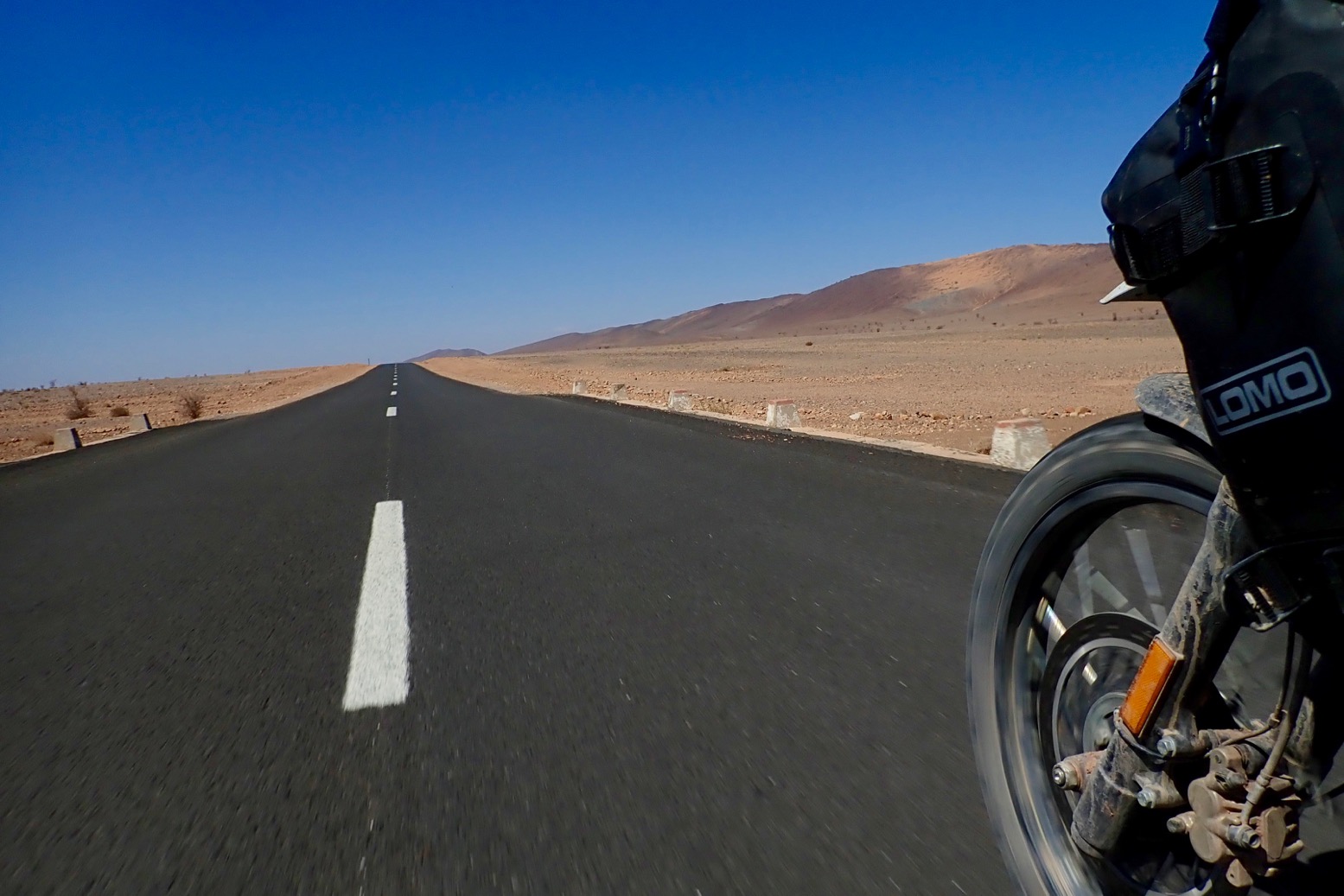
Even with bivouac camping gear (everything bar a tent) there’s no need for a tail pack because the nifty 6-litre Lomo bags either side of the tank take up the slack and help spread the load evenly. A very handy spot for gear and, with the Kriegas, a sacrificial crashbar for when that days comes.
So, after 10 brilliant days in the mountains managing to dodge hail, bandits and lightning, all is good with the Himalayan and pretty good with my adaptions. It’s somewhat nerve-wracking but then it always is as I tend to come out here on a wing and a prayer with roughly adapted bikes I’ve barely used. The XCountry came with the various lip-chewing issues of that series (but nothing went wrong) and the WR250R had dodgy fuel pump activity when hot (but with care got me round OK). Clapped-out Tornados only had age- or user-related issues. Even a Husky 650 Terra, a 701 and an F650GS loaner and 700GS rental with 100k did me a week. Only the Tenere 660ZCB500X and tasty XSR700 came with- and delivered absolutely no worries. You can’t pay enough for that (bodes well for the XT700, too. You can see where I’m going with this). I met a gnarly KTM450 overlander carrying a spare injector, fuel pump and clutch. Me, I have spare underpants. In fact I brought two by mistake. One will have to go.
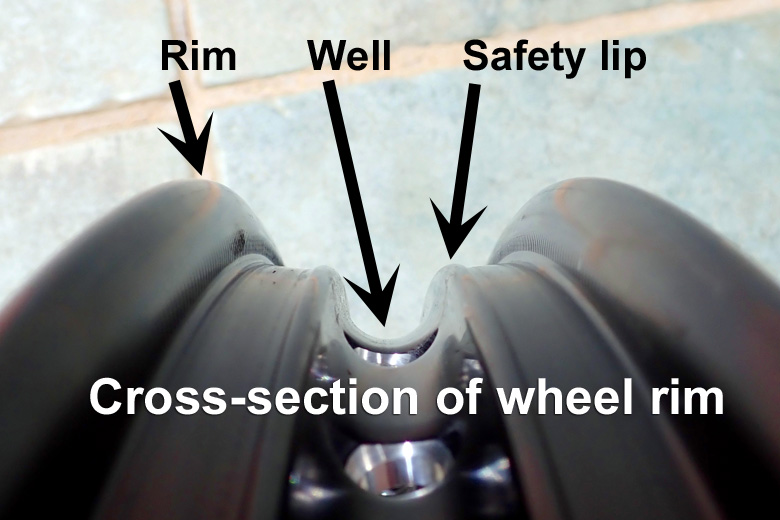
I and others have come to the conclusion that the key to successful and safe DIY spoke sealing is using a rim with the safety lips (right). These rims are stamped ‘MT’ as opposed to ‘WM’.
SHORT VERSION: AT rear wheel: easy to DIY • Front 21s: use an MT rim
L o n g e r explanation All cast tubeless wheels have these lips, and just about all rear spoked, tube-type rims have them too, right as far back as IVJ Teneres from the mid-80s. These humps/ridges/lips keep a tyre’s bead seated on the rim and out of the well (but make tyre changing harder). However, stock 21-inch tube-type spoke rims hardly ever have them. I don’t know why as having a flat tyre come off the rim is more perilous than on the rear. So with a typical 18/21 spoked bike, like my AT, DIY-ing the stock lipped back wheel is easy and safe. But the front requires tracking down a lipped 21. Giant and Takasako Excel (above right) make them from about £110 but you won’t find ebay flooded with them. Once you have laced that rim on you can try and DIY seal it too, or you can spend from £120 on a BARTubeless or Airtight professional sealing.
The video above demonstrates the rim sealing procedure. Nice job but can you see the big flaw? The rims, even the rear, do not have the TL safety bead or lip to make a good seal. I see trouble ahead.
PU sealants Way back in 2008 I bought the new XT660Z Tenere for a research trip in Morocco. I asked on Horizons if sealing the well of the spoked rims to make them tubeless (left) was a good idea. The discussion concluded it was do-able and had been done.
I like to experiment with new ways of doing things, so I went ahead. Full DIY XT660Z article here. Short version: the stuff I used (right) didn’t adhere that well, plus I didn’t do a good enough job in preparing the rim: and then on the road, I forgot all about it, tyre pressures dropped after 1500km and I dinged a rim and lost the seal.
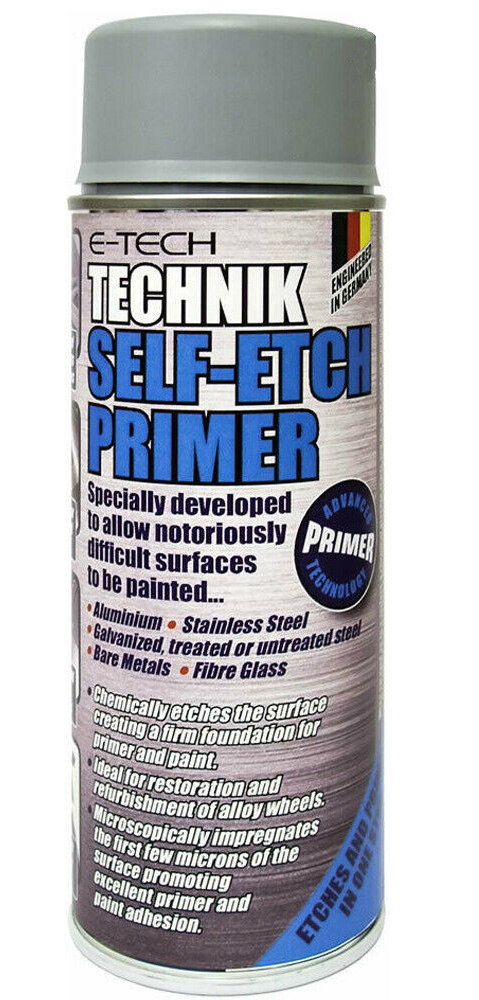
Above: over a decade later Ian C. tells me he once had good results on his KTM V-twin with Ever Build Puraflex 40 PU sealant; about £6 for 310ml. This was after thoroughly degreasing and then spraying etch primer (right) on the wheel before applying a couple of layers of black Puraflex and screeding it down smoothly.
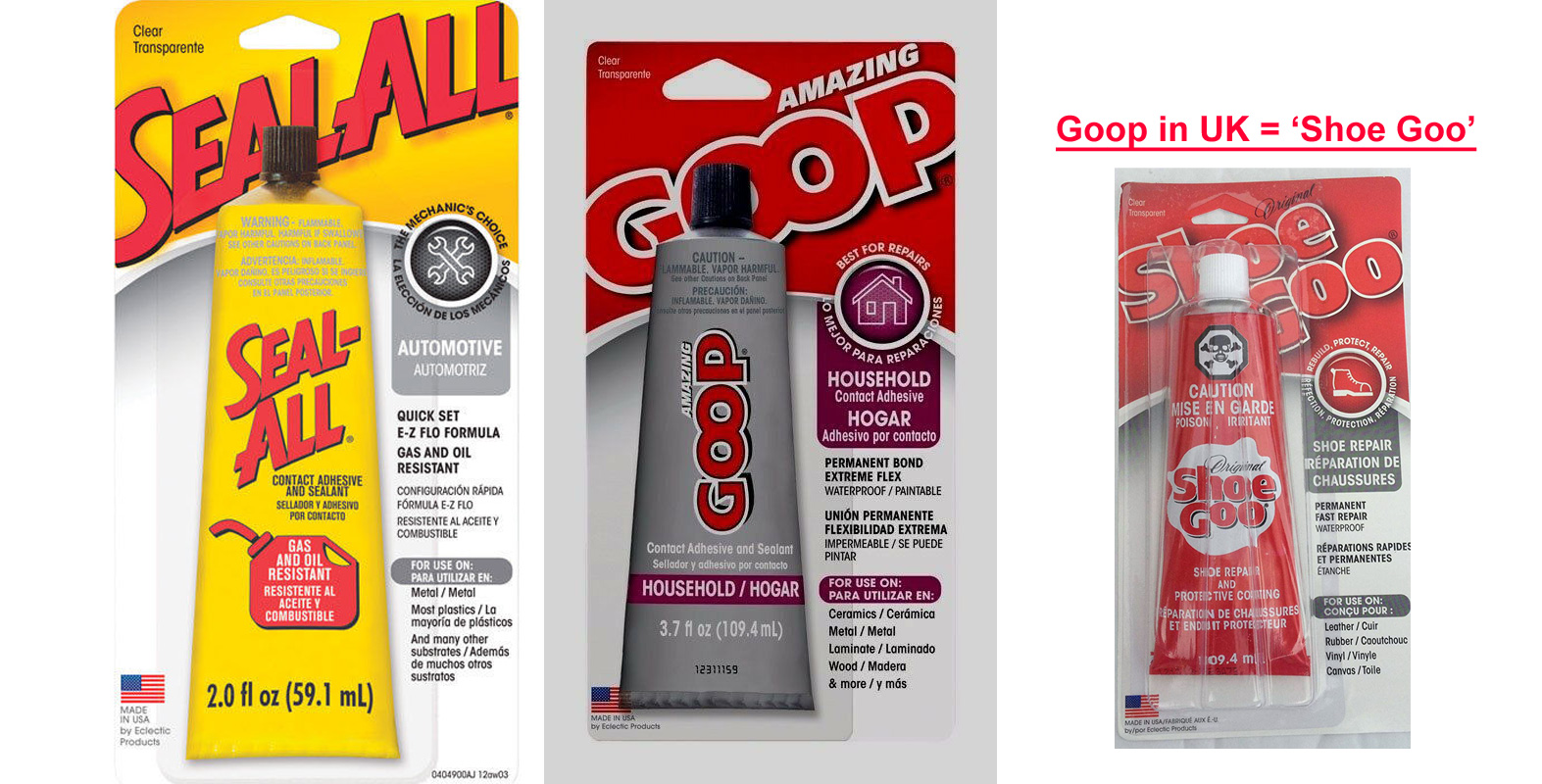
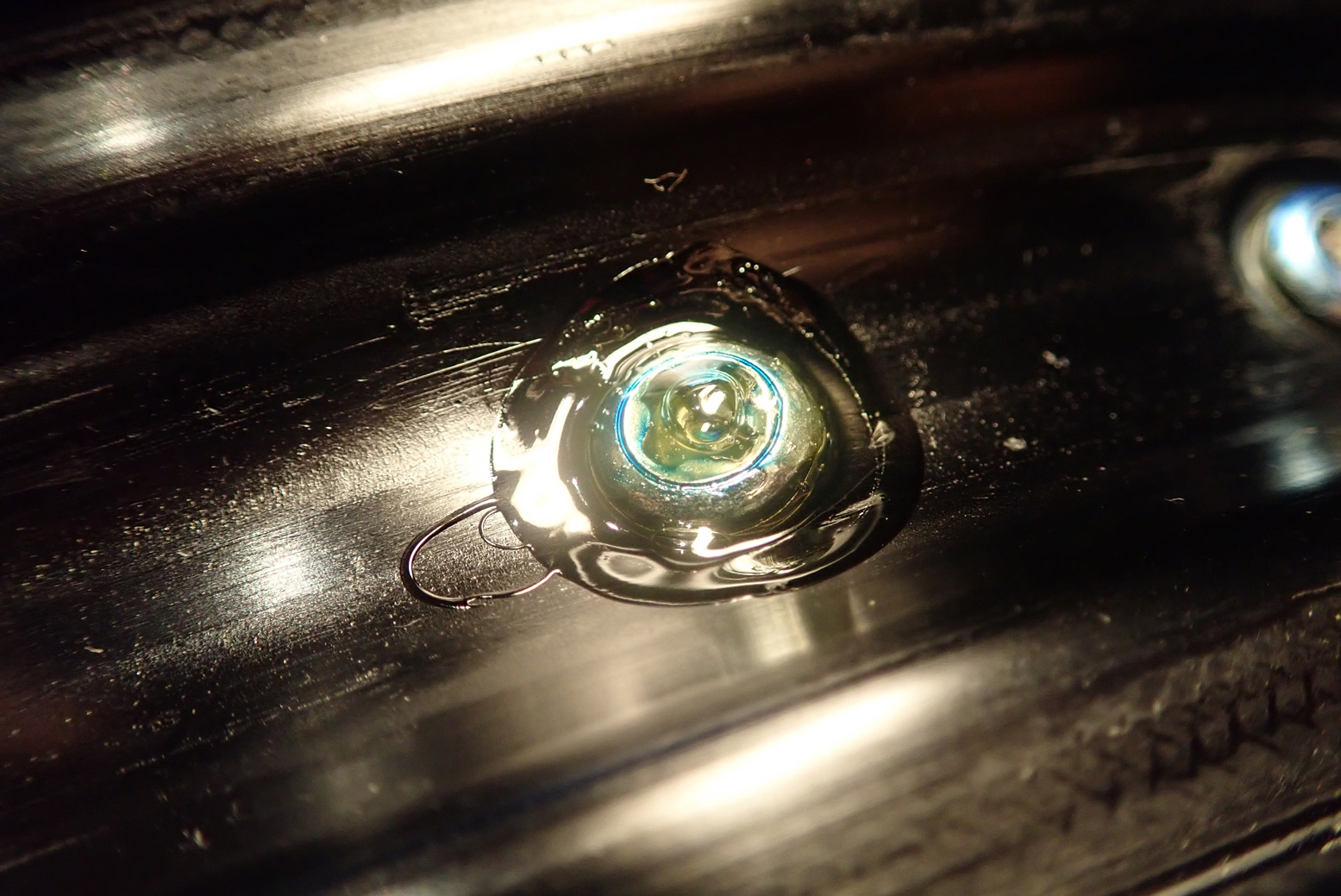
Cyb’s DIY procedure listed on the index page does it another way: carefully sealing each nipple with two types of sealant but not covering them in an overall band or even a tape. There’s much to be said to this: individual leaks can be more easily pinpointed and fixed. He recommends specific glues: which he seems to have researched rather than hoped for the best. First, two applications of runny Seal-All on each spoke nipple (see below). Runny – even like SuperGlue – is the key so it will seep down into the nipples’ threads and along the outer collar.
Don’t forget there’s a curved spoke washer (right) between the spoke nipple and the rim, so that’s an extra leakage surface to seal. Then, once cured, each nipple is capped with a thicker blob of Goop from the same manufacturer, Eclectic Products in Oregon.
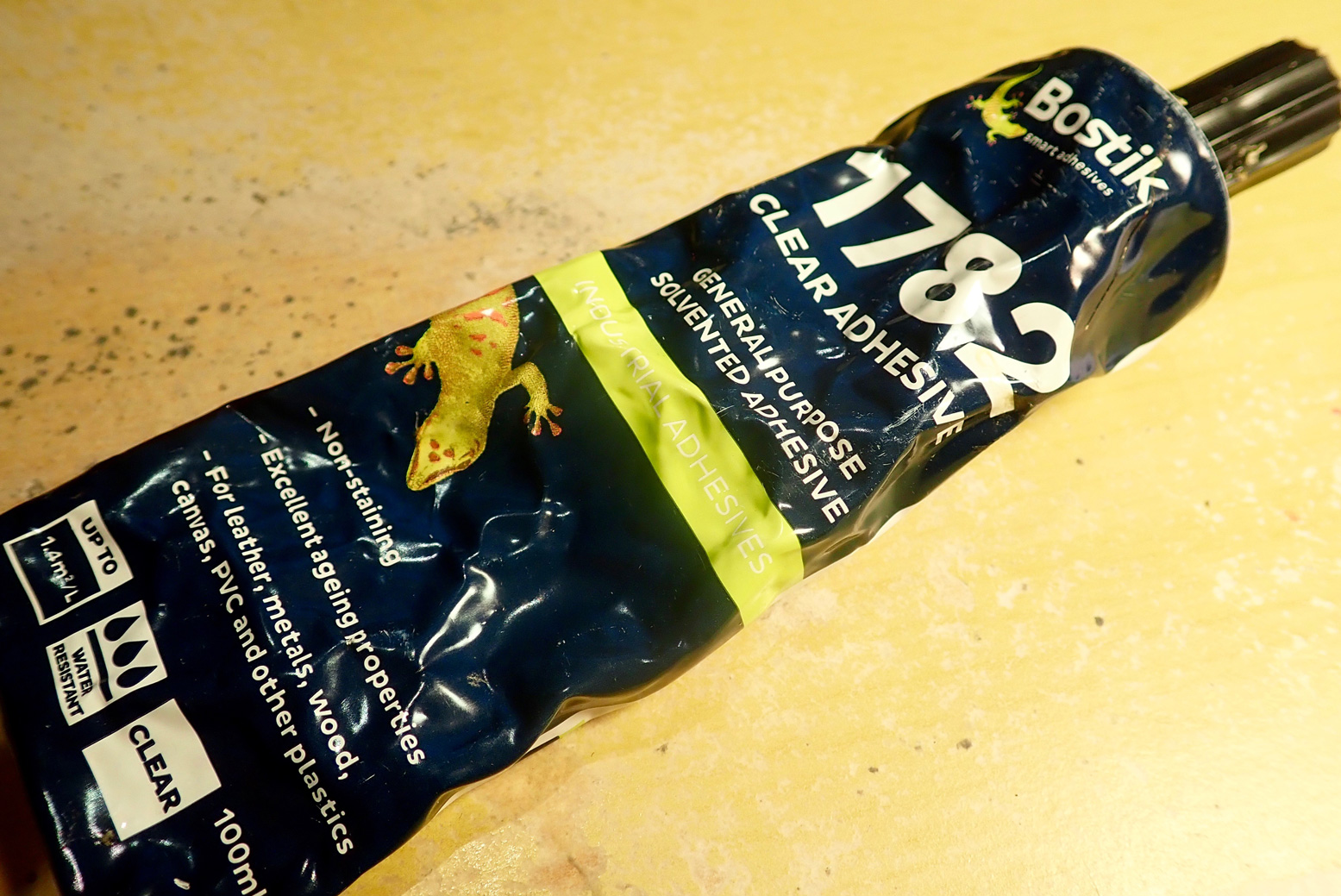
In the UK Cyb’s exact products are hard to find or are expensive if bought from the US where Seal-All is just a couple of dollars. I found Goop for a tenner. There must be something identical here to Seal-All – is it so different from the Bostik 1782 I have in the desk drawer? I put a test blob of 1782 on a rim to see if it would peel off easily. It didn’t so I used it on my Africa Twin’s back rim, then cap with the Goop.
Others have used plain old Silicone sealant. Something that’s designed for tent seam sealing (Seam Grip, Seam Seal) will be runny enough. Another good thing with Seal-All and Goop (and 1782) is they’re clear so you can see any too-big bubbles or lifting. They definitely look better than the creamy texture of the 3M 5300 mastic I tried years ago.
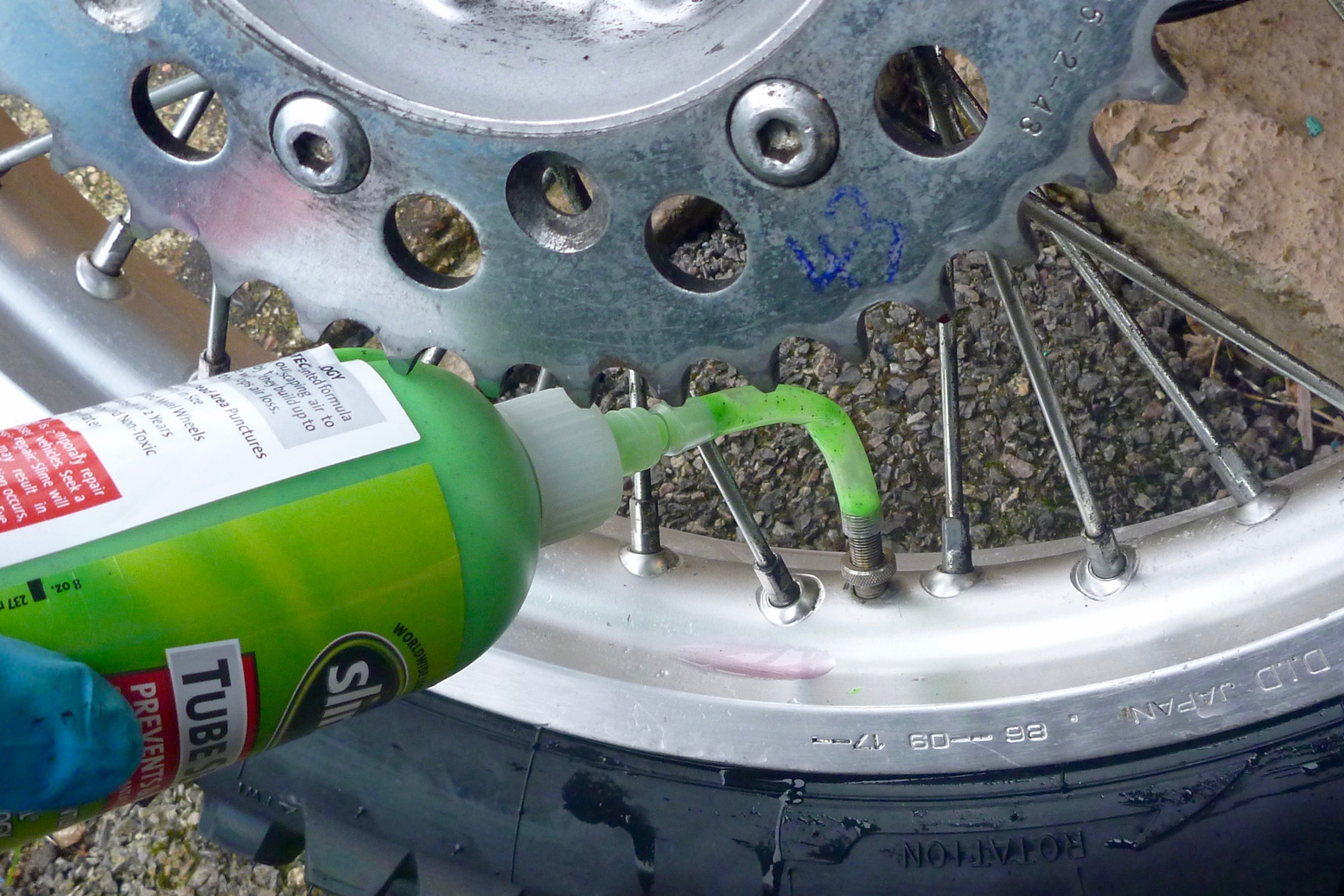
The good thing is tyre pressure pushes these tapes and sealants into the rim, so improving the seal. But if you inject water-soluble Slime or similar instant puncture sealant (right), it may not agree with your sealants and it will all come apart. As it is, water can seep down a spoke collar from the outside and get under your sealant. If you’re doing wet trip, like Siberia, there’s something to be said from sealing the nipple/rim/spoke contact area from the outside too. Just a smear of whatever you got ought to do.
Glass sealant DIY Another DIY suggestion is using glass sealant again, being meticulous with your pre-cleaning and patient with your sealant curing – see below. Sounds similar to Cyb’s process.
1. Glass (windscreen) sealant 2. 16″ Harley inner tube or rim band 3. Glass cleaner or oven degreaser
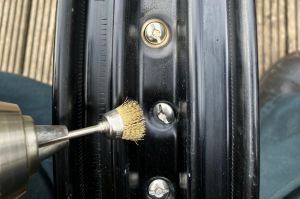
• Clean the wheels with the degreaser/cleaner, mini wire brush wash (left) if old, then with water to make sure any swarf or chemical is washed off. Wait for a day in dry. Use a blast of air if indeed • Apply the sealant to each spoke nipple, wait for a day to cure, apply another layer, wait again • Apply sealant to the inner part of the wheel. One layer for one day, do it twice then wait until it’s completely cured • Fit the rim band (or tape, see below)
Good tip from CyclePump man: check spoke tension before your seal the nipples forever. A bit slow but worth watching in full.
Builders’ Sealing Tapes One guy told me he simply taped up his rims with duct tape and topped up his tyres once a week. Using something more airtight might even enable a proper job.
I’ve seen 3M 4411 Extreme Sealing Tape mentioned (right; technical sheet). In neutral (N), grey (G) or black (B), it’s 1mm thick (more pliable than the 2mm 4412N) and comes in 50mm width for big bike rims, or 38mm (1.5 inches; product code: BLA193840). A 5.5-m roll of 38mm costs £20 and is enough to do three ~1.5m circumference rim wheels once.
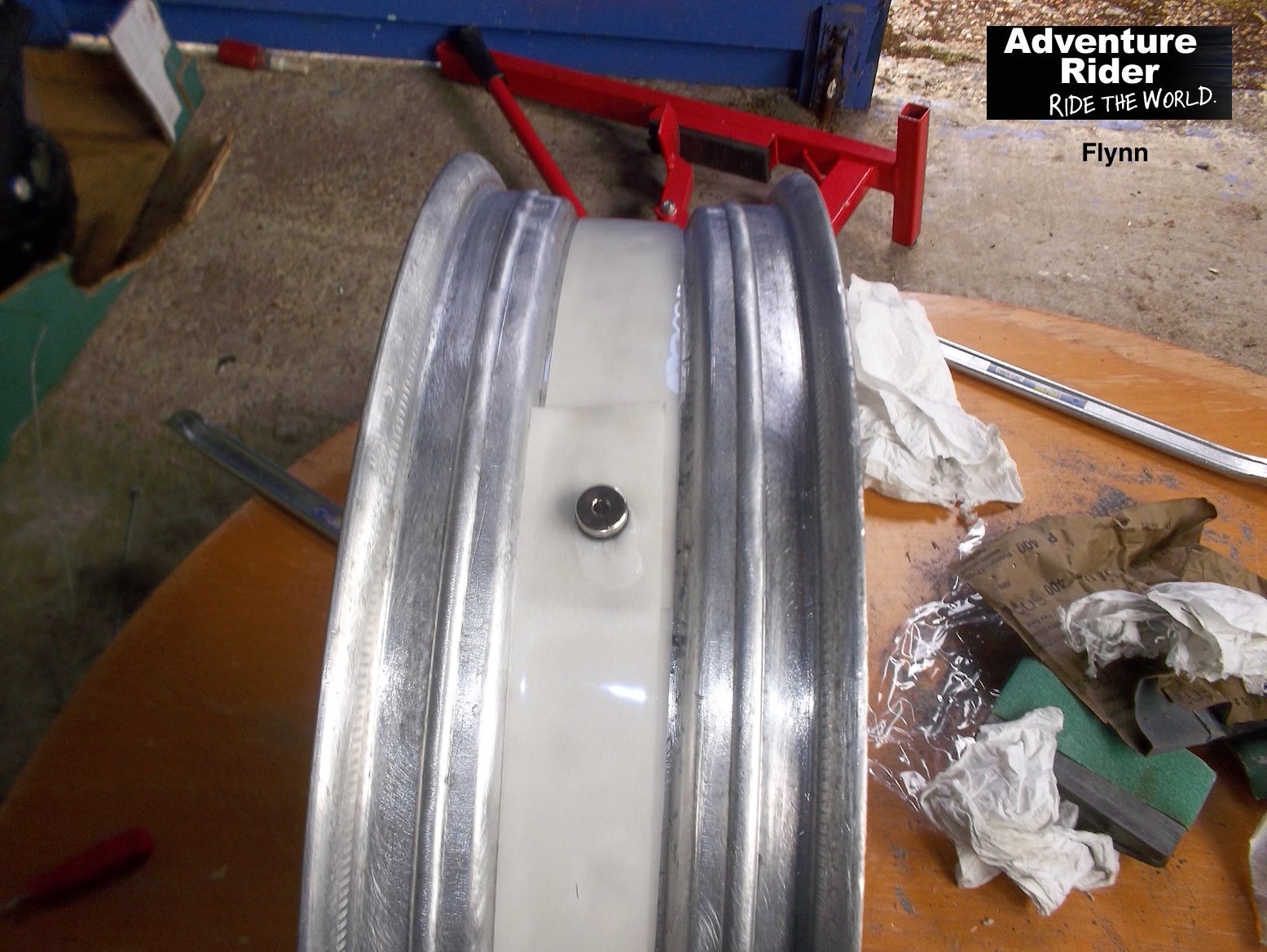
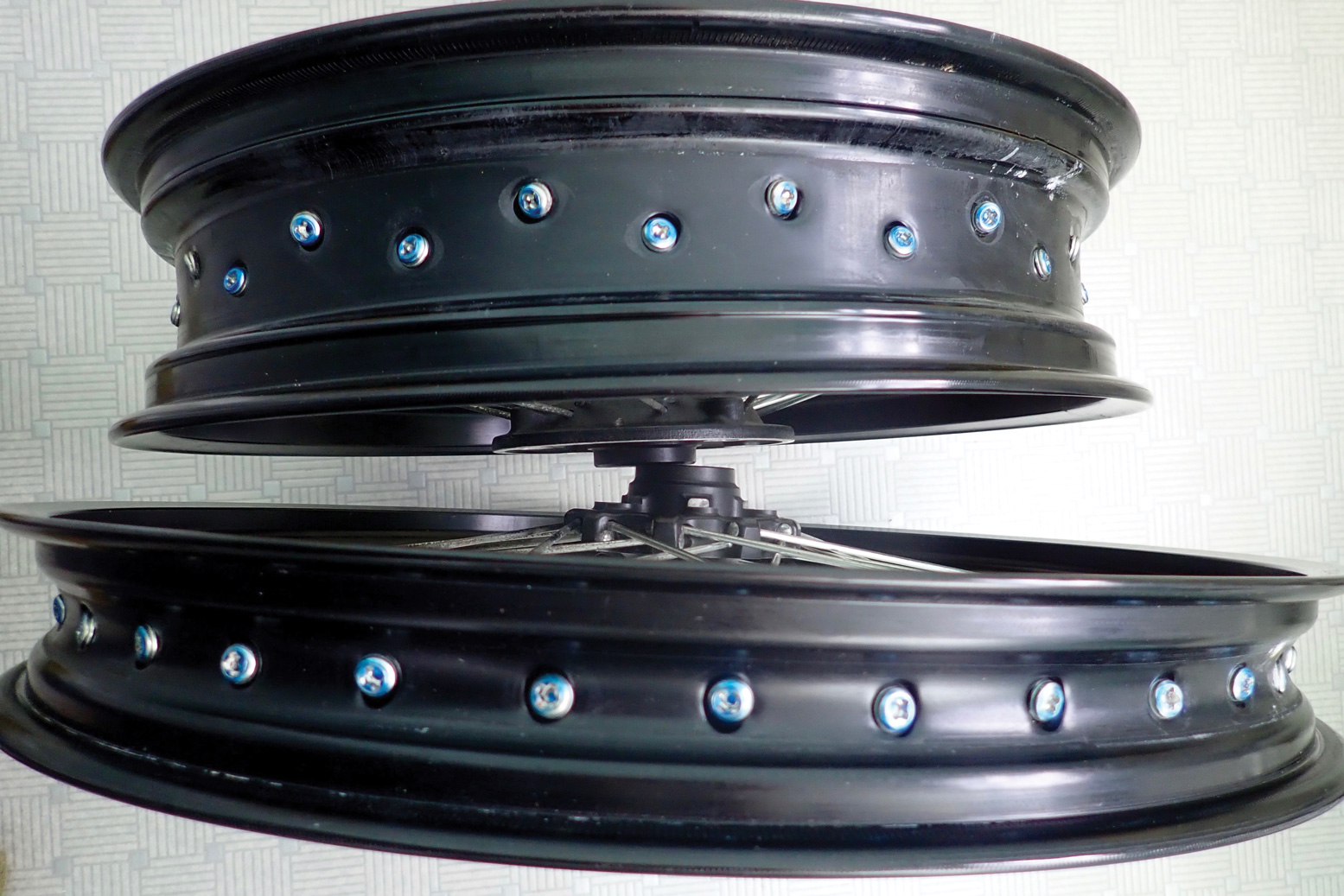
Another mile-long thread on Advrider with some good ideas and solutions. This tape works best where the well/drop centre of the rim is nice and flat, as on a wide supermoto rim shown above left, or my Africa Twin (left, upper wheel). You’d imagine a curved profile will work less well with tape, but see Cycle Pump vid above.
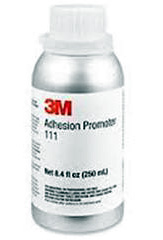
If I was doing such a DIY sealing job again, this time I’d consider forensically cleaning the rim with something like 3M Adhesion Promoter 111 (AP111; right; £20 for 250ml) (‘A quick wipe of AP111 on the ionomer is suggested for best performance of the overlapping tape. AP111 will approximately double Extreme Sealing Tape’s adhesion to its own ionomer backing).
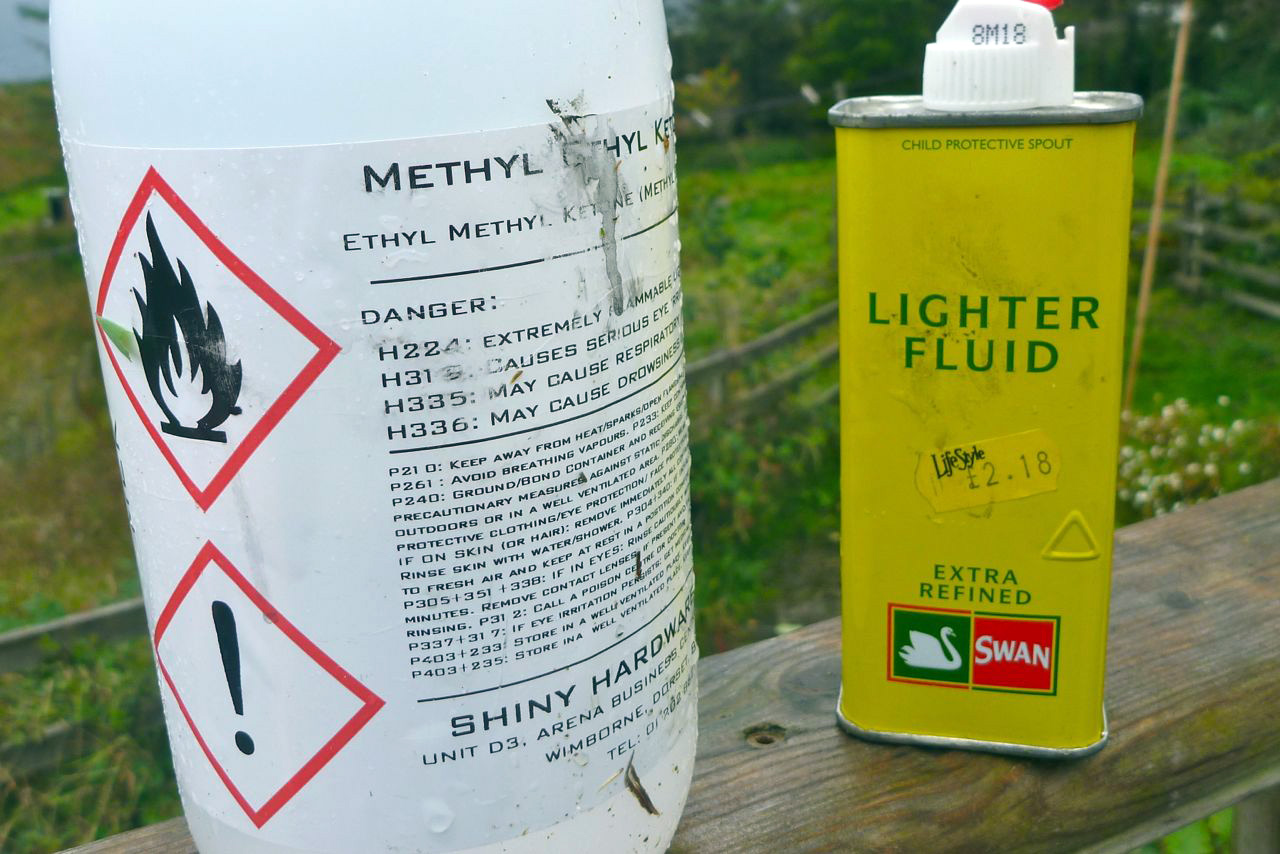
But £20 for a half pint is quite expensive. I know from kayaking that brake cleaner, acetone (paint or nail polish remover) or any number of other highly noxious solvents like rubber or plastic-eating MEK (Methyl Ethyl Ketone, (right) or Toluene also work. Then I’d seal each nipple with some runny glue so it seeps down into the threads. Let that cure, do it again then a dab of silicon like McNett Aquasure or Bostik 1782 or a mate tried EvoStik Sticks Like Sh1t. Then cap with Goop or whatever before letting it all cure again and taping it all up (so similar to Outex, then). I note Cyb says silicone is not as oil-resistant as the glues he uses. 3M is a big name for industrial applications but there are all sorts of waterproof, self-amalgamating or self-fusing silicone tapes out there in rubber and plastic for household leaks.
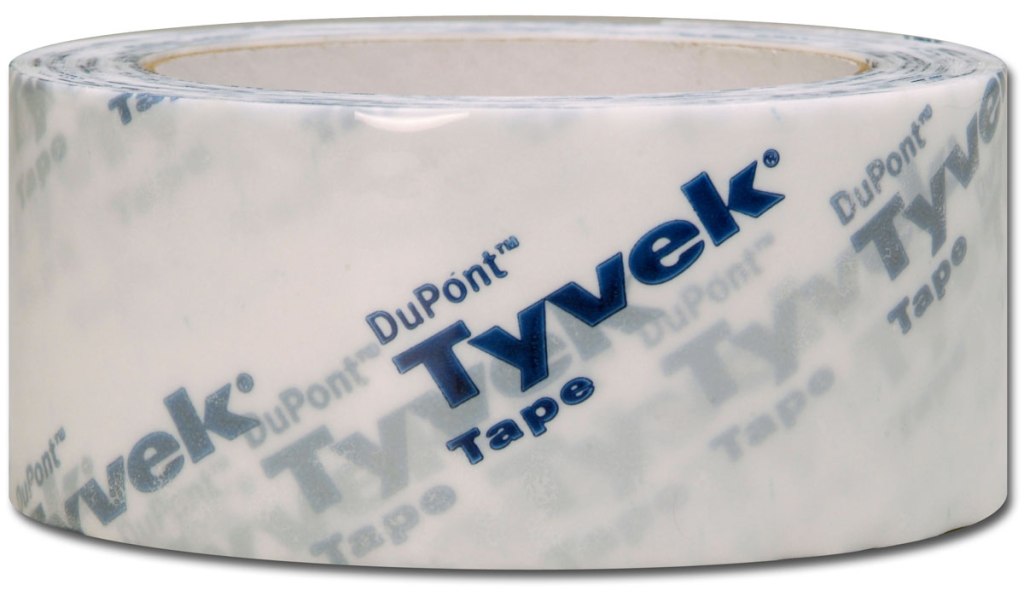
All it’s got to be is soft and pliable to contour the rim well closely, be stuck on to a very clean, oil-free surface, exceedingly non-porous and darned sticky, come what may. I’d hope 4411 or the DuPont equivalent: Tyvek, have all these properties, but Tyvek only seems to come in 60mm widths, a bit wide even for a giant adv rim.
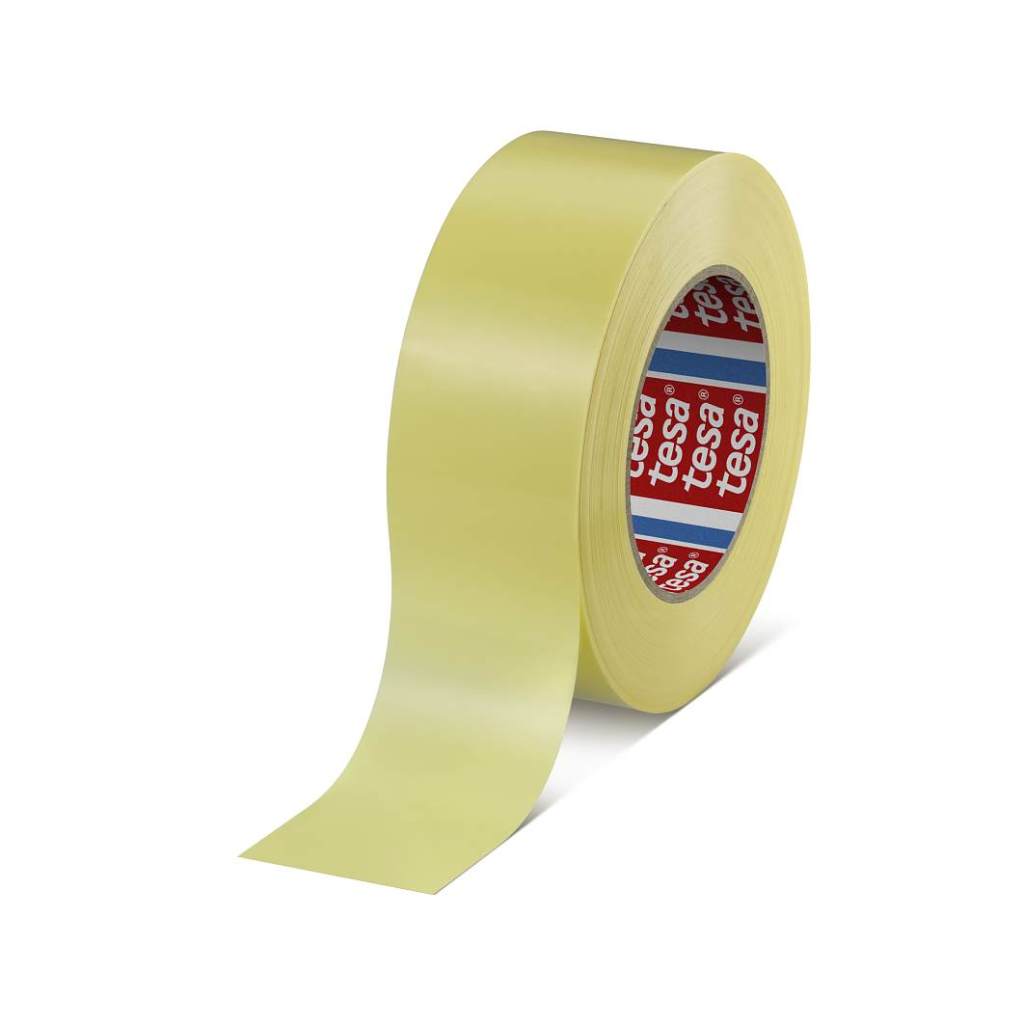
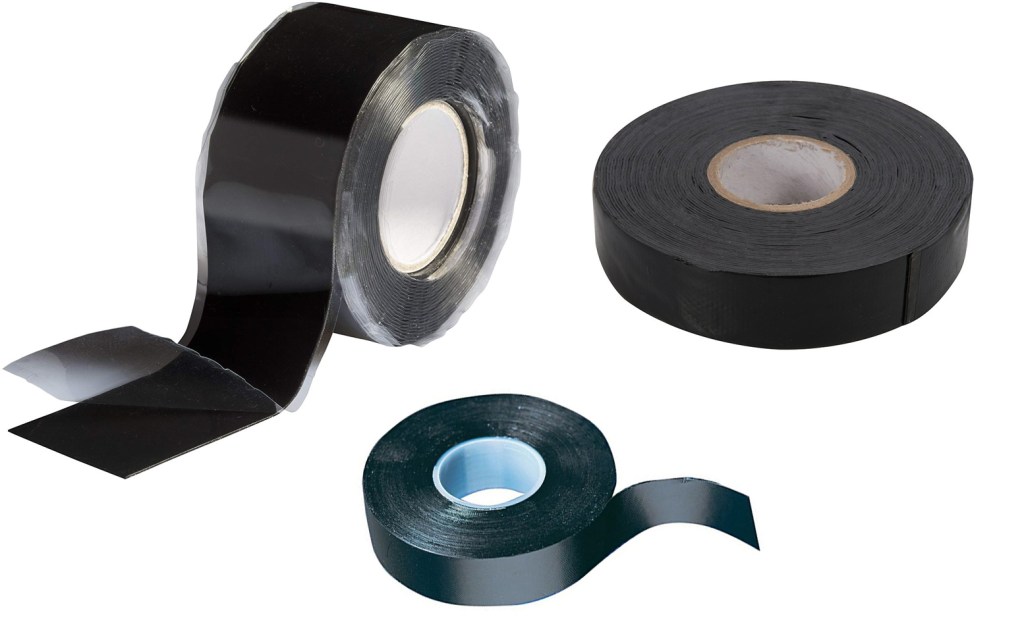
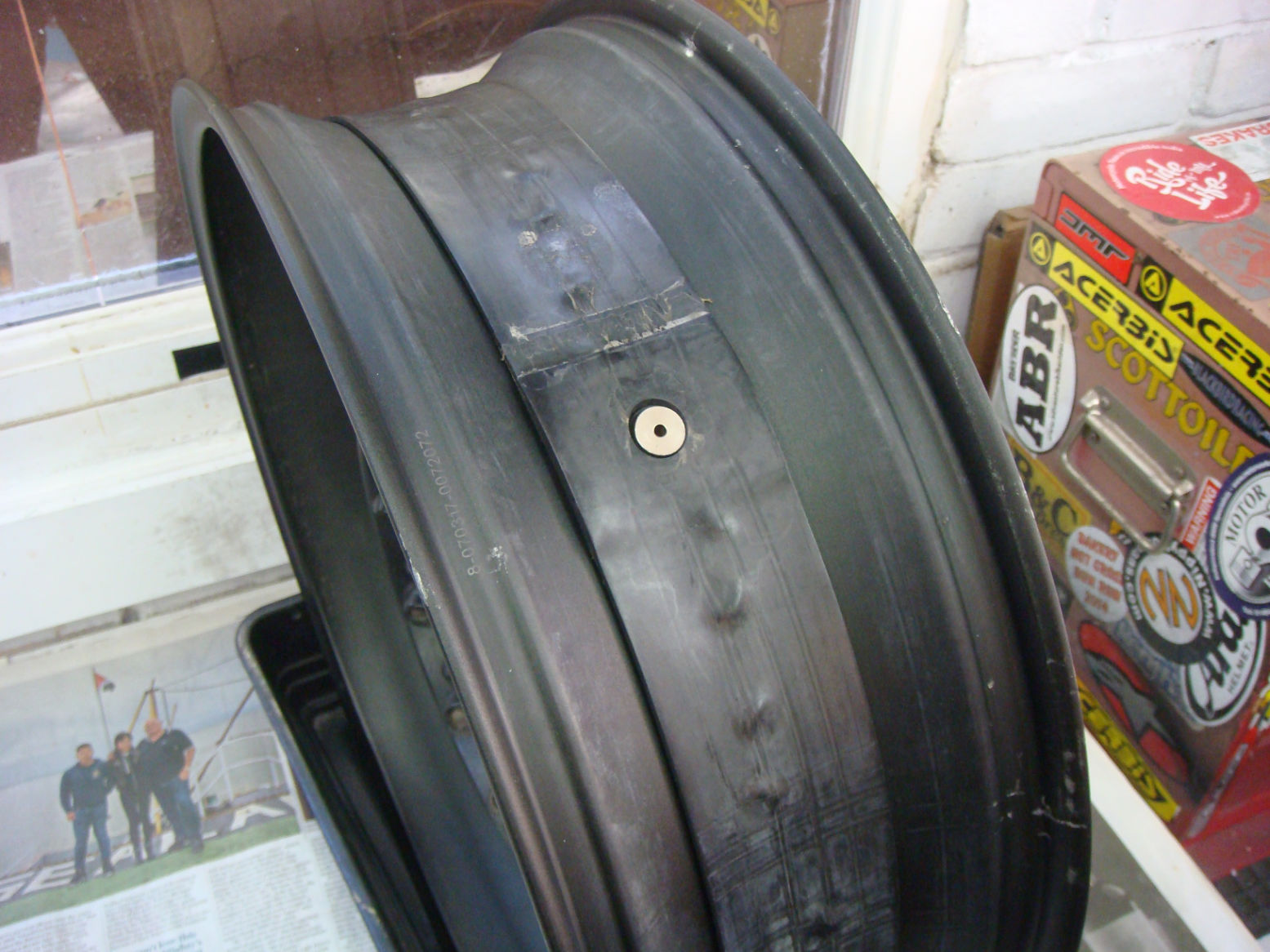
Another tape that’s been mentioned is Muc-Off MTB wheel sealing tape (left). Costs from £10 for 10m in Muc-Off pink up to 35mm wide for smaller moto wheels. Tesa Tape 4289 (above left). It’s tensilised (stretchy), like self-amalgamating tape for leaky-pipe-repair (right). Not tried Tesa yet either but at 66 metres a roll it’s a fraction of the cost of 3M if you have several wheels to do. Yes it’s only an inch wide, but at 12 quid a roll you can do a few taut wraps round a wider back rim to get a good seal. You might not bother with the laborious individual nipple gluing and go straight to tape (or do a continuous band, as above). It’s worth experimenting with at home before a big trip. The risk with tape-only is they might start separating when things get very hot. Don’t underestimate the centrifugal forces working on the tape inside your wheel. Warning below, the original rim tape put over a DIY sealing ‘for good measure’ span itself into pieces and blocked the valve. Things need to be glued down securely.
Rim tape on top: not always a good ideaSpun off into little pieces
Outex pads and tape I came across Outex sealant tape which a mate has been using on his TTR for years. As with many of these DIY methods, some get on with it, some don’t as this post shows. Here’s another on Adv. Central Wheel in the UK used to sell it but stopped, presumably due to unreliable results from customers. IMO you can do as good a job with the off-the-shelf items mentioned above for half the price.
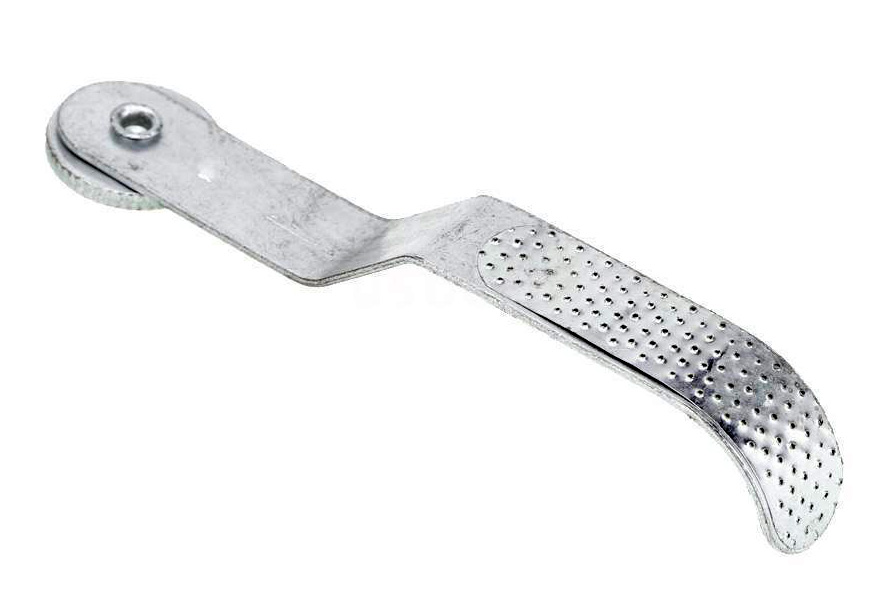
Basically, it’s nothing more than a set of sticky pads for each spoke nipple plus a very sticky and wide double-sided tape applied into the rim well with as few creases as possible. And then a thicker protective tape over the top. Application video below; a higher-res video here. Costs from £90 to £125 in the UK which seems a lot when you see the other tapes, above. As mentioned, I was about to fit it to my WR, but stopped once I saw my rims lacked the safety bead I go on and on about. Take your time they say, to try and get all the air pockets out. Using an inner tube patch roller rasp (right) helps; you often get them with better puncture kits.
 Tested: Bell Moto 3 helmet





























 Adventure Motorcycling Handbook