Category Archives: Tyres

CRF300L: Tubeless wheels 3

CRF300L Index page
Previously on 300L Tubeless Wheels
Tubeless Wheel Conversion Index page

Note: I rushed this job below and had a manageable slow leak from the 17, a meltdown on the 19 front arriving in hot Marrakech (fitted a tube), but the 21 I left at home has held its air fine for months. In Marrakech the mechanic re-sealed the rear in between my trips, cleaning then applying a continuous band of Puraflex. He’s doing the same to my 19 front. Summary: technique works if you take your time – days of curing – and do it right.

Note: I rushed this job
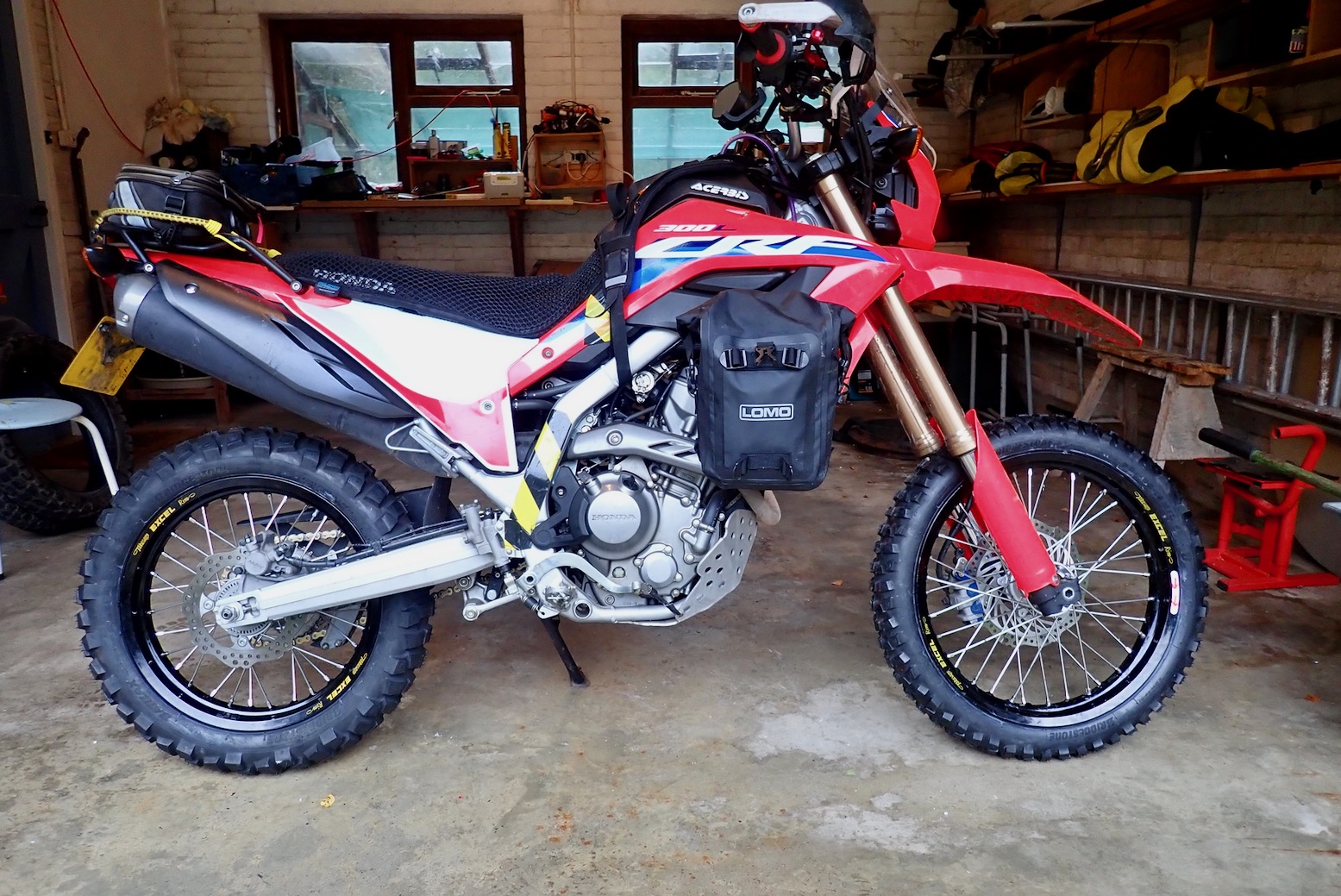
Rims are smaller but the 300L is no lower and rests the same on the side stand

It took so long to get my three new tubeless wheels made I’d forgotten quite why I did it. Oh, yes, the clear desirability of tubelessness, plus some experimentation with wheel sizes, notably a 19-er front which is 38mm less tall, 7mm wider and the same weight as the stock tubed wheel. Wheel builders seem to have long lead times, rims are not in stock, custom spokes need to be made and holiday needs to be taken. Once everything was in place and my slot came up, the actual job took a couple of days.

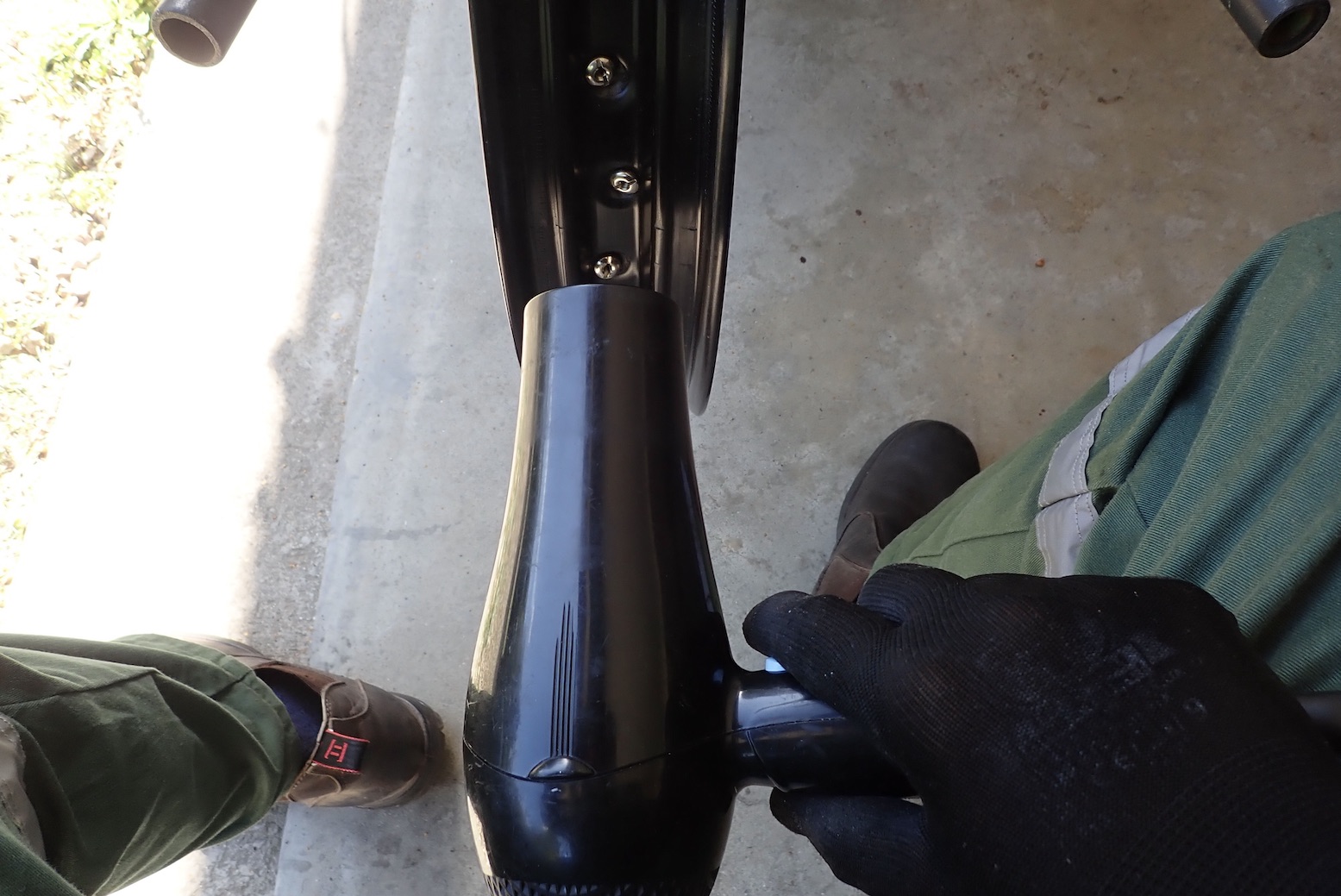
Waiting for that reassuring pop.

The Fly & Ride transporter was leaving for Malaga next week so I had to get cracking. Ideally I’ve have had a month or more to sort any sealing issues and get a feel for the new sizes.
The 19-inch wheel arrived so I got stuck in but rushed it. I didn’t wait a day for the glue to cure, then fatally used slippery 303 UV Protectant to help mount the very stiff AX41. Works great on tubed wheels but I suspected it was a bad idea for MYO tubeless. Once mounted, when I spotted 303 bubbling out of a spoke thread I knew the game was up.
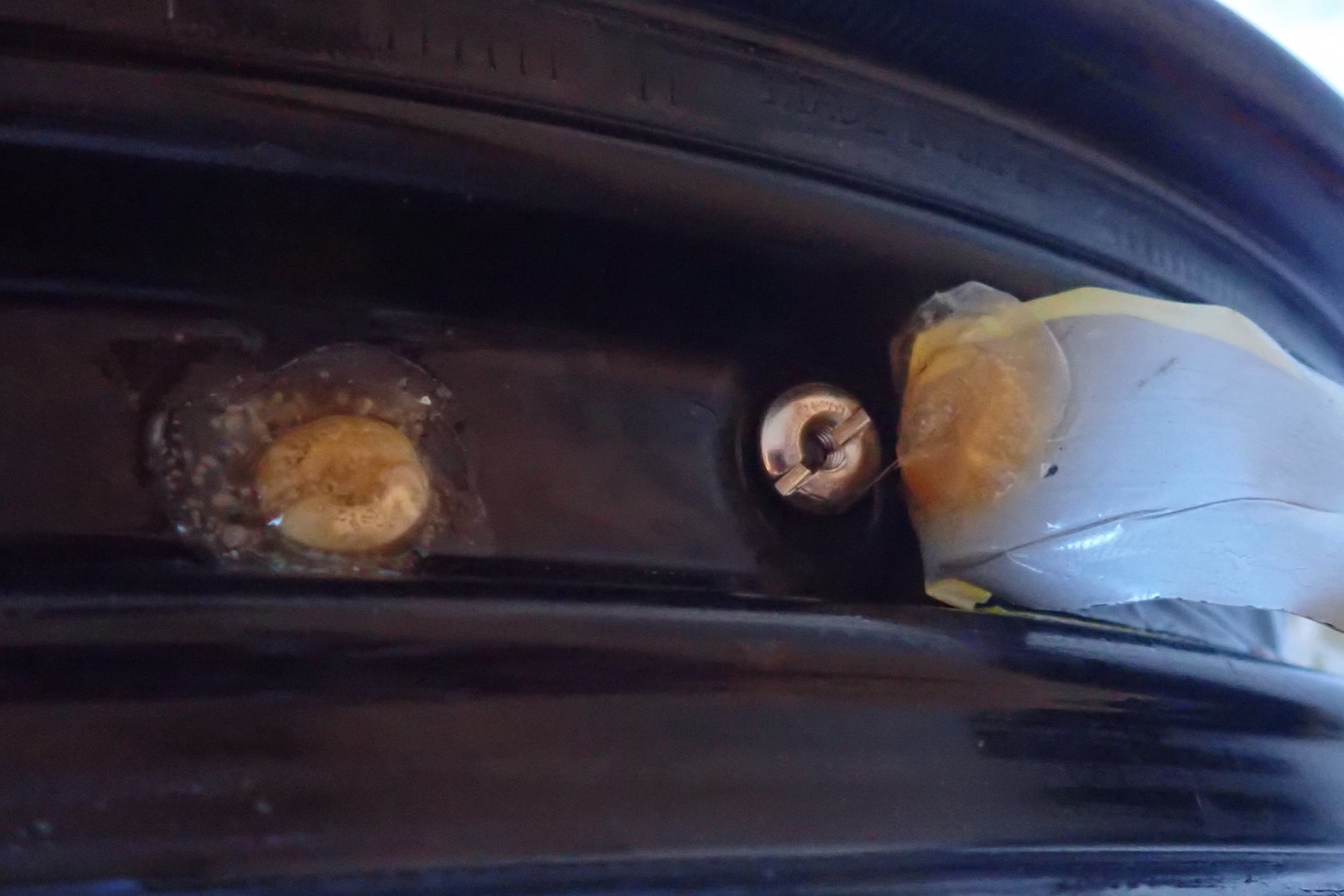
What a mess. Return to Go.

With the tyre off, my glue blobs had gone soft (left, from 303 contact?) and peeled off like soggy plasters. To be fair, one problem with this used 19-inch rim was that the pre-existent spoke holes (from a KTM?) had to be reamed and re-angled to fit the Honda hub. It made for bigger gaps so I tried to seal the outside of the nipples with Stormsure where water might run in, but should have done a better job all round.
This is the gamble of marrying pre-drilled rims with non-matching hubs. Angle-wise, there can’t be that much in it, but in this case it was enough to misalign the pull of the spokes. Some wheel builders like CWC keep drilling patterns or templates to precisely drill a rim to match a given hub. This used Excel rim saved me £150 which I easily paid back with re-drilling and custom spokes. Oh well, the perils of experimentation.

Next day I needed to get my ducks in a row. Typically for me, I wasn’t repeating the proven system from the Africa Twin, but trying a new idea suggested by a mate. I spent a couple of hours in Poole sourcing components and by the time I got back, the other two wheels had arrived. After cleaning the 303 off yesterday’s mess, I started over.
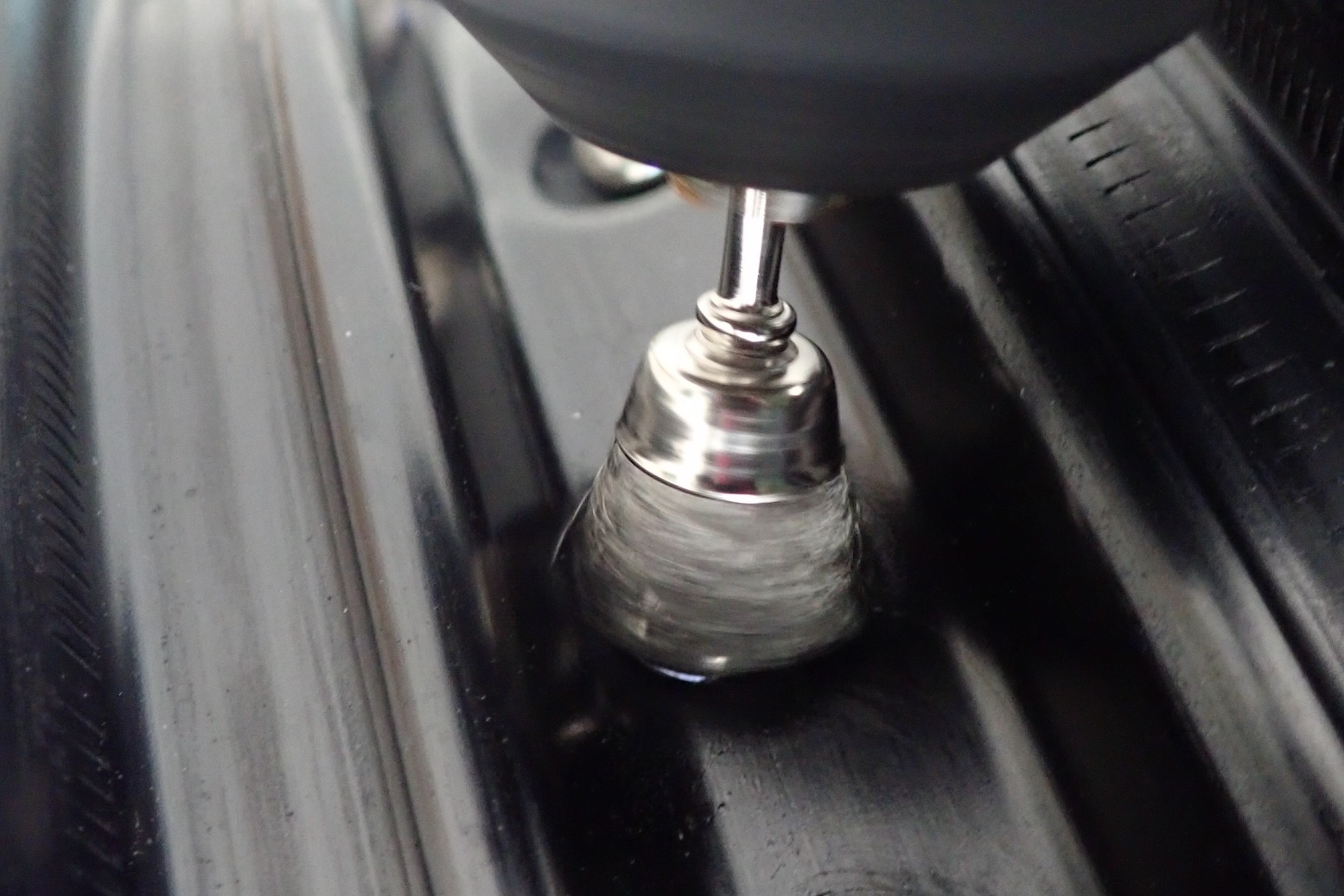
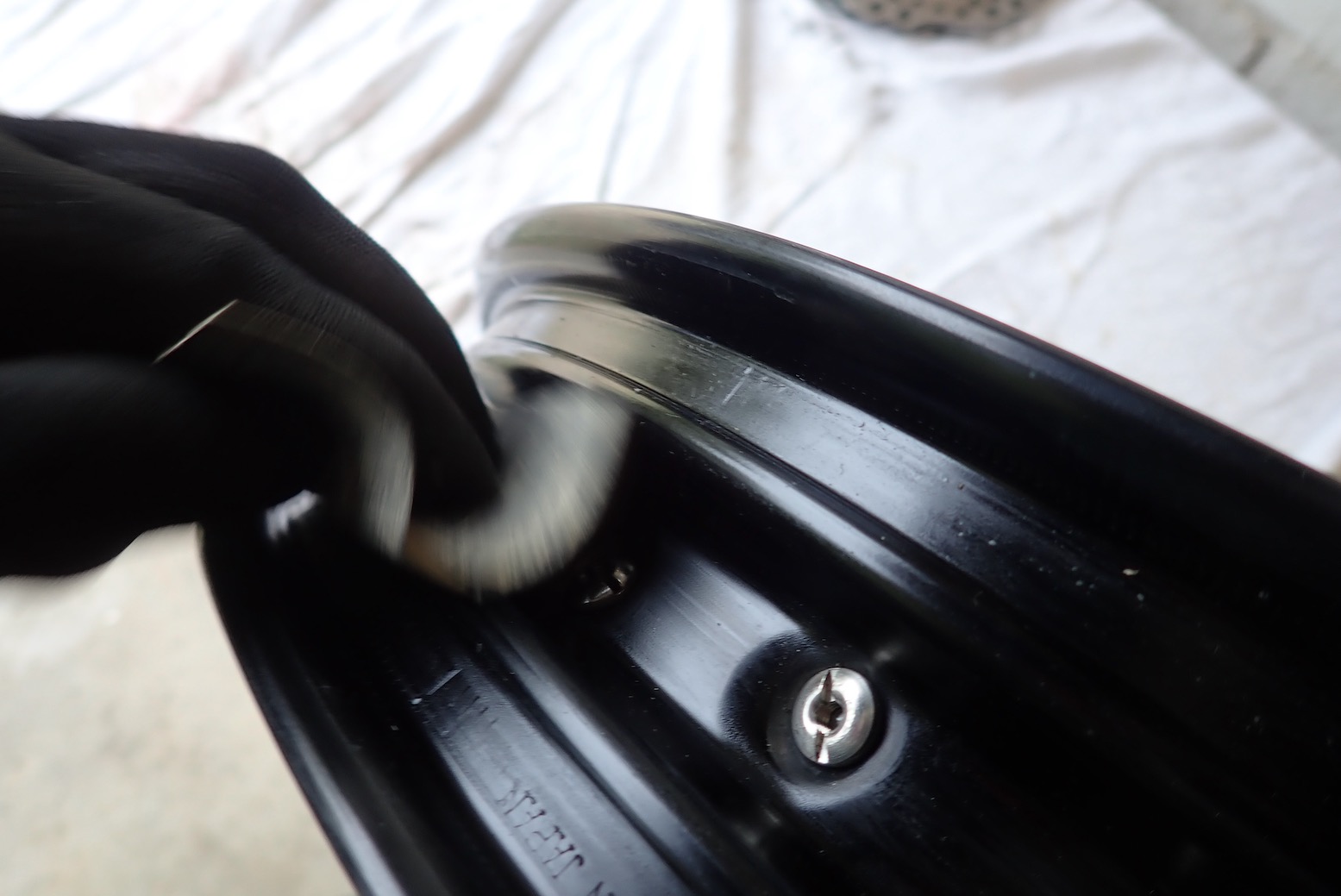
Wire brush each spoke nipple. Didn’t really do much as rims were in good shape but worth a go. Mini drill brushes on ebay.
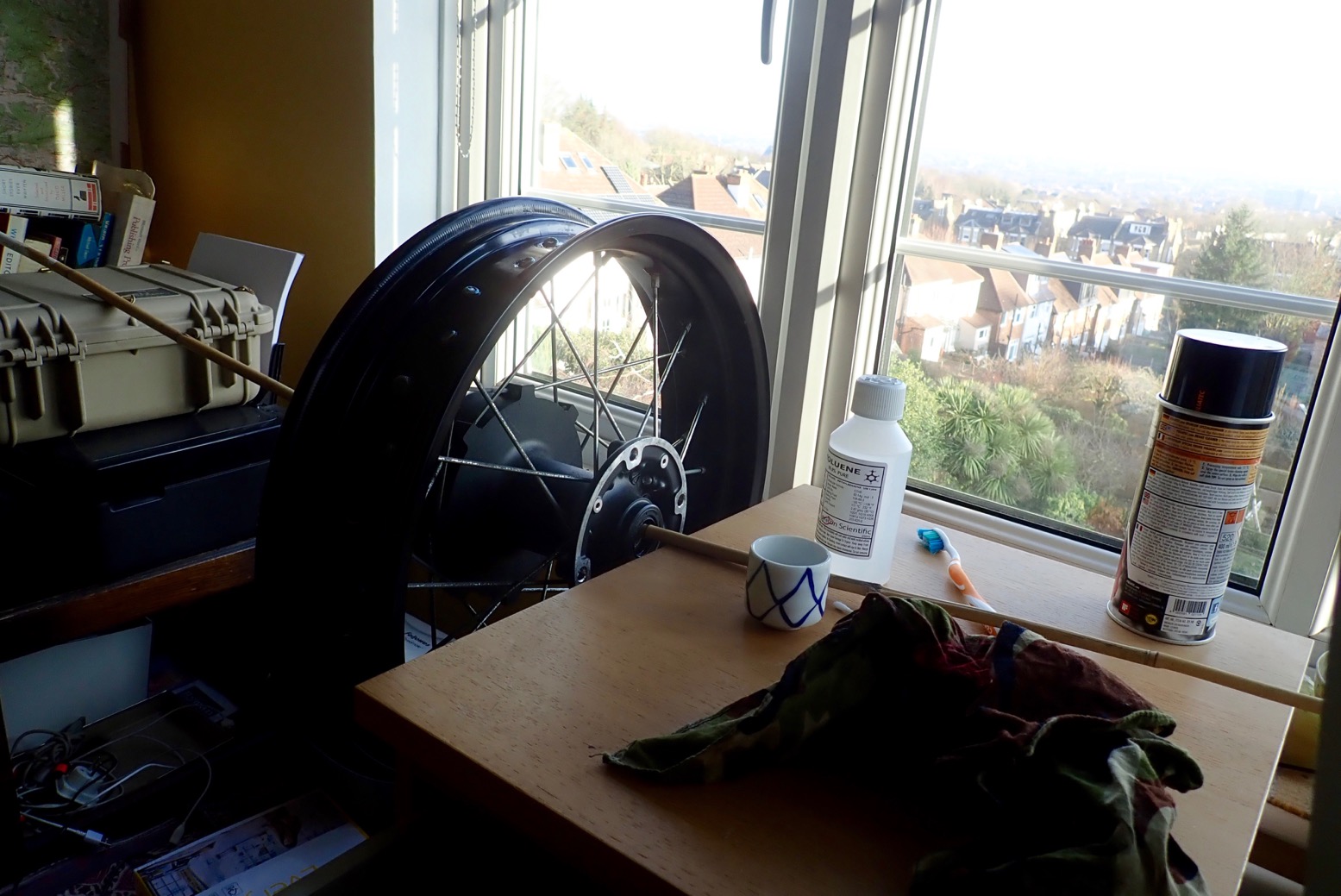
Rough up the rim’s black painted well with sandpaper then wipe it down with gas-o-lene.
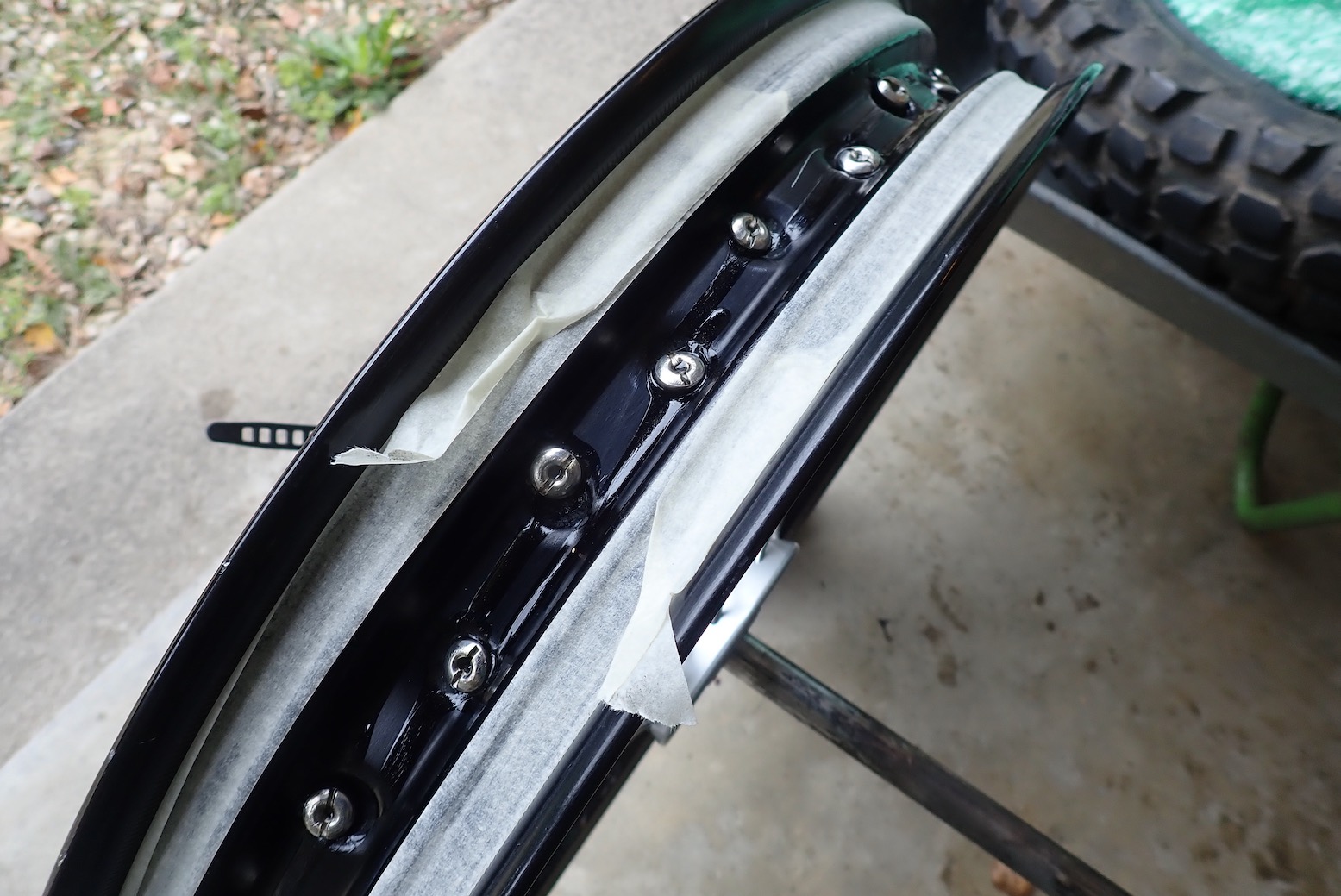
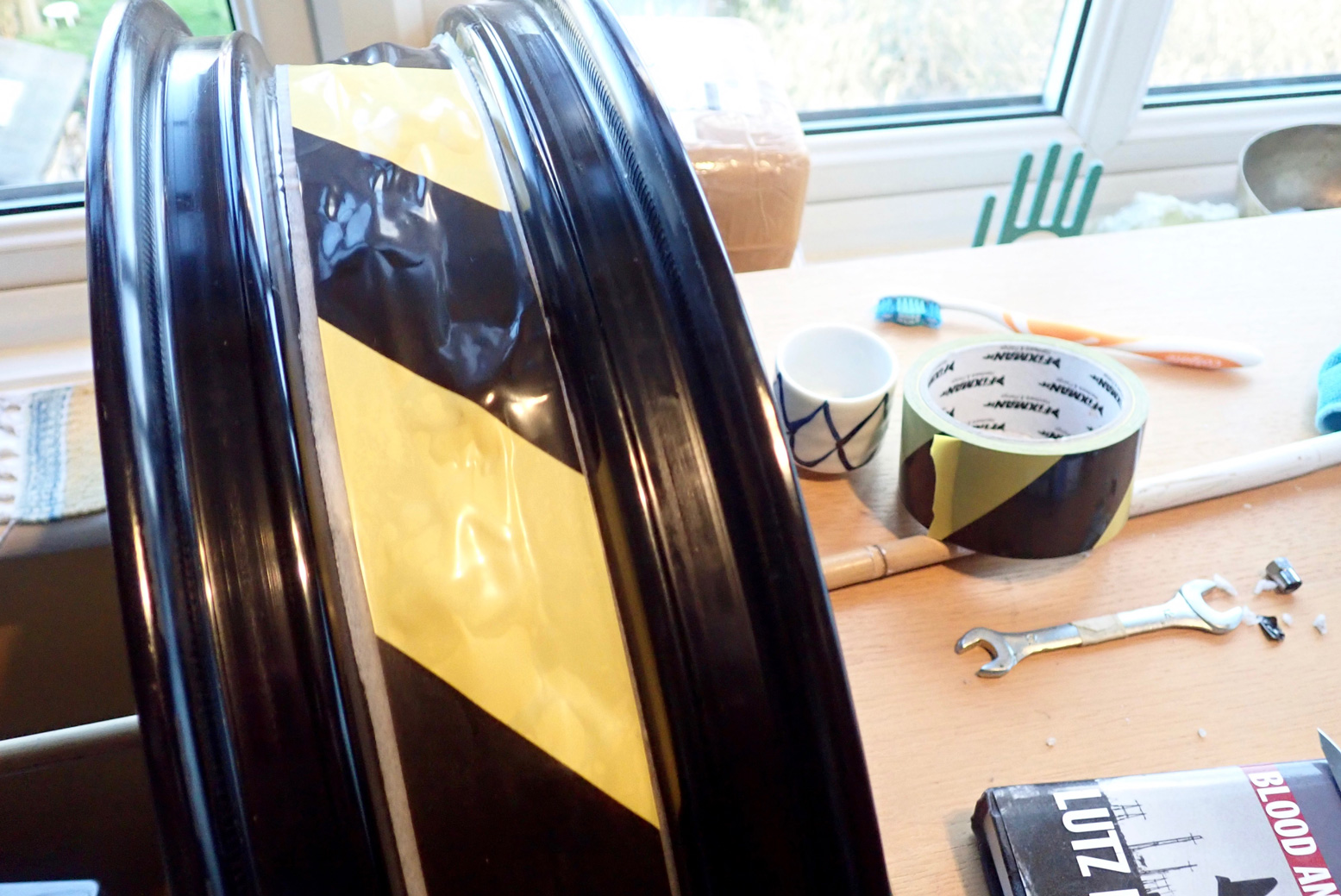
Mask off the bead and lip with tape (did this a bit late).
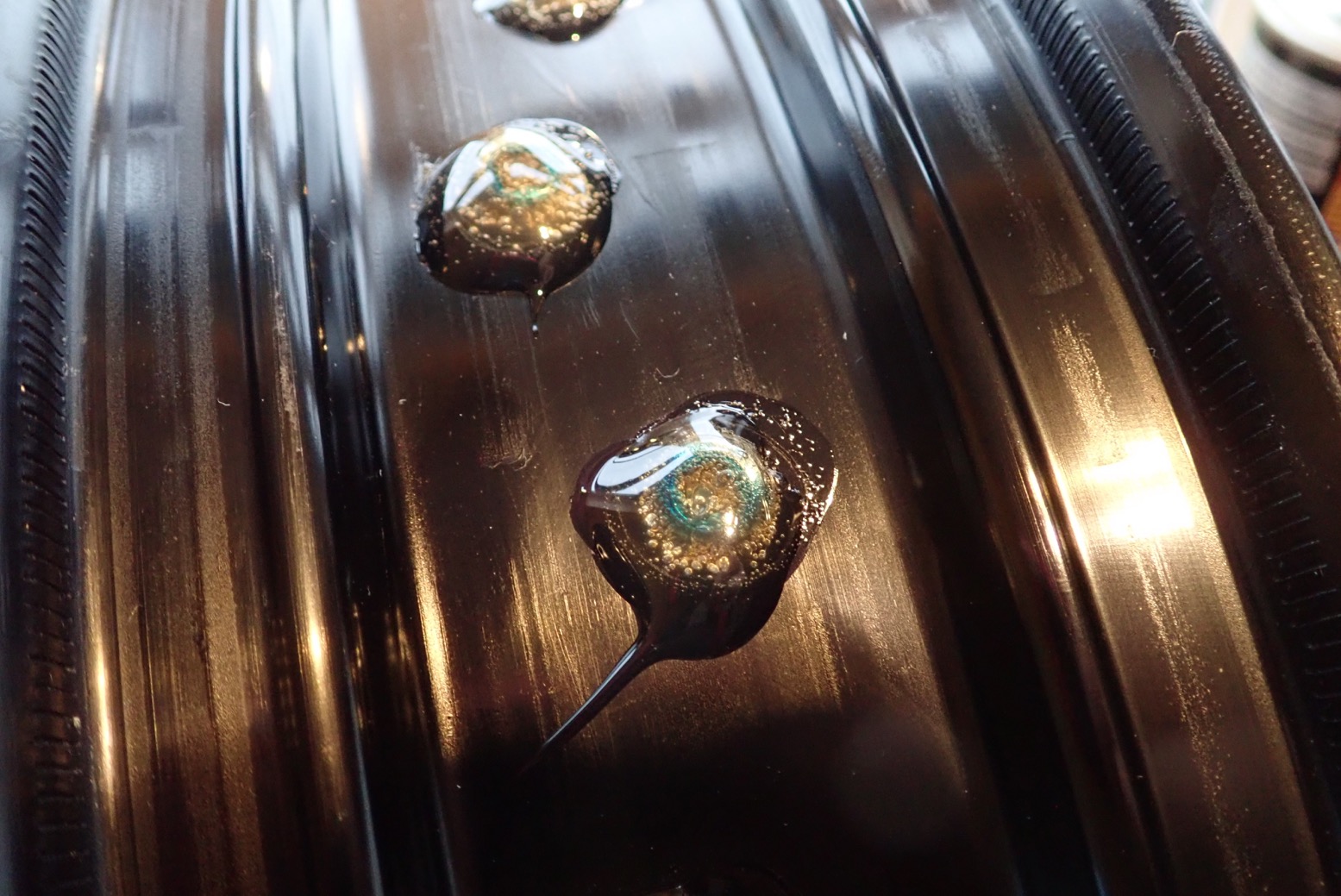
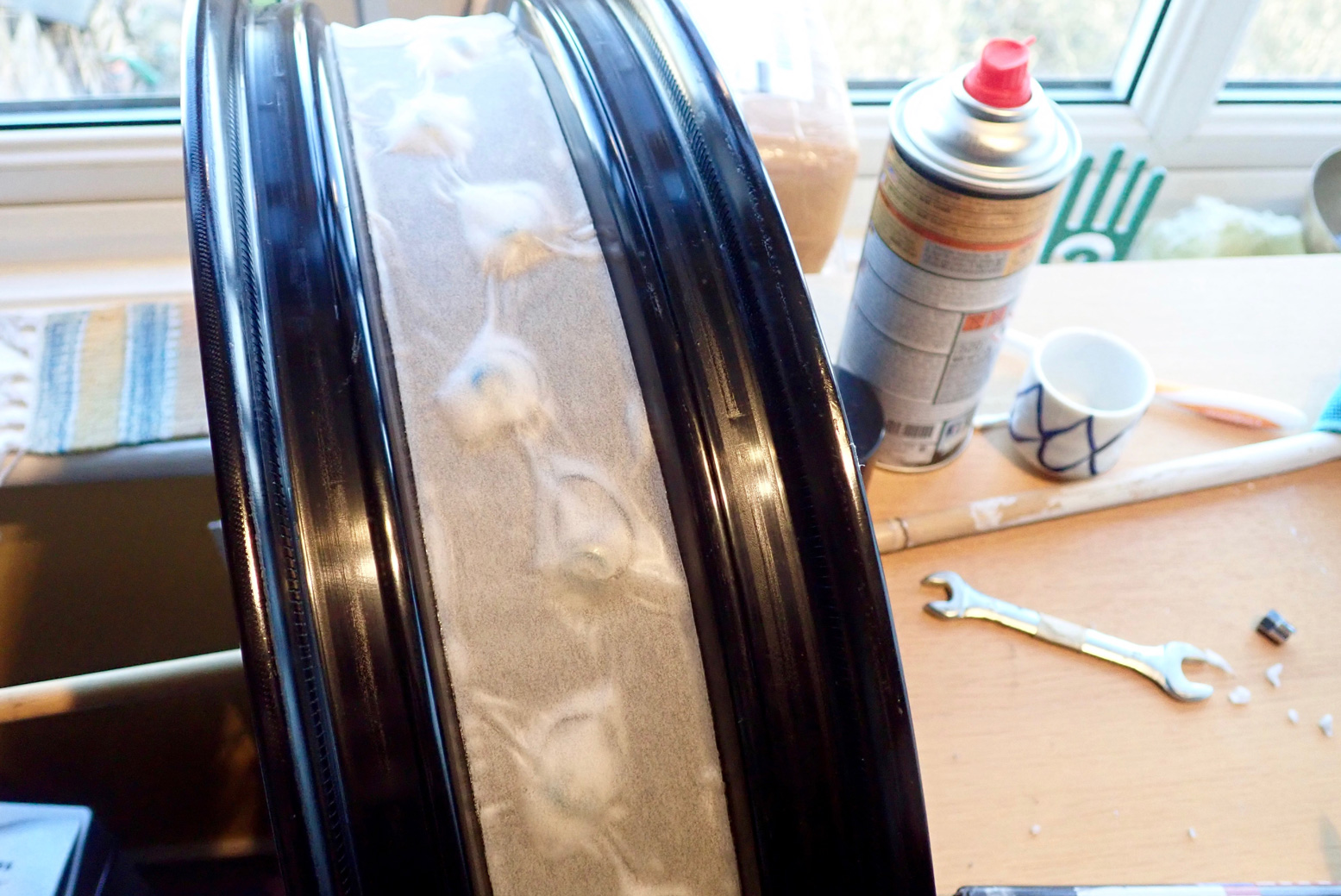
Drip runny Superglue around the edges and into the thread hole of each nipple. Should pre-penetrate the cavities.

Spray the rims’ well with etching primer. Halfords were out so I paid £21 down the road. All for 60 secs of spraying ;-/ I presume the idea is the sealant sticks better to the primer than the glossy black rim.

Once dry, apply a blob of Puraflex 40 to each nipple. That’s 104 blobs for 3 wheels but still < half an £8 tube, fyi.
Individual blobs as opposed to a continuous band like here are better for isolating leaks, as will soon be shown. But a continuous band ought to mean a guaranteed and complete seal. Decisions, decisions.
Let the Puraflex cure overnight, light a few candles and hope for the best.

Next day I felt fairly confident I’d sealed all three wheels but had some heavy tyre wrangling to do. Sod it I thought, why not support the local economy and let my LBS mount the tyres. They’ll have a tyre machine and a compressor with enough poke to shove the tubeless tyres onto the bead before they know what’s happening.
With 30 quid well spent, the tyres came out the shop rock hard. But would they stay that way? No, the two fronts were losing air. Casting aside seal damage during mounting, what were the chances of 104 blobs and 3 valves all being perfectly sealed? Only about 98% it seems. I turned the leaking wheels slowly through a trough of water and isolated a leaking spoke on each. I marked the spokes and whipped off the tyres, much easier now they’d been pre-flexed at the shop.
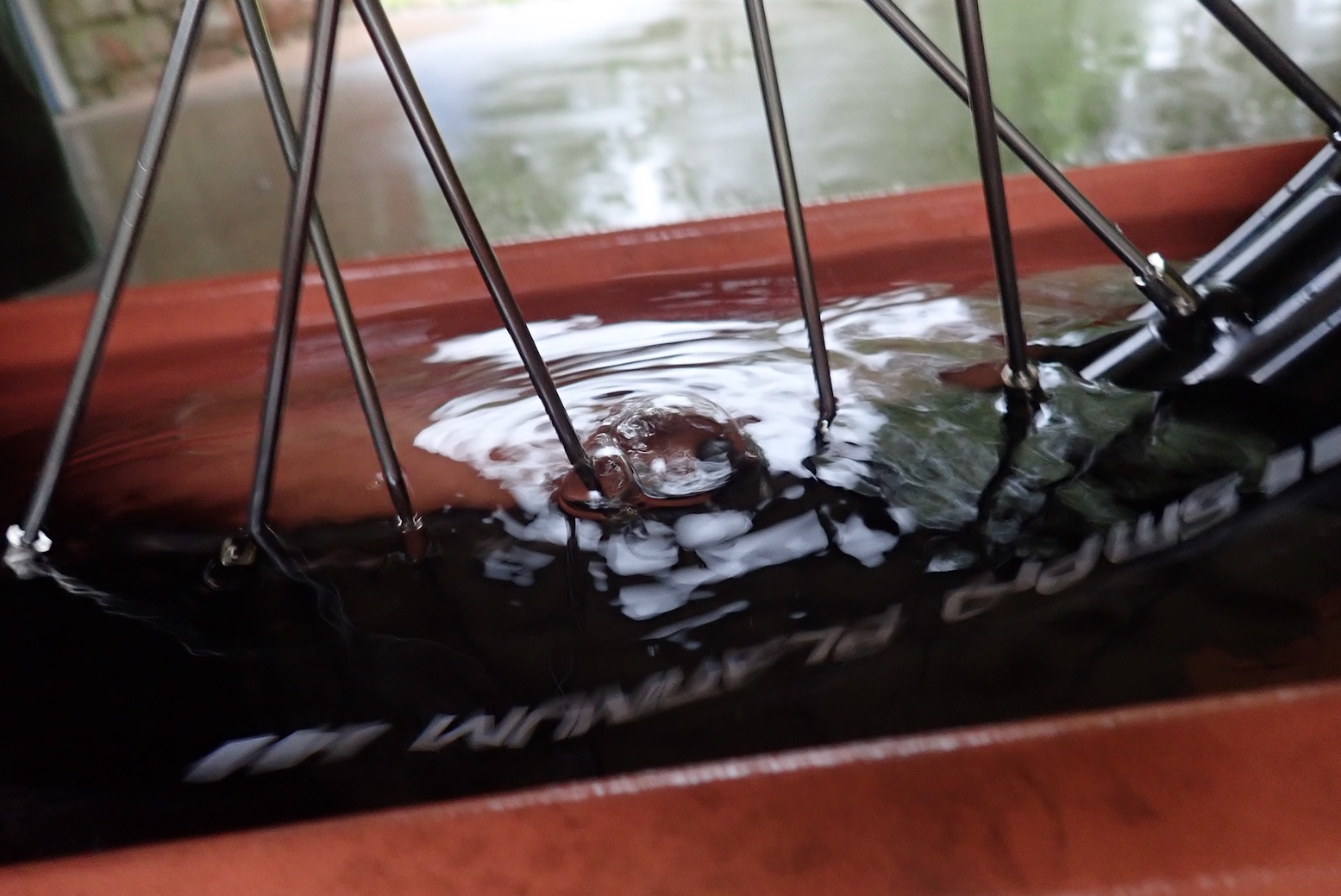
Bubbles of unhappiness
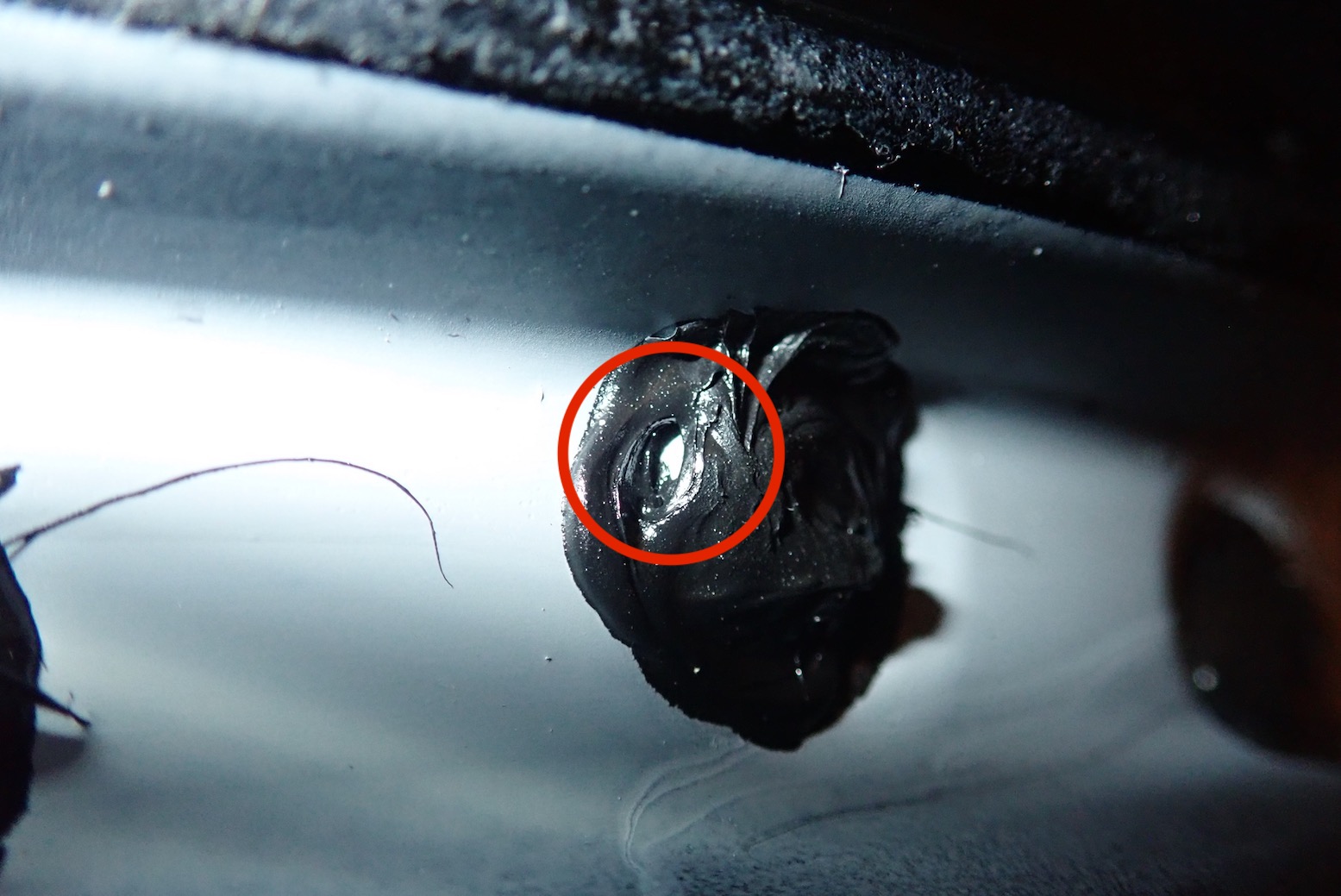
Seal gap

On the 19er I spotted a millimeter wide hole in the Puraflex (left) which the dab of Superglue underneath had also not sealed. I’ve not used Puraflex before – it’s not like a bathroom sealant and is PU, not silicon, based. Not sure what that means – the stuff was good and hard but had shrunk a bit as it dried. Perhaps the hole had opened up on curing, or perhaps I should have inspected each blob with a magnifying glass or given them all a pre-emptive second swipe of Puraflex once dried – that would take another day to dry. On the 21 incher I couldn’t see the hole under the corresponding spoke’s blob which underlines the idea of a second coat or even a continuous band. So I second-coated all the blobs and left it for another night. Weeks later the 21 (left at home) had lost just a couple of pounds so I’ll take that as a win.
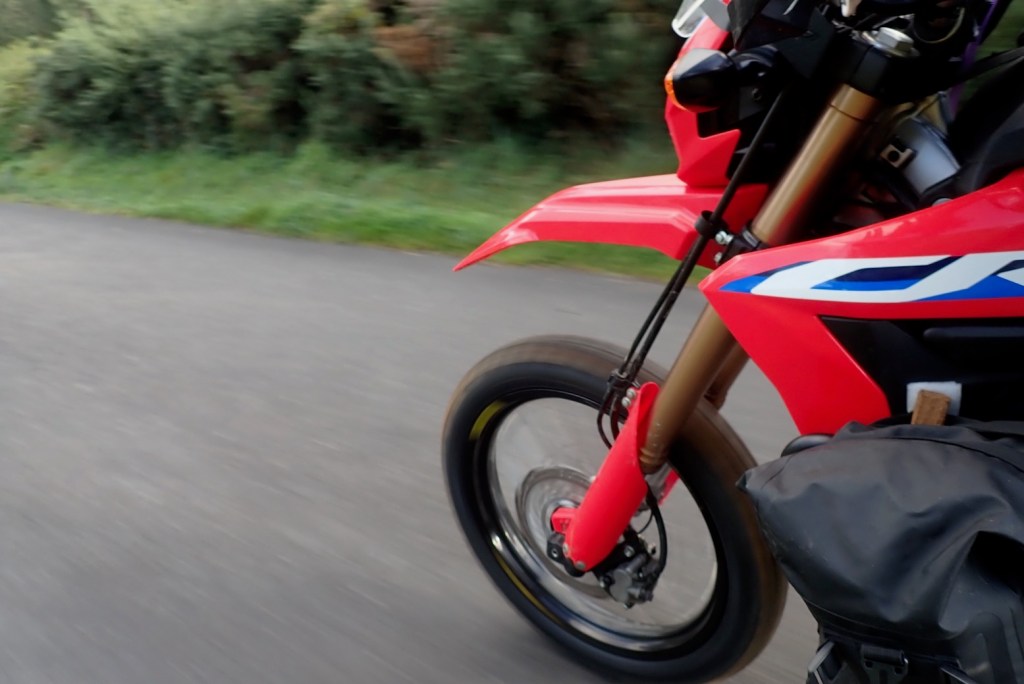
All bolted on and first thing I noticed was the bike leant the same on the side stand, so clearly was no lower. Not that bothered as it’s one less thing to meddle with and the narrow saddle means my feet touch down OK. I guess the AX41s have high sidewalls; good for off-road and rim protection.
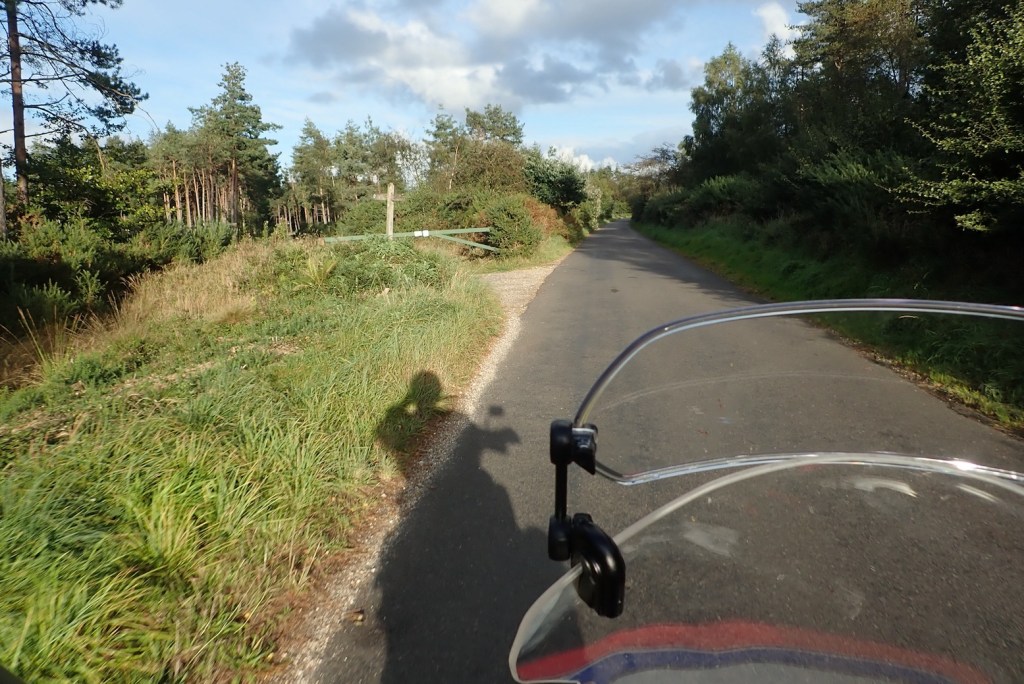
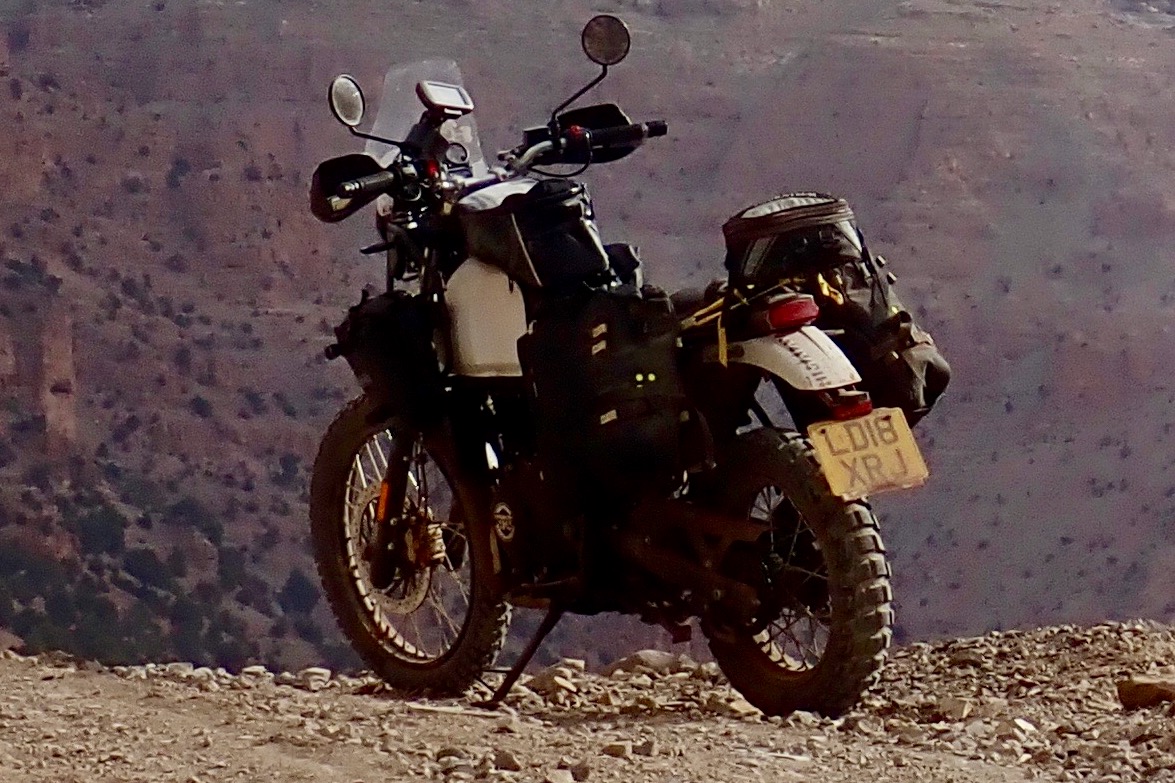
I went for a lovely evening ride. On the road the fresh tyres didn’t exhibit any anomalies, nor did the handling feel much different. I think it might take a more spirited ride through some bends to highlight any improvements in the steering. In Morocco I know just the spot, several in fact. The 19 is only 7mm wider than the 21, while the back 17-incher is the same as the stock IRC.

CRF300L 2023

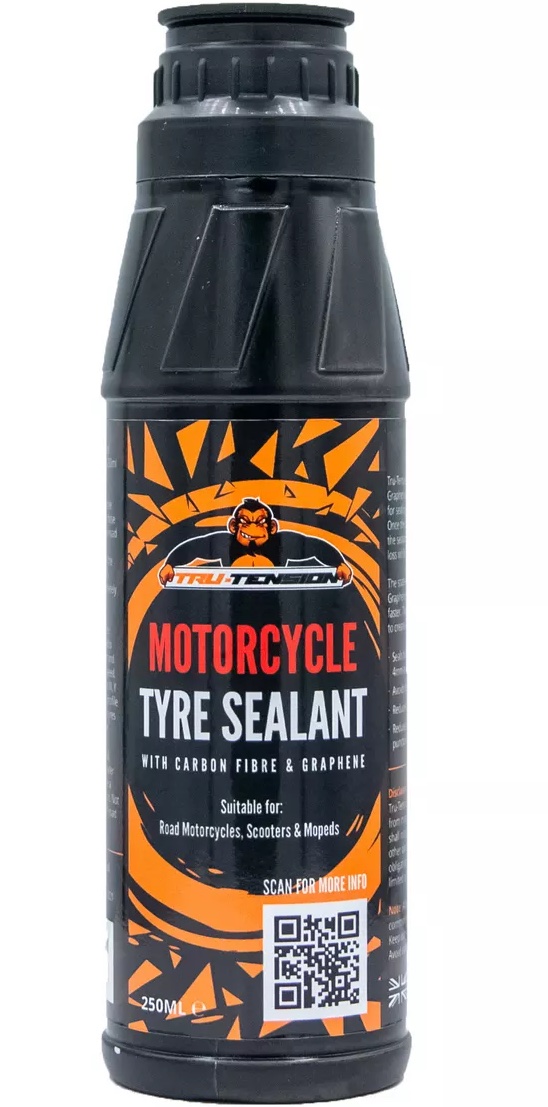
In Halfords I’d bought some Slime for later, but also carefully applied a shot of similar Tru-Tension tyre sealant (left) in the front wheel, squeezing it up into the valve set at 12 o’clock so it would dribble down along the rim’s well. This stuff contains ‘carbon fibre and graphene’ which are such cutting edge compounds I fell for it. Slime or similar have helped permanently seal other imperfect MYO TL jobbies, even though it shouldn’t be necessary if the job has been done well.
I rode back to London and then on to Fly & Ride near Gatwick. Whatever fuel I picked up in Poole, the CRF (now with 2200 miles on the clock) belted along like it was on methanol, holding an indicated 70 much of the time. But both tyres were still losing a bit of overnight air so I may have to spend a day in Morocco sorting it all out. I’ve packed Puraflex, some more Slime and a pair of tubes and levers.

Robbo, a fellow MYO TL experimenter does wonder whether Slime etc can soften rim sealants. These goops work under pressure but also centrifugally, getting flung out onto the inside of the tyre where punctures occur, but away from the hand-sealed rim well where, in my case, it’s as needed.
Much as Sixties psychedelic guru Tim Leary proposed that enlightenment and self-awareness must eventually be sought without the aid of drugs, so MYO TL should endeavour to seal without Slime. Tune in. Glue Up. Ride out.

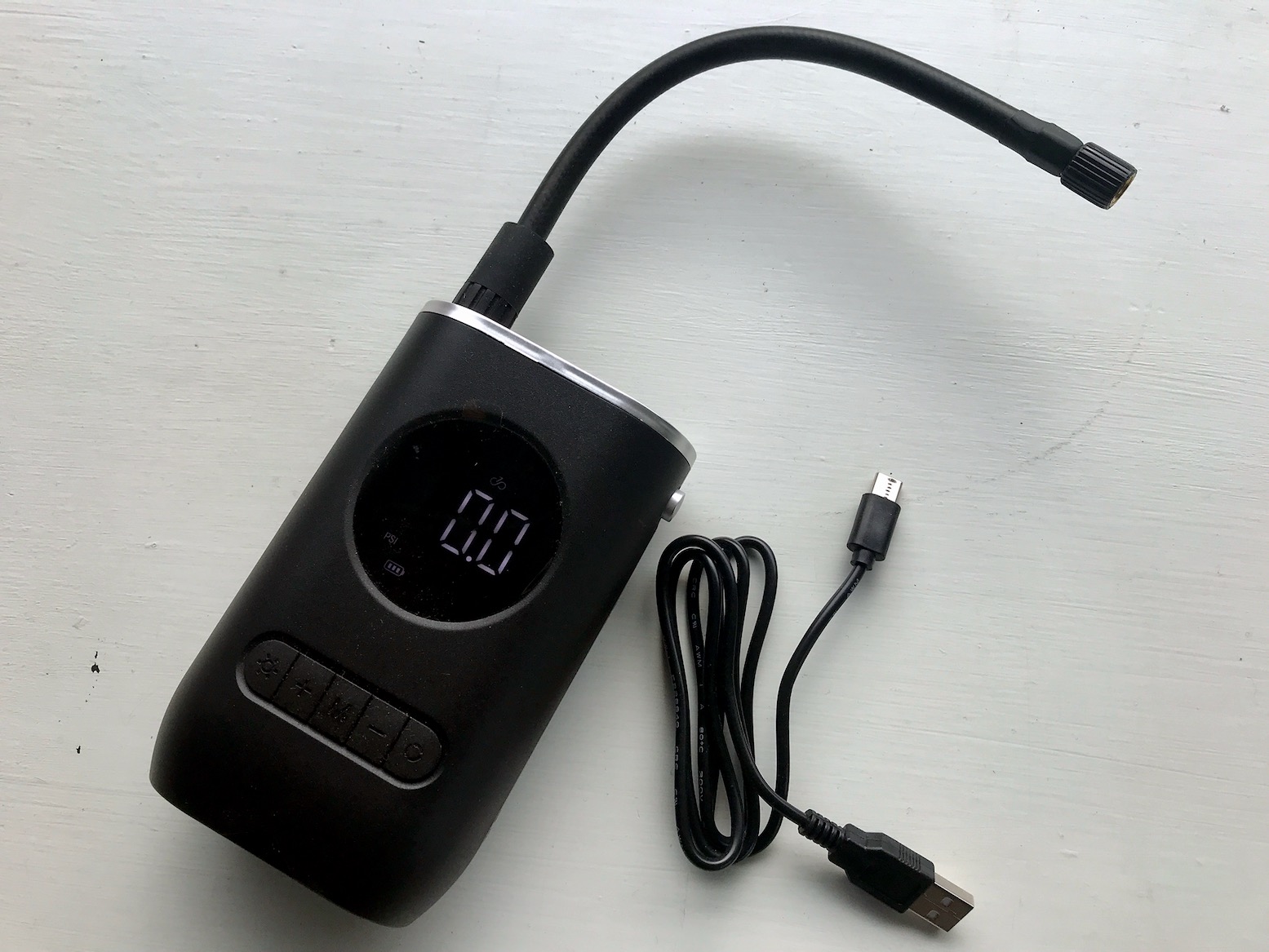
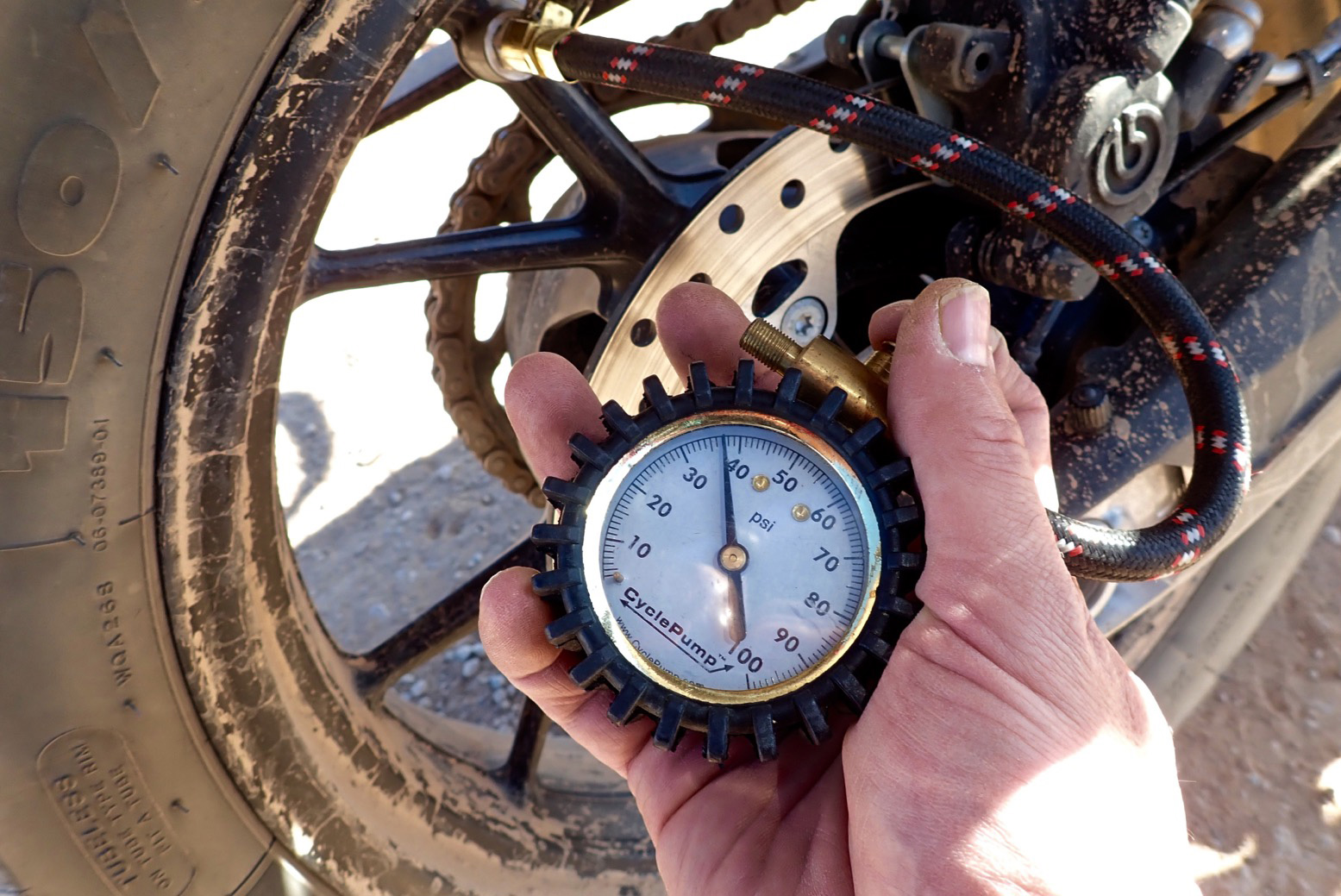
Robbo showed me a niffy USB rechargeable 4000MAH tyre pump (above right) which topped my overnight tyres up quickly. I have my aged 12-volt Cycle Pump packed on the bike, but if I’ll be topping up regularly until they’re fixed, the 20-quid hand pump off ebay will be easy to whip out and use each morning. Let’s make rumpy pumpies while the lithium lasts.
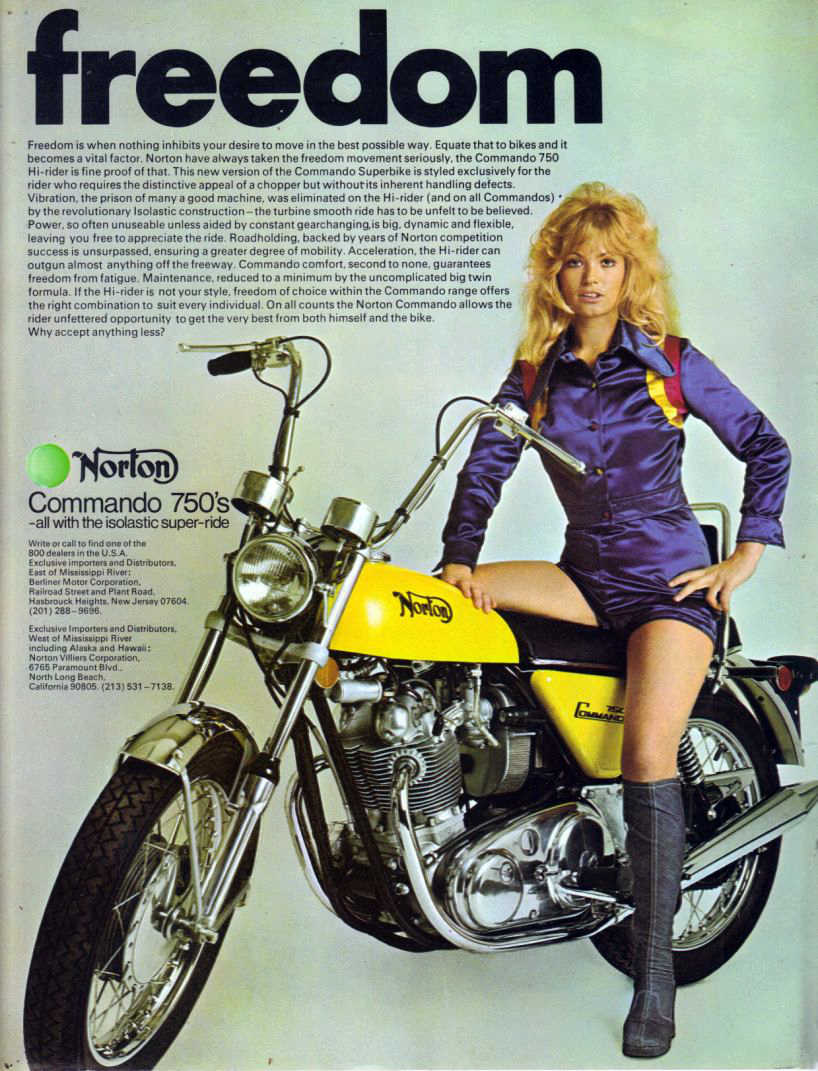
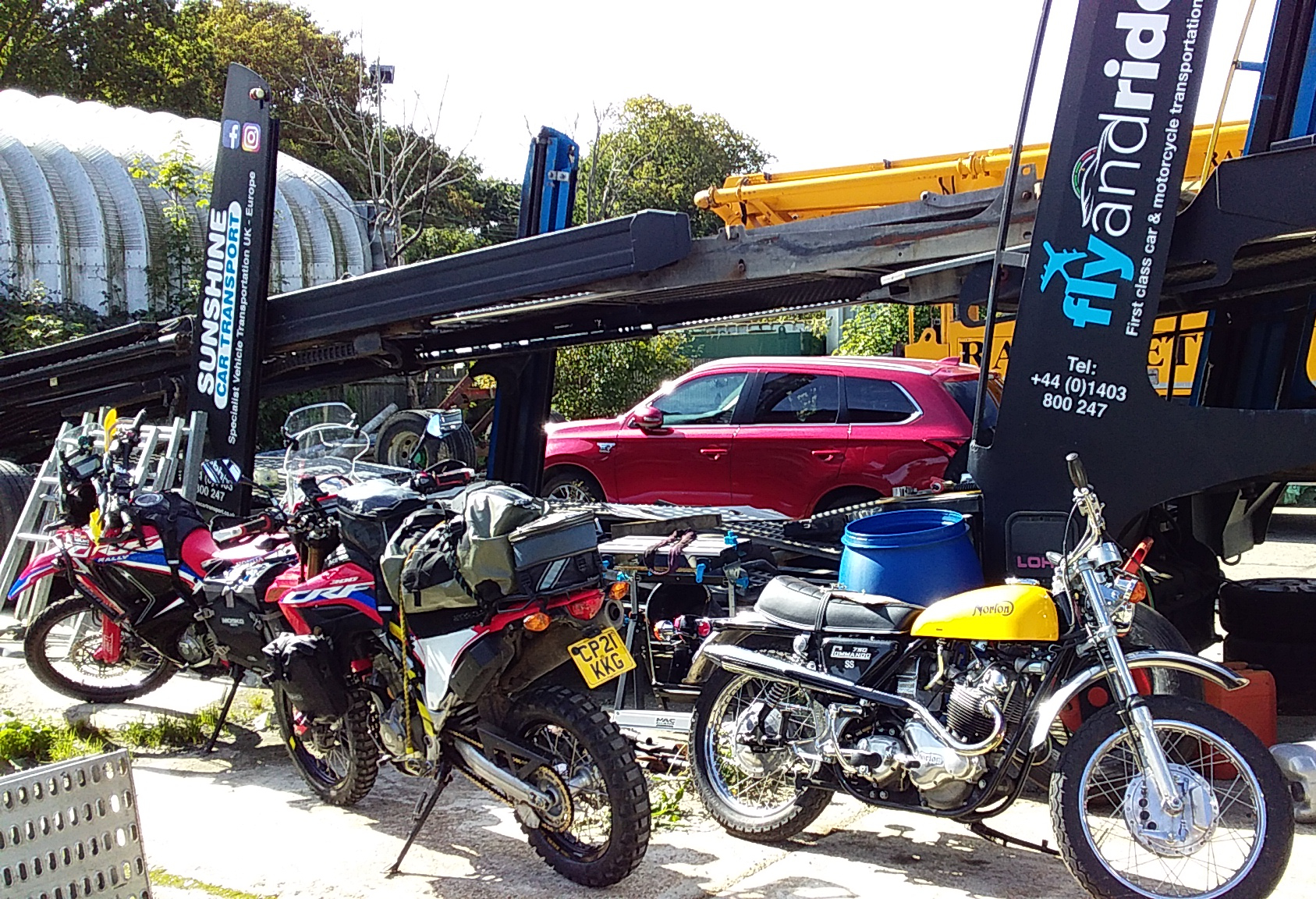
I left my 300 in Fly & Ride’s yard alongside a cool ’72 750SS Commando. The period image on the left exists solely to highlight Norton’s questionable use of an apostrophe. It turned out the nicely set up 300 Rally also parked up belonged to another Robbo who was on my tour a year ago and by now is halfway to Dakar, or however far suits him.
So, a bit annoying to be flying out to Malaga next week to imperfect wheels, but what trip ever kicks off without some T’s uncrossed and I’s undotted? At least I have the means to fix it.
CRF300L: Tubeless Tyres 2

CRF300L Index page
300L Tubeless Wheels 1
Tubeless Wheel Conversion index page

2 second version: I bought some tyres.

I’ll have spent a staggering £550 each on three handbuilt ‘MT’ wheels for my 300L, all so I can seal the rims and fit tubeless tyres for easy repairs and greater longevity. Oh well, it’s good to support the economy.
When it comes to tyres, people love to fit fatter but I aim to get the closest-to-stock size tubeless tyres that’ll fit the new rims. But as mentioned previously, the smallest available tubeless-ready, ‘MT’ rims are a size or two wider than stock 300L wheels which may mean wider / heavier tyres too. FYI my MT-type tubeless ready wheels will be:
Excel 17 x 2.50
SM Pro 21 x 2.15 (£50 cheaper than Excel equivalent)
Excel 19 x 2.50

Unsprung durch Technik
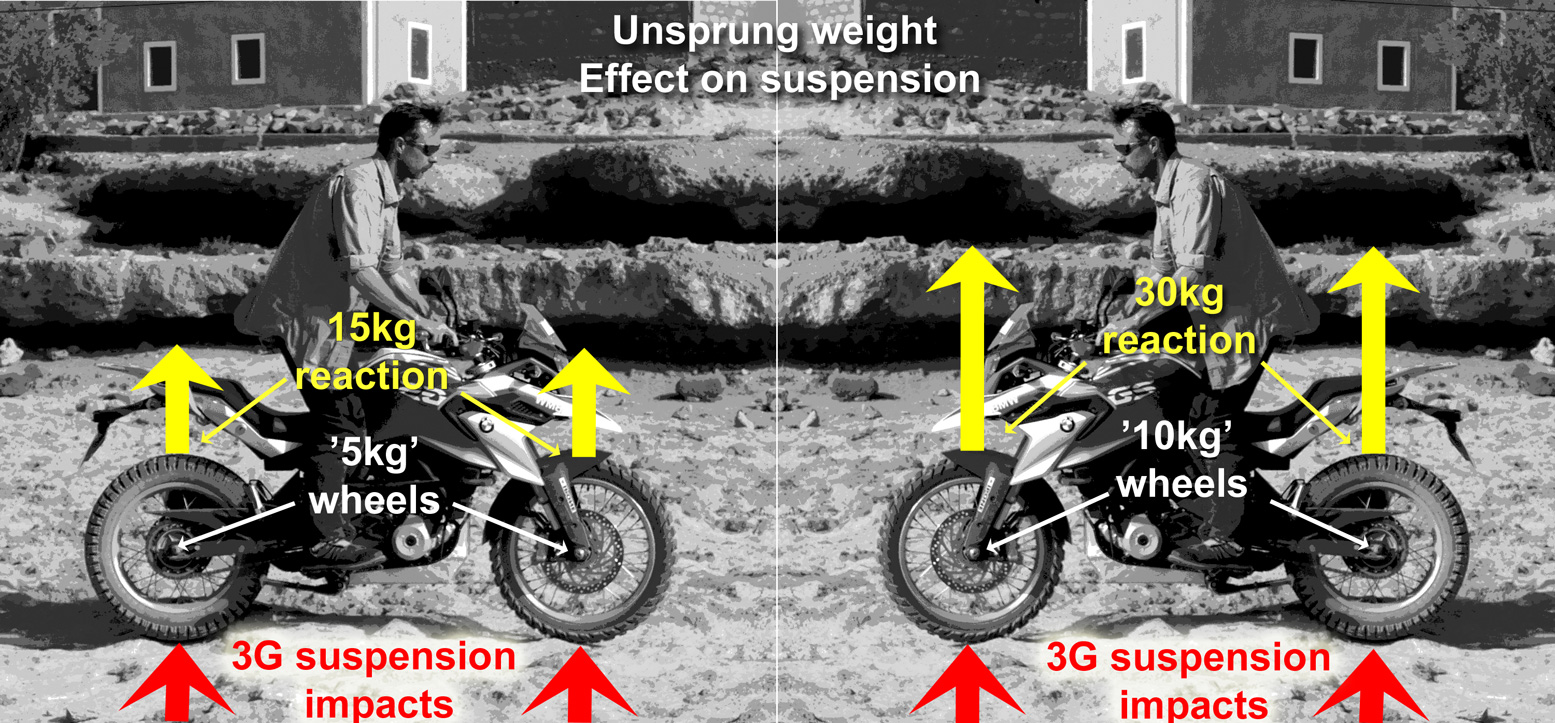
With wheels (not least pushbikes), unsprung weight (parts not supported by suspension, mostly wheels) exponentially affects acceleration/braking as well as suspension response and probably mpg and appetite. You know how I feel about mpg. Imo, efforts to limit rotating mass are worthwhile on a 150-kilo bike with only 28 horsepower. As I wrote while preparing the Him “… it’s why your Hoka trainers weigh only 320g [i.e: as little mass/inertia as possible to do the job]”. Adv riders go on about swapping pipes and ‘bars and batteries to save weight (while having to add it elsewhere), but tyre weight is rarely considered and can vary quite a lot.
My wider rims may weigh more, so might the slightly over-sized tubeless tyres. Overall, my tubeless conversion may barely save weight.

‘What tyres do you recommend?’
In line with EU diversity initiatives, I try and never use the same tyre twice. It’s good for the book, too. But when a mate donated a new Michelin Anakee Wild 120/70 R19, I thought I may as well go all-Wild, as I did with no regrets on the heavy Himalayan a few years back (left).

Barman, double hernias all round!

I was risking EU sanctions until I was reminded of my own words: a rear Anakee Wild to match the 19 comes no smaller than 130/80-17 but weighs a staggering 7.5kg – enough to give my poor Honda a hernia.

I don’t know if being a radial adds weight – apparently not according to this albeit contradictory article I found on the internet. And then I clocked my fat-tyre mate’s front 19er at a hefty 5.2kg – more suited to a CB500 than my simpering trail puppy. Barman, double hernias all round!

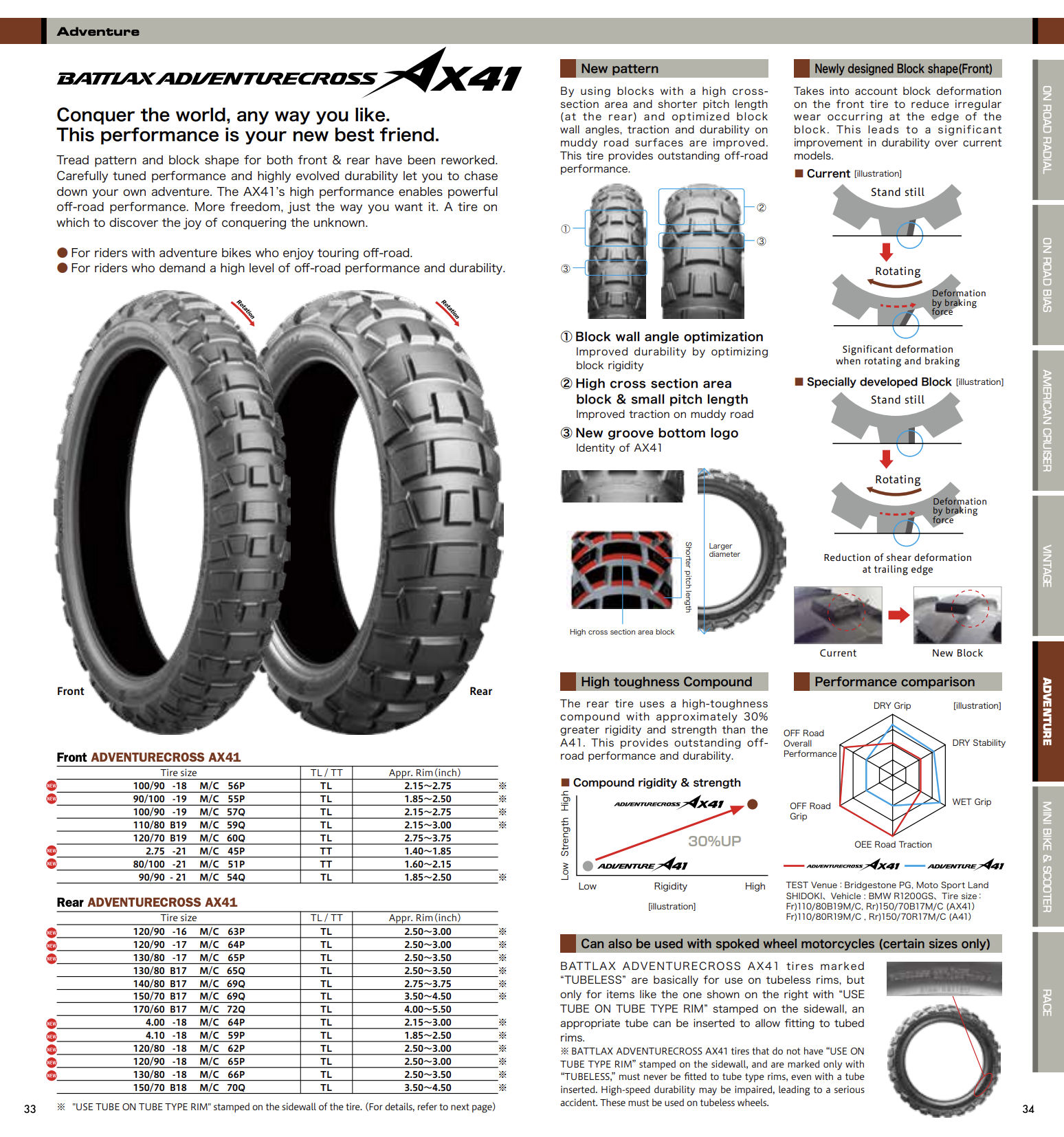
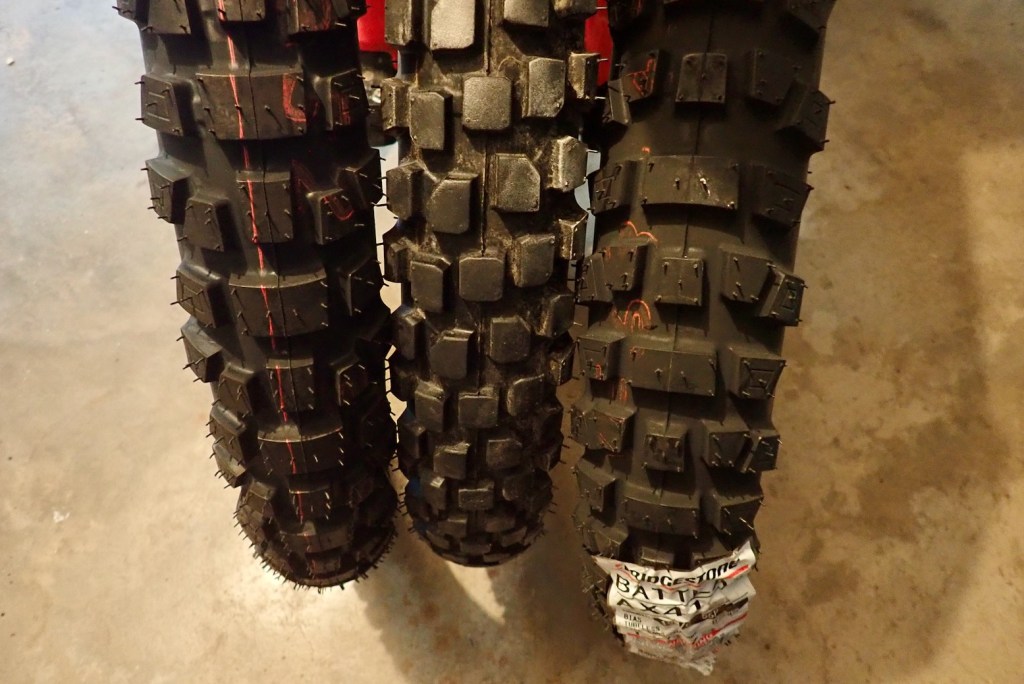
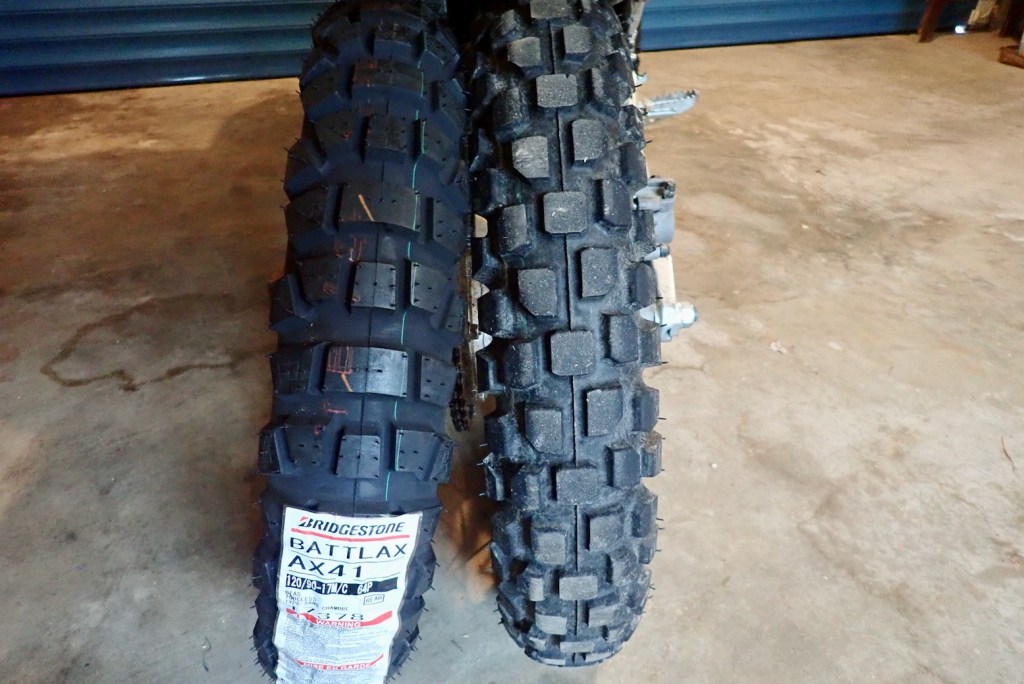
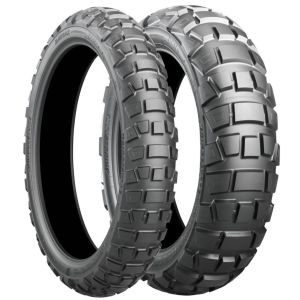
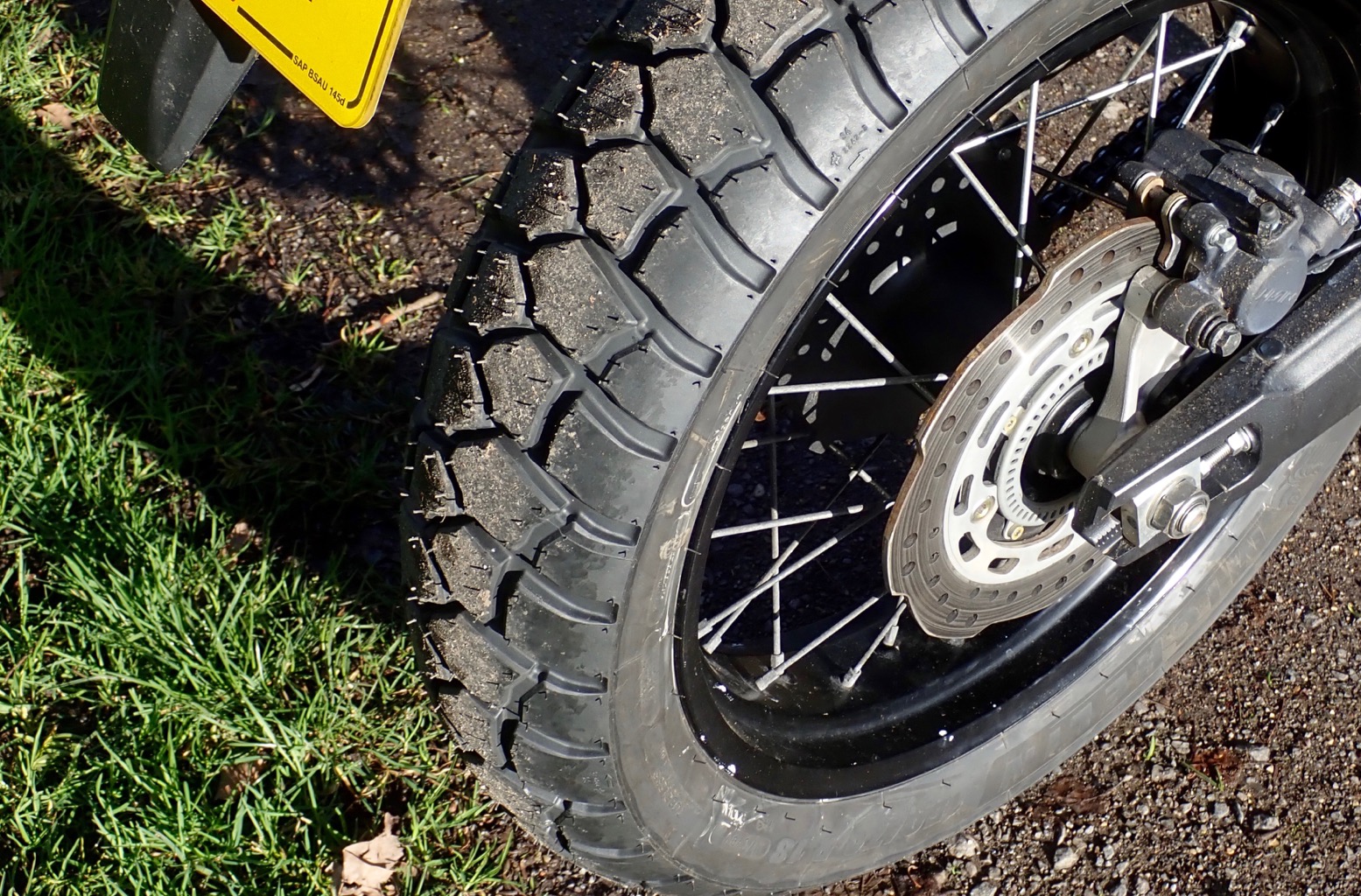
Back to the drawing board. Along with Kenda K784 Big Blocks, Bridgestone’s AX41 Adventure Cross (left) is a do-it-all 50/50 jobby I’ve been wanting to try. The advent of the AX41 a few years ago culled Bridgestone’s range of Trail Wings, some of which I’d have happily chosen for the 300L. What’s left in TWs are tube type and pitched as ‘retro’ (pre-Adv era) tyres.
Best of all, unlike Mich, Bridgestone do an AX in 120/80 17 TL (118mm wide – 1mm more than the stock IRC) as well as a nicely slim, 92mm-wide 90/100 19, plus a regular 90/90 21 at 85mm wide. These widths are all verified; you’ll find broadly similar AX41 width data listed here, but tyre weights are something you rarely find listed publicly, even in pdf online catalogues. I had to email Bridgestone Technik in the Netherlands who, to my surprise, promptly responded down to 3 decimal points:

  • BATTLAX ADVENTURE CROSS AX41 – claimed actual
  • Front 90/90-21 M/C 54Q TL – 4.428kg 4.6kg / 85mm wide. Inflated ø 696mm
  • Front 90/100-19 55P TL – 4.375kg 4.4kg / 92mm mm wide. Inflated ø 658mm
  • Rear 120/90-17 M/C 64P TL – 5.516kg / 6kg / 118mm wide

Nice numbers but as usual, manufacturers’ weighing devices seem to be calibrated sunny side up. Using the same scales, the rear 120 AX41 comes in at 6kg, still 1.5 kilos or 20% lighter than a 130 Mich Wild. My current rear IRC also weighs 6kg with tube – and such OEM set ups are often the lightest possible to eek out good performance figures from reviewers to whom longevity is not an issue. More numbers you say? The little used Mitas 4.00 18 trials tyre my 300 came shod with weighed 6.9kg with tube. And out of interest, I’m told the old favourite Conti TKC which I last used on a 660Z Tenere 15 years ago, weighs 4.1kg for a 90/90-21 TL and 5.4kg for a 120/90-17, but I recall they are quite soft or flexible tyres whiuch is why people love them on the dirt. As mentioned earlier, these tyres and tube combos work out heavier than the back wheel, at 5.4kg with a 40T sprocket and rim lock.

Meanwhile, the fatter 21-inch AX41 front weighs a true 4.6kg, 170g heavier than claimed and 200g more than current IRC with tube at around 4.4kg. The 19er is just what I was hoping for, it’s slim at 92mm and feels light, also at pretty much what Bridgestone say: 4.4kg. Height wise, unmounted the 21’s diameter is 27.4″ (696mm) vs 25.9″ (658mm) on the 19, at 38mm a bit less than the 2 inch/51mm variation you’d expect. And it only cost £83! Interestingly, all three tyres are Made in Japan. Not even Honda can manage that with a whole 300L!

Honda 21 wheelSM Pro 21 TLEXCEL 19 TLHonda 18 rearEXCEL 17 TL
3.9 kg 4.6 kg 4.4 kg5.4 kg5.6 kg
IRC 80/100 21
+ tube
AX41 TL
90/90 21
AX41 TL
90/100 19
IRC 120/80 18
+ tube
AX41 TL
120/90 R17
4.4 kg4.6 kg4.4 kg6 kg5.5 kg
Wheels (with rotors etc) and tyre weights. Spokes on new TL wheels are thicker

It’s eye opening that a set of wheels on a dinky, 150-kilo bike can weigh over 20kg, but they’re right at the coal face, dealing with all sorts of forces and impacts.
I think that on anything from 500cc and 45hp upwards, all this gram counting is unnecessary, but unsprung weight on a 300L matters. Will the seat of my pants notice the difference between a 7.5 kilo Wild and the 6-kilo AX41? Probably not without bluetooth telemetry, but I’d sooner take the lighter AX which still feels pretty rugged for a ‘250’ trailie.

CRF300L: old tubes and dirt bike rims

Project 300L Index Page
See also: Tubeless conversions

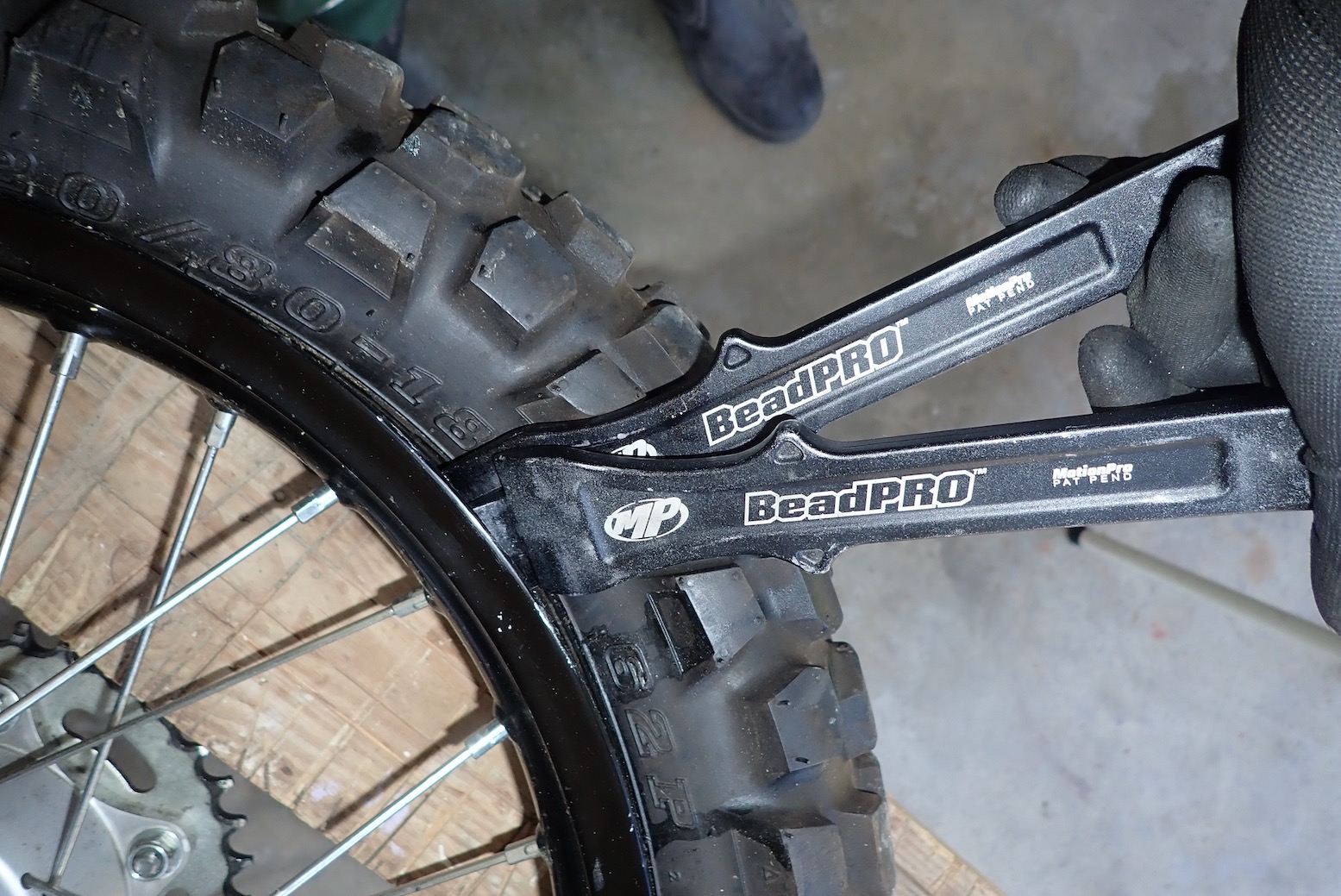
After less than 20 miles I’ve already got myself a rear flat, luckily at home. At some point I was going to remove the stock IRCs, seal the rear rim for tubeless tyres and fit some proper tyres for the ride to Morocco. May as well do that job now. While I’m here, allow me to give my usual shout-out for Motion Pro Bead Breakers, an alternative to standing on or otherwise levering the tyre bead to achieve the same result.

I spun the wheel on my exciting new stand you just read about but couldn’t see any nails or similar. I did wonder if I pinched the tube a couple of weeks back, but if I did, it only gave out now.
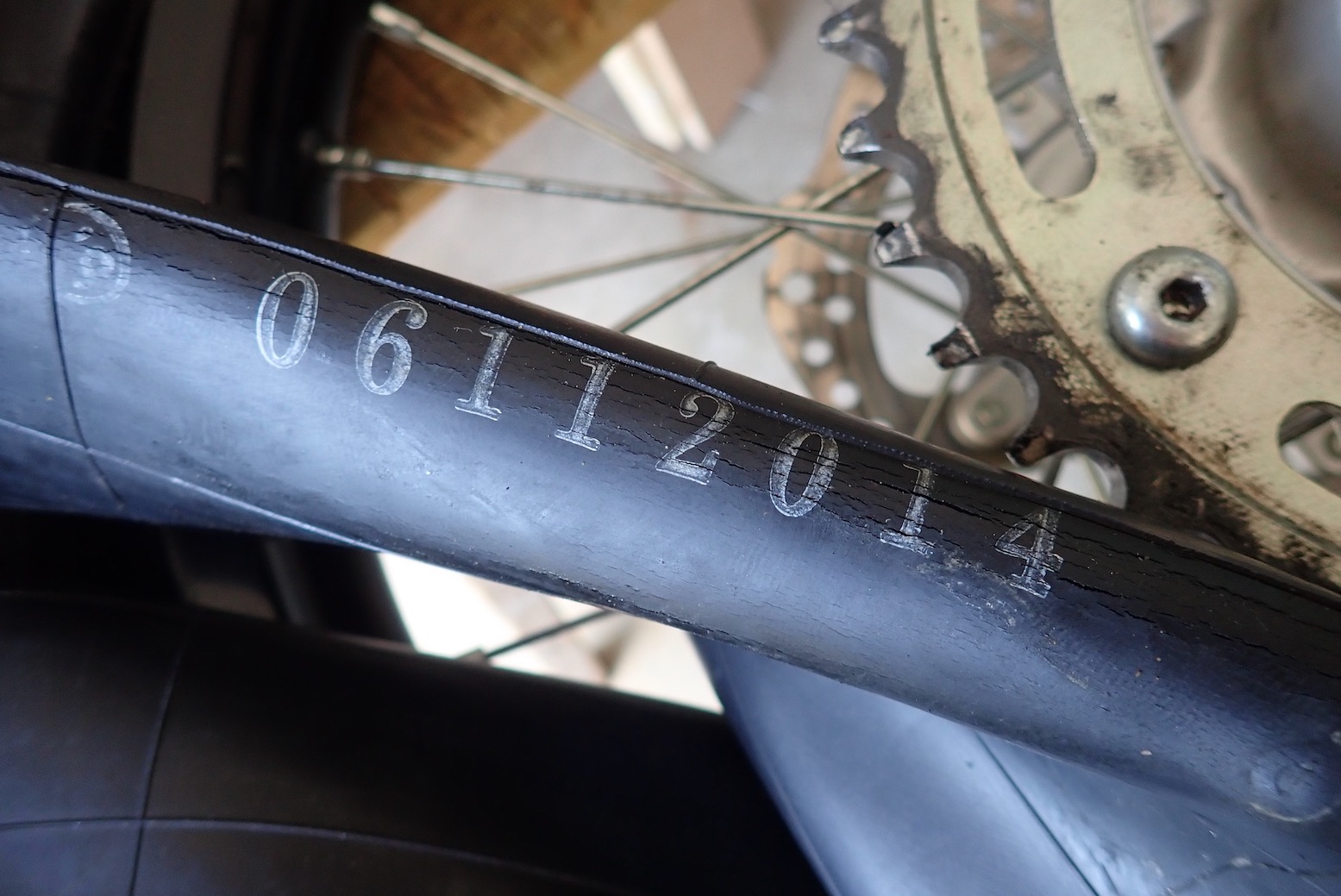
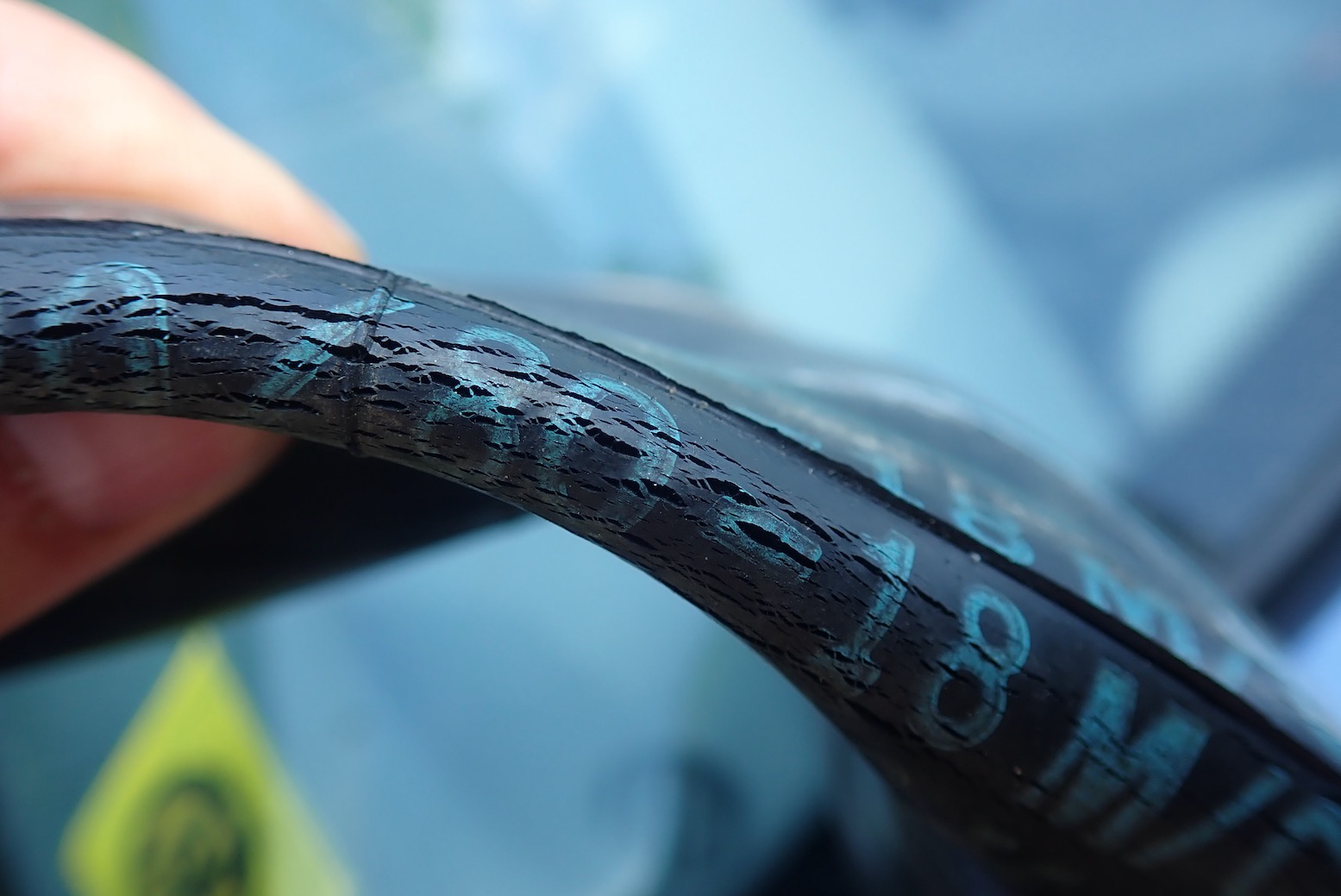
Pulling the tube out I was shocked to see a huge gouged hole like a mouse had got in there. Maybe I did it just now removing the tyre, but can’t say it was a struggle. Who knows, but I also noticed how the folded rubber tube cracked like it was ancient. Then I clocked a date stamp from November 2014. Yikes, nearly 9 years old! Well I suppose I should be impressed that a: Michelin date-stamp their tubes (can’t say I’ve ever noticed this feature before) and, b: that this tube lasted nearly nine years without a repair (assuming it had any use in that time)! Obviously the tube isn’t worth repairing. Good thing I noticed now. I just picked up some old Mich tubes from 2017 and they are nowhere near that far gone (nor do they have that date stamp). Could it even be a fake Mich tube?

Cracked rubber; not a good look.
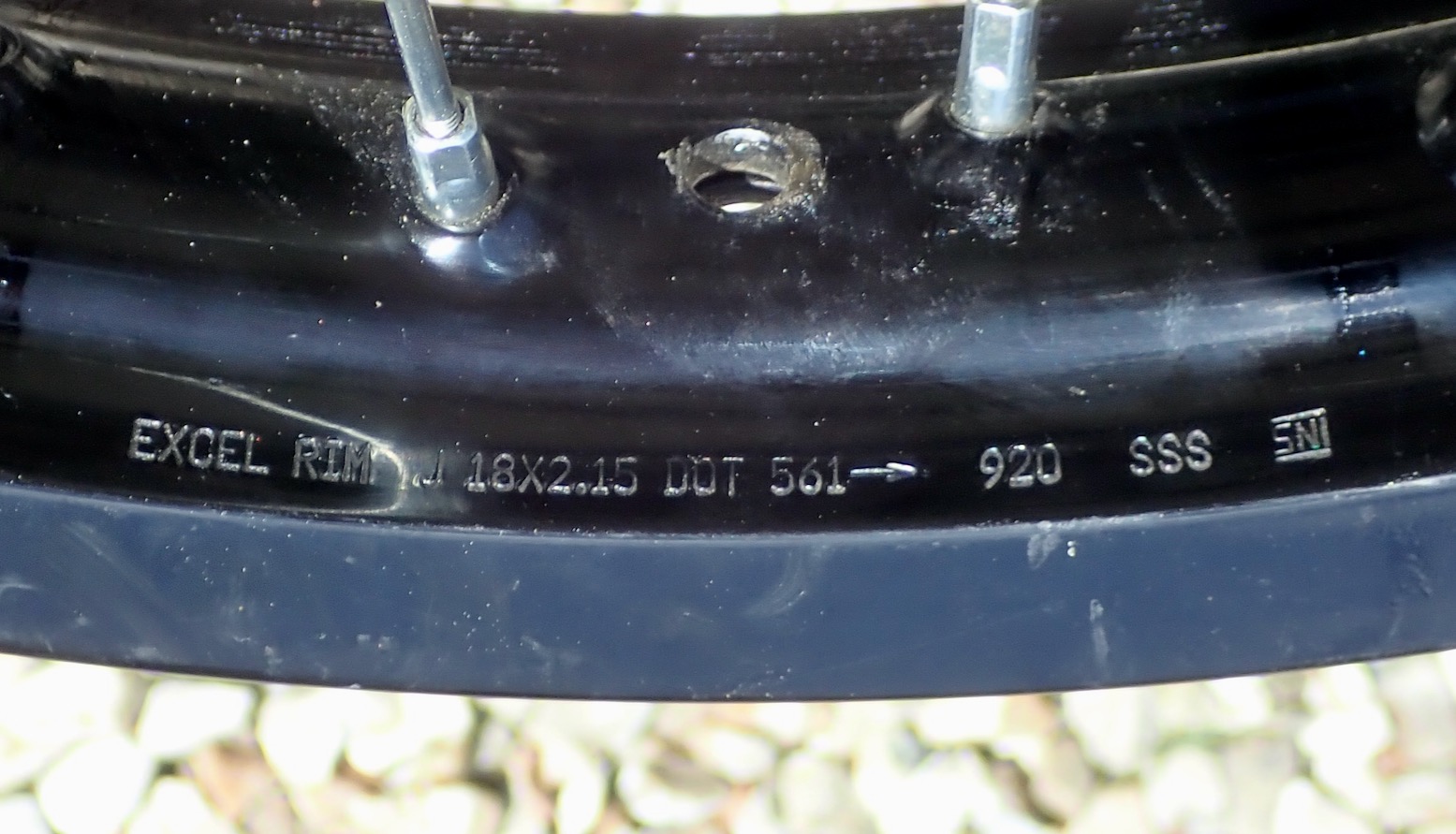
No MT stamp
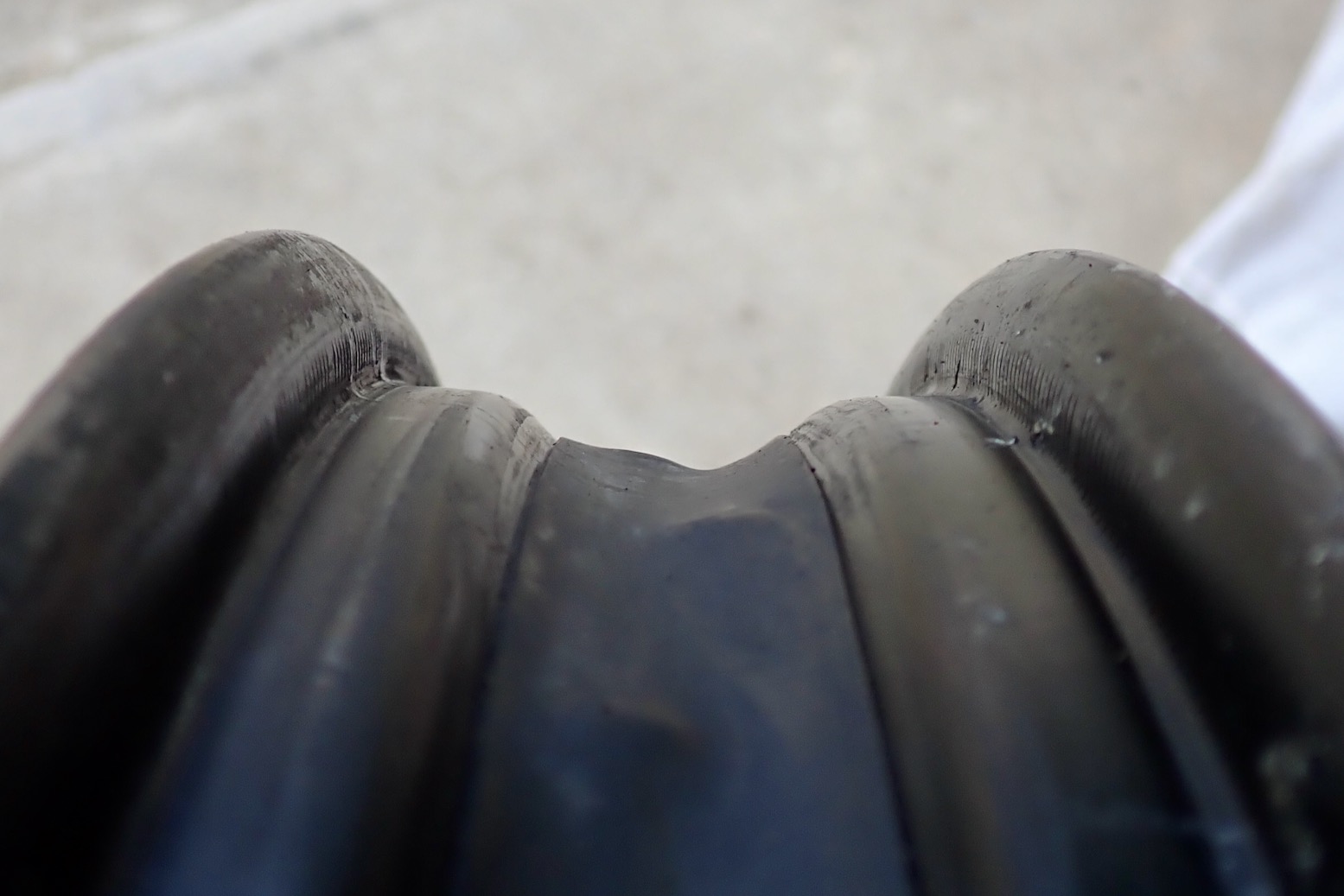
No lip so unsuited to DIY tubeless sealing ;-(

When it comes to sealing the rear rim, I was also bummed to see the stock Excel J 18 2.15 rim has no safety lip, which complicates a TL conversion. That’s odd as, like I’ve mentioned over the years, I recall actually grinding the safety lip off a rear DID rim on my tubed XT600 way back in 1985 to make desert tube repairs easier. I assumed such safety rims had become defaults on all spoke/tube rim as they help a tyre stay on the rim when it loses pressure. But not on smaller sized rims, it seems.

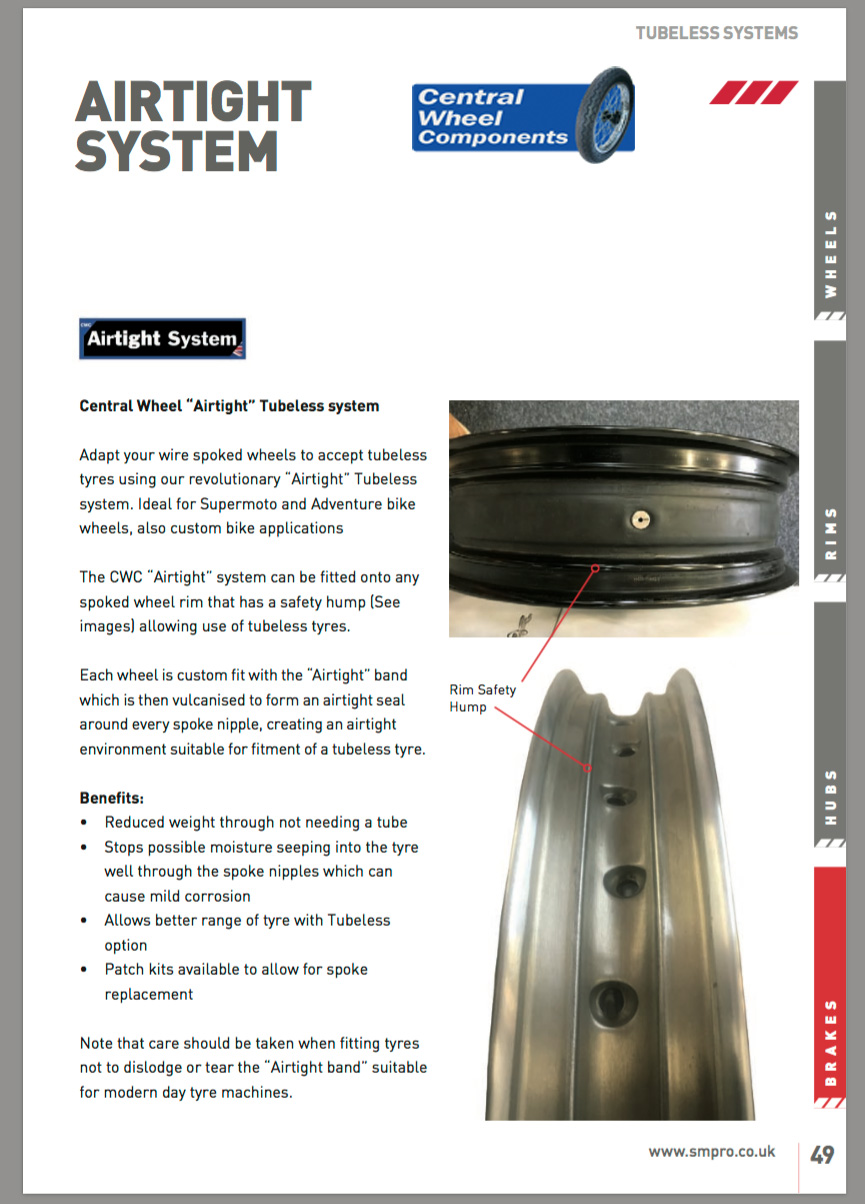
This means I’ll have to lace a new lipped MT rim onto the hub to get TL – a couple of weeks and a few hundred quid. And while I’m at it I may get professional CWC Airtight sealing (left; as on my Himalayan) instead of my labour intensive DIY efforts, as on the Africa Twin. Or I could just live with inner tubes. On a travel bike (as opposed to a weekend trail bike) not sure I can go back to all that potential puncture repair aggro and added toolage.

I also noticed there’s no cush drive on the 300L. It makes me think this is a dirt bike rim from Honda’s MX bikes. A part number check would reveal all. Cush drives add weight and expense and absorb a little power, but reduce drivetrain lash to the transmission including the chain.

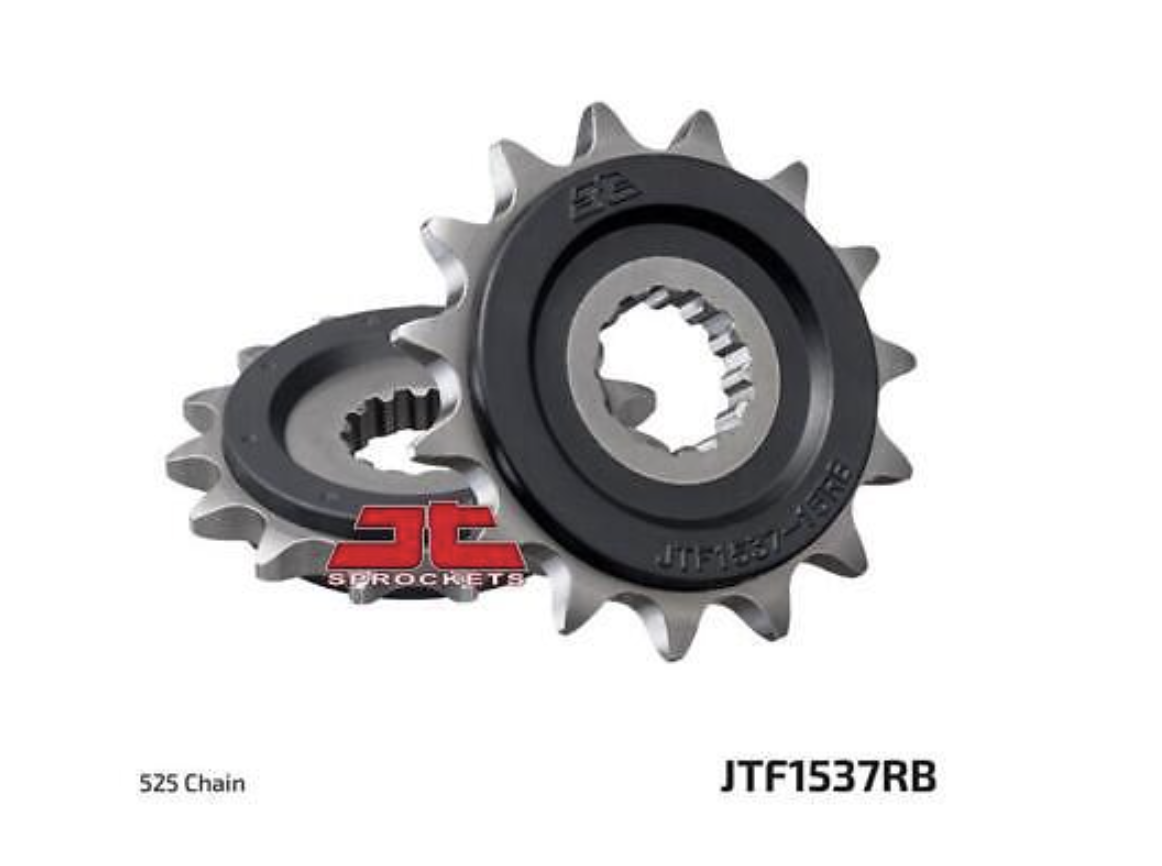
The thing is, at 28hp and however few torques, a 300L hasn’t got enough grunt to strain the components that much, so I can live with no cush. Apparently my old XR650L was the same but I never even noticed. A mate who’s currently importing one has, and dug up various rubber-insert sprockets (left) to reduce the lash from the much torquier 650 thumper. And in fact the 250L I had years ago didn’t have cush.

So net result of today’s puncture:

  • it pays to verify you inner tube’s age (if you can) as well as old tyres (all have date indexes). Or just get new tubes.
  • If I want a tubeless rear I’m going to have to get a new wheel built up on an MT rim, in which case I may as well have a proper sealing job done like CWC Airtight™.
  • OMG there is no cush drive ;-0
  • Is it time to consider mousses? A light, slow bike like a 300L is suited to them, but afaik they come rated at no more than 15psi which to me is on the low side for road riding, even at only 60mph.

Africa Twin: Sealing the Rear Wheel for Tubeless

AFRICA TWIN  INDEX PAGE
Tubeless Tyre Index Page

If ever a bike wanted tubeless wheels it’s the AT (and T7 for that matter). These bikes run 21-inch fronts and were initially pitched at a low price to get them moving. Choppers aside, cast wheels are unknown in 21-inch, while OE spoked tubeless wheels (as on many European 21-inch advs) are expensive. The new 2020 1100 AT Adventure Sport finally has a tubeless 18/21 set up.

MT or WM?

at-wheels.jpgI’ve investigated various proprietary methods and, after 12 years and a lot more theoretical and second-hand knowledge, decided to give DIY sealing another go – but carefully this time and only on the back wheel (above, top) where it’s fairly easy to do. Like nearly all 21s, the AT’s front rim lacks the ‘MT’ safety lip or ridge which is important if planning to run tubeless tyres. Without it, a TL tyre seals less well on a regular WM rim (above, bottom) and may leak. And in the event of a flat, it will slip into the rim just like a tubed tyre with the usual undesirable results.
The only way around that it to get the rare, lipped, 2.15 x 21-inch Giant rim from CWC for £111. Add anodising, spokes, wheel building, their Airtight™ vulcanised sealing band (similar to DIY mastic) plus post and that’ll be nearly 400 quid. I could seal it myself and save £120, but 21-inch wells are narrow and curved and so are less suited to taping. So while CWC make my wheel, I may as well cough up for the Airtight and be done with it.
The high cost of a new wheel build is why DIY is so attractive, providing your rim is MT with the requisite safety lips. Most rear wheels, tubed or tubeless, have been like this for decades (they will be stamped ‘MT’ on the side, as opposed to ‘WM’). And the AT’s rear well is also nice and flat and 55mm wide which makes it easier to seal well.

Things you will need

  1. The wheel resting on a spindle
  2. Solvent (Brake cleaner, Toluene, MEK, Acetone, etc)
  3. Microfibre rag (lint-free) and Q-tips
  4. Runny adhesive – from Superglue to Seal-All
  5. Thicker sealant – like Goop or Bostik 1782
  6. Sealant tape such as 3M 4411N (not the 2mm thick 4412N). From £18 on ebay
  7. Or some etching primer and mastic sealant like Puraflex about £6 for 300mm
  8. A tubeless valve

Rim sealing procedure

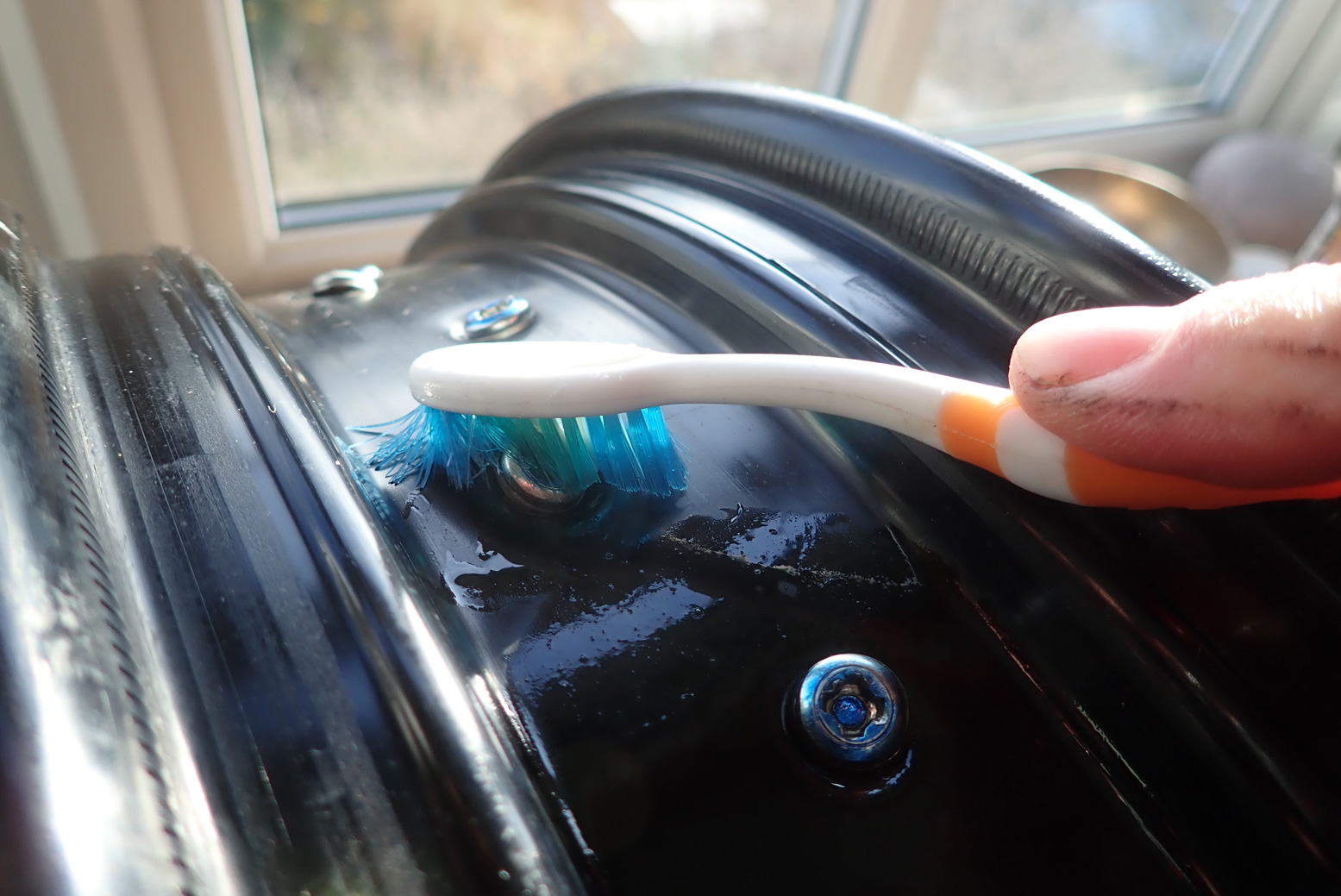
Clean rim thoroughly with solvent using a rag, toothbrush and Q-tips
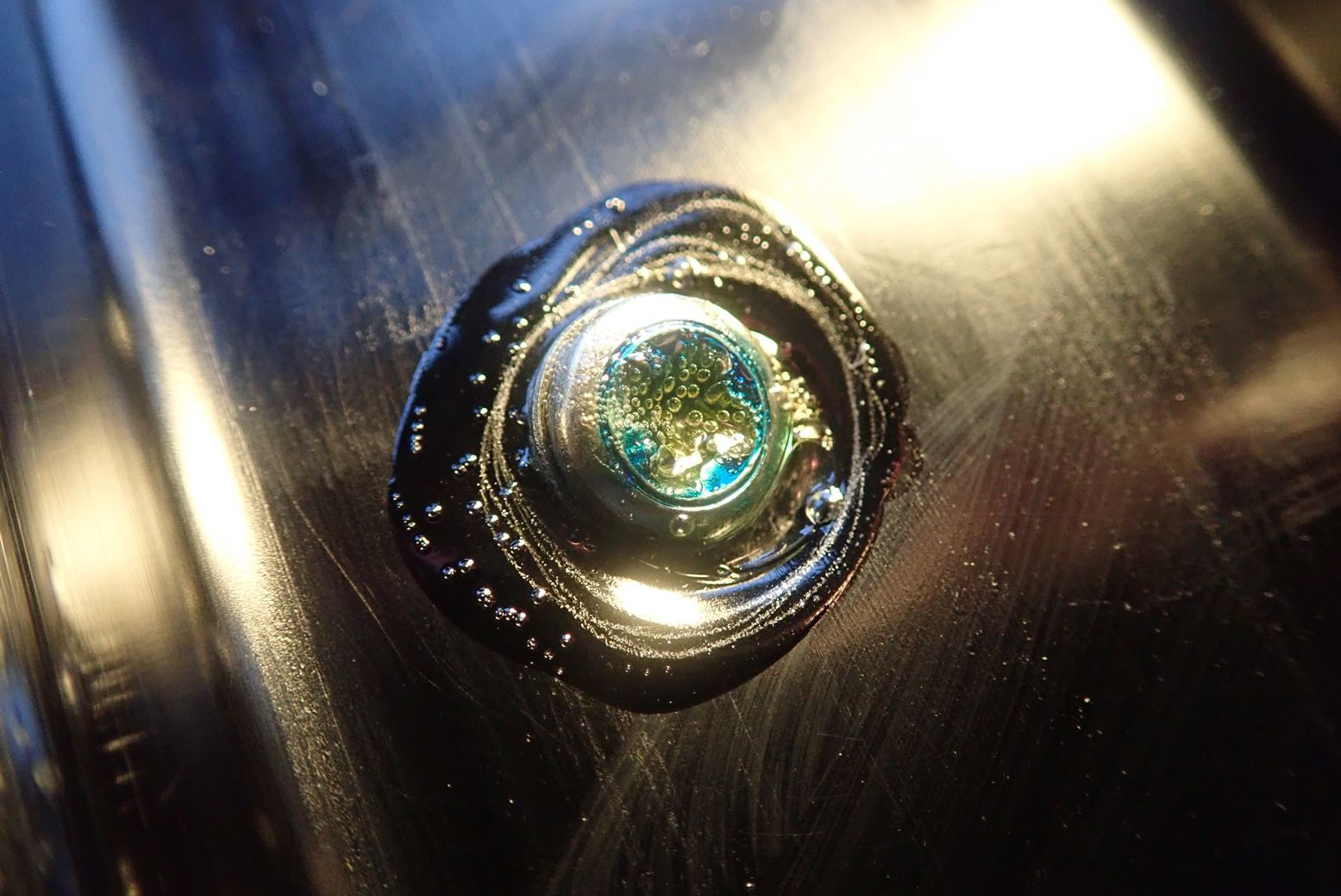
Apply a runny glue around the nipple and into the threaded centre. I used Bostik; thinner would have been better. Expect microbubbles. Leave to dry for a day.
A day later overseal with thicker sealant. I used clear Goop. Let it dry for a day.
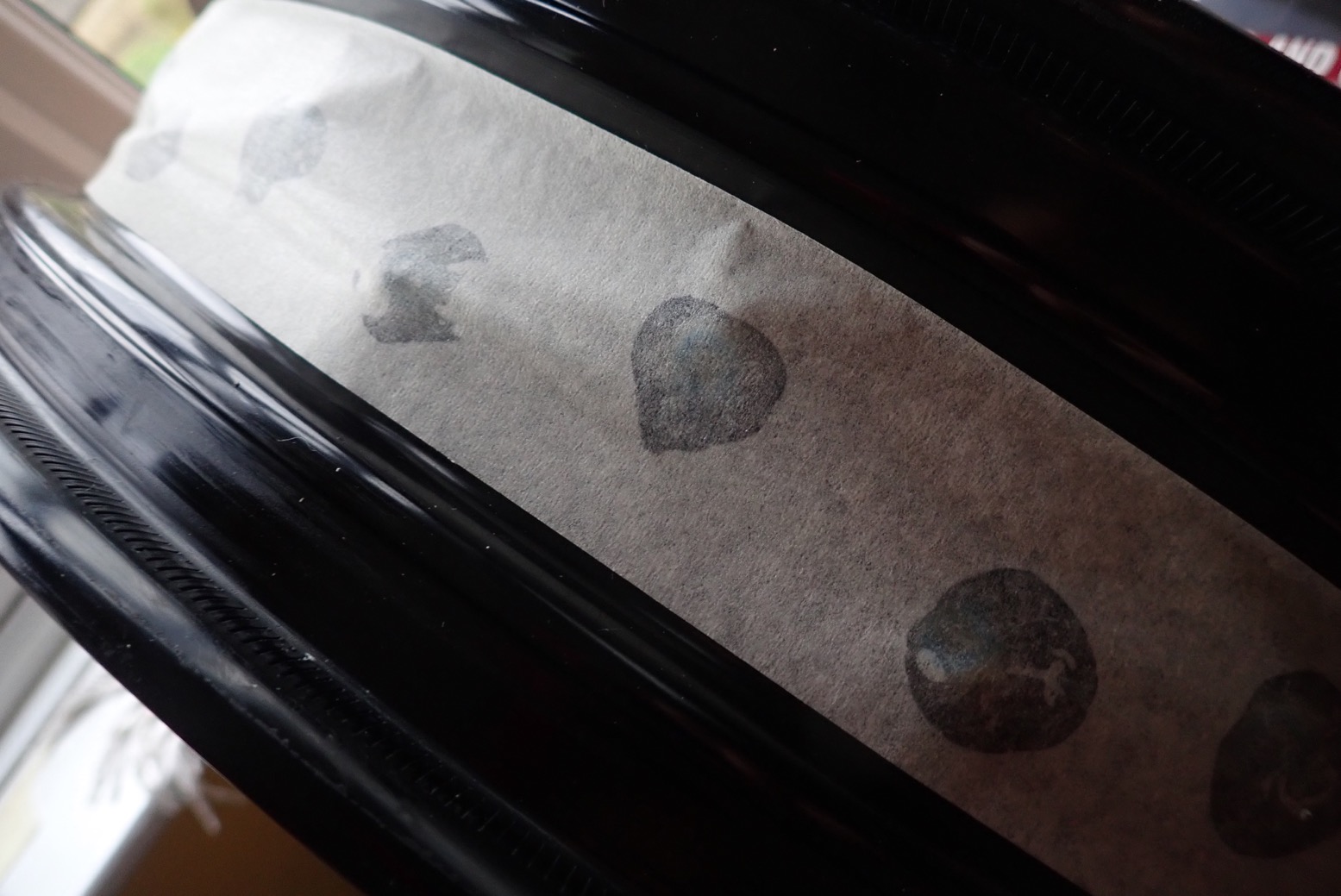
Wrap the undried glue in the non-sticky side of masking tape to stop the lower Goop blobs sagging out under gravity. Or spend days turning the wheel and doing four nipples at a time.
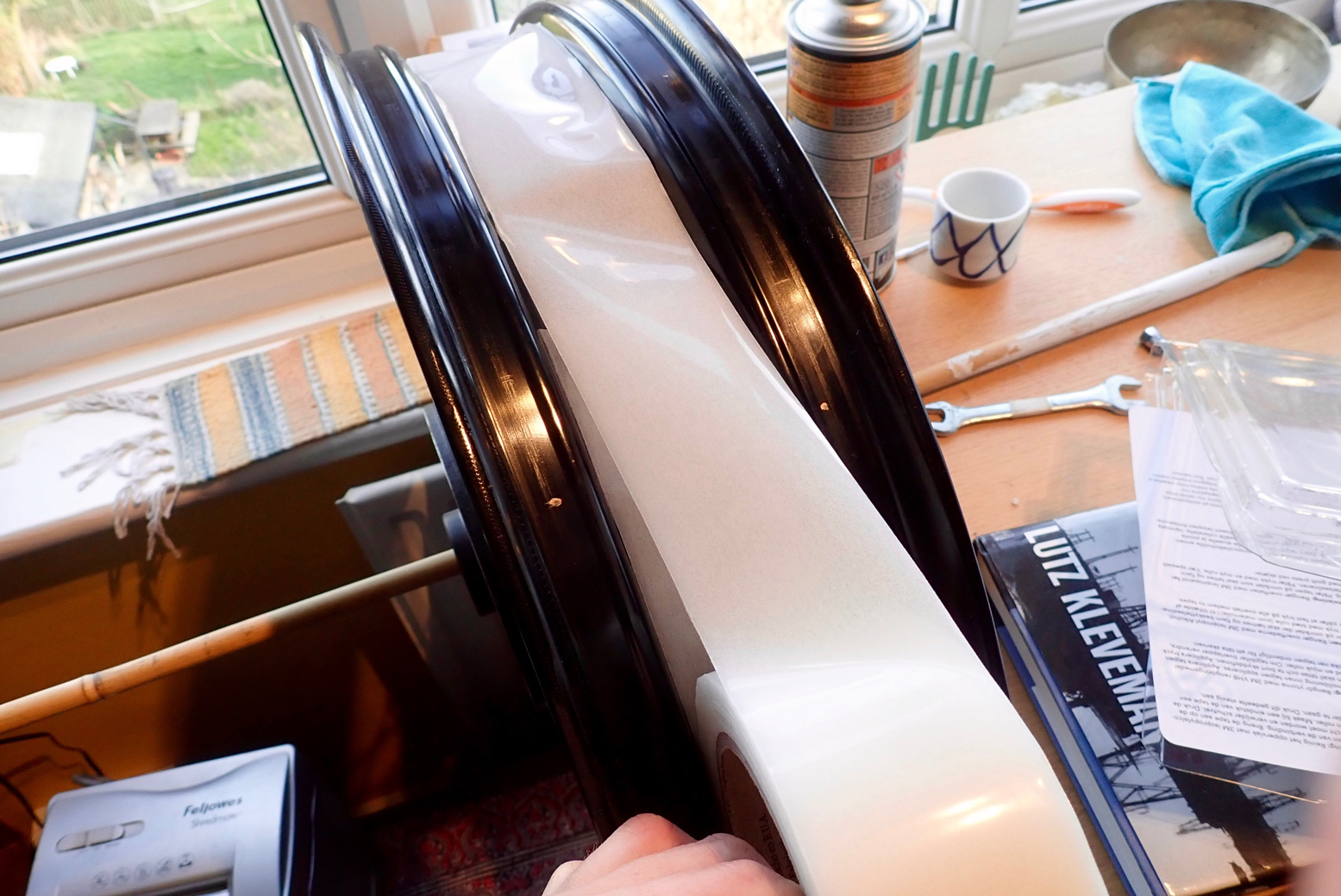
Tape up the rim with 50mm 3M 4411N.
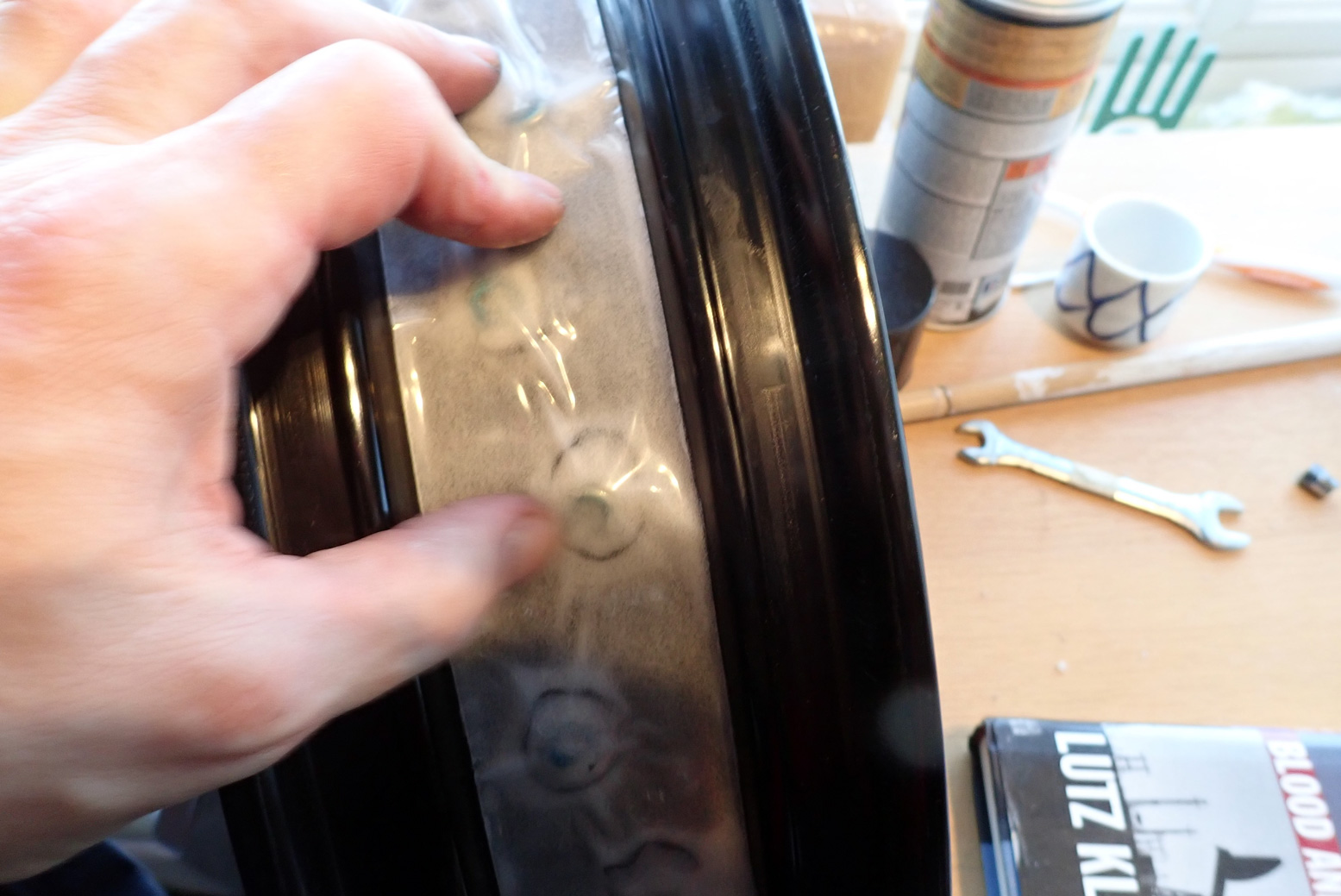
Because I used thick glue and maybe too much, the lumps stuck up quite a lot so made it hard for the non-elastic tape to fully contact the rim floor. I pressed down between the spoke nipples as best I could and did the odd prick here and there. Then I removed the backing film while allowing for some overlap.
As good as I could get the tape. But I’m confident the glue alone has sealed the rim.
I decided to cover the 3M with some regular plastic tape to protect it during tyre mounting.

Or…

tl-ianwheel
… spray on some etching primer, let it dry then apply a coat or two of Puraflex mastic. Don’t go too thick or you’ll lose the well’s depth and ‘slack’ needed for easy tyre fitting.

If you’ll be in a wet environment, consider also sealing the spoke nipples from the outside.

The mastic sealant method is probably better. The tape adhesive might lift if it gets very hot; a black tyre and rim sat in the hot sun. But then, pressure building up in a hot tyre will tend to push the tape down.

Mounting and inflating the tyre

Mounting is easy as there’s no tube to worry about. Soapy beads help reduce the effort needed and tubeless tyres are actually quite flexible – or that’s how the Michelin felt. I know from cars and the Tenere years ago that home mounting tubeless tyres can be tricky. It took me most of the day to get the TKCs on to the Tenere, and that was with a pokey 2.5cfm 4×4 compressor. Because there is no inner tube pushing the tyre on to the rim, you need both edges of the loose tyre to at least make a partial seal with the rim and allow pressure to build up. When that happens, the seal improves, leakage stops and you’re on your way. Using a small car compressor and with the valve core removed to allow faster filling, nothing happened for a bit and then pressure slowly built up as input outpaced leakage. At around 35-40psi there were a couple of loud bangs as the last segment of bead slipped over the safety rim and into place.

I am fairly confident my gluing alone has made a good seal. The tape is probably redundant. Overnight there was no drastic pressure drop. If there is in the next week and I can’t fix it, I’ll swap back to the tubed wheel and will anyway take a spare tube. This time I’m not using Slime sealant, though I’m told it doesn’t affect the 3M tape’s adhesion.
I’ll be monitoring it with TPMS but a few days in it was about 8 psi down and the same again when I picked the bike up in Spain in March. So it seems to depressurised down the mid 20s psi. I seem to recall this was normal in the early days and so gave the back a shot of Slime in Spain. No more leakage.

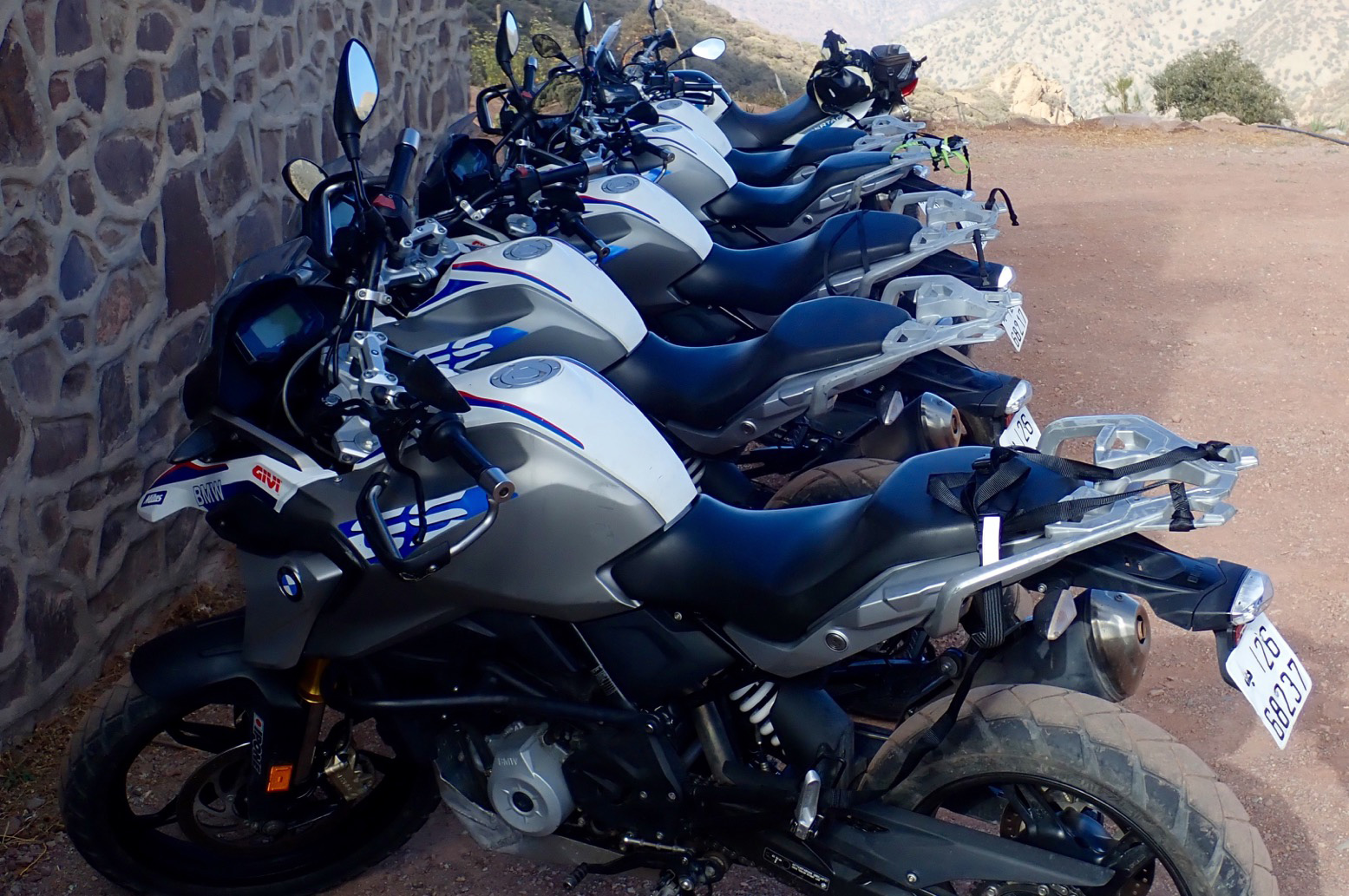
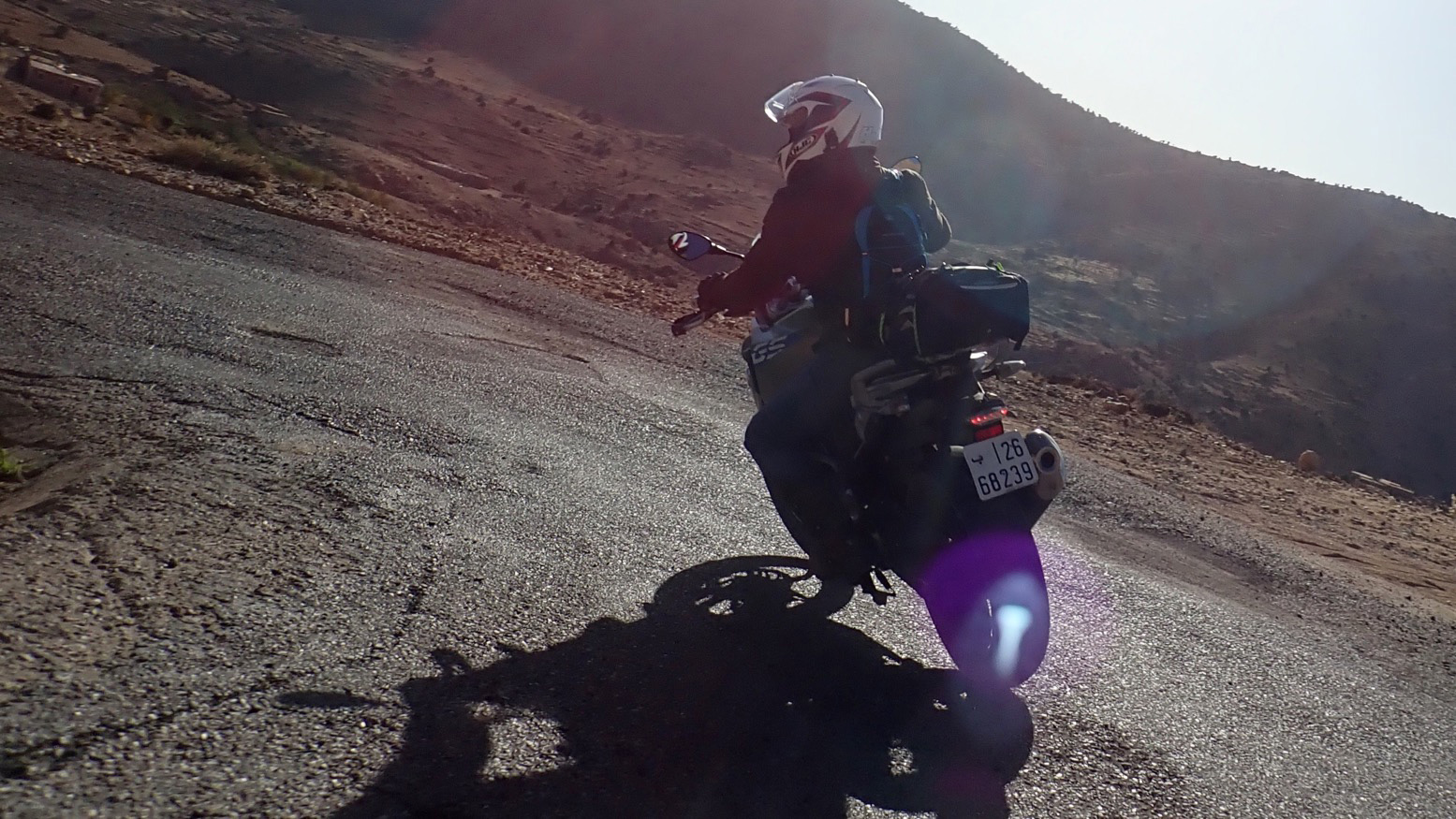
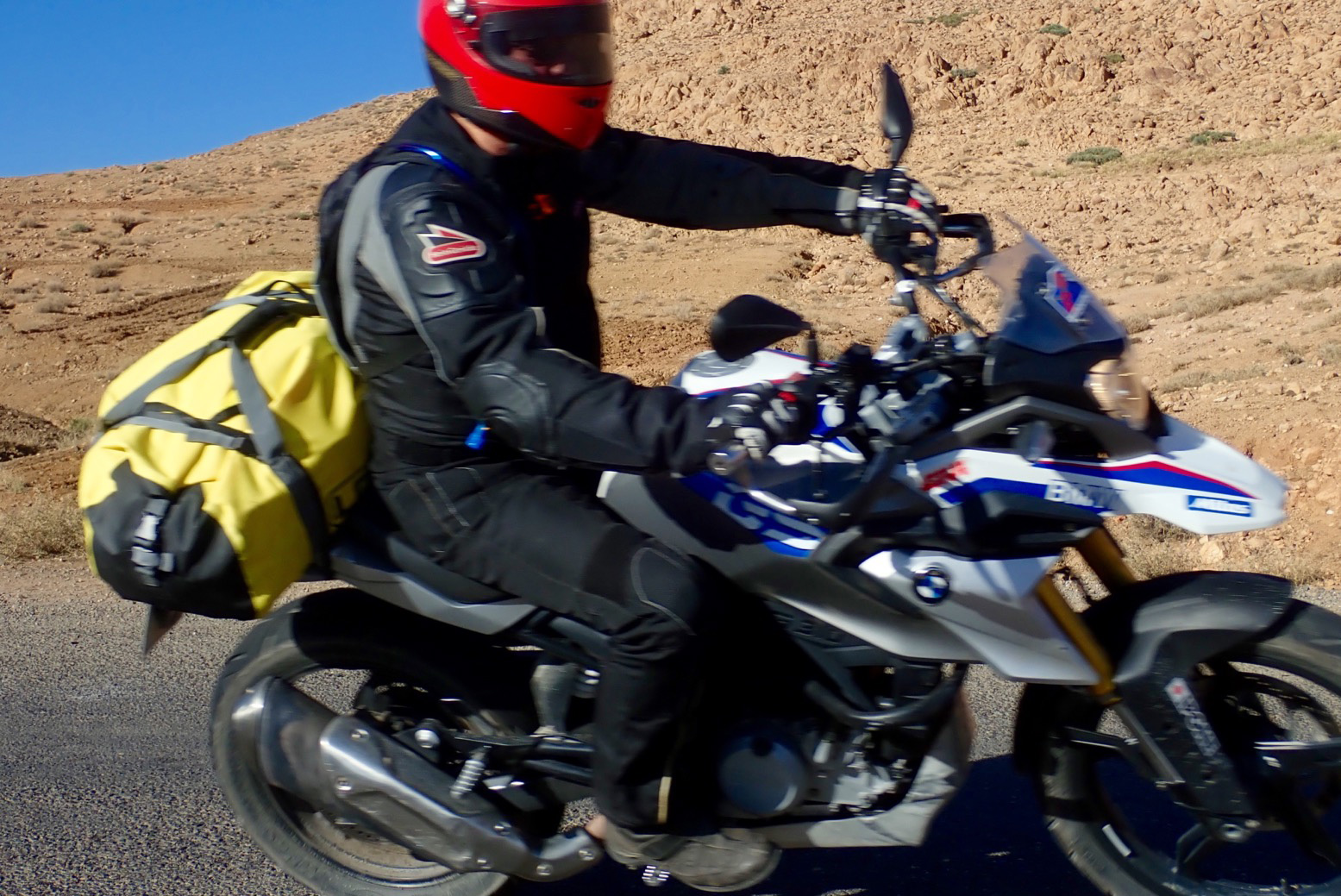
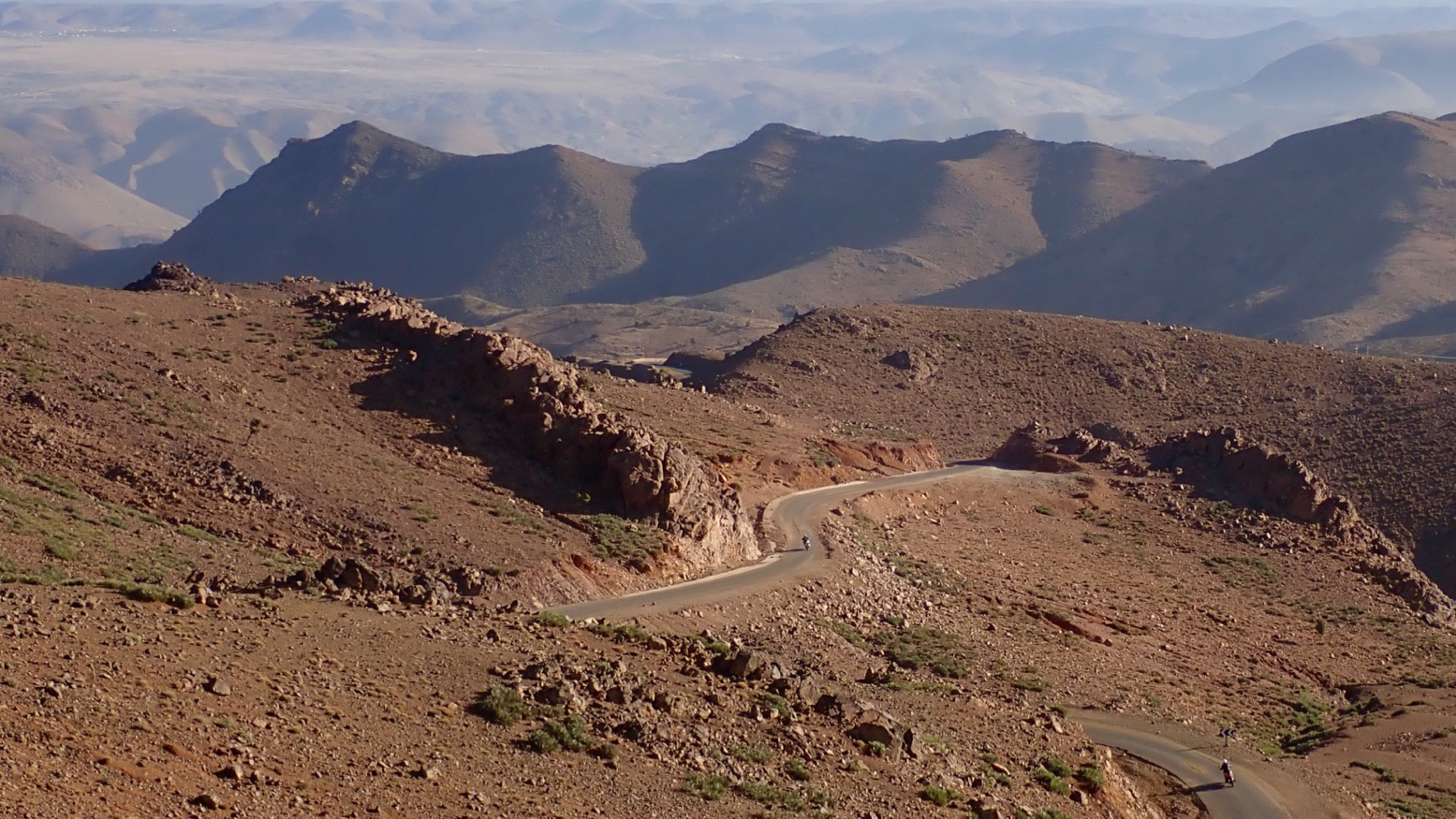
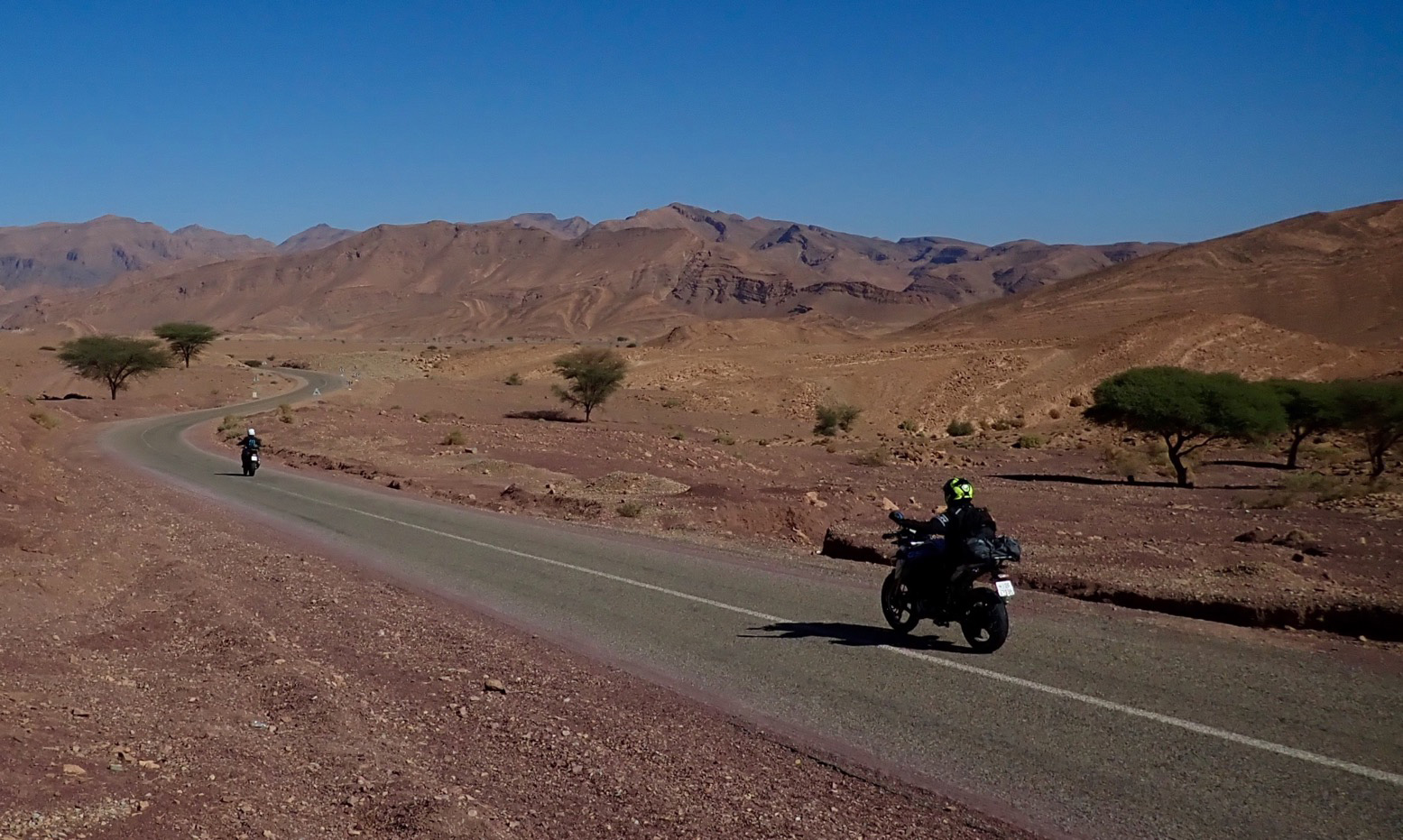
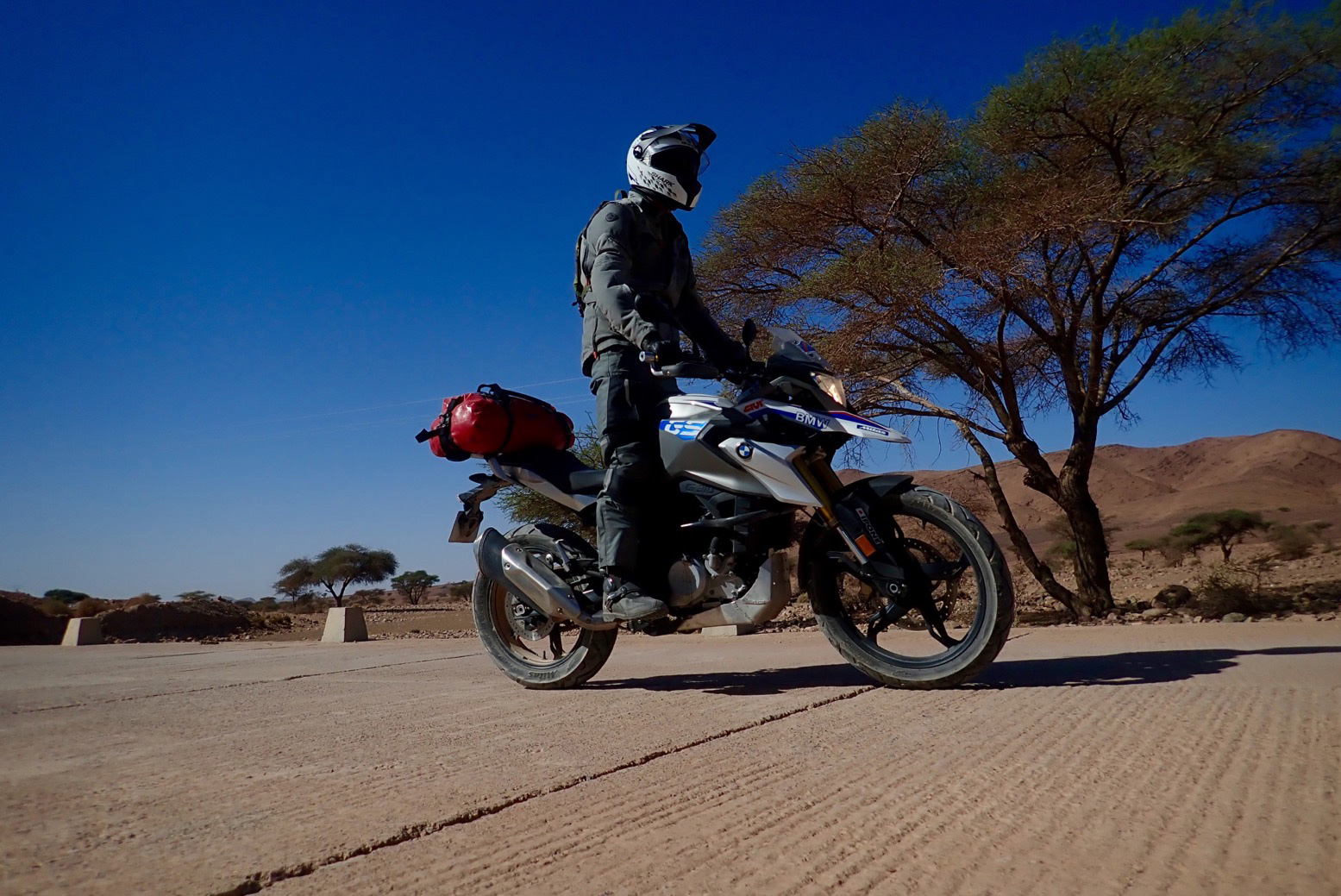
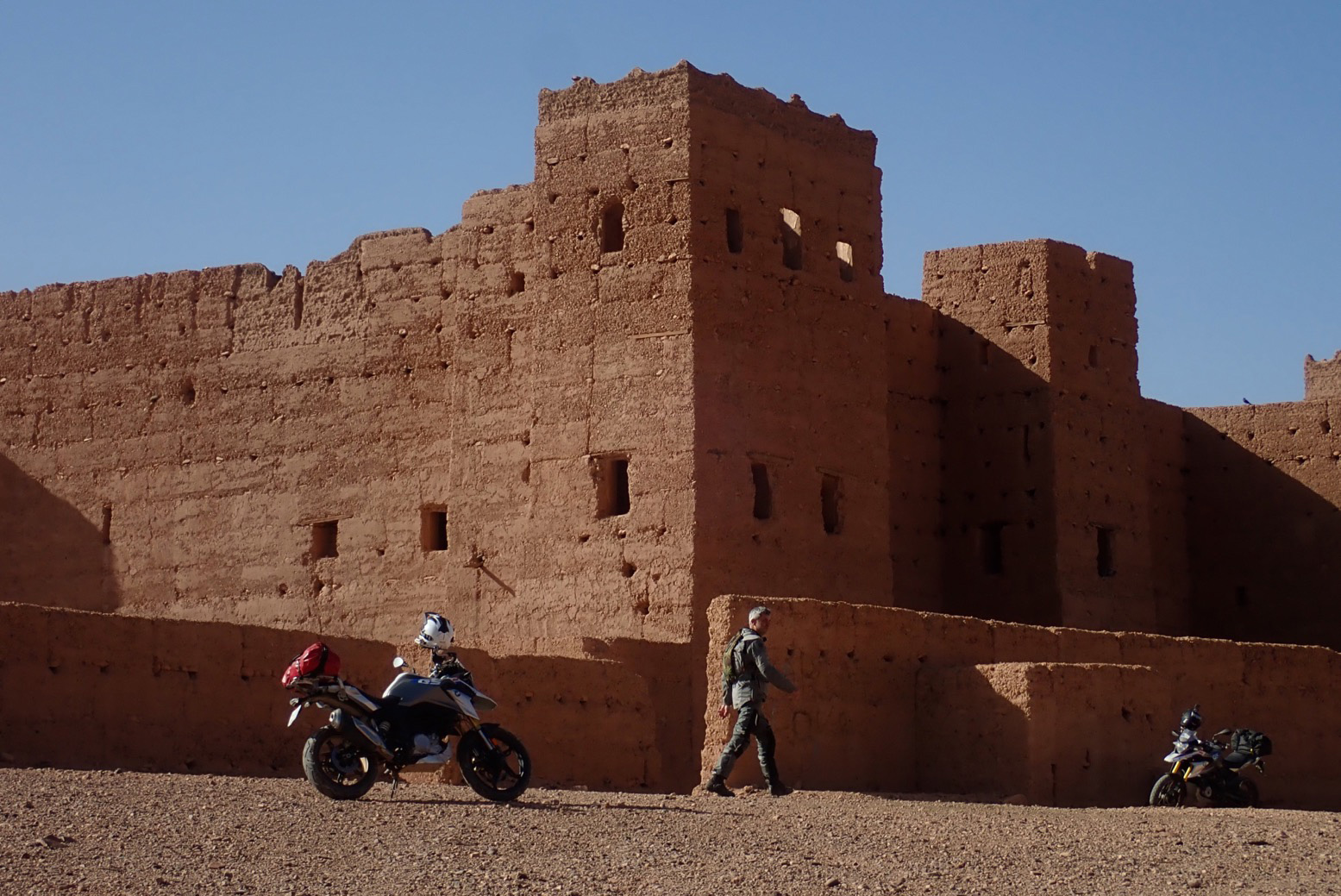
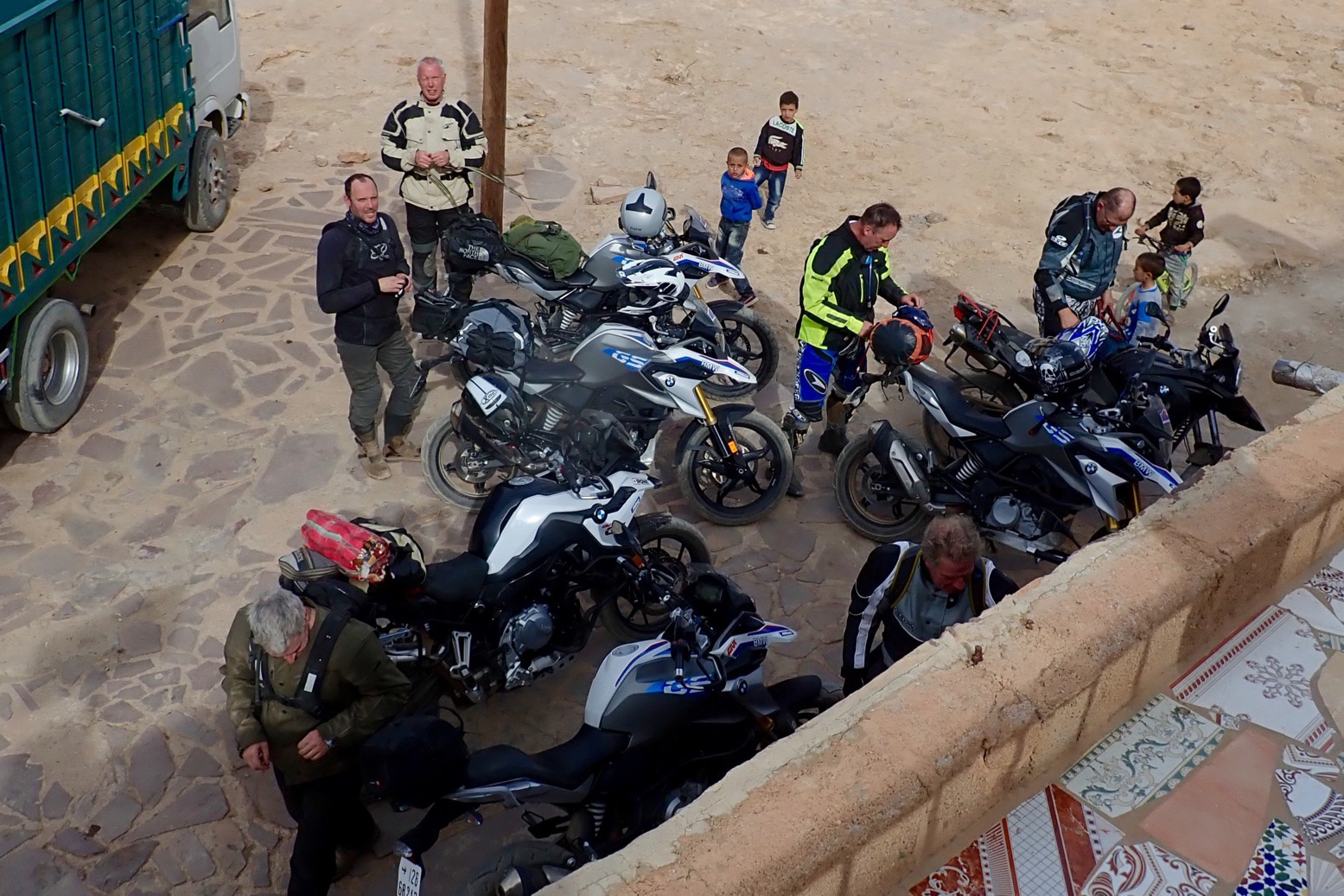
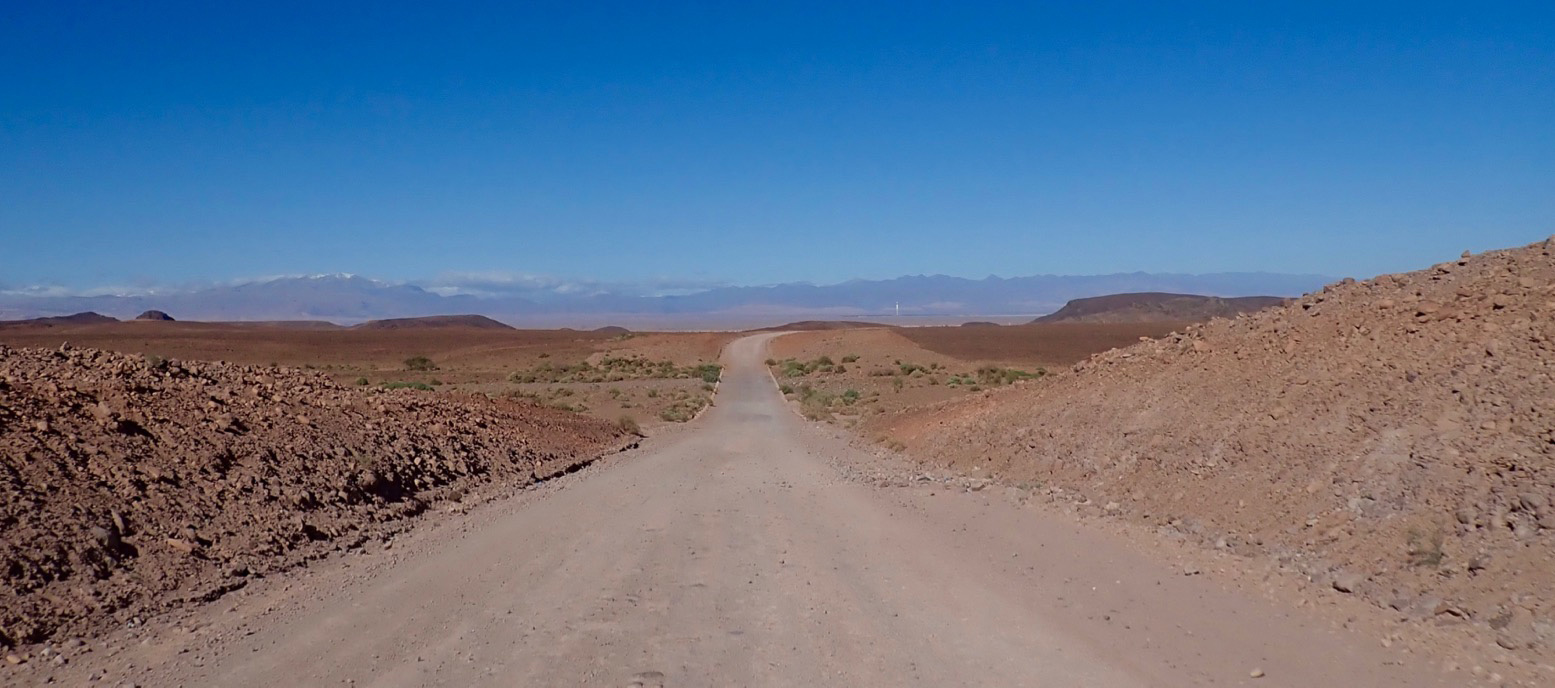
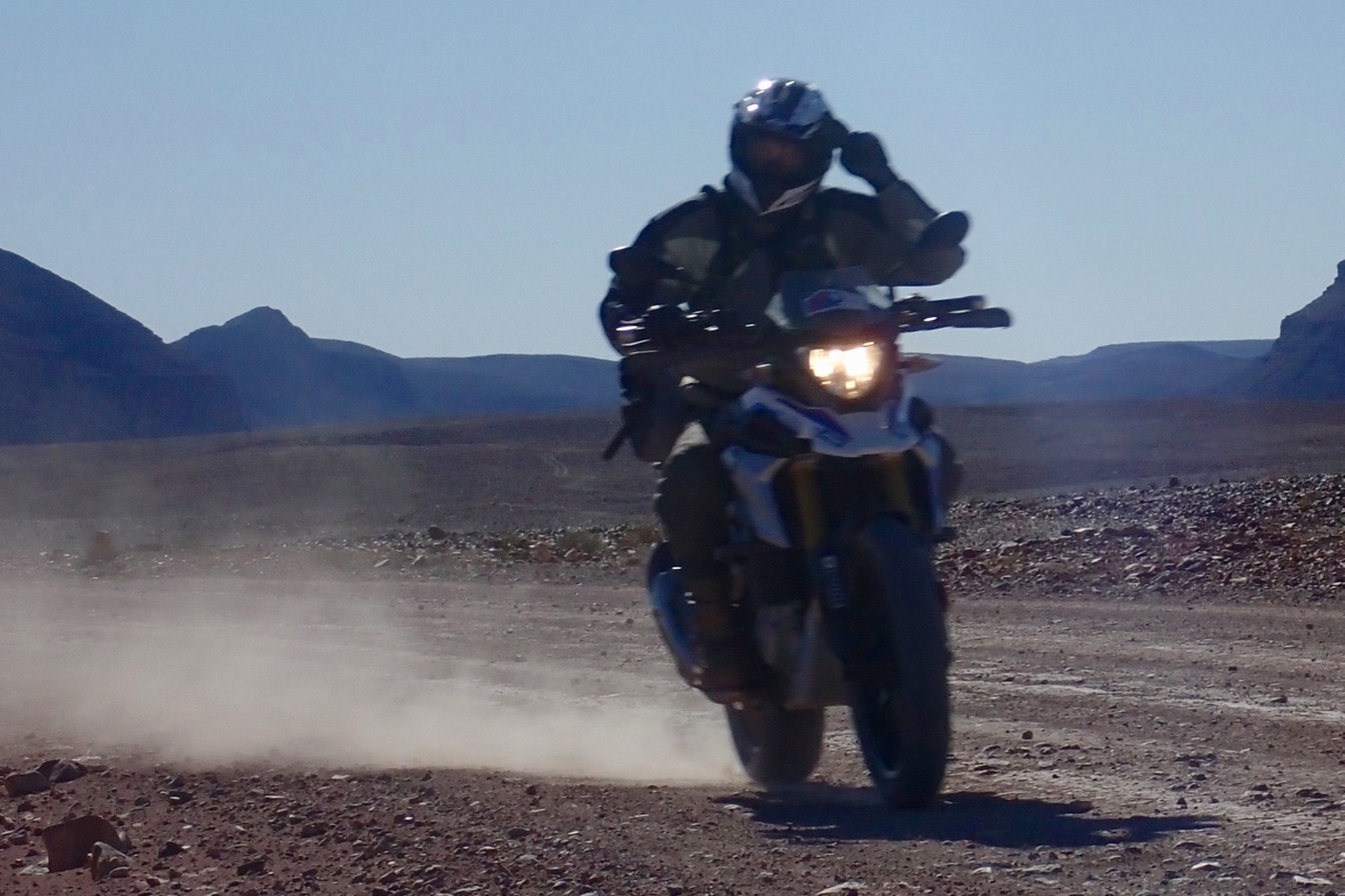
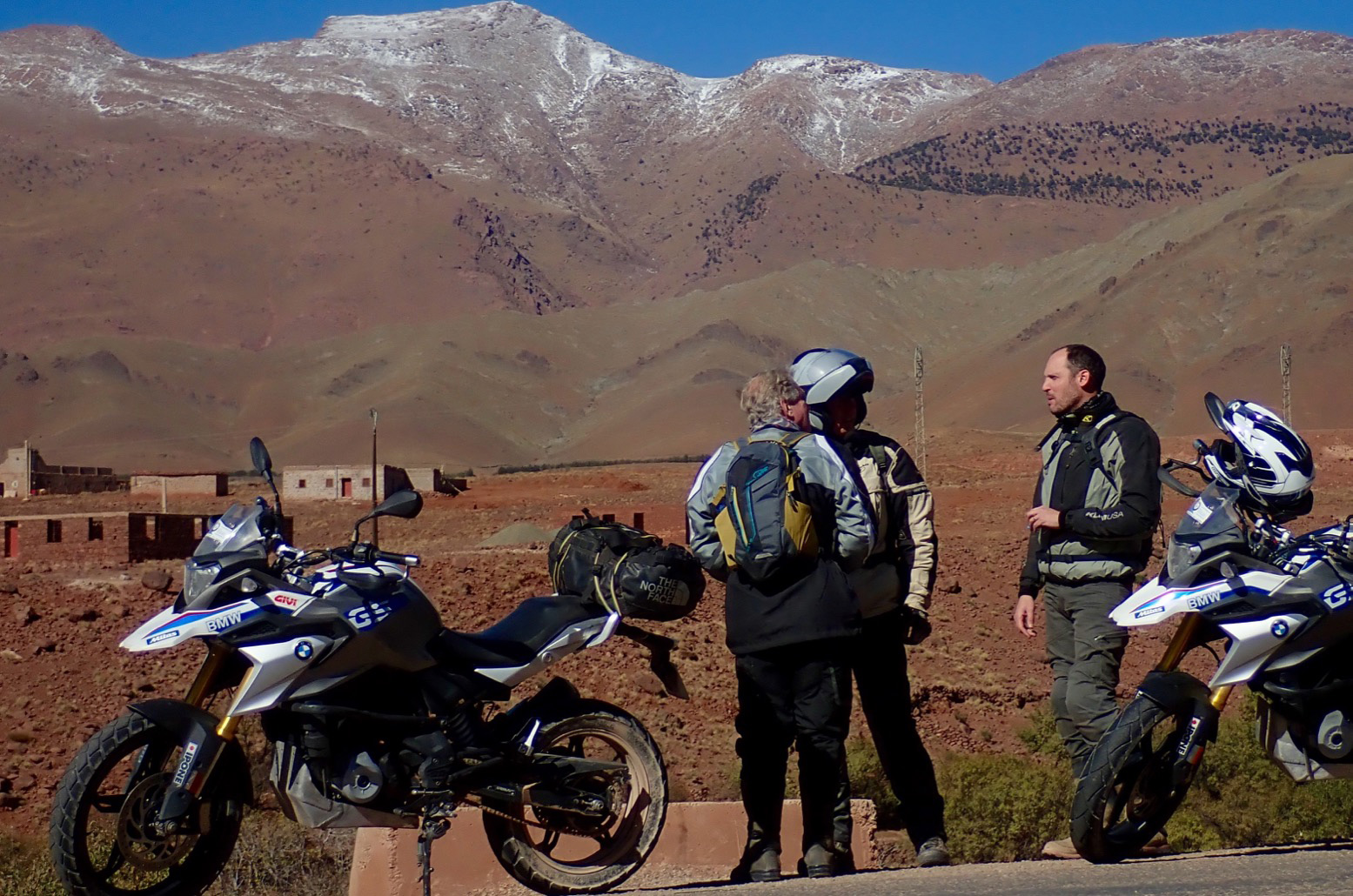
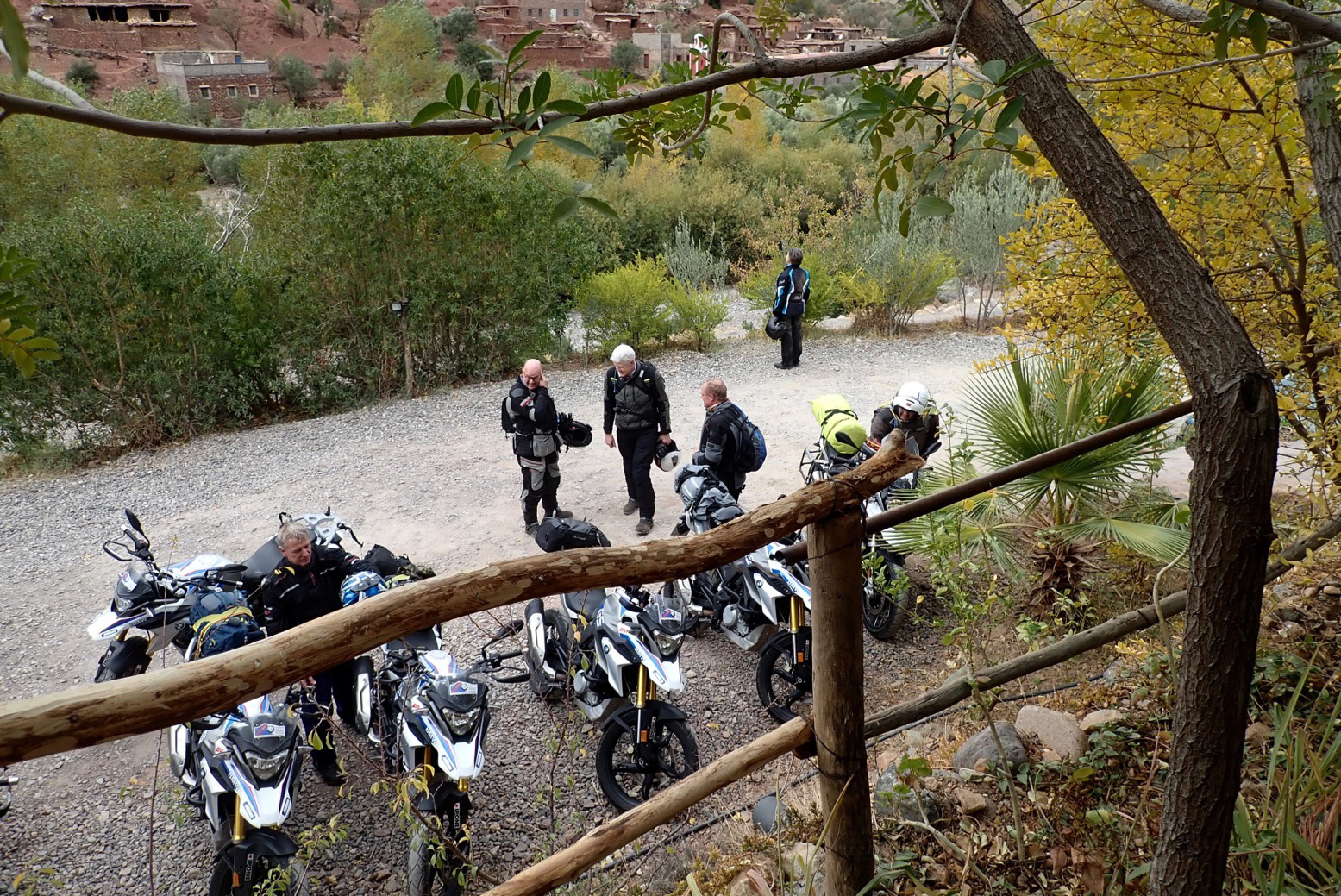
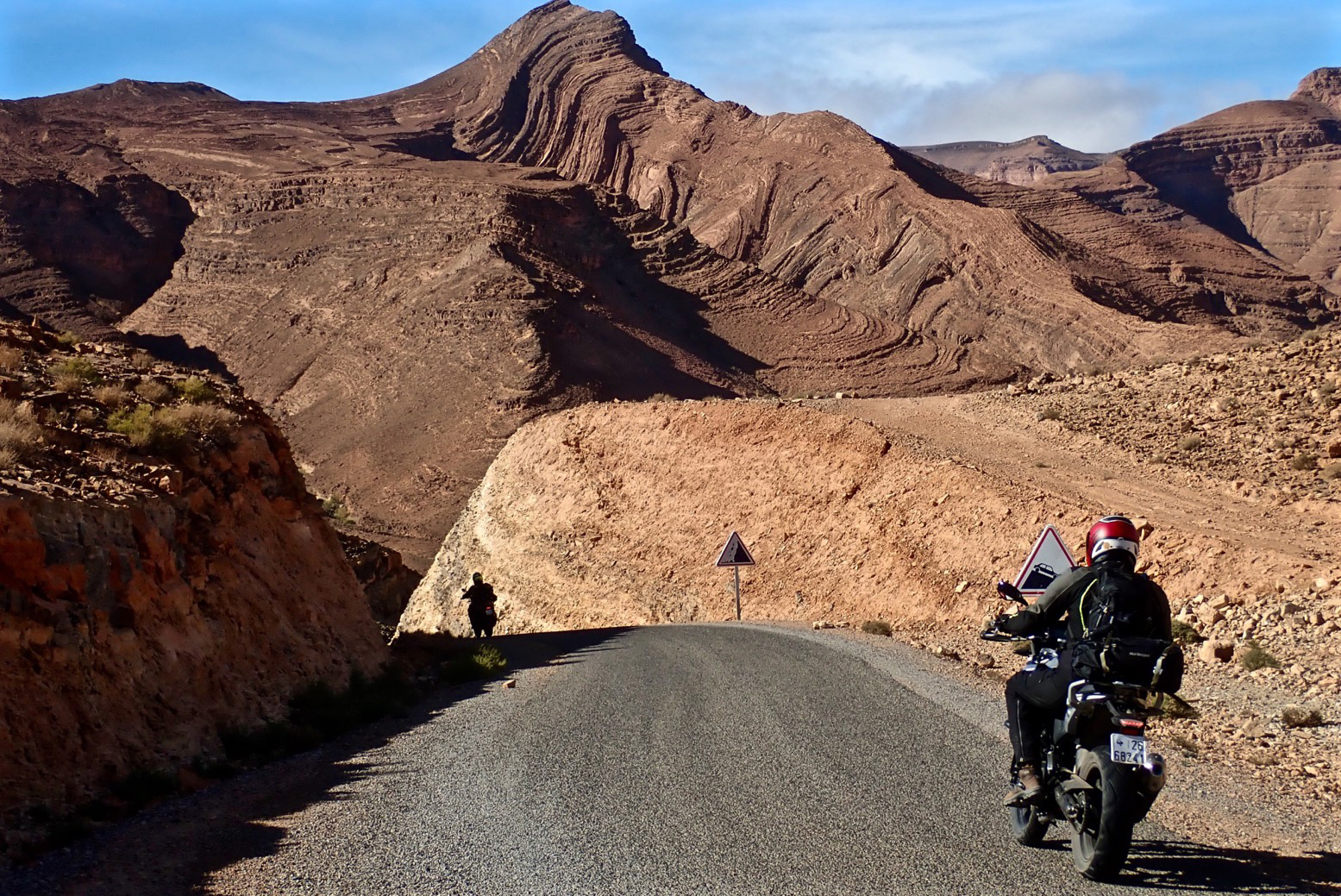
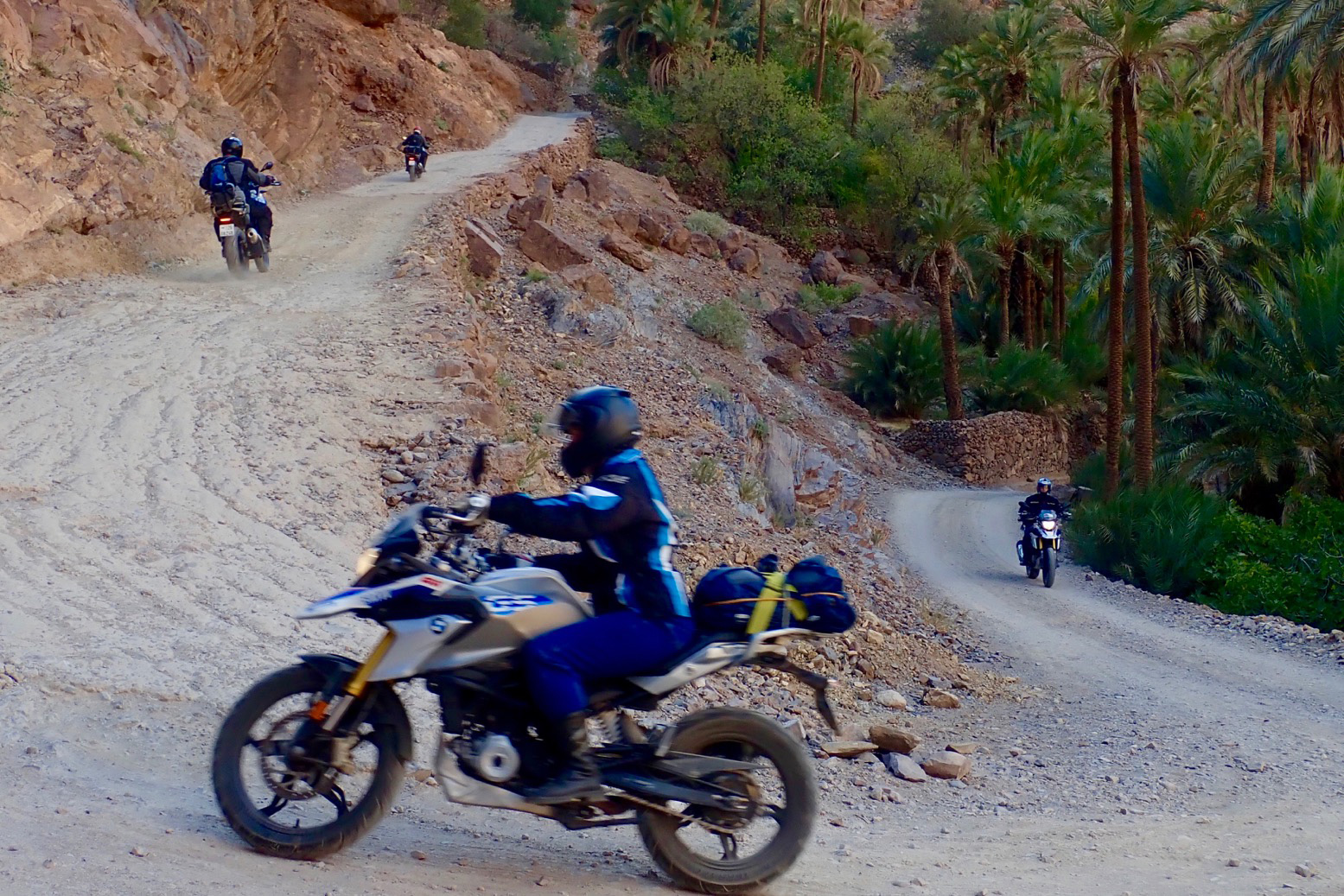
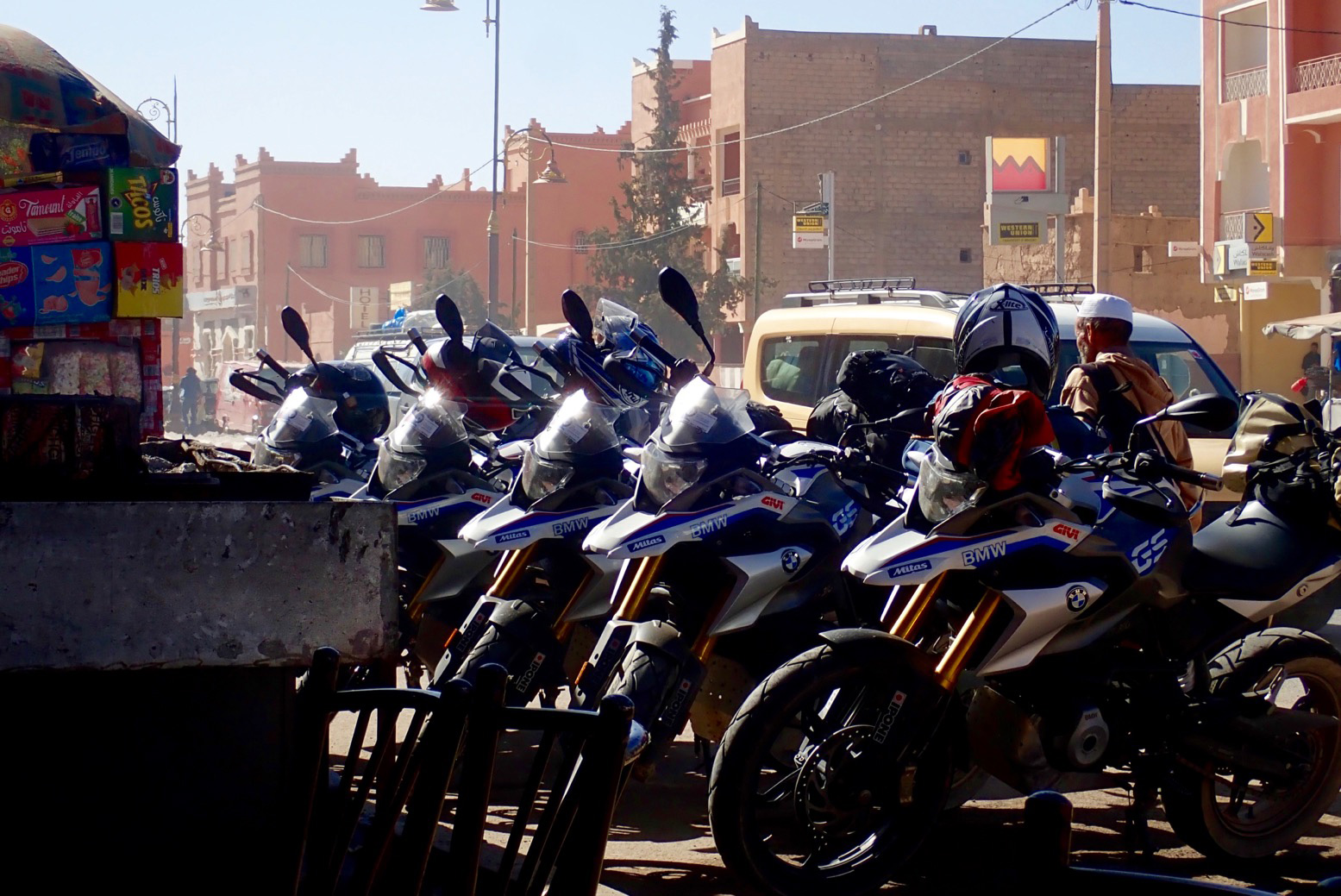
BMW GS310s still in Morocco

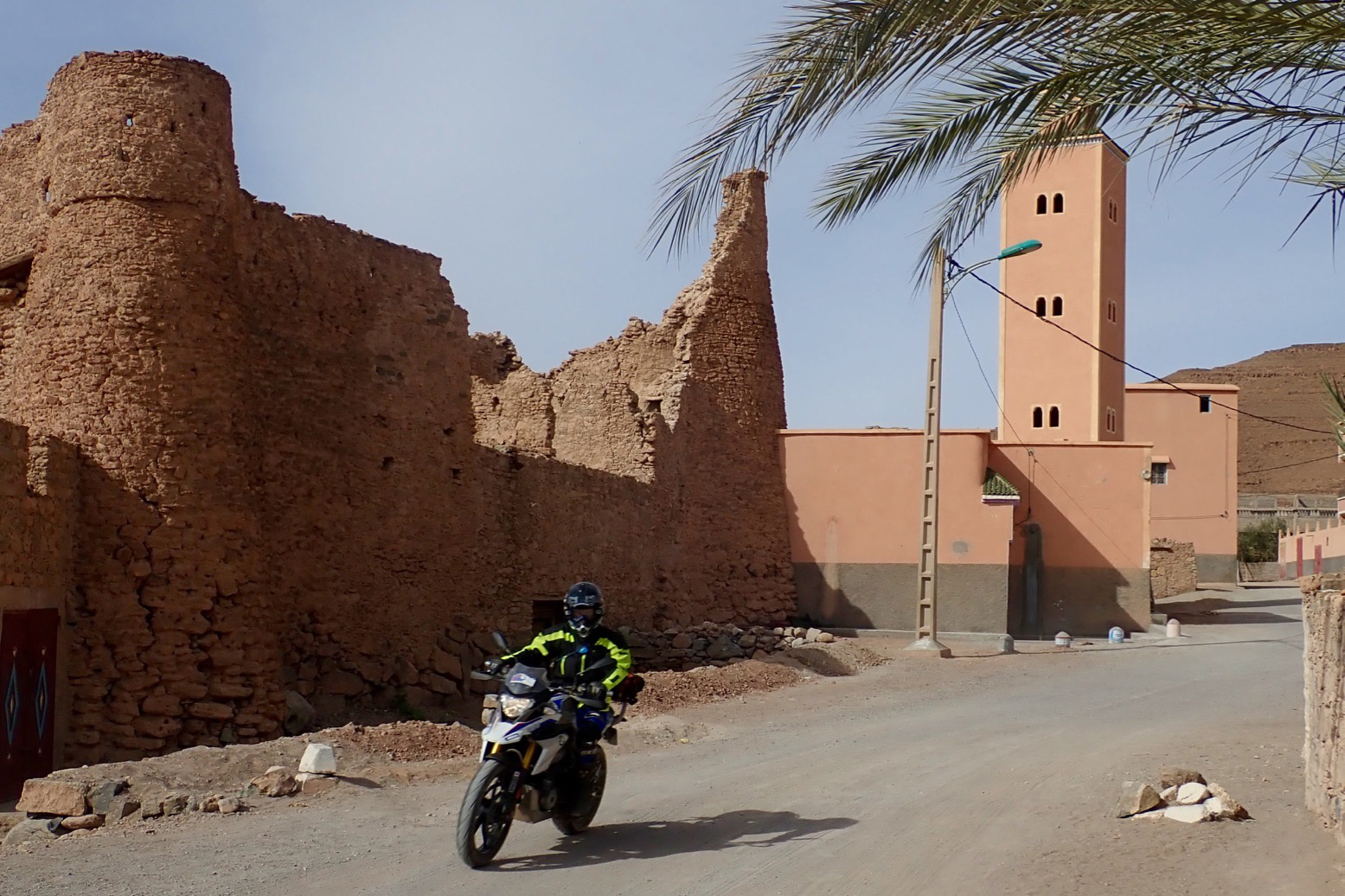
More about Morocco tours

See also:
G310GS 2200km review
G310GS first ride in Morocco

T2019---68

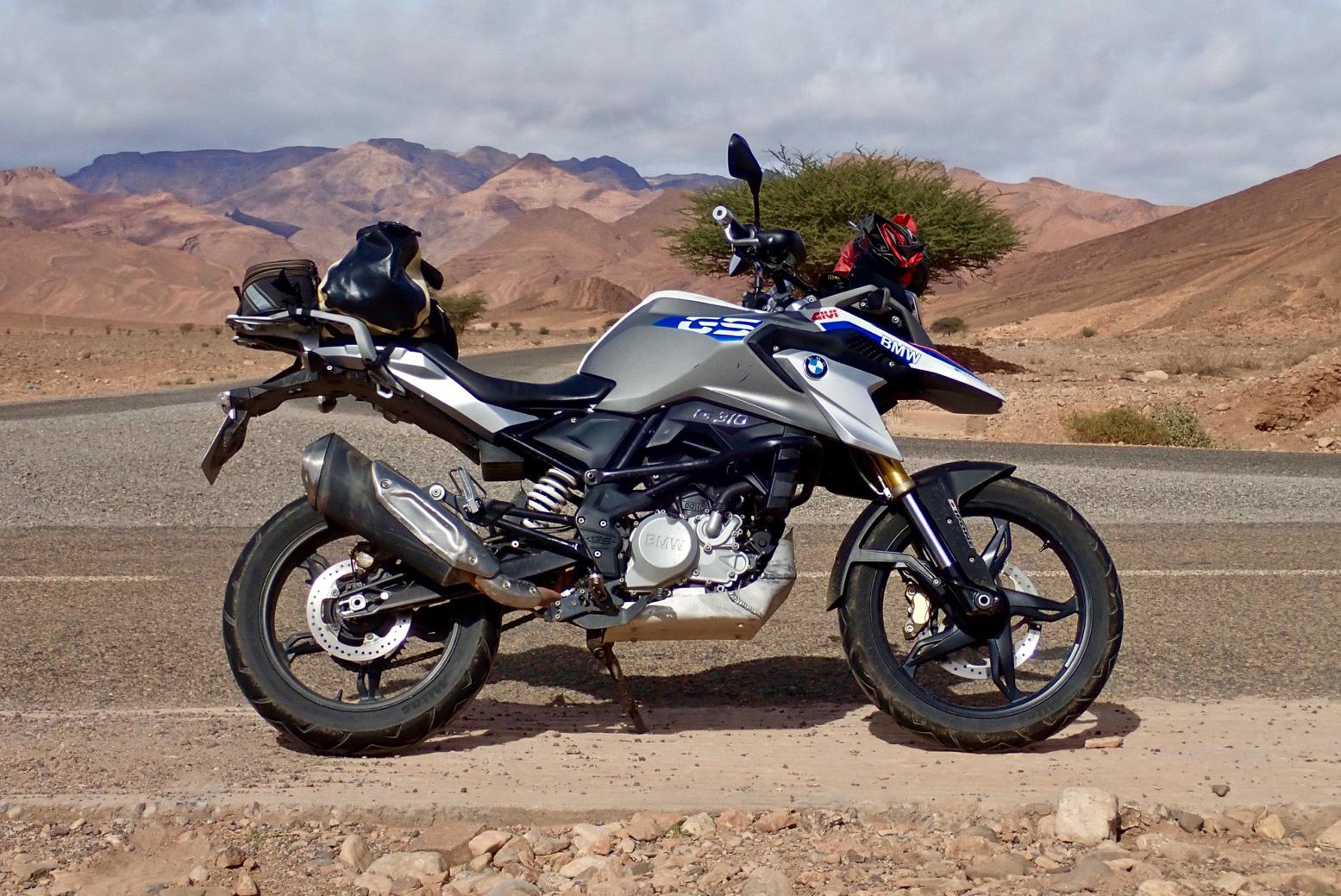
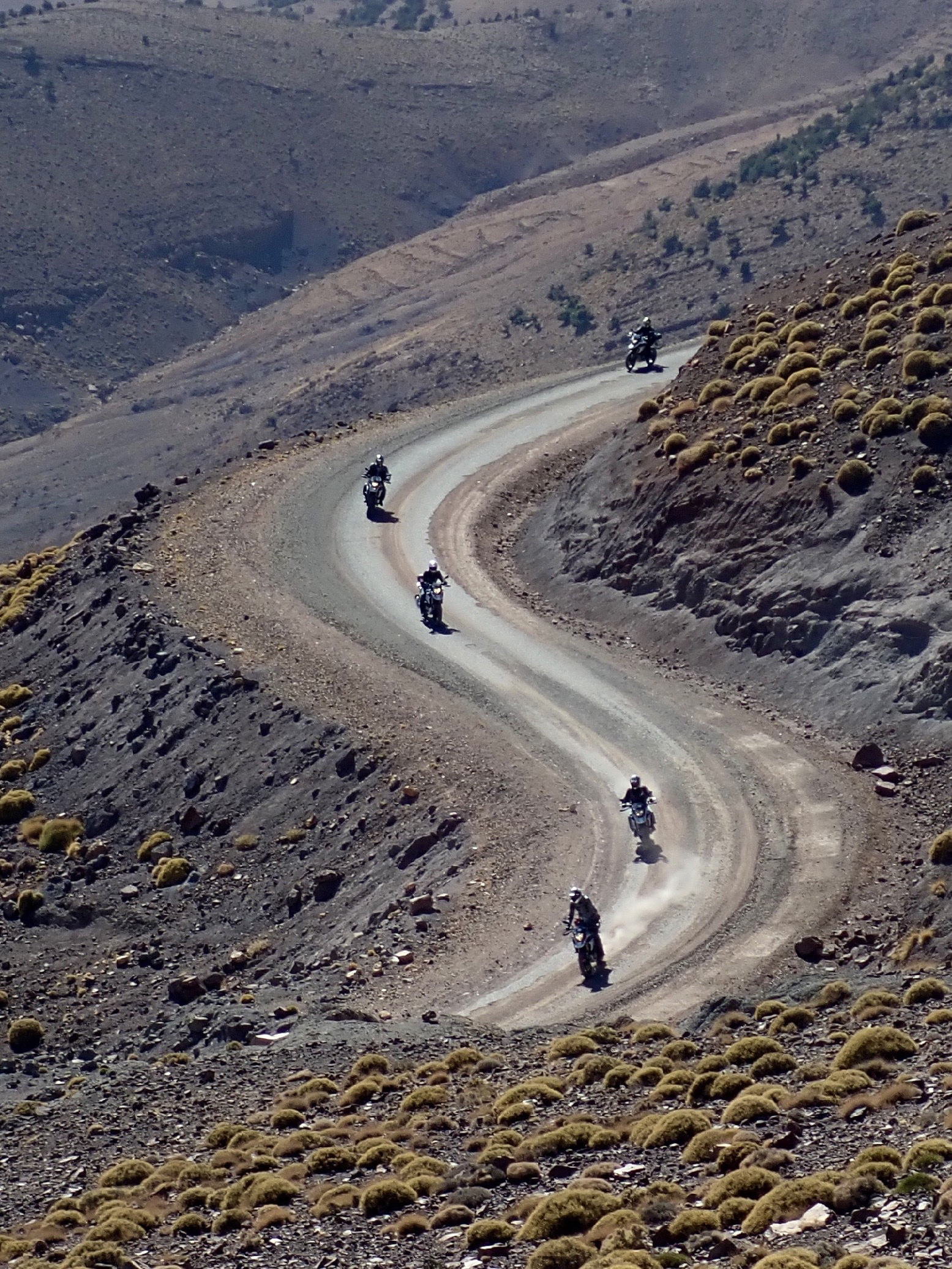
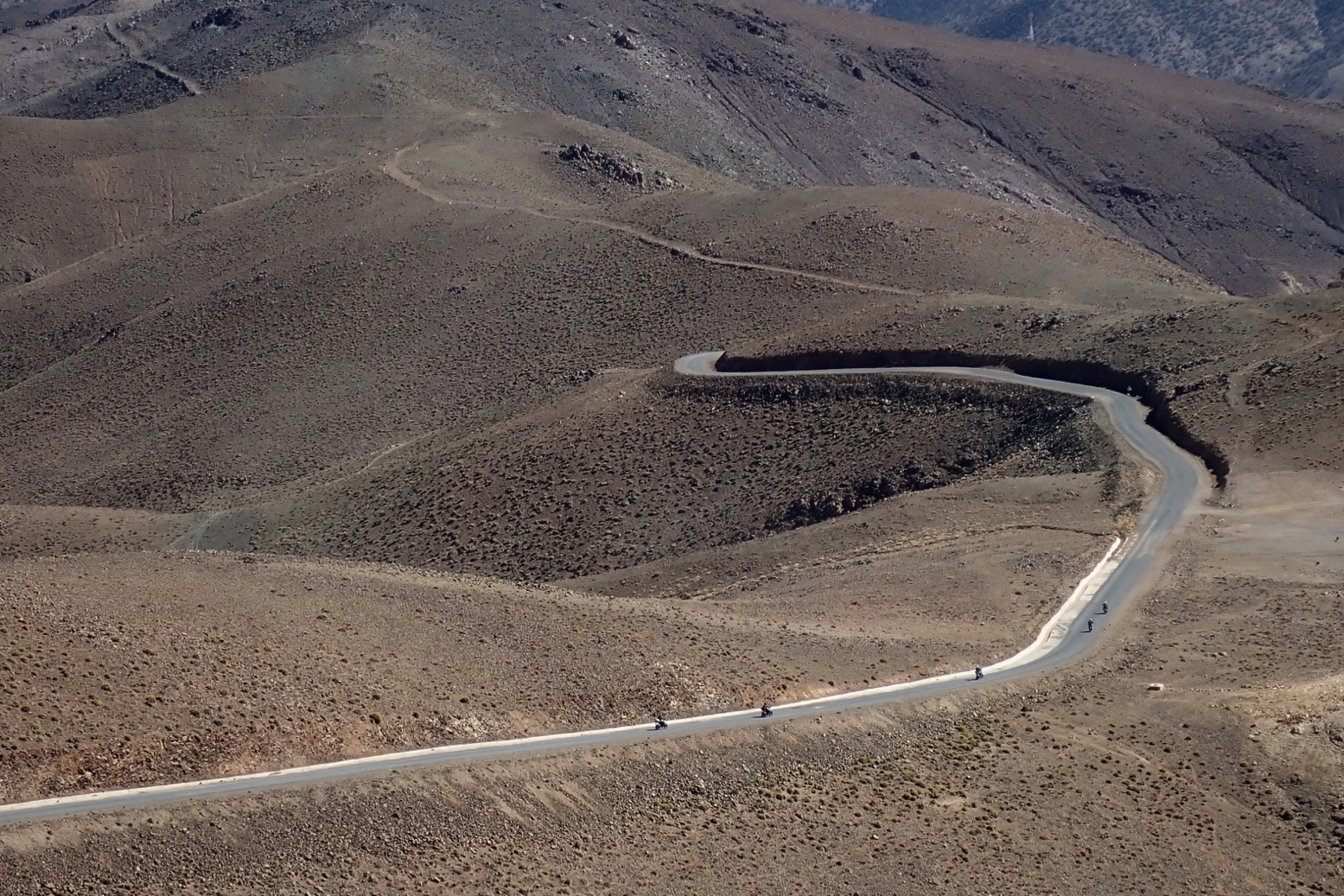
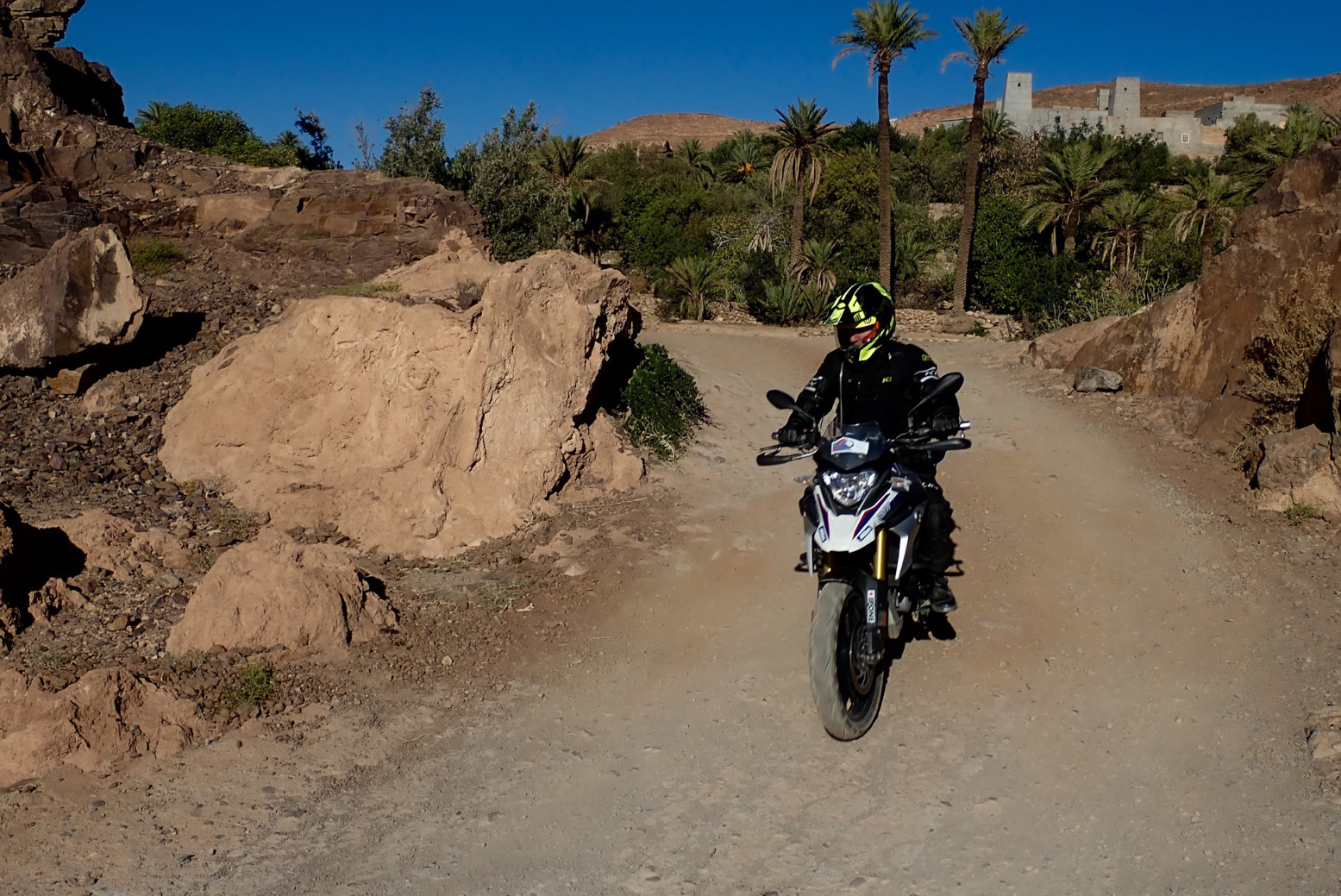
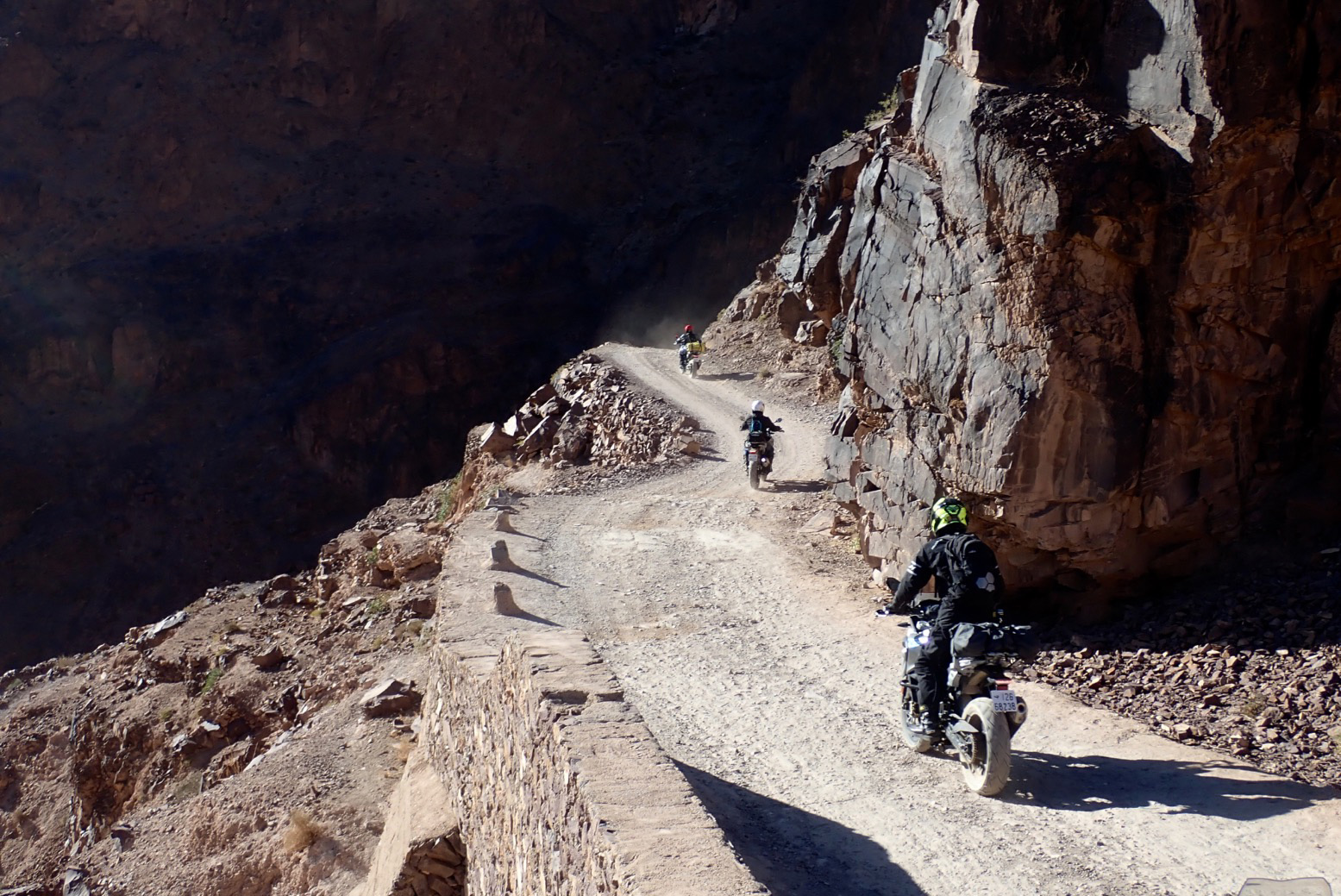
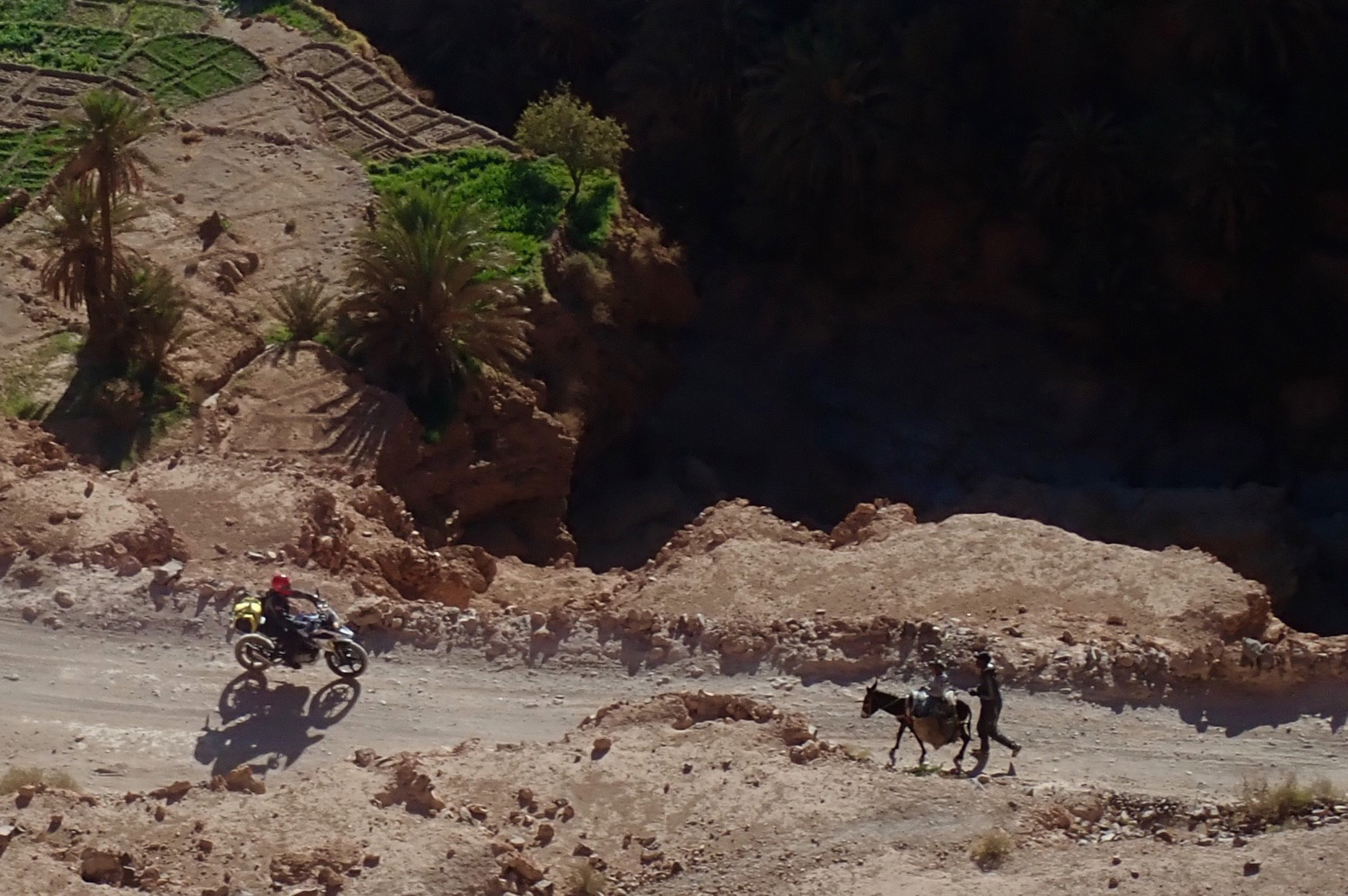
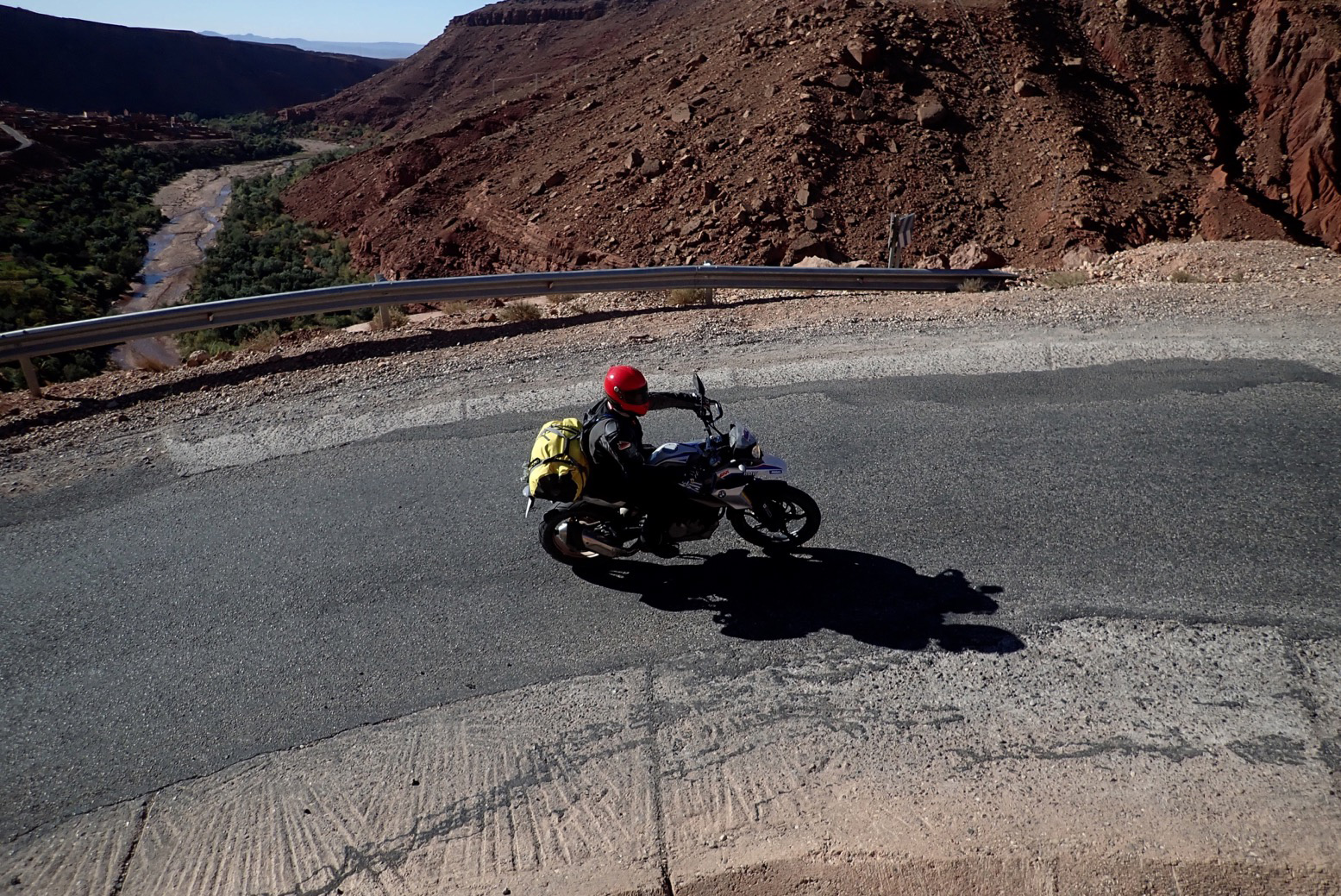
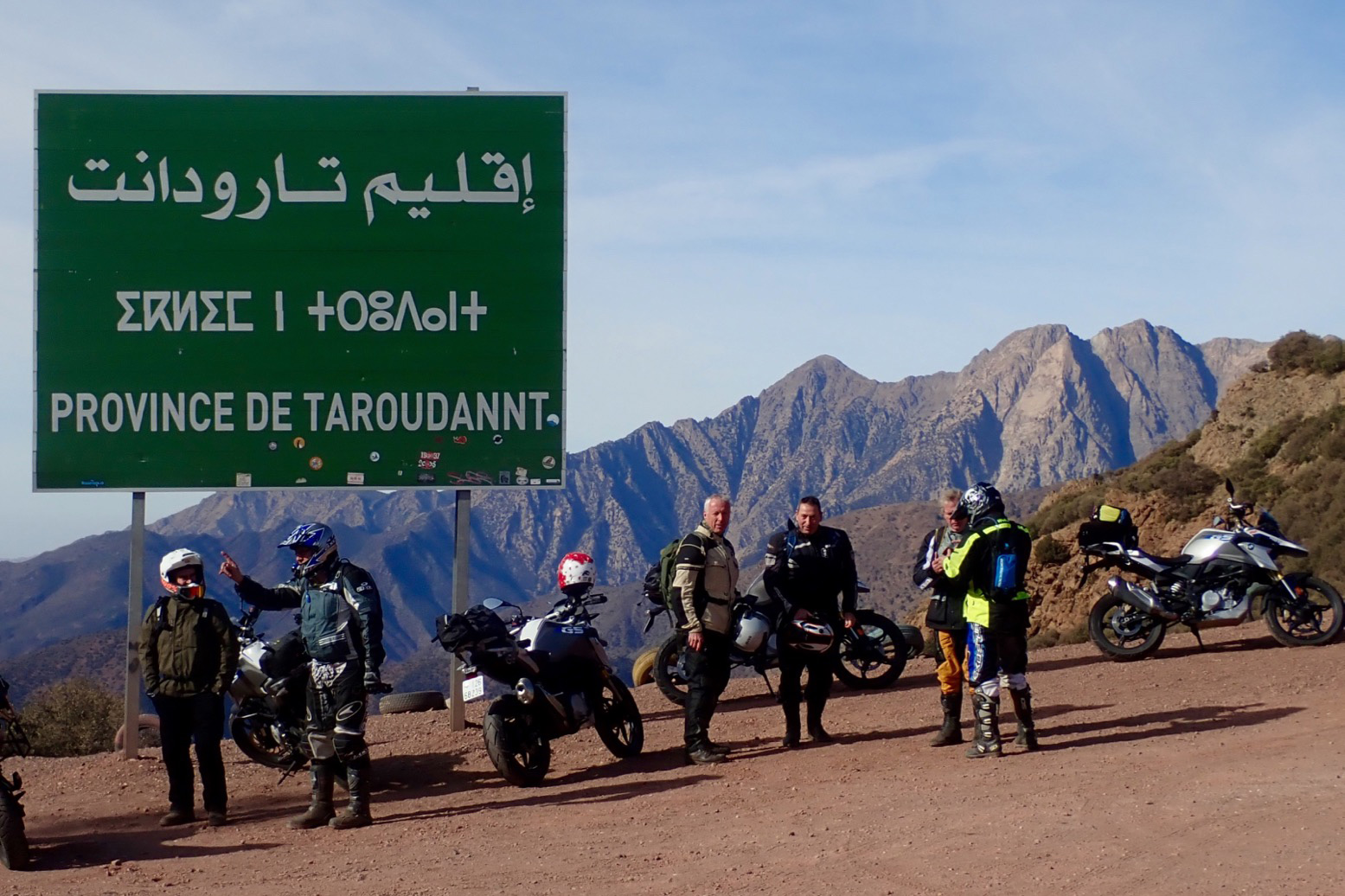
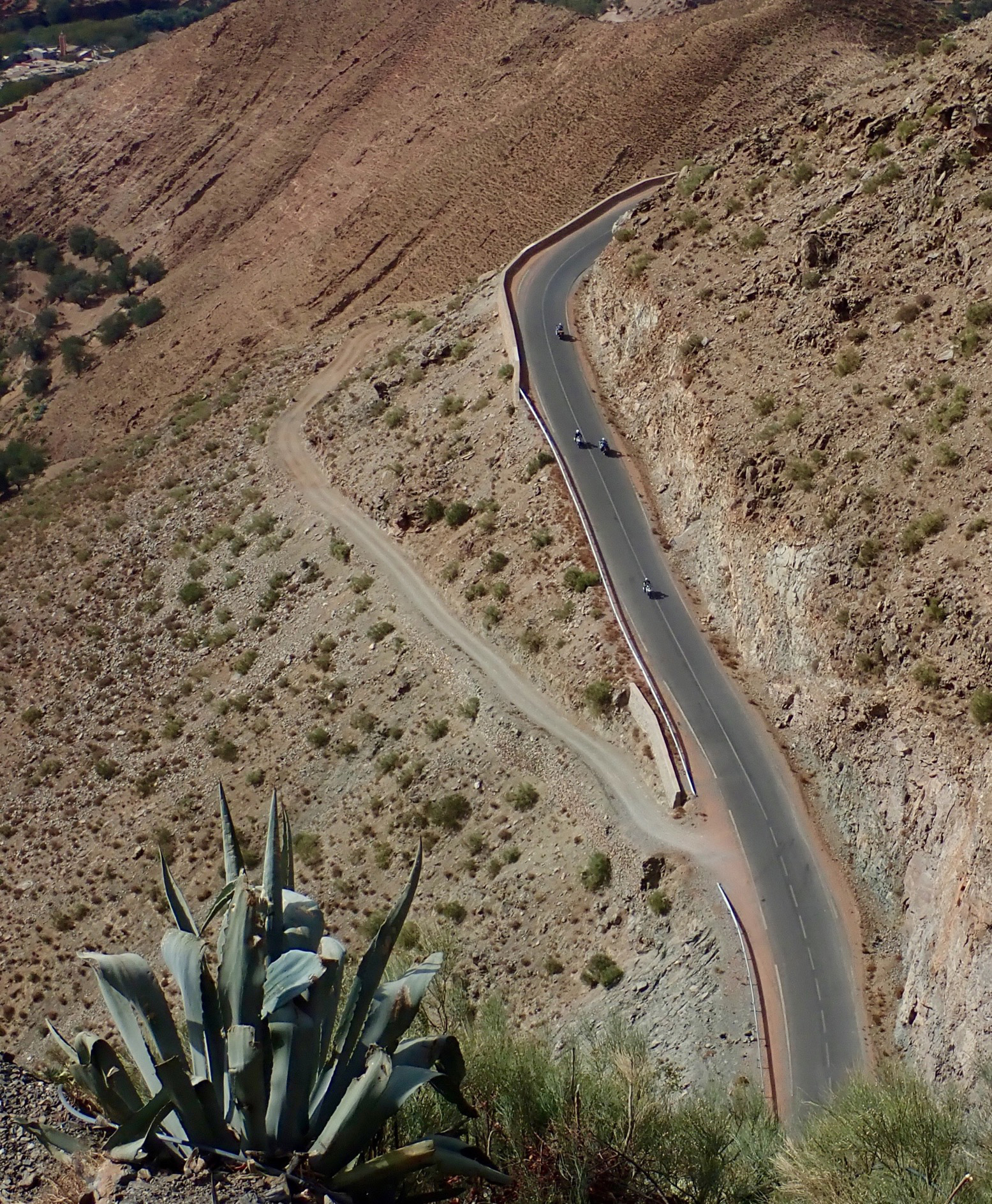
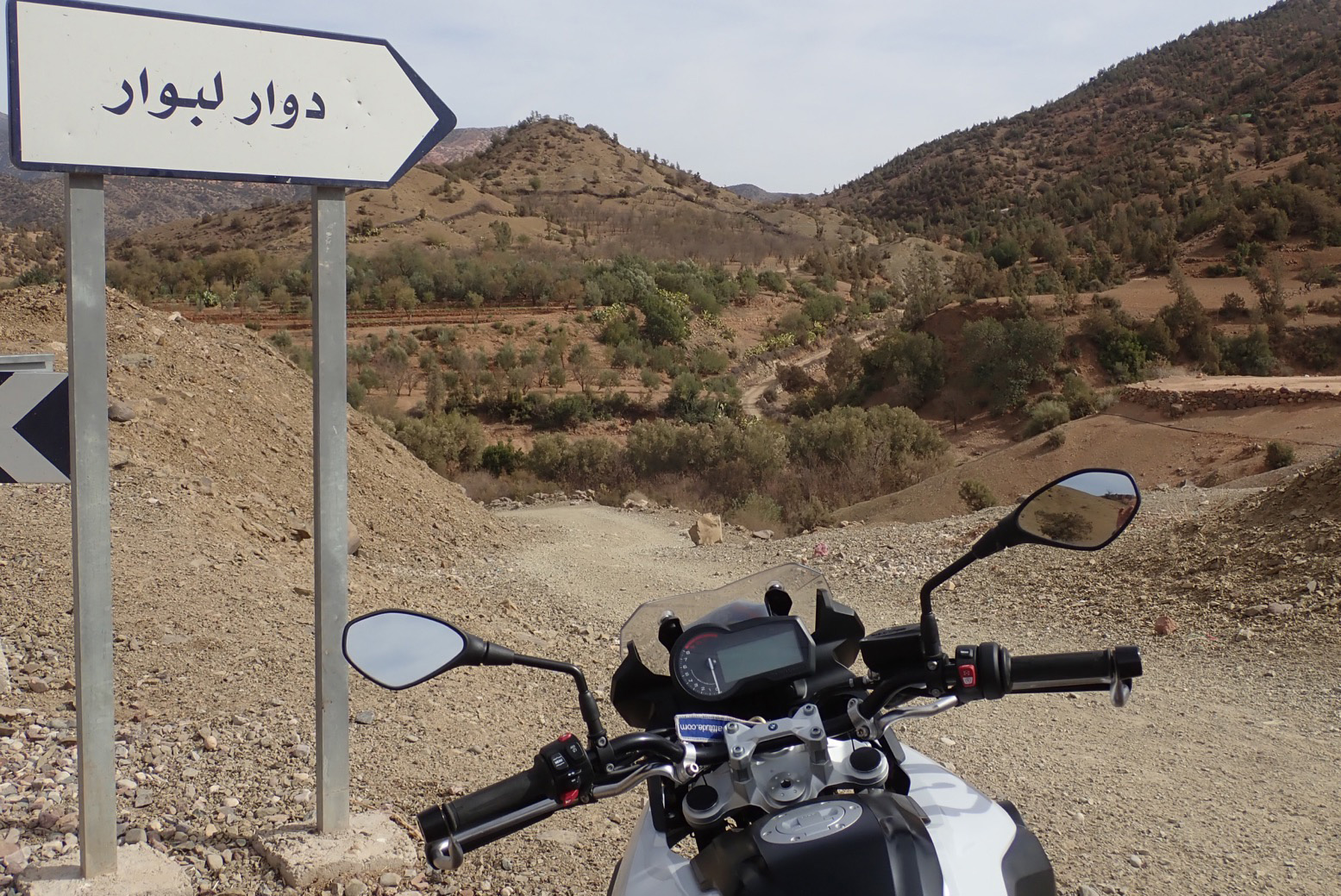
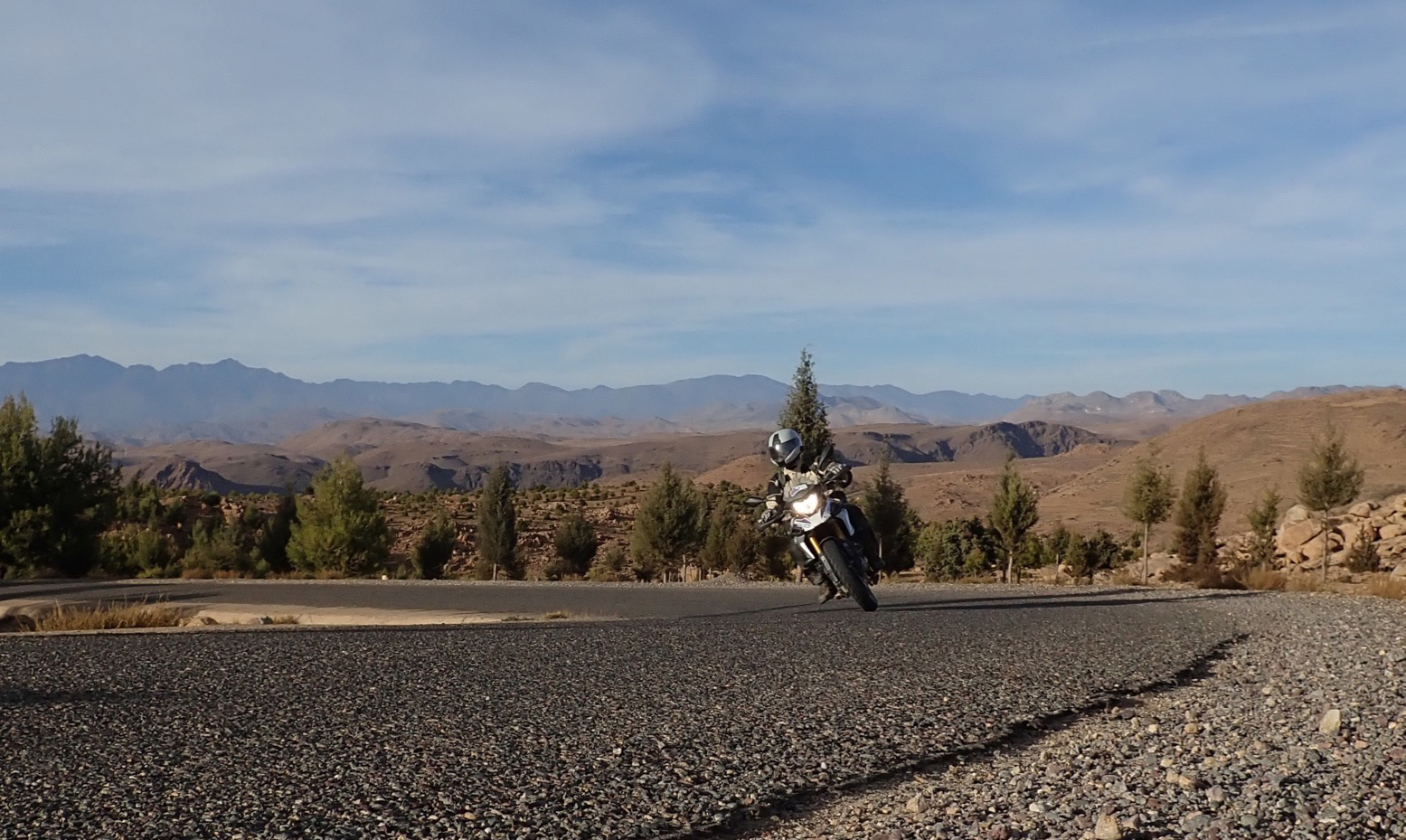
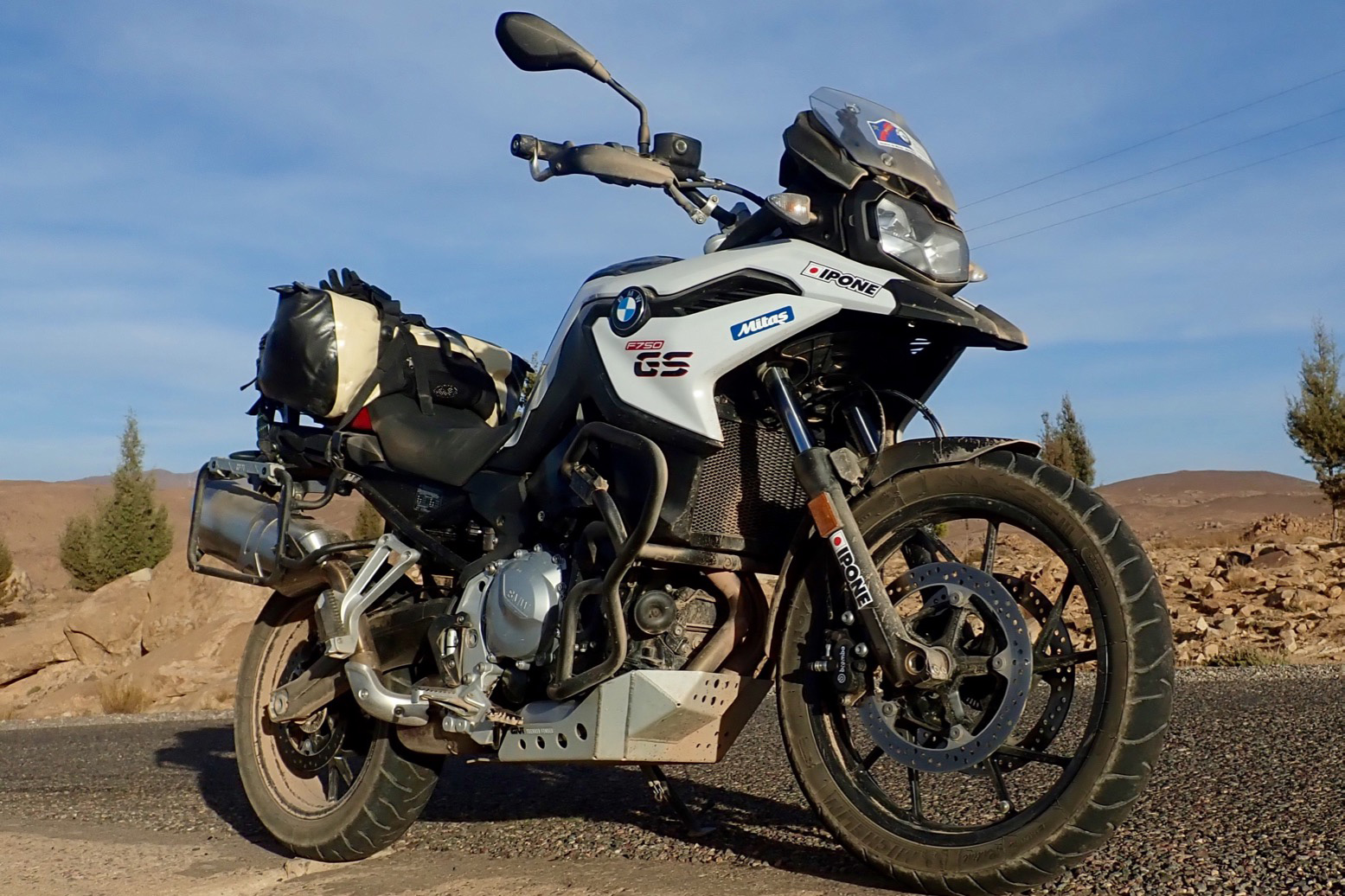
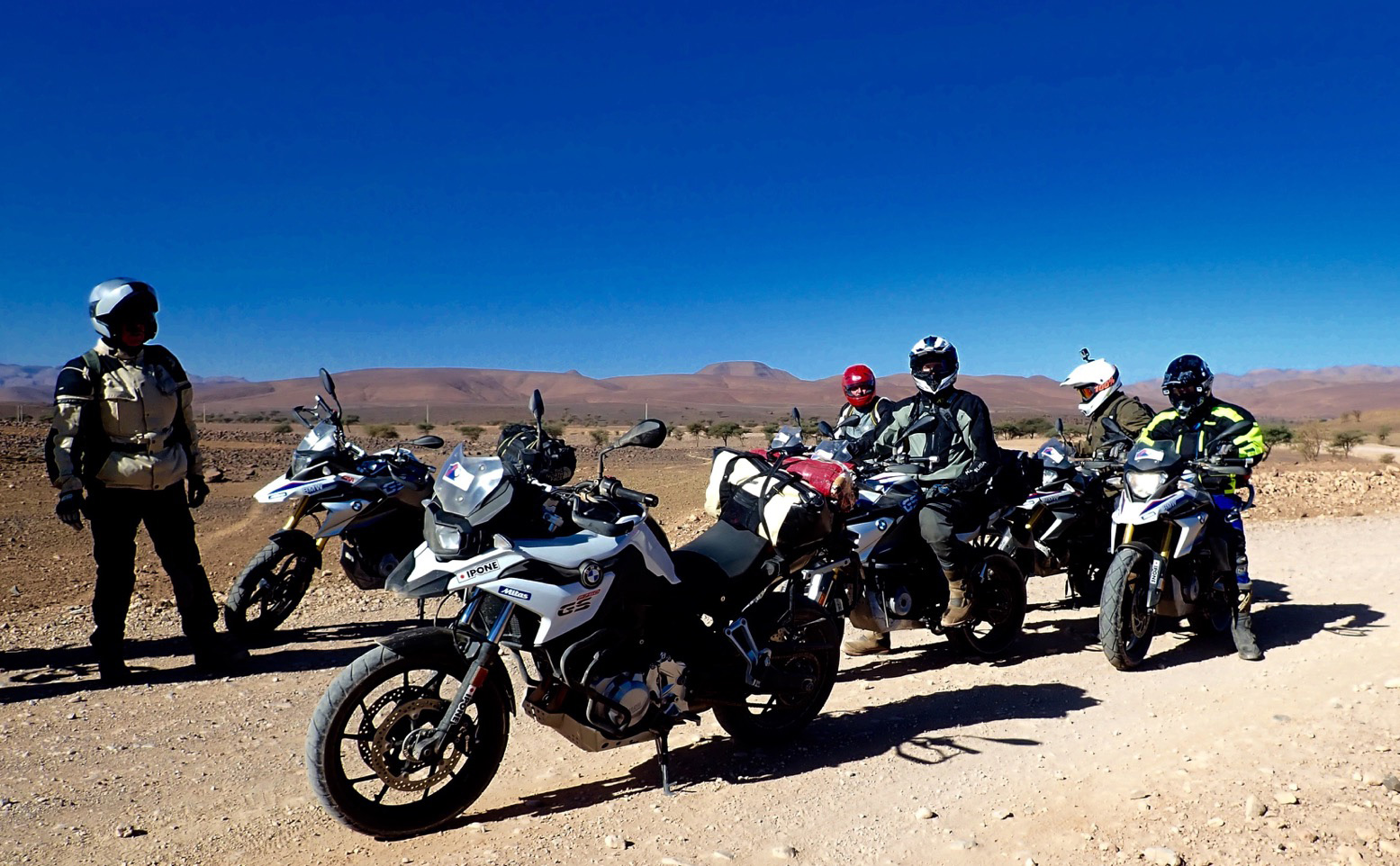
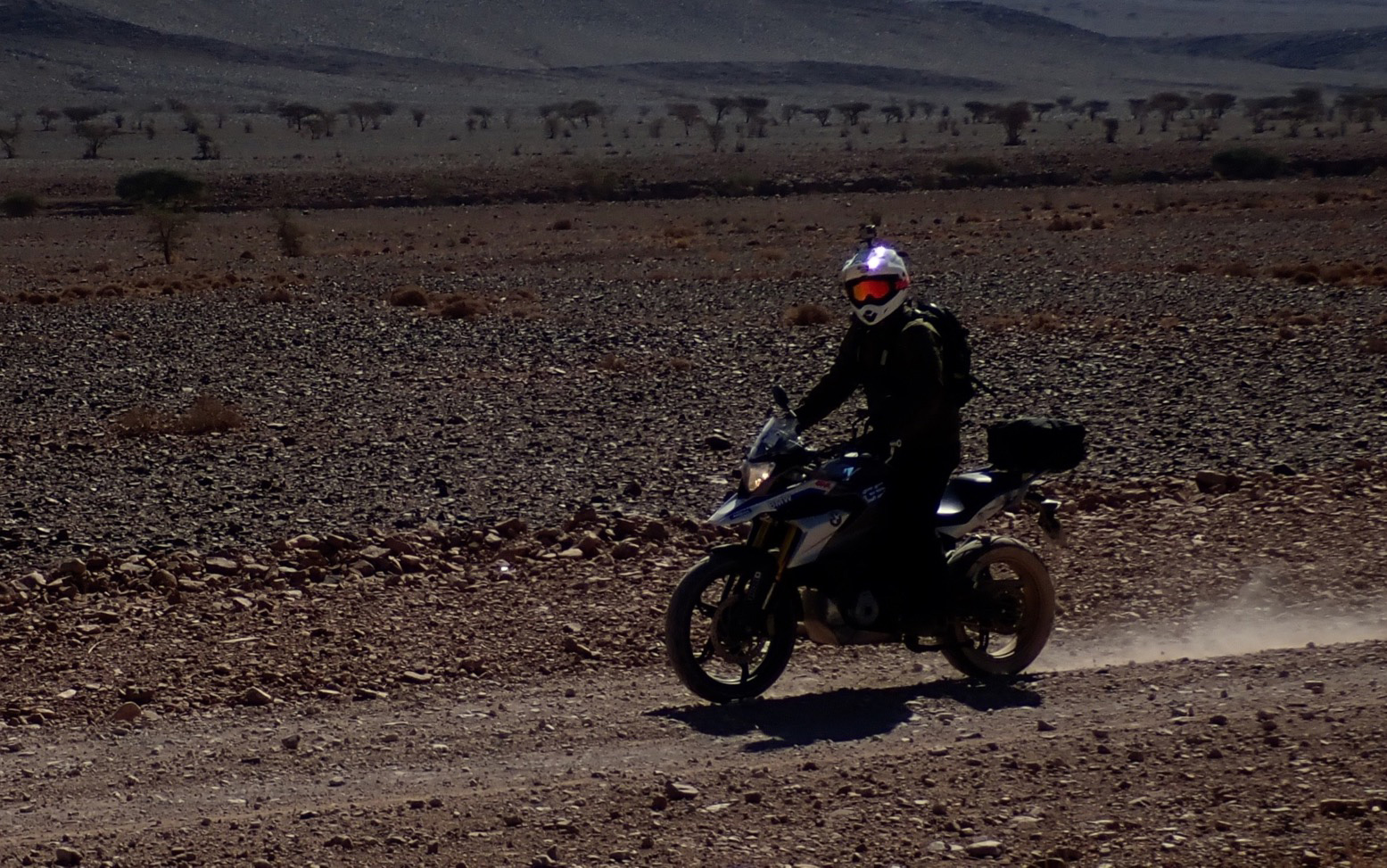
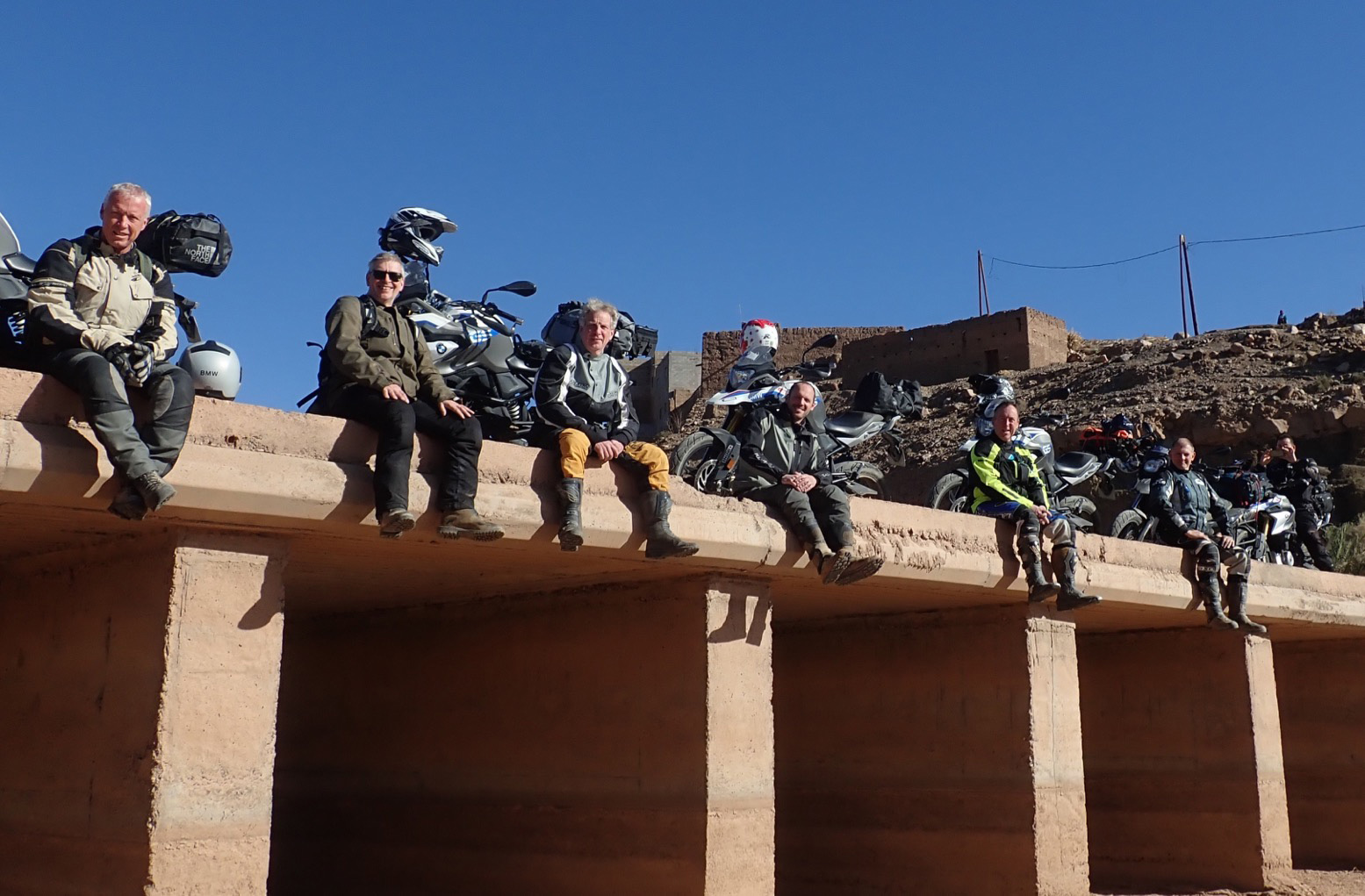
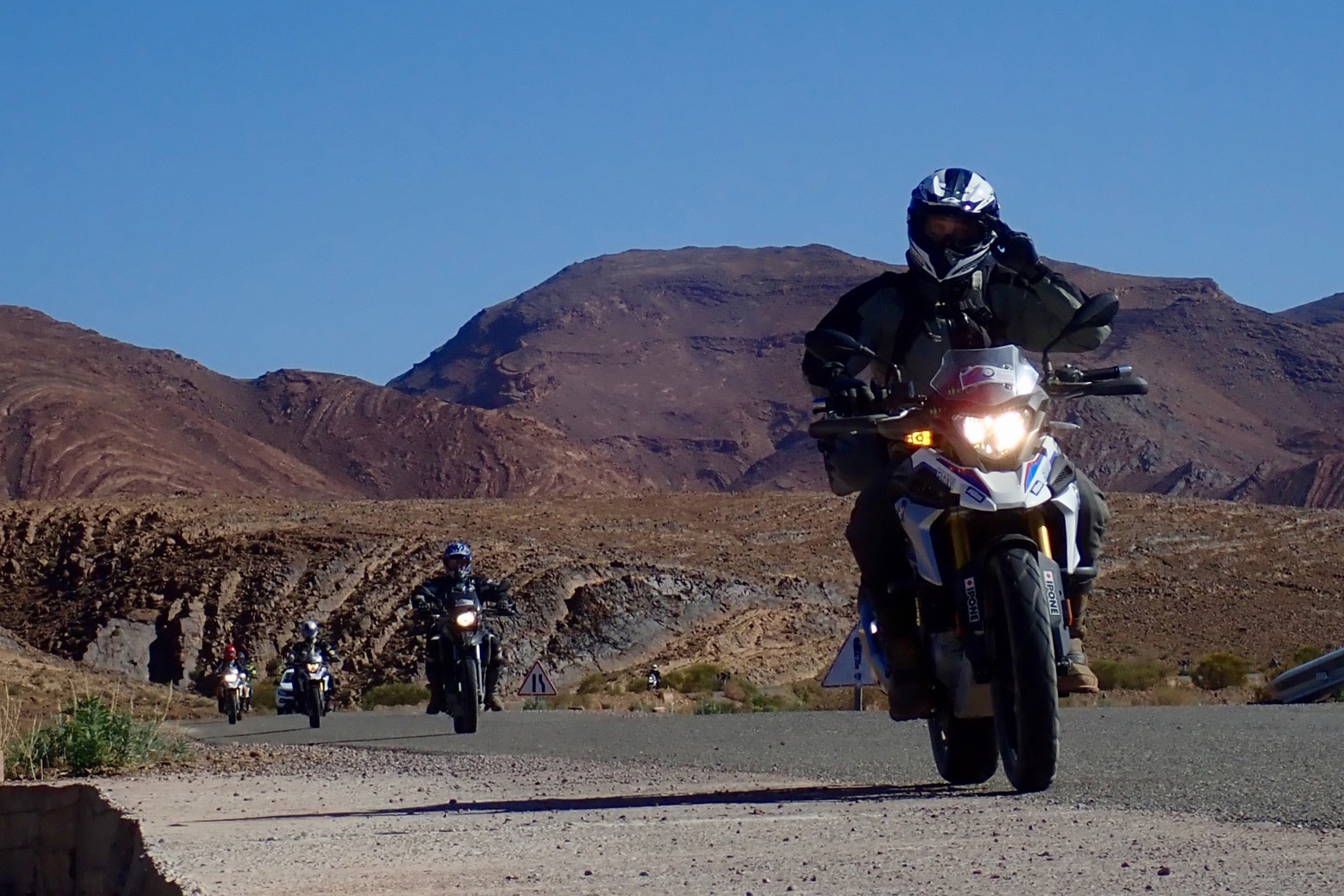
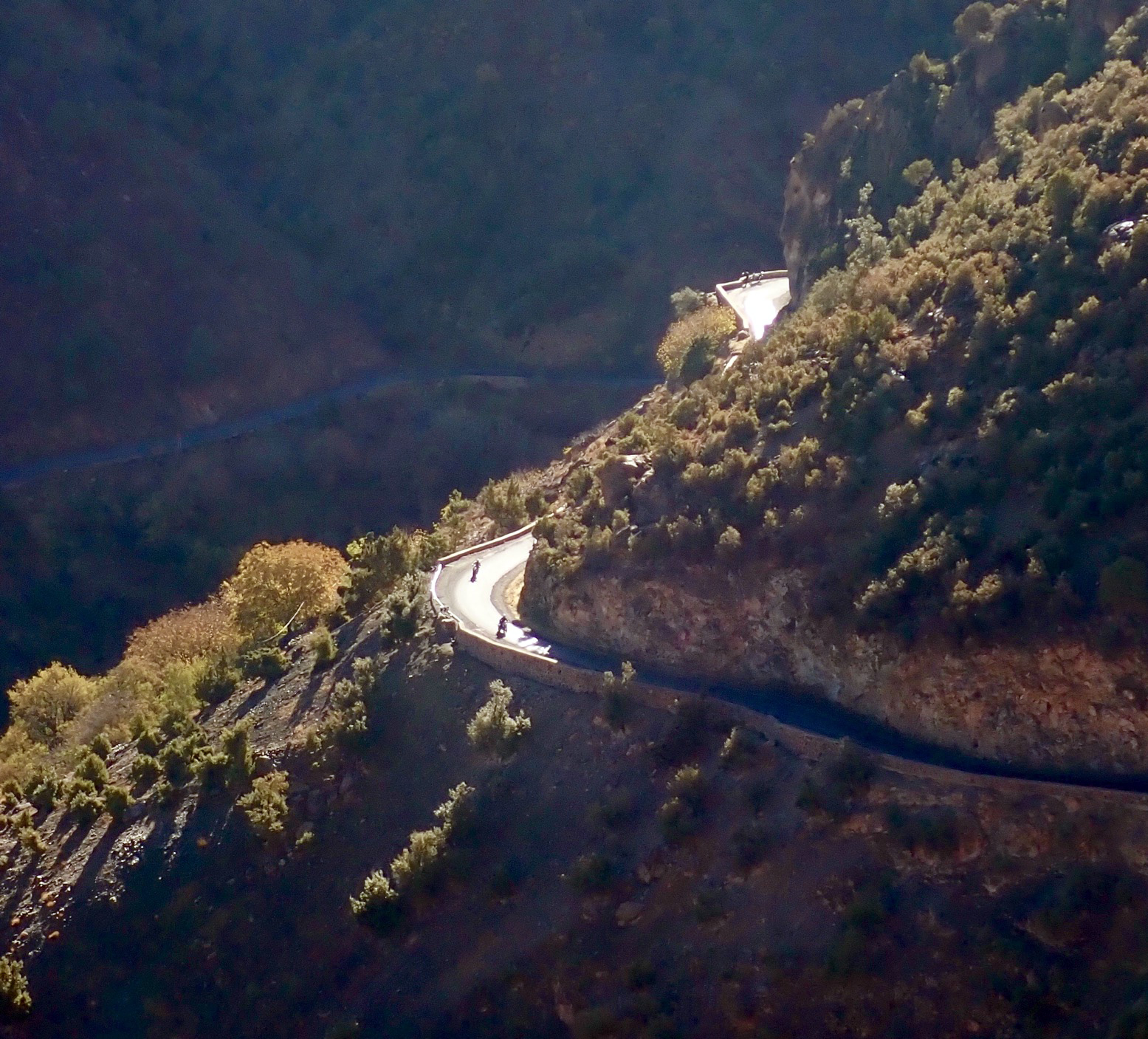
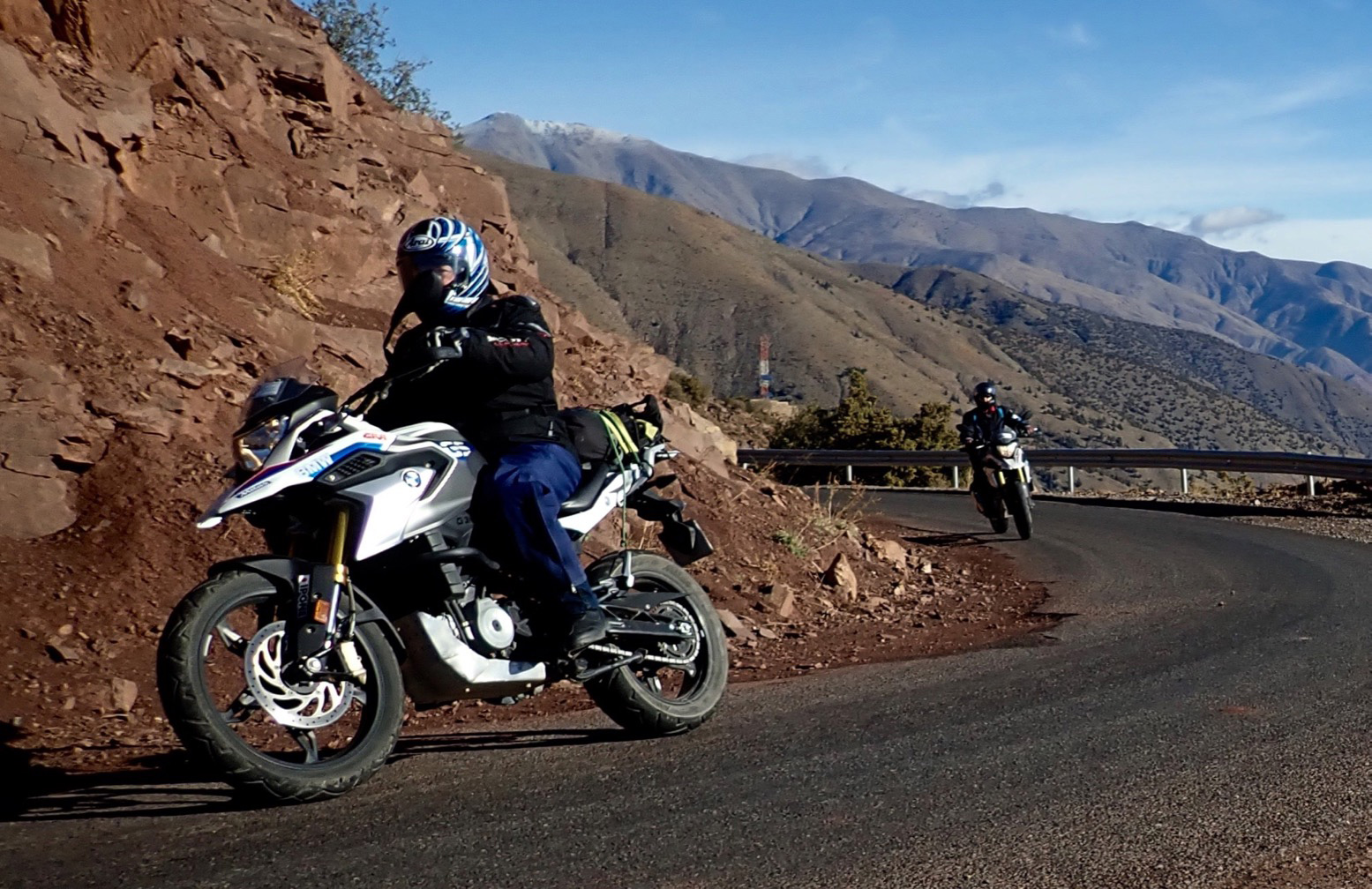
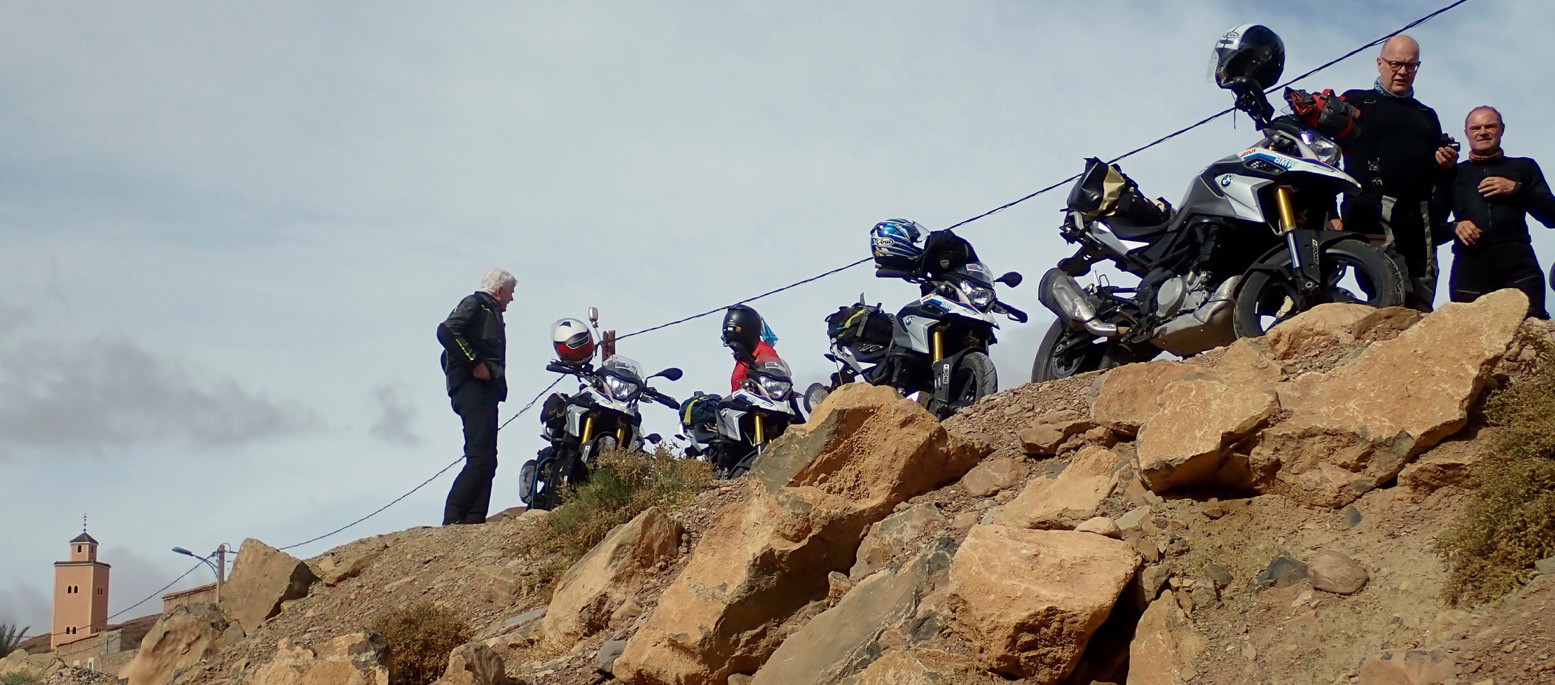
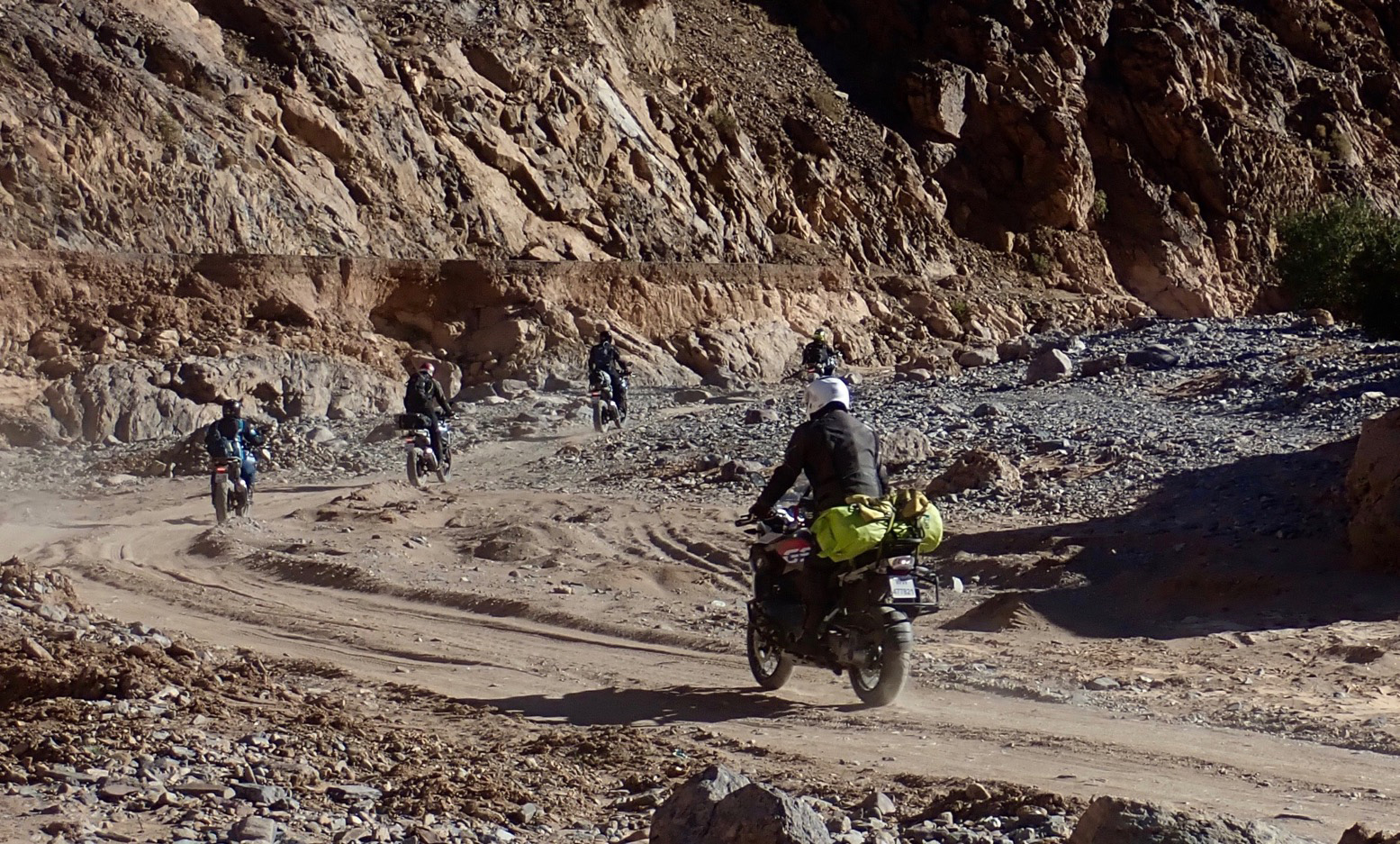
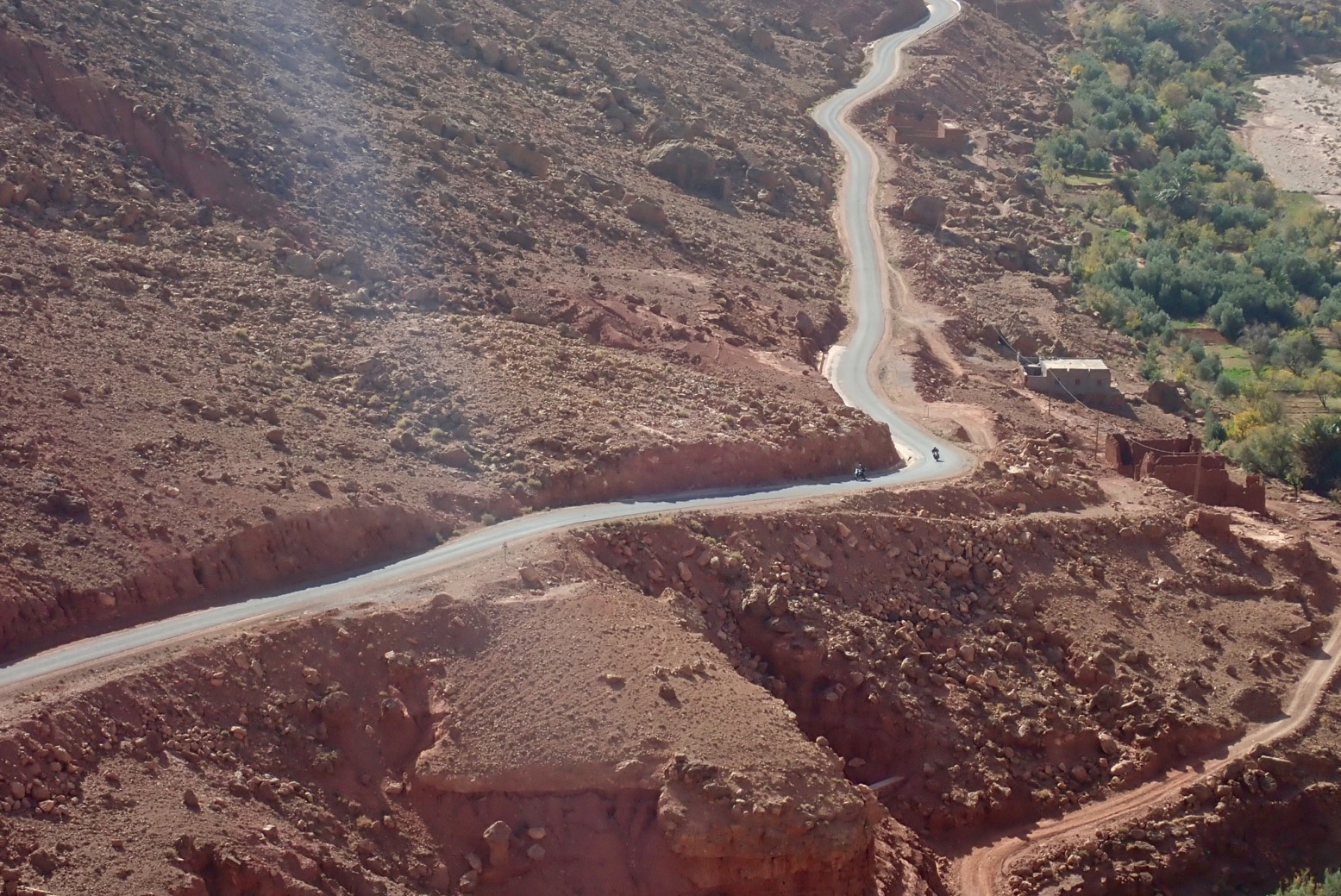
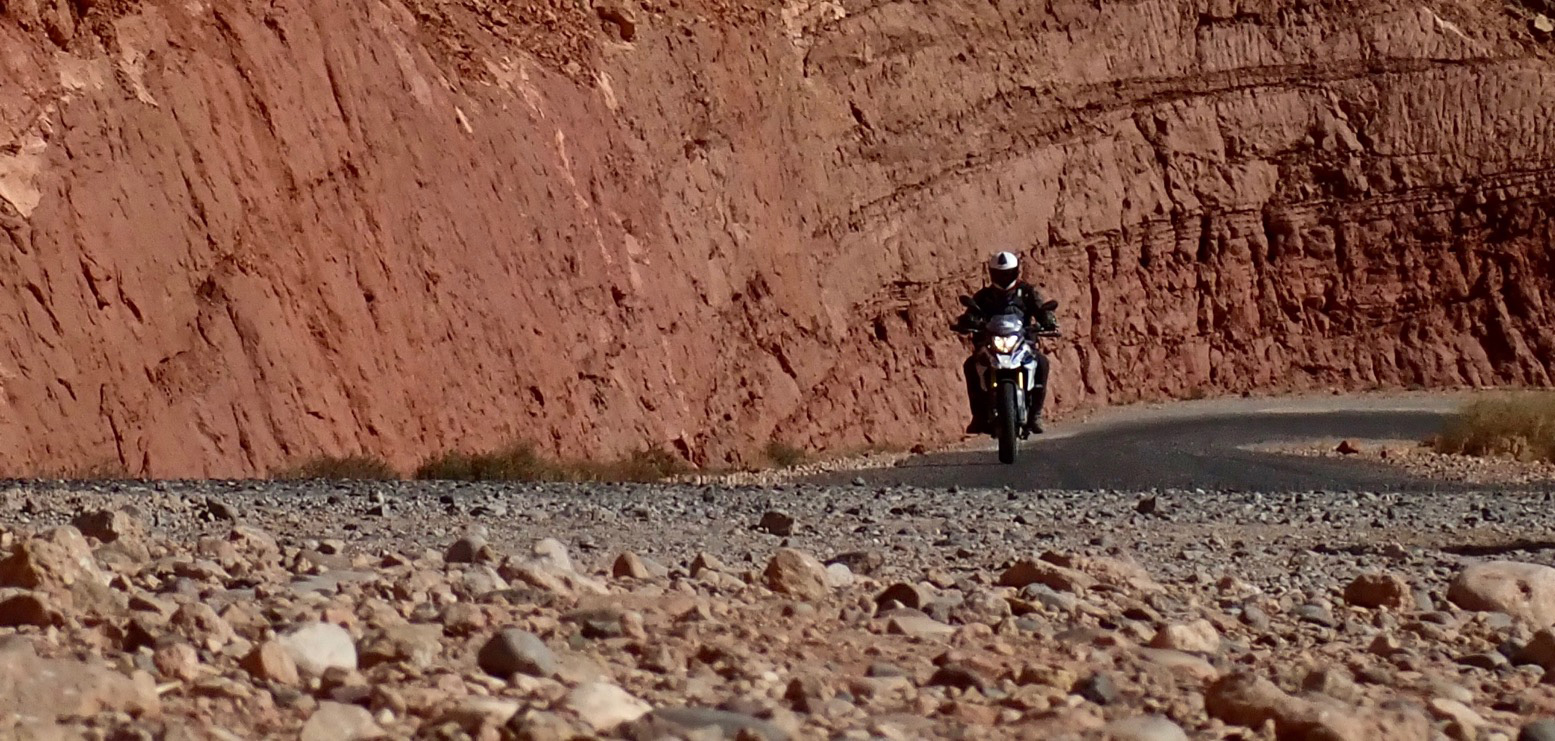
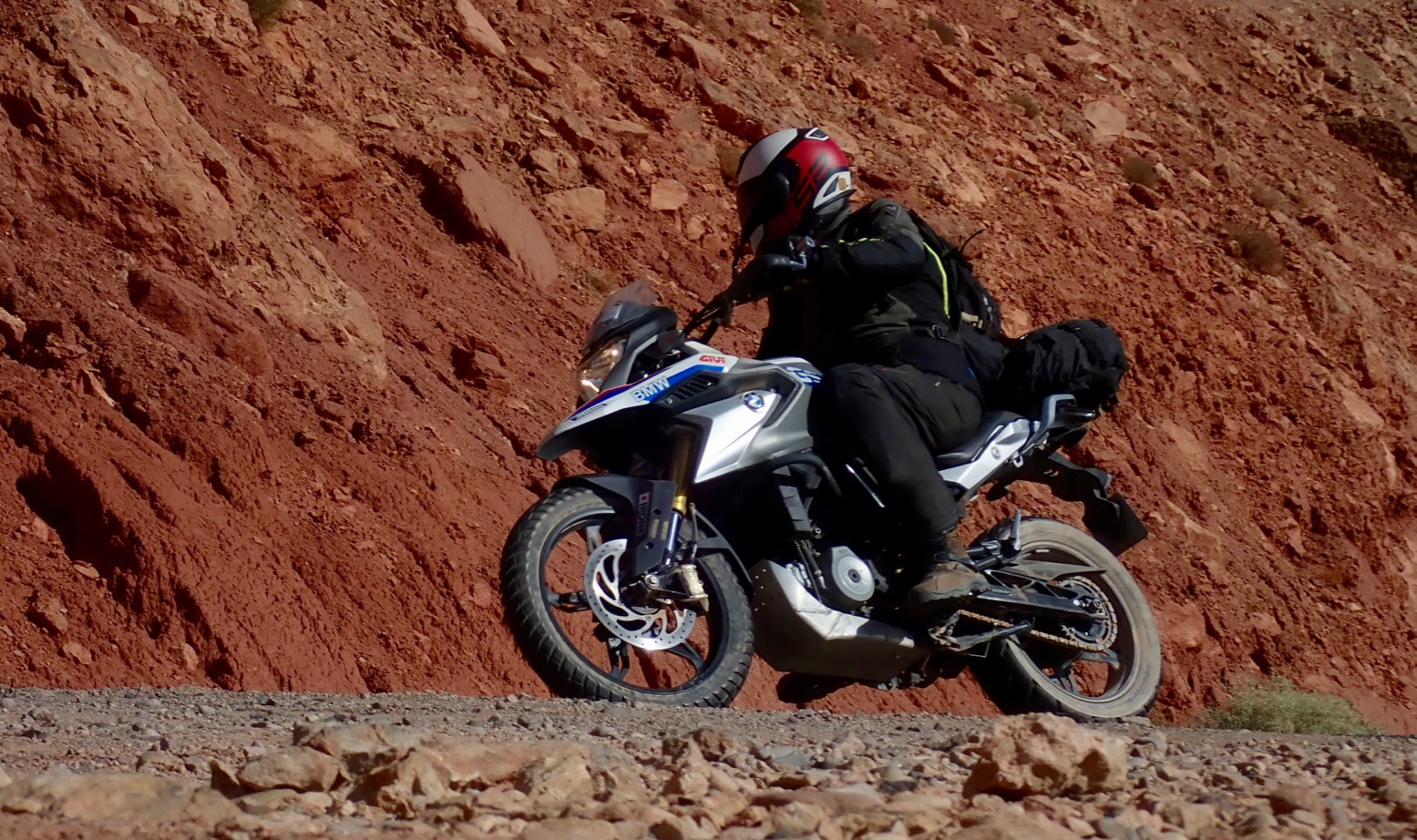
Three groups did a similar 1200-km loop, mostly on G310Gs all with around 30,000 rental kms on the clock. The 310 engines and finish are still great in mostly dry Morocco, gearboxes work fine, but neutral is hard to select (as it was on the old Tornados) and the shock damping is not what it was (which was never that much). There are no leaks from the USDs and for wear and tear, that’s about it. The worse mpg was 75, best was an amazing 112 or 39kpl. We got 12 litres into the supposed 11-litre tank with ‘1km’ indicated on the range.
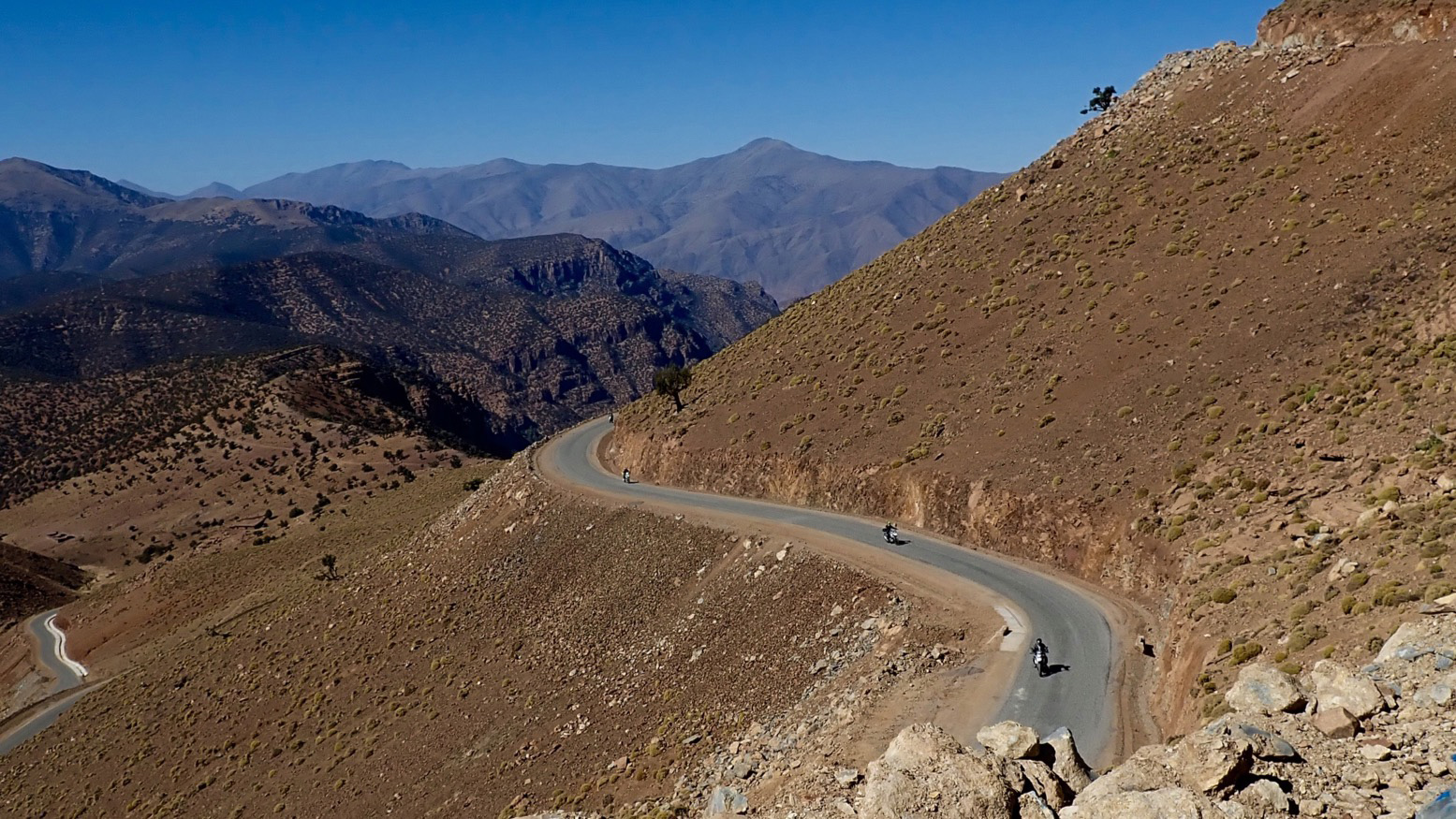
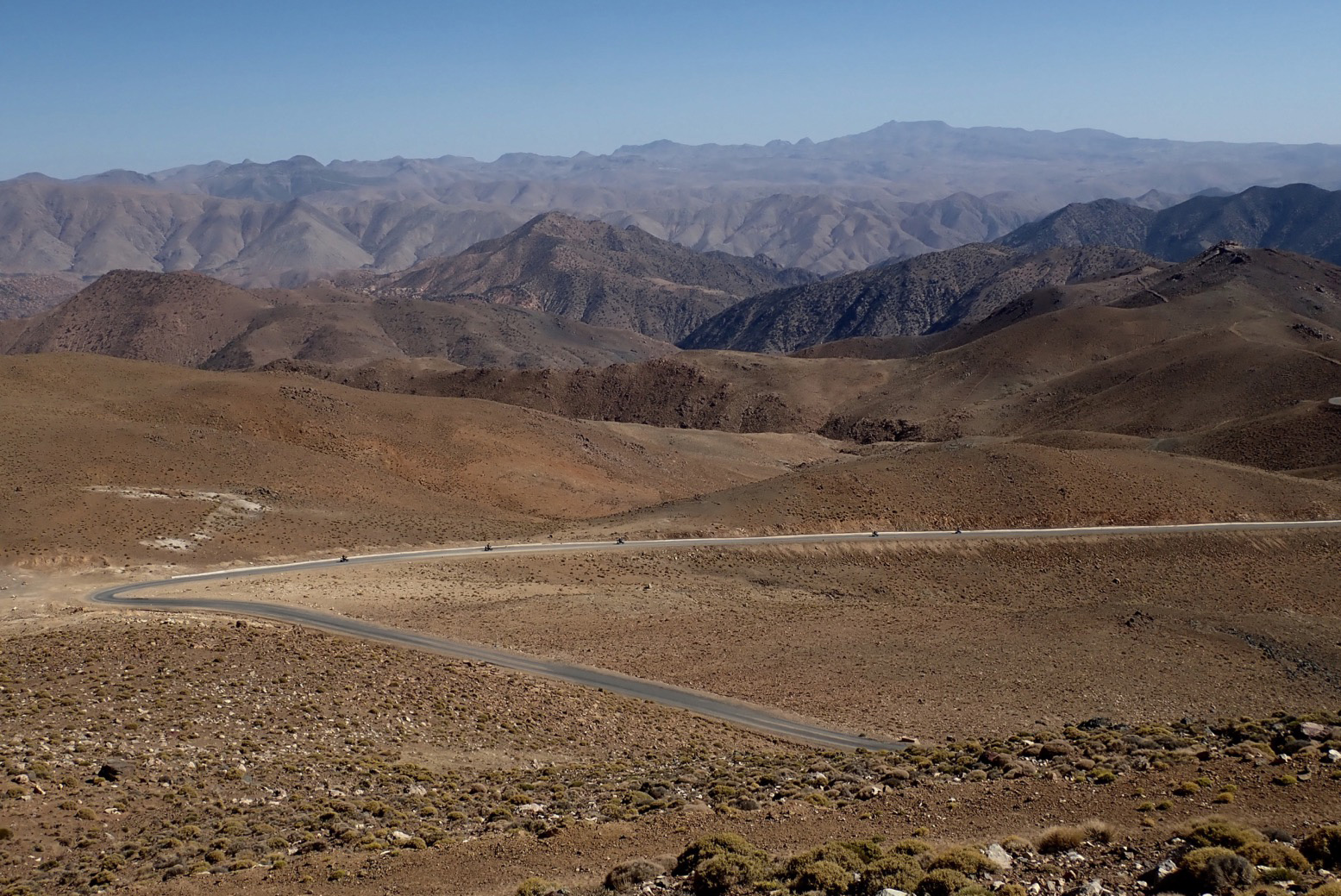
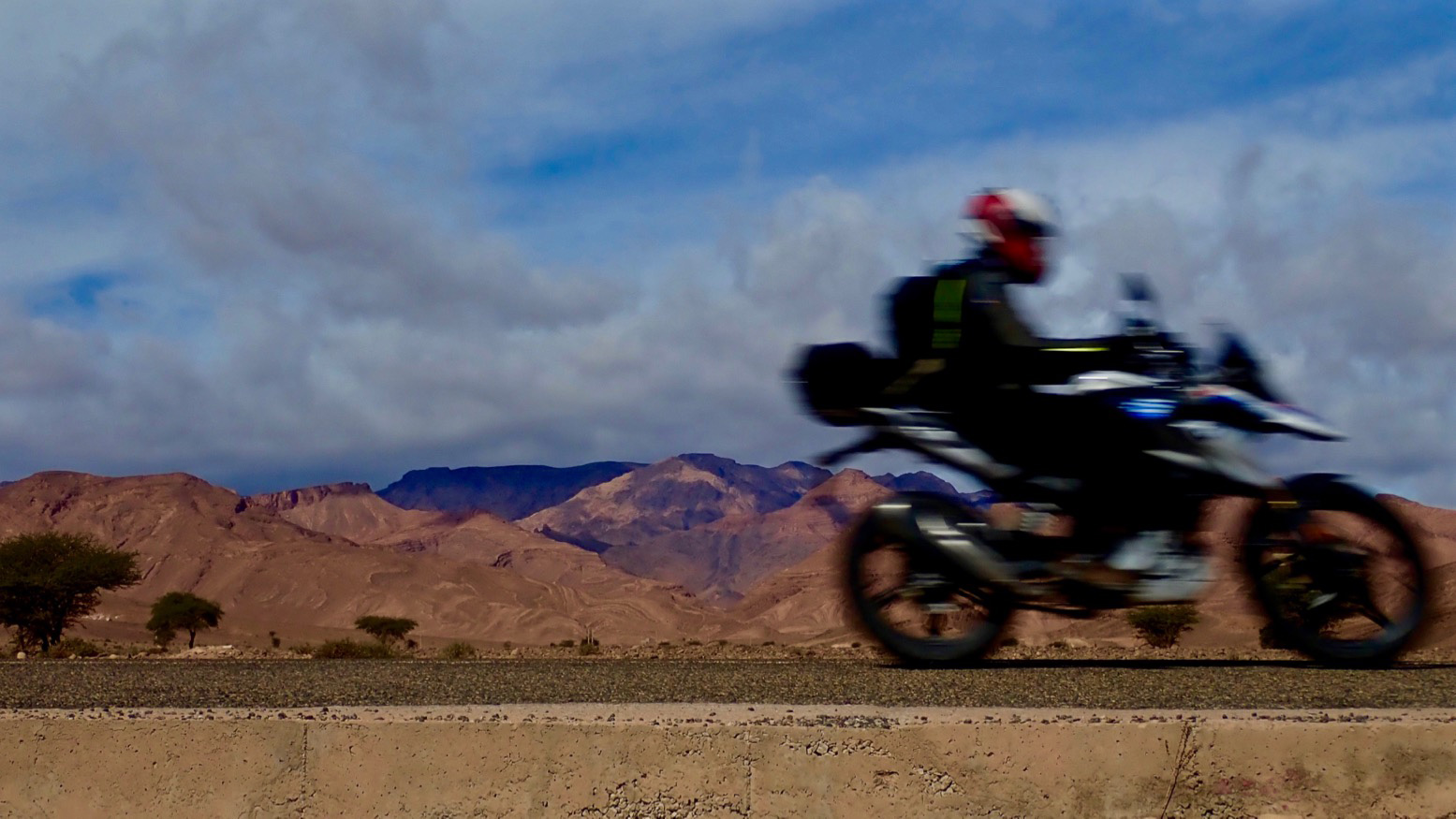
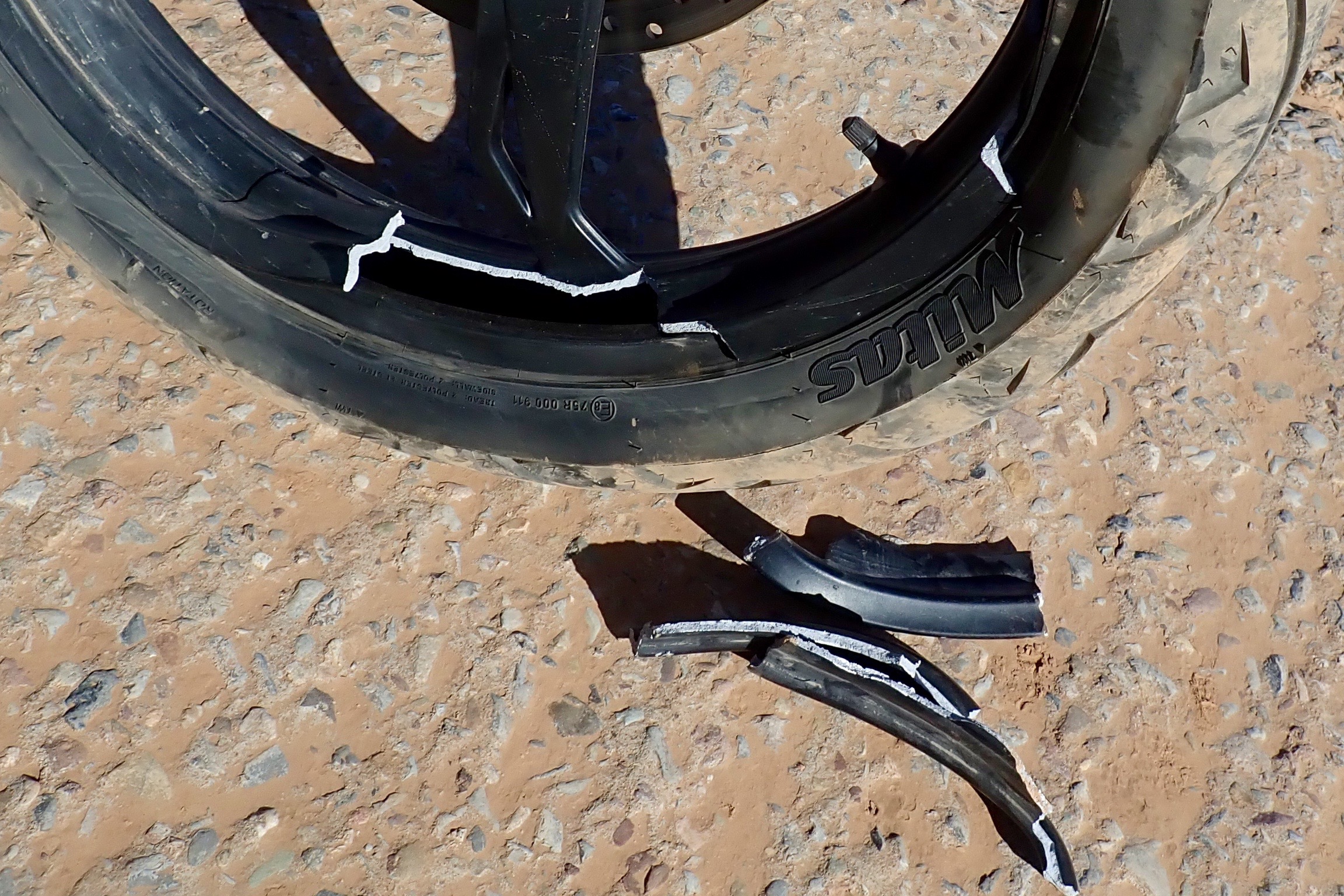
Bike problems over a cumulative ‘21,000km’ (1200 x 3 x 6) included a persistent flat battery on the same bike which we deduced must be down to an intermittent electrical fault somewhere, probably as a result of vibration from rough tracks. There were no punctures on the Mitas Terra Force TL tyres and one smashed front wheel from an unlucky fall which smacked into a square-edged rock. Oh, and another sidestand failure (a known 310 weak point and new frame warranty) literally coming to a halt back in the garage and even though they’ve been strengthened.
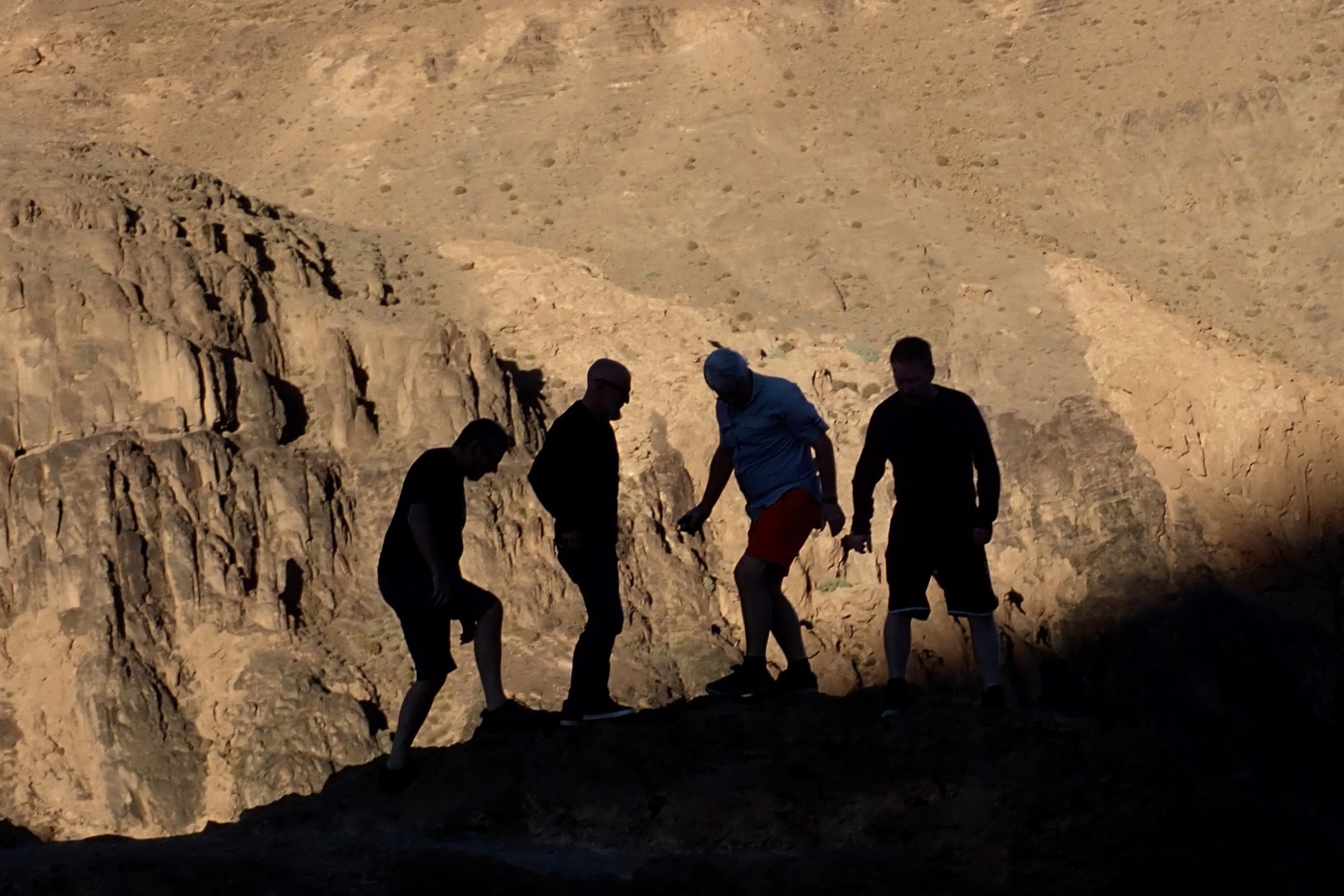
So at this rate the 310s seem to be keeping up well with the old XR250 Tornados, but perhaps that’s because renters don’t take them onto the tracks the which Honda could manage easily.