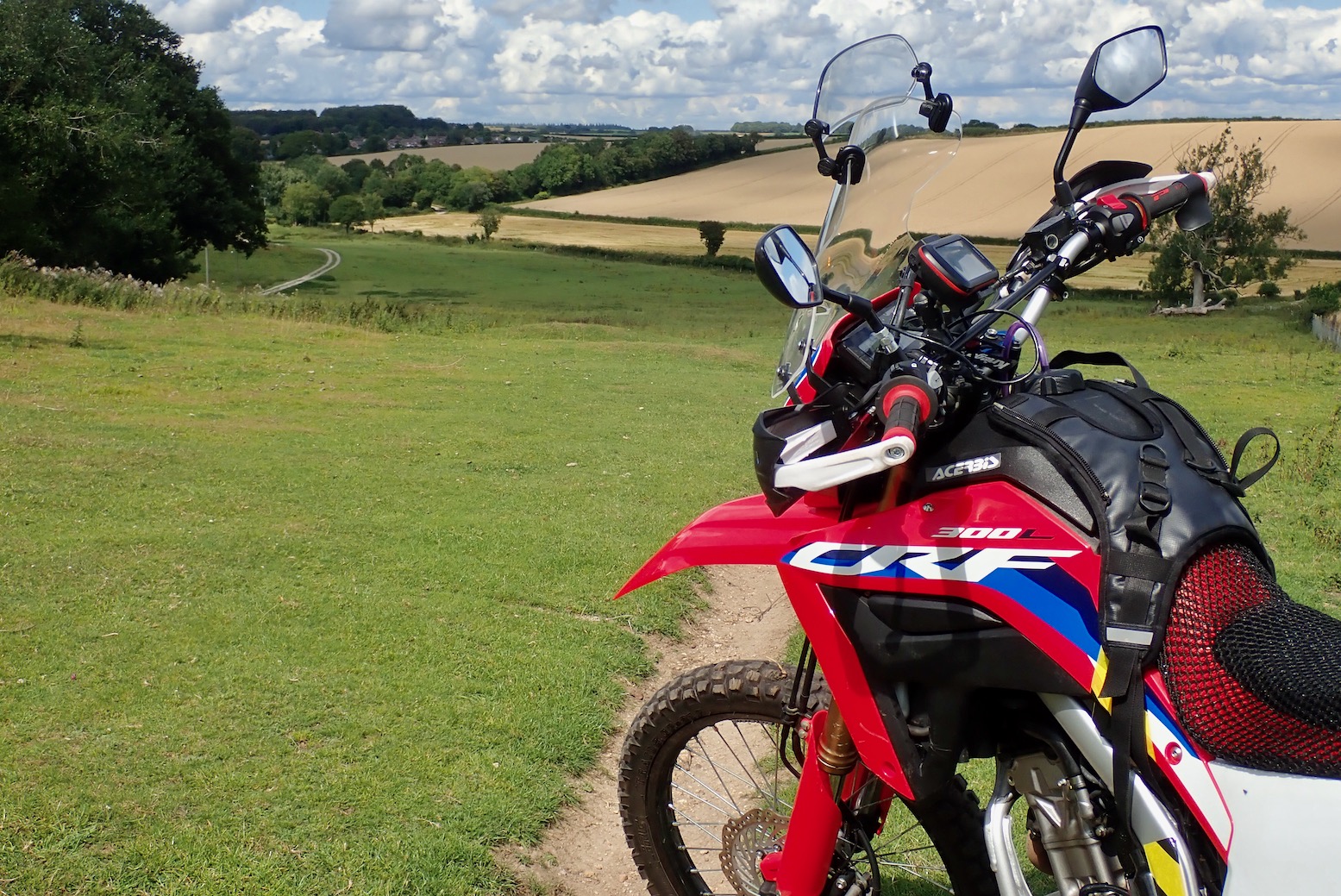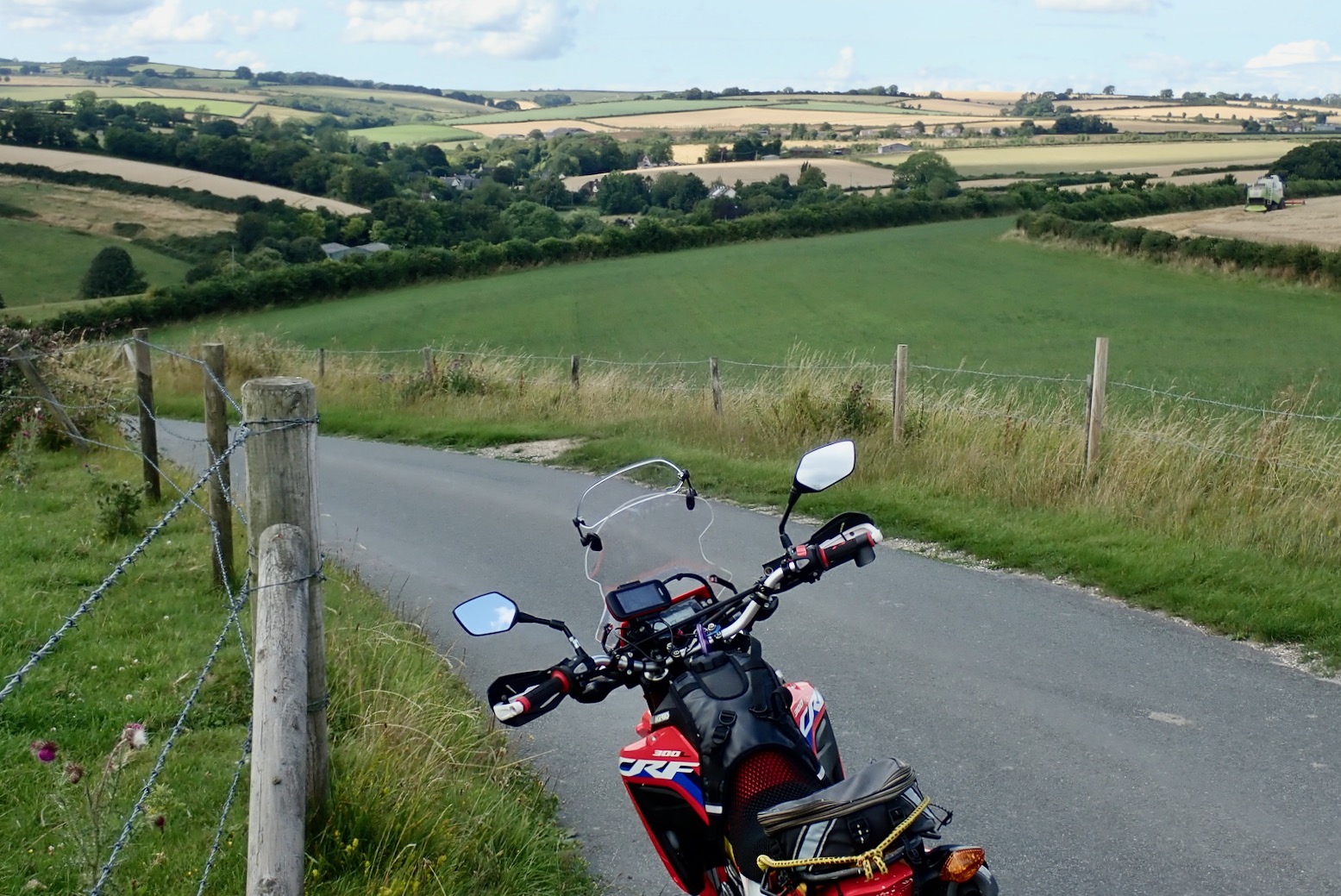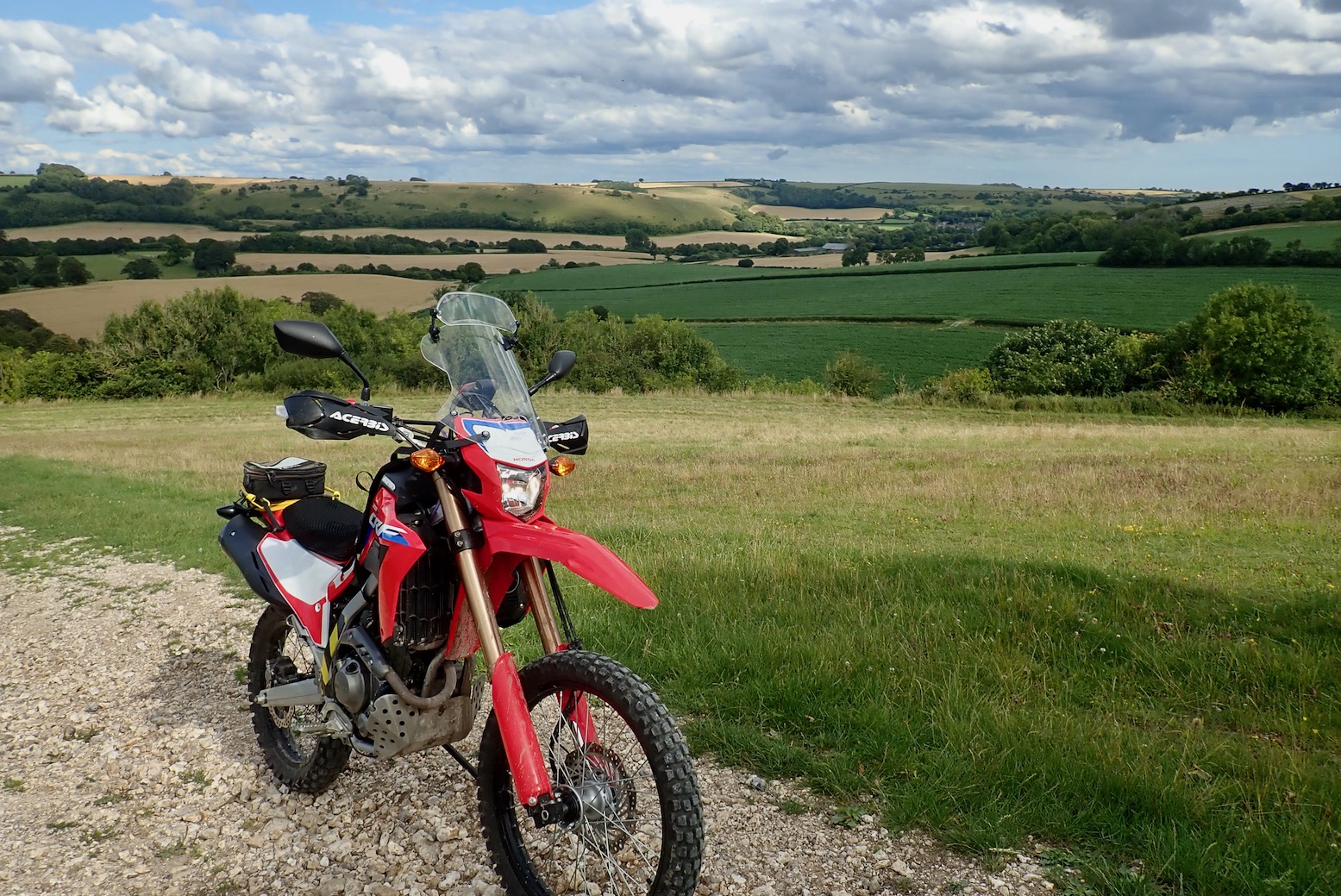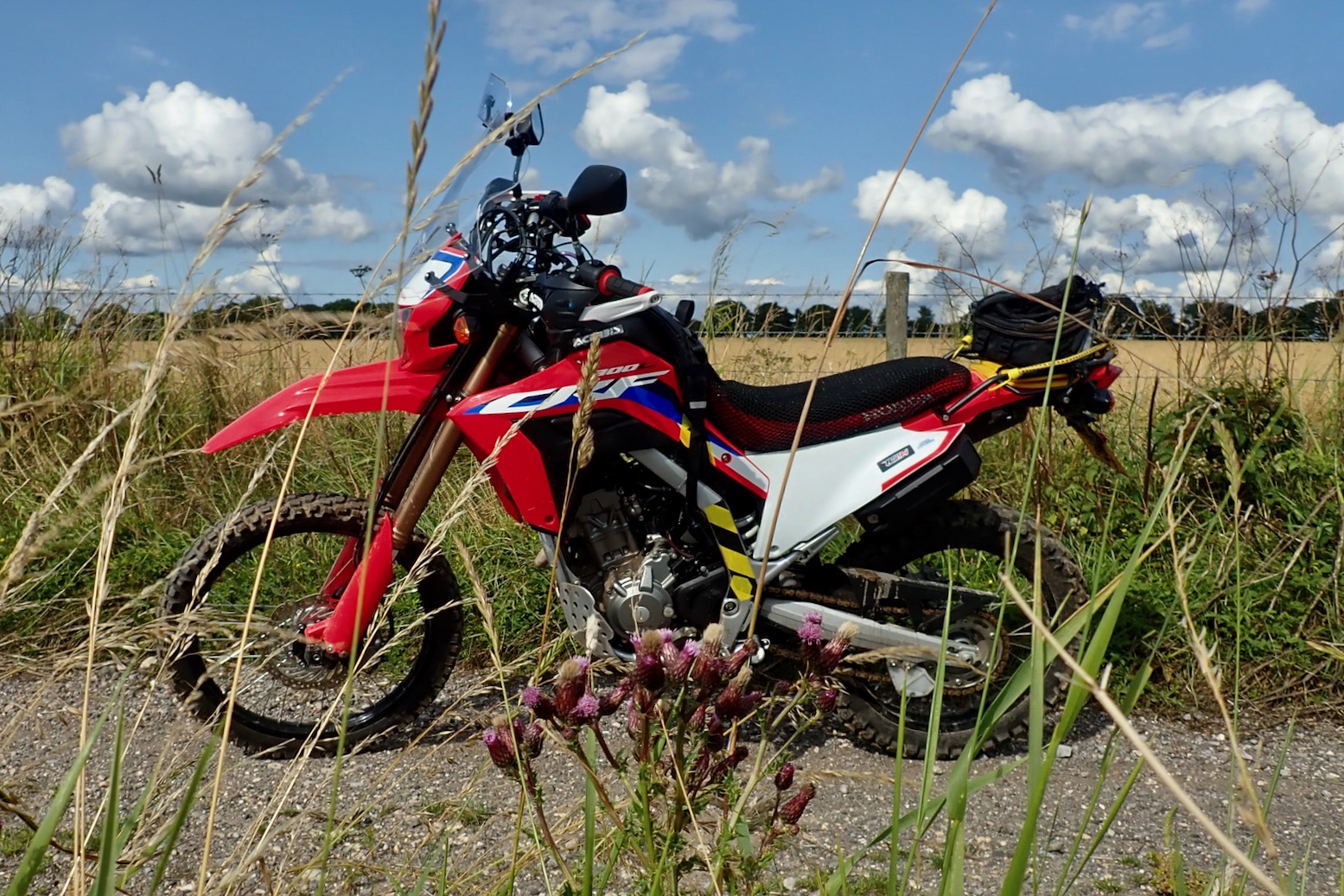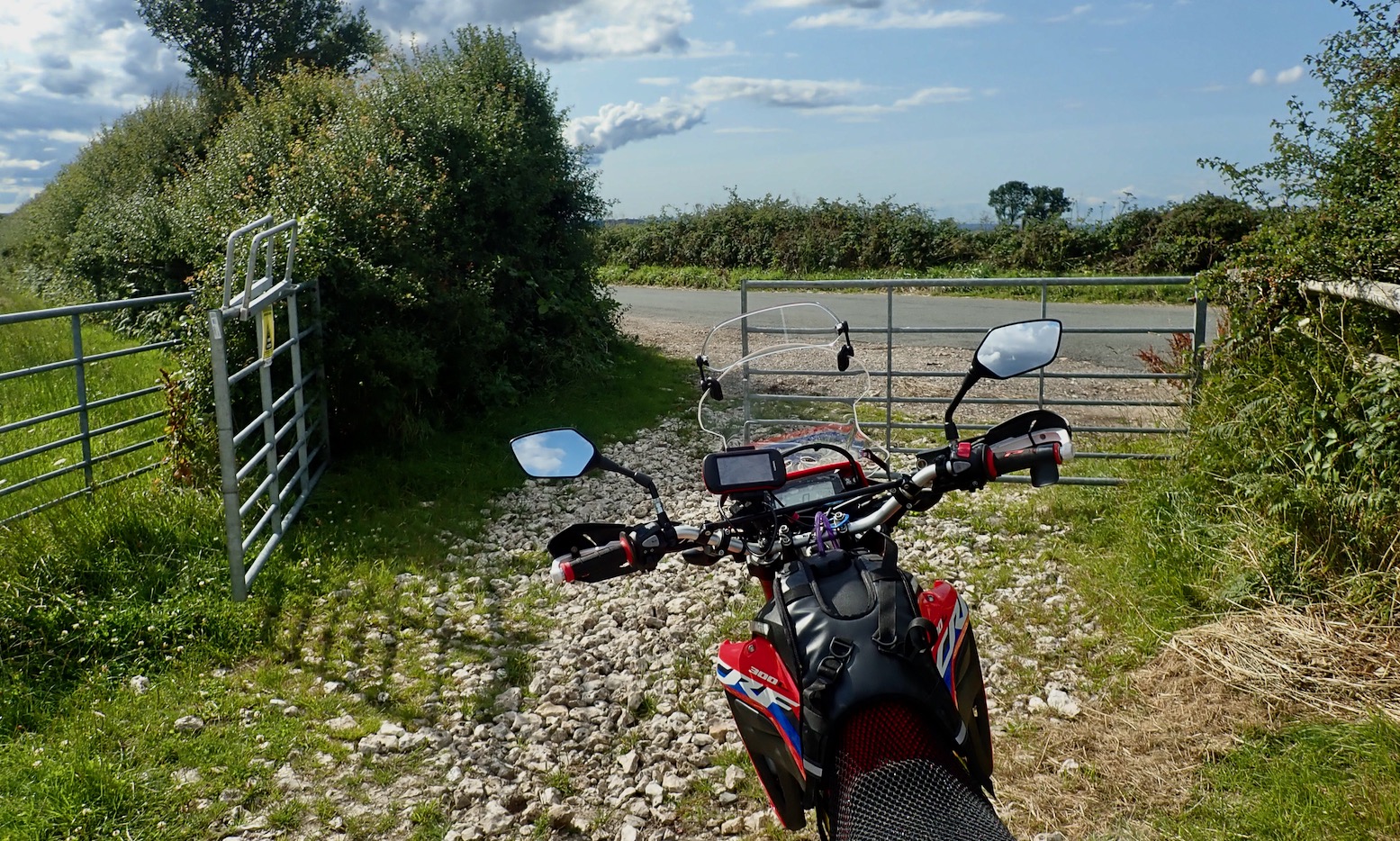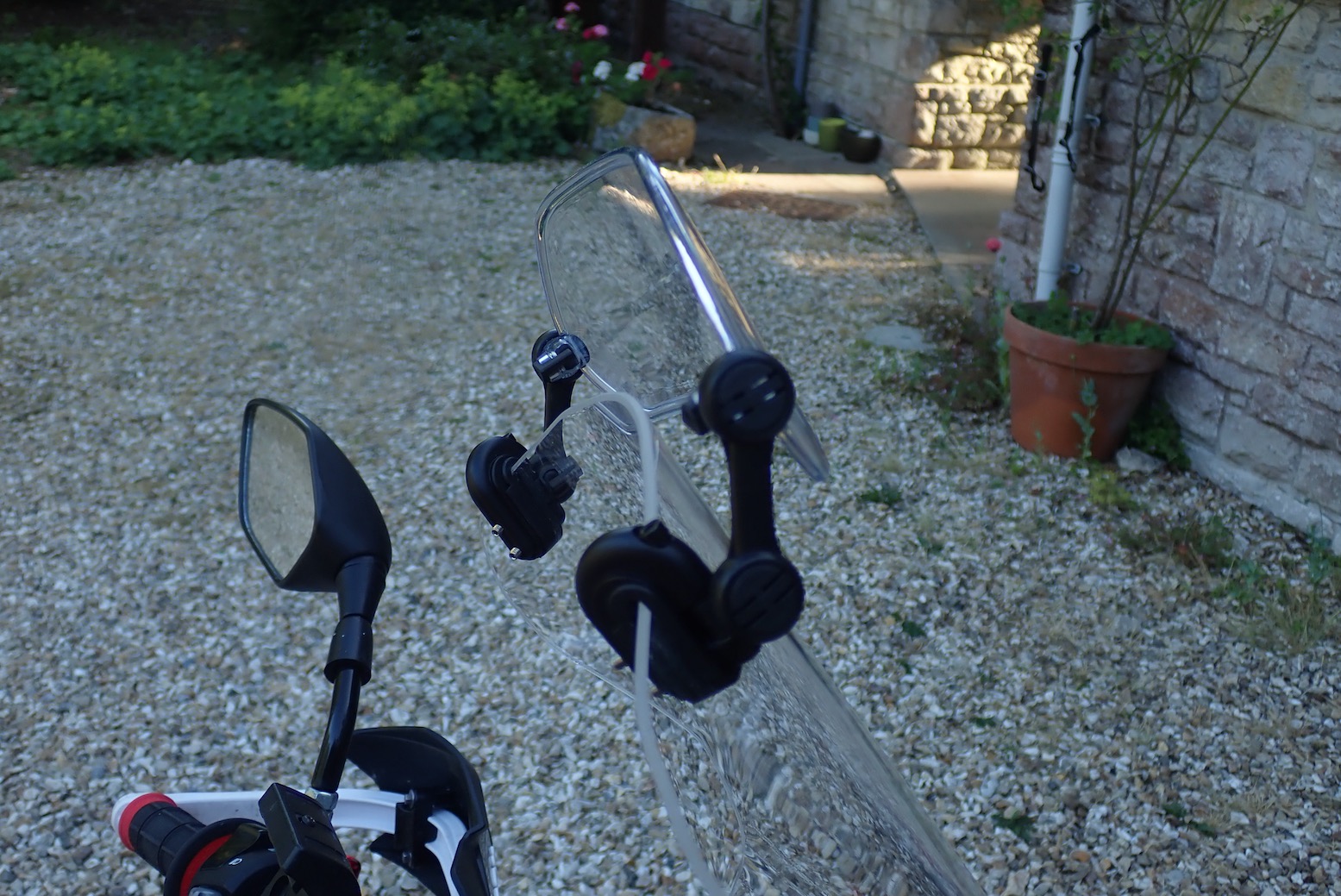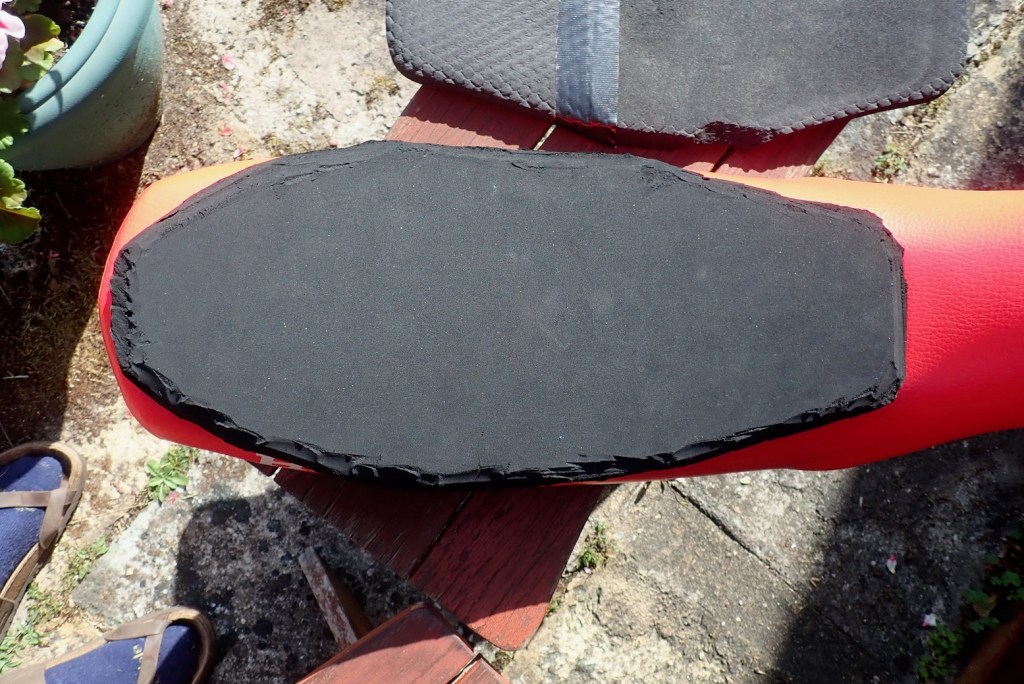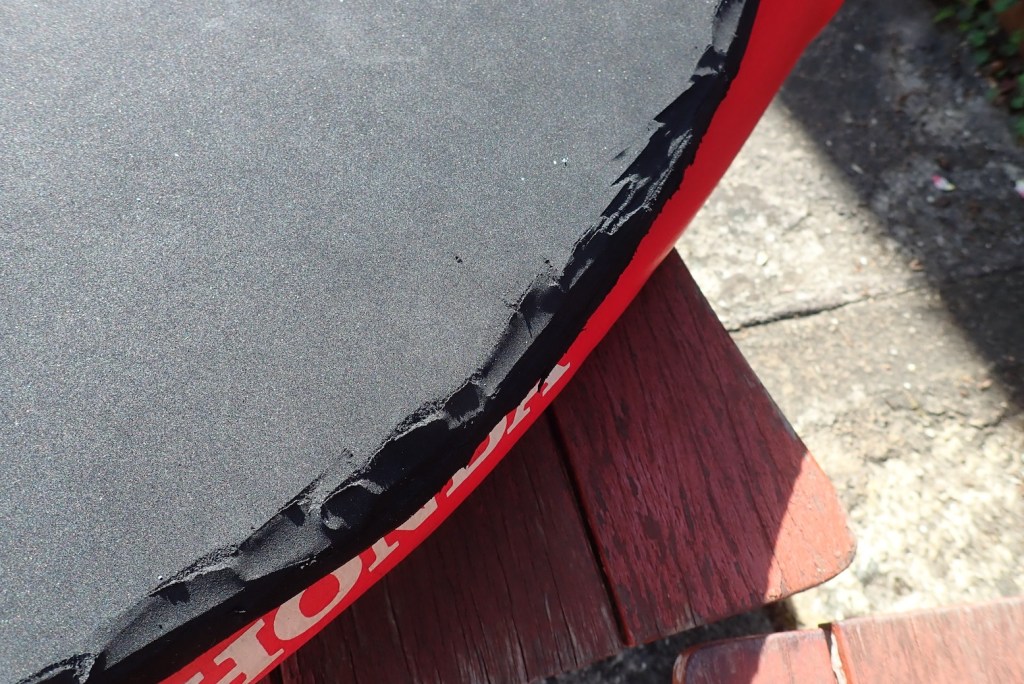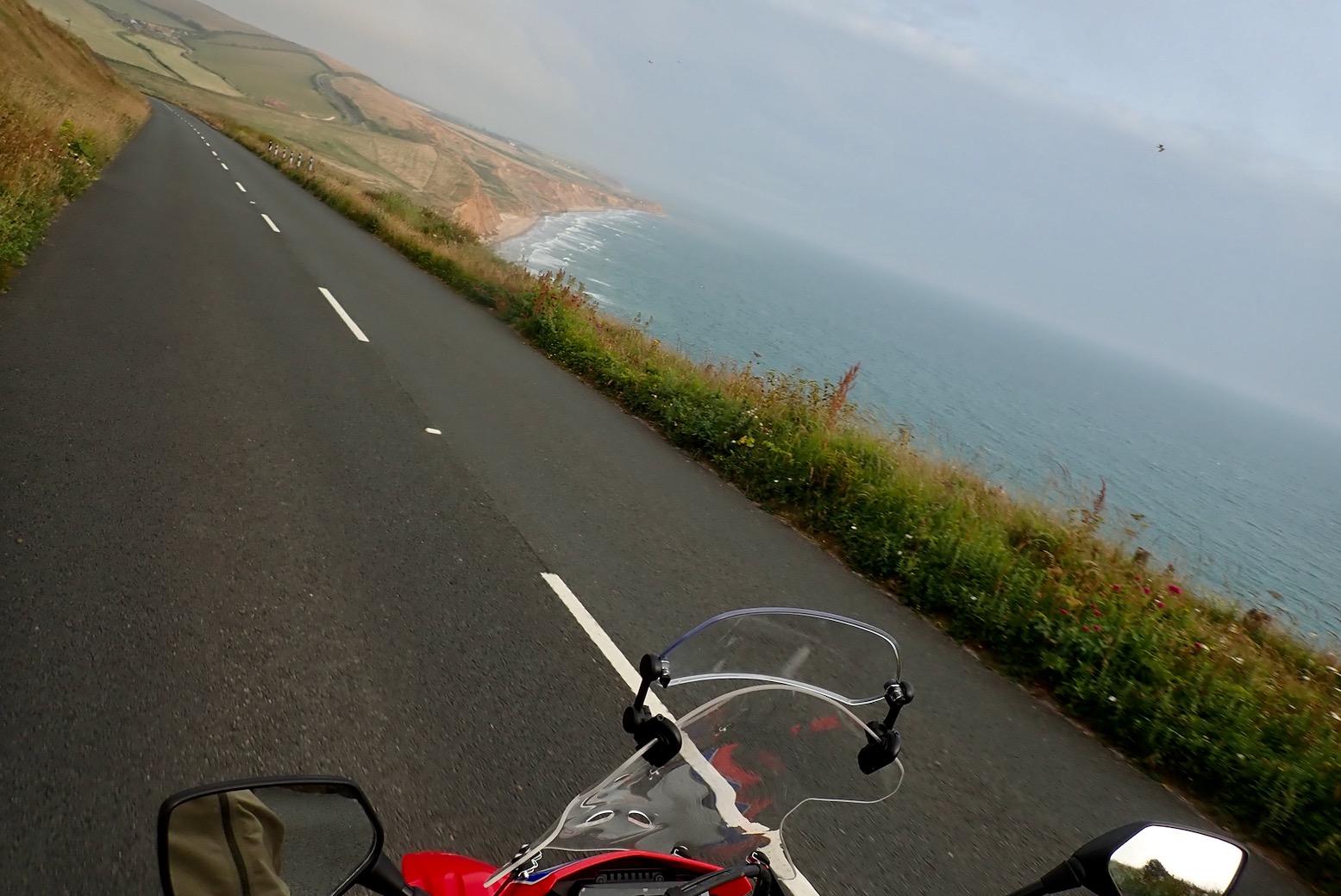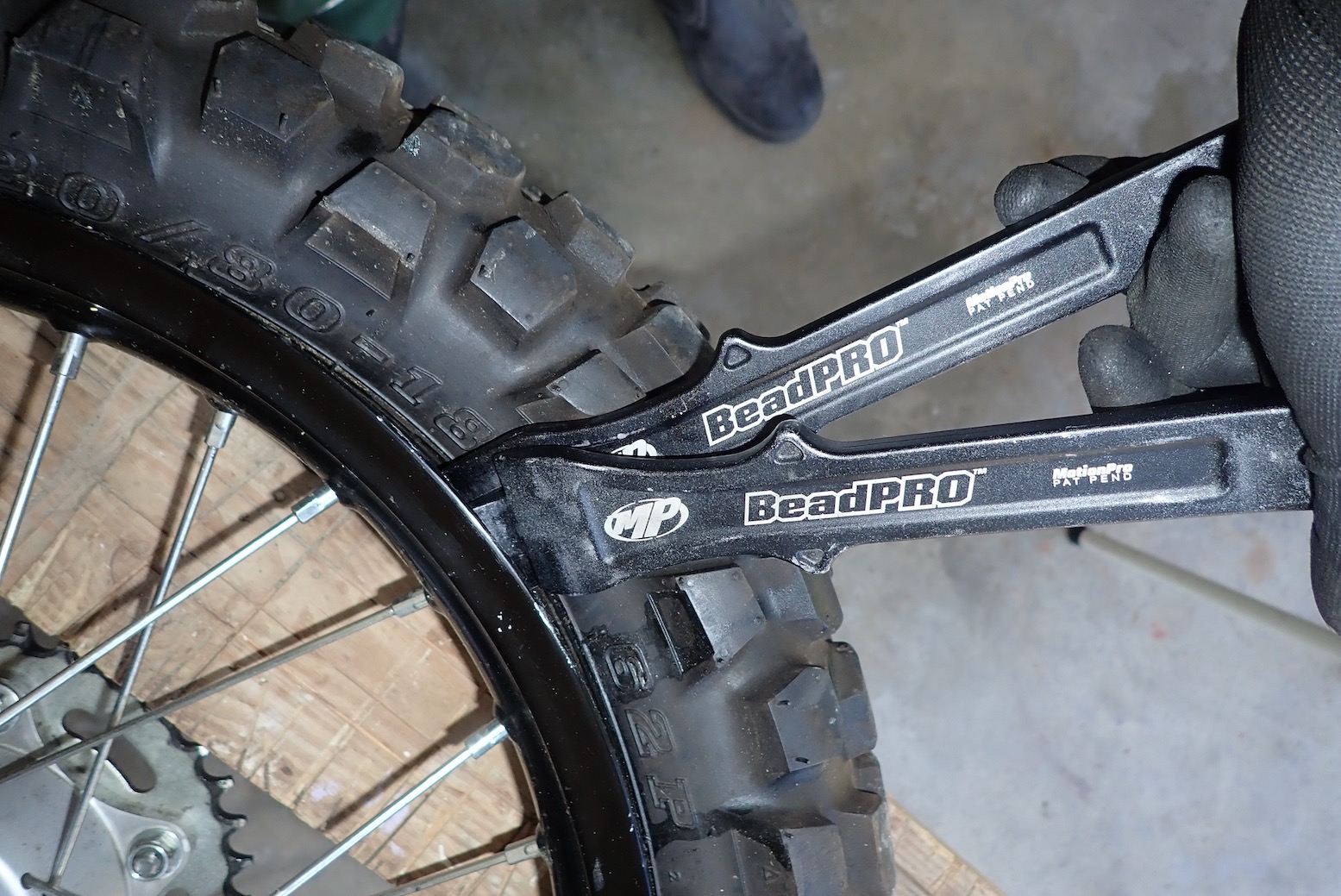
After less than 20 miles I’ve already got myself a rear flat, luckily at home. At some point I was going to remove the stock IRCs, seal the rear rim for tubeless tyres and fit some proper tyres for the ride to Morocco. May as well do that job now. While I’m here, allow me to give my usual shout-out for Motion Pro Bead Breakers, an alternative to standing on or otherwise levering the tyre bead to achieve the same result.
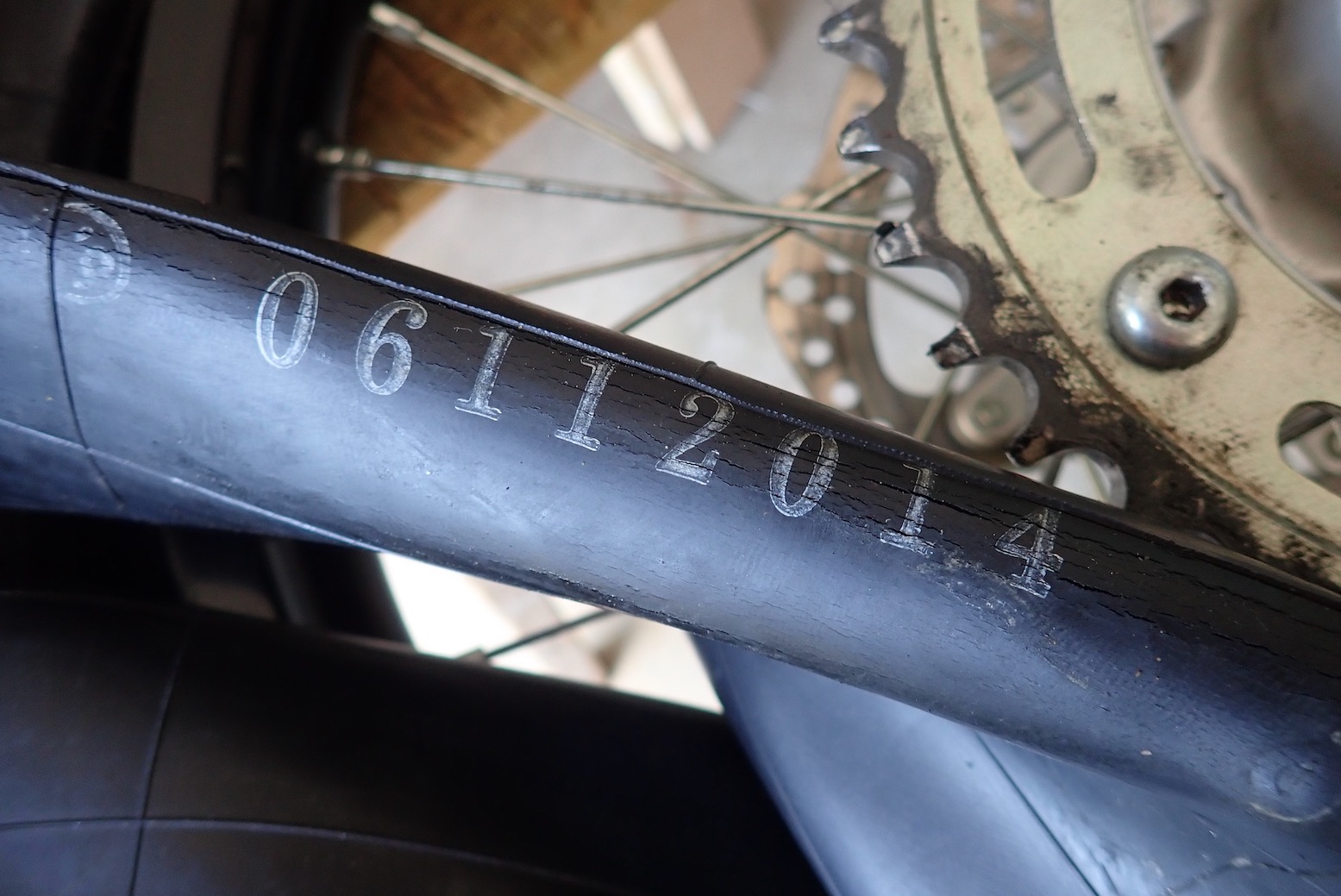
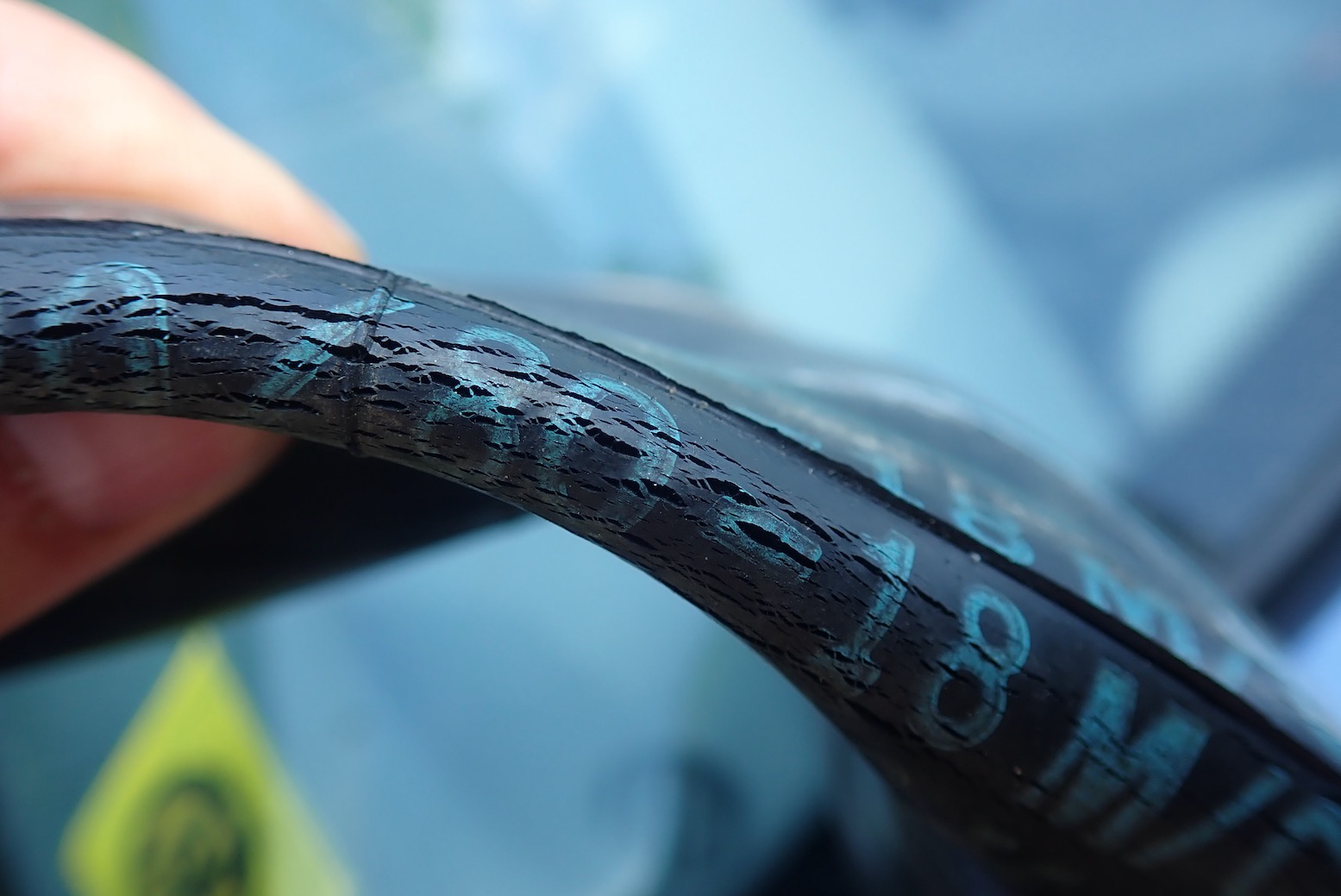
I spun the wheel on my exciting new stand you just read about but couldn’t see any nails or similar. I did wonder if I pinched the tube a couple of weeks back, but if I did, it only gave out now. Pulling the tube out I was shocked to see a huge gouged hole like a mouse had got in there. Maybe I did it just now removing the tyre, but can’t say it was a struggle. Who knows, but I also noticed how the folded rubber tube cracked like it was ancient. Then I clocked a date stamp from November 2014. Yikes, nearly 9 years old! Well I suppose I should be impressed that a: Michelin date-stamp their tubes (can’t say I’ve ever noticed this feature before) and, b: that this tube lasted nearly nine years without a repair (assuming it had any use in that time)! Obviously the tube isn’t worth repairing. Good thing I noticed now. I just picked up some old Mich tubes from 2017 and they are nowhere near that far gone (nor do they have that date stamp). Could it even be a fake Mich tube?
Cracked rubber; not a good look.
No MT stamp
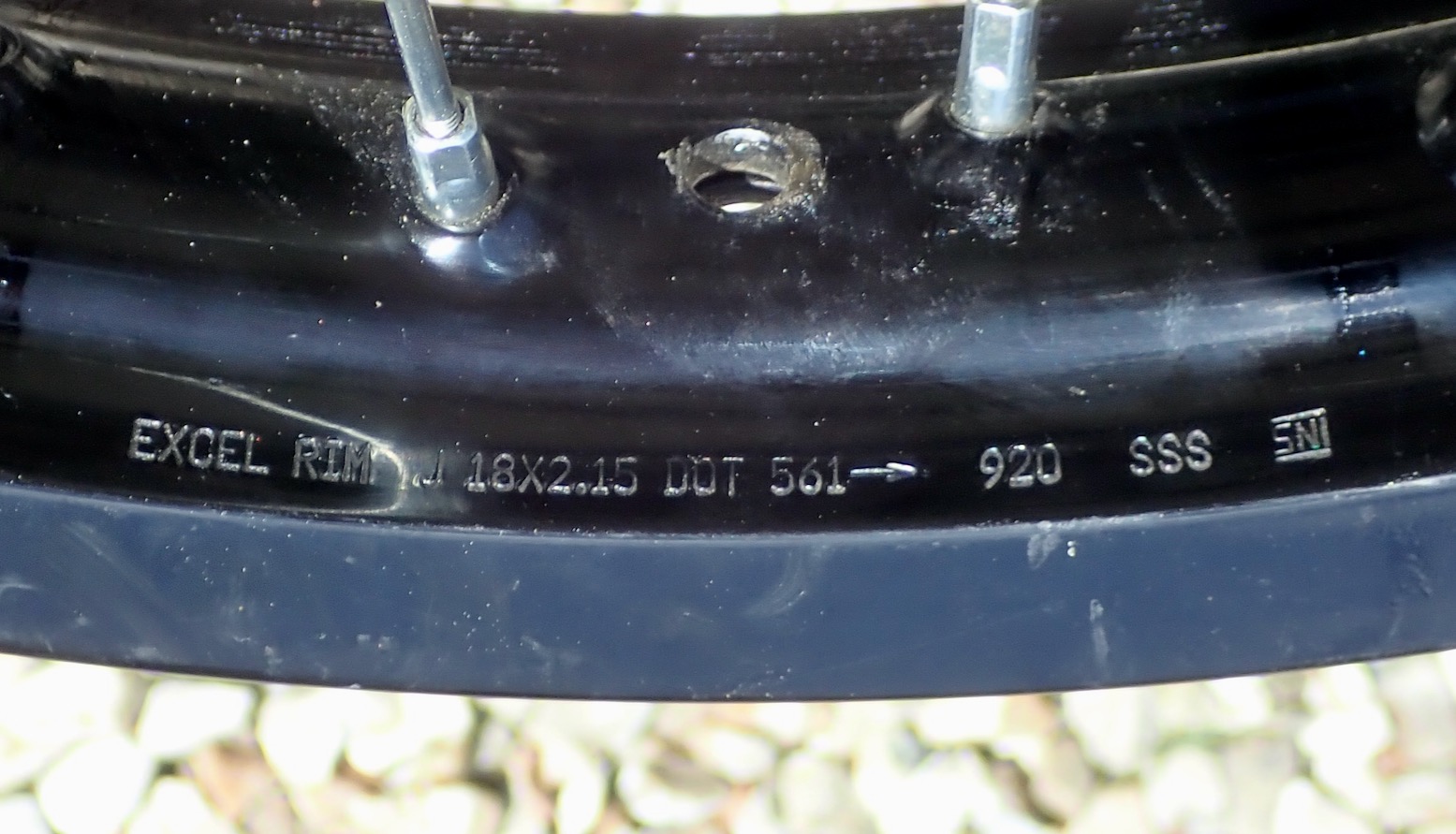
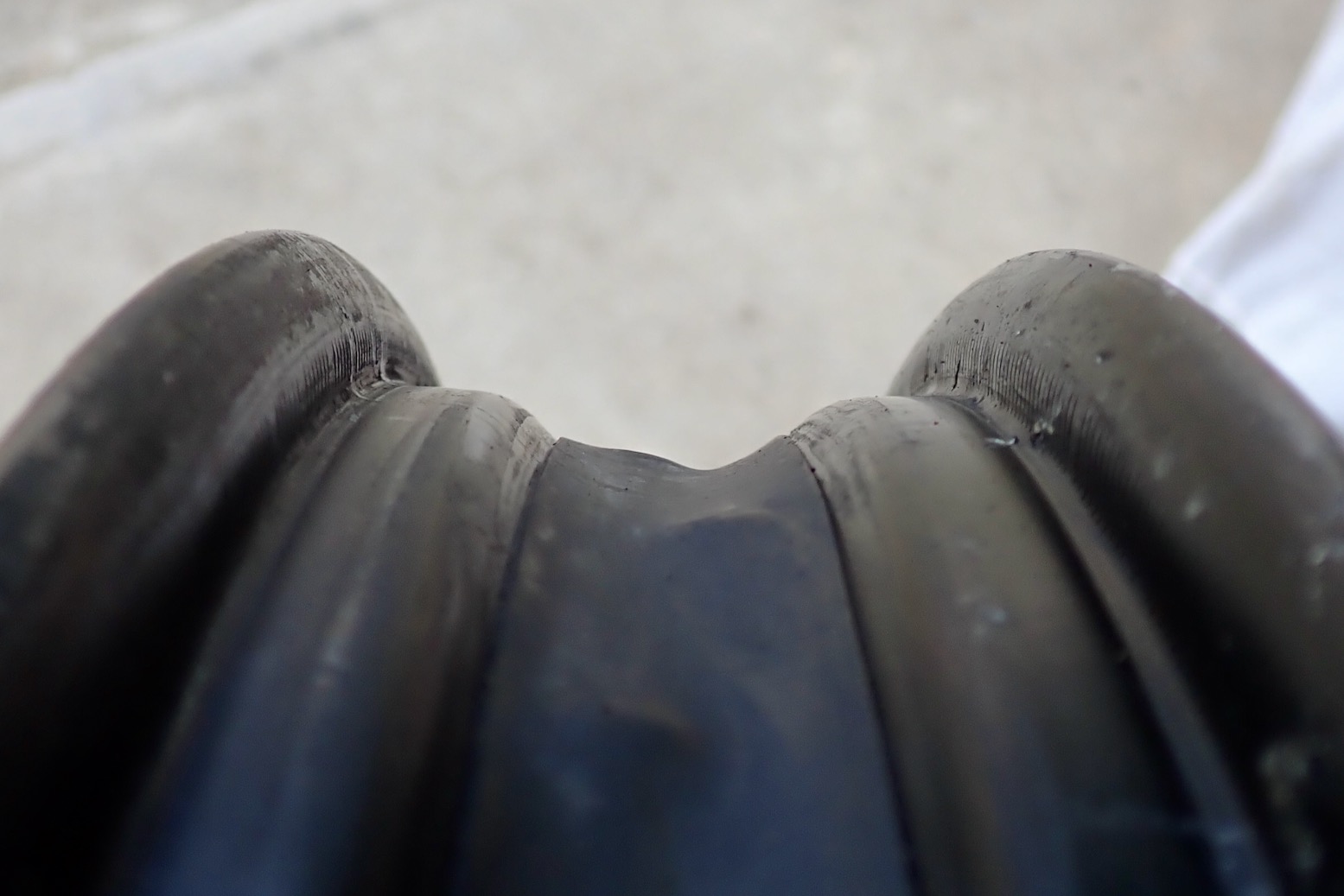
No lip so unsuited to DIY tubeless sealing ;-(
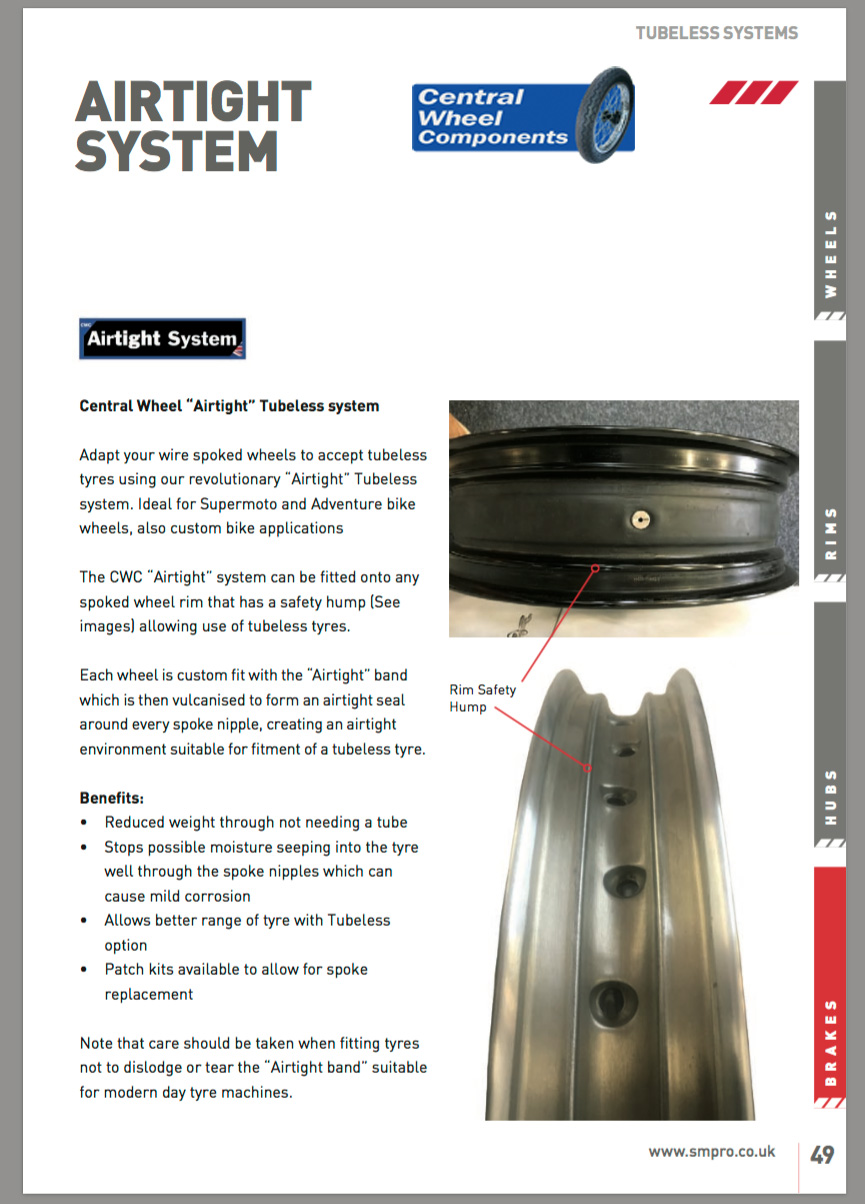
When it comes to sealing the rear rim, I was also bummed to see the stock Excel J 18 2.15 rim has no safety lip, which complicates a TL conversion. That’s odd as, like I’ve mentioned over the years, I recall actually grinding the safety lip off a rear DID rim on my tubed XT600 way back in 1985 to make desert tube repairs easier. I assumed such safety rims had become defaults on all spoke/tube rim as they help a tyre stay on the rim when it loses pressure. But not on smaller sized rims, it seems.
This means I’ll have to lace a new lipped MT rim onto the hub to get TL – a couple of weeks and a few hundred quid. And while I’m at it I may get professional CWC Airtight sealing (left; as on my Himalayan) instead of my labour intensive DIY efforts, as on the Africa Twin. Or I could just live with inner tubes. On a travel bike (as opposed to a weekend trail bike) not sure I can go back to all that potential puncture repair aggro and added toolage.
I also noticed there’s no cush drive on the 300L. It makes me think this is a dirt bike rim from Honda’s MX bikes. A part number check would reveal all. Cush drives add weight and expense and absorb a little power, but reduce drivetrain lash to the transmission including the chain.
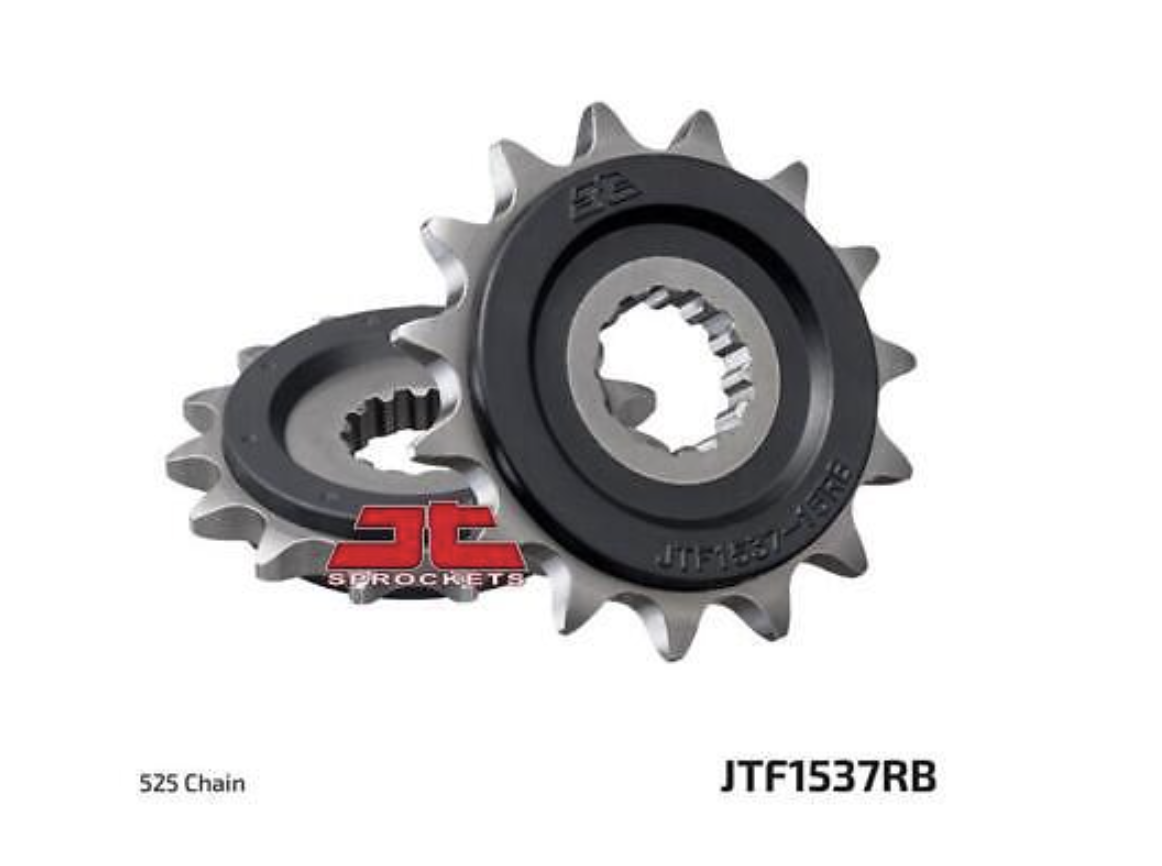
The thing is, at 28hp and however few torques, a 300L hasn’t got enough grunt to strain the components that much, so I can live with no cush. Apparently my old XR650L was the same but I never even noticed. A mate who’s currently importing one has, and dug up various rubber-insert sprockets (left) to reduce the lash from the much torquier 650 thumper. And in fact the 250L I had years ago didn’t have cush.
So net result of today’s puncture:
it pays to verify you inner tube’s age (if you can) as well as old tyres (all have date indexes). Or just get new tubes.
If I want a tubeless rear I’m going to have to get a new wheel built up on an MT rim, in which case I may as well have a proper sealing job done like CWC Airtight™.
OMG there is no cush drive ;-0
Is it time to consider mousses? A light, slow bike like a 300L is suited to them, but afaik they come rated at no more than 15psi which to me is on the low side for road riding, even at only 60mph.
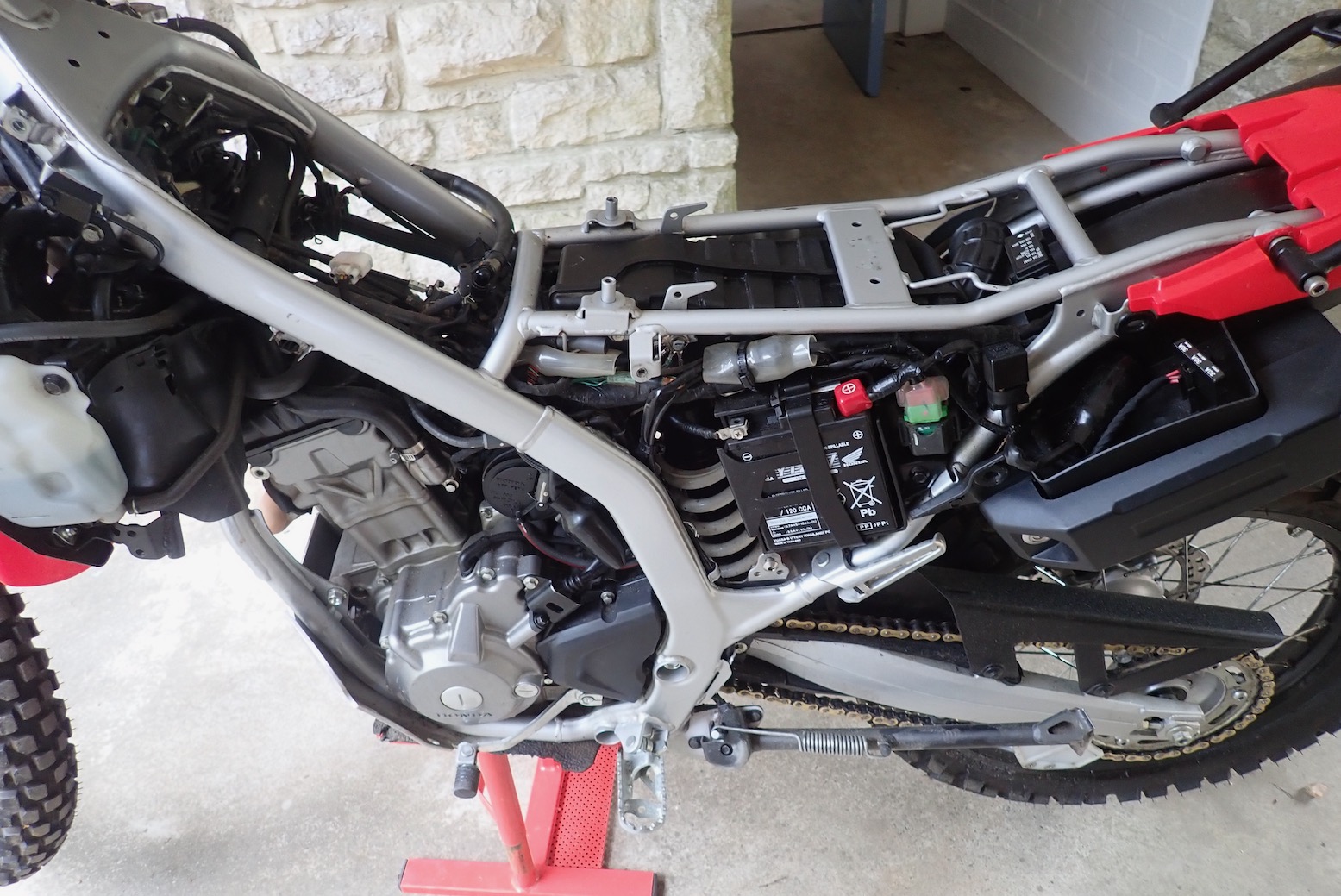
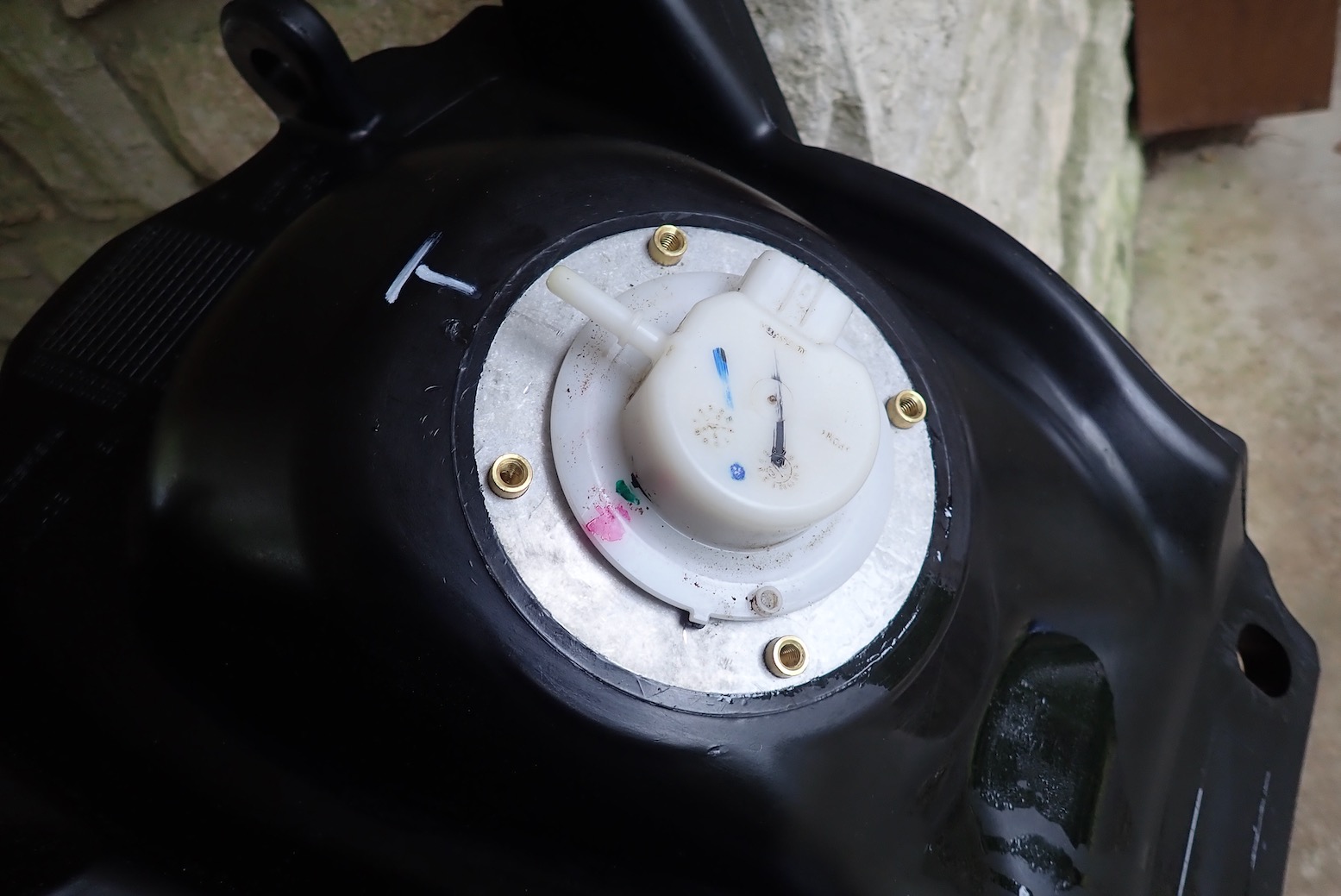
My Acerbis ’14-litre’ tank finally arrived from Italy, not as fast as some crash bars from Guang Zhou in just 12 days. So high time for a day of spannering and probable gnashing of teeth. Rally Raid are also sending me their trail wheel wrench with a 24mm ring for the rear and 14mm hex for the front. Rally Raid suggest that from new you may want a full-size socket and tool to undo the axle first time so the hex is another tool to buy – an afternoon wasted locally before I submitted to amazon ‘next day’. But the idea of a recessed hex fastener in the front axle is actually quite clever – I’m sure the AT had one too and car gearboxes have similar drain plugs so there’s no protruding bolt head getting rounded off by rocks and kerbs.
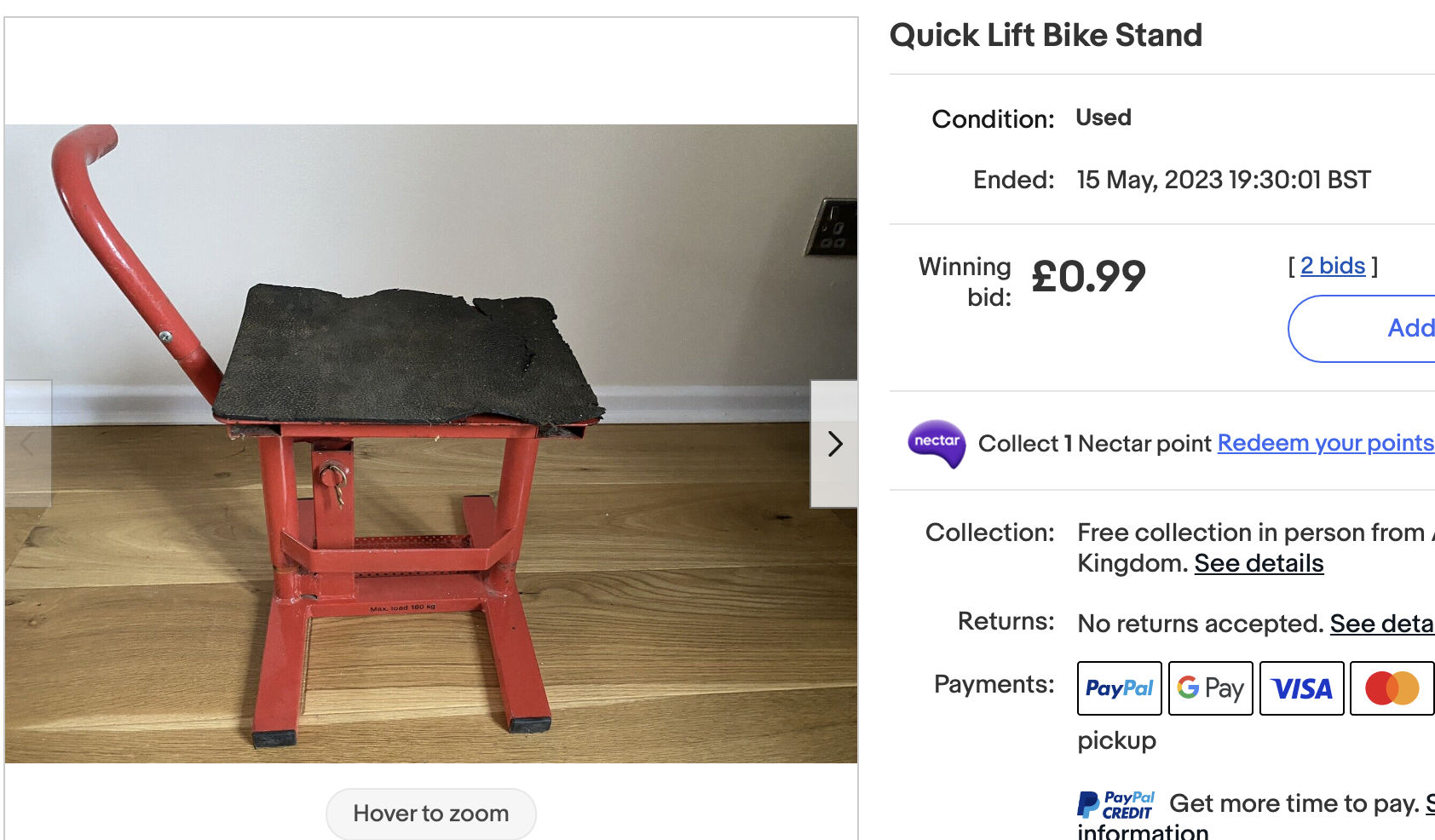
The other day after swapping the front tyre back to OEM IRC, I wore myself out trying to refit that front wheel axle with the bike perched over on a log. A lip on the axle shaft makes shoving it over to reach the thread on the other fork leg confounding. I like to think an upright, stable bike sat on a bike lift will make life easier. Luckily there was one an hour up the road for just 99p. Years ago I’d have scoffed at such decadence and just used a milk crate. But when’s the last time you saw one of those?
Acerbis 37 litre
Acerbis tank In the old carb days, Acerbis plastic tanks had a reputation for not always fitting well – like so much aftermarket gear, tbh. And now in the efi era you have to swap a huge fuel pump assembly with associated hoses and wiring. But it seems Acerbis have upped their game in the 20 years since I fitted a gigantic 37 litre whale to the back of my XR650L (left). With none in the UK, my black-only tank cost me £320 imported from Italy. The finish looked a lot better than I recall, and the complex shape suggests a nod to the precision potential of CAD. Here, J-Mo describes the Acerbis tank job in meticulous detail, including tips and possible traps. Time to follow her lead.
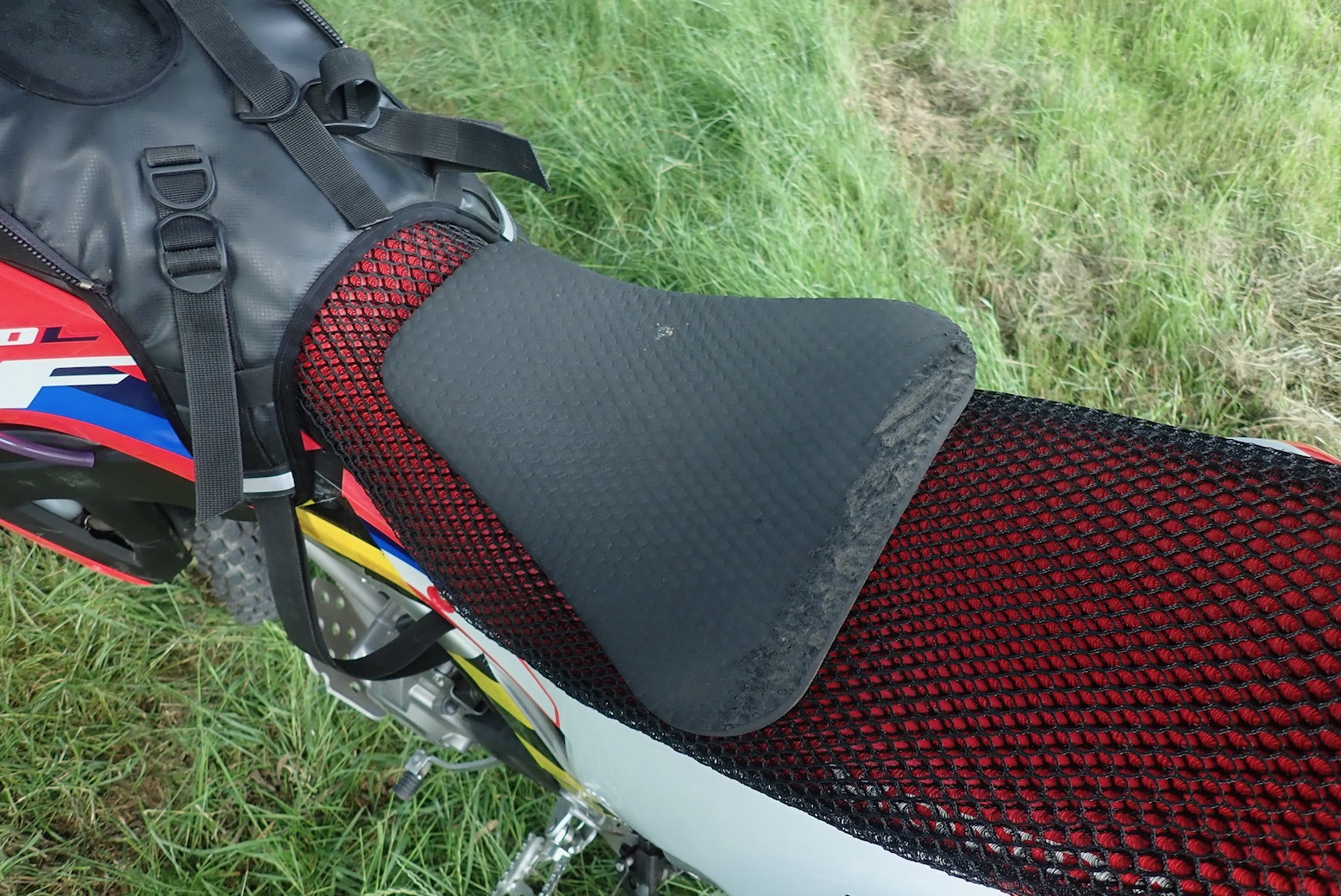
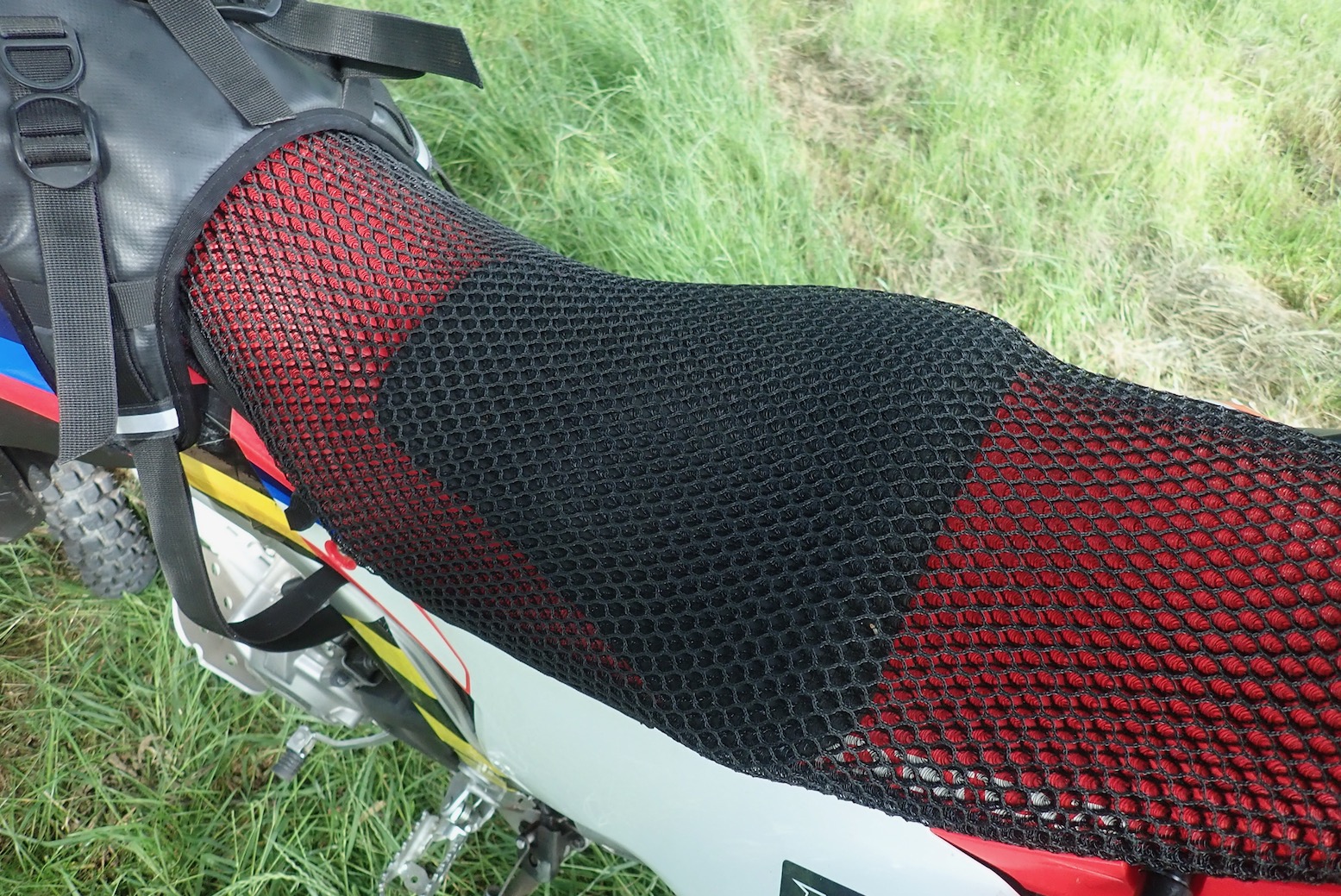
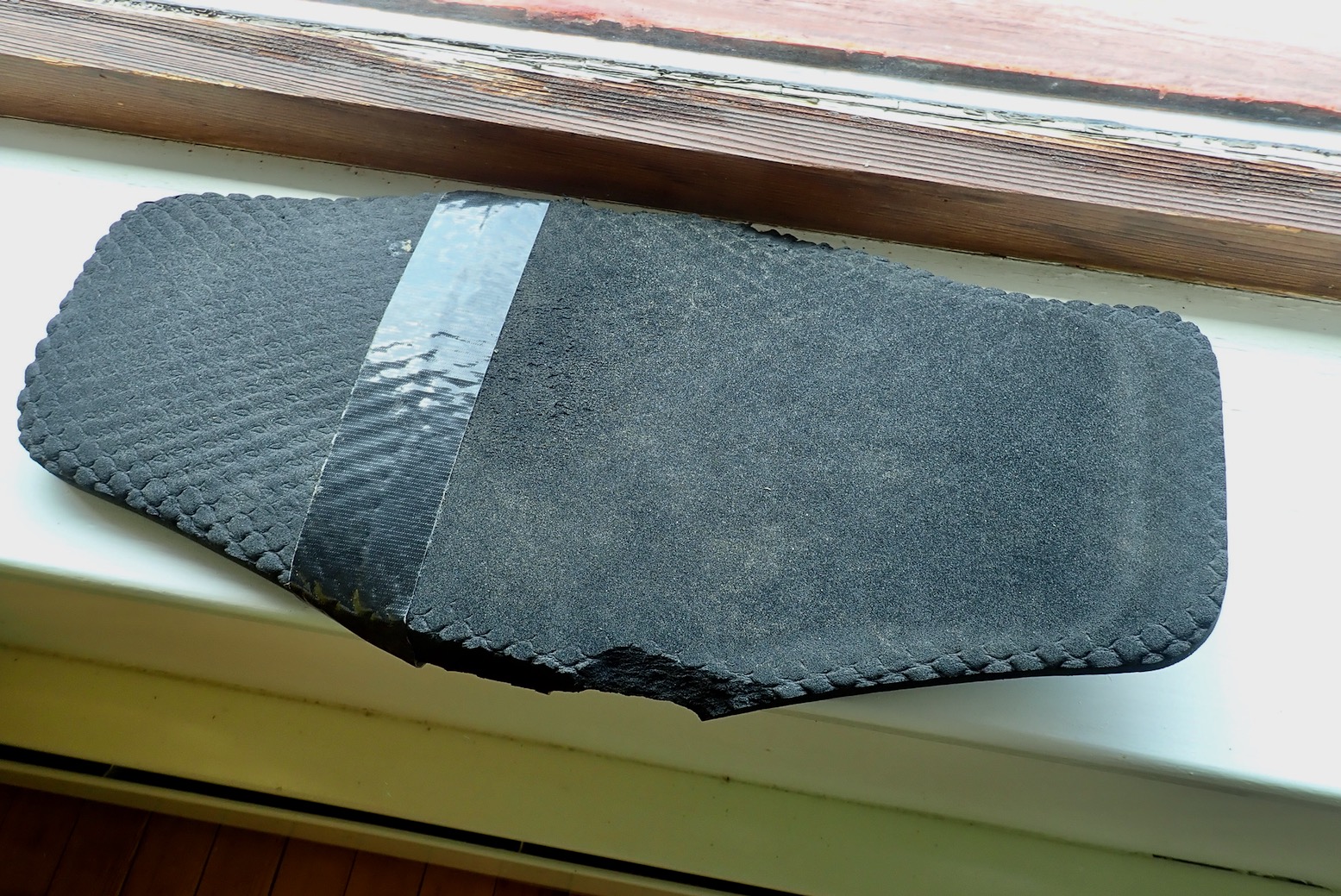
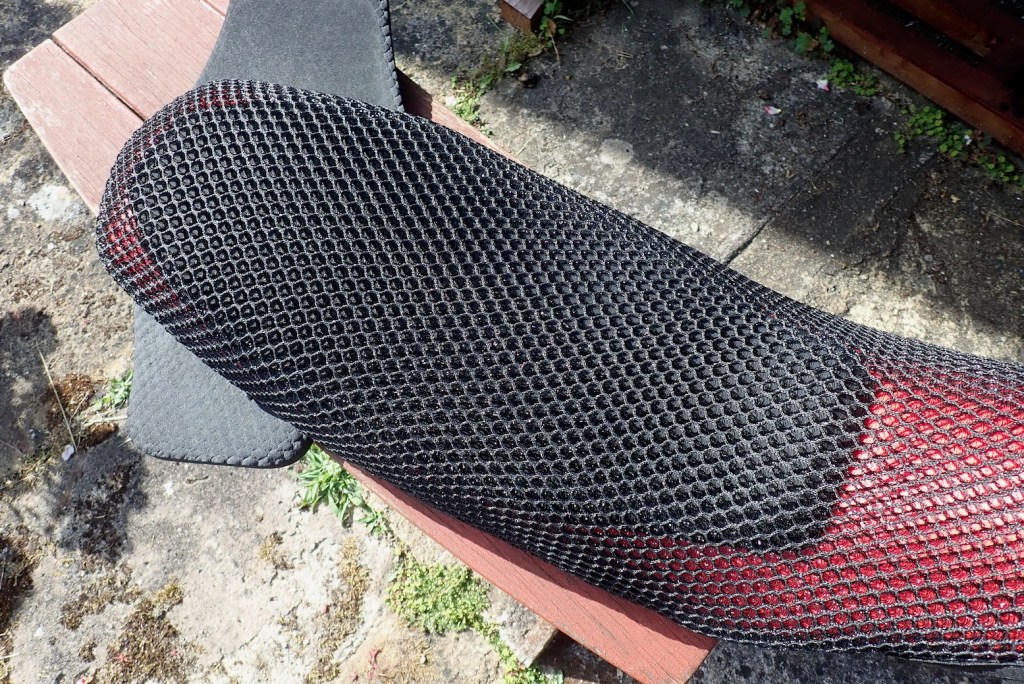
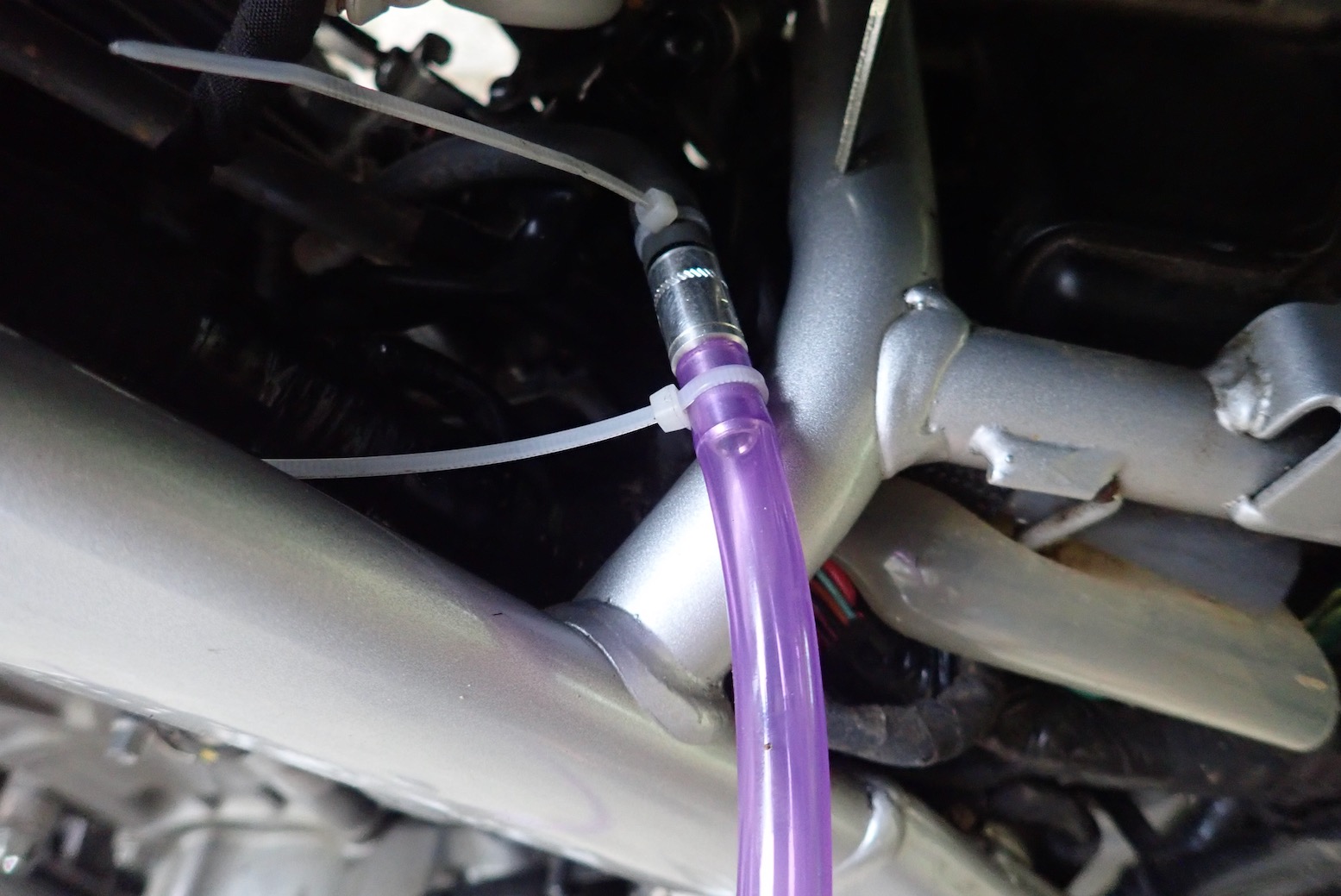
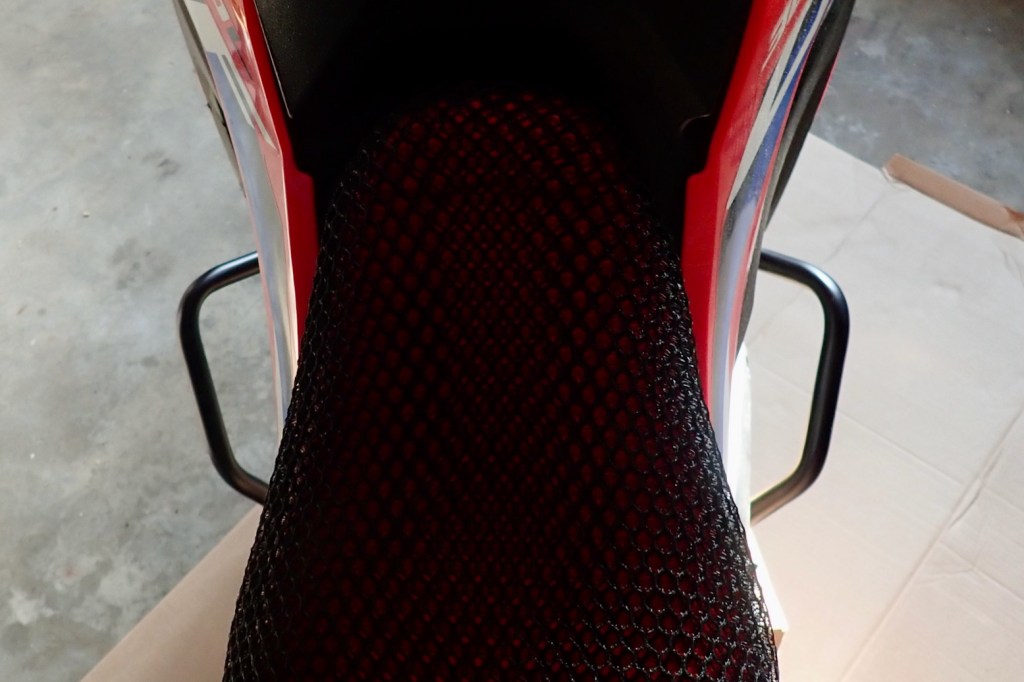
New tank adds 6 litres to the 7.8 stock without looking massive.After years I [re]learned syphoning. Use a thin long hose; shove it all into the tank to flood the hose; then pinch the end and pull it out and down way below the tank to the container, then release the pinch. It will flow at more than a litre a minute. A good skill to know in the post-fuel tap era.Subframe not suited to falling on big panniers‘Gigantic’ reverse-Tardis toolbox. Irksome.Once unbolted, to release the tank pull off a vent hose coming up from the emissions canister (it pipes up through the tank to the fuel cap so fuel will not pour out). Then unclip white electric plug and unclip thick fuel line (can be a bit stiff). All explained on J-Mo link.All mounts line up, well I never!Join loose canister hose with supplied filter-connector to purple hose and feed under tank and up onto the fuel cap. Or remove canister assembly and save 550g (instructions on J-Mo) Acerbis tankside protuberance may protect radiator on RHS a bit?In black you’d hardly notice the difference. Nice job Acerbis!I also fitted a Cool Cover. Will improve comfort and easy to add padding underneath, if needed.
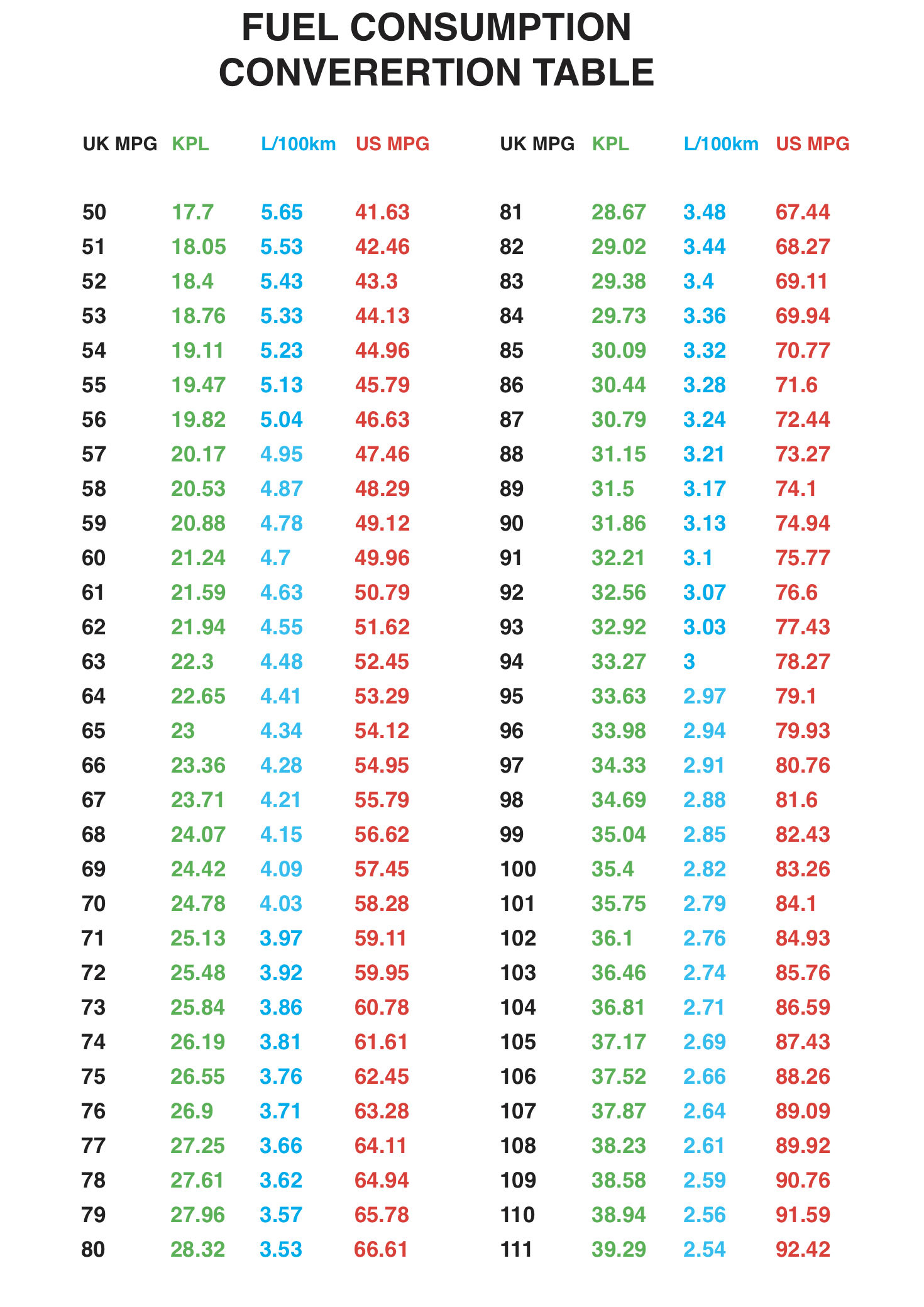
A calibrated refill revealed the tank holds 13.85 litres or A tad over 3 UK gallons which is a figure I’ve seen elsewhere. That will do me – at a dependable 85mpg or 30kpl = 415km or 260 miles range.
Protection
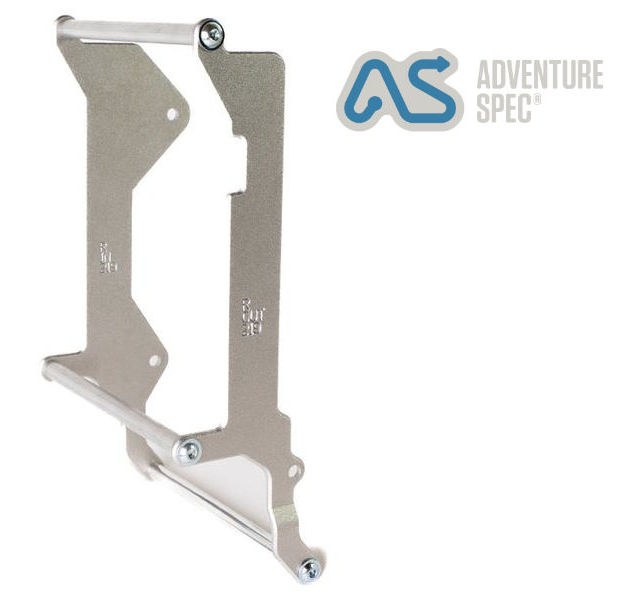
A slim bike like a 300L doesn’t need engine crash bars – a well spec’d bash plate like the Ad-Tek the seller fitted to mine does the job. But CRF-Ls have a vulnerable rad (like Africa Twin 1000Ls, as I found shortly before D-Day). The 300’s rad sticks way out into the RHS breeze so when you fall it takes the impact via some plastic. I think they’re all like this these days but what a crumby design for a small trail bike! Adventure Spec make a radiator brace (left) which bolts a sturdy frame round the rad and looking again, it’s actually seems OK for £66 and 240g.
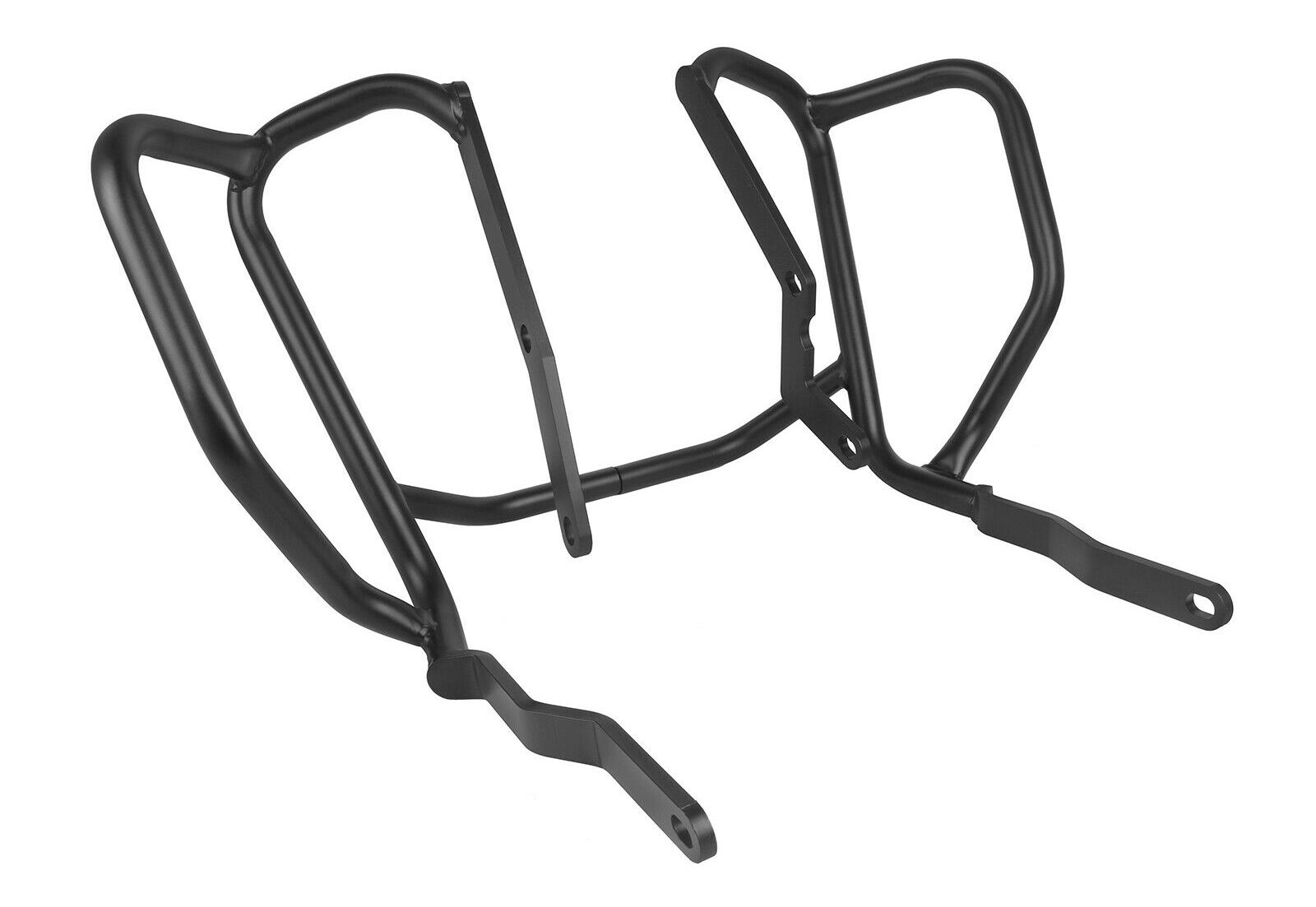
Chinese 22mm upper crashbarsOutback Motortek rad bars
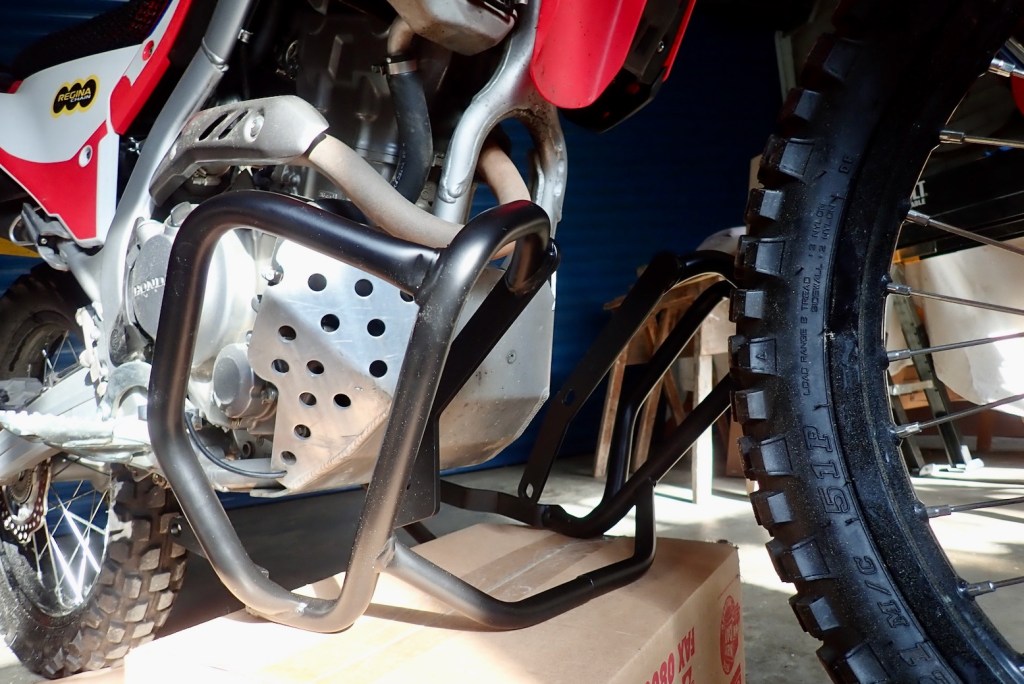
What I really wanted were currently unavailable Outback Motortek bars (above right) which protect the rad, not so much the lower engine which a good bashplate does. Plus I could mount my Lomo sidebags on them; not be possible with the ASpecs. Looks like the OMs may be back sooner than I thought, but in the meantime I bought some Chinese no-name crash bars (above left; 4.2kg). Tellingly there was no fitted image but they looked similar to the Outbacks, or maybe I just saw what I wanted to see. They’re well made but turns out they fit low and the bashplate would have to go. Bash is non-negotiable so I sold them on.
Wrong bars. Or are they? Bags would fit nice and low. May have a re-think and revise bashplate.
As it is, unlike an AT etc, a 150-kilo 300L has much less self-destructive mass when it tumbles, So I think 22mm ø tubes at 2mm thick as used by China bars and Outback Moto are a bit OTT. I bet 18mm would do fine, as on the Himalayan’s tank racks (left). But 22 is what we get – possibly because of a shortage of well-braced/spaced mounting points to securely support a thinner structure. That’s how it seems on the China bars. My weldy chum who made my Him’s rear ‘ear racks’ was insufficiently motivated to tackle a complex pipe-bending task for anywhere near direct-from-China- let alone Outback’s prices.
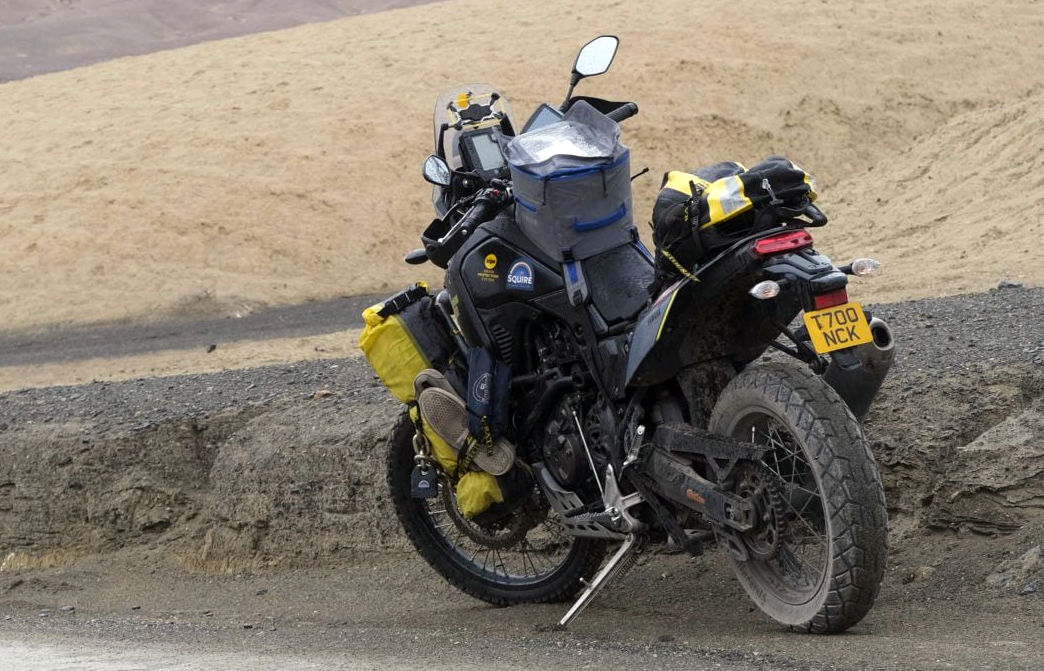
Fishform loadingIt’s the new black (Nick Sanders T7)
Another reason for wanting tank/rad bars is to carry luggage up front where you can see it and get to it from the seat. That way you dispense with a rear pannier rack so the weight penalty can balance out) and just use a tailpack. ‘Fishform‘ they call this in kayak hull design – ie: more width up front. This way the engine/radiator bars double up as pannier racks. I tried this idea with the AT (above left), and when I got back noticed serial RTW-er Nick Sanders had done the same on his T7 RTW bike (above right). A side benefit with soft bags on tank-side racks is the bags absorb impacts before the rack, leaving the rads asleep in their beds. I do wonder if these low Chinese bars with a wide frame are to mount a pannier may work well after all.
Later I lined the bars up under the engine and it was clear for small panniers the mounting would be way too low and probably drag on corners. Back on ebay they do go.
The Outback Motortek radiator crashbars arrived a few weeks later. They’re hefty at around 4kg with long, carefully shaped 5mm plates clamping to the engine mounting bolts on the downtube. As mentioned above, it all feels OTT for a light bike that doesn’t have the mass to destroy itself, as if they’re just transposing ideas from heftier bikes which do need heft. The design has the entire top part unsupported apart from cross braces and so depends on the strength in the plates to resist the deforming leverage. Were there a single mount somewhere on the headstock the whole set up could be half the weight, like a 400 Himalayan, above.
USB power plug I took the chance to fit a USB power plug. You can buy them on ebay pre-wired with a fitting matching a spare switched socket somewhere behind the headlamp. ‘Switched’ means it only powers up with the ignition on. Annoyingly mine turned out to be just a USB adaptor fitted into in a cigarette lighter which means another layer of electrical connection to play up, but I suppose the USB plug can be easily inspected changed. Not all work or for long I found in March.
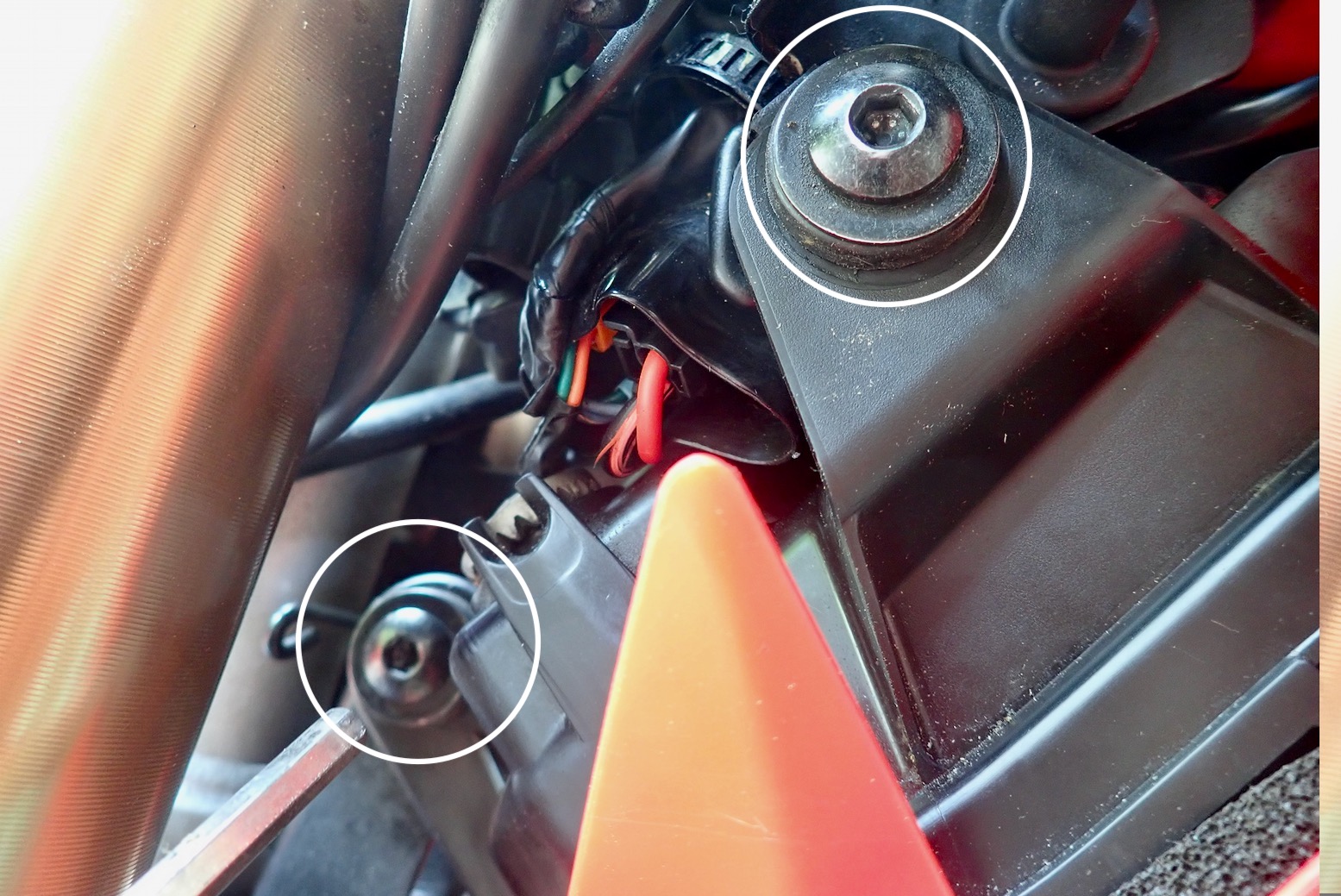
First I had to remove my GP Kompozit screen which weighs just under a kilo, fyi. Next, undo a pair of allen-head rubber mounts either side of the headlamp assembly and remove the whole thing. The auxiliary socket is soon located among the black spaghetti and the over-long USB plug lead clicked in.
Annoyance. Or is it just getting the knack?
But to quote the late Haynes ‘assembly is not a reversal of dismantling’. Is it ever? The lower mounts wouldn’t line back up. I assumed the new wiring was in the way and pulled it through but still no luck. Rubber grommet spacer-washers get pulled off as you try and shove the headlamp onto the mounts. Then I enjoyed a bolt dropping down onto the mudguard top. I managed to flick it out and resumed alignment; it did seem like the mudguard top was fouling the cowling – as John Cooper Clarke might have said. I removed the mudguard (loosening might have been adequate) and loosened the top headlamp mounts: that did the trick. It all went together like it should.
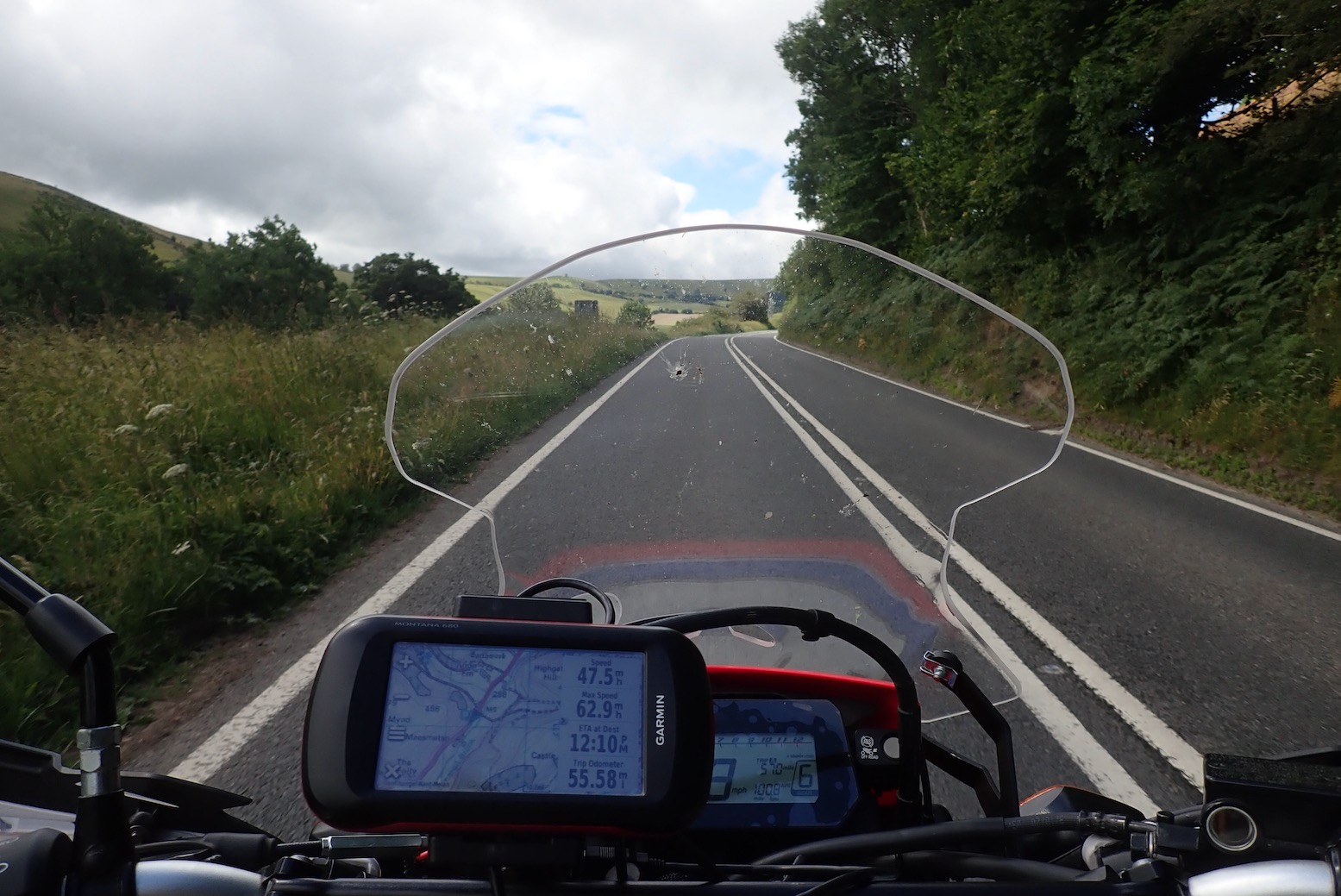
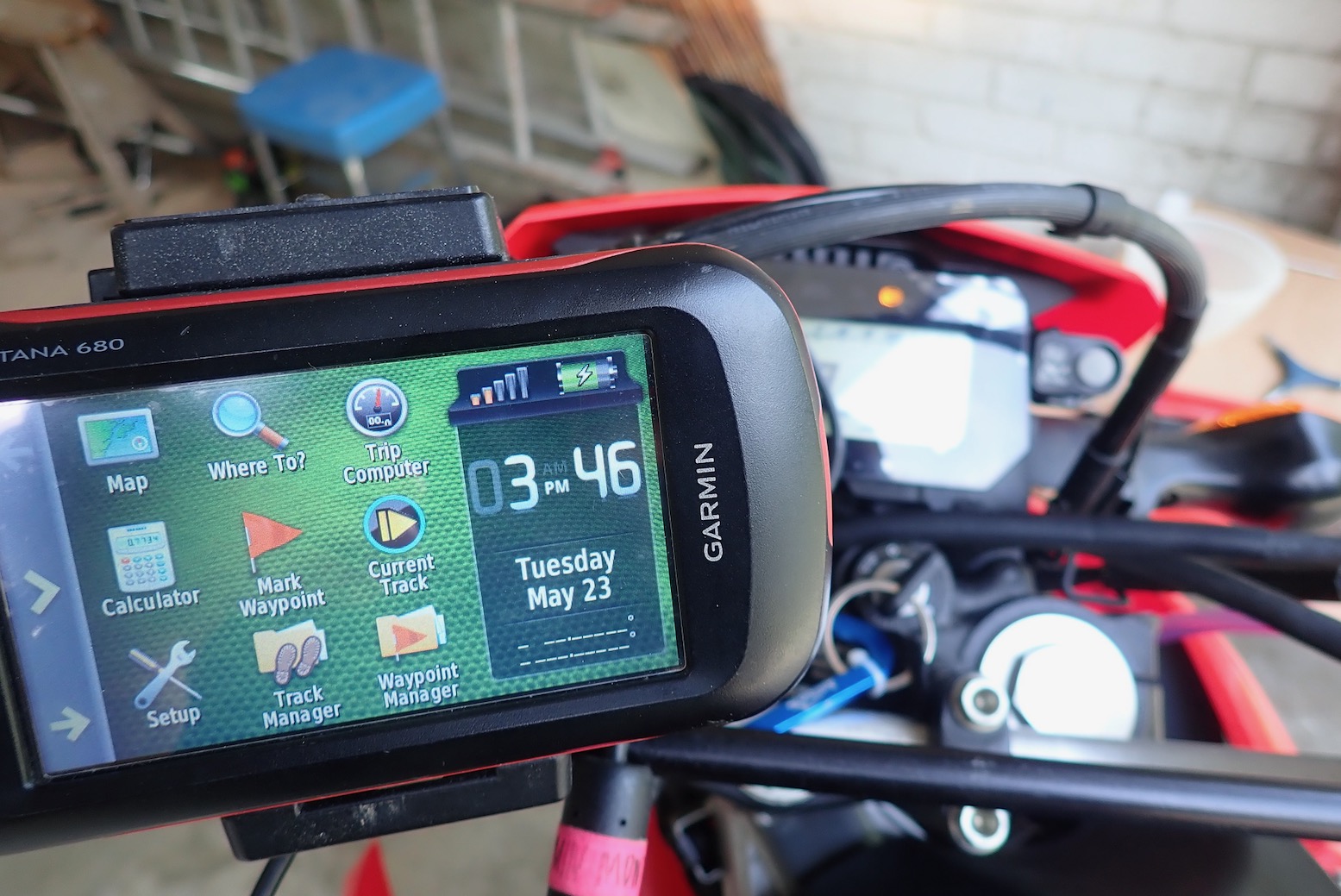
Next: will the Garmin charge off the bike once the ignition is on or go into mass storage mode. It did the later when the USB gets in a muddle. Go to Garmin Menu > System and change from Serial to Spanner mode. The Garmin will switch on as normal and a sign that it’s working is a flashing charging battery icon, as below.
My current 300L came with Acerbis handguards so I’ve decided to recycle my trusty old Aussie-made Barkbuster Storms (see ebayuk). Looking back, I realise what a great life of adventure they’ve enjoyed! Proper handguards based around a metal frame clamped to the handlebar are a no brainer. A simple fall over can snap a lever or mount. That’s never happened to me since I’ve been busting the bark.
I bought my set in 2008 for my near-new Yamaha XT660Z to research the first edition of my Morocco Overland guidebook. Turned out I needed them too when I look a piste too far up Jebel Saro (right). The 660Z was also the first bike with which I experimented with DIY tubeless tyre spoked rim sealing. I’ve got better at it since. And the XT was my first bike with efi. What a miracle that proved to on a big single; smooth running at low rpm and over 80mpg possible. Where possible, I’d never go back to a carb bike.
Yamaha XT660Z – barked!
Next bike was another near-new CRF250L I bought in Arizona. Over the years right up to my current 300L, I’ve profited from new owners’ selling on bikes with barely four figures on the clock and at a massive depreciation. The L led me on a fabulous 3200-mile clockwise lap of Southwest USA through northern California, across Nevada, into amazing Utah and back down into AZ via the ‘do-it-before-you-die’ White Rim Trail. Road and/or trail, SWUSA like being in your own road movie, a trip every rider needs to tick off.
CRF250L barking on the White Rim
The BMW XCountry was one of my periodic breaks from reliably reliable Jap machines. I used it in Morocco on my first Fly & Ride tours which have also got a lot better since. It’s a shame BMW ditched these X bikes. This one had a grand’s worth of Hyperpro suspension – on the road you’d not notice much but off road riding was believing. The X-tank too was an ingenious idea since picked up by Camel tank and an easily replicated DIY job.
Taking a dab on the BMW XCountry. Photo David W
Soon after they came out I got myself another near-new, low miler; a Honda CB500X. I barked that up along with adding prototype kit from Rally Raid who also saw potential in the twin and went on to produce a popular line of 500X-ccessories. For years my 500X page was the most viewed on this website. I used the X in Morocco on tours and for researching my Morocco 2 book.
CB500X RR barking up in the High Atlas
I went back to Arizona and this time got a KLX250 – basically like a CRF250L but for some reason never as fashionable and with better suspension out of the box. Unlike Europe, it was a carb model that ran horribly on low octane back-country fuel. I ticked off another memorable tour of the American Southwest, including a dream visit down to Baja and Mike’s Sky Ranch with Al Jesse of bevel luggage fame. Below, barking along on the amazing WRT in Utah again: ‘the best 100 miles of dirt you’ll ever ride‘ as I wrote in Bike magazine.
White Rim Trail again – Heaven’s Dirt
On that KLX ride I met a chap on a WR250R near Death Valley. I never fully realised that Yamaha’s WR250R was actually a well-spec’d but expensive trail bike, not a dirt racer like the near-identical looking 250F or 250X which put out 40hp or more and so need regular maintenance. Yamaha imported the R for a few years into the UK but they proved an overpriced dud and by 2016 when I was looking, good ones were hard to find. So I bought one off Hyperpro in Holland just before Brexit confounded the whole import process, did it up and and set off for Morocco, the Dig Tree and edition 3 of the guidebook.
WR-ing about
A 135-kilo WR-R makes the same power if not a bit more than my current 300L, but it’s located up in the stratosphere beyond 10,000rpm. As a result the bike didn’t work on well the road and left me with a back ache for months after. As a result I decided to suspend my search for the 250 unicorn. Back home I bought a smashed up XSR700 with the creamy CP2 lump. I repaired it, jacked it up a bit and added the usual protection, including my trusty busteros, now on their 7th outing. I still wish Yamaha would make a more serious 19/17 scrambler using their brilliant CP2 motor.
Barks and volcanoes
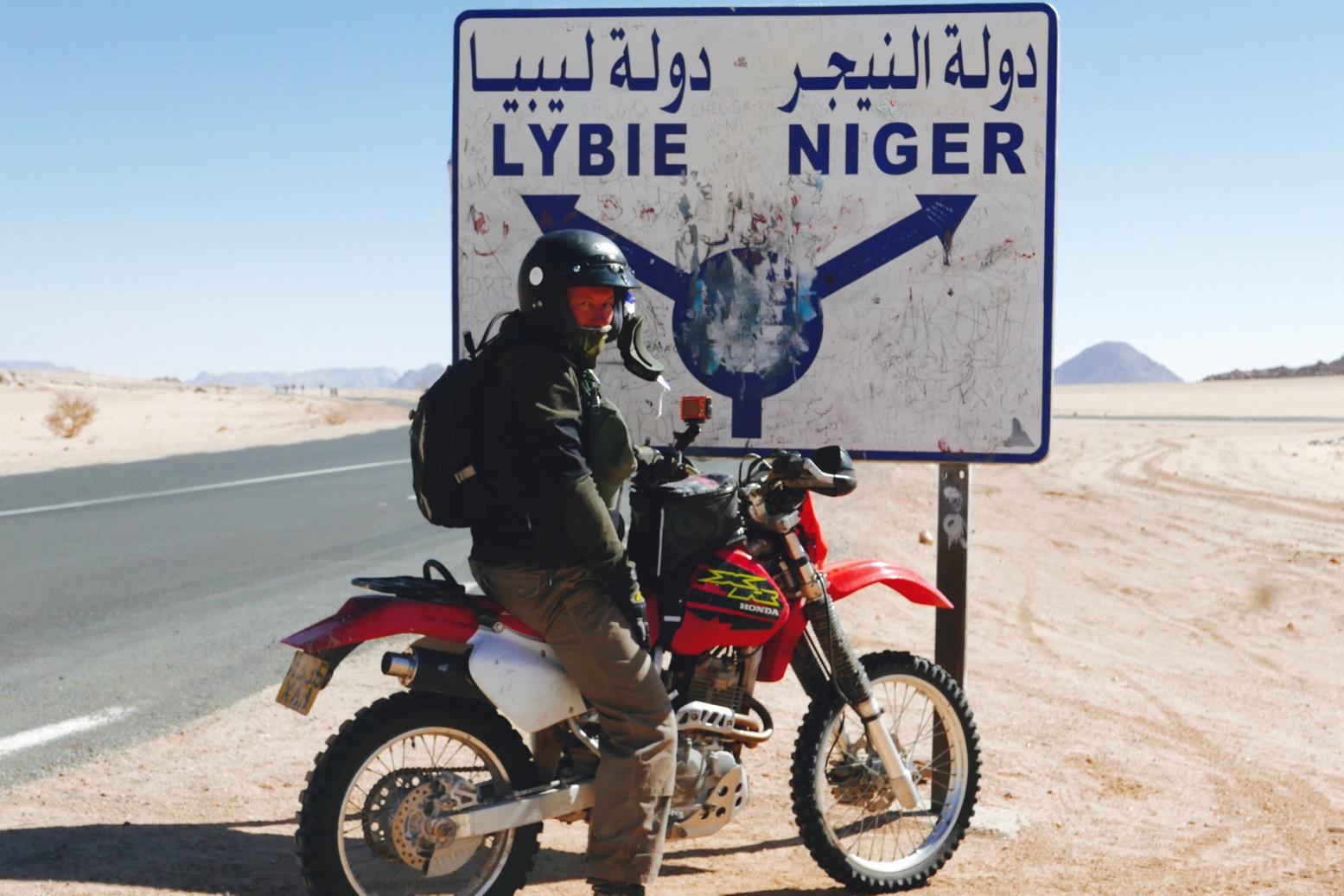
Next, I got some pals together on a supported tour to Algeria where I rode a lot in the 1980s. The tour finally gave me an excuse to buy an XR400, the all-time classic trail bike from the mid-1990s which was always too skimpy of subframe to make a serious travel bike. Sadly mine turned out to be skimpy of piston rings too and began guzzling oil, but was a joy to ride in the sands of the Grand Sud. The old Barks were needed, navigating through the tussocky oueds.
Barking at the border
The Himalayan came out and following teething problems it looked like it was worth a punt; a low saddled trail donkey that was perfect in Morocco, if not so much the getting there. We tried to reach the fabled Dig Tree again, but tyre problems saw to that. Still, at least my mate got a nice cover shot of the Bark-clad Him for the current edition of AMH.
For barking out loud!
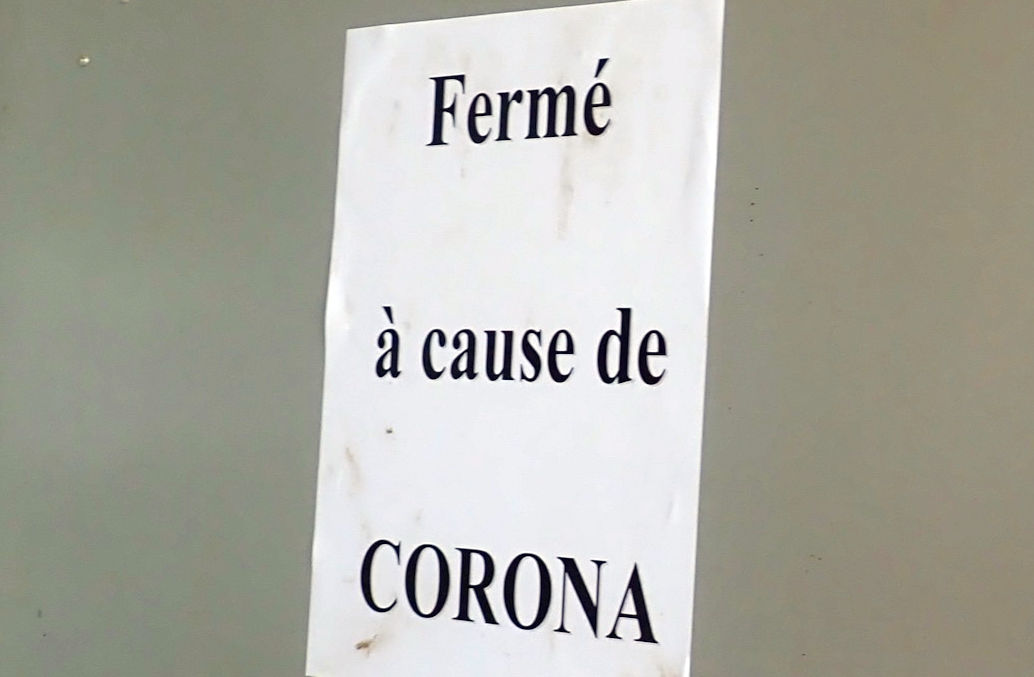
Fermed
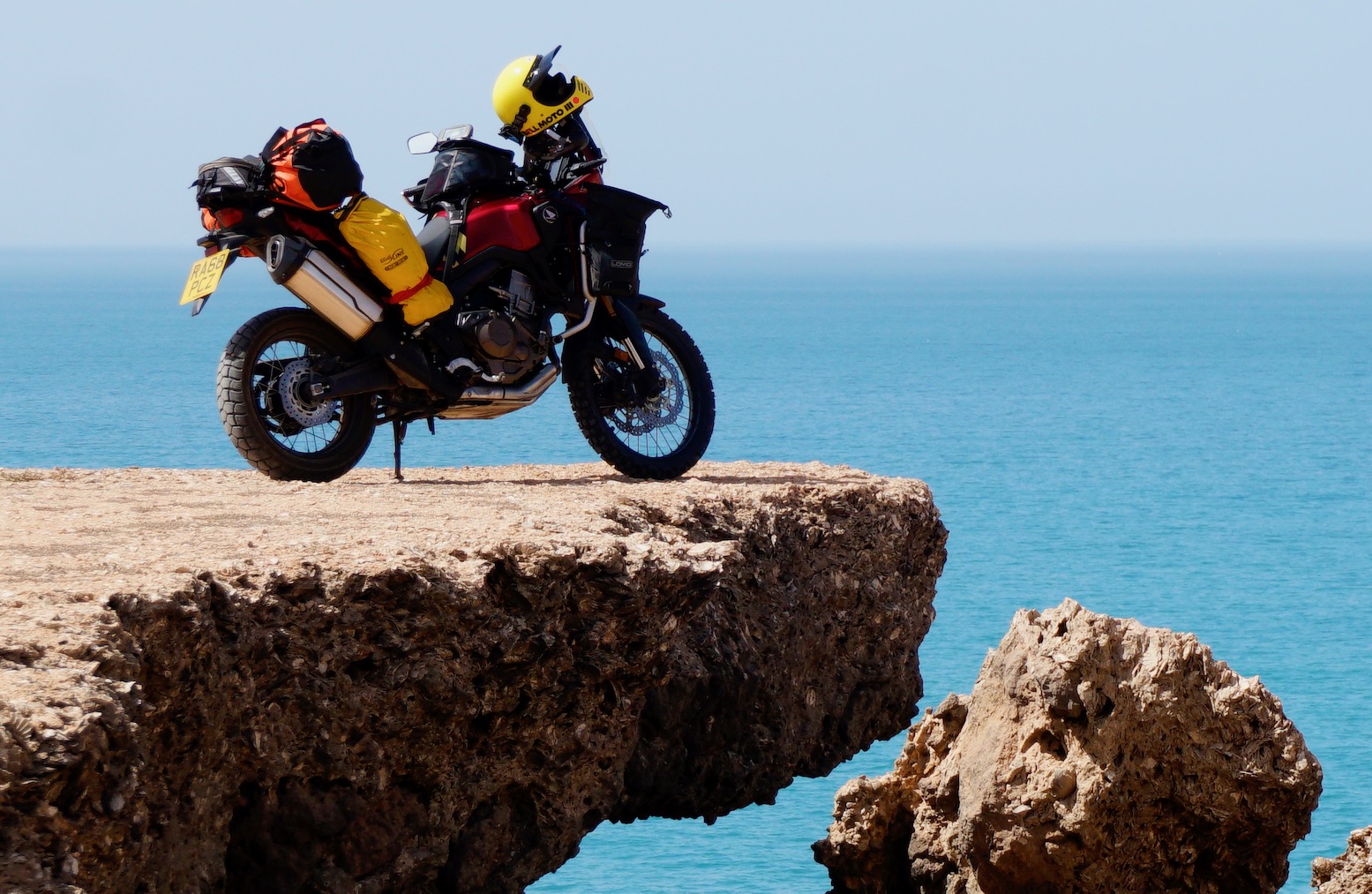
Barks on the continental shelf.
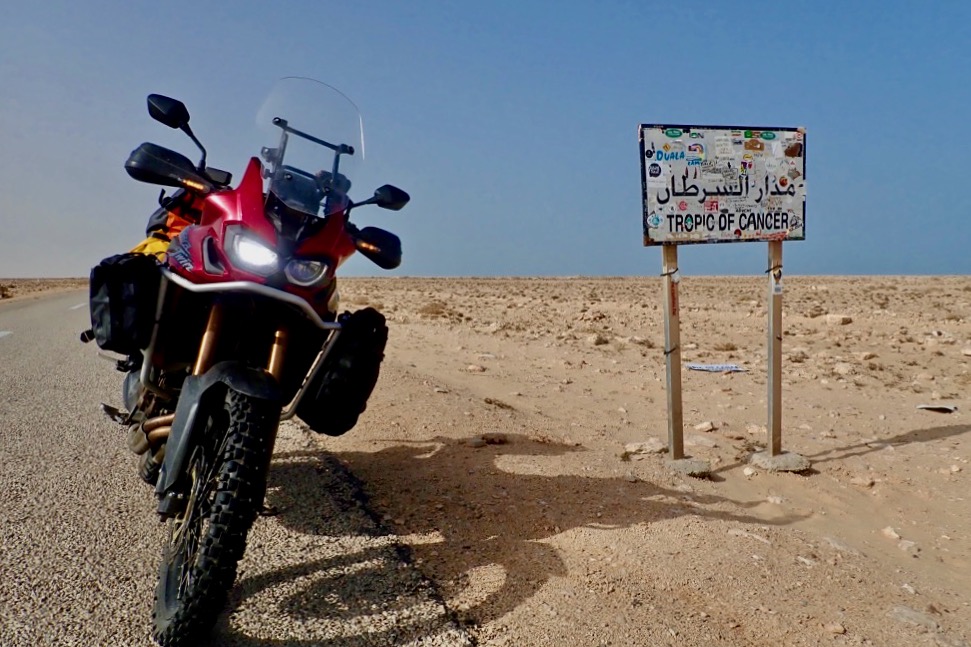
For the kind of riding I like to do I’m not a fan of giant ‘adv’ bikes but many are, so I thought I’d take the popular Africa Twin down to Mauritania in search of manageable pistes. ‘Hotel Sahara’ I called that trip, and the outbreak of Covid 19 put an early end to it, close to the Mauritanian border. I raced back north before Morocco locked down, but punctured the engine and had to dump the bike and fly out on the last plane. Corona went on longer than we guessed, and it took me a year and a half to recover the AT from Morocco.
AT at the Tropic of Corona
Back in London the Barks were removed for next time just before they pinched my AT. Now I feel they’ve paid for themselves many times over so it’s time to let them go. There’s easily another 15 years of protection left in them. Who ya gonna call? Bark Busters!
Returned to stock gearing (now ticks over @ 4mph in 1st)
Rally Raid suspension
Tall bars and other functional accessories fitted by seller
Mpg
Thinned out seat
Swingarm chain alignment marks
Annoying white rpm warning light
Mitas trials tyres on the road
Pathetic tool kit
Tiny 7.8-litre tank
Vulnerable radiators
After replacing the front sprocket with the stock 14T and leaving the oversized rear for later, I set off for a 100-mile ride to Dorset. Had I looked properly I’d have realised the rear was actually a massive 45T not 42, as the seller claimed. Stock is 40T so that explained why I seemed to be belting along at 70mph+ along the A3 and M27, but cars were still passing me stuck in the slow lane.
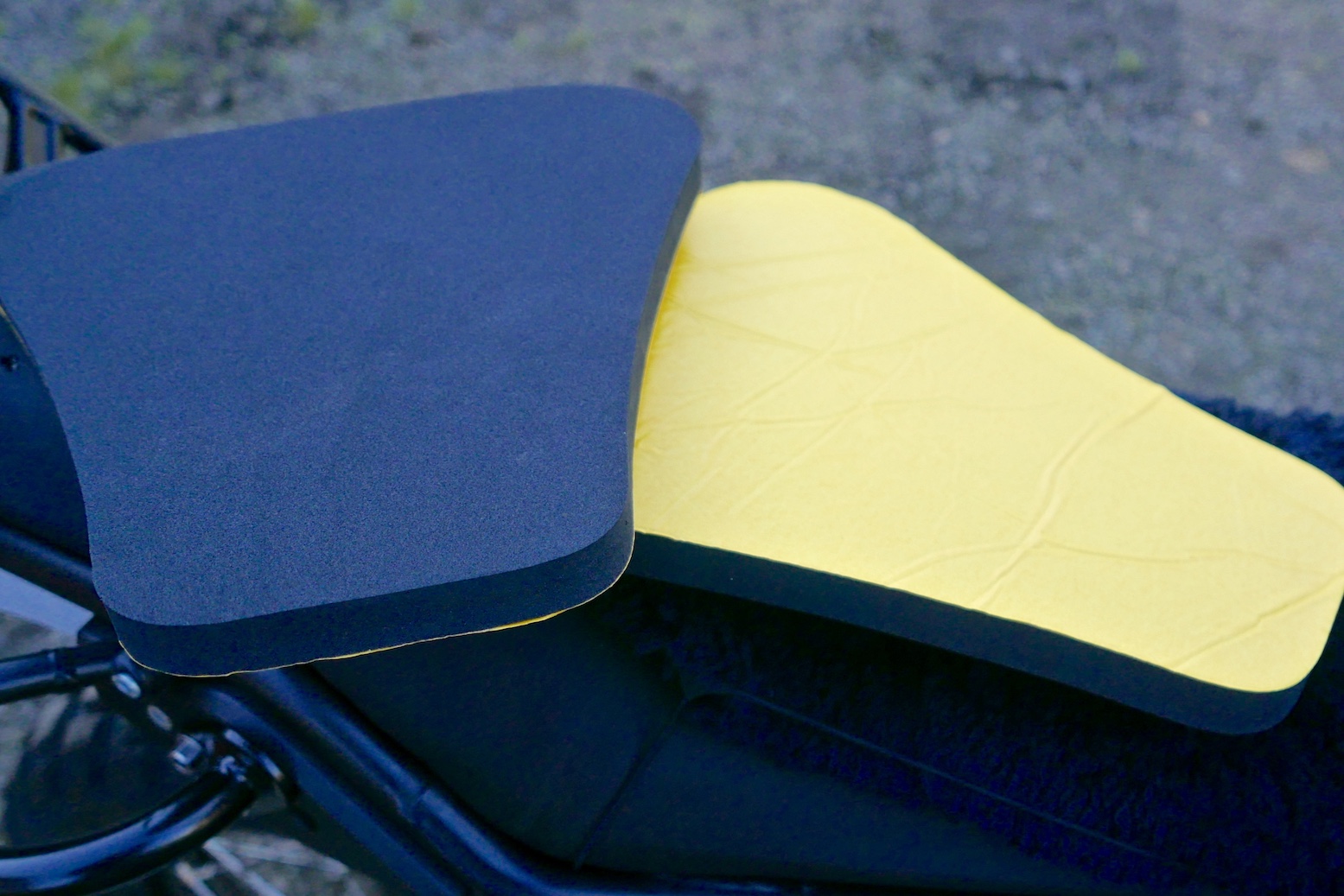
The 300L is so light it initially feels skittish; I wouldn’t fancy it in strong crosswinds. But the proper screen (and my Mosko jacket) helped hold back some heavy showers and the thinned-down seat (from Peak?) had just about 100 miles of padding left in it. Talking of seat comfort and convenience, I reflexively removed the 1970s relic seat strap. Did Soichiro Honda impose some edict that they shall be fitted to trail bikes in perpetuity? The other thing I did was saw open the rear seat bracket so that removing the seat means just loosening the two frame/rack bolts either side, not removing them altogether with washers and spacers tumbling into the gravel. Fyi my lowered seat height with the stock rear IRC tyre refitted is 34.5″ or 87.6cm which is 0.7 of an inch lower than Honda’s specs at 894cm.
Lower but softer and less paddingSpeedier and simpler seat removal
I’d never heard off the annoying white light in the console which starts flashing ever faster as you pass 7000rpm. The red line is another 3500rpm away, so what’s the point of it? To warn you to change gear or you’re going too fast? Whatever, it seems it can be adjusted up the rev scale and out of the way (left).
I’m not so keen on the ET 01 and 05 Mitas trials tyres either. The seller fitted them for the LET. I’m sure once aired down the grip is amazing in UK mud, but the soft, square knobs squidge about at fast road speeds.
With the gearing still lower than stock, I have to assume that the speedo was over-reading even more than normal, but on the open road it did feel like the L held up well against what I recall of my Himalayan, and is definitely much better at speed than my WR250 with similar power and weight. And, contrary to my impression of riding a near-new 300 Rally last year, there’s definitely a tad more poke than my old 250L. A few 300L owners have told me the bike loosens up substantially once past 1000 miles, which I did somewhere around Southampton.
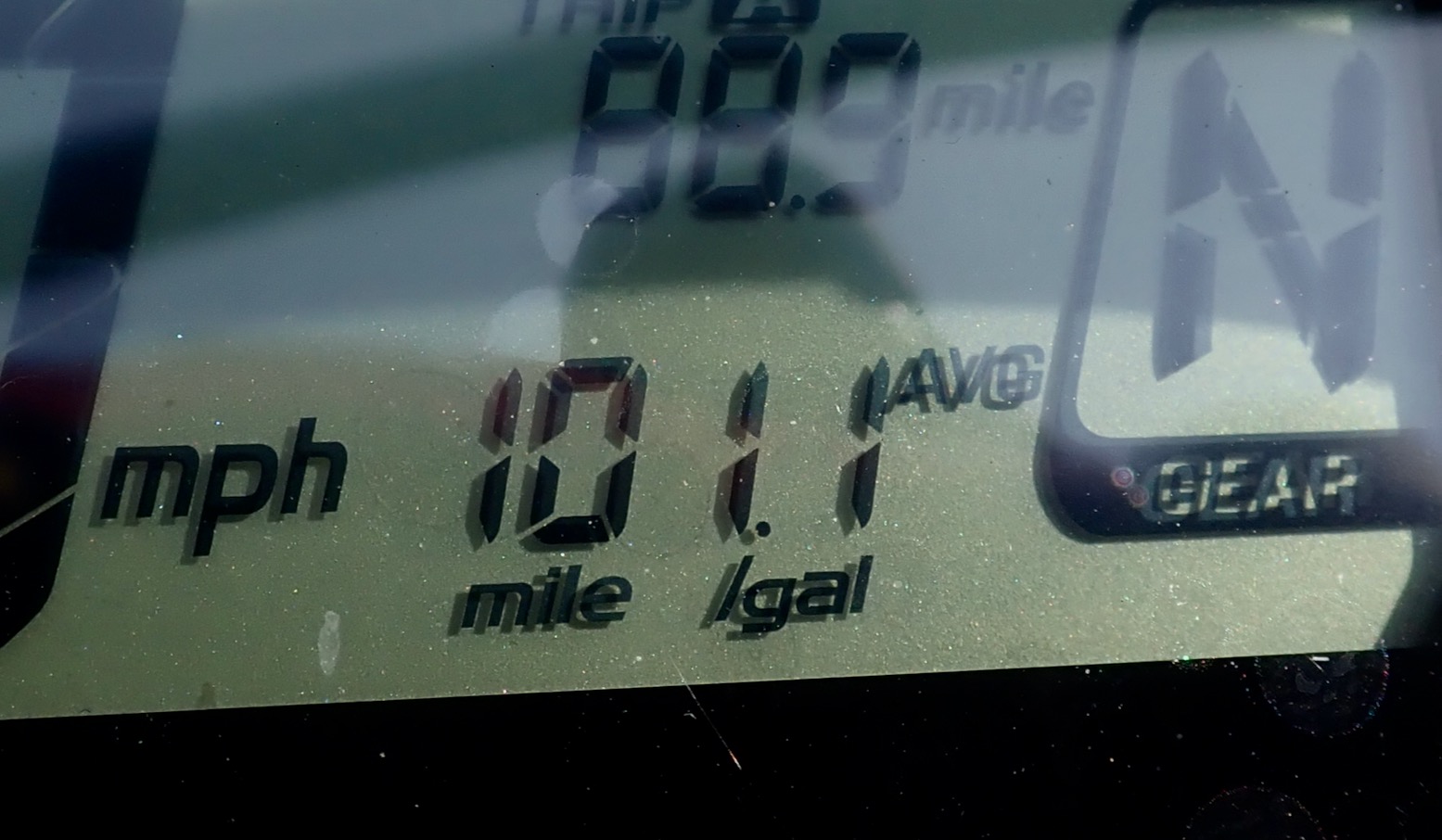
Arriving with one bar on the fuel gauge, I filled up in Dorset with 5.7 litres at 110 miles on the odo. That means there was over 2 litres or 40+ miles in the 7.8-litre tank which seems unlikely over that distance. An average of 90mpg was shown on the console but I think the gearing may have messed with the odo reading. We shall see.
A couple of days later I refitted the stock 40T rear sprocket and IRC rear tyre. Now back to 14/40. With a thick Michelin tube, the 4.00×18 Mitas weighed 6.9kg, while the IRC and a cheap tube were only 6kg – not a huge difference. And amazingly, both tyres and tubes were heavier than the back wheel, now at 5.4kg with a 40T sprocket. The near-new Regina chain fitted for the seller’s very low 13/45 gearing was now a link too long and I’d left my chain breaker in London (I knew this would happen…). The OEM 106 DID chain supplied loose was missing the joining link, plus I’m not sure I want to bother with it, even as a burner. I soon learned that you can’t bash out chain pins with a hammer and punch like you can on a pushbike; some serious force is needed, or YouTube suggested grinding off the end of the pin then prising the plate off. I don’t have a grinder either and a hacksaw didn’t work but luckily the Gear Box Bike Shop in nearby Poole was open on coronation Sunday and zipped off a link for a fiver.
Underside alignment mark – WTJOF?
While readjusting the cleaned-up chain, I took a moment to lament the passing of footproof snail cam adjusters, I bet there’s a way of retro fitting them to fiddly lock-nut adjusters. And is it me, or is the swingarm alignment marker maddeningly on the wrong, underside of the axle? I can’t bend like I used to could so had to lie flat on the ground, which means getting all the way up again. One… two… three… Ooof!
I checked the spring rate on the Rally Raid Stage 1 shock. On top of the spring was marked a surprising and reassuringly firm 100nm which is what it feels like. No wonder the seller found the 300 a bit tippy and decided to sell. I’m tempted to splash out another 200 quid on an HPA (above right) which seems to be a special order from Rally Raid, but am told it may need a change of spring.
The bike’s tool kit sits in a space-wasting plastic box. I’m sure someone could fabricate a more functional replacement or even a 2-litre fuel cell in its place. Once opened I’m even more disappointed than expected: a single fat 14/17 open spanner and a pair of allens, enough to remove the mirrors, seat and side panels. Rally Raid make a nifty combo wrench (left) which does both wheels for under 30 quid, but it’s not in stock. Once I have that alongside my trusty Motion Pro Trail Toolkit with an added 8mm socket and a couple of allens I’ll be good to go.
3-4 mph at tickover – nice
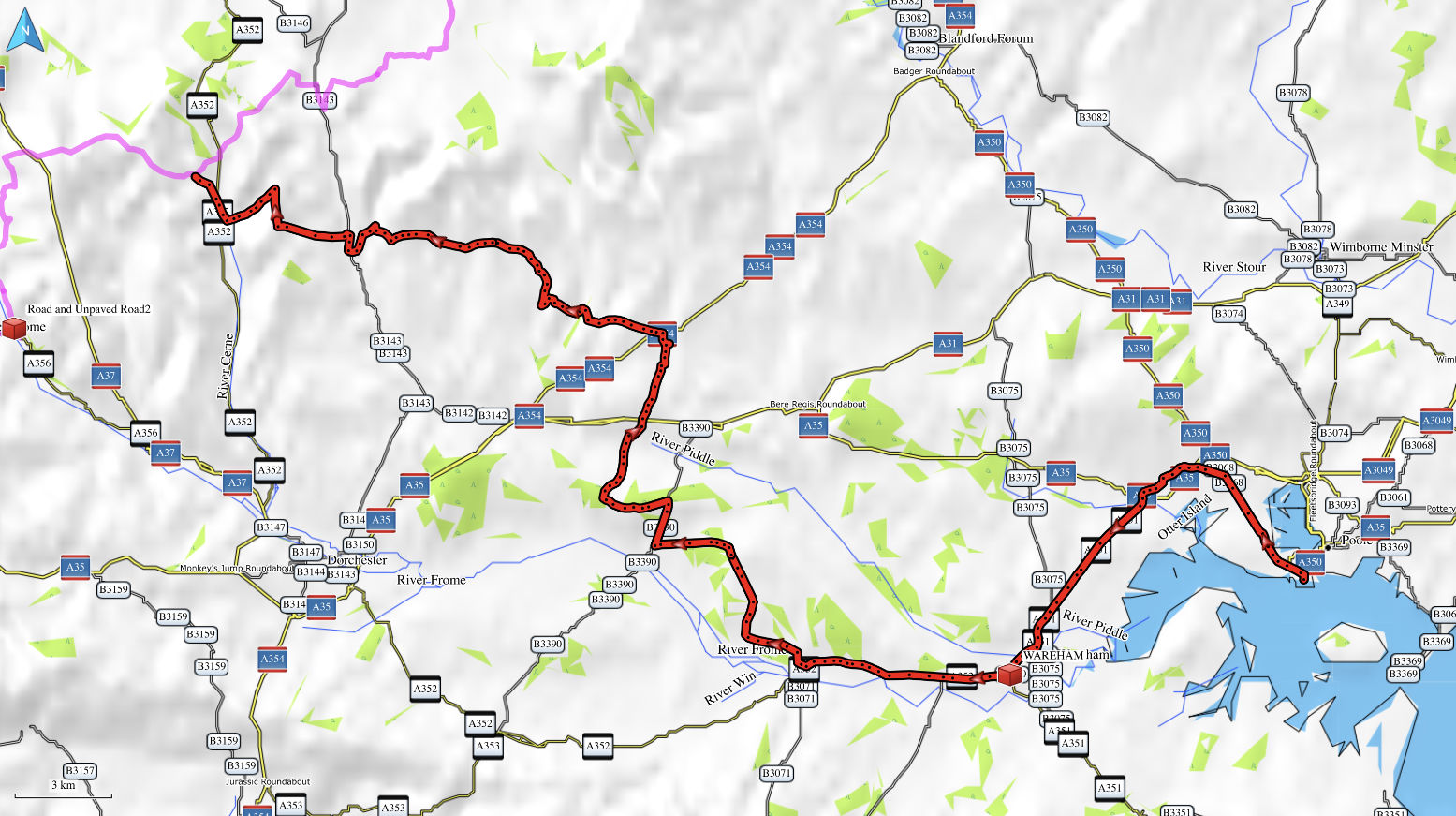
Now back on stock gearing and rear tyre, I set off across the Dorset heathland to verify the odo against a GPS, while assuming the speedo will indicate the usual mandated 8% over. Speedo accuracy isn’t so important to me, but on a travel bike you want to trust the bike’s odo which are somehow engineeringly unlinked to the exaggerated speedo reading and often manage to be nearly spot on. Result: over 10 GPS miles the 300’s odo indicated 10.15, so odo is 1.5% over. I can live with that. Actually a 200-mile run with the GPS a few weeks later indicated 205 miles on the odo, so odo is 2.5% over. Also, riding along at tickover in first, the speedo indicated 3-4mph which is about as slow as I can balance sat down, and just as it should be for low speed control for do-it-all trail biking. I really wonder why the seller lowered the gearing so drastically – he rode the Lands End Trial, not the SSDT. I remember my XT660Z did an annoying 8mph at tickover as do many bikes. Way too high for tricking along or not fragging the clutch on walking-pace climbs. As I mentioned in my quick ride on a 300 Rally last year, the 300s do seem to have ‘Goldilocks’ gearing: low 1st matched with an overdrive 6th. Other good things I noted. Even though the seller was shorter than me, the Renthal bars he fitted are, for once, just right for me when standing. They don’t look that tall so I think this must be innate to the bike’s design. What a relief not to get bogged down in the usual risers and re-routed cables, even if I might have prefered brace-free FatBar.
Out of interest and with the luxury of a flat, garage floor for the first time in my biking life, I decided to do the bathroom scales trick and weigh the bike, one wheel at a time. Result: with an added rack, bashplate, screen, frame protectors, Rally Raid suspension, barks, tail tidy, and a full tank (‘kerb weight’), my 300L weighed in at 146kg. It feels like it too and if you deduct say, 4 kilos for the listed accessories (some of which – bars, shock tail tidy – save weight over stock), that matches up well with Honda’s 142kg kerb weight claim. Next jobs: get that weight up!
• Acerbis 14-litre tank • USB power take-off • Cool Cover • Refit front OEM tyre • Sort out some tubeless wheels • Go somewhere good
In a line: It took a second, 1200-km week’s ride to like the 890R a bit more, despite the harsh ride at times. (BIke used to guide my Morocco Fly & Ride tours).
• Tubeless tyres • On the move feels light for claimed 210kg tanked up • Recorded up 72mpg (60US; 25.5 kpl) = 500-km range • Great stability thanks to 20-litre pannier tank • Fully adjustable stock suspension • Easily understandable menu • Cable clutch modulated well • Big footrests • Brilliant brakes • Solid build quality • Modes aplenty and cruise control too, + USB, GPS 12v sockets • Riding under 5000rpm, vibration was OK • Mitas E-07/Karoo 3 tyres worked fine, road and trail • Good aftermarket protection on the tank
Up at 2500m (8000′)
• Engine sometimes felt/sounded rough as an air-cooled single, especially on start up • Hard seat • Not much engine braking • Screen too low to work on the road • No stock attachment points on rear subframe • No preload adjustment knob on the shock • Fuel gauge and range reading erratic or vague • Suspension harsh over small bumps • Quickshifter present but not enabled • Display supplementary data too small to read
On a desert highway
Review Looks-wise I don’t really get the KTM ‘alien insect’ thing; for me it all went wrong after the 640 Adventure and I marginally prefer today’s near identical Norden 901. But second time round in Morocco I got on with a 2021 890R a lot more. Having ridden the 890 once already for a week, I set off for one last 1200-km tour lap on a huge BMW F800GS Trophy. Even with over 100,000 on the clock there was nothing much wrong with 800 and the engine delivery was creamy smooth (so much for 270° cranks…). But it didn’t feel right: ungainly, high seated and just a plain handful, even before I filled the underseat tank. Maybe it was just over-pressure tyres, but I was relieved when the cooling system burst a seal an hour or two into the ride (blocked thermostat?) and they brought up the same 890R I’d used a fortnight earlier that night.
Fyi this was only the second time I’ve ridden an 800GS, a hugely popular bike in its day. But I recall I wasn’t so impressed in northern Arizona over a decade ago. I’ll take the old tubeless ‘650’, ‘700’ or current ‘750GS’ every time. The rental shop got rid of the 850GSs after loads of problems.
We prise off the hose clip to release a vacuumThe cavalry arrives
Why no knob?
Normally I’m a bit blasé with what they rent me in Marrakech and both times was given the 890 out of the blue, knowing nothing about the bike. But second time I made sure the KTM’s tyres were down to 30 psi, I ditched my tail pack for a tank bag so I could set my own bag further back. Result: a better ride with proper room on the seat. I wasn’t able to access the KTM’s tools (if present) to soften the WP shock preload, but see now all it needed was a big Allen key, not some obscure 2-pin tool. Now I know.
An 890R owner on the last tour explained that from new, the bike’s ‘Tech Pack’ is activated for the first month and includes Quickshifter+, cruise control, ‘MSR’ (engine braking control, like the AT) and the ‘Rally’ mode. I’ve never encountered this sales upgrade ploy but it’s a good trick; if you decide you want to keep the Tech Pack after it expires that’ll be £769 please. Or, to quote a press release for the 2023 890″ ‘An innovative DEMO setting gifts the rider the chance to try the full gamut of optional Rider Aids for the first 1,500 km before deciding whether to purchase and keep them permanently.’
The 890R now makes 105hp, but I doubt I ever used more than half of that or exceeded 6000 rpm riding normally. It’s hard to see how 105hp could be useful on the dirt when combined with over 200 kilos. I got up to 70 mpg, 10% better than I managed to squeeze out of my AT but which was far less confidence inspiring off road.
After some 2400km over a couple of weeks, for me the best thing about the 890R was the stability road and trail, contributed by the low-slung 20-litre tank. But I think there’s more to it than just low tanks; there’s the light weight too and the seating position with feet and hands just right. I noticed an unadjustable steering damper too (loads of places offer aftermarket adjustable ones). Initially riding the loose switchbacks streaming across Sargho west was easier on the 890R than my AfTwin, but it was easier still a week later on a dinky 310GS. Then coming back on my better set-up 890R, it was a piece of cake, bar the odd slip from the worn front Karoo 3.
The 310’s seat is better than the plank hard 890 too, though standing up is more natural on the KTM as your knees squeeze the soft seat. The ill-formed 310 is hopeless in that respect. Another inch of bar height and I’d have been comfortable on the 890R, but they say there’s not enough slack in the cables for that. The R’s small screen was too short to avoid helmet buffeting but worked rather too well in the unseasonal 30-°C heat we had for most of November. Standing up was the only way to get some airflow through my Mosko Moto jacket’s vents while also airing off the sore backside.
Feet on the crashbars; quite comfy
This bike has a quickshifter but I later realised it wasn’t faulty, just not enabled (like the cruise control and other ‘Tech Pack’ features). I recall the quickshifter worked amazingly well on a customer’s 790 a couple of years back, but on this 890, clutchless shifting worked surprisingly well most of the time; up was a little notchier and needed a dip of the throttle.
I fiddled a bit more with the engine settings second time – the menu is easy to use without RTFM, though I found the supplementary data too small to read easily on the move. I also found the fuel range was a vague ‘>190km’ instead of an actual figure, and as it emptied it had a habit of dropping by 30% when restarting the engine, then jumping up again. I was told many overly electronic modern bikes have this issue now; it’s not just a float in the tank anymore but calculated off your recent riding pace. On my last day’s ride I was certain that at up to 23kpl the tank’s 20 litres would easily do 400km to Marrakech, so trusted in my trip odometer and recent mpg readings rather than the flakey range reading.
Trip data too small to read easily on the move. Like a phone, surely they can offer bigger font sizes.
Full ‘Road’ power was nice but excessive for my needs; in southern Morocco there was little opportunity (or point) in exceeding 115kph for a few seconds. In the end I left it in ‘Off-Road’ mode (smoother power lower down?) with Road ABS on. The latter was especially effective and never an issue off-road; these days this whole ‘OMG ABS off-road!!’ is a red herring. ‘Off Road’ ABS disengages the back wheel so it can lock up (same as on the 310s); full ‘Road’ ABS worked on both wheels and was fine on the dirt. Now I’m not 16 anymore why would I want to lock up the back wheel? It certainly won’t be to kick off a power slide on some remote canyonside in the Anti Atlas
The bike came with a Mitas E07 on the back and a worn Karoo 3 on the front – both tubeless though the rims look normal. They felt secure enough on gravelly trails given the mass of the bike, and were fine on the hundreds of dry bends we swung through each day where the frequent spits of gravel moderated speeds and lean angles.
On faster rolling dirt tracks or deep road fords the suspension didn’t bottom out, but that just takes good preload and damping. On slow-speed irregularities the back chattered or kicked back violently. I dialled off the fork settings but it was the rear shock which needed less compression damping and maybe less preload too (there’s no preload knob, unlike the non-R 890). Dropping the tyres to 30psi certainly softened my second ride; another 5 psi off would have made it better still off road but things may have got a bit hot on the highway.
One thing I did miss hopping back on a 310GS after the first run were the KTM’s brilliant brakes, but other than that for what we do I’d settle on the lighter 310 every time. While less stable and with ordinary suspension, on loose switchbacks the little GS has less mass pushing your around.
With my bag shoved back, the KTM’s seat was more roomy but it’s still a plank. And my short day on the 800GS just underlined the KTM’s relatively rough engine (it sounded so bad we even checked the oil at one point). All in all, the 890 was what I expected: an adventure bike which performs better off road than most of its 200-kilo+ class rivals. But with KTM’s shaky reputation for reliability (a previous rental had a clutch go in the middle of nowhere), for travelling I’d settle for less hardcore performance, smoother engines and plainer looks from Honda’s new 750 Transalp or Yamaha’s very popular XT700.