CRF300L Index Page
CRF300 Rally quick ride
In a Line
Light enough to tackle any trail I dare, but too tall and uncomfortable as a do-it-all travel bike for most.

- Rally Raid suspension
- Great range with Acerbis tank
- 19-inch front wheel conversion
- Screen with MRA lip
- You know it will start and run like clockwork
- Inexpensive and easy fit NiceCNC lowering link
- Weighs about 162kg tanked up and with all the gear

- Needs loads of add-ons to make it a functional traveller
- For a trail bike, stock 894mm seat height is ridiculous
- Negligible power increase over CRF250L
- Seat comfort on long or rough rides
- ‘Average Mpg’ or ‘remaining fuel level’ read-outs both out by 10%+
- Reduced stability with big tank and other add-ons
- 17-inch rear knocks out speedo accuracy (unless you size up the tyre)
- Acerbis fuel cap always cross threads
- Front brake is weak
- Front brake switch failed ;-O
- Negligible lowering with 17/19 wheel combo

Review
October 2023 I got my CRF shipped to southern Spain to leave in Morocco for six months. I flew down to carry on scouting new tracks for my next Morocco route guide, while also leading my one-week tours with 310GSs in between times.
I’m not quite finished with the 300L yet, but last week it turned 10,000km (6200 miles). High time to share my impressions after 8 months of riding.
Taking comfort
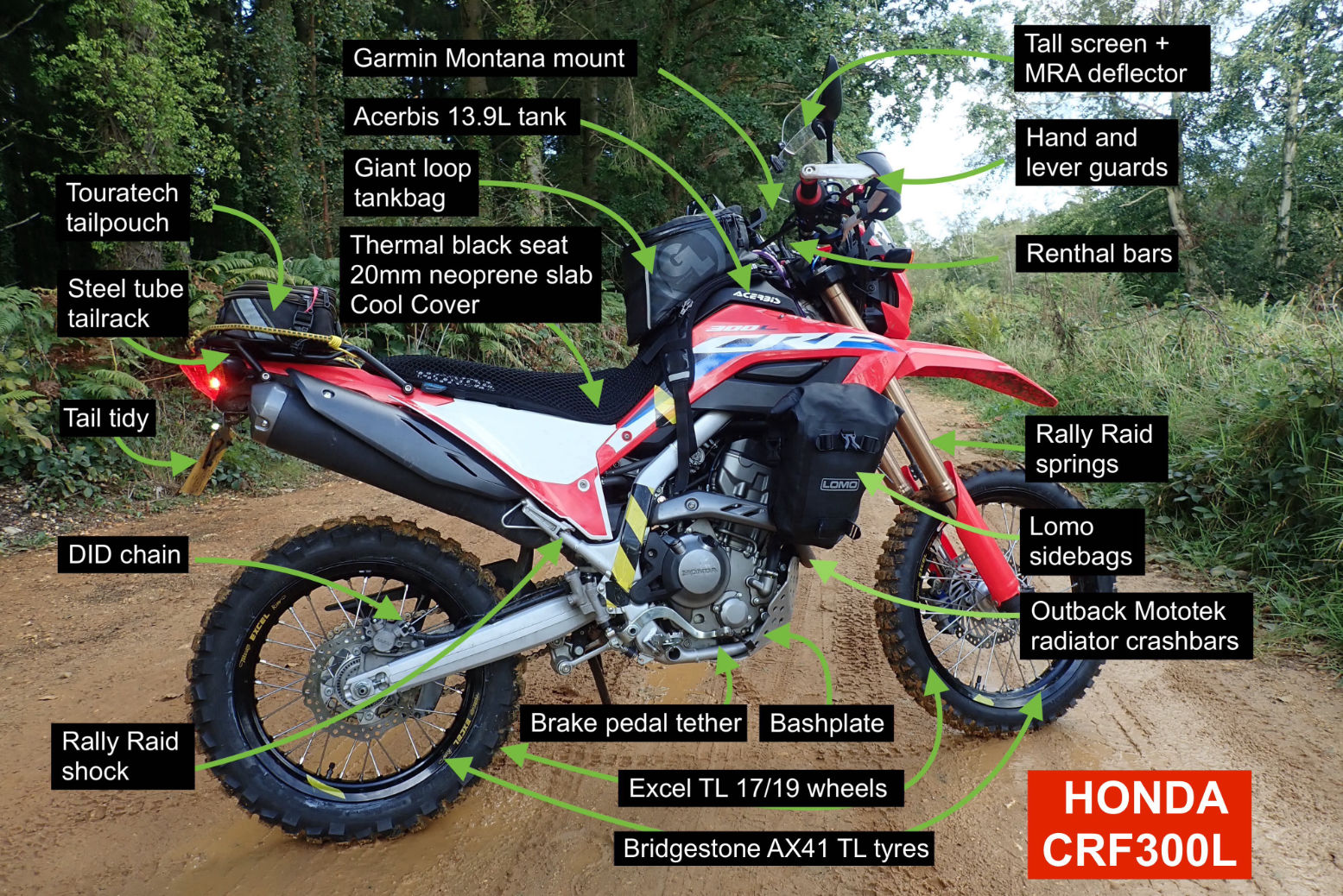
I bought a very well equipped 2021 300L from its second owner with just 1000 miles on the clock. It still needed a bigger tank, radiator protection and tubeless wheels (plus whatever’s shown in the graphic above). The bike came with a lowered seat (read: thinned out). At 34.5″/876mm it was 0.7″/18mm lower than Honda’s claimed OE specs of 35.2″/894mm. I tried to make the thin seat more comfortable by adding a 20mm neoprene pad under a Cool Cover which increased my back end’s mileage. But judged by side stand angle, the 17-inch rear wheel with a stock width AX41 tyre didn’t lower the back noticeably.
I then bought a stock black seat (full foam) and, with my added padding, probably went up to 35.7″ or a whopping 907mm. Then one day in Morocco I knew I’d need a low seat for a tough day, so removed the padding and Cool Cover. My backside was pummeled at the end of that 300-km ride, but I never refitted the Cool Cover and kept the neoprene slab held down with a bungy.


Later, I ditched the neoprene too and wore some Moto Skivvies and have settled for these plus opiates on a bare stock seat in a bid to keep it as low- and me as comfortable as possible. It’s still too high for easy mounting/dismounting, though the anterior agony got muted on some days. As we all know, once the drugs wear off, getting off/standing up for just a few minutes can offer respite.

286cc
The 300 is only 36.4cc bigger than a 250L when you’d hope that’d be nearer to 50cc. I owned a 250L in the US a decade ago and for what it was (left) enjoyed it greatly. Along with other factors (like the existence of the CBR300R and worldwide >300cc licensing regs), I guess there’s only so much metal in a 250L barrel to bore out.
I knew it before I bought it of course – a quick ride of a 300 Rally didn’t set my hair ablaze – but the increase in power on the 300 is negligible. It’s still essentially a ‘250’ with the same-ish 27hp as a WR-R, along with all the inherent benefits and limitations: light enough to tackle or turn around on anything the seat height allows, while being a slog on long uphills or a headwind, plus uncomfortable after more than an hour or two. So not much different to my previous WR250R or KLX250 then. In many ways my less powerful Himalayan 400 suits my ‘old man’s’ riding style better, but was no faster on the road.
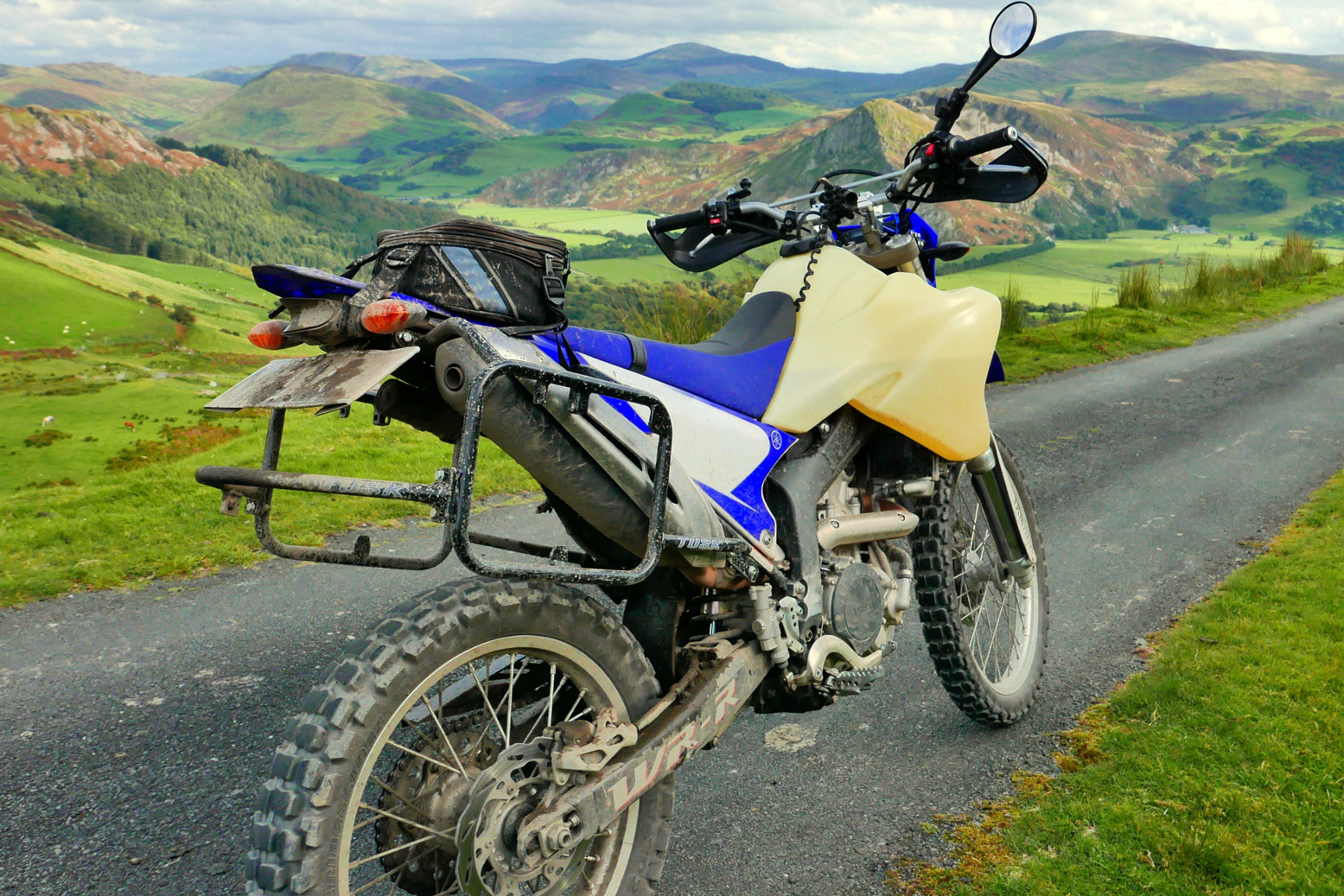
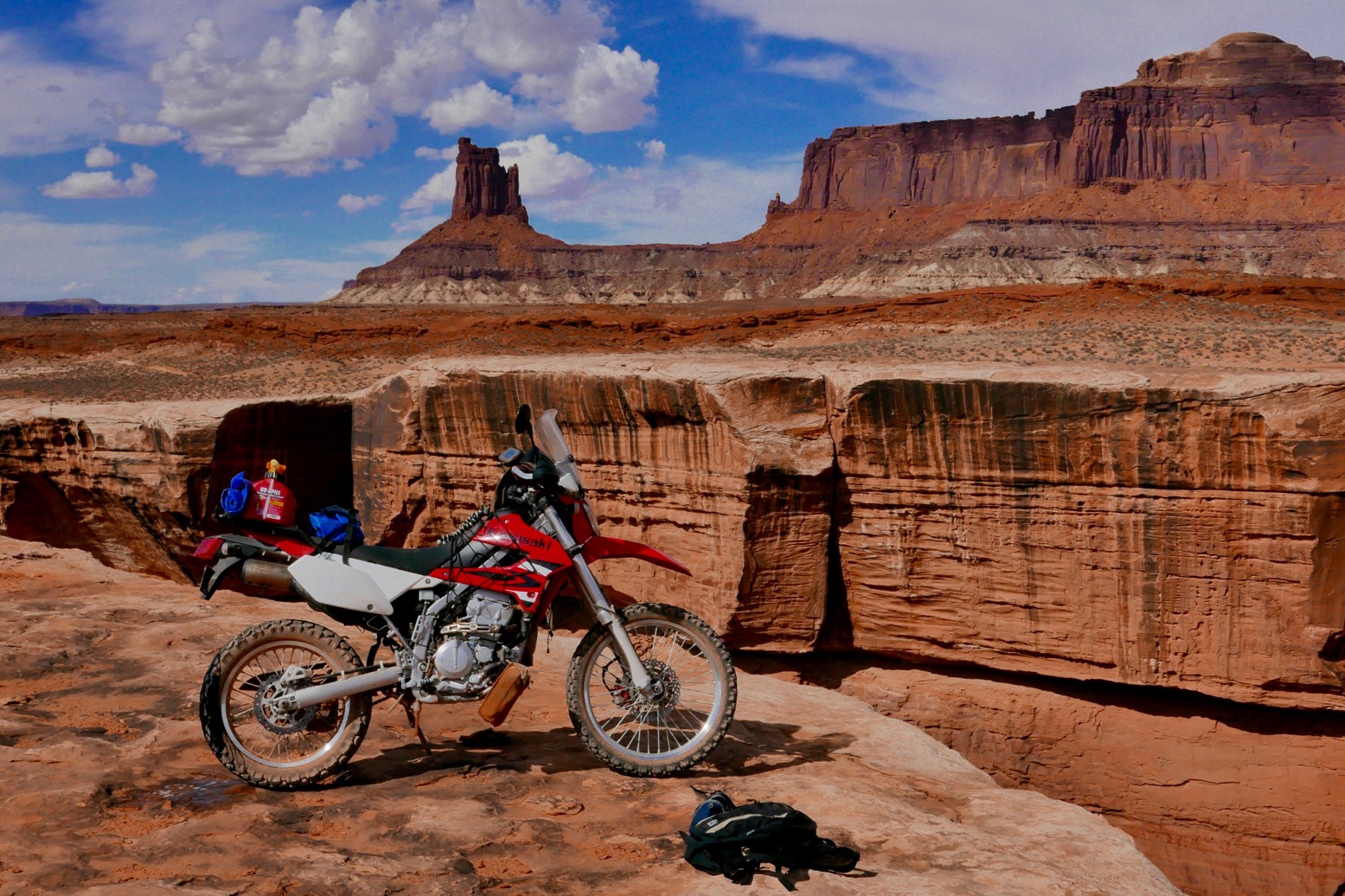
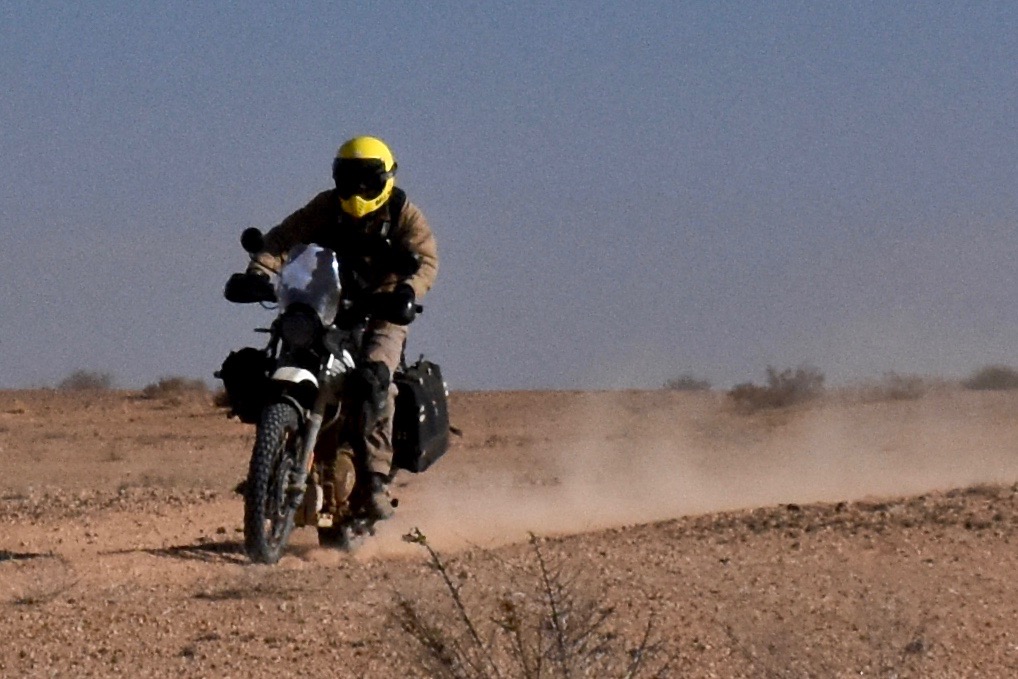
The best things about my 300L are the easy 400-km range from the Acerbis tank (despite the maddening cap) and the Rally Raid suspension. While both ends might benefit from a bit of tweaking for my mass, it just works; very occasionally bottoming out at the back and never at the front. After a few weeks in Morocco I thought the rear shock was sagging a bit, raking out the forks and slowing the steering. So, lacking the shock tool, I dropped the clamps around the front forks 5mm to produce the same levelling-off effect, but can’t say it rode any better.

Something’s Off
The way I’d set it up something felt off on my bike. For a while I thought it was the tubeless AX41 tyres. No so much the tread pattern which is pretty conventional, but perhaps the added sidewall stiffness in the tubeless carcass, intended for GSs and the like, not dinky ‘250s’ weighing 100 kilos less. Airing down to as much as 20psi didn’t help.
Then I tried dropping the forks 5mm, as mentioned; no noticeable change. So was it a high CoG, especially with a full 14 litres on board and exacerbated by the tall screen, radiator bars with side bags and so on? It certainly felt less stable tanked up, but no more than you’d expect. I tried to avoid setting off for potentially tricky unknown tracks with a full tank. I even blamed the hefty Outback Mototek rad bars, but while heavy, they’re actually set pretty low down.

17/19 wheels. Was it worth it?
My main motivation was to convert the stock wheels to tubeless, not have smaller wheels. I knew the stock front 21 rim wouldn’t have the required ‘MT’ safety lips. As MT 21s are rare anyway, I thought I may as well try a 19 as an experiment; it’s a better all-round travel size and there’s more tubeless tyre choice. Then it turned out the rear 18 wasn’t MT either, so I may as well try a 17 which also offers greater do-it-all travel tyre choice and might even lower the bike. Note: fitting a 17 raises the gearing a bit – you won’t pull away in 2nd so often. But it also throws the speedo out from ~8 to 14%. You’re going a lot slower than the speedo indicates and may want a DRD or similar black box to correct it. But: fitting an oversized Mitas E07 at 10,400km put the speedo error back in the ~8% ballpark. DRD not needed.
I rushed the original job and had a manageable slow leak from the 17 and a meltdown on the 19 front arriving in hot Marrakech (fitted a tube). But the 21 I left at home has held its air fine for months. In Marrakech the mechanic re-sealed the rear in between my trips, cleaning then applying a continuous band of Puraflex. He then did the same to my 19 front and both hold air fine now. Summary: technique works if you take your time and allow a day or two of curing.
All done, the bike was barely lower and, as mentioned below, the 19’s benefits only became evident with the screen removed. Obviously, I can’t tell a 17 from an 18 on the back, but running a front 19, at the donkey speeds I ride at I can’t say I noticed any detrimental effects on the dirt over a 21. Crossing gravelly oueds, I did try riding feet-up, but the front soon tucked in and deflected, as you’d expect. Through thick bull dust same thing: go deep and the wheel folds. So much for improved flotation from the fatter front: you need to attack such crossings with momentum to push the front through (see AMH8, p205), while wrangling the bucking bike and spinning back end. We know how that can end, so I often paddle like a duck.
Bend swinging on the road the AX41’s ‘50% vacant’ contact patch held me back, but I did perceive – or persuaded myself – the 19 tracked better through bends than a 21 would. Occasionally banked over it would twitch, but the asphalt surface is rarely pristine and debris-free in Morocco. So 19: no difference over a 21 on dry, loose dirt at trail riding speeds. Deep sand, mud ruts and snow may be different. On dry asphalt it corners with more perceived confidence, depending on tyres and minimal CoG interference.
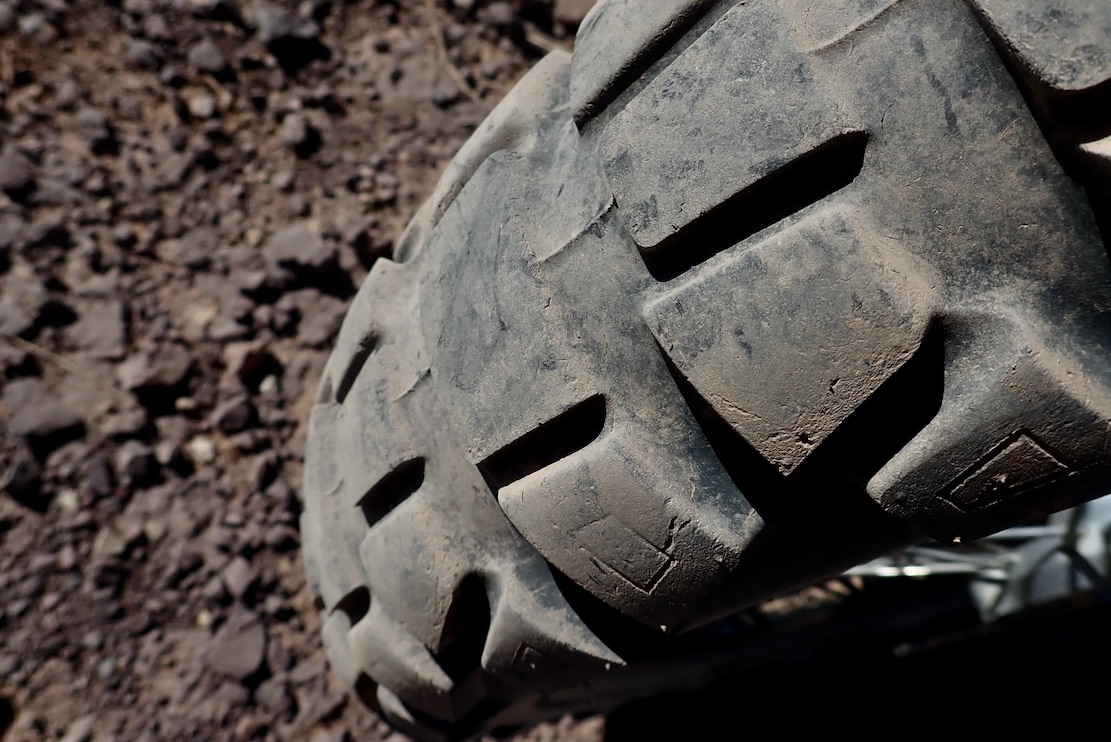
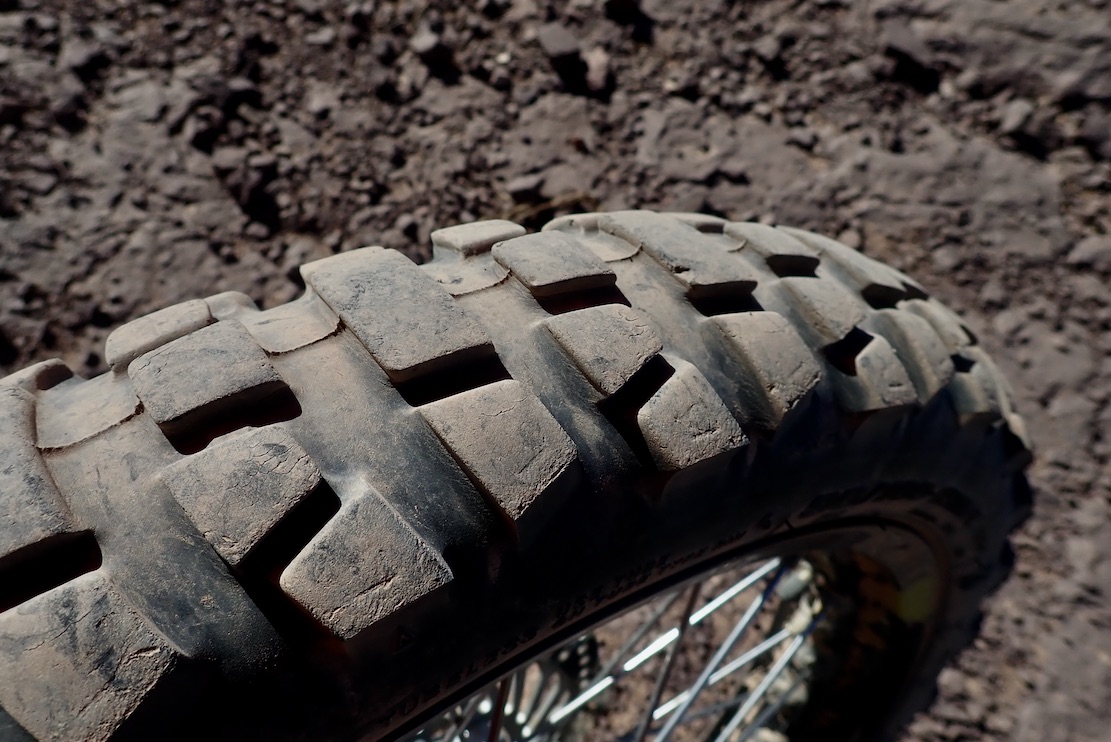
Talking of the Bridgestone AX41s, the rear TL had had it by the time I rolled back into Marrakech, having covered only 7000km or 4400 miles. I ran it at around 25psi, though it would lose about 7-8psi overnight. I went out of my way to select a tyre of identical width to the stock 18-inch IRC, but next tyre am going fatter all round: a less knobblesome 130 80 17 Mitas E07, partly because that’s the nearest the shop in Morocco can get in TL. It span less readily on loose dirt and certainly rode the roads better, like a 310 with its massive 150 rear. The front AX41 got replaced 2000km later with a bigger 19″ E07. Initially it felt heavier but the bike rode more like a supermoto on the road and is OK on the piste.
Returning in December for a week, I got to the bottom of it. Undertaking day rides, I left my baggage in the hotel (<6kg), but also removed the screen (1.5kg?) with an MRA spoiler. The bike now felt a lot more chuckable and connected. I could even ‘feel’ the 19-inch tyre’s benefits and managed the odd side-slip on the dirt, as on other bikes.
Was it purely height + weight, or also a ‘vision’ thing? Who knows, but after a week I refitted the screen and all my clobber for the ride back to Marrakech over Jebel Saghro, including a tricky a ‘4WD only’ descent, and the bike felt OK. My parameters had been reset, though I’ll definitely remove the screen again for day rides and even tours. It’s not needed and only takes 5 minutes.
In the late 70s I remember my 900SS was mysteriously transformed once I removed the half fairing. On that bike it was definitely about being able to see the front wheel (or just the front) directly, a bit like a forward control (‘cab over’) vehicle like a a VW Kombi or my old 101.

Ditching what little overnight baggage I carry certainly helped (and no tailpack made swinging the leg over so much easier), but removing the screen turned the 300L to what I’d expect: a fun, nippy, lightweight trail bike.
And yet every bike I’ve had for the last 15 years has had a screen of some sort, including the 250L (a plain, light Slipstream windshield which I reused on several later bikes). With the 300L I think it was a cumulative amassing of stuff, not just the screen, but the bigger tank, heavy radiator bars with side bags, handguards, tankbag, GPS, breakfast. From the Mototek crashbars upwards, and with a full tank, that’s up to 18kg of added mass over a stock 300L all up on the front, or way over 10% of the bike’s stock weight. Too much.
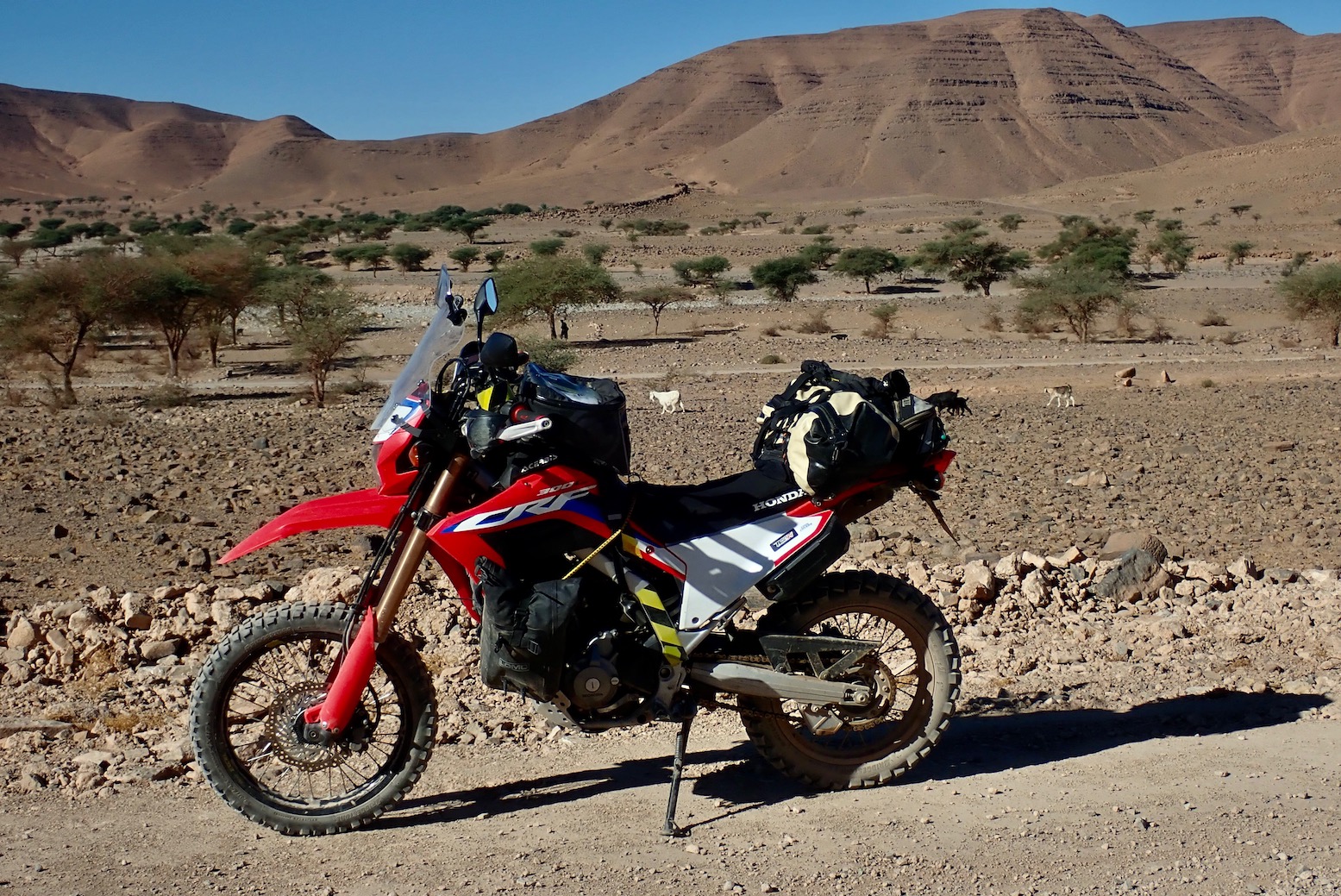
With that sorted, it’s only really comfort that holds me back, not helped by the fact that my knees are going (or are having a bad year). I’ve always been a lazy ‘sit when you can; stand when you must’ rider, but now I’m less able to hop onto the pegs or even just weight the footrests like I ought to to spare the hit when crossing a run-off ditch. Standing up is actually a good stance (compared to a 310GS), with knees pressing into the cushy sides of the seat just like they should. There’s a bit of a stoop for me (6′ 1″) at the bars, but that’s without any risers that I usually have to fit.

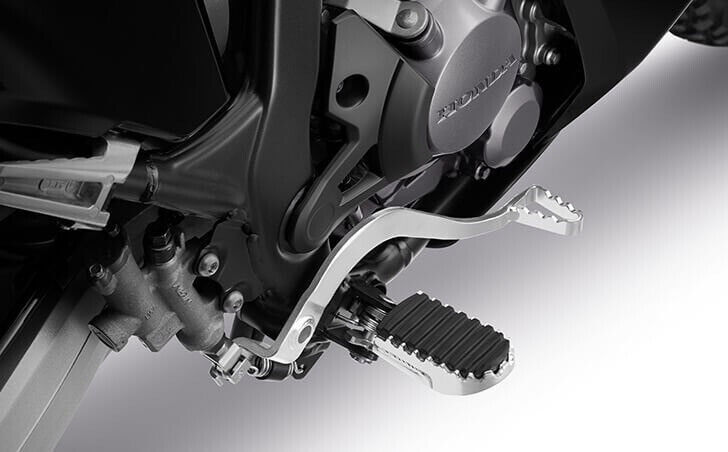
I do stand up on smoother terrain at the end of a ride to revive the backside and stretch out, but find, even in my TCX dirt boots, that my insteps ache after 20 minutes. Fitting wider footrests is something I overlooked in the prep, I now realise. Africa Twin Rally footrests fit right on they say, and have a third bar to support the load, but I bet other pegs fit too. The cheapest AT pegs I found were £80 on ebay, with DRC, or similar but unbranded Chinese alloys, costing around £50. Then I realised that replacing the missing footrest rubbers for 20 quid a pair will probably have the same effect, but same soreness so must be much TCX boots.


On the dirt I wouldn’t want any more weight nor need more power, but would love an inch less height for what I do. In the US (and maybe elsewhere one day) they now offer a 300LS, with inch less suspension and an inch less in the seat. For those without a calculator to hand, that’s two inches lower seat height.
The 300LS should have been the stock 300 back in 2021, with an ‘HS’ option for the lanky hardcore. Over ten inches of travel is excessive for a trail bike like the L; the CoG is too high making it twitchy, and it discourages ownership by less tall folk. I’ve never came close to hitting the bashplate which could easily be 2 inches lower, as on the LS. Honda could even take another inch out of the springs and put some padding back on the saddle where it’s still needed.
It’s a shame the TracTive shock from Rally Raid isn’t length-adjustable like the Wilbers on my XSR700 or YSS on the Him, though of course there’s nothing to stop me fitting a lowering Kouba Link (or similar knock off), then raising the forks in the clamps some more. In fact I have talked myself into trying just that for the next lap.

There were some long spells of oued paddling (too loose or rocky to ride) at which time the low first gear was just right, ticking over at 2mph or so, with no need to feather the clutch. But as mentioned, my speedo read-out was way out until I fitted a fatter Mitas when it went back to stock 8% error.

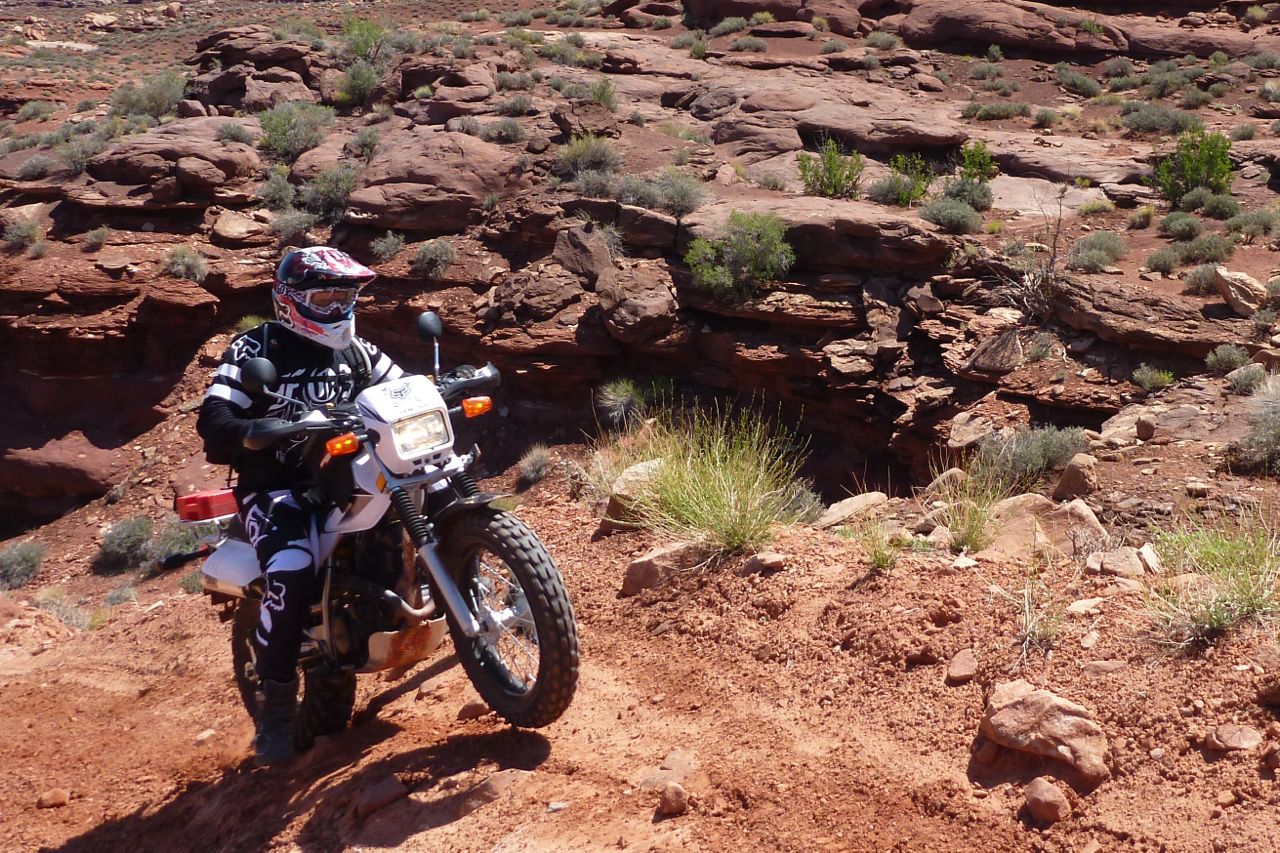
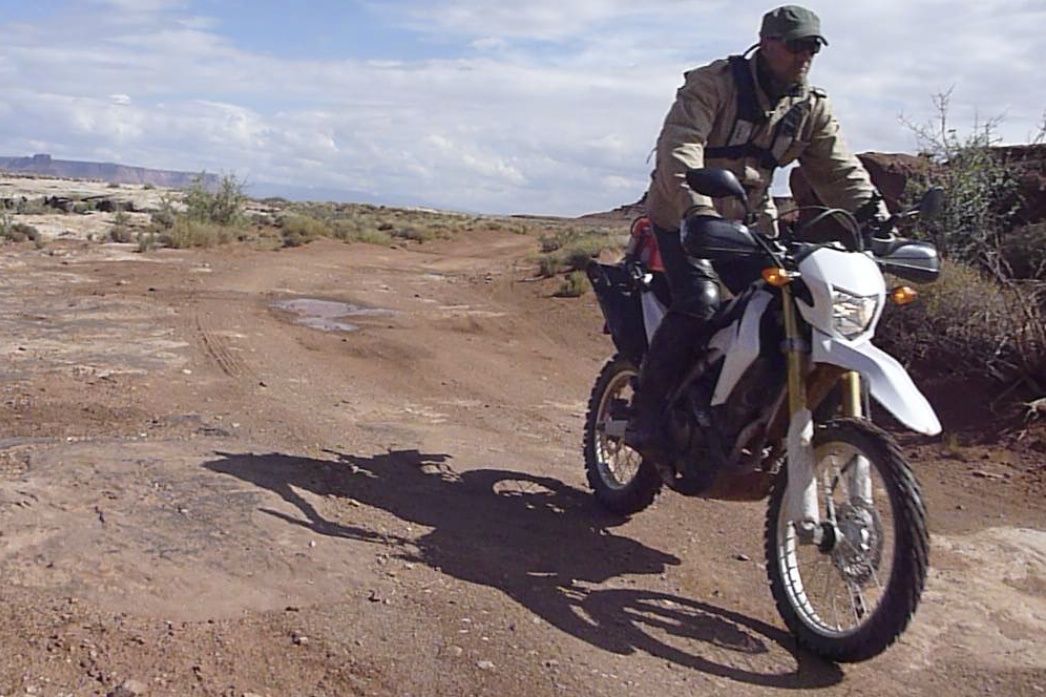
All in all, while the 300L was a great deal and is making my task out there easy, I’m at an age where I want a lower saddle alongside the low weight to be able to chuck it about with greater confidence, and get on and off without scuffing the saddle with a boot. I’ve matured into one of those old guys I met on my 250L in Canyonlands 10 years ago who’d ditched their KTMs for TW200s (left). Plus I’d like more day-long comfort, like a 310GS, though am not sure I’ll ever get it. All this holds back the fun of being on a planted bike like the 400 Himalayan.

On one of the tours one of the riders who owned a 450L wanted to try my adapted 300L, so I hopped on his rental 310GS. What a great bike that was, and not just the cushy, full-width saddle! Something about the steering also felt just right (this was before my de-screened epiphany). He also thought my 300 was off, and put it down to the 19-inch conversion. As John M at Rally Raid will tell you, the 310 (especially with his RR mods) is a much under-rated bike, though he rides a low-wheel 300L too.


Of course I never expected a 27-hp 300 to be the long sought after do-it-all travel bike. That machine is more likely to be a twin or single around the 450cc mark, like the forthcoming CFMoto 450T or the Himalayan 450. I bought the more dirt-focussed CRF for the specific purpose of bagging pistes in southern Morocco while leading a few tours. I could’ve saved myself the transit costs by hiring a 310GS, but the Rally Raid sprung 300L is a better ride off road, especially if you don’t know what’s ahead. And anyway, I wanted to try the popular 300L, and can’t wait to do another couple of months riding in Morocco. The long ride back to northern Spain in late March, not so much.

Coulda, Shoulda, Woulda.
Next time I will…
- Not rush the DIY tubeless sealing, or just cough up for CWC Airtight.
- Get the Adv Spec radiator brace instead of the heavy Outback Mototeks and find a way of hanging the side bags off the tank to cushion the rads in a fall
- Hardwire in the GPS, then [buy] a proper USB plug, not the unreliable cigarette-bodge
- Leave the Cycle Pump at home and rely on the handheld USB pump
- Try some Moto Skivvies for long runs
- Get a Rally Raid HPA for the shock
- Try a lowering link





 Adventure Motorcycling Handbook