While scanning aerial mapping for new pistes in Morocco’s High Atlas I came across an intriguing possibility. A seemingly good track lead 25km off the N9 highway to the 2500-mTizi Telouet pass on the High Atlas watershed (31.3372, -7.2663), a few miles east of the famous Tichka pass on the N9 trans Atlas. From that point southwards the way ahead became an obliterated mule path, but picked up rideable terrain in just two kilometres, with Telouet town visible nearby. Downhill on a light bike, walking where necessary, it might be doable, no? ‘Who wants to go first?’, I quipped on Twitter.
Like the grand old Duke of York and his 10,000 men, a column of pylons marches up and over the col, bound for the massive Nour solar plant, 50km away near Ouarzazate. You’d assume some sort of vehicle crawled over the slope to erect those pylons, but no service track is evident on the south side. Still, at the very least, riding the switchbacks up to the col for a quick look should be possible.
I mentioned this recce to a mate who’ll join me out there next week. He soon found some Spanish KTM-ers behind a YT channel called Enduro Aventura. They pulled off the Tizi Telouet descent (and a whole lot more) in 2002, filmed it all and capped it off with a tracklog on Wikiloc, classified as ‘Very Difficult’. They call the Tizi Telouet ‘Collado Torretas’ or ‘tower/pylon col’? They confirm ‘the north face has been fixed with a track with a thousand curves and somewhat broken by the rain‘ but continue… ‘thesouth face on the way to Telouet is a narrow and broken trail with a lot of stones… This hill [trail] seems to be disappearing…‘. They speculate that the truncated northside track suggests a new road might get put in, but I’ve found tracks or roads often come to a dead halt at provincial boundaries, which this watershed is. The col was just an efficient direct route for the power cables from Nour to Marrakech.
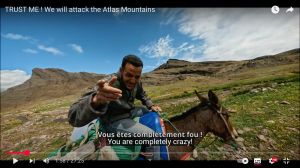
Their 80-minute vid below is timed to start at the Collado Torretas stage (just a few minutes). It’s soon turns gnarly af (stills above). But scan any other random minute in their vid and you’ll see just what light and lightly-loaded KTMs (including 2T) can achieve off-road in the hands of a fit and determined crew. You’ll be staggered to see what these guys blithely ride over. Chapeau to Enduro Aventura I say! The Men who Ride like Goats. Me, I’ll take the long way round.
Fast forward to midsummer 2025, and Kriega have released a film of two guys riding over-bored, early 1980s Honda 125s on the even more sketchy Yagour Plateau, west of the Tichka pass, towards Toubkal mountain. Trust Me? Thanks, maybe I’ll pass.
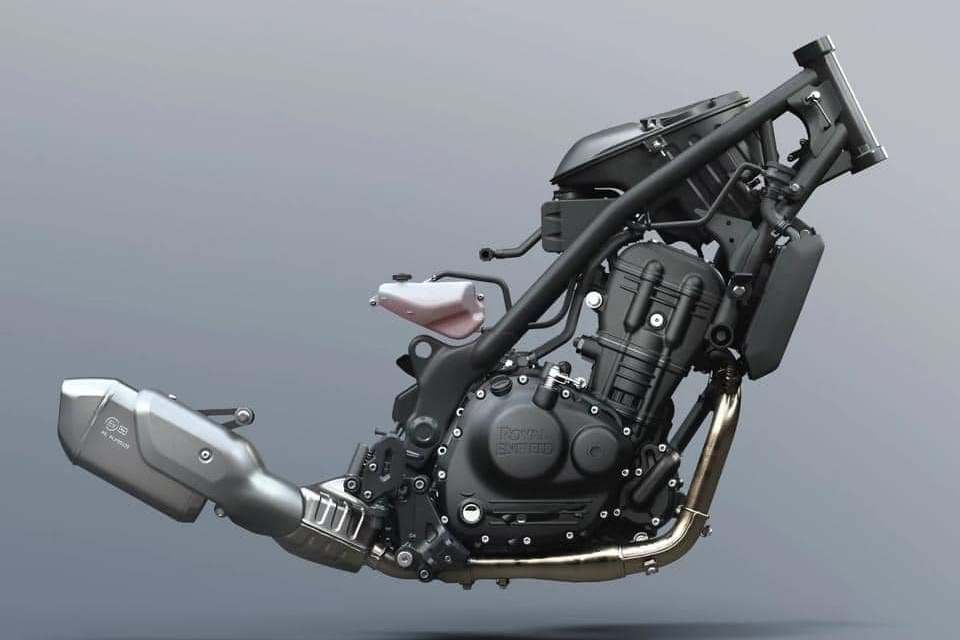
Royal Enfield scored an unexpected success with 2016’s Himalayan 410, selling some 200,000 units worldwide. Despite early issues, a 23-hp, 200-kilo, air-cooled single worked for many people, including me. Now they’ve responded with a load more power from the modern, higher-revving, 6-speed, 11.5:1, DOHC, water-cooled Sherpa 452cc motor.
New DOHC Sherpa 452; 10kg lighter than the 410LS
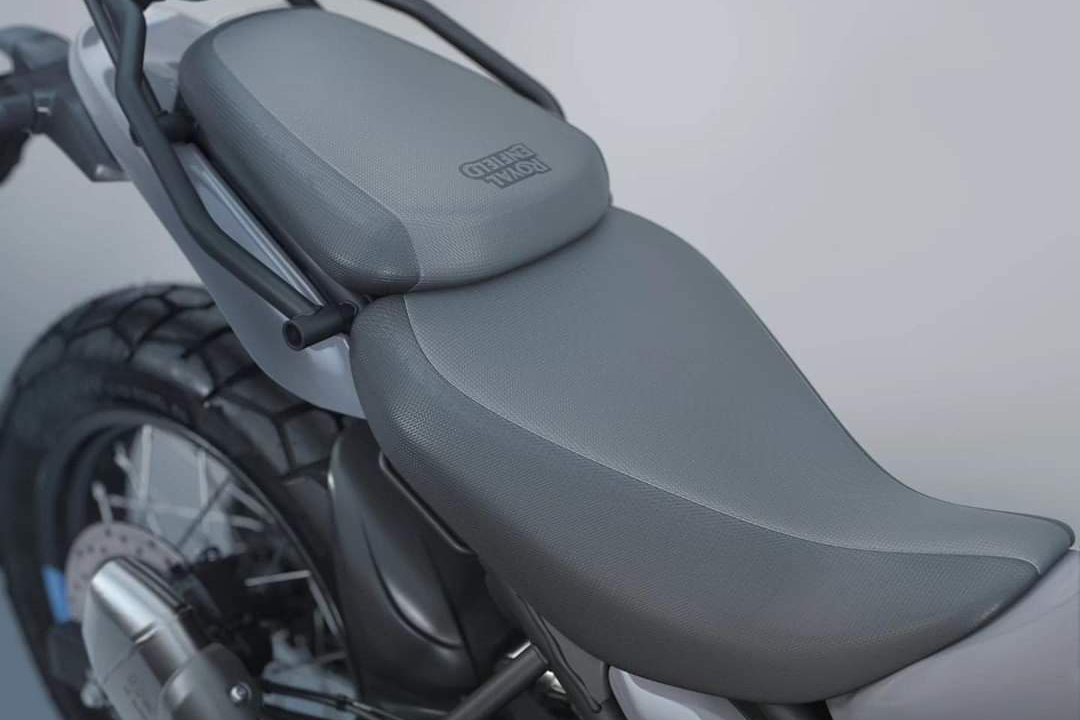
Claimed weight of the bike is still around 195kg tanked up, but that’s with an extra 2 litres of fuel and the same screen, tank bars, tail rack and centre stand. Though an inch higher, the stock adjustable saddle remains low at 825/845mm (32.5″/33.3″), with an even lower 805/825mm option. RE gets it with the Him; leave the yard-high seats to 690s and clowns on unicycles.
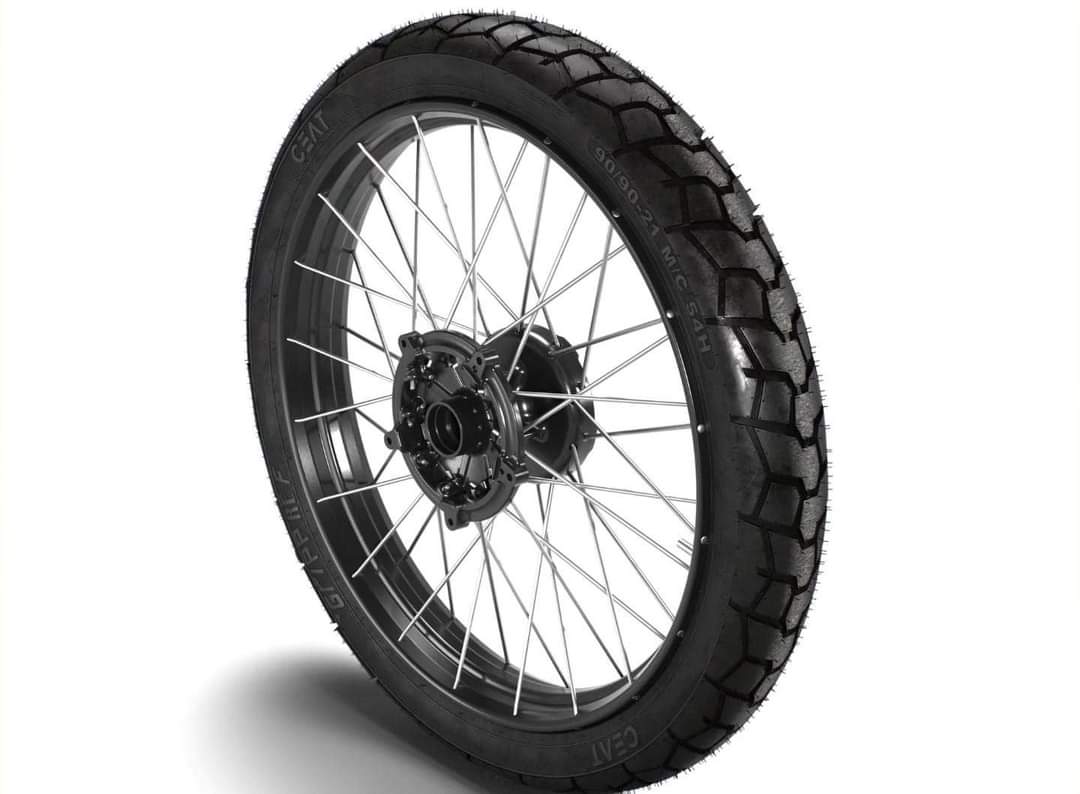
There’ll even be optional tubeless spoked rims. Again RE responds by offering what some real-world riders want: the confidence that roadside flats can be fixed quickly and easily. And unlike the steel rims on the 410, wheels are now alloy, though weight wise, you may find there’s only about 10% in it.
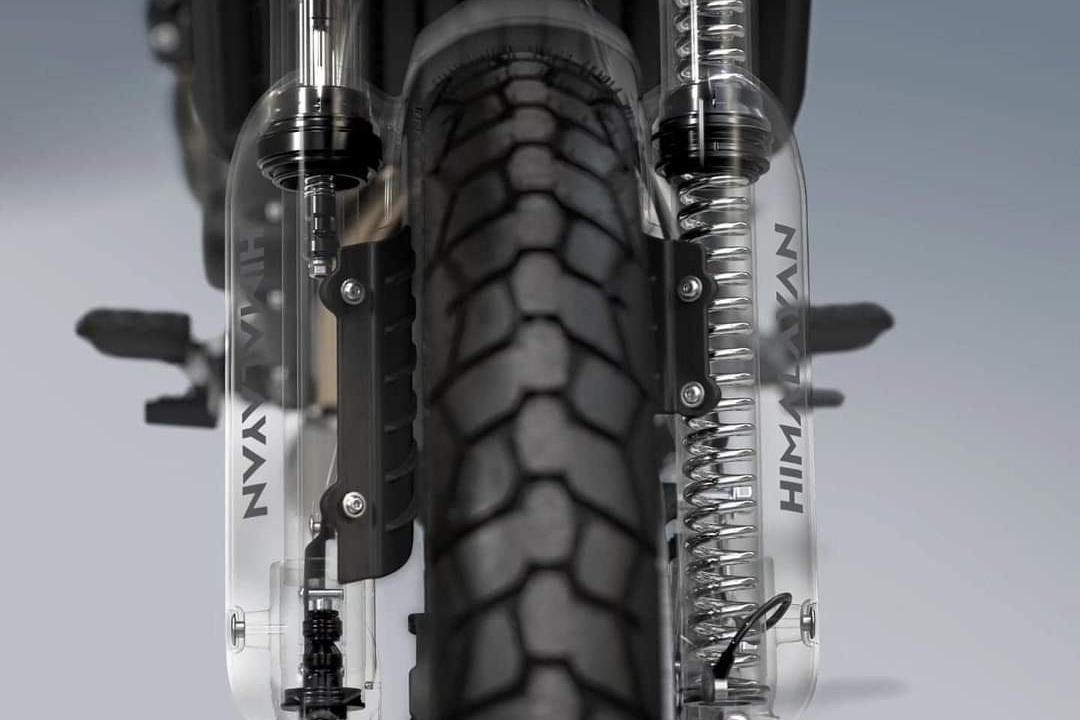
Easy to preload shockCartridge USD forks
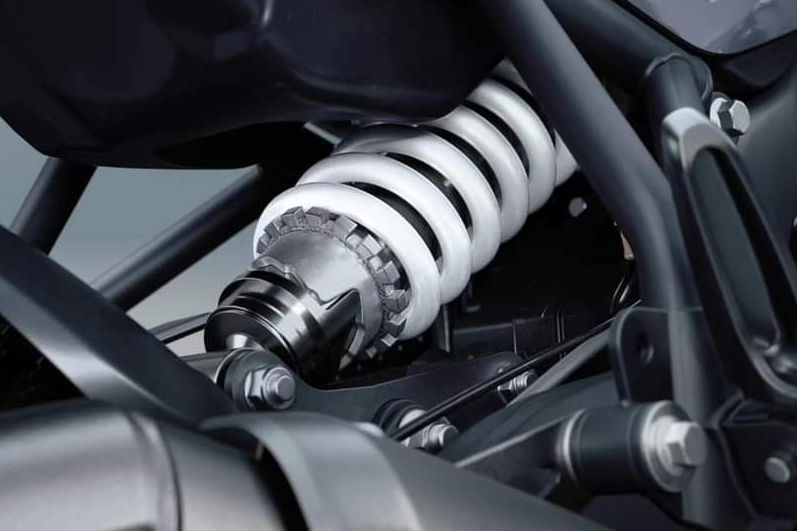
Suspension is in the same 200-mil ballpark too, but with USD cartridge Showas up front and a link-less shock with easy preload adjustment access. Neither have damping adjustments, but presumably there’s a benefit to cartridge forks. I forget what it is, exactly.
All change please
‘We change’ The 410’s air-cooled appeal lay in its plodding motor combined with a low centre of gravity. Experienced or newb, it made the original Him easy and fun to ride, despite the tedious 3000-mile valve checks (450: 6000m). It’s hard to think the new 450 will match the 410’s characteristics, including the low-slung weight [actually it does], even if it’s said ‘90% of the extra torque is available at 3000rpm’. You often read claims like that, but it’s very unlikely the higher-revving 452 will have the tractor-like chug of the long-stroke 410 which made it so satisfying on backroads and easy trails. As a road bike, the new 450 will be a whole lot better.
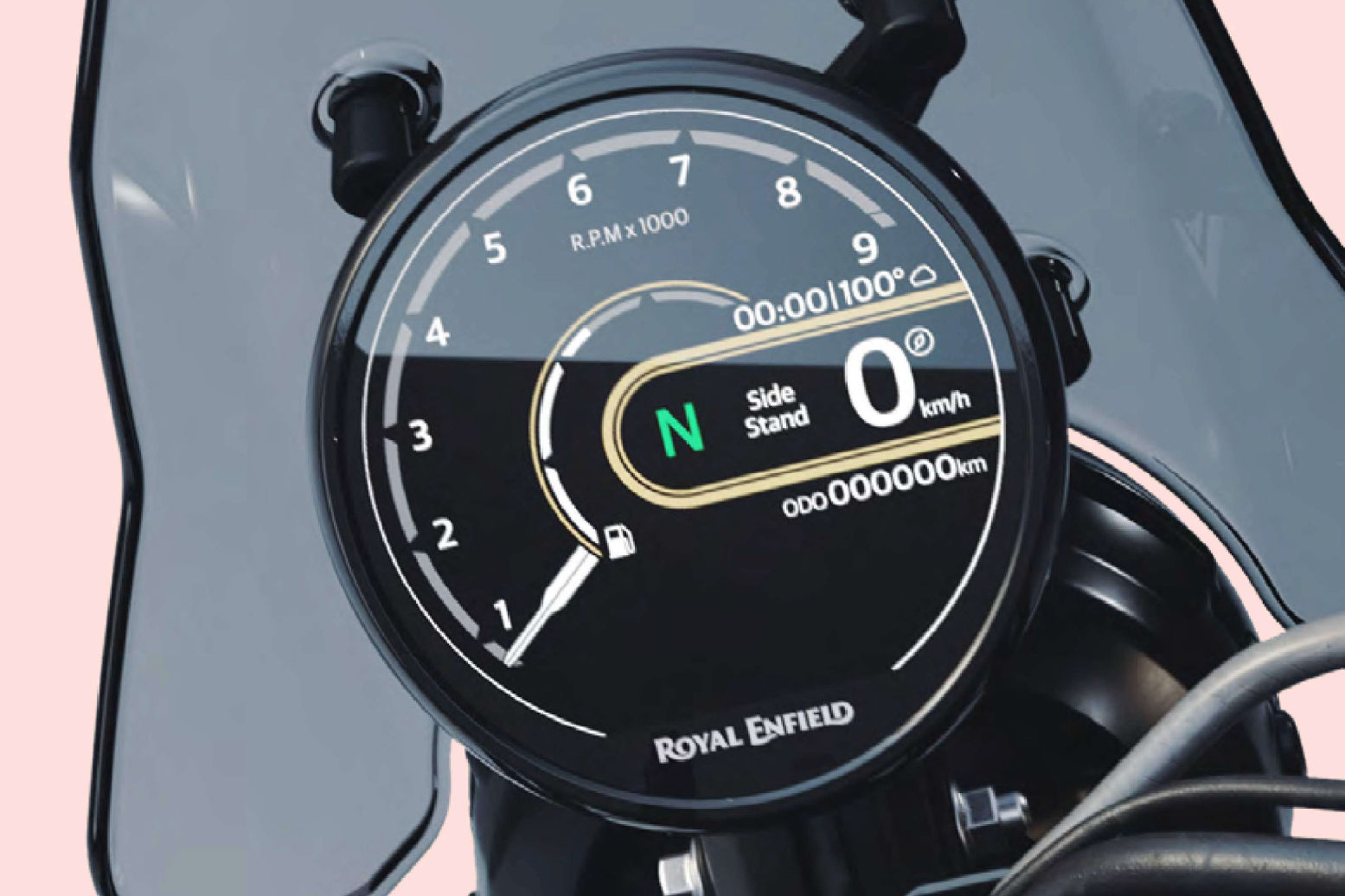
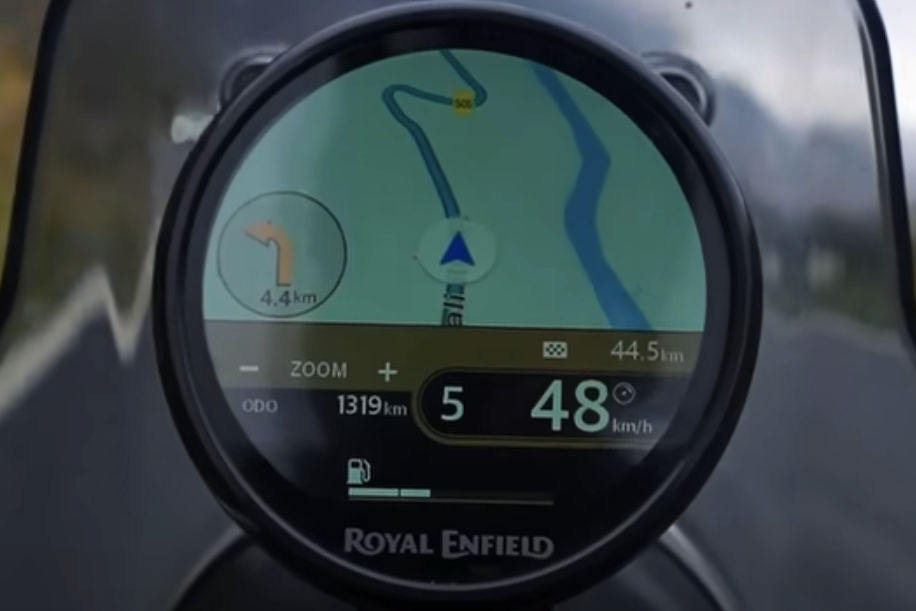
The round, 5-inch TFT, Tripper Dash is another big improvement over the 410’s dial, looks clear and has a good range of info across various toggle-able screens. But I’m not convinced by the integration with Google Maps when it comes to serious exploring as opposed to basic road nav.
Photo: MCN video still
The idea is it replaces your vulnerable [Android only] smartphone which still needs to be in your pocket and paired to the display via wi-fi and using an RE app and plugged in. Afaict, the Tripper is merely displaying a simplified version of GM to suit the bike’s round display. And will a map downloaded in the phone for offline (no 4G) use display on the Tripper? I doubt it. I’ve read these in-built, phone-pairable nav systems aren’t always so seamless or versatile. But I’ve never actually used G Maps or even a smartphone for moto nav either. Anyway, if the Tripper proves to be an unworkable backcountry navigator, just revert to a cheap Android phone, a bigger tablet or handheld GPS, all with more readable and free OSM mapping.
Photo: MCN video still
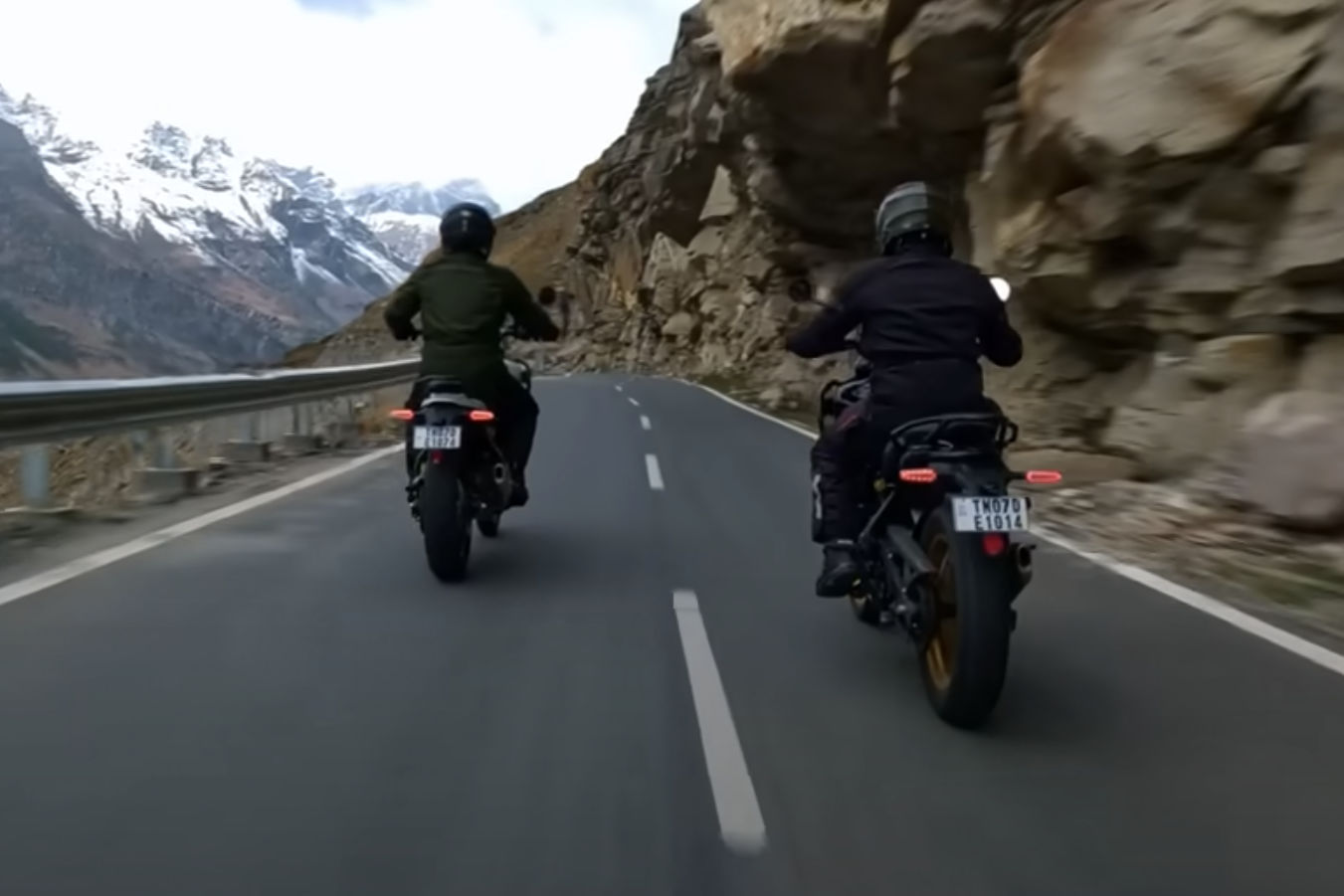
The 40-hp bike also comes with a somewhat superfluous Eco mode (unless economy really does leap up), switchable ABS (another thing I never switch off), and LED lighting. There’s no rear light (left); it’s integrated into the LED indicators. Not seen that before but I can tell you it actually works quite well. Just the other day I was noticed how car tail lights have all gone freestyle.
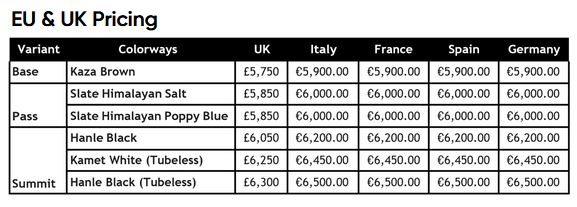
The only other fly in my soup is the design and paint choices; not as cool as the original 410 Him. They say bikes will be in UK shops in April 2024 from £5700 depending on colour choice, and from £6250 for tubeless spoked wheels. With the 410 now at £5050, that’s a great price. As the bike’s are bound to be so different, you do hope they’ll keep selling the air-cooled Himalayan. After years, bikes like 2024’s CFMoto 450MT and even the Triumph 400X, are opening up the 400cc Adv class alongside KTM’s decade-old 390. Newsflash! It’s spring 2025! Read my Him 450 review.
In a Line Light enough to tackle any trail I dare, but too tall and uncomfortable as a do-it-all travel bike for most.
Rally Raid suspension
Great range with Acerbis tank
19-inch front wheel conversion
Screen with MRA lip
You know it will start and run like clockwork
Inexpensive and easy fit NiceCNC lowering link
Weighs about 162kg tanked up and with all the gear
Needs loads of add-ons to make it a functional traveller
For a trail bike, stock 894mm seat height is ridiculous
Negligible power increase over CRF250L
Seat comfort on long or rough rides
‘Average Mpg’ or ‘remaining fuel level’ read-outs both out by 10%+
Reduced stability with big tank and other add-ons
17-inch rear knocks out speedo accuracy (unless you size up the tyre)
Acerbis fuel cap always cross threads
Front brake is weak
Front brake switch failed ;-O
Negligible lowering with 17/19 wheel combo
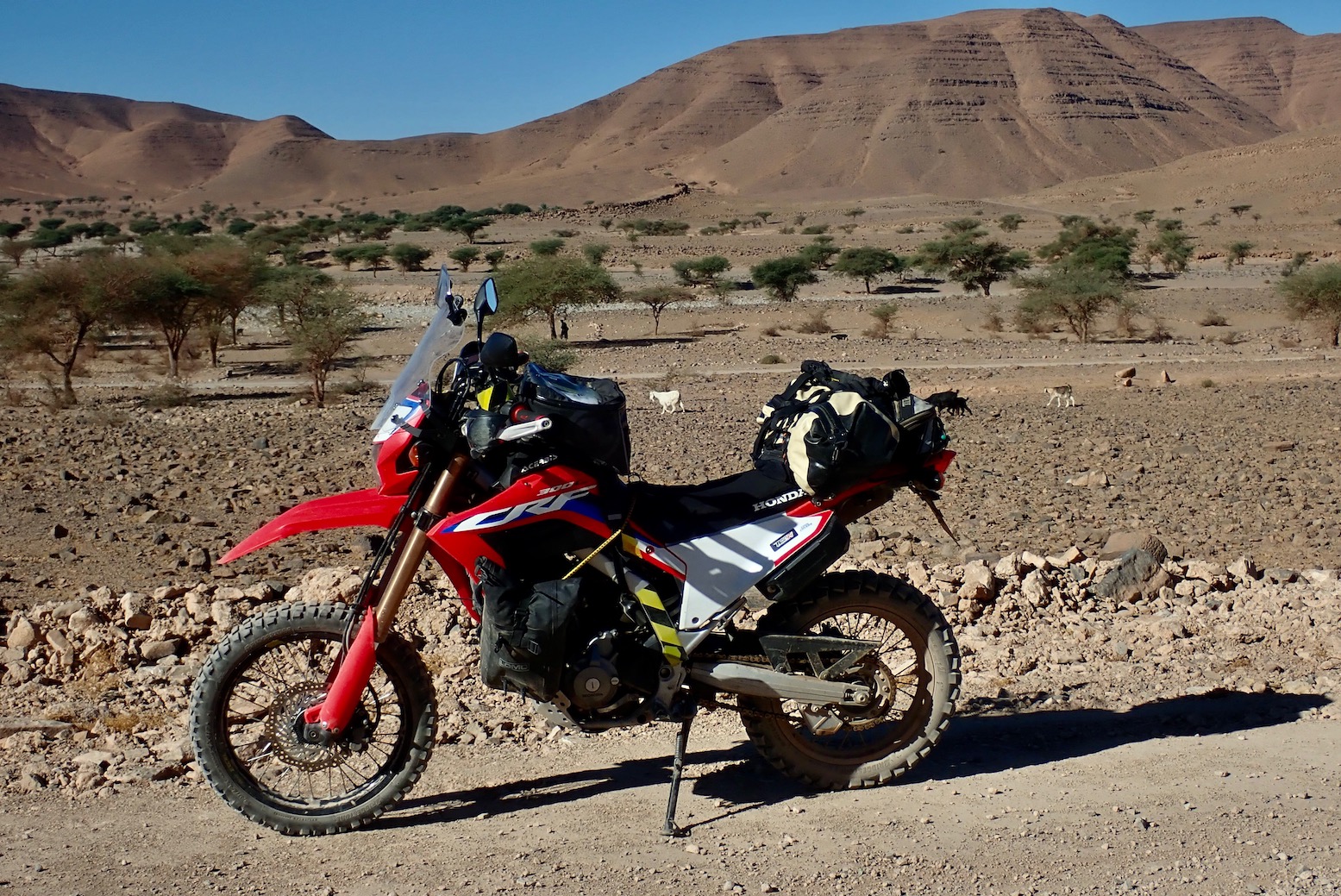
Review October 2023 I got my CRF shipped to southern Spain to leave in Morocco for six months. I flew down to carry on scouting new tracks for my next Morocco route guide, while also leading my one-week tours with 310GSs in between times. I’m not quite finished with the 300L yet, but last week it turned 10,000km (6200 miles). High time to share my impressions after 8 months of riding.
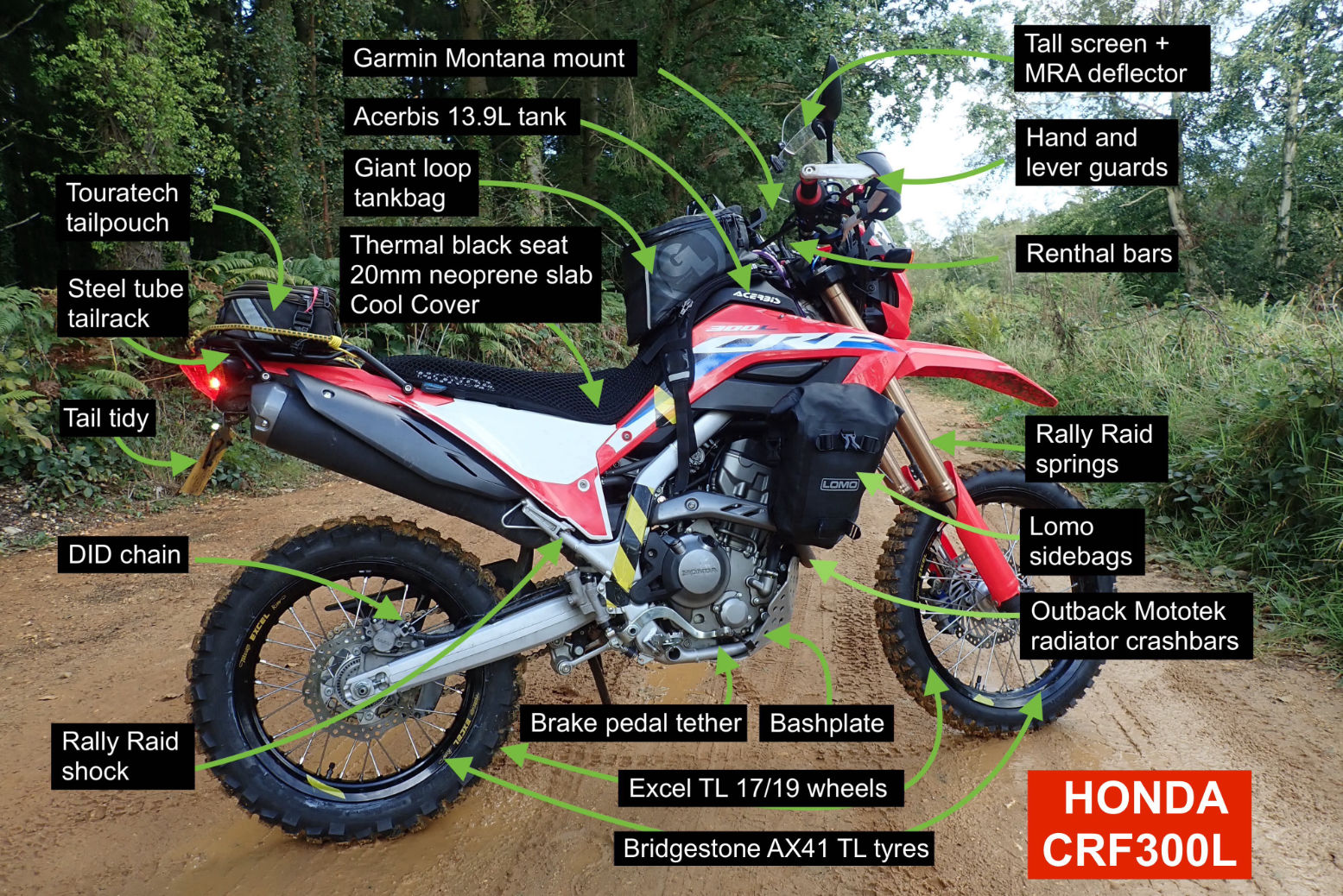
Taking comfort I bought a very well equipped 2021 300L from its second owner with just 1000 miles on the clock. It still needed a bigger tank, radiator protection and tubeless wheels (plus whatever’s shown in the graphic above). The bike came with a lowered seat (read: thinned out). At 34.5″/876mm it was 0.7″/18mm lower than Honda’s claimed OE specs of 35.2″/894mm. I tried to make the thin seat more comfortable by adding a 20mm neoprene pad under a Cool Cover which increased my back end’s mileage. But judged by side stand angle, the 17-inch rear wheel with a stock width AX41 tyre didn’t lower the back noticeably. I then bought a stock black seat (full foam) and, with my added padding, probably went up to 35.7″ or a whopping 907mm. Then one day in Morocco I knew I’d need a low seat for a tough day, so removed the padding and Cool Cover. My backside was pummeled at the end of that 300-km ride, but I never refitted the Cool Cover and kept the neoprene slab held down with a bungy.
Later, I ditched the neoprene too and wore some Moto Skivvies and have settled for these plus opiates on a bare stock seat in a bid to keep it as low- and me as comfortable as possible. It’s still too high for easy mounting/dismounting, though the anterior agony got muted on some days. As we all know, once the drugs wear off, getting off/standing up for just a few minutes can offer respite.
High Atlas near Toubkal
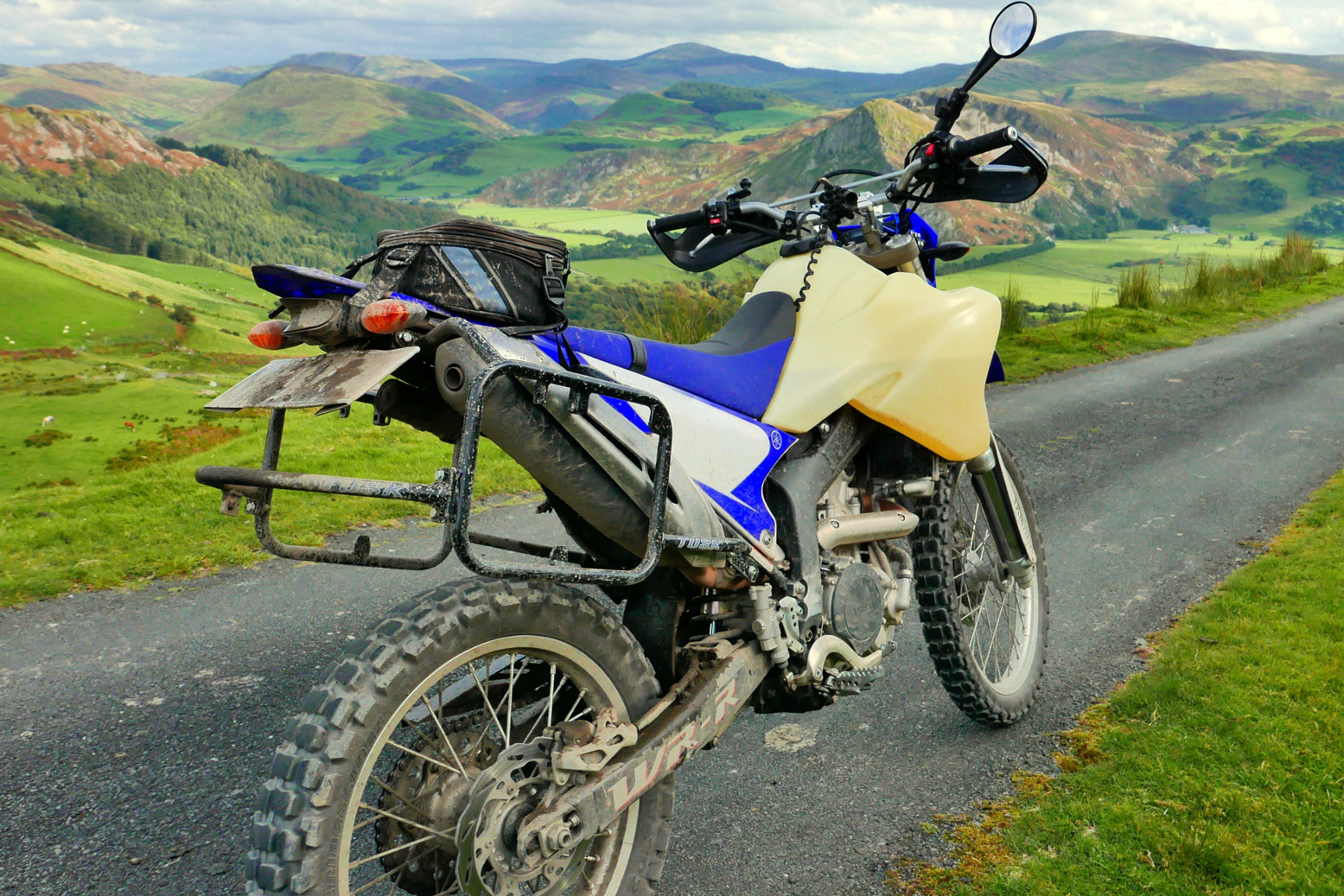
286cc The 300 is only 36.4cc bigger than a 250L when you’d hope that’d be nearer to 50cc. I owned a 250L in the US a decade ago and for what it was (left) enjoyed it greatly. Along with other factors (like the existence of the CBR300R and worldwide >300cc licensing regs), I guess there’s only so much metal in a 250L barrel to bore out. I knew it before I bought it of course – a quick ride of a 300 Rally didn’t set my hair ablaze – but the increase in power on the 300 is negligible. It’s still essentially a ‘250’ with the same-ish 27hp as a WR-R, along with all the inherent benefits and limitations: light enough to tackle or turn around on anything the seat height allows, while being a slog on long uphills or a headwind, plus uncomfortable after more than an hour or two. So not much different to my previous WR250R or KLX250 then. In many ways my less powerful Himalayan 400 suits my ‘old man’s’ riding style better, but was no faster on the road.
The best things about my 300L are the easy 400-km range from the Acerbis tank (despite the maddening cap) and the Rally Raid suspension. While both ends might benefit from a bit of tweaking for my mass, it just works; very occasionally bottoming out at the back and never at the front. After a few weeks in Morocco I thought the rear shock was sagging a bit, raking out the forks and slowing the steering. So, lacking the shock tool, I dropped the clamps around the front forks 5mm to produce the same levelling-off effect, but can’t say it rode any better.
Ten inches of suspension and clearance?! Way higher than it needs to be for most users.
Something’s Off The way I’d set it up something felt off on my bike. For a while I thought it was the tubeless AX41 tyres. No so much the tread pattern which is pretty conventional, but perhaps the added sidewall stiffness in the tubeless carcass, intended for GSs and the like, not dinky ‘250s’ weighing 100 kilos less. Airing down to as much as 20psi didn’t help. Then I tried dropping the forks 5mm, as mentioned; no noticeable change. So was it a high CoG, especially with a full 14 litres on board and exacerbated by the tall screen, radiator bars with side bags and so on? It certainly felt less stable tanked up, but no more than you’d expect. I tried to avoid setting off for potentially tricky unknown tracks with a full tank. I even blamed the hefty Outback Mototek rad bars, but while heavy, they’re actually set pretty low down.
17/19 wheels. Was it worth it? My main motivation was to convert the stock wheels to tubeless, not have smaller wheels. I knew the stock front 21 rim wouldn’t have the required ‘MT’ safety lips. As MT 21s are rare anyway, I thought I may as well try a 19 as an experiment; it’s a better all-round travel size and there’s more tubeless tyre choice. Then it turned out the rear 18 wasn’t MT either, so I may as well try a 17 which also offers greater do-it-all travel tyre choice and might even lower the bike. Note: fitting a 17 raises the gearing a bit – you won’t pull away in 2nd so often. But it also throws the speedo out from ~8 to 14%. You’re going a lot slower than the speedo indicates and may want a DRD or similar black box to correct it. But: fitting an oversized Mitas E07 at 10,400km put the speedo error back in the ~8% ballpark. DRD not needed. I rushed the original job and had a manageable slow leak from the 17 and a meltdown on the 19 front arriving in hot Marrakech (fitted a tube). But the 21 I left at home has held its air fine for months. In Marrakech the mechanic re-sealed the rear in between my trips, cleaning then applying a continuous band of Puraflex. He then did the same to my 19 front and both hold air fine now. Summary: technique works if you take your time and allow a day or two of curing. All done, the bike was barely lower and, as mentioned below, the 19’s benefits only became evident with the screen removed. Obviously, I can’t tell a 17 from an 18 on the back, but running a front 19, at the donkey speeds I ride at I can’t say I noticed any detrimental effects on the dirt over a 21. Crossing gravelly oueds, I did try riding feet-up, but the front soon tucked in and deflected, as you’d expect. Through thick bull dust same thing: go deep and the wheel folds. So much for improved flotation from the fatter front: you need to attack such crossings with momentum to push the front through (see AMH8, p205), while wrangling the bucking bike and spinning back end. We know how that can end, so I often paddle like a duck. Bend swinging on the road the AX41’s ‘50% vacant’ contact patch held me back, but I did perceive – or persuaded myself – the 19 tracked better through bends than a 21 would. Occasionally banked over it would twitch, but the asphalt surface is rarely pristine and debris-free in Morocco. So 19: no difference over a 21 on dry, loose dirt at trail riding speeds. Deep sand, mud ruts and snow may be different. On dry asphalt it corners with more perceived confidence, depending on tyres and minimal CoG interference.
Rear at about 6000kmFront
Talking of the Bridgestone AX41s, the rear TL had had it by the time I rolled back into Marrakech, having covered only 7000km or 4400 miles. I ran it at around 25psi, though it would lose about 7-8psi overnight. I went out of my way to select a tyre of identical width to the stock 18-inch IRC, but next tyre am going fatter all round: a less knobblesome 130 80 17 Mitas E07, partly because that’s the nearest the shop in Morocco can get in TL. It span less readily on loose dirt and certainly rode the roads better, like a 310 with its massive 150 rear. The front AX41 got replaced 2000km later with a bigger 19″ E07. Initially it felt heavier but the bike rode more like a supermoto on the road and is OK on the piste.
Returning in December for a week, I got to the bottom of it. Undertaking day rides, I left my baggage in the hotel (<6kg), but also removed the screen (1.5kg?) with an MRA spoiler. The bike now felt a lot more chuckable and connected. I could even ‘feel’ the 19-inch tyre’s benefits and managed the odd side-slip on the dirt, as on other bikes. Was it purely height + weight, or also a ‘vision’ thing? Who knows, but after a week I refitted the screen and all my clobber for the ride back to Marrakech over Jebel Saghro, including a tricky a ‘4WD only’ descent, and the bike felt OK. My parameters had been reset, though I’ll definitely remove the screen again for day rides and even tours. It’s not needed and only takes 5 minutes.
In the late 70s I remember my 900SS was mysteriously transformed once I removed the half fairing. On that bike it was definitely about being able to see the front wheel (or just the front) directly, a bit like a forward control (‘cab over’) vehicle like a a VW Kombi or my old 101.
Ditching what little overnight baggage I carry certainly helped (and no tailpack made swinging the leg over so much easier), but removing the screen turned the 300L to what I’d expect: a fun, nippy, lightweight trail bike. And yet every bike I’ve had for the last 15 years has had a screen of some sort, including the 250L (a plain, light Slipstream windshield which I reused on several later bikes). With the 300L I think it was a cumulative amassing of stuff, not just the screen, but the bigger tank, heavy radiator bars with side bags, handguards, tankbag, GPS, breakfast. From the Mototek crashbars upwards, and with a full tank, that’s up to 18kg of added mass over a stock 300L all up on the front, or way over 10% of the bike’s stock weight. Too much.
With that sorted, it’s only really comfort that holds me back, not helped by the fact that my knees are going (or are having a bad year). I’ve always been a lazy ‘sit when you can; stand when you must’ rider, but now I’m less able to hop onto the pegs or even just weight the footrests like I ought to to spare the hit when crossing a run-off ditch. Standing up is actually a good stance (compared to a 310GS), with knees pressing into the cushy sides of the seat just like they should. There’s a bit of a stoop for me (6′ 1″) at the bars, but that’s without any risers that I usually have to fit.
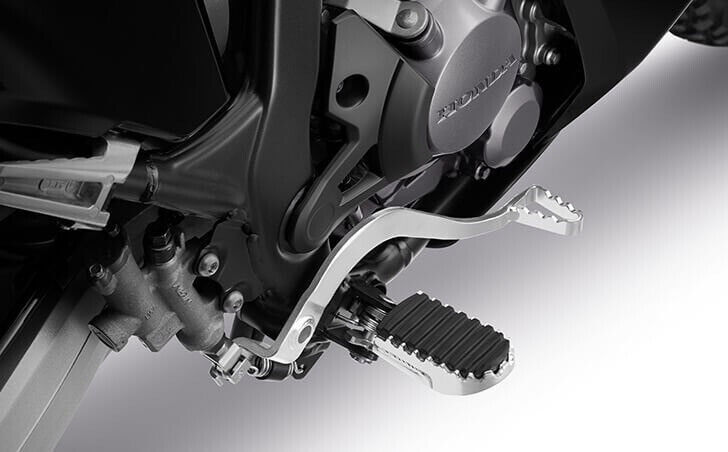
I do stand up on smoother terrain at the end of a ride to revive the backside and stretch out, but find, even in my TCX dirt boots, that my insteps ache after 20 minutes. Fitting wider footrests is something I overlooked in the prep, I now realise. Africa Twin Rally footrests fit right on they say, and have a third bar to support the load, but I bet other pegs fit too. The cheapest AT pegs I found were £80 on ebay, with DRC, or similar but unbranded Chinese alloys, costing around £50. Then I realised that replacing the missing footrest rubbers for 20 quid a pair will probably have the same effect, but same soreness so must be much TCX boots.
AT pegs; more support but £££Stock rubbers: £20
300LS – a lot lower
On the dirt I wouldn’t want any more weight nor need more power, but would love an inch less height for what I do. In the US (and maybe elsewhere one day) they now offer a 300LS, with inch less suspension and an inch less in the seat. For those without a calculator to hand, that’s two inches lower seat height. The 300LS should have been the stock 300 back in 2021, with an ‘HS’ option for the lanky hardcore. Over ten inches of travel is excessive for a trail bike like the L; the CoG is too high making it twitchy, and it discourages ownership by less tall folk. I’ve never came close to hitting the bashplate which could easily be 2 inches lower, as on the LS. Honda could even take another inch out of the springs and put some padding back on the saddle where it’s still needed. It’s a shame the TracTive shock from Rally Raid isn’t length-adjustable like the Wilbers on my XSR700 or YSS on the Him, though of course there’s nothing to stop me fitting a lowering Kouba Link (or similar knock off), then raising the forks in the clamps some more. In fact I have talked myself into trying just that for the next lap.
There were some long spells of oued paddling (too loose or rocky to ride) at which time the low first gear was just right, ticking over at 2mph or so, with no need to feather the clutch. But as mentioned, my speedo read-out was way out until I fitted a fatter Mitas when it went back to stock 8% error.
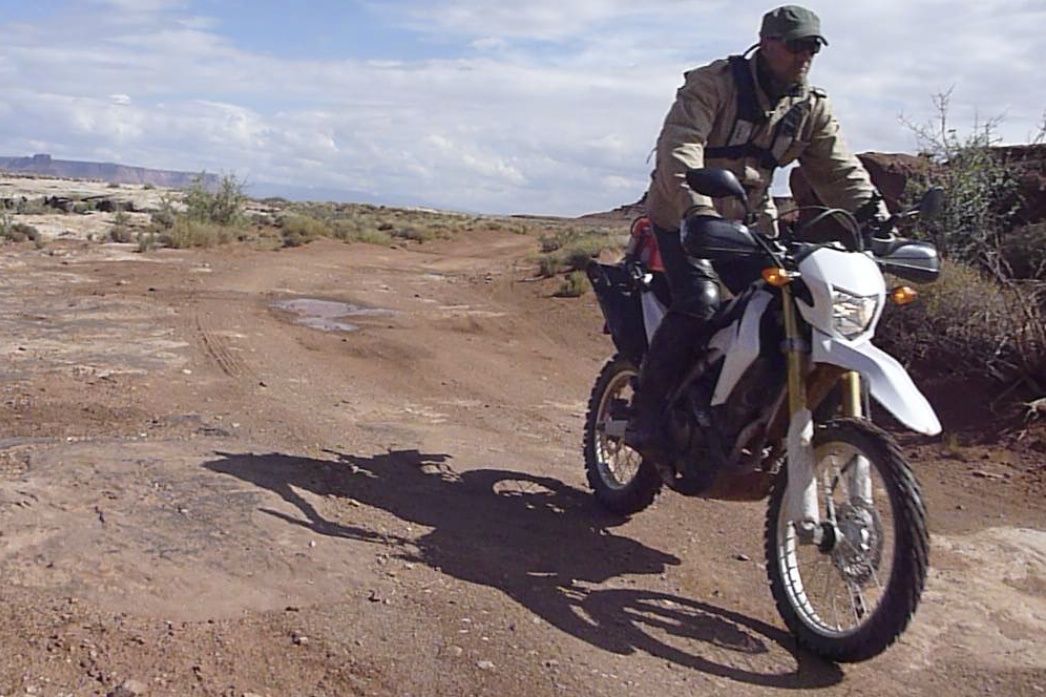
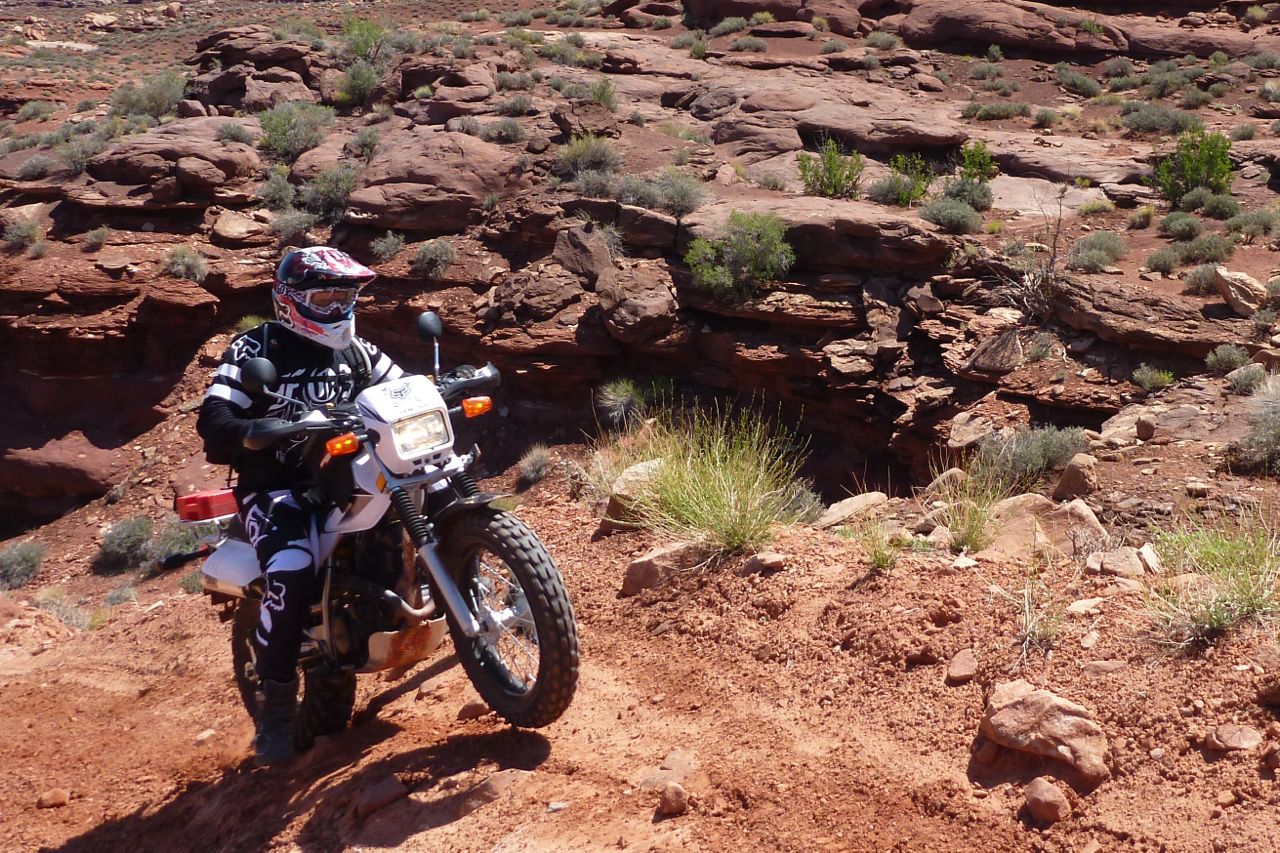
All in all, while the 300L was a great deal and is making my task out there easy, I’m at an age where I want a lower saddle alongside the low weight to be able to chuck it about with greater confidence, and get on and off without scuffing the saddle with a boot. I’ve matured into one of those old guys I met on my 250L in Canyonlands 10 years ago who’d ditched their KTMs for TW200s (left). Plus I’d like more day-long comfort, like a 310GS, though am not sure I’ll ever get it. All this holds back the fun of being on a planted bike like the 400 Himalayan.
On one of the tours one of the riders who owned a 450L wanted to try my adapted 300L, so I hopped on his rental 310GS. What a great bike that was, and not just the cushy, full-width saddle! Something about the steering also felt just right (this was before my de-screened epiphany). He also thought my 300 was off, and put it down to the 19-inch conversion. As John M at Rally Raid will tell you, the 310 (especially with his RR mods) is a much under-rated bike, though he rides a low-wheel 300L too.
Snatchy throttle? Can’t say I’ve noticed by found this tip on Advrider.
Of course I never expected a 27-hp 300 to be the long sought after do-it-all travel bike. That machine is more likely to be a twin or single around the 450cc mark, like the forthcoming CFMoto 450T or the Himalayan 450. I bought the more dirt-focussed CRF for the specific purpose of bagging pistes in southern Morocco while leading a few tours. I could’ve saved myself the transit costs by hiring a 310GS, but the Rally Raid sprung 300L is a better ride off road, especially if you don’t know what’s ahead. And anyway, I wanted to try the popular 300L, and can’t wait to do another couple of months riding in Morocco. The long ride back to northern Spain in late March, not so much.
Coulda, Shoulda, Woulda. Next time I will…
Not rush the DIY tubeless sealing, or just cough up for CWC Airtight.
Get the Adv Spec radiator brace instead of the heavy Outback Mototeks and find a way of hanging the side bags off the tank to cushion the rads in a fall
Hardwire in the GPS, then [buy] a proper USB plug, not the unreliable cigarette-bodge
Leave the Cycle Pump at home and rely on the handheld USB pump
Not all of it bought this year, but all of it used.
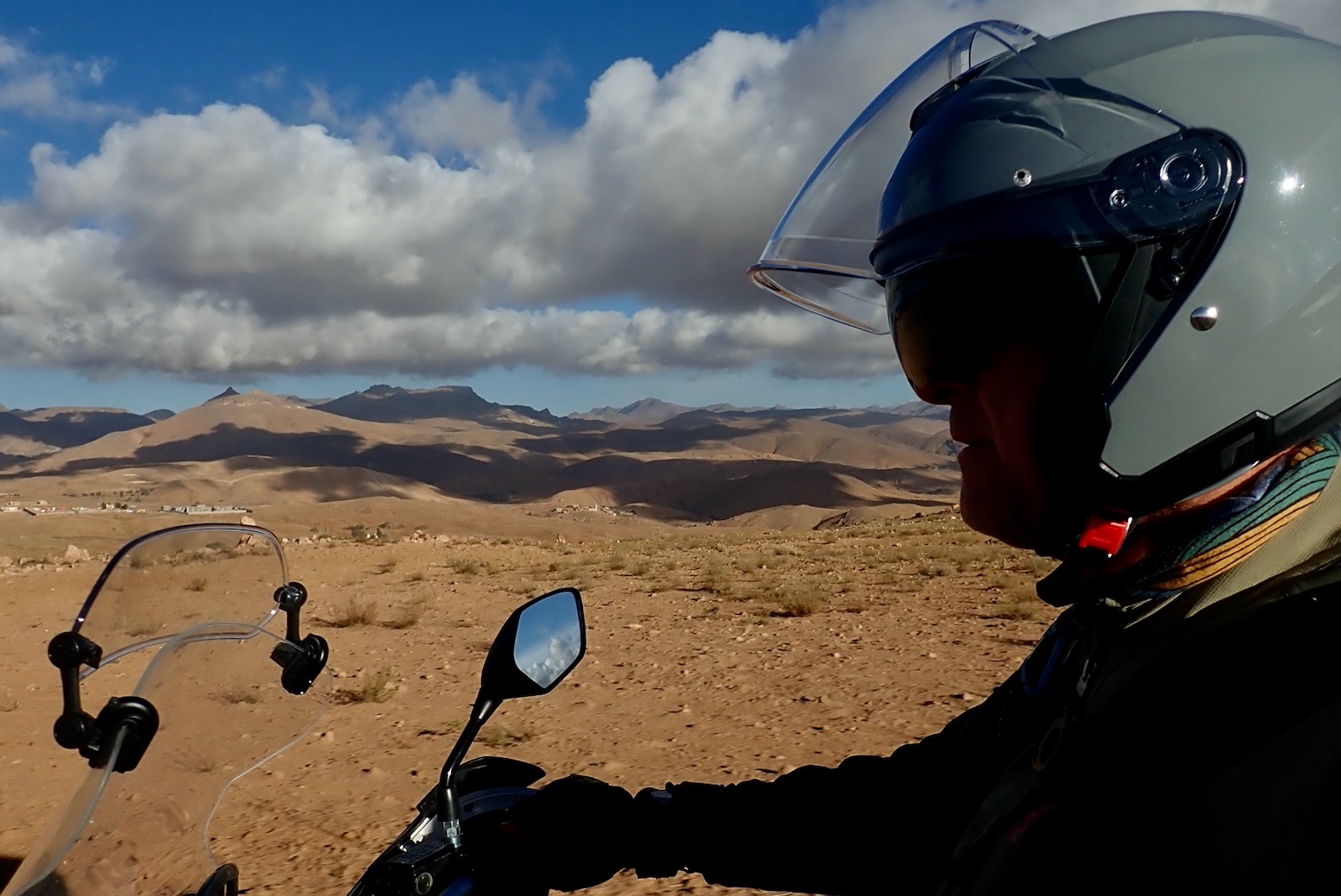
HJC i30 helmet Will I get back the ten years of wearing the ‘premium brand’ X-Lite X402GT? Probably not. Will this Open Face/Full Visor HJC, at a quarter of the price (£111), last that long? Who knows, but I like the design and looks, the operation of the visors and strap, the top venting and quietness (with ear plugs) and not least, the ease with which the lining can be removed, washed and refitted without feeling the need to punch something in the face. On day I fell off and noticed I’d scratched the side of the visor. It didn’t affect vision but looks a bit grubby so I bought a tinted jobby for a hefty £42. My best buy this year.
Garmin Montana 680T Do people still need a staggering £570 worth of handheld Garmin now a spare, big smartphone with a nav app can do the same job (and just about everything else?)? Probably not. In 2010 Montanas changed the game by enabling the loading of superior third-party digital maps with whom Garmin eventually collaborated. I was unsure about touch screen but it’s been largely fine (use screen protector film) and most of all, once set it up for my needs, the interface is great for what I do: recording tracks and points, or loading a Google-traced tracklog to follow and verify using the BaseCamp App. All the other hunting, fishing, tide and sunset bollocks I ignore, just so I can have the capacity to store detailed background maps and save tracklogs. You can route ir too, like a car satnav, but I rarely use that. It’s best to hardwire a Montana to the bike on a RAM mount, or just use it on battery which lasts two days on screen saver mode.
Spot the boot
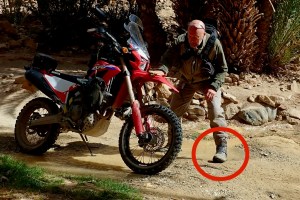
TCX Midi Boots I’ve worn these for nearly six years and about 30,000km and can easily see another five years or more in them. They slip on, clip up and off I go. I like the natural hide colour and don’t see the need for bulky, full-height MX boots; it’s the ankles and feet that need protecting. The odd wade in a stream (left) sees no leakage but they don’t feel too sweaty for membrane boots
Olympus TG5 Tough ‘The Top Gear Hilux’ of all-weather cameras. Unkillable and takes good pics too. My aged Samsung phone camera was rubbish but this year I had to buy an iPhone (7) to work an app. I’ve heard how amazing cameras are on modern smartphones so one day last week I tried to get to grips with shooting on the 7. It’s only got one lens and the quality is about as good as the TG5, but to whip out or use easily on the move one-handed, the TG wins every time. I’d need to get a two-lens iPhone X or higher to get a much better camera, but it’ll still be an arse-ache for banging out a quickie.
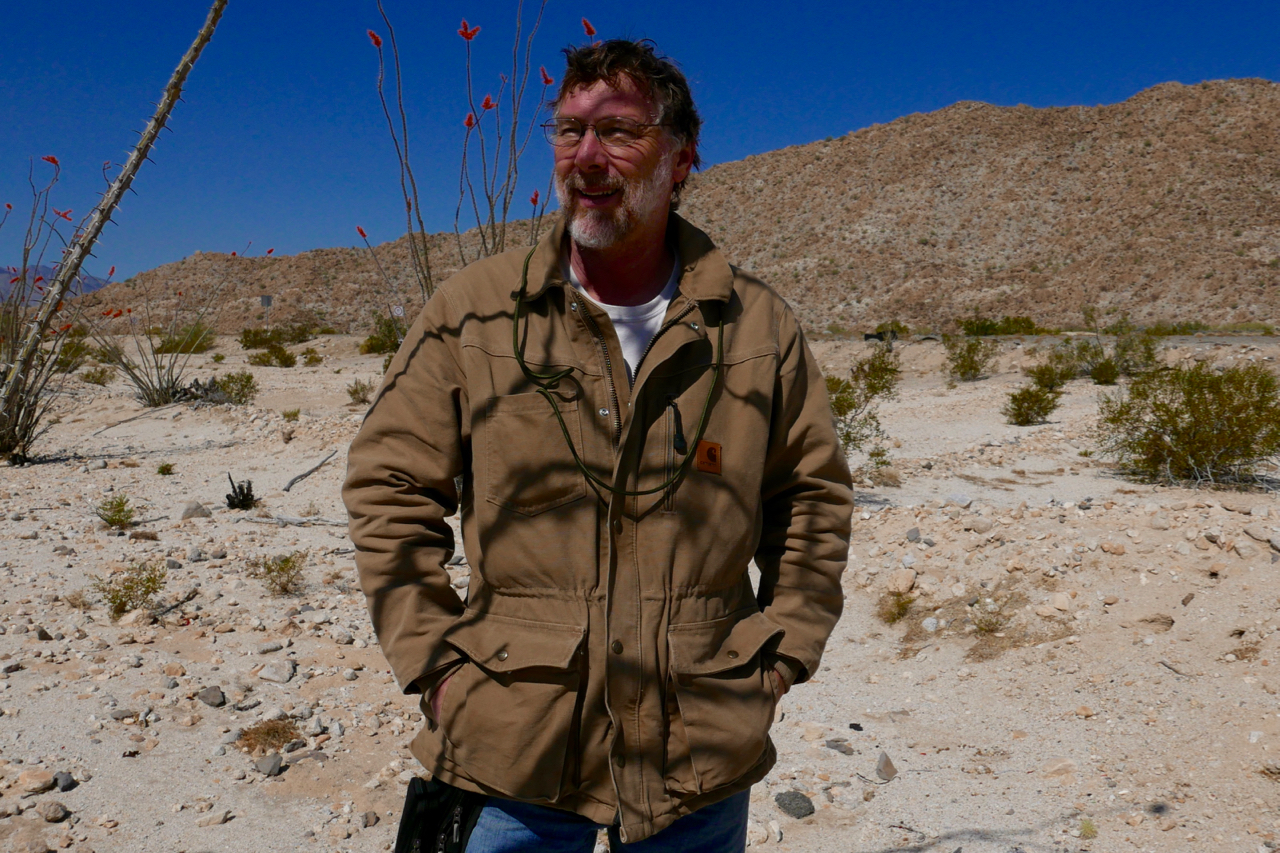
Carhartt canvas jacket I like to think I came across Carhartt in the American West just before they became a fashion brand. As seen in many movies, I wore their classic Detroit shortie in Libya in ’98. Now, when it’s cold enough, I love an excuse to wear my quilted, chunky ‘duck canvas’ Carhartt Montana (or some such), a horse riding coat made for prairie blizzards which I got for just $110 in the US one time. Cotton is so much nicer to wear than any membrane Cordura jacket, even if nylon is waterproof and might crash better. The eight pockets are near perfect for my needs, including a drop-in RHS chest pocket for quick camera access. If it rains heavily I’ll wear my 1980s Rukka or stay at home. My 2016 Carhartt is now sun-bleached but still going strong. Carhartt don’t make this one any more; the nearest looks like the blanket-lined Chore Coat or quilted Super Dux.
Ecce Carhartt
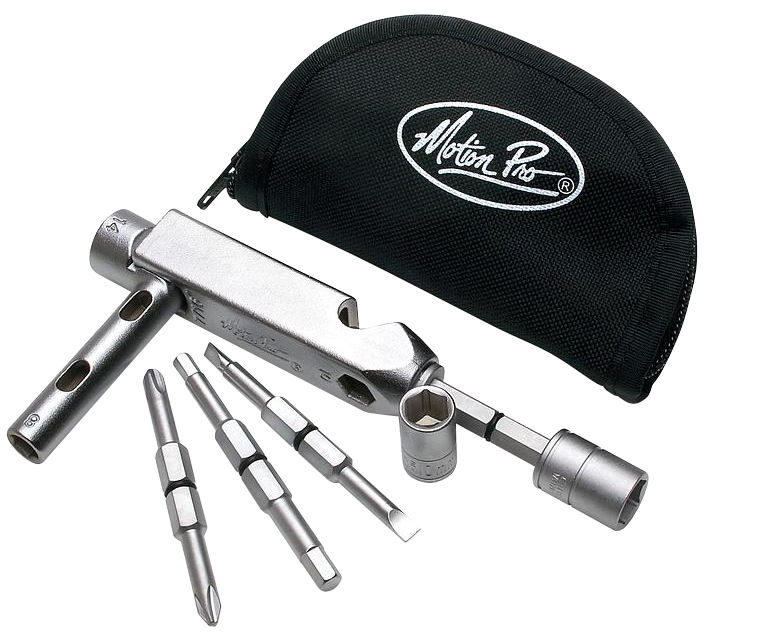
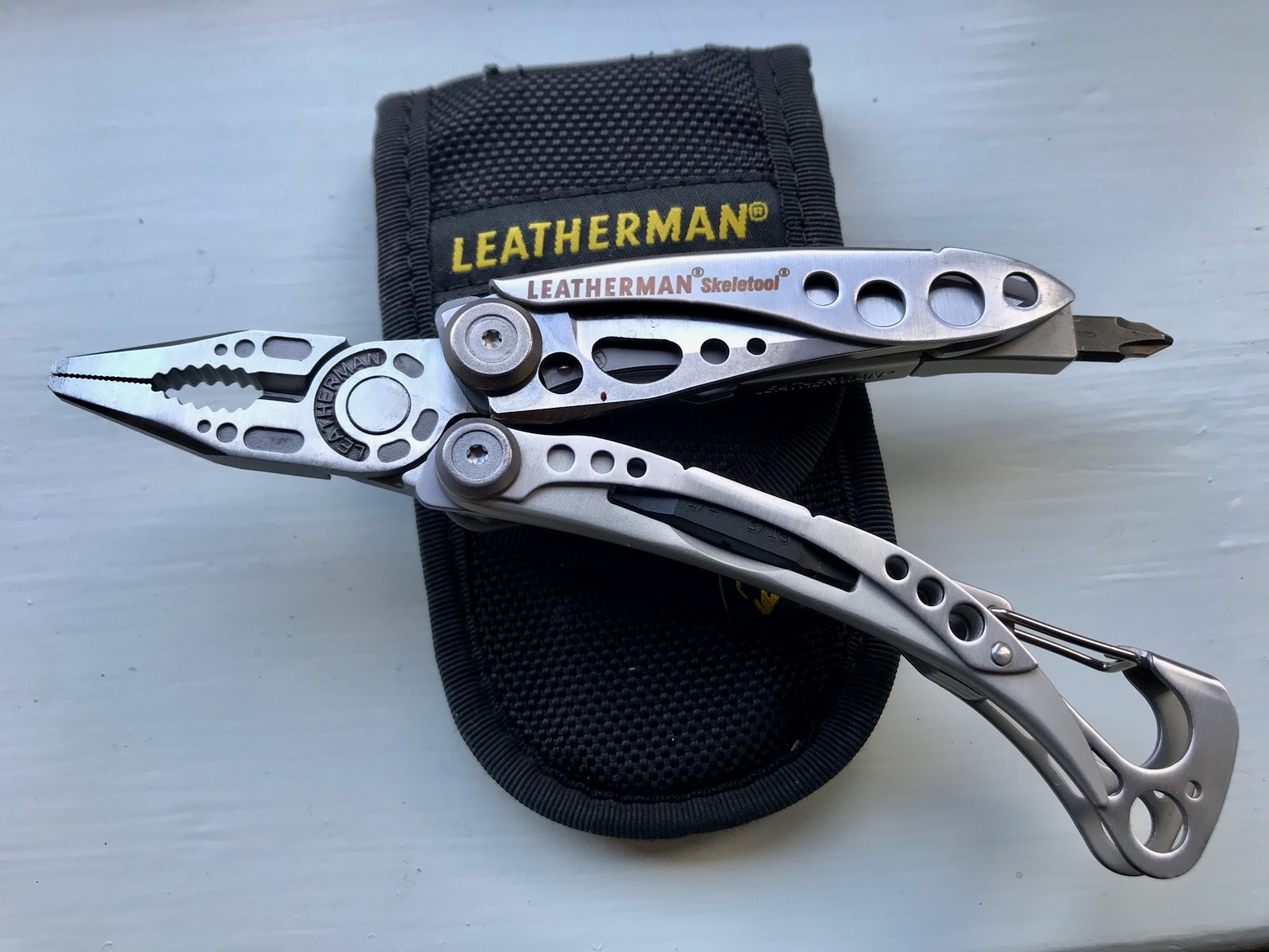
Motion Pro Trail + Leatherman Skeletool With these two tools (about £70 each) plus a wheel wrench, I’ve got all I ever use on the trail. With a couple of extra socket sizes and allen keys, the MoPro pouch covers most small jobs, while the Skeletool knife does lunch and its pliers pull out nails from tyres.
The other day I broke the thin pliers trying to yank out a bolt that had pushed its nut into the tyre (imagine the chances of that!). Even though it was my fault, Leatherman’s 25-year warranty came to the rescue. I sent it back for assessment and a new Skeletool dropped on the mat a week later.
Rechargeable USB pump A mate showed me his and I got one. From 20 quid on ebay under all sorts of listings, it’ll do a tyre from flat to 25 in 5 minutes, or top up from 17 to 25psi in about a minute (as I had to do daily in Morocco on my ill-sealed rear tubeless tyre).Yes it’s another cheap and cheerful Chinese gadget but it vibrates a whole lot less than my ancient Best Rest 12-volt pump and being cable-free, is much handier to use. I’m yet to flatten it but it’ll recharge from half done? in an hour or two off the wall. While it works, it works.
IN A LINE Warm and smart puffa jacket with built-in controller which almost makes the 12v heating redundant.
WHERE TESTED Chilly December mornings on Jebel Saghro, then plugged in for a very chilly morning in the High Atlas up to 2200m/7200′ but not below freezing. Then back across chilly Spain (above freezing).
COST & WEIGHT Currently the revised v2 version is €395. My 2021 v1 jacket supplied free for review by Mosko.Weight 672g + battery wiring lead.
A smart, wearable puffa jacket, not just a wirey liner
PrimaLoft insulation is warm and compact – and ‘body mapped’
Packs into its own pocket
Three useful pockets
Looks cool; no naff graphics
Thumb hooks to get snug on the arms
It’s not black!
Controller function unexplained on v1
What They Say (v1) We added carbon fiber heating elements to a kick-ass technical puffy, and the ‘Ectotherm’ was born. When you’re sitting around the campfire or lounging in your tent, it’s a super warm insulator with 100g body-mapped synthetic PrimaLoft Gold insulation with Cross Core Technology. Connected to the bike, it adds a 6-panel carbon-fiber 3.5Amps/42w heating system powered by the bike. That extra warmth takes the edge off long, cold, wet, pavement stretches, keeps you warm on high alpine passes, adds new enjoyment to early spring and late fall trips, and ensures you’re ready for anything a multi-year/multi-season RTW journey can dish out.
REVIEW Riding for a week up to 2200 metres in December 2023, I was pretty sure I’d need my Ectotherm. Around Nekob (1000m) the forecast was down near zero some mornings, but by leaving for my day rides two hours after sun up, I dodged the most biting chill. In the end, used under my quilted Carhartt riding coat and over a merino long-sleeve top, by the afternoon, even unplugged the Ectotherm became too warm and got stashed.
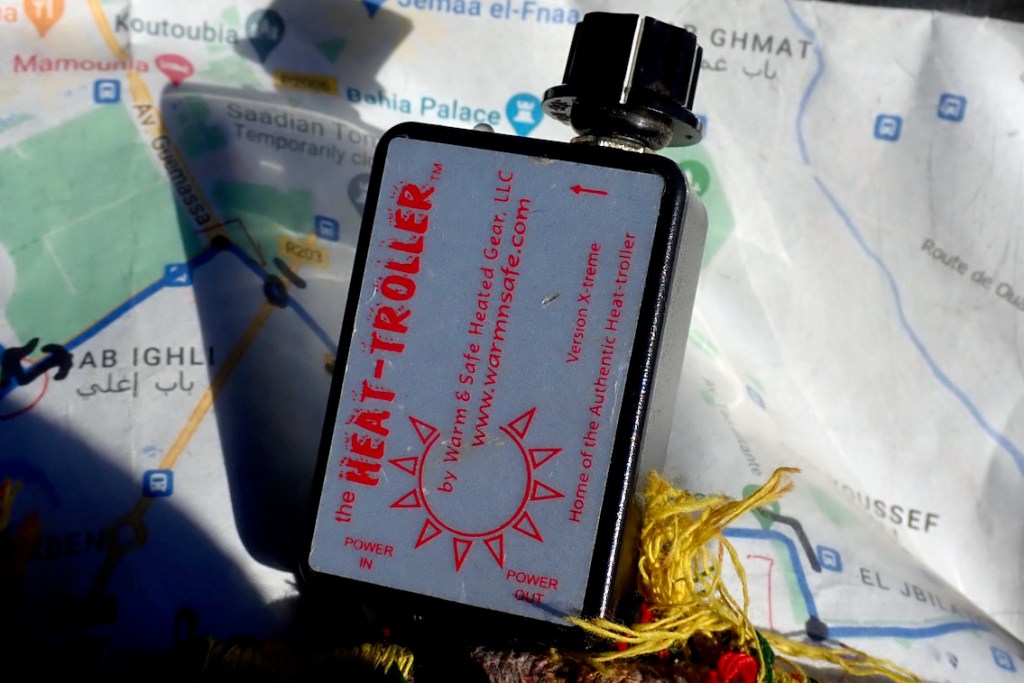
3rd party heat-troller; not really neededGreen: ‘on’ or ‘low’ or what?
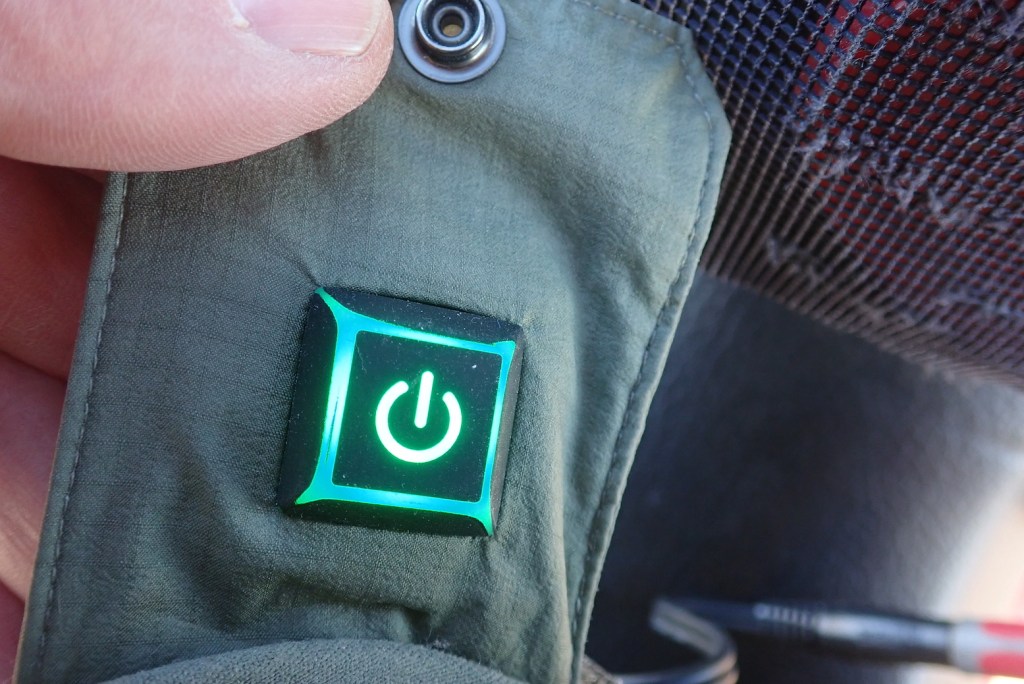
Only on the last day, heading over the High Atlas via a high-elevation route at close to zero did I plug the jacket in. I assumed like my previous heated jackets the Ectotherm would have no temperature controls, so used my old dial-operated Heat Troller (above left). No heat that I could tell so I rummaged around by the jacket’s output and noticed an on-off button which it turns out, has three levels of heat. It cycled red, orange, green then went out. Was it on now? Full power or low? I know 12-volt heated jackets are not night and day, but you sure notice when you turn them off. I stopped again to fiddle with the button and at one point definitely had the impression of warmth across my back. I notice that it’s rated at 42w where my Aero was 75w and the Powerlet 60/105w. But they used wires, not carbon fibre panels which you like to think need less power to do a similar job. Whatever the heating technology, with these jackets close fit pressing down on your body greatly increases efficiency, which was why Aerostich’s inflatable bladders where actually a clever idea for maximum efficiency. On other jackets I’ve wrapped straps around myself to press it down on freezing rides across northern Spain in winter. The Ecto was helped a little by my Kriega Trail 18 pressing on the coat. I did also wonder if wearing something thinner than my thick Ice Breaker merino may have produced better conductivity, but by that time I was over the highest cols and working my way west to Zerkten. A little disappointingly, the day had proved to be nowhere near as cold as forecast. So, not a conclusive test of the Ectotherm’s heating ability which I bet is in there somewhere. I need to find out how those buttons sequence (nothing in the online blurb. I contacted Mosko: no reply. But see Colin’s comment below) and may be able to dispense with the Heat Troller (which might also be affecting the output). Fyi; all is explained on the v2 model.
One thing’s for sure though: as a regular puffa the Ecto works very well (though at a price). It’s a smart garment you can wear off the bike, not a liner that just takes up space when not in use, or has little sartorial value when not plugged in. Whatever the carbon fibre heating panels are, they’re unobtrusive; only the LHS pocket with the wires and the control button adds any bulk. March 2024I rode my CRF back home but didn’t think I’d need the Ecto. Spain was as cold as I’ve been on a bike in many, many years. Even wearing all I had plus regular stops for hot food and drinks, I could feel myself going weird following sleet showers towards the end of the day. Another example of my minimalism turning round and kicking me in the nuts!
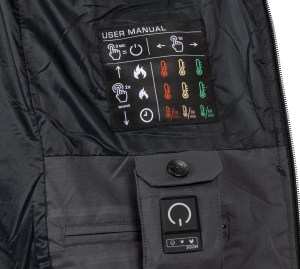
V2 with the missing instructions
Test 2 – 2024-25 I’d not given up of the Ecto, and in November 2024 set off across Spain on my CF Moto with the 12-v Mosko puffa under my thin Mosko Surveyor. By February 2025 I was back for more; winter 24-25 was a lot chillier in Morocco and I wore the unplugged Ecto every day, even down in the desert, along with my AD-1 over-trousers.
Coming back across Spain late February, I knew I’d need to plug it in, and this time did so direct – without the heat controller. For some reason, this time the operation of the Ecto’s built-in controller tab became intuitive: a long press for on, then short jabs until red (max) came up. For the leg north of Madrid, the Ecto sure made the day more bearable. It wasn’t freezing at around 800m, but the 100-kph wind chill made it feel like it. This time I was wearing an old Klim Aggressor base layer, plus a shirt and the skimpy Mosko Surveyor jacket over the top.
This was much more like it, even if at times the thing either auto switched off or went to a lower setting. Riding along you can just about grab the controller tab and check that the red icon is glowing reassuringly. I rolled into a Picos mountain posada, chilled but not stir-crazy with cold. Two days later it was another brisk late-night ride off the Portsmouth boat, which a pair of proper, intact gloves would have made more bearable. I counted off the landmarks until I was home, numb fingers fumbling with the keys. Riding along I thought: heated grips or 12-v jacket. Both are allowed, but I think 12-v jacket trounces the grips. They say a warm core supplies blood to the extremities better than grips warm the core. I’ll be keeping my Ecto until the ice caps melt.























 Adventure Motorcycling Handbook