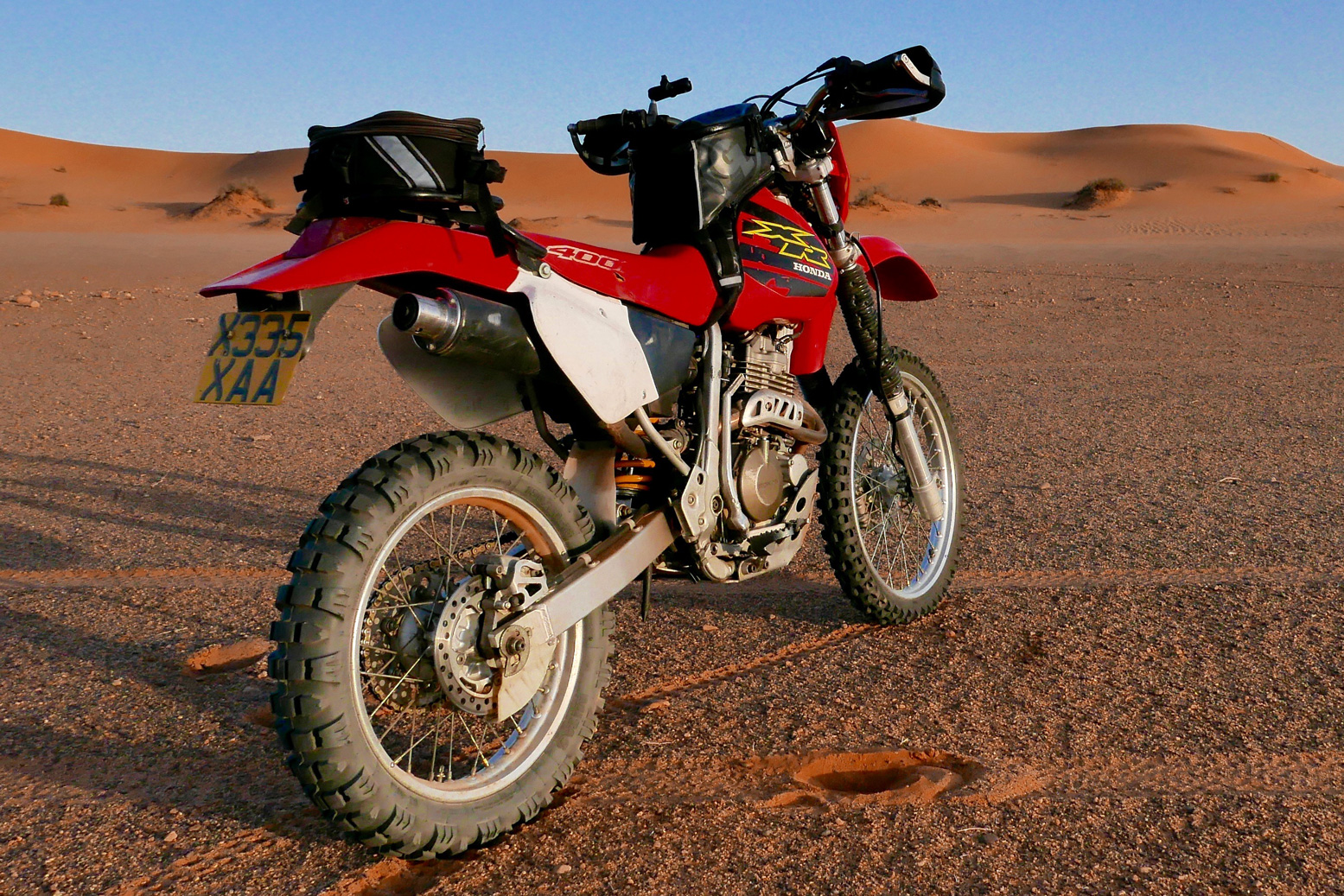
Riding the Mash Roadstar 400

See also:
Chinese travel bikes article
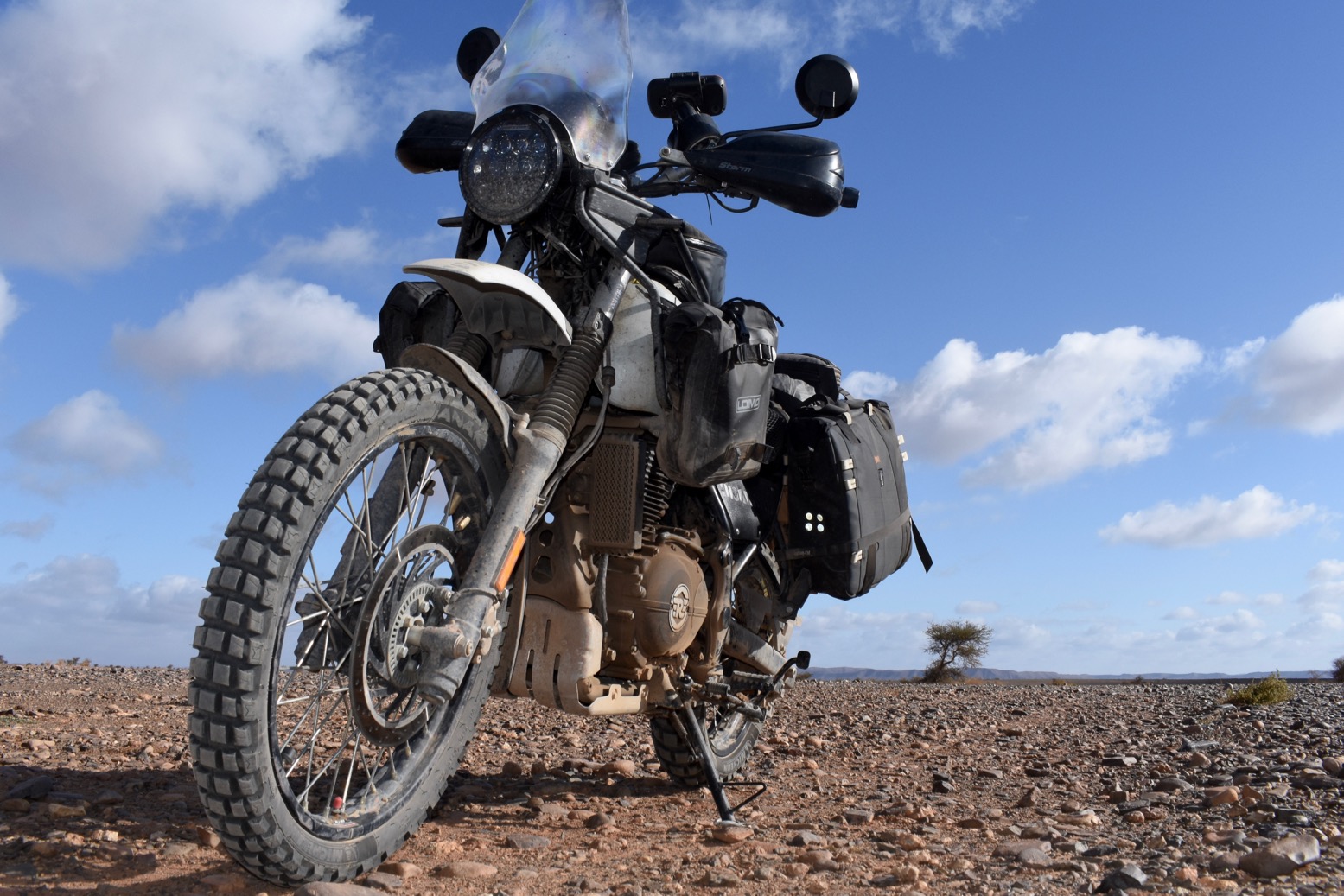
Royal Enfield Himalayan

Updated 2020

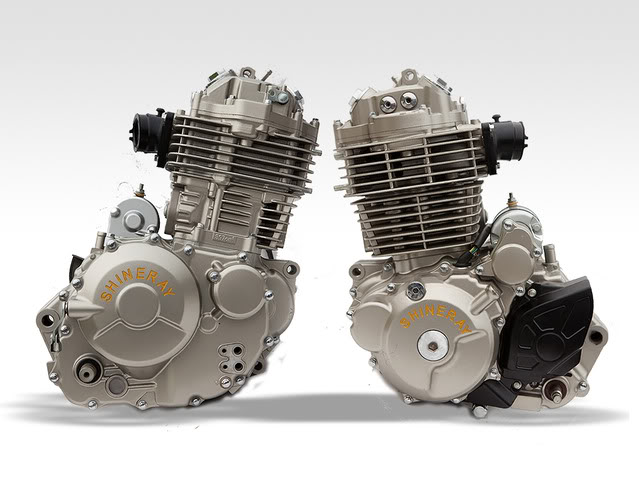
mashadv1For a while there was a bike I was curious about: the French-branded, Chinese-made Mash Adventure 400 (left) that was briefly available in France and the UK alongside other 400s. It was near identical to the similarly short-lived WK Trail 400 mentioned here. Both use the same Shineray XY 400 engine from Mash’s Roadstar retro.
In the UK you could pick up low-mileage WKs from £2500 and end-of-line Mash Advs were going new from £4750, complete with panniers.

mash-14
beaky

Other than the engine, those two Advs were quite different to the Mash 400 Roadstar I tried out (above). The frame’s monoshock back-end and bigger front forks made a much taller machine; both ends were said to be fully adjustable; the wheels are 18/21 and both run discs. There’s a bash plate, screen, handguards and digital clocks plus the mandatory beak.

wk400

The WK Trail 400 (left) was briefly sold in the UK and a couple of magazines, including Overland Mag and Rust Sports tested it. Its price dropped from around £4k to a more realistic  £2999 £2499 before they all went.

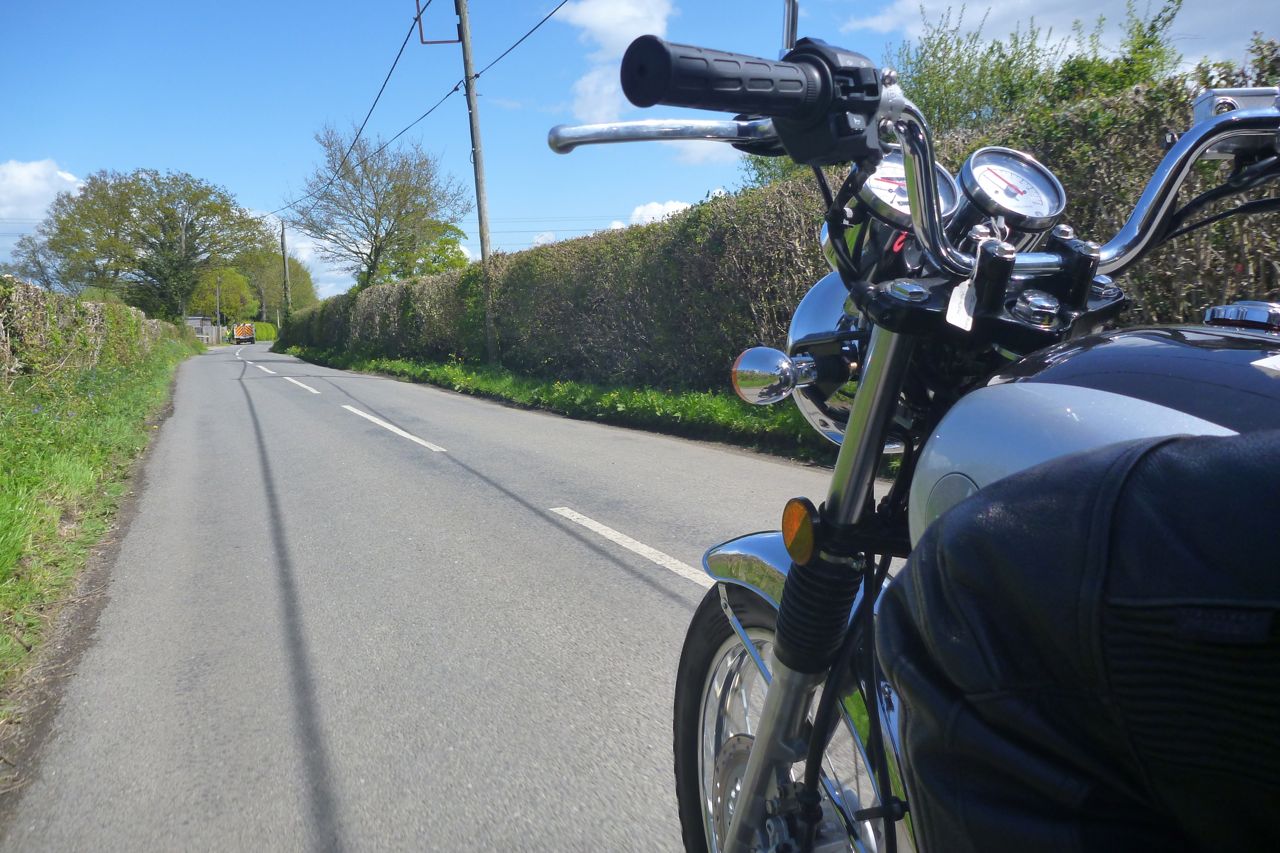
I spent about four hours on the Mash Roadstar provided by T Northeast, a small bike shop in Horley, near Gatwick (they no longer sell the 400s and Mash UK seems to have closed). The bike only had about 150km on the clock and I added another 120km riding the back lanes of Sussex and Kent.

Some specs
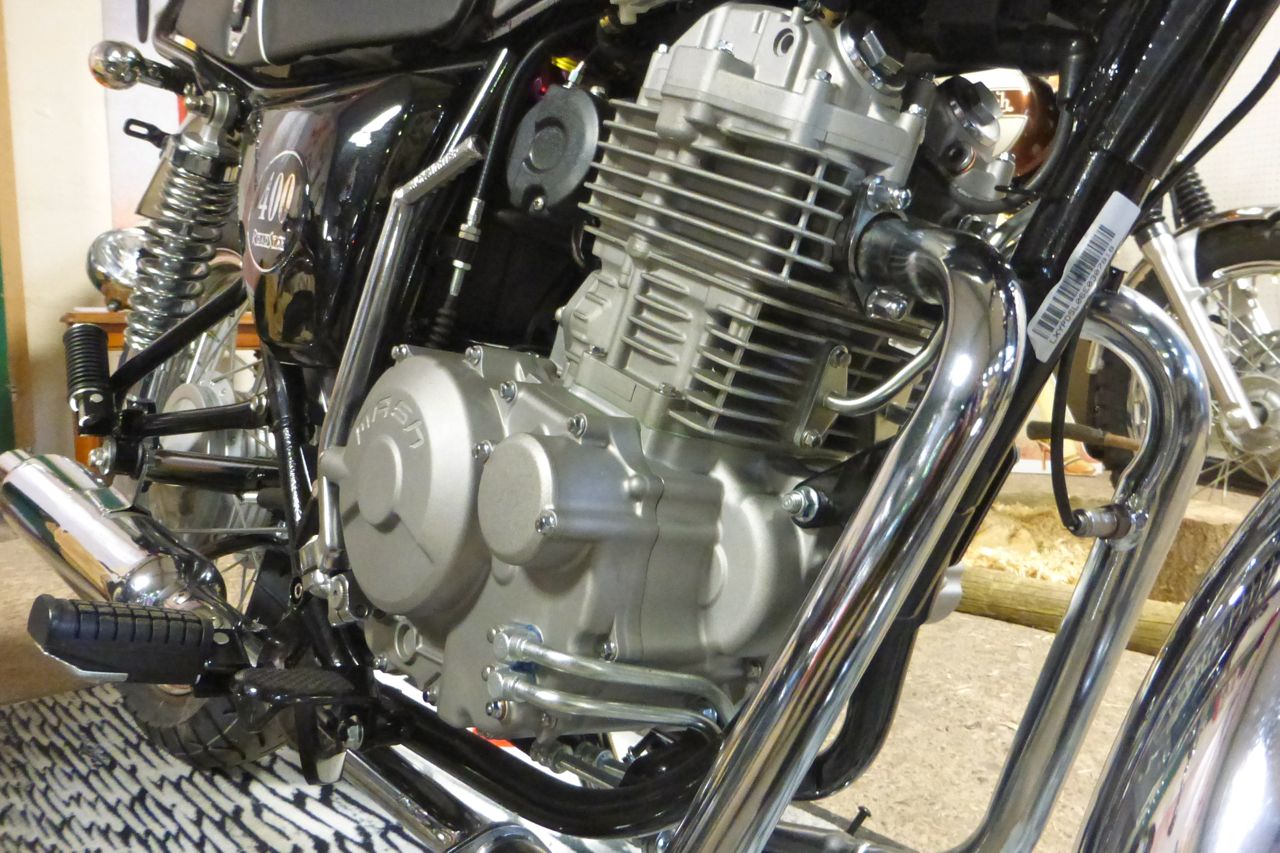
Engine: air-cooled 397cc SOHC 4 valve, EFI, electric and kick
Power: 26–29hp (sources vary) @ 7000 rp
Torque: 30Nm @ 5500rpm
Weight: 151kg claimed
Alternator output: unknown
Seat height: 78cm/31″
Fuel tank: 13 litres
Wheel size: 18″/19″
Brakes: drum rear, hydraulic disc front
Suspension: twin shock with preload, 35mm fork

For comparison
• Honda XR400: 31hp and 32Nm @5500, 130kg
• XBR500 43hp, 43Nm @6000, 167kg
• Yamaha’s short-lived SR400 23hp, 27Nm @ 3000rpm and 174kg
Himalayan 24hp, 32Nm @4500 and 192kg
Saturn V space rocket 10.6 million Nm @ sea level, 496,200kg

mash-11

t120

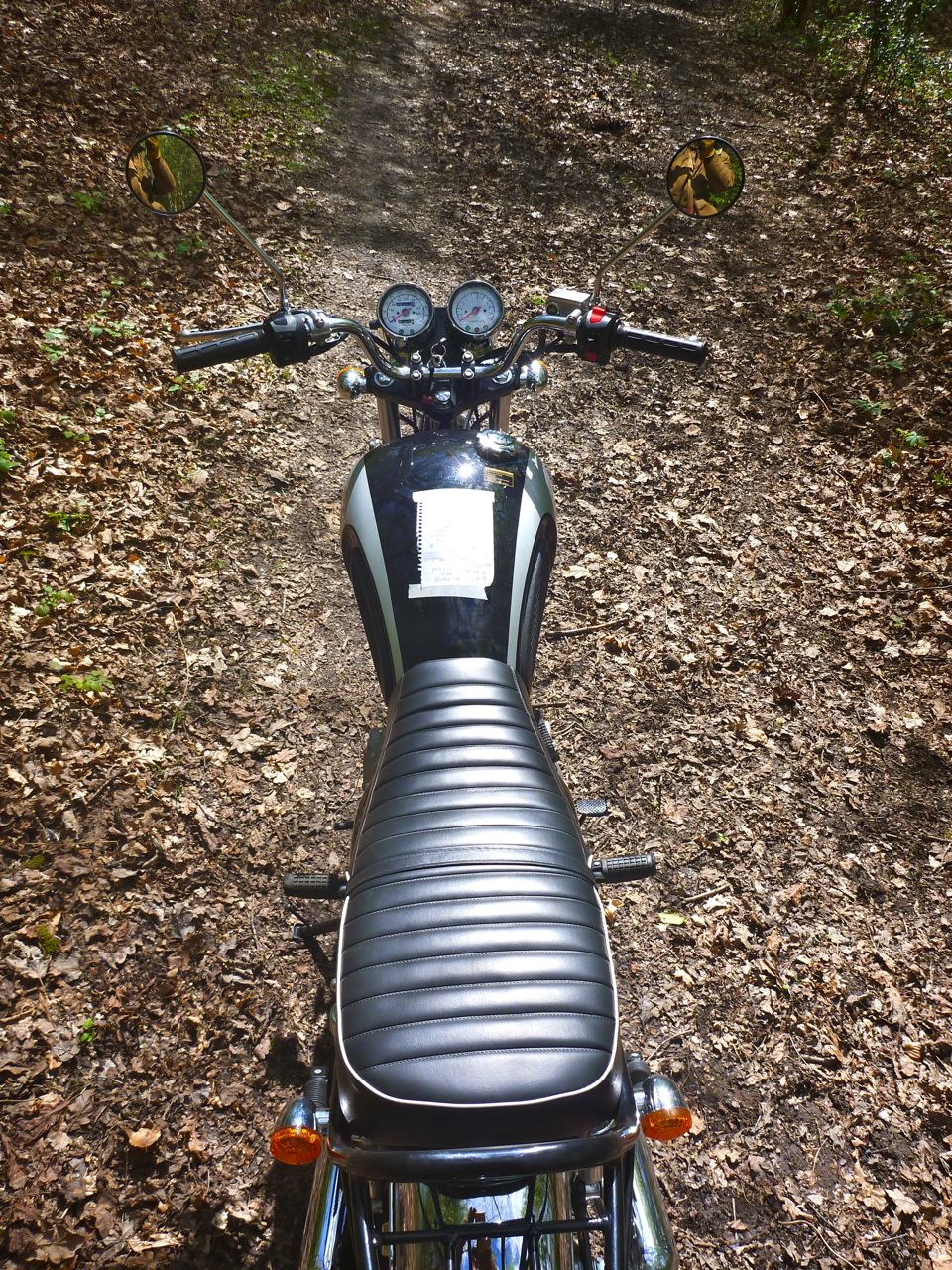
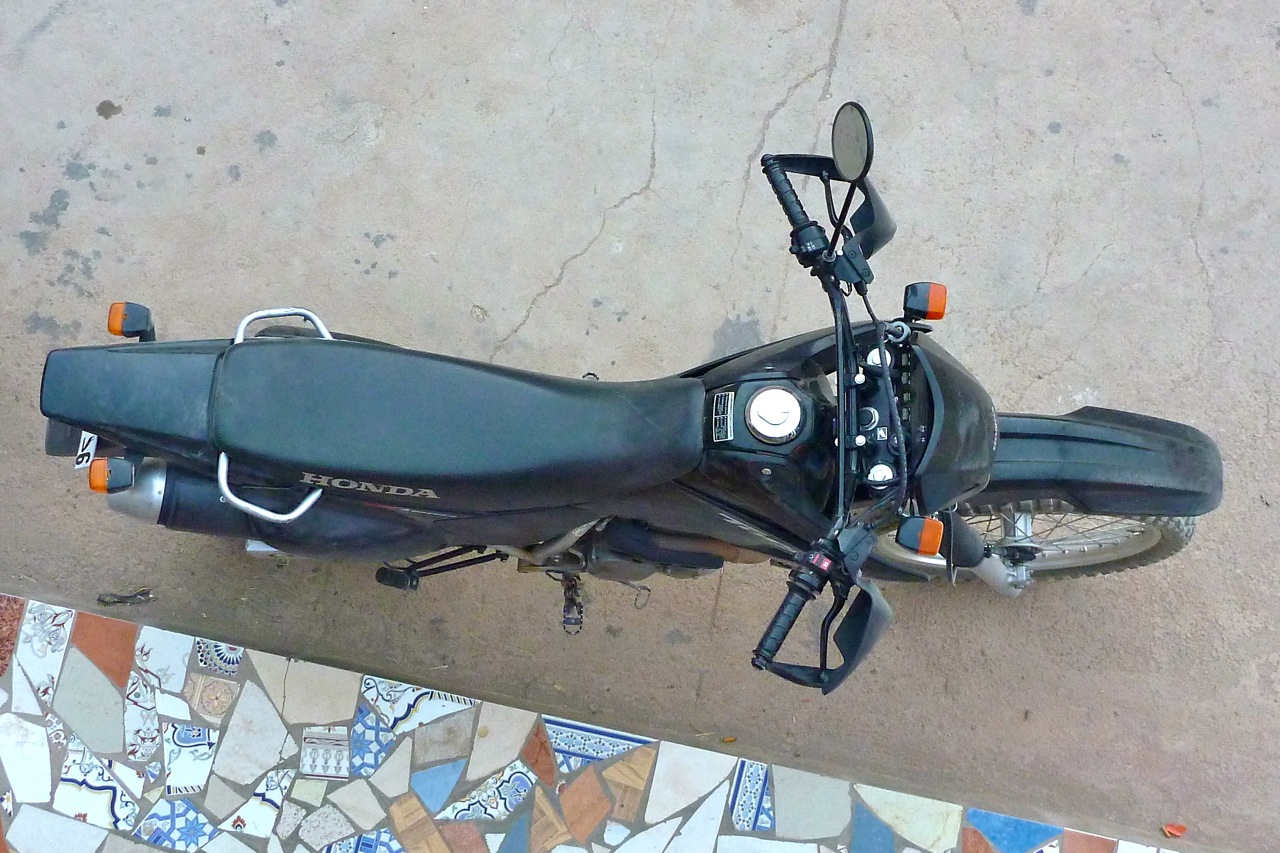
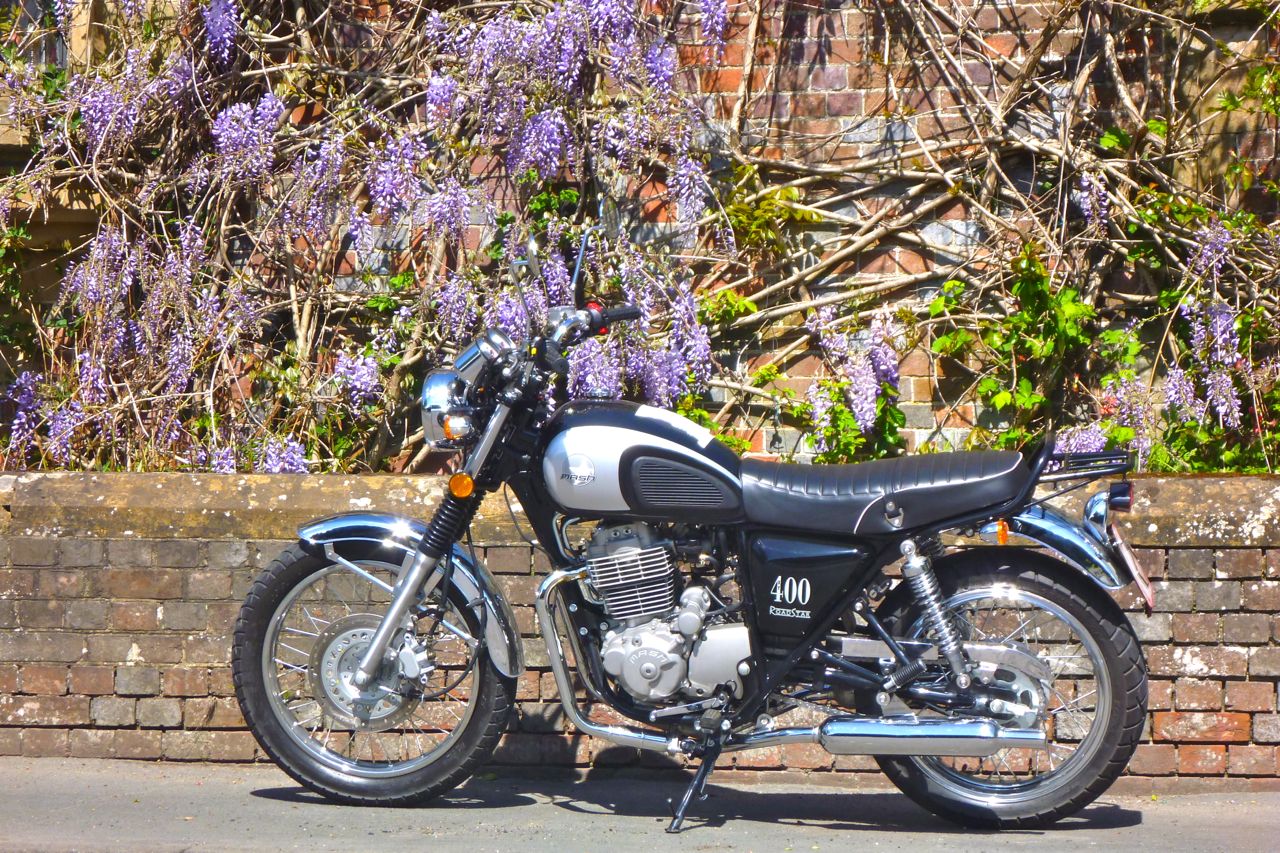
The Mash Roadstar is a great looking machine with an idealised Brit-retro ‘T120’ (left) profile that’s as cool as the originals it’s imitating. The flat bench seat, fork gaiters, peashooter pipes all set off the right cues.

You’d think it’s small but that’s mainly because it’s low. It fitted me (6′ 1″) fine: the footrests felt farther forward than normal with my thighs almost horizontal and me sat midway on the seat. I didn’t get a picture of myself sat on the machine – had I done that the proportions may not have looked as flattering as they felt. The gear lever was a bit short for my boots, but changing was light and near-silent compared to the granny-startling clunk into first on my Versys or my previous XCountry. Though it’s not a habit I’ve ever managed to maintain, clutchless changes up the ‘box were similarly effortless with no backlash.
mash-20
mash-21

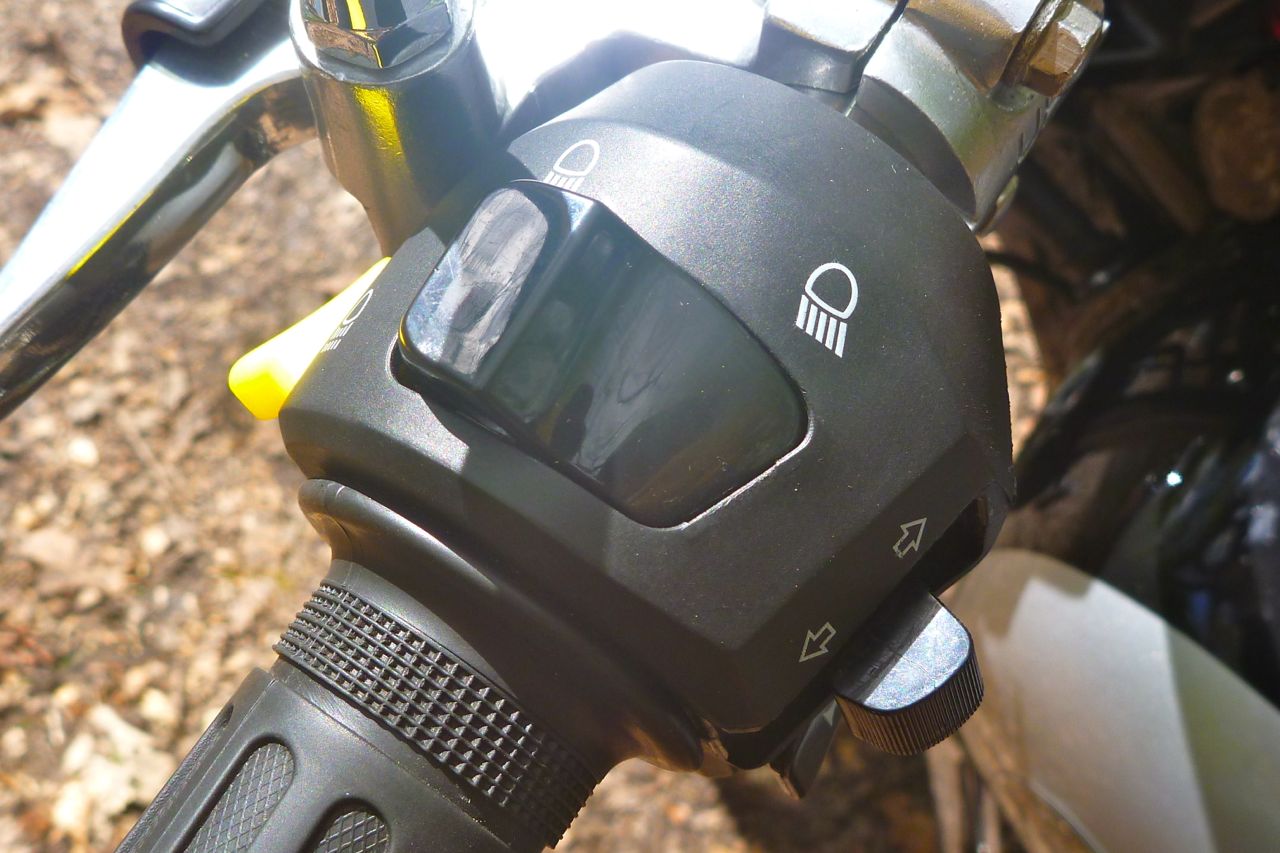
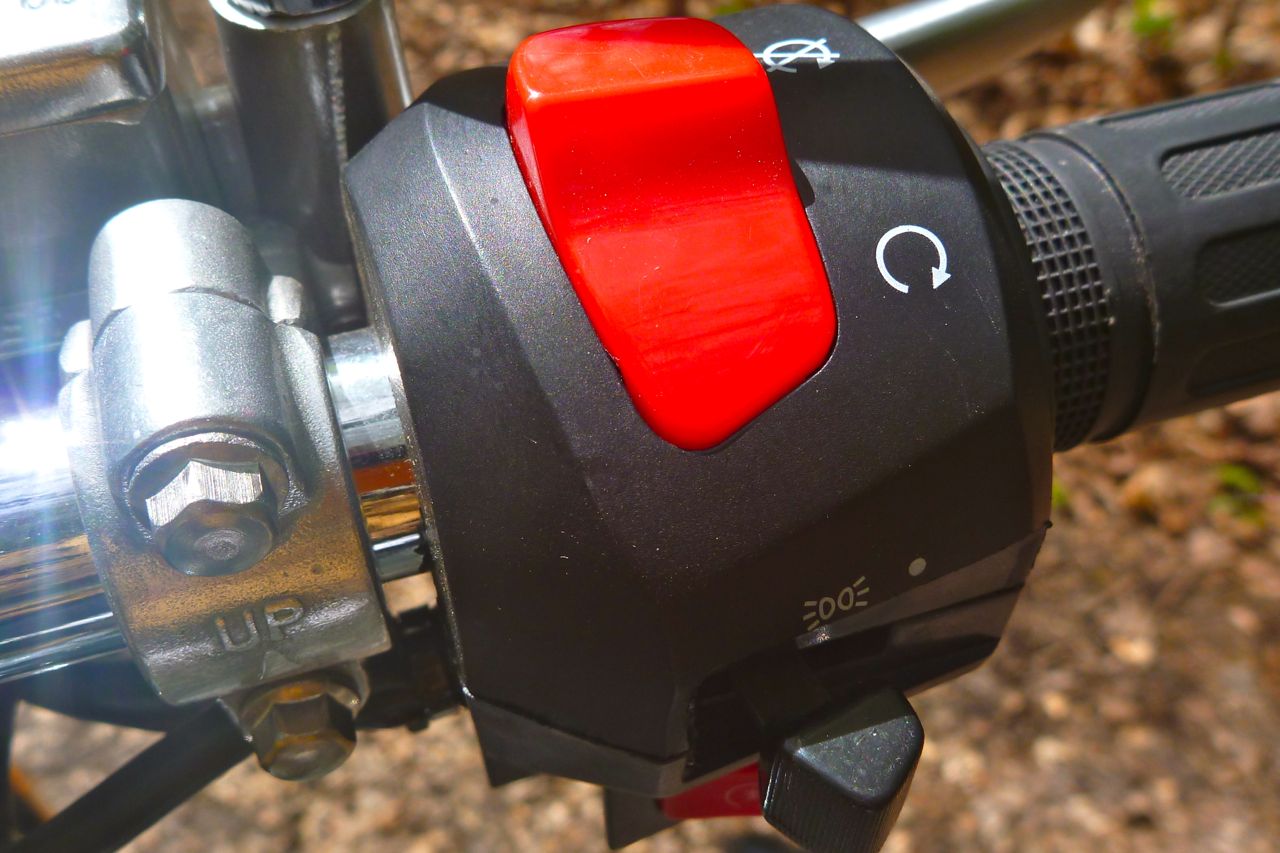
The switchgear didn’t quite give off that intangible feeling of solidness and quality you get from your Japanese or European machines, though all I used were the indicators. The headlamp is always on, though you slide a switch to turn the back light on.

sr400

The Mash Roadstar resembles Yamaha’s UK-reintroduced but soon dropped SR400 (left). The mini SR never caught on, despite the retro trend. First time round in the late 70s the original SR500 wasn’t such a big hit either, while the XT500 with which it shared its motor had already become the classic it remains today. Alongside the Roadstar, the £5200 SR400 merely looked overpriced and heavy. What it needs is some of this!
mash-02

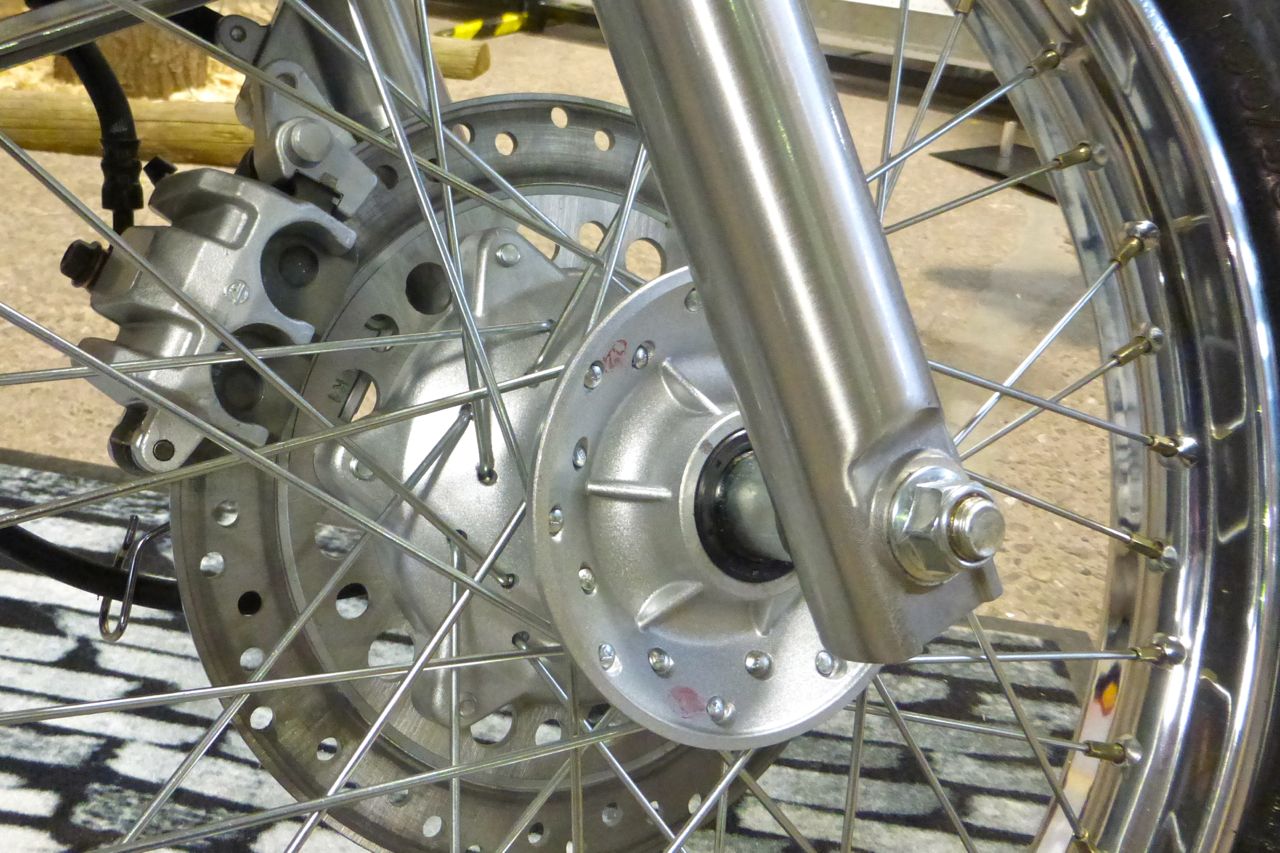
Back at T Northeast I was warned the front brake was poor – a braided hose is said to be in the works. It was lame but over the hours I found applying more pressure than I’m used made it work like a normal brake. Of course you lose finesse yanking on a brake like that, and I’m not sure that can be purely down to a cheap rubber hose. The rear, rod-operated drum was fine and I dare say would lock up with a panic stomp. One old trick we used to do was remove the brake rod and put a light bend in it to reduce the over-direct actuation. Wheels are your classic 18/19 combo and the Kenda Cruiser tyres hardly got stressed on my ride. There was a downpour on the way back but riding with the conditions, they didn’t skip a beat.
mash-27

Initially riding away from the shop the bike felt as skimpy as a 125. This lack of bulk and the airy front end detracted from the planted feeling on my Versys (at the time), but that can’t all be down to an extra 70-odd kilos of weight. It could be due to the spindly 35-mm forks alongside the proportionally hefty front wheel.
mash-23

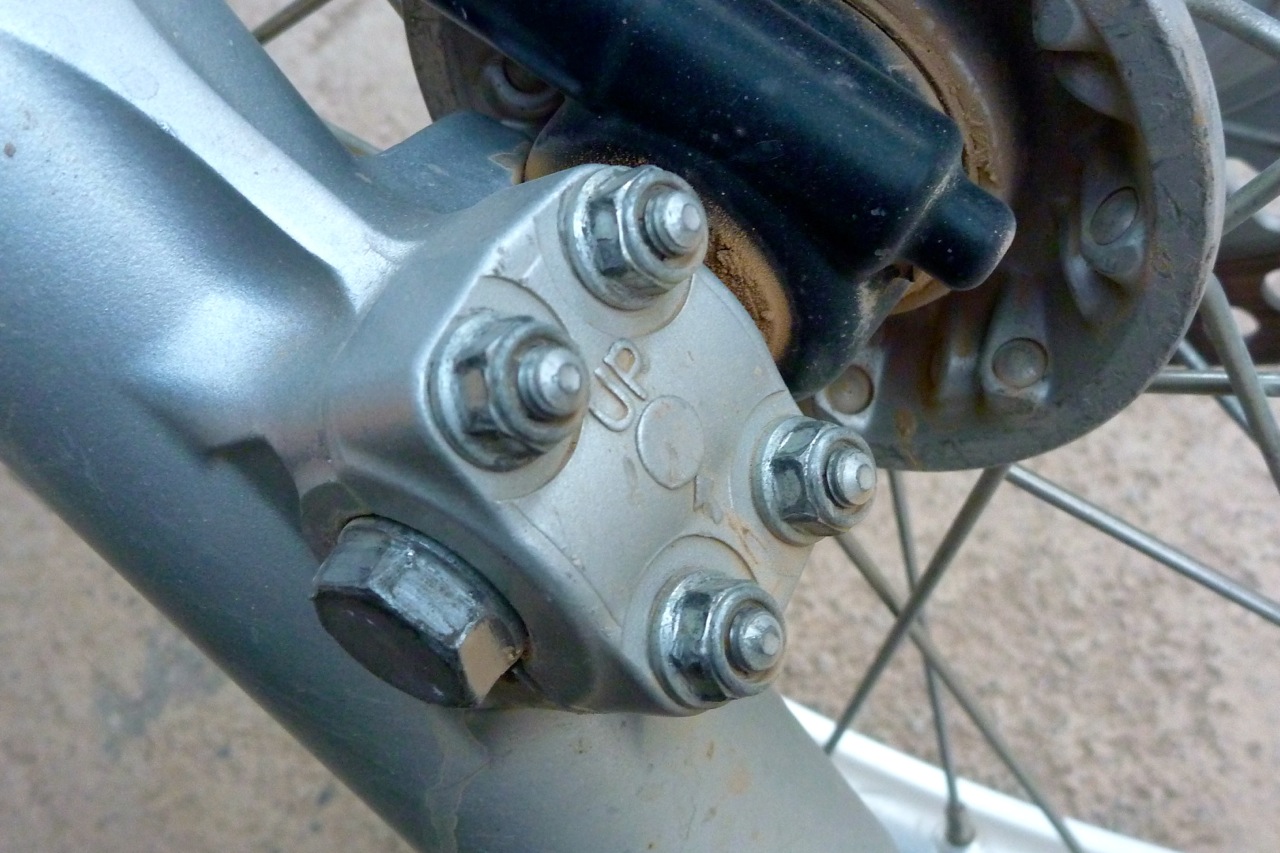
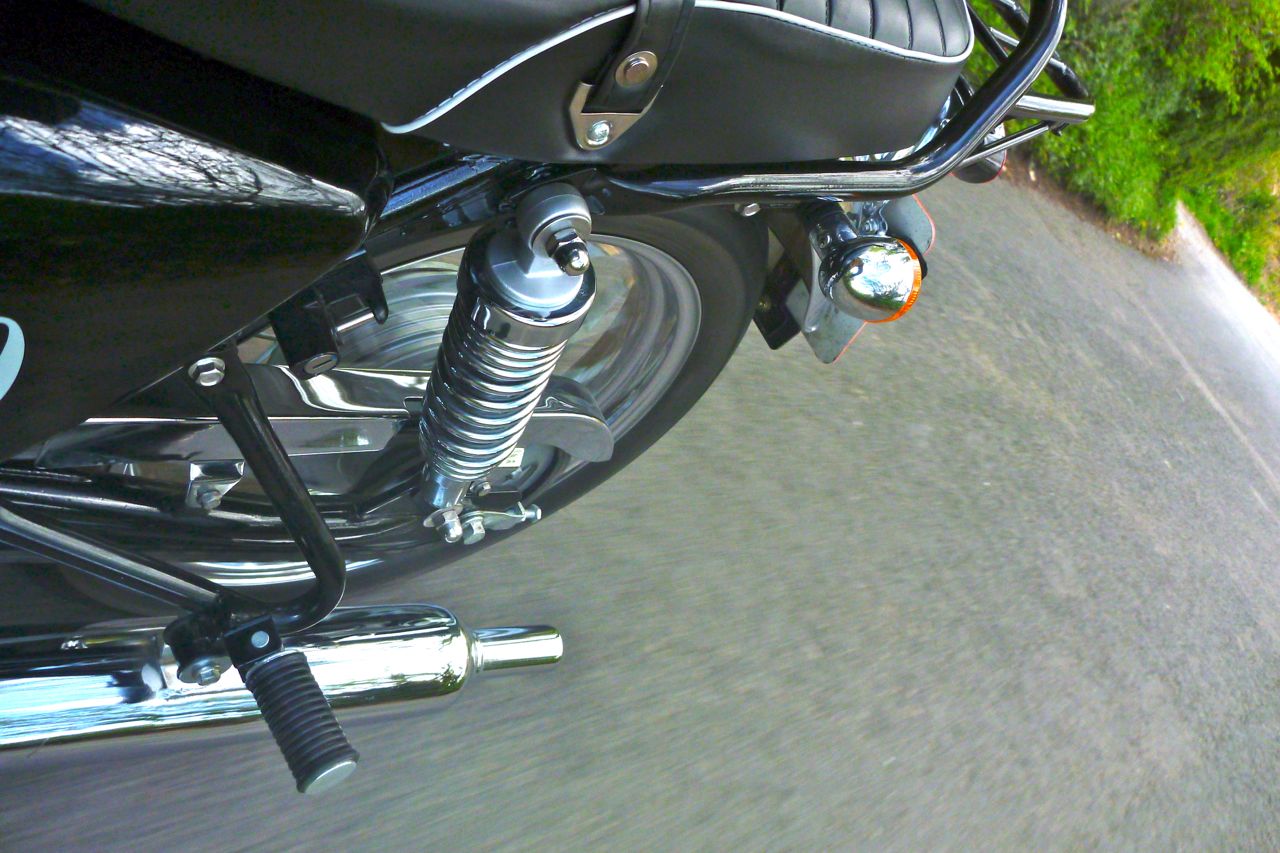
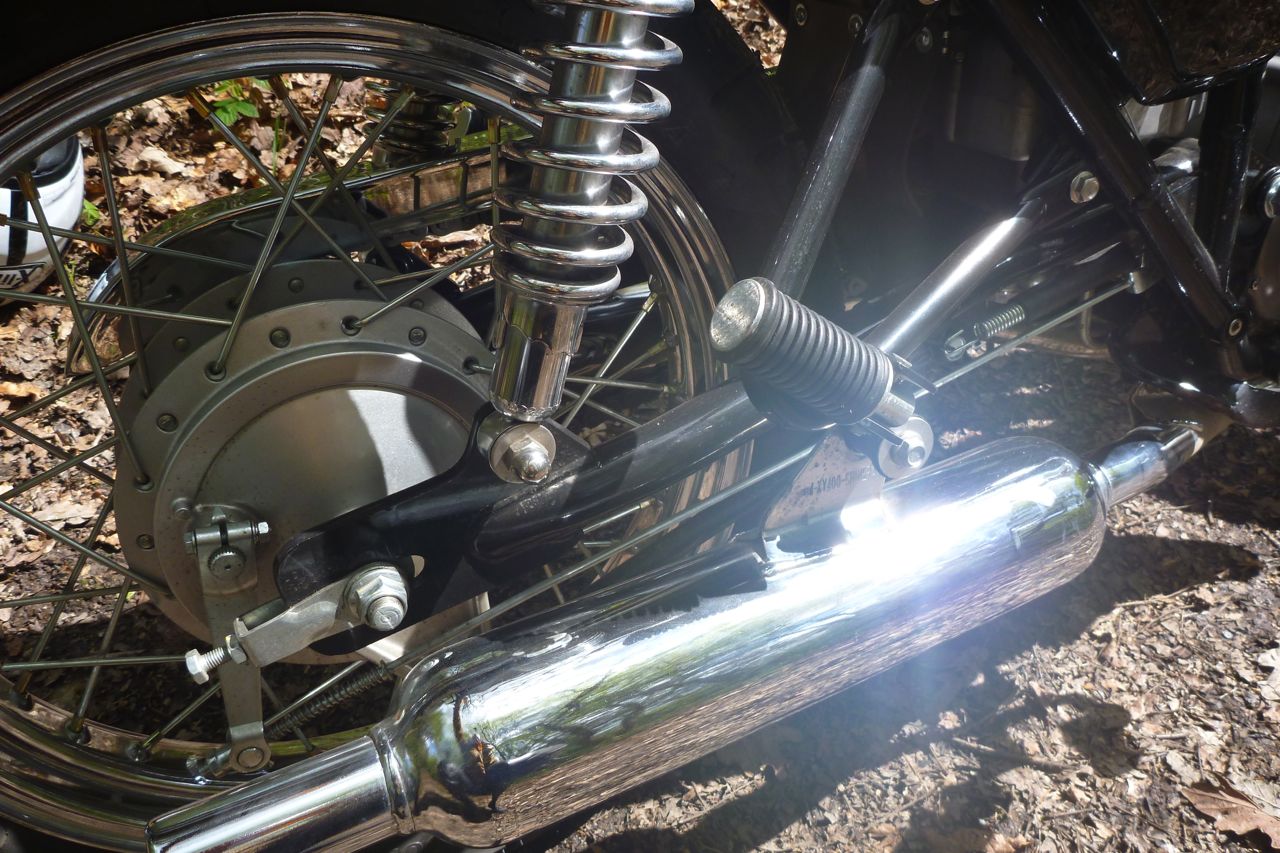
The suspension is basic on the Roadstar. Out of the shop on notch 2/5, my dressed-to-ride 100 kilos bottomed out the back-end on country-lane potholes until I cranked them up to 4/5 with some pliers I happened to have on me (no tool kit that I could find). It’s possible the steering feel improved on doing this too, or maybe I was just getting used to the bike. It takes some effort not to compare a new bike to your normal ride, even if it’s another type of machine entirely.
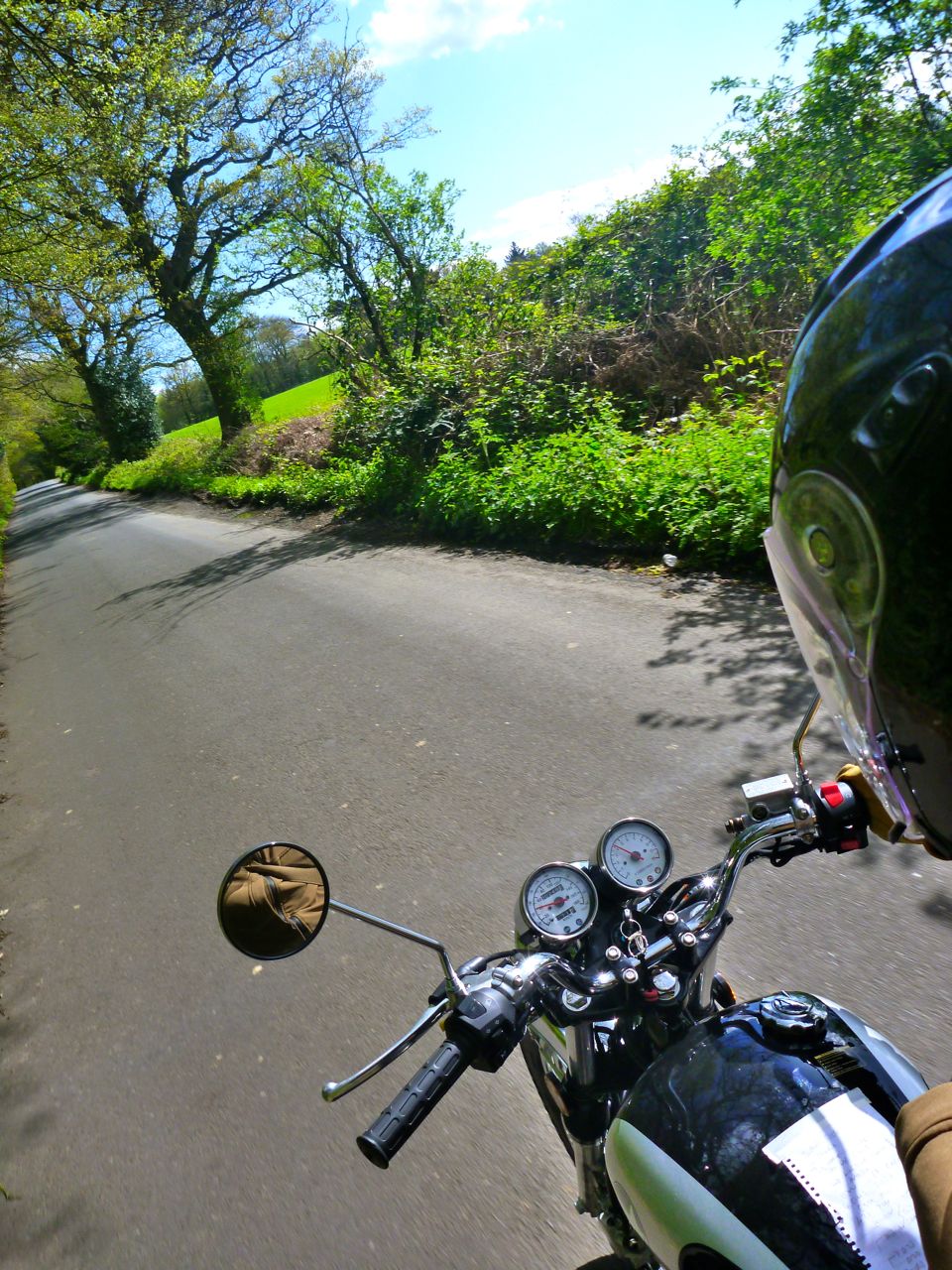
mash-26

I know the Roadstar is low but the bike does feel very light and I wonder if that claimed 151-kg figure could be wet. My XCo was supposedly just a few kilos over that weight before I layered on the travel clobber, but the Roadstar felt more like my CRF250L (144kg wet).
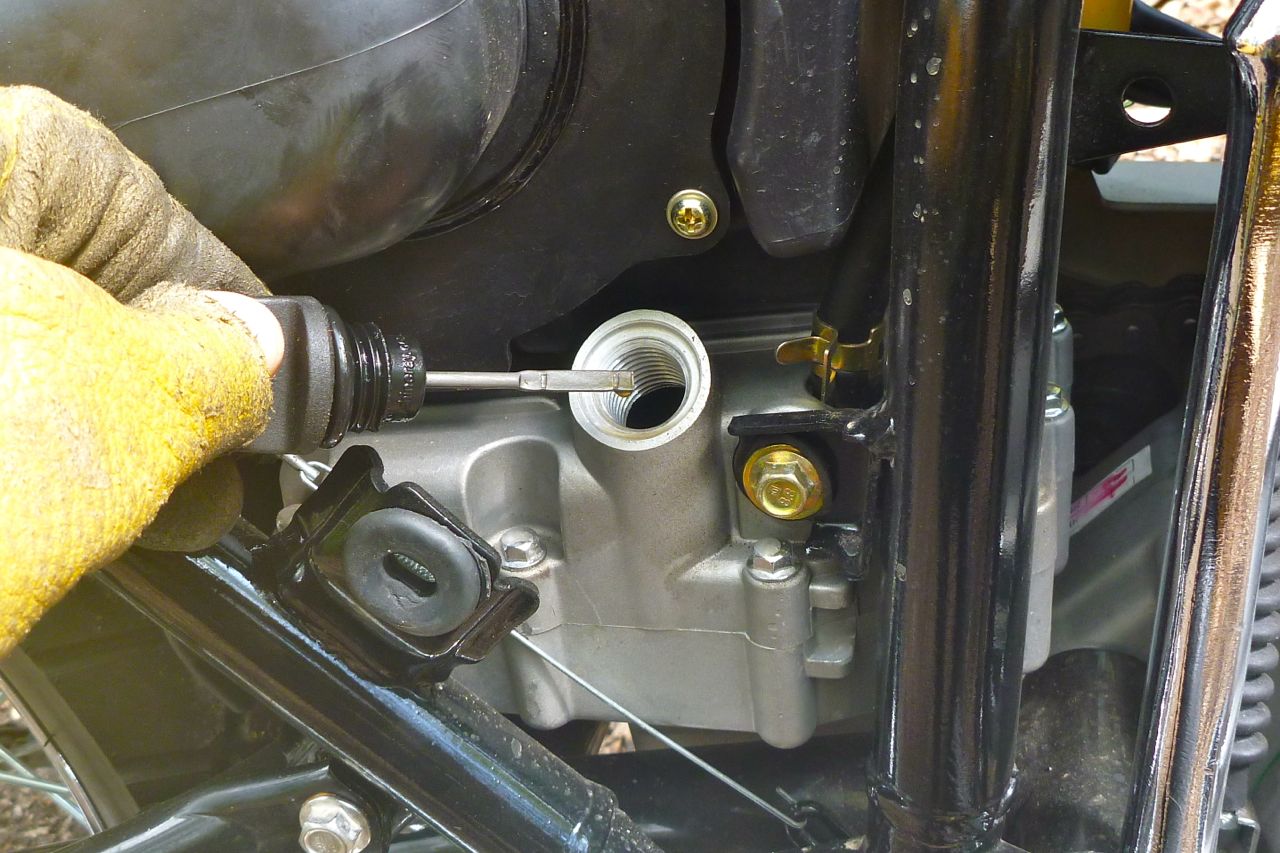
mash-18

And it’s not like the Roadstar goes out of its way to save the kilos. Just like the bikes from the period it evokes, sidepanels, mudguards and the chain stay are all metal. Even the oil tank sat behind the gearbox (left) looks like an unusually hefty casting and the chain this bikes runs is much heavier than what’s on my Versys with more than twice the power.
It may well be a Chinese cheapie, but once that’s shot and you slap on a DID I can imagine it would easily last 20,000 miles with something like a Tutoro drip luber. Along with the low seat height, this lightness has great benefits in doing a quick u-ey to nip back for a self-timed photo or follow a lane that looked like it went somewhere good. I had a delivery in Kent, but as there was no 12-volt plug to run a satnav I was navigating the old-fashioned way with a cryptically scrawled roadbook taped to the tank.
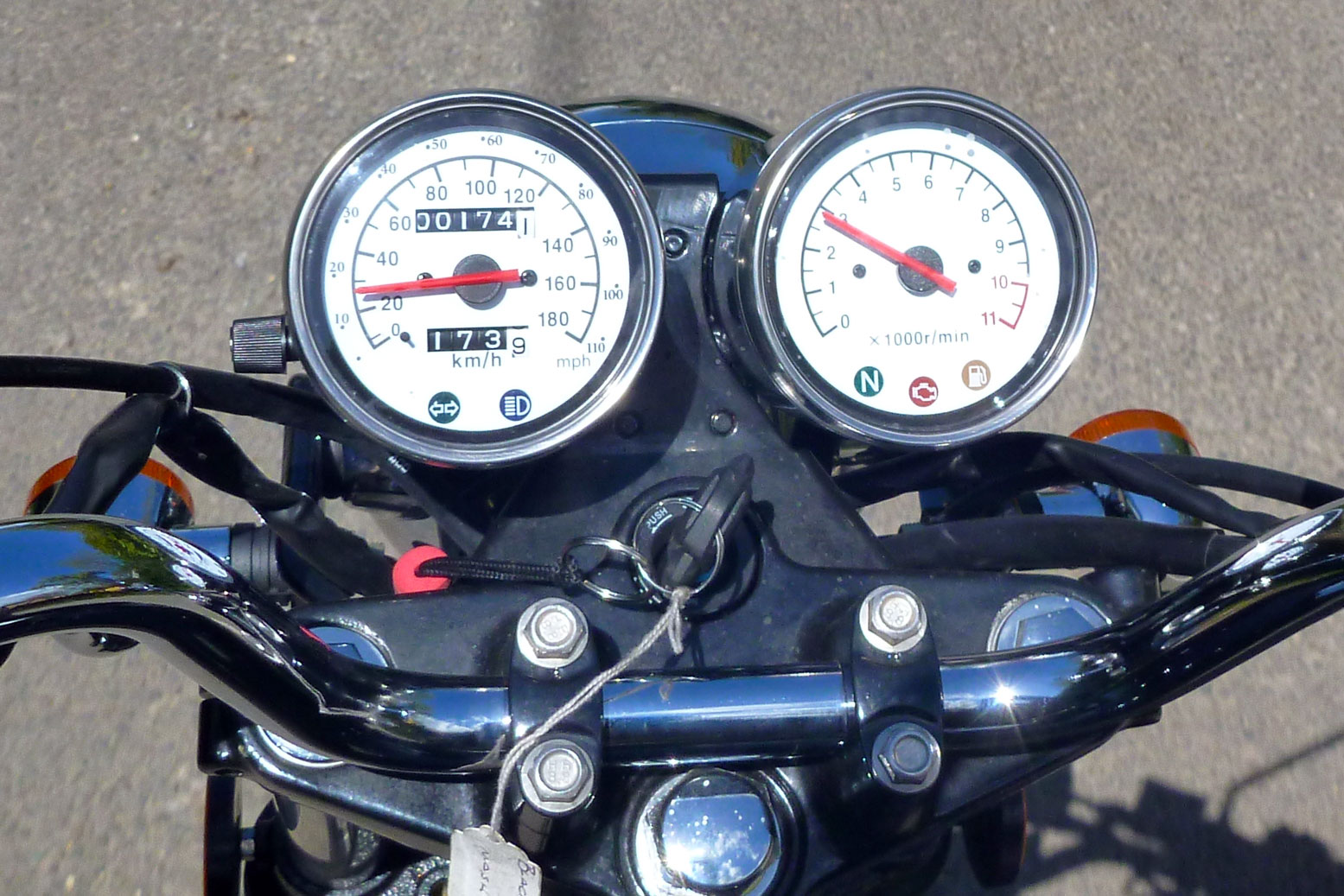
mash-speedo

mash-09

Running along Kent’s lanes at up to 50mph (clock and odo in km with mph scale on the speedo) the bike ran well, though I’m not sure I was doing the indicated speed. Push it to 60 and you start to ponder the limits of the brakes and suspension.

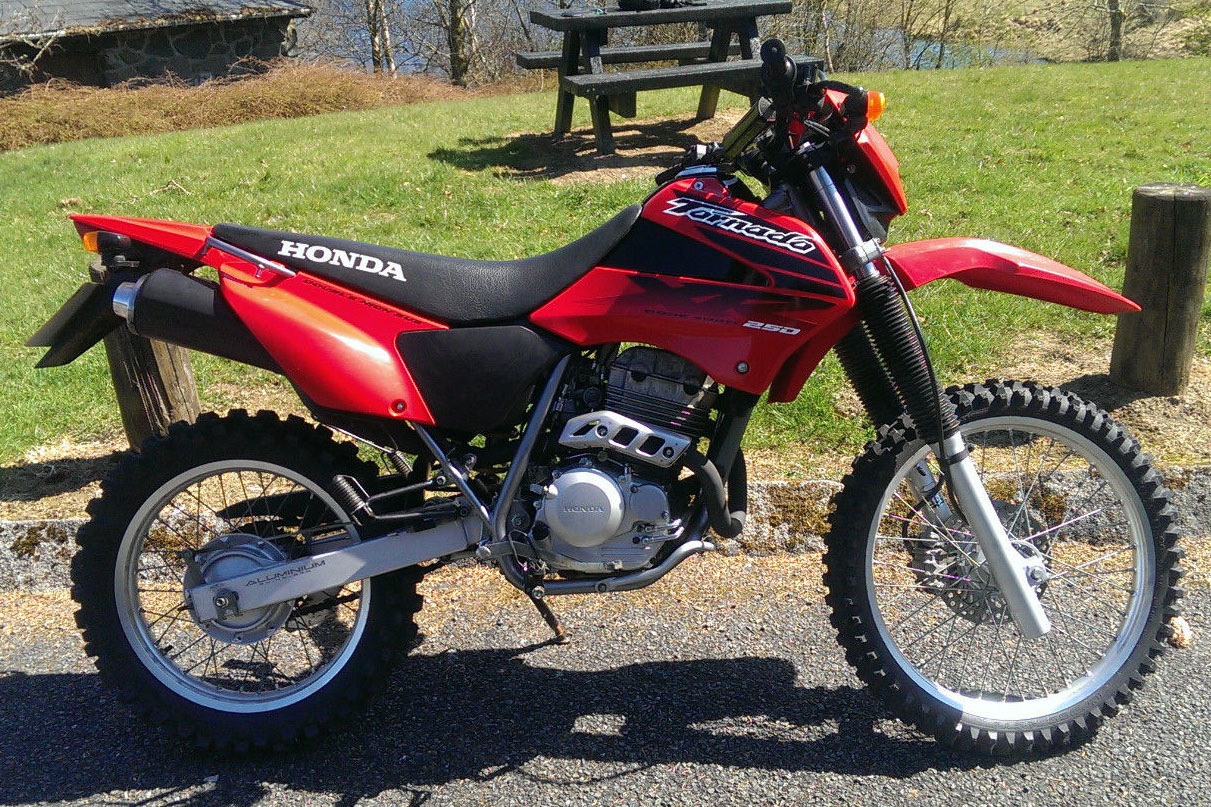
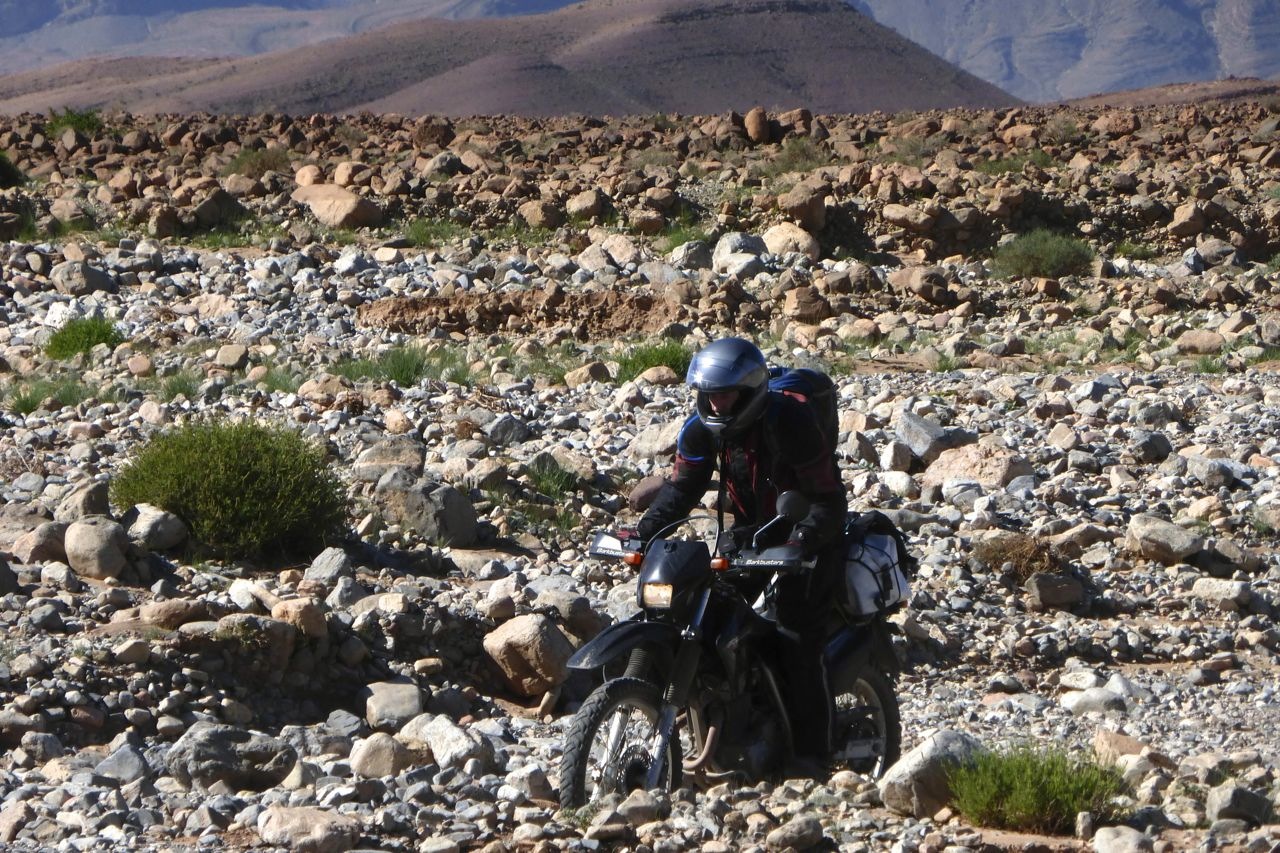
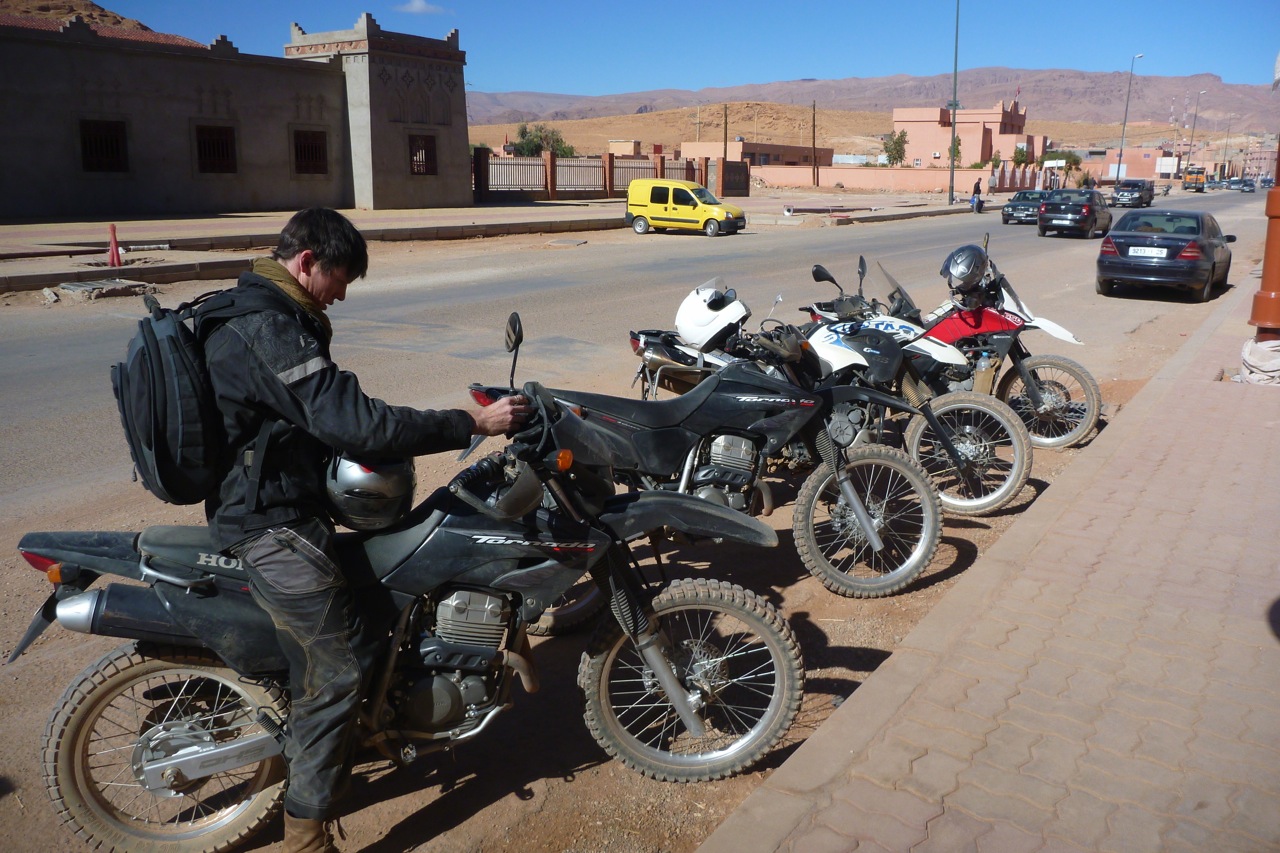
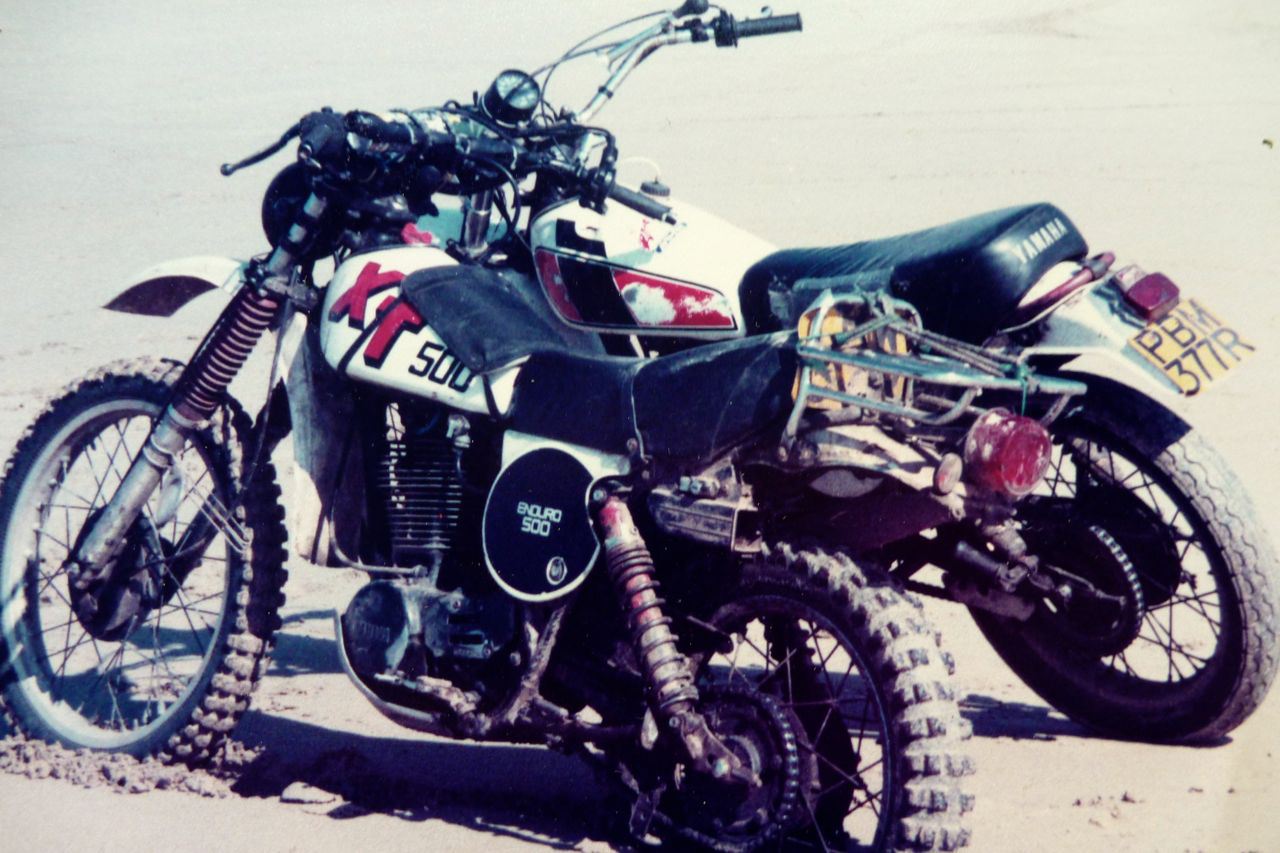
The five-speed gearing felt wide and tall: top gear was more of an overdrive rather than something with which you could usefully pull. It could be the very low mileage, but the Roadstar didn’t feel like it could have outrun my CRF250 or the XR250 Tornados we used in Morocco. And I’d expect to feel that power right off the bat, not by wringing the bike’s neck like it was a mid-80s two-stroke triple. For me the point of tracking down a 400 over the much more prolific 250s is either gaining a lack of balls-to-the-wall revviness or the ability to pull in lower gears with fewer gearchanges, but all without the weight penalties you get once you exceed 500cc. I was changing gear around 4000rpm – to rev much further would have felt a bit frenetic and unnecessary, but the 26-hp Roadstar’s motor felt more Jap 250 than XR400, let alone my old XT500 (below) which is listed as 27–31hp but 39Nm torque at broadly similar rpm. Another few hundred kilometres on the engine may have changed that, or it could be down to flywheel weight or the stroke of the motor. Mash don’t mention it, but the WK lists an identical bore and stroke to an XR400 just 0.4 bar less compression (8.9 vs 9.3). These are all just numbers off the internet where I found claimed power and weigh figures can vary by over 10 per cent for the same bike.
XT500s

mash-03
mash-17

Whatever the style of bike, one big attraction is fuel injection combined with a low-compression, air-cooled motor onto which it would be easy to graft an oil cooler. That might not be necessary or all that effective as with 8.9:1 compression ratio and the lowly power output, this 400 ought not get that hot in normal conditions. The low compression also means the motor ought to tolerate low-octane fuel out in the world, though I’ve found efi systems on big singles like the XCo and 660Z Tenere can handle detonation from low octane fuel, whatever the engine’s CR. Another benefit of all this is should be fuel consumption. I filled up at the start but forgot to fill up again at the end to work out what I used, but surely the retro Masher will return at least 25kpl or 71mpg. With the 13-litre tank that would deliver a fuel range of some 325 kilometres or 200 miles – about 80% of what I’d consider optimal for a travel bike.
mash-13

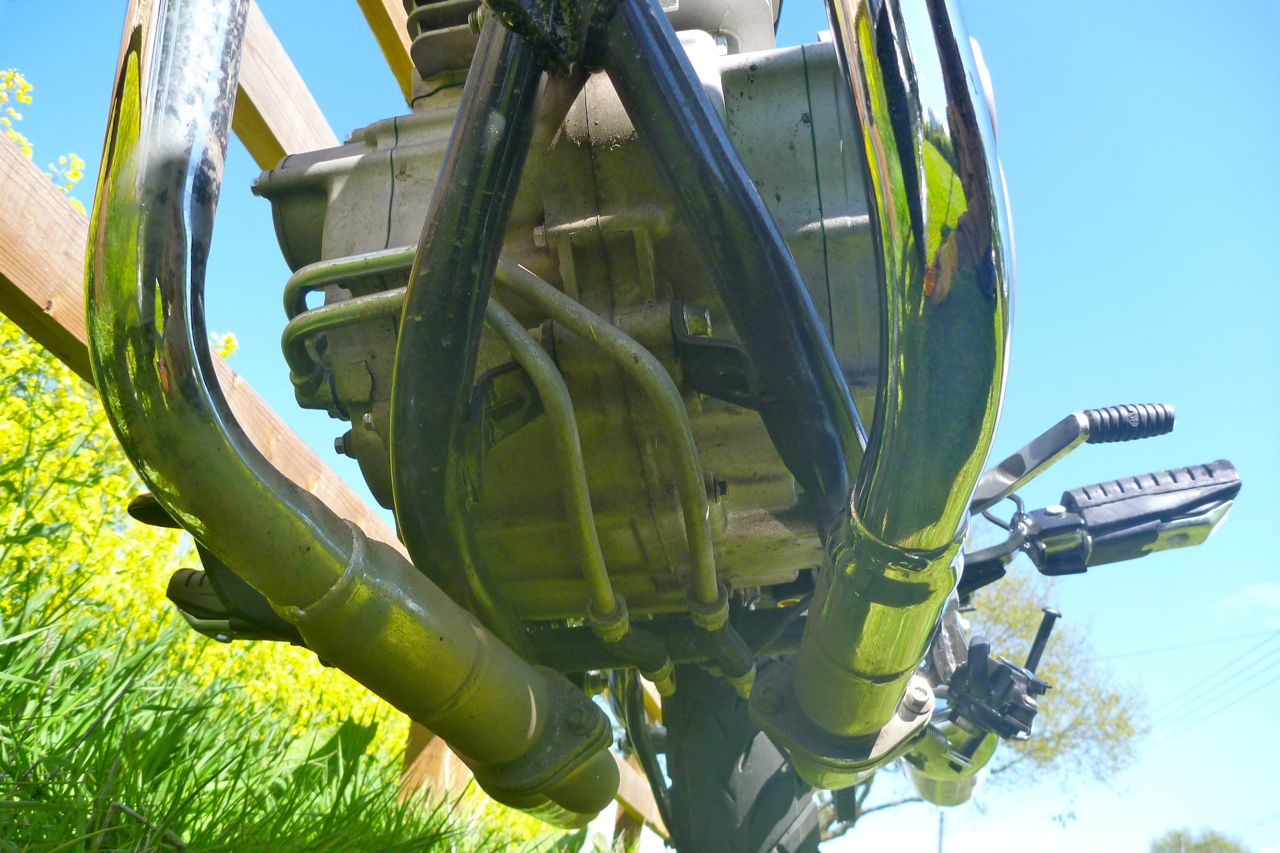
You might get used to the modest power but the main thing that would limit an adventurised Roadstar would be the suspension. At 35mm the unadjustable forks look skinny even if the preload-only twin shocks could be swapped out. The metal chain guard and front mudguard would be better in plastic too and the low-slung pipes as well as the under-engine oil lines would need protecting or moving over the top like an XBR. Without crash bars the foot controls might suffer in a fall too; the gear change could be easily swapped for a folding-tip item, but doing the same with the brake pedal would be tricky to pull off.
mashbrace
mash-30

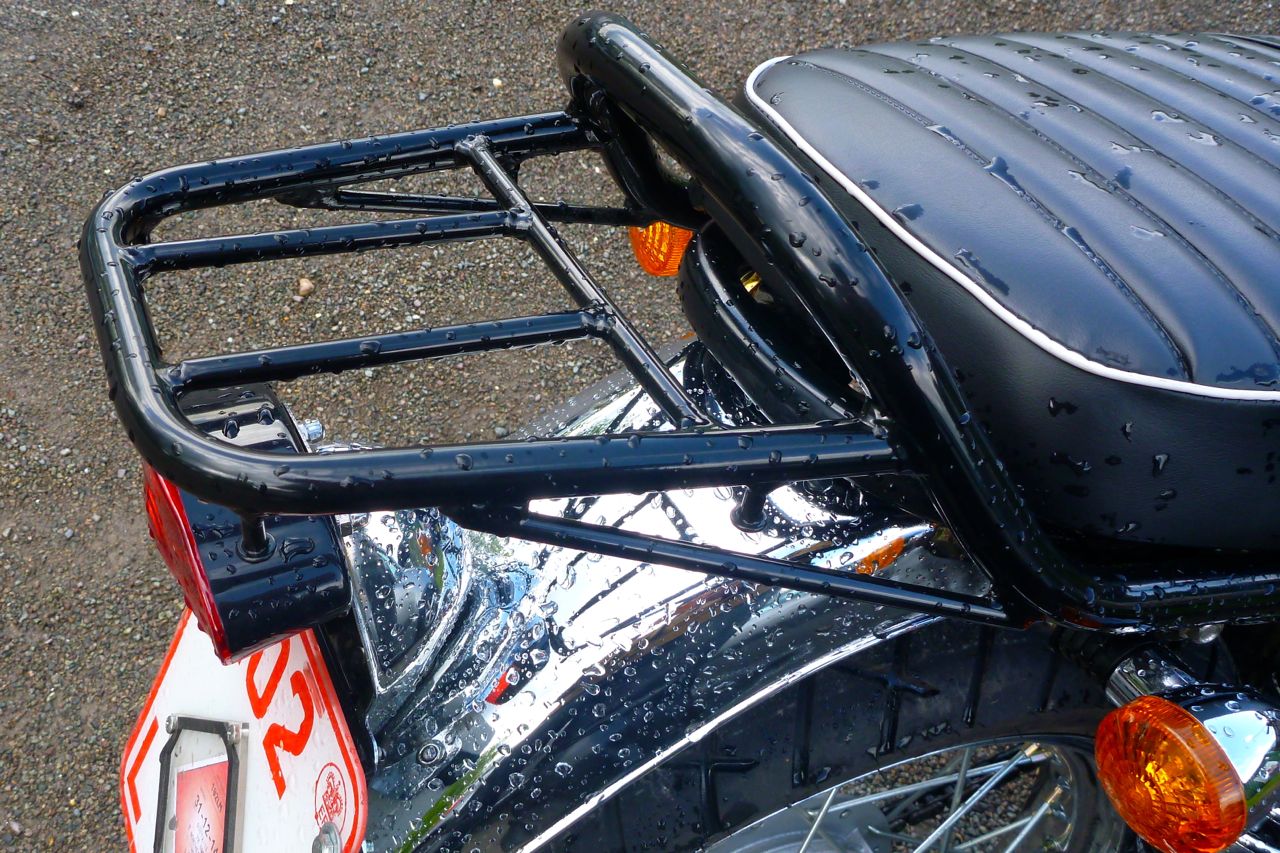
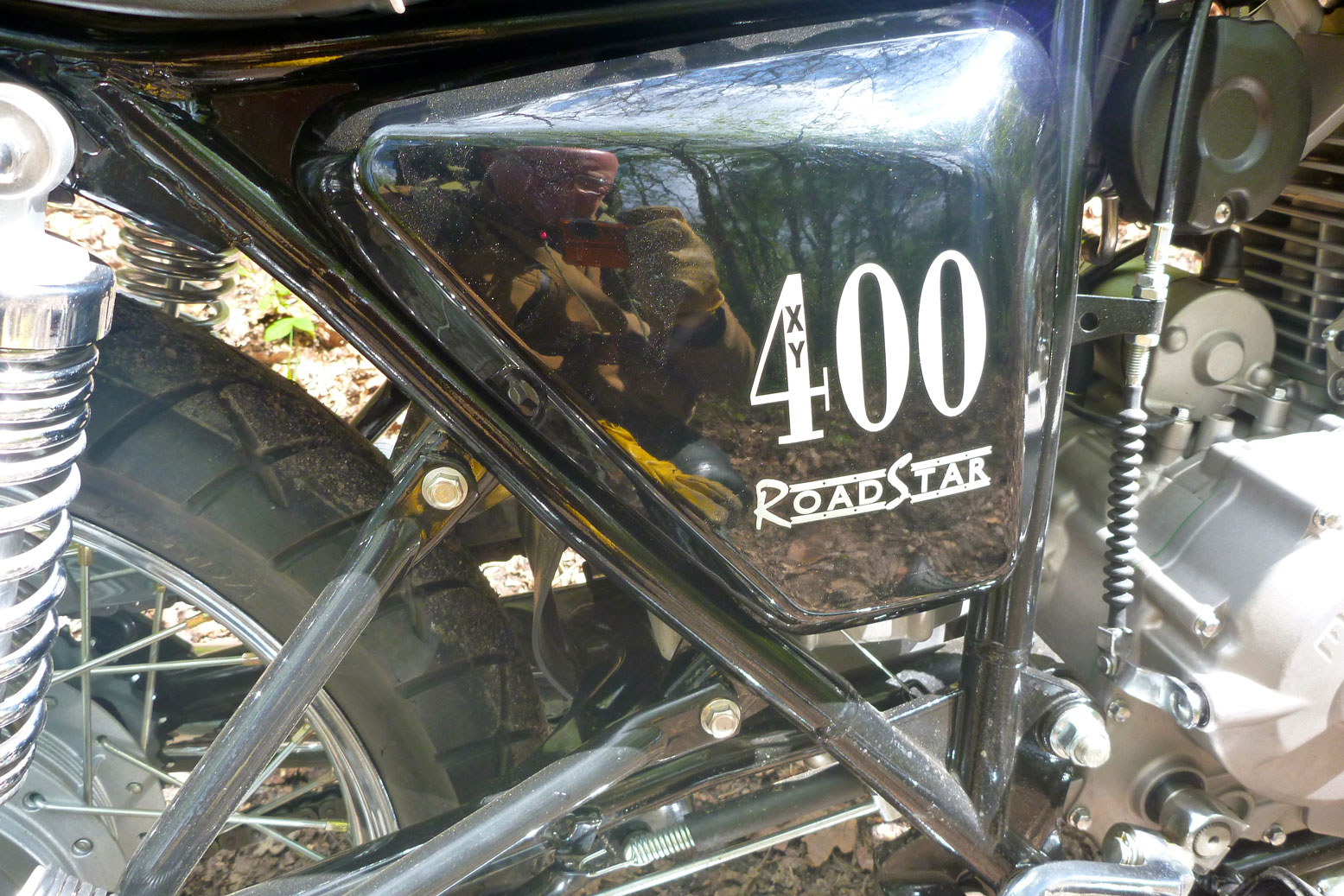
One good thing about being twin-shock is you could get away with using  throwovers without a rack to keep them out of the wheel. The little racklette (right) that comes with the bike is neither here nor there – I’d sooner take it off and fit a wide sheep rack as I did on the XCo. I couldn’t work out how to remove the seat other than with an awkwardly accessed 12mm, and only managed to remove one side panel, but the subframe does seem well up to the job compared to 250 trail bikes like the CRF and Tornado where it’s their biggest weak point. The Roadstar chassis has thick gussets inside the triangulated sections and, though slender by monoshock standards, the long swingarm looks solidly mounted via the back of the gearbox.

mash-25

I did something on the Roadstar I’ve not done on a bike for many, many years: swung a kickstart. I assumed the Mash would kick into life like a CG125 with one swing, but it seems I’ve lost the knack and it took a few stomps to the point where I lost interest in doing it ‘for old times’ sake’.
I recall how we lamented the dropping of kickstarts from motorcycle engines, but then and now a button just gets the your motor running. And should the Mash not start on the button I bet it would take a lot of huffing and puffing to fire up an engine with a kick. It’s been discussed before but a weak battery is likely not to have the spare juice to power up the efi and fuel pump as well as fire a juicy spark across the plug. Better to just do a jump start.
mash-15

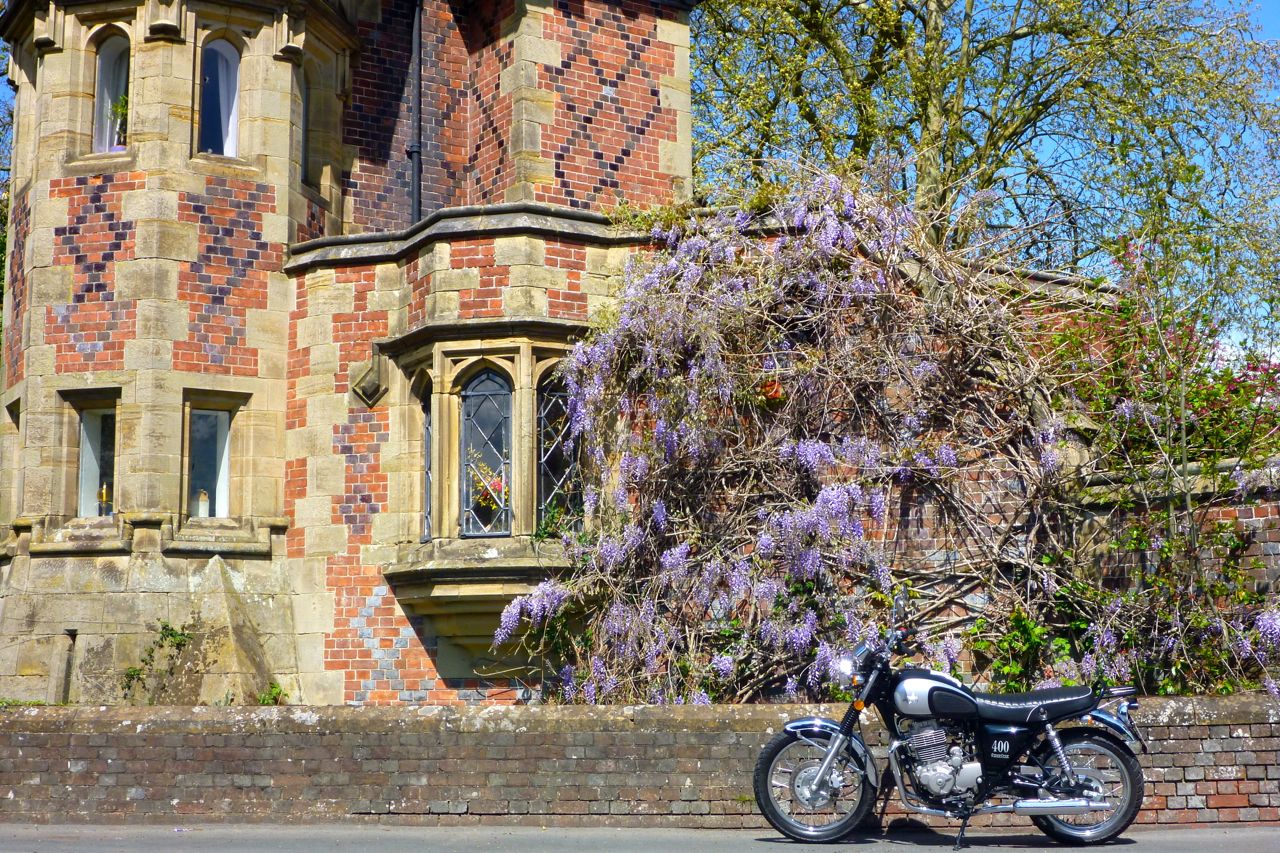
My parting impression of the Roadstar was of a bike whose welcome lightness makes it effortless to ride along quite roads and in town, but which on the open road looked a bit better than it went. Compared to a 250, I didn’t get a sense of any added grunt from the 400cc motor, even if it wasn’t a revvy machine.
nx4
xr400r

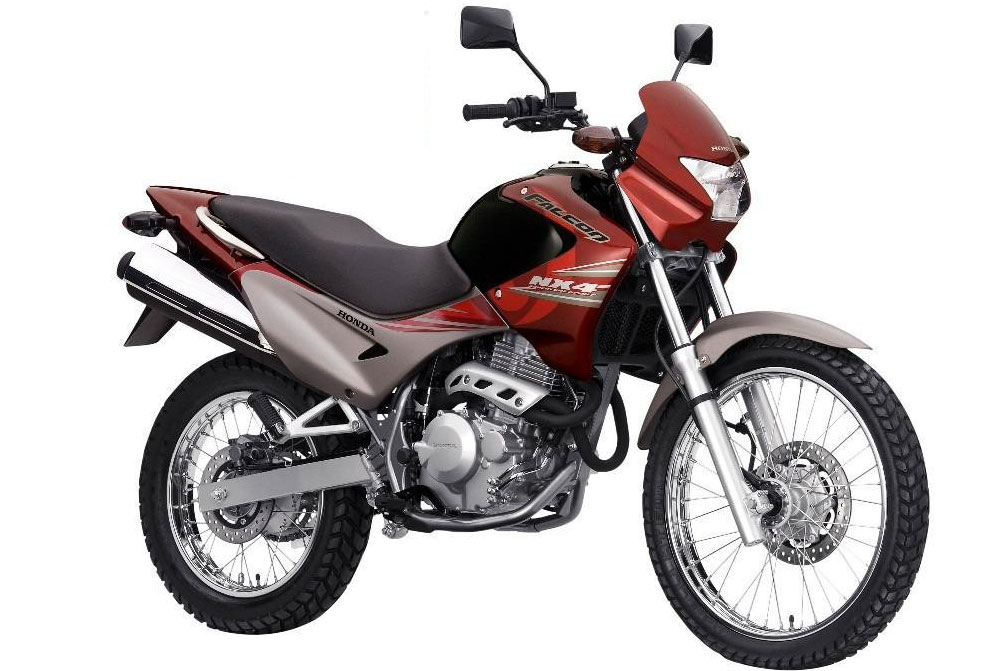
In 2018 I finally got to ride an XR400 – you definitely know you’re not on a 250. And that’s as it should be and why 400s are an overlooked ‘missing link’. Actually no so ‘missing’ as ‘not here’. Bikes like the Brazilian-built carb’d NX4 Falcon (above) went for £4000 new in Mexico, or the 250 Tornado never officially imported to emissions-conscious western markets.
The Roadstar’s widely spaced gears would need working to move along, though you’d want to get that front brake sorted first. The saddle probably wouldn’t sustain a day’s riding, but then even with a screen, the Roadstar isn’t intended for that sort of use and there are much more sophisticated bikes with truly terrible seats.

As for the price [at the time of testing]? Even with the warranty I still think nearly four grand in on the high side for a basically equipped Chinese 400 single. If it follows the UK imported and branded Honley 250 Venturer, that price may well drop after a while [still €4000 in 2020), because as things stand the depreciation on a used Chinese branded bike will surely be monumental. Otherwise, for that money I can take my pick from a used CB500X or buy any 250 I want.

Motorbike capacities come with certain expectations and on this test ride it was the 400cc engine I was keen to assess. In terms of more-than-250cc grunt, the Roadstar was a bit disappointing or perhaps just needed more running in. Add it all up and as a low-tech adventure tourer I think the Roadstar is a bit too basic for the money. You can pick up used low-mile Roadsters on eBay from around £3000 so the depreciation isn’t that bad, but in 2019, my same-priced Himalayan ticked more boxes.

mash-16

Thanks to Ian at T Northeast for the test ride on the Roadstar.

The Chinese travel bikes are coming

See also:
Mash 400 Roadstar
Fantic 500 Caballero
CFMoto 450MT (2024)

chinee

It is now 2024 and since this page was originally written in 2015, it might be better to say: The Chinese Travel Bikes are Well and Truly Here. And the Indian’s aren’t far behind either.

Each year China pumps out millions of sub-250s and scooters for users who need no-frills runabouts or workhorses. So does India, and it’s an open secret that many long-established and familiar motorcycle marques have been manufacturing in China for years, even if some high-end models may get assembled closer to home. Chinese origin isn’t considered a great selling point, but it’s easy to turn a blind eye as long as you have a familiar European logo on the tank.

Up on the right: this long article condensed into one page for AMH8.

chinmoto

It’s much less easy to persuade western consumers to buy a native Chinese brand, even if that machine may well have been cast in the same foundry as the marques we know and trust. To get around this, some importers invent ‘Anglo’ sounding brands like Mutt, WK, CSC, Sinnis or Mash.
On top of this, Chinese manufacturers have found a good dodge by buying the rights to once defunct or moribund European marques like SWM, Fantic, Benelli, and even Francis Barnett which older bikers will accept more readily, even if it’s all just a badge on a Chinese motor with European design input or, as in Fantic’s case, a motor bought in for their running gear.
loncin

Researching this, I’ve come across tales of early adopters getting burned by crumby assembly, irregular running or poor materials. To that you can add getting spares and suspicion when the engine indicates some obscure Chinese marque but the tank shows something else.

I suspect some western consumers are also put off by China’s ruthless manufacturing ethos that doesn’t see merry bands of workers attending communal keep-fit sessions in the company car park each morning, let alone provide the sort of workers’ rights or environmental concerns we take for granted in the West. True or not, this is mainly why established bike marques play down the Chinese connection, even if what holds most of us back from buying all-Chinese is unknown reputation and crippling depreciation, rather than a prickly social conscience.

... Some of the more famous examples [of joining forces with more famous foreign manufacturers incude…] Loncin (BMW), Zongshen (Piaggio and Norton), Qinqi (Suzuki and Peugeot), Jianshe (Yamaha), Lifan (MV Agusta), Qianjiang (owners of Benelli), Jialing (Honda), and CFMoto (KTM).  

David McMullan
chongqing

As far back as the early 1980s Honda established partnerships with the Chinese Jialing factory and within a decade Yamaha and Suzuki made similar arrangements. By 2011 China overtook Japan as the world’s largest bike manufacturer, with many factories based in Chongqing (left).

Around 2006 Chongqing was renowned as the white-hot epicentre of China’s urban industrial gold rush, but according to this article, the gold rush waned. The recession, adverse currency rates and the strength of other markets like India (where English is more commonly spoken) have seen China’s motorcycle production slow or even reverse.

Back in 2006 there [were] over 100 motorcycle companies operating production lines in Chongqing alone, a good proportion of them ‘one line’ export factories that provided super-cheap models for the African and domestic markets. Unlike India in which the Hero Group and Bajaj share a huge proportion of the market the Chinese market was shared by a multitude of smaller companies. The number of Chongqing motorcycle factories still operating is now less than 40 relevant companies and is likely to reduce even further over the coming years.  

David McMullan
adventures-1977-20

Take this all back half a century and you can imagine our bike-riding forebears (or younger selves) grappling with the same ‘Made in Hong Kong’ suspicion as Japanese bikes began to make their mark. Even when I started biking in the late 1970s you planted your boots in either the ‘Brit Shit’ or the ‘Jap Crap’ camp.

motopig1

Broadly speaking, the Chinese have adopted the same strategy as Japan: start by banging out cheap, small-displacement utilitarian machines, then move in on the smaller volume, bigger-engined bikes with a higher markup, while getting into racing to speed up the R&D. Just like the Japanese in the 60s, the Chinese are on the march as they attempt to tune in to what affluent western buyers might consider, now that the load-carrying-runabout markets are saturated.

shine
swm650x

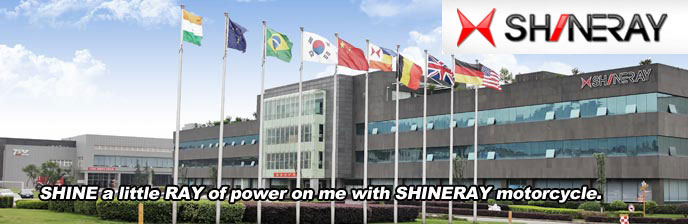
Established in the late 90s, Shineray (as in ‘Shine-Ray not ‘Shiner-ay’ if the company motto above is any guide) are one of the Chinese marques said to specialise in trail and off-road machines. 
In 2014 they bought the Italian SWM name, last heard of in the 1970s. Around the same time Shineray also acquired an old factory off KTM in Italy with a batch of Husky models. That SWM Superdual on the left uses the old 600-cc Husky TE630 engine, but in the flesh was not so inspiring. Shineray/SWM have since diversified into SUVs.

franban

Judging by what I saw at a Classic Bike show, the even older Francis Barnett marque (right) has had a similar makeover. Buy the rights to a heritage brand then design a suitably old-school look around your Chinese- or Indian-made machine. For an anonymous Chinese factory which nevertheless monthly pumps out more bikes than are sold in the UK each year, it’s a quick way of getting wary western consumers to buy your product, whether they know it or not.
shine400
GB250TT

In a similar vein established French motorcycle importer SIMA created the Mash Motorcycles brand. They’ve taken a proven Shineray XY400 (above) and refined it. It’s an appealing Brit-based retro look that some twenty years ago became popular in fad-prone Japan, if not in Britain itself. That early 90s GB250TT on the left was one of many similar machines made for the Japanese market and which are now cropping up as pricey and exotic UK imports.

sinnis250

The 250 Retrostar from Sinnis (left) bore a very close resemblance to the Mash 400 retros, but, Sinnis is now using Zongshen (see below), not Shineray.
In 2020 Sinnis announced the Terrain T380 Adventure twin, which is more or less a CSC.
The fact is you can spend a long time trying to untangle these Chinese whispers. But with Chinese bikes origin is important. Is it a Jap clone, licensed or otherwise, a copy, or a cheaply made fake?

mash-06

At a Classic Bike show I got the chance to see some close-up. Chinese 250s are two a penny, but with a more overlandable capacity of 400cc, could a Mash retro be a contender as a base bike? I’ll admit that part of me is attracted to the idea of regressing towards a retro-styled machine: the appeal – however flawed – of a simple and inexpensive low-key, leg-over overlander that you can adapt to your needs. My 2019 Himalayan fitted that category. A close look before the crowds rolled in revealed a quality of finish that was hard to separate from a similar Japanese bike. A few days later I took a Mash for a test ride.

shin400
XBR500

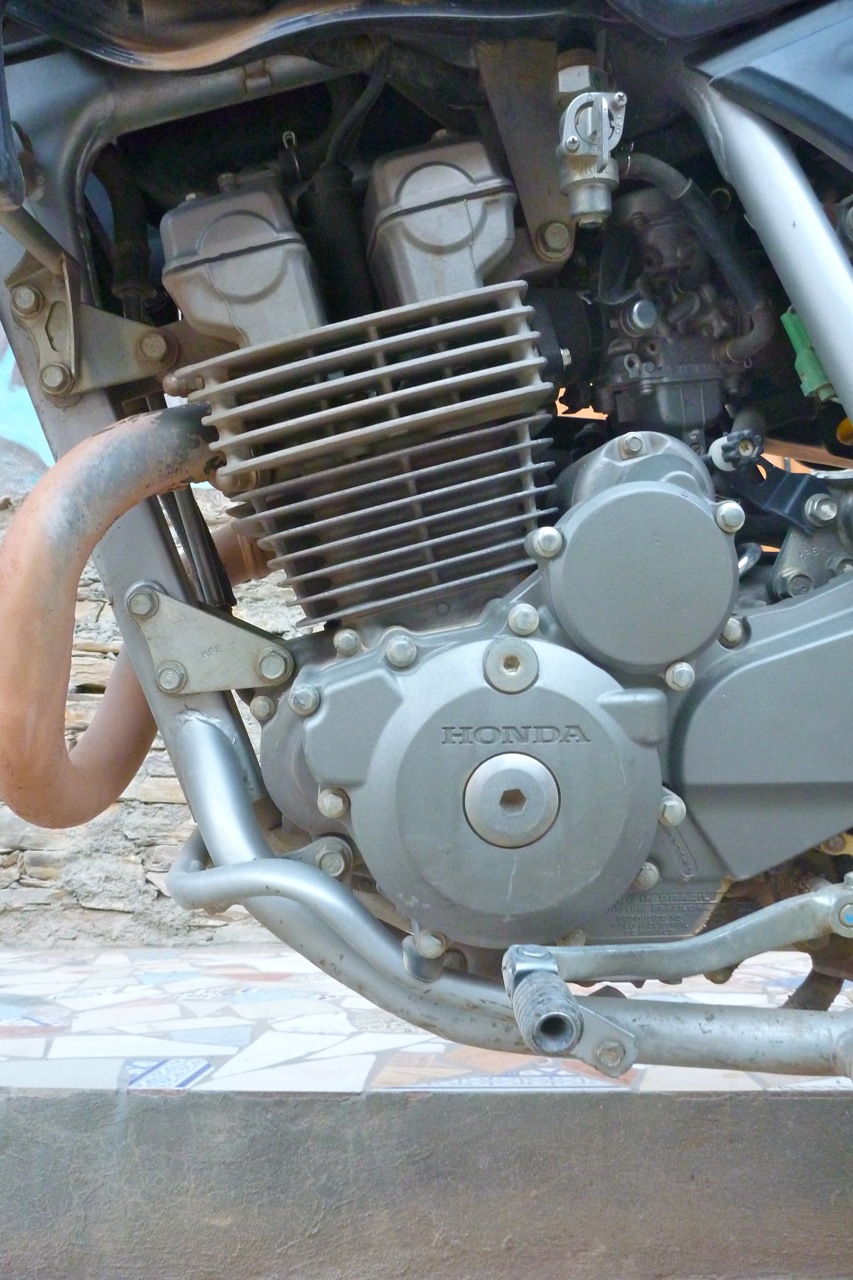
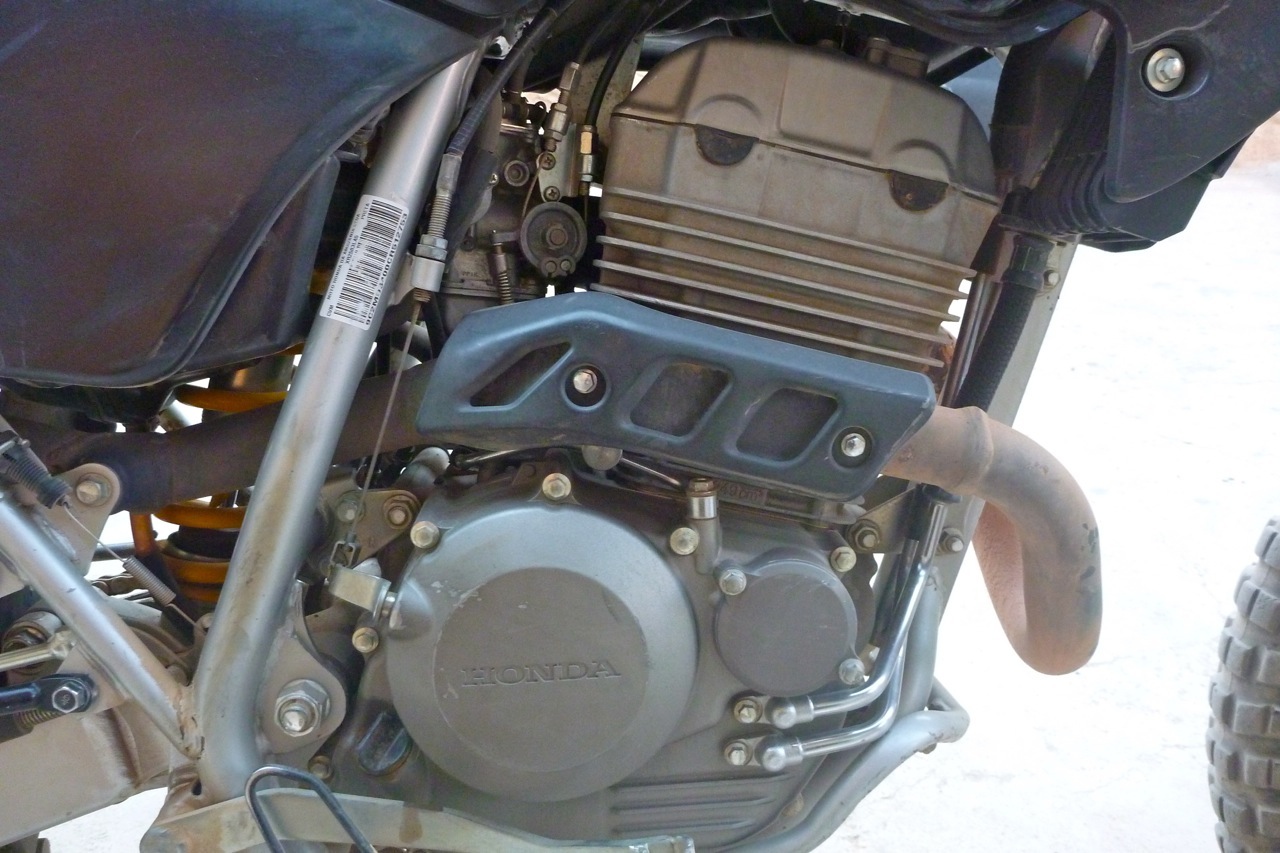
Many assume the motor is an XR400 clone, but it’s actually derived from the 400cc version of the similar, late-eighties kick-and-electric XBR 500 cafe retro (right), also sold in Japan as the ‘Manxified’ GB500.

I was once deliberating over a back-to-basics 400 overlander when it transpired that manufacturers in China might do the job for me, producing adventure-styled bikes but with full equipment.

zongRX3

One such machine is the Zongshen RX3 Cyclone sold under various badges in the UK, the US (5000-mile report) and Russian-speaking lands, but it’s just another 250. What’s wanted is a 400’s added torque so you don’t have the scream the motor when overtaking a lorry up a hill.

WK‘ is the UK brand of the Chinese CFMoto marque – one of the bigger players in the bike game which gets sold as ‘CFMoto’ in other western markets. They were unusual in briefly being one of the few Chinese bike makers to produce a ‘big’ 650 road bike which, bodywork aside, looked based on a Kawasaki ER-6/Versys. But neither that bike, nor anything over 125cc, still features on WK’s website in 2023.

wk400
mashadv1

From 2015 there was an initially over-priced WK Trail 400 (above) but within a year it was going for under £3000 and is now no longer listed.
It was the same as the slightly longer selling Moto Mash 400 Adventure (left, quick road test), except the luggage and crash bars were optional. Read how UK WK owners are getting on.
At one point Mash in France (and now in the UK) were selling off their retro-styled 400cc Scramblers and Cafe Racers from as little as 3000 euros. The retro-styled Mash Roadstar (below) has the same 400-cc engine is the same as the Adventure and Trail. I took one out for a day: more here.

mash-16

At 400cc you’d hope these bikes have potentially plugged the gap between the heavier and pricier twins and an over-extended 250. The conclusion I came to reading short tests of the WK400 in BikeOverland Magazine and Rust is that they don’t yet plug that gap. The bigger capacity doesn’t add up to any greater performance over a similarly priced Jap 250 trail bike in terms of top speed, acceleration, fuel consumption and price, while brakes and lights are said to be poor. Royal Enfield’s Himalayan (below) actually works much better because despite it also being heavy, the torque is substantially greater. That’s the whole point of a 400 over a 250.

In 2019 Mash also introduced the X-Ride Classic 650 air-cooled single (below), with unmissable cues to the much-loved XT500. With low compression, the injected motor makes a claimed 40hp and 45Nm of torque @ 4500 (the heavier Himalayan is 25hp and 32Nm at the same rpm). Gearbox is 5 speed, the tank holds 12 litres, wet weight is about 187kg and wheels are fat 17s, though it looks like there’s room to lace in a 21″ up front. Since the announcement no one appears to have actually ridden the X-Ride.

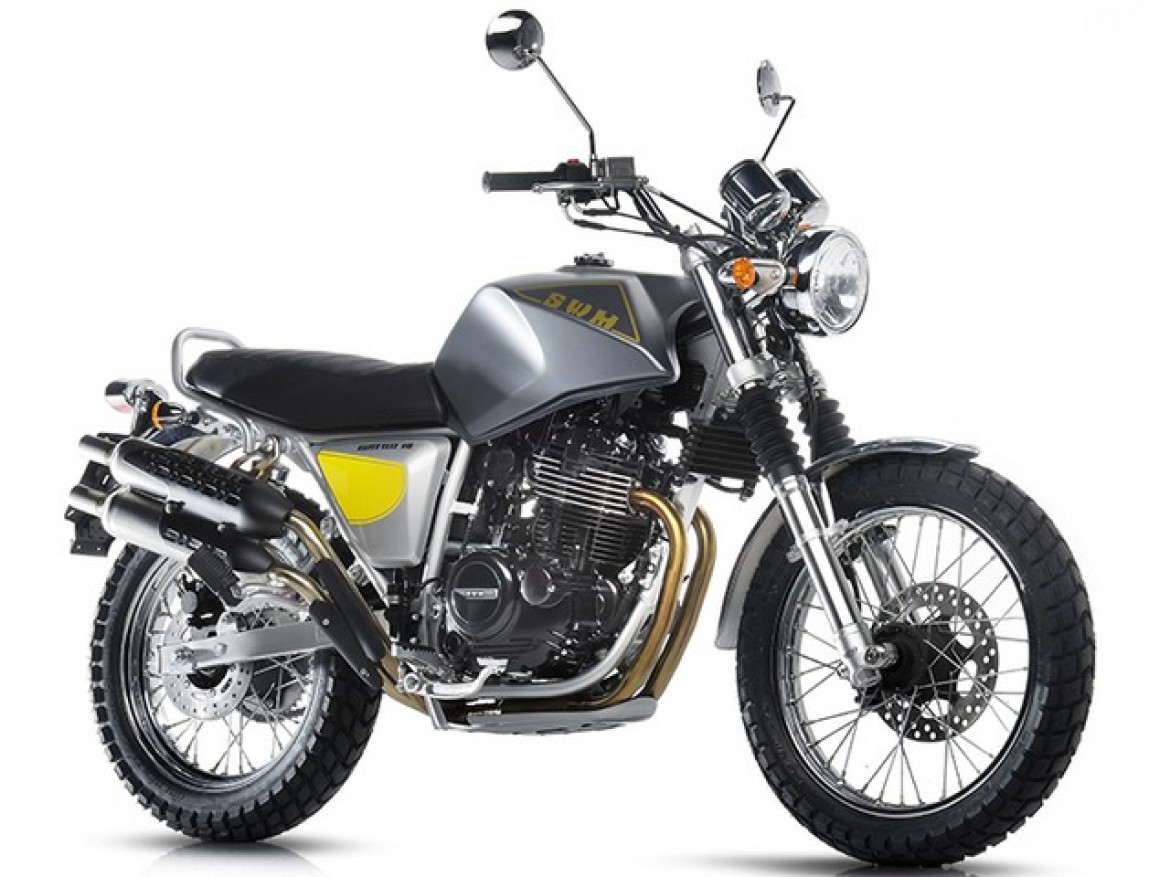
SWM 440
Shineray bought former Italian off-road marque SWM in 2014, a way of slipping into the European market which otherwise wouldn’t look twice at a ‘Shineray’ or even a Mash/WK badged machine.

4-swm
swm-silver

SWM produced the Italian-designed 440cc retros shown above, all based on a different engine to the XY400 used by Mash/WK. It’s described as a 435cc; 6-speed, SOHC air-cooled wet sump with no kick. 
These early models were sold off then restyled, and it’s unlikely that SWM will produce an adventure model as that clearly didn’t work for Mash or WK. In this capacity there’s much more demand for retro-styled machines.

husqvarna-baja

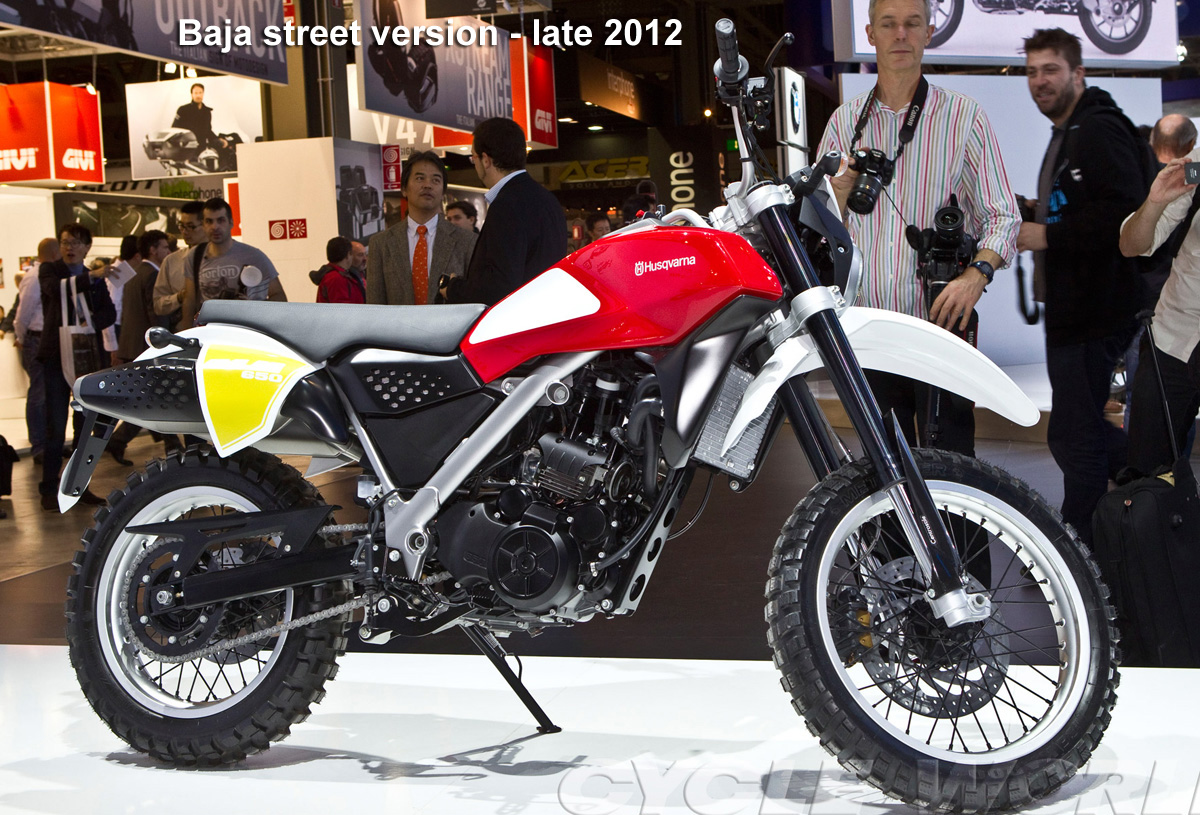
Above left, the SWM Silver Vase 440. Conceived at the end of BMWs involvement with Husky, some of its iterations faintly recall the Husky 650-based Baja concept bike (right) that was seen a year or two earlier. But by 2019, when Overland Magazine and MCN tested them, the 440s were being heavily discounted and maybe even discontinued in the UK.

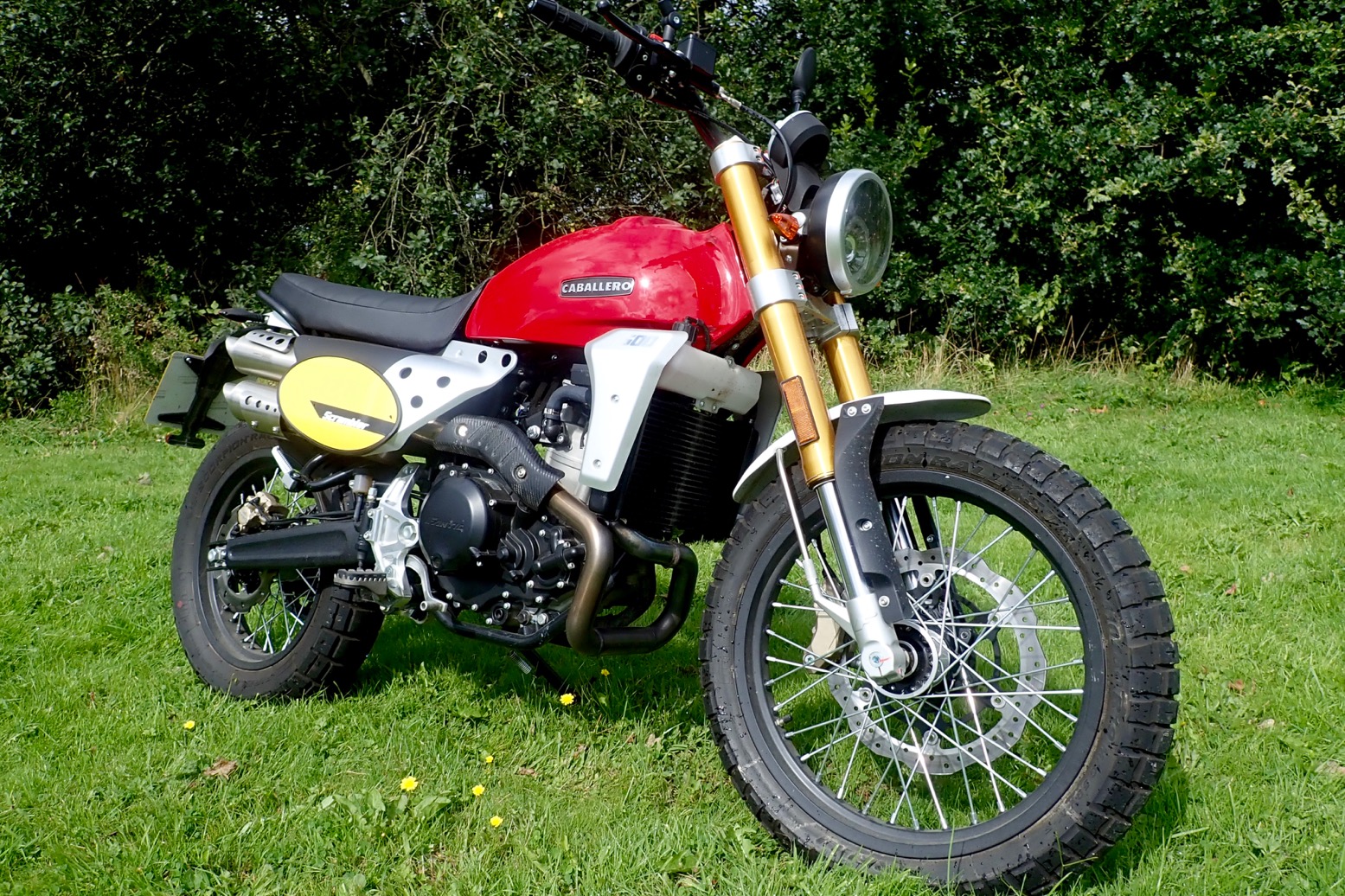
Fantic Motor is another reborn Italian brand whose frantic sports mopeds and cringe-inducing 125cc chopper I recall from the 1970s. Things are looking up: they now have the Caballero range including ‘500s’ in Scrambler (below), Rally and Flat Tracker form (below), plus the latter two as 250s and 125s, and a 700 using a Yamaha CP2 motor.

fmcabspek
nc450

These Fantics appear much higher spec than the air-cooled SWMs, using Zongshen’s water-cooled NC450 motor (right) claiming around 42hp.
Could this be the first truly modern Chinese motor in this capacity? I tried out a Scrambler and it sure felt like it. Trouble is, from £6400 up to £7000, the Caballero 500s cost more than a new Honda CB500X in the UK. But maybe not in a year or two.

FMCabFT.jpg
zongrx3
ZRX4-2019-2

The Zongshen RX4 Cyclone sells in the US under the CSC brand. It uses the same NC450 single, but gets restyled as a chunky travel bike alongside their established RX3 250 Cyclone. The 450cc RX4 weighs well over 200kg, but maybe that depends on the full luggage option.

cscrx4

Tank is 20 litres (5.3 USg), the alternator puts out 300w, seat is a friendly 32 inches (813mm) and all for $5795 delivered.
In France, Cyclone Moto sell the Zongshen RX3S 380-cc twin (below). Power, weight and styling are similar to the 450 single; price is from €5000 and in 2020 Sinnis in the UK introduced the near identical bike as the Terrain 380 Adventure.

RX3S

Versys 650

vers-lane

I picked up the Versys unseen and rushed back down the A1 to East London to meet the Mrs for a movie. First impressions: clutch and gear change not as light or as slick as the TDM sold the day before. Scorpion pipe a bit on the noisy side but the OE can came with. Steering drop-in almost as intuitive as the TDM but the upright seating position was much more what I’m used to, giving an impression of agility the strung-out Yam couldn’t quite muster no matter how high the bar risers. This alone is what shows potential in the Versys. Brake felt less good than the TDM’s brilliant Blue Spots and suspension was OK, hard to tell on smooth roads. Fuelling is flawless – much better than the glitchy TDM, especially after I fitted some cans on it. I did my bathroom-scale weight test which came in at 199kg with the tank about a quarter full. Call that 212kg wet. Not so light then. Back home I did the sort of close inspection I used to do before buying a bike in the time before internet. Instead, this time I’d trusted in close and repeated scrutiny of the ebay pics and ‘decoded’ the pitch of the seller. All in all the bike looked on the money so I got stuck in.

vers-gel
“Now you’re gonna think that I’m completely nutz, but this thing works! No more monkey butt!” XC Rider

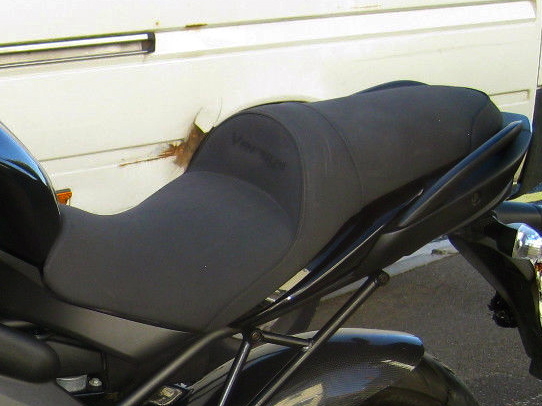
The optional gel seat looked well made, and so it should be, going for well over 300 quid new. But it’s the same stepped shape as the OE unit and once slotted in you’ve no room to move around. There’s talk of the OE seats being terrible but it seems OK to me. Also, I believe that gel may sound cool and techy but has been discredited as a suitable medium for seats. Gel does not compress enough; it merely deforms a little and is too dense to shed heat.

vers-barx
vers-screen

Now on their third bike, my trusty Barkbuster Storms went on without a hitch, the end-bar Barkbolts screwed straight into the bar-weight threads. We’ll see if I miss those bar weights. 
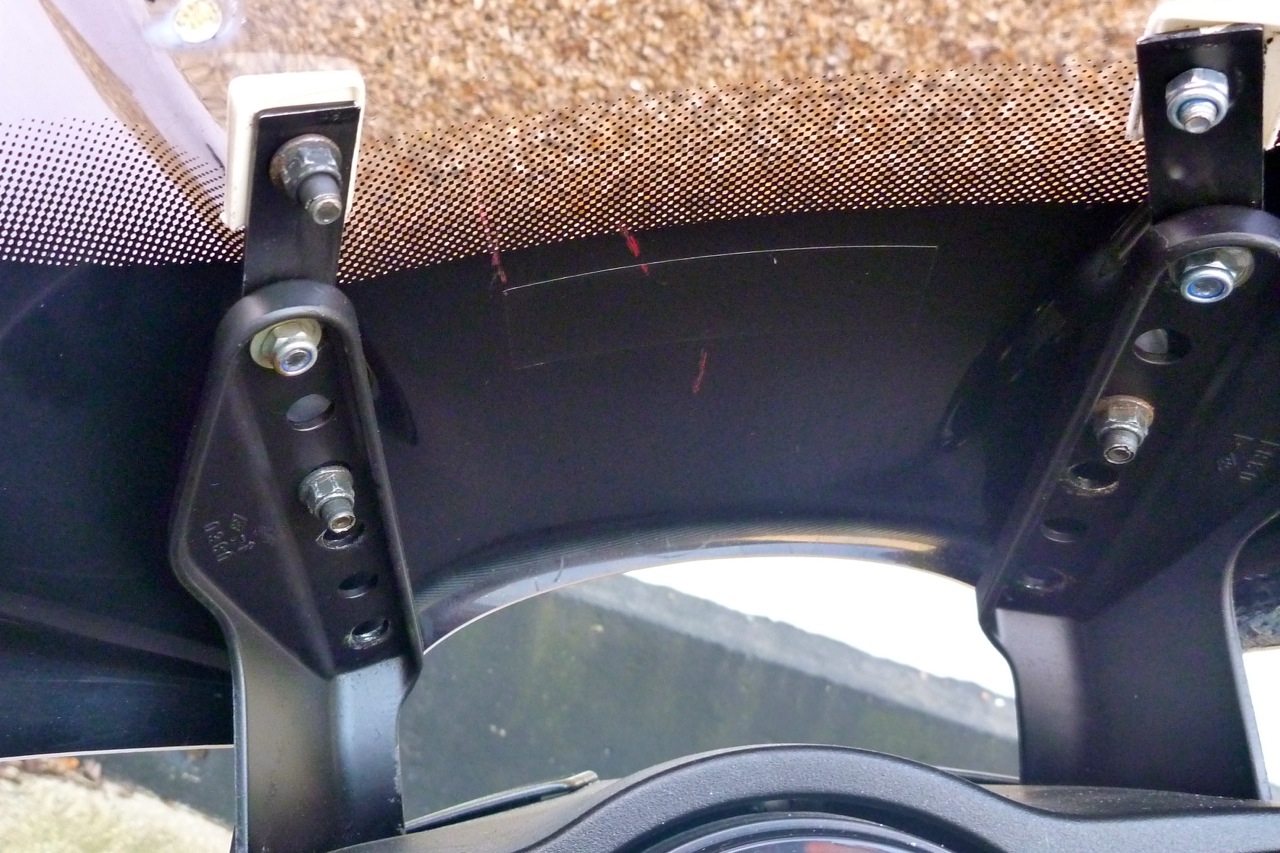
I added a couple of RAM mounts under the mirror stalks and raised the screen two inches with a bit of inelegant bodging (right). Chances are it will still be too low and I’ll need to buy something taller. I also wired in a DIN plug to run my Aerostich Kanetsu electric jacket and tyre pump. No toolkit came with the bike but at the very least I needed the C-spanner to back the over-stiff shock off one notch. A near-new one turned up on ebay for £20. Better than a hammer and chisel.

vers-cans

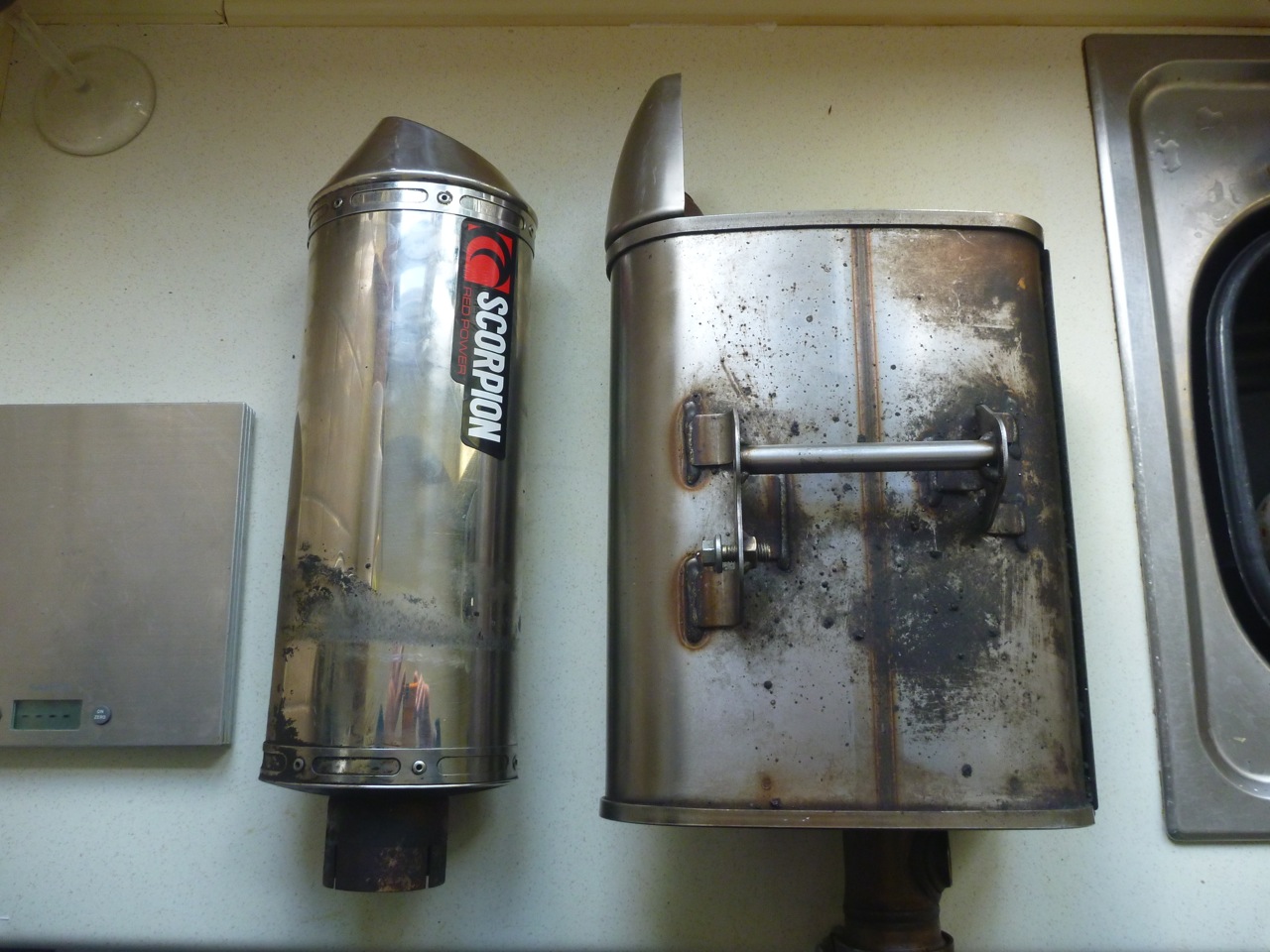
At ~2kg that Scorpion noisepipe may be only a third of the weight of the OE silencer but it makes just a little too much racket. I tried to refit the proper silencer but found the short link tube between the downpipes and the can was rust-welded to the downpipe. I dare say I could have persevered but to save 4 kgs I tried to shut the pipe up a bit.
Talking about after-market pipes, I’d not done this for years but learned while researching a set for the TDM that at the lower end of the price range, a silencer is just a can – one size and shape fits many and it’s just the link pipe between the can and the bike’s downpipe that differs from bike to bike. It makes the prices they ask all the more galling as any impression of tunability for your particular machine is a fantasy. Just choose the look you like: long, short, oval, black, round or square, and hope your bike runs well on it. Though it sounded just right – characterful but without an anti-social din – the TDM’s fuelling was worsened at in-town near-closed throttle speeds. That could easily have been tuned out with a Power Commander (more expense). Meanwhile, the Versys seems to fuel fine as it is.

vers-baffle

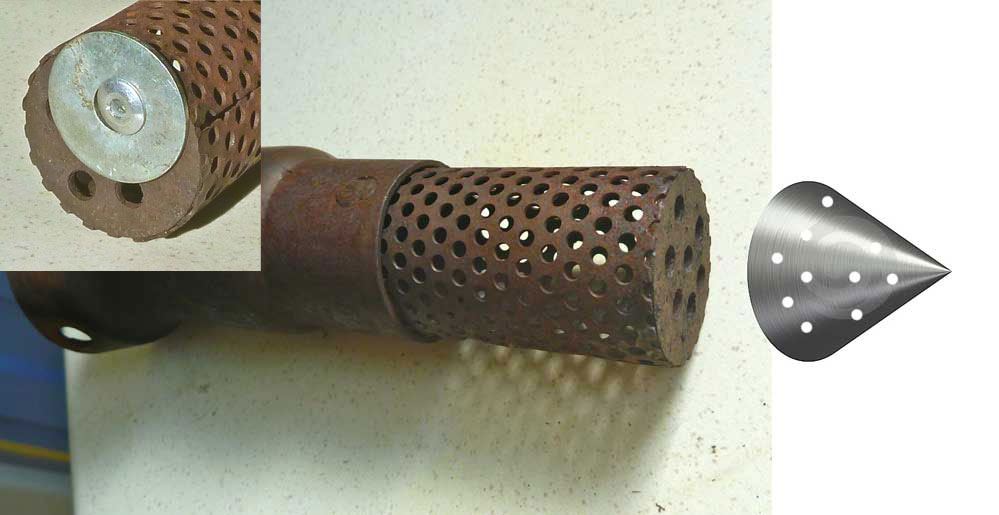
The Scorpion’s baffle or ‘db killer’ screwed out easily and looking at it, I wondered what I could do to deaden the din. I contacted Scorpion but got no reply so wondered it the ‘slap’ of the exhaust pulses against the flat end of the perforated baffle might be reduced by fitting a flow-diverting cone (left). That may well work but I didn’t have one of those lying around so I settled for riveting a big washer over the end (inset, left) and hoped for the best. I think it may have worked a little but not enough so I may try the cone or a bigger washer before freeing up that seized on link pipe and refitting the OE silencer.

vers-tuturo
vers-turt

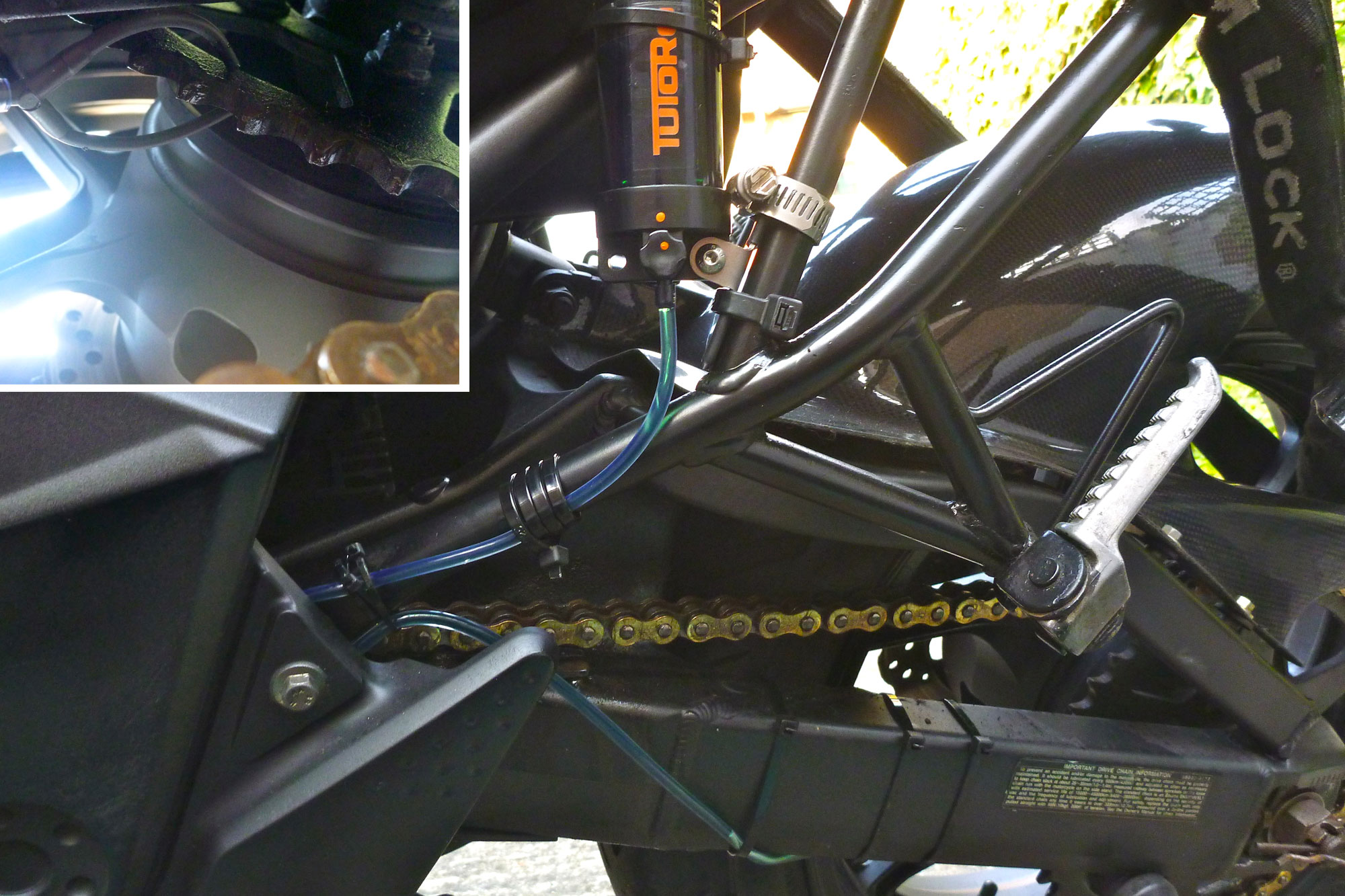
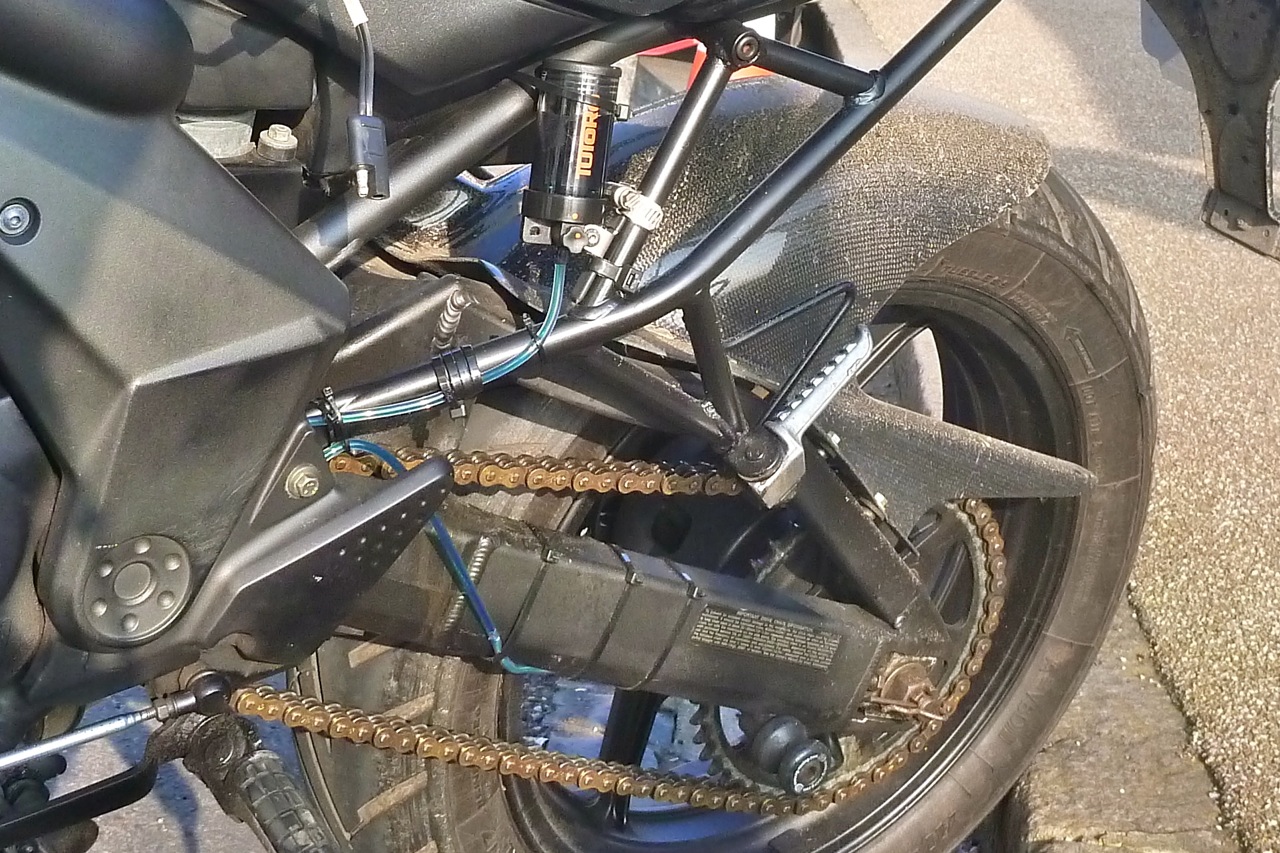
I’m a fan of Tutoro bump ‘n’ pump chain oilers and had one waiting in the wings. This time I knew how to fit the twin-nozzle oil feeder correctly, biting into the rear sprocket (inset, left), and found a tucked in frame rail to mount the reservoir (left). The feed tube routing is not so elegant but it seems to have survived the first tankful. With the adjuster screwed out one turn it’s feeding oil at just the right rate.

Put out a red light
On collecting the bike I noticed a red light on the dash that didn’t go out down the road. I didn’t know what it was but as the bike ran fine I wasn’t worried. At home after a bit of RTFM I realised it was an FI warning light and thought it might be some Lambda/O2 sensor playing up due to the Scorpion pipe. It turned out the Lambda was still there, attached to the downpipe. Exchanges with the seller claimed it had never happened before which seemed a tall story as it lit up on starting the bike in his yard. It’s one of the perils of buying a bike unseen. A bit of internetting on the V forums brought up owners with FI lights on due to burned-out fan motors which wasn’t the end of the world. I tried to book myself into a couple of local Kawa dealers for some diagnostic therapy, but no replies. It seems despite all your fake palms and coffee machines and ‘three-bags-full, sir’, nothing’s changed in DealerWorld. With a few exceptions, to me going to a bike shop will forever remain a last resort.

vers-selfdiag

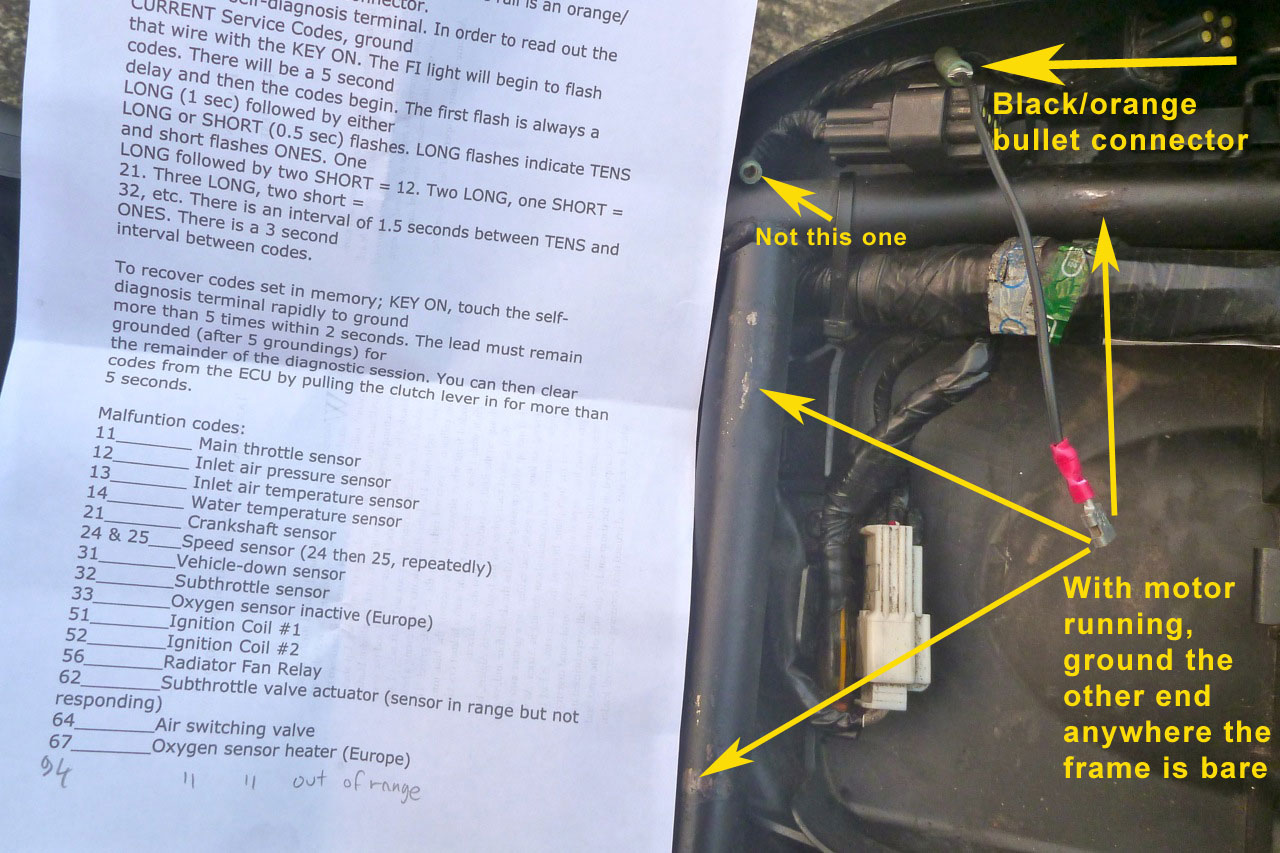
It took a lot more internetting, including getting bogged down in irrelevant, complex and expensive official, dealer-spec Kawasaki Diagnostic System (KDS) software, before I found out I could run a self-diagnosis with just a bit of wire. No bootleg KDS software, no ODB2 readers (mandatory on bikes from 2016) and no expensive visits to can’t-be-arsed dealers.

The Versys appears to have an astonishingly user-friendly system where you simply plug in a bit of wire into an unmarked female bullet connector under the seat (see above left) and then, with the engine running, ground the wire anywhere on the frame. A workshop manual may be different, but there’s nothing about any of this in the handbook. Once you ground the wire as instructed, instead of the ECU going BANG! followed by a puff of acrid smoke, the FI light on the dash flashes up a sequence: long = #10,  short = #1. Translate those flashing codes and work it out from there. The print out pictured left and the pdf version here are based on posts like this buried on various forums.
Must say I’ve never come across this before but am gratified such useful roadside self-diagnosis is even possible in this ‘contact your authorised service provider’ world. I feel quite differently about CPU-reliant machines now, as easily establishing the cause of a red FI light is a long way to fixing a problem.

vers-underseat

In my case I got 6+7 which equals 67:  ‘Oxygen sensor heater (Europe)’ spoken in an annoying robotic voice. Don’t know what that actually means but I soon tracked it down to a missing fuse. You’d think the previous owner knew it was missing and time will tell if that 10A O2 fuse blows again, but now I know the bike runs fine with that ‘fault’, it matters less.

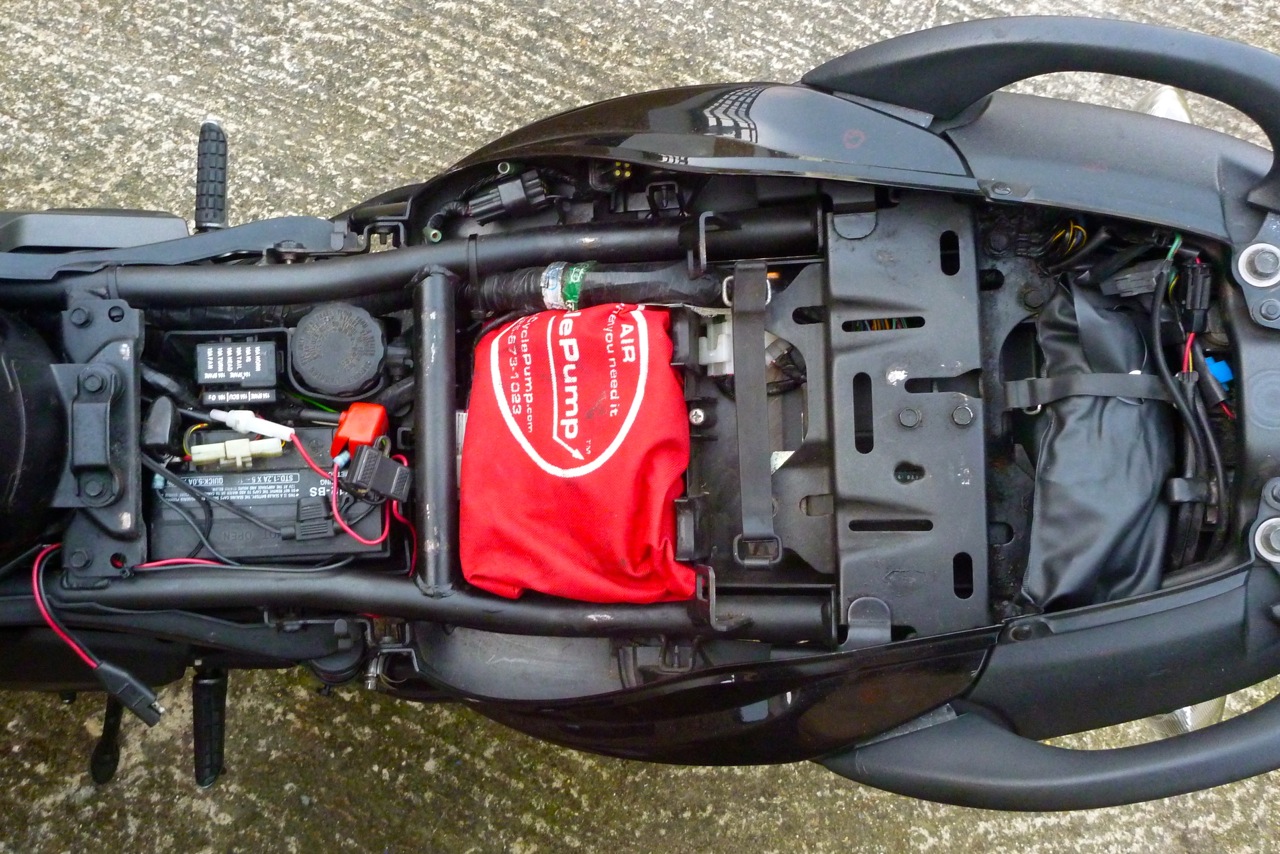
While the seat was off I took the chance to move some chunky space-wasting connectors and big fuses to make room for a Cycle Pump and tubeless repair kit (above right).

lady

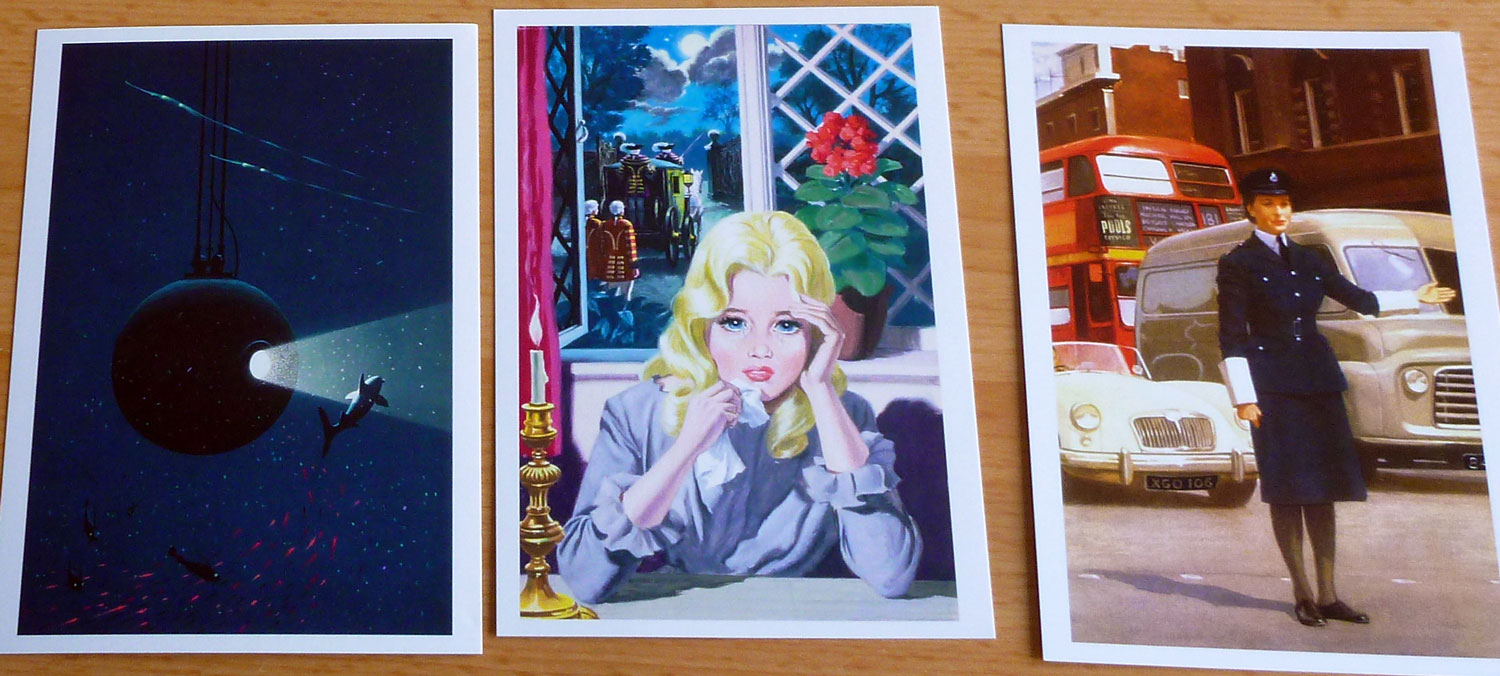
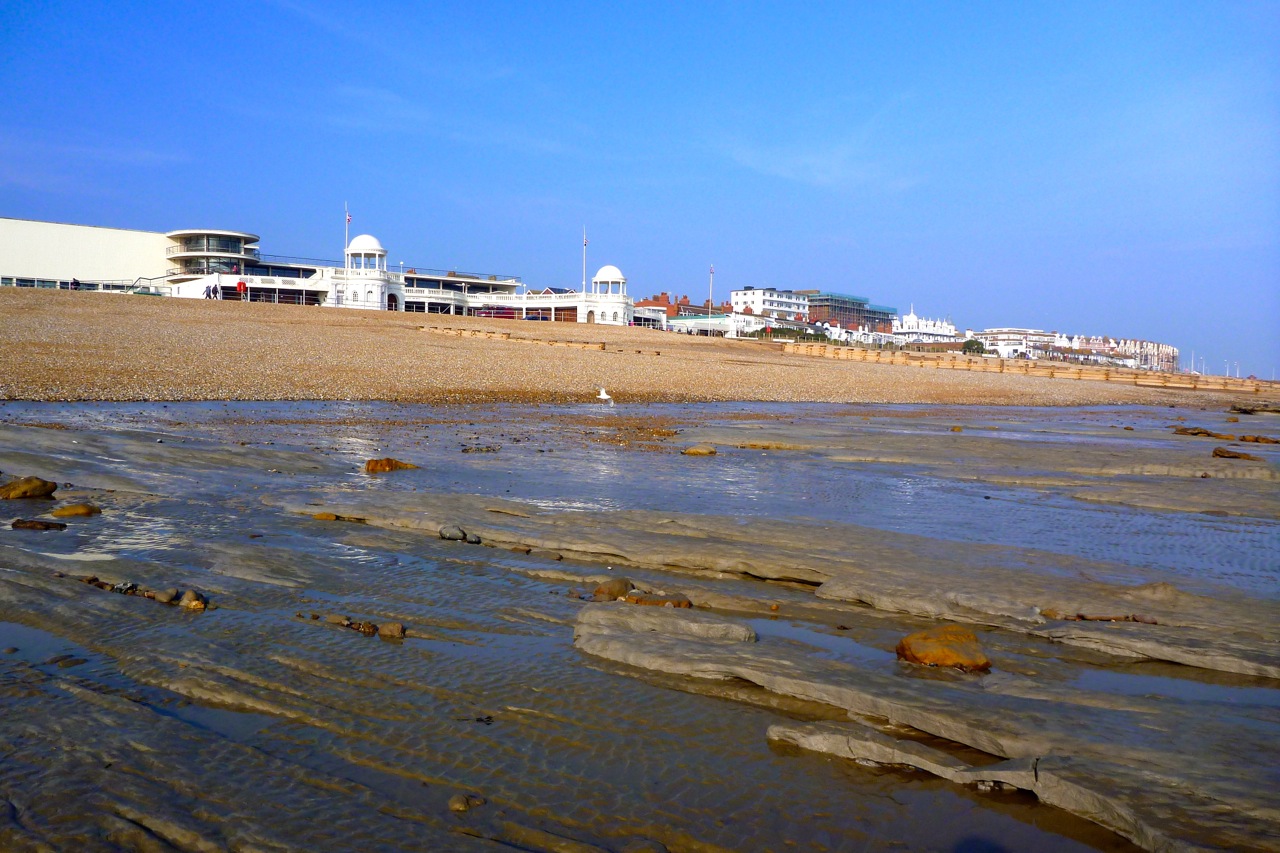
Before I’d fixed the FI light I went for a run down to Bexhill-on-Sea (below left) on the south coast to check out a Ladybird Book exhibition on the seafront. It was of course just an excuse for a ride but once there it was great to recall the images (above) which I’d not seen for some fifty years. What a wonderful 2D world it would be in Ladybird Land.

vers-650-15
vers-bex

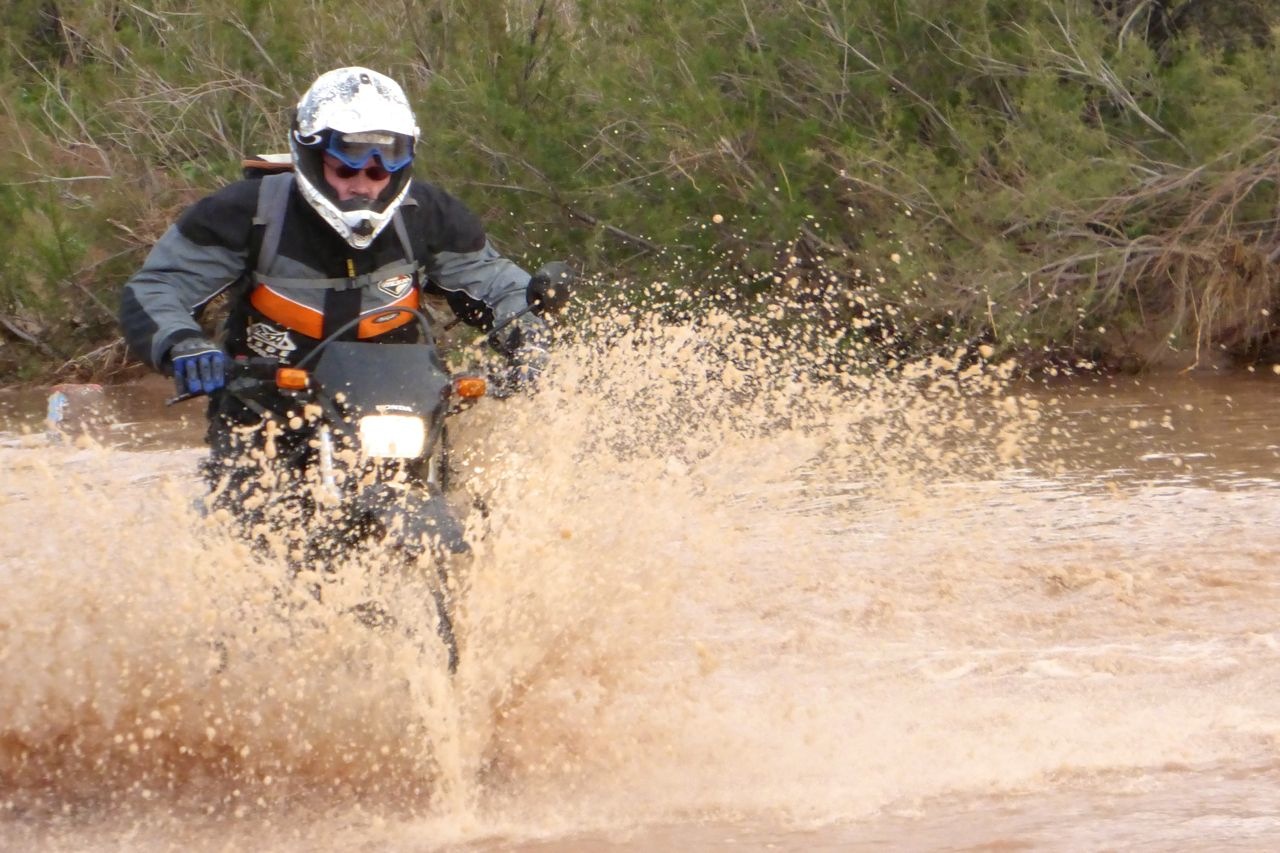
On the way I popped into another Kawasaki dealer in Heathfield, Sussex on the off-chance of an on-the-spot plug-in diagnosis. They were at least helpful but in the end the brief advent of spring-like weather has the sole mechanic up to his neck. While there I spotted the latest, 3rd generation Versys (above right) which came out this year. Among other things they’ve got rid of the Medusa Eye and added a simple adjustable screen.
vers-laner

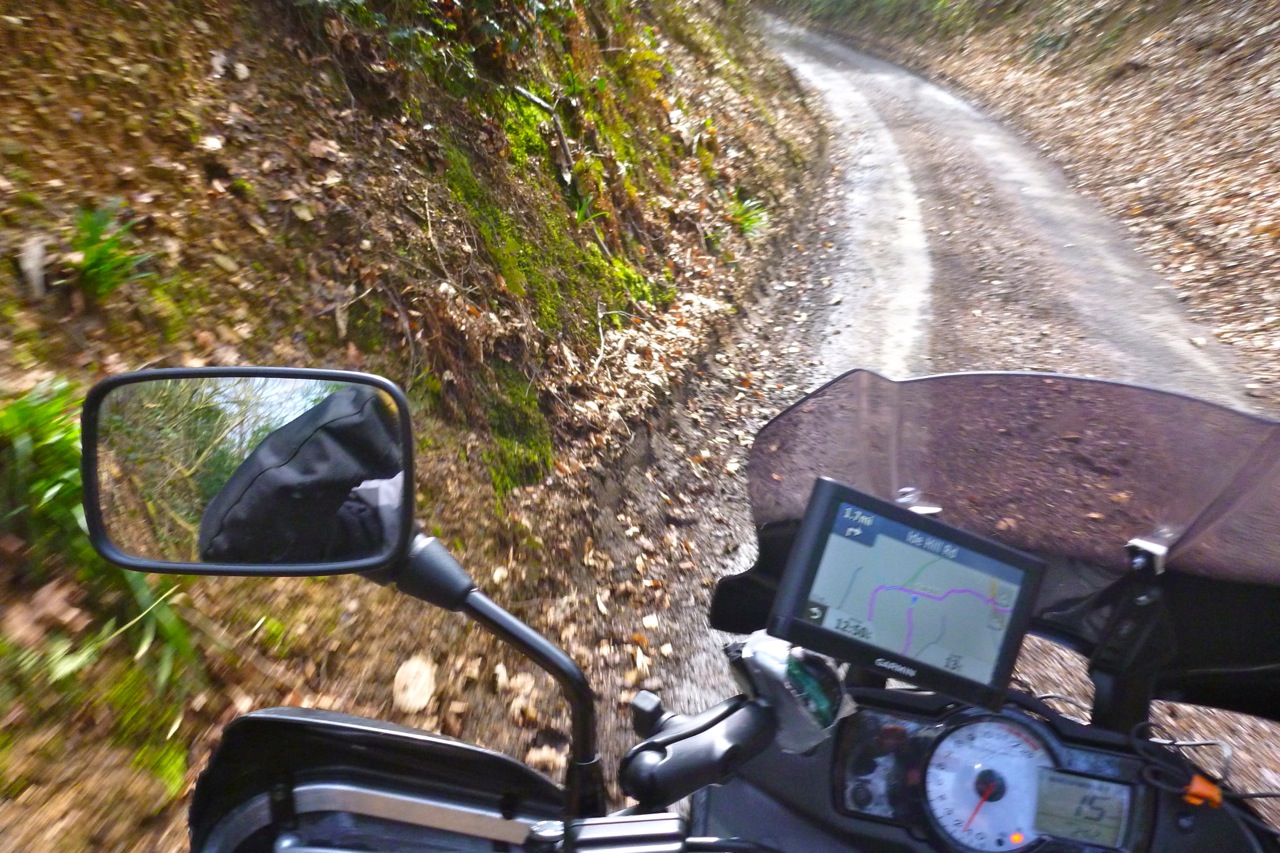
I let the sat-nav bundle me onwards through Sussex following whatever came my way. As it was little use in the Sahara, I’m a relatively late-adopter to sat-nav but I like that you can throw yourself into unknown backroads and, providing you’re not a 40-ton lorry, know that you can easily work your way out while discovering interesting new places. A-roads lead to grubby, leaf-splattered single trackers and it was here I marvelled at the smooth fuelling but also how harsh the hitherto adequate suspension could be.
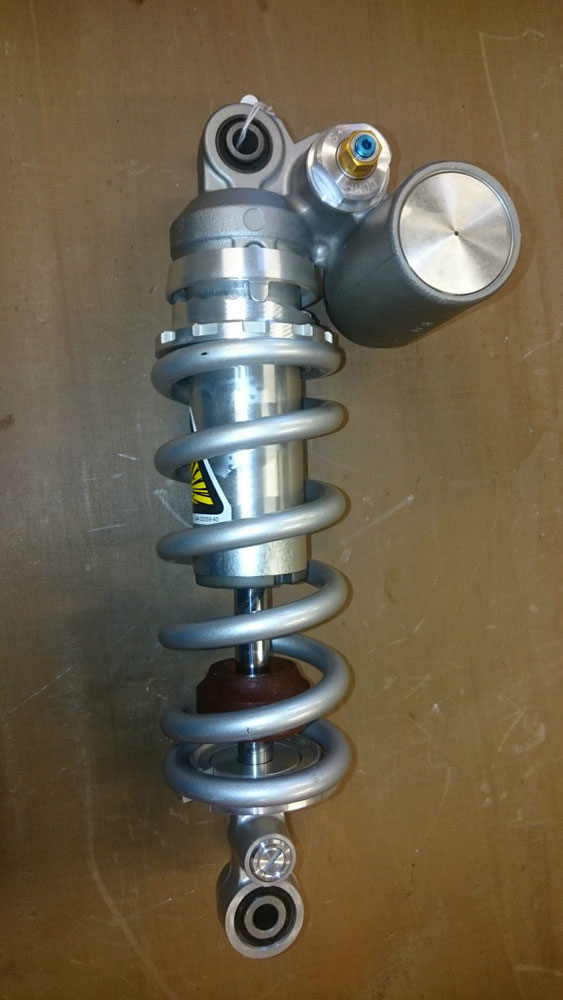
The Versys shock has no linkage or even a spring to give a progressive rate. Is all this progressive suspension business pie in the sky, then? It seems not; the progression is in  the unseen ‘two-stage damping’ which doesn’t sound so progressive. The 1000 Versys does have the usual linkage, but the 650’s direct link from swingarm to subframe means any sudden hits make quite an impact. The usual case of over-sprung and under-damped? Feels like it and no great surprise.

vers-r1shocker
cplan

Even though I’ve seen the light with proper suspension on the XCountry, that was a one-off deal. But on the bright side it’s said a shock off an ‘08 Yamaha R1 is a close fit, and over the years plenty of well-heeled R1 pilots have upgraded to aftermarket items or terminally planted their pocket rockets into the scenery, so used they go from 70 quid in the UK. And a stock R1 shock is a high-spec unit, with a remote reservoir and damping adjustments in all directions.
To fit one on a Versys there’s a bit of faffing with the bushes as well as the need to get a much stiffer custom spring made up due to the lack of a progressive linkage (the Versys spring won’t fit). But providing you don’t buy a totally shagged-out R1 unit, for about 150 quid all up you get plush and fully adjustable ‘£600’ suspension on the back. I bought an ’08 removed from a new R1 for racing for £150 off ebay so at least know it won’t be shagged.
So that was a start on my Adversysing which I looked forward to riding this summer and probably taking to Morocco in November. First mpg was a rather poor 20.3kpl (57.5 UKmpg) Long before that other things that will need attention including some sort of tail rack and something for the front end: a 19-inch V-Strom Thou wheel is resting on the landing.
Then, a couple of months later I decided I really wanted a similar but lighter bike, so I flogged the Versys and got a CB500X, the more modern bike which I’d been interested in all along. Adversys project ends.

vers-sussex

Kawasaki 650 Versys project bike

Index Page
Versys 650 – Stage 1
vers

Next up, Kawasaki’s 650 Versys as I continue my lifelong quest of an optimal mid-weight travel bike. As you may have read, I had a short affair with a TDM 900 but, great motor though it was, it soon became clear the TDM had gone too far down roadbike road to be hauled back towards its Super Tenere and Dakar Rally origins.

kle500adv
KAWASAKI_GPZ_500

The origins of the Versys are less glamourous. Also known as a KLE650, before it came the KLE500 (left, below) which in its brief final form I came close to buying. The 500’s motor was based on the sheep-in-wolf’s-clothing GPz500 or Ninja (right) which dates way back to 1987. For reasons I forget, it wasn’t a contender when it came to making my Gs500R project bike a couple of years ago. I think there was something about a dodgy top end compared to the Suzuki’s better record?

kle55But looking at KLE500s again a few weeks ago, they now rather obviously resembled what I eventually produced in the GS500R: 18/21-inch wheels; decent tank capacity and suspension travel; a bit of fairing protection and a flat seat. Plus the last model in blue with gold frame and wheels looked downright elegant compared to some of the earlier KLE’s challenging colour combos.
There’s a certain ‘honest old school hack’ appeal about a KLE500 that you don’t get with a modern electronic bike, but rosy-specs aside, carbs, tubed tyres and 21-inch front wheels are things I prefer to leave behind. Then it dawned on me that a KLE was in fact a last-gasp, emissions-choked spin on the old 500 engine, just as the paint was drying on the brand new Euro 3-compliant Versys back in Japan. So it was just another affable dinosaur with a motor necessarily strangled by all sorts of clumsily emissions claptrap prior to the whole KLE concept getting redesigned from the ground up as a 650. Recognising this, the KLE500 didn’t look so appealing any more, especially when you consider UK prices for a decent, last-model example start in the high teens and occasionally run up to nearly three grand! Of course I never actually got to ride one, but I don’t think it would have been too much of an improvement over my GS-R.

Some KLE500 builds: here •  here • here and here 
ver-NEC

Why a Versys?
I remember taking that picture on the right at the 2012 NEC Show and thinking ‘man, that is one ugly bike: too tall, too plasticy and too darn lardy on its ill-proportioned 17-inch wheels. You’ll never catch me on one of those’. It was some way from the 99-kilo KTM Freeride which was the ‘bike de jour’ at the time. Two and a bit years later I find myself reappraising the Versys. It was an interesting lesson in how initial prejudices based on looks can be overcome once you look a bit deeper. That happens to me a lot.

ver-3-versyi
doomo04
ver-adversys

Much of the V-bike’s new-found appeal came down to the used prices when compared to similar offerings like TAs, V-Stroms, the KLE500 and the newer CB500-X which I tested a few weeks back. Bide your time and you can find a good, late 1st-gen (2007-09) Versys for a little over two grand. Especially alongside a 500, that’s a whole lot more bike for the money. The main flaw is of course that, just as with the Super Tenere-to-TDM evolution, the supposedly all-dancing Versys actually became less ‘versytile’ by adopting fat 17s front and rear. IMO like Ducati’s Hyperstrada (right), it doesn’t do the bike’s aesthetic proportions any favours at all but is probably another example of me mistakenly judging a book by its cover.
With the 650s ground-up makeover came the typical 20 extra kilos, but also tubeless tyres √, efi √, what looks like a chunky subframe (above right) √, optional ABS √, easy to adjust shock √, easy-switch km/miles speedo and you’d hope a general refinement plus enough plastic to melt down into a giant Rubik’s Cube. The deeply stepped seat looked less promising (though worked well enough on my 660Z Tenere), as did the under-engine silencer’s vulnerability, even if it kept the back-end slim for saddlebags. At 19 litres, the tank has a near-ballpark capacity of 250-miles/400kms assuming 60mpg (21.2kpl) without the need to carry extra fuel, even if that weight isn’t low, as it was on my XCountry.
Pictured left are two Adversii built by a guy calling himself jdrocks on the advrider forum. He spends his winters building up V-bikes for something to do and has an admirable ‘keep it simple and costs low’ attitude, stalking craigslist for as long as it takes to snag used parts from crashed 650s, rather than hosing his rig down with a Touratech catalogue. I can relate to that.

jd650

The red one on the left is actually an ER-6n/Ninja, the road bike which the GPz became. If you’re planning to turn your 650 Versys or Ninja into a lunar rover, set a rainy weekend aside to read jd’s posts. You’ll learn that he’s unearthed benefits in adventurising a 650 Ninja over a Versys (chiefly better power from cams, compression and CPU in the otherwise identical engines). But here in the UK comparable ERs go for a bit more than a Versys. With nowhere to work and looking for a bargain, I wasn’t planning anywhere near as radical a transformation as his, so was happy to settle on a Versys.

ver-2vs

Uncovering all this brought up another benefit of adapting a Versys into what jd calls a ‘gravel bike’:  they’ve been around since 2008 in the US where similar XT-Zs, ATs and Transalps aren’t sold and F-series BMs are pricey. Because of that, enough people have Adversys’ed their 650 Kawas. Be it simply slapping a ‘rear’ TKC on the front (blue bike, above) Advrider is awash with ideas and know-how which all saves money, frustration and time.

admo650
Medusa

AdvMoto magazine were among the first to set the ball rolling, as usual spending what looked like the cost of a second bike adapting a used 2008 Versys with hand-built wheels and every accessory under the sun (left). The result was not a value for money dirt tourer, but then trying new ideas can be costly.
I did think about getting a V-Strom, but part of this whole AMH project bike game is exploring less obvious ideas without spending a fortune. There’s nothing much to prove with the much admired Suzuki and anyway, in the UK they cost more than a similar or even a younger Versys.
It only took a week of so to find one nearby for an unlikely £3000, but offered a chance to have a closer look and see how it rode. This was one of the full black versions which I find the least ugly. With chrome only present on the forks and pipe, it all blends away like a black cat in a coal cellar. All you have to do is be careful not to look that Fiat-ugly headlight in the eye. Do so and, like clocking the Medusa (right – don’t look!), you’ll turn to stone.

ver-peter

Another all-black V-bike (left) turned up up north where all the used bikes seem to be. I picked it up unseen one chilly Sunday morning and by the time I got home and then flogged the overpriced ‘gel seat’ that came with it, it came in at £2100 with hot grips; light-but-noisy pipe + original; hugger; 12v plug; new back tyre and 28,028 miles on the clock. On the surface all good but some rust behind the scenes. More about it in the next post.

Honda CRF250L vs XR250 Tornado

CRF250L Index Page
CRF300L Index Page
Yamaha Serow Index Page (soon)

updated 2025
torvscrf

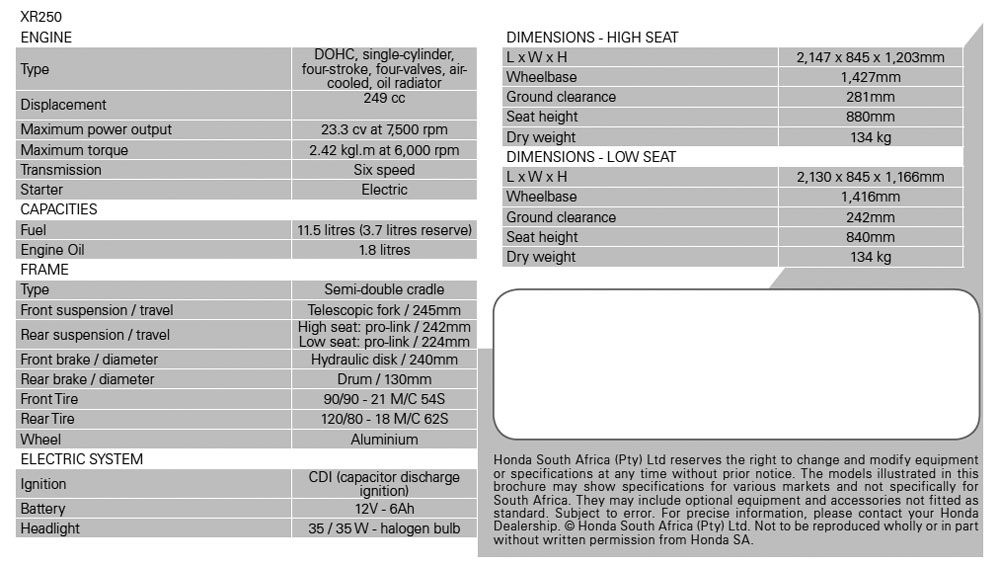
Two 250 Honda trail bikes: one which I tried in the UK then owned in the US; the other which I’ve rented in Morocco several times. How do they compare? First, some stats, mostly gathered from the web and referring to the pre-2017 CRF. ymmv.

compo
tornadoa

Scan over them and there looks to be little in it: same weight; same number of gears; suspension travel within an inch. Even the power’s the same, though  the XR’s tank is half as big again and there’s 10% more claimed torque at 1000 less rpm on the Tornado (23.7Nm @6000rpm).

mk13108

That could be down to the Tornado’s 1980s carb-and-air-cooled technology which makes the same claimed power as the modern water-cooled, fuel-injected pre-2017 CRF. But as you may have guessed, any benefits of the CRF’s greater compression and modern efficiencies are swallowed up by the catalyser and other gubbins to meet today’s demanding emissions legislation.

crr11

And that’s the biggest difference of all. Both are inexpensive bikes, but as far as I know, there’s no place in the world where you can choose between one or the other, well not new. The Thai-built CRF met Euro-3 emissions requirements in richer (or should that be ‘leaner’) western countries. The Brazilian-made Tornado won’t, so got sold where bike emissions were less strict.

doomo45

Riding the 250s
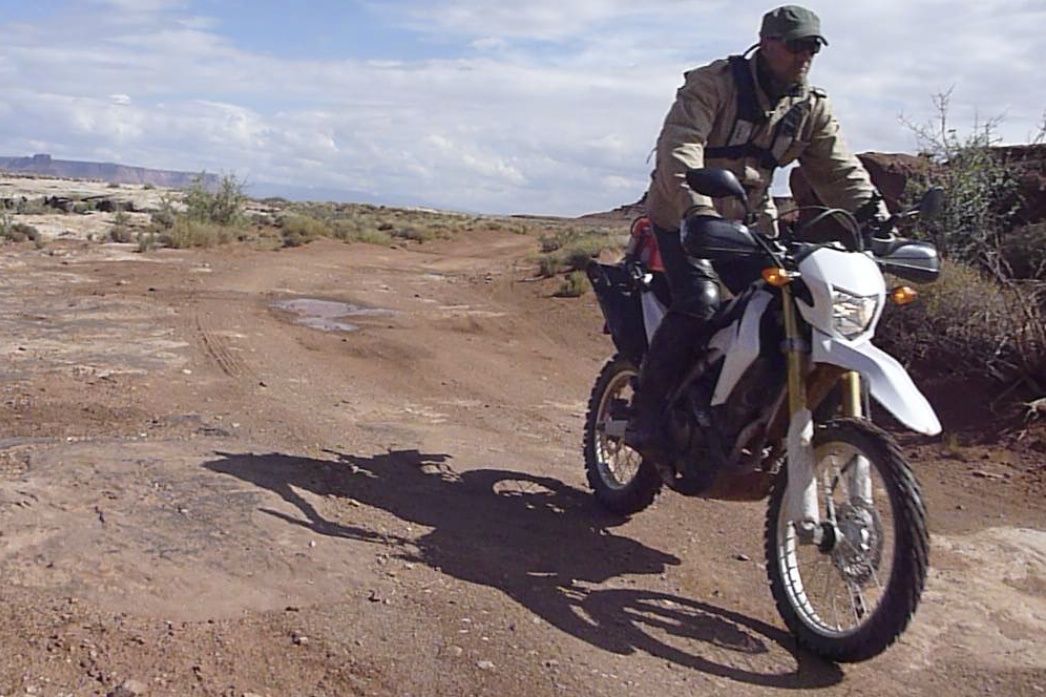
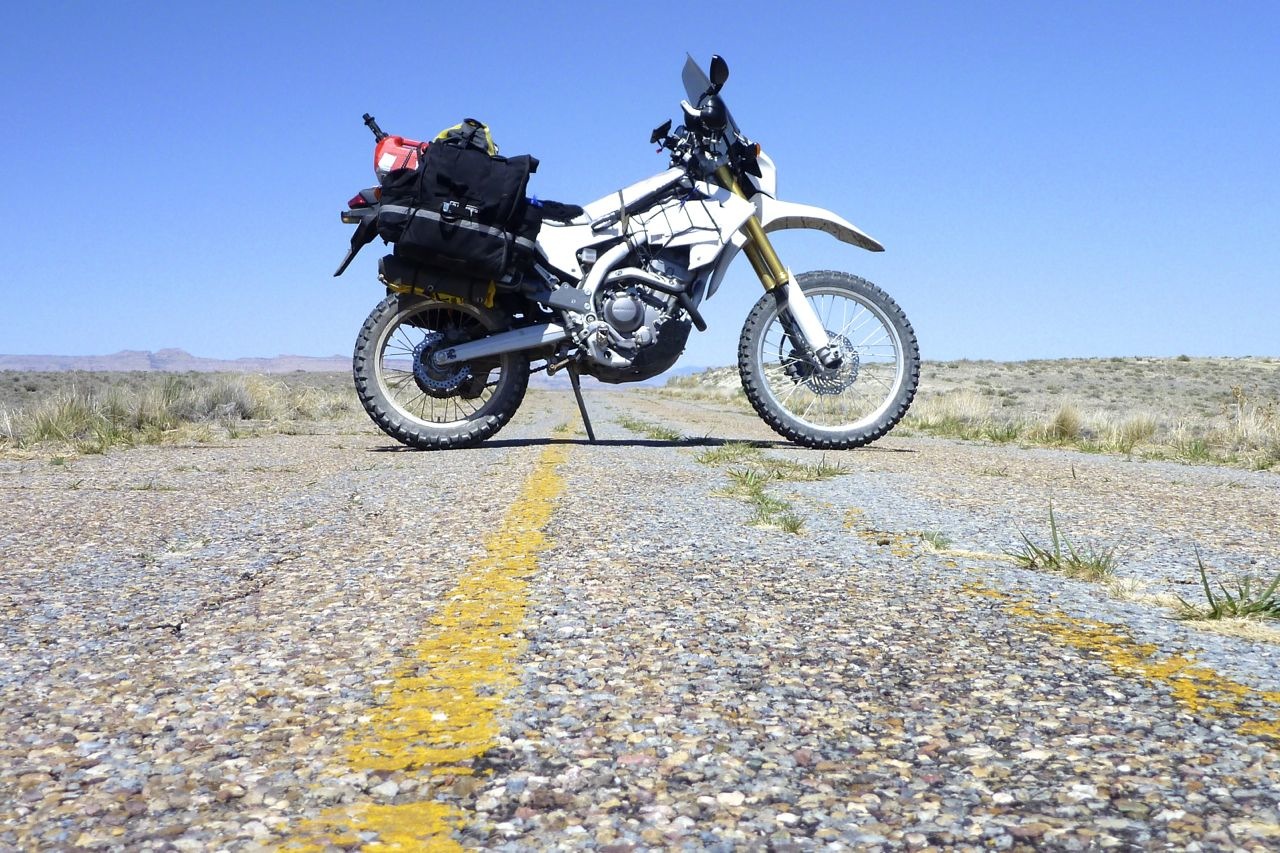
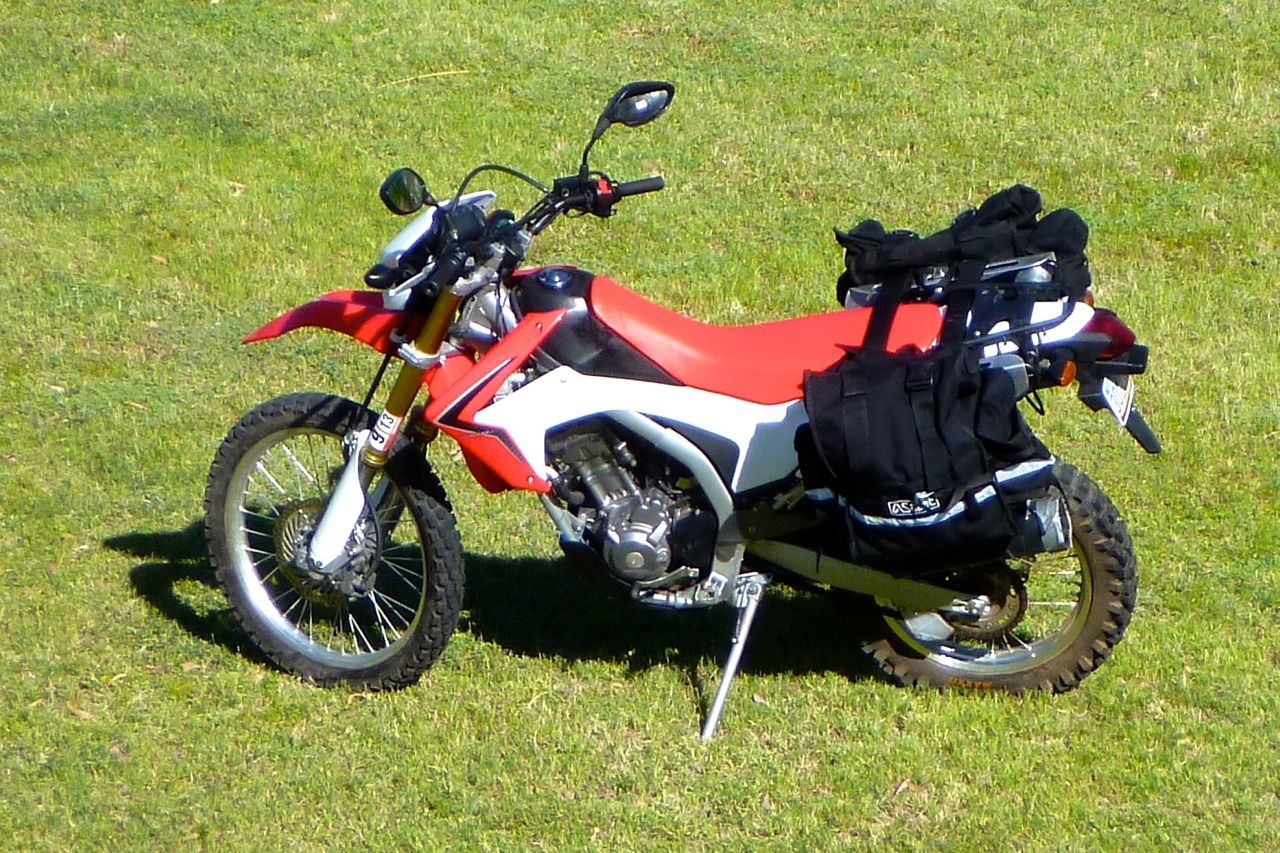
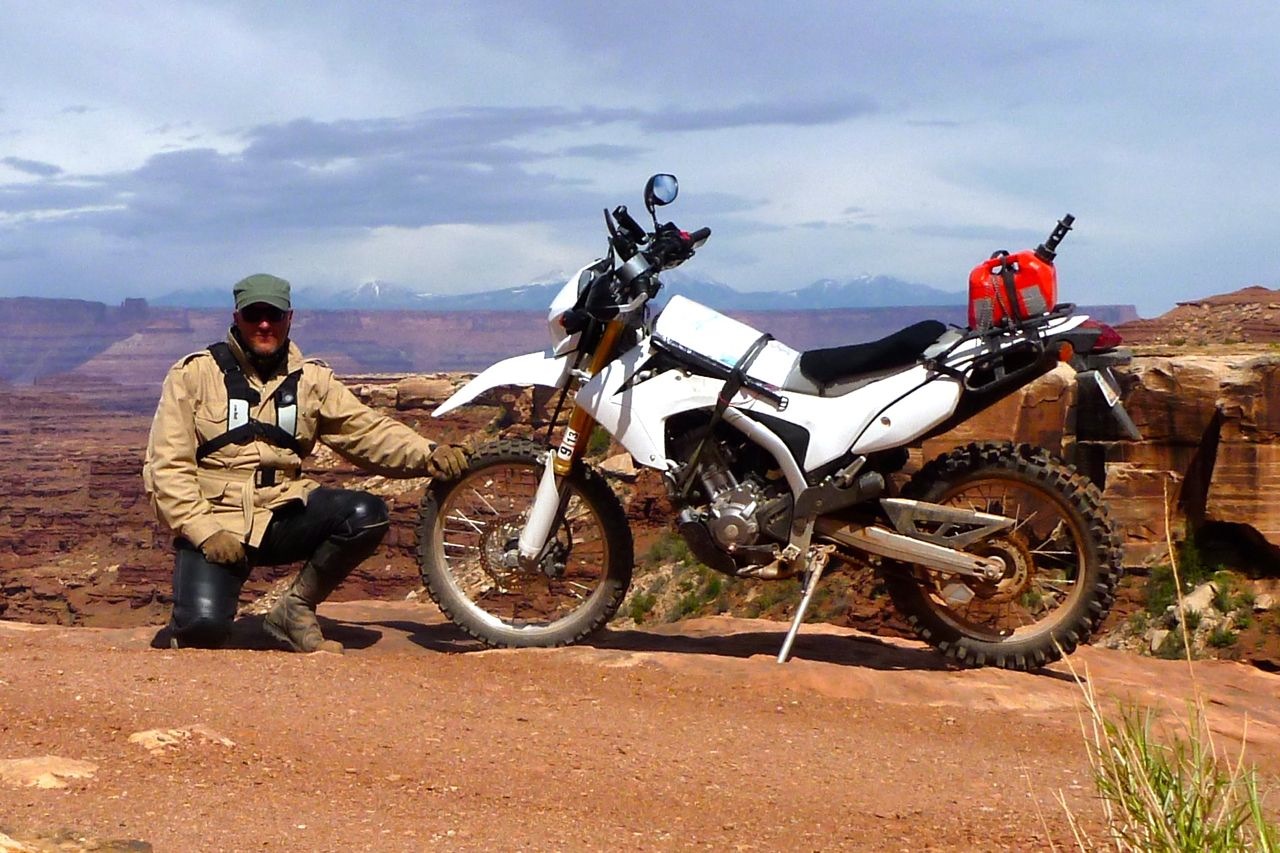
Although I rode them a few months apart, my impression was the XR was a more agile machine that lived up to its XR prefix. Much of that may have been because most of the time my CRF was loaded with some 15-20kg of baggage plus a rack, bashplate and screen, all which adds some 15% to kerb weight – quite significant on a 23-hp 250. But even unloaded on Utah’s fabulous White Rim Trail (left), I still feel the XR would have been a nippier and better-sprung machine. Fuel consumption is the same – so much for the mileage benefits of efi. Rider weight and payload will have a bearing on this: one light Tornado rider in Morocco was getting close to 100mpg (35.5kpl). I only got close to that a couple of times on my CRF in the US and – interestingly – nowhere near that on a UK test bike direct from Honda.

hondarsaspex
tornado

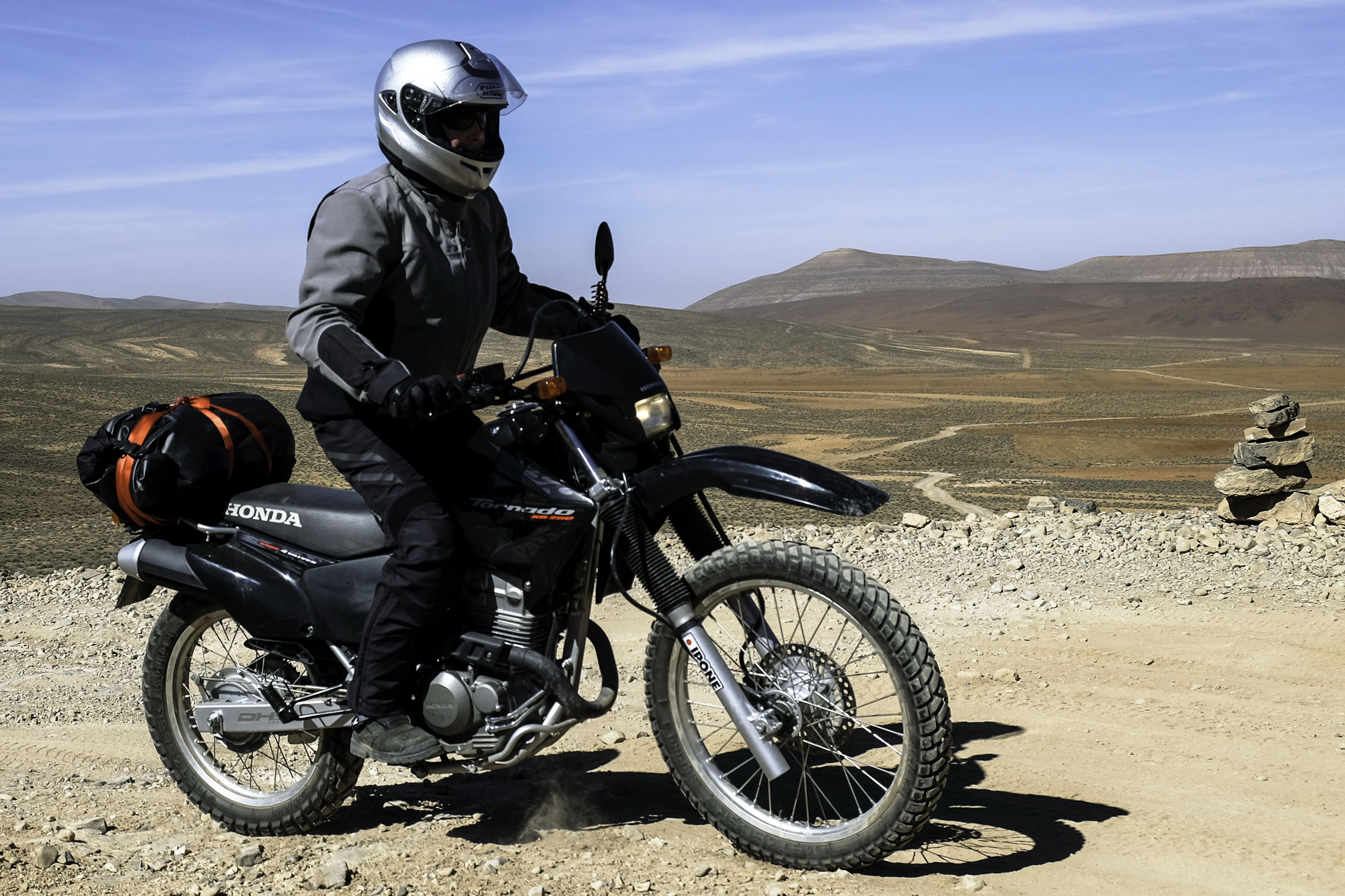
Suspension felt longer and more supple on the Tornado (in RSA they did a low seat model some 40mm lower; see table above left), the back disc is much better on the CRF. Both can sit on 100kph all day until you encounter steep inclines, headwinds or high altitude.
Though it ran up to 10,000′ (3050m) without issues, some days my CRF certainly felt the elevations in Nevada and Utah at half that elevation. Add an incline and it struggled to do 80kph at times, though it might have been the local fuel which, in my experience, varies greatly in USA. At 2300m (7300′) on a rough track in the Moroccan Atlas, the CV-carb Tornado also gets strung out between first and second gear but still fuels surprisingly well once off the pilot jet.

crr16

Conclusion
The Tornado felt better all round and were it available in the UK cheap I’m sure I’d have bought one by now**. But maybe that’s the way it is with an ‘exotic’ unobtainable machine, let alone one whose old school technology recalls a simpler era which someone my age can relate to. Apart from being annoyingly tall for some, it was everything you want from a 250 trail bike: light, good brakes, economical, fast enough and well sprung. For travelling the weak point on both 250s will be the subframe, but people have managed, so long as you don’t load a bike like a refugee’s GS12.

t2-16-20.jpg

tornado** Fast forward a few months.
I met a TRFer last week and he told me 250 Tornados from around 2003–4 are found in the UK and as I check the usual places I find he’s right. The one on the right had 8000 miles on the clock and looked in great nick but was going for a rather optimistic £2200. In 2016 a UK dealer was even looking for £3500 for a near-new 2004 Tornado! There was another one on gumtree, same age and mileage for a more reasonable £1400.

And in 2015 they stopped importing the Tornado into Morocco where the all-conquering CRF250L joined the line up. In Brazil the XR250 Tornado has become the XRE300 (left) – a  Tornado engine bored to 291 plus efi, rear disc, optional ABS and cool, rally styling for same price as the CRF250L. However, the 300 has a poor reputation in Brazil; riders even lower the compression to try and make it last. More here.

Alternatives

klx250
crr22

If you like it old style you can still get a similarly basic XR250Rs until 2004, or TTR250 (right) in the UK until around the same time. They sold new in Australia right up to 2012 but elsewhere are getting on.

Yamaha’s much-loved air-cooled Serow is an other one. Dating from the 1980s as a 225, it shot up to 250cc in the Noughties, got efi in 2008 then discontinued in 2019.
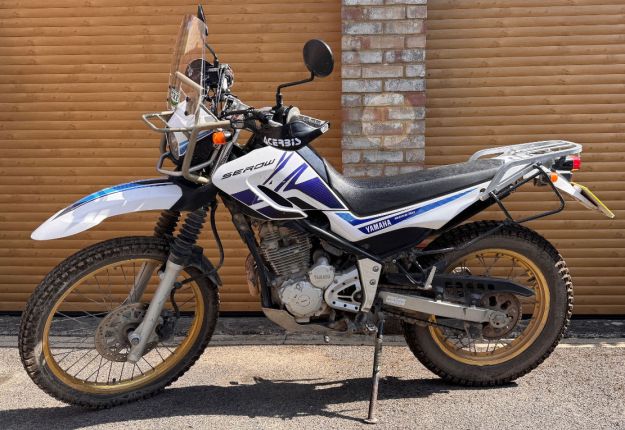
Left is Lois ‘on-the-Loose’ Pryce on her Serow heading down the Americas. A cult bike they say, a lot of people rate the Serow’s air-cooled, light-weight, low-saddled simplicity against the ubiquitous CRFs. In 2025 I bought myself a 2011 250 Adventure model (below) for Morocco. We’ll see how we get on.

As an alternative to the CRF, the injected Kawasaki KLX250 has been around for years, but for some reason, never created the impact of the CRF when it came out, even if the suspension is way better than the Honda. Now injected, it’s said to be power restricted in the upper gears, but there’s a dodge or two to get round that here.

wr0

Used prices of the more powerful and unrestricted WR250R make it a less obvious choice for a travel bike as opposed to a fun weekend dirt bike. They were pretty rare in the UK which stopped importing them in 2008, and got discontinued globally in 2020. Both the EFI Kawa and especially the Yam WR are significantly pricier used in the UK, but they’re more sophisticated and come with a higher spec than the CRF which seems to have caught up, price wise.

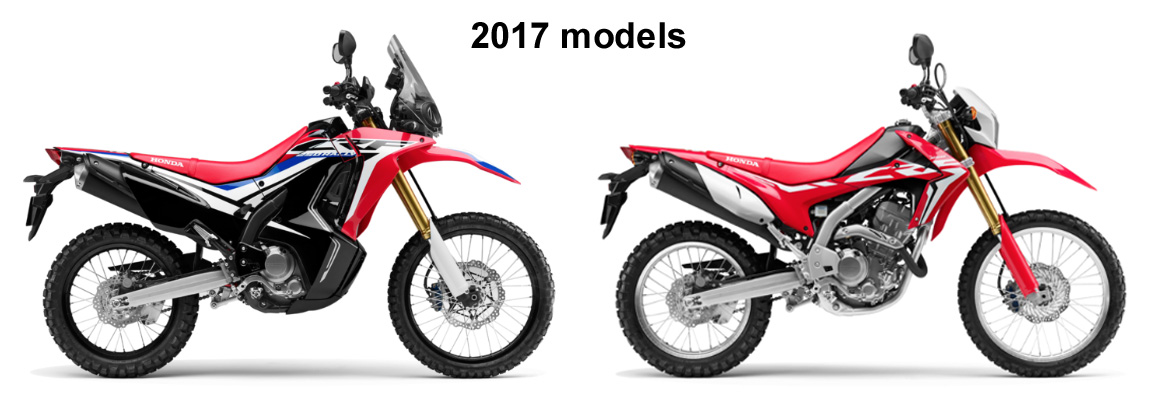
crf2017.jpg
Rally and L – with a tad more power. Then in 2021 they became 300s.
KLX1 - 30

In 2016 I got a WR250R in the UK and also bought a carb’d Kawasaki KLX250S (left) in the American Southwest, a well put together machine – an efi ought to be even better. More news on my WR here.

• Dual Sport shootout (CRF, KLX, WR_R)
• Tornado thread on Horizons
• Ed’s Yamaha WR250R in Russia
My CRF travels in SW USA 
Honda RSA Tornado brochure 
My KLX-S in SW USA

xrr11