Quick spin: 2017 Honda X-ADV review

xadv - 14

The reaction to Honda’s category-bending X-ADV ‘X-cooter’ seems to have been positive; most reviewers get it or accept it for what it is. Credit to Honda for trying new stuff, though it’s said good sales haven’t followed, probably due to the £9600 price alongside more conventional maxi-scooters used most commonly as commuters rather than travel bikes. The X-ADV suggests you could do both.
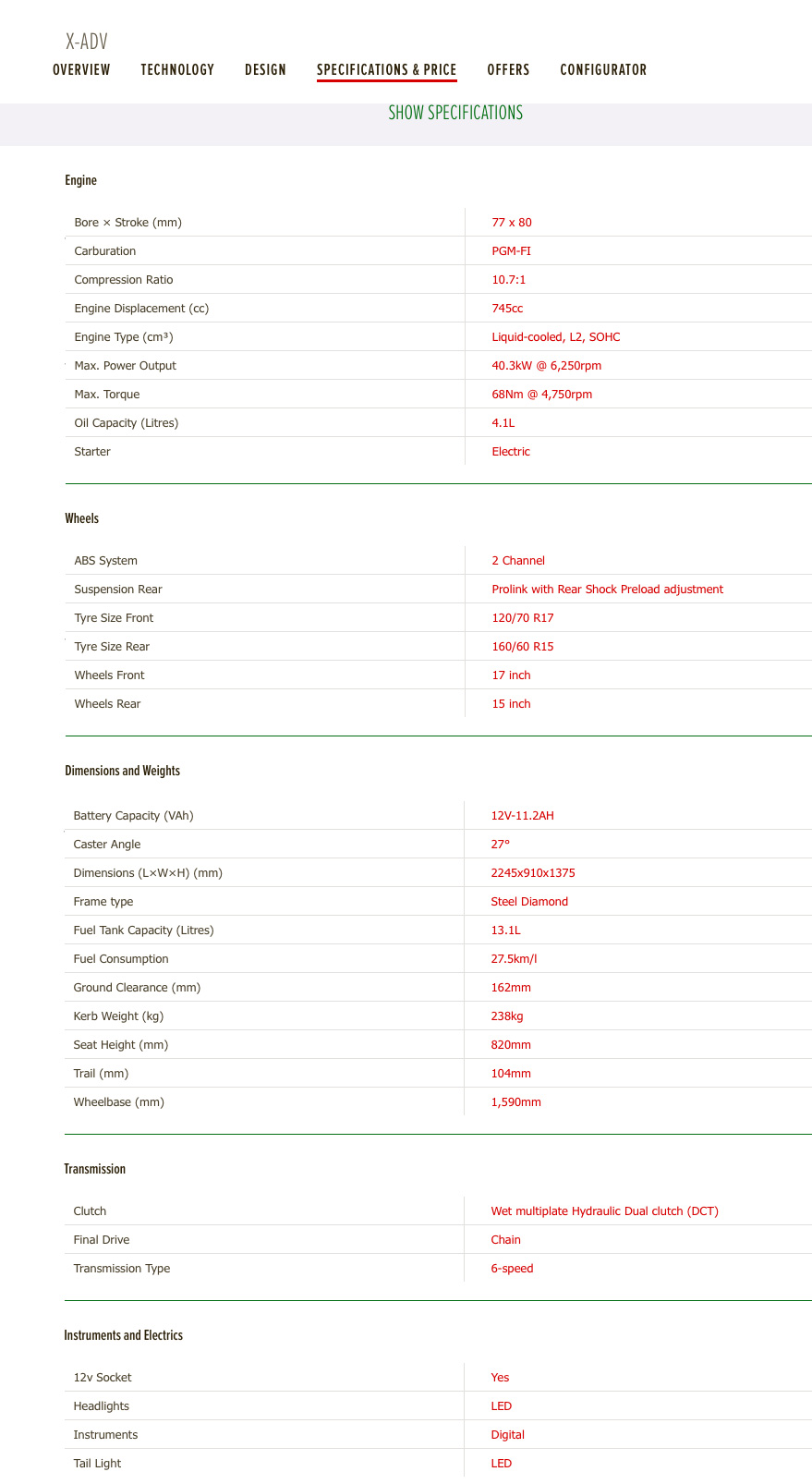
xadvspex

tik
• DCT transmission
• Brakes
• Low-tuned, 270-degree motor
• Reputed economy
• Adjustable screen
• Front fork
• Tubeless spoked wheels

cros
• Pricey
• Tall for a scooter
• Scooter seating position
• Dreary in silver

xadvchas

Under that bodywork and between those small wheels they’ve slung the low-tuned, 54-hp 750cc twin from the Integra scooter and NC range and best of all, the DCT auto/manual gearbox which – don’t ask me how – gives a real neutral plus a more direct drive, unlike a typical scooter’s mushier CVT and belt drive.
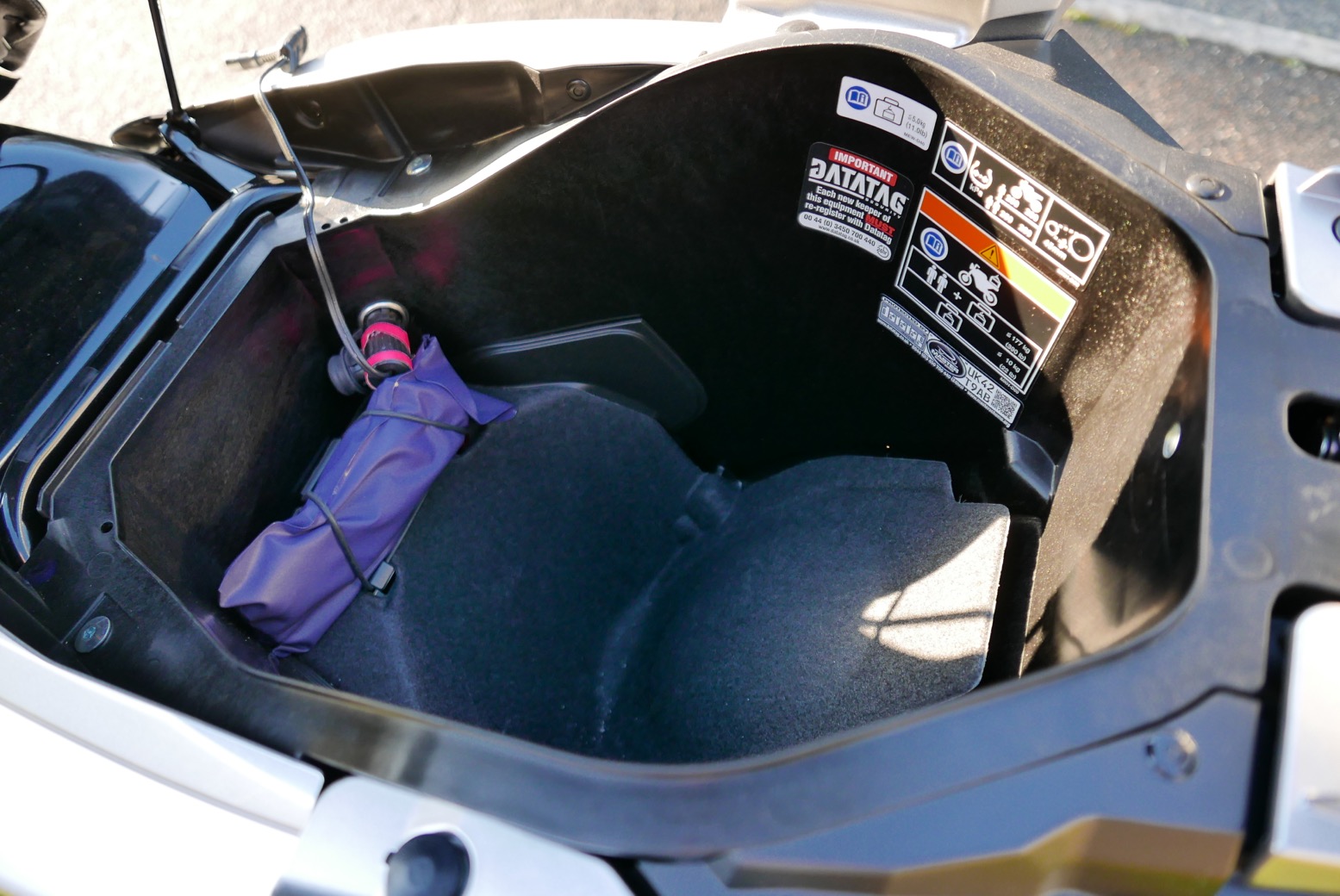
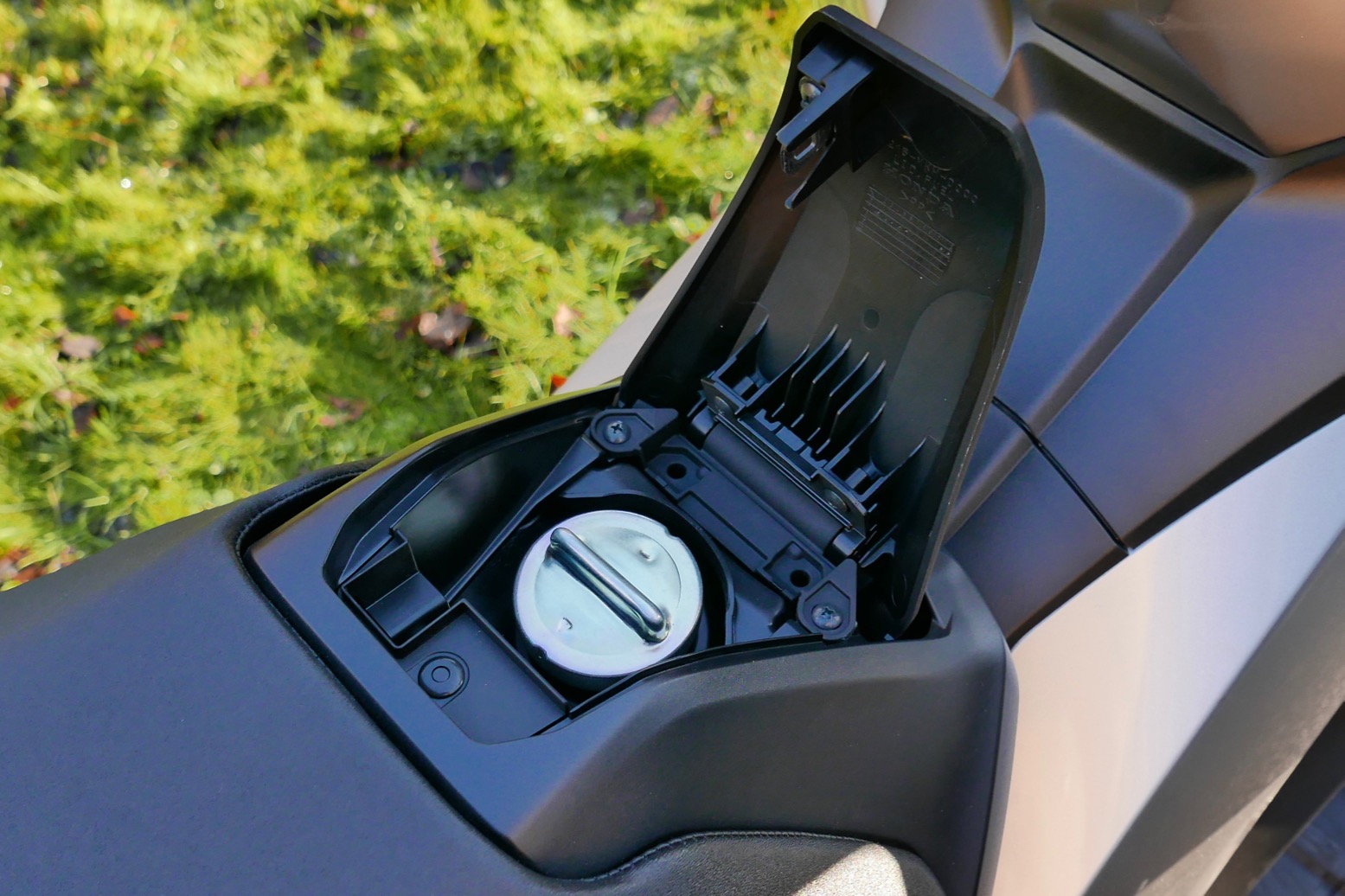
And unlike the NC motorbikes, you stash your lid under the seat not ‘in the tank’. On the ADV that space is the air between your knees, though I was a little disappointed there was no ‘glovebox’ in the frontal bodywork – looks like the air filter sits in there.
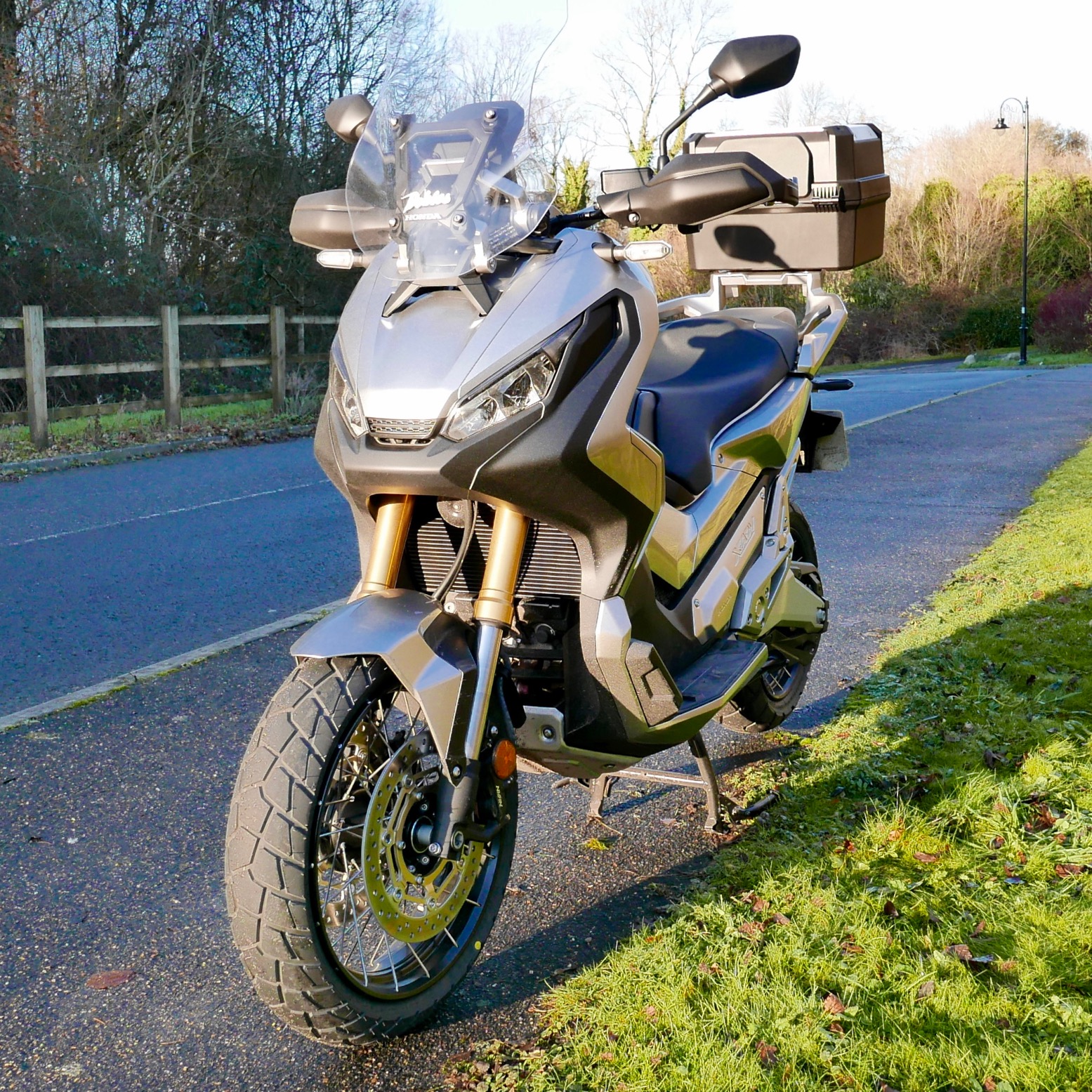
And getting on wasn’t so scooter-easy; you need to do an awkward frontal leg swing through the mid-section – I could see the plastics here getting all scuffed by clumsy boots. It’s quite high for a ‘scooter’ but maybe a better technique develops with use and some yoga. The 32-inch-high seat sounds low, but with the wide bodywork getting both feet flat on the ground wasn’t possible without shuffling forward.

xadvv

One the move, sitting with your feet forward or even right forward ‘highway-pegs-style’, means your unfolded legs don’t take much weight so the bum-to-seat interface becomes all the more critical. Despite the X having a generous bucket seat, I can’t say I fully adapted to this position. Like a lot of riders on regular bikes, once in top gear I find putting your toes on the footrests is comfier for long rides; it pre-tensions the legs and angles you forward to take more weight off the butt. On the X you’re sitting upright, feet forward, like on a chair.
xadv - 1

One thing you can’t grumble about is the near-seamless DCT gearbox. You hear the clicks as it changes, but you rarely feel them. What a pleasure it is to ditch all that clutch and foot-changing business. Some say quick-shifting has rendered DCT redundant. Never tried it, but I can’t see how; you still need to work a clutch and a foot-shift lever. With DCT it’s like an auto, with a Sport mode (higher rpm changes) plus a manual override with paddles on the left bar. It’s the cake-and-eat-it best of all worlds. Let’s hope they introduce DCT on some other smaller trail bikes before we all end up riding electric.
autodream
xadv - 4

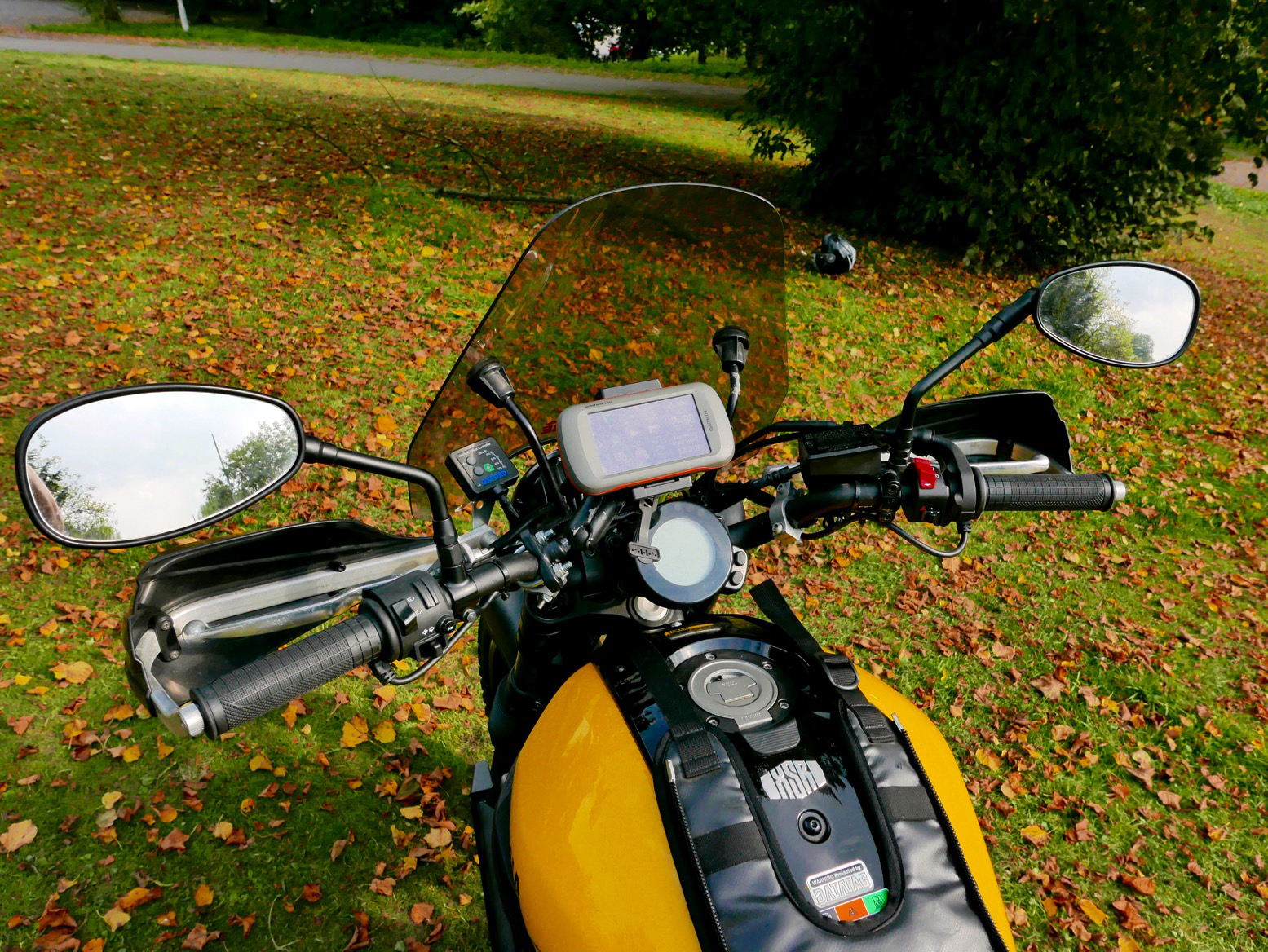
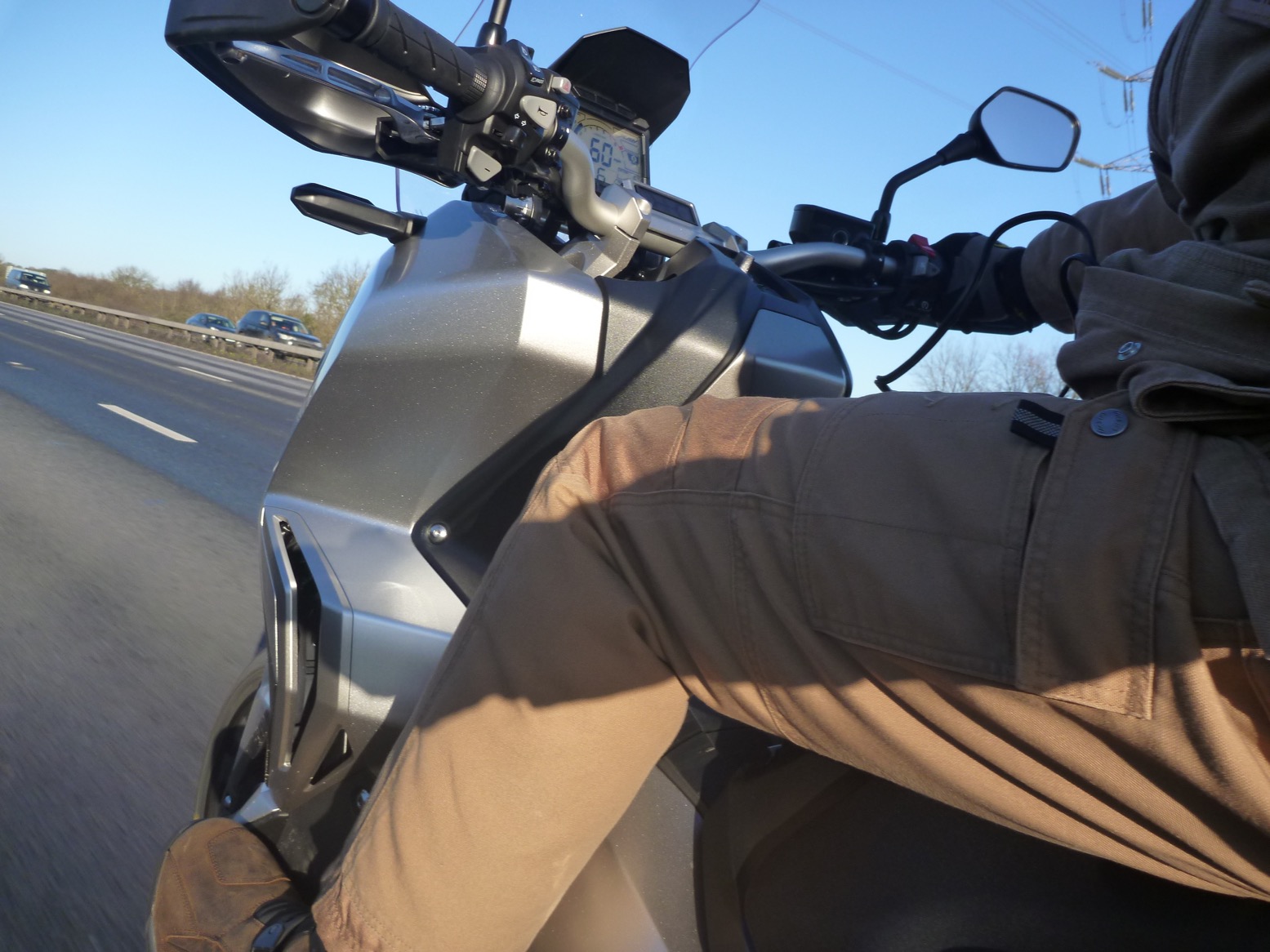
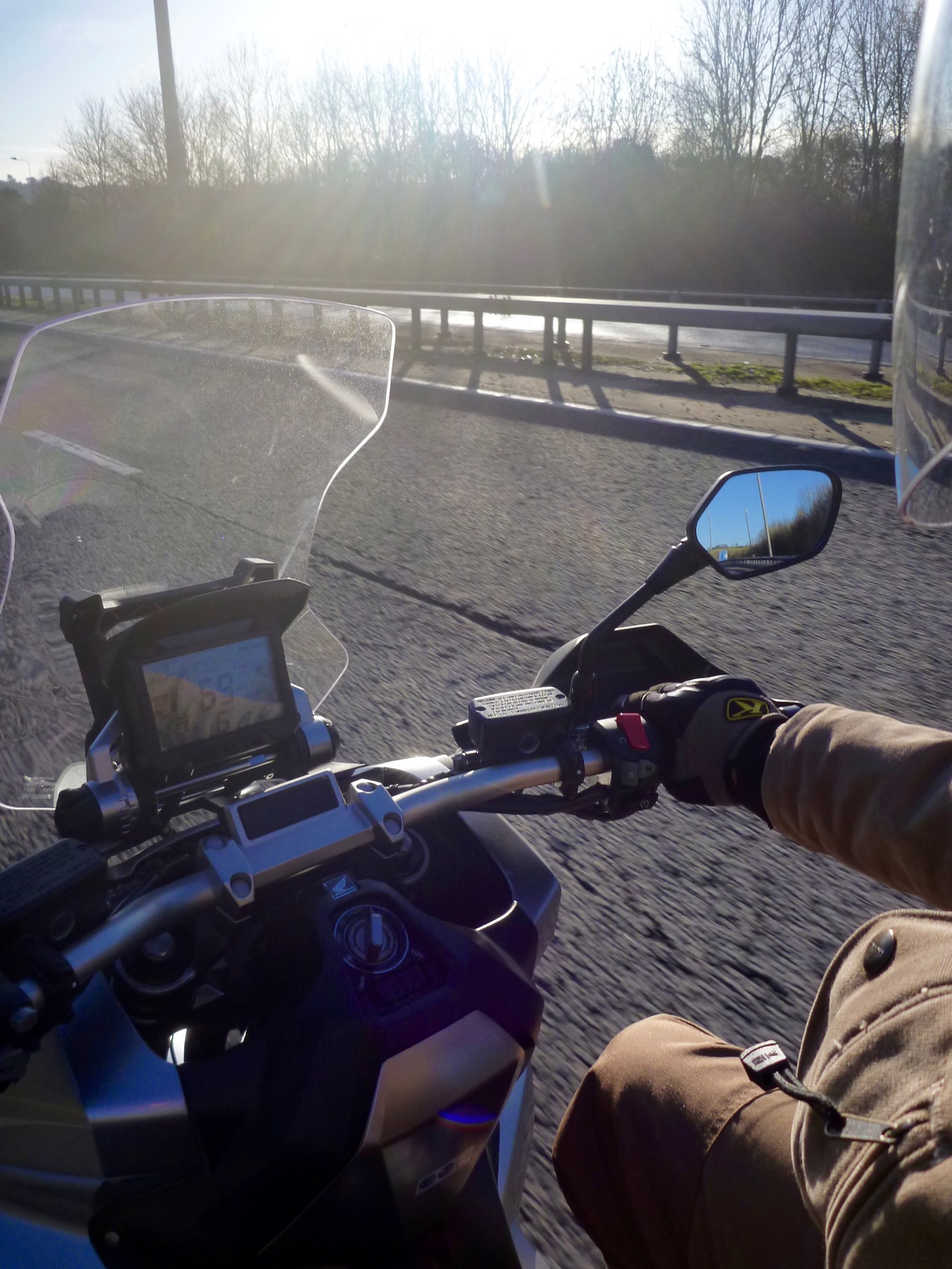
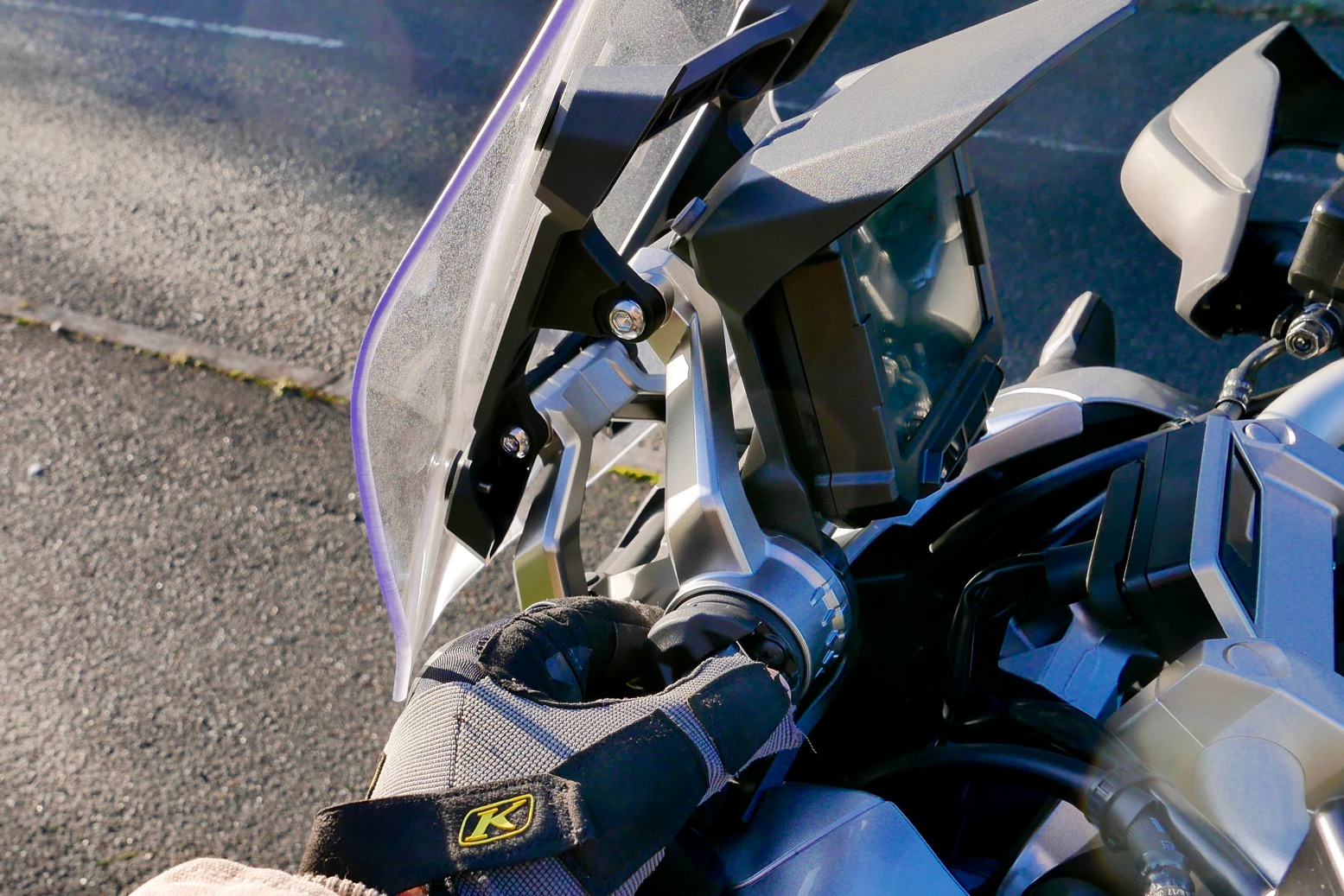
Just before getting on a motorway I pulled over and cranked up the adjustable screen to the max with the easy-to-figure-out knob (left) on a clever parallelogram hinge. Back on the move I can’t say I felt swathed in a hushed bubble of still air, but at 5°C, without that screen and the frontal bodywork keeping the legs out of the wind, I’d have been freezing, even with the heated jacket plugged into the cig plug under the seat. I bet there are wider, taller screens available and anyway, the X-ADV rolled effortlessly up to a stable 80mph which equals just 4000 rpm.
The engine is another one of those characterful 270° twins as on my XSR700 (and ATs, TDMs, Super Teneres, some Triumphs, the forthcoming BMW 850s and 800cc KTM). The biking world has gone 270-° crazy and I’m all for it. It sounds a lot better on its standard pipe than my XSR, even if its twist-and-go acceleration isn’t as crisp. (One benefit of DCT autos over conventional CVT scooters is the reduced ‘rubber band’ lag.)
The Honda has 30% less power than an unrestricted XSR700 (my XSR actually runs 47hp) and nearly 30% more claimed weight.

xadv - 5

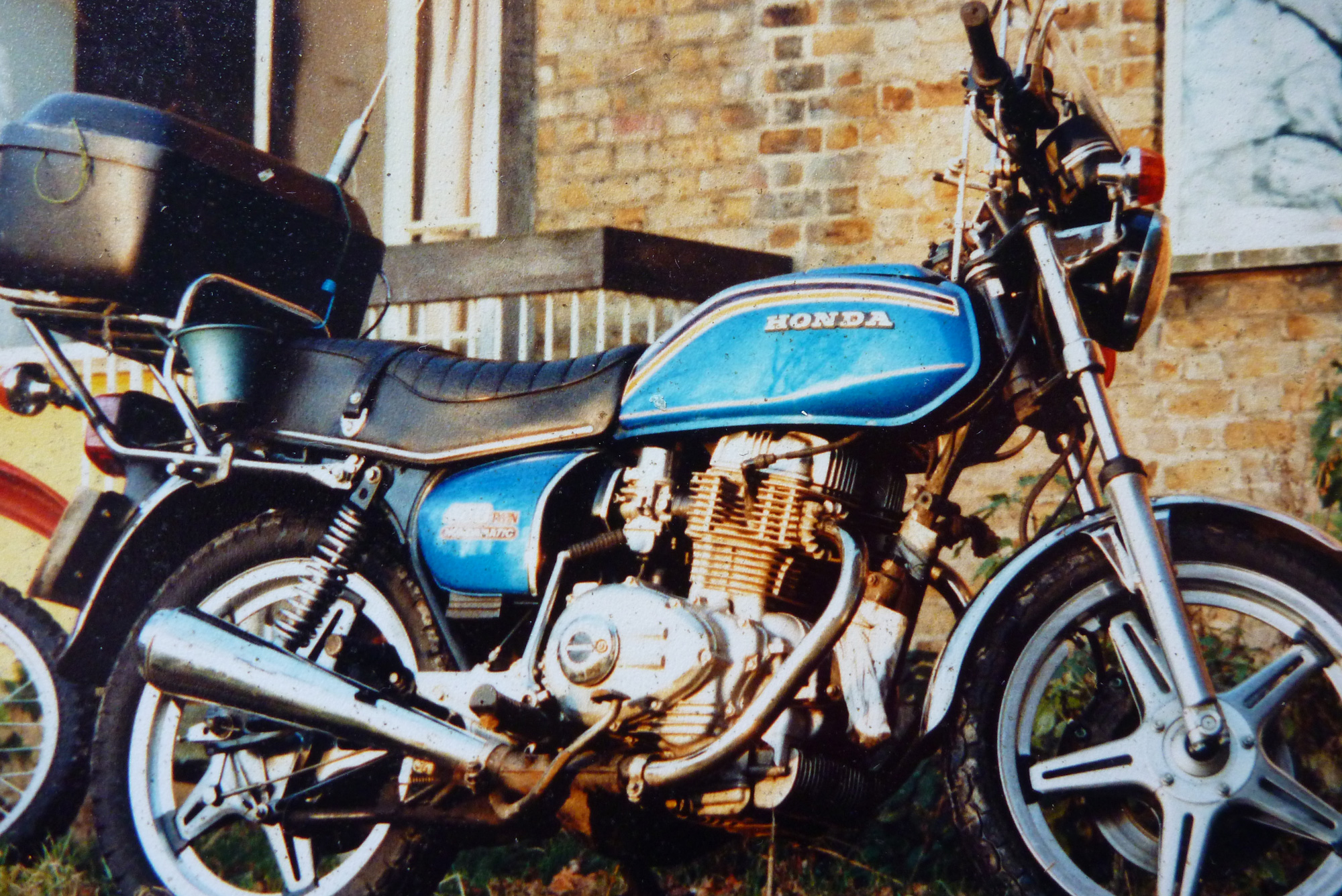
Good thing the brakes are brilliant twin, four-pot radials on the front; you want good brakes with a heavy auto. It wasn’t till nearly back at the shop that I remembered the left lever works the equally meaty back brake and is not a locking parking brake (as on my old 400AT Dream, above). That late 1978 bike was a doddle to despatch round town; a neutral + two-speed clutchless box which left the left hand free to operate a radio, eat a turkey and coleslaw bap or wave cheerily at tourists.
I should have taken the X-ADV down some backlanes but didn’t want to get caught out on a sunless icy patch. Even then, you could tell the suspension felt better than my XSR, especially the adjustable cartridge USD fork (I couldn’t see a way to the rear shock which comes with spring preload only, but no remote HP adjuster that I could see).

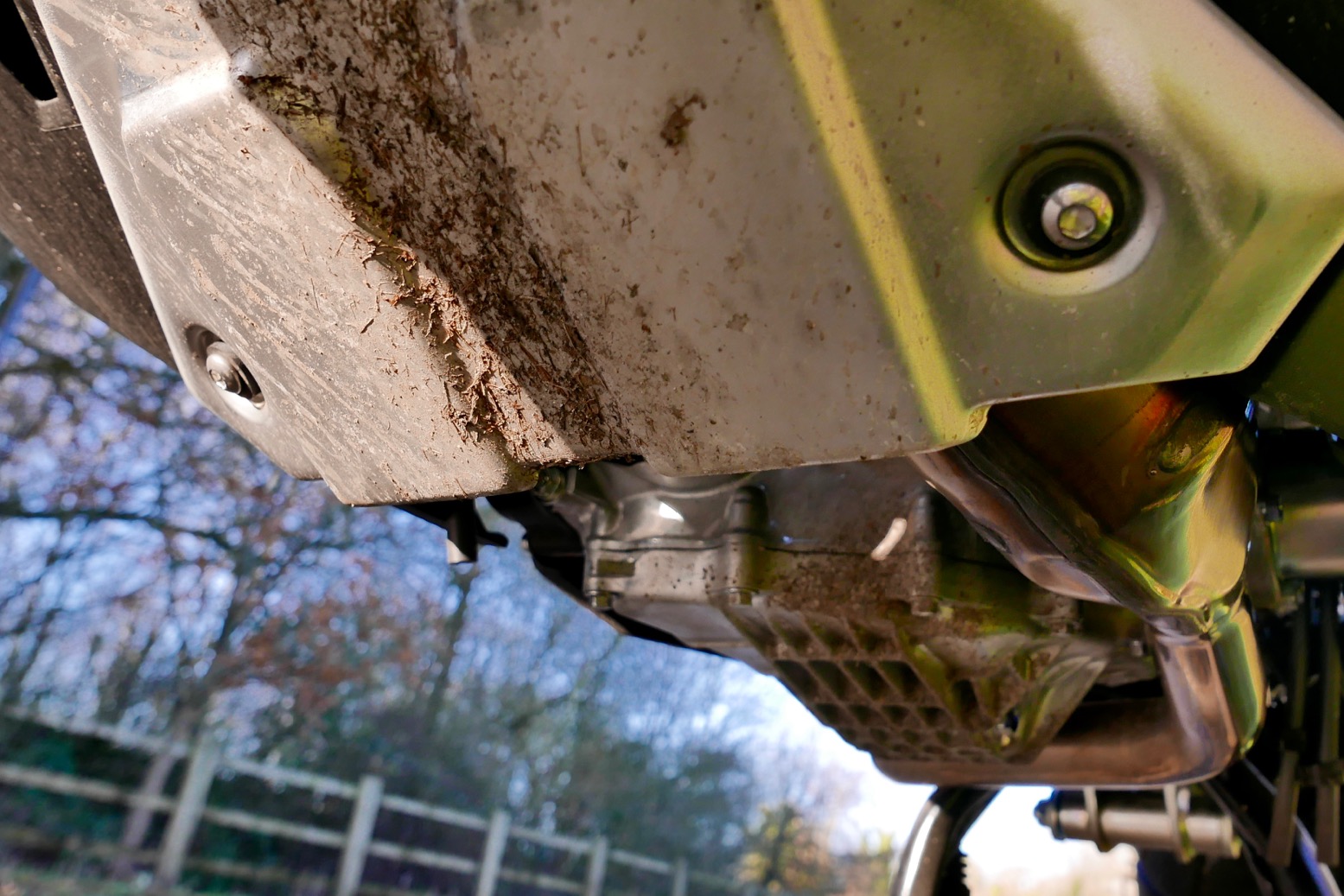
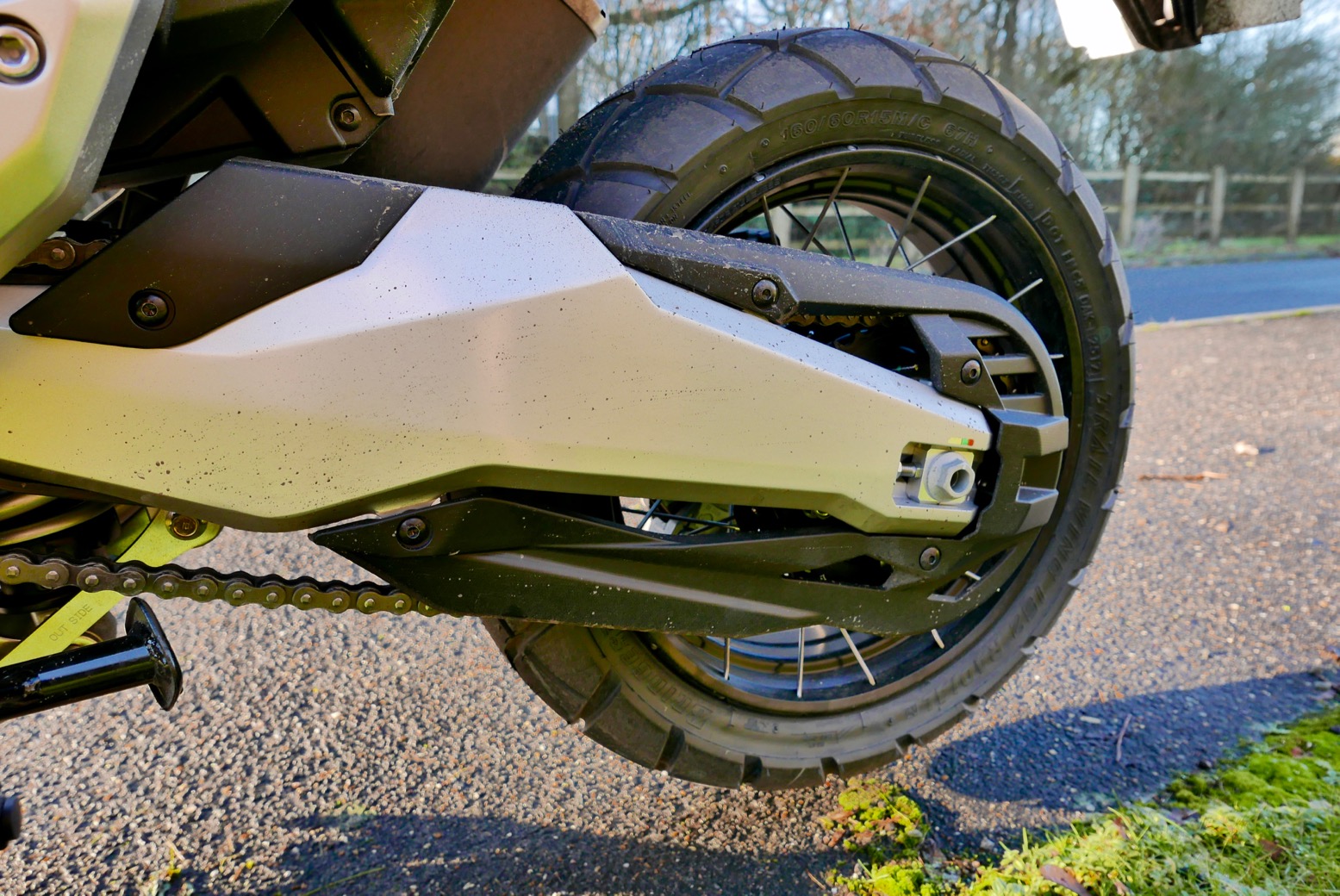
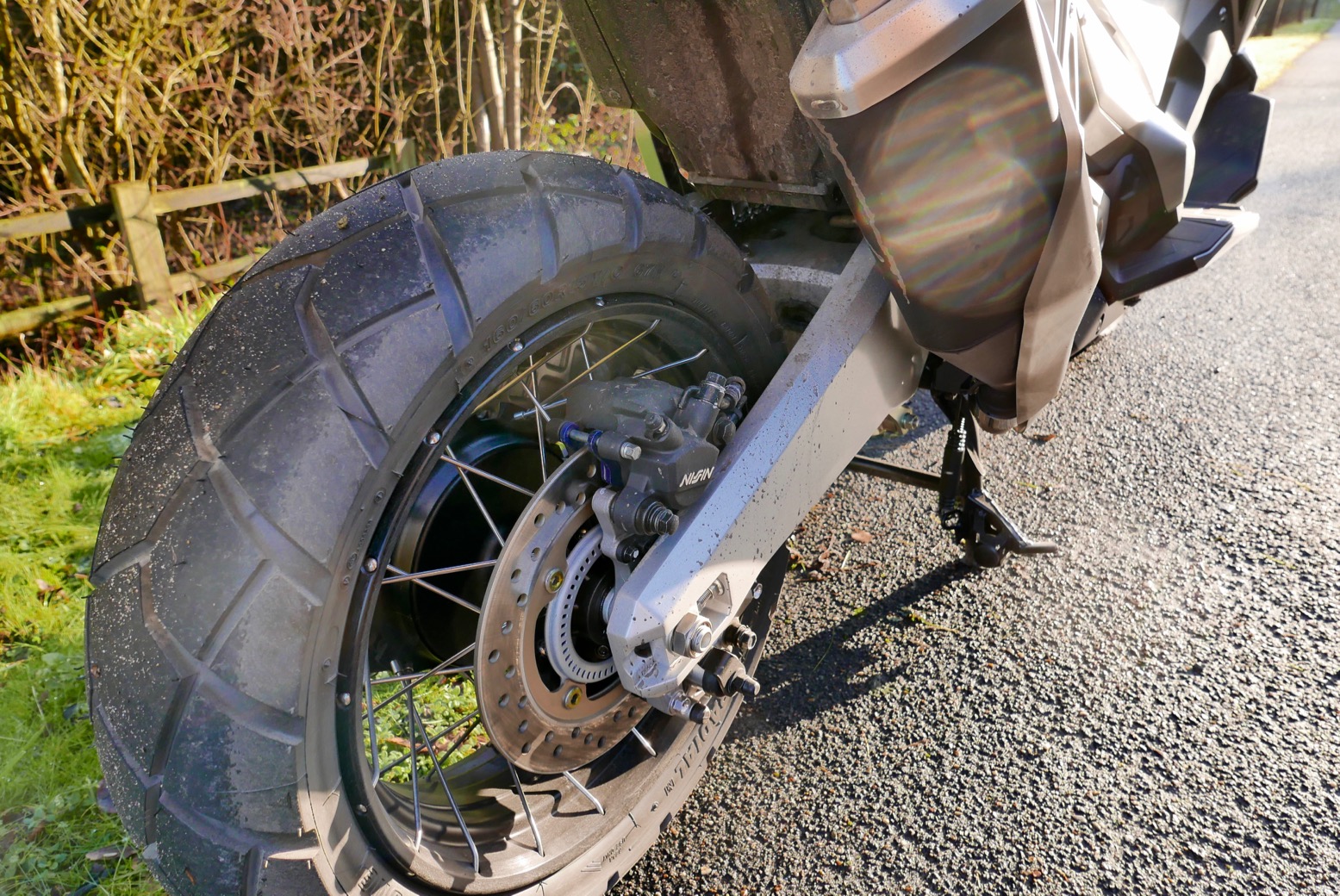
Oddly, even in official promo literature no mention gets made of the tubeless spoked wheels; shame the AT didn’t get something similar. What some reviewers described as a ‘fully enclosed chain’ is just a wraparound chain guard; more a chain-spray catcher than a proper crud-cover like an old MZ or a CD175.
xadv - 12

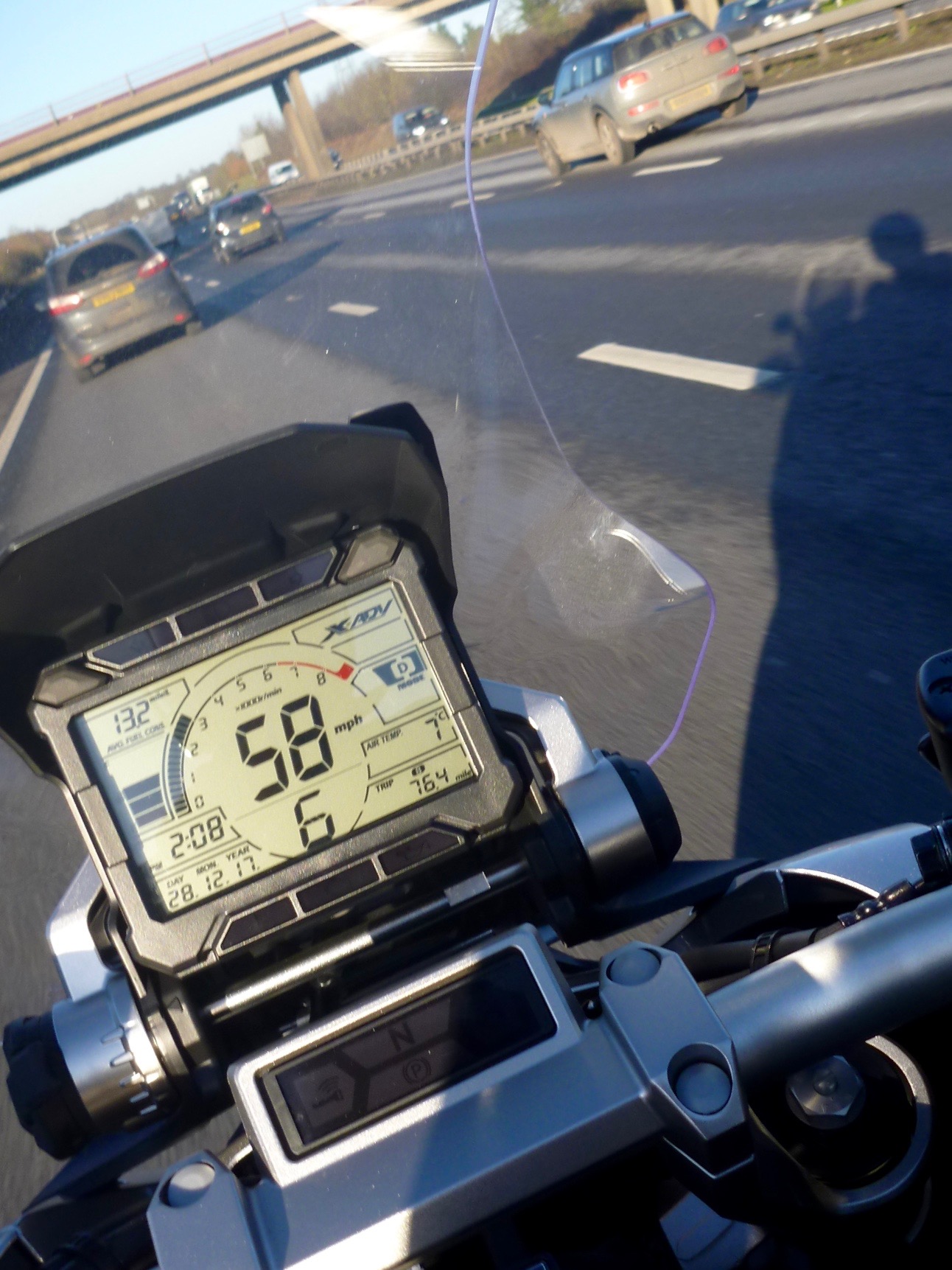
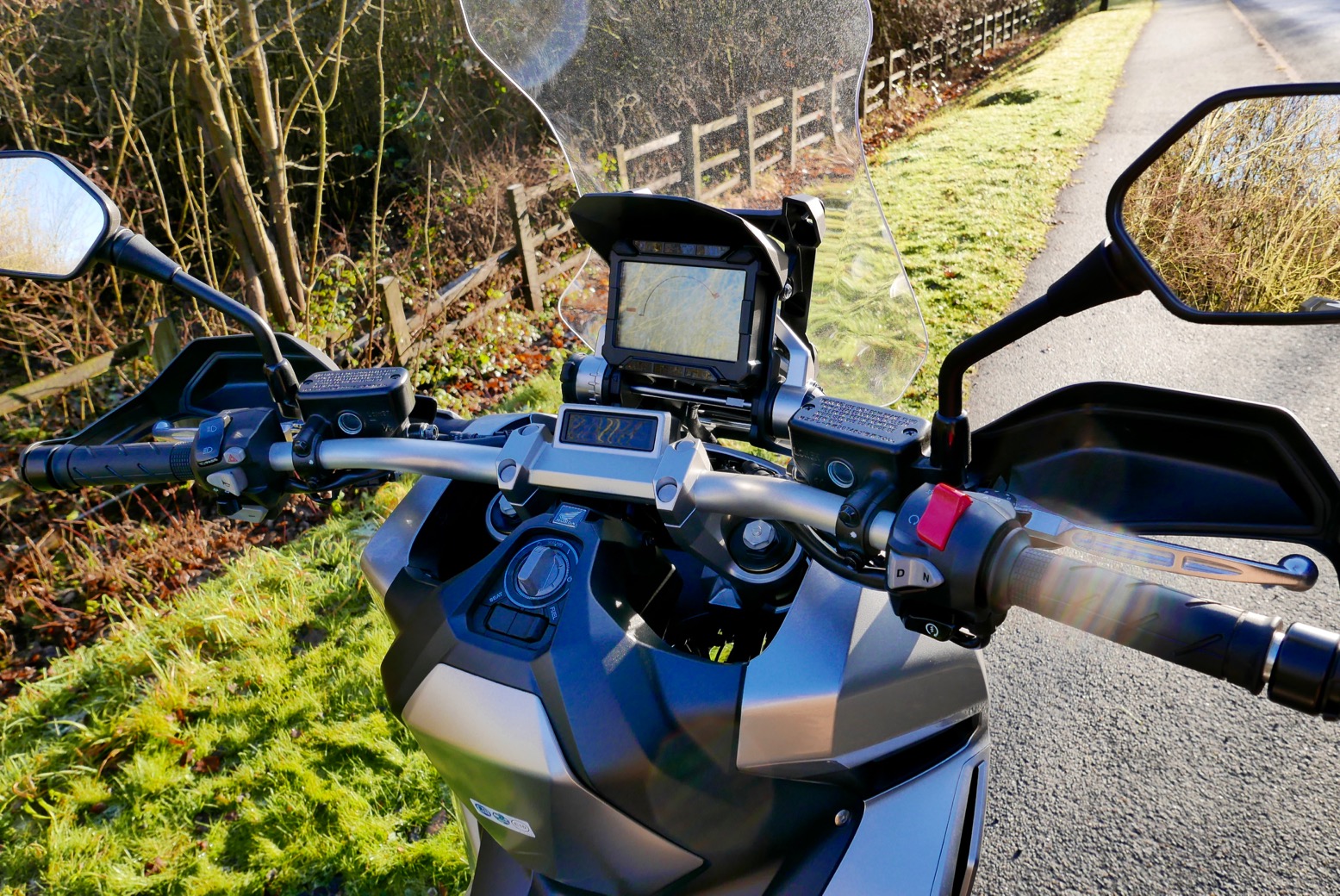
There’s plenty of easy-to-read data spread over the digital display which can doubtless be reconfigured. Fuel consumption was displayed in miles-per-litre; not seen that one before but makes sense in the UK; ‘13.2’ (left) adds up to just 60mpg average, but the NC twins are famously more frugal than that, getting closer to 100mpg is possible if really trying.
I’m won over by the DCT just like I was on an Africa Twin a couple of years back. One day I’ll get a DCT bike, but I didn’t warm the X’s scootery layout like I thought I might. It’s not much easier getting on and off – something that increasingly bugs me with tall saddled dirt bikes. Plus I miss that conventional poise which would feel more natural on the dirt, and couldn’t visualise enjoying riding this bike on my easy Morocco tour dirt routes.

I’m not sure that ‘sat-at-a-table’ seating would be comfy on a long ride either – too much pressure directly on the crumbling old spine, although the bars looked like they could’ve pivoted and raised forward without fouling the screen.
xadvfoot

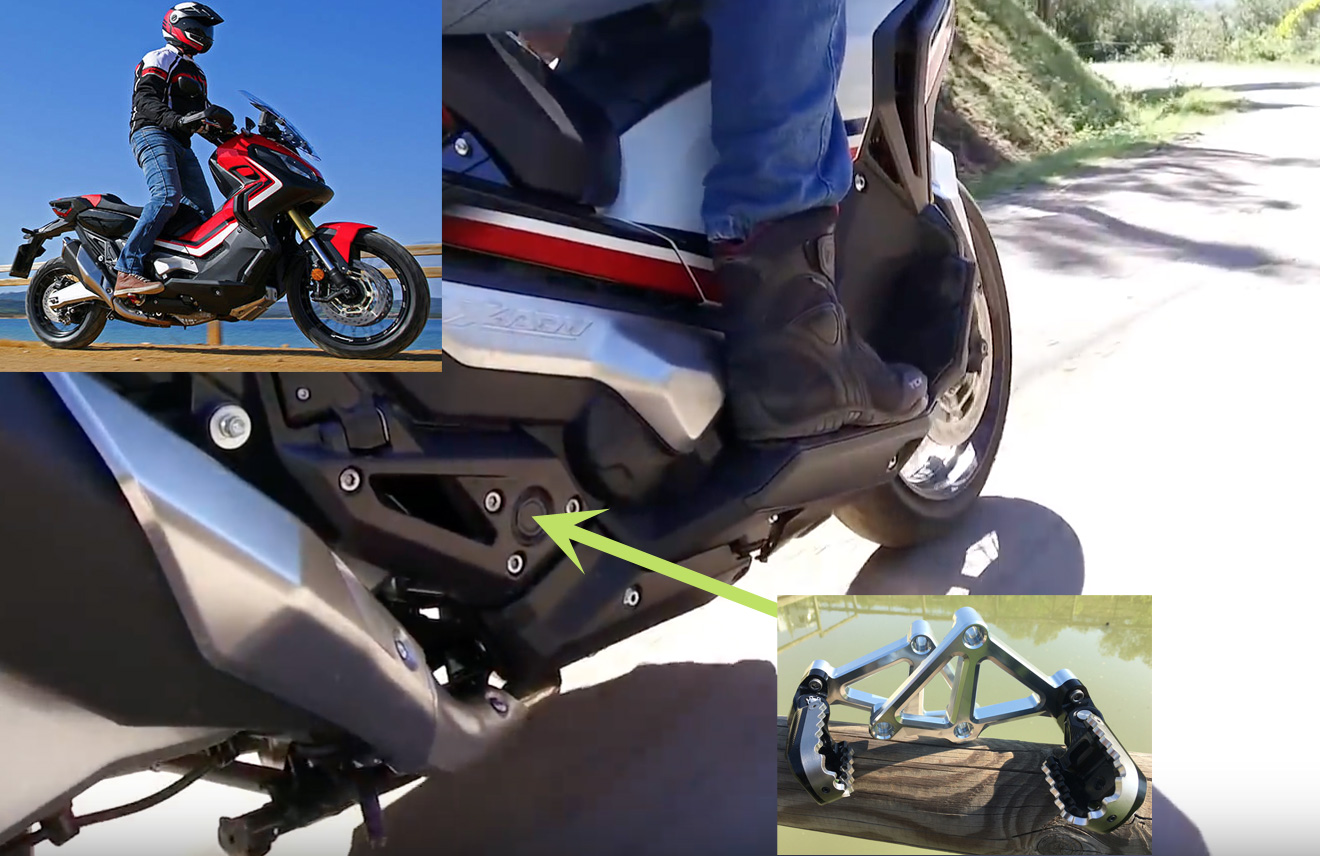
I’ve seen accessory front footrests which bolt on behind the boards around the swingarm pivot (left) and which may enable a better road / off-road stance, as well as possibly being able to grip the seat for better control when standing. Interestingly, all the dust-kicking promo shots below and in the link at the end for the 2018 model have these pegs fitted, but as I found on the XSR, this leg-to-bike contact area needs to be well thought out and comfy if it’s to work sustainably.

The bland 2017 silver ‘Mondeo’ livery didn’t really work for me and may have contributed to my tempered enthusiasm for the X-ADV. The red-black-and-whites look much more like it, but silver is clearly popular in Caterham as the shop had two other low-mileage silvers going used, presumably by commuters who didn’t get on with the genre-busting X-ADV.

xadvdirt
nc750x

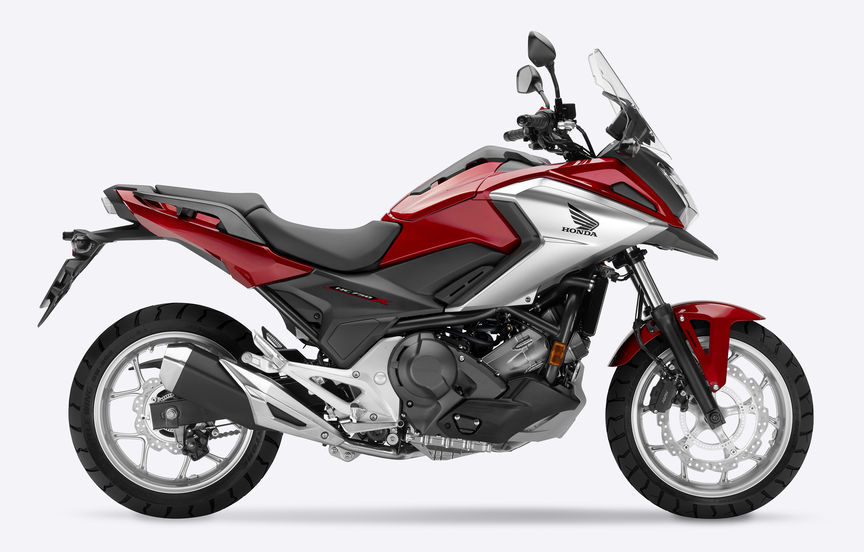
If DCT is so good but an AT is too pricey, what about the much cheaper NC750X (left; I rode one in 2019)? I’ve thought about that one before, but the only real benefit over my XSR700 would be the DCT. The stock suspension is said to be as basic, and the claimed 220kg weight is 34-kg greater (but 18kg less than the X-cooter), even if it’s positioned lower. Getting suspension right is costly and can be hit and miss.
What would be great is an NC750X-ADV with a 19-inch front and better suspension all round, but that would come too close to an Africa Twin.
Scoot my Dirt
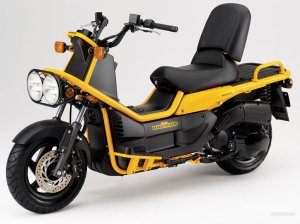
I was recently reminded what would have been fun is a bigger-engined version of the Honda Zoomer or current Ruckus (left). Genuinely hop-on low and light enough to chuck about – sort of in the vein of the fat-tyred Yamaha Ryoku concept.

In fact there was a Big Ruckus 250 about decade ago (right) more here), but at 160kg, it looks as heavy as it is and presumably never proved as popular as the Ruckus.

I was a bit surprised I didn’t take to the X-ADV for my intended use. Perhaps a longer ride on a warmer day may have made a difference. As a road bike it’s fine, but then so are just about all the other road bikes out there.

The 2018 model out in a couple of months will come in a 34-kw A2 license version (6kw less than normal). It will also have the AT’s G-switch (less clutch slip for off-road traction), as well as lower ratios than other DCT Hondas and switchable, two-level Honda Selectable Torque Control (HSTC). The engine’s red line is also set 950 rpm higher at 7500 and it will cost 200 quid more.
XSR 700 Scrambler – some Morocco pics

XSR 700 Scrambler index page

Tender - 6

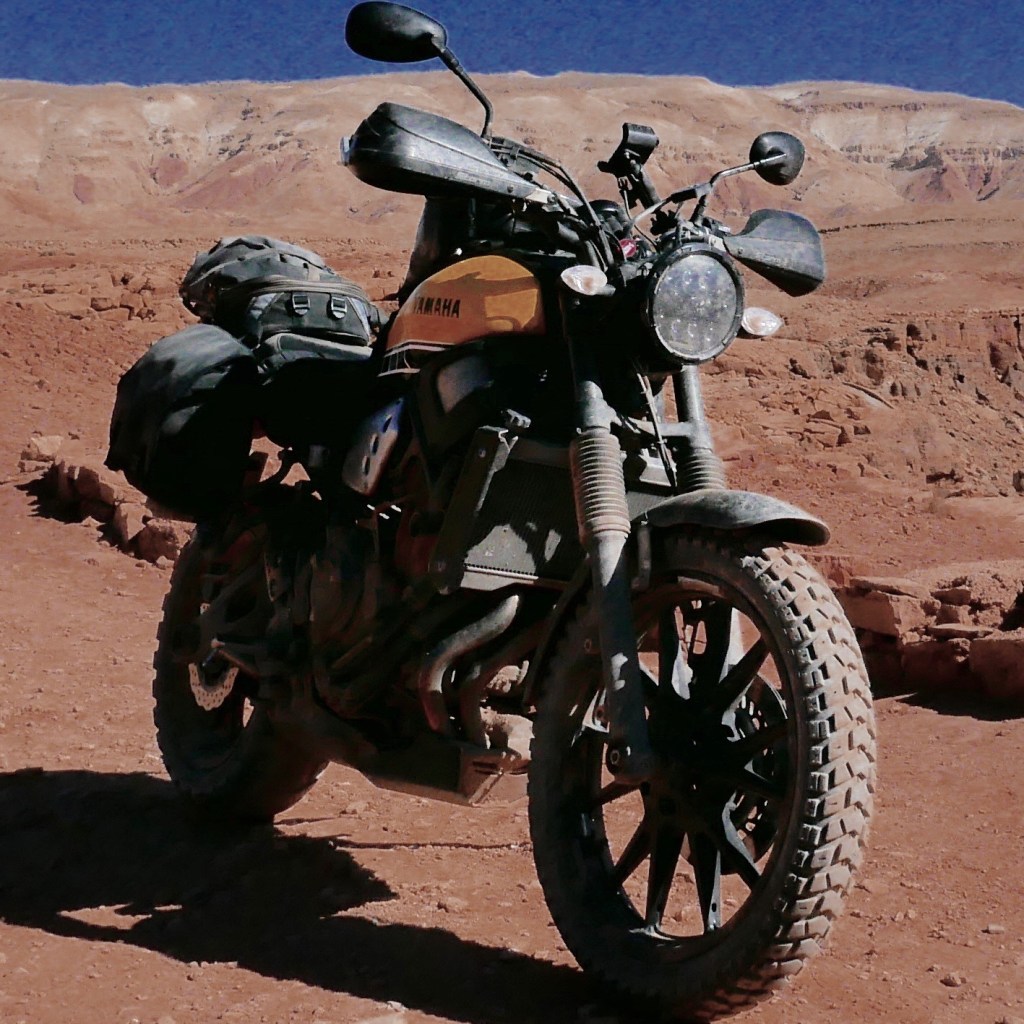
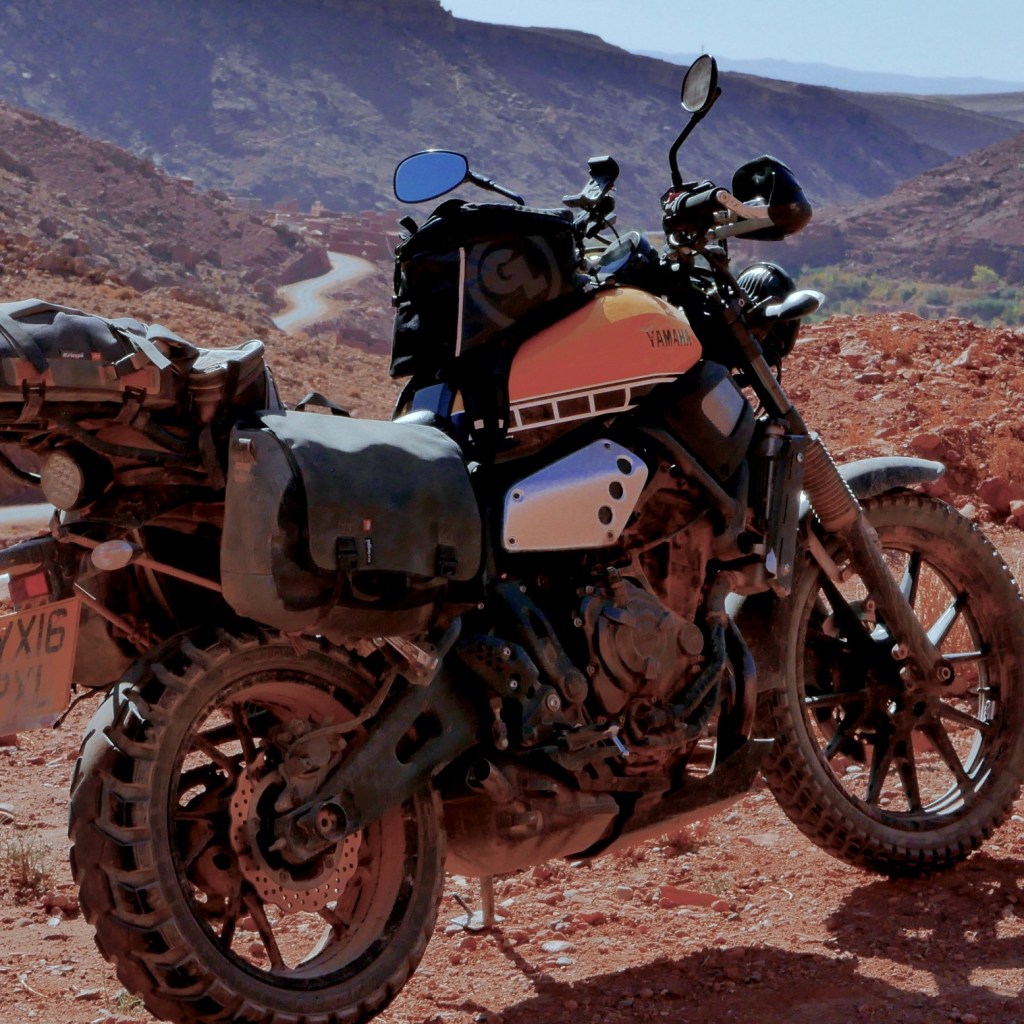
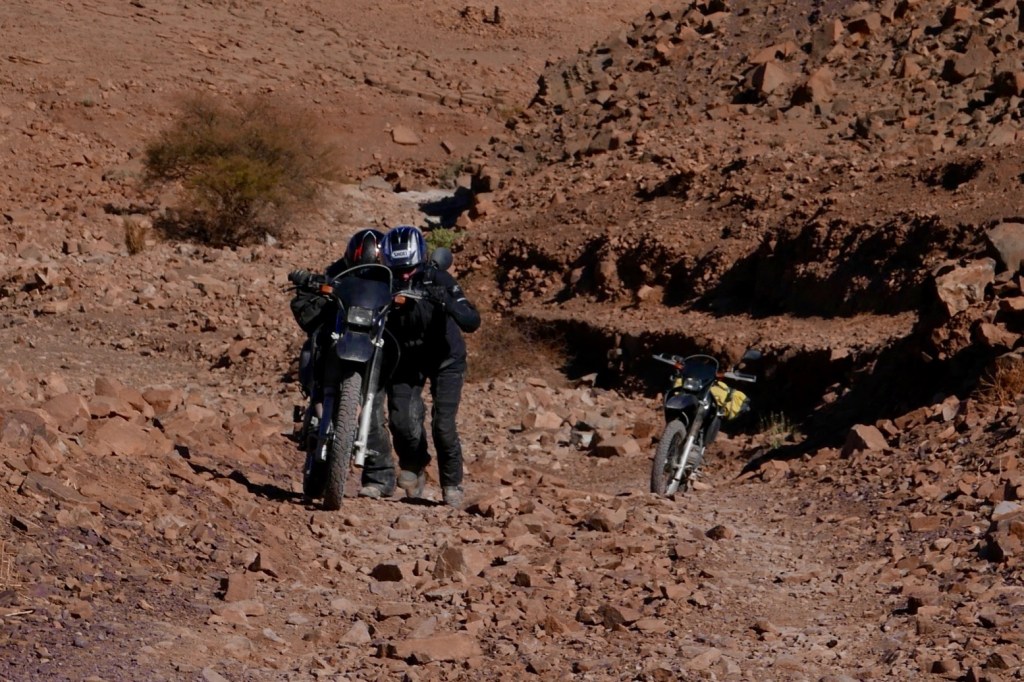
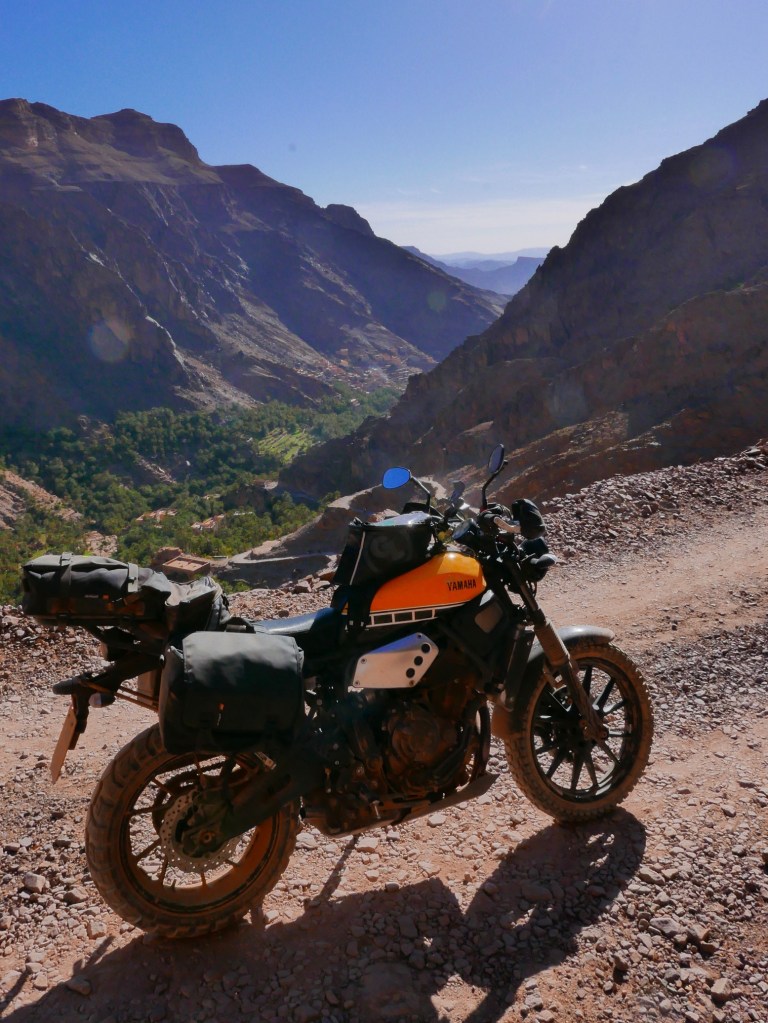
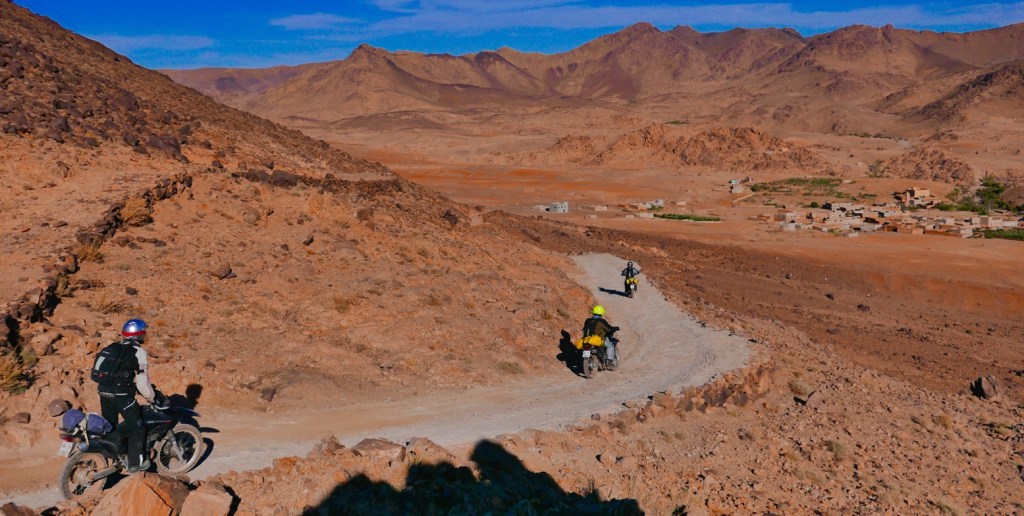
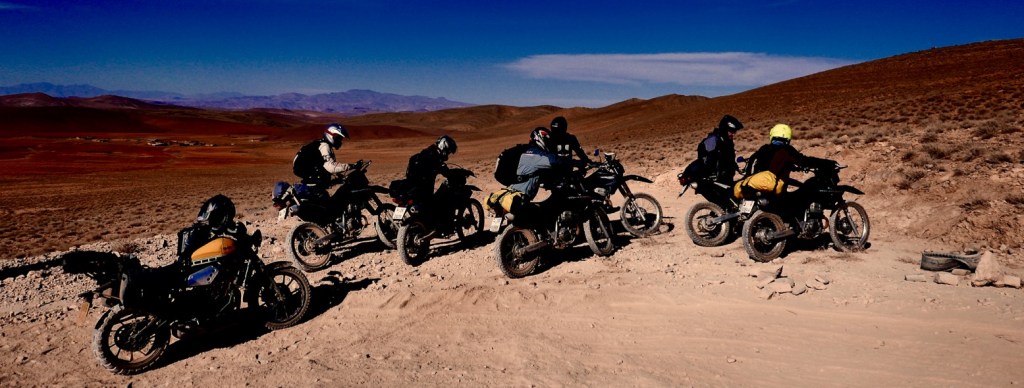
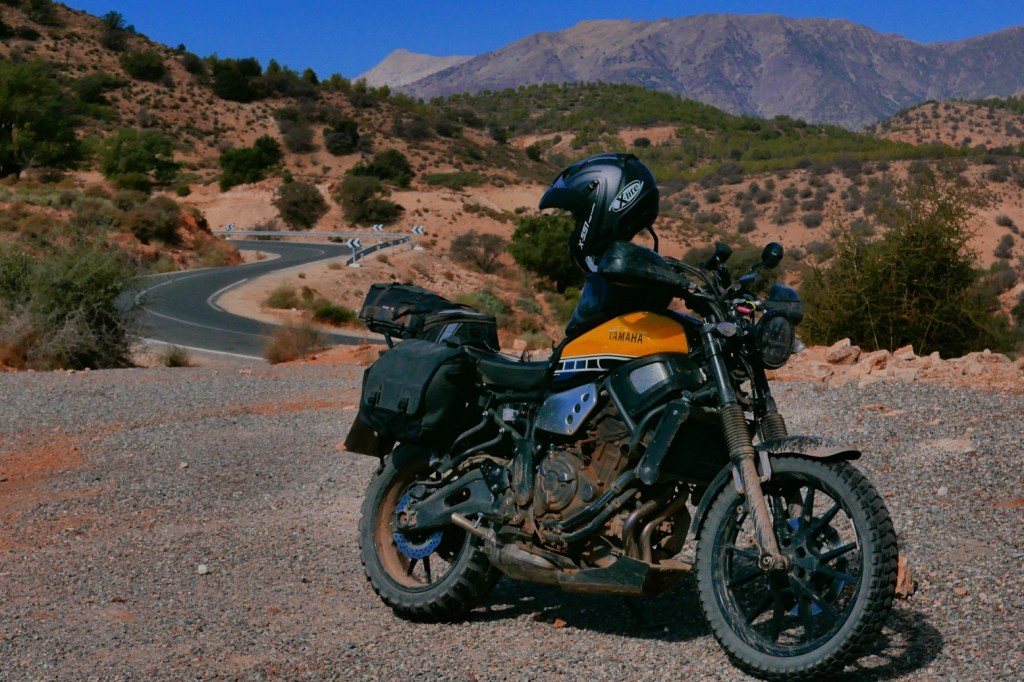
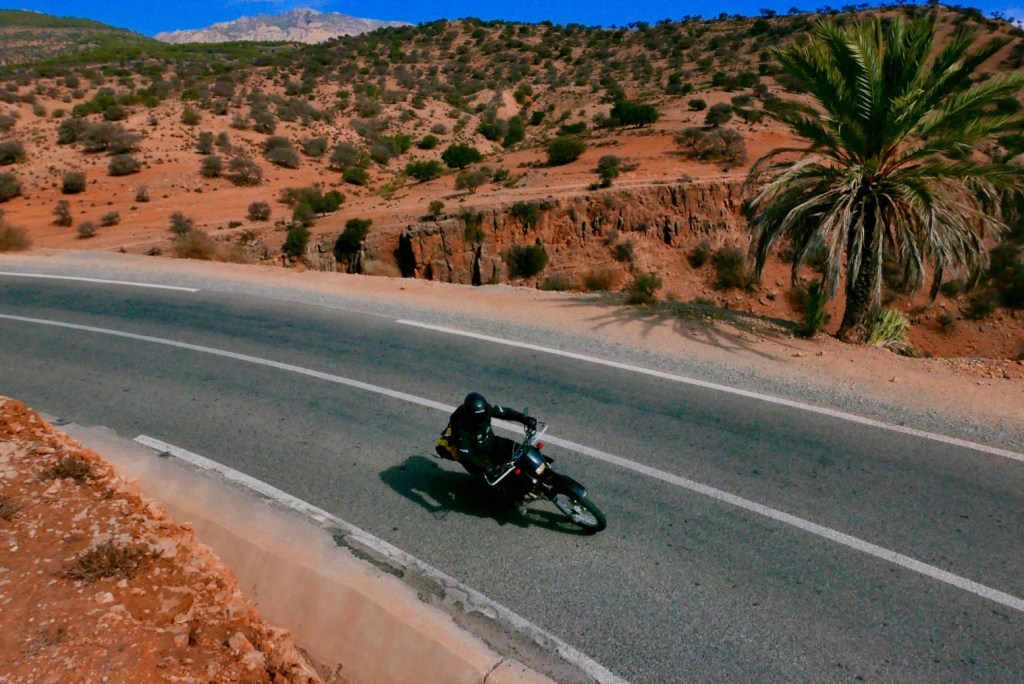
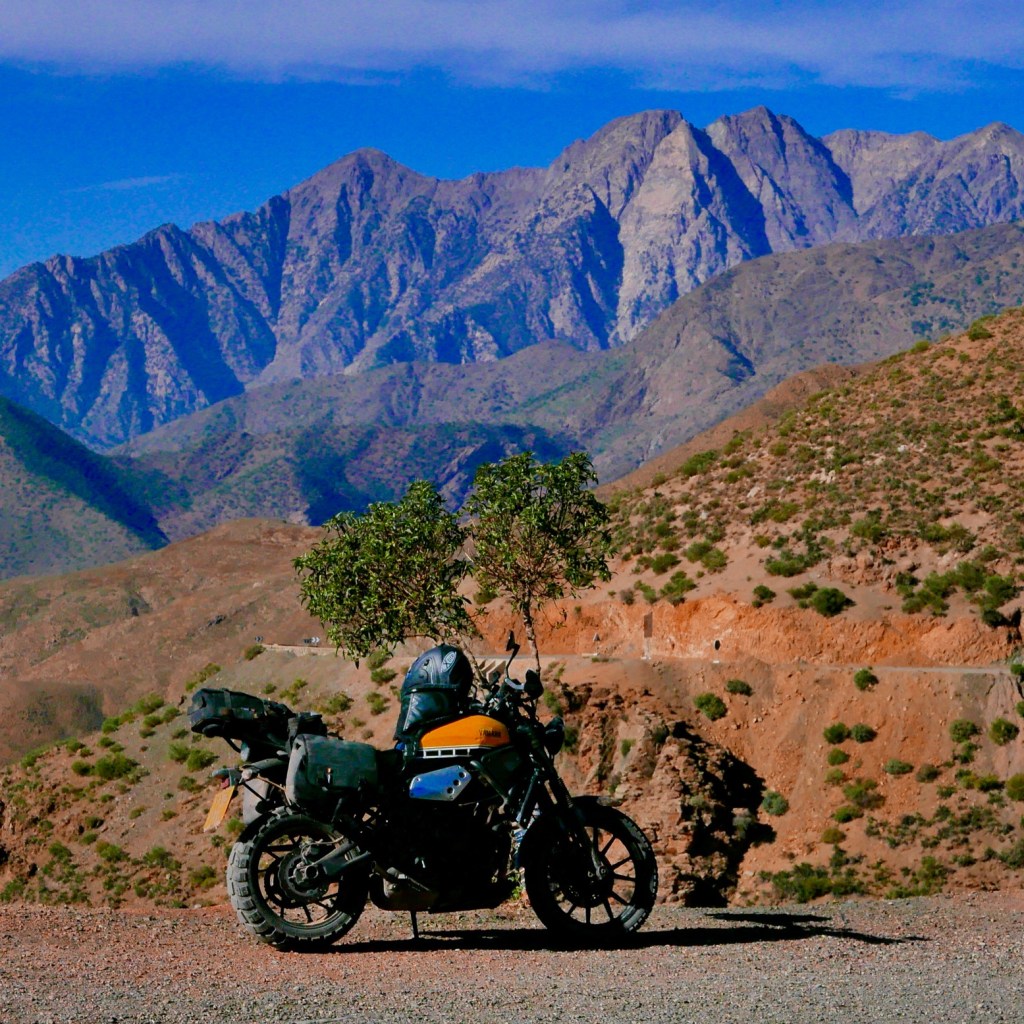
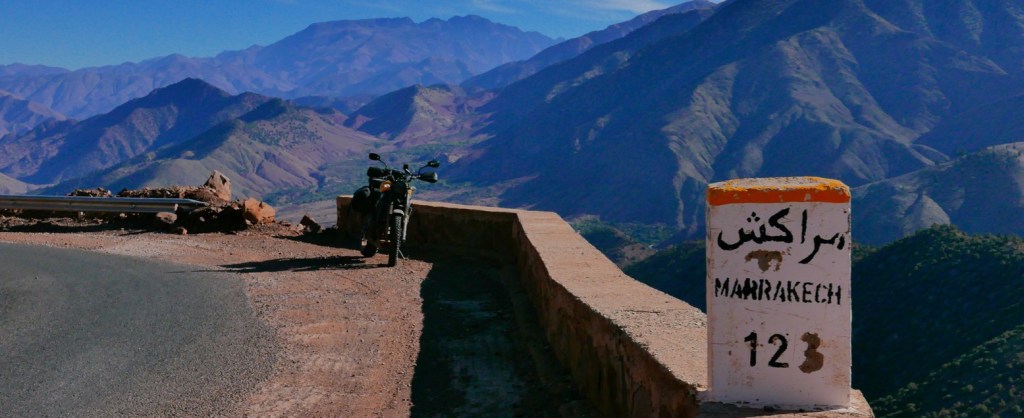
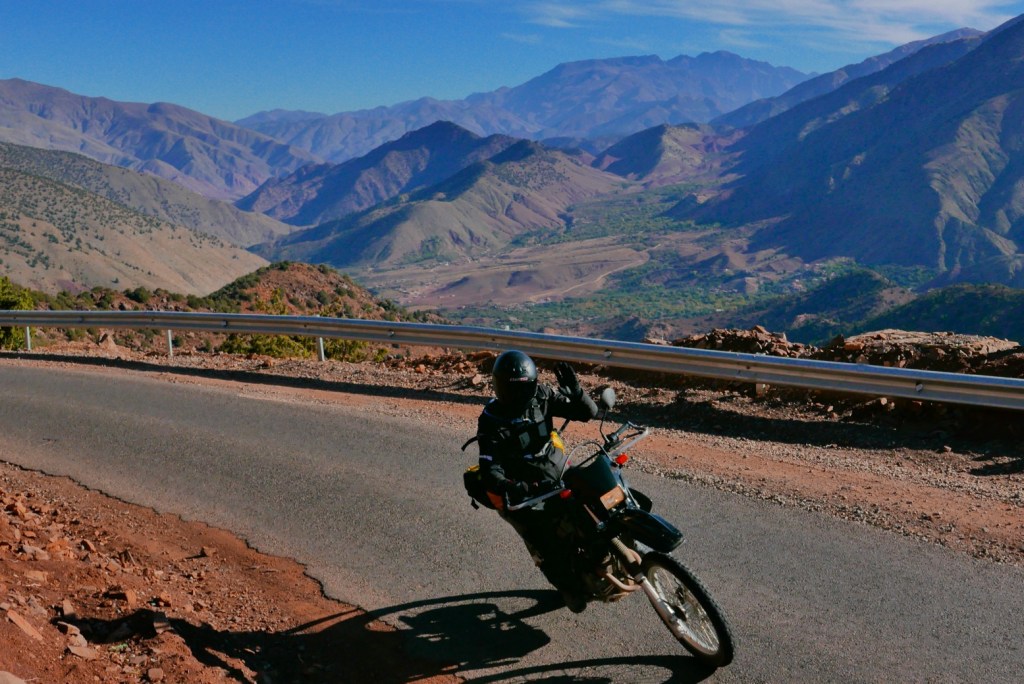
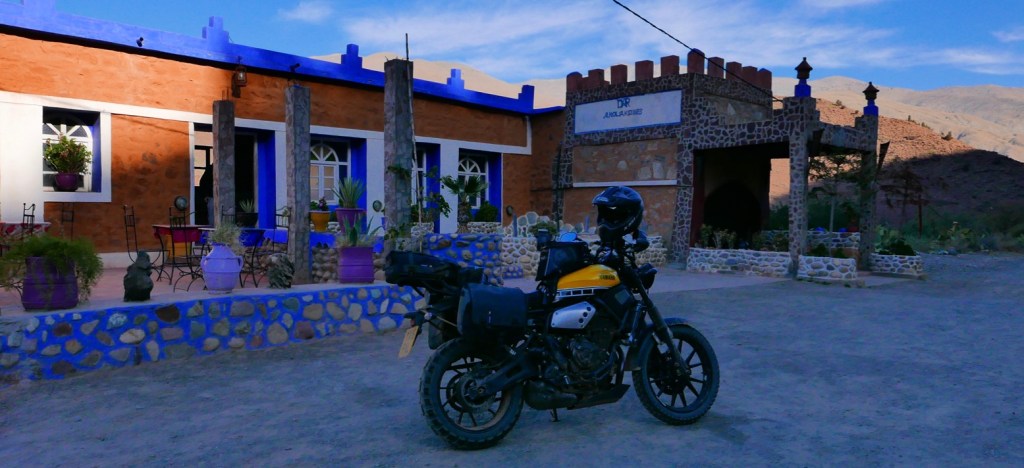
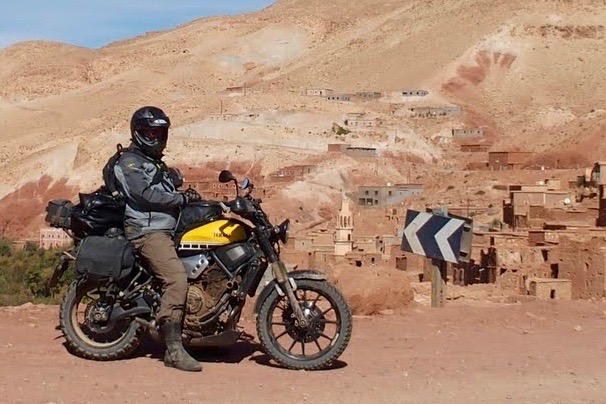
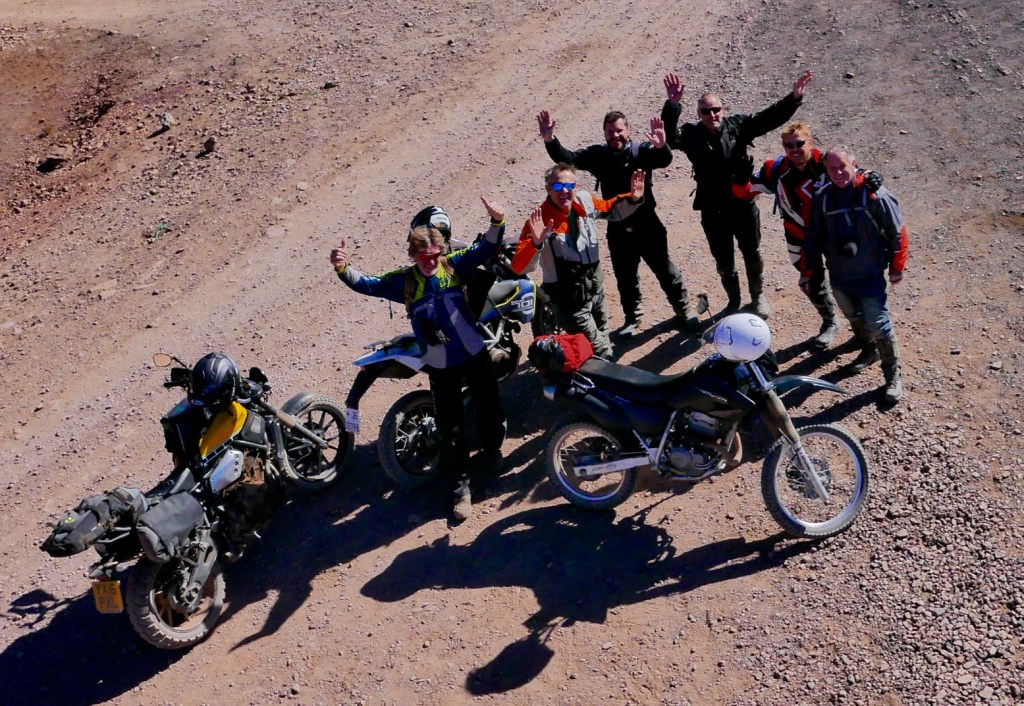
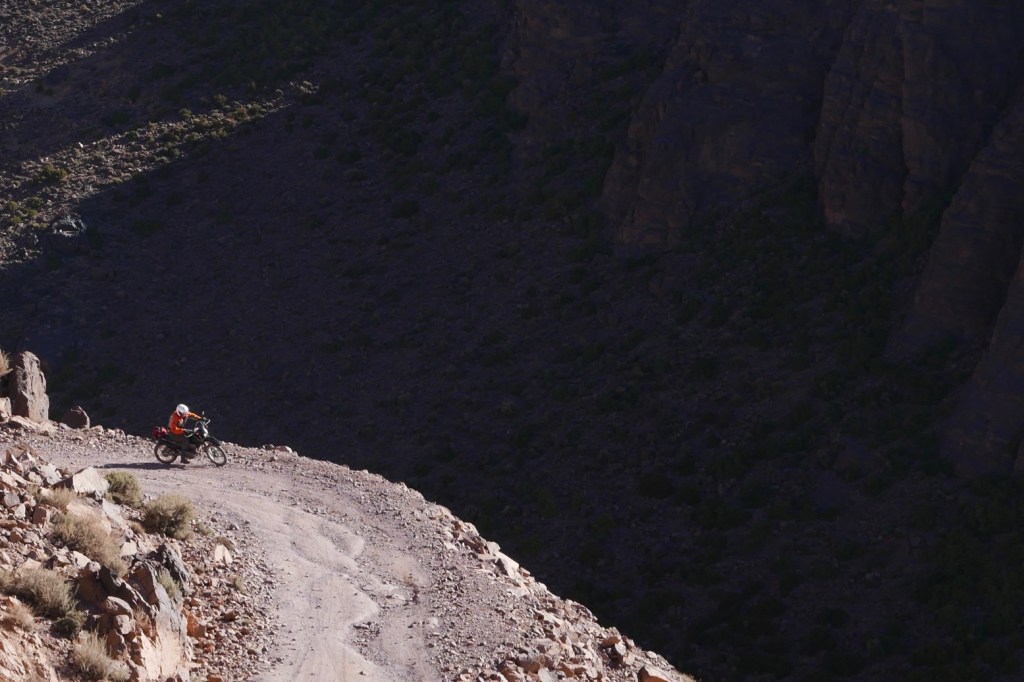
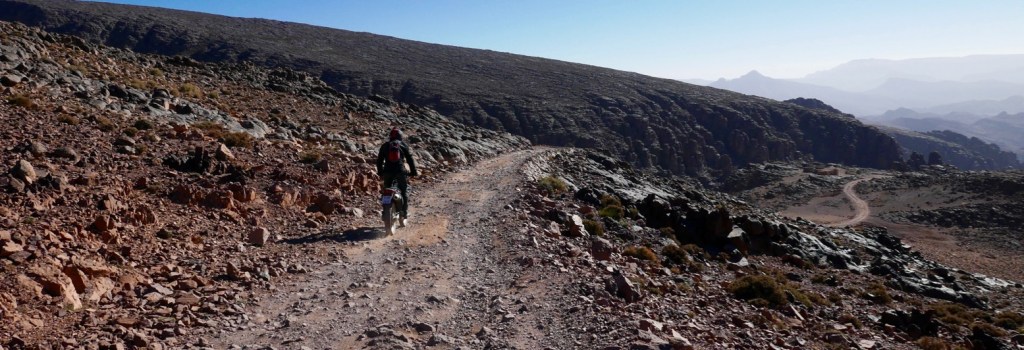
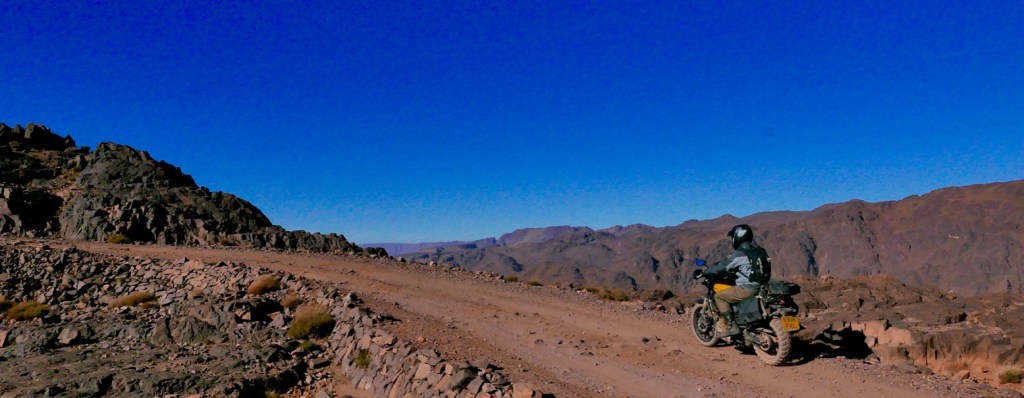
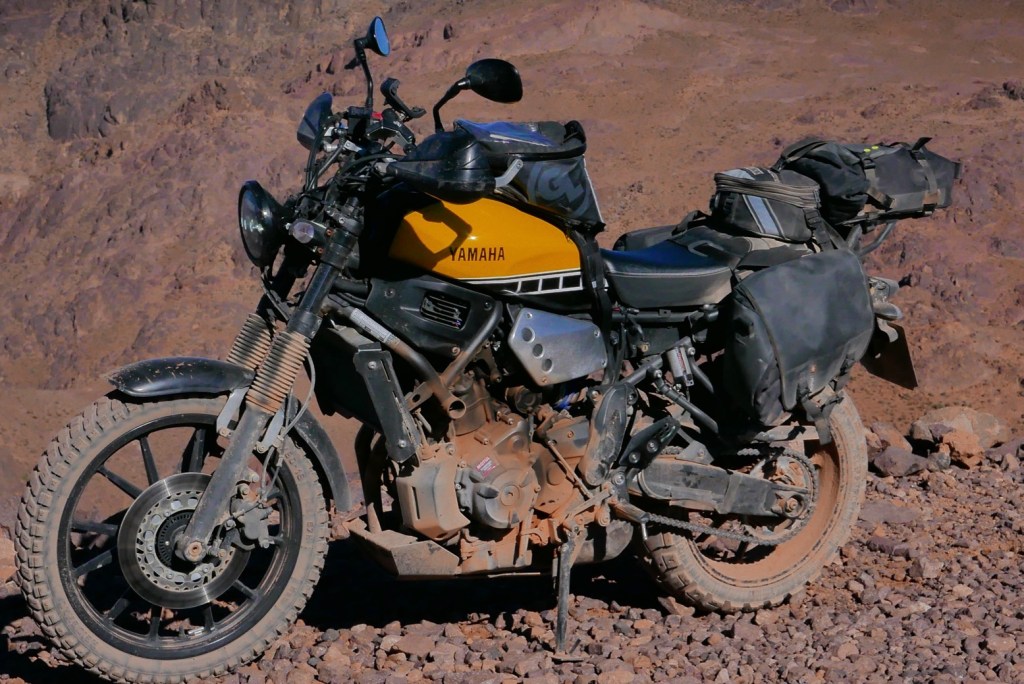
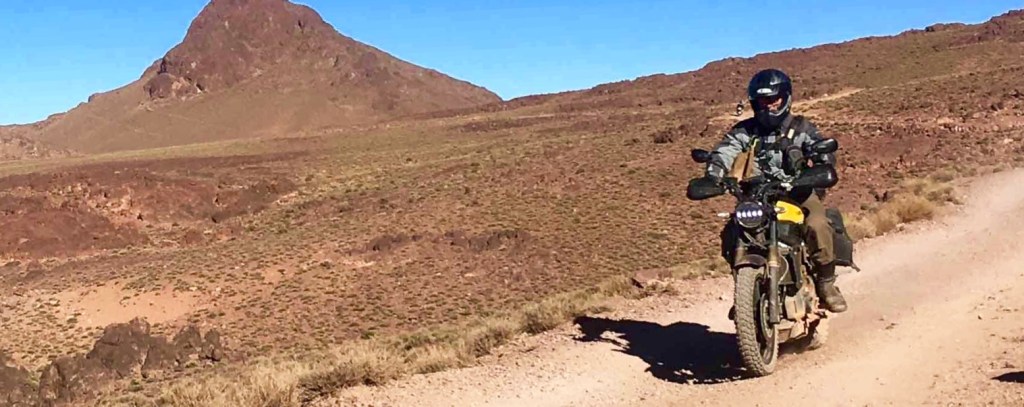
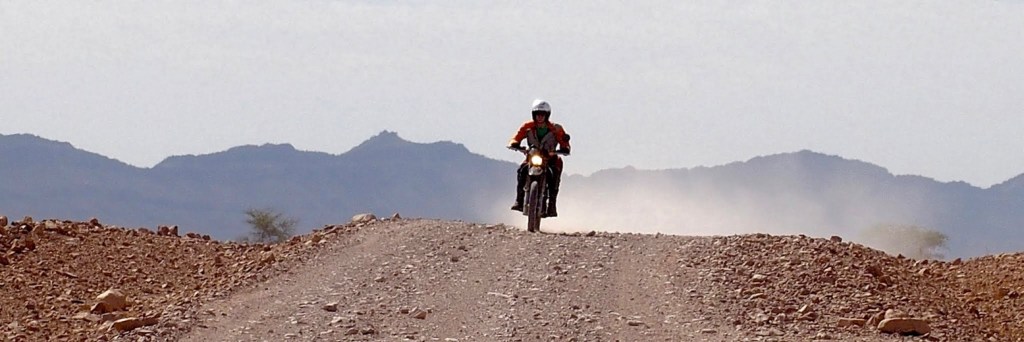
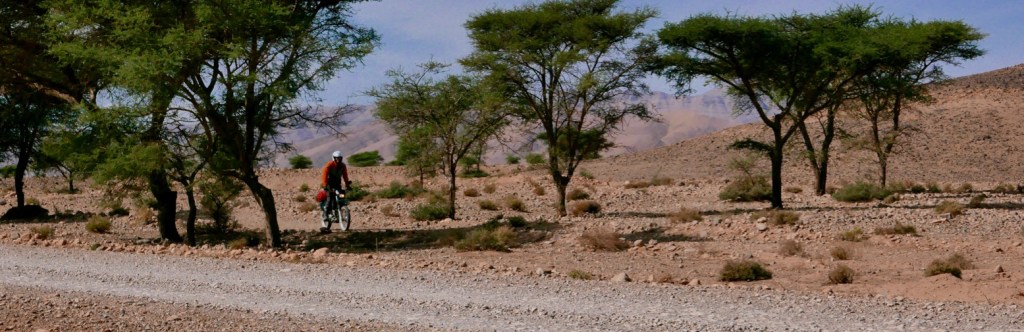
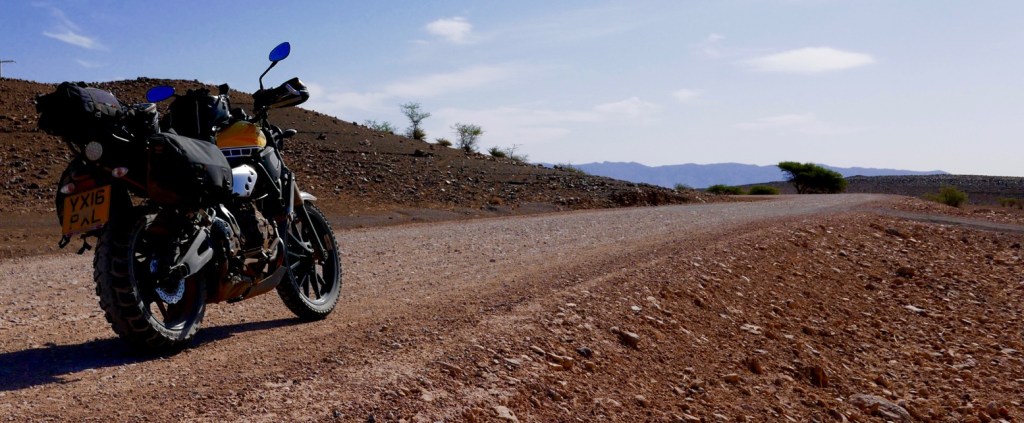
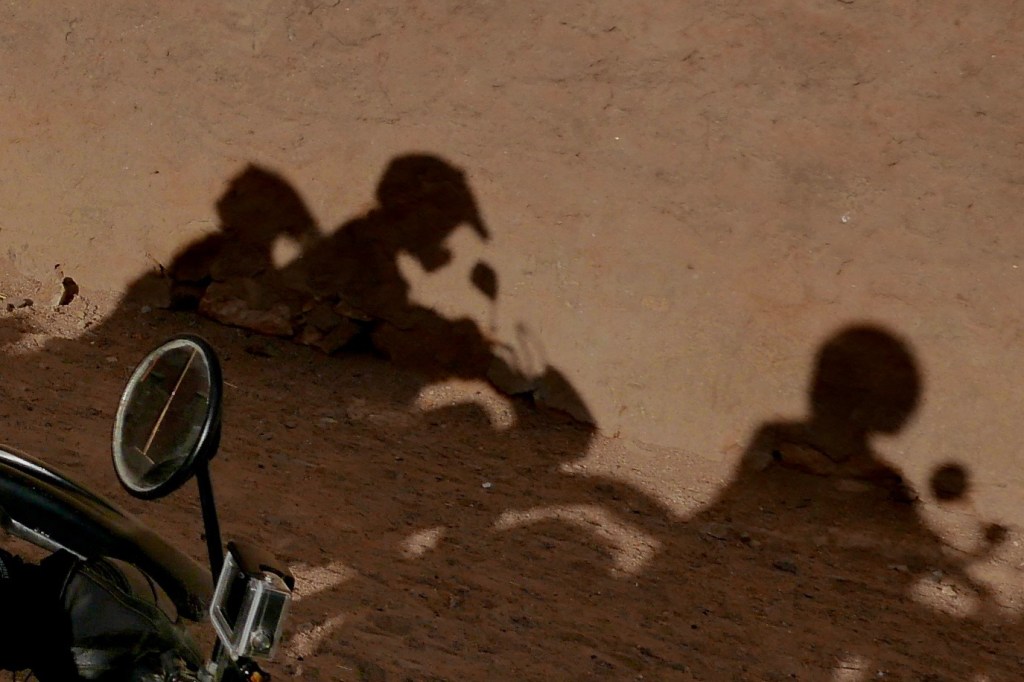
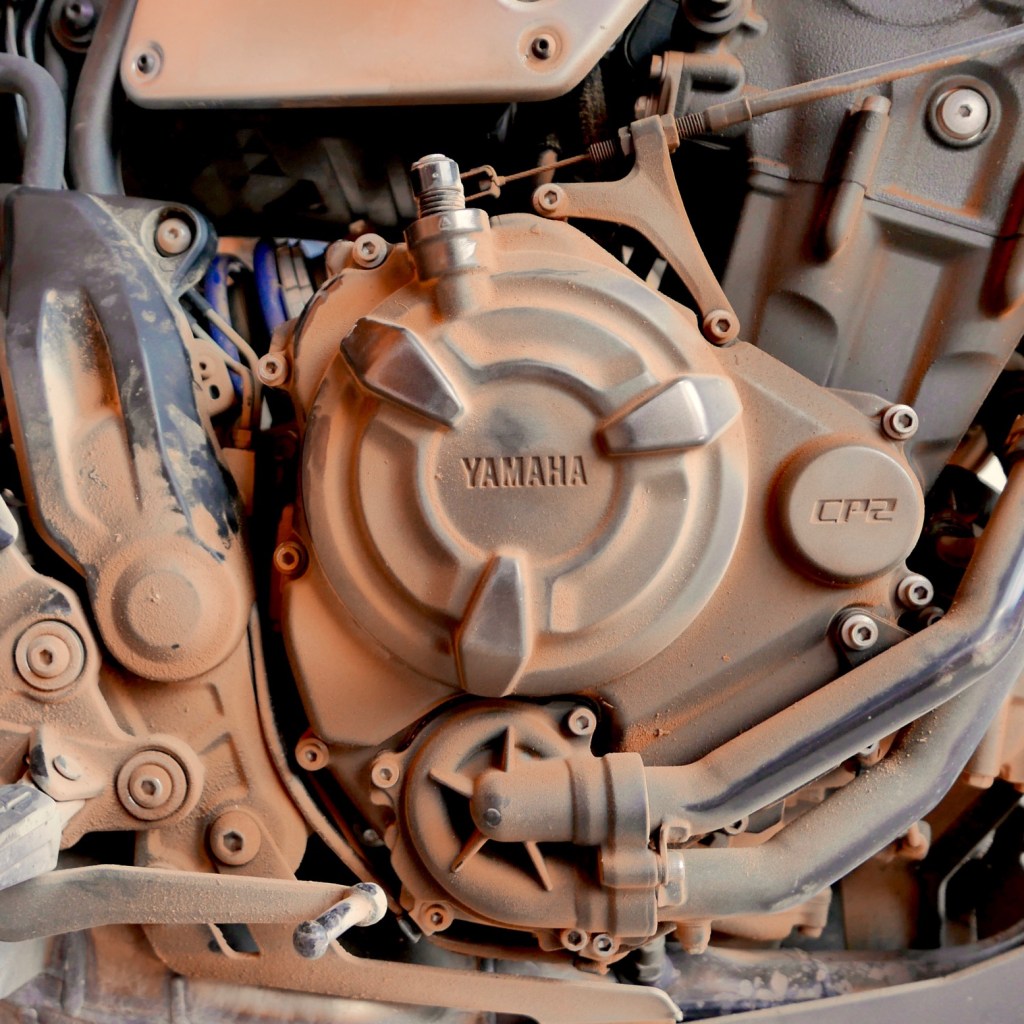
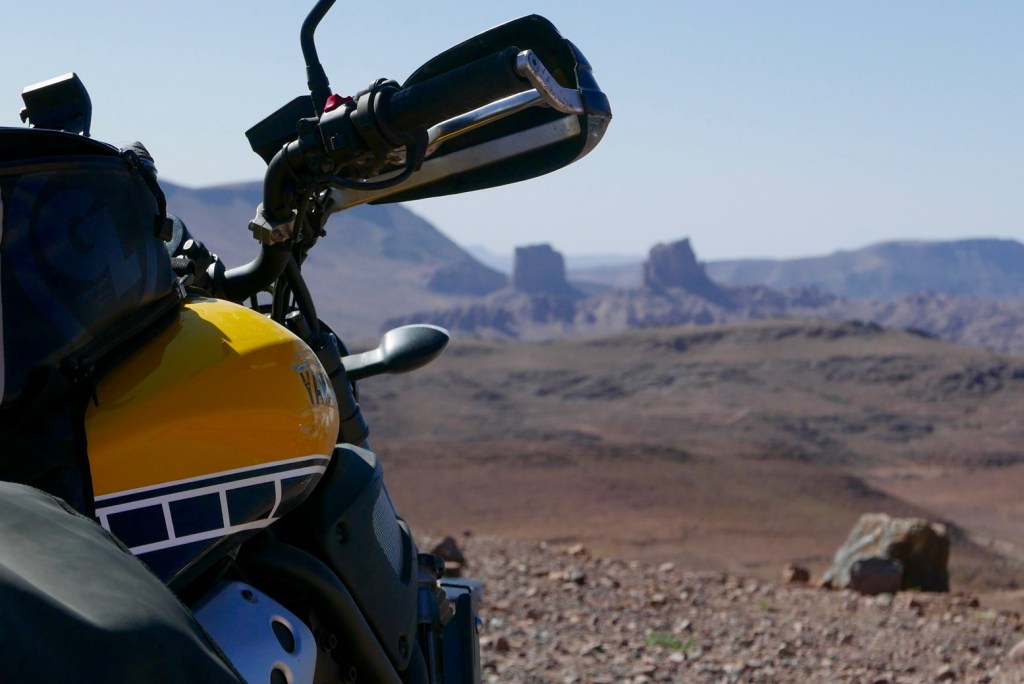
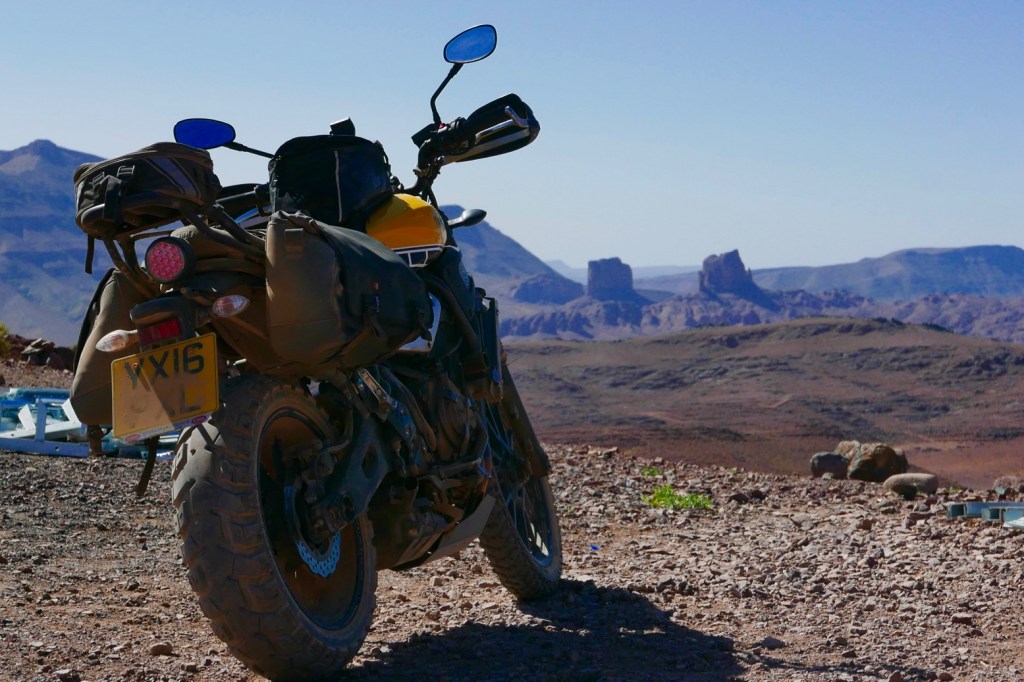
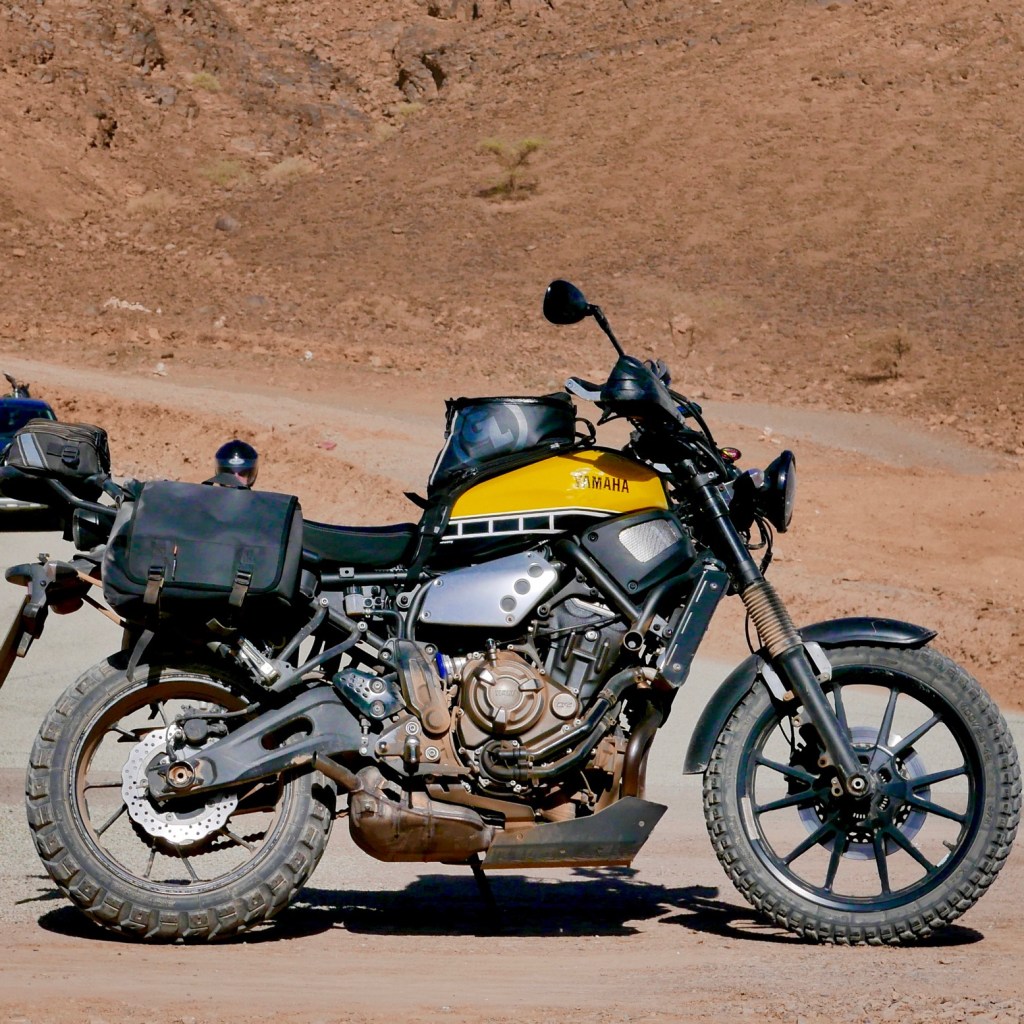
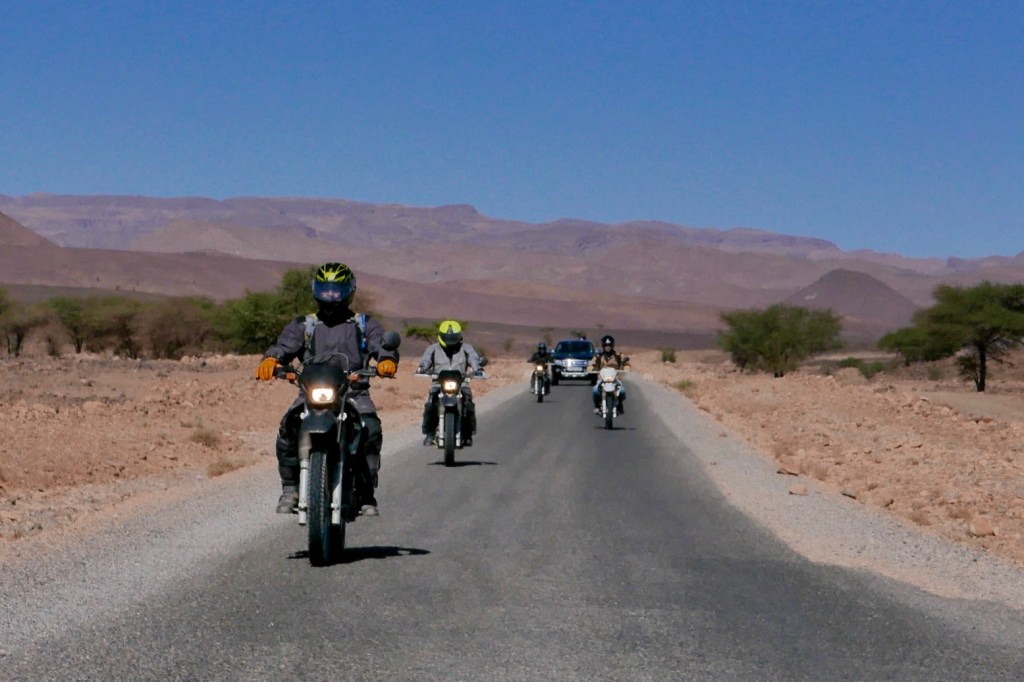
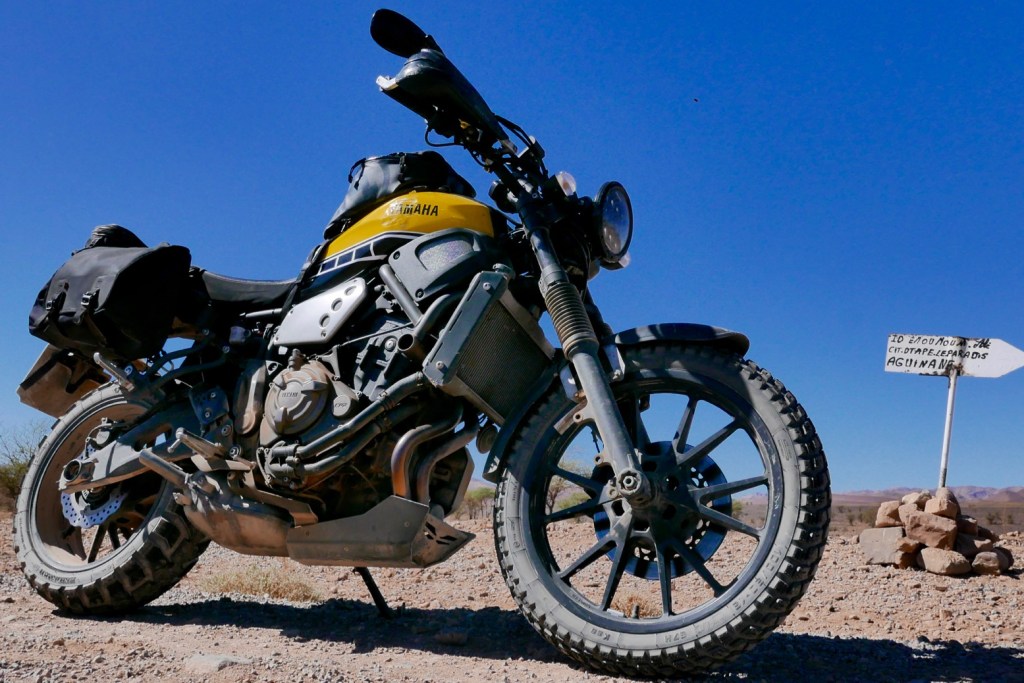
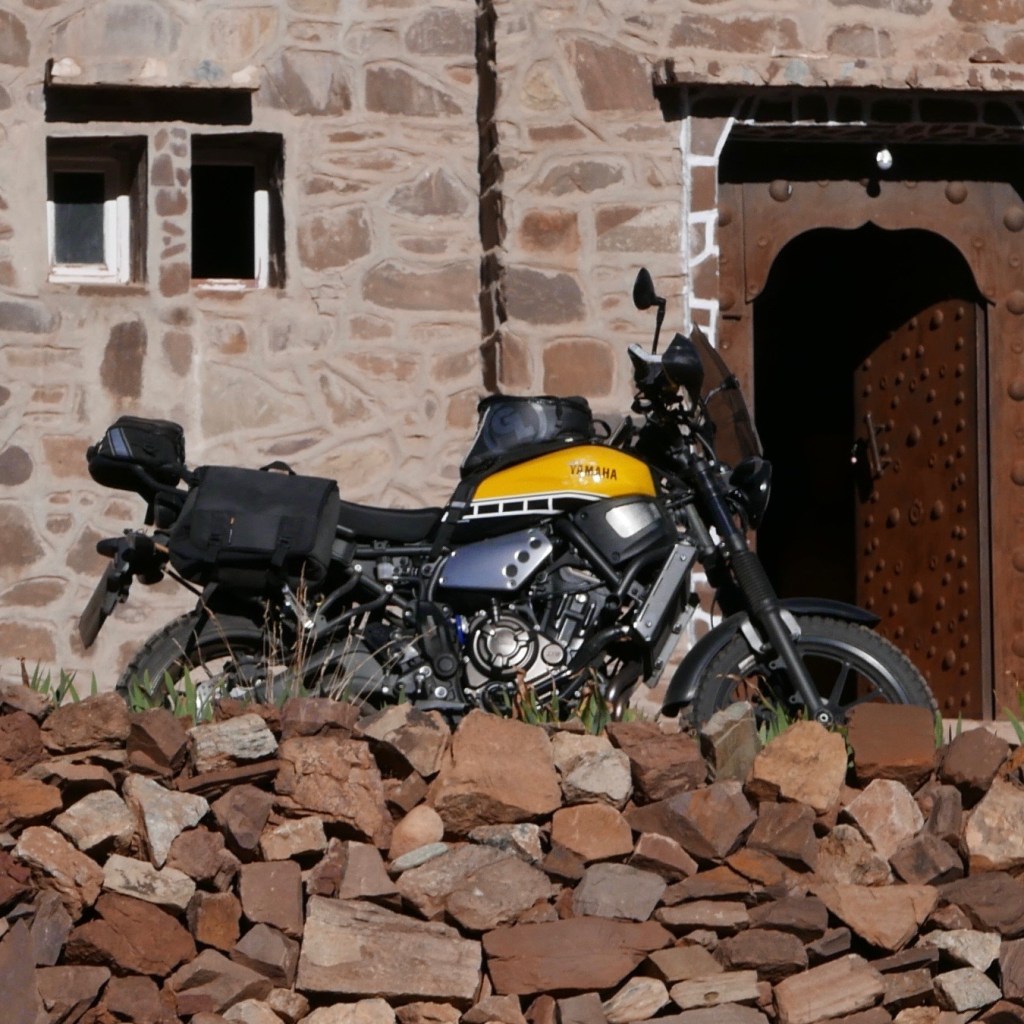
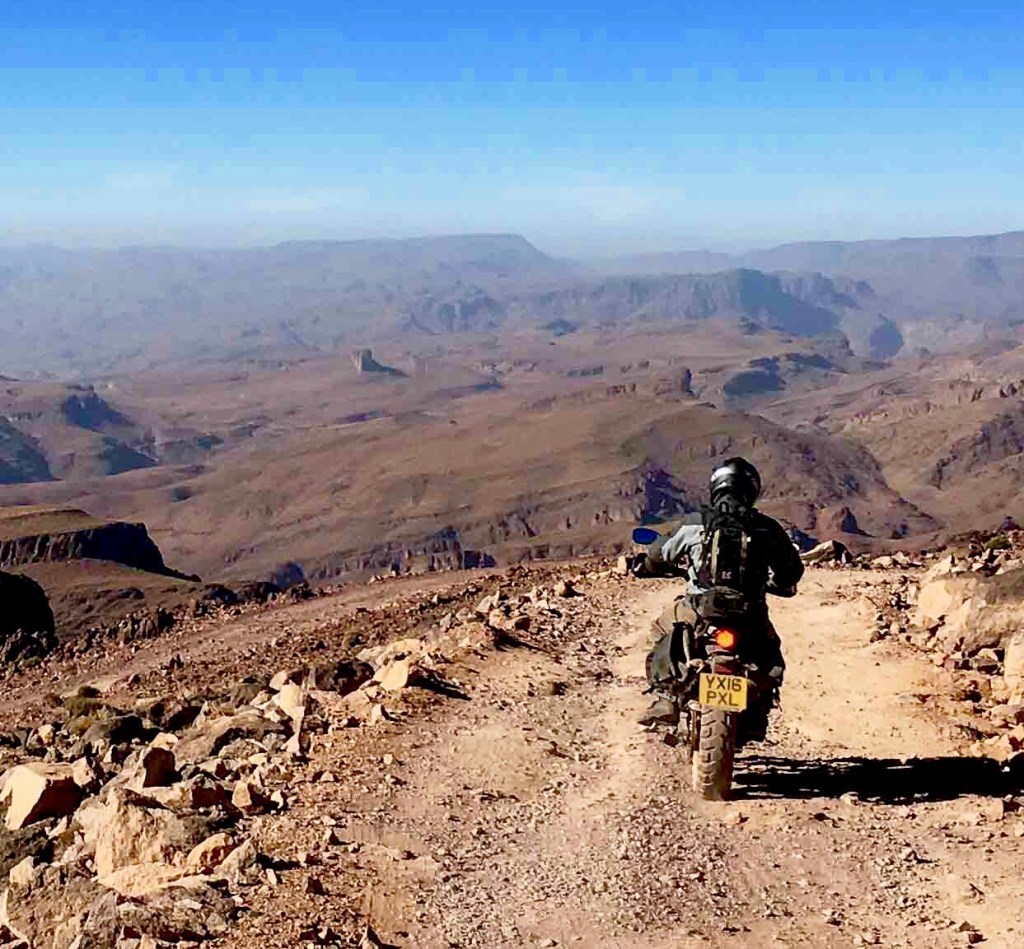
A few shots of my XSR700 Scrambler after a month in Morocco, leading three tours. I’m impressed with how it’s shrugged it all off, just like my old Teneres in fact. But then, why wouldn’t it?
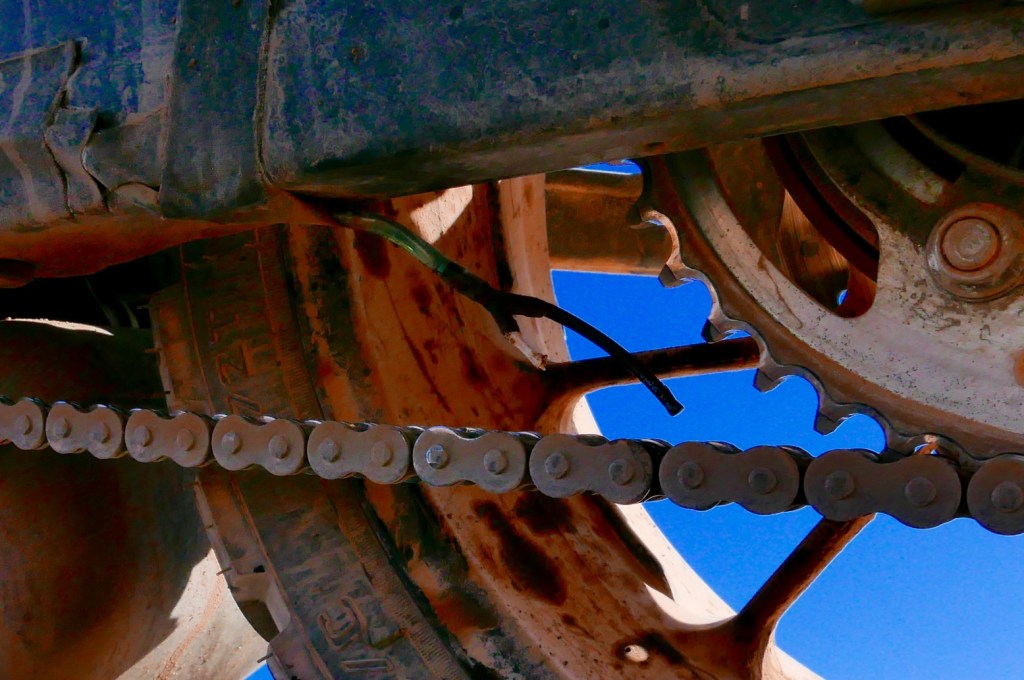
All I do is turn off the Tutoro chain oiler for the piste, then wipe it down and turn it on again for the highway.

Tender - 23

The engine is just right. I keep forgetting it’s restricted to ~48hp (bought it like that and liked it). The Heidenau K60 tyres are just right too; letting a couple of seconds out makes a big difference on the piste where I’m glad the ABS is disabled. Could do with a bit more and better suspension at times, and standing up is like pushing a wheelbarrow, but it’s a Scrambler, not a trail or enduro bike. Within it’s limitations, I can now sling it about on the dirt and on road. It turned out well. Riding it home in a week or so.
Full 7500-mile report.

Some pics by Jim B and Jim L.

Royal Enfield Himalayan tested in the Himalaya

My Enfield Himalayan Index Page

Dave King

“Our single biggest insight in all these years of riding has been that the best motorcycle for the Himalayas is not one that tries to dominate its landscape, but one that is able to go with its flow. … ​With its purpose-built ground-up design, the Himalayan is a simple and capable go-anywhere motorcycle that will redefine adventure touring…”
Siddhartha Lal, CEO, Royal Enfield

himsdd- - 22

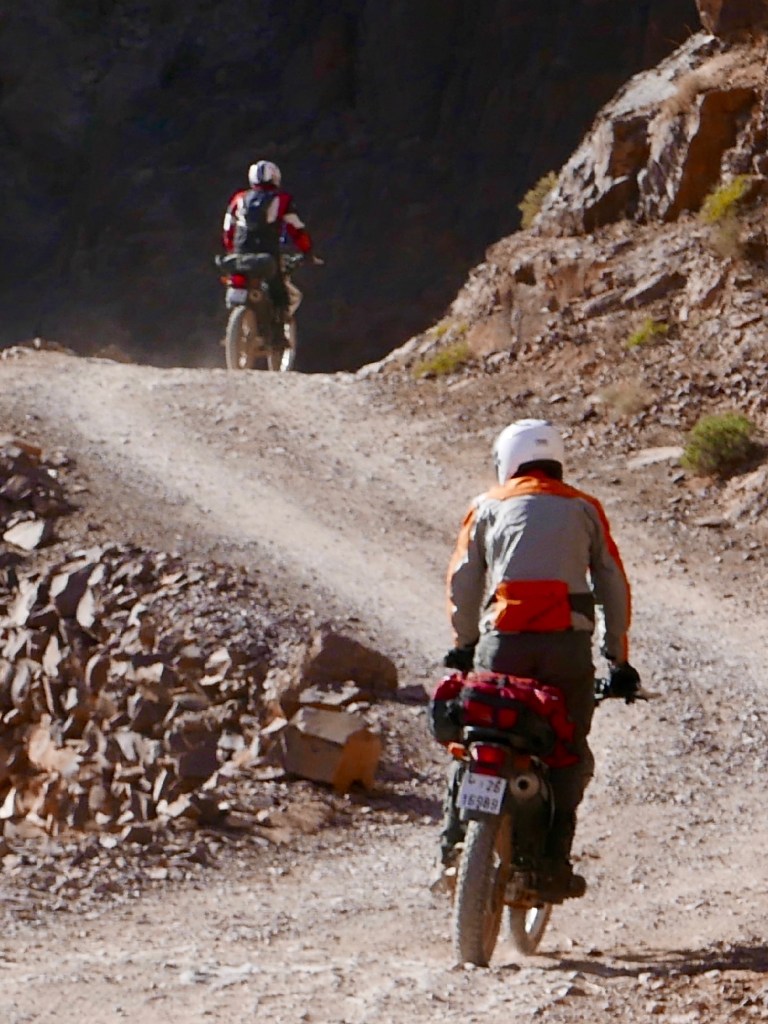
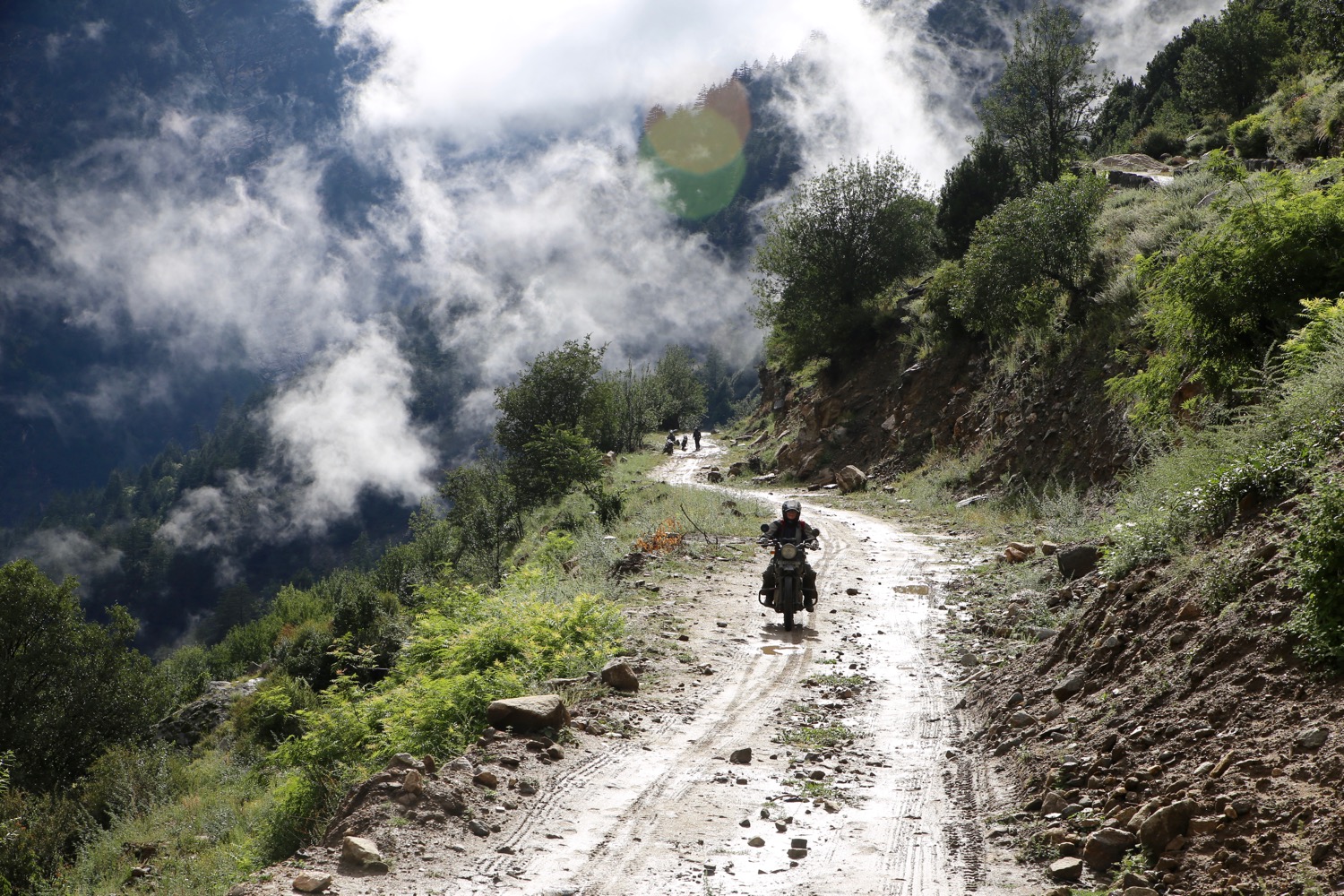
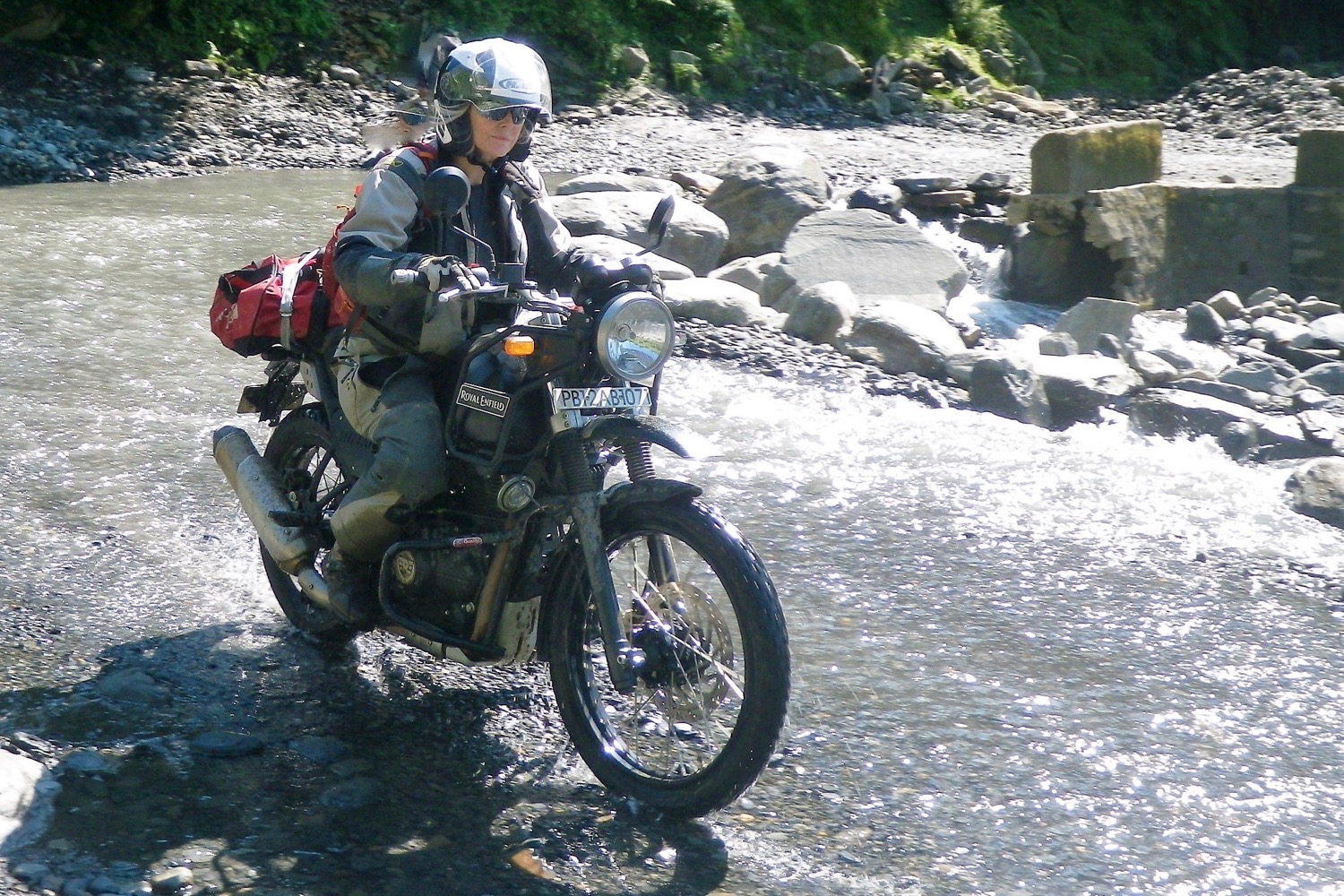
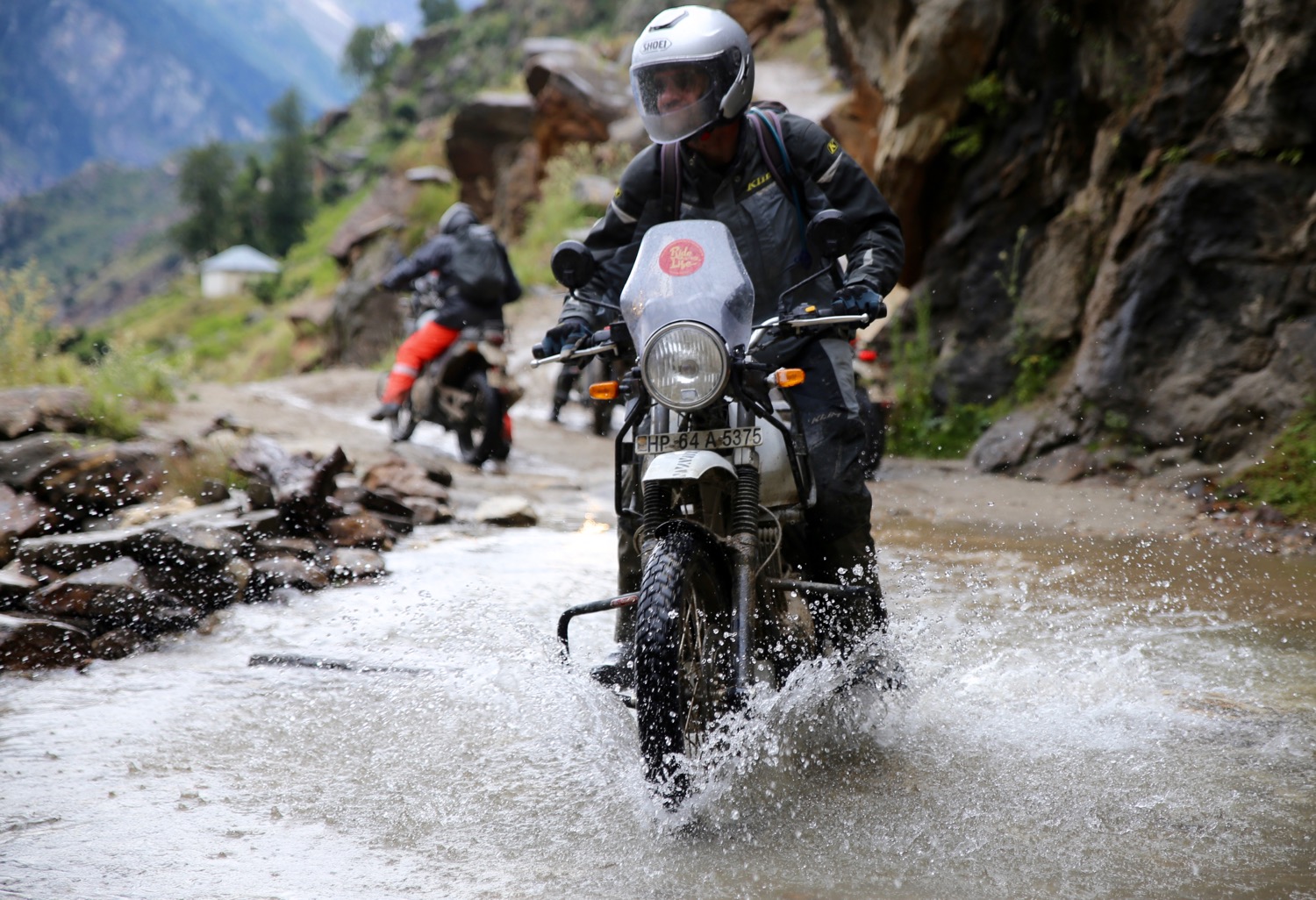
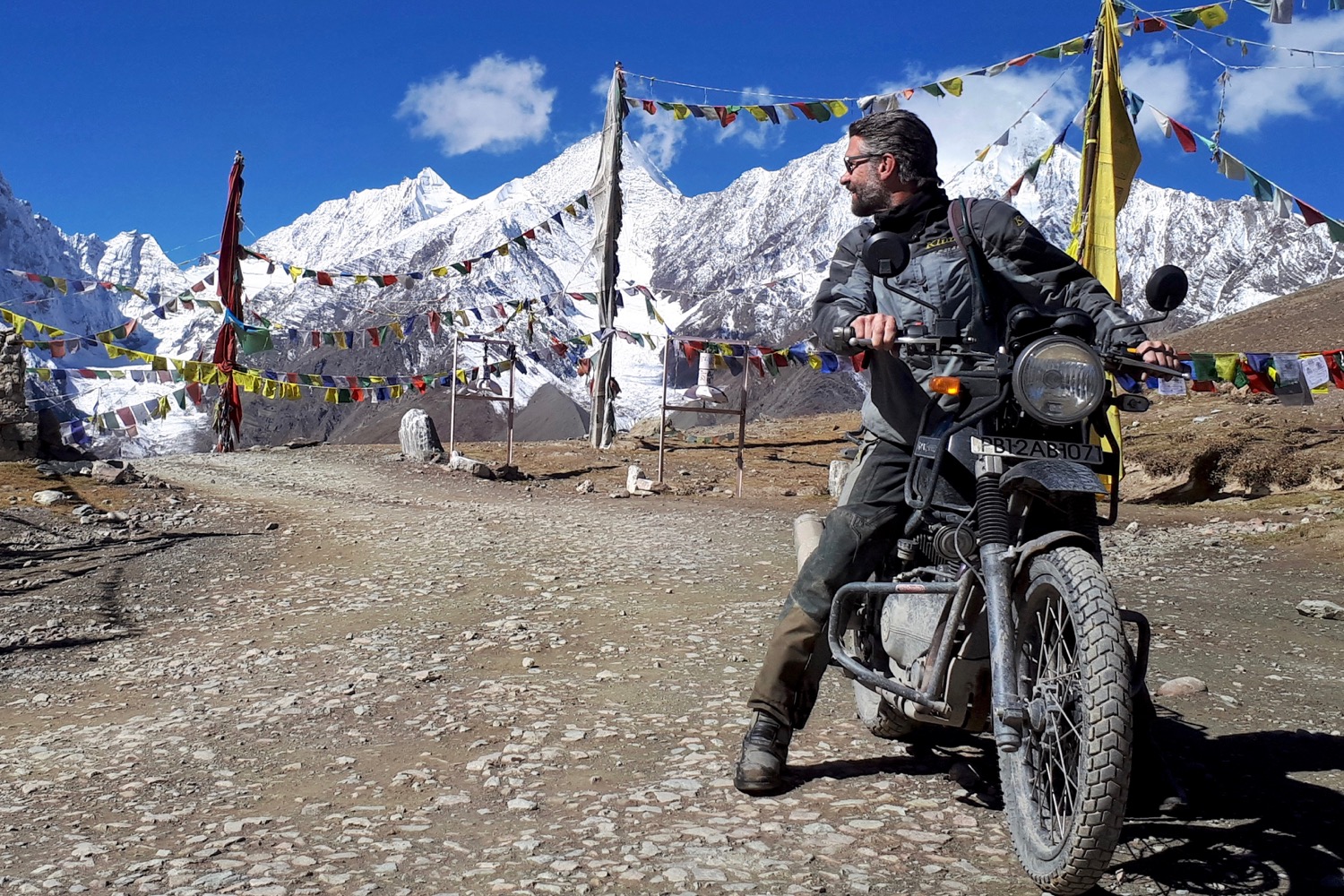
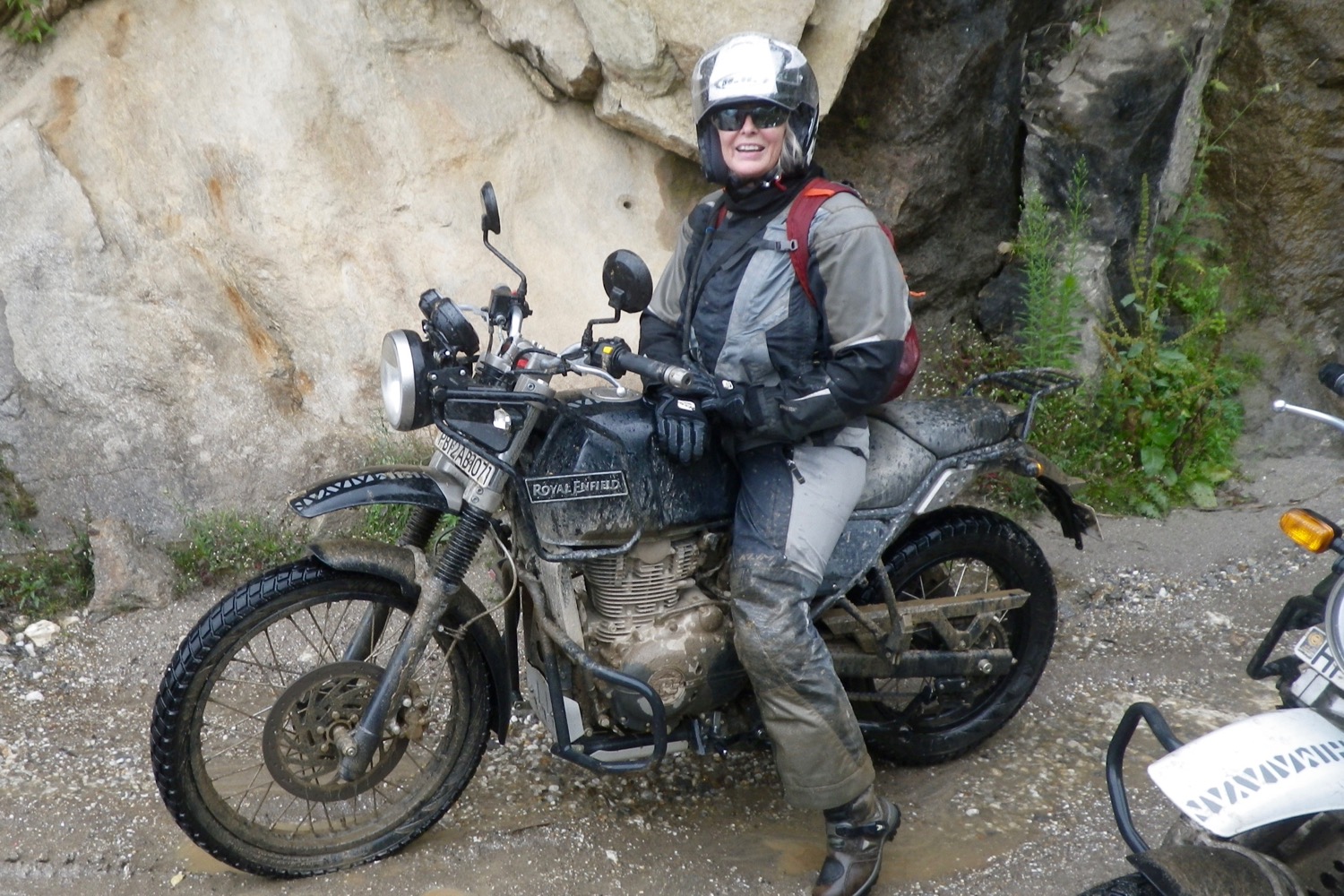
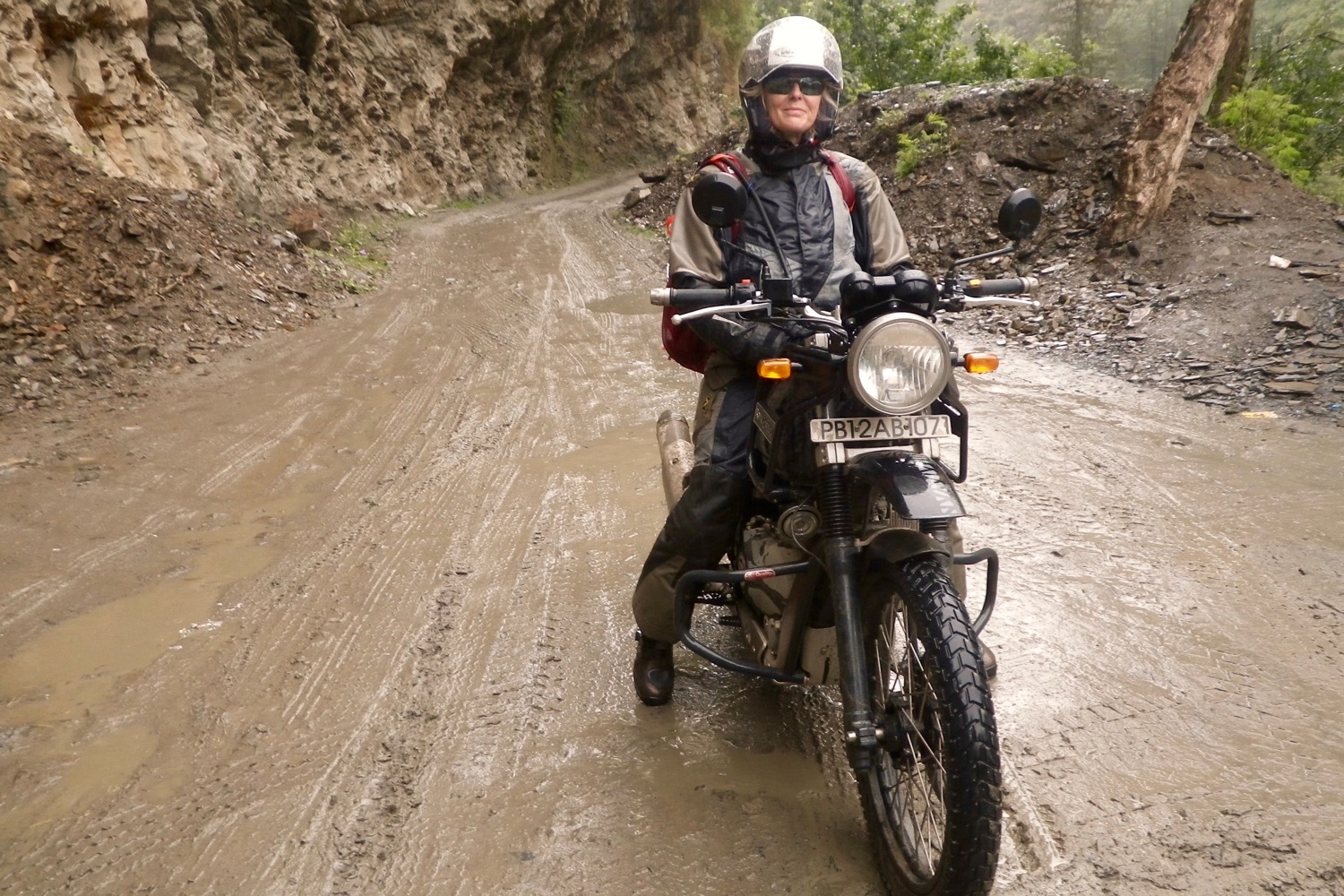
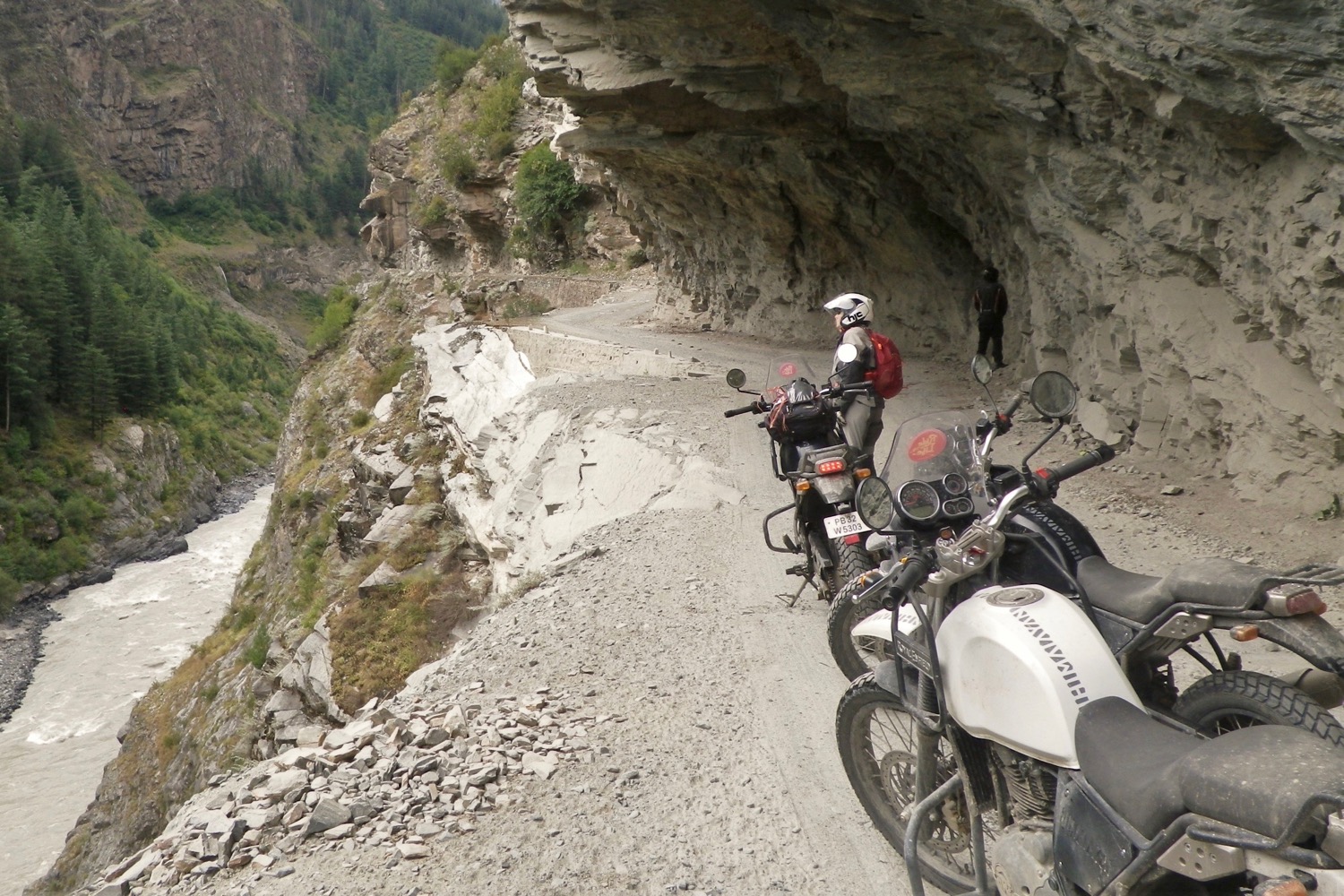
The climb ahead of us resembled something I’ve encountered many times trail riding in Wales or Devon; a steep, rocky ascent of loose stones with mud, water and a thought-provoking drop to one side. The difference here was that the drop to my left was at least 1000′ straight down to a distant river, and the tyres on our bikes didn’t look like they could grip their way out of a wet paper bag. Despite that, the Enfields bounded up the slope like a Himalayan oryx, quite an achievement considering that some in our tour party had little off-road riding experience.

himsdd- - 9
himspex

The new Himalayan is the first completely new bike from Indian Royal Enfield company. The well-known Bullet and its many derivatives can trace their ancestry back to the original British-built thumper from the 1950s. Danielle and I have done several Bullet tours in Rajasthan, Arunachal Pradesh, Ladakh and Nepal. It’s a fantastic bike but when the terrain gets really rough and the riding technical, the lack of ground clearance and poor ergonomics on the pegs expose its limitations.

himsdd- - 16


In contrast the Himalayan has been designed to be ridden sitting or standing. It has much better ground clearance of 8.6” (220mm) but a modest seat height of just 31.5″ (800mm); which potentially opens the bike out to many less tall riders. It was also designed to be comfortable on the road over long distances, handle  the twisties (lots of these in the Himalayas) and have a fuel range of over 250 miles from the 14-litre tank, (sounds like at least 70mpg). If this sounds like an adventure bike as opposed to another adventure-styled bike, then you’d be right. What it’s not really suited to is cruising all day at European motorway speeds, but then India isn’t known for this sort of riding. In India in 2017 it sells for 155,000 INR, or under £1900. When it arrives, UK efi Euro 4 prices are quoted at £3999. Below, a 2018 US review of the efi model.

himsdd- - 18

Styling
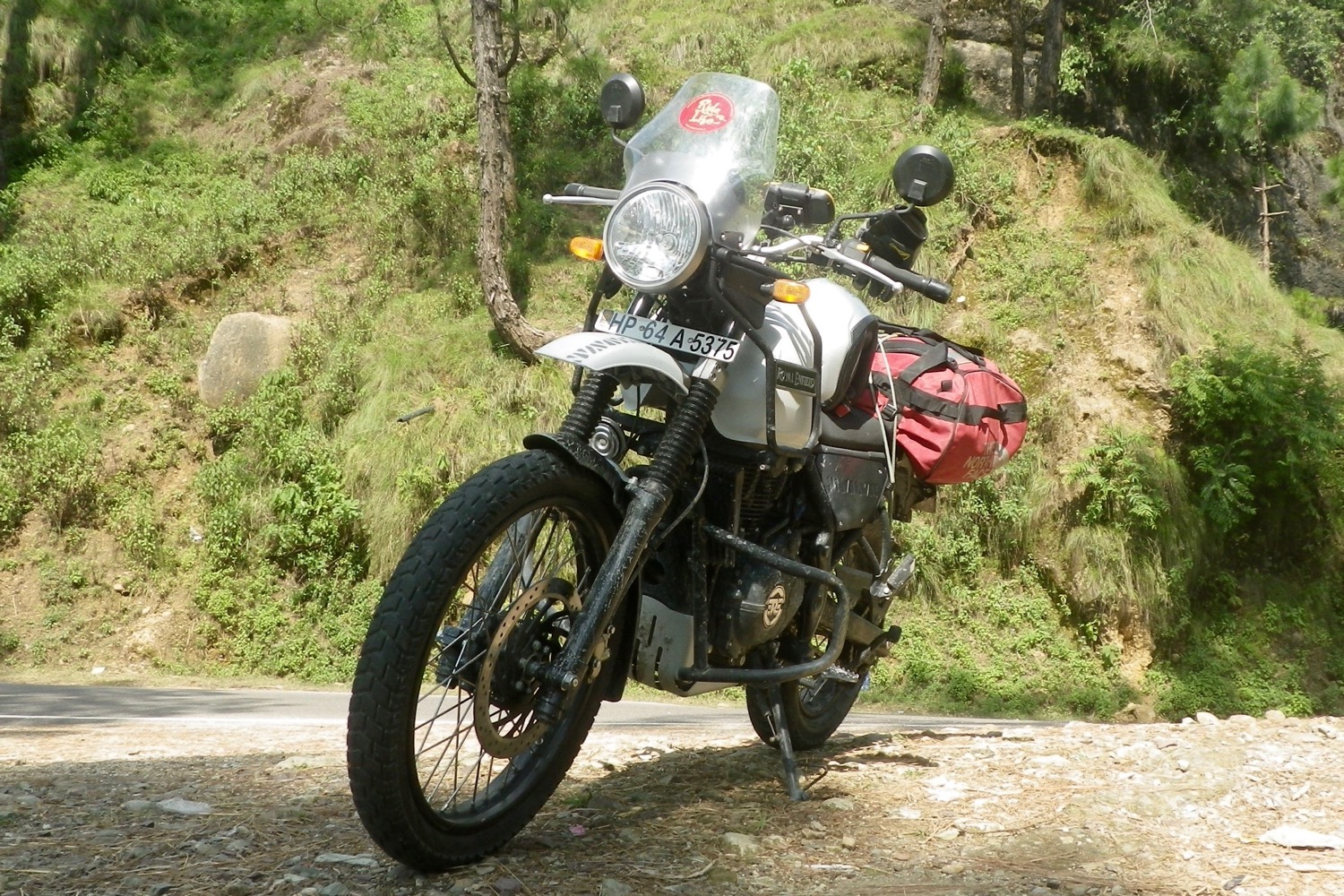
The look is a bit 1980s, recalling the Suzuki DR400 or DR600, although the headlight and instrument cluster are mounted on the frame, not the forks. There’s an element of BMW F650GS Dakar in there too.
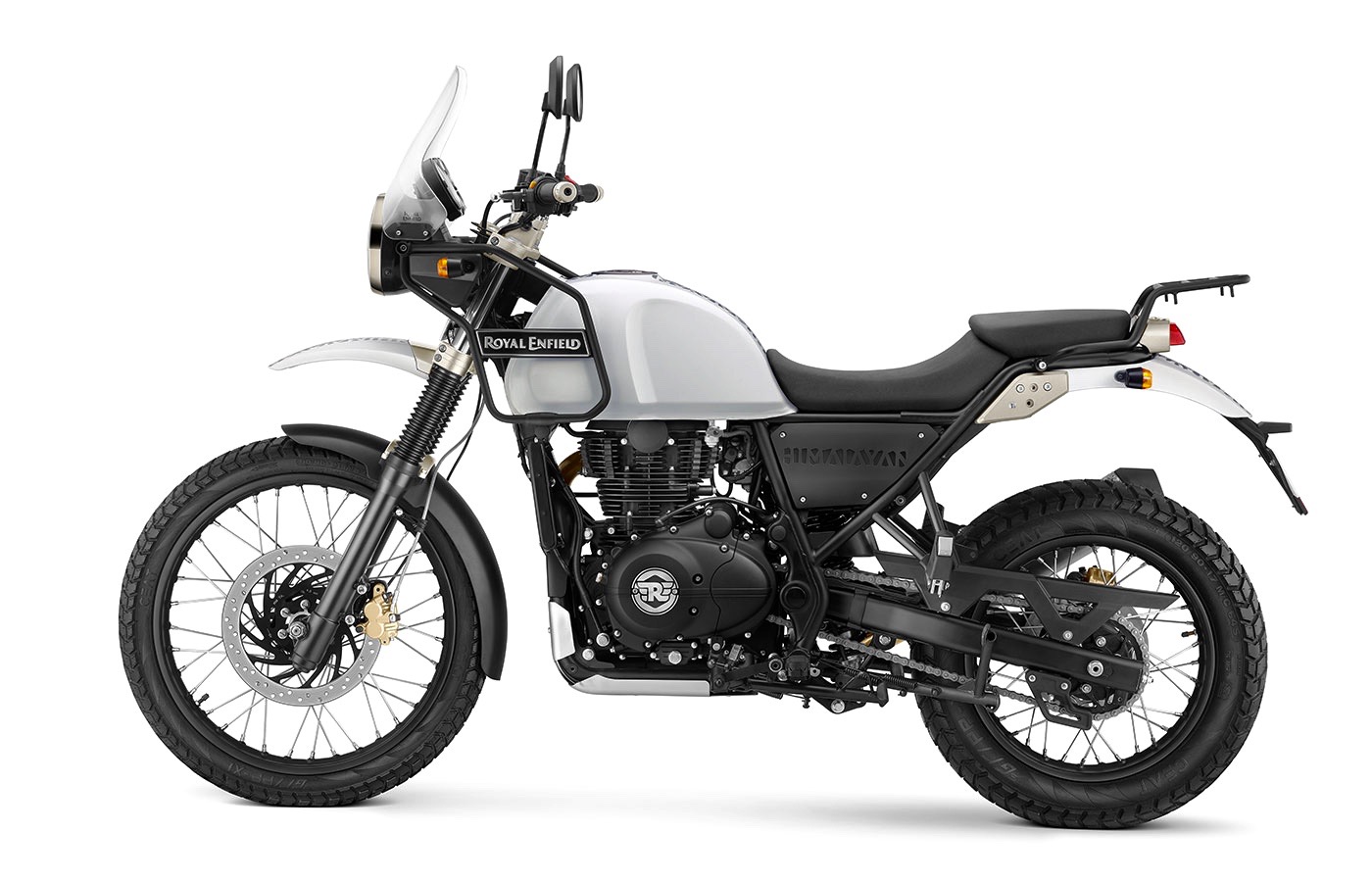
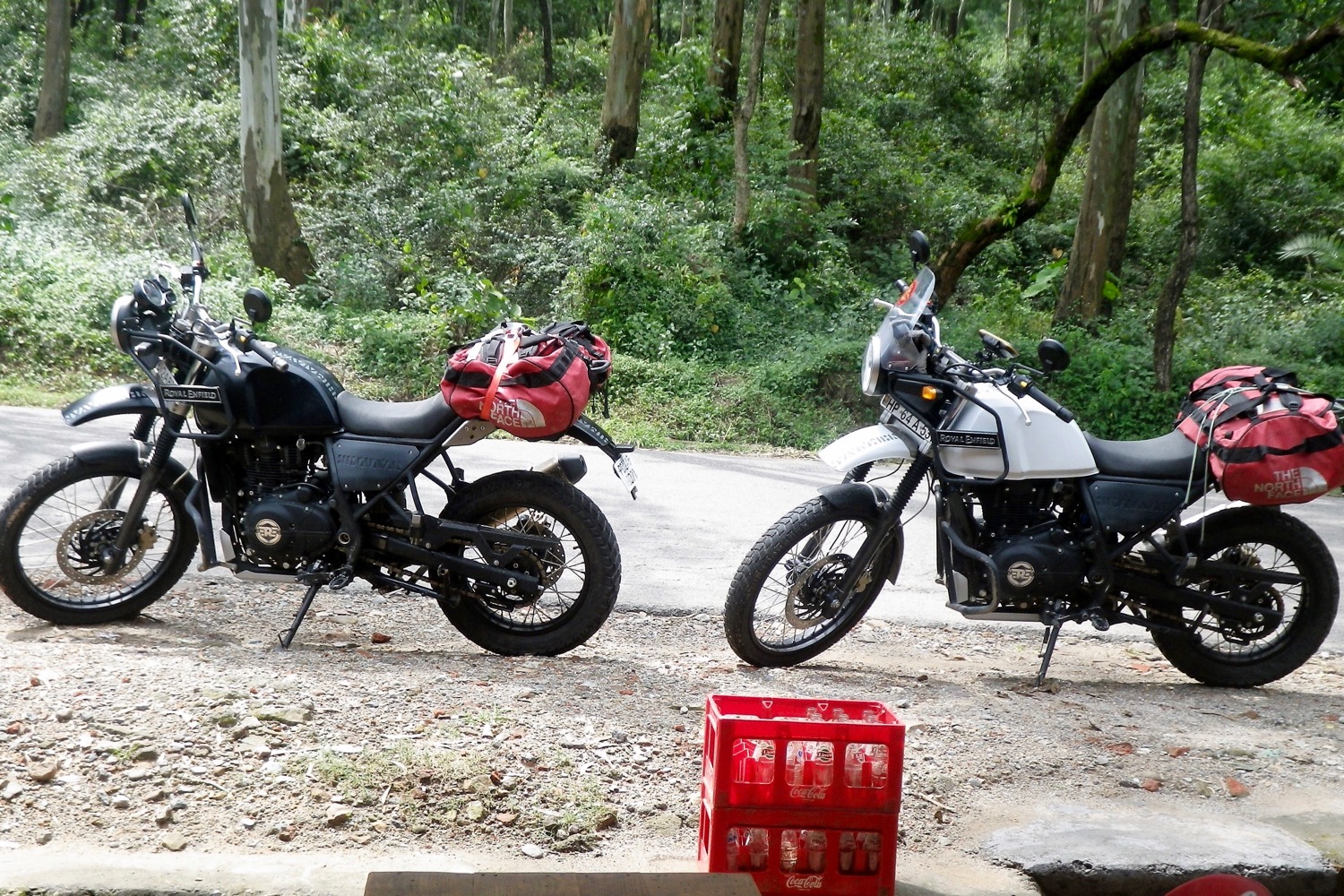
For me the greatest impression was one of practicality and quality, from the solid paint finish to the alluringly cryptic HIMALAYAN logos on the tank, mudguards and side panels, as well as the large LED tail light. It comes in appropriately mountainous Granite or Snow (black or white to you and me) and looks purposeful in either.

himsdd- - 10
himsdd- - 11

Engine
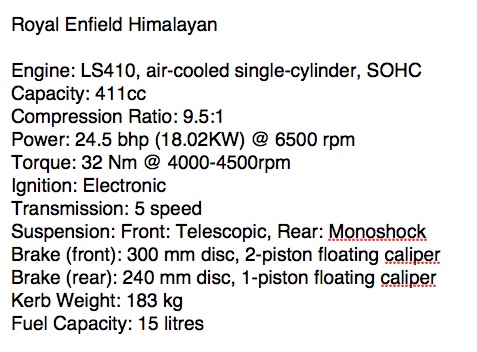
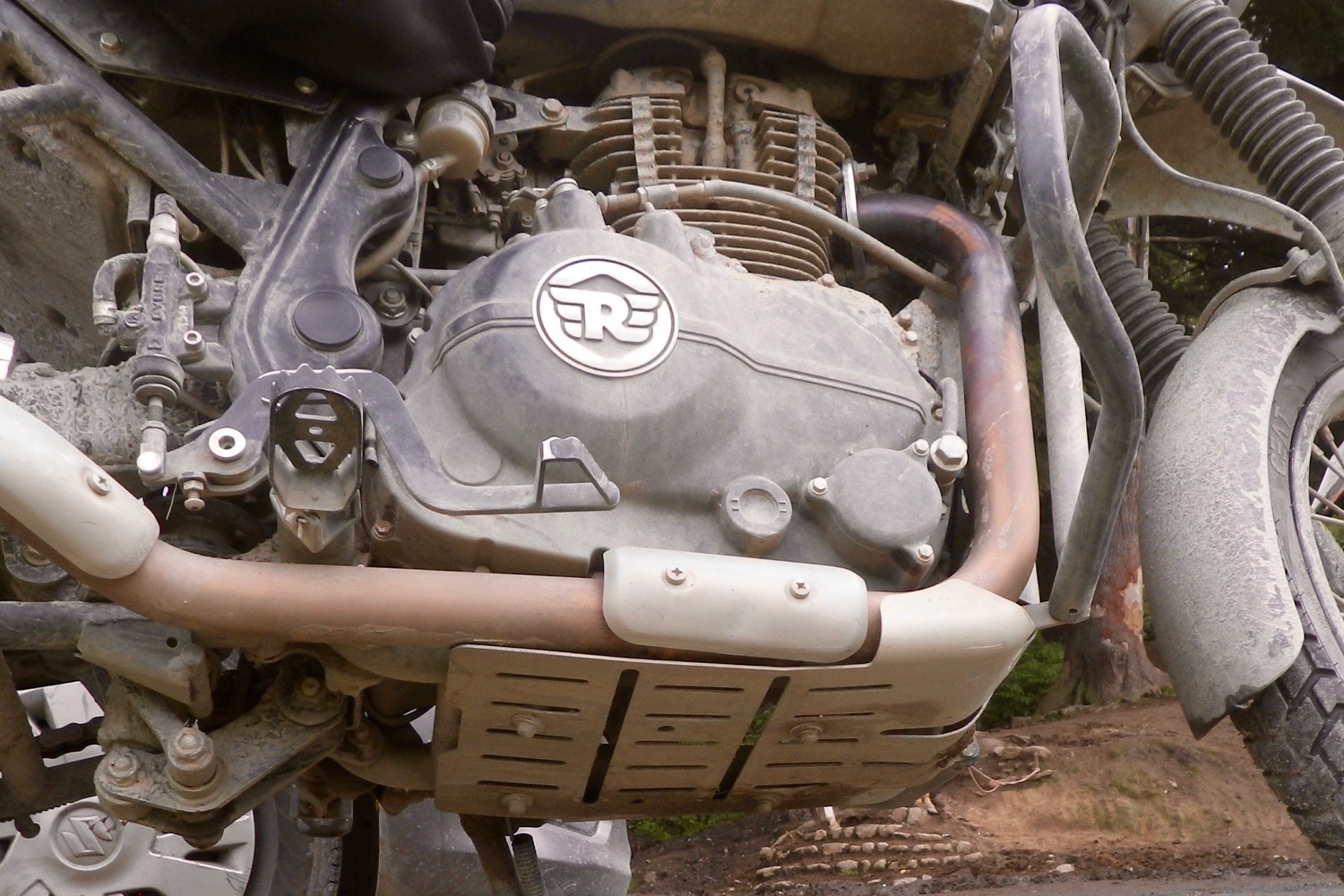
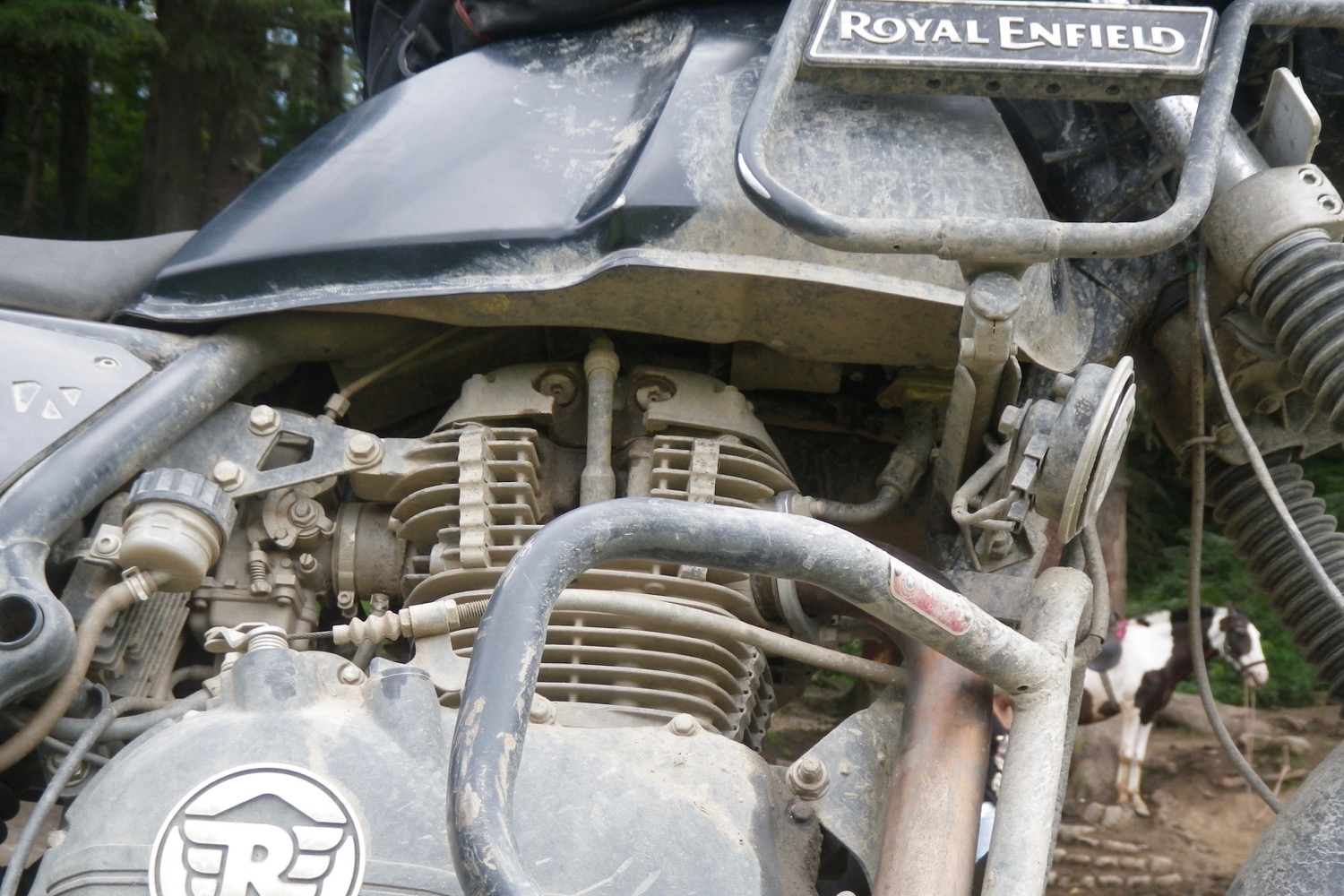
The engine is a long-stroke 411-cc air and oil-cooled lump with a balancer shaft. The word ‘lump’ being appropriate, as the crankcases appear to be off a much larger bike; maybe they intend to produce a large capacity version in the future?
Peak horsepower is claimed to be 24.5 bhp, about the same as the 2017 Honda CRF250L, but there’s 50% more torque, and crucially it’s all delivered at much lower revs.

Coming off my 70-bhp KTM 690R (left) and a R1200GS, I didn’t find the lack of power a problem. The bottom-end torque and smooth power delivery made that modest power very usable. The only glitch with the engine was a flat spot around 4000rpm, most noticeable at altitude (we rode up to 16,000ft/4870m on this trip). You soon learn to ride round it and I suspect a good engine tuner could sort the carburetted version we rode. The fuel-injected version to be sold both in India and globally is bound to  be better in this respect.
On the left of the front down-tube is a good-sized oil cooler, and there’s an all-stainless exhaust with a nicely shaped, cat-free silencer. I imagine the UK version will need a bulky cat. At the other end is a well-sealed airbox with a high air intake and a large, cylindrical dry-element filter.
Top speed is claimed to be 134kph or about 84mph, but the nature of the terrain we rode meant the most I saw was just under 100kph. It’s a long old way down.
Some riders thought the 5-speed gearbox was a little stiff, but on our bikes the clutch cable had been routed around the outside of the aftermarket crash bars causing a bit of cable drag.

himsdd- - 25

Frame
The frame is a conventional steel-tube cradle designed by Harris Performance (who Enfield bought out in 2015) and finished in satin black. The rear end is monoshock and perhaps the only unconventional feature are the subframes either side of the tank which support the headlight and instruments. Each includes a series of threaded mounts to attach extra tanks, luggage carriers or an aftermarket fairing.

himroot
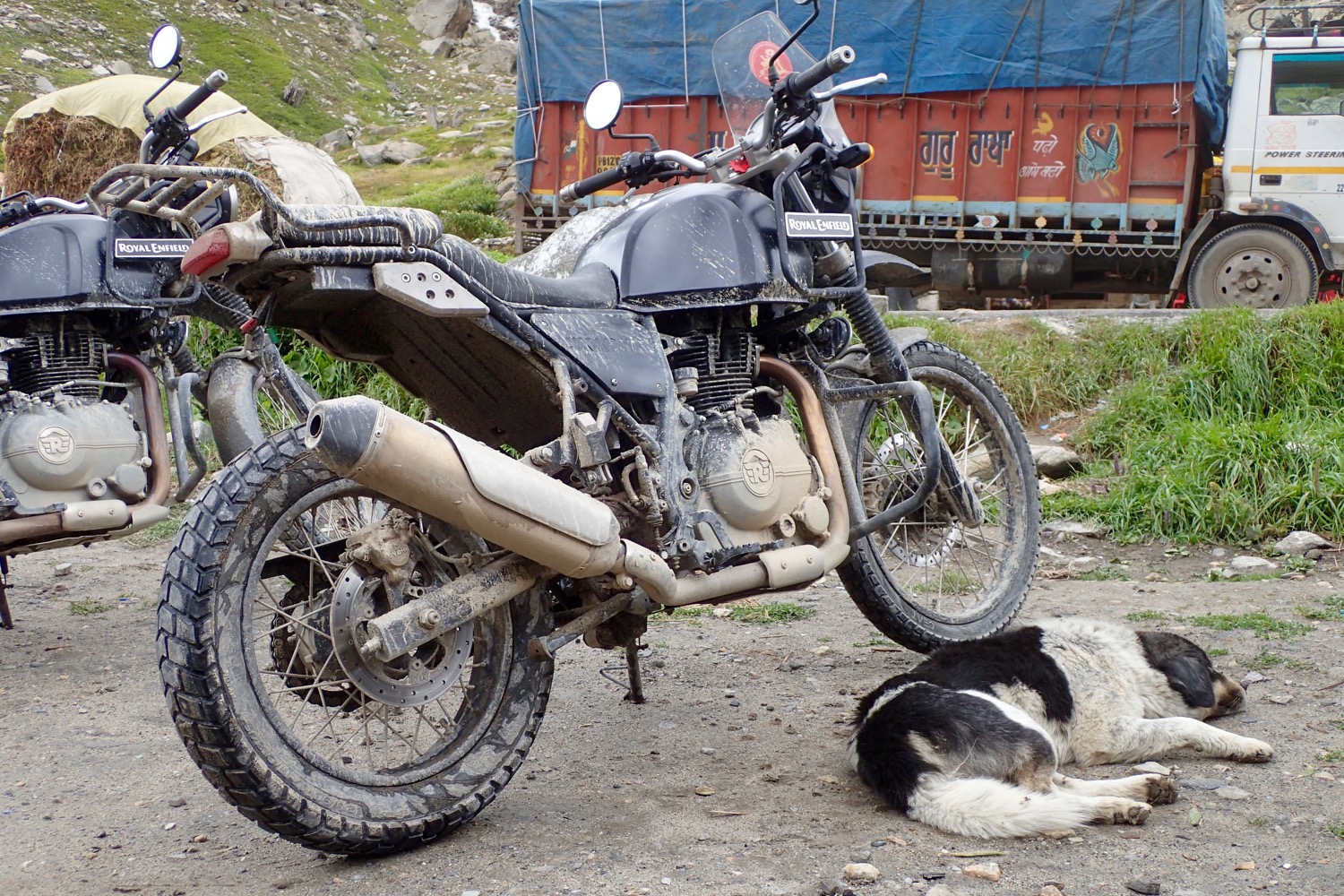
The aluminium bash plate looks a bit flimsy, but proved to be up to the job as the clearance was generous. Surprisingly, hand guards are not standard, though our rental bikes did have poorly fitted aftermarket crash bars which clanged over bigger bumps. I cured this by jamming a wooden wedge into the mounting assembly. You also get sturdy centre- and side-stands which tuck out of the way.

OLYMPUS DIGITAL CAMERA
himsdd- - 8

Wheels and tyres
Wheels are 21” front and a 120/90 section 17” at the rear on black alloy rims shod with Indian Ceat Gripp XL trail tyres which resemble Dunlop Trailmaxs. On rocks, gravel and dry mud, they worked well enough if pressures were dropped to 20 psi.
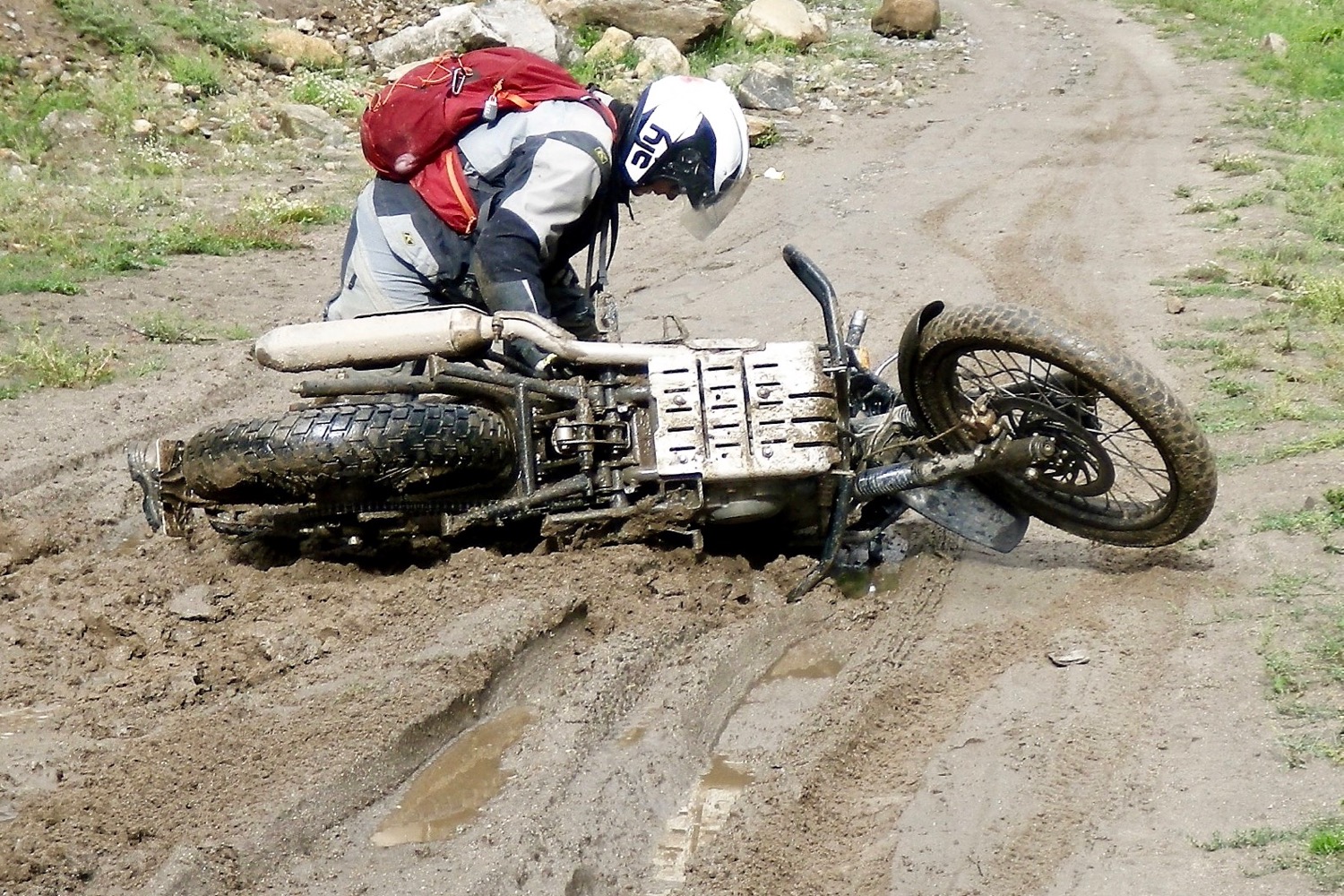
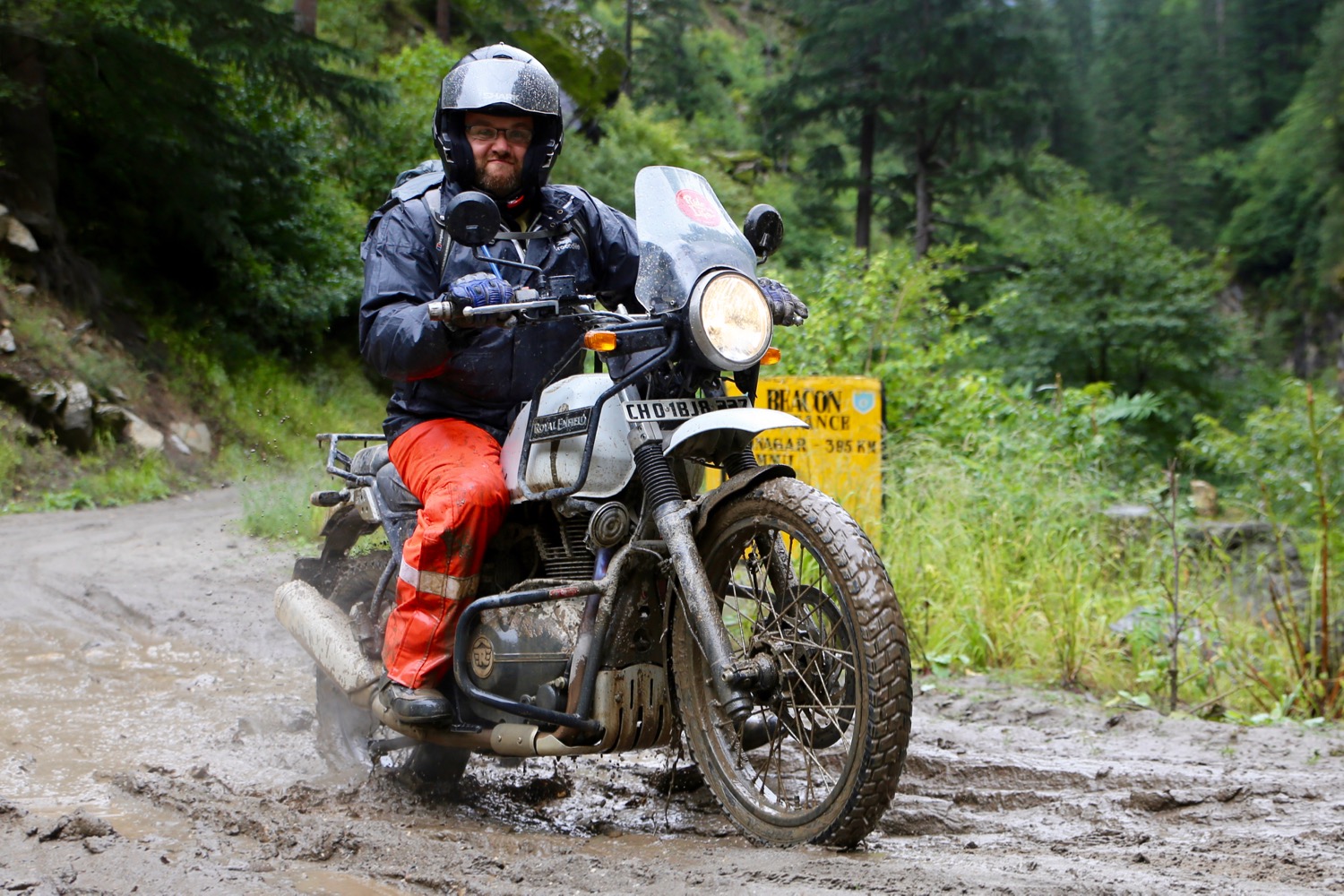
On muddy ruts and wet grass you just have to take it easy or you’ll end up as on the right, but they’re helped by the gentle power delivery; it’s almost like having traction control. The Himalayan does not, of course, have traction control, ABS (in India at least), power modes, suspension modes or any a la modes, but manages fine without them.

Suspension and brakes
Initially the forks (180mm) felt very softly sprung; far more trail bike than my hard-charging 690 enduro. However, the springing and damping were well matched making riding over rocks very easy; the bike always went where it was pointed. There’s no adjustment on the 200-mm-travel rear shock except preload. The brakes look like Brembo copies with braided, stainless brake lines. At the speeds attained they worked for me.

himsdd- - 20

Ergonomics
If the bike were mine, I’d fit one-inch bar risers, but then I am 6’ 1” and fit risers to all my dirt bikes. The 31.5-inch seat is low for an off roader which makes standing up a bit more of an effort, but was comfortable enough for all-day riding. Before the trip Dan (5’ 6”)  had some concerns that the 182-kilo Himalayan would be too tall and heavy but she easily got both feet on the ground and loved the bike too.
The bike is fitted with a small screen to help reduce the wind pressure at speed (or at least the speeds we reached on this trip). Dan removed hers to improve visibility on dirt roads. It can make a real difference to confidence.

himsdd- - 17

Instruments
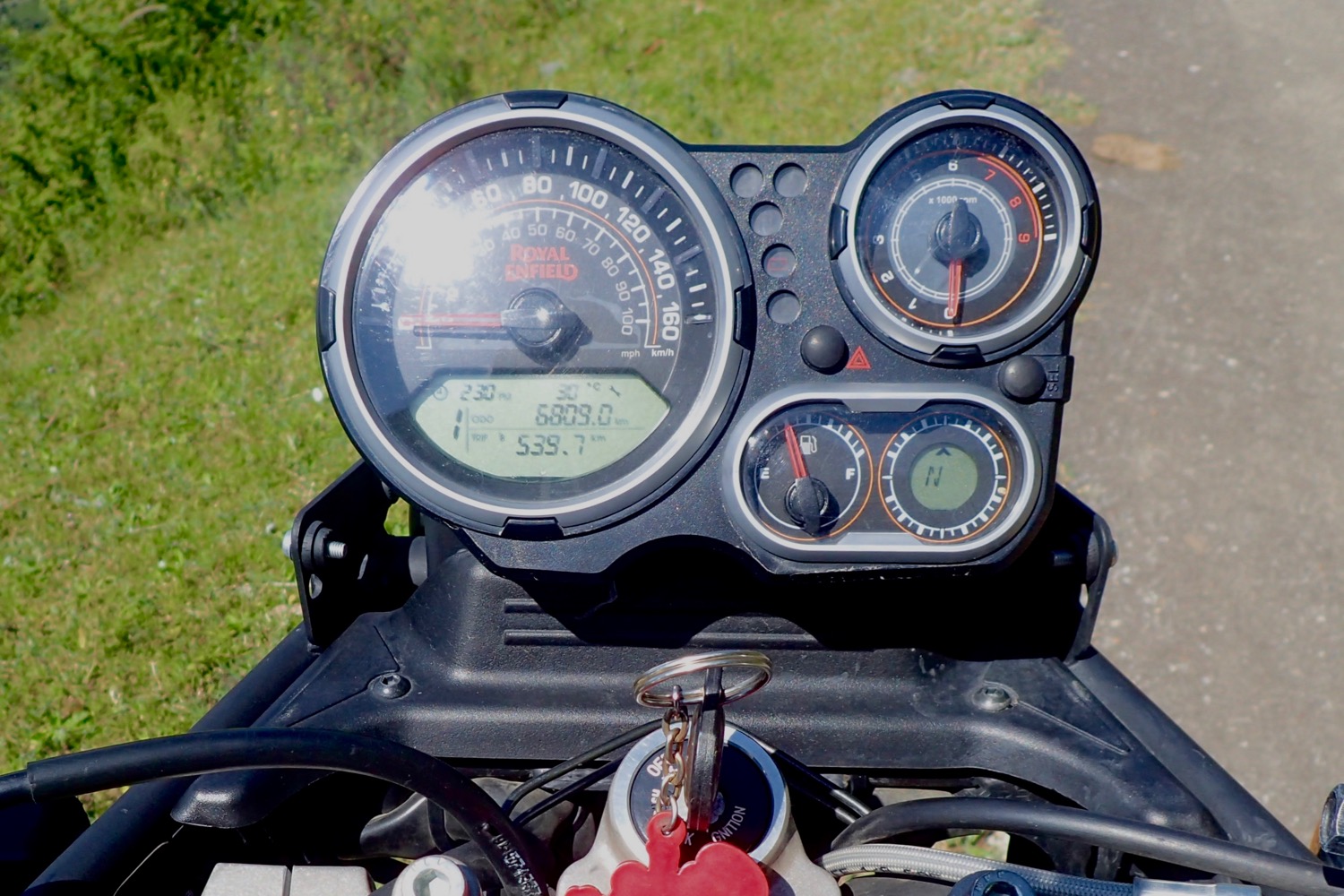
The analogue instruments have enough of the information and features you’d expect of a modern bike, plus a couple you wouldn’t: oil temperature and an electronic compass. I love the latter idea; in a country where fitted GPS is rare, it helps affirm you’re heading in the right direction.

Luggage attachment
Besides the tank frames the bike also comes with a small rear rack and several points to attach pannier frames. Some people complained the upswept exhaust made mounting luggage more difficult than on a Bullet, but if they stall in a river at least it won’t fill with water.

Maintenance
Compared to most modern bikes the Himalayan is basic, but everything appears readily accessible with a comprehensive tool kit sits under the lockable back seat. According to the service interval, the 2.6 litres of oil needs changing every 6000 miles or 10,000km.

Summary
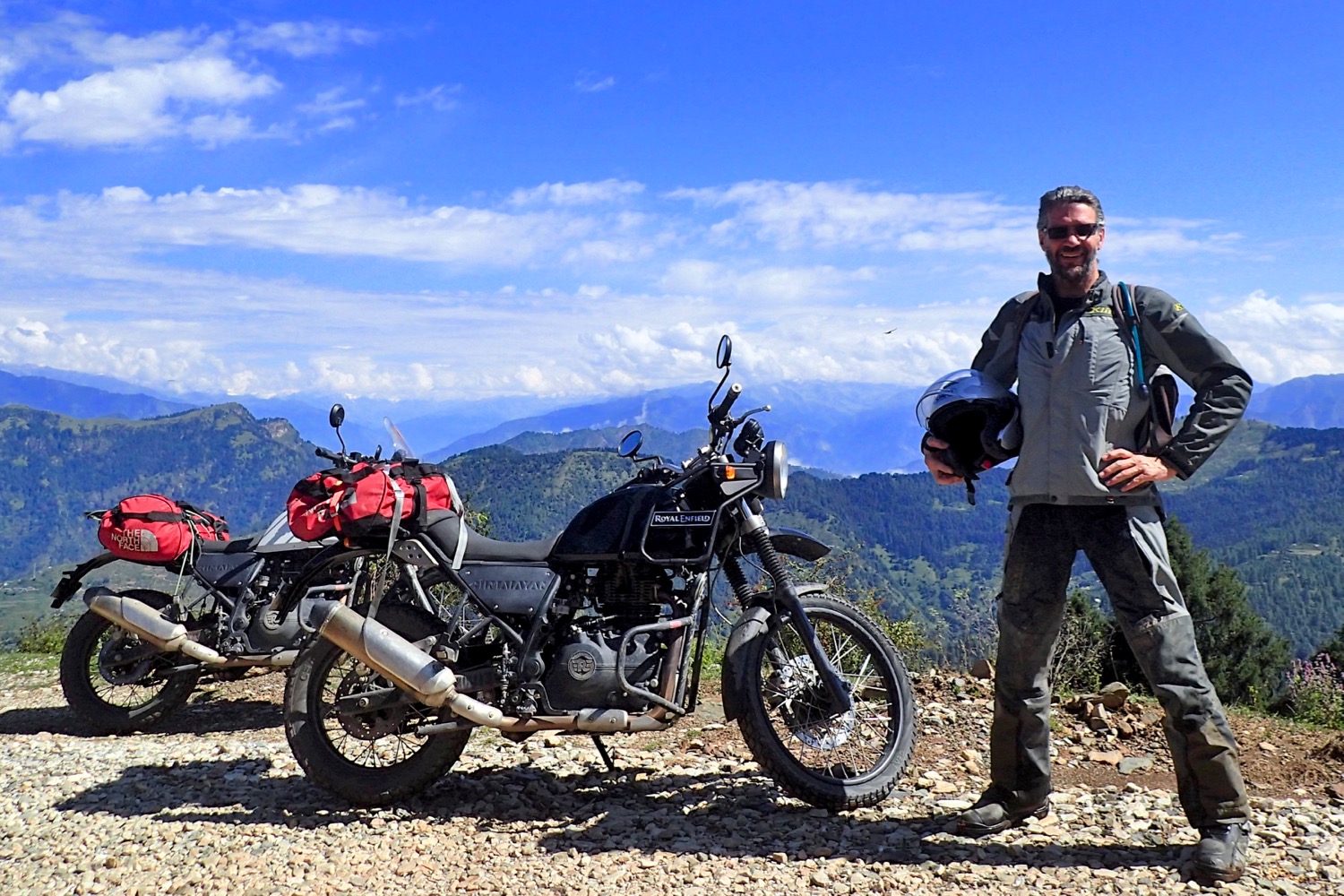
I’ve ridden all sorts of bikes in all sorts of places and am convinced Royal Enfield have done something special with the Himalayan. There’ve been a few teething troubles, as you’d expect for a new design from any manufacturer, but Royal Enfield have been responsive and you’d hope by the time we get the Himalayan in the UK, these will have been sorted.

himsdd- - 24


The suitability of the bike for India and specifically the Himalayas is undeniable, but would it be suitable elsewhere?
After a month and a few thousand kilometres in India, I’ve no doubt that given a set of better tyres it would be able to tackle the majority of the UK trails I regularly ride. At over 180 kilos it is significantly heavier than other trail bikes of this capacity, even a KTM 690R or BMW XChallenge, but the low seat combined with the soft suspension and progressive power delivery make it very easy to ride.
Would I enter it in an enduro? Only if I felt like winding people up. Would I ride the Trans-Am Trail on it? Absolutely. Round the World? Maybe, once I assessed long-distance, all-day road comfort and reliability. Is it fun? Yes!

tik
• General off-road rideability
• Ergonomics
• Functional looks
• Luggage attachment points
• Compass
cros
• Flat spot at altitude (carb model)
• Lack of top-end power (but yet to test above 60 mph)
• Lack of hand guards
• Wretched aftermarket crash bars
• Will cost twice as much in the UK
 

XSR 700 Scrambler – ready for Morocco

XSR 700 Scrambler index page

Just flown back from a quick tour in Morocco and setting up the XSR for departure in a couple of days. It was handy pre-running my routes last week; despite recent heavy rains which has seen some places re-mudding their adobe roofs, all my tracks with the exception of Jebel Sarhro were in pretty good nick, including MH19 Trans Atlas which we managed to cram in on the last day.

Getting back on my XSR after riding XR250s with 70,000kms on the clock, the Yamaha feels amazingly taut. On the weekend I nipped down to Surrey to buy an XR400 for Algeria (more about that later).

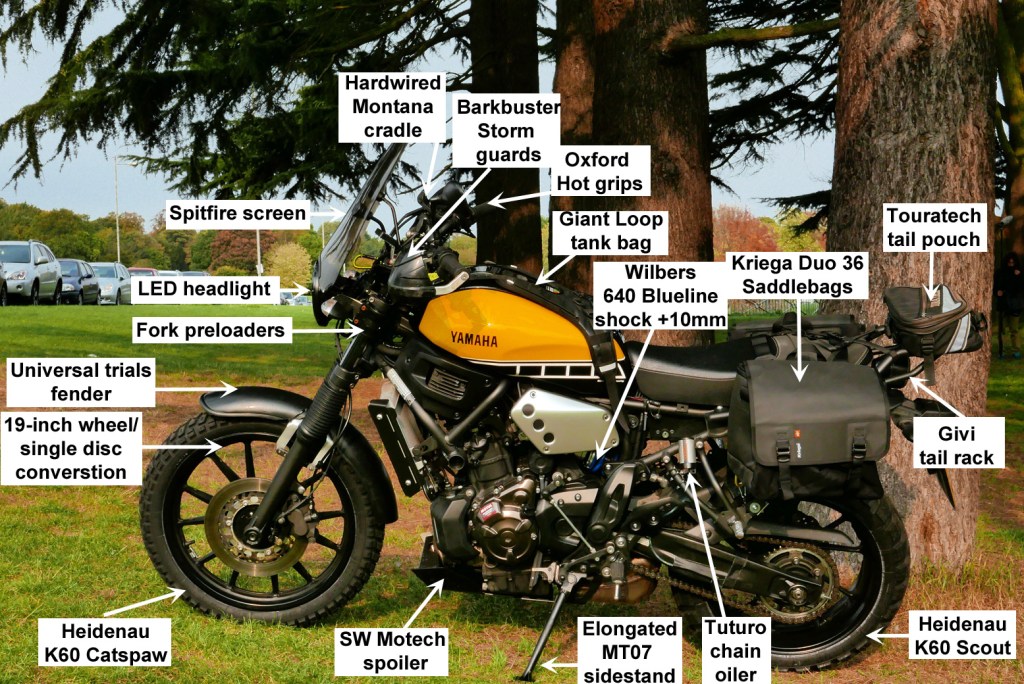
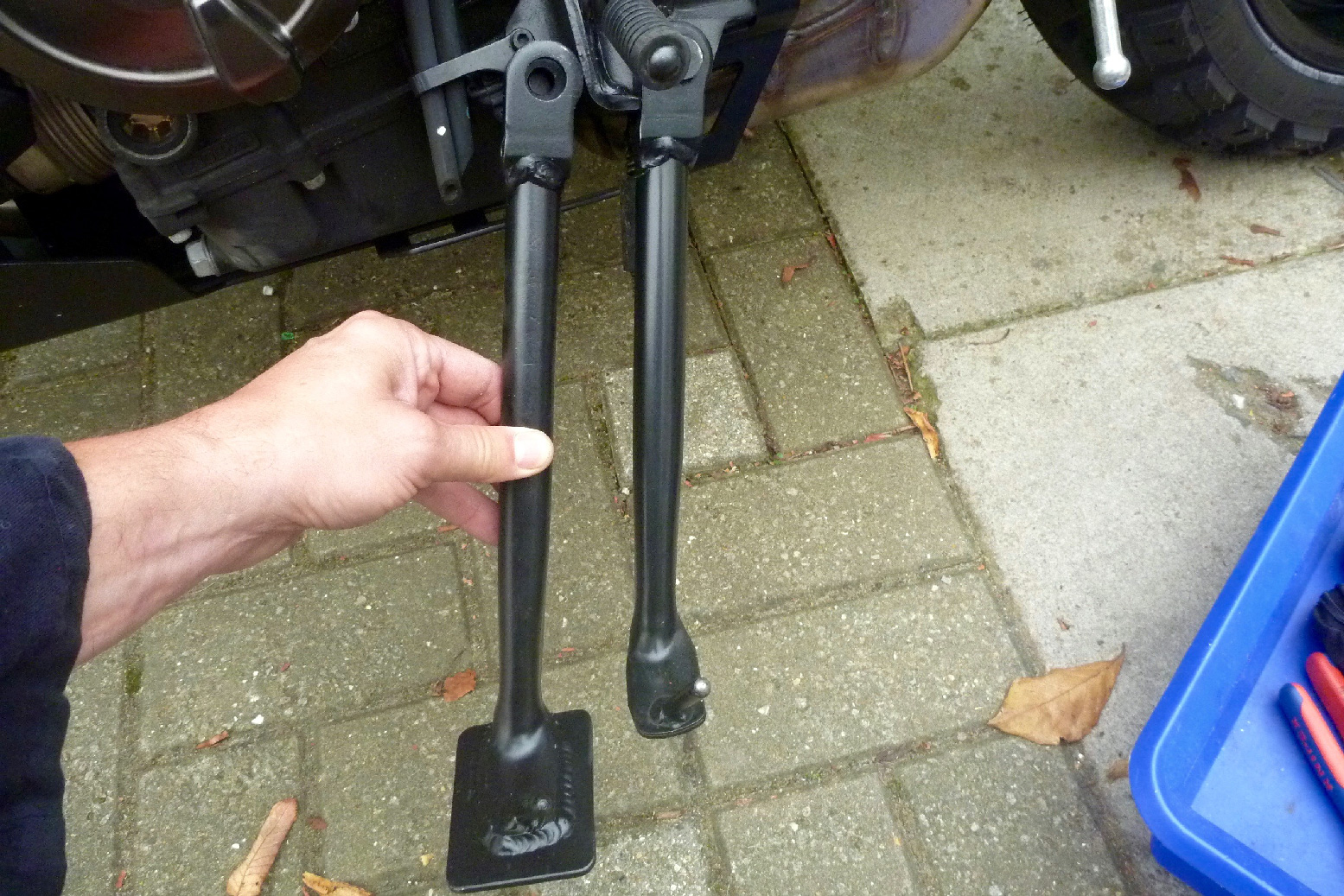
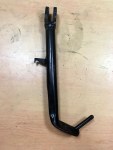
All that needed doing to the XScrambleR was fitting an elongated and bigfooted sidestand adapted from an MT-07 stick (£20 used on ebay + £25 labour). A seamless job by my weldy mate, Jon. That took 10 minutes and a wall to lean on.
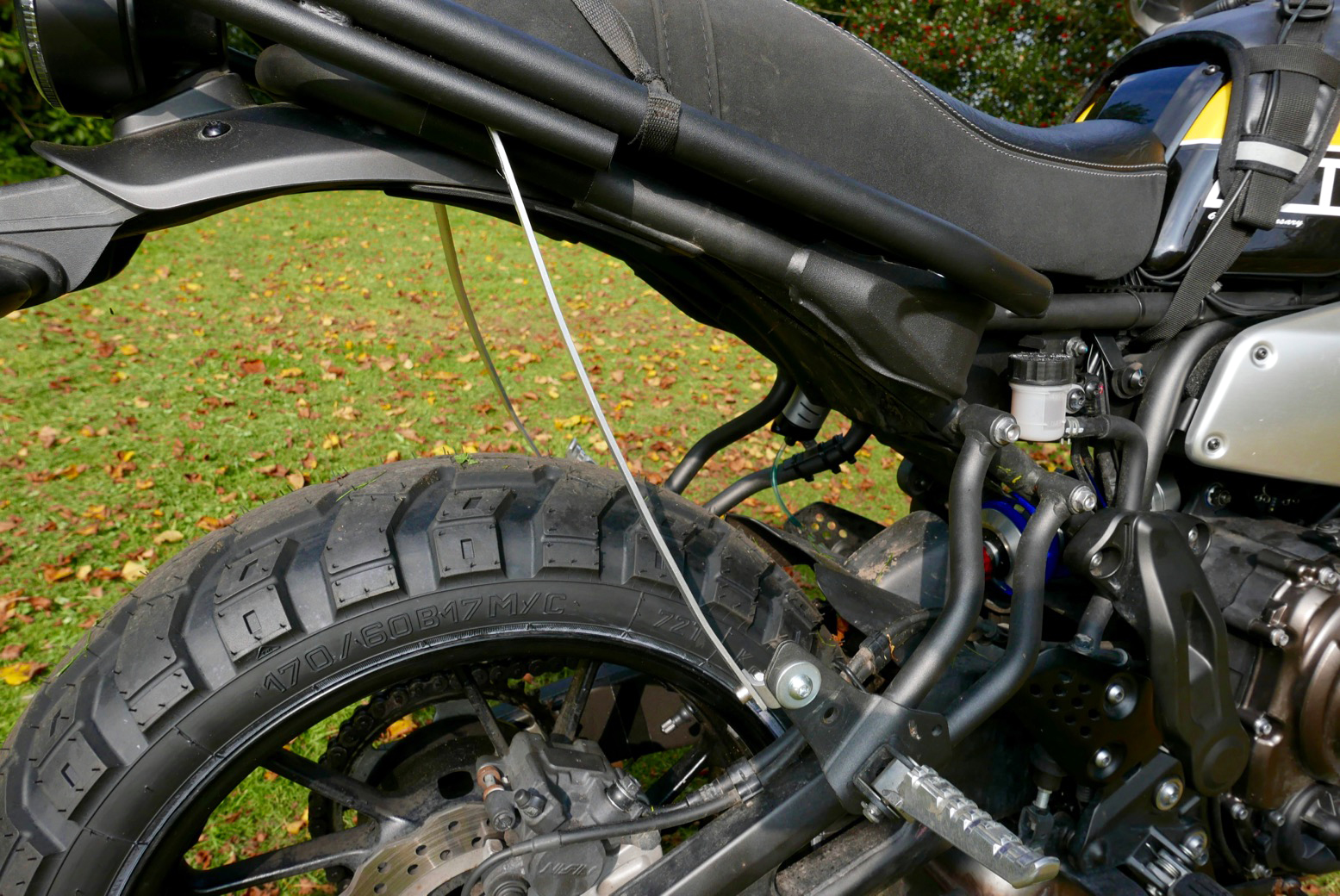
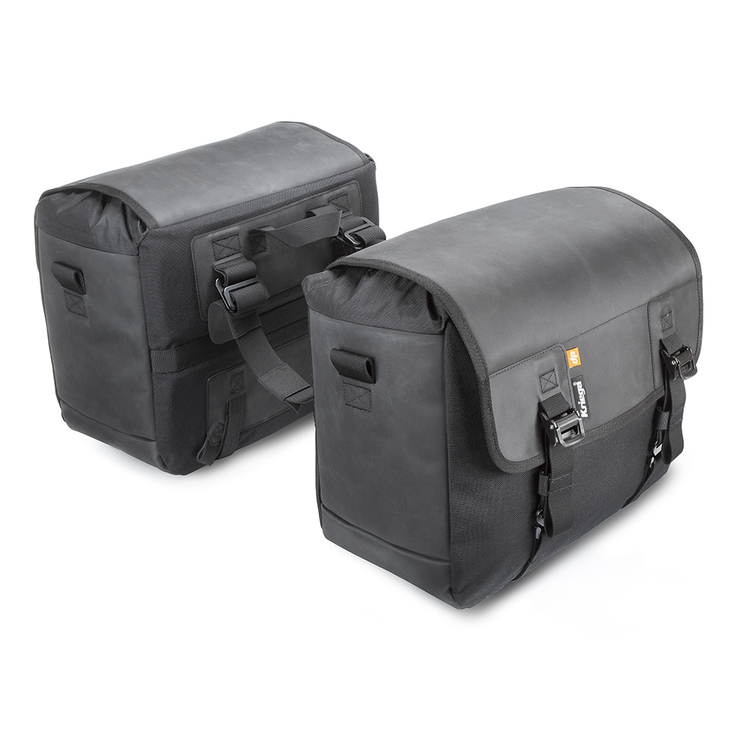
Next, see how the Kriega Duo 36 Saddlebags fit over the back. My pillion-to-rack spars are better than nothing but aren’t brilliant at limiting swing into the wheel; they’re too high and forward. A proper rack is best, but a bit of stick and zip tie from pillion-to-indicator may do the job.

cbxender

And so here it is, another AMH projectile ready for three laps of Morocco and a dash home. Looking forward to it, just as long as it handles OK on the dirt. I’m pretty sure it won’t be much worse than the heavier CB500X Rally Raider from 2015 (right).

XSR 700 Scrambler – final mods

XSR 700 Scrambler front page

My XScrambleR sets off in a month for Morocco and, bar some luggage, is ready to go. Don’t think I’ve ever had a bike ready so far in advance.

Using some left-over or unused components, I fitted a Tuturo Chain oiler which I still think is the simplest and most effective way of getting this messy but necessary job done. It is, of course, especially handy on bikes without a centre stand where hand oiling the chain is a particular faff.

kriega-saddlebags-duo36

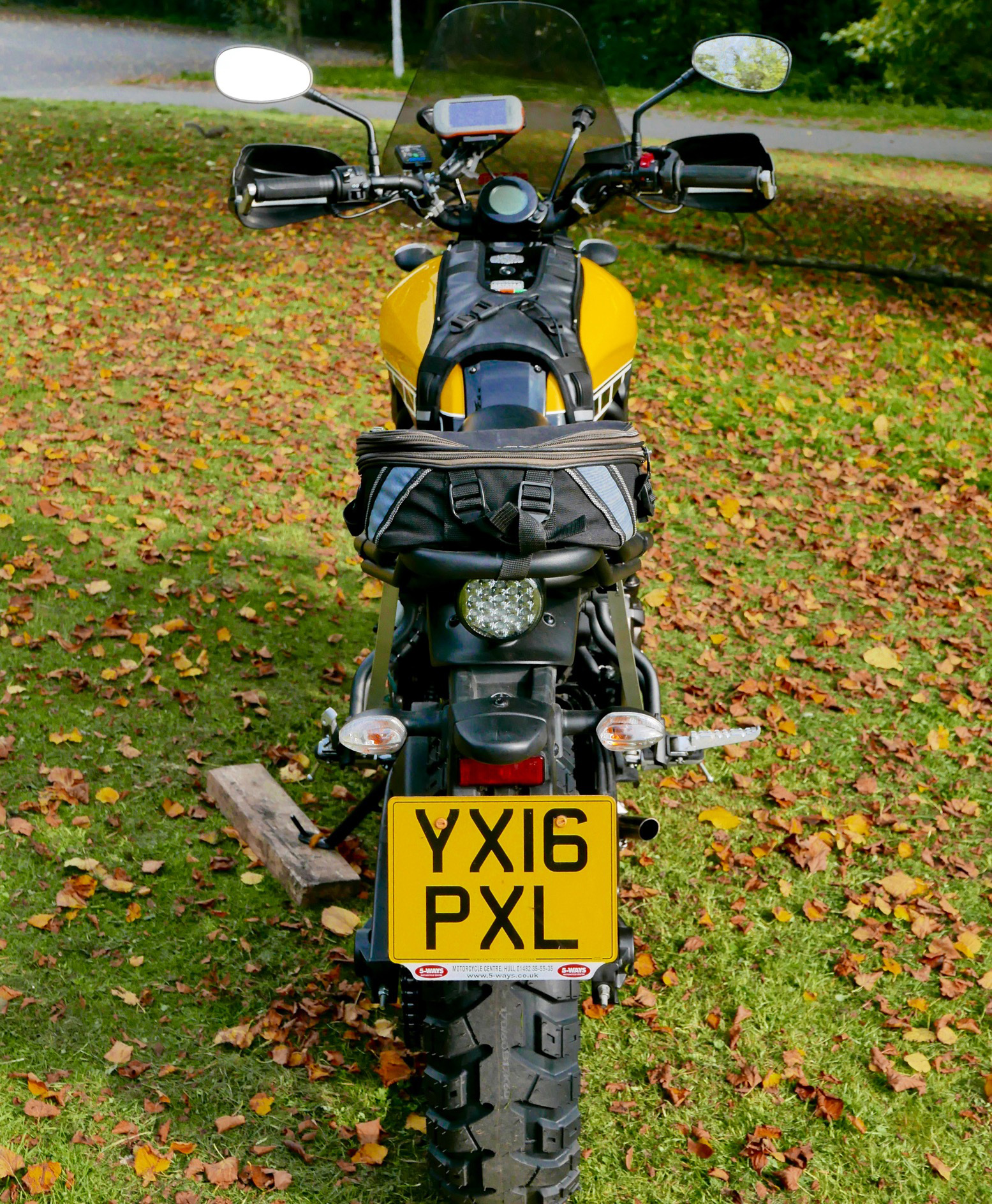
For luggage I’m going to use some simple Kriega Duo 36 Throwovers again, as I did last year on the KLX in Baja. The great thing with the XSR’s underpipe is that it’s right out of the way of luggage but bags still need something to stop them swinging into the wheel and chain. In the spirit of the Chouinard RURP, I’ve come up with RURTS (Realised Ultimate Reality Throwover Stay) an ultra-minimal side rack. The weight is taken over the saddle; the slim stays help locate the bags. If their reality ultimately turns out to be too realised, another stay from pillion pegs to the rear flashers will fix that. I’m sure they sell broomsticks in Morocco.

Once the holes were drilled the RURTS were another 10-minute roadside job, but lacking anywhere better than the kerb to work, I weakened and got my LBS to do the rest of the heavy jobs.

xsrshok

Shock
The new wheel on the front has raised the bike 30mm, and the fork preloaders may help it stay that way. I was looking for a way to achieve a bit less than that on the back – partly with a taller tyre and partly with a longer shock.
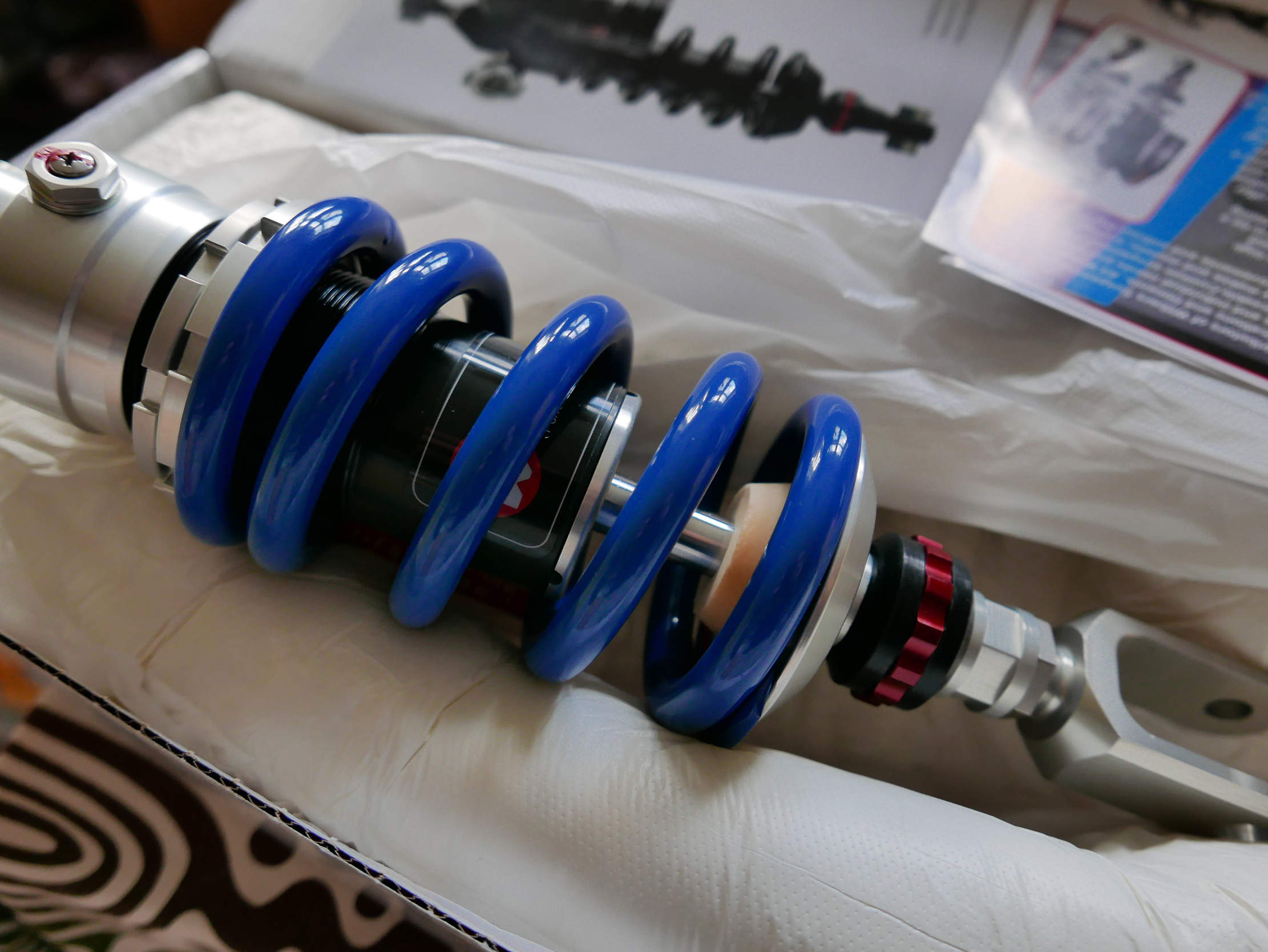
The OE shock is basic; it’s fine for very normal riding but only has preload rings. They are found used on ebay in their zillions. I preloaded it on the first run, but found it lacked any rebound damping to control it.


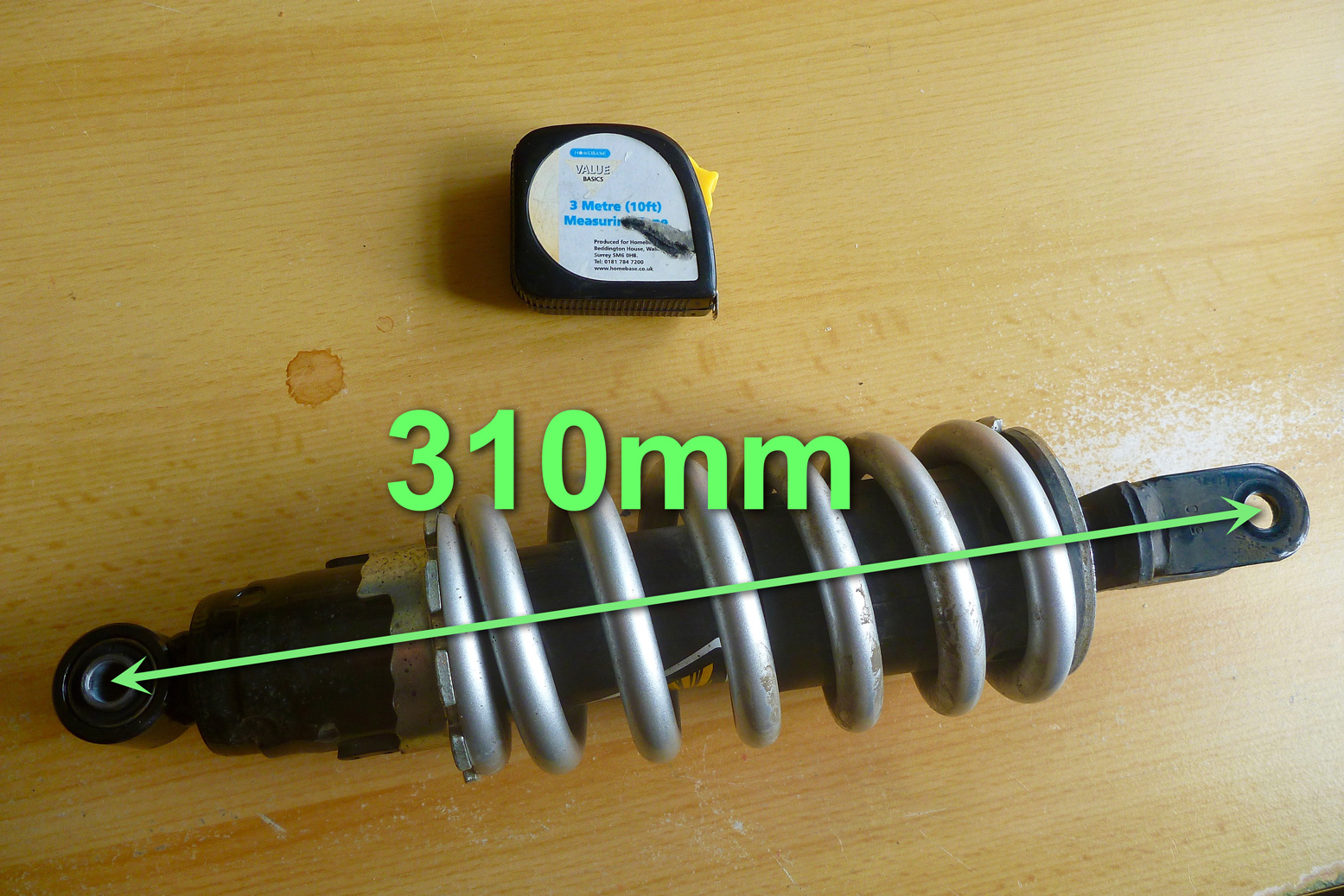
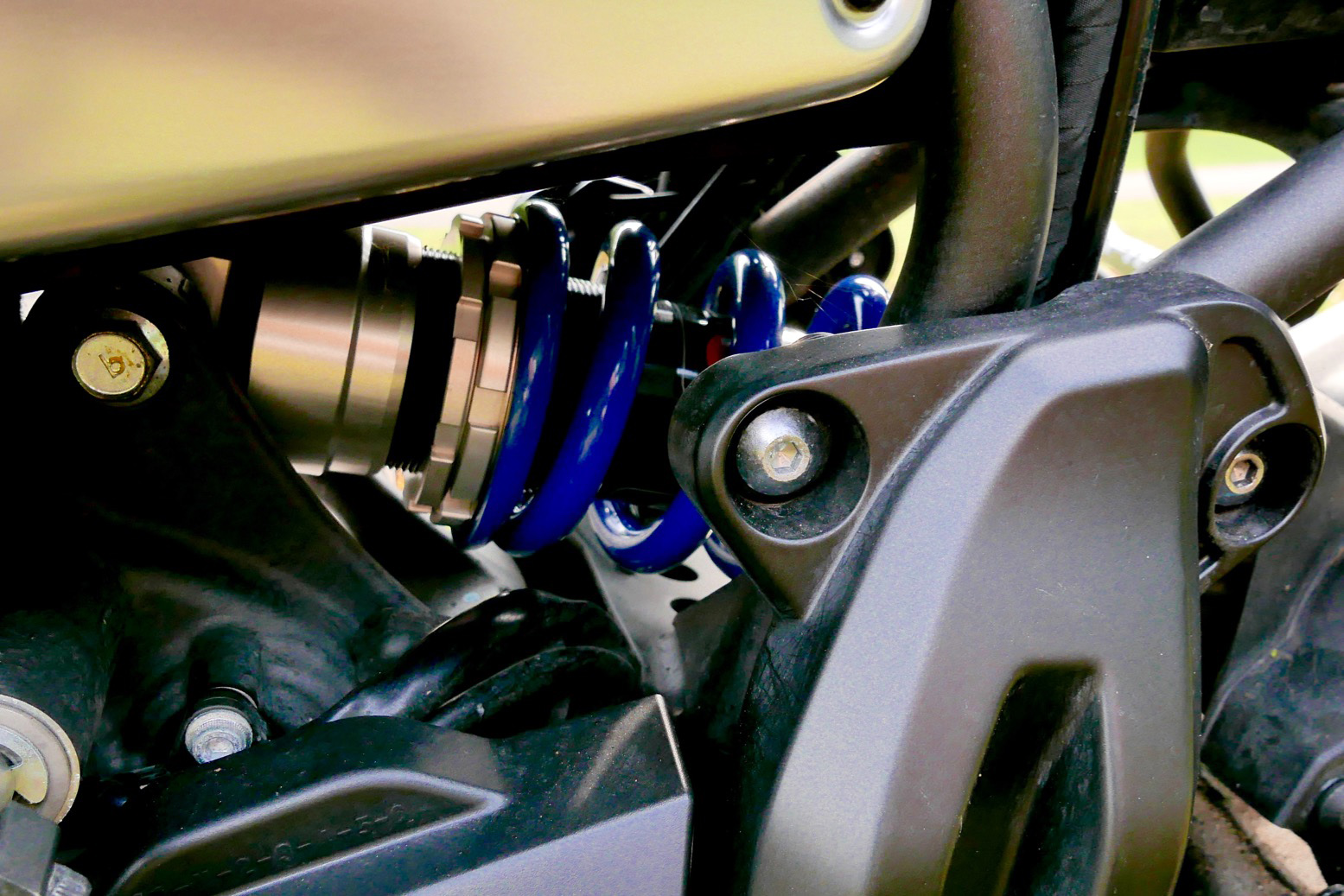
The OE shock is 310mm long. I was looking for a shock with rebound damping that started at that length but had extendability. Looking at the usual suspects, only the Wilbers 640 Blueline could be specified with that feature for a reasonable £512. All it is is a chunky thread and nut at the bottom of the shock below the red rebound knob, and which can be unscrewed (lengthened) to a pre-set point then locked out. Rocket science it is not, but you need to remember that 10mm on the near-horizontal shock adds up to more in actual seat height. Pythagoras will know exactly how much, but when my Wilbers arrived I maxed it out and sent it to the shop.

cspan


Doing it this way makes the shock/bike more sellable later, as it can be wound back down to the standard 310mm XSR height. In fact this whole XSR build, including front wheel swap, is fully reversible. No one need every know.
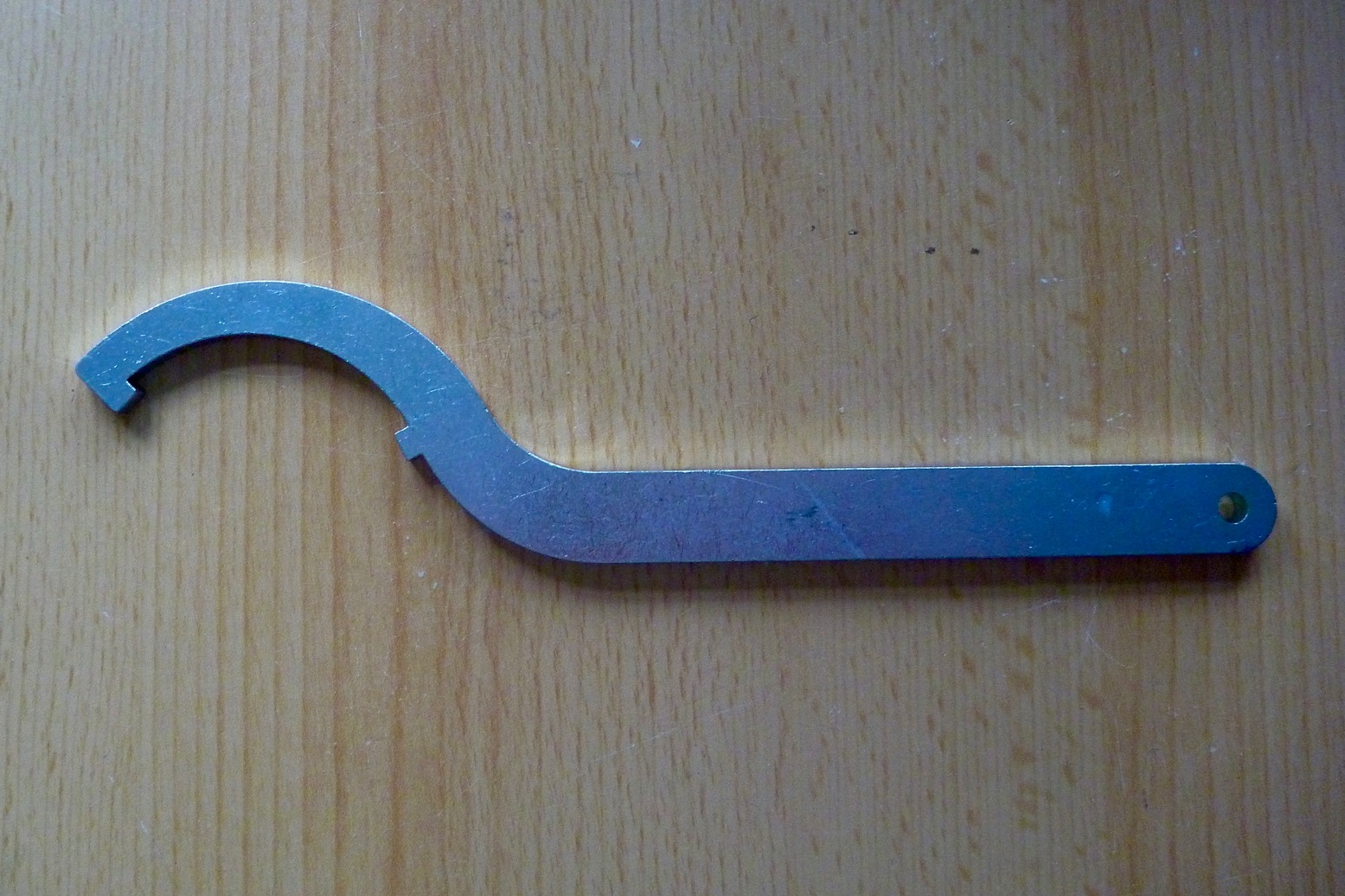
For once in my suspension history, I’m going to endeavour to set the static sag before I leave. It’s a bit tricky alone, but there are instructions on how to do it all over the web. I dare say it will need some tweaking on the road as it beds in, and I’ll sure miss the Hydraulic Preload Adjuster of my previous Hyperpros, but there we are. As it is, C-spanners keep Elastoplast in business and come free with the shock.
Tyres
I could have tried something new from my do-it-all category, like a Mefo Super Explorer, but only Heidenau K60 Scouts came in a range of sizes which sort of included the XSR; a still ridiculously fat 170/60 17 72T was delivered for £97 from Germany, and a 100/90H-19 Catspaw (not Scout) from the UK for £61. Looking at it now, the rear looks a bit lower profile than I’d prefer, but there was no 170/80 in 17.

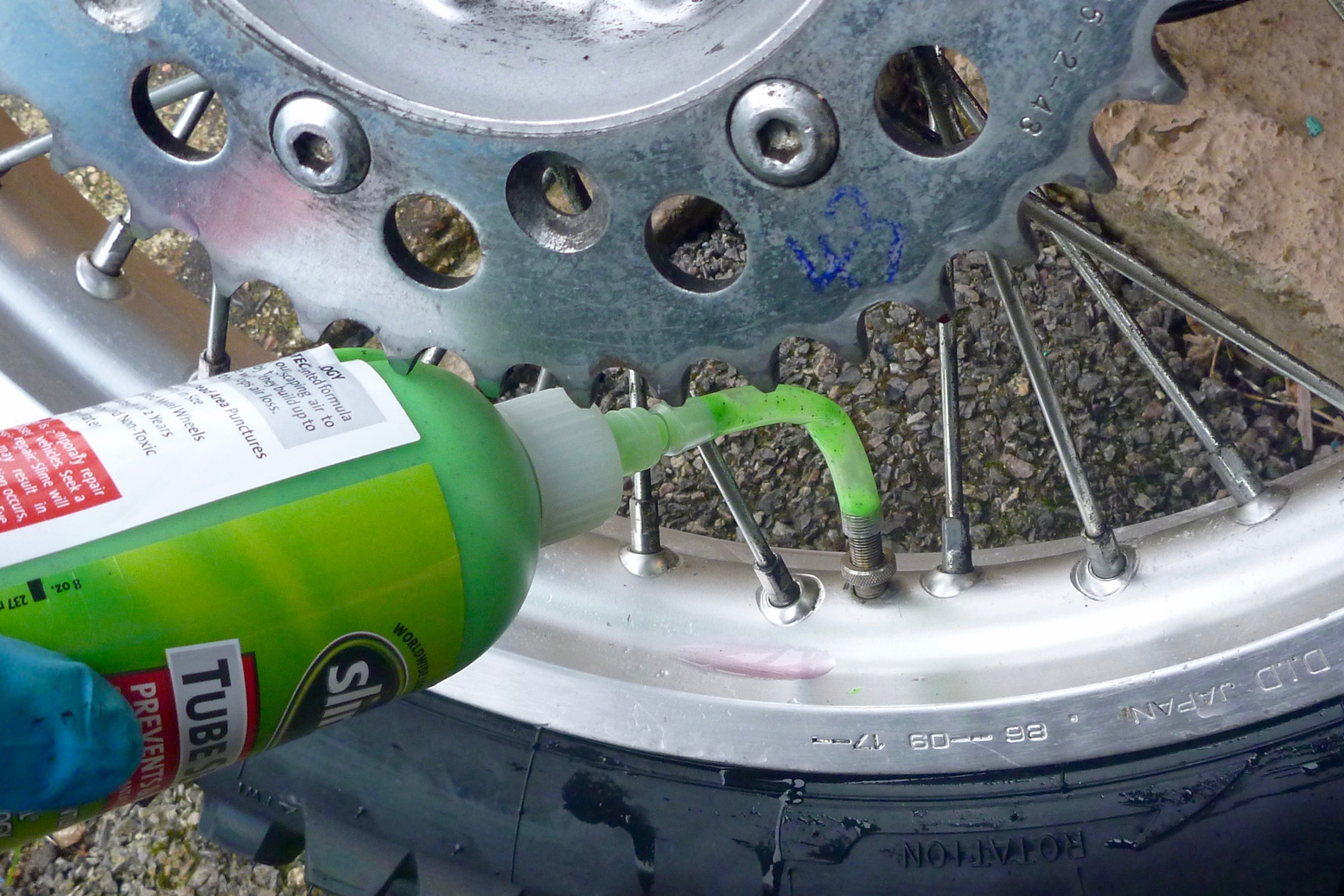
The nearest K60 was 150/70 17, but as I was dropping from OE 180 width, 150 (over an inch slimmer) looked too much of a change for the rim size. Best of all, these retain the tubelessness (which reminds me, need to get some Slime in).
mt07ss

Actually, I think I need to address that stunted sidestand now the bike sits at least an inch higher. I could drill a hole through the foot and bolt on a block of wood or HPDE. How shit would that look? Good news is used MT-07 stands go on ebay from 20 quid. Weldy-mate Jon might be persuaded to hypnotise it and make it grow an inch, and while it’s out slap on an 5mm sandplate underneath; it will look like it was made that way and ought to have the strength to take a lifted wheel if I have tyre troubles.
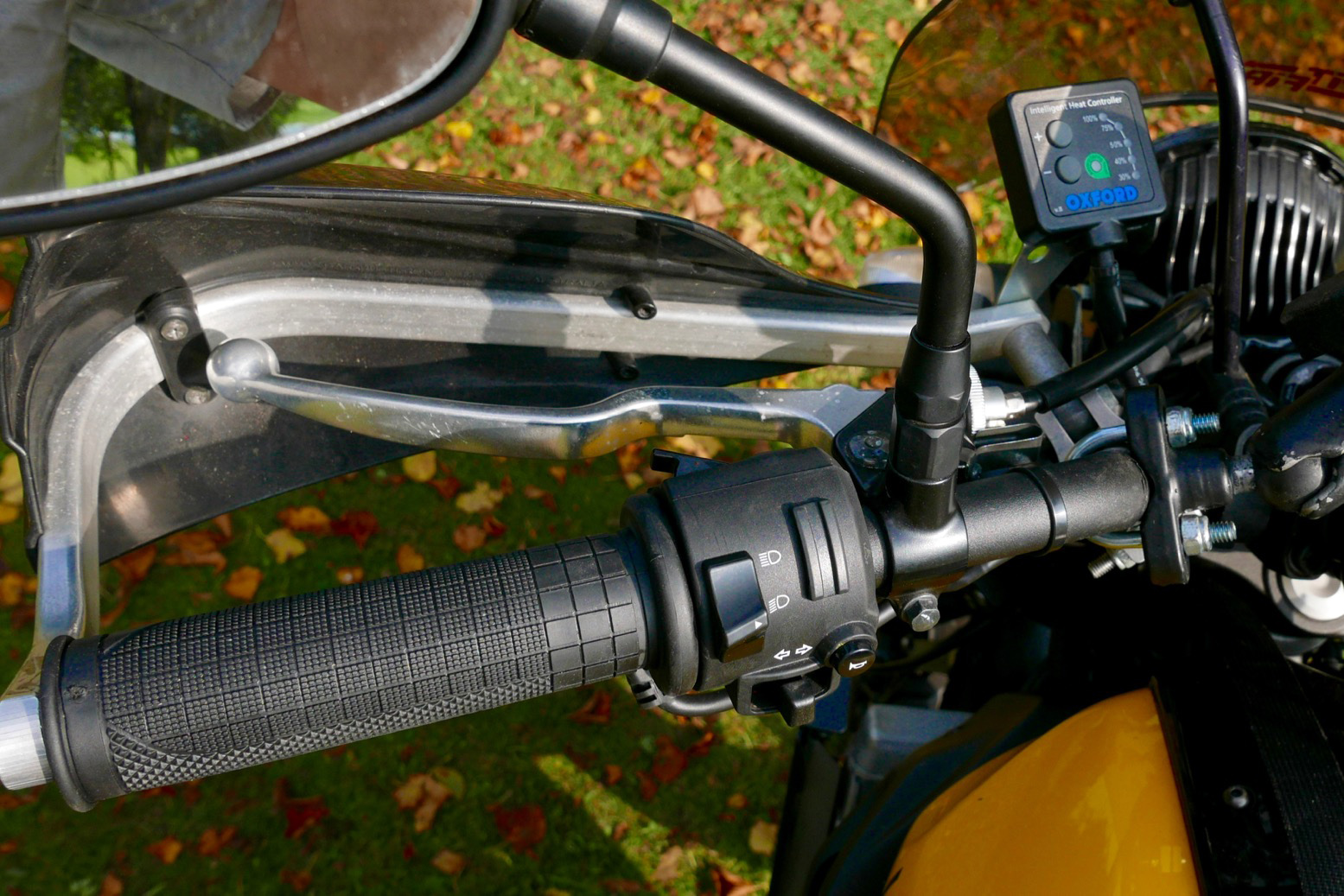
Other than that, my LBS fitted some Oxford Hot Grips for me (£50 ebay). This is the first time I’ve actually bought a set; usually they’ve come with the bikes I’ve bought. and for UK commuters are a no-brainer. Along with my screen, my Barks and my Powerlet jacket, I simply cannot wait for the December ride back across Spain.