Unlike most riders, I am curious to know what my bikes actually weigh – especially before and after a makeover. For years I’ve used the bathroom scales trick; balancing the bike with the scales under one wheel, then the other then add the two figures.
You will find this old thread on Advrider with the usual mix of sneering, humour, muddled thinking and bare-faced logic. Read to the end and you’ll see the single bathroom scales technique has been proved to vary at just 1% over other methods like recycling weigh stations or hanging scales. Also, the over-thought need to horizontally level one wheel to match the height of the other resting on the scales has proved not to be significant. But the ground surface must be horizontal and the actuating feet under the scales must all be in contact with the ground (or stick the scales on a board).
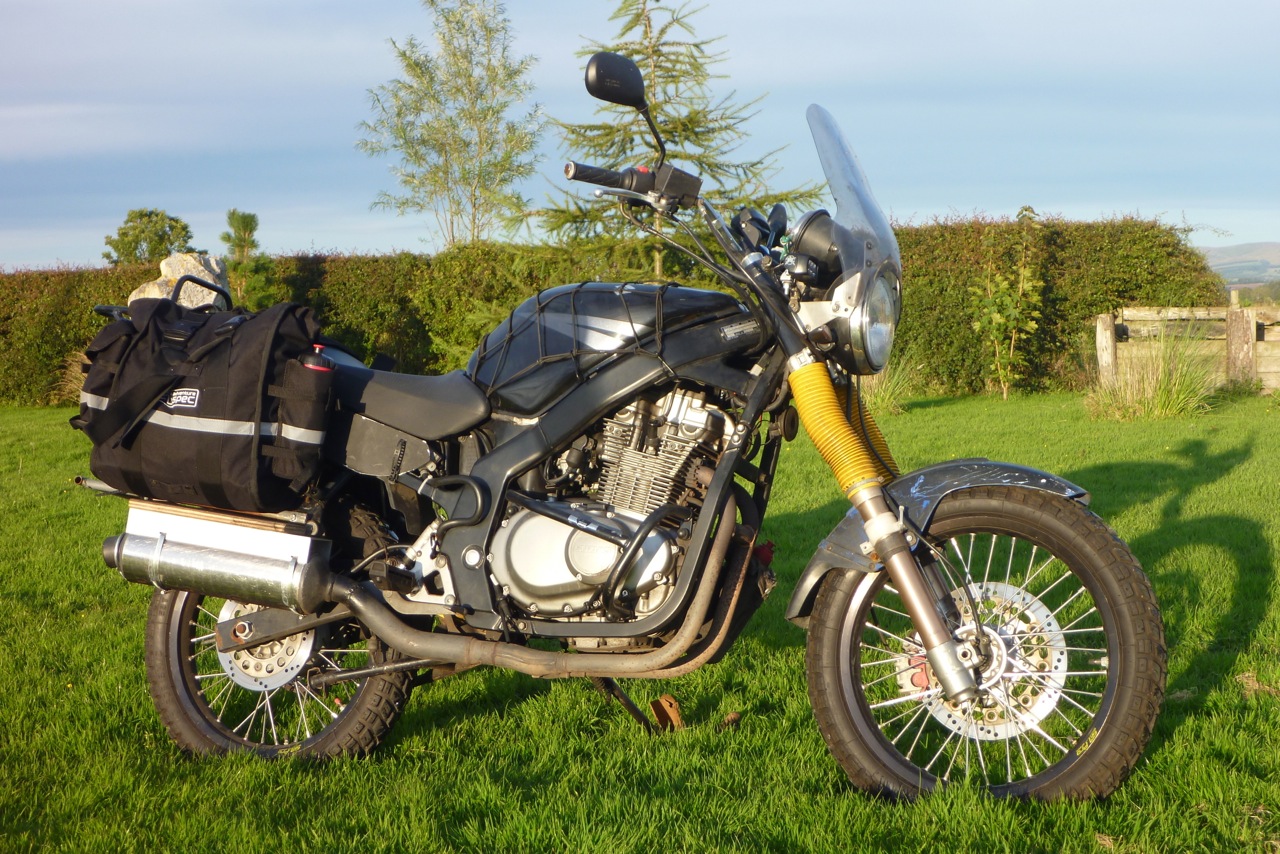
I went to a car park with lots of space and excellent horizontality. It can take a few goes to get consistency; eventually for my GS500R I got a reading: Rear: 104kg Front: 86kg Total 190kg with half a tank of fuel, or about the same as a BMW Sertao.
That is about what I expected: a few kilos added over the 186kg claimed stock weigh following the addition of a DR650 fork, crash bars, the pipe rack, SV shock, screen, bigger bars and a handful of other bits. Don’t know how the 19-inch SM Pro wheels with Tubliss compare to stock GS500 casts. You’d hope a small weight saving but cast wheels have a habit of being lighter
Since then I got some Salter Razor (right), now only 14 quid off amazon. Who knows about actual accuracy but this one is much more consistent than the round one above and much easier to use.
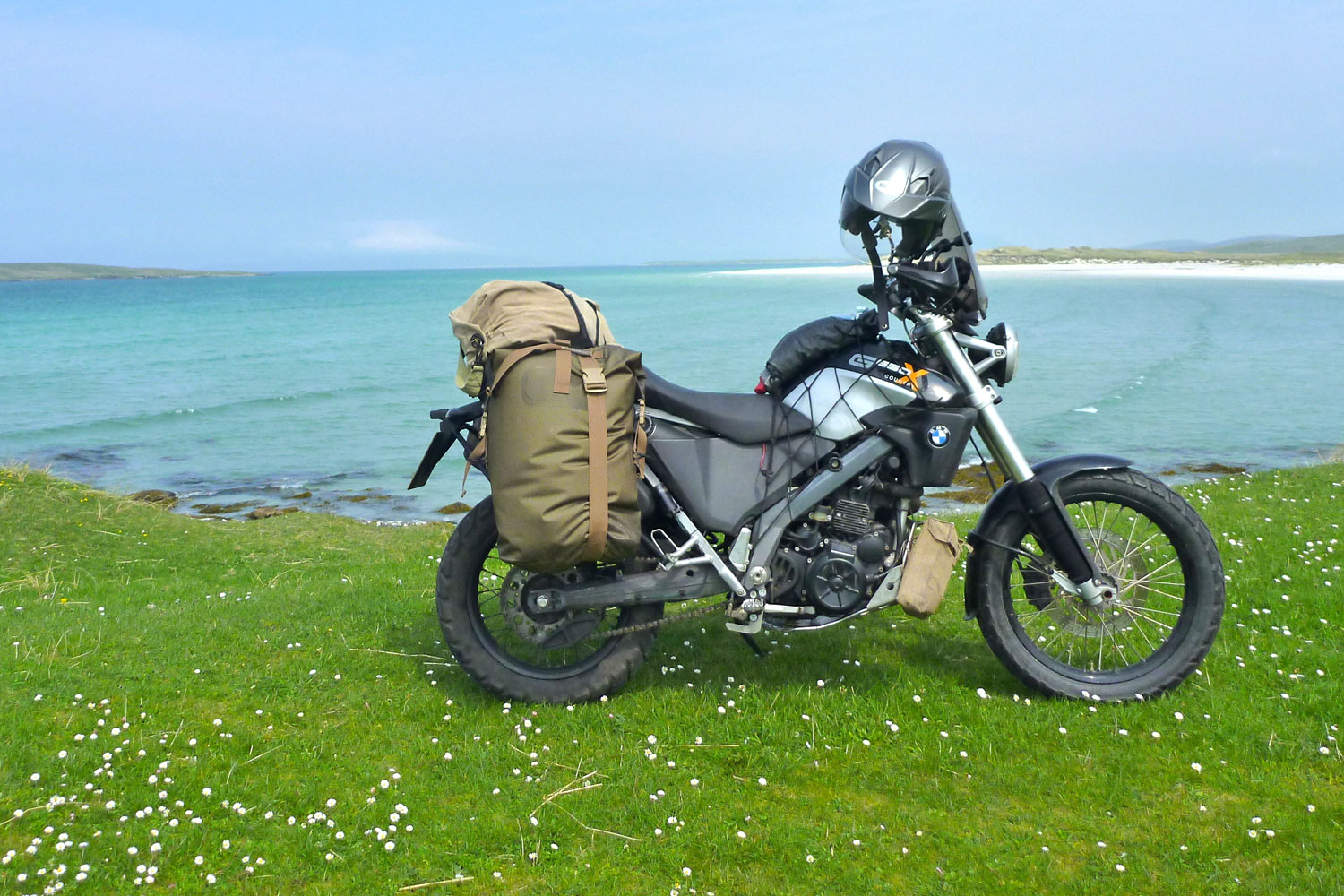
BMW X Country ABS, full tank, plastic handguards Front wheel 73kg Rear wheel 90kg Total 163kg – a very good weight for a pokey 650, if I may say so myself.
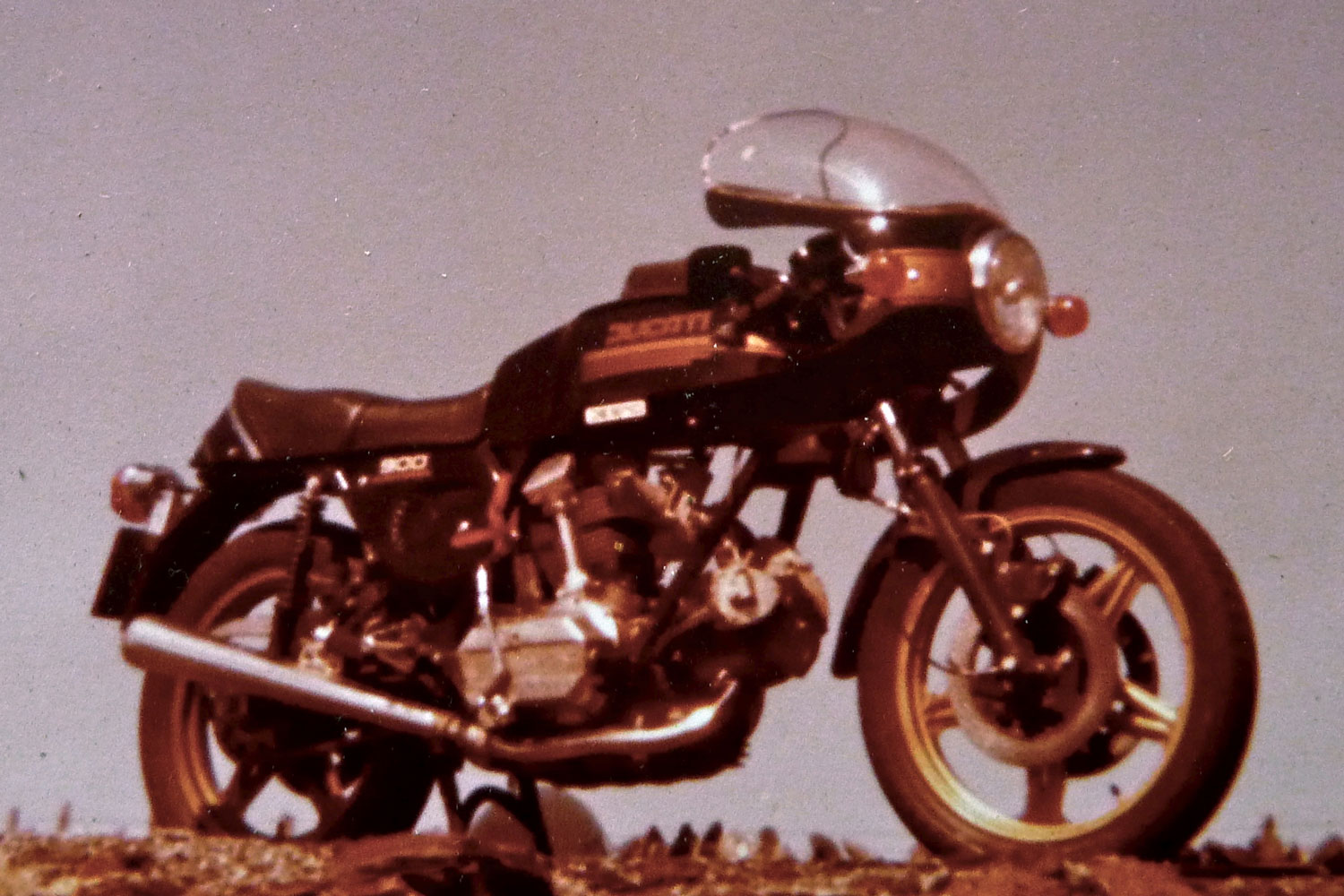
A few months ago I had a brief ride on Nick Plumb’s XTZ1200 (left). It was only a few miles but the creamy smooth pulse of the big, lazy engine was spellbinding. It took me back 36.6 years to my old Ducati (right). In 1978 the 900SS was one of the coolest bikes around and let me tell you, when you’re 18 that has quite an impact!
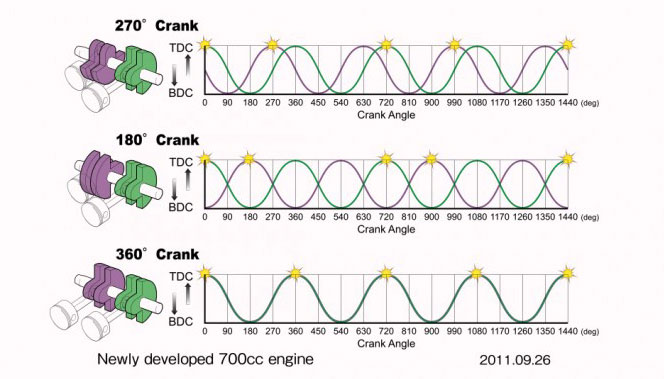
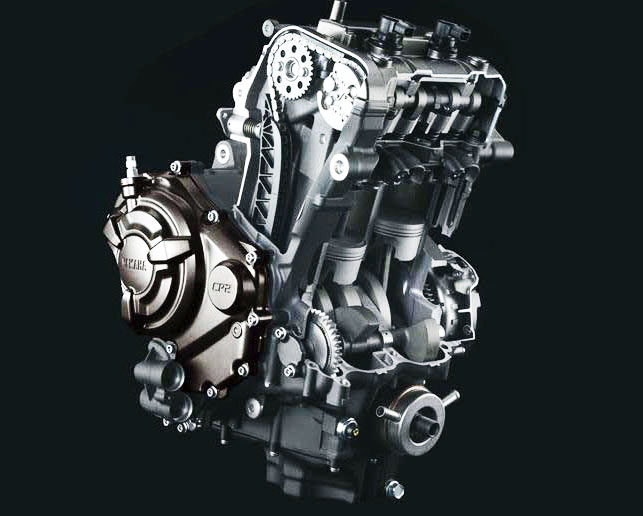
Of course the S10 is not a 90° V-twin but a more compact parallel twin. Yamaha re-created that Ducati feel by offsetting the crank to 270°. Some say the V-twin feel is the only benefit (and something which neurologists say stimulates the Neanderthal amygdala – right – deep in the human brain). Others claim the firing sequence has an advantage in converting torque into real-world traction. Also, because one piston is always at max velocity as the other comes to a momentary stop at BDC or TDC, this momentum, or what I’ve dubbed as ‘kinergy’, “assists with accelerating the [other] piston back towards its maximum velocity” as I just read on the internet. You don’t get that with your regular ‘up-and-down, up-and-down’ 360- or 180° parallel twins.
It’s the ‘Big Bang’ theory of unsynchronised but closely paired – rather than evenly timed – power pulses, as illustrated in the Honda graphic, right. That was produced to illustrate the benefits of their 670-cc moderate-power/high-mpg Integra super scooter and the closely related NC700 models. Above left is a manual (non-DCT) NC700X getting tested by RideApart in Nevada. Nice, but a bit heavy.
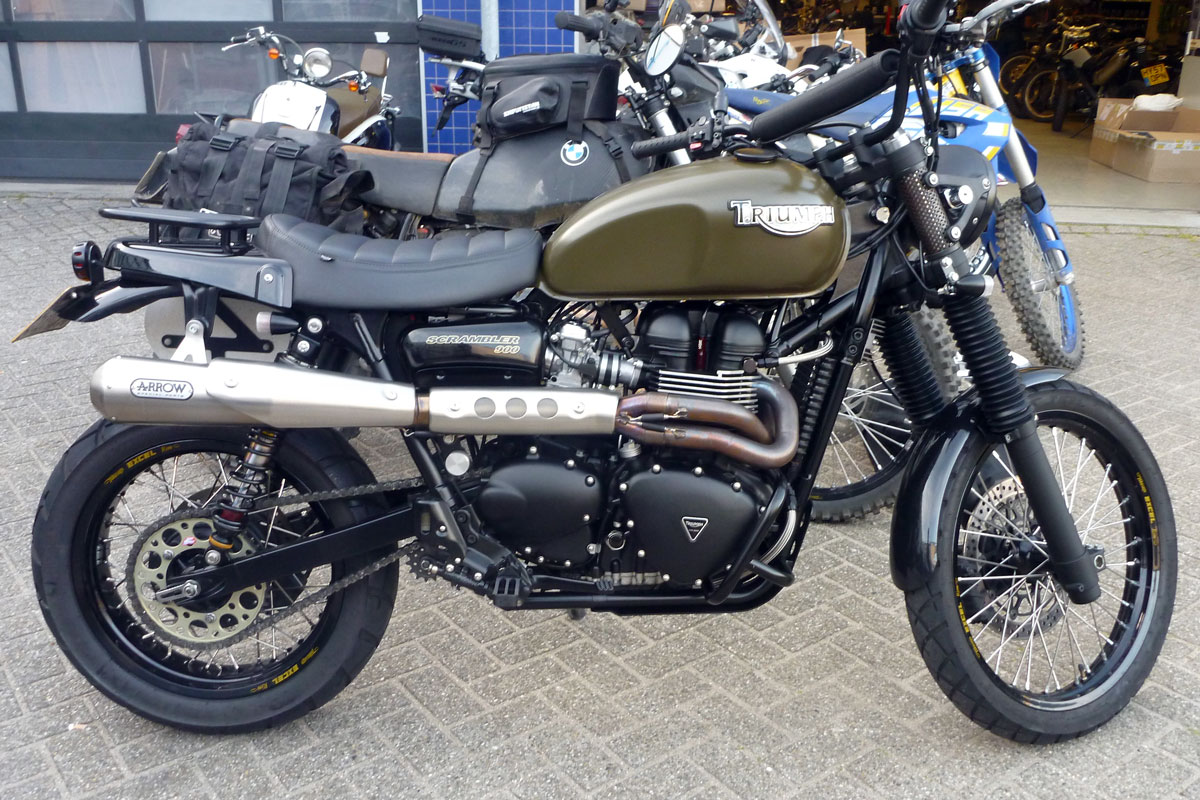
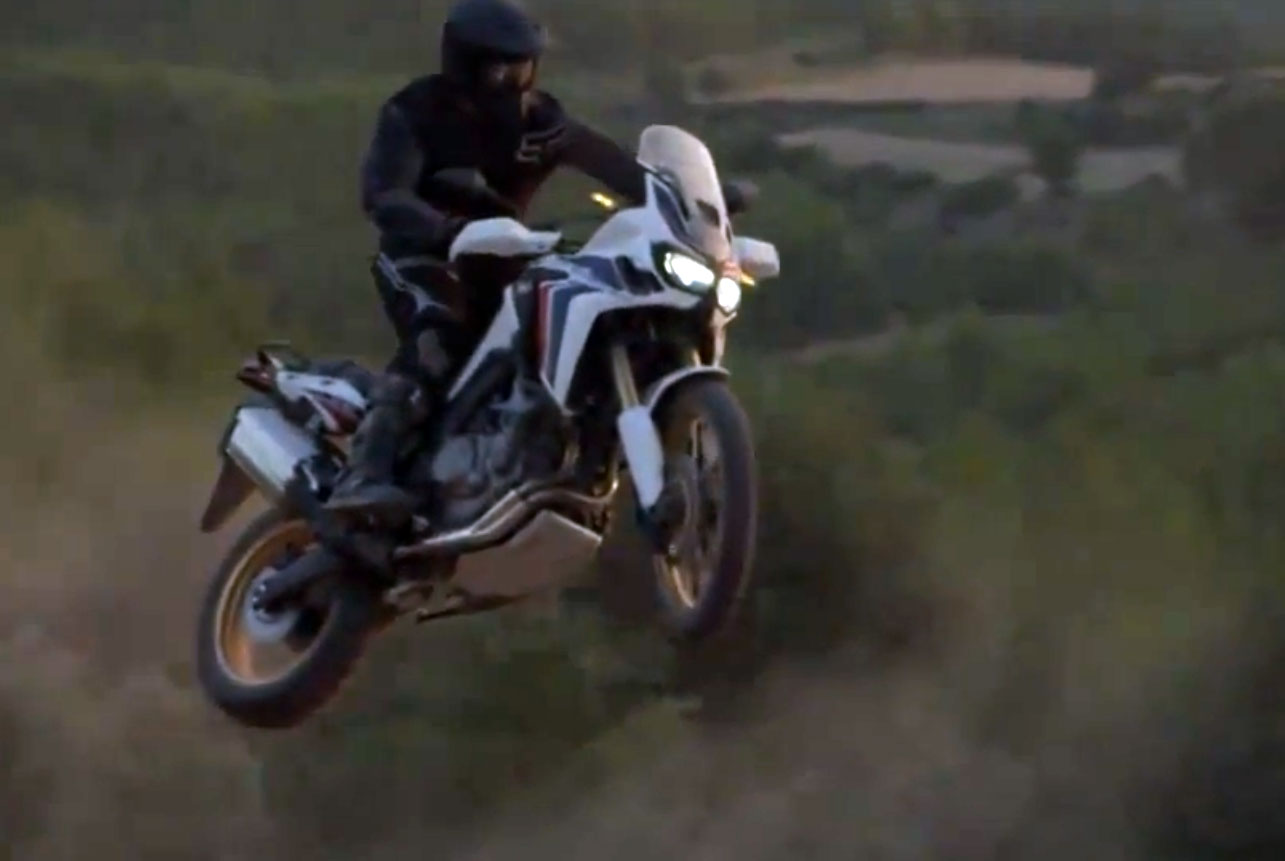
So is an S10: a quarter-ton, £10k tank-too-far to be a practical travel bike. Turns out the new CRF1000L Africa Twin (left and below – my 2016 quick spin) is offset too and sounds as creamy as a Waitrose rice pudding in the videos. But what other 270° twins are there out there suited to the next project? Not so many it seems: a couple of Triumphs including the Scrambler (right), the Honda NCs as mentioned, Yam TDM 850s and 900s from the mid-90s onwards, and the hit bike of 2014: the MT-07.
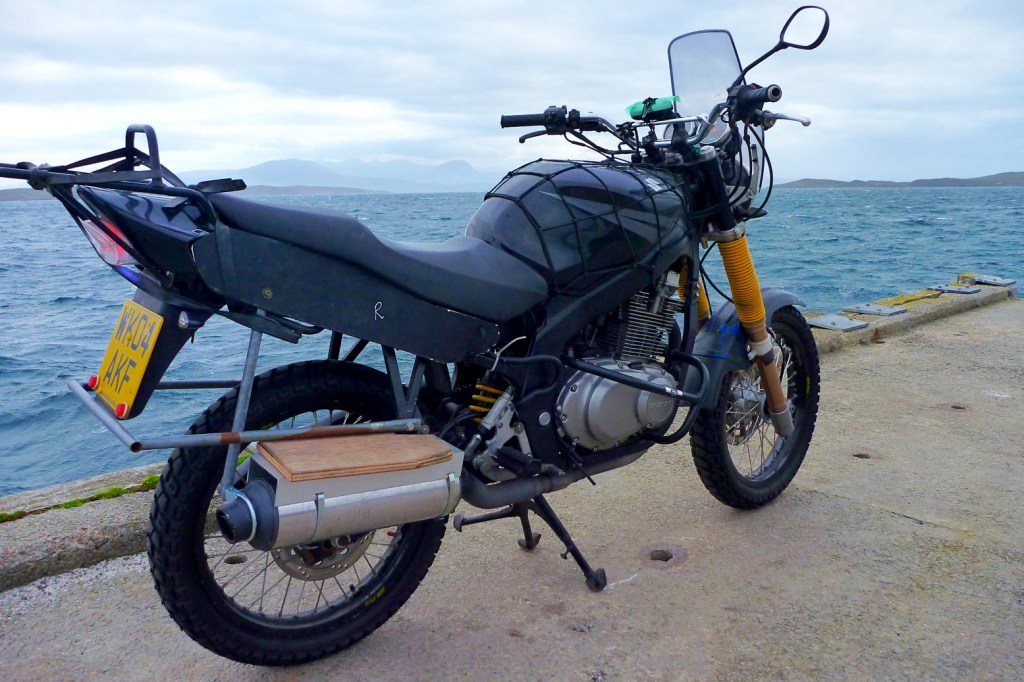
As I suggest in the book, a mid-weight parallel twin is all that’s needed in a do-it-all travel bike. Adequate power, smoother than a big single with similar performance and price, potentially good economy plus light and simple enough to be manageable on unsealed roads. That’s what my rudimentary GS500R project (left) tried to be – I should have persevered with that. But luckily I came to my senses and got a CB500X.
Honda hit the fuel consumption ball right out of the park with the NCs and about time too. The secret was moderate ‘non-100-hp/litre’ power. I like to try new stuff so the NC-X could be a contender. I’ve yet to ride one but while the weight is positioned low in the chassis (left), a manual 700X is still a 220+ kilo bike on 17-inch wheels and which around here goes for £3.5k used – or £4.5k for the more desirable DCT. If you’re going to try an NC700-X, it ought to be the auto that all owners rave about.
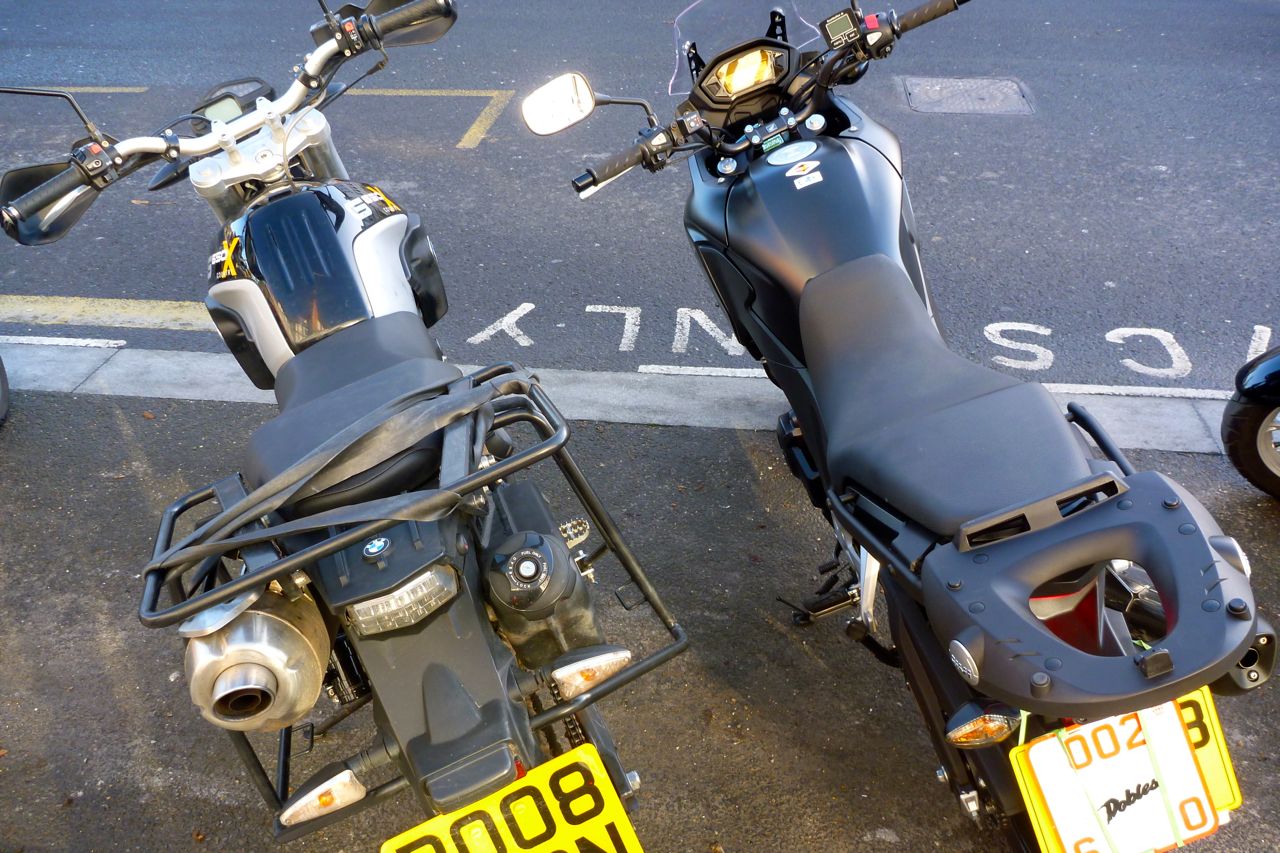
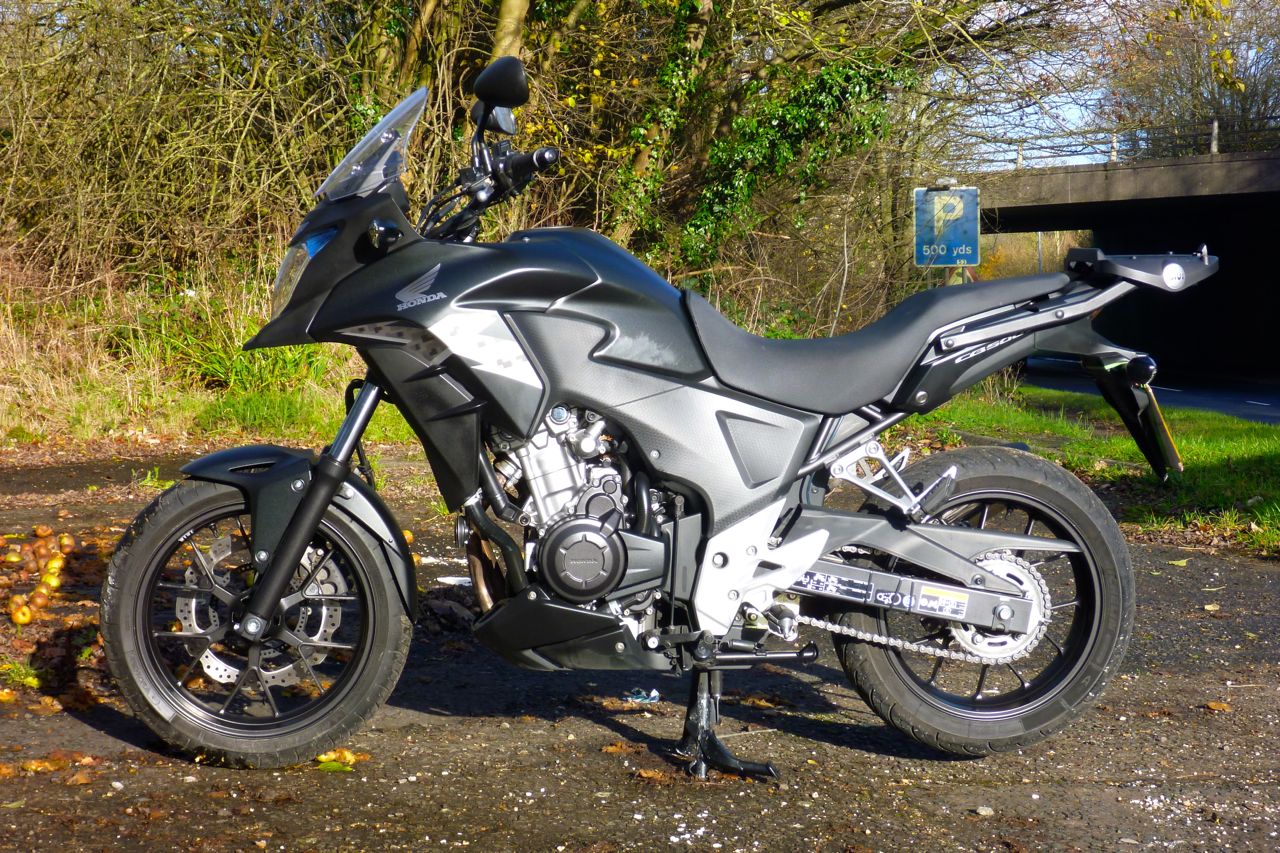
CB500X [I later bought one] It may not run an asymmetric crank like the new CRF1000L, but I like the new look that Honda cooked up in 2013 for the CB500X as well as the NC-X, the Crossrunner and the rest of their MoR Advs. Beaky sure – but sleak[y], too. Someone described the 500X as a 3/4 sized Crossrunner. Alongside my former XCountry (right), the 500 looks slim and with a notably lower seat – all pitched at ‘women or beginner riders’, so they say. Pulling away I was struck by how astonishingly smooth it was and remained that way right up to an indicted 80mph when a bit of harshness crept in. If I hadn’t known, I’d have never guessed it was a twin, bar the fact it’s not as heavy as a four and as slim as some singles. And even with a vertical linkage nearly a foot long, the six-speed gear change has that satisfying Jap snick that I’ve missed on the shunt-shifting 650X, plus the lever was exactly where my foot liked it. Mark up one point for ergonomics.
My chilly ride was mostly on motorways then some back roads and roundabouts around Gatwick airport and left me with nothing to complain about. With some 46hp there was easily enough poke to overtake at speed, no snatchiness in the transmission or glitches in the fuelling and great brakes. Suspension – where cost cutting is most noticeable these days – worked well enough too, though on smooth main roads it wasn’t really tested. Most cheap stuff will do the job – it’s when the road breaks up or a load is added that the flaws appear. The standard low screen must have done its job too as I don’t recall any strain at around the legal limit.
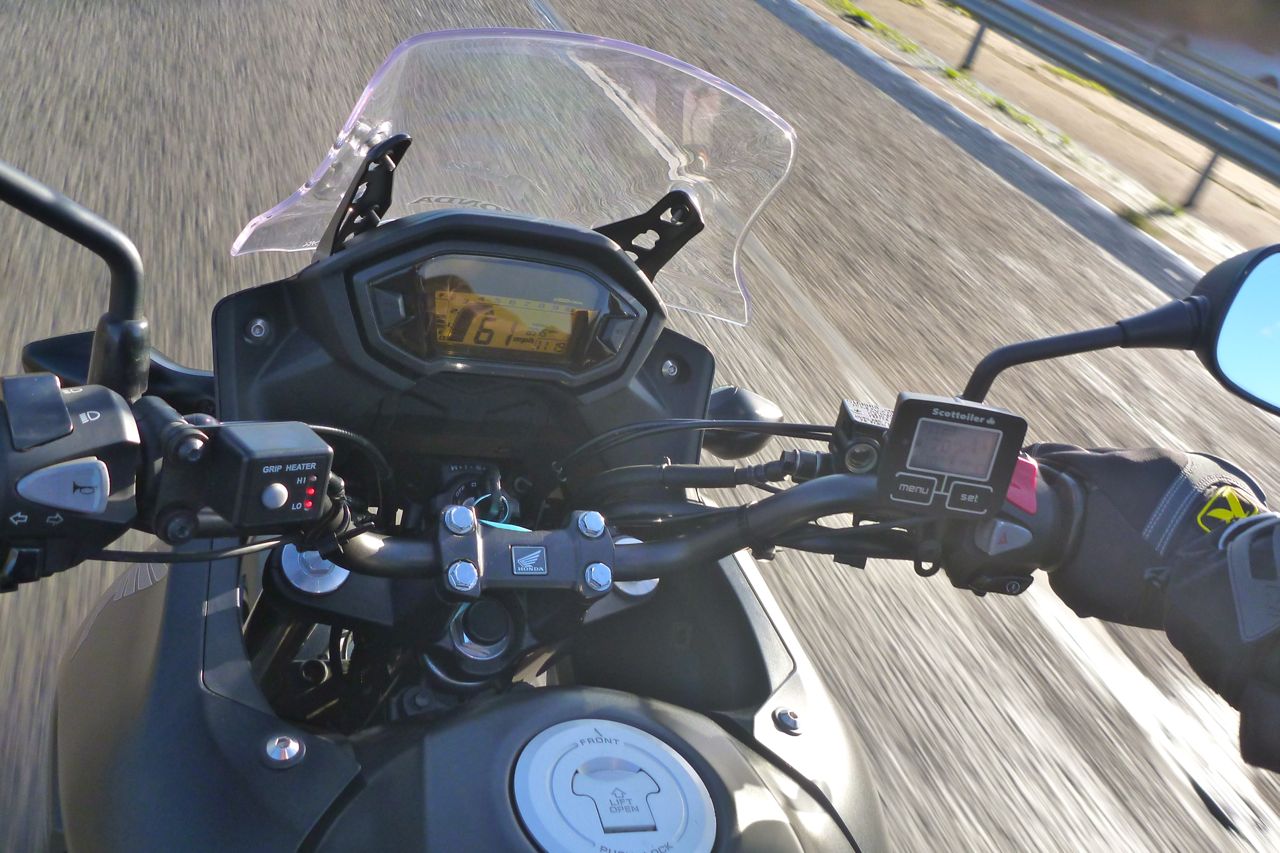
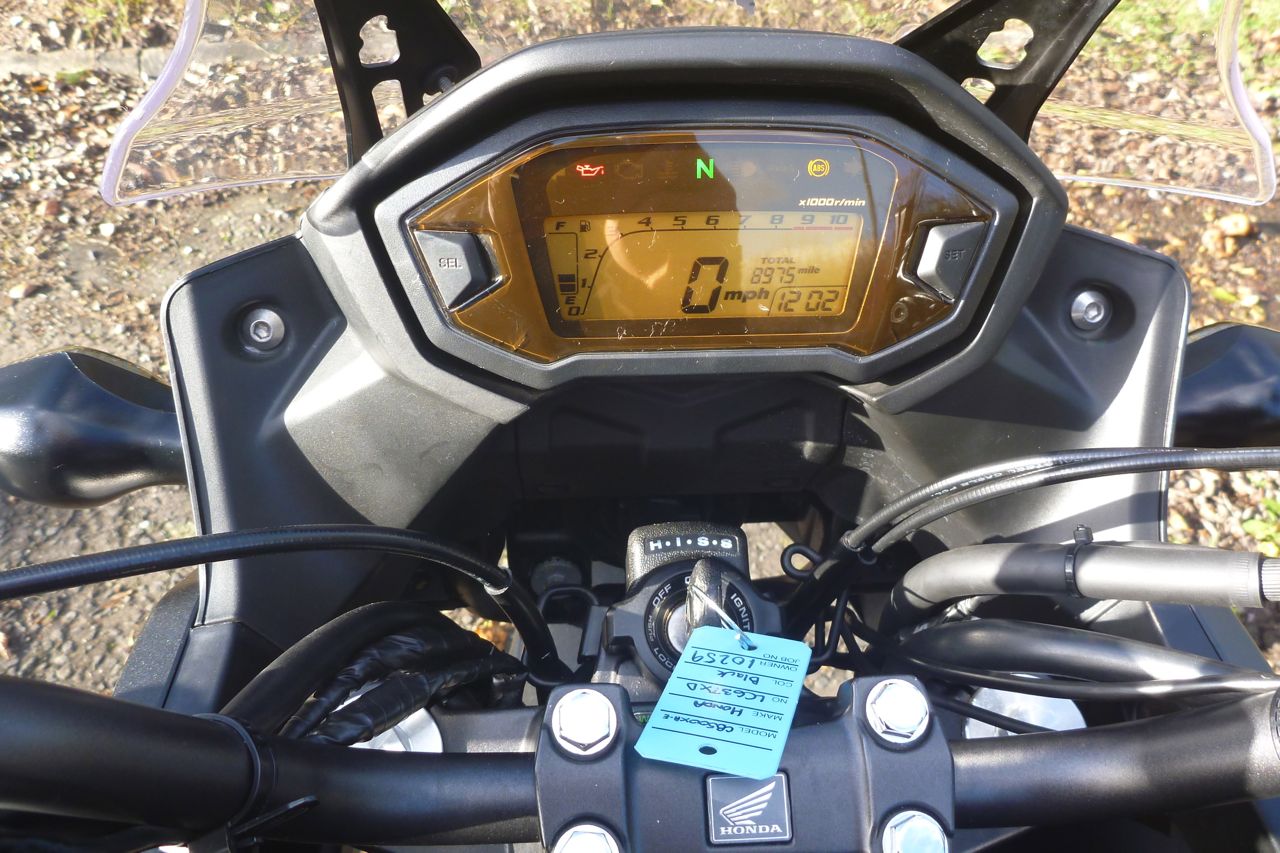
This 9000-mile-old 500X had some welcome Oxford heated grips plus one of those over-complicated electronic Scott chain oilers (more here). On the back was a Givi tail rack which hangs out like someone walking the plank and is an ergonomic abomination. I’ll have more to say about that in the near future. I know it’s convenient and all, but the thought of a top box perched way out there is enough to make me want to call the Samaritans.
One reason I’ve taken an interest in the 500X is that UK-based Rally Raid Products have developed a range of parts including properly uprated suspension, replacement wire wheels (right), plus the usual protection and load-carrying accessories. Better known for rallyficating highly strung KTMs and the like, it’s good to see a company like RRP taking on less flash but more affordable travel bikes like the CB-X.
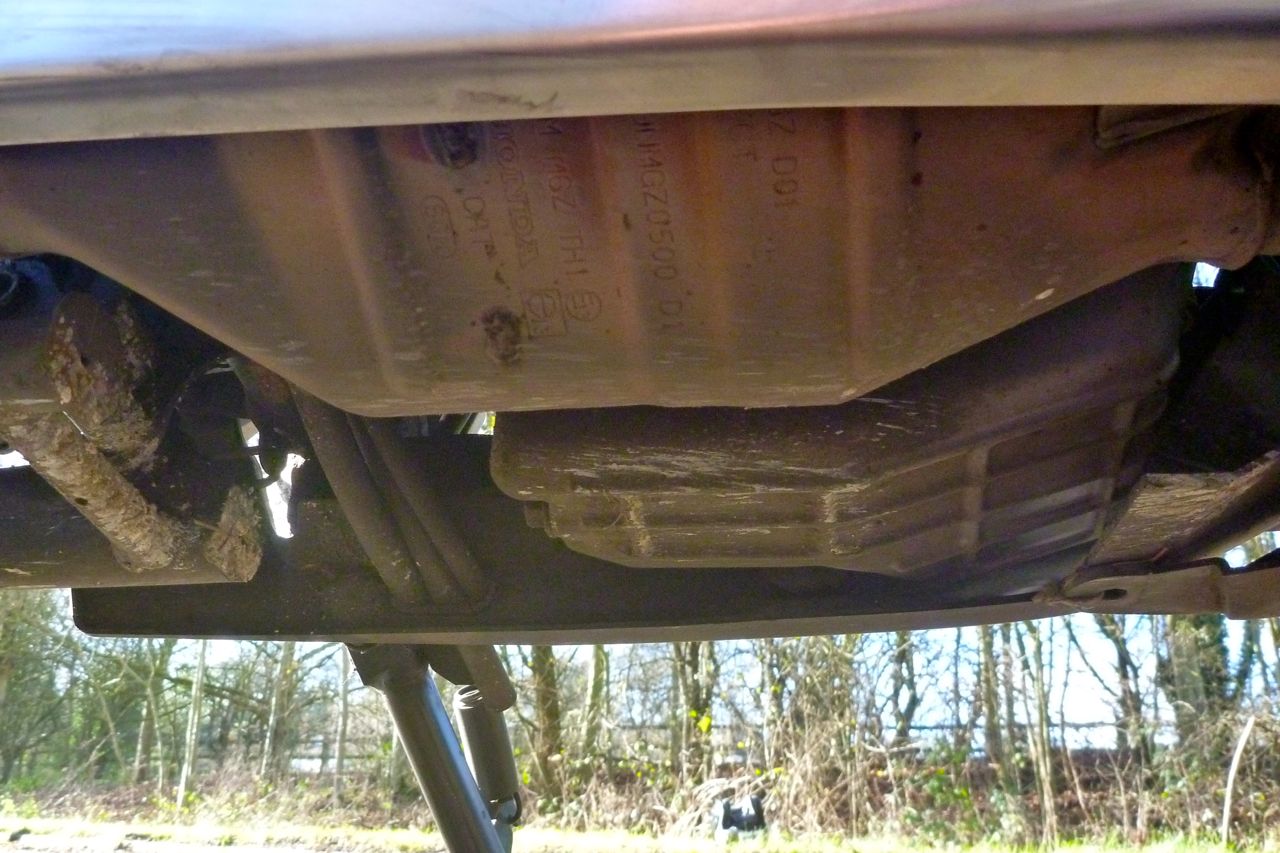
Back on the ride, I pulled over to have a closer look. On its 17-inch wheels the 500X is low on ground clearance. Down below the cat or collector box is on a level with the sump (right), though that’s nothing a slab of 5mm of dural couldn’t see to.
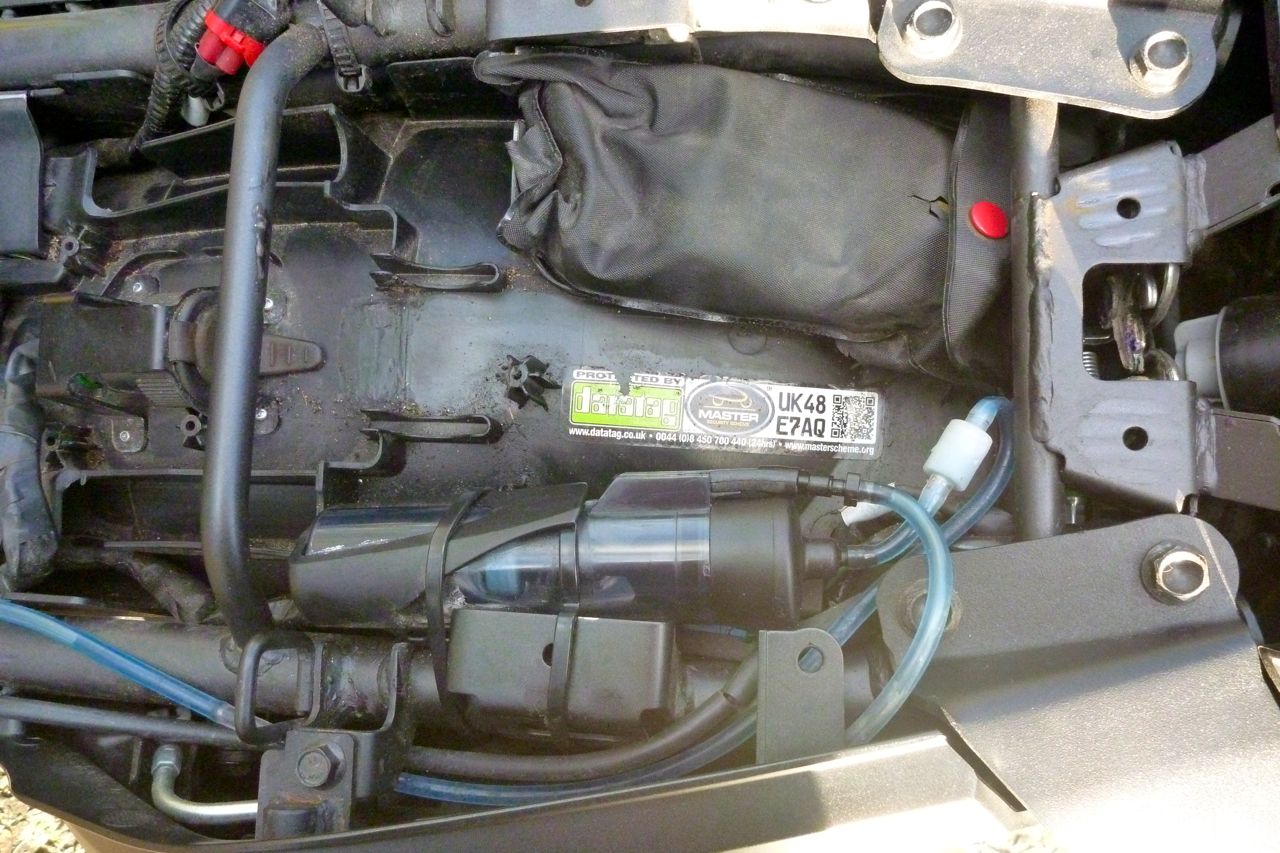
Under the seat – good lord, an actual toolkit in the grey PVC pouch that Honda have used since Fritz Daimler crammed a steam iron into his pushbike. What I could see of the subframe looked chunky enough for luggage duties. Over on the dash, there’s more data than my XCo: digital rev counter, clock, fuel gauge, trip, current/average mpg – all good once you decode it. And for a bike that’s put together in Thailand or China or a bit of both, the fit and finish was reassuringly solid – better than my BMW. With its 17.5-litre tank you imagine the CB-X could get up to 400km (250 miles) to a tank without too much effort (in fact make that nearer 550km). Clad in dark grey plastic, I like the angular ‘early-Batman-movie’ styling too. Interestingly, the previous owner (‘a younger person’) PX’d this bike for an Integra super scoot. Is there a message there?
I came back to the shop liking this 500X, especially when the Doble’s bloke told me it was going for just £3800 – a price forced down by a couple of other used 500Xs in the showroom and the free luggage they’re now giving away with new ones. It’s definitely the closest thing to a modern GS500R I’ve tried.
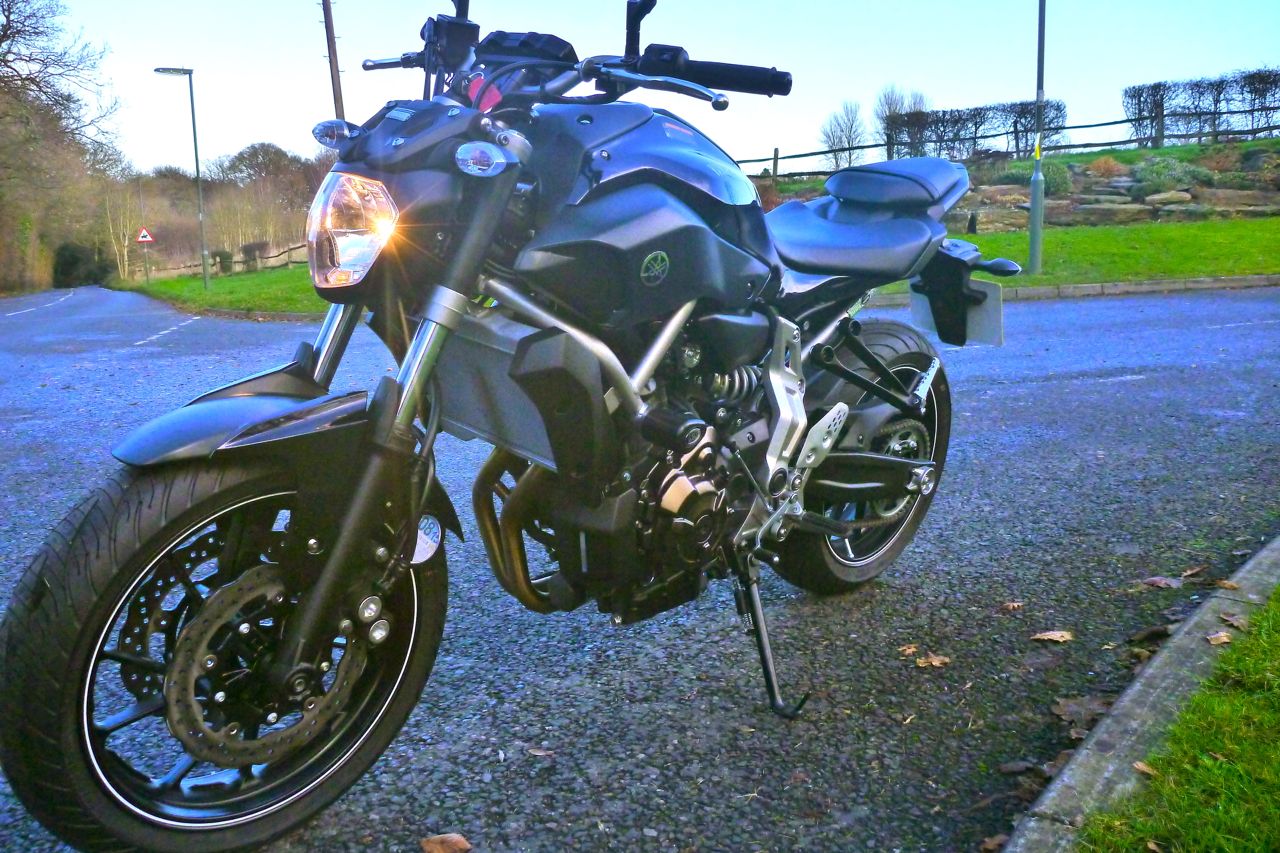
Yamaha MT-07 What has Yam’s hit of 2014 got in common with the Honda CB500X you’re thinking? For me it’s solely about the motor because clearly extruding as 07’s suspension and slapping on bigger wheels (as I did on the disposable GS-R) won’t make an integrated gravel-roading travel bike any more than Frankenstein after a weekend trapped in a tumble drier. One limitation I have is nowhere but a South London pavement to work on my bikes – or a mate up in the Midlands to do basic fabricating. That factor curbs what I dare get involved with.
As expected, the second the bloke fired up the MT’s engine I got it, I got it all: that intoxicating offbeat throb held a promise of good things to come. This was a short ride on a bike less than 100 miles old along grubby country lanes and speed-humped roads littered with wet leaves and still damp in the shadows. They led to the old B2031 out to Kingswood and Box Hill where I recall trying out a booming J&R cannon on my XT500 nearly 40 years ago. In these conditions I distinctly felt that this ‘Big Bang’ traction theory had something going for it. There was a sense that the engine power pulses made it easier to feed and feel the traction, compared to the electric-smooth Honda I’d ridden an hour earlier. And the fantastic but non-offensive sub-J&R exhaust note had me blipping the throttle between gear changes just for the sheer fun of it.
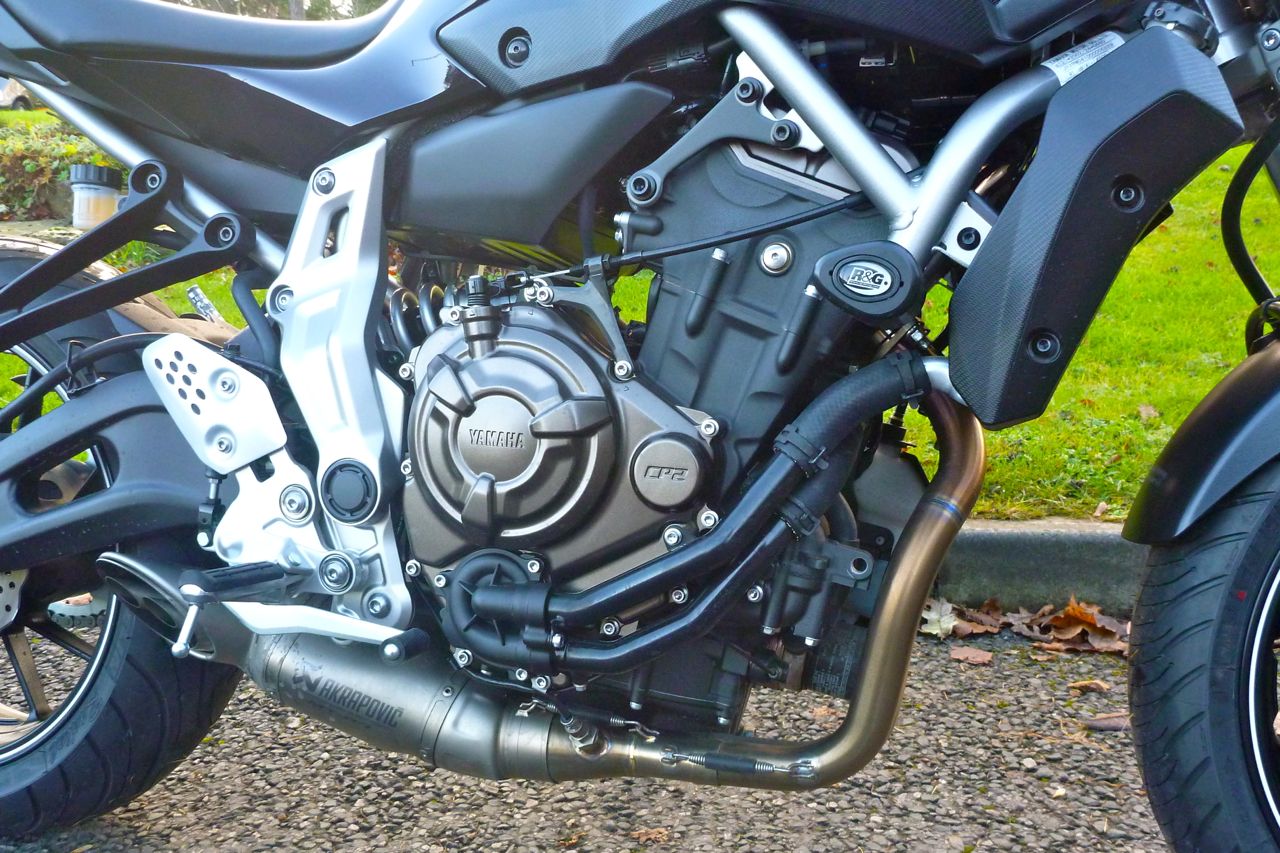
The short pipe holds another trick: escaping gases briefly throb against your dangling heel as you pull away. In my demi-euphoric daze I saw that as consolidating the bond with the characterful machine rather than the inconvenience of melted Derriboots and flaming socks. It was only when I looked at my photos that I realised the shop had slipped on an Akrapovic pipe on the sly – though they’re actually giving them away with new bikes.
They claim 76hp and a wet weight of 180kg. I can’t say the 07 felt like it ran over 100hp/litre but who cares – the odo was still in nappies. It’s the feeling you get playing tunes on the gearbox that counts: you’re gunning around to please your senses not for acclaim. Like I said, magic-ing up a V-twin feel in a compact parallel twin motor is inspired.
The rest of the MT was not so interesting to me. The profile is cool but as soon as that currently fashionable drooping headlamp cowling comes into view I gag. Swap it out for a used XS850 lamp, quick. Along those bumpy, ill-maintained Surrey lanes and suburban speed bumped avenues, the suspension felt harsh and the seating position would have taken some getting used to. But bear in mind I’ve been riding a trail bike with the full Hyperpro set up these last few months.
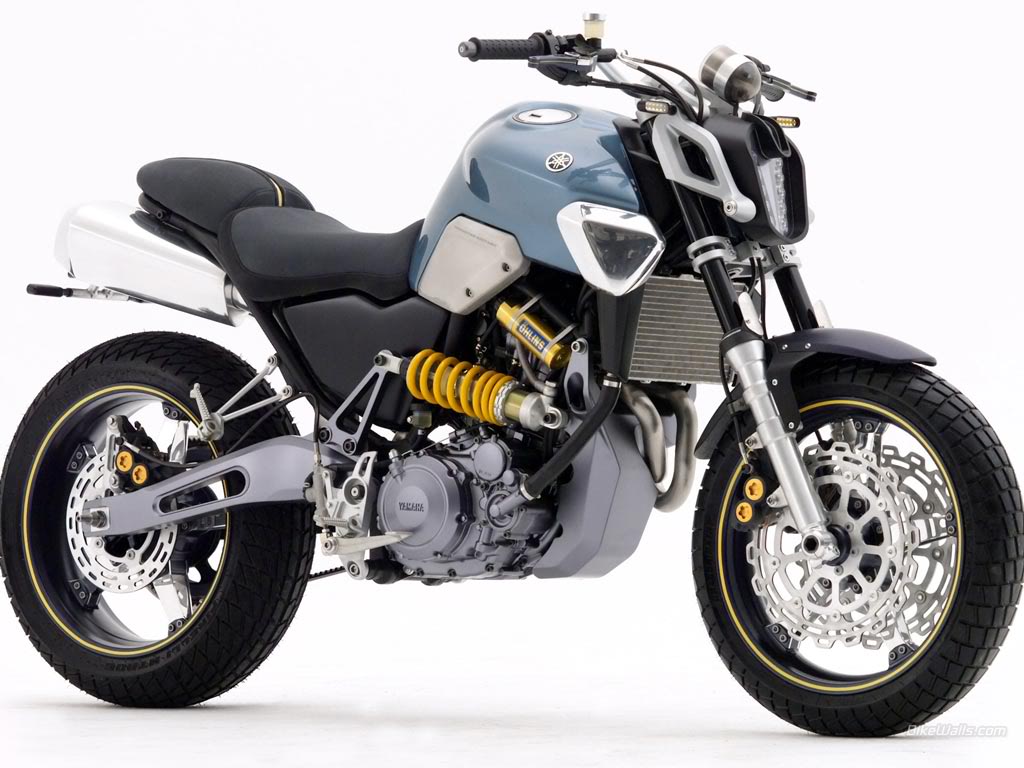
Anyone remember the 660 MT-03 from 2005?
Back at Lamba Motors in Carshalton, (this demonstrator is being sold shortly for around £5k) we talked about the possibility of Yamaha Tenere-ising the MT-07 in the future. The guy told me that the old XT660Z – which now sells for the same price as the MT – was reaching the end of the line and also that, for the first time this year, he actually had an 07 sitting in the showroom. Up to that point they were pre-ordered and out the door.
Yamaha have recently semi-adventurised the MT-09 triple, calling it a Tracer (left). That included giving it a bigger tank, a fairing, a tad less caster and trail, a higher seat – but also 20 extra kilos and still on 17-inch wheels. So that means something similar may well happen to the smaller MT twin – something like the 500X in fact, but a whole lot more fun to ride and listen to even if what’s really wanted is a new, full-on XT700Z. You do wonder if in the short-term they might just keep it simple and Tracerise the 07. That’s a great shame as a properly executed MT-07-engined Tenere would for me be a perfect travel bike or at least something on which to build.
So for me the 07’s perfect engine put the Honda in the shade, but it’s a 500X-type bike I’m after (with RRP parts to finish the job). If only Honda had taken the risk and offset one CB-X crank by 90° I’d have bought that bike on the spot.
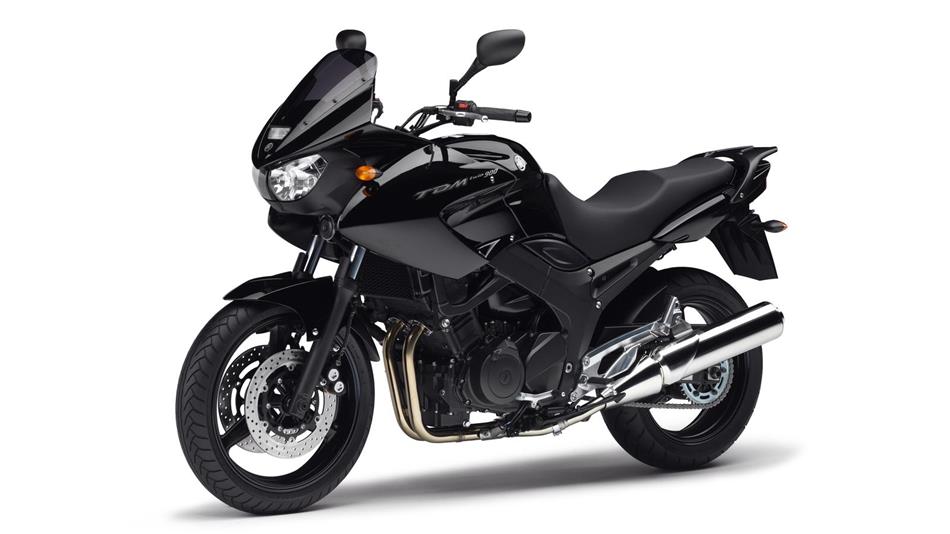
Instead I’m looking at TDMs – very few bad things are said about them. But in the 900 injected form, it’s a huge ugly slab of a bike and more than I need even if, as with the GS500, used prices are low enough to risk experimenting (left) with negligible depreciation to make something that looks a little more agile.
PS: A short while later I did briefly run a TDM900: more here.
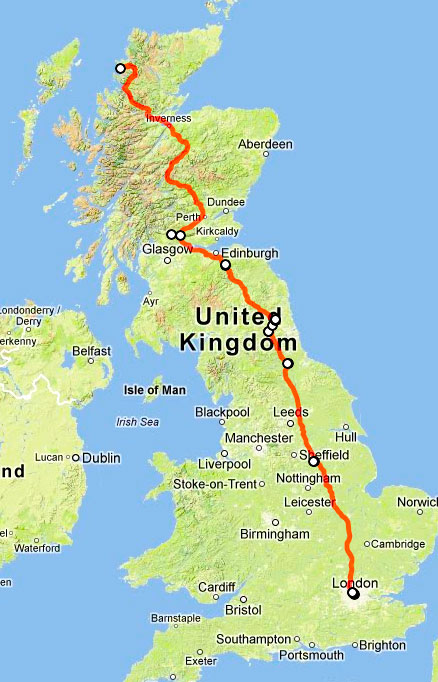
Since I rode the GS up to Scotland in June it’s received a few mods and the 700 mile ride back south (right) was a chance to put them to the test. Among other things I’d fitted K60 tyres on Tubliss liners with a splash of Slime. I made the back brake work, nearly finished my piperack, fitted flat track bars and an LED riding lamp.
Setting off for the first 250-mile stage to a mate’s near Stirling west of Edinburgh was a sparkling day (left), but already there were warnings that an incoming storm would wipe any traces of late summer warmth off the face of Britain. Any chance of enjoying a slow ride home would be better compressed into the usual dash. A day after I got back it was another ‘month’s rain in a day’ story we’ve been hearing all summer. Roads I’d ridden hours earlier were closed by flooding or high winds, the trains stopped running to Edinburgh and a coastal town near Aberdeen got caked in wind-borne sea foam.
Backing up, the ride over the Cairngorms proved I really should have remembered my Aero Kanetsu electric vest. Running it off the GS’s battery was one reason for fitting the SR-M LED lamp (to reduce the alternator load). Even in the sun the Trail Tech Voyager (to be reviewed) barely reached 9°C, so a hot soup in Aviemore spread a bit of warmth back into the limbs.
Day two was going to have to be a 10-hour, 450-mile haul right through to London if I was to miss the much forecast gales. Even then, I could’t bare the thought of the dreary but functional M6 and M1 motorways, with the statutory pile-up/hold-up somewhere in the Northamptonshire area. Instead, a more interesting line jumped off the map: A7 from Edinburgh to Galashields, hop over to the A68 which led over the border to Darlington, and from there slot onto the A1 to London. The variety made covering the necessary distance satisfying and I knew the run through Northumberland and County Durham would be fun.
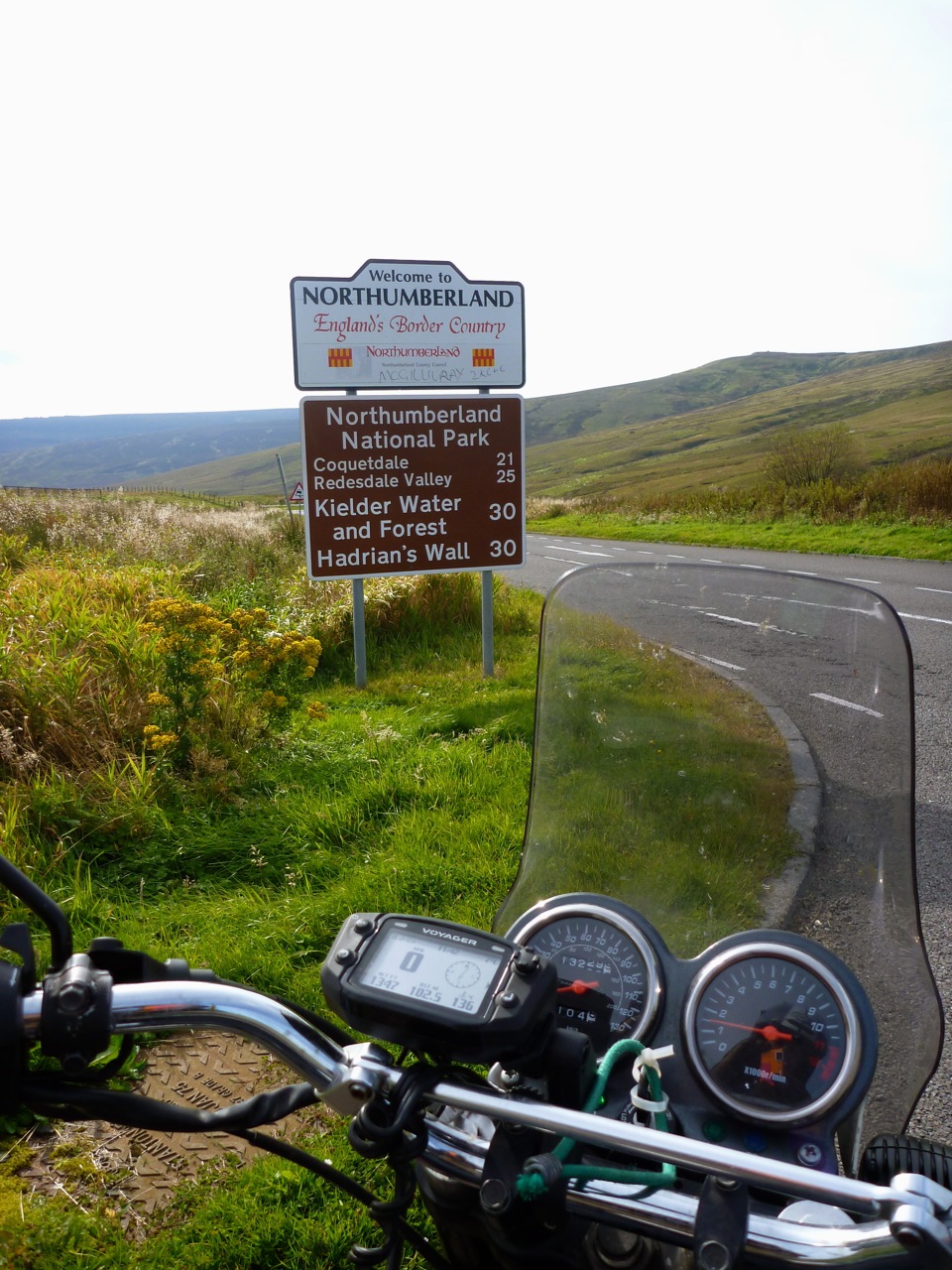
The miles piled on and the GS got notably smoother, as engies do. The lightly loaded Magadans sat behind me, tucked well in and attached or resting on the piperack, while the Voyager kept tabs on various aspects of my progress as I rode up some sweepers to the English border strung across the Cheviot Hills (right).
It was a sunny Sunday and there seemed as many road bikes out as cars, but it has to be said cars do get in the way of enjoying a smooth ride, even on a GS500. I must have been stuck behind one of these or eyeing up the Voyager when the A68 took an sneaky right just before Otterburn while I blundered on along the A689 towards Newcastle. Didn’t want to go there so I turned right onto single track farming roads which I knew would lead to the A68 somehow. Without maps or a satnav, the Voyager’s compass proved a handy aid to negotiating the angular byways until I popped out back on track near Corbridge where the weekend throng were enjoying pub lunches. A fill up saw the mpg improve to 62mpg after yesterday’s all time low of 57 (conversion table here).
I was due for a feed myself but wanted to catch up on my error and find an ambient eatery for a quick and casual refill. That turned out to be a Sunday bakery in a place called Tow Law near Consett. Consett I’d heard of – your man Edmund Blackadder (right) was born there, and in 1980 its steel mill – one of the oldest in the country – was not so much closed down as eradicated. The inevitable social consequences became a byword for post-industrial collapse.
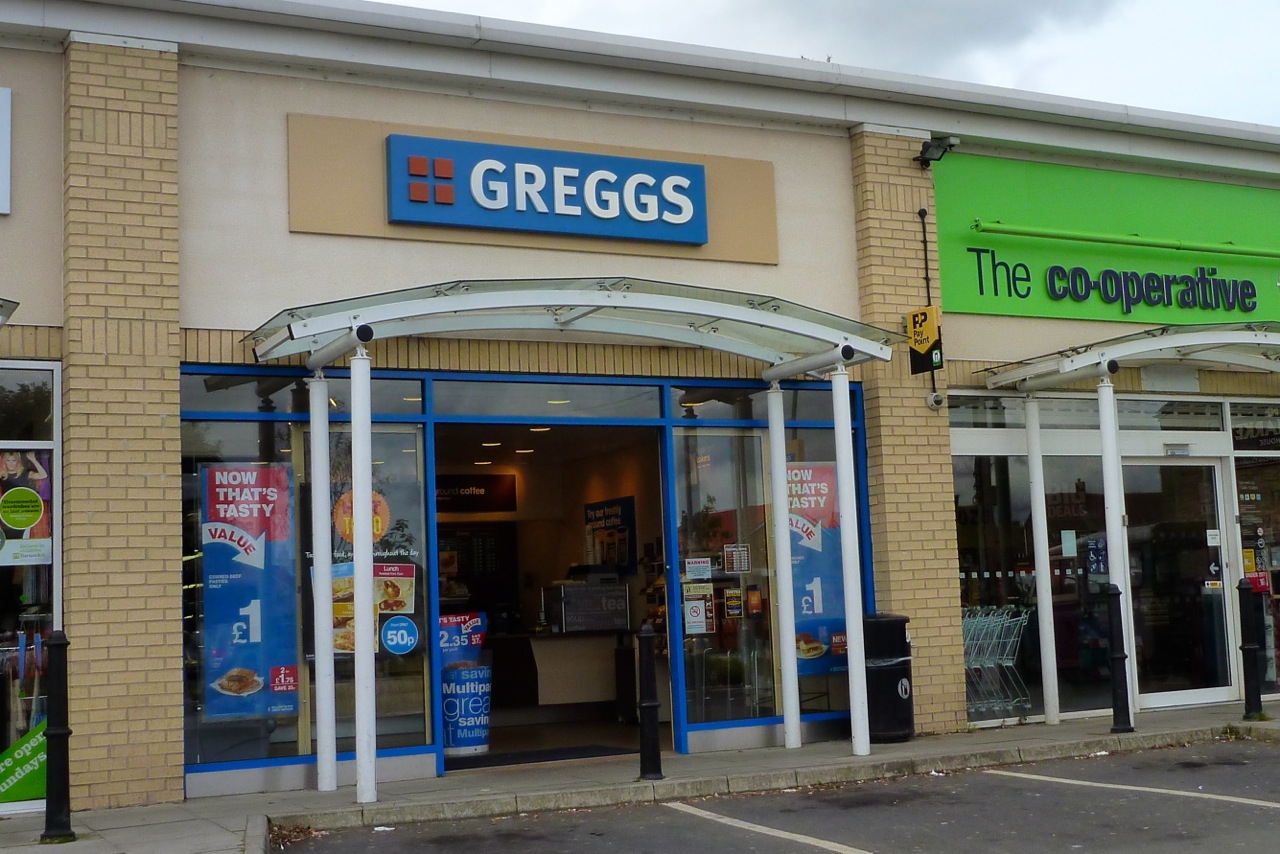
Sat at over 1000 feet in the east Pennines, nearby Tow Law was a smaller version of Consett, established after a Victorian era coal rush but now plateauing out following a steep decline at the end of the last century. But it had a Greggs (left) – the first I’d seen in months, so Tow Law is alright by me. Two hot pies, a cream cake and a coffee. I was primed for the next 6 hours.
Soon enough the A68 ran into the A1, the Great North Road built by the Romans. The better part of the day was over now, all that remained was to ride into the rain. That started somewhere in Lincolnshire, a light drizzle that the winds kicked up into a full-on lateral hosing. Like many bikers before and since, I sat on some Armco pulling my Rukka one-piece over my legs and wrapped the top half under the waxed Falstaff which was to be put to the test, along with the Magadans, the Rukka itself, the GS with it’s new K60 tyres and my X-Lite. I was also seeing how neoprene kayaking gloves worked as wet weather gloves (short answer: they don’t).
What rider isn’t familiar with that trance of concentration that envelopes you when riding a busy road in the wet. The bike is humming as you try to maintain momentum while knowing it takes just one slow- or too fast reaction by you or others to become the unwelcome filling in a pile-up sandwich. Meanwhile your gear slowly begins to succumb or resist the 70-mph onslaught. If I was looking at myself behind the cosy flip-flap, flip-flap of some wiper blades I’d be thinking ‘cripes, rather you than me, mate’. The temperature dropped to 6 degrees, not a long way from snow, and the rain washed off the bugs but started running down the inside of the X-Lite’s visor, further reducing visibility while I bored through the spray. It was the autumnal equinox and luckily some sort of daylight shone through the murk. The thin neoprene gloves were proving to be a fast track to rheumatism, but the PVC Rukka lowers and even my old Altberg boots stayed immune. So too were the Magadans it turned out later. The insides got damp (they don’t claim to be waterproof) but barely a drop licked the outside of the thick inner bags. And the K60 tyres never missed a beat on the motorway or while cutting across Sunday night traffic through the middle of London.
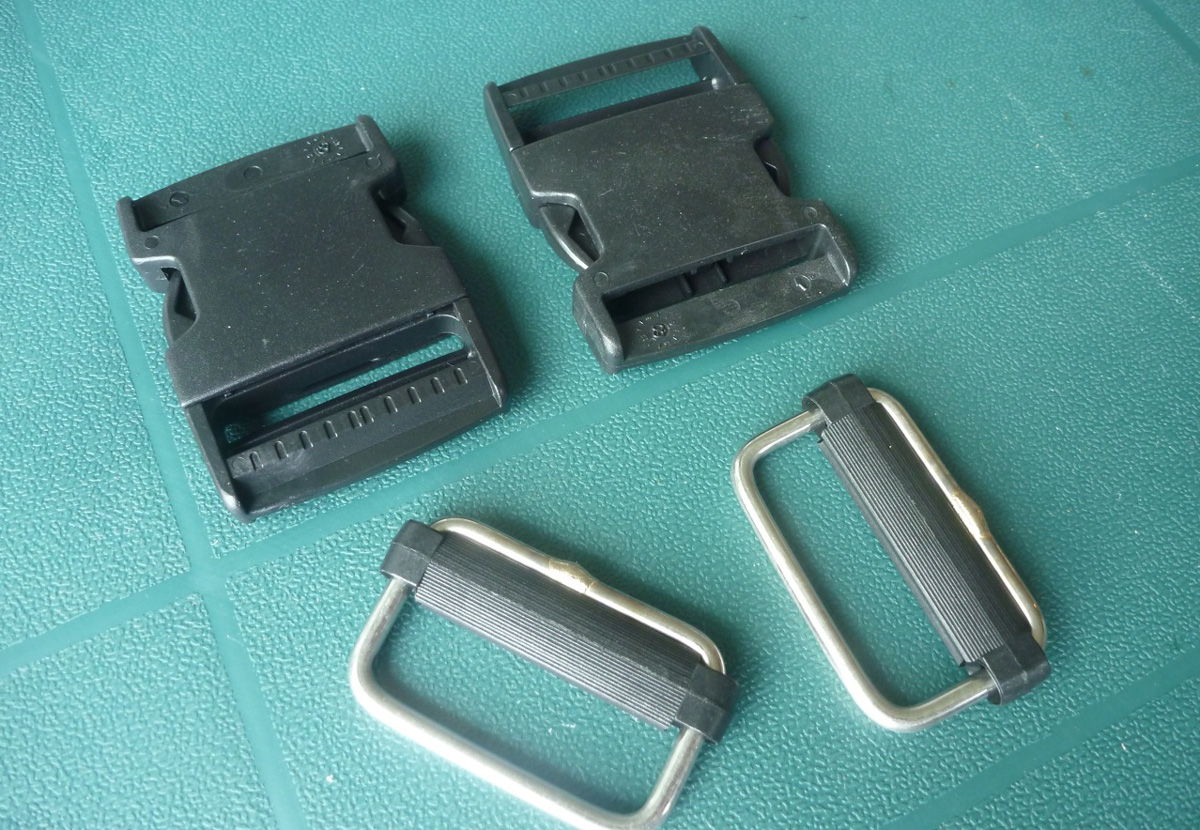
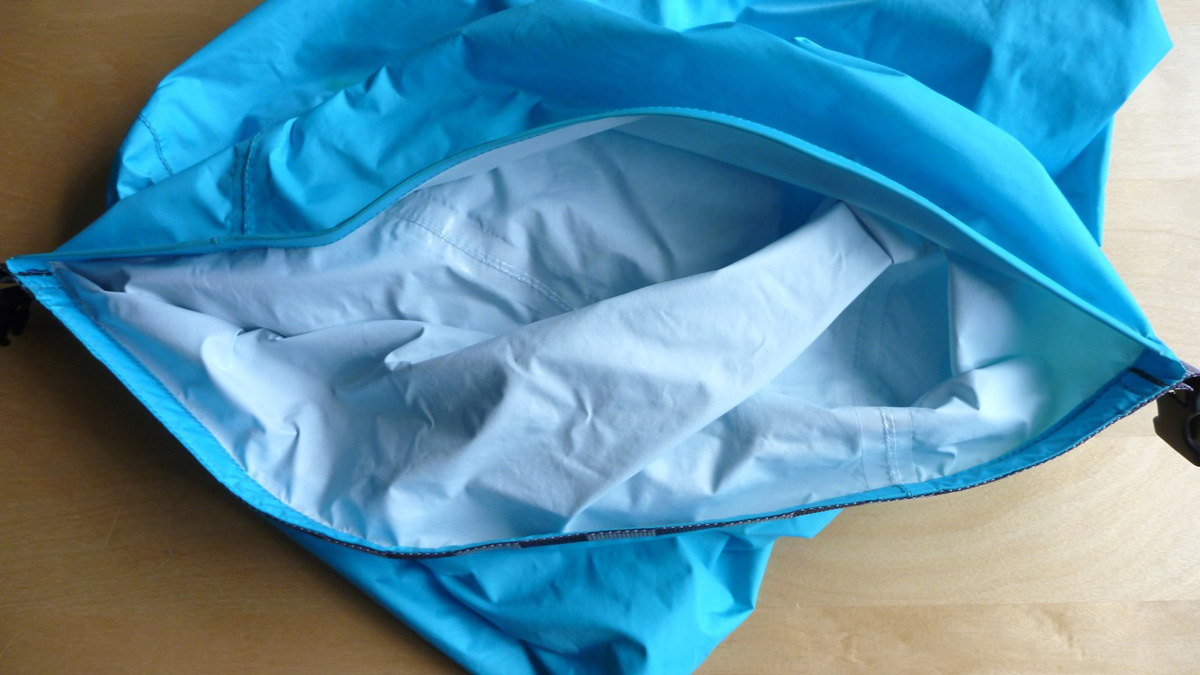
Using the Magadans Although it was only a short ride, I got a bit more of a feel for using the Magadans. The buckle idea I mentioned is definitely the way to go to replace the over-seat velcro. As the bags sag or lift with different payloads you want to make small adjustments and doing that accurately with the double-sided velcro is a pain. With a ‘friction-bar’ buckle (right) a quick tug or release and you’re done. Opening the bags for access is of course easy but the inner bags are rather stiff when cold and so difficult to roll up and clip while complying with the outer form. But it was a cold day and anyway, the are scores of roll-top dry bags available, either full-size singles, or smaller multiples to help compartmentalise. Though it’s much thinner coated taffeta nylon, Exped make a light blue XXL 40-litre rucksack liner dry bag (left) with taped seams and a white interior. As with the Kriega Overlanders, a white or light colour would make digging around to find stuff a little easier. I lashed on my sewn on D-rings to the rack rather crudely and with numb hands had to yank them off when I got home. Once I have the rack finished I’ll be able to make some permanent attachment points on it and figure out a quick clip-on system, probably a smaller, one-inch version of the black clips pictured right.
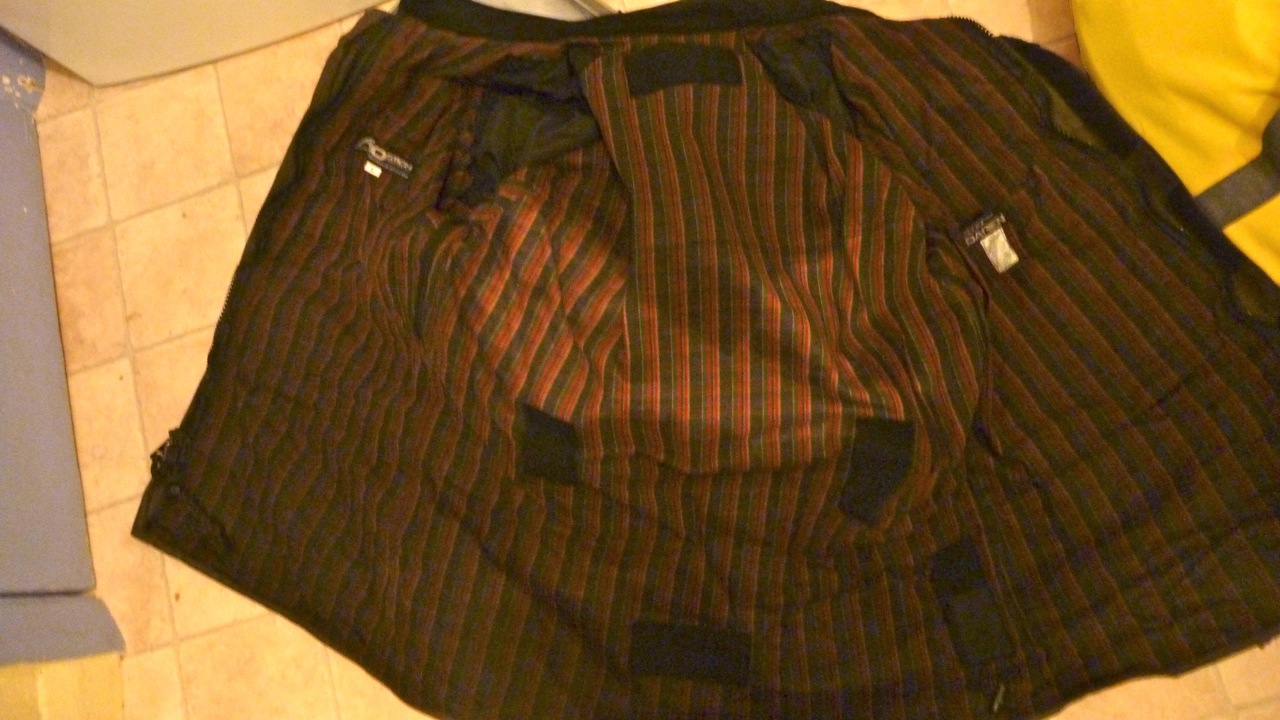
Not so amazing or surprising, was the Falstaff’s performance. After an hour I could feel the wet against my arms just as I’d done in Spain months earlier, but more so. It was only when I got home that I saw the entire lining bar a small patch on the back (right) was soaked. My wallet and phone in the inside pocket were on the way to saturation. What a shame. Design and construction wise it’s a great bit of kit, but it doesn’t do what it needs to so I won’t be wearing that again.
Still, now I know what works which so far still includes the Suzuki GS-R. I can’t say I notice any negative roadholding or handling issues from what might be seen as a thin rear tyre or indeed running identical tyres front and rear like an old Lambretta. Again I’m surprised how comfortable and endurable long days are on this bike, even in sub-optimal clothing. A big part of it must be the seat which engages well with the corresponding part of my anatomy, but I also wonder if it’s something to do with a modest engine and braking power which puts little stress on the body, while being enough not to feel vulnerable and under pressure in traffic. That was the reason for choosing and adapting an otherwise ordinary machine.
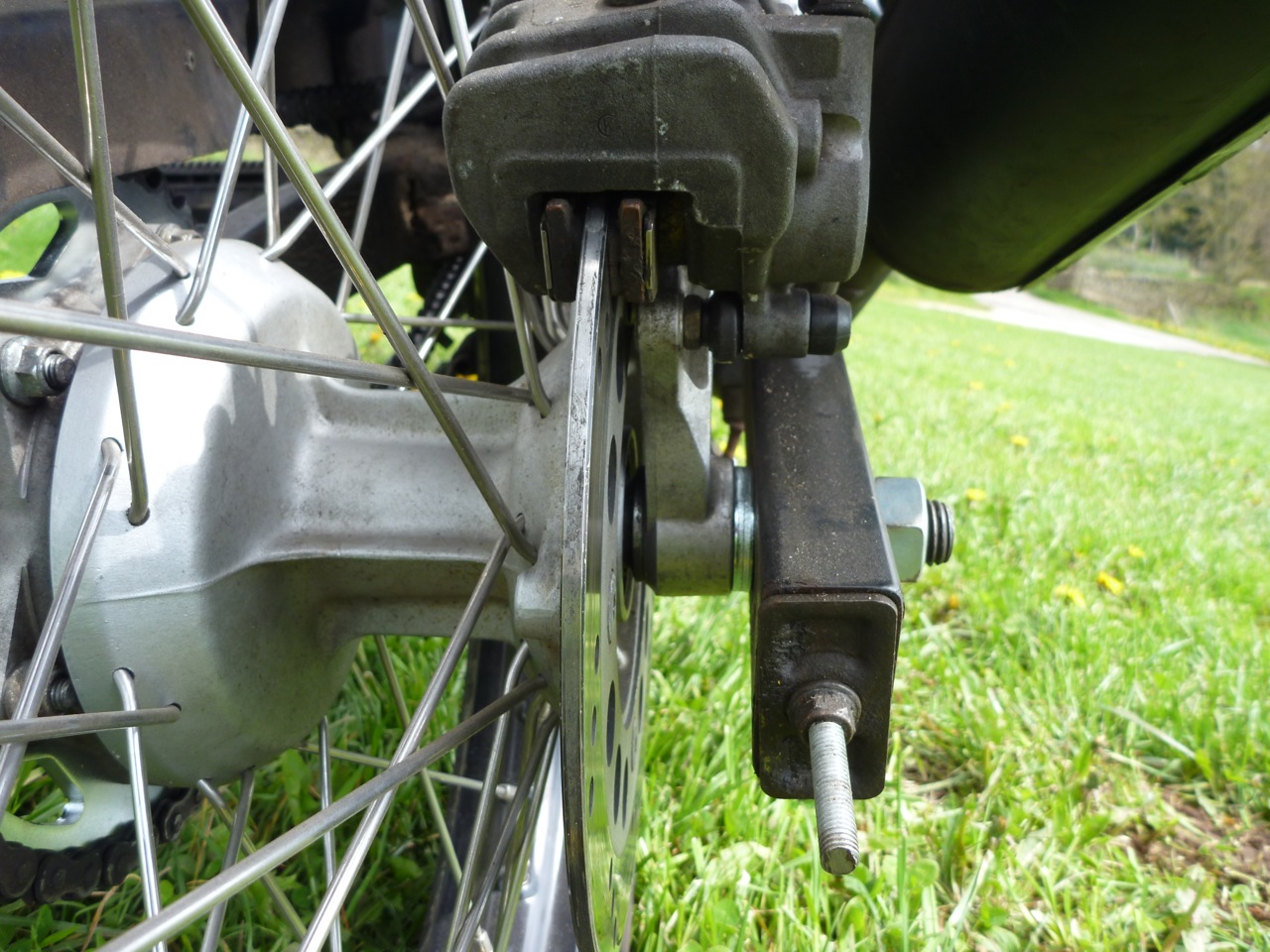
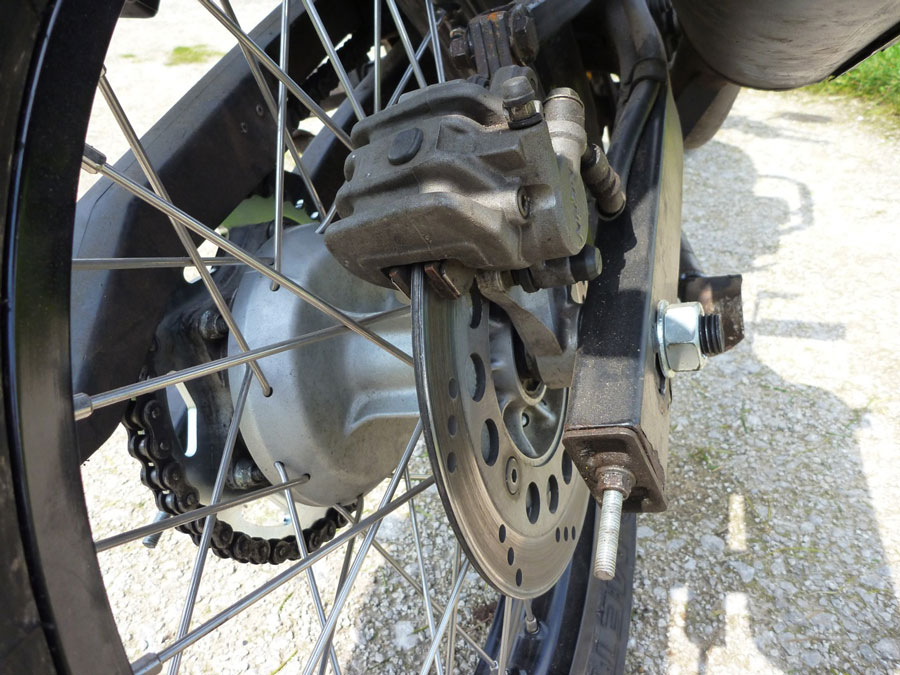
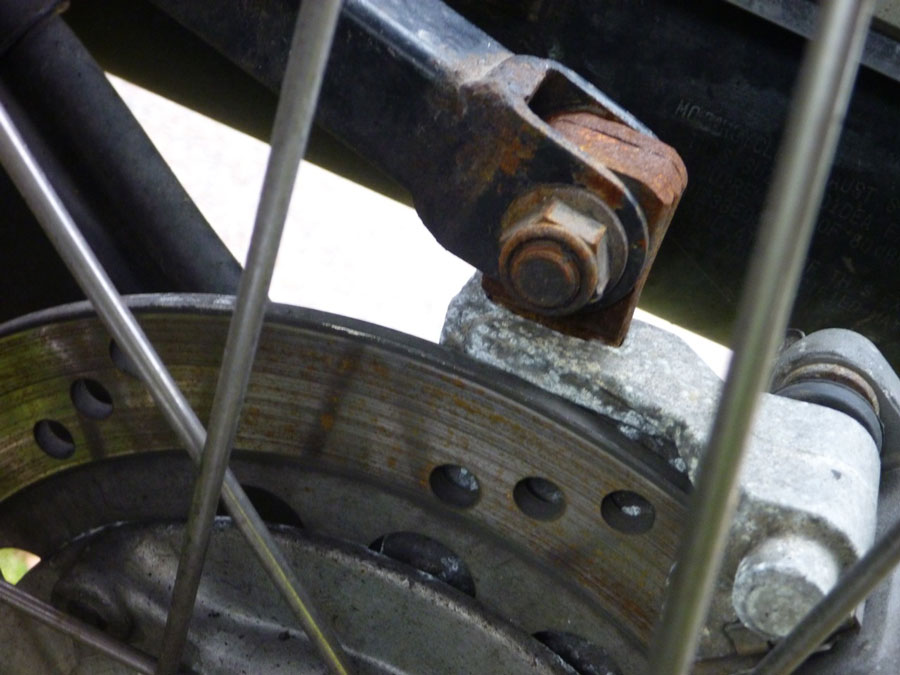
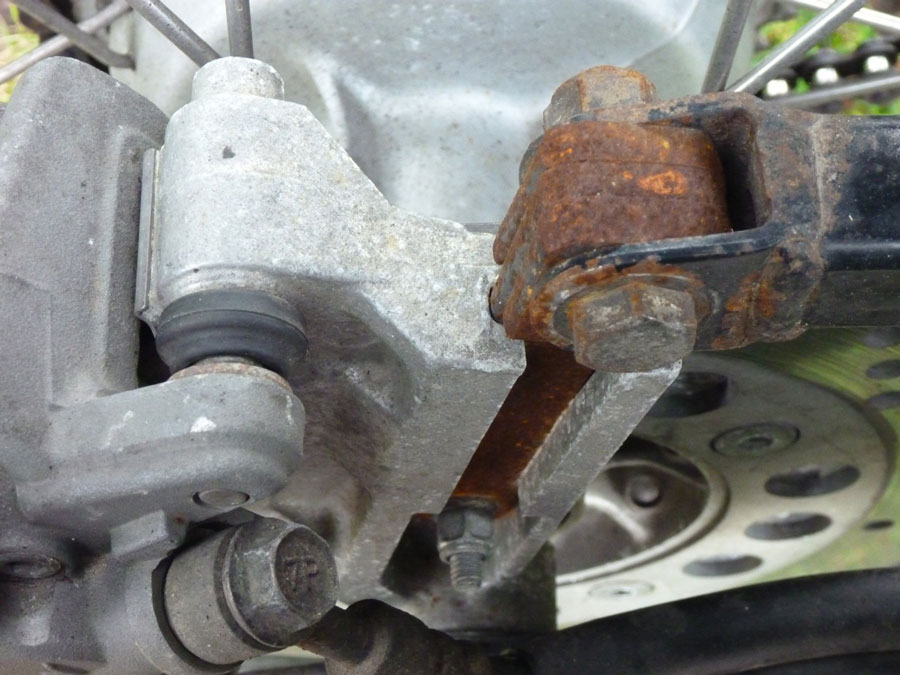
My 2004 GS runs a 2000 DR650 hub, rotor, calliper and just lately, a DR slave cylinder too, all fitted to a 19-inch Excel rim in the original swing arm. My non-bikey mechanic mate did the job, taking some suggestions from me.
The DR650 spindle is thicker than the GS so the swing arm slots and the spacers inside them were enlarged to take the DR size and a high tensile bolt was used. Can’t recall if this was because a used DR spindle was hard to find, a new one too expensive or the DR axle was just the wrong length so using a bolt was easier.
We considered lengthening the swing arm – apparently a DR650 will slot into the frame but is said to be rather long. Plus I thought the stresses on the already jacked up OE linkage with the SV650 shock might get too much and extending the GS5 swing arm a bit risky. But as it is, the bike handles normally within its limits. I can’t see myself skimming over the dune tops or powersliding like Gaston Rahier on his Marlboro BM.
As for spacers and alignment of chain and rotor, we focussed on getting the chain lined up first (the new rim was offset to fit, I recall) and sorted the rotor after. From the picture left, it looks like the OS DR spacers or a very similar tube spacer were used with just a couple of washers between the calliper and the swing arm to fill out, so it was a pretty close fit.
A custom sprocket was ordered to fit the DR’s sprocket carrier with a guesstimate that 42T (rather than OE 44) with the OE 16T would make the gearing near identical to the original GS500 but now with a 19-inch wheel; the guess proved spot on. The same chain is used with no length changes, but with a couple of extra links I could run the wheel at up to 1.5 inches further back to lengthen the wheelbase which is currently about 58” (as short as possible on the swing arm slots – original is 55.5″) and feels fine. There are no chain tensioners needed, but an idler might be an idea to stop the lower run rubbing on the pad which makes a bit of noise.
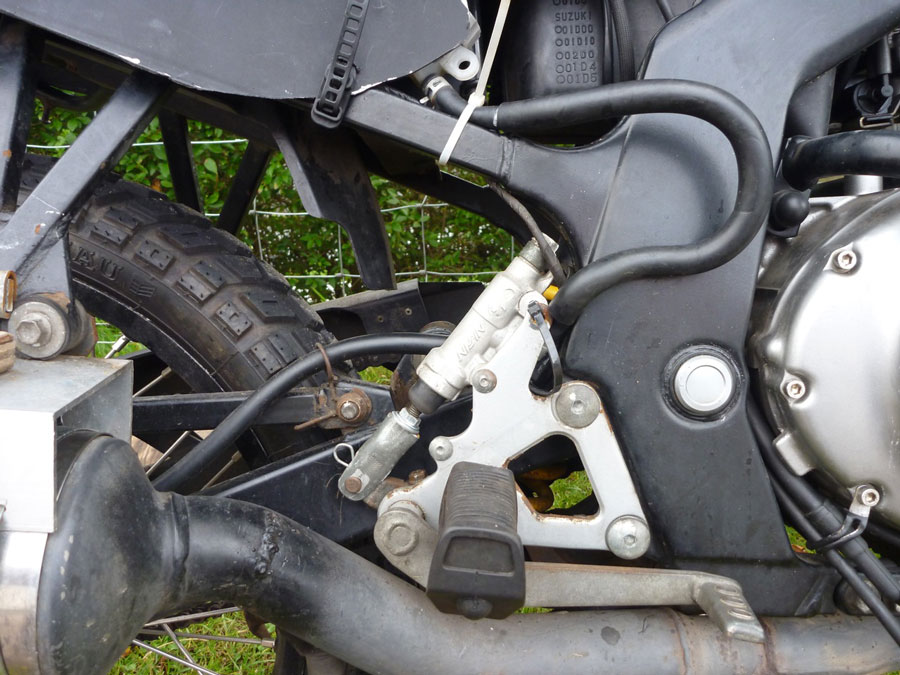
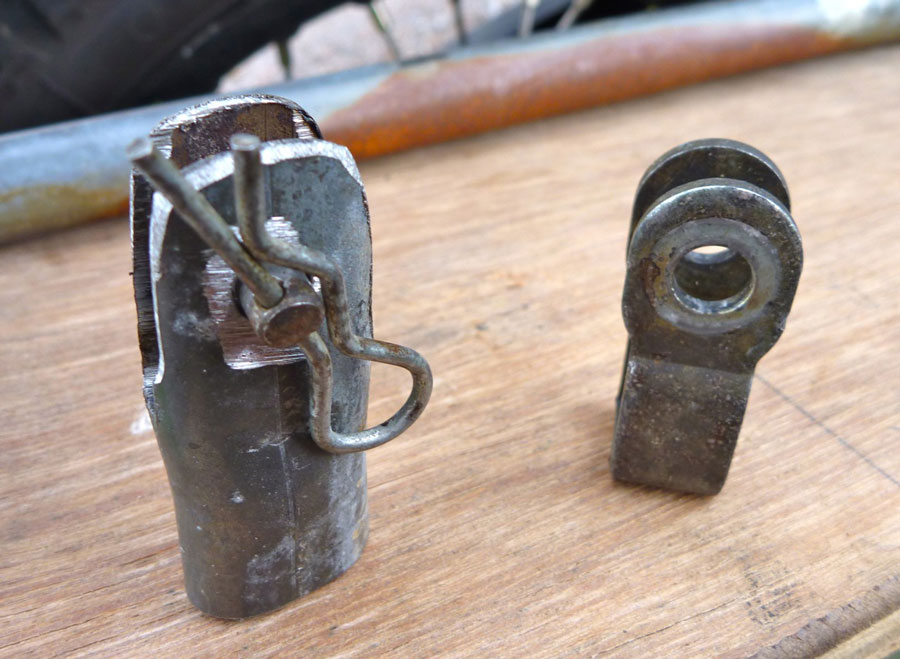
The OE GS slave cylinder didn’t work well with the DR rear calliper – mismatched hydraulic ratios meant weak braking, or so I thought. I eventually fitted a DR slave cylinder and rear braking improved to the point of being able to lock the wheel, but still requires a long throw of the pedal, even after replacing the linkage with a slightly longer item made from a bit of 3/4 inch tube (below right). I then found an image of a DR rear slave set up and the DR pedal pushes directly up on the vertical cylinder, not leaning over at 45° like mine which effectively lengthens from the throw. The GS brake pedal mounting splines are rather coarse so moving it around one notch didn’t work either. Alignment of the DR slave on the GS mounts is a bit tight anyway as it is now, but now I know the brake is working better than it was, an adaptor plate can be made to verticalise the slave cylinder so hopefully making a shorter throw and snappier brake.
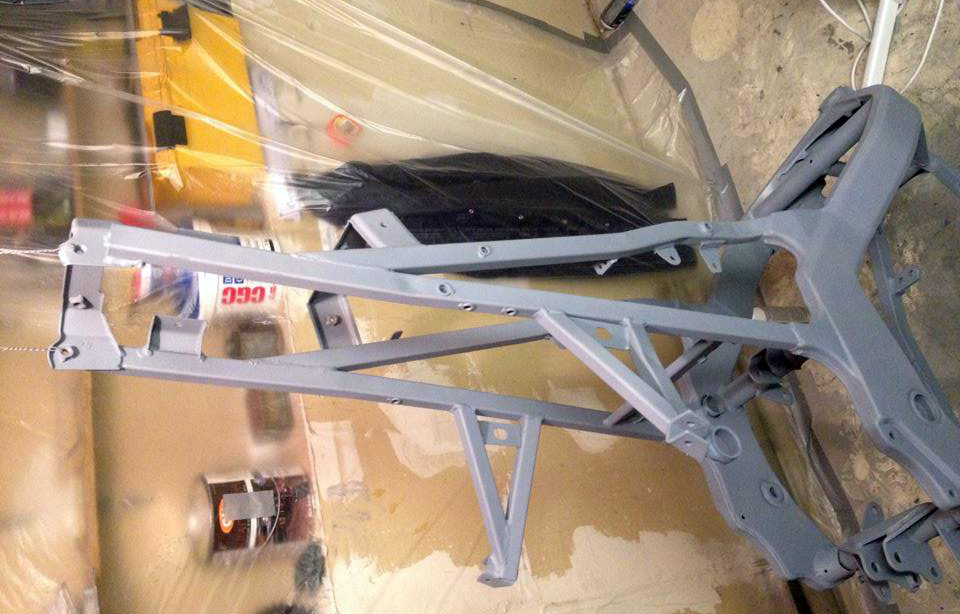
I don’t think you could describe a GS500’s chassis (left) as something that Brunel would have tipped his hat to. Thin bits of box section glued together with spit and braced with stamped bits of plate. You get what you pay for and GS500s are not to be mistaken with the GSX-R pocket rockets.
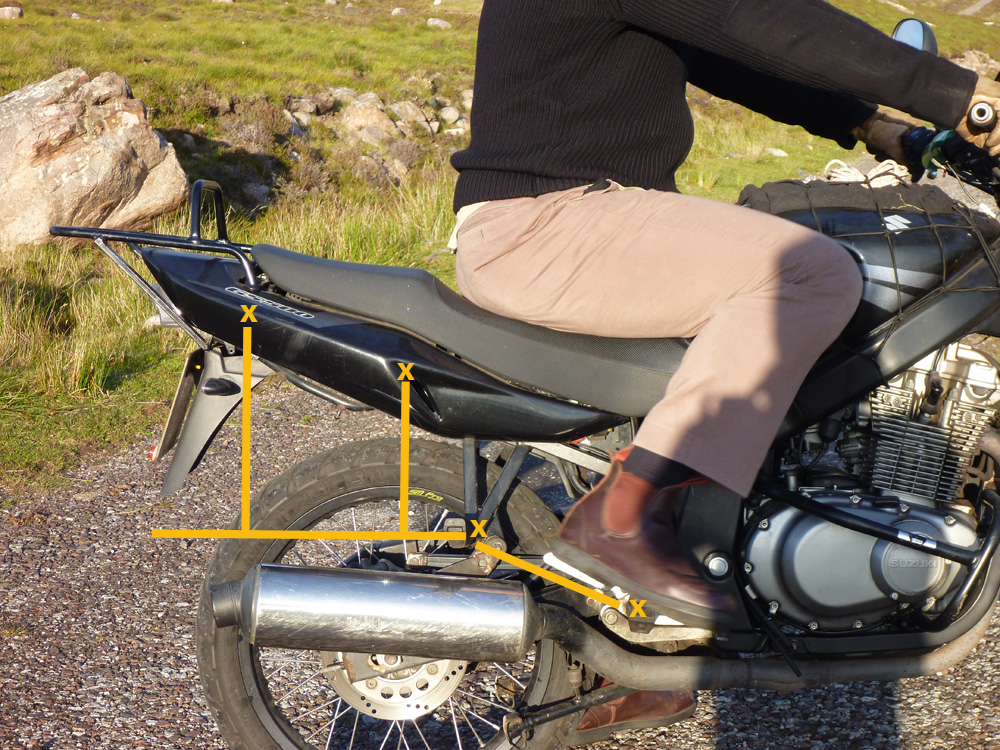
Anything too clever or hefty would merely see the GS’s subframe wilt like late summer corn. Up to a point a beam could be added from the pillion mounts down towards the footrests to help support the back end (right).
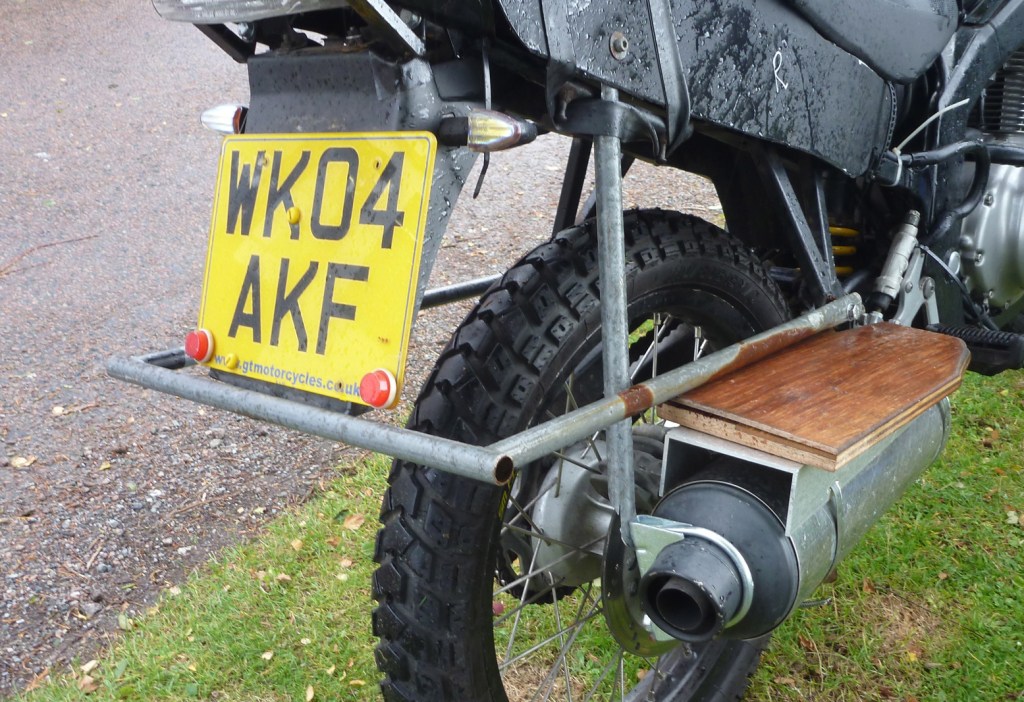
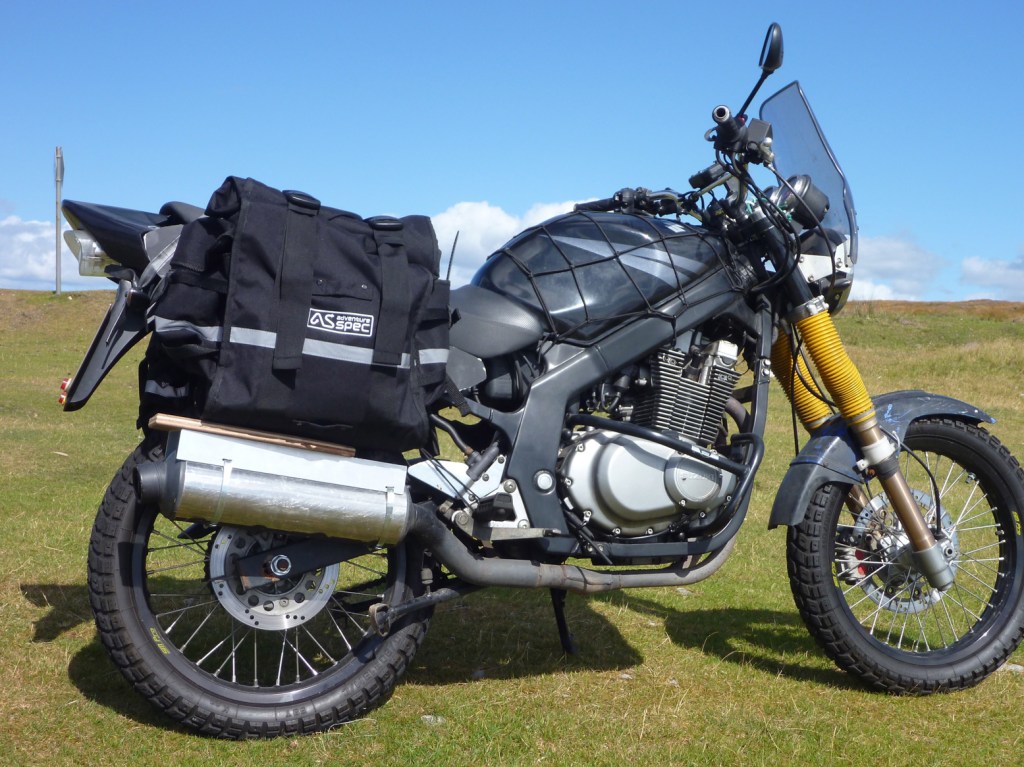
Trying to work out how to make the platform (or get it made), it occurred to me that a metal support tube as strong as any on the machine was staring me in the face: the silencer. By chance I’d had the pipe lowered to make room for my planned DIY panniers (which eventually became a set of Magadans) until a light bulb flickered momentarily: use the pipe.
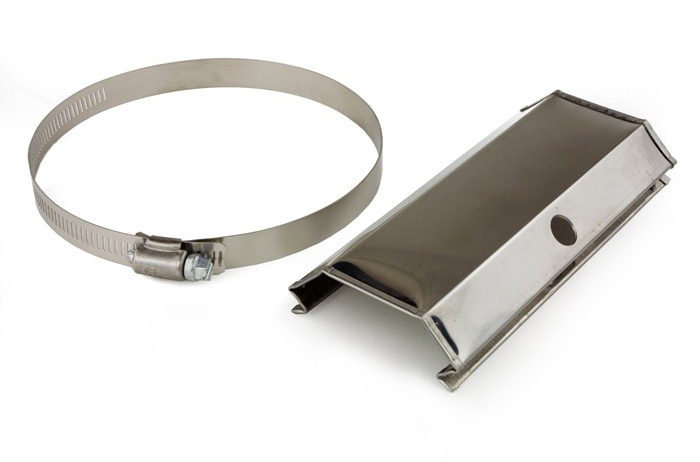
All that had to be done was separate the pipe’s heat (not that much on the pre-catalyzed GS5) from the bag’s base and possibly add support at the back. A mention of Giant Loop’s good-but-too-short stainless pipe guard (above right; £15) gave me the idea to make my own from a bit of 2 by 4 ally off-cut.
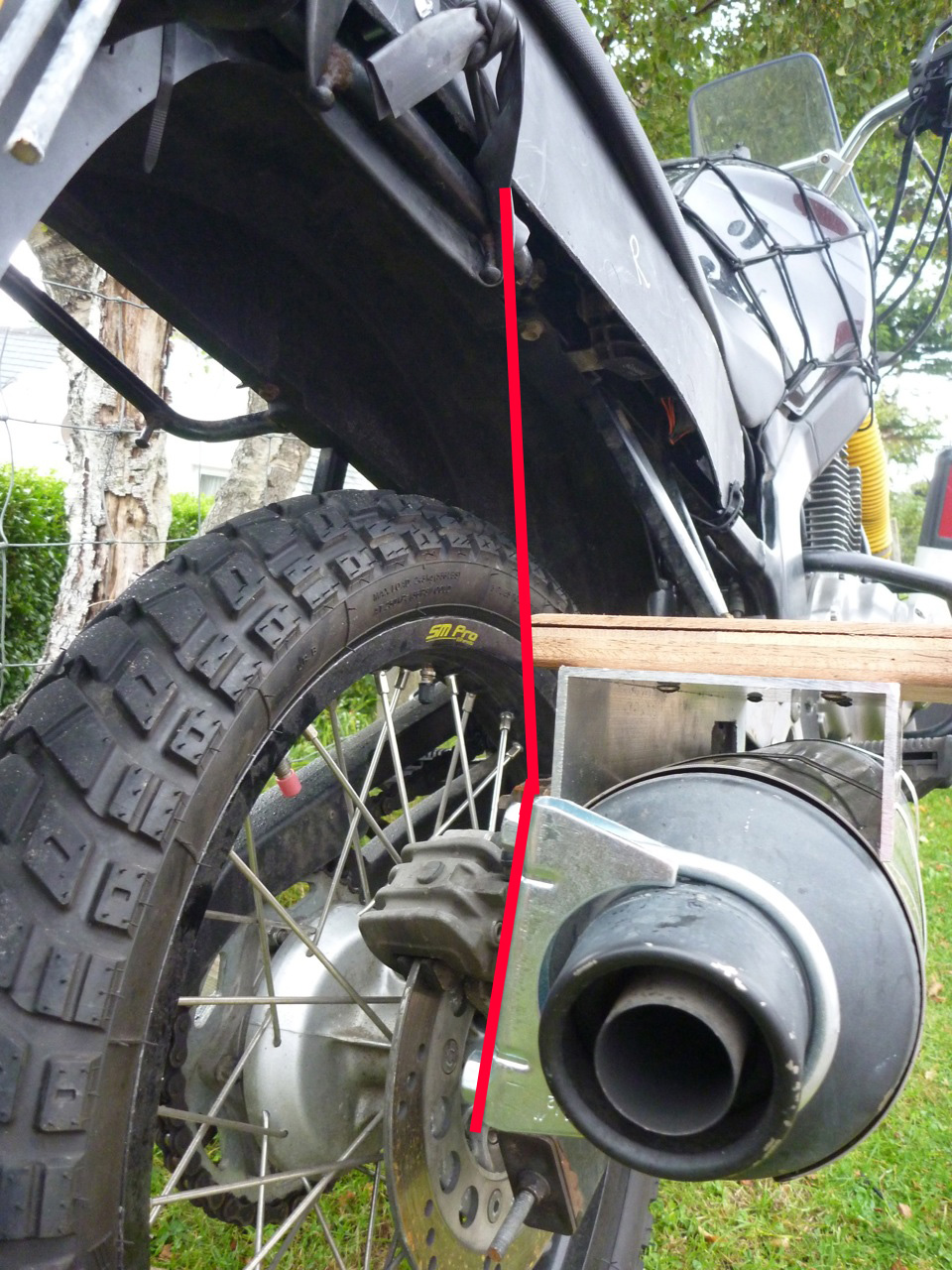
On top of that screwed a layer of plywood on which rests the pannier. The good thing is that my Mags are throwovers so the full weight need not be taken on the platforms. But there’ll come a time when that needs to be done so I added a support from the silencer’s snout to the subframe using a 2 1/2 inch exhaust clamp (left).



















 Adventure Motorcycling Handbook