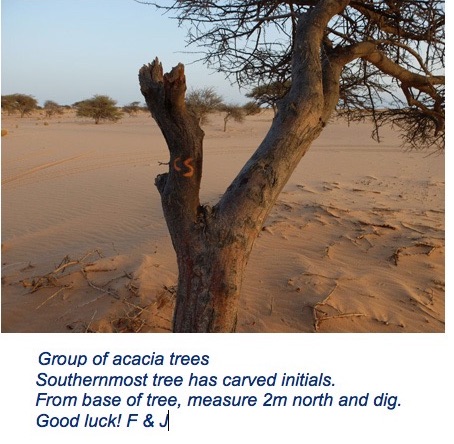
With back up from Mark in a 4×4 sat alongside Colin on a Nikon, we set off for the 1100-km ride from Assa through the Western Saharan interior to Dakhla via Smara and the Digtree (left), a fuel cache I had buried in 2015. I tried to get there alone on a WR250 in 2017 but when push came to turn left, it felt too risky.
The fuel may have been getting a bit ripe by now, but all was going well until I hit irreparable tyre troubles just 100km from the Digtree. I limped back 250km to Layounne, got fixed up and, now out of time before I meet my tour group, we settled for a leisurely drive north up the windswept Atlantic coast. Not for the first time, my Sahara plans slipped through my fingers.
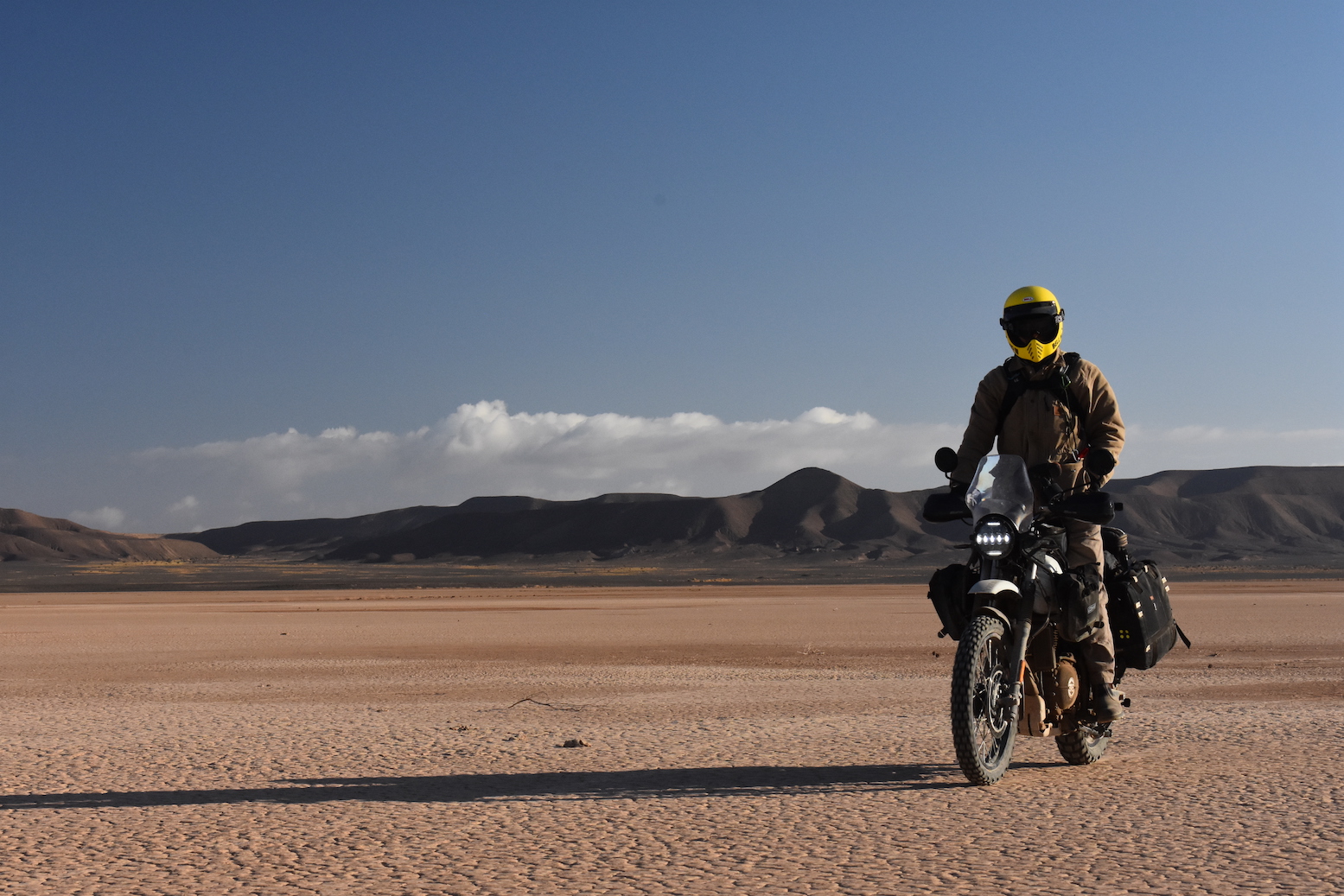
Hooning about on a clay pan.
The century-old Aéropostale base at Cape Juby (Tarfaya).
Inside the base.
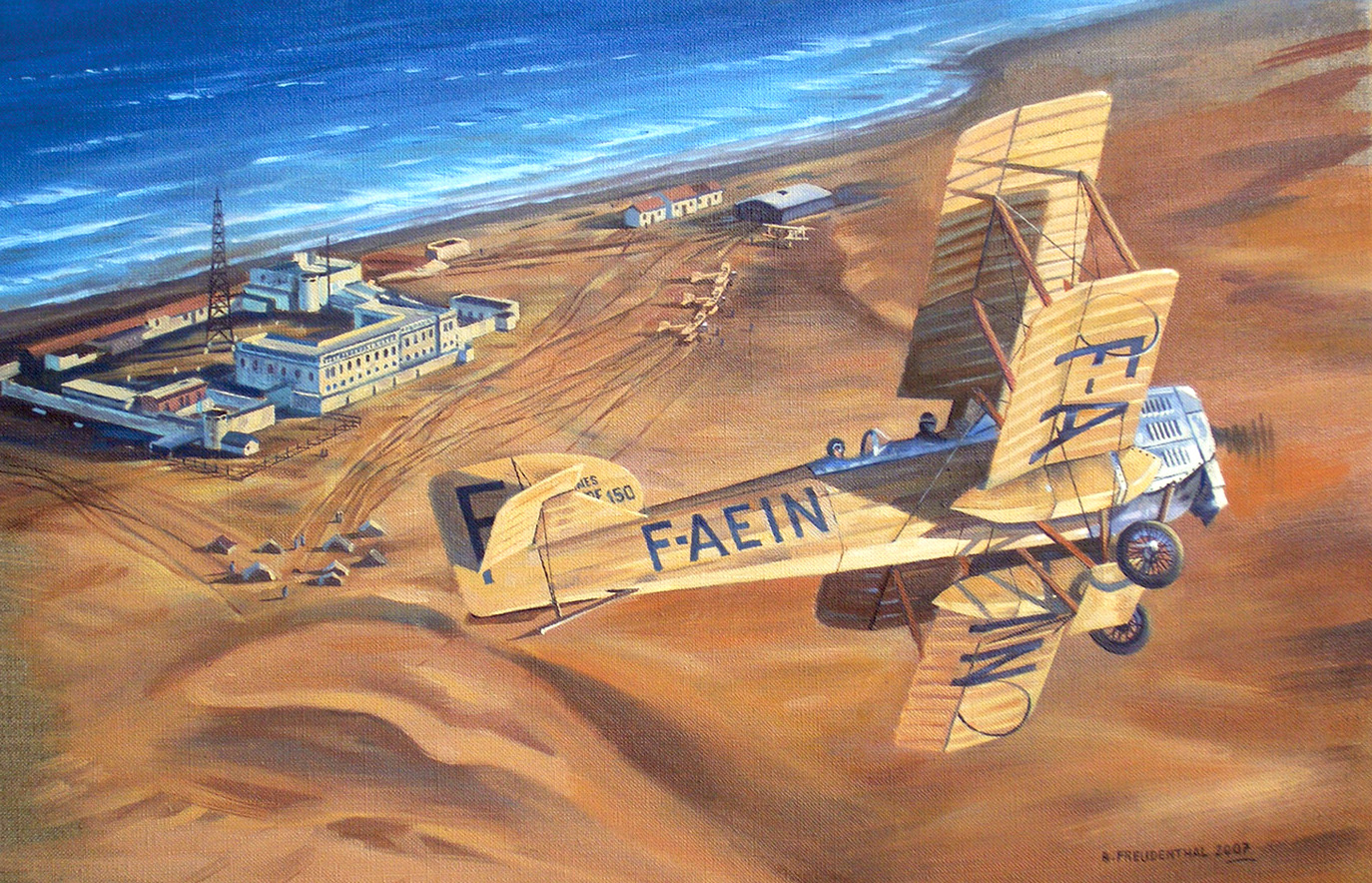
Cap Juby in its heyday.
Tojo wheels + jerries – the only windbreaks for miles.
Watchtower on a berm just 50km from the Mauritanian border.
Hot steam and rubber. Cleaning out the Slime.
‘Moto – Landrover – Layounne?’ I point to each and try and persuade a Saharawi to transport my bike to the coast.
Churned up, sandy gorge at MW6 KM246. The Himalayan meets it’s limit.
They like the word Sahara out here.
Crossroads where MW6 joins MW7. Came from the left on the WR in 2017.
Khnifiss Bird Lagoon.
Topping up for the day. A can will do me at least 500km.
Desert dawn near Gueltat Zemmour.
A Dakar Rally mound. Pushed up every kilometre or so as landmarks right along our route to the Digtree and beyond.
Most of the riding is easy, as above. But it only takes one lapse in concentration.
Removing the punctured Tubliss core in Layounne.
Colourful beetle.
Ex-Dakar track.
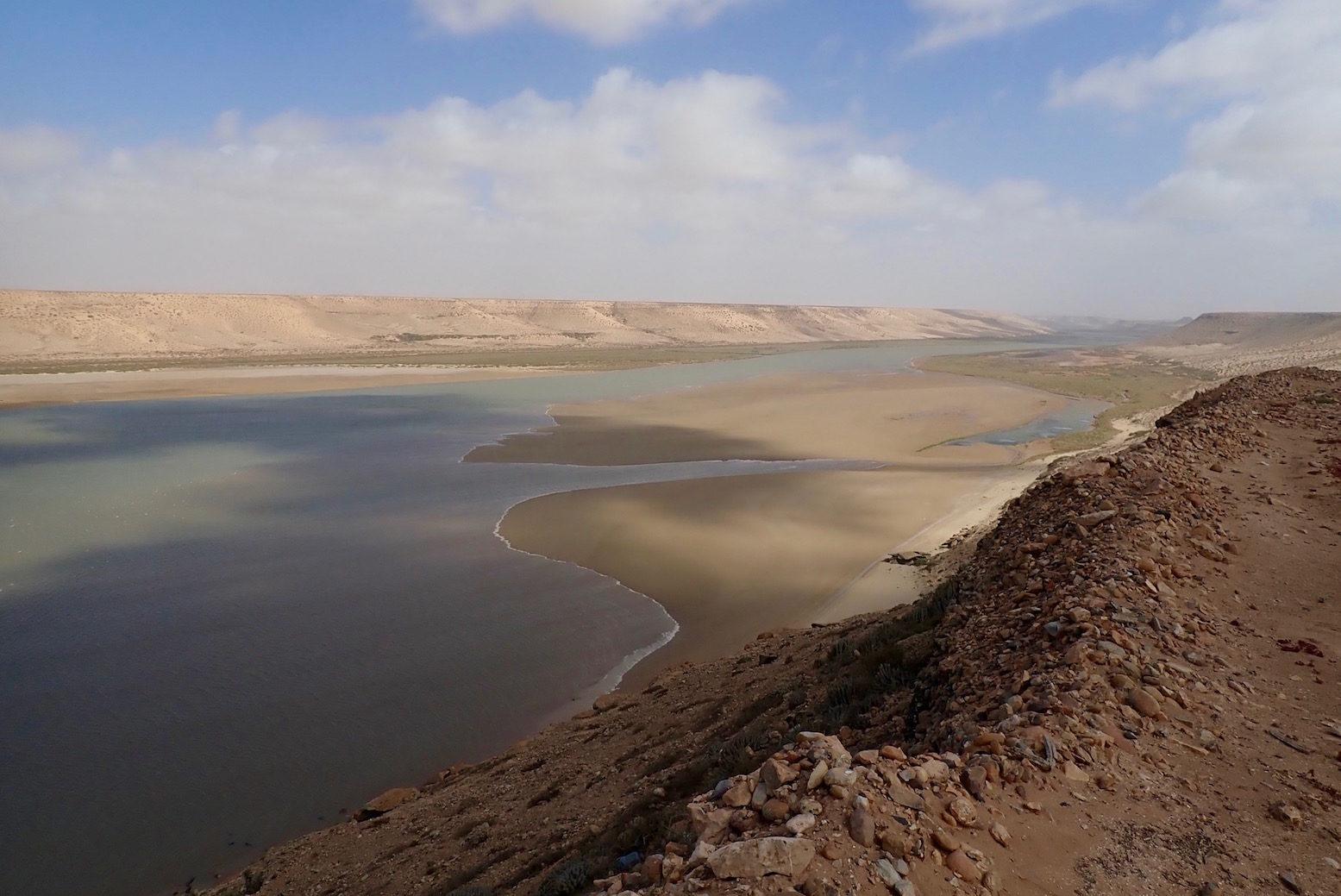
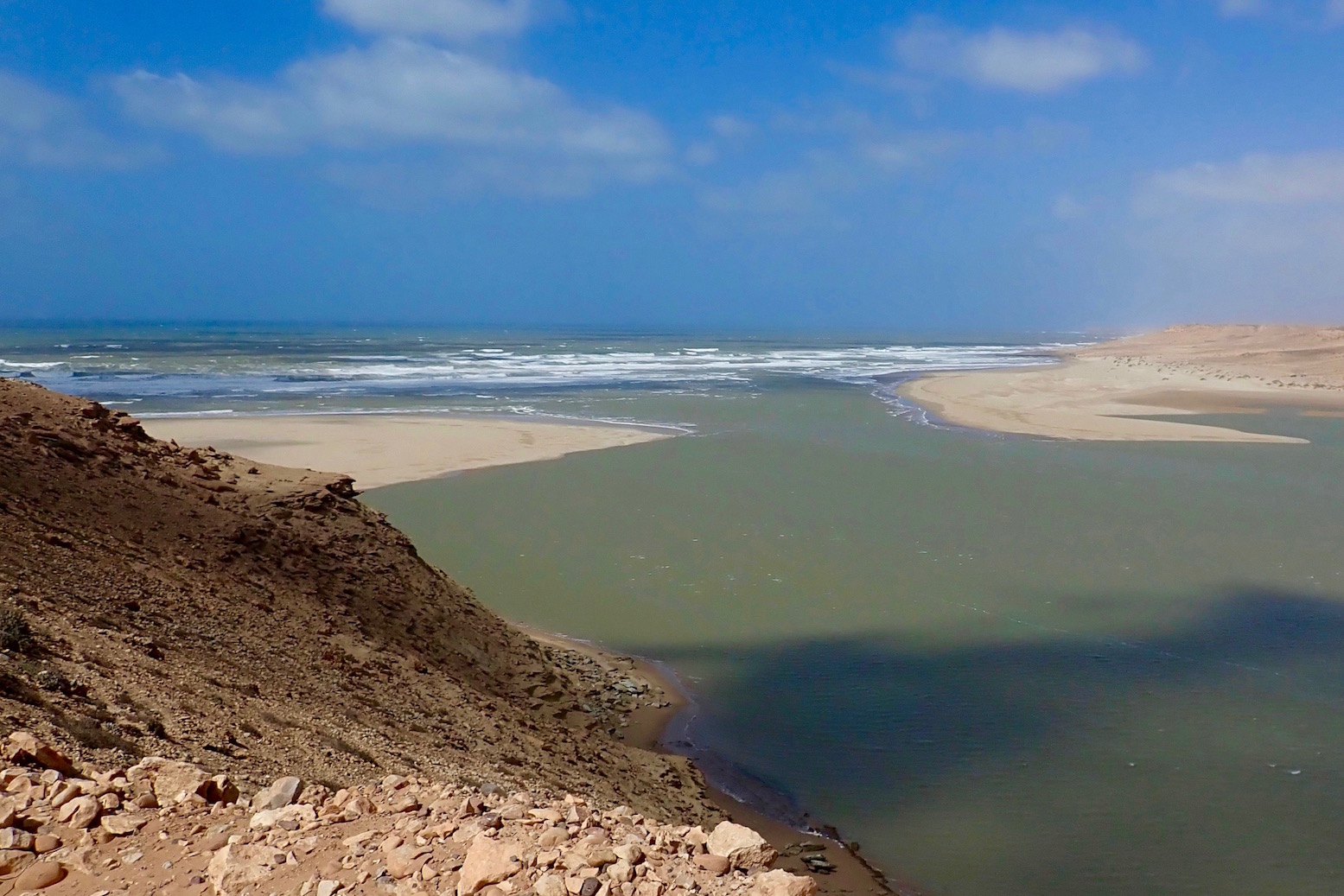
The mouth of the Draa which rises near Ouarzazate in the High Atlas, but very rarely flows in its entirety the 1000-odd km to the ocean.
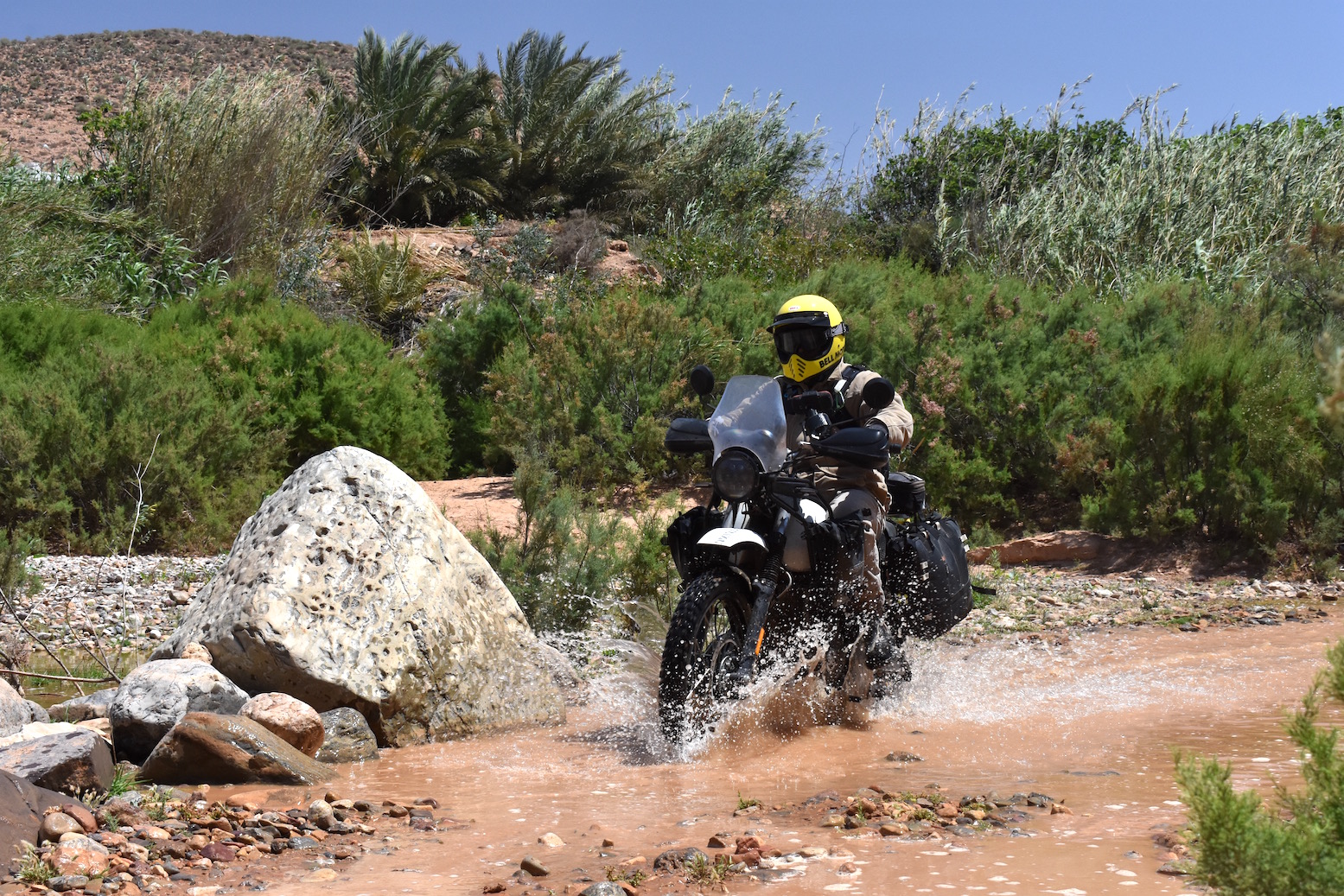
Out of Tiznit we took an interesting track along the Oued Assaka to Fort Bou Serif ruins for a spot of lunch and some filming.
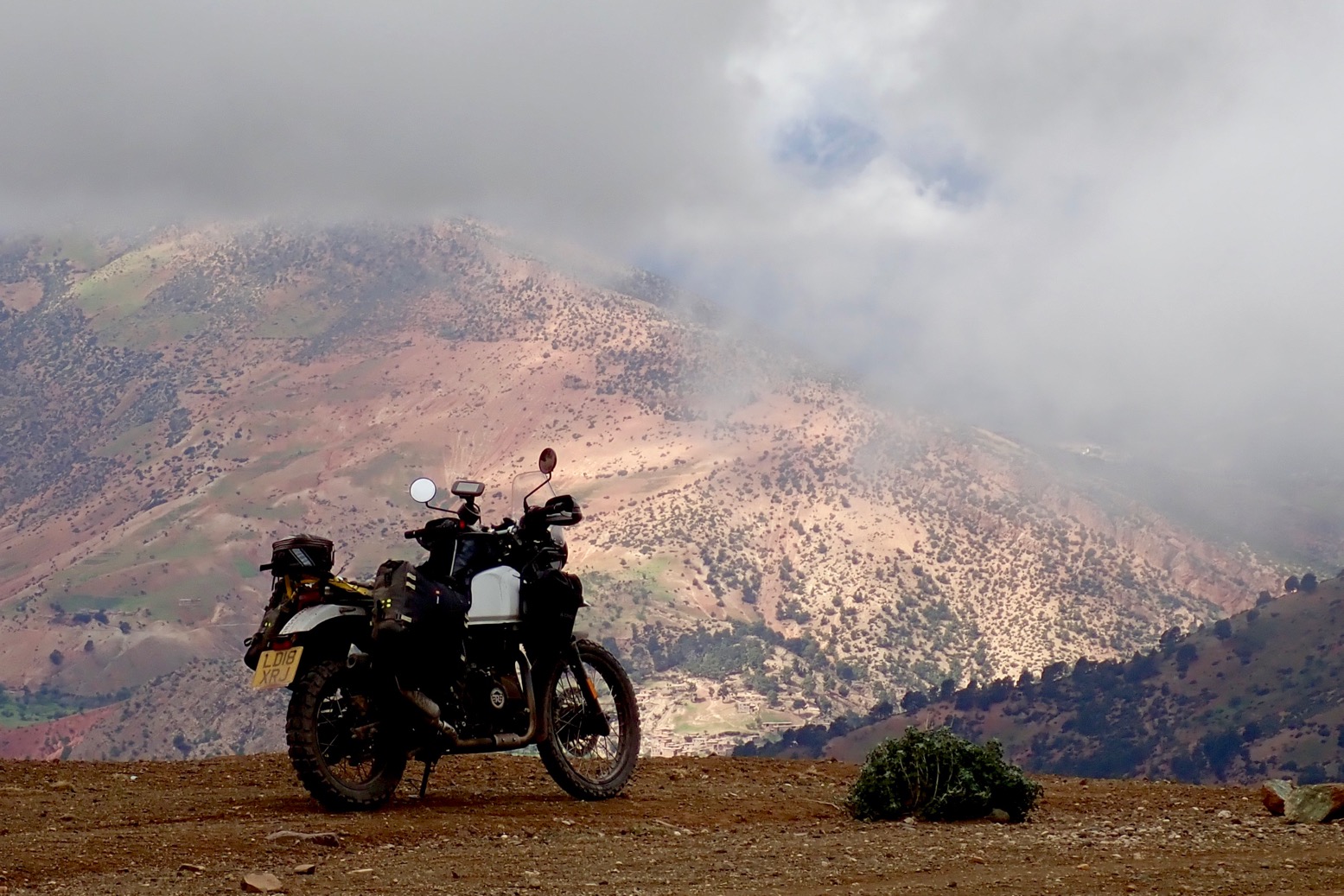
Just got to the desert about a 1200 miles in. Two wheels on my wagon and the Himalayan still humming along. Hard to believe it hasn’t missed a beat running down from Malaga over the High Atlas and down here to the edge of the Sahara. The tension is unbearable! Fuel economy has slowly improved and is now averaging 77mpg Imp (about 27.2kpl; 64.1 US). Bear in mind since leaving the autoroute from Tangier I rarely go over 60, where that’s possible. At yet at these modest speeds the REH is a very satisfying and undemanding ride. It’s an ideal low-profile machine for Morocco, if not so much the getting here. That’s because the seat still needs work; an easy enough fix.
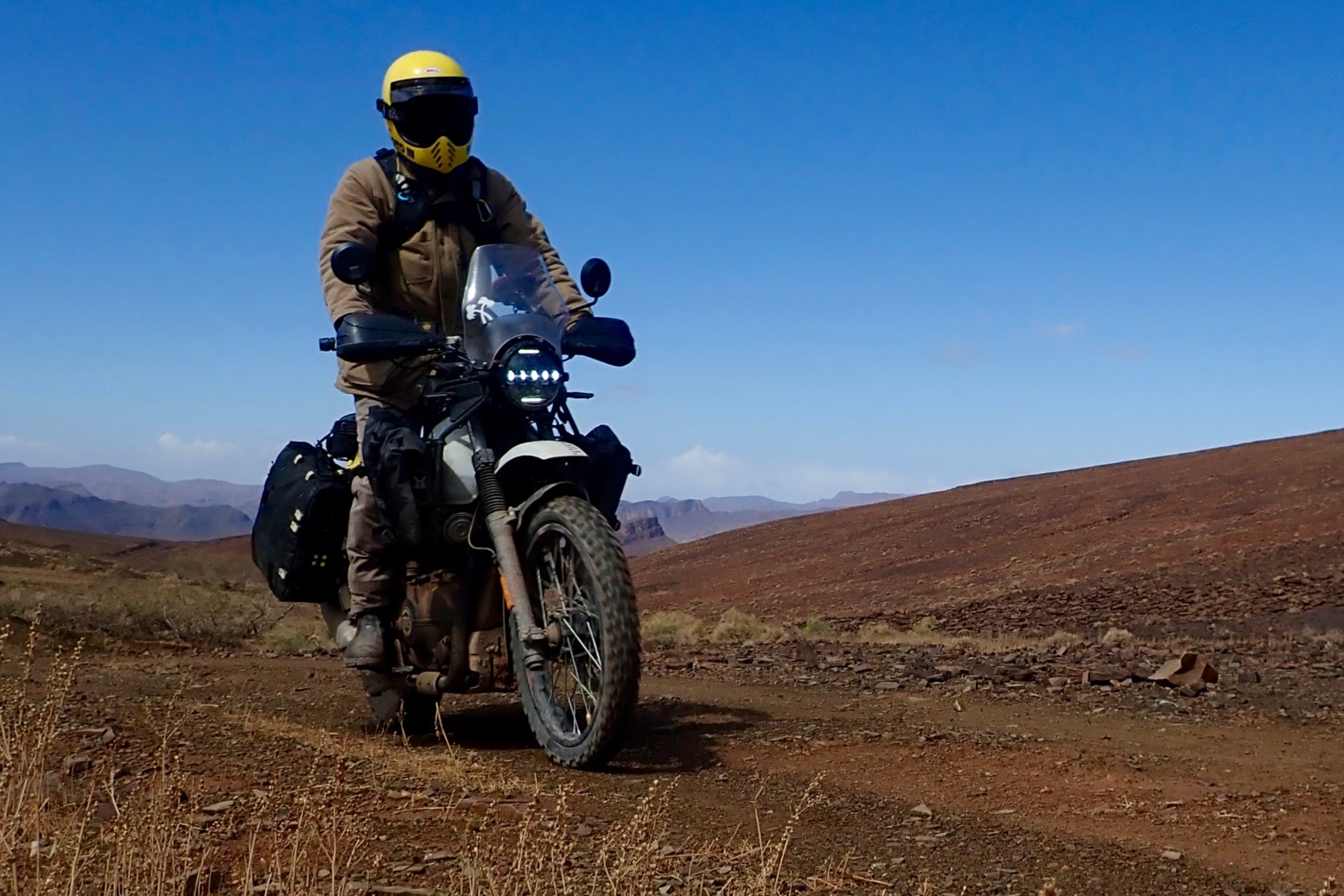
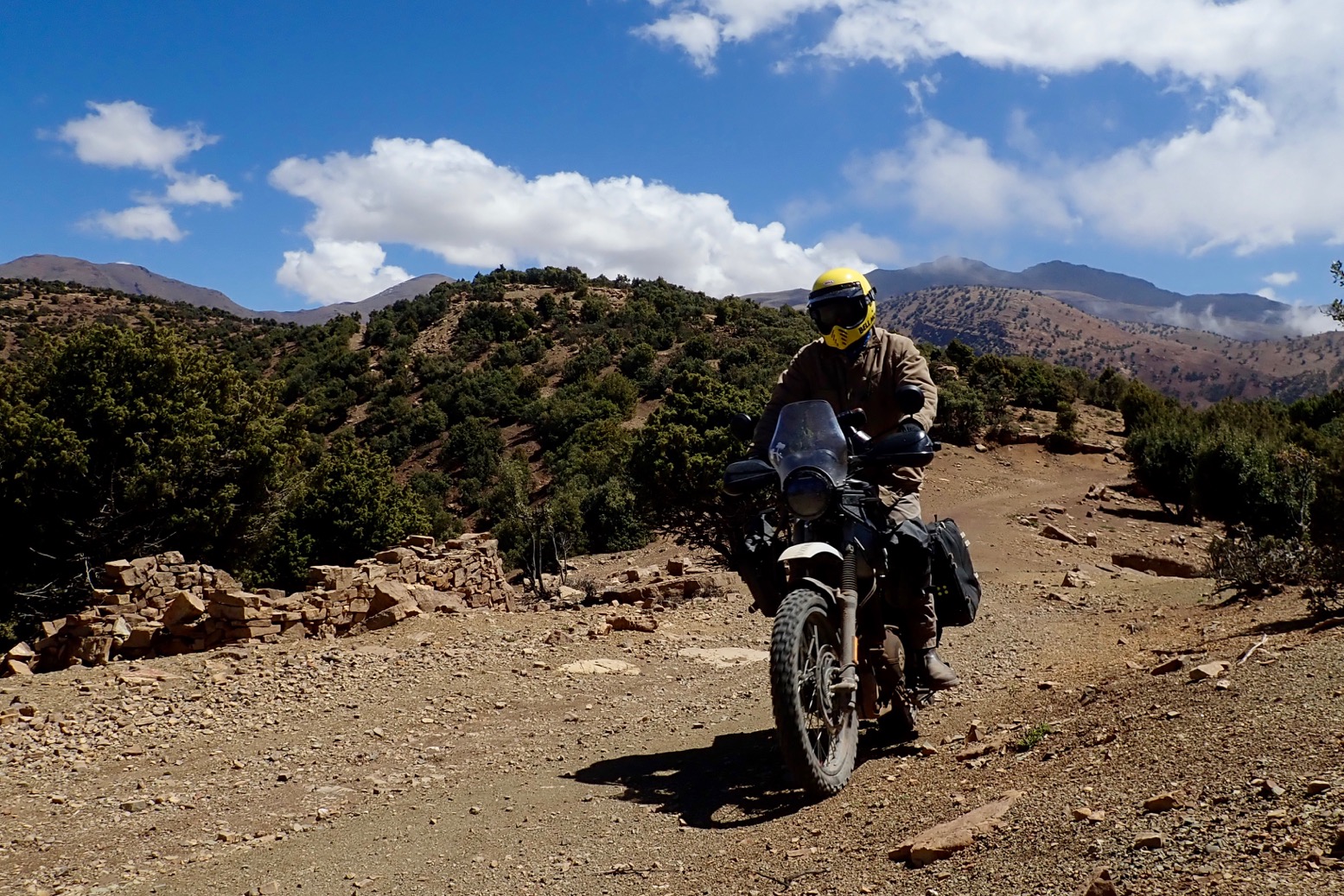
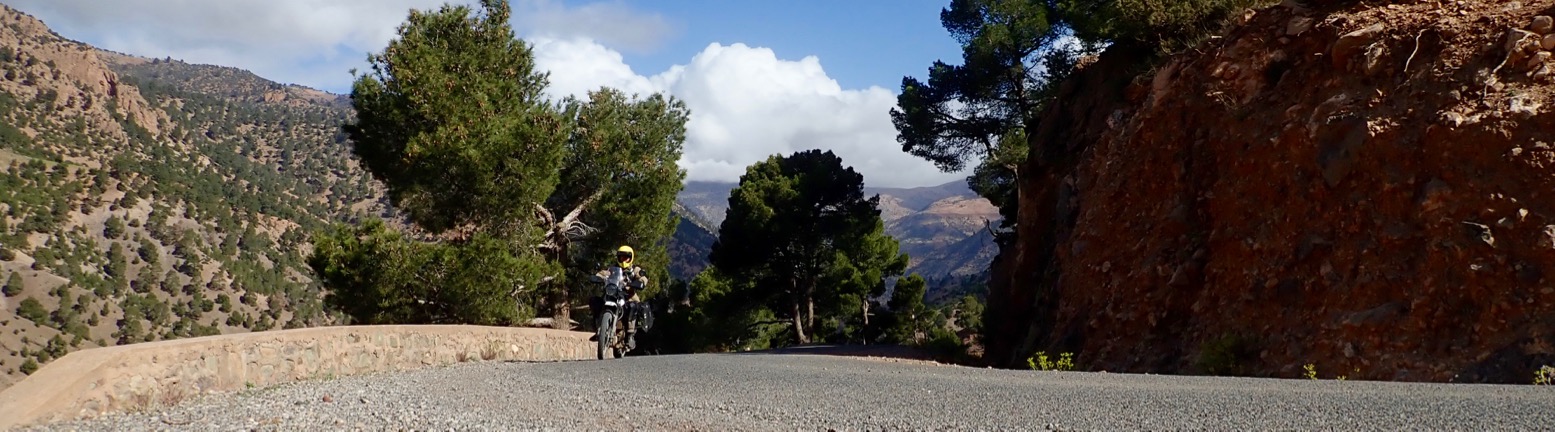
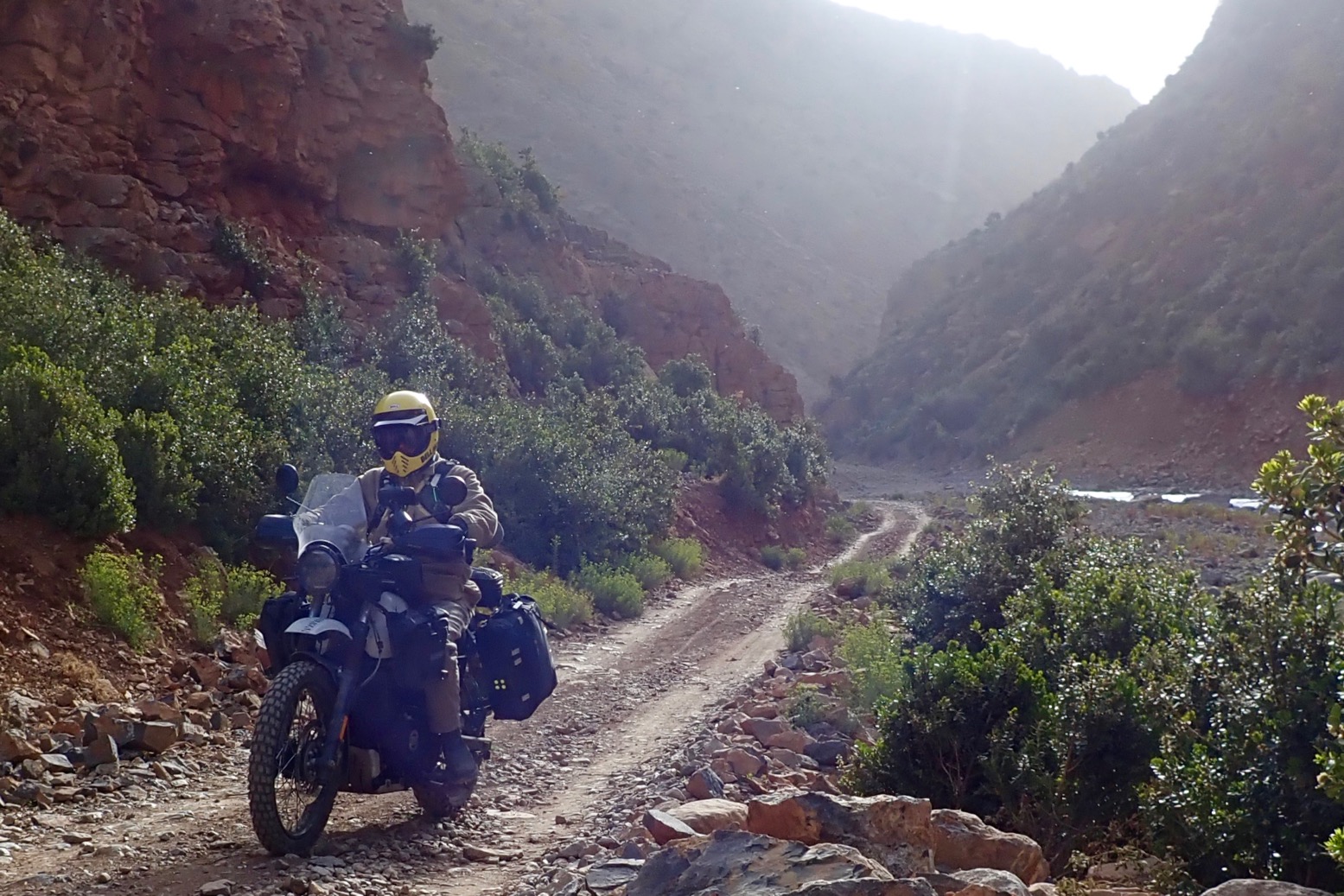
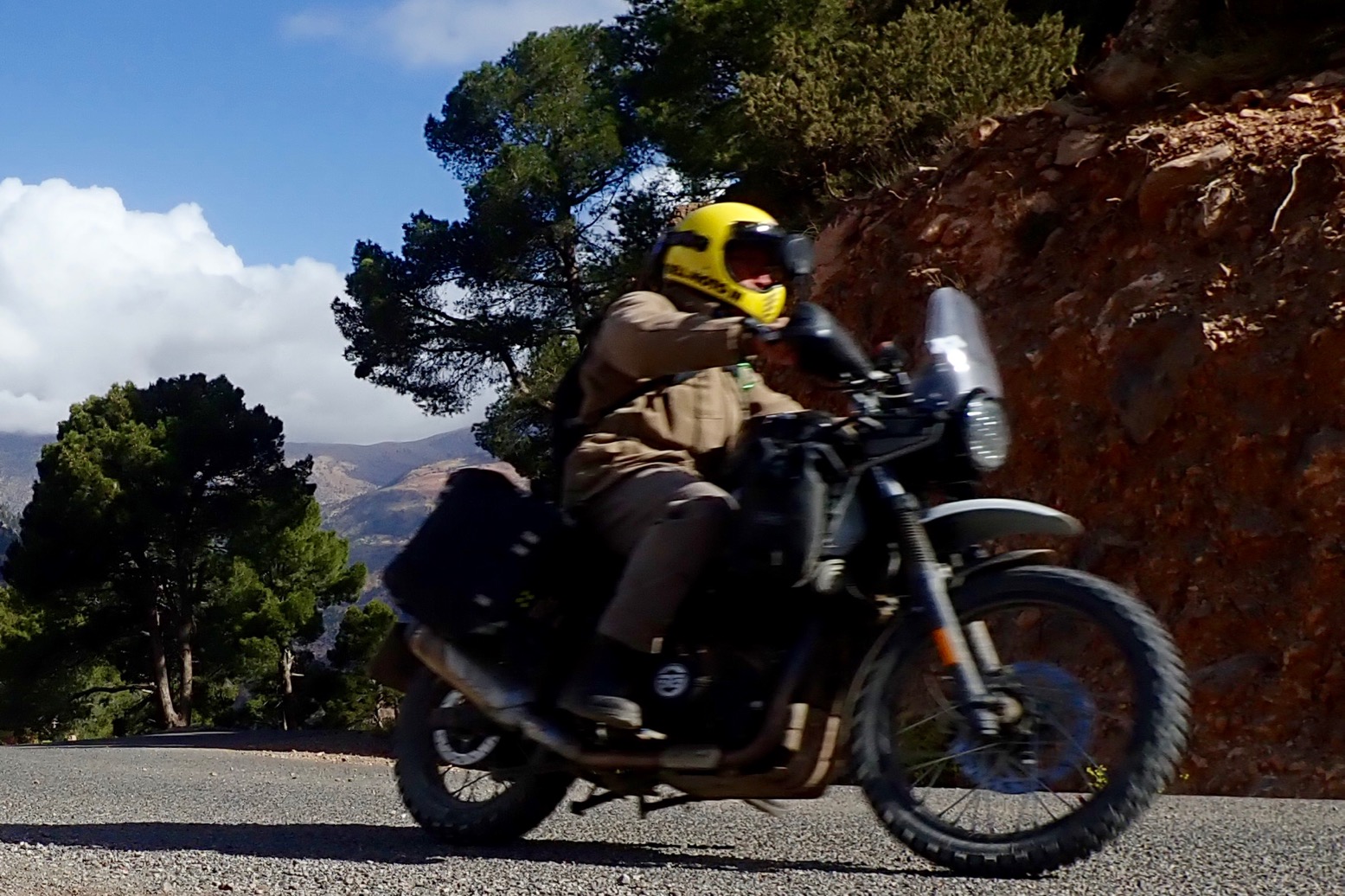
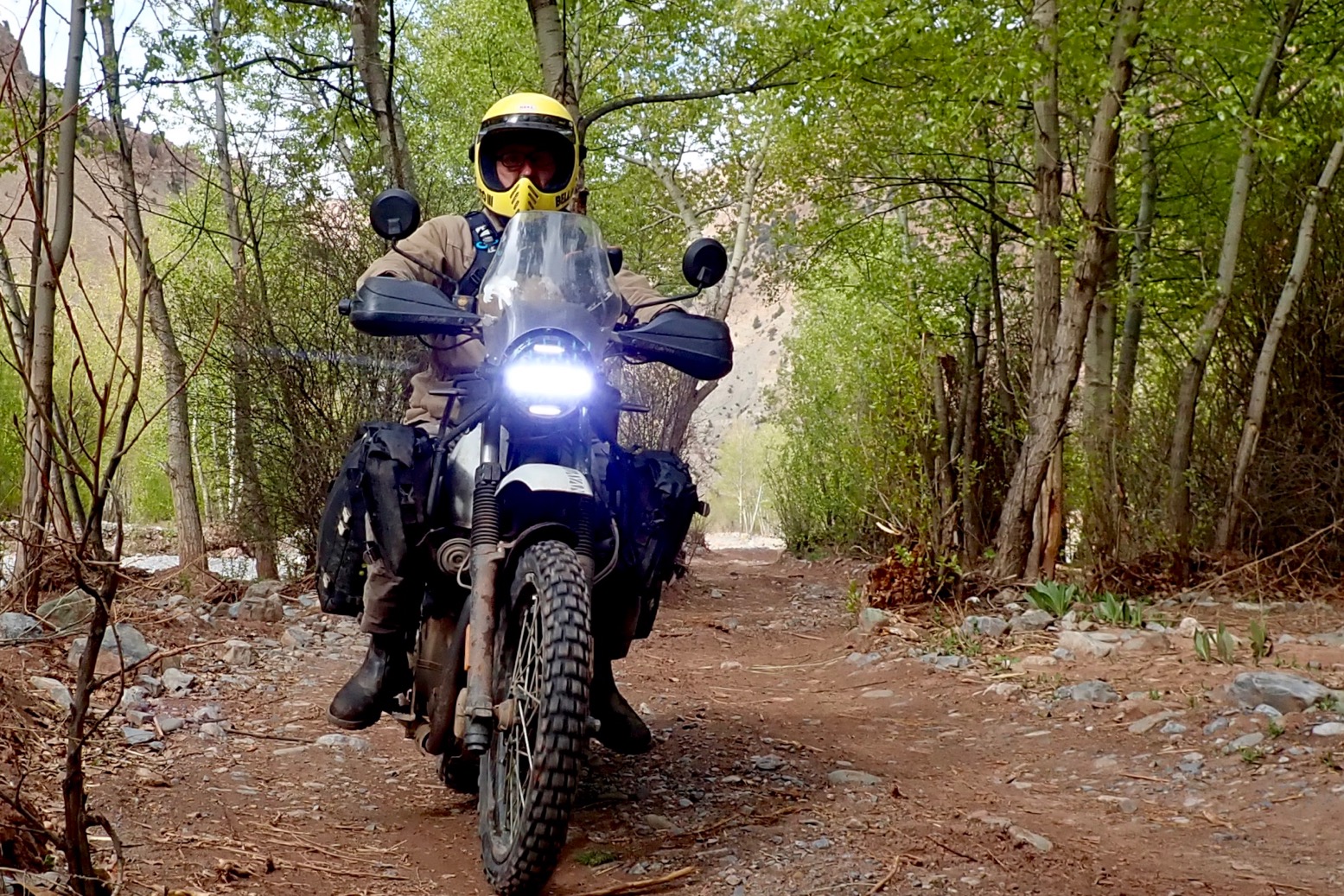
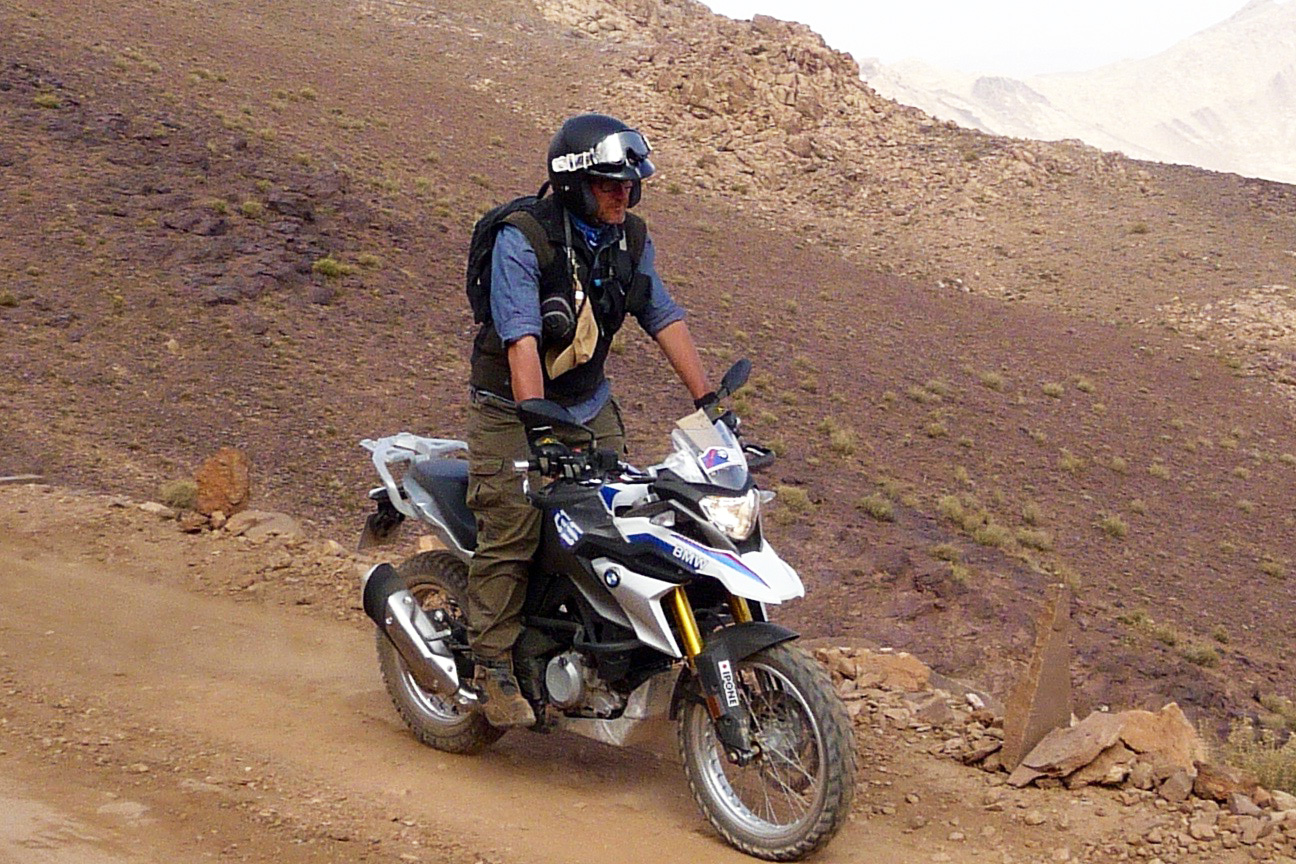
I’m really impressed how well this thing rides on the dry stony mountain tracks which sum up most of ‘mainland’ Morocco. It’s so effortless you don’t even notice at first. Can’t say the same of a 310GS which I’ve also ridden out here a lot: more concentration required on the dirt. The 310 motor and brakes are more suited to shredding tarmac canyons – another adventure-styled bike that’s not really an off-roader. The REH doesn’t look like anything you’d know – maybe a civil partnership of Rokon and MZ. It must be down to the Him’s combination of low CoG, torquey, long-stroke motor, wide gearing and 21-inch front, plus on my bike, the Anakee Wilds and YSS shock which help make it one of the best bikes I’ve ridden in Morocco for years. On one epic high mountain day I even managed to zing the centre stand on the supermoto track they call the to Sidi Ouaziz.
Brakes are fine on the dirt. The weak-on-road front is as you’d want; the back a tad sharp, but that’s normal, easy to manage and even useful. To me the ABS is not an issue at the speeds either I or the bike can manage on the dirt. If it engages you probably need to slow down. Both wheels lock easily on really loose stuff before the ABS even reaches for the alarm clock. On the road I’m sure there will come a day when I welcome it.
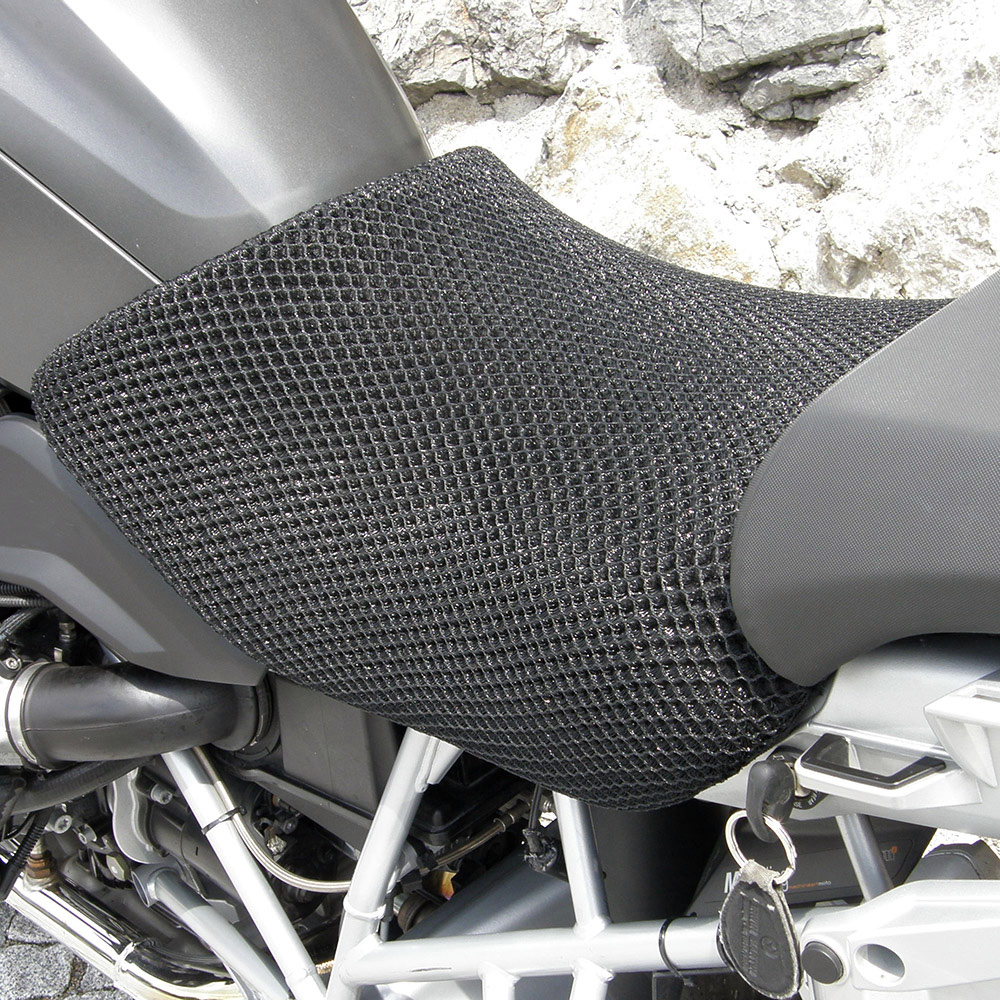
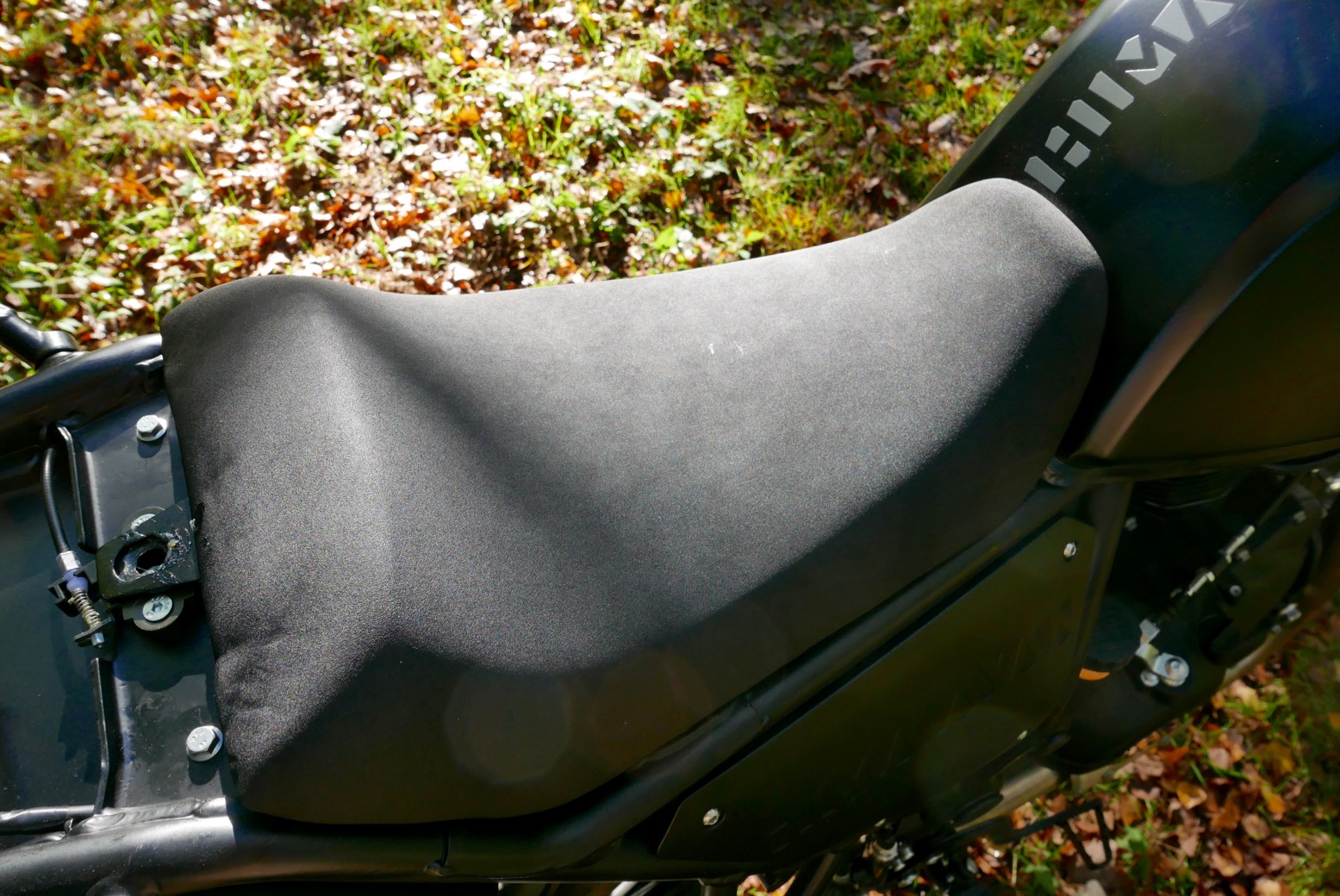
My proof-of-seat concept (2 x 20mm foam sandwich under a Cool Cover) is an improvement but not there yet. Two days over 400km more or less non-stop and I wonder if the foam slabs are crushed out already. It’s worse on rocky dirt where I tend to stand only when I must. The aerated Cool Cover may help, but it’s slippery and tends to slide me forward. Next version wants to be more level and maybe more foam. I think what’s still a short distance between seat and footrest (for me) makes levering the body upwards harder that it would be on a KTM450 for example. Removing the footrest rubbers will add an inch more leverage while the 2-inch rise in the bars is nearly just right for me.
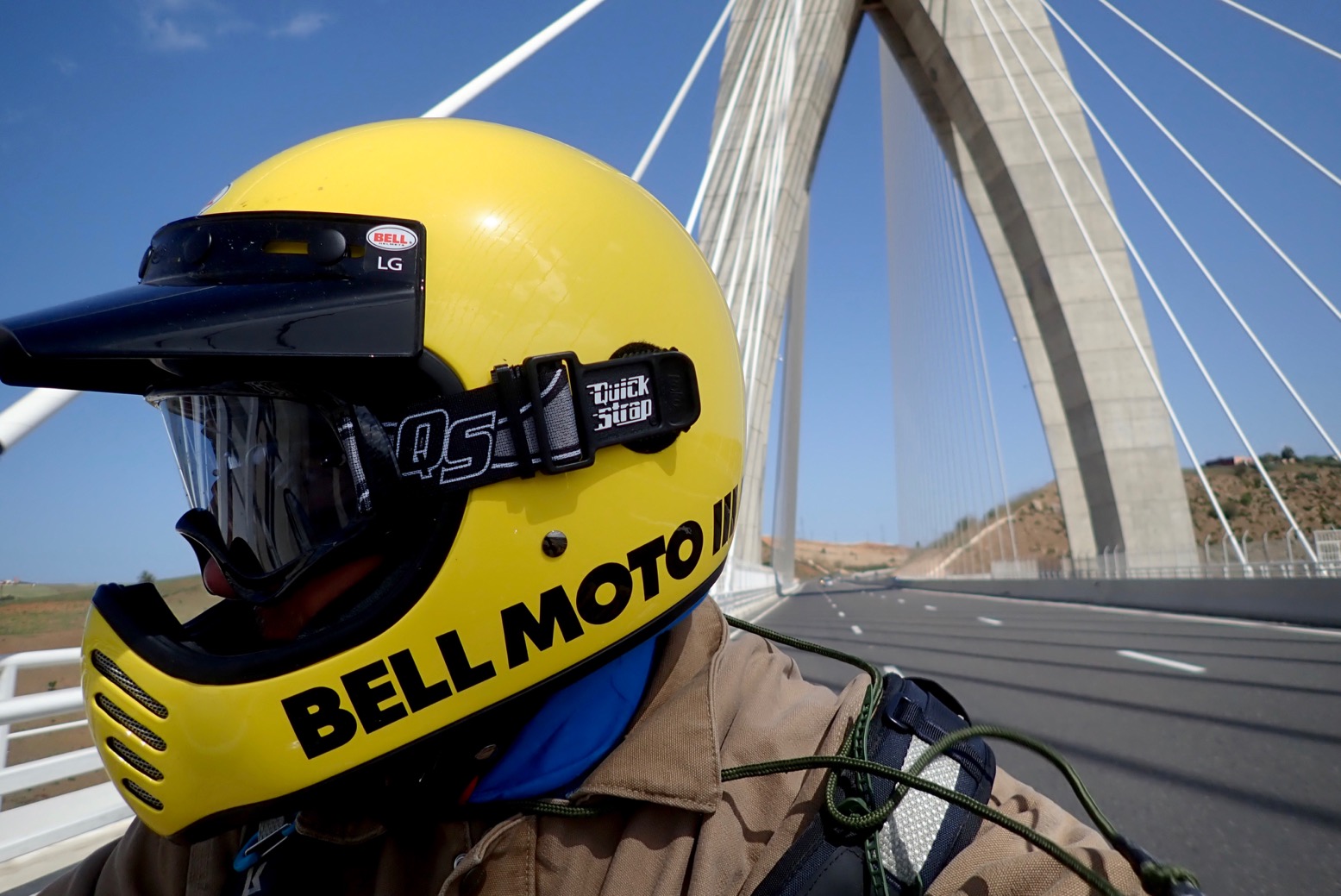
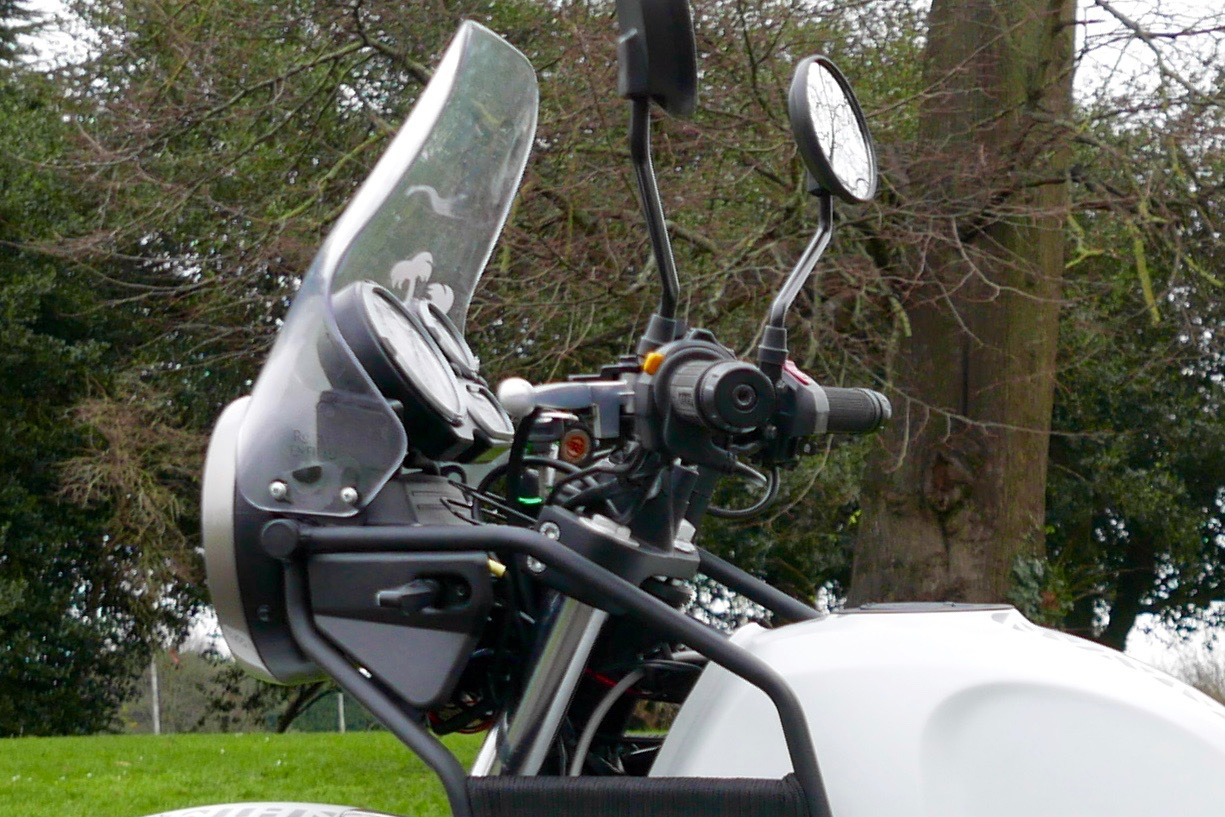
Even though I’m wearing a Bell Moto III I don’t find the buffeting from the short screen intrusive at 65 – my self-imposed max until I know better. It needs to be about 4 inches higher to push the wind over my head but I wonder if one of those air lip/dams might also help lift the airstream. I bought the MRA one but it was too wide to fit without drilling or other bodging. Of course on the dirt the screen is as unobtrusive as you want which is why a spoiler is a better idea than adding height. The Enfield catches you out with firm stock suspension – the opposite of most of my recent bikes, especially the Jap ones. I bought a YSS shock and fork preloaders as soon as I got the bike, and the YSS shock works as well or better than the Hyperpro (XCo, WR), Tractive (CB500X) or Wilber (XSR700) I’ve run out here recently. All it needs is a pricey HPA to be truly useful, because adjusting preload will be a right pain (unlike a 310GS, for example). I suppose they’re now a bit shown up by the YSS shock, but road and trail the RWUp forks are just right for my sort of speeds and load. The preloaders are set on zero – rats! that’s ten quid down the drain. Because my Anakees are knobbly I tend to leave them at road pressures on the trail, which makes the suspension feel harsher than it is. I know dropping just a few pounds will make a difference, but I tend to endure rather than fiddle, until necessary. Fyi I’m 95kg (210lb) and my gear is probably another 20%.
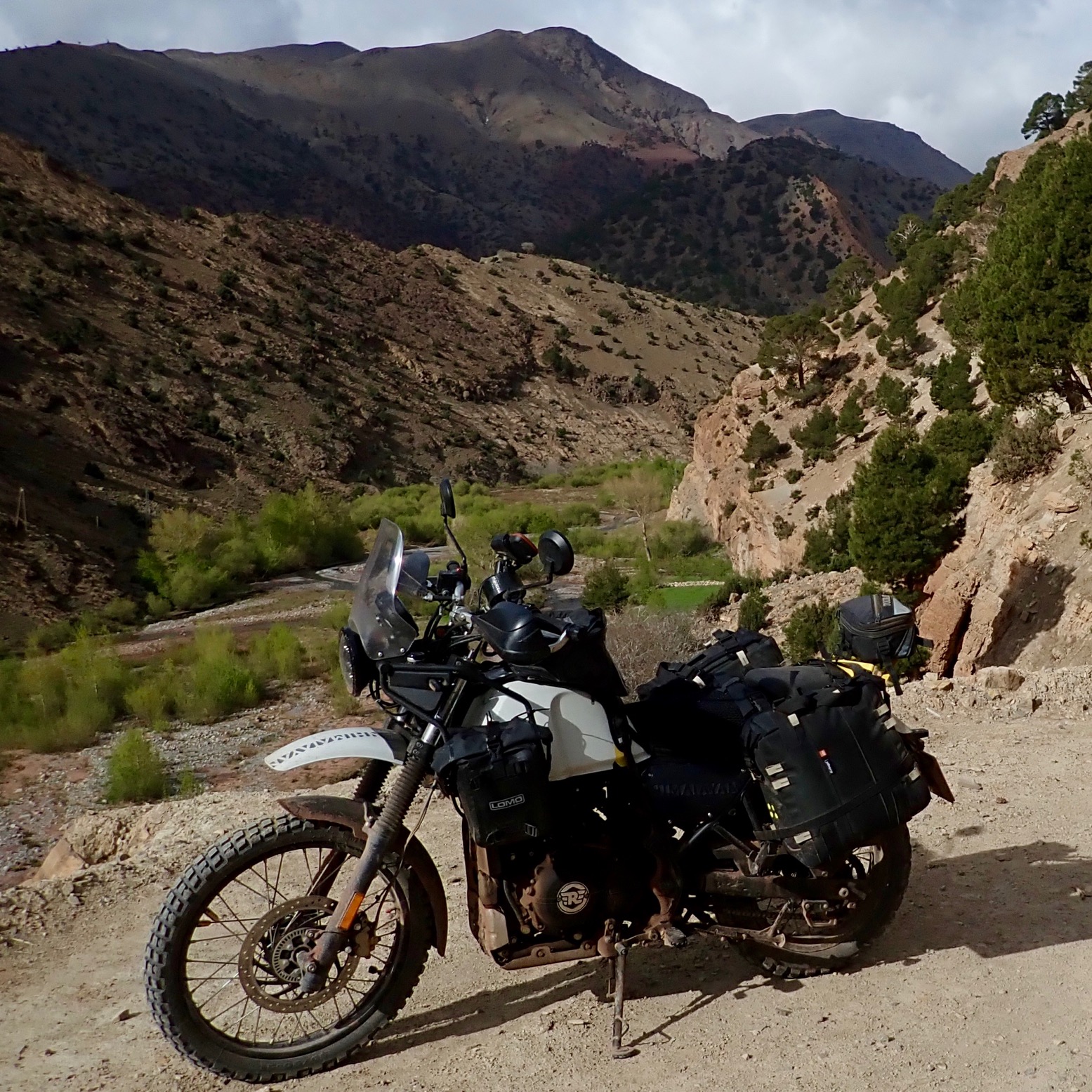
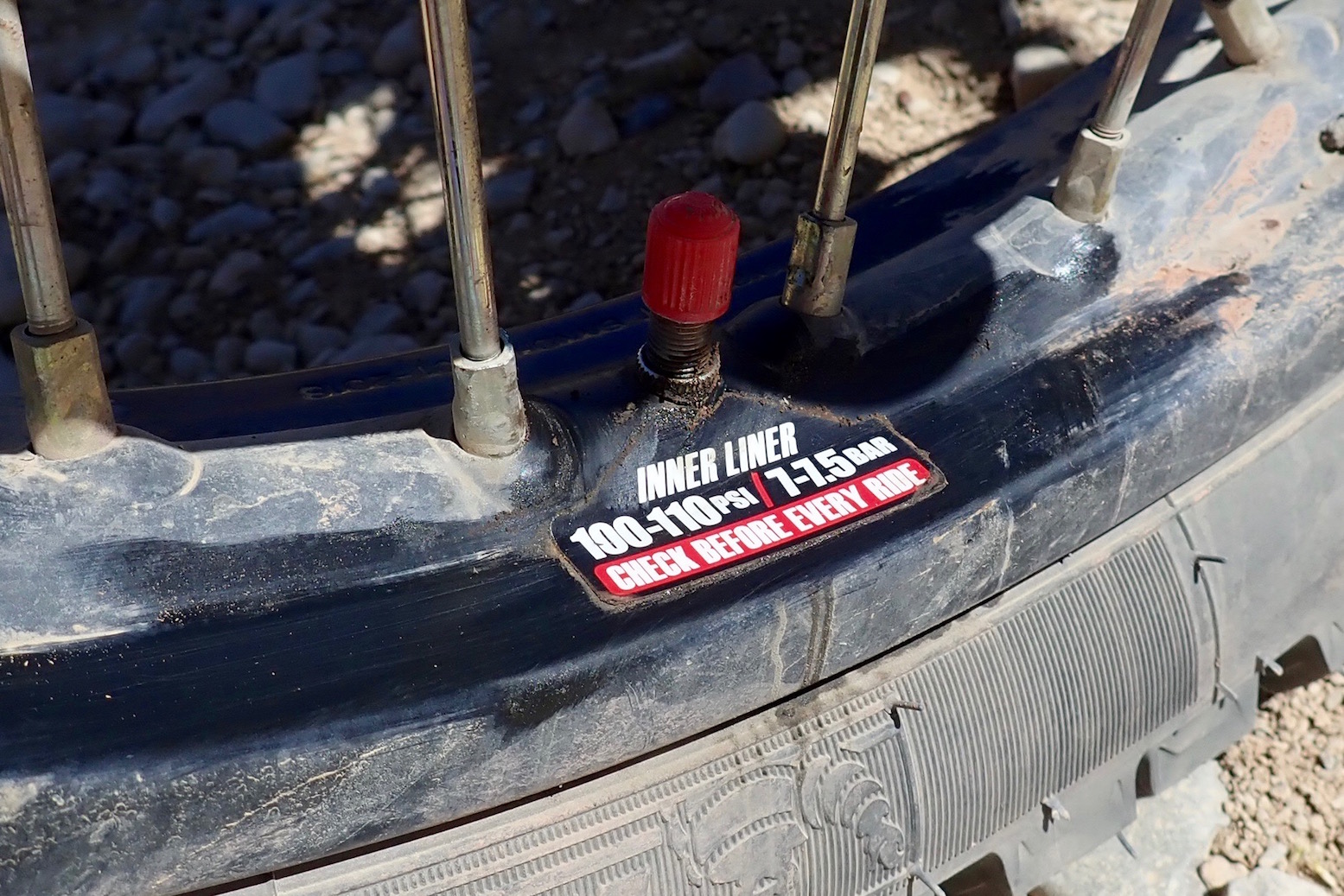
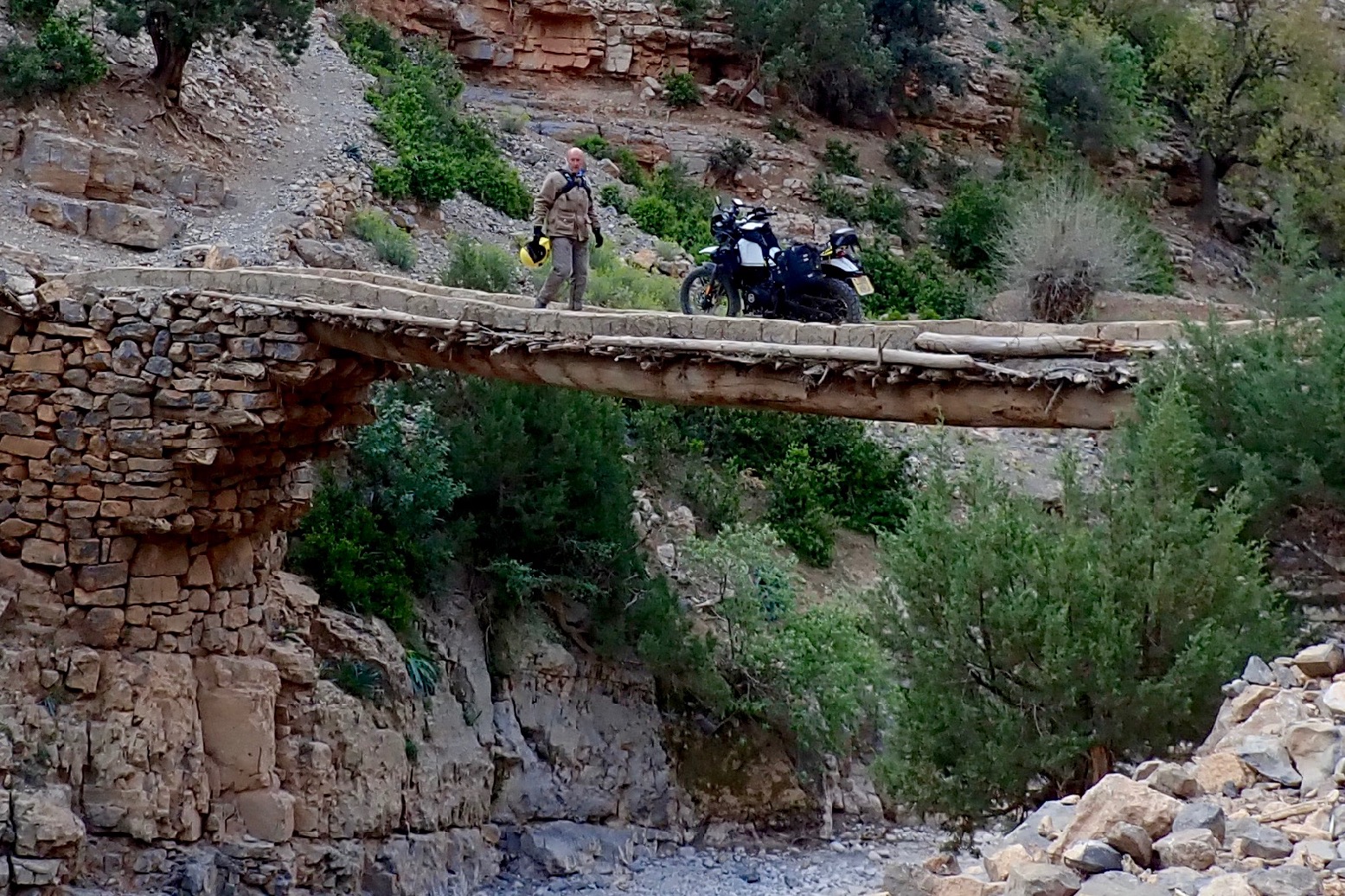
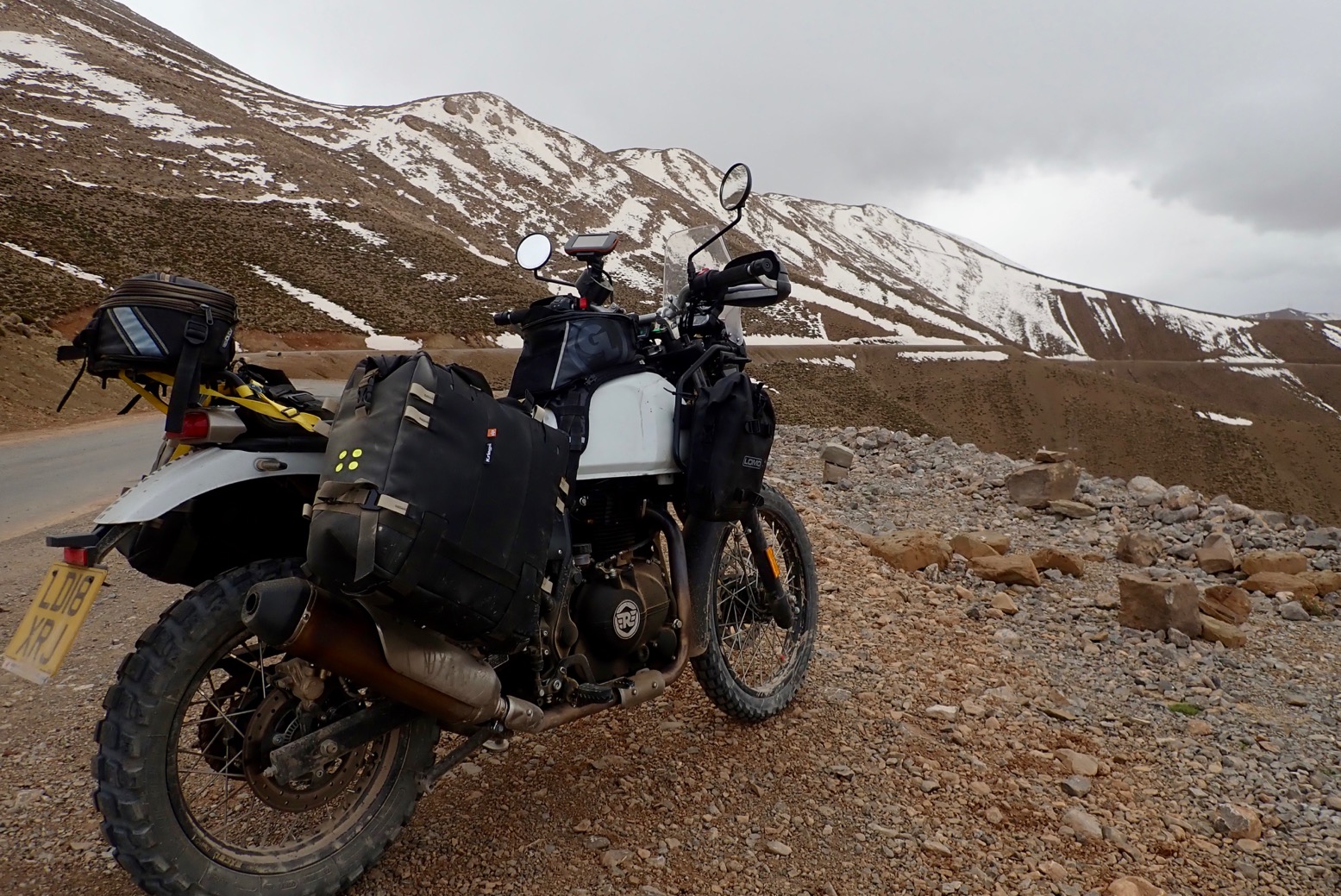
My tubeless tyres hadn’t lost any air on collection but the back (vulcanised band) lost a couple of pounds after a few days then settled down. The Tubliss front was doing the job until I saw a bit of Slime oozing from the red valve which means it’s getting past the 7-bar high-pressure core. I tried to top it up, but the crumby garage hose was split and purged more air than it put in. Don’t meddle until you must! Now I realise my pressure gauge doesn’t read to a lofty 7 bar (100 psi) and my Cycle Pump has no gauge. I pumped it up for 3 minutes which hopefully has got up to 7 bar until I find a better garage pump. I said this years ago when I fitted it on the GS500R: Tubliss is a pain for overlanding rather than rec dirt biking. Or maybe I should have anticipated the need for a gauge that reads 7 bar +… Out of Malaga the fully charged Michelin TPMS took many hours to pair up and show readings, but since was very handy in monitoring the experimental tubeless tyre pressures. Sadly, 10 days in it appears to have packed up – not even the battery level is indicated. Now I’ve refined the strapping, the slim Kriega OS20s throwovers sit tight and are easy and quick to access. Total demounting would be easier with the HDPE Kriega platform, but I just pull out the white liners if I need to strip the bike overnight (rare). Their slimness is a real benefit on some narrow and gnarly canyon tracks where catching the cliffside with metre+ wide alloy cabinets risks being ejected into the abyss.
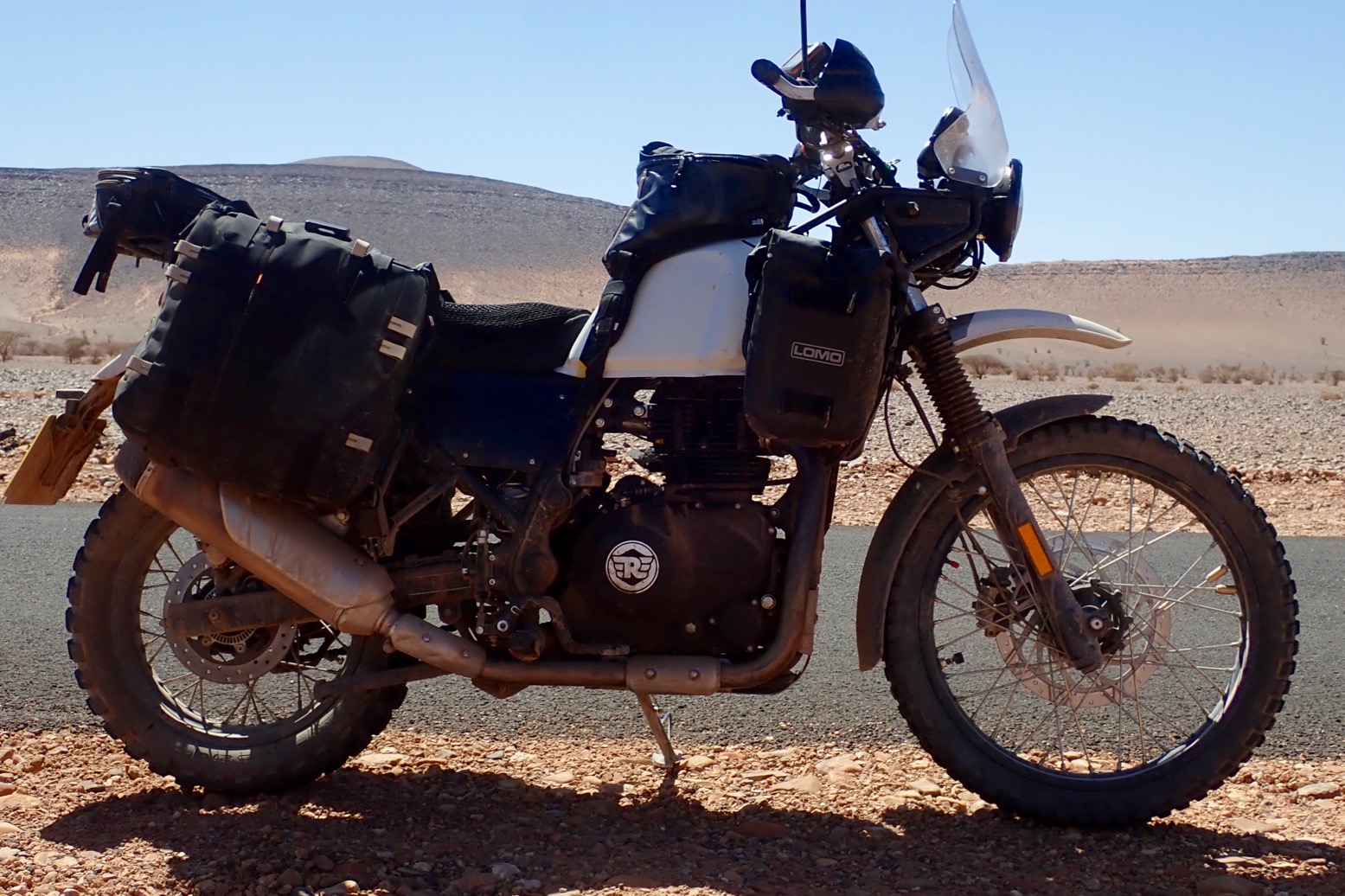
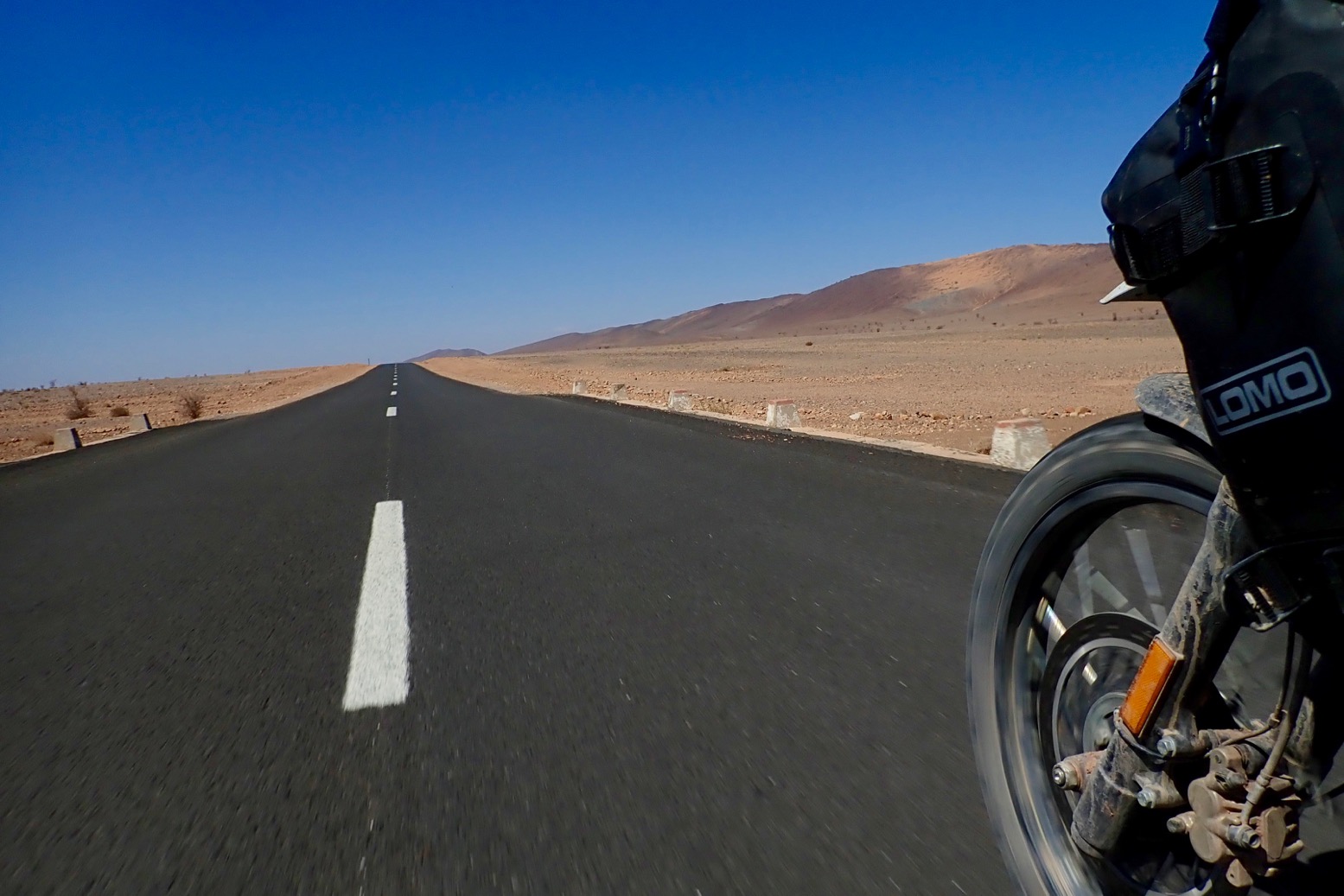
Even with bivouac camping gear (everything bar a tent) there’s no need for a tail pack because the nifty 6-litre Lomo bags either side of the tank take up the slack and help spread the load evenly. A very handy spot for gear and, with the Kriegas, a sacrificial crashbar for when that days comes.
So, after 10 brilliant days in the mountains managing to dodge hail, bandits and lightning, all is good with the Himalayan and pretty good with my adaptions. It’s somewhat nerve-wracking but then it always is as I tend to come out here on a wing and a prayer with roughly adapted bikes I’ve barely used. The XCountry came with the various lip-chewing issues of that series (but nothing went wrong) and the WR250R had dodgy fuel pump activity when hot (but with care got me round OK). Clapped-out Tornados only had age- or user-related issues. Even a Husky 650 Terra, a 701 and an F650GS loaner and 700GS rental with 100k did me a week. Only the Tenere 660ZCB500X and tasty XSR700 came with- and delivered absolutely no worries. You can’t pay enough for that (bodes well for the XT700, too. You can see where I’m going with this). I met a gnarly KTM450 overlander carrying a spare injector, fuel pump and clutch. Me, I have spare underpants. In fact I brought two by mistake. One will have to go.
For what you pay and compared to vaguely similar bikes, Royal Enfield’s 2018 BS4 Himalayan comes very well equipped: centre stand; small tail rack plus tank sideracks; small screen; 15-litre tank giving a 400-km range; a small bashplate plus suspension that need not be instantly written off. Most of those items won’t need improving, but when did that ever stop anyone? Below, I throw out some ideas to help turn the Himalayan into a functional overlander. As with all my project bikes dating right back to the XT500 of 1982, I like to experiment with new stuff and new ways of doing things, much like Enfield’s Himalayan itself. It’s all part of the adventure and if nothing else, it’s good for the book.
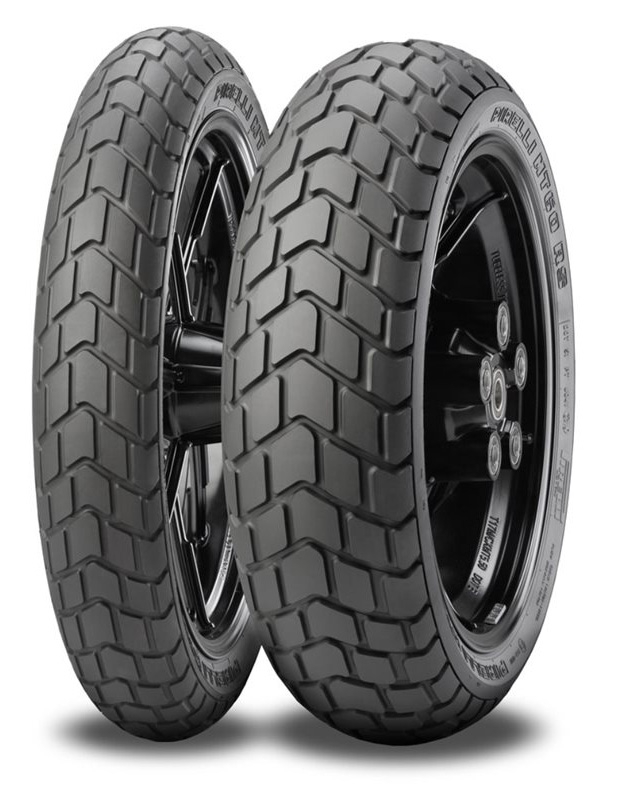
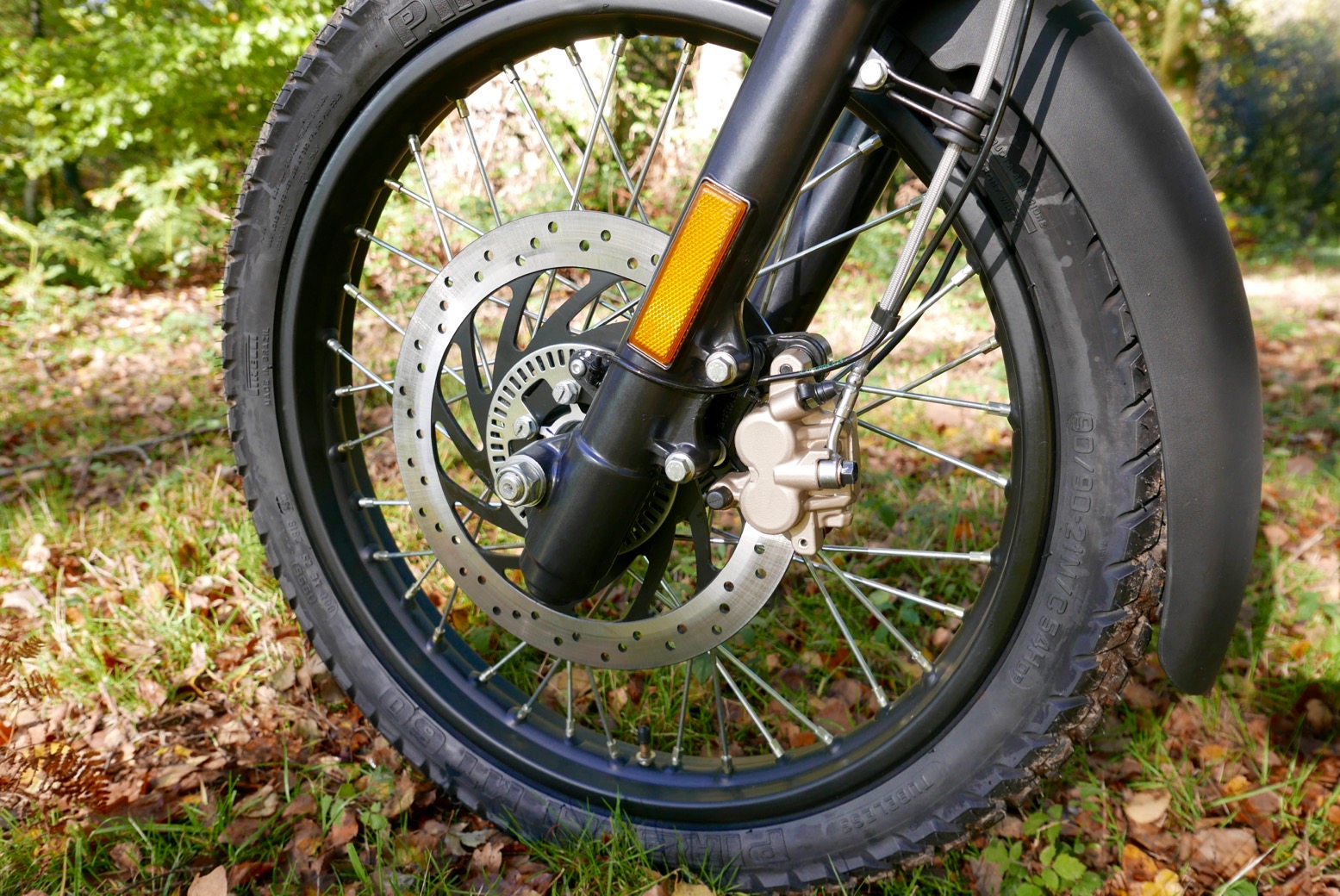
Wheels & Tyres Out of the showroom REH’s come shod with Brazilian Pirelli MT60s (right; mine stamped ‘2012’…). The spoked rims are steel: 21 front, 17 on the back. The Pirellis would have been OK for a regular Moroccan ride, but because I’ll be heading into the sands this time, tread becomes a little more critical. Below, some tyres of interest: Motoz Tractionator Adventure; Anlas Capra X and Michelin Anakee Wild.
Confirmed: 17 is smaller than 18!
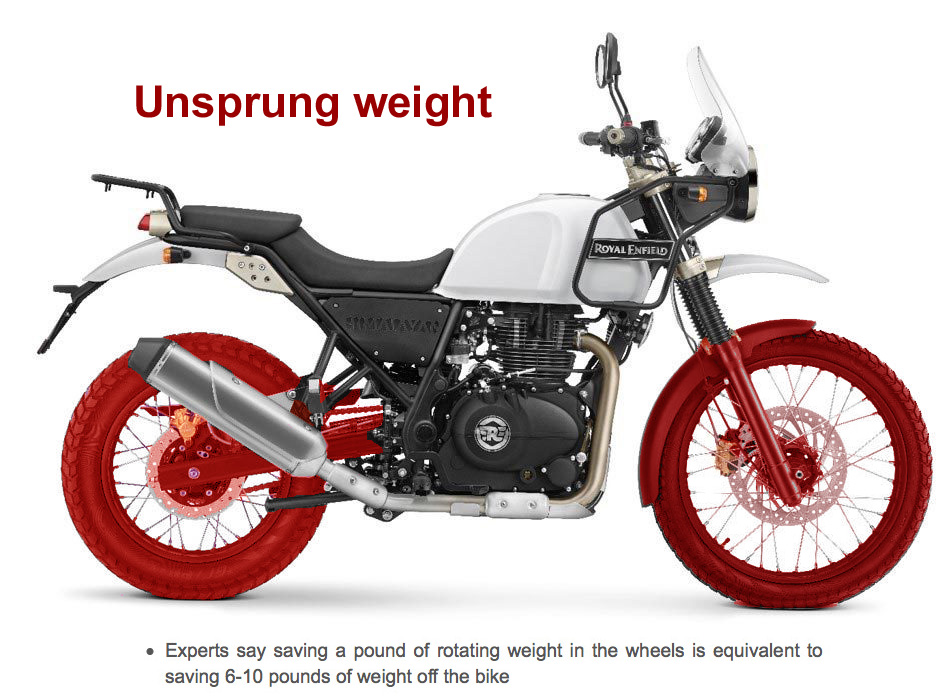
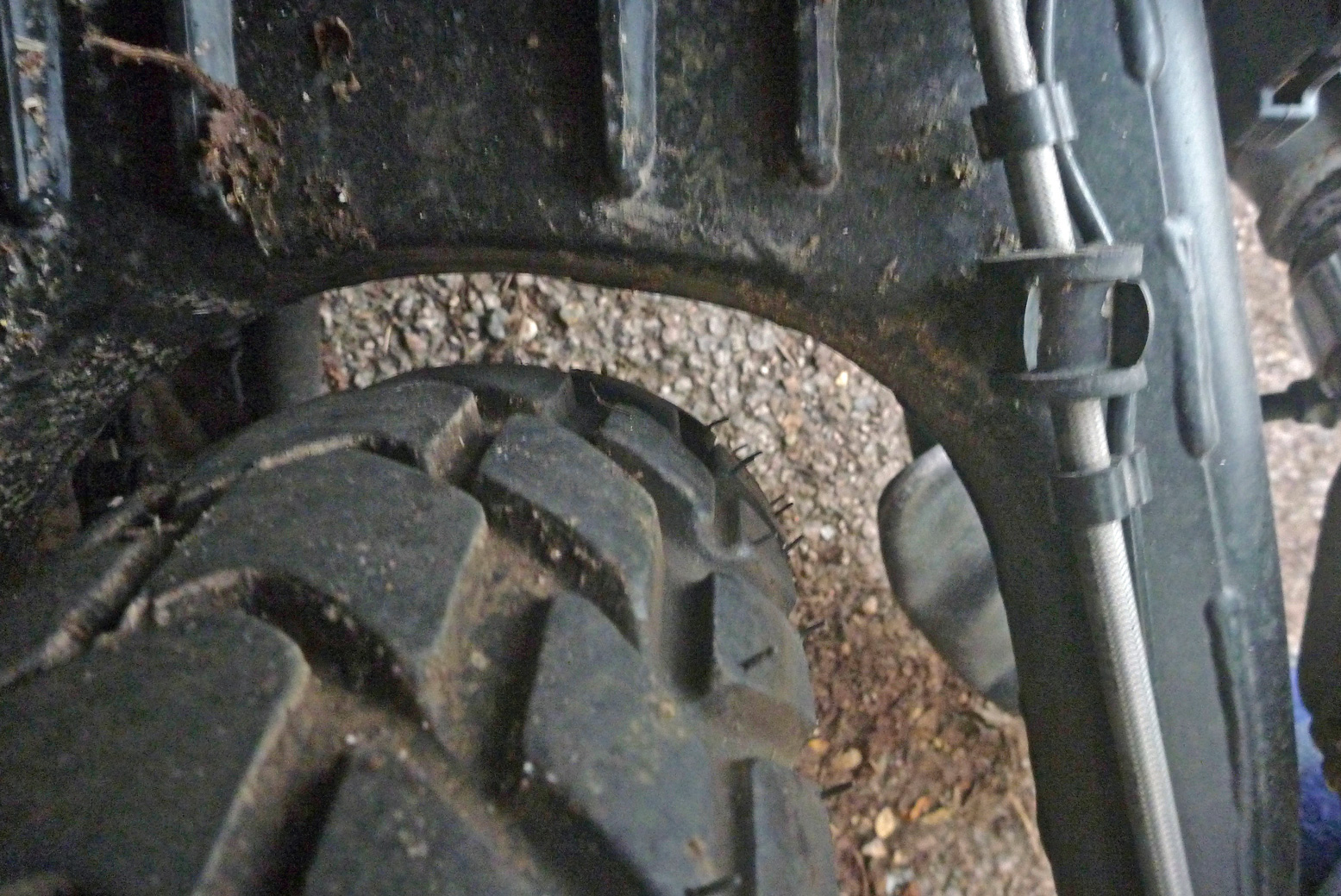
One thing I’ve quickly discovered is that none of the above tyres come in the stock 120/90 17 size. The only similar tyre I know of is Mitas’ E-09 which I tried on the XR400 in Algeria; a great desert tyre. Generally 17s tend to be low profile tubeless-ready adventure tyres suited to bigger, more powerful machines, and 18s are for traditional dirt bikes with taller profiles giving more sidewall ‘suspension’ or ‘footprint’ at low pressures. The above trio come no smaller than 130/80 17. There’s probably only a few mil in it, but I’d rather not go overboard with a ‘bigger-must-be-better’ rear tyre. Too much rubber to rotate will make the Him even more sluggish. Swingarm space with the stock MT60s (left) shows plenty of room to the sides but about an inch at the front, so for a replacement, actual dimensions may matter. The MT60 is 122mm wide and currently 93mm high from the edge of the rim. The swingarm gap will increase a little as the tyre wears and the chain stretches. Ratio-wise, 120 x 90% technically = 108mm tyre height, while 130 x 80% = only 104mm, so a 130 ought to have a lower profile or height. So even a 10mm wider 130/80 17 tyre will easily fit the Himalayan. Interestingly, an Anakee Wild 130/80-17 M/C 65R TL weighs nearly 50% more than a Wild in 120/80-18 M/C 62S TT (5kg) because the former is tubeless and aimed at heavier 17-rear bikes. An Anlas CapraX 130/80 B17 weighs 6.1kg. Motoz don’t know yet. Fitting an 18-inch rim might expand tyre choice at the slim 120/90-ish end. But with half an inch more radius in the rim, taller 18s could become a squeeze against the front of the swingarm unless a chain link is added to move the wheel back a bit. An additional incentive to move to an 18 is a chance to replace the stock steel rim with an alloy rim which will be a bit lighter. Suspension and steering, as well as acceleration/braking all react more readily if the unsprung weight– red, below – is kept to a minimum.
I read on the internet that the effects of unsprung weight includes the rotational mass of the gyroscoping wheel, plus – at non-rallying speeds – the less critical up-and-down mass the suspension has to control (image below). Additional unsprung weight takes more power to turn that mass, more brakes to slow it and better suspension to control it. This mass can be reduced by carefully considering tyre weight, not just the size, tread and price, going tubeless (eliminating heavy-duty inner tubes), as well as lighter rims, chain, rear sprocket materials; forks/swing arms and braking components. I’ve always thought this is a much overlooked area of weight saving on bikes, where changing a pipe is often used as an excuse to save weight. I remember the alloy front wheel on my XT660Z weighed a ton, partly because of the OTT twin discs when one good disc was all that was needed. Cheap stuff can be heavy, even in alloy. The image below illustrates how much greater the reaction forces are with heavier wheels. Put another way, it’s why your trainers weigh only 320g. ‘Add lightness’ as the old racing adage goes.
Unsprung durch Technik
And if I’m messing about with rims it would be a shame not to go tubeless, for all the usual reasons. See the link, but basically it’s: DIY mastic as on my 660 Tenere, Outex tape (~£70, never tried), BARTubeless (~£320, as on the 500X RR) and Tubliss (~£180 a pair; as on my GS500R), or a suitable rim (rare/expensive). If I go to an 18 I’m thinking of giving the 2nd generation Tubliss (right) another go as it’s an easy and inexpensive fit, but they only come in 21, 19 and 18 inch, not 17.
Is this all going a bit far with a humble Himalayan, or making the most of its potential? Will I or the bike notice the difference of a lighter wheelset, once all the other junk is added? Unfortunately I don’t have enough time to get a solid riding impression of the stock bike before setting off.
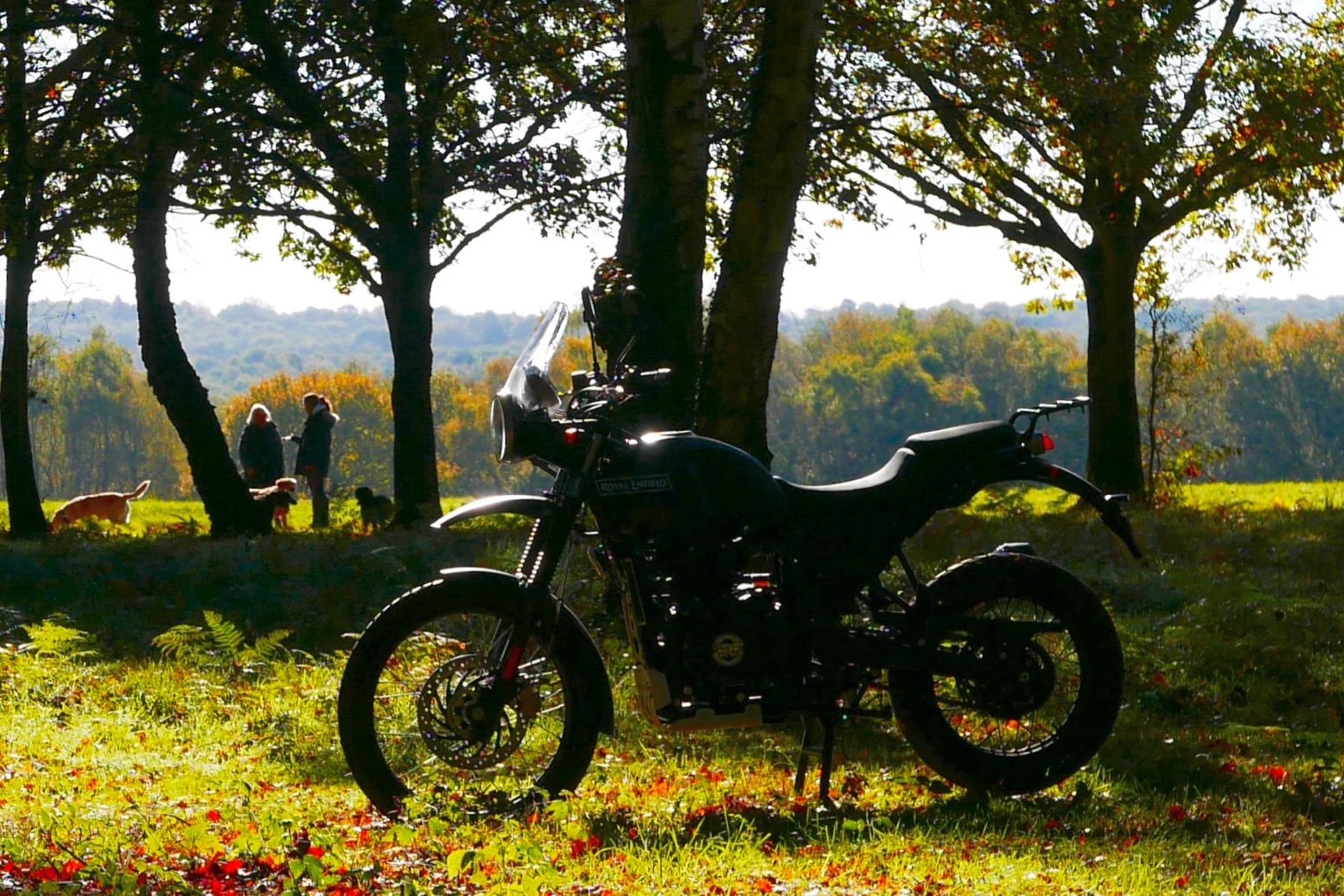
Load Carrying One of the REH’s distinctive features are the tank racks which some mistake for tank protectors. They’ll do that too but to me they’re clearly a handy place to lash items or bags. The previous owner had a similar set-up using Kriega drypacks and helpfully wrapped the Royal Enfield badge in string to stop it getting worn away.
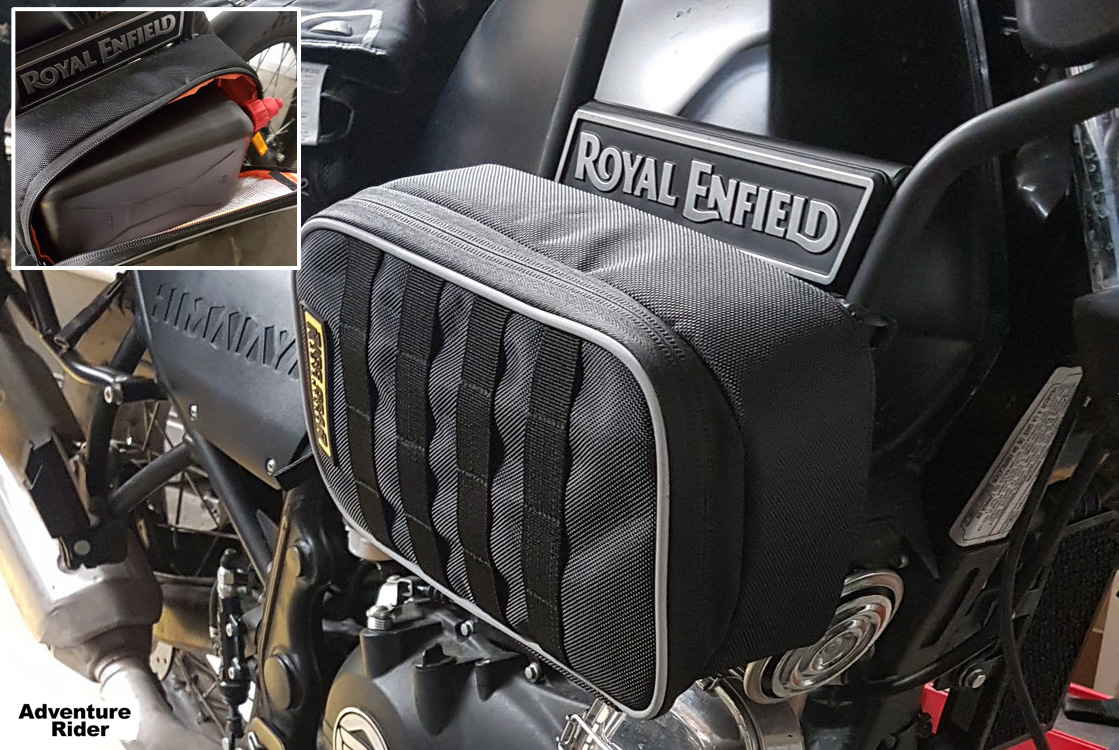
Kriega is one way of doing it, so is Lomo who’ve sent me a pair of their PVC roll-top crash bar dry bags to try (£39 pair). At around 6 litres each they look ideally suited to the racks. I plan to mount them semi-permanently and will use Lomo’s same-sized orange ultralight dry bags (£3) to lift everything out easily when lodging. In the US the more boxy, 3L Rigg fender bags (right) look like a neat fit too.
Then, once I zip on my Giant Loop tank bag, most of my daytime needs will be in view and at arm’s reach, meaning what’s behind can be left strapped in place. It may even mean I can do without a daypack on my back, plus the crash bags will keep the wind and rain off my creaking knees.
For the back an Enfield pannier rack is has just turned from India for under 80 quid. Looks like a hefty set up – it weighs over 5kg. You’ll find them sold on ebay, or at twice the price from UK sellers. I’ve not decided what bags I’ll use on the side. At the simplest I can just lash on a couple of rugged PVC dry bags, as I did with the Rally Raid 500X a couple of years back.
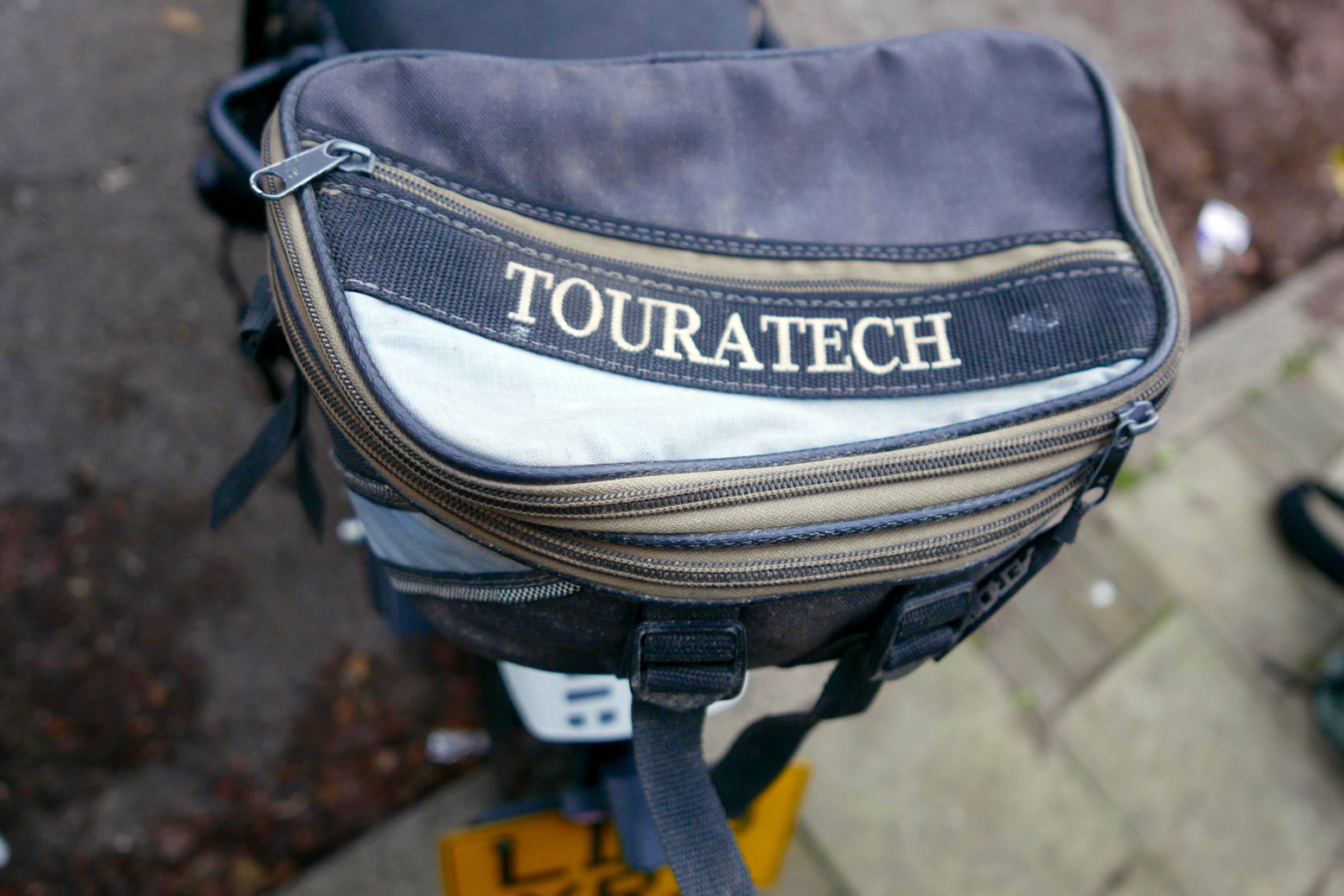
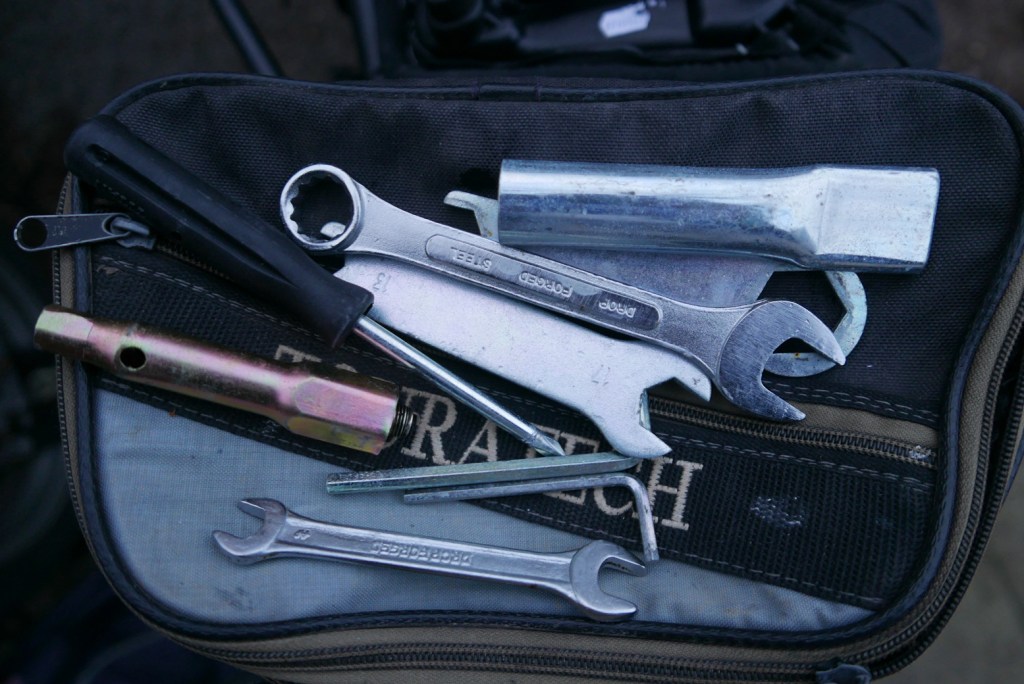
And right at the back the narrow tail rack has taken my long-suffering Touratech tail bag – one of my all-time travel luggage favourites. Having all these bags spread around the bike is handy for access, compartmentalisation and weight distribution but at, quite literally, the end of a day, it does mean more faffing about to get it all indoors when the parking is less than secure.
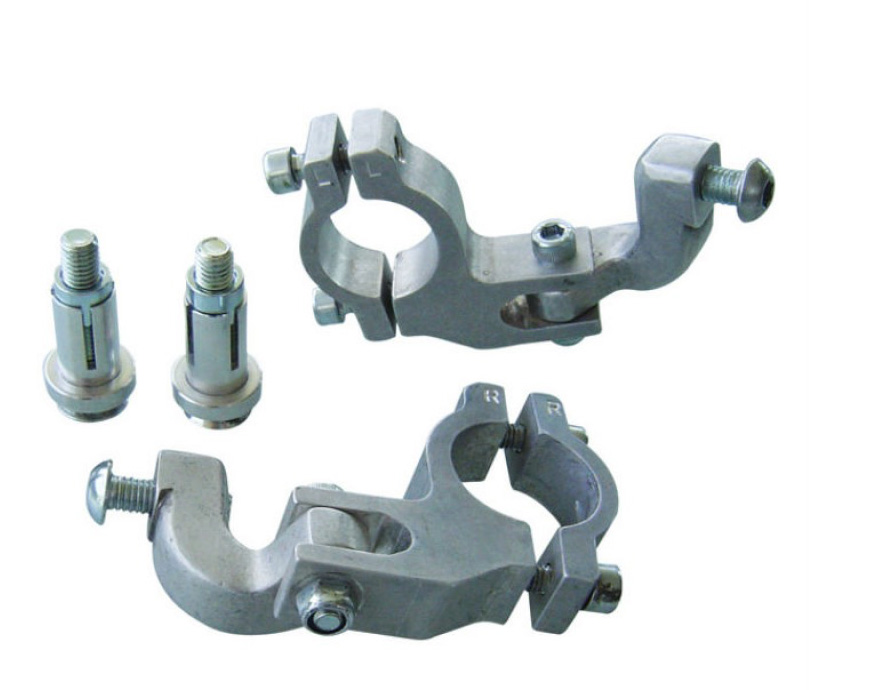
Comfort: handlebars; screen; saddle The bike came with Oxford heated grips – luvlay juvlay. My old Barkbuster Storms will also get their nth outing on an AMW project bike, but it looks like they’ll require BTC 06 curved adaptor clamps (right) to get under the brake lines and so on (they didn’t fit).
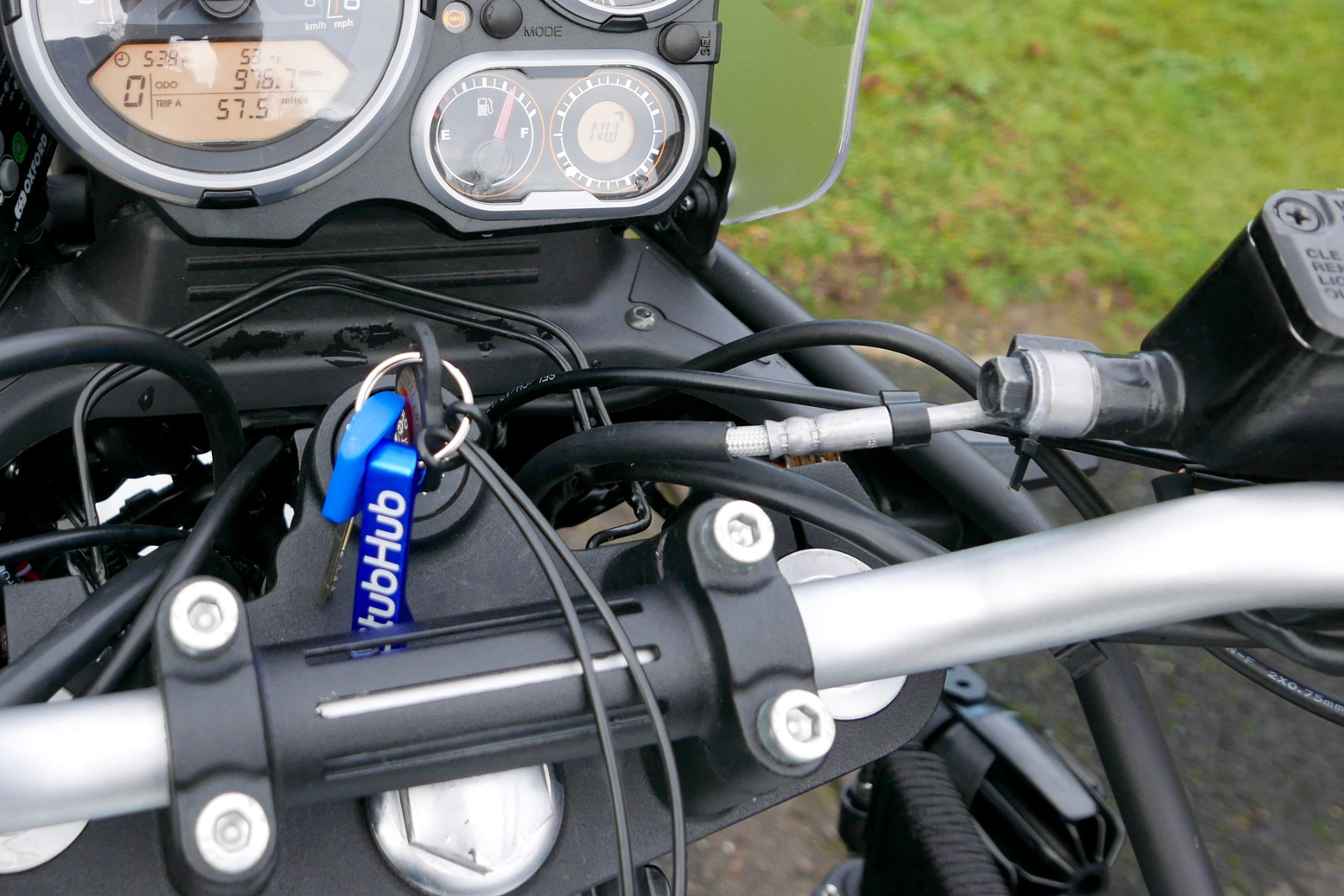
Talking of which, with this ABS model (brake line goes under tank to the pump, not straight down to the wheel) I’m not sure there’s enough slack to get much more than an inch of lift on the bars, which means my 50mm Rox Risers may have to sit this one out (they didn’t). Non-ABS Hims ought not have this problem. As it is the stoop for me isn’t too bad and the general position is of course much better than the XSR. I only tend to stand when I must, but that’s partly because I rarely ride a bike where prolonged standing off road is comfortable. One way to dodge the stoop is to lower my height by removing footpeg rubbers. Wearing very thin socks also helps. Fyi: ABS switch hack.
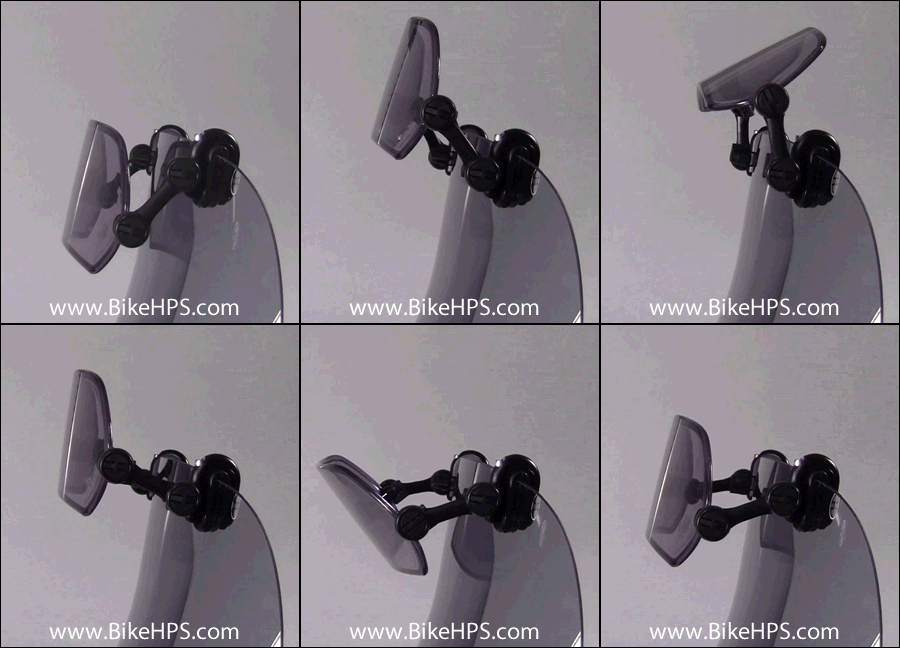
The screen is better than nothing and has a tiny bit of fore and aft adjustment. It’ll be all that’s needed off-road; less so for a long cross-country ride. You can get those clip- or bolt-on deflectors like the adjustable MRA Xcreen (below right) which I had on a recent Tiger (we don’t talk about that bike) and which worked well for what it was. Or Hitchcocks Enfield specialists do a taller version, but only by 60cm. Changing a fixed screen is a gamble while others have found chopping it right down greatly reduces buffeting. Much depends on your helmet, height and attitude to discomfort. You’ll never get it right all the time and it’s all part of the biking experience, so unless you know what works for you, by far the best screen is something adjustable like the Xcreen or the Palmer I had on the CB-X.
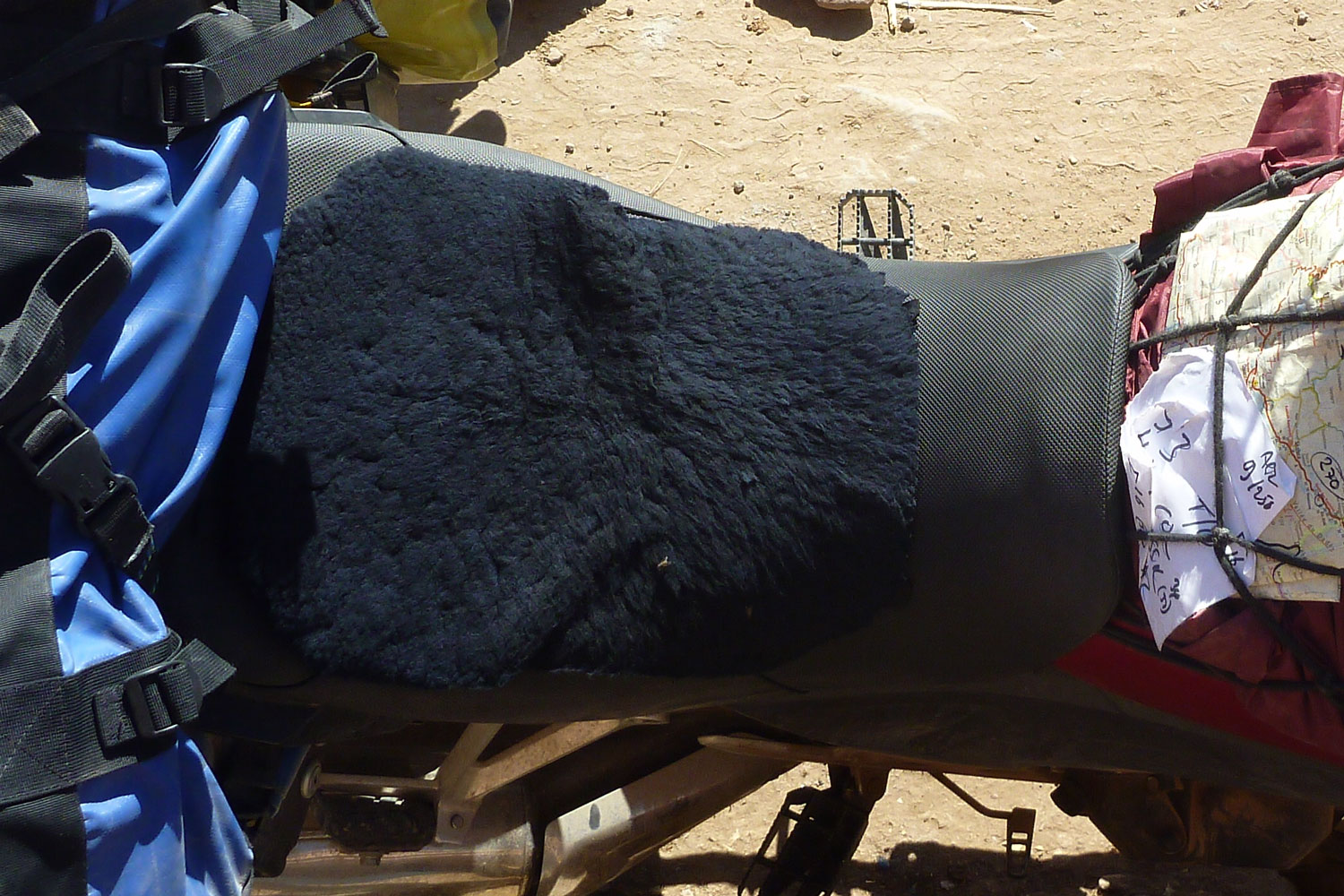
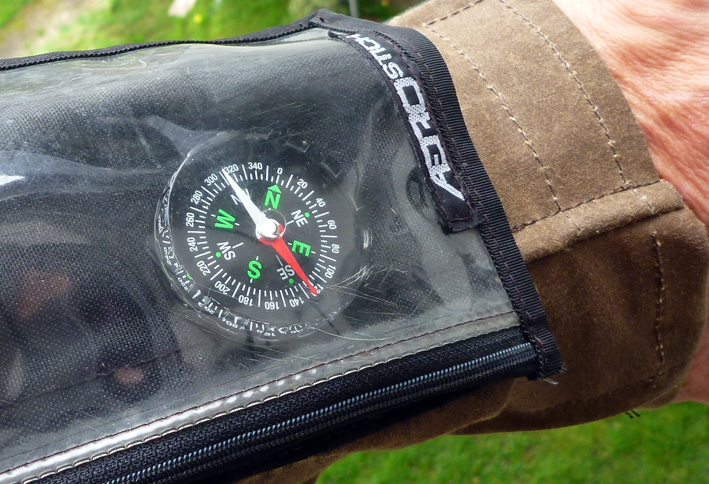
It doesn’t feel like the seat will sustain my post Xmas mass, sprung or otherwise, for more than an hour or two. Nothing new there. I’m getting a mesh Cool Cover to test. One good thing with fitted covers like this, as opposed to airbag seat bags, is that you can securely stuff added padding underneath without having to do a reupholstery job. I’ve got an old Aerostich lambs wool seatpad (left) which used alone may have had its day, but under the Cool Cover may add a bit more cushioning. One good thing on the REH is the two-part seat; it makes any foam-hacking job a bit less terminal.
Suspension I’ve often wondered how much more it costs in time and money to make stock suspension which works out of the crate. There must be no shortage of data and algorithms, so maybe it’s the time in fine tuning an individual model where the costs pile up. We’re so used to regular bikes coming with great engines which can sing and dance in four time zones, but have adequate suspension which presumably is expected to work for most riders at moderate speeds. Crank up the speed or reduce the surface quality and composure soon slips away as suspension travel gets eaten up, as I found on my CB500X and XSR700. But on my BMW XCountry I discovered what decent suspension actually meant: not that obvious on road, but a whole new world of control as dirt turns gnarly. Problem is that’ll be no change from €1000 and trip to Holland, please.
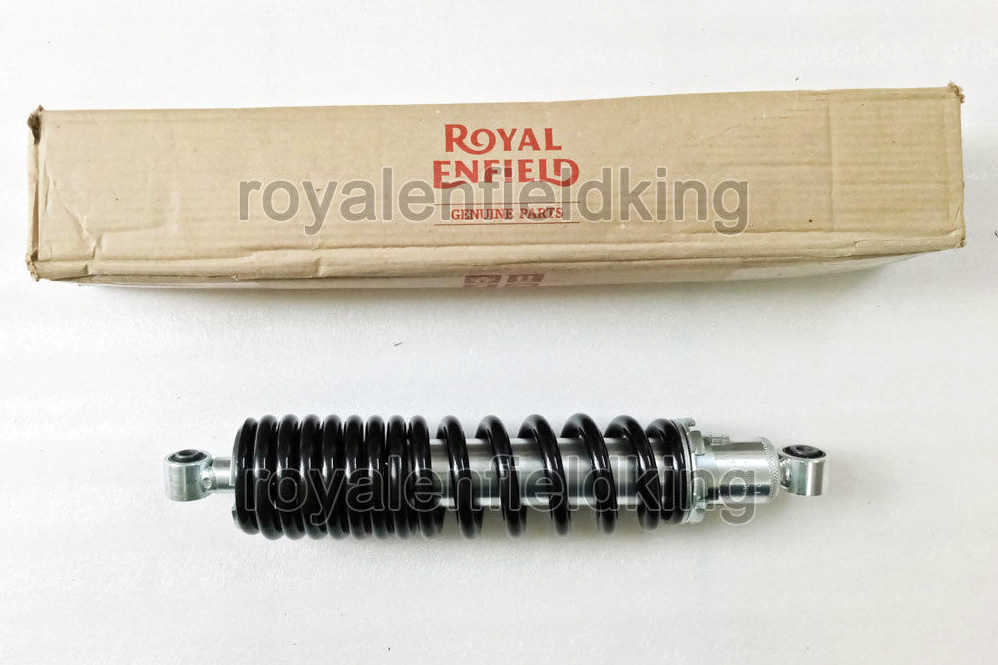
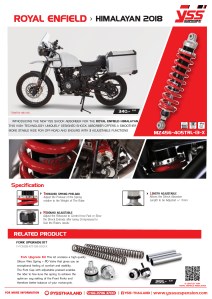
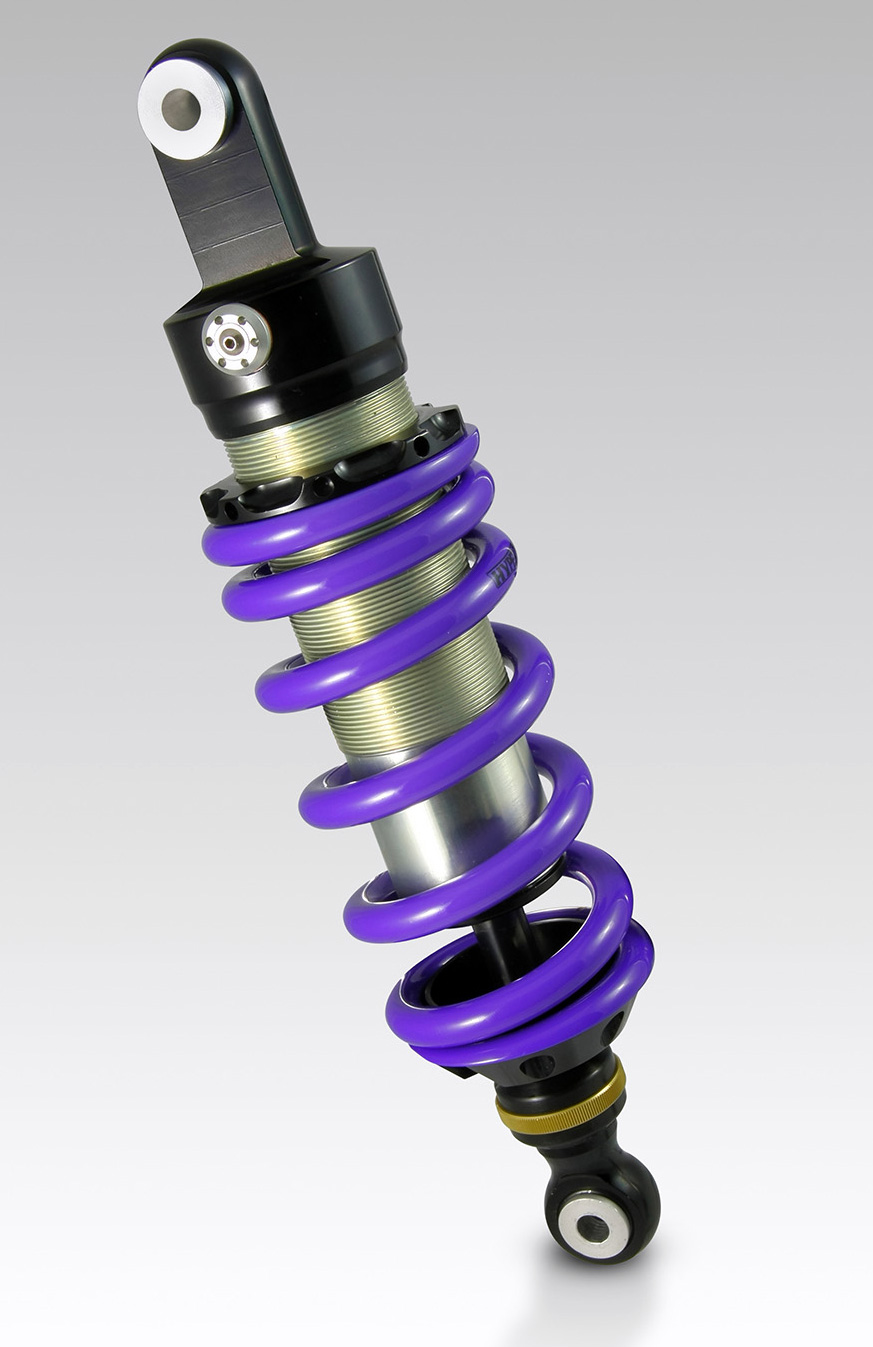
Many reviews say the Himalayan’s suspension is pretty good for what it is, which is all the more surprising when you look at the seemingly spring-bound stock shock above. I read it’s not trying to be progressive but a dual rate spring and in fact there is a 2mm gap between the closely set coils. Currently the only outfits offering shocks are Hyperpro (right; €500) and YSS (left; made in Thailand). Unusually, both come with rebound damping but the YSS also has adjustable height and was just £270 from Wemoto on special. For that price it’ll be worth a shot and the option of dialling in a bit of extra height will be handy. As it is, the bike tends to sit a little too upright on the sidestand and adding a sandfoot won’t help. And also if I do go for an 18-inch rim where the tyre range is taller, a bit more space will be handy
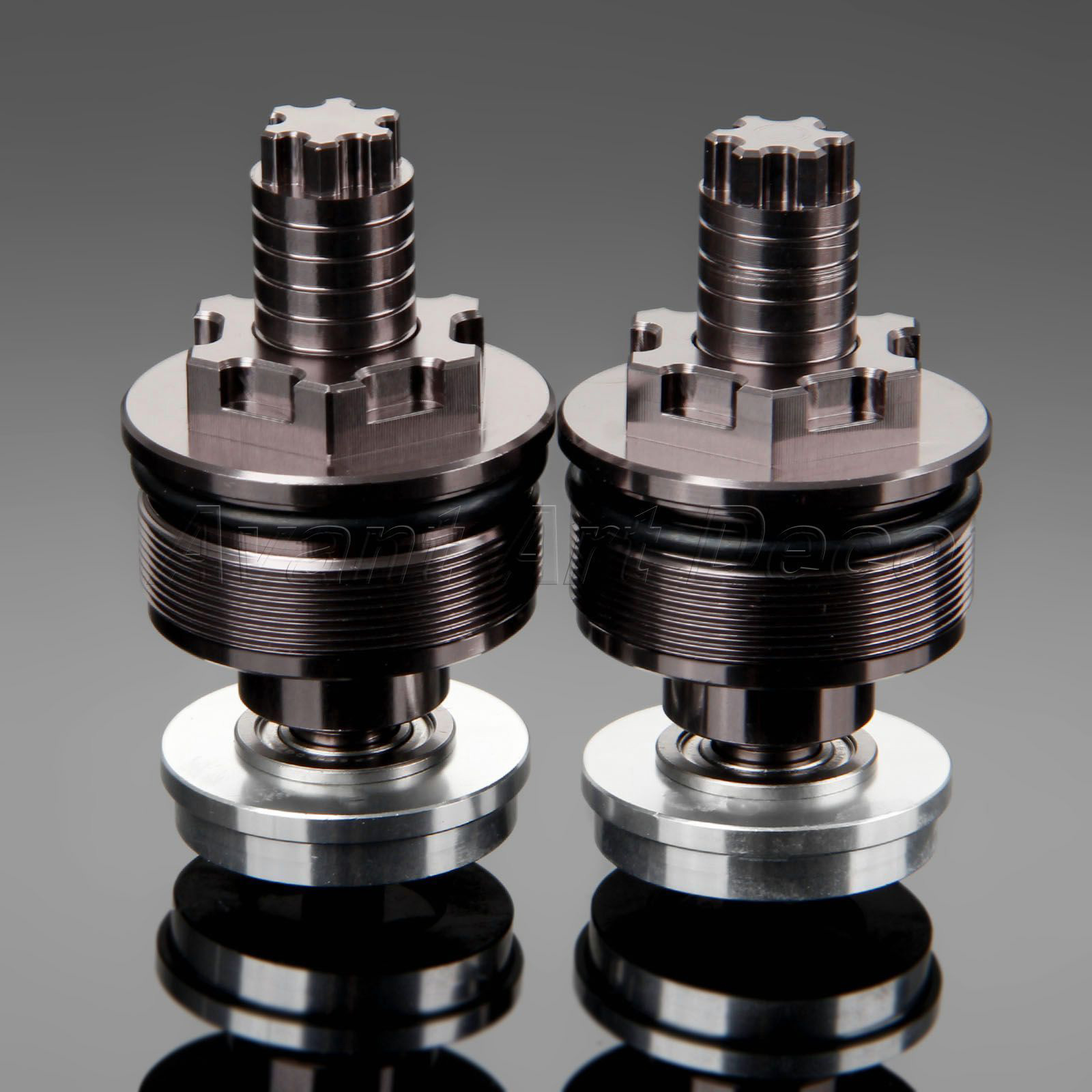
For the fork YSS also make a kit (above left) costing not much less than the shock. It includes valve emulators (available separately for around £80), something I’ve read of but never tried. For the moment there’s nothing to be lost by starting with some Chinese ebay fork pre-loaders (£10; left; as tried on the XSR). After that I may move up to a firmer K-Tech spring if they’ll make me one. Firmer springs may be enough to bring the front end back up if an 18-inch rear rim is fitted.
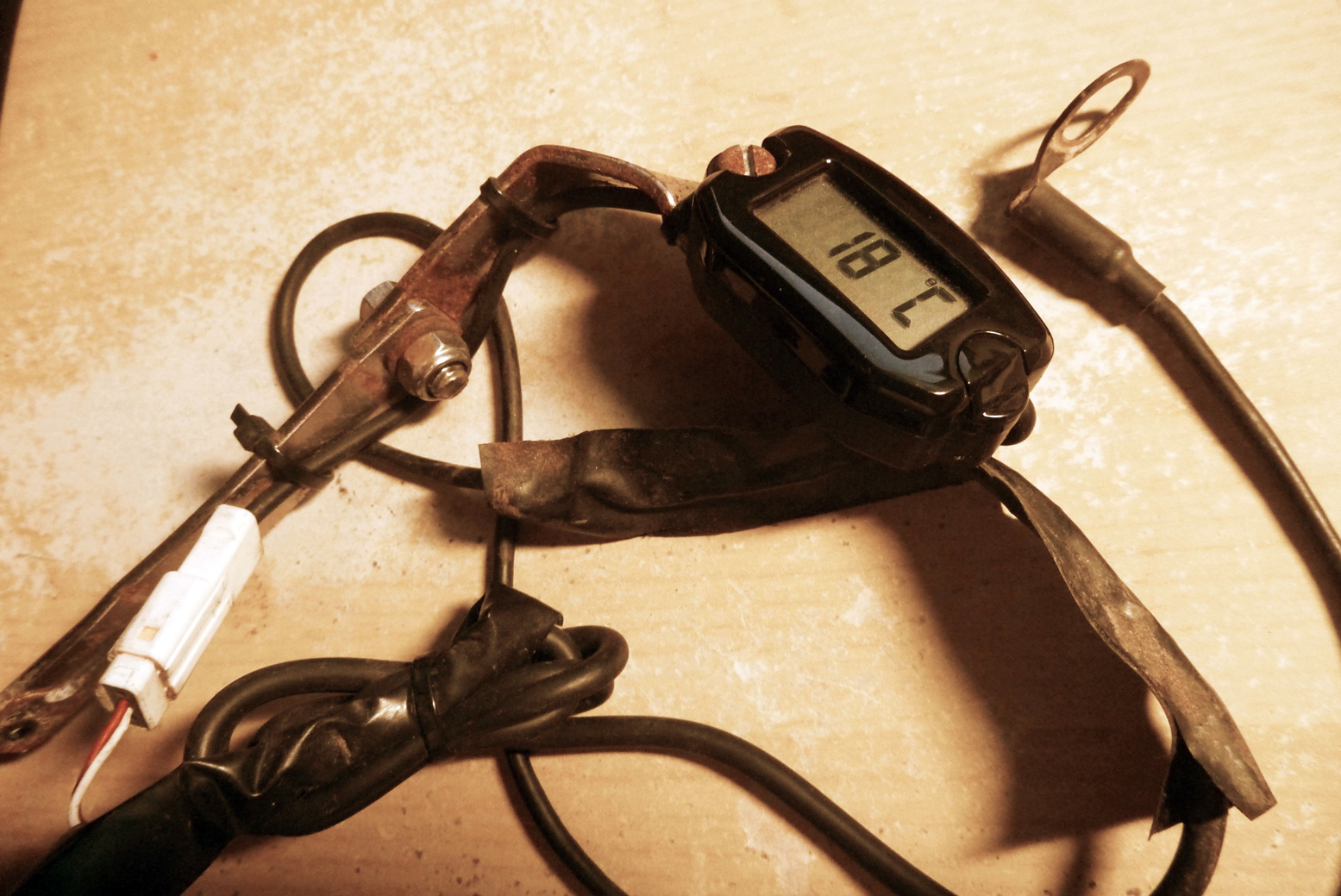
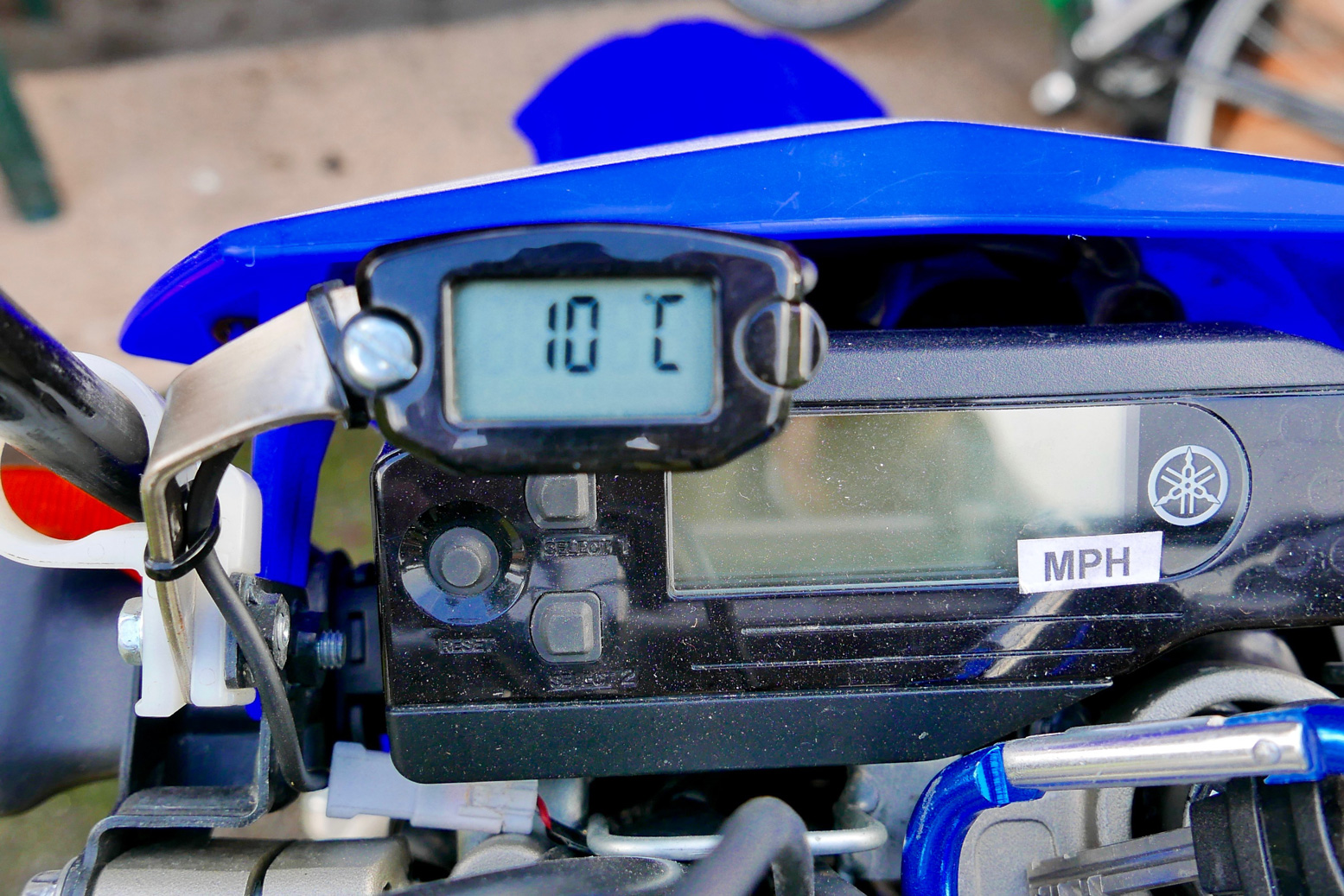
Ancillaries I’ll hard wire the trusty Montana in and fit a RAM mount on the bars. I’ll also add a PTO for the Powerlet heated vest and type pump. The claimed 220w alternator output is nothing special, but some wattage has been freed up with dinky LED indicators and there’s a spare LED headlamp which came with the bike. Otherwise I plan to add a switch so the lights aren’t on 24/7. There are times when you don’t want to be seen too easily. Last but not least, the Trail Tech engine temperature gauge from last year’s XR will get wired on to some very hot part of the Enfield’s engine. With an oil and air-cooled motor, even a low output one like the REH, it’s all the more important know how hot things are getting down in the engine room.
In the 1990s, long before retro-looking bikes became a thing, buying and running a locally built Enfield Bullet around the Indian subcontinent caught on with Western tourists. It was a proper adventure all right, tinged with a certain ‘open face and goggles’ romance. Always sick; never terminal was how one early AMH contributor described running her Bullet around India and back to the UK. It staggered home, but she sure met a lot of roadside mechanics along the way. Jacqui Furneaux is another intrepid Bulletriste, covering over 40,000 miles across the planet. At bike shows visitors literally get a kick out of trying to start her old bike.
Not High As a travel bike I can very much see the appeal of a low-revving, low consumption, low compression, low priced, low saddled plodder – now more than ever. But you want low maintenance on that list, too. With my desert riding background, reliability, economy, durability (and lately, comfort) have long trounced anything else. Now, 30 years after taking a clapped-out Bullet up the Khyber became a travel biking niche, we’re told the Indian economy booms and RE are booming with it. It’s India, not China, who’s now the world’s biggest motorcycle manufacturer. Annually, 17.5m bikes (albeit mostly <125s) are sold there. In the US it’s just half a million, and on the home market RE sell more bikes in a year than all other manufactures can manage across Europe.
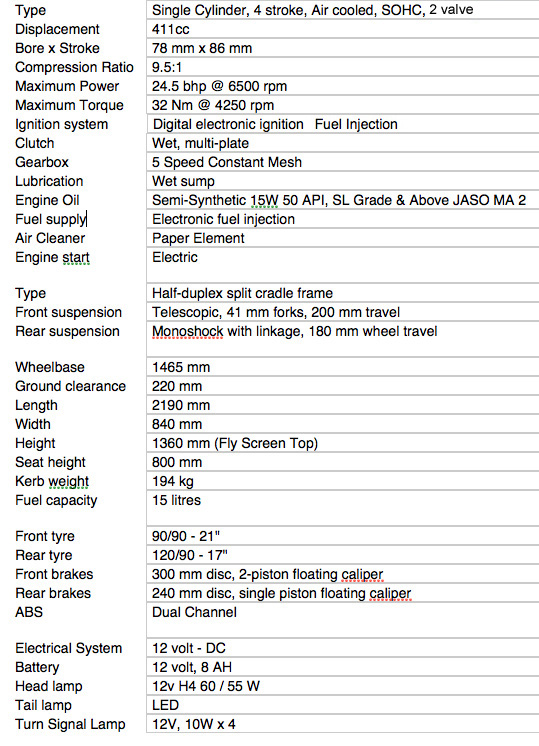
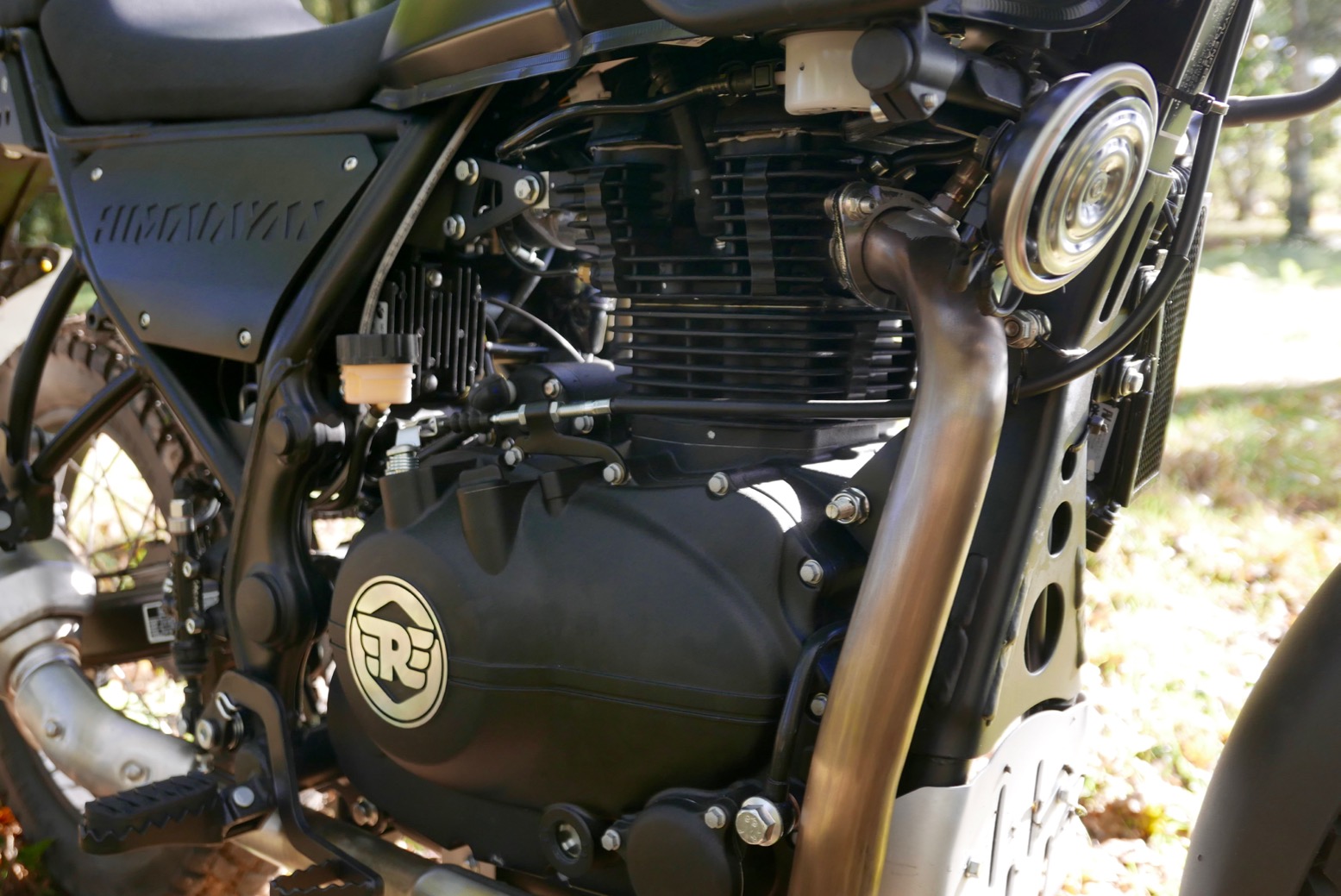
Released in 2016, the Himalayan was RE’s first stab at a do-it-all, adventure-styled machine. It wasn’t just yet another restyled spin-off from the Bullet range, but it did retain some of the Bullet’s better DNA, a 411-cc, long-stroke, two-valve single recalling a 1960s BSA thumper. Unfortunately many found that the Himalayan’s first iteration – the BS3 carb model (reviewed here) paid a little too much homage to the slapdash nadir of the Brit bike industry. A litany of widely reported faults and failures saw production suspended, problems addressed and assembly workers spanked and retrained. In 2018 the BS4 version was released abroad, with some Western export markets (notably not Australia and NZ) getting fuel injection and in Europe, Euro 4-compliant motors come with the now-mandatory ABS. The near-new bike I tried came from Hartgate in Mitcham. They’ve been around since before I started riding in the mid-70s, but these days sell only Chinese and Taiwanese 125s and scooters, plus Benellis and with a special part of their showroom designated for Enfields.
What they say Royal Enfield’s most versatile motorcycle, able to take riders almost everywhere they want to go – on road or off-road. The only motorcycle you will ever need. The Himalayan combines outstanding versatility and all-day comfort for all rides. Long-travel suspension, natural upright riding position, a durable and torquey engine all add up to a comfortable ride for you, whether it’s on the highway, city streets, or remote mountain roads.The Himalayan is fit to be your only motorcycle.
In a line Give it a look; it’s much better than you might expect.
• Feels easy to ride and manoeuvre, despite the 194-kg kerb weight • Low seat height (800mm; 31.5″) • Indian build quality looks solid • Efi motor starts and fuels smoothly • Great price • Pirelli MT60 tyres (as opposed to some obscure brand) • Suspension surprisingly firm • Can’t verify economy yet, but 15-L tank should be good for 400km. • Love the tank bars as supplementary baggage racks • Comes with slim tail rack and centre stand
• Soft seat foam (for my weight) • Feels like a tall first gear (for off-road) • LCD display hard to read • Screen a bit small (for my height) • Front end felt a bit heavy (it is) • 3000-miles valve checks • Front brake lacks bite • A bit cramped for me at 6’1″ • Low, 220-watt alternator output
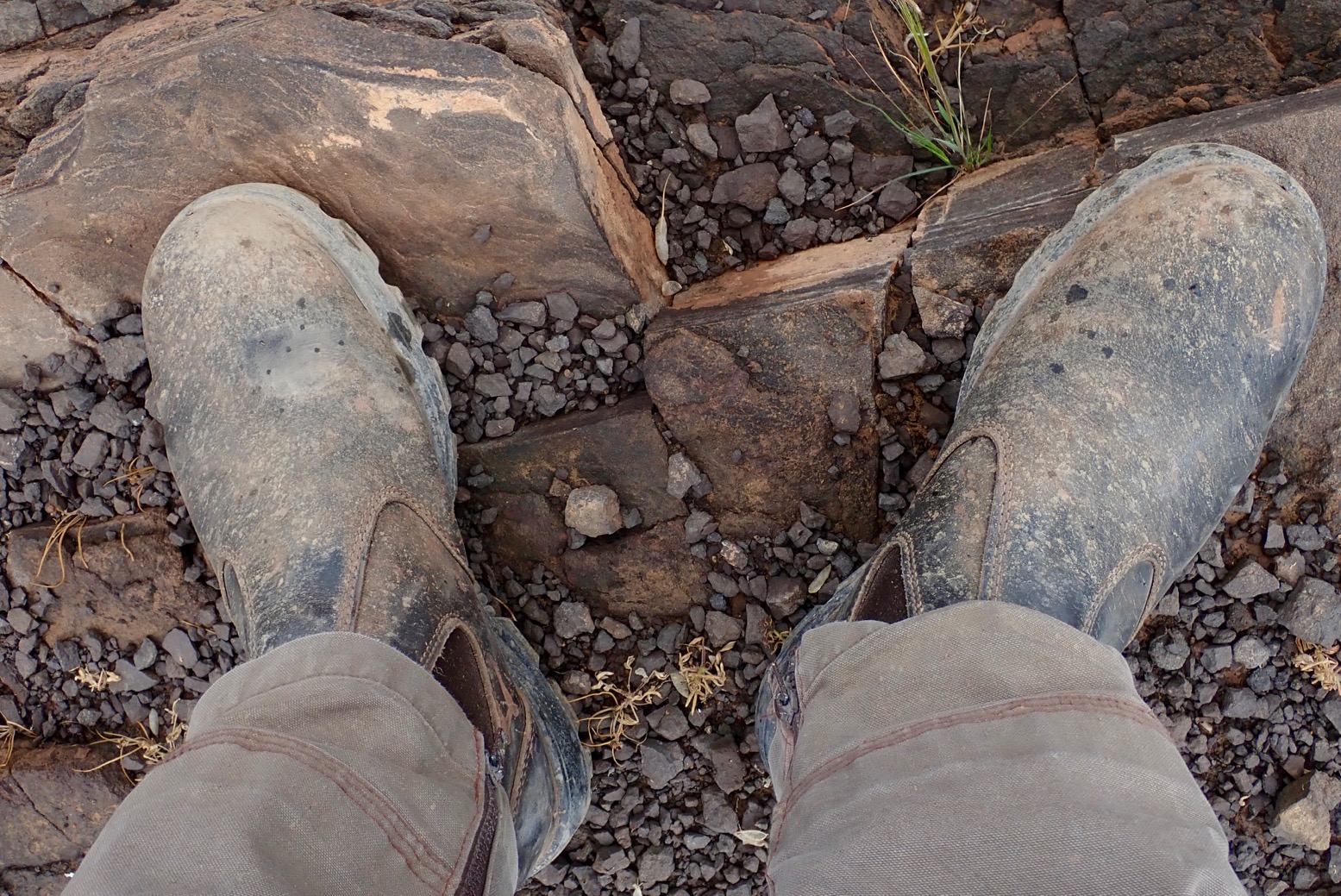
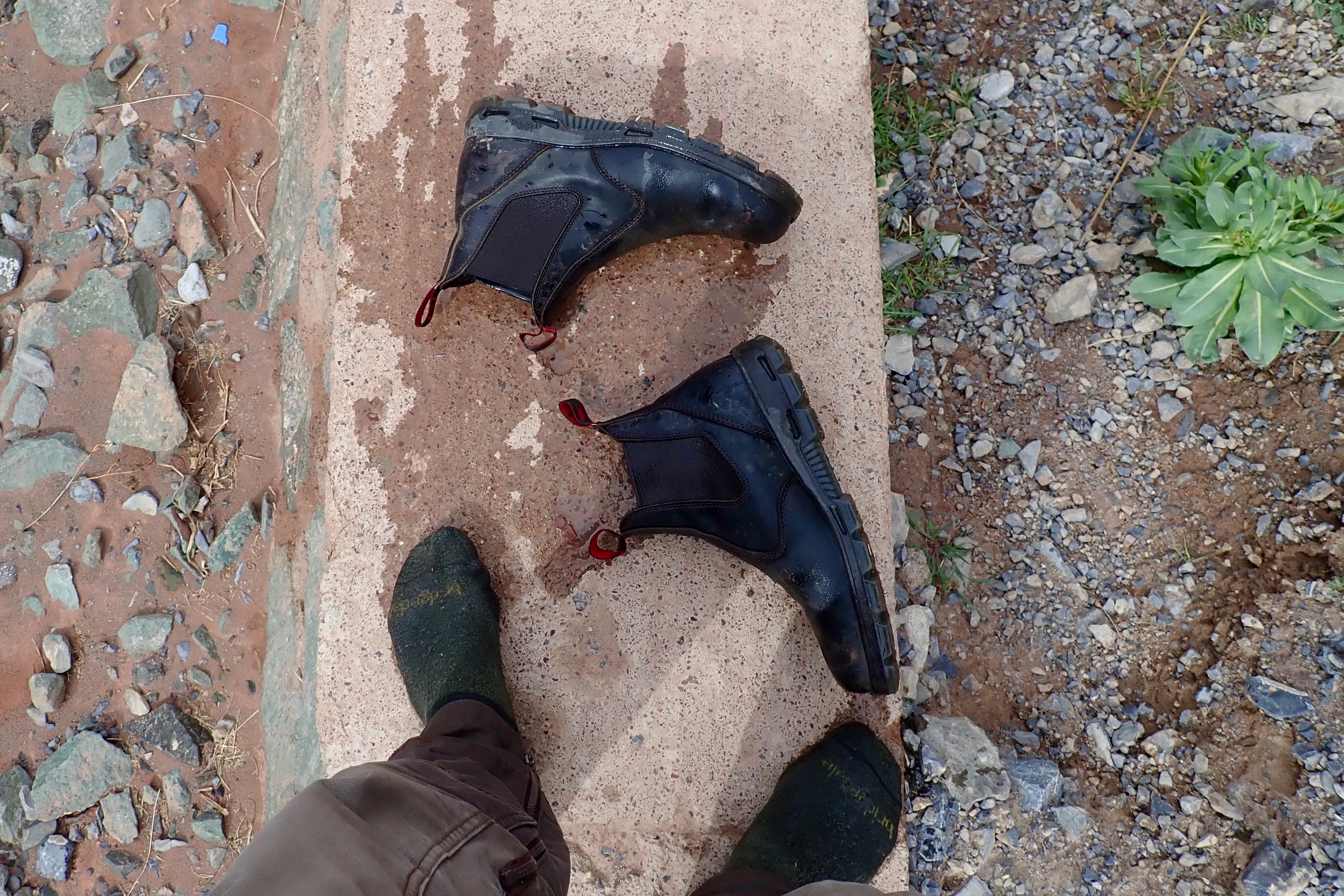
Review Pulling away from Hartgate’s, the seat was nice and low but felt way too soft. I could see it being agony in an hour or two, but I’ve had that on BMWs costing twice as much. At 6’1″ I was also a bit cramped between the stepped seat which angled me forward a little, and my knees are just an inch from the tank rack bars. Removing peg rubbers might provide more leg room and I’d have turned the bars back a tad. The gear change lever also felt too short for my size-11 Blunnies, but I soon adapted. The clutch was light, the gears clicked reassuringly and fuelling felt glitch-free. It’s an effortless bike to ride, with the power of a Jap 250 single or a Chinese Mash 400.
It may only have the 24-hp of a 2nd-gen CRF250L, but on paper it puts out nearby 50% more torque at just 4250rpm, 2500rpm lower than the Honda. Riding along the flat A24 towards Box Hill in 40- and a brief 60mph limit, I can’t say I noticed the torque, but the bike never felt under-powered or noticeably vibey. Pulling away from lights, I did find myself consciously slipping the clutch to get over the tall first gear – or maybe to avoid stalling an unfamiliar bike. While you don’t want to sacrifice too much of the modest 82-mph top speed, for off-roading I’d consider dropping a tooth to 14T on the front.
The front end felt oddly sluggish (maybe the tyre was soft, or you can feel those 194kgs?) and I was surprised to learn the rims are steel. To be expected on Bullets, but I didn’t think modern bikes use steel wheels any more. Minimising unsprung weight has a big effect on efficiency, acceleration and suspension. But then cheek-distorting acceleration isn’t really a Himalayan’s USP and perhaps the wheels’ flywheel effect helps maintain momentum once up to speed.
As had been widely reported, despite a steel braided line the front brake lacks bite (perhaps the ABS dulls response) while the rear may have a little too much, but up to a point the non-switchable (but probably disable-able) ABS ought to iron out ham-fisted braking. It didn’t engage in a bit of a panic when a car pulled out across a dual carriageway. Not had one of those in a while…
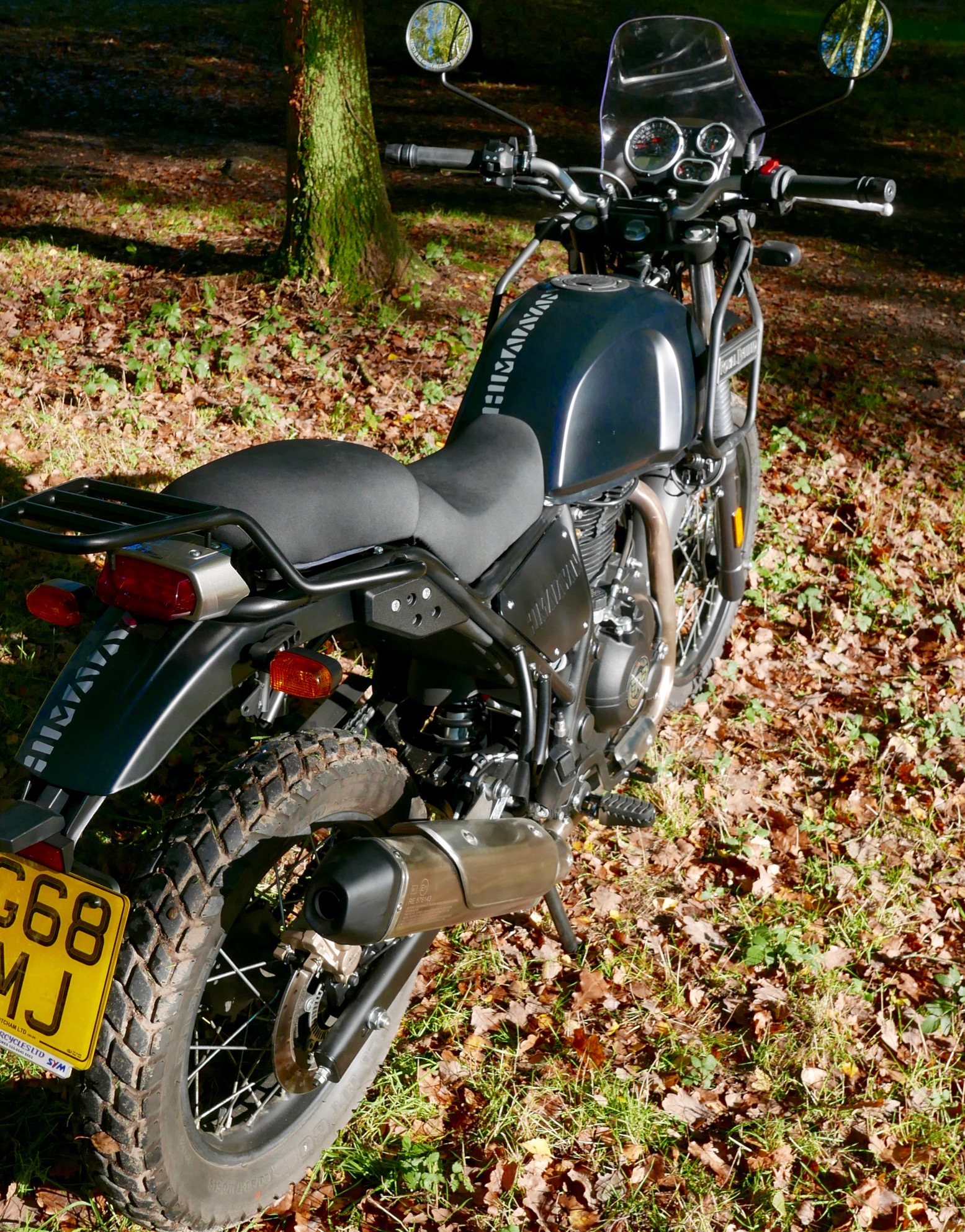
Both for road riding and when manoeuvring it in the woodland mud for photos, I find it hard to believe it really weighs 194 kilos wet (it does). That weight is clearly set low which, along with the low seat, will make a big difference in control and confidence on rough terrain, as well as picking it up when the terrain gets the better of you. And yet you still get a reasonable 220mm (8.5″) of ground clearance which makes the Himalayan a rare and much sought-after thing: a functional trail bike for shorter legged riders who don’t want to have to settle for a TW200. I stood up on the pegs and – with the usual risers added under the narrow-ish bars – would find gripping the slim bike sustainable on the trail.
The dash’s lit section usefully shows time of day; ambient temperature, then gear position, odo and trip metre (and average speed), plus ‘side stand down’. But apart from the gear position it’s too small and messy to easily read at a glance. Chances are, familiarity will improve reading skills.
To the right below the small rev counter (red-lined at 6500rpm) is the digital compass. It’s a gimmicky nod to the bike’s adventurous intent, but as many users have found, most of the time it’s way off. If ‘CA HO’ flash up, recalibrate the compass by pushing the bike in a circle four times while patting your head. It may have to be done fairly regularly so I’d sooner rely on the sun or of course, a GPS compass, if orientation is that important. Talking of plugging in accessories, the Himalayan’s claimed 220w alternator output is not so impressive when you need heated grips and a heated vest approaching the north face of Kanchenjunga. Fitting a switch to the always-on headlights may help, as well as fitting LED lighting.
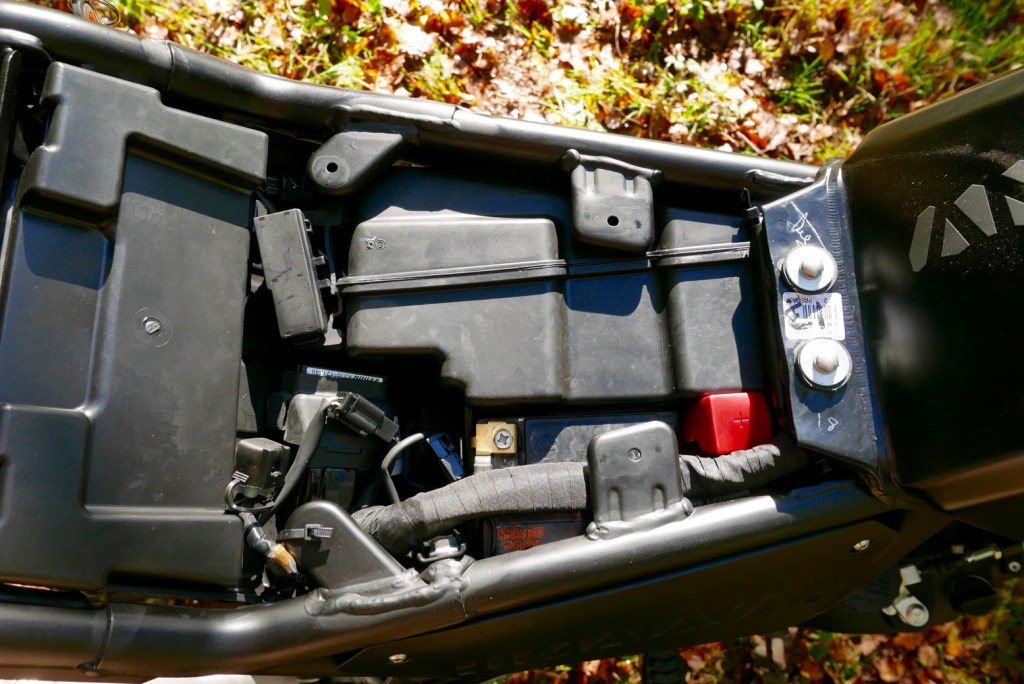
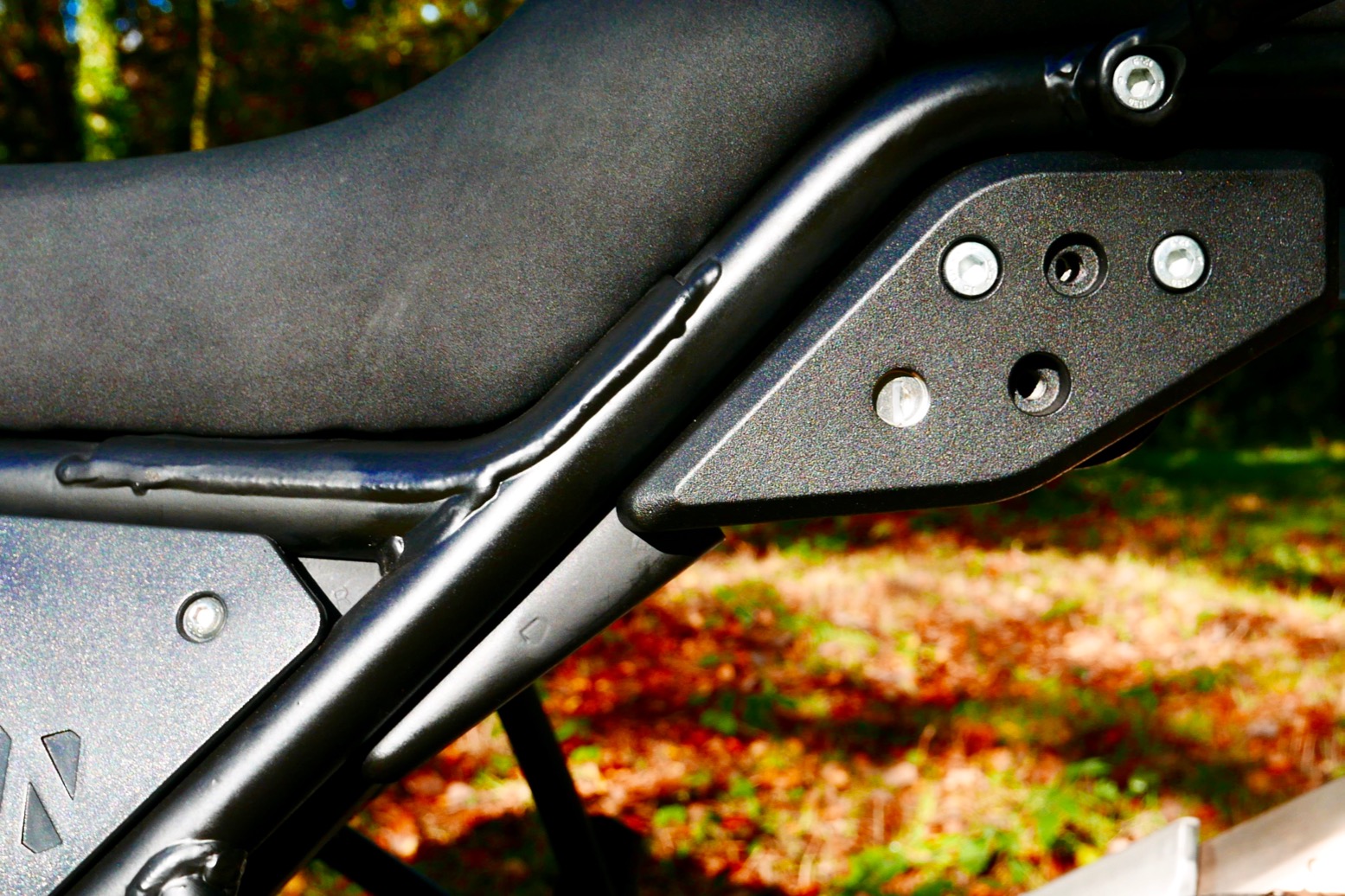
The fit and finish looked pretty good, but only time will tell how it all holds up. Zinc paint brushed over rusty headers looks clumsy. Welds (left) are robotic and if some of that near-200-kilo heft is in the subframe, that’s right where you want it for load-carrying duties off road. By the book you need to dealer adjust the valves every 3000 miles (only two and they’re easy screw and locknut jobs) to keep the two-year warranty running. Unless they’re made from the final remnants of 1970s monkey metal, it’s hard to think a low-revving bike like this needs the tappets done twice as frequently as recommended oil changes, but valves clearances tend to tighten not increase. Some say its a way of subsidising the low purchase price. Unusually for an efi bike, there’s a cold-start lever on the left bar, and the air-an-oil cooled engine comes with a big oil cooler. Some say the ambient air temp sensor under the seat could do with repositioning to give a truer reading away from the warmed up engine, but one thing I’d definitely add is an engine temp sensor, like the Trail Tech one off my WR250R, right.
Himalayan alternatives For the money, spec and intended use, very little comes close to the Himalayan’s simple, agricultural charm. Comparing it with the BMW 310GS (right; also Indian built), Versys 300, Suzuki 250 V-Strom or Honda CRF250L misses the Himalayan’s distinctive niche. Riders aren’t buying Hims solely by its displacement category, and to its credit the Himalayan isn’t a repurposed high-revving road bike motor slotted in an adv-styled bike. It was planned from the ground up ‘fit to be your only motorcycle.’
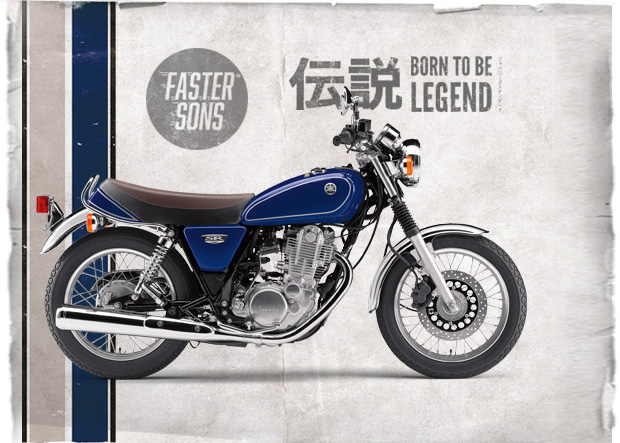
I’d say its low-seat and low rpm characteristics have more in common with Honda’s unfashionable but quietly popular NC twins, Yamaha’s stillborn SR400 (left; dropped in 2017) or your Chinese-made Mash 400s and the like. It’s closest true competitor is the now seemingly discontinued Mash 400 Adventure (right) / WK Trail 400, which used a 400cc Chinese Shineray engine based on the old Honda XBR500. You may find new, end-of-line Mash Advs in the UK for the same price as a Himalayan. The frames on these Chinese mini Advs are different from the many twin-shock road models, but the motor’s the same.
Conclusion All of an hour spent on the Himalayan pretty much matched what I’d read and seen, but not what I thought. Cynically, I assumed testers where being a bit soft on the old-style thumper, but after the ride I warmed to the concept too.
People will say ‘Just a bit more power and it would be perfect’ and my experience with similar-hp 250s, loaded up at modest altitude can leave nothing in reserve at 50mph. Sure, you’re still moving forward, but on busier roads and steeper hills, that speed can make you feel vulnerable which induces fatigue over a long day. But out in the slower-paced AM Zone the Himalayan ought to slip right in. The added capacity over a typical Jap 250 only delivers more torque and less revviness which will certainly help on rough trails. Elsewhere, the hefty weight and low power may leave you struggling in headwinds and on long climbs. Maybe it’s just nostalgia but I’ve had bikes like this in mind for years. Something like my old Triumph T140V or XT500. My GS500R project or more recently, XSR Scrambler were attempts to realise it, but despite weighing less than RE’s claim, the XSR sure didn’t feel lighter. The Himalayan is the first mid-sized thumper that could fit the bill as a long-range travel bike, much more than the variously badged Shineray 400cc equivalents mentioned above and of course, much more than the CRF450L. By now there’s enough Himalayan chat and know-how online, much of it in India. Setting off for a long trip what would this bike actually need? Handguards, a bigger screen, a rack for panniers (£500 fitted; right). The upswept pipe might hamper an ideal pannier position low down (here’s one solution) but the nifty tank racks mean less bulk at the back. People looking for the ideal light weight, low-displacement travel bike are comparing it with BMW’s 310GS, but only because they’ve come out around the same time and are also Indian made. Knowing the 310 quite well now, as a travel bike I’d sooner get a Himalayan.
 Hooning about on a clay pan.
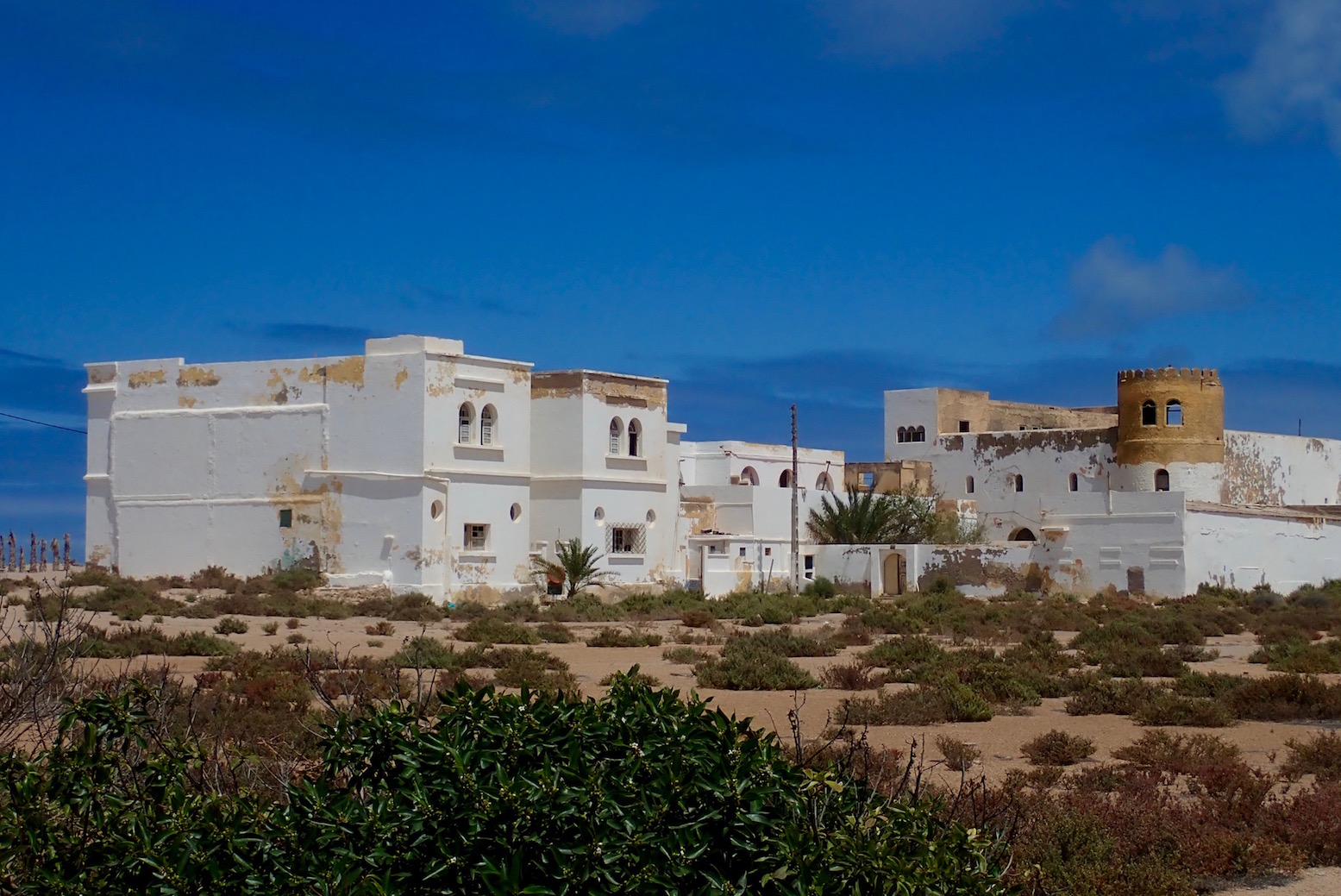 The century-old Aéropostale base at Cape Juby (Tarfaya).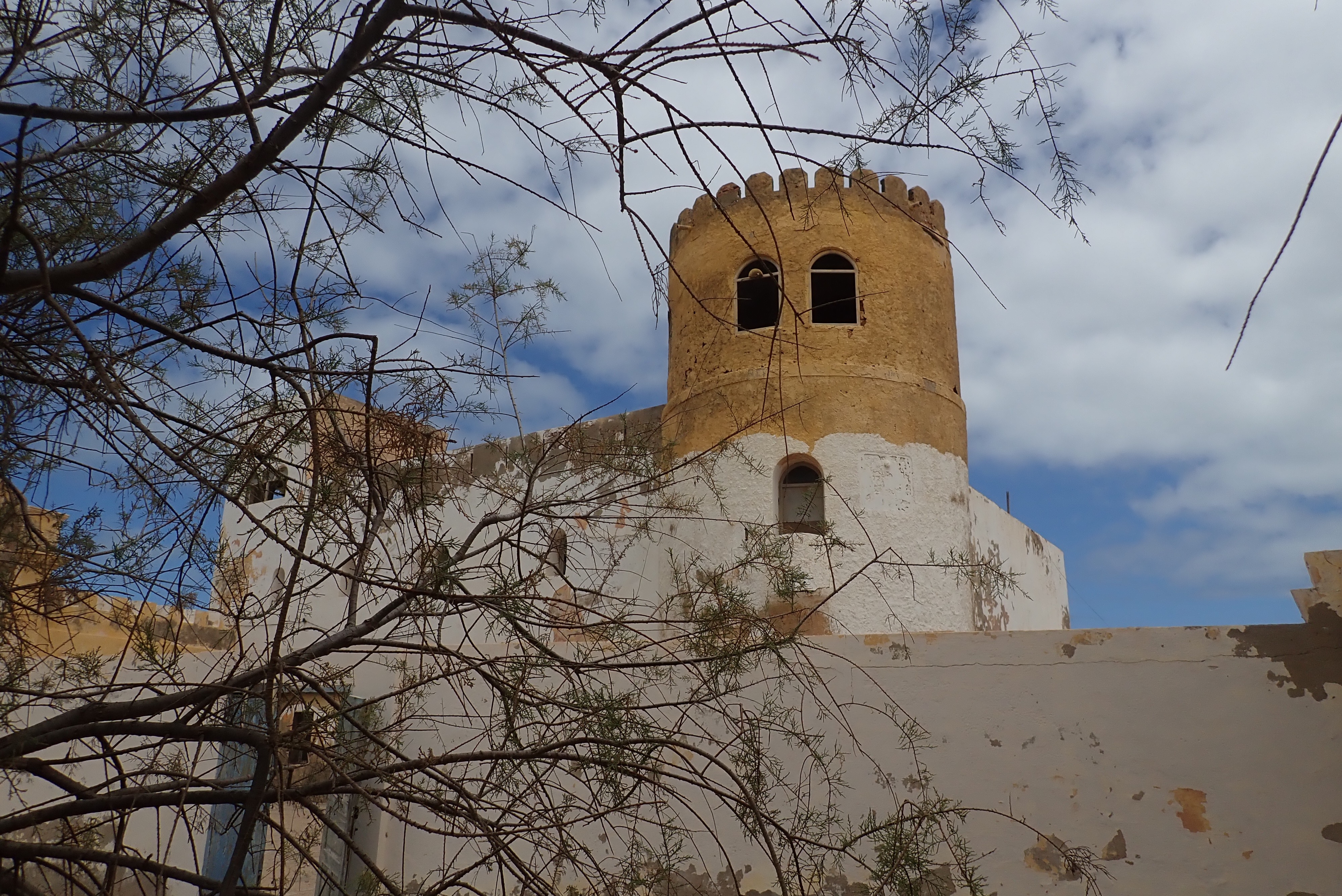
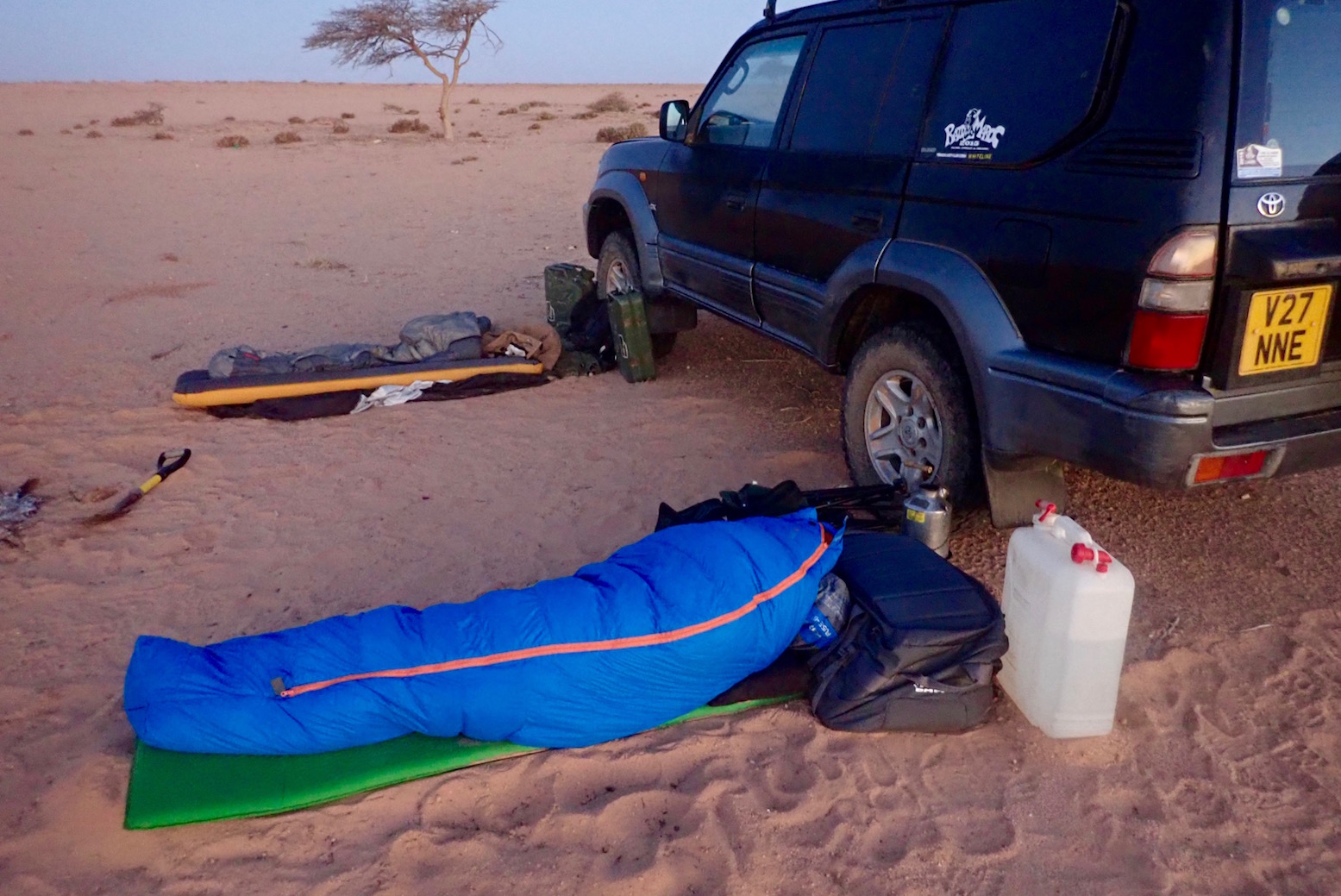 Tojo wheels + jerries – the only windbreaks for miles.
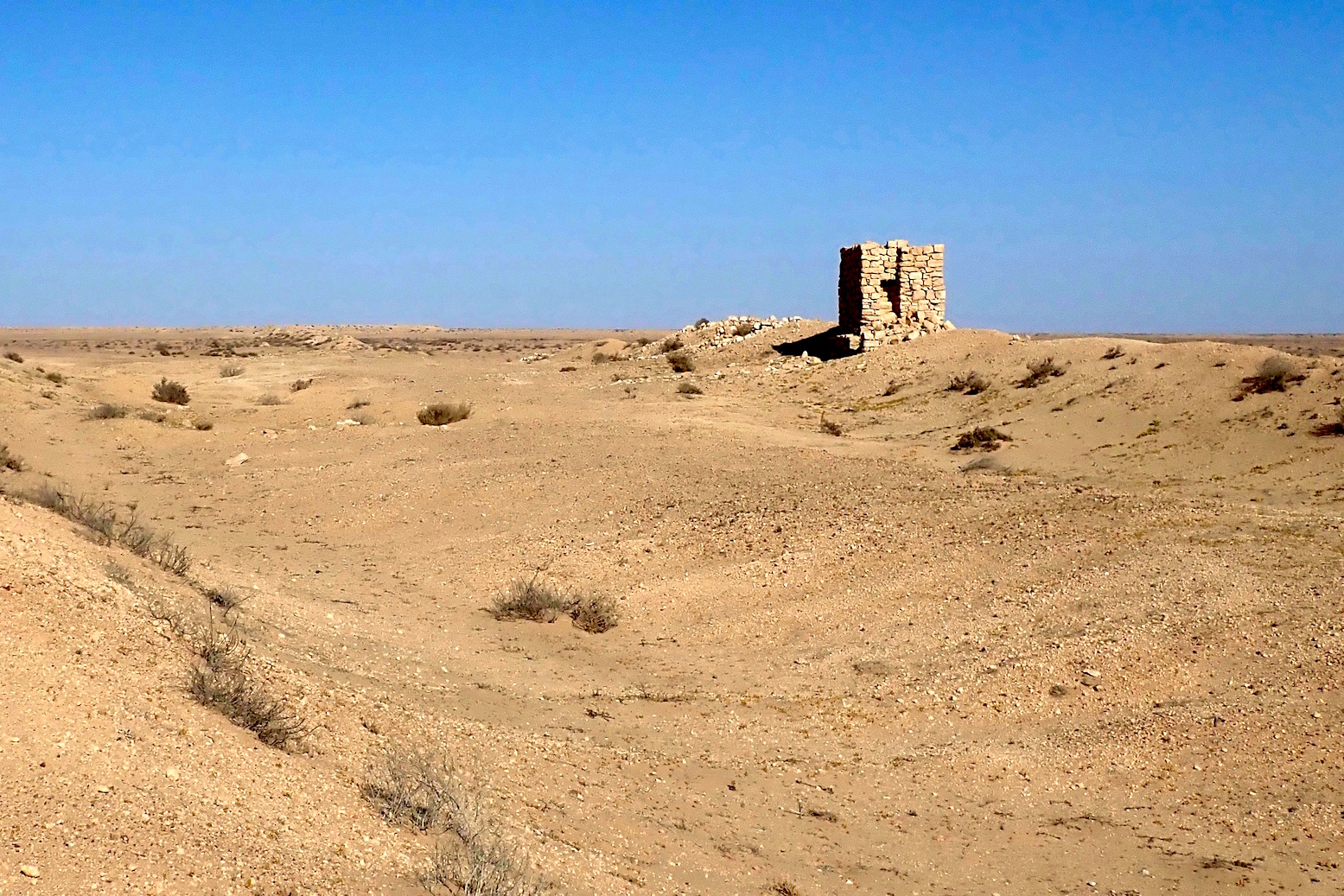 Watchtower on a berm just 50km from the Mauritanian border.
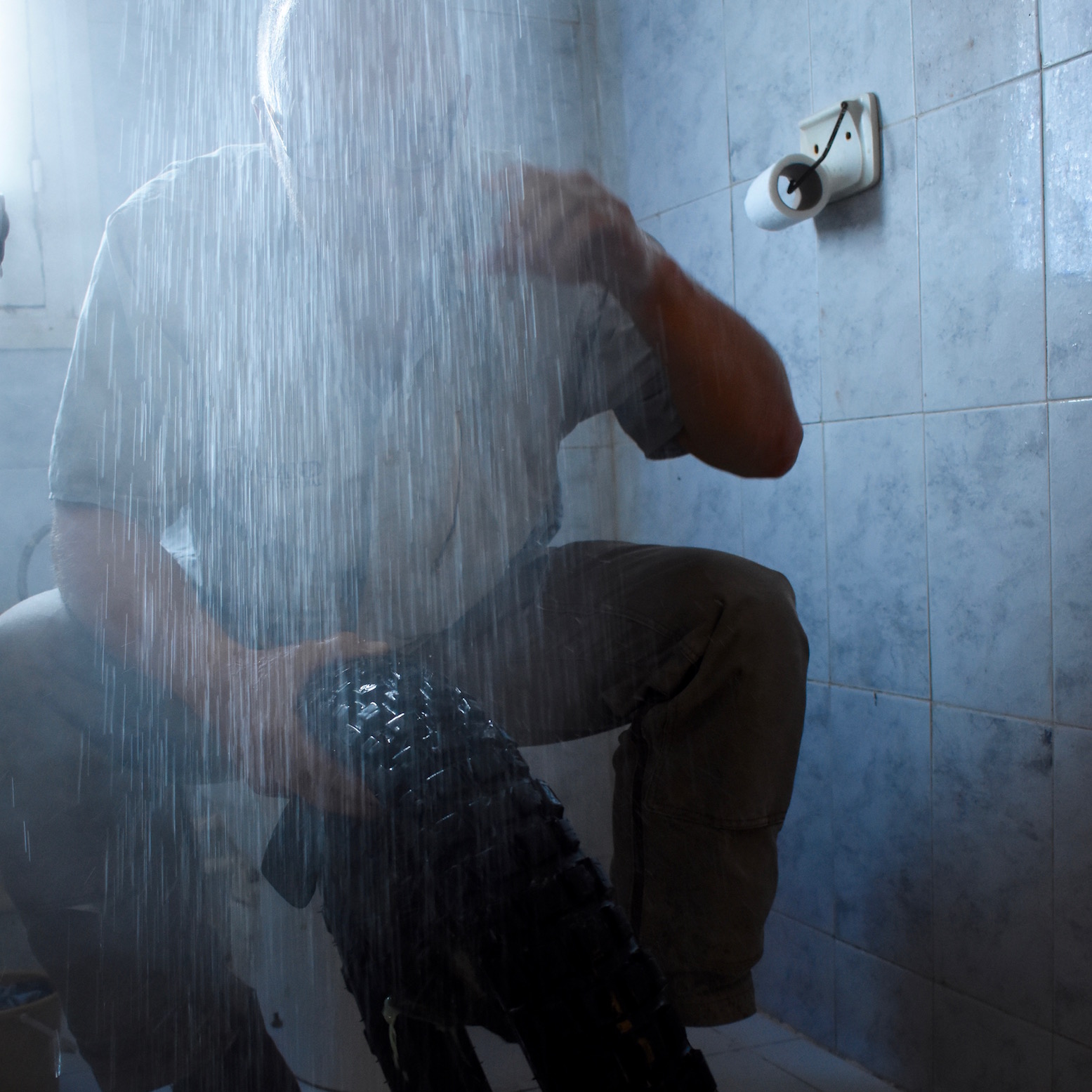 Hot steam and rubber. Cleaning out the Slime.
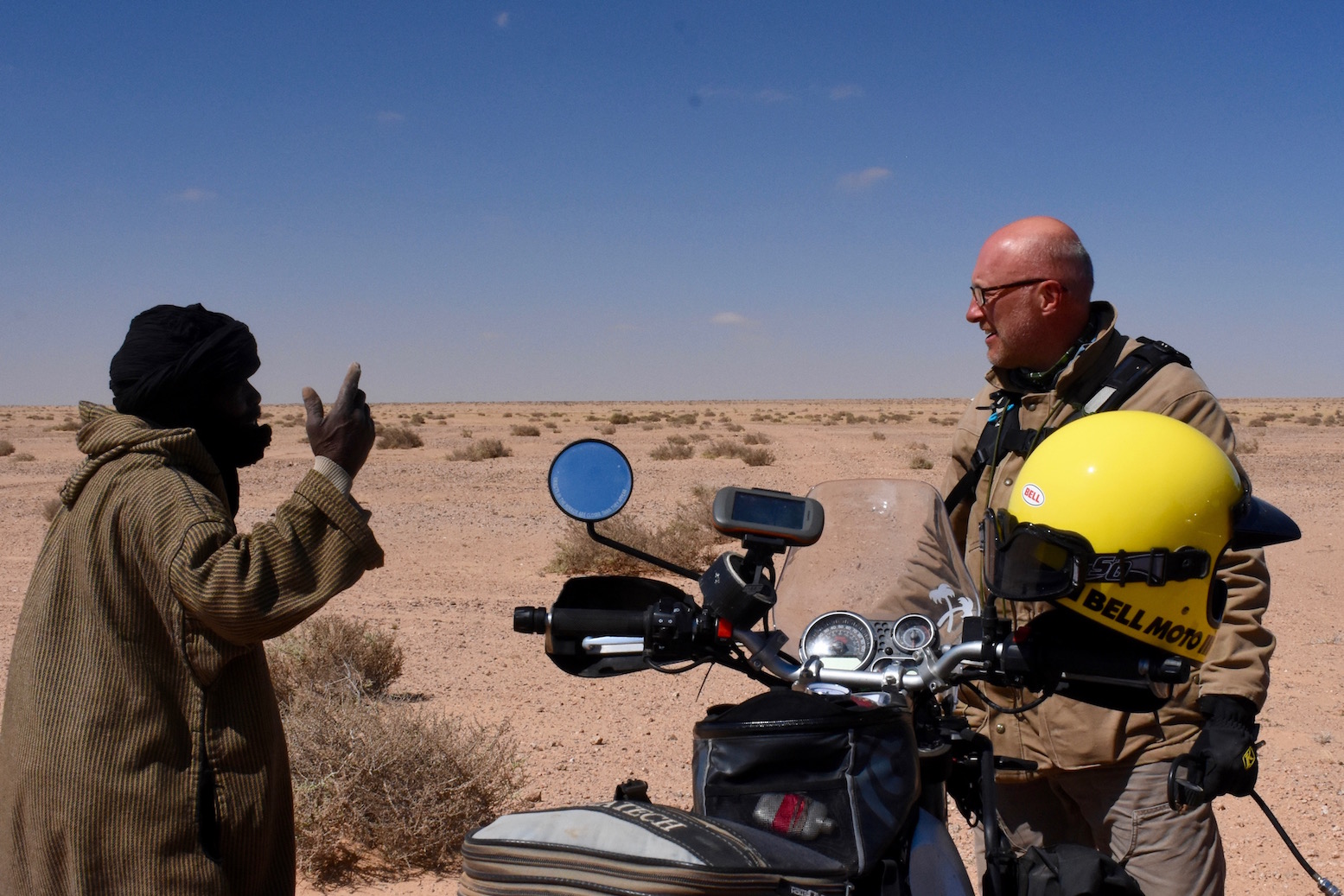 ‘Moto – Landrover – Layounne?’ I point to each and try and persuade a Saharawi to transport my bike to the coast.
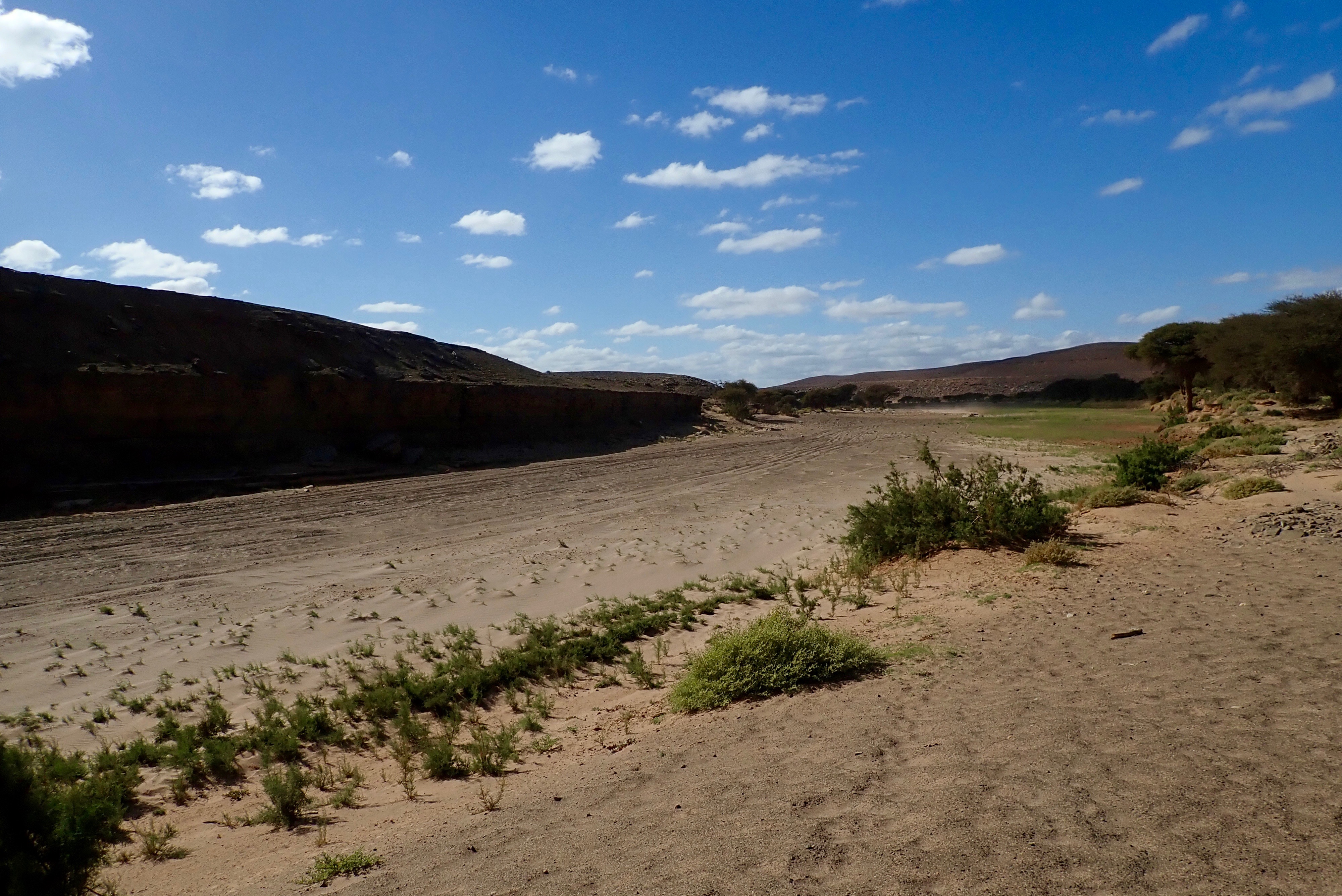 Churned up, sandy gorge at MW6 KM246. The Himalayan meets it’s limit.
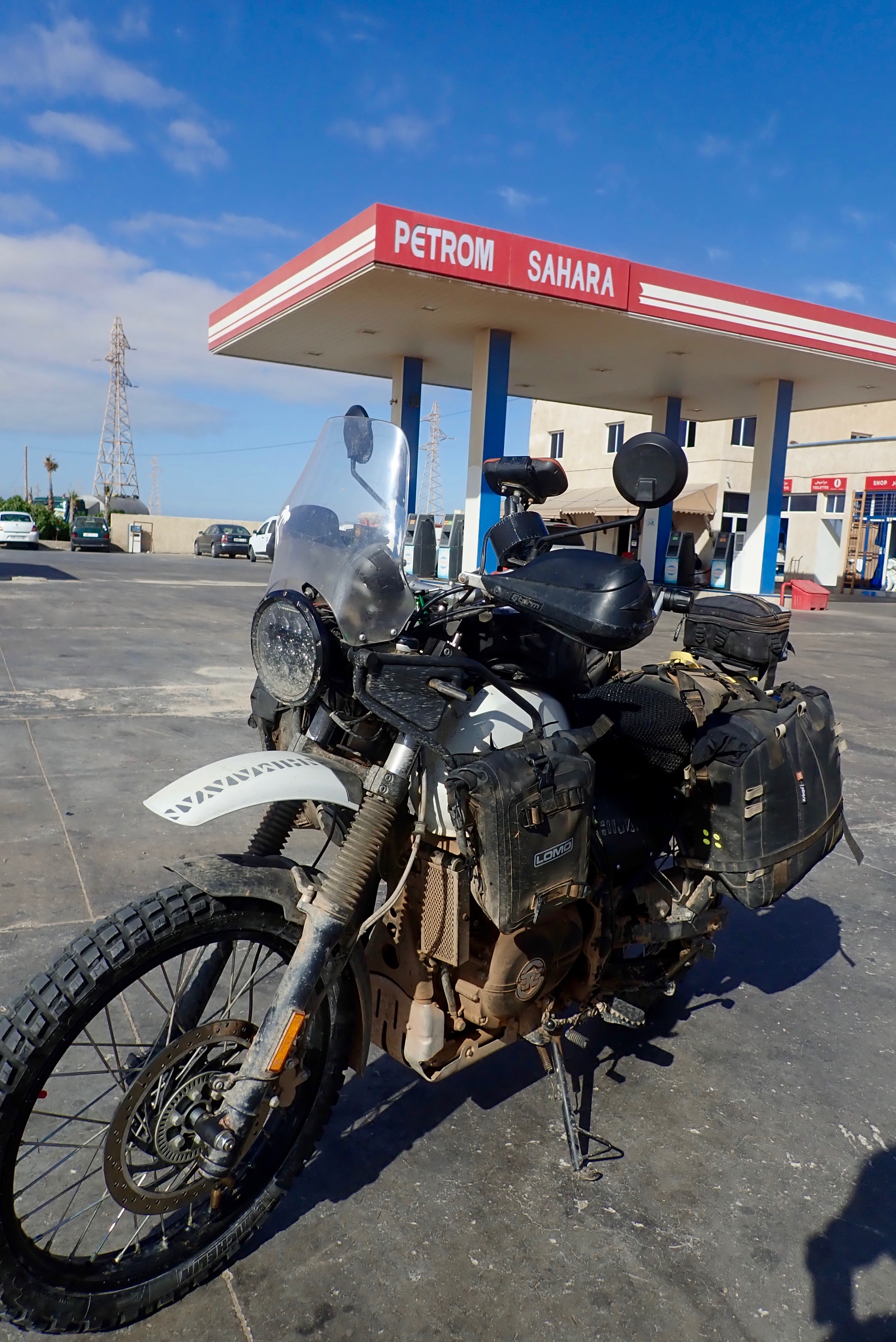 They like the word Sahara out here.
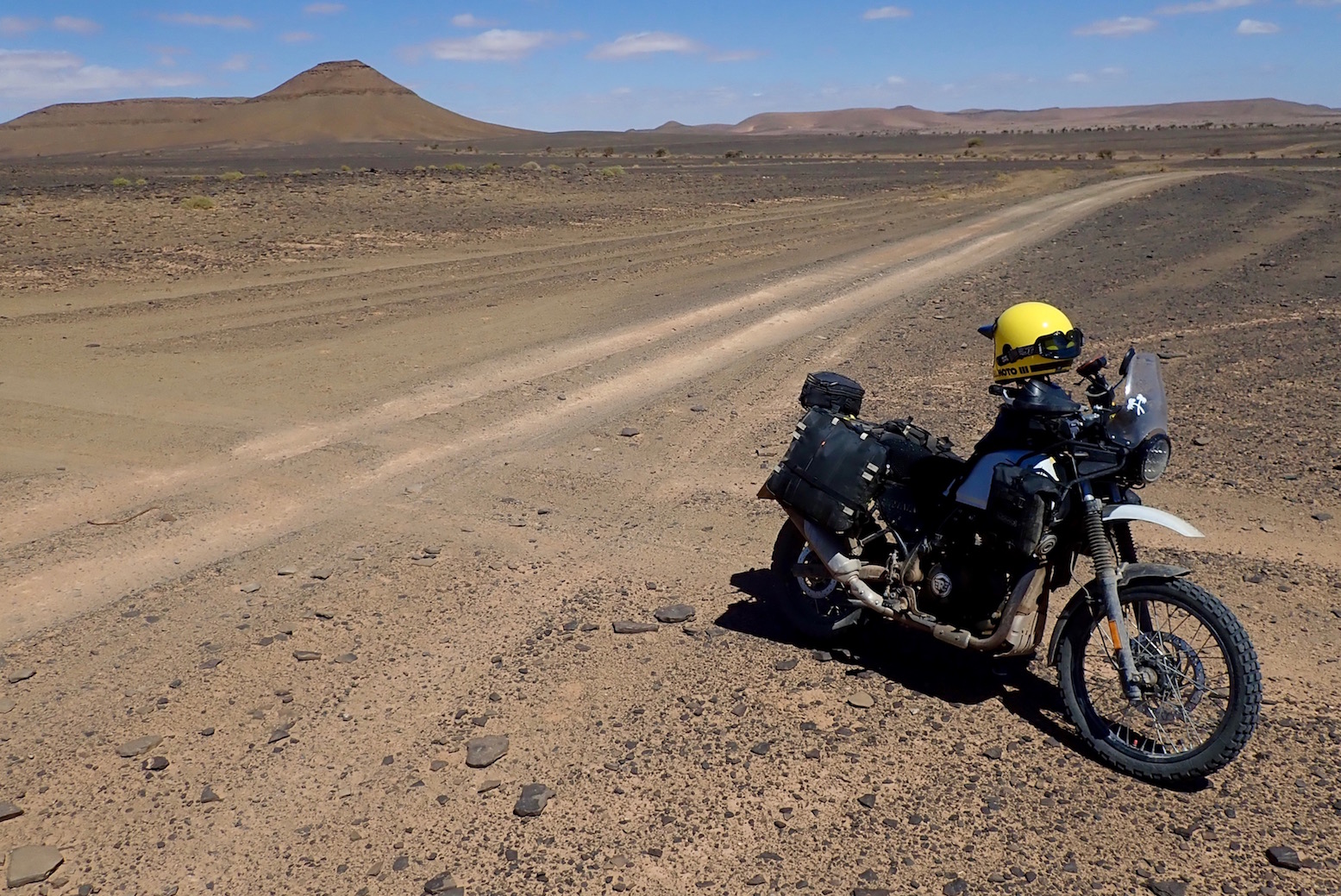 Crossroads where MW6 joins MW7. Came from the left on the WR in 2017.
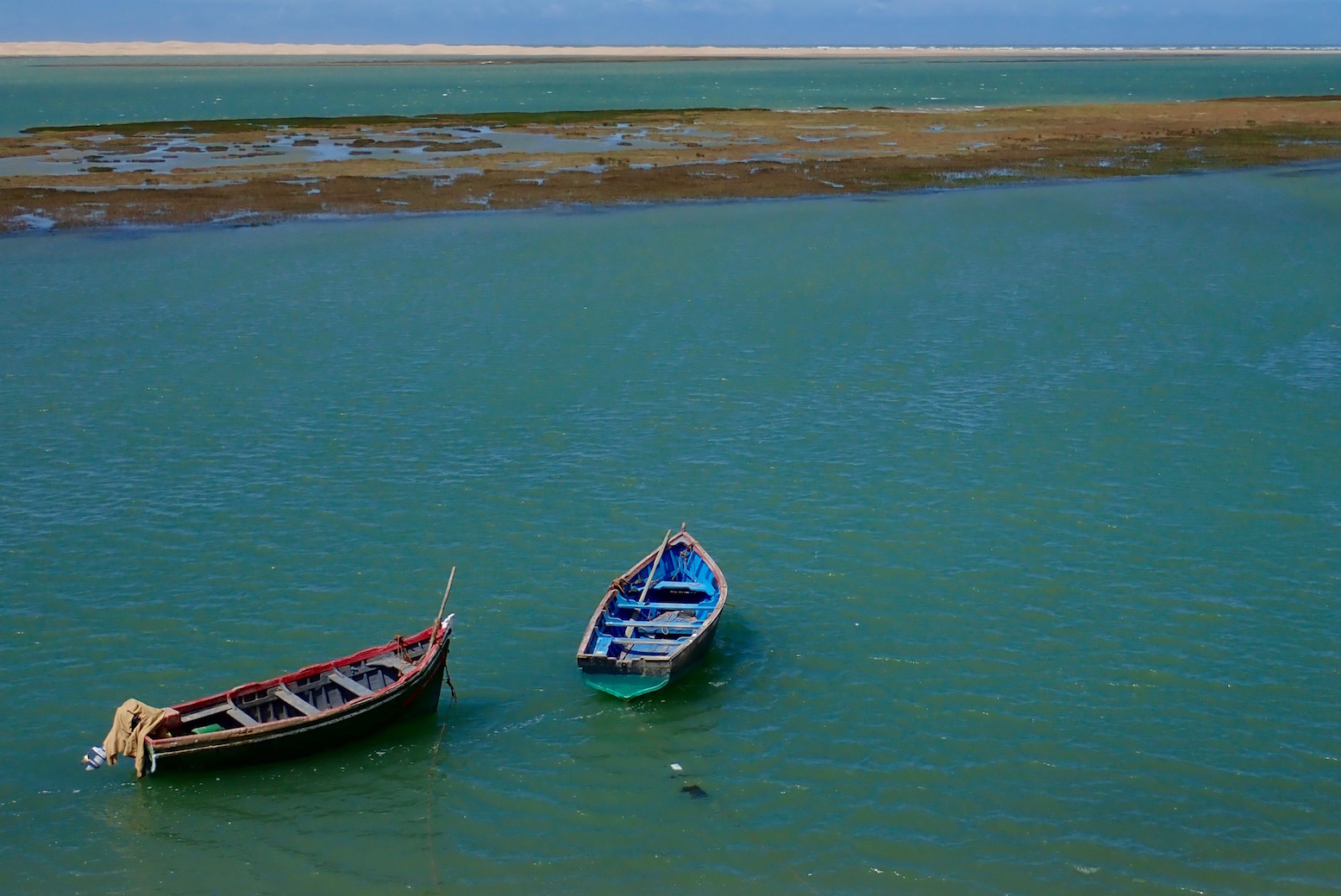 Khnifiss Bird Lagoon.
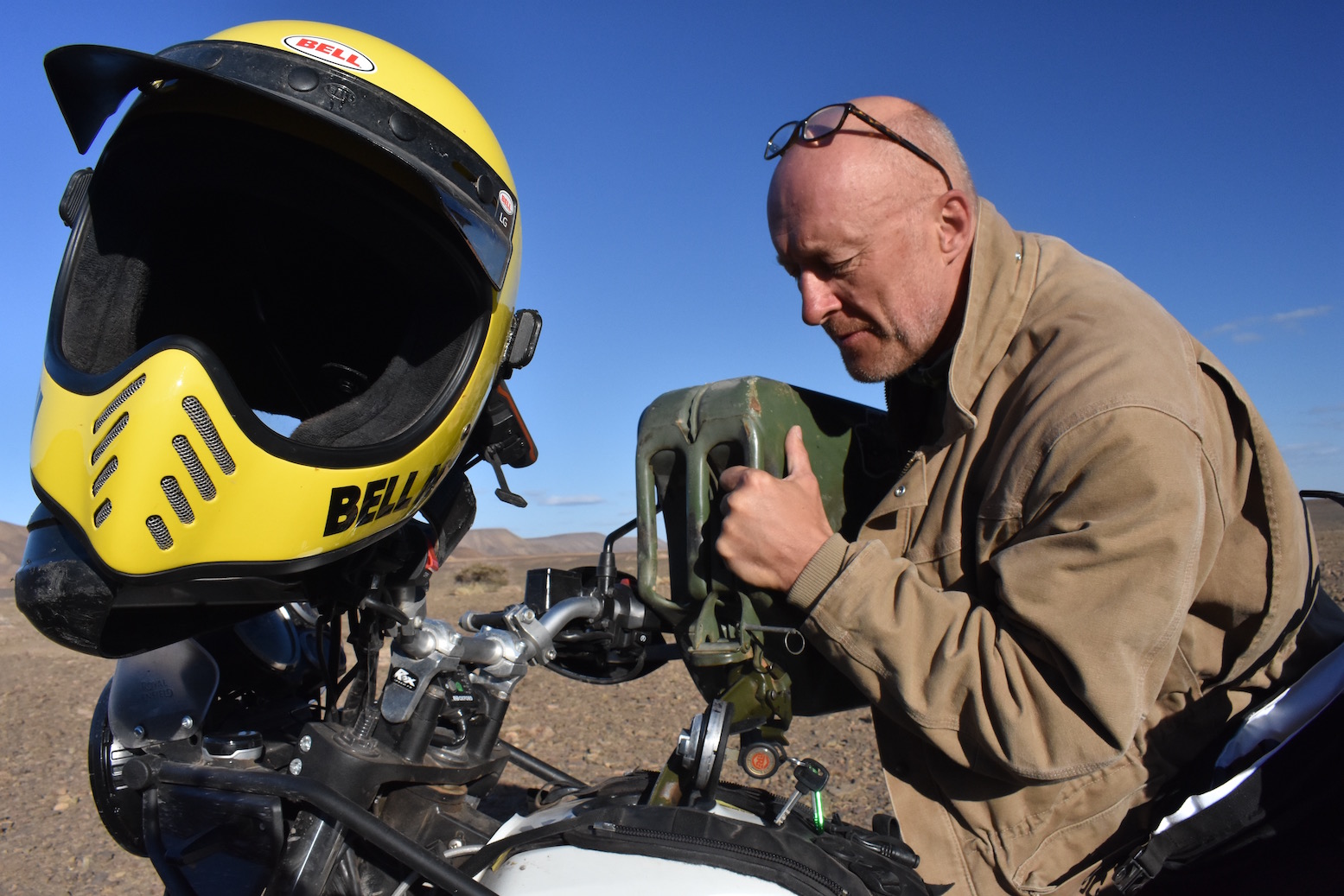 Topping up for the day. A can will do me at least 500km.
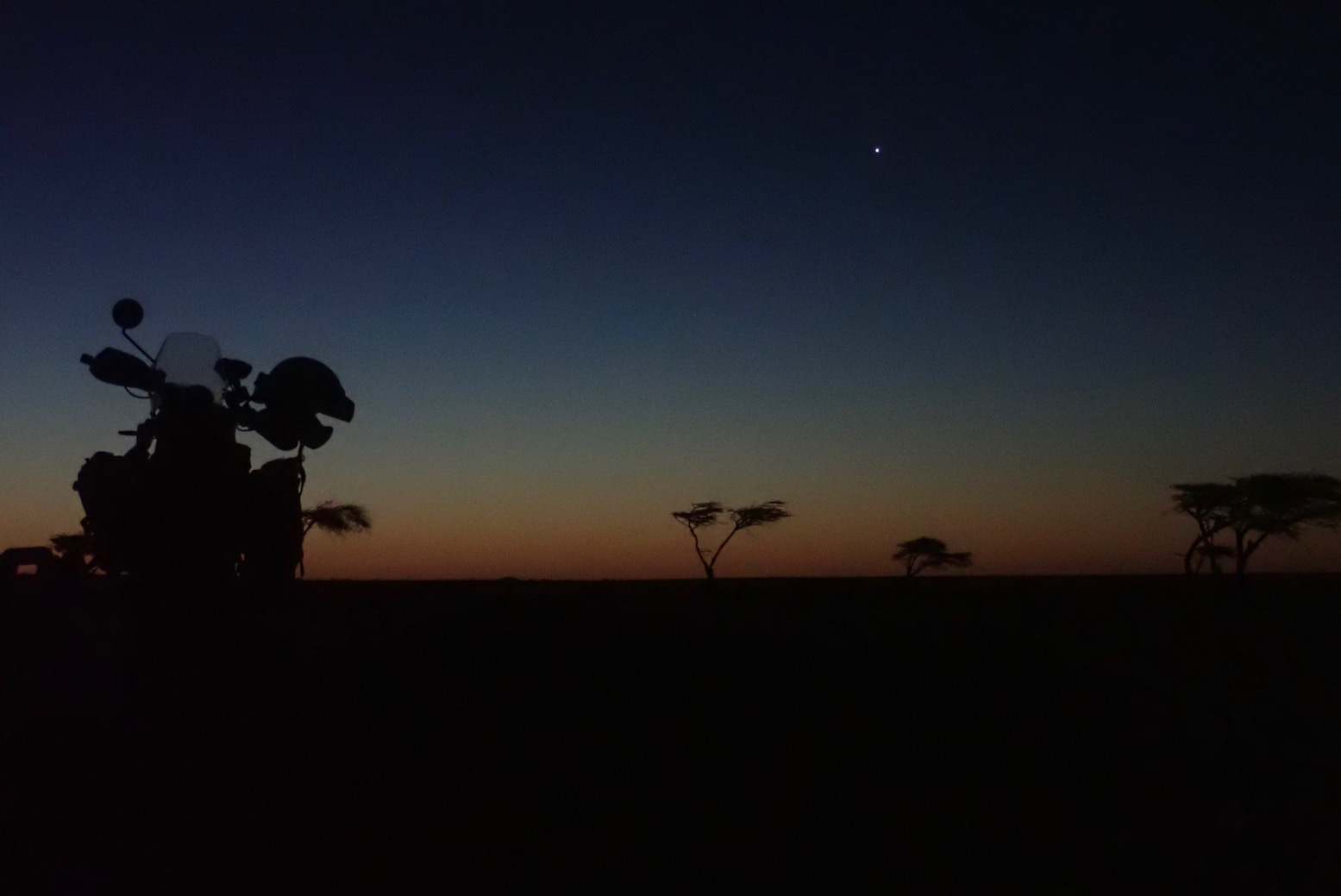 Desert dawn near Gueltat Zemmour.
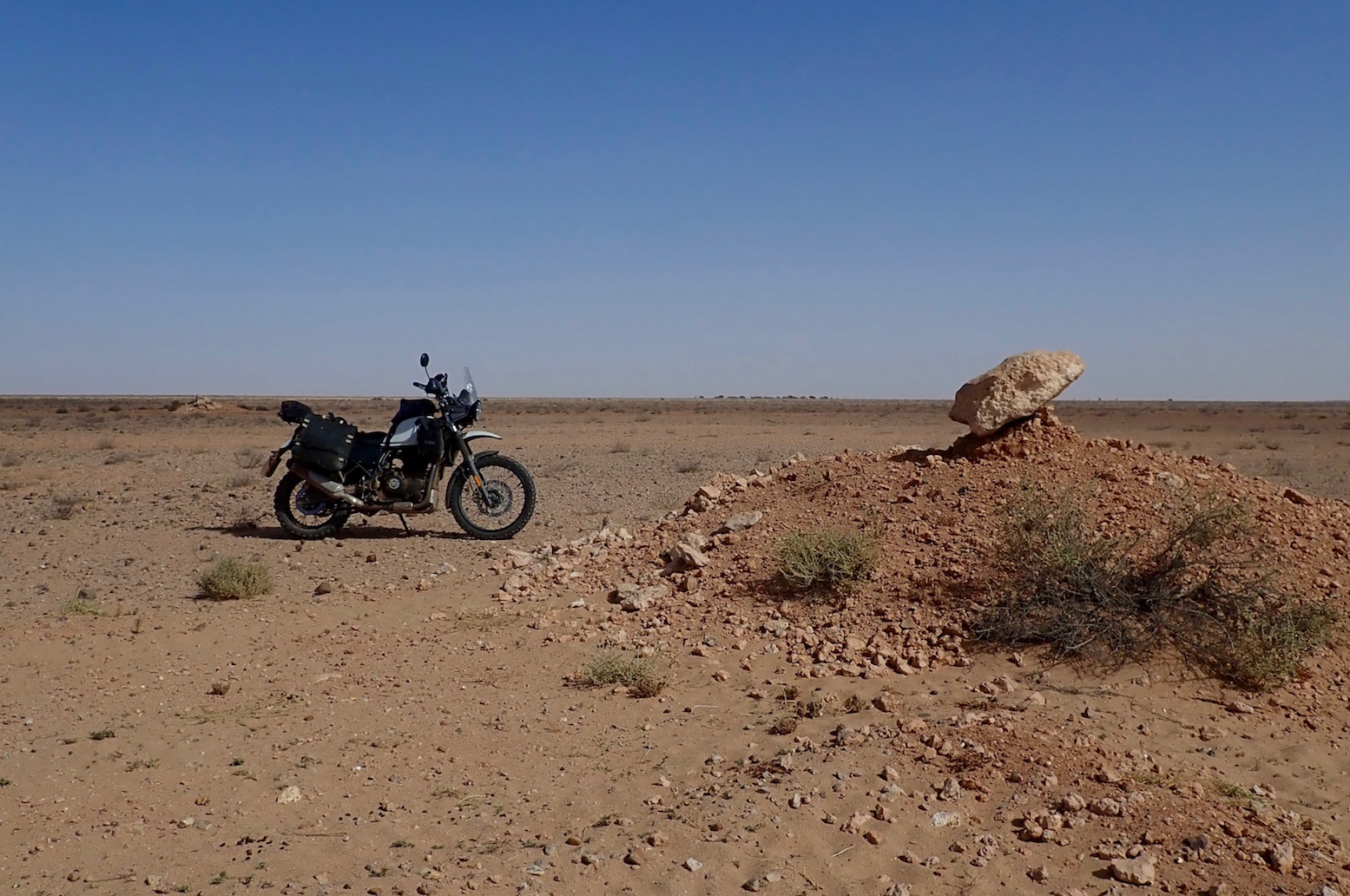 A Dakar Rally mound. Pushed up every kilometre or so as landmarks right along our route to the Digtree and beyond.
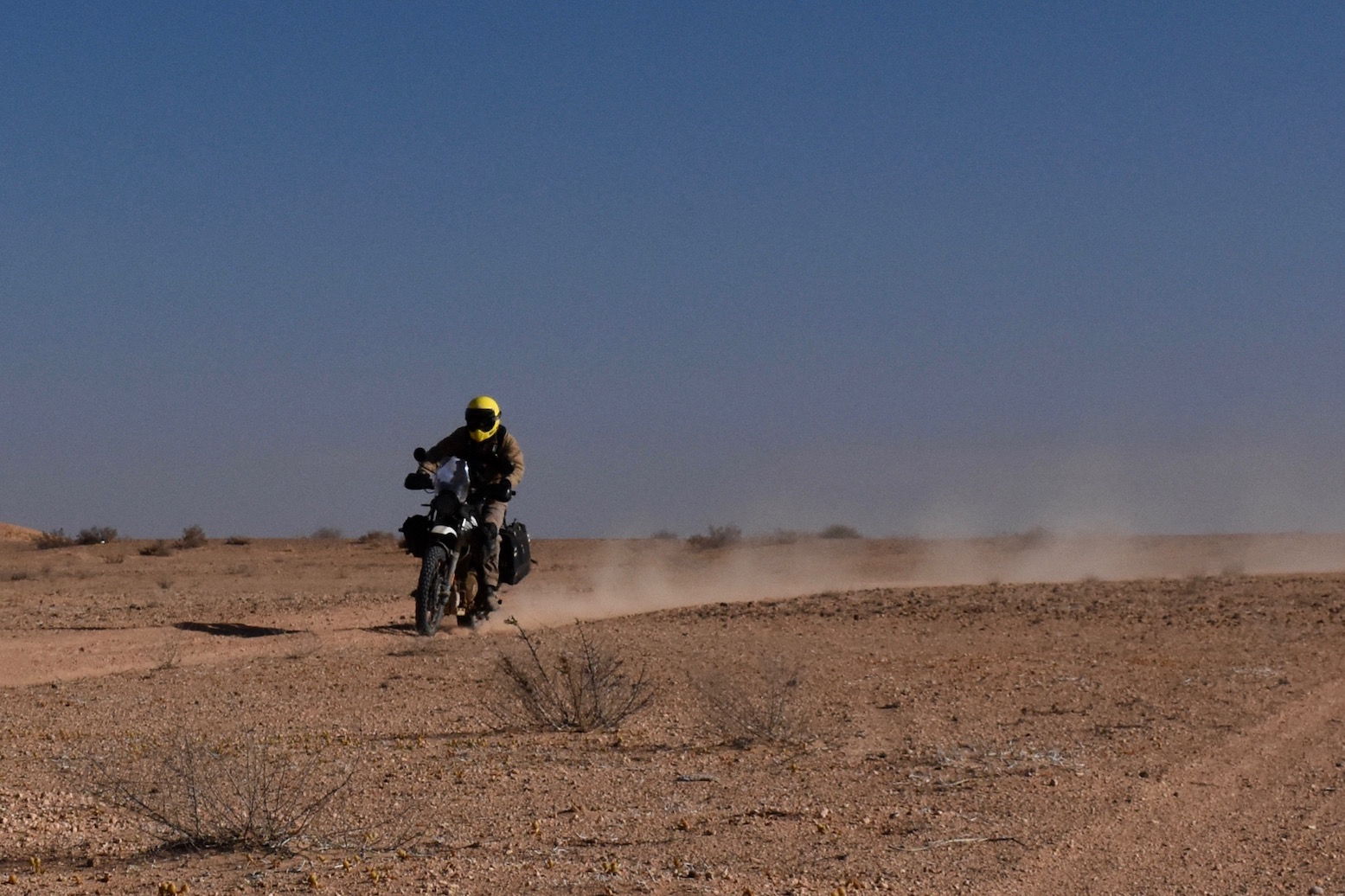 Most of the riding is easy, as above. But it only takes one lapse in concentration.
 Removing the punctured Tubliss core in Layounne.
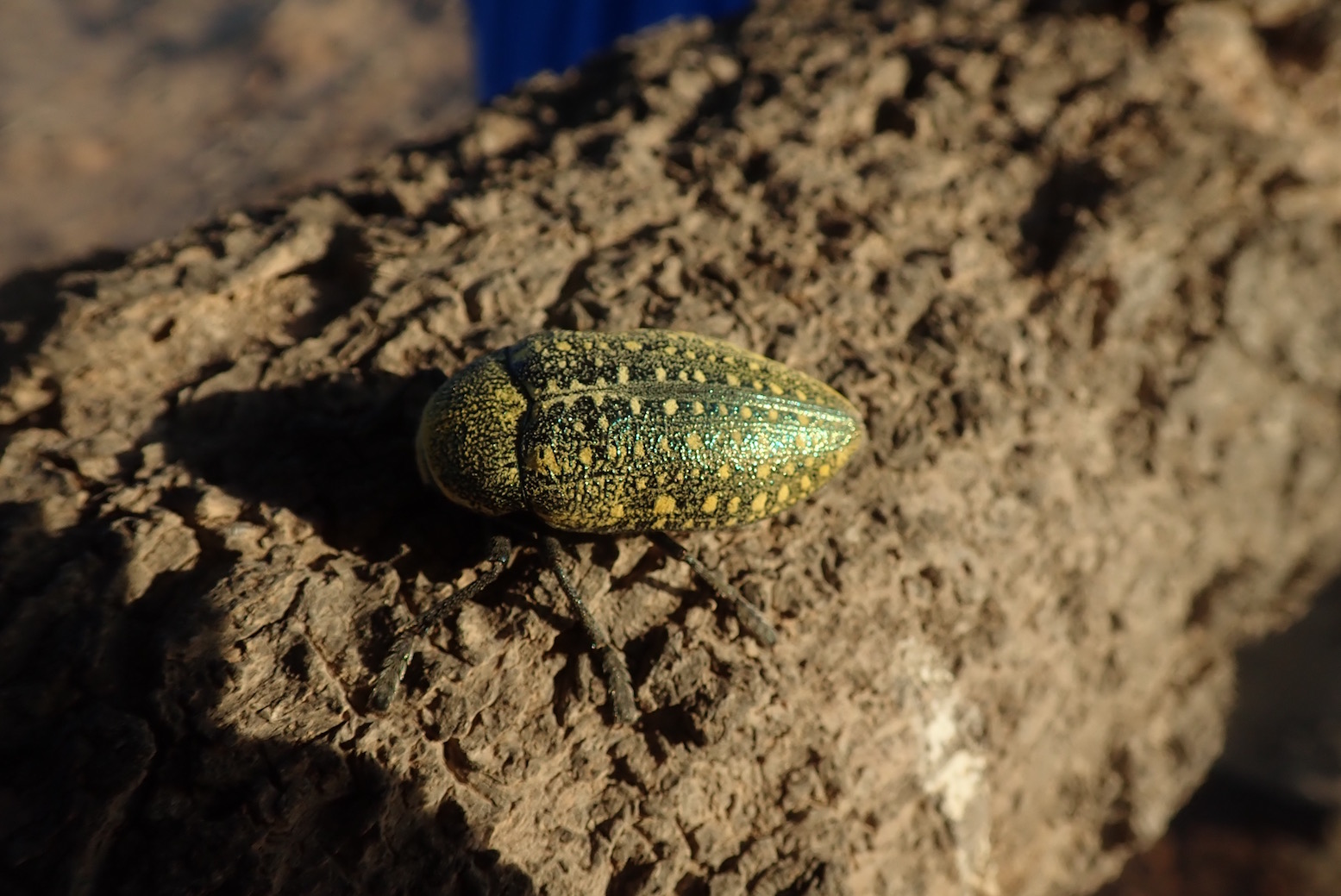 Colourful beetle.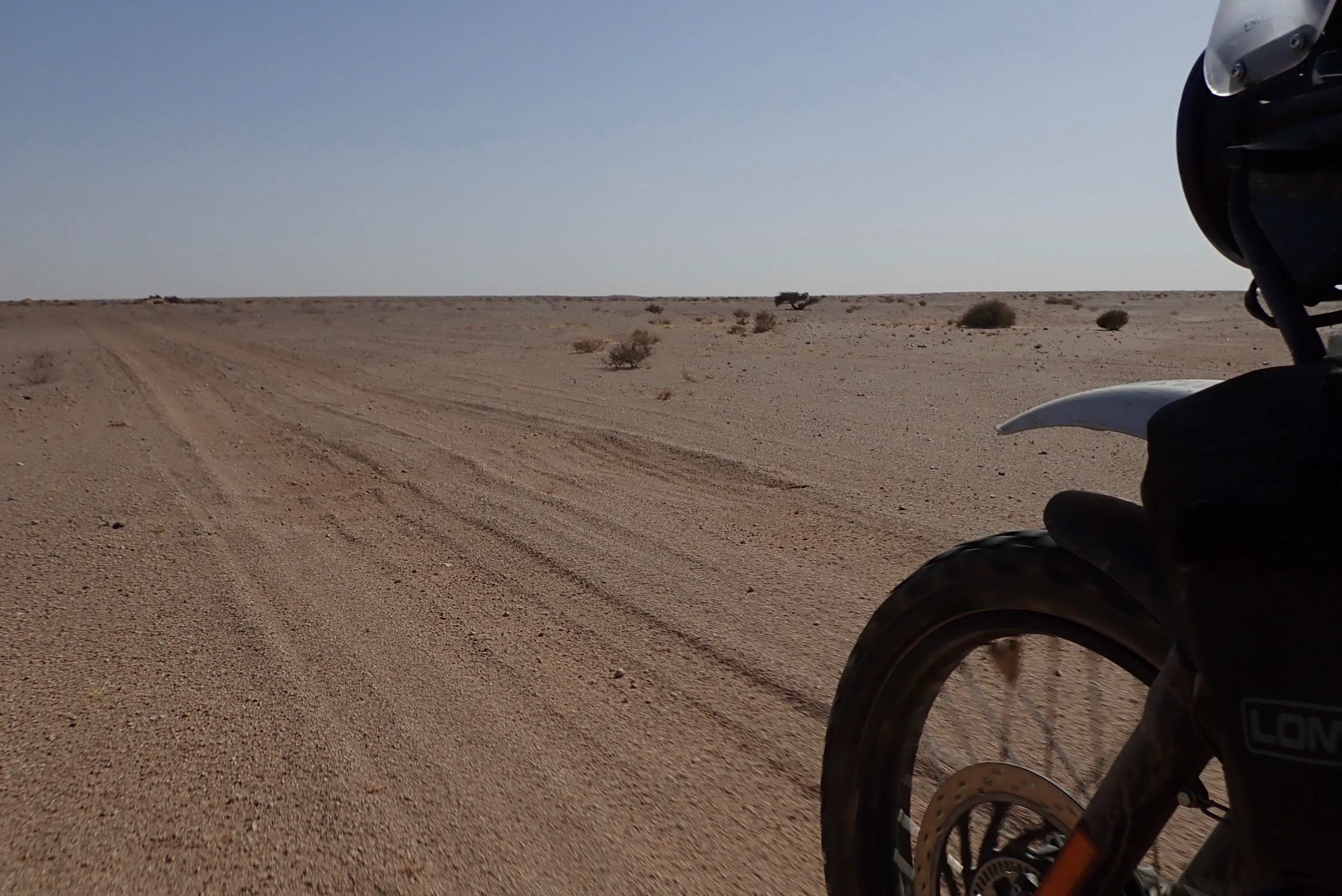
































 Adventure Motorcycling Handbook