Category Archives: Project: Africa Twin

Tested: Africa Twin 4500-mile review

Honda Africa Twin Index Page
Hotel Sahara‘ on AdvRider
See also: KTM 890R
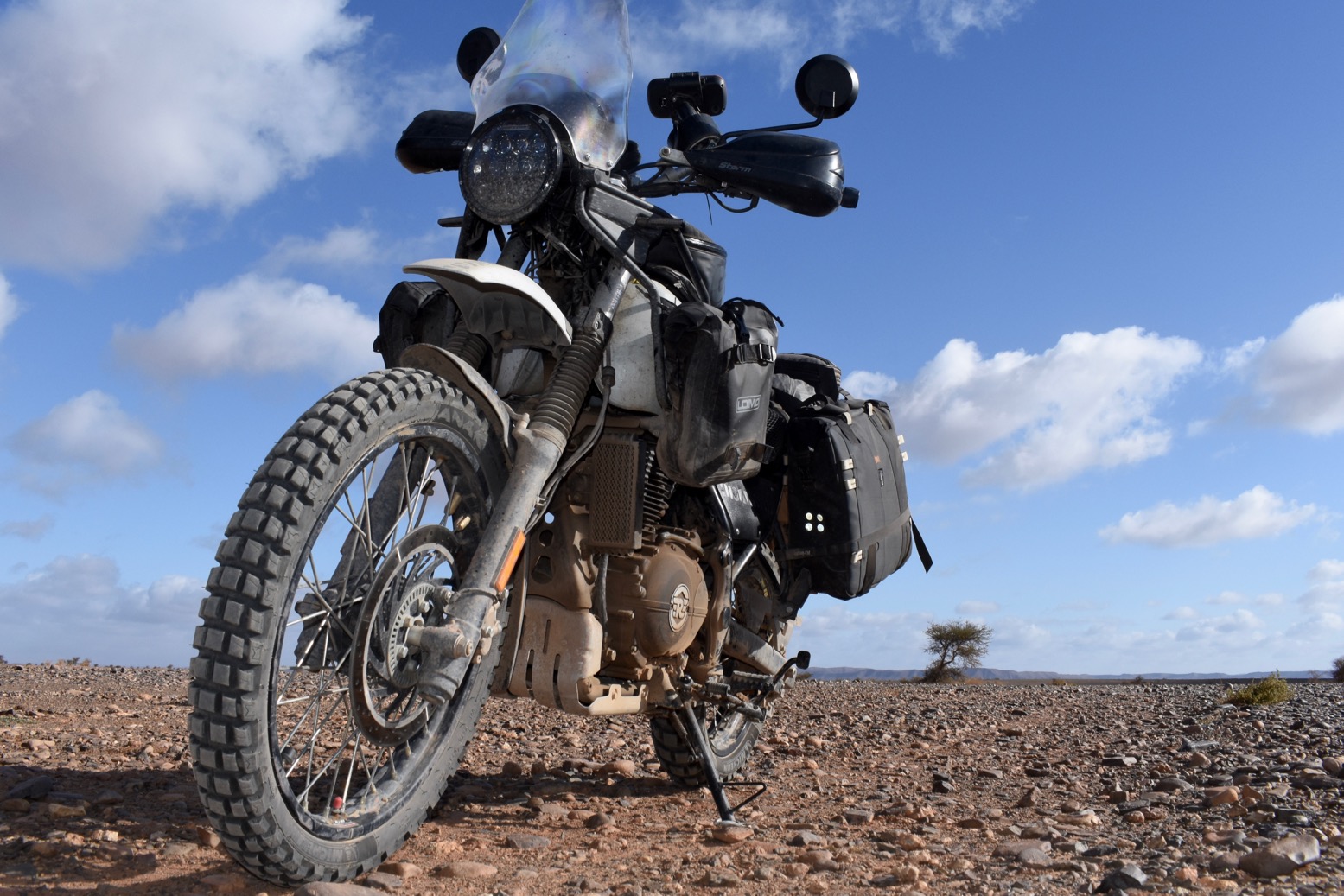
In a line:
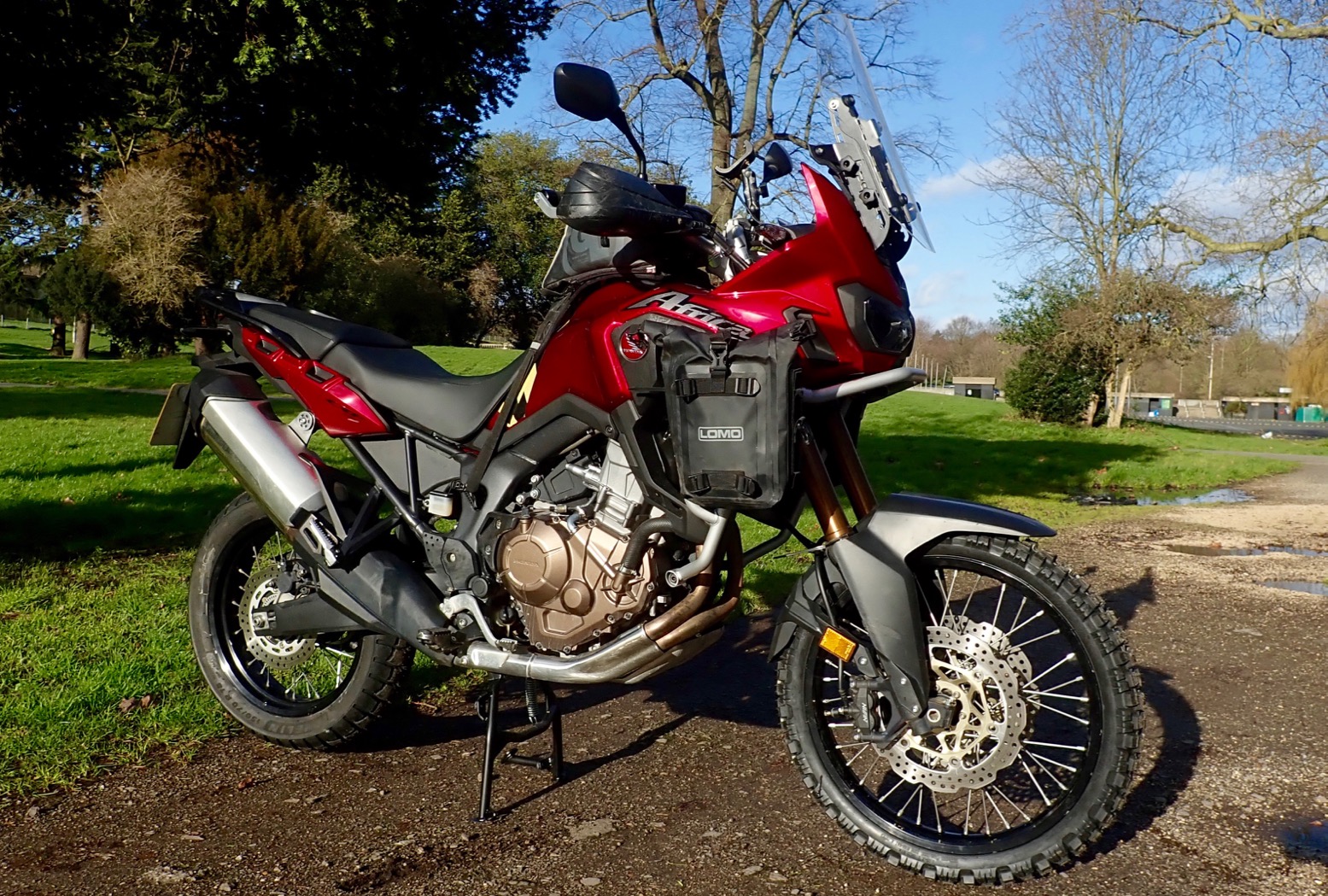
It was interesting to dip a toe into BigBikeWorld, but as expected, it’s unnecessarily big, heavy and juicy for my sort of road touring and easy off-roading.
Featured in Bike, July 2020

Looks good
• Feels like a giant trail bike
• Torquey 270° motor
• You just know it will start and run; Honda piece-of-mind
• Adjustable Palmer windscreen
• My DIY rear tubeless worked well
Seat not bad. Adjustable, roomy
• Fully adjustable stock suspension (with rear PLA)
Modes aplenty, if you like that sort of thing
• With a fair wind, 400+ km range from 18.9-litre tank

• Feels big and top-heavy at low speeds
• That’s probably down to the minimum 870mm (34.2″) seat height
Radiators are vulnerable, even in static fall overs
• Motoz front knobbly ran wide on road and trail
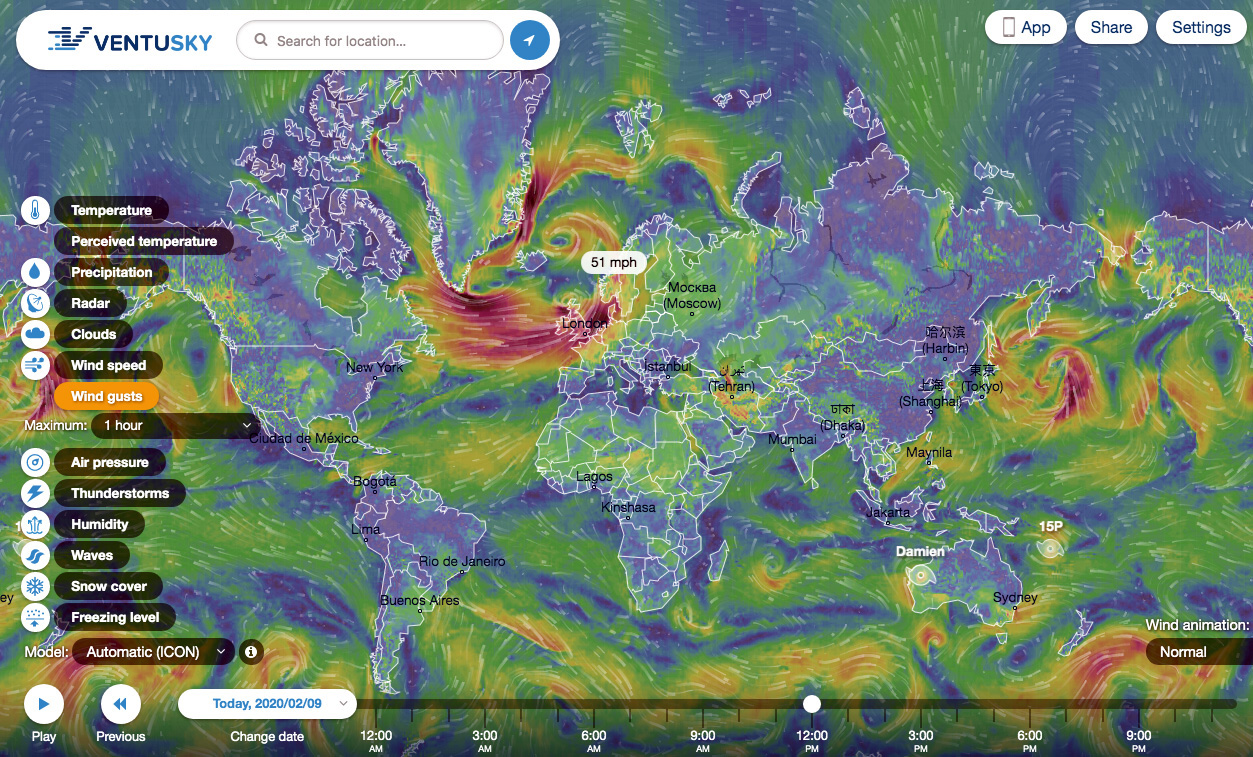
• Down to 37mpg in stiff headwinds at 110kph
• Some hand-numbing vibration from the bars – due to front knobbly, it turned out
• USD fork seals seem to be a weak point
LCD display annoyingly reflects your head and not bright enough; hard to read at a glance

Modifications More here

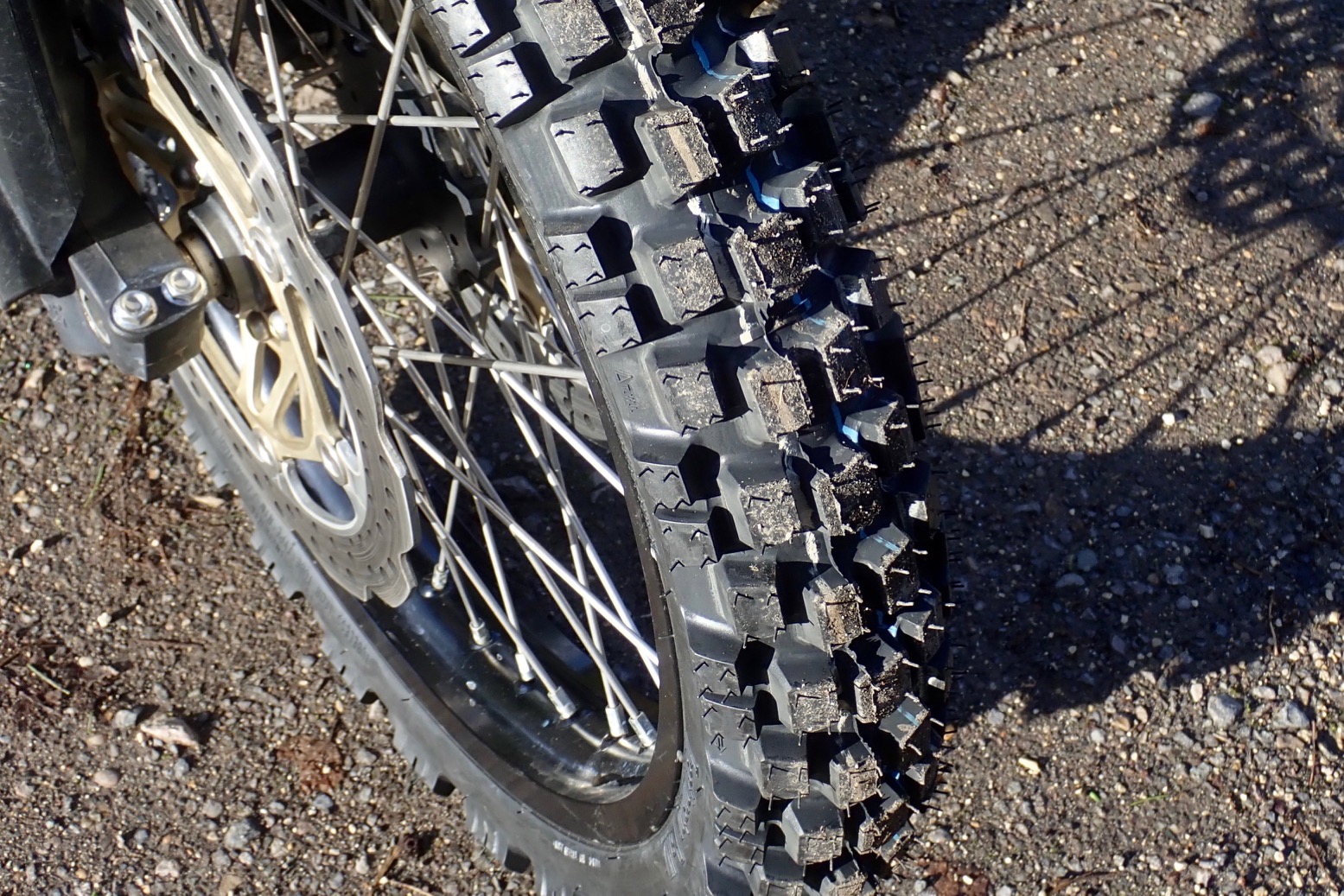
• Front Motoz Tractionator Adv
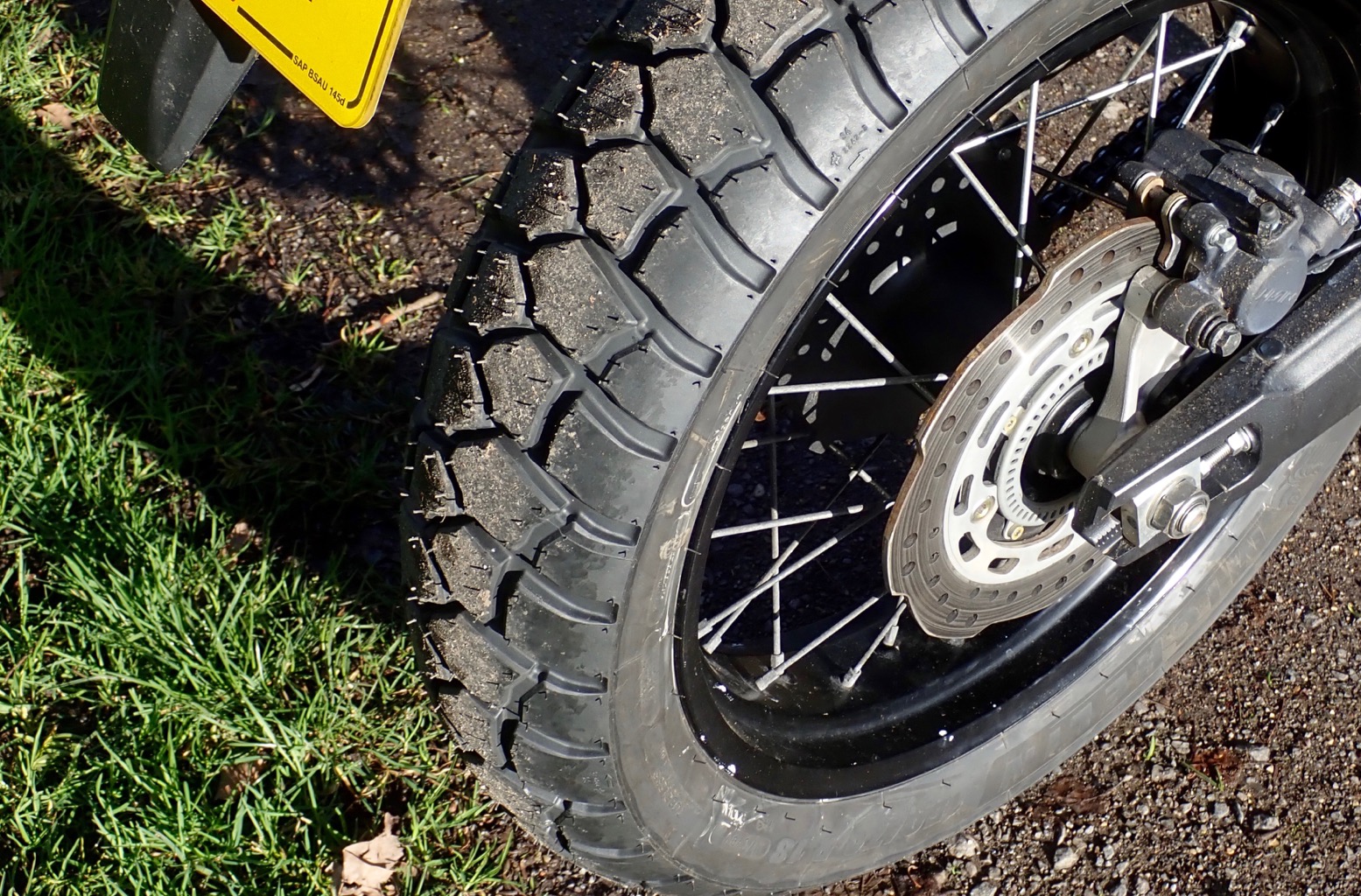
• Rear Michelin Anakee Adventure on MYO tubeless
• Palmer Products adjustable screen
• Barkbusters
• Adv Spec bar risers
• Strapped-on baggage (below)
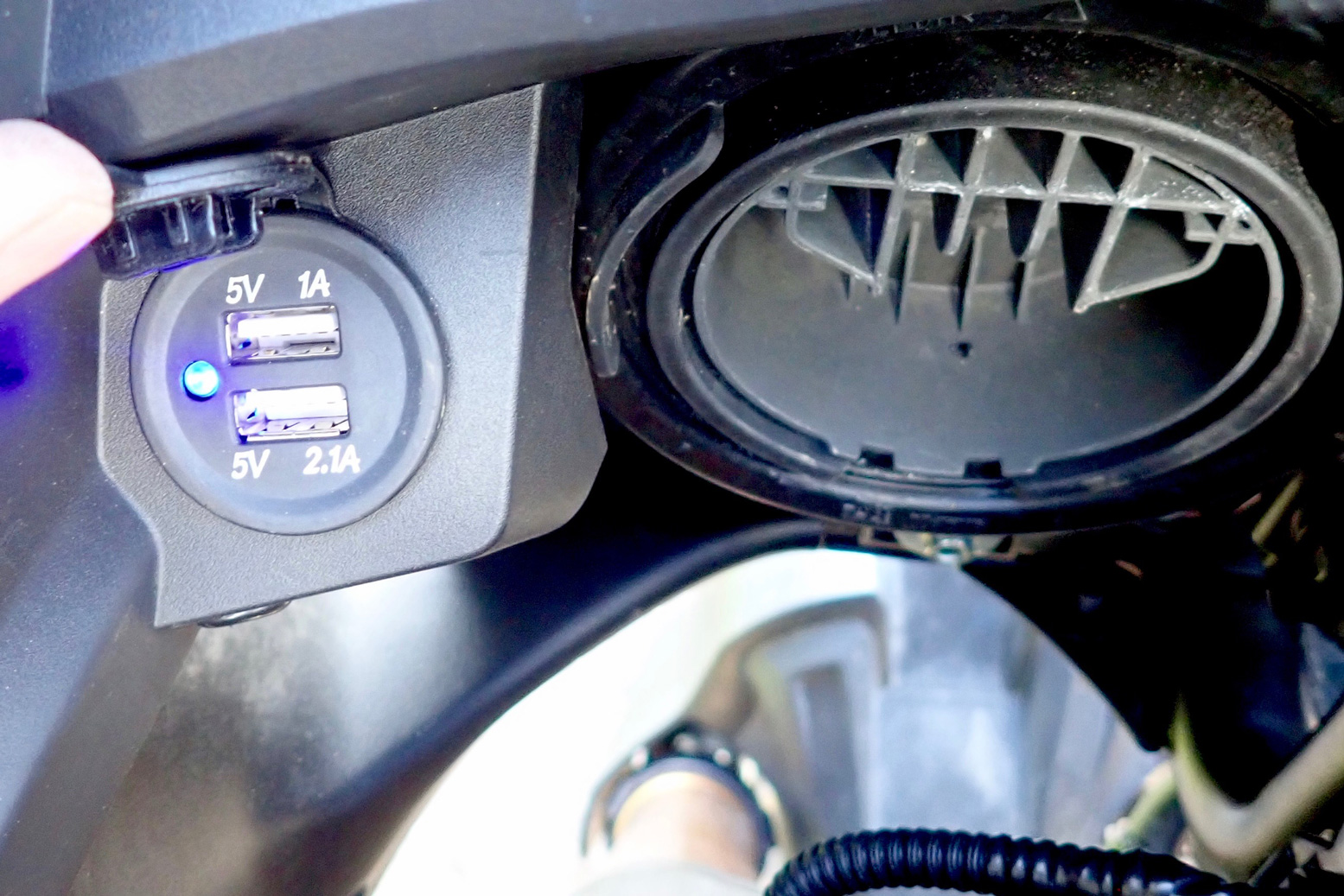
• Wired in USB and GPS

Review
The plas was just the right sort of trip to try one of those big-arsed adv bikes I’ve never really been into. A long approach ride followed by short off-road excursions in Mauritania specifically chosen within the bike’s (and my) limits. I’d planned to get a feel for the bike beforehand in the High Atlas on my February tours, but that was another of the many things which didn’t pan out on this epically doomed ride.

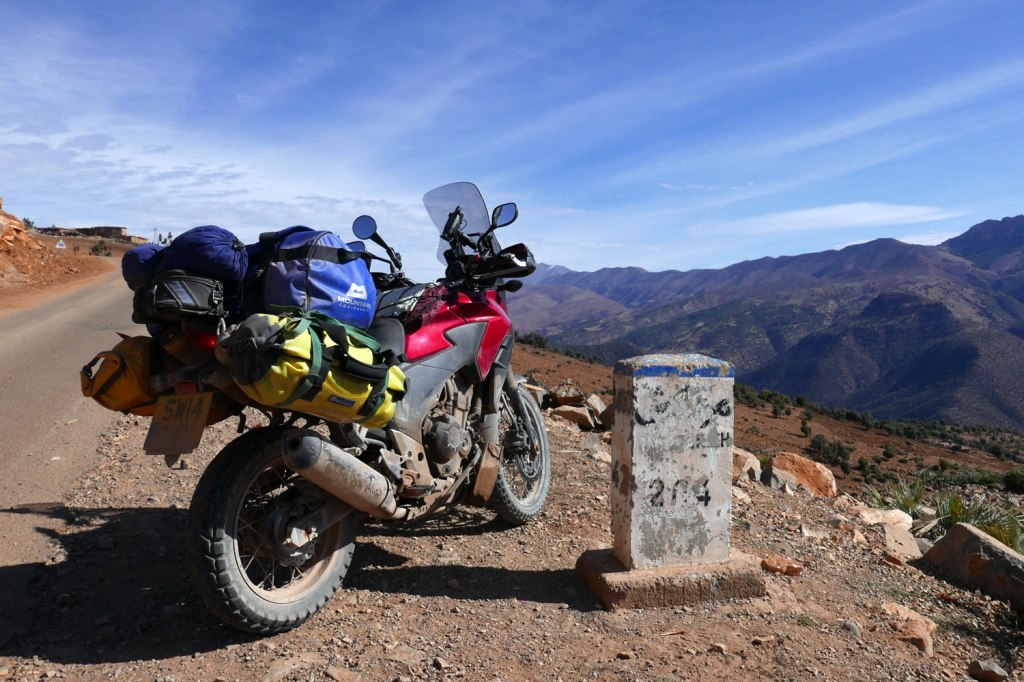
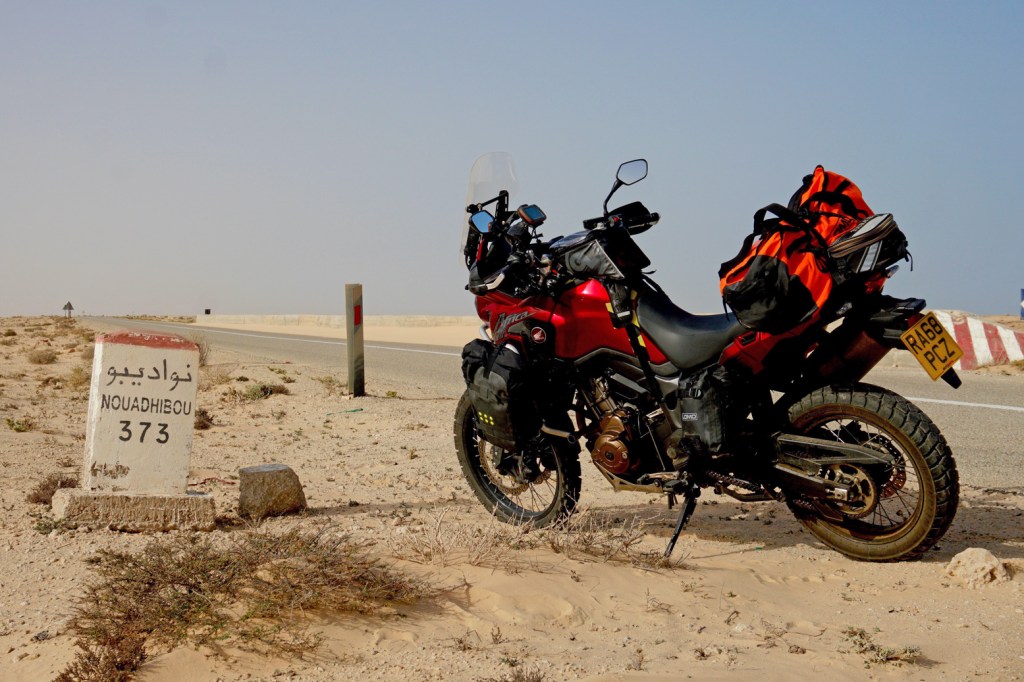
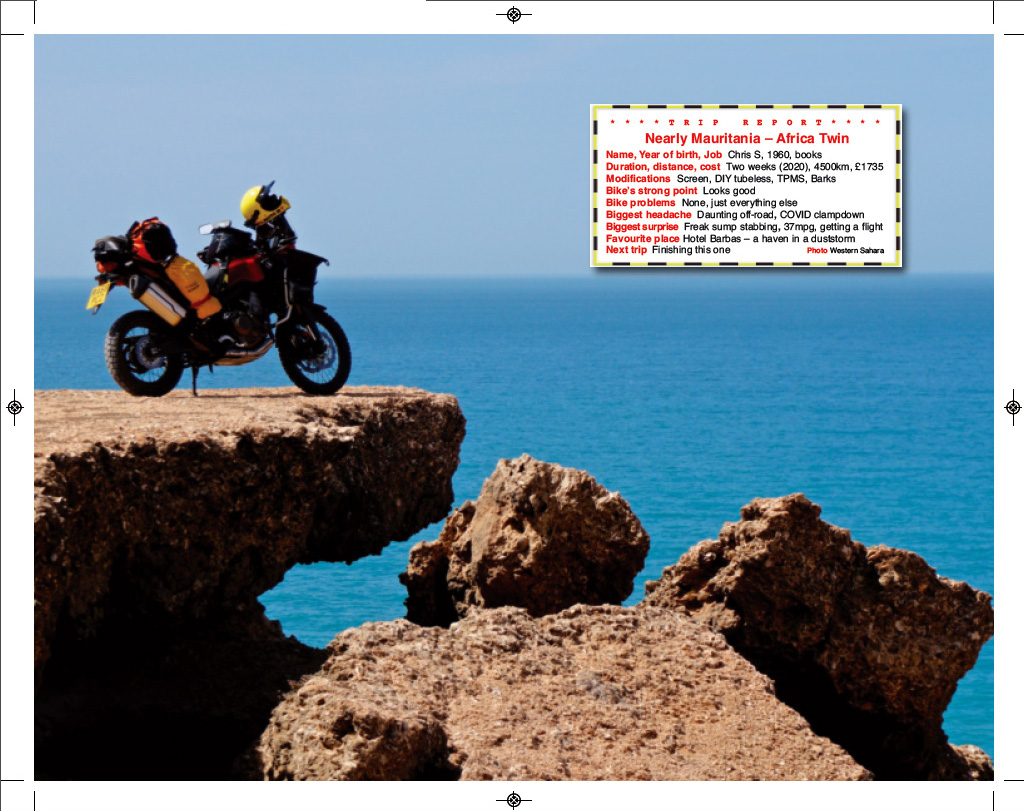
So, despite big plans with two other Big Twins for a Sahara Road Trip (left, pah!) , all I managed was to ride alone 2500km down the Atlantic Highway to the Mauritanian border, then ride most of the way back trying to outrun Covid shutdowns before a freak incident brought even that to a premature end. Twenty months later I returned to Morocco, fixed up the bike, did a week’s offroading in the hills, and a month later, road it home via freezing France. All up 4500 miles or 6000km; not even half a rear tyre’s worth.
On the road
Riding out of a town near Malaga back in February 2020, initially the loaded-up Honda gave me a fright and I thought I’d made a terrible mistake. I hadn’t noticed it on the way to the removalists in Essex a couple of weeks earlier, but in the bends the bike didn’t feel secure, seeming to both over- and understeer.
I knew my knobbly front/road rear tyre set-up was unorthodox, but it’s surely only half as bad as the many times I’ve ridden on full knobblies. Maybe it’s only an issue on bikes this big. Braking into bends, the front Motoz moaned in protest but brand new tyres lose this edgy skittishness after a couple of hours.

Sure enough, the AT settled down or I also got used to it as we rode over the Sierra de los Nieves and past the famous White Villages of Ronda to a regular place I know, half an hour out of Algeciras port. Here I took a day off, re-sorting my gear, keying in waypoints and filling the glued-and-taped rear tubeless wheel with Slime which fixed the slight air loss once and for all.

Hold my beer!

Engine and transmission
The 1000L has more than enough power to deal with anything you’ll encounter on the road; it’s on the dirt where the mass will hold back most riders. And if you like that sort of riding, it’s frustrating. Promotional antics as shown left look impressive, but are so far removed from everyday reality that someone should call Trade Descriptions.
This was my first bike with more modes than a Casio G-Shock 007 Special: three power levels plus User (custom), as many levels of traction control (plus off) and the same with engine braking – a new one on me. ABS can be switched off at the back only. Initially I rode in ‘P3 – Gravel’ (least power) thinking it may be best for economy (more below). After that I left it in ‘Tour’ (P1 – highest) where the engine was smoothest, until I forgot I wrote all this months earlier and rode home in P3 gain.
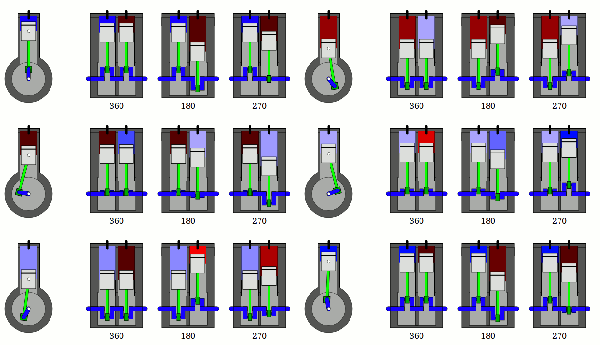
Like all 270-degree twins it’s hard to dislike the motor; the stock pipe makes a fruity sound and the temperature bars never budge. The gif left shows one of the beneficial characteristics of a 270°-twin: one piston is always in motion when the other has stopped and is on the turn. Crossplane they call it (Yamaha’s ‘CP2’) – it’s good for traction and it feels and sounds like a Ducati. Win win. But having tried or owned a few other 270s in recent years, Yamaha’s 695cc CP2 still feels like the best of them. Characterful, economical and with enough poke to get you there without weighing a quarter of a ton. My first choice would have been a used XT700, but late 2019 it was still too early for good used prices.
I got a manual only because I’ve ticked off DCT and couldn’t face the thought of a heavier-still bike. As it was, I spent most of the miles in top gear. Clutch actuation and gear change selection were fine, and even if 1st is typically high, the low-end grunt makes pulling away easy.

Easy gravel roads
After repairing the bike, in October 2021, I spent a week exploring some trails in the High Atlas and got to grips with the AT on the dirt. As a reminder, the bike had a long-wearing road tyre on the back and a good gripping Motoz knobbly on the front to make off-roading a little more predictable. It’s a tyre-combo theory I’ve written about and been meaning to try for years.

However they managed it, the AT feels like a giant trail bike; it must be down to the scaled-up triangle of the ‘bars, pegs and seat, plus the 21-inch wheel’s rake and trail. As I’ve found with previous project bikes (like the TDM900, left, the XSR7 and even the CB500X), geometrically it’s definitely not as simple as just slapping on some ‘bar risers, wide ‘bars and a bigger front wheel. A high headstock has something to do with it, too.

Whatever, once you turn onto the dirt the AT tracks naturally for what it is, so you don’t give it a moment’s thought providing the trail is easy. But you could say the same for a any bike. With the tanked and loaded L nearly three times my weight, the slightest deflection or need for an assertive move could end badly if the thrust of that mass isn’t aligned with the direction of the front wheel. It’s not that the centre of gravity is abnormally high for a bike like this with a big tank in the conventional position – it’s just a whole lot of bike to finesse when you get even a little out of shape. Then comes the picking up; apart from radiator protection, it was one reason I had bags on the sides of the tank – so it didn’t fall so flat.

As a result – especially when alone in the middle of nowhere – I took things very easy and didn’t risk any flash moves. This elephant in the room holds back the fun of riding off road; you’re managing despite the bike not because of it. As a result I never got the ABS or traction control firing, even with the bike on the softest ‘Gravel’ setting. I might have made things a bit easier for myself by dropping tyre pressures a bit – at road pressures the Motoz didn’t bite like I hoped it might (or maybe I was just too timid to lean over and gun it) and ran wide on bends. I half-heartedly jacked up the shock (easy with the preload knob) to steepen the forks but it made little difference. I think the Motoz’s Oxo-cube sized knobs just deform and ‘walk’ when pushed laterally under the weight they’re carrying.
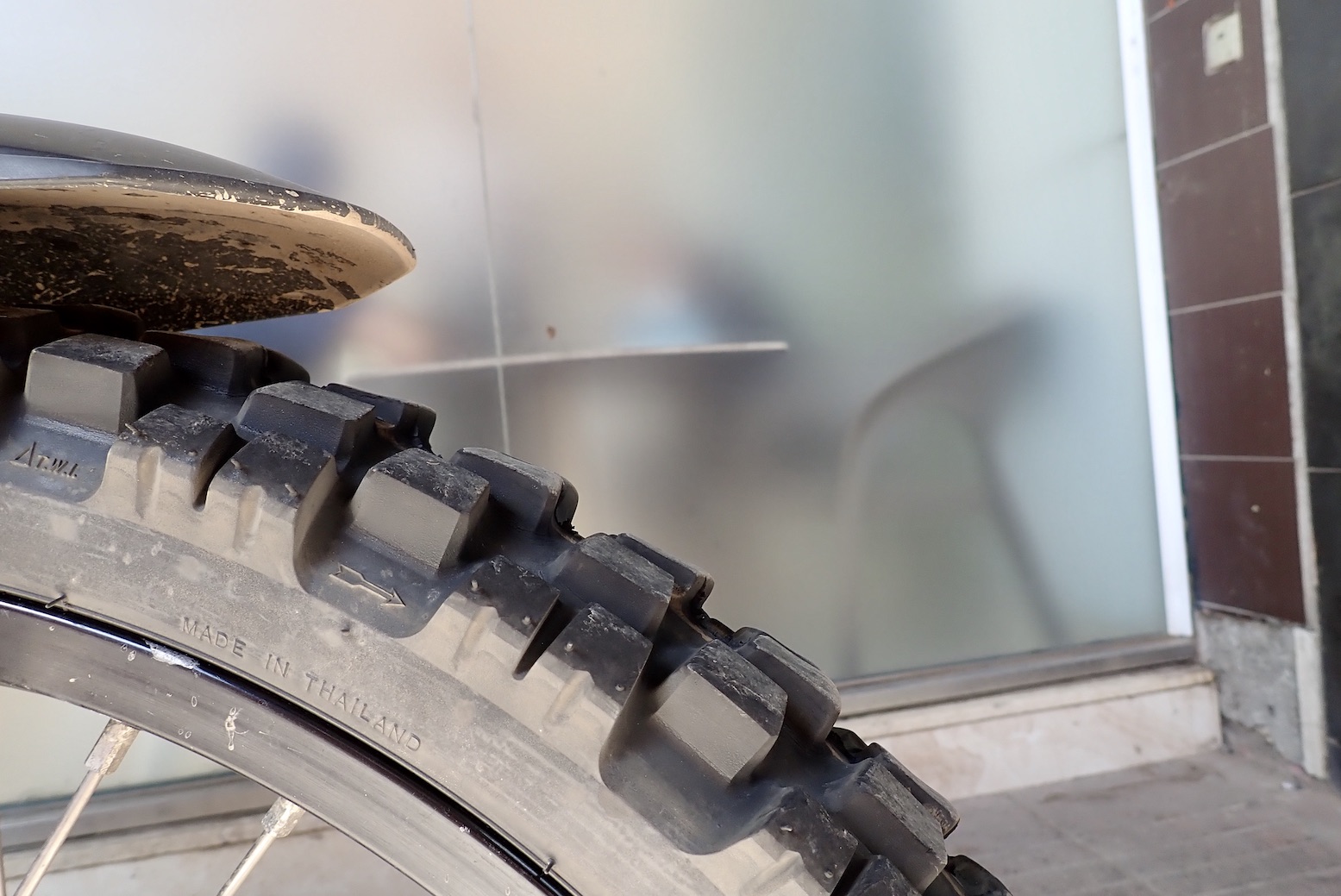
At one point, while investigating a short cut I’ve been wondering about for years, I came across a shallow sandy ramp which might have connected through (not the photo below, but nearby). But it was the end of a hot day and I just couldn’t bear the thought of getting the fat Honda stuck and have to drag it back, fall over, pick it up, get even more tired and sweaty and all the rest. I walked th route anyway but turned back and took the long way round.
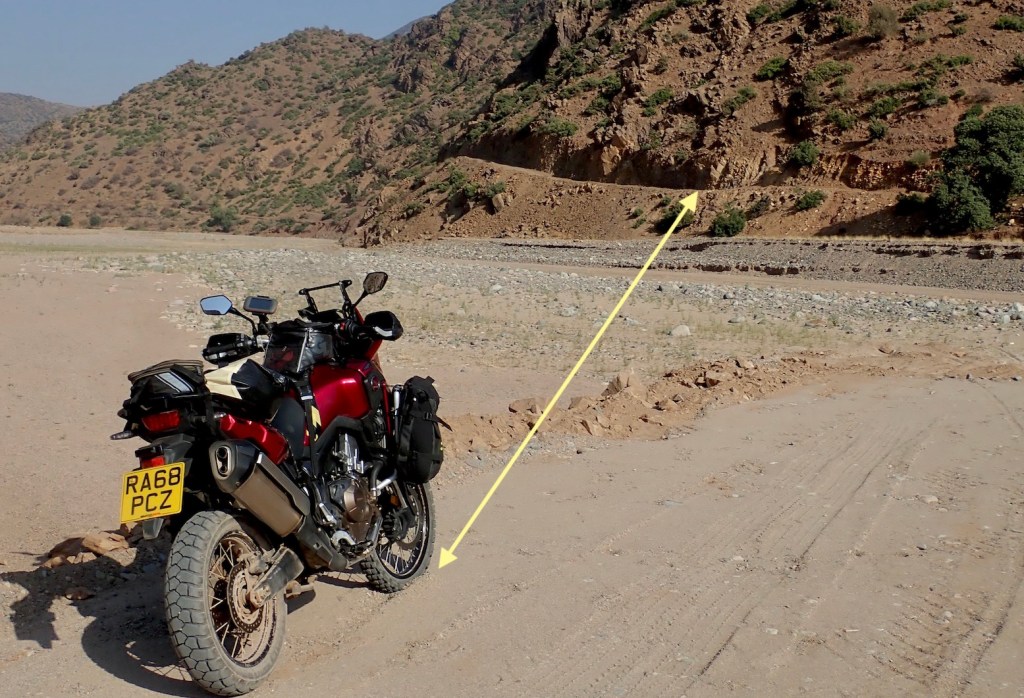
The track I was aiming for; easier on foot.

Long story short and no great surprise: while it works a whole lot better than many other bikes in this giant Adv category, for me the AT is just too heavy to fully enjoy off-roading.

Economy
On the A1 motorway down to Agadir I spent a couple of days establishing the exact fuel consumption so I’d know what to expect when it mattered down south from the 18.9 litre tank (4.16 Imp; 5 US) tank. I’ve often wondered if lower power modes equate to better fuel consumption. You’d think so because less powerful bikes like a CT125 are amazingly economical. But it seems not; maybe power-softening modes are merely fuel inefficient – the engine is tuned to run best in at full power.
Cruising along at a very modest 105kph/65mph – in other words, with a barely open throttle:
• ‘Gravel’ mode (‘P3’). True 19.8kpl (19.1 indicated).
Potential true range: 374km/232 miles
• ‘Tour’ mode (‘P1’): true 22.7 (ind: 21.5). That’s 64UK or 53.3US
Potential true range: 429km/266 miles
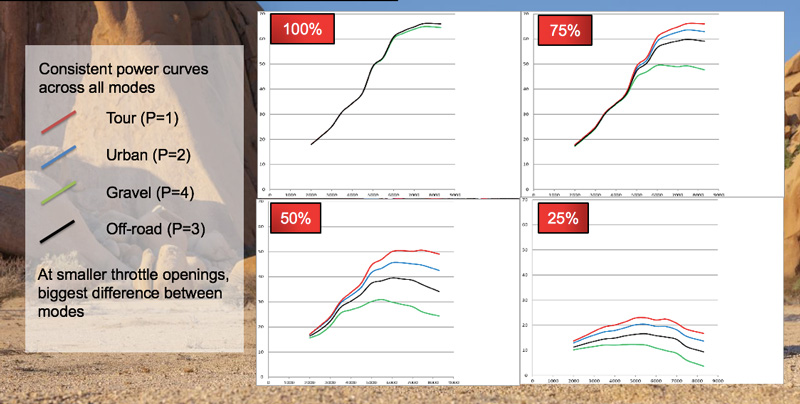
This graph is actually from the 1100L which has an additional, fourth ‘Off-Road’ power mode.

In P1 Tour the engine felt noticeably smoother and crisper and what’s more, the range jumped to nearly 430km which was good to know. In the CRF1100L graph above, the percentages shown are throttle openings, not power. Nail the throttle (‘100%’) in any mode and you get all the beans. But at small openings (‘25%’) as you’d use noodling about off-road, power is reduced, presumably to constrain wheelspin or unwanted lurches. It’s true that traction control does that too, but that can be turned off.
If, as I have, you’ve ridden without TC most of your riding years, you may initially prefer turning it off until you get to trust TC1, as most AT riders seem to settle on. Or you may wonder whether you need power and traction and engine braking modes at all. Ride appropriately to the conditions (which may include lowered tyre pressures to improve traction). TC is a relatively inexpensive and I would say the cutting out is a rather crude spin-off from ABS electronics (of which I definitely am a fan).
Other observations I made while watching the Moroccan countryside inch by:
Speedo is the usual 8% over
Odo is 1% over (measured over 100km against GPS and autoroute markers)
Economy estimate read-out is ~4% under. True economy is a tad better than shown
Range Initially never relied on this but should have checked when I took on 18.2 litres into the 18.9-L tank. At a catastrophic 15.5kpl (37mpg) into a stiff headwind (while still holding a steady 110kph cruise) the remaining 0.7L would have got me another 11kms…

I now realise something about bikes of 1000cc+ which in my book have always been overkill for a solo travel bike. Either the great weight or more probably the swept volume hold the economy back, no matter how slowly you ride. My best reading of 64mpg closely correlates with 65 I recorded from an as-slowly ridden 1200GS on my tours one time. You may think so what, you get to blast past anything you want on the highway in comfort. That is true, but to me a proper travel bike inspires confidence on all surfaces; otherwise it’s just a road bike of which there are plenty out there.

Comfort
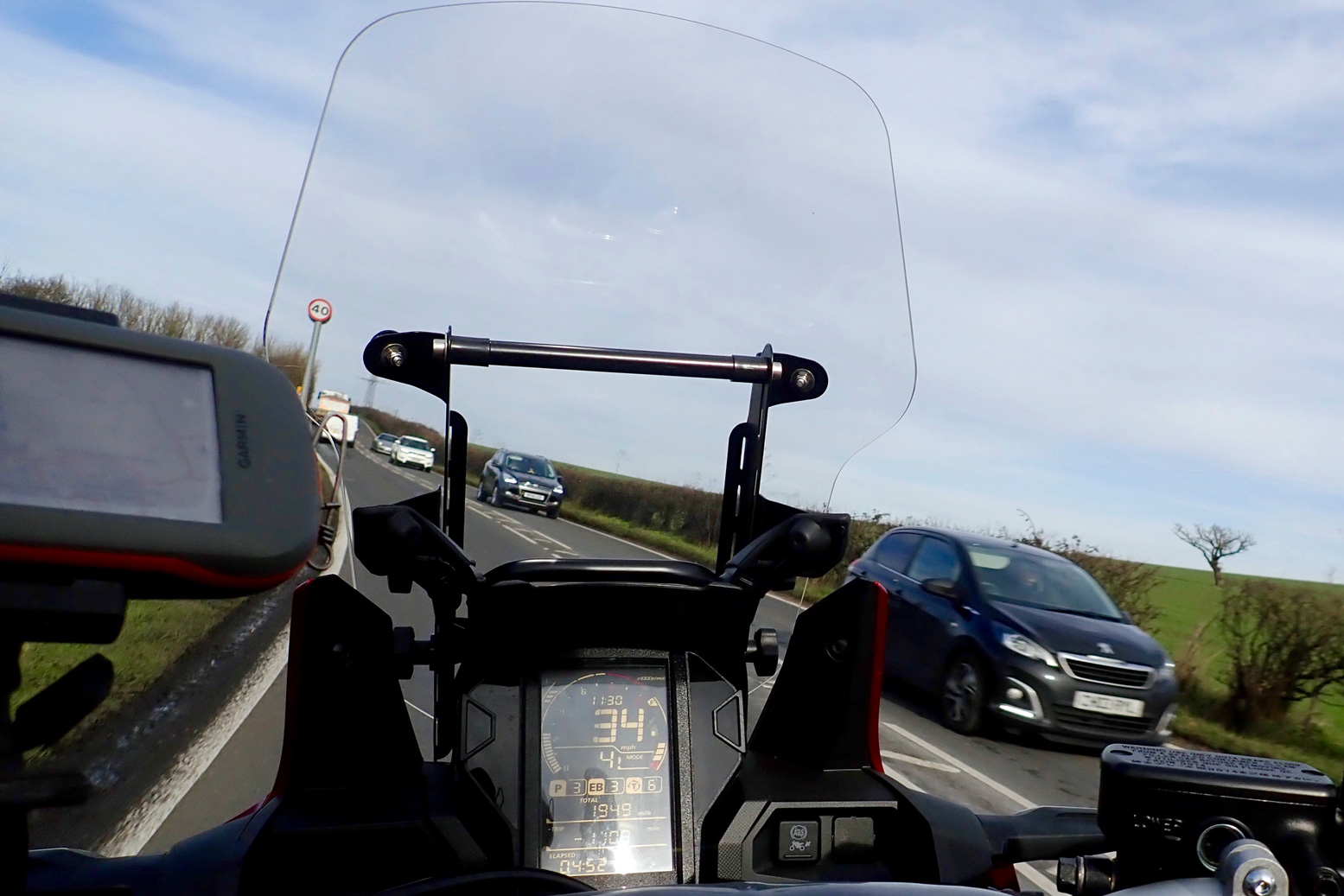
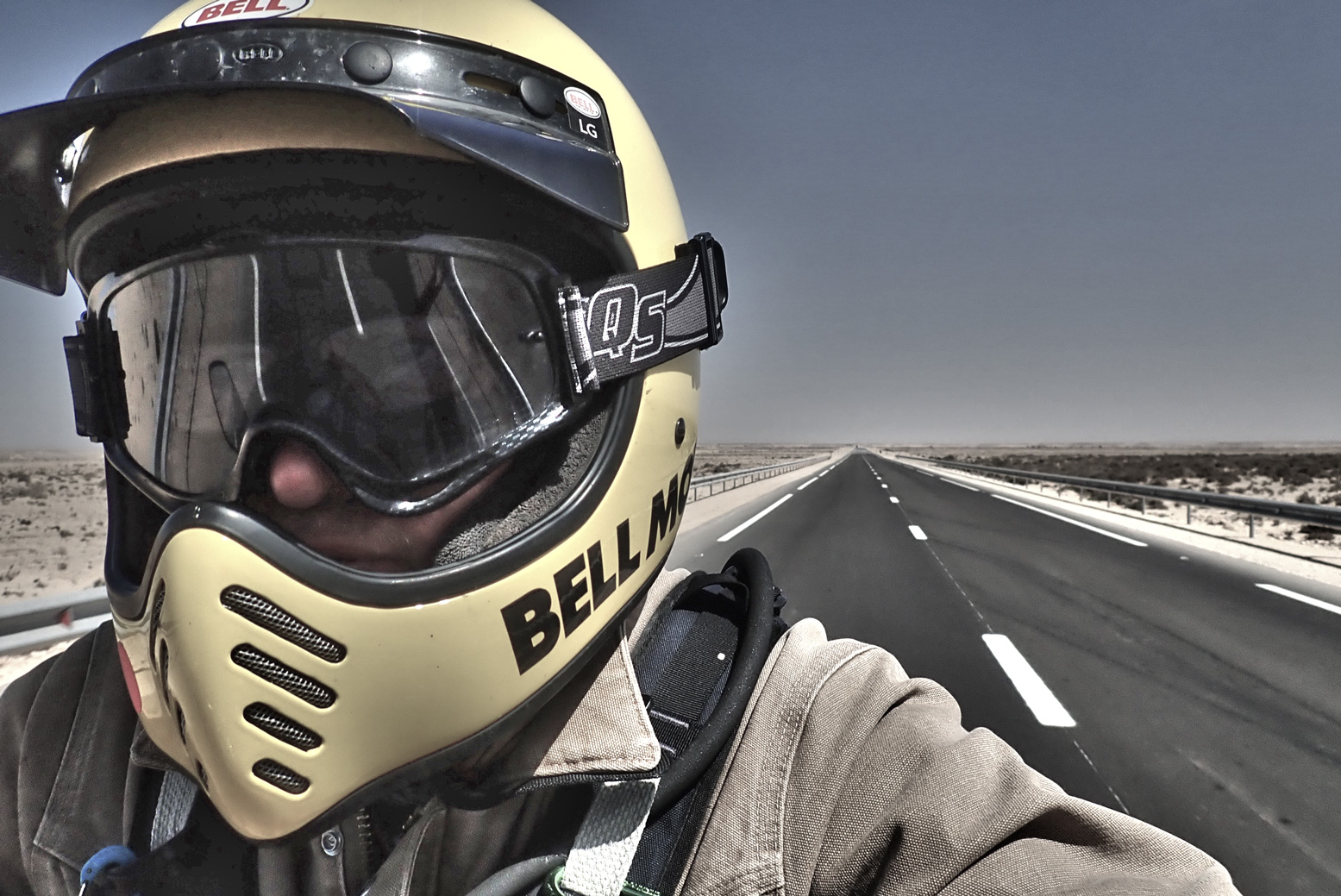
The good thing about a big bike is that for once I don’t feel cramped. Everything is a natural distance away for my size and the excess of power does have a certain relaxing effect. The adjustable and much taller Palmer Products screen (below) made a huge difference, ridding me of all unpriestly turbulence, even with a Bell Moto III.
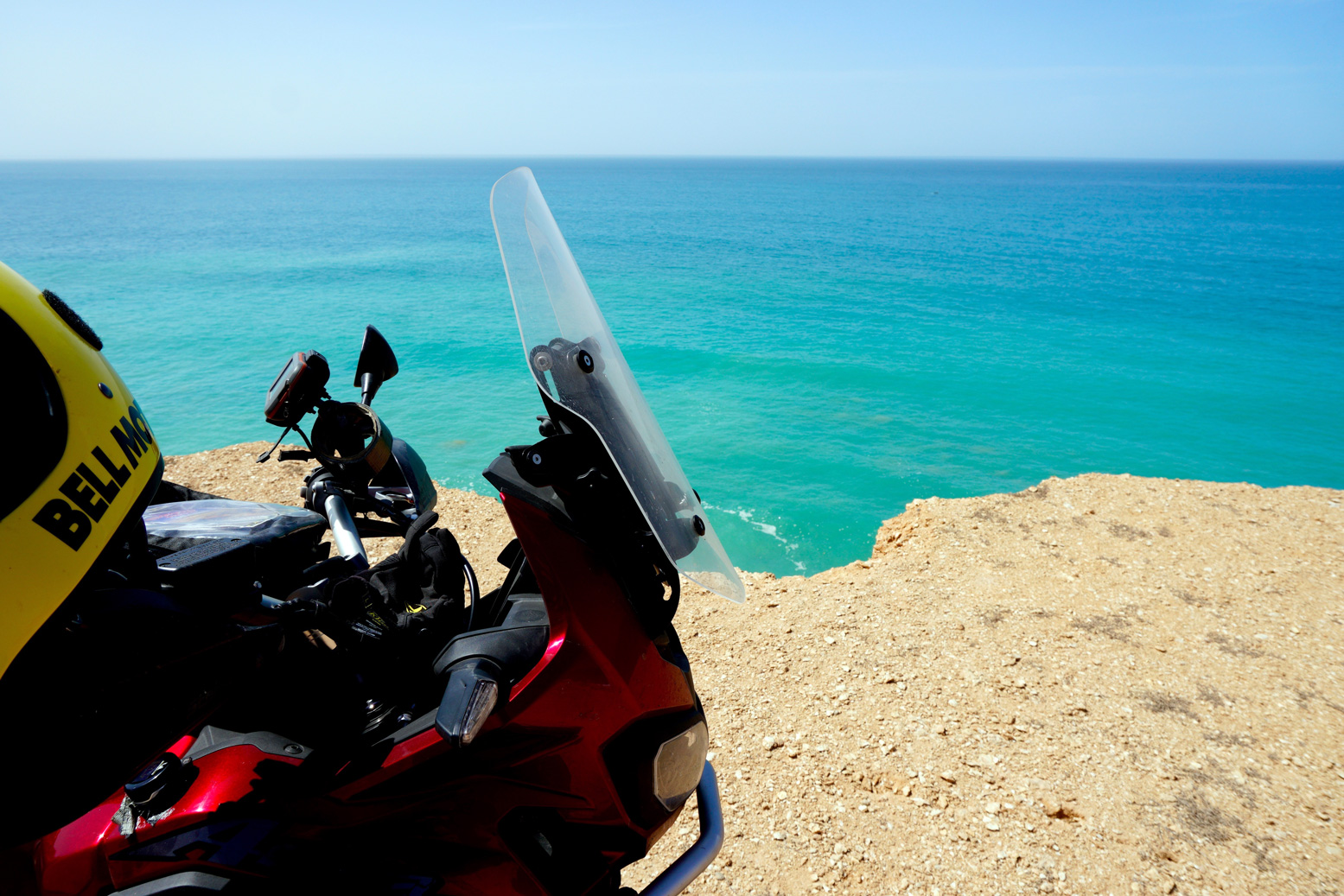
It wasn’t until I got to the turn-around point 50 miles from the Mauritanian border (and following a quick ‘how-do-you…’ youtube vid) that I finally managed to lower the saddle. I’ve only just realised just how tall the AT is at 900mm or 35.4″ – a bit much for a bike this heavy. Lowering it gets you down to 870mm or 34.25” and there’s an 840mm optional saddle. The principle is clear, but getting the notches to line up correctly took a lot of faffing. I’m 6′ 1″ so have long enough legs but can’t say the lowered saddle was night-and-day – the bike still felt top heavy at times.

Sat down, the 30mm bar risers felt little different from stock, but enabled standing without stooping and doing so – often on the rod to give the backside an airing –the bike felt comfortable, just like the oversized trail bike it is. On the road I did notice a bit of white-finger vibration from the right bar, but that was about it. It went away with the Dunlop road tyre fitted for the ride home so must have been down to the knobbly Motoz.

Suspension and brakes
One good thing about spending big on a modern, top-of-the-range adv is you get decent suspension. I didn’t meddle with it much off-road as both ends felt good enough. It’s only when you go fast off road that limitations become apparent, and I wasn’t going to be doing that.
Same with the brakes which I didn’t push due to the knobbly front tyre, nor to a point where ABS was engaged. The ‘creeping’ of the front Motoz’s knobs under tarmac braking did initially take some bite off the front.

Durability and problems
The only thing that fell off was a footrest rubber – probably not tightened up properly when the shop refitted them from the Off Road School. Refusing to be beaten by this calamity, I replaced it with a scrap of roadside truck tyre.
Because of the spread of lockdowns as the pandemic kicked off in March 2020, I was already planning to leave the bike in Marrakech and fly out. But even that plan was nixed when I rode over some debris just out of Tiznit. Whatever it was flicked up and poked through the bash plate and the sump, losing all the oil. As you can read here, that was an easy fix a year and a half later.

Summary
The Africa Twin was the first big adv which successfully drew riders off their GS12s or stopped others buying the popular BMW. It’s a great road bike, but aren’t they all these days? On my ride down the Atlantic Highway I wasn’t convinced it was going to become magically manageable once on any sort of unconsolidated terrain rolled under the wheels. It would become what it clearly was, a big, heavy bike with a tall saddle and high centre of gravity when loaded and tanked up. The big worry would always be: one little misjudgement and a heavy bike launches you hard before you’re faced with the daunting task of trying to lift the bike. A slim AT falls over a lot flatter than a GS12 resting in it’s cylinders.

But by now 99,999 other owners suggest that Honda got something right and there may well be an element of me taking out my unlucky trip on the poor AT. After riding it back via France, I feel the same: nice ride on the road (by now with a road front tyre), comfy but with some mpg figures I couldn’t bear to work out, as it was just a matter of getting home. In a way it puts me off a T7 which might not be that much better on the dirt to be worthwhile.
I’ve already got an idea or two of what comes next; more about that soon.
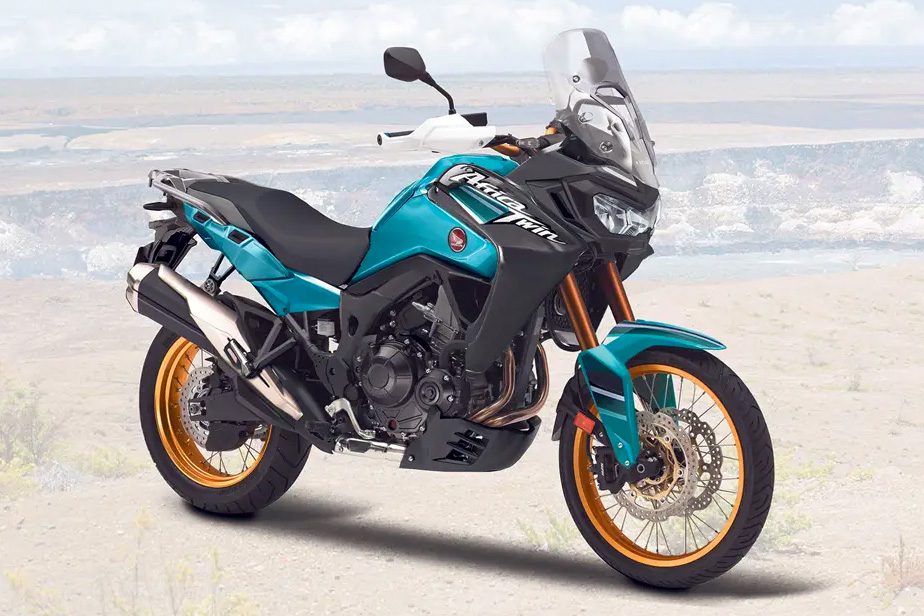
‘CRF800L’ Africa Twin

The engine pictured in this mock-up is a CB500, not the distinctive slopping NC.

See also
Africa Twin
Honda CB500X 5000 miles
Yamaha XScrambleR
BMW F750GS

MCN‘s recent claim of Honda’s plans to make an Africa Twin based on the NC750 motor was a rare instance of my wish coming true. When the popular CRF1000L (below) became an 1100L last year – in part to compensate for power losses due to Euro 5 regs – the cry went up for a mini-AT, not least following the popularity of the XT700 and the KTM 790 ‘middleweight’ adventure-styled bikes.

Honda seems to have heard the call and recognises the gap in their current 14-model Adventure category. At the moment, unless you fancy the old VFR 800X Crossrunner which must be close to getting Euro’d, it’s a huge jump from a CB500X (above) to the newest 1100AT at twice the price. Slotting the NC750X into that Adventure category (which also includes the CRF450L) was always is a bit of a reach. An 800L is much more like it.

Right from the start I’ve been a fan of the NC concept: a low-revving, high-economy, low-CoG, big capacity chugger with all the real-world power you need. Last year I ran a 2018 750X, partly to properly try out the DCT gearbox but also with a view to adapting it to an all-road travel bike, as I did with the XSR7 (below) with reasonable success.

The NC750X (below) was a great road bike which loved to corner, occasionally flashed up 100mpg and still seemingly plain suspension was a big improvement on earlier models. But for many obvious reasons it would have been too hard/costly to adapt. As I’ve found with the XSR, it takes more than a set of bar risers, suspension lift and wheel change to turn a road bike into a travel bike. An NC750 may have a low CoG compared to my current AT, but it’s still heavy (my NC-DCT weighed 232kg; my AT is 240kg before add-ons).

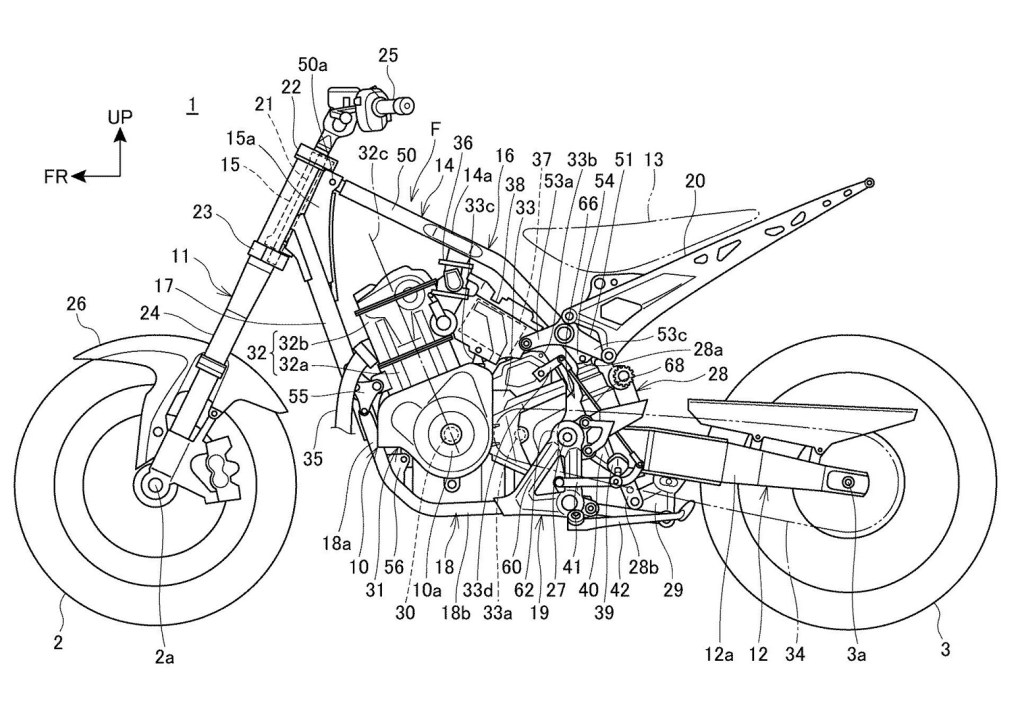
There is talk that the whole NC range may be getting an 800-cc makeover, probably for the same Euro-5 reasons. You do wonder it this may mean a more conventionally upright engine as in the mock up, losing the frunk ‘tankbox’ and putting the tank in the normal position, as BMW have done on the 750/850 GSs. Analysing patent designs (as below) may suggest something in that vein.
The Honda designer in the MCN article talks of a budget spec bike, like the CB500X, to appeal to learners with A2 licences. That will keep the price down and, with a good motor, as with the 500X, will be easy for owners or outfits like Rally Raid to offer suspension and wheel upgrades for those who want them. We watch and wait.


Africa Twin – Ready for Africa

AFRICA TWIN INDEX PAGE
amh8prt
atpk-lane

With AMH8 (right) sent in, I have a week and a bit to get the Africa Twin in shape for some Morocco trails and Mauritania road tripping. It doesn’t sound a lot of time but I’ve done this loads of times so know exactly what needs doing.
Or so I thought.
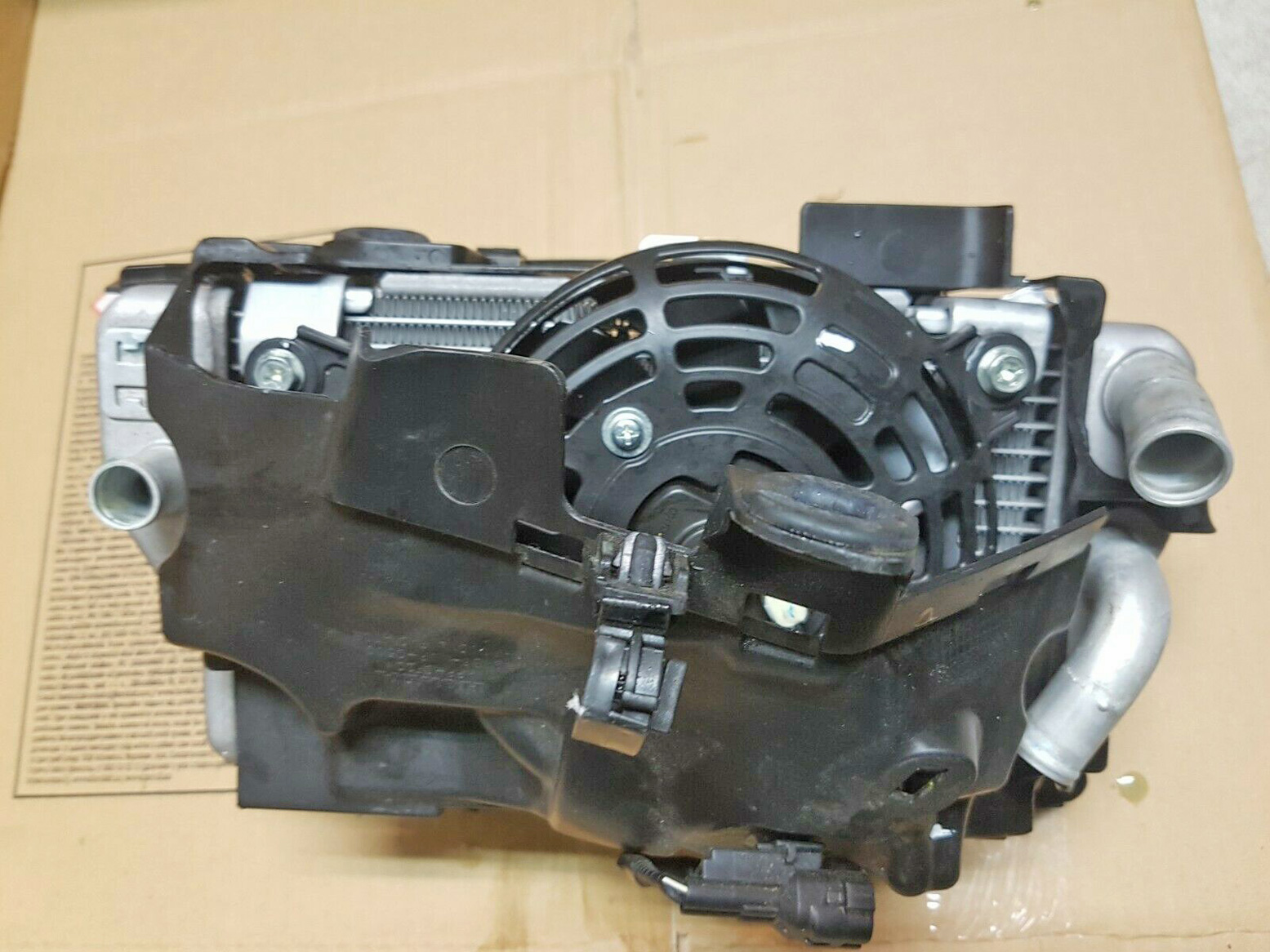
As I write early on in AMH: Beware and even anticipate a last-minute cock-up (‘LMCU’). While undertaking some wiring, my LBS noticed the left radiator was bent and fan jammed. I thought I’d smelt the whiff of coolant on the last couple of rides. It was clear from the damaged fairing the ex-Honda Off-Road Centre bike had fallen on the left at least once before they removed the crash bar, stitched up the fairing and sold it on. Looks like those crashes may have been heavier than they looked and my bargain AT wouldn’t be such a bargain after all. Oh well.
at-rad

Honda parts prices? Don’t ask. Ebay to the rescue. Because there are so many ATs around I snagged a used radiator-fan assembly (left) and dropped it off at the shop. With that fixed, it now transpired the used OEM crash bar I’d bought a while back (probably also from the HO-RC) had missing brackets and my ferry was leaving next day. Luckily, the pressure was off as Storm Ciara (below) put paid to that ferry crossing and with the next one too late to get to Marrakech in time, I was left to van the bike to Malaga (£420) and pick it up after my tours. I hope that’s all the LMCUs out of the way. I really don’t want to leave our descent into Mauritania any later than it already is.

at-storm

Attachments

atpk-palm
atpk-palma

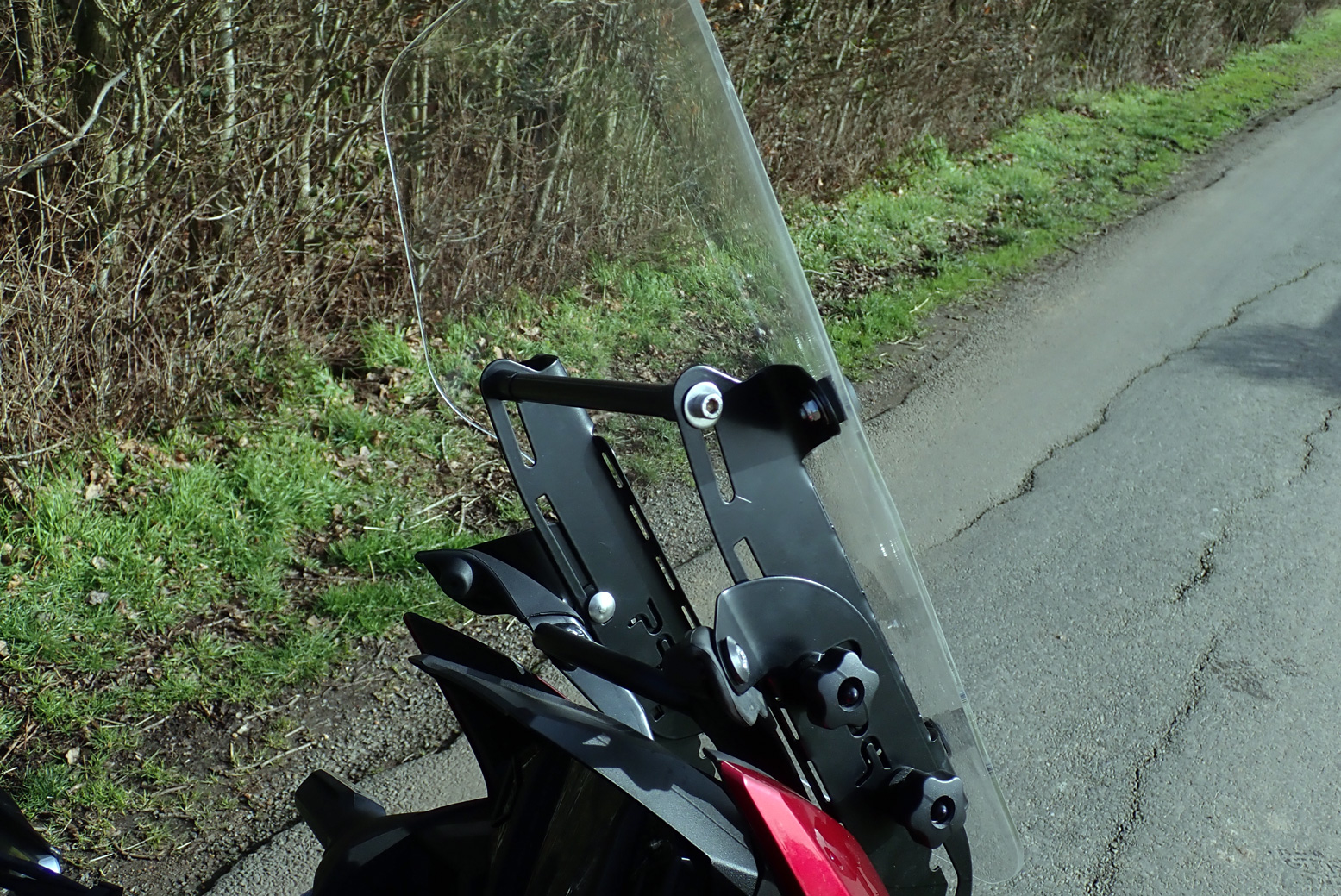
The fixed stock screen is famously ineffective. I settled on a Palmer screen, as on the CB500X a few years ago. It consists of a taller screen mounted on a pressed steel frame with three heights and three angles (left). That should surely deliver a cruising sweet spot. All up, it adds a kilo over stock; let’s hope the mounts can handle that extra mass on rough tracks.
Riding the bike, I found with the setting as left, I could ride up to 70 with no goggles wearing a Bell Moto 3 which is as good as it gets.
While fitting the Palmer frame (start with all mounts loose and work from there) one of the lower rubber grommet mounts fell into the abyss. Universe 1; Me 0. It seems commonly done but Rugged Roads sell similar ‘top-hat’ grommets that will work and ebay is even cheaper. One thing to know: these lower screen mounts slide up into place so don’t need completely unscrewing at all. Once you’ve undone the less lose-able top mounts, just slide the lower mounts down and out.

atpk - 1
at-ASrisers

The stock plastic ‘handguards’ are rubbish and not surprisingly, the clutch lever was bent. I was hoping my 2008 Barkbusters might get their nth outing on an AMH Project Bike, but it was not to be. The threaded ends of the Honda bars need a specific insert. Reluctantly I coughed up 90 quid for some Barks to fit an AT with, for once, no bodging required. I’ve had a good run with those old Barks and at least the scuffed black plastic covers fitted right on – the Bark bar design has not changed in all that time!
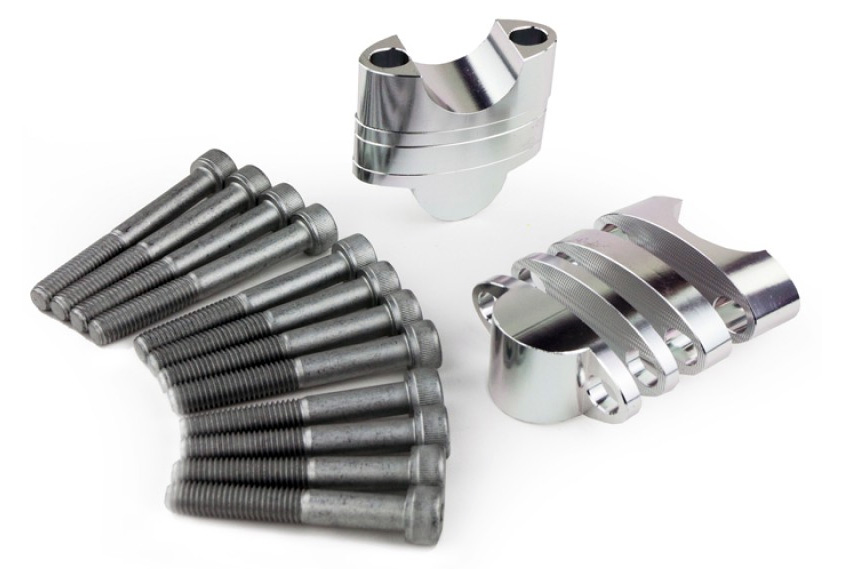
I was also hoping to re-use my Rox Risers to lessen the stoop while standing, but the Rox’s bike-mount ends are for thin bars only. You can pay crazy prices for CNC milled risers (or much less from Asia) but Adv Spec’s Risers (left) are a more normal 40 quid and come with a selection of nicely knurled shim stacks adding up to a 40-mm lift with three lengths of hex-head bolts to suit. I found about 30mm was the limit on the AT’s cables.

at-toolbo

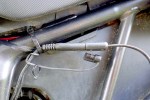
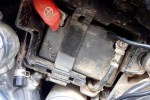
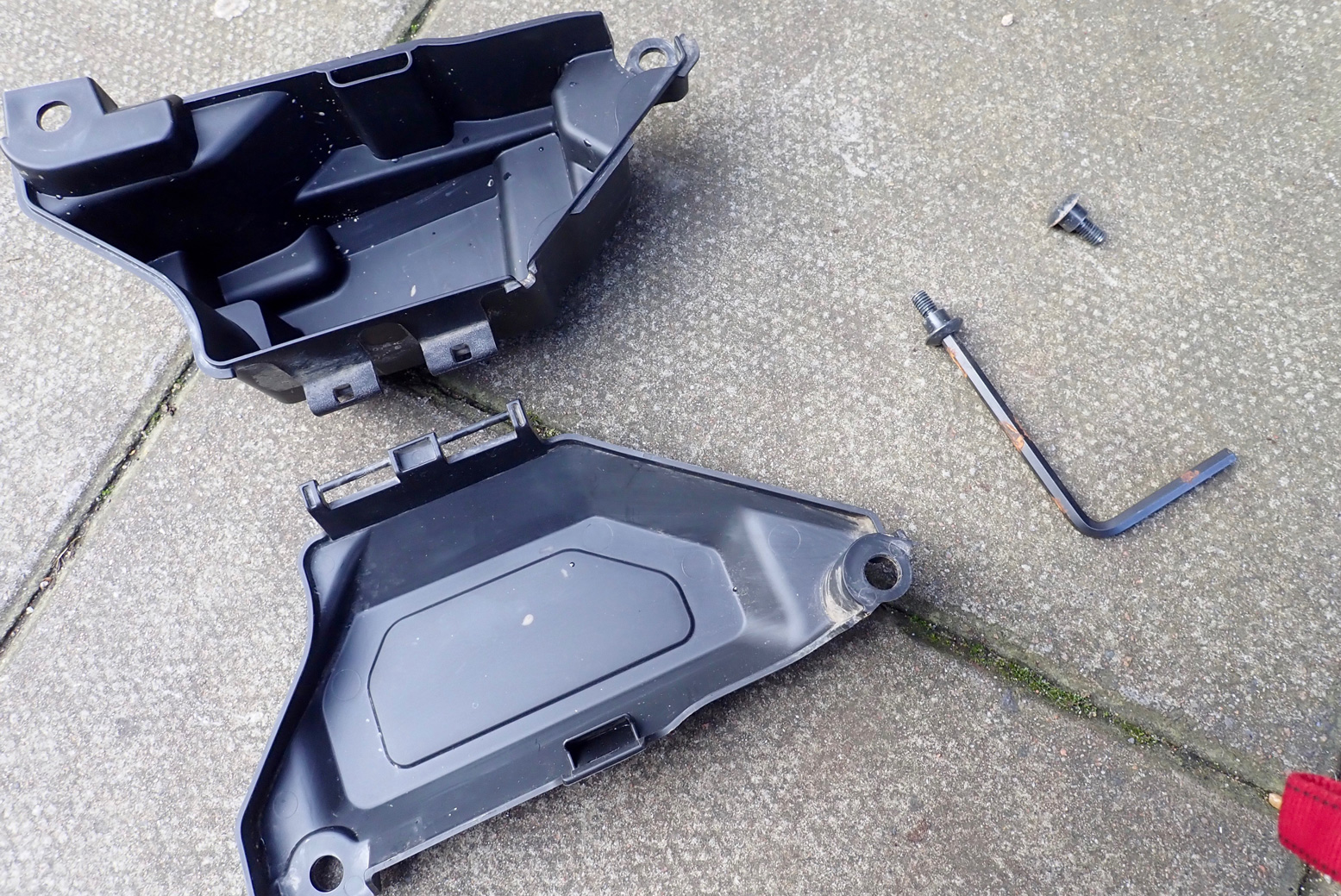
WTF’s the battery? It’s not under the seat. What would we do without the internet – RTFM I suppose. Turns out it’s jammed in above the gearbox (above right) but behind a ‘toolbox’ that can only be opened/removed with the 5mm key clipped under the seat (where my actual tools were located). With the empty toolbox off, I wired in a plug (above left) to run the tyre pump, but the added wiring and fusebox fouled the snug-fitting toolbox. Luckily, you can pull the box apart at the hinge (left) and just mount the front to cover the battery.

atpk-99

The wiring of the GPS and a USB port I left to my LBS. Here’s a good link on the fiddly job or removing the cowling, including snappy how-to vids. I don’t want to be doing what’s demonstrated below by the kerbside with tiny fittings disappearing into gutters full of rotting mid-winter leaf mush.
Though obviously very handy, there are some rambly, ill-thought-out how-do vids on ebay; some old dope droning on for 20 minutes for a <1-minute video on how to access the battery while reminiscing about his dad’s old tractor. The non-lingual vid below shows how it should be done.

Tyres

michlogo

Michelin sent me some Anakee Adventures but the front looked a bit too roady compared to last year’s Anakee Wilds on the Himalayan. The AT may only be 60 kilos heavier, but has over three times the power which may chew through tyres fast.
On this trip of several thousand kilometres I’ve decided to try the ‘gnarly front – roady rear’ tyre strategy I write about. The rationale is: prioritise secure loose-terrain steering on the slower-wearing front while, on a powerful, heavy bike you need longevity from faster-wearing rears where sliding in the dirt is less problematic as you won’t be cornering this tank like a 125 MX. Anything too knobbly on the rear risks an unnerving ride, fast wear and ripped off knobs on the road.

OLYMPUS DIGITAL CAMERA

I fitted a Motoz Tractionator Adventure (left) to replace the front Karoo which isn’t the sort of tyre I’d choose for teaching off-roading in muddy Wales on a quarter-ton AT. On dry tracks it’s less critical but the Karoo only had 5mm left (same as the rear Karoo).
The bike is front-heavy but with a centre stand and a trolley jack, once fully deflated, the Karoo just squeezed out between the twin calipers. But getting the wider, stiff and new Motoz in – no chance. I tried to undo one of the calipers but they’re torqued off the scale and the loose forks make it hard to get tension (better done with the wheel on). Instead, I loosened one fork stanchion and shoved the wheel in.

OLYMPUS DIGITAL CAMERA

I was just about to remove the rear when I remembered I had a nearly finished DIY tubeless wheel upstairs. All it needed was taping up and a Michelin Anakee Adventure (left) slipped on with some proper tyre soap. Inflating a newly mounted tubeless can be tricky as the tyre needs to catch a seal to accumulate pressure and get pushed over the lips into place. I know from 4x4s and my old XT660Z this can be hard to do, but the uninflated Anakee ‘auto-sealed’ well enough and, with the valve core removed to speed up the airflow, eased over the rim’s lips with a pair of loud pops. A cold day a week-and-a-half later and it’s down 8-10 psi so will need watching, though I recall early pressure loss is not unusual, even on proprietary tubeless spoke sealings.

Hopefully, it may settle down but I now have a v2 Michelin TPMS to keep an eye on things and may have to get some Slime in. I’ve stuck one activating magnetic dish to the fairing at a readable angle (right) and will keep another spare in the tank bag when off-road in case the display shakes off (a common complaint according to amazon reviews).

OLYMPUS DIGITAL CAMERA

From the state of my fairing and radiator, the OEM crash bars which came on the HO-RC bikes (and are now selling used online), don’t really do the job. But what would you expect from 250 kilos of bike hitting the ground?
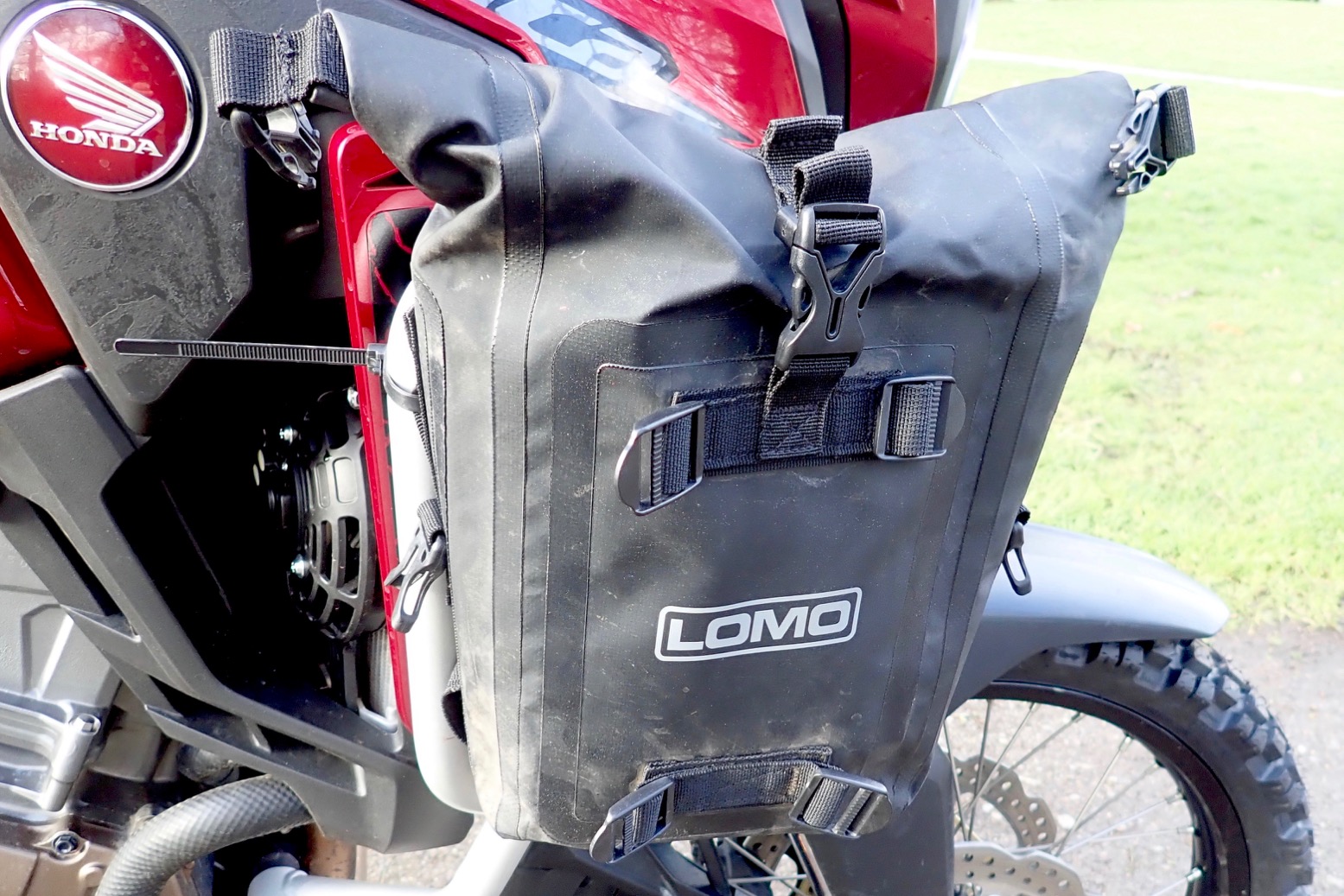
I specifically want them to mount my ex-Himalayan Lomos which I hope will act as sacrificial impact-absorbing airbags. Better the bags’ soft contents get mashed than what seem to be vulnerable radiators.

The stock bash plate is at least made of metal, but it doesn’t come up around the sides of the engine which look vulnerable. On the rocky trails of the Adrar plateau I’ll have to tread carefully and have some epoxy putty at hand.

OLYMPUS DIGITAL CAMERA
atpk-krig

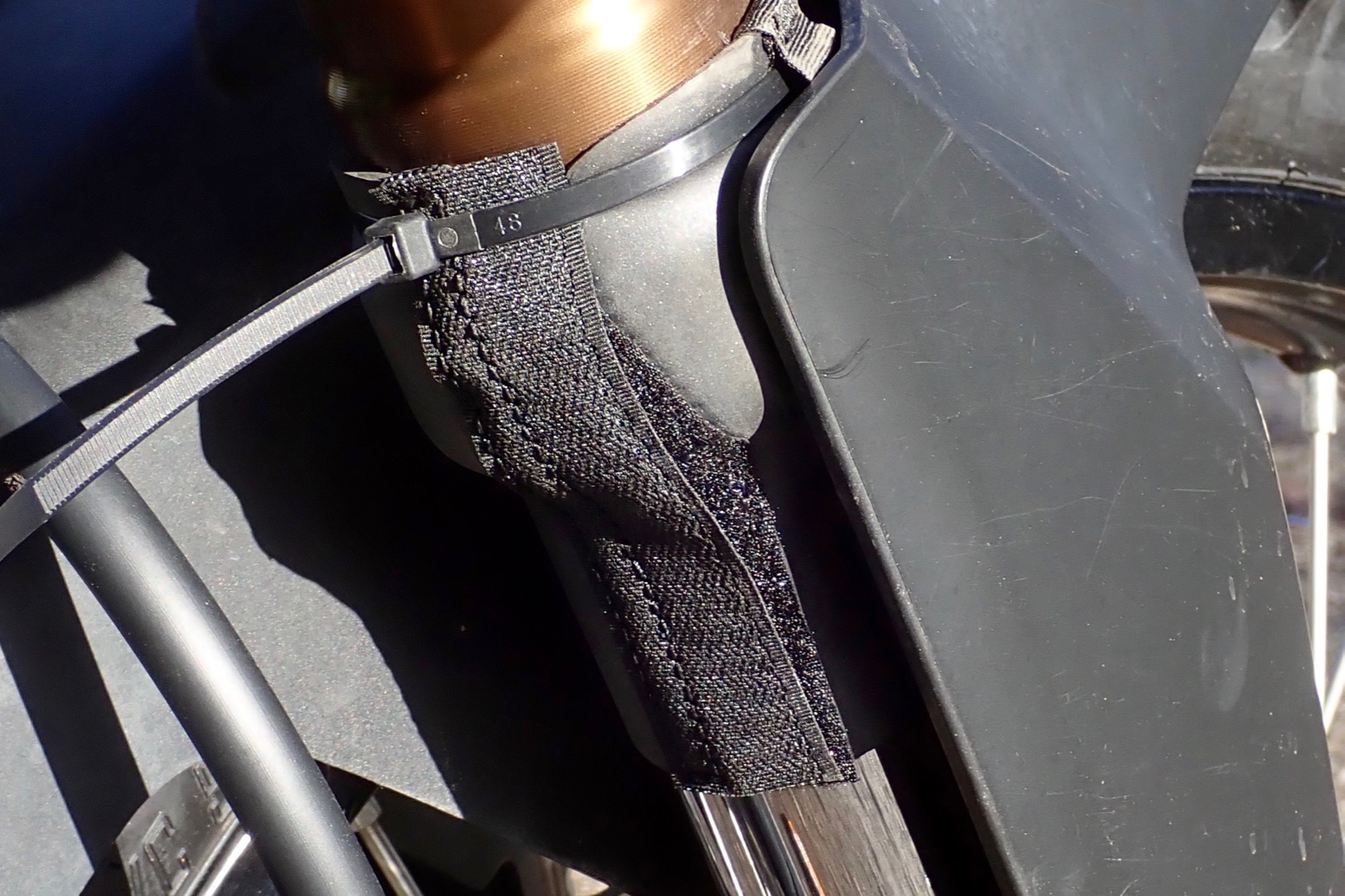
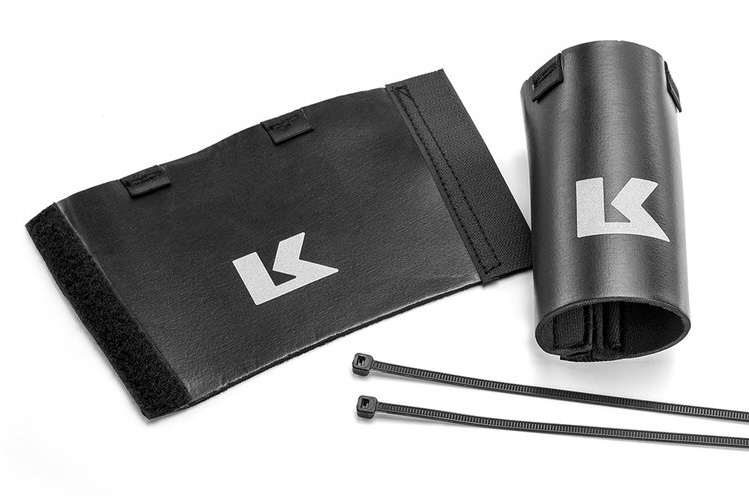
CRF1000 USD forks are leak-prone – one of mine was leaking before I even bought the bike at 1800 miles (fixed on warranty). Repairing a seal in the field sounds too tricky to do well so I’m hoping some Kriega fork seal covers (right) will keep the seals from getting worn. They’re easy to fit and remove if needed. The full-sock tubes like I had on my XCountry are better and cost the same, but require removing the forks from the bike to slip over the top.

And that’s about it. It would have been fun to ride the Honda across Spain, but this is the first time doing that crossing over many winters that the weather has caught me out.
It would have been even more useful to get the feel for the AT doing my regular tour circuits in Morocco. That too is not to be so I’ll be renting a ragged Sertao for the duration and will just have to learn to manage the AT on the fly down in Mauritania. More news and impressions on the road in March.

OLYMPUS DIGITAL CAMERA

Africa Twin: Sealing the Rear Wheel for Tubeless

AFRICA TWIN  INDEX PAGE
Tubeless Tyre Index Page

If ever a bike wanted tubeless wheels it’s the AT (and T7 for that matter). These bikes run 21-inch fronts and were initially pitched at a low price to get them moving. Choppers aside, cast wheels are unknown in 21-inch, while OE spoked tubeless wheels (as on many European 21-inch advs) are expensive. The new 2020 1100 AT Adventure Sport finally has a tubeless 18/21 set up.

MT or WM?

at-wheels.jpgI’ve investigated various proprietary methods and, after 12 years and a lot more theoretical and second-hand knowledge, decided to give DIY sealing another go – but carefully this time and only on the back wheel (above, top) where it’s fairly easy to do. Like nearly all 21s, the AT’s front rim lacks the ‘MT’ safety lip or ridge which is important if planning to run tubeless tyres. Without it, a TL tyre seals less well on a regular WM rim (above, bottom) and may leak. And in the event of a flat, it will slip into the rim just like a tubed tyre with the usual undesirable results.
The only way around that it to get the rare, lipped, 2.15 x 21-inch Giant rim from CWC for £111. Add anodising, spokes, wheel building, their Airtight™ vulcanised sealing band (similar to DIY mastic) plus post and that’ll be nearly 400 quid. I could seal it myself and save £120, but 21-inch wells are narrow and curved and so are less suited to taping. So while CWC make my wheel, I may as well cough up for the Airtight and be done with it.
The high cost of a new wheel build is why DIY is so attractive, providing your rim is MT with the requisite safety lips. Most rear wheels, tubed or tubeless, have been like this for decades (they will be stamped ‘MT’ on the side, as opposed to ‘WM’). And the AT’s rear well is also nice and flat and 55mm wide which makes it easier to seal well.

Things you will need

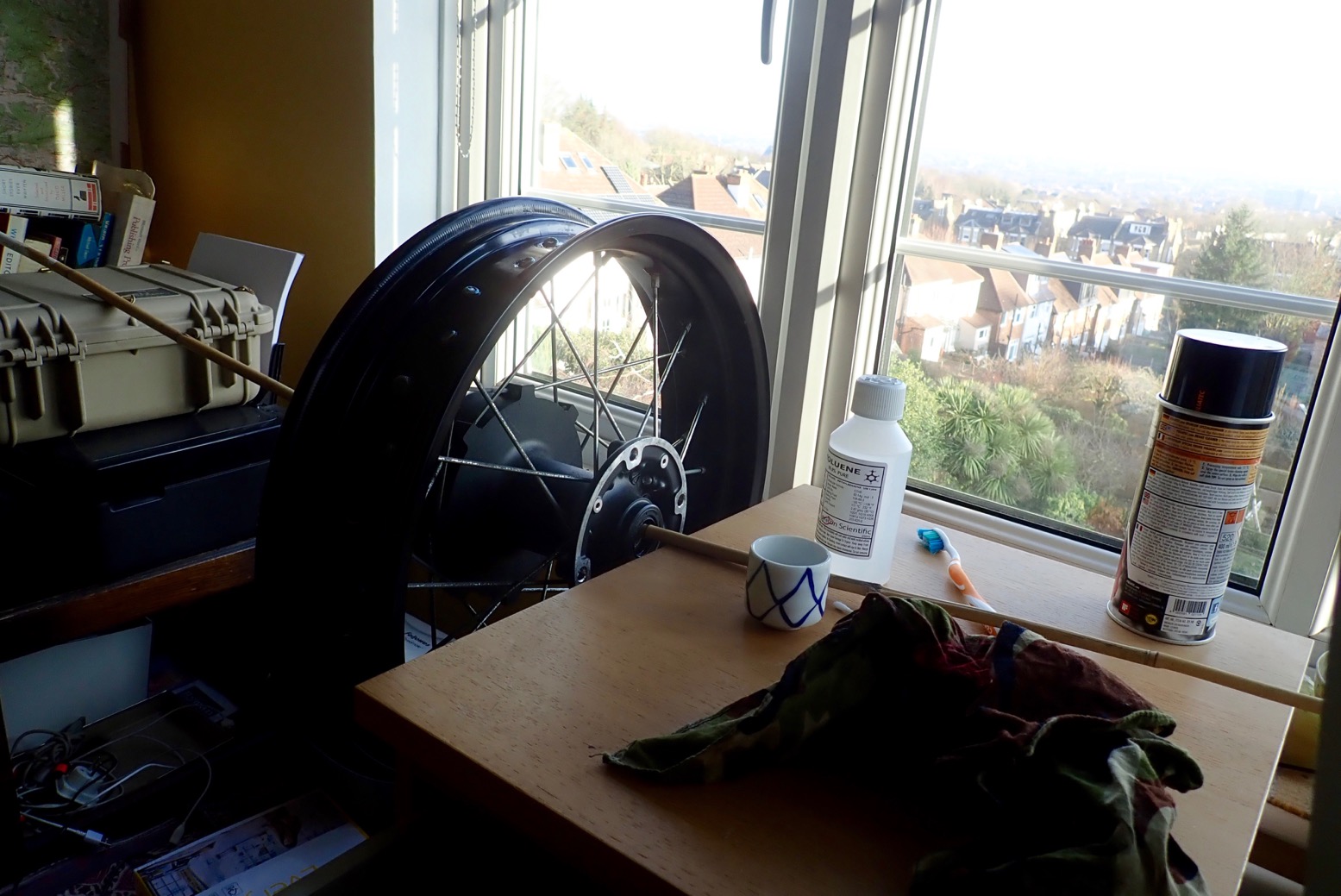
  1. The wheel resting on a spindle
  2. Solvent (Brake cleaner, Toluene, MEK, Acetone, etc)
  3. Microfibre rag (lint-free) and Q-tips
  4. Runny adhesive – from Superglue to Seal-All
  5. Thicker sealant – like Goop or Bostik 1782
  6. Sealant tape such as 3M 4411N (not the 2mm thick 4412N). From £18 on ebay
  7. Or some etching primer and mastic sealant like Puraflex about £6 for 300mm
  8. A tubeless valve

Rim sealing procedure

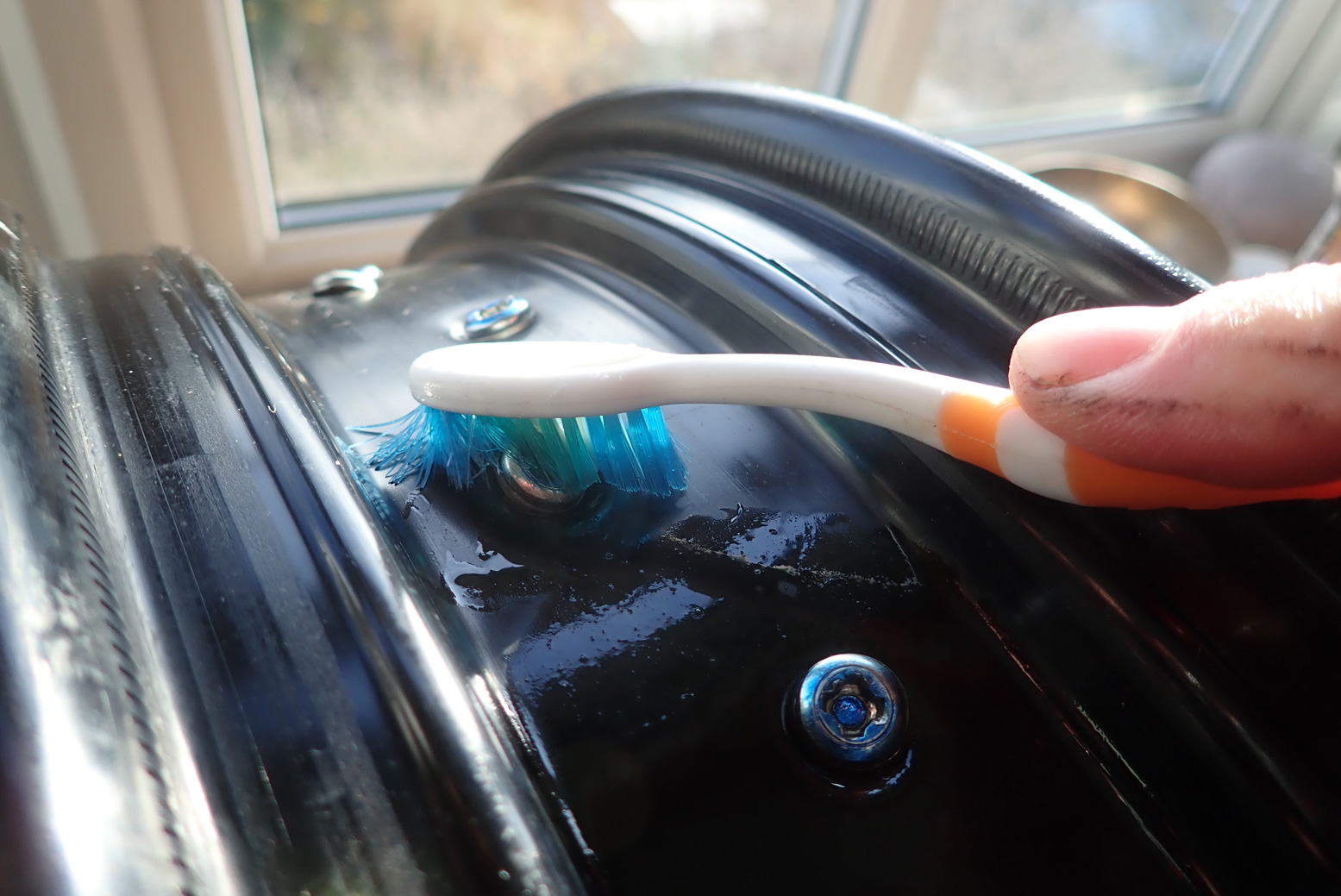
Clean rim thoroughly with solvent using a rag, toothbrush and Q-tips
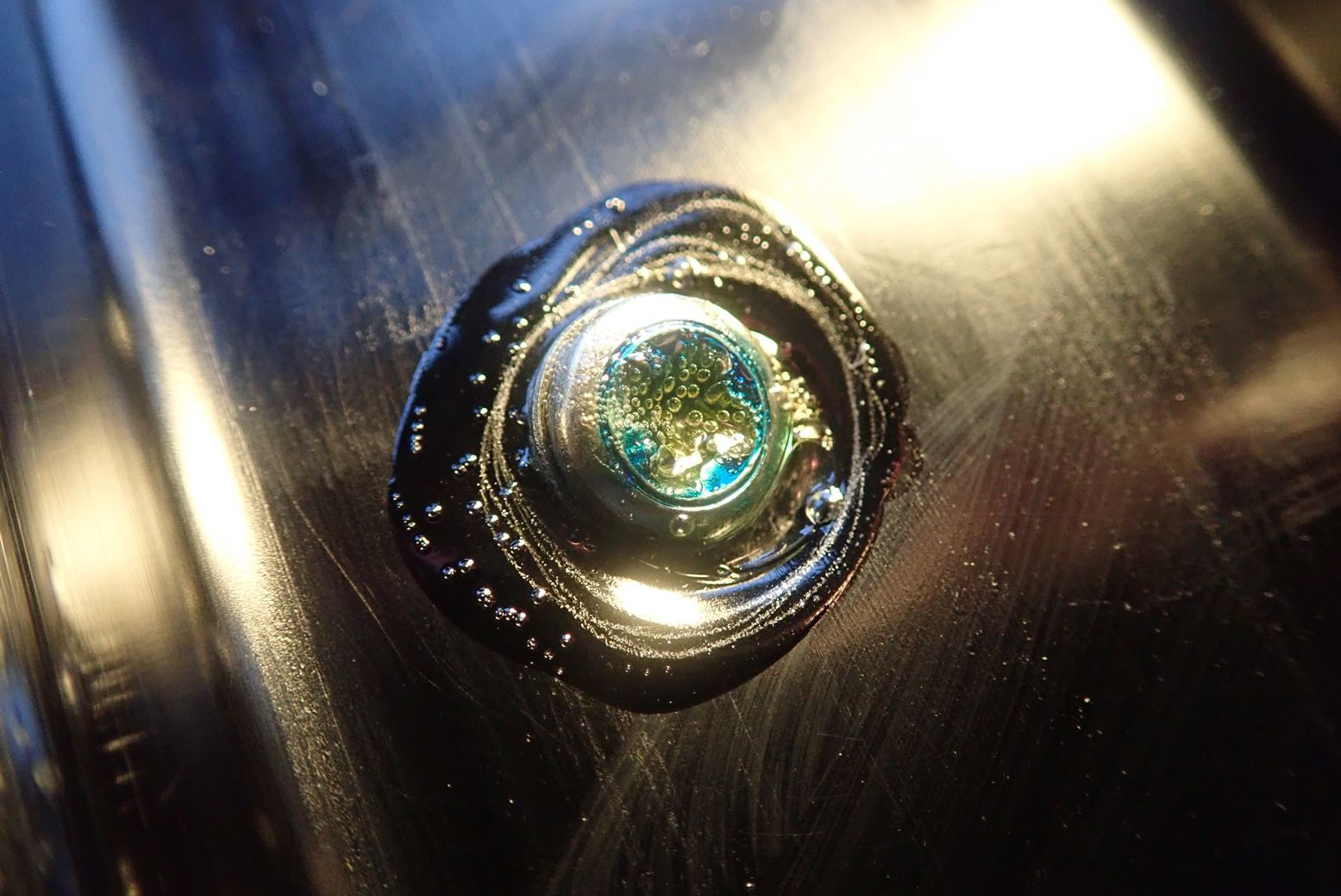
Apply a runny glue around the nipple and into the threaded centre. I used Bostik; thinner would have been better. Expect microbubbles. Leave to dry for a day.
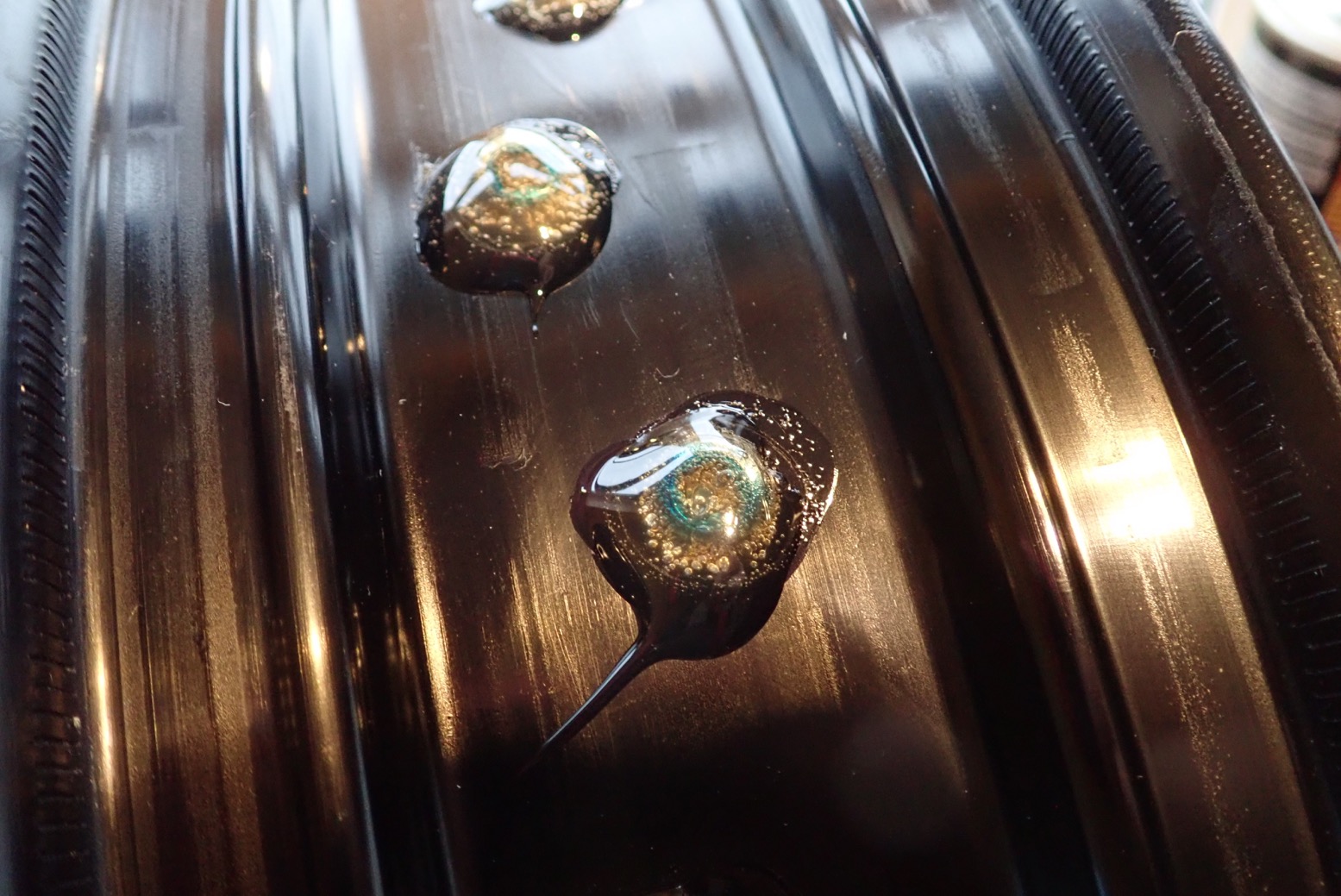
A day later overseal with thicker sealant. I used clear Goop. Let it dry for a day.
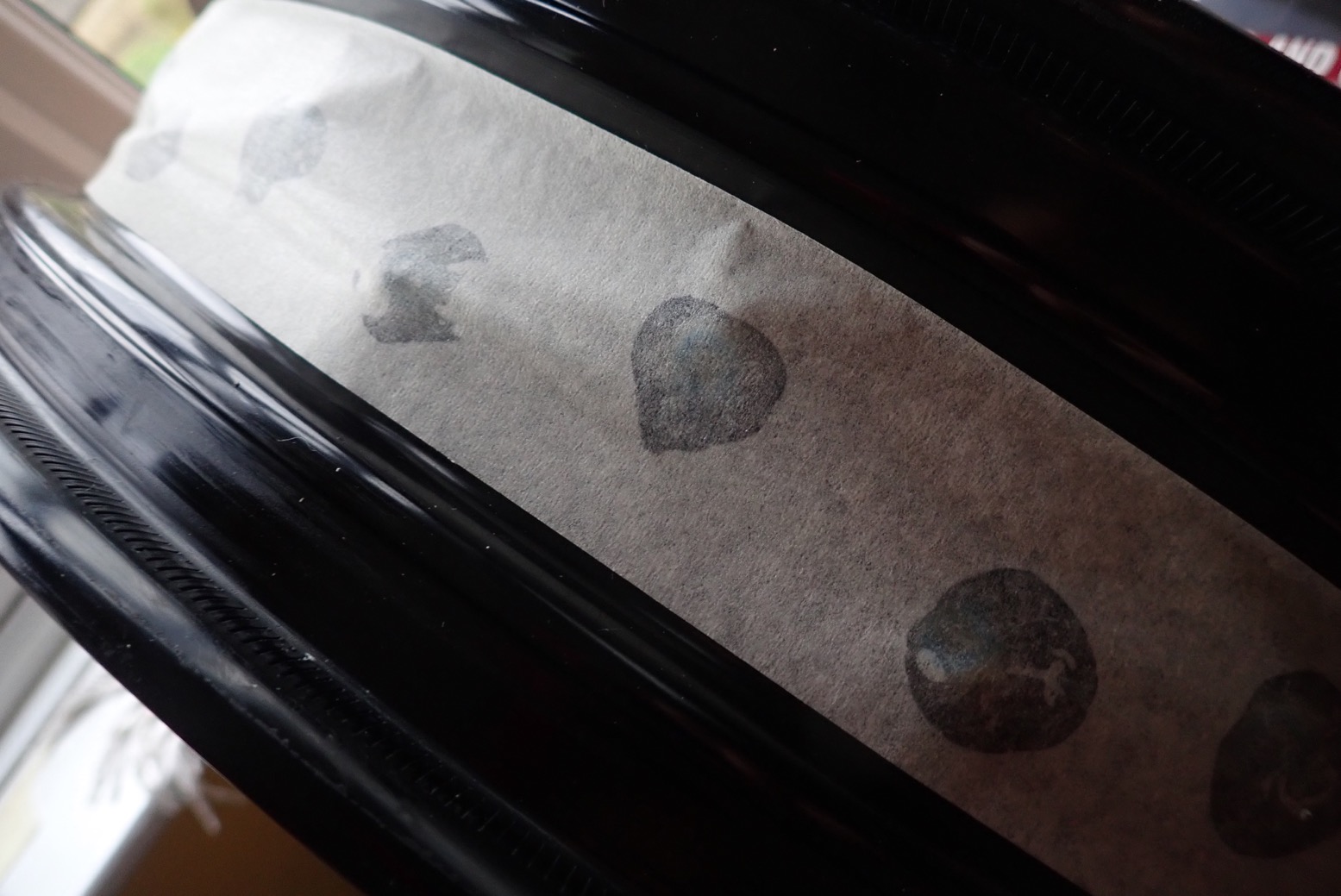
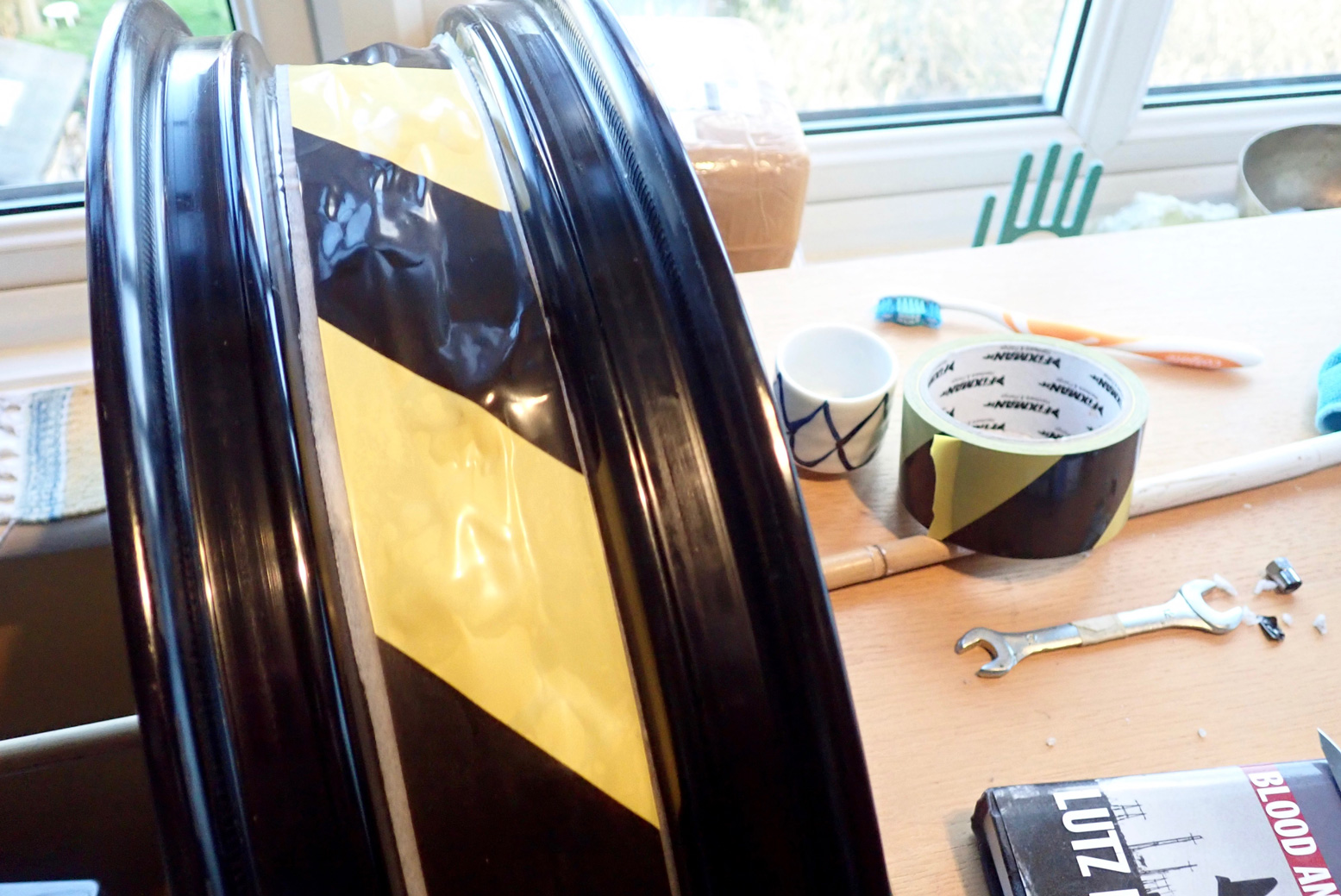
Wrap the undried glue in the non-sticky side of masking tape to stop the lower Goop blobs sagging out under gravity. Or spend days turning the wheel and doing four nipples at a time.
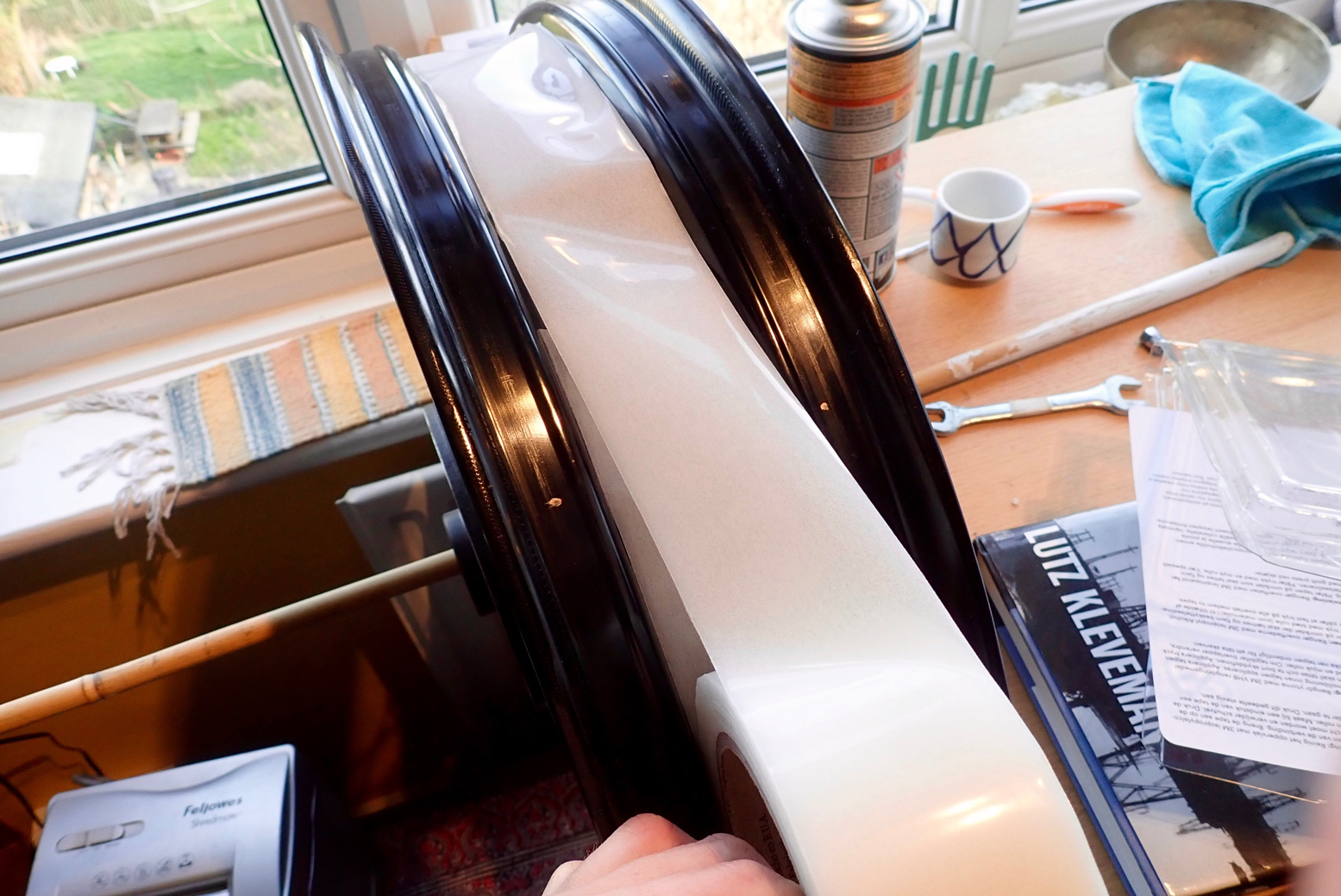
Tape up the rim with 50mm 3M 4411N.
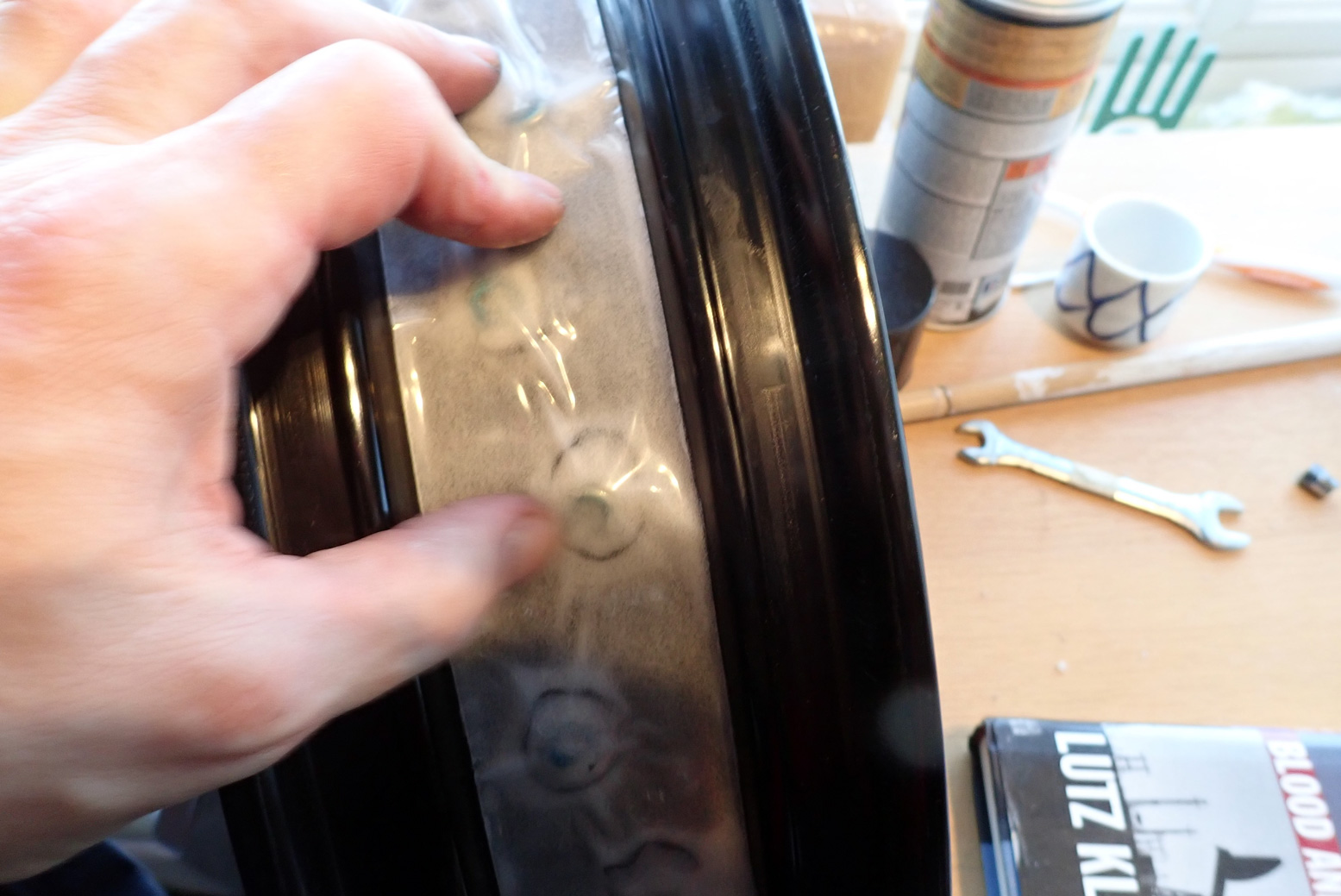
Because I used thick glue and maybe too much, the lumps stuck up quite a lot so made it hard for the non-elastic tape to fully contact the rim floor. I pressed down between the spoke nipples as best I could and did the odd prick here and there. Then I removed the backing film while allowing for some overlap.
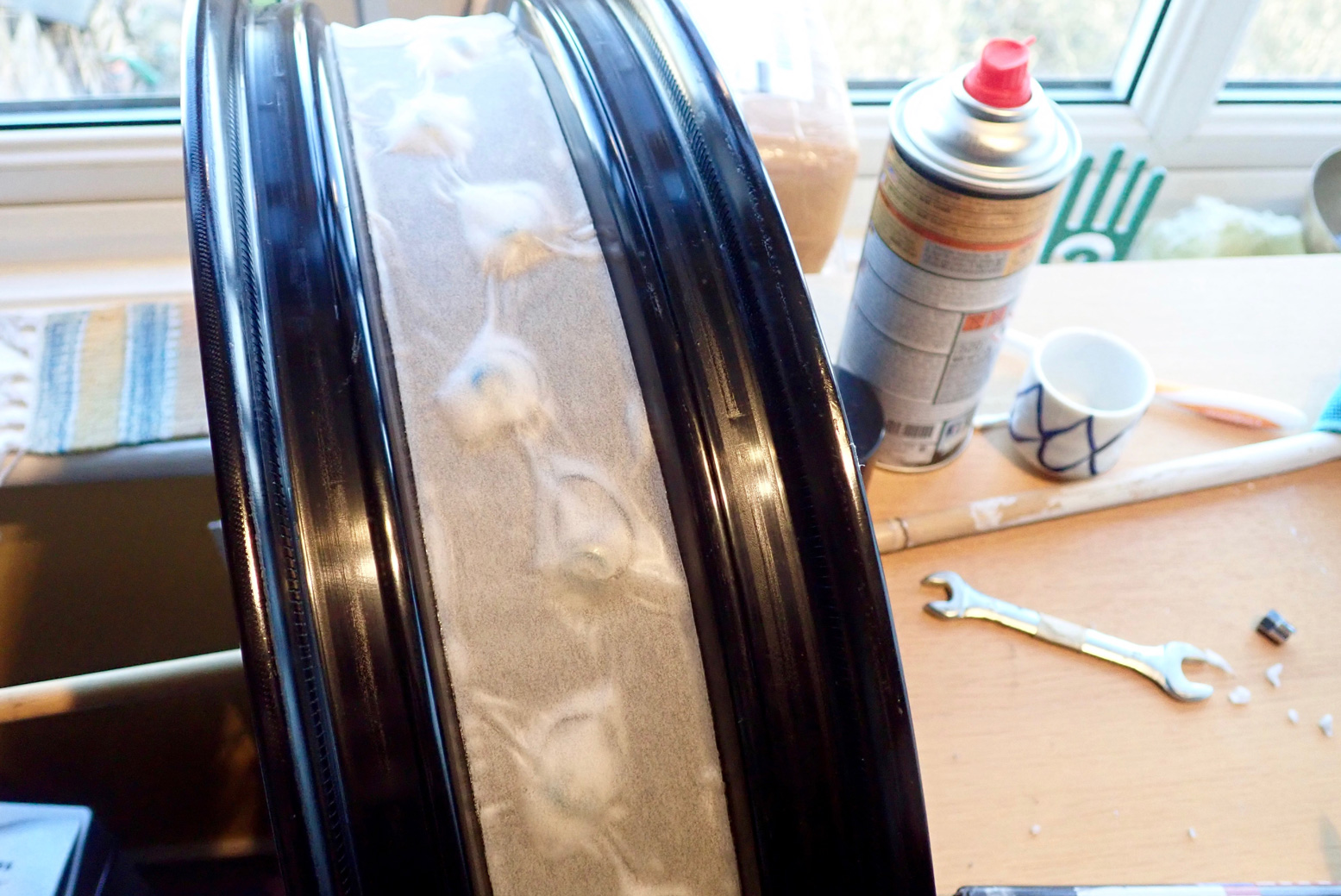
As good as I could get the tape. But I’m confident the glue alone has sealed the rim.
I decided to cover the 3M with some regular plastic tape to protect it during tyre mounting.

Or…

tl-ianwheel
… spray on some etching primer, let it dry then apply a coat or two of Puraflex mastic. Don’t go too thick or you’ll lose the well’s depth and ‘slack’ needed for easy tyre fitting.

If you’ll be in a wet environment, consider also sealing the spoke nipples from the outside.

The mastic sealant method is probably better. The tape adhesive might lift if it gets very hot; a black tyre and rim sat in the hot sun. But then, pressure building up in a hot tyre will tend to push the tape down.

Mounting and inflating the tyre

Mounting is easy as there’s no tube to worry about. Soapy beads help reduce the effort needed and tubeless tyres are actually quite flexible – or that’s how the Michelin felt. I know from cars and the Tenere years ago that home mounting tubeless tyres can be tricky. It took me most of the day to get the TKCs on to the Tenere, and that was with a pokey 2.5cfm 4×4 compressor. Because there is no inner tube pushing the tyre on to the rim, you need both edges of the loose tyre to at least make a partial seal with the rim and allow pressure to build up. When that happens, the seal improves, leakage stops and you’re on your way. Using a small car compressor and with the valve core removed to allow faster filling, nothing happened for a bit and then pressure slowly built up as input outpaced leakage. At around 35-40psi there were a couple of loud bangs as the last segment of bead slipped over the safety rim and into place.

I am fairly confident my gluing alone has made a good seal. The tape is probably redundant. Overnight there was no drastic pressure drop. If there is in the next week and I can’t fix it, I’ll swap back to the tubed wheel and will anyway take a spare tube. This time I’m not using Slime sealant, though I’m told it doesn’t affect the 3M tape’s adhesion.
I’ll be monitoring it with TPMS but a few days in it was about 8 psi down and the same again when I picked the bike up in Spain in March. So it seems to depressurised down the mid 20s psi. I seem to recall this was normal in the early days and so gave the back a shot of Slime in Spain. No more leakage.