Category Archives: Gear

Tested: Mosko Moto Ectotherm jacket review

See also:
Heated 12v jackets

Updated March 2025

IN A LINE
Warm and smart puffa jacket with built-in controller which almost makes the 12v heating redundant.

WHERE TESTED
Chilly December mornings on Jebel Saghro, then plugged in for a very chilly morning in the High Atlas up to 2200m/7200′ but not below freezing. Then back across chilly Spain (above freezing).

COST & WEIGHT
Currently the revised v2 version is €395. My 2021 v1 jacket supplied free for review by Mosko. Weight 672g + battery wiring lead.

  • A smart, wearable puffa jacket, not just a wirey liner
  • PrimaLoft insulation is warm and compact – and ‘body mapped’
  • Packs into its own pocket
  • Three useful pockets
  • Looks cool; no naff graphics
  • Thumb hooks to get snug on the arms
  • It’s not black!
  • Controller function unexplained on v1

What They Say (v1)
We added carbon fiber heating elements to a kick-ass technical puffy, and the ‘Ectotherm’ was born.
When you’re sitting around the campfire or lounging in your tent, it’s a super warm insulator with 100g body-mapped synthetic PrimaLoft Gold insulation with Cross Core Technology. Connected to the bike, it adds a 6-panel carbon-fiber 3.5Amps/42w heating system powered by the bike. That extra warmth takes the edge off long, cold, wet, pavement stretches, keeps you warm on high alpine passes, adds new enjoyment to early spring and late fall trips, and ensures you’re ready for anything a multi-year/multi-season RTW journey can dish out.

REVIEW
Riding for a week up to 2200 metres in December 2023, I was pretty sure I’d need my Ectotherm. Around Nekob (1000m) the forecast was down near zero some mornings, but by leaving for my day rides two hours after sun up, I dodged the most biting chill. In the end, used under my quilted Carhartt riding coat and over a merino long-sleeve top, by the afternoon, even unplugged the Ectotherm became too warm and got stashed.

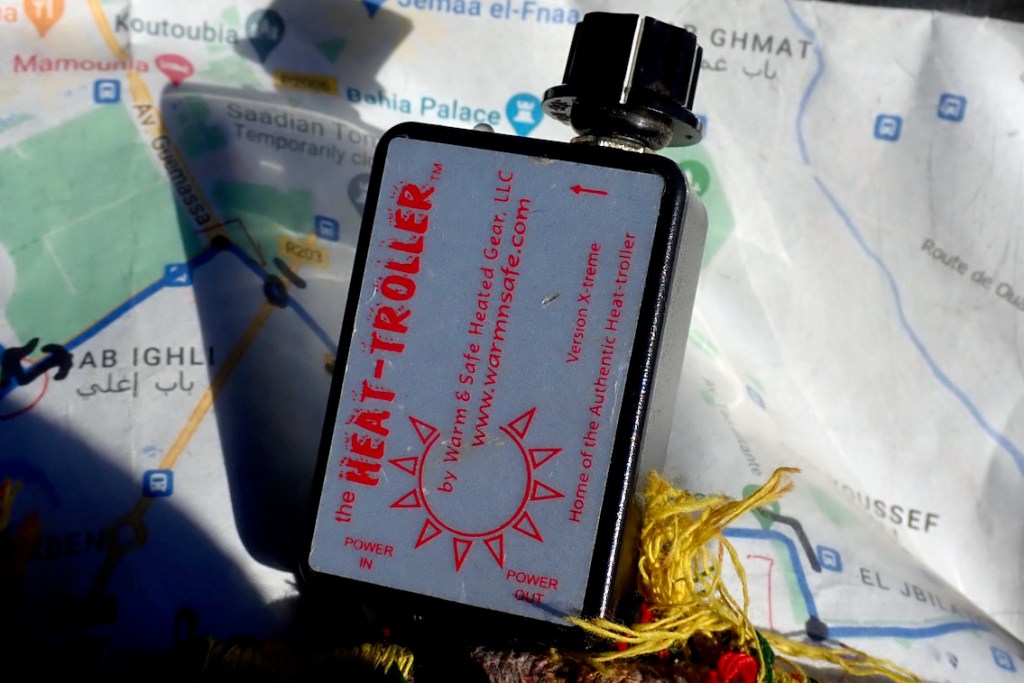
Only on the last day, heading over the High Atlas via a high-elevation route at close to zero did I plug the jacket in. I assumed like my previous heated jackets the Ectotherm would have no temperature controls, so used my old dial-operated Heat Troller (above left).
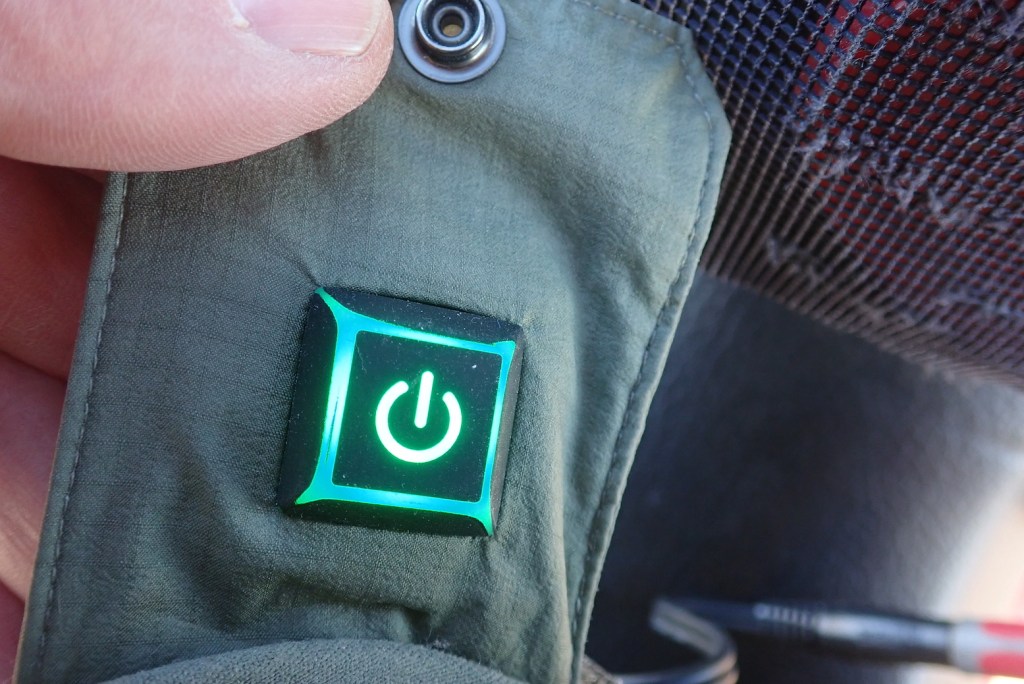
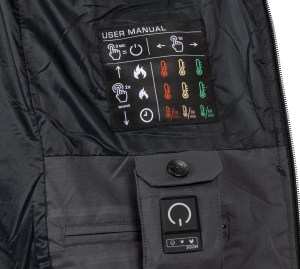
No heat that I could tell so I rummaged around by the jacket’s output and noticed an on-off button which it turns out, has three levels of heat. It cycled red, orange, green then went out. Was it on now? Full power or low?
I know 12-volt heated jackets are not night and day, but you sure notice when you turn them off. I stopped again to fiddle with the button and at one point definitely had the impression of warmth across my back. I notice that it’s rated at 42w where my Aero was 75w and the Powerlet 60/105w. But they used wires, not carbon fibre panels which you like to think need less power to do a similar job.
Whatever the heating technology, with these jackets close fit pressing down on your body greatly increases efficiency, which was why Aerostich’s inflatable bladders where actually a clever idea for maximum efficiency. On other jackets I’ve wrapped straps around myself to press it down on freezing rides across northern Spain in winter. The Ecto was helped a little by my Kriega Trail 18 pressing on the coat.
I did also wonder if wearing something thinner than my thick Ice Breaker merino may have produced better conductivity, but by that time I was over the highest cols and working my way west to Zerkten. A little disappointingly, the day had proved to be nowhere near as cold as forecast.
So, not a conclusive test of the Ectotherm’s heating ability which I bet is in there somewhere. I need to find out how those buttons sequence (nothing in the online blurb. I contacted Mosko: no reply. But see Colin’s comment below) and may be able to dispense with the Heat Troller (which might also be affecting the output).
Fyi; all is explained on the v2 model.

One thing’s for sure though: as a regular puffa the Ecto works very well (though at a price). It’s a smart garment you can wear off the bike, not a liner that just takes up space when not in use, or has little sartorial value when not plugged in. 
Whatever the carbon fibre heating panels are, they’re unobtrusive; only the LHS pocket with the wires and the control button adds any bulk.
March 2024 I rode my CRF back home but didn’t think I’d need the Ecto. Spain was as cold as I’ve been on a bike in many, many years. Even wearing all I had plus regular stops for hot food and drinks, I could feel myself going weird following sleet showers towards the end of the day. Another example of my minimalism turning round and kicking me in the nuts!

V2 with the missing instructions

Test 2 – 2024-25
I’d not given up of the Ecto, and in November 2024 set off across Spain on my CF Moto with the 12-v Mosko puffa under my thin Mosko Surveyor. By February 2025 I was back for more; winter 24-25 was a lot chillier in Morocco and I wore the unplugged Ecto every day, even down in the desert, along with my AD-1 over-trousers.

Coming back across Spain late February, I knew I’d need to plug it in, and this time did so direct – without the heat controller. For some reason, this time the operation of the Ecto’s built-in controller tab became intuitive: a long press for on, then short jabs until red (max) came up.
For the leg north of Madrid, the Ecto sure made the day more bearable. It wasn’t freezing at around 800m, but the 100-kph wind chill made it feel like it. This time I was wearing an old Klim Aggressor base layer, plus a shirt and the skimpy Mosko Surveyor jacket over the top.

This was much more like it, even if at times the thing either auto switched off or went to a lower setting. Riding along you can just about grab the controller tab and check that the red icon is glowing reassuringly. I rolled into a Picos mountain posada, chilled but not stir-crazy with cold.
Two days later it was another brisk late-night ride off the Portsmouth boat, which a pair of proper, intact gloves would have made more bearable. I counted off the landmarks until I was home, numb fingers fumbling with the keys. Riding along I thought: heated grips or 12-v jacket. Both are allowed, but I think 12-v jacket trounces the grips. They say a warm core supplies blood to the extremities better than grips warm the core. I’ll be keeping my Ecto until the ice caps melt.

Read about the v2 Ectotherm here.

Tested: £20 USB rechargeable tyre pump

September 2025. After less than 2 years the pump’s battery would not hold it’s charge. I suppose that was my 20 quid’s worth.

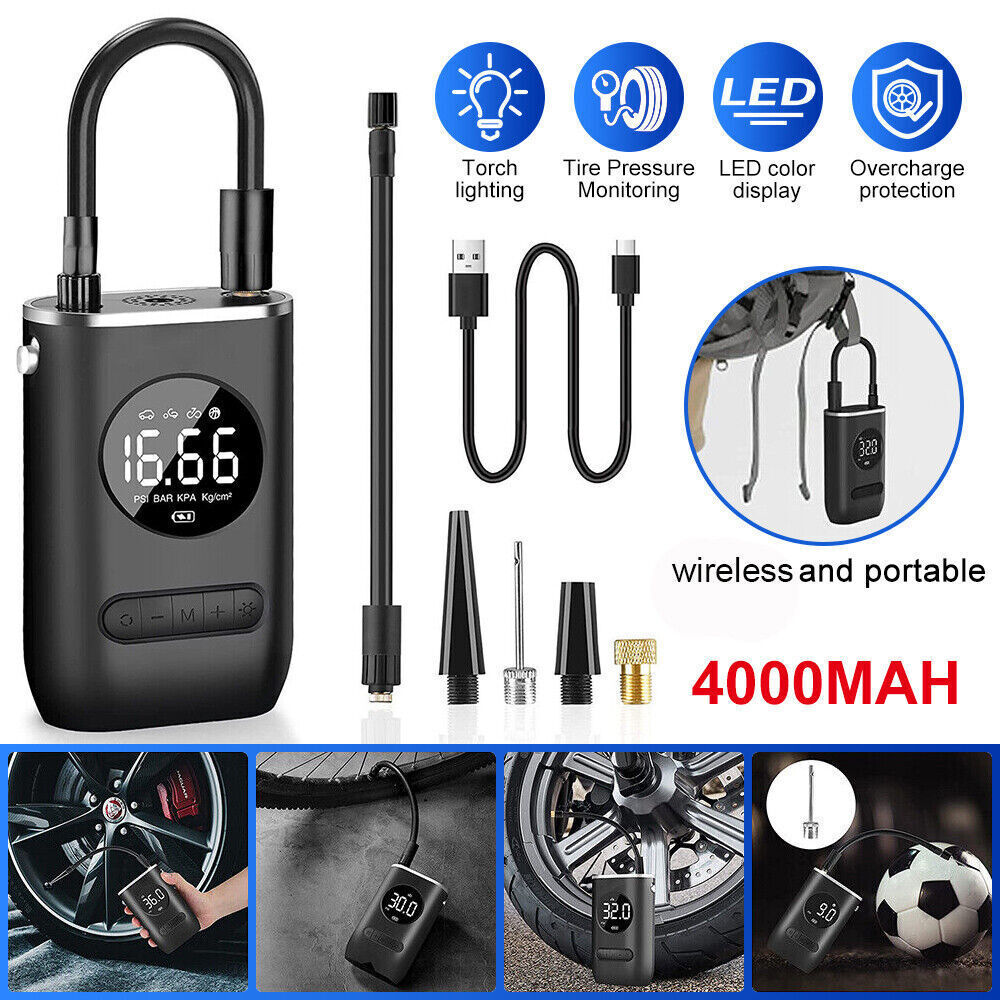
Robbo put me on to me this unbranded 4000 mAh USB rechargeable tyre pump. You’ll find the usual clones of clones of clones on ebay from around for even less now. Tbh, I don’t know exctly what 4000 mAh means in the grand scheme of things – battery capacity probably, not power, but it worked well for me.

Mine came with a bunch of unneeded nozzles and a Samsung-type USB-C? recharge cable. You turn it on, set the pressure you want (which stays in the memory) and press the middle button. Off it goes, pumping up a G310GS rear tyre from zero to 27psi in about 5 minutes without getting hot and while being dead easy to read. There’s a torch, too. It weighs 420g. A handpump fyi, weights 100g.
Remember, with pumps ignore some notional ‘150psi!’ figure which they might manage in a small-volume pushbike tyre. It is the much less often quoted flow rate or cfm that counts. This one is probably a lot less than < 1cfm and all pumps will slow down as they pass 1 bar or so. It’s how fast they can keep pushing to a typical 25-30 psi (2 bar) that counts.

I also used it daily to top-up the slow-leaking rear tubeless tyre on my CRF. Yes, a bike-battery 12-volt powered compressor like my 2002 Best Rest Cycle Pump (left; 760g) is about the same size, weight and power, but for quick, cable-free top-ups it’s one less thing to wire-up or plug in. It vibrates less and makes less noise than my old Cycle Pump too, and recharges off mains in a couple of hours. I’d guess it would take at least 30 minutes of pumping to flatten the battery. I never got close, and of course you could do it on the move via a bike’s USB plug or off a power bank.

The elephant in the pump house is of course the durability of unbranded Chinese gadgets, but that applies to 12-volt pumps too, if not everything. I tumbled one time in front of some impressed village boys and rolled on my back which cracked the pump’s housing but it kept going fine. On a long trip I’d pack a manual back-up pushbike pump (search ‘Crank Bros’ and go from there). But for what I do in Morocco I retired the Best Rest and relied on this handy USB pump in the tank bag until it dies on me.
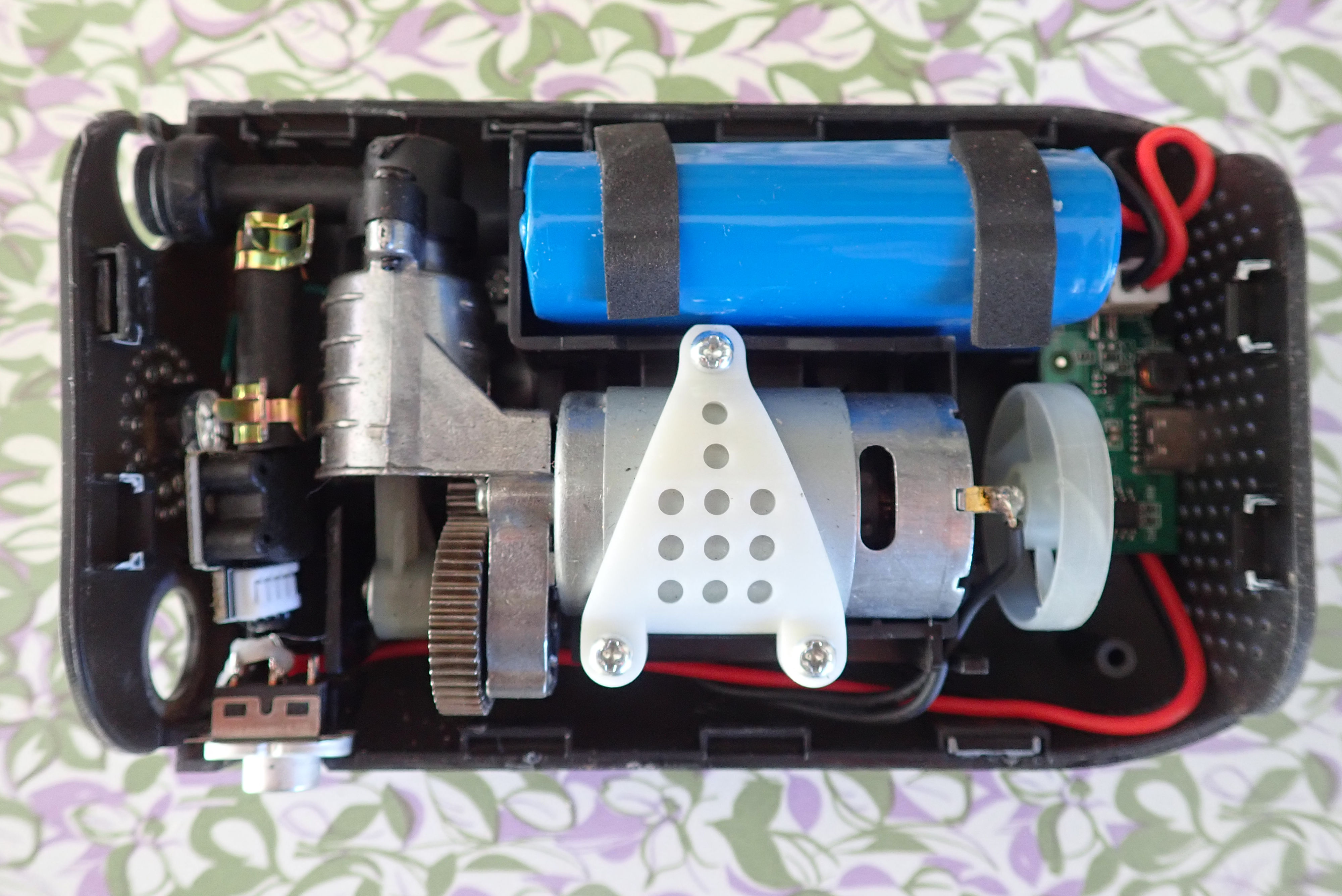
That day has come: two years in it’s not holding its charge. But the 20 investment has paid back. Next one will be a bit more compact

I can probably dig the pump out of the dead unit and wire it to the bike battery.

Review: HJC i30 helmet tested

See also:
Airoh TR1
XLite X420 GT
Bell Mag 9
Bell Moto 3

IN A LINE
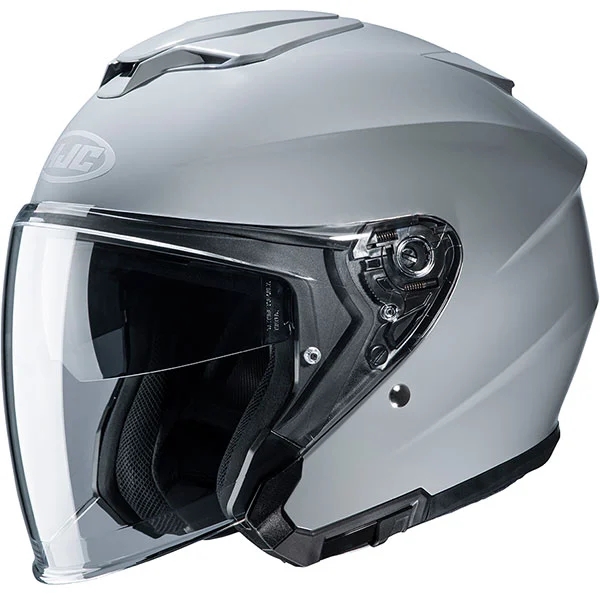
Another good looking and comfy polycarb open face full-visor with good sun visor actuation and OK venting.

WHERE TESTED
Around the UK and Morocco.

COST & WEIGHT
£111 for SuperBikeStore. New dark visor: £42. 1520g verified (L, 58-59). My head measures 58cm, fyi.

  • Great visibility, like all these styles of lid
  • Very comfortable for the price
  • Quiet compared to previous X-Lite
  • Looks cool; no naff graphics
  • Integrated sun visor actuates easily
  • Inexpensive
  • Easy to use chin ratchet clasp (not D-rings)
  • Velvety padding with pop fasteners comes out and refits easily for washing
  • Visor comes off/refits fairly easily for proper cleaning
  • Replacement visors from £50 rrp
  • After two years one side of the visor sometimes dislodges itself – new mechanism £20

REVIEW
There was nothing much wrong with my old X-Lite other than it was 10-years old in with the lining coming apart from too many hotel sink washes and the lever for the sun visor long lost.
I left it in Marrakech and back home narrowed it down to an HJC i30 which have been around for years too. I like the look of the i30 and in Large (58-59cm) fitted my head snugly without causing nausea, double vision, seizures or migraines.
For my sort of riding: slow speeds with frequent stops for photos, instructions or jotting; these open-face full-visor jobbies (OFFV) are ideal. All the preceding can be done without removal while a full face visor keeps the rain and bugs at bay. I don’t doubt there are quieter lids but now we have more types of ear plugs than toothpaste brands, that’s not so relevant.

Obviously venting is a moot point as it rushes up under the visor, but on top there’s an easily operated slider to get a little airflow around the top of the head. Tbh, in English or cool season Morocco temps, venting doesn’t add up to much but there are times I do detect its effect.
The sun visor slots down with little levering (too little in haptic terms) at the easily accessed lever on the LHS, and the main visor has a couple of indexed positions, but with me it’s either up or down.
I also like the ratchet chin strap; quick and easy to use with nothing dangling loose. The colour meets my approval too, though it is glossy, not matt as appears in some adverts.

I’ve worn it for several months in Morocco and it’s holding up well. The top venting doesn’t really make much difference; when it’s hot and you’re working hard you sweat like the Trevi fountain. But for washing the lining, the three sections of inside paddling come out and slot back in a lot more easily than my X-Lite. The whole lid can be hosed off for dust in a shower and soon dries.

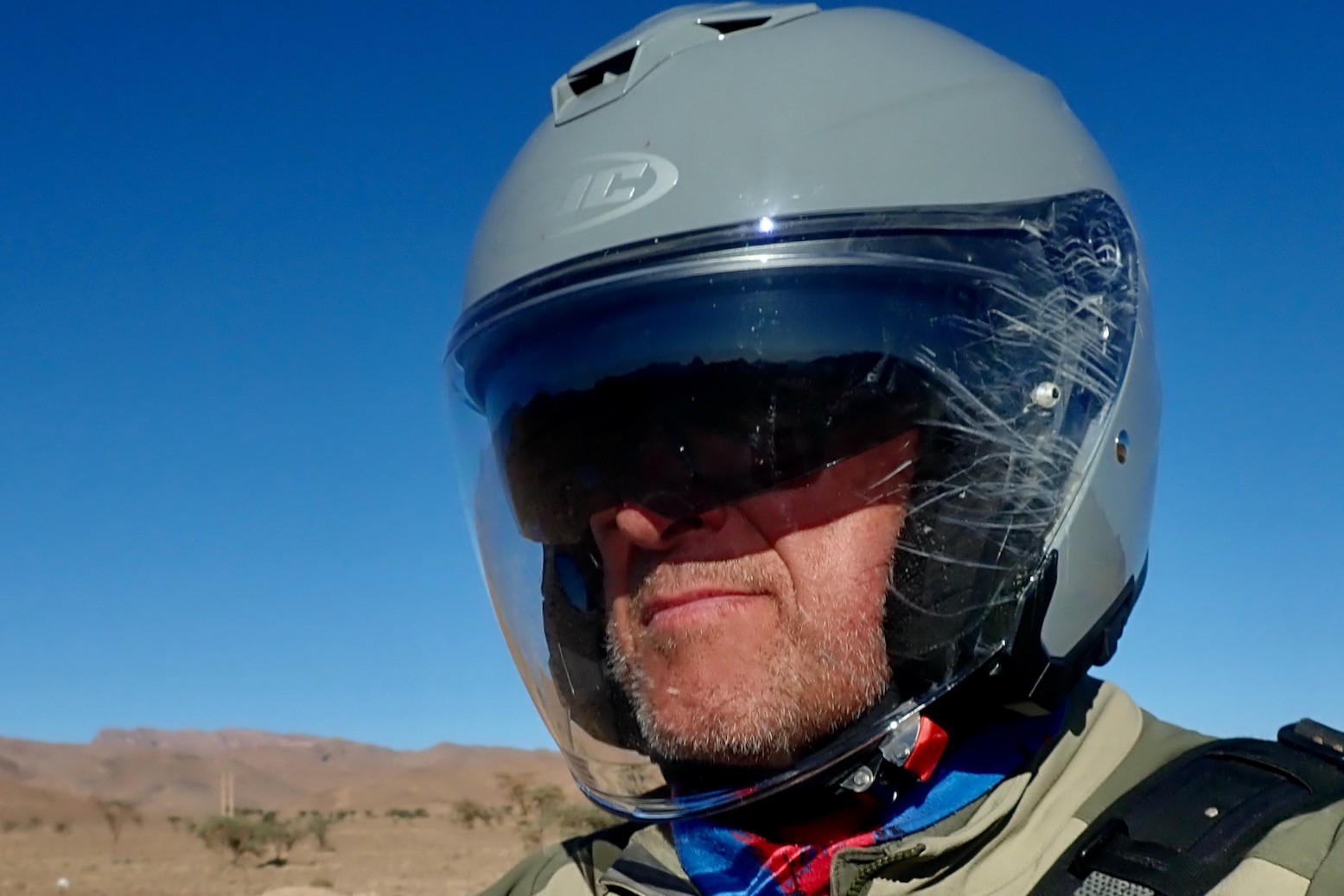
As you can see, I had one of my very rare slow speed falls and badly scratched the side of the clear visor, but there was no other damage and it doesn’t affect forward vision. The sun visor still actuates solidly enough, so does the main one. It still amazes me how modern visors resist scratching indefinitely compared to the crap visors we had in the old days. I treated myself to a dark visor which in ever-sunny southern Morocco is easier on the eyes but costs 42 quid.

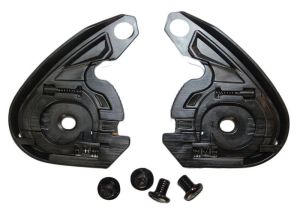
A few thousand miles in I’m happy with my HJC i30, but two years in I could do with a pair of new visors (rrp £50 each), and one side of the visor gets dislodged on some lifts, maybe following a drop or two. Don’t know if it’s the visor or the mechanism, but at least you can buy a replacement mechanism for £20 from the Visor Shop.

Barkbuster Storms: 15 years 10 bikes

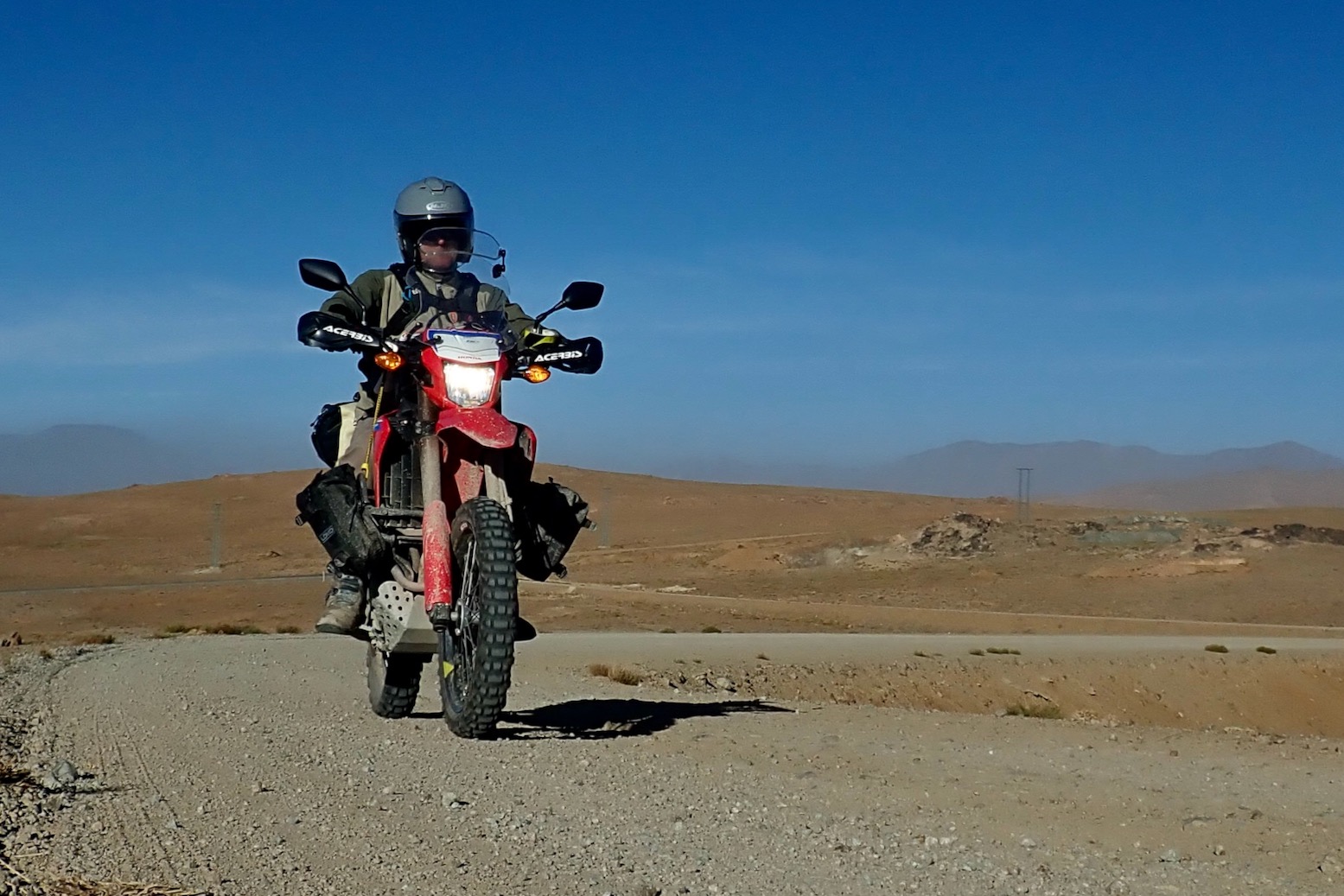
My current 300L came with Acerbis handguards so I’ve decided to recycle my trusty old Aussie-made Barkbuster Storms (see ebayuk). Looking back, I realise what a great life of adventure they’ve enjoyed!
Proper handguards based around a metal frame clamped to the handlebar are a no brainer. A simple fall over can snap a lever or mount. That’s never happened to me since I’ve been busting the bark.

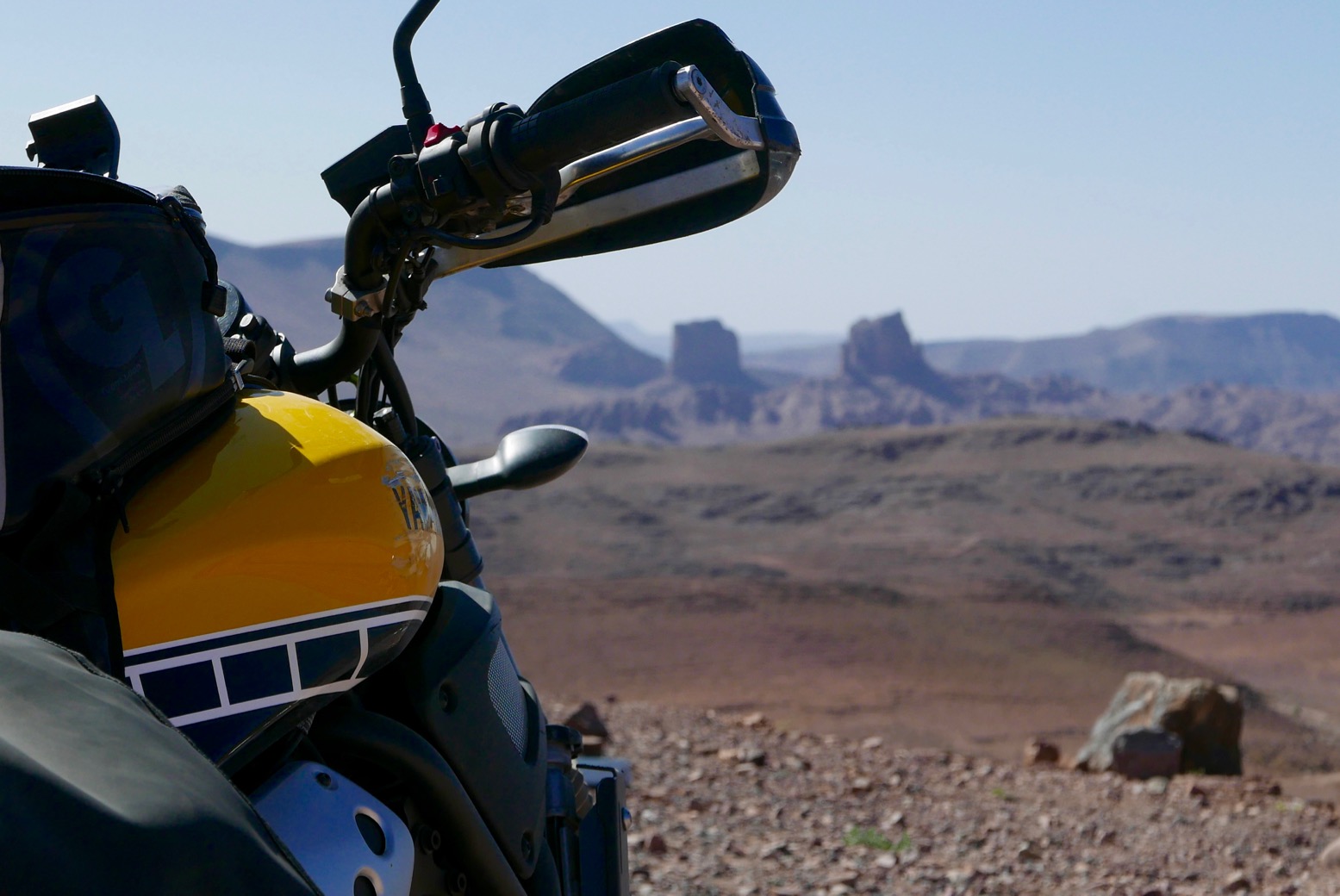
I bought my set in 2008 for my near-new Yamaha XT660Z to research the first edition of my Morocco Overland guidebook. Turned out I needed them too when I look a piste too far up Jebel Saro (right). The 660Z was also the first bike with which I experimented with DIY tubeless tyre spoked rim sealing. I’ve got better at it since. And the XT was my first bike with efi. What a miracle that proved to on a big single; smooth running at low rpm and over 80mpg possible. Where possible, I’d never go back to a carb bike.

Yamaha XT660Z – barked!

Next bike was another near-new CRF250L I bought in Arizona. Over the years right up to my current 300L, I’ve profited from new owners’ selling on bikes with barely four figures on the clock and at a massive depreciation.
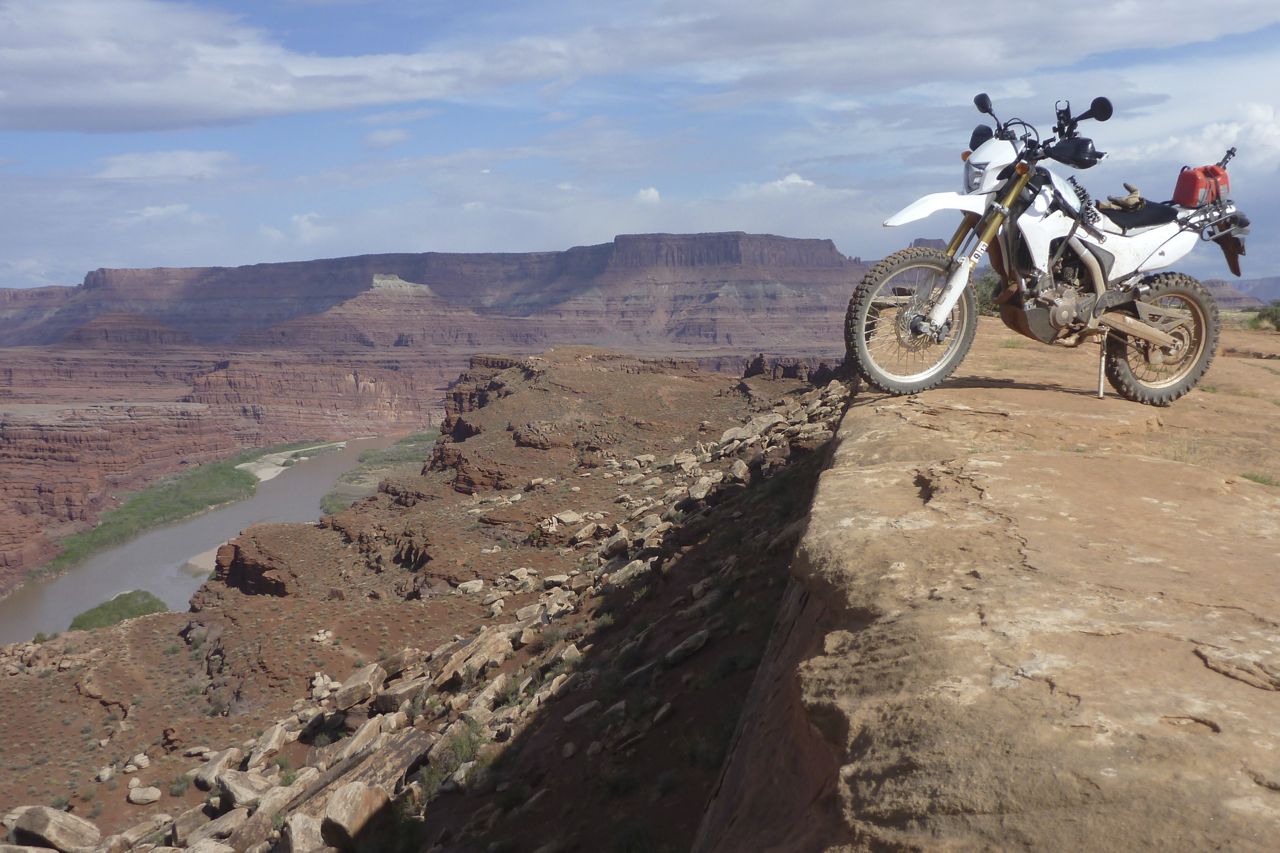
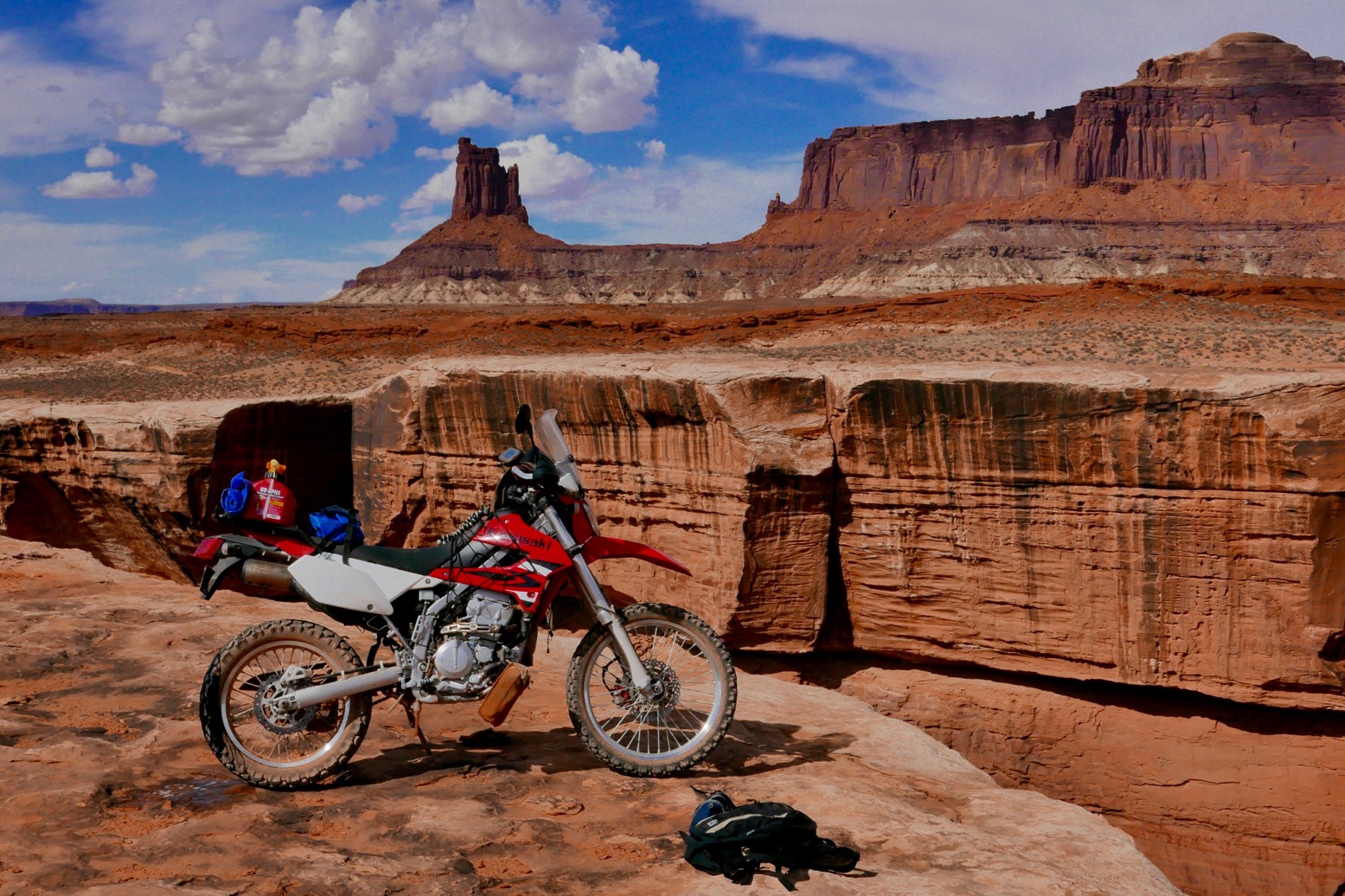
The L led me on a fabulous 3200-mile clockwise lap of Southwest USA through northern California, across Nevada, into amazing Utah and back down into AZ via the ‘do-it-before-you-die’ White Rim Trail. Road and/or trail, SWUSA like being in your own road movie, a trip every rider needs to tick off.

CRF250L barking on the White Rim

The BMW XCountry was one of my periodic breaks from reliably reliable Jap machines. I used it in Morocco on my first Fly & Ride tours which have also got a lot better since. It’s a shame BMW ditched these X bikes. This one had a grand’s worth of Hyperpro suspension – on the road you’d not notice much but off road riding was believing. The X-tank too was an ingenious idea since picked up by Camel tank and an easily replicated DIY job.

Taking a dab on the BMW XCountry. Photo David W

Soon after they came out I got myself another near-new, low miler; a Honda CB500X. I barked that up along with adding prototype kit from Rally Raid who also saw potential in the twin and went on to produce a popular line of 500X-ccessories. For years my 500X page was the most viewed on this website. I used the X in Morocco on tours and for researching my Morocco 2 book.

CB500X RR barking up in the High Atlas

I went back to Arizona and this time got a KLX250 – basically like a CRF250L but for some reason never as fashionable and with better suspension out of the box. Unlike Europe, it was a carb model that ran horribly on low octane back-country fuel.
I ticked off another memorable tour of the American Southwest, including a dream visit down to Baja and Mike’s Sky Ranch with Al Jesse of bevel luggage fame. Below, barking along on the amazing WRT in Utah again: ‘the best 100 miles of dirt you’ll ever ride‘ as I wrote in Bike magazine.

White Rim Trail again – Heaven’s Dirt

On that KLX ride I met a chap on a WR250R near Death Valley. I never fully realised that Yamaha’s WR250R was actually a well-spec’d but expensive trail bike, not a dirt racer like the near-identical looking 250F or 250X which put out 40hp or more and so need regular maintenance. Yamaha imported the R for a few years into the UK but they proved an overpriced dud and by 2016 when I was looking, good ones were hard to find. So I bought one off Hyperpro in Holland just before Brexit confounded the whole import process, did it up and and set off for Morocco, the Dig Tree and edition 3 of the guidebook.

WR-ing about

A 135-kilo WR-R makes the same power if not a bit more than my current 300L, but it’s located up in the stratosphere beyond 10,000rpm. As a result the bike didn’t work on well the road and left me with a back ache for months after. As a result I decided to suspend my search for the 250 unicorn.
Back home I bought a smashed up XSR700 with the creamy CP2 lump. I repaired it, jacked it up a bit and added the usual protection, including my trusty busteros, now on their 7th outing. I still wish Yamaha would make a more serious 19/17 scrambler using their brilliant CP2 motor.

Barks and volcanoes

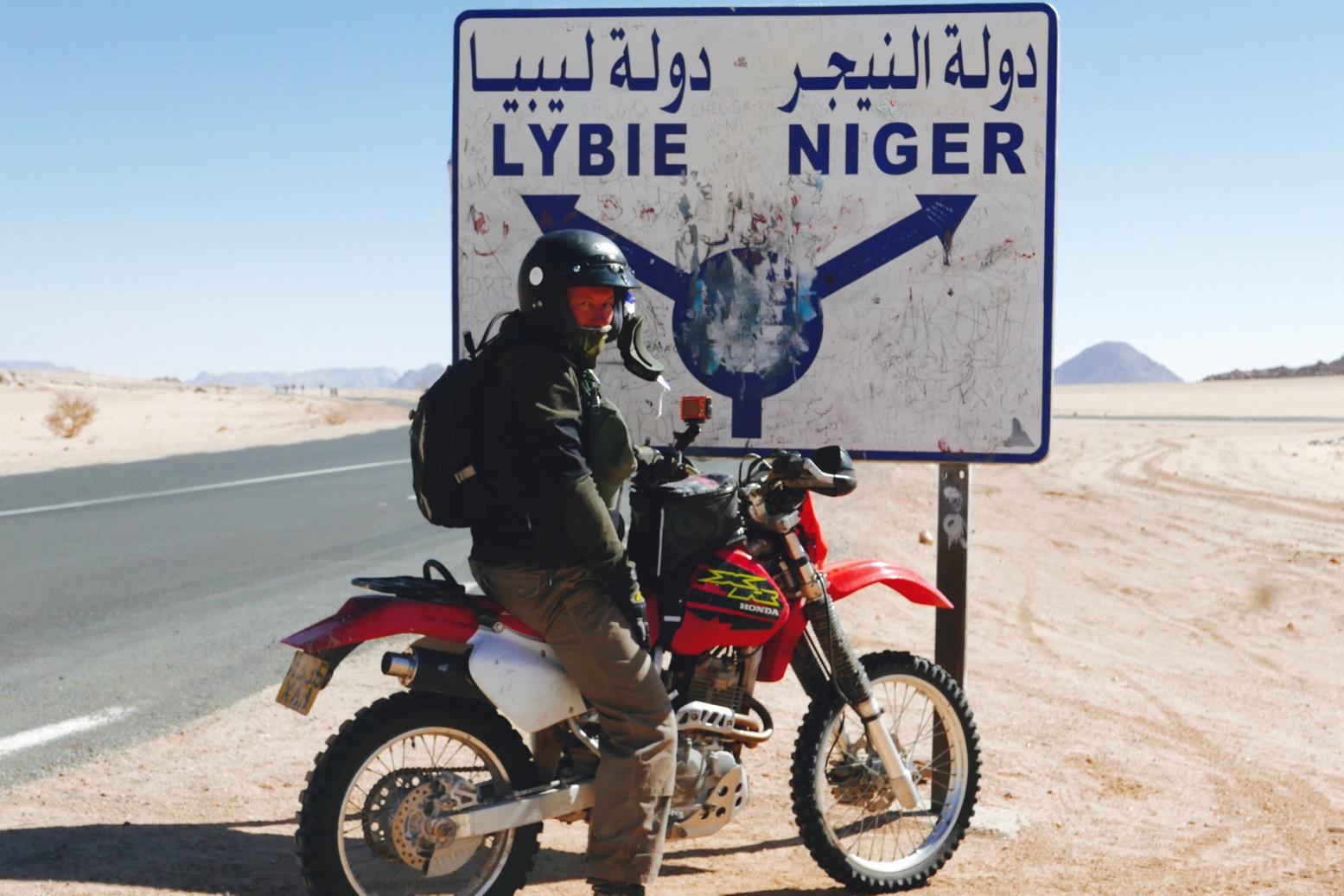
Next, I got some pals together on a supported tour to Algeria where I rode a lot in the 1980s. The tour finally gave me an excuse to buy an XR400, the all-time classic trail bike from the mid-1990s which was always too skimpy of subframe to make a serious travel bike. Sadly mine turned out to be skimpy of piston rings too and began guzzling oil, but was a joy to ride in the sands of the Grand Sud. The old Barks were needed, navigating through the tussocky oueds.

Barking at the border

The Himalayan came out and following teething problems it looked like it was worth a punt; a low saddled trail donkey that was perfect in Morocco, if not so much the getting there. We tried to reach the fabled Dig Tree again, but tyre problems saw to that. Still, at least my mate got a nice cover shot of the Bark-clad Him for the current edition of AMH.

For barking out loud!
Fermed
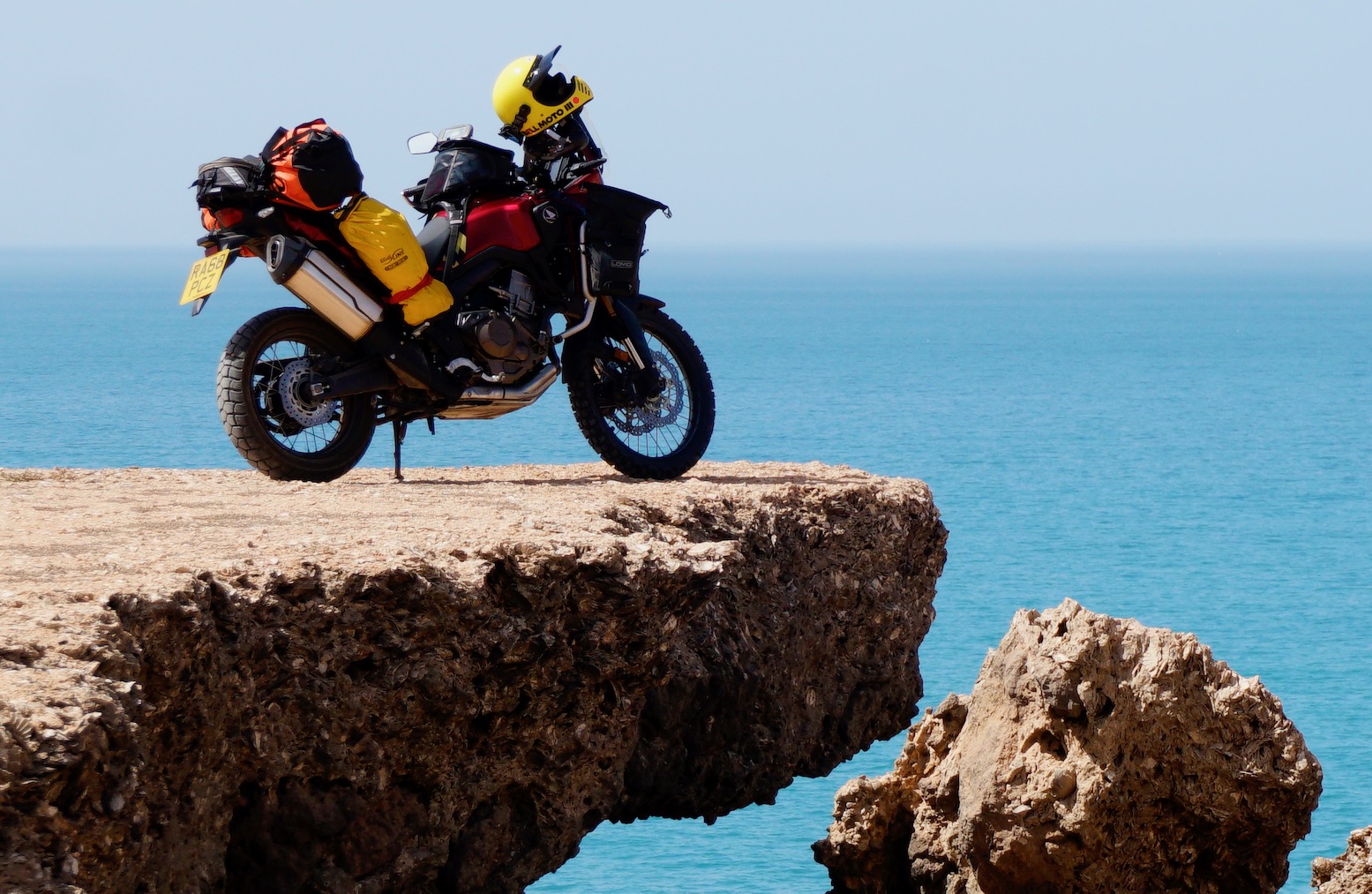
Barks on the continental shelf.

For the kind of riding I like to do I’m not a fan of giant ‘adv’ bikes but many are, so I thought I’d take the popular Africa Twin down to Mauritania in search of manageable pistes.
Hotel Sahara’ I called that trip, and the outbreak of Covid 19 put an early end to it, close to the Mauritanian border. I raced back north before Morocco locked down, but punctured the engine and had to dump the bike and fly out on the last plane. Corona went on longer than we guessed, and it took me a year and a half to recover the AT from Morocco.

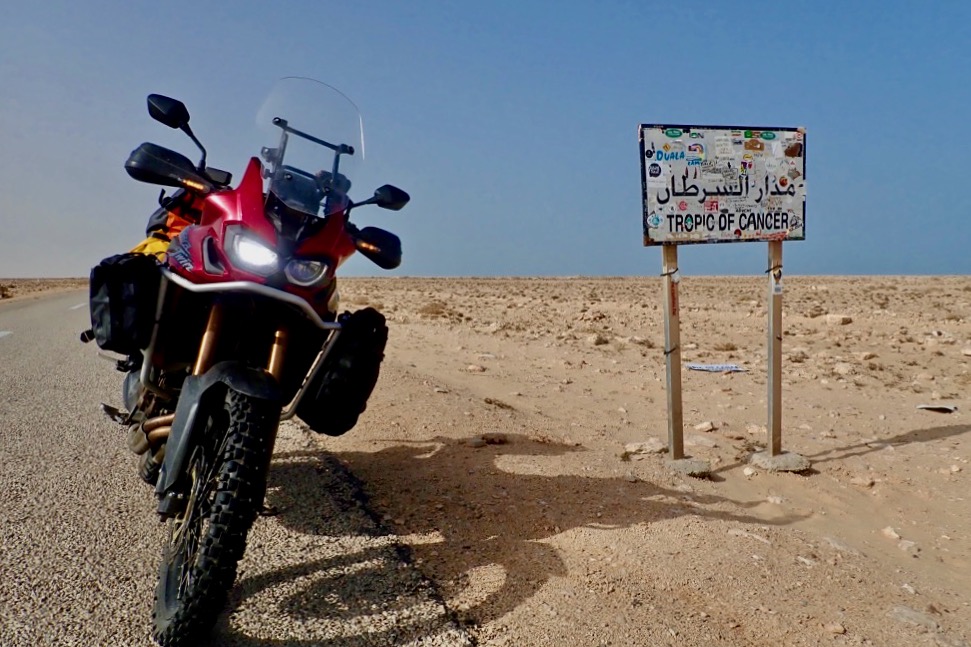
AT at the Tropic of Corona

Back in London the Barks were removed for next time just before they pinched my AT. Now I feel they’ve paid for themselves many times over so it’s time to let them go. There’s easily another 15 years of protection left in them.
Who ya gonna call? Bark Busters!

Tested: Ortlieb 30L Travel Zip review

ort - 2

Tested: Ortlieb 30L Travel Zip

Where: Morocco, France, NZ, Spain, Sardinia (on bike and kayak) for several years

Cost: 105 euro from NL

Weight: 870g + shoulder strap

In a line: Road or trail, river or sea, plane or train, the Travel Zip is a handy, waterproof day or overnight bag.

ort30s

What they say
Ortlieb’s 30L Travel Zip Waterproof Duffel is a versatile bag you can use for sports, weekend outings or business trips. The extremely durable and abrasion-resistant Cordura fabric is waterproof, dirt repellent and easy to clean.

What I think:

tik

• Light, airplane carry-on size (unlike Duffle, see below)
• Submersion proof Tizip (unlike roll-tops)
• Zip is less faff than roll-tops
• Grippy, indented shoulder strap pad – it really works
• Easy-to-clean PVC body
• Nifty but small outside mesh pockets. Another one inside
• Clever rigid carry handle set up

cros

• Discontinued. Hard to find new and nothing similar around
• Pricier than roll-tops
• TiZip requires cleaning in dusty conditions

ort - 1
duffle

Review
It took a bit of searching to track down one of the last of Ortlieb’s 30-litre Travel Zip (search in NL shops). But in the minimum size of 40-litres, the current Duffle Zip (right) is too big for my needs, even if it’s only a little more expensive.
And although they’re simple and bombproof, I’ve become less of a fan of the roll-top Rack Packs since I’ve needed bags like this for paddling. The submersion-proof TiZip offers useful emergency buoyancy if my packraft gets attacked by a school of irate swordfish.
On the back of a bike an immersion-proof seal is not that critical unless you’re enduring monsoonal conditions, but the simple zip opening is less faff then the roll-up and clip-down of a typical roll-top.

ort - 4

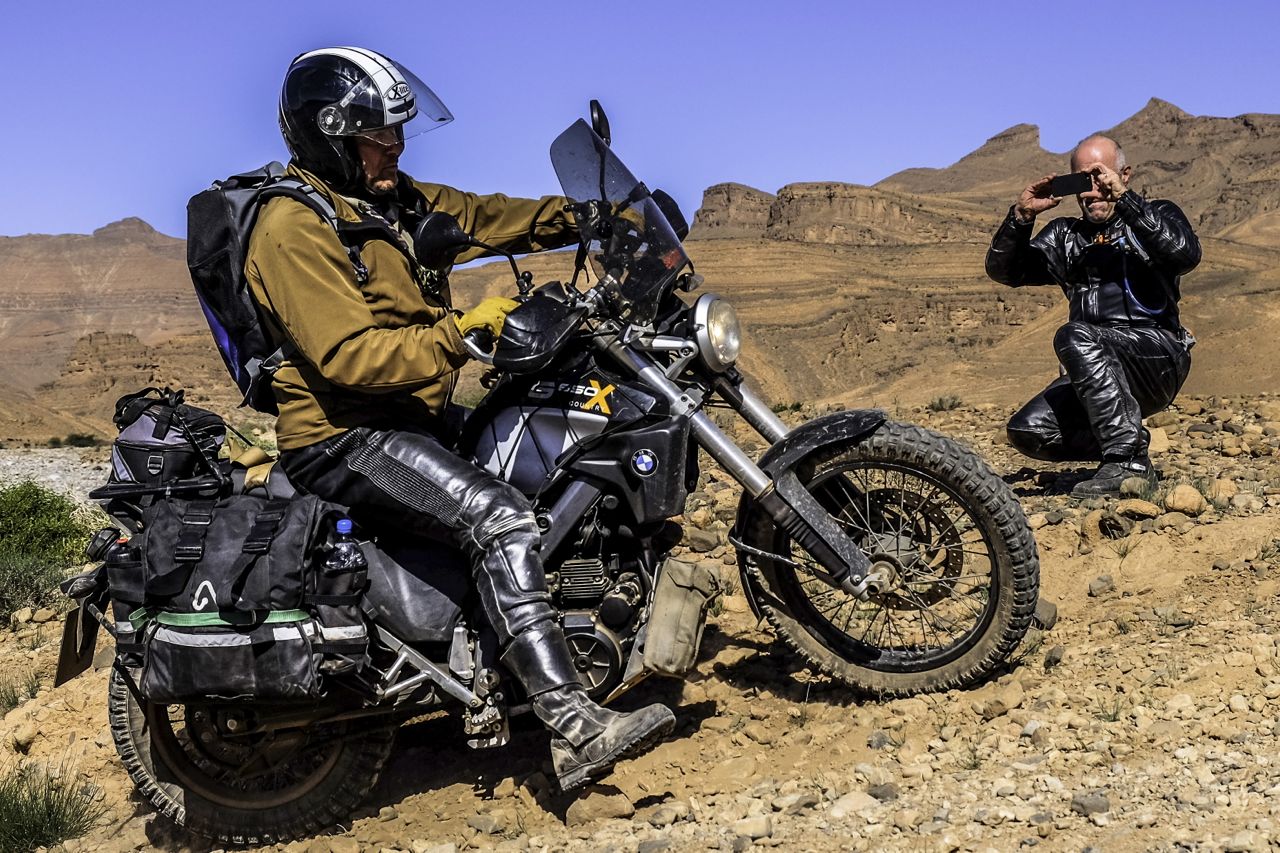
In Morocco the Travel Zip was big enough for my overnight needs once tools and other quick-access stuff were stashed in my old Touratech Tailbag, and mucky spare oil, a one-piece wet suit and spare inner tubes were lashed around the 700GS and 310GS I used.
A waterproof Tizip adds quite a cost and complexity to bag construction, but with the wipe-clean and easy repair PVC body, the bag has an airtight seal. I can vouch for that because after zipping the bag closed in the desert, by the time we reached 2000 metres it was bloated out from the lower air pressure.
It’s only a bag: you put things in, carry it around, and then take things out. But I like the clever hard-handle carrying arrangement, rugged-enough build and most of all, the easy opening. The small exterior pockets may prove more handy in a boat than on the back of a bike, and there’s no harm in the other pocket inside. For a dry-suit zip, the TiZip runs smoothly after a wipe of silicon grease out of the box, and this ease of access in a big improvement over the same-sized Watershed ZipLoc duffle that I used for years. The Watershed fabric is way tougher, but used as a boating day bag, doing the seal up properly as the next rapids approached became a pain. For a boat or a bike, I’m sure the Travel Zip will do me nicely.
ort - 5