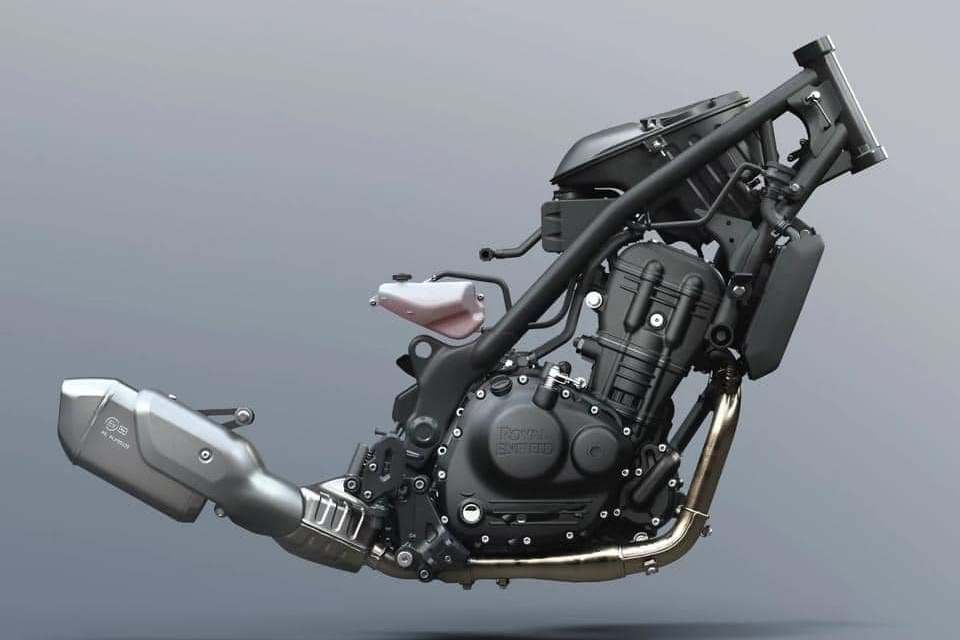
Royal Enfield scored an unexpected success with 2016’s Himalayan 410, selling some 200,000 units worldwide. Despite early issues, a 23-hp, 200-kilo, air-cooled single worked for many people, including me. Now they’ve responded with a load more power from the modern, higher-revving, 6-speed, 11.5:1, DOHC, water-cooled Sherpa 452cc motor.
New DOHC Sherpa 452; 10kg lighter than the 410LS
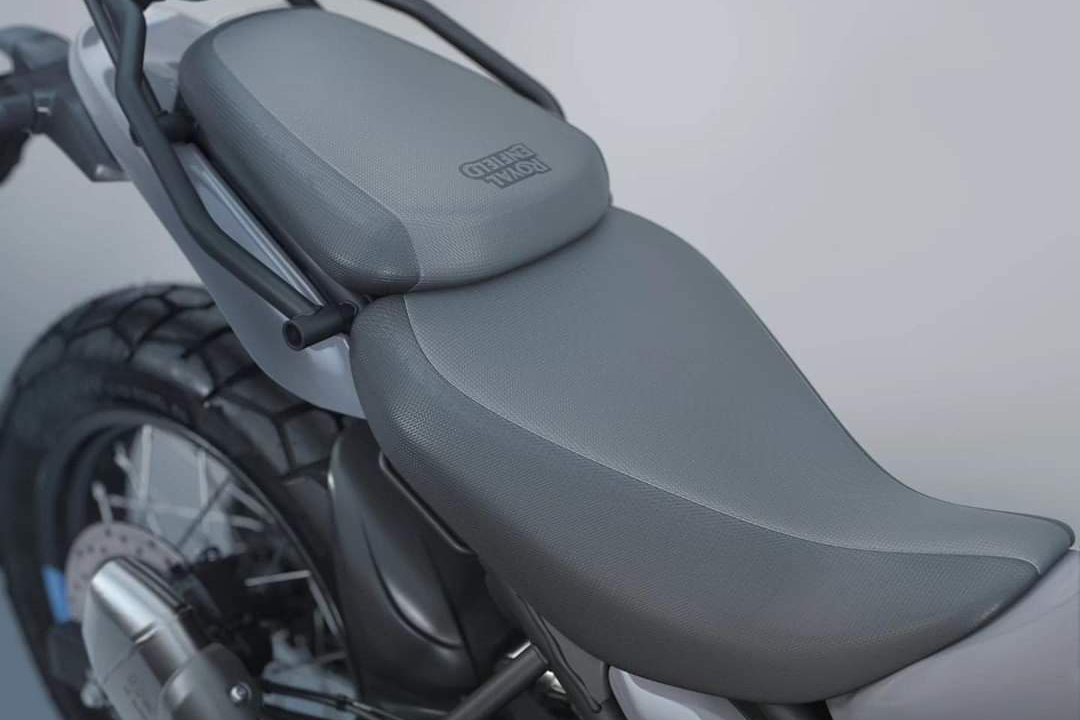
Claimed weight of the bike is still around 195kg tanked up, but that’s with an extra 2 litres of fuel and the same screen, tank bars, tail rack and centre stand. Though an inch higher, the stock adjustable saddle remains low at 825/845mm (32.5″/33.3″), with an even lower 805/825mm option. RE gets it with the Him; leave the yard-high seats to 690s and clowns on unicycles.
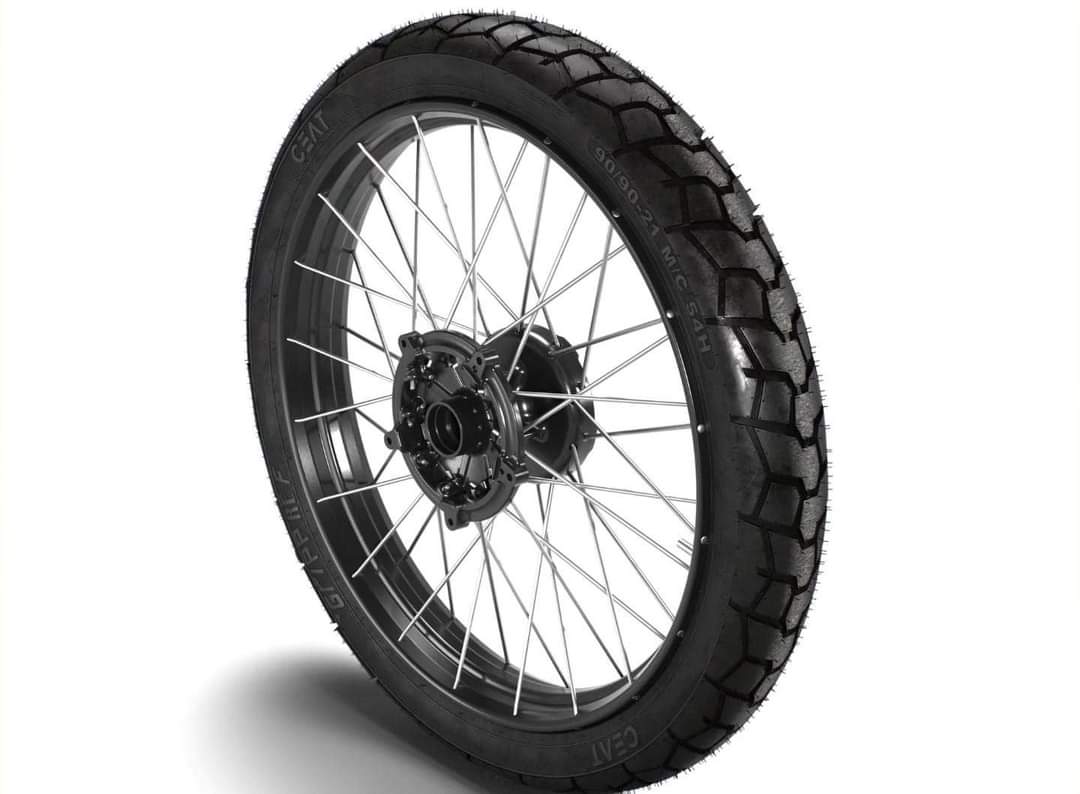
There’ll even be optional tubeless spoked rims. Again RE responds by offering what some real-world riders want: the confidence that roadside flats can be fixed quickly and easily. And unlike the steel rims on the 410, wheels are now alloy, though weight wise, you may find there’s only about 10% in it.
Easy to preload shockCartridge USD forks
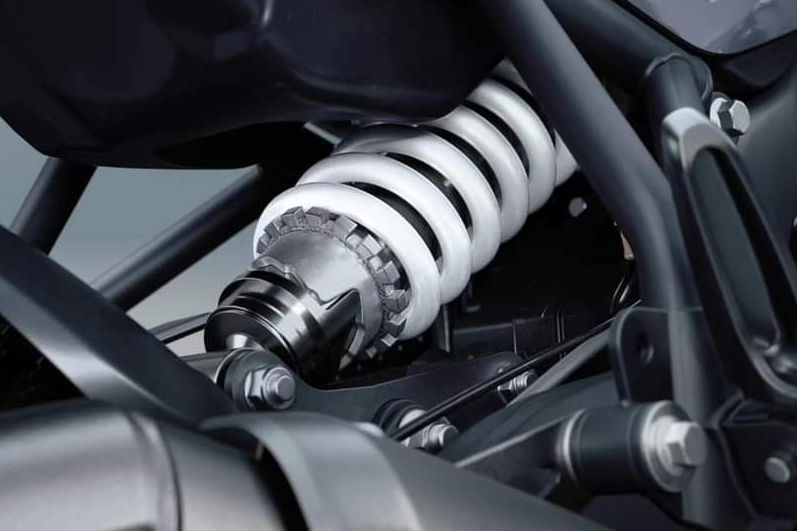
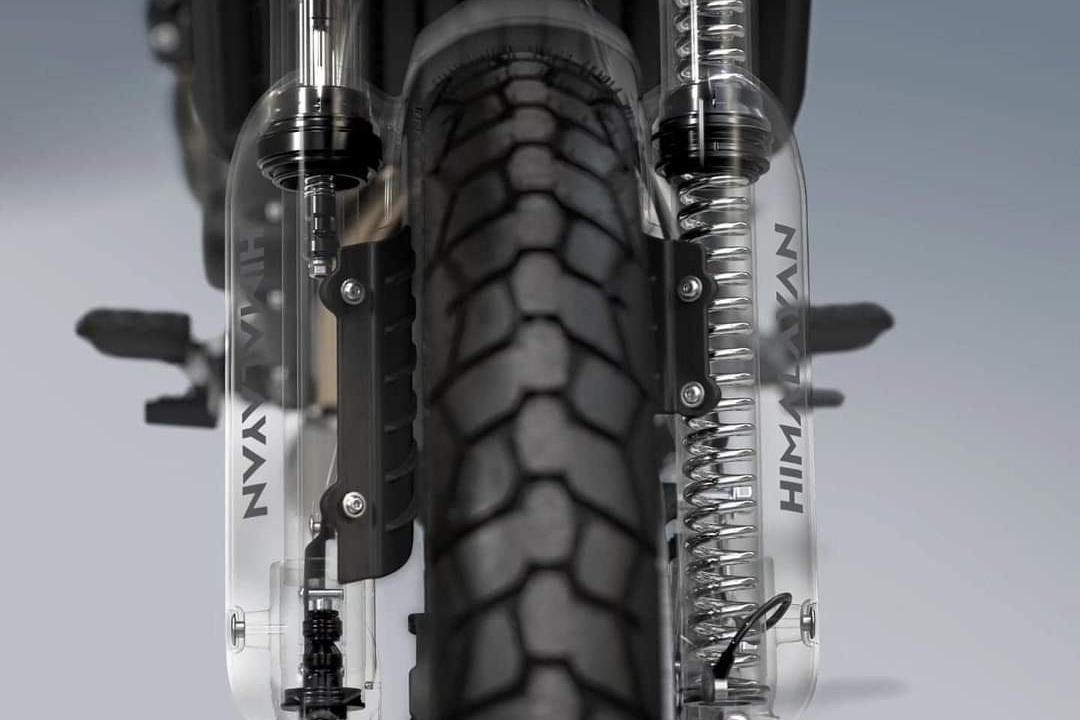
Suspension is in the same 200-mil ballpark too, but with USD cartridge Showas up front and a link-less shock with easy preload adjustment access. Neither have damping adjustments, but presumably there’s a benefit to cartridge forks. I forget what it is, exactly.
All change please
‘We change’ The 410’s air-cooled appeal lay in its plodding motor combined with a low centre of gravity. Experienced or newb, it made the original Him easy and fun to ride, despite the tedious 3000-mile valve checks (450: 6000m). It’s hard to think the new 450 will match the 410’s characteristics, including the low-slung weight [actually it does], even if it’s said ‘90% of the extra torque is available at 3000rpm’. You often read claims like that, but it’s very unlikely the higher-revving 452 will have the tractor-like chug of the long-stroke 410 which made it so satisfying on backroads and easy trails. As a road bike, the new 450 will be a whole lot better.
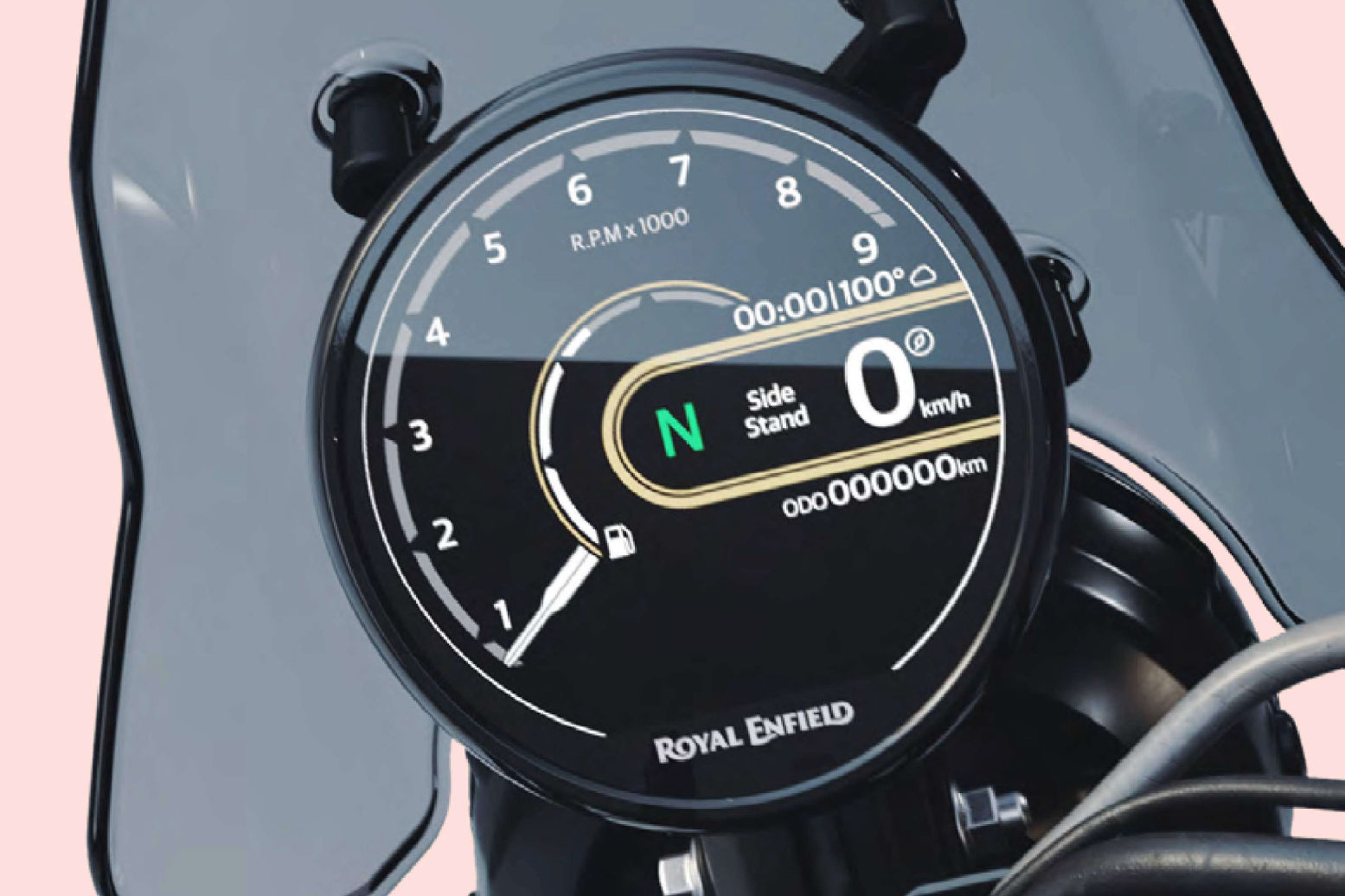
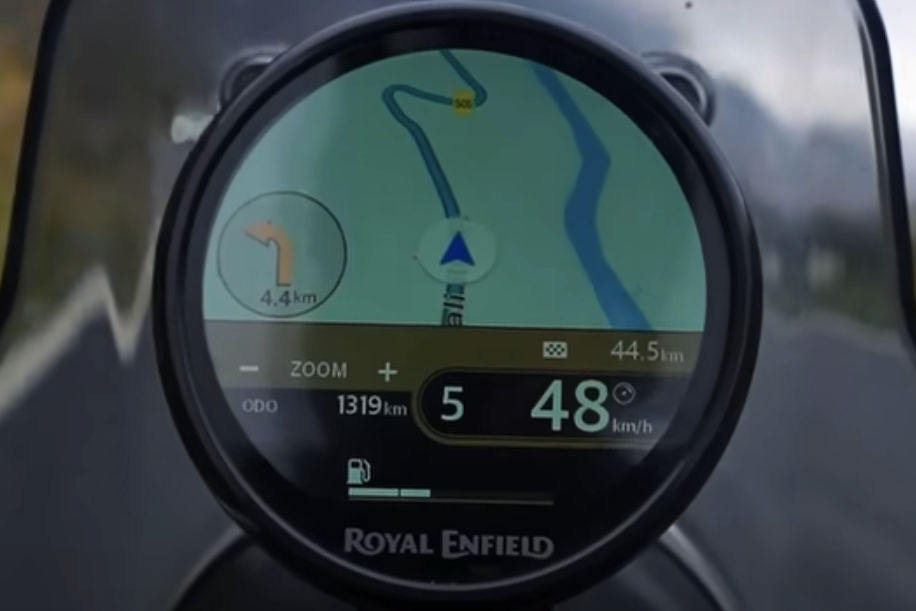
The round, 5-inch TFT, Tripper Dash is another big improvement over the 410’s dial, looks clear and has a good range of info across various toggle-able screens. But I’m not convinced by the integration with Google Maps when it comes to serious exploring as opposed to basic road nav.
Photo: MCN video still
The idea is it replaces your vulnerable [Android only] smartphone which still needs to be in your pocket and paired to the display via wi-fi and using an RE app and plugged in. Afaict, the Tripper is merely displaying a simplified version of GM to suit the bike’s round display. And will a map downloaded in the phone for offline (no 4G) use display on the Tripper? I doubt it. I’ve read these in-built, phone-pairable nav systems aren’t always so seamless or versatile. But I’ve never actually used G Maps or even a smartphone for moto nav either. Anyway, if the Tripper proves to be an unworkable backcountry navigator, just revert to a cheap Android phone, a bigger tablet or handheld GPS, all with more readable and free OSM mapping.
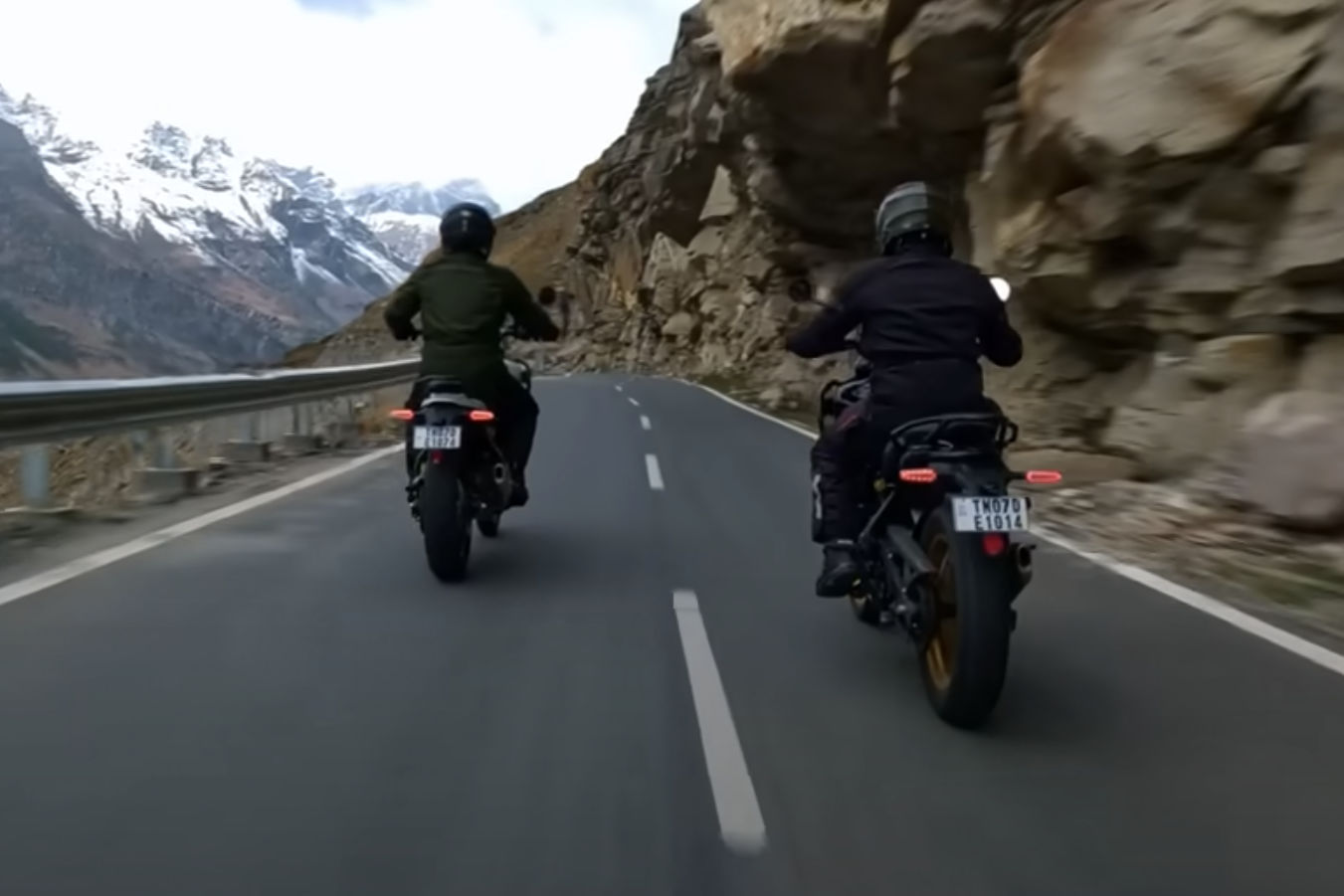
Photo: MCN video still
The 40-hp bike also comes with a somewhat superfluous Eco mode (unless economy really does leap up), switchable ABS (another thing I never switch off), and LED lighting. There’s no rear light (left); it’s integrated into the LED indicators. Not seen that before but I can tell you it actually works quite well. Just the other day I was noticed how car tail lights have all gone freestyle.
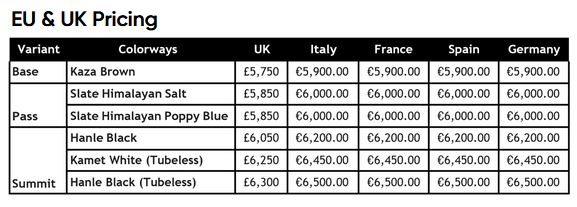
The only other fly in my soup is the design and paint choices; not as cool as the original 410 Him. They say bikes will be in UK shops in April 2024 from £5700 depending on colour choice, and from £6250 for tubeless spoked wheels. With the 410 now at £5050, that’s a great price. As the bike’s are bound to be so different, you do hope they’ll keep selling the air-cooled Himalayan. After years, bikes like 2024’s CFMoto 450MT and even the Triumph 400X, are opening up the 400cc Adv class alongside KTM’s decade-old 390. Newsflash! It’s spring 2025! Read my Him 450 review.
In a Line Light enough to tackle any trail I dare, but too tall and uncomfortable as a do-it-all travel bike for most.
Rally Raid suspension
Great range with Acerbis tank
19-inch front wheel conversion
Screen with MRA lip
You know it will start and run like clockwork
Inexpensive and easy fit NiceCNC lowering link
Weighs about 162kg tanked up and with all the gear
Needs loads of add-ons to make it a functional traveller
For a trail bike, stock 894mm seat height is ridiculous
Negligible power increase over CRF250L
Seat comfort on long or rough rides
‘Average Mpg’ or ‘remaining fuel level’ read-outs both out by 10%+
Reduced stability with big tank and other add-ons
17-inch rear knocks out speedo accuracy (unless you size up the tyre)
Acerbis fuel cap always cross threads
Front brake is weak
Front brake switch failed ;-O
Negligible lowering with 17/19 wheel combo
Review October 2023 I got my CRF shipped to southern Spain to leave in Morocco for six months. I flew down to carry on scouting new tracks for my next Morocco route guide, while also leading my one-week tours with 310GSs in between times. I’m not quite finished with the 300L yet, but last week it turned 10,000km (6200 miles). High time to share my impressions after 8 months of riding.
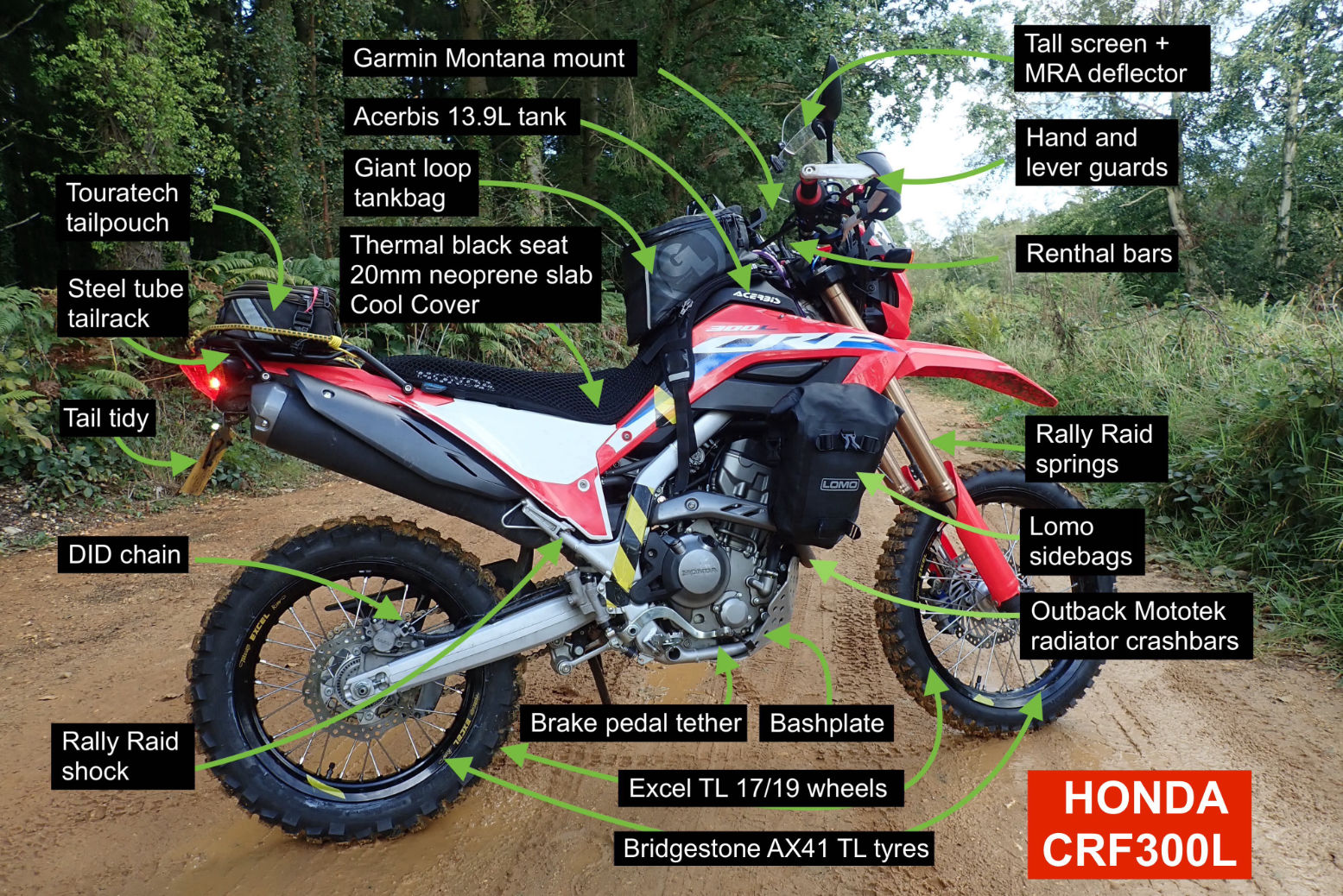
Taking comfort I bought a very well equipped 2021 300L from its second owner with just 1000 miles on the clock. It still needed a bigger tank, radiator protection and tubeless wheels (plus whatever’s shown in the graphic above). The bike came with a lowered seat (read: thinned out). At 34.5″/876mm it was 0.7″/18mm lower than Honda’s claimed OE specs of 35.2″/894mm. I tried to make the thin seat more comfortable by adding a 20mm neoprene pad under a Cool Cover which increased my back end’s mileage. But judged by side stand angle, the 17-inch rear wheel with a stock width AX41 tyre didn’t lower the back noticeably. I then bought a stock black seat (full foam) and, with my added padding, probably went up to 35.7″ or a whopping 907mm. Then one day in Morocco I knew I’d need a low seat for a tough day, so removed the padding and Cool Cover. My backside was pummeled at the end of that 300-km ride, but I never refitted the Cool Cover and kept the neoprene slab held down with a bungy.
Later, I ditched the neoprene too and wore some Moto Skivvies and have settled for these plus opiates on a bare stock seat in a bid to keep it as low- and me as comfortable as possible. It’s still too high for easy mounting/dismounting, though the anterior agony got muted on some days. As we all know, once the drugs wear off, getting off/standing up for just a few minutes can offer respite.
High Atlas near Toubkal
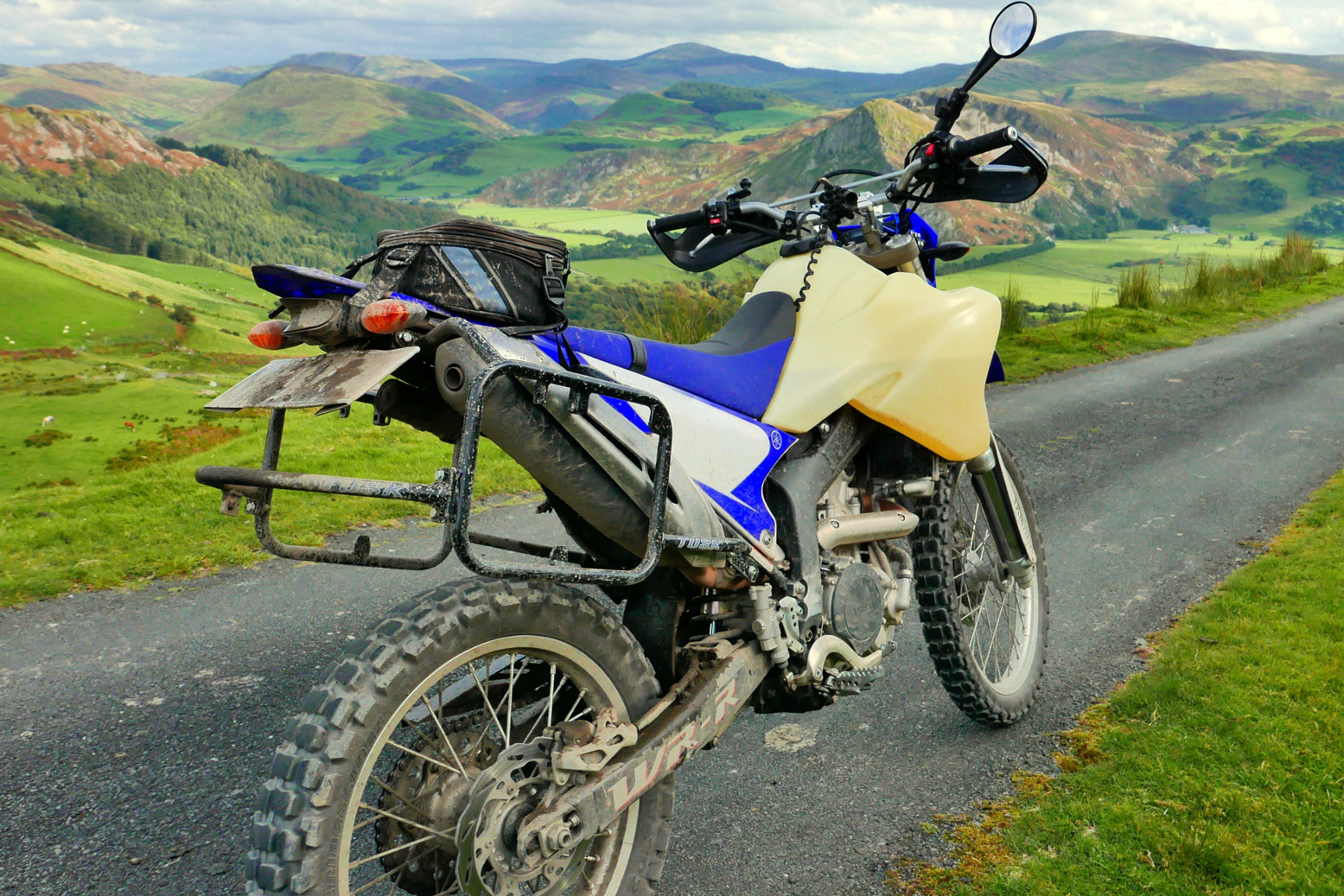
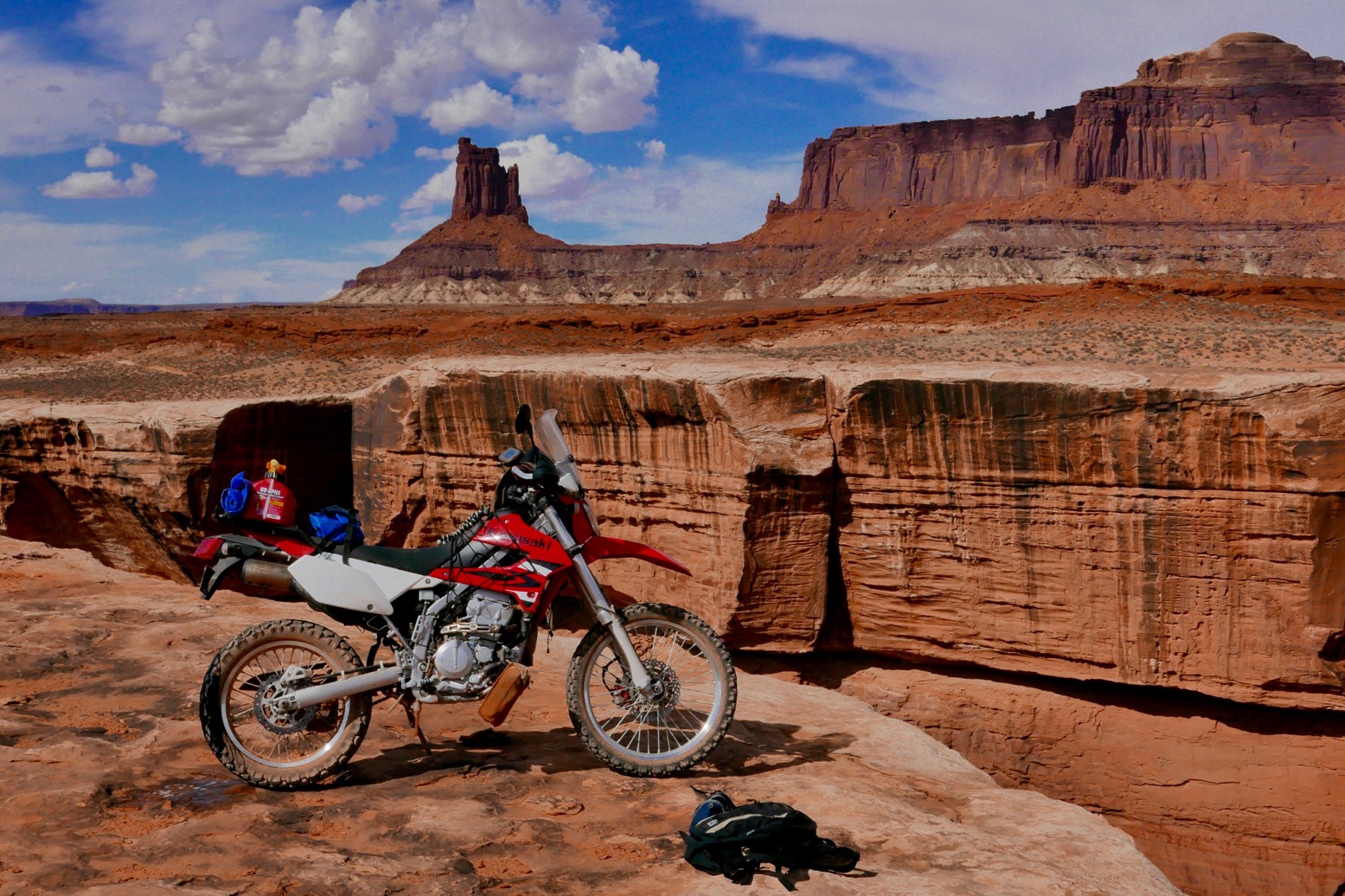
286cc The 300 is only 36.4cc bigger than a 250L when you’d hope that’d be nearer to 50cc. I owned a 250L in the US a decade ago and for what it was (left) enjoyed it greatly. Along with other factors (like the existence of the CBR300R and worldwide >300cc licensing regs), I guess there’s only so much metal in a 250L barrel to bore out. I knew it before I bought it of course – a quick ride of a 300 Rally didn’t set my hair ablaze – but the increase in power on the 300 is negligible. It’s still essentially a ‘250’ with the same-ish 27hp as a WR-R, along with all the inherent benefits and limitations: light enough to tackle or turn around on anything the seat height allows, while being a slog on long uphills or a headwind, plus uncomfortable after more than an hour or two. So not much different to my previous WR250R or KLX250 then. In many ways my less powerful Himalayan 400 suits my ‘old man’s’ riding style better, but was no faster on the road.
The best things about my 300L are the easy 400-km range from the Acerbis tank (despite the maddening cap) and the Rally Raid suspension. While both ends might benefit from a bit of tweaking for my mass, it just works; very occasionally bottoming out at the back and never at the front. After a few weeks in Morocco I thought the rear shock was sagging a bit, raking out the forks and slowing the steering. So, lacking the shock tool, I dropped the clamps around the front forks 5mm to produce the same levelling-off effect, but can’t say it rode any better.
Ten inches of suspension and clearance?! Way higher than it needs to be for most users.
Something’s Off The way I’d set it up something felt off on my bike. For a while I thought it was the tubeless AX41 tyres. No so much the tread pattern which is pretty conventional, but perhaps the added sidewall stiffness in the tubeless carcass, intended for GSs and the like, not dinky ‘250s’ weighing 100 kilos less. Airing down to as much as 20psi didn’t help. Then I tried dropping the forks 5mm, as mentioned; no noticeable change. So was it a high CoG, especially with a full 14 litres on board and exacerbated by the tall screen, radiator bars with side bags and so on? It certainly felt less stable tanked up, but no more than you’d expect. I tried to avoid setting off for potentially tricky unknown tracks with a full tank. I even blamed the hefty Outback Mototek rad bars, but while heavy, they’re actually set pretty low down.
17/19 wheels. Was it worth it? My main motivation was to convert the stock wheels to tubeless, not have smaller wheels. I knew the stock front 21 rim wouldn’t have the required ‘MT’ safety lips. As MT 21s are rare anyway, I thought I may as well try a 19 as an experiment; it’s a better all-round travel size and there’s more tubeless tyre choice. Then it turned out the rear 18 wasn’t MT either, so I may as well try a 17 which also offers greater do-it-all travel tyre choice and might even lower the bike. Note: fitting a 17 raises the gearing a bit – you won’t pull away in 2nd so often. But it also throws the speedo out from ~8 to 14%. You’re going a lot slower than the speedo indicates and may want a DRD or similar black box to correct it. But: fitting an oversized Mitas E07 at 10,400km put the speedo error back in the ~8% ballpark. DRD not needed. I rushed the original job and had a manageable slow leak from the 17 and a meltdown on the 19 front arriving in hot Marrakech (fitted a tube). But the 21 I left at home has held its air fine for months. In Marrakech the mechanic re-sealed the rear in between my trips, cleaning then applying a continuous band of Puraflex. He then did the same to my 19 front and both hold air fine now. Summary: technique works if you take your time and allow a day or two of curing. All done, the bike was barely lower and, as mentioned below, the 19’s benefits only became evident with the screen removed. Obviously, I can’t tell a 17 from an 18 on the back, but running a front 19, at the donkey speeds I ride at I can’t say I noticed any detrimental effects on the dirt over a 21. Crossing gravelly oueds, I did try riding feet-up, but the front soon tucked in and deflected, as you’d expect. Through thick bull dust same thing: go deep and the wheel folds. So much for improved flotation from the fatter front: you need to attack such crossings with momentum to push the front through (see AMH8, p205), while wrangling the bucking bike and spinning back end. We know how that can end, so I often paddle like a duck. Bend swinging on the road the AX41’s ‘50% vacant’ contact patch held me back, but I did perceive – or persuaded myself – the 19 tracked better through bends than a 21 would. Occasionally banked over it would twitch, but the asphalt surface is rarely pristine and debris-free in Morocco. So 19: no difference over a 21 on dry, loose dirt at trail riding speeds. Deep sand, mud ruts and snow may be different. On dry asphalt it corners with more perceived confidence, depending on tyres and minimal CoG interference.
Rear at about 6000kmFront
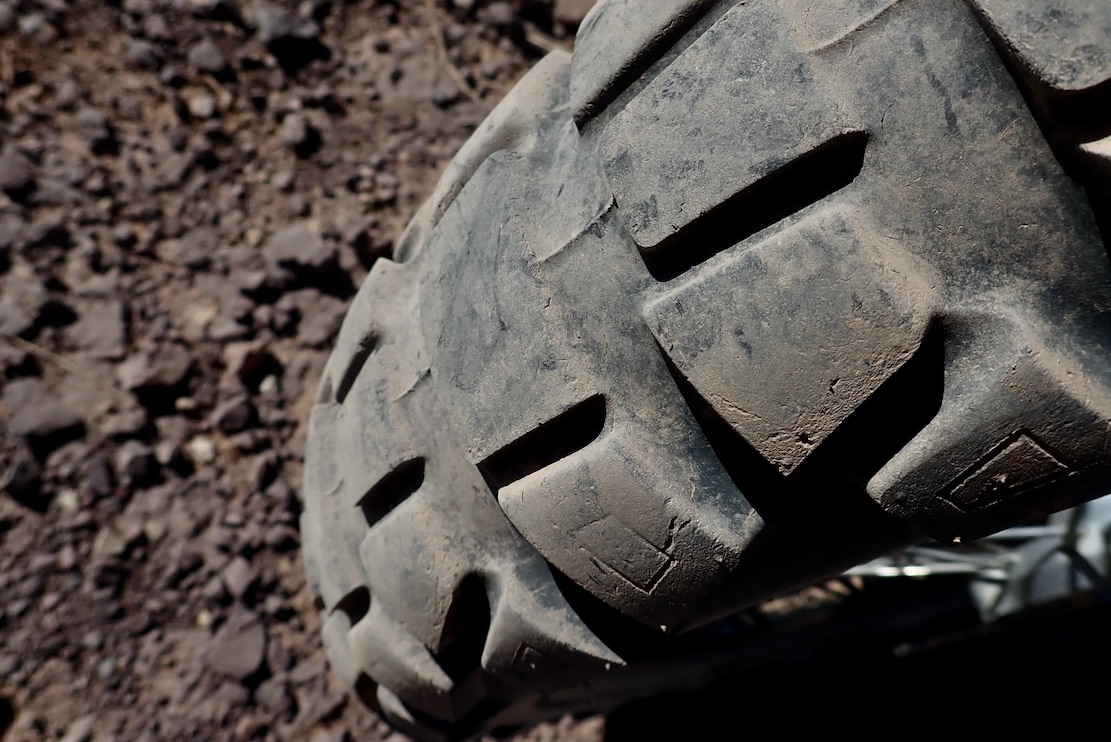
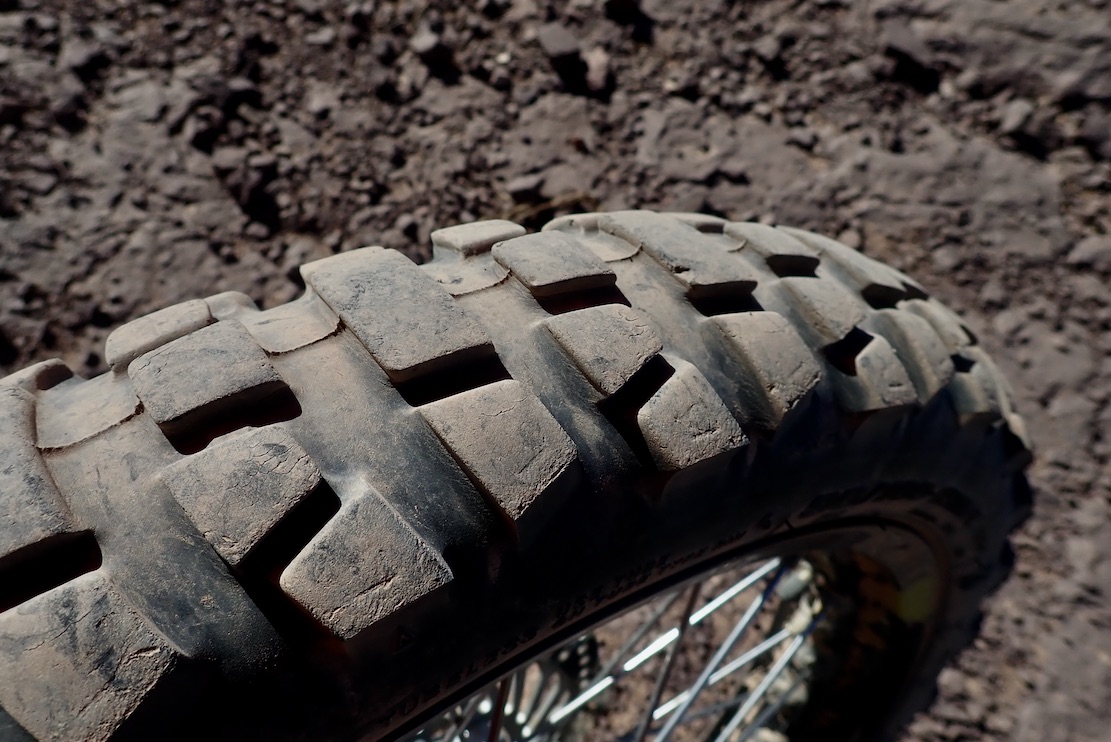
Talking of the Bridgestone AX41s, the rear TL had had it by the time I rolled back into Marrakech, having covered only 7000km or 4400 miles. I ran it at around 25psi, though it would lose about 7-8psi overnight. I went out of my way to select a tyre of identical width to the stock 18-inch IRC, but next tyre am going fatter all round: a less knobblesome 130 80 17 Mitas E07, partly because that’s the nearest the shop in Morocco can get in TL. It span less readily on loose dirt and certainly rode the roads better, like a 310 with its massive 150 rear. The front AX41 got replaced 2000km later with a bigger 19″ E07. Initially it felt heavier but the bike rode more like a supermoto on the road and is OK on the piste.
Returning in December for a week, I got to the bottom of it. Undertaking day rides, I left my baggage in the hotel (<6kg), but also removed the screen (1.5kg?) with an MRA spoiler. The bike now felt a lot more chuckable and connected. I could even ‘feel’ the 19-inch tyre’s benefits and managed the odd side-slip on the dirt, as on other bikes. Was it purely height + weight, or also a ‘vision’ thing? Who knows, but after a week I refitted the screen and all my clobber for the ride back to Marrakech over Jebel Saghro, including a tricky a ‘4WD only’ descent, and the bike felt OK. My parameters had been reset, though I’ll definitely remove the screen again for day rides and even tours. It’s not needed and only takes 5 minutes.
In the late 70s I remember my 900SS was mysteriously transformed once I removed the half fairing. On that bike it was definitely about being able to see the front wheel (or just the front) directly, a bit like a forward control (‘cab over’) vehicle like a a VW Kombi or my old 101.
Ditching what little overnight baggage I carry certainly helped (and no tailpack made swinging the leg over so much easier), but removing the screen turned the 300L to what I’d expect: a fun, nippy, lightweight trail bike. And yet every bike I’ve had for the last 15 years has had a screen of some sort, including the 250L (a plain, light Slipstream windshield which I reused on several later bikes). With the 300L I think it was a cumulative amassing of stuff, not just the screen, but the bigger tank, heavy radiator bars with side bags, handguards, tankbag, GPS, breakfast. From the Mototek crashbars upwards, and with a full tank, that’s up to 18kg of added mass over a stock 300L all up on the front, or way over 10% of the bike’s stock weight. Too much.
With that sorted, it’s only really comfort that holds me back, not helped by the fact that my knees are going (or are having a bad year). I’ve always been a lazy ‘sit when you can; stand when you must’ rider, but now I’m less able to hop onto the pegs or even just weight the footrests like I ought to to spare the hit when crossing a run-off ditch. Standing up is actually a good stance (compared to a 310GS), with knees pressing into the cushy sides of the seat just like they should. There’s a bit of a stoop for me (6′ 1″) at the bars, but that’s without any risers that I usually have to fit.
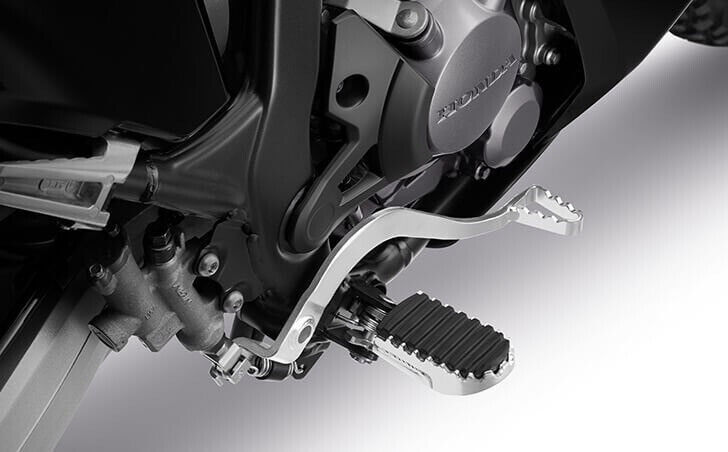
I do stand up on smoother terrain at the end of a ride to revive the backside and stretch out, but find, even in my TCX dirt boots, that my insteps ache after 20 minutes. Fitting wider footrests is something I overlooked in the prep, I now realise. Africa Twin Rally footrests fit right on they say, and have a third bar to support the load, but I bet other pegs fit too. The cheapest AT pegs I found were £80 on ebay, with DRC, or similar but unbranded Chinese alloys, costing around £50. Then I realised that replacing the missing footrest rubbers for 20 quid a pair will probably have the same effect, but same soreness so must be much TCX boots.
AT pegs; more support but £££Stock rubbers: £20
300LS – a lot lower
On the dirt I wouldn’t want any more weight nor need more power, but would love an inch less height for what I do. In the US (and maybe elsewhere one day) they now offer a 300LS, with inch less suspension and an inch less in the seat. For those without a calculator to hand, that’s two inches lower seat height. The 300LS should have been the stock 300 back in 2021, with an ‘HS’ option for the lanky hardcore. Over ten inches of travel is excessive for a trail bike like the L; the CoG is too high making it twitchy, and it discourages ownership by less tall folk. I’ve never came close to hitting the bashplate which could easily be 2 inches lower, as on the LS. Honda could even take another inch out of the springs and put some padding back on the saddle where it’s still needed. It’s a shame the TracTive shock from Rally Raid isn’t length-adjustable like the Wilbers on my XSR700 or YSS on the Him, though of course there’s nothing to stop me fitting a lowering Kouba Link (or similar knock off), then raising the forks in the clamps some more. In fact I have talked myself into trying just that for the next lap.
There were some long spells of oued paddling (too loose or rocky to ride) at which time the low first gear was just right, ticking over at 2mph or so, with no need to feather the clutch. But as mentioned, my speedo read-out was way out until I fitted a fatter Mitas when it went back to stock 8% error.
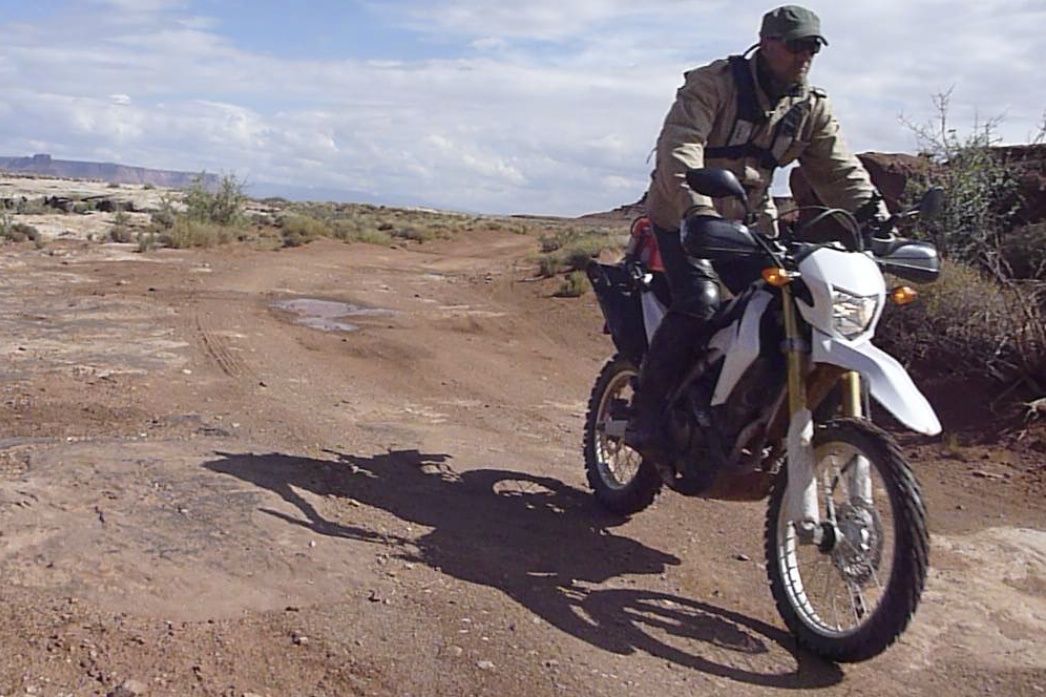
All in all, while the 300L was a great deal and is making my task out there easy, I’m at an age where I want a lower saddle alongside the low weight to be able to chuck it about with greater confidence, and get on and off without scuffing the saddle with a boot. I’ve matured into one of those old guys I met on my 250L in Canyonlands 10 years ago who’d ditched their KTMs for TW200s (left). Plus I’d like more day-long comfort, like a 310GS, though am not sure I’ll ever get it. All this holds back the fun of being on a planted bike like the 400 Himalayan.
On one of the tours one of the riders who owned a 450L wanted to try my adapted 300L, so I hopped on his rental 310GS. What a great bike that was, and not just the cushy, full-width saddle! Something about the steering also felt just right (this was before my de-screened epiphany). He also thought my 300 was off, and put it down to the 19-inch conversion. As John M at Rally Raid will tell you, the 310 (especially with his RR mods) is a much under-rated bike, though he rides a low-wheel 300L too.
Snatchy throttle? Can’t say I’ve noticed by found this tip on Advrider.
Of course I never expected a 27-hp 300 to be the long sought after do-it-all travel bike. That machine is more likely to be a twin or single around the 450cc mark, like the forthcoming CFMoto 450T or the Himalayan 450. I bought the more dirt-focussed CRF for the specific purpose of bagging pistes in southern Morocco while leading a few tours. I could’ve saved myself the transit costs by hiring a 310GS, but the Rally Raid sprung 300L is a better ride off road, especially if you don’t know what’s ahead. And anyway, I wanted to try the popular 300L, and can’t wait to do another couple of months riding in Morocco. The long ride back to northern Spain in late March, not so much.
Coulda, Shoulda, Woulda. Next time I will…
Not rush the DIY tubeless sealing, or just cough up for CWC Airtight.
Get the Adv Spec radiator brace instead of the heavy Outback Mototeks and find a way of hanging the side bags off the tank to cushion the rads in a fall
Hardwire in the GPS, then [buy] a proper USB plug, not the unreliable cigarette-bodge
Leave the Cycle Pump at home and rely on the handheld USB pump
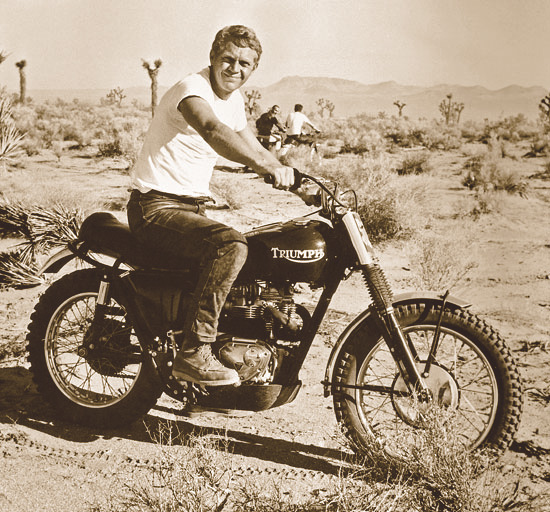
Everybody loves a scrambler, always have, always will. It’s no new thing, just an old trend coming back round. Street scramblers were invented in southern California in the 60s; Mojave desert racers – cool as you like. Slap on some wide bars and trail tyres, lower the gearing and you’re street scrambling for real. On Any Sunday. Project XScrambleR 700
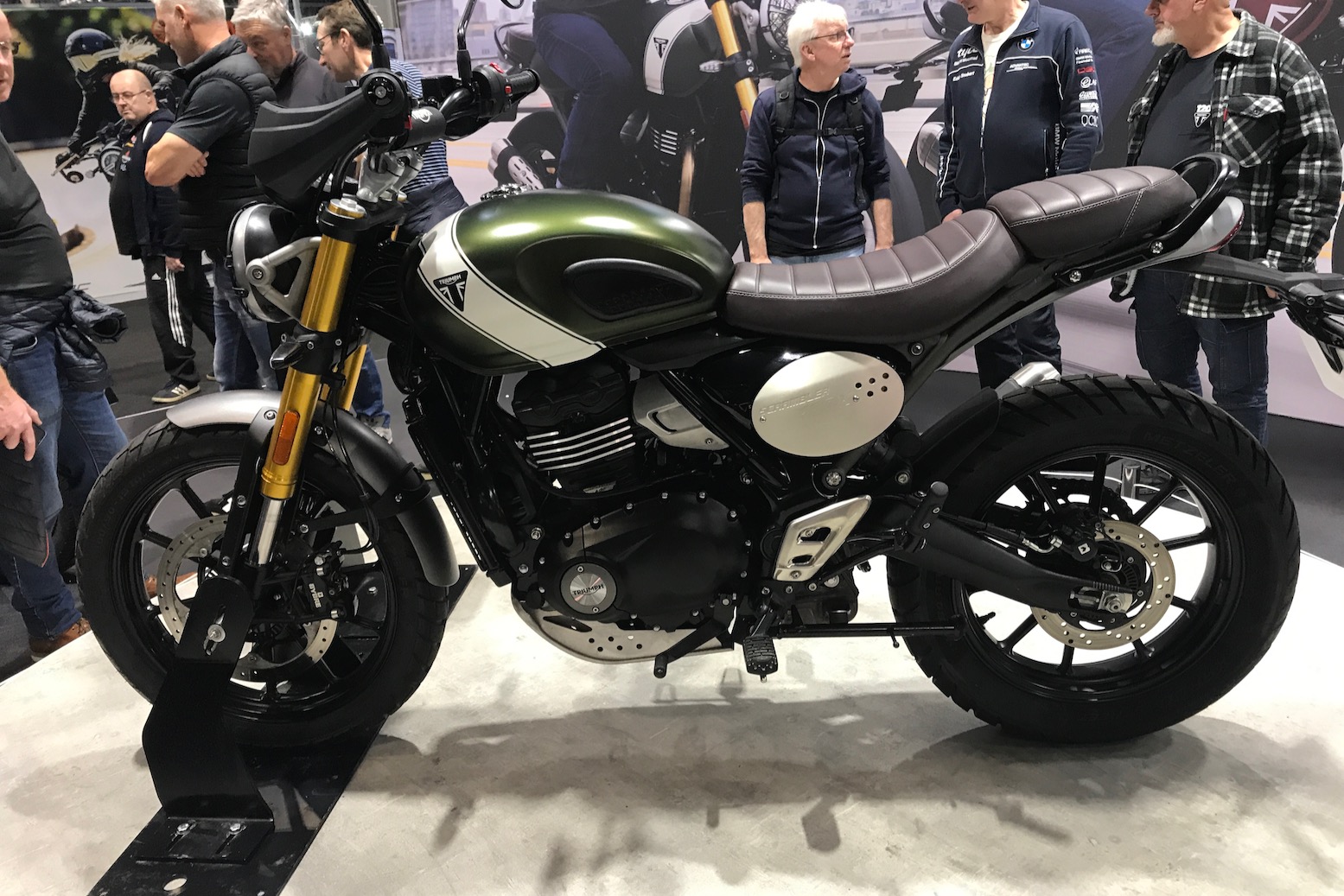
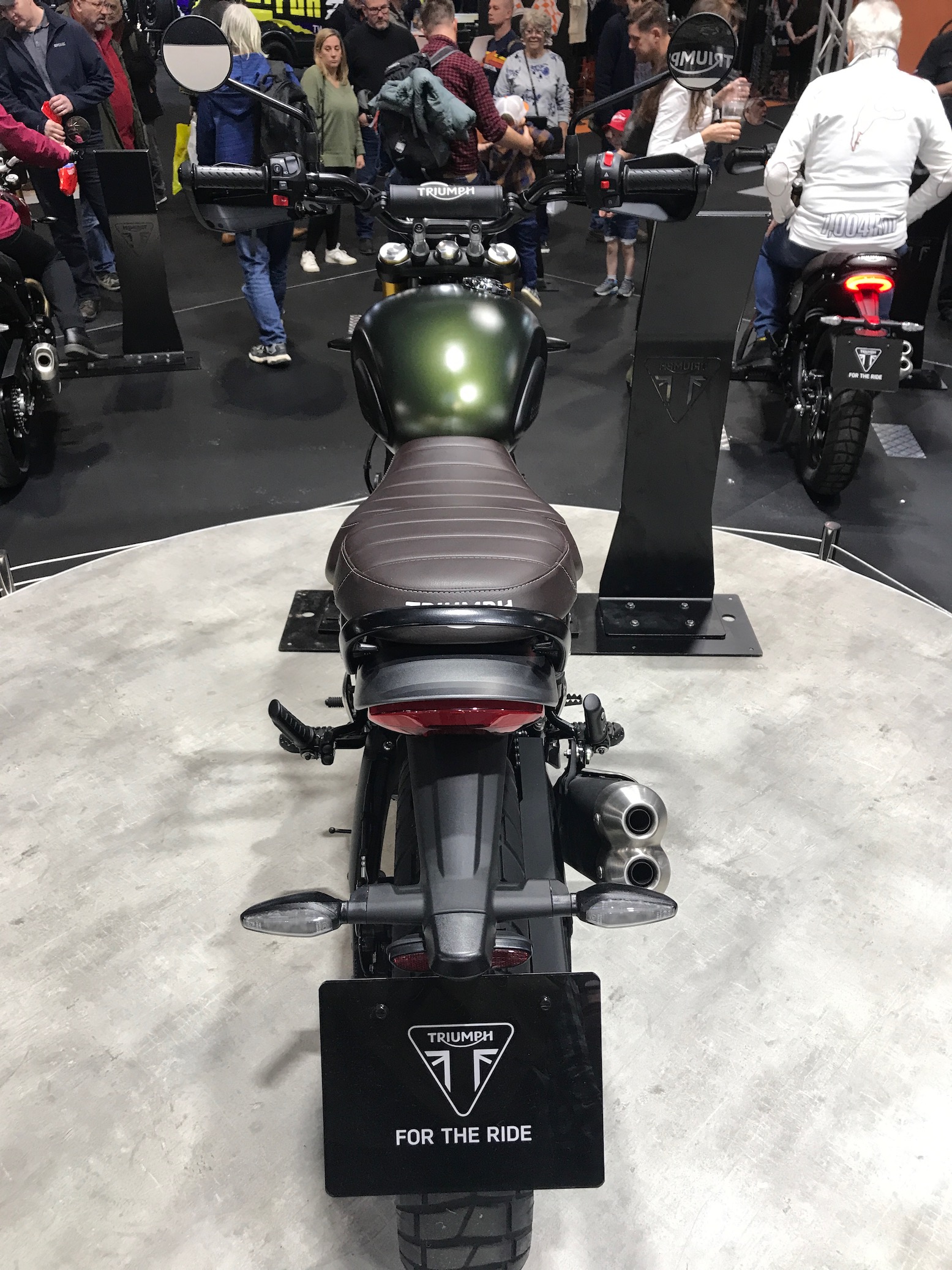
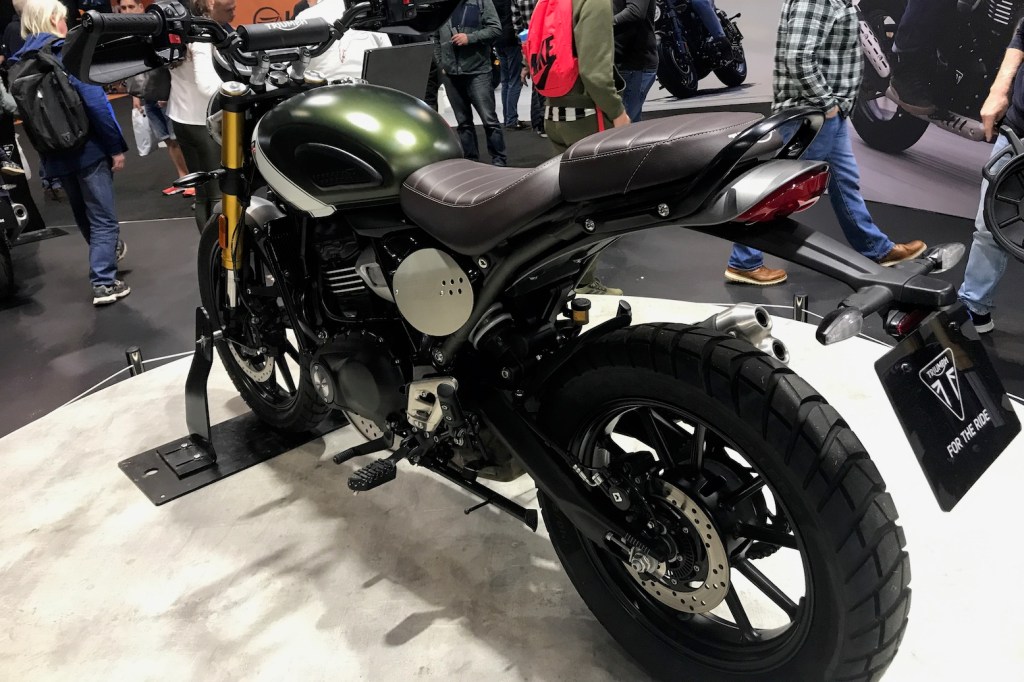
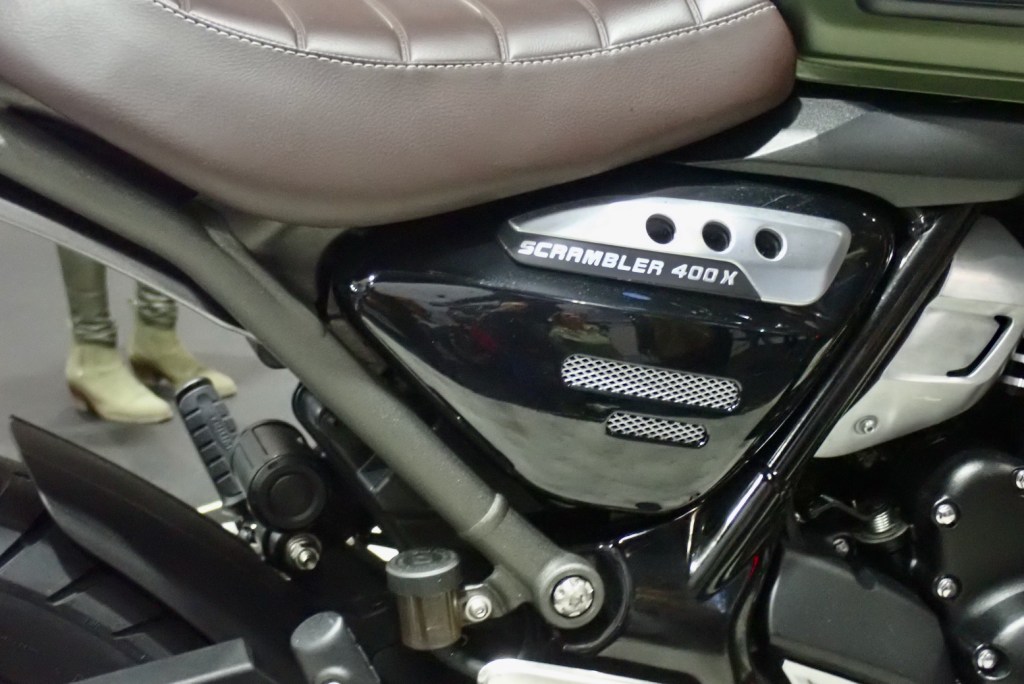
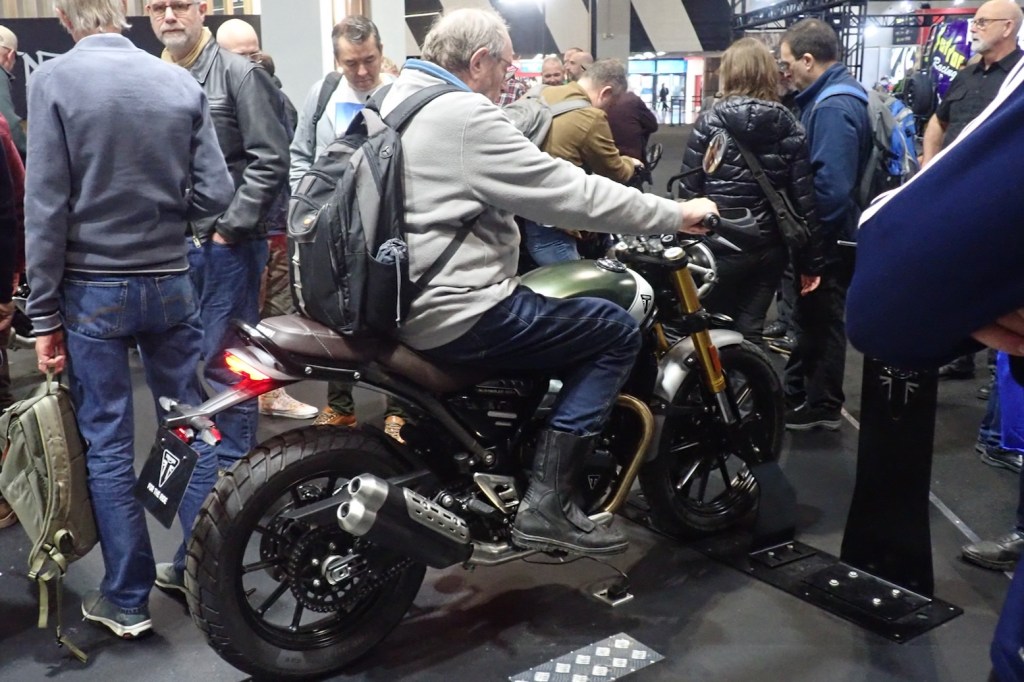
Triumph’s new Scrambler 400X caught my eye at the Birmingham bike show. And I wasn’t the only one. Every few seconds another individual closely resembling my mature demographic swung a leg over the Scrambler to bounce up and down and twiddle the controls. Like me, they may have been fondly recalling their teenage Triumph days in the 1970s. Along with its modern triples, the reborn brand has successfully capitalised on that proud heritage with a line of modern classic big twins. Matching that visual ‘DNA’ very closely, the smaller 400s are said to be pitched at attracting image-conscious young blood into biking, but judging by the leg-swingers above, most customers may prove to be more bike-in-a-shed oldies looking for a lighter ride than well-groomed Bike Shed hipsters.
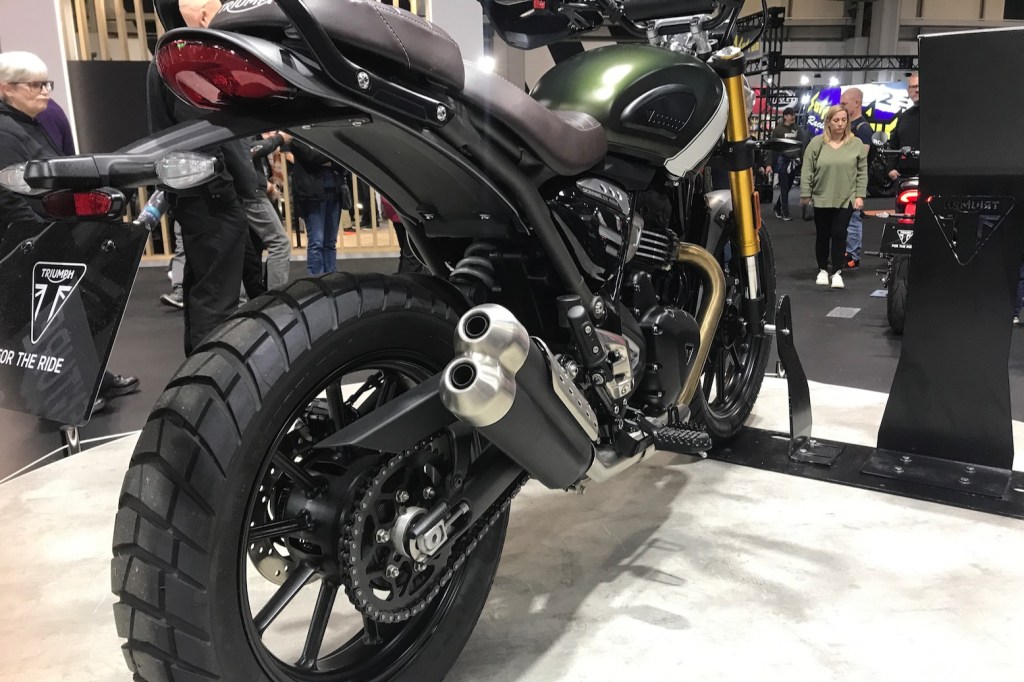
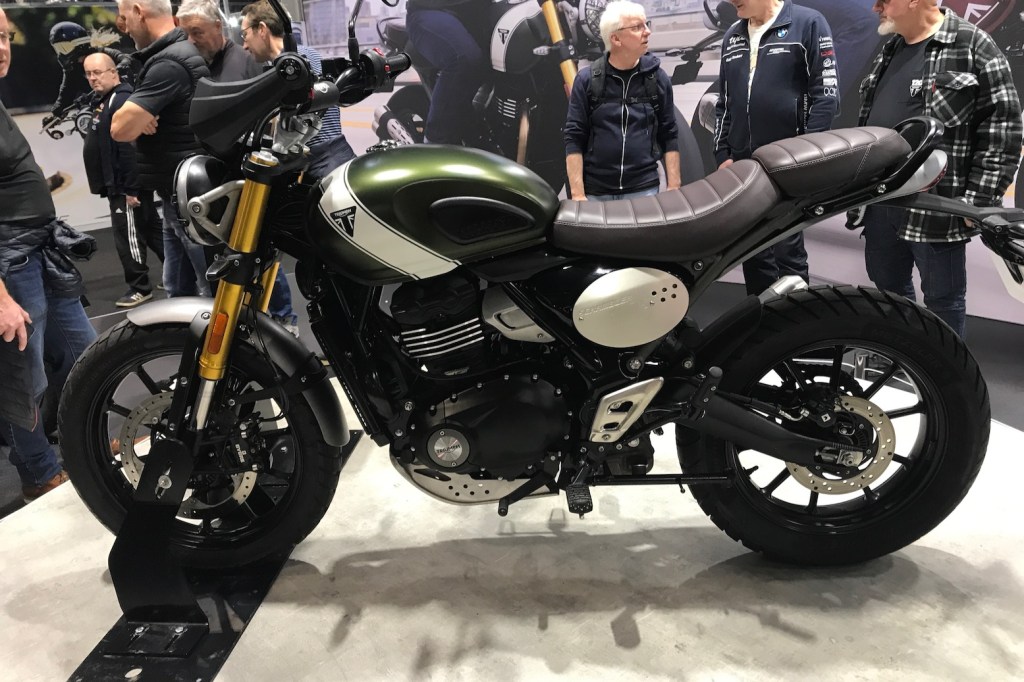
Along with a road-oriented Speed 400 with 17-inch wheels and a 45mm lower seat height, the 400X Scrambler gets a 19 inch front with a bigger rotor, 150mm of travel, switchable rear ABS and largely cosmetic protection. The stock alloy sump plate is a necessity to disguise and protect the low-slung coolant reservoir.
All that somehow manages to cost an extra £600 (£5600) over a Speed 400 – as with Honda’s 300L/Rally price chasm, the off-road aspirational look always costs more. Claimed wet weight varies even within the brand’s source material: the show board left claims 170kg, the Triumph website says 179kg and Indian reviews (see below) come in at 185 kilos, though it’s said Indian spec tyres and wheels will be heavier to cope with the sub-continental pounding. Both bikes get switchable traction control – for 39hp? – and lengthy 10,000-mile service intervals.
The 400s are being assembled in India by Bajaj who among other things, also produce KTM’s 390s while probably selling more of their own branded bikes in a year than all European manufacturers combined. I read 400s will also be made in Thailand (where bigger Triumphs are assembled) and Brazil. Wherever UK units come from, if the 400s’ durability proves to be anything like the also-Indian-made BMW 310GS we use in Morocco – some now on 80,000 rental kms – there’ll be little to worry about.
For me scramblers have always been Goldilocks travel bikes – fine on the road, at home on gravel and OK on the dirt. And they look like a proper motorbike. So along with its cool retro look, the 400X ticked a lot of boxes for me at the NEC: tubeless wheels, adequate suspension travel, basic metal bash plate (an uprated £130 accessory is fitted on the green show bike) and a ‘portrait’ aspect radiator tucked out of the way on the front down tubes, like an RE Interceptor. The seat looks promisingly wide, though CTXP (below) found the forward slope annoying. You do wonder if the pillion perch is detachable. If yes, it could be removed to sit a tail pack lower, another win. At a potential 90mpg (32kpl; 75US), the 13-litre tank will return over 400km. Most of these stock features were mods I had to make to my current 300L to make it a functional travel bike, not least a £300 tank and some £200 crash bars to protect the vulnerable radiator. I’ve not managed to improve the seat. Interestingly, UK-based Rally Raid, who a decade ago found a wide audience with their popular CB500X upgrade kits (which I used myself in prototype form in Morocco), are planning to develop kits for the 400X too: tubeless spoked wheels, suspension, sump guards, risers. They already run a range of such accessories for the similar G310GS.
Some reviewers grumble about the lack of spoked wheels to complete the retro look. Spoked or alloy, I’m not bothered as long as they’re tubeless for easy repairs. These days just about all alloy wheels are tubeless, but to make spoked TL wheels requires expensive assembly and tensioning of outboard spokes, being optionally offered on the new Himalayan 450 (left). I’ll take the Scrambler’s 10-spoke alloys; with a good set of tyres and location-appropriate riding they ought to resist leak-inducing dings. Got a bad leak? Bung in a tube.
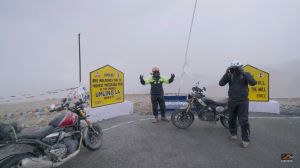
There are a couple of actual riding reviews from BHP India and Autocar India matched with equally wordy video reviews. A couple of months back US-based Common Tread XP took a pre-production Speed and Scrambler on a 2000-mile round trip from Delhi via Zanskar Valley to the ‘highest motorable [asphalted] road in the world’ which these days is the 19,024’/5798m Umling La in southeastern Ladakh (left) close to the Chinese border. This was not another of CTXP’s goofy, Top Gear-like stunts, but a proper travel adventure that snatched some of the wind out of Enfield’s 450 Himalayan sails – and maybe sales too. RE also chose Umling La as the destination of their Final Test, and their drone heavy YT vid (see below) trounced CPXP by a couple of weeks. Currently both vids are neck-a-neck at about half a million views. Watch the Triumph Himalayan vid here or listen to Zack C’s honest, post-trip appraisal of the Scrambler below. It’s not all rosey – no small bike every is once you’ve ridden big – but the aroma’s promising enough. Both are on about half a million views right now.
Other things I saw at the NEC I’d have liked to have had a closer look at the new Chinese-engined, water-cooled 350 Beta AlpX which had been presented at the EICMA show in Milan. They claim about 155kg juiced up, but Beta didn’t attend the NEC and tbh, it’s probably on the tall side for me and dynamically no better than my sported 300L.
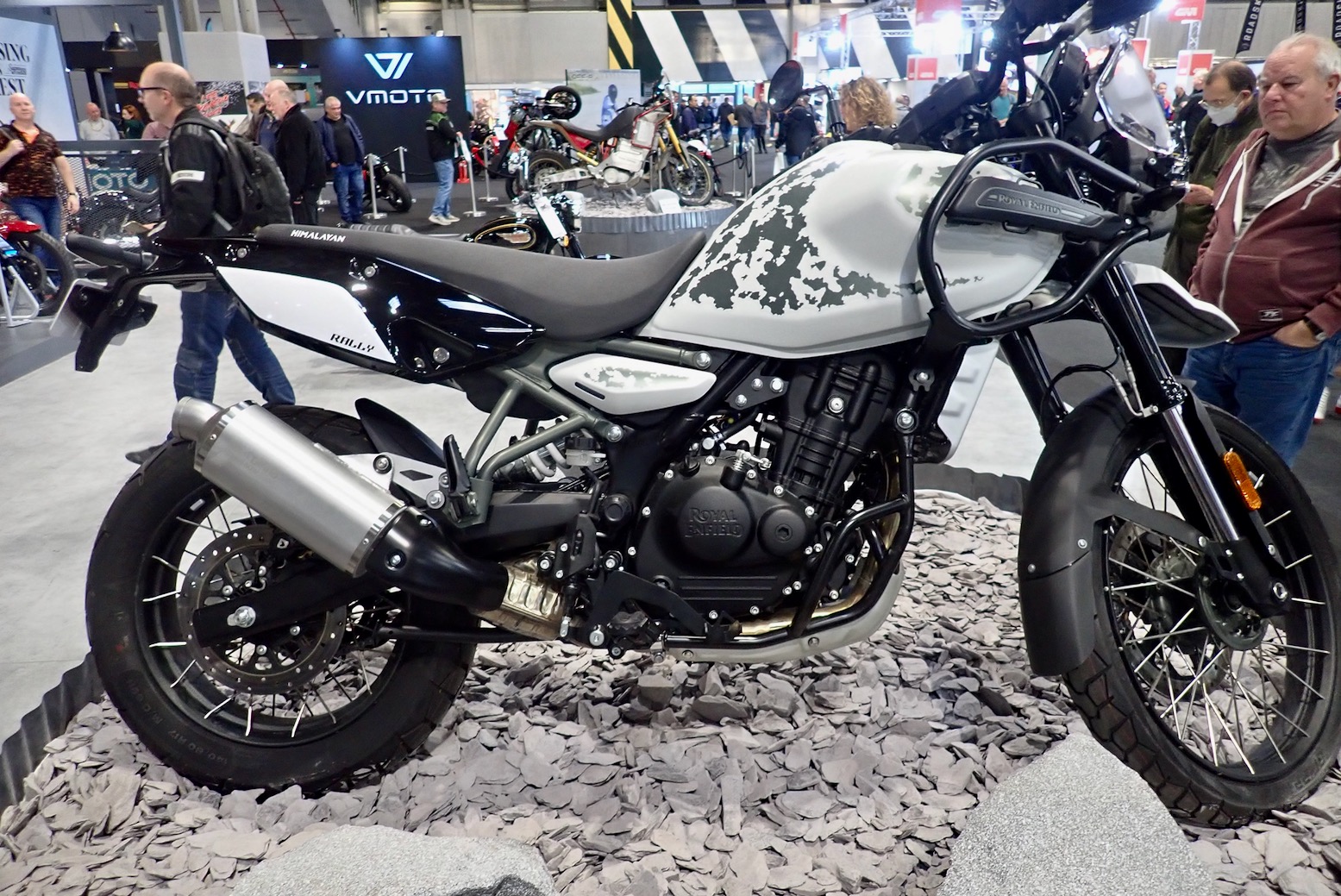
A few years back I got on well with my old 400 Himalayan in Morocco so I cast a look at RE’s much revised water-cooled 450 Himalayan which will doubtless soon be pitted against Triumph’s 400X. Same price, same claimed 40hp at 8k, but with 10% more torque at 1000rpm lower down. Front and rear remain 21/17 (greater rear do-it-all tyre choices) and with tubeless spoke wheels an option. It’s at least 15 kilos heavier than the 400X, though that includes a centre stand, 50mm more travel (200mm all round) and those nifty tank racks alongside the 17-litre tank. The small 4″ console/dial pairs with a phone to show Google Maps or similar; though it’s on the small side let’s hope that proves to be as seamless and reliable as it could be.
My old Him 400’s gimmicky digital compass rarely pointed north. But as one tester observes in the vid below, he’s lost loads of smartphones clamped to the bars as nav devices; for me that’s always been a sketchy idea. I feel they’ve lost out on the great look of the old 400 (right); Triumph’s understated style works better for me, but the drastically improved 450 Him will be a travel contender for sure. Read impressions from a two-day Himalayan test ride from AdvPulse or my chin-rubbing preview here. It’s great to see the ‘400cc’ class opening up at last.
For nearly three times the price of either I could have a beautifully made, 150-kilo CCM Tracker or any of their other scrambly iterations around the pokey, ex-Husky 600-cc motor. There are loads of low milers on sale now for around half the new price which, not matter how good they are, suggests they’re weekend playthings.
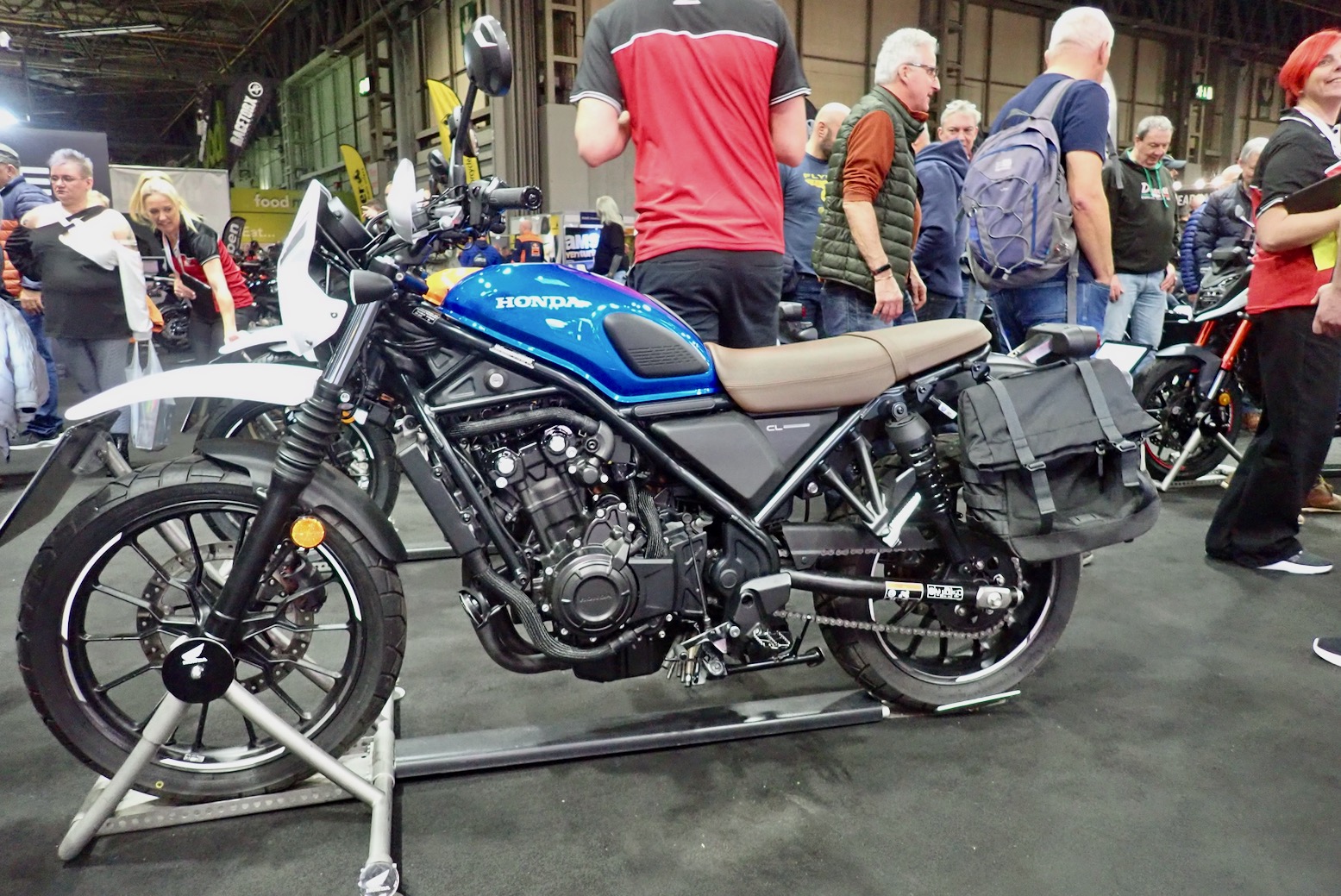
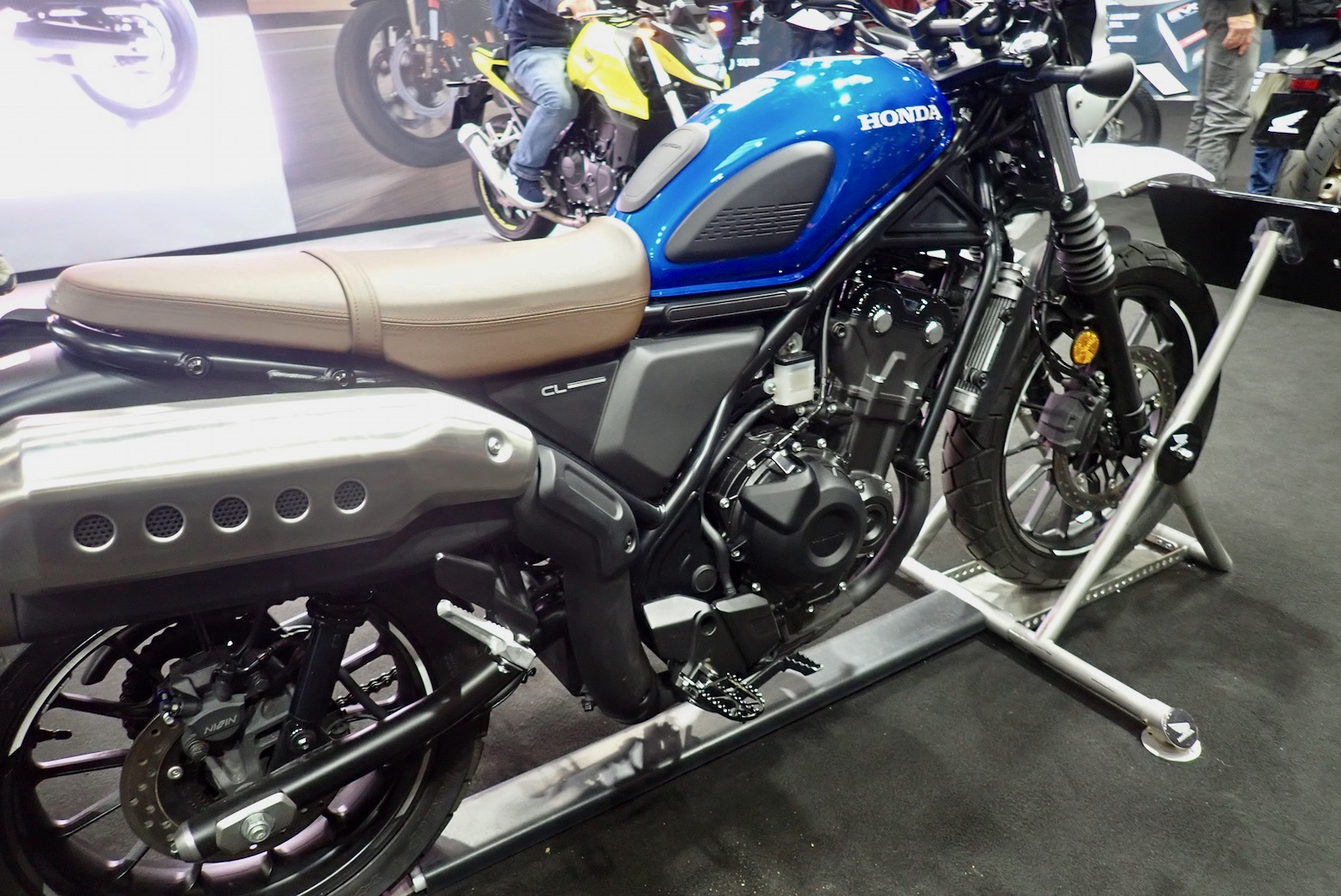
What a shame Honda’s CT500 scrambler spin on its 500 platform looks a bit too much like their Rebel cruiser or just not as good as it could have been. There’s no doubt it would be a better all-rounder than the Triumph, with effortless cross-country speed, near-as-good economy and low, flat-seat comfort. But it would need the usual grand or more of extras to be a traveller. And that gigantic pipe!?
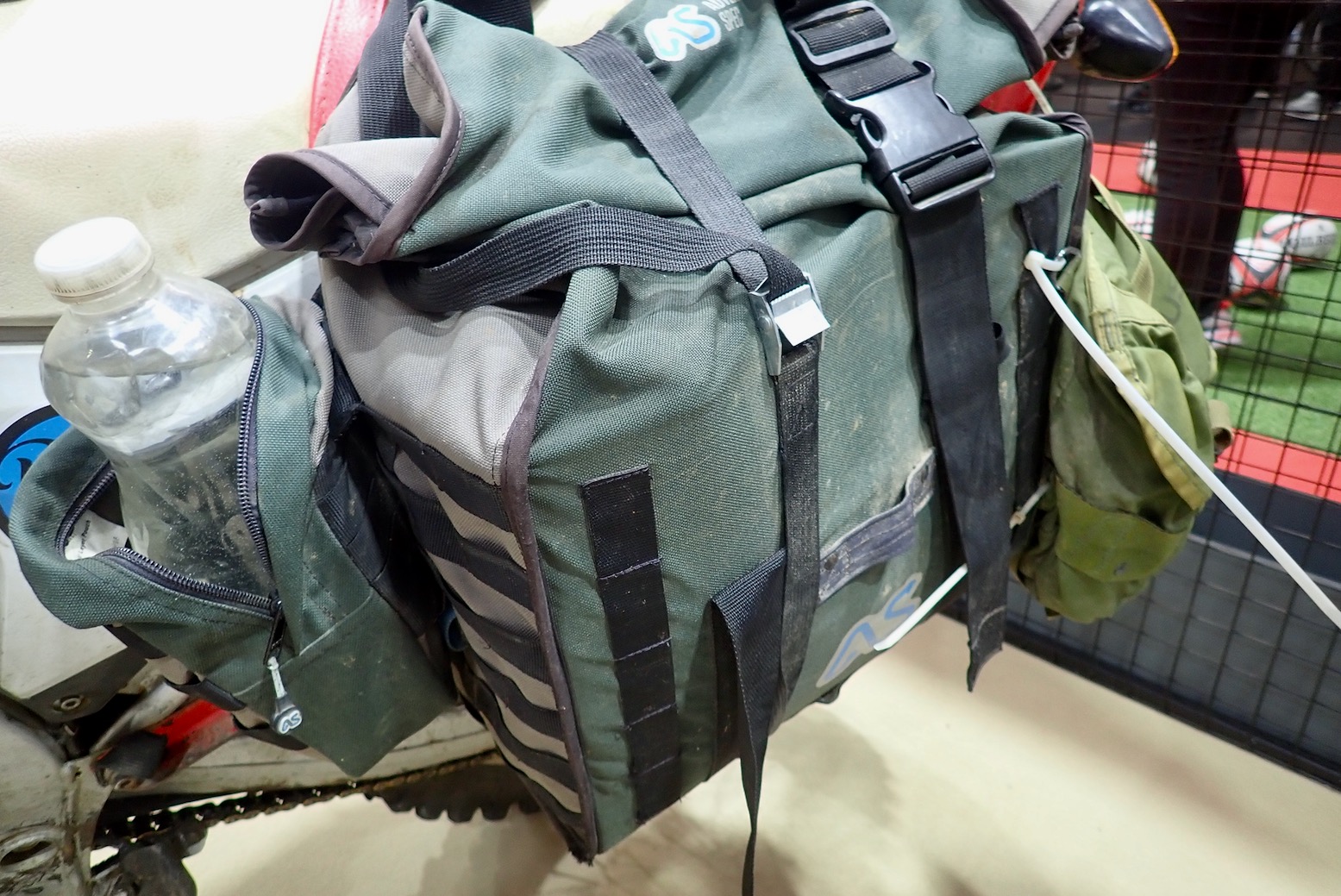
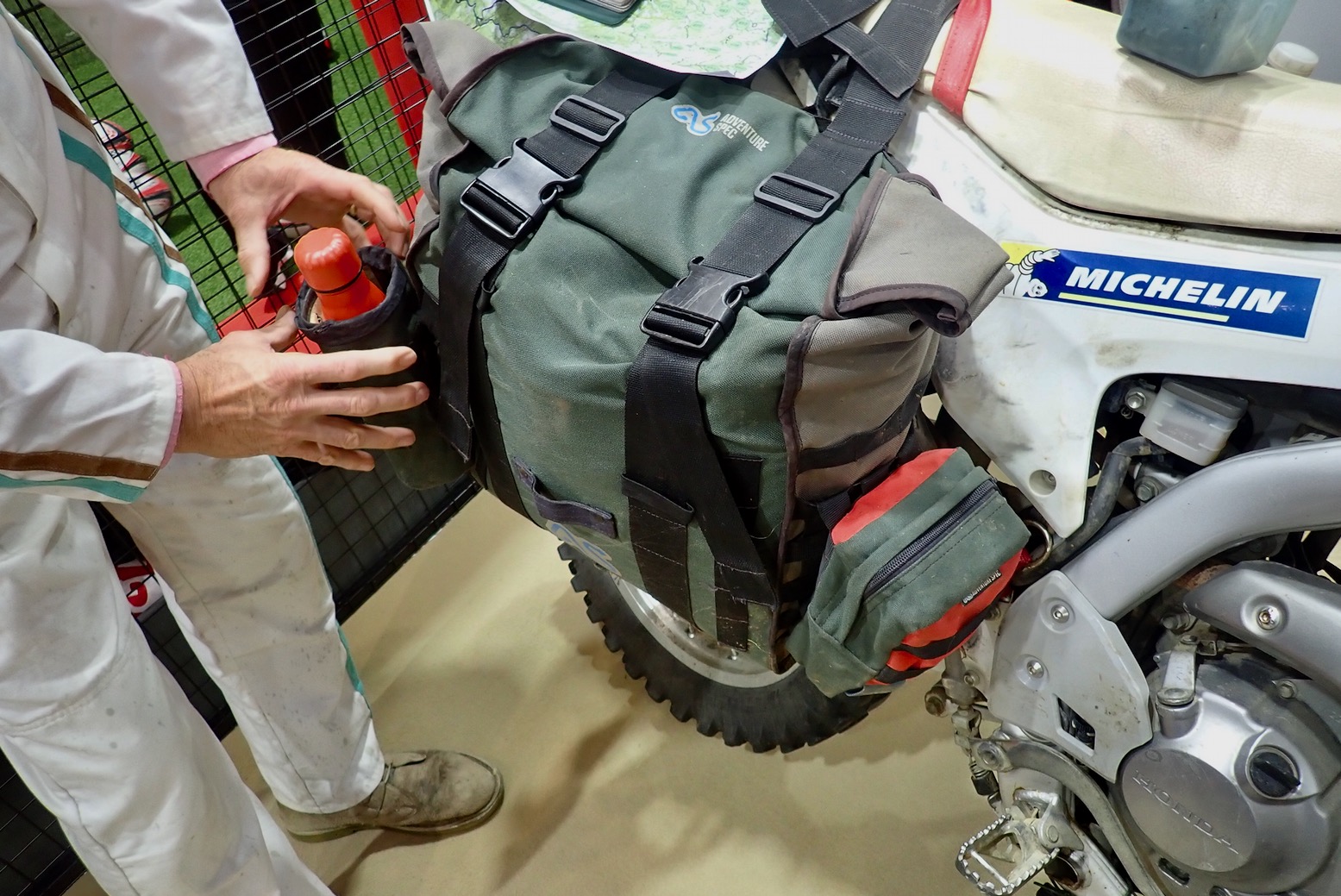
Austin Vince was on duty on the Honda stand and showed me round his Adventure Spec Magadan 3 panniers now with Molle strapping and non-black fabric, but no longer featuring the novel slash-proof aramid lining. Right now they’re on sale at 20% off at ASpec. That’s about 260 quid.
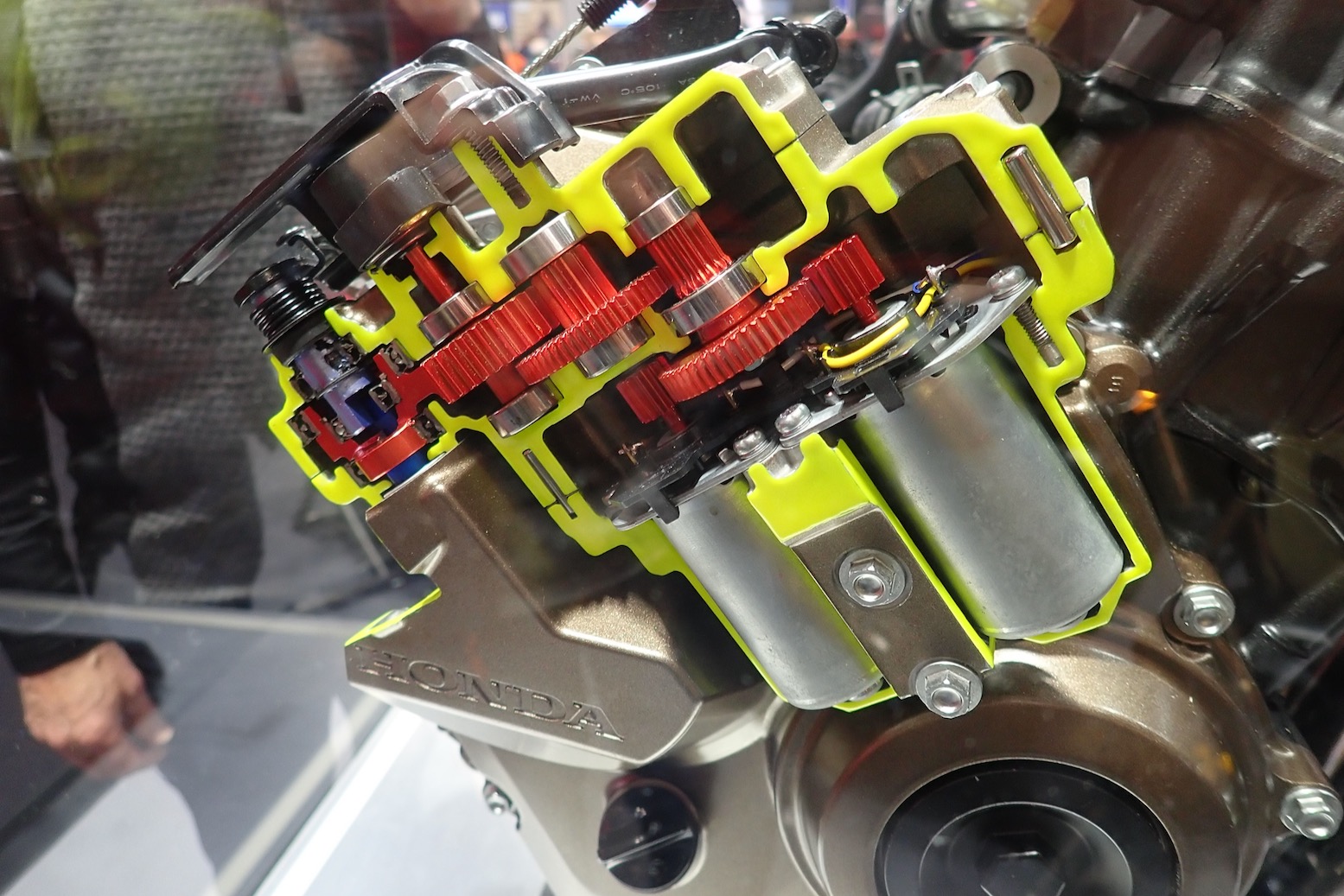
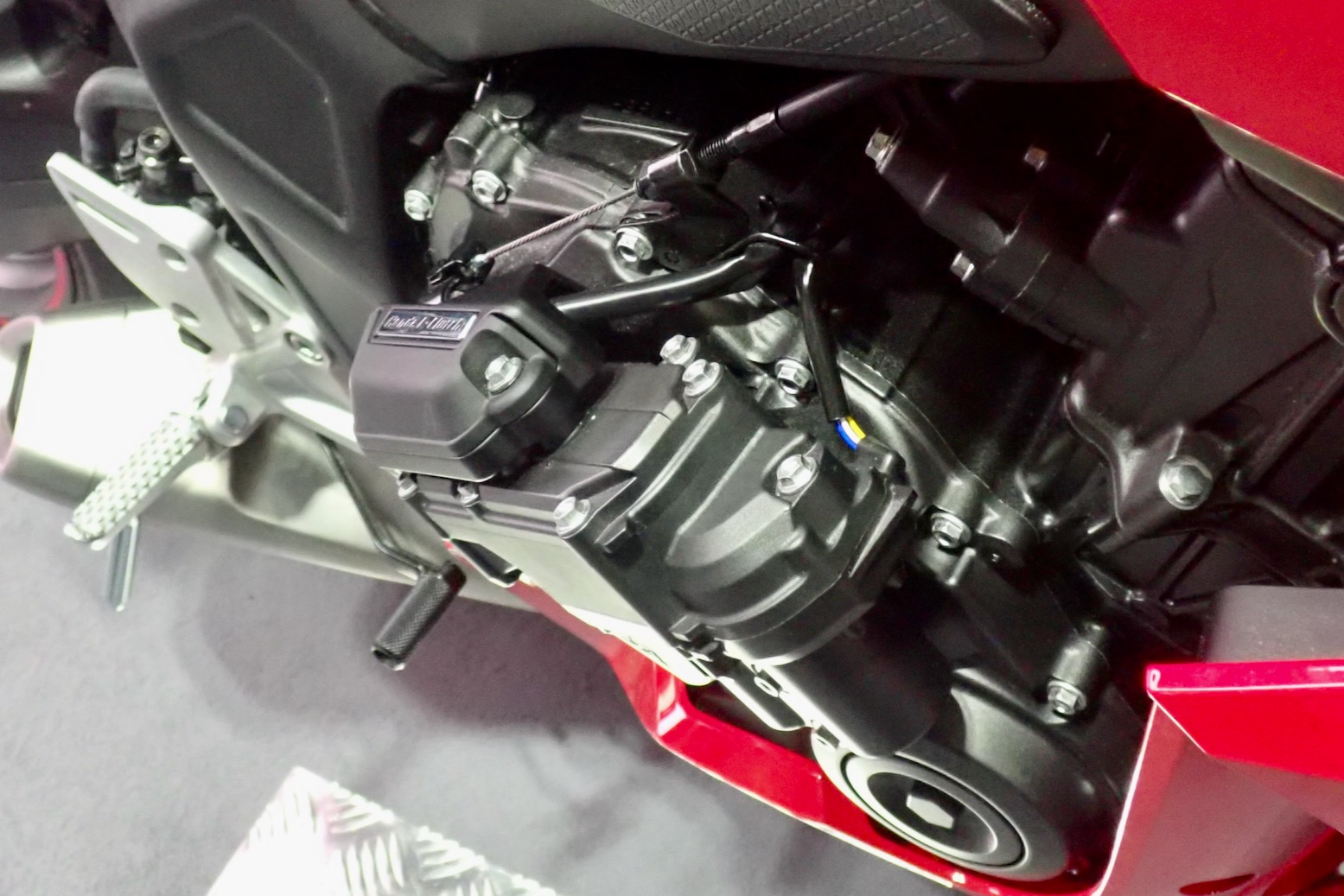
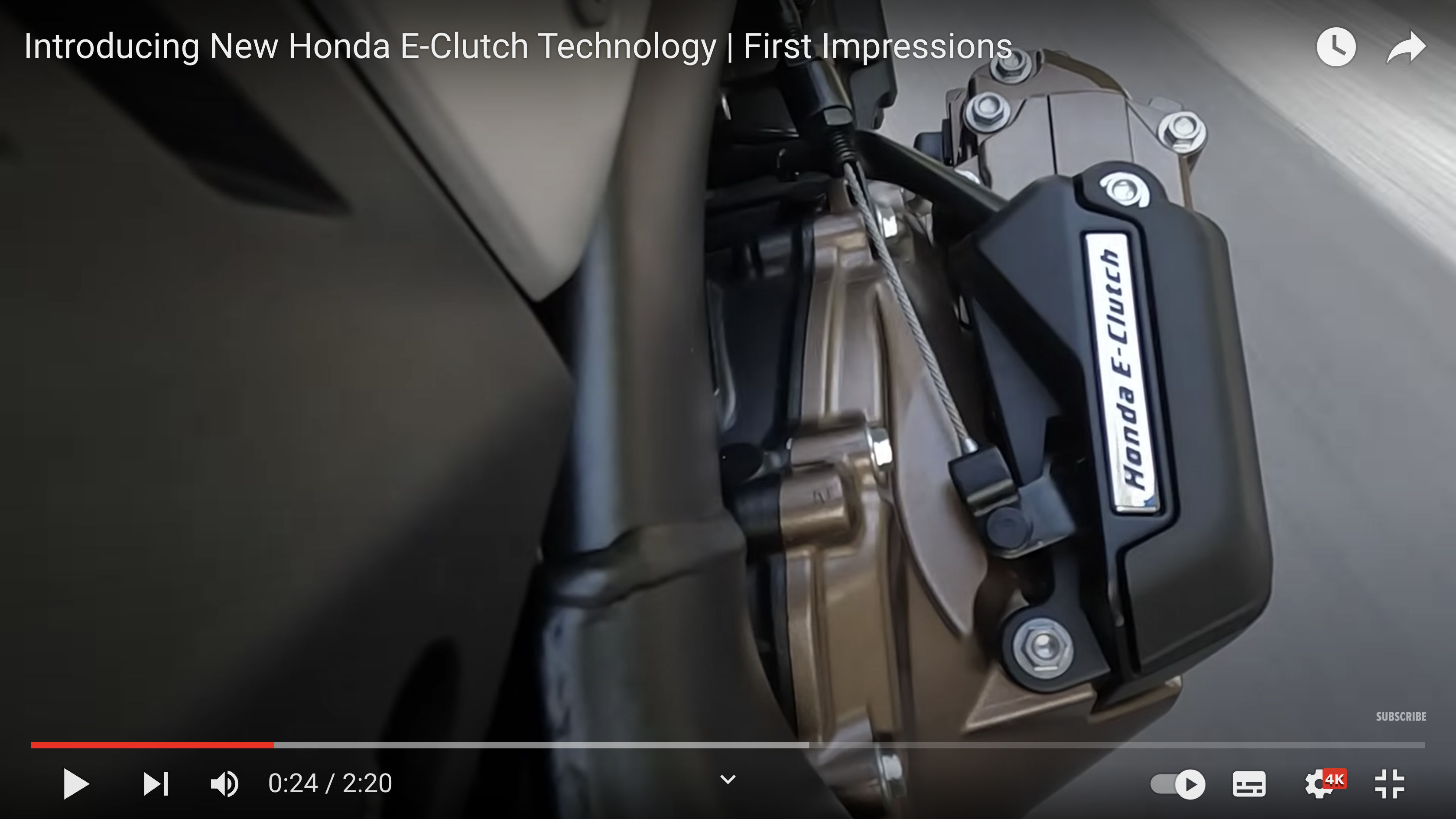
Being a fan of DCT but not its 10-kilo added mass, I also had a look at Honda’s new E-clutch. It’s an ingenious system of ECU-controlled servos to enable clutchless foot changing and even pulling away (while retaining a clutch lever), but as others have noted, it stills look a bit clamped-on and bulky. It’s only on the CB650 for now, but you can be sure it will spread to other models if it goes down as a smooth operator. I bet I’d be a convert.
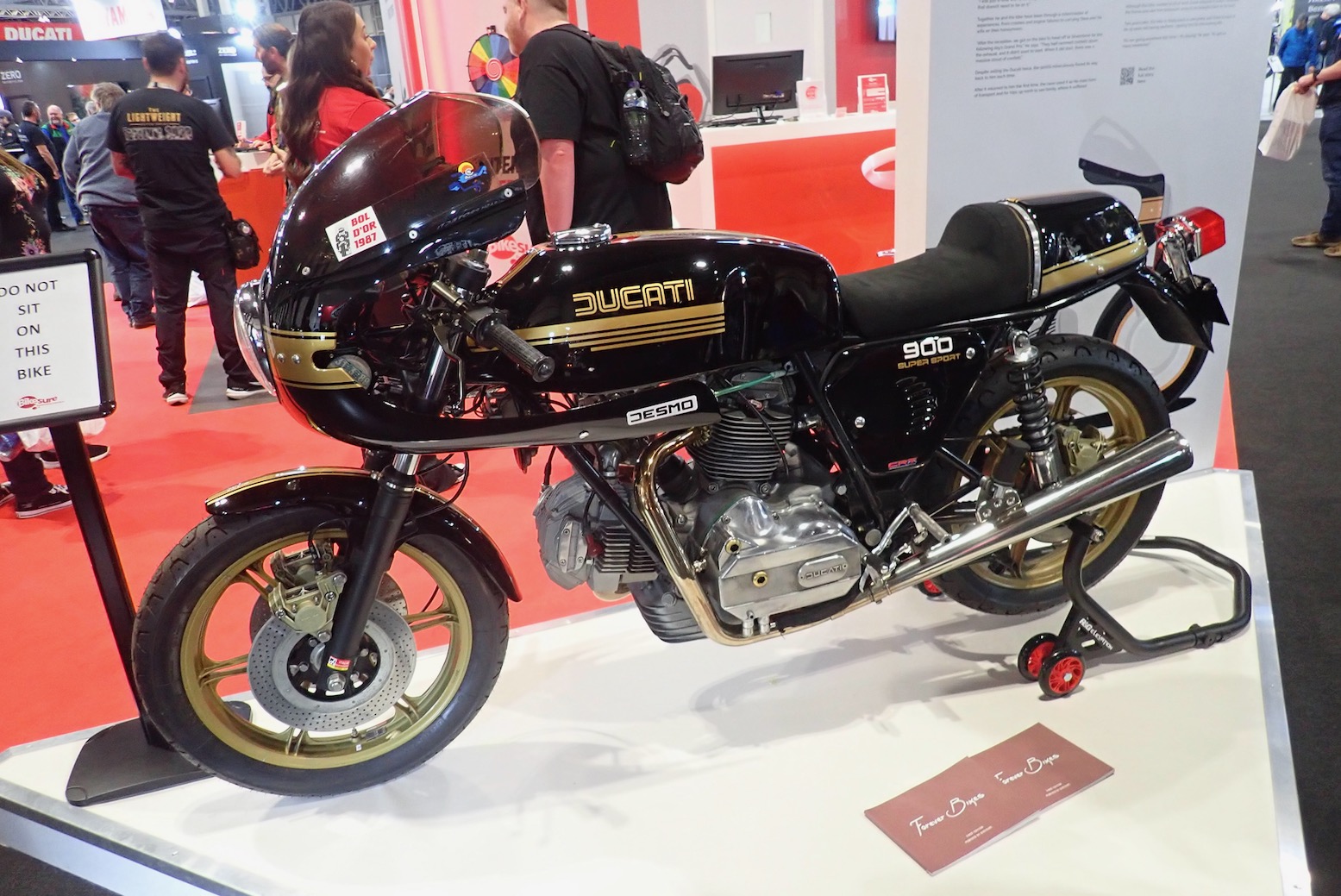
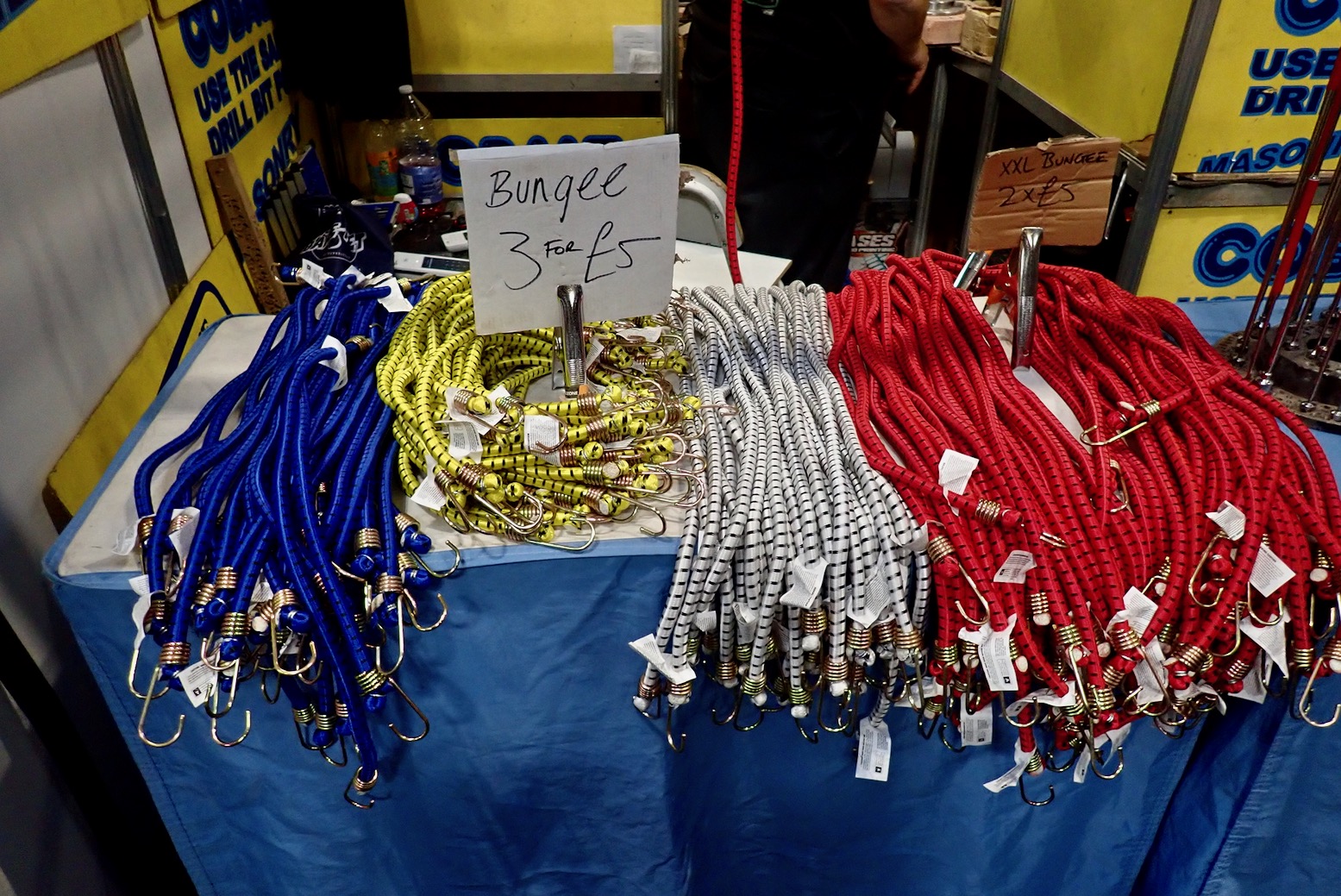
Nice also to see an example of my late 70s Ducati 900SS. What a machine to have at just 18 years old!Mosko Moto have a snazzy new range of colours in their apparel. I like this Rak pullover anorak idea as a bombproof, no-front leakage solution with a big roo pouch and other thoughtful detailing. For the last few weeks I’ve been wearing my MM Surveyor softshell jacket in Morocco which works just right in the warm temps down there. I’m considering going softshell on my trousers too – my sun-bleached, 6-year-old Klim Outrider jeans are now on ebay. I’ve deduced it’s not just the weight of the jeans, but the drag when getting on an off the bike. Stretchy fabric will see to this but without armour, won’t quite offer the same feeling of rugged Cotton-Cordura protection.Bungeeeeee!!
Getting to grips with the CRF 300L’s fuel consumption I’ve learned this: while assuming GPS distances and petrol pump volumes are accurate. taking in instrument errors, it took >2000 miles to exceed a true 90mpg. The best true mileage figure I’ve achieved is 96.5mpg or 34.2 kpl riding slowly with a group.
The digital speedo is the usual 8% over, like all vehicles, but with the AX41 17-er on the back the error is now 14%. So I’m only doing 100kph when the speedo shows 114. That’s quite a lot and, although it won’t make my bike any faster, I’ve ordered one of those speedo correction black boxes for 80 quid.
The trip odometer on stock 14/40 gearing with a stock IRC tyre read 2.5% over against a GPS over 200 miles. Around 3000 miles, in Morocco I re-verified with the smaller AX41s tyres and in kilometres and the error is currently 4%. So when the bike shows 104km on the trip, it’s actually done 100 (according to GPS). This affects true mpg figures.
The ‘average mpg’ readout is always optimistic up to 15%. Typically it shows upper 90s or just over 100mpg, but which can work out at 88mpg true once odo error is corrected.
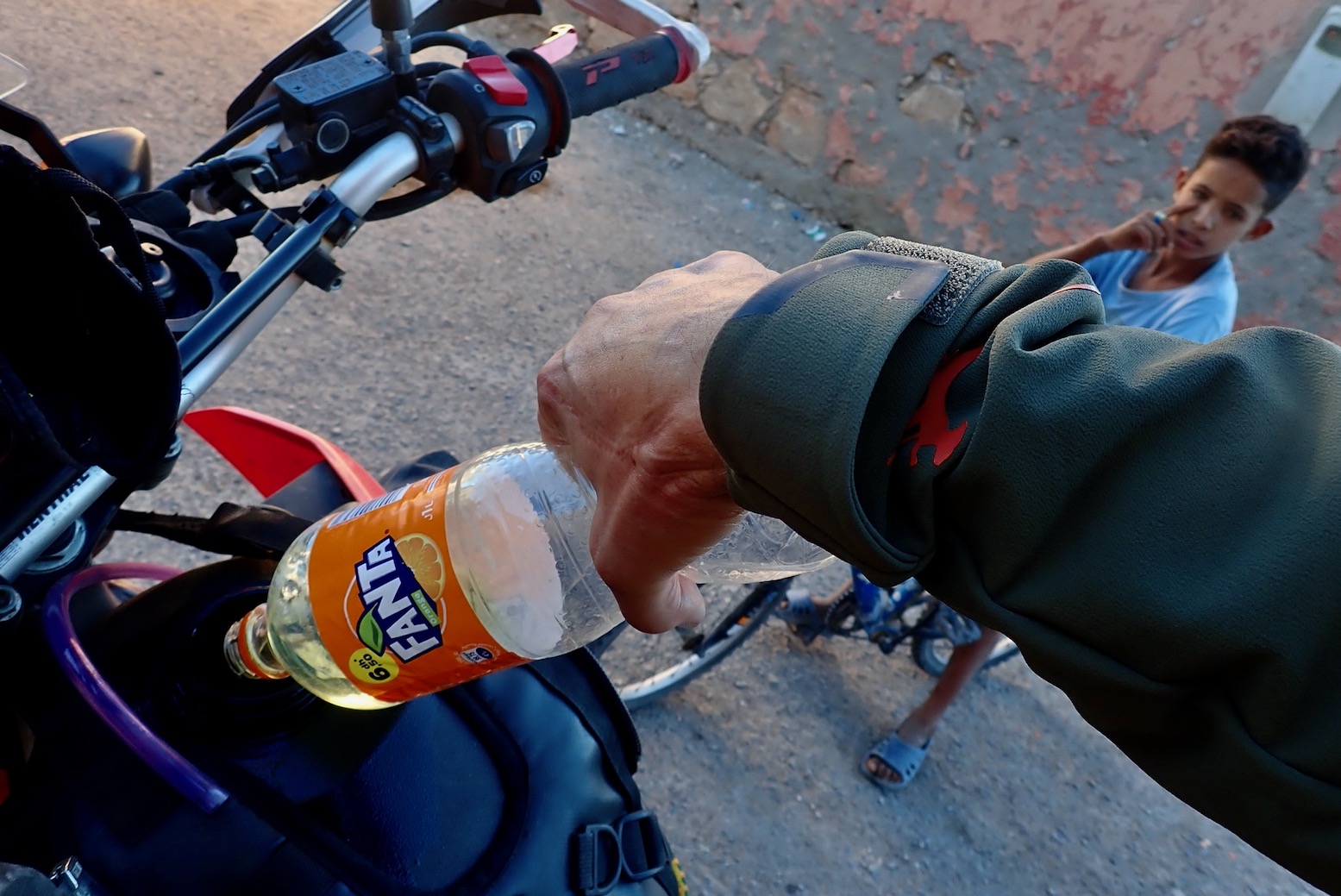
When you optionally switch the mpg read-out to show ‘fuel used since last fill up‘, this figure is also inaccurate and not a reliable indicator of what’s left in the tank. When I tried it in the UK it showed 2.6 gal used (so 0.4 gal left in the 3-gallon tank). But at the pump, calculations proved there was only 0.16gal (0.73L) left. That’s a pint and a half in old money. Switched to metric, I tried it again in Morocco and both times on a ~12-litre fill up there was litre less left in the tank than indicated. In other words read-out suggested it had used 11 litres but the tank took 12 to fill, so there is less left than indicated.
And trying 99 octane E5 fuel didn’t seem to improve mpg or anything else. Mpg was the same as greener E10, but E5 costs 10% more in the UK. I’ll try another tank then revert to regular E10 or whatever I get in Morocco which is E5. I’ve been told CRFs ‘loosen up’ once over 2000 miles and, following a fast ride from Dorset via London to Sussex, this seemed to be true. Or should I say, the E5 fuel I picked up in Poole seemed to improve the bike and the mpg suddenly jumped, though it had a new chain and tyres at this point too. It belted along comfortably at and indicated 70 much of the way, but perhaps it was just the unnoticed southwesterly at my back.
Nearly as good as it gets – a true 94mpg.
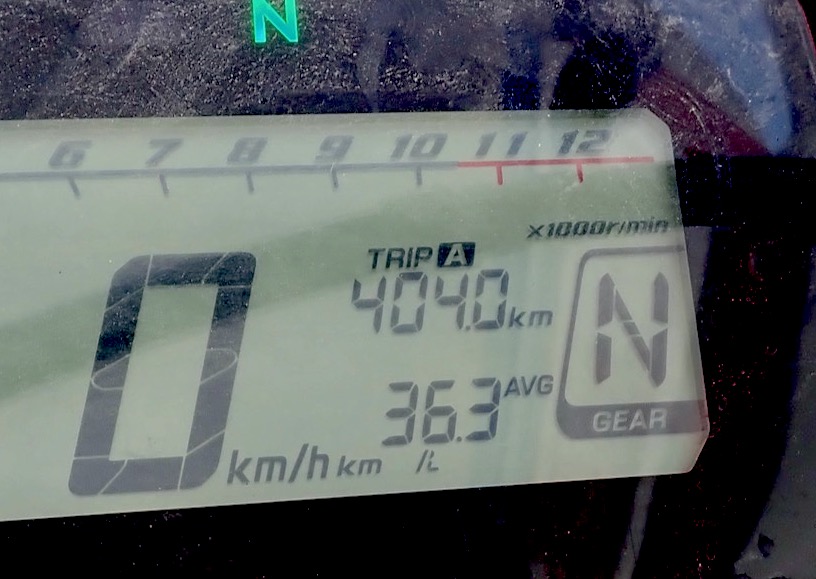
I’ve tried and tried to squeeze a true 100mpg in Morocco. After all, some 310GSs have managed that (usually with light riders) and I got close on my 250L once too. But I don’t think I’ll manage it riding relatively normally. One day I tried an unrushed 5-hour ride over the Atlas to Marrakech. The average kpl went up and up, topping out at ‘36.3’ or about 103 mpg (the highest reading I ever saw was ‘38.4’ or nearly 109mpg). I knew it wouldn’t be anywhere near that and sure enough the corrected figure was a merely 94mpg. But I did get over 400km to the 13.9 litre tank with 1.2 litres left, so that’s a max potential range of about 440km indicated (about 420 true).
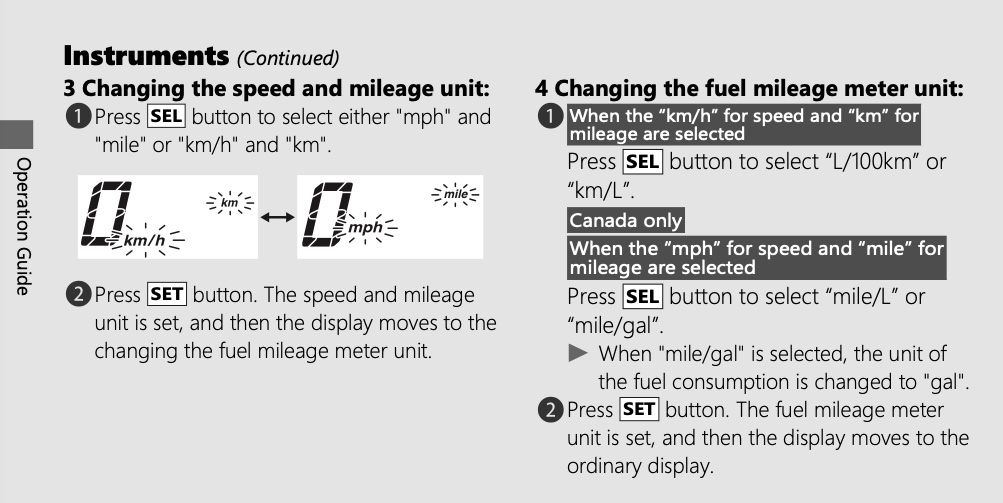
It took me over six months to work out how to convert the speedo read-out to kilometres. Turns out all I had to do was R T fekin M carefully and implement the instructions therein (left).
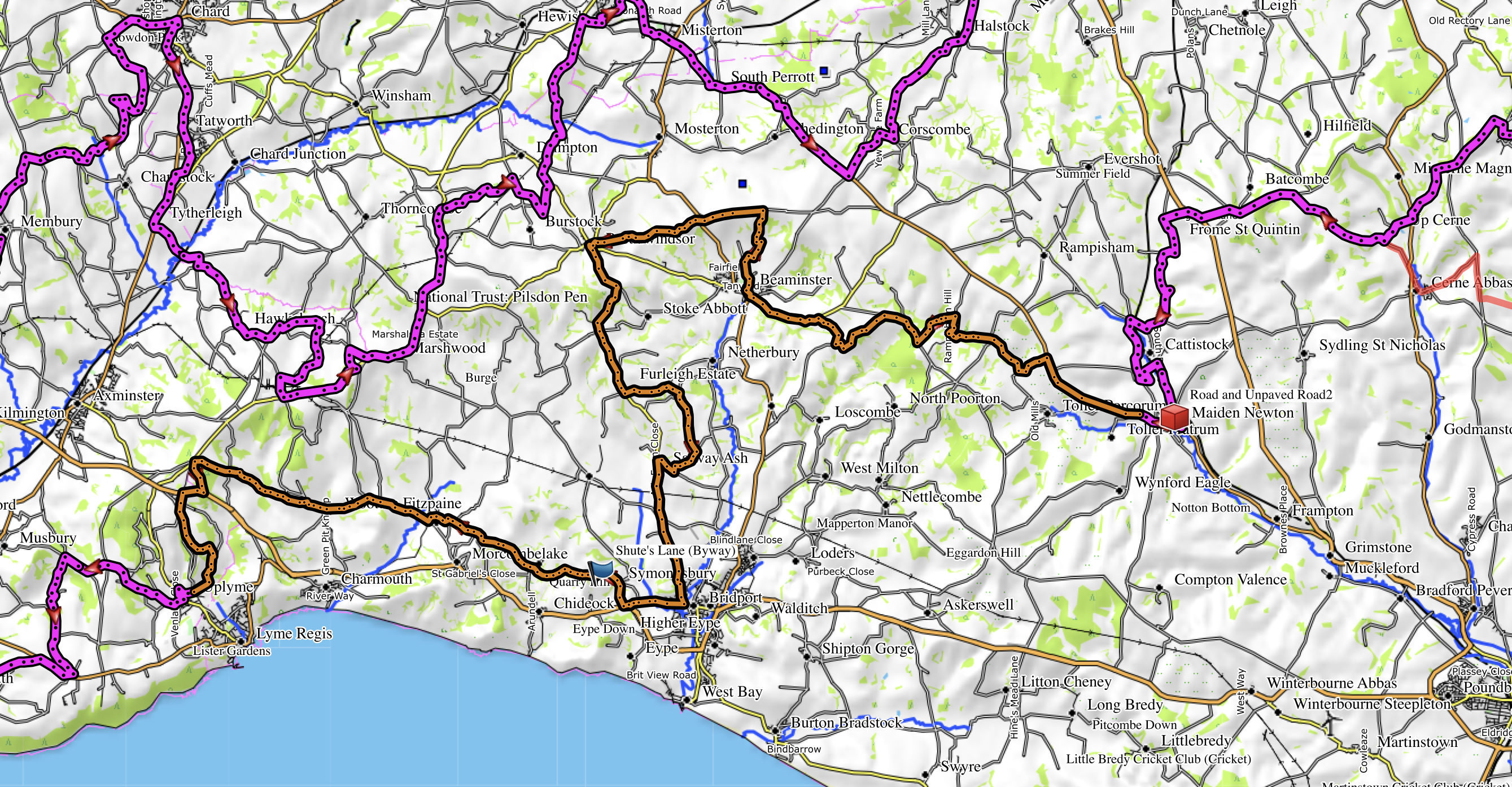
The other day’s inaugural run along the TET’s Great Western Trail in Dorset was unnervingly easy and enjoyable. I wasn’t wrong footed and barely put a foot wrong. Today’s westward continuation was going to be my difficult second album. For more afteride bike impressions, see bottom of the page.
Rights of Way (skip if boring – E&OE) The last time I looked into it, to establish the status of a right of way in England & Wales (Scotland is a write-off) you had to inspect a county council’s definitive or ‘master’ map (DM) held in its offices and viewable by appointment. This is why people ride wasteland, join clubs or go to Morocco. Now we have the internet county councils publish this map online for all to view anytime for free. Vehicle access wise, the map will identify the very few Byways (aka BOATs), as well as much more numerous Unclassified Country Roads, (UCRs) which I calledORPAs (‘other routes with public access‘, on OS maps). But according to this typical statement, the Dorset Definitive online map (example below) doesn’t have the legal status of the county’s official Definitive Map held in a glass vault in Dorchester Castle. So while you cannot fully rely on the online county master map, it ought to be more up to date than the latest OS edition and is free. Perhaps the best online map for trail biking is produced and maintained by the Trail Riding Fellowship. It’s viewable at greenroadmap.org.uk where it says guests (non-TRF members) can register and view the map with limited features, but I couldn’t manage it. This is why we like the simplicity of UK TET with the GWT. One 3800-mile gpx download and you have enough to be getting on with.
Only one Byway in red, but quite a few ‘UCRs’ in light and dark blue, some of which join through.
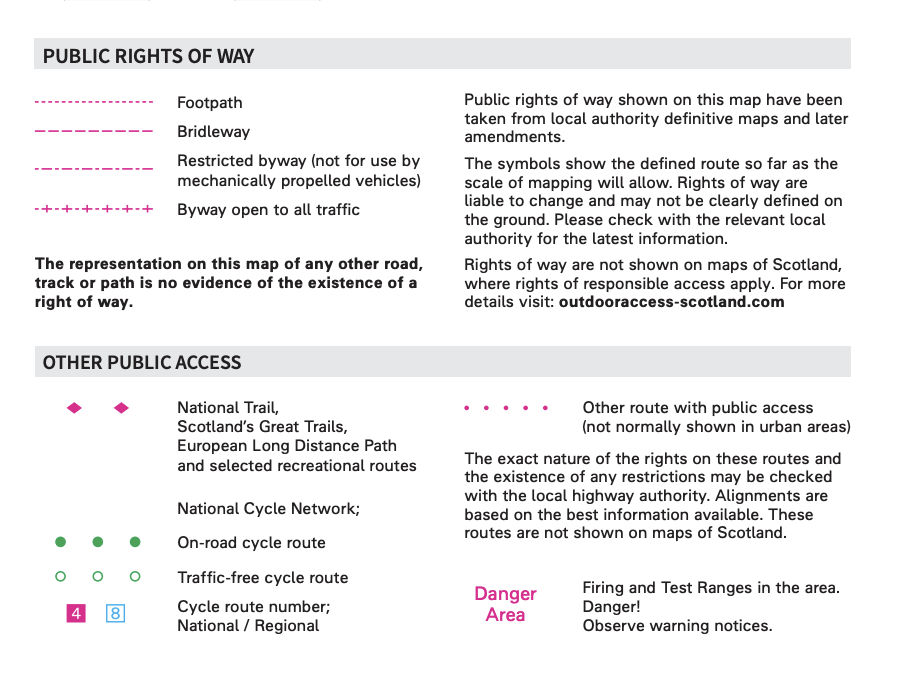
These UCRs or ORPAs – shown on OS maps as small red spaced dots on 50k maps • • • • , or green on 25k • • • • – have been a bit of an eye opener to me just lately, still stuck as I am in the 1980s RUPP era, but ORPAs have been on OS maps since 1997 and RUPPs were downgraded or mass reclassified as Restricted Byways by 2006. All this has passed me by over the decades. Clearly I’ve spent too much time in the desert where, by and large, an RoW is determined by the terrain and you and your vehicle’s ability to navigate it.
UCRs might be sealed or just tracks, passable or otherwise, but providing they don’t dead end at some backwoods ‘dueling banjo’ meths compound (as I stumbled on the other day), you have the promise of a through route. So I can now verify that track I followed in mid-Wales the other week was a UCR and doesn’t even get any special annotation to the Powys Definitive online map. As DK and DW, a pair of intrepid travel bikers and TRF lifers clarified to me “In 99% of cases, you can legally ride a bike on a UCR“. When you view the Dorset GWT on an OS background, you can see it aligns with UCRs and the much less frequent Byways as well as regular metalled yellow ‘C’ roads.
An ORPA or UCR in DorsetMid-Wales kosher!
The TET gets offensive The forecast was a bit shaky; I’d probably get a hose-down at some stage but would dry off eventually, given global climate patterns. I was planning on reaching Lyme Regis, about the same distance as the other day, though something about today’s route looked more challenging and maybe more typical of the GWT.
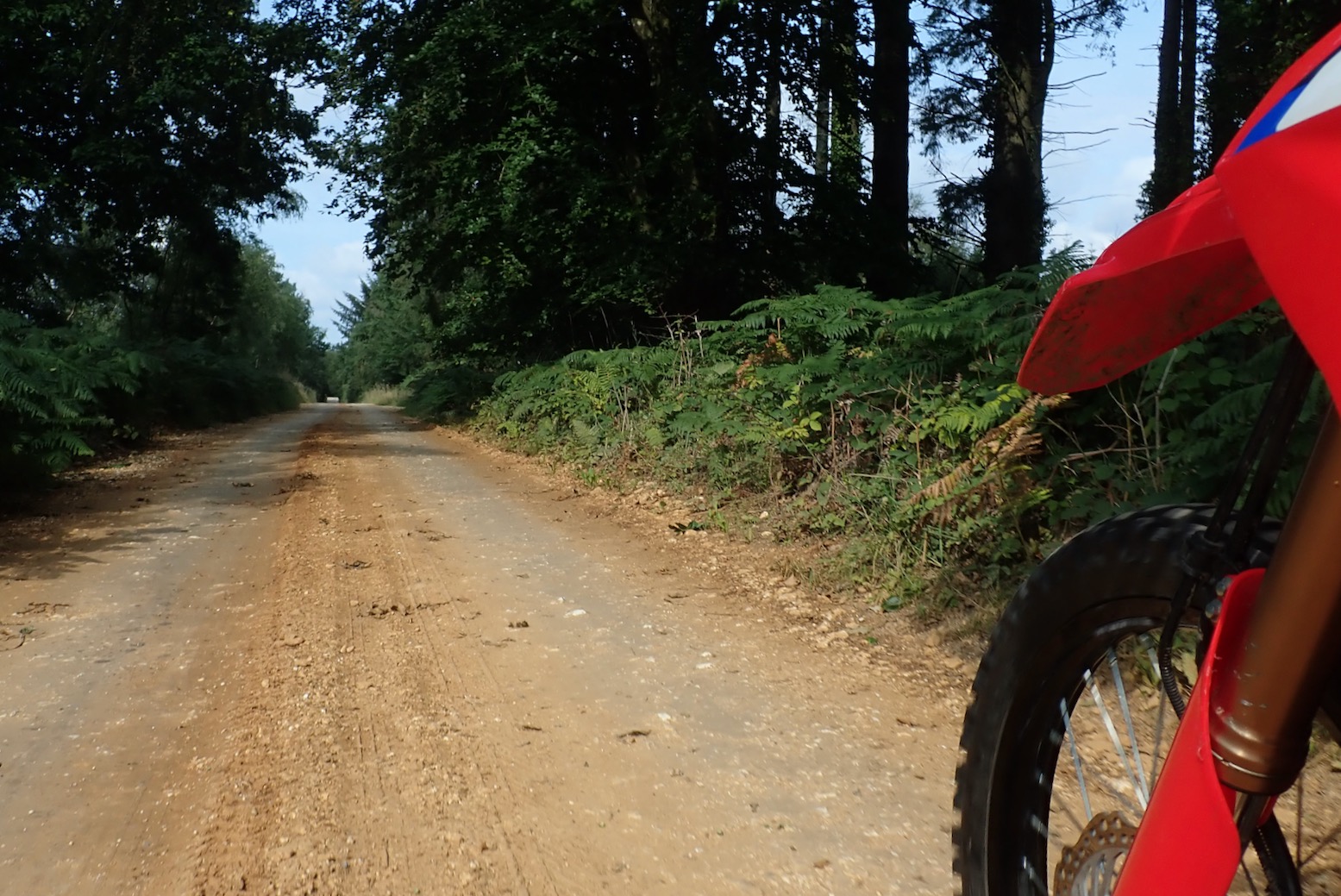
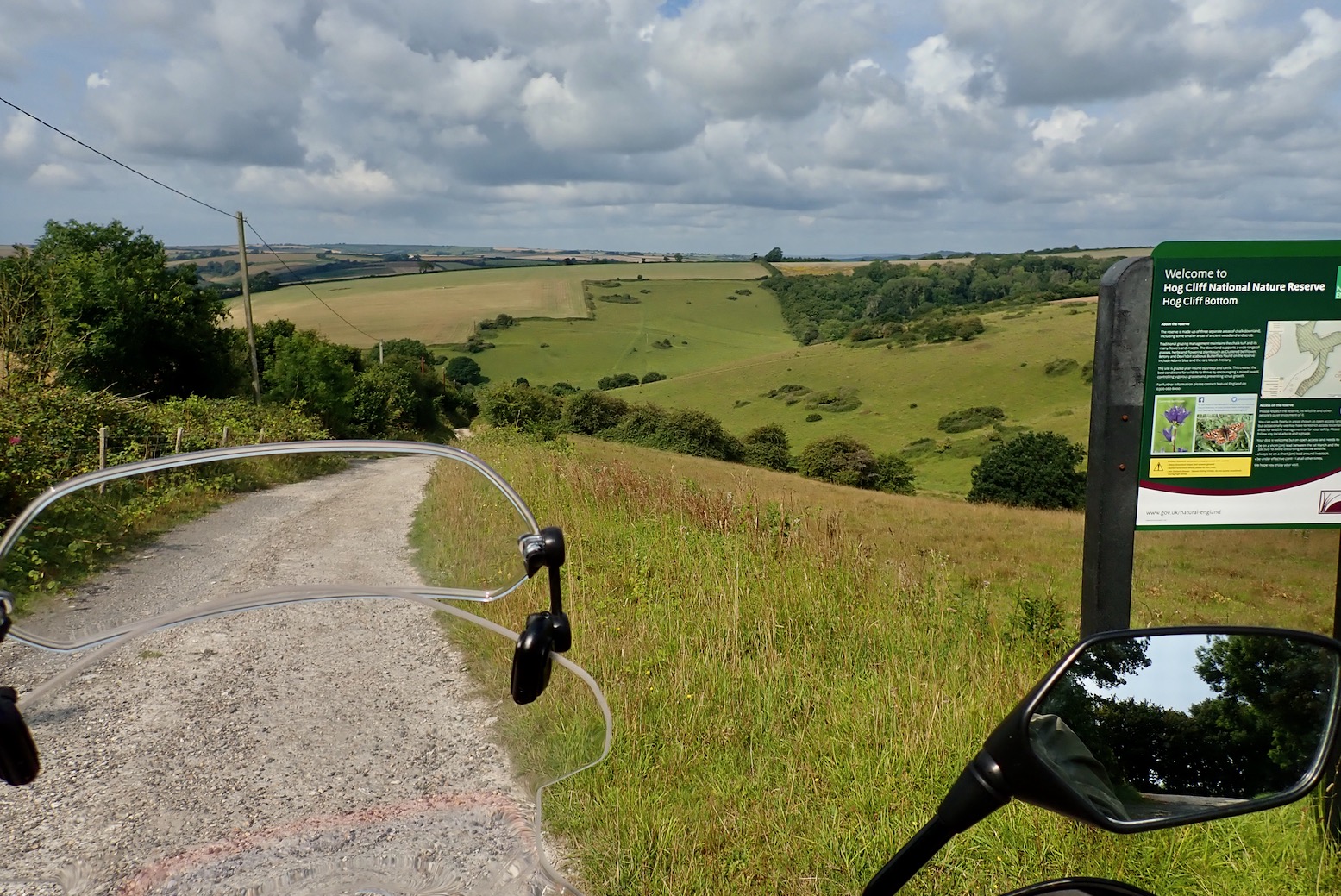
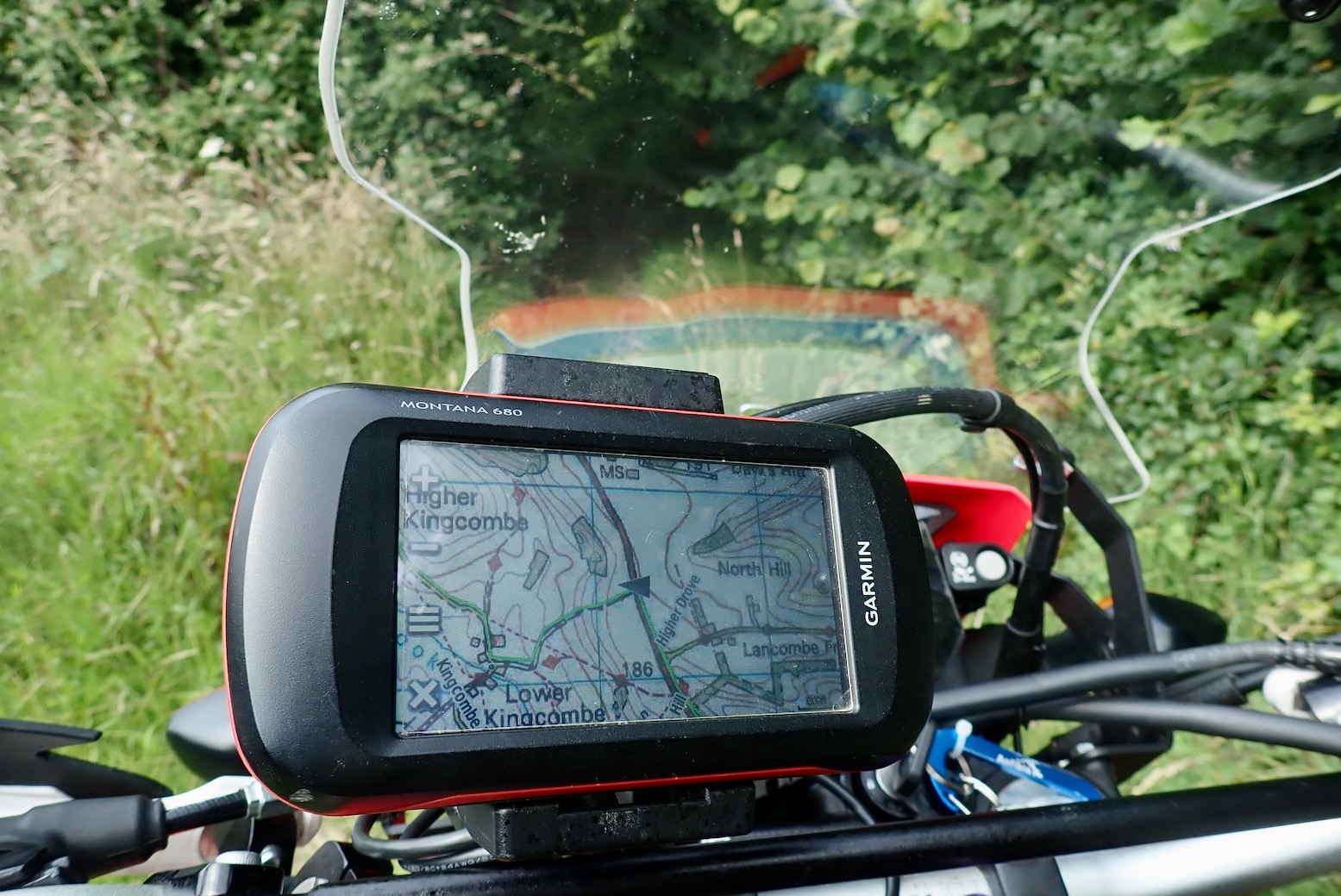
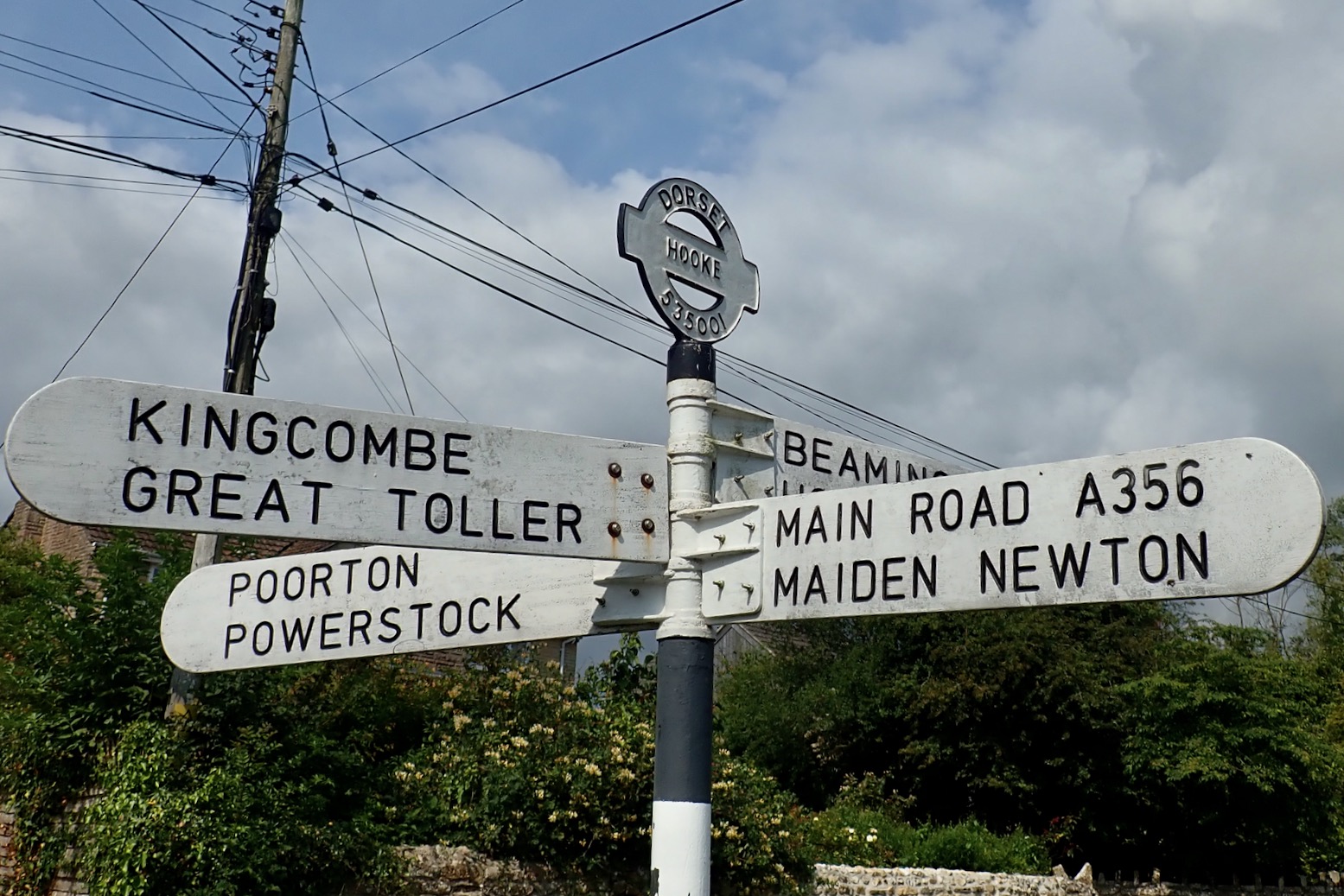
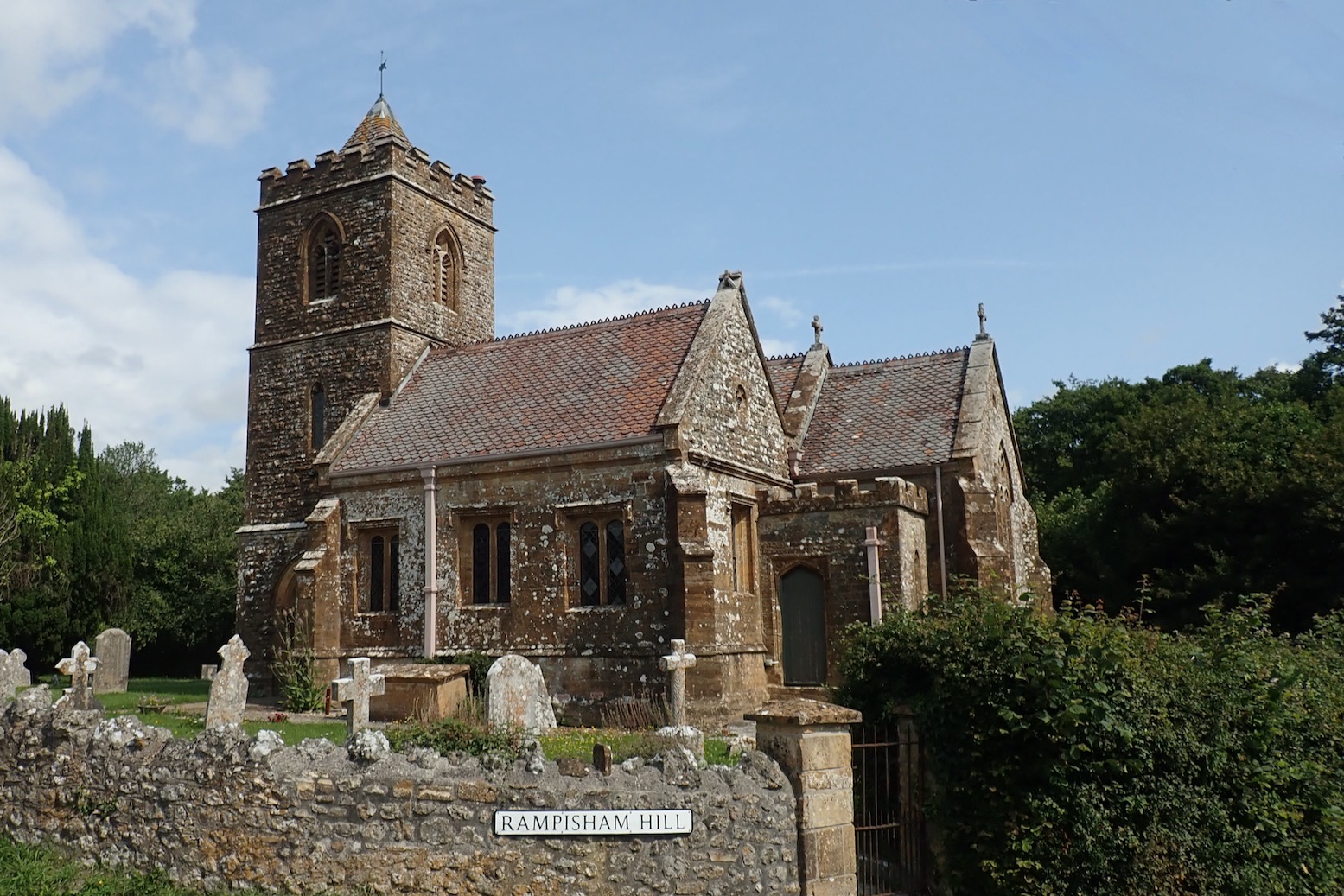
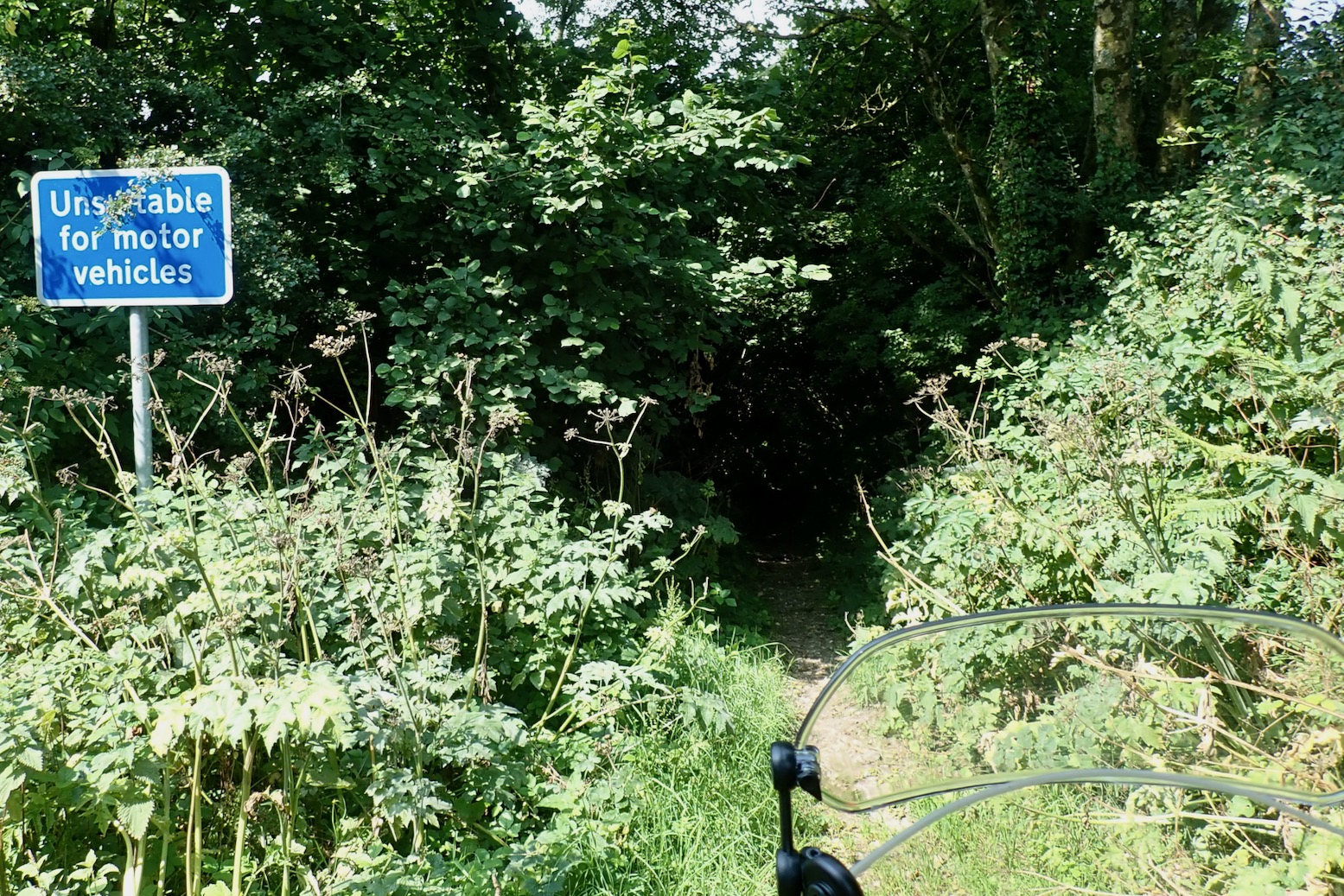
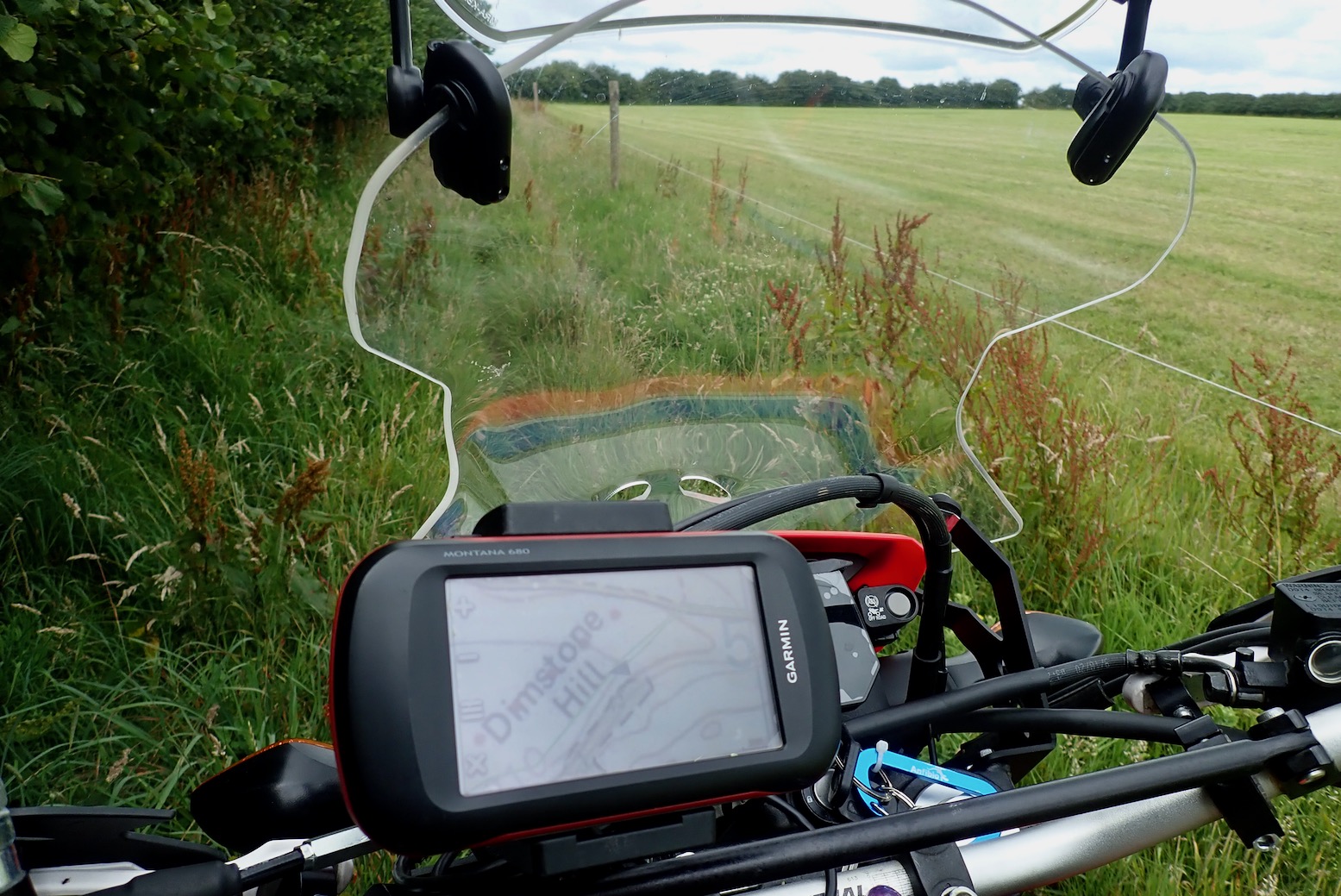
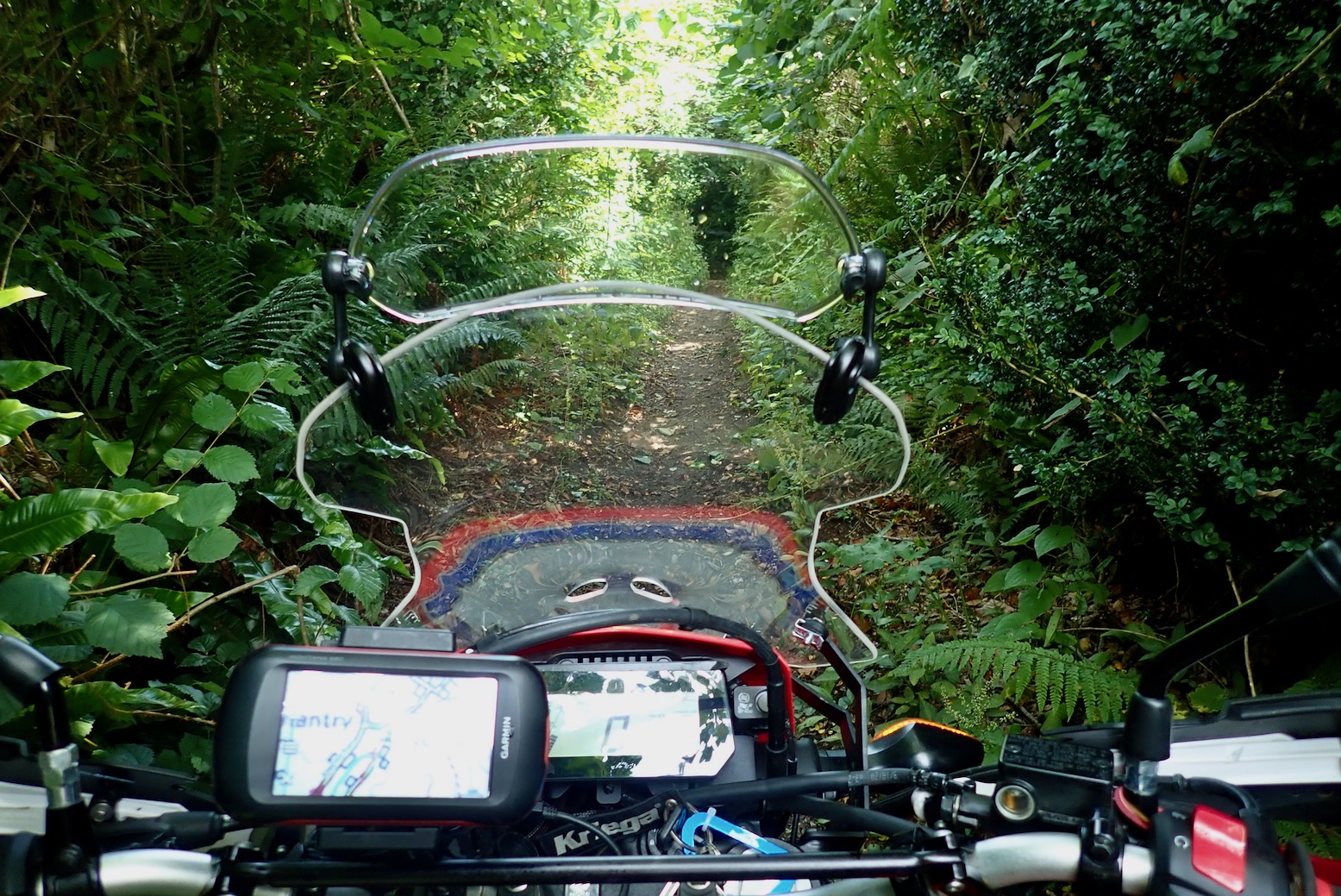
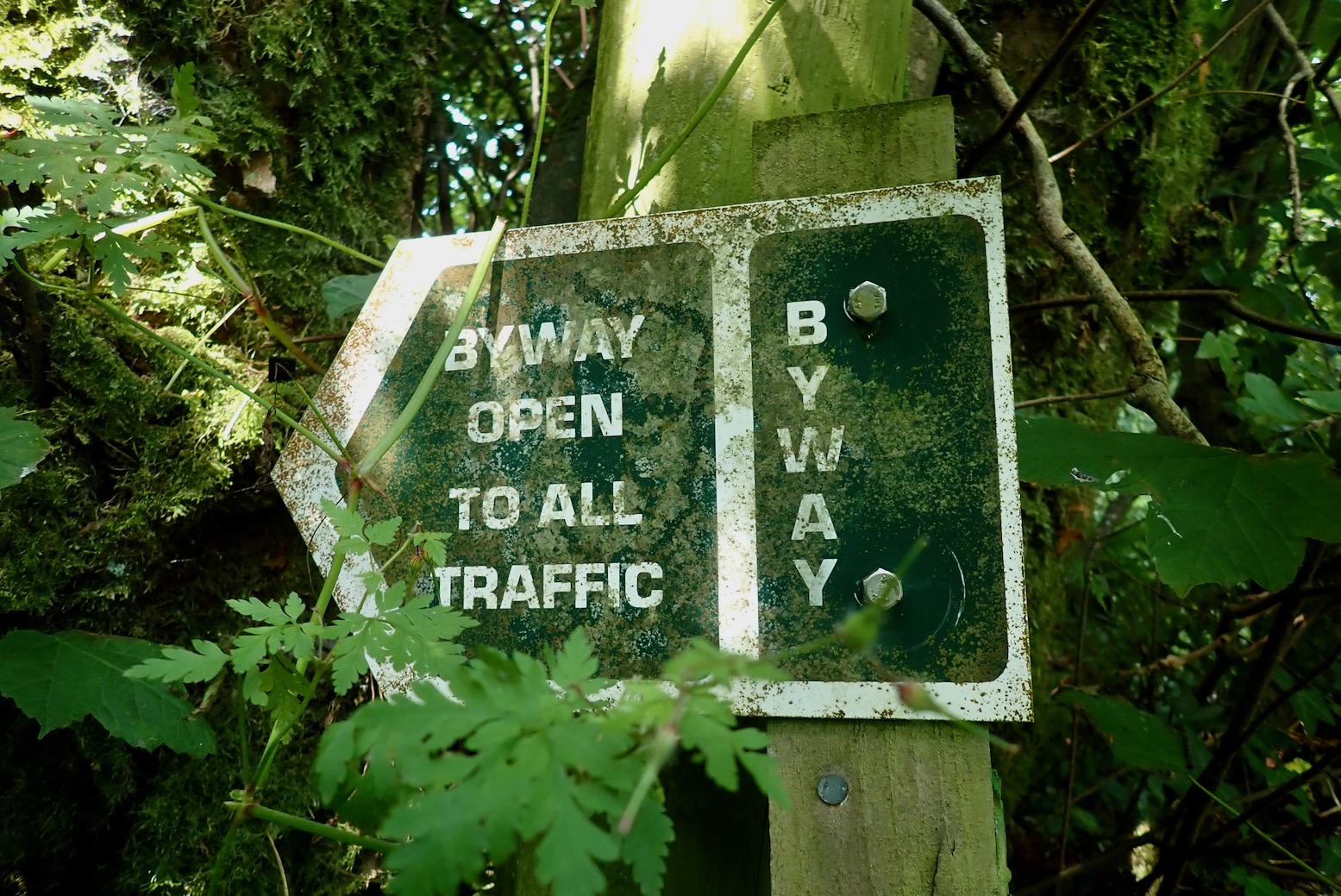
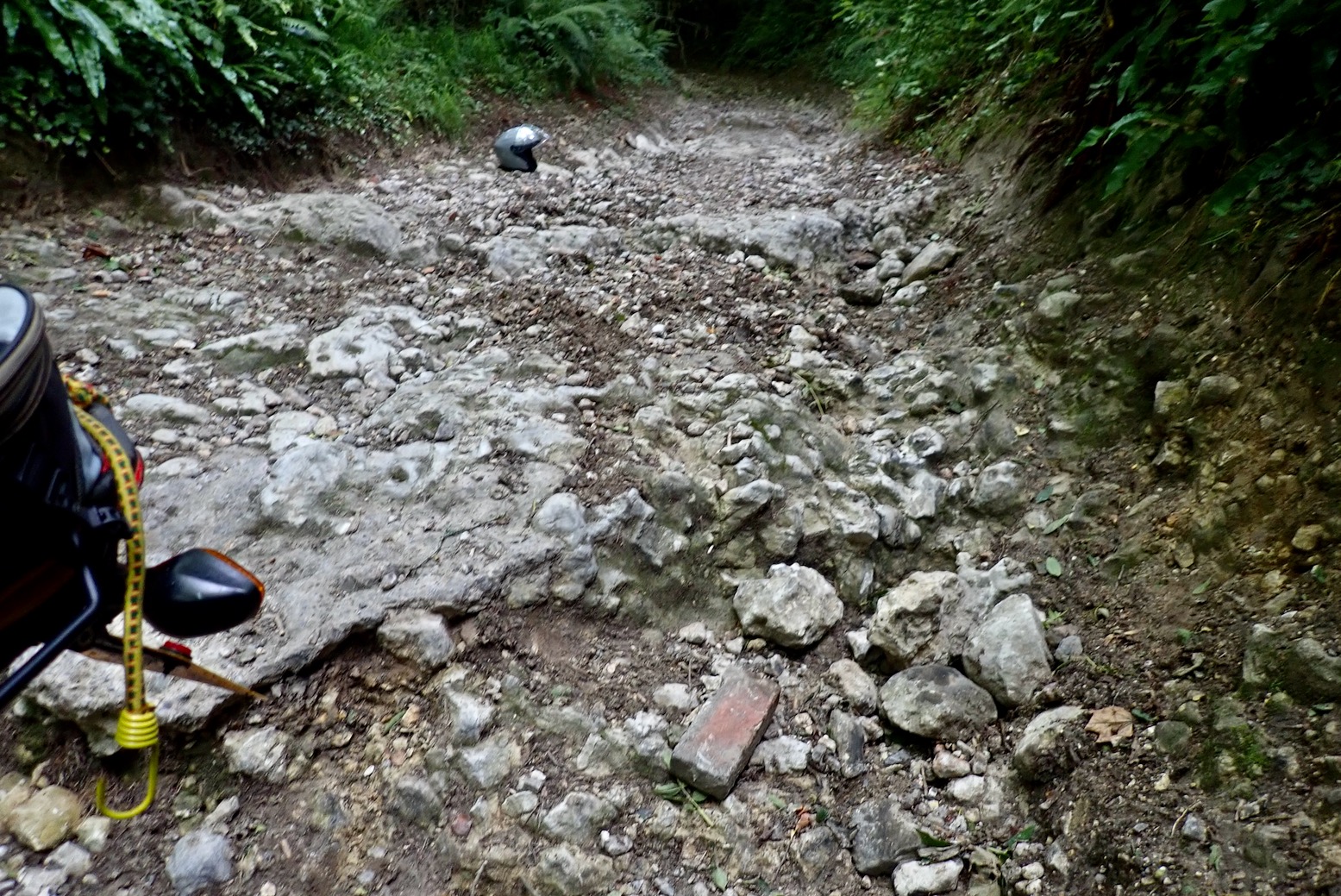
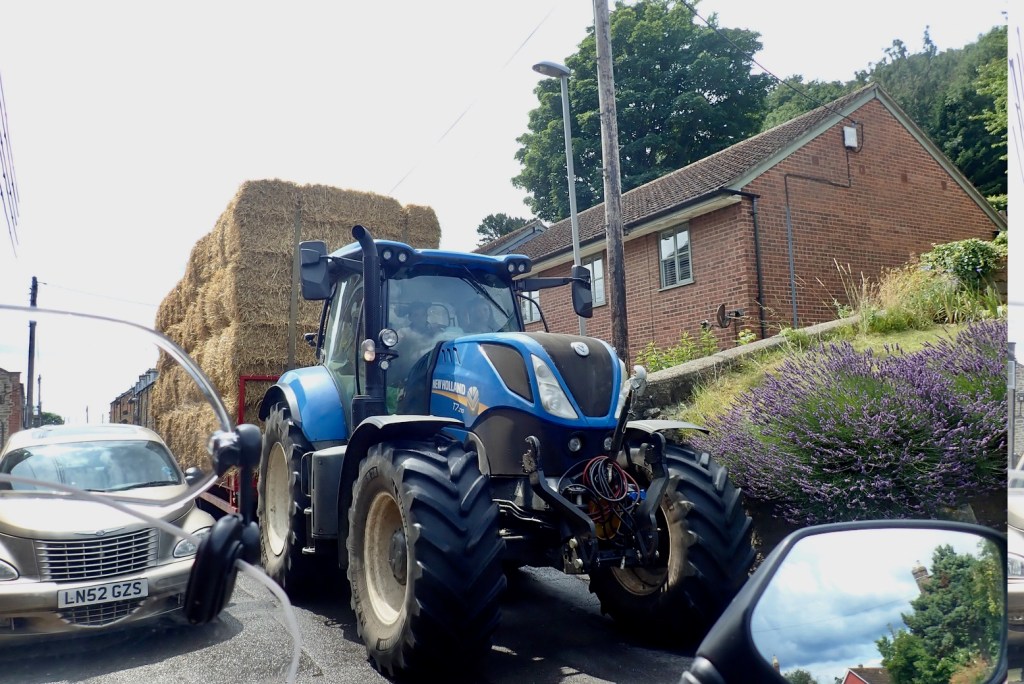
Maiden Newton to Lyme – only 36 miles. No biggie then…I set off along the same trail through Sares Wood to Tolpuddle to make sure I didn’t make it up.That’s more like it! I feel at home now.I get in a tangle around Dorchester and then miss the road to Maiden Newton; I find I often mess up the nav when I half know the way; a little knowledge is a dangerous thing, grasshopper. To make amends I consider this shortcut down a hillside to Maiden, but at a gate I re-scrutinise the Garmin’s OS map and it’s only a Bridleway, which I confirm later on the county DM. Can’t be going there.Back on the GWT, I turn onto my first trail, sorry – unclassified road. I’ve made the Garmin’s GWT tracklog green to make it easier to see.I can do this!I think ‘Public Route’ may be a kind of ORPA. Back on the asphalt, my front tyre seems to be making a lot of noise. It was 19psi this morning, not a pressure I run. There’s a lot of debris down the middle of these hedgebound, single track lanes. Have I got a slow puncture on the presumably crappy OEM IRC tyre? (Yes). I’ll top up at the next servo.Many roads lead to Hooke. I wonder if houses in Poorton are cheaper than Powerstock? Hooke in the Domesday BookeHooke’s dinky, red sandstone church of St Giles. ‘Only’ 600 years old.Unsuitable you say? Hold my beer!I still find it hard to believe I’m allowed to actually ride ‘footpaths’ like this. I am what I am and I’m one of the sheeple ;-)I emerge by a field where hidden ruts alongside a 2000-volt electric fence help concentrate the mind.First gate of the day – good for the abs.Here comes that weather.I pass through Beaminster town with half an eye out for an airline, before burrowing back into the undergrowth like a motorised hedgehog. Never seen a BOAT sign before. Encouraging.Oh dear, what’s up now?I’m knocked back by a couple of limestone rock steps on a stoney slope. It would have needed quite a launch plus some artful finesse – not a combo me or the 300L share at this time, thanks for asking. Alone, a bad fall could end… badly. The TRF call this lane an ‘old favourite’. Not me.I don’t even think about it and walk the bike up in 1st, but it gets jammed on the bigger step, then the chain comes off. A bigger tyre with less air might have clawed its way up. Never had a chain derail on a moto but at least it’s not broken nor has cracked the crankcase (had that on a KLX once – ruined engine). Luckily, this time I left home with tools. I drag it back down – this is where old-school tubularrear racks pay off. I prise out the very slack chain which easily rolls back onto the sprocket. Did the derailing stretch it so much? Along with my imminent flat tyre and the darkening skies, I’m a bit unnerved.Nearby there’s evidence that fourbies struggle here too. This lane – Meerhay or Mintern’s Hill (50.825716, -2.733489) throws me, but there’s no mention of it online. Even coming downhill I’d think twice, but it must be just me and my age. Returning to Beaminster, a delivery driver stops and asks about getting through. He knows about the BOAT and meanwhile, points me to a car garage in town.I pop in for a shot of air, just as the clouds unzip, let loose and shake off. Aired up to 30psi to get me home, I pretend to fiddle with the GPS until the downpour passes.I’m aiming to rejoin the GWT as it heads down to Bridport. At a crossroads I stop and tighten the chain with my new Rally Raid tool. It took 2.5 full turns of the nut. WTF? It wasn’t hanging off after a wash and lube two days ago. Is the Regina suddenly shot at just 1500 miles on this 28-hp donkey? Very odd, but better to know now than on Jebel Saro.Beferned phone box. A sign of the times.Beferned 300L. Not more of the psychedelic type, I hope.Unsuitable …… for XXL hay tractors
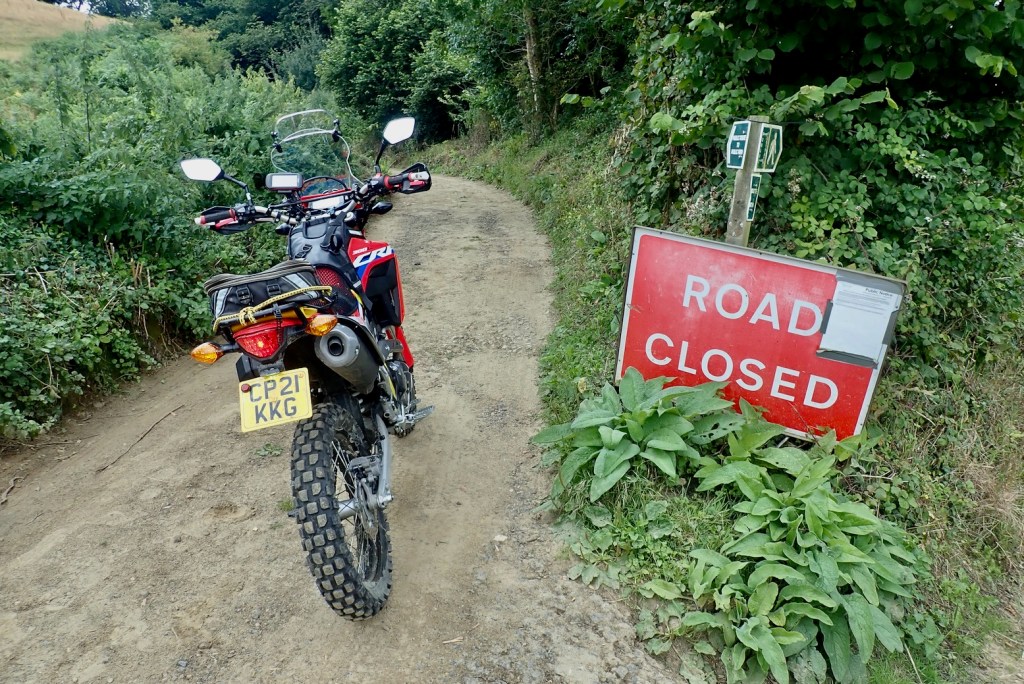
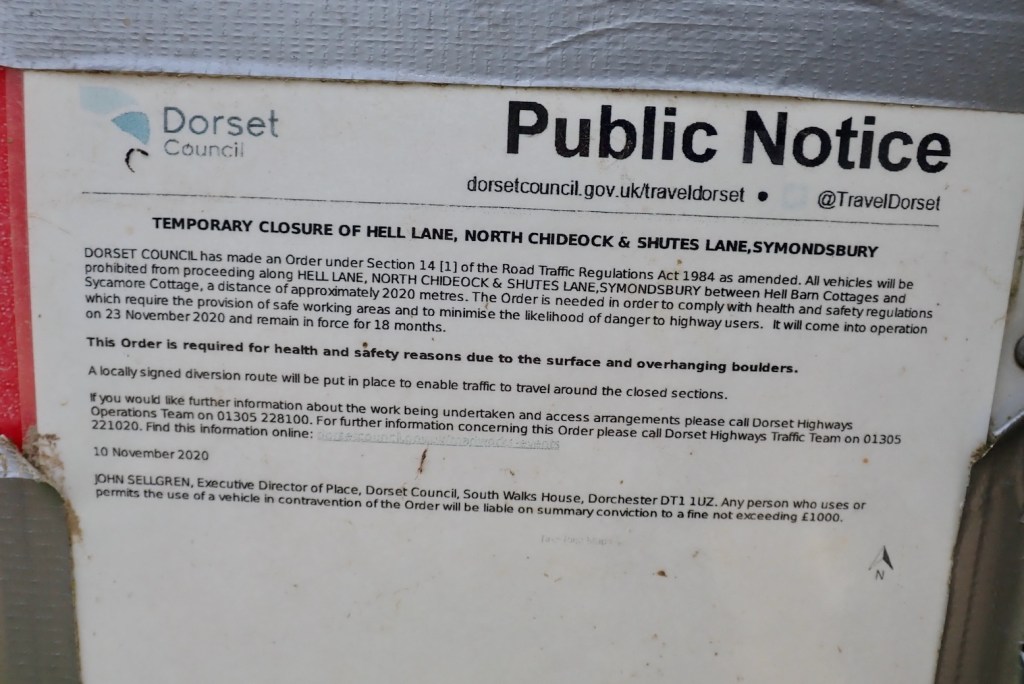
My mojo has rebounded so I continue west out of Bridport towards Lyme on the GWT. North of Symondsbury I come across a ‘closed road’ sign. Shame, it’s a nice track – Hell Lane in fact, as featured in ABR magazine a few years back.
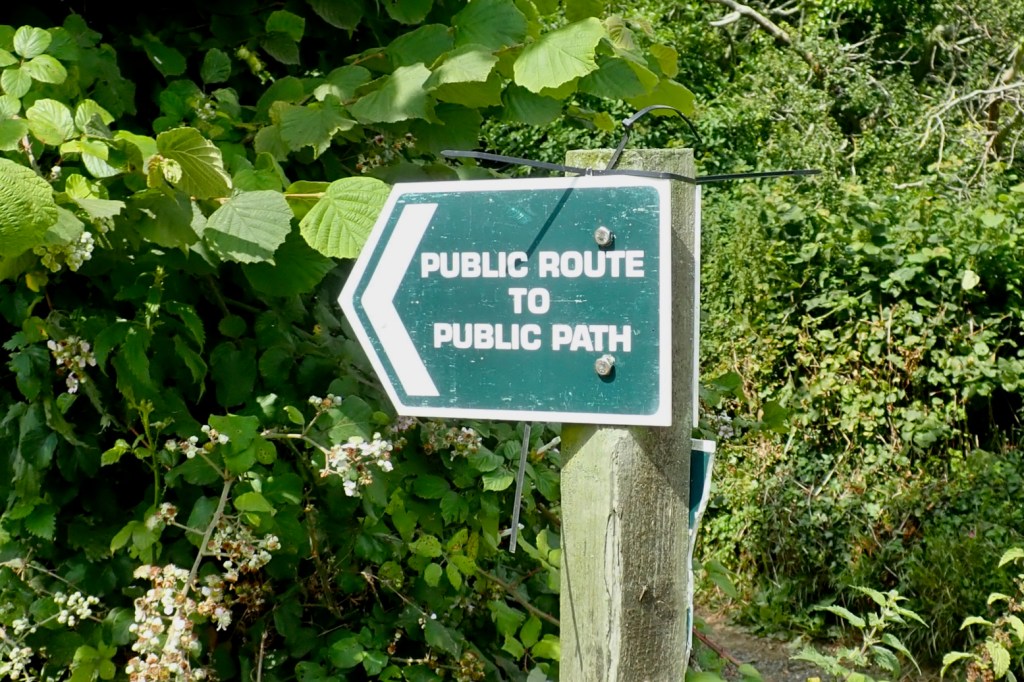
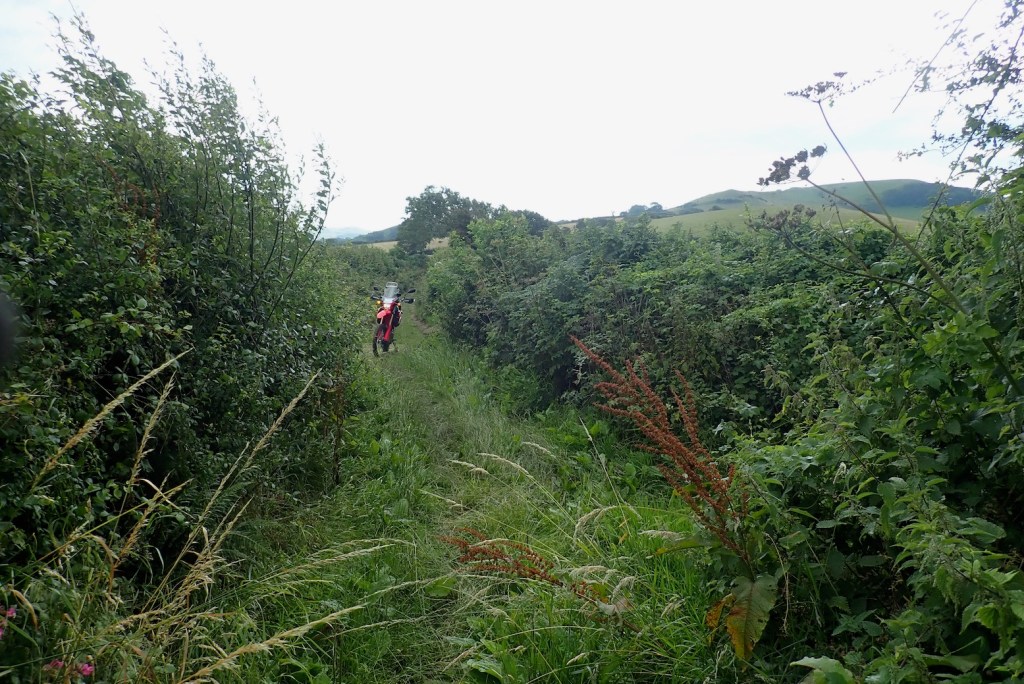
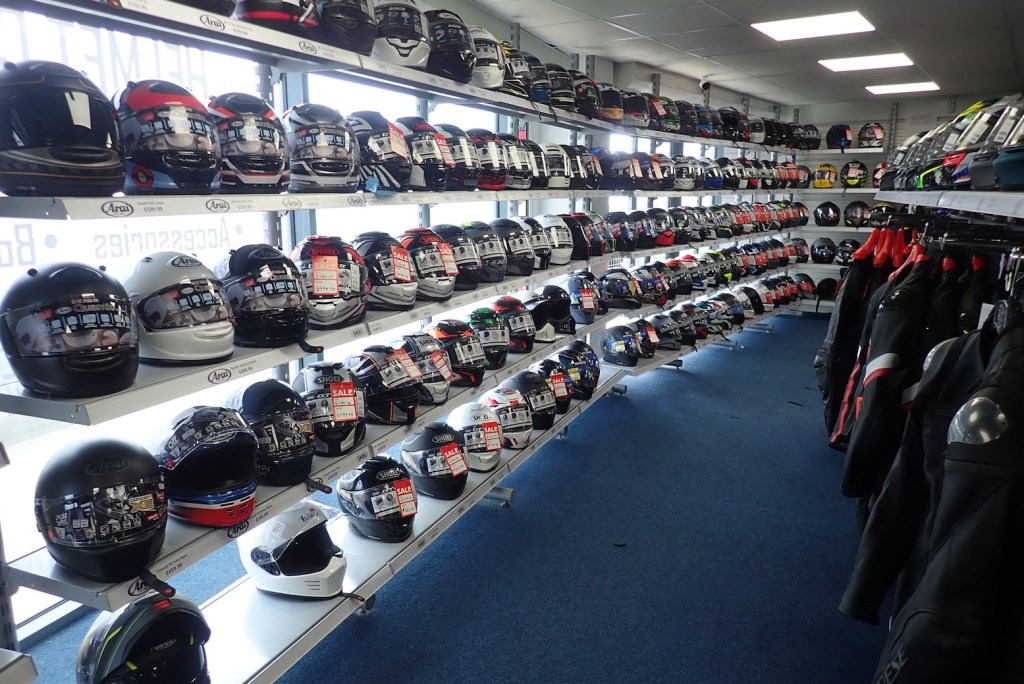
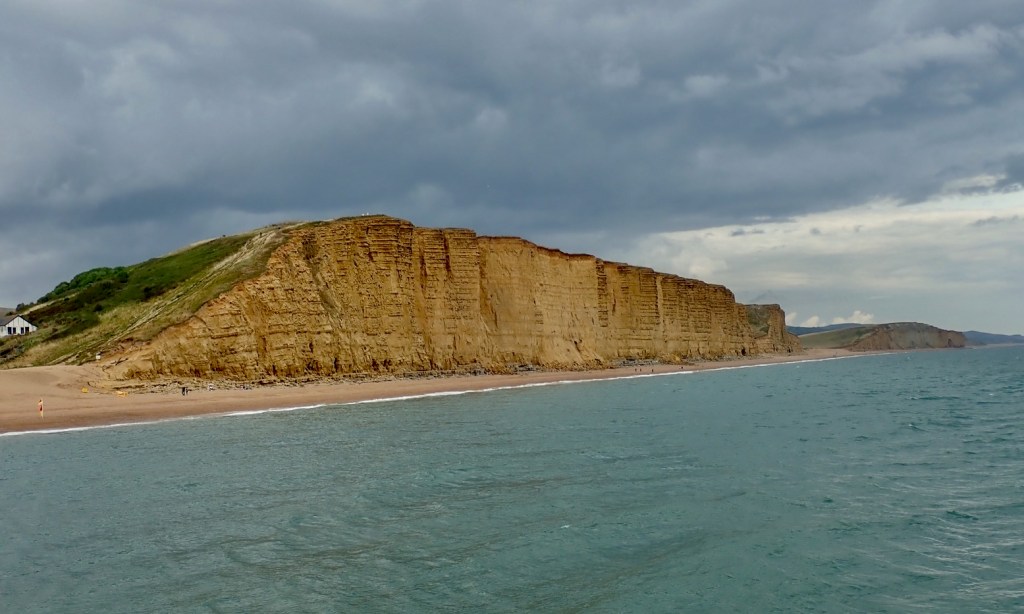
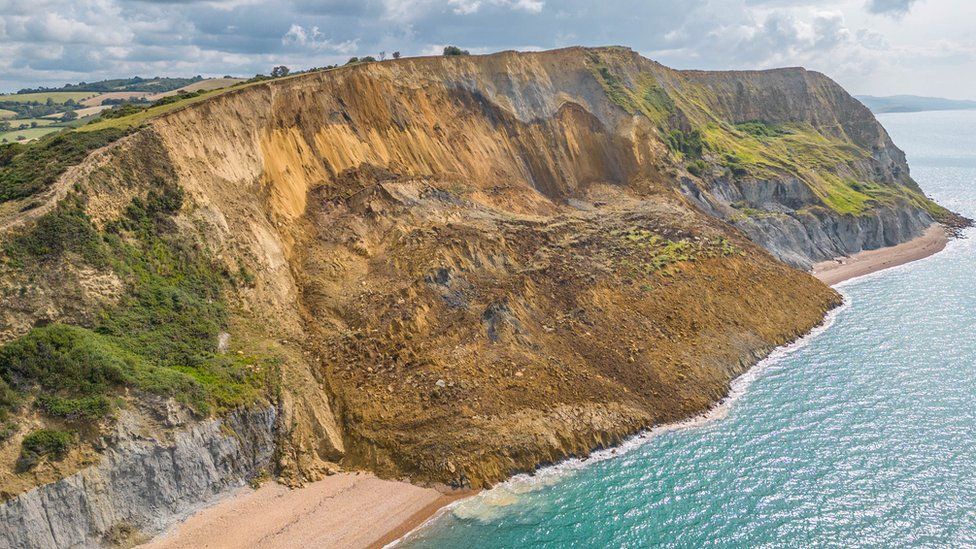
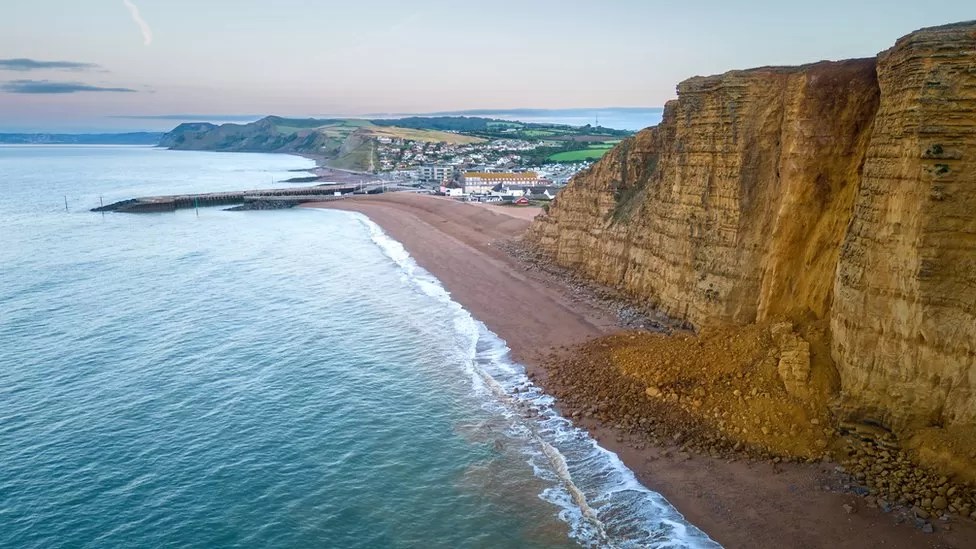
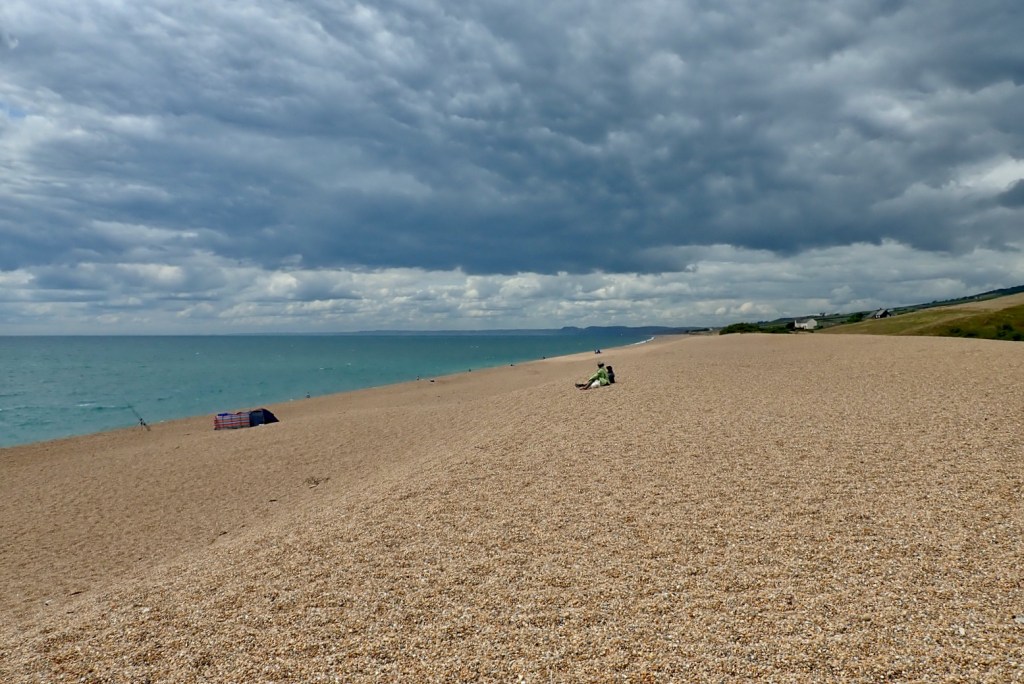
It’s a ‘public route to a public path’ which must mean something legally.Had I read the TRO more closely I’d have seen it expired last year. Specsavers, I know, but ditch the red sign already! I try a way round to the north but I’m blundering around. This isn’t a moto RoW.The chain thing and all the rest has worn me out so I scoot south to the seaside for a seafood snack by the seashore. Let’s try West Bay. I was hoping for calamari at a quaint 1770s cobbles and thatch Smugglers Inn – I get 1970s bucket & spade in batter with chips.Little West Bay seems to be a bikers’ hang out.Heck, they even have a Helmet City! The sweet smell of creaking leather…Recognise that cliff? Yep it’s ‘Broadchurch’. Remember all the hype over that show?That night a nearby cliff slid down and made the news. That would have been a heck of a reverse tsunami.A couple of weeks later, after a lot of rain, West Bay / ‘Broadchurch’ cliff, itself had a big rockfall.Lyme in the far distance, one for next time.I head home on backroads. It’s Chesil Beach! Never been there neither, here’s my chance. Gravel; large amounts. ‘The origin of the beach is a matter for scientific speculation‘ says an info board.Bit harsh.Backroading homewards, near TE Lawrence’s grave, two roads diverged in a wood and I took the ORPA less traveled by. And that has made all the difference; I got home 4 minutes earlier. I’ve done 100 miles and I am now quite tired.
After thoughts on L I’m getting a feel for the 300L off-road. No, really! The stock gearing feels spot on for this sort of riding; a full load might change that. But the fuelling is a bit on-offy in lower gears; good for engine breaking. I recall the WR250R (same hp) had the same issue and there were alternative, slow-action throttles or some such available. It’s an efi thing. The stock tyres are good but I don’t think will prove very durable; iirc my CRF250L IRC rear didn’t even make 3000 miles in SW USA. As said, the Rally Raid suspension seems dialled in, or if not it won’t be hard to do so. I notice the throttle cables jam solid on full left lock as a result of the taller Renthals; to be expected for a stoop-free standing stance – without risers! Easy to fix or not that important. On the road it zips up to an indicated 60 – going faster needs a big yank on the handle; it’s a 286cc after all. I do wonder about this 19er front business, but trying is knowing. In return for on-road stability I hope the steering won’t get too sluggish on the trails. I have a spare front hub which I was going to lace to an unbranded 19-er and flog, but I think now I’ll fit an SM Pro 21 MT (tubeless; and at £170, £50 cheaper than an Excel) instead. Then I’ll have a three-wheel full tubeless set up: 17 + 21/19. The 2.15 SM Pro MT is half an inch wider than the stock 1.60 x 21 which will mean a heavier, wider tyre that won’t help trail agility, but might aid faster, bend swinging stability and wear.
I’m still not fully satisfied with my seat bodge. It has a dip in the front so it’s either fully sat back (OK for high speed) or perched up front. This may be where they shaved it down to make it lower. It would be nice to have a fully flat seat to slide around on to spread the pain. A mate sent me a pic of his normal L seat (left) and there is definitely more meat to it; he’s my weight and finds it fine. I could’ve got mine rebuilt locally in leopard skin metal flake, but decided to simply buy a new black OEM 2023 seat from Partzilla discounted to $105 (30% cheaper than a red 2021 seat). Add shipping and UK tax and that’ll be about £150. I ought to get most of that back for my low seat.












































 Adventure Motorcycling Handbook