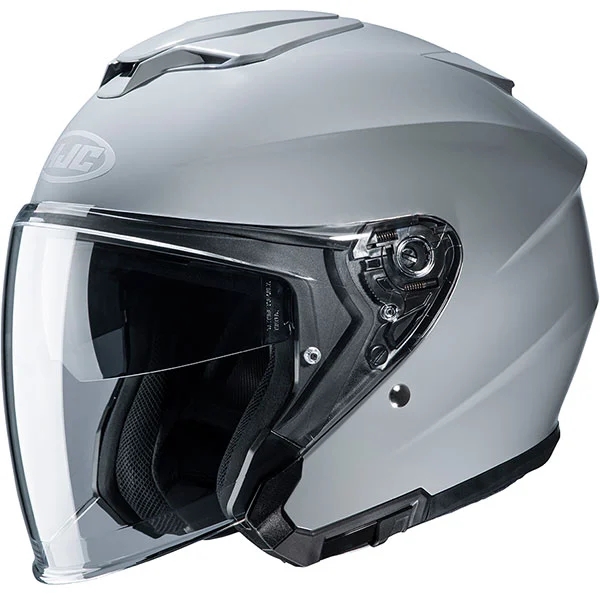
IN A LINE Another good looking and comfy polycarb open face full-visor with good sun visor actuation and OK venting.
WHERE TESTED Around the UK and Morocco.
COST & WEIGHT £111 for SuperBikeStore. New dark visor: £42. 1520g verified (L, 58-59). My head measures 58cm, fyi.
Great visibility, like all these styles of lid
Very comfortable for the price
Quiet compared to previous X-Lite
Looks cool; no naff graphics
Integrated sun visor actuates easily
Inexpensive
Easy to use chin ratchet clasp (not D-rings)
Velvety padding with pop fasteners comes out and refits easily for washing
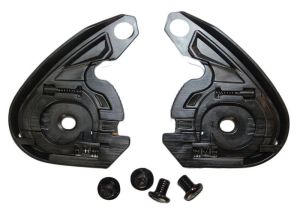
Visor comes off/refits fairly easily for proper cleaning
Replacement visors from £50 rrp
After two years one side of the visor sometimes dislodges itself – new mechanism £20
REVIEW There was nothing much wrong with my old X-Lite other than it was 10-years old in with the lining coming apart from too many hotel sink washes and the lever for the sun visor long lost. I left it in Marrakech and back home narrowed it down to an HJC i30 which have been around for years too. I like the look of the i30 and in Large (58-59cm) fitted my head snugly without causing nausea, double vision, seizures or migraines. For my sort of riding: slow speeds with frequent stops for photos, instructions or jotting; these open-face full-visor jobbies (OFFV) are ideal. All the preceding can be done without removal while a full face visor keeps the rain and bugs at bay. I don’t doubt there are quieter lids but now we have more types of ear plugs than toothpaste brands, that’s not so relevant.
Obviously venting is a moot point as it rushes up under the visor, but on top there’s an easily operated slider to get a little airflow around the top of the head. Tbh, in English or cool season Morocco temps, venting doesn’t add up to much but there are times I do detect its effect. The sun visor slots down with little levering (too little in haptic terms) at the easily accessed lever on the LHS, and the main visor has a couple of indexed positions, but with me it’s either up or down. I also like the ratchet chin strap; quick and easy to use with nothing dangling loose. The colour meets my approval too, though it is glossy, not matt as appears in some adverts.
I’ve worn it for several months in Morocco and it’s holding up well. The top venting doesn’t really make much difference; when it’s hot and you’re working hard you sweat like the Trevi fountain. But for washing the lining, the three sections of inside paddling come out and slot back in a lot more easily than my X-Lite. The whole lid can be hosed off for dust in a shower and soon dries.
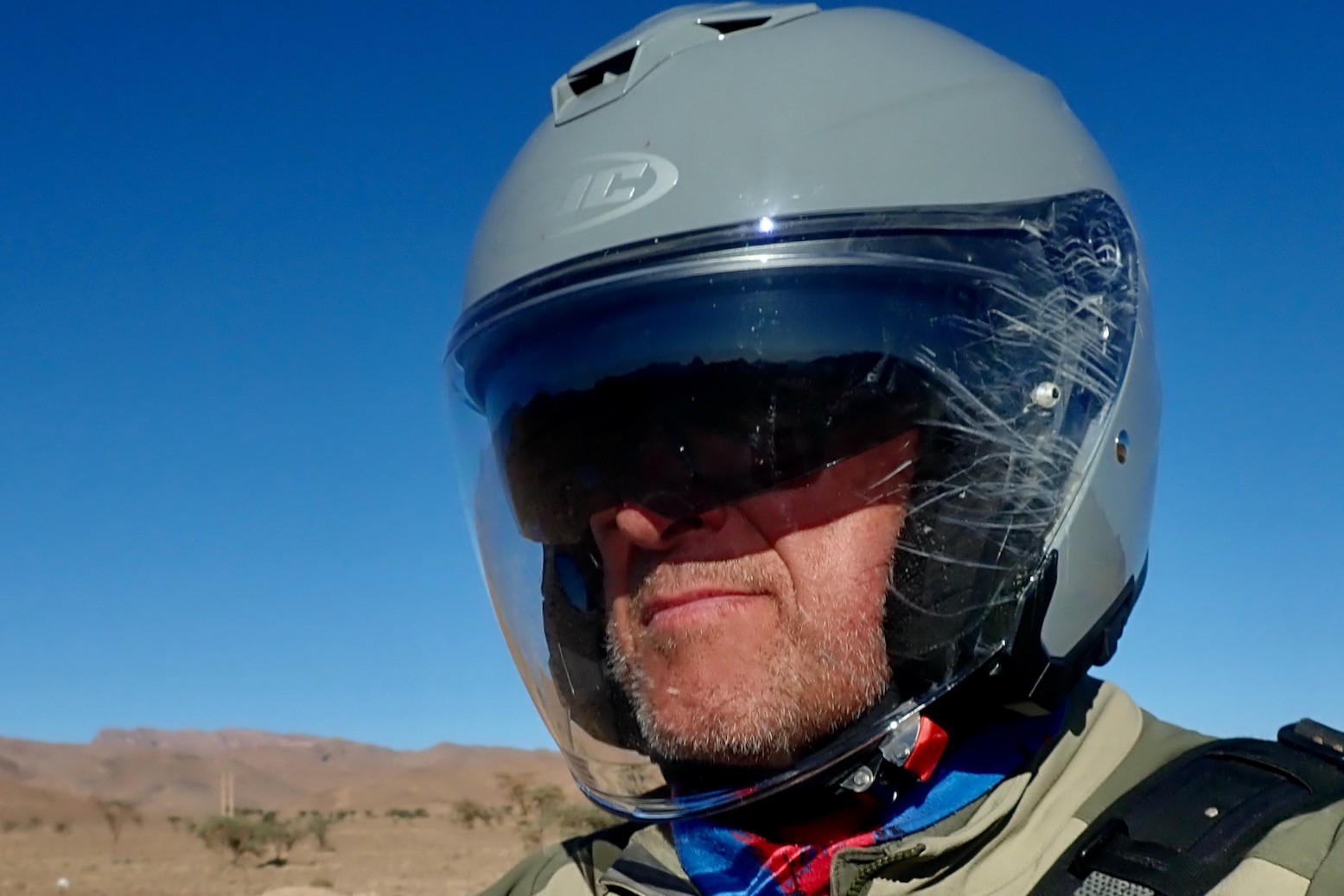
As you can see, I had one of my very rare slow speed falls and badly scratched the side of the clear visor, but there was no other damage and it doesn’t affect forward vision. The sun visor still actuates solidly enough, so does the main one. It still amazes me how modern visors resist scratching indefinitely compared to the crap visors we had in the old days. I treated myself to a dark visor which in ever-sunny southern Morocco is easier on the eyes but costs 42 quid.
A few thousand miles in I’m happy with my HJC i30, but two years in I could do with a pair of new visors (rrp £50 each), and one side of the visor gets dislodged on some lifts, maybe following a drop or two. Don’t know if it’s the visor or the mechanism, but at least you can buy a replacement mechanism for £20 from the Visor Shop.
The other day’s inaugural run along the TET’s Great Western Trail in Dorset was unnervingly easy and enjoyable. I wasn’t wrong footed and barely put a foot wrong. Today’s westward continuation was going to be my difficult second album. For more afteride bike impressions, see bottom of the page.
Rights of Way (skip if boring – E&OE) The last time I looked into it, to establish the status of a right of way in England & Wales (Scotland is a write-off) you had to inspect a county council’s definitive or ‘master’ map (DM) held in its offices and viewable by appointment. This is why people ride wasteland, join clubs or go to Morocco. Now we have the internet county councils publish this map online for all to view anytime for free. Vehicle access wise, the map will identify the very few Byways (aka BOATs), as well as much more numerous Unclassified Country Roads, (UCRs) which I calledORPAs (‘other routes with public access‘, on OS maps). But according to this typical statement, the Dorset Definitive online map (example below) doesn’t have the legal status of the county’s official Definitive Map held in a glass vault in Dorchester Castle. So while you cannot fully rely on the online county master map, it ought to be more up to date than the latest OS edition and is free. Perhaps the best online map for trail biking is produced and maintained by the Trail Riding Fellowship. It’s viewable at greenroadmap.org.uk where it says guests (non-TRF members) can register and view the map with limited features, but I couldn’t manage it. This is why we like the simplicity of UK TET with the GWT. One 3800-mile gpx download and you have enough to be getting on with.
Only one Byway in red, but quite a few ‘UCRs’ in light and dark blue, some of which join through.
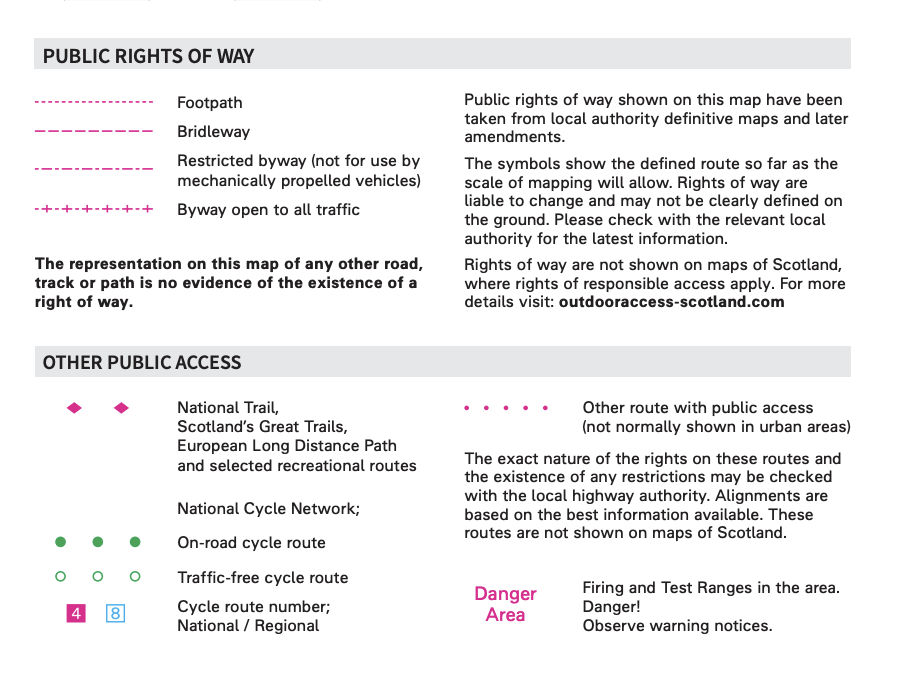
These UCRs or ORPAs – shown on OS maps as small red spaced dots on 50k maps • • • • , or green on 25k • • • • – have been a bit of an eye opener to me just lately, still stuck as I am in the 1980s RUPP era, but ORPAs have been on OS maps since 1997 and RUPPs were downgraded or mass reclassified as Restricted Byways by 2006. All this has passed me by over the decades. Clearly I’ve spent too much time in the desert where, by and large, an RoW is determined by the terrain and you and your vehicle’s ability to navigate it.
UCRs might be sealed or just tracks, passable or otherwise, but providing they don’t dead end at some backwoods ‘dueling banjo’ meths compound (as I stumbled on the other day), you have the promise of a through route. So I can now verify that track I followed in mid-Wales the other week was a UCR and doesn’t even get any special annotation to the Powys Definitive online map. As DK and DW, a pair of intrepid travel bikers and TRF lifers clarified to me “In 99% of cases, you can legally ride a bike on a UCR“. When you view the Dorset GWT on an OS background, you can see it aligns with UCRs and the much less frequent Byways as well as regular metalled yellow ‘C’ roads.
An ORPA or UCR in DorsetMid-Wales kosher!
The TET gets offensive The forecast was a bit shaky; I’d probably get a hose-down at some stage but would dry off eventually, given global climate patterns. I was planning on reaching Lyme Regis, about the same distance as the other day, though something about today’s route looked more challenging and maybe more typical of the GWT.
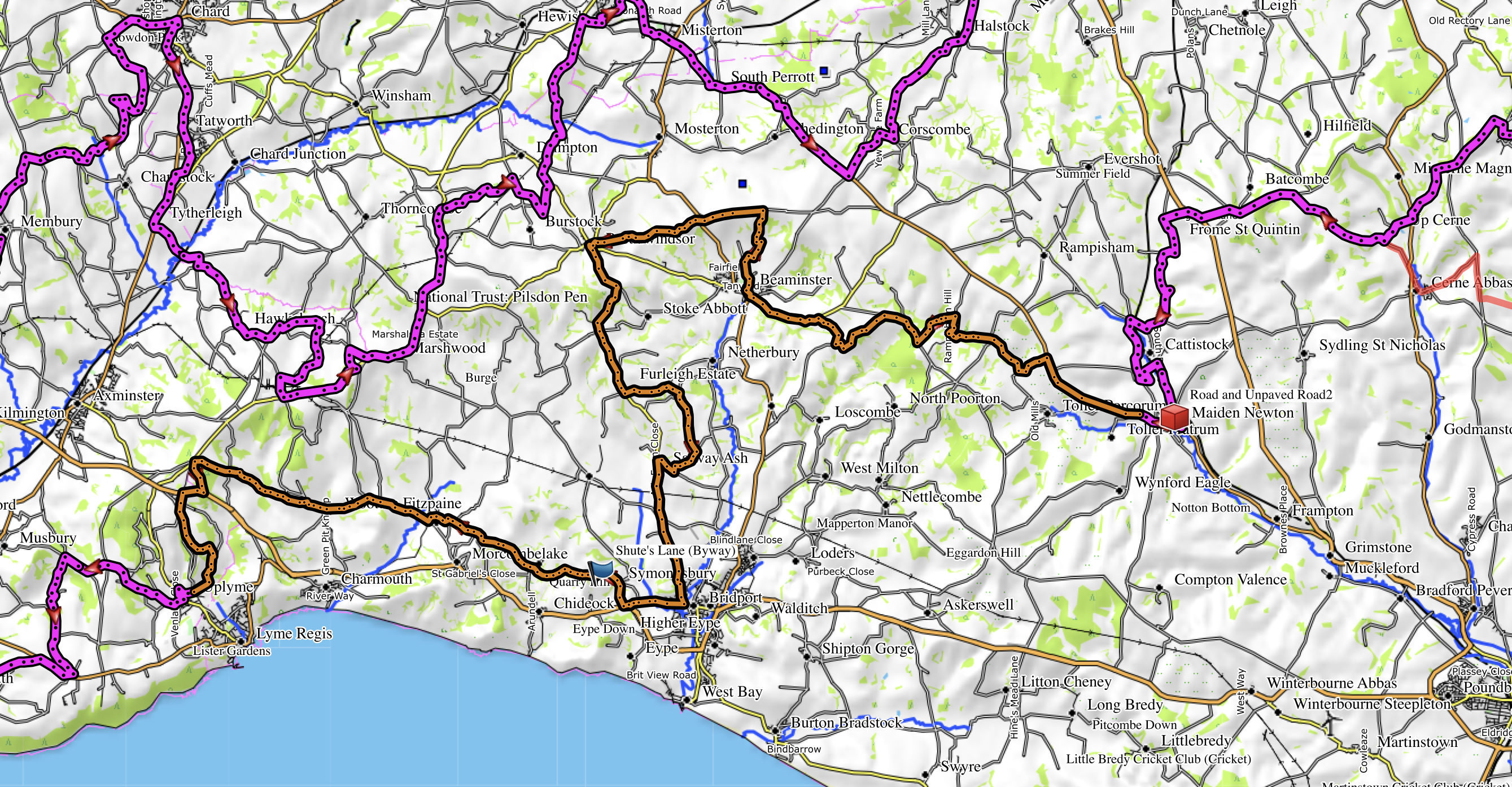
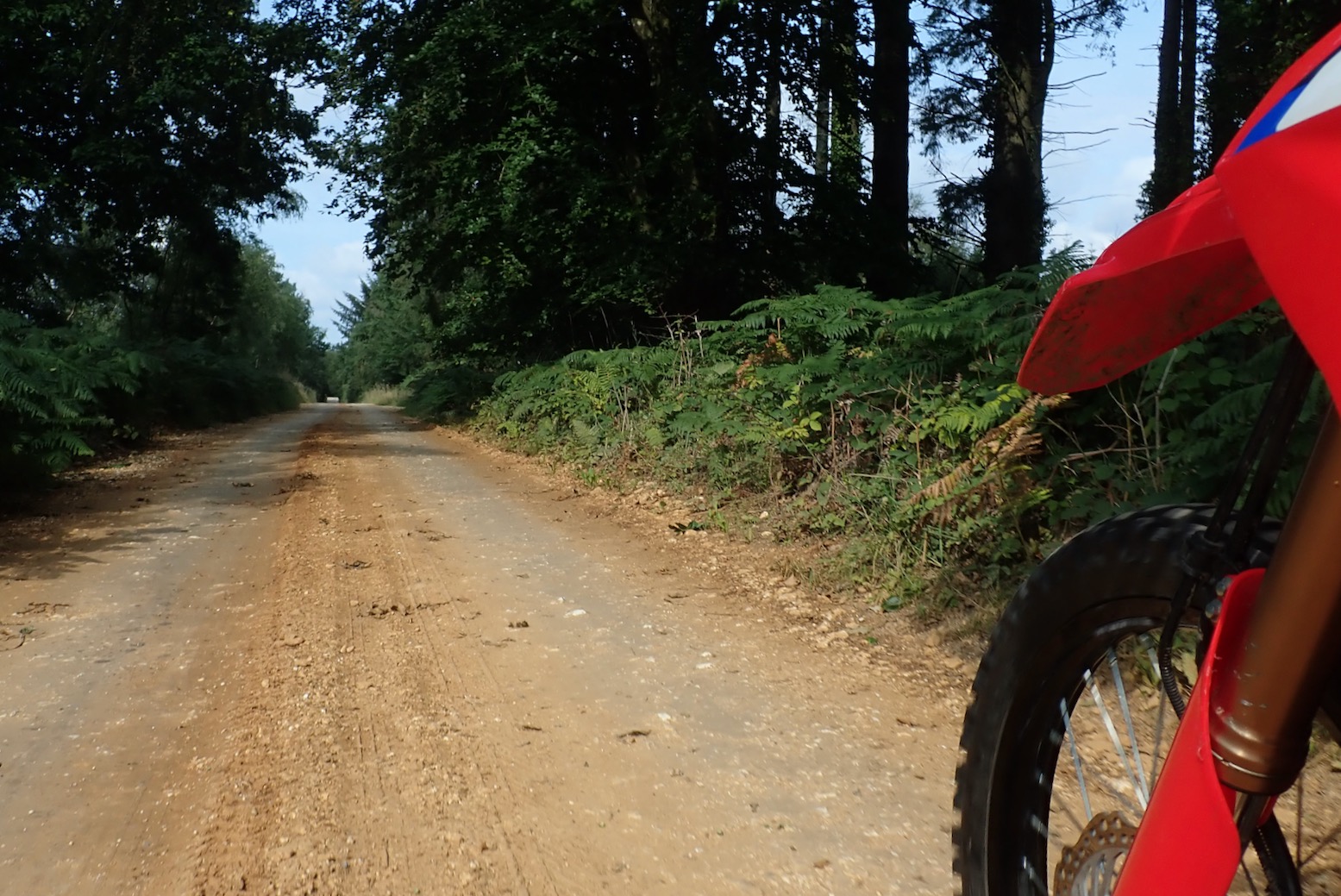
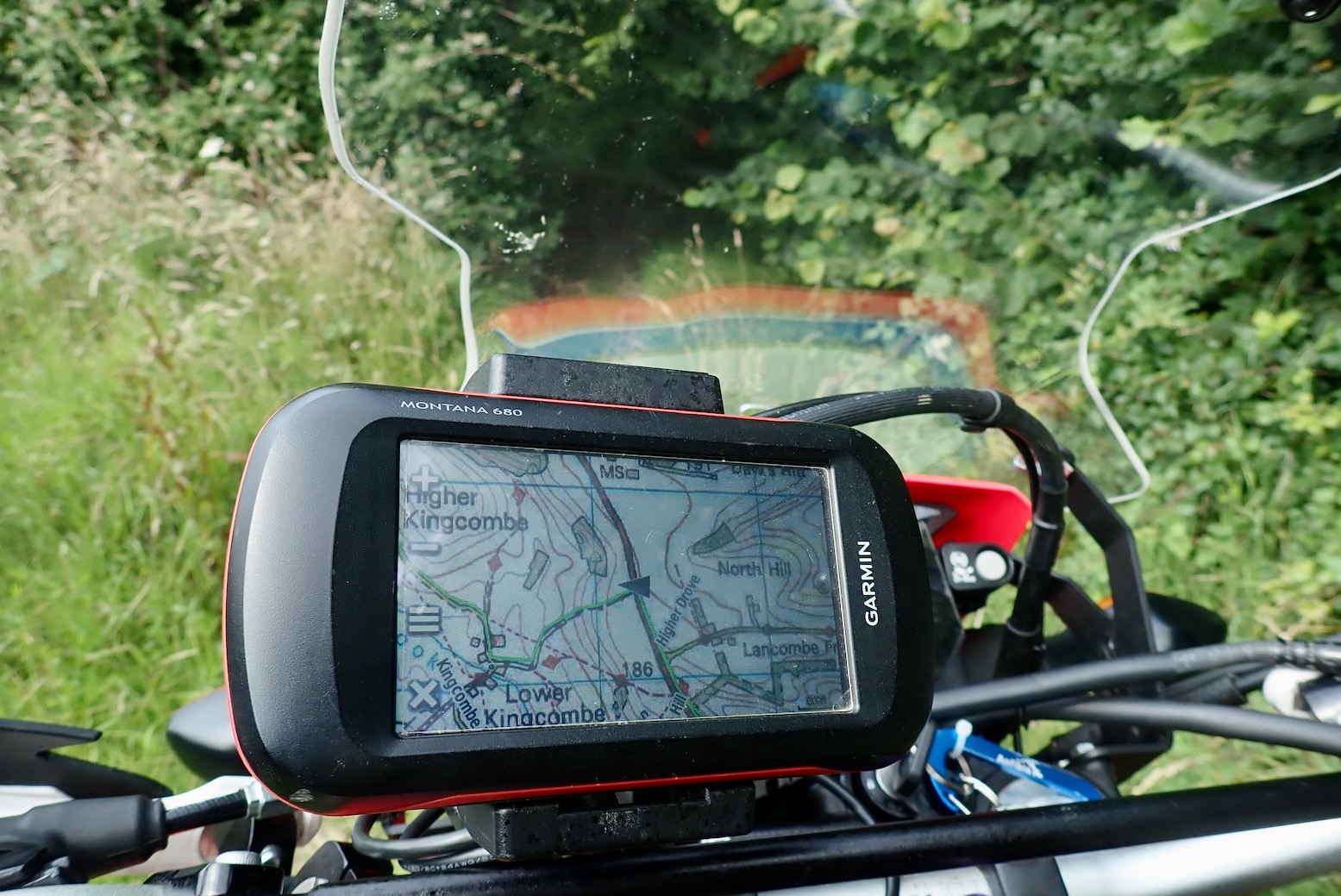
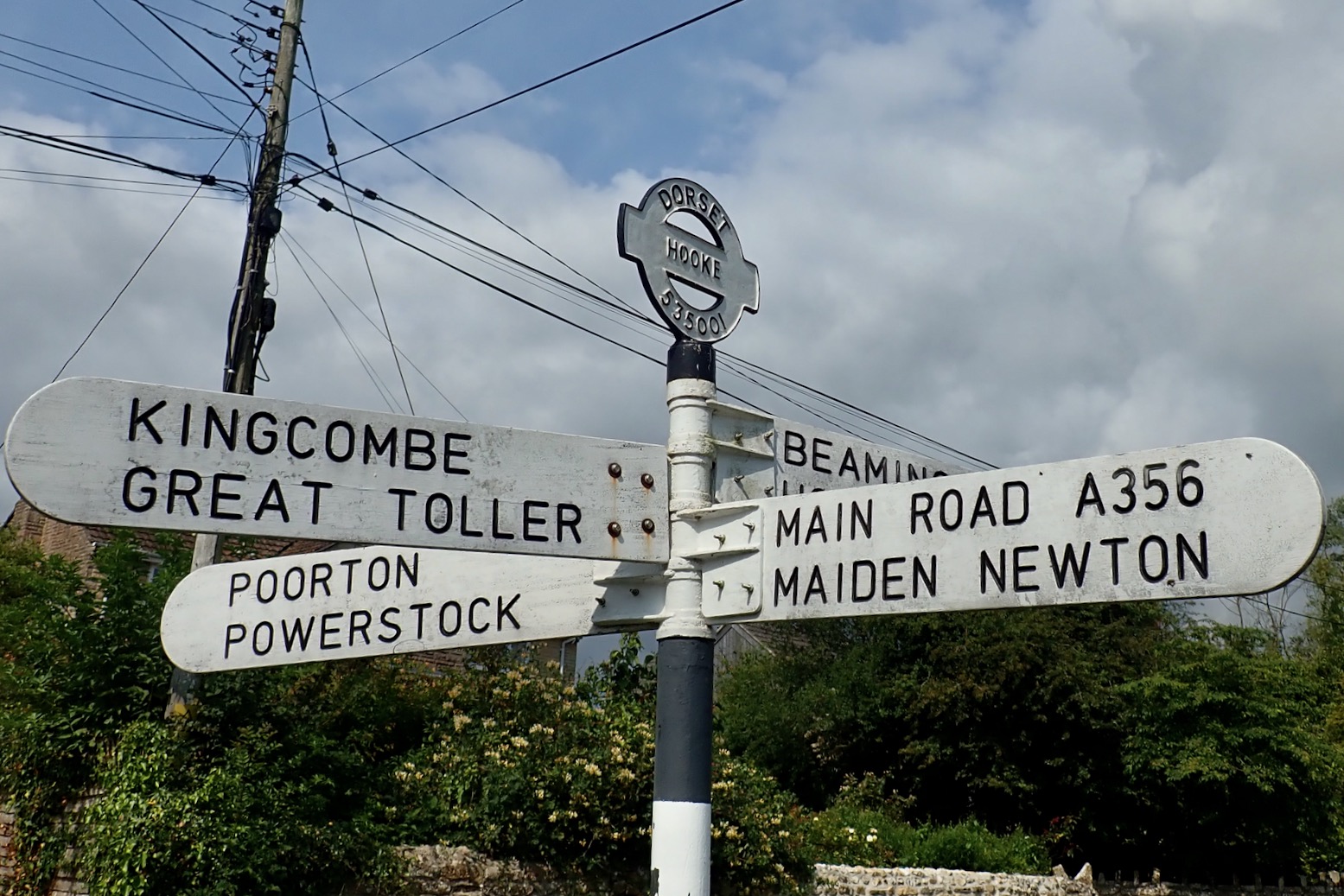
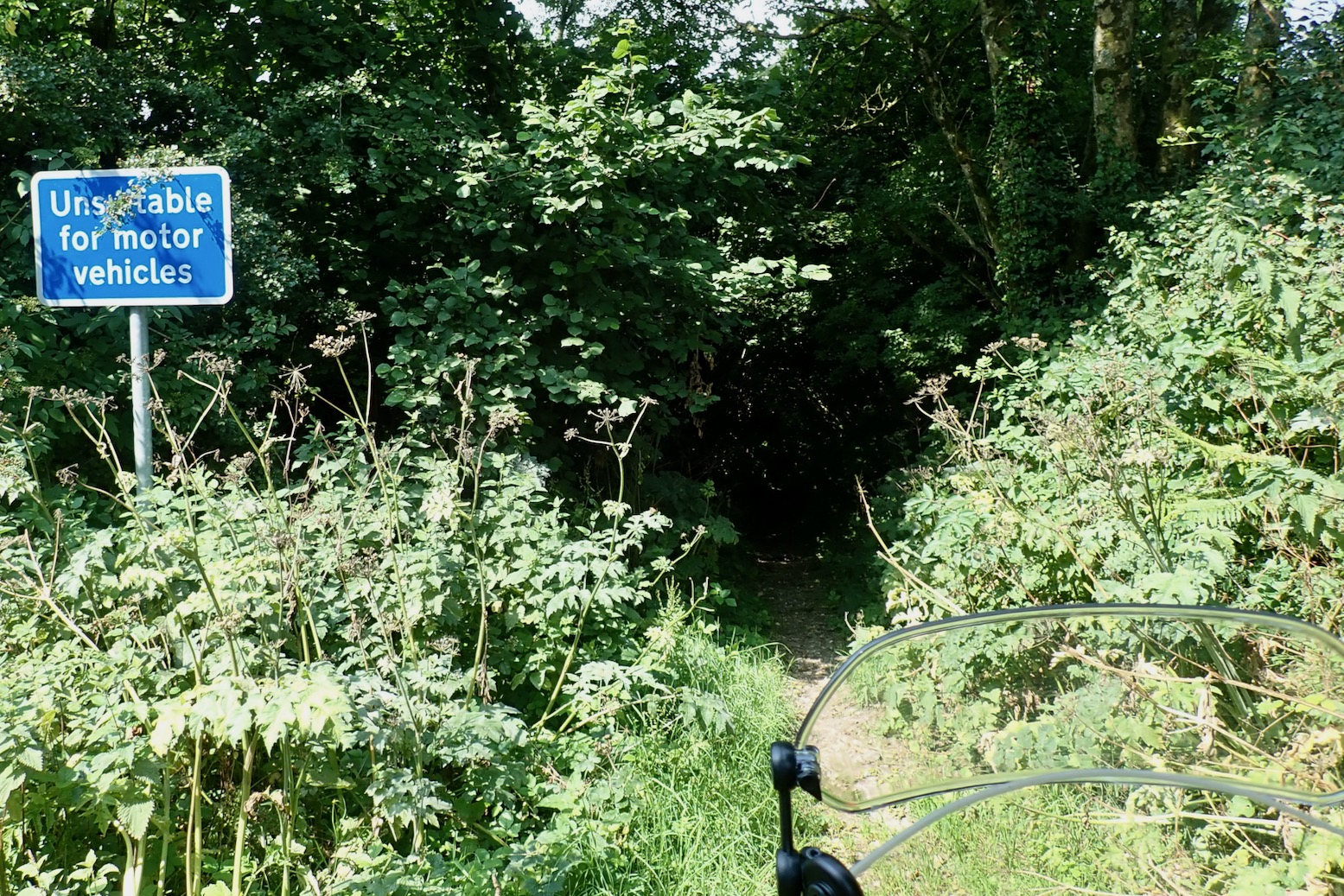
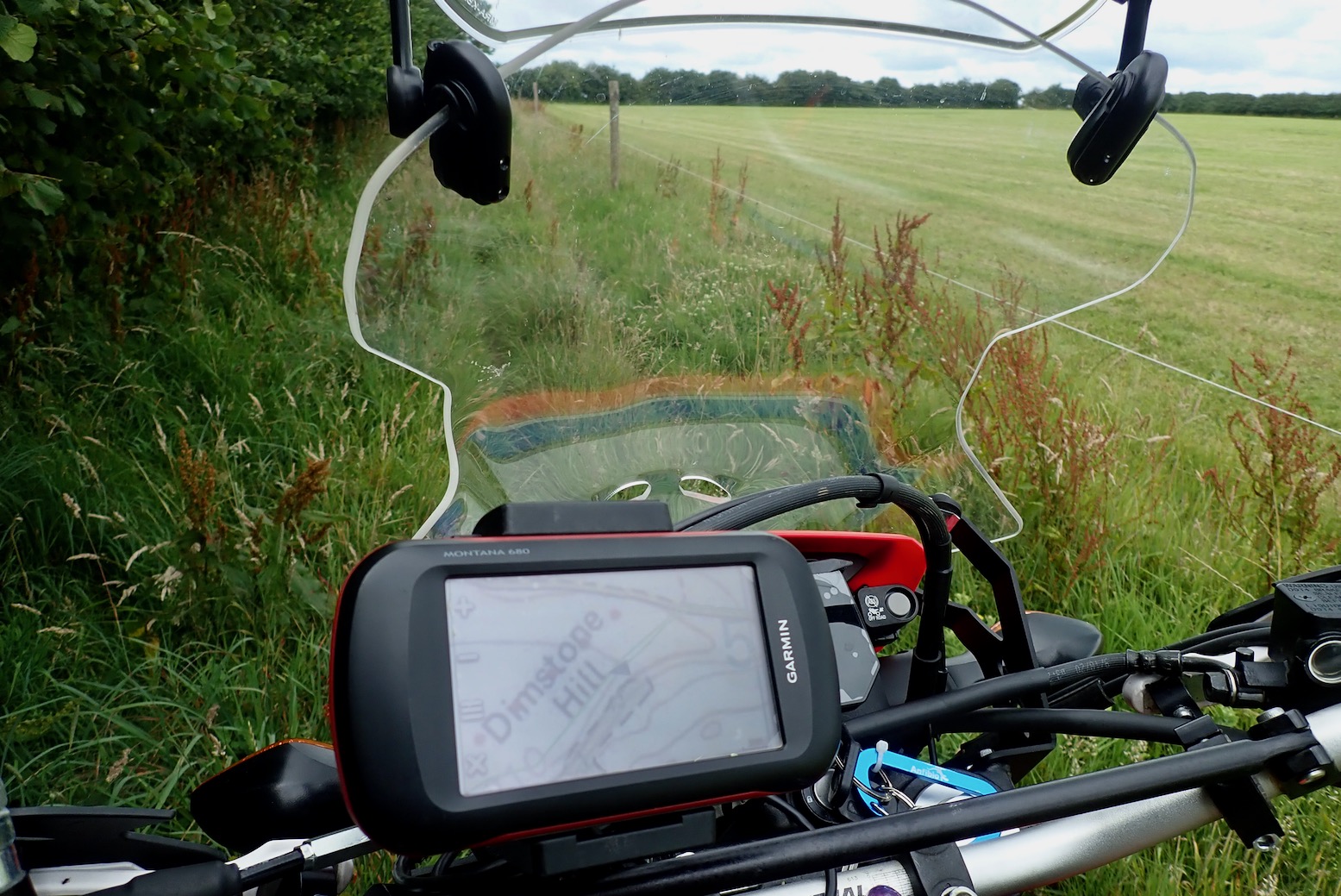
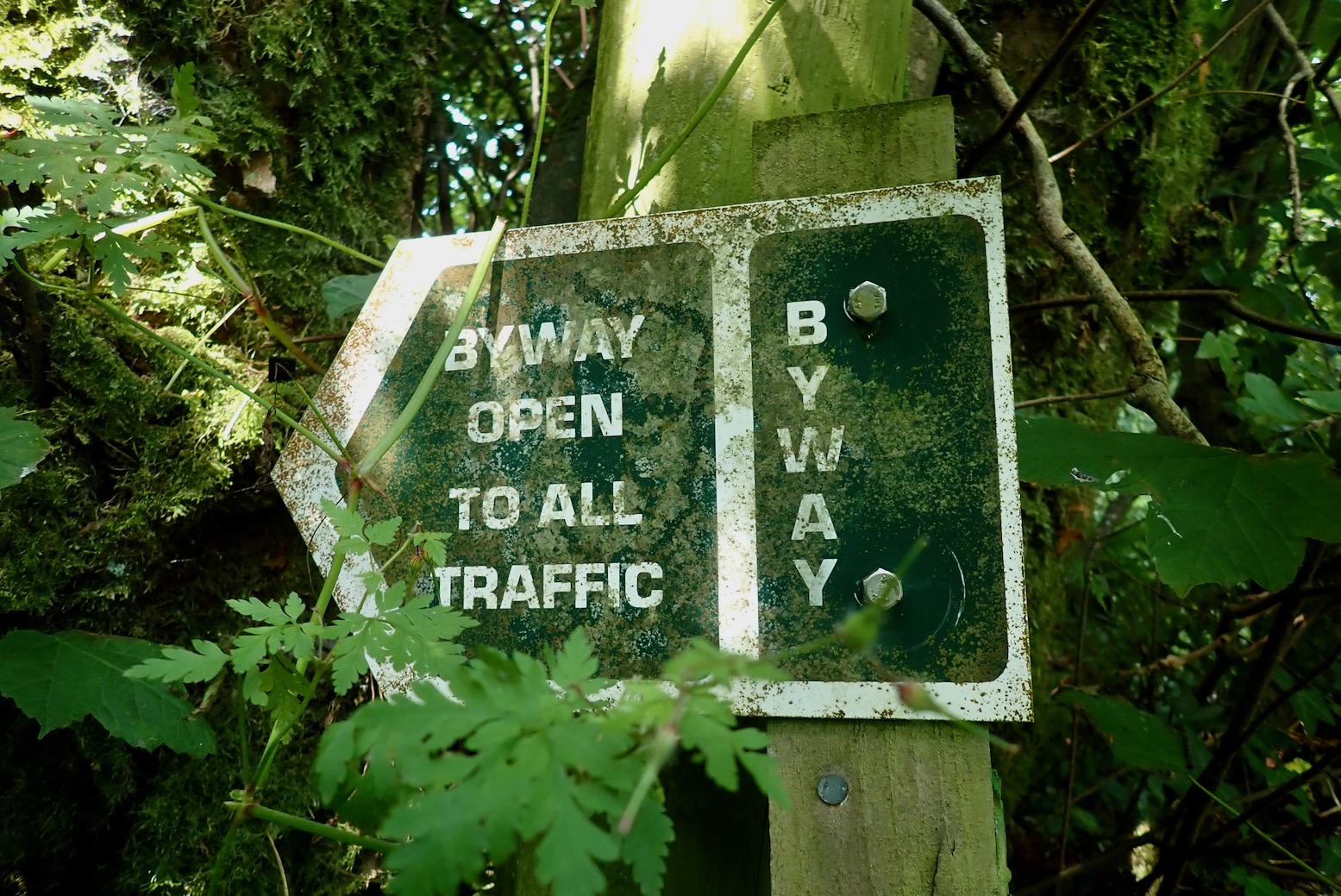
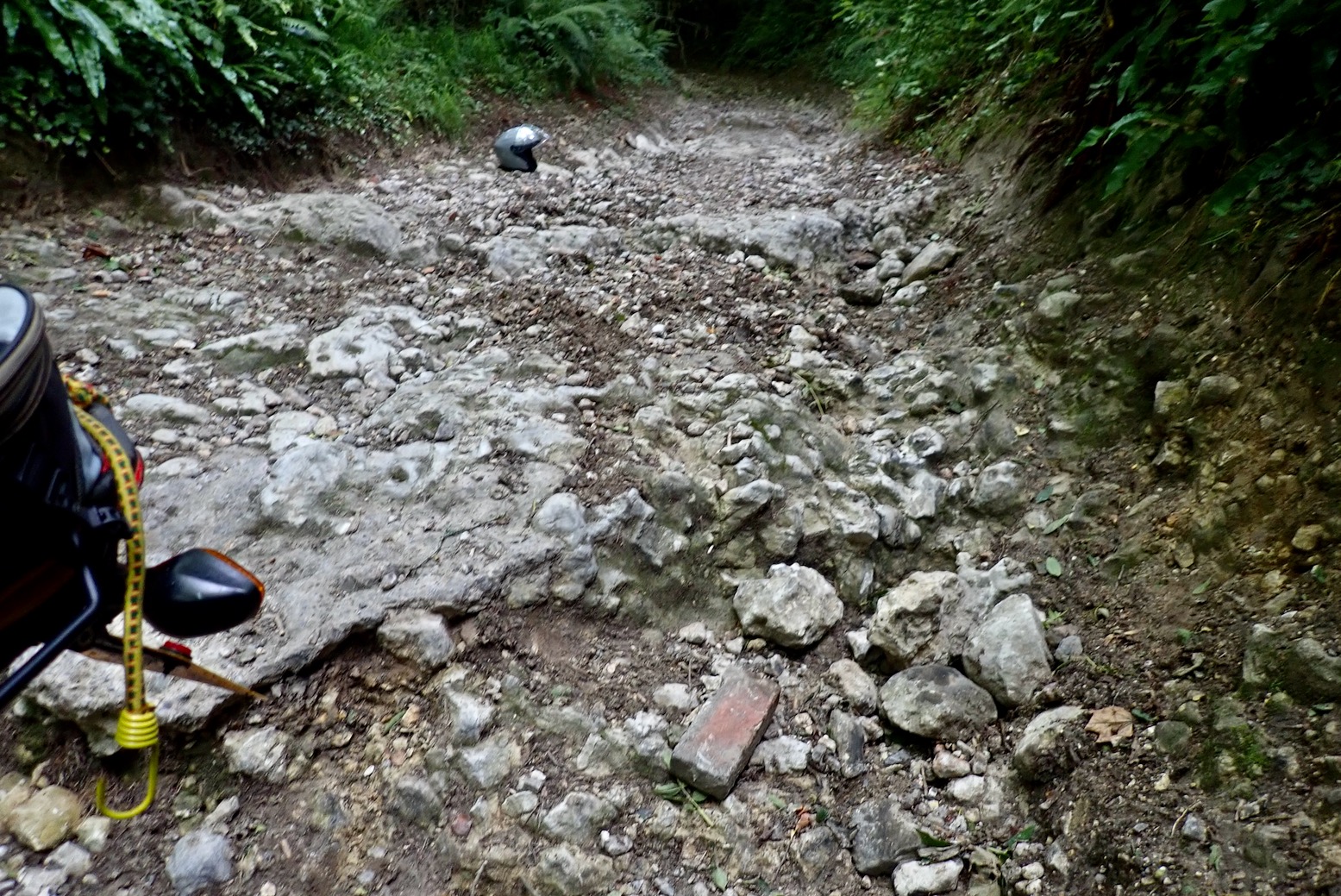
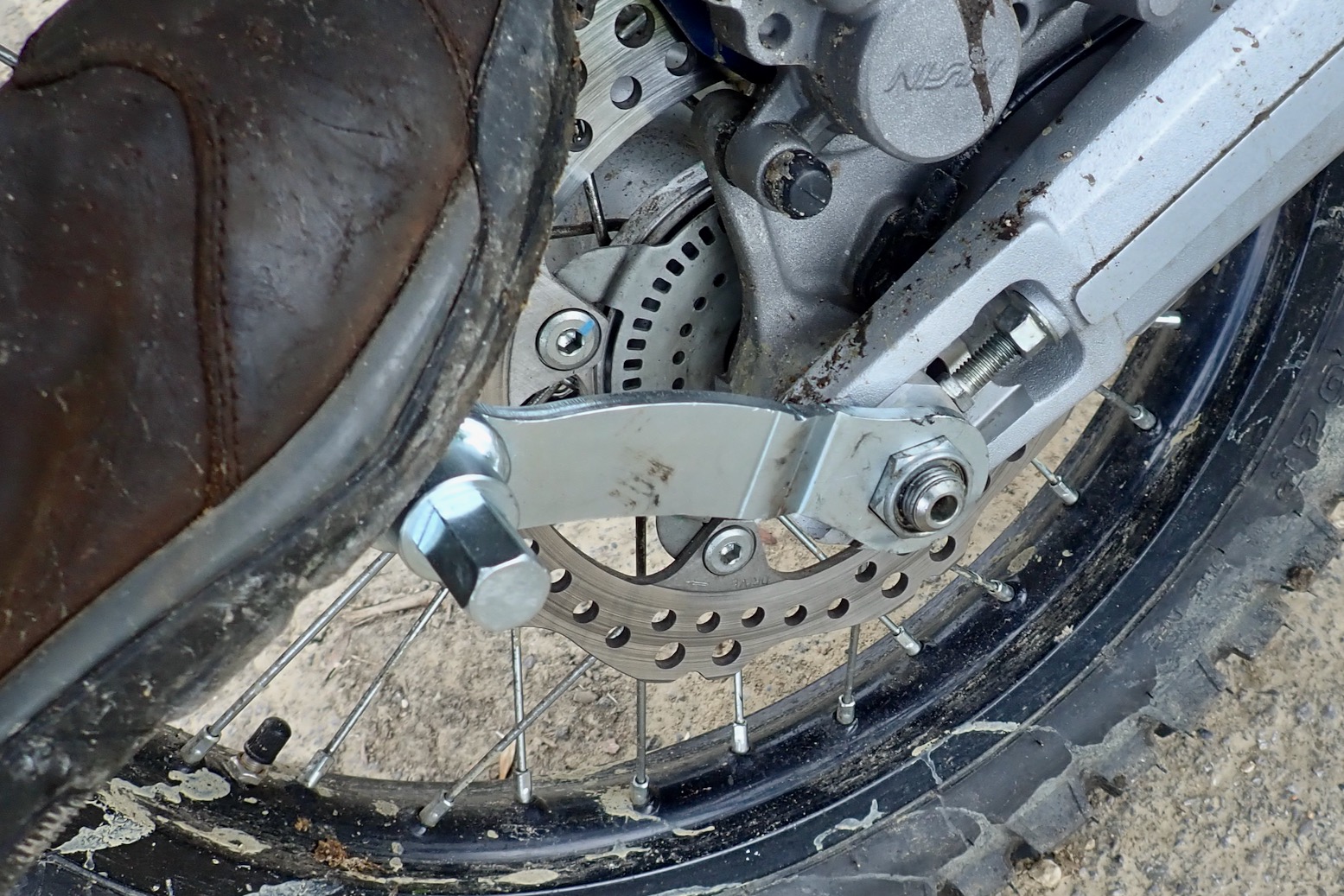
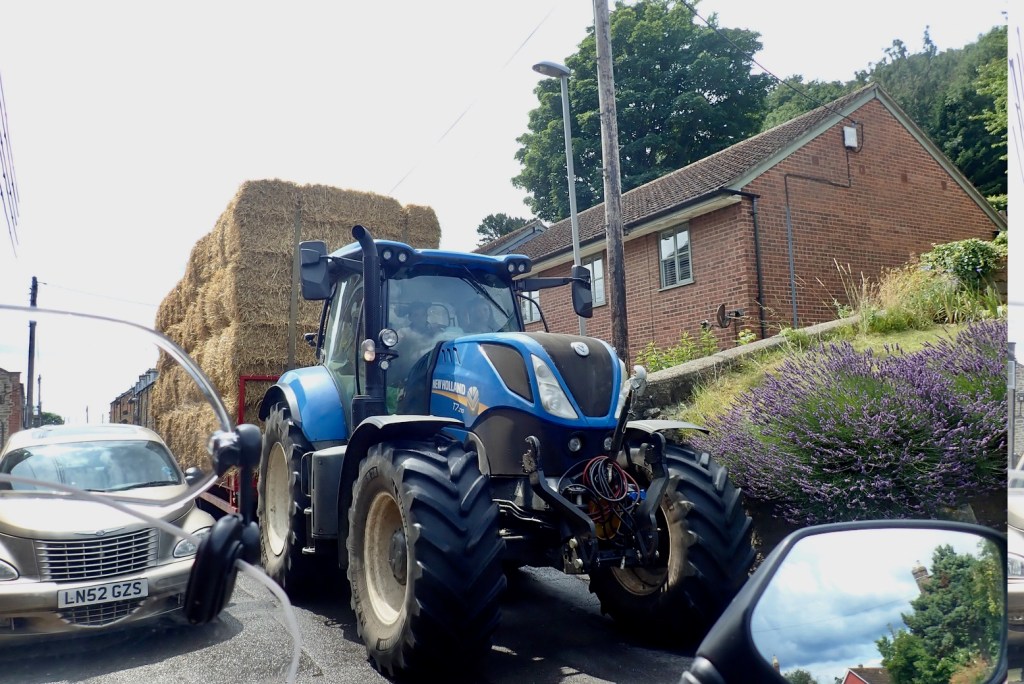
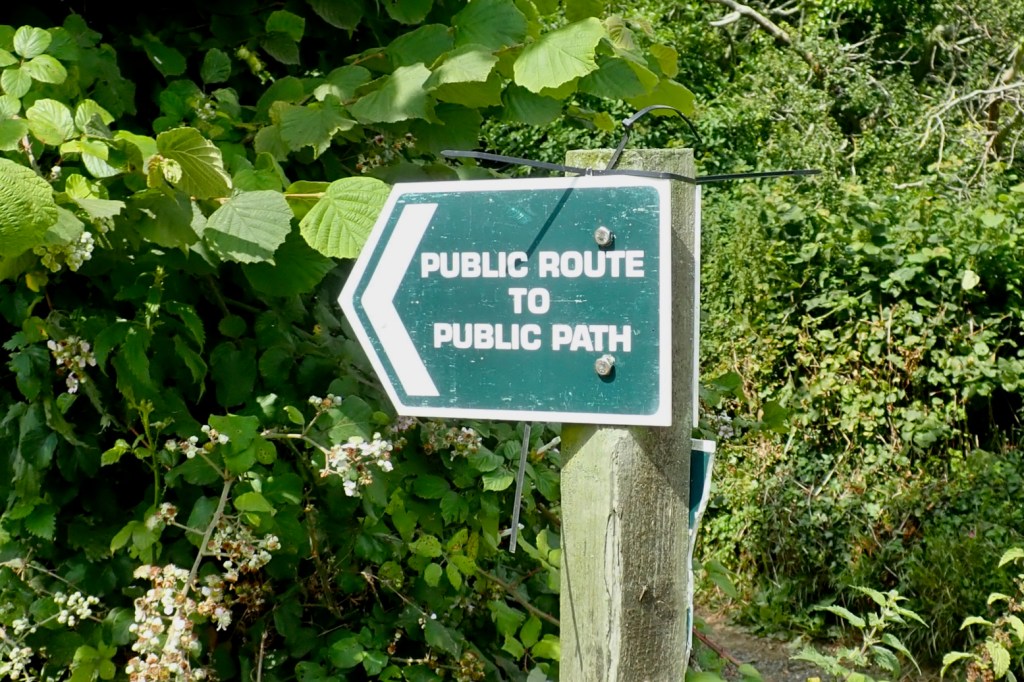
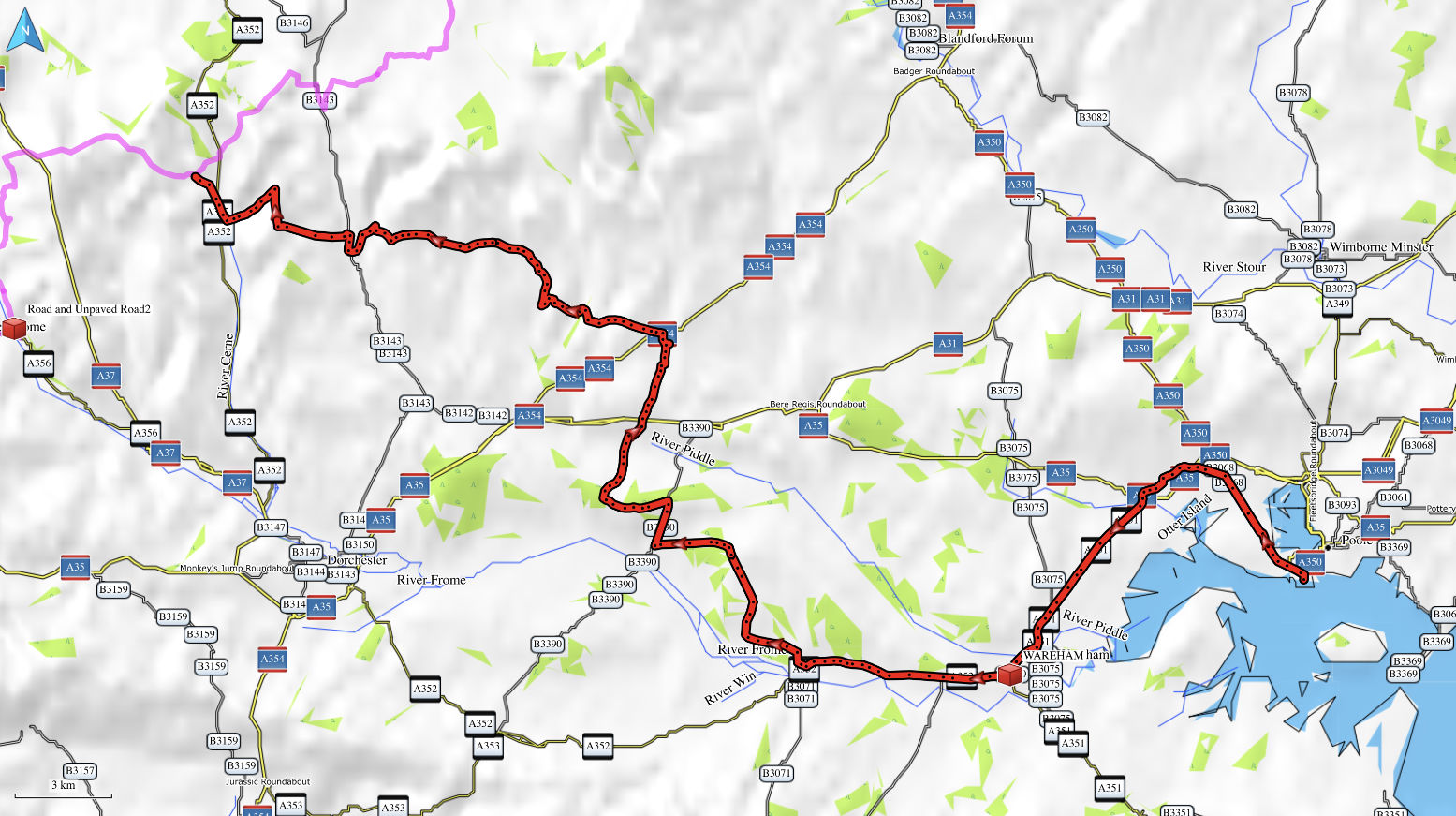
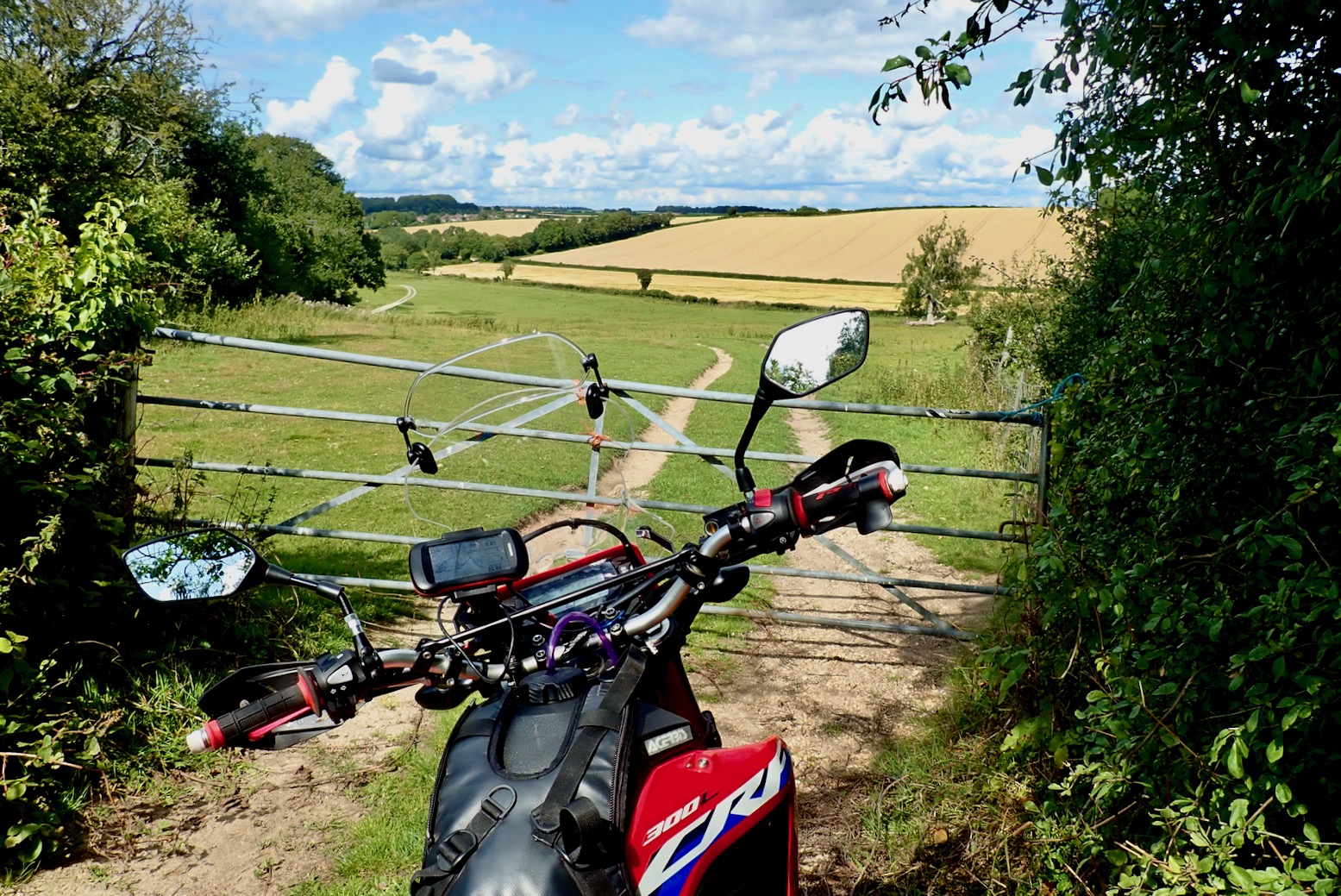
Maiden Newton to Lyme – only 36 miles. No biggie then…I set off along the same trail through Sares Wood to Tolpuddle to make sure I didn’t make it up.That’s more like it! I feel at home now.I get in a tangle around Dorchester and then miss the road to Maiden Newton; I find I often mess up the nav when I half know the way; a little knowledge is a dangerous thing, grasshopper. To make amends I consider this shortcut down a hillside to Maiden, but at a gate I re-scrutinise the Garmin’s OS map and it’s only a Bridleway, which I confirm later on the county DM. Can’t be going there.Back on the GWT, I turn onto my first trail, sorry – unclassified road. I’ve made the Garmin’s GWT tracklog green to make it easier to see.I can do this!I think ‘Public Route’ may be a kind of ORPA. Back on the asphalt, my front tyre seems to be making a lot of noise. It was 19psi this morning, not a pressure I run. There’s a lot of debris down the middle of these hedgebound, single track lanes. Have I got a slow puncture on the presumably crappy OEM IRC tyre? (Yes). I’ll top up at the next servo.Many roads lead to Hooke. I wonder if houses in Poorton are cheaper than Powerstock? Hooke in the Domesday BookeHooke’s dinky, red sandstone church of St Giles. ‘Only’ 600 years old.Unsuitable you say? Hold my beer!I still find it hard to believe I’m allowed to actually ride ‘footpaths’ like this. I am what I am and I’m one of the sheeple ;-)I emerge by a field where hidden ruts alongside a 2000-volt electric fence help concentrate the mind.First gate of the day – good for the abs.Here comes that weather.I pass through Beaminster town with half an eye out for an airline, before burrowing back into the undergrowth like a motorised hedgehog. Never seen a BOAT sign before. Encouraging.Oh dear, what’s up now?I’m knocked back by a couple of limestone rock steps on a stoney slope. It would have needed quite a launch plus some artful finesse – not a combo me or the 300L share at this time, thanks for asking. Alone, a bad fall could end… badly. The TRF call this lane an ‘old favourite’. Not me.I don’t even think about it and walk the bike up in 1st, but it gets jammed on the bigger step, then the chain comes off. A bigger tyre with less air might have clawed its way up. Never had a chain derail on a moto but at least it’s not broken nor has cracked the crankcase (had that on a KLX once – ruined engine). Luckily, this time I left home with tools. I drag it back down – this is where old-school tubularrear racks pay off. I prise out the very slack chain which easily rolls back onto the sprocket. Did the derailing stretch it so much? Along with my imminent flat tyre and the darkening skies, I’m a bit unnerved.Nearby there’s evidence that fourbies struggle here too. This lane – Meerhay or Mintern’s Hill (50.825716, -2.733489) throws me, but there’s no mention of it online. Even coming downhill I’d think twice, but it must be just me and my age. Returning to Beaminster, a delivery driver stops and asks about getting through. He knows about the BOAT and meanwhile, points me to a car garage in town.I pop in for a shot of air, just as the clouds unzip, let loose and shake off. Aired up to 30psi to get me home, I pretend to fiddle with the GPS until the downpour passes.I’m aiming to rejoin the GWT as it heads down to Bridport. At a crossroads I stop and tighten the chain with my new Rally Raid tool. It took 2.5 full turns of the nut. WTF? It wasn’t hanging off after a wash and lube two days ago. Is the Regina suddenly shot at just 1500 miles on this 28-hp donkey? Very odd, but better to know now than on Jebel Saro.Beferned phone box. A sign of the times.Beferned 300L. Not more of the psychedelic type, I hope.Unsuitable …… for XXL hay tractors
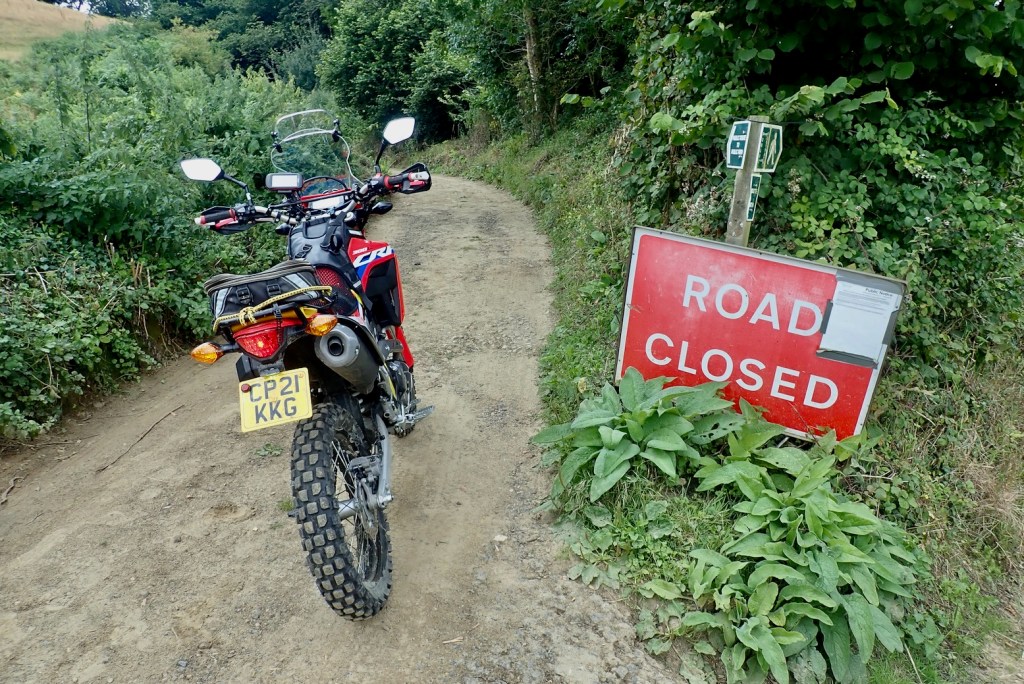
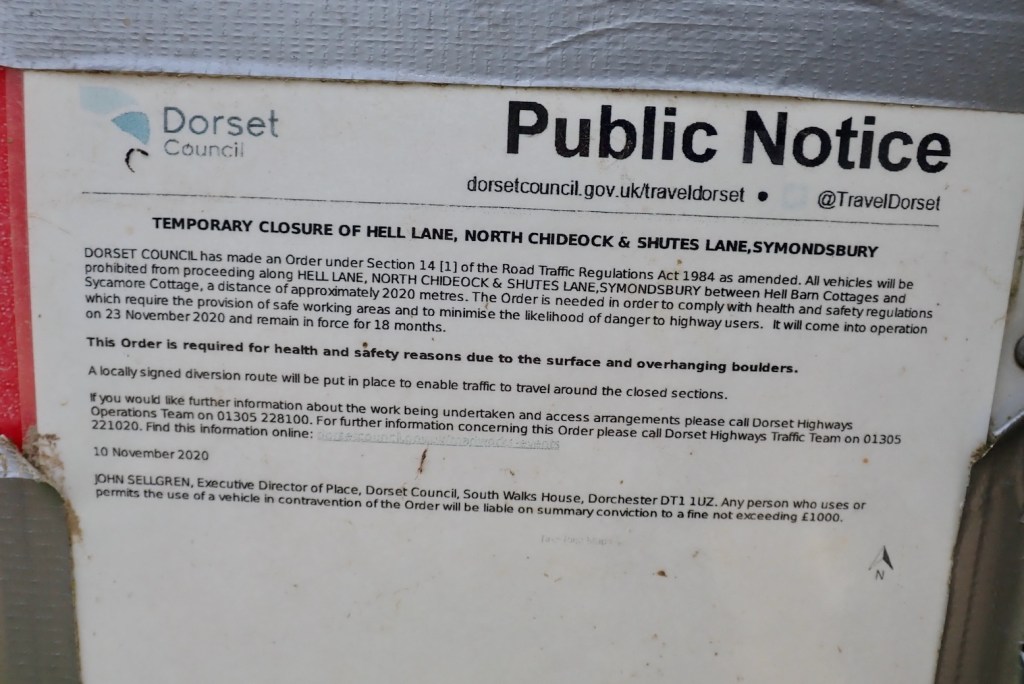
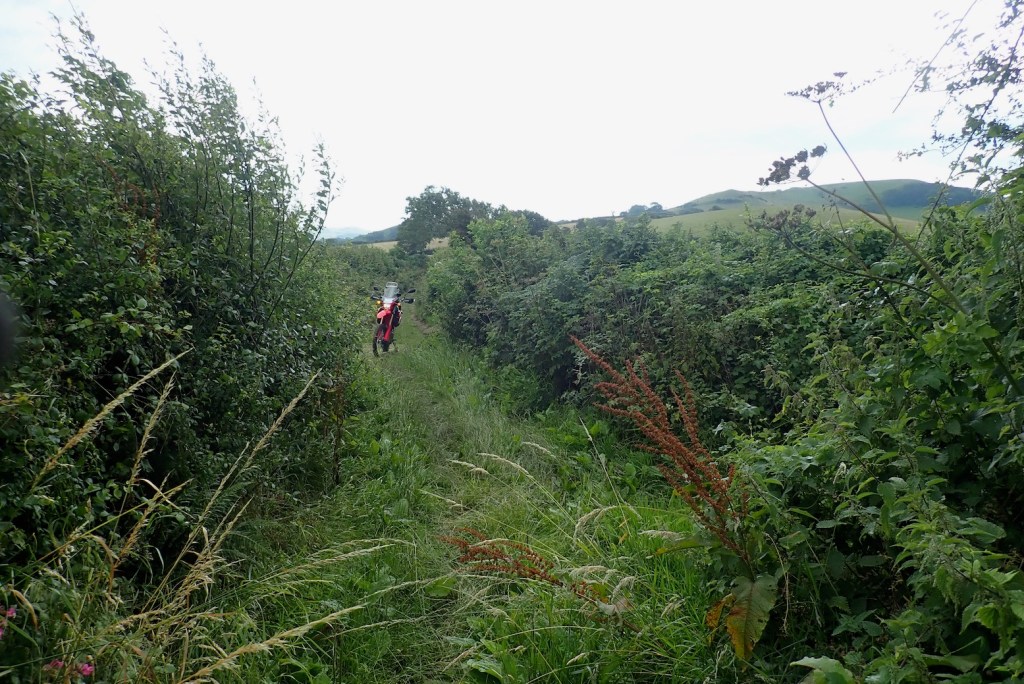
My mojo has rebounded so I continue west out of Bridport towards Lyme on the GWT. North of Symondsbury I come across a ‘closed road’ sign. Shame, it’s a nice track – Hell Lane in fact, as featured in ABR magazine a few years back.
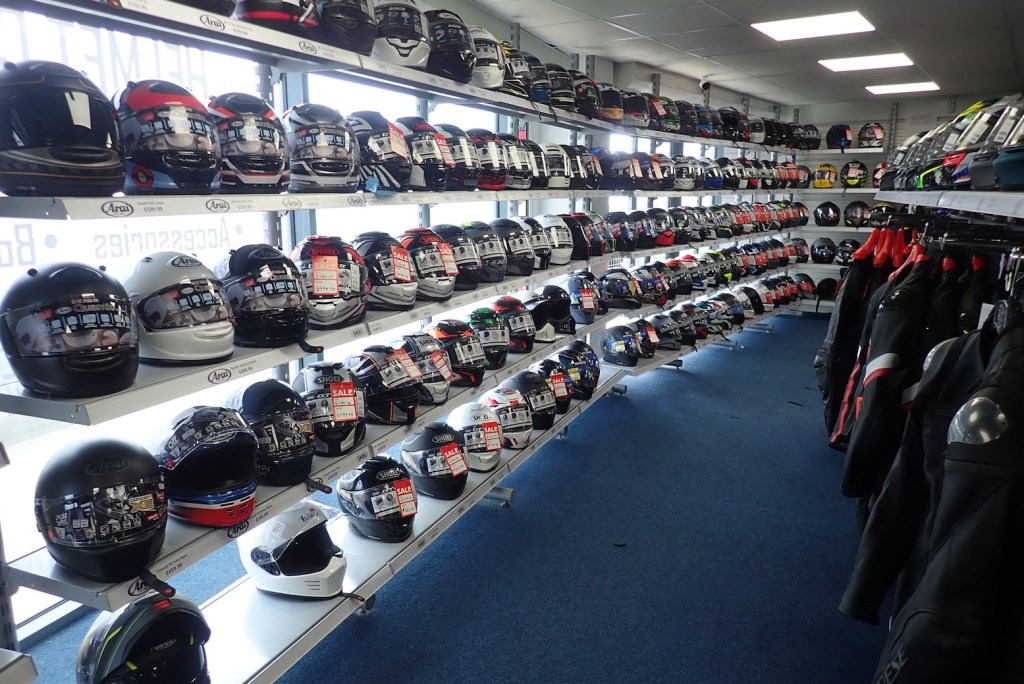
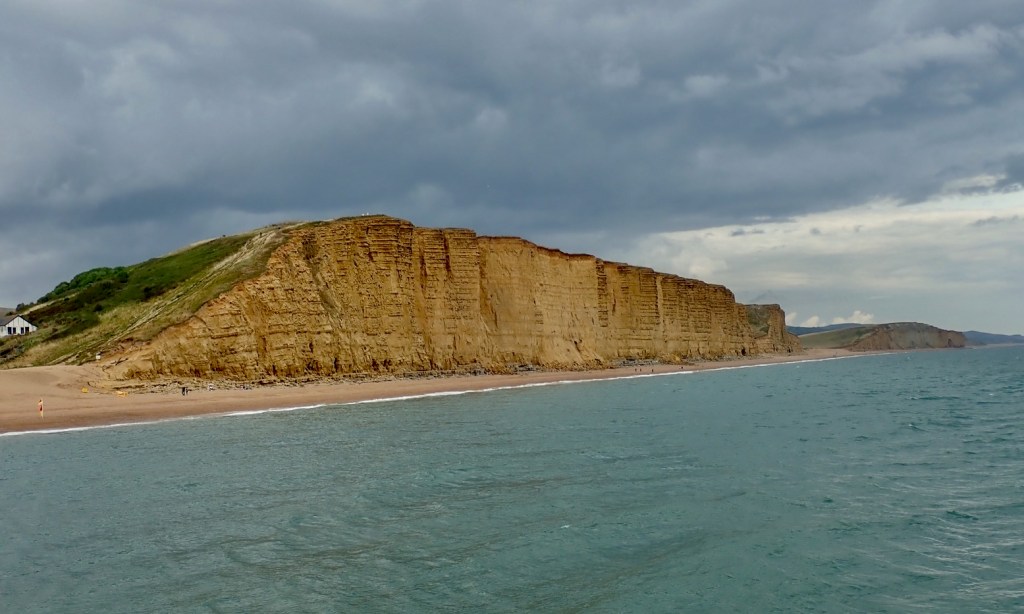
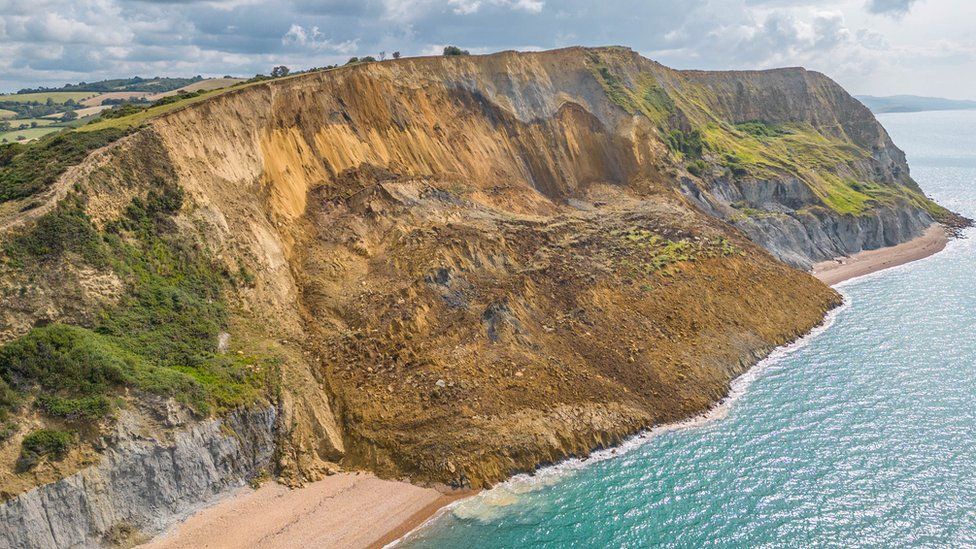
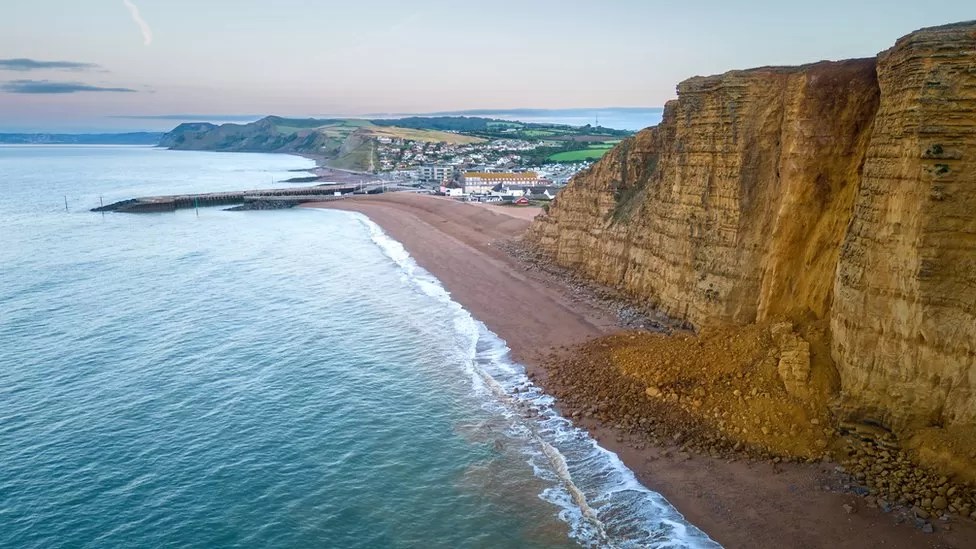
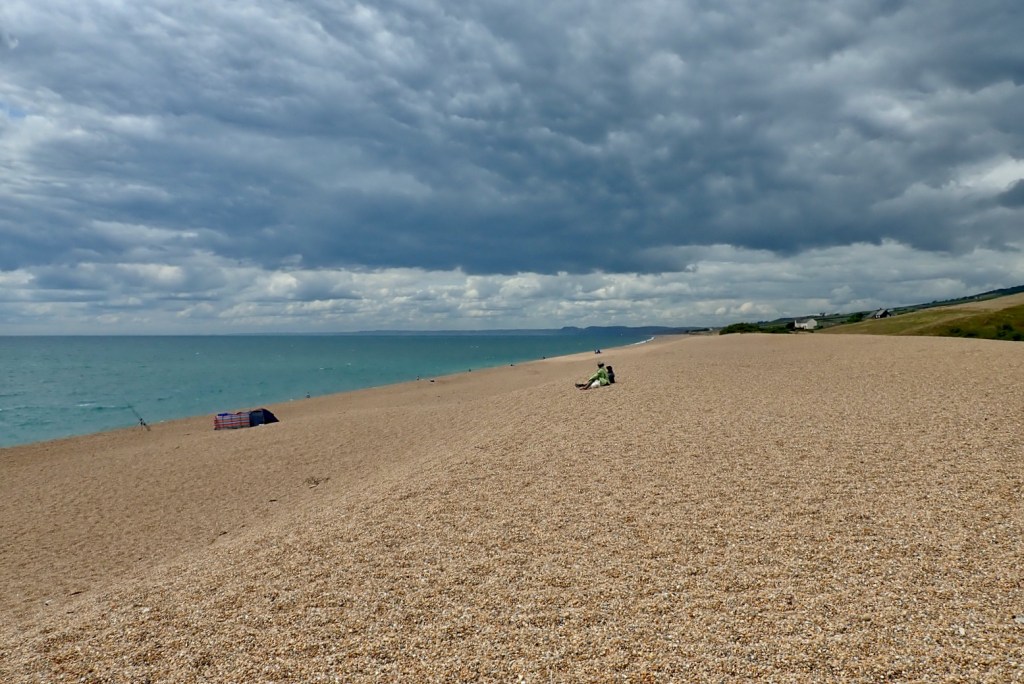
It’s a ‘public route to a public path’ which must mean something legally.Had I read the TRO more closely I’d have seen it expired last year. Specsavers, I know, but ditch the red sign already! I try a way round to the north but I’m blundering around. This isn’t a moto RoW.The chain thing and all the rest has worn me out so I scoot south to the seaside for a seafood snack by the seashore. Let’s try West Bay. I was hoping for calamari at a quaint 1770s cobbles and thatch Smugglers Inn – I get 1970s bucket & spade in batter with chips.Little West Bay seems to be a bikers’ hang out.Heck, they even have a Helmet City! The sweet smell of creaking leather…Recognise that cliff? Yep it’s ‘Broadchurch’. Remember all the hype over that show?That night a nearby cliff slid down and made the news. That would have been a heck of a reverse tsunami.A couple of weeks later, after a lot of rain, West Bay / ‘Broadchurch’ cliff, itself had a big rockfall.Lyme in the far distance, one for next time.I head home on backroads. It’s Chesil Beach! Never been there neither, here’s my chance. Gravel; large amounts. ‘The origin of the beach is a matter for scientific speculation‘ says an info board.Bit harsh.Backroading homewards, near TE Lawrence’s grave, two roads diverged in a wood and I took the ORPA less traveled by. And that has made all the difference; I got home 4 minutes earlier. I’ve done 100 miles and I am now quite tired.
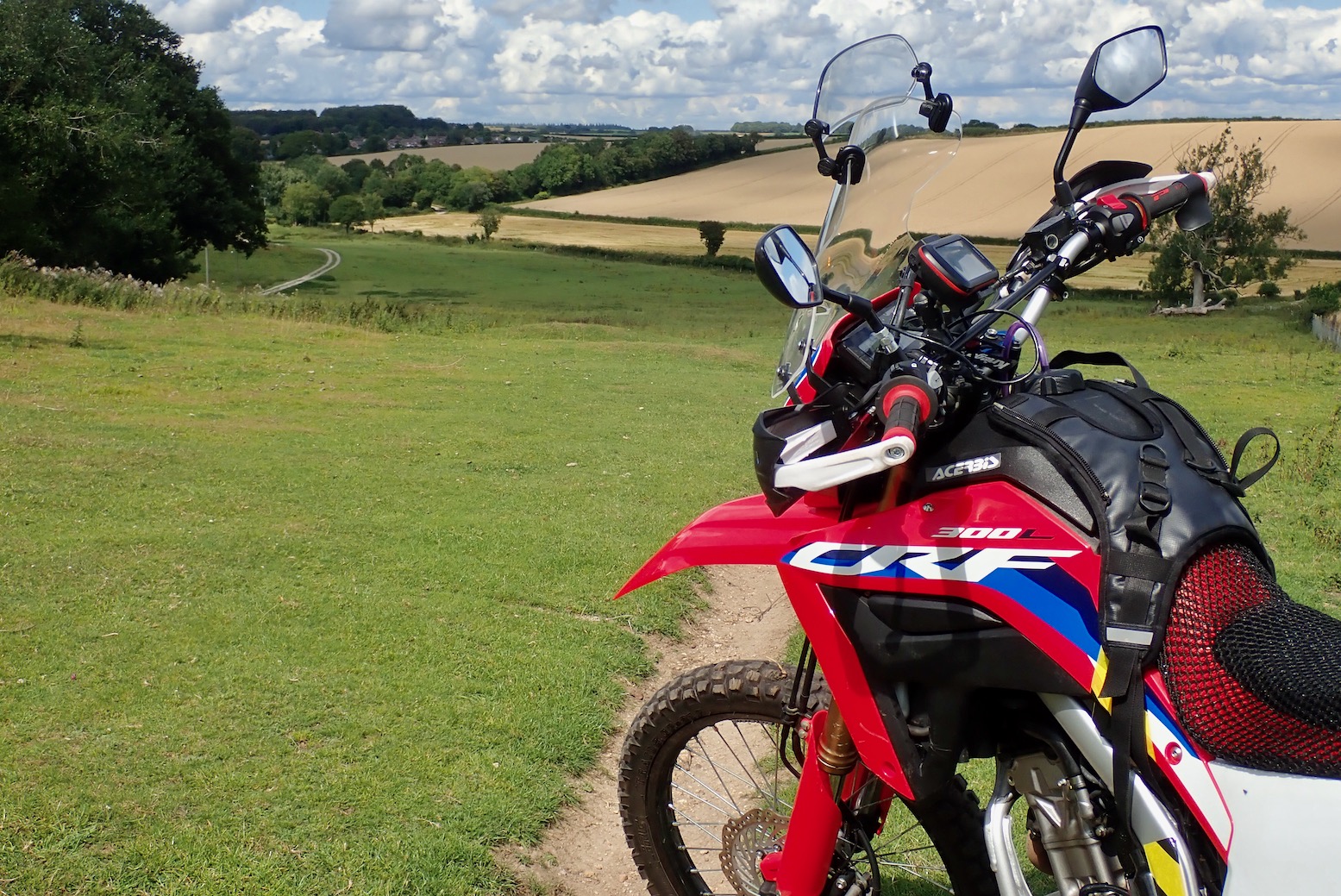
After thoughts on L I’m getting a feel for the 300L off-road. No, really! The stock gearing feels spot on for this sort of riding; a full load might change that. But the fuelling is a bit on-offy in lower gears; good for engine breaking. I recall the WR250R (same hp) had the same issue and there were alternative, slow-action throttles or some such available. It’s an efi thing. The stock tyres are good but I don’t think will prove very durable; iirc my CRF250L IRC rear didn’t even make 3000 miles in SW USA. As said, the Rally Raid suspension seems dialled in, or if not it won’t be hard to do so. I notice the throttle cables jam solid on full left lock as a result of the taller Renthals; to be expected for a stoop-free standing stance – without risers! Easy to fix or not that important. On the road it zips up to an indicated 60 – going faster needs a big yank on the handle; it’s a 286cc after all. I do wonder about this 19er front business, but trying is knowing. In return for on-road stability I hope the steering won’t get too sluggish on the trails. I have a spare front hub which I was going to lace to an unbranded 19-er and flog, but I think now I’ll fit an SM Pro 21 MT (tubeless; and at £170, £50 cheaper than an Excel) instead. Then I’ll have a three-wheel full tubeless set up: 17 + 21/19. The 2.15 SM Pro MT is half an inch wider than the stock 1.60 x 21 which will mean a heavier, wider tyre that won’t help trail agility, but might aid faster, bend swinging stability and wear.
I’m still not fully satisfied with my seat bodge. It has a dip in the front so it’s either fully sat back (OK for high speed) or perched up front. This may be where they shaved it down to make it lower. It would be nice to have a fully flat seat to slide around on to spread the pain. A mate sent me a pic of his normal L seat (left) and there is definitely more meat to it; he’s my weight and finds it fine. I could’ve got mine rebuilt locally in leopard skin metal flake, but decided to simply buy a new black OEM 2023 seat from Partzilla discounted to $105 (30% cheaper than a red 2021 seat). Add shipping and UK tax and that’ll be about £150. I ought to get most of that back for my low seat.
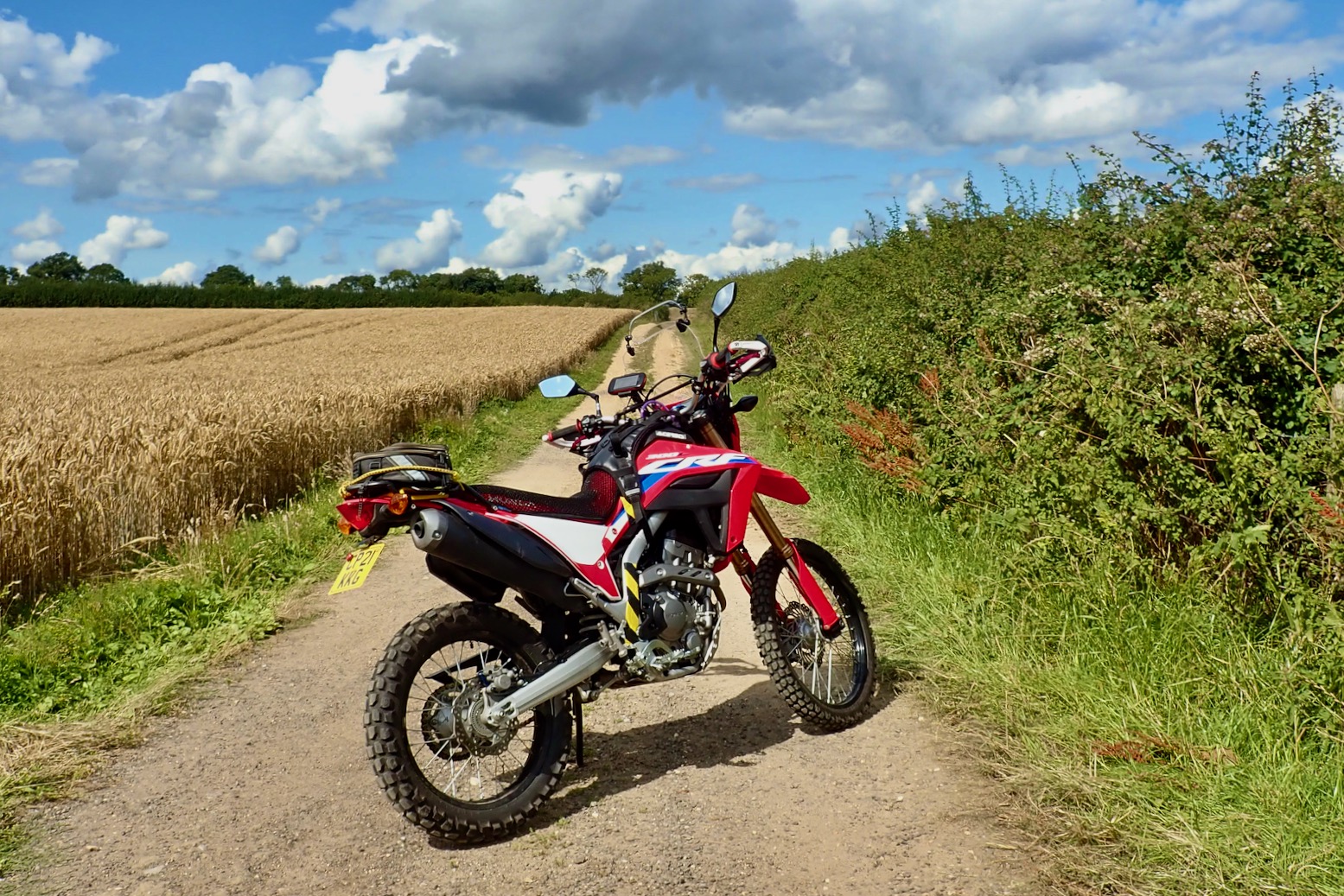
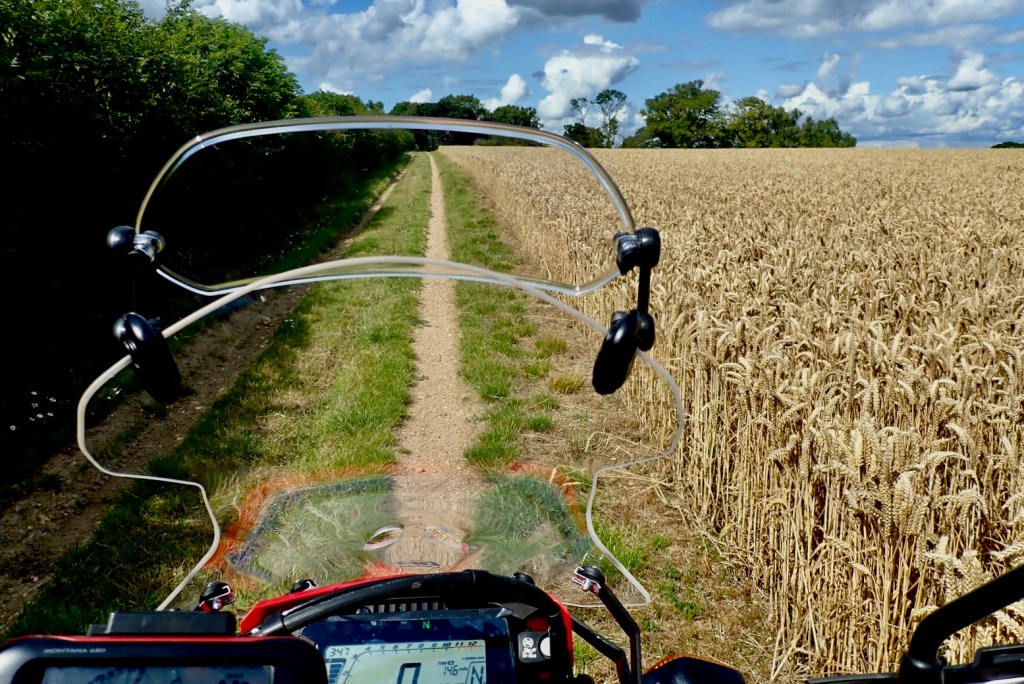
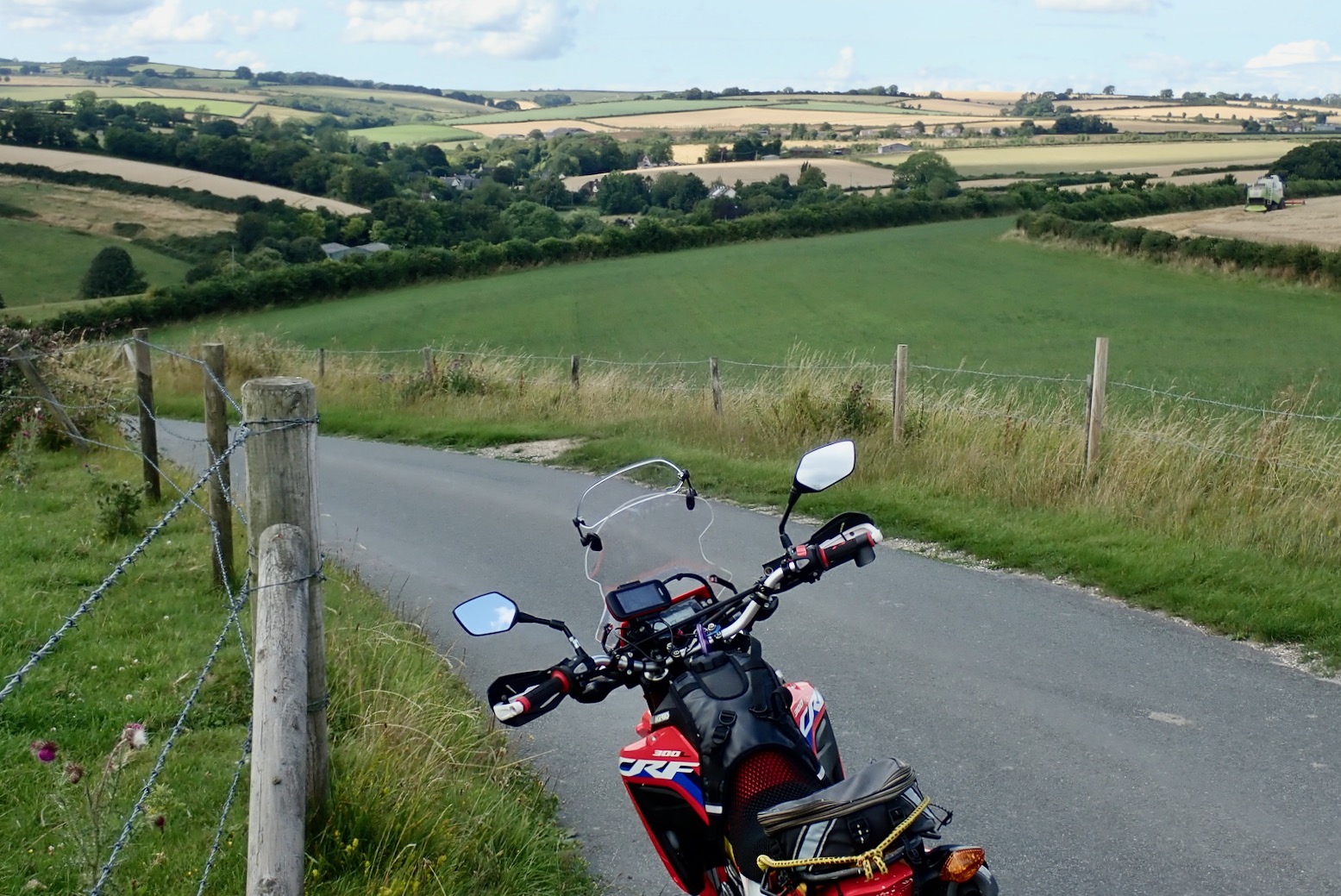
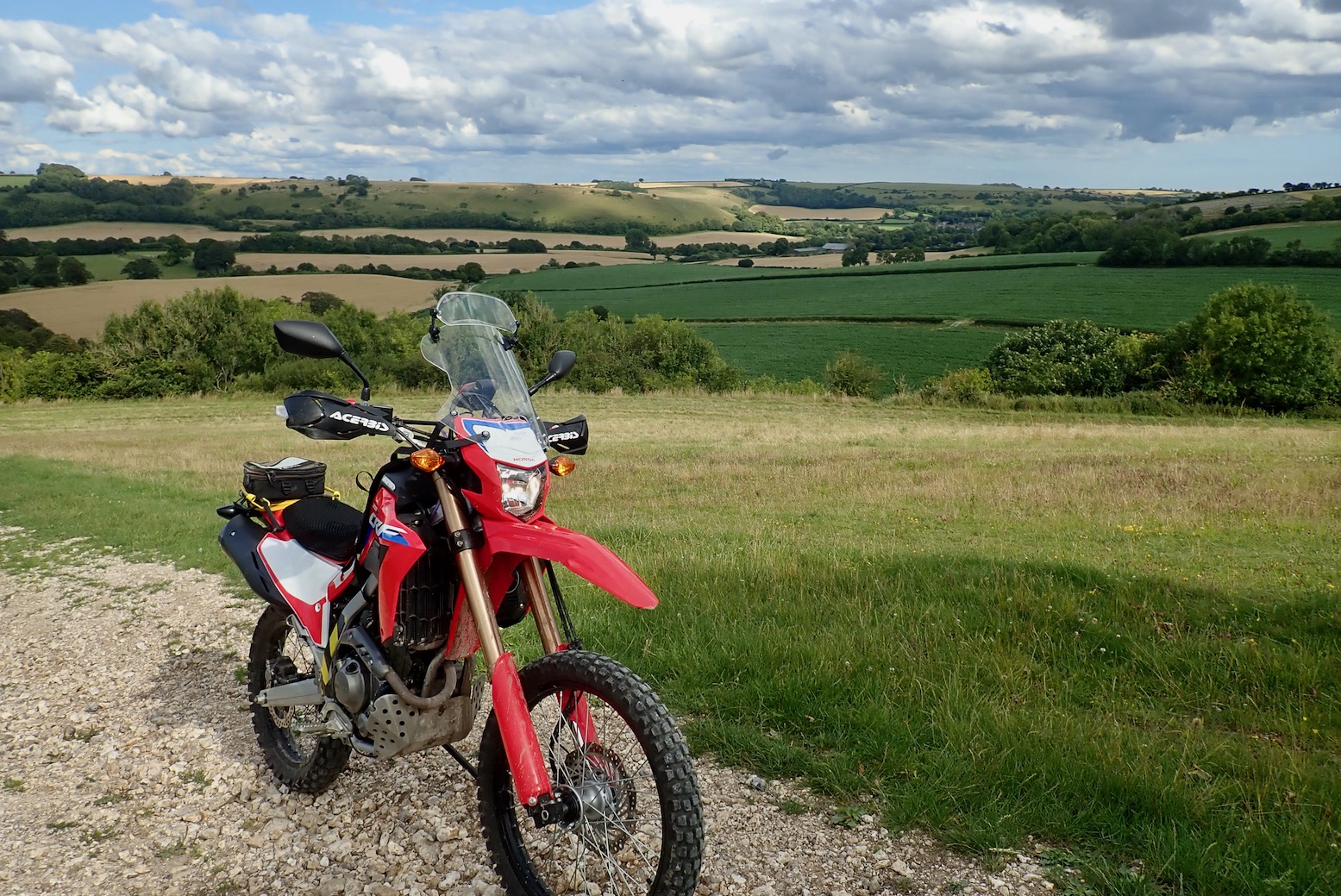
This summer I find myself relocated in the English countryside far from London and with a usable trail bike, not some fraken-mutt. ‘Dorset’s good for green lanes’ I was told, but it didn’t look like it on an OS map. As it is, I gave up on English green laning long ago, convincing myself that, certainly the southeast of the country was too congested for trail bikers to mix with ramblers, Nimbies, Just Stop Trailbikers and all the rest. I know well it’s the same limited access story – worse, in fact – with river paddling in England. A ride around adjacent mid-Wales a couple of years ago didn’t raise my hopes much either: beautiful country but more gates than Terminal 5 on a bank holiday getaway. But we can thank the Trans Europe Trail (TET) initiative, based on the successful BDR project across the fabulous western US – some of which I’ve ridden and which may have been inspired by the legendary TAT. Supported by Adventure Spec among others, knowledgeable local volunteers across Europe have threaded together a network of TET routes which you might struggle to unravel yourself using maps. It’s all laid out on a plate and once figured out, TET releases 1000 of miles of trail biking adventures in the form on a free .gpx tracklog to stick in your digital navigation device. See the TET link above. Users send in updates and you can view this post as one. In a way it’s a bit my like route finding guidebooks. There’s also a Dorset TRF behind a private FB page (not all regional TRF groups are like this). I was happy to send a donation to TET.
A mile of track here and there seems insubstantial, but thread them all together and you’re in business, and the road sections give you a chance to recover. And compared to up north, ancient Dorset dodged the last Ice Cap and is thick with prehistoric trails most of which became today’s footpath, lanes, green or otherwise. It means there are enough footpaths and bridleways to share. I also suspect inland Dorset is helpfully overshadowed by its spectacular Jurassic Coast. Add no conurbations away from Poole/Bournemouth, no National Trails, outstanding medieval cathedrals, or even motorways. Things might be different in Devon and Cornwall. Of course most of England won’t be like North Africa or SW USA where dirt trails can fill a day, but it’s the best we have and gets you out exploring your nearby countryside on your bike.
GWT southern arm
The Great Western Trail is one of two named TET UK sub-routes – an 800-mile loop reaching down from Wiltshire to Land’s End and back. It’s pitched at more agile trail bikes, not giant Advs. It has a southern arm of about 60 miles from Poole to west Dorset. Being close to it, I set off from Wareham one afternoon on the 300L to see what I might find. I fully expected to encounter frequent or locked gates, road closures (TROs) and maybe even hostile natives unschooled in the legal status of green lanes. I could not have been more wrong.
First, I needed to fill up. The true (verified) mpg was actually 31kpl or only 88mpg. It’s not looking good for a true 100mpgI’m trying pricier E5 this time. Some say it’s better all round, including mpg. But 99 octane? I never knew there was such a thing away from a drag strip. No wonder the planet’s on fire. A fellow L-head told me there’s a setting on the dash to show volume consumed since last fill; a more useful way of gauging range once you’ve verified your capacity (13.8 litres or on my Acerbis). Actually my bike seems only to display gallons, maybe because it’s set to miles, but my volume is 3 Imp gallons. Is the bike running smoother and pulling better on E5, or do I just think it is? Still, it’s nice to be bimbling along deserted backroads and heading into the unknown.North of Bovingdon the tracklog flicks left up a wooded track. It feels deeply transgressive to be riding here, and in sleepy Dorset too, not the North York Moors. Can it really be a right of way? Looking later at a 50K OS map, red dots indicate ‘other routes with public access‘, or ORPA as I will now call them (below), along with the better known BOATs and RUPPs. Never knew that one, but I wouldn’t be surprised if like some of the latter, an OPRA does not necessarily indicate a vehicular rights of way. On the day, how can you tell? You have to hope the TET Linesmen did their homework and the status is unchanged.A very pleasant 4km trail through the woods leads to the famous village of Tolpuddle.
Home of the Tolpuddle Martyrs, hard-up farm workers who, following a pay cut in 1834, formed a legal workers’ union but got trapped and 7 years transportation for ‘swearing a secret oath’. Again, you’d expect a story like this up north, not in quaint Dorset.
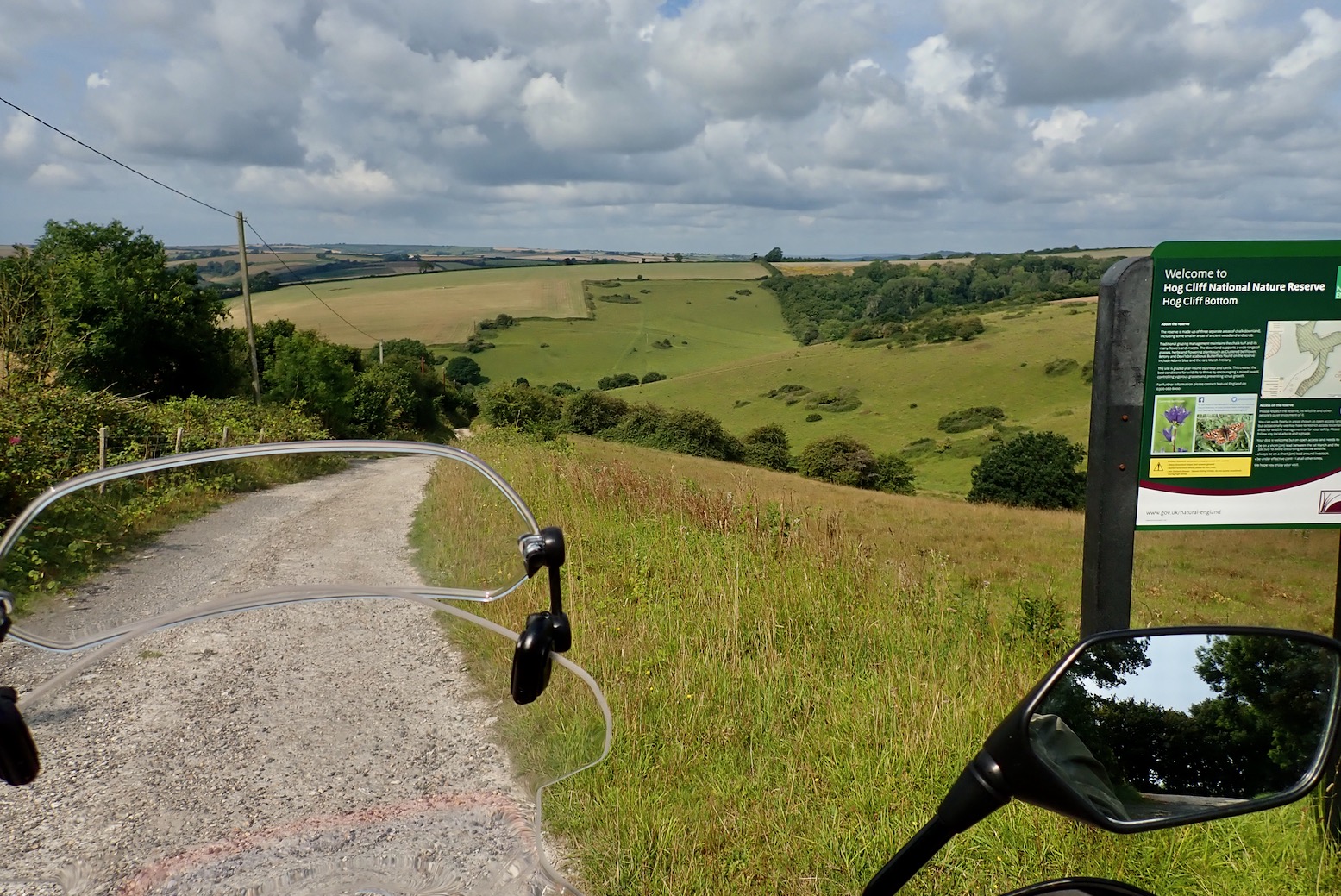
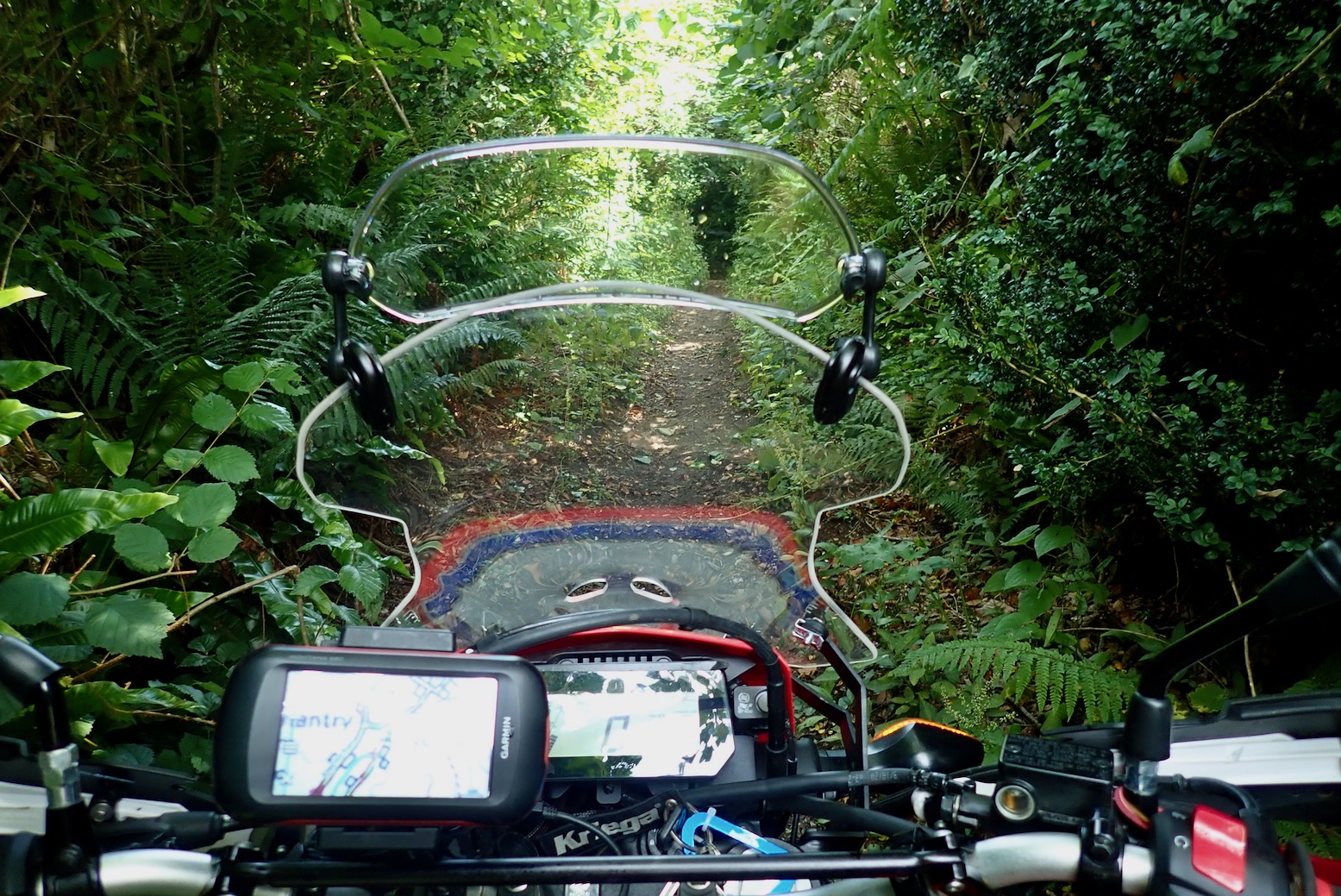
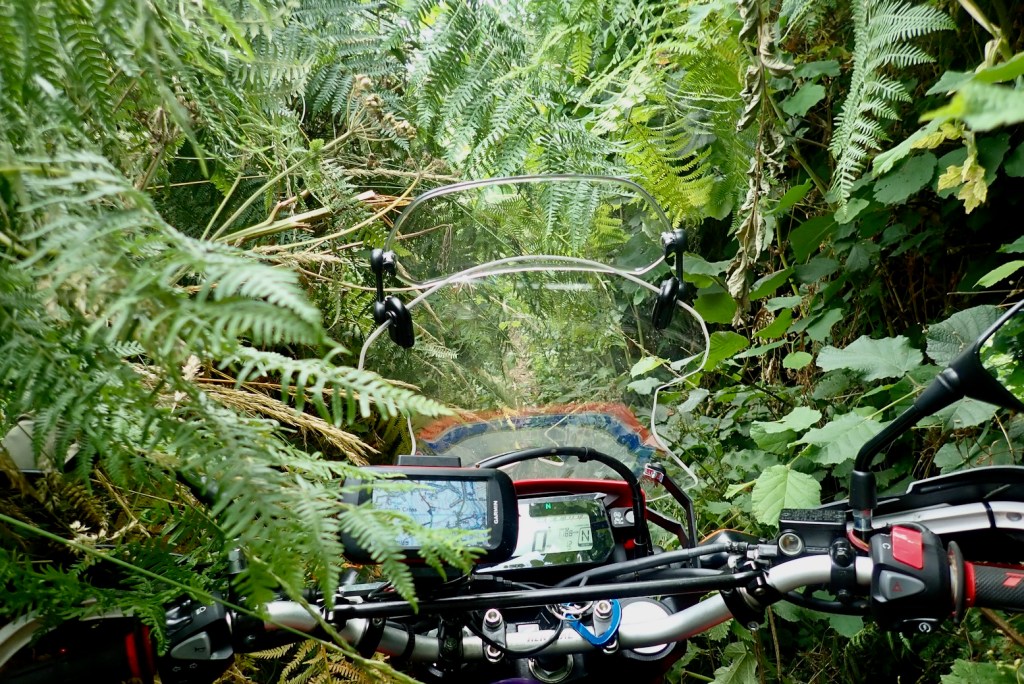
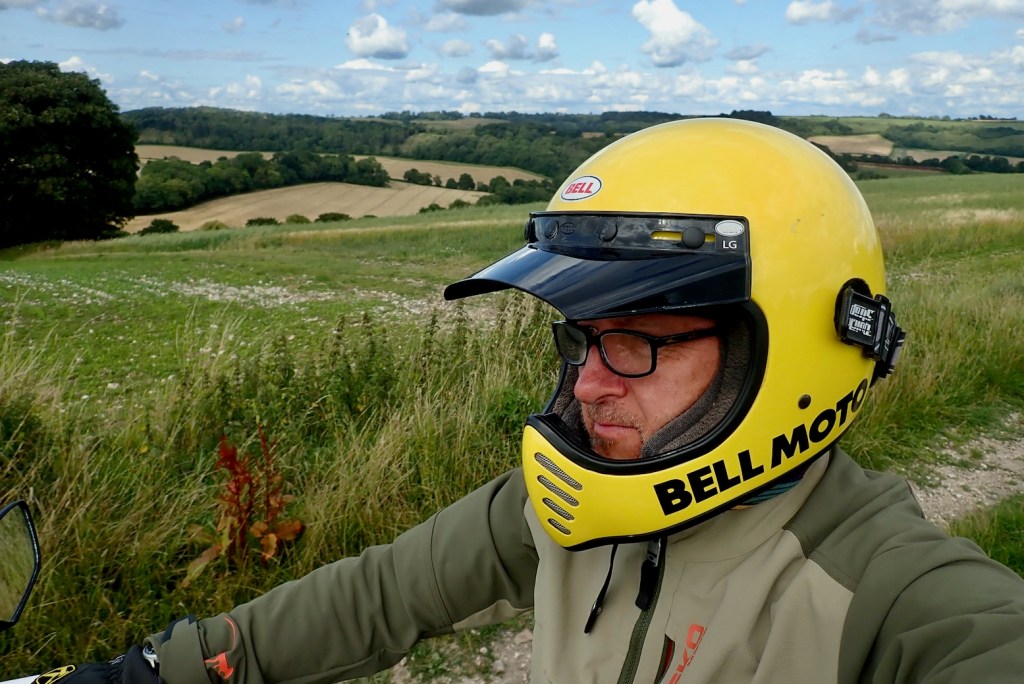
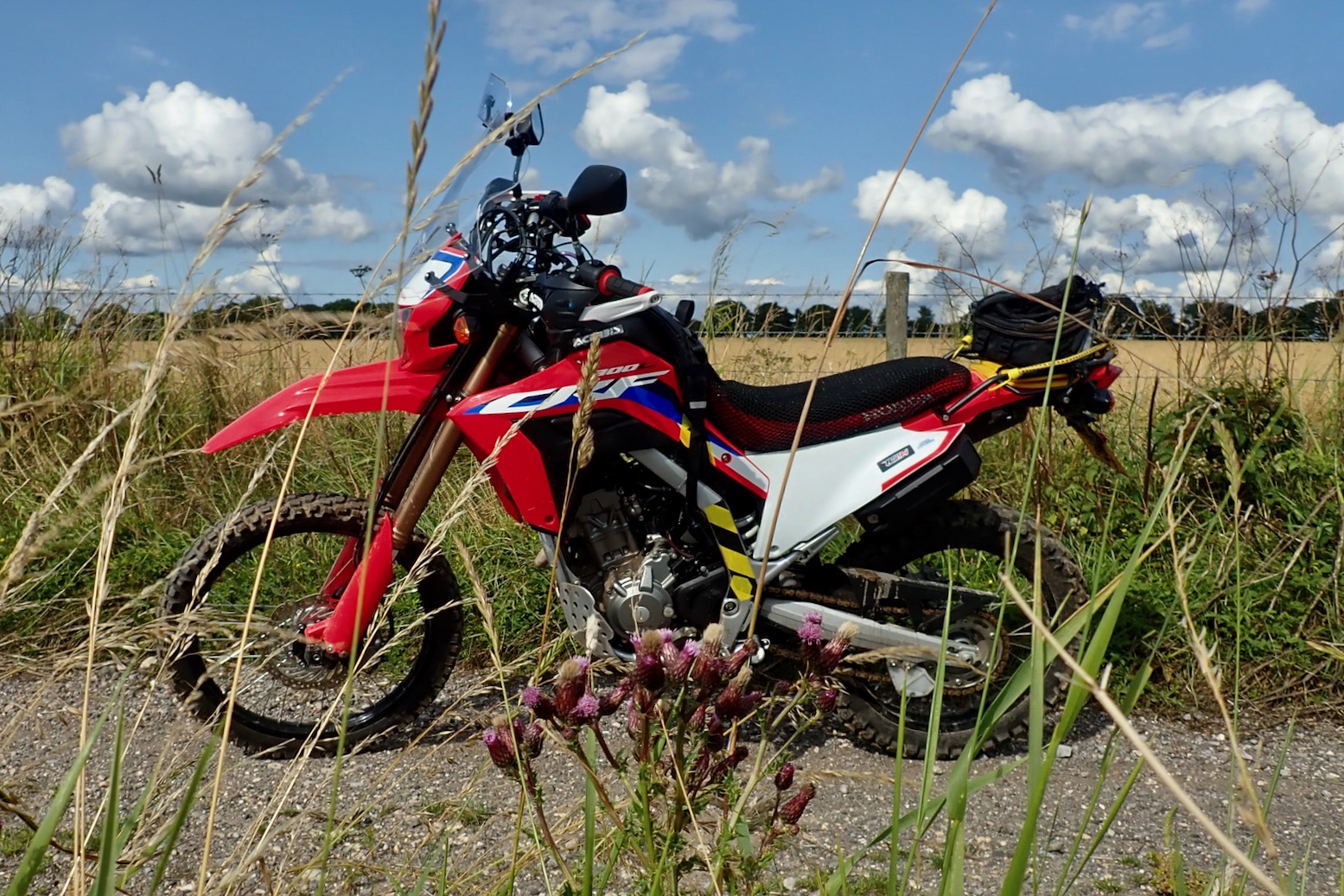
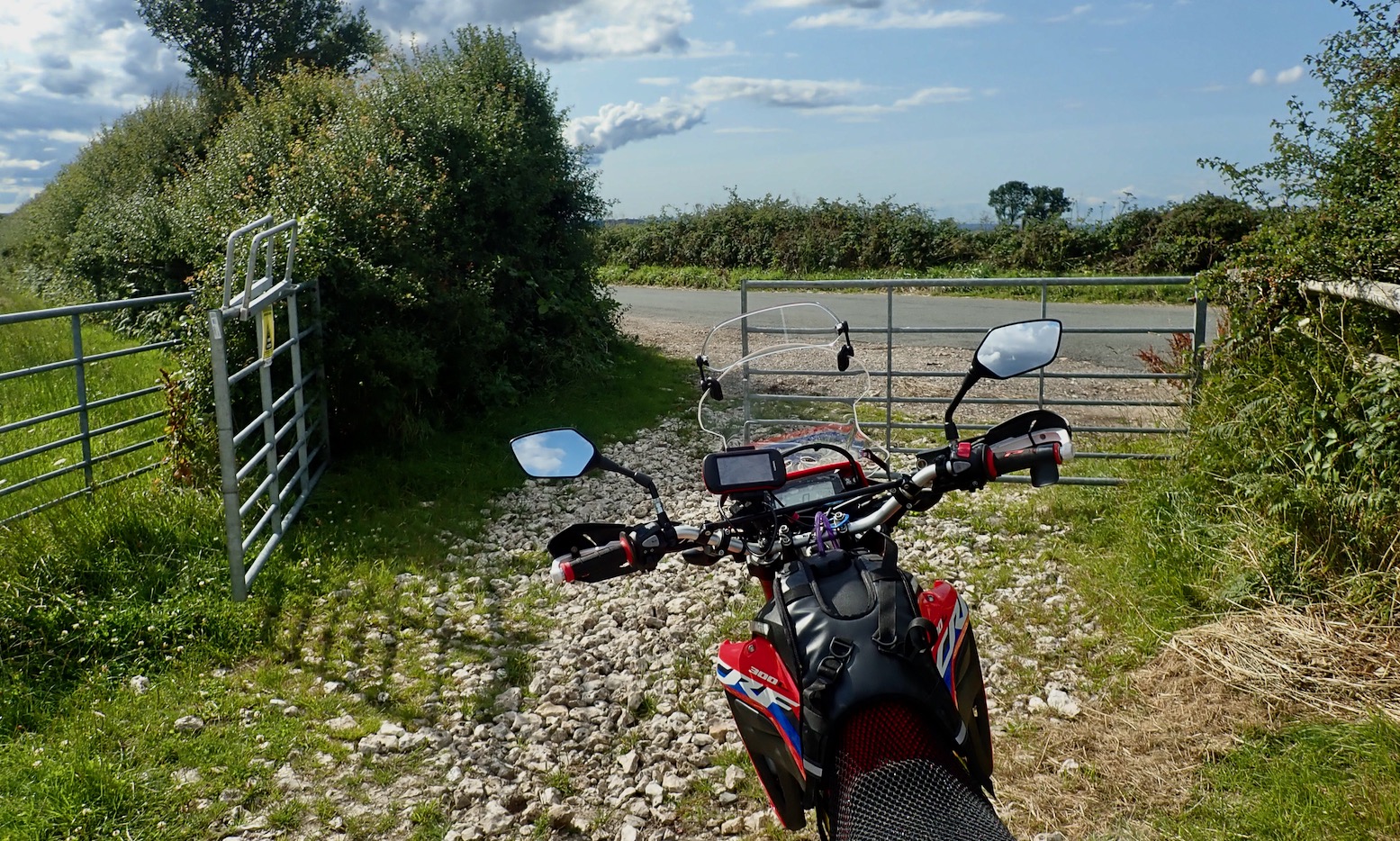
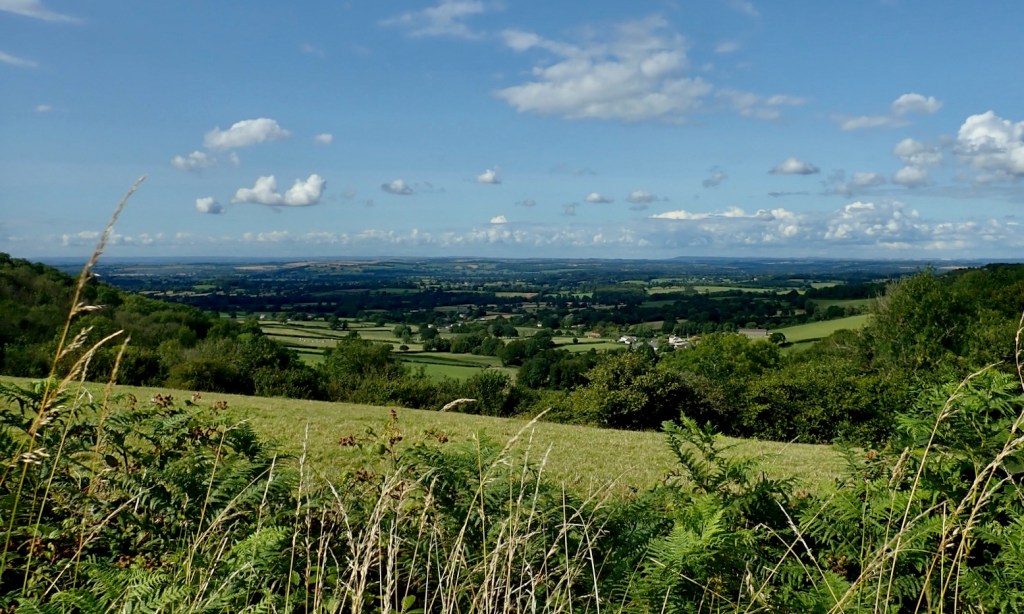
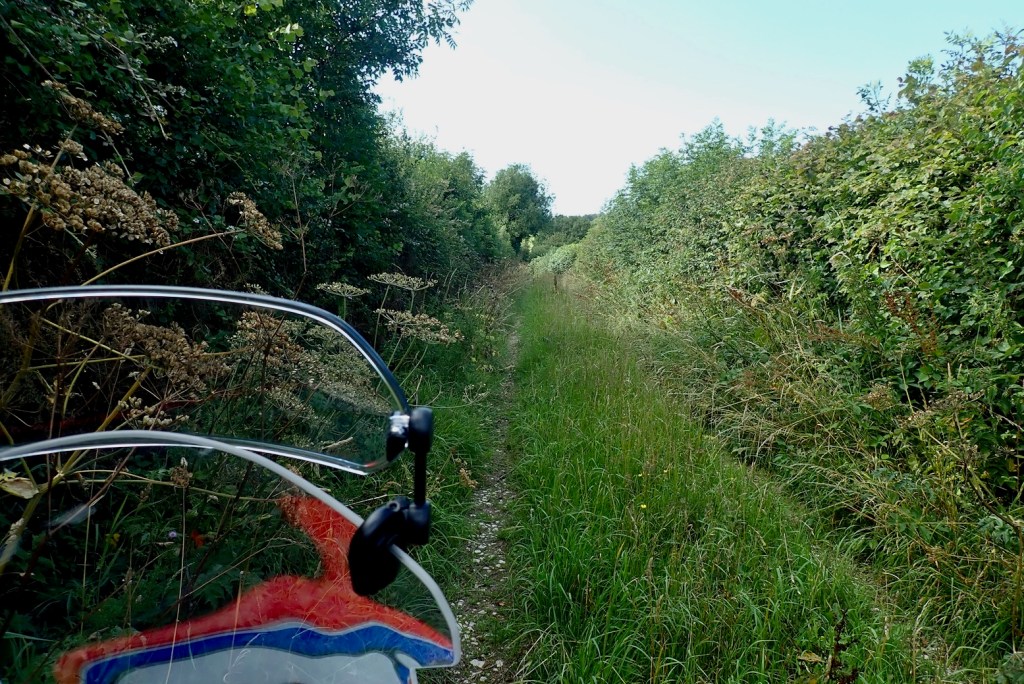
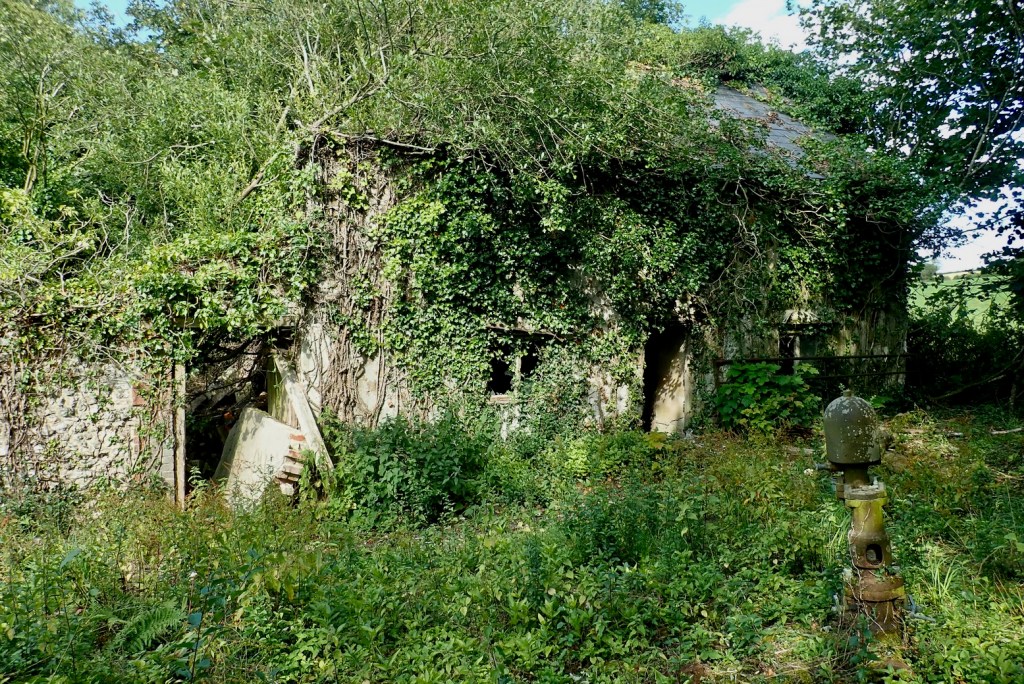
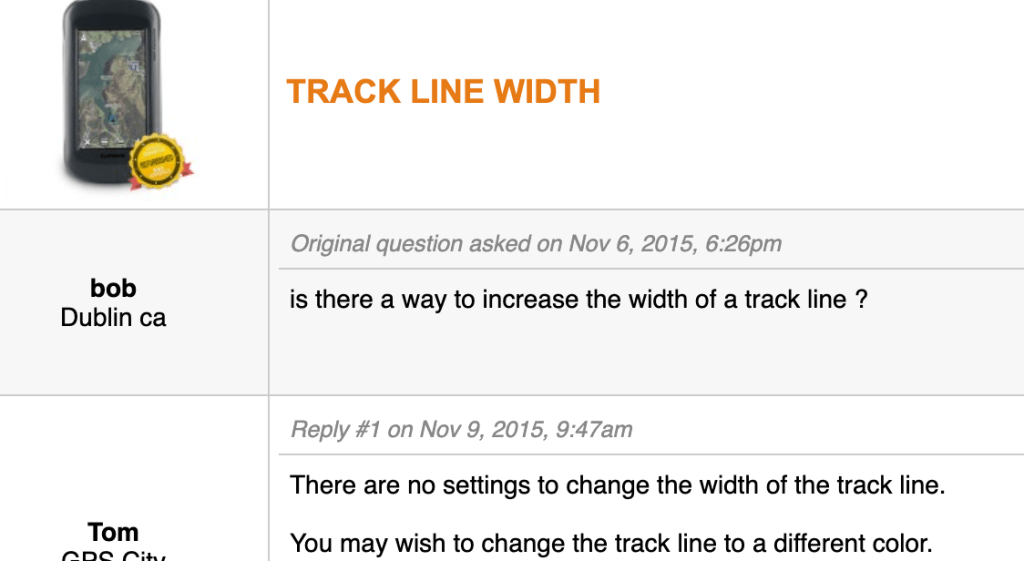
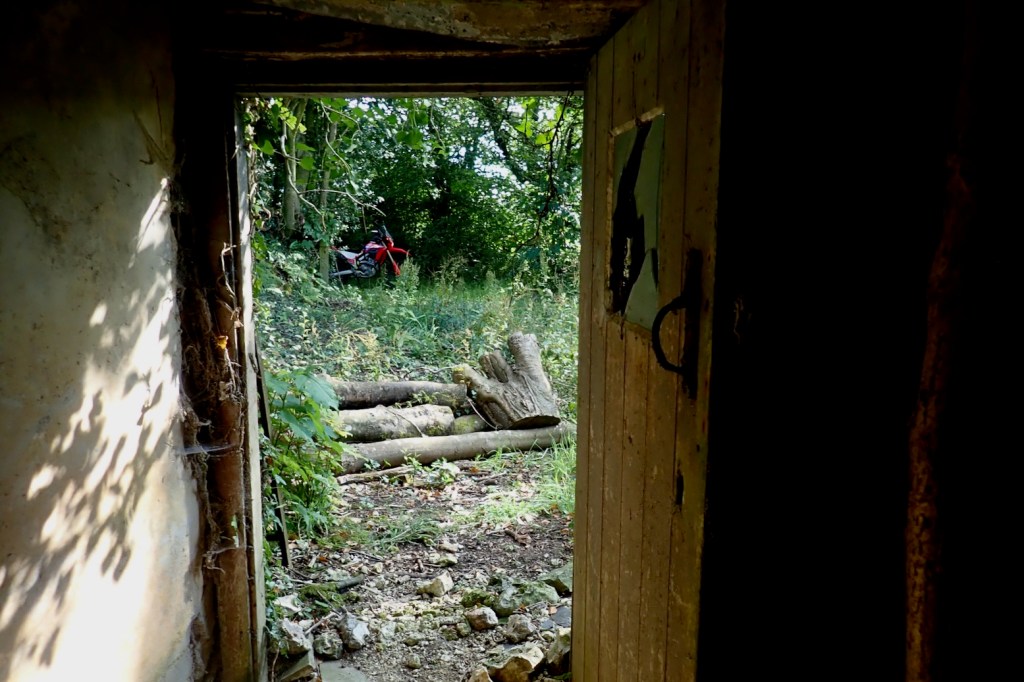
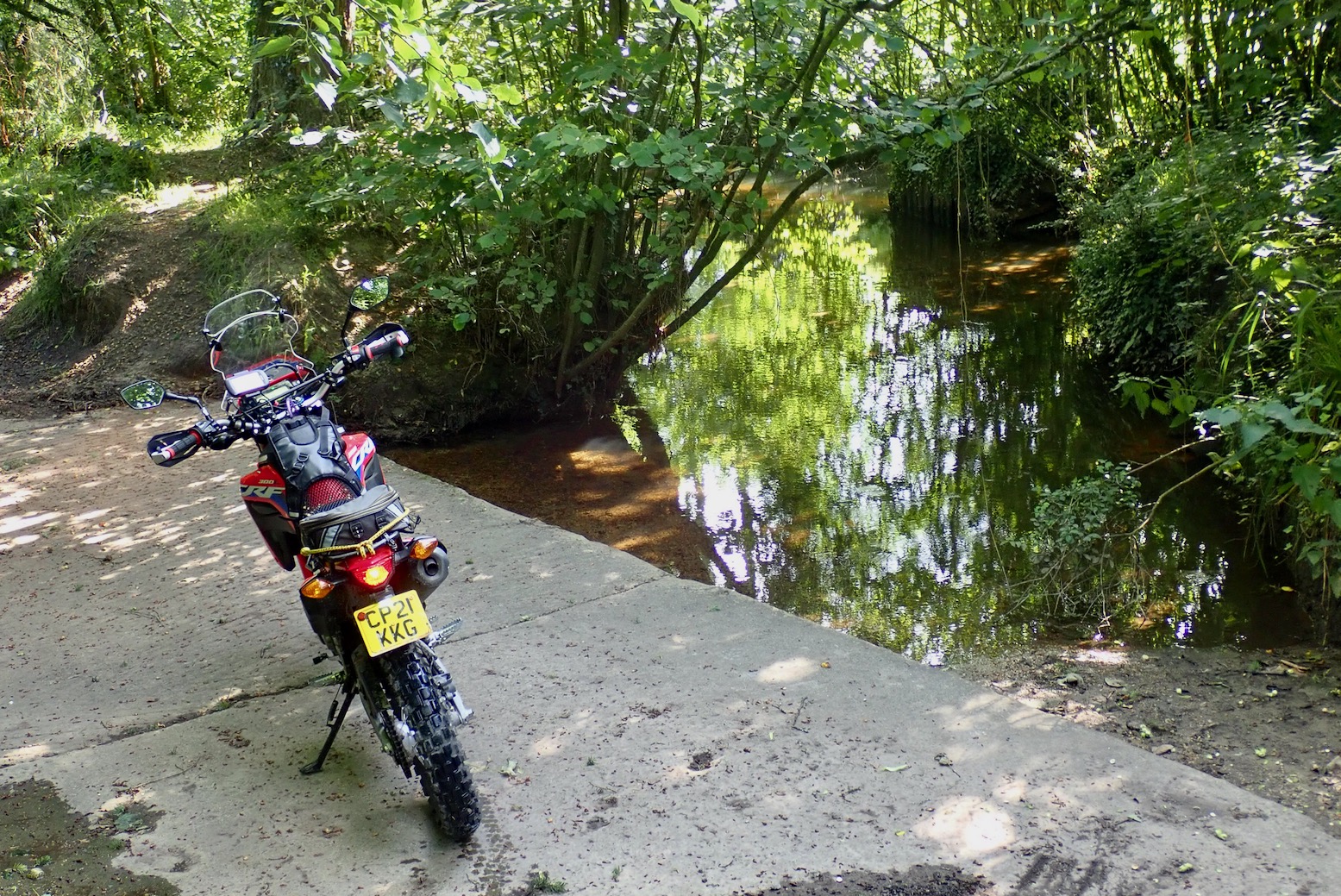
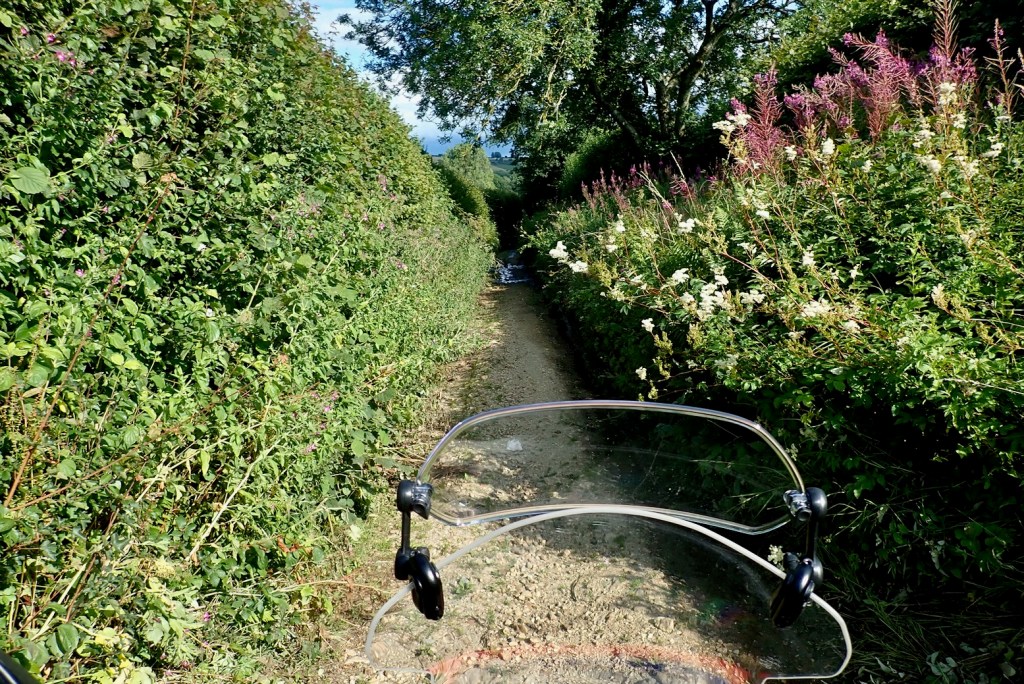
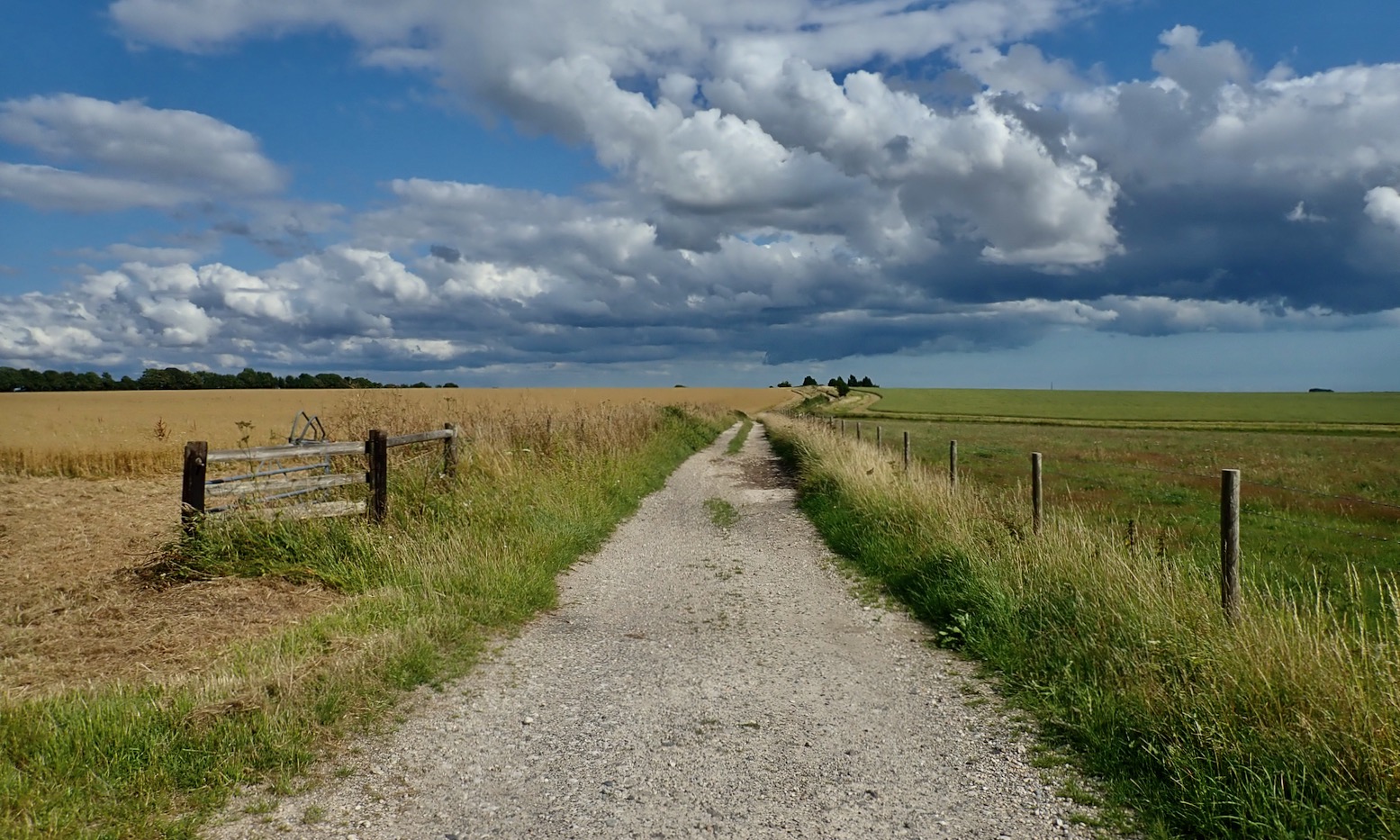
The TET takes a bridge over the A35 and winds its way along farm tracks.Surely any minute now I’m going to get harangued by some angry bloke in a tractor?My first gate. Here we go, I thought…But what can be better than a lonesome track winding its way down a grassy valley, like a scene from the Hobbit. Down the bottom some blokes reposing by a pond gave me a chummy wave. Later on, some dog walkers did the same. Where are the brandished fists? Have I unknowingly brushed against a psychedelic fern and slipped into a parallel universe? The post office in Milborne St Andrew after a shave and a short back and sides. Internet fact: Dorset has more thatched roofs than any other British county, with nearly 10% or around 4 per square mile.I knew it was out here somewhere. This week there’s been much chatter about the Portland barge. The bloke at the MoT place was not impressed. Portland is to Dorset as Barrow in Furness and Windscale are to the Lake District.I toodle along deserted country lanes which, but for their asphalt coatings, would all be BOATS, etc.A semi overgrown shortcut. On an OS map this is marked as a yellow road.It leads down to Piddletrenthide. All this Piddle and Puddle is Olde Saxon for ‘stream’ or ‘wetland’.Piddletrenthide high street after I digitally tidy away unsightly cables. Immaculate, postcard pretty villages like this are two-a-penny in west Dorset. Interestingly, there is a misleading T-junction sign at the top of this road, but it leads to an unsealed BOAT on the TET which I suppose would flumox a campervan.I pass through Cerne Abbas, home of the famous Giant. You’d hope this is a pre-Christian representation or someone is going to be saying a lot of Hail Marys. It was actually carved in the Saxon era.A stony trail leads from Up Cerne up Seldon Hill. Along with ruts hidden in long grass, about as technical as it got. Hereabouts the trail peaks at 260m (850 feet) and joins the main GWT loop to Lands End.I decided to wear my Moto 3 for the first time since my AT debacle, but next time I’ll wear the HJC so I look less Darth. This goodwill can’t last, can it? Obviously there is much to be said for bimbling along and silencers the size of locomotive pistons, but being alone in mid-week must aid tolerance too.We walked this way one very hot day a few weeks ago. Also very enjoyable.The rolling hills of west Dorset. It’s great to be out but don’t show this picture to Theresa May.The L occluded by thistles and grasses. The bike is of course effortless to manage but around here I check the tyres which seem a bit hard. In fact they’re at a lowly 25/20; maybe I’m under-eating. The Rally Raid suspension is barely taxed. I do wonder how the bike will ride such trails with the fat 19er front I have in the pipeline. Nothing I’ll ride today couldn’t have been managed on an AT, GS, T7 or a Chinese 125 scooter, come to that.My second and last gate of the day which has been a big surprise – or is it just mid-Wales that is gate crazed? Last year on the Glyndwrs Way I counted 70 gates in 15 miles walking. A sheep thing perhaps.Wessex in mid-summer – not a gigafactory for miles (off to the left in Somerset, actually).Unusually overgrown. I’m getting splattered with exploding seeds.I reach a ruin and realise I’ve followed a footpath by mistake. The red tracklog line on my Montana is extremely thin and hard to see. I fiddle with the settings but can only change the colour to green. Later I find my answer:Who may have lived here and where did they go? Why did they leave the place in such a mess?Road signs from a Famous Five era. Many of Enid Blyton’s FF adventures were based on Dorset where she vacationed annually for decades.Crossing the infant Frome near Cattistock and which meets the tide from Poole harbour at Wareham quay (below).Wraxall Lane – another ORPA. It gets a little muddy; the CRF tiptoes through.
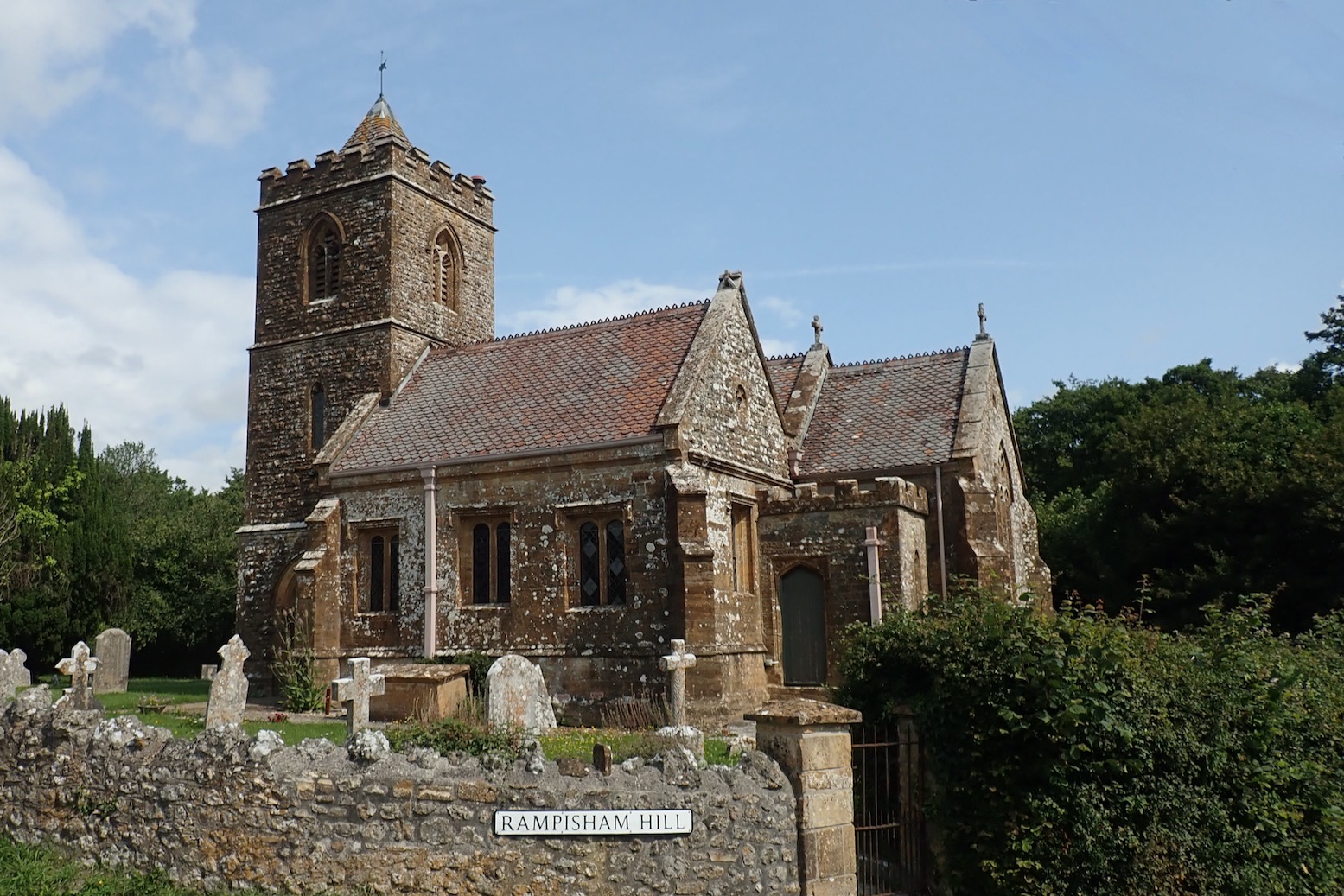
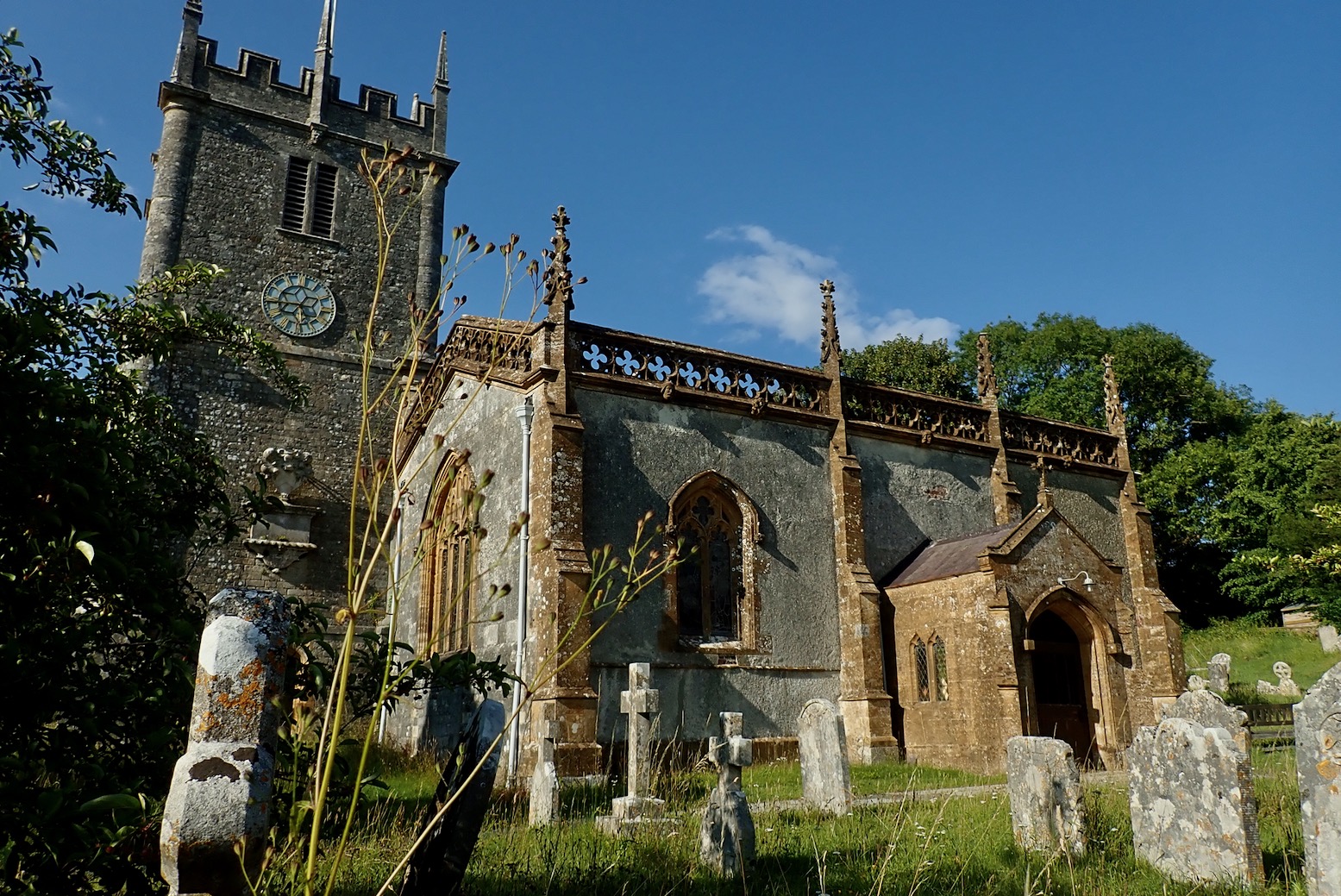
I pop out of the thatch and meadow wonderland at Maiden Newton on the A356 north of Dorchester and where this ornate ancient church catches my eye. It’s now nearly 6pm; 2.5 hours to cover 40 easy, fun miles. I’m hungry so it’s either buy something or ride home. I head back 25 miles. From Maiden it looks like the same distance along the GWT to Lyme Regis on the Devon border. I can’t wait to tick that one off and maybe inch my way west with what remains of the summer. Who knew in 2023 I’d rediscover trail riding in England after 40 odd years! Sure no track is more than 2 miles to the next road, but old tracks are thick as ascents down here, and it’s not really about what’s under your wheels, it’s where they lead you. And as we know it’s the ‘Blue Highways‘ and dirt roads where adventures and discoveries are easiest to find. More to come.
Thinking of going tubeless on your CRF300L or Rally? This page might be a good read.
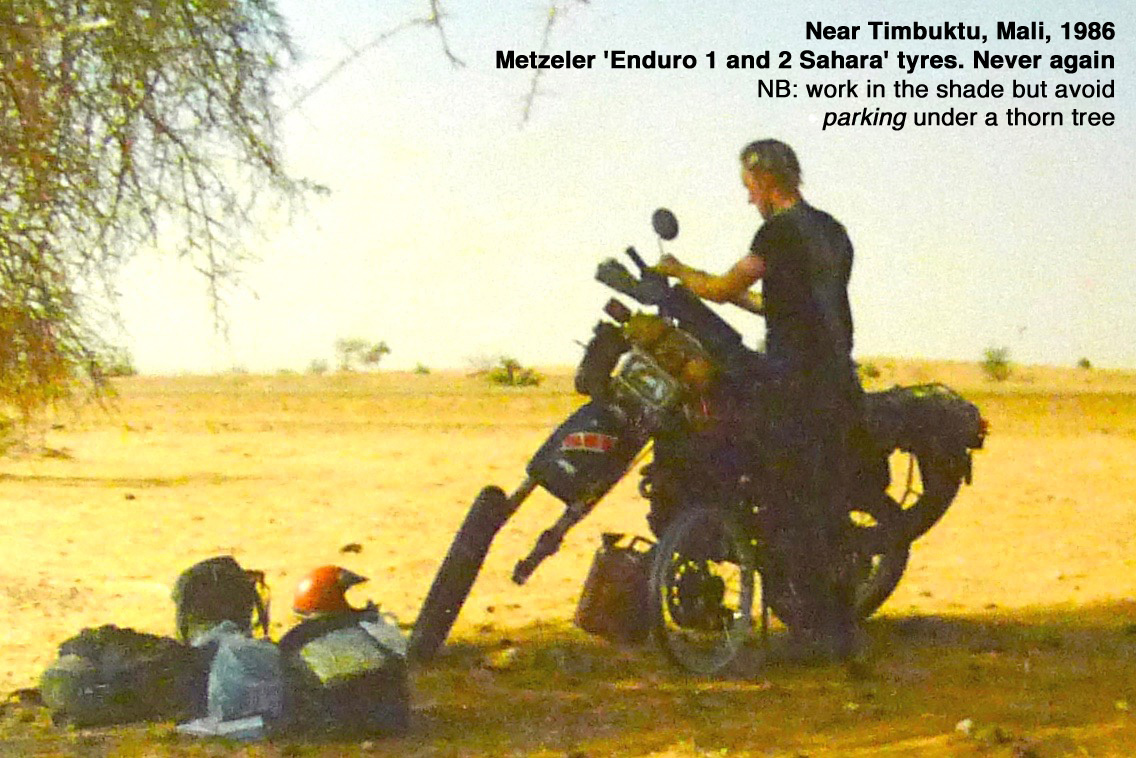
Since my 2008 XT660Z I’ve been converting nearly every project bike with spoked wheels to run tubeless tyres, using various methods. The main reason: ease of puncture repairs on a hot day in the middle of nowhere (like left, Mali), let alone the added bulk of tubes and levers. Bombing around outback Morocco isn’t always like a day ride on the TET with your chums.
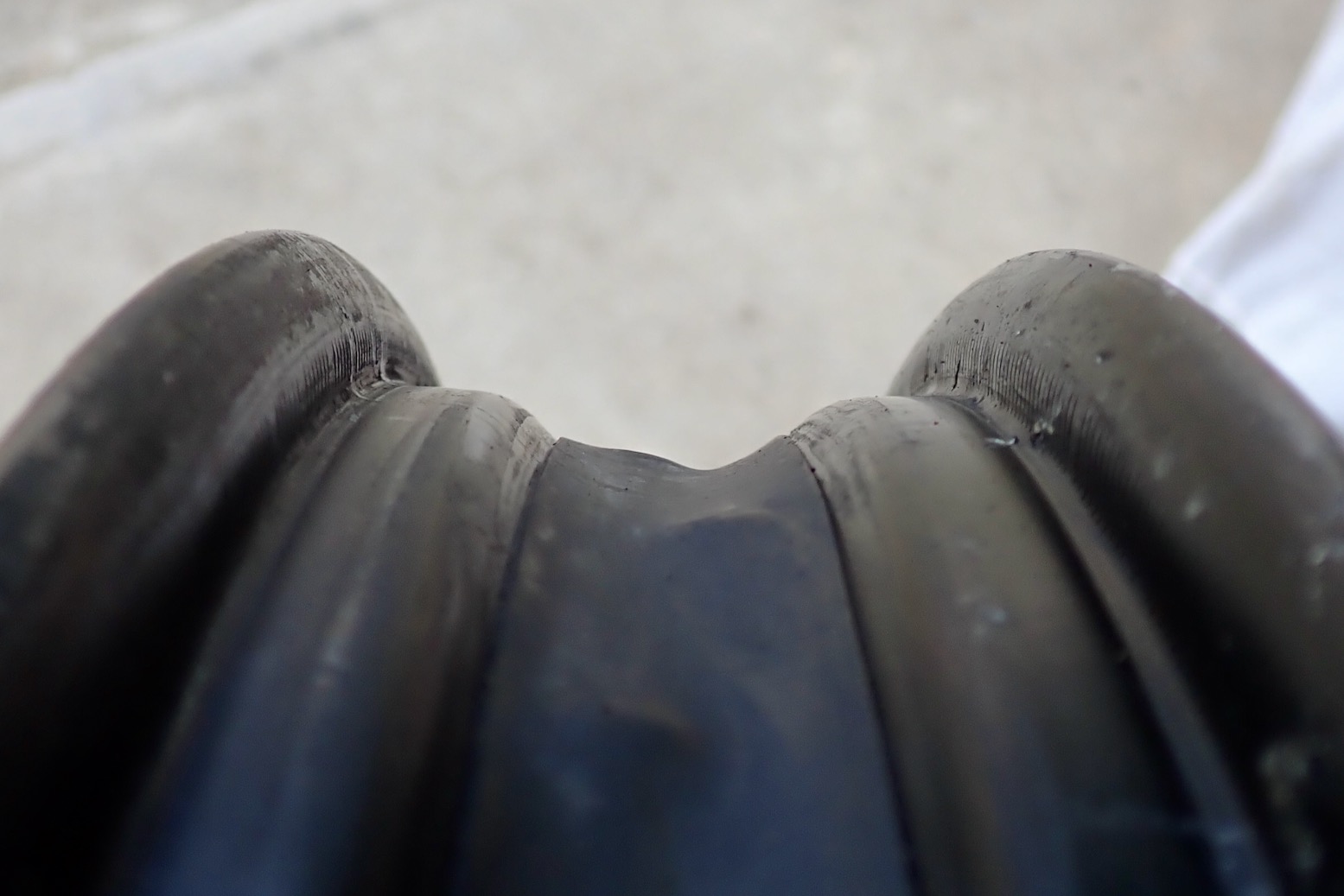
No bead-seating lips ;-(
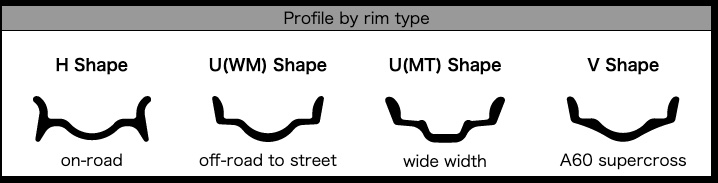
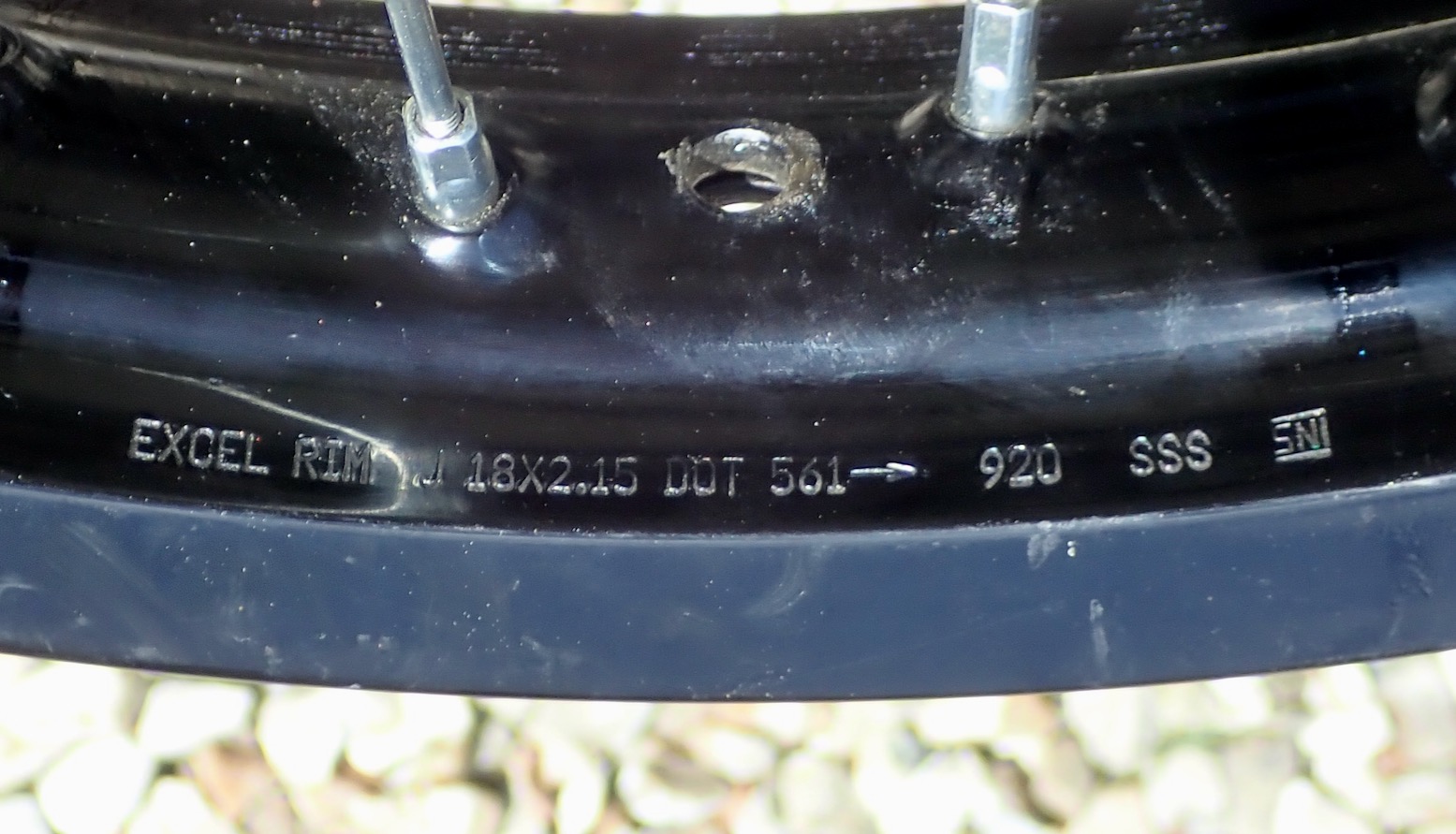
I want the same for my 300L which I might keep for longer than normal. One annoyance is that even the rear 18 x 2.15 wheel (right) is not an MT type rim needed for a secure tubeless tyre seal. Up front, Jap OEM 21s are rarely MT, so it means new wheels all round.
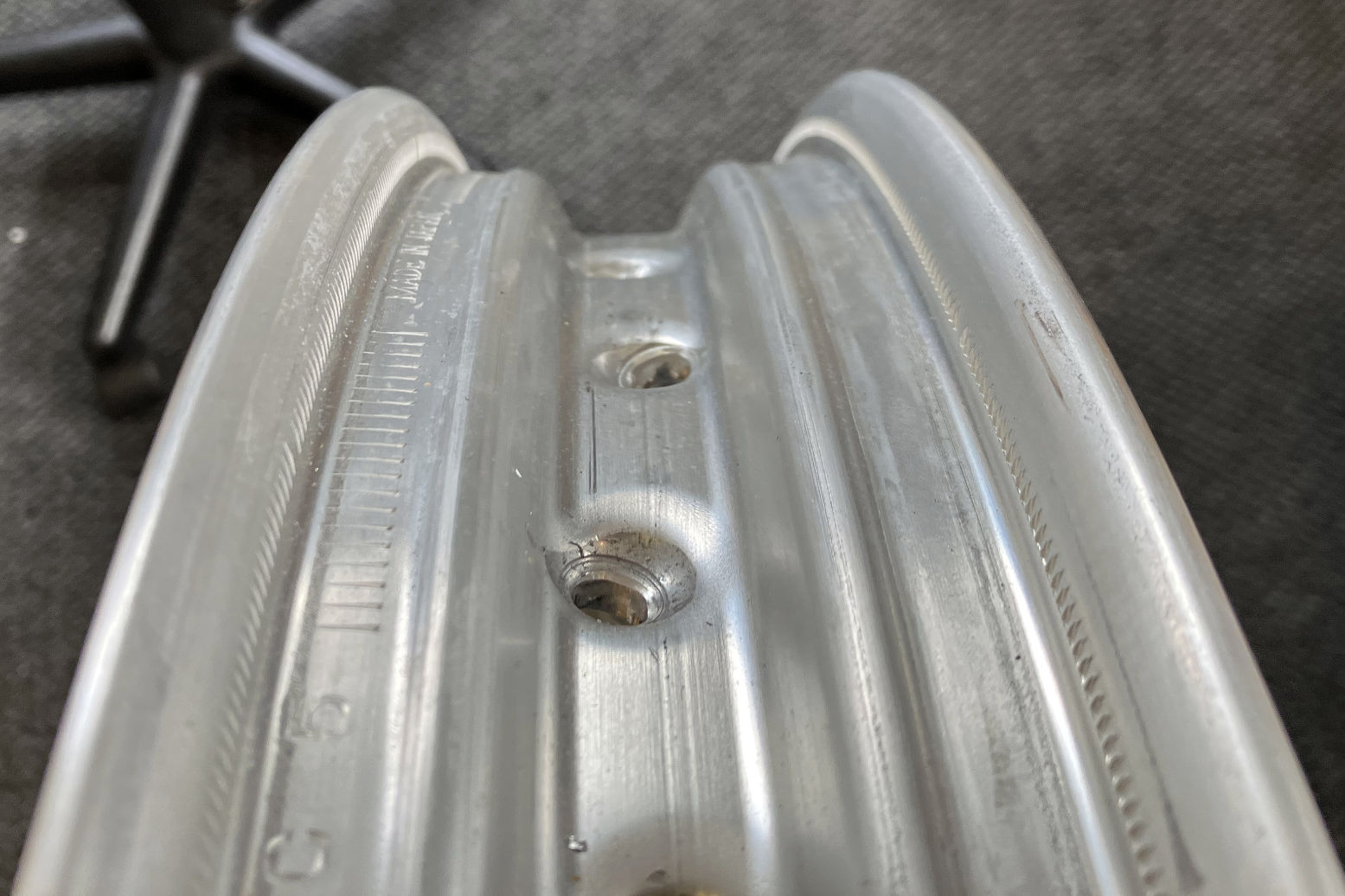
Third one along is ‘drop centre’ MT type with the all-important raised lips suited to TL tyres.
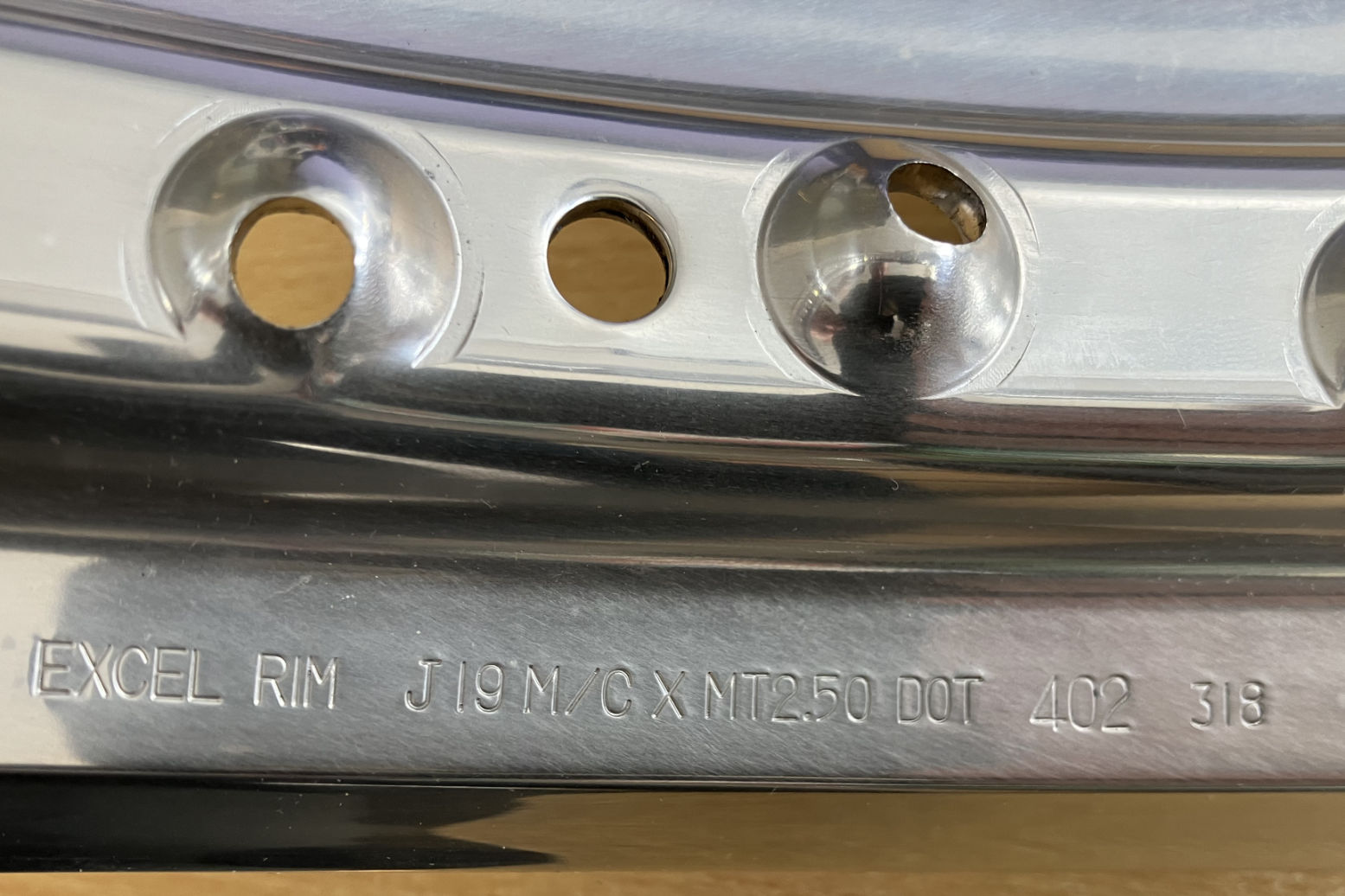
In my CRF TL MT quest I learned that ‘250cc’ bike wheel widths – typically 21 x 1.60 and 18 x 2.15 – are below the size where MT rims are commonly offered, especially once you factor in the Honda’s spoke count of 32 rear / 36 front. I did the usual scan on ebay looking for used rims that might work, but for the rear couldn’t find anything in MT with the width and spoke numbers needed.
OEM tubeless spoked. Rare
Buying used rims For the front in 19 inch (see below) I found a couple of MT contenders at 2.50 wide with the right spoke count (holes) and diameter, but buying used you also might need to consider the drilling pattern in the rim. The angle that holes are drilled through a spoked rim relates to the line of a spoke hooking up to a hub. There must be some leeway as the nipple can pivot in its seat/socket and new rims are sold drilled with no bike model designation but, broadly speaking, a rim drilled for a big bike twin-disc hub won’t match the dinky 300L’s hub. So, on top of the cost of the hubs, that leaves the following choices:
Slightly wider new Excel front 21 x 2.15 rim in MT, £170
Or a new wide Excel 19 x 2.50 MT front. £220
Same as above, used from £70
A rear Excel 17 x 2.50 32H MT with a wider adv tyre choice than stock 18″. £220
Wheelbuilding a the above rims onto new Honda hubs – £130+ each
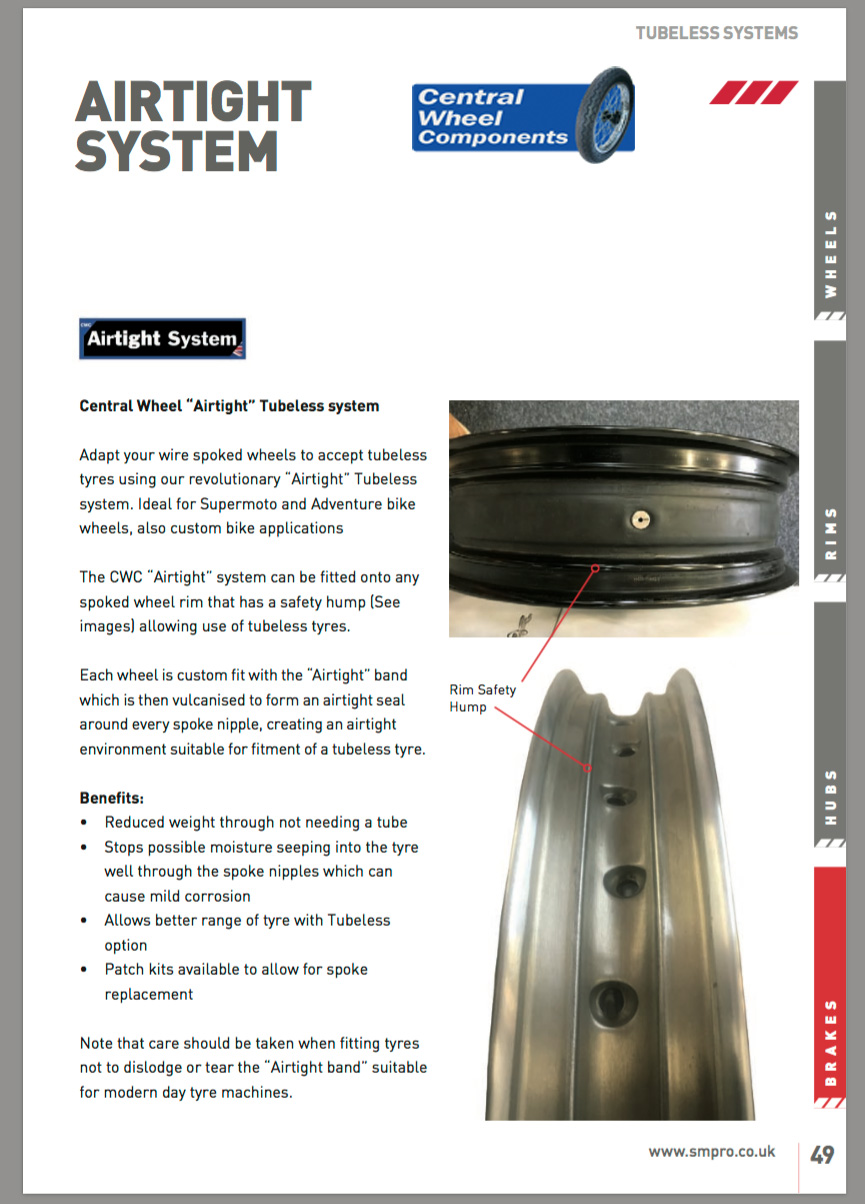
Optional Airtight sealing at CWC, £125 a wheel
That will mean slightly bigger tyres all round, but they’ll wear slower and lightness is regained by ditching tubes (I’ve already junked the rim lock). A mate who regularly experiments with his TTR wheels tells me a stock front 21 with tube weighs the same 10kg as an 18er in tubeless (left). And on a CRF there’s just enough clearance in the swingarm for fatter 130 rear tyre*. He tells me offsetting the rim away from a chain by 5mm is actually a thing in wheel building and says you won’t notice the slight wheel misalignment.
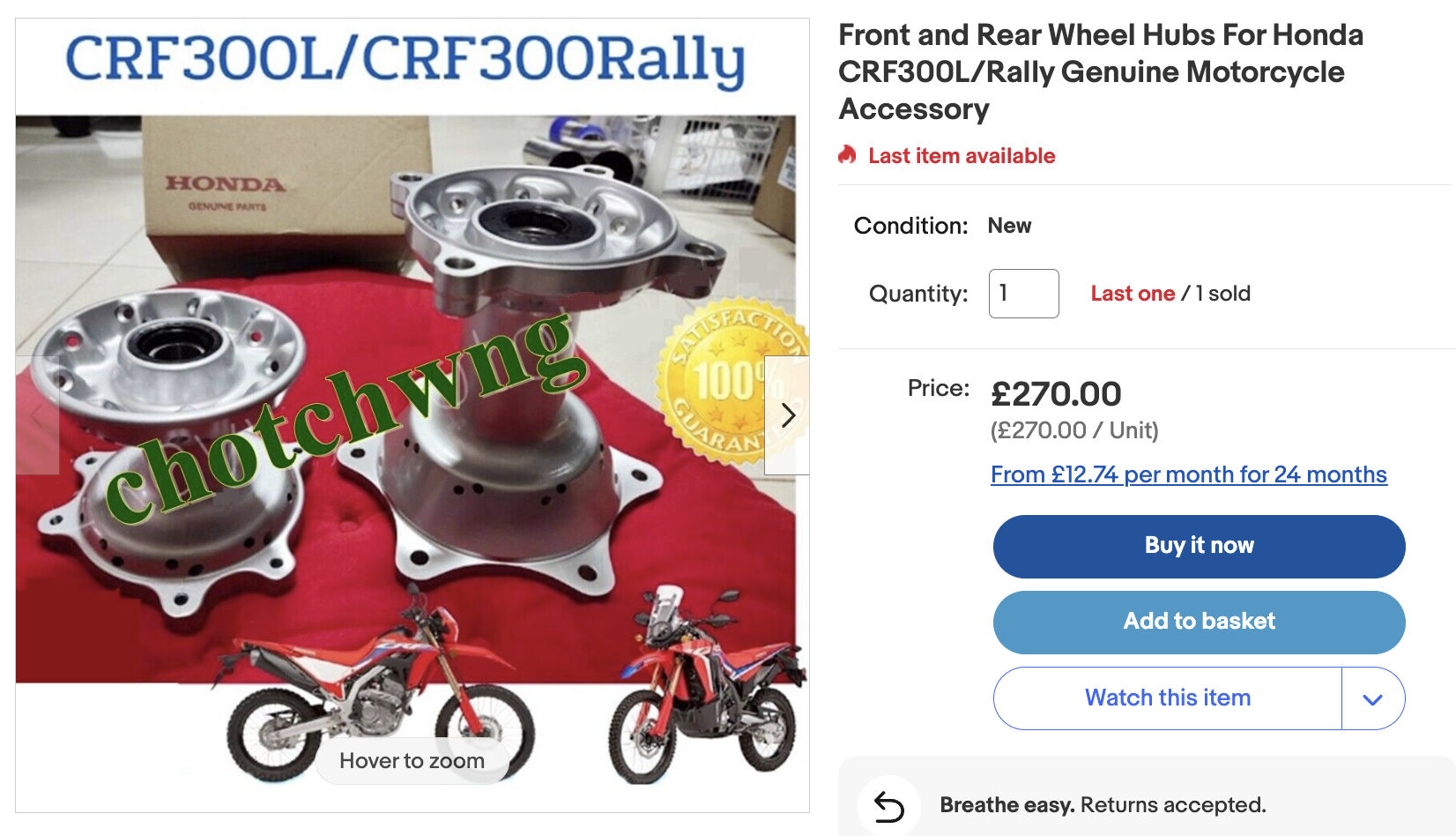
Shopping A used 300L wheel goes online for over 400 quid from breakers – all to dismantle just for the hub. Best UK price I could find for a OEM rear hub was over 200 quid. Meanwhile on ebay, outlets from Thailand (left; where 300s are made) sell front and rear hub combos for £270 plus about £55 tax.
So I returned to Partzilla in the US who I used while repairing my XSR700 a couple of years back. US-sourced Jap OEM parts with shipping and UK tax can still be up to half the cost of UK, EU and even Thai prices, depending on the item.
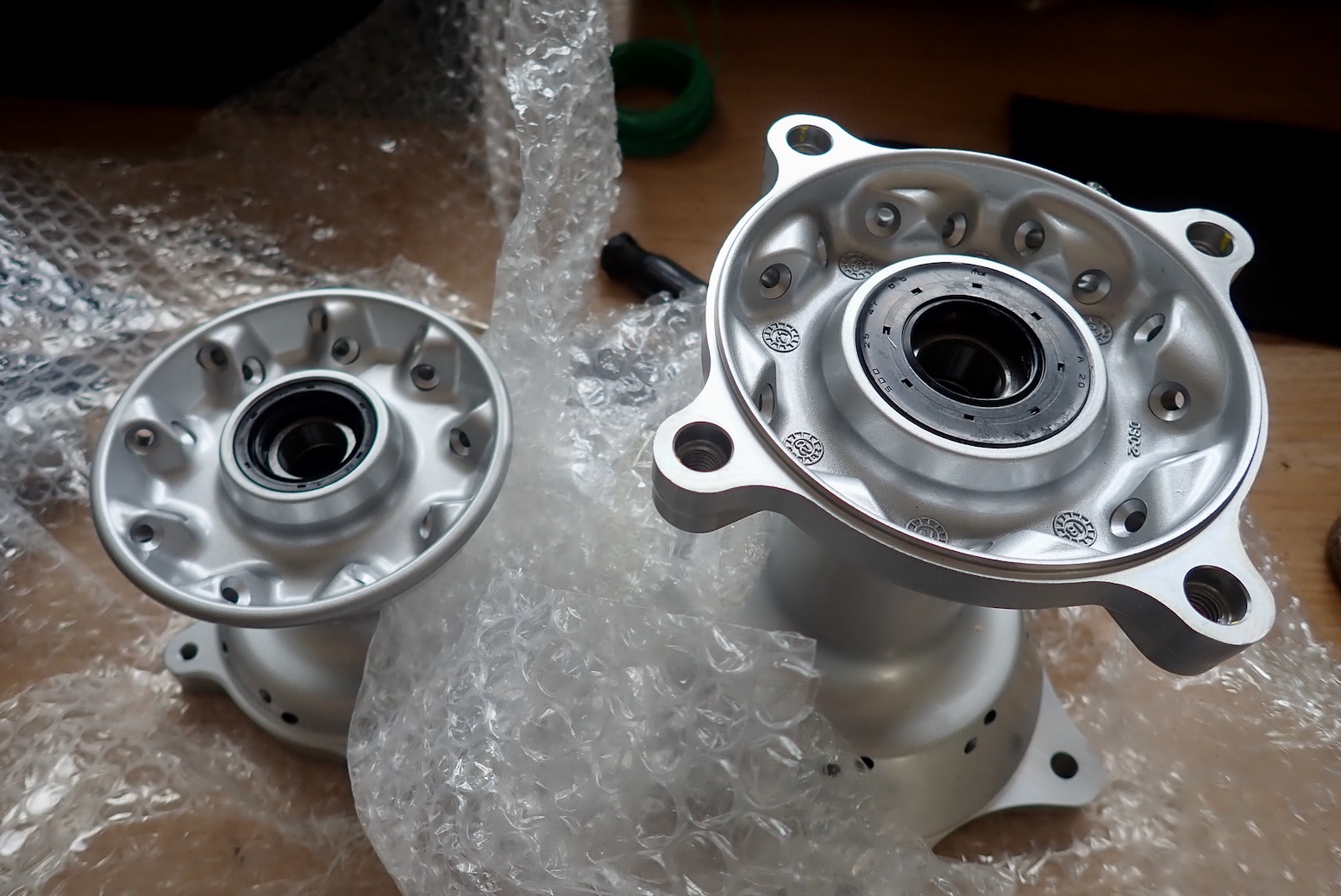
New hubs come assembled, no need to buy bearing and collars. Drat!
OEM rear hub $120; front hub $60. Add another $80 of collars, bearings and seals (actually not needed; the hubs came fully assembled) + $80 air freight and it came in at £340 taxed on my doormat 10 days later, with a spare air filter for luck. So that’s the same as Thai hub combos but with a full set of spare bearings and an air filter for free. Mistakenly buying the bearings and collars was an annoyance; I assumed the OEM hubs were bare. But wheel bearings are consumables so it’s not a total waste. Fyi; CRF250L 2017-20 hubs are the same; there might be more chance of finding those used from a breakers.
That all potentially comes in at around £1200 for a tubeless, Airtight wheelset ready to roll on new tyres. A lot of money to save on a sweaty puncture repair. I could save £250 by laboriously sealing myself, as I successfully did on the AT (left). This DIY method is better than proprietary Airtight or BARTubeless smotherings, in that individual leaks can be isolated and repaired. I might get 500 quid for my stock wheels if I’m lucky. I’m not sure there’s a cheaper way of doing it.
Non-MT – shame
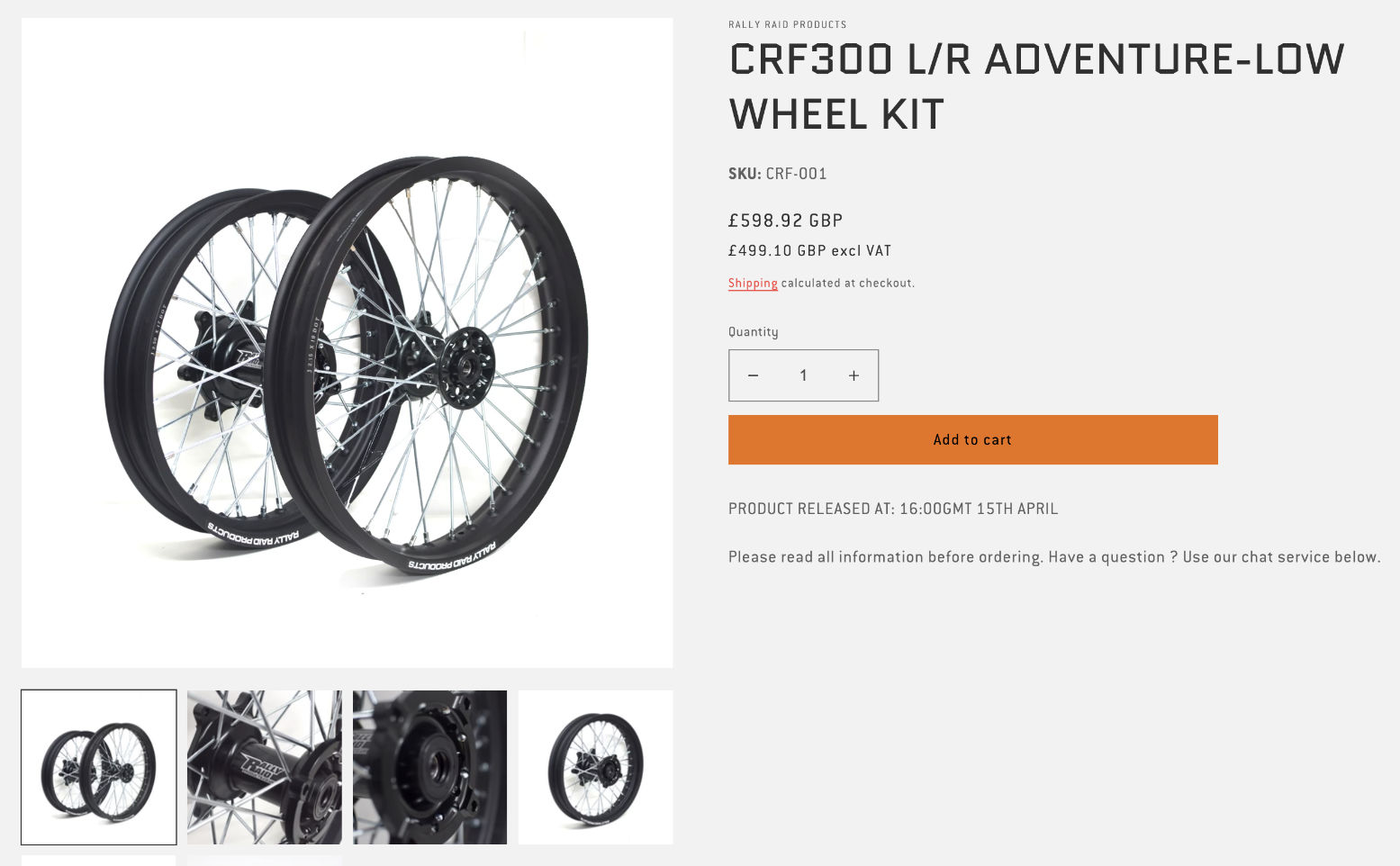
Rally Raid UK do sell an Asian-built low wheel 17/19 wheelset for just £600. RR spell out the low-wheel rationale here, and I agree with what they say. But even though the front 19er is a slim 2.15, neither wheel is MT type. John at Rally Raid runs a mousse on the front of his 300L low wheeler. I’m not fully convinced by mousses (see below); or should I say tubeless is more suited to road speeds; it’s no big drama to fix when flat and pressures can be varied if needed.
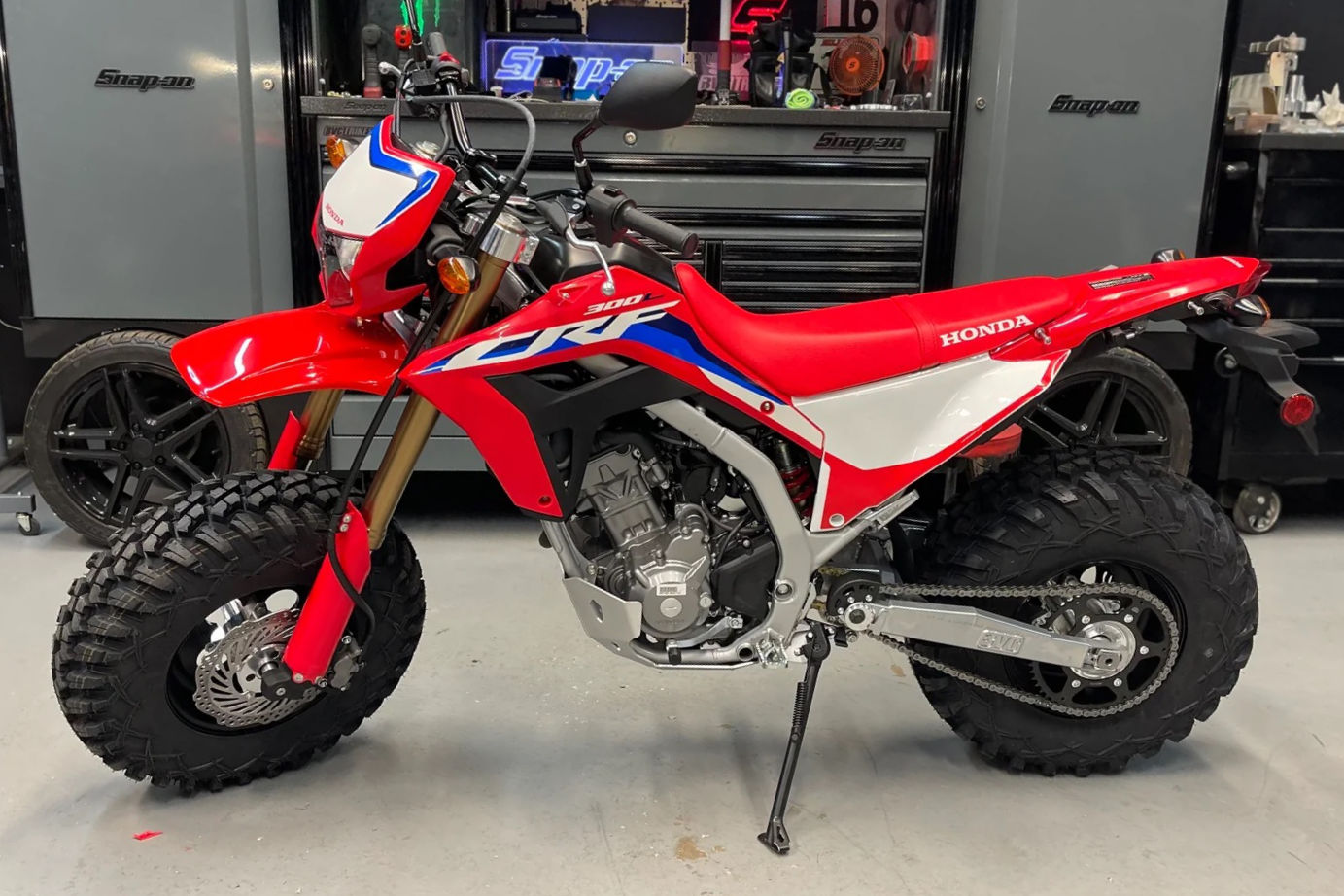
Go low (17/19)Or go big, TW style ($3k+)
I’d actually be interested in a low wheel 300L as a CRF has ground clearance to spare and a chunky bashplate when it hasn’t. I’d also be interested to try a do-it-all 19 on the front as the light 300L wanders about a bit on the road and, like many 21-inch bikes, won’t cut through road turns so sharply. A 19er would feel more planted on asphalt, mostly down to a fatter and heavier tyre than claimed reduced rotational forces from a smaller diameter. On an agile bike and the sorts of easy trails I ride, I can live without a 21 incher.
A mate had a spare 19er MT in 36HAlas it’s 2.5 and predrilled for a TTR
To go full tubeless on 19 means getting a 19 X 2.50 MT Excel rim. The 2.50 width would limit the fitting of slimmer 19 inch tyres which I’d prefer, but puncture-wise the bike would be bombproof.
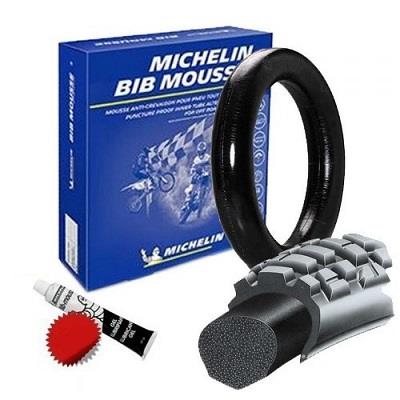
Mousse-tubeless combo? I had a thought: seal up the non-MT Rally Raid rims then stick a mousse in there for back-up, even at £120 + fitting aggro, added weight and lube issues. That way I could run normal 25psi road pressures in the tiny air space which is way above a typical 15psi mousse rating, The mousse would keep the tyre bead on the rim in the event of a flat, like they’re supposed to do. Meanwhile, you’d hope at 25psi and a typically moderate 60mph max cruise on a 300L, there’d be less tyre flex to heat up and degrade a mousse. Of course that assumes cool conditions and light payloads. Part of the reason mousses get hot, soften and crumble or even explode, is that they’re not psi rated for road riding. On the Dakar Rally they used to get changed every day (maybe still do). Low low psi in a tyre means much more heat at higher speeds as the carcass flexes and unflexes on each wheel revolution (the same reason we get hot exercising; muscles flexing). Higher pressures from a tubeless sealed wheel might limit flex, especially on a light and lightly loaded bike.
I could even glue the tyre in place for good measure. I know TL pushbikes use some bead breakable (non-permanent) glue and there is one for cars with rusty wheel too (right). Of course cars have TL wheels with bead-seating lips and I’m pretty sure TL pushbike rims have some sort of sealing lips too. Without that lip to retain the tyre bead, back-up from a mousse is important. This TL/mousse/[glue] idea seems a better idea than just shoving a lubed-up mousse in there and hoping it will survive a long road stretch on a hot day. As always, if it plays up, just stick tubes in there and anyway, I rarely drop pressures below the low 20s on stony Moroccan trails. I prefer to get traction from a suitable tread pattern, not ultra-low psi which is more suited to competitive events, not travelling. But thinking this mousse and tubeless idea over, it’s all a bit far-fetched for travelling when added to DIY rim sealing. Too many variables. Better to keep it simple stick with a tried and tested tubeless (DIY or proprietary) for what I do. Less weight, less expense, no mounting and lube aggro.
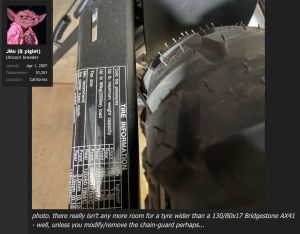
* Fyi: the CRF’s skinny stock 120/80 rear IRC is 117mm wide and has 22mm clearance on the chain guard side, over 30mm on the other side and about the same up to the front of the swingarm shock guard. So add 22mm each side means anything up to 160mm wide ought to fit and which sounds loads. Then again, on the left JMo fitted a 130/80×17 Bridgestone AX41 on her 300L DIY converted to TL with not much room to spare. 130 sounds fine; the lighter the better for a measly 28hp to turn.
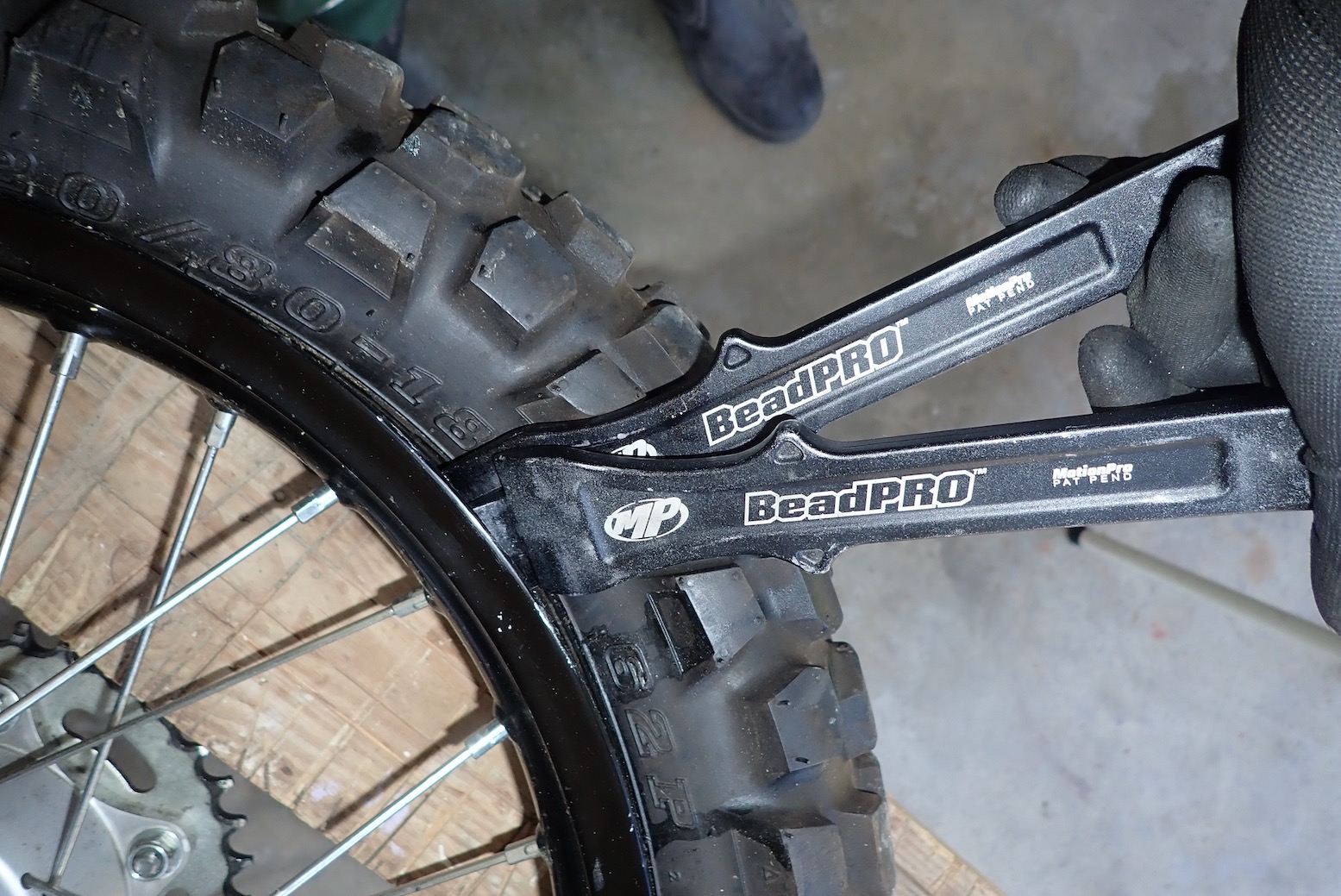
After less than 20 miles I’ve already got myself a rear flat, luckily at home. At some point I was going to remove the stock IRCs, seal the rear rim for tubeless tyres and fit some proper tyres for the ride to Morocco. May as well do that job now. While I’m here, allow me to give my usual shout-out for Motion Pro Bead Breakers, an alternative to standing on or otherwise levering the tyre bead to achieve the same result.
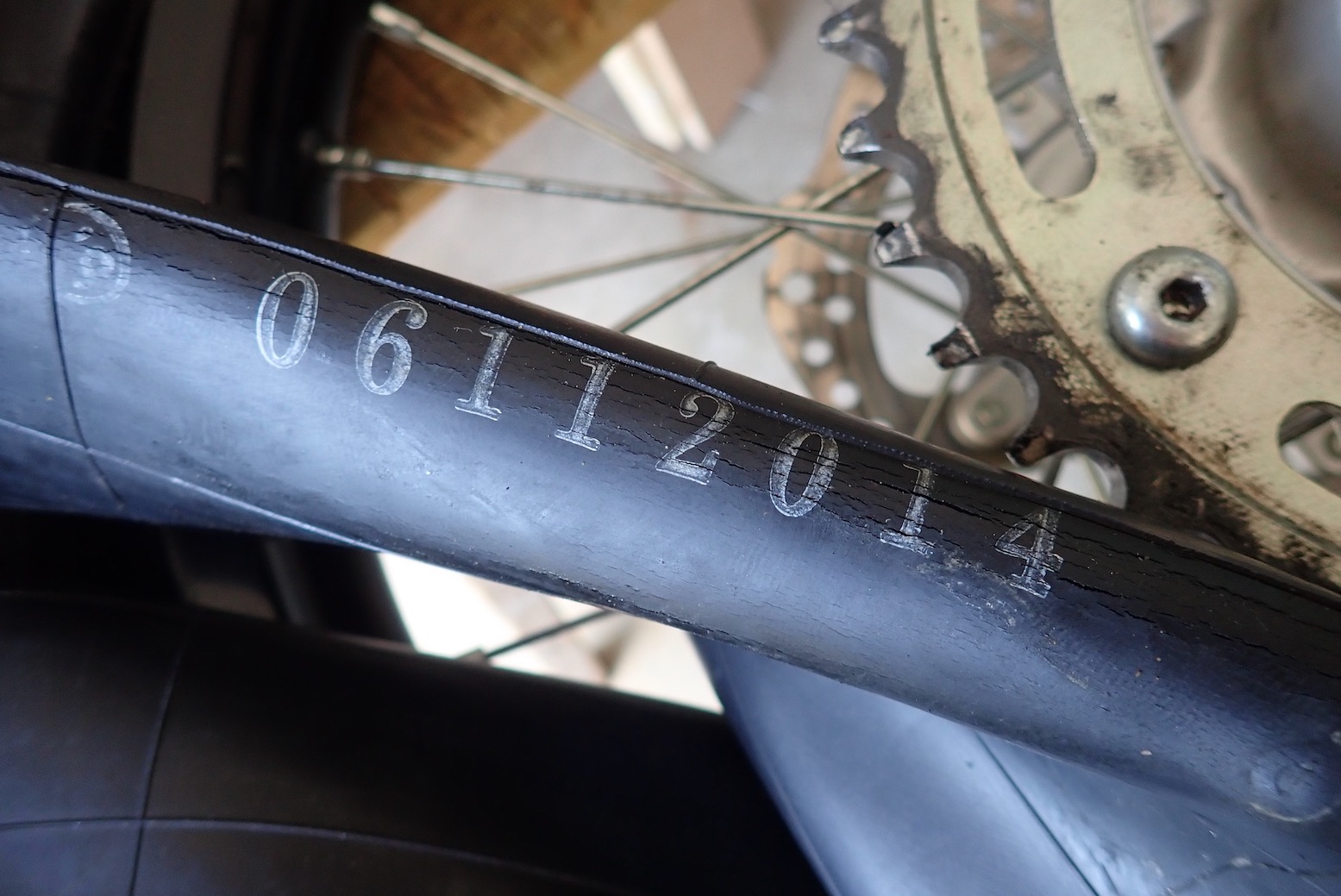
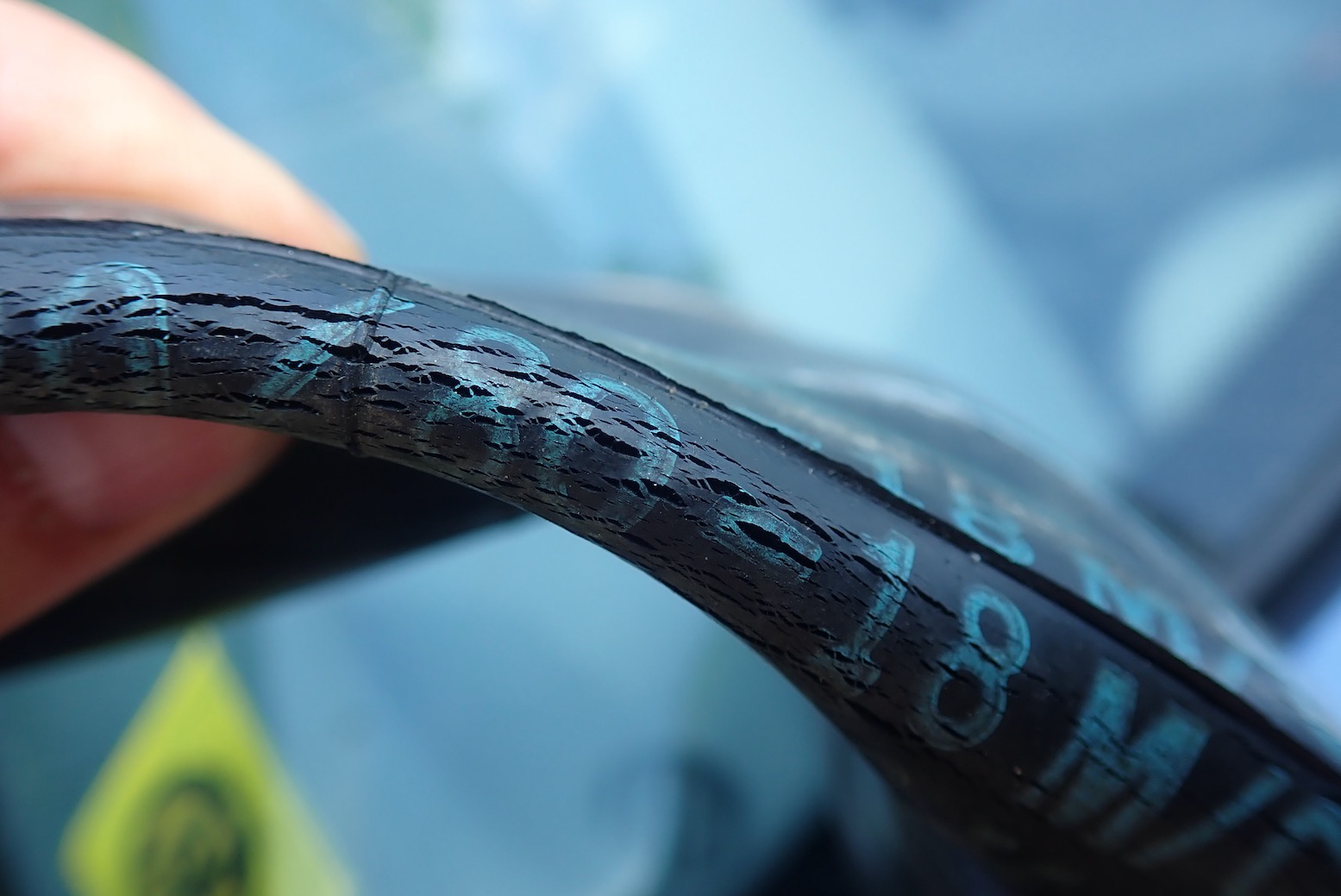
I spun the wheel on my exciting new stand you just read about but couldn’t see any nails or similar. I did wonder if I pinched the tube a couple of weeks back, but if I did, it only gave out now. Pulling the tube out I was shocked to see a huge gouged hole like a mouse had got in there. Maybe I did it just now removing the tyre, but can’t say it was a struggle. Who knows, but I also noticed how the folded rubber tube cracked like it was ancient. Then I clocked a date stamp from November 2014. Yikes, nearly 9 years old! Well I suppose I should be impressed that a: Michelin date-stamp their tubes (can’t say I’ve ever noticed this feature before) and, b: that this tube lasted nearly nine years without a repair (assuming it had any use in that time)! Obviously the tube isn’t worth repairing. Good thing I noticed now. I just picked up some old Mich tubes from 2017 and they are nowhere near that far gone (nor do they have that date stamp). Could it even be a fake Mich tube?
Cracked rubber; not a good look.
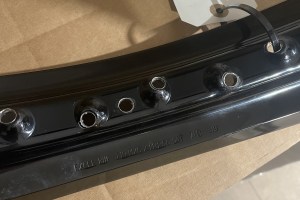
No MT stamp
No lip so unsuited to DIY tubeless sealing ;-(
When it comes to sealing the rear rim, I was also bummed to see the stock Excel J 18 2.15 rim has no safety lip, which complicates a TL conversion. That’s odd as, like I’ve mentioned over the years, I recall actually grinding the safety lip off a rear DID rim on my tubed XT600 way back in 1985 to make desert tube repairs easier. I assumed such safety rims had become defaults on all spoke/tube rim as they help a tyre stay on the rim when it loses pressure. But not on smaller sized rims, it seems.
This means I’ll have to lace a new lipped MT rim onto the hub to get TL – a couple of weeks and a few hundred quid. And while I’m at it I may get professional CWC Airtight sealing (left; as on my Himalayan) instead of my labour intensive DIY efforts, as on the Africa Twin. Or I could just live with inner tubes. On a travel bike (as opposed to a weekend trail bike) not sure I can go back to all that potential puncture repair aggro and added toolage.
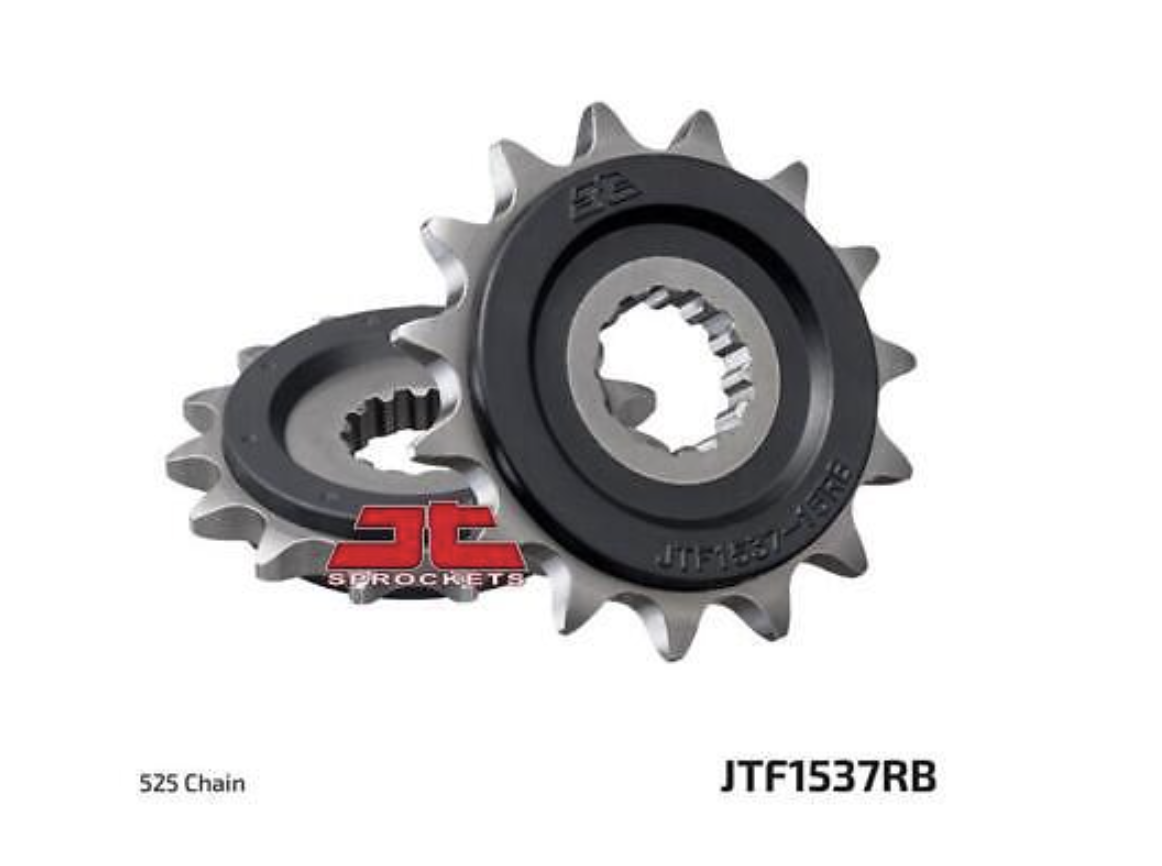
I also noticed there’s no cush drive on the 300L. It makes me think this is a dirt bike rim from Honda’s MX bikes. A part number check would reveal all. Cush drives add weight and expense and absorb a little power, but reduce drivetrain lash to the transmission including the chain.
The thing is, at 28hp and however few torques, a 300L hasn’t got enough grunt to strain the components that much, so I can live with no cush. Apparently my old XR650L was the same but I never even noticed. A mate who’s currently importing one has, and dug up various rubber-insert sprockets (left) to reduce the lash from the much torquier 650 thumper. And in fact the 250L I had years ago didn’t have cush.
So net result of today’s puncture:
it pays to verify you inner tube’s age (if you can) as well as old tyres (all have date indexes). Or just get new tubes.
If I want a tubeless rear I’m going to have to get a new wheel built up on an MT rim, in which case I may as well have a proper sealing job done like CWC Airtight™.
OMG there is no cush drive ;-0
Is it time to consider mousses? A light, slow bike like a 300L is suited to them, but afaik they come rated at no more than 15psi which to me is on the low side for road riding, even at only 60mph.








































 Adventure Motorcycling Handbook