Category Archives: AMH News

Klim Overland jacket – first impressions

Full Klim Overland review here
klimov-11

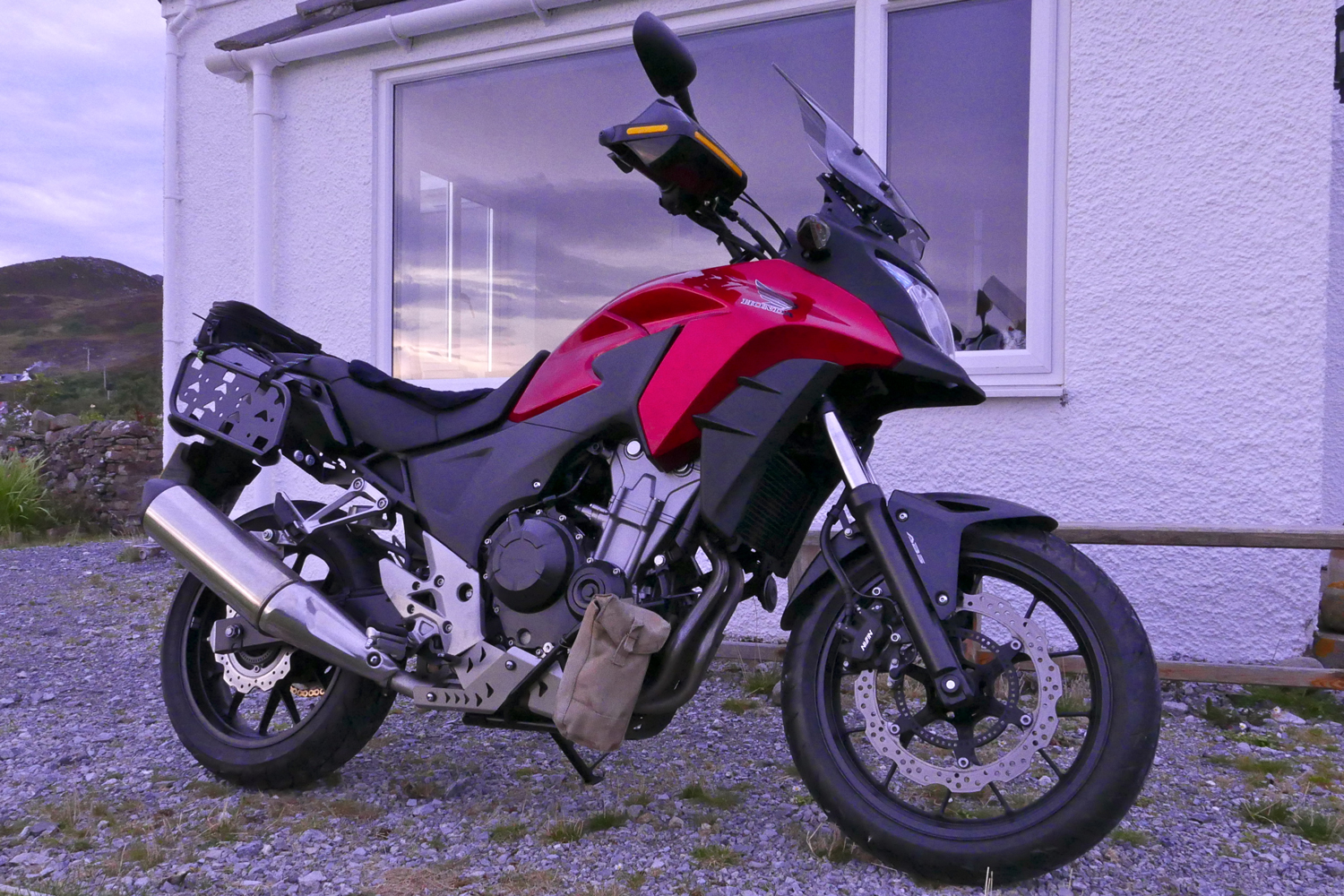
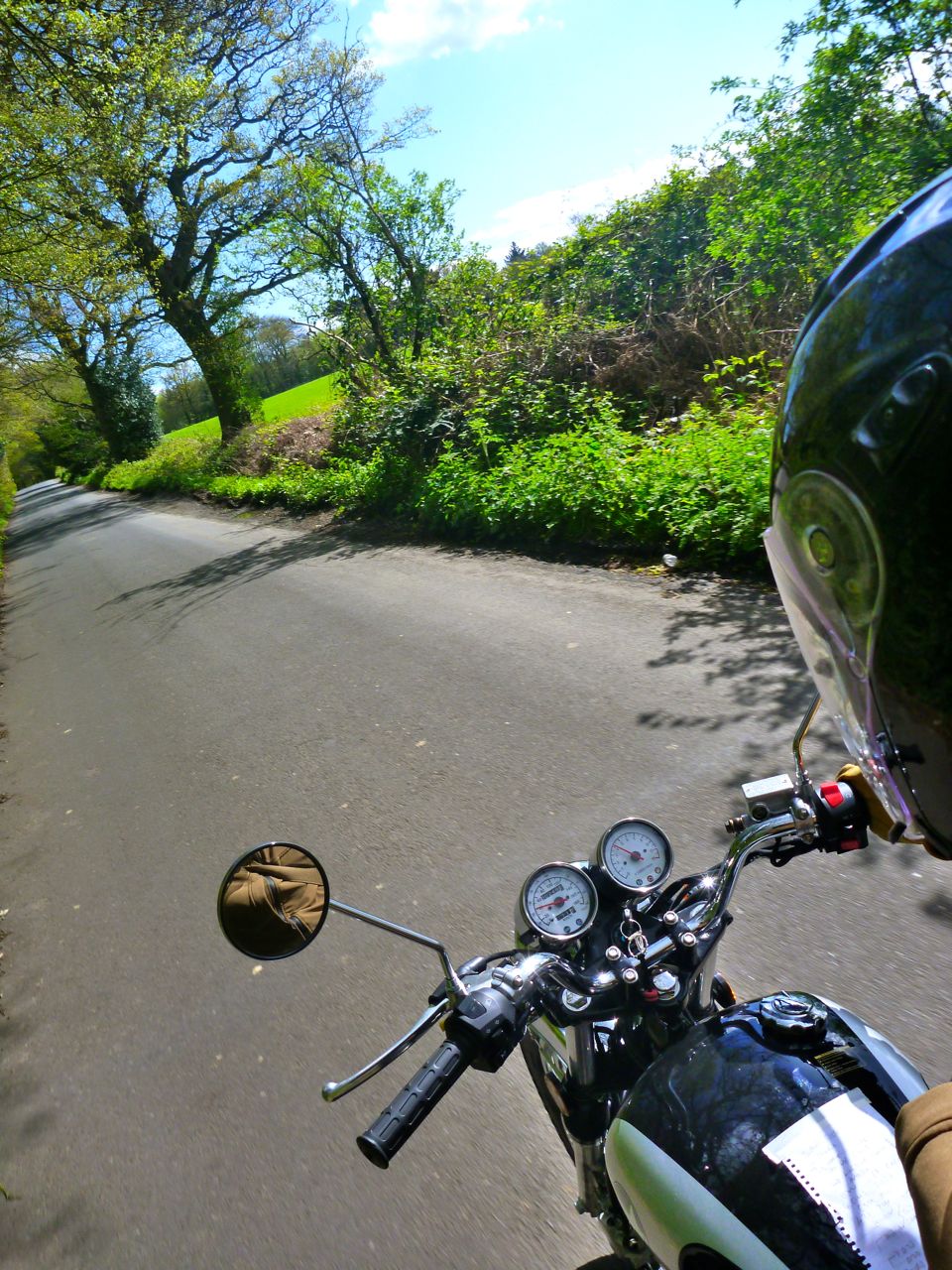
The cupboard was bare, the fridge was an icy cavern bereft of succulent goodies, and the sun was shining. It was high time for a shopping run to Ullapool. And, finding myself between chapters on the new AMH, it was also high time to saddle up the CB-X for a ride along the lochs and glens to try out some new gear.

Adventure Spec supply me with free or reduced cost gear in return for advertising in AMH

klimov-01

In need of a decent coat for a winter getting to and from the desert, Adventure Spec recently sent me a Powerlet Rapidfire heated jacket and Klim’s Overland jacket. AS had already sent me a Latitude to look at a couple of months back. But considering the investment in such a key item of gear, I found the Latitude either a little small in L, or way too big in XL. And in other ways it didn’t quite compare with an Aerostich Darien Light which I still consider a benchmark in travelling jackets.
klim_jacket_size_guide

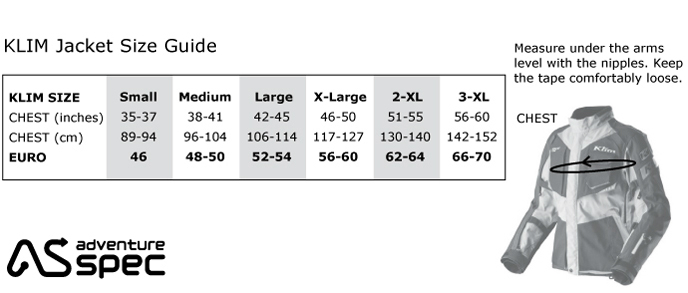
Wearing the Powerlet liner (about the bulk of a fleece), the Overland in Large felt tight across the chest and shoulders and yet, according to the chart on the right, I’m (42″ chest, 6’1″, 95kg) at the lower end of their Large range. The Overland was snug on me dressed in full gear – but still useable.

What Klim say
If you’re taking your first steps into Adventure and Adventure Touring, the all new Overland series from KLIM® is a tremendous value [sic].

My first impressions
Good value, solidly built three-season shell that’s well-designed, has some tidy features and an understated look. Warmer than you think too, but could use more- or just bigger pockets in and out. And beware: Klim sizing comes up small.

Klim Overland – a quick look
• The Overland costs £379 with tax from AS and is listed as $429 + tax in the US or another $50 for the huge 3XL size
• My Large weighs 2.04kg, less 330g without back armour pad
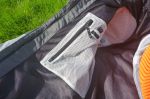
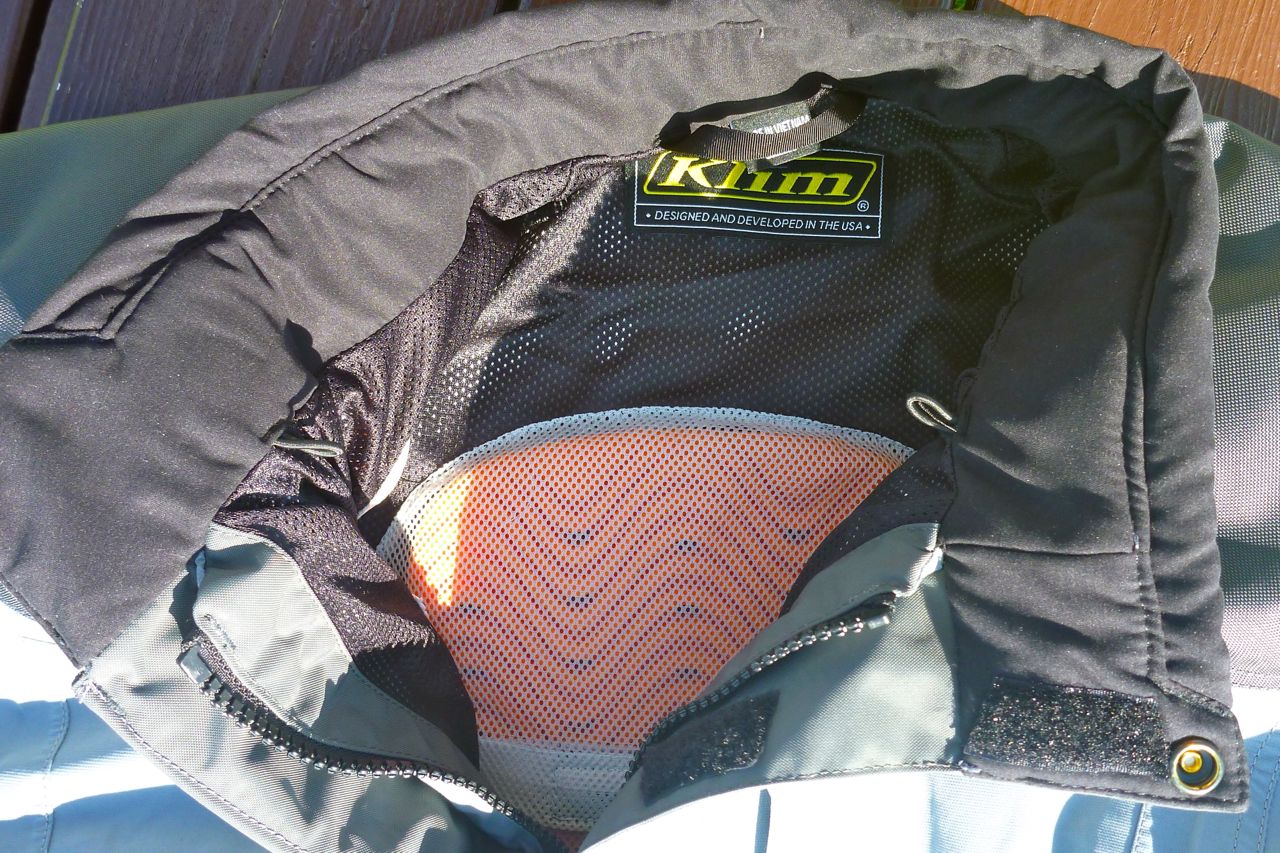
• It has four pockets: two hand pockets the hem with vertical entry water-resistant zips, a smaller vertical chest pocket and a similarly small one on the mesh inside (right)
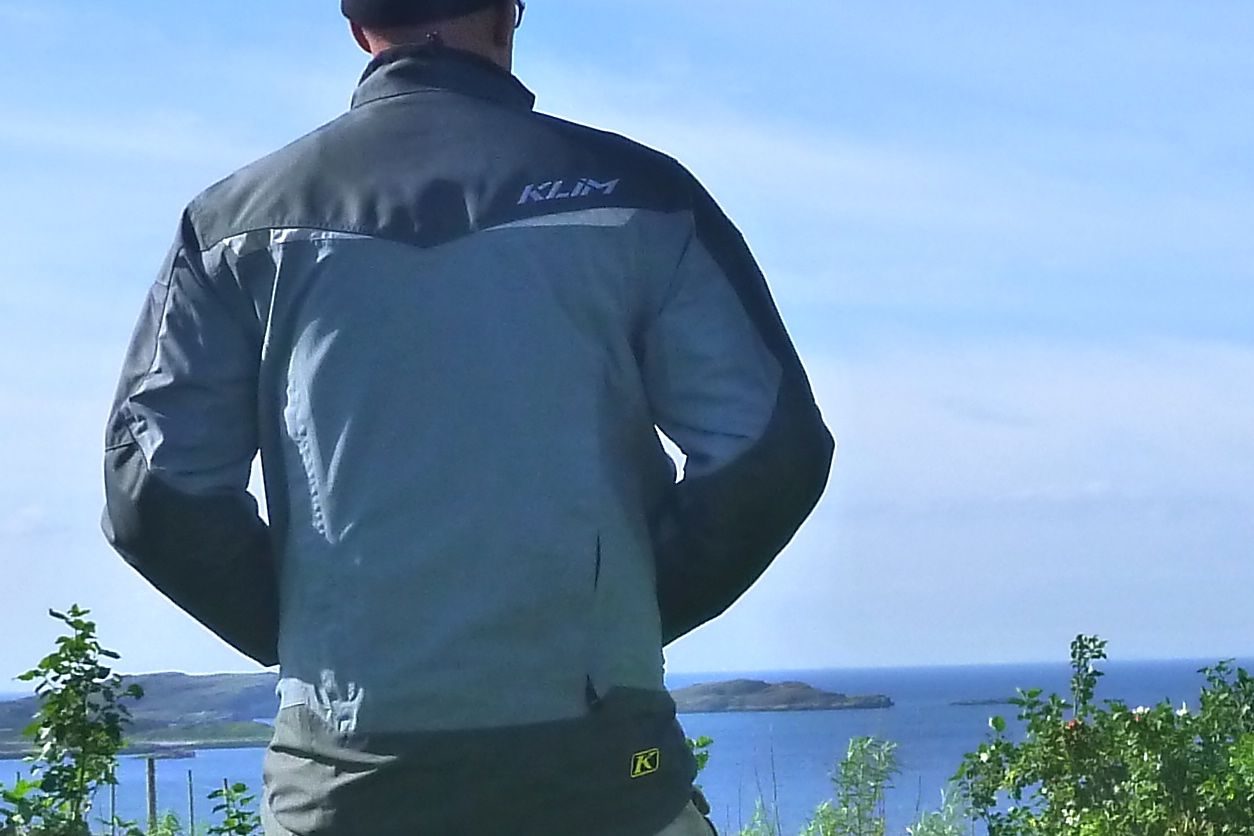
• There are water-resistant zipped armpit vents down the sides that you might just undo on the move, and two corresponding long vertical back vents (right)
• The front two-way zip lies under a velcro flap with a stud at each end, and the soft, Tricot-lined collar can be cinched for a snug seal. There are also cinch cords on each side of the hem, velcro arm tabs below the elbow and velcro at the wrists
• The jacket has ventilated D30 E5 EVO XT armour on elbows, shoulders with a slightly less highly rated slab of non T5 D30 across the back (right)
• Eight discreet 3M Scotchlite reflective flashes front and back
• The cut is boxy and most of the arms and shoulders are over-layered with coarser and darker abrasion-resistant panels of 840D weight Cordura. The light grey body is made of much less stiff regular nylon fabric of about half that weight. The mesh lining is polyester and the membrane is Gore-Tex tw0-layer Performance Shell which is ‘Guaranteed to keep you dry ®’ and the jacket has a lifetime warranty too.

klimov-04

Review
A few years ago when Klim first came to the UK, I remember looking at a Badlands or something at the Ace Cafe Adventure Day and thinking: £800 for a jacket – really? Of course Rukka had come to price themselves up there too, incorporating what I considered fussy, over-complicated ‘technical’ designs that seems to be a way of justifying high prices on a lot of stuff these days. But 800 quid for a garment made in Southeast Asia?

Maybe ‘start high – bring in the cheaper stuff later’ is a recognised marketing strategy. That’s how it looks to me with Klim in the UK and now we have more normally priced jackets like the Traverse, and the second take on the Traverse which is known as the Overland.

As I say in the book, setting off on a long trip you’ll be wearing your jacket just about all the time for weeks or months. It’s got to work well, feel right and be up to the task as it’ll become your second skin. One thing that categorises Klim as a serious contender is they only make rugged waterproof shells and eschew what is to me the cheap measure of a zip-out membrane. If you want a serious Gore-tex type jacket, get one where it’s laminated to the outer shell. Yes, it costs more.

klimov-10

I set off for what turned out to be a 180-mile ride on an October day with temps peaking at 13° and strong winds forecast. Underneath I was wearing the Powerlet, a thick shirt and a vest, and leather trousers plus thin unlined gloves. I planned to fire up the Powerlet when the chill got to me. As it turned out – perhaps because I was stopping a lot – that never happened. The Overland kept me warm all day right up to sunset which was impressive. It means you can wear less clobber underneath but I suppose may get hot working hard off road in a warmer climate. For that reason I chose the grey version rather than the black. It really can make a difference.

klimov-07
neander

Doing it up I noticed that with the Powerlet’s high wire-laden collar and a shirt collar too, there wasn’t really room for my thin neck buff I usually wear. The front collar stud was a two hand squeeze to do up and the collar felt tight at the front while loose at the back where the cinch is. In other words the collar fitting was too upright or – like many humans in this digital, screen-staring era – my neck and head stick forward like a round-spined Australopithecus. Trying it again now it definitely presses on my Adam’s apple, but not unbearably so. Normally I prefer loose clothing and the Overland is a ‘snug’ fit round the neck and in the arms  and across the shoulders with arms pulled backed which is probably more flattering, cosier and aerodynamic.

klimov-09

klimov-08

Riding along I thought I felt a chill under the arms through the vent zips, but not enough to plug in the heated jacket. And anyway this could be attributable to my bike / screen /posture / speed. Later on I didn’t even notice it.
P1000435

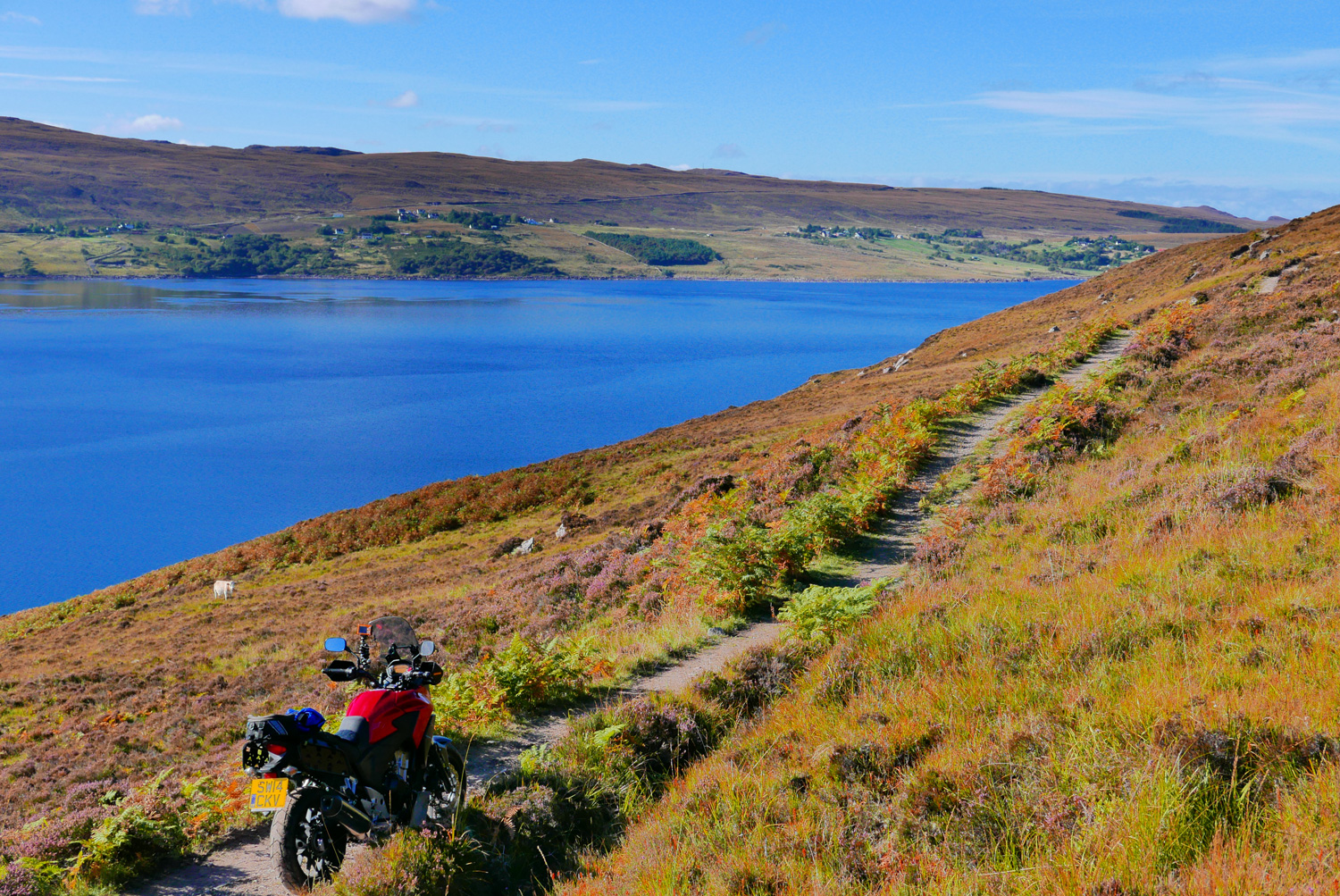
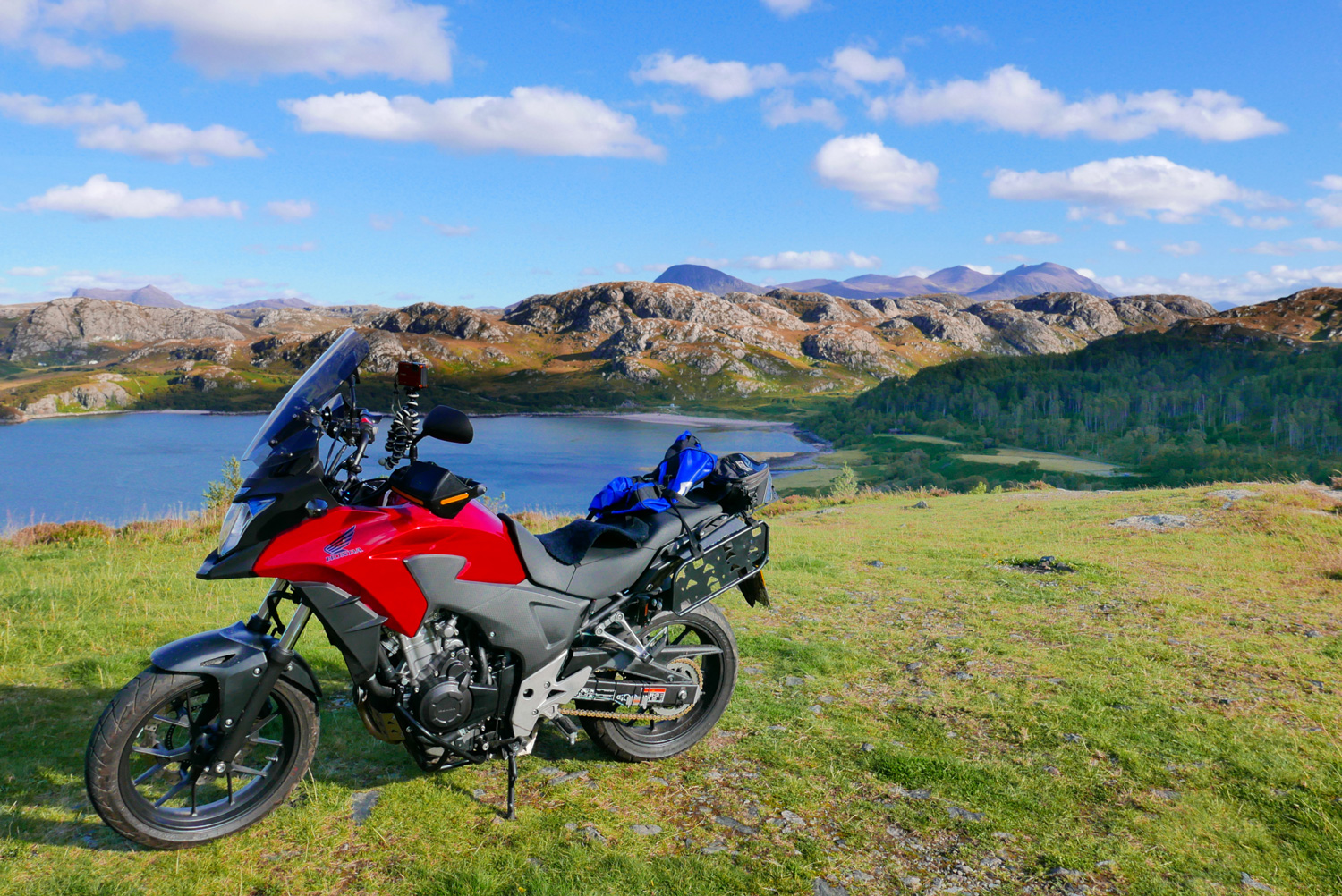
At one point I left the bike perched on a sunlit hillside track and walked on to recce the route. In a black jacket I’d have cooked like a Findus boil-in the-bag cod in parsley sauce, but the Overland was surprisingly cool. By the time I got back to the bike I did have a bit of a glow on, but rode back the few miles to the main road unzipped and flapping by which time normal operating temps had resumed.

klimov-05

An hour and lots of lipsmacking pics later I pulled in at a cafe near Poolewe and instinctively went to slot my gloves into a pocket to came up against the Overland’s main flaw: too small pockets. I suppose I could have stuffed then into one of the lower pockets but what I’d like a decent, map-sized chest pocket or some meshy drop pockets low down inside (they could actually be easily tacked on to the mesh. What do other riders do? – cart around a tank bag or backpack – or slip them in a topbox I suppose. A jacket called Overland needs overlandable storage. For the return run I also removed the back armour to free up some room. It made the jacket lighter and more flexible, but I can’t say it felt significantly more roomy. For that the shoulder pads need to come out but I’ll keep those for the moment.
P1130862

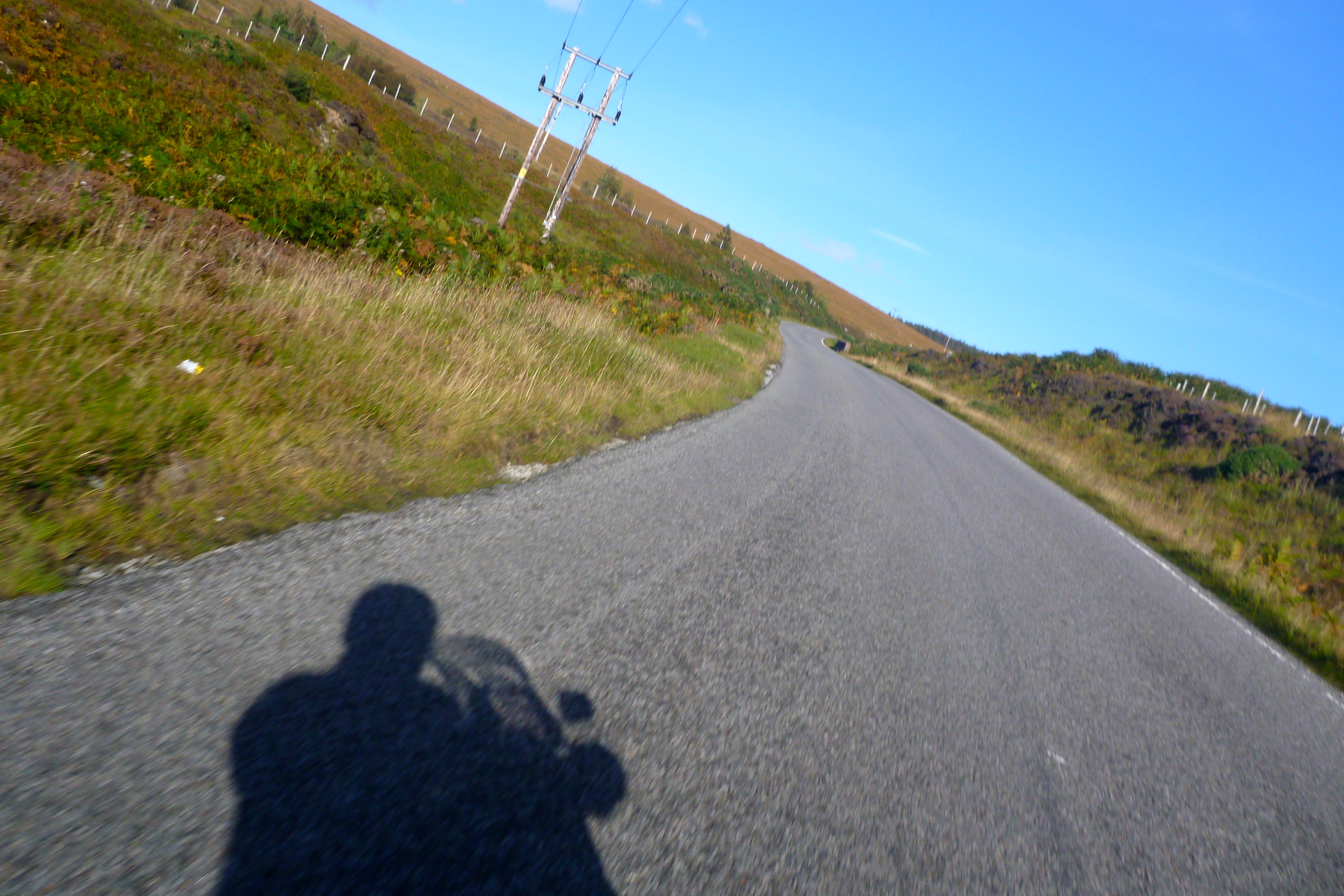
Riding back with the sun now dipping behind the hills, I expected to resort to the Powerlet, but riding up to 80mph the Klim still hung in there. The wind was up now too, pushing me around on the single track roads and at one point coming over a pass I distinctly felt the wind catch the back vent flaps and pull me around in the seat.

klimov-12

So – preliminary findings on the Klim Overland adventure touring jacket. Warmer than you’d think, under pocketed but the plain looks that are growing on me. Great armour and adjustability too. Resistance to pelting rain and ventability to be established. I always wonder if the latter might compromise the former.

Full Klim Overland review here
P1000489

CB500X Tutoro Oiler Take 2 – and grab handles

CB500x Index page
cb5-10
previo

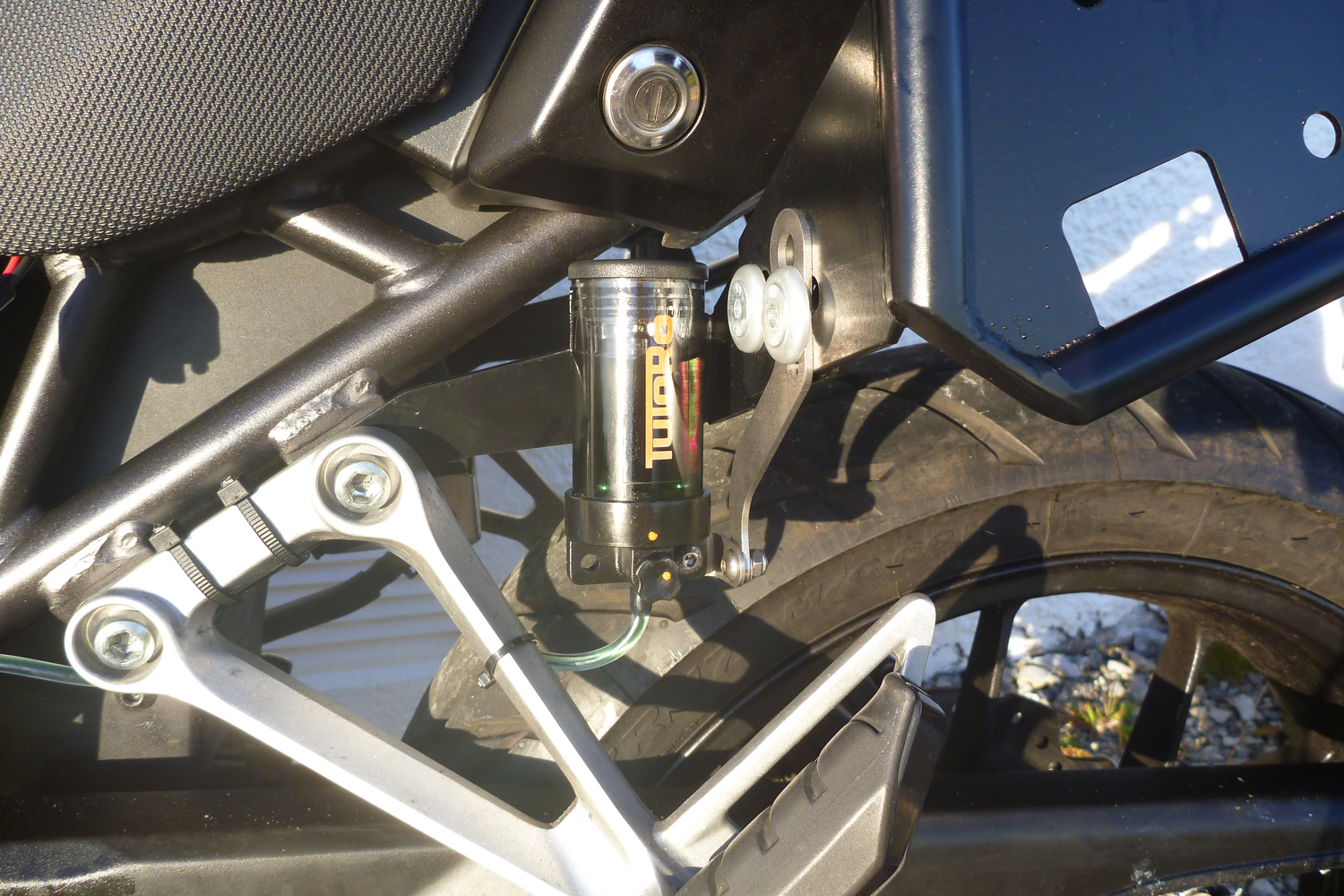
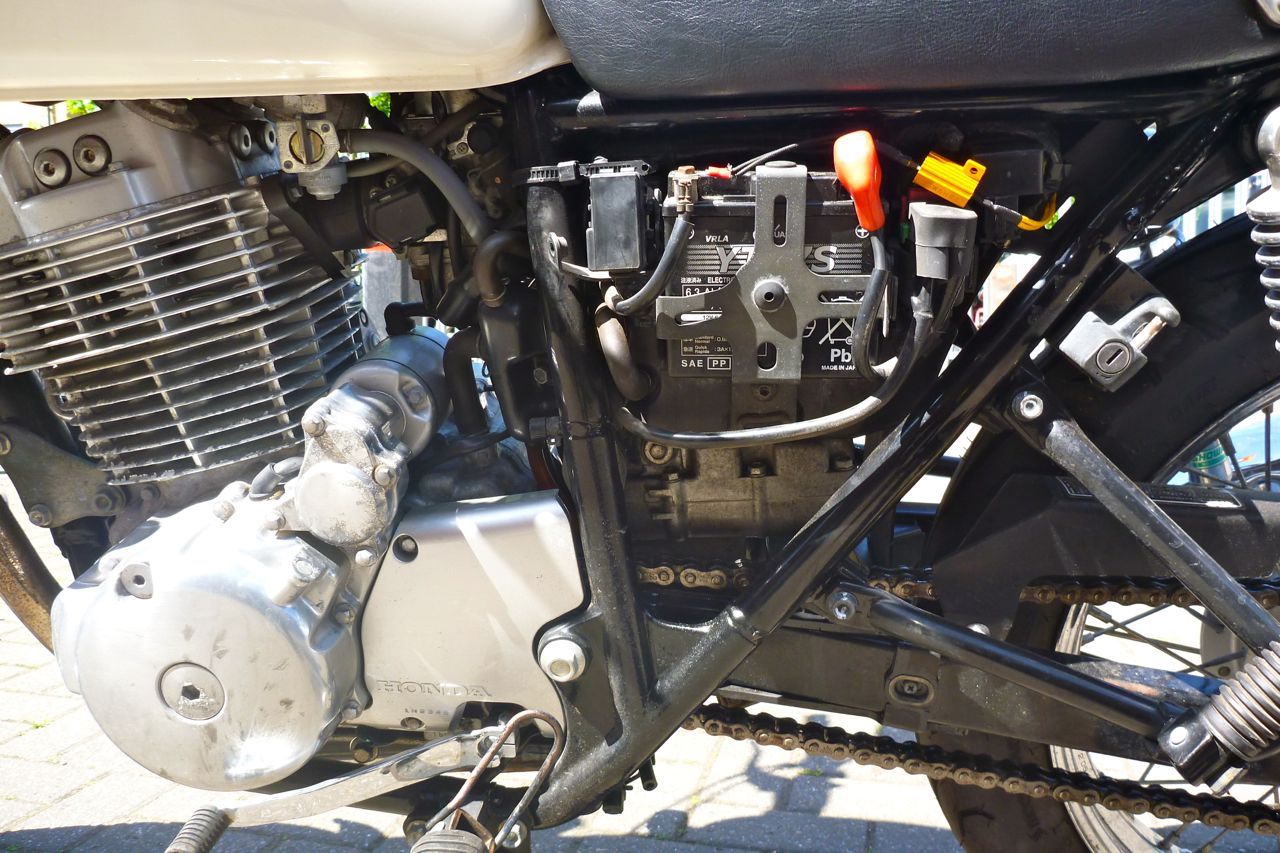
Previously… on the AM Website… I fitted a rack and chain oiler to the CB-X. But my chain oiler by the rad (right) wasn’t such a good idea according to Tutoro – too hot for the oil and too hot for the reservoir.
At one point I thought somewhere inside the fairing or on the fork would work. I noted some dirtsome travelling KTMs put their oilers up front for the same reason: out of the way of flying rocks. But on the more cluttered CB-X the fairing makes access and topping up too awkward. Can’t be having that.

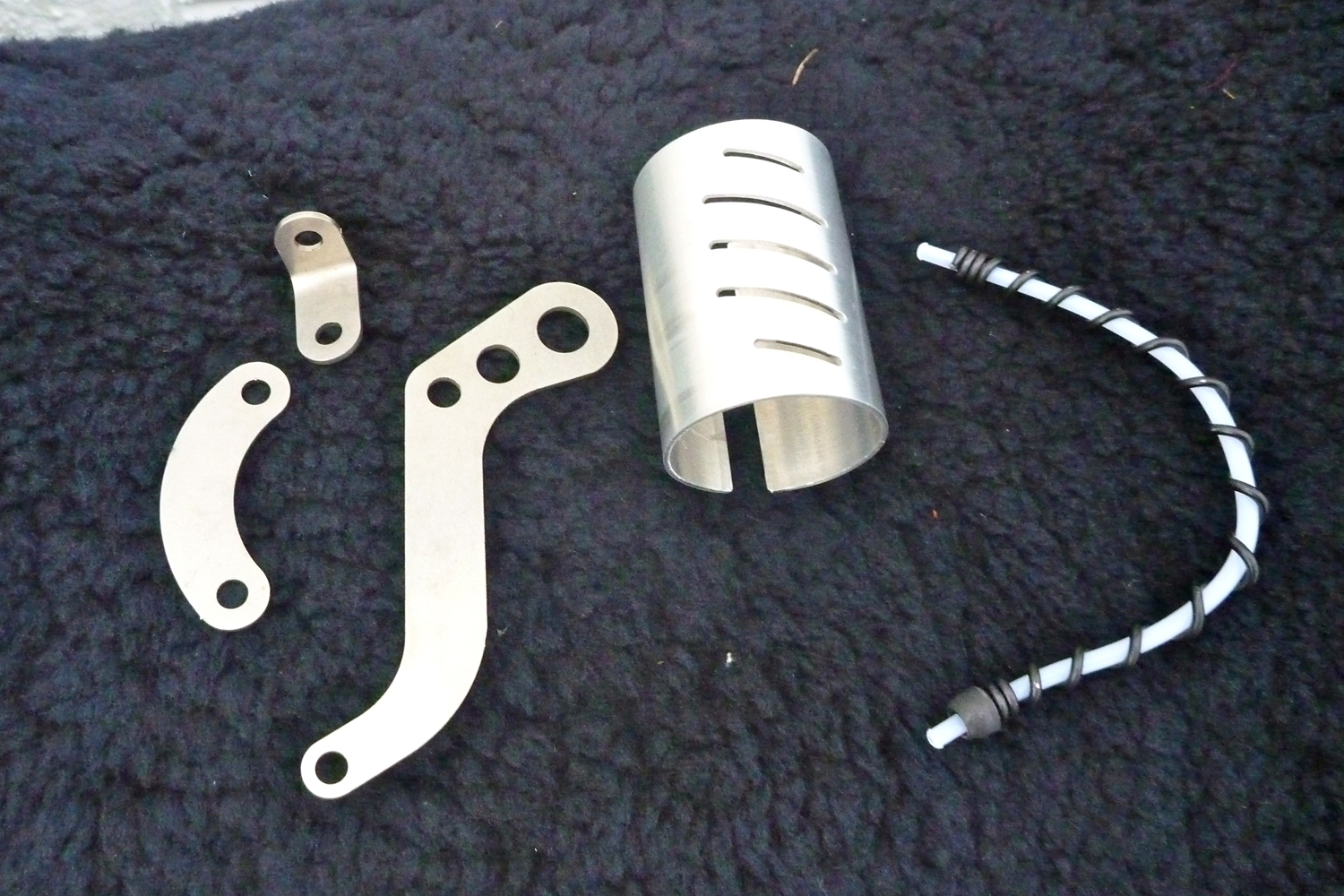
I had another look and decided inside the fold of the Rally Raid pannier rack was as good as it would get on the back. Easy access for flow adjustment and topping up, and anyway it will be the feed nozzle that will get knocked about before the reservoir. The kit with the Tuturo Auto Pro comes with a range of brackets (right) to help you fit it in the best space available.

cb5-1

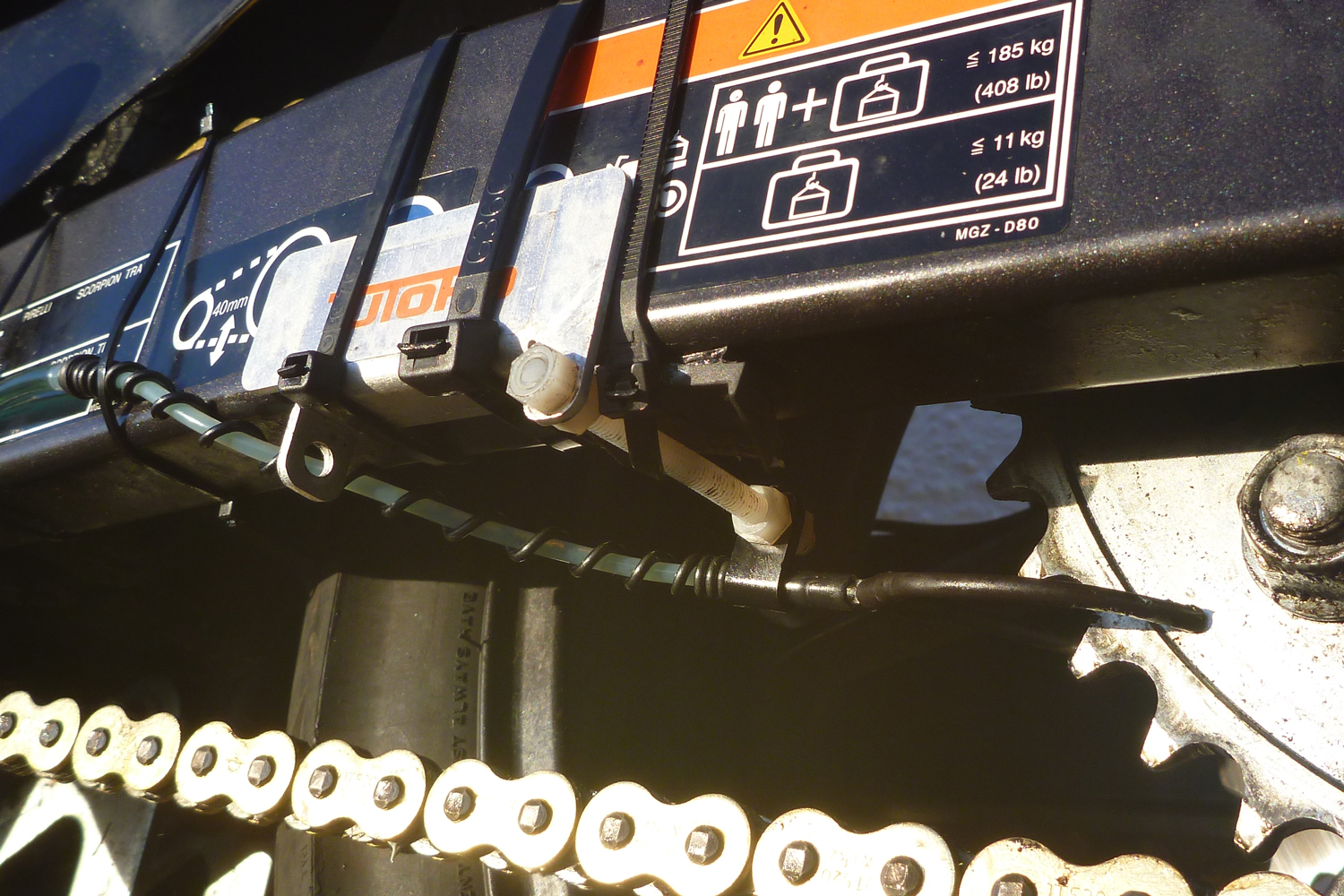
While in the area I also took a chance to beef up the support for the twin-feed nozzle by adding a spring-coiled section of hose and supporting the sacrificial white nylon bolt with a bit of hard-to-see rubber between it and the swingarm, then zip-tied together (left). Like I say, one flying stone and it’s all gone – better ideas may evolve.

I fitted a JT x-ring chain. At only 2600 miles I wasn’t convinced the OE chain – branded a ‘DID’ no less – would last the distance (see the previous post).

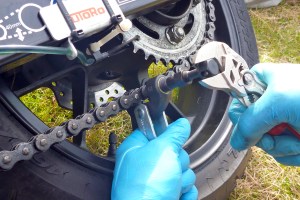
It gave me a chance to use a Motion Pro chain breaker (left) to separate the linkless OE chain – a solid, compact and easy to use bit of kit. I can’t recall the last time I actually did this – usually I just sell the bike. I also had a Motion Pro chain press (right) but decided to go with the spring link despite dire warnings from JT. If it was that deadly they wouldn’t include it in the kit. Adventure Spec sells the Motion Pro chain tools.

cb5-14

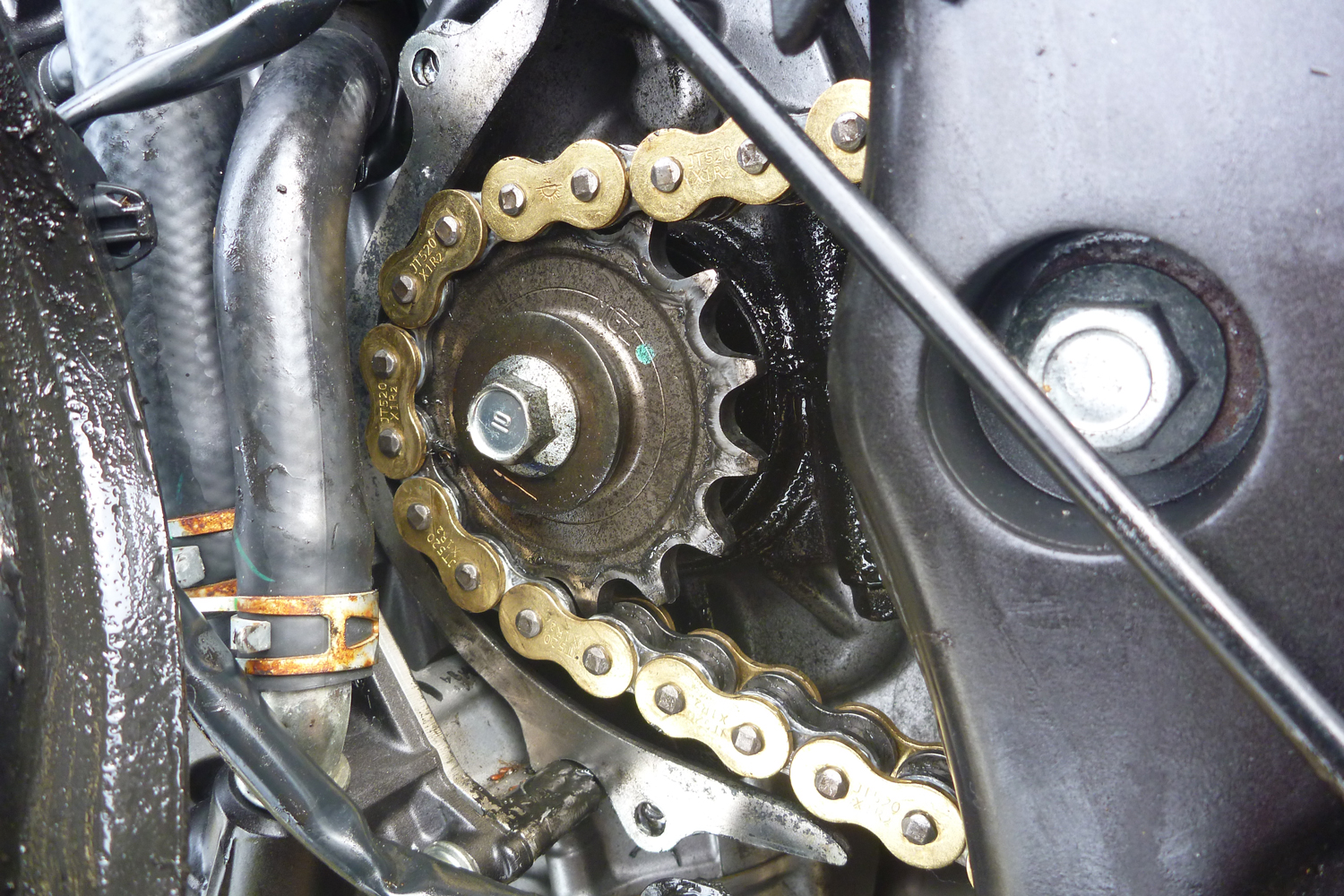
Speaking of broken chains, it was good to see that there was a semblance of a case saver tucked in around the front sprocket (right), though if that hefty JT gold-plate lets go I don’t think there’ll be much to hold it back.

cb5-8

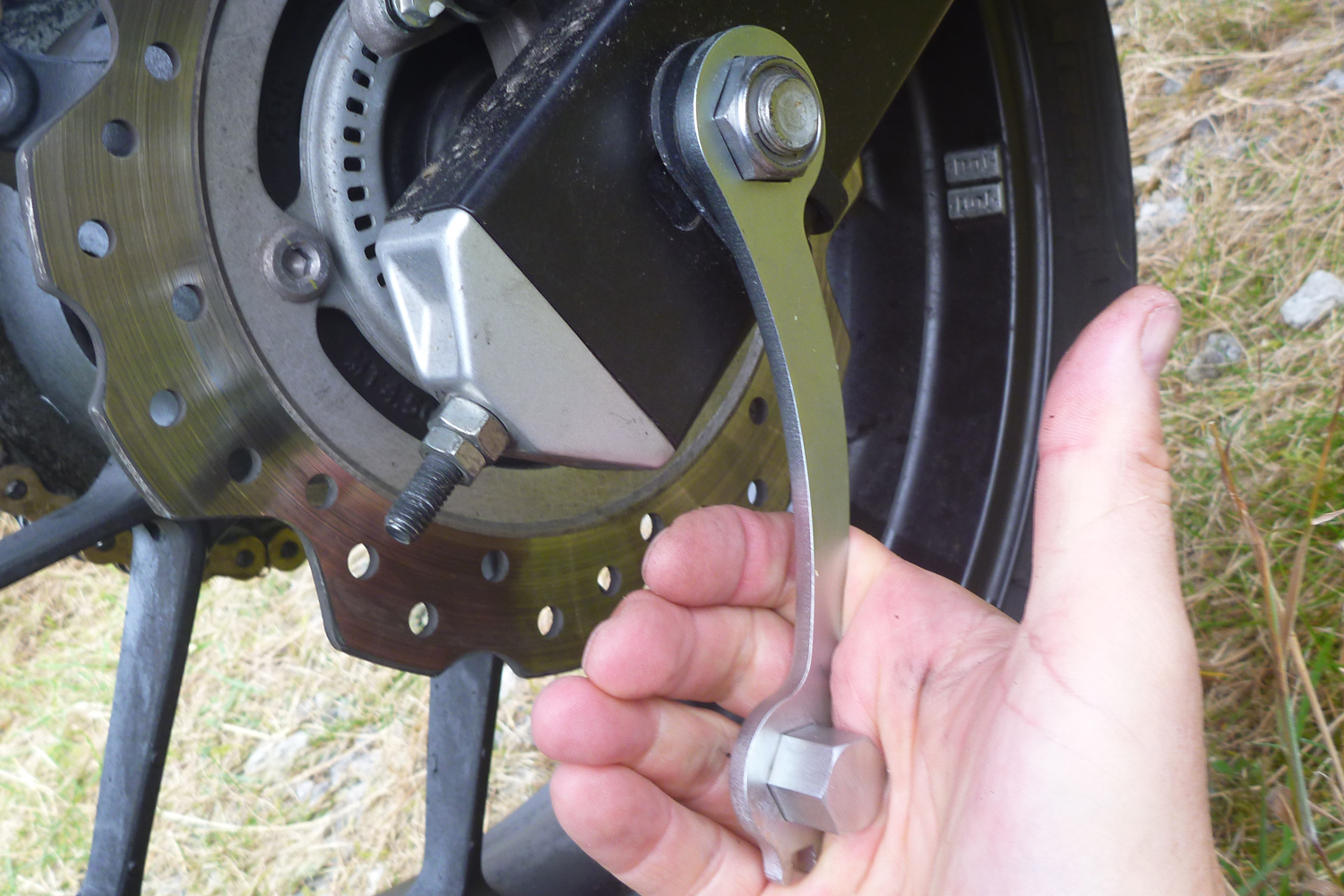
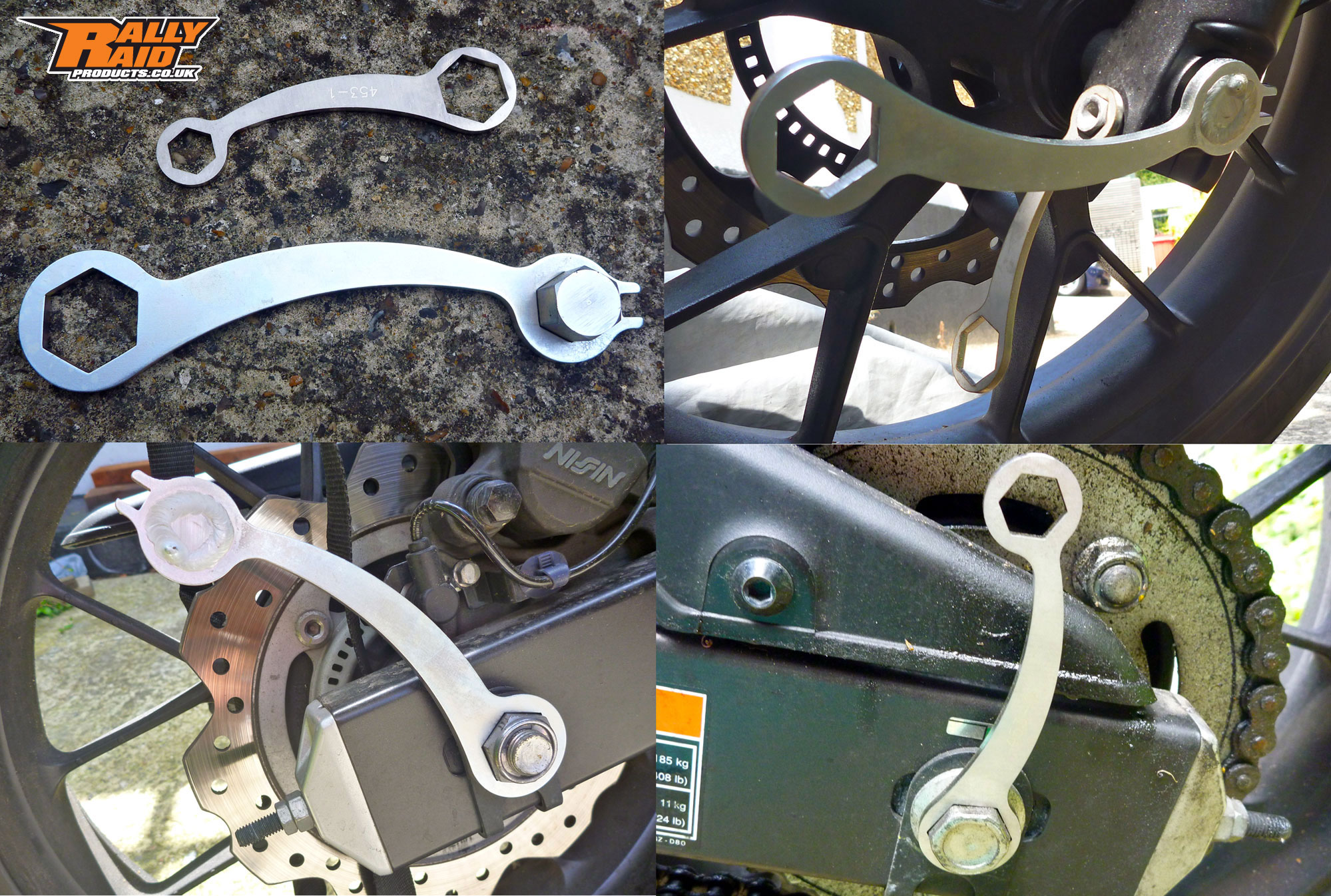
Also, re-adjusting the new chain gave me a chance to use the nifty RRP axle wrench (left) which, it must be said, fits in the hand very nicely and spins round 360° behind the pipe without snagging. Well worth a tenner.
Why oh why can’t we have snail cam chain adjusters back? I’d happily pay the extra £3.76 on the price of a bike. There are no usefully visible alignment marks worth noting on the Honda.

With the new x-ring and chain oiler I’m hopeful I’ll get a good 15,000 miles worth of chain life, even with some desert biking thrown in.


cb5-2

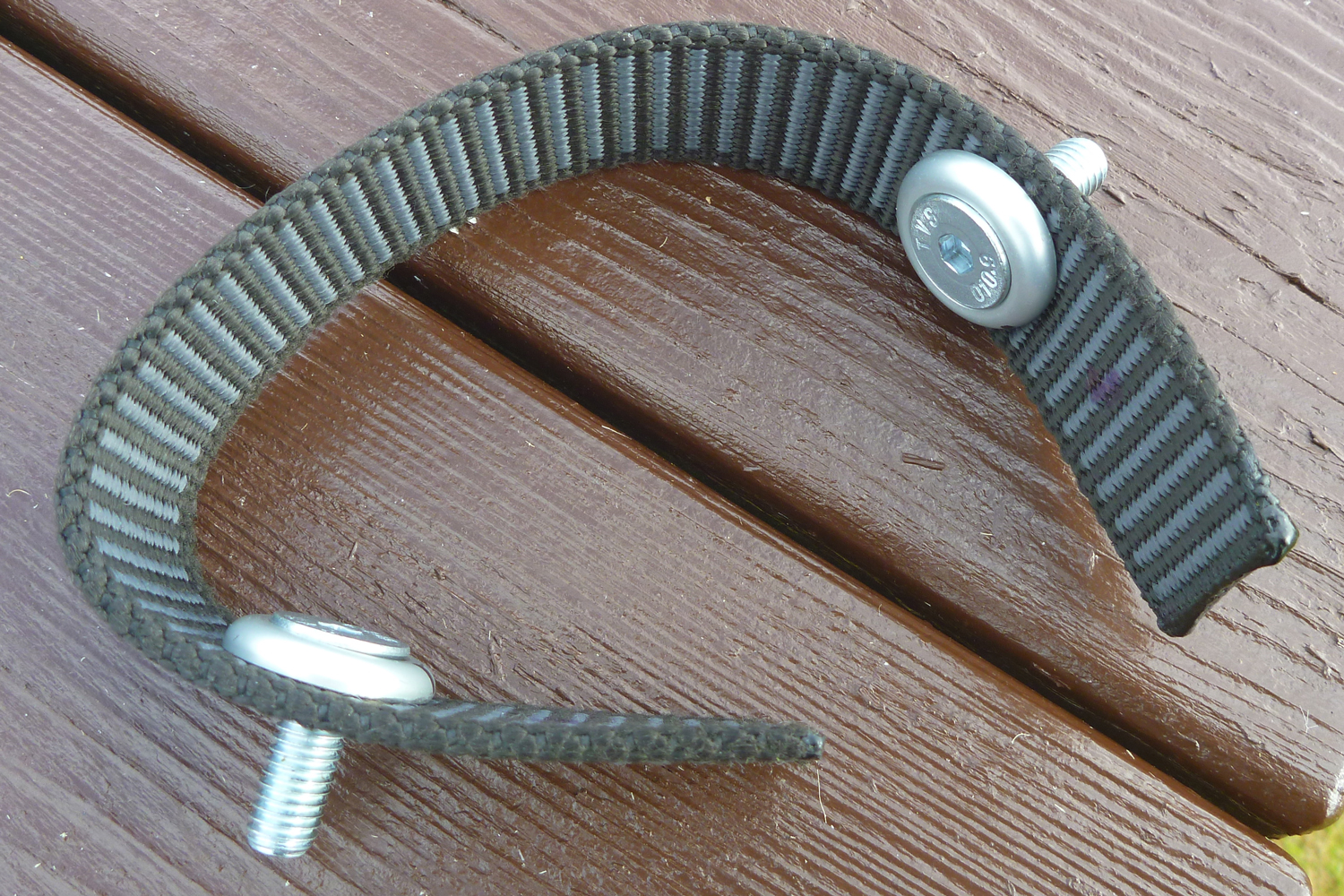
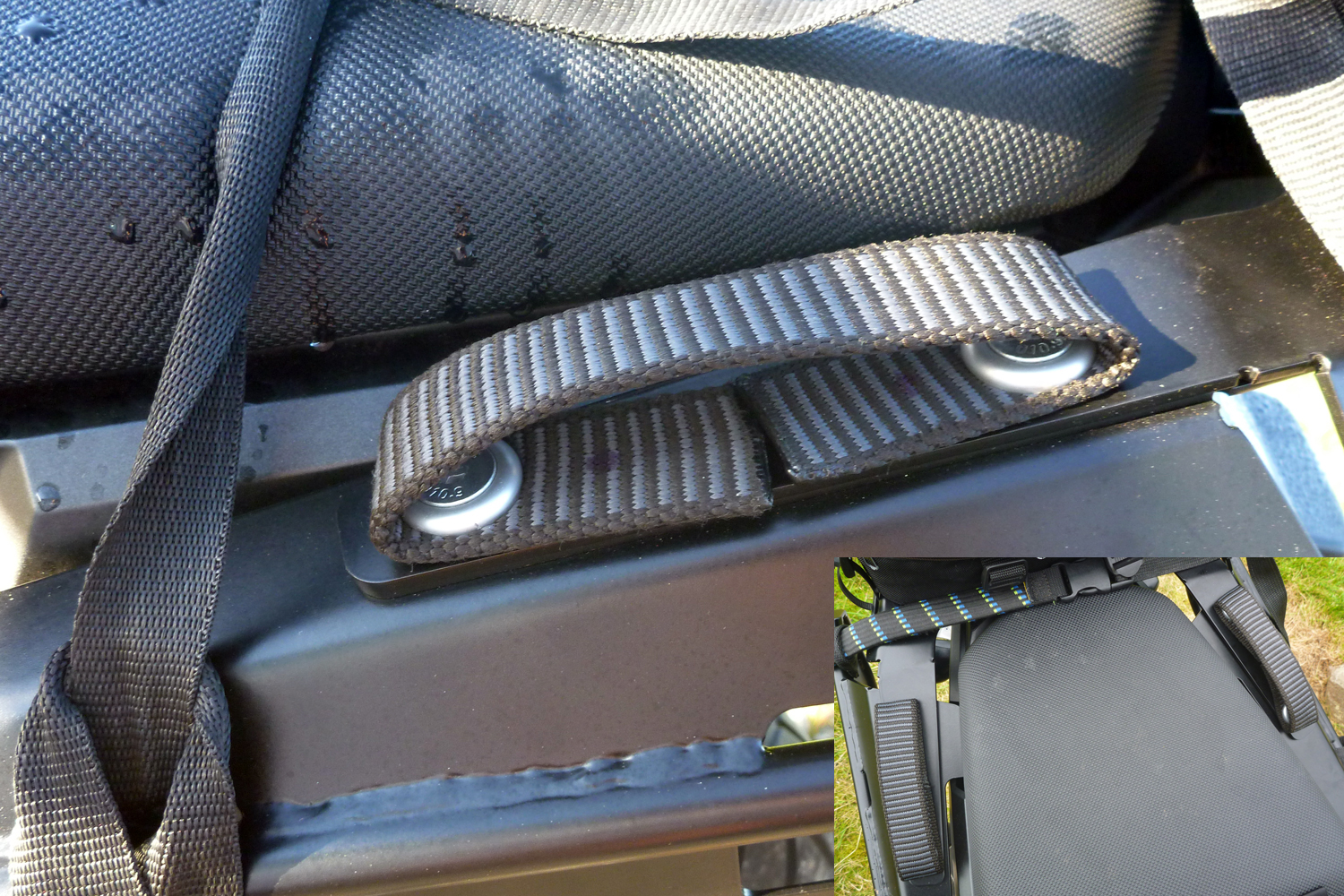
This lack of grab rails with the new RRP pannier rack was driving me nuts. With plate rather than tube there’s nothing solid to grab on to when you want to move or pick up the bike. As it looks like getting a sheep rack made for the back isn’t going to happen, I decided on a quick, easy, free and light solution: a thick bit of belt (right).

cbx5-16

cbx5-17

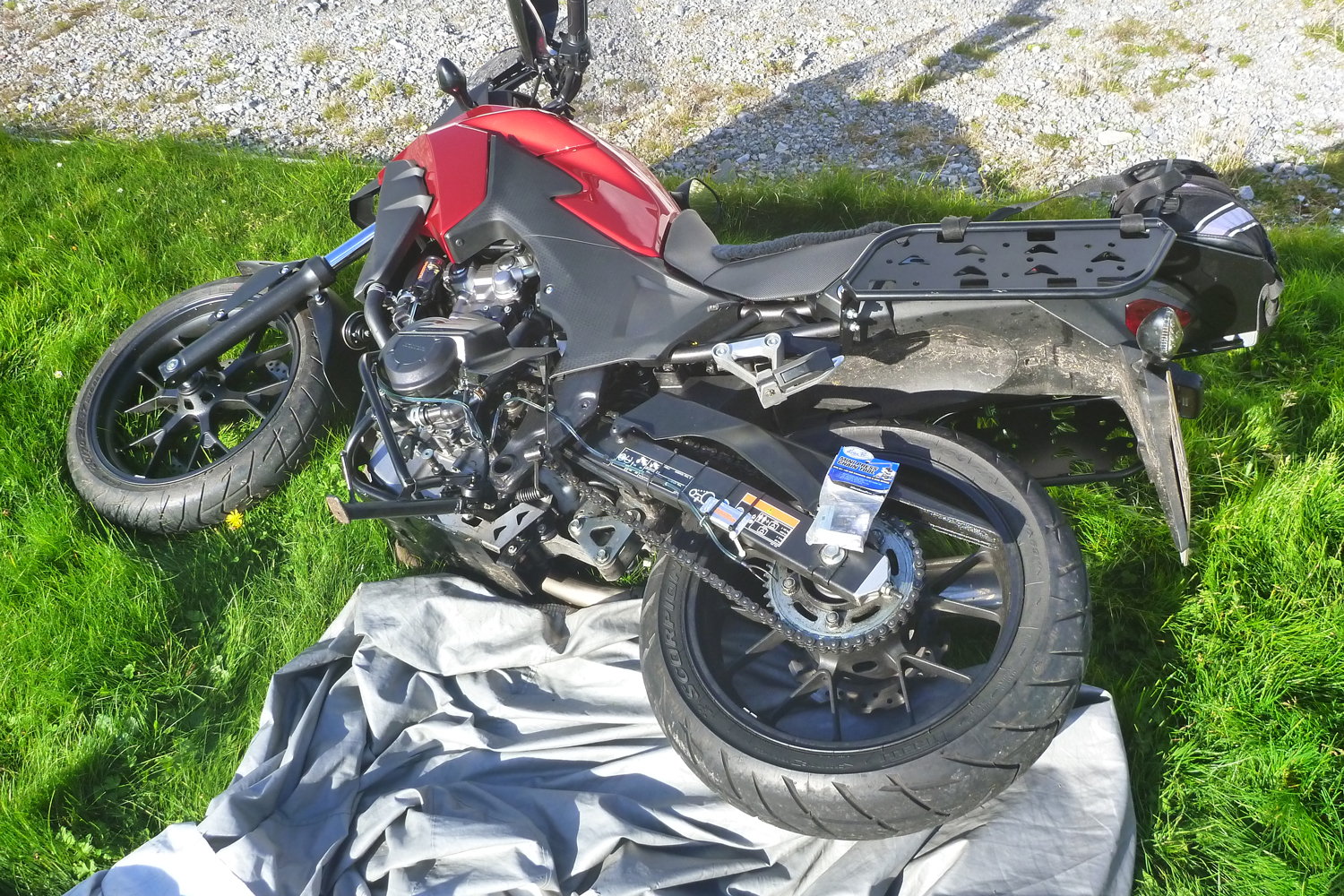
Even before the new chain was dry they came in handy hauling the bike back up to vertical. And if they break I can make another from a passing postman’s satchel or whatever’s lying around. As for the sheep rack; if it’s that important to get a bit of useful width on the back I can screw a bread board to the RRP tail rack. More next time on the AM Website.

cbx5-17

Honda CB500X Rally Raid bashplate, Palmer windshield adjuster

Main CB500X Index page
cbx-jmo

The CB-X comes with an 80s-style plastic belly pan which then as now, just keeps the flies off te engine. Along the right side is a thin, stainless cat guard but none of this will protect the pipes or the sump from a heavy dump onto a rock or from flying debris.

cbxbash-12

cbxbash-14

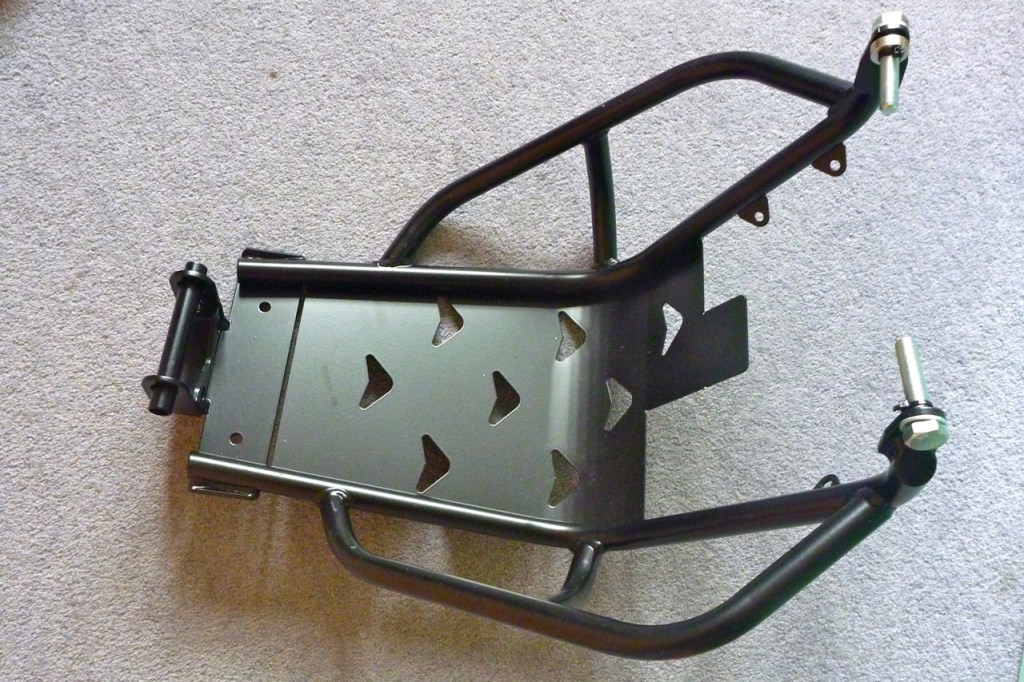
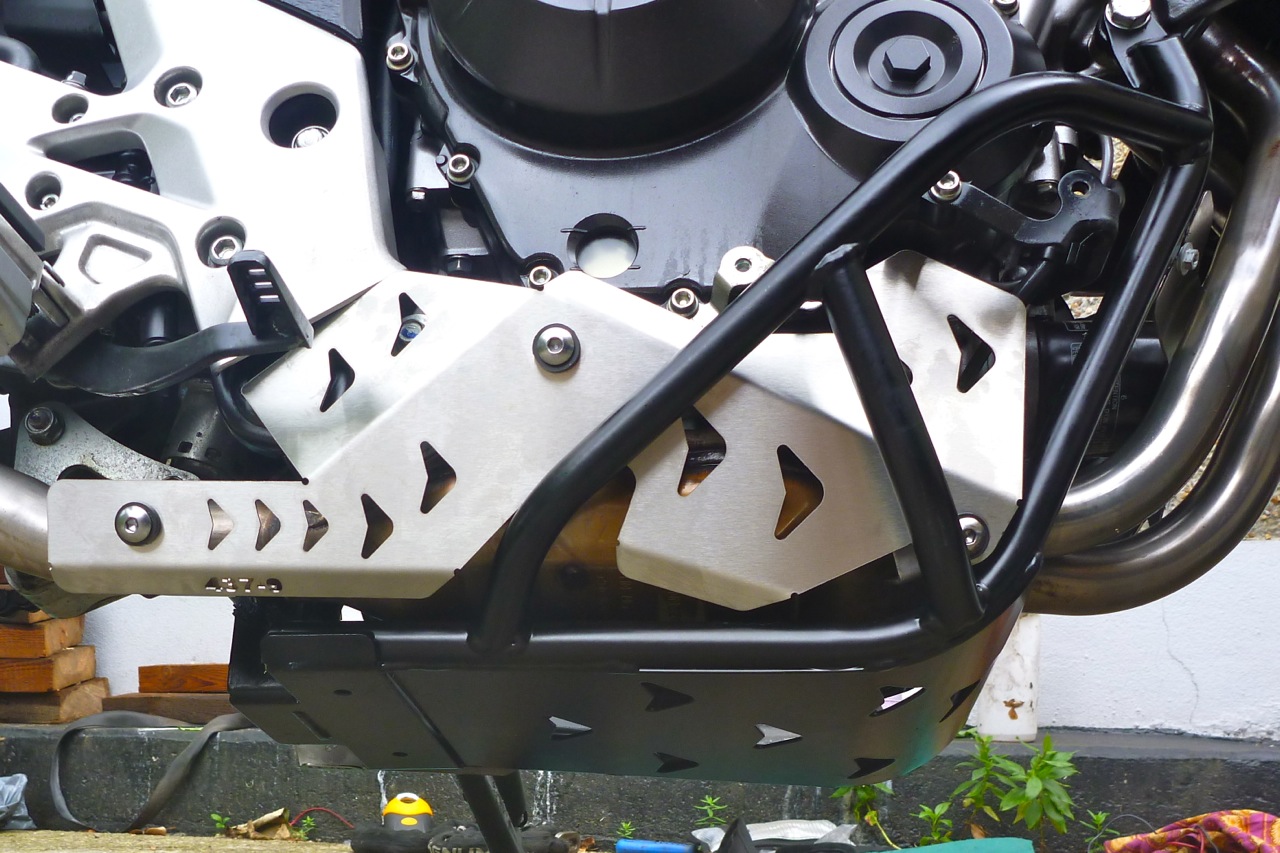
The Rally Raid bashplate crashbar cost a hefty £238 but is more than just a few slices of alloy bent, cut and welded into a protective clam shape. The CB-X is a bit different from a typical single cylinder trail bike in that the pipe goes under the motor. The slim cat is actually neatly integrated in the headers which tuck in alongside the sump (right) so cleverly, no extra depth is added unlike my last two ‘under pipe’ bikes. But the oil filter sticks out the front and the engine cases are vulnerable and so proper protection is needed all around.

plates
cbxbash-17

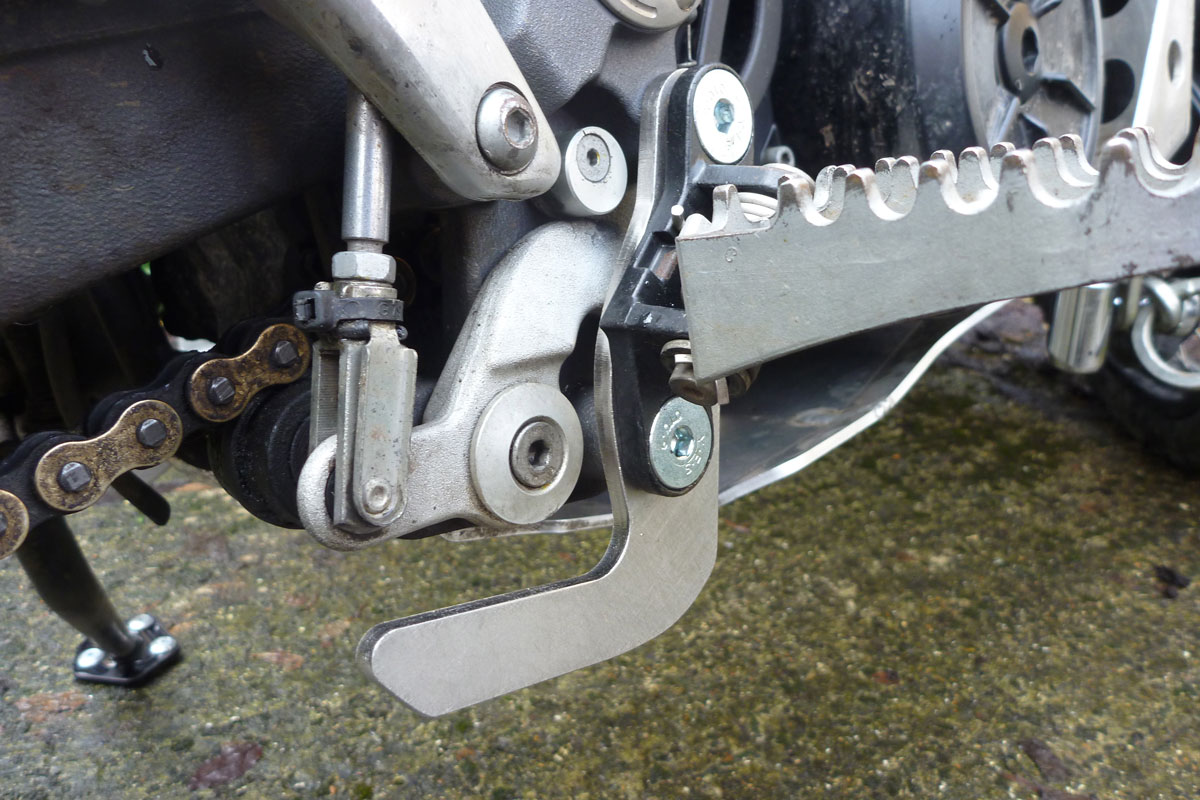
I didn’t look for alternatives but they are a couple out there (left) – both at around £100 but in relatively flimsy 3mm alloy and both retaining rather than replacing the thin stainless cat guard. SW Motech do make lower engine bars and upper tank guards at about €100 each, but it’s unclear whether their sump guard and the crash bar are compatible – it looks like it could be one of the other. With the Rally Raid unit the steel crash bars are integrated with the steel underplate and the whole thing weighs 3.4kg. Separate thin stainless panels are added behind the frame over the cat, across the front of the oil filter (right), and underneath the shifter on the left.

cbxbash-15

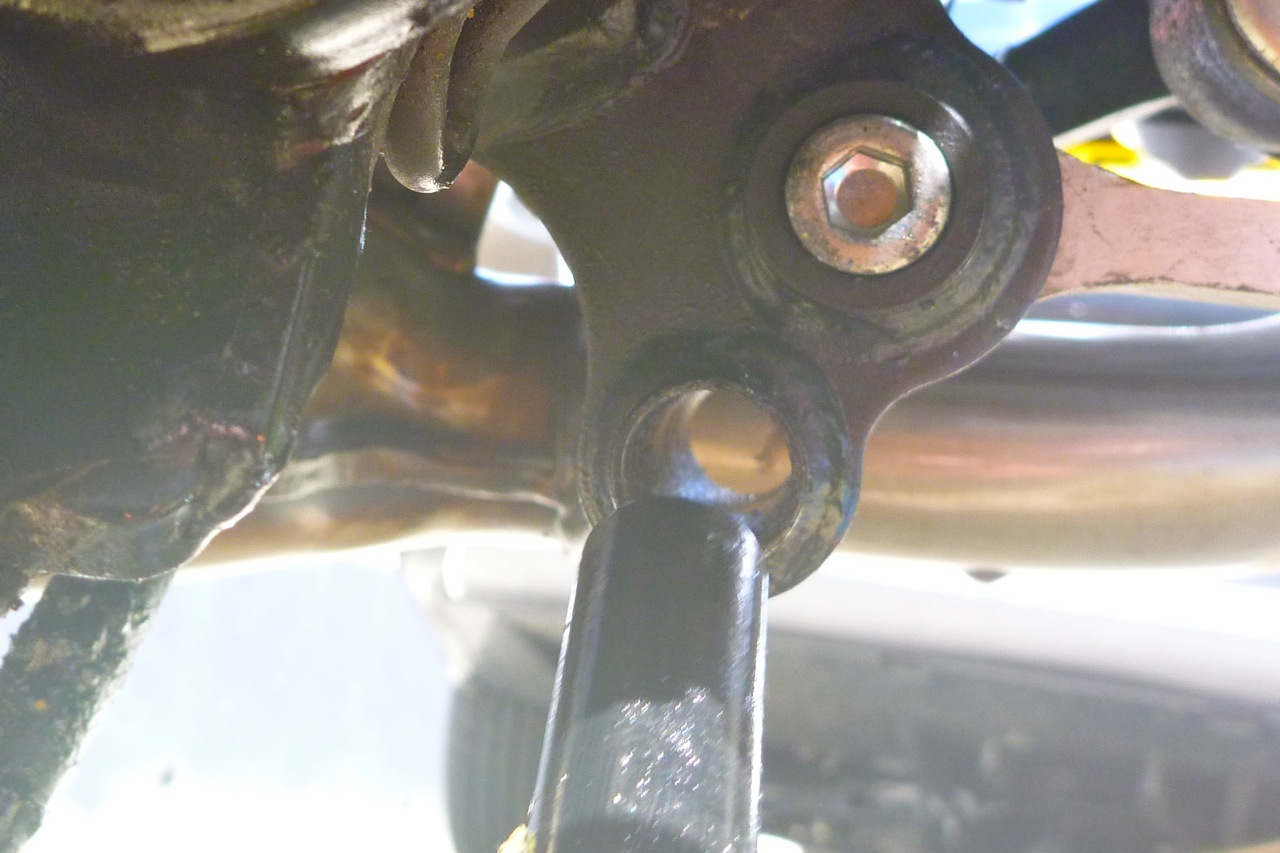
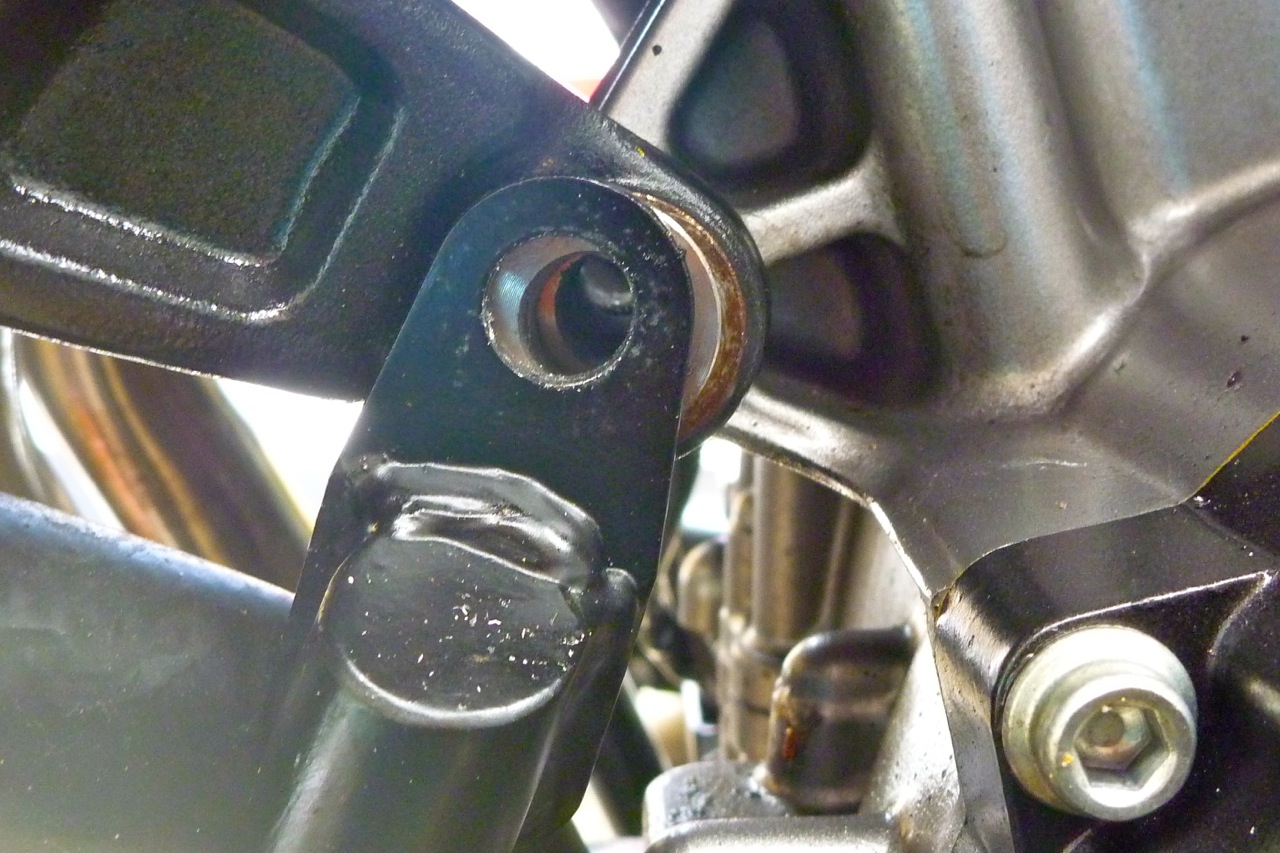
After removing the bellypan and cat cover, fitting started by slotting a pin to mount the back of the plate on the unused centre stand pivot tube. The powder-coated RRP pin felt just half a mil too thick, actually because a bit of rust has developed inside the centre stand pivot tube (left). Once that was scrapped out with a hacksaw blade it fitted in with some hammer aid, but even with a good greasing I get the feeling that pin may be in there for good.

cbxbash-19
cbxbash-16

The RHS stainless cat cover (left) lined up just right – 10/10 for bend and cut – and the steel plate was ready to swing up into place to be bolted in place with the replacement front engine mounting bolts supplied. RHS bolt went in OK but on the left it was 5mm ahead (above right). Seems ‘they all do that, Sir‘ and some tactical levering with a hammer handle sorted the alignment to get the bolt in without cross-threading the engine’s alloy which would be deeply vexatious.

cbx-bashside
xtank7

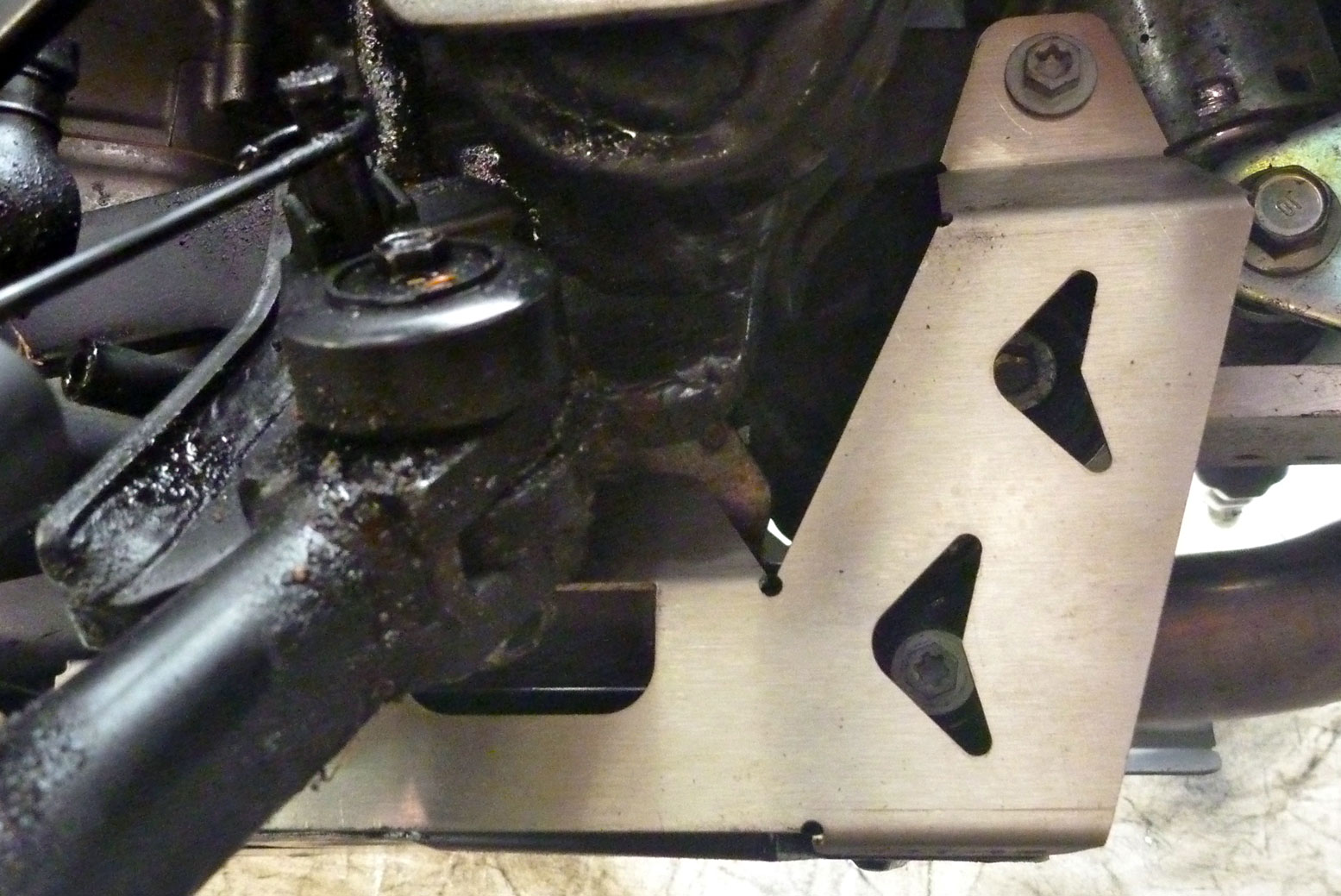
I’m not quite sure what the separate plate behind the side stand is protecting (left). Something to do with the shifter linkage? That’s reasonably well protected by the side stand mount and held on with a single bolt the plate looks a bit flimsy to do anything substantial, assuming it’s trying to be similar to plates which Erik Bok makes for X bikes (right).

tr-waterbot
cbx2-bash

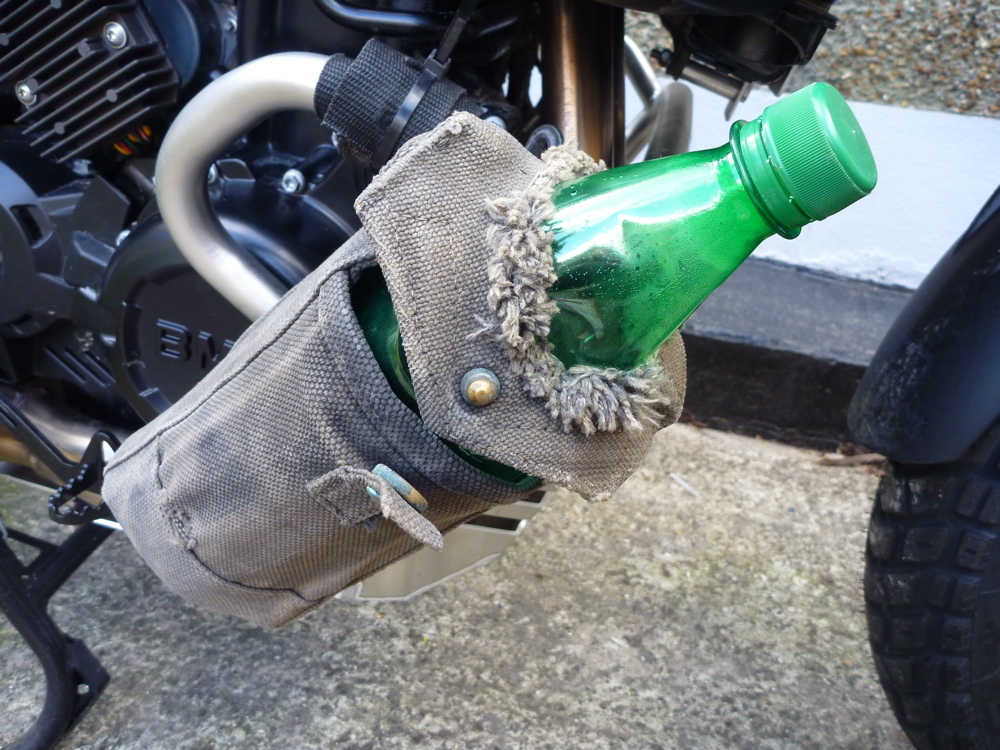
All up that took about an hour, plus another hour of going back and forth to the house to get extra bits and pieces, but I’m confident that any rock that dares to intimidate the steel base of this plate will end up with quite a headache. I did a 100-mile run and was pleased to noticed no resonance as you can get with some slabby bashplates, and the handy bars mean I can attach my ‘signature’ ammo pouch.


Rally Raid wheel wrenches

My bike came with no tools, even though the (used) test bike I rode in January had a set under the seat. Odd thing is they’re not even appearing on ebay or listed anywhere and word is some CB-X markets get them and some get nothing more than a hex key with which to pick your nose. Not even a C-spanner for the shock. It’s a bit like a car not coming with a jack. I know we know OE Jap tools aren’t exactly Snap-On Platinum Line but you do wonder if there’s some autistic bean-counter at Honda who isn’t able to fully appreciate the ill-will caused by absent tools with the tiny cost of sticking some under the seat. But we’ve been hearing this ‘spoil for a hap’orth of tar…’ business for years.

Rally Raid’s hard-working laser cutter to the rescue: two double-ended ring spanners in 2mm zinc coated steel (left) to cover all fittings for front and rear wheels and even a spoke key for the optinal wire wheel.

RRPspans

Windshield Adapter

cbx-beforescreen

On the CB500X forum there’s  a  l o n g  thread on screen options, and one thing you’ll soon learn is that what’s sauce for the goose is something else entirely for the gander. Some riders say stock is best, others find an aftermarket screen to be perfect/terrible and others even claim the bike is best with no screen at all. Well that just about covers it all then.

cbx-palmersid

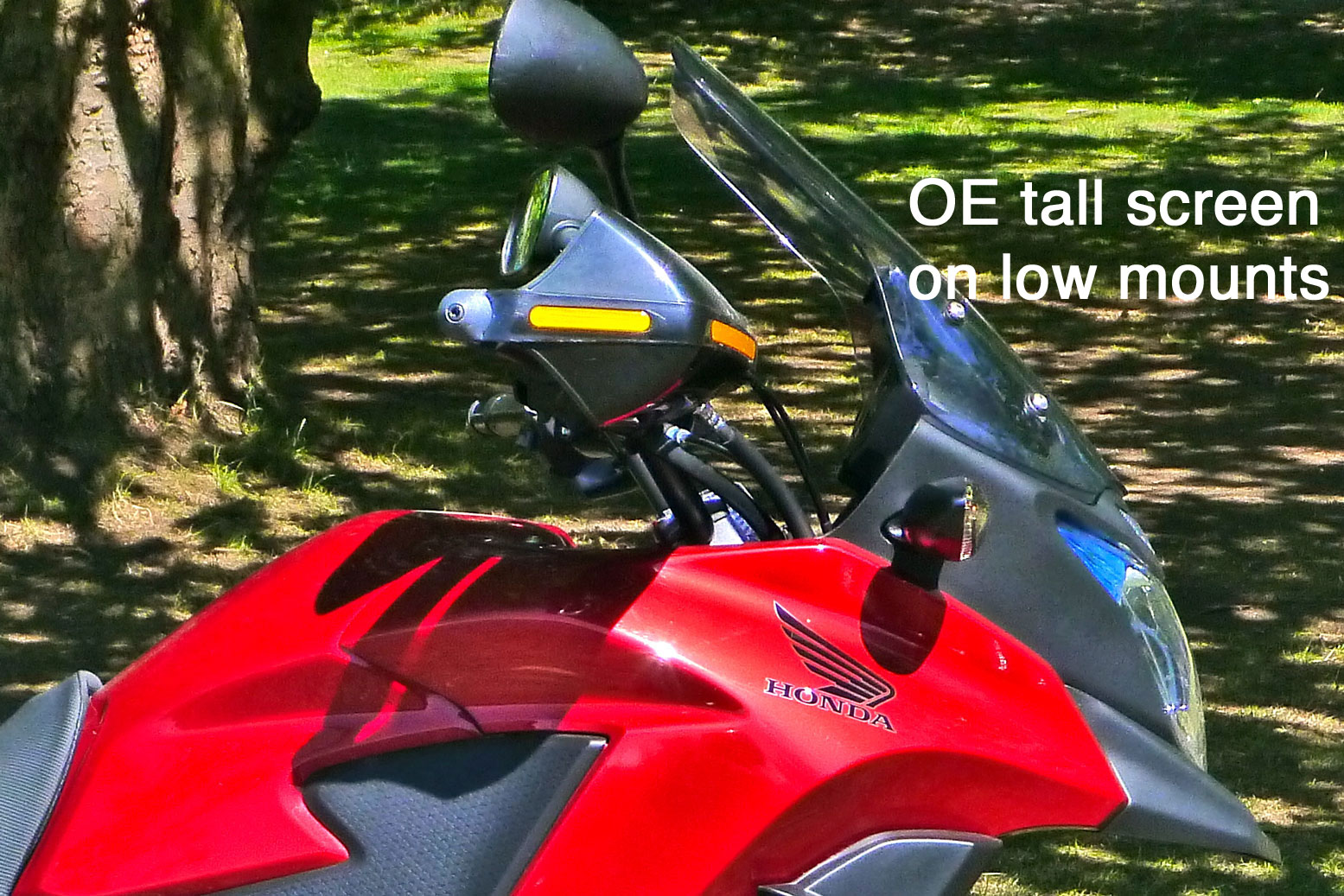
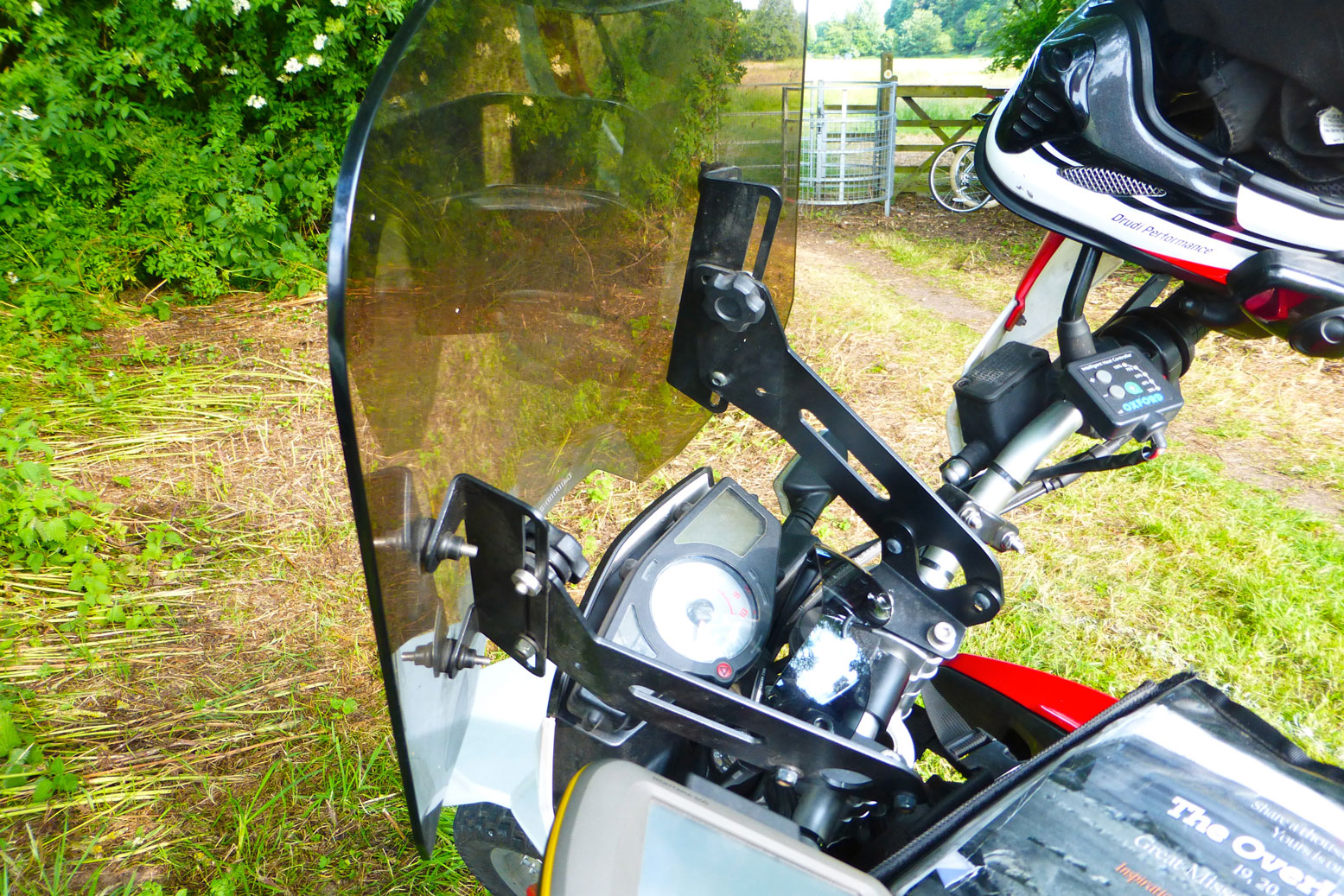
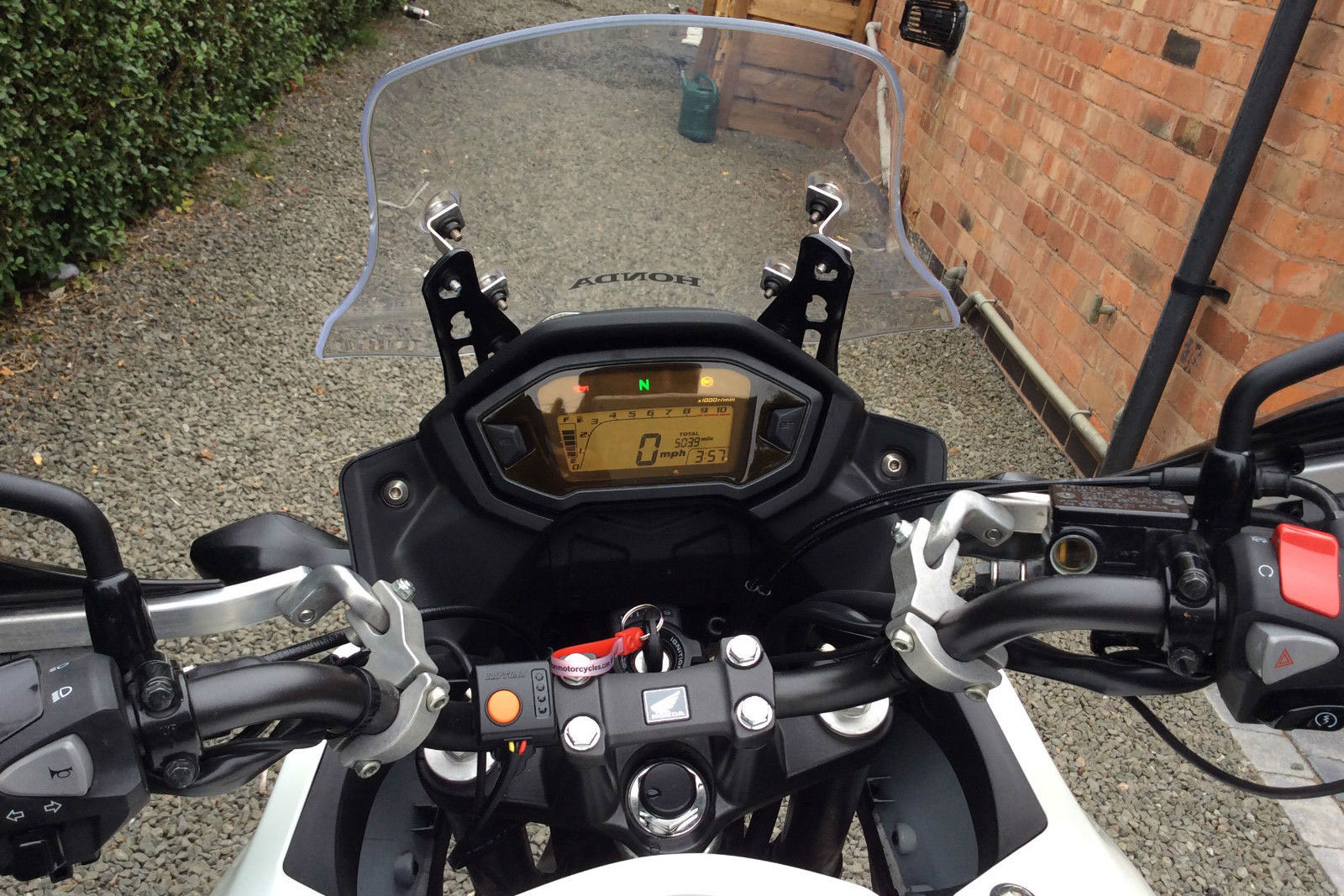
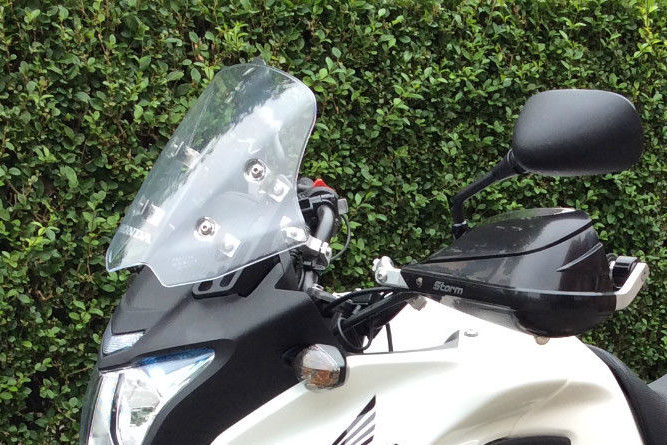
My bike came with a taller Honda screen installed which at 17″ (430mm) high x 15″ wide (curved) is OK but leans too far back (left). I can feel the air hitting the top 4 inches of my lid but I can’t say it’s unbearable buffeting or especially noisy. Let’s face it, I’m riding a motorbike not reposing in the back of a stretch limo listening to the Chemical Brothers. The bloke of the woman who sold me the CB-X suggested spacing the top mounts out by an inch or so to set the screen more vertically. It’s the sort of bodge I’d do without thinking on an old hack, but let’s try and keep this relatively new Honda looking proper for a while.

cbxbash-02

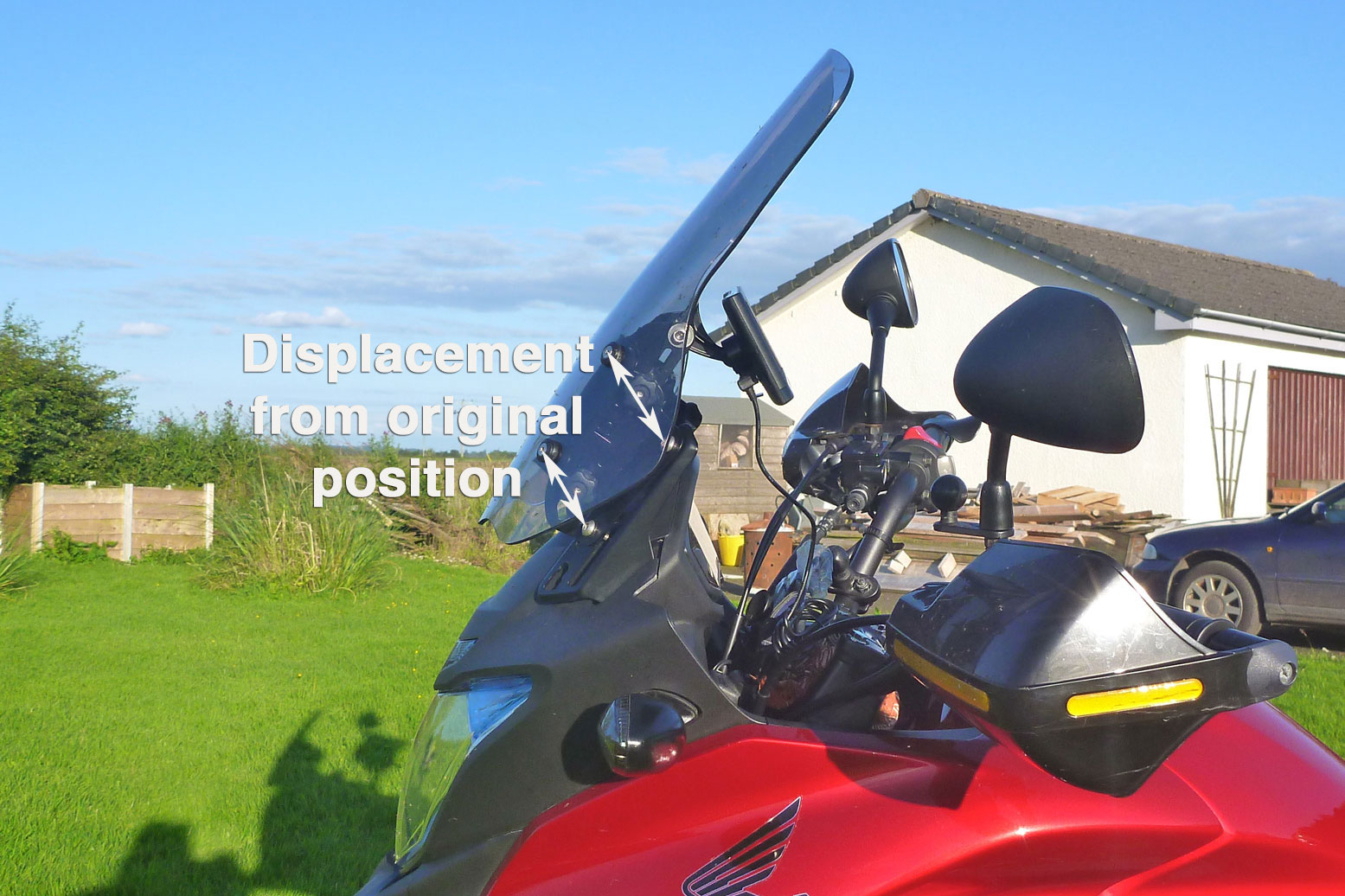
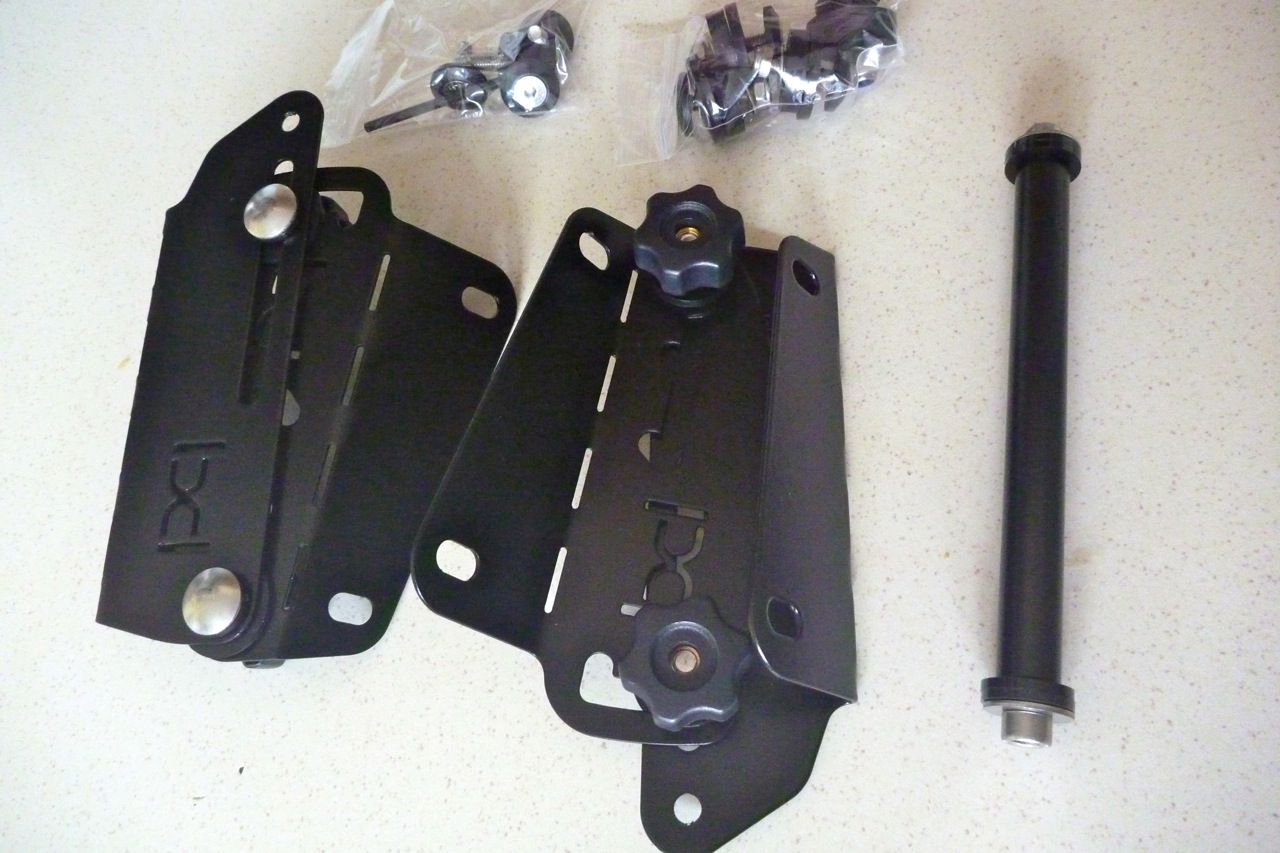
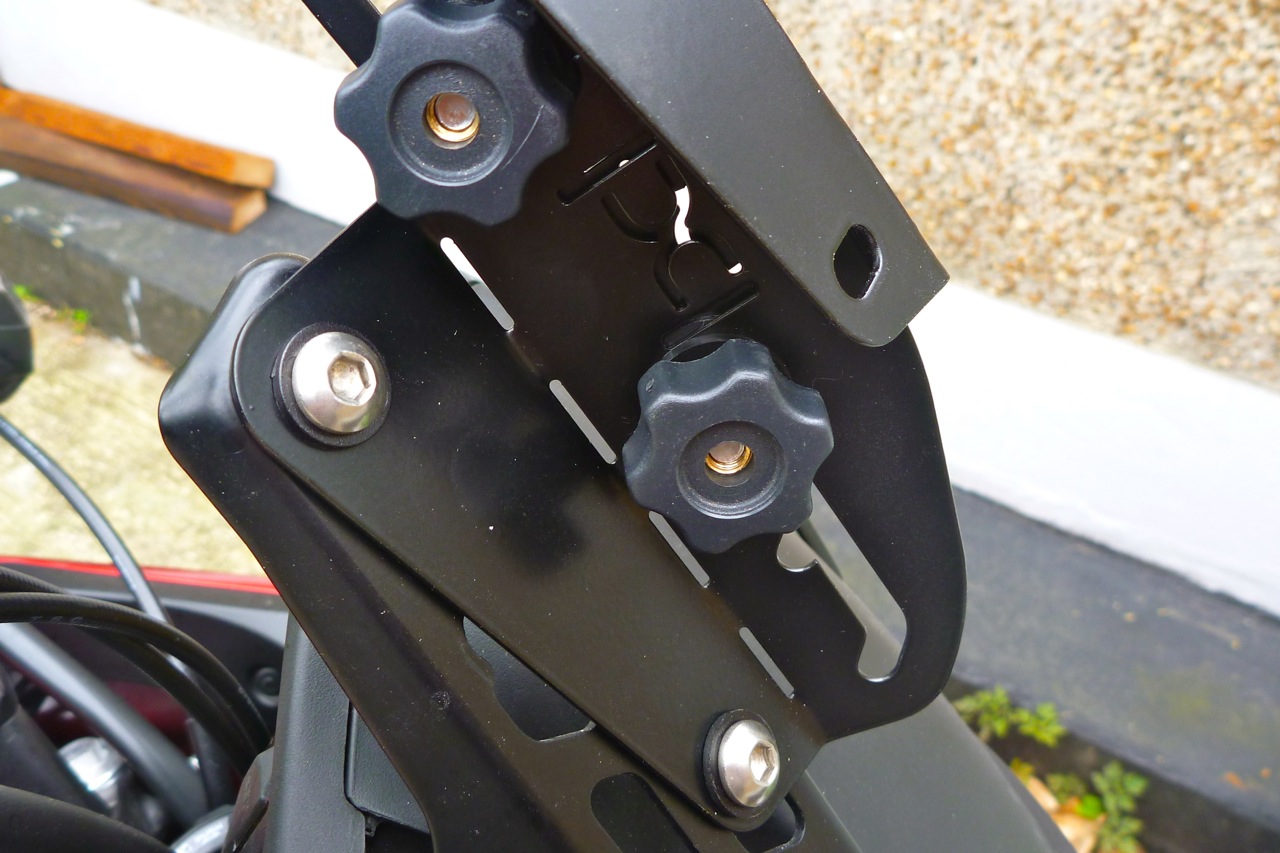
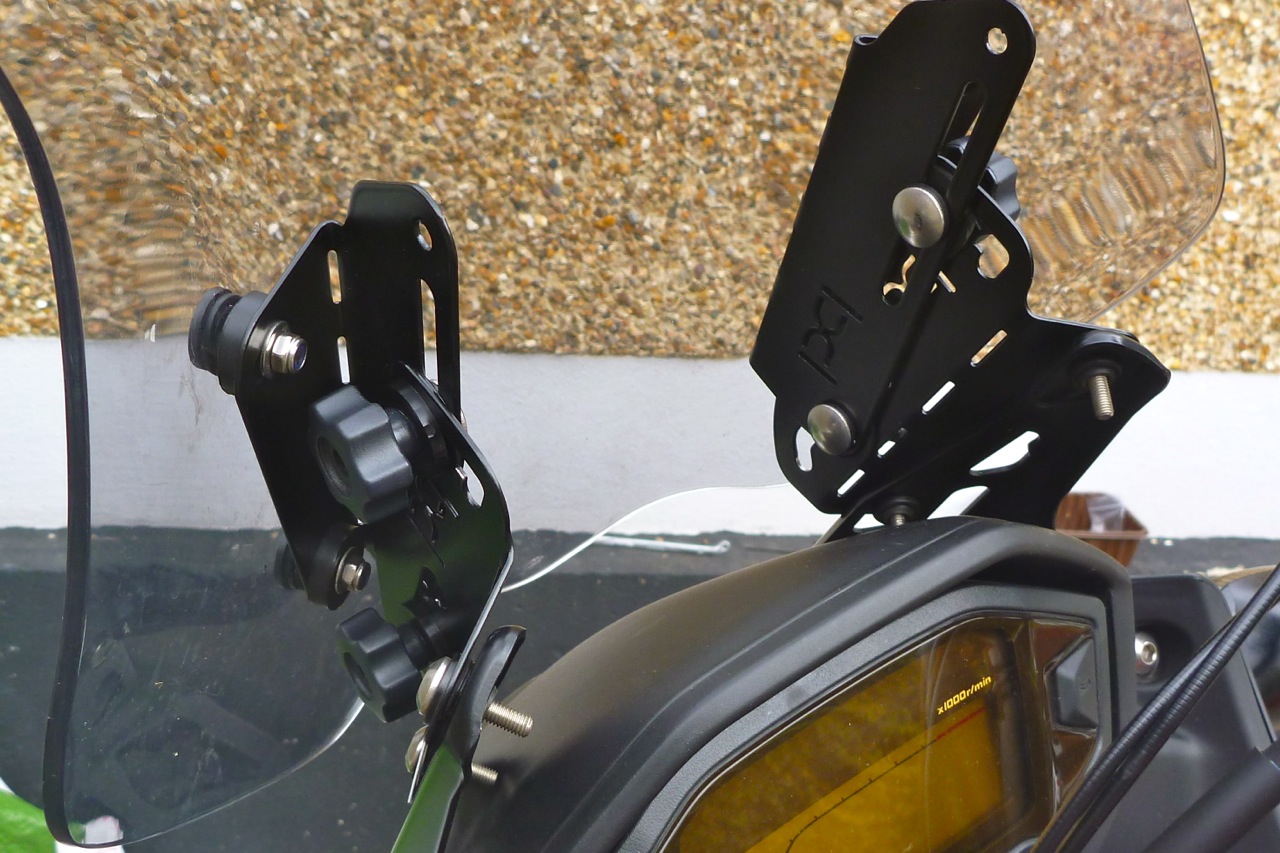
After reading that thread it seems to me that screen adjustability is the key if the goose and the gander are to be accommodated. There’s much more choice out there for CB-X windscreens than bashplates, from the likes of Givi, Puig, MRA, Madstad and others, some of them with fully adjustable mounting brackets. But because my screen is tall enough but just at a bad angle, I figured all I needed was a repositioning frame and the thread mentioned just such a thing: an adapter kit by Palmer Products who make them for dozens of bikes, and other stuff besides. Never heard of Palmer until now but their adapter fits between the OE screen and the fairing mounts to give three heights and three angles. Added to the Honda’s high or low position, that’s 18 possible positions. The full kit weighs 520g.

cbxbash-01
cbxbash-07

It took only 20 minutes to fit, reusing some of the Honda bolts despite a full set of fittings supplied. I paid extra for the knobs option to be able to adjust without tools, and in black rather than bare steel to perhaps make it less obtrusive on the move. With an accessory bar (not fitted yet), that came to £116, quite a lot but all nicely powder coated, well made and fitting right.

madstad

In the end I set mine up on the higher Honda level and then height 2/3 on the Palmer and 3/3 fully forward. The Palmer system looks broadly similar to a Madstad I saw recently at an overland show (right – a bar-mounted kit; they do CB-X too, see link below), but has indexing notches to give the three height and forward positions (though I suppose you could position between notches if you wanted). As it is with a US-made Madstad you have to buy their screen, costing over £200 although the few comments I’ve read not surprisingly rave about it because of the fine tuning.

cbxbash-11

I’m off on a long ride to far north Scotland next week and hope that before I arrive I’ll also have found an optimal position for the PP adjusted screen. More news about how it fared later.

Other bits lying in wait for the CB-X include a pair of fat Renthals to go with the RRP triple clamp when that gets in, and some RRP fat pegs which they kindly chucked in with the plate after John put me off some Pivot Pegz I was going to try off Adventure Spec. Right now I’m still enjoying the Honda’s  non-pivoting rubber-capped units but in the dirt they say wide platform pegs are the way to go and as part of my mission is to try new stuff, new stuff I shall try.

London to Ullapool ~ 777 miles later…

cbx-byrness

Even before I got to the end of Park Lane (a rare 40mph road in London) I could tell the Palmer wasn’t going to transform my ride to like sitting in the back of a stretched limo. Later, out on the A1 it didn’t feel much of an improvement, but as the OE screen wasn’t bad, this wasn’t bad either.
Good impressions (or indeed a comparison)  weren’t helped by the fact that I was now wearing my cheaper, noisier and more rattly Bell Moto 9 lid and not my X-Lite. And I keep forgetting to use earplugs.
At one point in the journey I moved it from Palmer height 2/3 and 3/3 fully forward to ⅔ and 2/3 – in other words angled a little more back. Well that didn’t make things worse so I’ve left it at that. The screen catches most bugs but a few still get to the visor – same with rain drops so the visor’s not out of the airflow which you’d think is the point. And the screen feels far forward for it’s slim width. The arms and shoulders catch some blast but, as has been said, I am on a motorbike. Later I noticed that over 70mph the flow does go right over which would suggest re-steepening the angle to 3/3 to make it do the same as slower speeds.

cbx-screener
cbx-cropper

Interestingly, a quick scan on ebay found a CB-X for sale and though he doesn’t mention it, at some point in 5000 miles of commuting he added some crude angle brackets to space his short OE screen forward an inch and at the same time raising the height a bit.  So there must be something to it. More experimentation is required with the Palmer, or just accepting I’m on a bike and remember the earplugs to retain what’s left of my hearing.

post
80mpg

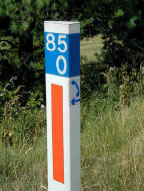
Other observations: helped a little by an Aero wool pad, the seat actually supported a 520-mile day. While doing 70mph where possible and down to 50 in traffic, the mpg was 80, with the odometre some 3.2% over (measured against roadside PKs (right) over 20km. So that’s a true 78mpg. And all in all, a great machine that’s about to get even great-er.

cbx-sunnyscot

Honda CB400 SS – quick look

cb4-11

In my search for an optimal 400-450-engined travel bike that isn’t a CCM GP450 I remembered the Honda CB400 SS grey imports I’d seen on ebay.

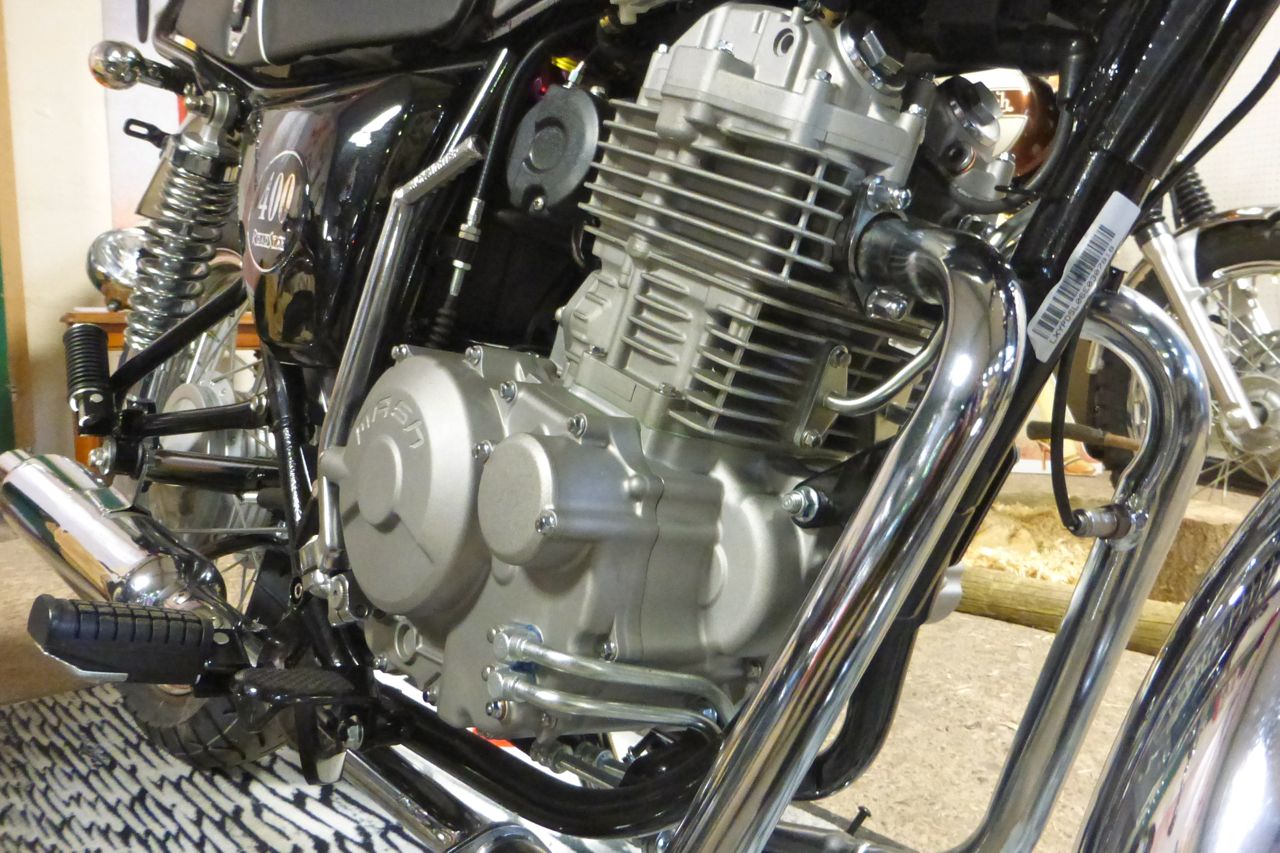
These Japan-only SOHC 400cc singles from the Noughties (about 2002-2009) look very similar to the Chinese Shineray-built 400 retros (branded ‘Mash’ in the UK) which I rode a couple of weeks ago and which go new in the UK for around £4000.

Even more than the Chinese versions, the CB SS really is 70s or 80s technology, right down to a carb. It too has a pleasing retro look and low seat that someone new to a full license might like. But are they worth from £3200 upwards? I nipped over to the shop in west London that sells all sorts of exotic Japanese stuff, including several CB400s for a closer look.

cb4-11
cb4-01

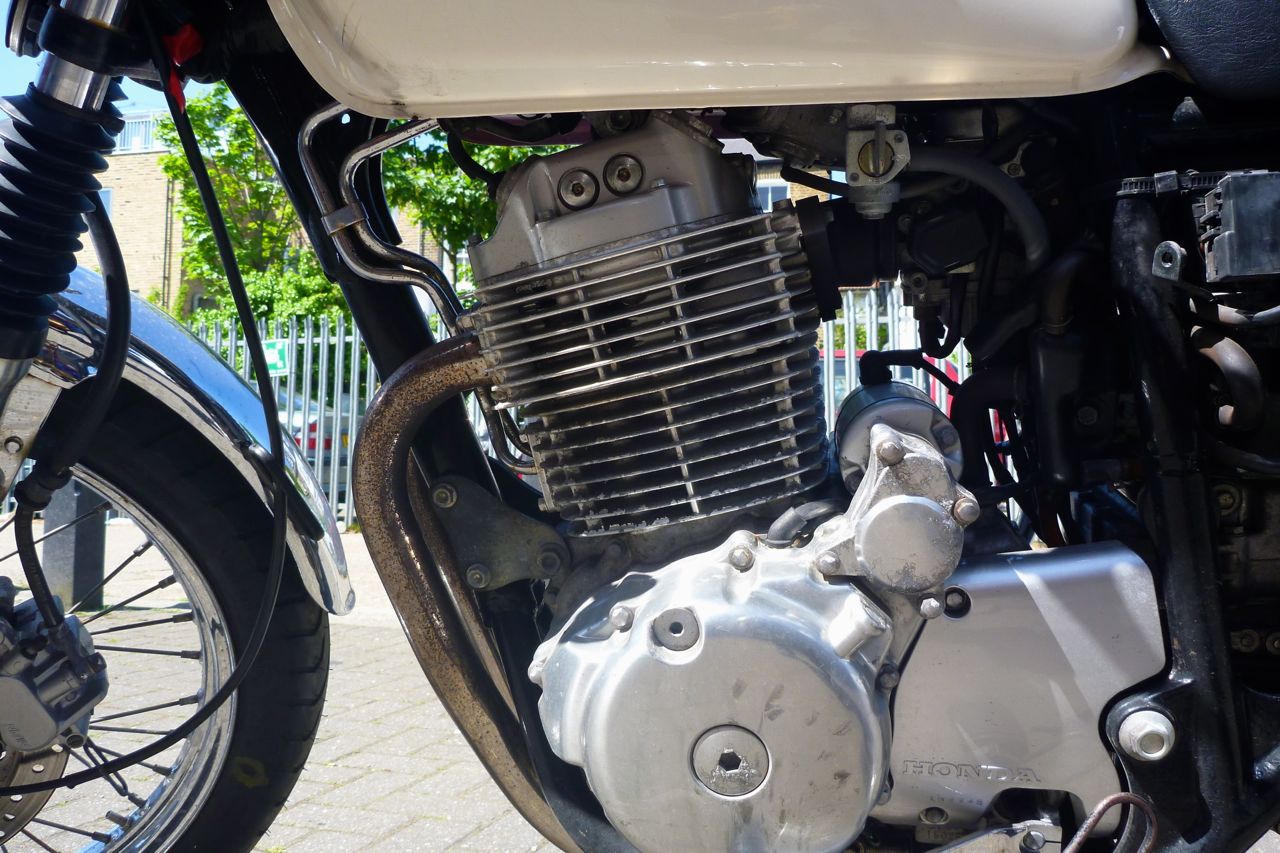
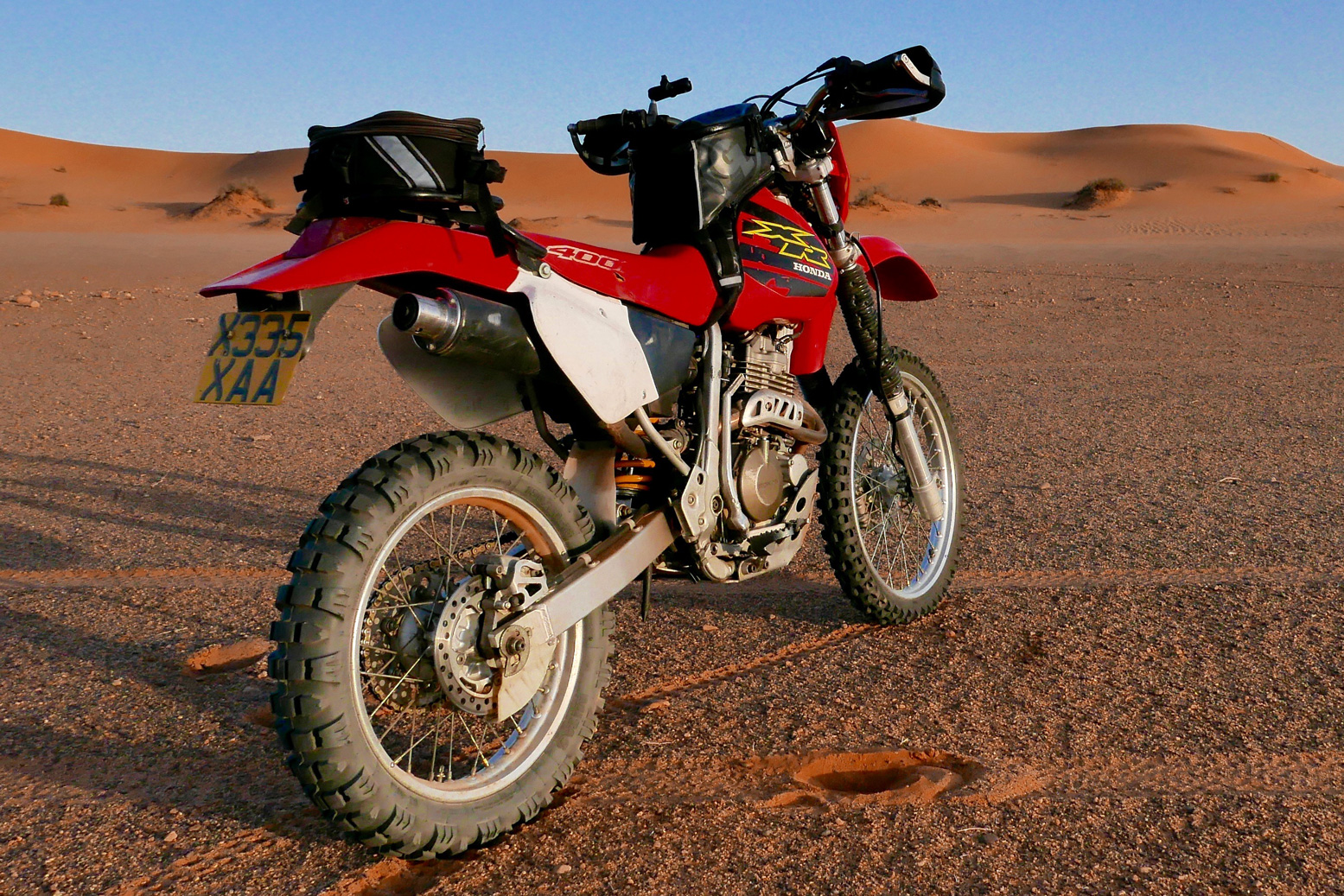
As you may have read, the CB’s engine is a version of the XBR500 we got here in the late 80s – an unusual kick and electric motor that made 43hp. With time and money to spare that might be a motor worth sticking into a trail bike frame. Why not just get an XR600-650? The subframes are too skinny for travel loads. Meanwhile, the 400SS makes a claimed 29hp, the same as claimed by the newer, injected Chinese versions.

I was hoping to see if the 8-year old Jap original might have more poke than the near-new Mash I tried but instead of a burn up along the Westway to Perivale I was limited to a 2nd-gear run alongside the railway arches – my progress further hampered by speed bumps. It’s hard to be certain but even then I did detect a bit more pull from the Honda than I recalled from the Chinese-made Mash. Other differences on the CB include a better operating front brake, a smaller tank, a box-section swingarm and – from the exterior castings at least – a different motor.

ENGINE
Engine: Air cooled, four stroke, single cylinder, 85 x 70 OHC, 4 valve
Displacement: 397cc
Bore and Stroke: 85 x 70 mm
Compression ratio: 8.8:1
Max Power: 29hp 21.2 KW @ 7000 rpm
Max Torque: 31 Nm @ 5500 rpm
DRIVETRAIN
Transmission: 5 speed
Final drive: Chain
CHASSIS
Front Brake: Single disc
Rear Brake: Drum
Front Tyre: 100/90-19
Rear Tyre: 110/90-18
DIMENSIONS
Seat Height: 790 mm (31 inches)
Dry weight: 139 kg (306 lb)
Fuel capacity: 11 Litres (2.9 Gal)

But like the Chinese-built bikes, they’re just asking too much for these decade-old CBs. My red example had just had about £500 dropped from the price down to £3200, but here and elsewhere in the UK they’re asking around £3800 – nearly the same as the new Shinerays which themselves aren’t bargains.
I got the feeling these CB400SSs weren’t exactly flying out the door, nor would I expect them to. Look at my 2009 ABS Versys bought for effectively £2100. So while I’m still not sure about the Chinese bikes, at current prices and with locally available XR400s, the CB400SS is not a contender, even if it does have the benefits of native Japanese engineering.

NX400

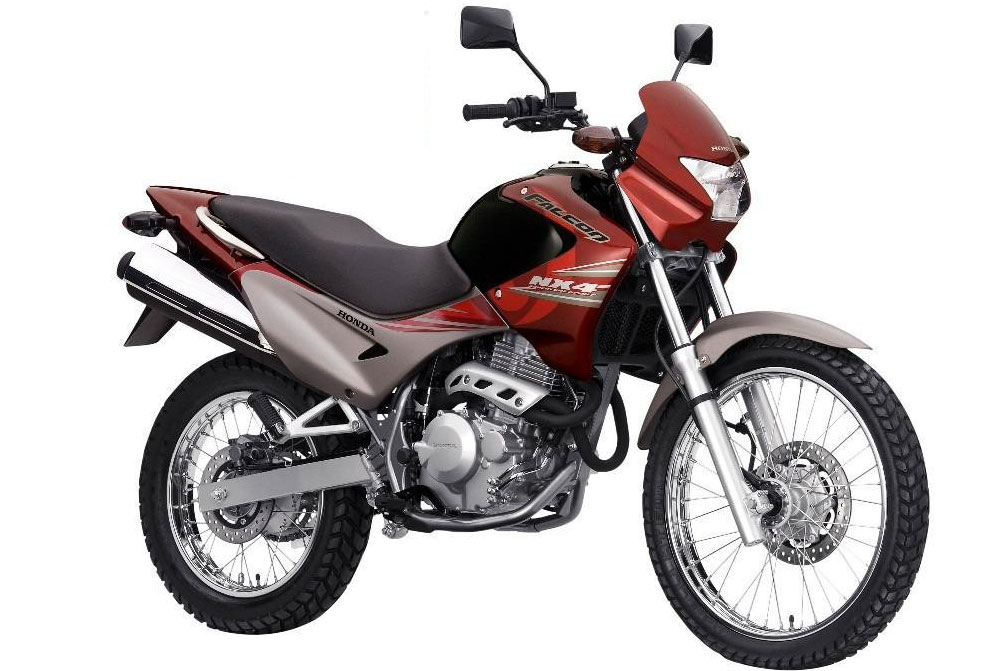
Other 400-cc bikes in the similar category include the more modern, Brazilian made Honda NX4 Falcon (left). They do pop up occasionally in the UK dealers going from between £2200 and an optimistic £3700.

honda-bulldogg

Or how about the Honda Bulldog 400 – only a concept and likely to stay that way, just like the 250 Ryoku Yamaha from a couple of years back. That’s a down-sized CB500 twin engine, in case you’re wondering. Round and round it goes.

Riding the Mash Roadstar 400

See also:
Chinese travel bikes article
Royal Enfield Himalayan

Updated 2020

mashadv1For a while there was a bike I was curious about: the French-branded, Chinese-made Mash Adventure 400 (left) that was briefly available in France and the UK alongside other 400s. It was near identical to the similarly short-lived WK Trail 400 mentioned here. Both use the same Shineray XY 400 engine from Mash’s Roadstar retro.
In the UK you could pick up low-mileage WKs from £2500 and end-of-line Mash Advs were going new from £4750, complete with panniers.

mash-14
beaky

Other than the engine, those two Advs were quite different to the Mash 400 Roadstar I tried out (above). The frame’s monoshock back-end and bigger front forks made a much taller machine; both ends were said to be fully adjustable; the wheels are 18/21 and both run discs. There’s a bash plate, screen, handguards and digital clocks plus the mandatory beak.

wk400

The WK Trail 400 (left) was briefly sold in the UK and a couple of magazines, including Overland Mag and Rust Sports tested it. Its price dropped from around £4k to a more realistic  £2999 £2499 before they all went.

I spent about four hours on the Mash Roadstar provided by T Northeast, a small bike shop in Horley, near Gatwick (they no longer sell the 400s and Mash UK seems to have closed). The bike only had about 150km on the clock and I added another 120km riding the back lanes of Sussex and Kent.

Some specs
Engine: air-cooled 397cc SOHC 4 valve, EFI, electric and kick
Power: 26–29hp (sources vary) @ 7000 rp
Torque: 30Nm @ 5500rpm
Weight: 151kg claimed
Alternator output: unknown
Seat height: 78cm/31″
Fuel tank: 13 litres
Wheel size: 18″/19″
Brakes: drum rear, hydraulic disc front
Suspension: twin shock with preload, 35mm fork

For comparison
• Honda XR400: 31hp and 32Nm @5500, 130kg
• XBR500 43hp, 43Nm @6000, 167kg
• Yamaha’s short-lived SR400 23hp, 27Nm @ 3000rpm and 174kg
Himalayan 24hp, 32Nm @4500 and 192kg
Saturn V space rocket 10.6 million Nm @ sea level, 496,200kg

mash-11

t120

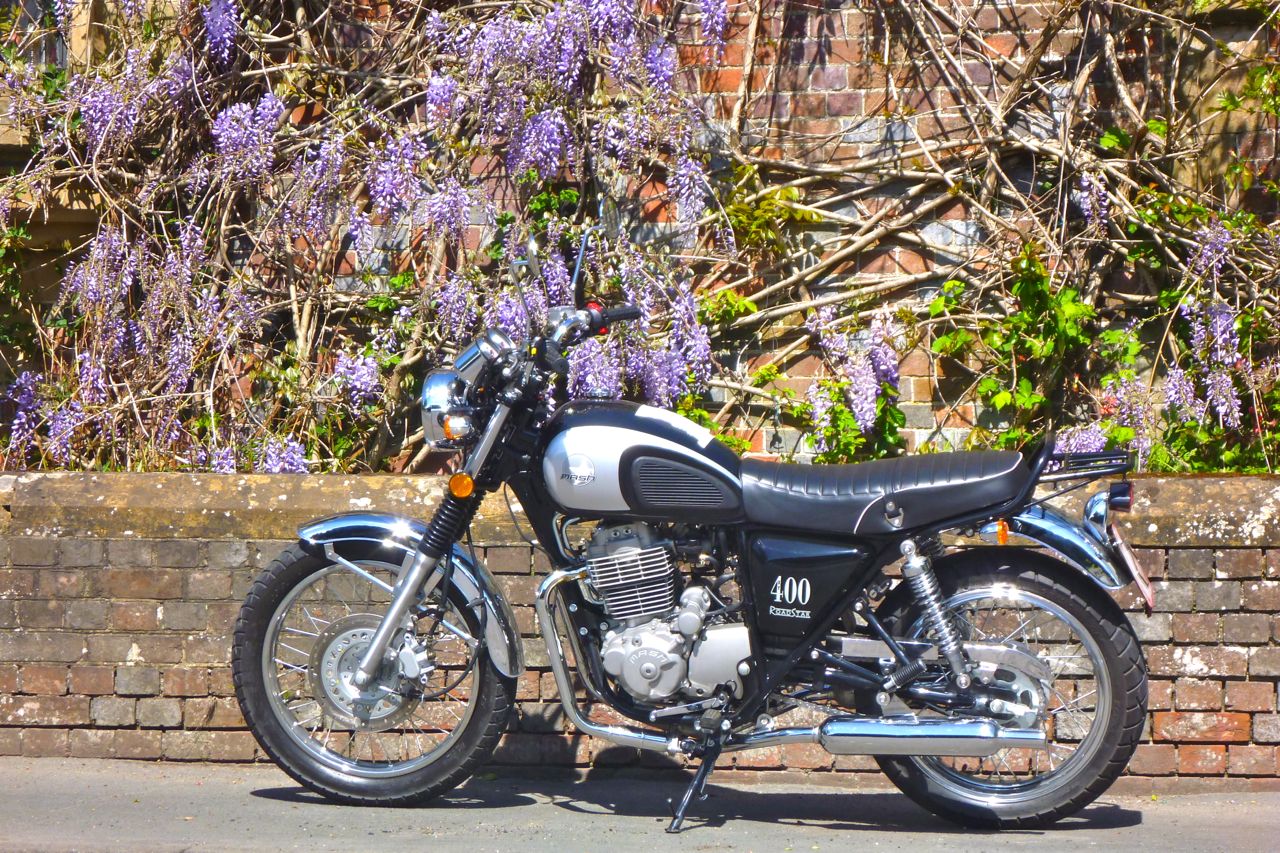
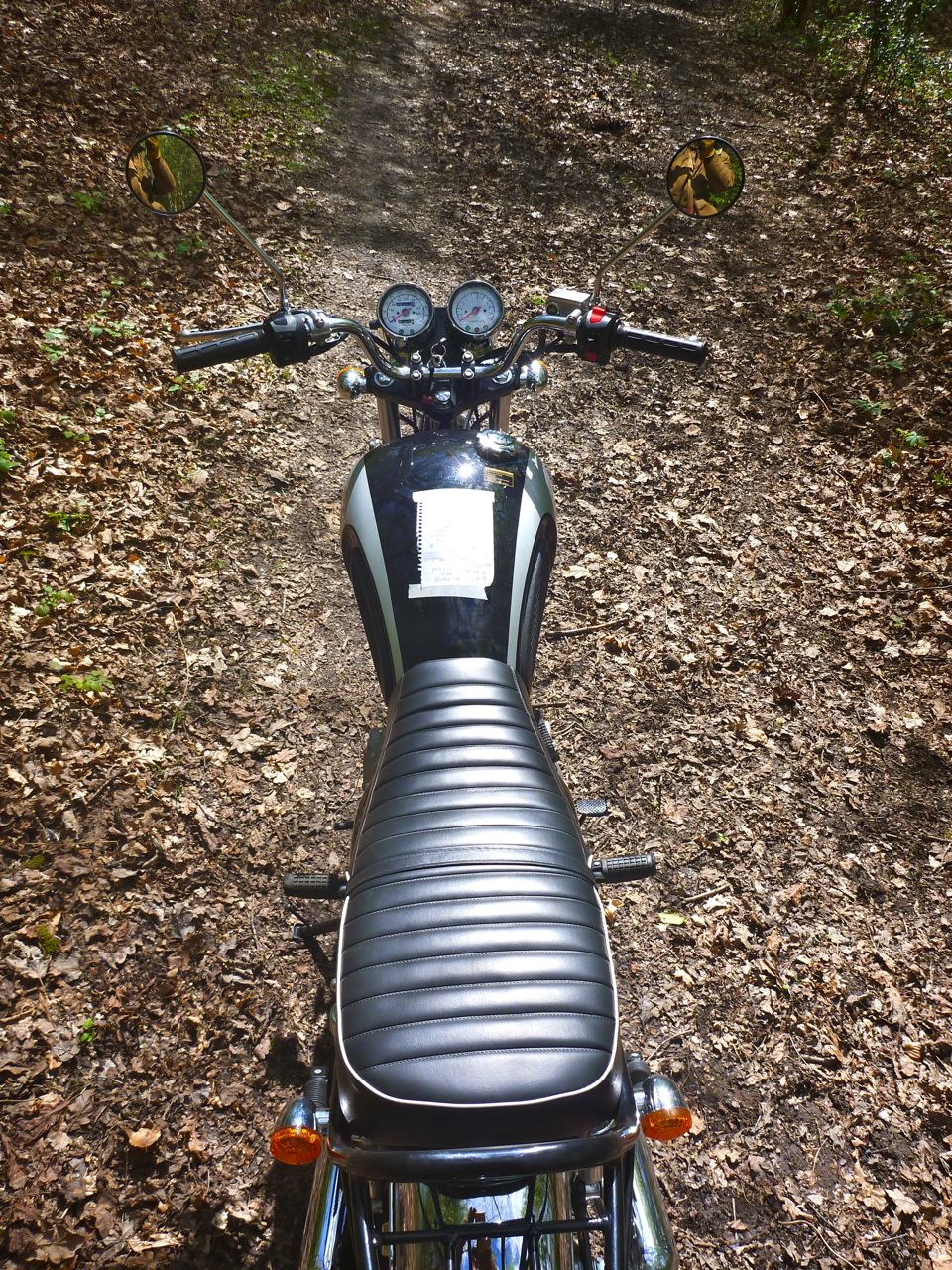
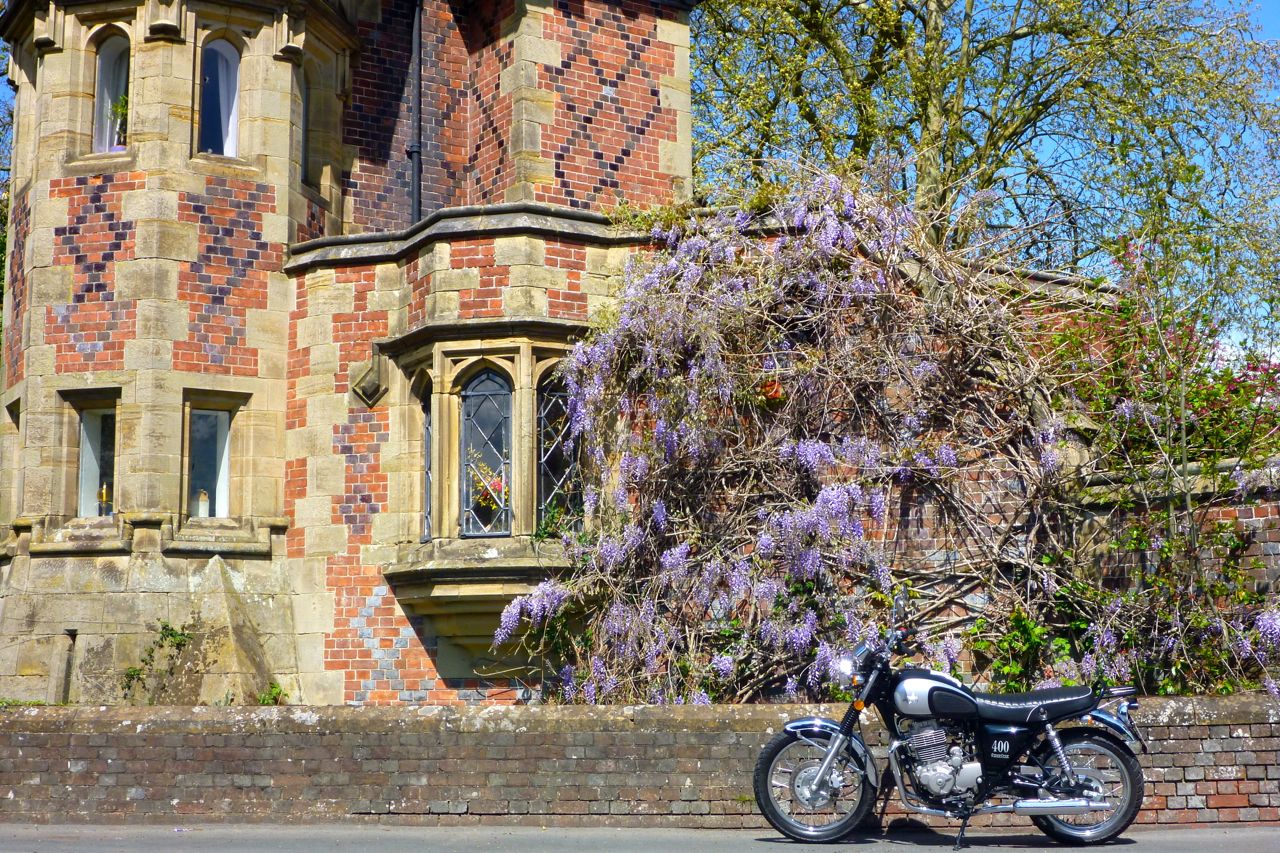
The Mash Roadstar is a great looking machine with an idealised Brit-retro ‘T120’ (left) profile that’s as cool as the originals it’s imitating. The flat bench seat, fork gaiters, peashooter pipes all set off the right cues.

You’d think it’s small but that’s mainly because it’s low. It fitted me (6′ 1″) fine: the footrests felt farther forward than normal with my thighs almost horizontal and me sat midway on the seat. I didn’t get a picture of myself sat on the machine – had I done that the proportions may not have looked as flattering as they felt. The gear lever was a bit short for my boots, but changing was light and near-silent compared to the granny-startling clunk into first on my Versys or my previous XCountry. Though it’s not a habit I’ve ever managed to maintain, clutchless changes up the ‘box were similarly effortless with no backlash.

mash-20
mash-21

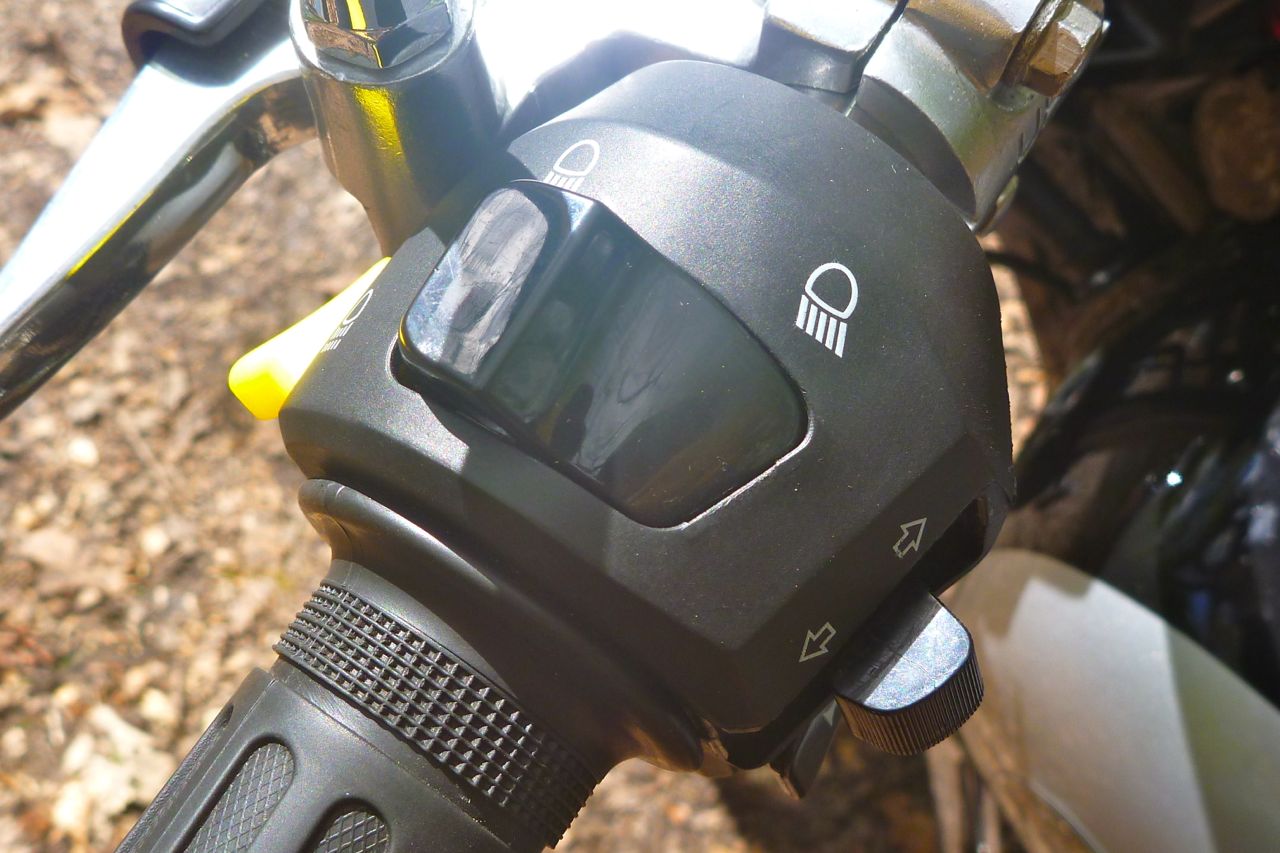
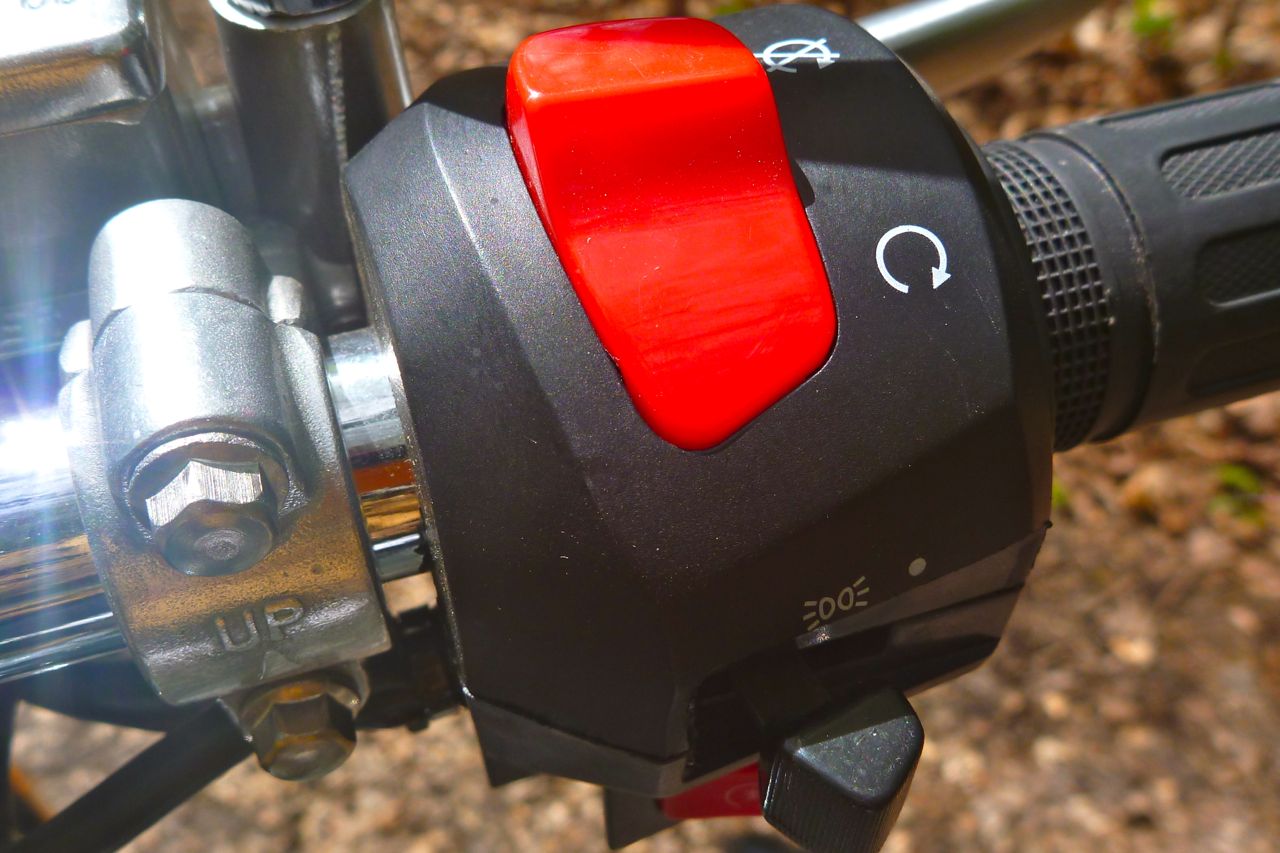
The switchgear didn’t quite give off that intangible feeling of solidness and quality you get from your Japanese or European machines, though all I used were the indicators. The headlamp is always on, though you slide a switch to turn the back light on.

sr400

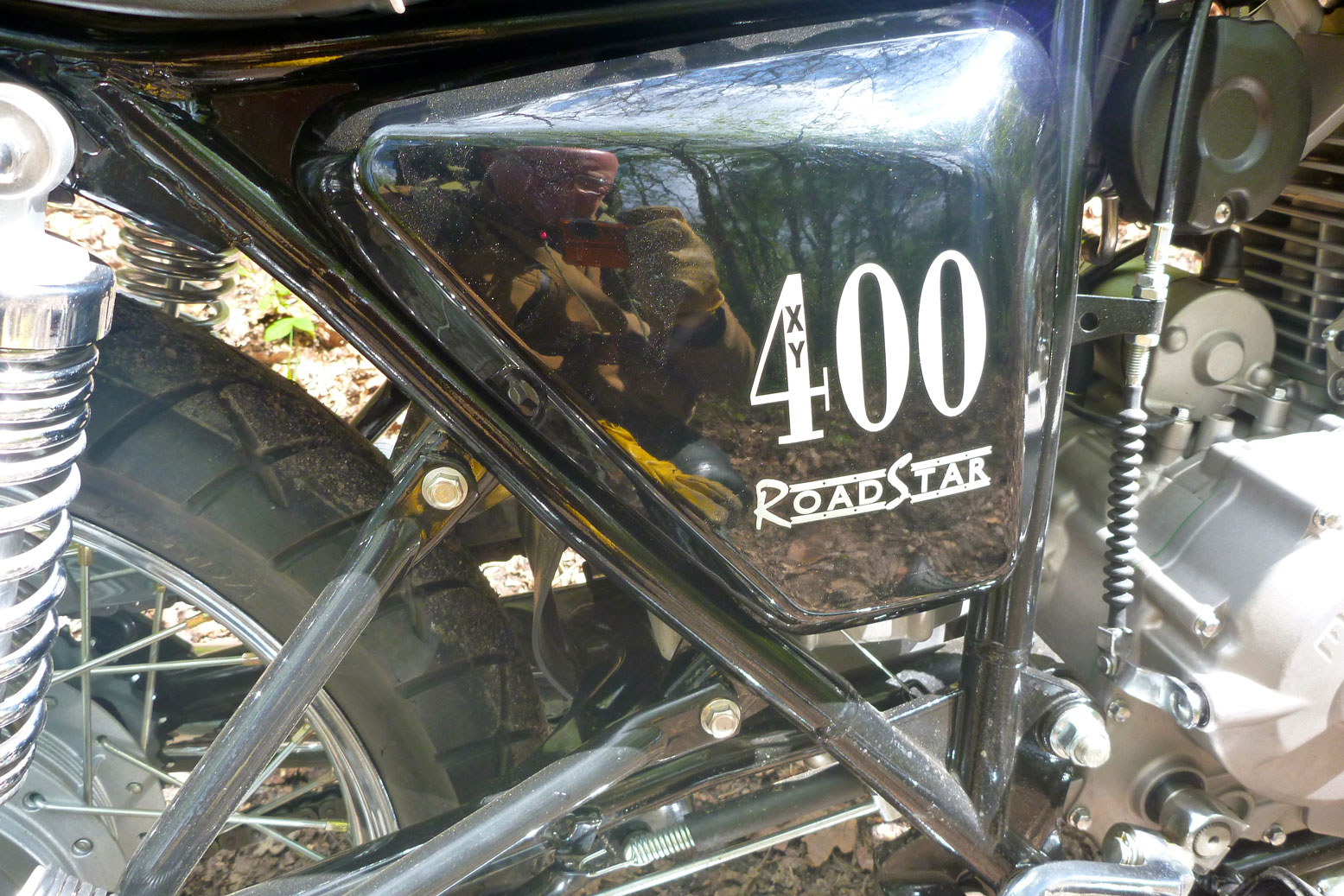
The Mash Roadstar resembles Yamaha’s UK-reintroduced but soon dropped SR400 (left). The mini SR never caught on, despite the retro trend. First time round in the late 70s the original SR500 wasn’t such a big hit either, while the XT500 with which it shared its motor had already become the classic it remains today. Alongside the Roadstar, the £5200 SR400 merely looked overpriced and heavy. What it needs is some of this!

mash-02

Back at T Northeast I was warned the front brake was poor – a braided hose is said to be in the works. It was lame but over the hours I found applying more pressure than I’m used made it work like a normal brake. Of course you lose finesse yanking on a brake like that, and I’m not sure that can be purely down to a cheap rubber hose. The rear, rod-operated drum was fine and I dare say would lock up with a panic stomp. One old trick we used to do was remove the brake rod and put a light bend in it to reduce the over-direct actuation. Wheels are your classic 18/19 combo and the Kenda Cruiser tyres hardly got stressed on my ride. There was a downpour on the way back but riding with the conditions, they didn’t skip a beat.

mash-27

Initially riding away from the shop the bike felt as skimpy as a 125. This lack of bulk and the airy front end detracted from the planted feeling on my Versys (at the time), but that can’t all be down to an extra 70-odd kilos of weight. It could be due to the spindly 35-mm forks alongside the proportionally hefty front wheel.

mash-23

The suspension is basic on the Roadstar. Out of the shop on notch 2/5, my dressed-to-ride 100 kilos bottomed out the back-end on country-lane potholes until I cranked them up to 4/5 with some pliers I happened to have on me (no tool kit that I could find). It’s possible the steering feel improved on doing this too, or maybe I was just getting used to the bike. It takes some effort not to compare a new bike to your normal ride, even if it’s another type of machine entirely.

mash-26

I know the Roadstar is low but the bike does feel very light and I wonder if that claimed 151-kg figure could be wet. My XCo was supposedly just a few kilos over that weight before I layered on the travel clobber, but the Roadstar felt more like my CRF250L (144kg wet).

mash-18

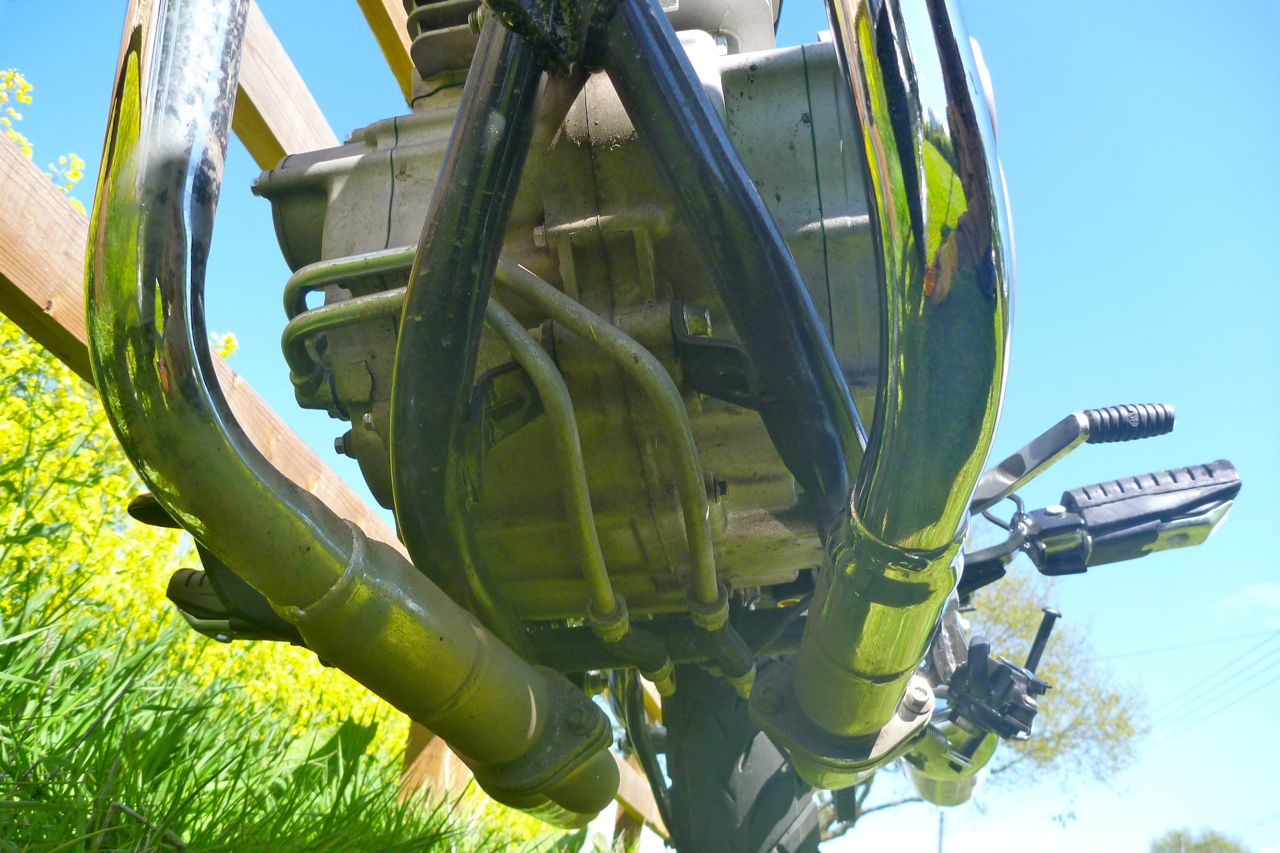
And it’s not like the Roadstar goes out of its way to save the kilos. Just like the bikes from the period it evokes, sidepanels, mudguards and the chain stay are all metal. Even the oil tank sat behind the gearbox (left) looks like an unusually hefty casting and the chain this bikes runs is much heavier than what’s on my Versys with more than twice the power.
It may well be a Chinese cheapie, but once that’s shot and you slap on a DID I can imagine it would easily last 20,000 miles with something like a Tutoro drip luber. Along with the low seat height, this lightness has great benefits in doing a quick u-ey to nip back for a self-timed photo or follow a lane that looked like it went somewhere good. I had a delivery in Kent, but as there was no 12-volt plug to run a satnav I was navigating the old-fashioned way with a cryptically scrawled roadbook taped to the tank.

mash-speedo

mash-09

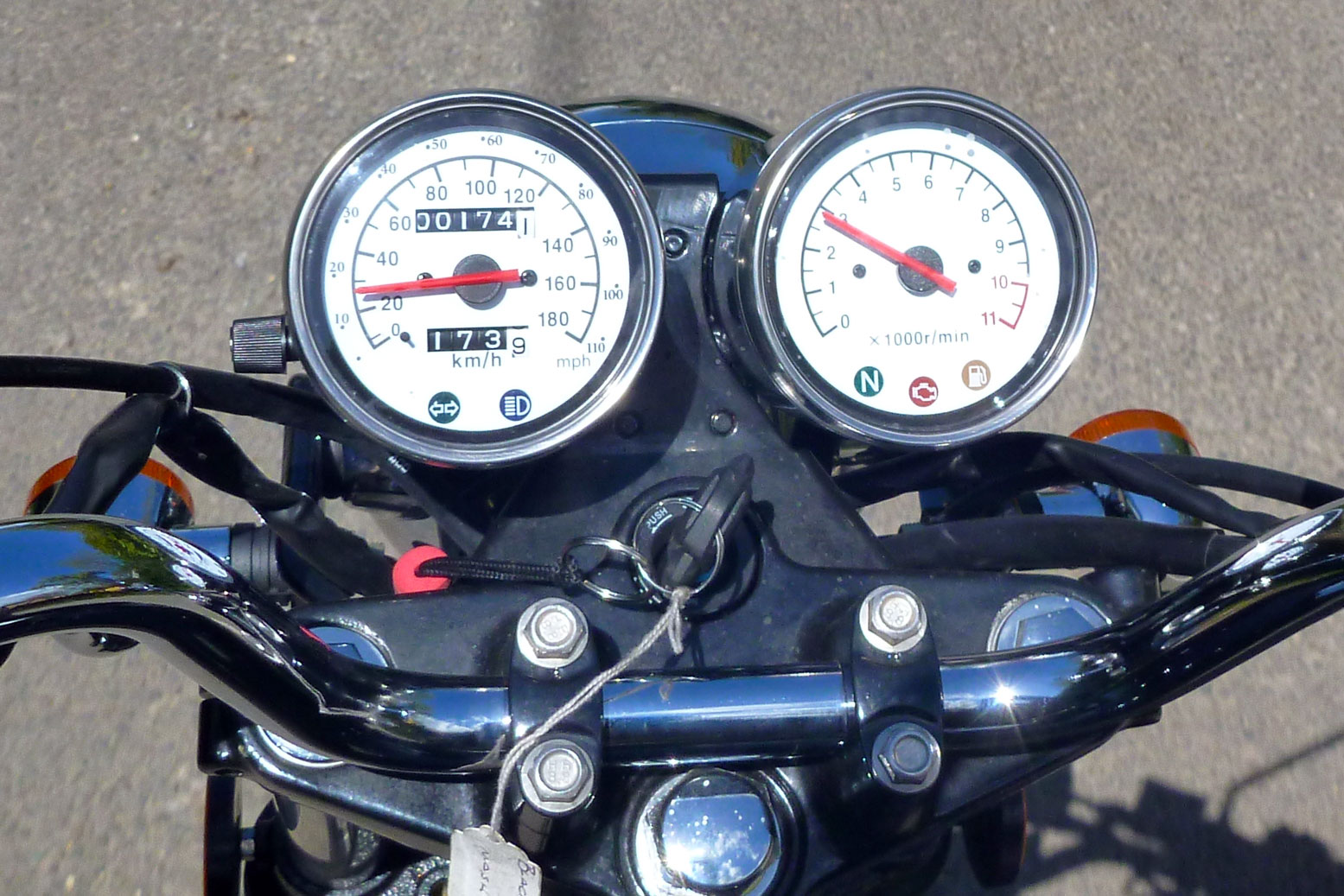
Running along Kent’s lanes at up to 50mph (clock and odo in km with mph scale on the speedo) the bike ran well, though I’m not sure I was doing the indicated speed. Push it to 60 and you start to ponder the limits of the brakes and suspension.

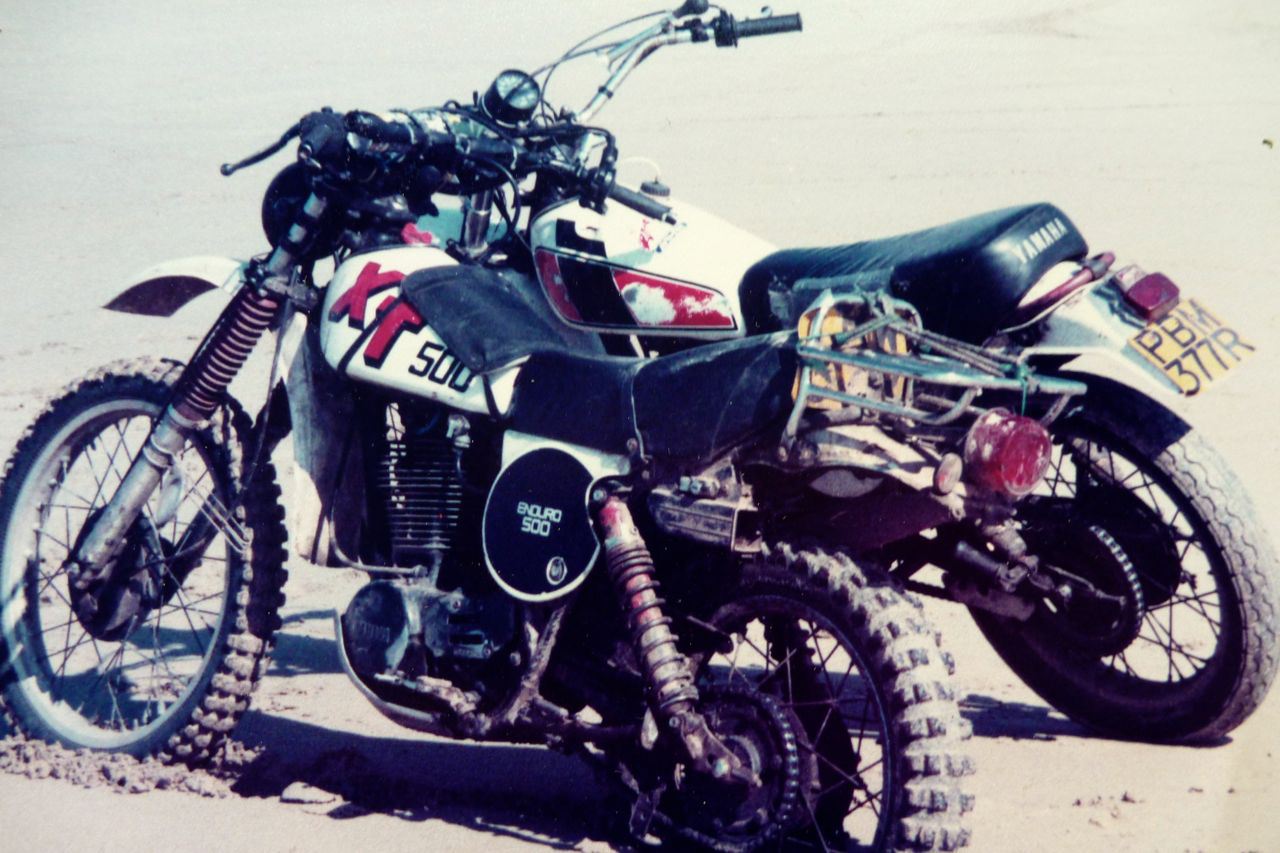
The five-speed gearing felt wide and tall: top gear was more of an overdrive rather than something with which you could usefully pull. It could be the very low mileage, but the Roadstar didn’t feel like it could have outrun my CRF250 or the XR250 Tornados we used in Morocco. And I’d expect to feel that power right off the bat, not by wringing the bike’s neck like it was a mid-80s two-stroke triple. For me the point of tracking down a 400 over the much more prolific 250s is either gaining a lack of balls-to-the-wall revviness or the ability to pull in lower gears with fewer gearchanges, but all without the weight penalties you get once you exceed 500cc. I was changing gear around 4000rpm – to rev much further would have felt a bit frenetic and unnecessary, but the 26-hp Roadstar’s motor felt more Jap 250 than XR400, let alone my old XT500 (below) which is listed as 27–31hp but 39Nm torque at broadly similar rpm. Another few hundred kilometres on the engine may have changed that, or it could be down to flywheel weight or the stroke of the motor. Mash don’t mention it, but the WK lists an identical bore and stroke to an XR400 just 0.4 bar less compression (8.9 vs 9.3). These are all just numbers off the internet where I found claimed power and weigh figures can vary by over 10 per cent for the same bike.

XT500s

mash-03
mash-17

Whatever the style of bike, one big attraction is fuel injection combined with a low-compression, air-cooled motor onto which it would be easy to graft an oil cooler. That might not be necessary or all that effective as with 8.9:1 compression ratio and the lowly power output, this 400 ought not get that hot in normal conditions. The low compression also means the motor ought to tolerate low-octane fuel out in the world, though I’ve found efi systems on big singles like the XCo and 660Z Tenere can handle detonation from low octane fuel, whatever the engine’s CR. Another benefit of all this is should be fuel consumption. I filled up at the start but forgot to fill up again at the end to work out what I used, but surely the retro Masher will return at least 25kpl or 71mpg. With the 13-litre tank that would deliver a fuel range of some 325 kilometres or 200 miles – about 80% of what I’d consider optimal for a travel bike.

mash-13

You might get used to the modest power but the main thing that would limit an adventurised Roadstar would be the suspension. At 35mm the unadjustable forks look skinny even if the preload-only twin shocks could be swapped out. The metal chain guard and front mudguard would be better in plastic too and the low-slung pipes as well as the under-engine oil lines would need protecting or moving over the top like an XBR. Without crash bars the foot controls might suffer in a fall too; the gear change could be easily swapped for a folding-tip item, but doing the same with the brake pedal would be tricky to pull off.

mashbrace
mash-30

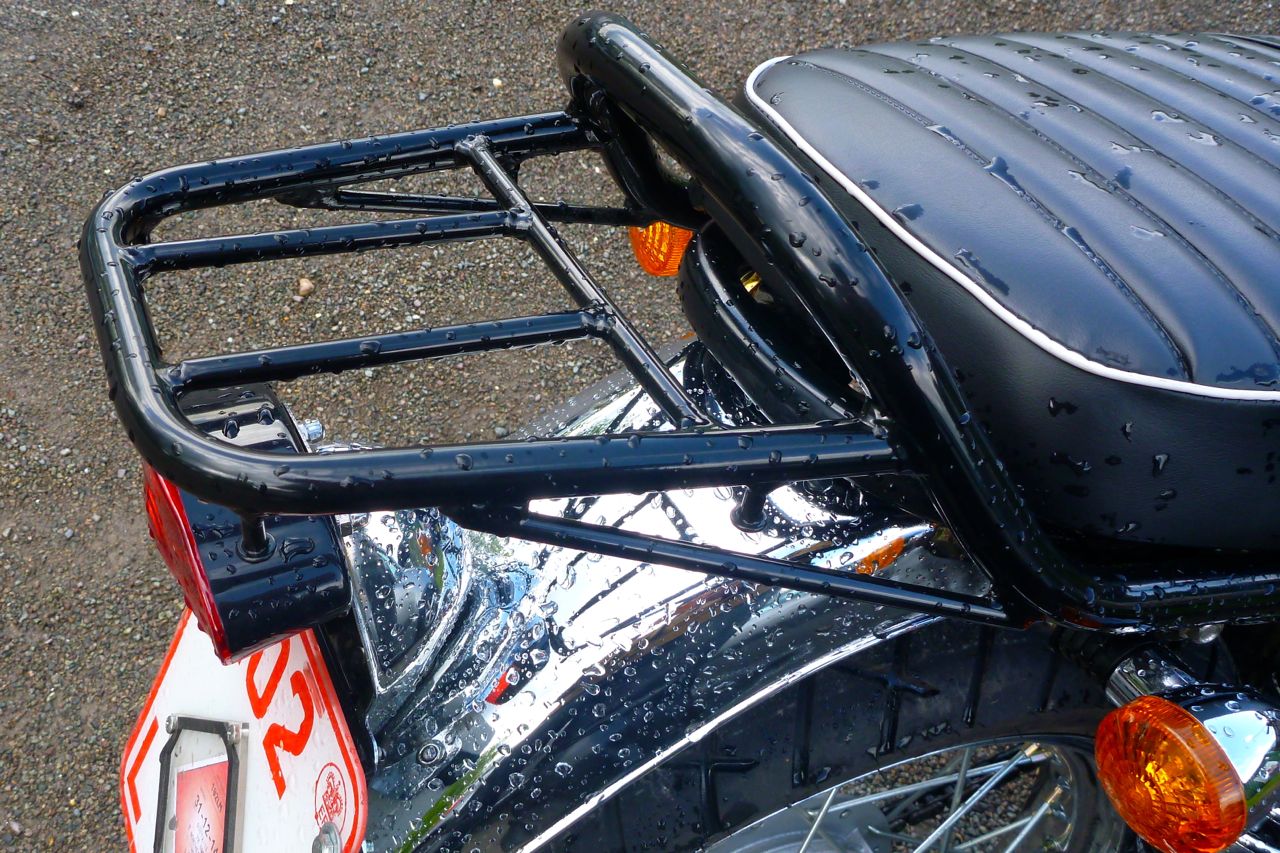
One good thing about being twin-shock is you could get away with using  throwovers without a rack to keep them out of the wheel. The little racklette (right) that comes with the bike is neither here nor there – I’d sooner take it off and fit a wide sheep rack as I did on the XCo. I couldn’t work out how to remove the seat other than with an awkwardly accessed 12mm, and only managed to remove one side panel, but the subframe does seem well up to the job compared to 250 trail bikes like the CRF and Tornado where it’s their biggest weak point. The Roadstar chassis has thick gussets inside the triangulated sections and, though slender by monoshock standards, the long swingarm looks solidly mounted via the back of the gearbox.

mash-25

I did something on the Roadstar I’ve not done on a bike for many, many years: swung a kickstart. I assumed the Mash would kick into life like a CG125 with one swing, but it seems I’ve lost the knack and it took a few stomps to the point where I lost interest in doing it ‘for old times’ sake’.
I recall how we lamented the dropping of kickstarts from motorcycle engines, but then and now a button just gets the your motor running. And should the Mash not start on the button I bet it would take a lot of huffing and puffing to fire up an engine with a kick. It’s been discussed before but a weak battery is likely not to have the spare juice to power up the efi and fuel pump as well as fire a juicy spark across the plug. Better to just do a jump start.

mash-15

My parting impression of the Roadstar was of a bike whose welcome lightness makes it effortless to ride along quite roads and in town, but which on the open road looked a bit better than it went. Compared to a 250, I didn’t get a sense of any added grunt from the 400cc motor, even if it wasn’t a revvy machine.

nx4
xr400r

In 2018 I finally got to ride an XR400 – you definitely know you’re not on a 250. And that’s as it should be and why 400s are an overlooked ‘missing link’. Actually no so ‘missing’ as ‘not here’. Bikes like the Brazilian-built carb’d NX4 Falcon (above) went for £4000 new in Mexico, or the 250 Tornado never officially imported to emissions-conscious western markets.
The Roadstar’s widely spaced gears would need working to move along, though you’d want to get that front brake sorted first. The saddle probably wouldn’t sustain a day’s riding, but then even with a screen, the Roadstar isn’t intended for that sort of use and there are much more sophisticated bikes with truly terrible seats.

As for the price [at the time of testing]? Even with the warranty I still think nearly four grand in on the high side for a basically equipped Chinese 400 single. If it follows the UK imported and branded Honley 250 Venturer, that price may well drop after a while [still €4000 in 2020), because as things stand the depreciation on a used Chinese branded bike will surely be monumental. Otherwise, for that money I can take my pick from a used CB500X or buy any 250 I want.

Motorbike capacities come with certain expectations and on this test ride it was the 400cc engine I was keen to assess. In terms of more-than-250cc grunt, the Roadstar was a bit disappointing or perhaps just needed more running in. Add it all up and as a low-tech adventure tourer I think the Roadstar is a bit too basic for the money. You can pick up used low-mile Roadsters on eBay from around £3000 so the depreciation isn’t that bad, but in 2019, my same-priced Himalayan ticked more boxes.

mash-16

Thanks to Ian at T Northeast for the test ride on the Roadstar.