Author Archives: Chris S

Yamaha WR250R Project – Stage 1

WR250R 4000-km review
WR Introduction
WR250R Stage 1
WRing about in Wales
WR250R ready for the desert
Morocco 4000-km trip report, 1–9
Fuel log
wrs11
wrs1-6

First up for the WR, an 18-litre IMS fuel tank that’s wider than it is long. And at the 31kpl I got on the way back from Holland, that should mean well over 500km, though 400 may be more realistic.
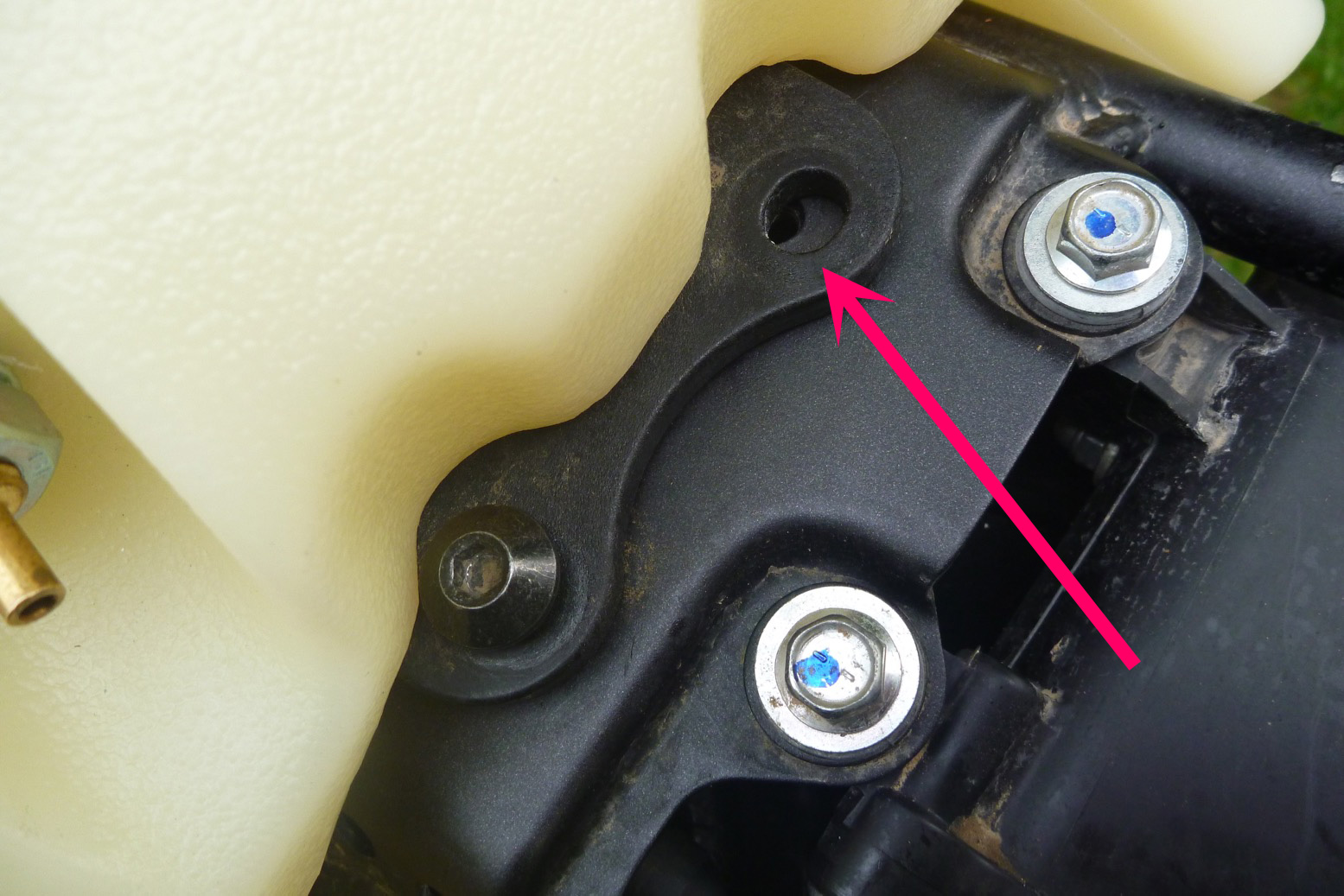
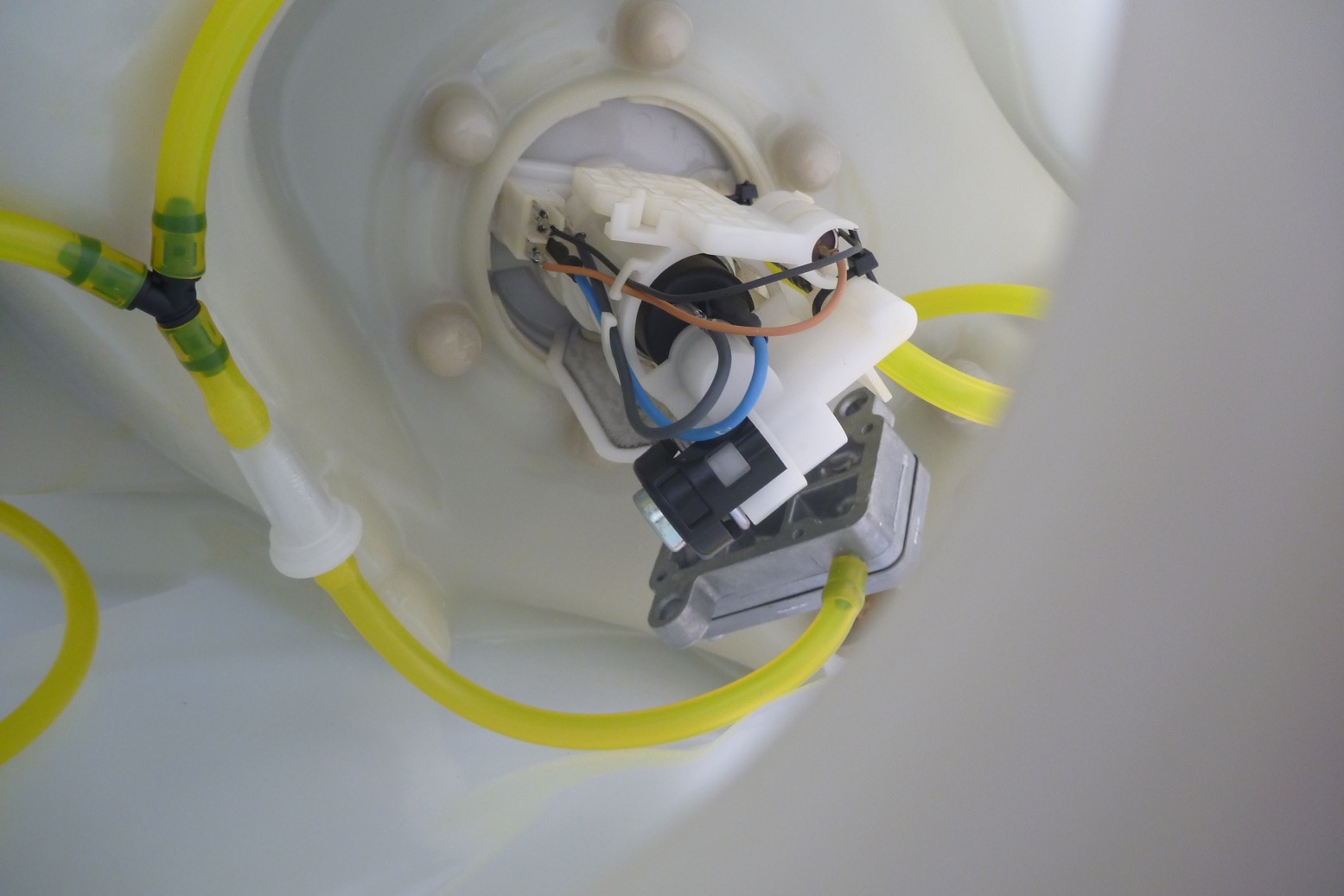
On the forums you read various horror stories about the IMS tank: misalignment, poor fittings, plugs falling out and so on. I was expecting aggro but it all went without a hitch or too much head scratching. The fuel line unclips from the pump, the OE tank lifts off, once unscrewed the pump lifts out of that and the chunky Yamaha tank mounts swap onto the IMS just fine. At the back though, no amount of jiggling could line up the mounts (above left) with the frame if using the locating washers. Without washers it crammed in OK. I didn’t bother with the screw-in stud on the back of the tank to locate the seat front either. It stays on well enough with the seat tongue going under the frame tab.
wrs1-8

The IMS comes with a small low-pressure lift pump inside (the grey metal unit, left) to get to the fuel at the bottom. It’s powered by vacuum off some intake hose which you cut and tee into. Once all was plumbed up and bolted down, the bike started first press and ran normally. Hallelujah.
The tank splays out quite widely and the outer edges will get knocked about on falls, but they also protect the radiator better than the OE shrouds so it’s a good use of volume. On the road full up, I can’t say I noticed any unbaffled sloshing as some sensitive riders have reported. Looks like a good, solid unit. The pic at the bottom of the page shows it with 3 litres in and room for 15 more.
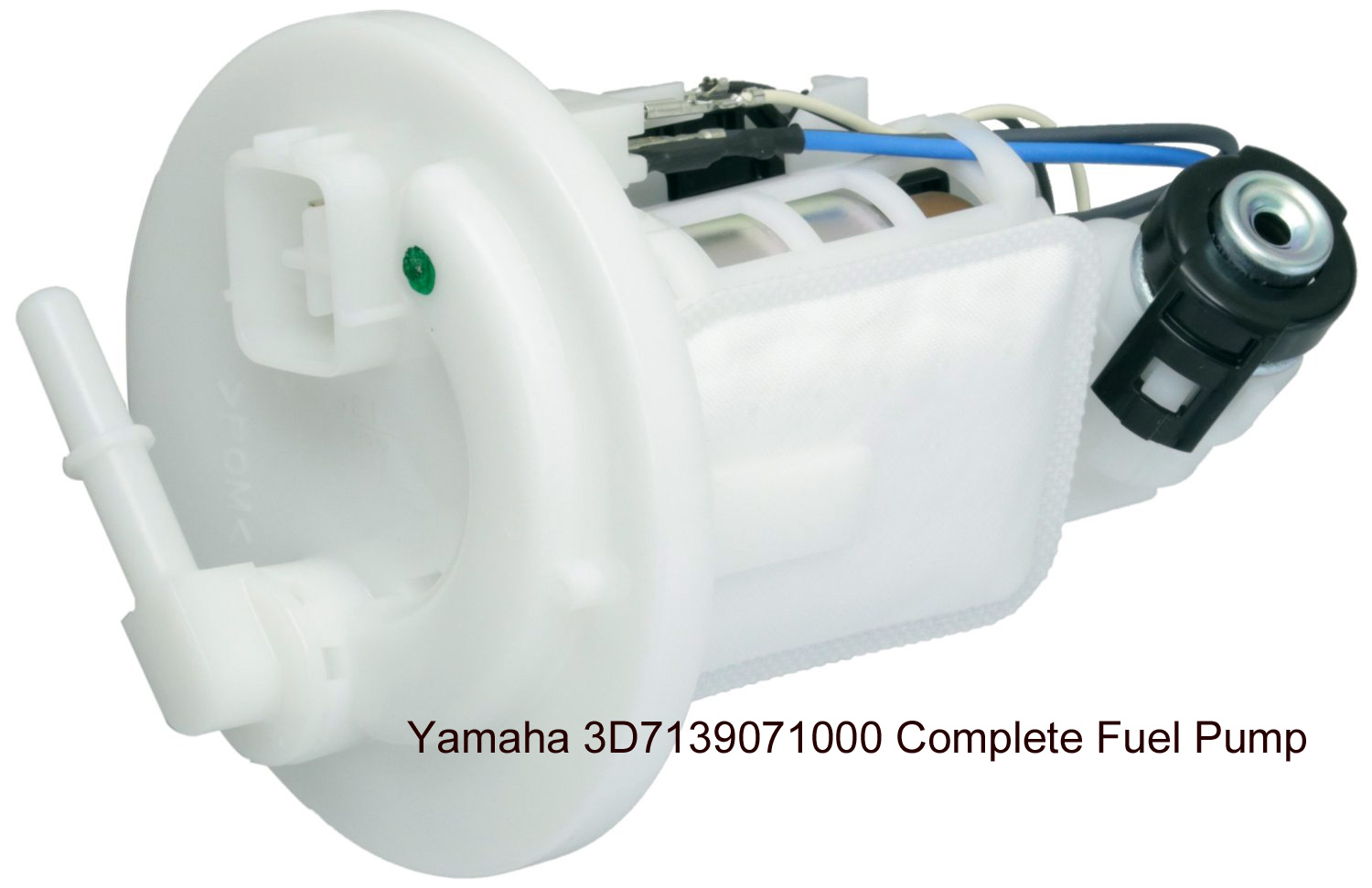

yamaha3d71390710WR250Rs are known for having dodgy fuel pumps (more here) which can behave erratically in hot weather after a few thousand kms, failing to prime (no buzzing on key turn). They might recover once cooled down but eventually will pack up for good. No one really knows what the problem is. One suggestion is fuel varnish coating the inside seizes the turbine when hot.
Early 2008s were very prone, although later WRs pack up too after a few thousand kms. It seems not living in Phoenix, AZ helps, and you do wonder if ropey US fuel has something to do with it or if it’s a case of the squeaky hinge getting all the oil? Don’t know but in the Sahara WR bike will get hot for sure.

A complete Yamaha pump with housing goes discounted for about $300 on amazon, and although the part number changed (from 3D7-13907-00 for 2008-12, to 3D7-13907-10 from 2013-onwards) suggesting an updated pump, some people still report failures on the newer pumps. wrfuelpump
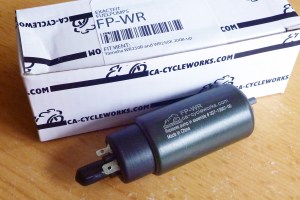
Being a popular bike in US and Au, there are various aftermarket pumps from just £20 cheapies on ebay to £105 for a California Cycleworks unit (left, also made in China). They all require carefully dismantling the white plastic housing as above, to replace the actual fuel pump unit. Not really a trailside job. Aftermarket ones fail too, especially the cheaper ones, which makes you think it’s modern fuel or an over-pressurised system, as I also read somewhere. I’ve not heard of other efi bikes having hot weather fuel pump issues, but anyway I cracked and bought a Cycleworks. I’ll will get round to fitting it and carry the OE unit as a spare.

wr250-rax
wrs1-11

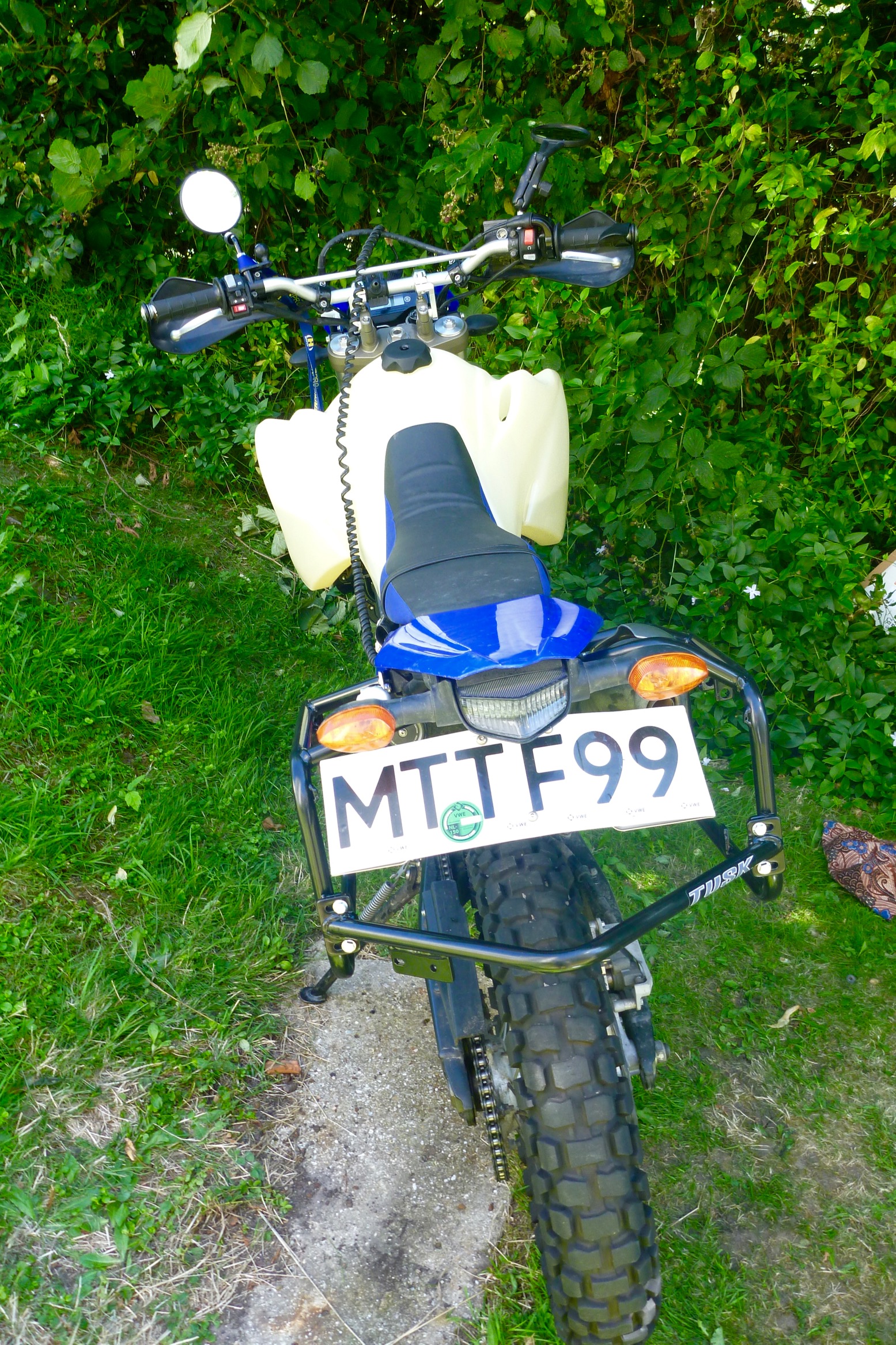
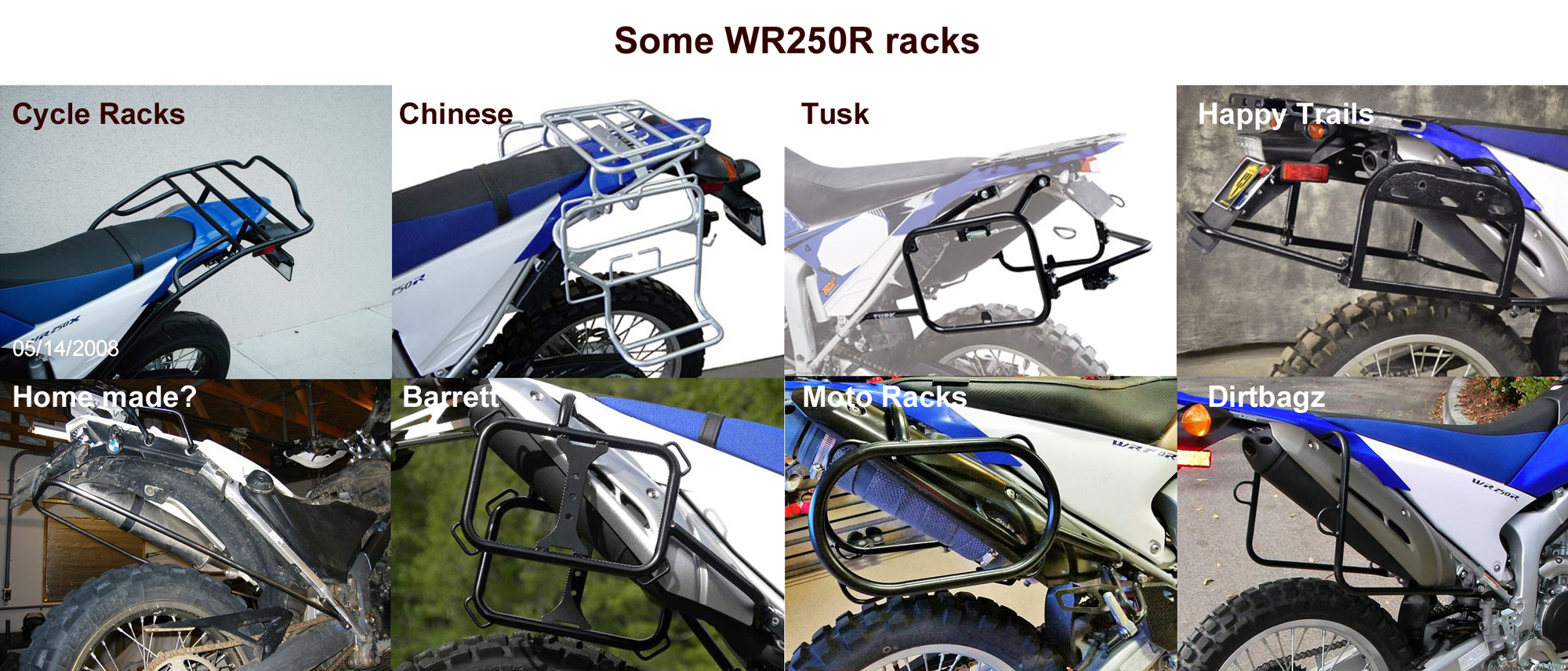
Next job: pannier racks. Long story short, choosing from the above selection, at $170 from Rocky Mtn Adv the US-made Tusk racks (a Rocky Mtn sub-brand, afaik) looked by far the best value for money, and when they turned up I was even more impressed – nice to see chunky ¾” and the all-important back brace to stop them folding in when heavily loaded on rough terrain. The unbraced Moto and Barrett may rely on heavier gauge tubing to not cave in. That looks neater but I found with the Rally Raid racks on the CB500X it didn’t really work out like that, to be bend-proof and light you need a back brace. Once I removed the unwanted bracketry for mounting Tusk hard boxes, the added weight was < 4kg.
wrs1-10

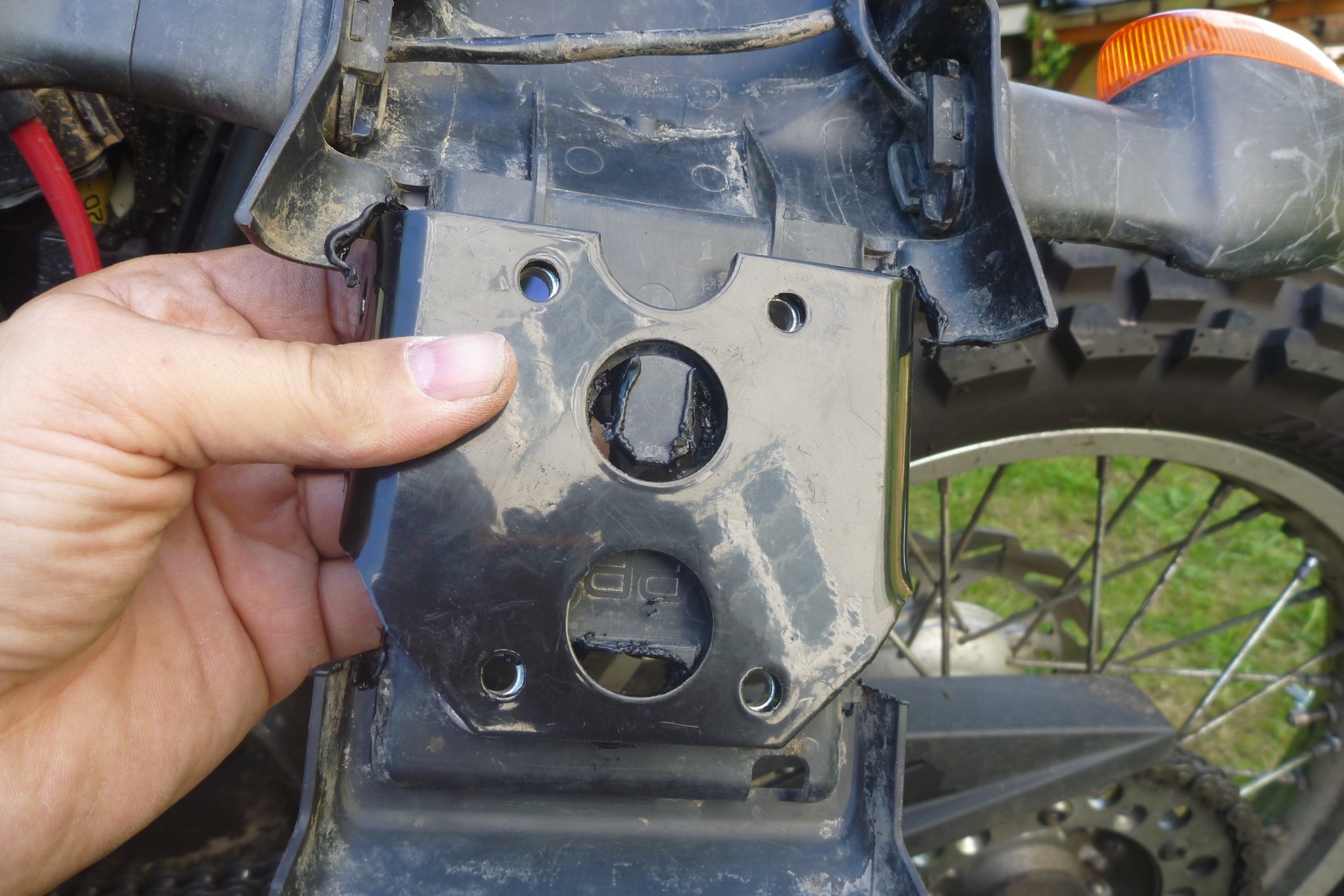
The fitting video on Rocky Mtn is especially helpful, but mounting the back underplate (right) could only be solved by cutting away with a red-hot knife. It’s possible my bike’s non-original plastic numberplate holder might have complicated things. That apart, the rack lined up just right elsewhere and will give something to grab when hauling the WR across a dune. There’s plenty of space behind the non-pipe side too, to stash stuff or mount a container.
wrs1-9
xco-shield

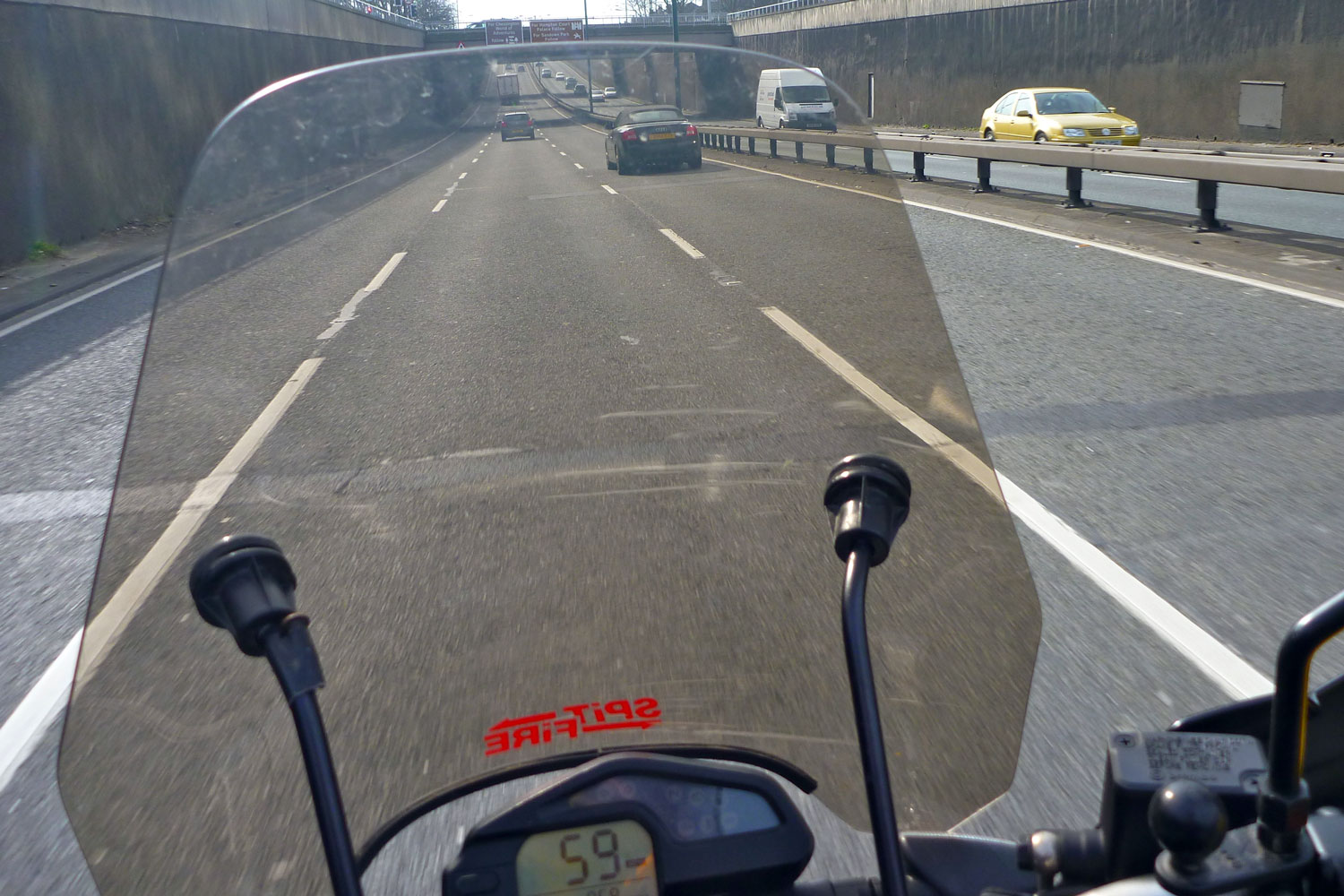
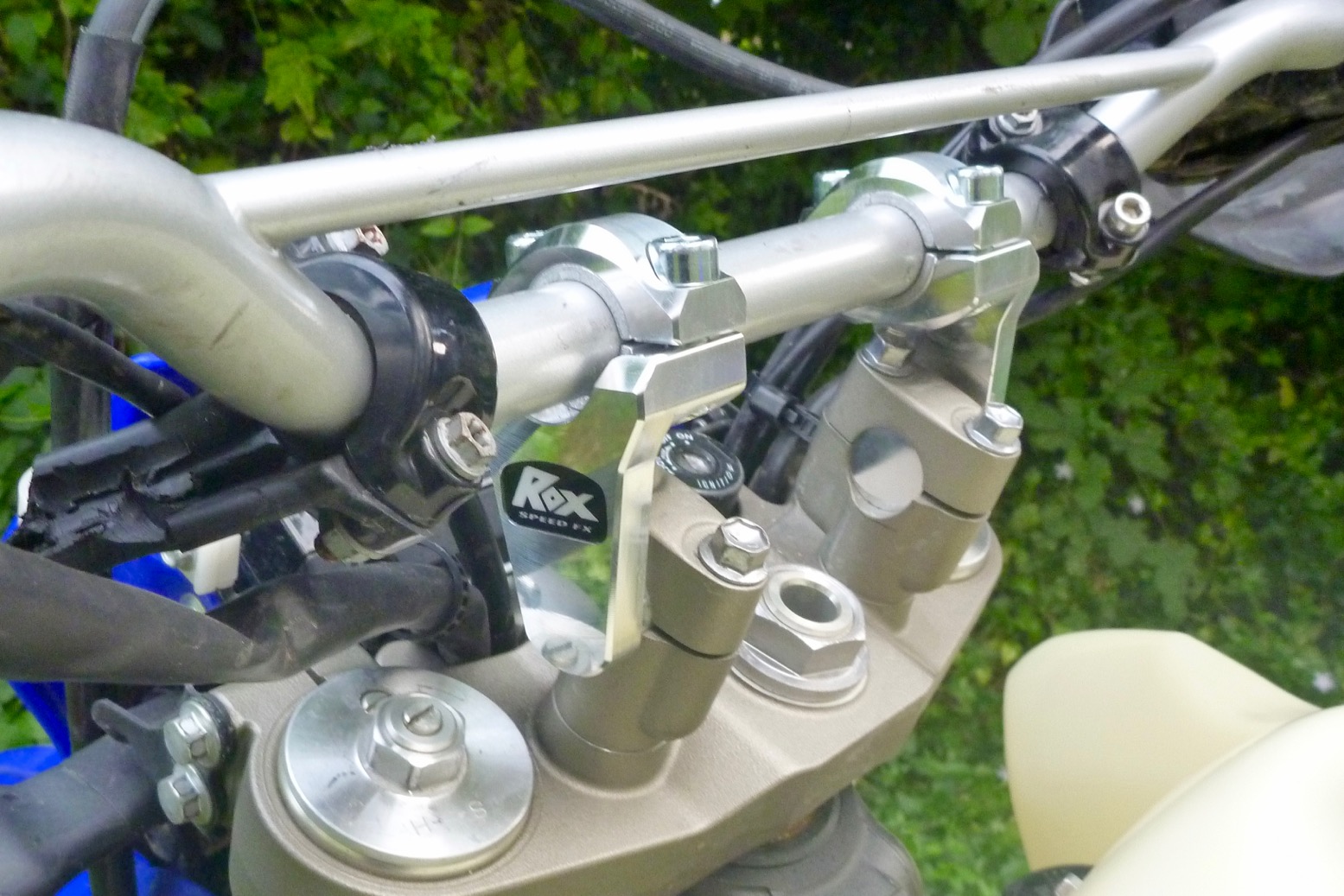
I splashed out on some Rox bar risers giving a 2-inch lift and a bit of fore and aft adjustment. Fat bar sized plus with adapters for ⅞s, they can carry over to later bikes, like my old Barkbuster Storms. Talking of which, the Barks can stay in the box as the handguards that came with the WR look OK. There’s just enough room left on the bars to add my Spitfire screen mounts (left).

I have a nice shiny Flatland bashplate waiting to clamp on, but the old hex bolts on the OE bashplate were not playing ball. Instead they wanted a game of rounders, and so rounded out they now are. One for the shop when they MoT it next week.

wrs1-18
screen-shot-2016-09-18-at-14-37-06

I put on my old round Double Take mirror; it helps where I park the bike. But a run to the Overland Event near Oxford proved it vibrates on the WR just like it blurred on other bikes I’ve tried them on. The new asymmetric Double Take Adventure model (right) has done away with the stalk to reduce vibration, but now means you have to buy a hefty 6-inch RAM arm for another 20 quid (plus a bar-ball mount for another tenner). As I have those bits I may give the new one a try as it is handy to have one bombproof mirror.
82-cassis

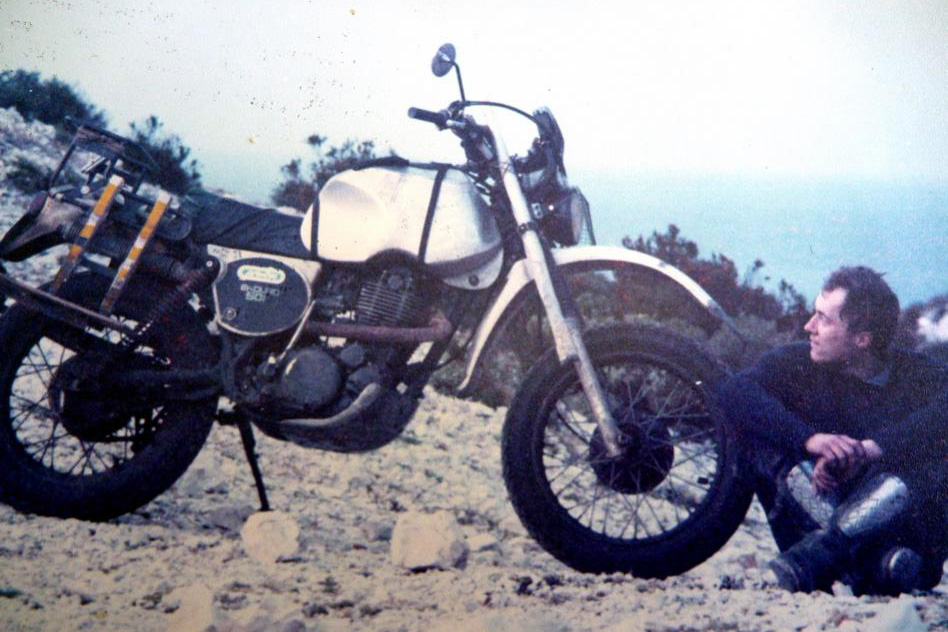
Picture right: my original desert bike, the ally-tanked ’76 XT500 I rode to Algeria in 1982. The WR is bike #57. For the first time since the 80s I’ve again had more bikes than birthdays.
wrs1-spd

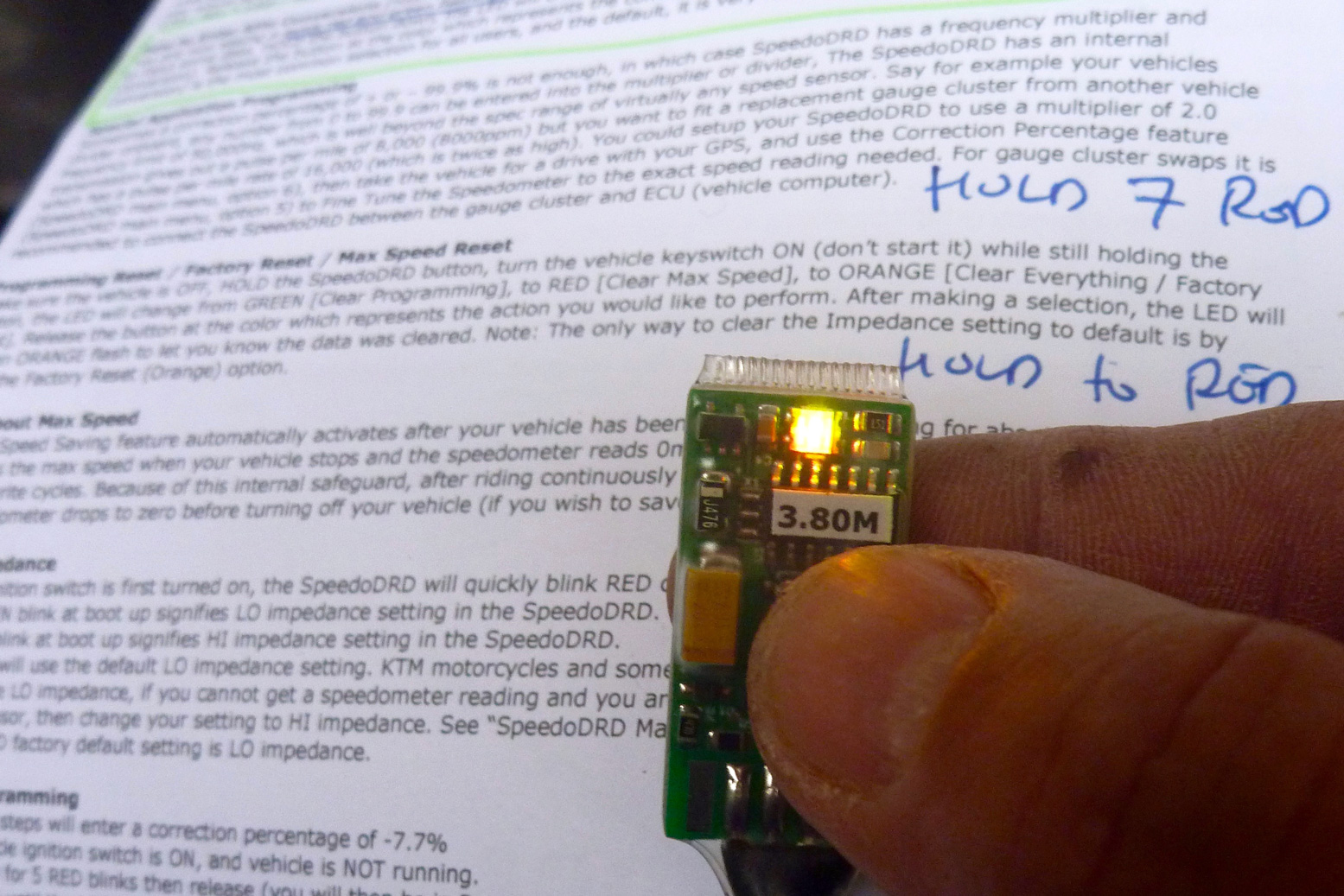
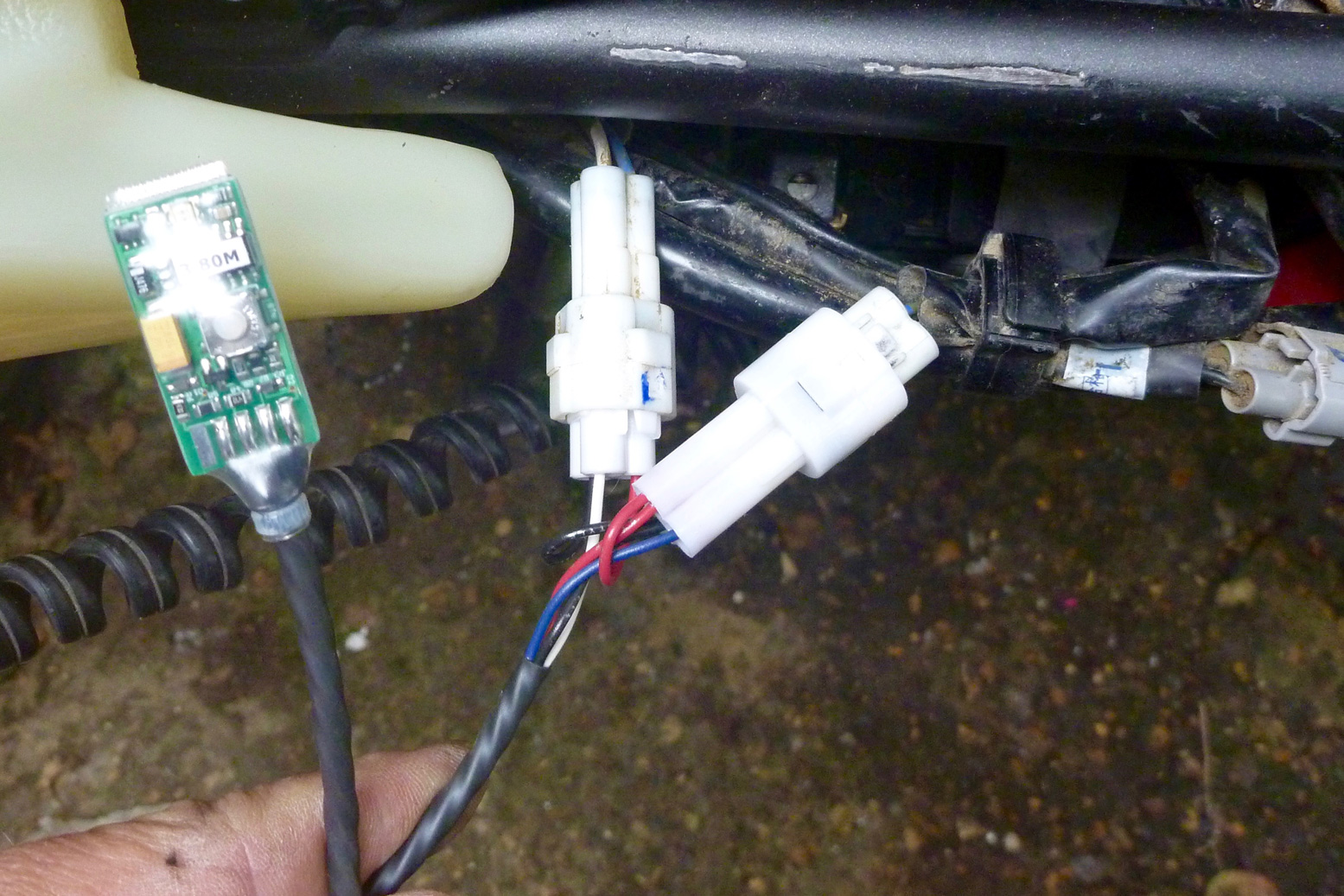
Other jobs include re-fitting my Trail Tech Vapor to give accurate speeds because, according to my GPS the WR speedo reads 12% fast and odo some 4% over. But I’ve also just fitted a Speedo DRD chip (left) from Totally TTRs. I was hoping the WR’s OE kph digital speedo could be reset to show mph, like my XT660ZE from the same era. But annoyingly, it seems WRs sold in kmh markets can’t flip their speedos to mph, while Brit and American mph WRs can changed to kph. WTF WR?
wrsi-drd

Like those nifty fuel controllers, the DRD is very easy to programme and can also flip to mph to make the bike UK legit, as well as correct the large speedo error, even though the Vapor technically does that job too. As a reminder the Trail Tech Vapor can also display ambient and engine temps – the latter a vital reading on any bike, IMO – as well as a GPS compass and altitude, rpm and, yes even the time of day.
vizx

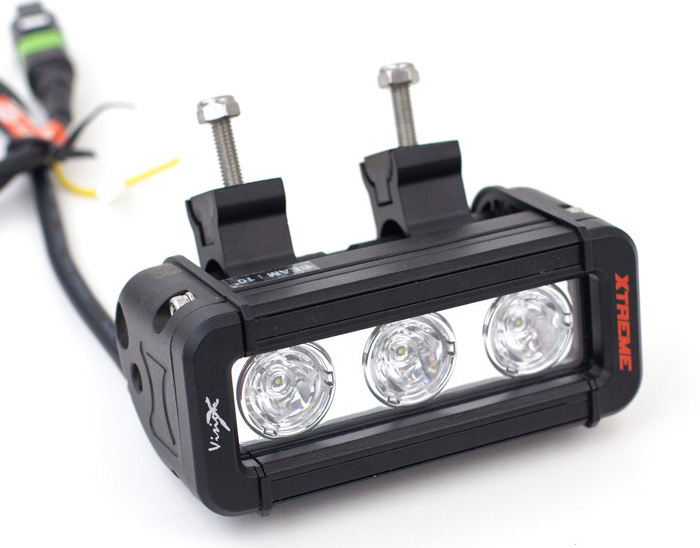
As for lighting, I’m assuming the standard little headlight will not wake the badgers. Some say you can fit a super-bright $60 HiD bulb and fry burgers with it; other find the cut off is unsuited for road riding. I must say on a travel bike I prefer the idea of a secondary light; a back up should the main one fail.
I’ve had a Vision X 5″ Xmitter narrow beam (left) sitting around for ages. They say this is the best model to get for travel bikes, so now will be a good opportunity it fit it to the WR.
wrs1-tyres

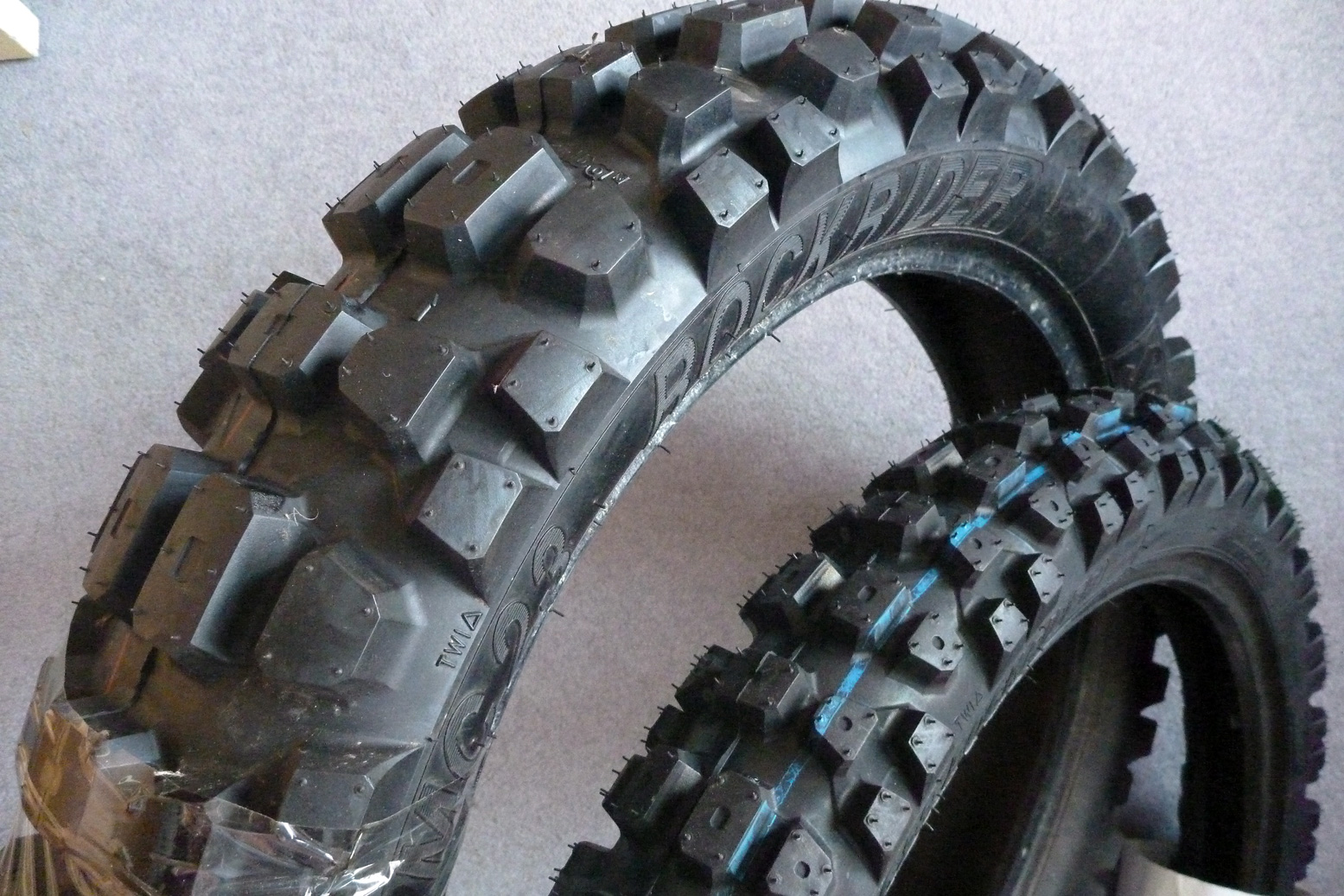
Wakey wakey! A mate gave me a rear Sava MC23 Rockrider which he reckons are the new black (and round). At 140-80 it didn’t fit his TTR250 and I don’t think oversized tyres work on a WR (120/80-18) any more than noisy pipes make more power. More weight; more drag and over-stiff tyres on light bikes can be counterproductive in deep, soft sand. They’re just too stiff to sag usefully, even at very low pressures, to give better traction, as I found decades ago running a Mich Desert on a Tenere right down to 5psi. The MC23 is 4 plies tread and 3 in the sides – sounds stiff. I won’t be that loaded up nor riding hard, and the WR will lack a Tenere’s grunt to hook up, for sure.
AMH-Tread-Chooser-Dirt

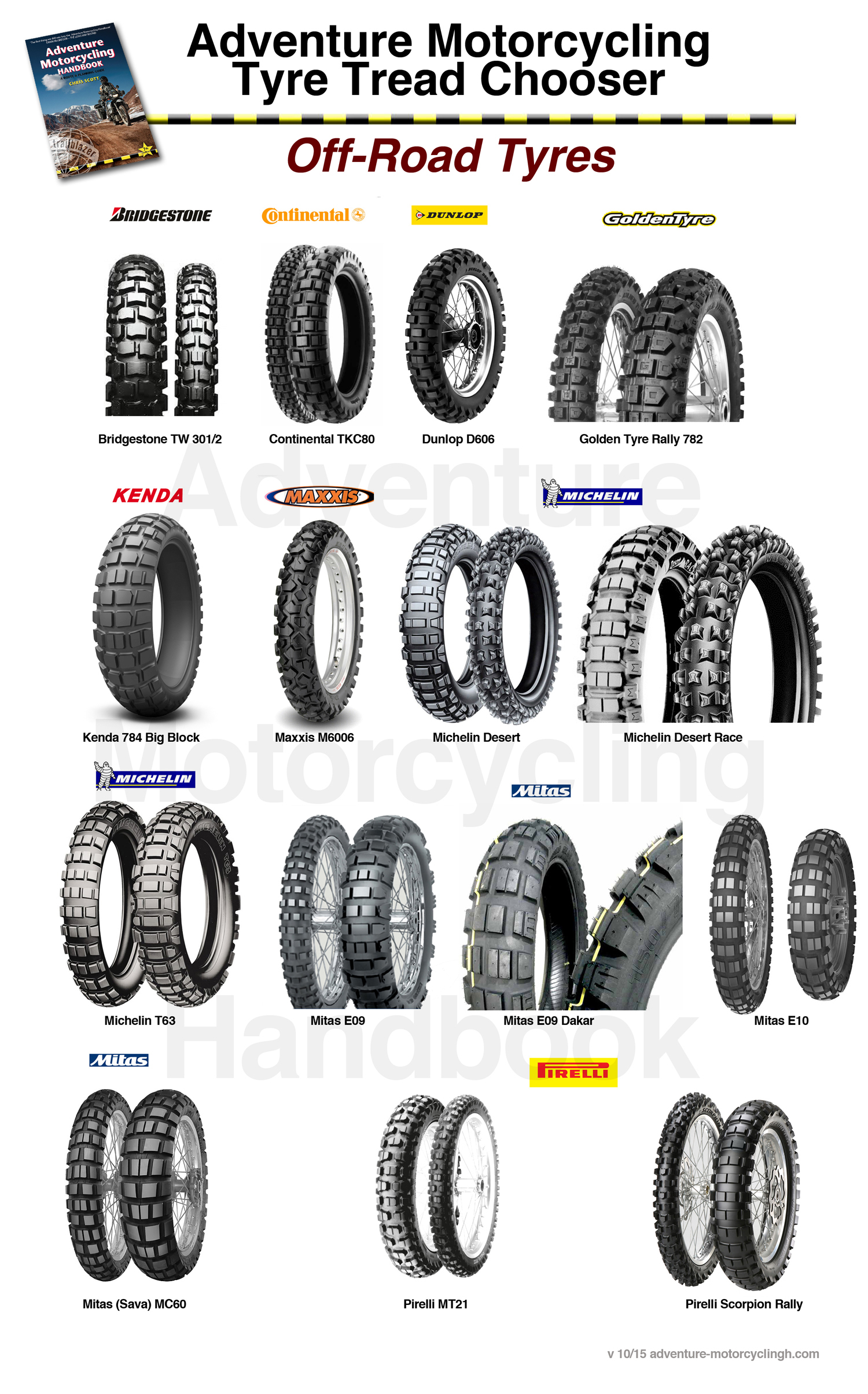
In the US they all rate the Dunlop 606 on WRs, but they don’t sell it in the UK. Either way, something from the list on the left will do the job. The Mitas E09/10s I’ve been wanting to try don’t come in WR rear sizes. With Sava/Mitas it’s the MC23 or nothing and in the end I succumbed to online tyre fatigue and clicked on a 120/90 Rockrider for £56. It may not hook up in the sands of the Erg Amatlich, but it won’t puncture up on the plateau, either.
To keep it company I also bought a front MC23 Rockrider – £42 from Oponeo, so that’s £98 all shod. This came branded as a Czech Mitas as Mitas have lately bought out Slovenian Sava. Just as well because as tyre names go, ‘Sava’ is even worse than Golden Tyre. I hope to at least mount the rear tubelessly, doing a better job than I did last time on the Tenere. Enough tyre talk.
wrs1-paps

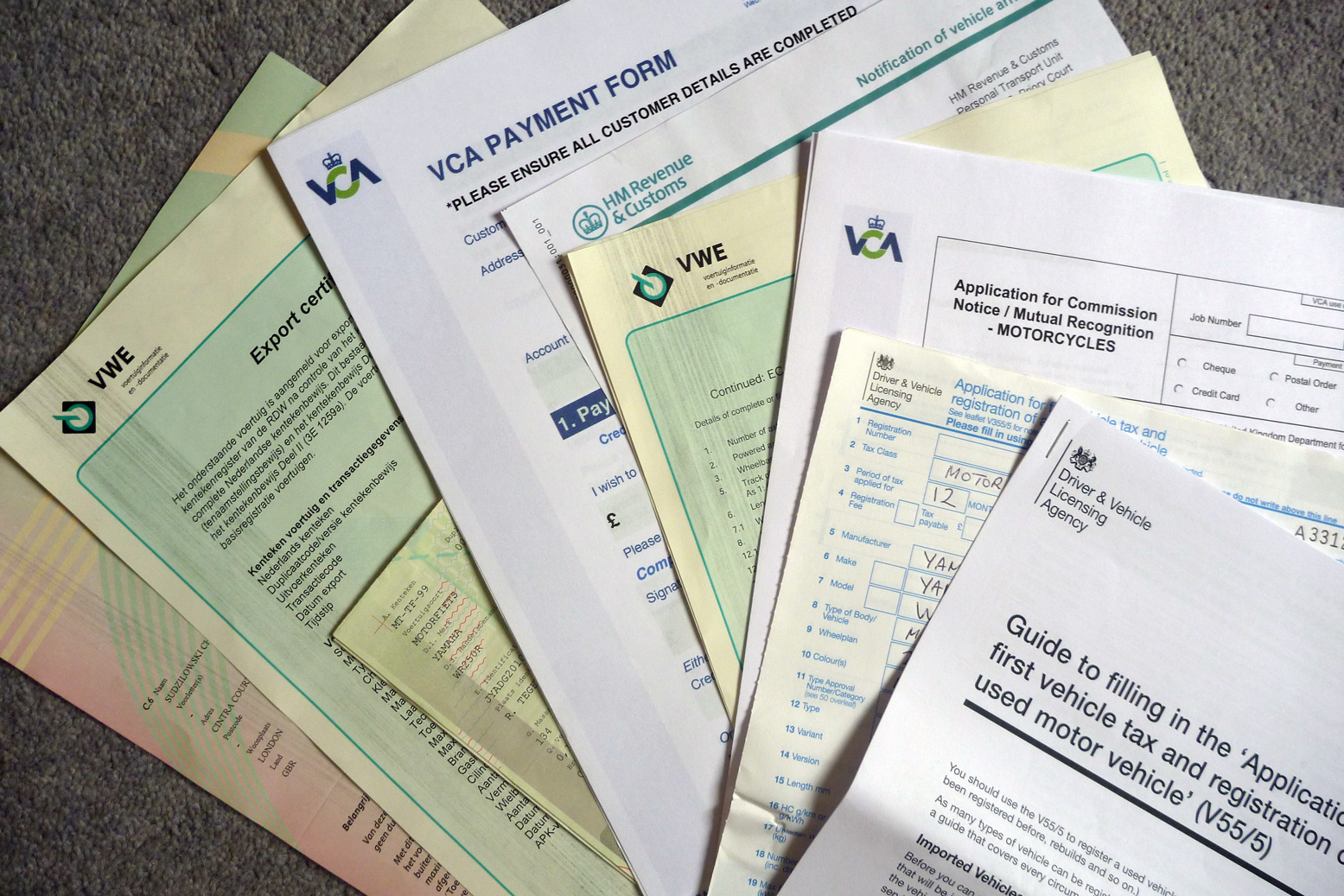
Unfortunately, delays in receiving paperwork to complete UK registration (added by my own confusion in how to set about the task efficiently) mean it’s unlikely I’ll have a UK plate and logbook in time for my Morocco tours in a few weeks. I’ll have to rent something down there. Can’t say I’m bitterly disappointed at missing the chance to cross Spain and back in early winter on an untried 250. Last couple of years I’ve been lucky with the rain in Spain. It can’t last and it all gives me a chance to get the WR in good shape for the proper desert trip we have lined up in the new year. It also means those rally tyres won’t get wasted running mostly roads.
hpwr
wrs1-12

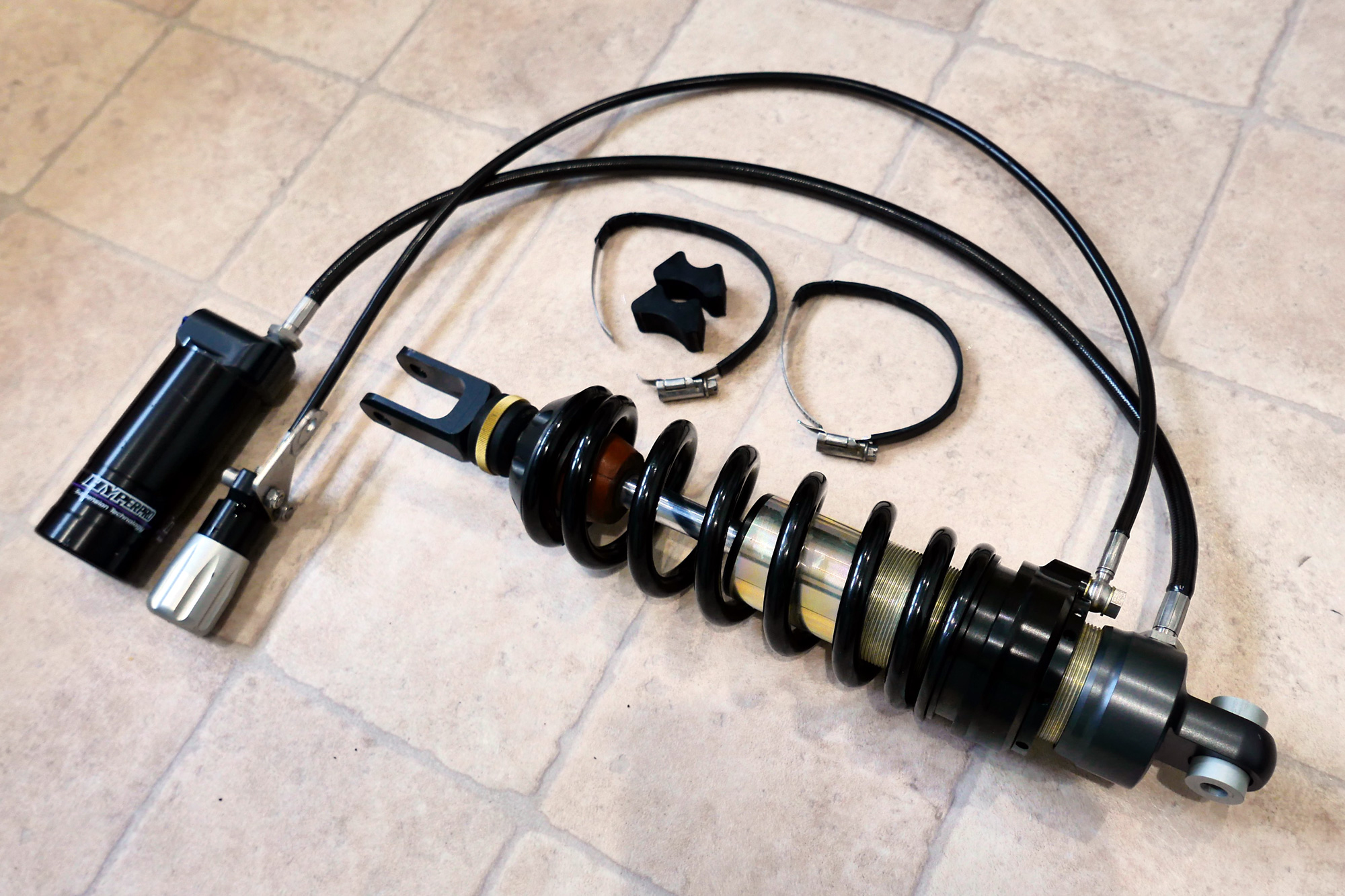
I do wonder if it has been worth the faff and expense of buying a bike from Holland just to get some top-grade Hyperpro suspension (this is the first WR250R to have HP). All I know is if it works as well as my HP X-Country, then the answer will eventually be yes. You just wonder how many trees have given up promising futures to certify the re-registering process of this motorcycle.

Have to say, after having a close look, so far I’m impressed by the WR. The easy disassembly and access to things, nifty hinged air filter door, minimal-sized components where possible and solid parts elsewhere, like triple clamp and subframe. It’s like a Jap KTM, and grails don’t come much holier than that.

wrs1-17

One thing I’m pretty sure I won’t be doing is meddling with the airbox flap, EXUP valve, silencer or other stuff to squeeze 3% more power out of it and save a few ounces. Like most things, the WR-R already is what it is: lighter and more powerful than any other Jap trail bike, with a travel workable oil-change interval and excellent mpg. That should do nicely for the next desert ride or two I have in mind.
wr-hpa

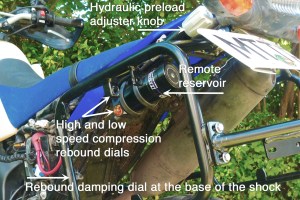
On the way to the Overland Event I had a pile of heavy books I was hoping not to bring back. Once loaded up it was great to just crank up the Hyperpro Hydraulic Preload Adjuster (HPA) knob which still fits nicely alongside the new rack. At a pinch you can almost do it on the move, though probably not while texting.
I haven’t yet had the heart to run the WR at the revs it’s supposed to handle. What’s probably a true 55-60mph seems fine for now, but unlike a CRF-L or KLX, you do have a bit of spare oomph when you need it. For the first time in years I’m very much looking forward to getting my latest project bike on the dirt.

wrs1-16

Baja Gallery ~ KLX250, F800GS

KLX250S main page
Mohave with KLX
KLX250S – Mountain & Desert
Baja16 - 46

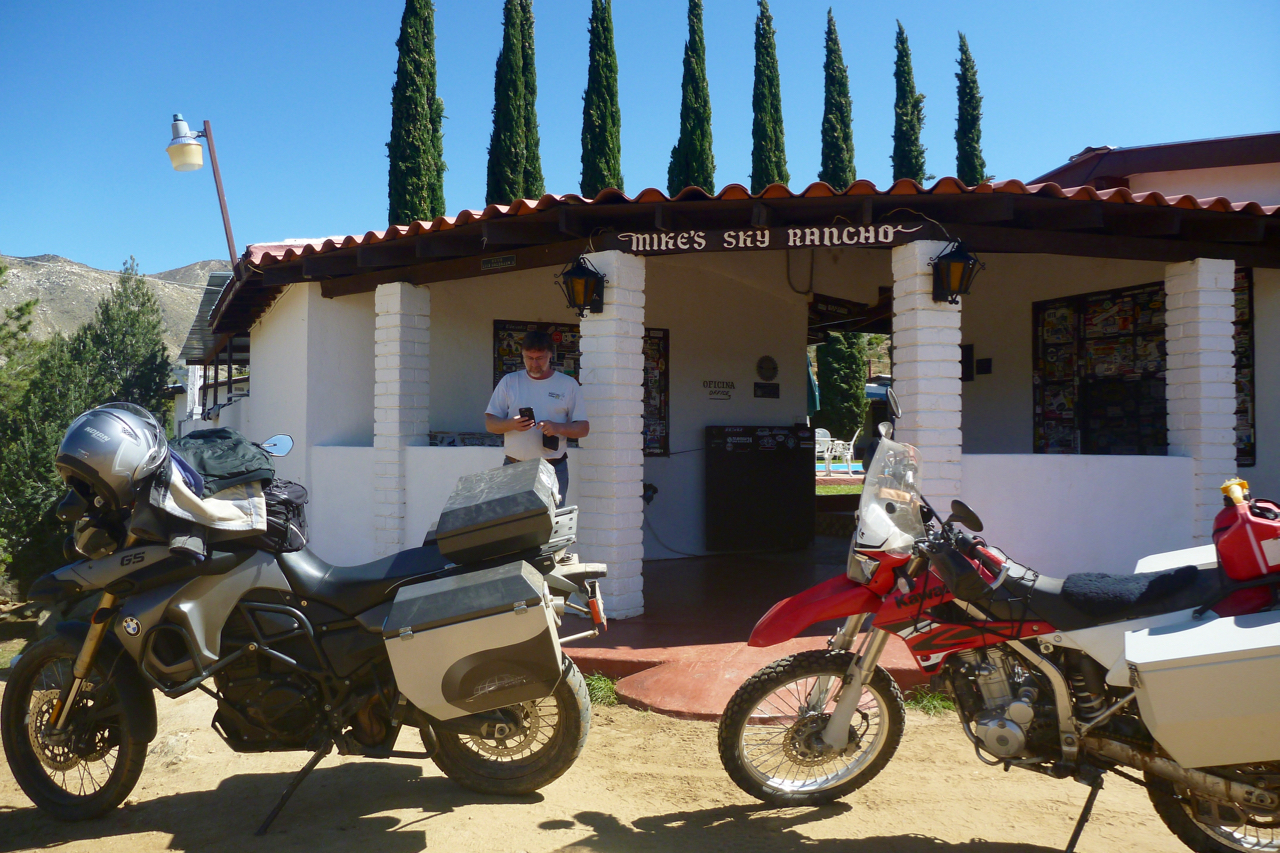
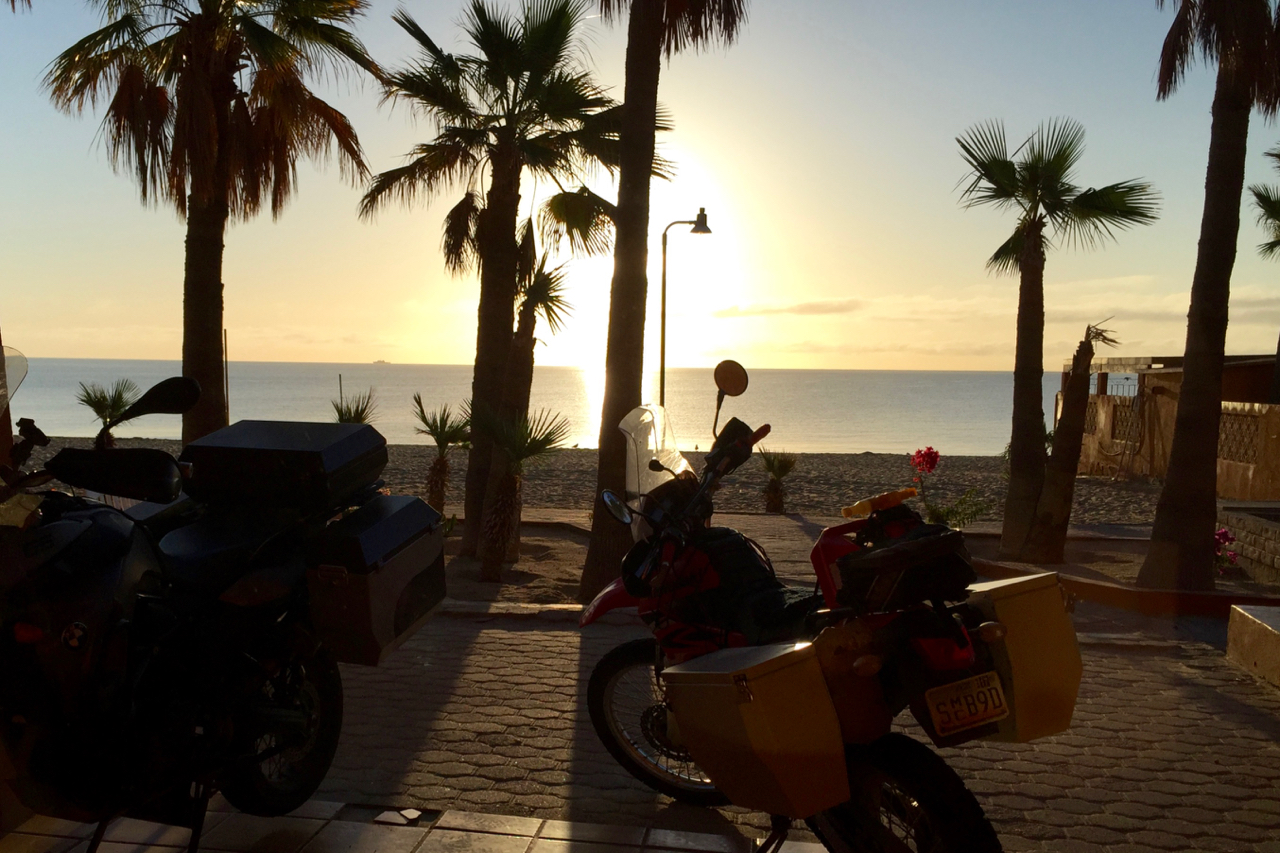
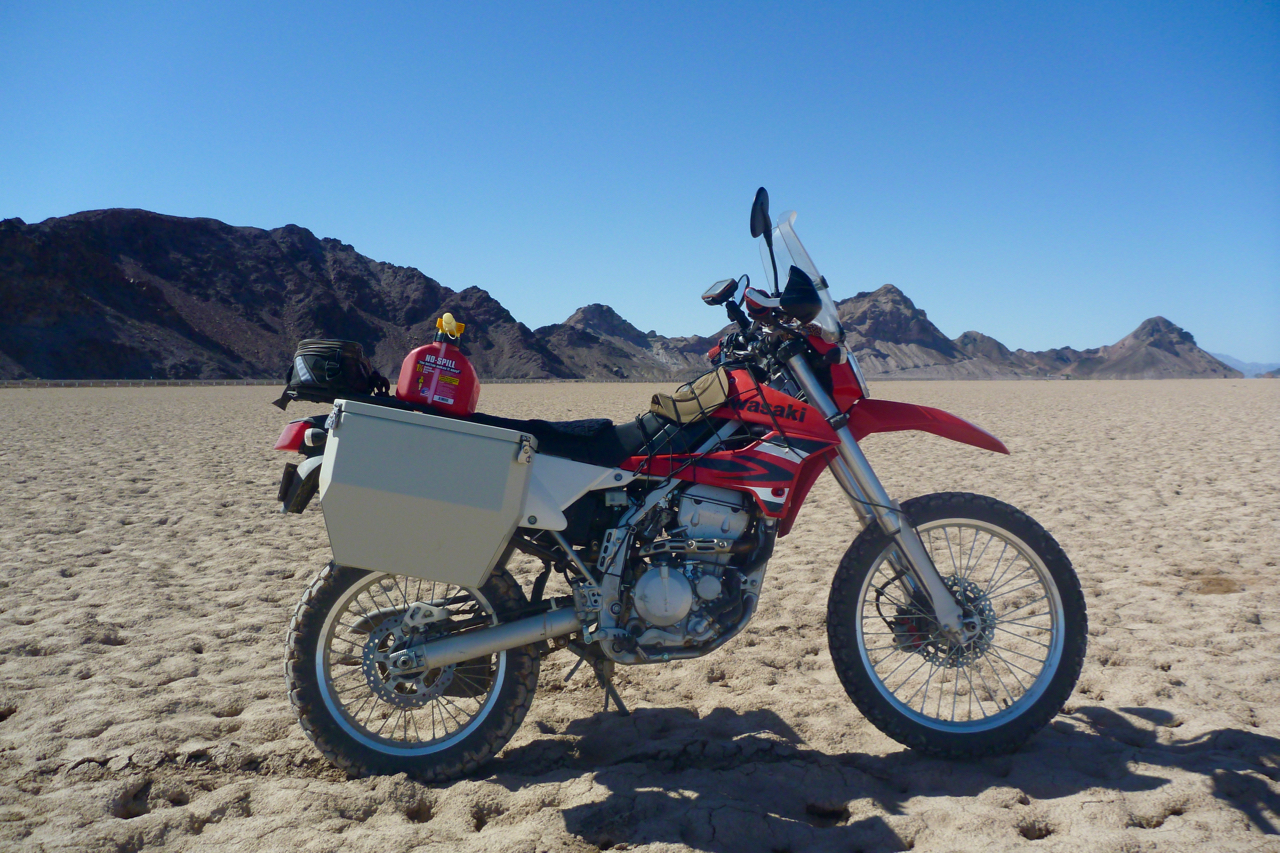
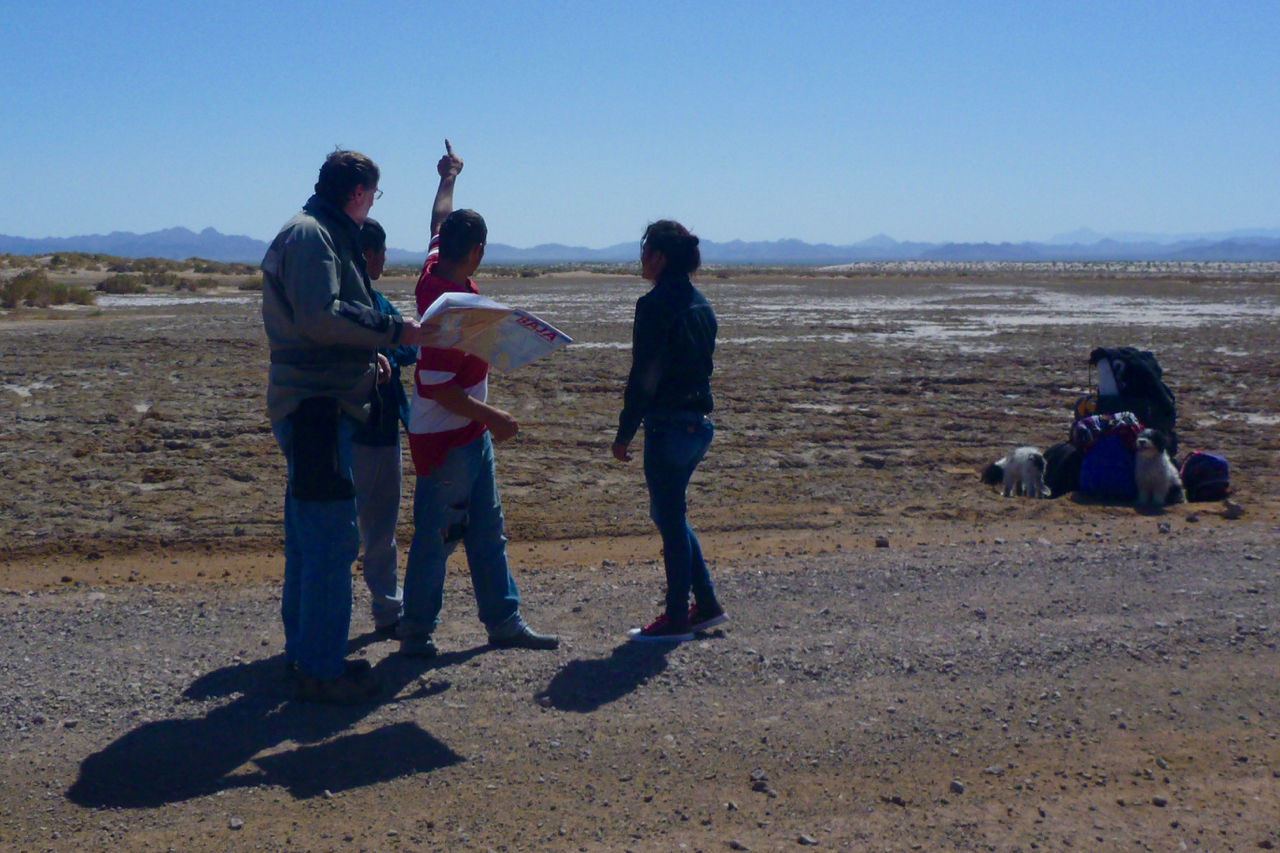
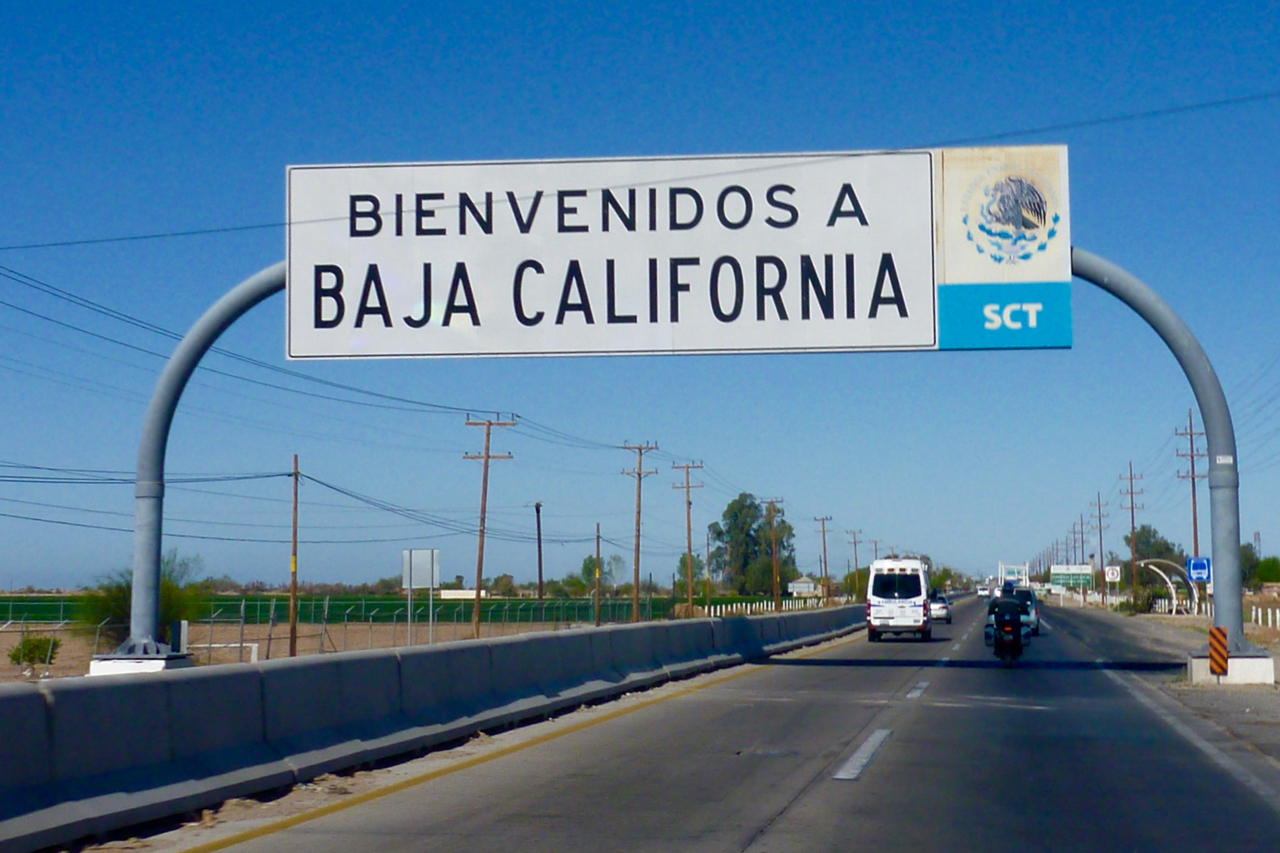
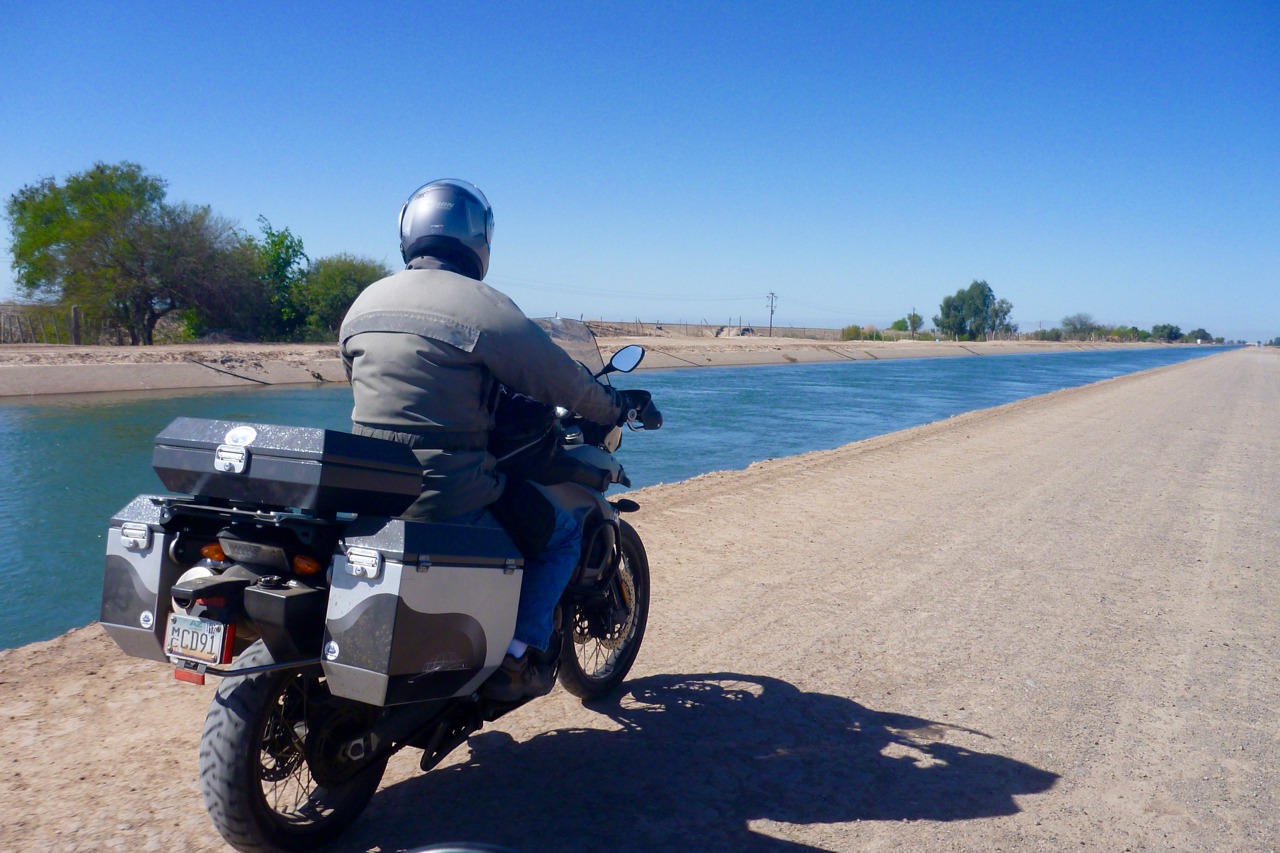
After Mohave I rode down to Baja with Al Jesse on his F800 for a couple of days, among other things, trying out some new budget cases. More or less, we crossed at San Luis and rode through the irrigated delta down to Gonzo Bay, back up to Mike’s and back.

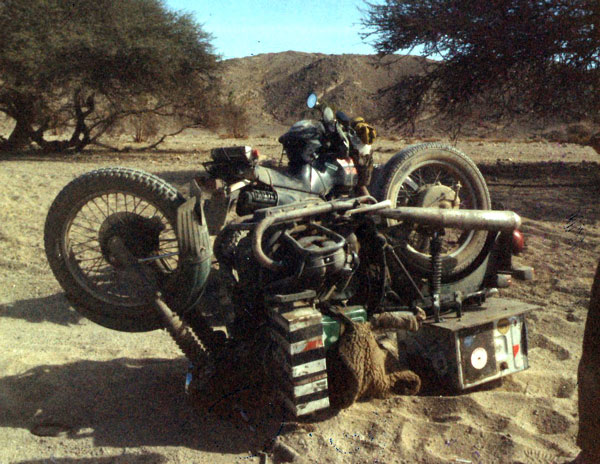
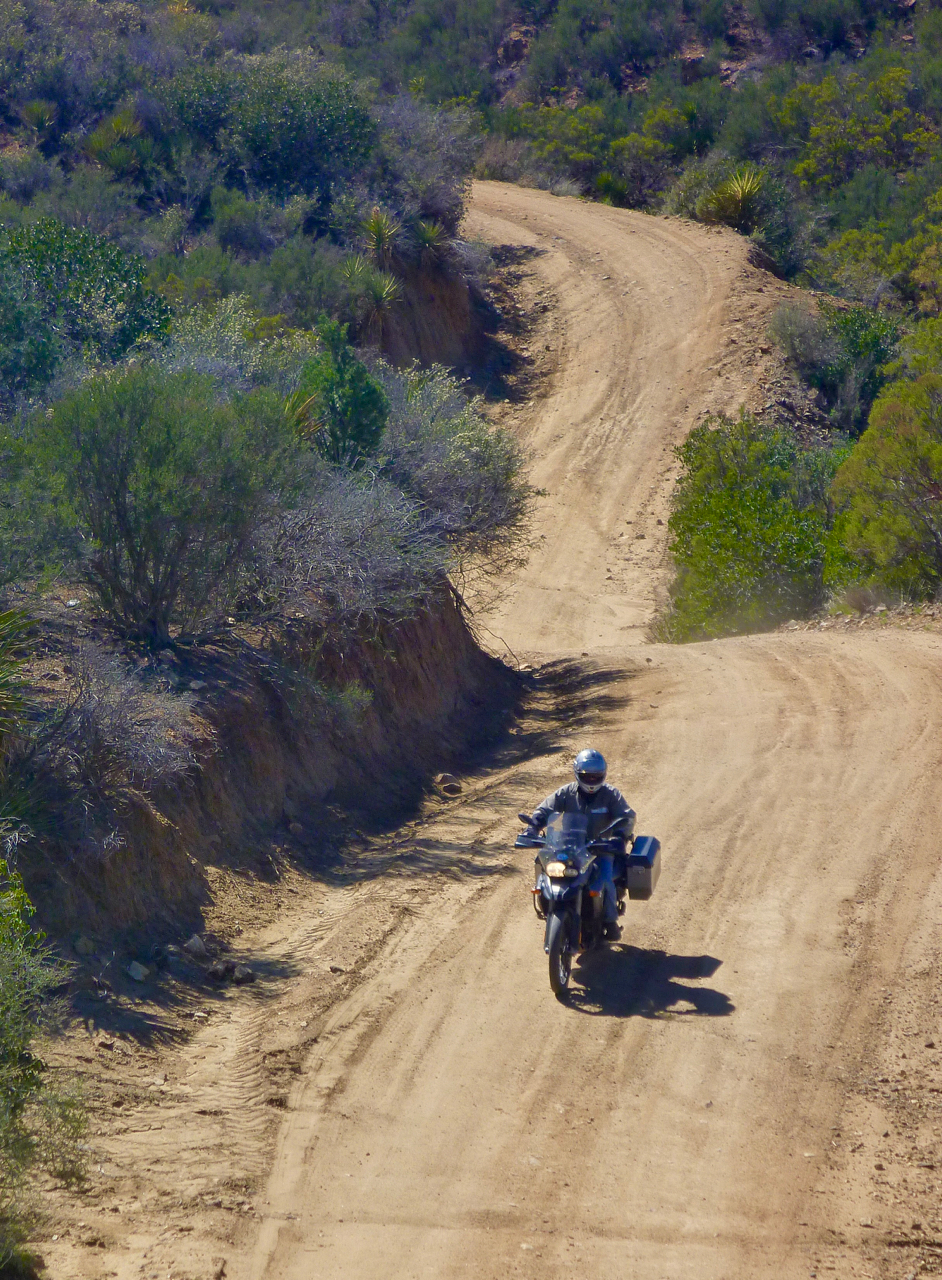
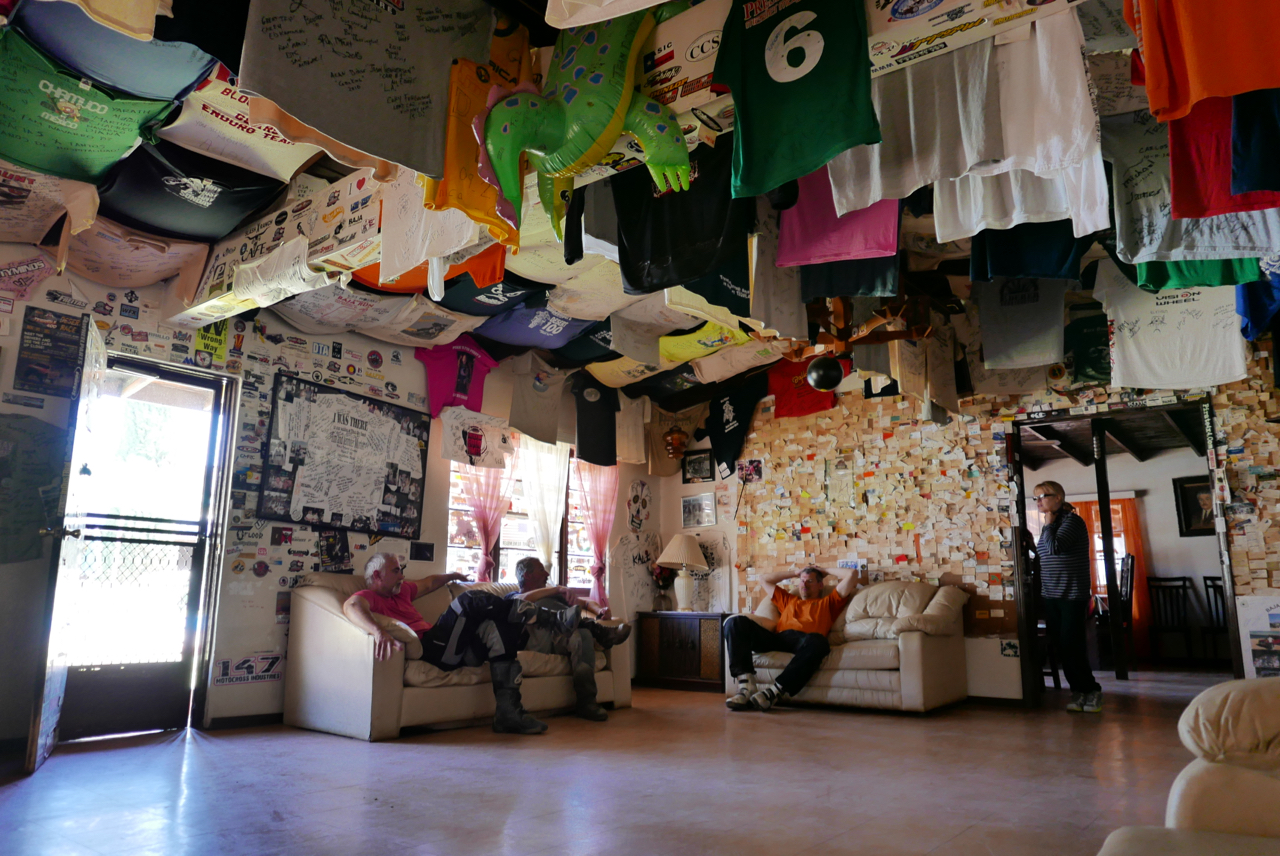
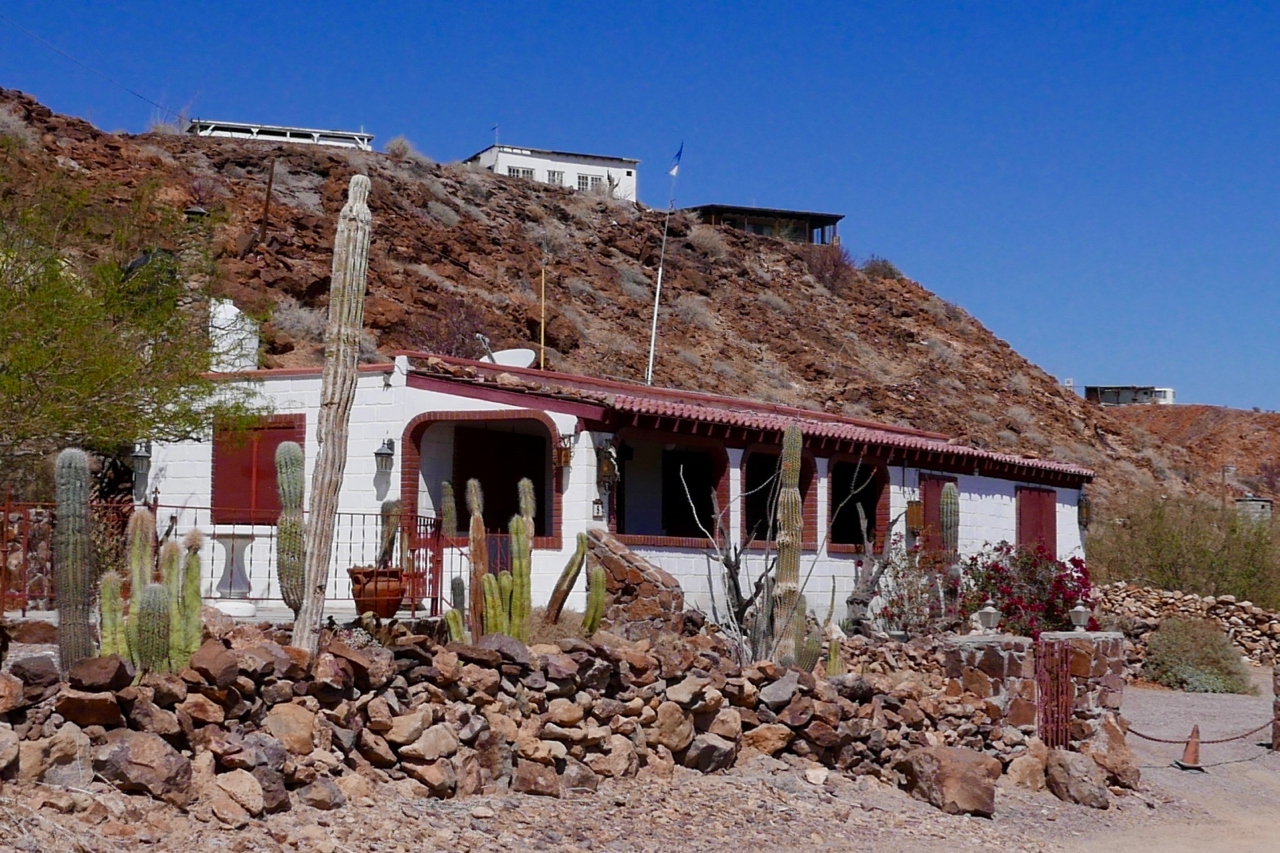
At Mike’s, some bikers rode up the regular way from the north, two-up on a KLR or F800. A fun, easy ride. And four GS12’s came in the hard way along El Coyote from the west. Eight miles took them some six hours. Three spent the night on the track and rolled in for breakfast. Pic on the right (from Rick Giroux) reminds me of my own USD BMW in Algeria’s Hoggar mountains in 1985. Two nights later the Sahara finished that bike off.

Mohave with KLX250S

• KLX250S main page
• Baja Gallery
• KLX – mountain and desert

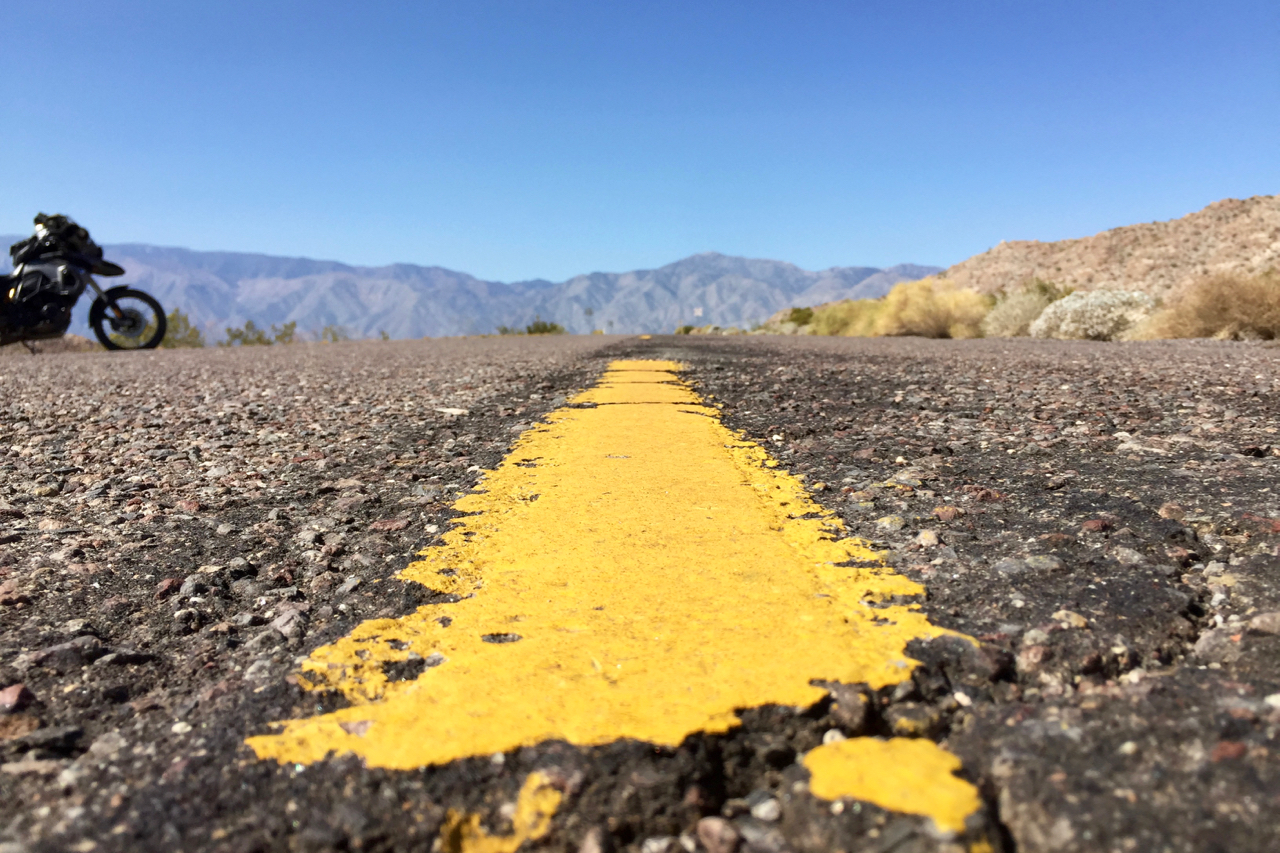
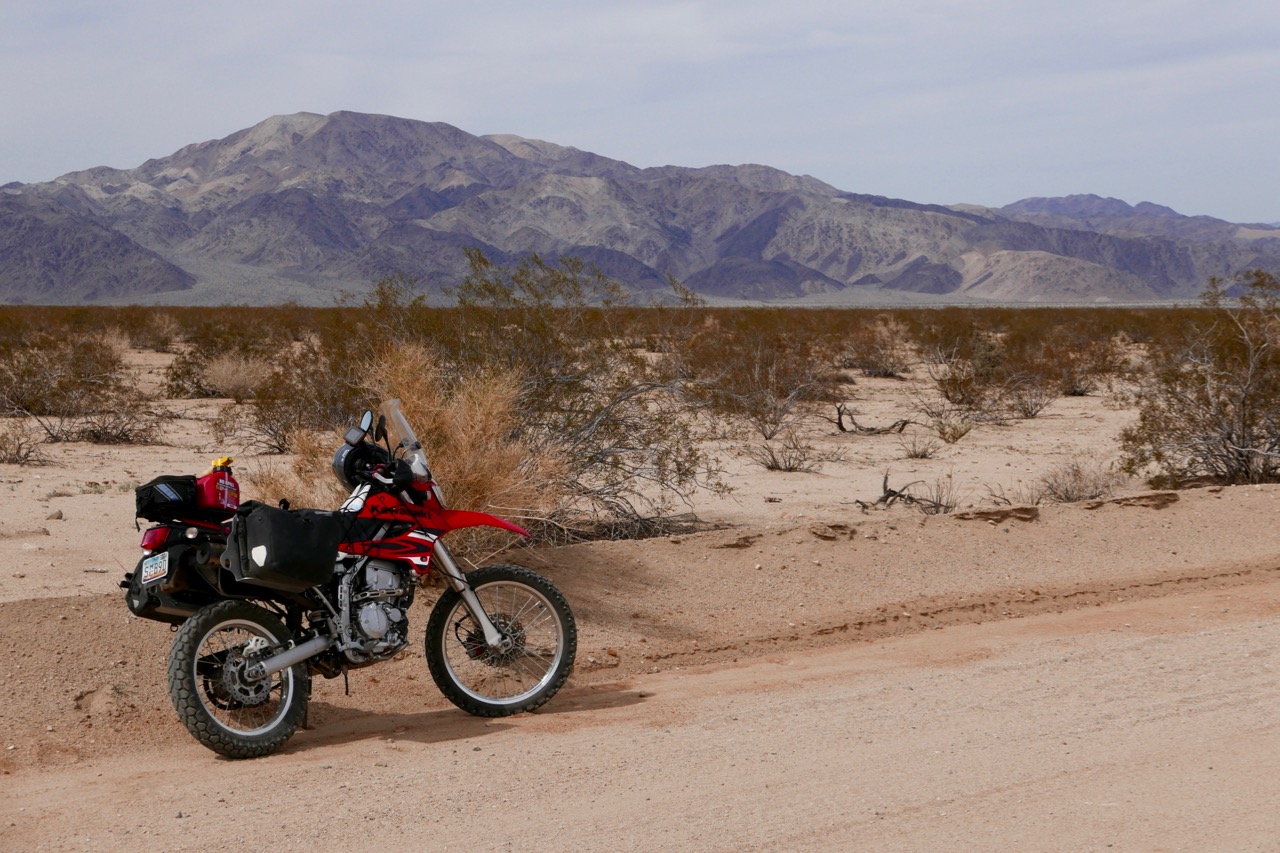
With the KLX set up, I took off for a few days. The plan was to explore the Mohave desert between the Arizona border and the Sierra Nevada. Along with Baja, this has been an unfulfilled biking destination for as long as I’ve been trail biking.

db70
mkbut

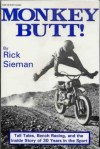
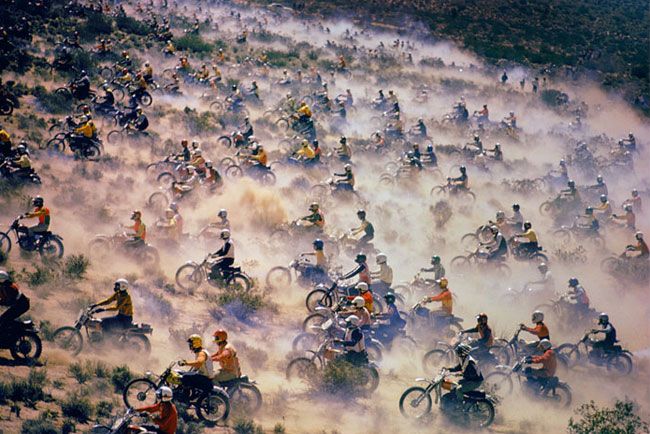
In the late 70s I gobbled up the seminal Dirt Bike magazine from cover to cover – and most of their riding was done out here, east of LA. DB founder and editor Rick Sieman wrote up his ‘Dirt Biking Years’ as Monkey Butt, the memoir of an increasingly bitter individual who saw his opportunities to gun across the Mohave scrublands slowly eroded by the rise of the Joshua Tree-hugging environmentalists. In the good years the iconic, non-competitive Barstow-Las Vegas run (‘B2V’, below) had a start line of some 3000 bikes spread out a mile wide. By the late 80s the B2V got outlawed by the BLM, Rick Sieman did time for protesting/trespassing then emigrated to Baja in disgust. But as the fully legal  LAB2V, a form of the event still survives.

bLA

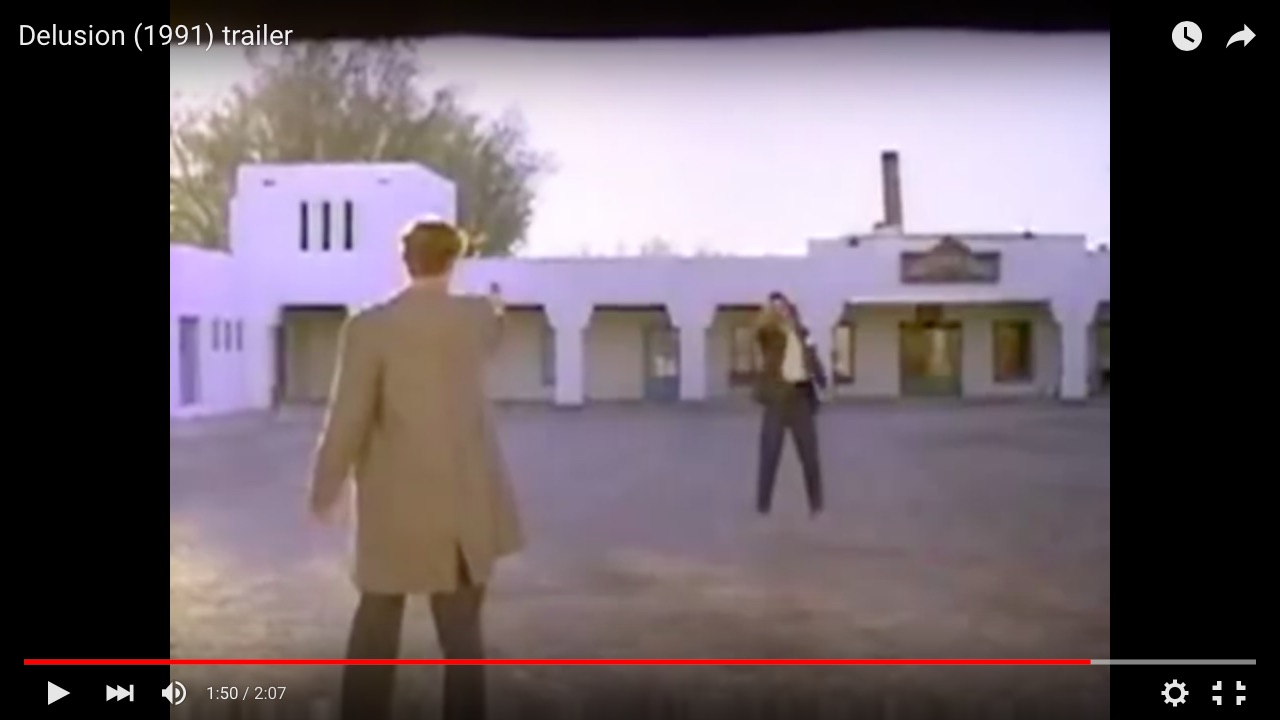
You don’t have to be an old fan of DB to recognise that besides low-flying Maicos, countless movies have also been shot out in the Mohave, a short distance from Hollywood. Time Rider (Back to the Future meets TT500 desert racer) will be known to many riders my age, but be it a zombie western, a road movie, teenage slasher or Mars on the cheap, the arid scrubby, mountain-rimmed playas east of LA have provided the space and landscapes to spin a yarn. In 1991 I well remember watching a B-grade road movie called Delusion with its climactic shoot-out outside a 1930s deco motel at Death Valley Junction (left). Death Valley Junction – what a great name. A few days later I rolled up right outside that very motel (and passed it again on this trip,now reopened). Your road trip becomes your road movie out here.

delusio


It may even go back even further than that. Childhood telly like The High Chaparral, BonanzaLost in Space, and movies like Planet of the Apes all included locations out here. If you’ve ever watched telly or seen a film, chances are the Mohave backdrops will be in your blood. Painting yourself green and wearing a salad bowl for a hat? Well, that’s just down to personal choice. Hell, we’re in California!

I left Phoenix on a hot afternoon (as the song goes), looking to get a couple of hours in. Destination: west. I-10 was obviously out on a 250, there was more fun to be had on 60 up to Wickenburg, then back southwest via Salome and up 72 to Parker on the Colorado river.
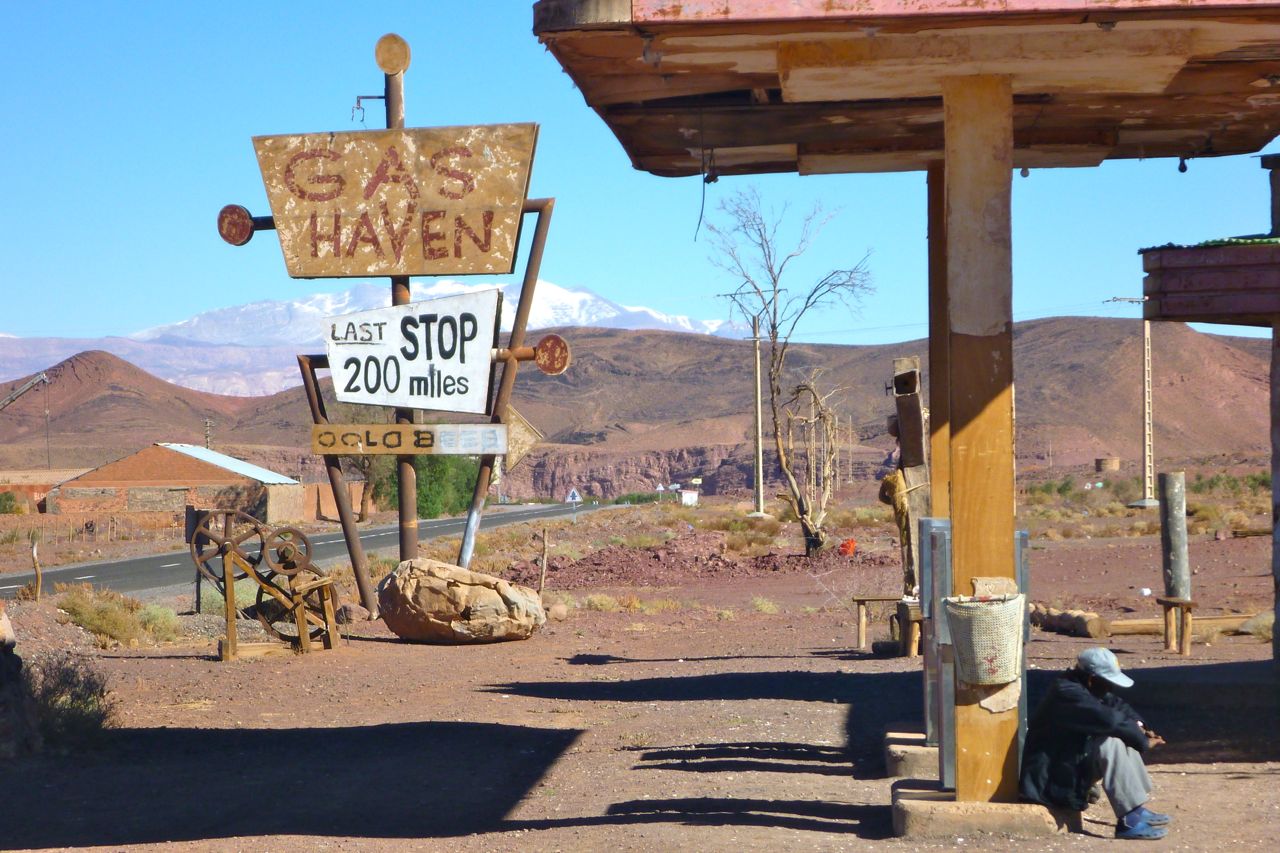
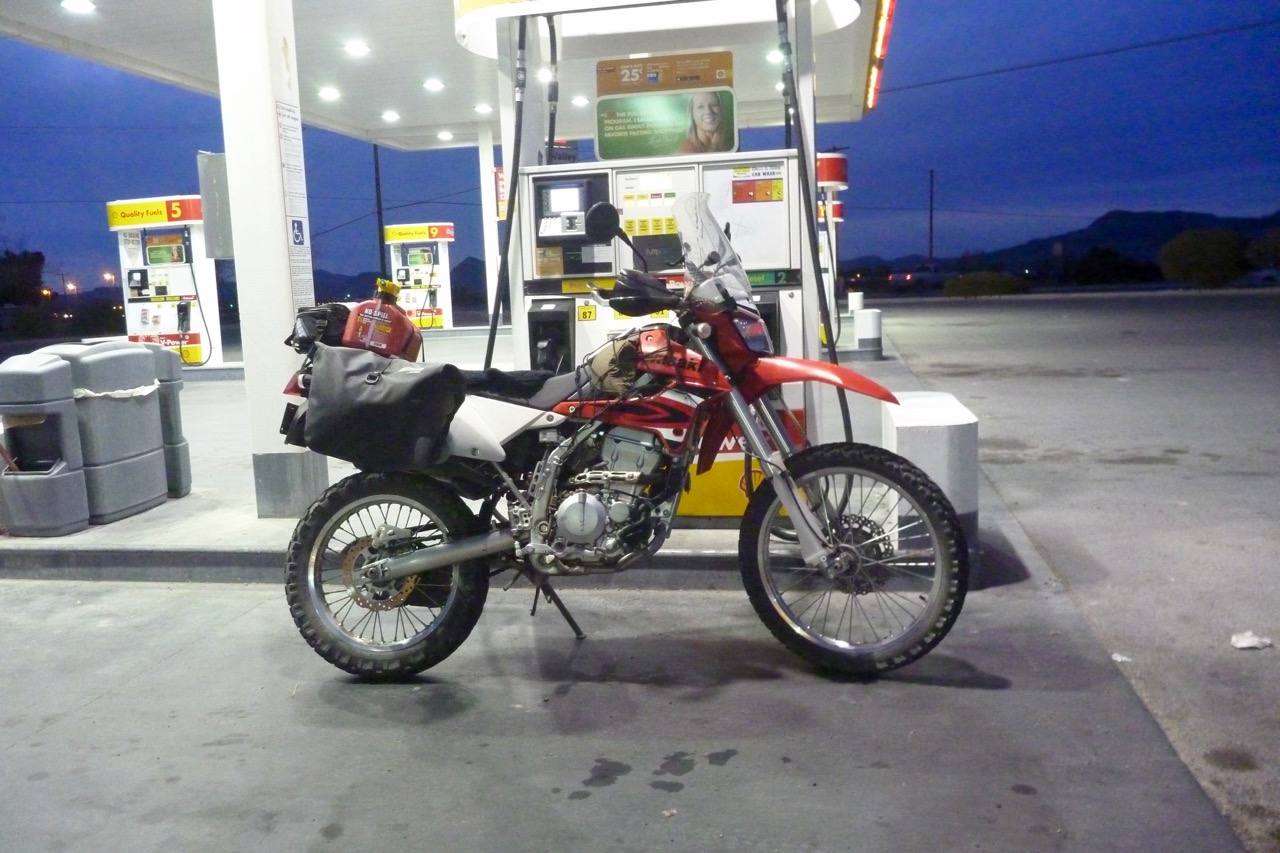
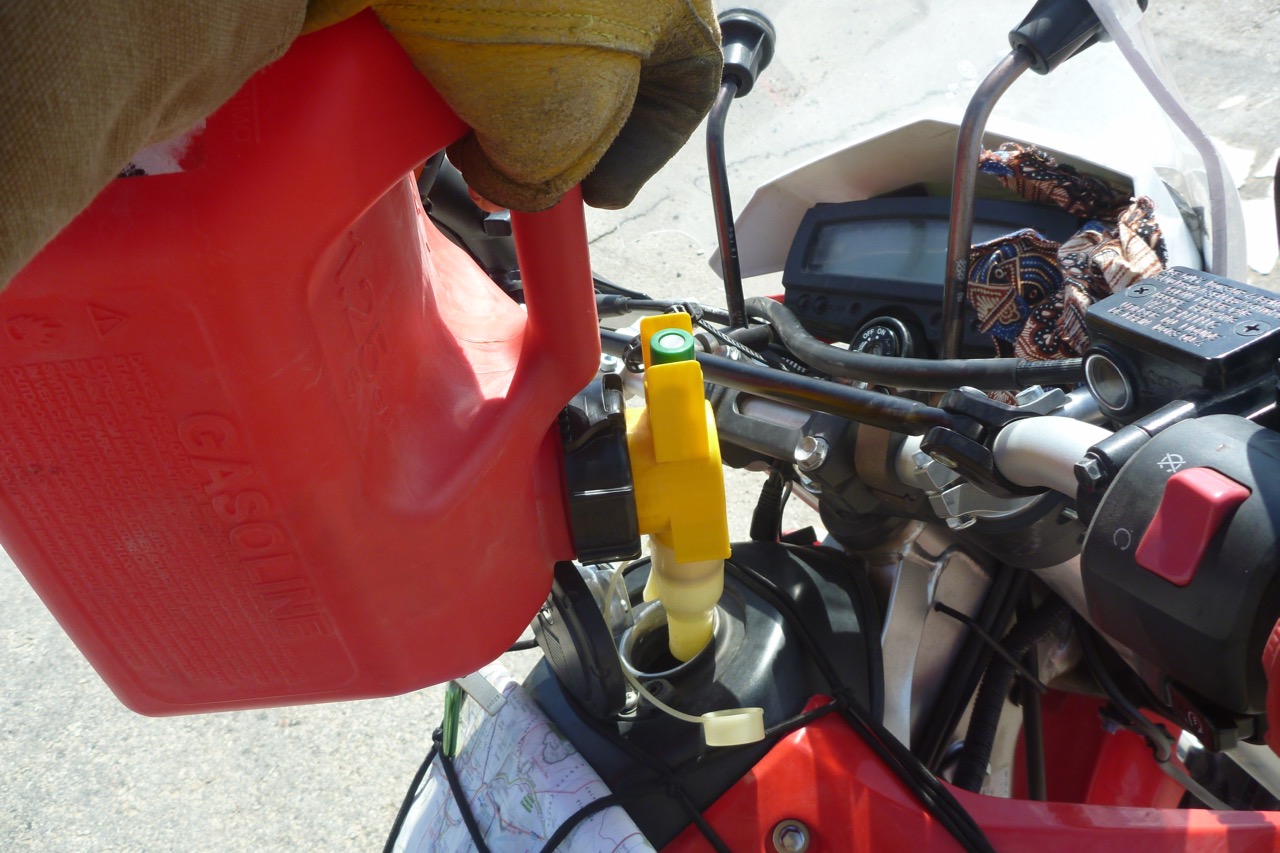
Just like last time on the CRF, my ingrained thrift saw me fill up on 87 fuel – they wouldn’t sell it if it was bad, right? Wrong. My new ride was soon running like an MZ on watered-down kerosene and hit reserve at only 88 miles, somewhere east of Salome. Still, getting off to top up the bike was a relief. I refilled at a ‘Gas Haven’ roadhouse – the one pictured above is an old Hills Have Eyes movie set in Morocco. You’ll find the real thing all over the Mohave and the Southwest.

mk3-02

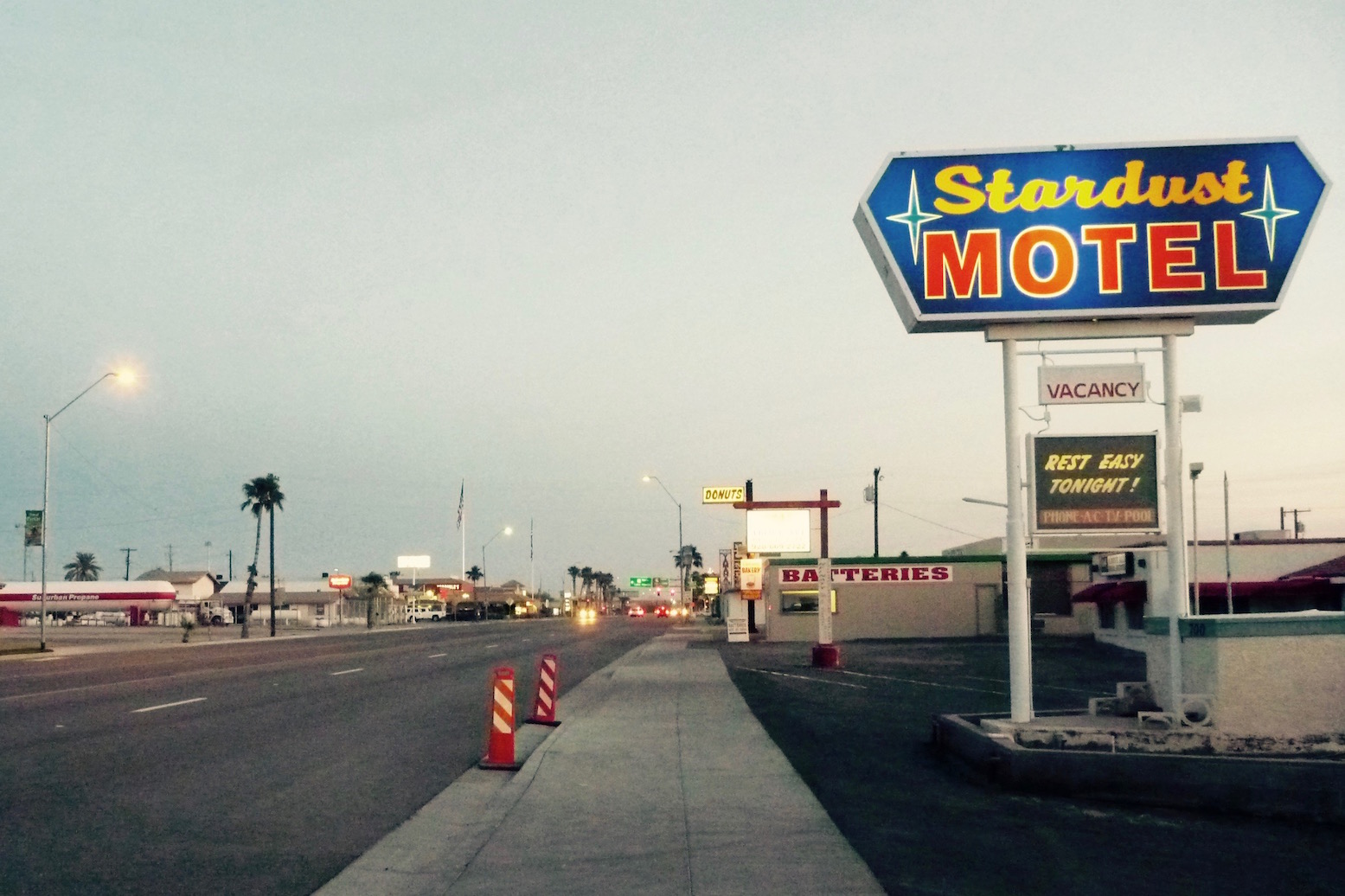
Rocking up in a small desert town like Parker can be as thrilling as an Iowa farmer marvelling at Piccadilly Circus. The bright neon signs glow against the inky sky, growling V8s and trucks roll through – it’s all Tom Waits needed in his prime.
The downside to all this road trip romance can be underwhelming food if you try to dodge the fattening fast food traps. Or even if you don’t.

park

Next day I hopped over the turbid Colorado river which will be sucked down to nothing by adjacent conurbations and irrigation in the next 200 miles. Barely a trickle will reach the Gulf of California.
Hereabouts names on the map can add up to nothing more than a scattering of ramshackle, sun-bleached trailer homes or shacks ringed with dead cars, washing machines and other scrap. Is it a town or just a loose collection of dwellings where a outcasts, loners, rogue chemists or desert lovers pitch up to live on their terms?

roadleg

Over late brekkie at Chiricao Summit on unavoidable I-10, the penny drops and I fill up with full-fat 93-grade gasoline with added maple syrup. Hey presto, the bike is running like it should. Next turn north leads into Joshua Tree NP, a cool sounding place where like the song doesn’t go, I may find what I’m looking for.

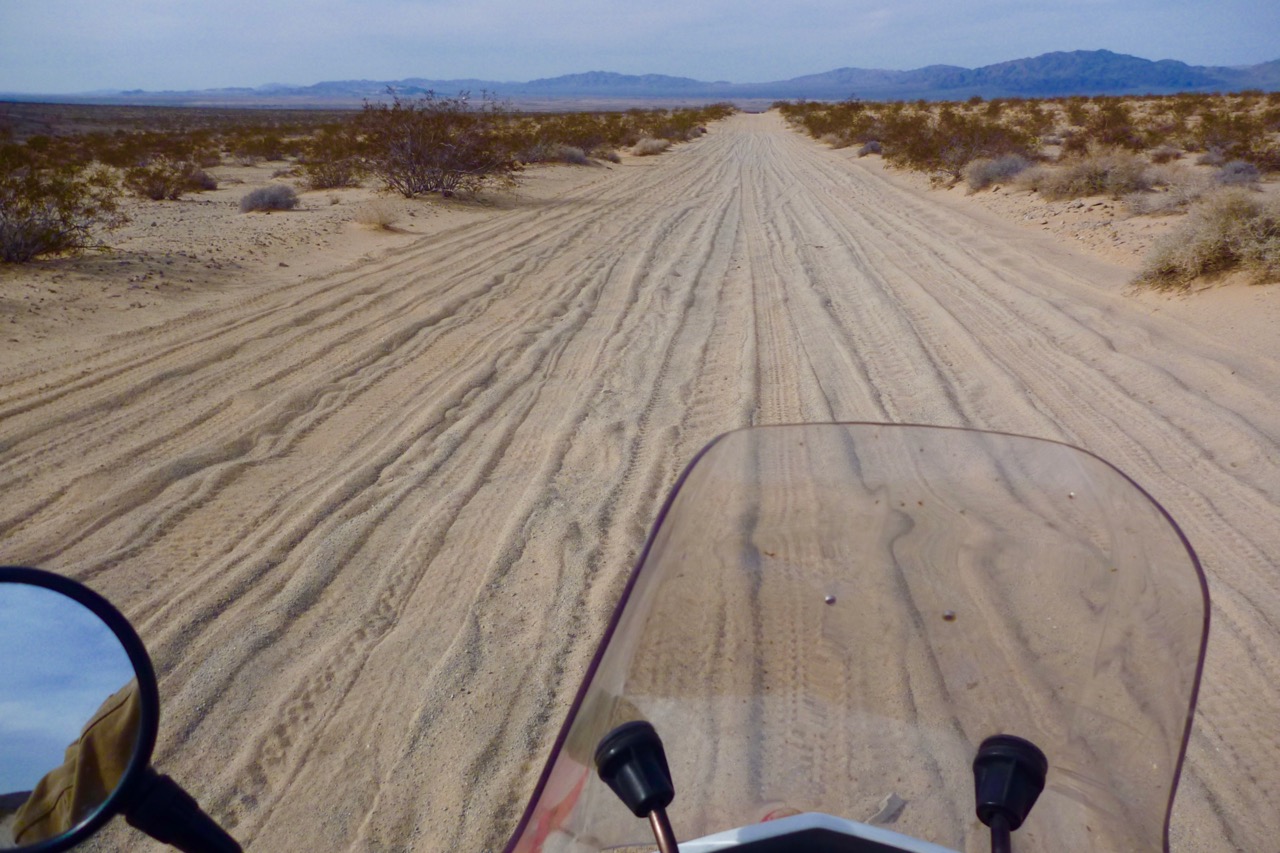
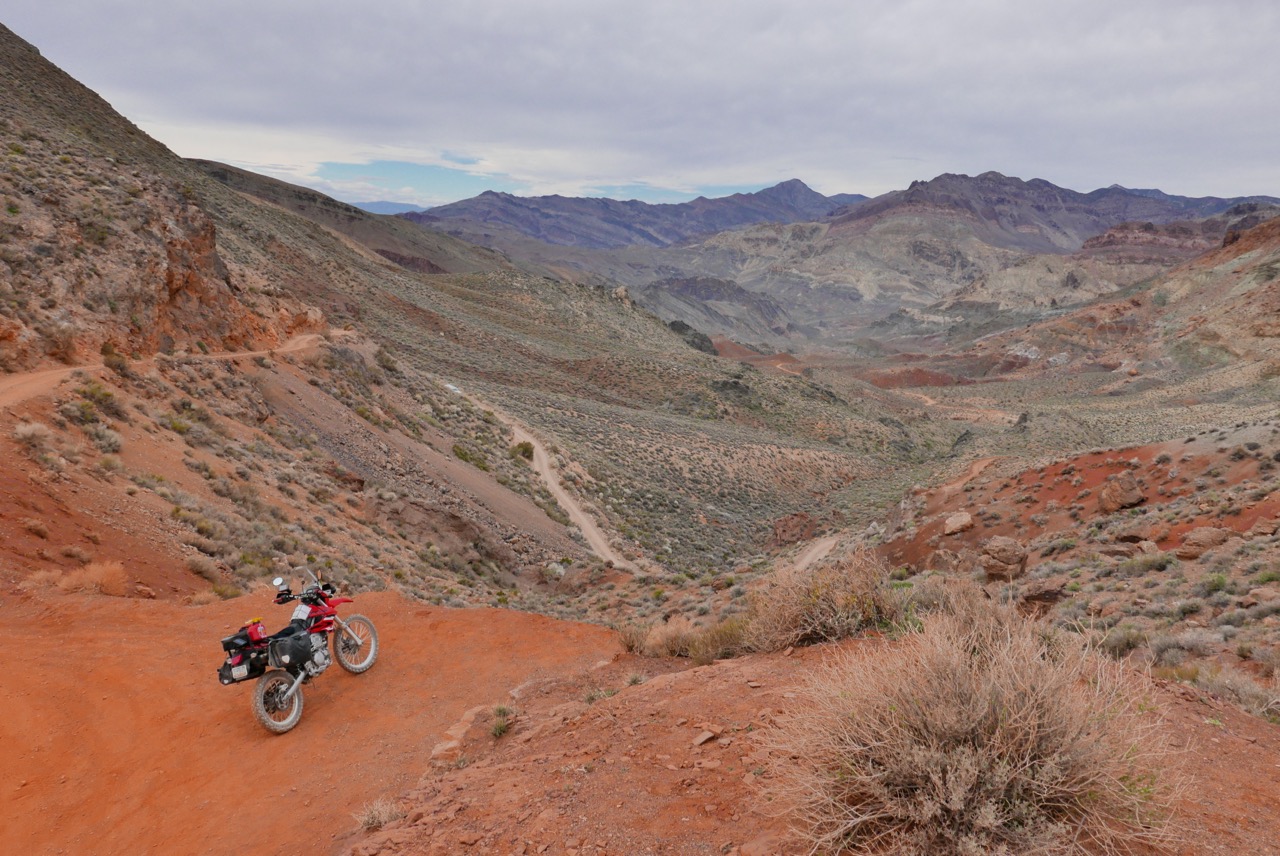
I’d downloaded a free Desert Southwest map for the Garmin Montana but seem to be missing out on juicy dirt roads – or I’m not reading it right (#2 it was). The NP paper map has more legible detail: Old Dale Road spins off the main drag and heads for the hills. ‘Four-wheel drive only’ it says – it’s even listed on DangerousRoads.Org – but after years of wheeling in western Australia I’ve become blasé to all that. Initially it’s a light sandy track and the KLX rattles over the washboard, front end surfing and wandering on its trail tyre. The backlight makes it hard to read the surface so I stop to air down a bit. It doesn’t make much difference but under 30mph the 140-kilo Kawa doesn’t have the momentum to flip out when it gets out of shape.

KLXX - 3

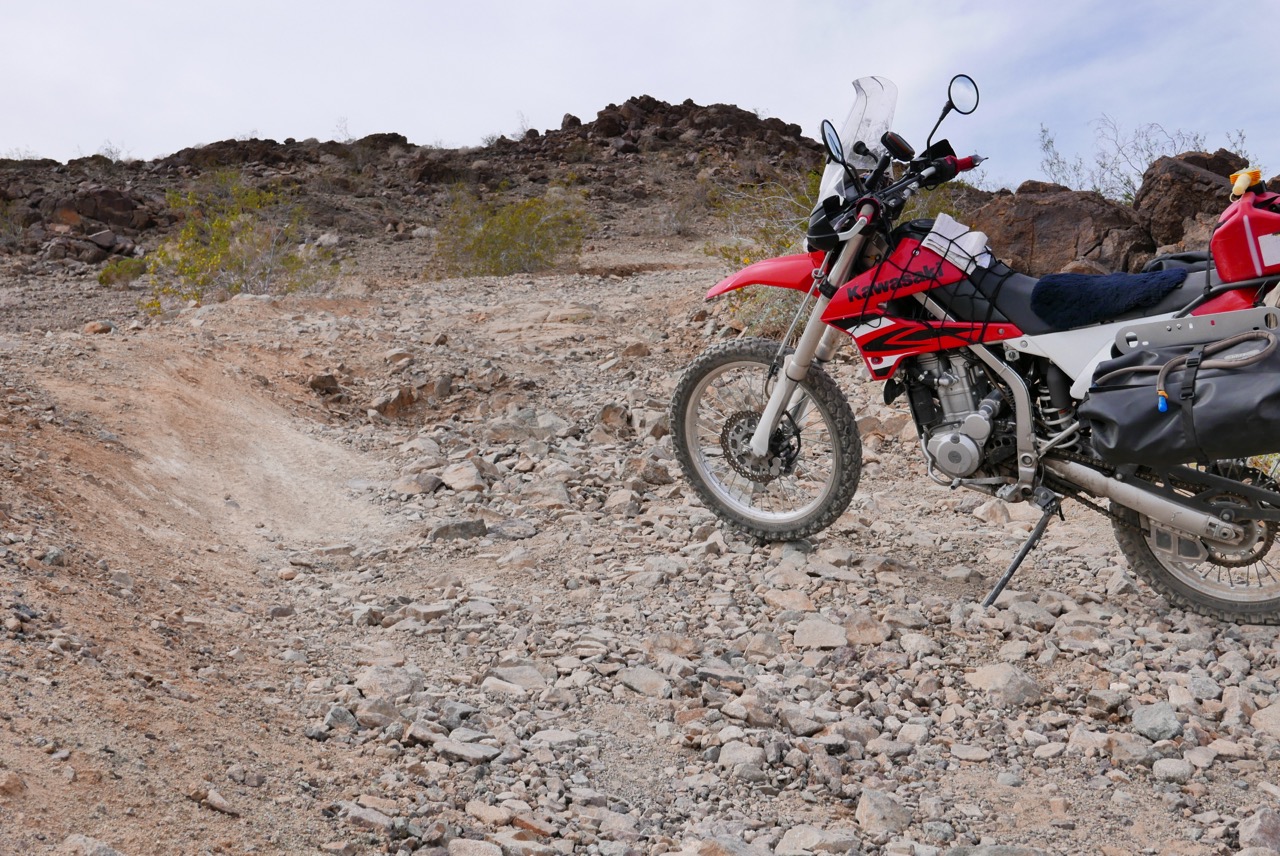
Then the track turned a corner and headed into the mountains and, yes sirree, you’d want a fourbie with clearance and low range up here – or be a GS pilot with steady nerves if on your own. On occasions it gets as gnarly as the gnarliest Moroccan tracks I do, requiring confident launches up or around rock steps and over loose piles of stones.
To my relief the KLX takes it all in its stride with its combination of harmless power, light weight and compliant suspension that all helps control the bike, not require fighting it. What a revelation; that’s what I was looking for.

KLXX - 5


Up on the heights other numbered but unmapped JT (Jeep Trail?) tracks branch off and my route isn’t always clear. Orientation has to be guessed off the broad-brush NP map with the help the Montana’s compass and a desert rider’s eye for what appears to be the most used trail.

KLXX - 8
lostin

Out of the hills and back on a broad sandy runway, the bike is handling much better now. It occurs to me the energetic workout has reformatted my reflexes in tune with the bike’s bucking and sliding. Well, that plus lower shadows are now across the track, raising the definition.
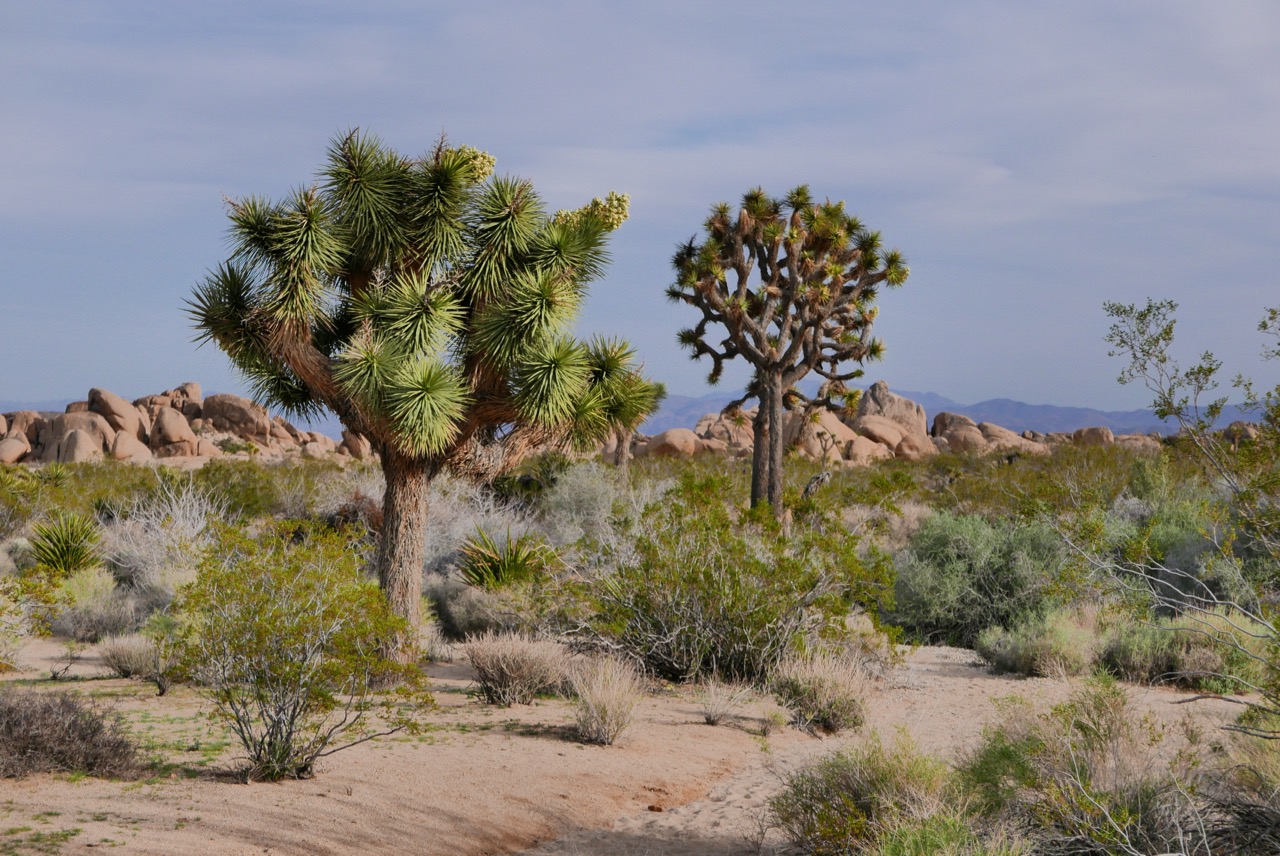
Back on the highway near Twentynine Palms, as the sun begins to drop I air up and scoot back into the north side of the park for the 4000-foot high scenic loop where all the J-Trees actually grow. Below, it could be the ‘Poison Forest’ episode straight out of Lost in Space where the green Siren lures in stranded argonauts.

KLXX - 10

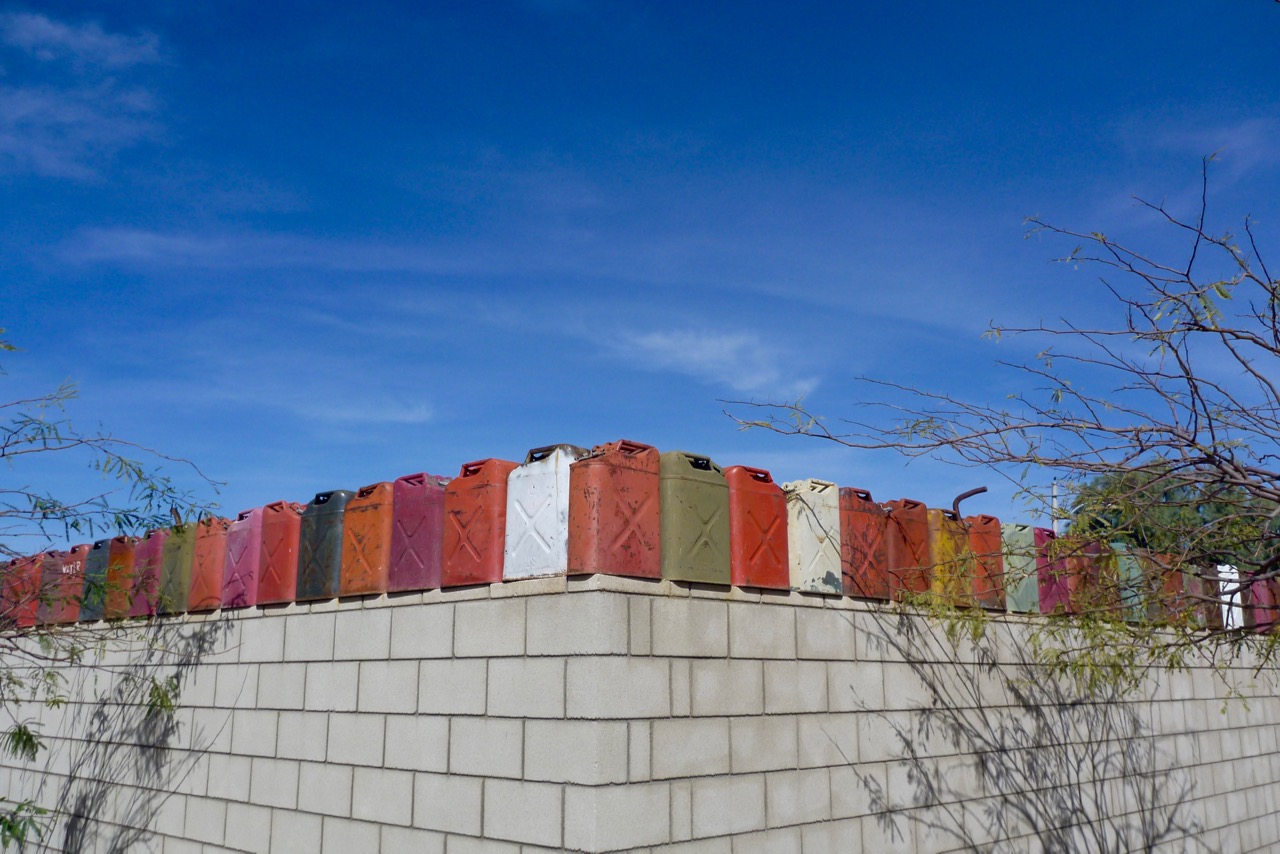
In Joshua Tree town the cheap-motel manager claims she’s ‘full’ but then relents and apologises for mistaking me for ‘a local’. I get this suspicion at other lodgings too – presumably highway-roaming two-wheel reprobates with swastika tattoos on their foreheads take the piss or cause trouble. Opposite the hotel the neighbouring compound had a colourful row of what I call ‘Ameri-Cans‘ capping the wall. Inside I try to watch TV for some added cultural immersion, but it’s a lost cause – you can literally channel hop from one commercial to the next.

KLXX - 13

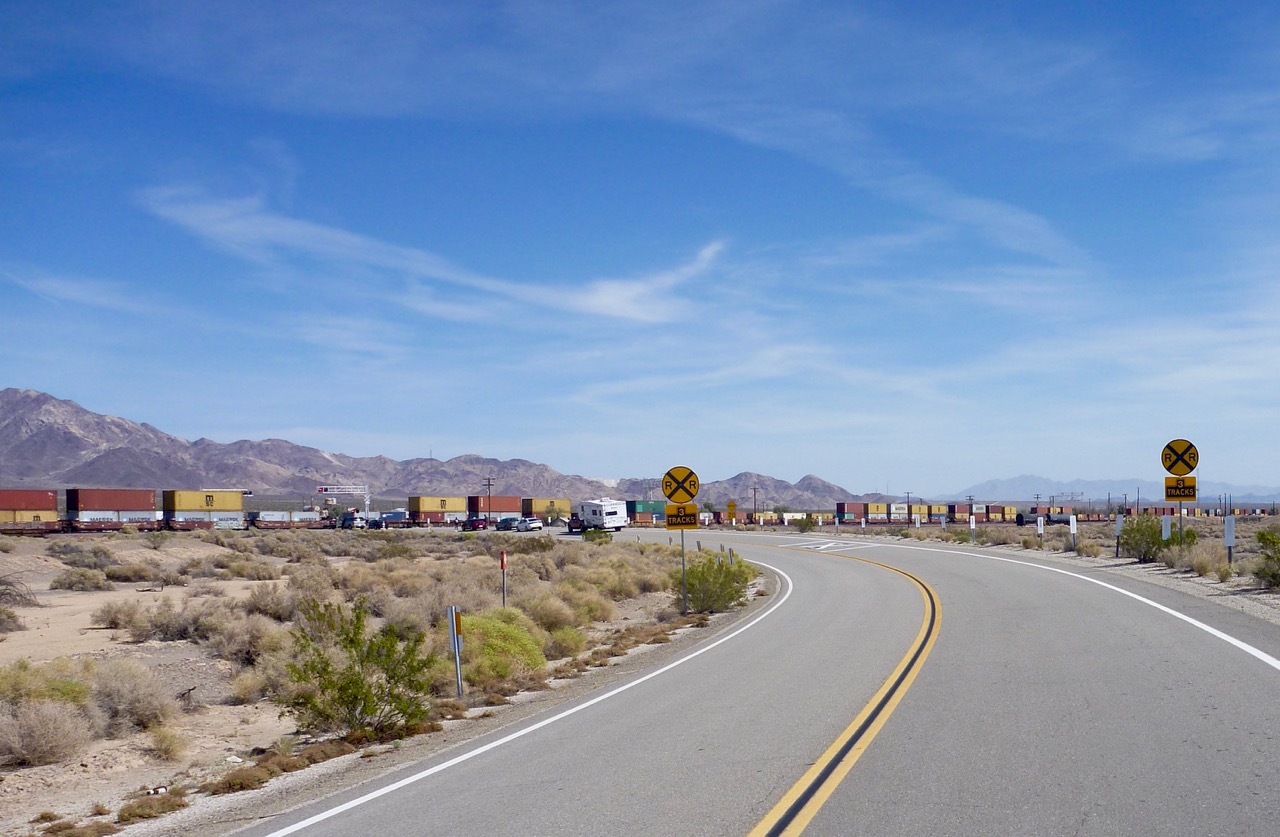
There are roads leading north up to Amboy and Kelso next day. I kind of hope they’ll be wide gravel dirt with shady borders, but will take what I get. Out of 29 Palms it’s actually deserted crumbling blacktop, like parts of old Route 66. There are a lot of east-west railroads round here, all converging on LA I presume. At Amboy, an old rail depot, we stop at a crossing to watch a mile-long BNSF train pulled and pushed by six locos. It’s a cue for another song and a ‘so-that’s-what-it-means’ explanation of its lyrics:

And the Burlington Northern’s pullin’ out of the world
With a head full of bourbon and a dream in the straw
And a Gun Street Girl was the cause of it all
A Gun Street girl was the cause of it all

KLXX - 14

Amboy has an old roadhouse motel near a former Chloride mine –  another authentic ‘gas haven’ with five-dollar fuel, no coffee and milling tourists. ‘Icy’ warns a sign on the next turn, but not today. Up top I follow a track to a grassy clearing and eat, read and doze, then head down the north slope with dunes on the horizon.

KLXX - 16


Kelso – another railroad ghost-depot. I’m wanting northeast for some intriguing backroads into Death Valley, but have to choose west for Baker and fuel (‘He was pulling into Baker on a New Year’s Eve – One eye on a pistol and the other on the door). My paper map seems unreliable, my GPS map has no key of course (but if I zoom right in dirt roads are there) and the Garmin World Base Map is – err – basic in outback California.
With a can on the back, to pass the time I decide to run the bike dry: only 125 miles but 88mpg (73US). Not bad I suppose. I snatch a few extra miles by coasting to Baker, enjoying the cycle-speed breeze. I’m not achieving a lot today, but no one’s watching.

KLXX - 20
KLXX - 19

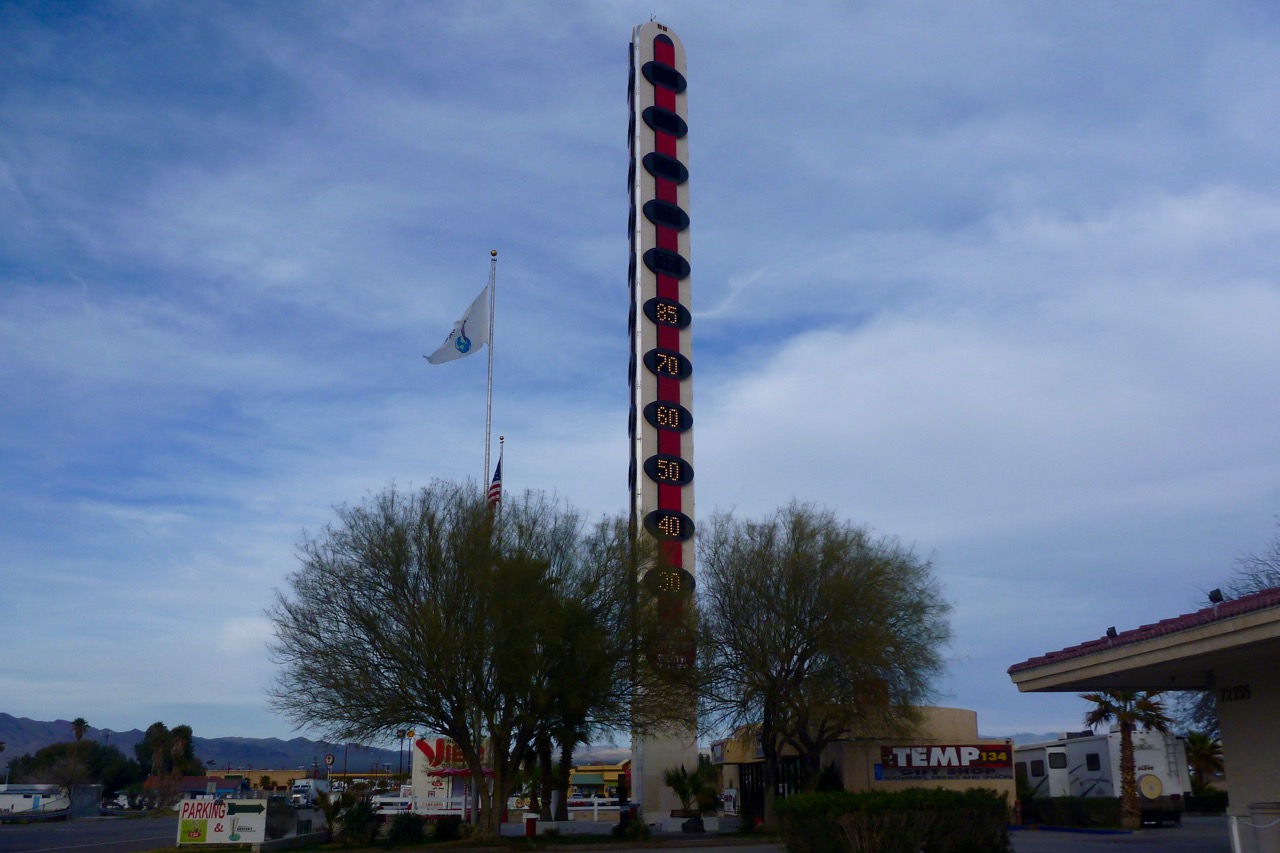
Baker is alongside I-15 and its famous Pole of Temperature (left) is reading 85°F, but by the weekend the weather is set to turn. Storm off the Pacific, wind and rain by Sunday they say.
Baker’s too close to the interstate to invite an early cut, but up the road in Shoshone there’s no room at the village inn. ‘Pahrump is your nearest bet, honey’. Another 30 miles and it’s nighttime in Nevada. Fill up at the servo – it’s all I ever seem to do. ‘Motels? Right at the lights’. Once installed, I whizz back to casino-lined downtown helmet-less for my bi-annual BK. Is Nevada helmet-free? Probably.

Today I know exactly where I’m going. Up to Beatty for the Titus Canyon track which  sneaks into Death Valley from the east. Other all-terrain recreationists are out in force today. I realise later I could’ve cut through Ash Meadows on the way to Beatty for a bit of dirt relief, had I studied the Southwest GPS map more closely last night on Base Camp. But out here there are no bad route finding decisions. Smooth dirt or broken asphalt, spin a bottle; it’s all good.

KLXX - 23

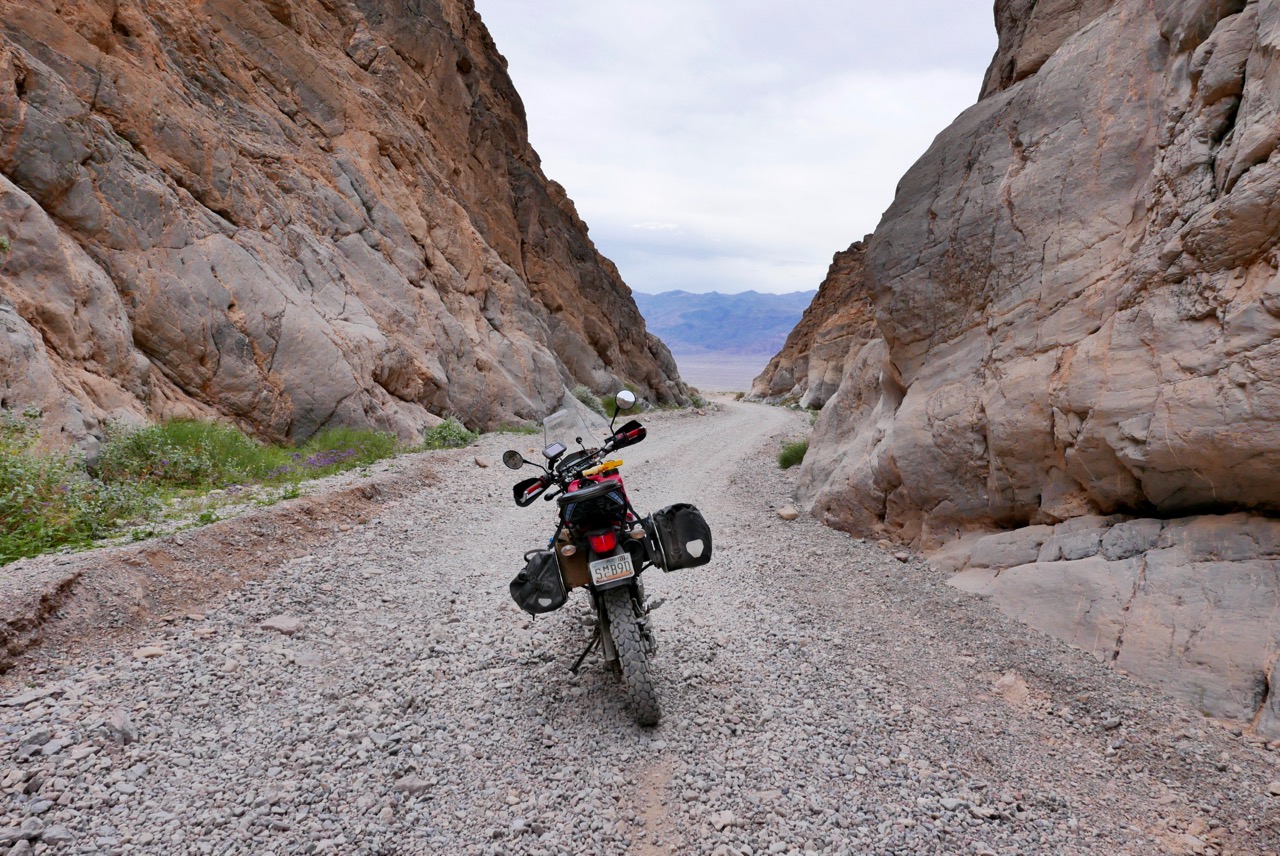
Titus is even better than I recall – a classic one-way route which, after an initial washboard approach, winds up to a high pass from where I’m able to switch off and coast almost right to the canyon mouth, peering across the arid pans of Death Valley. Without the engine distracting you, riding the KLX is like being on an oversized mountain bike, you can focus on the lines and body position while slipping silently past lumbering 4x4s.

KLXX - 25

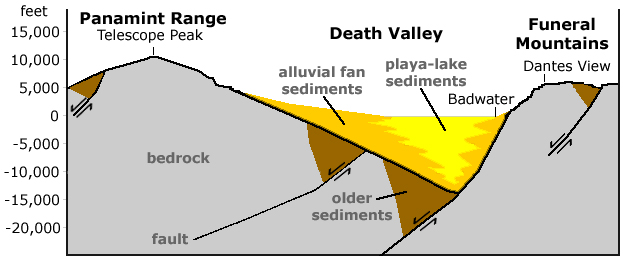
It’s Saturday and even though it’s overcast the word is out: rare wildflowers are blooming following winter rains and the park is packed with petal spotters. I don’t suppose I’m the first person to wonder how this basin can be below sea level so far inland and not eventually fill up with debris from millennia of run-off. The visitor centre puts me straight: tectonics tilt blocks like fallen dominos, the low points happen to be below sea level. Then three tall ranges of Sierra Nevada create a Triple A rain shadow – no moisture reaches DV. Add the glaring radiation bouncing heat up against heat, and what drops may fall won’t even hit the ground so there’s never enough flash flooding and erosion to fill up the valley. Or not for a long time yet.

death_valley
KLXX - 27

I should have booked a hotel – I forgot Saturday’s get busy near big national parks. Back at Death Valley Junction the colonnaded Amargosa Hotel looks great inside the lobby, but with that sort of historical ambience it’s as full as a visitors’ centre car park.
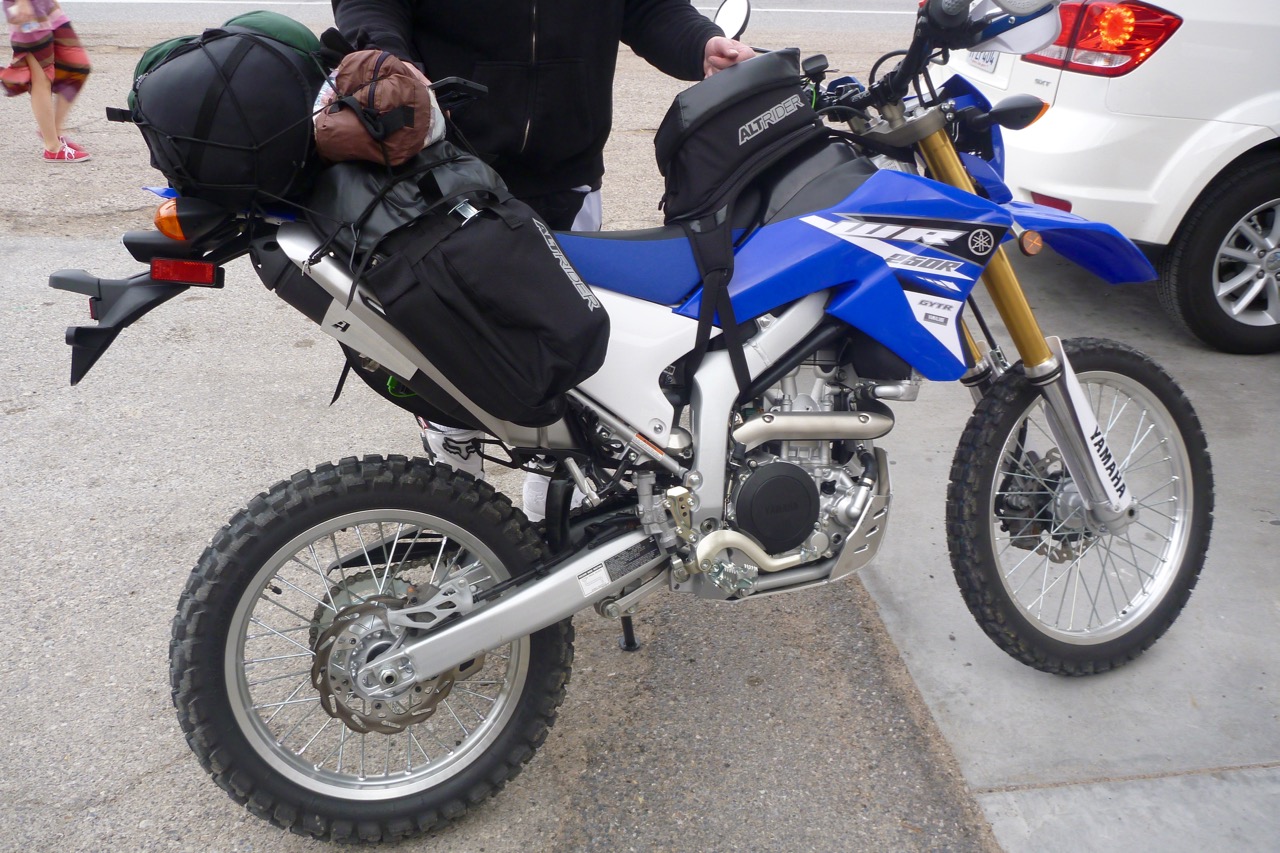
Jeez, is that the time? Must be overdue for a fill up again in Shoshone at more than double the usual price. There’s a WR250R doing the same. Turns out the guy picked it up only yesterday for $7k, equipped. I’m looking for one of these for an upcoming Sahara trip where anything heavier will be a liability – at least at my age. Nice to see a fresh WR in the flesh – a good omen I tell him. Triple clamps off a JCB, they make 30-odd hp, do 70 to Her Majesty’s gallon but don’t require WR-F-like levels of care. Or so they say. The guy is usually a Victory cruiser (like half US riders, it seems), but wants to explore the dirt side. Good on him, I say.

KLXX - 29

I try Tecopa Hot Springs, surrounded by a grubby, salt-caked wasteland, but it’s full of orange people swanning around in sarongs, and has no cabins to spare. My paper map shows a track / road heading southeast from here back to I-15. It’s getting late but could be fun. I try to follow it past the date farm but the orientation looks off. Later on, Google and Base Camp showed no link, but with a cig-packet sized screen it’s hard to work all this out on the move with seven-pound specs. Next time I’ll carry big-arsed Delorme/Benchmark road atlases, like I did on the CRF trip. Until they can beam out hologram screens, handy-sized GPS units just can’t give you the full picture. So it’s back to Baker under glowering skies and spots of warm rain.

KLXX - 12

I’m resigned to dosing in an abandoned trailer or gas station, but Baker turns out to be less popular than I thought. At the motel he accepts cash and drops a card deposit as I’m ‘not a local’. Baker seems to have every brand of fast food going, apart from the Greek place. Over the road a waitress squeezes me out a Mexican meal from a big tube.

KLXX - 31

Next day many people warn me of the strong winds, but apart from a few side sweeps, all it did was slow the KLX down to 49mph in places. I try to plan a route using the backwind and avoiding interstates, but at times there’s no getting away from either. The deserted Nipton Road (old cafe sadly dormant) leads me back past joshua trees into NV and a fat brekkie at Terrible’s Roadhouse in Searchlight. Then it’s back over the Colorado and another refill in Golden Shores to follow windy and windy old 66 via kitschy Oatman where the weekend hoards are lapping up the whole gun-slingin’, gold-pannin’, bar-fightin’ sideshow.

KLXX - 30

Near Kingman dust storms are hurtling around the valley looking for something to blow over. East along 1-40 I am sailing but turning south onto 93 it’s largely in my face and when it’s one lane I sense the tailback’s trigger fingers getting itchy. It’s the occasional price you pay for riding a 250. It rains a bit but I dry off even quicker and ease into Wickenburg on fumes.
The day turns into a tiring 9-hour, 350-mile haul of wind-surfing with the butt clearly getting acclimatised to the KLX perch. All up not so bad on a weedy 250. Must be high time to tank up.

Baja Galleria

KLXX - 34

Quick spin • Africa Twin DCT review

See also:
Honda X-ADV
Yamaha XT700 Tenere
Honda NC750X DCT
BMW F750GS
In 2020 I bought myself a manual AT
at1

There’s one problem with marrying Honda’s ‘have your cake and eat it’ DCT transmission with their 270°-crank parallel-twin engine: you can’t dip the clutch and blip the throttle for the sheer fun of unleashing the motor’s V-twin-like growl.

dctct

As for the other 999 reasons, after less than an hour’s riding I can see why this third generation of Honda’s sophisticated electro-hydraulic Dual Clutch Transmission system (baffling image right, baffling video below) is expected to outsell manual ATs. They say last year, of the Hondas sold with optional DCT (VFR1200X, Crosstourer, VFR1200F, NC750X and -S), less than half were manuals.

at2.jpg
at-old
Honda-VaraderoXL1000V

I’ve not read the recent rush of road tests to glean the impression, but Honda’s prolonged promo campaign for the Africa Twin appears to have paid off. Their nostalgia-tinted hype in reviving the rugged spirit of the original 1980s Africa Twin (right) conveniently skips the similar XL1000V Varadero (left) which sold in the UK till about 2011 and now goes used from two grand. That seems to be a bike which most actual owners recall far more fondly than reviewers or pundits, and is what Honda have succeeded in comprehensively eclipsing with the new AT – not the original AT which is from another era. Good technical article on the AT.

at9
at7

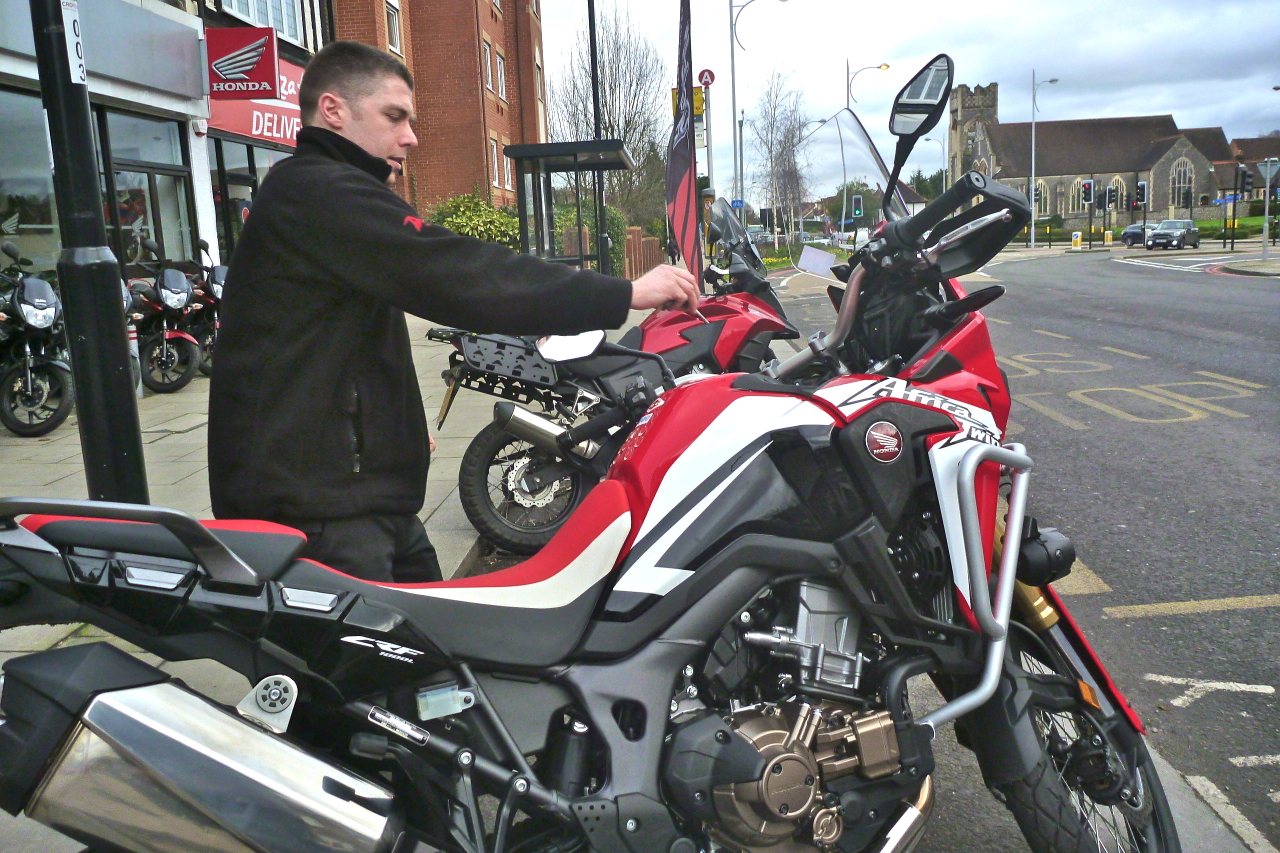
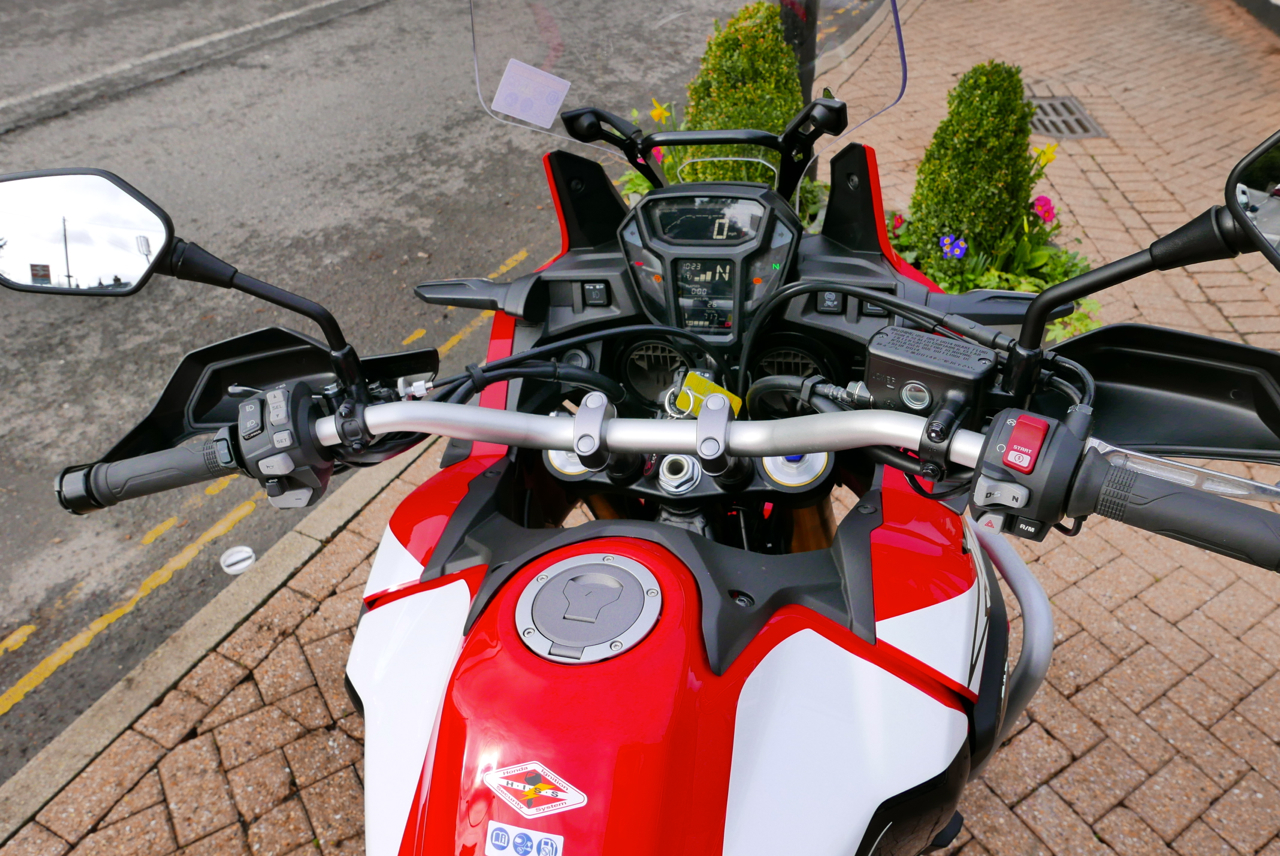
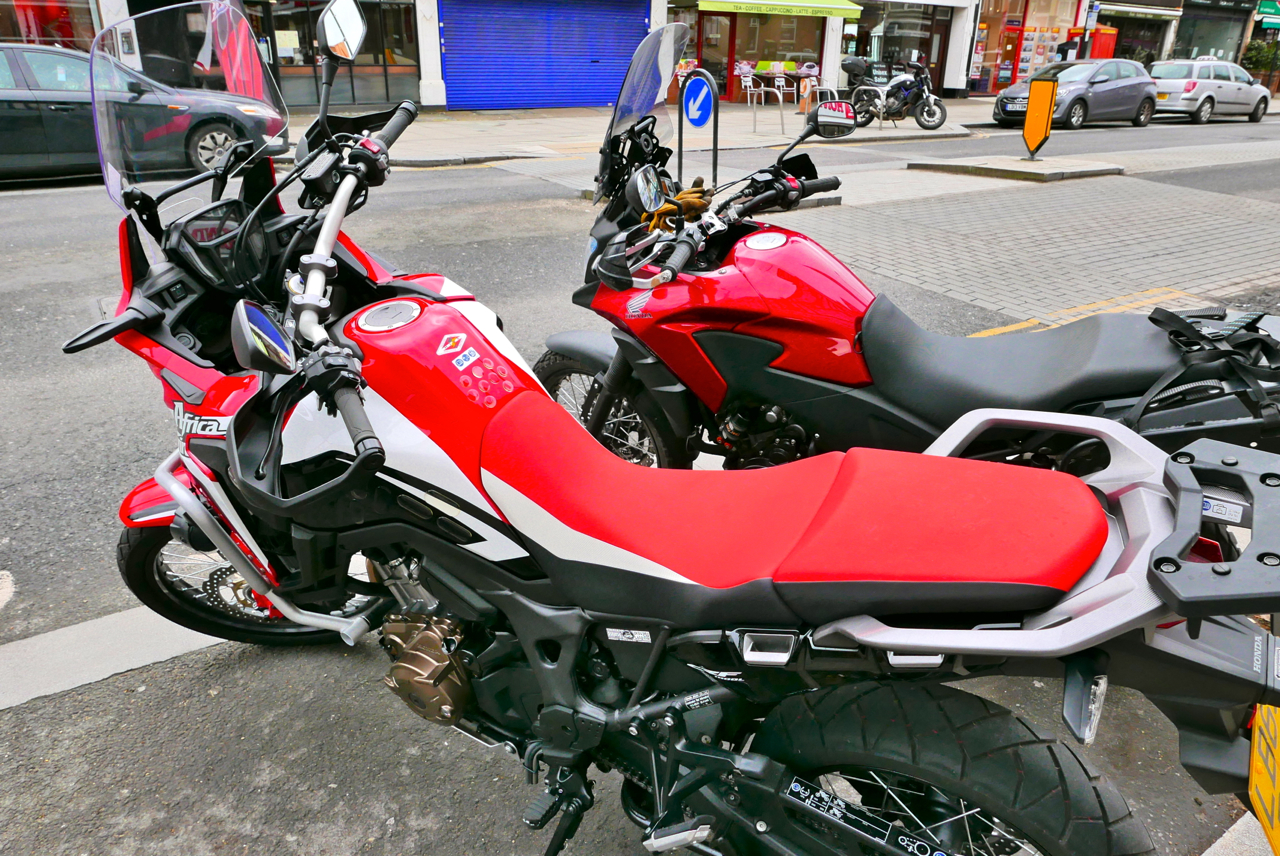
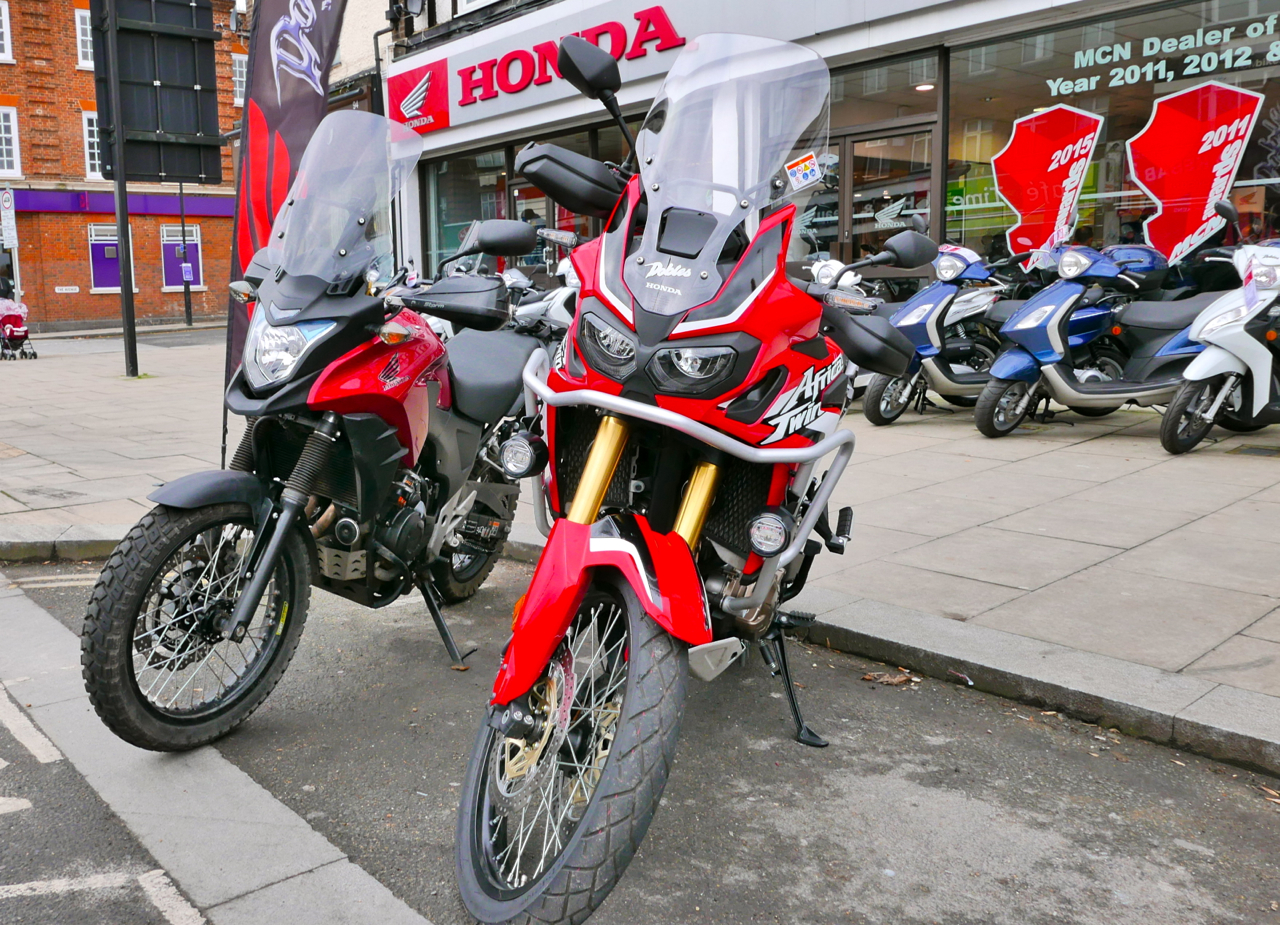
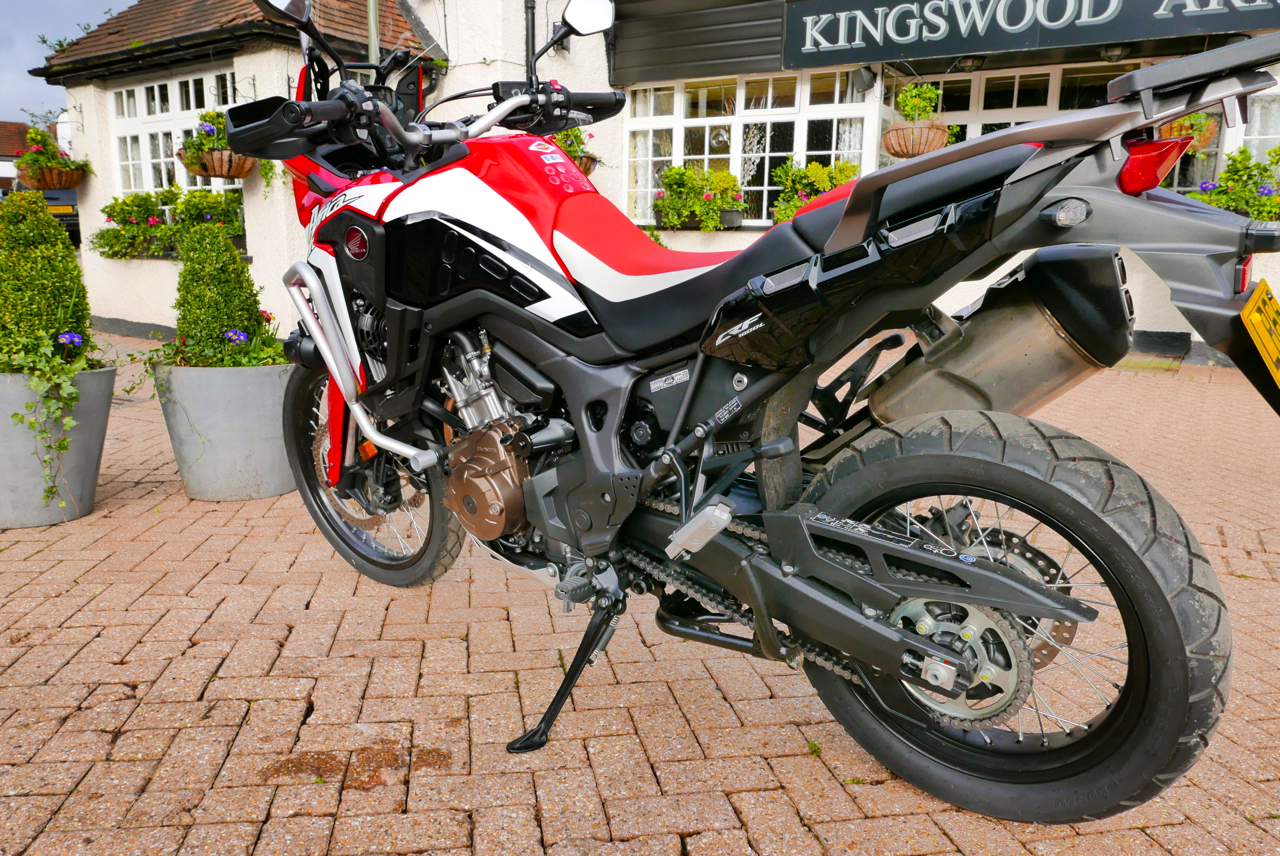
The test bike I tried was fully optioned: luggage racks (hideous topbox removed on request), crash bars, spots, centre stand, taller screen. Maybe the hot grips were extras too.
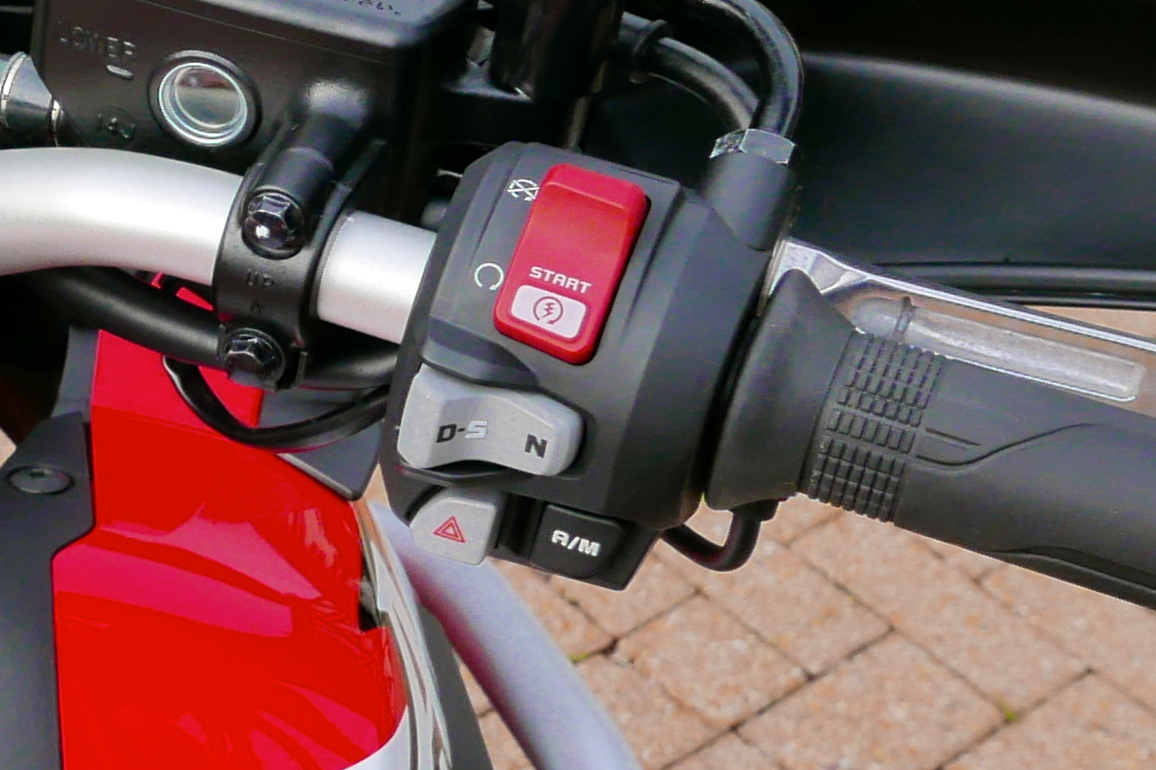
Outside the shop the dealer explained how the DCT works. On the right bar you have a rocker switch (below left) marked Neutral; Drive and – on this latest DCT – three Sport settings. Once the stand is up you press D, open the throttle and glide away like a scooter.
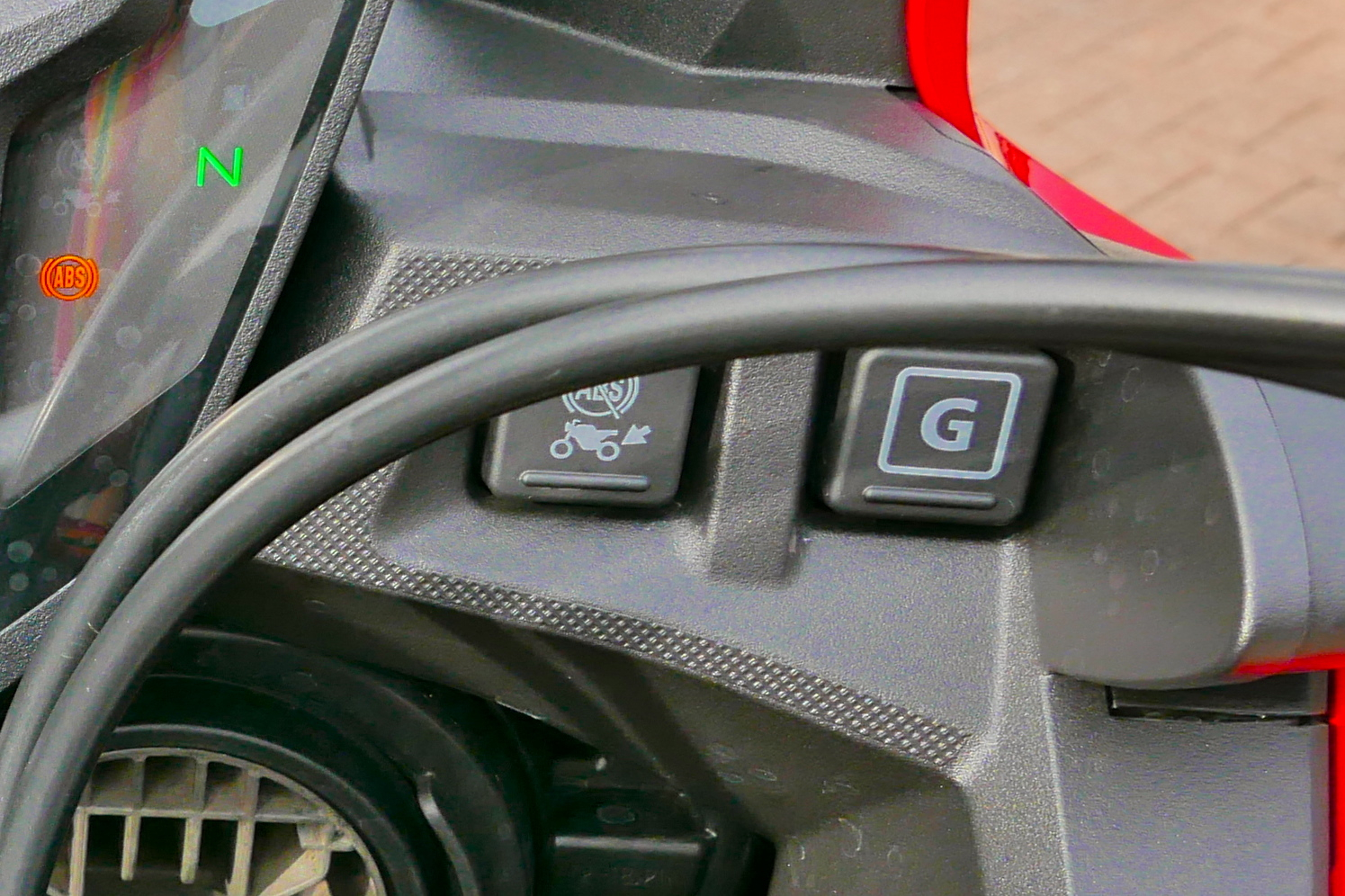
And this version of DCT (also on 2016 NC750s) includes refinements like gear-holding gradient sensors and a clutch-slip reducing ‘G switch’ (right), all with a matching array of ABS/Traction Control settings to help align the model’s aspirational CRF1000L moniker and potential with the like-named CRF dirt racers.

at8

The sales guy recommended the S1 mode which holds revs longer before changing gears, and within a few miles I agreed with him. As you decelerate the DCT smoothly drops down through the gears at just the right pace – on my unhurried test ride at least. In the Sport modes it’ll do so more briskly. The regular D setting was up in sixth by 30mph which made acceleration unpleasantly juddery. It’s presumably great for economy but it felt less good for the chain and transmission. I neglected to see if there was a ‘floor it’ kickdown like on an auto car, but at any time you can use the MTB-like thumb and forefinger shifters on the left bar to manually change up or down. You can lock it in Manual too, using the A/M button below the Drive selector.

hondamatic.jpg

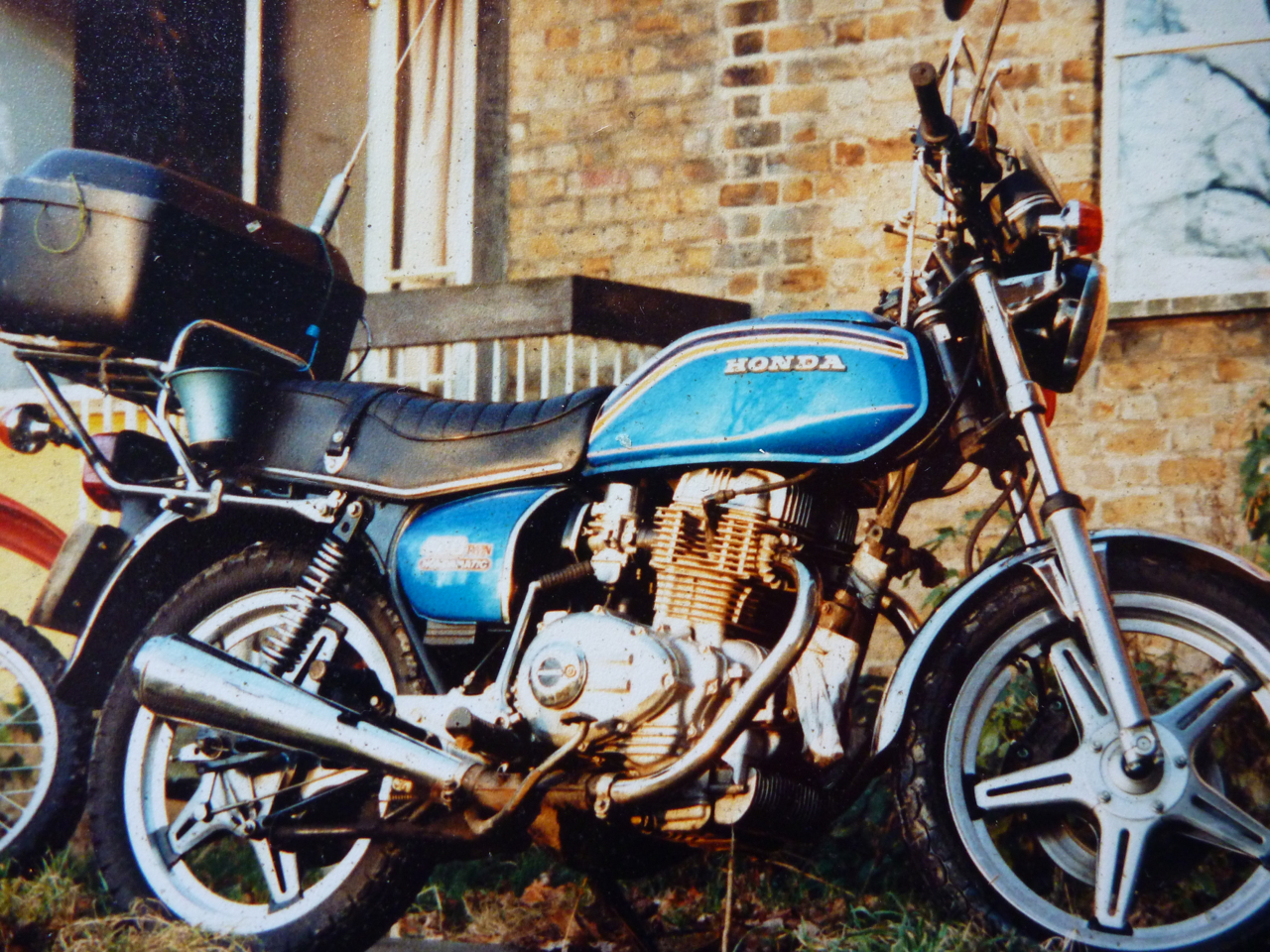
The clutch-like lever on the left bar is actually an out-of-reach handbrake, a bit like on my late 1970s 400AT (right). That bike ran a less efficient two-speed, foot-shifted torque converter using fluid and turbines. Don’t ask me exactly how, but with DCT there’s no power-robbing slippage apart from at rest and momentarily when it changes gear, so the bike responds to acceleration and deceleration much like a manual bike. And if you still have trouble getting your head around your DCT you can get an optional electronic foot-shift lever to emulate the left-bar shifters.

at4

I did sense the weight on pulling away (probably a quarter of a ton fully fuelled), but once on the move I was surprised how quickly I adapted to that mass, as well as the DCT. No twitching left hand or foot, just the novelty of smooth, scooter-like propulsion without the small-wheel stigma. Riding gently in Drive you can detect the shifting – ride harder and it becomes barely perceptible.
Some bikers proclaim such automation emasculates the motorcycling experience – for a young, hard-charging Gixxer pilot with licence points to spare, perhaps. But aren’t sports bike quickshifters also chasing smoother progress through automation? Me, I’ve had my share of tearing around – it was my job for over a decade – but 37 years ago my 400 Hondamatic made town riding a whole lot less tiresome. I’ve had a lot of bikes before and since, but I can’t say many have had a slick gearbox and a light, smooth clutch operation which enhanced the riding experience. For the moment I’d be happy to experiment with an alternative, and just as with 4WDs, I believe auto shifting can actually make some off-roading easier. On a bike this size I bet crawling up a rocky, washed-out hairpin in the Anti Atlas would be much easier than feathering a clutch or risking a sudden stall and tip over, just because first gear is typically too high or you misjudged the input required.

at999

Back in mid-winter Surrey. Once I popped out onto the Epsom bypass I was able to open it up and couldn’t suppress a broad grin spreading across my face. At this speed you have to concentrate hard to detect any gear changing activity as the bars on the reversed LCD digital speedo hurriedly rearrange themselves to match the pace.
That’s probably the best thing you can say about DCT – after 40-odd years of mostly manual shifting you adapt to it in no time – it’s no harder than trying an auto car for the first time, but much more fun. A better test for the DCT AT might be charging down some switchback canyon where conventional engine- and wheel-braking give the impression of greater control. That’ll have to be for another time but I do wonder how the front 21-incher would perform. Meanwhile, at the other end of the speed dial, I found feet-up, walking pace U-turns close on lock-to-lock as easy as you’d expect on a direct drive automatic. Until that tank is full, the bike feels very well balanced for its low-set weight.

CRF-rally
at3

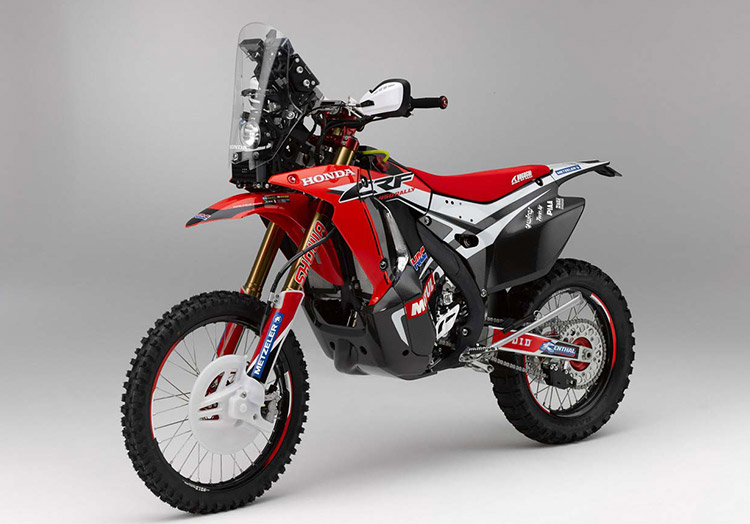
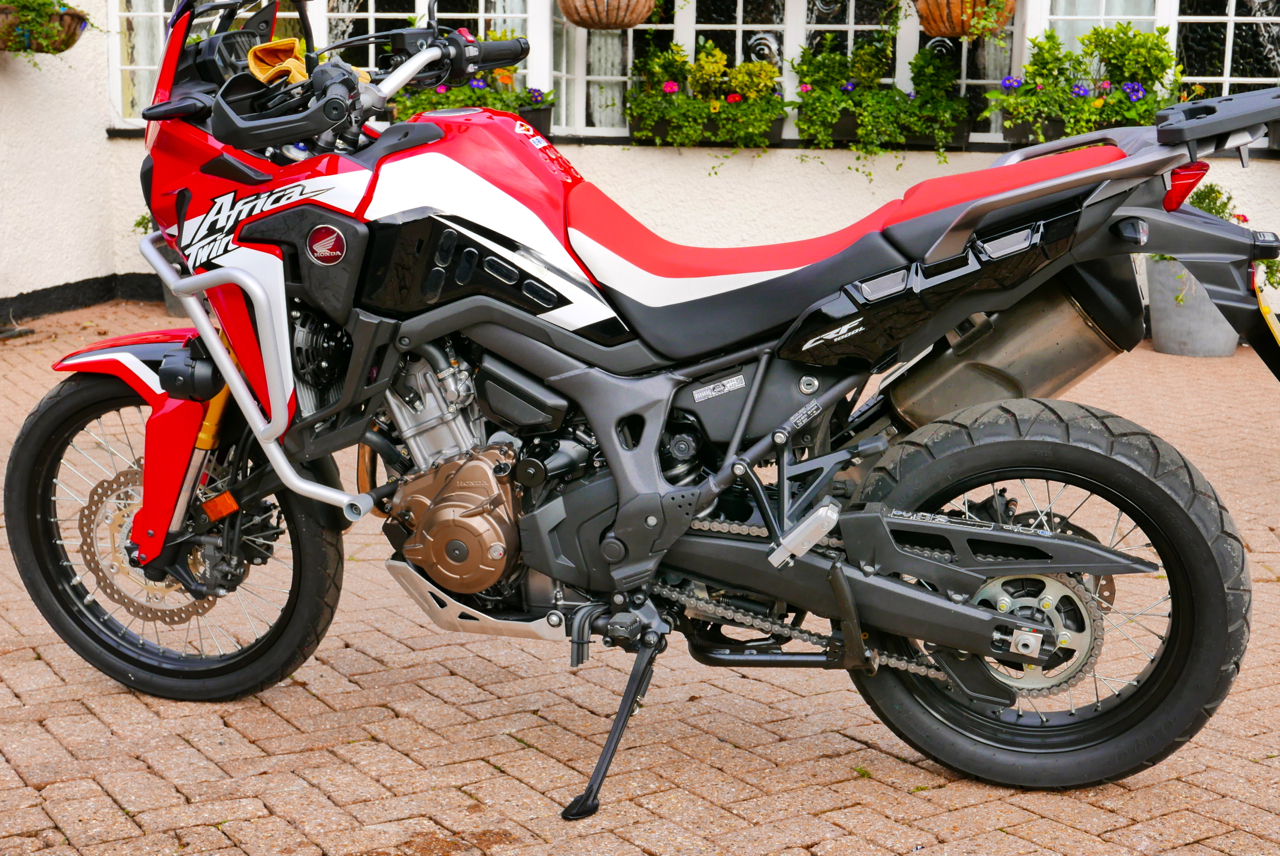
Other stuff on the DCT AT? It looks great in black, white and red, the colours of Honda’s nearly Dakar winning CRF450R-based desert racer (right). The coppery-bronze crankcases (like the new Husky 701) add a nice touch, too.

sat

They’ve really got to grips with seat height on this bike – something that stops so many riders enjoying big Advs. With two levels (850mm and 870) and two seats offered, there’s about 50mm of potential variation, assuming I heard the dealer right. I had mine set at 870 (34.25″) and it felt lower than my CB500X RR. The suspension felt plusher too, though right now my 500X is still set for load carrying, and one back lane pothole shot a harsh jolt through the AT’s bars. On the picture above left you can see a rear spring preload adjustment knob, and doubtless there are more compression settings front and back than a squad of saturation divers.


africatime
About the same time I was riding around north Surrey two Italian guys took a brand new and old XRV AT for a ride around Mauritania.

at5

Among the accessories, the high screen worked great for me at up to 90. Heated grips were another seamless addition, with a heat-level bar packed in on the busy lower LCD display. Real-time rumination over the innovative DCT took my mind off the bike’s more mundane aspects, but the real question here is: would it make a good overlander? Or, in what way is it better than the all-conquering R1200GS?

I’ve long thought that by the time such bikes are properly equipped and loaded, they’re just too heavy for the sort of all-terrain travel I like to do, but that doesn’t stop masses buying, equipping and actually taking them on the road. The Honda looks significantly less colossal than a GSA, even if it’s probably no lighter, though I imagine it’s more economical. And the benefits of DCT is either something you appreciate or not. For overlanding I’d take it.

at6

Riding back home I was reminded what a great all-round machine my Rally Raided CB500X is (left). Off-road ready for half the price with a used base bike, 10-15% lighter on the dirt, and more economical by the same amount too. The AT builds on the same great looks and performance – far outdoing what I recall of the original Africa Twin which I occasionally encountered in the Sahara. It was regarded back then as a heavy and juicy machine. I also like the fact that Honda ignored engaging in the current 150-hp mania with the latest mega Advs from Ducati, KTM and BMW. Instead, they’ve focussed hard on trying to create a full-sized machine with better gravel-road manners than most, even if the antics demonstrated in the video below require surnames like Marquez and Barreda.

at88

The transmission system’s complexity on the road can’t be any worse than a regular gearbox, except you have two clutches to share the load. All the electronic engine management – well we’re all getting accustomed to that aren’t we, and I’d sooner it came on a high-end Honda than some other marques.

rideapart1

The new Africa Twin is clearly a brilliant road bike and I imagine a pretty good gravel roader, but there are a few of those already. It’s also heavier and costs way more than I’d ever spend on a travel bike – and there are many more in that category too.
But finally encountering the marvel of DCT does make me reappraise bikes like a DCT-equipped NC750X which, in the original 700 form (left) now goes for about £3000 used. Problem is NC-Xs come with the same soft, budget-level suspension as the CB500X and, like my 500, probably don’t have a bar/seat/peg set-up suited to me standing, unless I get into cable transplants. Meanwhile, for the moment there’s CRF1000L at your nearest UK main dealer so you can decide for yourself.

at99

Heated 12v jackets for motorcycling

Turn on, Plug in but don’t Chill Out on winter’s long road.

hj-2jax1-glo

See also: Mosko Moto Ectotherm (soon)

If you live outside the tropics and like to ride on anything other than sunny summer days, heated clothing makes sense on a bike. Your engine churns out excess electrical power which, with the benefit of modern technology and materials, can make a near-freezing ride tolerable in a way you couldn’t imagine. The two jackets looked at here are Aerostich’s 75-watt Kanetsu AirVantage and the 60/105 watt Powerlet RapidFIRe which you can still find for as little as $160.

My tips for heated jackets

  • Get a full heated jacket with heated arms, neck and full torso, not a waistcoat or a jacket with partial panels
  • Get an easy-to-operate heat controller dial
  • If the body’s elasticated, aim for a close fit
  • Wire direct to the battery via a fuse (leads often supplied)
  • Don’t bother with remote, battery-powered options. Your bike has a battery and charging system: use them.
hj-seddonbike

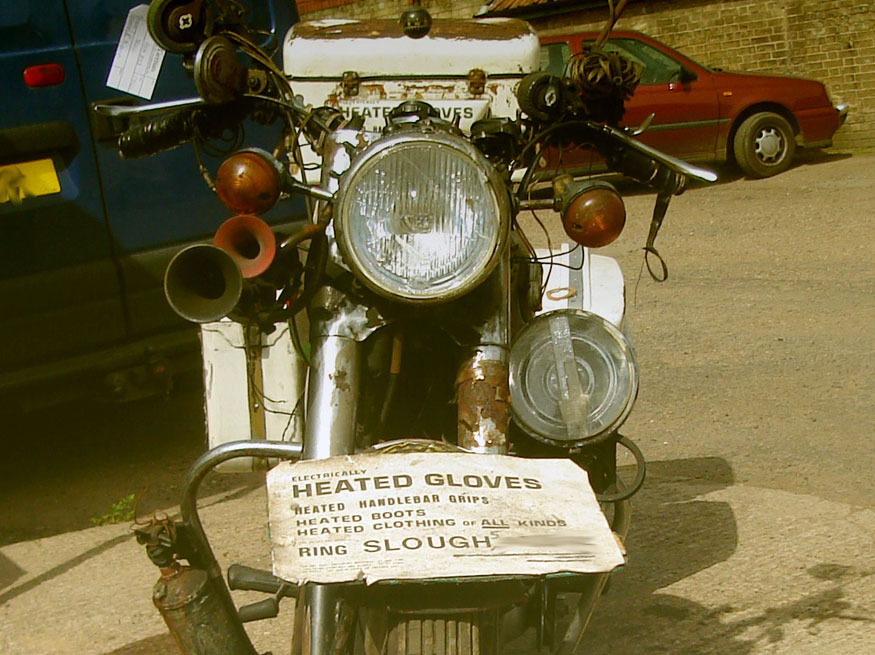
I remember back the late 70s there was a batty guy at work called Maurice Seddon who rode a BSA made before I was born and who sold hand-made heated clothing on the side (left). For London-based despatching that wouldn’t have been such a great idea, as with all the stop-start and on-off you never got that cold. But out on the road between cities you sure could in winter. Even then, heated clothing had a reputation for inefficiency and unreliability and so didn’t seem worth the investment compared to piling on the layers and gritting your teeth.

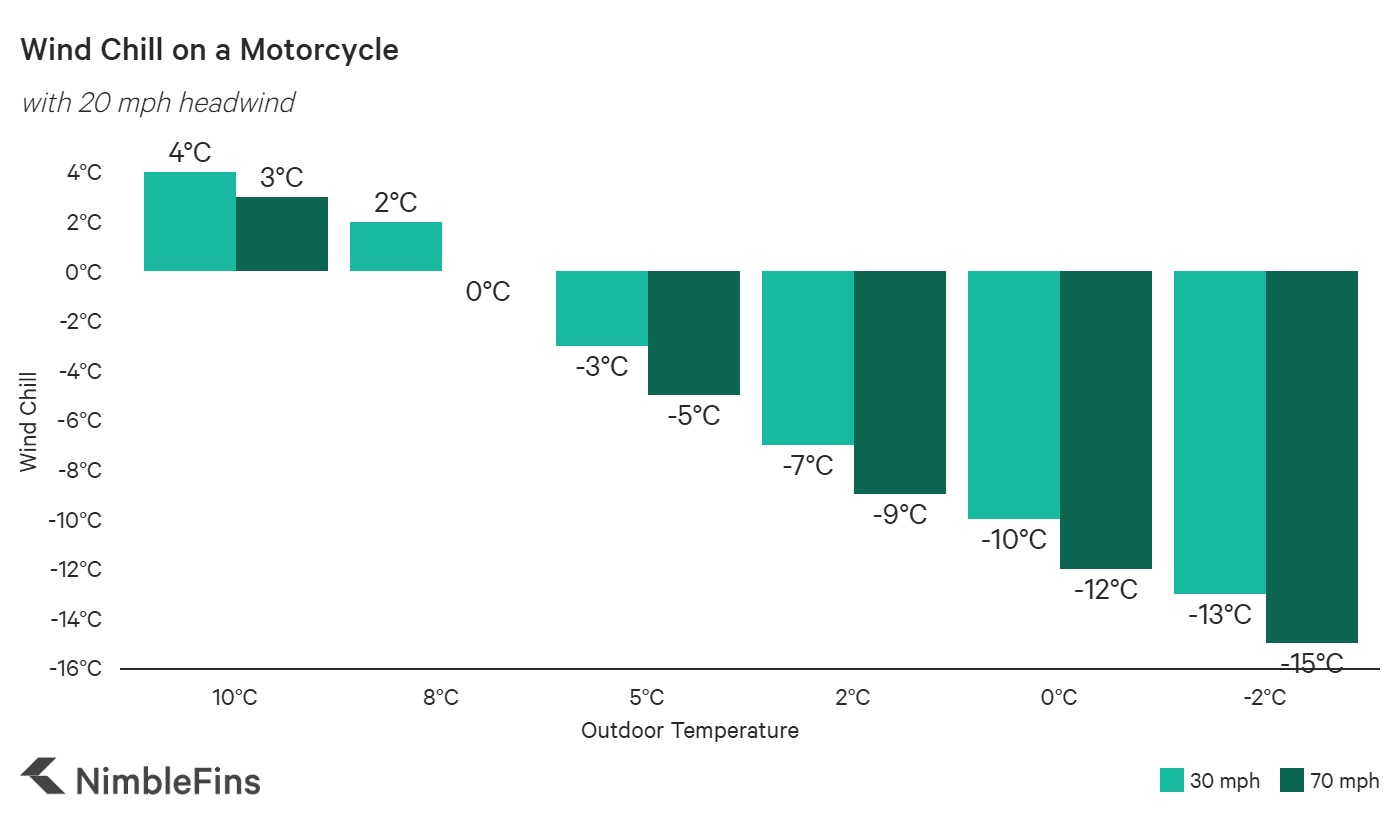
Compared to the northern US states and eastern or northern Europe, the southern UK rarely gets that cold in winter (anymore), but sat on a bike in the wind it’s always colder than you think. Apparently, in bikers’ lore over in the US there’s something called the ’60 60 30 rule’: 60 mph at 60°F (ambient) feels like 30°F on a bike (100kph / 15°C / -1°C).
That may be easy to remember but is clearly exaggerated. There’s no way doing 60mph at 15°C feels like just below freezing. It’s an embellishment of what they now call the ‘old wind chill index’. According to this page, the new wind chill index (NWCI) gives a more plausible figure of 10°F / 3°C when riding at 70mph /112kph in 50°F / 10°C ambient. Bright sunshine can also reduce the wind chill by several degrees. Headwinds can increase it.

hj-fog

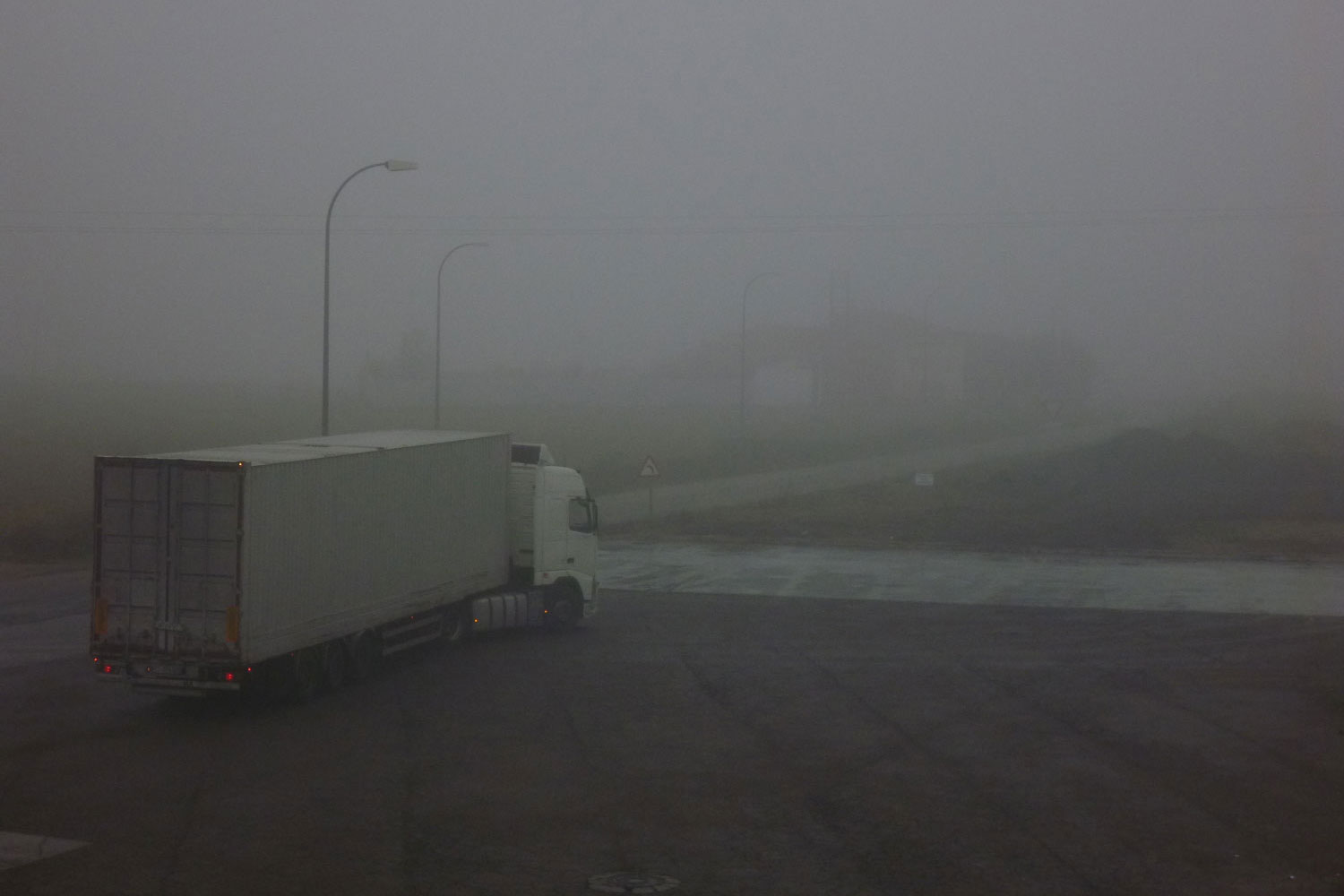
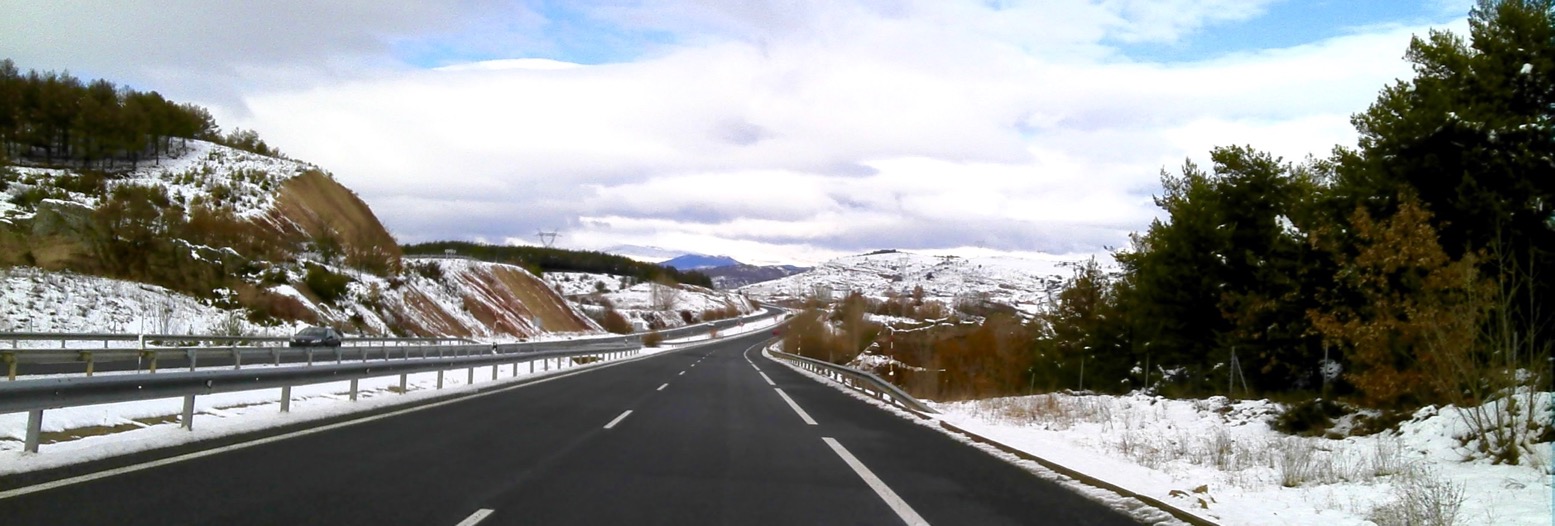
But when the ambient temperature drops to a more typical, mid-winter’s ride of 41°F (5°C), the new wind chill index corresponds to 26°F or -3°C. That’s how it felt for me crossing northern Spain one when, for the last few hundred clicks to Santander, the road rose to more or less 700m (2300′). Though it was foggy and clearly above 0°C, I felt freezing with my Powerlet RapidFIRe heated jacket turned up to the max. I rode on through the murk for as long as I could bear it, then dived into a roadside hotel to thaw out. Next day it was the same until I dropped out of the fog to the coast.

dsc00029


It gave me time to work out how to get the best from a heated liner. Apart from sealing against all possible draughts, using heated grips, hand guards and a windshield, having the liner pressing on your body is much more effective. Like this, the liner’s heated matrix is warming a thin base layer clinging to your skin, not the air gap between. And ironically, I feel it’s better if that base layer is not thermal – just thin polyester or whatever that’s easier to wash than a jacket full of wires. At times I was riding with my left arm hugging my chest just to force the front of the jacket against me and benefit from the heat. But doing that for a while my hand got cold away from the heated grip. Next day I wore a thin fleece over the heated jacket to press the wires down achieve the same, all-round effect.

hj-2jax

Liner or jacket?
The Kanetsu is designed to zip in as a liner on your Aerostich Darien or Roadcrafter, but over the years I’ve mostly used it with various other jackets. The Powerlet zips up to itself, but does feature a textured outer shell that’s slightly tacky or rubbery so it’s more prone to staying with your main jacket as you slip both off (assuming that’s what you want). Because the Kanetsu is a zip-in liner, I found when using it with other jackets the open-ended zip would open up from the bottom. Aero could get round this by adding a stud to stop it separating when not zipped in as a liner.
Both jackets stuff into their own zippered pouches (left), with the Kanetsu benefitting from belt loops. On a long trip both still add up to a sizeable bulk when not worn, unless you choose to use it off the bike. As you can see below, they both look pretty good as regular jackets. The Aerostich has more pockets, the Powerlet has a lined and heated collar. Both weigh about 1100g.

hj-2jax
hj-pletbands

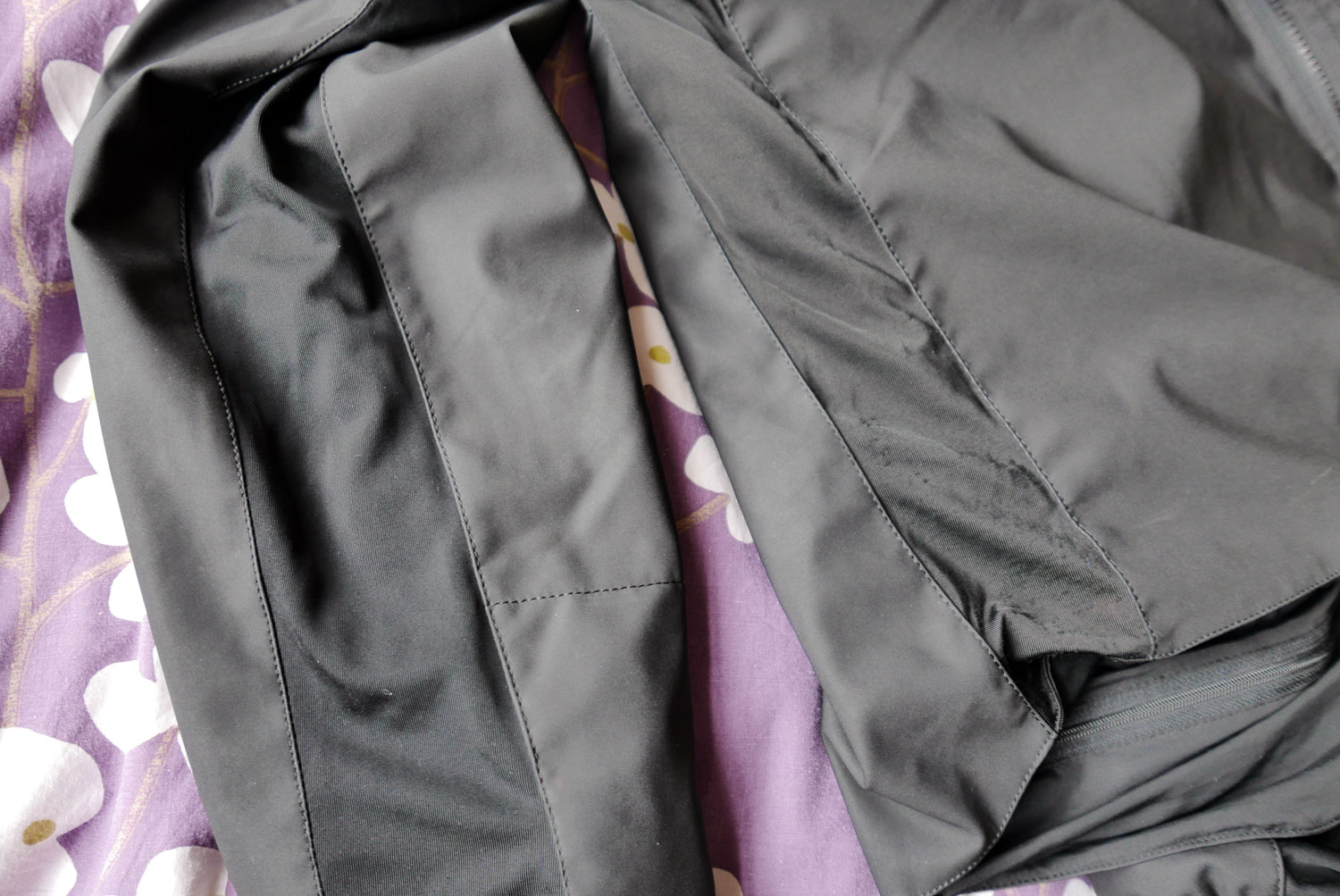
As said, a close fit makes all the difference and these jackets achieve that differently. The RapidFIRe has Spandex side panels in the body and arms (left) to make the liner cling to you. Mine was an end-of-the-line cheapie which by that time was only available in XL – a bit too big on me. But it occurred to me I could easily close up those elastic panels with thread to achieve a snugger and so more effective fit.

hj-plet-nuke

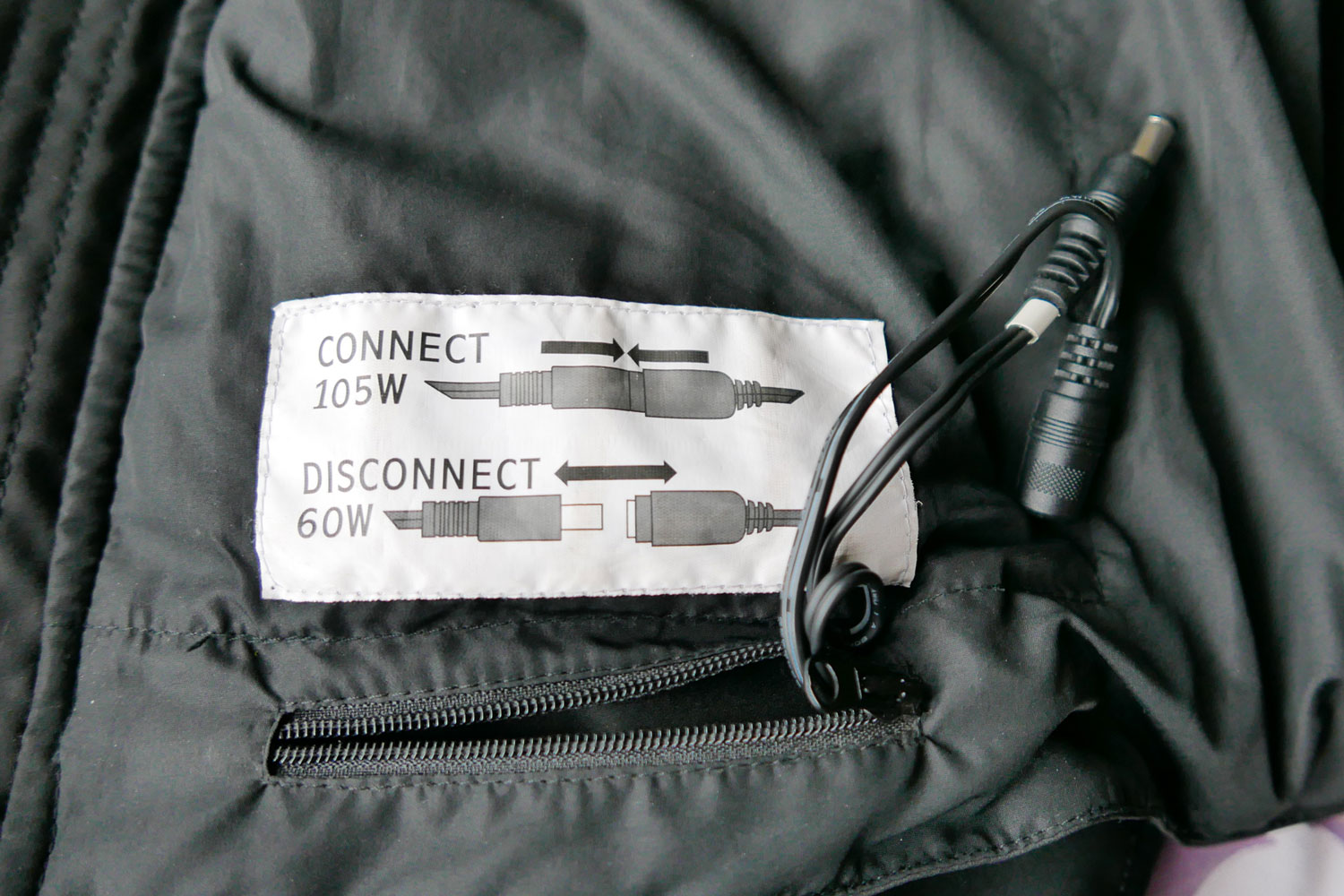
The RapidFIRe has two heat settings: 60 or 105 watt which, afaict, the newer $430 Atomic Skin model has dropped. Probably because no one ever needed 105 watts. To activate this arctic setting you join up two loose plugs zipped into a dinky hem compartment (left). Knowing my Honda had the capacity to run it (see below), I tried the 105-watt setting on a 200-mile round trip down to around 8°C (which adds up 0.5°C windchill @ 65 mph). I found that setting 2/5 was more than enough to keep me warm in my Darien Light and a thin base layer. If I regularly rode in sub-freezing conditions I might leave it on 105 watts. More probably though, I’d get a car.

hj-kan
hj-inflate

My 5-year-old 75-watt Kanetsu AirVantage is a version of Aerostich’s regular (and $70 cheaper) WindStopper. It differs by having an air bladder within the body linings which you inflate with a stem valve (left), like an airplane life jacket until you have a comfortable fit under your riding jacket. As long as you’re not wearing it inside out (an easy mistake to make) the bulging bladders press the heating elements against your torso, a clever idea that maximises efficiency and means you don’t have to whack up the dial for it to have the desired effect. Until you get used to it, it’s another thing to remember to do when togging up, and it can result in that ‘stuffed’ feeling you’re trying to avoid with heated gear. But it adds insulation and does work. The AirVantage is definitely worth the extra $70 ($387) over the regular, non-inflating WindStopper.


hj-exotog

Fast forward to 2019 and at a show I spotted these Exotog inflatable pull-over bodywarmer. A bit like the lifejacket mentioned above, the idea is the still air creates a thick insulated layer without excessive bulk when not in use. The truth is, down works better to keep trapped air still, but that’s impractical with humid, breath-inflated items and these must be better than nothing.
It also occurred to me they’d be an effective way of pressing a heated jacket down on to your torso to derive maximum efficiency. It weighs from 270g and costs 100 quid.


godofhellfire
hj-cinch

What both jackets highlight is that once warmed up and doing their thing, you won’t necessarily feel like The God of Hellfire (left) reposing in front of a roaring log fire with a warm cup of cocoa. But you’ll sure notice the difference should you switch them off. [This is actually a slightly misleading test as switching off is a bit like stepping out of a shower all wet: in the short term you’ll feel chilly until things evaporate]. And, depending on the wind protection on your bike, you’ll also notice your heated but exposed arms will feel notably less warm than your balmy torso, as well noticing the slightest cold spot. In fact this whole temperature differential can be a bit of a distraction.

dsc00040 (1)

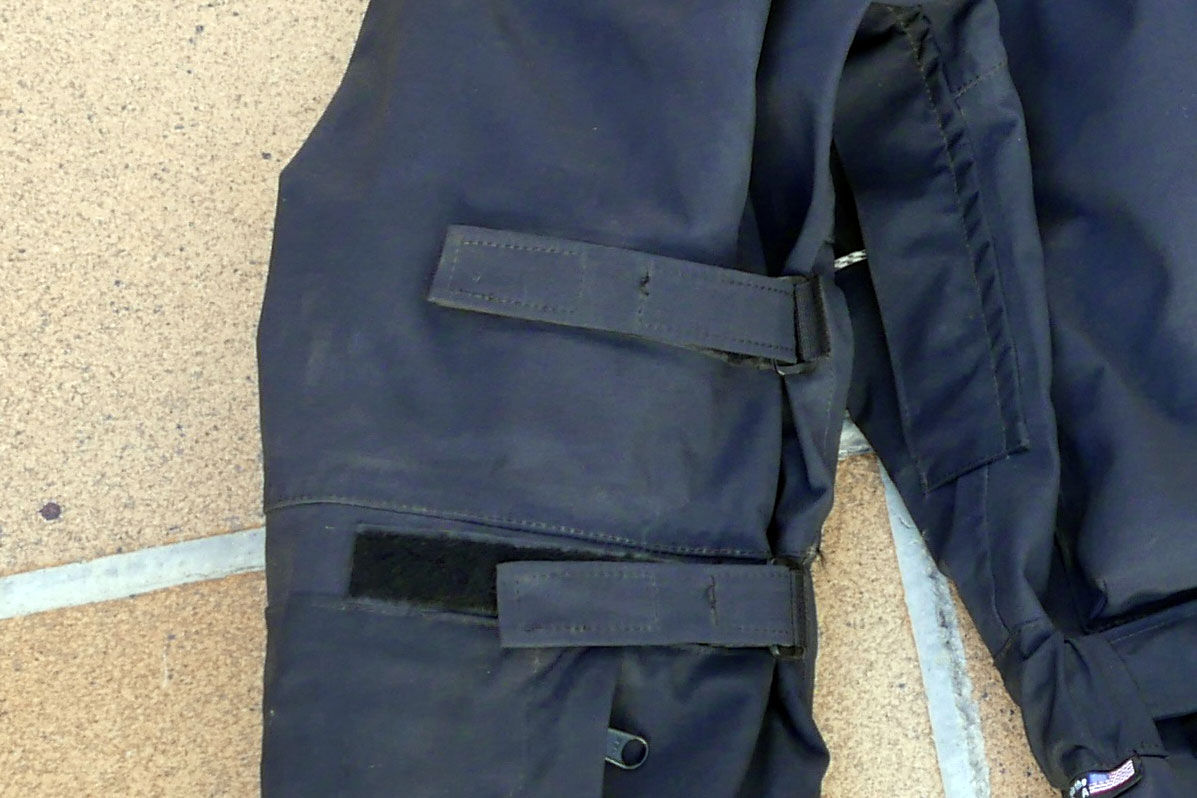
The Powerlet uses something called Carbon Nanocore technology (thin wires) producing far infrared heat (hence ‘Rapid FIR e’); the AirVantage simply uses ‘hotter’ wires in the arms. Whichever one you’re wearing, this is where those velcro arm cinches on your riding jacket come in useful to press the heating elements against you. The Darien I recently reviewed has them both above and below the elbow (right), but they still couldn’t spread the heat evenly. If I was heading for a really long, cold ride, I’d find a way of binding the heated jacket’s sleeves close to my arms. All these measures will enable you to run as low a setting as possible, so giving you an extra margin when things really chill down.

Electrical consumption
One good thing about modern bikes is they should have plenty of alternator capacity to power electrical accessories – and heated jacket liners probably make the biggest demands. My CB500X produced 500 watts at 5000 rpm – my late-1980s era GS500R dished out just 200 watts at the same rpm. Even a modern 250 single like my WR250R can produce over 300 watts. Modern lights draw less power too, but add fuel pumps, some LED or HiD spots, heated grips as well as the possibly lower engine speeds when riding at night in freezing temperatures, and on the old GS the alternator may have struggled to keep up with the demand.

Heat Controller
These thermostats usually come as accessories to the heated liners but are a good idea unless you’re happy with all-or-nothing heating. After all, what other heating application – domestic, industrial or otherwise – has no adjustment settings? Often, as you slow down to ride through a built-up area you’ll feel too warm – you don’t want that but you may not want to switch right off either.

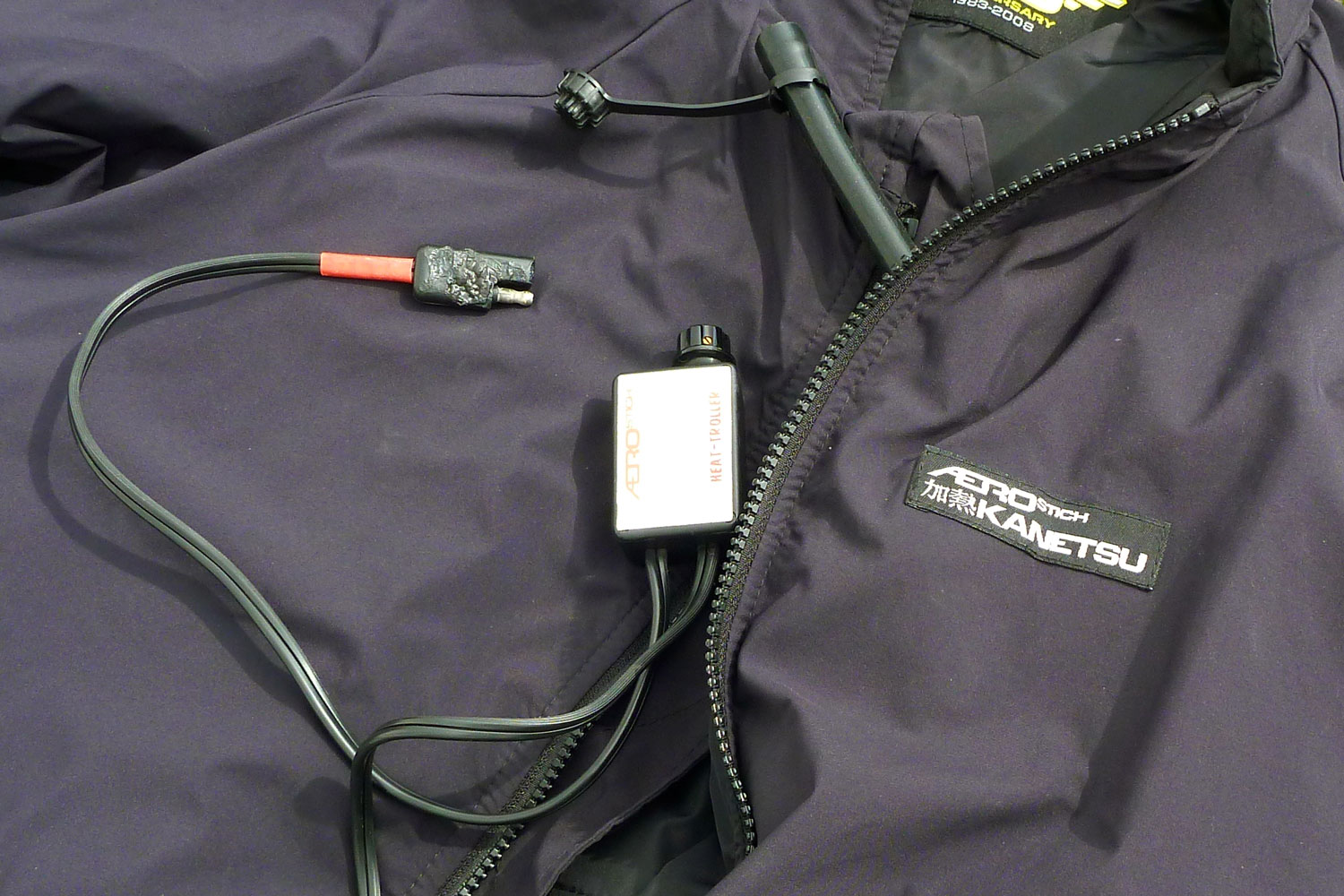
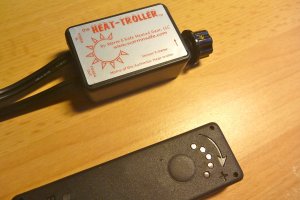
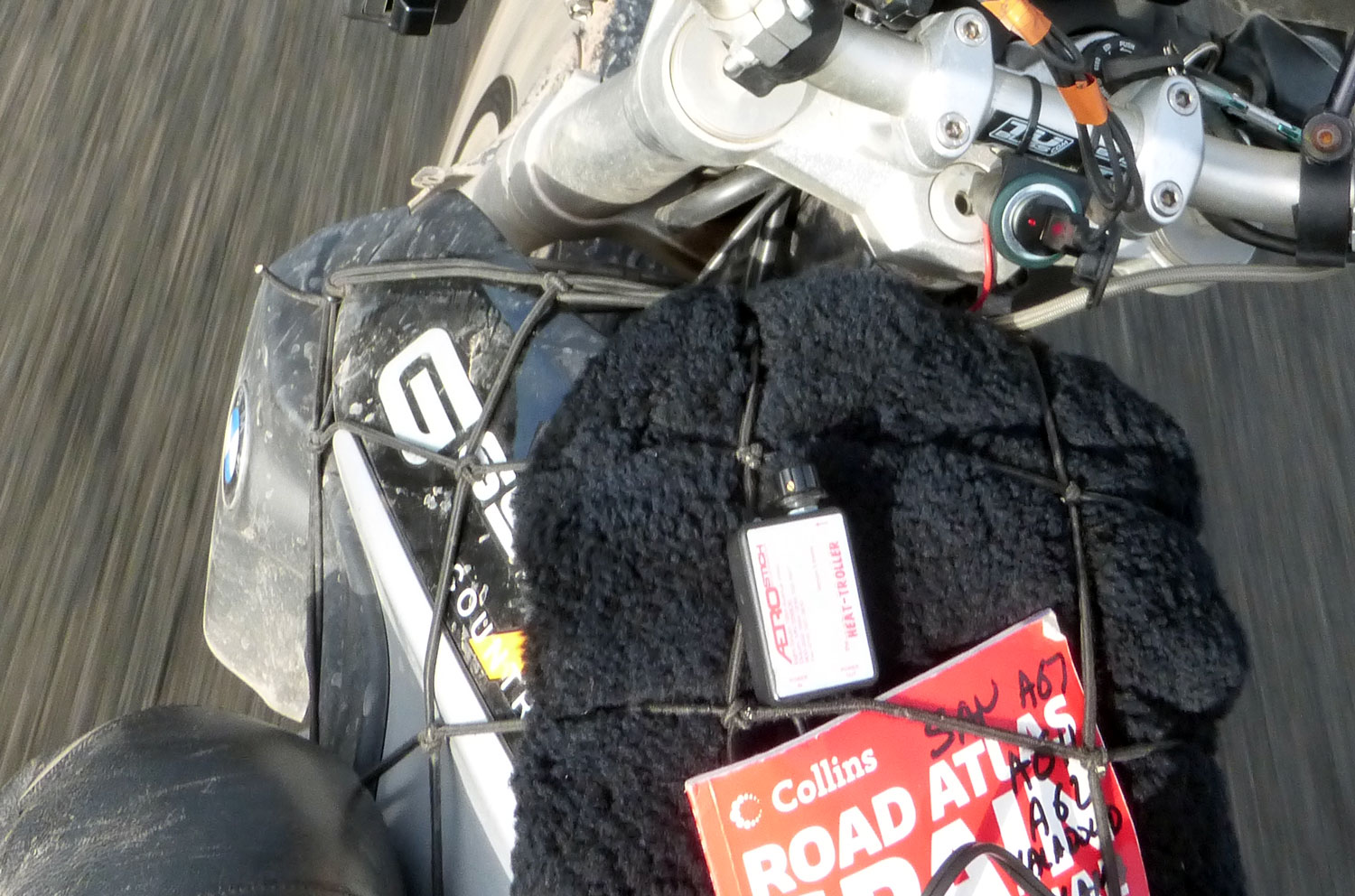
The Aerostich Heat Troller ($70; above left and right) is a little box with a dial knob and molded SAE leads. You can feel the knob’s soft click as you turn it on and in less than one clockwise turn it’s at max. Tucked down by a tank net as above right, it’s easy to operate on the move using feel alone when wearing thick gloves. No need to take your eyes off the road. I just dial it up to max then back off as needed. There’s a red LED that flashes proportionally – handy for a quick glance to see if it’s actually working or if it’s just you and you need to dial in more heat. Direct from Aerostich it seems the Heat Troller only comes with SAE connectors but I just bought one with QuiConnects coax here). Their Kanetsu jackets now comes with BMW, SAE or QuiConnect fittings.

hj-pletcont

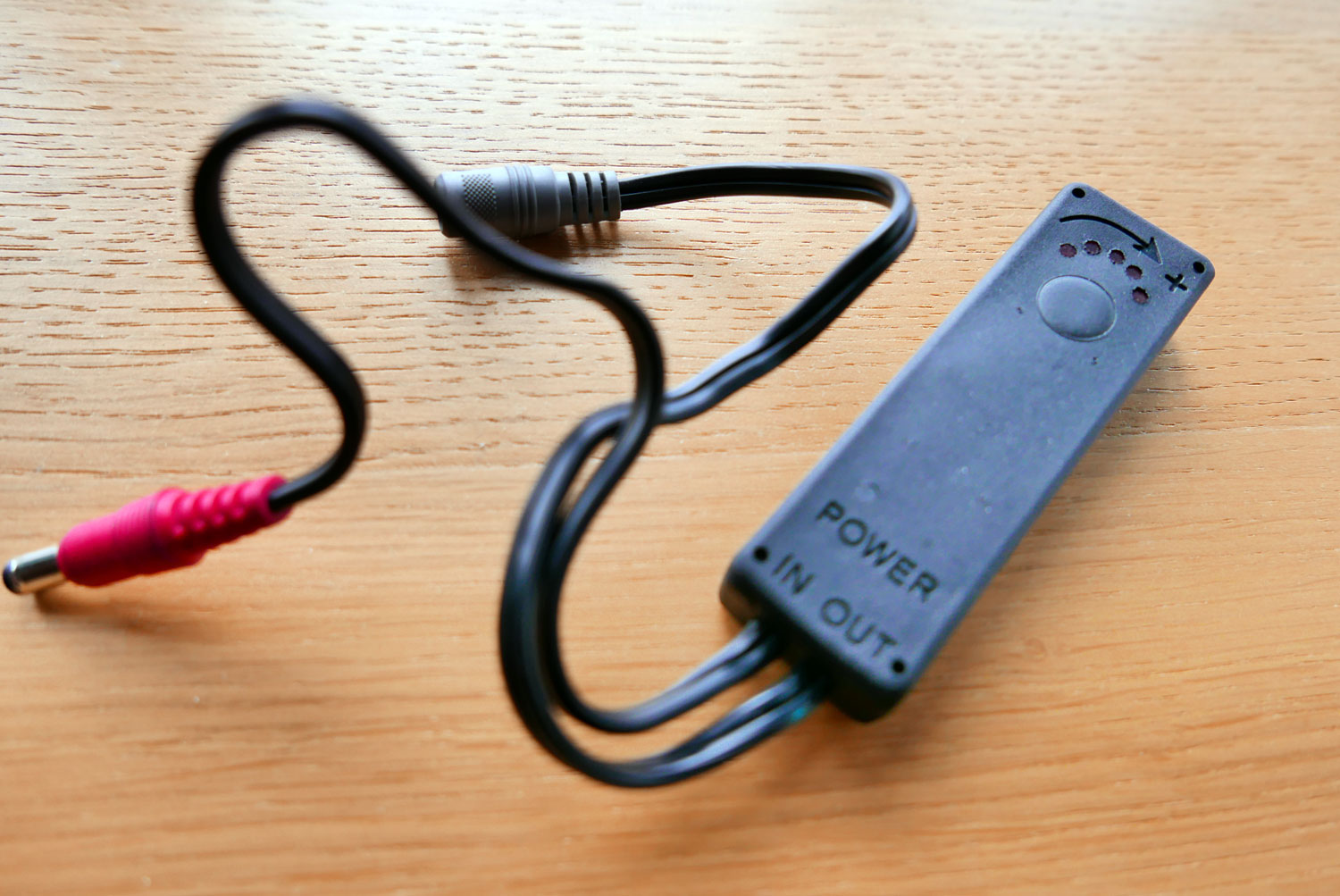
The Powerlet uses a similar black box and the co-axial QuiConnects all round (left), but with a flat pad to turn it on and keep pressing up to five levels. The problem is that pad is very hard to locate and feel through a thick glove, so you’re not always sure if you’ve done anything or gone too far and turned it off. You need to glance down to check the position of the red LEDs – not handy on an icy hairpin at six in the morning. It’s nowhere near as user-friendly as a dial knob. The current Atomic Skin Powerlet liner uses a remote wrist-mounted wireless controller. Me, I’d sooner fit an Aerostich-style Heat-Troller unless you mount the controller on the handlebars.

Overall, the discontinued? Powerlet RapidFIRe gets the nod as it’s a tad less bulky, has two core heat settings, has accessory wires to run glove liners, has a regular zip for use in any riding jacket, not as a zip-in liner, has wire in the collar and slicker QuiConnect fittings. But chances are you can’t buy it anymore unless you’re tiny or huge, and neither the Kanetsu not the Atomic Skin are currently sold in the UK.

Click this for a review of Aerostich and Klim shells which were used with these heated liners

Good article by ABR magazine (pdf)