Tag Archives: Trail Tech Voyager

GS500R – A Ride Across Britain

Index page

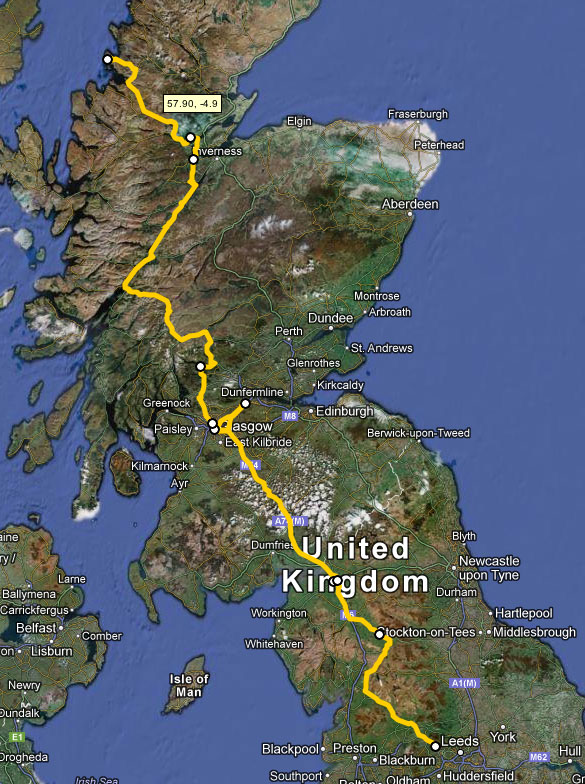
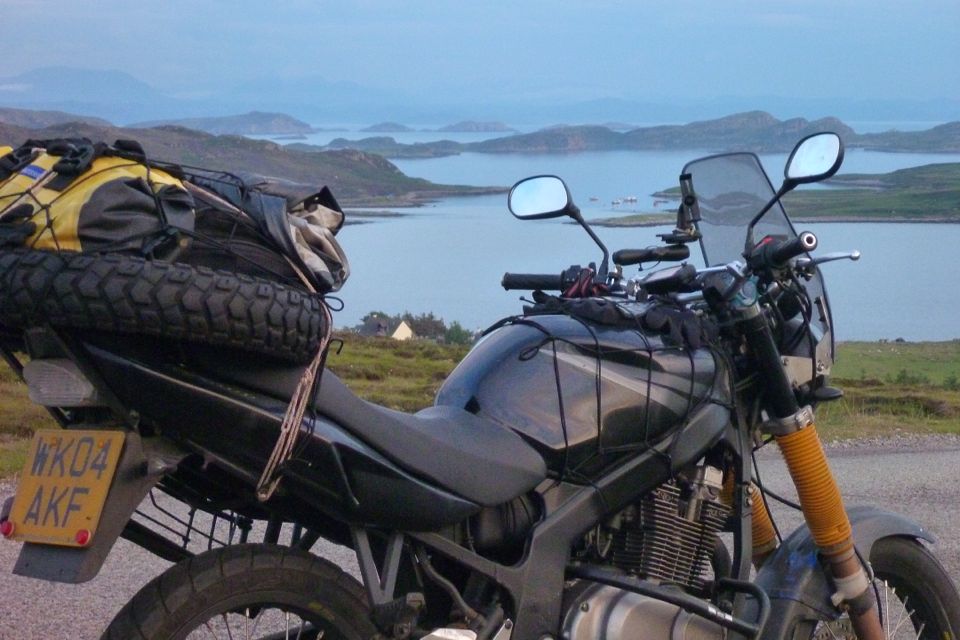
Since I rode the GS up to Scotland in June it’s received a few mods and the 700 mile ride back south (right) was a chance to put them to the test. Among other things I’d fitted K60 tyres on Tubliss liners with a splash of Slime. I made the back brake work, nearly finished my piperack, fitted flat track bars and an LED riding lamp.

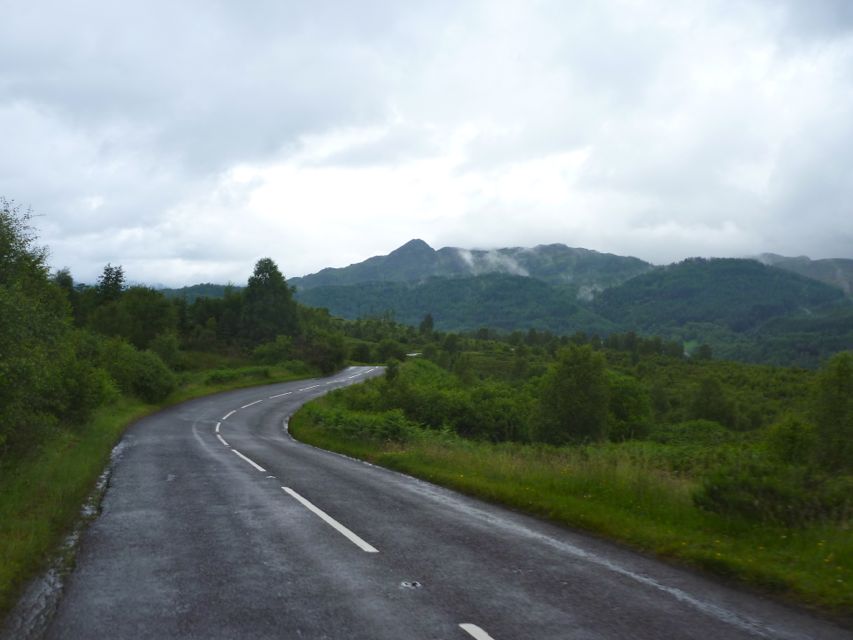
Setting off for the first 250-mile stage to a mate’s near Stirling west of Edinburgh was a sparkling day (left), but already there were warnings that an incoming storm would wipe any traces of late summer warmth off the face of Britain. Any chance of enjoying a slow ride home would be better compressed into the usual dash. A day after I got back it was another ‘month’s rain in a day’ story we’ve been hearing all summer. Roads I’d ridden hours earlier were closed by flooding or high winds, the trains stopped running to Edinburgh and a coastal town near Aberdeen got caked in wind-borne sea foam.

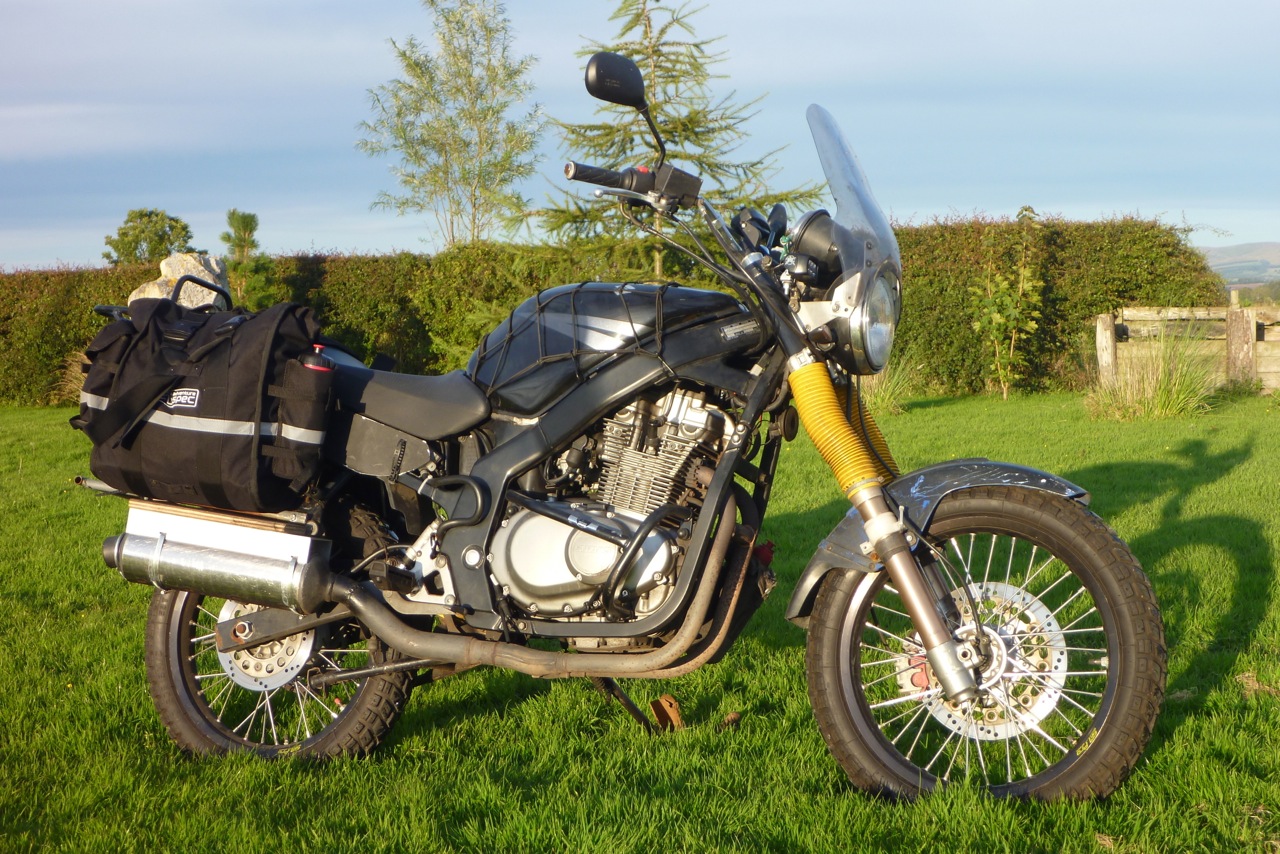
Backing up, the ride over the Cairngorms proved I really should have remembered my Aero Kanetsu electric vest. Running it off the GS’s battery was one reason for fitting the SR-M LED lamp (to reduce the alternator load). Even in the sun the Trail Tech Voyager (to be reviewed) barely reached 9°C, so a hot soup in Aviemore spread a bit of warmth back into the limbs.

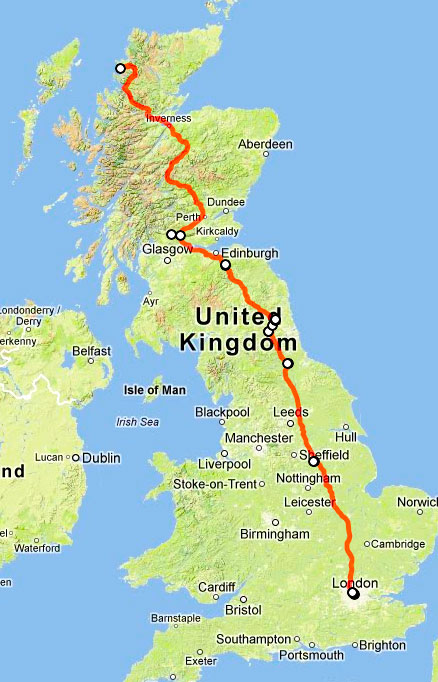
Day two was going to have to be a 10-hour, 450-mile haul right through to London if I was to miss the much forecast gales. Even then, I could’t bare the thought of the dreary but functional M6 and M1 motorways, with the statutory pile-up/hold-up somewhere in the Northamptonshire area. Instead, a more interesting line jumped off the map: A7 from Edinburgh to Galashields, hop over to the A68 which led over the border to Darlington, and from there slot onto the A1 to London. The variety made covering the necessary distance satisfying and I knew the run through Northumberland and County Durham would be fun.
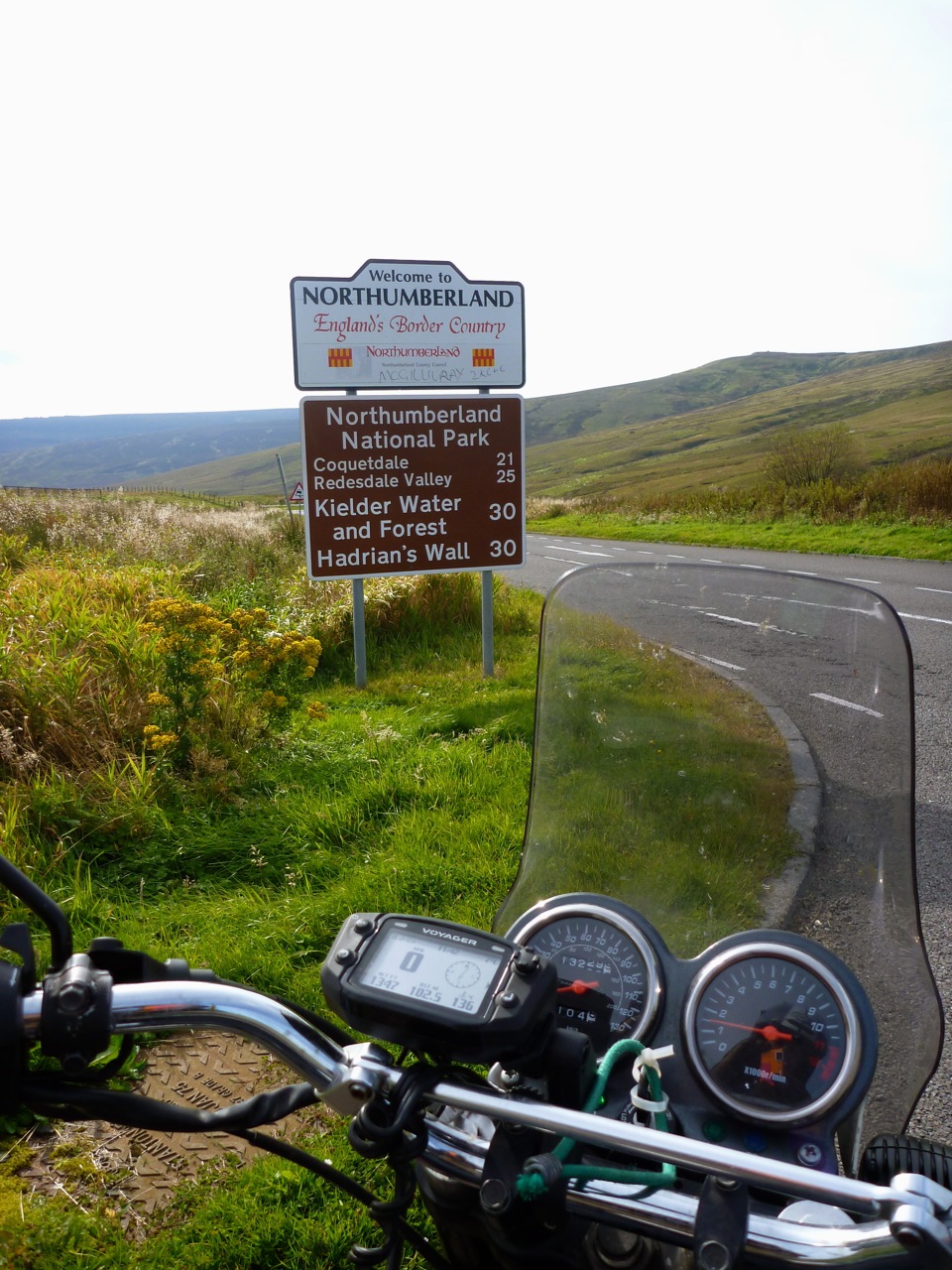
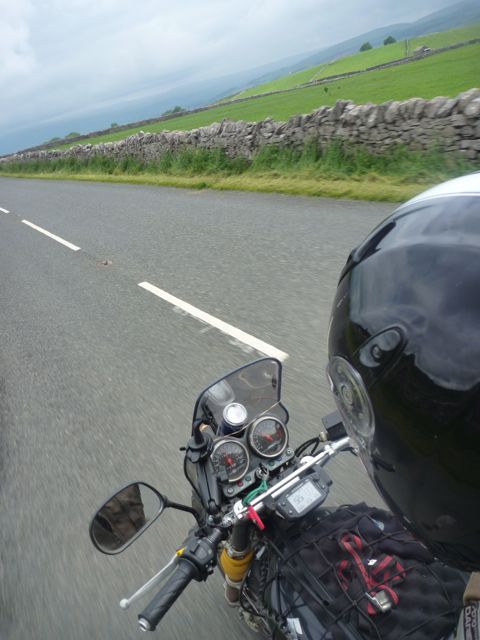
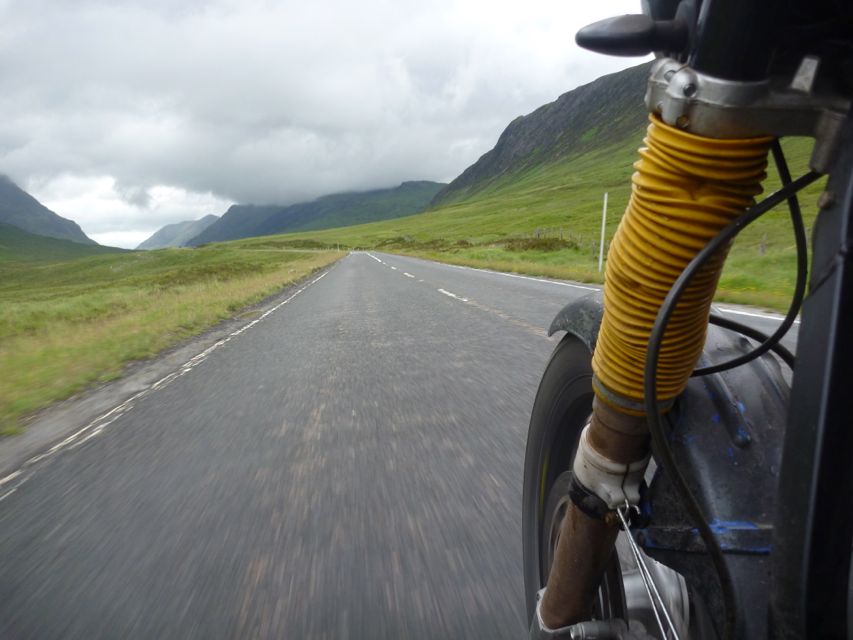
The miles piled on and the GS got notably smoother, as engies do. The lightly loaded Magadans sat behind me, tucked well in and attached or resting on the piperack, while the Voyager kept tabs on various aspects of my progress as I rode up some sweepers to the English border strung across the Cheviot Hills (right).

It was a sunny Sunday and there seemed as many road bikes out as cars, but it has to be said cars do get in the way of enjoying a smooth ride, even on a GS500. I must have been stuck behind one of these or eyeing up the Voyager when the A68 took an sneaky right just before Otterburn while I blundered on along the A689 towards Newcastle. Didn’t want to go there so I turned right onto single track farming roads which I knew would lead to the A68 somehow. Without maps or a satnav, the Voyager’s compass proved a handy aid to negotiating the angular byways until I popped out back on track near Corbridge where the weekend throng were enjoying pub lunches. A fill up saw the mpg improve to 62mpg after yesterday’s all time low of 57 (conversion table here).

I was due for a feed myself but wanted to catch up on my error and find an ambient eatery for a quick and casual refill. That turned out to be a Sunday bakery in a place called Tow Law near Consett. Consett I’d heard of – your man Edmund Blackadder (right) was born there, and in 1980 its steel mill – one of the oldest in the country – was not so much closed down as eradicated. The inevitable social consequences became a byword for post-industrial collapse.
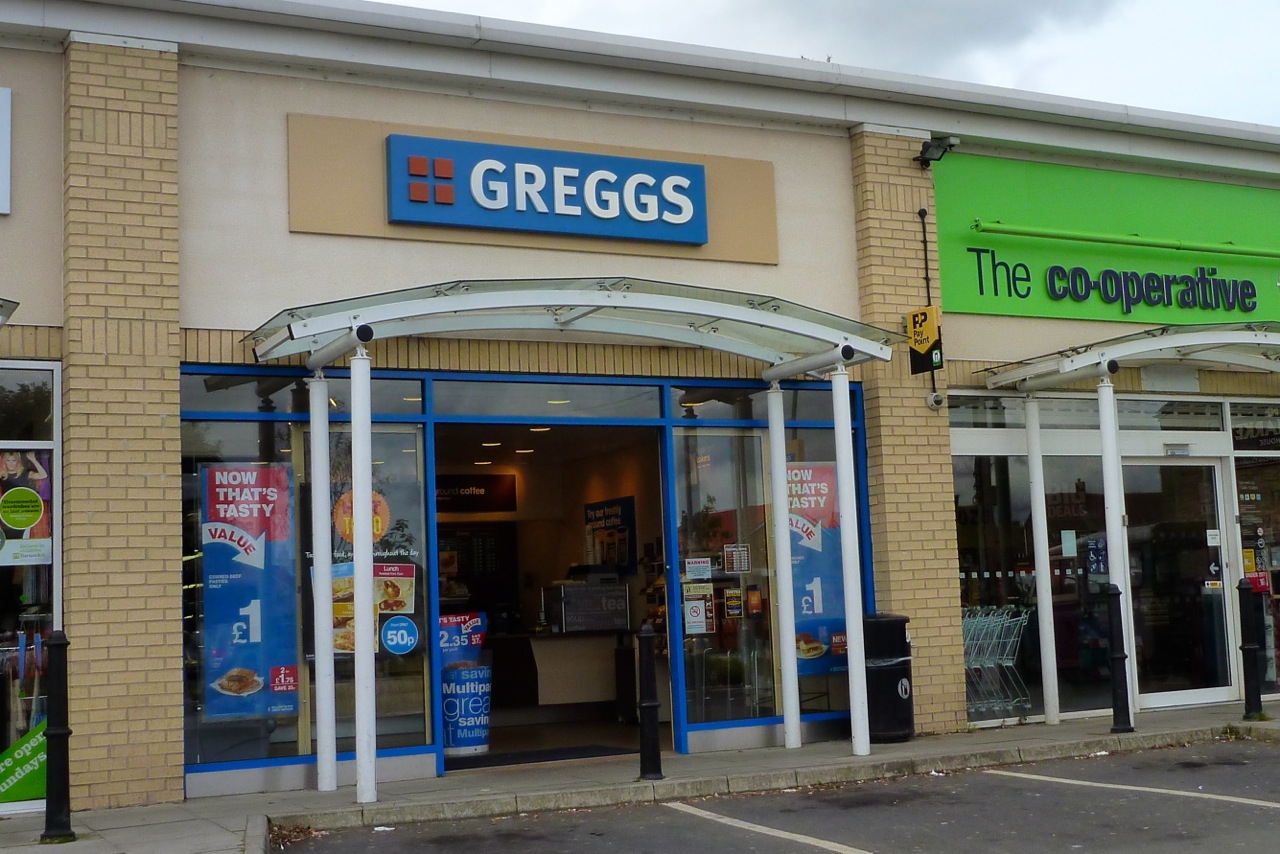
Sat at over 1000 feet in the east Pennines, nearby Tow Law was a smaller version of Consett, established after a Victorian era coal rush but now plateauing out following a steep decline at the end of the last century. But it had a Greggs (left) – the first I’d seen in months, so Tow Law is alright by me. Two hot pies, a cream cake and a coffee. I was primed for the next 6 hours.

Soon enough the A68 ran into the A1, the Great North Road built by the Romans. The better part of the day was over now, all that remained was to ride into the rain. That started somewhere in Lincolnshire, a light drizzle that the winds kicked up into a full-on lateral hosing. Like many bikers before and since, I sat on some Armco pulling my Rukka one-piece over my legs and wrapped the top half under the waxed Falstaff which was to be put to the test, along with the Magadans, the Rukka itself, the GS with it’s new K60 tyres and my X-Lite. I was also seeing how neoprene kayaking gloves worked as wet weather gloves (short answer: they don’t).
What rider isn’t familiar with that trance of concentration that envelopes you when riding a busy road in the wet. The bike is humming as you try to maintain momentum while knowing it takes just one slow- or too fast reaction by you or others to become the unwelcome filling in a pile-up sandwich. Meanwhile your gear slowly begins to succumb or resist the 70-mph onslaught. If I was looking at myself behind the cosy flip-flap, flip-flap of some wiper blades I’d be thinking ‘cripes, rather you than me, mate’. The temperature dropped to 6 degrees, not a long way from snow, and the rain washed off the bugs but started running down the inside of the X-Lite’s visor, further reducing visibility while I bored through the spray. It was the autumnal equinox and luckily some sort of daylight shone through the murk. The thin neoprene gloves were proving to be a fast track to rheumatism, but the PVC Rukka lowers and even my old Altberg boots stayed immune. So too were the Magadans it turned out later. The insides got damp (they don’t claim to be waterproof) but barely a drop licked the outside of the thick inner bags. And the K60 tyres never missed a beat on the motorway or while cutting across Sunday night traffic through the middle of London.
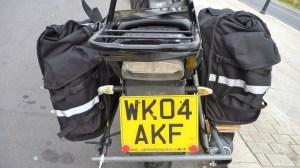
Using the Magadans
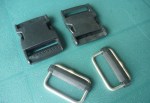
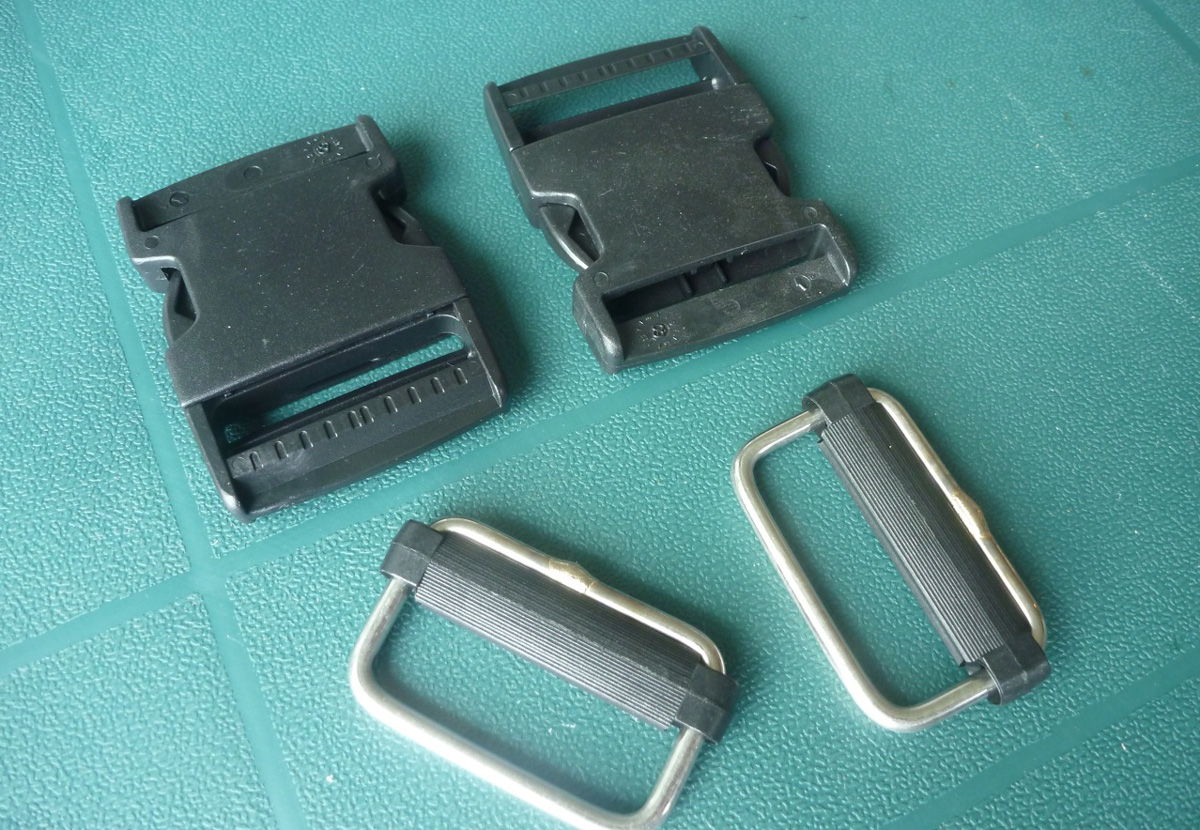
Although it was only a short ride, I got a bit more of a feel for using the Magadans. The buckle idea I mentioned is definitely the way to go to replace the over-seat velcro. As the bags sag or lift with different payloads you want to make small adjustments and doing that accurately with the double-sided velcro is a pain. With a ‘friction-bar’ buckle (right) a quick tug or release and you’re done.
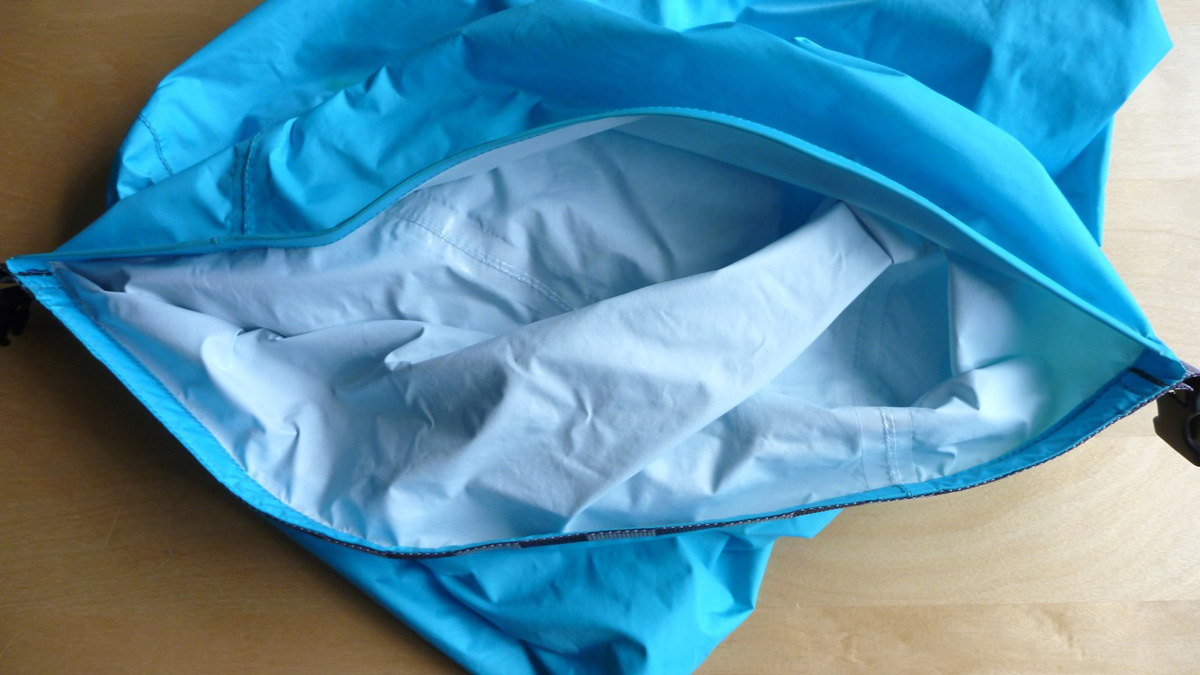
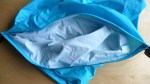
Opening the bags for access is of course easy but the inner bags are rather stiff when cold and so difficult to roll up and clip while complying with the outer form. But it was a cold day and anyway, the are scores of roll-top dry bags available, either full-size singles, or smaller multiples to help compartmentalise. Though it’s much thinner coated taffeta nylon, Exped make a light blue XXL 40-litre rucksack liner dry bag (left) with taped seams and a white interior. As with the Kriega Overlanders, a white or light colour would make digging around to find stuff a little easier.
I lashed on my sewn on D-rings to  the rack rather crudely and with numb hands had to yank them off when I got home. Once I have the rack finished I’ll be able to make some permanent attachment points on it and figure out a quick clip-on system, probably a smaller, one-inch version of the black clips pictured right.
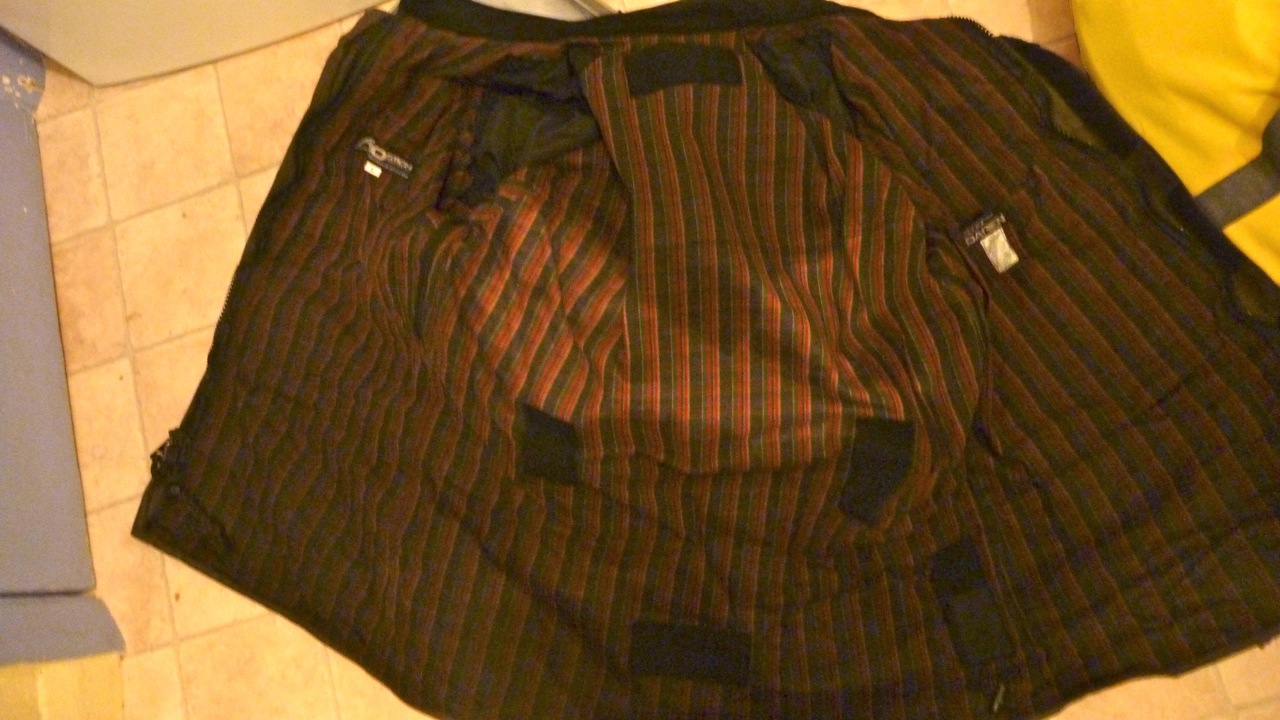
Not so amazing or surprising, was the Falstaff’s performance. After an hour I could feel the wet against my arms just as I’d done in Spain months earlier, but more so. It was only when I got home that I saw the entire lining bar a small patch on the back (right) was soaked. My wallet and phone in the inside pocket were on the way to saturation. What a shame. Design and construction wise it’s a great bit of kit, but it doesn’t do what it needs to so I won’t be wearing that again.

Still, now I know what works which so far still includes the Suzuki GS-R. I can’t say I notice any negative roadholding or handling issues from what might be seen as a thin rear tyre or indeed running identical tyres front and rear like an old Lambretta. Again I’m surprised how comfortable and endurable long days are on this bike, even in sub-optimal clothing. A big part of it must be the seat which engages well with the corresponding part of my anatomy, but I also wonder if it’s something to do with a modest engine and braking power which puts little stress on the body, while being enough not to feel vulnerable and under pressure in traffic. That was the reason for choosing and adapting an otherwise ordinary machine.

GS500R Overlander – First Ride

Index page

A little more than three years after I bought it, my GS-R got wheeled out of a Derbyshire hilltop hangar to prepare for it’s maiden flight – a run of a few hundred miles to far northern Scotland where development is set to continue.

Since my last brief ride round the lanes, the suspension got lowered a bit, the stands trimmed to fit and the pipe levelled off to make room for a rack and low/forward luggage, when that day comes.

P1060310

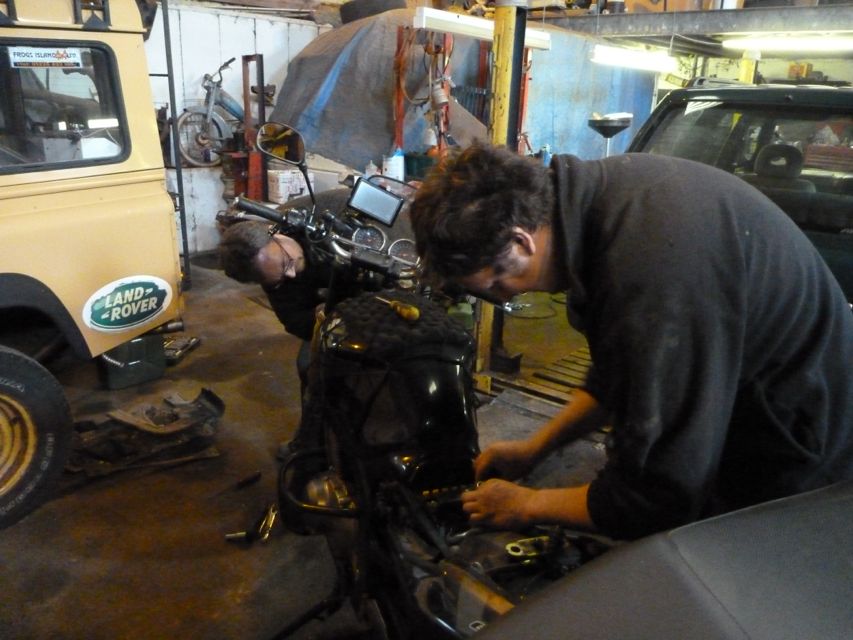
As I pulled on my clobber Matt and Andy wired in a cig socket (left) to run a satnav, and with that done I set off into the rain to see how far I’d get that night.

There were small problems of course. The only way to securely load my gear was to pile most of it on the back – some 20kg right off the back; anathema to good loading and balanced handling. The GS is especially bad as it has a short back; I sit only just in front of the back axle. If I took my hands off the bars they flapped like a flag in the breeze. Then there was the limp back brake. As mentioned, I suspect it’s down to a too large GS master cylinder working the DR650 calliper so the ‘hydraulic advantage’ is cocked up (well explained here). Even extreme pedal pressure won’t lock the wheel. And besides that, the bike was long unused and untested – the new front end, wheels, the chain run and so on. With a lot of scope for something to go wrong, I initially kept off the motorways to simplify a recovery or roadside repair.

P1060338

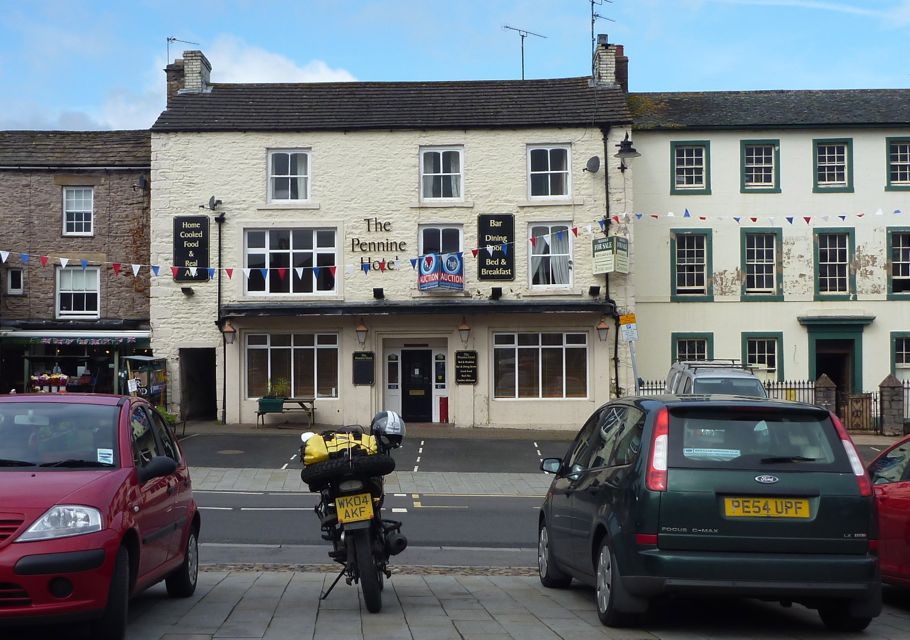
I splashed my way through the grim industrial conurbations between Sheffield and Leeds and spent the night at a mate’s in Shipley, trying to revive my Garmin Nuvi which either got wet or died of its own accord. Next day promised to be brighter before the next apocalyptic weather event (due to the displaced jet stream) bore down onto the UK. So I set off early to cross the Pennines I knew well as a walker, scooting up the A65 across the Yorkshire Dales before taking the A683 moorland backroad (left) to Kirkby Stephen for a snack in the Market Square (right). I knew this bench well too, having last sat on it at the end of a long day’s walk from Shap on the Coast to Coast path. The sun was out, but that was to be the last I’d see of it for another 10 hours.

I followed the A66 onto the M6 where the Suzuki held its own, stable enough up to around 80. I’d heard Halfords were doing specials on satnavs, but in the Carlisle branch there were no worthwhile deals. However, filling up gave here me a nice surprise: 176 miles on just 11.1 litres. That’s 25.35 kpl or 71.5 mpg (nearly 60US) – as good as the modern efi BMW I rode last March at about the same speeds. Not bad at all. With the GS’s 20-litre tank that’s 500 clicks or 300 miles to a tank. The rest of the ride got occasionally faster and fuel economy dipped by around 10%.

The weather was supposed to improve as I got further north but they got that wrong, and then I made a right mess of getting across Glasgow. I should have gone under and up the left side for Dumbarton and Loch Lomond, but with only the compass on the Voyager and not enough signs, I ploughed on northward and after an interlude in some suburbs, went back in and up on the A81 signed to Loch Lomond – but the wrong side.

Still, there was more daylight than I had energy to keep riding, so I stayed on the A81 over Dukes Pass (left). ‘It’s  a bikers’ road’ said the green-haired girl at the servo in Aberfoyle – but not in the rain with a balcony hanging off the back of your GS5. Like everywhere else, she had no map for me but said turn left at Callander, by which time I was back on roads I knew; the way to Glencoe and the Highlands.

Five pm. Nine hours on the road, I should have been starving and wilting, but was feeling OK. Fish and chips is one of the most over-rated Brit dishes, but I tell you what, a haddock supper at the Real Food Cafe in Tyndrum with their home-made tartare sauce might be a bit skimpy and pricey, but was just about the best I’ve ever eaten.

From here it was about another 200 miles – probably four hours with another fuel and snack break. Up over lonely Rannoch Moor, a tempting nod towards the cosy Kingshouse Hotel and down through the famous valley of Glencoe (right). In and out of Fort William – Scotland’s ugly but functional outdoor adventure capital, and then a route I’d not done for 30 years, up the side of Loch Ness.

rodney

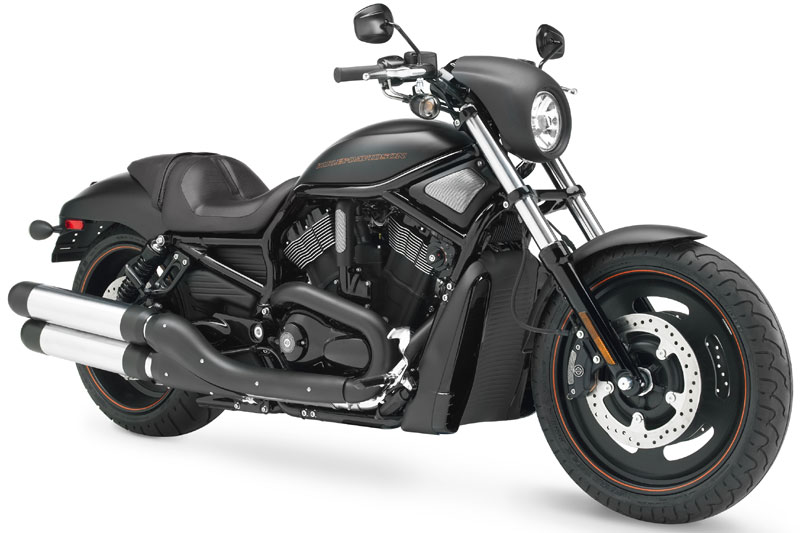
By now roads were drying out and the ill-balanced GS and I had melded into one amorphous lump. You know that feeling at the end of a long day’s immersion on a bike; you’re shagged out but riding intuitively while the bike itself is warmed through and on song. But you’re not a machine and eventually you’ll get too tired to concentrate, so I pulled into a village servo for a chocolate injection and took a quick sit on a German bloke’s knee-high Harley Night Rod (top left) with a back tyre three times wider than mine.
On my near empty stomach the Star Bar the trick. I perked up and rode away from the uninspiring east coast farmland, west over the moors and down to the Hebridean shore. A moment’s rest on Ullapool waterfront to wipe the bug-splattered visor against the setting sun, followed by another hour’s ride into the mountains of Assynt and touchdown.

gmap

Five hundred and fifty miles or nearly 900km in 14 hours, with about 12 hours of actual riding rarely over 60mph. Nineteen hours of daylight helps of course, but this wasn’t like crossing the Montana prairie. I’ve not ridden anywhere near that far in the UK before, but was surprised to arrive with no single source of discomfort, be it back, butt, neck or knees.
That suggests that the GS is pretty comfortable overall, even tensed up riding an unfamiliar bike in wet weather. As on any bike, the over high footrests can be dealt with by stretching the legs forward once in a while, and I plan to fit some flat track bars off an American Bonnie. The screen needs to grow to a useful height, too but must have had some positive effect. And when I think how I suffered on that BMW in March, you got to give full marks to the Suzuki seat.

The DR front end brakes fine too; it’ll be great to have the back doing the same. Most of all I feel the 19-inch front wheel was worthwhile. On a 21-incher the wet bends and higher speeds would have been a little more edgy. As for the skinny back tyre, no moments there (a pretty worn Metz Tourance 110/80 radial marked ‘front’, plus a Chen Shin Hi-Max 110/90 on the actual front). I wonder if that back radial at 36 psi helped the mpg? Either way, I look forward to having the GS shod with new Heidi K60s on Tubliss.

Didn’t have a chance to test the headlight – it’s never fully dark up here at the moment – but I’m sure it’s terrible. And that light is on all the time, even when electric starting which seems dumb. A switch is needed. The indicators and back light are aftermarket LEDs, but some sort of HID will be in order to help light the path. A mate’s recommended the VisionX Solstice for nearly £100.

According to the Trail Tech Voyager’s wheel-sensor based data, the GS’s cable speedo reads 12% over with the 19-inch front wheel on a [21″] DR hub, but the odometre is only 2% over. The Trail Tech packed up towards the end of the ride – it wasn’t charging off the bike (loose at the battery, easily fixed) but while it worked I loved it. Engine temp, air temp, compass, speed and odo – all things I like to know. And it’s has a map page too, though aimed at short range trail riding it can only handle small maps. Looking forward to delving more into this gadget.

At 30-something hp, the GS doesn’t exactly crease tarmac on steep climbs. And it needs to be spun at over 4000 to respond. At 5300 it’s indicting 70 – a true 63mph. I rarely rev it higher through the gears, but that’s still only halfway to the rather far-fetched redline of 11,000 rpm. Compared to other things I’ve ridden there’s not much torque low down in this thing, so I suspect the GS-R would be unresponsive on the dirt. It’s still on the tall side and heavy for that too, plus the pegs as so high the bars would be at knee level when standing, but the suspension isn’t flabby or harsh, and there’s more than enough of it. I do wonder about the strength of the frame for overland travel. I know it’s only a cheap a Suzuki, but it doesn’t look especially robust close up. All the more reason then to keep the load light and low.

What’s it all cost me? The bike was £1500 (five years old and 11,000 miles at the time). The Talon wheels built onto DR hubs were £400. Back shock £40, DR front end £200 by the time I bought a spindle and speedo drive. Other bits £200. I got back a few hundred quid selling the original GS500 front end, wheels, shock and other bits which paid for the labour, so we’re looking at around £2500. Add the new tyres and Tubliss cores for £250 and whatever it will cost to fabricate a rack. Spread over the years that’s not had too much of an impact, and the great thing with the GS5 (less so the DR650) is that parts are dirt cheap. There are chassis on ebay now from £30. Once completed it ought not cost much to run the GS-R.