A trip report from March 2017 while updating my Morocco Overland book. It got very hot in the desert for a while which wore me right out, but I rested in Tan Tan where it cooled off for a few days, so I dived back in before the heat came back for good.
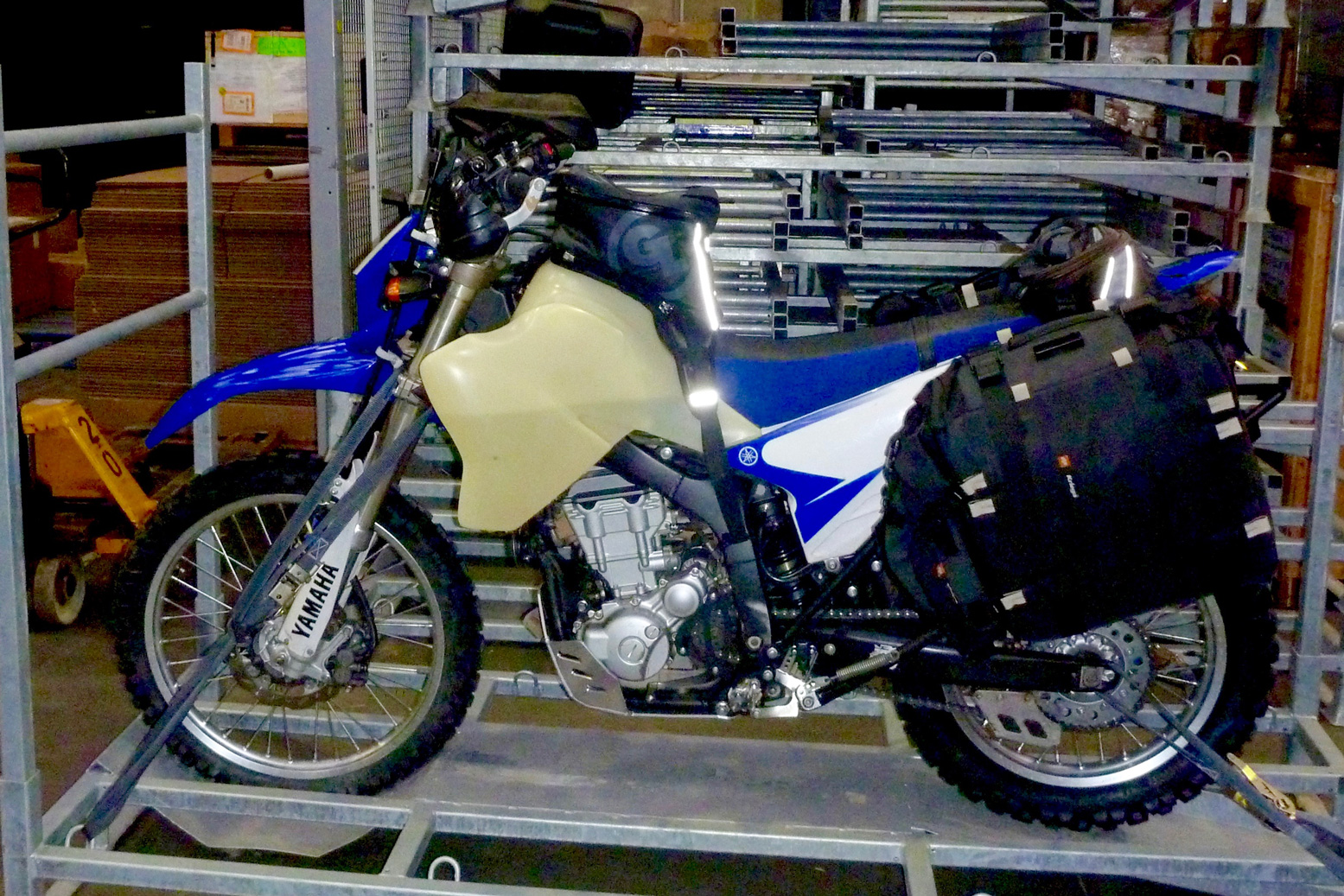
This time I used Fly & Ride to get the 250 to Malaga. Didn’t fancy Spain at 57mph. Works out cheaper too when you add it all up. Done trans-Spain enough times.
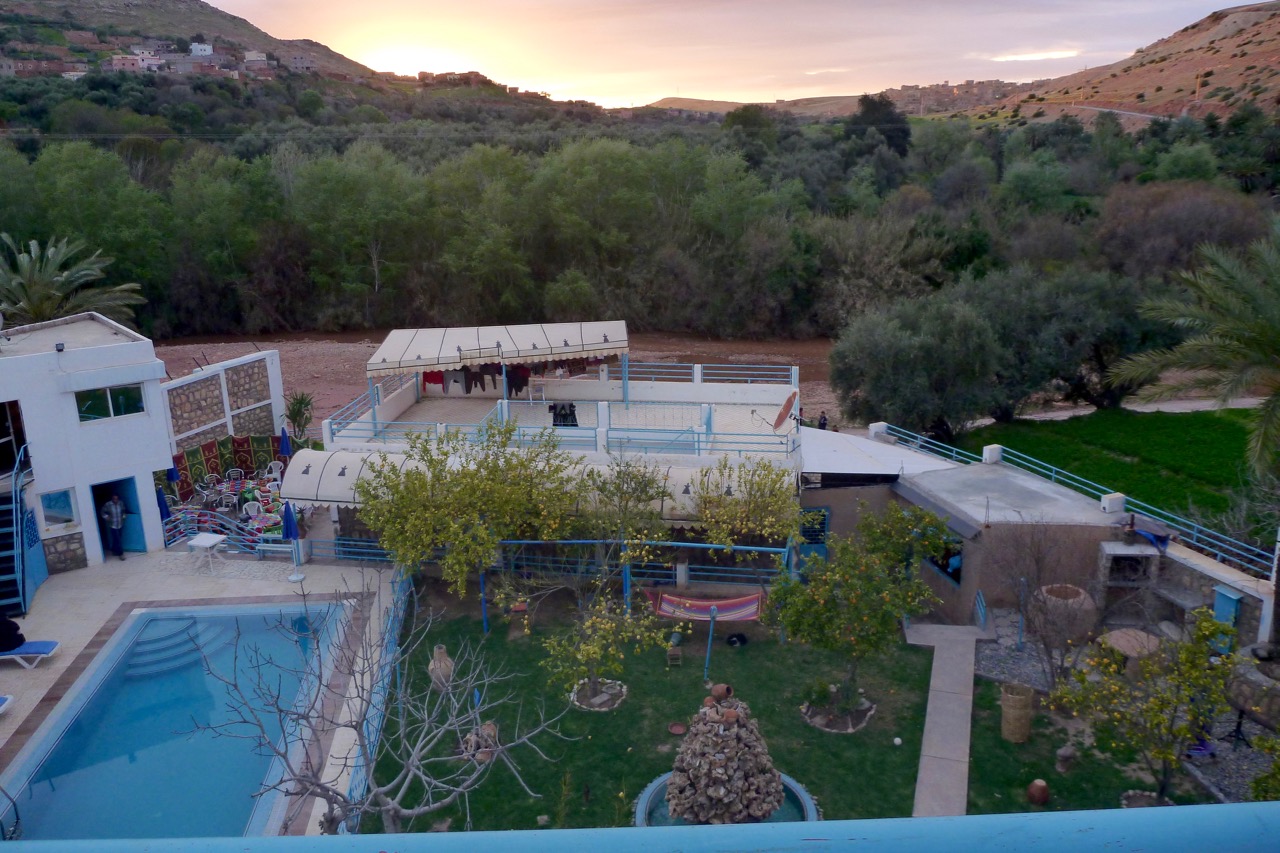
Gales meant the ferry took over an hour to dock at TanMed, and next day was miserable – down to 45 in 4th at times. But there’s no quick way to get south as nothing was going to Nador. I try Airbnb and find this lost resort up a valley near Bzou.
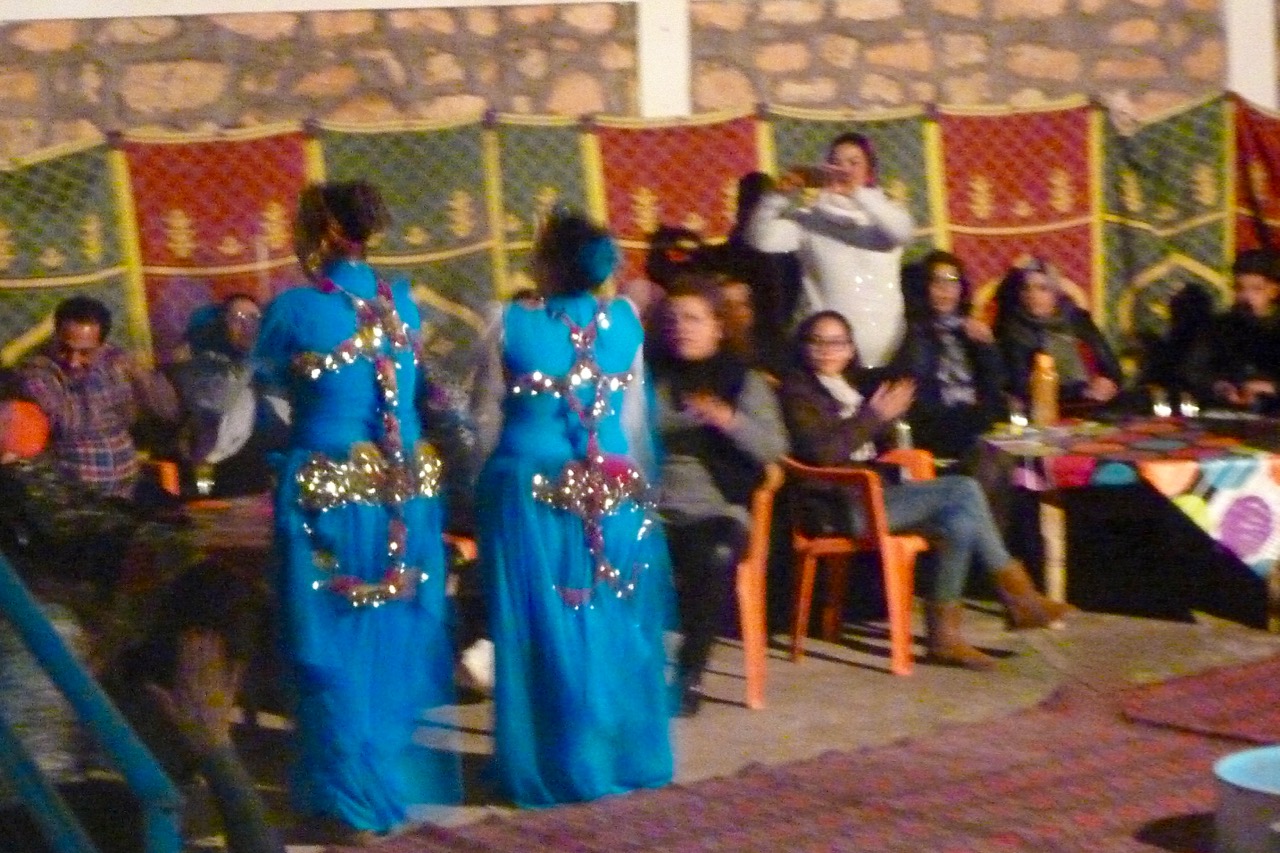
I inadvertently gatecrash a Berber soiree. No room at the inn so he feeds me and puts me up down the road.
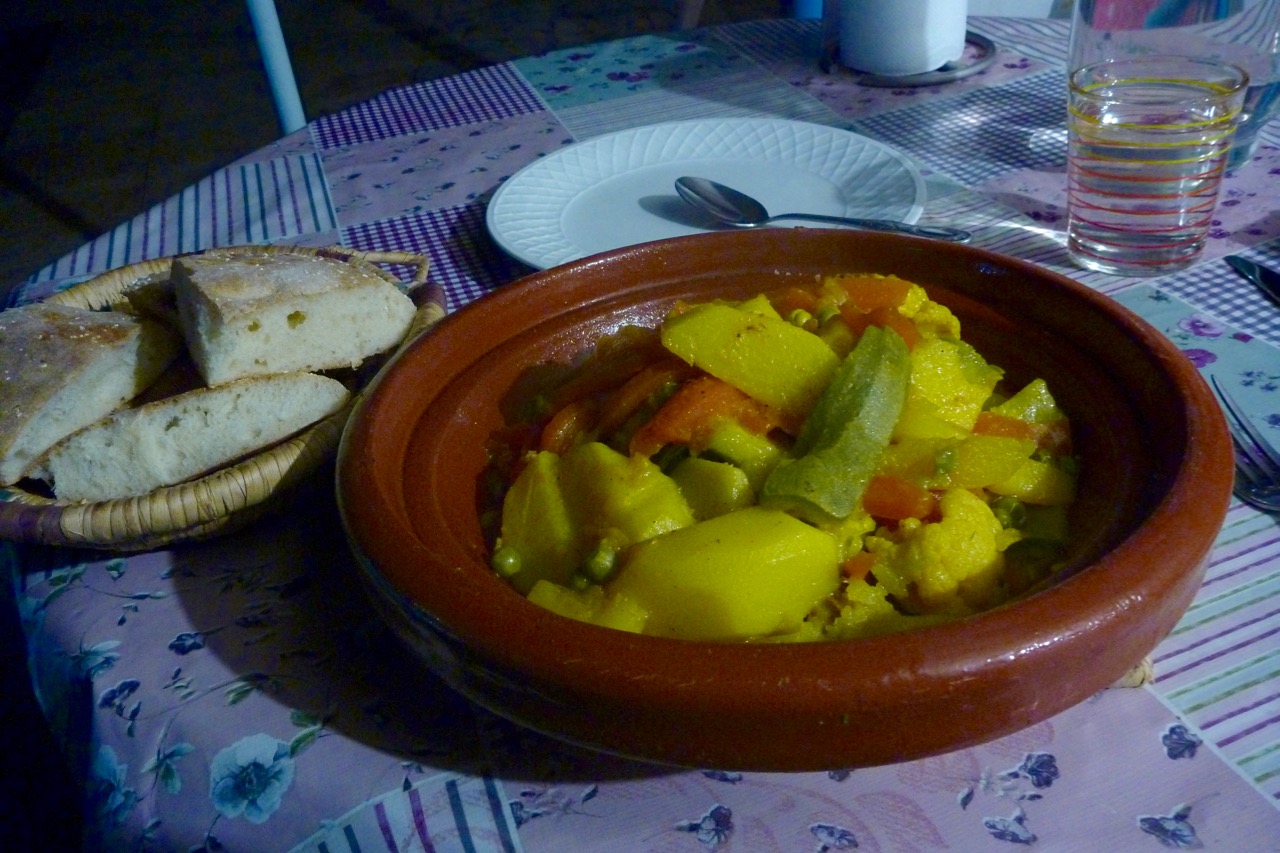
My first tajeeen of twenty-seventeeen.
Next day I got my bike back – pootling though the springtime Middle Atlas without fighting gales and showers and trucks. 95mpg thankyouverymuch.
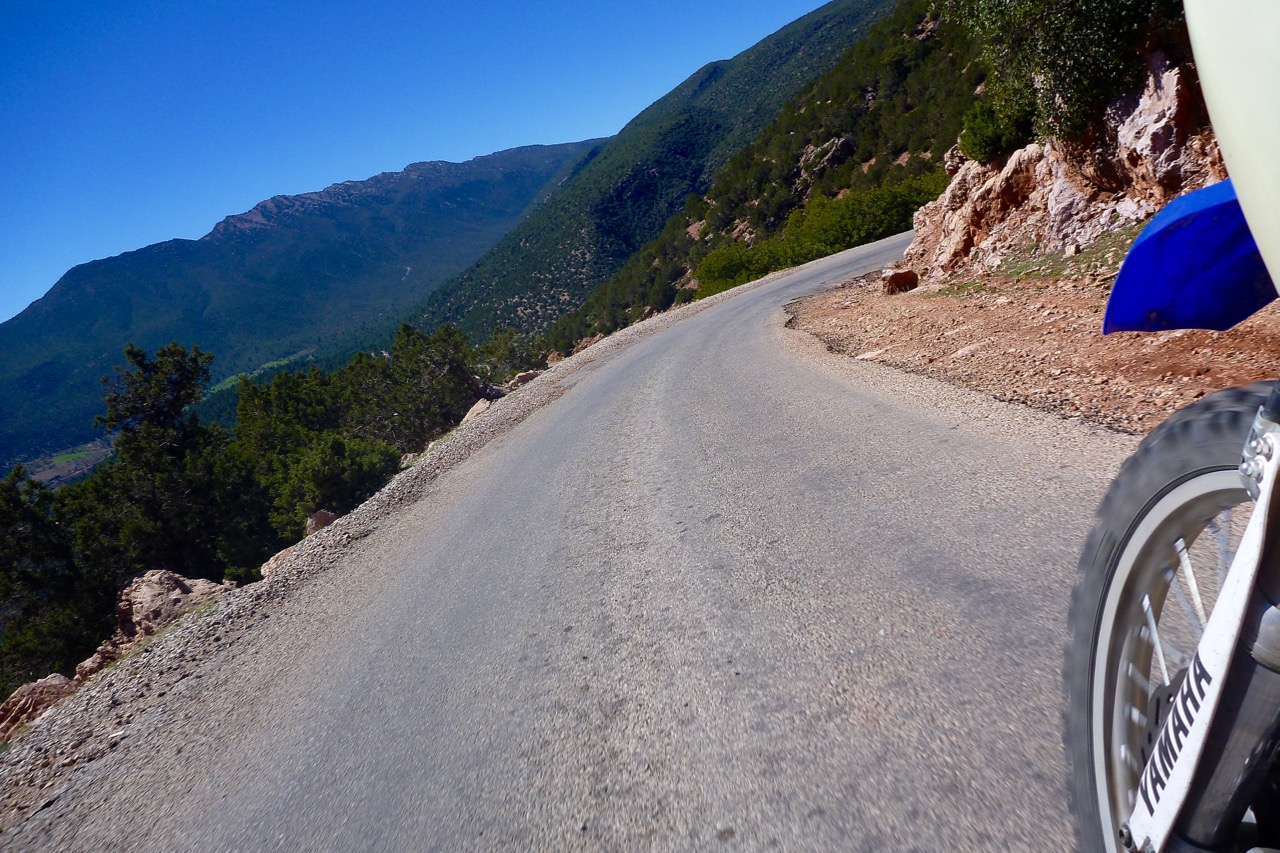
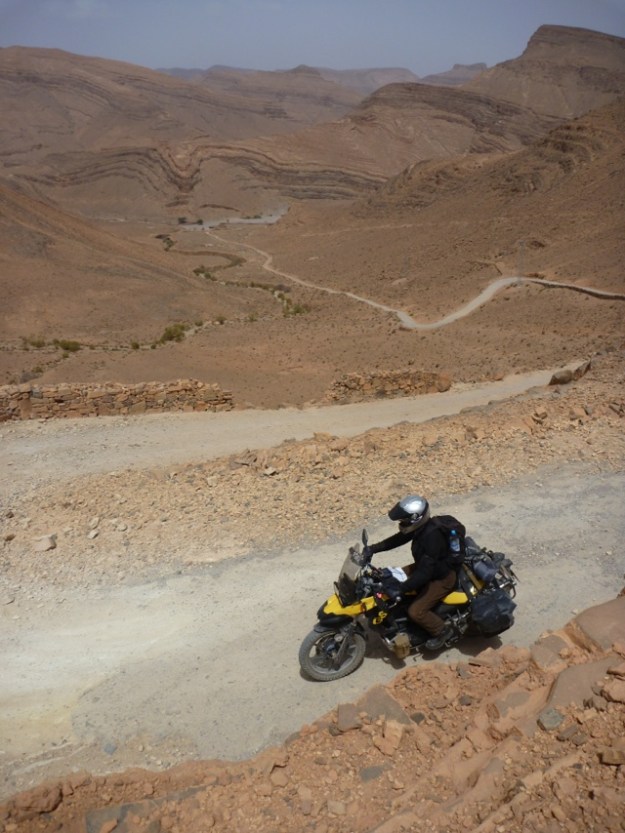
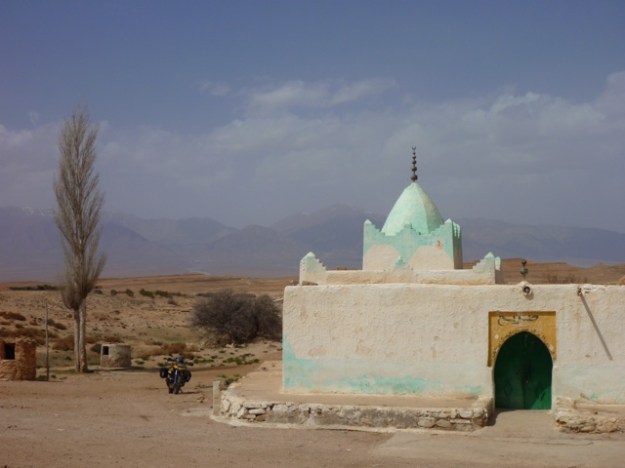
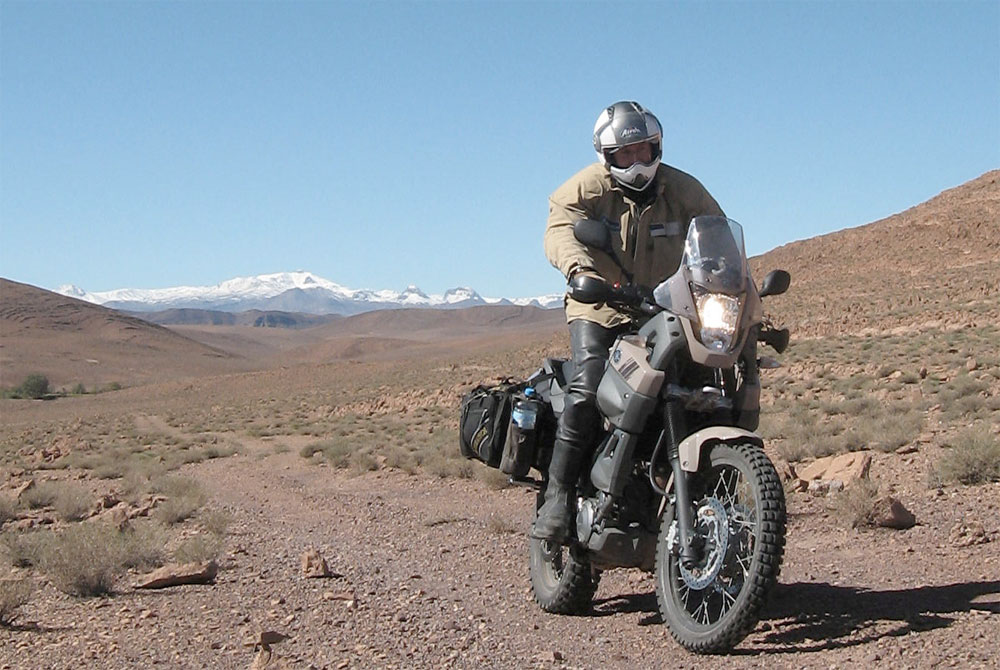
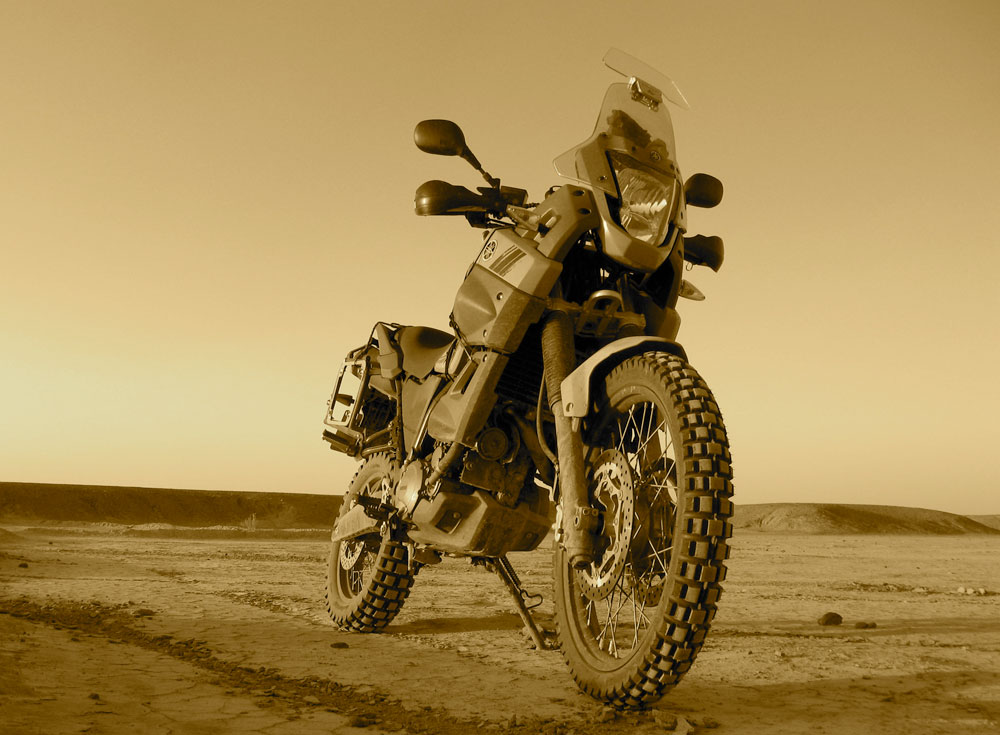
I take the old Demnate route over the High Atlas. Last did it on the XT660Z in 2008
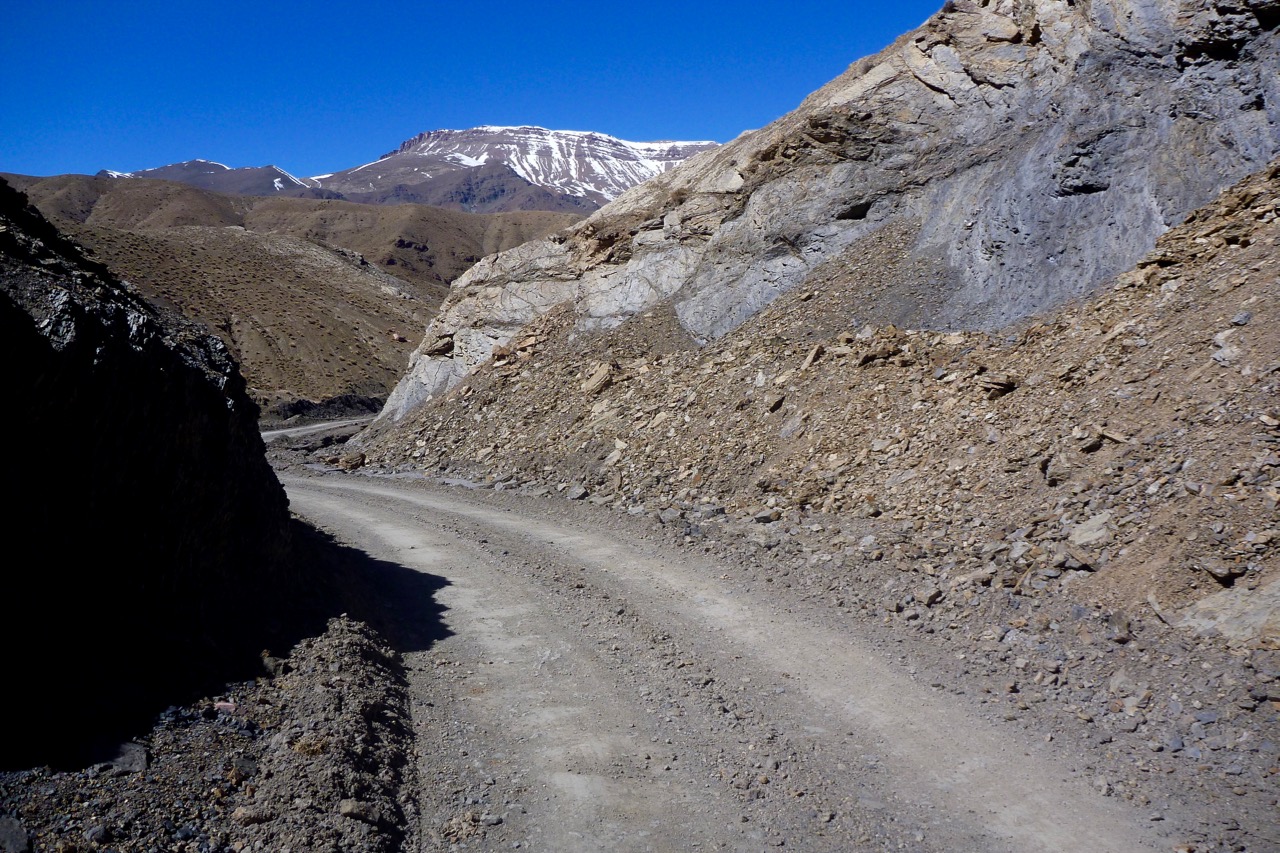
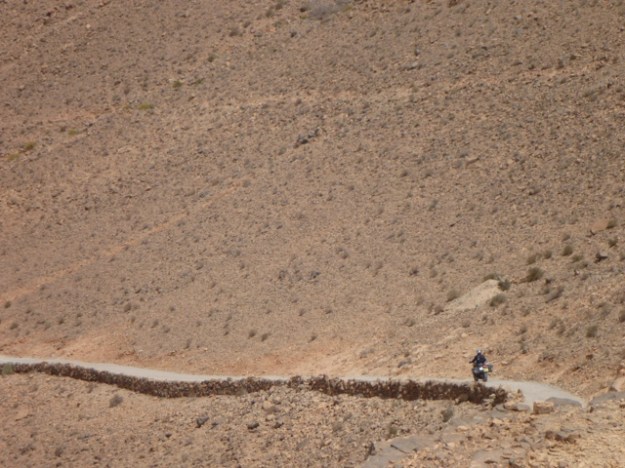
The road deteriorates in places. Lots of landslides. Near zero traffic.
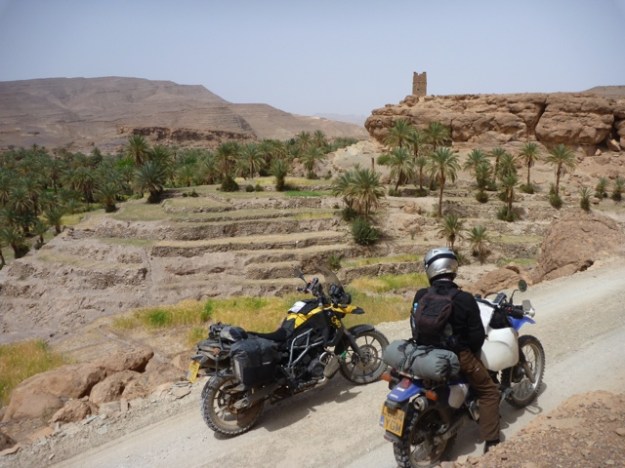
I pop out on the south side overlooking the headwaters of the Oued Draa near Ouarzazate. There’s a huge new solar farm down there.
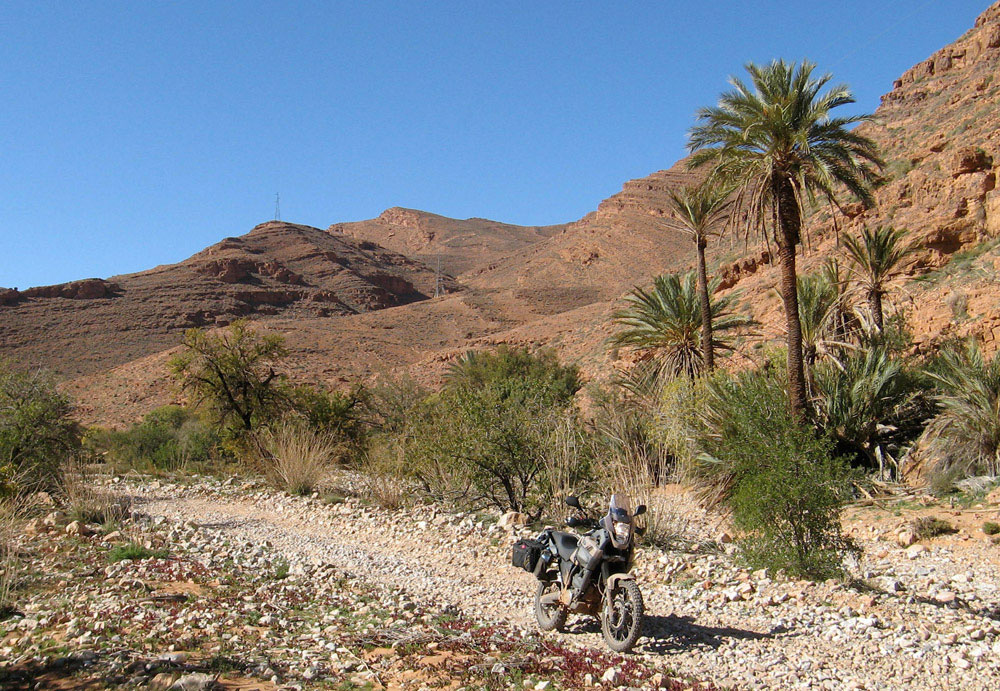
After some fumbling about, I pick up a new piste from Ouarzazate to Tazenacht.
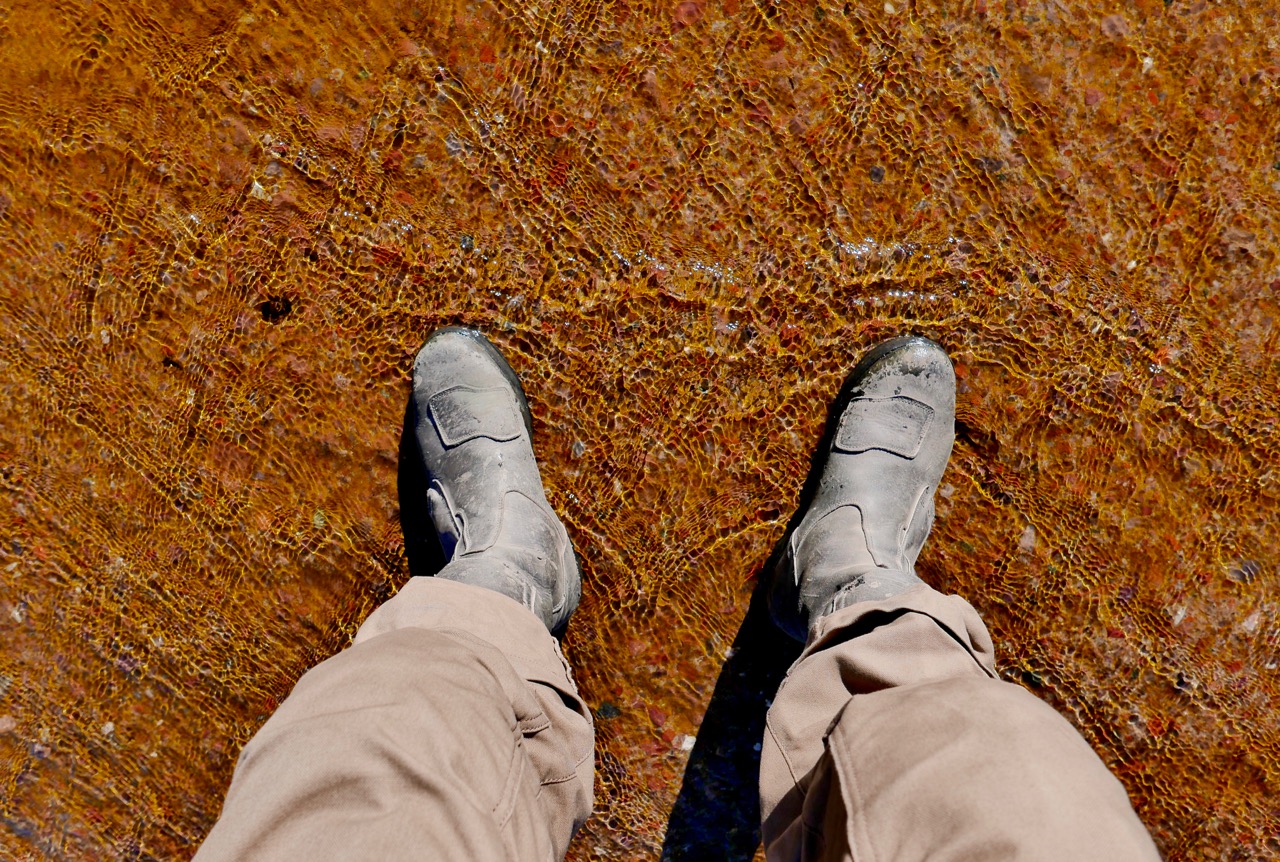
Nice colours on the ford
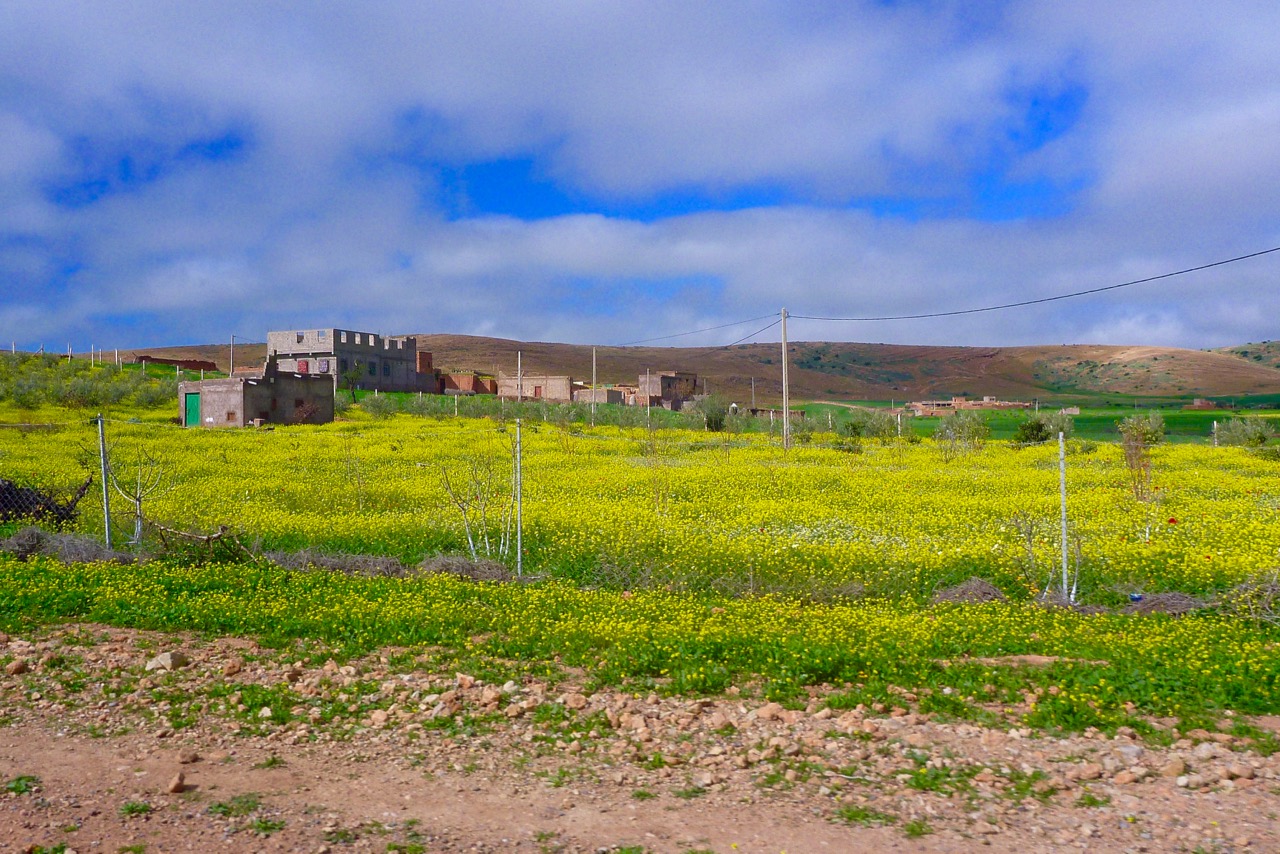
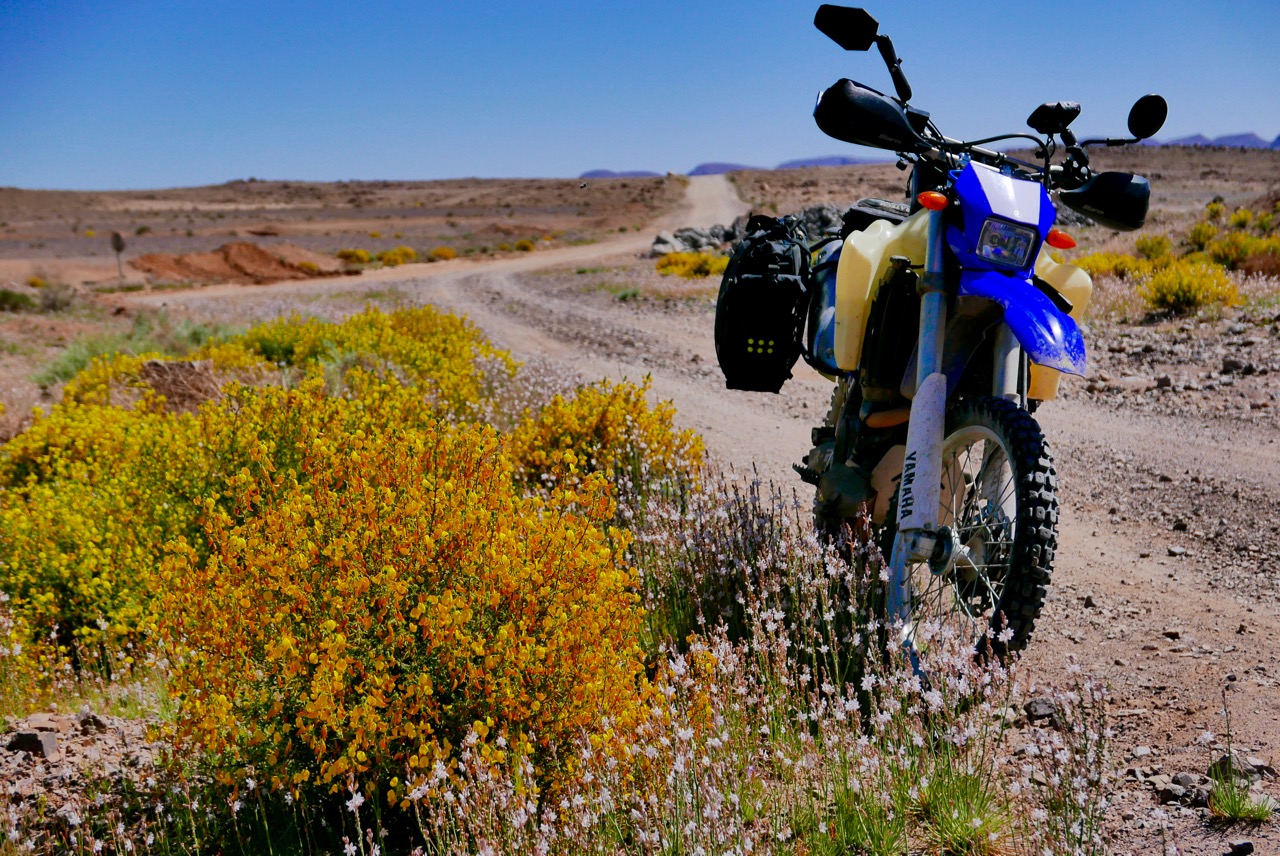
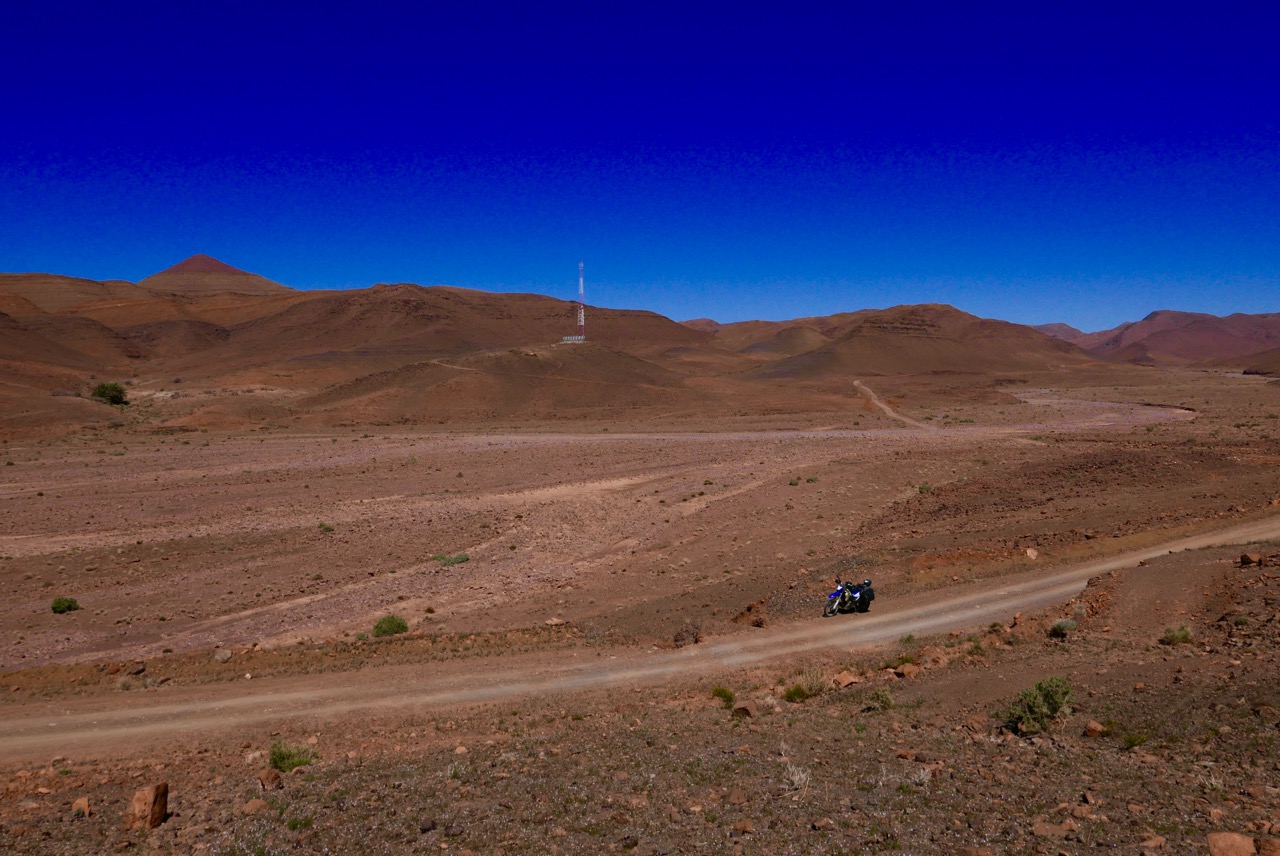
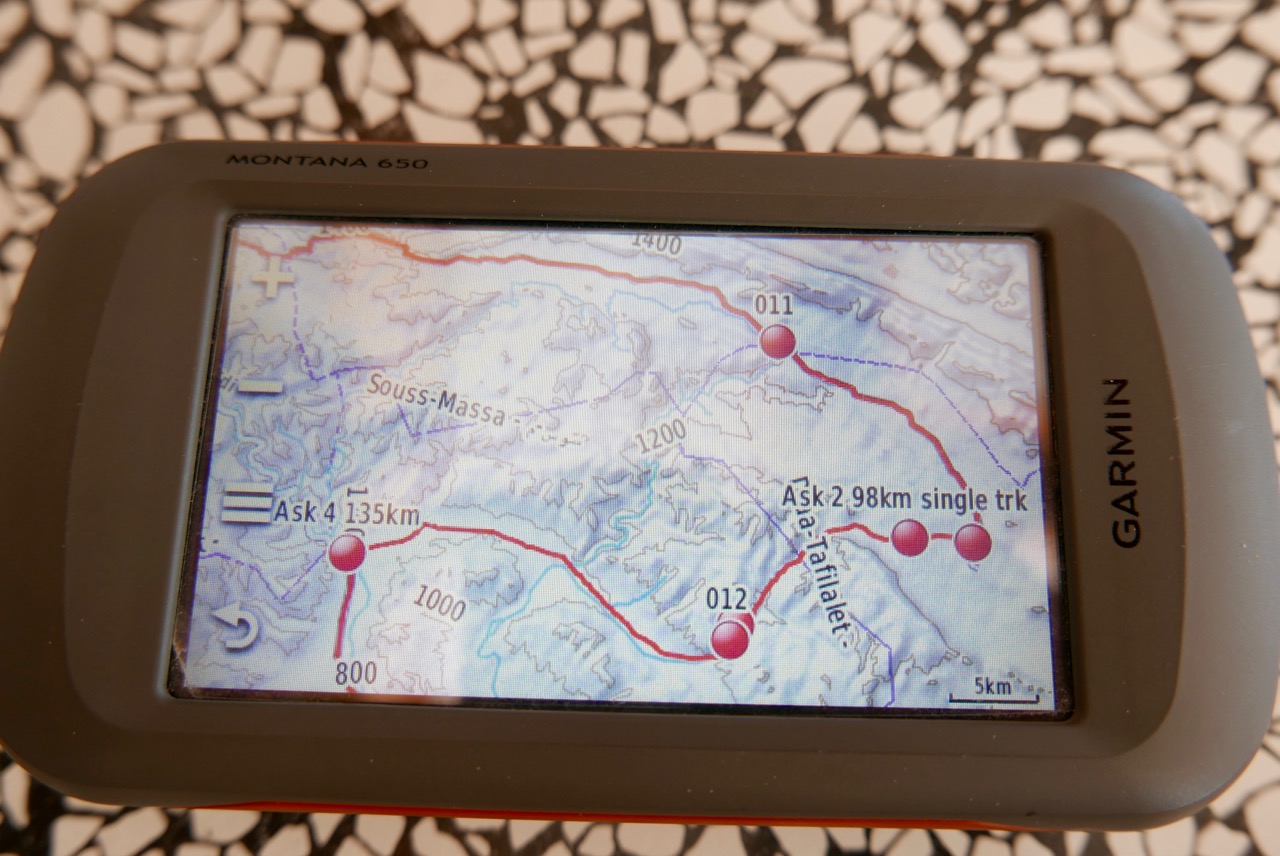
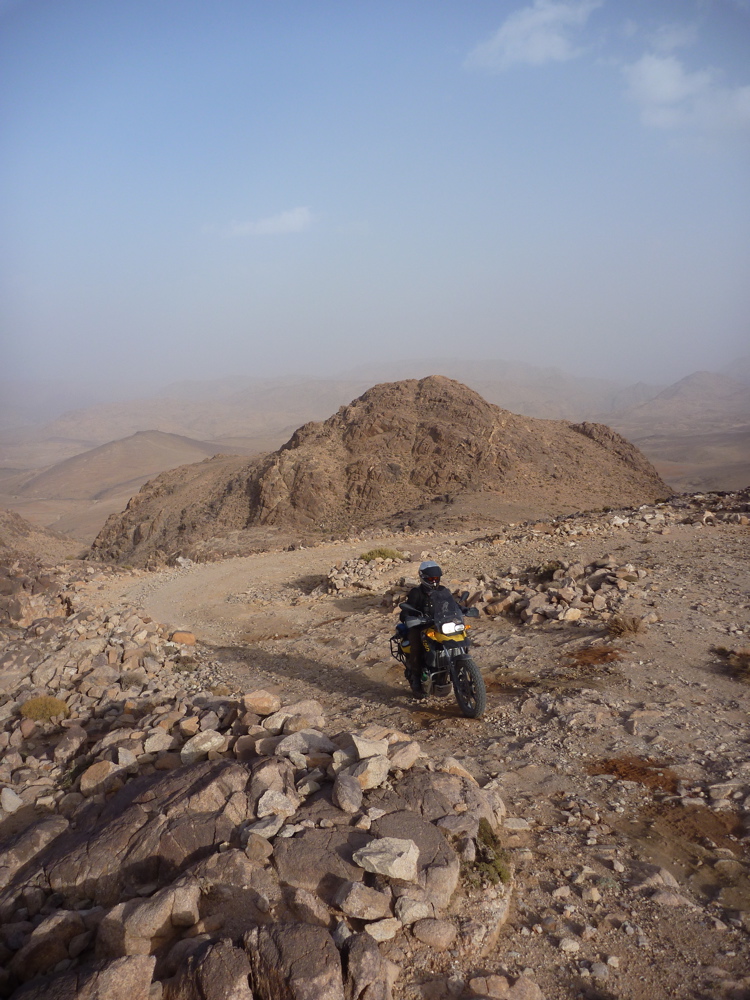
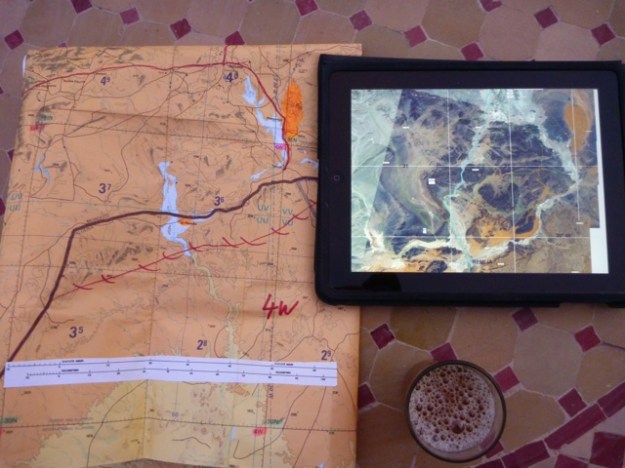
Next day another new piste I’ve been wanting to unravel for ages. Olaf map is confusing, but an old man in a village puts me straight Wildflowers are out.
I’ll take the odd mast over photo-bombing telegraph lines any day
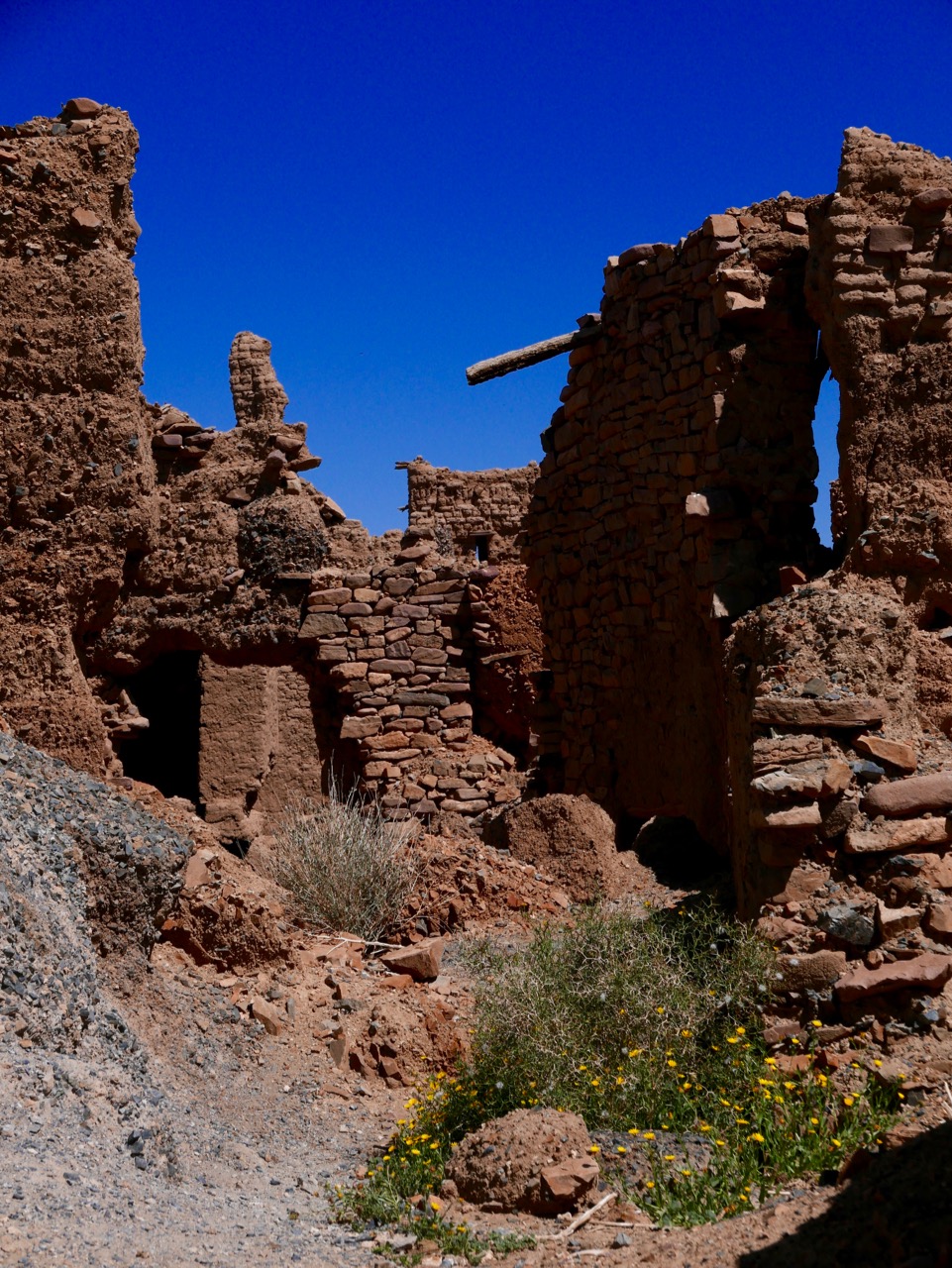
The ruins of Assaka ksar.
No Canoeing? Shame.
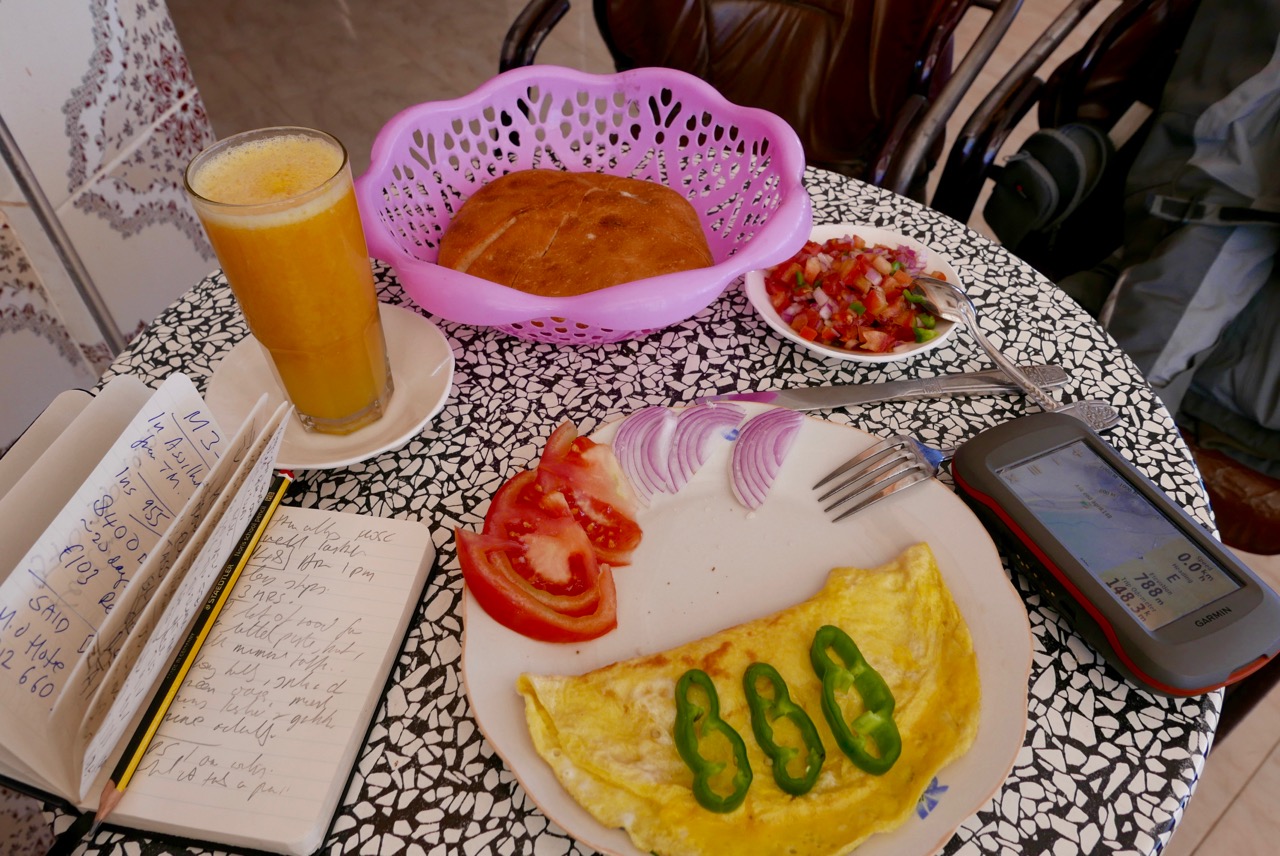
Perfect lunch at Foum Zguid roadhouse
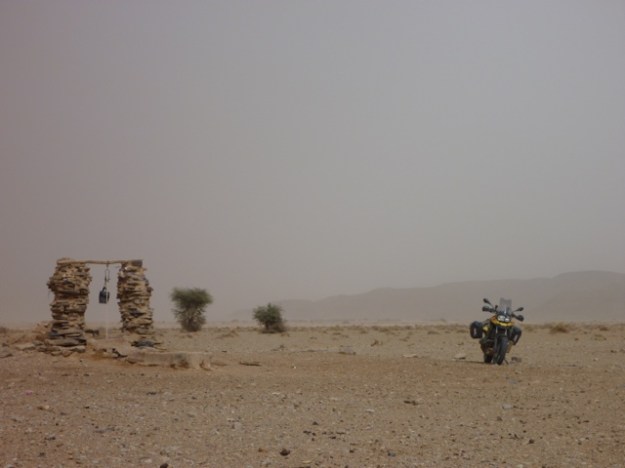
A good morning’s work – but it is now as hot as.
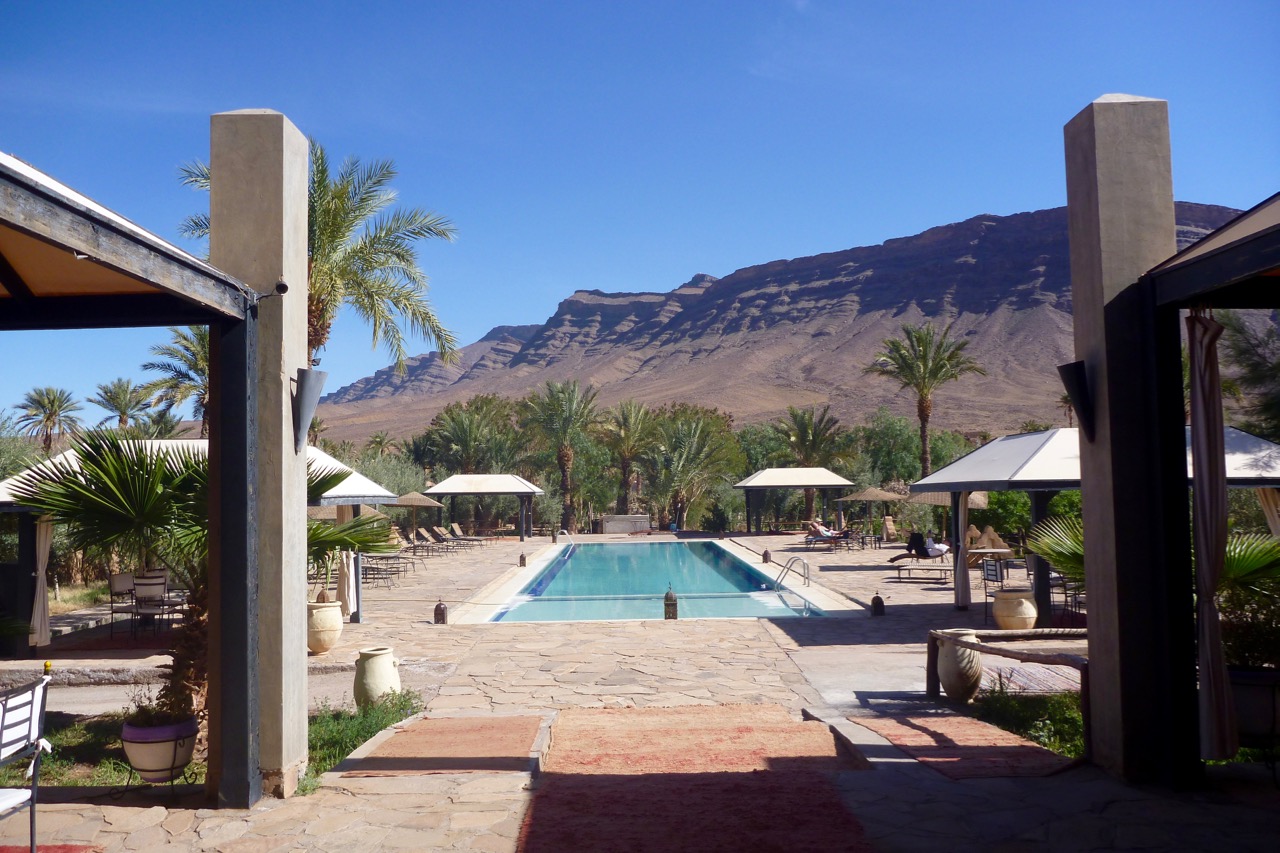
I check out a flash place for a future tour, then head into FZ for my reliable cheapy: 16 quid half board √
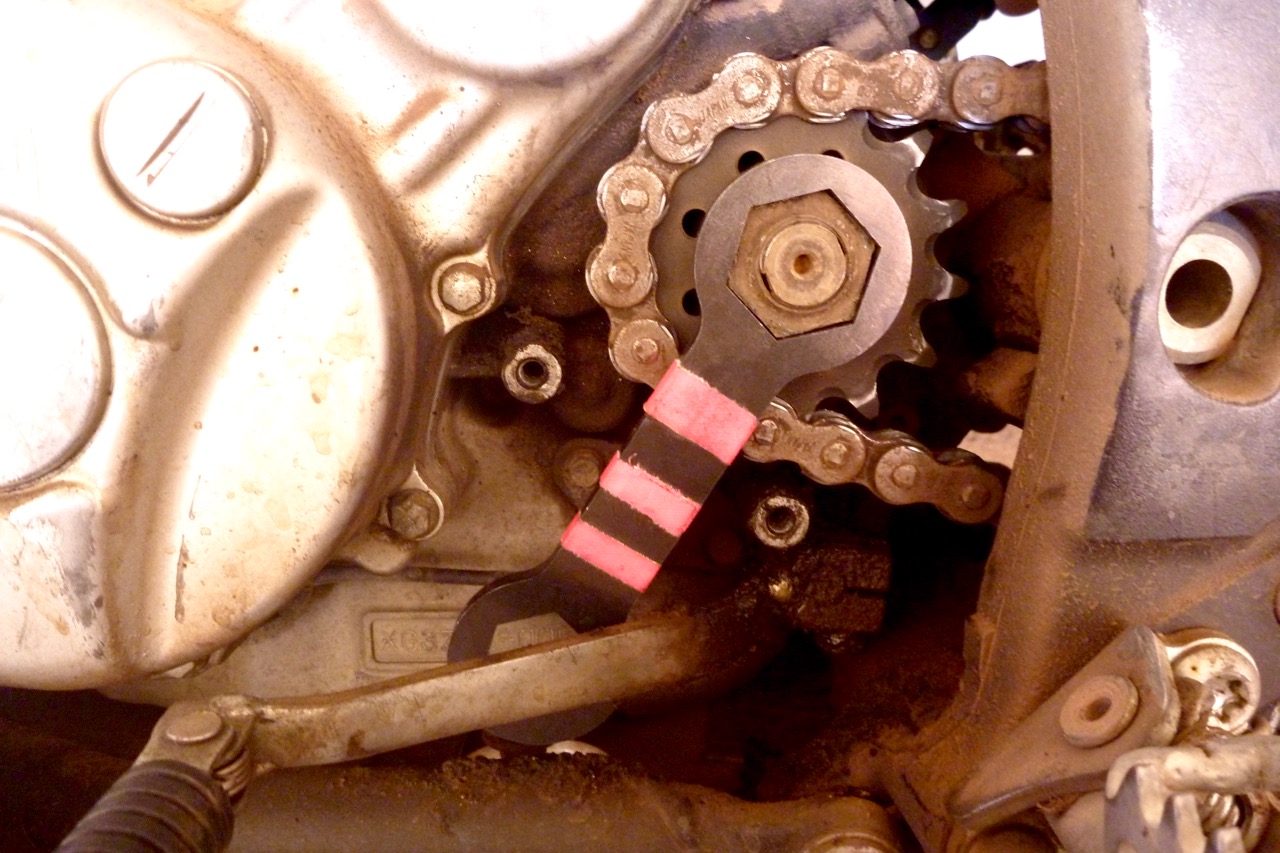
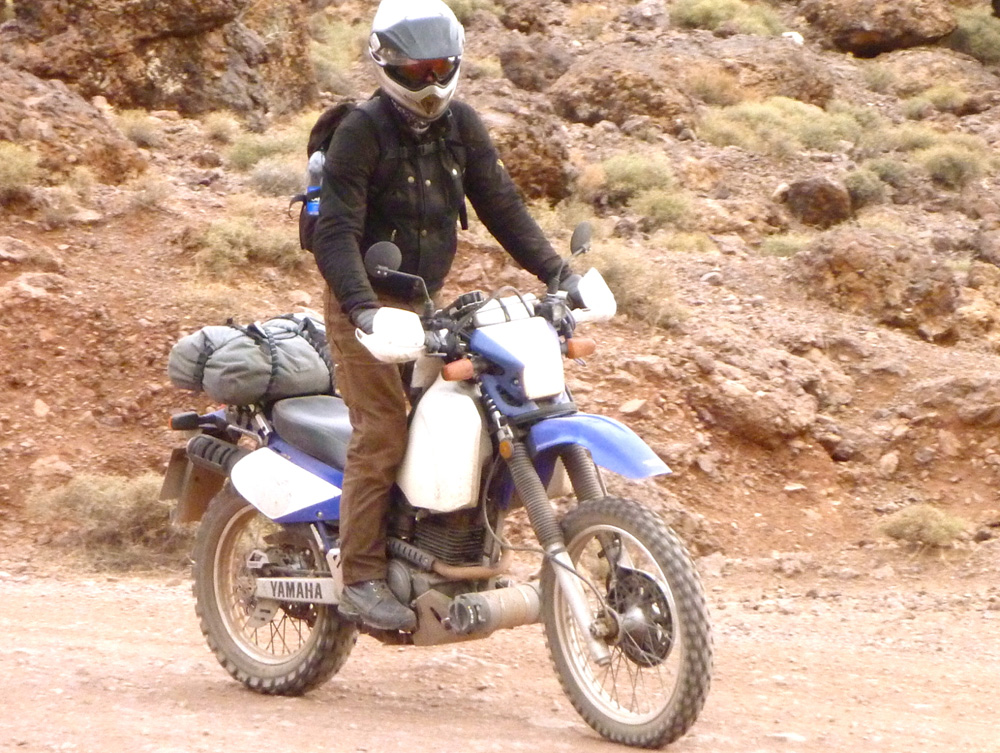
At 14-47 my bike is over geared even on the road, and my weight and wide pans don’t help. But the flat wheel wrench won’t fit – who’d have thought? – so I nip into town to blag a 27 socket as there’s gnarlier dirt to come…
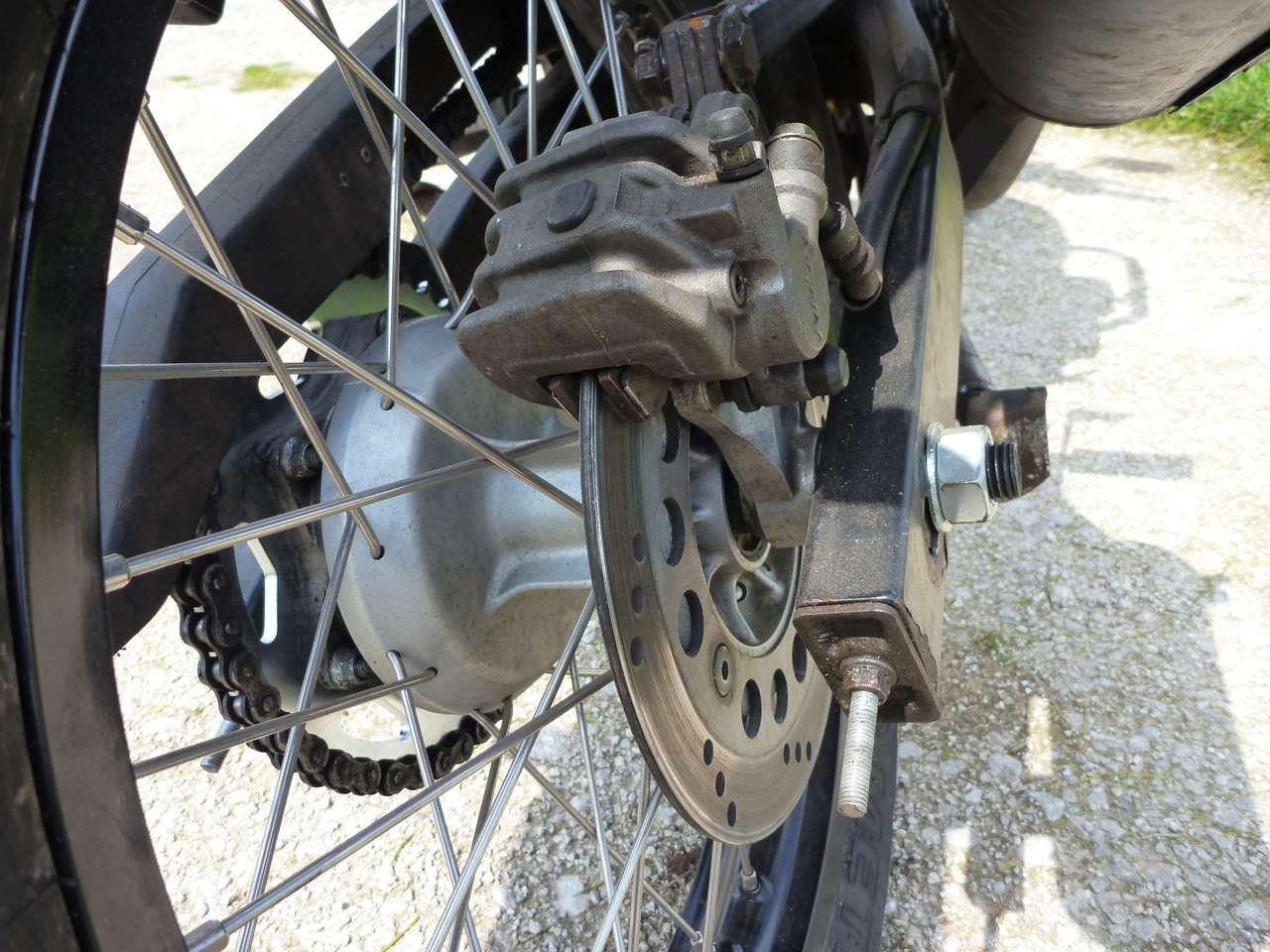
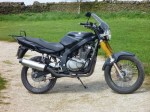
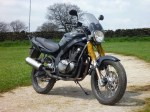
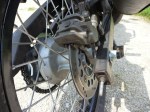
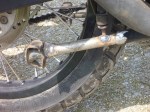
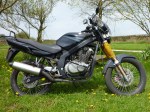
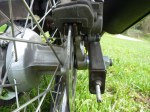
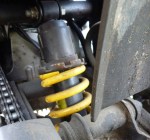
The GS500R Overlander project bike is taking shape, although it’s not quite a fully set jelly. The critical mod: adapting the rear DR650 hub and brake to fit the donor bike’s swing arm and chain run has been completed pretty seamlessly by Matt and his team of farmyard engineers (see pic below).
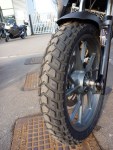
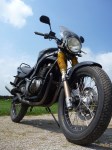
I know what you’re thinking: why does the front tyre look fatter than the back – is it the camera angle? No, it’s just that at the time I didn’t want to waste money on new 19-inch tyres in case the GS turned into what the French would call, unpiège de mort. So I bought used cheapies just to get the thing rolling, first for the front, and a while later another for the back which was not identical. Just as well really, as following my recent Morocco trip I’ve discovered that Heidenau K60s are the ‘bomb’, as the bloke on the right would say.
Half-built impressions of half-baked bike It took a bit of firing up off Matt’s V8 Landrover offroader to get the GS running while whipping out a plug to dry and blowtorch. Even then the GS didn’t seem to run well. Was there a badger nest in the air filter? I could barely pull up the track to the road, and while slipping the clutch mistakenly thought it was because the gearing was way off. As with most things on this build, we took an educated guess here, but at 42/16 the gearing’s actually turned out to be in or around the ball park.
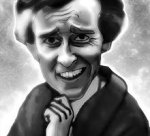
Running down to the village to top up on fuel I thought, jeez, this 500 really is a lot slower than the BMW FGS650 twin I’ve been riding lately. Of course that bike has got at least twice the horsepower and 20 years of development on the G. Heading back, the weight of that extra tenner of unleaded in the tank saw the bike struggle to escape the dale. Something was not right. I pulled over and pulled off the left plug cap – no difference. A ha! as the bloke on the right would say. A little bit of fiddling with the plug cap got past more cobwebs, the second barrel fired up like a Saturn V and suddenly the GS500 was running like… a GS500.
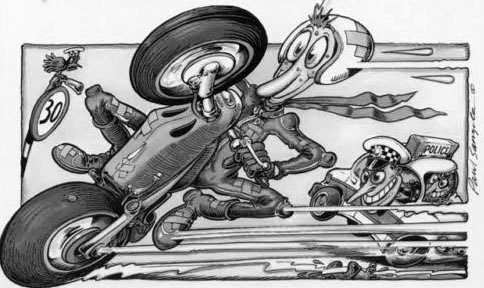
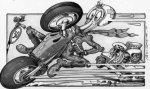
I tore off up the lane like a teenager on his first moped, awestruck at the feeling of raw power. Like Ogri’s beaky-nosed mate Malcolm (left) I was heading for a prang, so it was time to consider braking. The DR650 front end’s disc had been binding a bit as the pads off one scrapped DR got to know the disc rotor from another. A quick check at the fill up proved that the rotor wasn’t getting hot and causing the lame performance. In fact, yanking the lever did see the forks dip hard in response so it can get there if it has to. I guess it’s just not the quality of braking I’d got used to while running the 2012 BMW. The back brake was considerably slacker, partly we suspect because the DR650 calliper which had to be used to clear the Talon spokes, may not compliment the bore of the GS’s master cylinder. So the back brake is mushy and with a long throw. Maybe a bleed or a braided hose will bring it round, or a master cylinder off a DR.
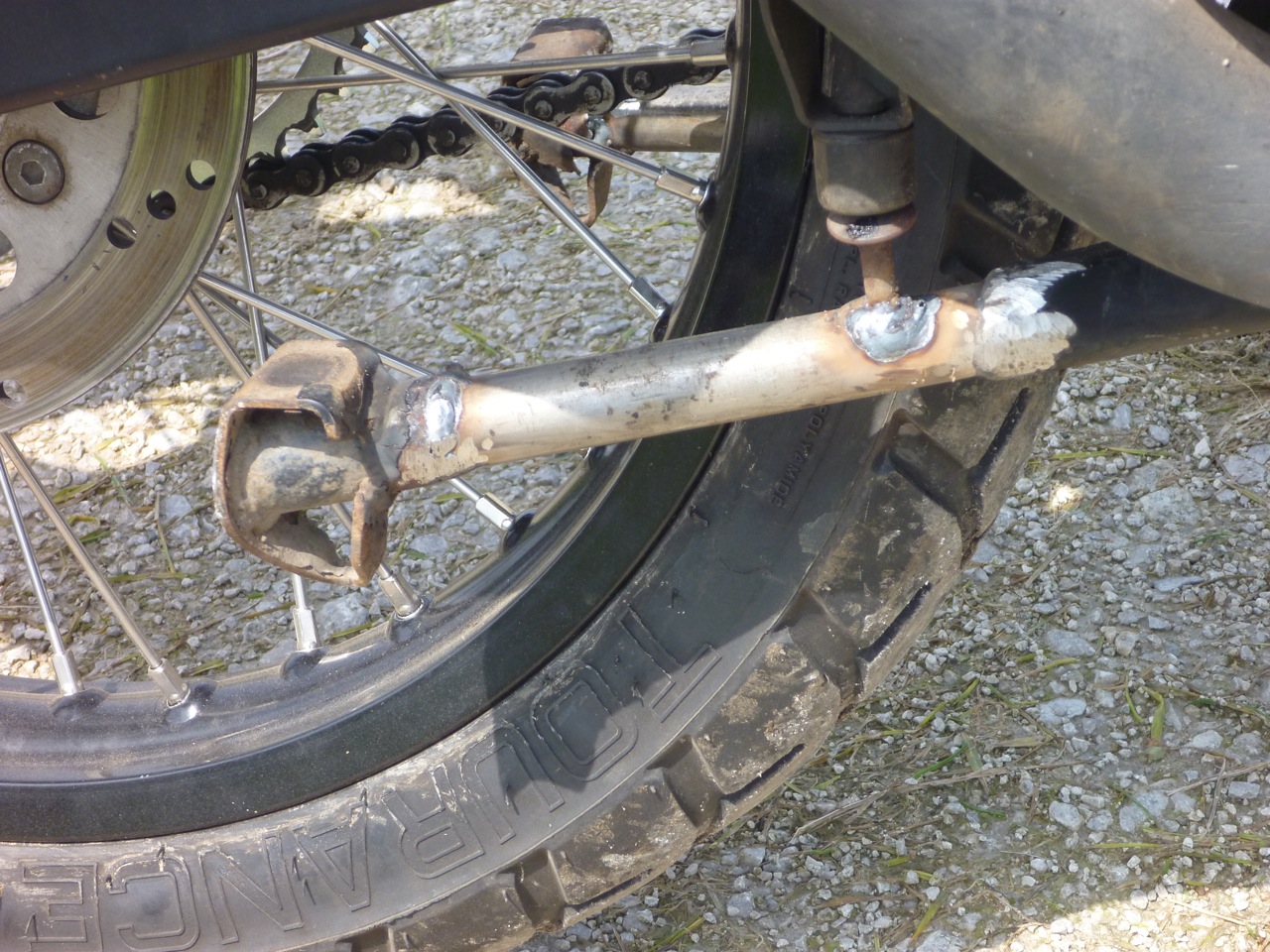
Another problem. The main stand had to be extended by several inches (right) and it now takes an extreme heave to get the bike up; not something I could see myself being able to do with baggage at the and of a tough day on the road. The feet are now clearly too far back from the pivot point for the factory-set leverage. And yet it’s as long as it needs to be, lifting the back a couple of inches off the deck, like a normal stand. Curved stand feet could get round this.
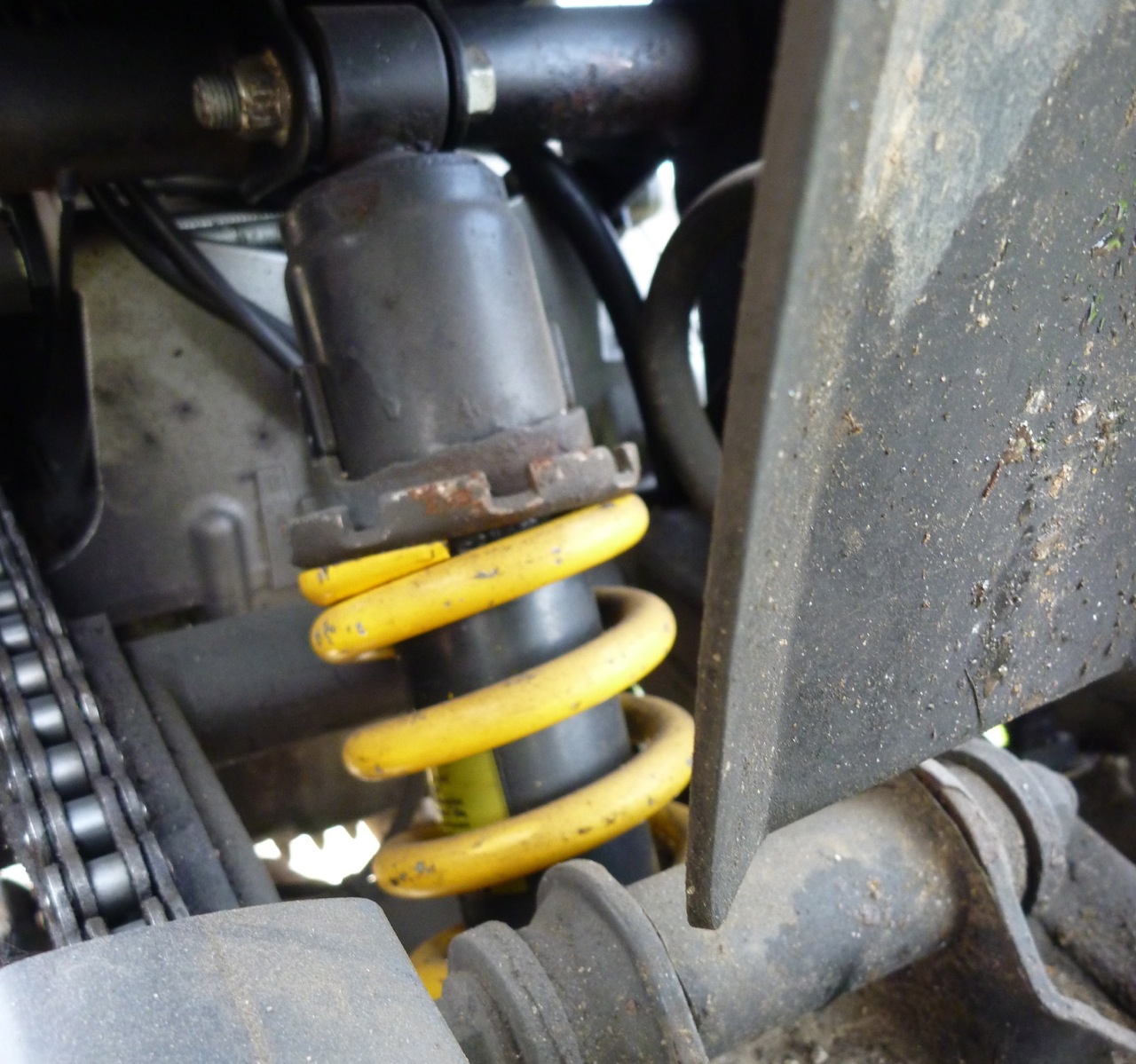
But in fact when I think about it, the GS is a bit too high; I can’t get my feet flat on the ground. With the new suspension and the 19s it’s probably jumped up at least four inches judging by at the extended stand. I really appreciated the BMs low height on the dirt in Morocco and am not looking for masses of clearance on the GS-R. In fact this will be easy to modify: slide the forks up the clamps and back the shock off max preload where it is set now (left). Didn’t get a chance to do all that, as it was a flying visit to the Mattlabs.
Steering feels a bit slow too, but I think the height may have something to do with that. As it is I don’t think the steering of a regular GS500 would get a job in a bread slicing factory. Getting used to the bike and modulating suspension levels may fix all that, and anyway there are new tyres to come. The dirt bars too felt a bit narrow for my liking, or no wider than stock and maybe could do with a lift. Again, easily done. It’s hard to tell if a thinner back tyre greatly affected the steering or ride, not having ridden a bike with back-to-front tyres before. My plan is to run identical-sized tyres front and back. One thing’s for sure, the seat feels great, although as mentioned earlier, the rear-set pegs could stitch the knees up on a long day – and that could be crippling. So maybe some sort of highway peg off the crash bars will work. One good thing, even though it’s tall right now the GS feels pretty light for what it is and a good 20 kilos lighter than the BMW GS650 which was at least 200kg. Might try and weigh it one time.
What’s left to do Once the above mods are seen to Matt the Mig or Andy the Arc are going to fabricate a rack, but not just another off-the-shelf, too-far-back, 18-mil loop jobbie like I used on Morocco on the BMW. Something as securely mounted, but with a hinged or somehow retractable platform plus a ‘sheep rack’ platform on the back – always handy. That way the pans can sit rather than hang – a much better arrangement for an overland load, IMHO.
I was going to fab’ some PVC pannier liners with a heat gun and roller, and a mate had offered to sew me up some Cordura outers. I would have kept the Monsoons I used in Morocco if only they had been my ‘Fibonnacci shape’: less wide, more long and bigger, but since writing this Adventure Spec have started selling a ‘Magadan bag‘ with input from Walter Colebatch and based on the Steel Pony Gascoyne he’s used in Russia and a bag whose dimensions I’ve admired myself, if not the canvas fabric. If all the hard work’s been I’m be happy to order me a pair.
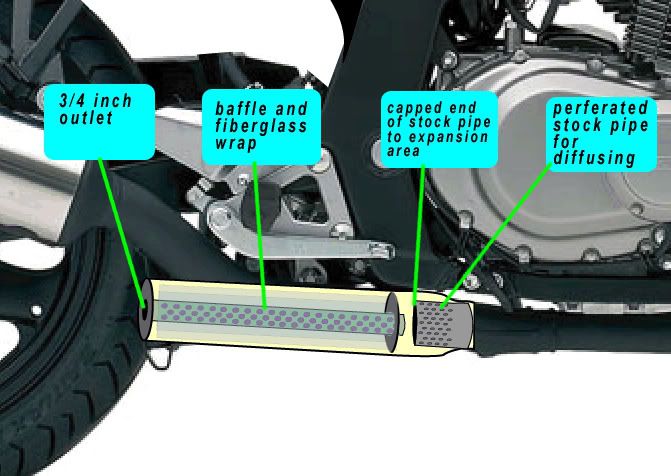
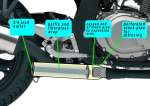
One thing I was also thinking of is junking the fat OE pipe and fitting something like this (right). A cheap ‘one-size-fits-all’ mega can be bought of ebay for 30 quid but I’m not 17 anymore and couldn’t bear a loud pipe or unravelling all the jetting and valve-burning issues. It seems the GS muffler only weighs some 5 kilos anyway so if pannier space is so important why not just chop the regular pipe at the neck and drop the angle as in the gif below. It’ll be good to have the bags in close and the pipe underneath, and its an easy job, giving what, at least four inches more bag space. After my over-width Morocco experience and seeing how slim the GS is, it would be nice to keep it that way.
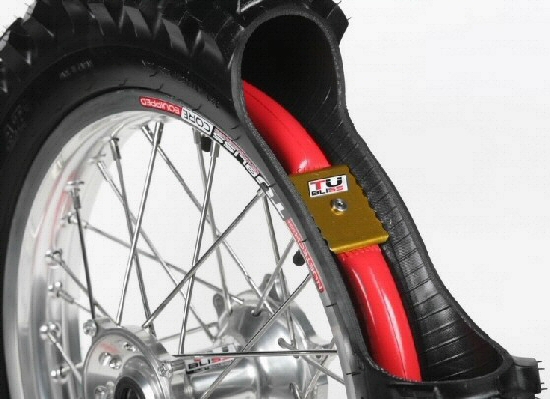
Anyway, I’m off to the Overland Expo in Arizona in a couple of weeks, a great chance to pick up some goodies in the US, including a pair of Tubliss liners (left)which enable you to run tyres tubelessly on spoked rims. As you may know, I tried doing that before without complete success.
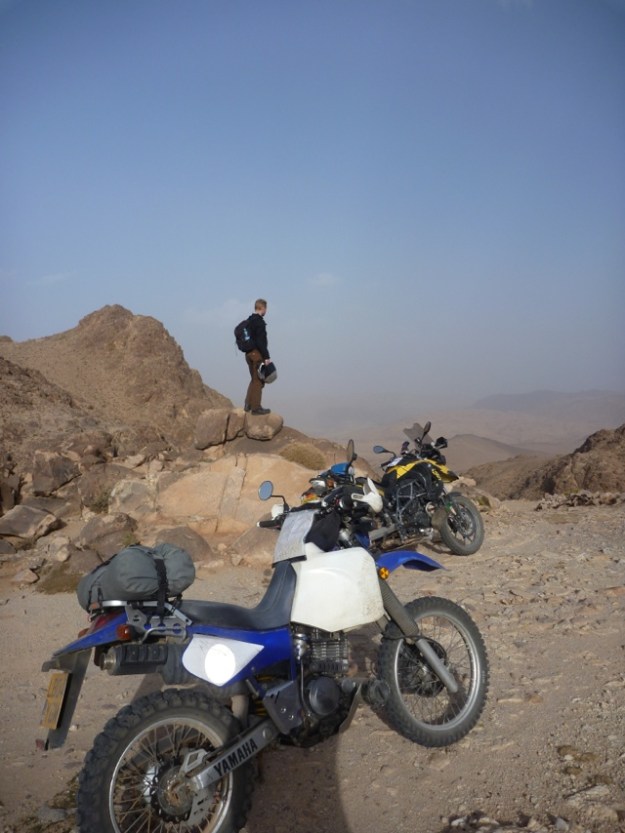
I know Tubliss are said to be for off-road use only, but I’ve interpreted this to be an issue of legal liability on the pubic highway rather than anything to do function or real-world safety. Robin, with whom I rode in Morocco last month has run Tubliss on his TT250R all over the world for years (that’s him right with all his kit – including full camping gear).
A meekly powered GS500 with a modest payload isn’t going to tie the tyres in knots. I plan to fit the front 110/80B (59 T) K60 Scout (my review) I used on the BM in Morocco (left) and another new one for the back. The 100/90 57 H is a tempting 30% cheaper and still with a load index 230 kilos and a 130mph rating, neither of which the GS will see in its lifetime, but I’d need two so I’ll stick with the wider 110/80 at another 100 quid.
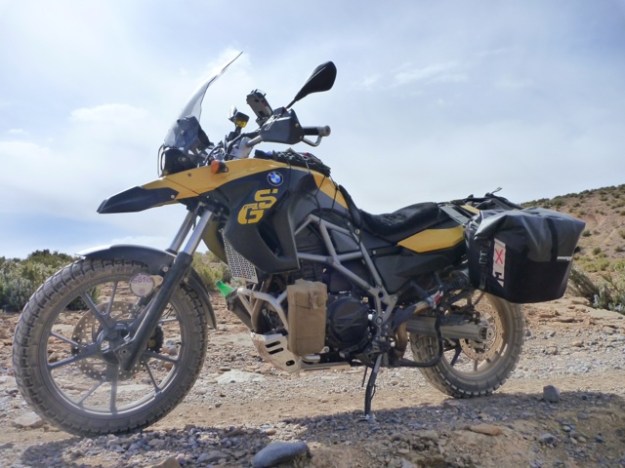
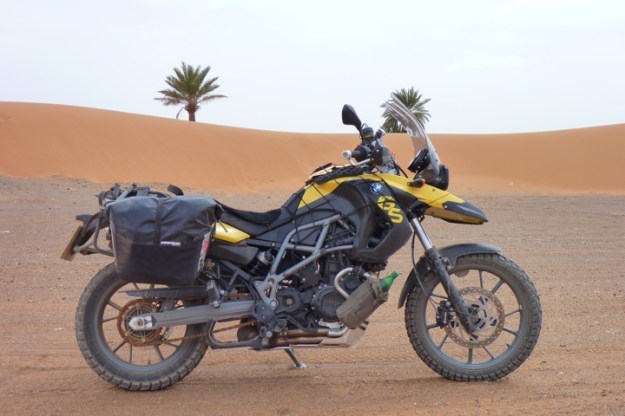
Released in the UK in February 2012, the ‘SE’ suffix in BMW’s F650GS added up to a new paint job and an array of optional Special Equipment. As a reminder, the ‘650’ uses the same 795cc engine as the more popular F800GS, but detuned to be more tracable and more economical, with higher, road-oriented gearing, shorter suspension travel, a lower seat, cast wheels with a single front disc and tubeless tyres.
The bike was loaned by BMW Motorrad and I rode it from new for over 4000 miles from London across Spain to Morocco and back in March 2012 to update my Morocco Overland book. I set off with around 600 miles on the clock, just after the first service and was out for three weeks.
My bike came with a batch of these optional extras: main stand, trip computer, heated grips and ABS, all of which I learned to appreciate. At the first service it was additionally accessorised and modified as follows:
Heidenau K60 tyres
Metal Mule rack, tall screen and rad guard
BMW bash plate, engine protection bars and hand guards
Touratech sidestand foot
1 tooth smaller 16T front sprocket
12v plug
Ram mount
Aerostich wool seat pad
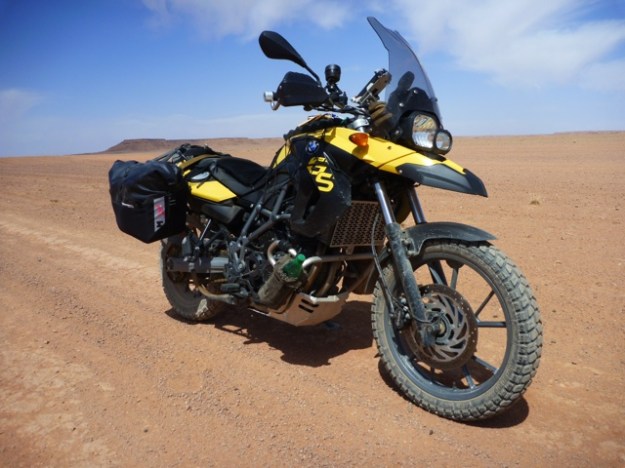
Why the ‘650’, anyway? Now they’ve had their teething problems sorted, I believe the ’650′ is the best of the two F-GSs twins for real-world overlanding. I wrote as much in the AMH6, even before I rode the bike. BMW Motorrad did suggest I might like a new Sertao for the Morocco job, but that bike overweight slug has little to prove. Overall, I prefer the unsnatchiness of a twin over a big single, and there’s apparently less than 10 kilos weight difference, while you get a more smooth power and nearly-as-good economy. With damage protection, moderate speeds and alternative tyres, the 650 twin was fine on dirt roads and, with the exception of gearing, everything that differentiates the 650 from the 800GS makes it more suited to overlanding.
Comfort On collection, the BMW felt comfy and natural to sit on, but I was warned by another 800 rider that the seat would be uncomfortable. Though I’m sure one man’s sofa is another man’s slab of coarse granite, for me at well over 100kg in all my riding clobber, the seat was the bike’s biggest flaw, just as I’d speculated while running in. Sadly, the Aerostich wool pad made little difference. I put in a 600-km run across Spain on the way out from which my butt probably never recovered. That was followed by mostly sitting down on the pistes to spare the bike and baggage too much of a hammering (and standing was a bit awkward without bar risers), all of which probably helped beat the seat’s foam into powder.
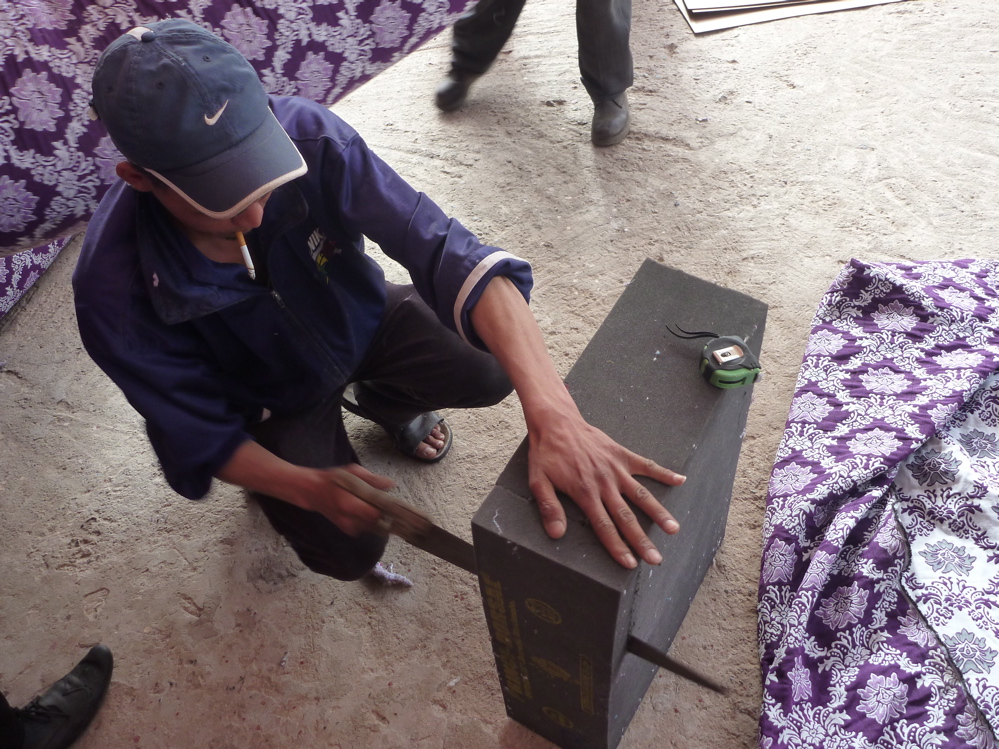
By the time I turned back from southern Morocco, soreness returned so soon that when coming over the High Atlas, I couldn’t face the 1500 mile ride home. I pulled up at a village mattress shop and bought a 50mm slab of foam (left) which tucked in easily under the Aero pad (below). The soreness passed in a few days and Spain was crossed in an 800-km stage without agony. I recall the same discomfort on a GS1100 I borrowed years ago (confirmed by an 1100 rider I met on the Bilbao ferry) and even a GS1200A rider we met in Morocco said his seat was not up to the bike, and he was a light guy. What is wrong with this seat – surely it’s something they’ve got to the bottom of (boom-boom) over the years? I suppose function may have suffered in the face of slim design to complement the bike’s looks, just as a Triumph Rocket III has a huge saddle to emphasise its bulk. It’s not all about width though, it must be foam quality or density. The Tenere’s saddle was no wider as I recall and was even hampered by a lip which stopped you moving back, but it was nowhere near as painful to sit on after two hours. There’s a bit of buried chat here on UKGSers about F-twin seats. It seems the inflatable Airhawk pad is the simplest solution if you ride long hours.
Even though I’m 6′ 1”, the low seat height was just right, if a bit low for easy standing up. It meant dabbing and paddling in sand or steadying over rocks was easy, but didn’t make the bike vulnerably low; the bashplate very rarely bottomed out, though caught plenty of flying hits. The OE high option screen was way too short for me and without the taller Metal Mule item (left) the ride would have been grim, as I realised when I returned the bike without the screen and felt my arms lengthen by an inch. But as mentioned, I feel the top edge of the MM screen curves back too much and anyway, it’s still a little too low for me. Although it caused no buffeting, any clouds of bugs got splatted straight onto my visor rather than blown over like they’re supposed to. A couple of inches longer and it would have been perfect. I never felt the screen was a distraction on the piste, though if I’d gone over the bars I’d have ripped it off for sure. For me, the Tenere’s screen – more upright and further forward like a Dakar racer worked better once I clipped on the clunky Touratech extension (it was too heavy to fit on the MM screen). But as with seats, finding or adjusting a screen to suit your exact prefs can take a while. One size does not fit all. It may be lower spec’ and shorter than the 800 model, but the firm suspension suited me fine, giving predictable behaviour in bumpy bends with no wallowing – better that than too soft, although taking the bike back the thought ‘harsh’ cropped up again. The only time I meddled with it was a rocky day’s riding without baggage when I wound the back out with the handy pre-load adjusting knob and lowered the tyres a bit more to soften the ride. While you do feel the engine vibration at higher revs, it never intruded on comfort, nor did engine noise which either sounded great at town speeds, or was drowned by the helmet din. The light clutch was a real pleasure to use too, and got plenty of use at low speeds, feathering in first to get round the still-tall gearing. Despite that it never needed adjusting, neither did the foot controls. Some days my right knuckles got very sore from the holding the throttle open while keeping two fingers over the brake lever, but other days they didn’t, so it must be me.
Economy The BMW comes with a 16-litre underseat tank. I was expecting excellent economy and most of the time I got it, though the average of 68.2mpg / 56.8US / 24.16 kpl / 4.14/100km over 23 fill ups was about 4% less good than the XT660Z’s 72mpg or 25 kpl. Of course, you get a smoother and more powerful engine. Worst result was a 51mpg on a partly sandy piste where I stuck with street pressure tyres for too long and so wasted a lot on wheelspin while pushing and paddling. Best was an 80mpg (28.3kpl) coming off the Middle Atlas, with quite a few 70mpgs when riding at <60mph with my mate on a Yamaha TTR250, much of which included piste stages with hours in first or second gear. I don’t believe the wide baggage, tyres, high screen, heated equipment or the slightly lowered gearing had any real effect on fuel consumption, and like the Tenere, it seemed to be getting better and better as the miles wore on. Full records, here.
There was some pinking in deep sand, partly due to the hot conditions, tall gearing and the 12:1 compression ratio. With the fan whirring and the throttle virtually closed in 1st or 2nd, the fuelling would start surging, but it was never uncontrollable, just mildly annoying, although it did seem to coincide with higher fuel consumption figures.
Oil, water, drive chain In 4000 miles no oil was used and I didn’t even think to check the water. I adjusted the chain once and even that may have been premature, which means BMW may have gone OTT to fit a quality chain after the early breakage issues. I oiled the chain most days with engine oil, but on reflection, this did little long-term good as it was soon thrown off. Next time I’d brush on thicker Tutoro oil.
Performance The 650 has all the power I need and in fact I’d have liked to have tried it in the detuned 34hp version, assuming there are notable benefits in fuel consumption or cool running. I never needed to rev over 4000 while accelerating, and with the lower gearing, 5000rpm at 80mph was as fast as I went. The red line is at 8500. The low rpm power really helped on the piste, pulling out of deep sand, even if the high, road gearing was not ideal here. Like I say, I’d spend all day in first or second. Fuelling was smooth and very responsive, although this made the bike a bit of a handful the one time we rode a day on the piste with no baggage to damp the response. As mentioned it would start surging when it got hot – a slow track with a backwind – but that never lasted more than a few minutes until a higher speed cooled it down. Running at very low rpm with high gearing meant slow oil and water circulation speeds may not have aided cooling as much as they could. With just a single disc on the front, the brakes were well matched to the bike’s performance. At least once the ABS stopped me from skidding over the edge while checking out the scenery, though I’m told the mass of brake fluid pumping around for ABS can contribute to the slightly woolly feeling at the lever. I never thought to turn the ABS off on the piste, and can’t imagine it would be necessary at the speeds I rode, as it came on reassuringly late on the dirt. And as for the twin bulb front headlight, thatwas pretty good too on the few occasions I rode a night.
Road riding On the road in Morocco I rarely exceed 60mph. At this speed riding is less tiring, safer, the cops won’t nail you and economy stays good. I felt the bike was stable up to 70mph on the K60s though at times there was a very slight wobbling from the headstock (as opposed to a weave), and possibly only on concrete highway surfaces in Spain. With the upright seating position, wide luggage, trial tyres and tall screen, I can’t say this bike felt that surefooted at high speed on the way out, though by the way back I was able to sit up to 80 with more confidence, either because the Heidenau tyres had worn in or I was more in tune with the bike’s movements. I also think saddle comfort makes a bike handle better; when you’re tensed up in pain, your rigidity can affect a bike’s response. I met a GS1200 Adv rider who’d ridden both models and said getting back on his big 12, it just sat on the road like a wet pizza, however, you loaded it, largely down to its mass and the telefork. Loaded up, the F-GS was hard to turn on hairpins, both on or off-road, just like the Tenere it tended to run wide or understeer. The Tenere was a tall bike but on the BM I attributed this to the seemingly long, 1575mm (62 inch) wheelbase. The bags were slung as far forward as possible. Early on I noticed the bike’s balance at sub-walking pace was very good; you can easily keep your feet up at 1mph and this must have helped with low-speed control on the piste. To be fair, some of the roads and tracks in Morocco are very narrow and tight, with the wide baggage pushing you out towards thought-provoking drops. Even some mountain back roads have strips of gravel down the middle from uncleared landslides where any big, loaded bike would struggle to progress quickly and smoothly. One time I found a well-surfaced road tar in the Middle Atlas and blasted along from bend to bend around 60 or 70, but you can’t forget this is a relatively tall bike for that sort of spirited riding.
Off road riding Dirt biking in Morocco is mostly on rocky or gravel tracks, and much to my relief the K60 tyres were uncannily good. I’m sure the OE Tourances or whatever they were, would have been less effective.
I take it fairly easy when riding alone on the piste, for safety and to spare the hammering on what is really a road bike. Within these limits I was amazed to find how easy the bike was to handle with its low seat, light clutch, ABS, firm suspension great tyres and good clearance – and all despite the tall gearing, occasional hot surging and tight turning limitations.
Early on it was quite disorienting how well the bike would track straight in deep sandy ruts, right up to the point where I lost my nerve, or less often, when the front tucked in. When this happened the instinct was to lean with it while standing up and gas it, all in one swift movement, to which the bike responded correctly every time, surging forward to regain its steering composure. The full-length bash plate meant you could do this confidently on any rideable surface and take the hits. Though I had my share of these moments, I never fell off the GS or got so wildly out of shape that I thought I might do. Not surprisingly I found the handlebars were too low when standing up off-road, causing me to crouch unsustainably. Most bikes are like this at my height, though handlebar risers would have easily fixed it; something I forgot to address before I left. Of course dry dirt and even sand are fairly easy to ride on any bike with clearance and the right technique and tyre pressures. I’m sure the K60s would have clogged up and the weight got to me on very muddy tracks, but all in all, I was pleasantly amazed how well the GS coped off-road in Morocco.
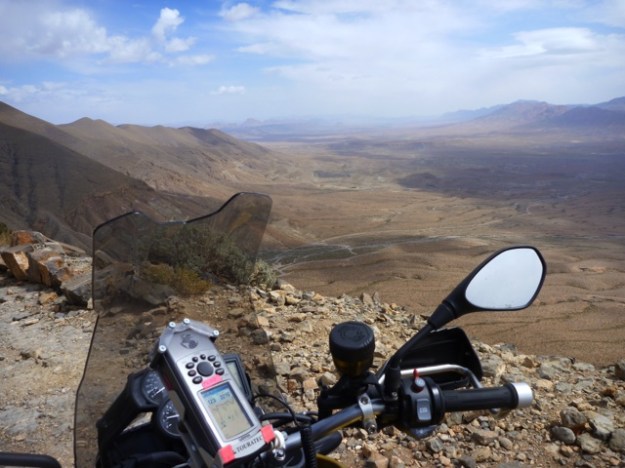
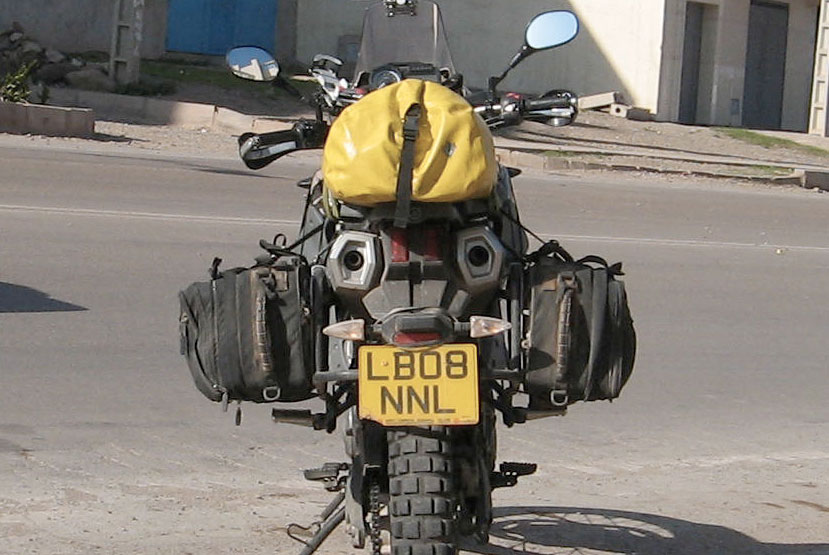
OE and extra equipment The dashboard was slightly harder to read compared to the higher rally-style layout on the Tenere. Speedo numbers were a bit small, and the computer lacking in contrast and clarity in sub-optimal conditions. The computer is pretty good though, and besides the total mileage, two trip metres, clock, fuel and water temperature levels and nice big gear indicator, a button on the left bar lets you toggle between air temperature, average speed or mpg (both resettable though I couldn’t work our how) and live mpg which could dip down to the high 40s uphill at 70mph, or give a maxed-out figure of 199mpg cruising downhill on a shut throttle. Interestingly, it must be all pretty accurate as the computer’s average mpg of 68 matched my own figure which was calculated from actual volume and distance at each fill up. I’d have preferred a digital speedo that can switch to kph like the Tenere, while the indicators and other switchgear I eventually got used to, though in a panic, might well get it wrong. The temperature gauge never budged, but the fan came on quite a lot. I do wonder if the close-fitting Metal Mule radiator guard may have exacerbated this. I’d be tempted to mount it an inch forward to get some more circulation behind it without losing protection. I’ve heard the fans or fan switch packs up on F-GSs when they get clogged with grass or mud – but that’s not unique to this model The fuel goes to reserve at round 12 litres, or between 180 and 222 miles. The furthest I ran the tank was 238 miles at which point it took 14.3 litres. There are 16 useable litres says the handbook, but the capacity is 18 – I’m never sure which is which. Checked against a GPS over 34 miles, I found the odometre (distance recorder) to be a mile over so about 3% out, though I’m not convinced GPS distance recordings are always that accurate as it depends on the set-up in recording frequency. This means that my mpg readings are a tad optimistic assuming all fuel bowsers were correctly calibrated; on some fill-ups in Morocco I did wonder. As for the speedo, at an indicated 60 or 70 it’s 5% out according to GPS, so the bike reads a little faster than it is. Non-OE equipment besides what’s been mentioned all did the job, the BMW bashplate took a lot of flying clunks and clangs on the chin but rarely landed hard, their engine bars were only used as pouch racks I’m pleased to say, same with the lever guards, though the handguards could have been much bigger against driving rain, like the Acerbis Rally buckets of old. The Metal Mule rack was never taxed, helping merely to keep 20kg of throw-overs off the bodywork, and as said, the Aerostich wool pad couldn’t disguise a seat fit for the welcome centre at Guantanamo Bay. As always my nifty tank net, this time used with a foam pad to protect the paintwork, was a great idea, and the Touratech GPS holder on a RAM mount held up (the Nuvi satnav I laid on the tank foam when off-road). The Garmin 12v cig plug leads both on the 76csx and the Nuvi began playing up. Hardwiring as we know is the answer to that one. My engine side pouches were dead nifty for handy access to water, oils or stuff in general, even if they are more Steptoe & Son than Rally Pro.
Durability Not a single thing malfunctioned, broke, came loose or fell off and so I feel the BMW has been very well screwed together.
Summary The Morocco run confirmed my early impressions while revealing how well the GS coped with dry dirt tracks. I feel the same way about what I liked and disliked at 500 miles but have proved that this ‘650’ doesn’t just look like an adventure touring bike; with appropriate tyres it performs like one too. Once that seat is fixed (there must be several solutions out by now) the 650 GS ought to offer continent-crossing comfort with adequate fully loaded off-road ability. With the smooth and tracable twin-cylinder engine and nearly as good economy, I’d say it makes a great all-rounder. The only truly unresolvable fly in the off-roading ointment was the tall gearing. Dropping a tooth on the front sprocket didn’t really fix that, fitting a couple of teeth more on the back would – but the clutch didn’t complain. Now the 650GS SE looks less drab, that’s the only thing I can see that works better on the more powerful 800 model.
Since I wrote this the newer ‘700’ model (left and below) has come out alongside the new 800. With revised styling, a bit more power, a second front disc but barely modified gearing. It’s also sai the 650 runs better on low octane fuel which is a big plus in the AMZ. More 650 vs 700 here.
A few years later I rode a well-used, rental 700 for a week and liked it as much as the 650. And a year after that tried the new F750GS too.
My impressions of the XT660Z Tenere after riding from London to Morocco and halfway back in November 2008, soon after the new bike came out. I’d only owned it a couple of weeks before setting off and happened to sell it a couple of weeks after I got back.
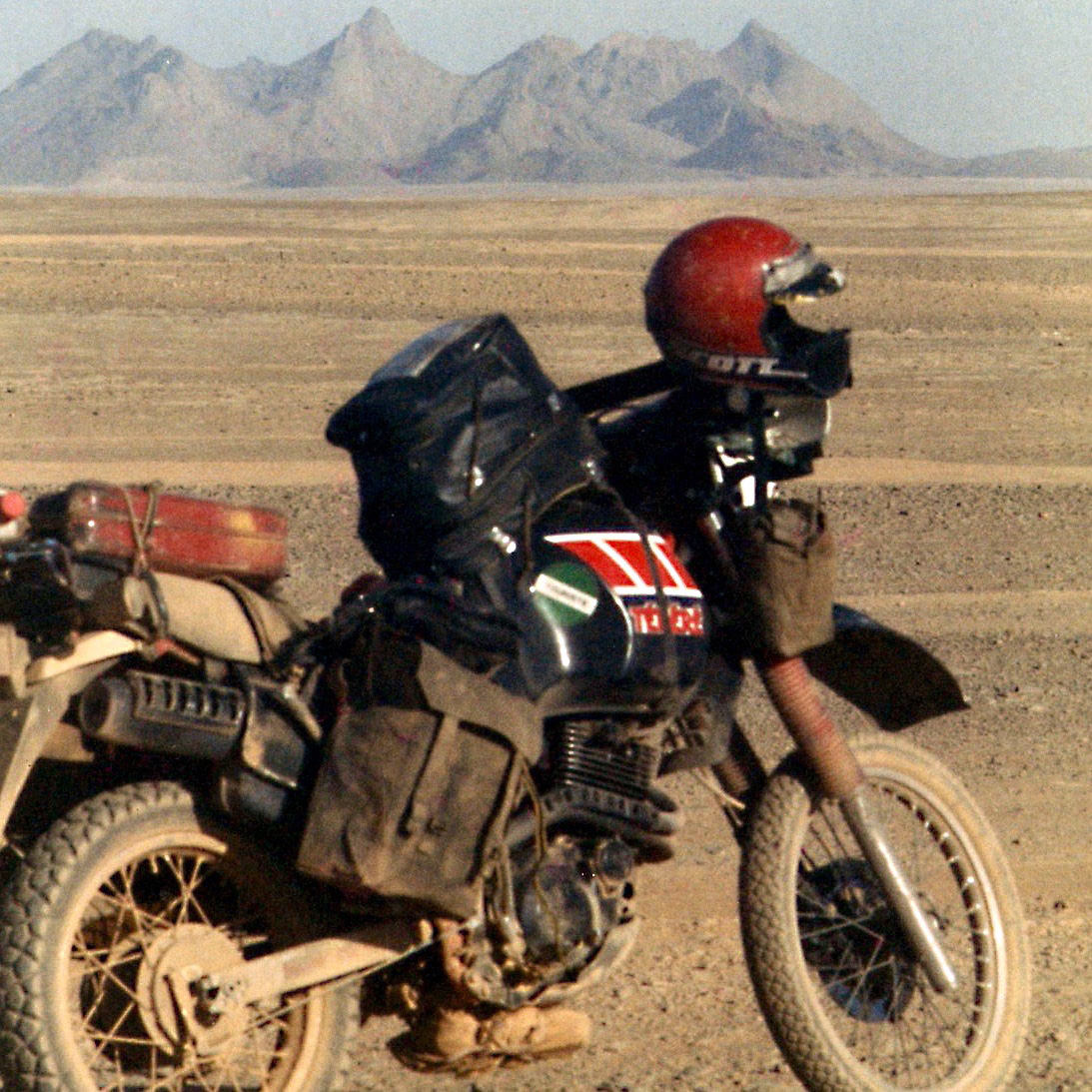
In Europe Yamaha’s Dakar-inspired Tenere has long been the definitive bike for desert travels. In the mid-1980s I rode the original kickstart XT600 Tenereacross the Sahara to Dakar (right), and a year or two later I rode the electric-start 1VJ model (below) around southern Algeria.
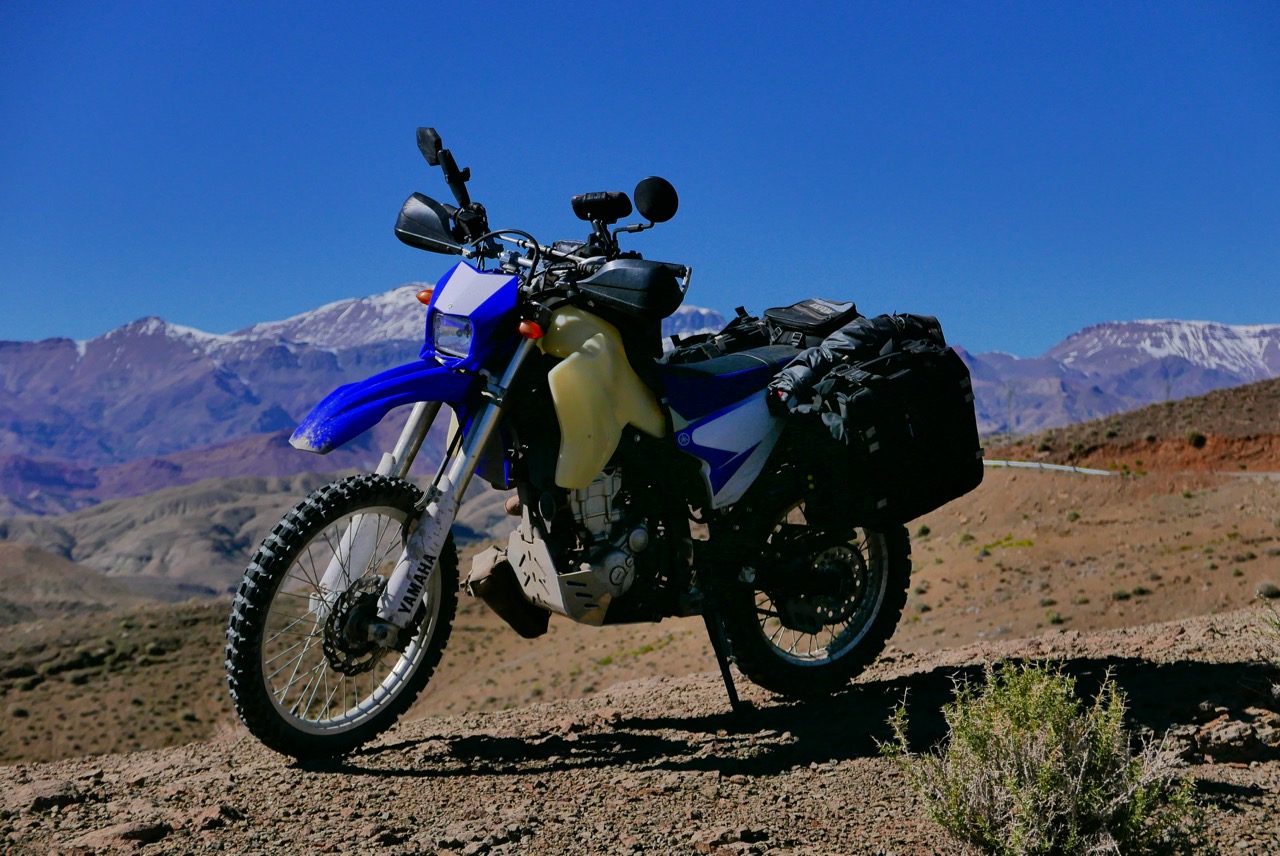
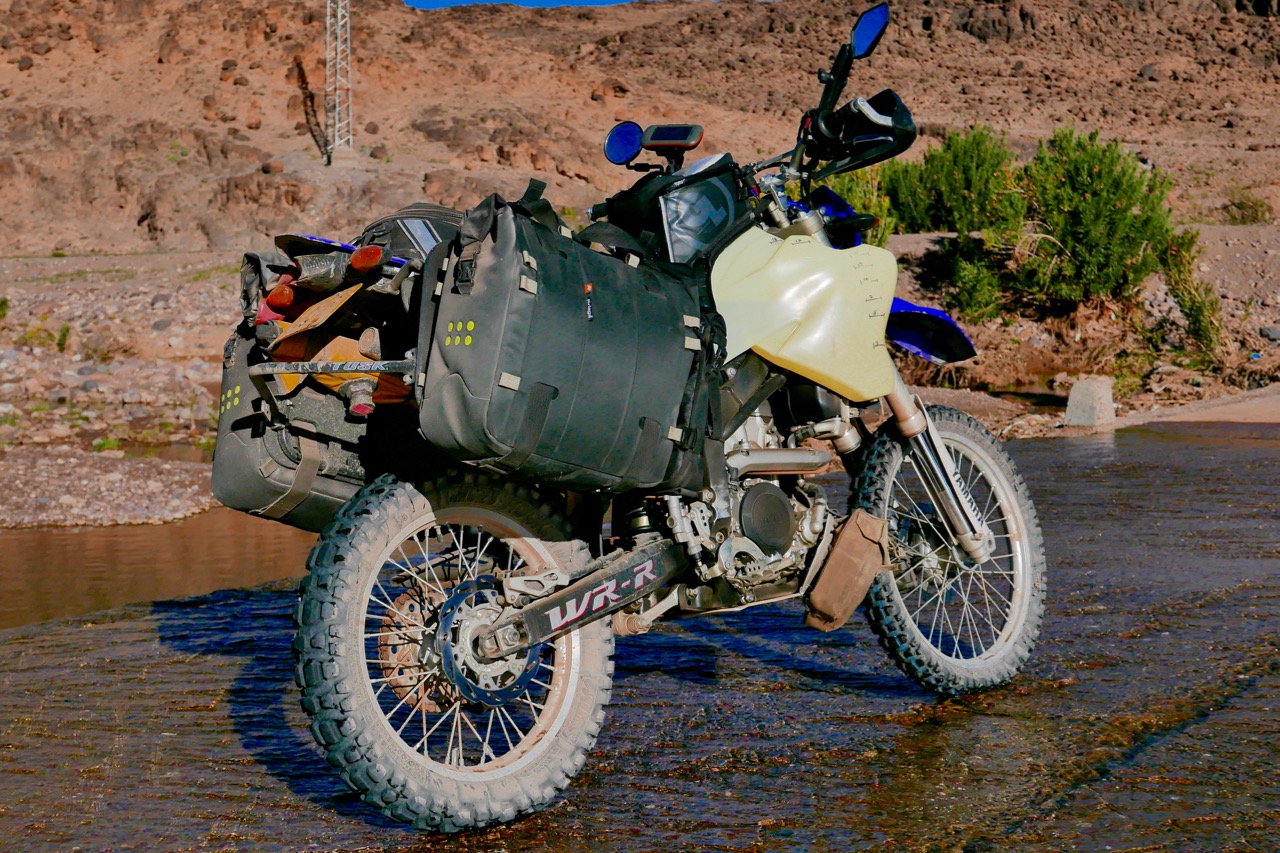
As a comparison, you may like the read a report on an XR650L, a BMW F650GS SE which I used for a similar Morocco trip from 2012, as well as G650 Xcountry I rode in 2014, a CB500X in 2015, a Husky 701 in 2016 and a WR250R in 2017. I make several comparisons with the Tenere.
For my detailed review of the Touratech Zega Flex panniers I used, click this.
For my detailed review of the Airoh TR1 helmet I wore, click this.
To read about my continuing experiment with tubeless tyres, click this.
• Engine and FI /ECU problems from the 660X and R models ironed out • Pulls smoothly and feels nippy in town and stable at speed • Fuel consumption (71.7 mpg/25.4kpl = 380-mile/610km tank range) • Can change speedo/odos between mph and kph (but not as described in ‘TFM’) • Clear, eye-level dashboard display • Good-sized 23-litre tank • Seat seems good by trail bike standards after a 300-mile day • Screen • 9:1 comp ratio: good for poor fuel and long engine life • Fall-over tank protection • Suspension seems good and firm • 6000-mile service intervals (on semi-synthetic oil) • It doesn’t look too bad, either
• High centre of gravity • Heavy for what it is – it weighs over 200kg wet• • Screen too low – buffets my head • Twin front discs are OTT – look at a CB500X • Fuel gauge is way out – the digital bars disappear at around 240 miles with at least 100 miles left (common to many bikes, tbh) • Little bits of rust already – naturalmente, fatto in Italia!
Comfort All things considered I found the seat OK for days of up to 300 miles or more when you simply sit on the thing for hours. On the dirt it’s not so relevant as you stop and move around more. I agree with some that the scoop/two level is a bad thing and a fully flat seat would be better, but it seems the back of the seat has to be raised to get over the cat which is over the back tyre. Because of this scoop you can’t slide back and move around to reduce the aches or crouch down easily behind the screen. I also found that pushed forward like this, my ankles point down too much to use the foot controls. If I could slide back, my feet would be more horizontal and line up with the foot brake, already adjusted as low as it can go. But you get used to it. The foam I think is OK but like many bikes, may have softened after a few thousand rough miles. I like the neat and quick way the seat comes off. I’ve never had a pillion on it long enough to get an opinion on the back’s comfort. Usually, on these sorts of bikes it’s not so good.
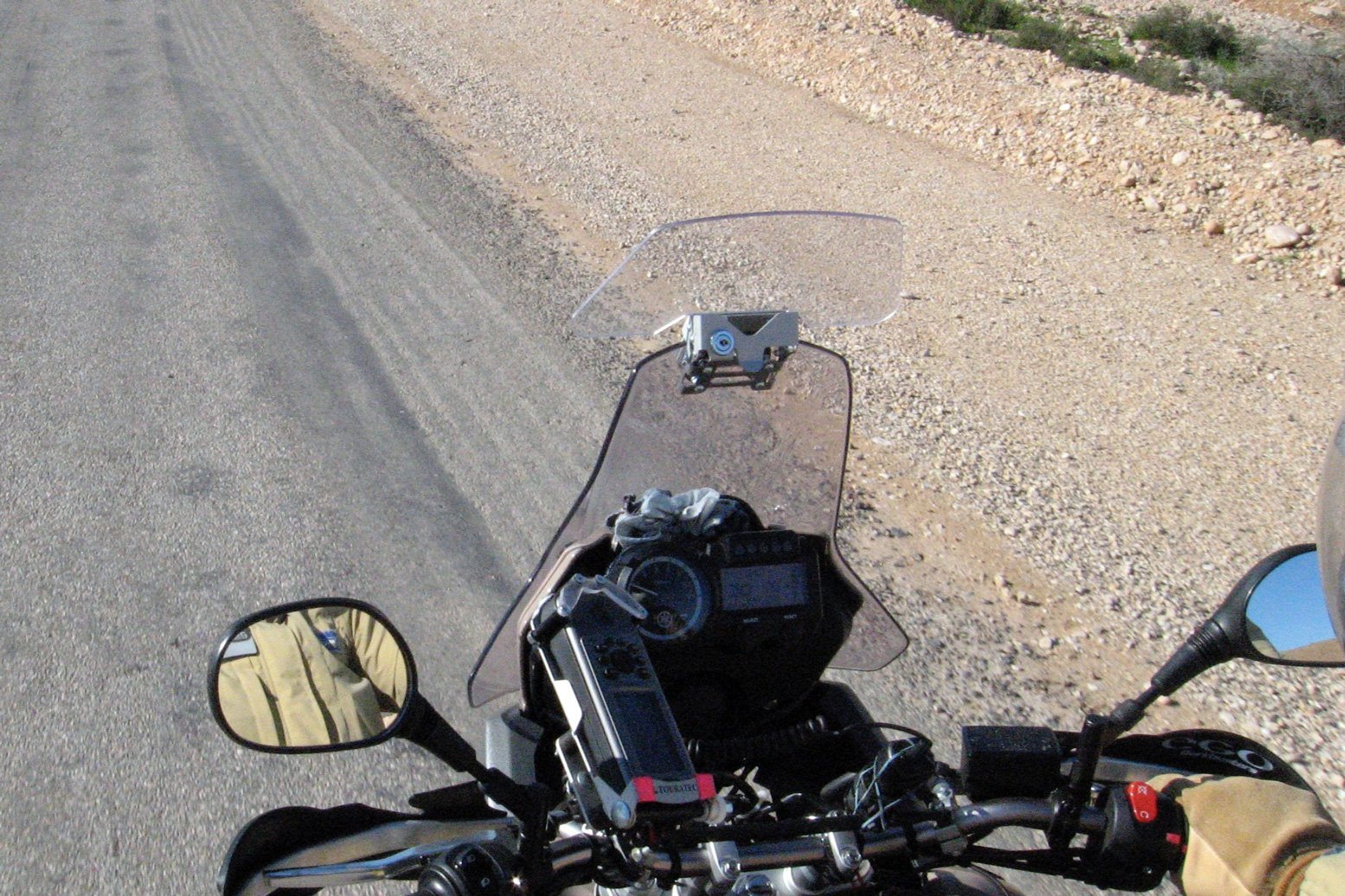
I believe some sort of screen is essential for long-range travels and it’s great that the new XTZ came with a good one fitted. Unfortunately for me at 6’ 1”/185cm, it’s still too low and buffets my head worse than if it wasn’t there. A crude, q/d Touratech extension clamped on well enough – a proper taller screen would have been better. On the dirt I found the extension got in the way for good visibility, especially if dirty, but I could quickly clip it on the side of the screen (above left).
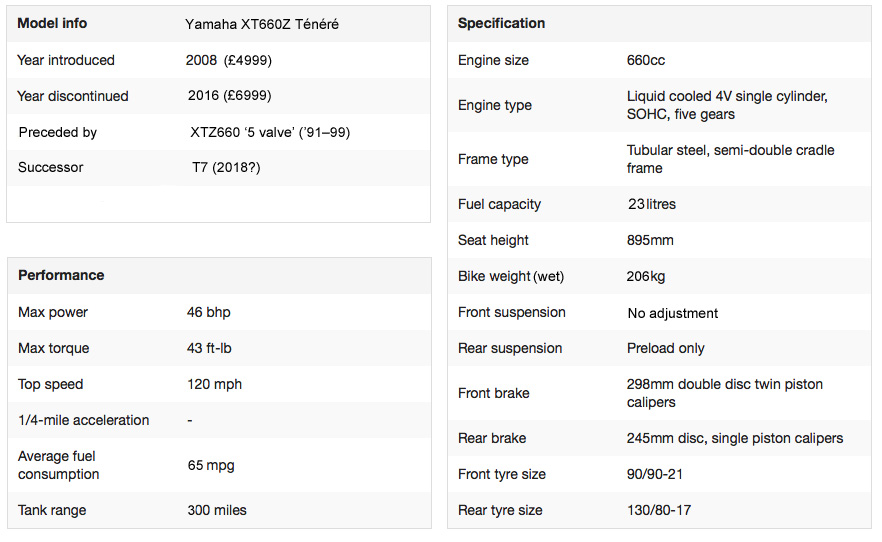
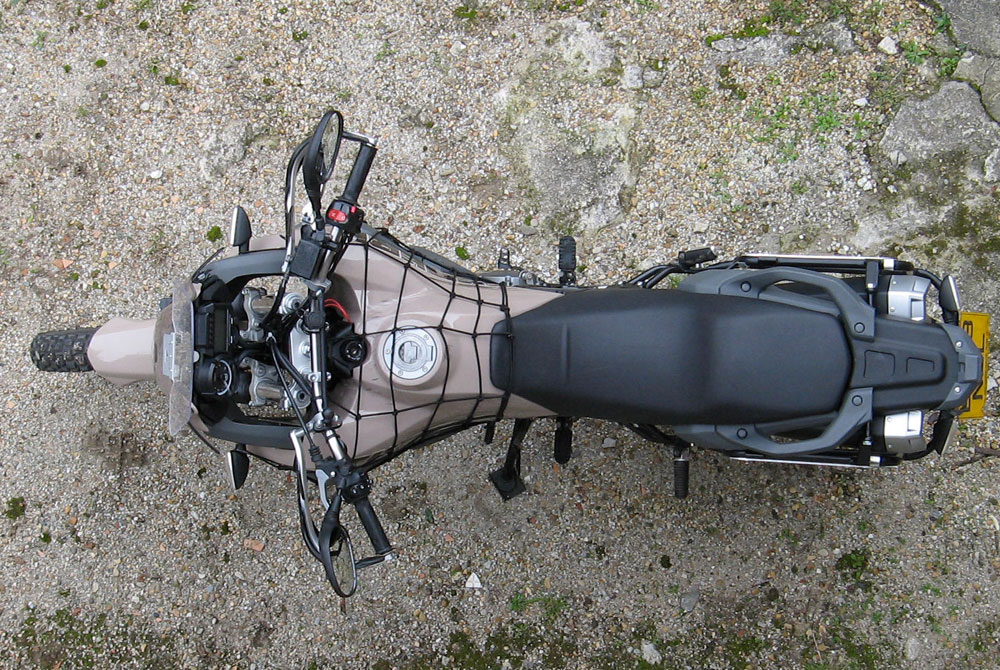
Even at my height (or perhaps because of my age) I found the 895mm/35.2″ seat too high to get on and off easily, and too tall on the dirt. Of course this can be fixed by lowering the suspension of which there is more than enough. I do also wonder if the suspension is too firmly damped from stock. I didn’t meddle enough with it other than cranking up the back 2 or 4 clicks to take my luggage. I never weighed my bike myself, but they say it comes in at 206kg wet – a staggering 40kg more than the original 600 Tenere of 1983 which carried 18% more fuel.
I can’t say it was any more vibey than any other big single I’ve had (the Husky 701 was a shocker) and taking the bar end weights off at 500 miles to fit the Barkbusters didn’t make it any worse. As with many big singles, I find some days at some speeds/temperature/load/fuel/whatever it feels harsh – and at other times at the same conditions, it’s smooth. For a modern, water-cooled bike the engine does seem quite noisy. Maybe it’s just a big thumping single.
Economy I never had such variable results from a carb’ bike. it must be an efi thing – but overall it’s very good and was getting better. About time. For overlanding mpg is more important than mph. On previous Teneres I’ve got up to 80+ mpg in ideal conditions (backwind @ 50mph) but generally under 60mpg was normal, as I recall. My near-new XTZ averaged just under 72mpg or 25.5kpl for the last ten fill-ups. The worst figure was an as-expected riding all day into a gale-force dust storm at around 50mph: 52mpg or 18.3kpl. The best was interestingly, a necessarily slow ride over the High Atlas one bend-swinging night resulted in 86mpg or 30kpl. Nice. For my full records, see this.
Low-quality fuel Once or twice I had to resort to low-octane fuel in Morocco (‘essence’) but didn’t notice any difference in performance. I imagine this is a benefit of having a low compression ratio. I’ve also read that after a spell of leaded fuel, the Tenere’s catalytic converter ‘self-cleans’ when running on unleaded again, so technically no need to change the pipe to spare the cat, though you’d think several months on leaded would take some cleaning to return the cat to full low-emission efficiency. I never noticed any pinking or over-heating.
Oil and water consumption; drive chain In 5000 miles no oil was used, apart from a few drips out of the engine crack when it fell over at 2mph. What was interesting was that the semi-synthetic Petronas they put in at the first service still has some good colour in it after 4500 miles; ie: it wasn’t black. Along with the 6000-mile service intervals, this would convert me to semi-synthetic, despite the price. I wonder if efi helps in this regard: clean emissions = clean oil for longer? Water consumption was zero and once or twice the fan came on, but only in conditions you’d expect it too. I tried to keep on top of the chain with oiling but it still needed adjusting 3 or 4 times so it doesn’t seem to be as good as the best DIDs I’ve used in the past. At the end there were still several thousand miles left in it.
Performance It doesn’t feel that much more powerful than previous big singles I’ve had, but on the trip I never felt I needed more. Very rarely do I rev over 4000 rpm. In my opinion a low-tuned, 600 single or twin is just the right size for loaded, all-roads travel so I’m happy to give up KTM levels of power for a long-lasting and fuel-efficient engine. Inevitably I’m sure I’d have got round to tuning it a bit (while also trying to save weight), but only if the great mpg was not compromised.
The front twin discs feel pretty ordinary and surely one good SM-style disc would be adequate and save a lot of sprung weight? Were Brembo doing a 2-for-1 deal? For a trail bike, the front wheel weighs a ton, but it wouldn’t be hard to remove one disc and carrier, put a block in that side’s caliper and see how it stops. Most probably the other caliper is designed to work as one of two small units and may get over-worked so it’d be best replaced with a larger, 4 piston unit. Is it all worth it? Not really unless you’re greatly improving the fork. I have to say the flashy-looking twin bulb front headlight is not that brilliant in terms of spread, compared to less impressive-looking setups I’ve run before.
From first impressions the suspension felt firm front and back which makes a nice change from older Teneres and gave good road manners. When I loaded up with 25kg of baggage I turned the back up by 2 full- or 4 half-clicks. Hard to tell exactly, but neither end never got near bottoming out on the piste. I wish I’d experimented more with backing off both ends on the dirt. The front I left as it was, but one evening after a very rough rocky climb that punctured the front tyre and all the rest, to add to my woes the front forks ‘collapsed’. I could squash them right down. There were no leaks. I’ve never had this before on a bike and though an air or oil damping valve may have ‘burst’ or a spring broken from the hammering – or possibly the fork oil had become aerated. But I wasn’t exactly ripping across corrugations at MX speeds in 40°C. Next day I turned the fork up 5 turns (5 x 360°) to compensate but soon regretted it. The bike became even slower to turn on the dirt and on the road. In fact, the forks self-recovered and I wonder if I was making it all up as the shit had hit the fan at that stage and some of it may have lodged in my brain. Anyway, the fork was back to normal next day. I suspect aeration or hallucination.
Road riding Generally on the road I sit at an indicated 65mph or so – not so fast. At this speed riding is less tiring and safer and economy is good. With the screen extension this could be sustained all day with only the usual discomfort. Many road testers used to brilliant GSXR’s and the like don’t get on with the handling of 21”-wheeled trail bikes and in response many manufacturers chose 19” fronts for their bigger adventure bikes. They have a point: a 21”shod bike never feels planted in the bends and adding a semi-knobbly tyre doesn’t help. Fwiw, I felt the bike handled pretty well on the TKCs. On the highway they didn’t feel any worse than the original Tourances used for running in, though I don’t exactly throw the XT around like a super moto. Loaded up, I found the bike was sometimes hard to turn on tight bends and hairpins, both on or off road, as if the front was raked out too much or the weight was too high (it is). Short of getting your weight over the front end, MX-style, the usual way to tune this out is to soften the front- or jack-up the back. I don’t recall having this impression on previous bikes like this; they’re usually too softly sprung. So I blame the higher than average CoG (centre of gravity) not helped by the cats stuck way high out the back, along with my high luggage set up, and the firm suspension. If I’d kept the bike I’d have experimented with softening the springs and even lowering the bike (and possibly getting rid of the heavy twin cats for a lighter pipe). To be fair, some of the roads and tracks in Morocco are very narrow and tight, with thought-provoking drops. Even some tarmac mountain back roads have strips of gravel down the middle on which any bike would struggle to progress smoothly.
Cross winds One early owner’s impression I read said how great the bike was in high winds. Head winds maybe, but coming back over the edge of the Pyrenees towards Perpignan there were violent gusts coming from the west and I don’t recall ever feeling so unsafe on a bike and being on the verge of crashing. All the other road users were giving me a wide berth as I tried to predict the gusts and control the wildly bucking bike from running over the hard shoulder and off the edge. It may have been the same for all bikes that day, but keeping down to 50mph, a 600cc UJM passed me without any drama. Again I feel my high baggage set up would not have helped, but do wonder if again, this high CoG is to blame. We are talking about exceptionally strong gusts here, but I must have ridden in those sorts of conditions before and survived.
Off-road riding Off-roading in Morocco is mostly on rocky or gravel tracks as above and the TKCs made this much more predictable, easier and safer. The good thing with semi-knobbly road tyres like these is that you can keep the pressure high to avoid rock punctures while still benefiting from the aggressive tread pattern on loose surfaces. The idea of riding the trails on the OE Tourances doesn’t bear thinking about. I’ve never had a Jap trail bike with too firm suspension and I think I was a bit slow to recognise this. Although I take it fairly easy riding alone on the piste, the bike didn’t really respond to off-roading well enough to give confidence to ride it towards the limits – and with all that weight that can’t be that far off. Maybe just as well. Not surprisingly I found the handlebars were too low when standing up off road, causing me to crouch unsustainably. Most bikes are like this at my height and handlebar risers would have easily fixed it. I also found the gearing too high for slow off-roading – again, as expected. I’m not sure what the standard gearing is, but the bike does 8mph at the 1500rpm tickover which is too fast for some steep hairpins or loose descents. With a heavy load, the clutch would have got hot from slipping on the hairpins but the only time this happened – a bit of slack at the lever – was when the front mudguard jammed with mud for a couple of kilometres passing south of Jebel Sirwa.
Loading Along with the economy and low-stressed engine, the seriously strong subframe is one of the best things about the XTZ. It has to be twice as thick and much stiffer than the steel straws which held up the back of my XR650L, or indeed previous Teneres I’ve owned. This is one part of the bike I don’t mind being over weight. Adding the simple, functional and tough Off The Road rack only made this better and is all the metalwork you need to pile it up with the heaviest alu boxes.
Equipment I like the near eye-level dashboard and digi speedo, even if it’s a bit basic. I would have liked an oil or water temp gauge. I didn’t discover till I got back that the Yam handbook and not the bike is at fault wrt changing from mph to kph. Click this for how to make this very useful feature work (as well as all the 660 chat that’s fit to print). I wired up my own 12 volt PTO plug directly from the battery onto the handlebars for the GPS. Everyone complains how way out (pessimistic) the fuel gauge is but at least it’s consistent! Once you get used to this you’ll know that if it re-zeros itself at around say 230 miles, you’re doing a good 70mpg and have at least 100 miles left in the tank. The tank is plastic by the way and notably warm on the leg. Checked against a GPS over 100 miles I found the odometre (distance recorder) to be accurate to within 1%. This means that the mpg readings are also virtually true. The same cannot be said for the speedo which, like all bikes at an indicated 70mph = 64mph true = 8.5% over. According to the speedo then, the bikes feels faster than it is.
Durability If you think about it, it’s asking a lot to take an untried bike just 500 miles old out for a 4500-mile off-road hammering with no preparation to speak of and to expect nothing to break. Nothing did and to this end I feel the Yam is well screwed together. The only things that came loose and fell out were a couple of screws holding on the screen, but this was almost certainly due to the extra leverage put on them by the TTech screen extension. Obviously I could have done with engine bars or a proper bash plate, as would any bike of this kind (they’re available for the XT-Z now, but weren’t then). The tank/radiator protectors are a nice touch and the Barkbusters are a no-brainer to the mods list. So, I still like everything I liked at 500 miles. Not so keen that it’s higher than it needs to be – but it can be easily lowered. Plus it feels heavy for what it is – a tall CoG not helped with my high luggage set up, but that usually comes with the territory.
Bikes like this will always be a compromise but for the Morocco job, when you think of the cost of the machine [in 2008] and the minimal ‘kerbside’ levels of preparation, the 660Z offered an ideal balance of continent-crossing comfort with adequate fully loaded off-road ability. Just like the Tenere always did in fact, only more so.

















 Adventure Motorcycling Handbook