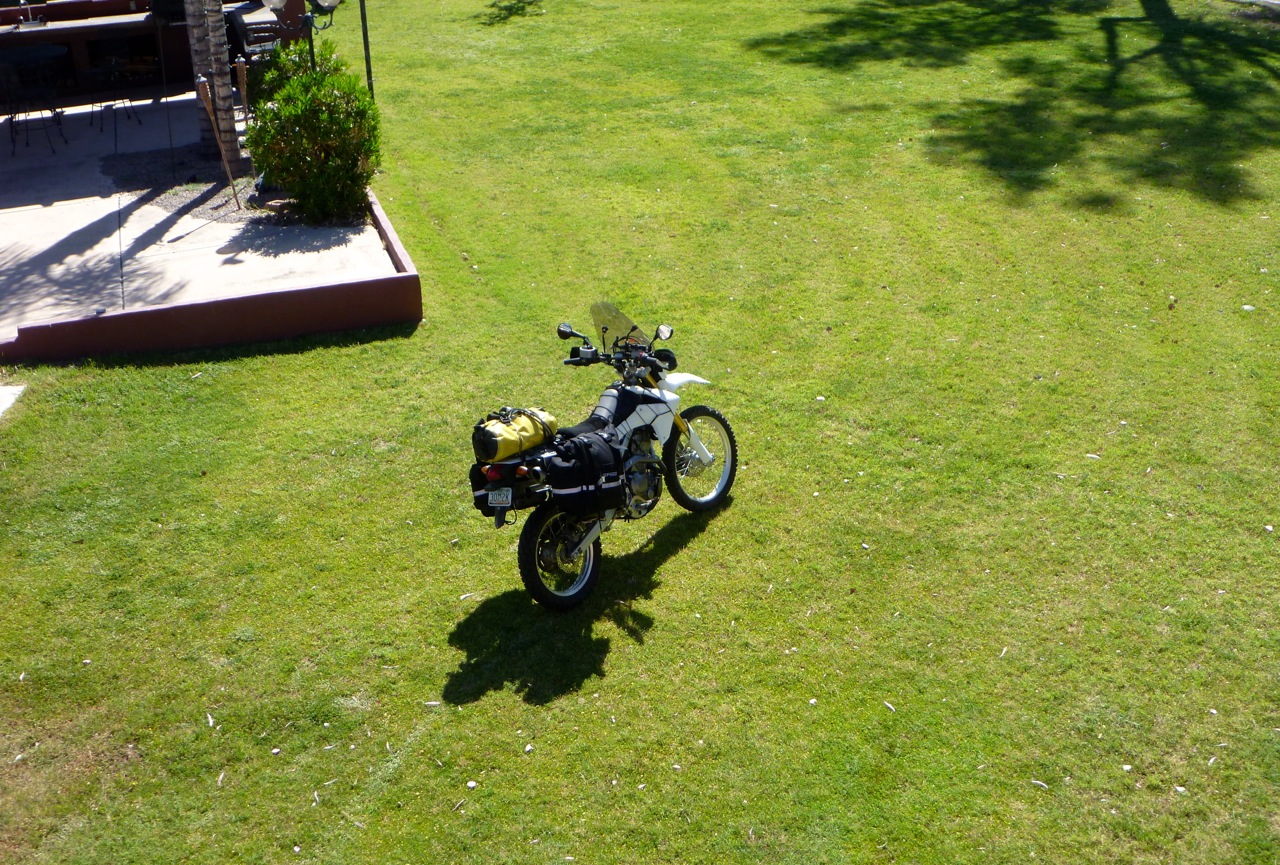
Only a week later than planned the Honda and I now are on the road for a month or more’s riding around the fabulous Southwestern USA. How long had that been on the ‘to do’ list?
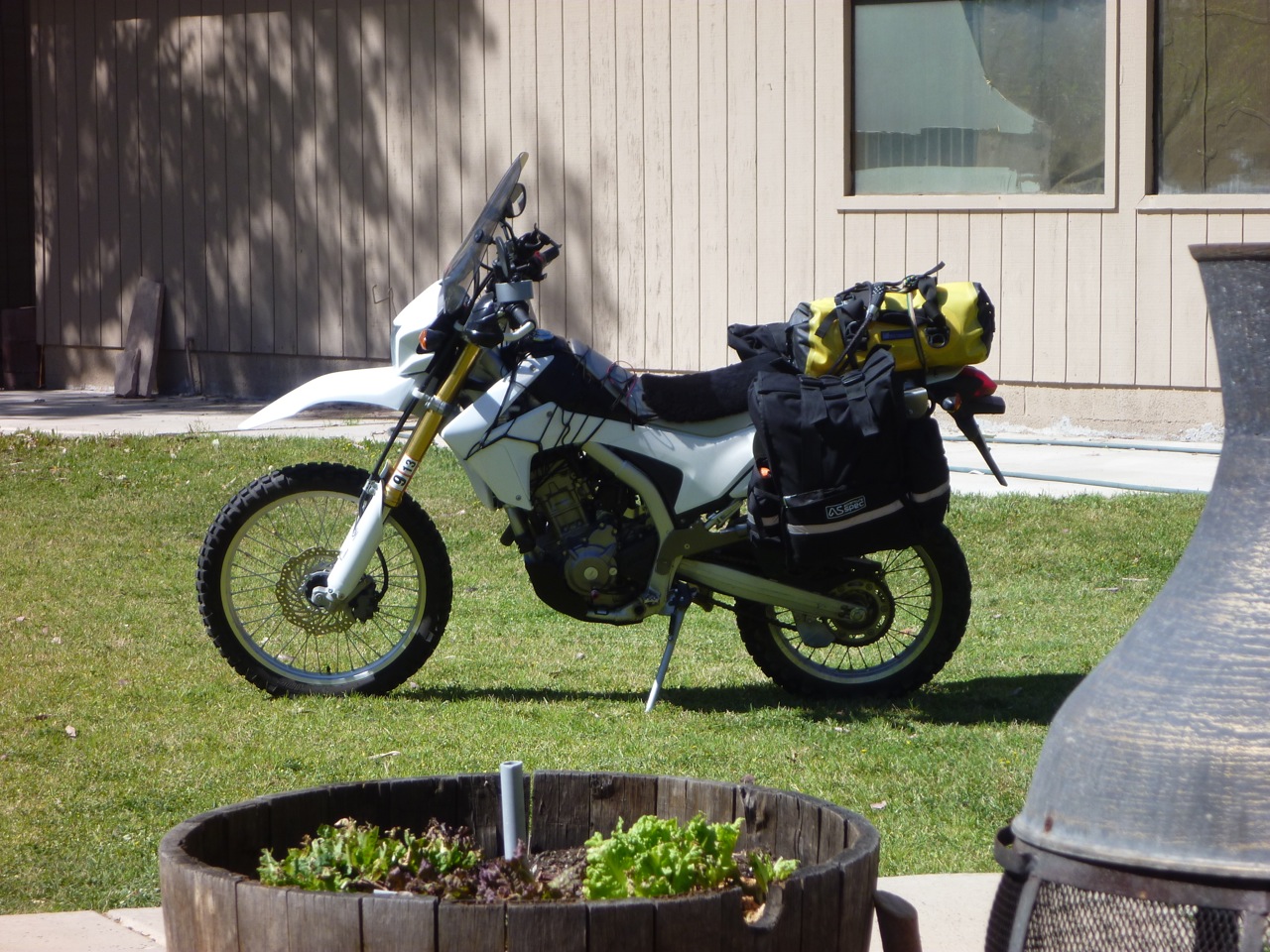
The Magbags filled up without too much compression or compromise and of course riding it out onto the lawn the bike flapped around like a three-wheeled shopping trolley full of cement – just as do all loaded bikes at Mile Zero.
Yesterday I flew back from a talk near Tacoma where I met Tom Grenon, just back from Baja and with whom I KLR’d through BC and Yukon back in 2001 and where I confirmed what it is I like about deserts! The plane flew via SLC and across southern Utah and some place called the Grand Canyon (right) where I’ll be in a couple of weeks. But first it’s west to Vegas and Death Valley, the accessible corners of the Sierra Nevada and Northern California. Then maybe up to the BR Desert in northwest Nevada and down to southern Utah. After that who knows, New Mexico or maybe even Baja Mexico.
Tune in for time to time to see how it all pans out and how the bike and gear perform. Or see you on the trail or at the Overland Expo around 18 May, near Flagstaff.
I said this already: soft bags may be ancient, pack animal-era technology but they have very much caught on in advworld. Some are little different to the things I was throwing over my bike 40 years ago; one or two feature significant innovations in mounting, fabrics, lockability and more.
On advrider (as well as in my own review) questions got asked about the volume claims of the GL Siskiyou pannier: 34L said GL, while me and another guy measured l x h x w as near as we could and came up with 24L.
‘Aha!’ the bloke from GL replied – we establish volume by filling out our bags with beans until they bulge out and that way get 35 litres so that’s what we rate them at. It sounded plausible and got me thinking: what is the maximum volume of a shaped, non-elastic but flexible rectilinear container like a motorcycle side pannier? Logic suggests as the box form flexes out sideways under the weight on contents, the shorter side will pull in and the volume will remain constant.
But intuition (or maybe logic too) suggests capacity ought to increase: the classic Envelope Test performed by an obscure Cartesian monk, Antoine de Connerie in front of a disbelieving King Philippe V in 1444: An envelope is a flat container with a volume of next to nothing; open it a little and volume increases, open it a lot and volume increases some more up to a point when opening it out too much will reduce volume to near zero again as it folds back in on itself.
Al Jesse [Luggage] and I discussed this: he reckoned volume of a rectilinear vessel is fixed, but I was not convinced and now I have the answer: If the flexible container is a cube (l x h x w all the same) volume when filled (with beans, water, anything non-compacting) will not be altered much. There may be some fabric bulge.
But a rectilinear flexible box (‘suitcase’) seeks to attain the geometric nirvana of cubic equilibrium and does deform and expand substantially. L x w x h on my Magadans rolled up and clipped came in at 24L (left). It doesn’t sound so much and would be identical to a 24L metal box.
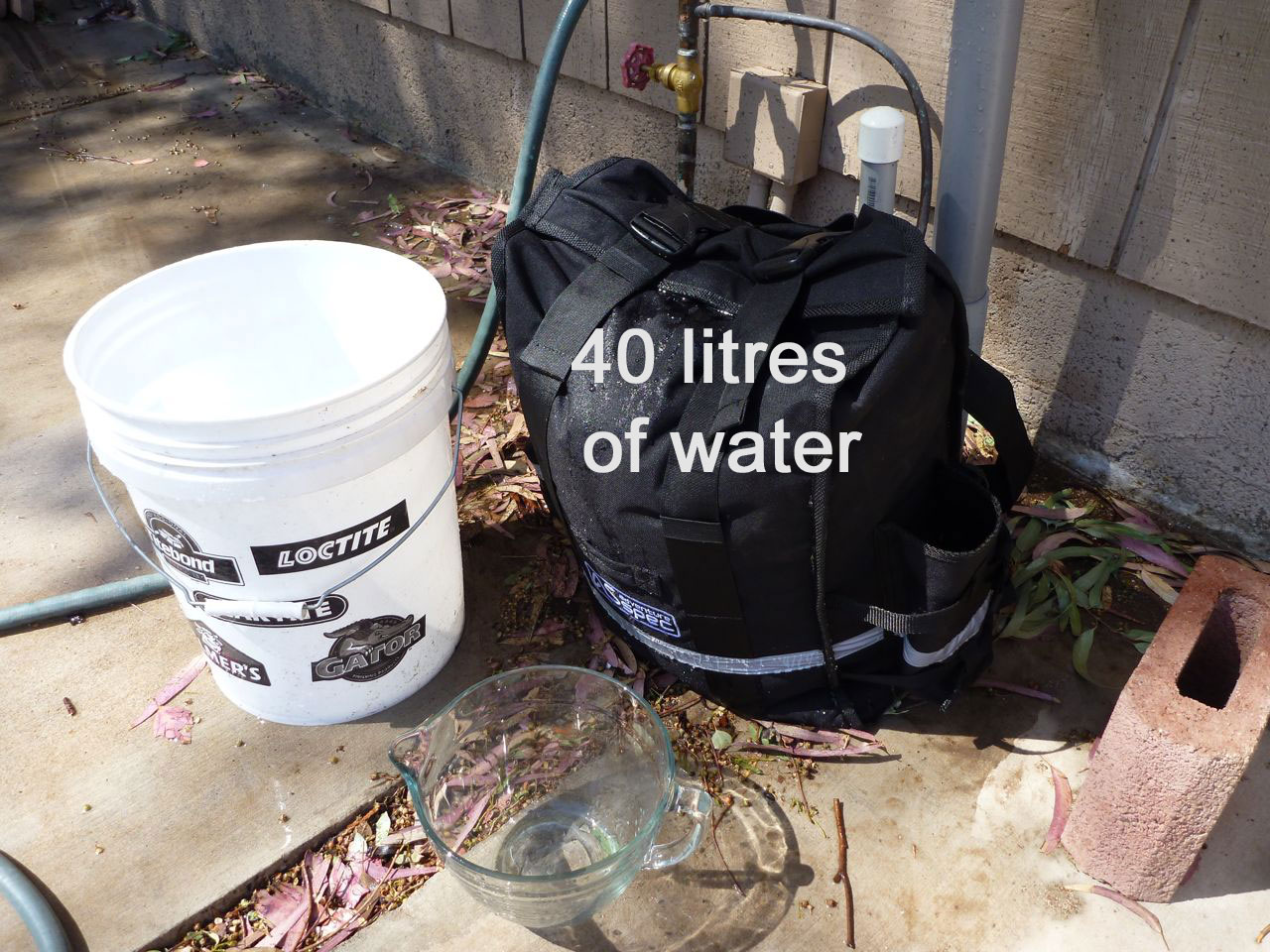
But, fill the Mags with water and you’ll easily get 40 litres in each side, as the pictures right and below show. Seems hard to believe but there are no less than two fills of that 20L white bucket inside the Mag bag, rolled up, clipped down and ready to roll were it not for the fact that it would give me a hernia trying to lift 40kg (88lbs).
Does this all really matter? Yes, it does because for a start, the l x w x h method doesn’t truly represent the maximum potential volume (MPV) of a flexible, non-cuboid container, even if the maxed-out 40L capacity demonstrated on the left is unlikely to be achieved in the real world of packing your panniers with normal travel stuff.
It matters all the more when trying to compare stated fabric pannier volumes with rigid metal or plastic boxes as a guide to buying one or the other. My comparisons in the table at the bottom uses the l x w x h method but that only compares like against like. In all cases you can get more in your bags.
Even then, I think the dimension ratios of a flexible container may also have something to do with it. I recall the guy from Enduristan saying something like the reason their original Monsoons (left, reviewed here) are wide (closer to a cube form) is that they have/can make more volume (by presumably having less far to go to reach ‘cubic optimisation’).
But on a motorcycle I still believe slimness is a desirable attribute and is something that for example, Jesse Luggage strive to maintain in their mounting systems and cases. Al likes to boast that some of his rack and box setups are narrower than competitors’ racks alone.
So, in summary, think carefully when comparing stated rigid box volumes against fabric panniers. A rigid box’s capacity is immutable but a soft bag may be more than you think.
The Magadan was used because it was the pannier I used at the time, but this test would work and give similar results with any similar product.
Original pics for this post sadly lost in the clouds
In Phoenix the CRF was waiting for me, as were a dozen boxes of accessories to finish off the job the first owner had started before he flogged it with less than 1000 miles.
As a reminder, he fitted a pipe, plate, EJK fuel controller, tail rack, 13T, Shorei battery and the white plastics. Most of the original bits were there too.
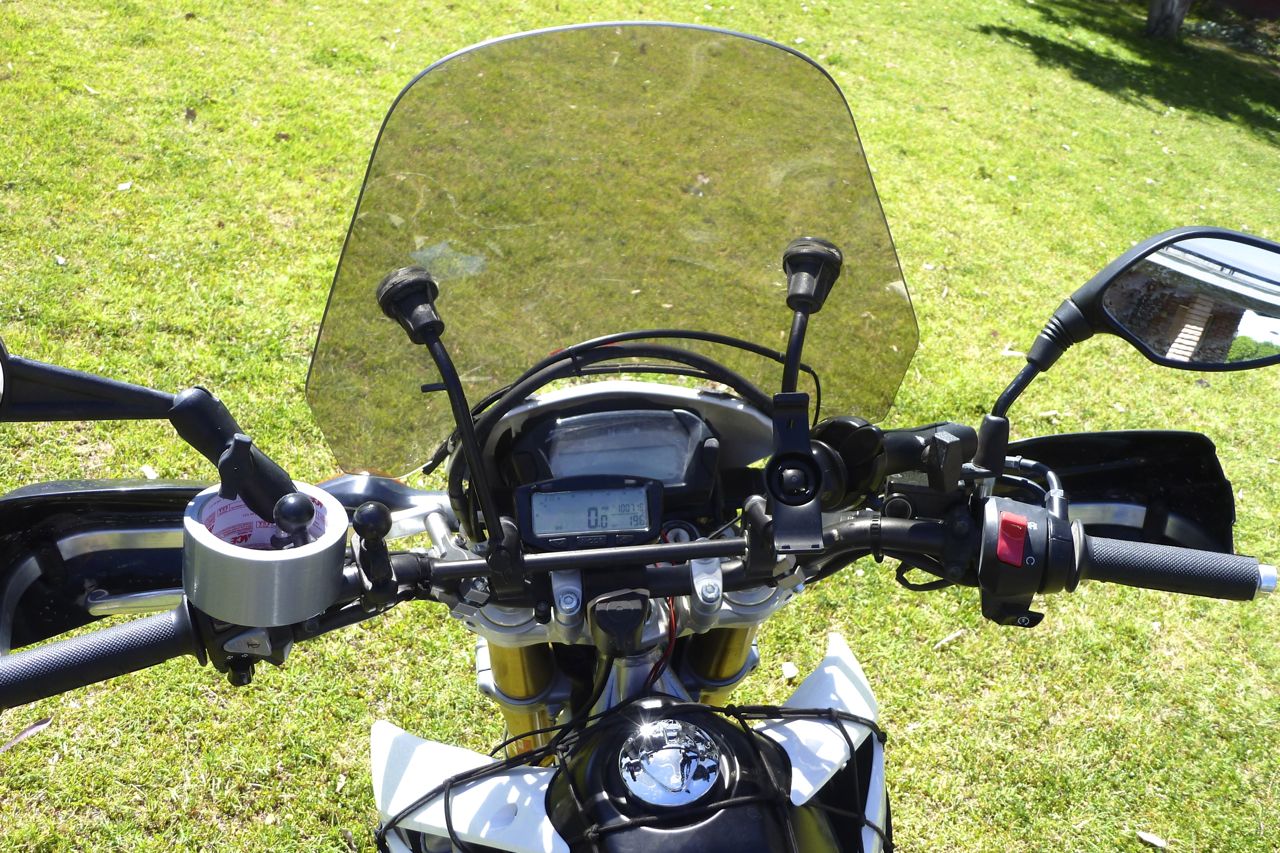
Lying on the floor there on the left I had a set of Aussie Barkbusters with the large Storm handguards, a Spitfire screen, some bar risers, a 12V socket, a couple of RAM mounts and some Double Take mirrors along with lube, filters, a Trail Tech Vapor and some maps.
The cheap risers and 12V socket were clearly sourced from the reject bin in some Guandong factory and needed redrilling; the 12v socket even had the blue and brown wires the wrong way round which caused a small bang and some smoke! At least there was enough cable on the Honda to get 2 inches out of the risers. The Barks went on easily enough; I refitted the original 14T, replaced the shift lever with a folder, got an AZ plate and some insurance ($28 for half a year!) and then we set about the shock and the side racks.
On the plane over I had a thought that the shock wouldn’t be up to my weight and the load. The L I’d tested in February had been reassuringly firm but when it came to loading the rear spring on my Phoenix bike the collar adjustment rings were factory-set solid. We unbolted the shock (the usual near blind nuts make it easier with two people and the battery out) and Al whacked the collar rings apart. He pointed out a useful trick in turning the loose top sleeve out of it’s notch to give another 5mm of tension, but on bounce testing we decided to go all the way and fabricate an additional half-inch sleeve, splitting a right-diametre tube, fitting it and tacking it in place to rack the preload right up and have a bit more to spare. That required compressing the spring in a press but the shock is otherwise unmodifiable and a decent compression damped unit starts at $600.
Al Jesse was also using my bike to try out the prototype of the new MonoArm rack he’s designed. Jesse mount systems are typically cunning affairs with minimal metal; my version is a bit heftier until the final form is pinned down.
I didn’t know what to expect but what we have here is a q/d platform rack no less (he must have read my mind) onto which I’ve chosen to semi-permanently attach my Magadans (I could as easily remove the pans from the plate, but the whole point is the rack itself is q/d). Each side plate locates into corresponding slots and the mounting system’s special feature you’ll learn about later makes it particularly well suited to slinky sub-framed dual sporters like the L. Removal of the platform with bags attached is with a nut and spacers, but production versions will use the tamper-proof QRDP lock by the time it’s all out.
Sunday Al put a cooler full of water in his KLX 250 S’s top box and we went for a ride up in the Weaver Mountains around Castle Hot Springs to see how my adaptions weighed up and pull off an mpg test. I was concerned the EJK black box might might have affected this as the original owner had intimated. Even then, with the Honda’s tiny tank (I’ll have a 5-litre fuel bag and may need another) it’s going to be stops every two hours to pay out for 8 bucks of fuel at a time.
First impression was a lot of noise and no jaw-dropping gobs of extra power over the Honda test bike I road in February (I do wonder if that press bike had been fine tuned…). With pipe and airbox and EJK, power should have been up some 30% (18 to 24hp supposedly) but Al’s Kawasaki was having no difficultly keeping ahead. We’d already tried to quieten the FMF ‘Q-Pipe’ by fitting a restricting washer up it’s spout and though it made a small difference in the garage, once on the road I couldn’t see myself living with that racket. Acceleration was especially noisy; we hoped the holes that had got drilled into the airbox side might address that, but back at Al’s, tapping them up made no difference. Luckily the stock pipe was at hand and easy to refit.
Other than that all was well. By the end of four hour’s riding the old backside was getting warm; that shock is pretty firm now and chattered into bends, but should be on form with a load. Standing up the bars were still two inches too low – Al’s KLX by comparison was just right. Not sure how to get around that without cable issues. Tyres at street pressures were OK and the brakes a bit touchy on the loose gravel inclines, but that will just be me getting used to the bike. The Slipstreamer Spitfire screen too felt a bit close to my face when bashing over ruts but the ‘pressure balancing’ gap at the base caused no turbulence on the highway. I did think it could pull still more gearing but there’s no room in there for a 14T so it will have to be 3 or 4 teeth off the back end. Unfortunately it was the din that left the biggest mark.
As for mpg. Al’s KLX recorded 96 miles on the loop; the Honda 83.5 – an unlikely 15% discrepancy so one odometre was out; tyres and gearing were standard on both our bikes. Assuming the Kawa’s distance reading was correct then the Honda was doing an impressive 62.3 US or 75UK mpg. If the Honda’s 83.5 miles is in the ballpark it’s more like 54.2 US but still 65UK mpg, what I recorded last March on the stock press bike. We were going pretty slowly (no more than 55mph on the KLX or 50 on mine) so I suspect somewhere in between is right.
Back at base I checked the speedo against a Nuvi satnav and up to 30mph it seemed spot on for speed though over a mile the odo was 10% under. A closer test with my Garmin 62 or even the Trail Tech Vapor unit will get to the bottom of it. And it sure was nice to ride the back streets with that quiet stock pipe back on, even if at 12lbs it’s double the weight of the Q Pipe.
Unfortunately the proto side rack doesn’t fit round the fat OE can and needs to be modified a bit. That and the fact that my ‘two-day’ helmet delivery is still with UPS meant I was running out of time to get to South Sound BMW for Saturday. We talked about good routes on the weekend but a 250 is not the best machine when you need to cross a continent in a hurry. The northwest was never my plan on this trip and my decision to fly up north (about the same price when you add it up) was made easier by today’s weather warnings across the Southwest. Here in Phoenix it’s been baking at over 30 Celcius last few days but today in Flagstaff it was snow and 60mph gusts – undesirable conditions aboard a skimpy 250.
It all gives me more time to get the Honda in shape for a shorter ride for a presentation at Roseville, CA before swing back through Utah’s Canyonlands.
Giant Loop are well known for their innovative ‘horseshoe’ bags which wrap around the back of a dirt bike but which, in my opinion, are not especially easy to use day-in, day-out and have been proven not to be waterproof and have zips which can be weak points. That may not matter for a weekend run with your mates in the hills, but does on the overland.
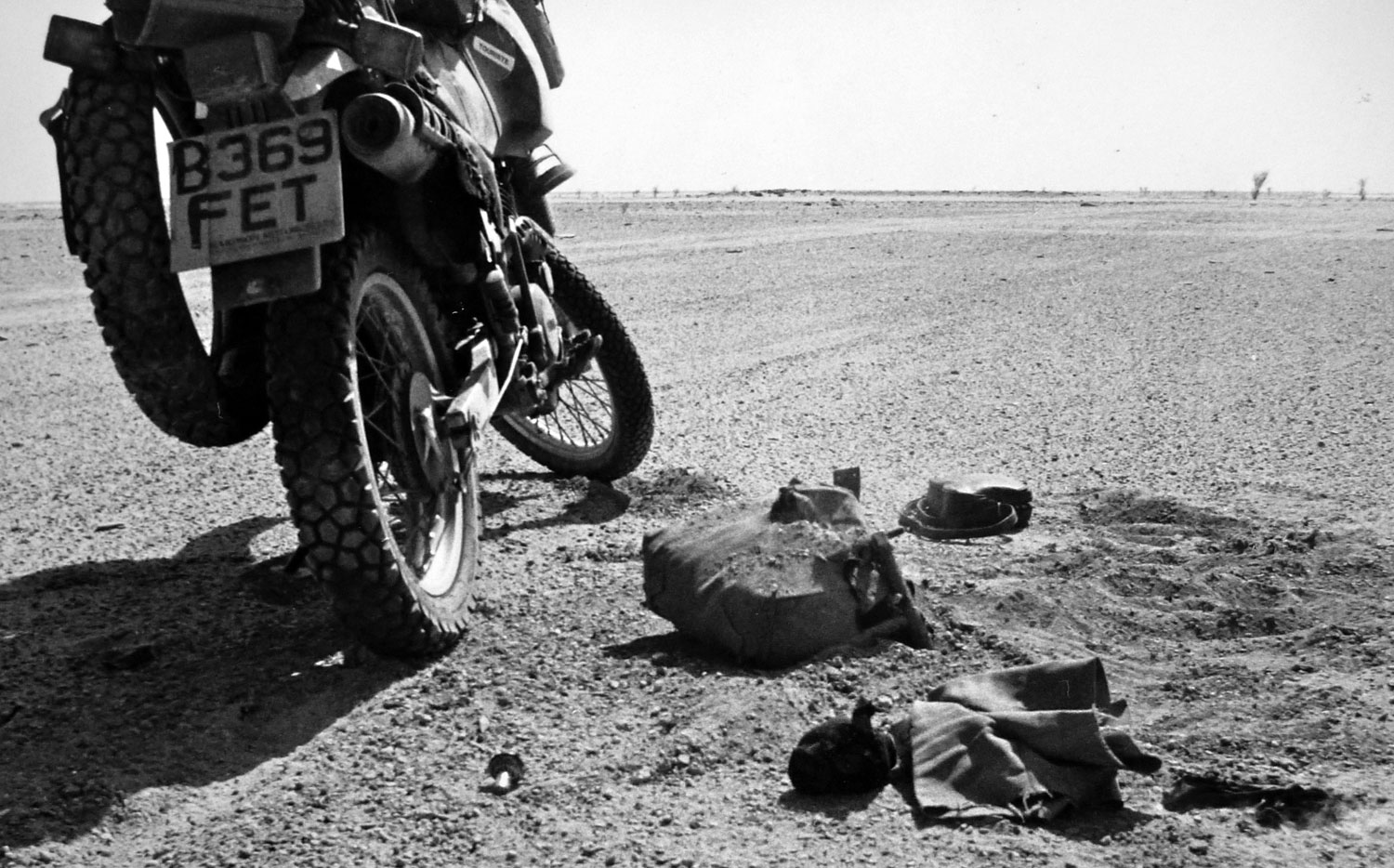
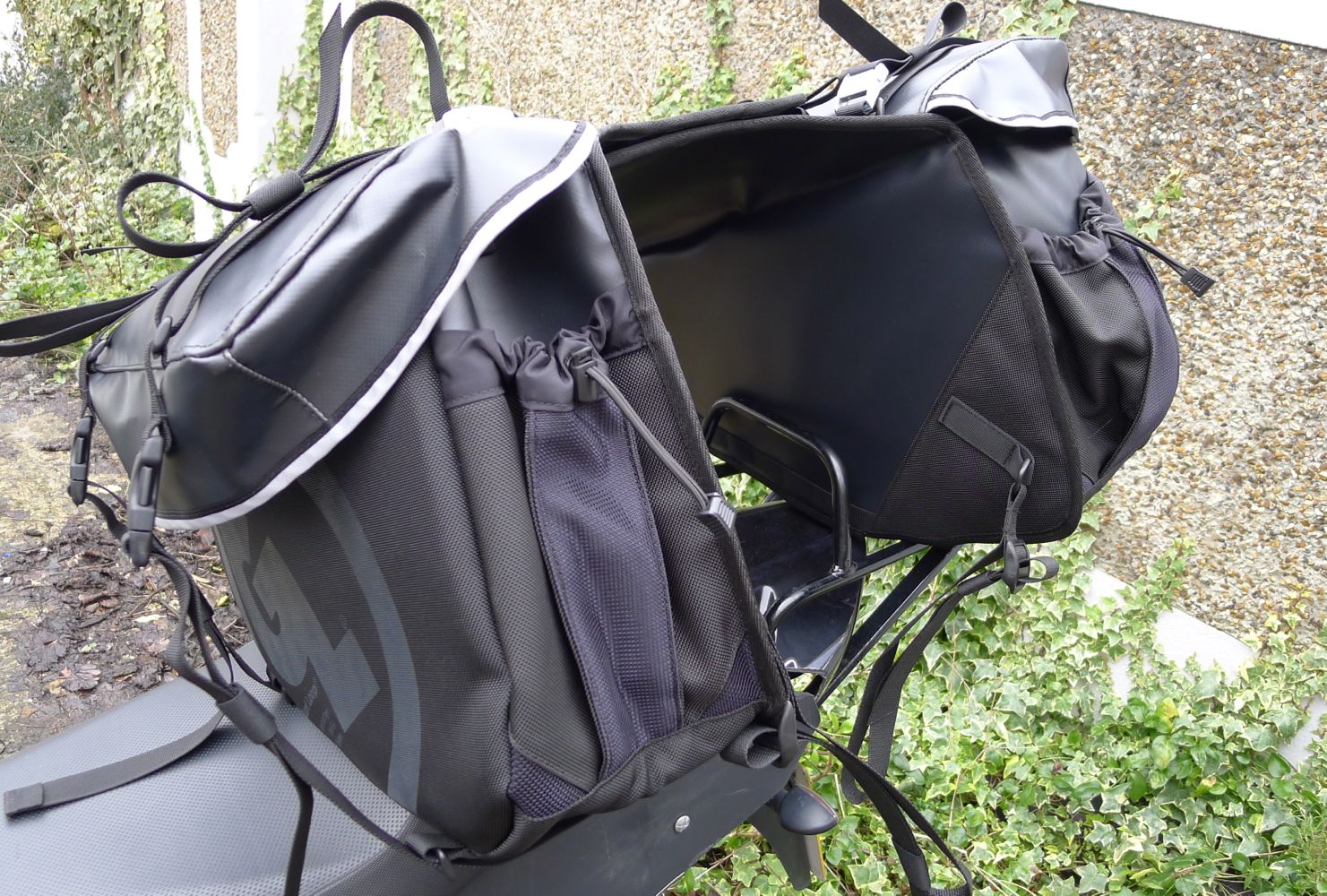
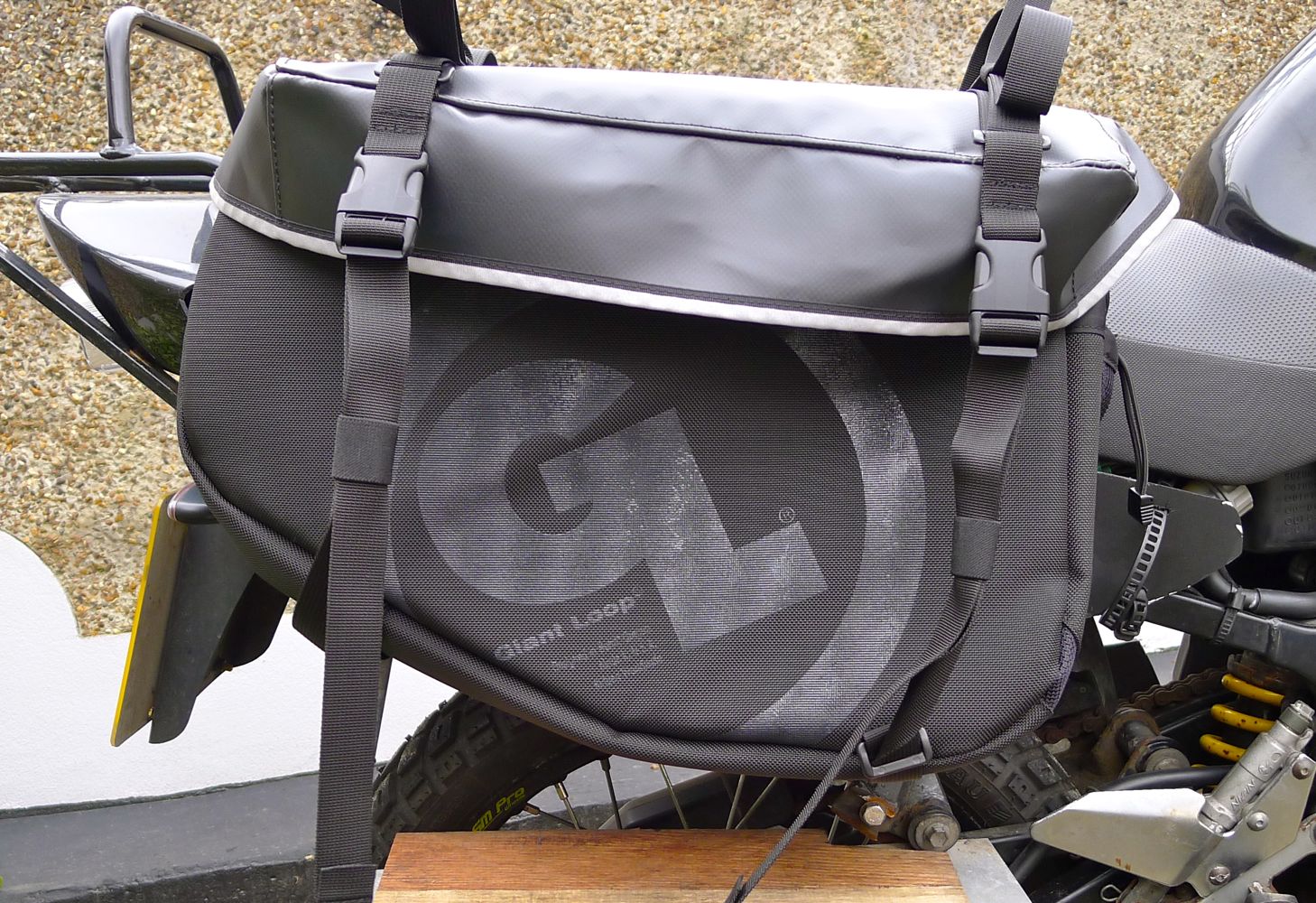
Now Giant Loop have joined the likes of Enduristan, Adventure Spec and a few others in producing a conventional throwover pannier, the Siskiyou, named after a mountain range in southern Oregon. These types of panniers are just about as old as motorcycling of course, up till a few years ago Ortliebs were widely used by moto travellers. I recall my first pair of ‘soft bags’ in the late 70s, elegant lightweight cases (left) crafted from a lustrous space-age combination of vinyl-coated cardboard. But this was the advent of the monoshock era where soon they’d be no more twin shocks to keep the swinging pannier backs out of the rear wheel or final drive. As I say elsewhere, over the years I’ve melted my fair share of soft panniers and even dealt with small luggage fires (right). Nevertheless, I still prefer soft luggage for overland or adventure travel despite the drawbacks of security, perhaps combined with one small detachable hard case for valuables.
These panniers were sent to me for a quick look by Adv Spec
WHAT GIANT LOOP SAID AT THE TIME … A ‘round-the-world contender, Giant Loop’s Siskiyou Panniers™ combine the convenience of hard panniers with all of Giant Loop’s performance advantages. Rugged, rackless, lightweight — and damn sexy…. Backed by a Limited Lifetime Warranty…
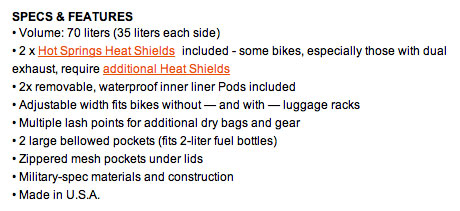
The GL website specs shown above left also claim each pannier has a volume of ’35 litres’. I’m not the first person to question how they arrived at this figure; my calcs put it at more like 24 litres. We’re all used to exaggerated claims, but that was quite a discrepancy. I read that they measure their luggage products by filling them with beans and doing so I suppose it’s possible that a soft fabric pannier would bulge out. In fact I’ve since found that that is exactly the case so Giant Loop’s estimate of 35 litres is right in the ball park.
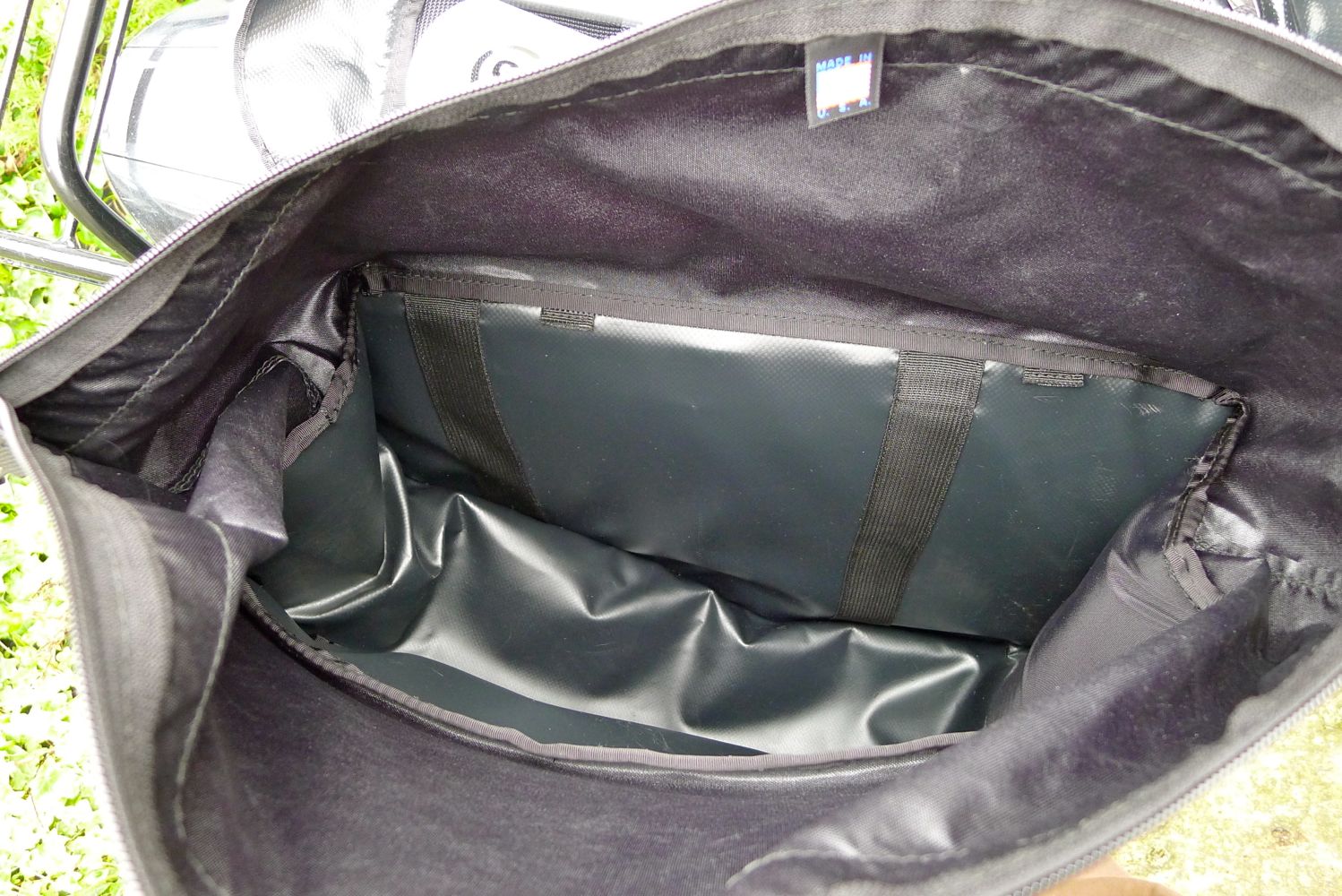
GL are fairly ambiguous about what they’re made from other than ‘military-spec materials and construction‘, but it looks like the well-proven and widely used combination of a Cordura shell with a vinyl back, interior and lid. Unusually, sandwiched inside this thick shell is an unseen additional layer of closed cell foam, or something similar. It helps shape the bags and also reduce damage by padding the contents when you crash. GL wisely suggest that any hard-edged items in the baggage are well wrapped for such an eventuality: it’s standard practice in packing soft baggage.
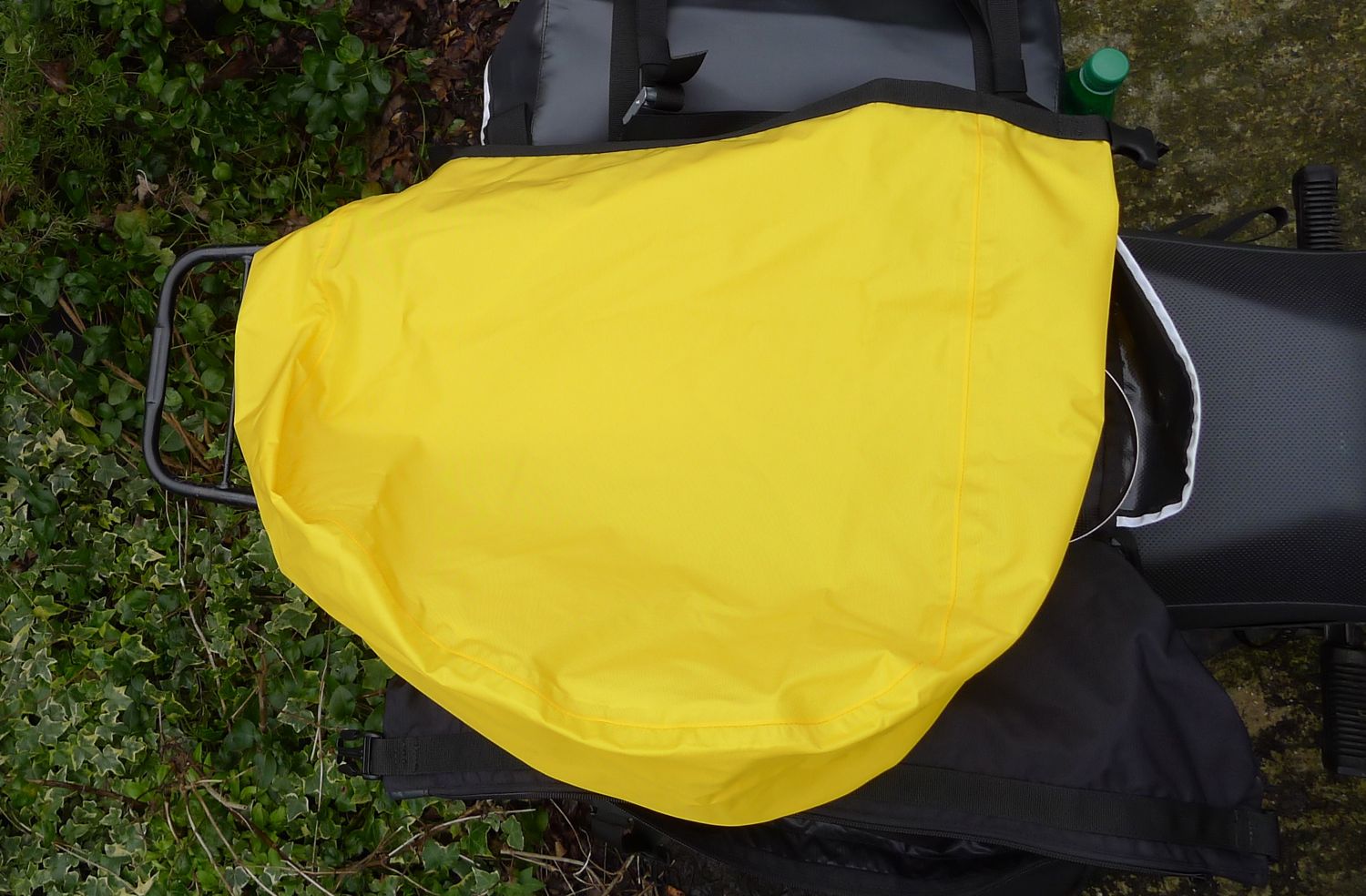
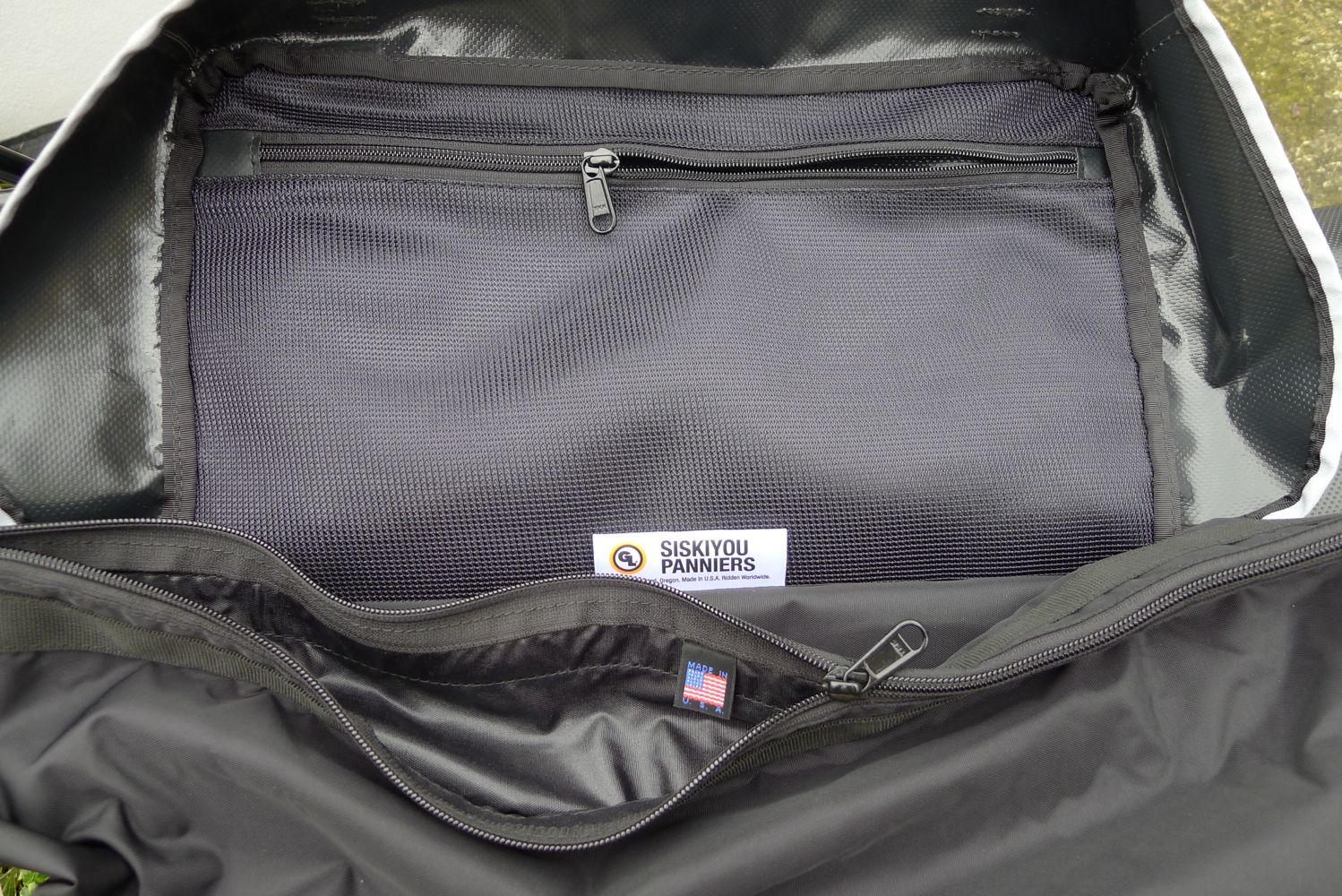
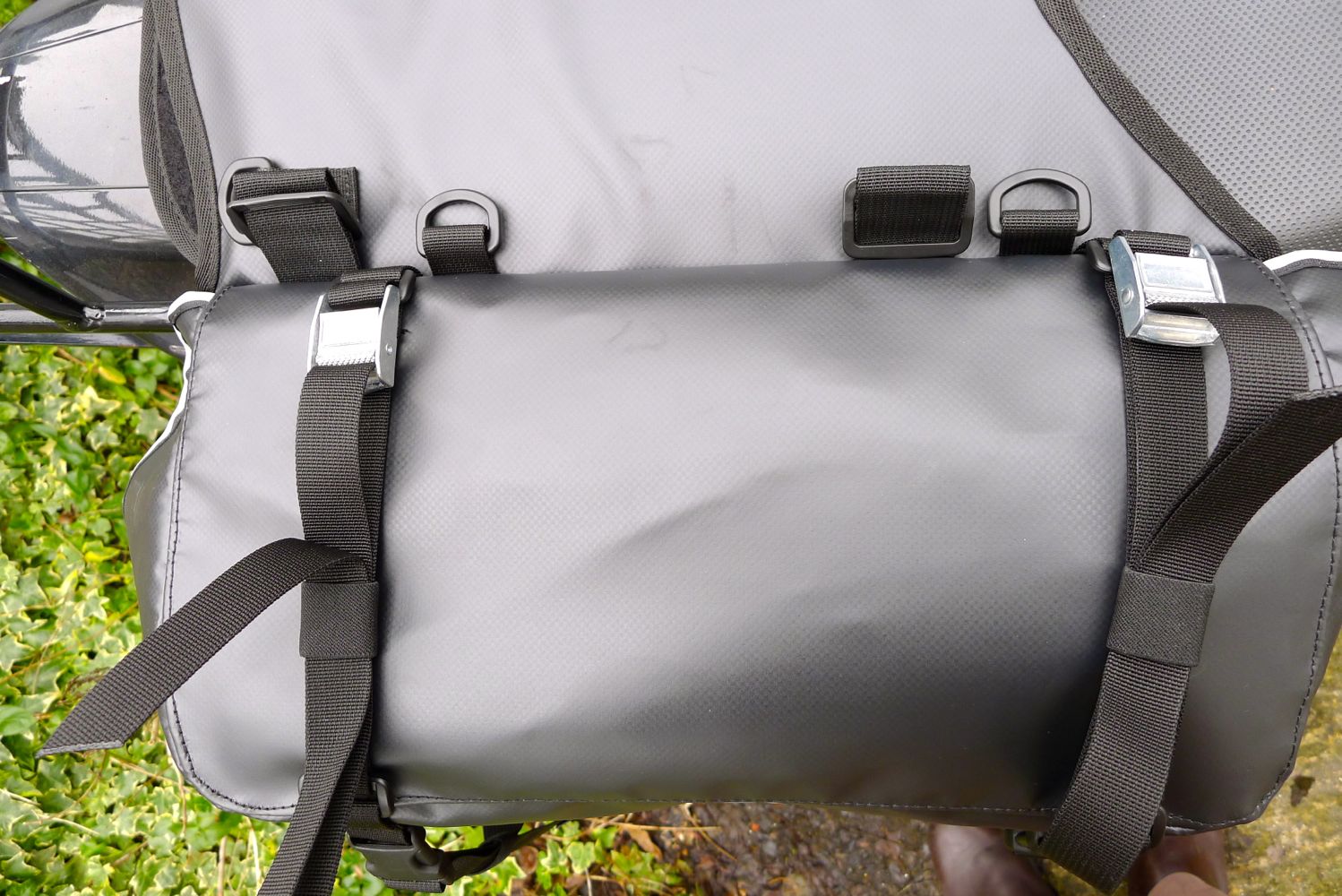
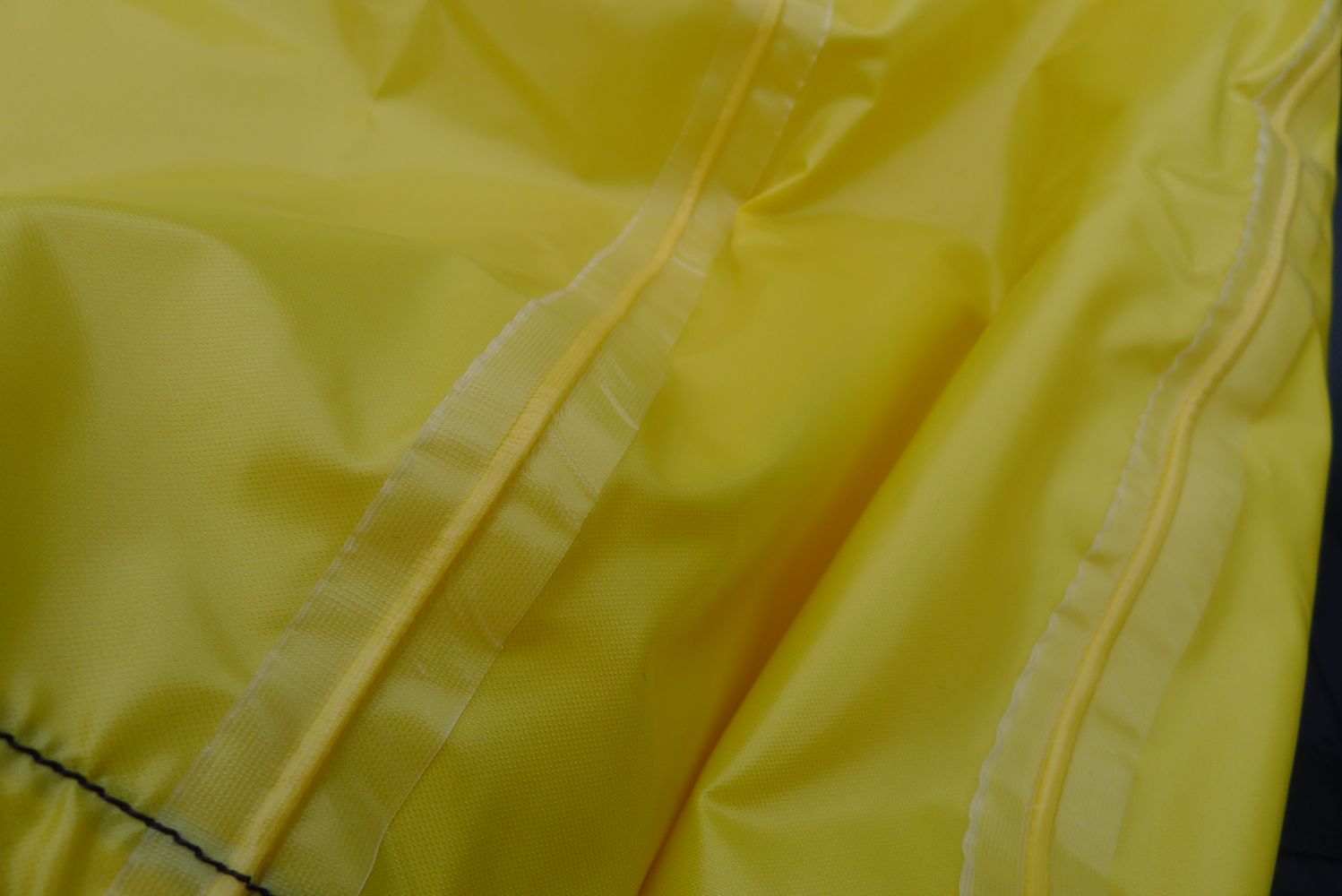
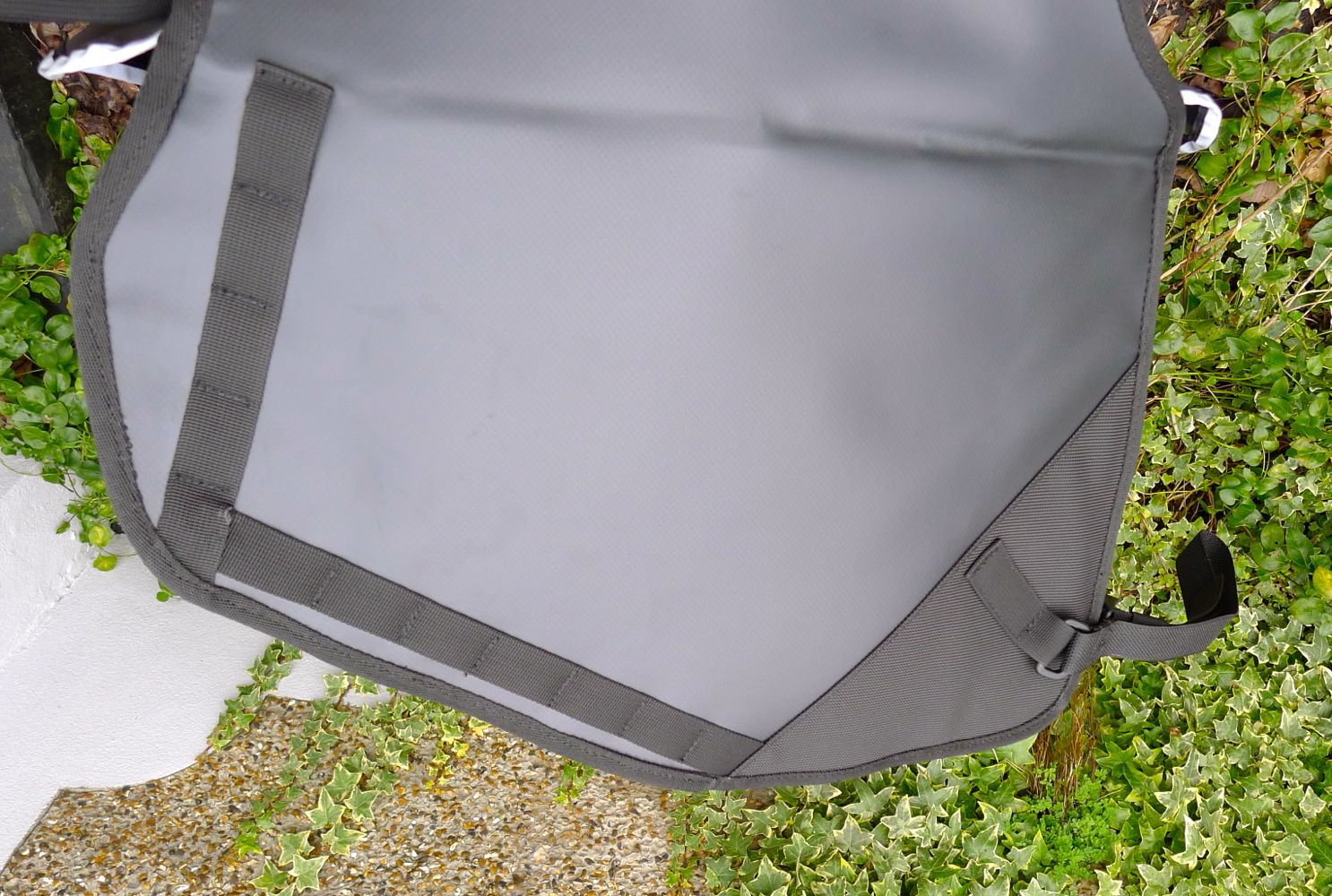
Rather like the Monsoons, the top edge of the Siksiyou’s shell has a sewn-on sleeve of coated nylon with a thin zip and roll-up clips, similar to a dry bag. Inside you get a separate yellow nylon liner (below right) cut more or less to fit in the panniers, with well-taped seams, a thick layer of TPU coating on one side, plus another thin zip and roll-top clips. Over the top of this drops the thick PVC lid which clips down on straps, with additional separate straps for attaching stuff to the top of the lid rather than tucking it under the lid straps – another nice touch. Inside the lid is a flat zipped mesh map pocket.
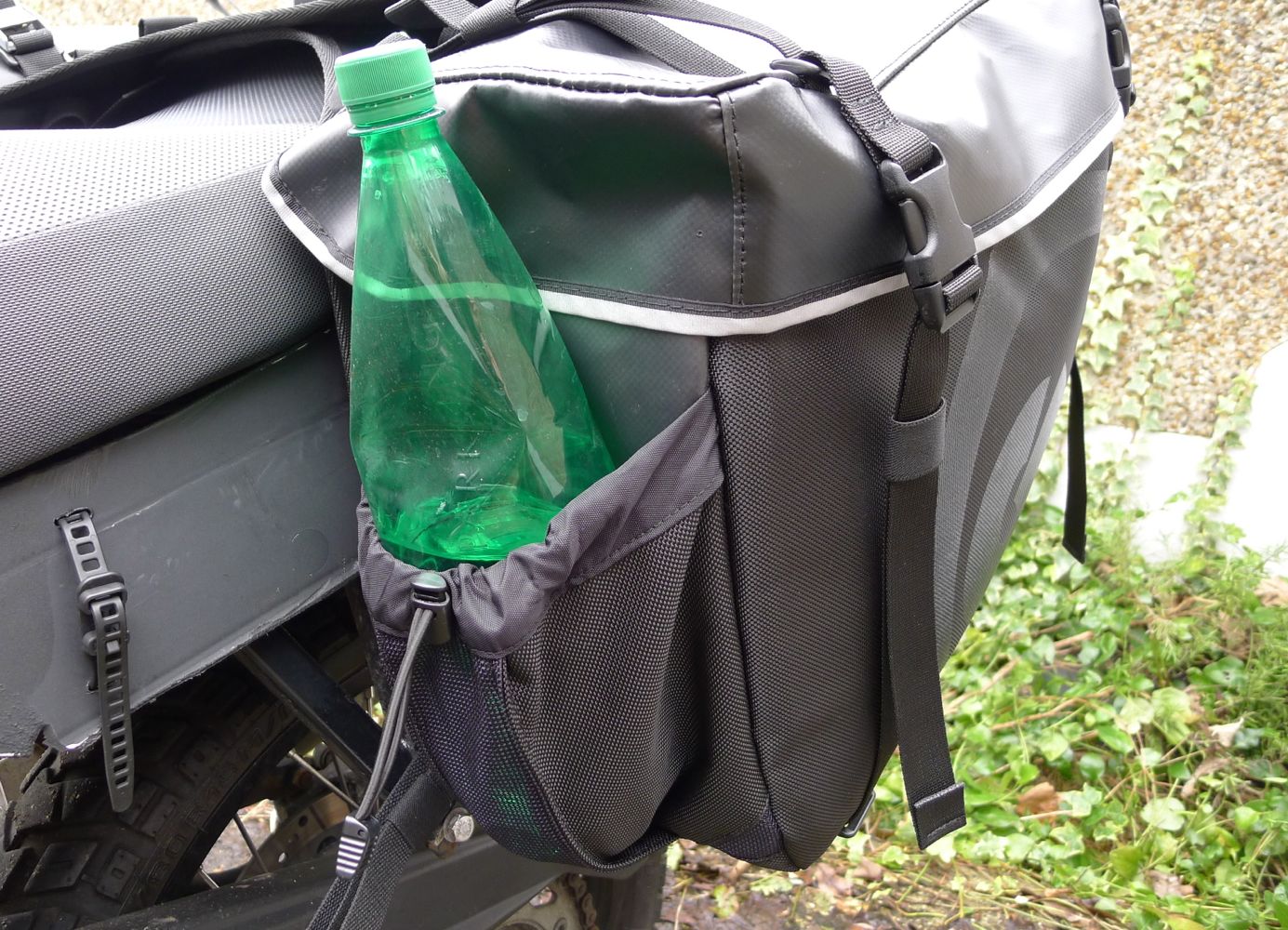
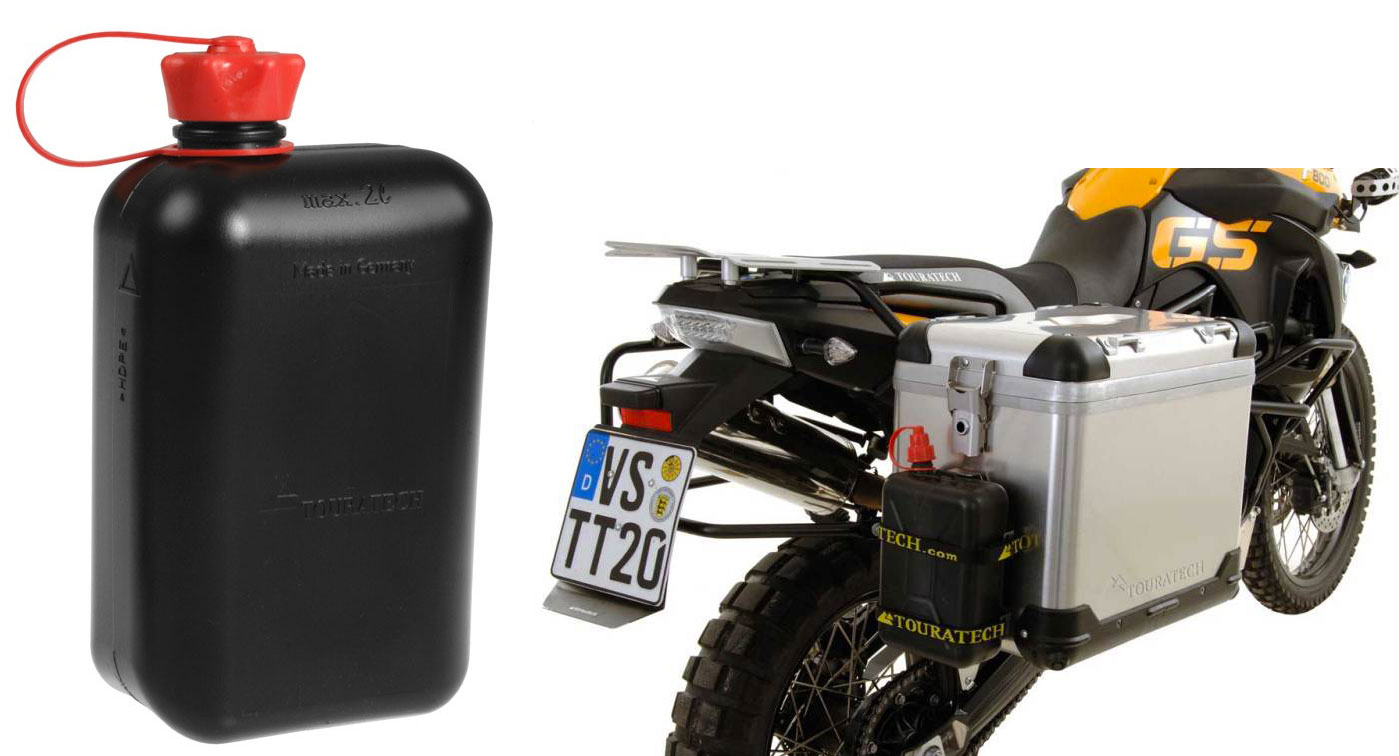
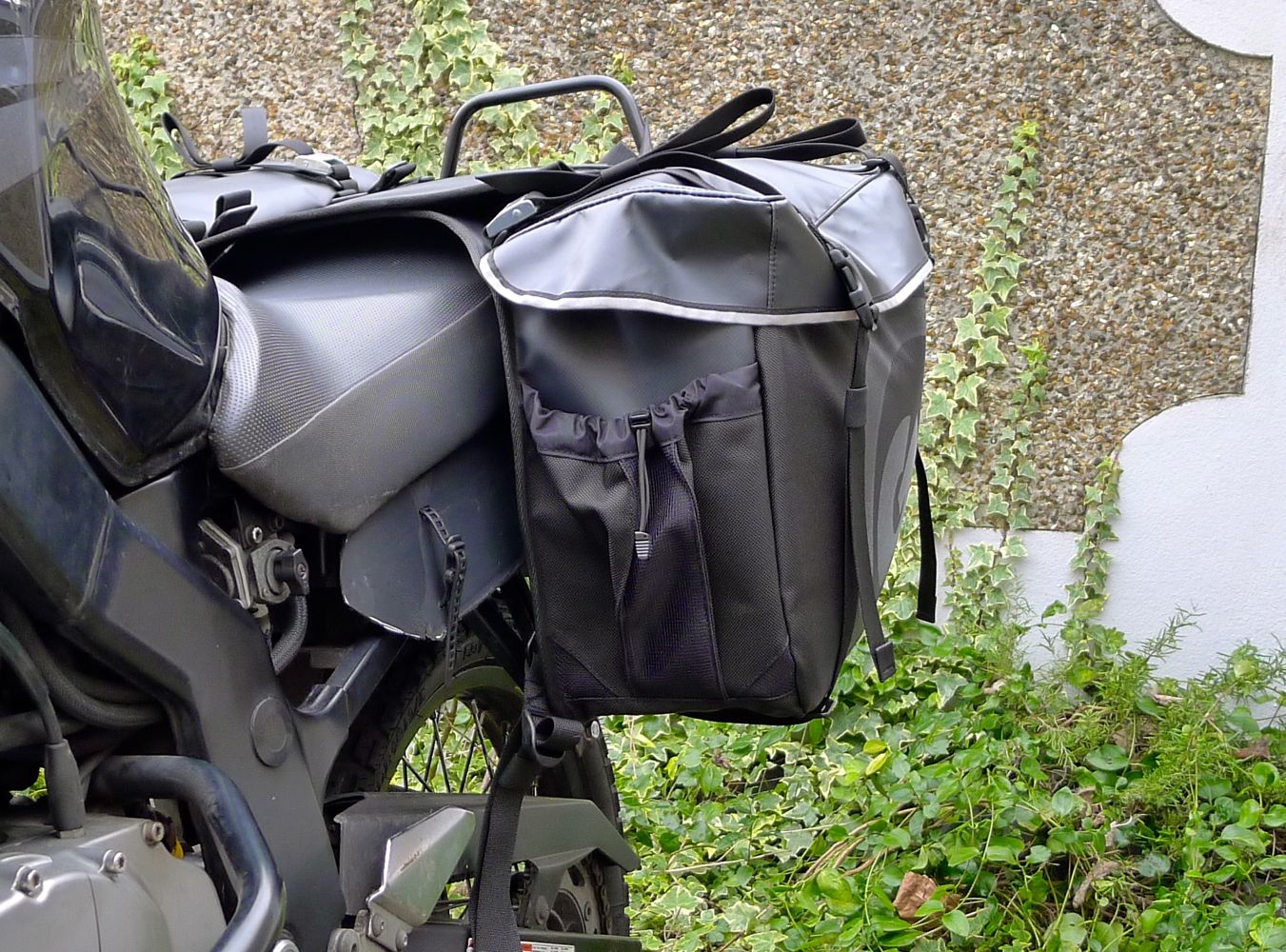
There’s also a small cinch-cord pocket on the front of each pannier, but although they describe it as ‘bellowed’ it’s actually a simple wedge that’s nowhere near as big nor usefully box-shaped as the four pockets you get on Magadans although it’s said they’ve been designed to take 2-litre Touratech cans, as pictured left. On the right, a 1.5 litre water bottle in the pannier’s pocket.
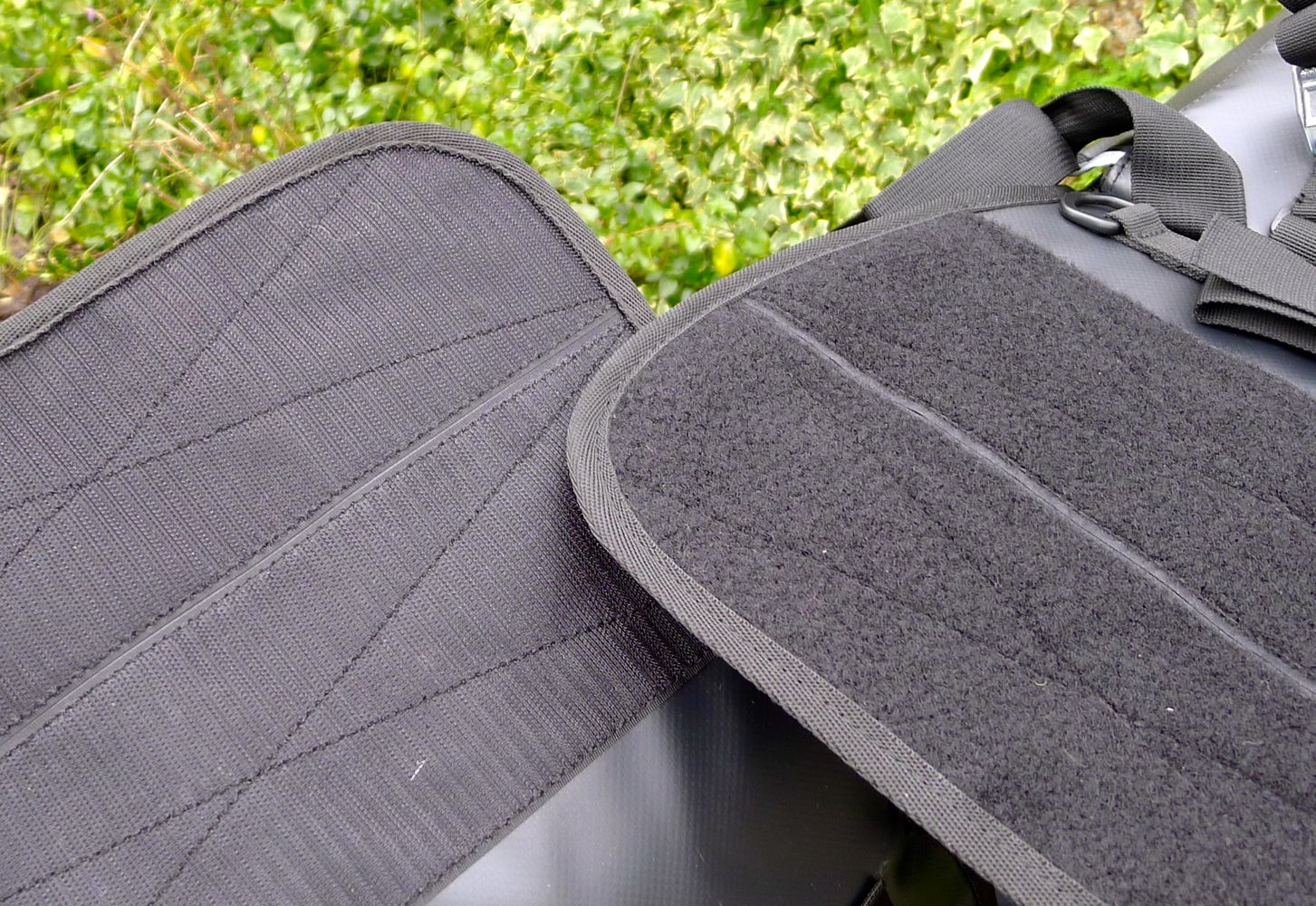
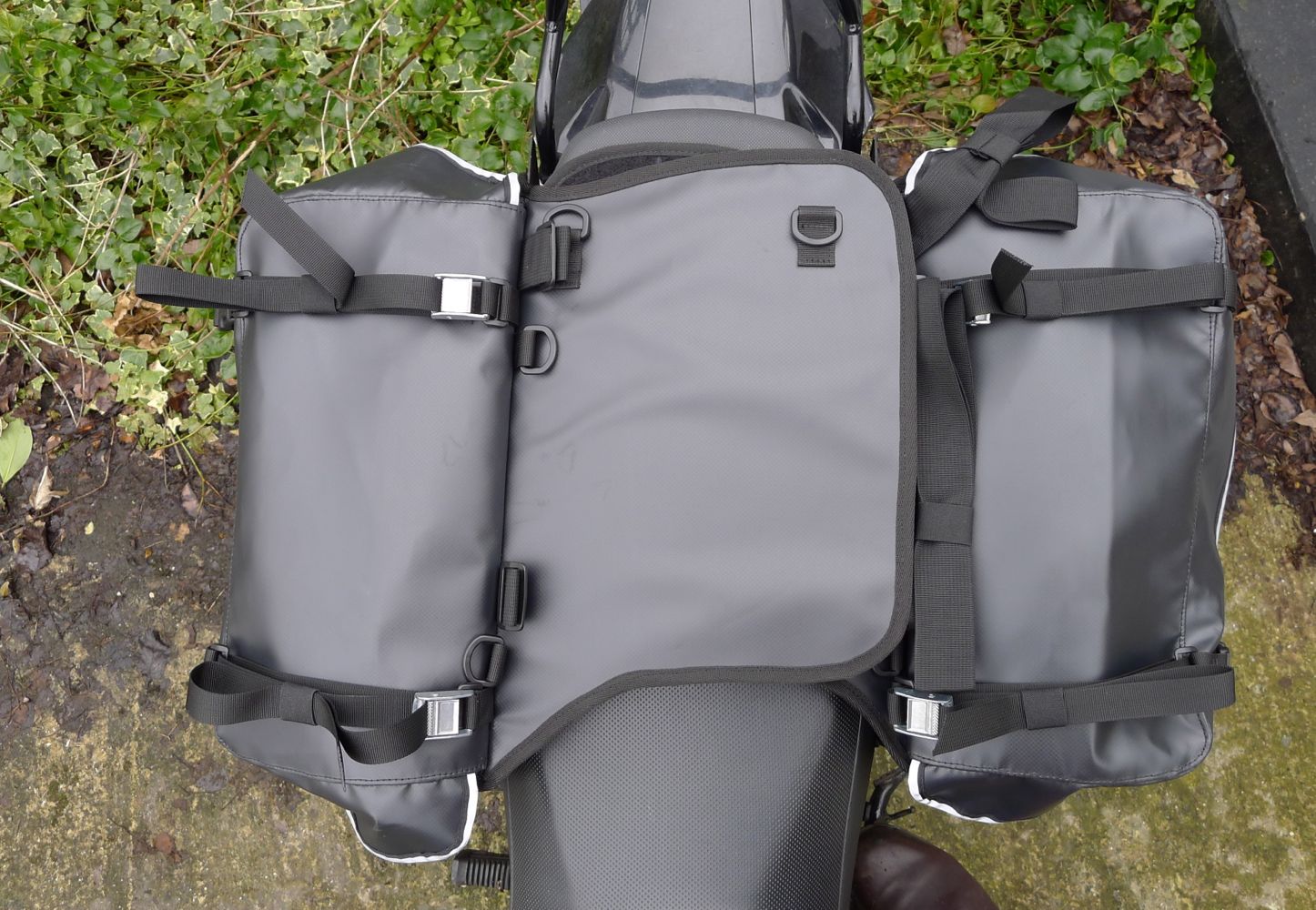
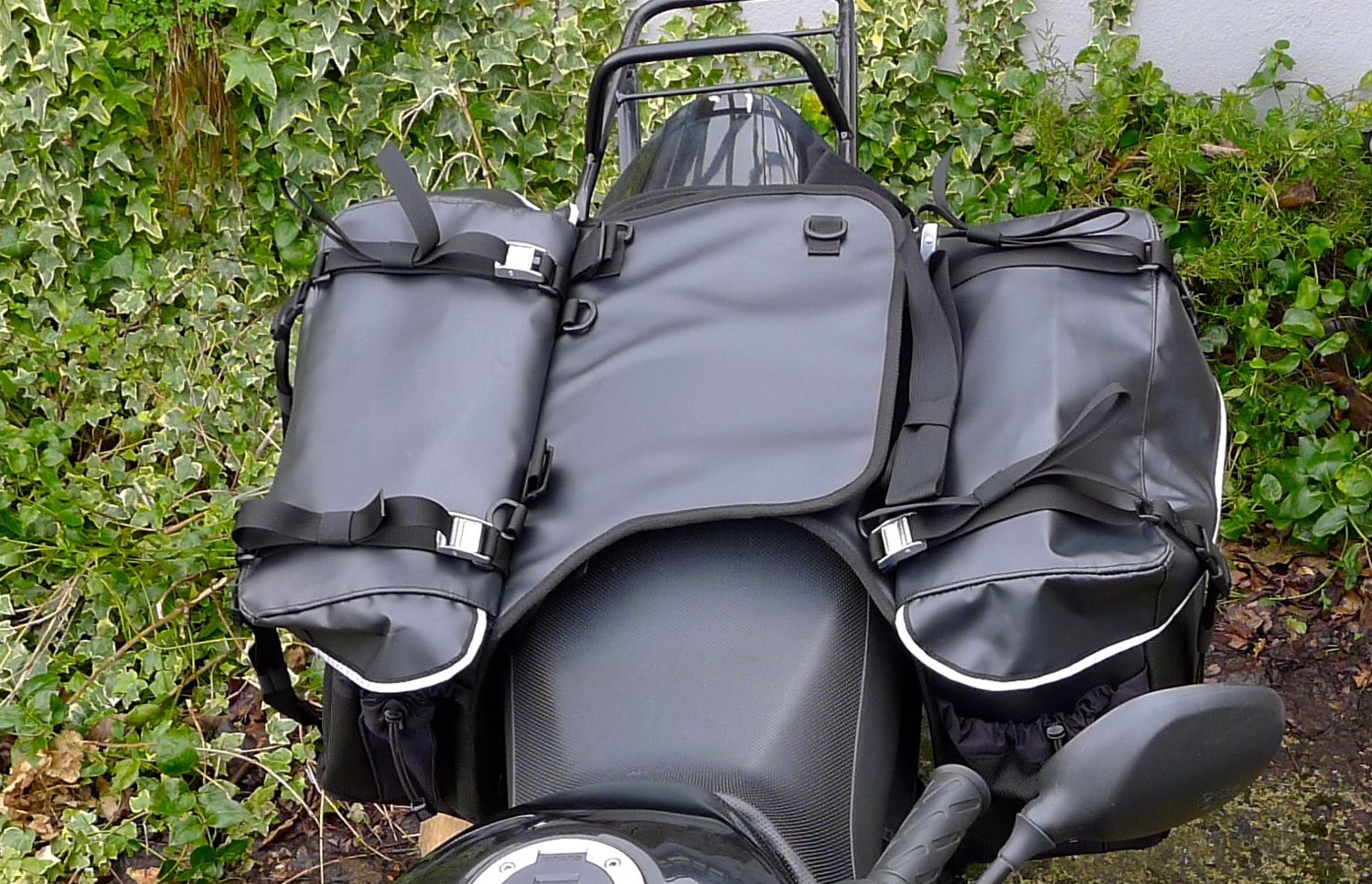
The two bags join together using broad vinyl velcro pads. These pads feature additional lashing rings to secure other luggage or to fix it all to your bike. The Magadans use the same system, but with a pair of wide velcro straps rather than full-width pads which seems bit OTT. Me, I’d prefer buckles and straps over velcro anyway, because as the volume of your load changes or rough roads take their toll, fine tuning the tension may be required – and that’s much more easily done with adjustable buckles that super sticky velcro, be it strap or pad. On the Mags such a buckle mod is easy to do – with the Siskies you’re stuck with the pad which I’m also not sure would be great to sit on on a hot day. The GL installation page suggests: “For 2-up riding, affix a small seat cushion to the top of the Siskiyou Panniers“.
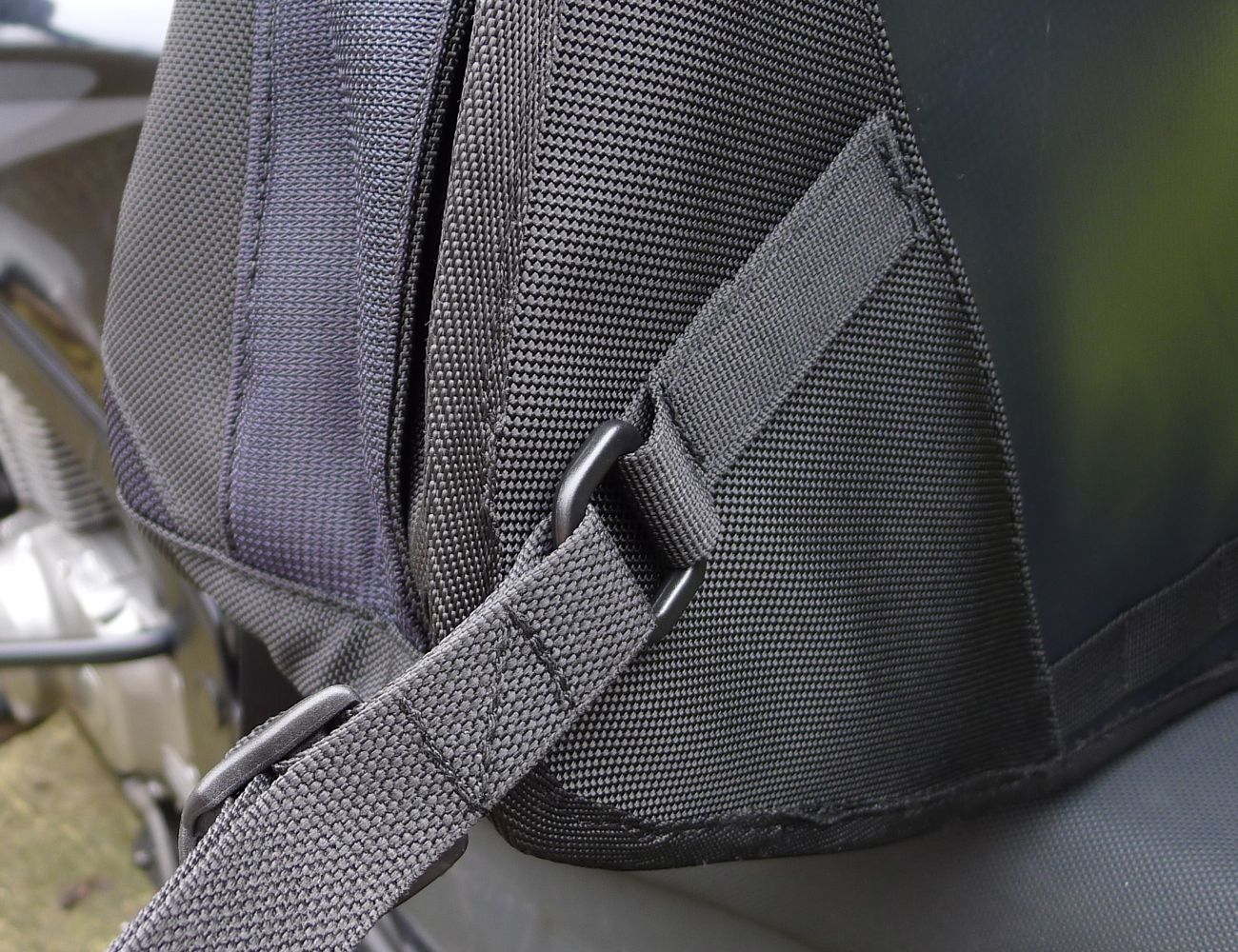
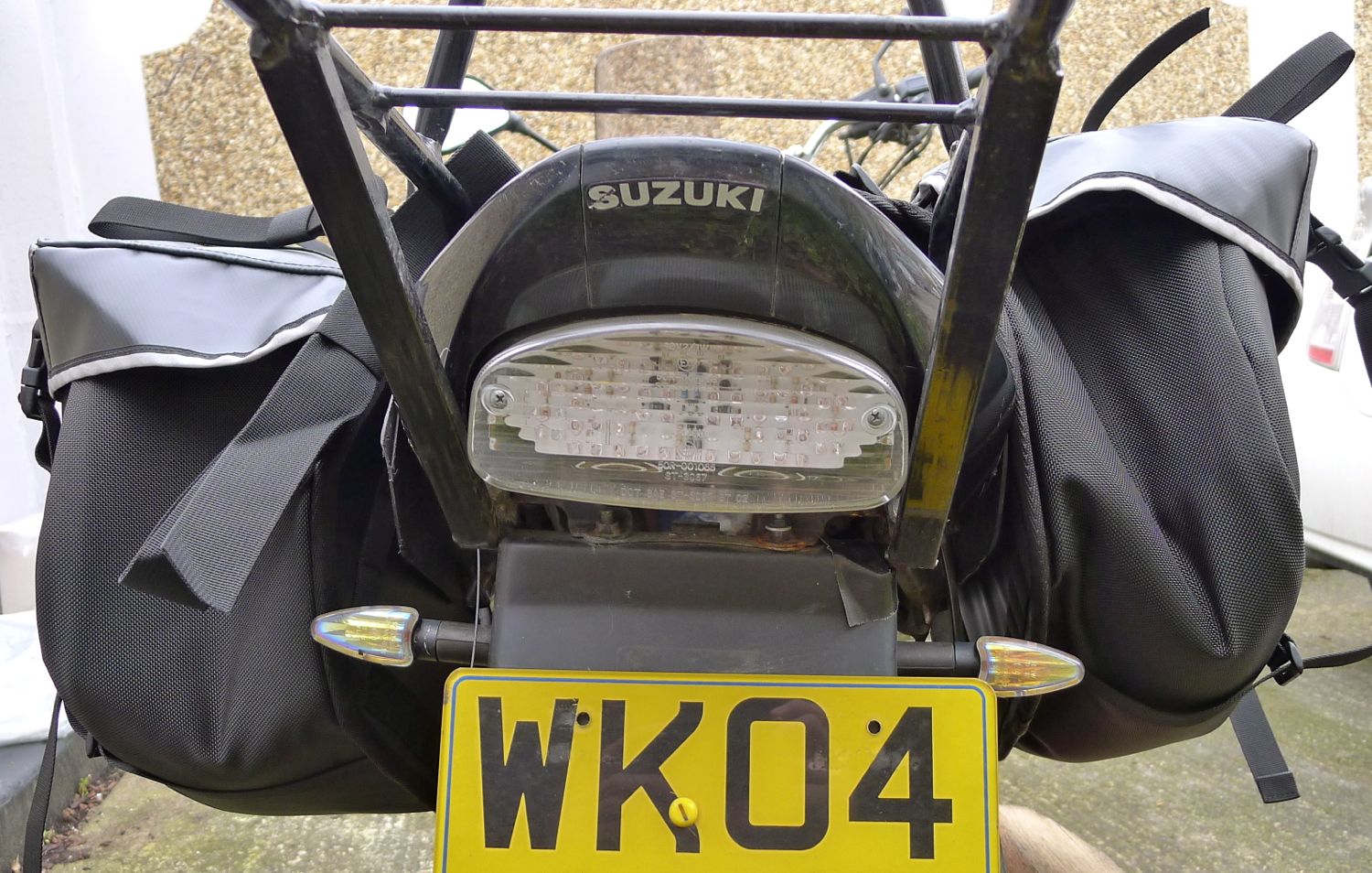
To stop the bags sliding back you get a strap to attach to the pillion footrest or thereabouts (left), as on the Monsoons but something that was missing from the Magadans’ first version. Subsequent versions low have a tie-off D-ring.
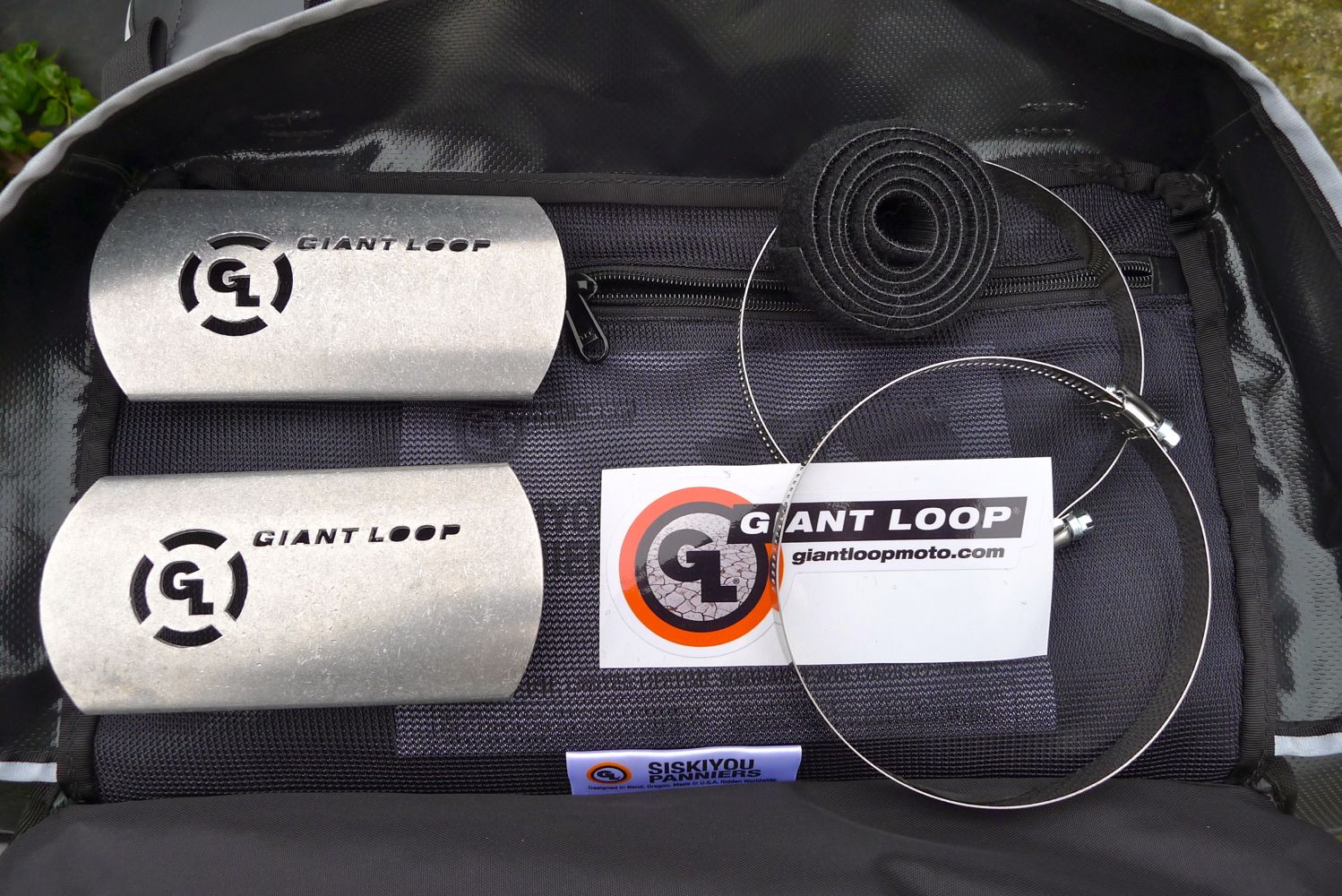
Included with the Siskiyou bags are a pair of alloy exhaust guards (rather like I bodged on my Suzuki – I got the idea from GL). You also get two hose clips, some instructions and a sticker and to stop your sidepanels getting scuffed GL can also supply some protective vinyl film. The exhaust guards are an admission that many a soft pannier has melted like a Cornetto when it shifted or otherwise got too close to the pipe. Modern efi bikes with catalysers run especially hot and indeed the Siskiyou panniers tested on a Husky Terra by Cycle World magazine (April 2013) melted. So like GL say, additional guards may be needed. On any bike you need to think carefully how loaded throwovers will react when they shift on rough roads against a hot pipe. This need avoid or deal with meltdowns with soft bags is why some riders understandably prefer hard alloy or firm resin boxes, although in my opinion mounting soft bags on some sort of rack is the way round this flaw.
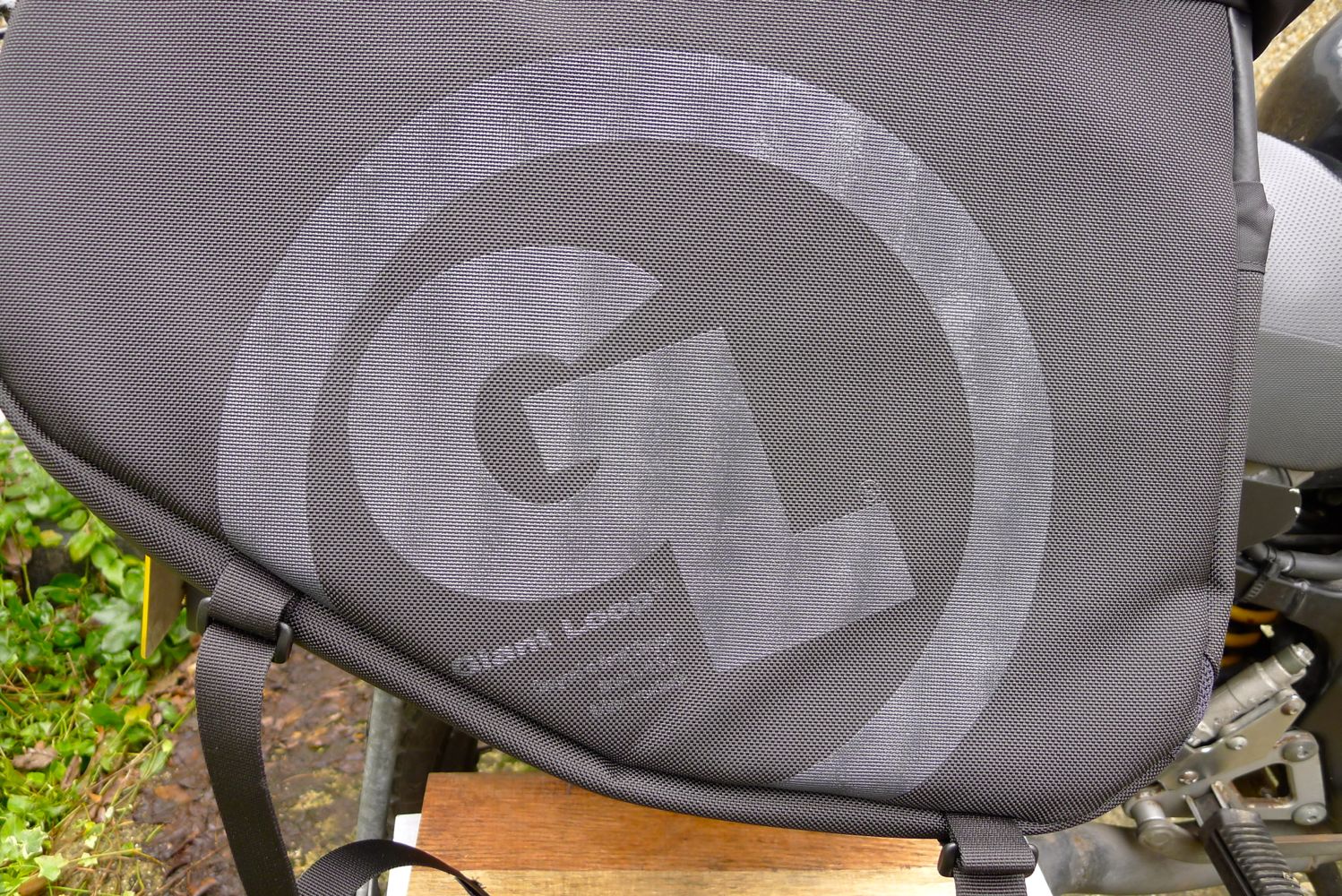
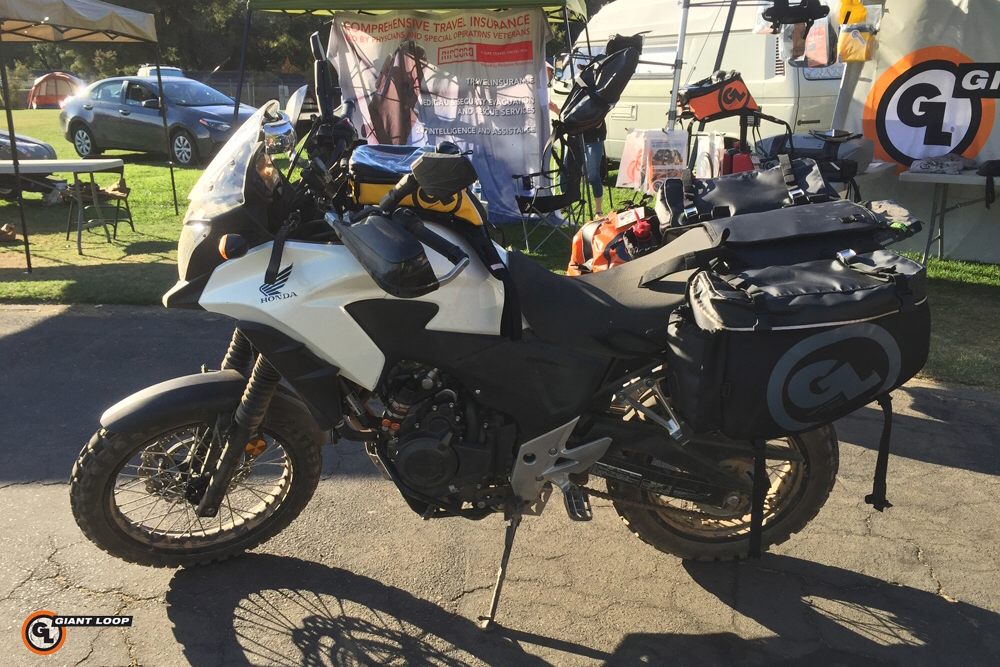
The Siskiyous have a sporty cutback base which makes them more suitable for regular bikes with low, upswept pipes. Whatever, this shape will greatly increase the Siskiyou’s fitting options to many more bikes than the usual adv suspects. The GL logo is emblazoned on the sides, but in a pleasingly understated way. Unless that ‘GL’ logo glows, I’m not sure there any reflective surfaces as found on the Mags and Monsoons – possibly the thin edge of the lid?
I did also wonder if access would be a bit of a faff. If they’re fully locked down you unclip the two lid straps, unclip and unroll the outer bag and unzip it, then unclip and unroll the inner bag and unzip that – and you’re in! Of course you don’t need to use those zips; their protection against waterproofing is minimal and zips can jam or break when dirty or used carelessly. In this respect I prefer the bomb-proof, roll-top simplicity of the Magadans and the Monsoons.
So all up you’re getting a good sized touring pannier that looks well made and is usefully featured. The foam protection sandwich is a nice touch, as is including exhaust guards and several lashing points on under and behind the bags; you get a feeling they took a lead from Enduristan here. But – is this £475 ($700) worth of pannier when in the UK Magadans go for £350 and Monsoons for just £230? I wondered that perhaps if you’re paying for the ‘limited lifetime warranty‘ but that only covers the “original purchaser… against … defective materials and craftsmanship only, and does not include damage due to normal wear and tear or misuse“, so no big deal there; after a year they could just put any failure down to wear or misuse.
Siskiyous look like they were designed for on a Honda CB550X Rally Raid
The Siskiyou panniers certainly feel like they’re up to the rigours of overland travel and design and features fit the bill without any radical innovation. You just need to ask yourself in turn whether the bill for a set lives up to your expectations.






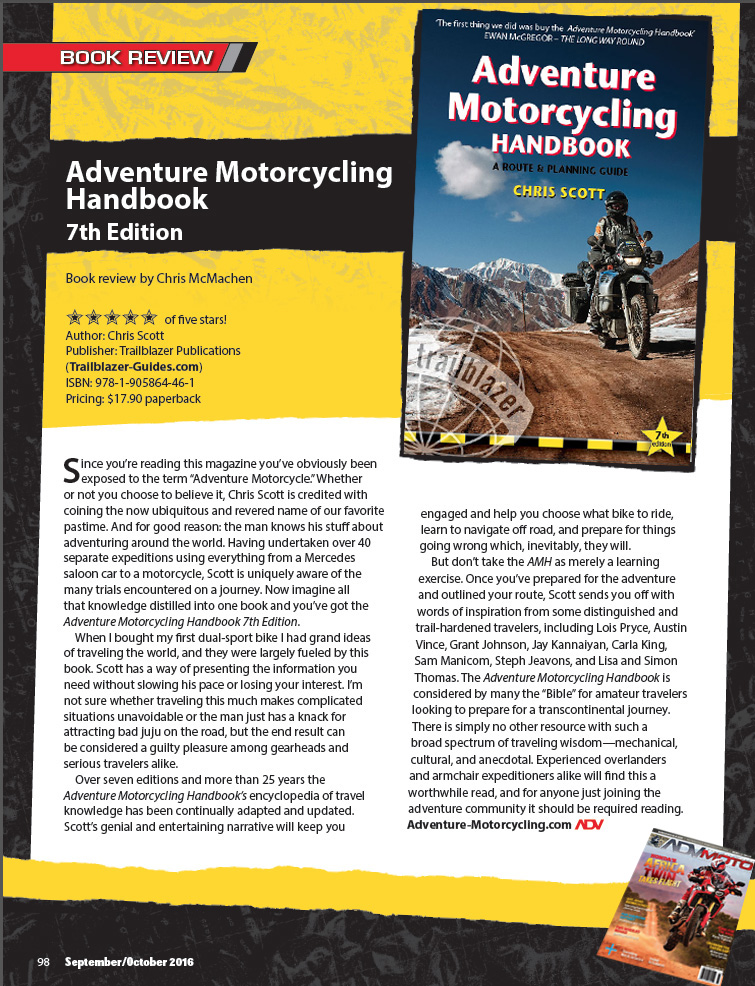
 Fortunately, I had Chris Scott’s indispensable Adventure Motorcycling Handbook up my sleeve, which clearly outlines the unwritten rules.


 Adventure Motorcycling Handbook