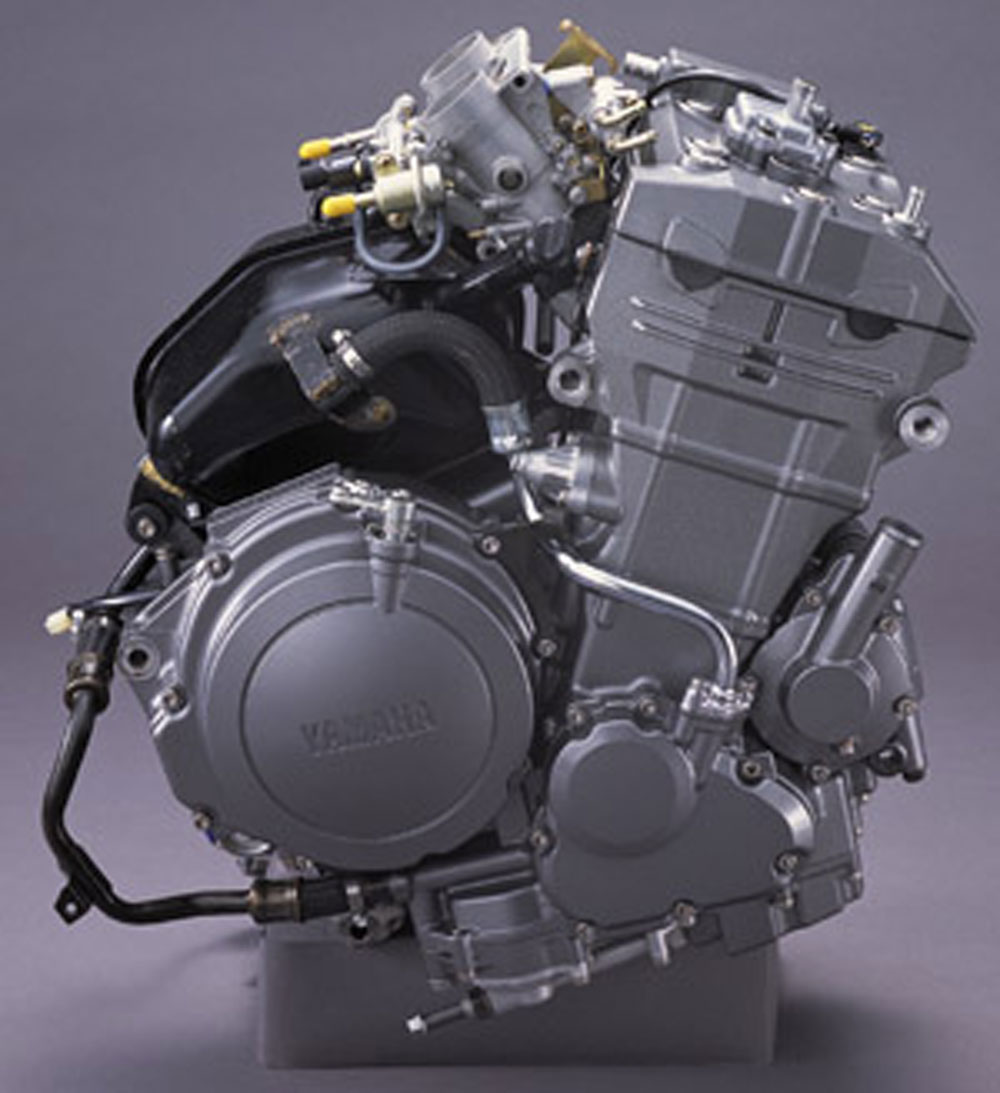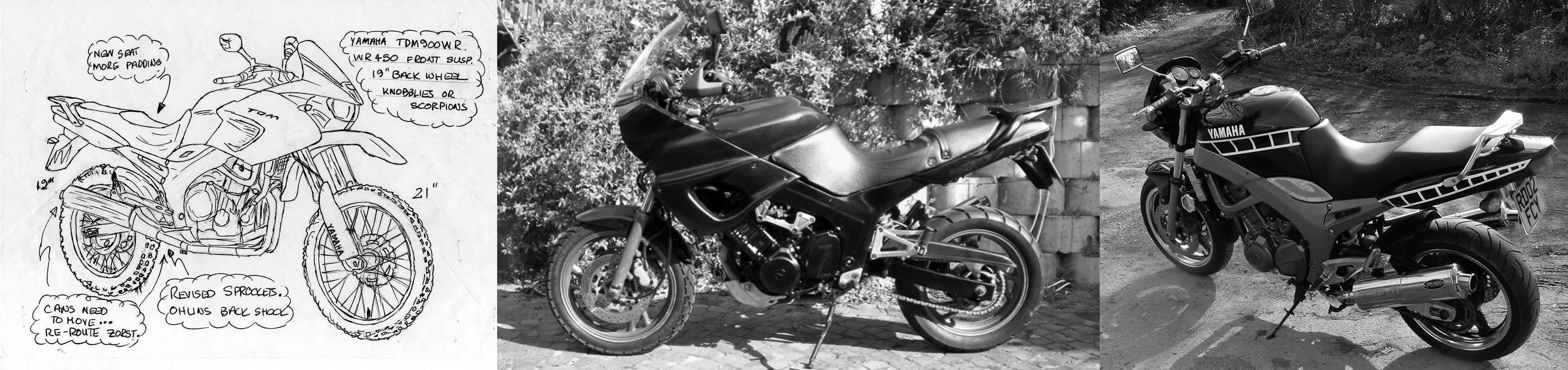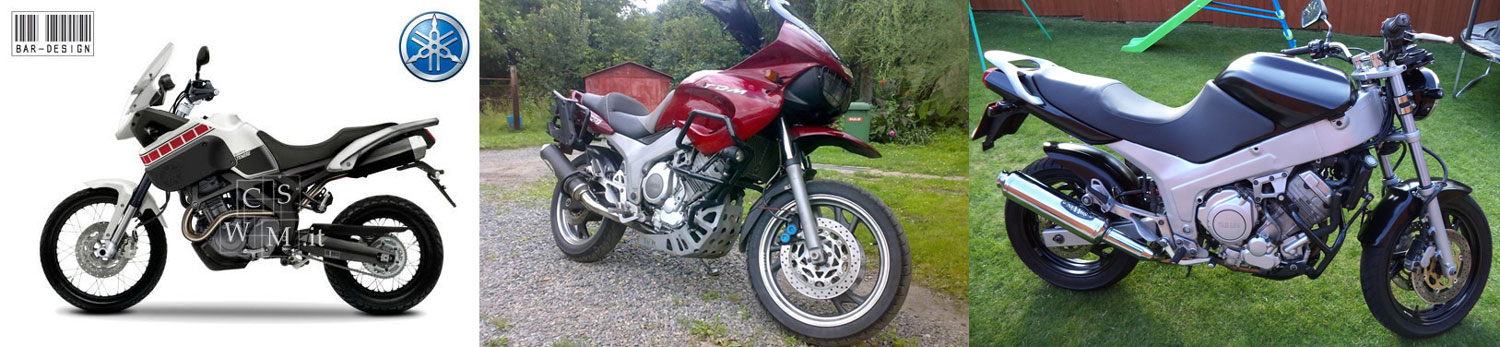
Tenerising a TDM900

It all started back in the beginning of the nineties, when we wanted to create a bike, which would be ultimate fun on bumpy small roads…” [Link]

tddm

I was recently reading an article by Brett Smith about a documentary on American dirt legend John Penton which included the line: ‘… studying his life will offer one key lesson: make your bike into what you need it to be…’

With something like that in mind, a couple of months ago I got myself a cheap TDM900 with a view to adapting it into a gravel and travel bike with my usual low-tech and inexpensive tricks. The word out there was that TDMs were a much under-rated road bikes, one of the many ‘sleepers’ which meet with high approval from actual owners but slip under the radar with most of the conservative buying public and performance-obsessed mags. ‘Only 86.2hp @ 7500rpm’  they scoff. Clearly not worth getting out of bed for then.

swe

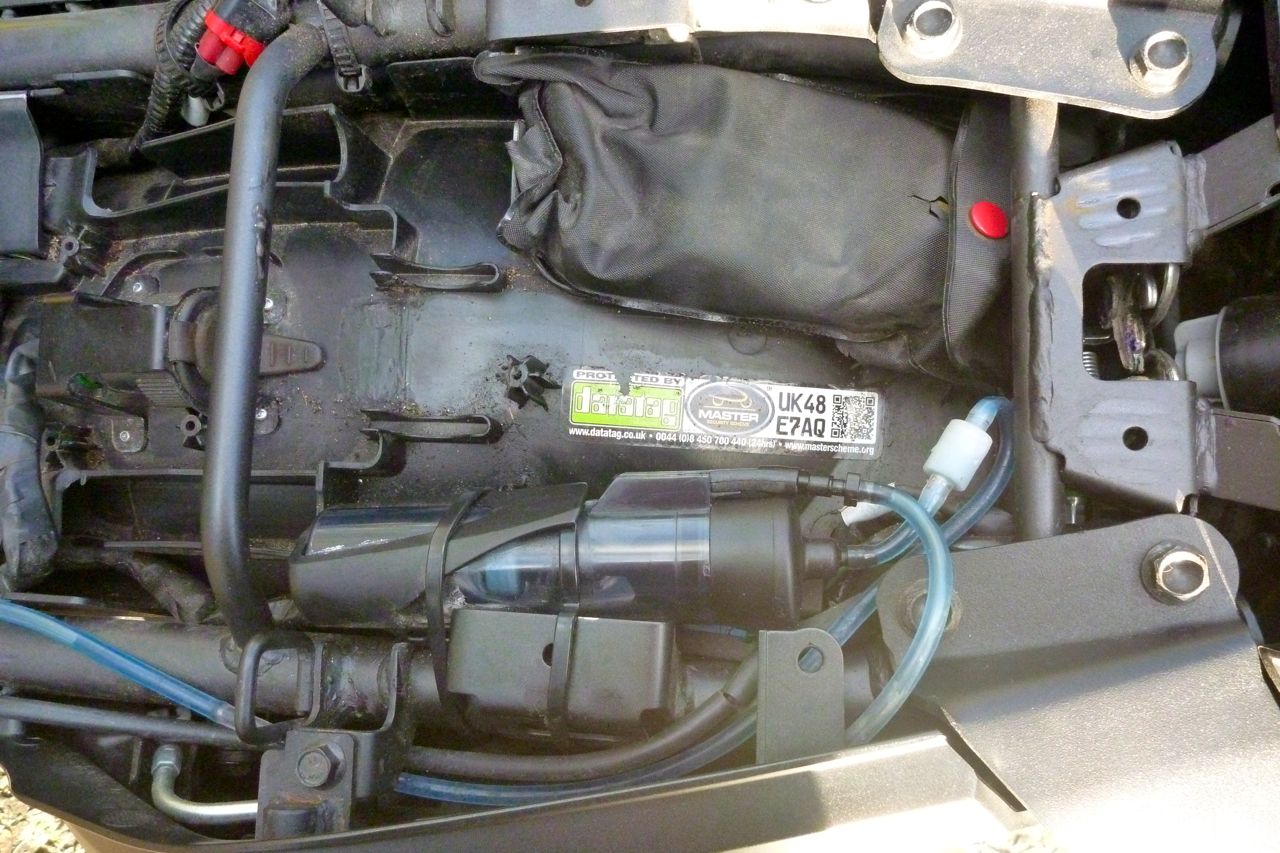
Mine came with hand guards, hot grips plus a tall screen (√, √  and √) but also an ugly Givi clip-on top box and an annoying Datatool alarm which was as old as the bike and playing up. It cost me sixty quid to get it professionally extracted. DIY is not so easy but I made some back selling the reprogrammable key fobs.

Action with the project was initially slow, partly because with 50k on the clock, I wanted to ride it around a bit first to make sure everything went up and down and round and round like it should. I don’t recall ever owning a bike with such a high mileage but the word was that, especially with the low-stressed 900 motor and providing it had been looked after, there were at least as many miles and another decade left in it.

Another cause for hesitation was that in establishing the Yam was in surprisingly great shape, I discovered it was actually a very nice handling road bike of the kind I don’t recall ever owning. Is it the ‘small’ wide wheels; low-profile rubber; relative lowness; a Fibonacci-like trail/rake/fork angle combo? Who knows, but for a heavy bike it dropped into bends with no bar input required. Throttle and clutch were light and the gearbox was snickety-snick. Only the suspension felt a bit harsh on the knackered suburban roads round here, but had plenty of settings to meddle with.

yamaha-xtz-750

Looking on the web it’s no surprise to find I’m not the first person to want to adapt their TDM into more of an all-roader (see gallery bottom of the page). After all, Yamaha’s TDM evolved from the original late 1980s, 21/17 wheeled 750 Super Tenere (left) which at  200-kilos and with a 26-litre tank was inspired by the Sonauto YZE 750T Paris-Dakar bikes (below).
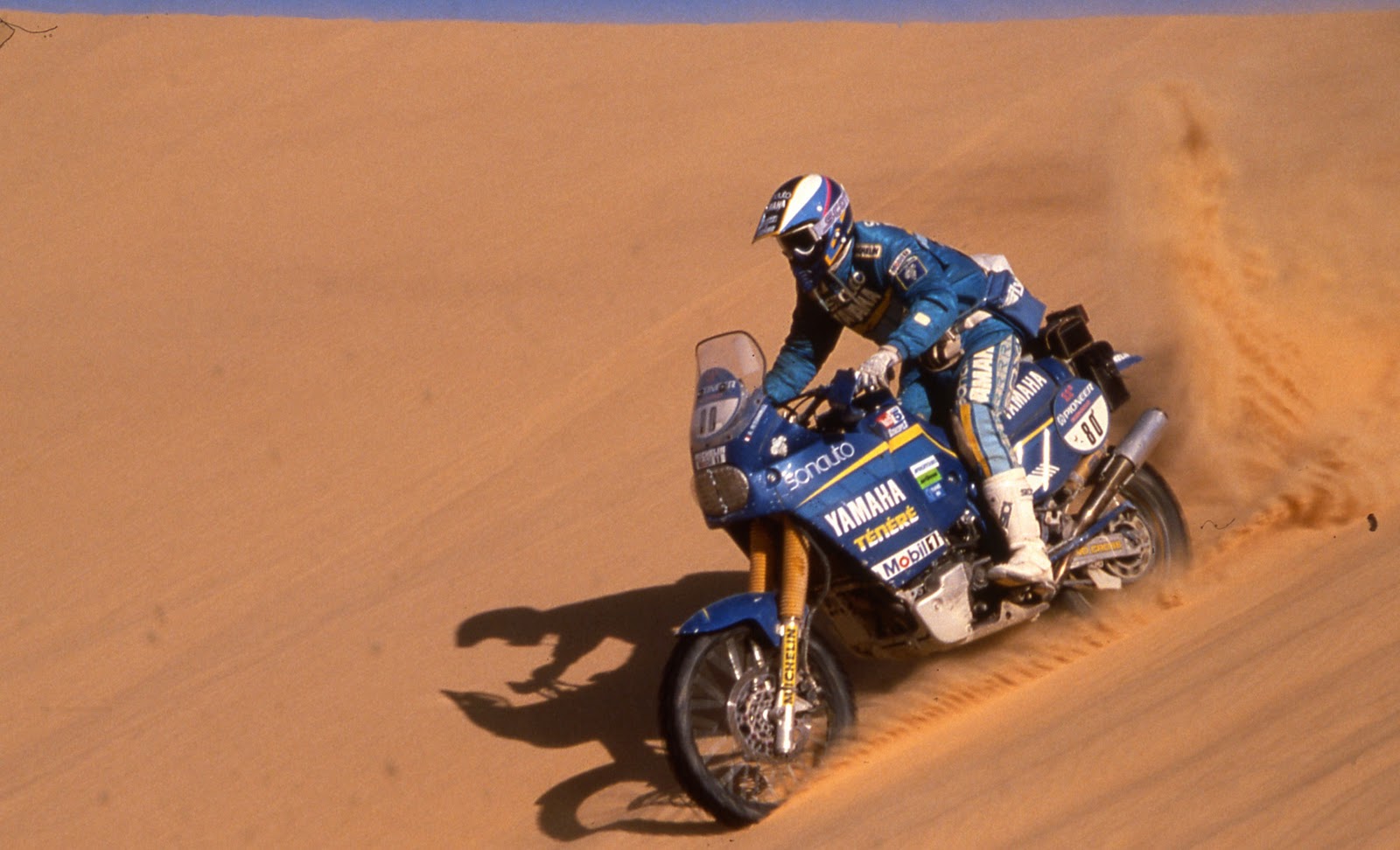
Peterhansel in the ’89 Dak and quite possibly in the Tenere desert. Who wouldn’t want something like that in the garage?

In the early 90s the 750 Super Tenere was transformed into the TDM 850 (below left, in red), taking a regrettably big step away from the 75o’s desert racing aspirations towards what I suppose what they call sports tourers. It’s said the 850 was a solid hit in Europe and Australia, but a flop in the US where the 850 was dropped within a couple of years (quite possibly to the regret of this guy). 

tdm850

By the mid-90s we got the MkII 850 with a few improvements, most of which I forget but which included a less lent-forward engine (reducing carb needle wear) and best of all, the crank offset by 90° to give the motor an uneven ‘Ducati’ beat and crossplane power characteristics. This pulse and sound remain one of the TDM’s main attractions, especially once you fit some fruity, free-breathing slip-ons.

In Europe alone over 60,000 850s were sold in the decade before the lighter, alloy-framed and fuel-injected 900 came on the scene in 2002 [good article]. And by all the accounts I scoured (and not least to due to the 850s’ age these days), the 900 seems to be the one to get. It’s still in Yamaha’s line-up today, at least in Australia. In  Europe it looks like the 900 may have been quietly dropped.

aussie yamaha tdm

What would a TDM need to make it into more of an XTZ750? Would it be worthwhile simply extending the suspension, slapping on a bashplate and fitting some knobbly rubber before shoving it out the hatch over gnarly territory?

Wheels are 17 and 18-inchers but tall-sidewall tyres are an easy way to an inch or so of clearance. Some 4.10 x 18 or 120/90/18 tyres would actually be taller than a 19er and theoretically provide lots of  dirt cushioning for the rims while probably giving less secure roadholding on fast bumpy bends. The two Aussie bikes above left are running high-wall fronts.
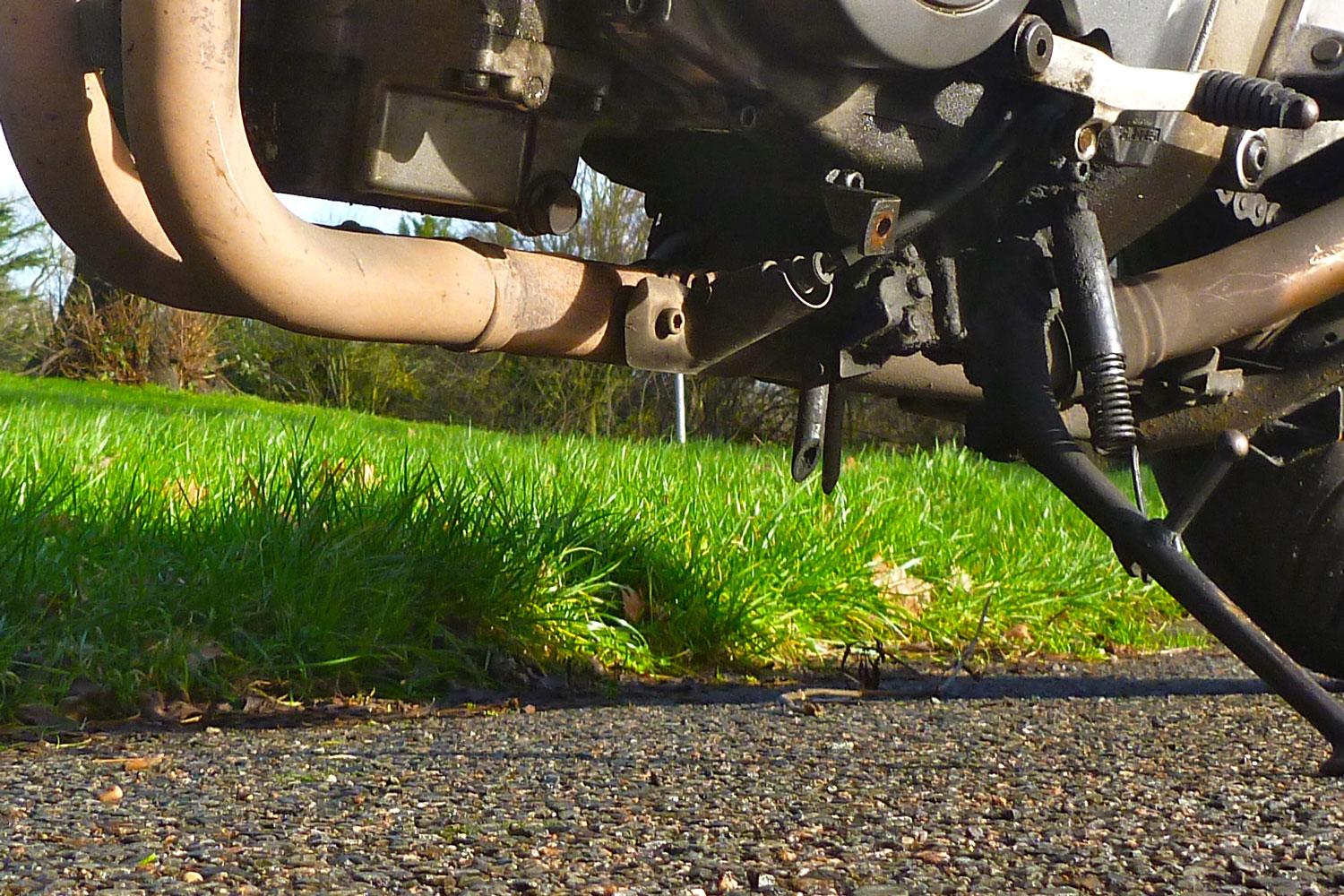
tdm-underpipes
EngineTDM

A more lateral solution to increase clearance was to reroute the under-engine pipes (left). But a quick look proved there was no easy way of bend them round the sump and centre-stand. The whole TDM motor is packed in tight with a 5-litre oil tank jammed between the gearbox and EFI.
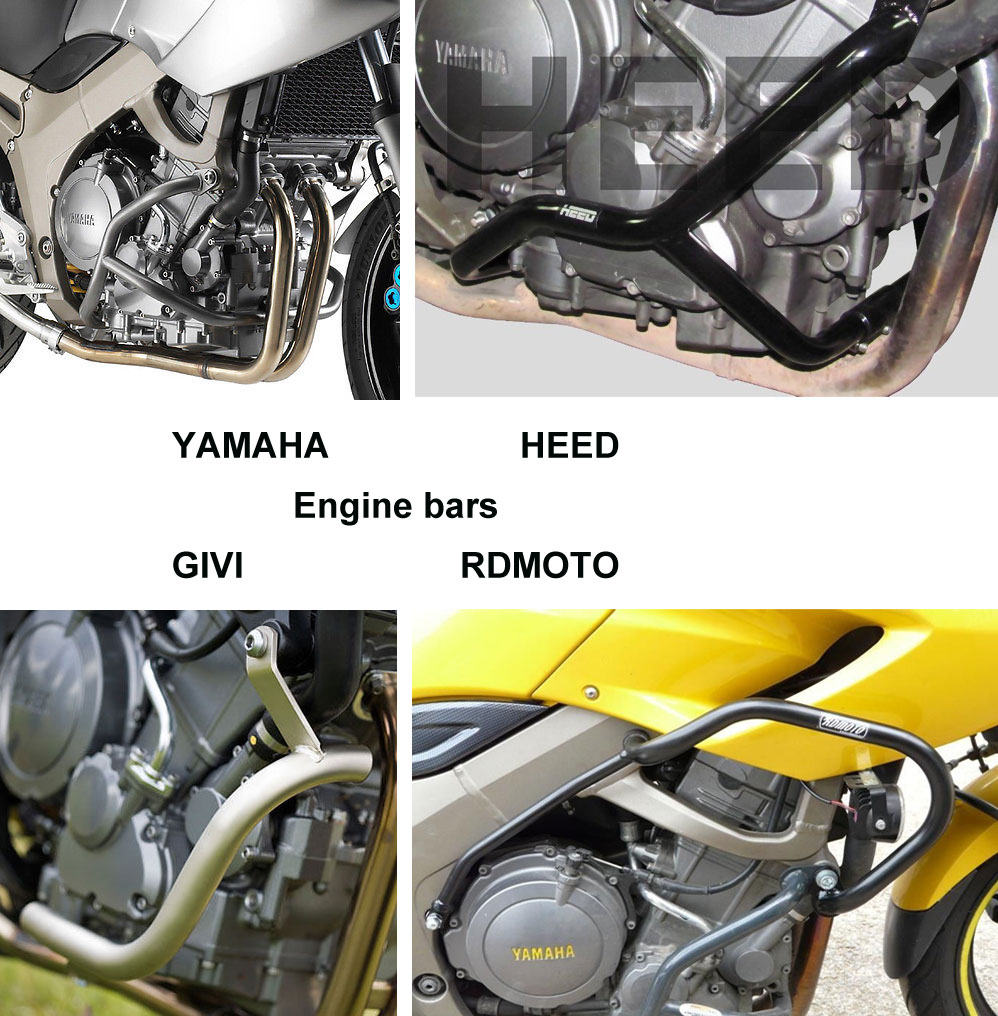
tdm-engine-bars

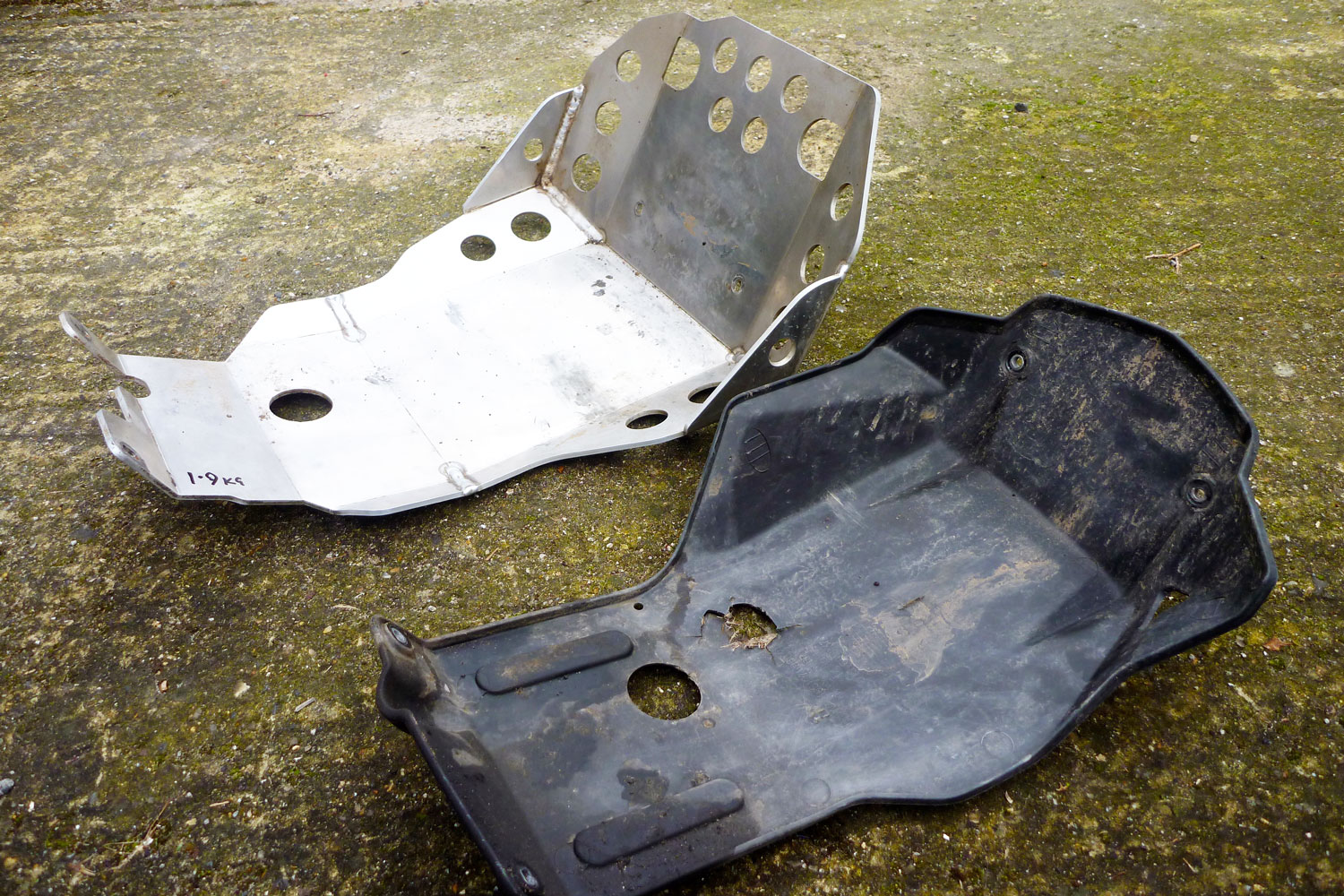
Off-the-shelf crash bars do exist (right) and making a home-made bashplate wouldn’t be too hard. My 900 came with a kerb-mashed belly pan which I soon ditched but left the brackets in place for later. As it is, you can ding an exhaust without the sky falling in (plenty of used ones on ebay), but it only takes one rock with a mission to hole the cases, so it does need something down there which takes back the inch of clearance you gain from the high-wall tyres.

‘Better five inches of good, progressive suspension than eight inches of ill-sprung, underdamped movement’ you hear said, but I looked into lengthening it anyway. The back is easily done of course: find a used shock that’s a tad longer than the R1-type unit, buy an over-length aftermarket unit, or meddle with the dog bones.

forkslipons

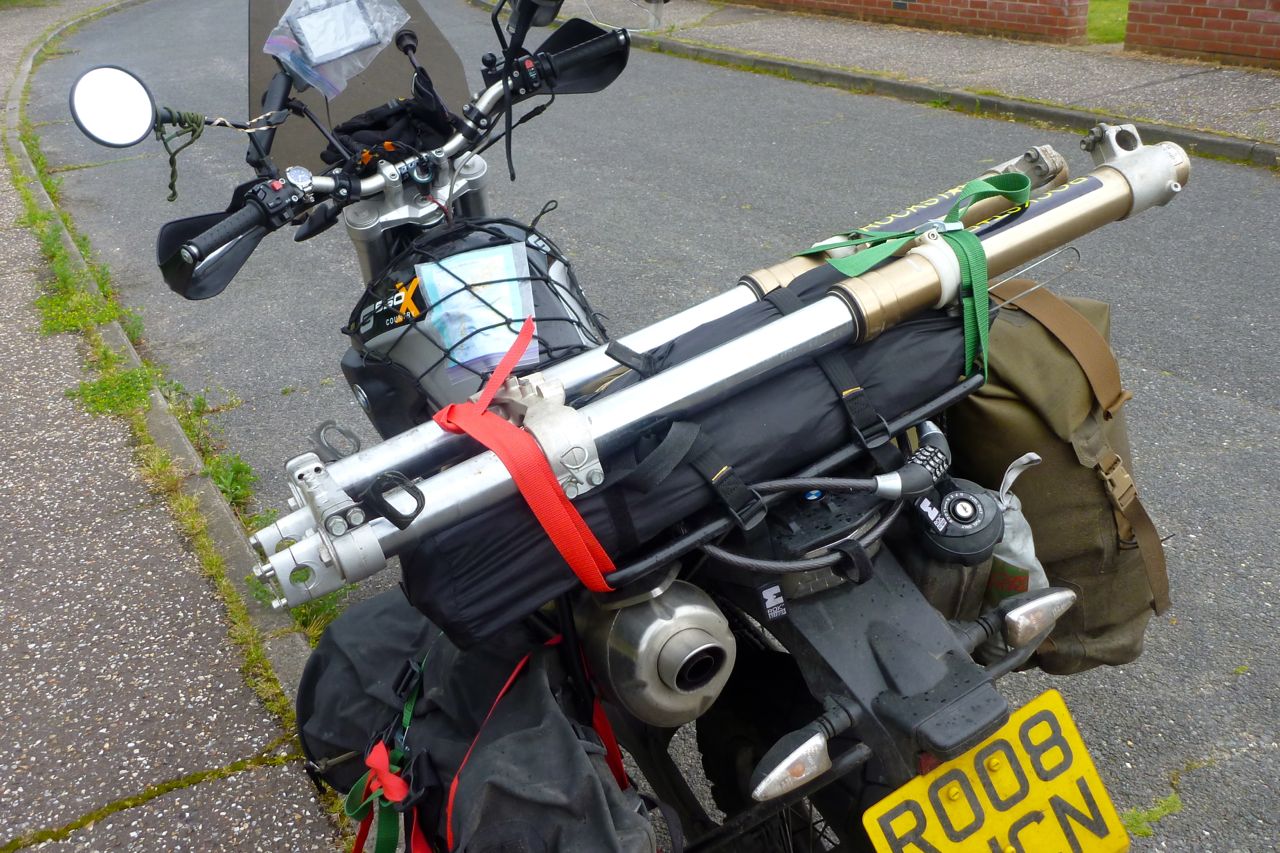
On the front I had the idea of ‘fork extenders‘ before I realised they actually existed. Seems they’re a bodger’s hangover from the twilight years of the 70s chopper craze. You get either slip-on sleeves (far left) or screw-ins (left) to give your USU fork a few extra inches. You then either fill out the slack spring  with spacers (chopped off ‘bar ends between coins we used to use) or splash out on longer progressives.
Some claim these extenders were outlawed years ago or that they’re dangerous, and even I have to admit that on a hefty gravel roader like a TDM, creaking, wearing slip-ons might eventually strain the lower triple clamps under repeated hard braking. Screw-ons in a modest ≤ two-inches seemed a better solution. This guy on xrv.org got some made for ATs and a mate offered to lathe me a set.
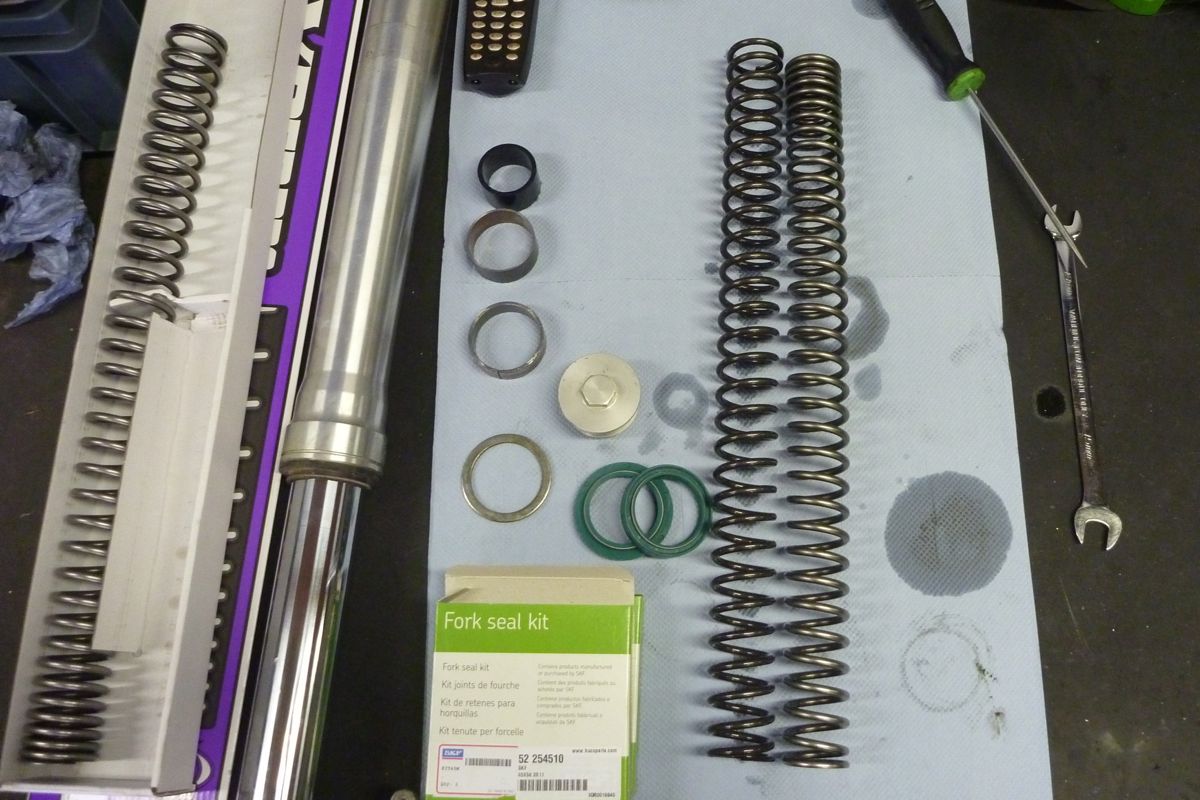
One problem with the TDM forks was it wasn’t simply a matter of packing out or slipping in longer springs – the fork damper adjustment rods running down from the fork caps (top left) would need extending too.
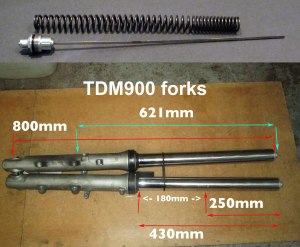
tdm900fork-DIMS

Thant’s not too hard but it was all getting a little more complicated and pricey for my low-tech, low-budget resolve. The next step was to track down a longer used forks off something else. The TDM runs 43-mm tubes and the slider tubes are 621mm long. First I wondered about simply buying a same-diameter but slightly longer set of replacement fork tubes off tube makers Tarozzi, but wasn’t sure if the milled fork tube ends differed from bike to bike. Probably, so then with the help of this handy Tarozzi fork tube length / diametre webpage I found that the twin-disc forks off an XT660Z Tenere came closest with  an additional 90mm (3.5″) of exposed slider compared to the TDM. Like I said I wouldn’t want anything more than a two-inch rise which would leave 1.4 inches sticking out on top  so it might have needed bar risers. I soon found a near-new pair of used 660 Paiolis.
84-motoverte

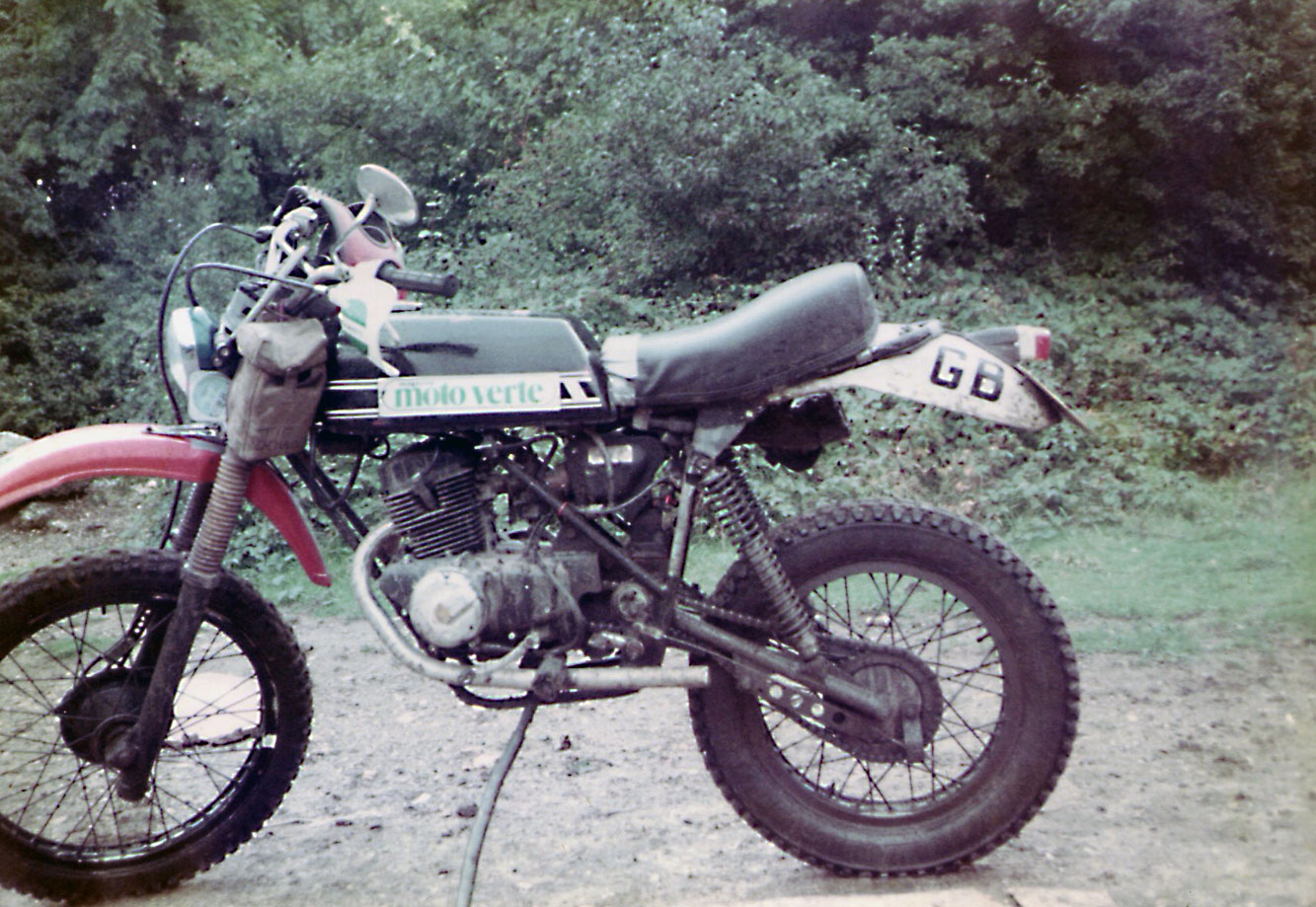
And that’s about as far as I got with the TDM Super Tenere project. The acquisition of the longer forks required a call to action, including a suitable wheel; a spoked wheel on a Tenere hub would have been easy enough, though I’d rather stick with native tubeless. But the more I rode the TDM the more I thought this was not some worthless old hack like my GS500R. It seemed a real shame to quite probably snuff out TDMs exceptional road manners by converting it into a top-heavy dirt tank which, without the investment of high-end suspension, would lack any real-world off-road agility. One thing I learned with the GS500R (and the Benele from 1984 come to that, above left) was that it’s easy to make a bike taller to add ground clearance. It’s less easy or more costly to gain good-quality suspension.
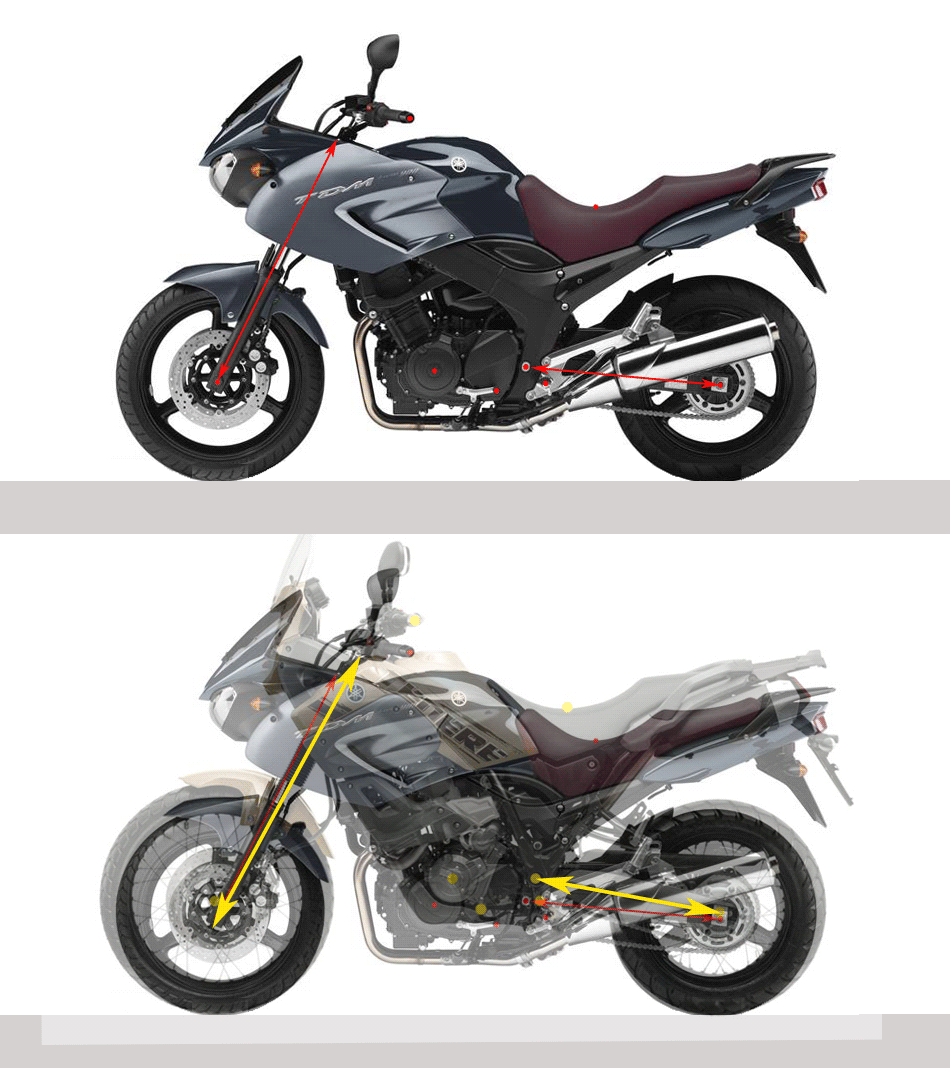
TDM (yellow) overlaid on a XT660Z with key points marked to show just how much higher the red XT is.

On top of that I suspected the height difference between footrest and bars was too small for easy standing up (see animated gif left) and a stack of bar-risers to dodge that would create cable-length issues. Plus early on the scales had revealed a rather shocking 230kgs fully fuelled which I wasn’t sure equated with the claimed 190kgs dry (though the handbook claims 221kg wet). And they say the 900 was lighter than the 850.

tdyum

I enjoyed tooling around on my mid-winter TDM, but great road bike though it was, I think I’ve become too conditioned to trail bikes: the stance and the impression of go-anywhere agility. I couldn’t see the TDM ever delivering that on jacked-up suspension. Despite its qualities it’s too heavy for my sort of riding which I’m reminded wants a bike that’s <200kg wet.

Below, a few examples pinched from the web of what could have been (mostly from this advrider TDM thread). Some are 850s and some are based on the same-engined, trellis-framed TRM 850 road bike or XTZ750s with TRM / TDM 850 motors.

Meanwhile, I may have a better idea of how to ‘make a bike what I want it to be’.

3xTDMX
TDM900WR
ttdm3

‘Everyone remembers their first bike’

SecurityDespatchers1979

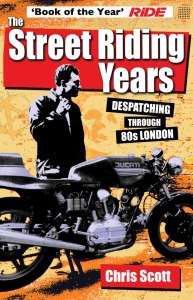
So says the back cover of The Street Riding Years, my memoir which has been the top seller on Amazon Kindle > Motorcycles > History for a few months now.
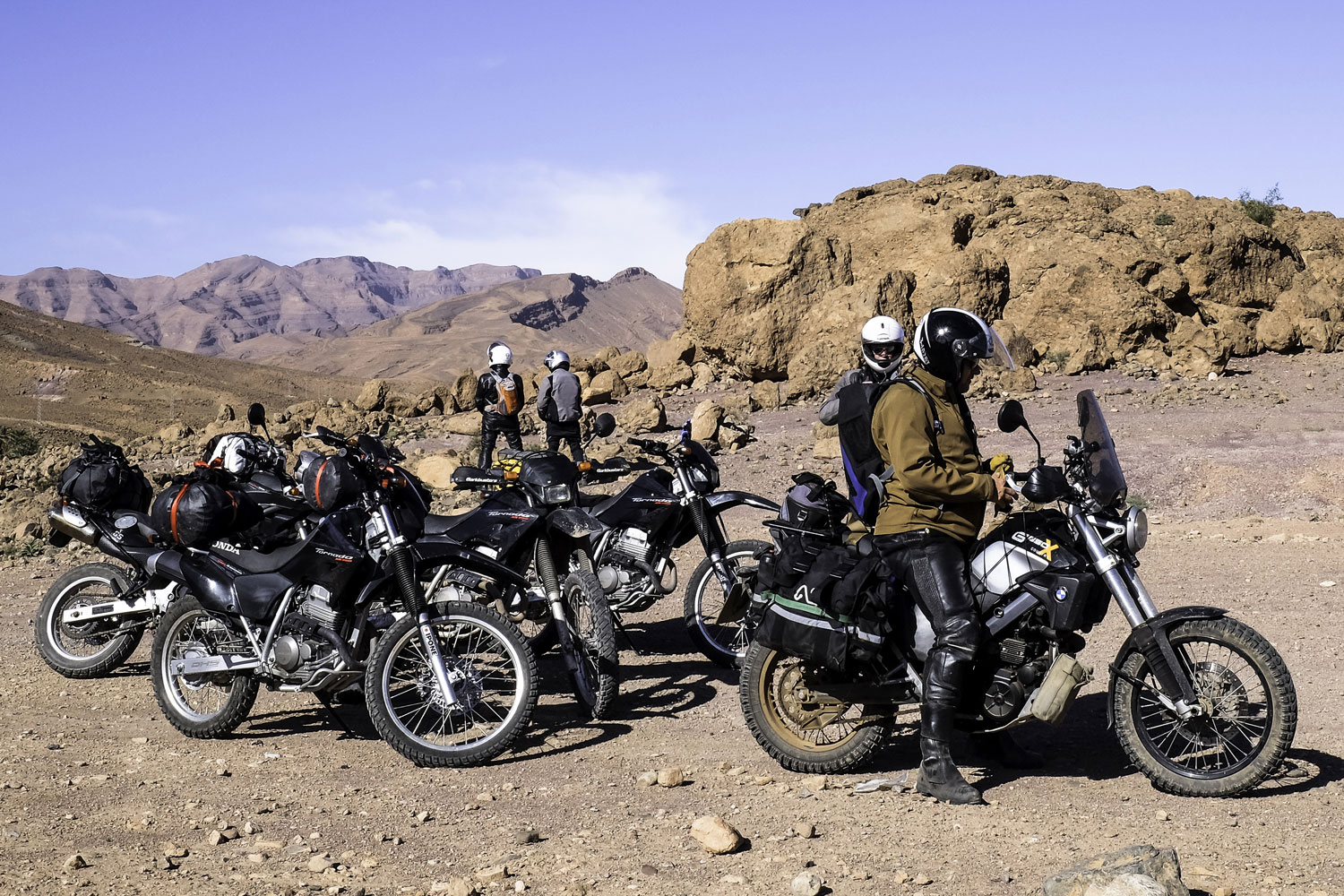
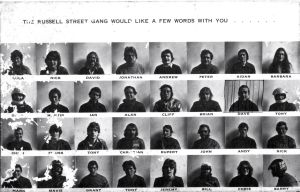
An unexpected benefit of the book’s popularity has been people I knew from that era getting in touch. A few of my co-squatters from Gower Street have found the book and made contact, and several long-forgotten riders from Security Despatch – some in the image above right – have also read the book and tracked me down with their own recollections.

XT500Excel

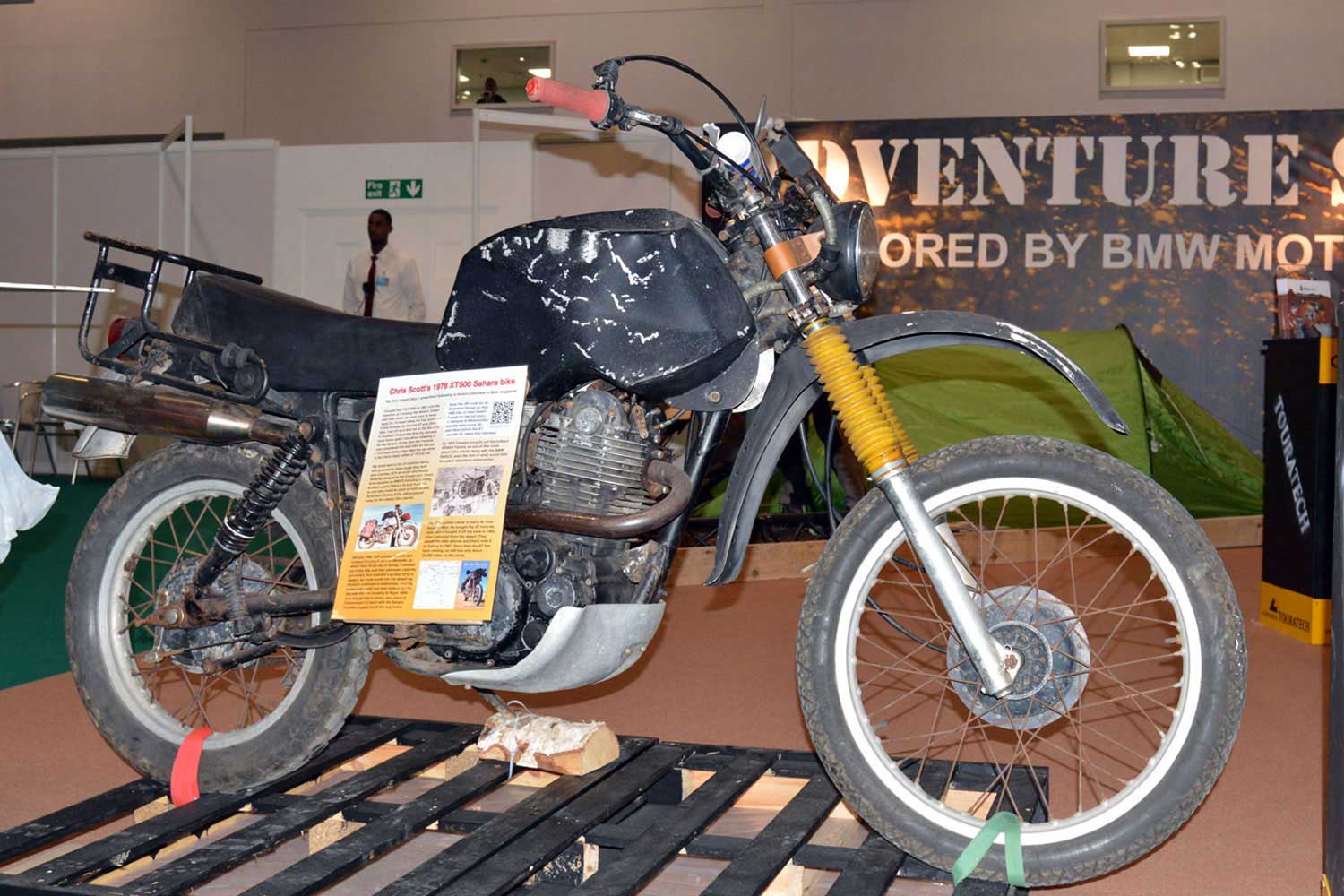
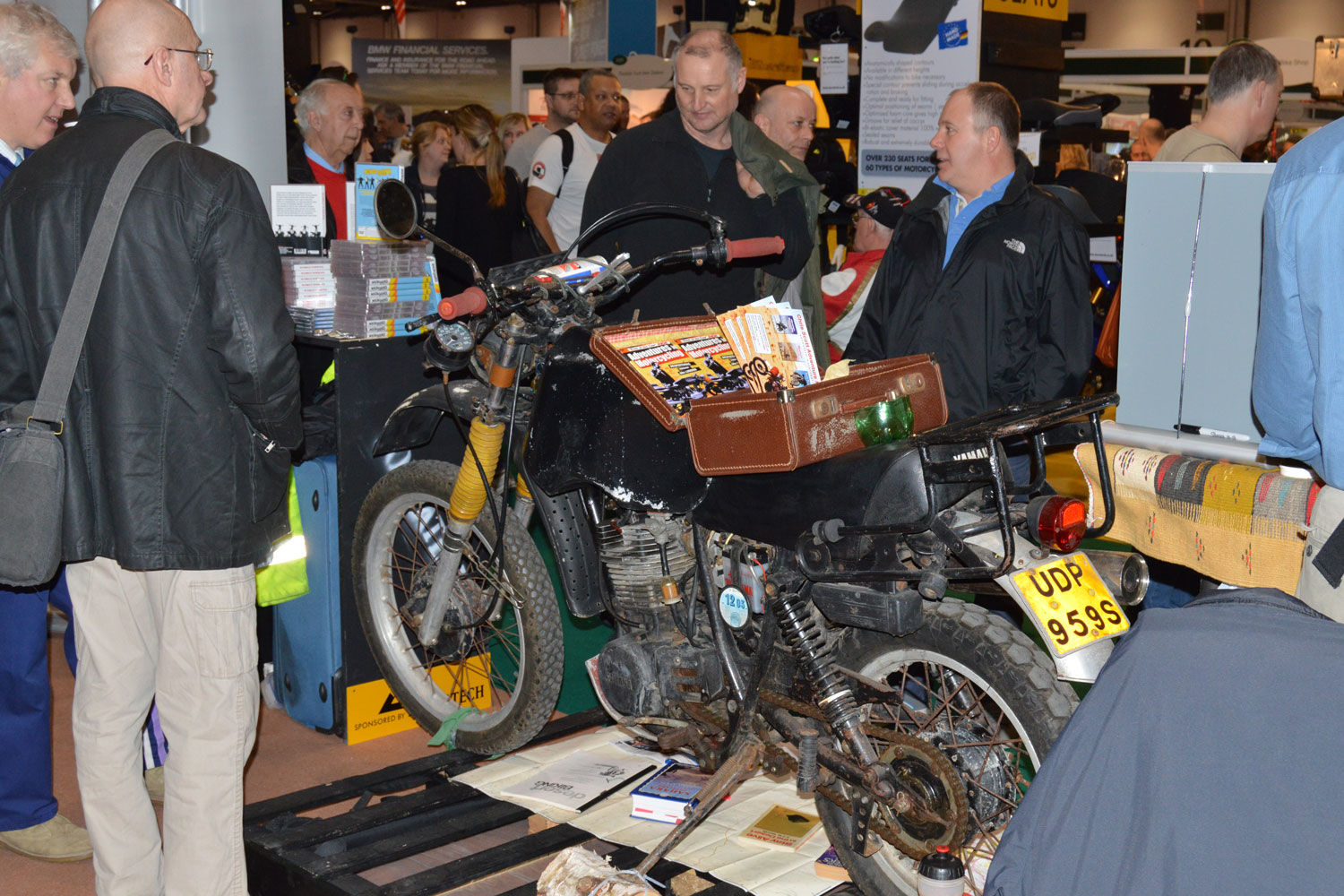
And as you may have read, the interview with me in the March issue of Bike magazine inspired the current owner of my first Sahara bike – a ’78 XT500 – to get in touch. That in turn led to the little-changed hack being displayed on my stand at the 2015 London Motorcycle Show earlier this month.

XT5Excel
adventures-1982-902

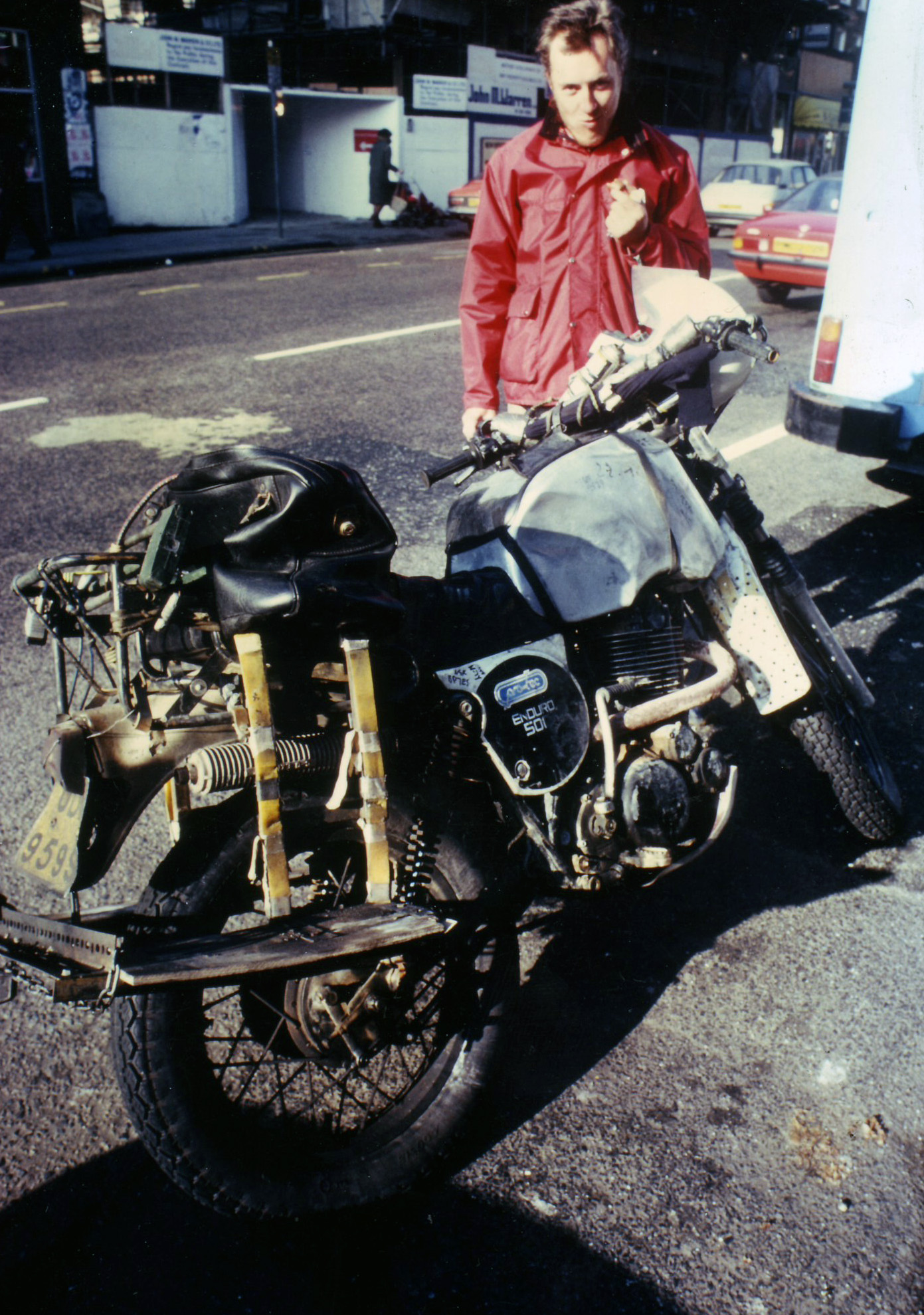
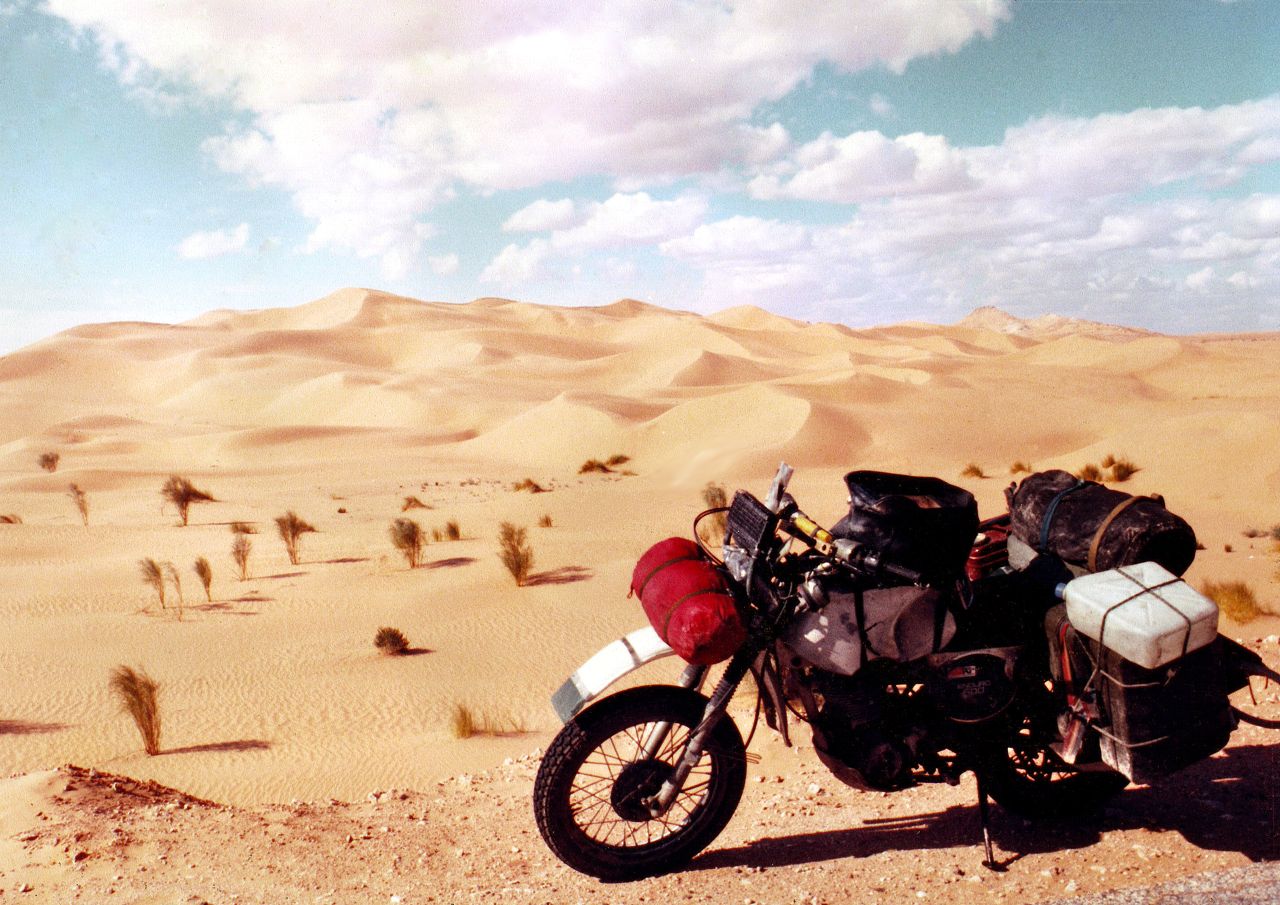
That’s me up on the left in 1982 on Camden High Street (not ‘Camden High Road‘ etc …), just back from the desert (below left; full story on that here). And now on the right, 33 years later, the XT draws periodic crowds at the Bike Show.

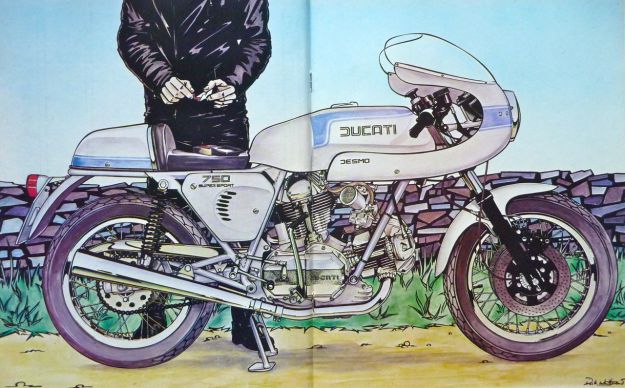
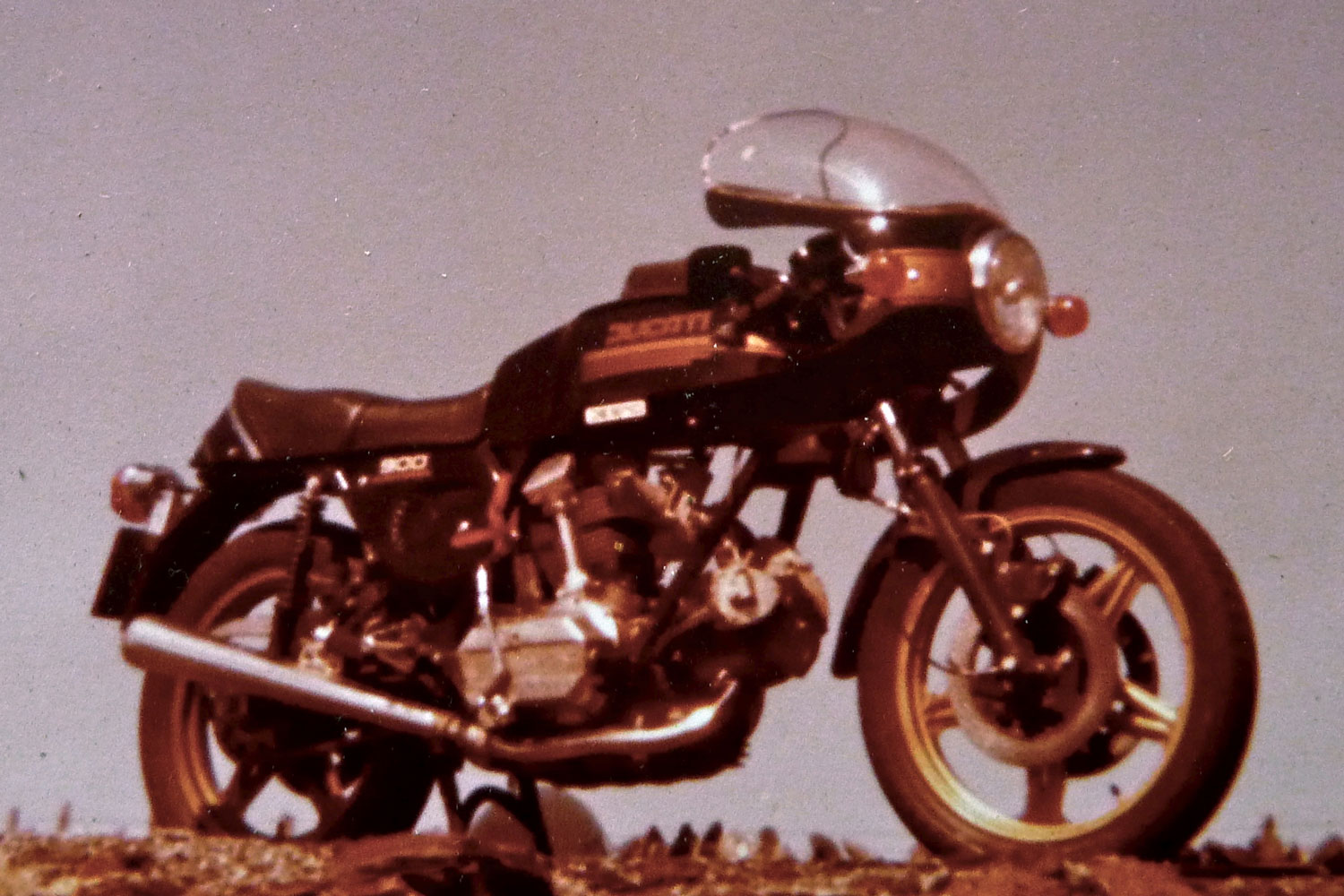
Even more amazing is that the guy who bought my Ducati 900SS off me in 1980 emailed me the other month to ask if I am who I was then. He also still owns the bike so it seems that, as with the XT, timely breakdowns (in the SS’s case, broken gearbox) have enabled both bikes to safely dodge the unbending arc of entropy these past few decades.

muz1
JDuke

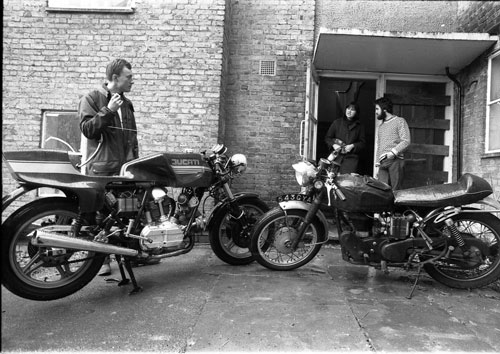
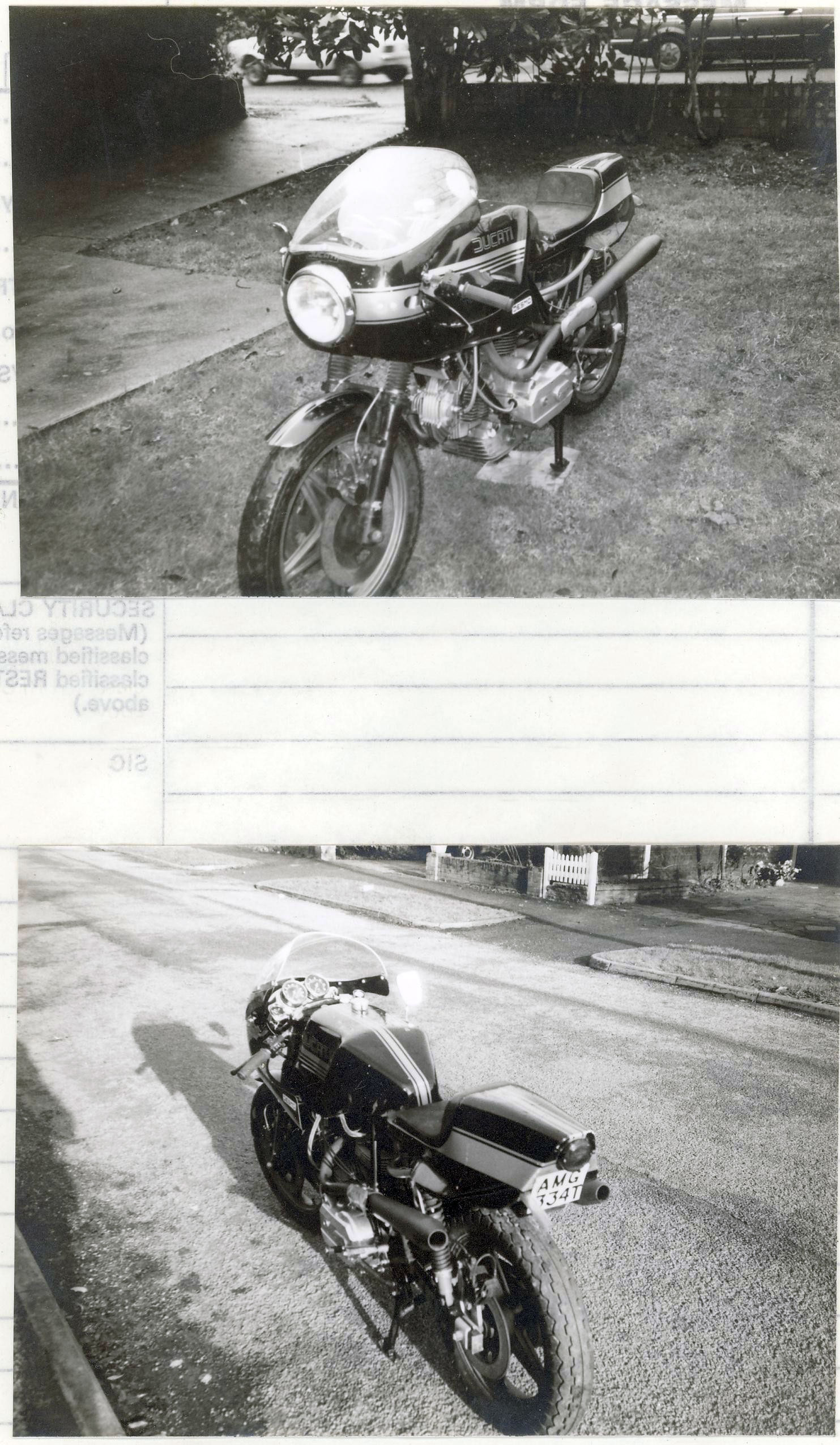
The Desmo is featured on the book’s cover, adapted from the image, left, taken outside our Muswell Hill squat, from where the new owner picked up the bike in the late winter of 1981. Alongside my bike is AJ’s Velocette and clamped under my arm, the rear brake pedal from my annoyingly indestructible Hondamatic work bike, presumably in need of straightening. Since then the Ducati (right – owner’s pic) has been re-faired and has acquired a set of knee-burning, high-level Imola pipes, but otherwise ‘AMG’ survives intact.

There’s talk of me doing a presentation for Ducati man’s bike club in Bristol, and as the XT’s owner lives not too far away and may have it running by then, it could be quite a reunion with two of my old flames: my first desert bike and the unforgettable 900SS street racer which crowns a category all of its own.

BMW G650 XCountry ~ 10,000 mile report

XCountry Index of Posts
Introduction
• Stage 1 mods
• Swapping the subframe
• X-tank and X-rack
• Suspension
• Tutoro chain  oiler
• Midsummer update
• The Spanish Plain

msu-70

The BMW 650X range came and went between 2007-08. They were light and powerful but early reliability issues as well as a high price saw the models sell poorly and then get dropped. After a pause which saw the 800cc parallel twins make their mark, within a couple of years the lardy Sertao and later G650G reset things back to the pre X-bike F650s in terms of weight and performance. Some people think that was a shame.

bmw-650x-series

The bikes from Planet X were a one hit wonder and you get the feeling that the X range – helped in no small way by Walter Colebatch’s extensive Siberian travels and associated development of his XChallenge – might be turning into a cult travel bike, not least due to their limited availability. There’s more on the history of X on the XCo intro index page.

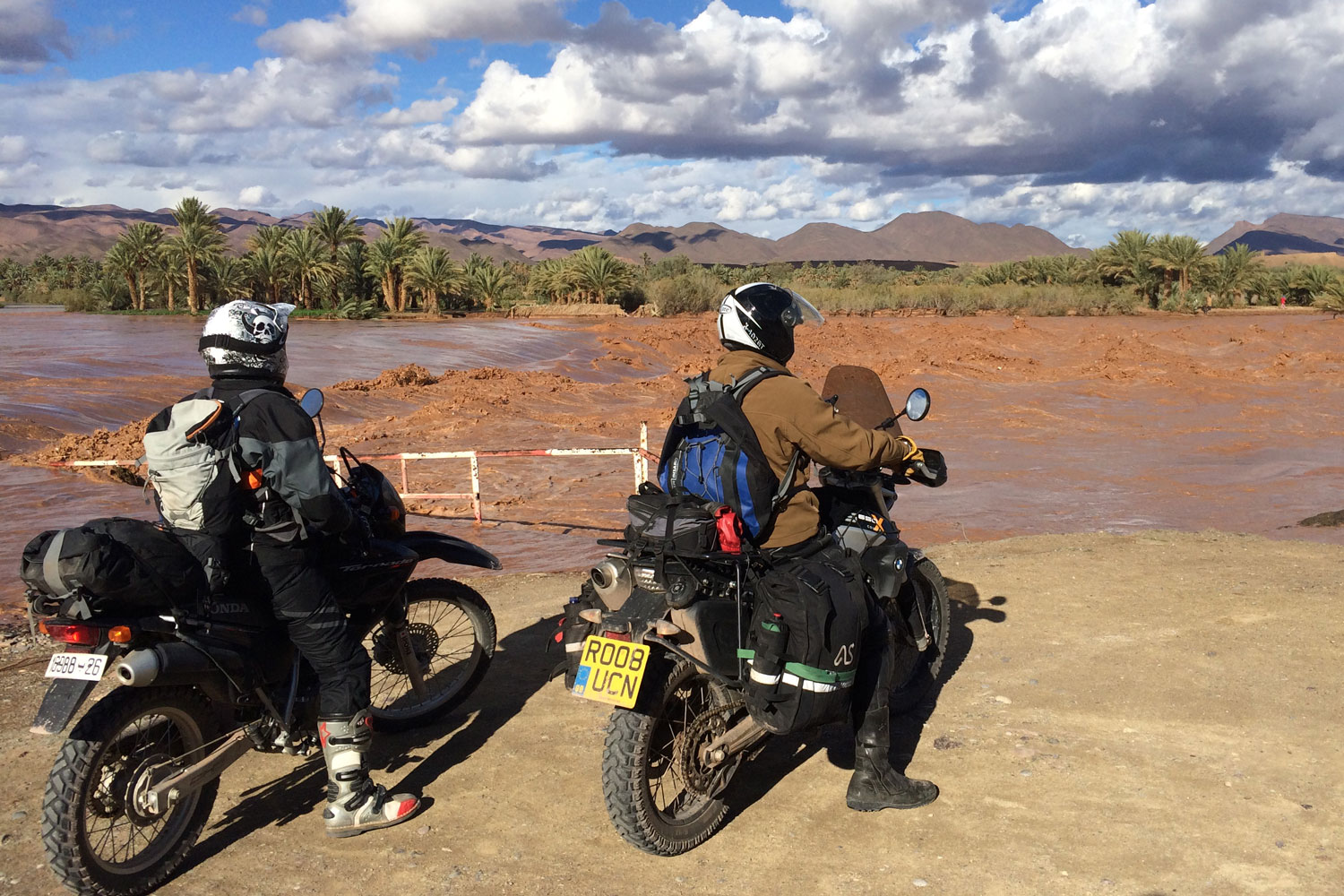
My plans for my XCountry were to run it on a couple of Moroccan tours and maybe take the bike deeper into Mauritania. The later part didn’t pan out this year, but over ten months I racked up 10,000 miles, including 4000 to Morocco and back. I sold it at 16,000 miles.

mitaspiste
Photo: David W

My XCo set up
Soon after buying it I adapted my X bike as follows (see intro index page for more details on fitting these accessories).

  • xco-bishbashUsed Touratech bash plate (right)
  • Used Barkbuster Storms
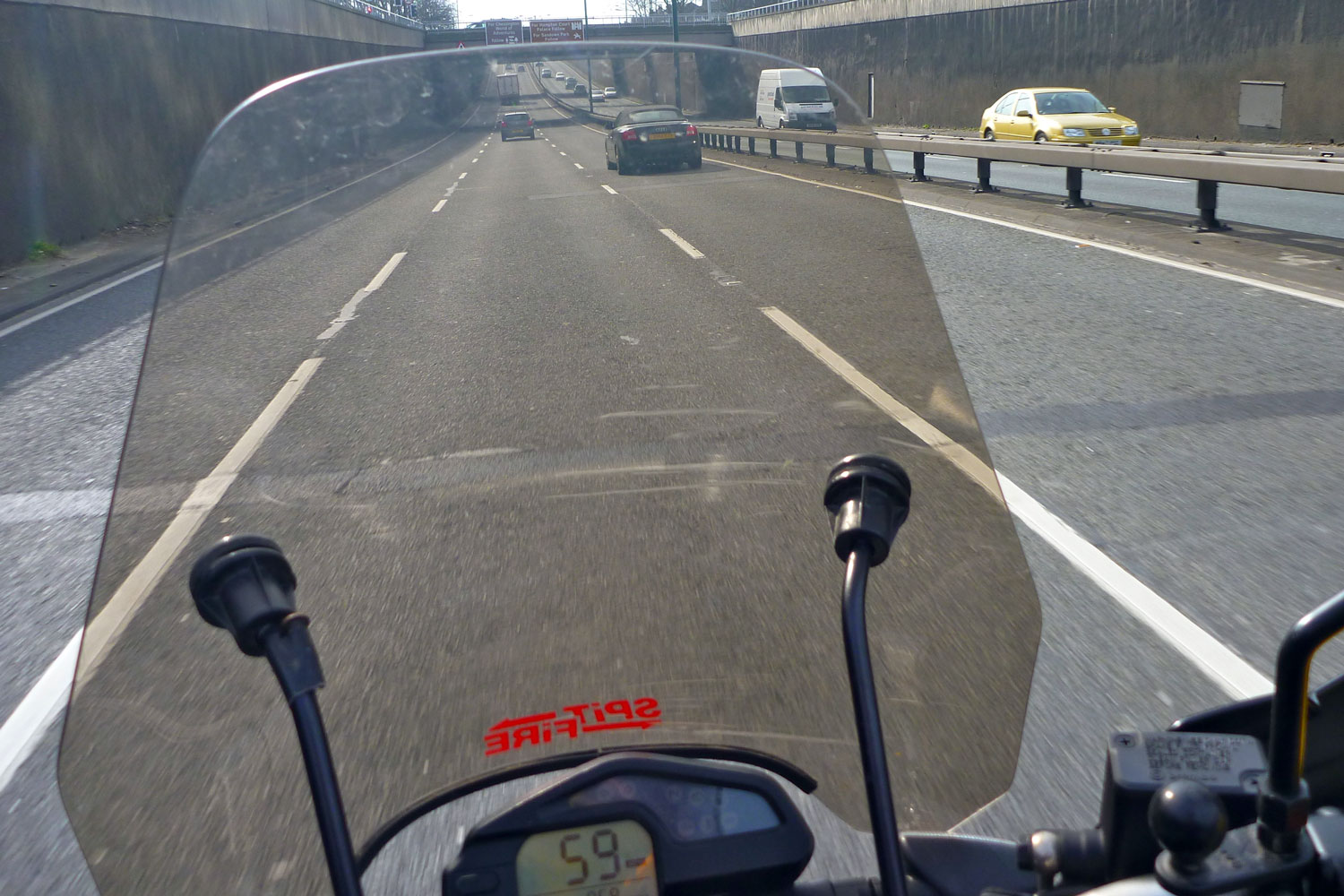
  • Used Spitfire screen (right)
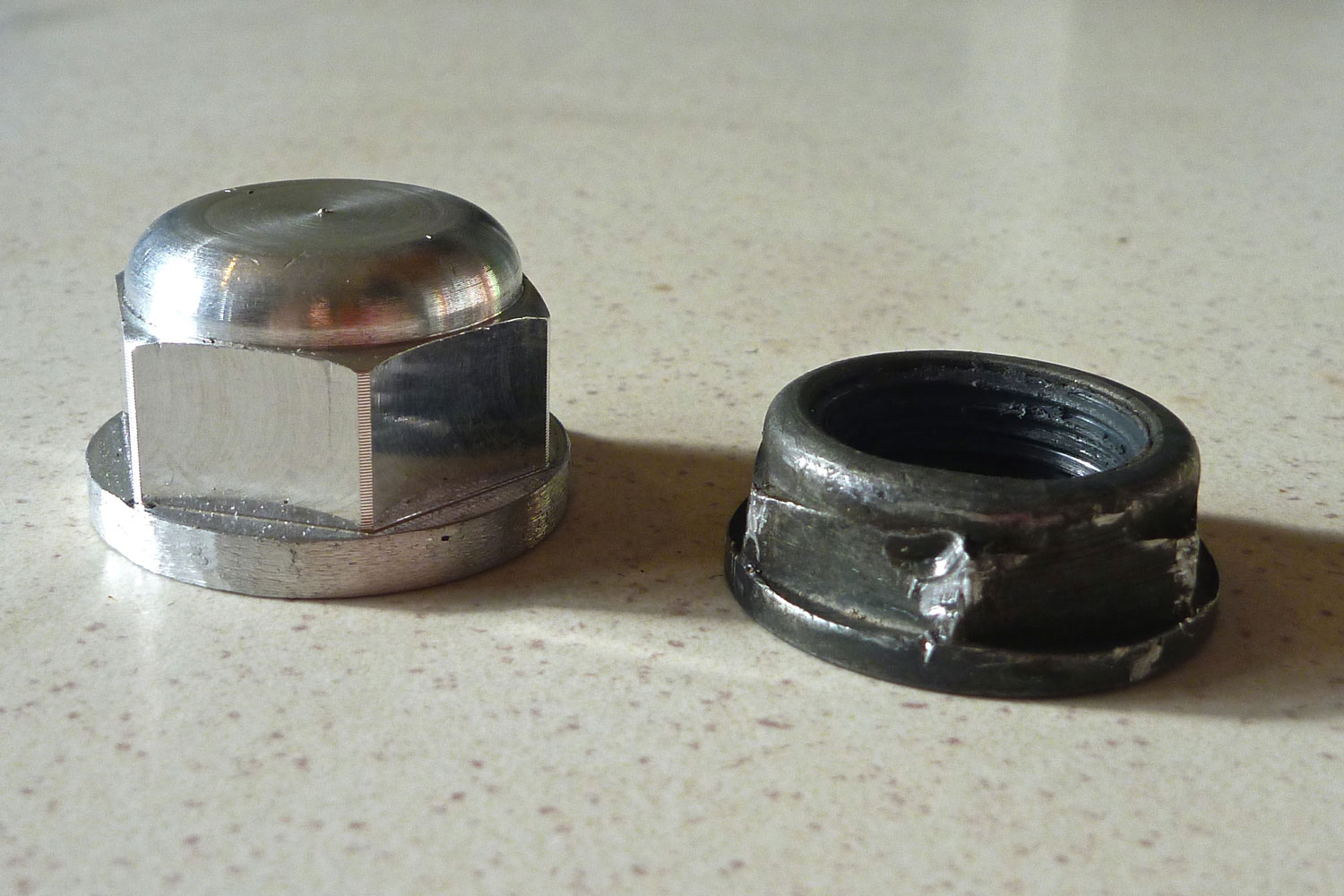
  • Full width KTM wheel nuts (right)
  • Throttle handrest
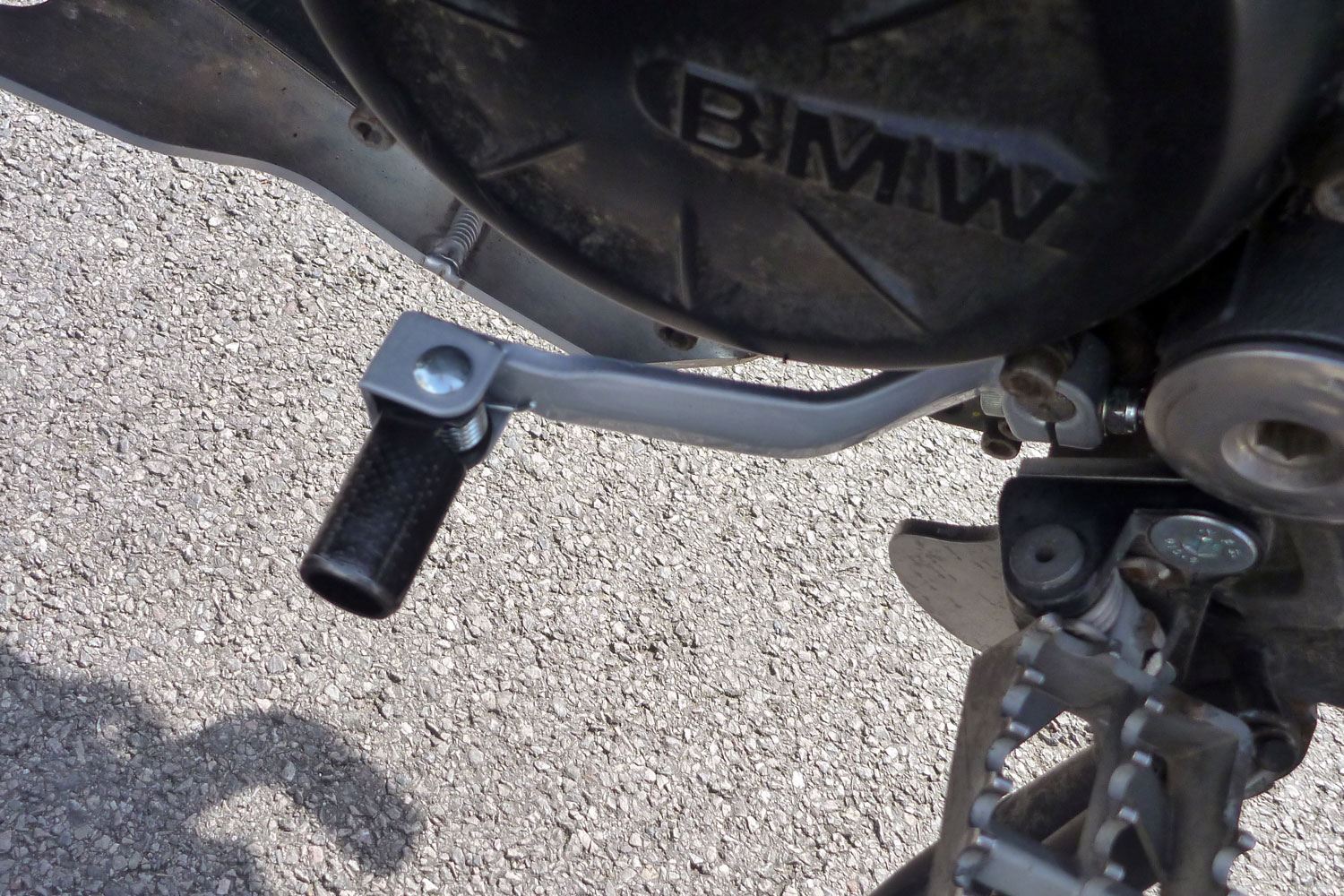
  • Used Yamaha steel shifterxco-shield
  • Assembled a used tool kit from ebay
  • Added a 12v accessory plug on the bars and a DIN plug under the seat for the air pump (Later discovered OE accessory plug near the shock top)
  • Replaced alloy subframe with steel unit off a MkII XCoxco-nuts
  • Hyperpro 3D shock and progressive HP fork springs and oil change
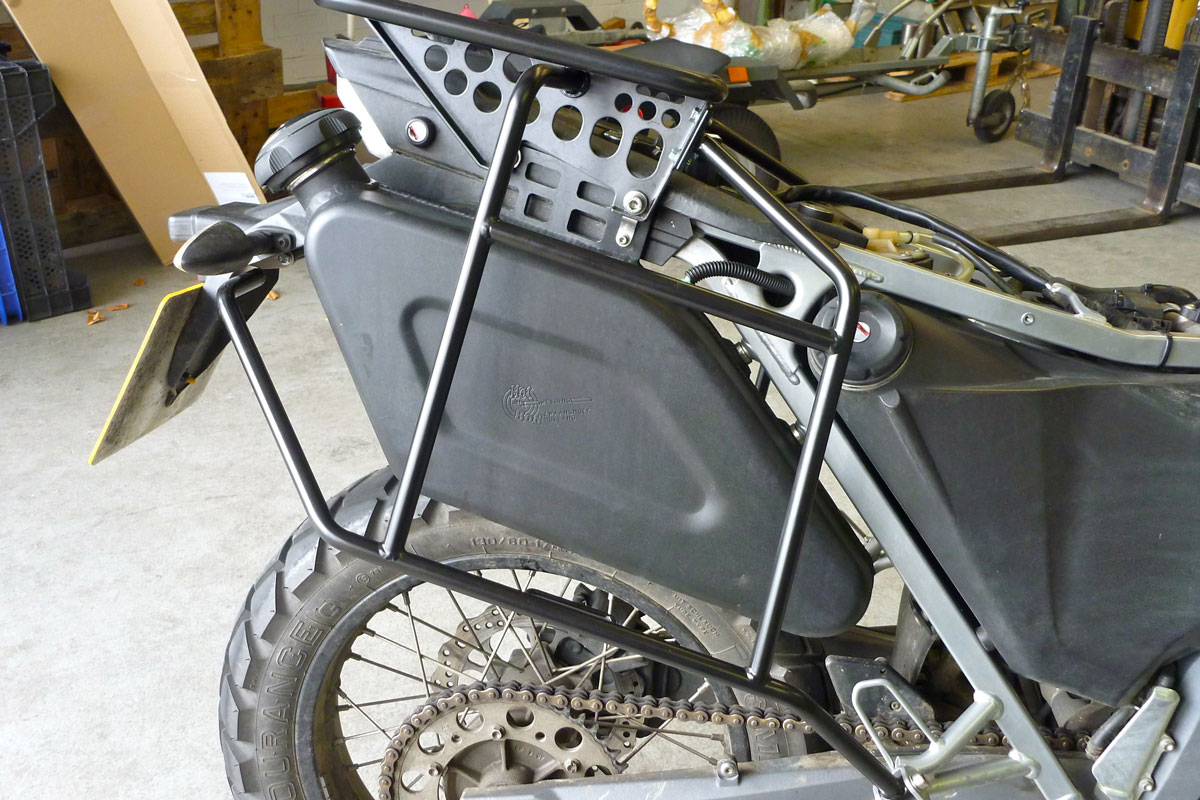
  • Hot Rod Welding Xrack and Xtank
  • Hot Rod brake/sidestand protectors (right)
  • Adv Spec Magadan II Bagsxco-protek
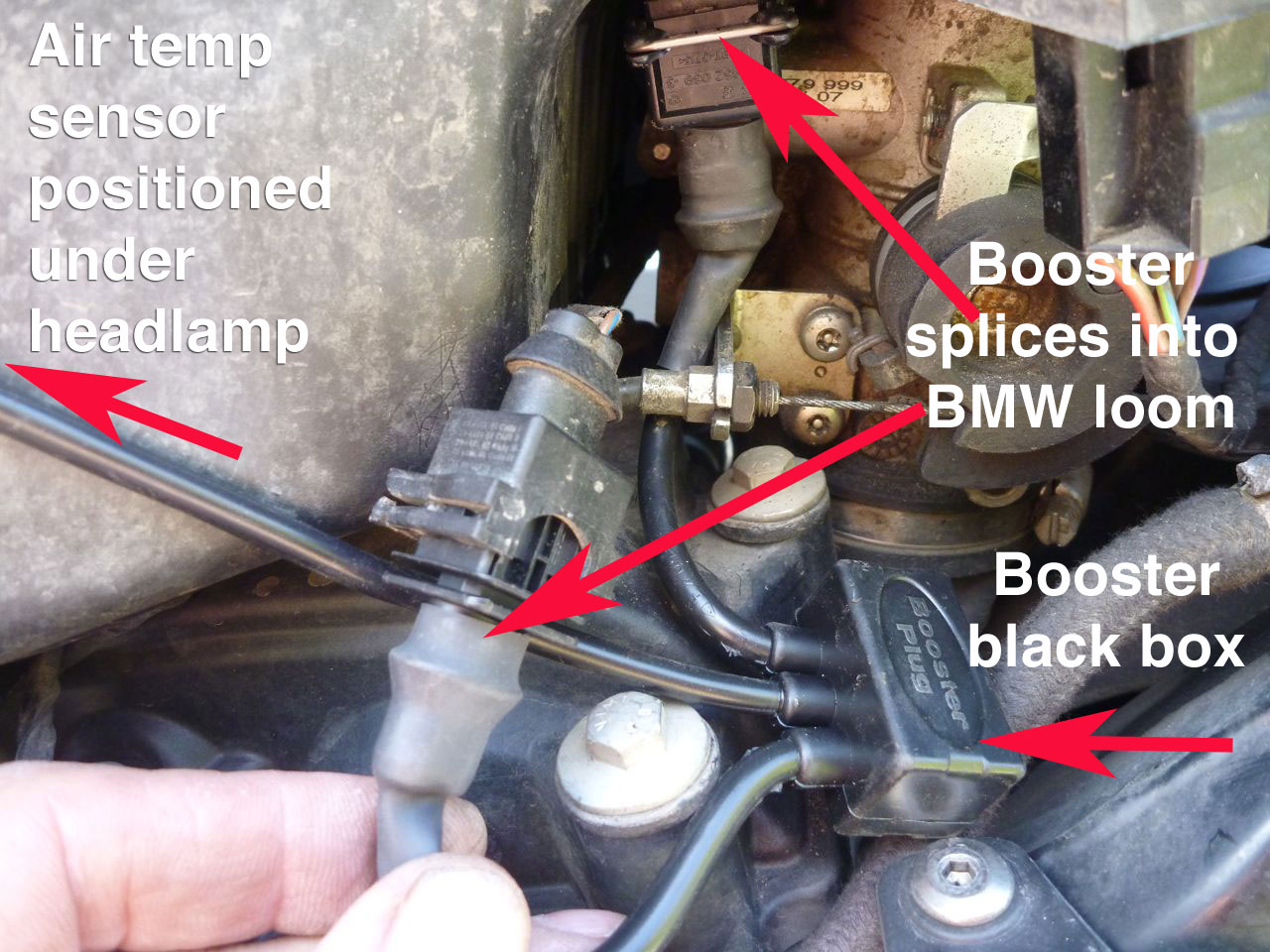
  • Booster plug (fuel mixture improver)
  • Used RAM mounts on the bars
  • Tuturo chain luber
  • Wunderlich fender extension
  • Used Touratech sidestand foot
xco-footer

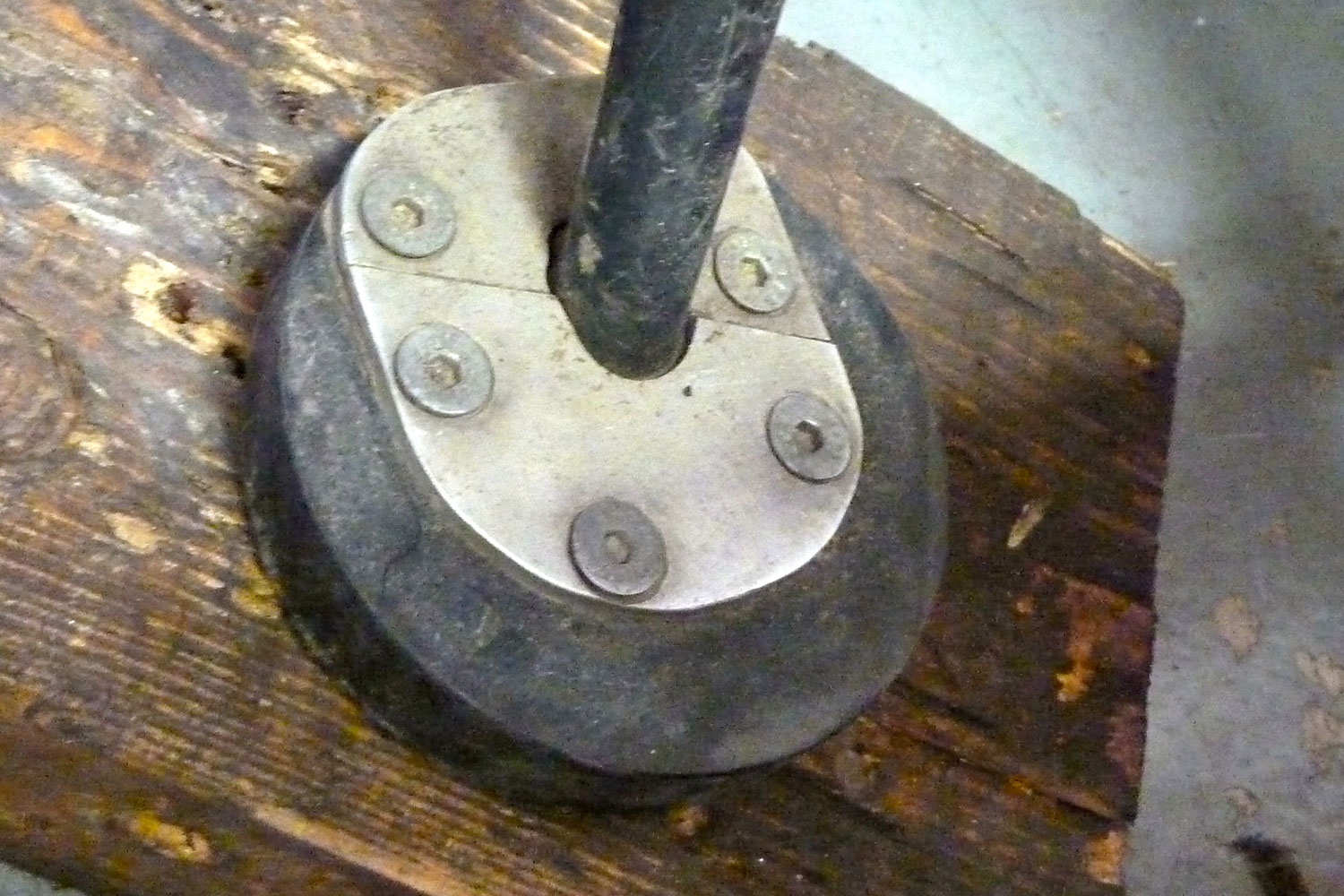
All those items I’d fit again without hesitation except maybe the TT side stand plate which fell off in Morocco as I was warned it might. I spotted a better, vibration-proof solution (right) while at Hyperpro. Not totally won over by the Booster plug, but if it runs cooler (richer) and hardly affects mpg then probably worth it.

Comfort
When I first sat on the bike I was surprised how small and short it felt and wondered if this might affect comfort. I dare say I may look big on it if I saw myself reflected in a shop window, but at 6′ 1′ and ~92 kilos the XCo proved to be much more comfortable than it looked. By the time I sold it, 700-km days in winter didn’t mean flopping onto a hotel bed exhausted.

Soon after buying it I refitted the small and cheap Spitfire screen from my CRF. There are doubtless better and flashier windshields, but the Spitfire did a brilliant job in keeping most of the wind blast and rain off me. It did this without introducing any handling anomalies at high speeds or in strong winds, nor feeling like it was in the way when riding technical dirt. Fitted on just a pair of stalks clamped to the bars, it didn’t ever budge in all that time. I may well fit it to my next bike.
Following a trip to Scotland, at round 8- or 9000 miles it felt like the foam in the seat had collapsed a little and the pad was less springy. However, that didn’t have any effect on long-day back-end comfort which suggests the shape and profile of the seat works as well as the foam in it. I came off a 750-km day in Spain with no soreness in the limbs or my butt, even if getting off to refuel every 2–3 hours revives the circulation. I also suspect leather trousers – or perhaps any fabric that doesn’t slip on the seat vinyl – extends posterior endurance. This whole experience was the opposite of the crippling seat pf the F650 twin I ran on a similar trip a couple of years ago.
Vibration at cruising speeds was never intrusive, though as with all big singles I’ve had, air-cooled or otherwise, some days at some speeds or engine or ambient temperature or load or fuel quality it feels harsh. I’ve never got to the bottom of it, but as it’s common to big singles it must just be the way they are. My main theory is fuel octane and overall engine temperature.
I bought some Wunderlich bar risers but never got round to fitting them. I had a feeling the added leverage on the rubbery bar mounts might not do them any good. On the dirt in Morocco I was a little stooped when standing up, but not enough to be uncomfortable. Had I also fitted the Hot Rod footrest lowering brackets I would have had a very comfortable standing stance, though I can’t say my legs felt cramped during regular seated riding. Part of the reason was I suspected that lowering the gear lever and brake lever may have been a faff and made them more exposed to damage on the dirt. As it is, on the dirt I tend to sit when I can and stand when I must. The Hyperpro suspension went a long way towards enabling such lazy riding.
The OE cast-alloy gear change lever is light but too strong and is said to transmit shocks to the gear shaft rather than bend. I fitted a folding-tipped steel gear change lever from some Yamaha or other. Although it was identical to the OE unit, it never felt in a natural position for easy gear changes, though the long throw of the clunky gear change doesn’t help.
Although they’ve been around for years I’ve never used a throttle hand rest (or whatever they’re called) but this XCo really benefited from one. The throttle spring must unusually hard. Other’s who rode the bike also commented on the handy hard rest which can be spun out of the way in a jiffy when off-road.

xco-shifter

Fuel economy and Booster Plug
Like my Tenere which I ran over similar mileage and use, the fuel consumption on the XCo varied for not always obvious reasons. Twenty four fill ups before the Booster Plug saw an average of 70.5mpg. Worst was 53mpg (18.8 kpl) – the only reading below 60mpg so may have been a miscalculation. The best was 79mpg (27.5 kpl) with a few others in the high 70s, so probably not an error.

boosterai

With the Booster Plug (~£100, right) I expected slightly worst readings: the average was 67.2 with a low of 56.5 in mid-Spain cruising at up to 70mph (on under inflated tyres, it turned out) and 80.5mpg over the Tizi n Tichka pass in Morocco (the same place my Tenere recorded a similarly high mpg one night). Reading the ambient temperature below the headlight and not in the air box, they say the Booster increases (richness) fuelling on acceleration but levels off back to normal settings at cruising speeds. If Morocco could be said to be less cruising and more accelerating on and off the piste, the lower average is less bad than it looks.

xco-dww

To double-check and to see if I could feel any difference, I unplugged the Booster on the way back. Within a couple of miles tooling round a small Spanish hill town looking an ATM, I’d stalled a couple of times at low speeds; never did that with the Plug. And later, pulling off the motorway to do something, the fan soon came on. The bike was running a little hotter as expected, but two fill ups saw an all time low of 56.5 and 54mpg for no good reason. Can’t think why that was unless the ECU mapping had adjusted to the Booster settings and was over compensating. Apart from the stalling and possibly mpg, I can’t say I detected any genuine difference with the Plug while riding the bike. I replugged the Plug in north Spain. Next mpg was 61.5 – less abnormal.

xtank2

As is well-known the X bikes come with a 9L tank giving a range of 150 miles/250km -too small to be useful. The 6.7-L Xtank increased this to a comfortable 370 clicks/230 miles at average mpg.
After fitting the Xtank, a couple of times I got outlandishly high readings of over 100mpg when filling only the Xtank which I assumed emptied before the BMW tank. On the second occasion I realised that with both tanks full, the bike probably initially draws some fuel from both tanks, but definitely drains the Xtank first.

BMW Xcountry fuel data

So overall the X bike’s average fuel consumption was identical to the F650 twin at 68.3 mpg, and about 5% less than the XT660Z Tenere while being a lighter, lower and more powerful machine (Had I meddled with a similar Booster on the XT it too may have used more fuel.) Click Esso for Xcountry fuel data pdf.

Oil and water consumption; drive chain
I changed the oil to fully synthetic at around 10,000 miles and used about 1.5 litres on the 5000-mile Moroccan run – more than a Tenere, iirc. I was told the bike might consume more oil using fully synthetic. But the bike also felt like it ran better by this mileage, though that may have been the more open, day-long steady riding doing the engine some good. It sure would have been handy if they’d designed the dip stick to be more accessible without removing the seat. And I never really got the whole oil level business: run it till the fan turns on, then walk round the bike three times, turn off and wait two minutes. I’m sure previous dry sump bikes weren’t so fussy (actually they were). Good thing is it’s an oil tank and so has more leeway for running low than a wet sump engine.

One hot summer’s day in London I noticed the coolant level down an inch – it may have been that way for ages. Again, it’s hard to tell the level without carefully peering in the slot. Once I topped it up it never went down again. I’d heard of X bikes suffering mysterious episodes of coolant drop with no actual leaks. The bike will get hot and the fan come on in town or on slow tracks with a backwind, but the fuelling never went off in such conditions, as it did with the F650GS twin in Morocco.

With help from the Tutoro oiler from about 7000 miles, I only adjusted the chain twice in all the time I had the bike and when I sold it at 16k, there was still had plenty in it. Was it these bikes that had chain problems when they came out? Whatever’s on there now is as good as anything.

msu-40

Performance
The XCo was one of the most powerful 650s around. I imagine a KTM 690 has more poke (but closer gearing?) and the Husky TR650 I rode last gear has five extra hp and certainly sounded more sporty but carried proportionally more weight. There are times on technical dirt when the X power feels too much with the hot engine and pokey response, but of course there are as many other occasions when you blast past a vehicle with assurance. This extra power didn’t seem to affect the fuel consumption or chain and tyre wear, but does make the engine harsher and lumpier than say a Tenere or a docile Sertao/G650G. The fastest I ever went was a true 85mph, briefly. The Xco was happy to sit at a true 65-70mph (75 indicated).

The brakes feel pretty ordinary but there was only a small single disc up front. The front pads were going by the time I sold the bike so lasted at least the 10,000 miles I had the bike, maybe more. The back wore very quickly – at 9000 miles they were gone and I didn’t notice till I damaged the disc. A used rotor off ebay.de was £30. ABS works fine. I never had to rely on it on the road and on the dirt it could be forced to actuate, but in a useful way. I don’t see the need to turn off ABS for the sort of dirt riding I do.

Suspension
On the road, initially the OE suspension felt pretty good and firm compared to Jap bikes and considered it had been a BMW Off Road School bike. Best thing was the easy-to-use knob on the Sachs shock though on the front the UPD forks are unadjustable.
But what works OK riding UK roads may come up short loaded on the piste. After just a couple of thousand miles the rear Sachs gave out no matter how high I cranked the knob. Various options existed to re-spring the back end including rebuilding the Sachs unit for about £120 while maybe adding a firmer or progressive spring. That’s probably the route I’d have taken but for an intro from Walter Colebatch to Hyperpro suspension in the Netherlands. I rode over and got the full custom set up from Bas at the HP workshop. The full story is here but there are more or less three levels of shock: a progressive spring replacement; an emulsion shock and spring; and the full-on gas-charged, remote reservoir, preload, compression and rebound adjustable version.

P1150379

That was what Bas did for me, along with a fork oil and progressive fork spring replacement, chrome slider polish and neoprene gaiters plus a new headset which had gone in an incredible 7000 miles?!
It was only months later when I experienced the real benefits of the custom Hyperpro set up while battling with five other bikes over an abandoned old track up the Jebel Timouka in southern Morocco. The difference is control: correctly tuned suspension responding predictably to riding over football-sized rock cubes without bottoming out. Although the Desert Riders Honda XRL was notably better sprung than the XTs I’d used up till then, I’ve never had the luxury of a properly suspended machine. And certainly on the dirt I can now see the value.

hebs8

I bought a chunky and adjustable 48mm DRZ400 fork (right) but never got round to fitting it so assumed the reworked OE UPDs would be ill-matched with the full-on 461 back shocker. But over the Jebel and on other tracks the fork responded predictably and the whole bike felt well-balanced. At the bottom of this must be the progressive springing front and rear and the shock’s adjustable damping. Progressive is nothing unique to Hyperpro but it works in using the near-full range of movement without bottoming out. That and the hydraulic preload adjuster knob similar to the OE Sachs made the shock very useful. The settings for compression and rebound damping on the remote reservoir I didn’t touch. The Hyperpro set up transformed the XCo on the piste and I’ll get one or something similar for the next bike.

Road riding
With its do-it-all 19” front wheel, the bike swings predictably through bends compared to the more dirtsome 21″. After a few months the front end developed a heavy feel which I put down to the weight of the gear (rack, screen, plate, etc) I’d fitted. Turns out it was just the tyres and on replacing the worn Tourances which came with the bike with more dirt-ready Mitas E-07s the bike was entirely transformed in the bends – maybe even  better than when I bought it. I won’t be in a rush to buy Tourances – not the sort of tyre I use anyway – though by this time I had the Hyperpro set up which probably didn’t do any harm to the handling.
The XCo was notably better – lower C of G – than the XT660Z on the road, though not as low and long and stable as the F650GS twin. And the XCountry was a lot less scary than the Tenere in gale force crosswinds too.
In town the worst thing about this bike is the clunky gear change, especially from neutral into first. Add to that the length of the throw needed. Trying out an XR250 Tornado in Morocco was snick-snick-snick and this unobtrusiveness to something you may be doing every few seconds makes a real difference to riding enjoyment.

Off road riding

Photo Chris W
Photo Chris W

Off roading in Morocco mostly involves rocky or gravel tracks, and while not TKCs, the Mitas E-07s did the job without any drama at full road pressures. Add to that the top-notch suspension and the XCo – loaded with maybe 15-20kg – never got out of shape on the dirt. I never came close to falling off and rode some gnarly shite on occasions.
Like all trail bikes, the gearing is too high and especially on the 650X, too widely spaced for technical off-roading. You just can’t go slowly enough at tickover in first gear which at times was too fast to negotiate some hairpins or rubble sections. The clutch worked hard on Jebel Timouka but with frequent rests for bike and rider, it never complained. I can’t say I missed a 21-inch front wheel on the dirt – that only comes in to play if the bike is usefully light and agile. I’m 6′ 1″ and the XCo was easily low enough to get my feet on the ground when necessary. I didn’t have a single hit to the bashplate. Again, I put that down to the progressive springs.

Loading
Even at £450 I didn’t hesitate in replacing the OE alloy subframe with the steel version from the Mk2 XCo (right). having said that  it’s unlikely my Morocco trip would have stressed the alloy item. As on my Tenere, this is one part of a travel bike where I don’t resent the extra weight.
On the side the Hot Rod Welding Xrack gave the Magadans something to lash to and I especially like the wide ‘sheep rack’ design at the back (Walter C’s idea – right). I know it’s not the latest in adv bling, but a wide back rack made of good old-fashioned tubular steel is much more useful than the mini CNC plates you get these days, especially when it comes to manhandling the bike or even just tying things on. CNC is just flash and quick/cheap to cut. On my next bike I hope to adapt a Hod Rod sheep rack.

xco-speedo

Equipment
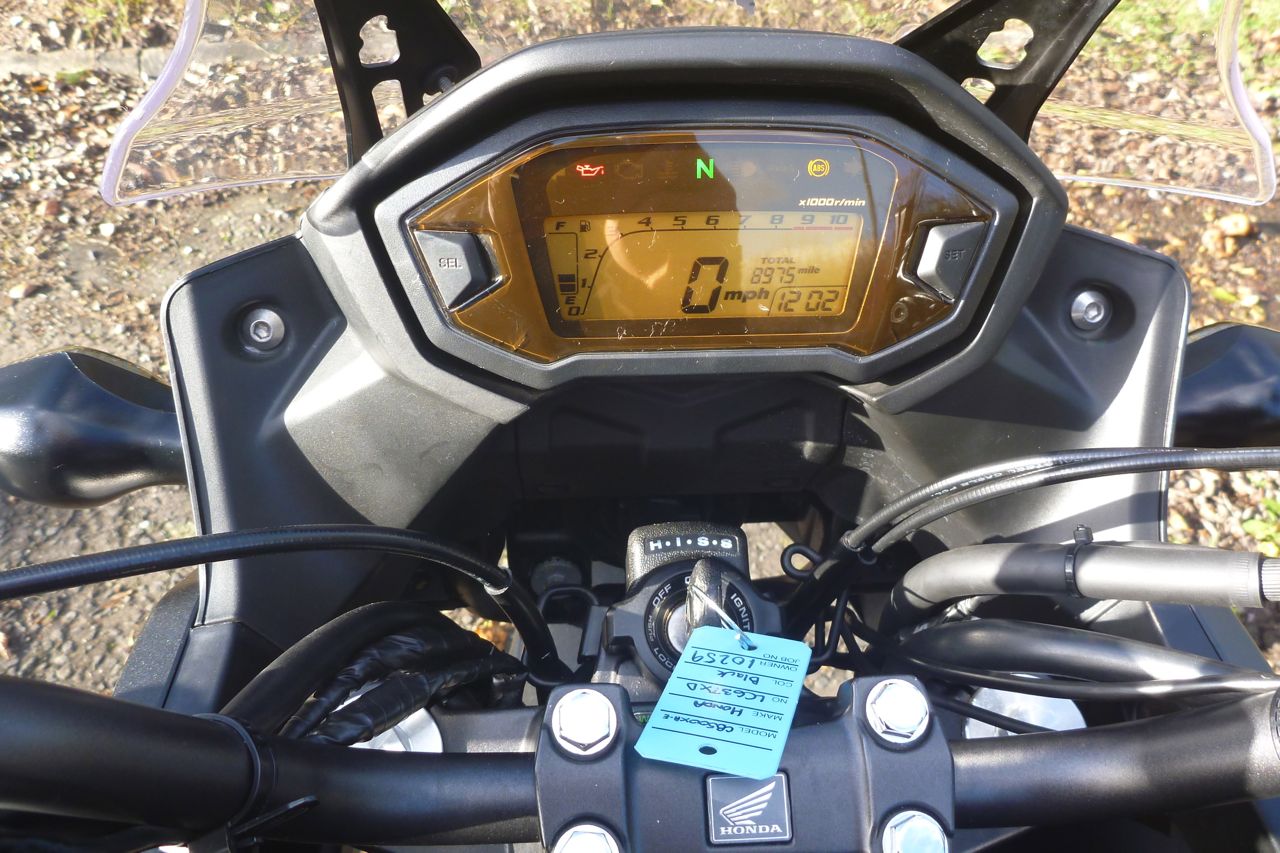
The dashboard is about as basic as they get – just the speed reading (can be changed to kph with a bit of a faff disconnecting the battery) and a trip or odometre plus an array of colourful warning lights. I would have liked an oil or water temp gauge but didn’t go as far as fitting my Trail Tech gadget. A fuel light comes on with about 2 litres or 40km left in the main tank.
The speedo was typically 8% over compared to a GPS read-out, but the odometer (used for mpg calcs) was spot on over 100 true ground kilometres. No tools came with the bike and even if they had, they’re probably not enough to be useful, as is the trend these days.

Durability and problems
With BMW’s reputation of late, initially I didn’t feel so confident in this bike. Using it as a tour support vehicle you can’t take chances. One time in Wales the ignition didn’t come on with the key, but switching on and off again fixed that and it never happened again. When did that last happen with a Jap bike? The coolant level drop proved to be a one-off anomaly and in fact the XCo took its month and 4000 miles in Morocco in its stride.
I sold that bike feeling a lot more confident about it than when I bought it. A better gear change and smoother running would have made it much easier to live with, but the answer to that may be just round the corner.

xco-cw-draa
“You go first.” “No, no, after you, I insist.” Photo: Chris W

Desert Riders ~ XRL650s in the Sahara

“Having tasted the thrill of off-piste riding, corrugations just aren’t so much fun anymore.”

XRL ChoiceXRL Preparation • XRL 4000-mile report

FULL MOVIE
dr-3up

Not long after 1989 when the original Sahara Motorcycle Tour (SMT) described in the Desert Travels staggered home, a bitter civil war broke out in Algeria as the army annulled elections and unrelated Tuareg rebellions broke out in Niger and Mali. At that time both Libya and the Western Sahara were not accessible and so the brief First Golden Age of Independent Saharan Exploration came to an end.
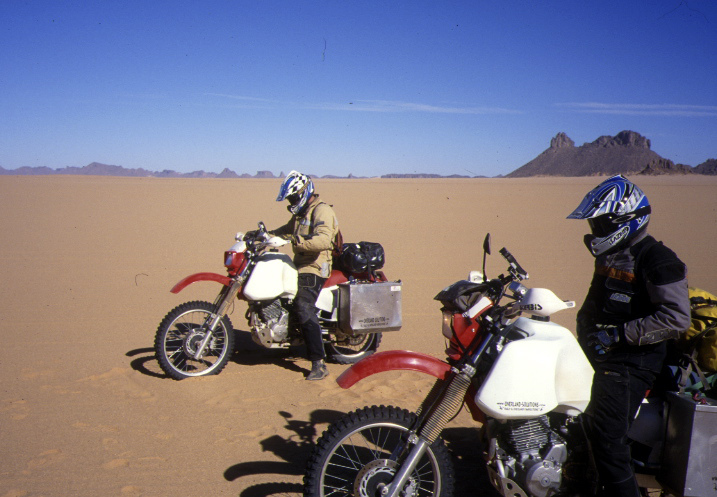
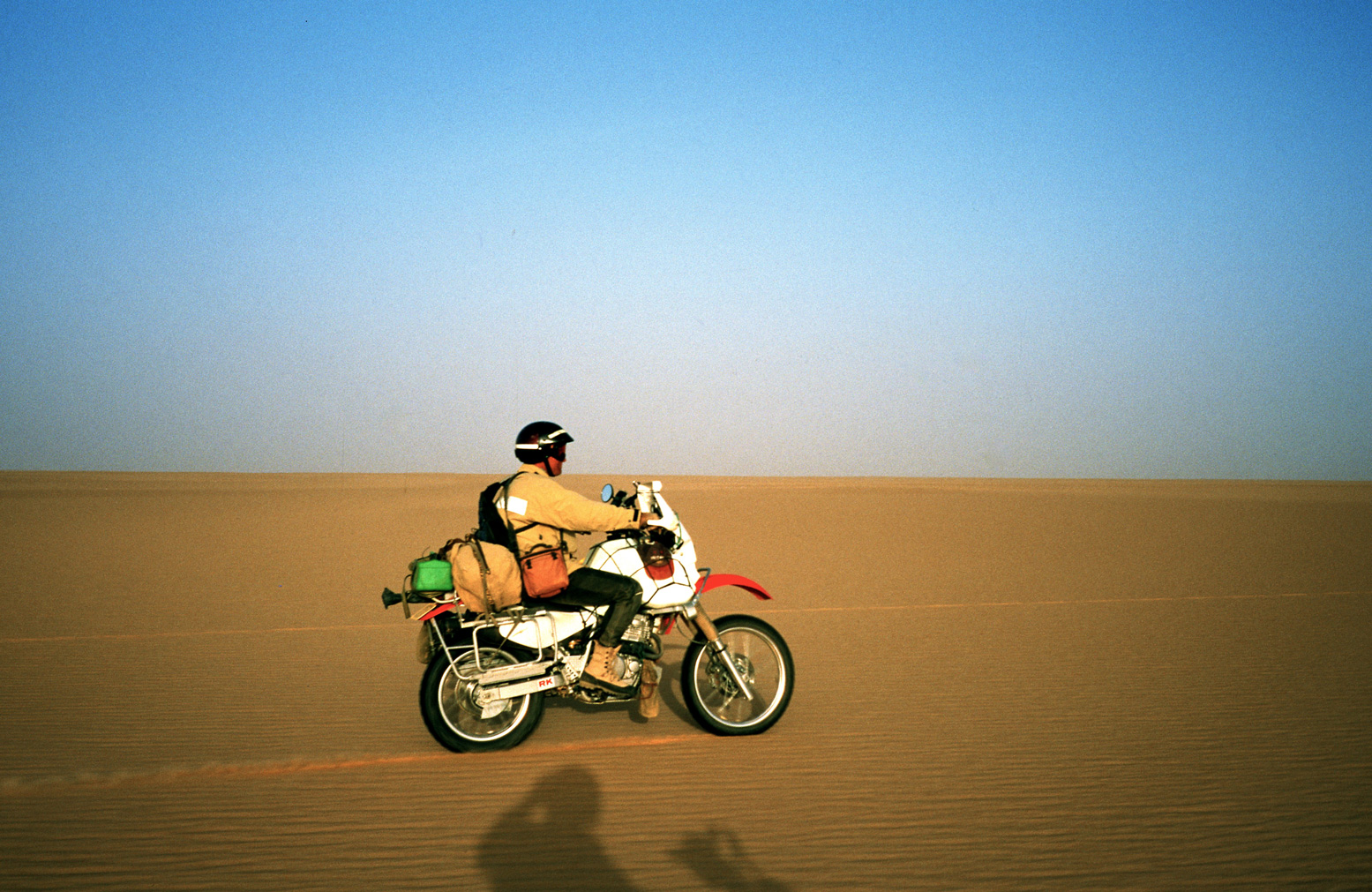
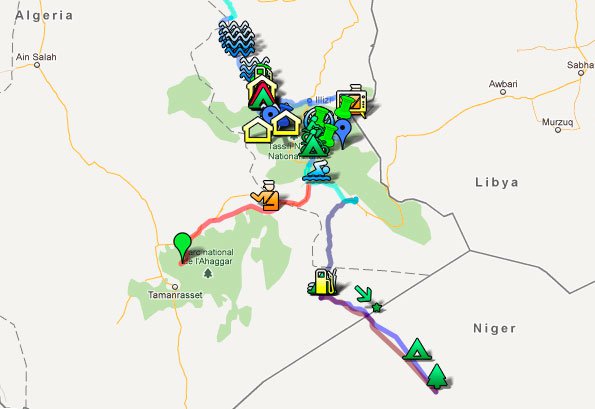
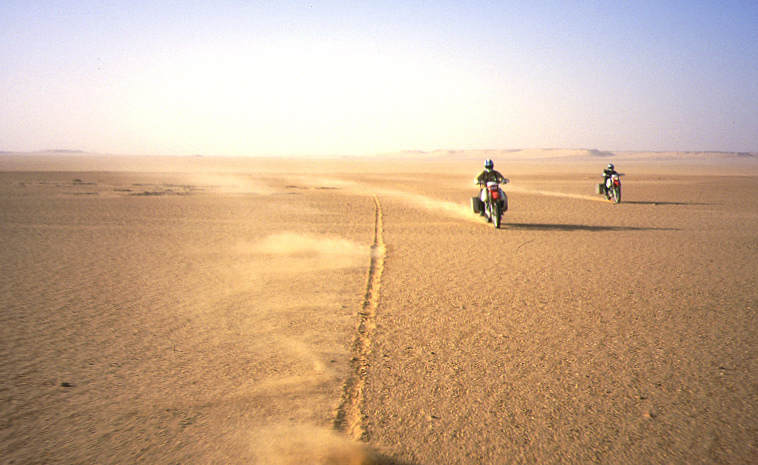
I took a nine-year break from desert biking until a chink opened up into Libya in the late 90s and I headed out there on a BMW Funduro. Soon I was running vehicle-supported motorcycle tours in Libya and then Algeria also re-opened. The Last Golden Age of Independent Saharan Exploration kicked off. Making the most of it, in 2003 I cooked up Desert Riders, an ambitious expedition. It turned out to be my best pure desert ride on which, with the aid of fuel caches, Jon, Andy and I managed to get out as far as the ‘Lost Tree’ in Niger’s Ténéré Desert, slip back into Algeria and get out again, all just days before a mass kidnapping which marked the beginning of the absolute end for Saharan moto tourism and which we managed to dodge thanks to a well-timed crash.

I looked at our route on a map the other day and realised that maybe there’s something to be said for a 38-litre fuel tank after all. All things considered, we made a pretty good dvd of it too, and in that pre-youtube era it managed to get broadcast in a shorter form on National Geographic and a couple of other more obscure TV channels.

dr-borderlands-mc

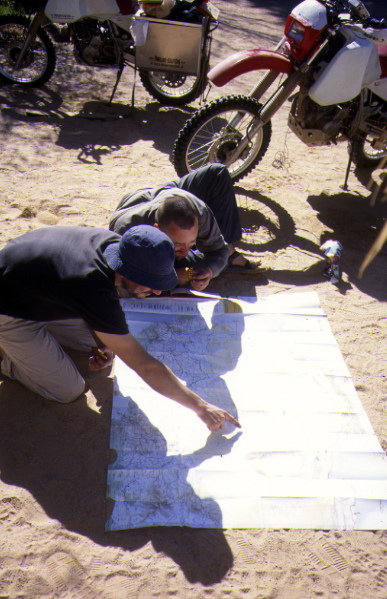
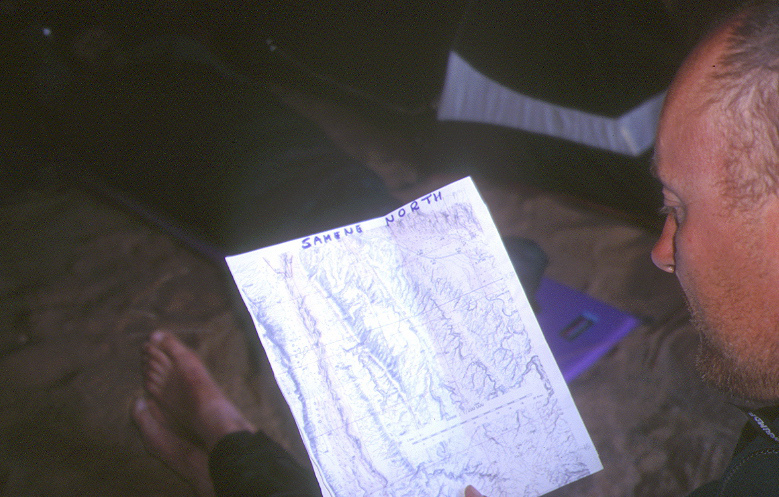
Not surprisingly our actual route didn’t match our plans. Nothing new there. I’m pretty sure the Oued Samene canyon has never been traversed on a bike. One day I’d like to go back there and explore upstream – or nose up from the south to the watershed and see if there really was a bike-proof cliff face up there. But the chances of being able to do that are slimmer than ever these days.


dr-dvd2016

Looking back, I realise Desert Riders was the most amazing ride I’ve done in the Sahara. And looking again at the location of the Lost Tree, we were way out there.
The Sahara has become a dangerous place in the intervening years and I don’t imagine I could ever repeat something like this. 

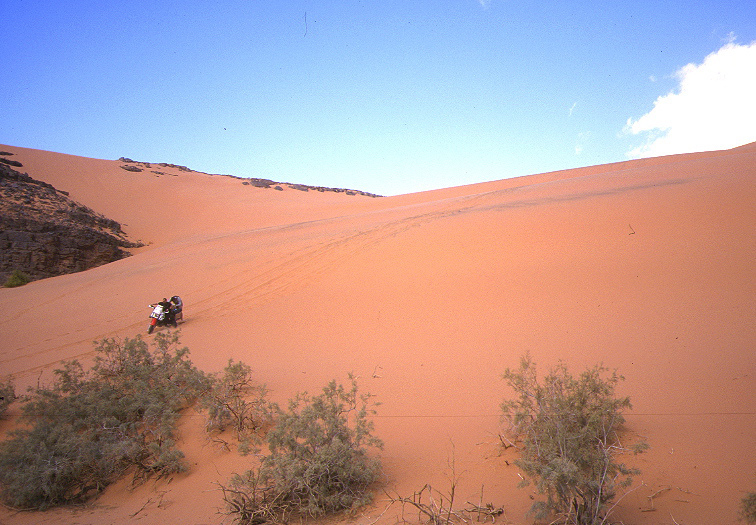
It was in Oued Samene – our famous 4km day – that the reality of riding our 250kg slugs-on-stilts really hit us. But it was also our first cross-country (‘off-piste’) ride down to the canyon’s north rim and it underlined the thrill of finding one’s own way over wild terrain. Exploration: you can’t beat it!

dr-driders

Within sight of the Libyan border, Tarat wasn’t on our original itinerary either, but a fantastic piste. I’d long wanted to do this one and I’d love to do it again. Fat chance these days. Water became a problem for us; the soak at Imirhou was nearly dry, and then the route south to Dider (the cover of the dvd) became extremely rocky, right up to the last couple of kilometres. I don’t normally say this (though I often think it!) but it was a relief to get back to the road and ride down to Djanet.

dr-djanet

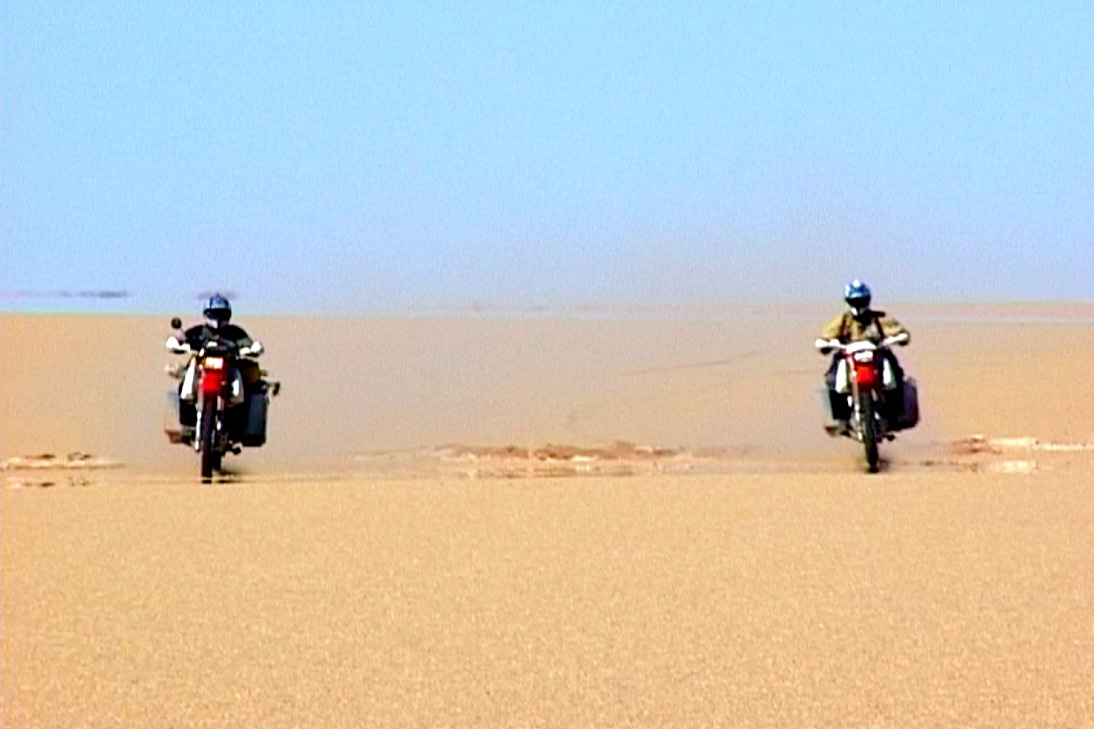
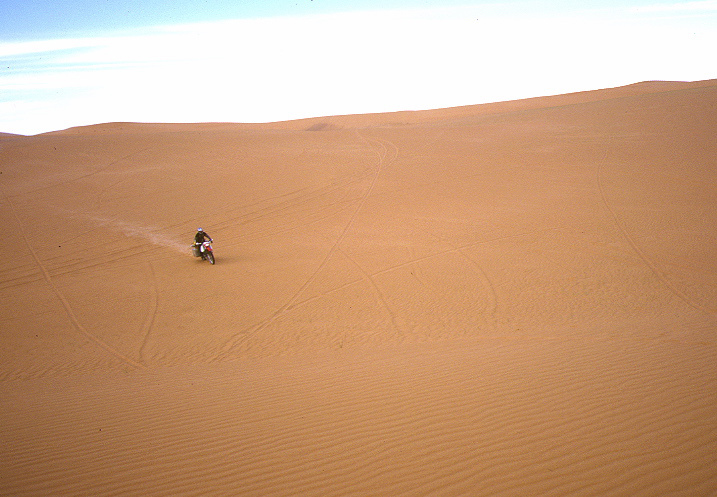
Here we decided we couldn’t be arsed with the 1500-km run to Tam and back for Niger visas, so we took on an excursion to the Lost Tree instead. Out of town, amazingly we covered the 300km to the Erg Killian food and fuel cache in one glorious day’s riding, all off-piste through beautiful country. Not a single track did we see. It was especially wonderful after the rock-bashing and bike hauling of the previous week up on the plateau.

drid-ontheplane

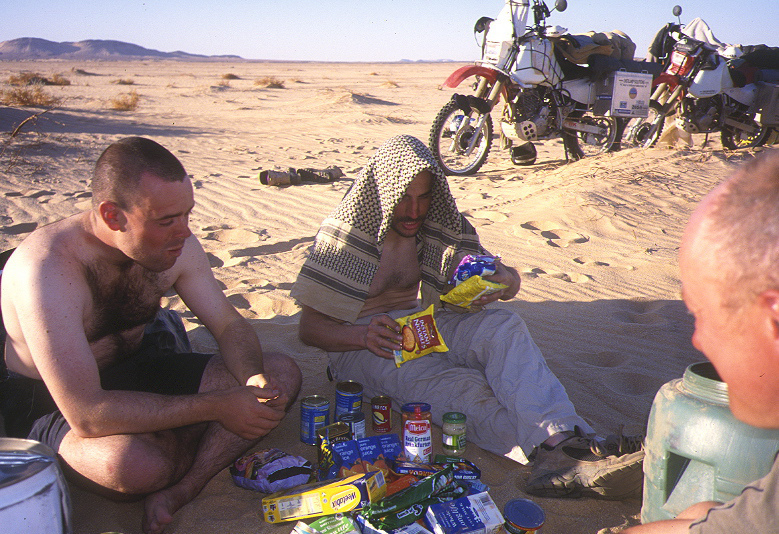
You never know, do you but the fuel and food dump was all there and intact underneath the sands. We gorged ourselves on Haribo, tinned frankfurters and other junk food and slept as well as we could do, knowing what lay ahead.

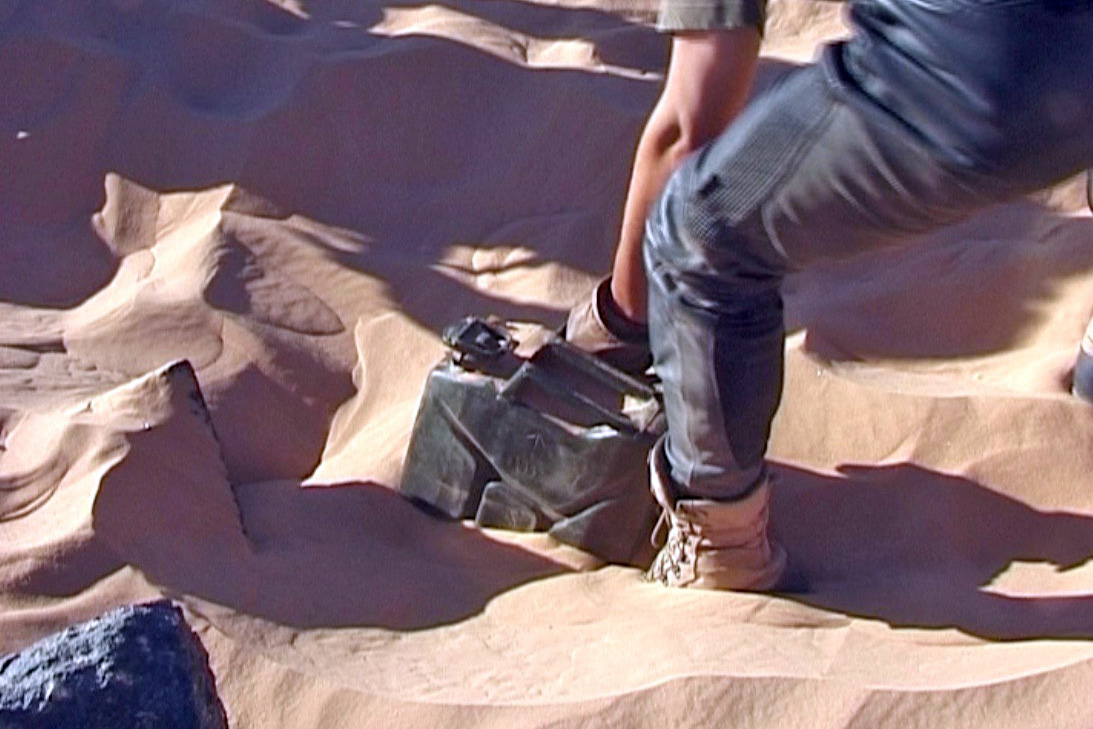
drp-pulljerry

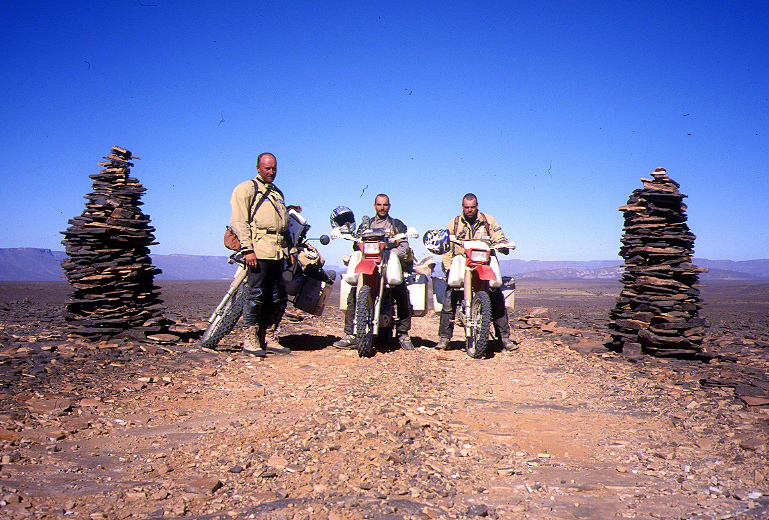
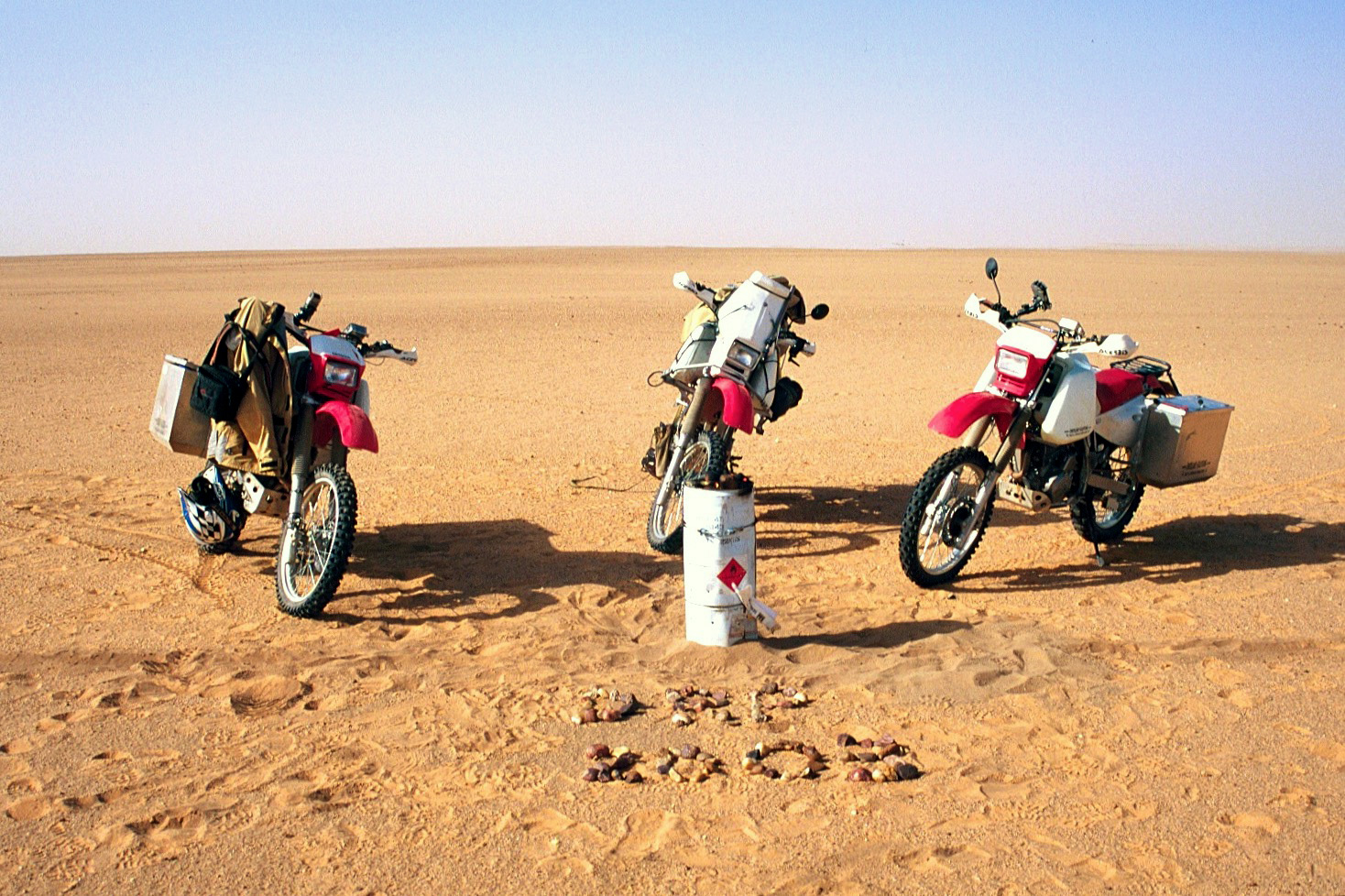
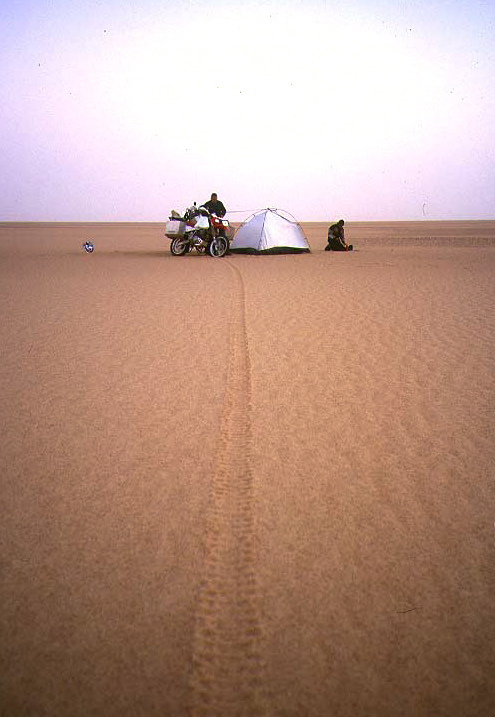
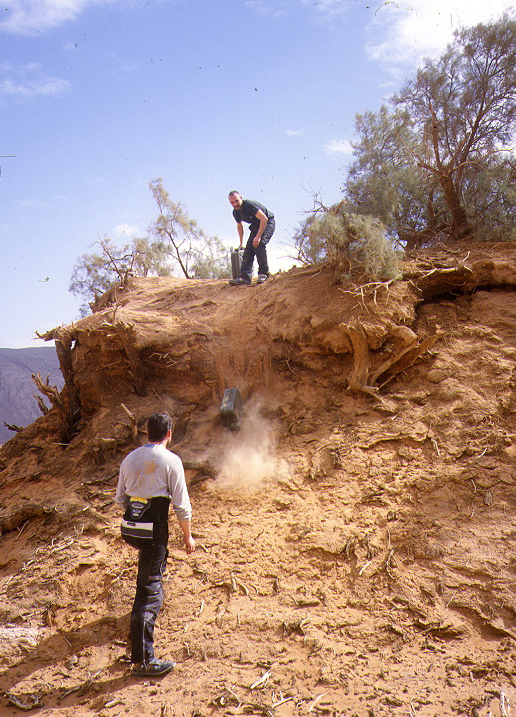
From there next day over the border and to the Lost Tree was across truly terre sauvage. There were some tricky hills around the Niger frontier where we erected the DRP Monument from use fuel cans. And then out into the Tenere itself: butt-numbing endurance. We were illegal and out on the edge, but I at least felt pretty safe as dodgy encounters or all three bikes packing up at once was unlikely. We saw not a soul for four or five days.

drid-drp

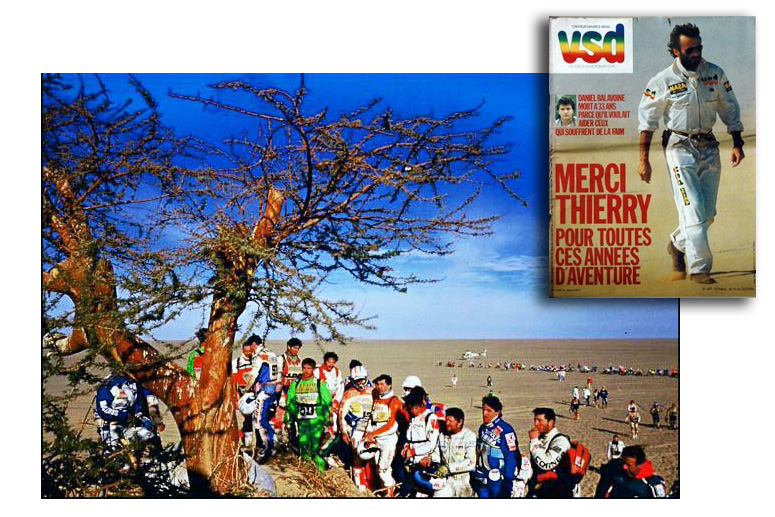
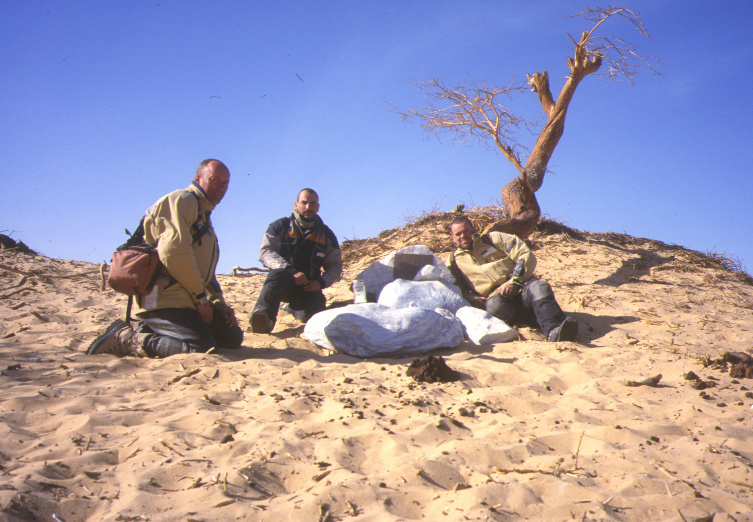
Next day on to the Tree and all the way back to Killian we did a stonking 450km – a ride to remember. We paid our respects at the remains of the marble monument erected to Thierry Sabine, the Paris-Dakar Rally founder whose ashes were scattered here in 1986 when he was among several killed in a helicopter crash near Timbuktu.

drid-attree

You can see below how Lost Tree is not quite what it was in 1986. Passing travellers had sawn to centuries-old acacia down to a stump over 17 odd years. With the growth in migrant traffic across the Tenere in recent years, the Lost Tree – the sole landmark for hundreds of miles – may have been lost for good.

drid-sabinetree

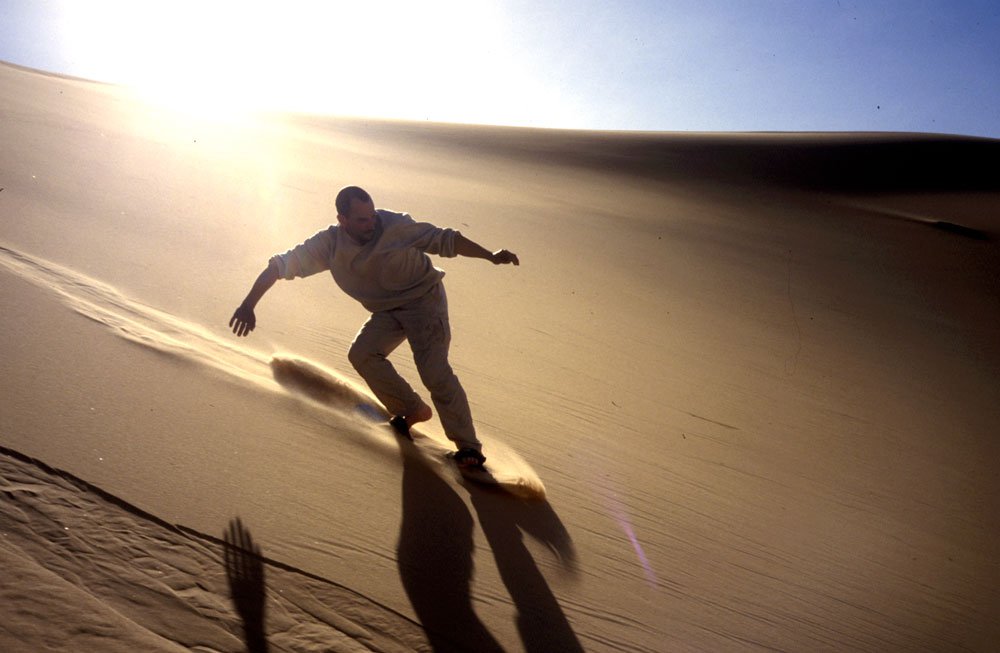
The ride back across the Tenere was topped off with this great shot of Jon scooting down the Erg Killan on his home-made surf board.

surf-dune1

Next day we packed up and rode back north from the Killian cache to Bordj on the Djanet road. It was another great cross country ride until Andy got puncture fever and DNFed with tyre troubles all the way home. Read his story here.

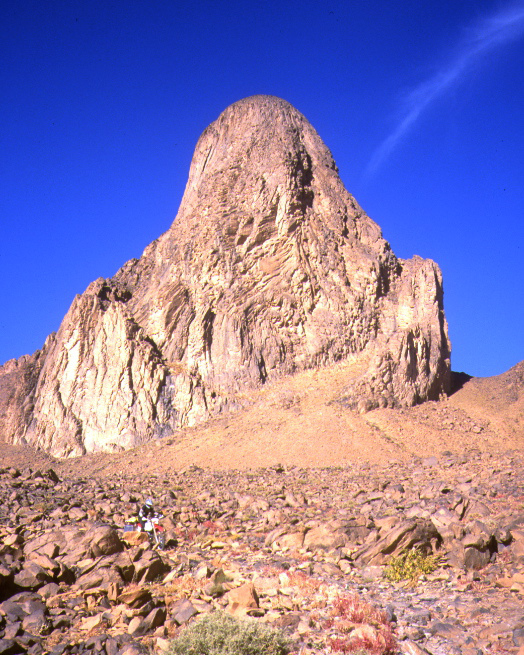
Jon and I took the regular piste west to Tamanrasset as we were keen to have a closer look at Telertheba mountain. We rode up as close as we could over the rubble and Jon trekked right up to the base of the cliffs. But climbing this jagged ridge (it’s been done) would be tricky and as usual we were low on water and food. By the time we got to Tam we felt a bit unsatisfied. Having tasted the thrill of off-piste riding, corrugations just aren’t so much fun anymore.

dr-hoggar-mc
plakat3501

Jon and I parked up in Tam for a few days (it was Tabaski festival) when a Dutch KTM – a guy I met last year on the Med ferry – turned up with a couple of German mates heading for Djanet. they were keen to hear about our ride out to the Lost Tree.
About ten days later they all got kidnapped in the Oued Samene region along with 29 other tourists in various groups. Arjen and his three mates were released six months later, several stone lighter and not all of them the same people. One woman died of the heat on the plateau (2003 was an exceedingly hot summer in the central Sahara, even by Saharan standards).
Desert travel in Algeria never really recovered from that event which went on to spread all over the Sahara under the banner of the GSPC, Al Qaeda of the Islamic Maghreb (AQIM) and these days, more splinter groups than the Life of Brian scene.

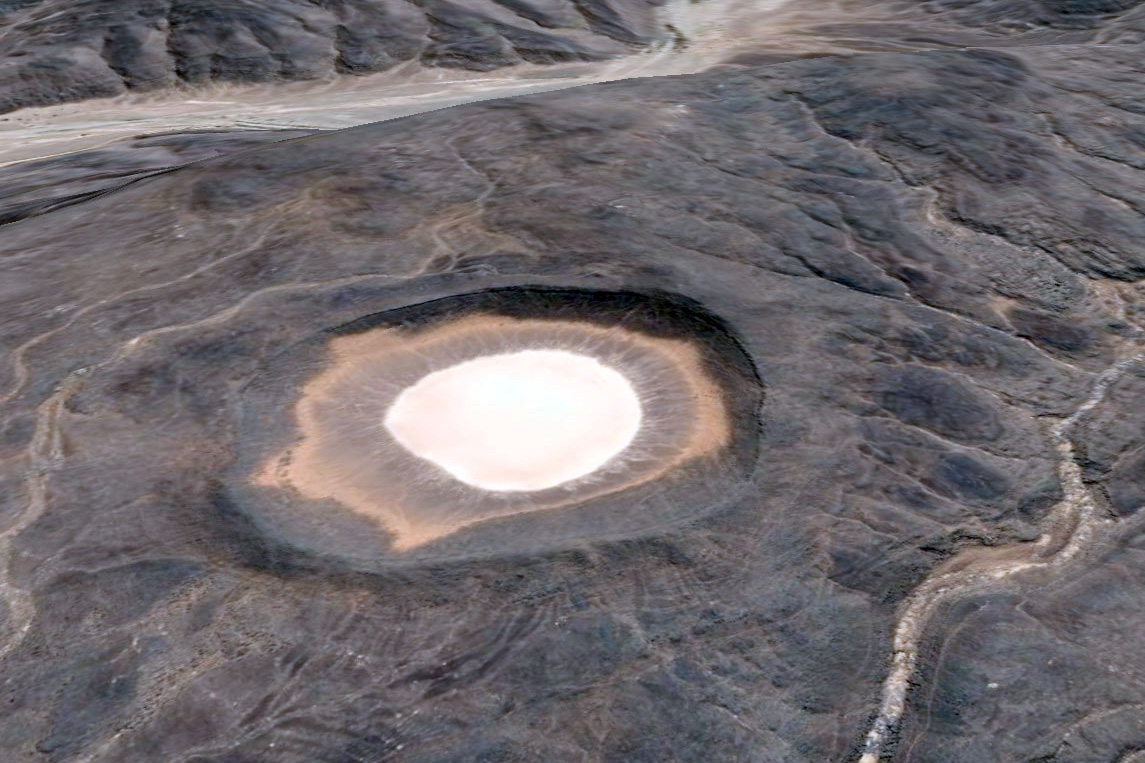
But we didn’t know any of this yet, so Jon and I set off through the Hoggar, our back-heavy XRLs cutting through the hairpins like half-sunk canoes. Still, a cracking ride even if the rough western descent took it out of our alloy panniers (never again!). From there we were heading up the easy Amguid piste to climb Garet el Djenoun. Or so we thought. From Garet it was a 100 km or so to the last fuel cache* and try and reach to the Amguid Crater**, though to be honest we didn’t hold out much hope on our radical canyon approach route from Foum el Mahek.

drid-amguid

Then I crashed out so that would all have to wait for another time, and with the spate of abductions and restrictions of the following decade, that time may not be any time soon. The desert party that started in the late 1970s is over. Me, I’m just pleased I packed in all the Algeria I could in the good years. I still try and go back to the Sahara most years, but Desert Riders marked the end on an era in a fabulous place with the richest memories of my original desert travels.

* We picked up the fuel in November 2005 during another visit. A bit of evaporation but 90% there after three hot summers under a rock.
** And in November 2007 I reached the amazing Amguid Crater with a camel caravan.
goocrate

Looking for Adventure: CB500X or MT-07

msu-06
900ss

A few months ago I had a brief ride on Nick Plumb’s XTZ1200 (left). It was only a few miles but the creamy smooth pulse of the big, lazy engine was spellbinding. It took me back 36.6 years to my old Ducati  (right). In 1978 the 900SS was one of the coolest bikes around and let me tell you, when you’re 18 that has quite an impact!

rideapart
amygdala

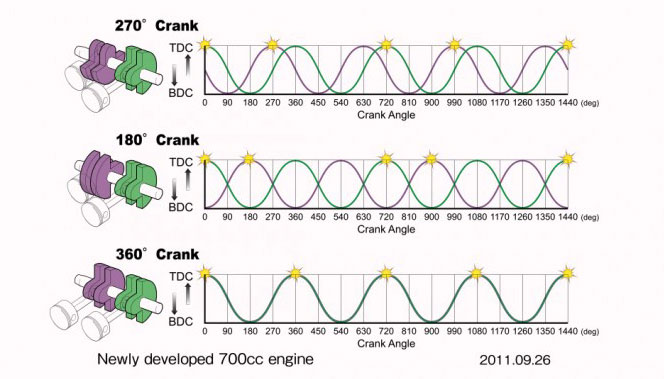
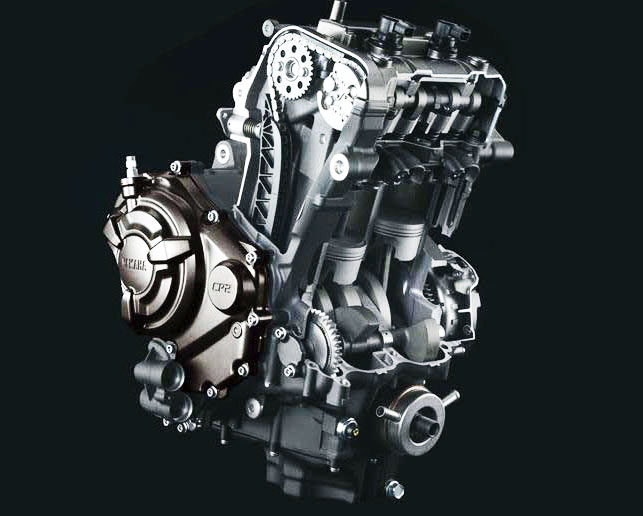
Of course the S10 is not a 90° V-twin but a more compact parallel twin. Yamaha re-created that Ducati feel by offsetting the crank to 270°. Some say the V-twin feel is the only benefit (and something which neurologists say stimulates the Neanderthal amygdala – right – deep in the human brain). Others claim the firing sequence has an advantage in converting torque into real-world traction. Also, because one piston is always at max velocity as the other comes to a momentary stop at BDC or TDC, this momentum, or what I’ve dubbed as ‘kinergy’, “assists with accelerating the [other] piston back towards its maximum velocity” as I just read on the internet. You don’t get that with your regular ‘up-and-down, up-and-down’ 360- or 180° parallel twins.

It’s the ‘Big Bang’ theory of unsynchronised but closely paired – rather than evenly timed – power pulses, as illustrated in the Honda graphic, right. That was produced to illustrate the benefits of their 670-cc moderate-power/high-mpg Integra super scooter and the closely related NC700 models. Above left is a manual (non-DCT) NC700X getting tested by RideApart in Nevada. Nice, but a bit heavy.

tony
triscram
at1
aftwin

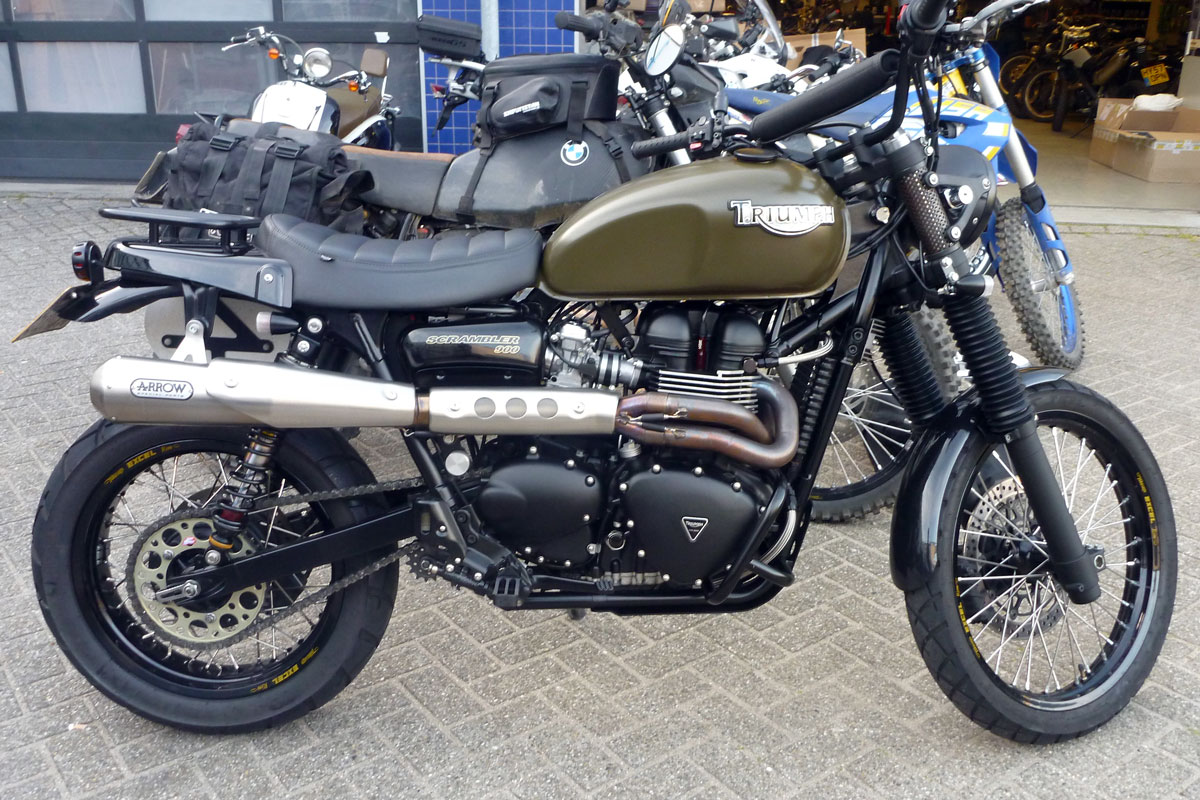
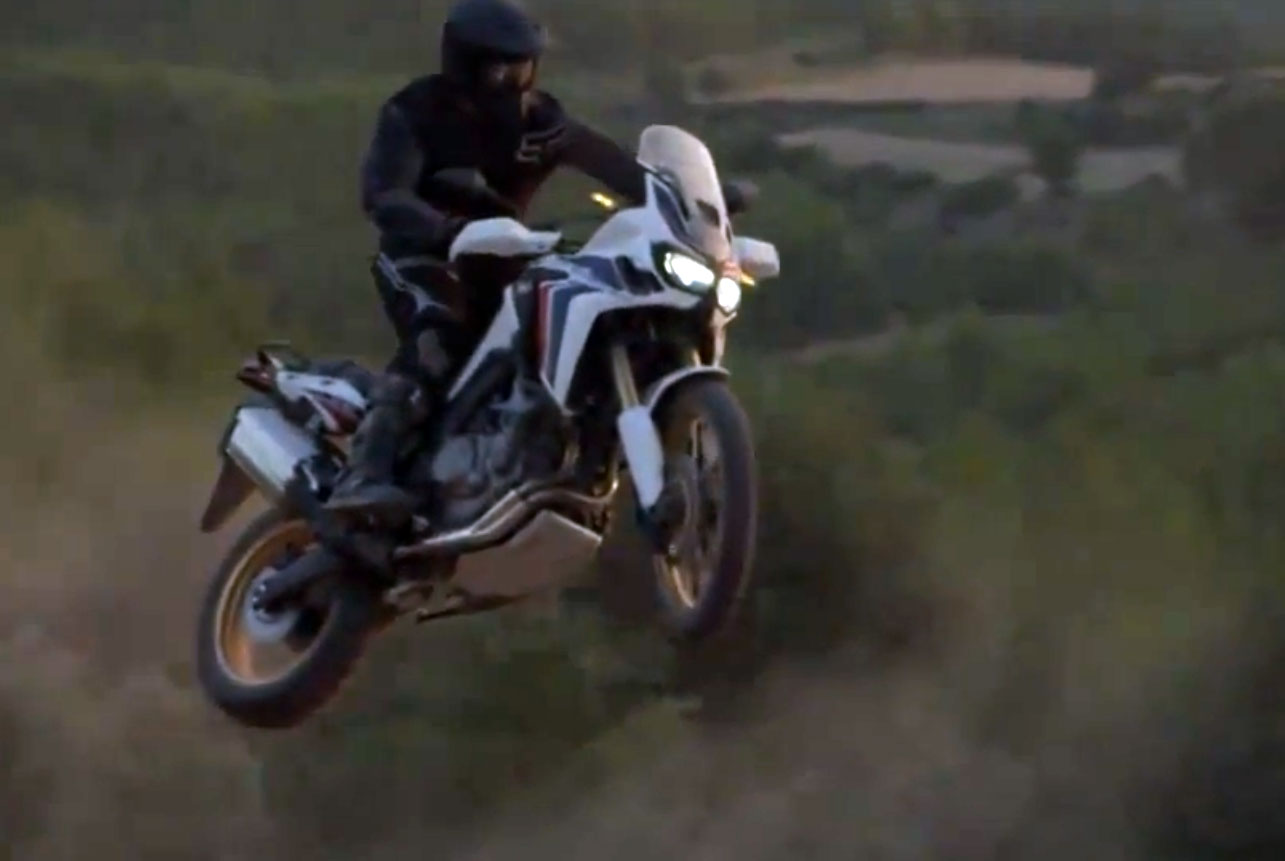
So is an S10: a quarter-ton, £10k tank-too-far to be a practical travel bike. Turns out the new CRF1000L Africa Twin (left and below – my 2016 quick spin) is offset too and sounds as creamy as a Waitrose rice pudding in the videos. But what other 270° twins are there out there suited to the next project? Not so many it seems: a couple of Triumphs including the Scrambler (right), the Honda NCs as mentioned, Yam TDM 850s and 900s from the mid-90s onwards, and the hit bike of 2014: the MT-07.

gsr-jetty

As I suggest in the book, a mid-weight parallel twin is all that’s needed in a do-it-all travel bike. Adequate power, smoother than a big single with similar performance and price, potentially good economy plus light and simple enough to be manageable on unsealed roads. That’s what my rudimentary GS500R project (left) tried to be – I should have persevered with that. But luckily I came to my senses and got a CB500X.

bare-NC700X

Honda hit the fuel consumption ball right out of the park with the NCs and about time too. The secret was moderate ‘non-100-hp/litre’ power. I like to try new stuff so the NC-X could be a contender. I’ve yet to ride one but while the weight is positioned low in the chassis (left), a manual 700X is still a 220+ kilo bike on 17-inch wheels and which around here goes for £3.5k used – or £4.5k for the more desirable DCT. If you’re going to try an NC700-X, it ought to be the auto that all owners rave about.

cbmt02

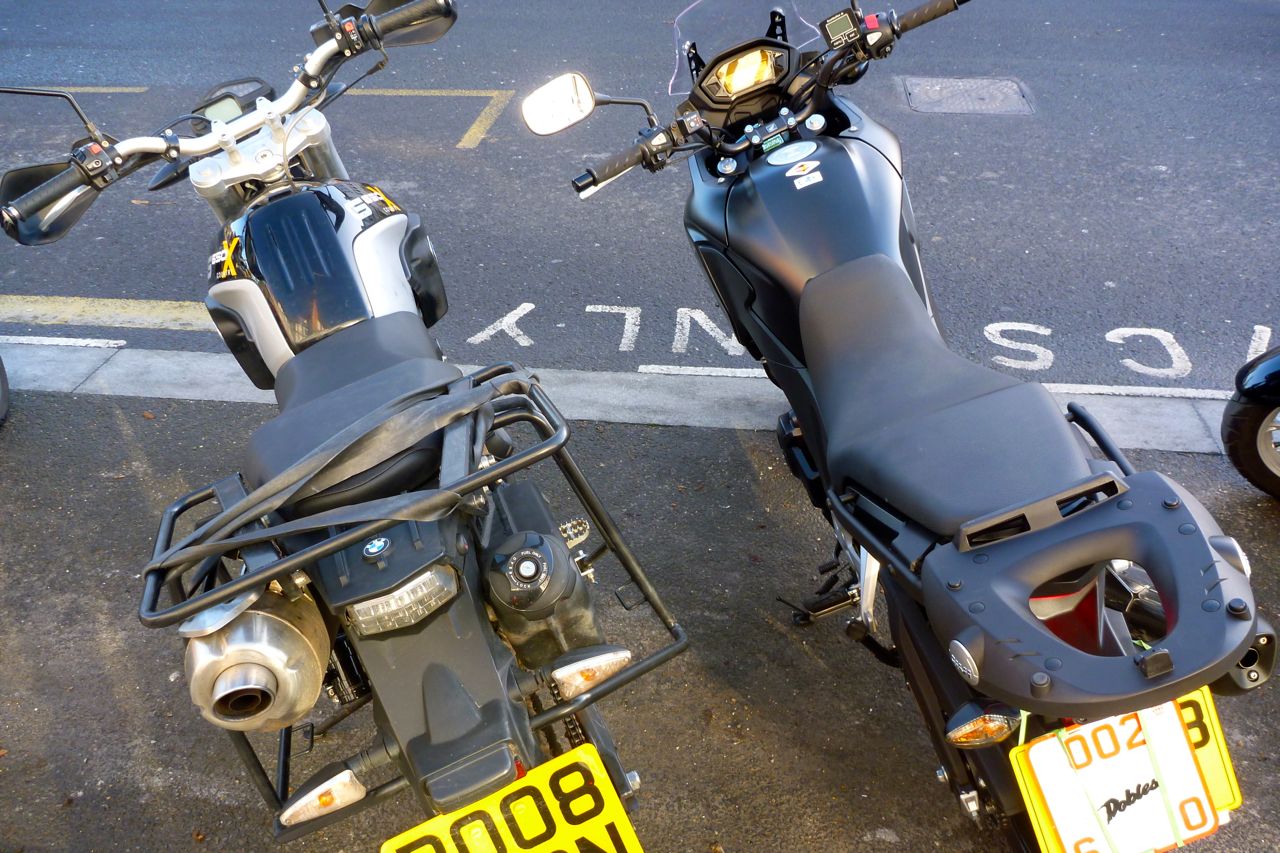
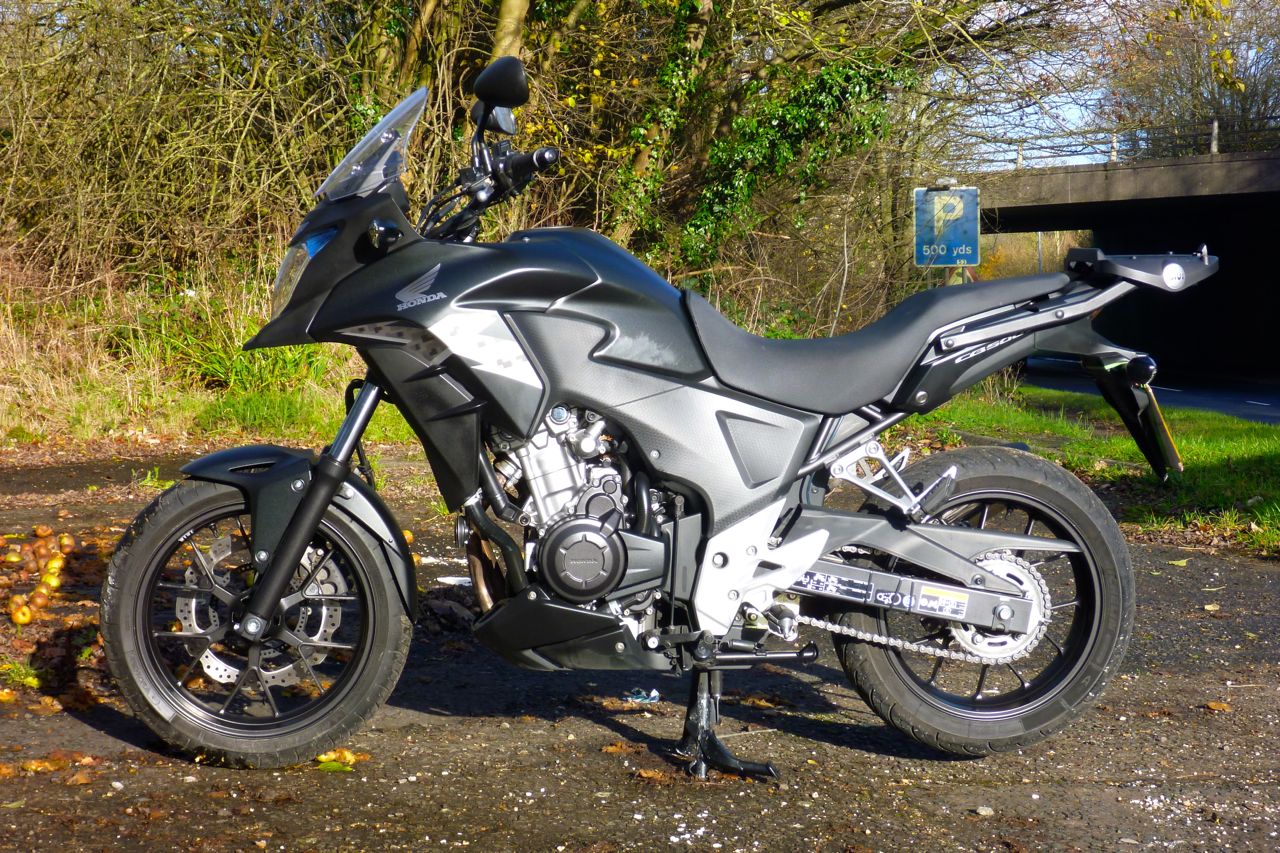
CB500X [I later bought one] It may not run an asymmetric crank like the new CRF1000L, but I like the new look that Honda cooked up in 2013 for the CB500X as well as the NC-X, the Crossrunner and the rest of their MoR Advs. Beaky sure – but sleak[y], too. Someone described the 500X as a 3/4 sized Crossrunner. Alongside my former XCountry (right), the 500 looks slim and with a notably lower seat – all pitched at ‘women or beginner riders’, so they say.
Pulling away I was struck by how astonishingly smooth it was and remained that way right up to an indicted 80mph when a bit of harshness crept in. If I hadn’t known, I’d have never guessed it was a twin, bar the fact it’s not as heavy as a four and as slim as some singles. And even with a vertical linkage nearly a foot long, the six-speed gear change has that satisfying Jap snick that I’ve missed on the shunt-shifting 650X, plus the lever was exactly where my foot liked it. Mark up one point for ergonomics.

cbmt03

My chilly ride was mostly on motorways then some back roads and roundabouts around Gatwick airport and left me with nothing to complain about. With some 46hp there was easily enough poke to overtake at speed, no snatchiness in the transmission or glitches in the fuelling and great brakes. Suspension – where cost cutting is most noticeable these days – worked well enough too, though on smooth main roads it wasn’t really tested. Most cheap stuff will do the job – it’s when the road breaks up or a load is added that the flaws appear. The standard low screen must have done its job too as I don’t recall any strain at around the legal limit.

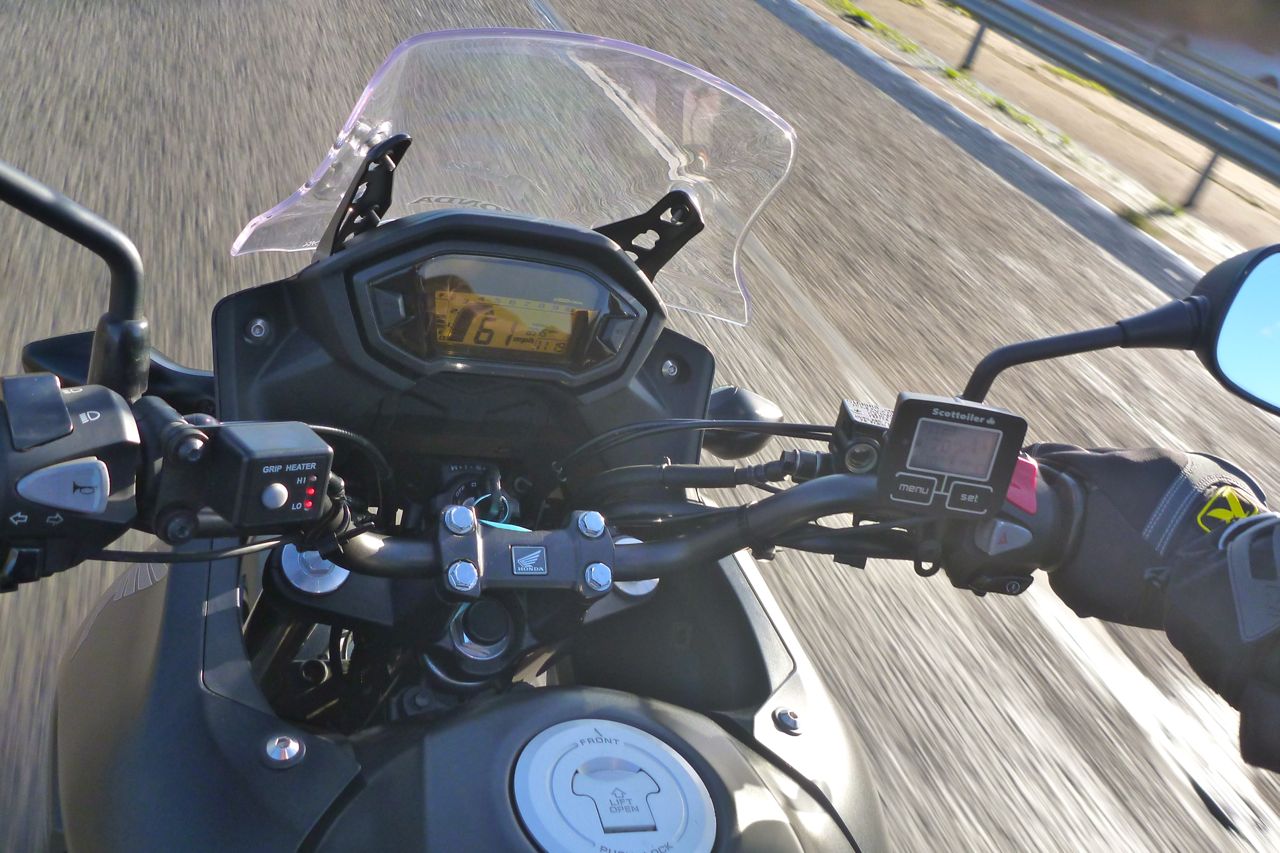
This 9000-mile-old 500X had some welcome Oxford heated grips plus one of those over-complicated electronic Scott chain oilers (more here). On the back was a Givi tail rack which hangs out like someone walking the plank and is an ergonomic abomination. I’ll have more to say about that in the near future. I know it’s convenient and all, but the thought of a  top box perched way out there is enough to make me want to call the Samaritans.

rp

One reason I’ve taken an interest in the 500X is that UK-based Rally Raid Products have developed a range of parts including properly uprated suspension, replacement wire wheels (right), plus the usual protection and load-carrying accessories. Better known for rallyficating highly strung KTMs and the like, it’s good to see a company like RRP taking on less flash but more affordable travel bikes like the CB-X.

cbmt05

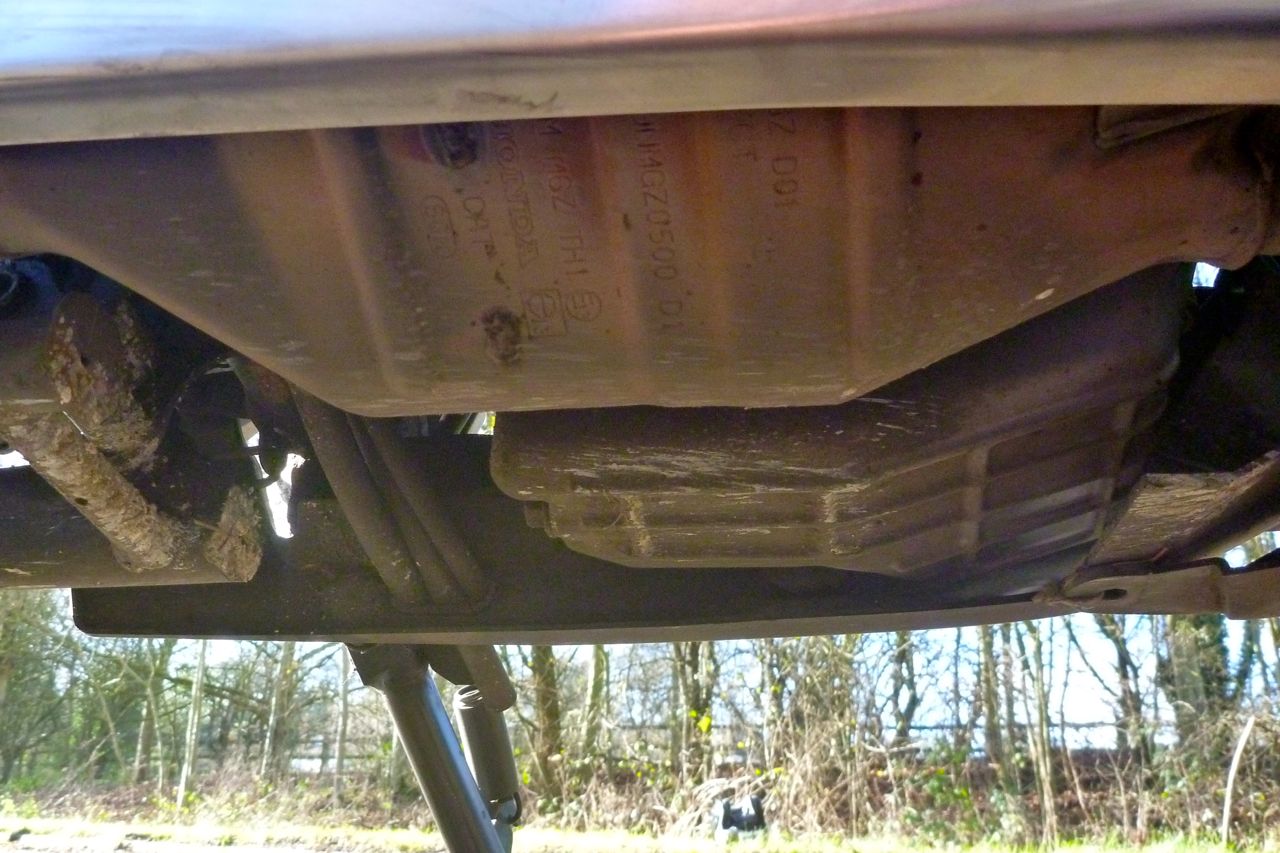
Back on the ride, I pulled over to have a closer look. On its 17-inch wheels the 500X is low on ground clearance. Down below the cat or collector box is on a level with the sump (right), though that’s nothing a slab of 5mm of dural couldn’t see to.

cbmt07
cbmt08

Under the seat – good lord, an actual toolkit in the grey PVC pouch that Honda have used since Fritz Daimler crammed a steam iron into his pushbike. What I could see of the subframe looked chunky enough for luggage duties. Over on the dash, there’s more data than my XCo: digital rev counter, clock, fuel gauge, trip, current/average mpg – all good once you decode it. And for a bike that’s put together in Thailand or China or a bit of both, the fit and finish was reassuringly solid – better than my BMW. With its 17.5-litre tank you imagine the CB-X could get up to 400km (250 miles) to a tank without too much effort (in fact make that nearer 550km). Clad in dark grey plastic, I like the angular ‘early-Batman-movie’ styling too. Interestingly, the previous owner (‘a younger person’) PX’d this bike for an Integra super scoot. Is there a message there?

cbmt06

I came back to the shop liking this 500X, especially when the Doble’s bloke told me it was going for just £3800 – a price forced down by a couple of other used 500Xs in the showroom and the free luggage they’re now giving away with new ones. It’s definitely the closest thing to a modern GS500R I’ve tried.

A few months later I bought a CB-X
cbmt20

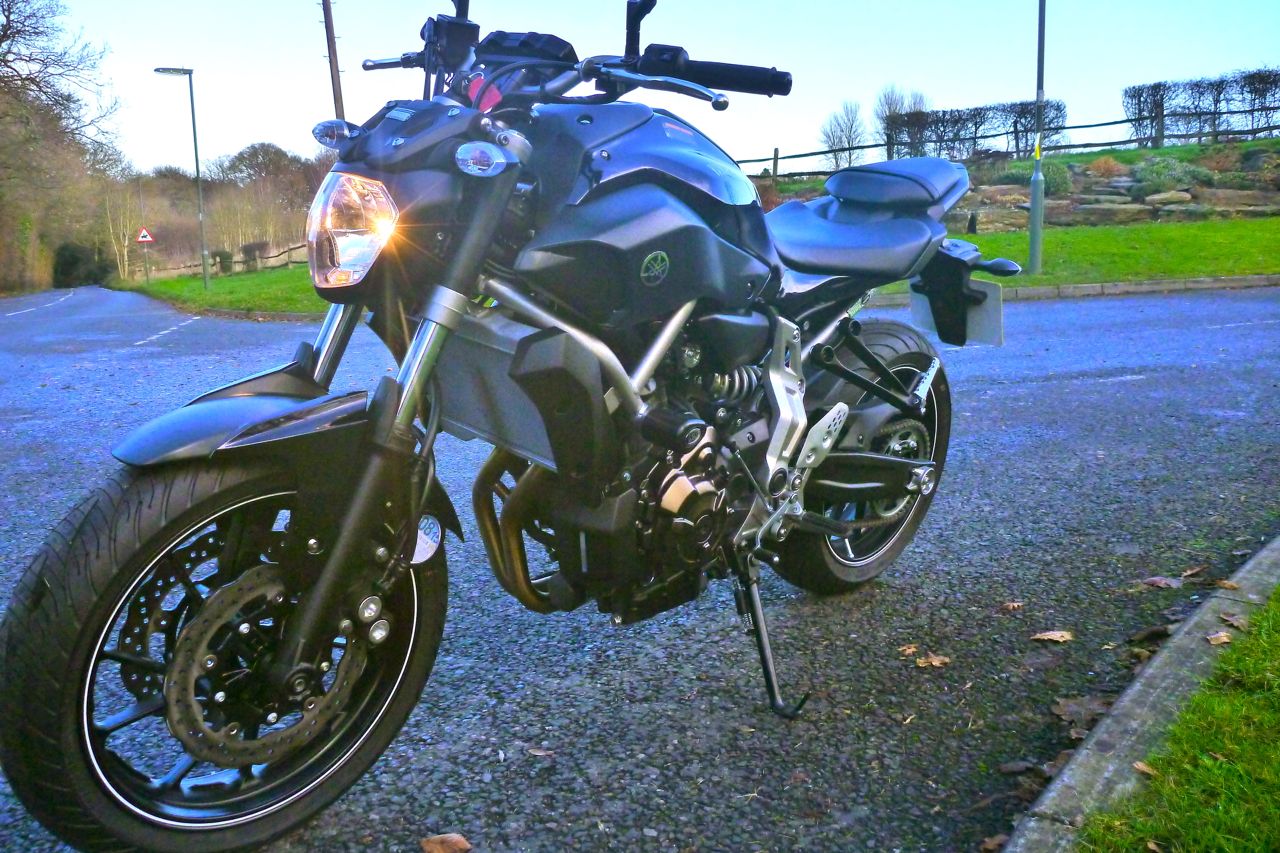
Yamaha MT-07 What has Yam’s hit of 2014 got in common with the Honda CB500X you’re thinking? For me it’s solely about the motor because clearly extruding as 07’s suspension and slapping on bigger wheels (as I did on the disposable GS-R) won’t make an integrated gravel-roading travel bike any more than Frankenstein after a weekend trapped in a tumble drier. One limitation I have is nowhere but a South London pavement to work on my bikes – or a mate up in the Midlands to do basic fabricating. That factor curbs what I dare get involved with.

cbmt11

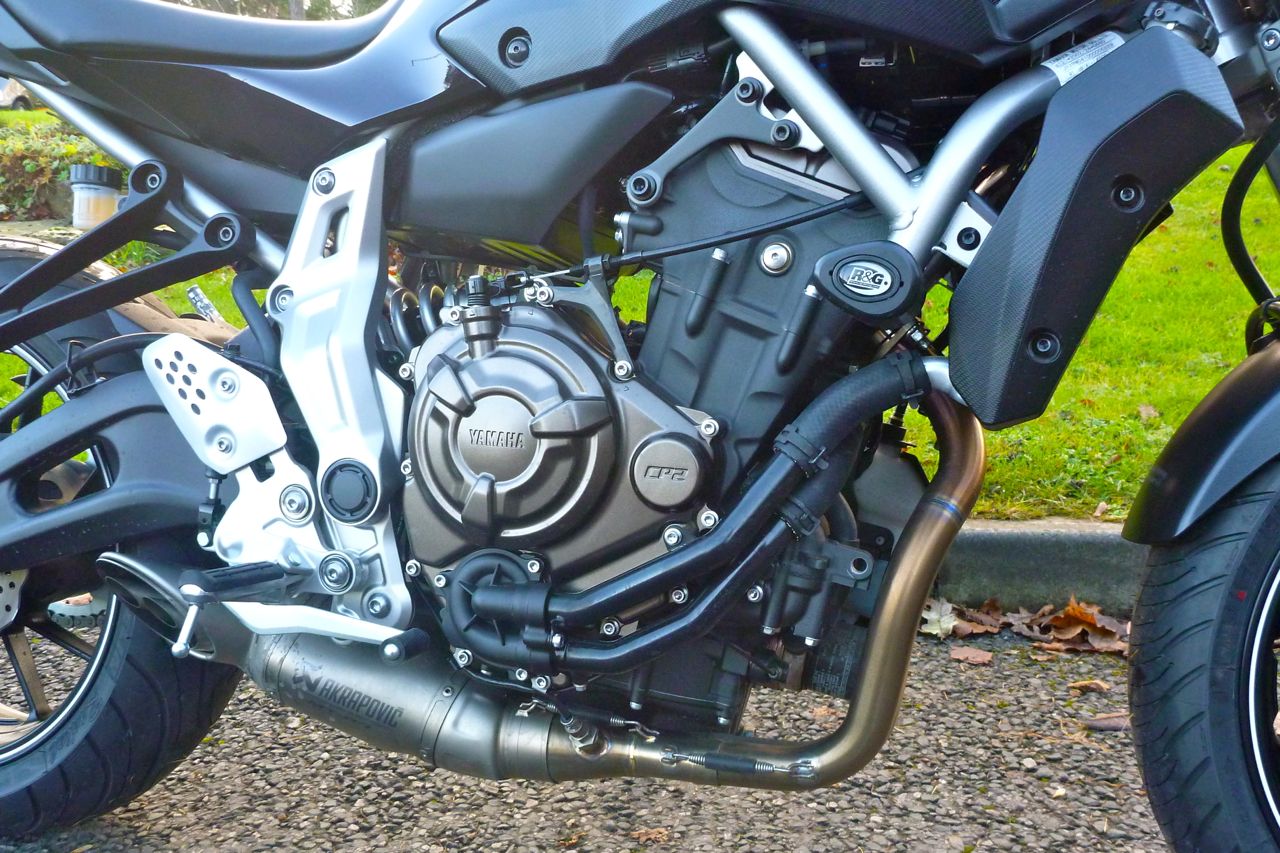
As expected, the second the bloke fired up the MT’s engine I got it, I got it all: that intoxicating offbeat throb held a promise of good things to come. This was a short ride on a bike less than 100 miles old along grubby country lanes and speed-humped roads littered with wet leaves and still damp in the shadows. They led to the old B2031 out to Kingswood and Box Hill where I recall trying out a booming J&R cannon on my XT500 nearly 40 years ago. In these conditions I distinctly felt that this ‘Big Bang’ traction theory had something going for it. There was a sense that the engine power pulses made it easier to feed and feel the traction, compared to the electric-smooth Honda I’d ridden an hour earlier. And the fantastic but non-offensive sub-J&R exhaust note had me  blipping the throttle between gear changes just for the sheer fun of it.

BurningSocks

The short pipe holds another trick: escaping gases briefly throb against your dangling heel as you pull away. In my demi-euphoric daze I saw that as consolidating the bond with the characterful machine rather than the inconvenience of melted Derriboots and flaming socks. It was only when I looked at my photos that I realised the shop had slipped on an Akrapovic pipe on the sly – though they’re actually giving them away with new bikes.

cbmt14

They claim 76hp and a wet weight of 180kg. I can’t say the 07 felt like it ran over 100hp/litre but who cares – the odo was still in nappies. It’s the feeling you get playing tunes on the gearbox that counts: you’re gunning around to please your senses not for acclaim. Like I said, magic-ing up a V-twin feel in a compact parallel twin motor is inspired.

mt07cutaway

The rest of the MT was not so interesting to me. The profile is cool but as soon as that currently fashionable drooping headlamp cowling comes into view I gag. Swap it out for a used XS850 lamp, quick. Along those bumpy, ill-maintained Surrey lanes and suburban speed bumped avenues, the suspension felt harsh and the seating position would have taken some getting used to. But bear in mind I’ve been riding a trail bike with the full Hyperpro set up these last few months.

YamahaMT-03
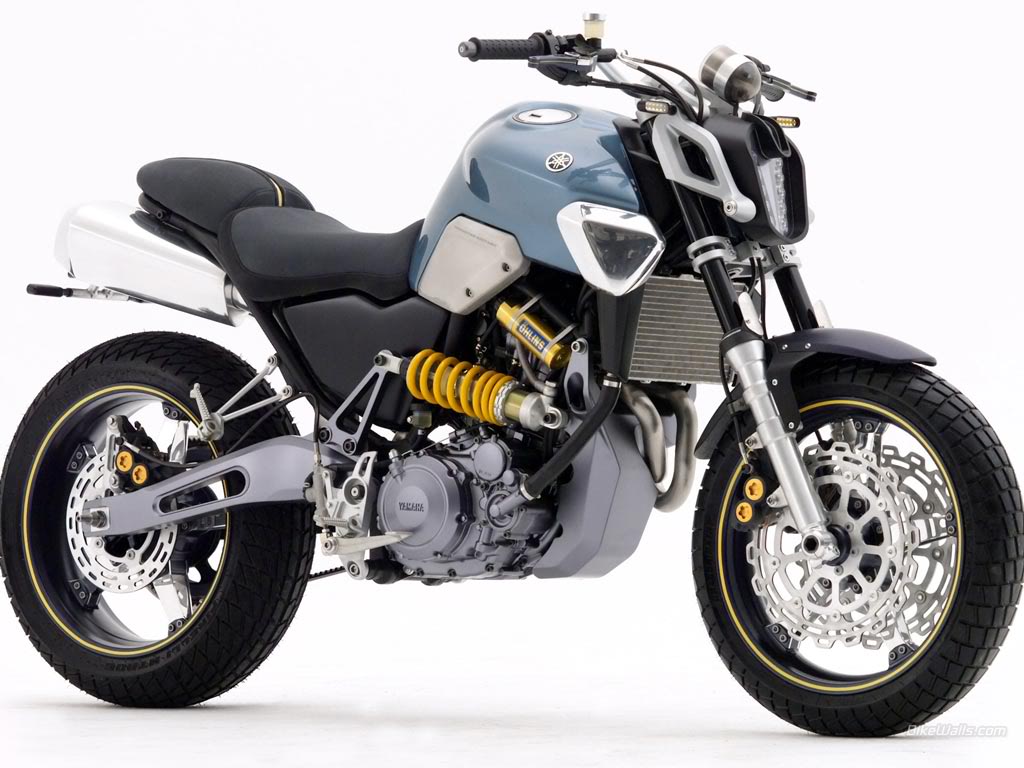
Anyone remember the 660 MT-03 from 2005?

Back at Lamba Motors in Carshalton, (this demonstrator is being sold shortly for around £5k) we talked about the possibility of Yamaha Tenere-ising the MT-07 in the future. The guy told me that the old XT660Z – which now sells for the same price as the MT – was reaching the end of the line and also that, for the first time this year, he actually had an 07 sitting in the showroom. Up to that point they were pre-ordered and out the door.

MT09-Tracer

Yamaha have recently semi-adventurised the MT-09 triple, calling it a Tracer (left). That included giving it a bigger tank, a fairing, a tad less caster and trail, a higher seat – but also 20 extra kilos and still on 17-inch wheels. So that means something similar may well happen to the smaller MT twin – something like the 500X in fact, but a whole lot more fun to ride and listen to  even if what’s really wanted is a new, full-on XT700Z. You do wonder if in the short-term they might just keep it simple and Tracerise the 07. That’s a great shame as a properly executed MT-07-engined Tenere would for me be a perfect travel bike or at least something on which to build.

TDM900

So for me the 07’s perfect engine put the Honda in the shade, but it’s a 500X-type bike I’m after (with RRP parts to finish the job). If only Honda had taken the risk and offset one CB-X crank by 90° I’d have bought that bike on the spot.

bareTDM

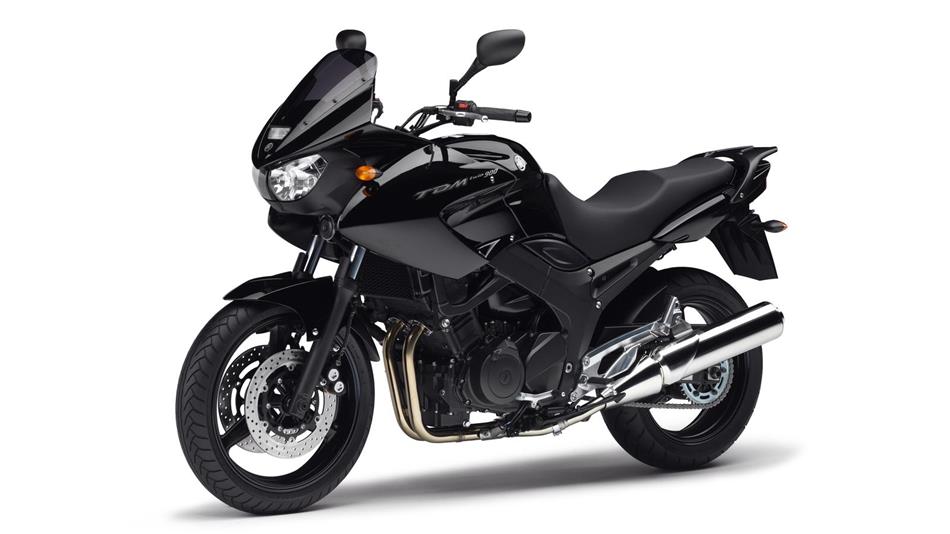
Instead I’m looking at TDMs – very few bad things are said about them. But in the 900 injected form, it’s a huge ugly slab of a bike and more than I need even if, as with the GS500, used prices are low enough to risk experimenting (left) with negligible depreciation to make something that looks a little more agile.

PS: A short while later I did briefly run a TDM900: more here.

cbmt12