New Scramblers and Adventure Twins for 2023

Like many, it seems the bike manufacturers got busy during the Covid lull and there’s been a healthy surge of actual new Advs and Scramblers at Milan’s EICMA bike show this year. Sit back while I cast my opinions upon them for use as actual travel bikes.

Suzuki 800DE
Fighting it out with Kawasaki as the most dormant of the Japs in the Adv sector, Suzuki are set to continue with the aged 650/1050 V-Strom V-twins. But they’ve now followed well-established trends with a new 776-cc, 84-hp, 270°-crank V-Strom 800DE P-twin. It carries over the same beaky profile of the 650 Strom, but gets a 21-inch wheel and a bit more clearance. This all means it ought to be more of a genuine gravel roader than it’s old namesake, as well as having TFT, riding modes, TC, switchable rear ABS and all that jazz. Sadly, to save costs, wheels are tubed (but you can fix that).

The subframe unbolts but looks nice and chunky, and there’s nearly 9 inches of travel, the same in clearance, plus a pre-load adjustment knob (‘HPA’) on the shock. I wish the 890 Adv R I rode last week (report soon) had one of those. Seat height is said to be 33.7″ (855 mm) with a tank at 20 litres (5.3 US) which ought to be good for well over 400km at 25kpl (71 UK; 59 US). The windscreen is adjustable to three levels over a span of 1.8 inches and there’s a quickshifter too.
But yikes, the curb weight is claimed at 230kg (507lbs), about the same as my old AT although it’s often not so helpful to compare big-tanked Advs against similar machines with less capacity (see 890 Adv R comment below). According to Suzuki UK, it’s out in Spring 2023 for around £10,000.
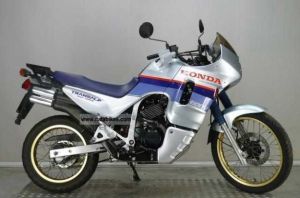

Original 1987 Transalp XL600V

Honda Transalp 750
With the recent release of a 750 twin Hornet roadbike, a same-engined 750 Transalp did not come as a complete surprise. There’s been talk of a ‘mini-Africa’ Twin for years; some thought it might get the NC750 motor, but that’s not really in fitting with the AT or Transalp brand.

They’re all parroting the ‘legend reborn’ label as if the original Trannie dating from 1987 (above left) was anything special. I remember being invited on a test for Bike mag near muddy Dorking around that time and us all scoffing at the plastic alloy-coloured bashplate. Whatever next, fake carb bellmouths!? Little did we know it was a sign of things to come: the all conquering ‘appearance ≠ function’ adv phenomenon.

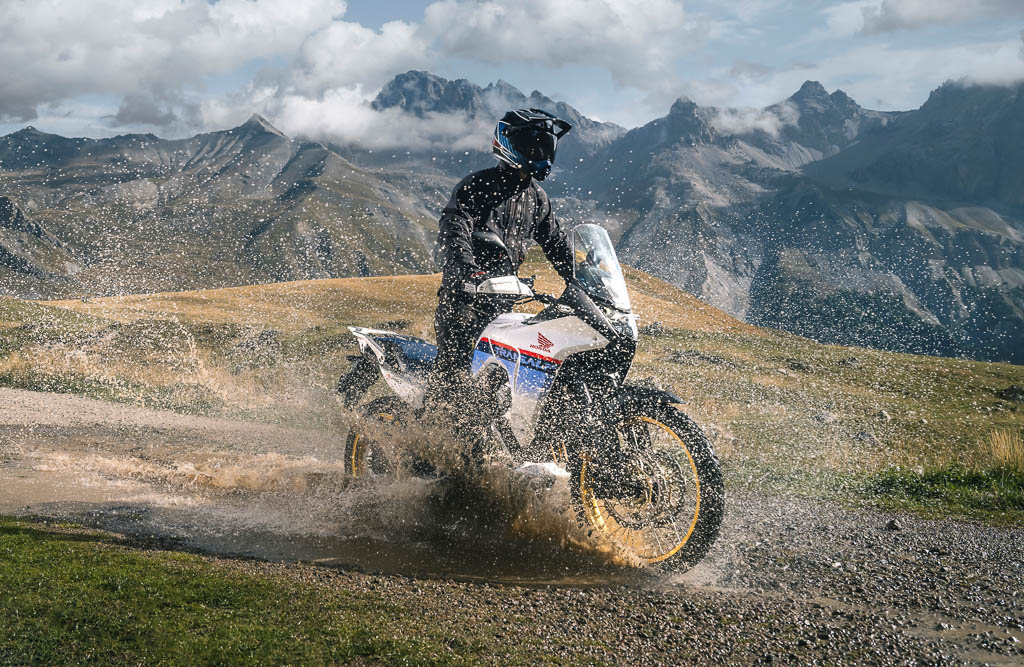
Nice looking, this new TA.

Some 35 years on and ten years after the last XL700V iteration got ditched, the new 750 Transalp looks like a serious proposition, with Honda’s usual attention to detail. Yes, it’s another 270° parallel twin; this one’s a 90-hp 755cc. And it manages that with only 11:1 compression against the 800DE’s 12.8:1. In the old days a lower comp ratio meant better running on poor fuel (less common these days, bar the US and Mongolia) as well as less heat, but with modern efi I’m not sure the former is so relevant now.
The tank is 16.9 litres (4.5 US) which will be good for nearly 400km and is the same as the Tenere XT700 which the TA will be measured against. But like the AT, there are riding modes and power modes and engine braking modes aplenty. The seat is 850mm (33.4″; + 1 inch lower option) with clearance at 210mm, and the front and rear suspension is in the 200/190mm range but with no HPA on the back. Shame. And again the 21/18 rims are tubed. Shame again. Expect an ‘Adventure Raid’ version in a year or two with a bigger tank, TL rims, bashplate, 800/850cc and so on.

Honda fans have finally been given a choice between a CB500X and a CRF1100L. The new XL750 look like it will be a hit for riders tiring of the litre-plus behemoths. Like the AT before it, the 750 Transalp manages to looks slim for its claimed 208 kilo (460lb) kerb weight, about the same as Yamaha’s XT700. With the new Suzuki 800, KTM’s 890, the new Aprilia Tuareg, the 850GS and a few others, there’s now a great range in sub-litre adventure bikes which are surely more than enough to get the job done on the overland.
But will the new TA carry the XT700’s top-heavy penalty? Riding an 890 Adventure R for a week (210kg wet), I quickly grew to appreciate the 20-litre, pannier tank’s stability while swinging around the gravelly bends of route MH23 in Morocco. Can’t say I felt the same on my AT tank a year earlier.

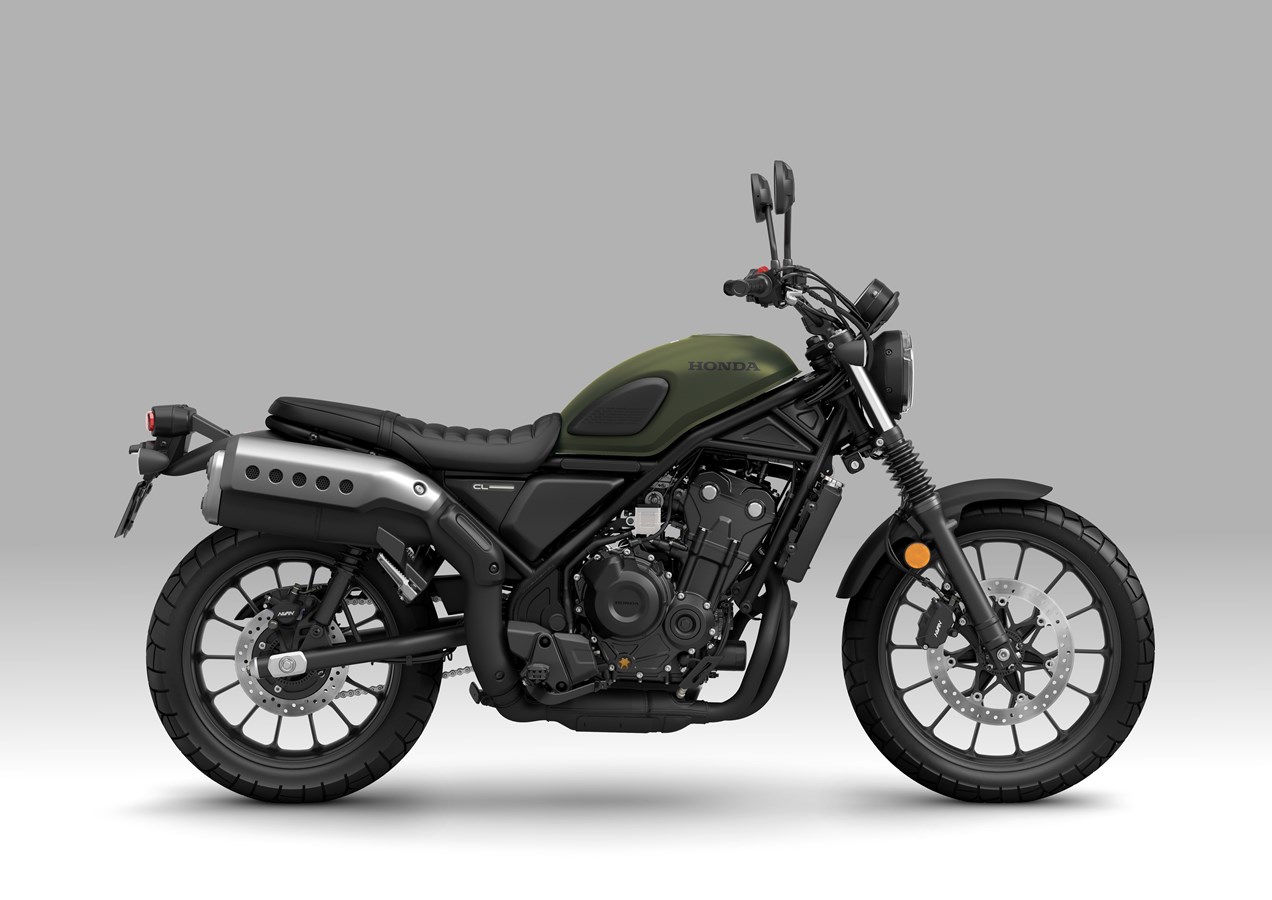
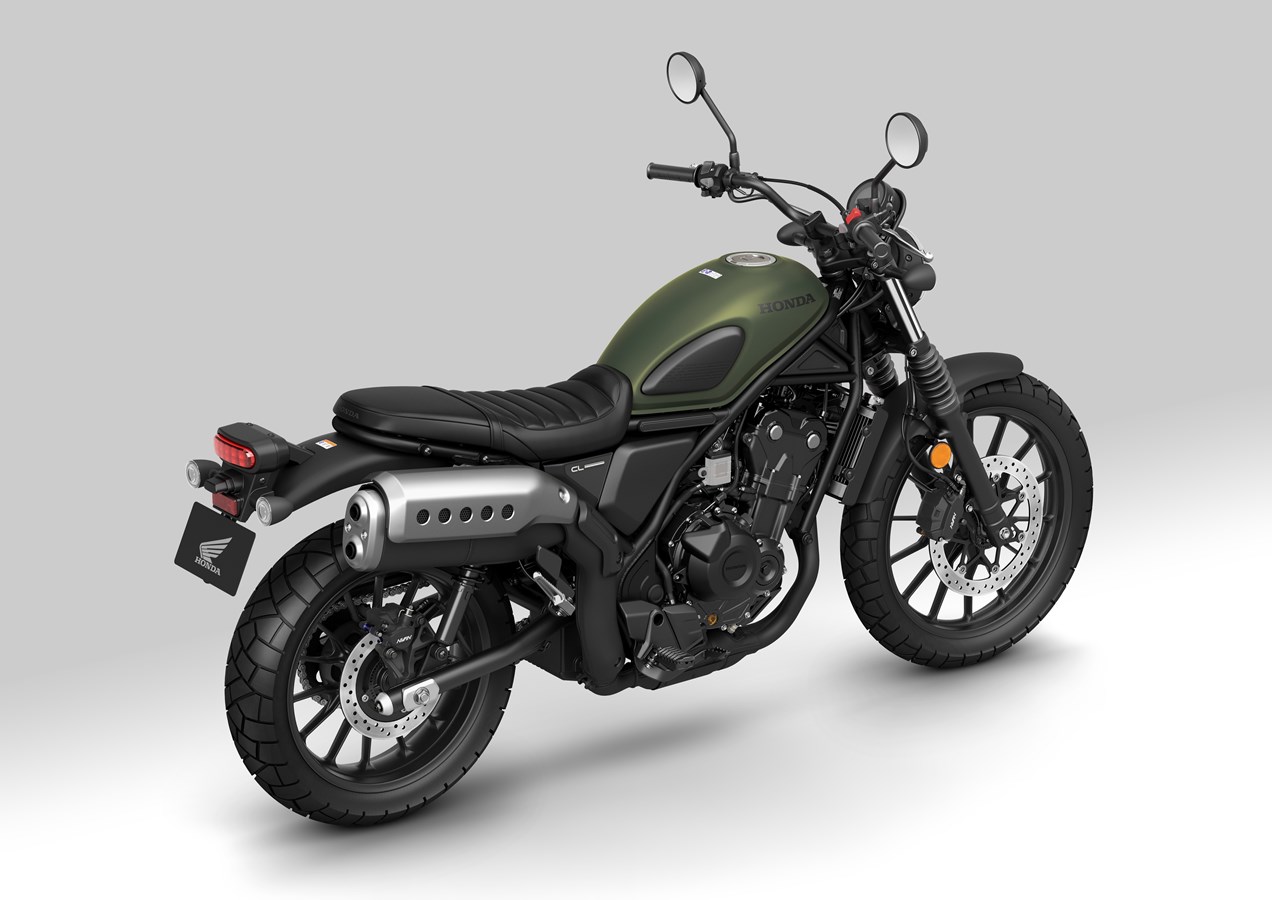
Honda CL500 Scrambler
“We developed the CL500 as a machine that truly allow its owners to stand out from the crowd, and as a form of self-expression. It can be used and enjoyed casually – without hesitation – by the young generation in their daily lives and is designed to become a joyful and integral part of a lifestyle. In standard form, the off-road street style has a visual charm unlike any other model in the Honda range, and can really inspire owners to take it further in any direction they wish.”
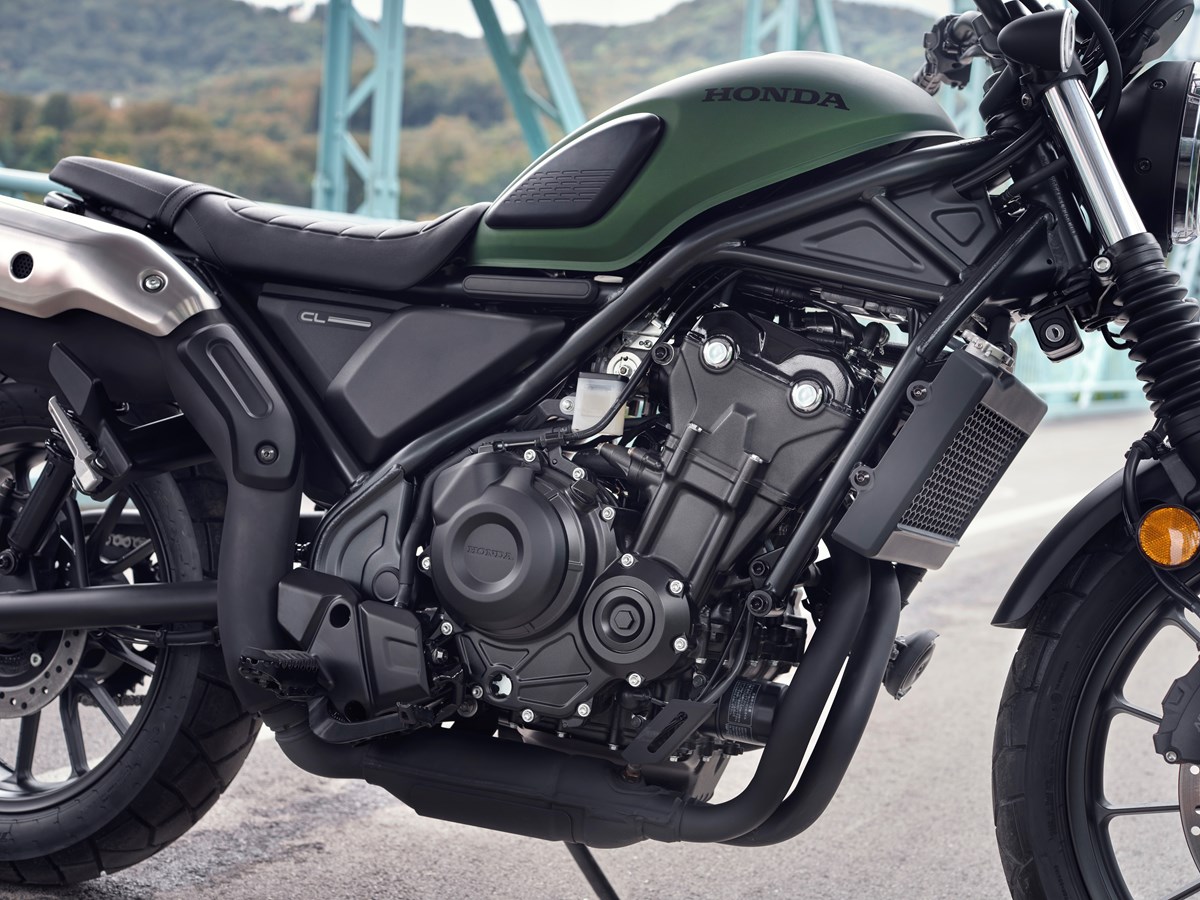
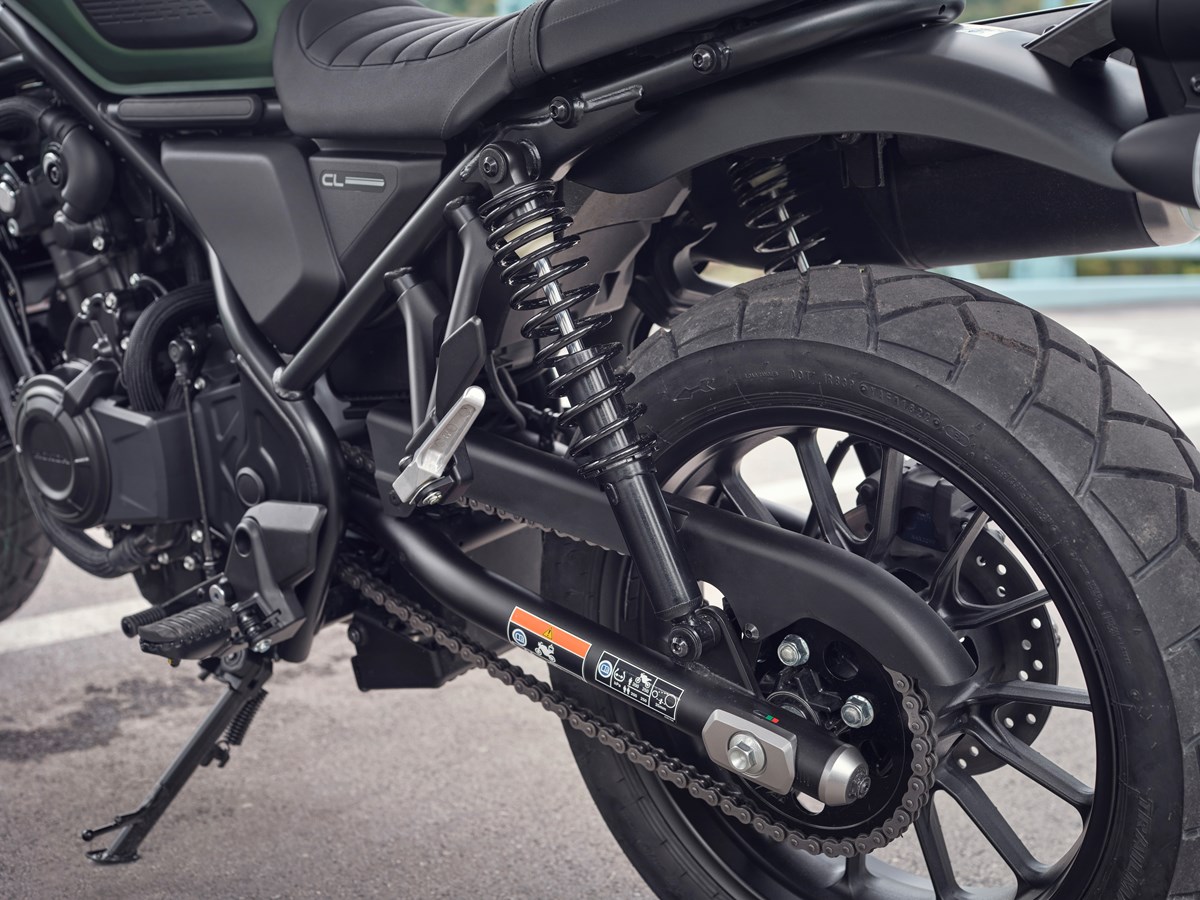
It may look uncomfortably similar to a CMX500 Rebel ‘mock-chop’ (as we used to call them in the 1980s), but I’ve got to say I like the look of the low saddled CL500 Scrambler, no doubt reviving the ‘legendary’ CL twins of the late 1960s.
It’s about time Honda did this with the well-proven and super economical 471-cc motor (which is not a characterful 270°, alas). The publicity aspires to the usual hipster/manbun crowd, but for my sort of riding these days (or indeed always) a low-saddled, super-economical motor that will sit at 80mph and deliver 80+mpg while managing gravel tracks, is all I want from a bike.
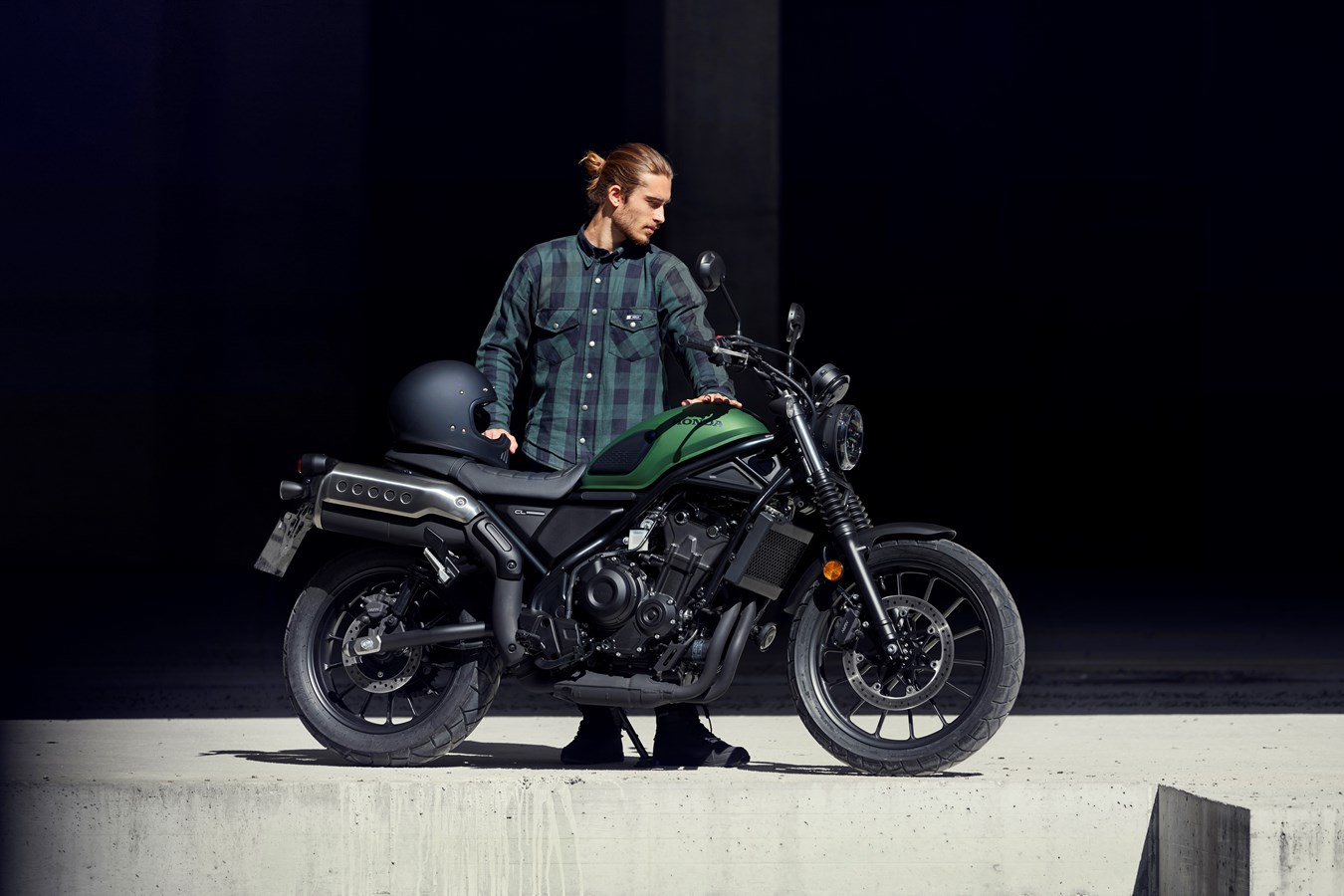
That’s me, that is

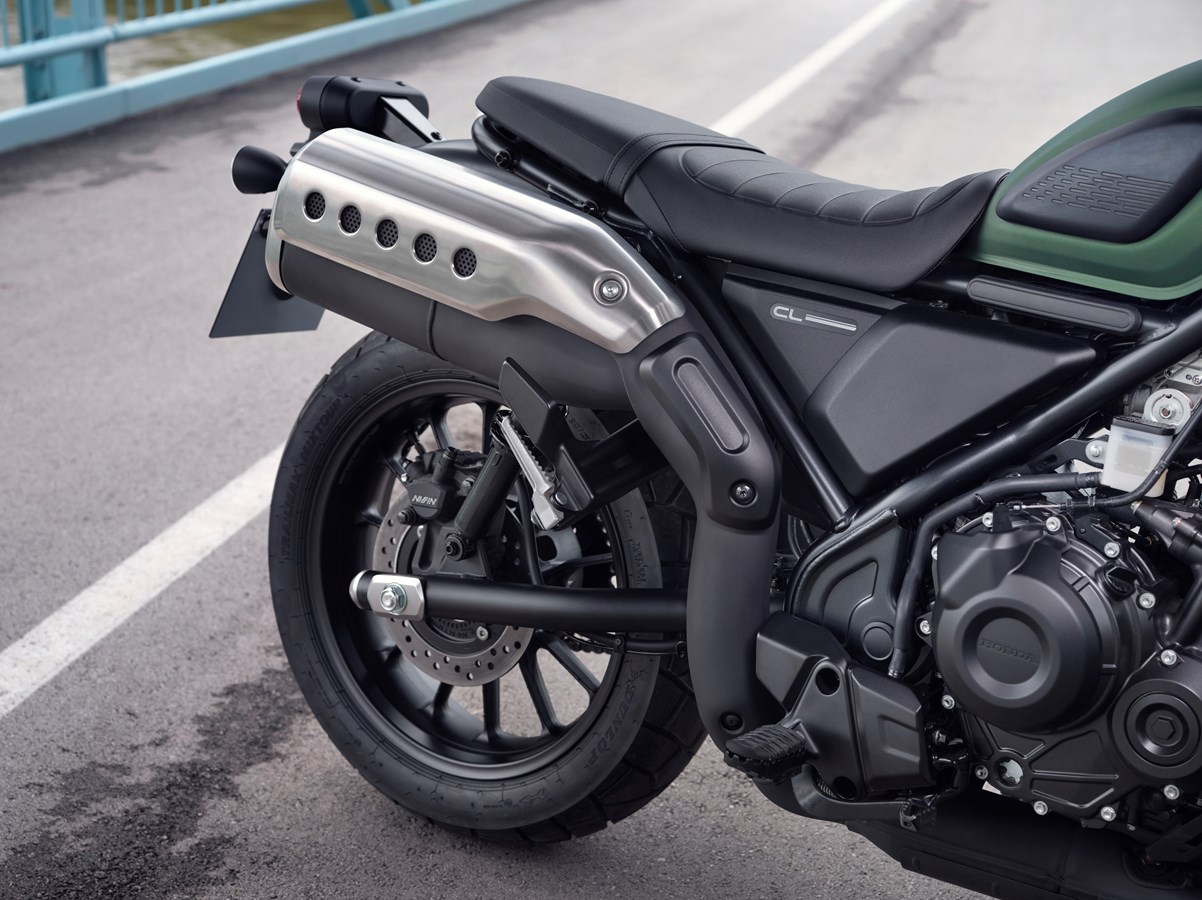
Tank is just 12 litres but helps with a kerb weight of 192kg. Wheels are the 17/19 tubeless alloys like the current 500X; a huge advantage to repairs on road or trail and one less thing to fix. I bet that huge silencer weighs a ton and someone is already making one that isn’t. Seat height – so often a restriction to potential owners – is low at 790mm, 10mm less than my Himalayan which suited me fine. Clearance is just 155mm with front and twin-shock rear travel at 150 and 145mm, with five preload settings out back. Doubtless neither end will be the finest quality suspension to bounce along a road, but what budget stock bike is? It’s easily fixed if you need it.
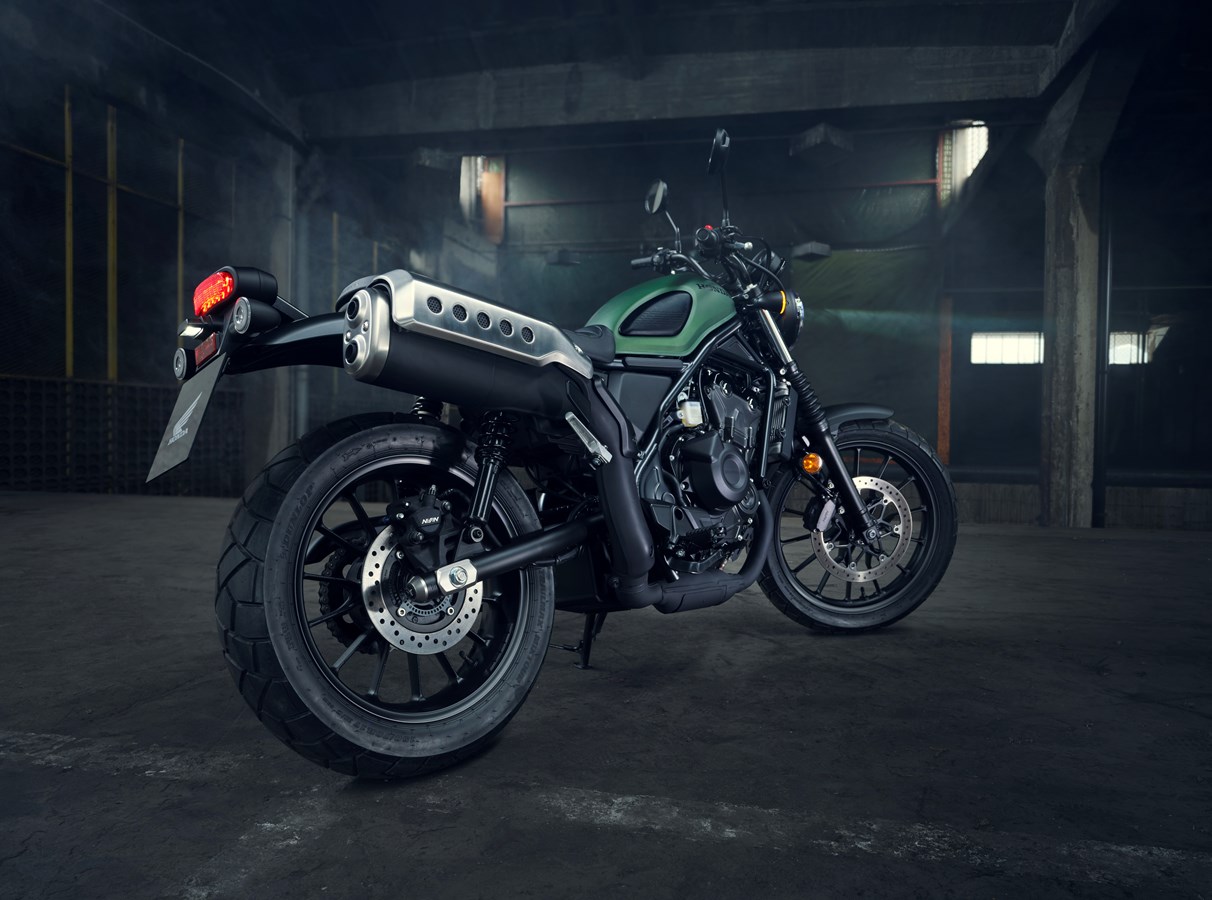
Heck, it’s that deserted warehouse again!

I suppose all that ‘lifestyle/self-expression’ bollocks must sell bikes – all bikes tbh – but with some suspension upgrades and protection, I can see the 500 Scrambler being a handy real world travel bike with an inclusive [women friendly] seat height, great economy, enough power for the roads of the Global South and of course, Honda’s reliability.
For me the key will be the peg-seat-bar relationship, in particular can you stand up in a natural stance for off roading or to air the backside (with help from raisers, if needed), like on a proper trail bike. My adapted XSR, nice though it was, did not really work in that way; let’s hope the CL500 lives up to its Scrambler name.
Fantic Caballero 700
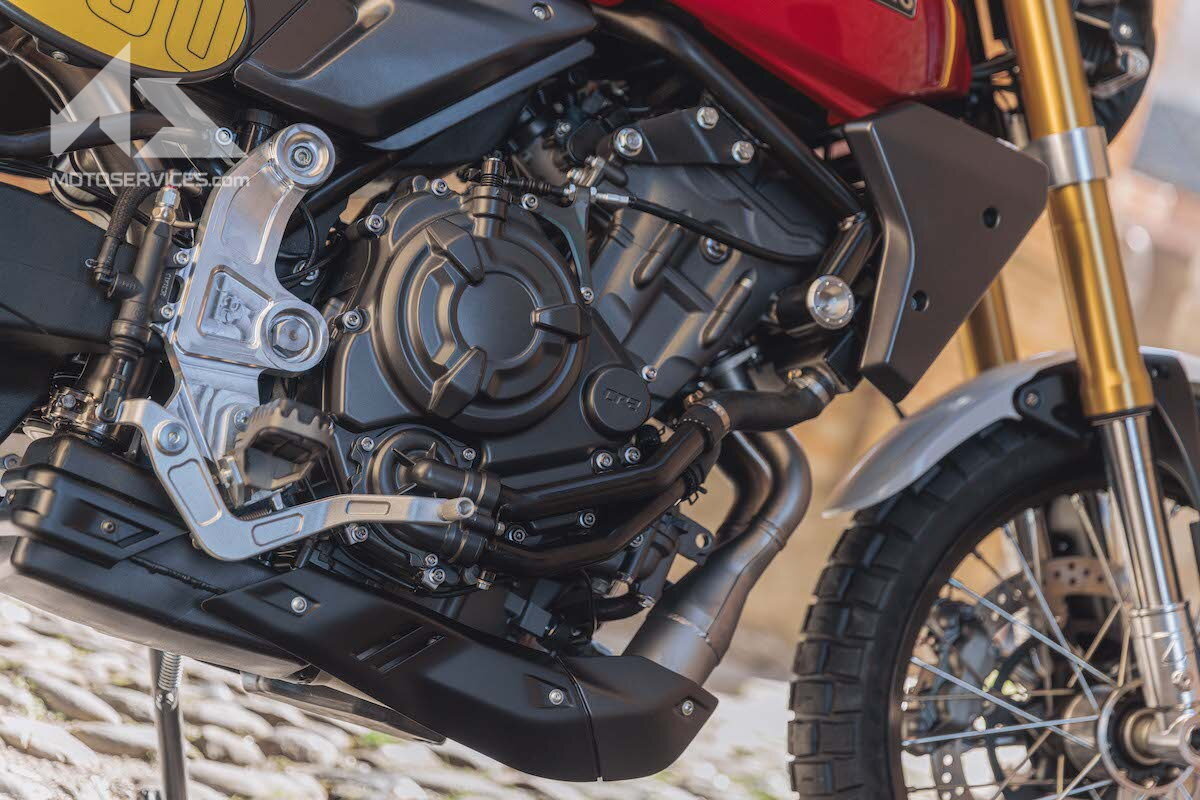
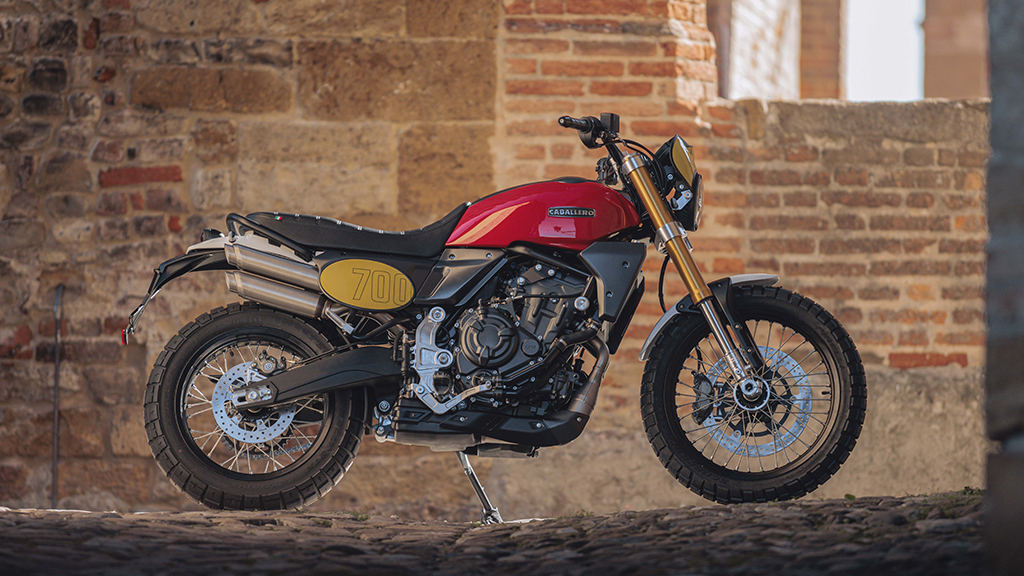
Using their brilliant CP2 motor, it’s a shame Yamaha farmed this idea out to Fantic. I guess it’s too close in their model range to the XSR700 which I Caballero-ised a couple of years back.
Looks-wise it copies the 500 Cab’s profile I tried one time, with a big, single radial front disc, a14-litre tank and wheels at 17/19 but probably tubed. Unlike the XSR, it gets the usual engine and traction electronics, too. Not much info out there yet but they say it weighs 180kg which has got to be dry. It will cost €10,000 next spring. There’s an Enfield 650 Scrambler on the way too; the more the better I say. Scramblers are to do-it-alls of biking, which happen to look great, too.
Is this the future of UK trail biking?

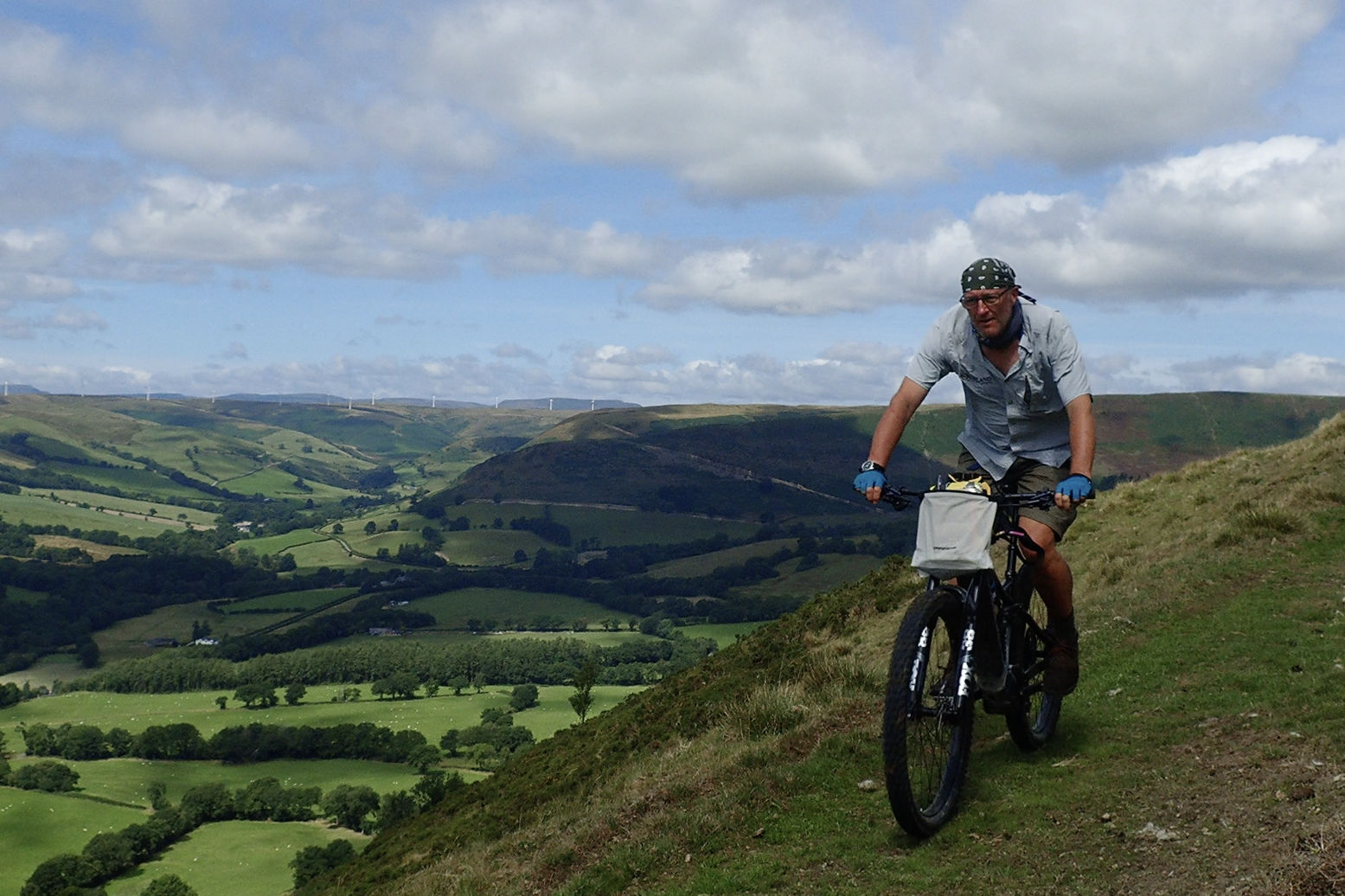
Yes you have to pedal it (and probably transport it), but once you reach an age when you can’t tear around on MTBs like you used to, but recognise that you must ‘use it or lose it’ to maintain good health, an e-MTB can open up a huge range of trails in Britain’s wilder corners that you can’t legally ride on a trail bike.

“It had been a darn good work-out and revealed a whole new way of enjoying the UK countryside.”

When it wasn’t a job, motorcycling to me has long added up to travel and trail riding. Ideally a bit of both. Over 40 years ago it was the limited opportunities for trail biking in the UK (compared to say, the western US) that drove me to the Sahara in the first place. I can’t imagine UK green laning has got any better since.


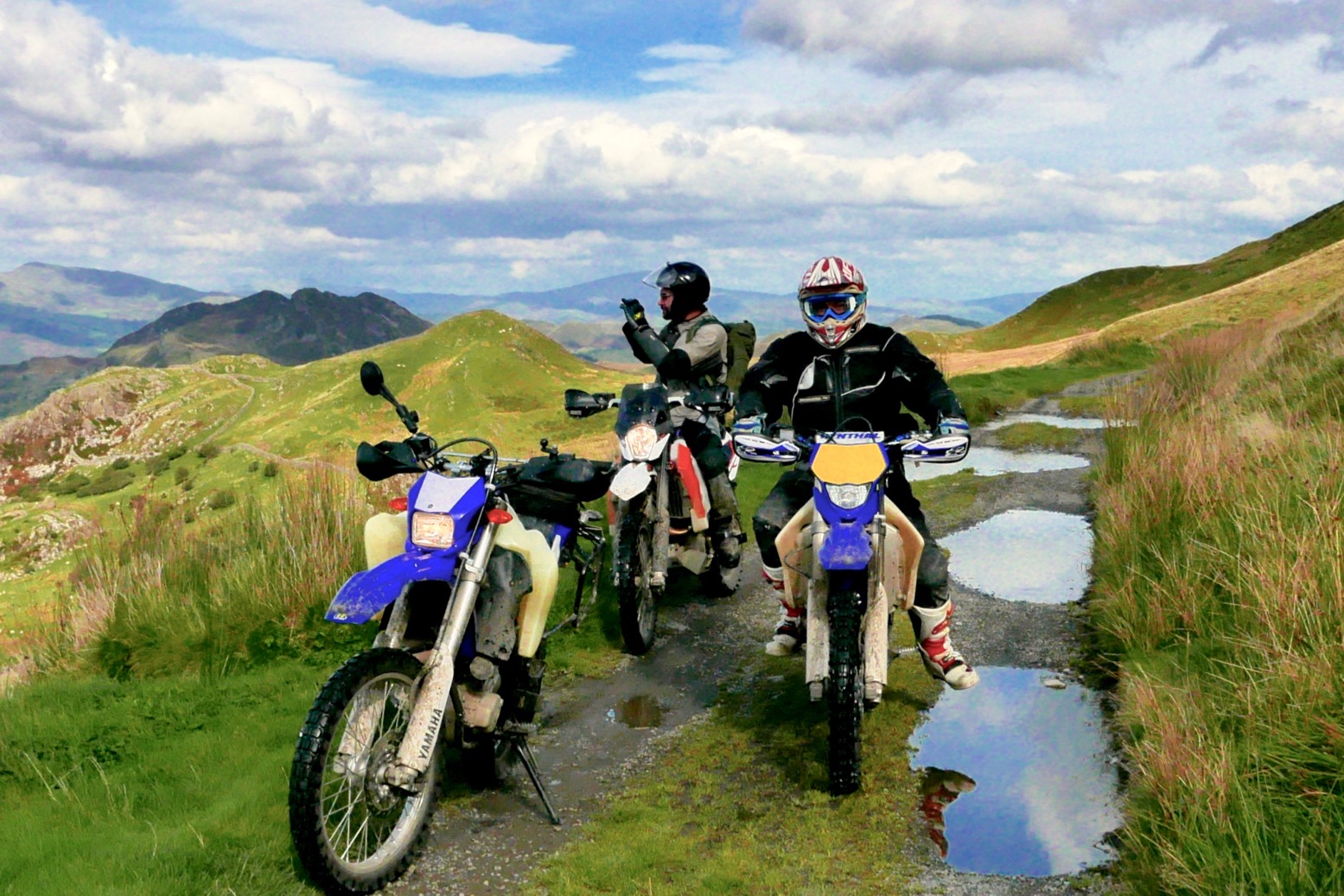
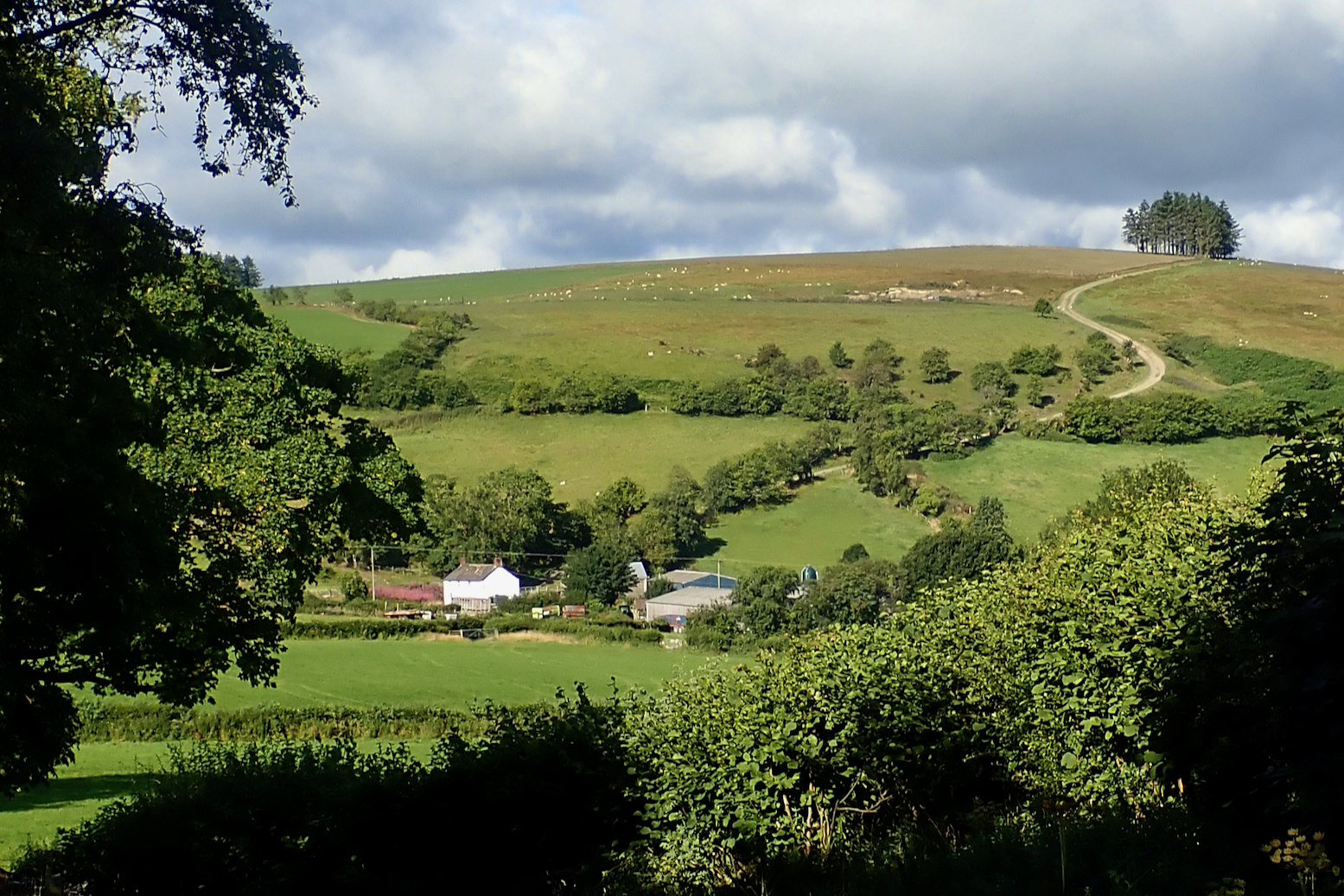
It may not be Algeria, but mid-Wales is a much overlooked and sparsely populated area of hill farms and old droving roads. With John, a guide from the nearby Yamaha dirt school, in 2016 we spent a great couple of days out of Llanidloes riding backroads and trails, me on my WR250R. And way back in I981 I remember my first proper enduro south of there on a lame KLX250.

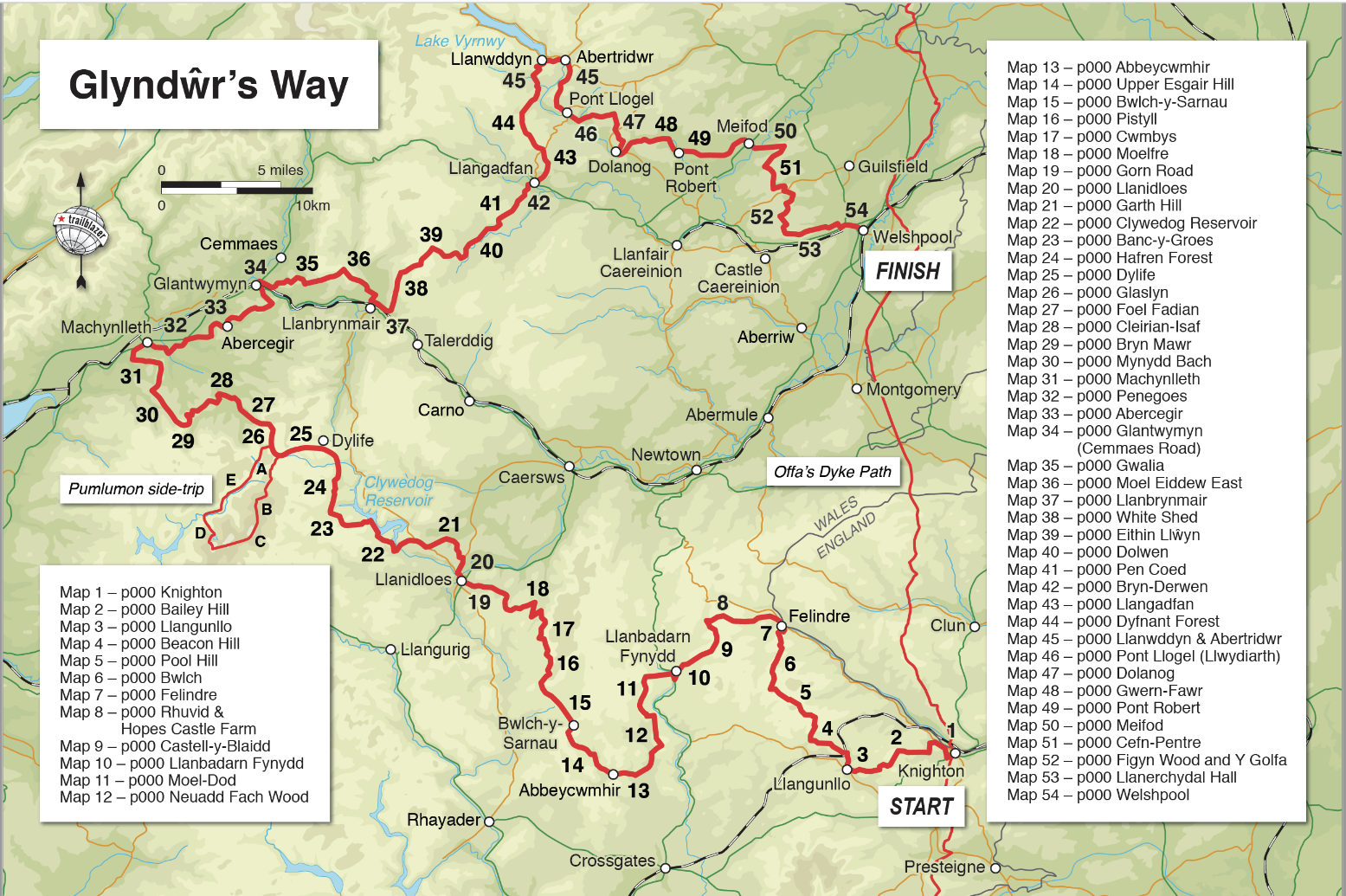
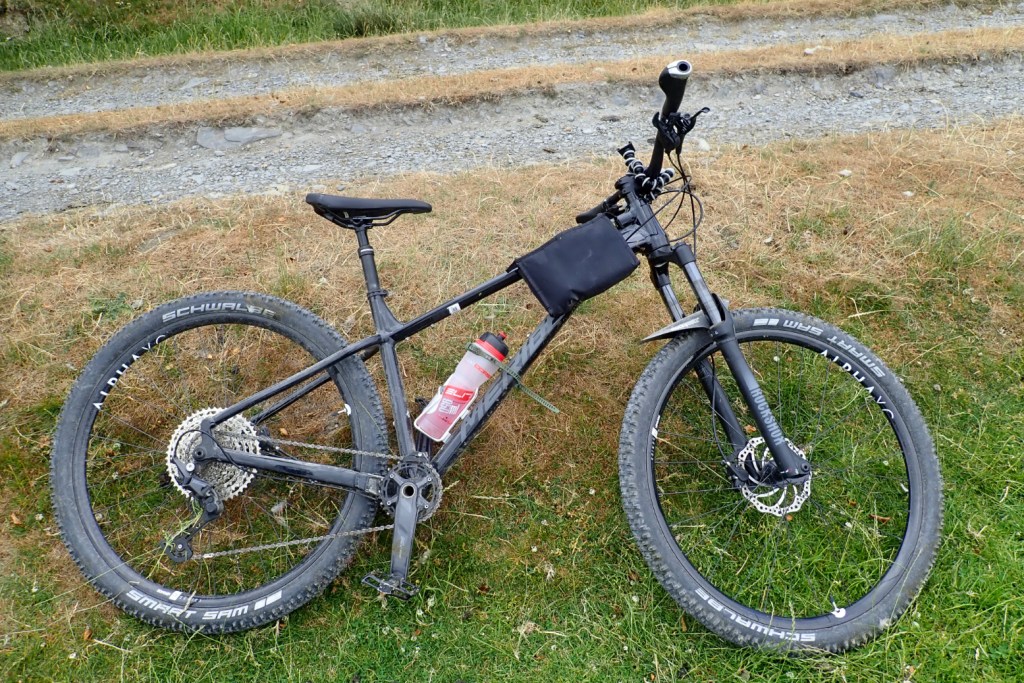
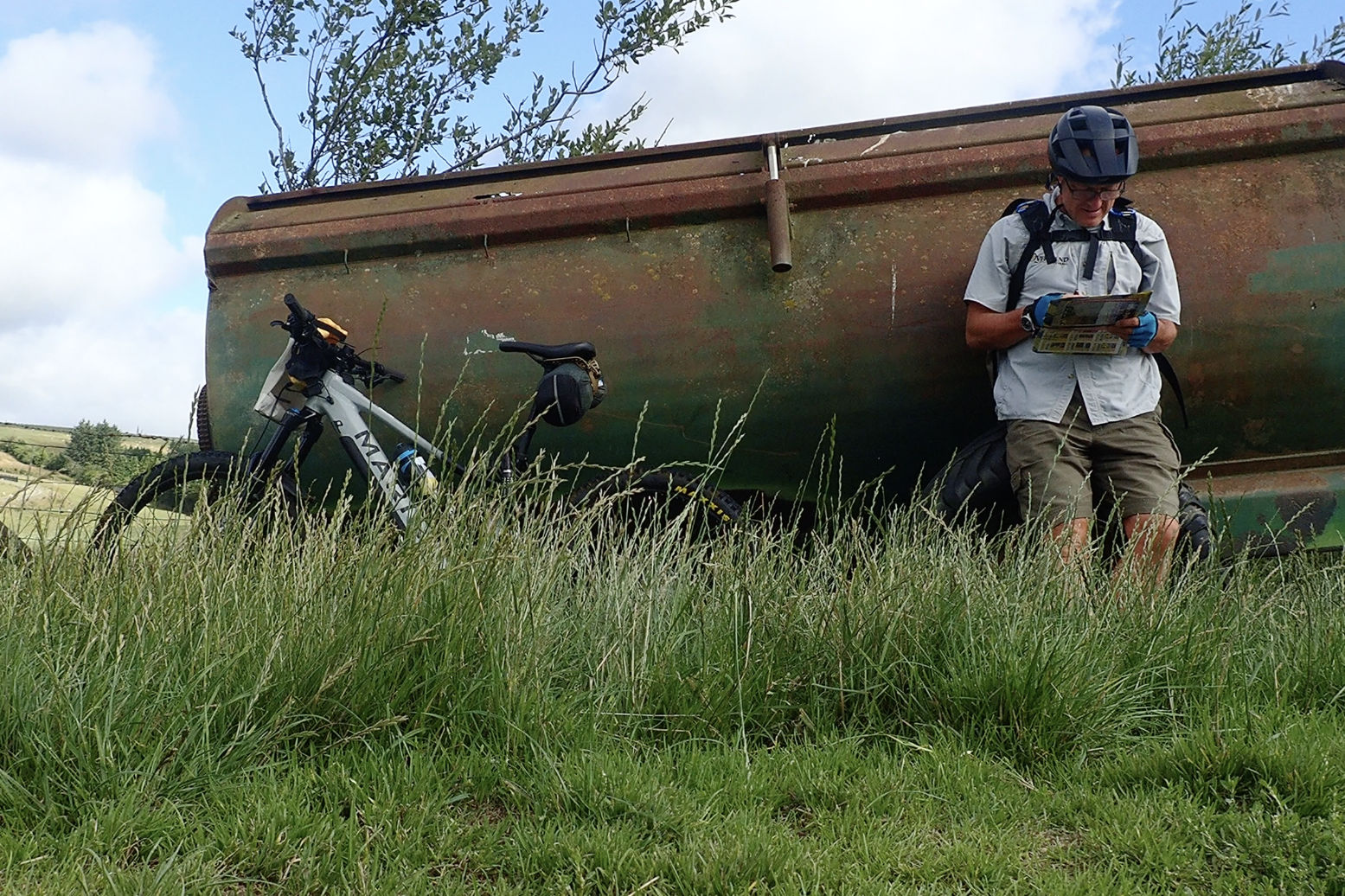
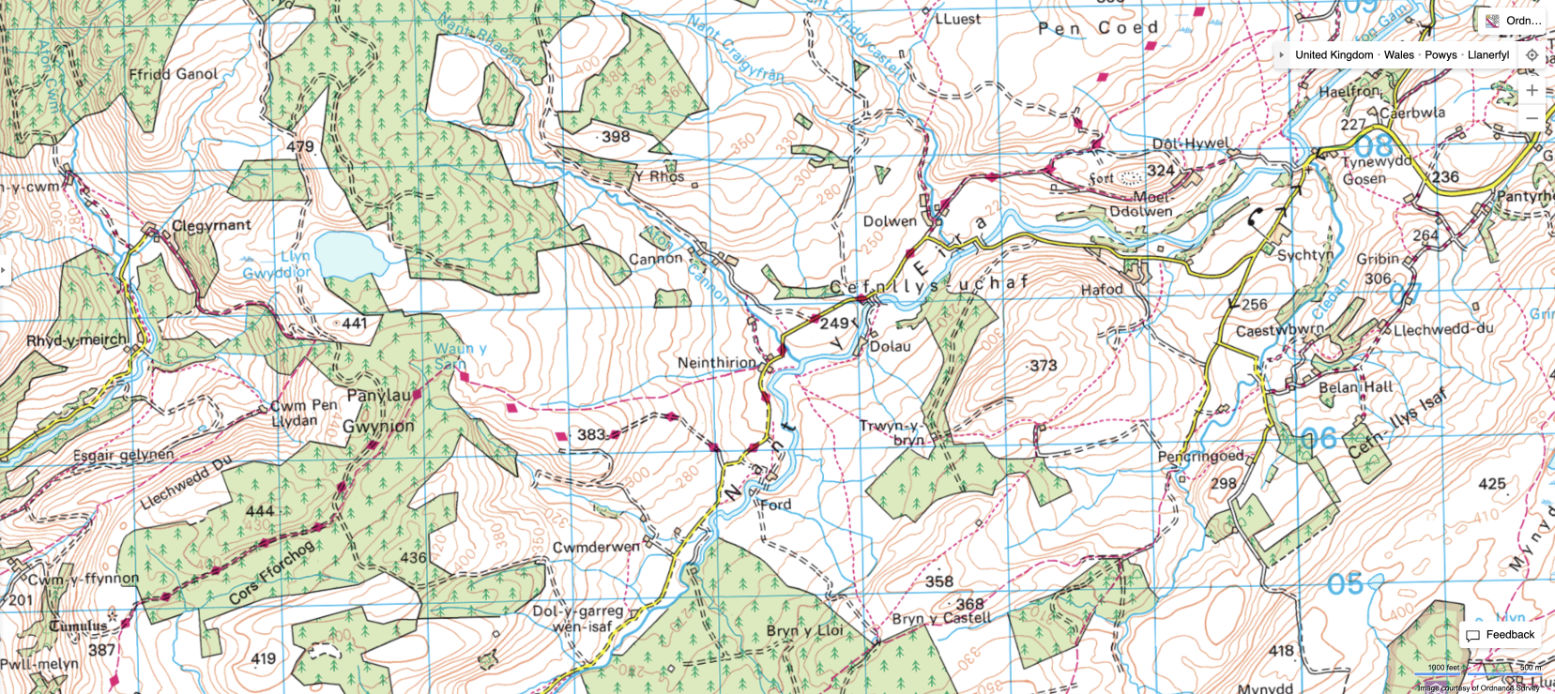
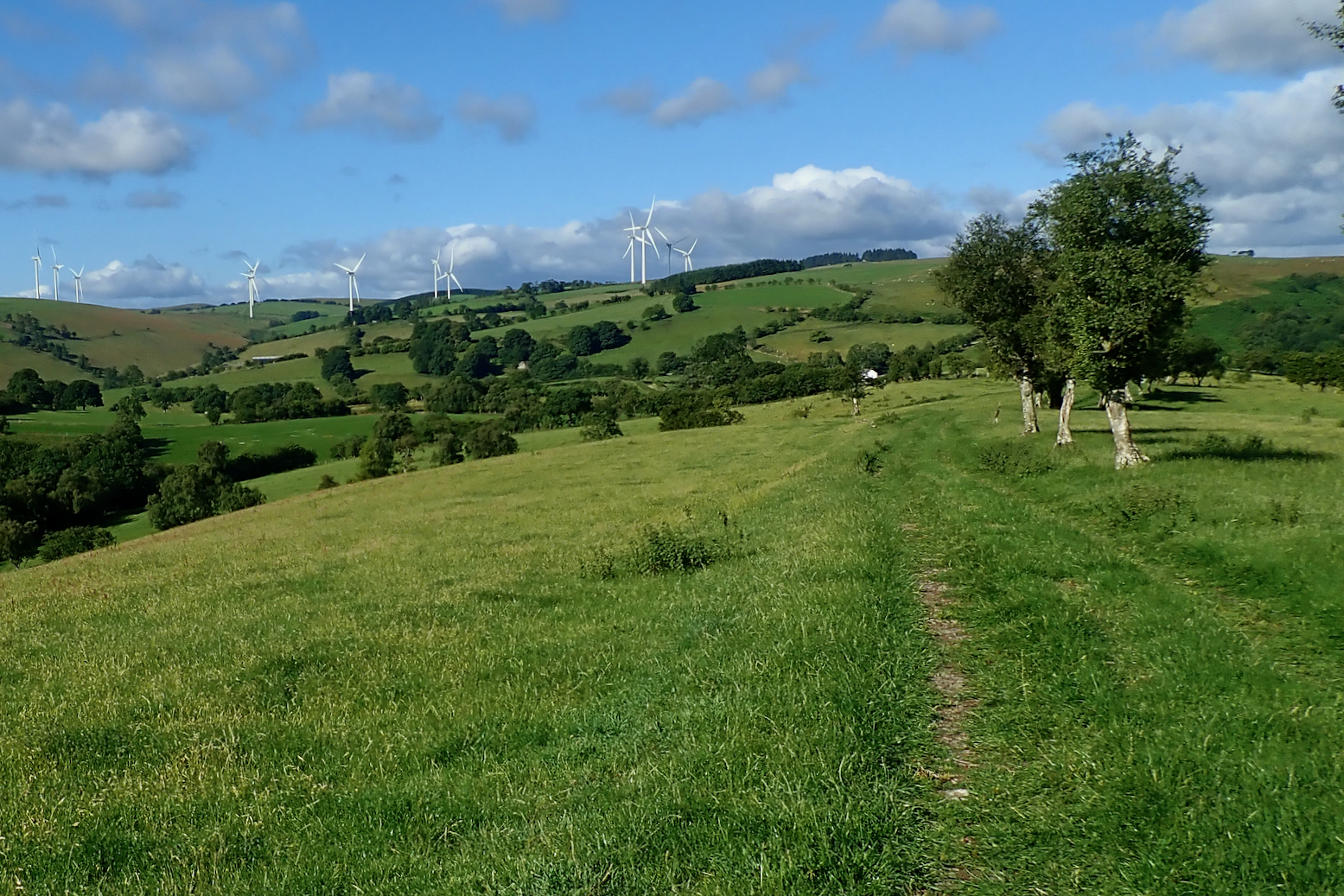
Traversing that region is the Glyndwr’s Way (right), a 134-mile National Trail no one’s ever heard of. It crosses Powys, Wales’ biggest county but with the population of Canterbury. Walking the 9-day route for a new guidebook back in March, I clocked loads of sections that would’ve been a blast on an MTB. So in August I came back on my new Merida hardtail. With new guidebooks like this it takes a couple of passes to get the detail right, and a pushbike speeds up the job and so saves a bit of money.

Kashgar

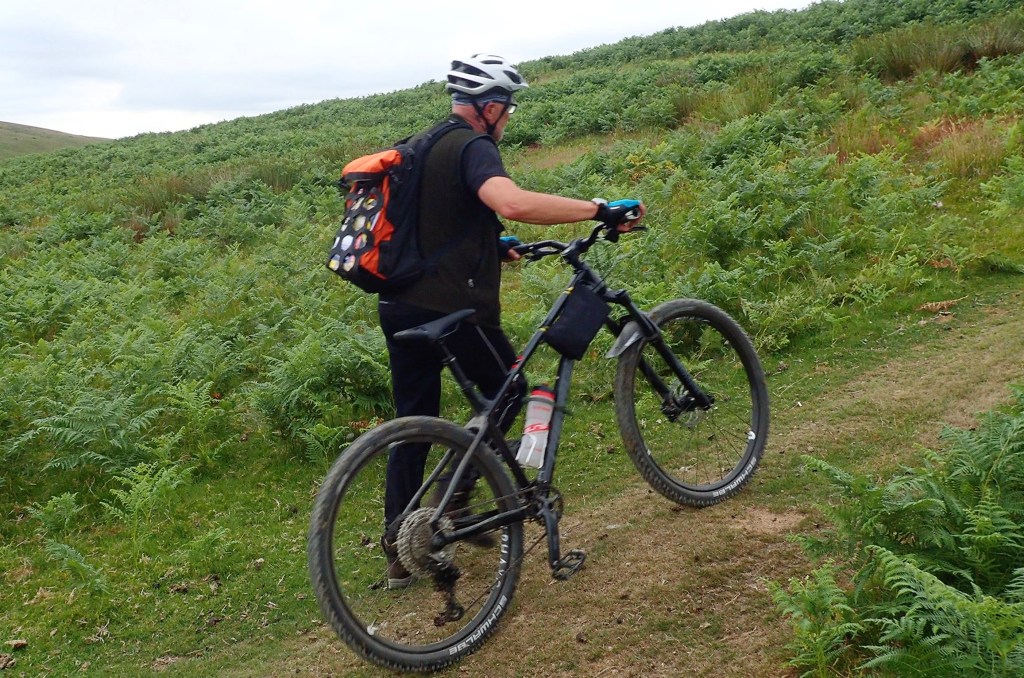
And a blast on my Merida 500 Trail I did have, even if it was no lighter than the Specialized Stumpjumper I bought way back in the mid-1980s.
Like most people, I’ve owned MTBs pretty much no-stop since that time. In 2007 we cycled the Karakoram from China to the Hindu Kush then came back the following year to do the Himalayas (video below). Compared to motos, cycle overlanding is so simple: fly a bike in (or buy used in China); no paperwork, simple mechanics and when you get puffed out at 5000 metres on the way to Tanglang La, sling it in the back of a passing lorry.

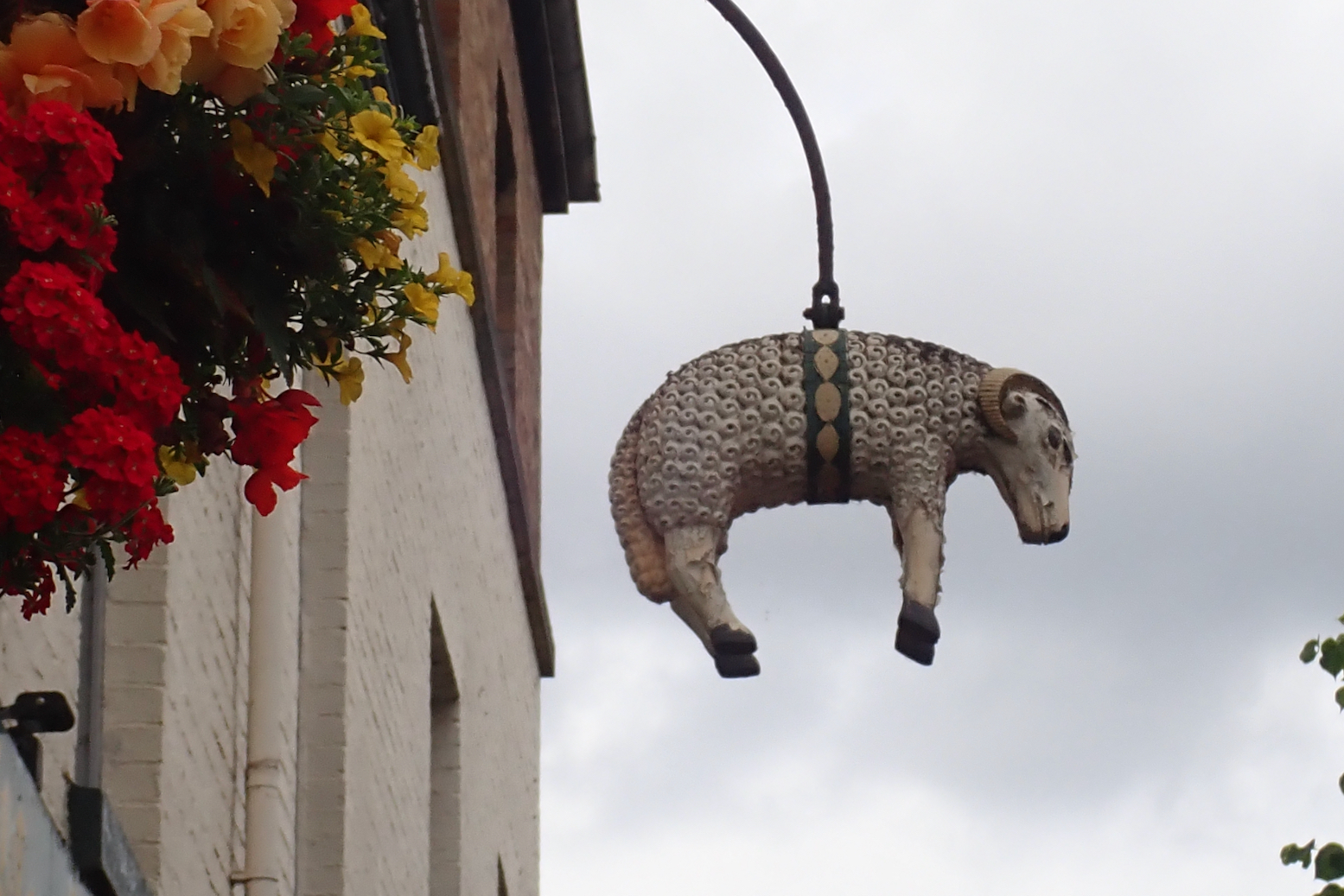
Do sheep dream of electric sheep?

But guess what! I’m not 45 any more and hardtailing the Glyndwr’s I soon remembered cycling up a rough trail consumes loads much more energy than simply walking. Soon I ended up feeling like a hung sheep.

Makes sense to me!

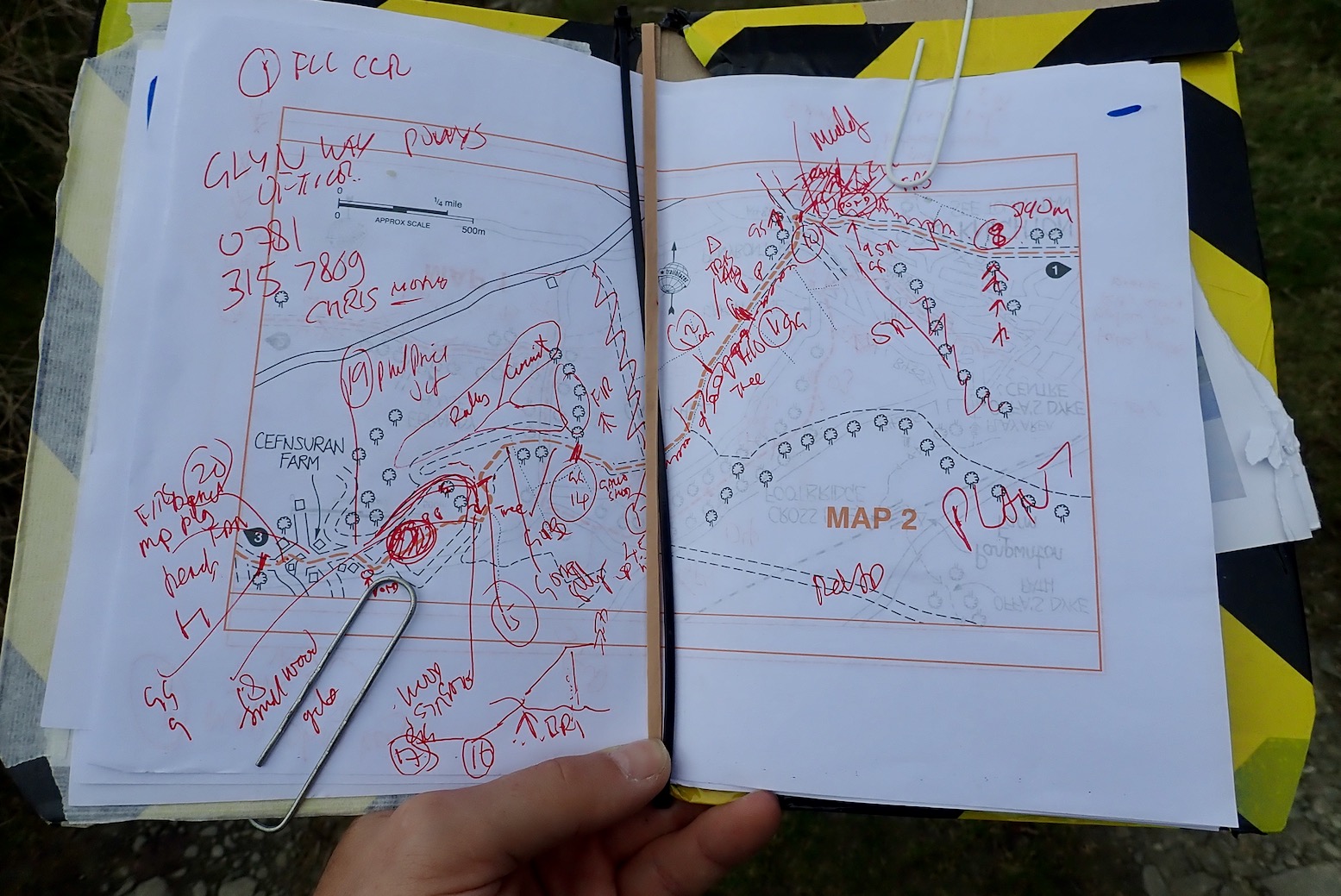
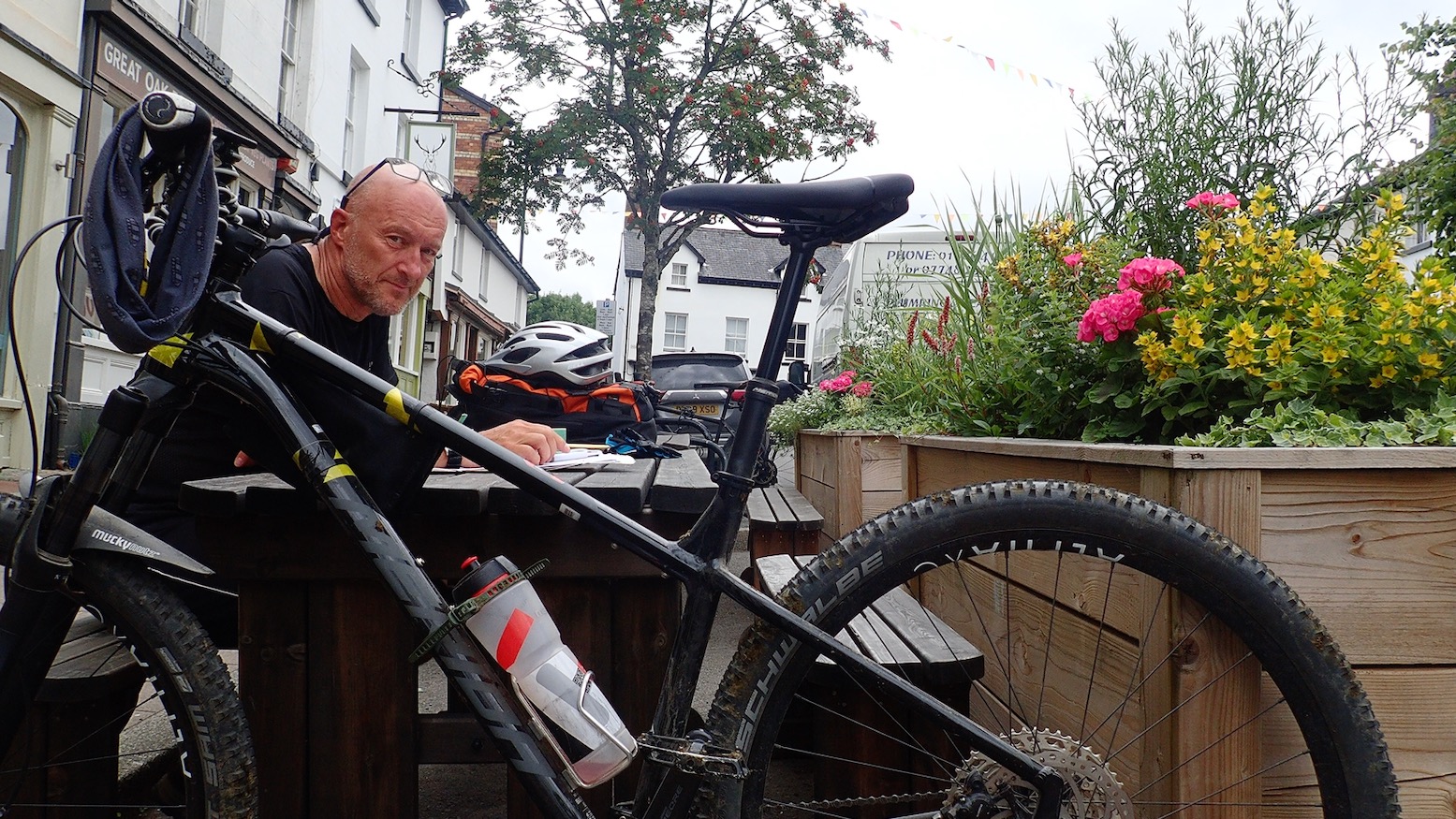
My time and money saving plan to cover two typical 15-mile walking days in one soon got stretched, not least because I have to stop constantly to annotate the maps (right). On the Glyndwr’s it’s around 15 miles or nothing to get to the next lodgings and with no public transport to speak of.

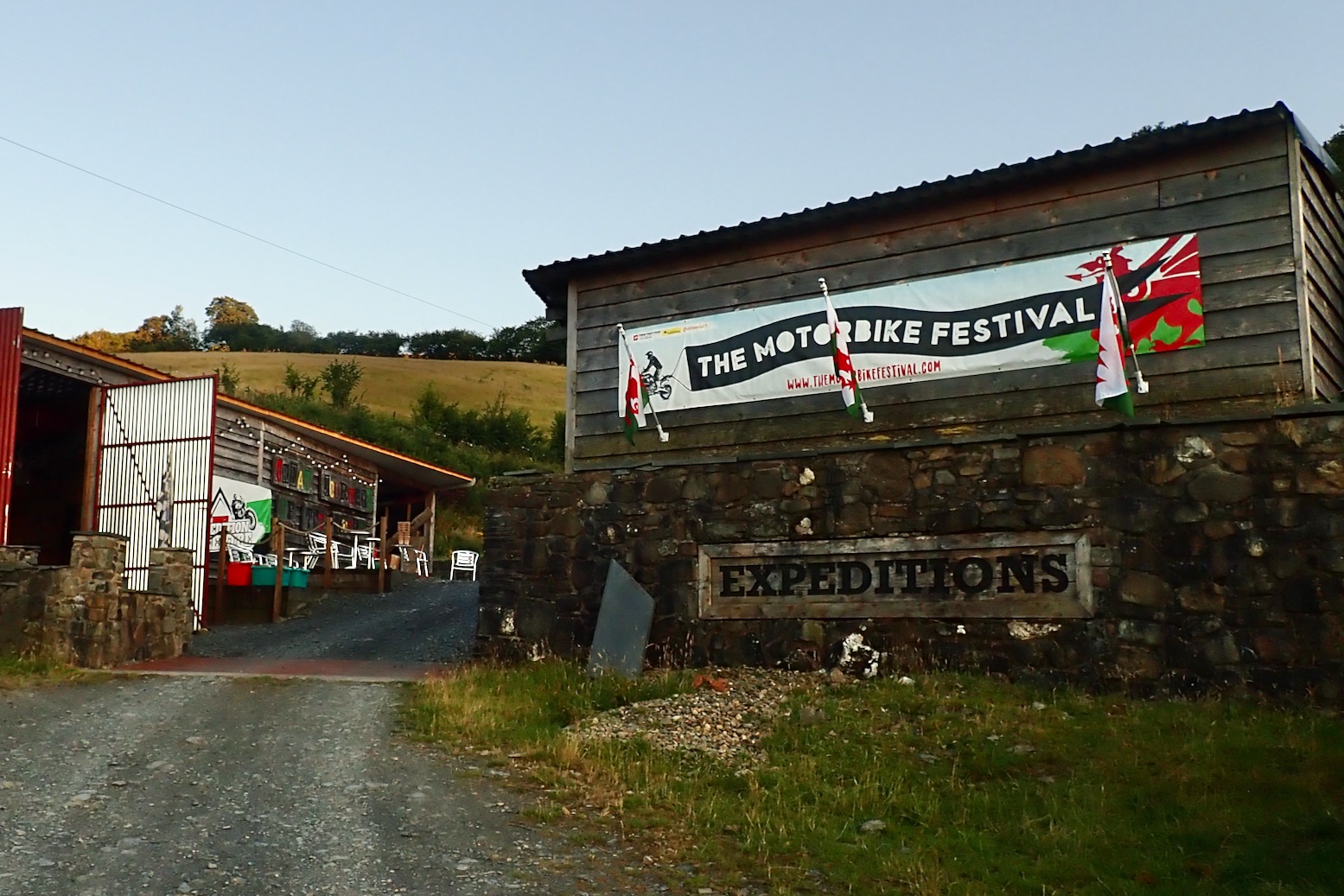
I ticked off a couple of the walk’s nine stages, then realised it wasn’t going to work so left the Merida at Nick Sanders‘ place near Machynlleth (left) where I was doing a moto talk later that month. Then I thought again about renting an e-bike. With a bit of help I could achieve my two-days-in-one target plus enjoy trying out e-bikepacking.

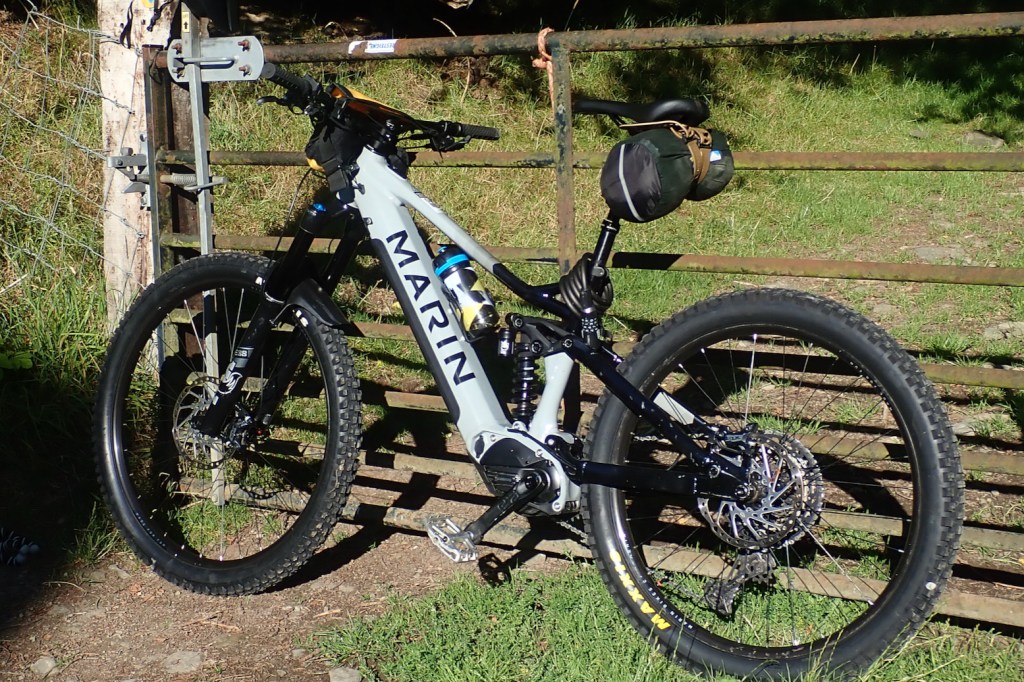
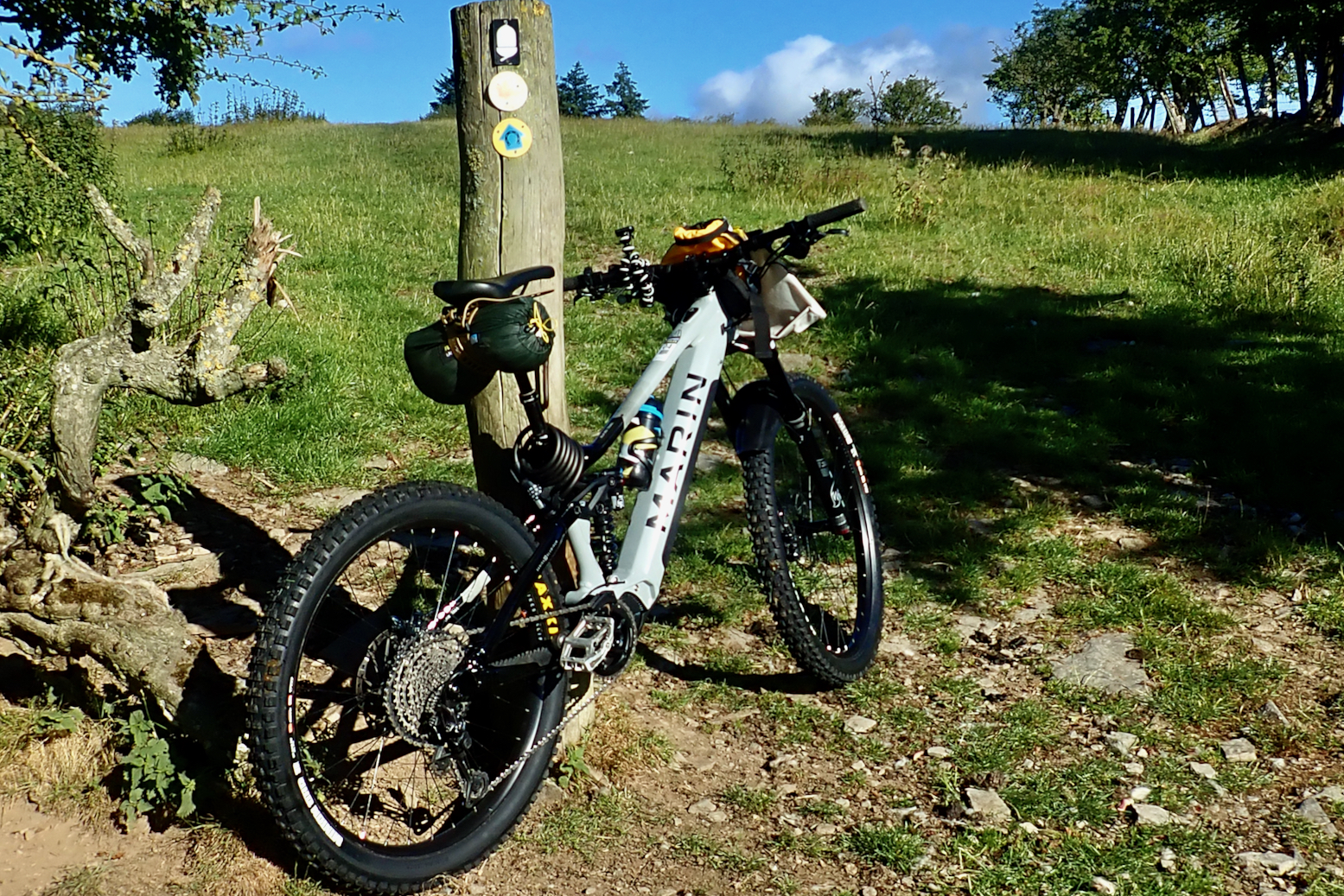
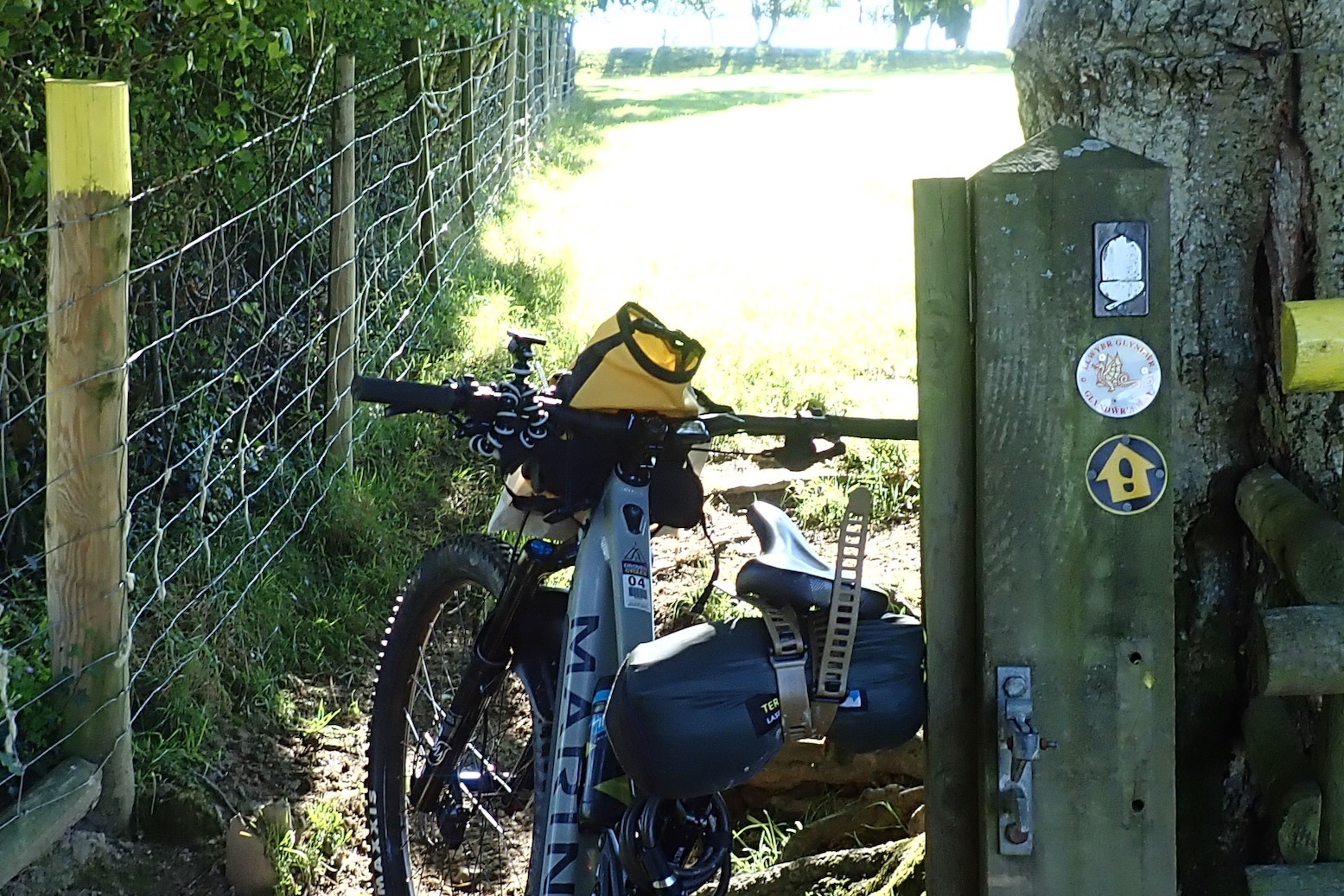
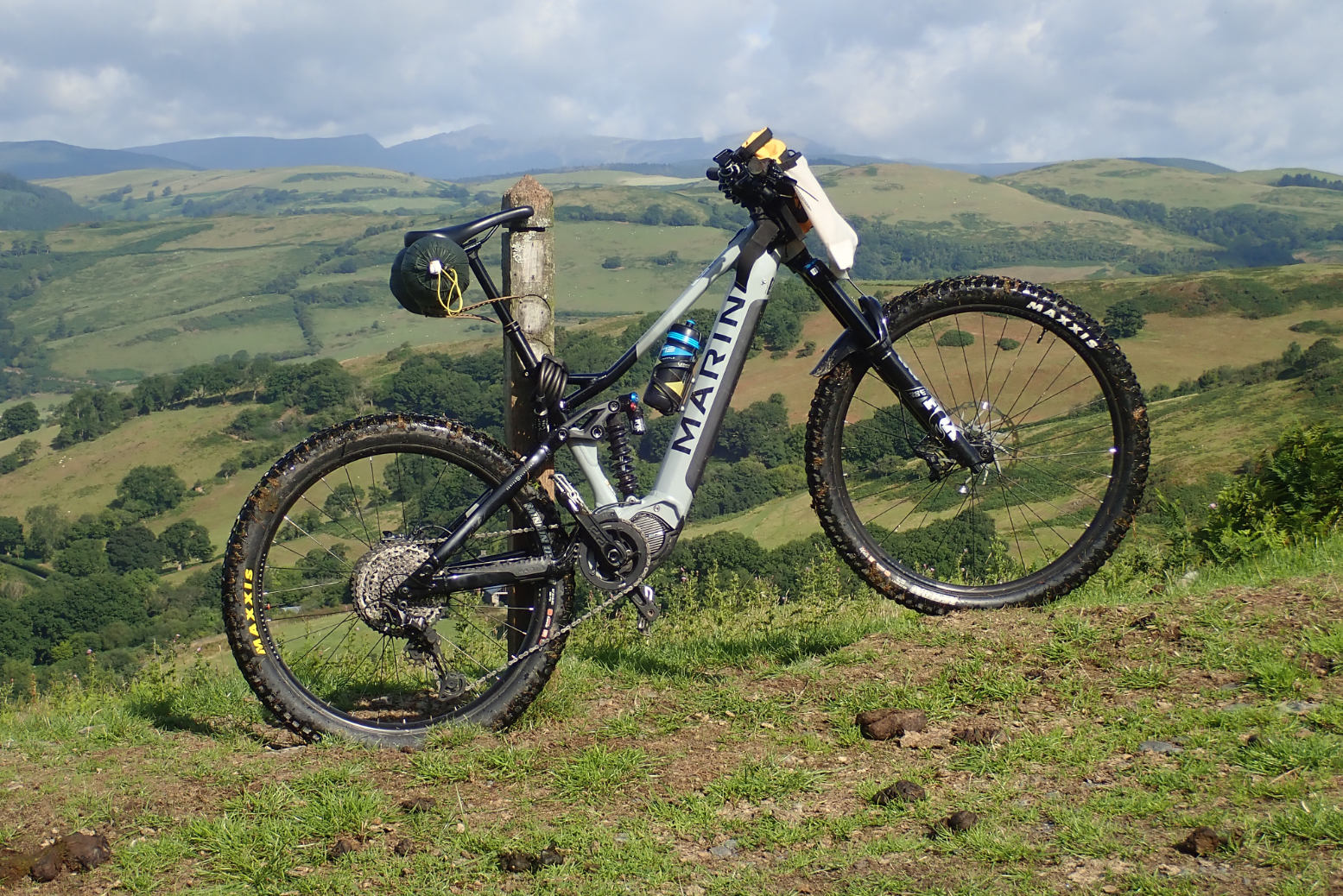
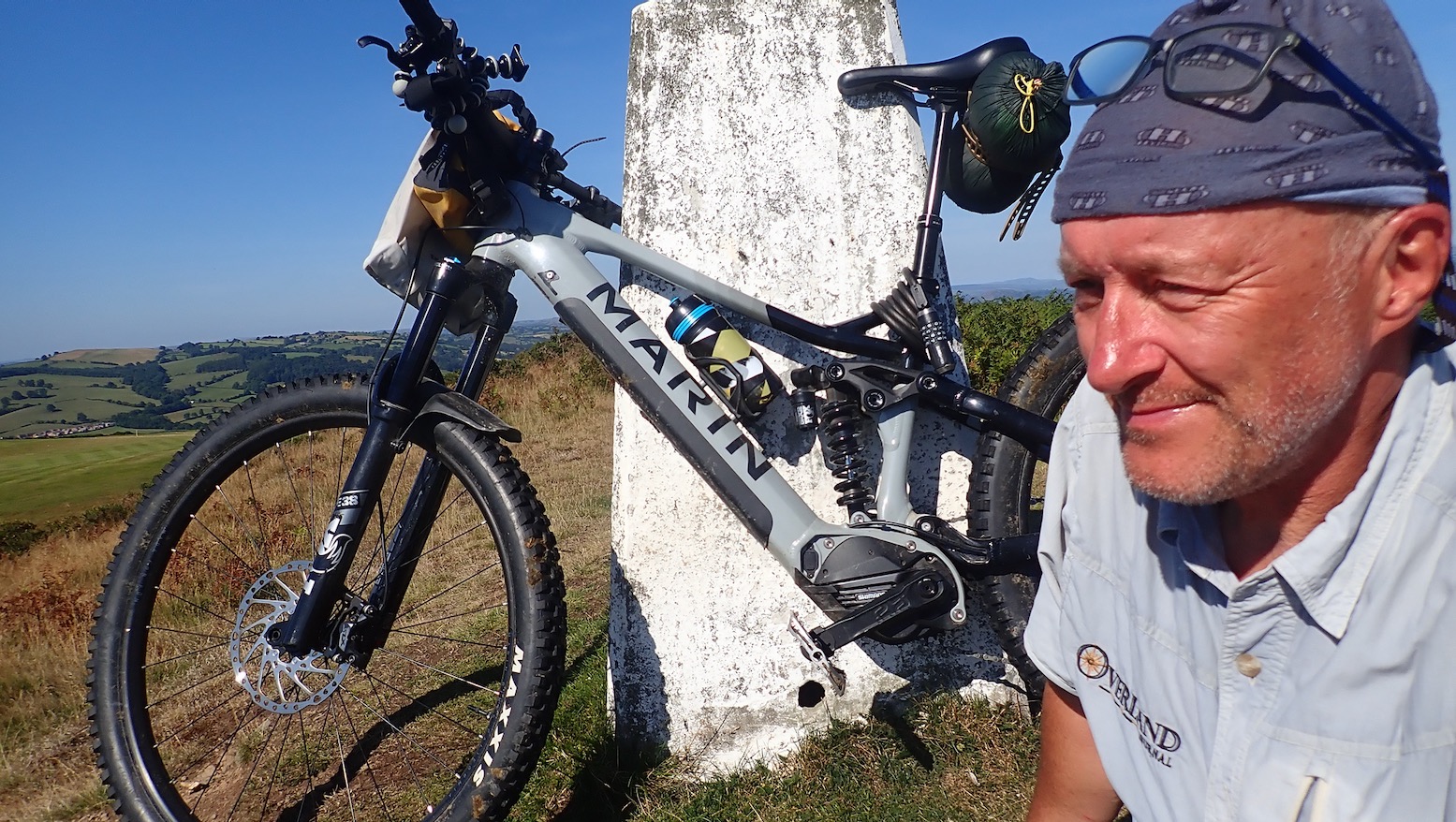
Marin Alpine Trail E2

Range anxiety
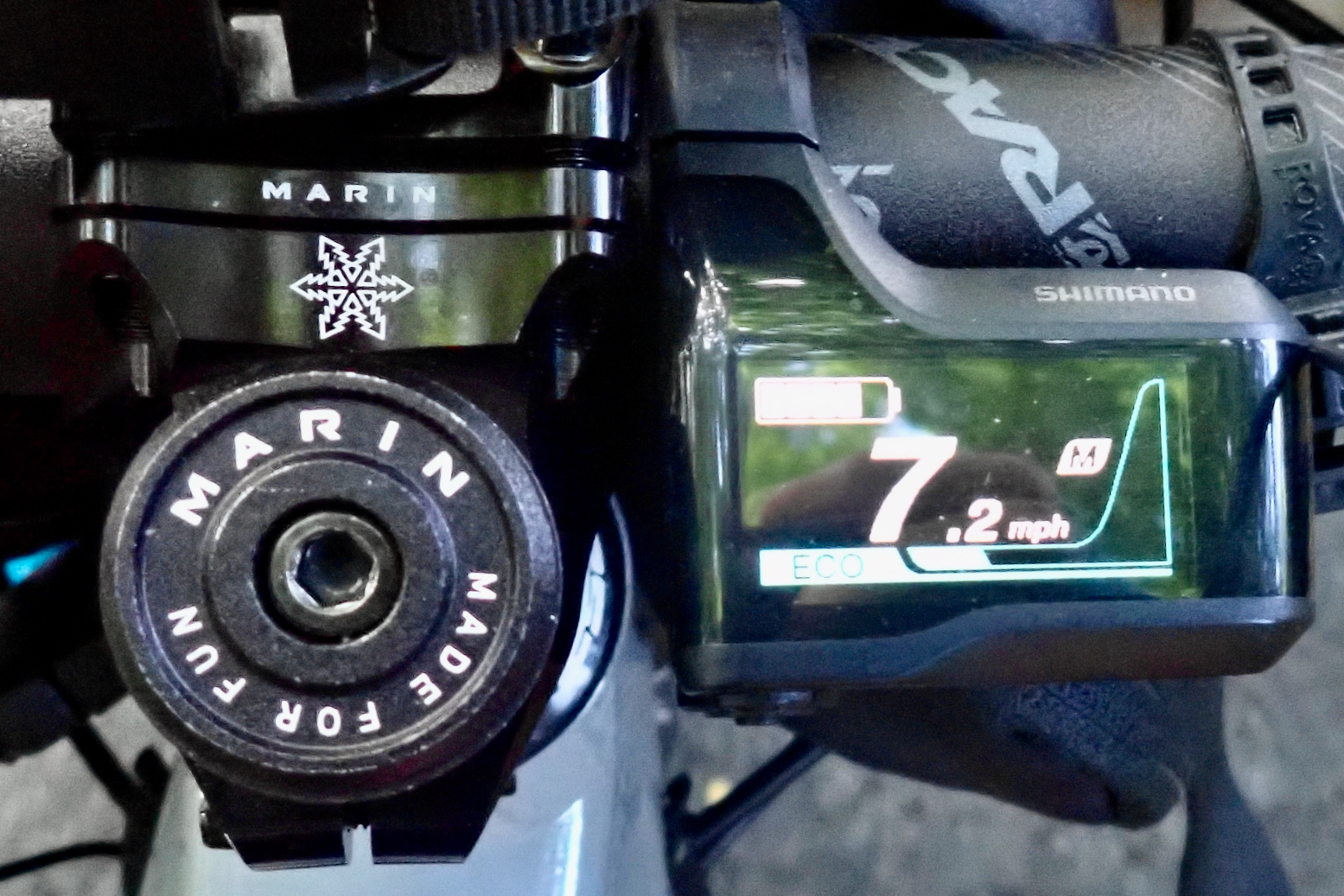
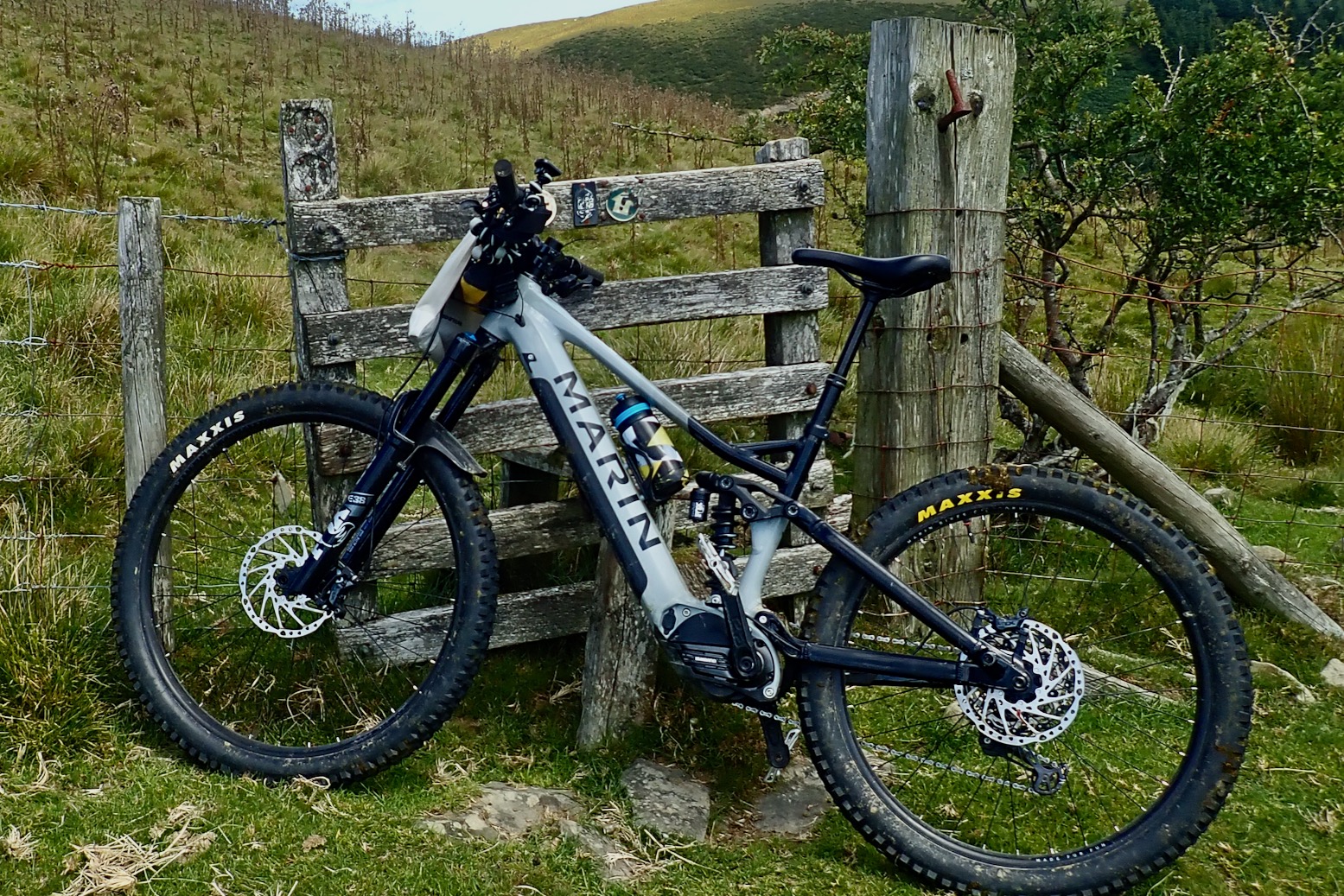
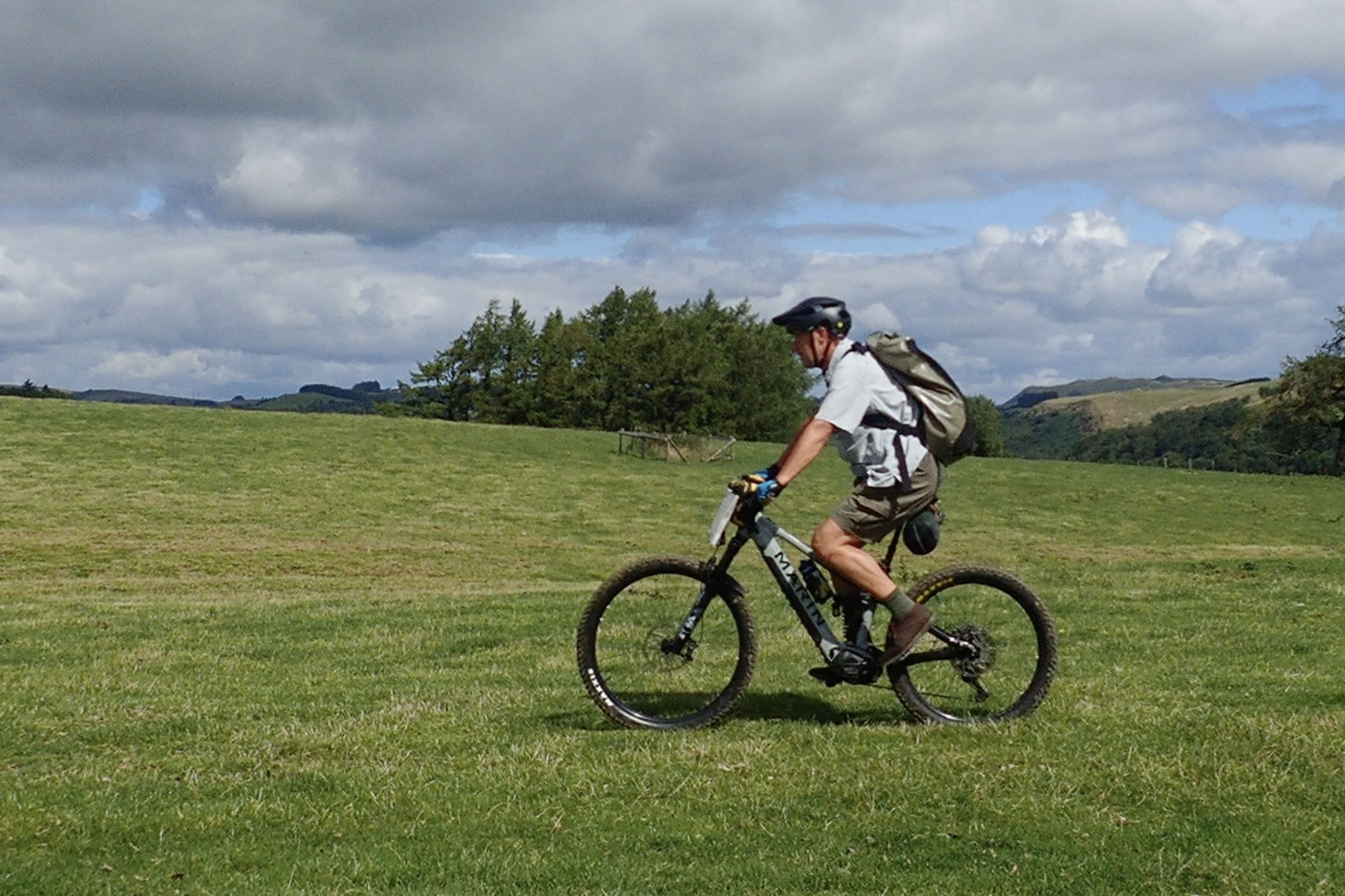
Most e-MTB rental places want you to go round and round their closed courses, but I found a go-where-you-like outfit in Hay, 38 miles from my start in Felindre, on the English border. Leaving it all a bit late, all they had left was nearly six grand’s worth of Marin Alpine Trail E2 in Large, when I’m more of an XL. The full suspension was a bit of a novelty, as of course was the latest Shimano EP8 motor. It gave three levels of pedal assistance: Eco, Trail and Boost and claimed up to 60 miles of range.

With my gross weight and intended use, I translated that to 40 real-world miles, and soon I was huffing and puffing along hilly back roads from Hay to Felindre. Sticking resolutely to Eco until I knew better, the reality of e-pedalling soon became clear: climbs are far from effortless – when it’s steep you have to give it some welly, even with 12 gears.

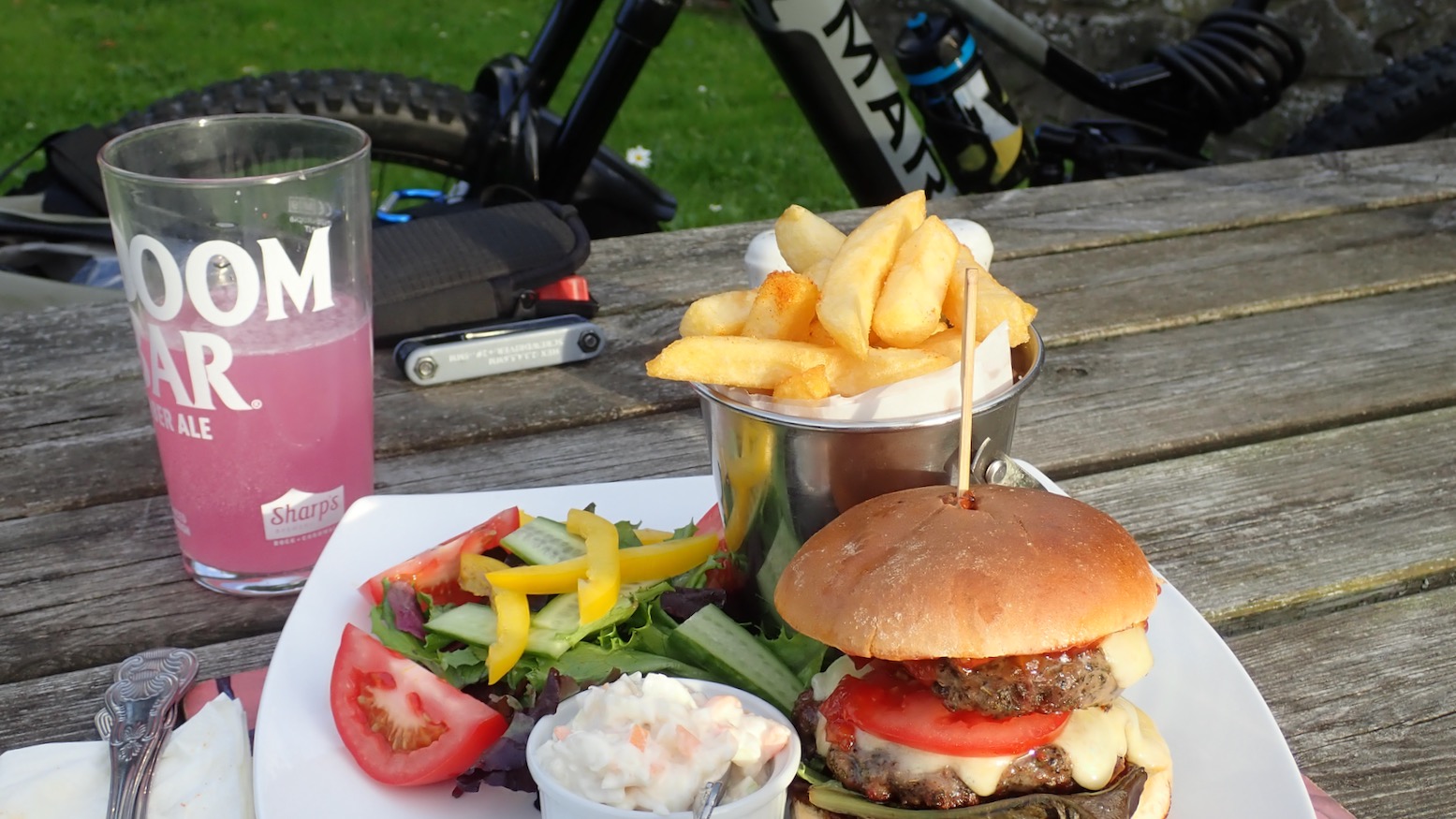
According to UK laws, e-assistance cuts out at 15mph but despite the knobblies I still managed to hit over 40mph on some longer downhills. After a fat-tyre dinner at the Radnorshire Arms in Beguidy (left), I camped in Felindre (the only place which charged for an overnight charge), ready next day to cover about 35 miles on road and trail to Abbeycwmhir and beyond Llanidloes to a B&B on the far side of the Clywedog reservoir.

Stile. You can do this…

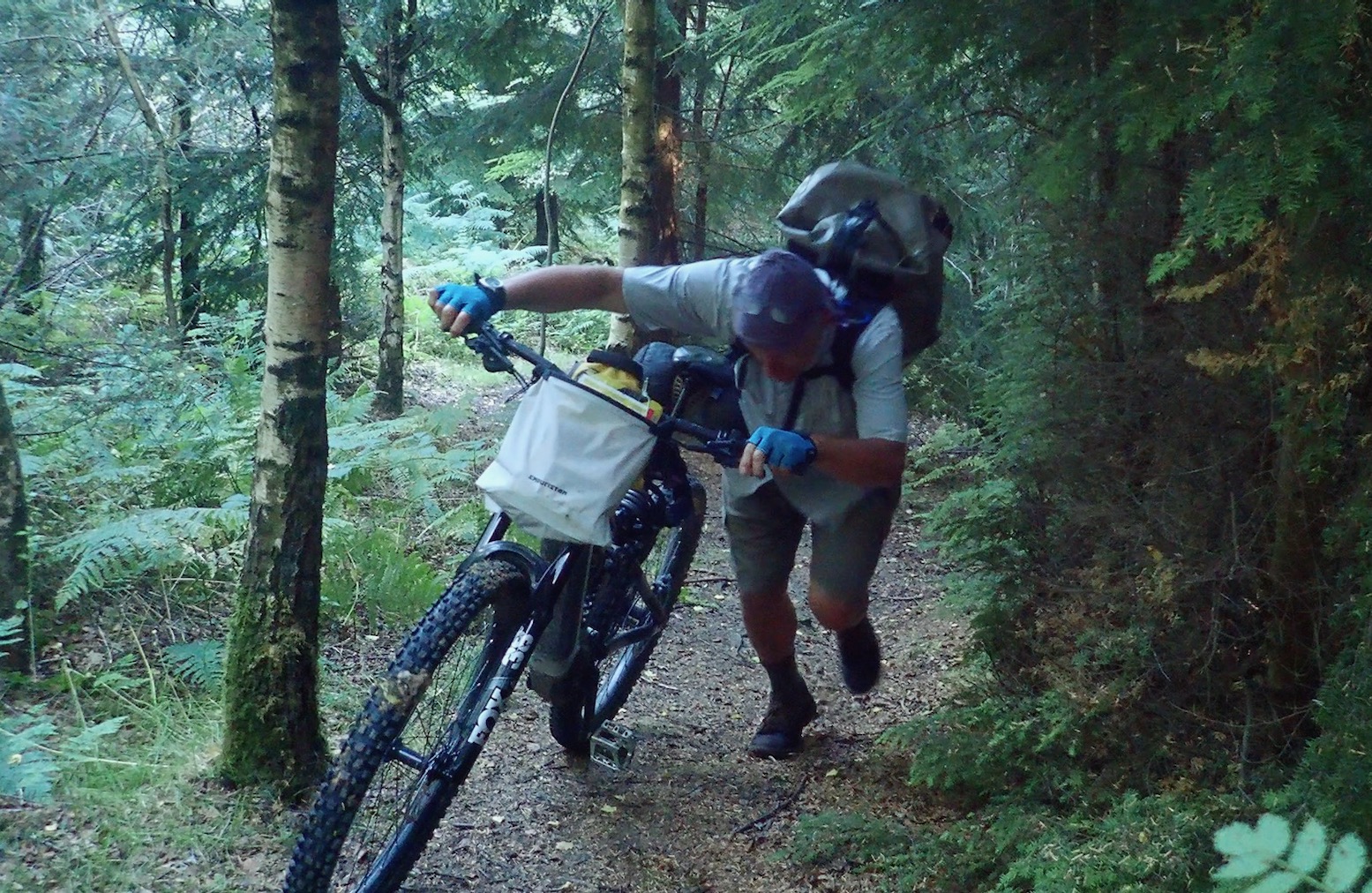
One good thing about having previously walked the trail was that good or bad, I knew what to expect. And one of those good and bad things was there are very few stiles (left) on Glyndwr’s Way. Lifting 25 kilos of Marin without damaging it or yourself soon takes it out of you.

Managing the Economy
I was warned that engaging ‘Boost’ would kill the battery and that switching off on long downhills (to save power; it doesn’t) could temporarily boggle the electronics. Initially I was over worried about ending up pedalling 30+ kilos of flat-batt bike on the dirt, though of course that’s exactly what we did in the Himalayas once you factor in baggage weight. So for the first few days I only blipped into ‘Trail’ for a few minutes a day and never used Boost.

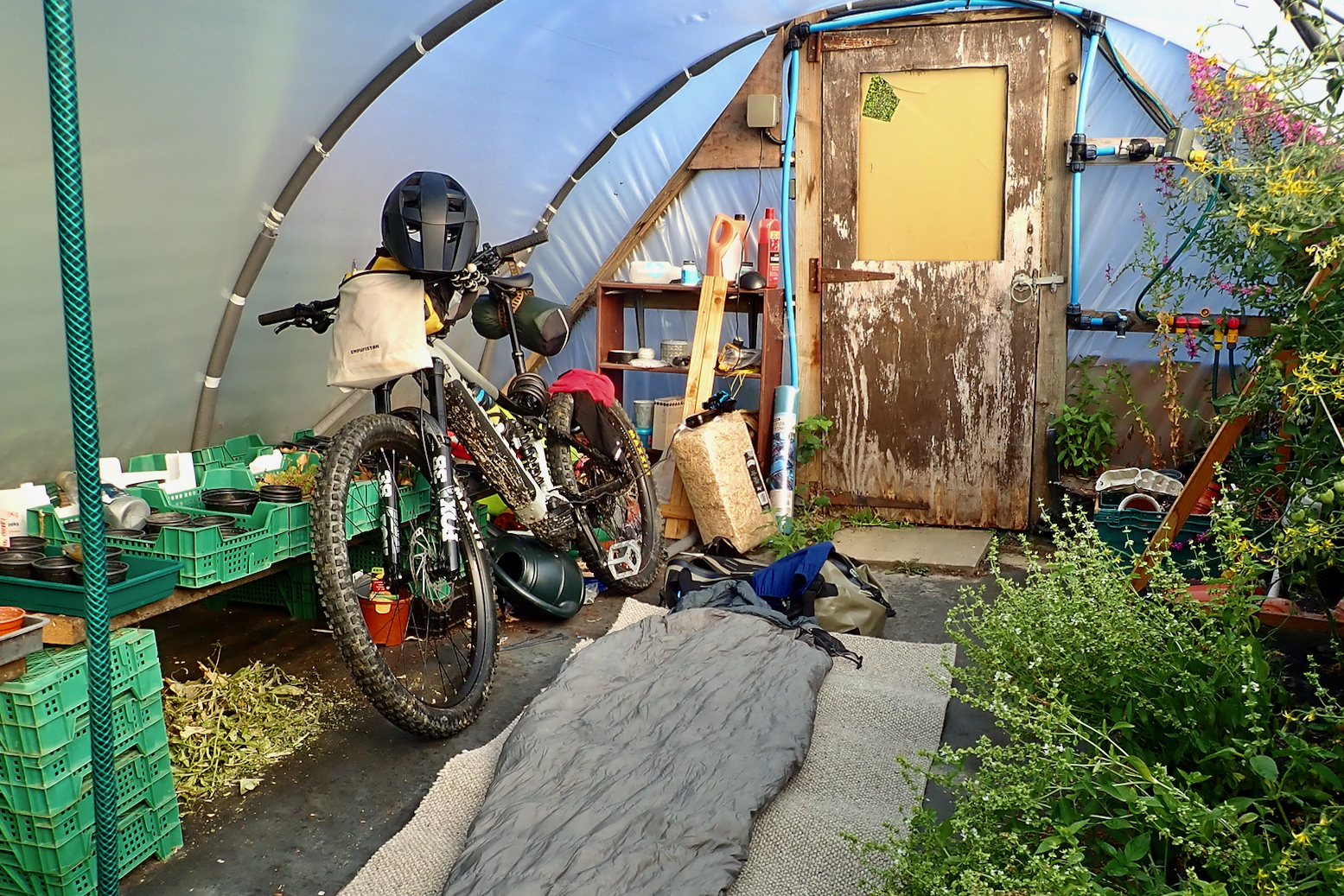
Got the B&B date wrong – but there was room (and a wall plug) in an aromatic polytunnel
Nick Sanders in Finland

That evening I reached my remote B&B with one bar flashing and pretty knackered, even though it had been 60% hilly roads. In my rush to plan the trip I got the date wrong so ended up sleeping in a polytunnel out back.
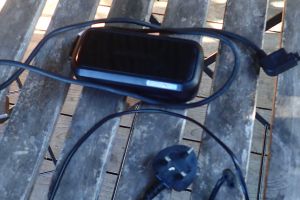
On reason I was stuck here (the next possible place was 5 hilly miles) was that this £6k bike only had a slow (overnight) charger, not the ‘1 hour for 80%’ fast charger I’d read of somewhere. You plug it directly into the motor, through the downtube battery can be removed with tools.
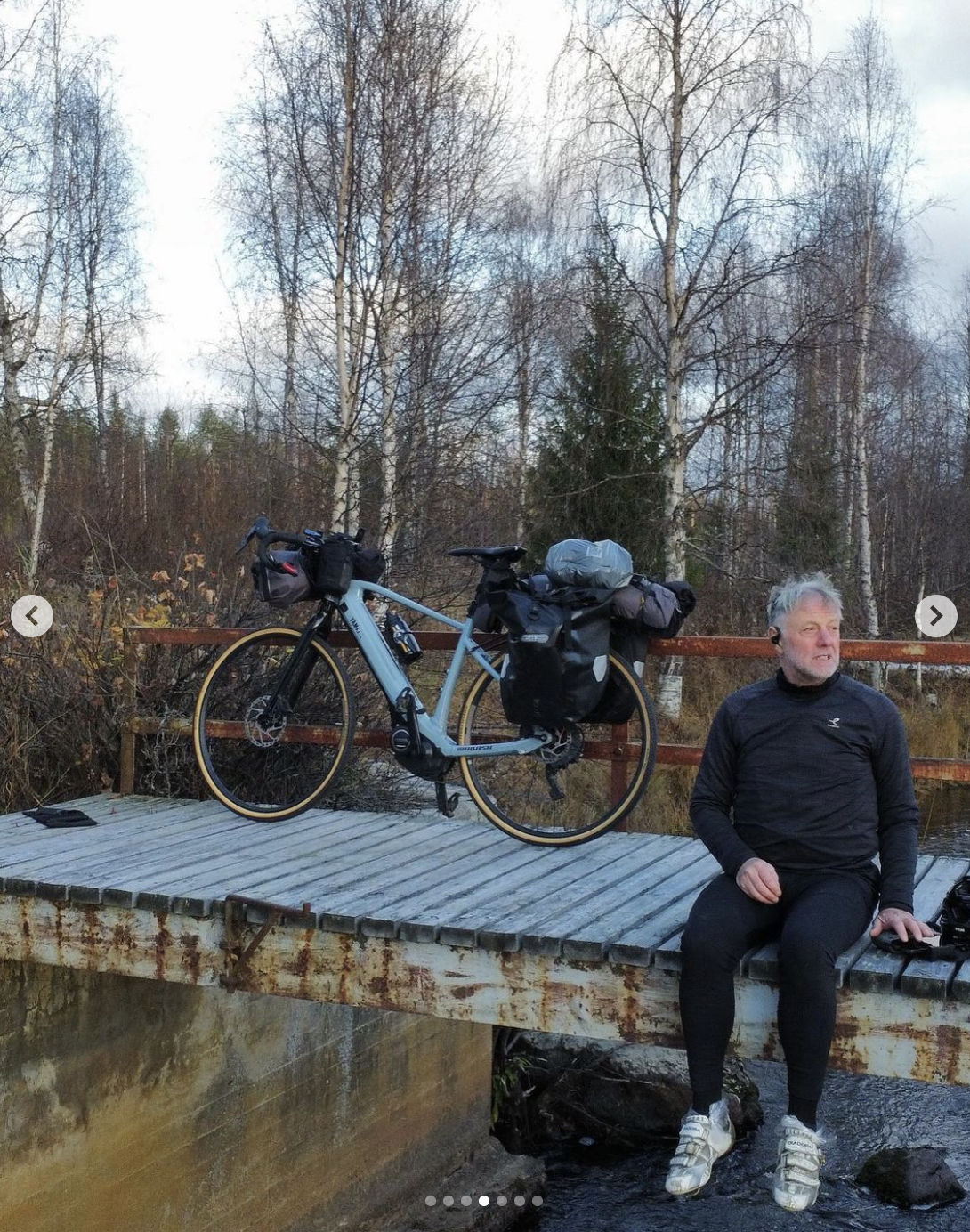
Imagine the game changer fast charging would be. Though realistically 30 full-on off-road miles is all you could cycle in a day, on the road you could do 30-40 miles, recharge over a leisurely lunch, then do the same in the afternoon. In fact Nick Sanders is doing that right now from Nordkapp to Gibraltar on one of Yamaha’s new Wabash e-bikes.

Walk-Assist Mode
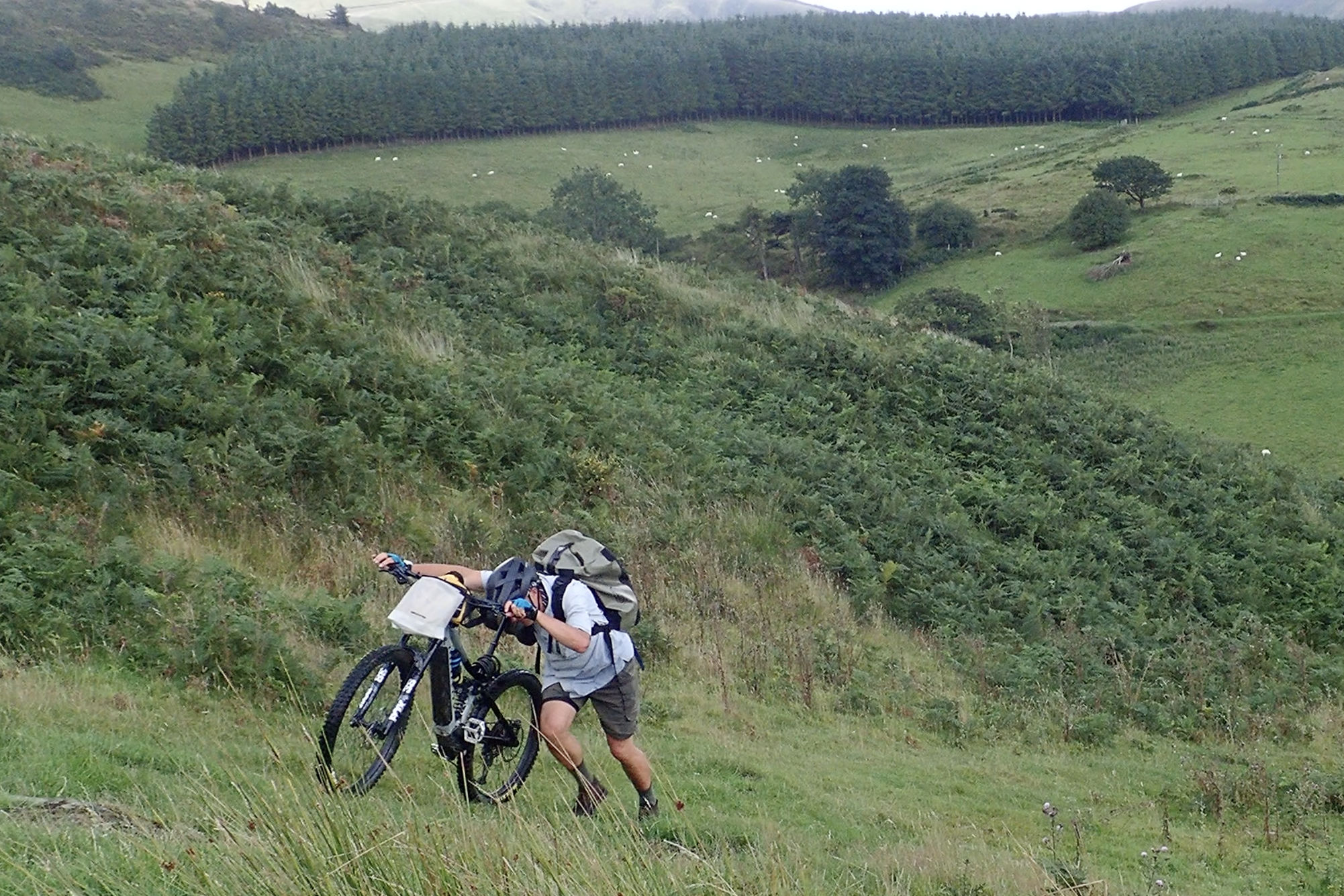
One huge annoyance I blame on both Marin’s online blurb, bike manual and the bike rental place is there’s no mention of walk-assist mode – a ‘hand throttle’ you can use to help push the bike up steep or rough slopes that are barely rideable or are too battery-devouring. Without it, many times I ended up pushing the bike like Chris Bonington on Annapurna: 5-10 paces; rest; 5-7 paces; rest…
Only on the very last day did I accidentally nudge the toggle switch into walk-assist which popped up on the display. But I didn’t know (or was too knackered) to know what had happened, so struggled on upward. That really would have eased my week on the Marin, along with being able to rely on the seat post dropper which was set right on the limit for my leg length and tended to collapse (ruining my Exped sleeping mat on the rear tyre).

Walk Assist explained

In fact, even with e-assist, 30 miles a day got a bit much for me after a while. Stage 6 out of Mach was 80% trail with no less than 70 gates to Llanbrynmair (LBM). By the time I got there, overdid lunch and chatted with a very rare GW walker, I realised I probably didn’t have it in me to navigate the 11 miles rising steeply up onto the tussocky moors and over to Llangadfan. Instead. I took a lovely road ride to pick up the GW in the Nant yr Eira valley, then backtracked next day from Llangadfan back to LBM with no baggage, to tick off the missing section – much more fun!

The heavenly valley of Nant yr Eira east of Llanbrynmair. Check it out next time you’re there.

I was now getting the hang of optimising the bike’s economy and came in off that 30-mile day still with 3/5 bars. I even treated myself to a spot of turbo Boost but was surprised how little it did, compared to switching from Eco to Trail (but see comment from Ian, below). Time it right in the right gear and Trail really can feel like the hand of god giving you a gentle but firm push uphill.

No overnight clobber – much more fun!

About UK Rights of Way
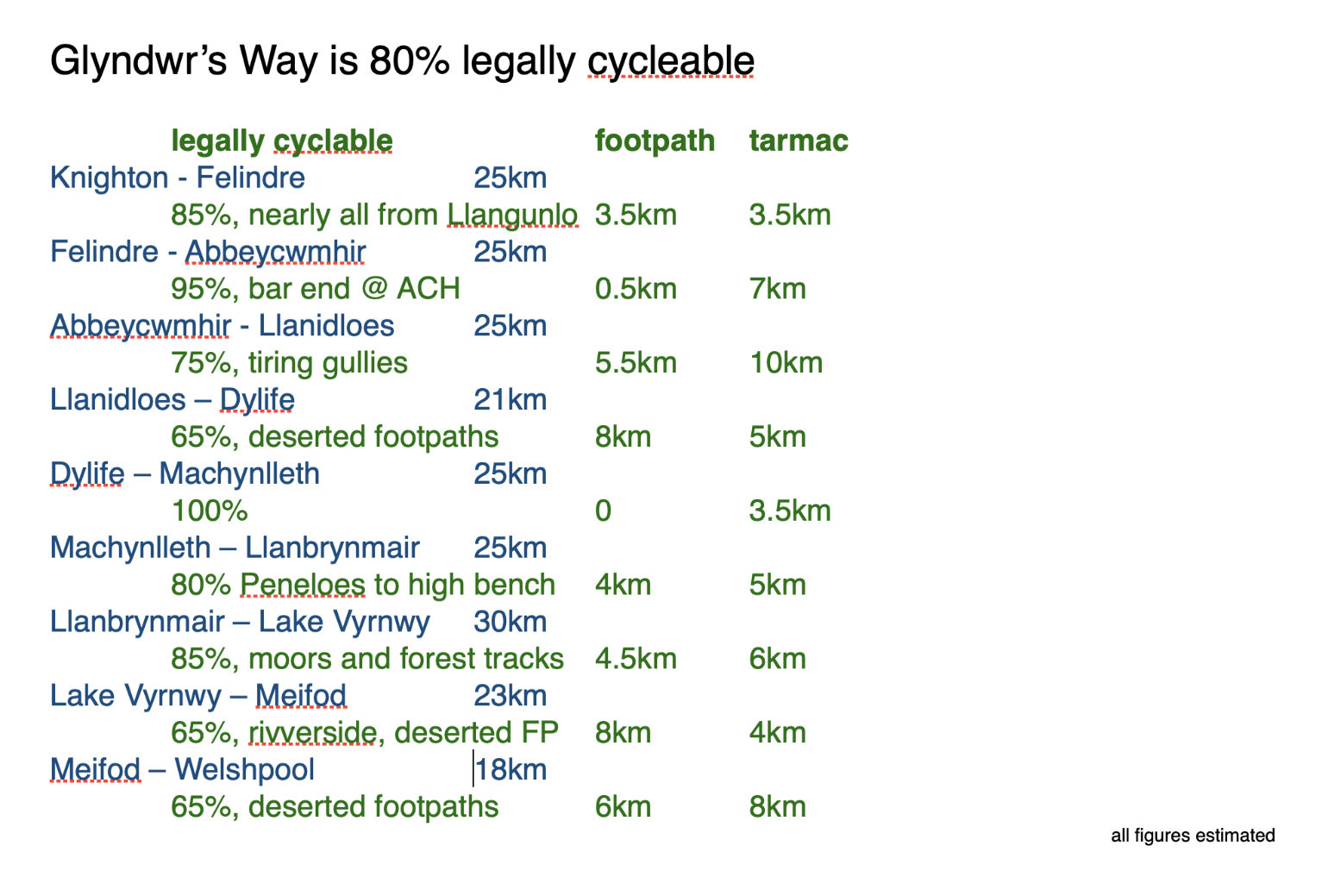
Just as motos must stick off-road to the few remaining byways, BOATs etc, pushbikes and horses cannot ride footpaths and must stick to bridleways and above. Glyndwr’s Way switches constantly between footpath and bridleway (plus tracks and backroads. The GW is 27% asphalt and is 80% legally cyclable – in other words only 20% is footpath.

Regarding that 20%; while I agree that in the congested Peaks or the Lake District riding footpaths would be bad form and is in fact a civil wrong or tort – in the lost paradise of mid-Wales I rarely saw anyone anywhere, and when I did, none batted an eyelid as they’d rightly have done had I been on a cackling WR450 dressed like a transformer.

After a week and some 200 miles, temperatures were creeping back up to the 30s making riding more tiring. In Welshpool I completed my job and caught a train to Hereford where they picked up their sheep-shit splattered Marin. My shins were all scratched to buggery from the pedals and I was still picking thistle thorns out of my knuckles and legs weeks later. But I’d had a great mini-adventure.

2022 Marin Alpine Trail E2
250W, 85Nm Shimano STEPS EP8 motor and 630Wh removable downtube battery

Charger, about 500g. Cable lock, the same

Clean, integrated design and subtle graphics
Low standover height – really helpful when stopping all the time
SLX 4-piston brakes
Firm suspension (did not meddle)
Pleasing boost from Eco to Trail mode
Stay in Eco where possible and range exceeds what I can ride off-road on a good stay
Seatpost dropper (seat on max; could not use reliably)
No flats or slips on Maxxis Assegai tyres (tubed)
Clear, simple display
Though I locked out the front as needed, I can’t say I detected any suspension bobbing from the unlockable rear spring. Maybe e-assist helps
I’m a big fan of 1x drivetrains; did that to my old Charge Cooker years ago
Ended the days tired but not beaten up (ie; full sus may well work, even for touring)

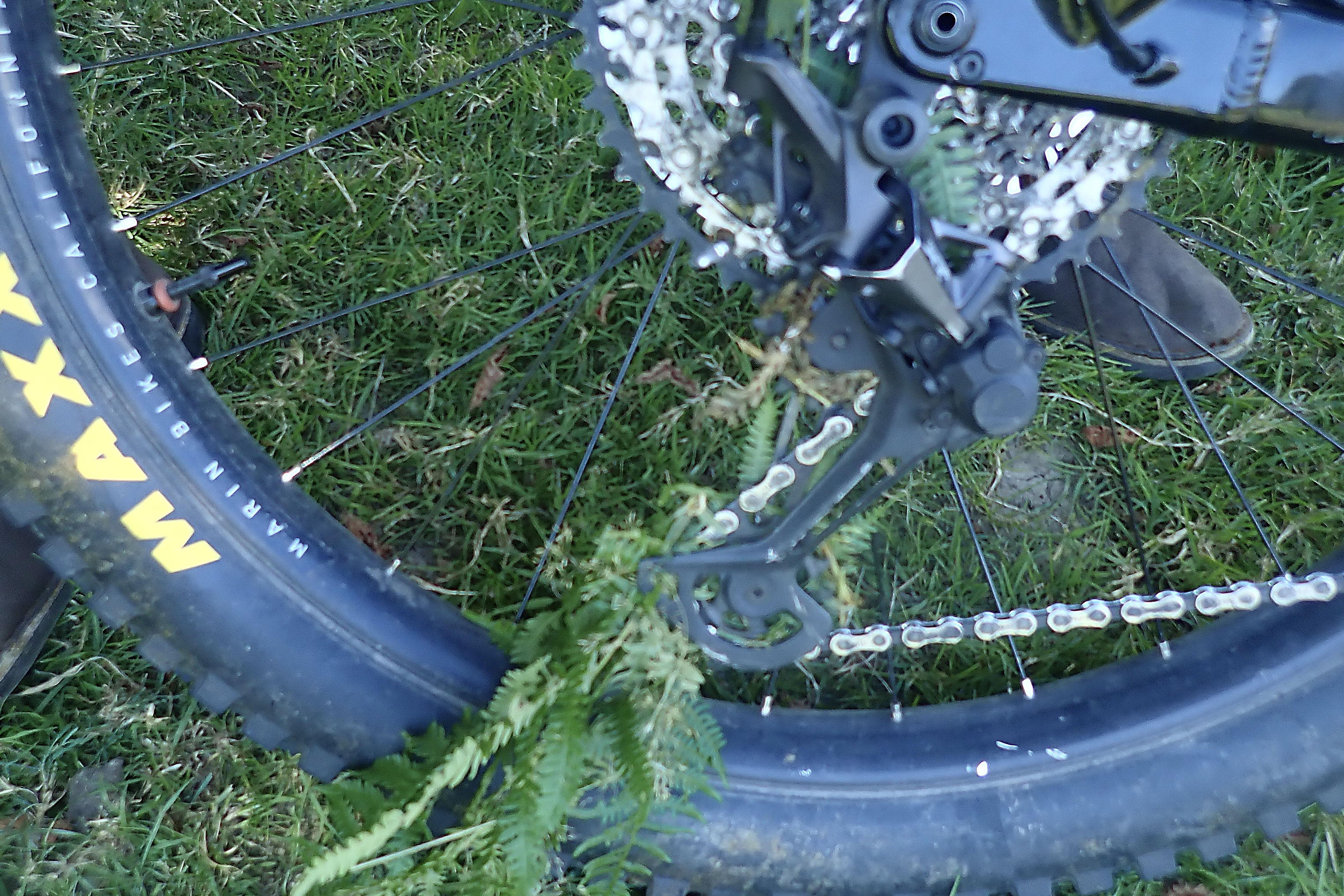
Fern catcher

£5765 (but apparently it’s a bargain and going for under £5k late ’22)
Weight when pushing unassisted or lifting
No mention on marin.com about ‘Walk Assist’ mode!!!
Slow, 1.8A Shimano 6002 charger takes all night
‘Trail’ –> ‘Boost’ was imperceptible – won’t pull you out of a steep climb
Pedals low, due to 27″ rear wheel or my weight?
Downtube fork ‘bumpers’ broken off on collection
Small wheel/big 1st gear means derailleur eats ferns
Feels like electronics get a bit confused sometimes
‘Large’ frame too small for me (6′ 1″) but was only one available

Above the Dyfi valley out of Abercegir

It had been a darn good work-out and revealed a whole new way of enjoying the UK countryside. Though I was leg tired at the end of most days, I didn’t feel beaten up which must be a testament to full suspension combined with my slow or interrupted pace. The e-assist helped when I was in a marginal spot crossing some muddy hump at 1mph – the extra pedal boost got me over where I’d have otherwise stalled and fallen over. But stalling on a steep stony track there’d often be too much torque from the motor and the wheel spun, while the bike was too heavy (or me lacking strength and finesse) to get back on restart (working seat dropper would have helped). And on a ride where range wasn’t so critical, using more of the Trail setting would add up to loads of fun. Just don’t think for a minute that you won’t break a sweat!

A tad too small but it got me there

I made things harder for myself by sticking to Eco 99% of the time, getting off and pushing when Trail may have got me up some hills. Tbh, it was nice to walk sometimes and air le derriere. And I also had things made hard for me by not knowing about Walk-Assist plus having the weather warm up on me. In Wales? Who’d have thought.

On the G-Way your PoW Steve McQueen fantasy comes true, but without the Nazis on your tail

The question is: will owning an e-bike get you riding more and for longer than your regular MTB, or is it just another toy? Setting aside motivation which overcomes all excuses, I think much must depend on opportunity and access to worthwhile riding. I’d say in the Southeast e-bikepacking would be wasted but in the remoter upland locales of western and northern Britain there must be loads of great riding nearby and where the climbs need not always be daunting.

Will I be getting an e-bike? Not at £6000 tvm and not any more than I’ll be getting a small trail bike. Where I live what I consider the worthwhile stuff is just too far away. But it sure was fun trying out e-bikepacking. I’ll definitely be renting one again some time.

* A couple of weeks later I picked up my Merida from Nick’s and ended up riding it from Upton to Cheltenham to catch another train. Costing me just £800 near-new, I was reminded what a great hardtail it is – and what a great thing a seat post dropper is when you’re stopping every 10 minutes to open a gate. Something between the Marin and my Merida could do nicely. They even sell clamp-on Bafang motors for a grand.

Y Golfa hill near Welshpool, end of the Glyn’ Way

Welsh Enduro KLX250 1981

It’s the Welsh Two-Day – in Welsh!

One from the archives. Originally published in TBM years ago.
Got none from the actual enduro, but a few KLX250 photos survive.

One Twenty Three: ready to race

Monday morning and no way could I face going to work. I lay curled up like an armadillo with rigor mortis, then spent the day hobbling around like a mugging victim. I had been mugged all right; mugged by my first Welsh enduro.

Two days earlier I’d looked with pride at my bright green KLX250 (the early 1980s one, not the zippy four-valver). Tiny mods set it apart from your run-of-the-mill trailie: Barum knobblies, an axle wrench strapped to the swingarm for speedy wheel changes, bore and stroke Tippexed on the crankcases as required by the ACU, and those rrrrracing numbers. Not a sixteen-year old throttle-wanker’s ’69’ but 1 2 3. Did it mean I was rated hundred and twenty third? Probably, but later that day me and my race-prepped KLX caught the Aberystwyth train.

After no less than eight trail bikes in eighteen fun-filled months of riding all the nearby woods, bomb holes and wasteland to death, I’d quickly tired of congested southeast England’s feeble ’round-and-round-a-field’ so-called enduros. Following months of scanning the ‘Enduro regs available’ in the back of Trials & Motocross News, I took the plunge and entered my first Welsh enduro on my 14-hp mutton-dressed-as-dirtbike.

Twin-shock day trip: KLX and XR5 on the Ridgeway.

I knew all about the Big Ones, the Welsh Two Day and the Brecon, events I’d never survive, but here was a likely candidate: Cwm Owen (might have the name mixed up). It wasn’t a British championship round which must mean it’s dead easy – brain-out racers wouldn’t even get out of bed for this one. I sent off for the forms and promptly got my racing number, final instructions (just like Mission Impossible!) and a list of local B&Bs.

Enduro training or as we called it:
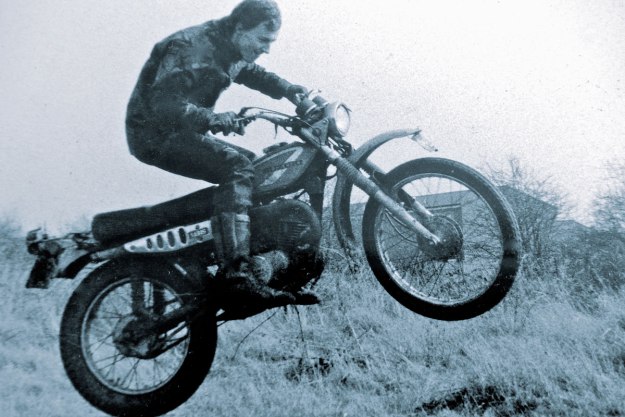
“Quick, take a picture or me doing a huge jump!”

Like renting a van, B&Bs were for the pampered elite, so on arriving at Aber late Saturday evening, I bought some Lucozade and a tube of Toffos from a late-night garage and rode out up the A44. Around midnight I figured a roadside plantation was a good place to sleep and, killing the lights, rode down into the forest, unrolled my sleeping bag and pretended to fall asleep.

Next thing I knew I was woken by the din of a rorty stroker tearing past me the on road above. Dying for just a few more minutes of dozing, I turned over – and rolled down the hill. In my weary haste to pass out last night, I’d ended up sleeping on the edge of a pine-clad slope and before I knew what was happening, I was tumbling through the trees trapped in my bag like a rolled-up taco. I fiddled frantically with the drawstring and zip as sky, trees and pine needles spun past. A tree caught my feet and swung me headfirst down the slope like a sledge just as I managed to get my arms out and kick off the bag. A few somersaults and I slithered to a halt against a fence.

Hill climbing on an old mine site in Cornwall. Today, a glamping theme park, probably.

Dazed and confused, I staggered back up to the bike, got dressed and 20 minutes later was signing-up for three 20-mile laps in the four-stroke Clubman’s (beginners?) class. In those days monoshockers like KDXs and ITs were beginning to impact the enduro world hitherto ruled by twin-shock chainsaws like Maicos, KTMs and the odd yellow PE, all of which were tearing off up the track at one-minute intervals. With his minute due, it was the turn of lip-chewing One Twenty Three to push his KLX up to the starting line alongside a purposeful XR250. “GO!” shouted the starter with a drop of the hand, and I fair broke off the KLX’s kick-starter to get the holeshot on the XR.

“Take it easy now, watch those ruts…” I warned myself as I neared the first bend where the track swung uphill, “…it’s not a race, it’s an e n d u r o”. An enduro it may have been, but for crap riders like myself it might as well be a race as flat-out was the only way to keep on the pace. Within seconds the XR shot past, never to be seen again leaving me a breathless, rigid-limbed, goggle steaming learner bouncing from rut to rut as I struggled to get the feel of the Kawasaki at ‘racing’ speeds.

Who knew that Brent Cross in the rain was North London’s answer to the Mohave desert?

Up on the moor top a long boggy section stretched ahead where several bikes had floundered. With no obvious line to left or right, all I could do was drop a gear, roll open the throttle, move back and see how far I’d get. Luckily the KLX’s 14-odd horses couldn’t spin the skin off a baked rice pudding and amazingly I got across and up the far side. With confidence boosted, a few miles later I found myself riding blissfully alone across the hills following the Castrol marker flags. I was doubtless last but who cares, it was this feeling of being truly in the wilds that gave Welsh events their special flavour.

Coming back to the bog on the next lap, I thought I’d be clever and try a firmer-looking route to the left. I soon realised why no one was going this way; the ground was broken up by treacherous peat troughs and eventually the KLX dropped into one such pit the size of a big bath but handlebar deep. Thirty miles of moorland hammering on a handful of Toffos had already taken its toll, but at times like this you don’t think about how knackered you are or your multitude of aches and pains – you just do what must be done. I heaved the front wheel up to one side of the pit and after much cursing, managed to get the back wheel onto the other side of the trench. Crawling out of the mire and straddling the bike on my tip toes, I was planning to attempt I’m not sure what – some kind of fanciful kick-start wheelie manoeuvre? One foot slipped and I toppled back into the slushy peat soup with a splat.

Wasteland off London’s North Circular. Great venue for the ISDE!

By the time I’d dragged myself out and got back on course, finishing the second lap was all I could think of as I sagged over onto the bars like a wet sheet. Coming down the hill leading to the starting area I lacked even the wit to ride off the easy drop offs: instead I’d brake hard at the last minute to tip myself over the handlebars again and again while formations of low-flying Maicos on their sixth lap accelerated overhead like scrambled Typhoons.

The third lap was a lonesome fog of agony and repeated prangs at the slightest obstacle until I finally dribbled into the parking area just as everyone was packing up.
“Oh there you are, One Twenty Three” said the nice Welsh lady, ticking me off her list. “We were wondering what happened to you. Is that your bag by the fence?”
“Urg” was all I could manage in response.

According to the brochure the KLX weighed just 105kg.
Apart from no lights and so on, how did they do it? Or why can’t they do it still?

I pumped up my tyres and, feeling like I’d been run over by a stampede of yaks who then decided to turn back and ran over me again, I weaved wearily back down to Aberystwyth to find a train strike had just begun.
“London is it? Oh I think Shrewsbury [77 miles away] is the nearest station, but you better hurry mind, last train leaves at 9.21…”

Months later, with bruises healed and KLX long gone, I got a weighty packet in the post. Inside was a bronze medallion centred with an enamelled bike mono-wheeling across the skies. My name was stamped on the back and an accompanying note said “Finisher, Cwm Owen Enduro, 1981”.

Mutton-bike spraying dirt in full attack mode.

Quick ride: Honda CRF300 Rally

See also:
Honda 300L project bike (2023)
CRF300 Rally vs CB500X

Who can fail enjoy watching the likes of Dakar racer Pablo Quintanilla on his 60-hp Honda CRF450 surfing and slicing over the Arabian dunes?

Me? I rode a substantially less potent CRF300 Rally for a couple of hours across the damp, leafy byways of north Surrey to see if it could be a contender for my next travel bike.

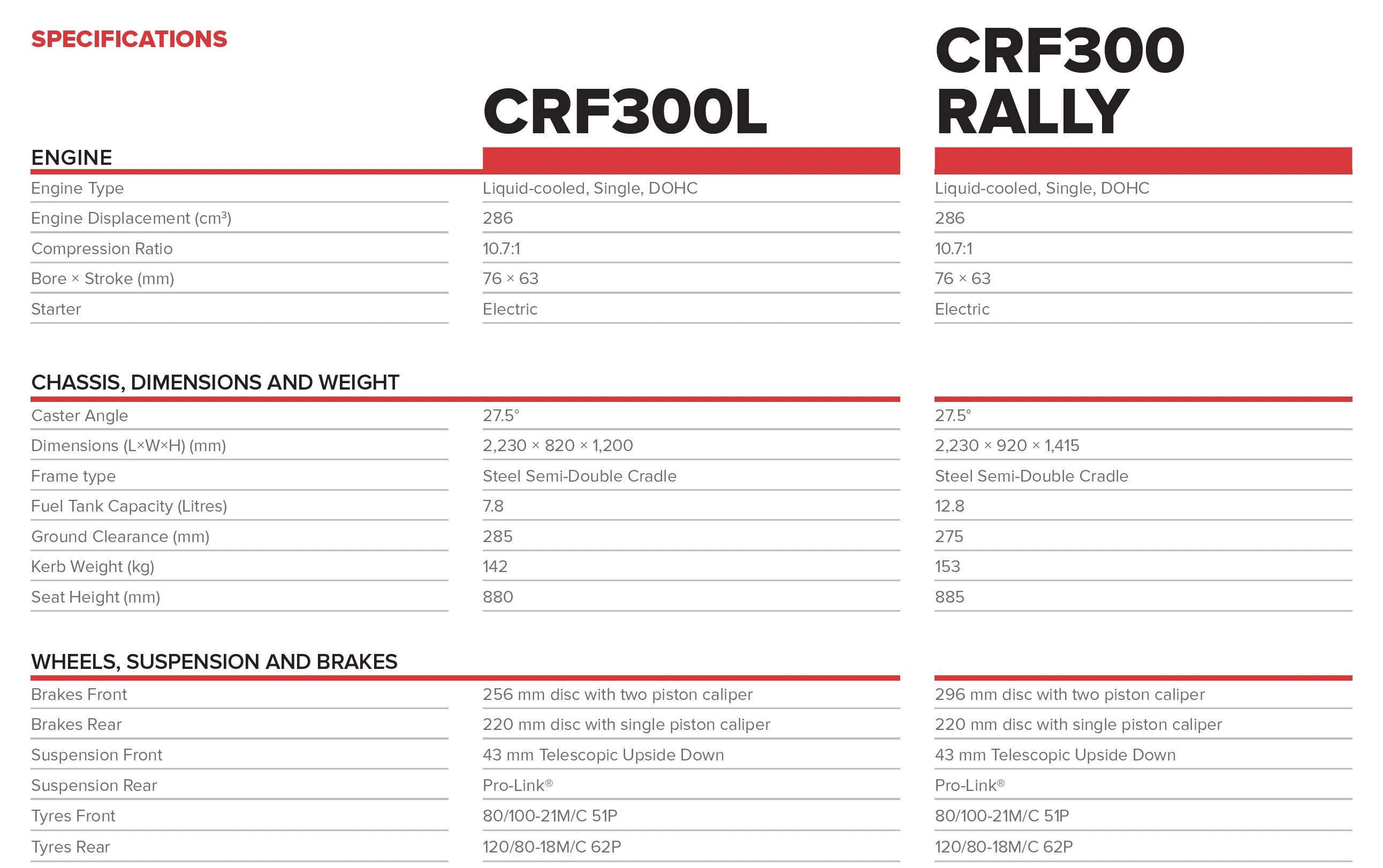
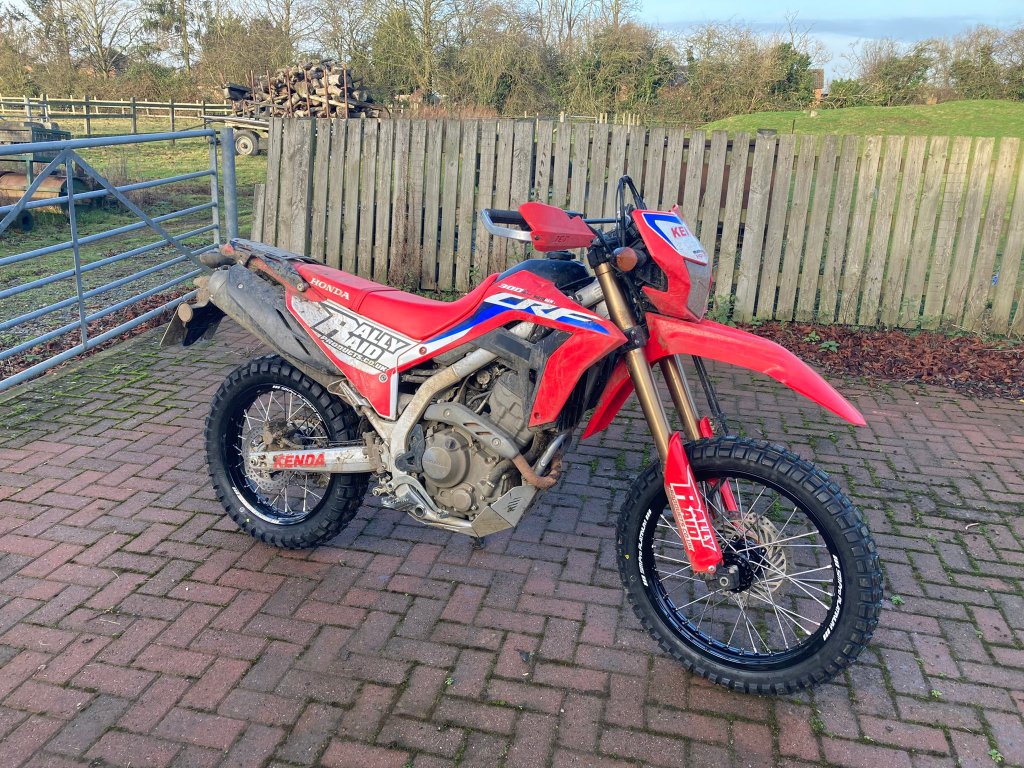
The 286cc 300 resembles the previous 250 Rally (and indeed the real desert racer) but loses 4kg, gains LED lights, a slipper clutch, 5mm seat height and 2.7L in the tank (now 12.8 litres). Less weight; more tank: all good. Some young youtuber was thrilled to calculate a 15% power-to-weight gain from the specs, but then admitted actually sitting on the bike would make that figure negligible.

Very light (147kg verified with a near empty tank)
Looks great
Very good mpg
Clever gearing: low 1st; overdrive 6th
Bigger fuel tank (12.8L = 500km range)
Welded subframe looks chunkier (162kg claimed payload)

For me, the 3hp gain is not a worthwhile improvement *
Lots of plastic to scratch and crack
Tall saddle (but sinks down loads – or was my Xmas better than I thought?)
Suspension probably needs upgrading
Nearly a £grand more than a 300L (at time of writing; now £700)
Acerbis now do a 14L tank for the 300L (+6.2L)
For another 250 quid you can get a 500X

* I have since heard from two owners that they can take a while to loosen up

Pulling away from Dobles my immediate thought was ‘oh dear…’ But of course so much depends on what you’ve been riding lately (me, an AT which barely needs the throttle turning). Reminding myself how to crank the handle and let it rev a bit got the Rally moving, but it wasn’t night and day over my 250 recollections. Just down the road I pushed it briefly up to an indicated 70 (64mph) where it felt OK.

I realised they’ve done a clever thing with the gearing: 1st is very low; ~4mph at tickover, just what is wanted on gnarly trails. Any other time you can easily pull away in 2nd without straining the clutch. And 6th sees the revs drop by 1000rpm – just don’t expect to be able overtake anything much. I’ve not noticed such a clever gearing spread on a bike before and like the idea.

The bike feels exceedingly light (again compared to the extra 80kg I’m used to). An lack of intimidating mass gives you confidence to throw yourself at pretty much any trail, knowing you can keep it in line and easily pick it up, if needed.

At the indicated mpg (I managed to bring it back up to 92) you’d have an amazing 500km range. But of course the seat (or your backside) would not last a third of that distance. But that is a £300+ expense spared over the tiny-tanked 300L.

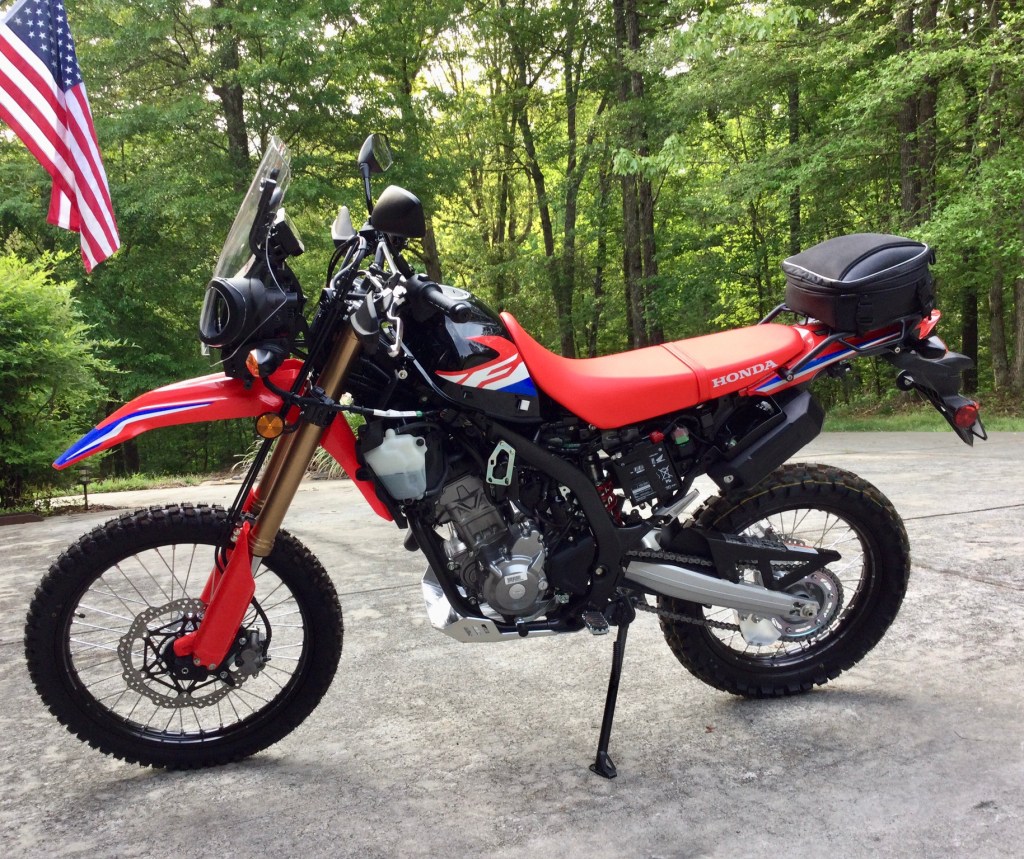
There’s been a lot of online excitement about the full-fat ‘300s’, but while the emperor’s new clothes are sharp, they are verging on translucent. For domestic trail biking I’d be happier with the less damage-prone 300L (I bought one), especially once it got an Acerbis tank. The CRF 300 motor is just a stroked 250, so that’s as big as the barrel and crankcase will probably allow. Honda has no other suitable engines apart from the high-maintenance 450 dirt racers, as used in the stillborn 450L. Great for real rallies, not so much for the overland.

I know that my test bike had less than 100 miles on the odo when I returned it to Dobles so needs loosening up, but after this ride I’d sooner settle for a post-2019 250L with an IMS tank, plus some other worthwhile mods and save a grand or two. Or maybe I should try one again with a couple of thousand on the clock

More impressions with the photos below.

Just 60 miles in the clock. I better be gentle. 91mph looks promising
Still at the factory setting. But the bike sank equally as I sat on the machine
I briefly took it up to 70mph on the M25 but didn’t have the heart to push it. The screen felt OK
I spin off towards the country lanes of the North Downs
A Dakar Rally Replica, just like the Yamaha XT600Z nearly forty years ago!
Unfortunately that side panel is one huge piece of plastic
Stripped (not my photo)
A lot of travel and clearance. Could easily lose an inch each end
Rally Raid have made a lower 19/17 300L. Looks good
Sturdy pipework holds up the screen, lights and dash. Handguards not Quintanilla specials.
Standing up was not too much of a stoop for me
How many minutes would you give that, even with the 1980s gumby strap removed?
But it is thicker and wider than a 300L
162-kilo (390lb) overland payload. That will do me
Shrouds scoop the air and hopefully protect the rads
Brittle plastic but looks the part
Full LEDs on the Rally only, with a fake oil cooler guard hiding some cabling
Fork seals and radiator fins protected
A few too many of holes but better than nothing
Assuming the mounts are solid (probably not) I’d just rivet on some 2mm ally plate
Easy bend back steel brake pedal and filter access
Motorcycle tool kit 2022
Tool box. Unlike a the Tardis, smaller than it looks on the inside
Folding tip and rubber inserts. Nice touch
A handsome machine to be sure, but still something of a sheep in wolf’s clothing
Chunkier rear subframe, now welded. Small air intake stops you running away with yourself
Back into the leafy suburbs
Pillion pegs seem inordinately high. One snatchy clutch change and you’d roll off the back
I bet I could squeeze 100mpg out of this thing