Yes you have to pedal it (and probably transport it), but once you reach an age when you can’t tear around on MTBs like you used to, but recognise that you must ‘use it or lose it’ to maintain good health, an e-MTB can open up a huge range of trails in Britain’s wilder corners that you can’t legally ride on a trail bike.
“It had been a darn good work-out and revealed a whole new way of enjoying the UK countryside.”
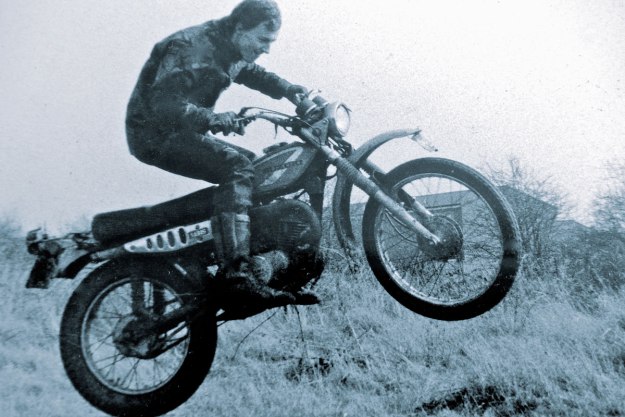
When it wasn’t a job, motorcycling to me has long added up to combining travel and trail riding. In the late 70s it was the limited opportunities for trail biking in the southern UK (compared to say, the western US) that drove me to the Sahara in the first place. I can’t imagine access to green laning in the UK has got any better since.
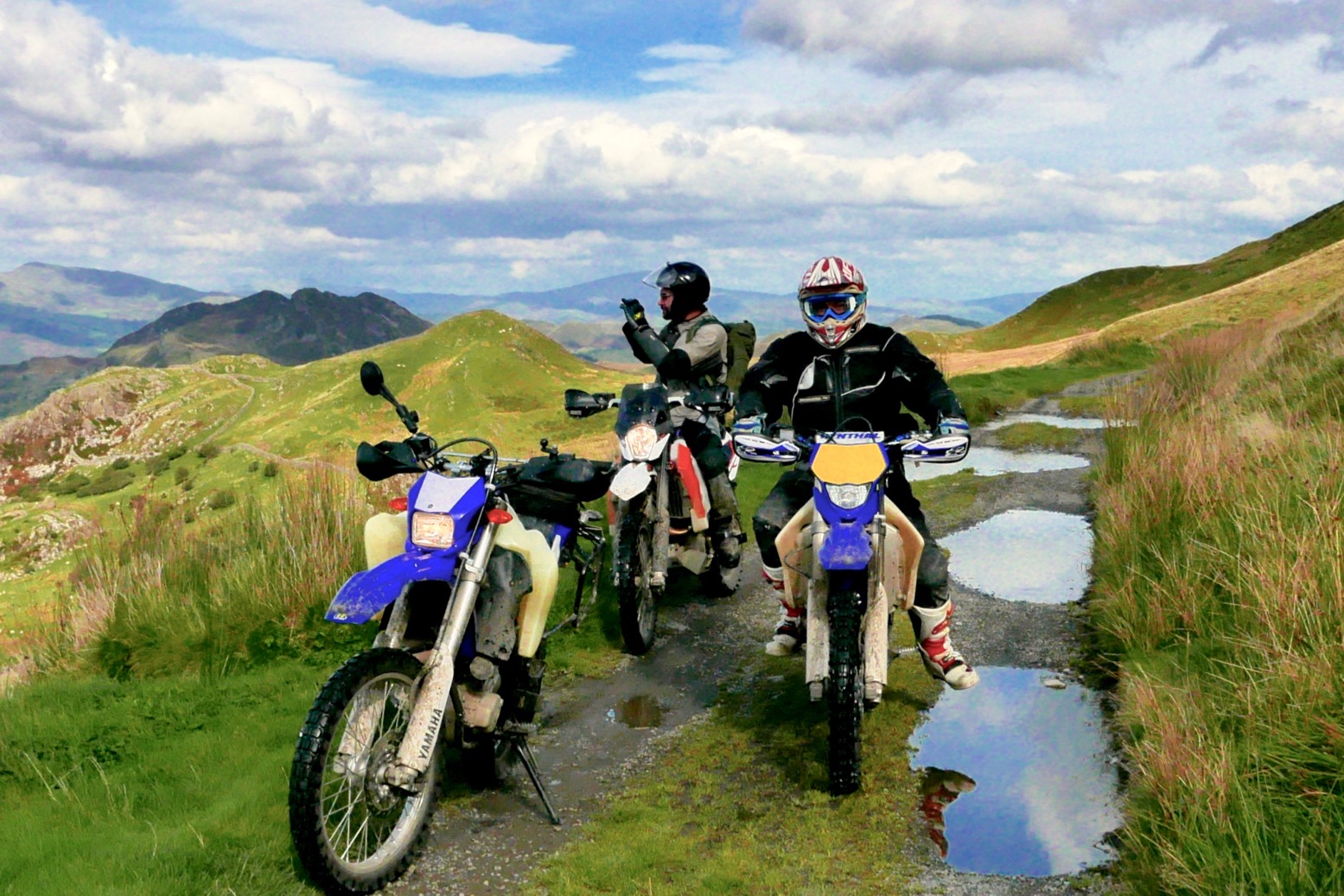
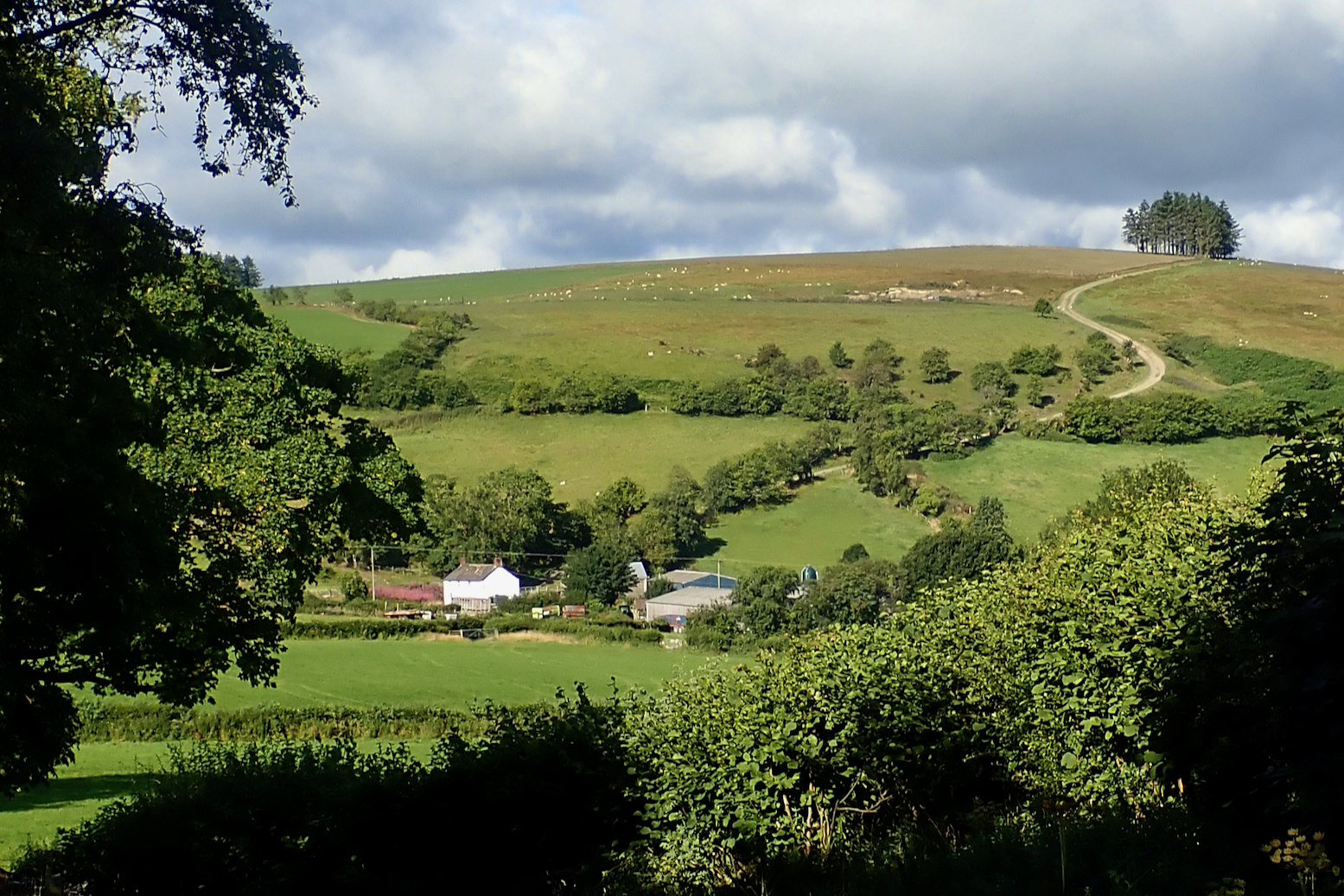
It may not be Algeria, but mid-Wales is a much overlooked and sparsely populated area of hill farms and old droving roads. With John, a guide from the nearby Yamaha dirt school, in 2016 we spent a great couple of days out of Llanidloes riding backroads and trails, me on my WR250R. And way back in I981 I remember my first proper enduro south of there on a lame KLX250.
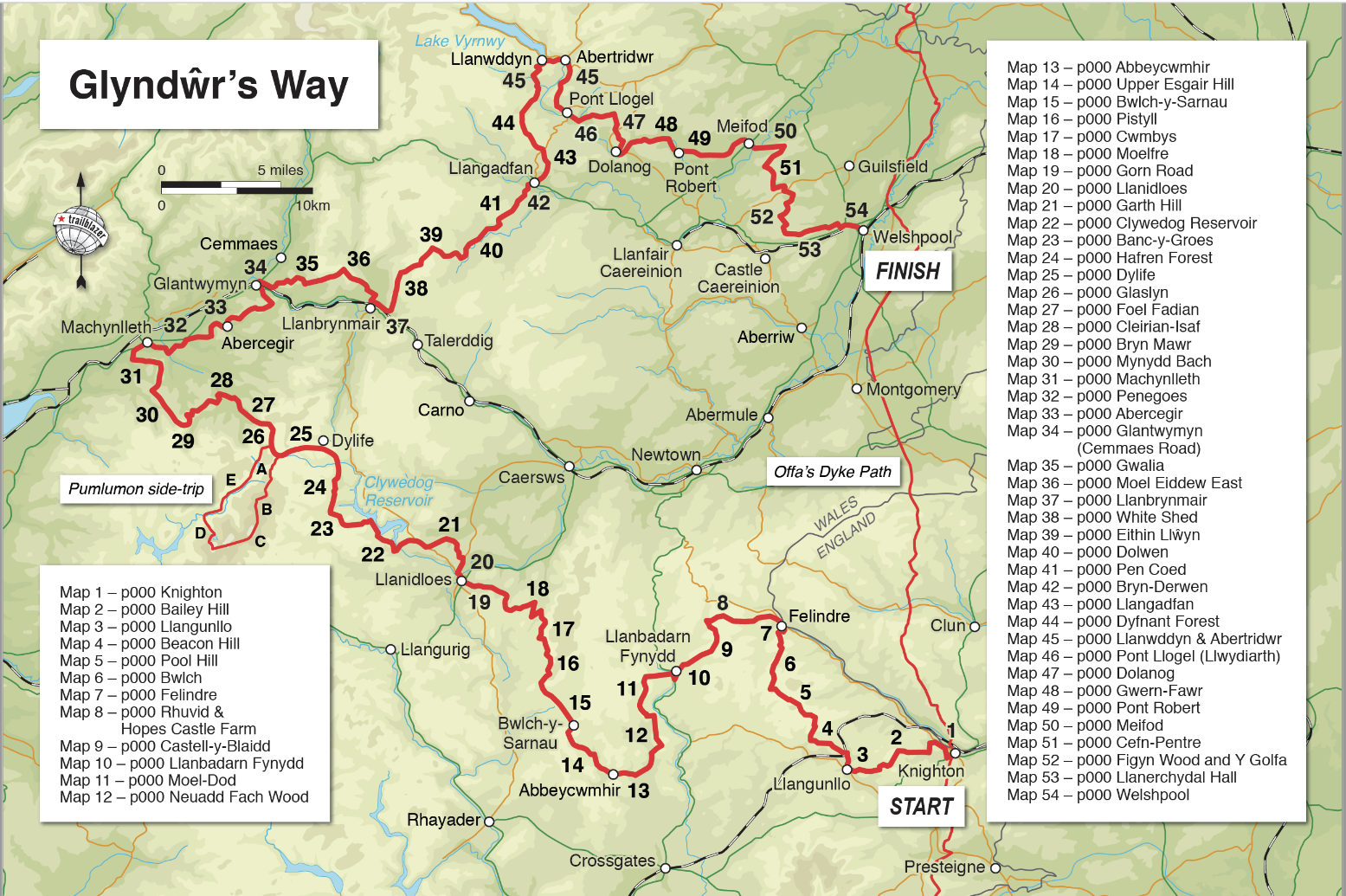
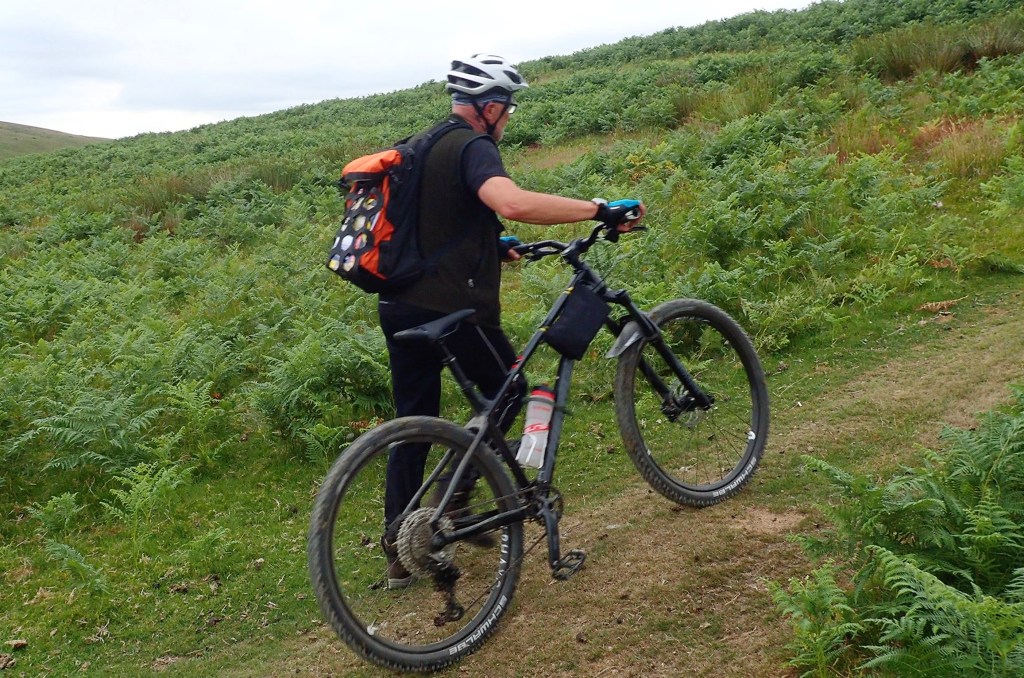
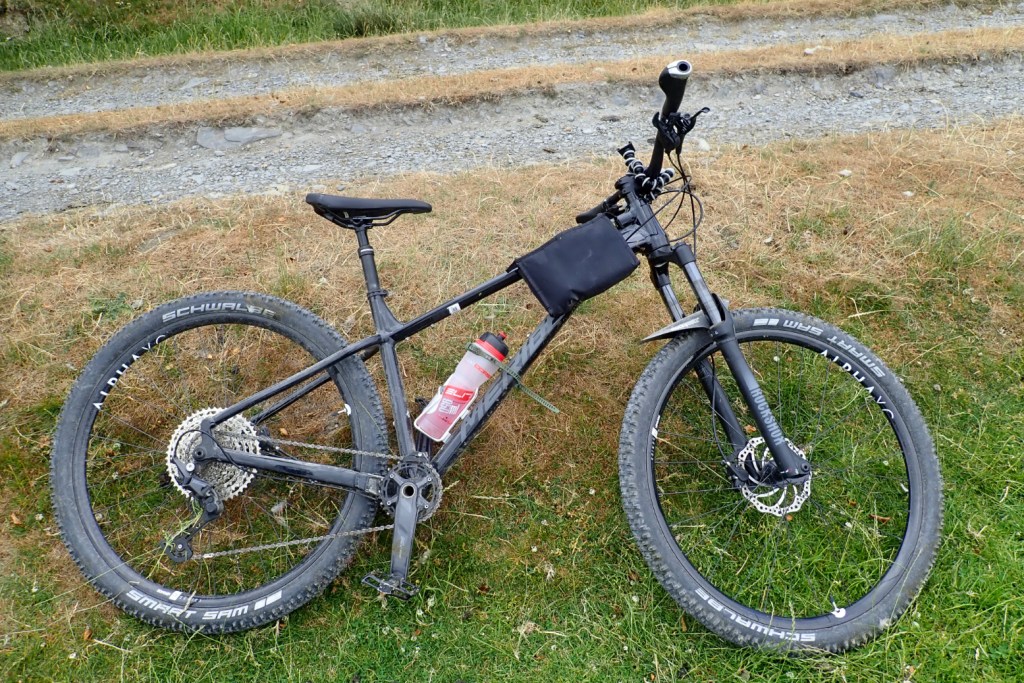
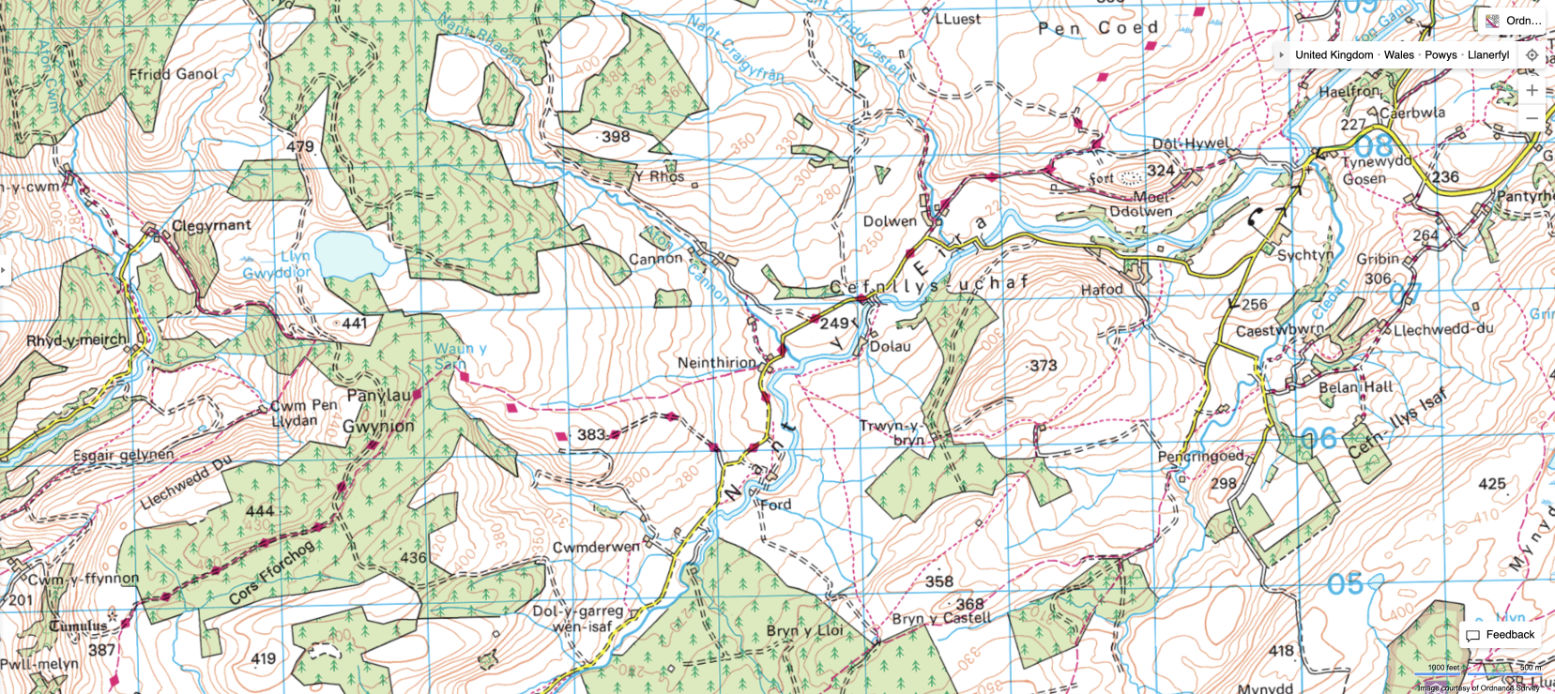
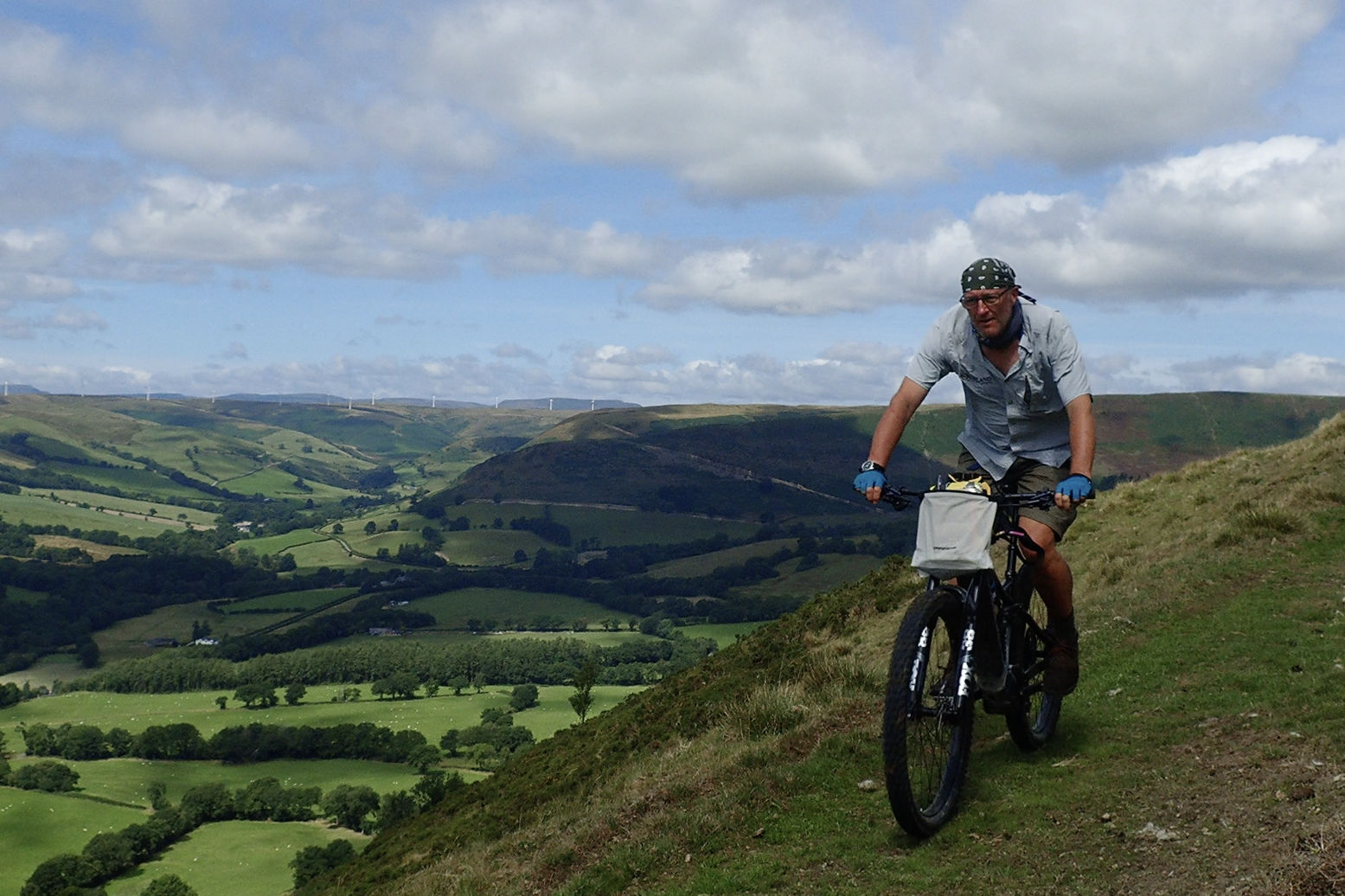
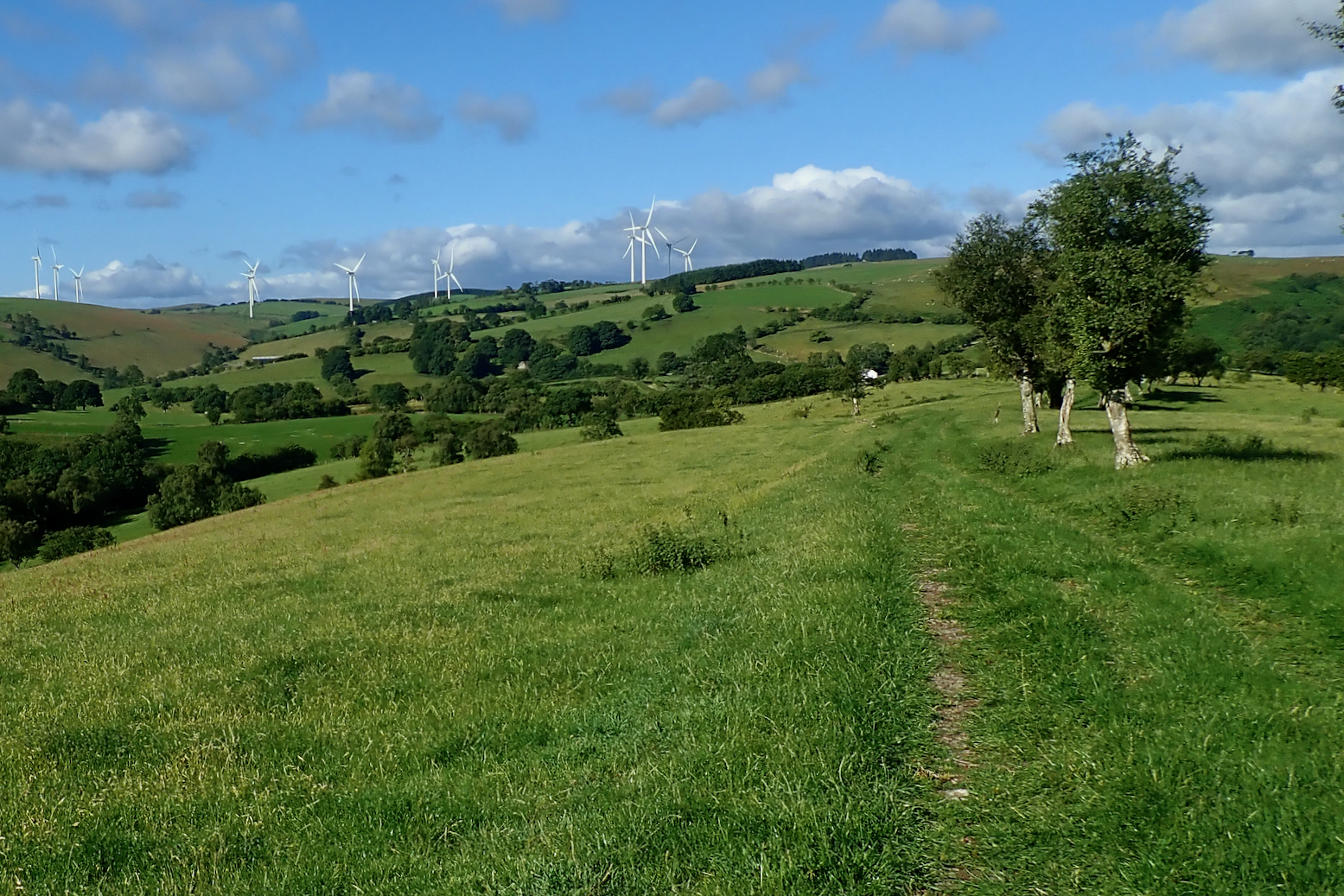
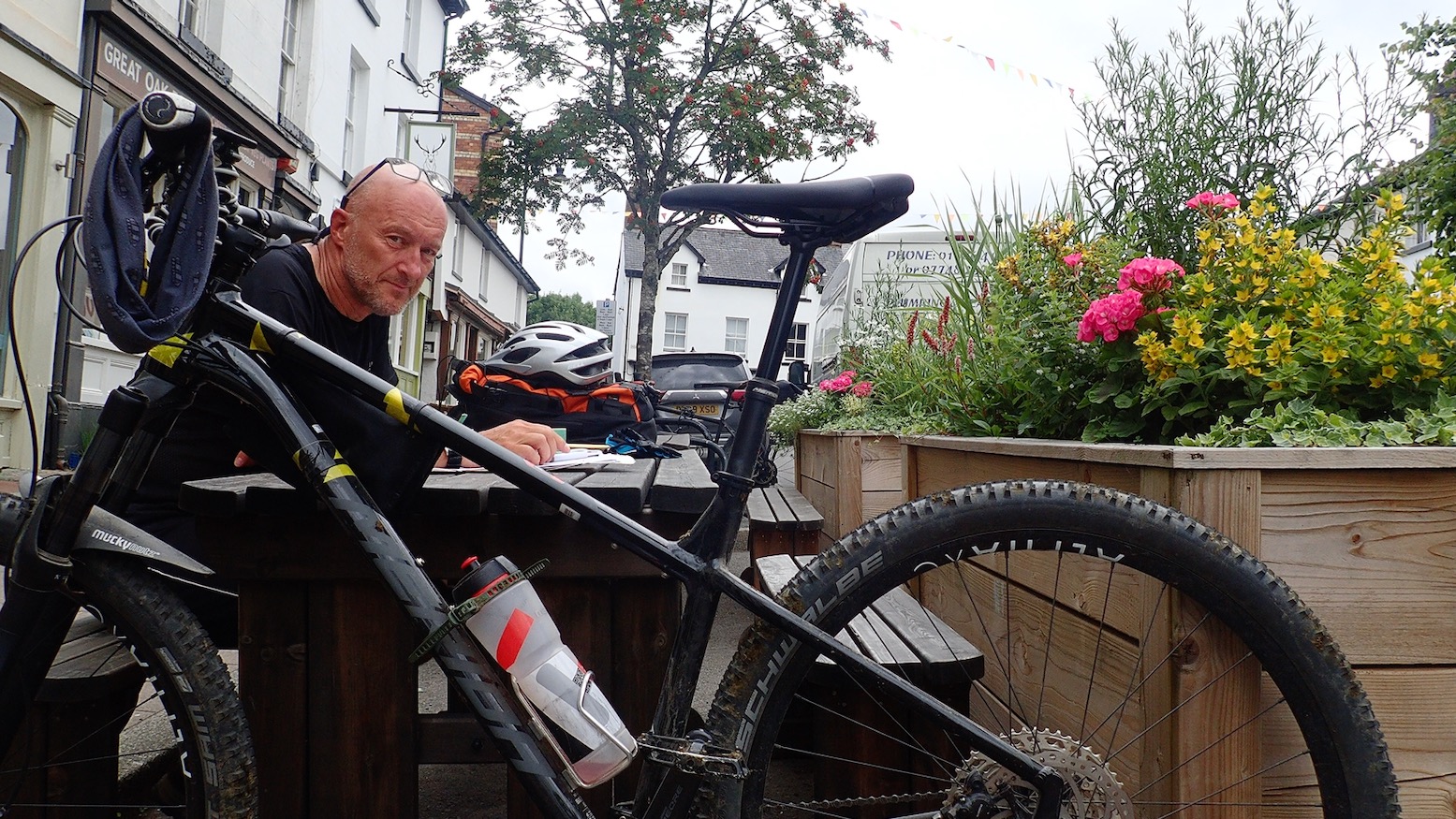
Traversing that region is the Glyndwr’s Way (right), a 134-mile National Trail no one’s ever heard of. It crosses Powys, Wales’ biggest county but with the population of Canterbury. Walking the 9-day route for a new guidebook back in March 2022, I clocked loads of sections that would’ve been a blast on an MTB. So in August I came back on my Merida hardtail MTB. With new guidebooks like this, it takes a couple of passes of the entire route to get the mapping and detail right. A pushbike sped up the job and so saved a bit of money.
Kashgar
And a blast on my Merida Big Trail 500 I did have, even if it was no lighter than the Specialized Stumpjumper I bought way back in the mid-1980s. Like most people, I’ve owned MTBs pretty much no-stop since that time. In 2007 we cycled the Karakoram from China to the Hindu Kush, then came back the following year to do the Himalayas (video below). Compared to motos, cycle overlanding is so simple: fly a bike in (or buy used in China, like I did); no paperwork, simple mechanics and when you get puffed out at 5000 metres on the way to Tanglang La, sling it in the back of a passing lorry.
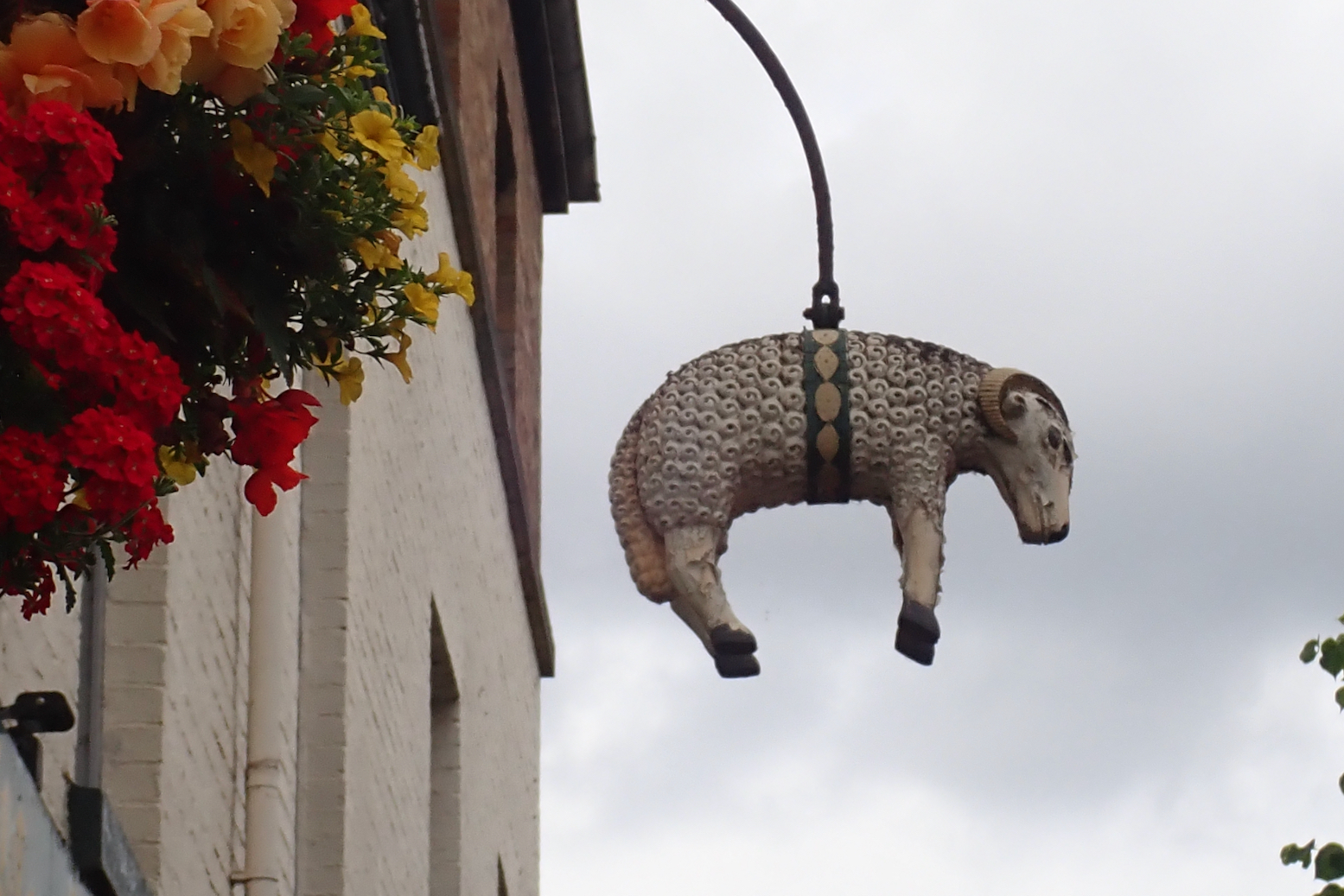
Do sheep dream of electric sheep?
But guess what! I’m not 45 any more and hardtailing the Glyndwr’s I soon remembered cycling up a rough trail consumes loads much more energy than simply walking. Soon I ended up feeling like a sheep hung out to dry.
Makes sense to me!
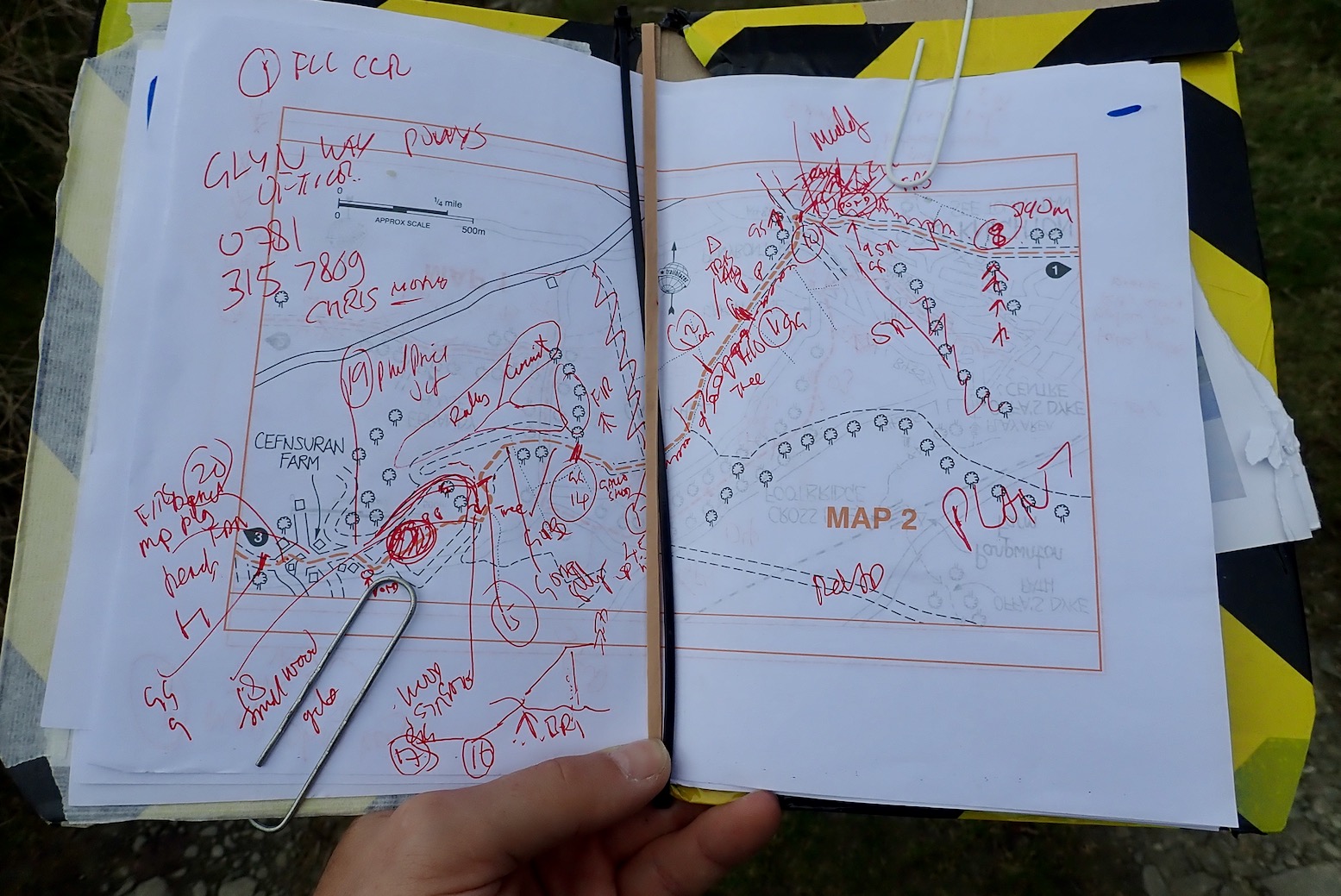
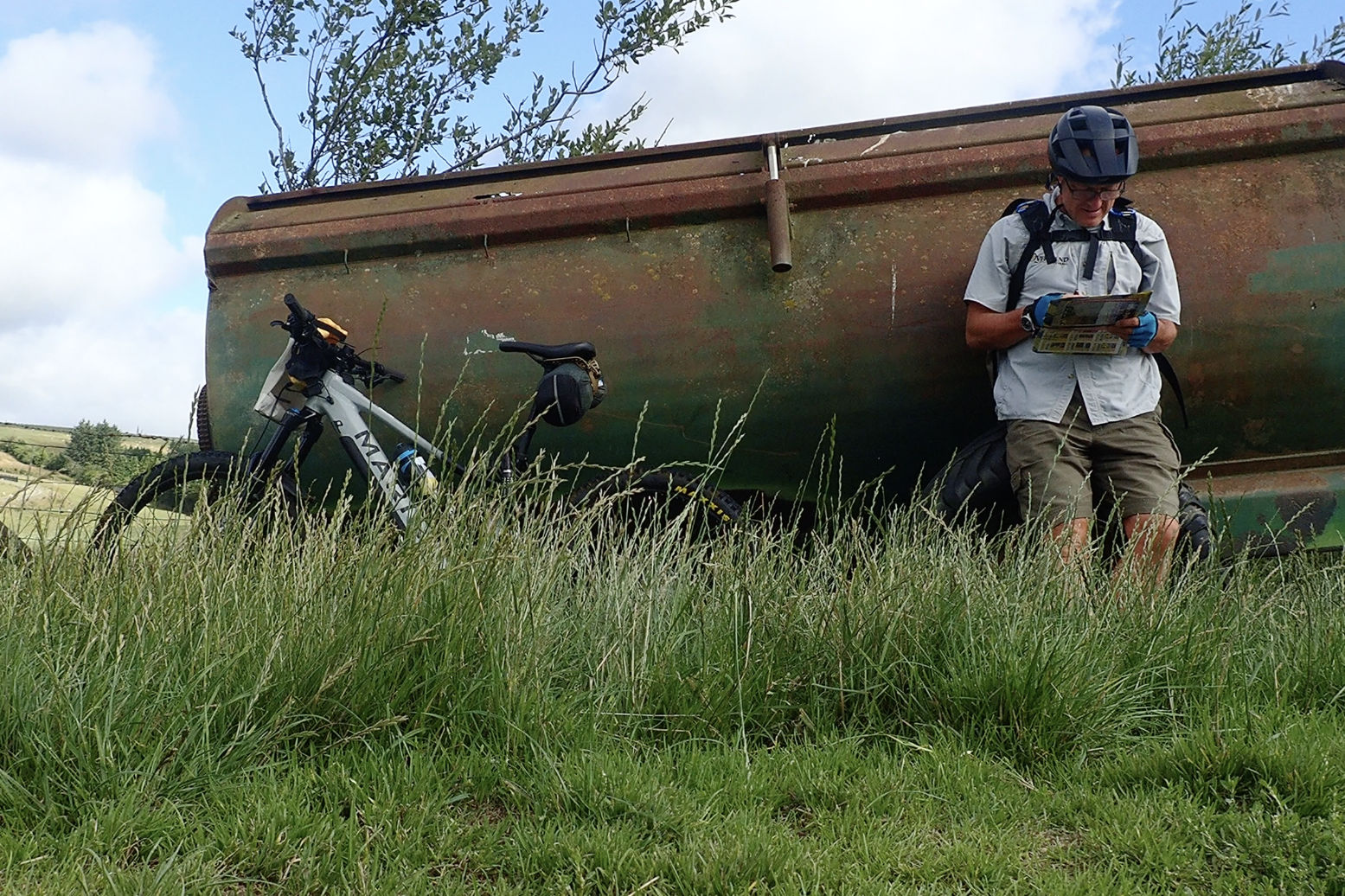
My time and money saving plan to cover two typical 15-mile walking days in one soon got stretched, not least because I have to stop constantly to annotate the maps (right) and negotiate the endless sodding gates. On the Glyndwr’s it’s around 15 miles of nothing to get to the next lodgings and with no public transport to speak of.
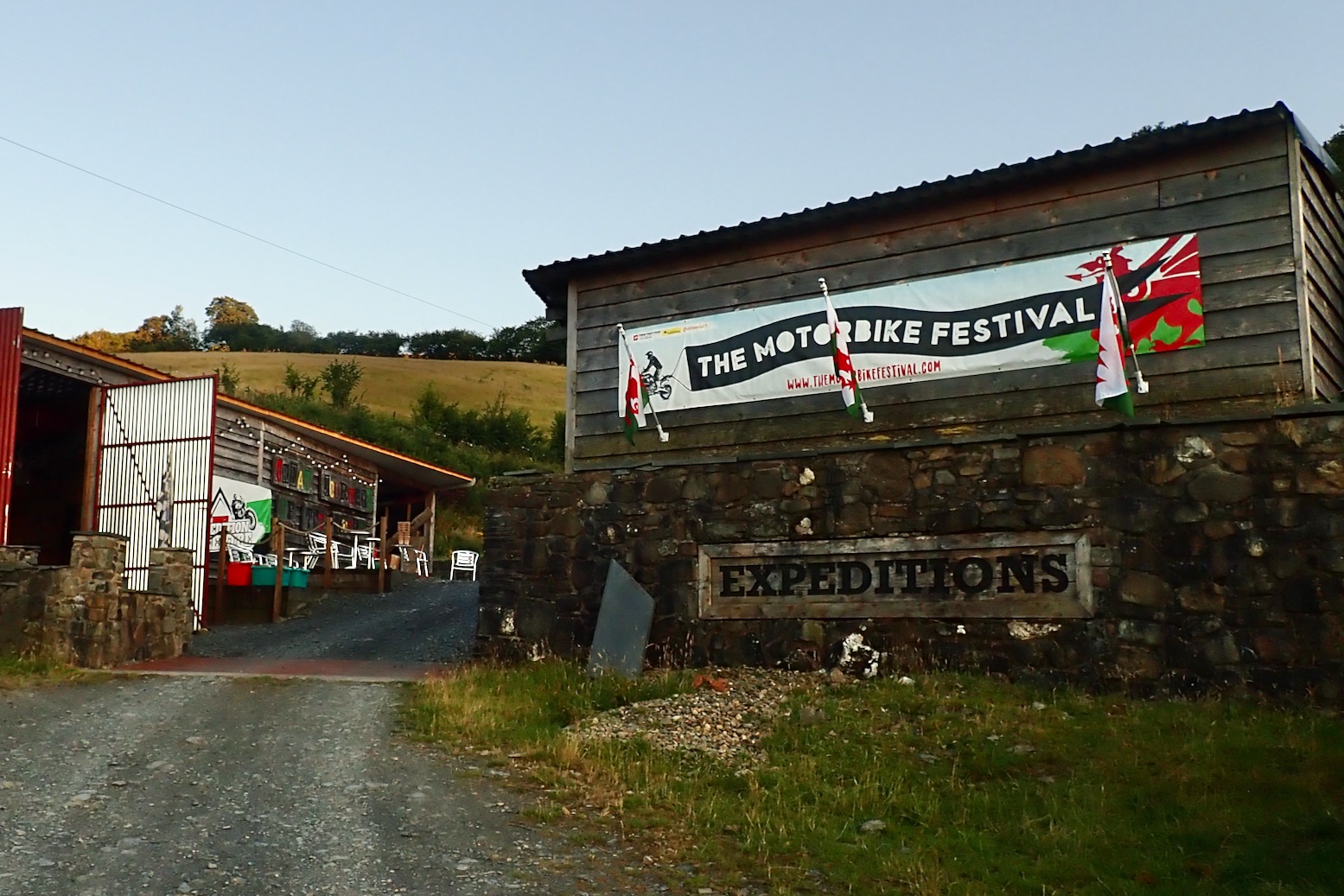
I ticked off a couple of the walk’s nine stages, then realised this wasn’t going to work so left the Merida at Nick Sanders‘ place near Machynlleth (left) where I was doing a moto talk later that month. Then I reconsidered renting an e-bike. With a bit of help I could achieve my two-days-in-one target plus enjoy trying out e-bikepacking.
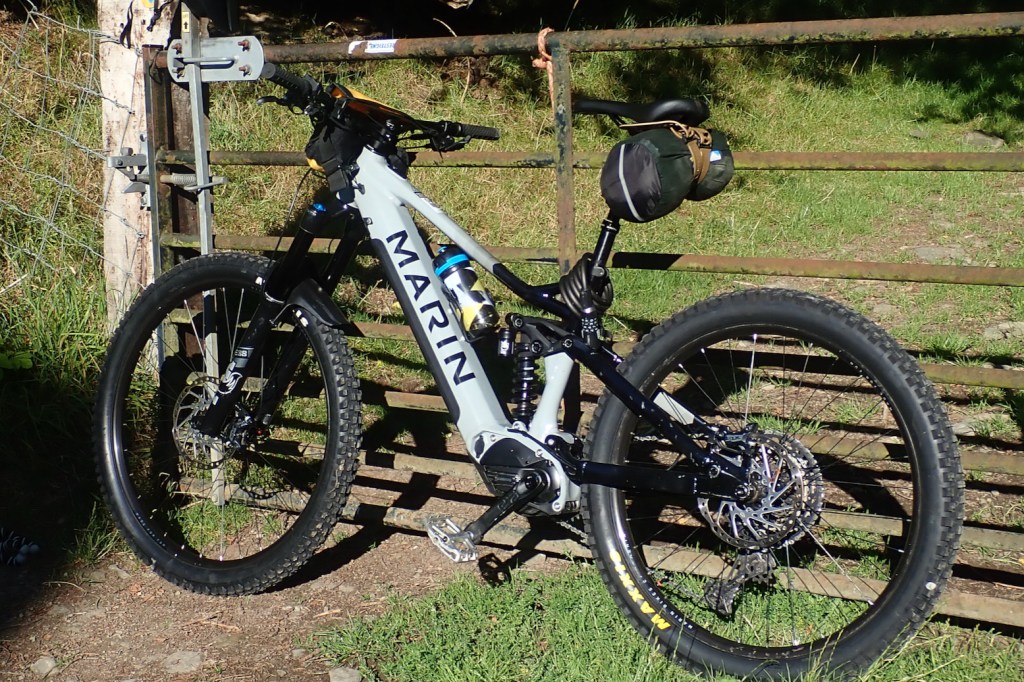
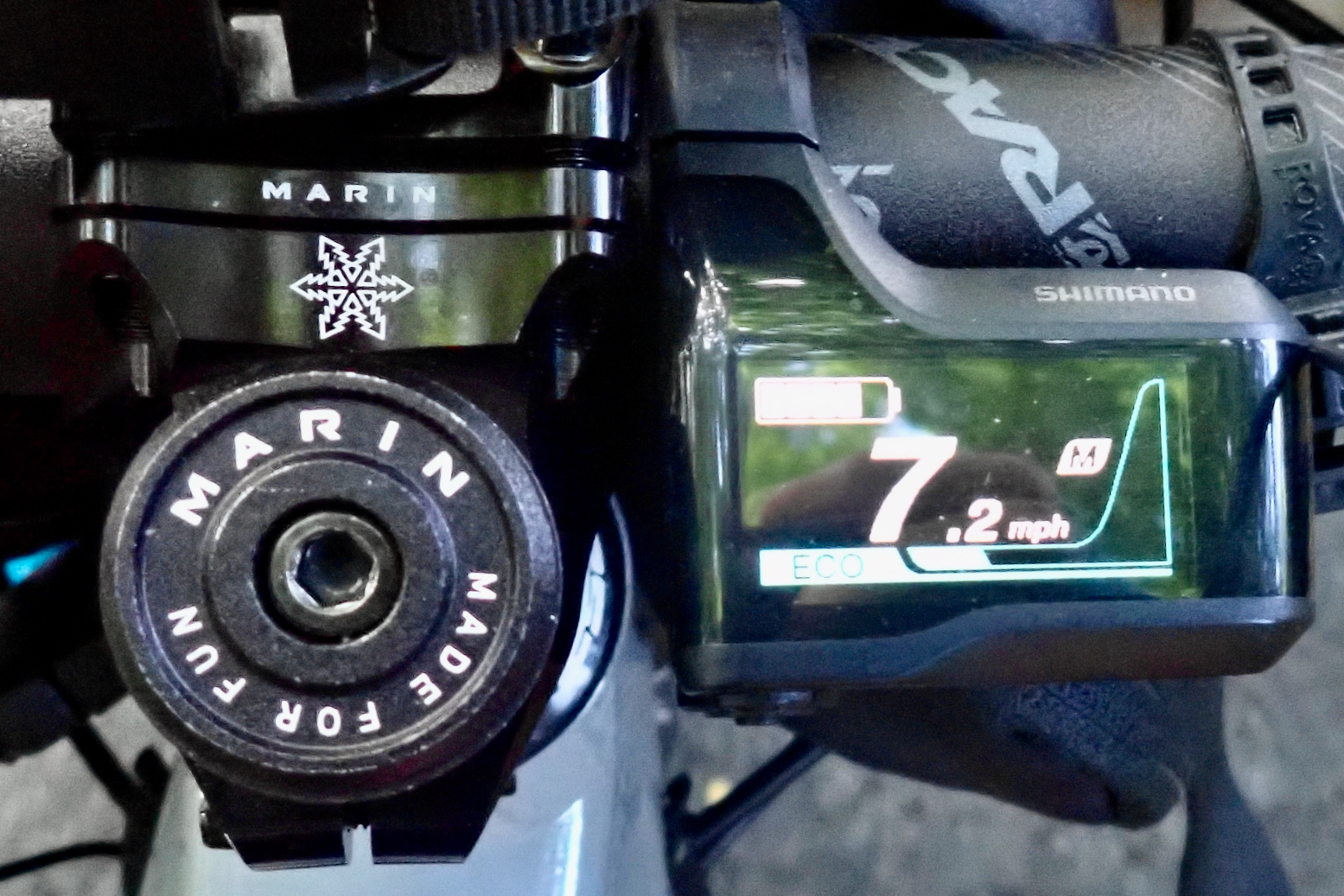
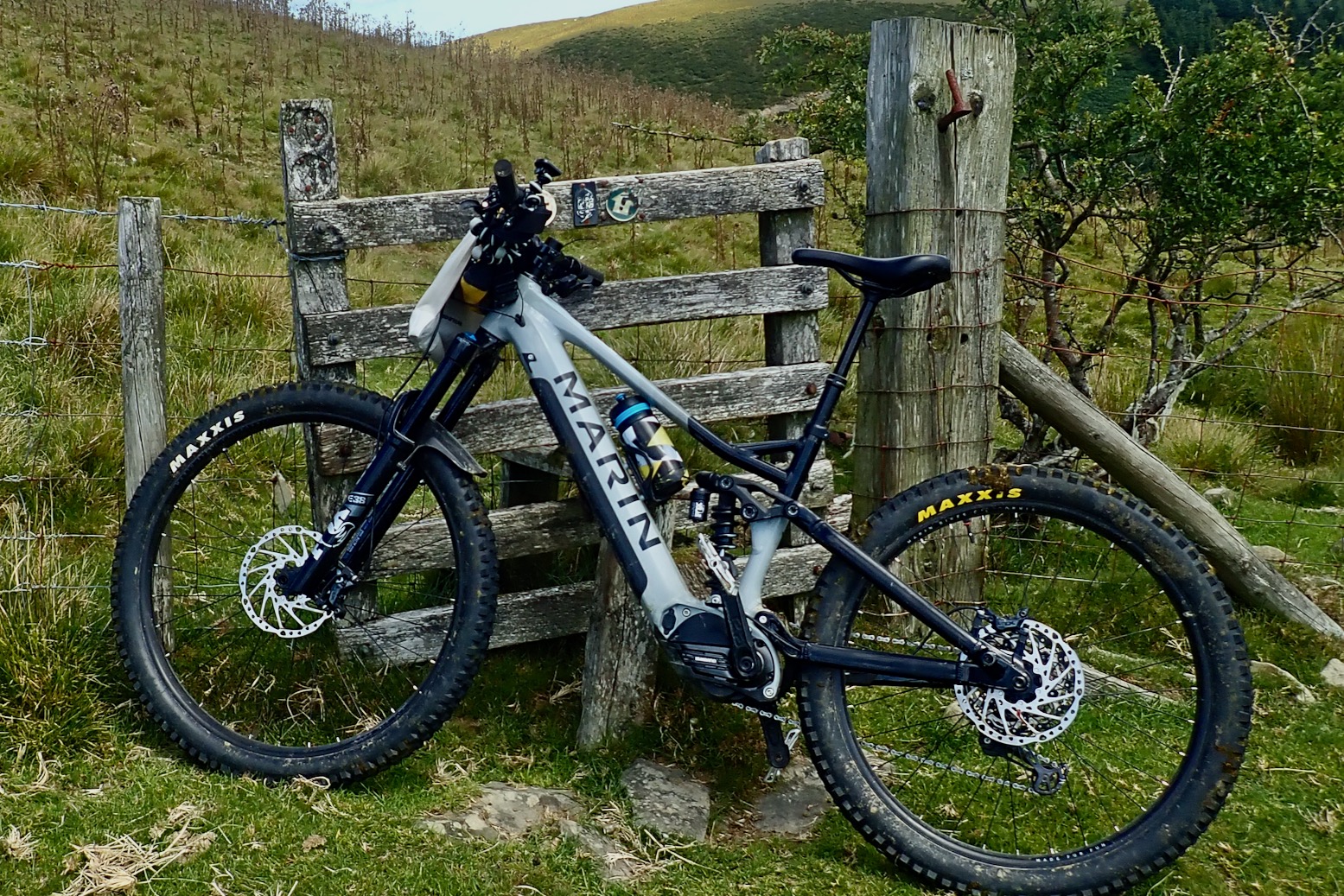
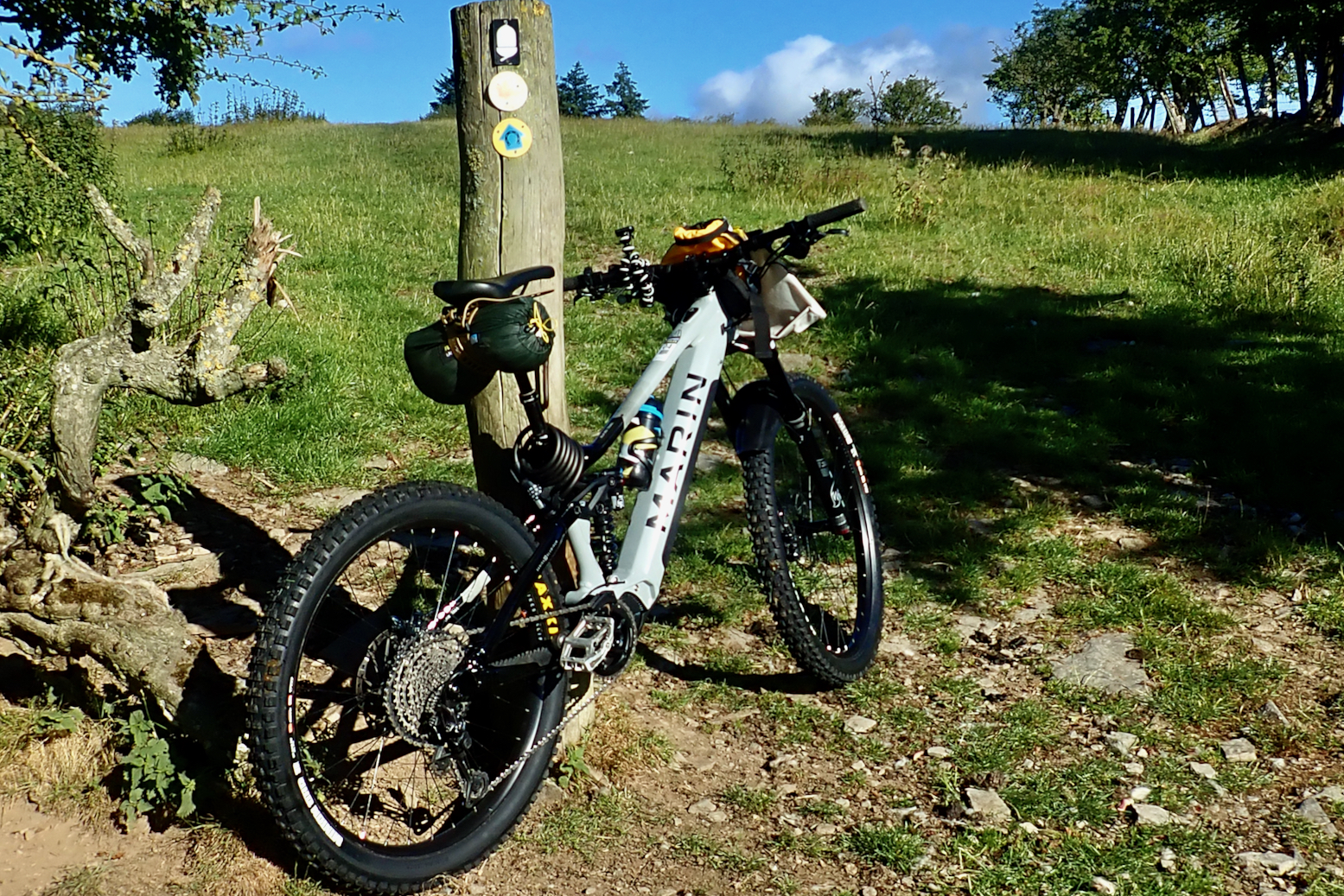
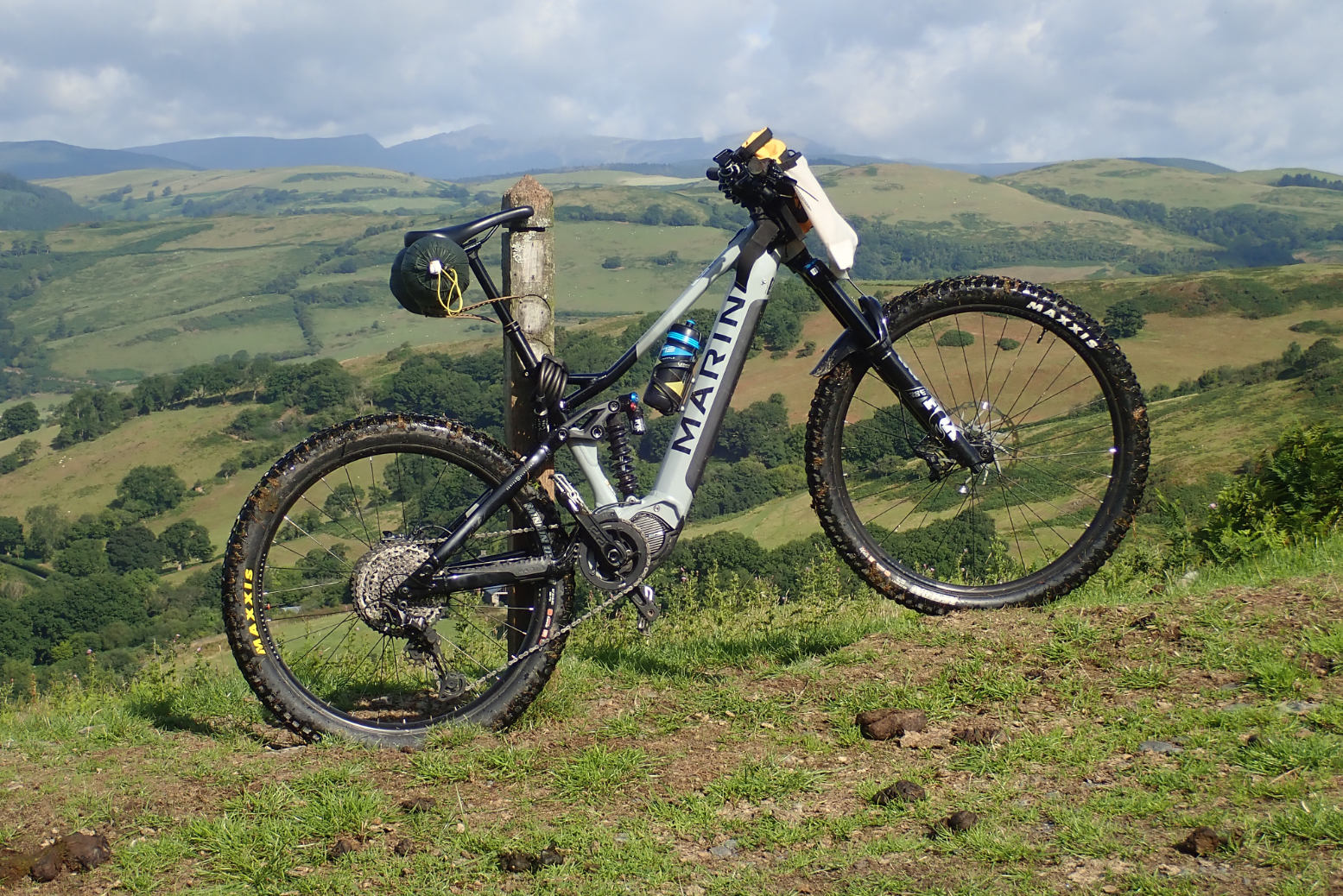
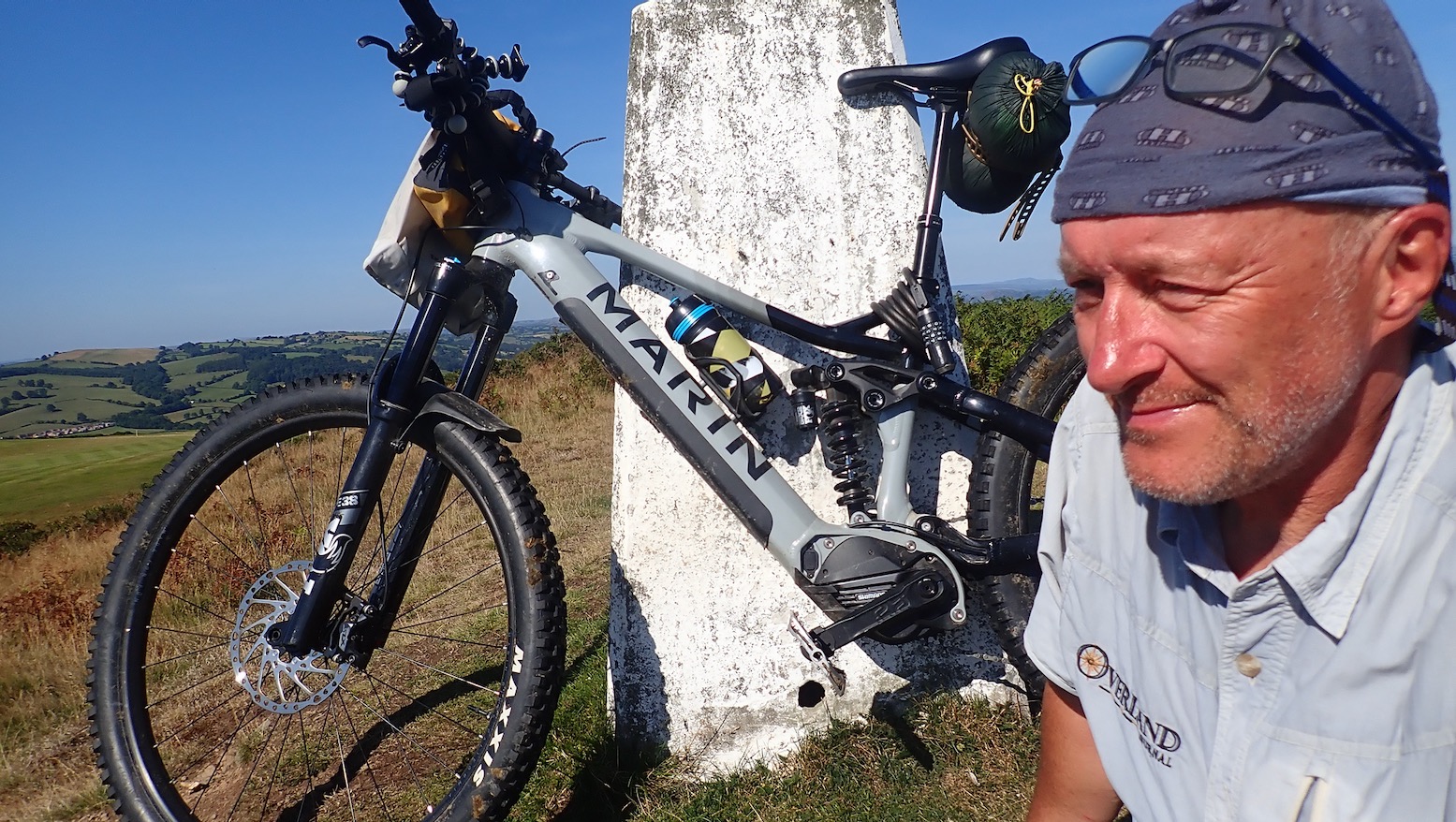
Range anxiety Most e-MTB rental places want you to go round and round their closed courses, but I found a go-where-you-like outfit in Hay, 38 miles from my start in Felindre, on the English border. Leaving it all a bit late, all they had left was nearly six grand’s worth of Marin Alpine Trail E2 in Large, when I’m more of an XL. The full suspension was a bit of a novelty, as of course was the latest Shimano EP8 motor. It gave three levels of pedal assistance: Eco, Trail and Boost and claimed up to 60 milesof range.
Clean and fully charged Marin – not for long
With my gross weight of 105kg with baggage, I translated that to 40 real-world miles, and soon I was huffing and puffing along hilly back roads from Hay to Felindre. Sticking resolutely to Eco until I knew better, the reality of e-pedalling soon became clear: climbs are far from effortless – when it’s steep you have to give it some welly, even with 12 gears.
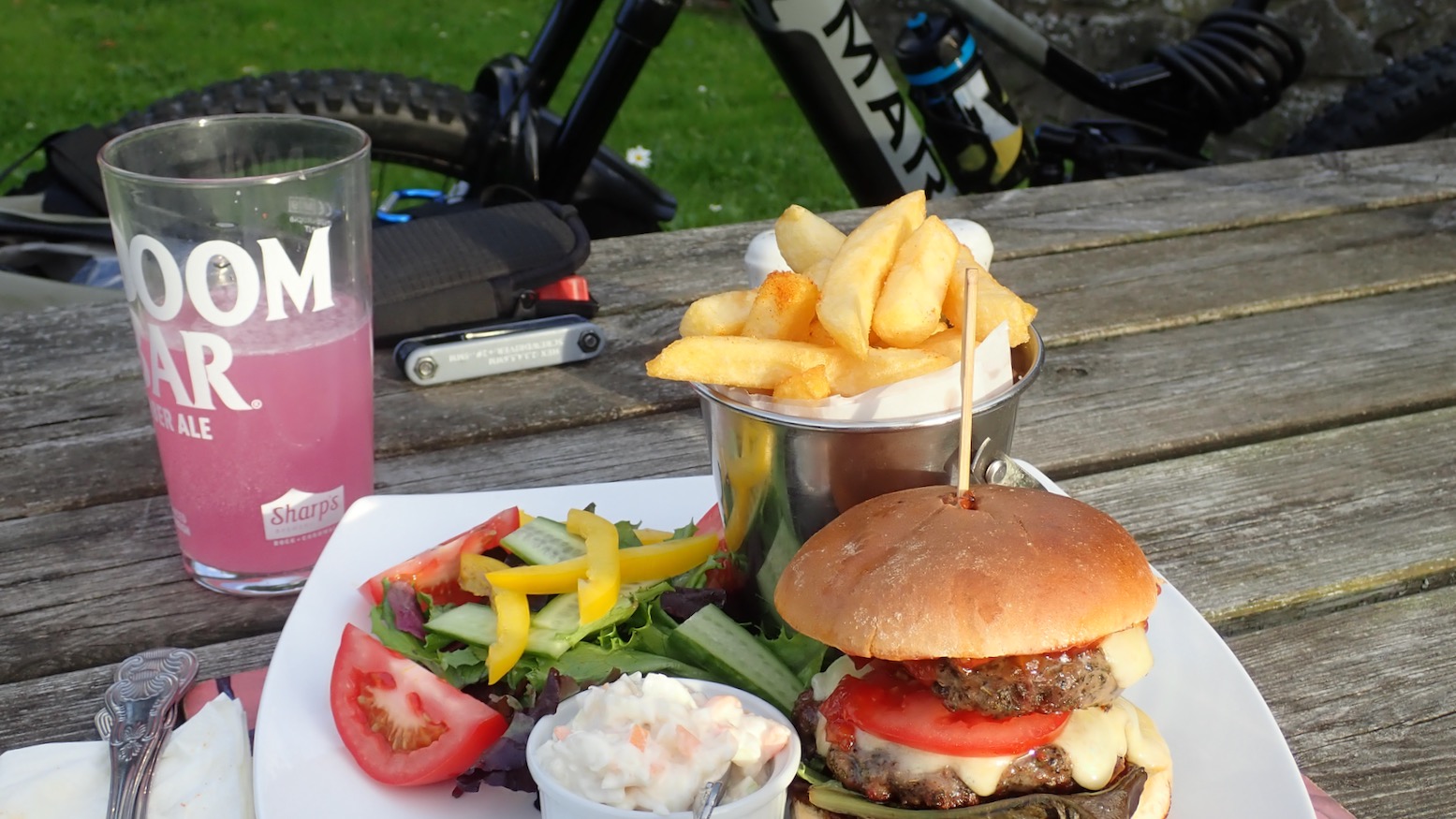
According to UK laws, e-assistance cuts out at 15mph, but despite the knobblies I still managed to hit over 40mph on some longer downhills. After a fat-tyre dinner at the Radnorshire Arms in Beguidy (left), I camped in Felindre (the only place which charged for an overnight charge), ready next day to cover about 35 miles on road and trail to Abbeycwmhir and beyond Llanidloes to a B&B on the far side of the Clywedog reservoir.
Keep the white power bar off the spikeThe winding trail of Glyndwr
Stile. You can do this…
One good thing about having previously walked the trail was that good or bad, I knew what to expect. And one of those good, bad things was there are very few stiles (left) on Glyndwr’s Way. Lifting 25 kilos of Marin without damaging it or yourself soon takes it out of you.
Managing the Economy I was warned that engaging ‘Boost’ would kill the battery, and that switching off on smooth flats or long downhills (to save battery) could temporarily boggle the electronics. Initially I was over worried about ending up pedalling 30+ kilos of flat-batt e-bike on the dirt, though of course that’s exactly what we did in the Himalayas once you factor in baggage weight. So for the first few days I only blipped into ‘Trail’ mode for a few minutes a day and never used Boost.
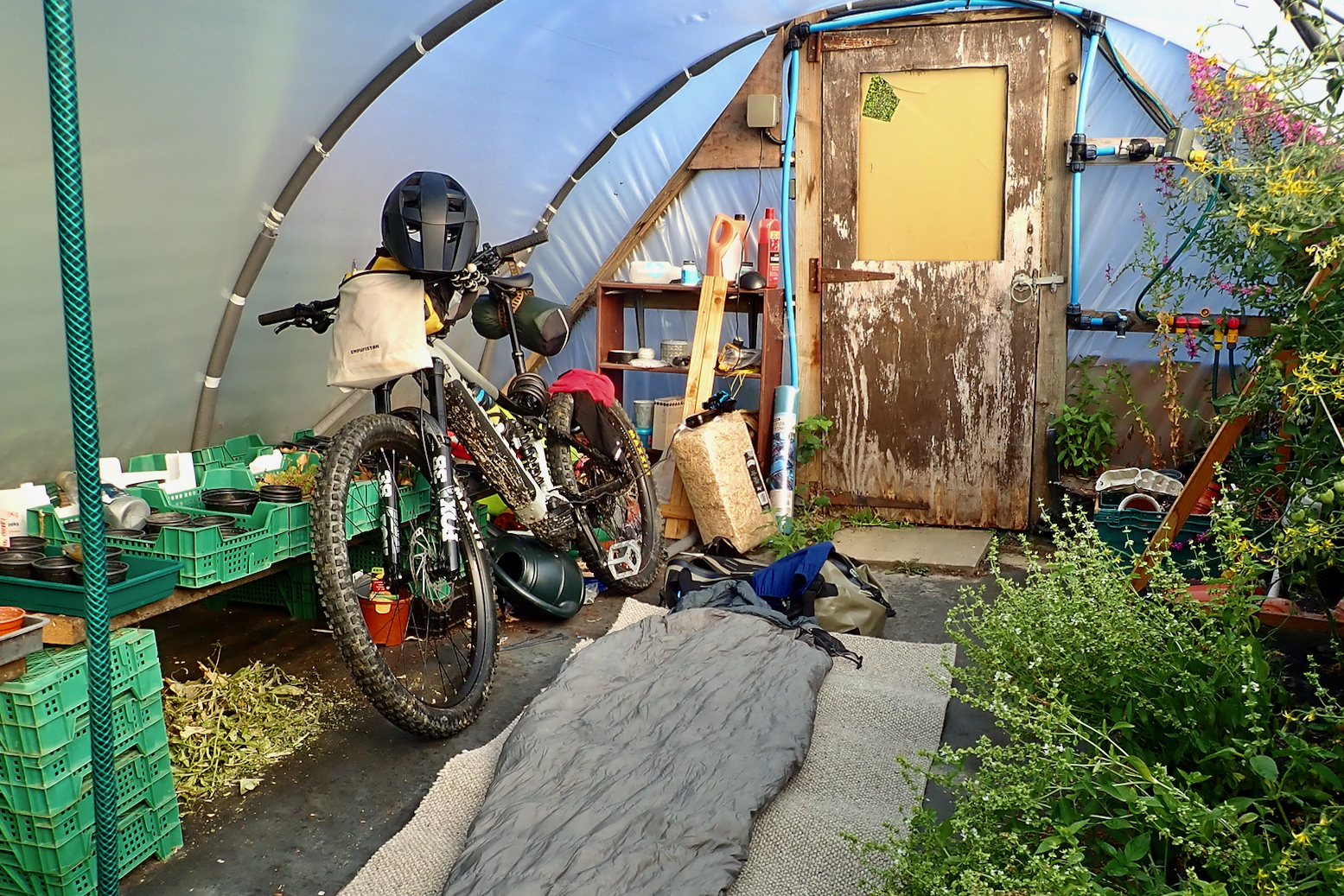
Arghhh Got the B&B date wrong – but there was room (and a wall plug) in an aromatic polytunnel
Nick Sanders in Finland
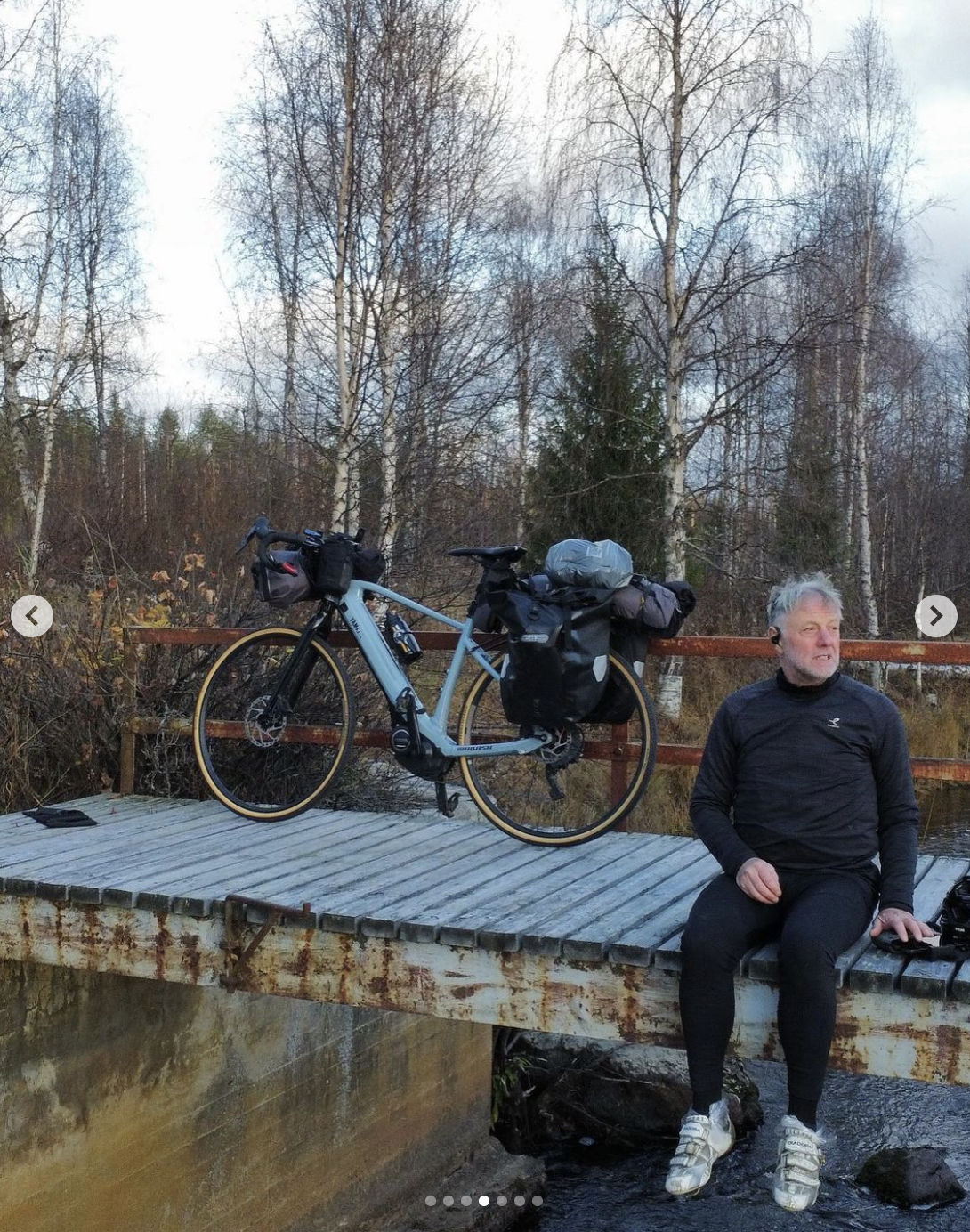
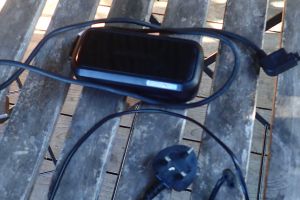
That evening I reached my remote B&B with one bar flashing and pretty knackered, even though it had been 60% hilly roads. In my rush to plan this trip, I got the date wrong by a week so ended up sleeping in a polytunnel out back. On reason I was stuck here (the next possible place was 5 hilly miles) was that this £6k bike only had a slow (overnight) charger, not the ‘1 hour for 80%’ fast charger I’d read of somewhere. You plug it directly into the motor, through the downtube battery can be removed with tools. Imagine what a game changer fast charging would be. As well as being able to switch off reliably. Though realistically 30 full-on off-road miles is all you could cycle in a day, on the road you could do 30-40 miles, recharge over a leisurely lunch, then do the same in the afternoon. In fact Nick Sanders is doing that right now from Nordkapp to Gibraltar on one of Yamaha’s new Wabash e-bikes.
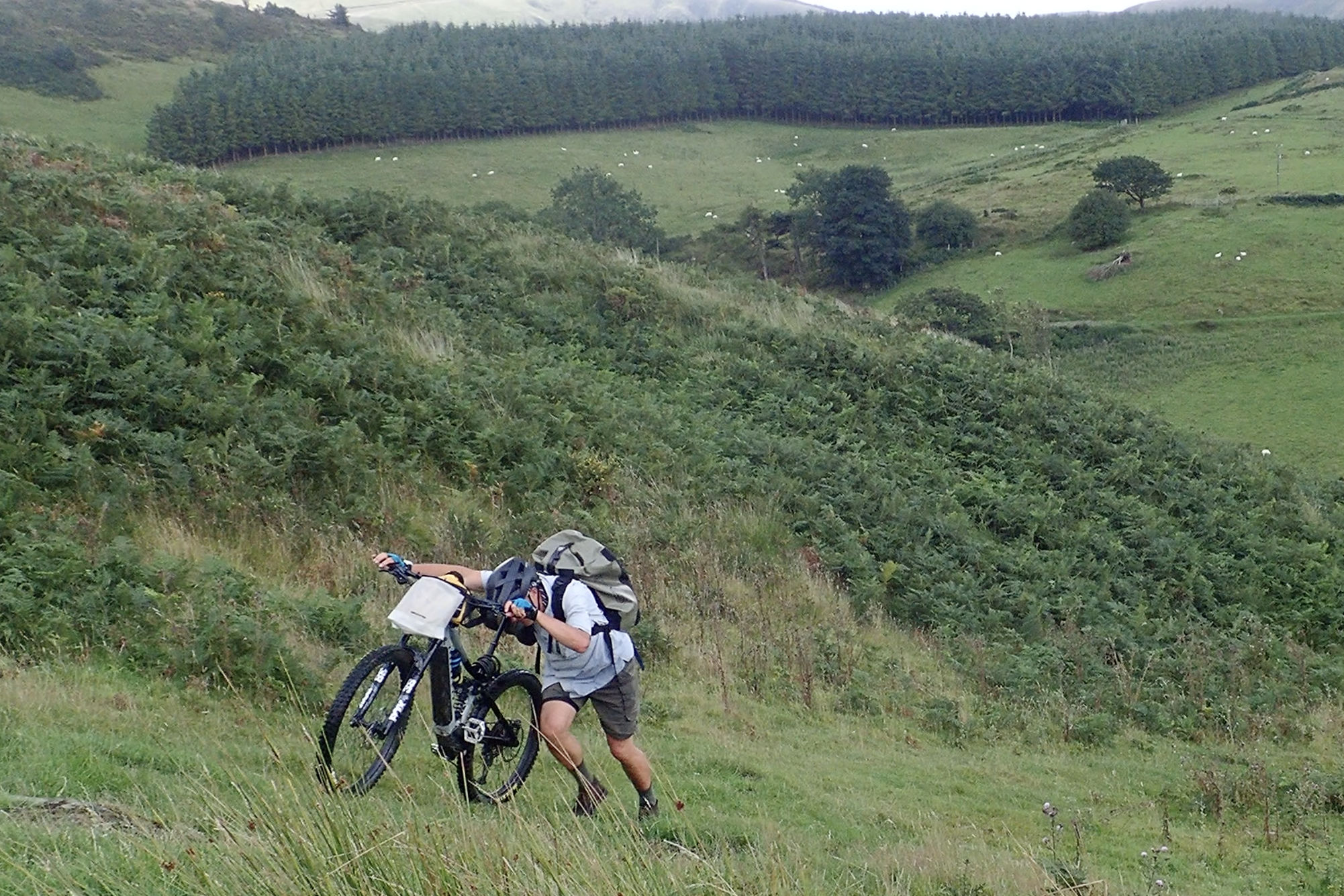
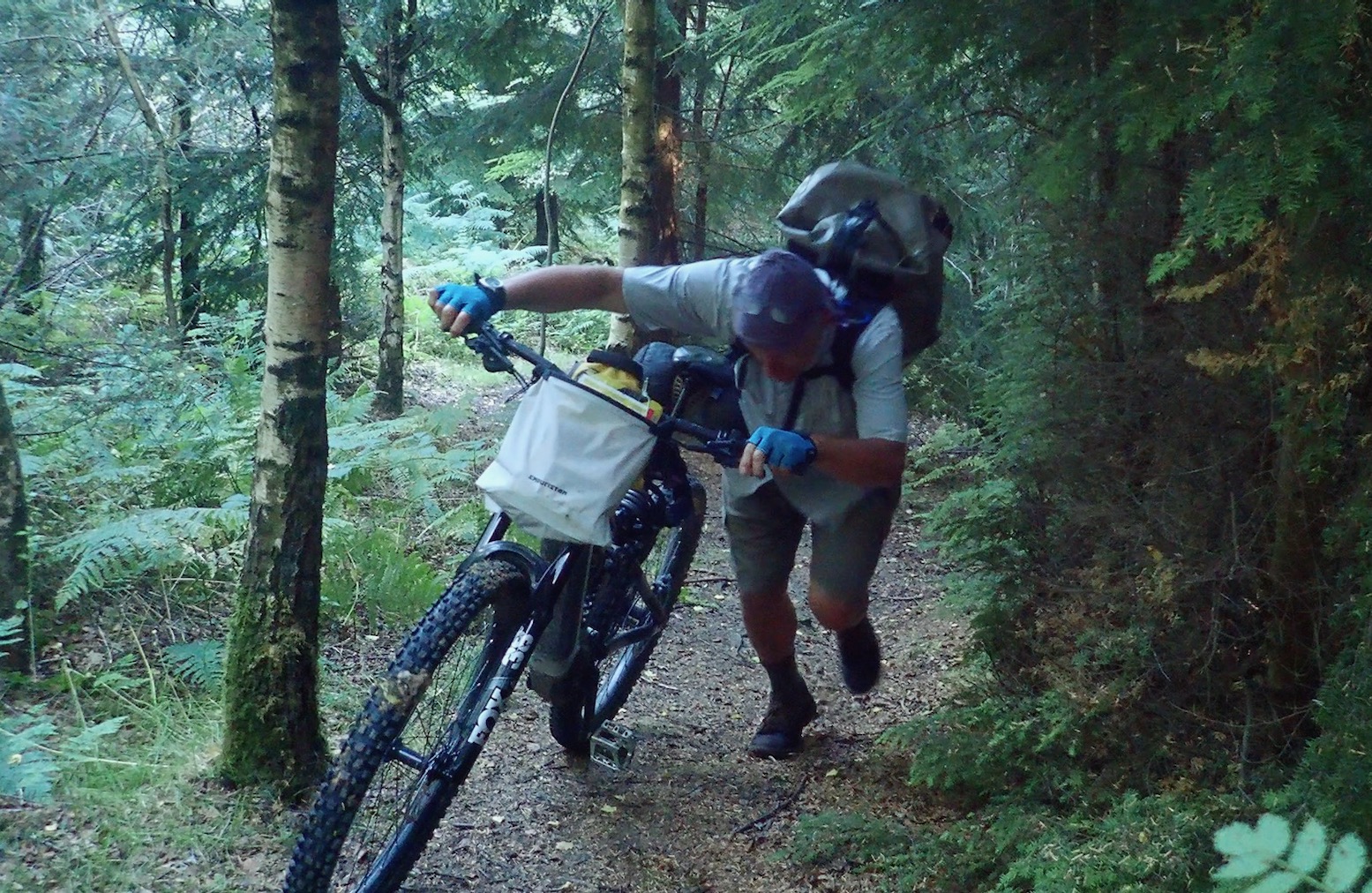
Walk-Assist Mode One huge annoyance I blame on both Marin’s online blurb, bike manual and the bike rental place is there’s no mention of walk-assist mode – a ‘hand throttle’ you can use to help push the bike up steep or rough slopes that are barely rideable or are too battery-devouring. Without it, many times I ended up pushing the bike like Chris Bonington on Annapurna: stagger 5-10 paces; rest; stagger 5-7 paces; rest… Only on the very last day did I accidentally nudge the toggle switch into walk-assist which popped up on the display. But I didn’t know (or was too knackered) to know what had happened, so struggled on upward. That really would have eased my week on the Marin, along with being able to rely on the seat post dropper which was set right on the limit for my leg length and tended to collapse (ruining my Exped sleeping mat on the rear tyre). An XL sized bike may have dodged that.
Walk Assist explained
In fact, even with e-assist, 30 miles a day got a bit much for me after a while. Stage 6 out of Mach was only 16 miles but 80% trail with no less than 70 gates to Llanbrynmair (LBM). By the time I got there, overdid lunch and chatted with a very rare GW walker, I realised I probably didn’t have it in me to navigate the 11 miles rising steeply up onto the tussocky moors and over to Llangadfan. Instead. I took a lovely road ride to pick up the GW in the Nant yr Eira valley, then backtracked next day from Llangadfan back to LBM with no baggage, to tick off the missing section – much more fun!
The heavenly valley of Nant yr Eira east of Llanbrynmair. Check it out next time you’re there.
I was now getting the hang of optimising the bike’s economy and came in off that 30-mile day still with 3/5 bars. I even treated myself to a spot of turbo Boost but was surprised how little it did, compared to switching from Eco to Trail (but see comment from Ian, below). Time it right in the right gear and Trail really can feel like the hand of god giving you a gentle but firm push uphill.
No overnight clobber – much more fun!
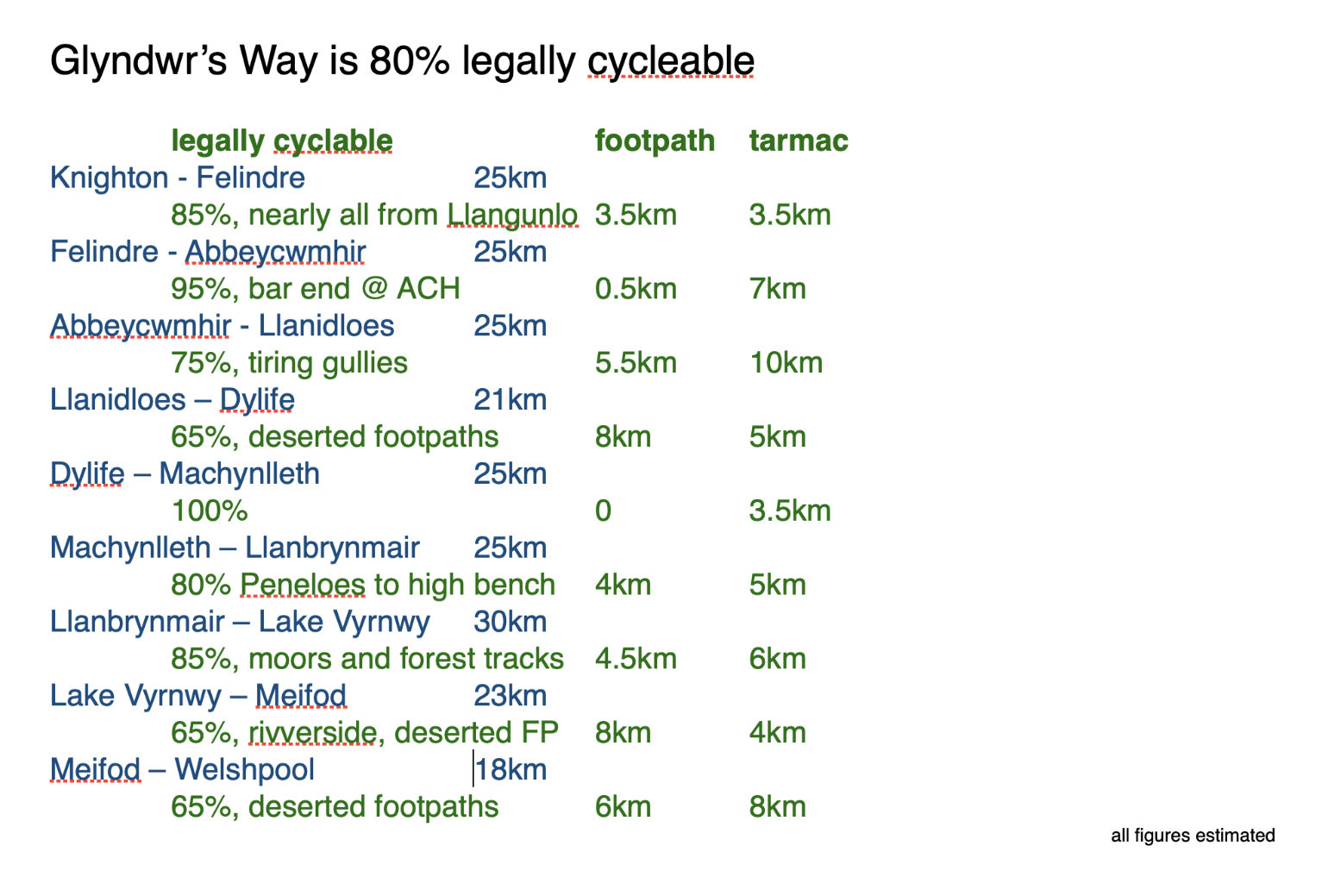
About UK Rights of Way Just as motos must stick off-road to the few remaining byways, BOATs etc, pushbikes and horses cannot ride footpaths and must stick to bridleways and the above. Glyndwr’s Way switches constantly between footpath and bridleway (plus tracks and backroads. The GW is 27% asphalt and is 80% legally cyclable – in other words only 20% is footpath.
Regarding that 20%, while I agree that in the congested Peaks or the Lake District riding footpaths would be bad form and is in fact a civil wrong or tort – in the lost paradise of mid-Wales I rarely saw anyone anywhere, and when I did, none batted an eyelid as they’d rightly have done had I been on a cackling WR450 dressed like a transformer.
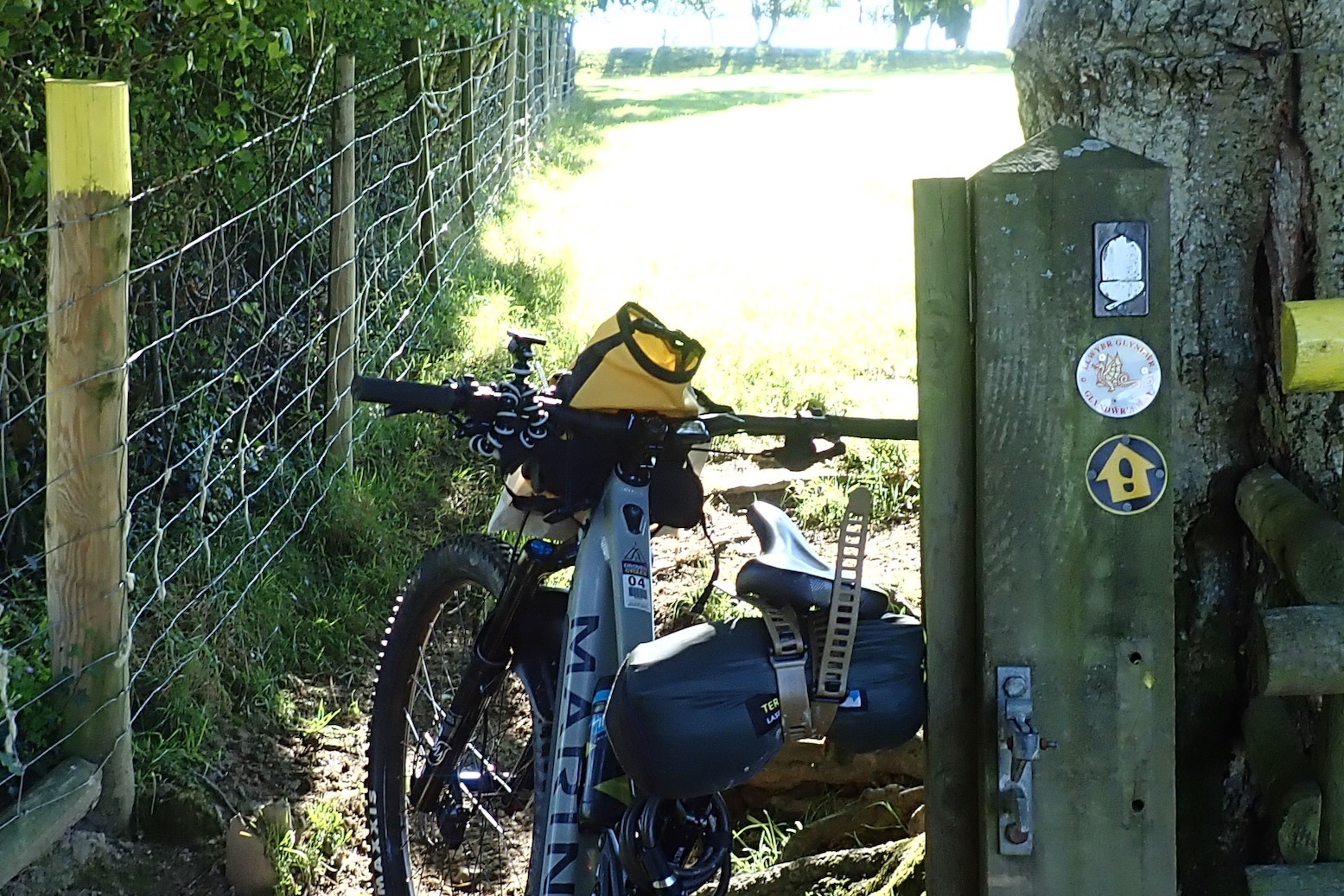
Blue arrow = bridleway ✅ Yellow = gerroffmoipaaaath!!
After a week and some 200 miles, temperatures were creeping back up to the 30s making riding more tiring. In Welshpool I completed my job and caught a train to Hereford where they picked up their sheep-shit splattered Marin. My shins were all scratched to buggery from the pedals and I was still picking thistle thorns out of my knuckles and legs weeks later. But I’d had a great mini-adventure.
2022 Marin Alpine Trail E2 250W, 85Nm Shimano STEPS EP8 motor and 630Wh removable downtube battery
Charger, about 500g. Cable lock, the same
Clean, integrated design and subtle graphics Low standover height – really helpful when stopping all the time SLX 4-piston brakes Firm suspension (did not meddle) Pleasing boost from Eco to Trail mode Stay in Eco where possible and range exceeds what I can ride off-road on a good stay Seatpost dropper (could not use reliably) No flats or slips on Maxxis Assegai tyres (tubed) Clear, simple display Though I locked out the front as needed, I can’t say I detected any suspension bobbing from the unlockable rear spring. Maybe e-assist helps I’m a big fan of 1x drivetrains; did that to my old Charge Cooker years ago Ended the days tired but not beaten up (ie; full sus may well work, even for touring)
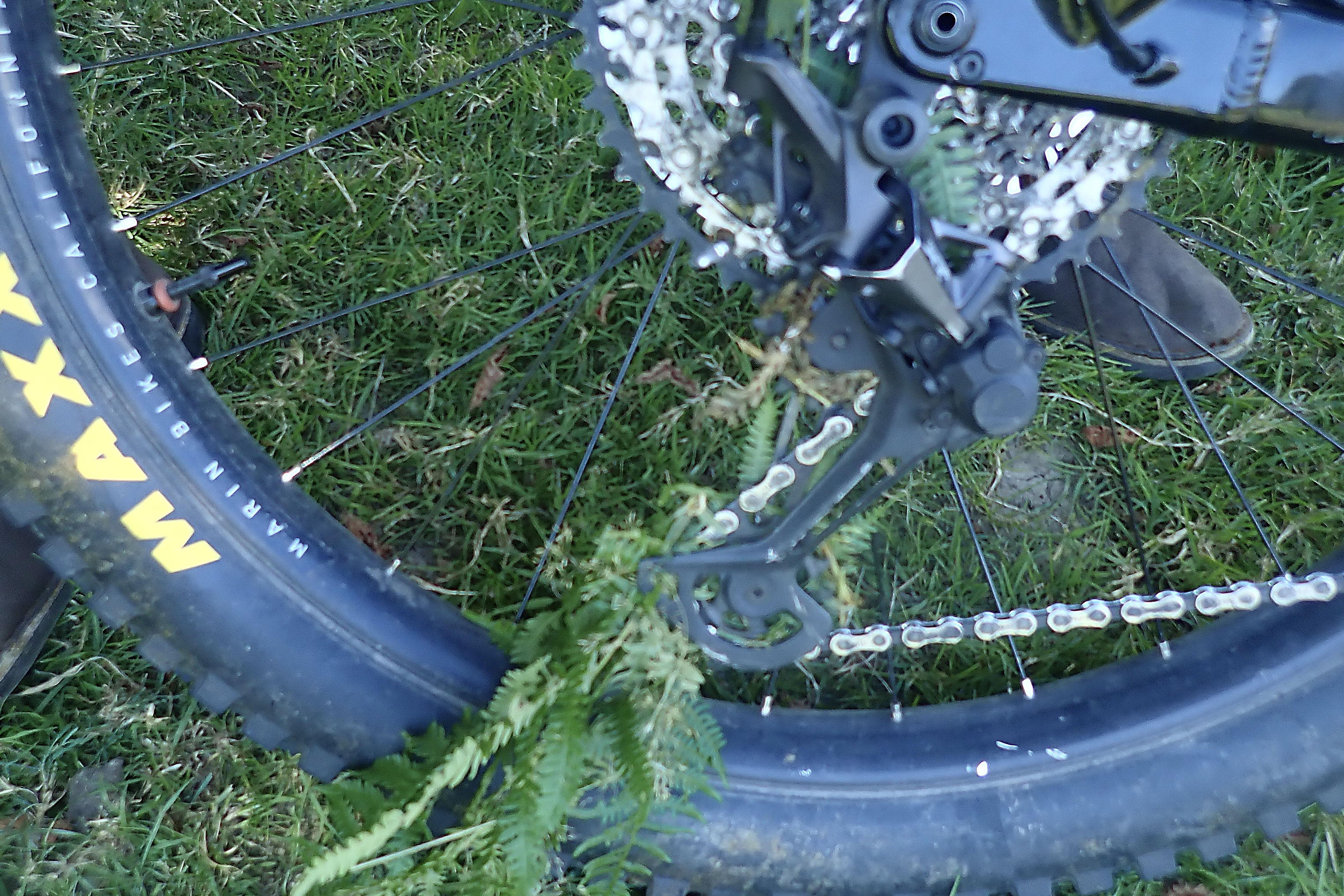
Fern catcher
£5765 (but apparently it’s a bargain and going for under £5k late ’22) Weight when pushing unassisted or lifting No mention on marin.com about ‘Walk Assist’ mode!!! Slow, 1.8A Shimano 6002 charger takes all night ‘Trail’ –> ‘Boost’ was imperceptible – won’t pull you out of a steep climb Pedals low, due to 27″ rear wheel or my weight? Downtube fork ‘bumpers’ broken off on collection Small rear wheel/big 1st gear means derailleur eats ferns Feels like electronics get a bit confused sometimes ‘Large’ frame too small for me (6′ 1″) but was only one available
Above the Dyfi valley out of Abercegir
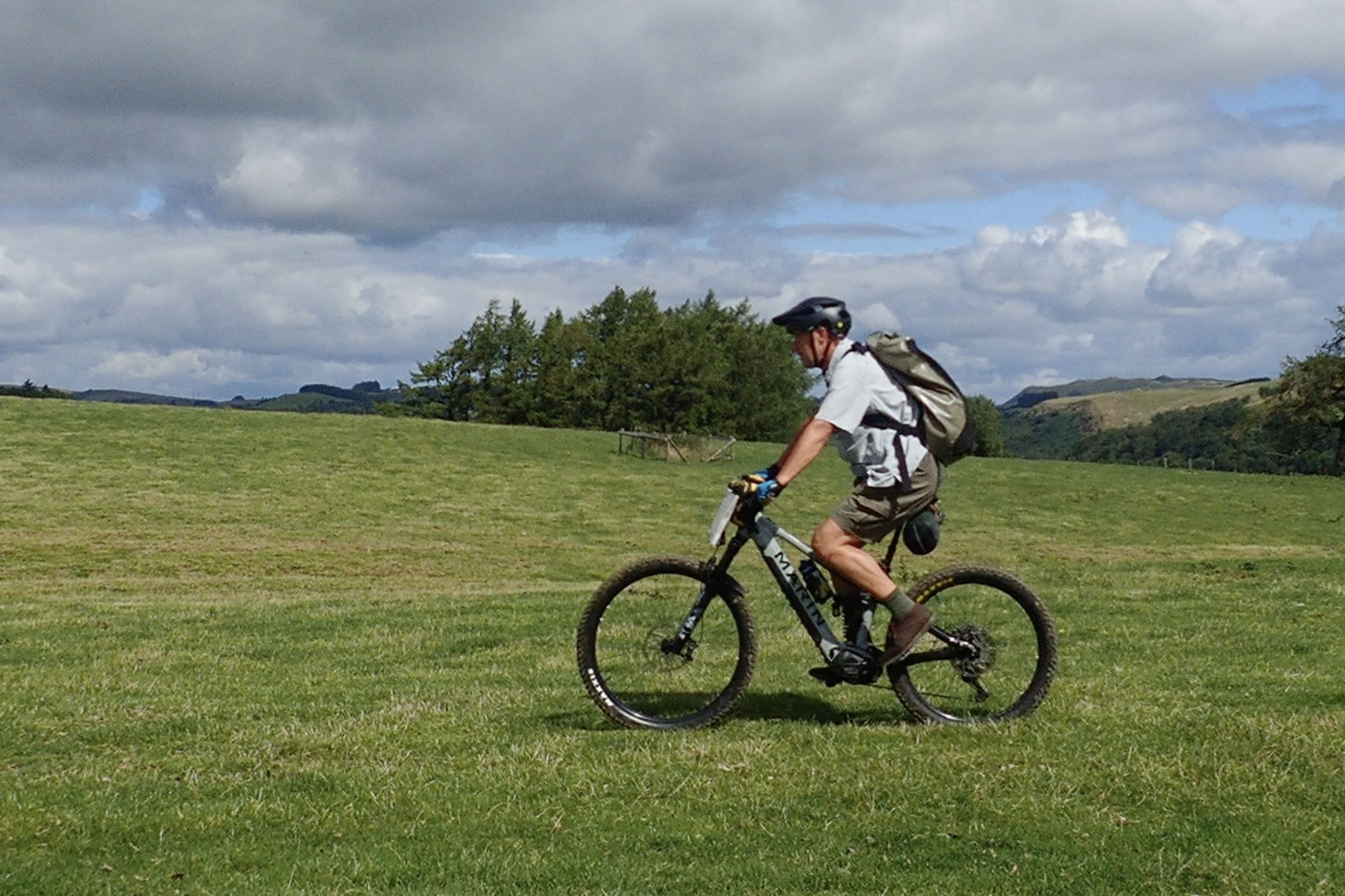
It had been a darn good work-out and revealed a whole new way of enjoying the UK countryside. Though I was leg tired at the end of most days, I didn’t feel beaten up which must be a testament to full suspension combined with my slow, interrupted pace. The e-assist helped when I was in a marginal spot crossing some muddy hump at 1mph – the extra pedal boost drove me over where I’d have otherwise stalled and fallen over. But stalling on a steep stony track, there’d often be too much torque from the motor to get going again and the wheel spun, while the bike was too heavy (or me lacking strength and finesse) to get back on restart (working dropper would have helped hugely). And on a ride where range wasn’t so critical, using more of the Trail setting would add up to loads of fun. Just don’t think for a minute that you won’t break a sweat!
A tad too small but it got me there
I made things harder for myself by sticking to Eco 99% of the time, getting off and pushing when Trail may have got me up some hills. Tbh, it was nice to walk sometimes and aire le derriere. And I also had things made hard for me by not knowing about Walk-Assist, plus having the weather warm up on me. In Wales? Who’d have thought.
On the G-Way, your PoW Steve McQueen fantasy comes true, but without the Nazis on your tail
The question is: will owning an e-bike get you riding more and for longer than your regular MTB, or is it just another toy? Setting aside motivation which overcomes all excuses, I think much must depend on opportunity and access to worthwhile riding. I’d say in the Southeast e-bikepacking would be wasted but in the remoter upland locales of western and northern Britain there must be loads of great riding nearby and where the climbs need not always be daunting.
Will I be getting an e-bike? Not at £6000 tvm, and not any more than I’ll be getting a small trail bike (which I did in 2025). Where I live what I consider the worthwhile stuff is just too far away. But it sure was fun trying out e-bikepacking. I’ll definitely be renting one again some time.
* A couple of weeks later I picked up my Merida from Nick’s and ended up riding it from Upton to Cheltenham to catch another train. Costing me just £800 near-new, I was reminded what a great hardtail it is – and what a great thing a seat post dropper is when you’re stopping every 10 minutes to open a gate. Something between the Marin and my Merida could do nicely. They even sell clamp-on Bafang motors for a grand, and in 2025 I ordered a dinky Kamingo wheel motor of GoFundMe, to give my Big Trail a bit of a boost. Still waiting on that. In fact before thgat arrived, in April 2026 I bought myself an e-SUV bike; basically a full sus MTB with rack, lights, stand mudguards. More about that later.