Category Archives: Project Bikes

What I’ve ridden and what I’m riding

Royal Enfield Himalayan tested in the Himalaya

My Enfield Himalayan Index Page

Dave King

“Our single biggest insight in all these years of riding has been that the best motorcycle for the Himalayas is not one that tries to dominate its landscape, but one that is able to go with its flow. … ​With its purpose-built ground-up design, the Himalayan is a simple and capable go-anywhere motorcycle that will redefine adventure touring…”
Siddhartha Lal, CEO, Royal Enfield
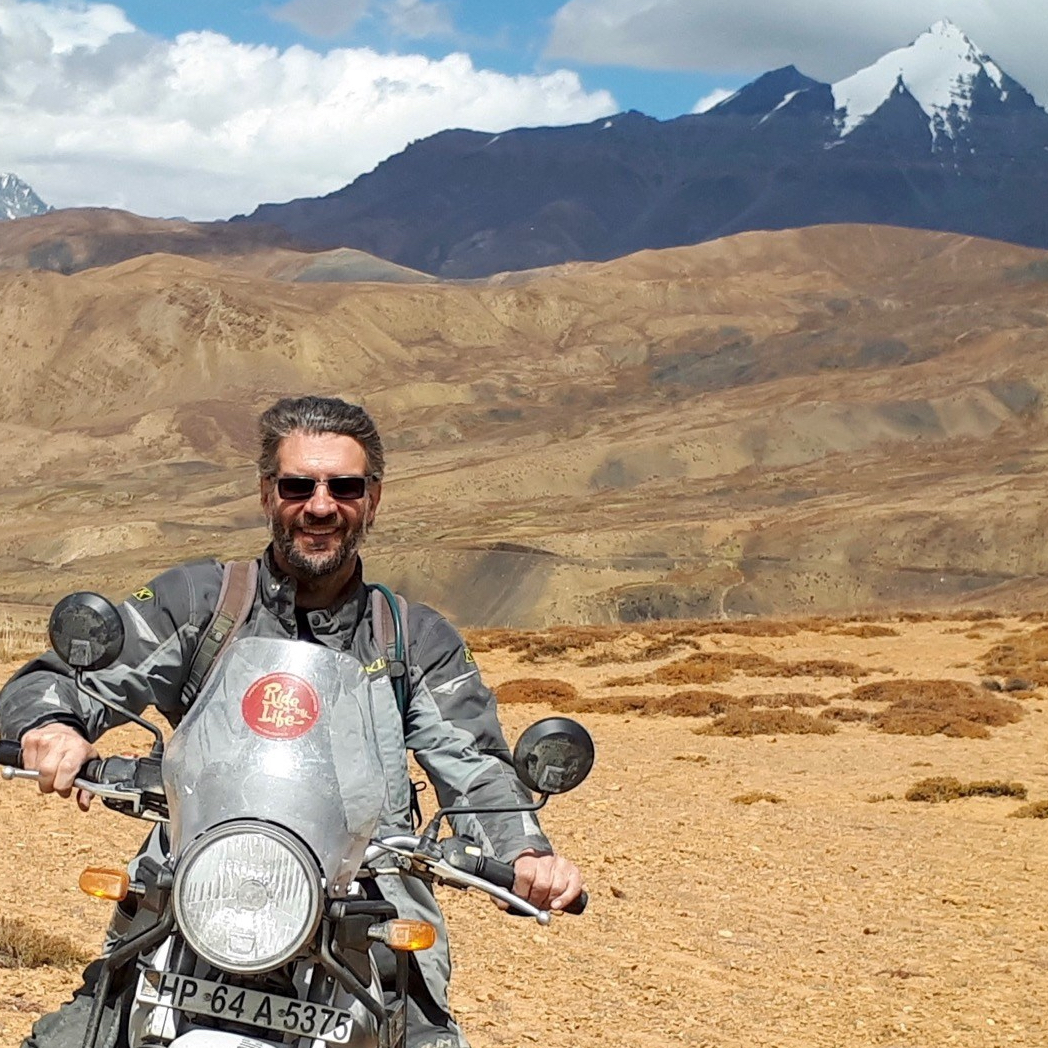
himsdd- - 22

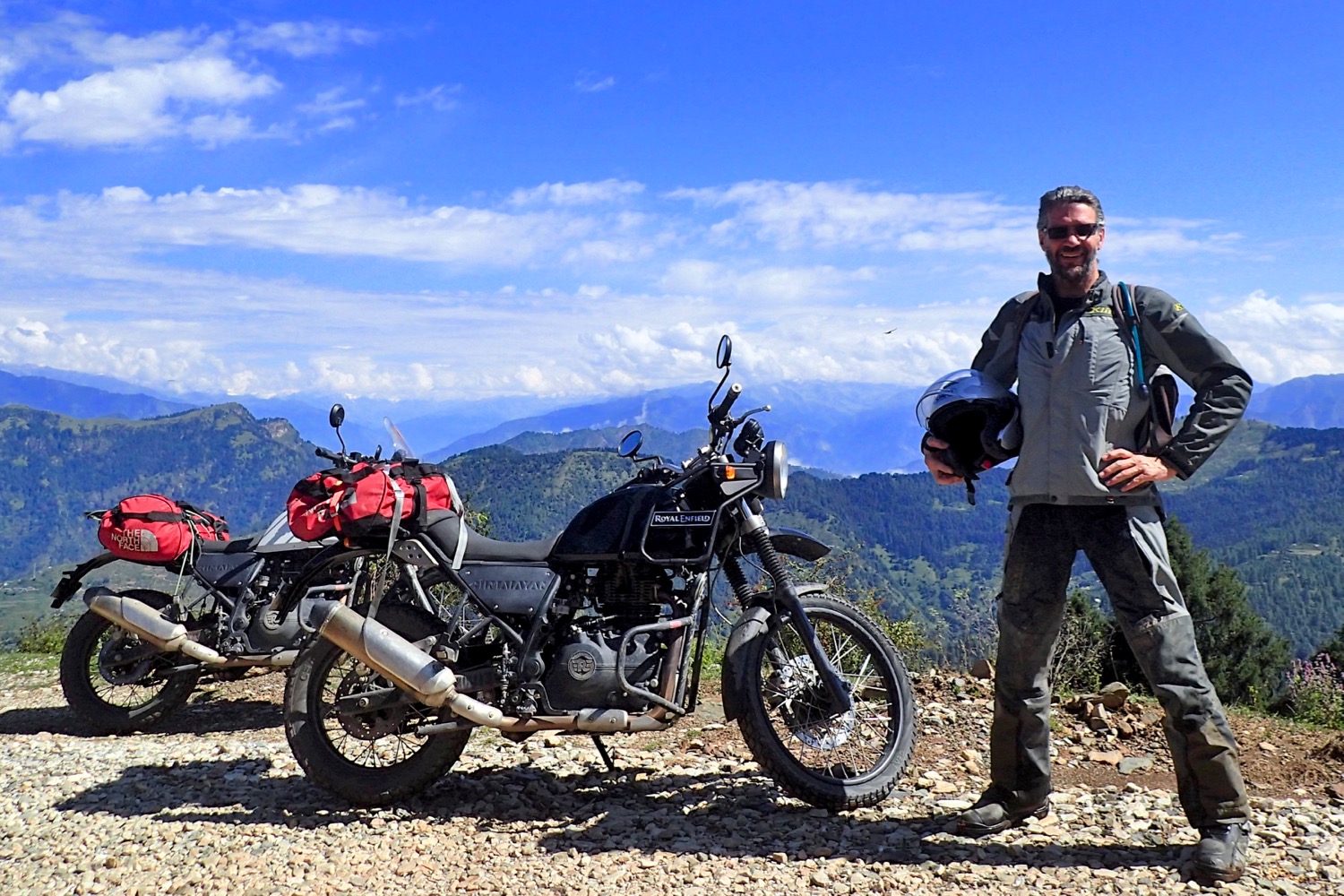
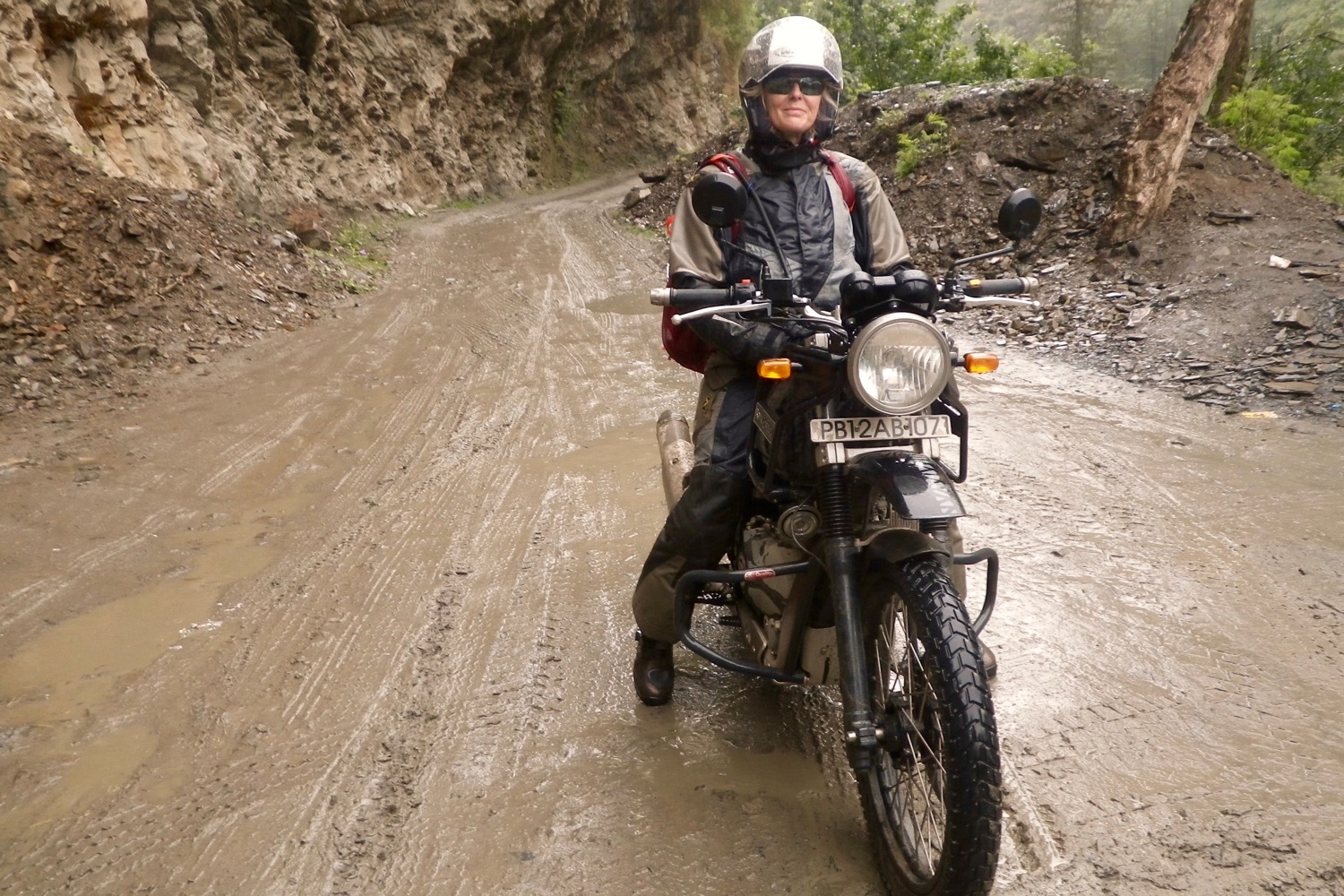
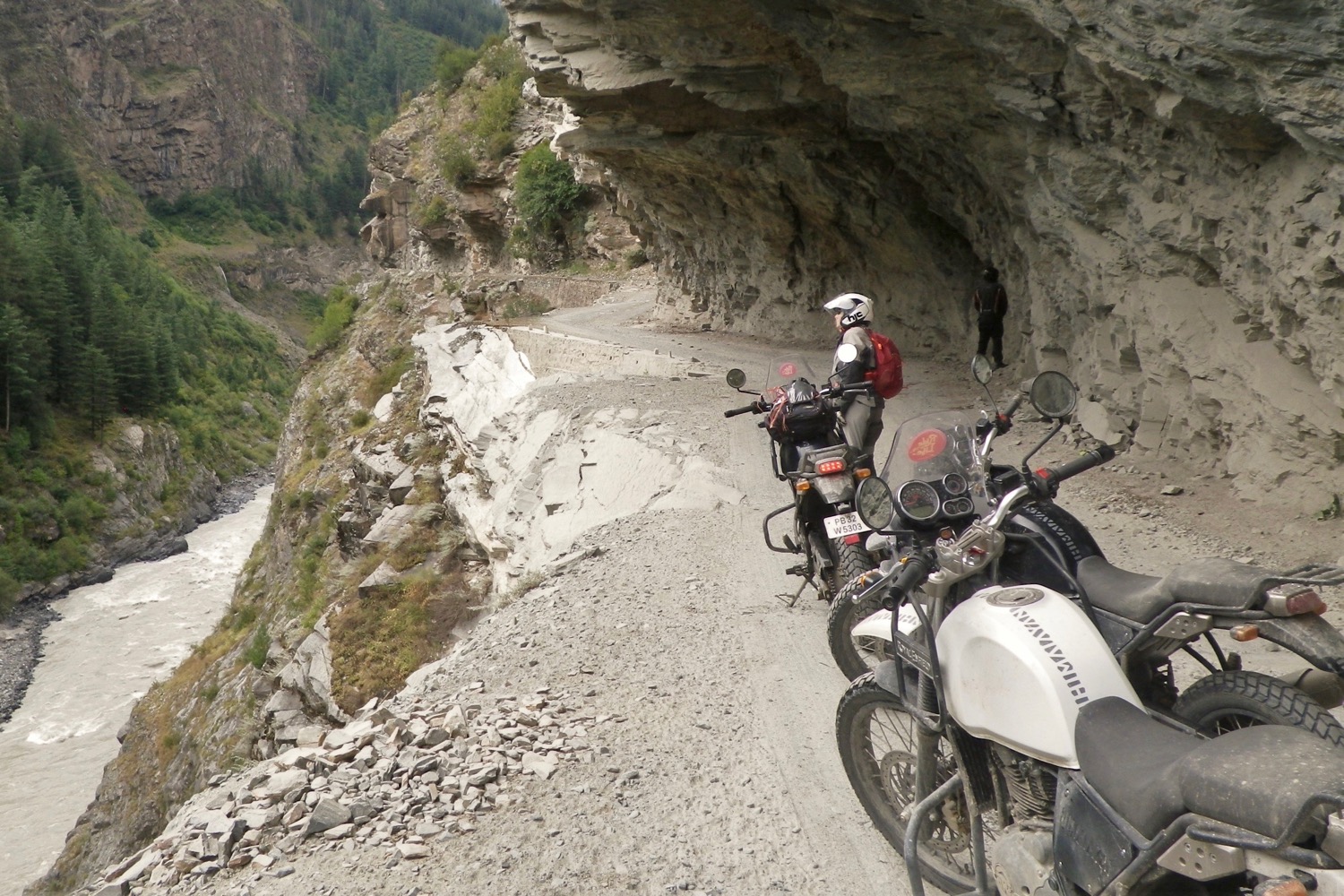
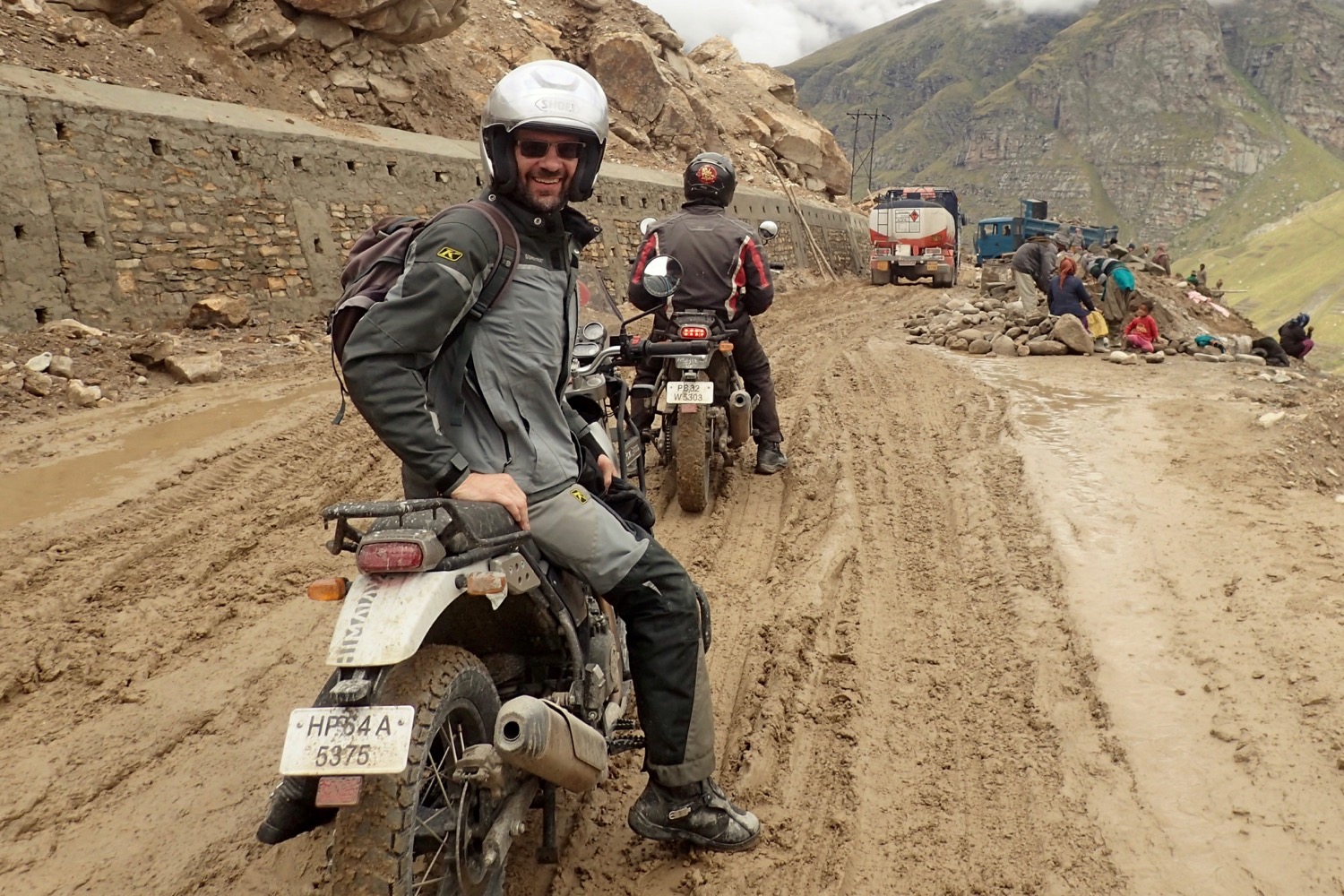
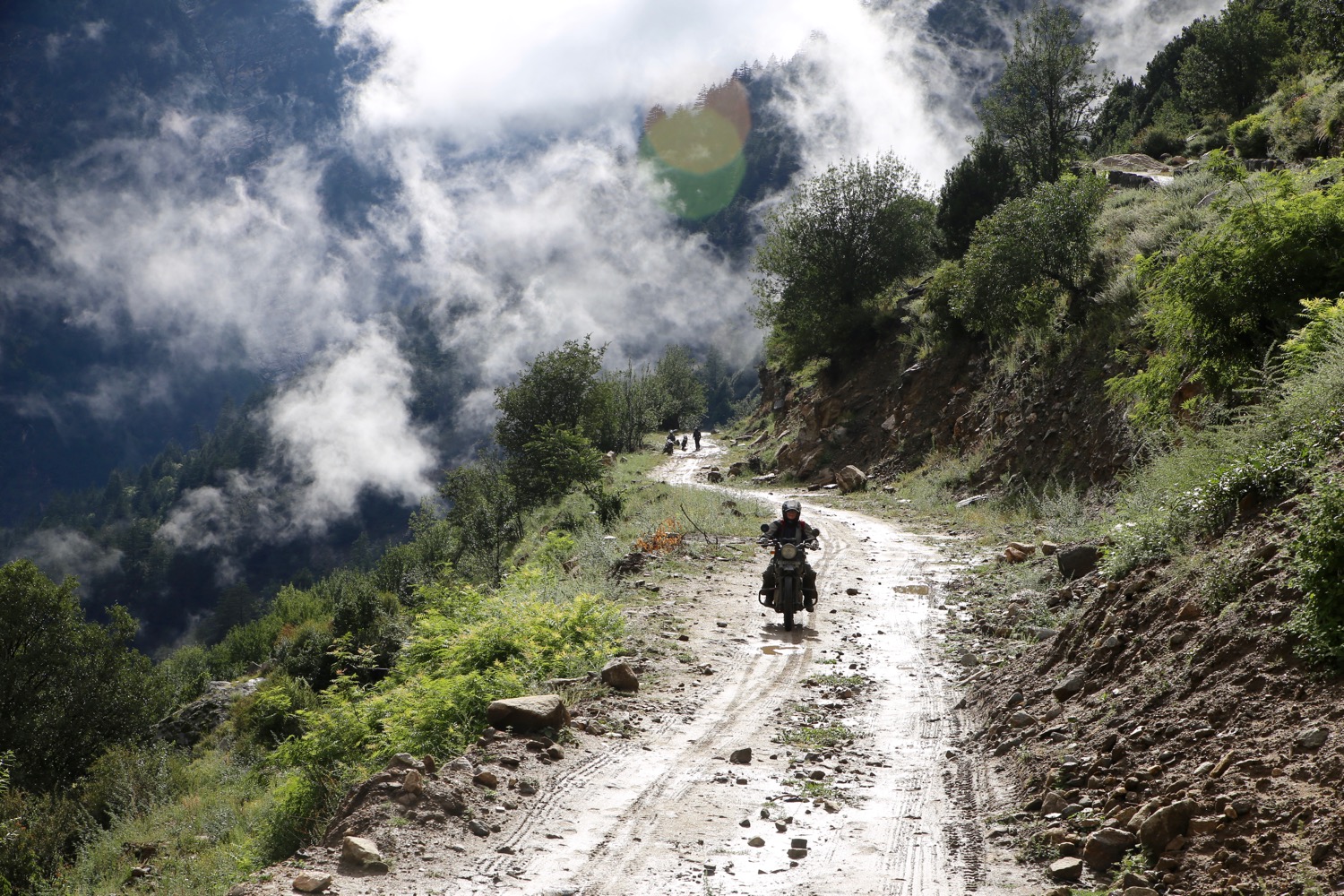
The climb ahead of us resembled something I’ve encountered many times trail riding in Wales or Devon; a steep, rocky ascent of loose stones with mud, water and a thought-provoking drop to one side. The difference here was that the drop to my left was at least 1000′ straight down to a distant river, and the tyres on our bikes didn’t look like they could grip their way out of a wet paper bag. Despite that, the Enfields bounded up the slope like a Himalayan oryx, quite an achievement considering that some in our tour party had little off-road riding experience.
himsdd- - 9
himspex

The new Himalayan is the first completely new bike from Indian Royal Enfield company. The well-known Bullet and its many derivatives can trace their ancestry back to the original British-built thumper from the 1950s. Danielle and I have done several Bullet tours in Rajasthan, Arunachal Pradesh, Ladakh and Nepal. It’s a fantastic bike but when the terrain gets really rough and the riding technical, the lack of ground clearance and poor ergonomics on the pegs expose its limitations.
himsdd- - 16


In contrast the Himalayan has been designed to be ridden sitting or standing. It has much better ground clearance of 8.6” (220mm) but a modest seat height of just 31.5″ (800mm); which potentially opens the bike out to many less tall riders. It was also designed to be comfortable on the road over long distances, handle  the twisties (lots of these in the Himalayas) and have a fuel range of over 250 miles from the 14-litre tank, (sounds like at least 70mpg). If this sounds like an adventure bike as opposed to another adventure-styled bike, then you’d be right. What it’s not really suited to is cruising all day at European motorway speeds, but then India isn’t known for this sort of riding. In India in 2017 it sells for 155,000 INR, or under £1900. When it arrives, UK efi Euro 4 prices are quoted at £3999. Below, a 2018 US review of the efi model.

himsdd- - 18

Styling
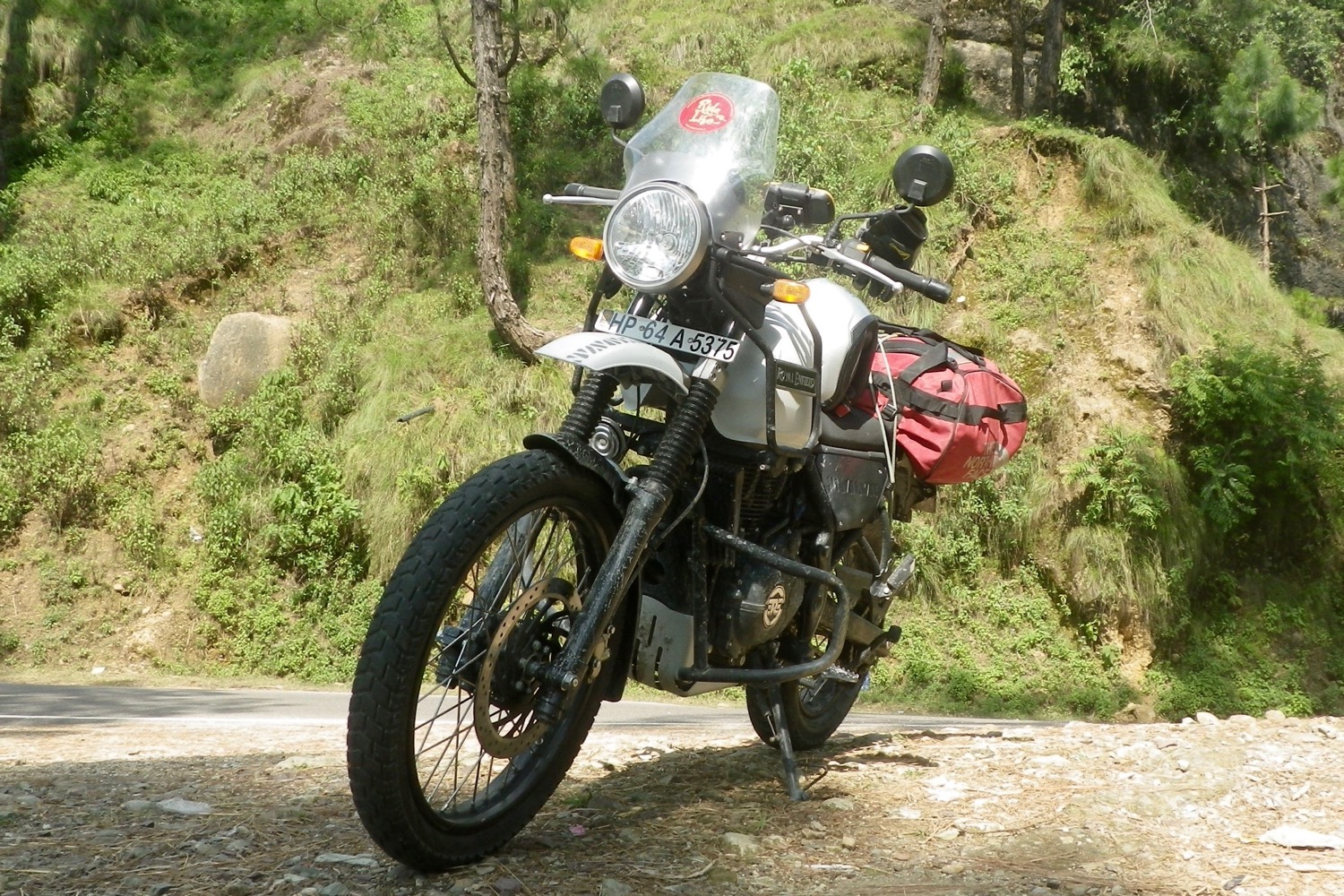
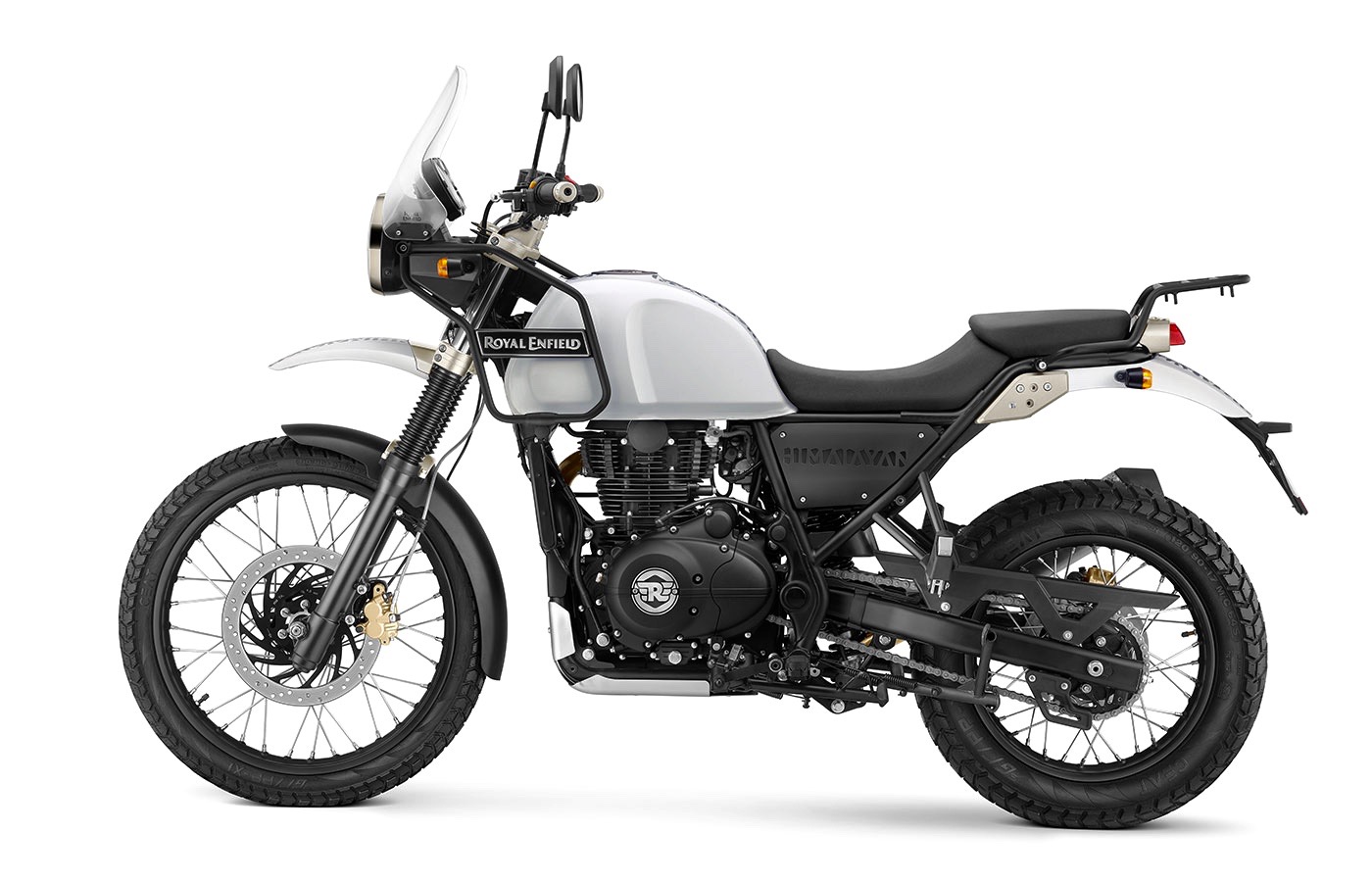
The look is a bit 1980s, recalling the Suzuki DR400 or DR600, although the headlight and instrument cluster are mounted on the frame, not the forks. There’s an element of BMW F650GS Dakar in there too.
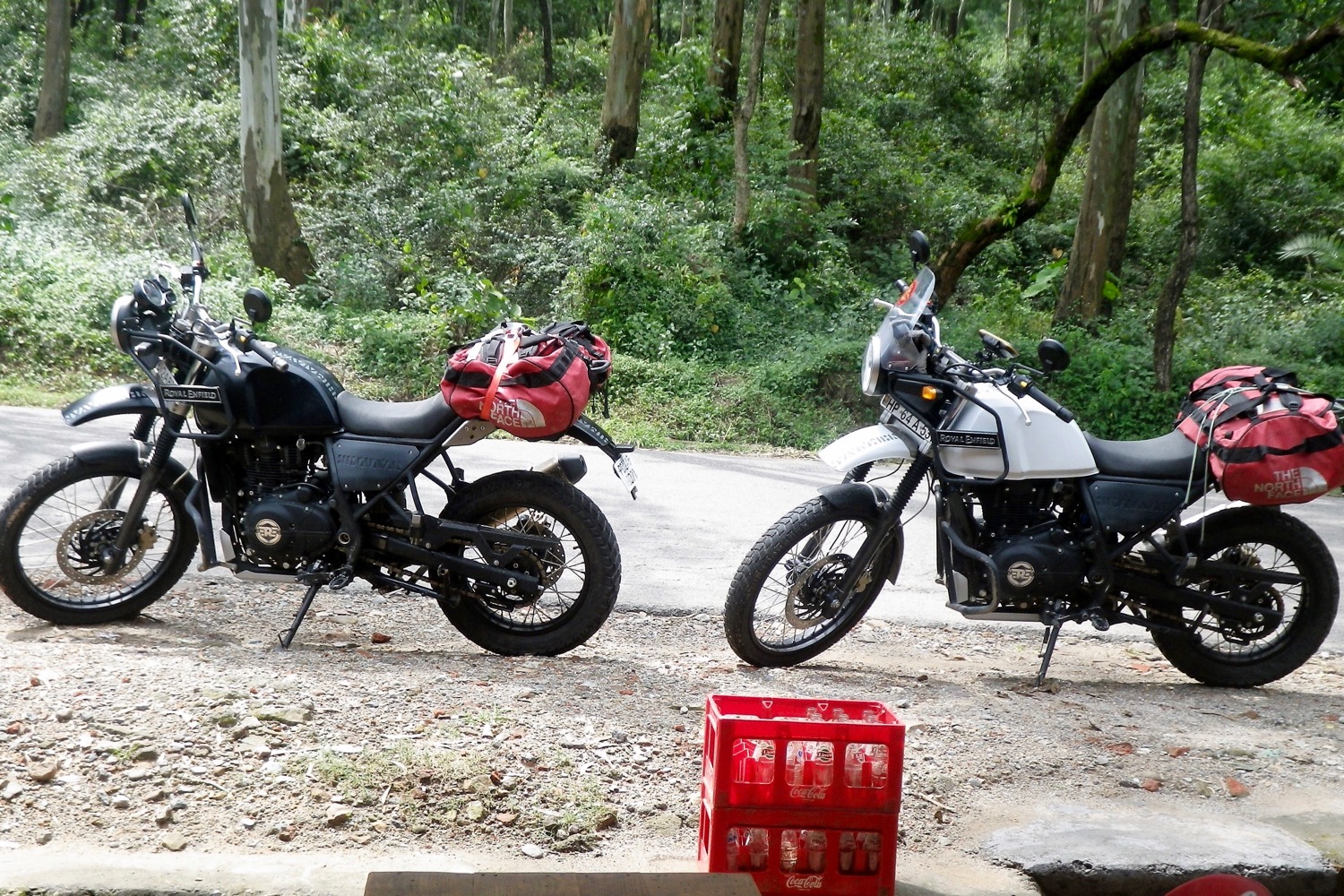
For me the greatest impression was one of practicality and quality, from the solid paint finish to the alluringly cryptic HIMALAYAN logos on the tank, mudguards and side panels, as well as the large LED tail light. It comes in appropriately mountainous Granite or Snow (black or white to you and me) and looks purposeful in either.
himsdd- - 10
himsdd- - 11

Engine
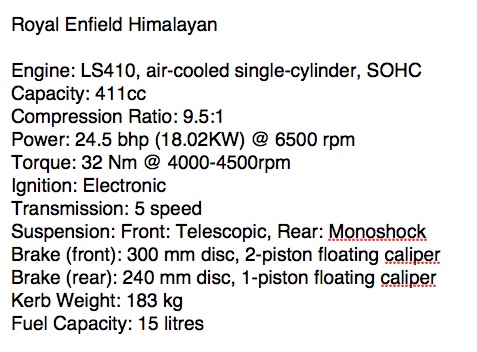
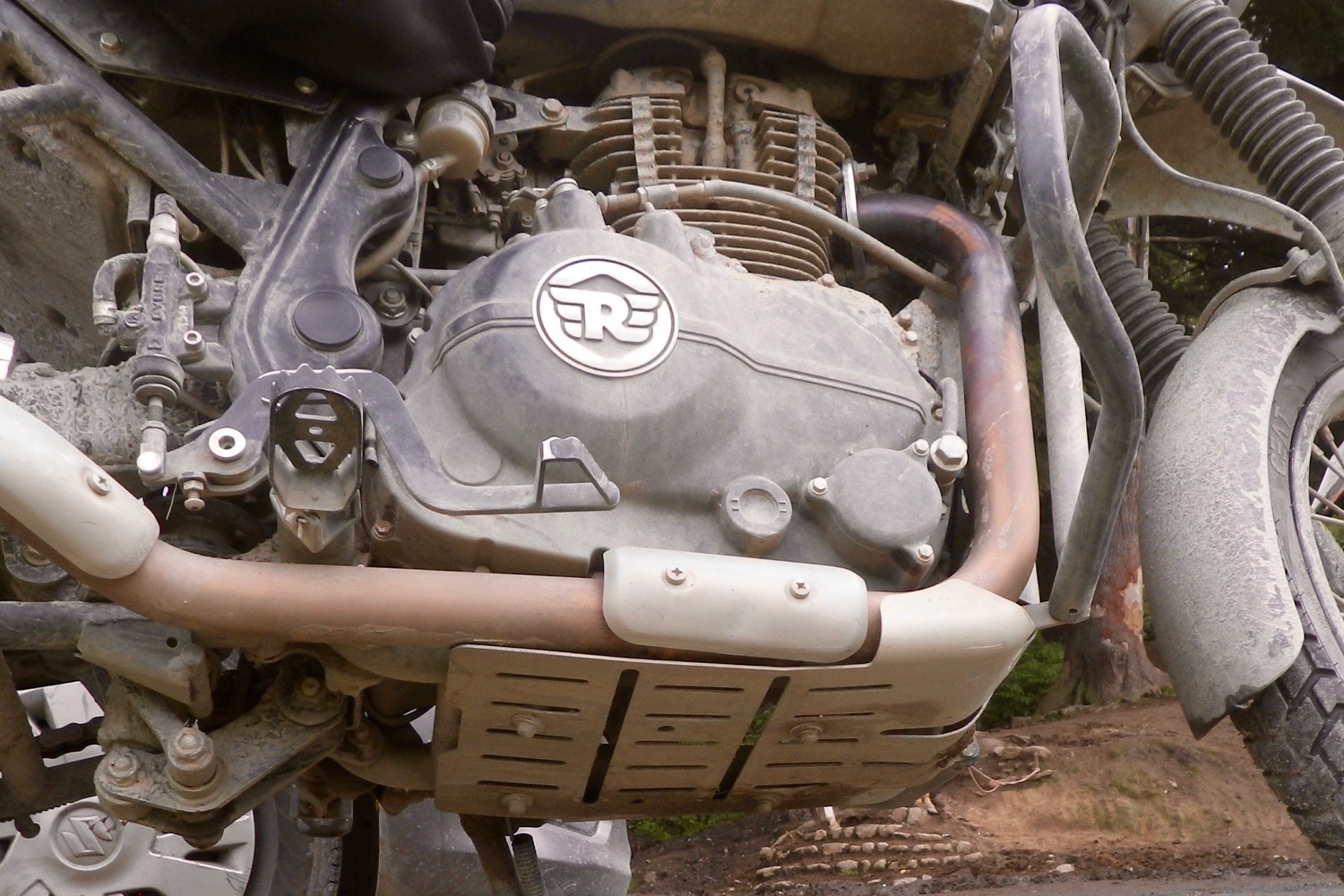
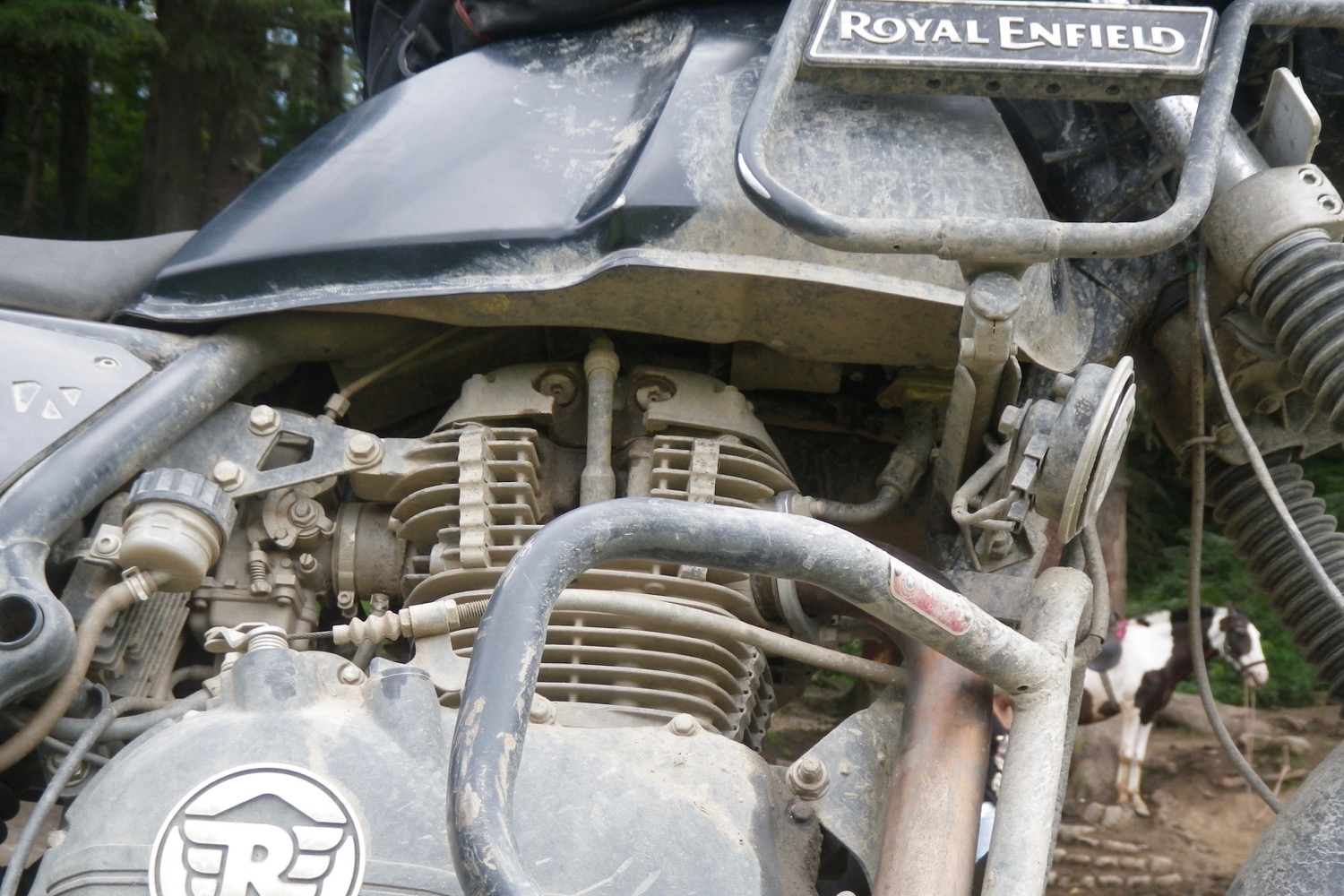
The engine is a long-stroke 411-cc air and oil-cooled lump with a balancer shaft. The word ‘lump’ being appropriate, as the crankcases appear to be off a much larger bike; maybe they intend to produce a large capacity version in the future?
Peak horsepower is claimed to be 24.5 bhp, about the same as the 2017 Honda CRF250L, but there’s 50% more torque, and crucially it’s all delivered at much lower revs.
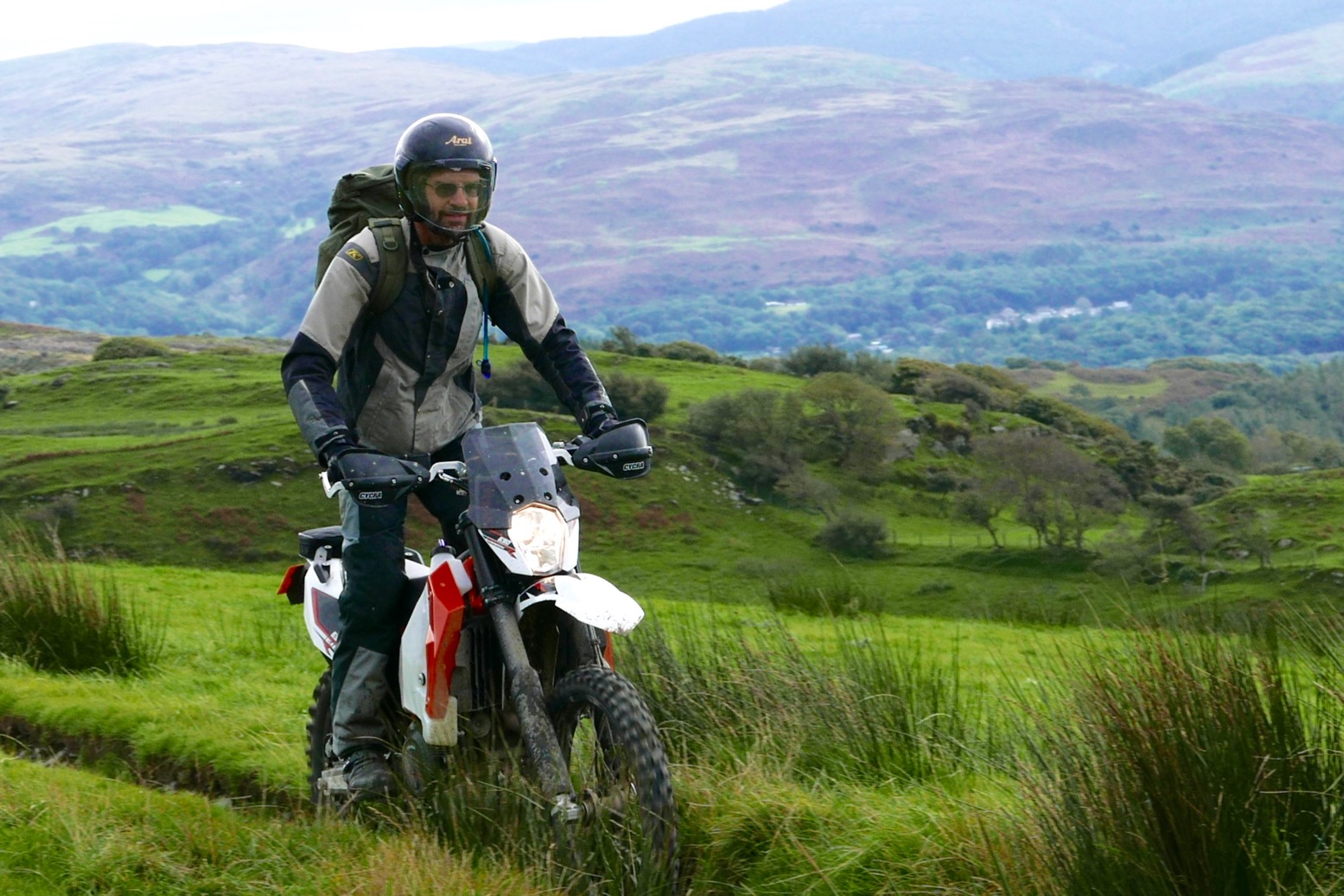
Coming off my 70-bhp KTM 690R (left) and a R1200GS, I didn’t find the lack of power a problem. The bottom-end torque and smooth power delivery made that modest power very usable. The only glitch with the engine was a flat spot around 4000rpm, most noticeable at altitude (we rode up to 16,000ft/4870m on this trip). You soon learn to ride round it and I suspect a good engine tuner could sort the carburetted version we rode. The fuel-injected version to be sold both in India and globally is bound to  be better in this respect.
On the left of the front down-tube is a good-sized oil cooler, and there’s an all-stainless exhaust with a nicely shaped, cat-free silencer. I imagine the UK version will need a bulky cat. At the other end is a well-sealed airbox with a high air intake and a large, cylindrical dry-element filter.
Top speed is claimed to be 134kph or about 84mph, but the nature of the terrain we rode meant the most I saw was just under 100kph. It’s a long old way down.
Some riders thought the 5-speed gearbox was a little stiff, but on our bikes the clutch cable had been routed around the outside of the aftermarket crash bars causing a bit of cable drag.

himsdd- - 25

Frame
The frame is a conventional steel-tube cradle designed by Harris Performance (who Enfield bought out in 2015) and finished in satin black. The rear end is monoshock and perhaps the only unconventional feature are the subframes either side of the tank which support the headlight and instruments. Each includes a series of threaded mounts to attach extra tanks, luggage carriers or an aftermarket fairing.
himroot
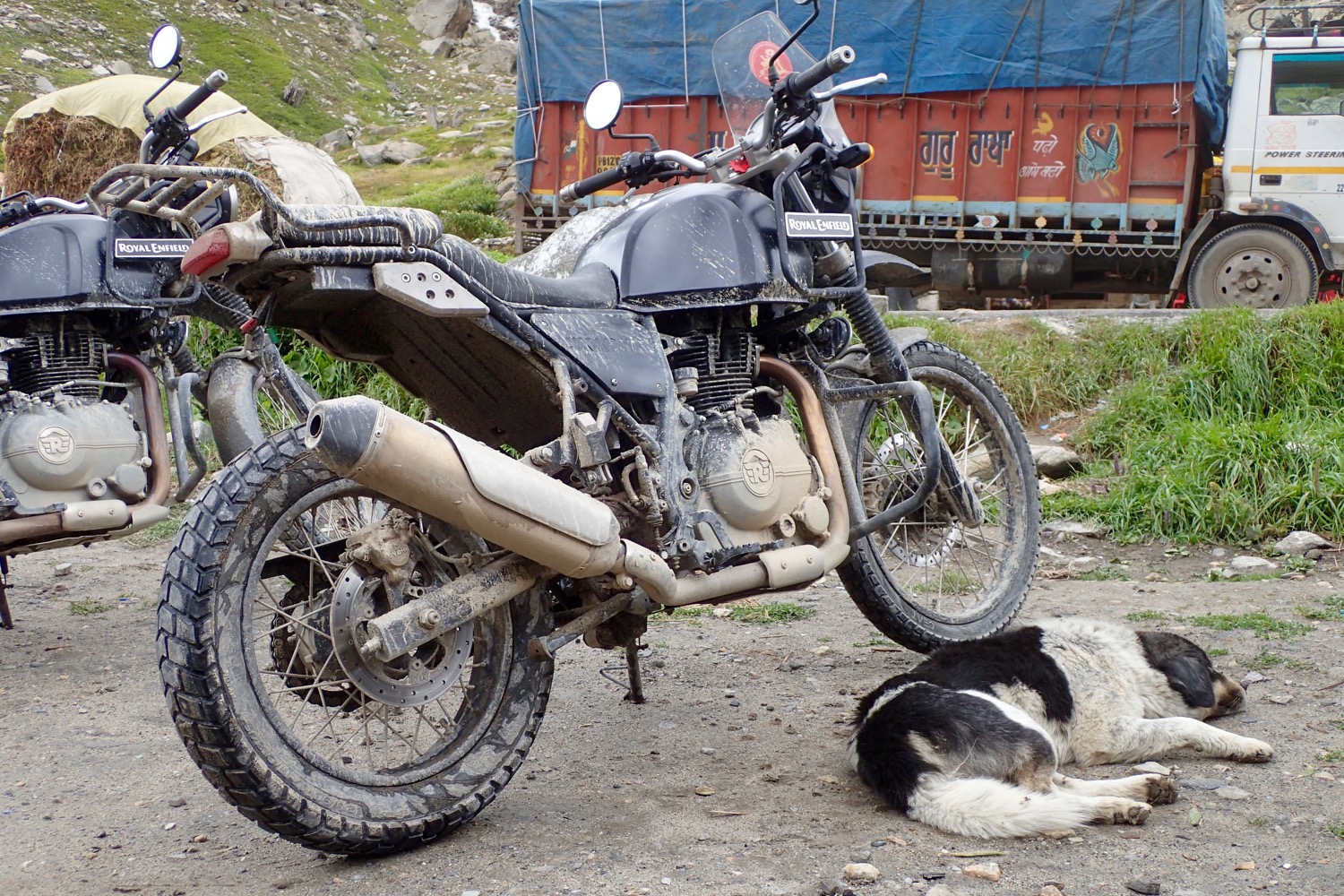
The aluminium bash plate looks a bit flimsy, but proved to be up to the job as the clearance was generous. Surprisingly, hand guards are not standard, though our rental bikes did have poorly fitted aftermarket crash bars which clanged over bigger bumps. I cured this by jamming a wooden wedge into the mounting assembly. You also get sturdy centre- and side-stands which tuck out of the way.
OLYMPUS DIGITAL CAMERA
himsdd- - 8

Wheels and tyres
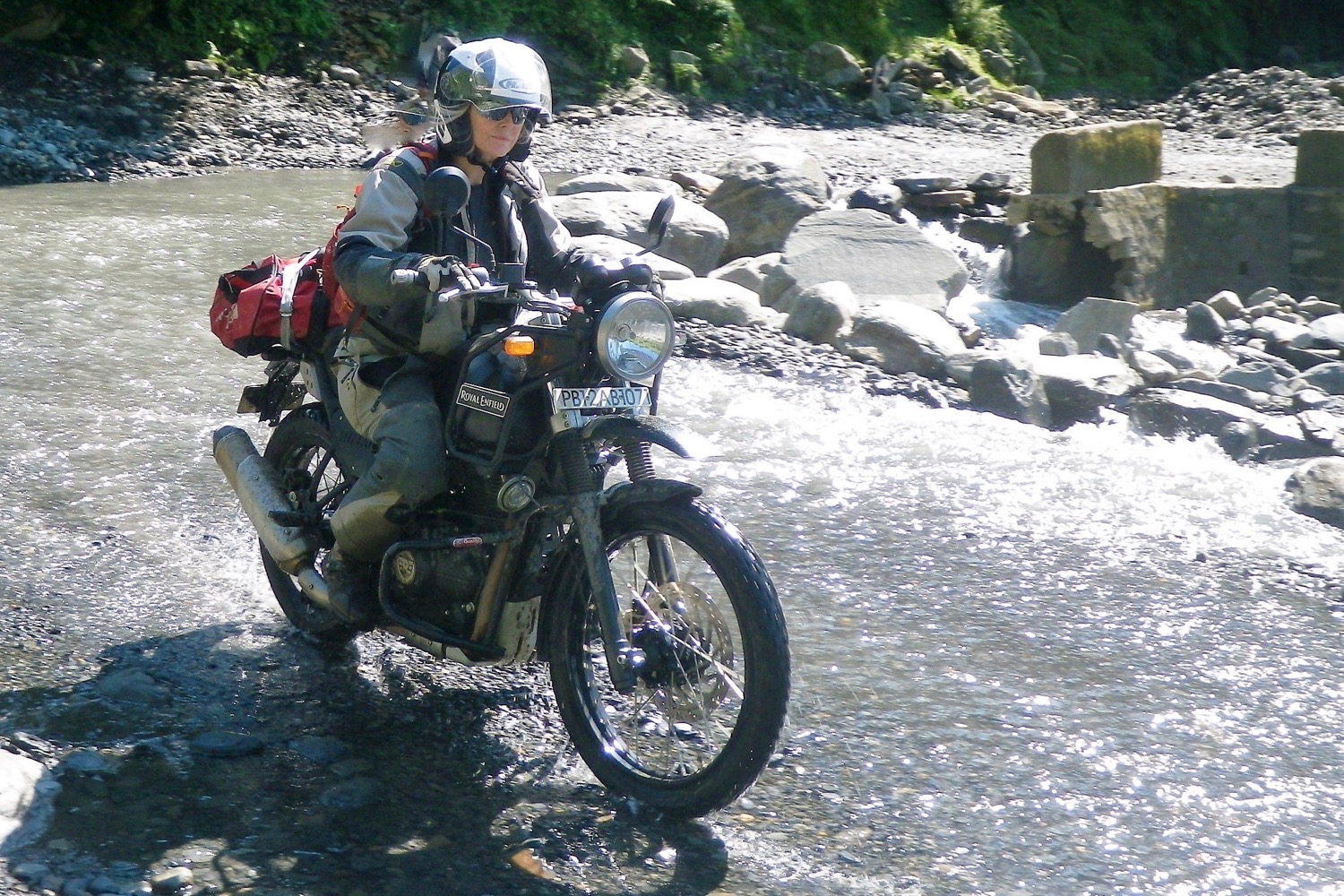
Wheels are 21” front and a 120/90 section 17” at the rear on black alloy rims shod with Indian Ceat Gripp XL trail tyres which resemble Dunlop Trailmaxs. On rocks, gravel and dry mud, they worked well enough if pressures were dropped to 20 psi.
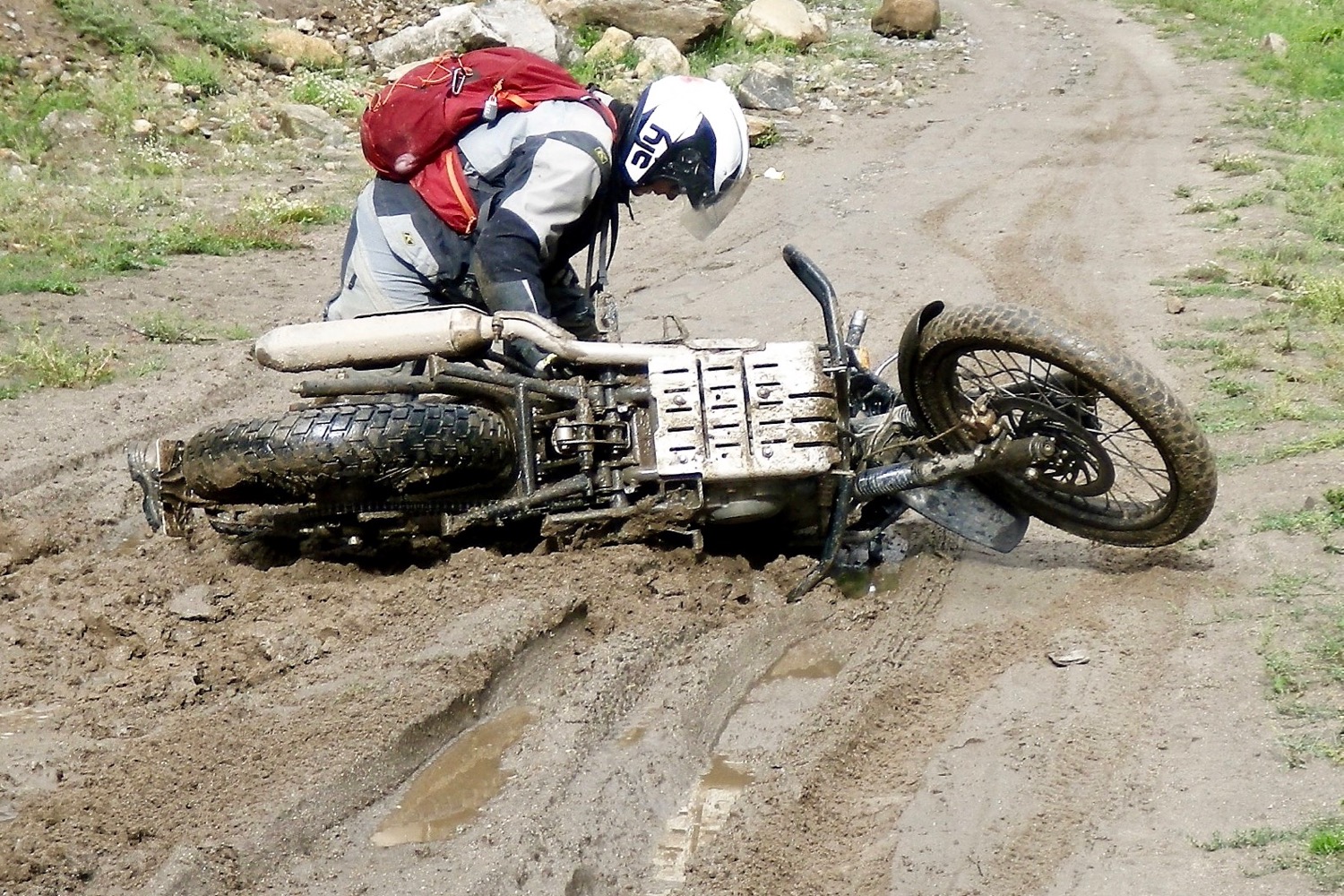
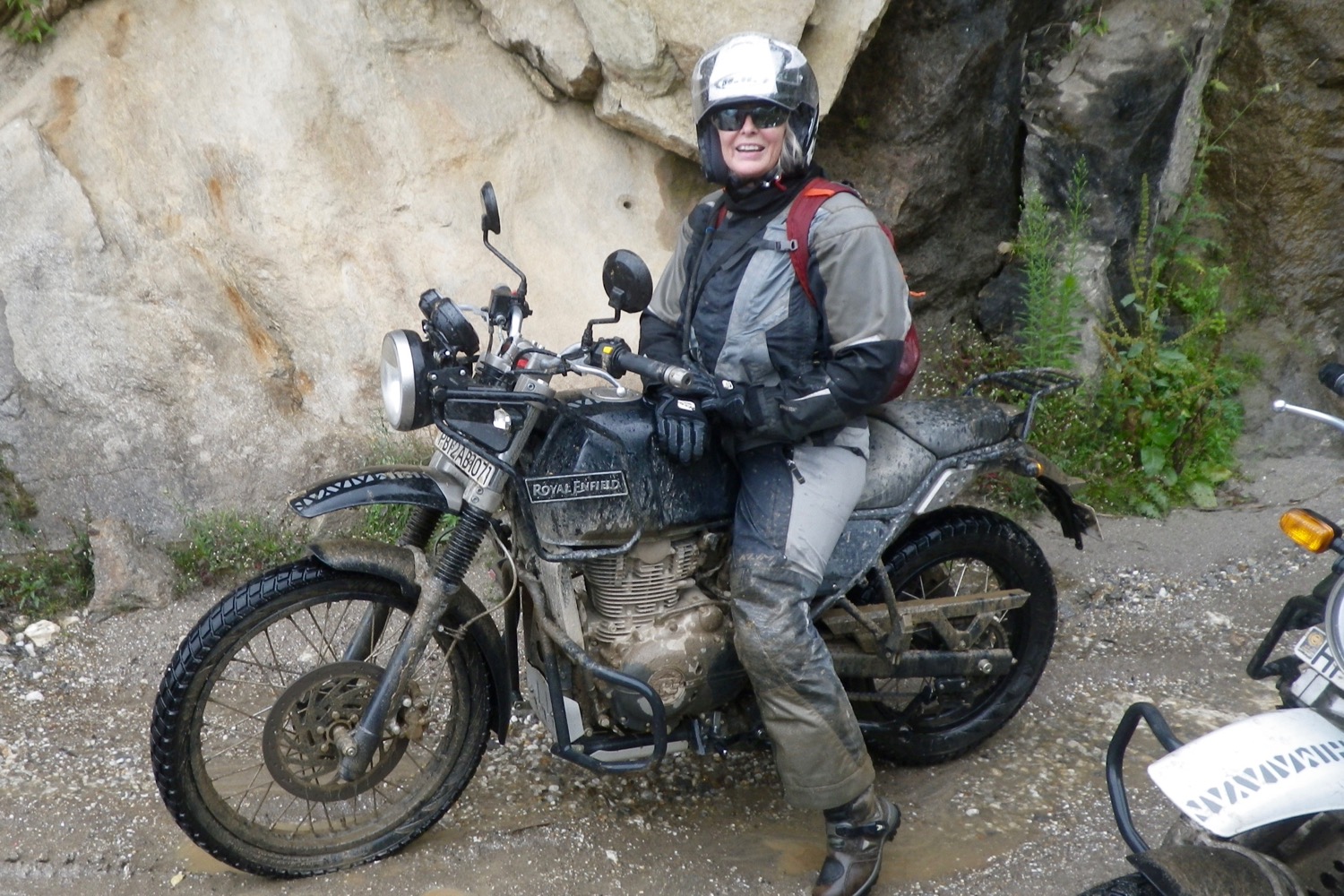
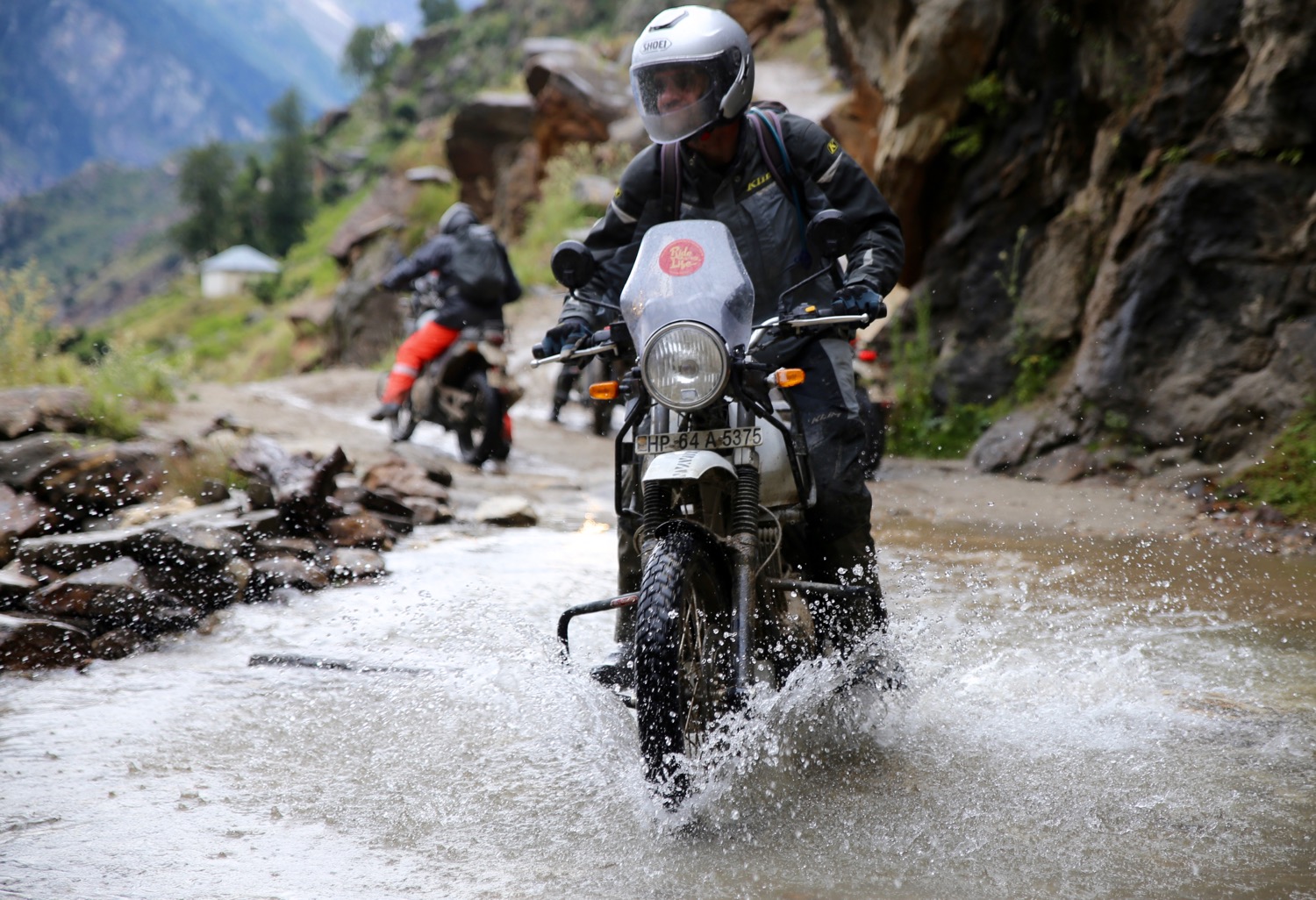
On muddy ruts and wet grass you just have to take it easy or you’ll end up as on the right, but they’re helped by the gentle power delivery; it’s almost like having traction control. The Himalayan does not, of course, have traction control, ABS (in India at least), power modes, suspension modes or any a la modes, but manages fine without them.
Suspension and brakes
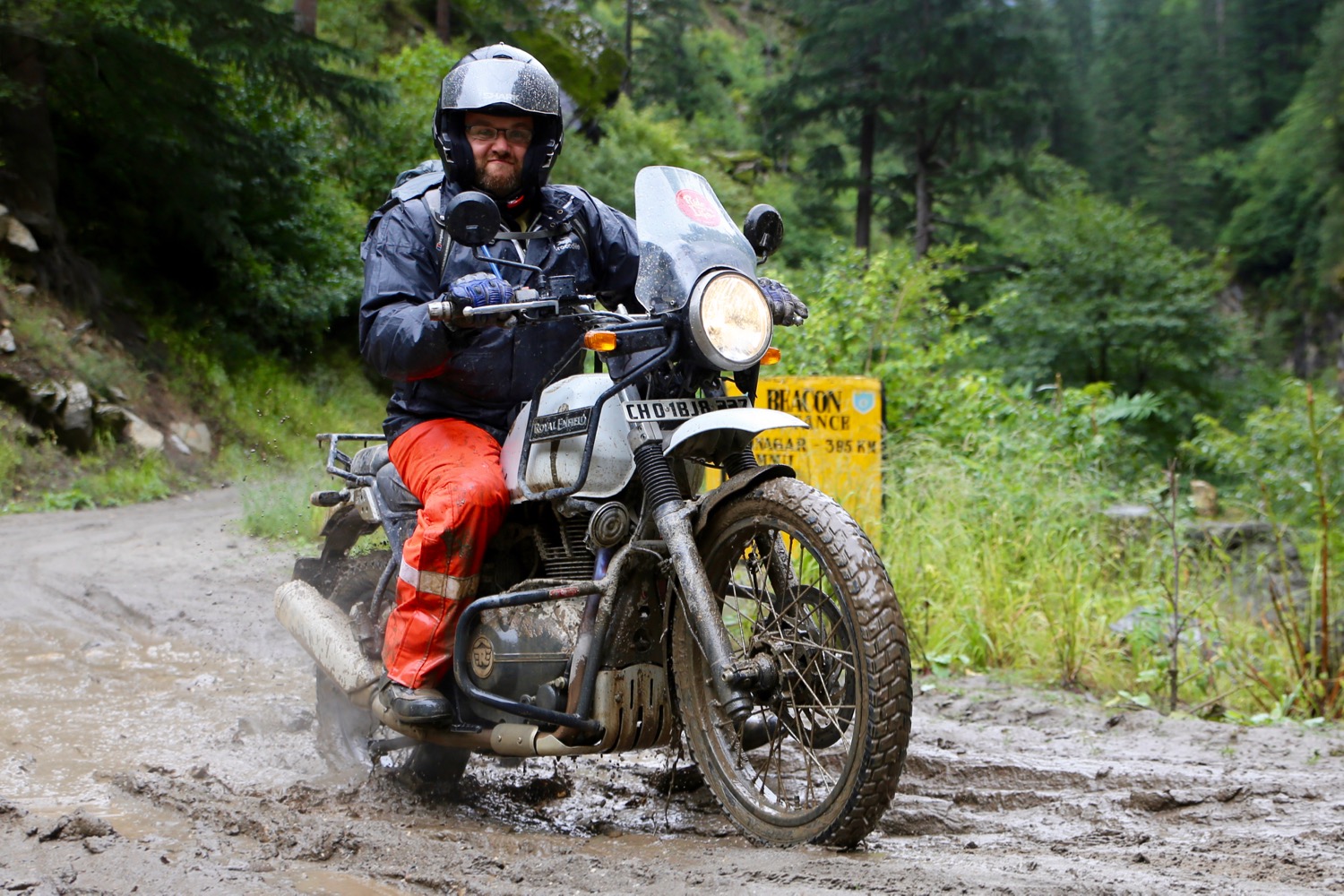
Initially the forks (180mm) felt very softly sprung; far more trail bike than my hard-charging 690 enduro. However, the springing and damping were well matched making riding over rocks very easy; the bike always went where it was pointed. There’s no adjustment on the 200-mm-travel rear shock except preload. The brakes look like Brembo copies with braided, stainless brake lines. At the speeds attained they worked for me.

himsdd- - 20

Ergonomics
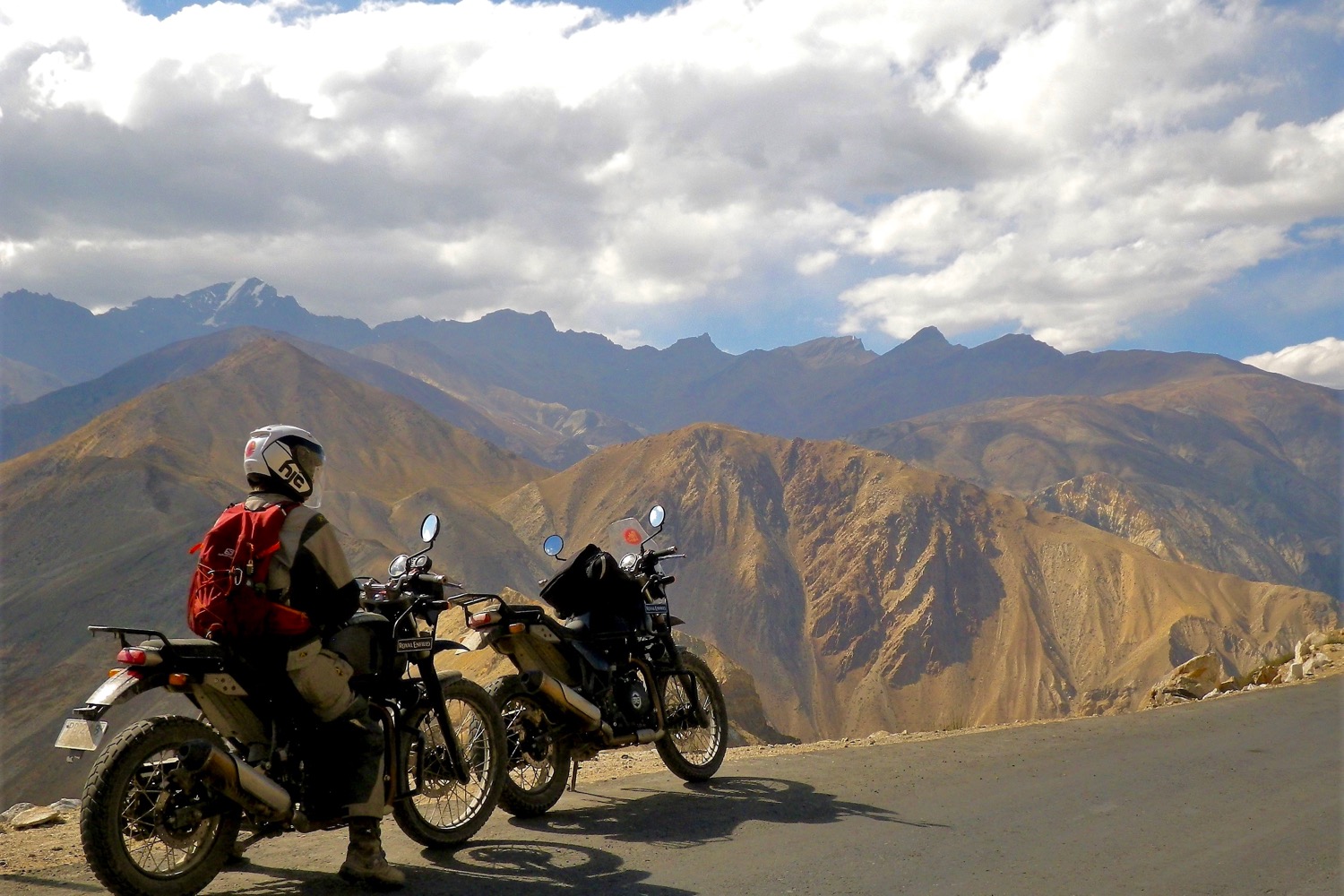
If the bike were mine, I’d fit one-inch bar risers, but then I am 6’ 1” and fit risers to all my dirt bikes. The 31.5-inch seat is low for an off roader which makes standing up a bit more of an effort, but was comfortable enough for all-day riding. Before the trip Dan (5’ 6”)  had some concerns that the 182-kilo Himalayan would be too tall and heavy but she easily got both feet on the ground and loved the bike too.
The bike is fitted with a small screen to help reduce the wind pressure at speed (or at least the speeds we reached on this trip). Dan removed hers to improve visibility on dirt roads. It can make a real difference to confidence.
himsdd- - 17

Instruments
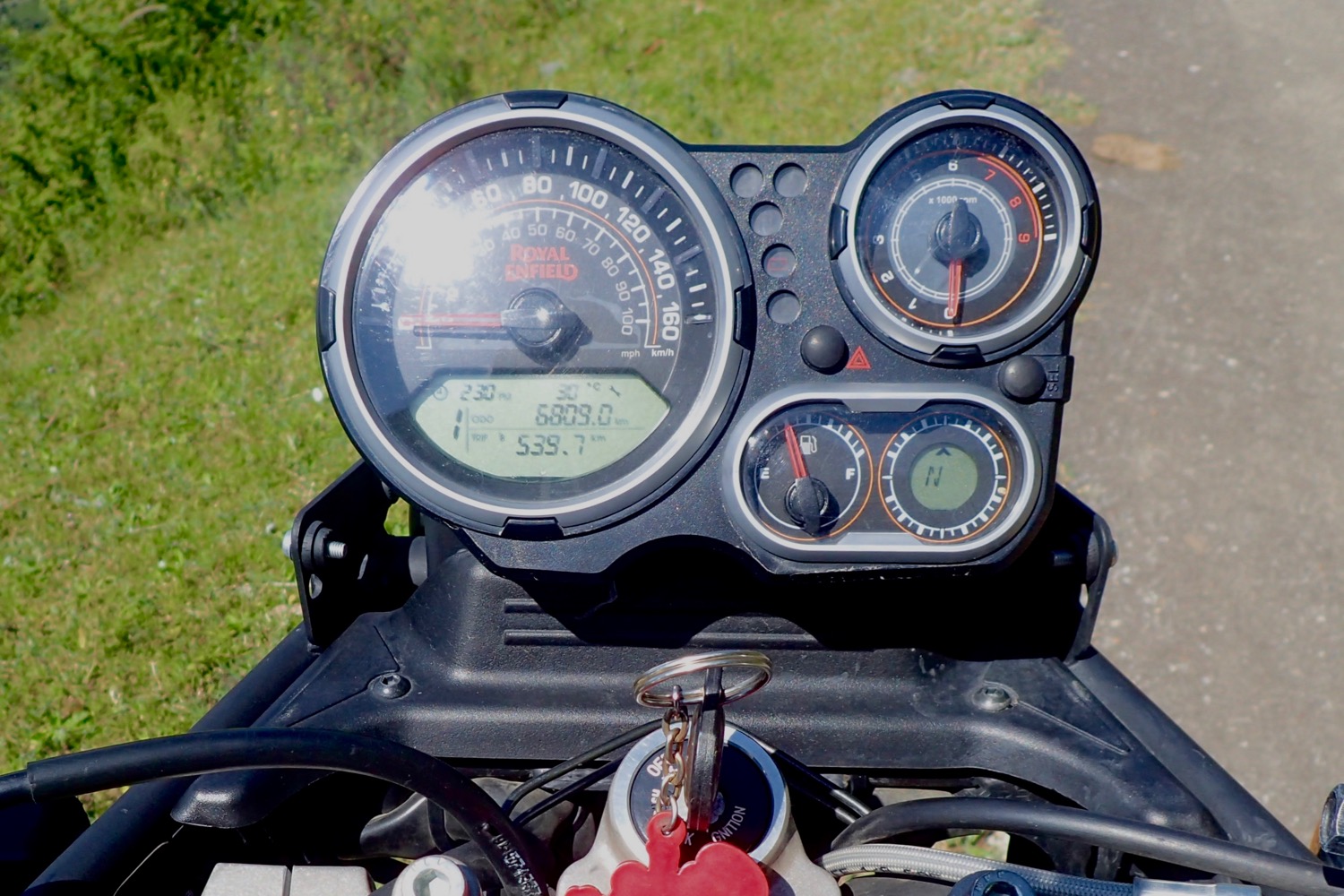
The analogue instruments have enough of the information and features you’d expect of a modern bike, plus a couple you wouldn’t: oil temperature and an electronic compass. I love the latter idea; in a country where fitted GPS is rare, it helps affirm you’re heading in the right direction.

Luggage attachment
Besides the tank frames the bike also comes with a small rear rack and several points to attach pannier frames. Some people complained the upswept exhaust made mounting luggage more difficult than on a Bullet, but if they stall in a river at least it won’t fill with water.

Maintenance
Compared to most modern bikes the Himalayan is basic, but everything appears readily accessible with a comprehensive tool kit sits under the lockable back seat. According to the service interval, the 2.6 litres of oil needs changing every 6000 miles or 10,000km.

Summary
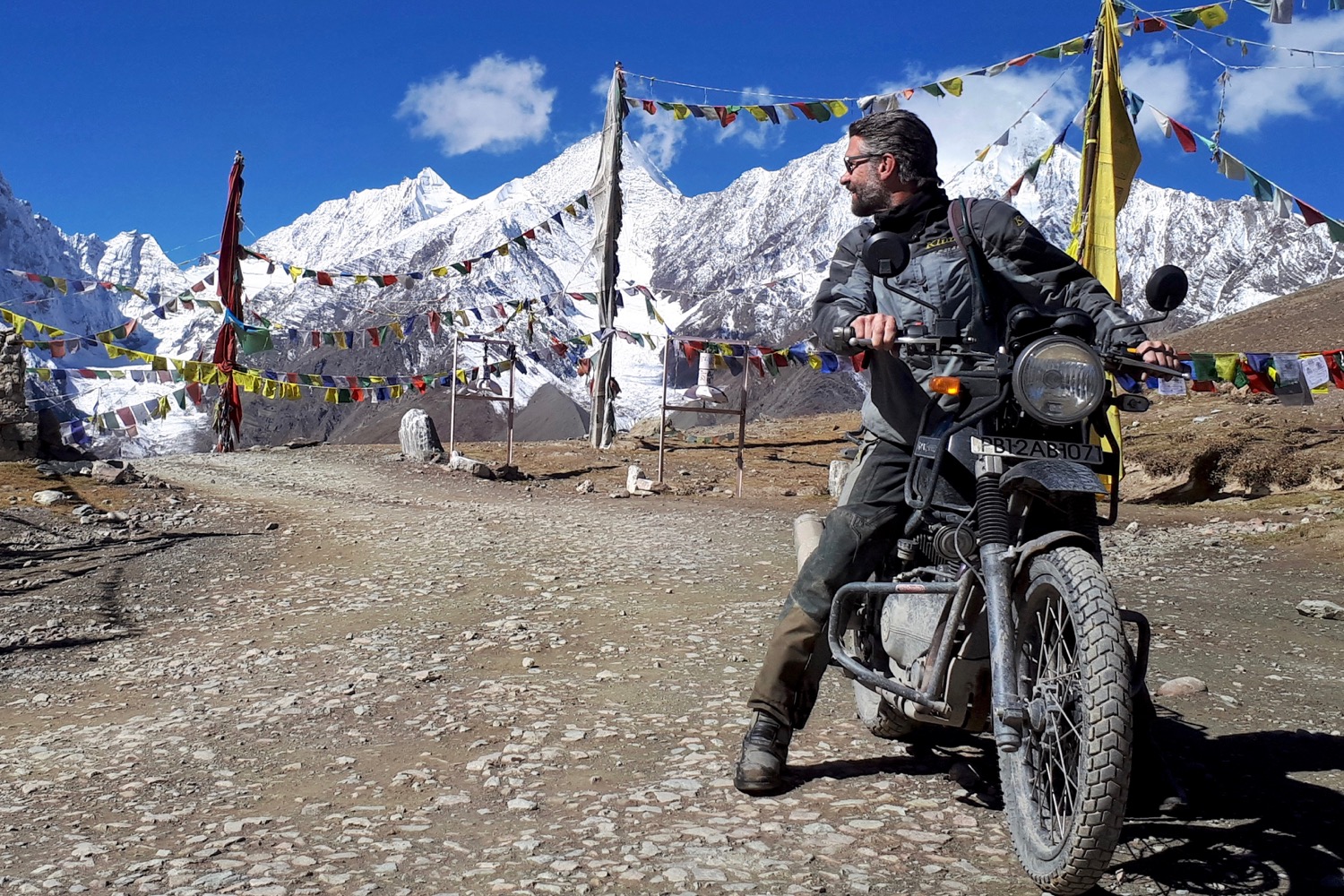
I’ve ridden all sorts of bikes in all sorts of places and am convinced Royal Enfield have done something special with the Himalayan. There’ve been a few teething troubles, as you’d expect for a new design from any manufacturer, but Royal Enfield have been responsive and you’d hope by the time we get the Himalayan in the UK, these will have been sorted.
himsdd- - 24


The suitability of the bike for India and specifically the Himalayas is undeniable, but would it be suitable elsewhere?
After a month and a few thousand kilometres in India, I’ve no doubt that given a set of better tyres it would be able to tackle the majority of the UK trails I regularly ride. At over 180 kilos it is significantly heavier than other trail bikes of this capacity, even a KTM 690R or BMW XChallenge, but the low seat combined with the soft suspension and progressive power delivery make it very easy to ride.
Would I enter it in an enduro? Only if I felt like winding people up. Would I ride the Trans-Am Trail on it? Absolutely. Round the World? Maybe, once I assessed long-distance, all-day road comfort and reliability. Is it fun? Yes!

tik
• General off-road rideability
• Ergonomics
• Functional looks
• Luggage attachment points
• Compass
cros
• Flat spot at altitude (carb model)
• Lack of top-end power (but yet to test above 60 mph)
• Lack of hand guards
• Wretched aftermarket crash bars
• Will cost twice as much in the UK
 

XSR 700 Scrambler – ready for Morocco

XSR 700 Scrambler index page

Just flown back from a quick tour in Morocco and setting up the XSR for departure in a couple of days. It was handy pre-running my routes last week; despite recent heavy rains which has seen some places re-mudding their adobe roofs, all my tracks with the exception of Jebel Sarhro were in pretty good nick, including MH19 Trans Atlas which we managed to cram in on the last day.

Getting back on my XSR after riding XR250s with 70,000kms on the clock, the Yamaha feels amazingly taut. On the weekend I nipped down to Surrey to buy an XR400 for Algeria (more about that later).

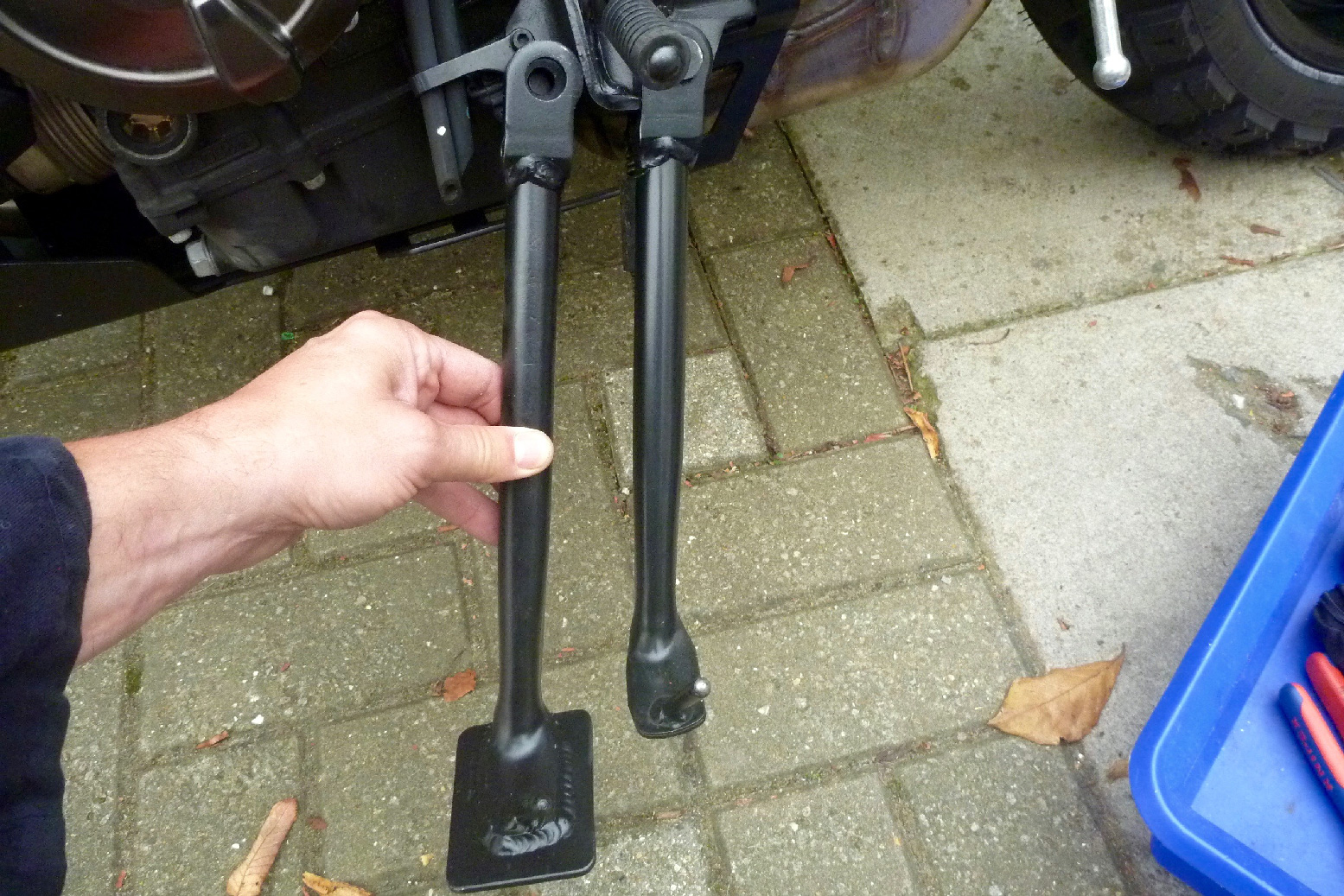
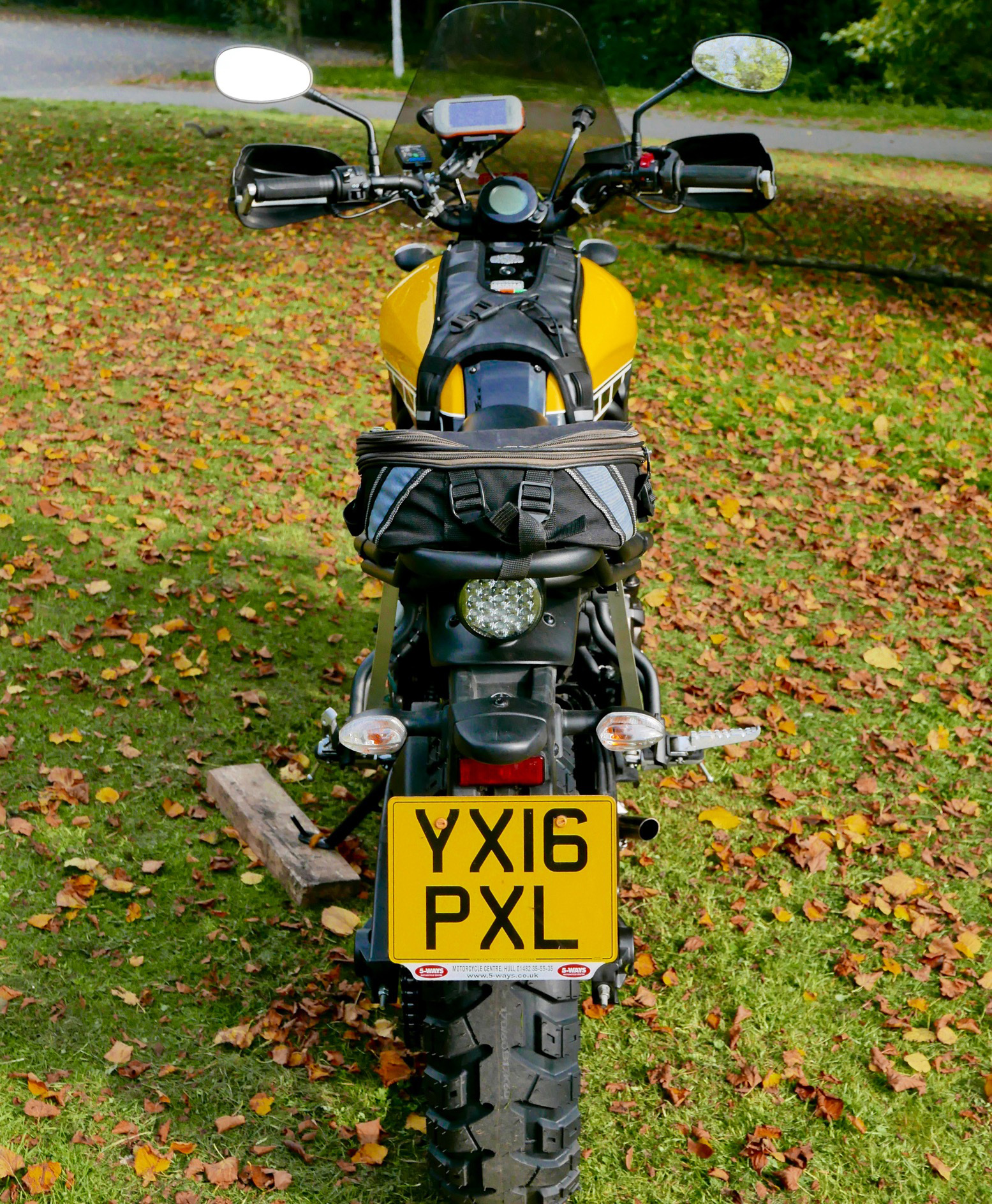
All that needed doing to the XScrambleR was fitting an elongated and bigfooted sidestand adapted from an MT-07 stick (£20 used on ebay + £25 labour). A seamless job by my weldy mate, Jon. That took 10 minutes and a wall to lean on.
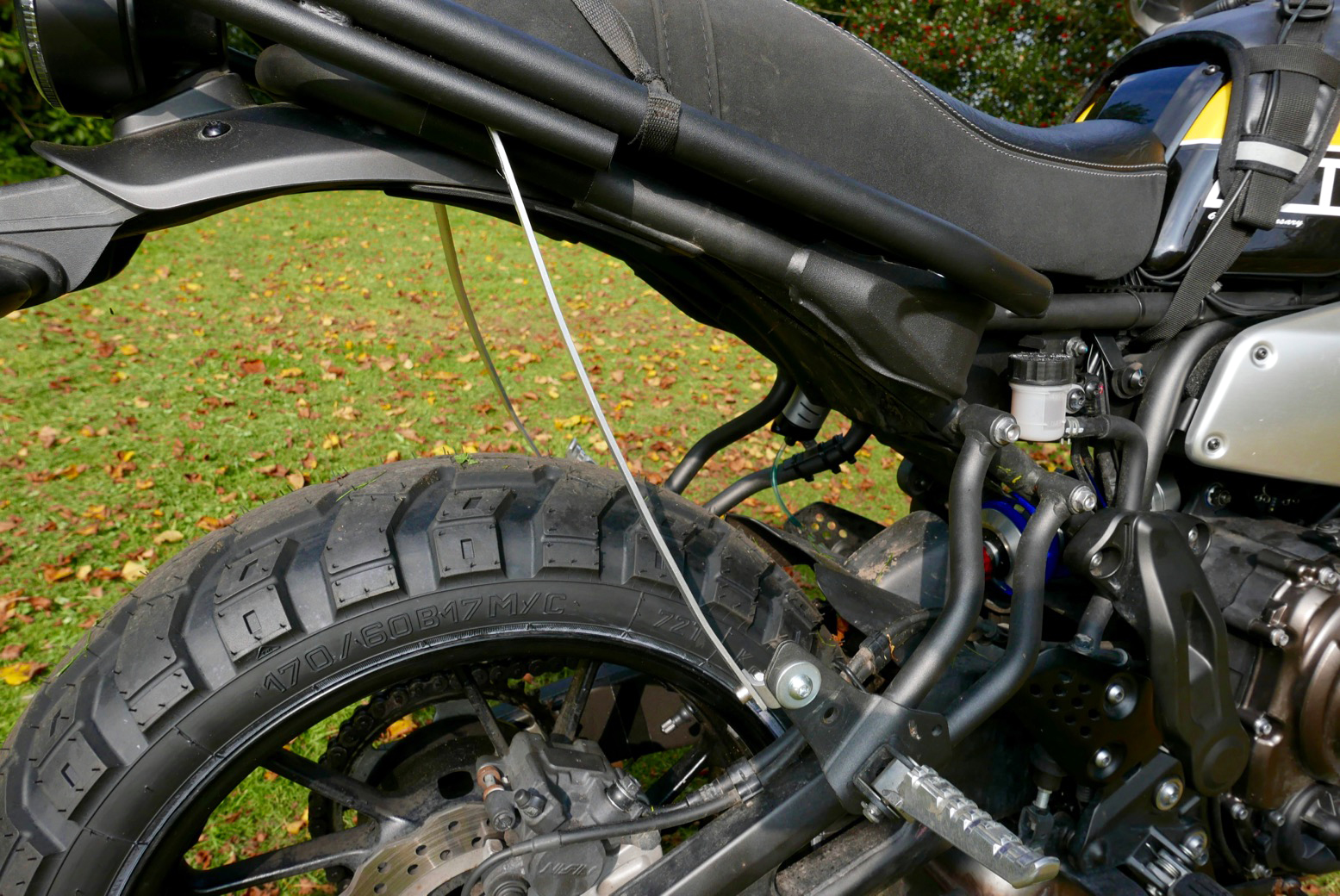
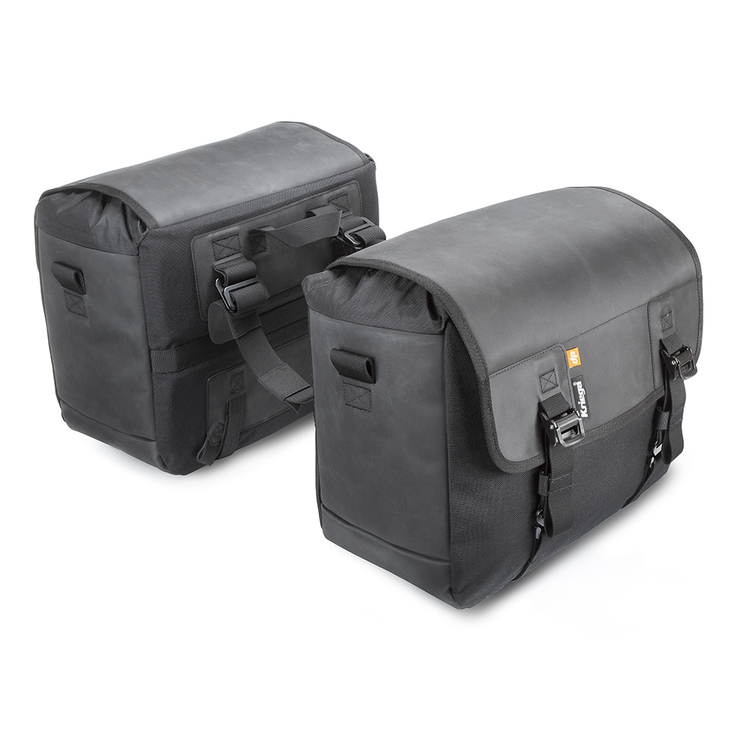
Next, see how the Kriega Duo 36 Saddlebags fit over the back. My pillion-to-rack spars are better than nothing but aren’t brilliant at limiting swing into the wheel; they’re too high and forward. A proper rack is best, but a bit of stick and zip tie from pillion-to-indicator may do the job.

cbxender

And so here it is, another AMH projectile ready for three laps of Morocco and a dash home. Looking forward to it, just as long as it handles OK on the dirt. I’m pretty sure it won’t be much worse than the heavier CB500X Rally Raider from 2015 (right).

XSR 700 Scrambler – final mods

XSR 700 Scrambler front page

My XScrambleR sets off in a month for Morocco and, bar some luggage, is ready to go. Don’t think I’ve ever had a bike ready so far in advance.

Using some left-over or unused components, I fitted a Tuturo Chain oiler which I still think is the simplest and most effective way of getting this messy but necessary job done. It is, of course, especially handy on bikes without a centre stand where hand oiling the chain is a particular faff.

kriega-saddlebags-duo36

For luggage I’m going to use some simple Kriega Duo 36 Throwovers again, as I did last year on the KLX in Baja. The great thing with the XSR’s underpipe is that it’s right out of the way of luggage but bags still need something to stop them swinging into the wheel and chain. In the spirit of the Chouinard RURP, I’ve come up with RURTS (Realised Ultimate Reality Throwover Stay) an ultra-minimal side rack. The weight is taken over the saddle; the slim stays help locate the bags. If their reality ultimately turns out to be too realised, another stay from pillion pegs to the rear flashers will fix that. I’m sure they sell broomsticks in Morocco.

Once the holes were drilled the RURTS were another 10-minute roadside job, but lacking anywhere better than the kerb to work, I weakened and got my LBS to do the rest of the heavy jobs.

xsrshok

Shock
The new wheel on the front has raised the bike 30mm, and the fork preloaders may help it stay that way. I was looking for a way to achieve a bit less than that on the back – partly with a taller tyre and partly with a longer shock.
The OE shock is basic; it’s fine for very normal riding but only has preload rings. They are found used on ebay in their zillions. I preloaded it on the first run, but found it lacked any rebound damping to control it.


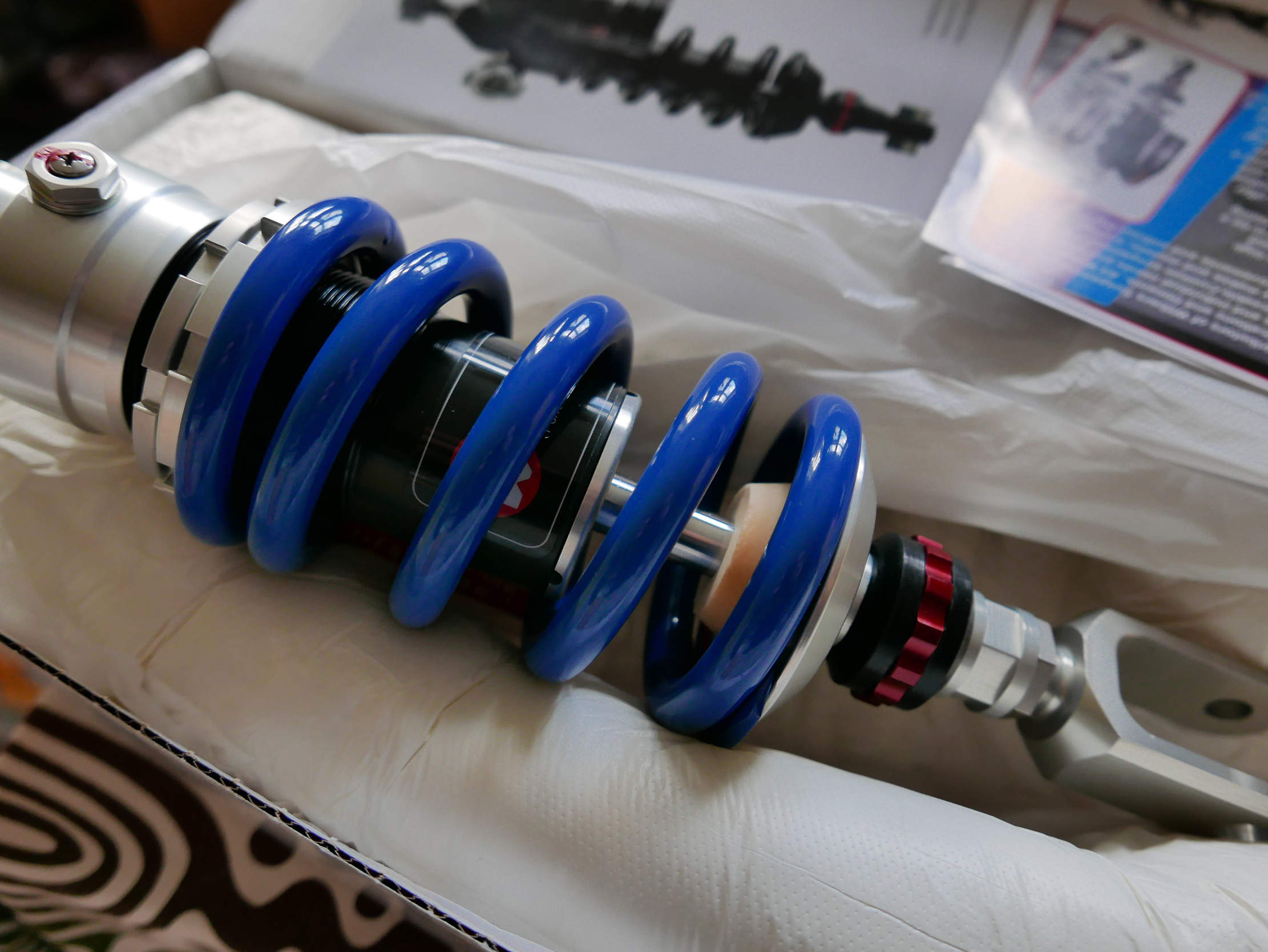
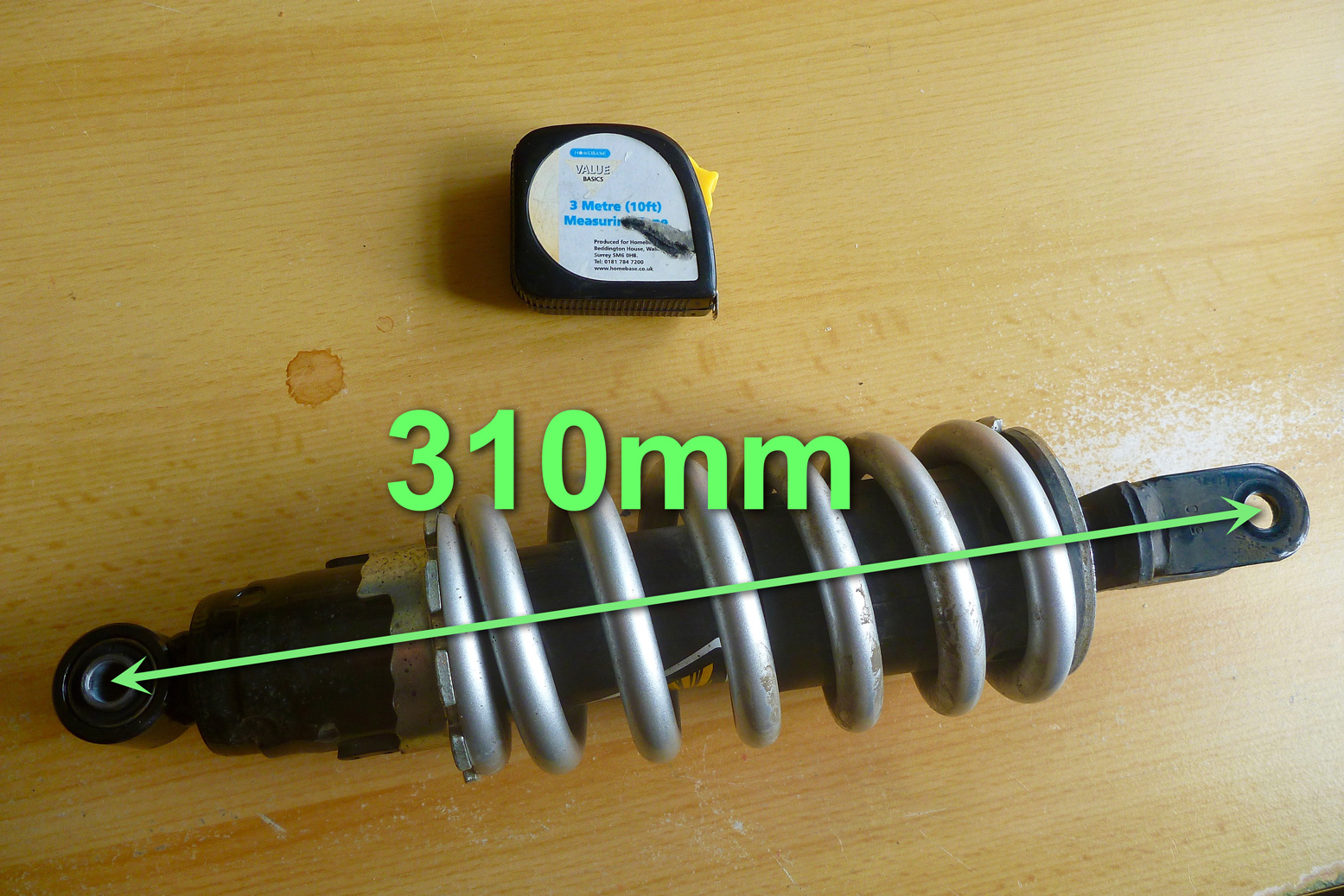
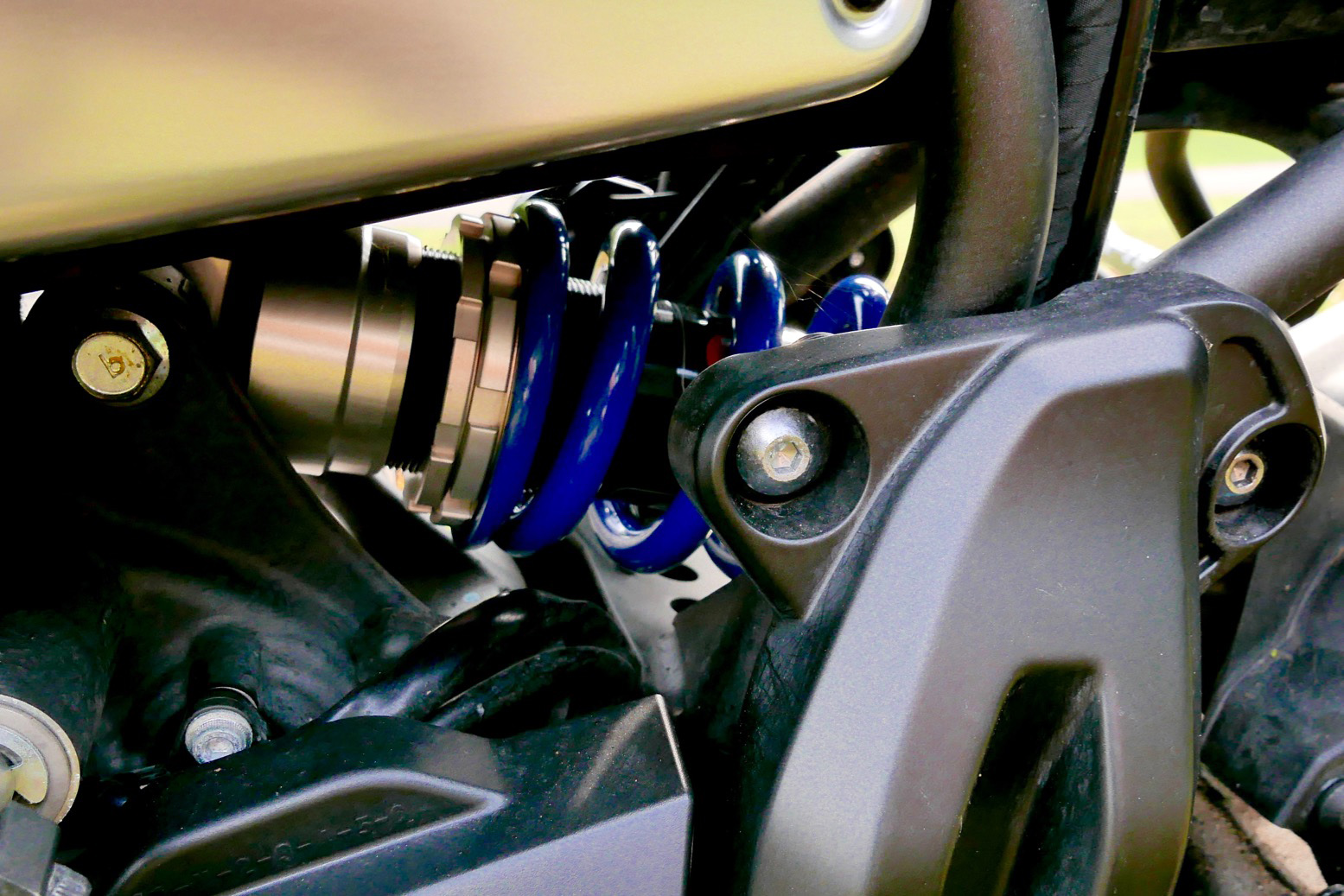
The OE shock is 310mm long. I was looking for a shock with rebound damping that started at that length but had extendability. Looking at the usual suspects, only the Wilbers 640 Blueline could be specified with that feature for a reasonable £512. All it is is a chunky thread and nut at the bottom of the shock below the red rebound knob, and which can be unscrewed (lengthened) to a pre-set point then locked out. Rocket science it is not, but you need to remember that 10mm on the near-horizontal shock adds up to more in actual seat height. Pythagoras will know exactly how much, but when my Wilbers arrived I maxed it out and sent it to the shop.

cspan


Doing it this way makes the shock/bike more sellable later, as it can be wound back down to the standard 310mm XSR height. In fact this whole XSR build, including front wheel swap, is fully reversible. No one need every know.
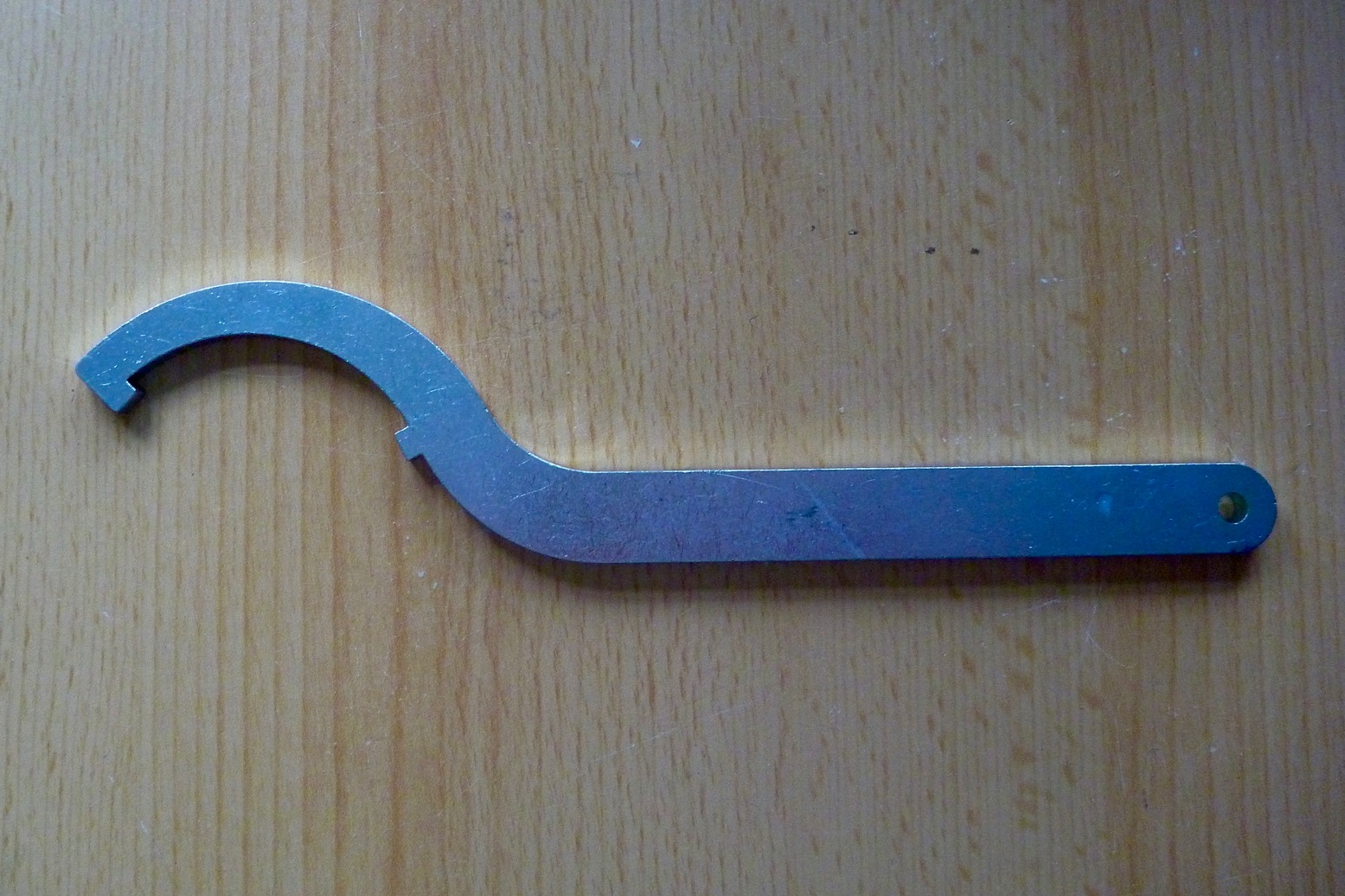
For once in my suspension history, I’m going to endeavour to set the static sag before I leave. It’s a bit tricky alone, but there are instructions on how to do it all over the web. I dare say it will need some tweaking on the road as it beds in, and I’ll sure miss the Hydraulic Preload Adjuster of my previous Hyperpros, but there we are. As it is, C-spanners keep Elastoplast in business and come free with the shock.

Tyres
I could have tried something new from my do-it-all category, like a Mefo Super Explorer, but only Heidenau K60 Scouts came in a range of sizes which sort of included the XSR; a still ridiculously fat 170/60 17 72T was delivered for £97 from Germany, and a 100/90H-19 Catspaw (not Scout) from the UK for £61. Looking at it now, the rear looks a bit lower profile than I’d prefer, but there was no 170/80 in 17.

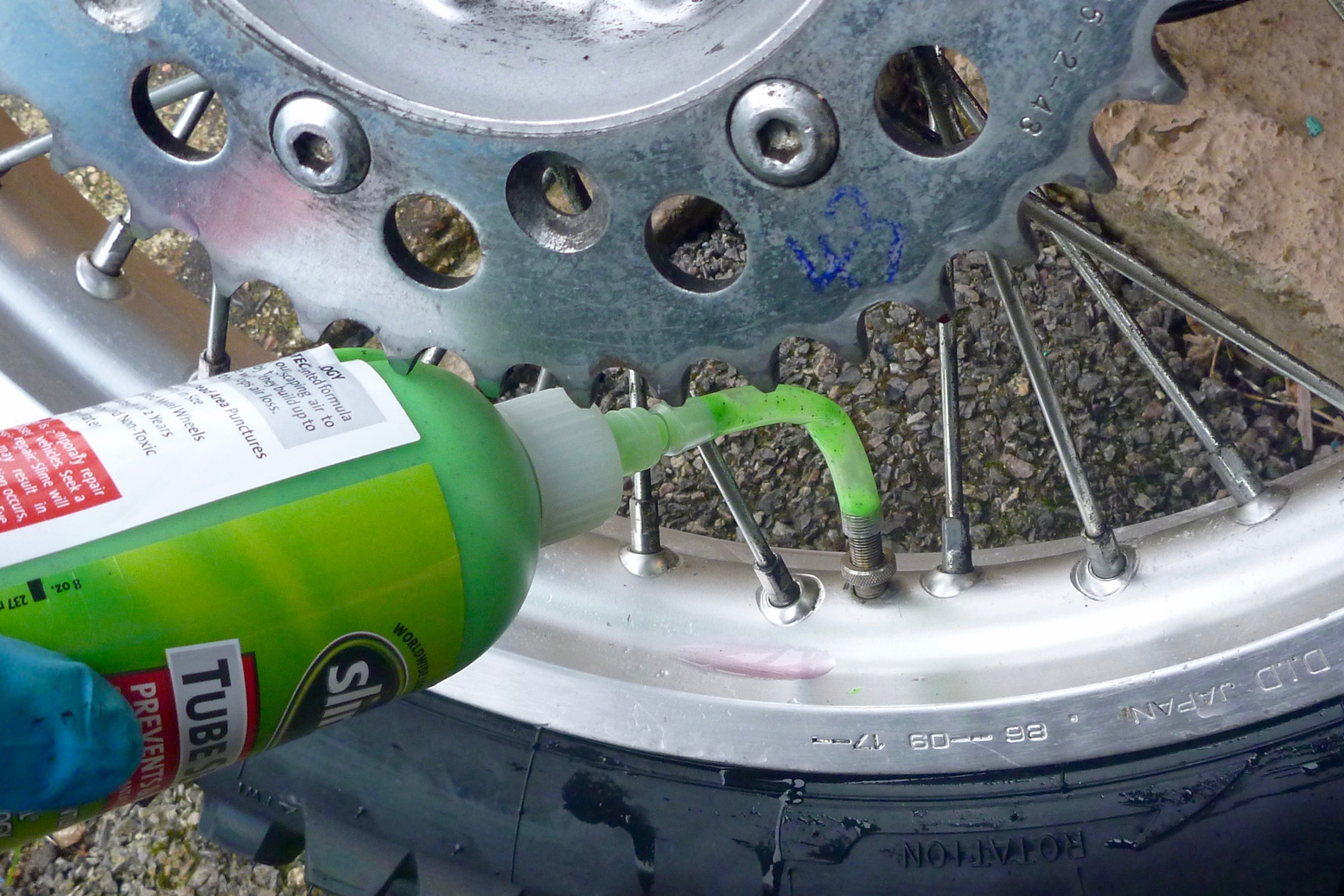
The nearest K60 was 150/70 17, but as I was dropping from OE 180 width, 150 (over an inch slimmer) looked too much of a change for the rim size. Best of all, these retain the tubelessness (which reminds me, need to get some Slime in).

mt07ss

Actually, I think I need to address that stunted sidestand now the bike sits at least an inch higher. I could drill a hole through the foot and bolt on a block of wood or HPDE. How shit would that look? Good news is used MT-07 stands go on ebay from 20 quid. Weldy-mate Jon might be persuaded to hypnotise it and make it grow an inch, and while it’s out slap on an 5mm sandplate underneath; it will look like it was made that way and ought to have the strength to take a lifted wheel if I have tyre troubles.

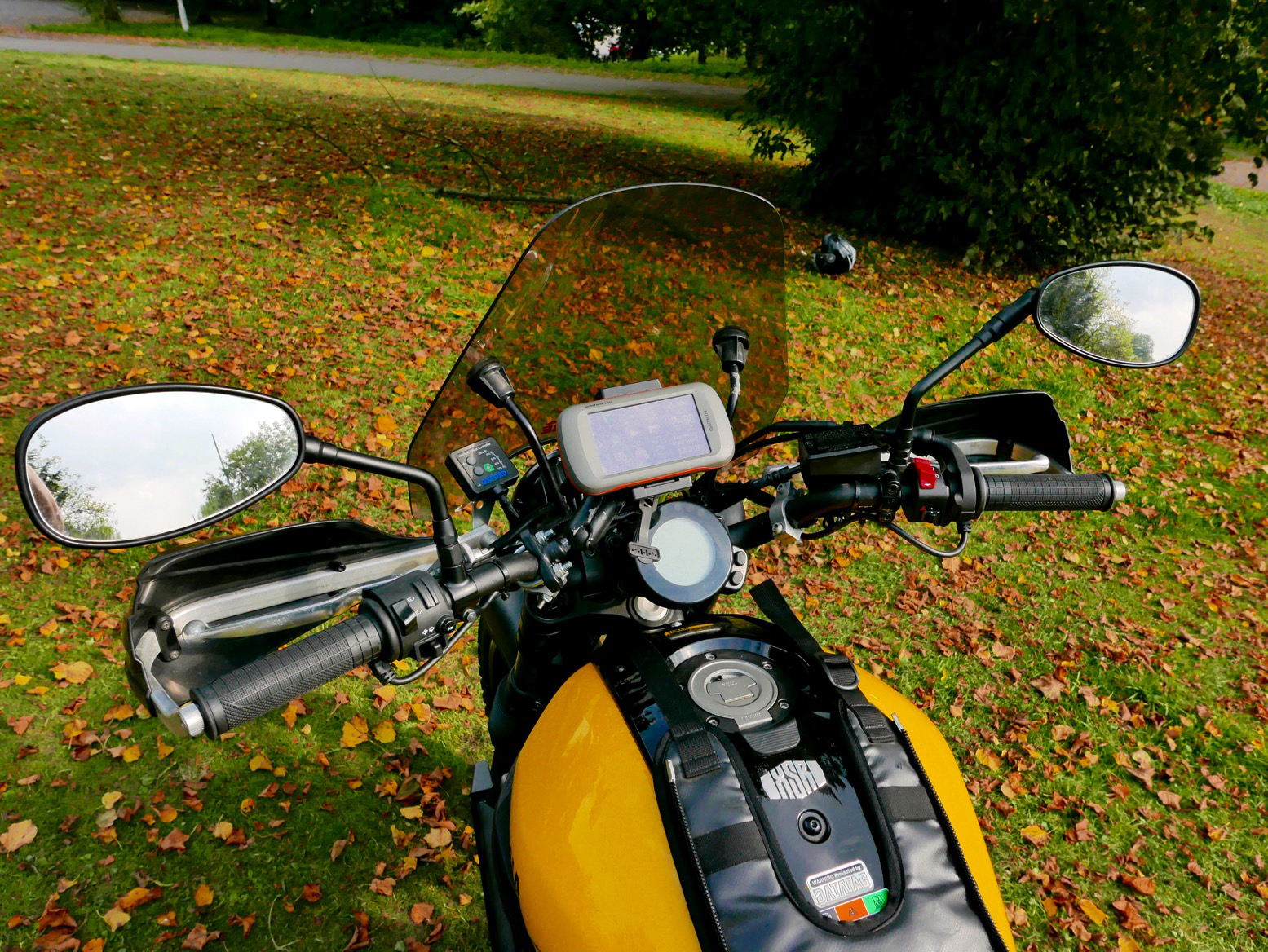
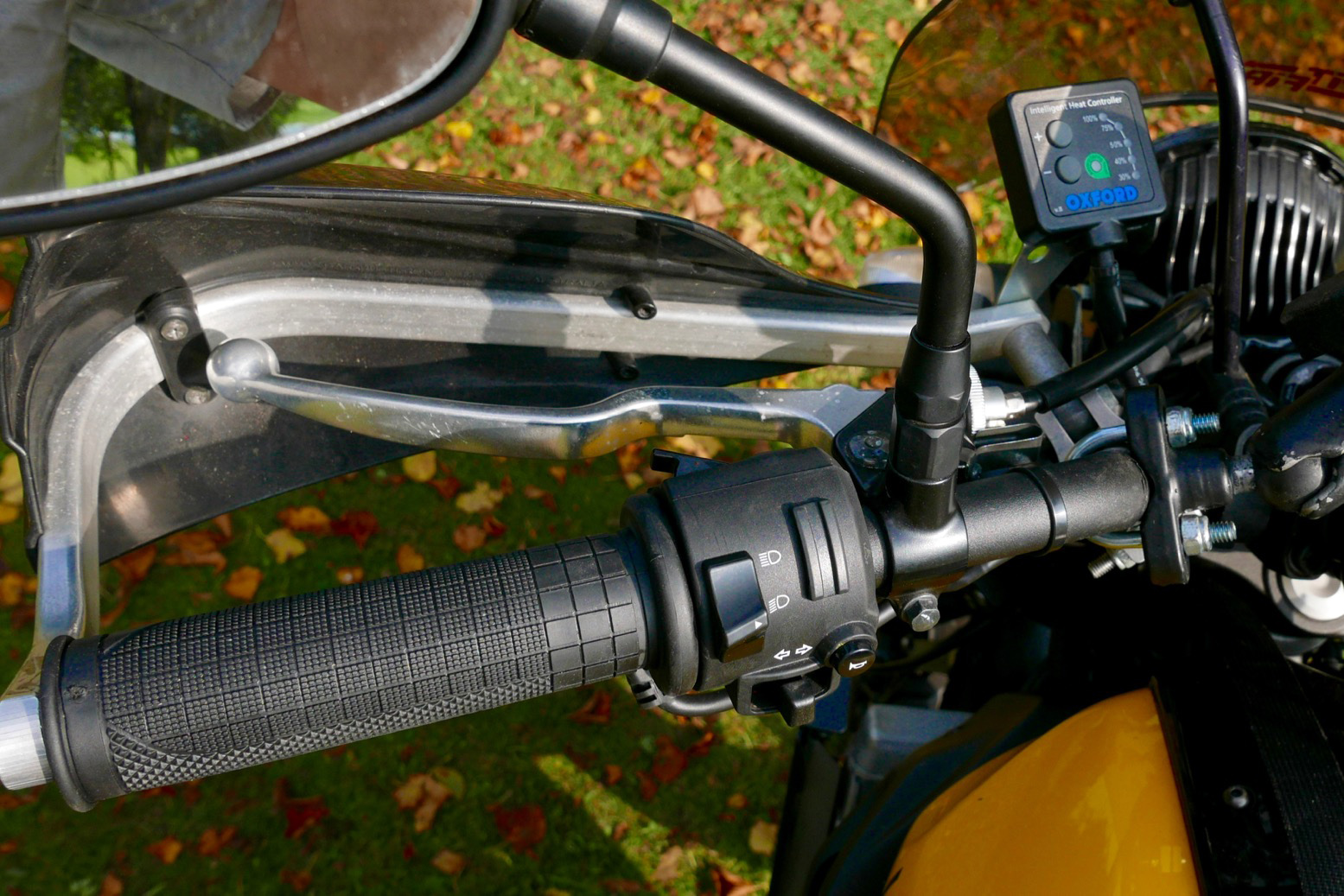
Other than that, my LBS fitted some Oxford Hot Grips for me (£50 ebay). This is the first time I’ve actually bought a set; usually they’ve come with the bikes I’ve bought. and for UK commuters are a no-brainer. Along with my screen, my Barks and my Powerlet jacket, I simply cannot wait for the December ride back across Spain.

Tested: Yamaha WR250R 4000km review

• 4000-km review
• Introduction
• Stage 1 mods
• Tested in Wales
• Ready for the desert
• Morocco trip report 1-9
• Mitas MC23 Rockrider tyres
• Fuel log

The WR250R is the latest in a series of 250s I’ve been trying over the years in the search for a light, economical, do-it-all travel bike. Other bikes included the CRF250LHonda Tornados (rentals), a carb KLX250S in the US, then a 300L.
I used my WR principally in March 2017 for a one-month ride in Morocco, researching new routes for my Morocco Overland guidebook.
After 10 years with few changes, the WR250R is no longer listed on the Yamaha US 2018 line-up. It’s the same story in Australia so it’s the end of the line for the unique WR-R.

Short version
• Vanned the WR to Malaga as I couldn’t face crossing Spain and back
• Need to cane it to press on (don’t recall CRF-L/KLX feeling the same)
• Even at 6’ 1’’, the tall saddle is a pain
• Suspension is of course, brilliant, compared to stock CRF-L (mine had Hyperpro)
• Amazingly economical: 550km to a tank. Fuel Log
• Back pain from stock saddle lasted months
• Super build quality explains the price over a CRF-L… almost
• Huge 350-w alternator output for the size and age of this bike
• Fuel pump worries in hot conditions (played up but never went)
• Clearly suited to predominantly off-highway travels

Long version – read on… Good 2023 summary here

I did all the usual things to the WR; protection; tyres; bigger tank and luggage capacity. See this for the full story.

Comfort
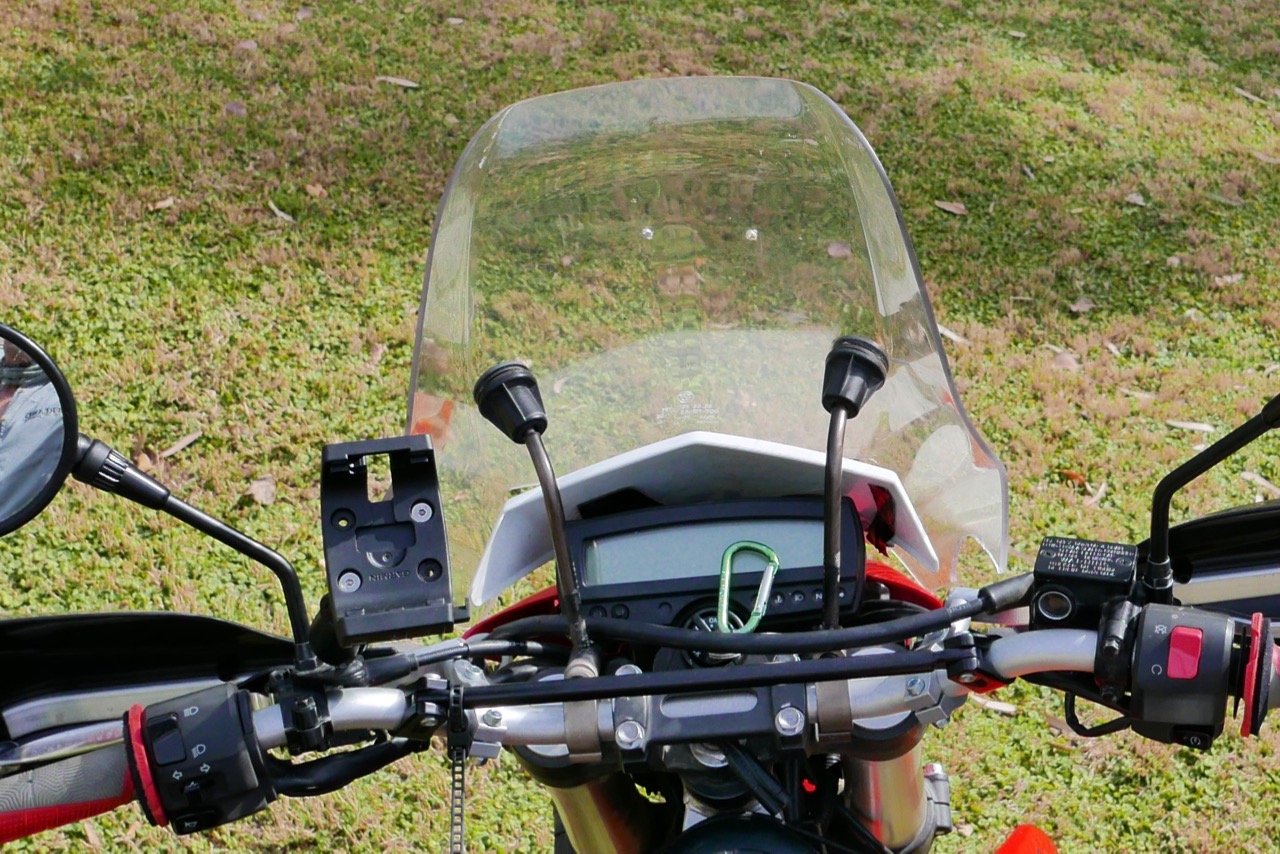
For me the WR was not comfortable when sat on the road at a steady speed. Tooling around off road sees you move around more, so you get tired before you get uncomfortable. I could’ve improved things by fitting my small Spitfire screen (left) from previous bikes, but figured it’s only Morocco, not the full run across Spain.

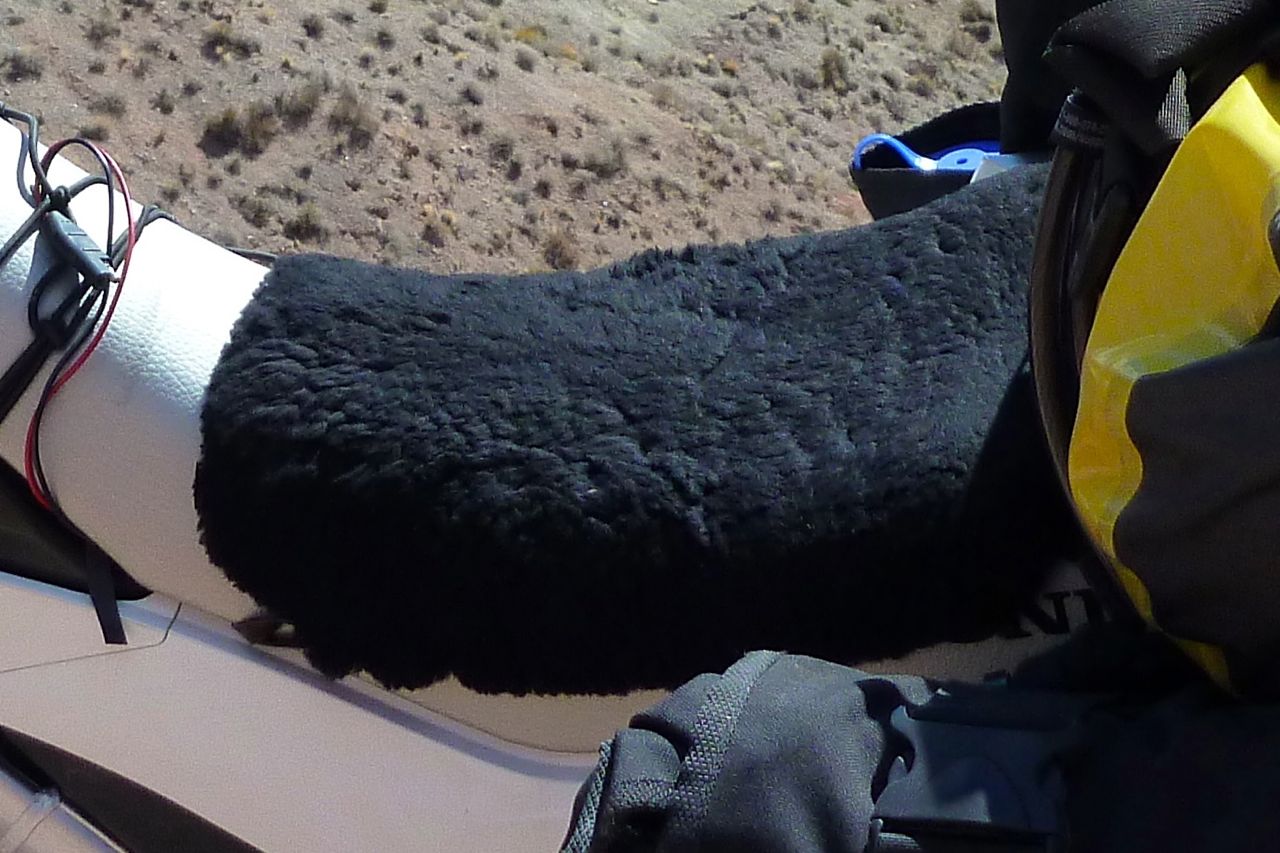
And I could have bought an alternative seat from the US, but these can be a gamble; what’s comfy to one is no great improvement to another. I could also have fitted my Aerostich woollen pad (left), but that would have made the seat even higher.
And I sometimes wonder whether leather trousers create less butt soreness than slidier jeans.
I didn’t do any of these things and as a result my memory of the WR is perhaps unfairly sore. A huge fuel range doesn’t help, as when I have a job to do I tend to keep going until I’m worn out or the fuel runs out. It took months for the pain in the base of my back to subside.
At my height, bar risers certainly made standing sustainable and I can’t say my legs felt cramped as the saddle was quite high. The Hyperpro suspension also went a long way towards smoothing out the ride (but actually proved to have had a too-light spring fitted. And one good thing about small capacity singles is there is no vibration to speak of.

Fuel economy
As expected, the WR was very economical for a relatively high-powered engine. Average was 83mpg (29.5kpl). Worst was 71mpg (25.2 kpl) and the best was 94mpg (33.3 kpl). Full details here. Fuel conversion chart here.
By comparison my CRF250 managed 86.7 with a best of 98.5 (about the same as carb’d XR250 Tornados). The KLX may have been a bit less than the WR – 88mpg was the best. iirc.
So you can safely rely on 25kpl from the WR which, x 17 litres is an impressive, butt-numbing 425 clicks, or more like 500.
But, as I ask here: is a small bike really more economical? When you think of the easy cruising speed of a bigger twin for 10-15% less economy, the answer may be not really. What you’re really getting with a 250 is much less weight: my XSR700 which came after was 195 kg tanked up ready to go; WR was about 155kg.

Oil and water consumption
Zero. I was very careful to ride the bike on the temp gauge mounted off an exhaust header – generally cruising at 100-110°C. If it got much above 120 I slowed down or stopped as hot temps are said to bring on fuel pump woes.

Performance
The WR was supposedly a good 20% more powerful than my KLX or CRF; it’s lighter too, until I loaded it up with equipment, gear and myself. I have to say I was disappointed by the performance, most probably because I could not bear to rev it hard. In some situations (uphill; headwind wind) I’m not sure it would have made much difference, anyway. Day 1 in Morocco in a headwind gale on the motorway was not a good start. Rarely did I get over a true 60mph which was not uncommon on the other 250s. Some days (some fuels?) were better than others, and there was nothing wrong with the bike other than the bulk of me and my gear. The brakes feel pretty ordinary with that load.

Suspension
I never rode the bike on the standard suspension and with Hyperpro front fork springs and a 461 shock with a HPA on the back I didn’t have much to complain about until I came back over Jebel Sarhro with a full tank and souvenir carpets. By then the preload was surprisingly maxed out. I could have fixed that by turning the HPA collar down on the shock body. I found out months later that HP had fitted an ’80kg’ rear spring – presumably 80kg rider weight? I weigh at least 20% more in my gear. They knew my weight from before. Seems odd they went so light knowing what I was going to use it for.

Road riding
With a 21” front wheel, knobblies and modest power, I can’t say the WR ever got a handful on the road. With the big load, it was the brakes which limited speeds.

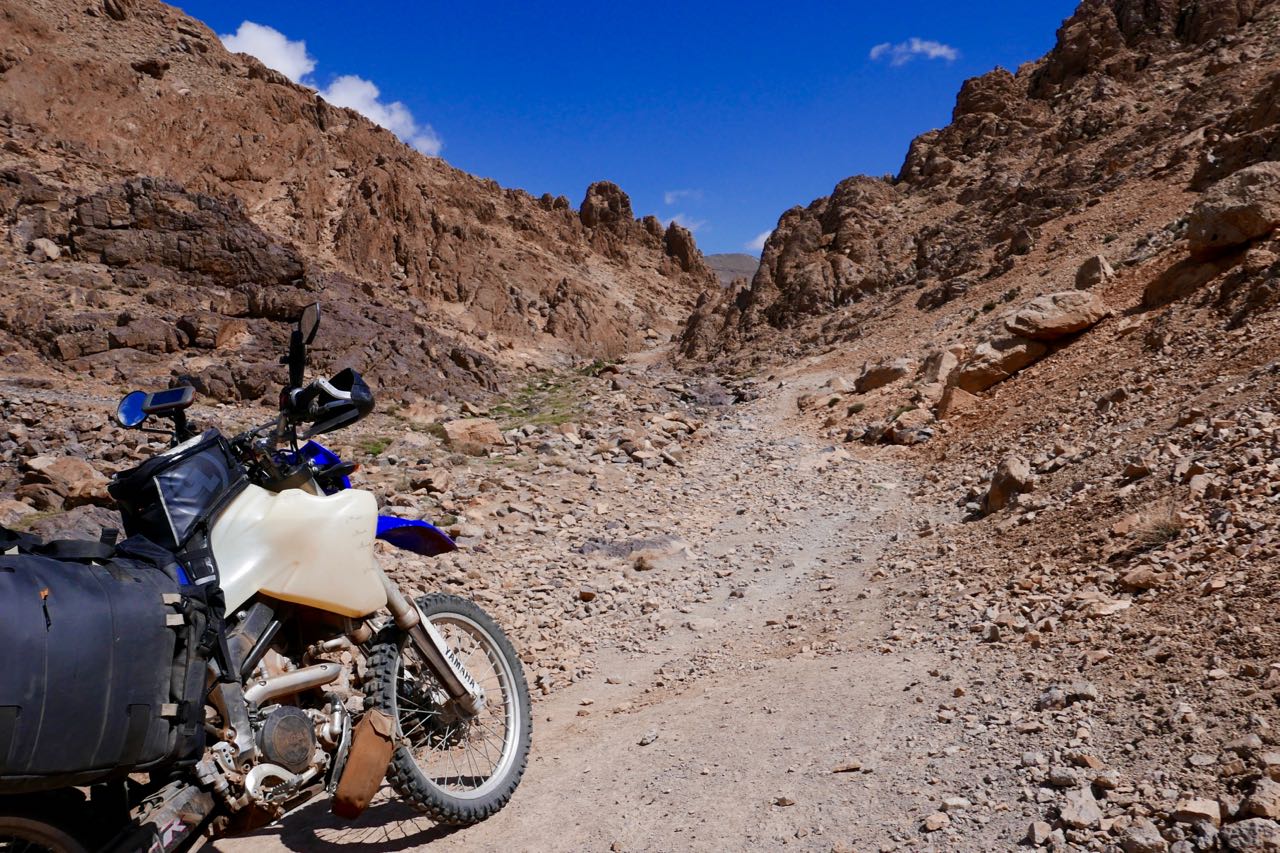
Off road
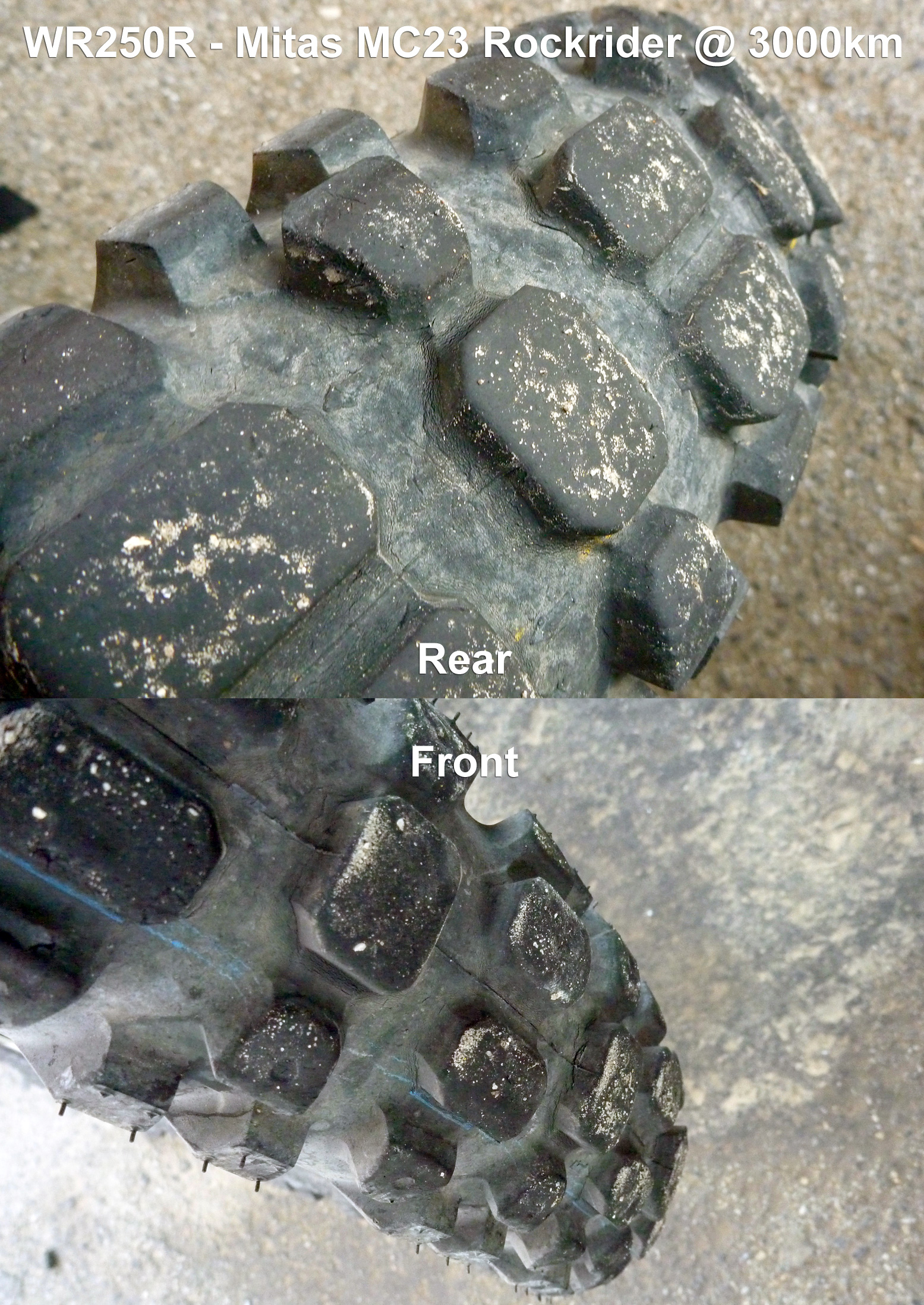
Off roading in Morocco mostly involves rocky or gravel tracks, and the Mitas Rockriders (right) did the job at full road pressures, but the back wore surprisingly fast. Fuller review here.

Loading
I don’t regret the cost or weight or mounting issues of the Tusk rack (left): it gave a very solid platform for the Kriega OS32 system and a bit more besides, and didn’t miss a beat. Full review of the Kriegas here.
The Giant Loop Fandango Pro tankbag is reviewed here. A handy little pod if you can get it for the right price.

Equipment
The WR’s dashboard is about as basic as they get – just the speed reading and a trip or odometre, plus some warning lights. I fitted a Trail Tech temp gauge (left).

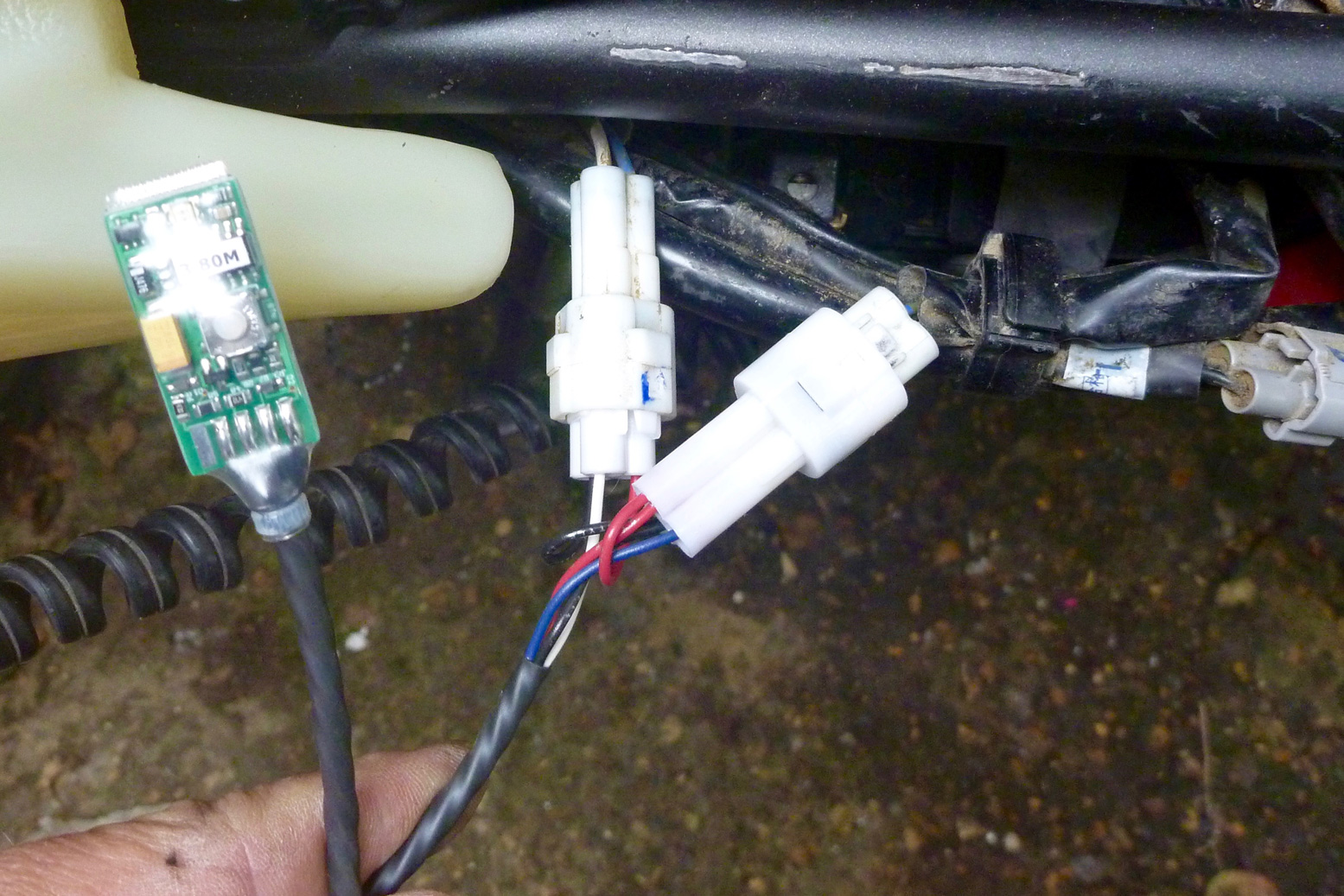
With a DRD correction chip (right) the speedo was spot on and could be changed between kph and mph with some sequential faffing. The odometer was 11% over, but readings were corrected for mpg calcs. The GPS was hard-wired in and I never needed the additional power plugs.

Durability and problems
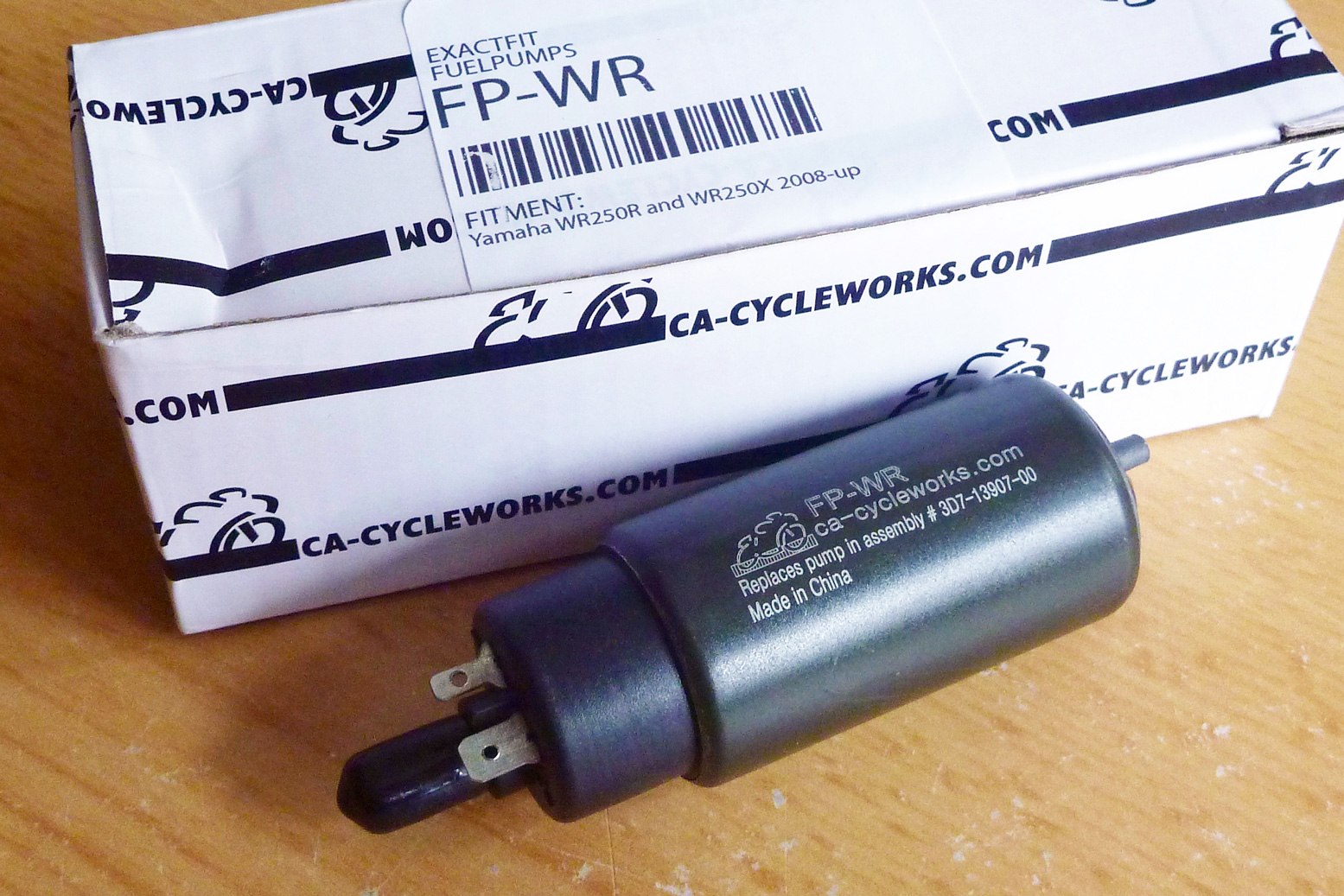
The 2008 stator recall had been done by the previous owner and I was aware of the fuel pump issues – some early OEs seize and eventually pack up when working at higher temps. I do wonder if it could be down to American fuel which can get quite ropey in my experience. I was using the original pump and didn’t bring my spare (left) which helped make life interesting. After a while, at times when the bike was warm, I heard the fuel pump priming or whirring on turning the key on, but before hitting the button. This should last a couple of seconds; if it keeps going I suspect it’s bad for the fuel pump so I always made sure I got the engine running as soon as I turned the key on with a warm bike. Cold; no such issues and at any times there was never any fuel starvation or hesitancy even when hot, just too much whirring at times.
When I got back I fitted the few aftermarket pump before selling the bike. Other than that – no issues with the WR which is why we love Yamahas for overlanding.

Conclusion
Effortless on the dirt, as expected, but me and my gear (130kg?) was too much weight for the WR on the road, so it doesn’t make it the do-it-all machine I hoped it might be. I’m pretty sure a WR450R could be that bike, but Yamaha won’t be making those before the Chinese get there first.
You know what; for normal overland travels rather than gnarly, hardcore off-road exploring (not the sort of riding I do much of) I think I’d settle for a latest CRF250L (with a couple more hp) or the newer 300 with a couple more – then add some decent suspension. This I did a few years later.

On getting back and flogging the WR I missed the grunt of a bigger engine and got myself a smashed up  XSR700 and made it into a Scrambler, an idea I had while flat-out at 57mph on the Atlantic Coast of Western Sahara. What a nice machine that was.

abr7 - 12

WR-ing about in Morocco – 8

WR250R 4000-km review
WR Introduction
WR250R Stage 1
WRing about in Wales
WR250R ready for the desert
Morocco trip report, 1–9
Fuel log

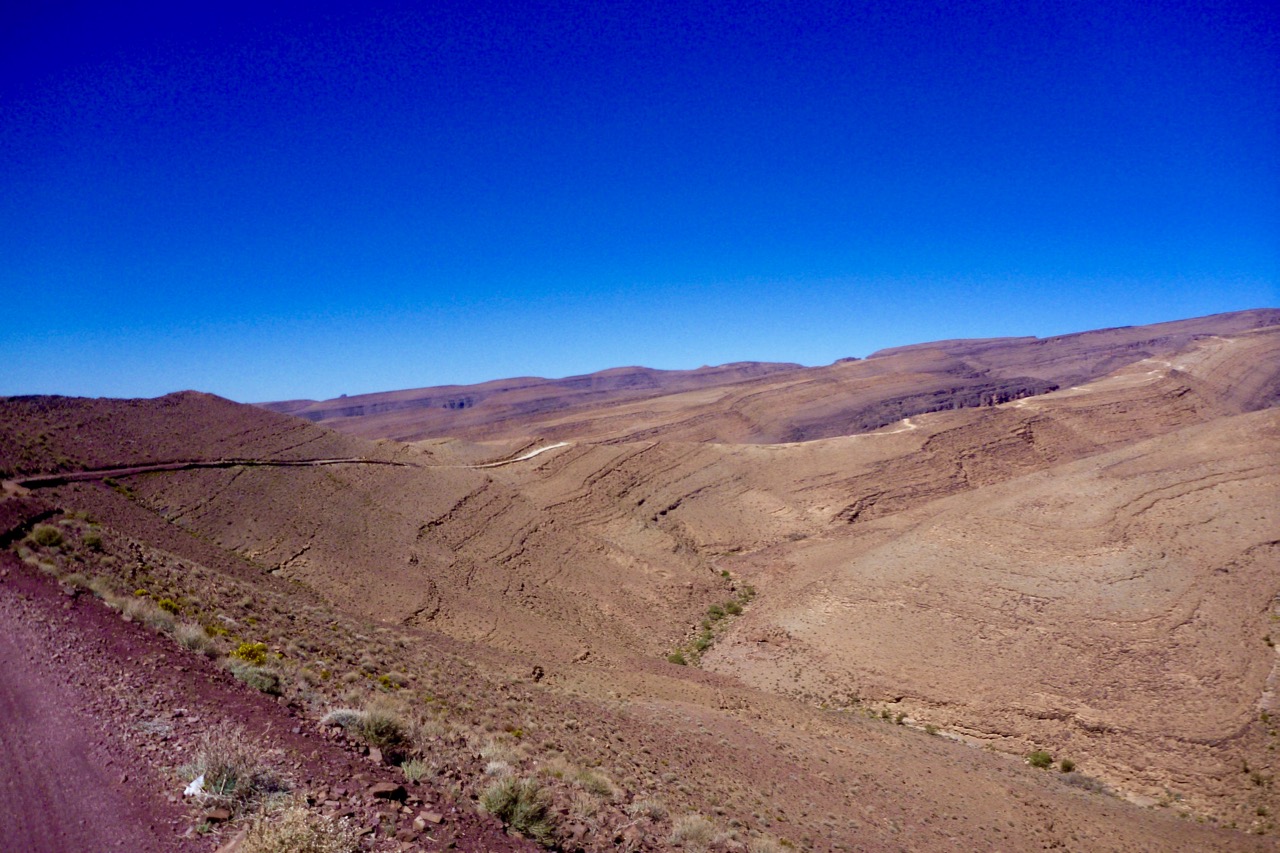
Last night I tracked down the exact point where Jebel Sarhro ‘Double West’ picks up off the Nekob highway, near Tansikht.
I tried to find it a couple of years ago with a group, but failed. We did it coming down in 2013 – a spectacular afternoon’s ride up MH14 and down MH15.
Glad I left the Husky Terra at the auberge on that occasion and borrowed a 250 Tornado. It’s heating up again – my body thermometer doesn’t know if it’s coming or going.
My Hyperpro suspension has softened a bit too, and I found my PLA (preload knob) was close to max.
I emailed Bas at HP and he suggested not upping the low speed comp (also now on max) but cranking up the rebound which I do in the shade of a palm. Who’d have known (turned out later they’d spec’d a way too soft spring for my weight, despite asking).
Those carpets are actually pretty heavy and, annoyingly, I filled right up at Agdz, instead of just a couple of litres to get me over. I’ll feel that extra weight on the hill. With 4 settings it’s easy to get baffled by a high-end shock unless you RTFM.
But they sure do make a difference. My WR rides like my old G650X Country – there must be something to this progressive spring theory. With a hot back wind from the south, it’s a tough, 2500-foot climb over 10kms to this pass.

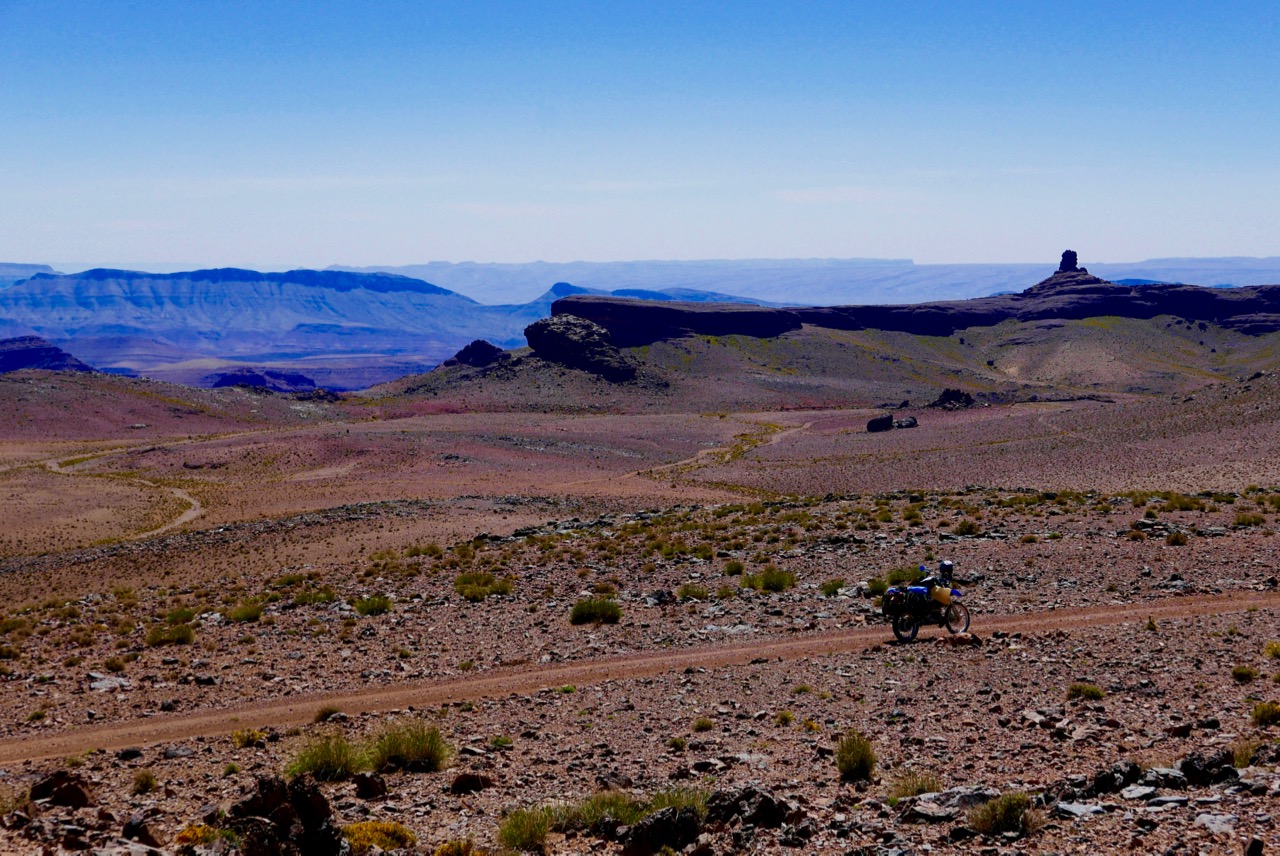
The bike grinds up in 1st and occasionally 2nd, and in places the exposure gets a little alarming.

I stop into the wind a couple of times to cool the motor and calm the nerves. Luckily, round the corner the track keeps its elevation along a saddle…

… to reach the plateau.

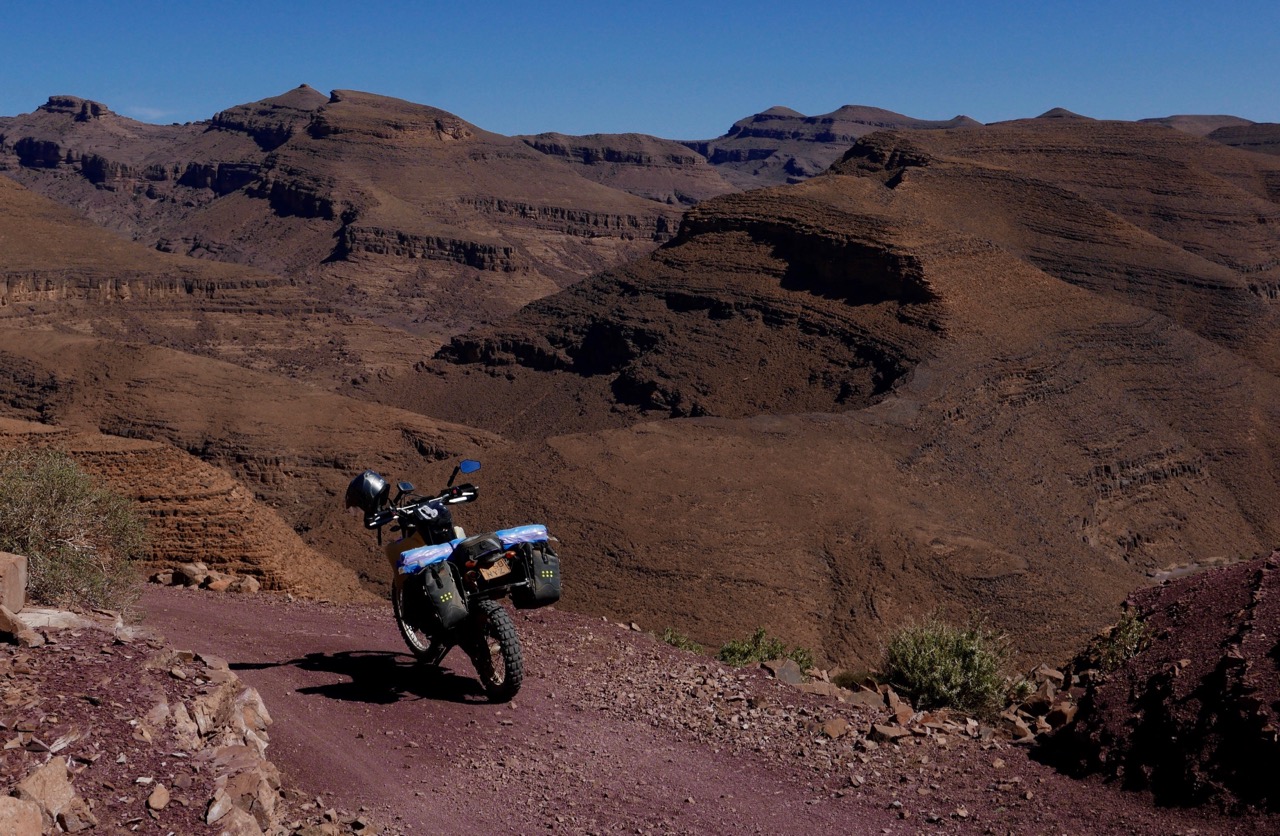
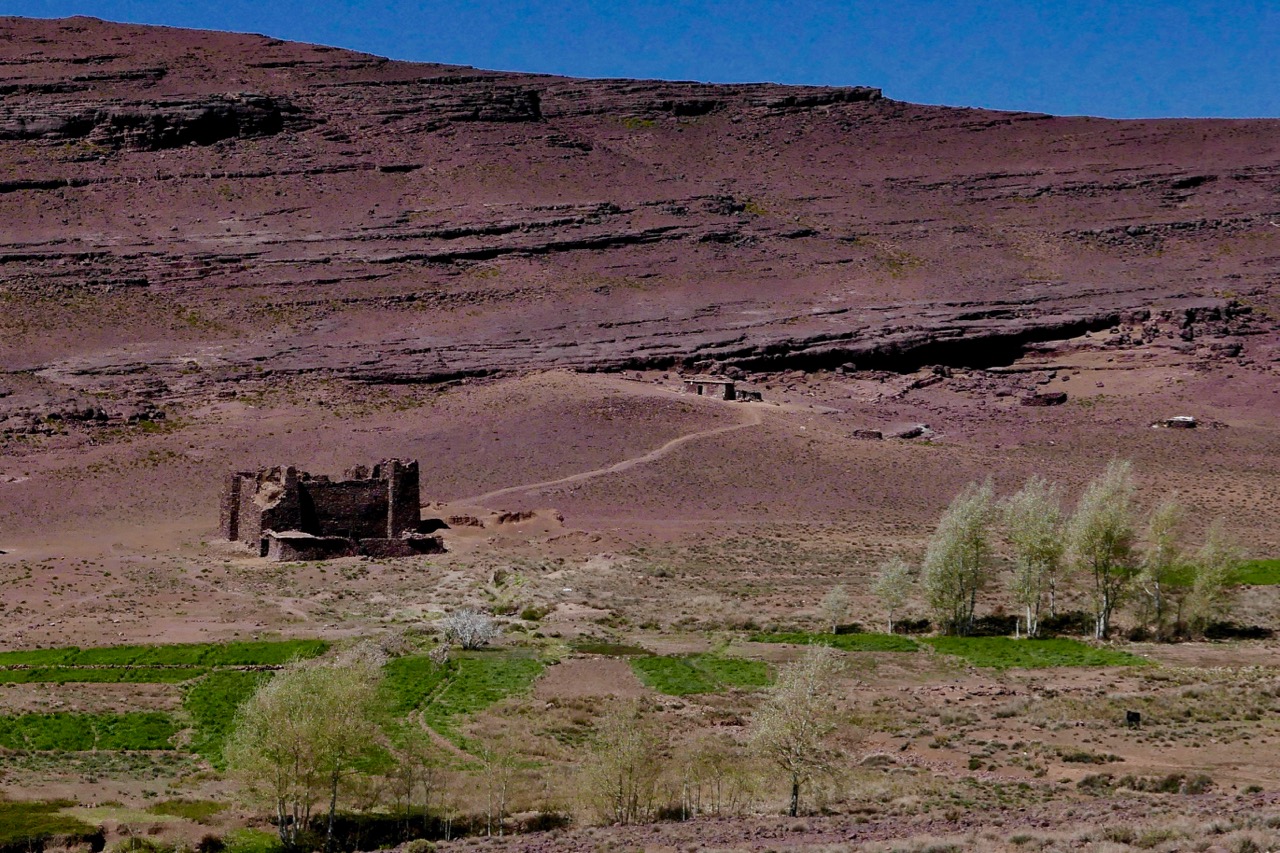
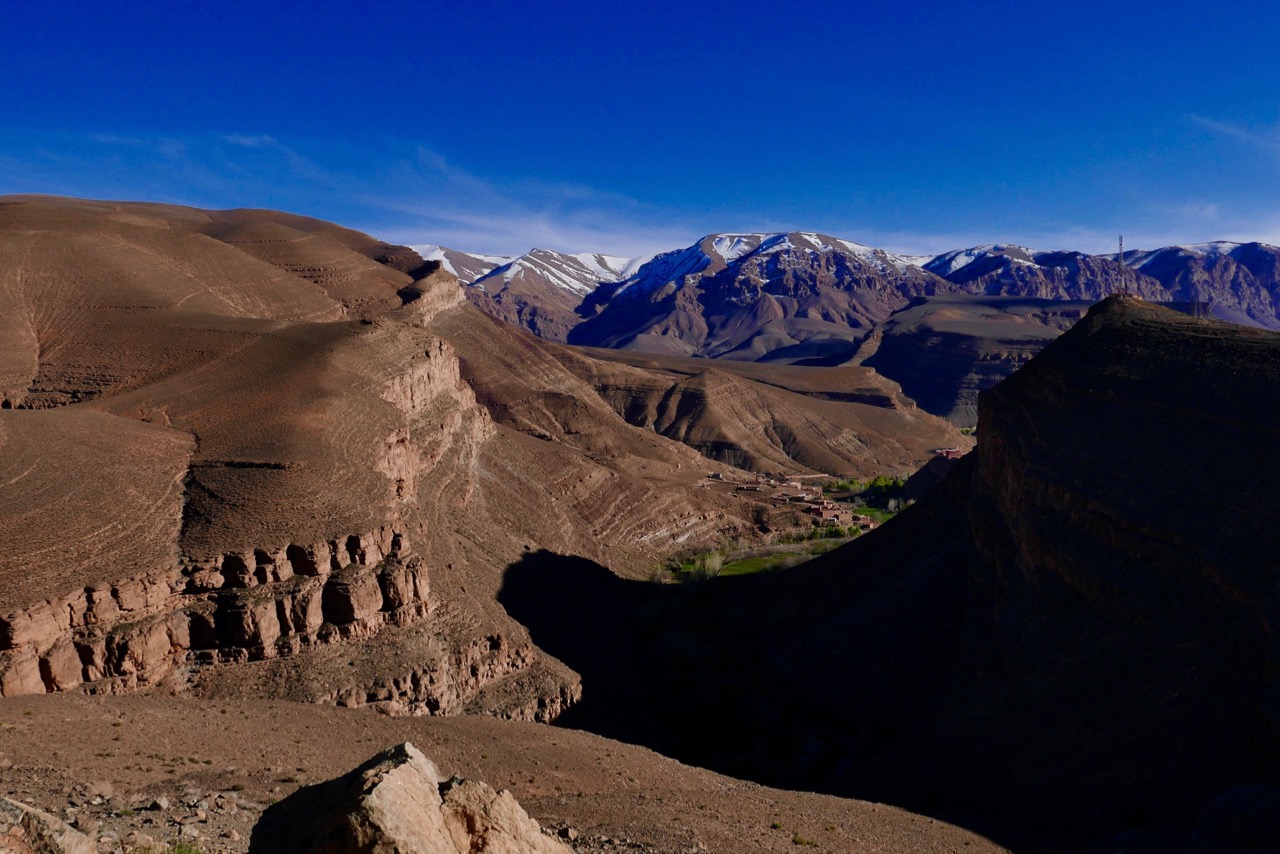
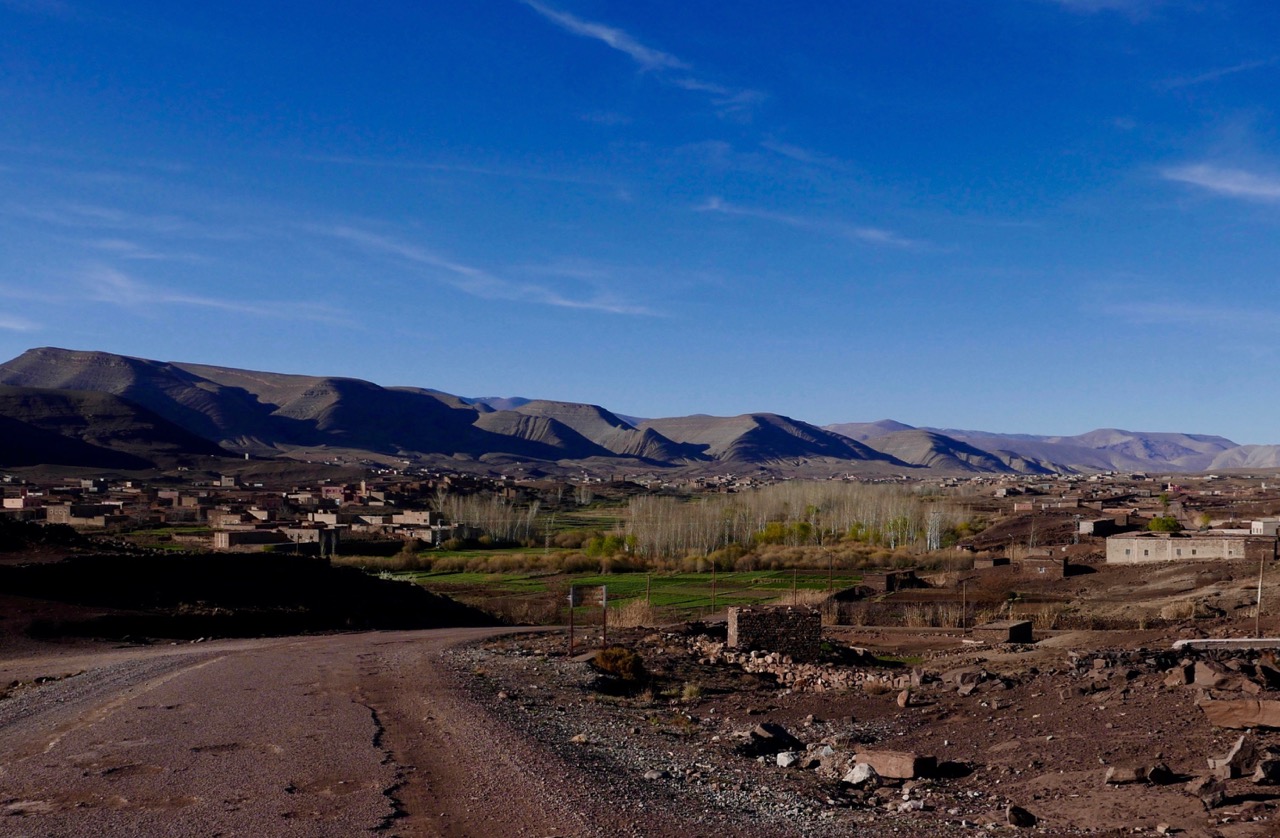
There are nomad tents with grazing sheep and patches of bright green cultivation against the barren rock. I pass this ruined agadir, or fortified storehouse.

I then reach the point where MH14 coming up from Nekob joins this route, but it looks like no one’s used it for a while.

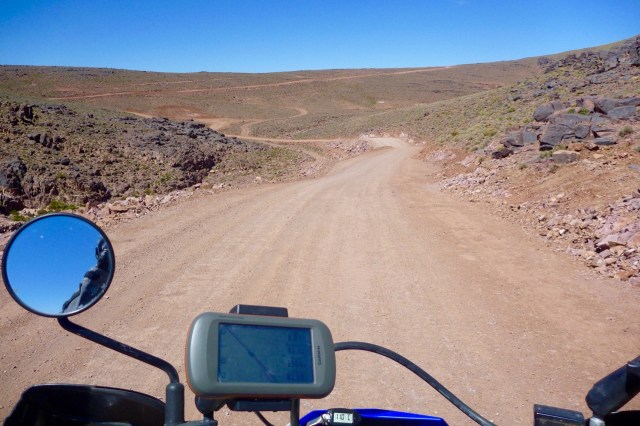
I last did it 5 years ago on an F650GS (above) and a mate on a TTR. Now it’s becoming another abandoned track suited to light bikes looking for a challenge. F ‘650’ was a great bike; I wish they (or anyone) would make a light, 500cc version. Then, a few km on I suddenly join a wide, graded track. That wasn’t here last time. What a relief! I can finally relax for a bit. I’m all for off-roading, but that climb was a bit gnarly.

Surely they’re not building a road to the few hamlets up here?
More probably it’s another haul road put in by prospectors to extract Jebel Sarhro’s gold and other minerals. Down in this basin I follow the haul road skirting a village, but it has yet to breach the ridge. Lots of trucks, rock hammers and dead ends leading to quarries.

With the Garmin map I work my way back to the old village track, get over an antenna pass and carry on north.
It’s actually a very nice track, and I realise why. After storms, work parties from the villages re-cover bare stony sections with sand and gravel to smooth it over and spare the van transporters a hammering. Only useful village tracks get this sort of maintenance.

I recognise this knot of villages by the Oued Dades. Nearly over. I am pooped.

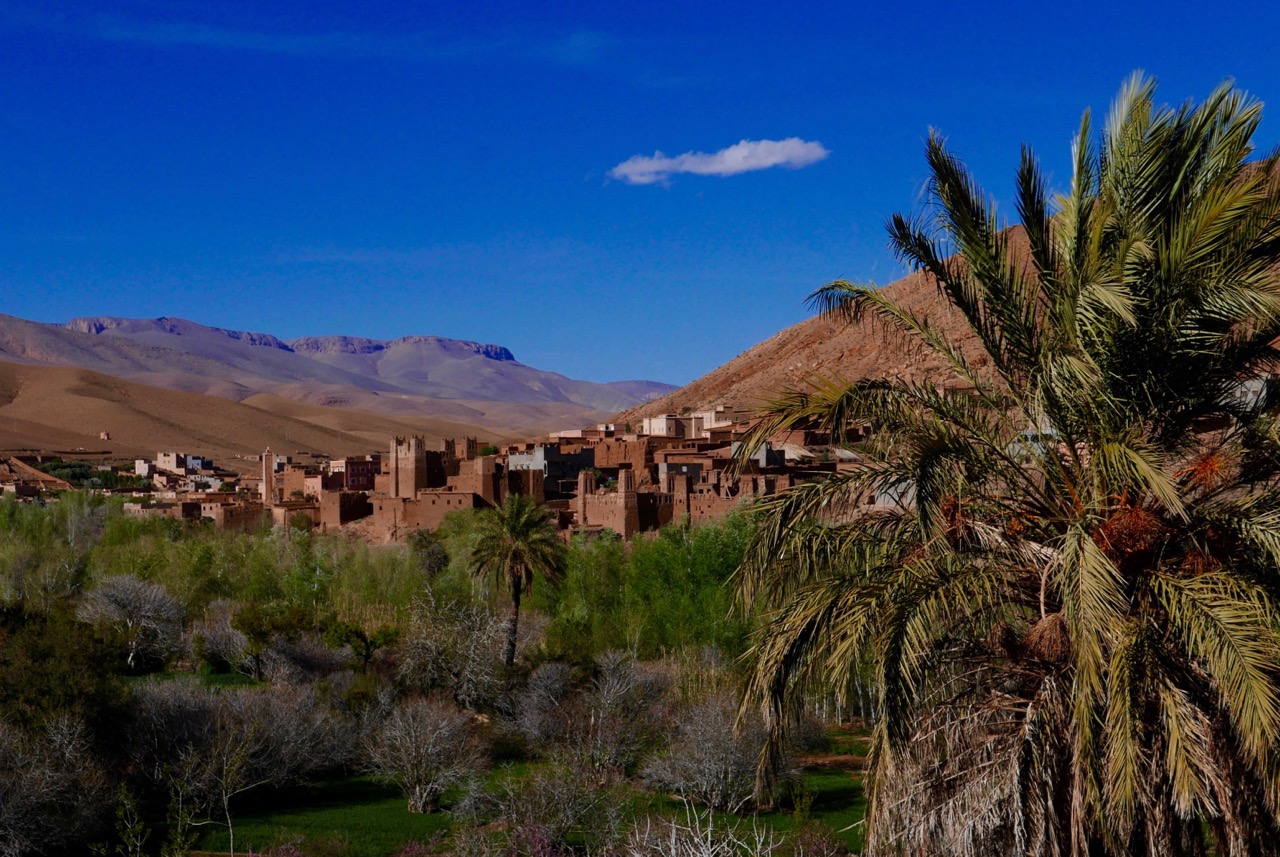
Suddenly I briefly plunge into a verdant oasis of trees and barley. After all the rough, rocky riding it’s quite mesmerising, a real tonic on the eyes.

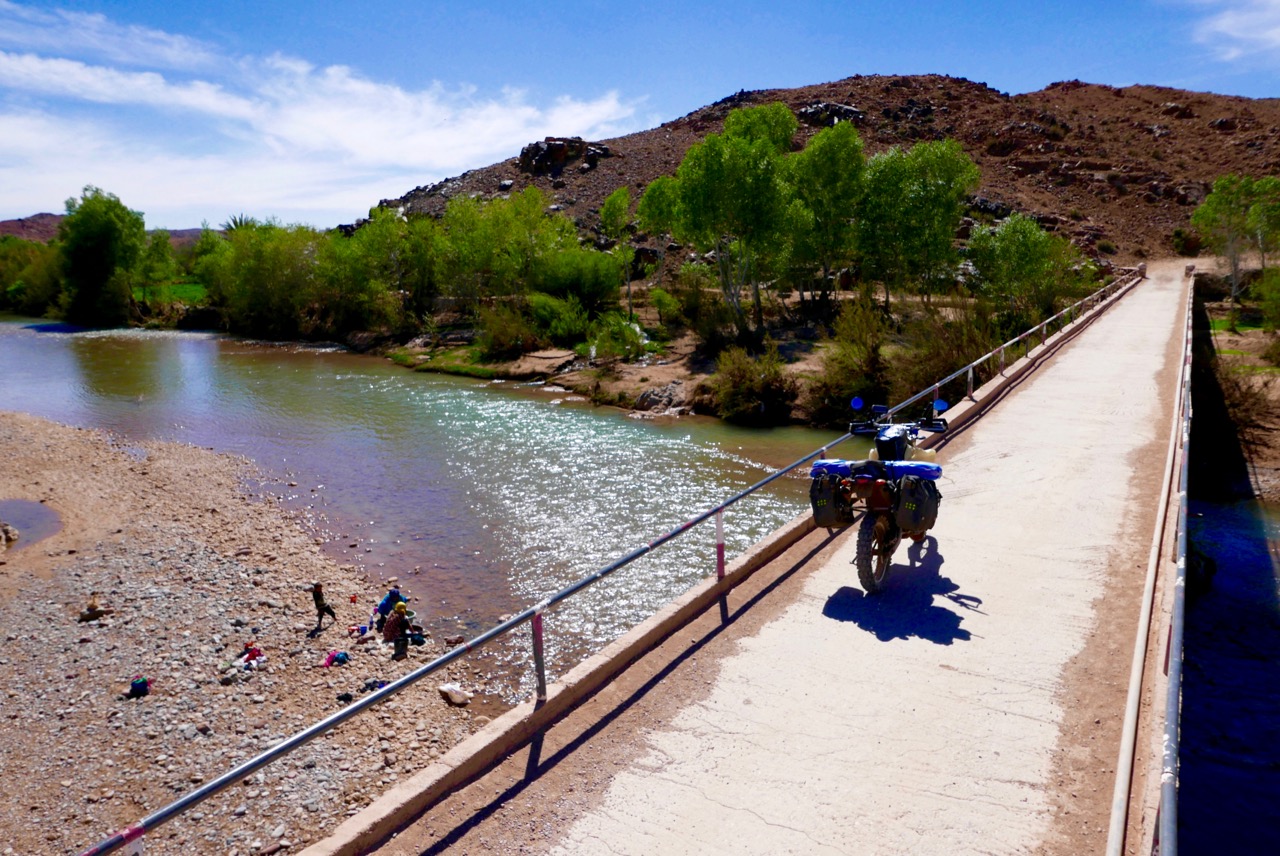
I stop on the bridge to admire the washerwomen. It sure is nice to see greenery and water.

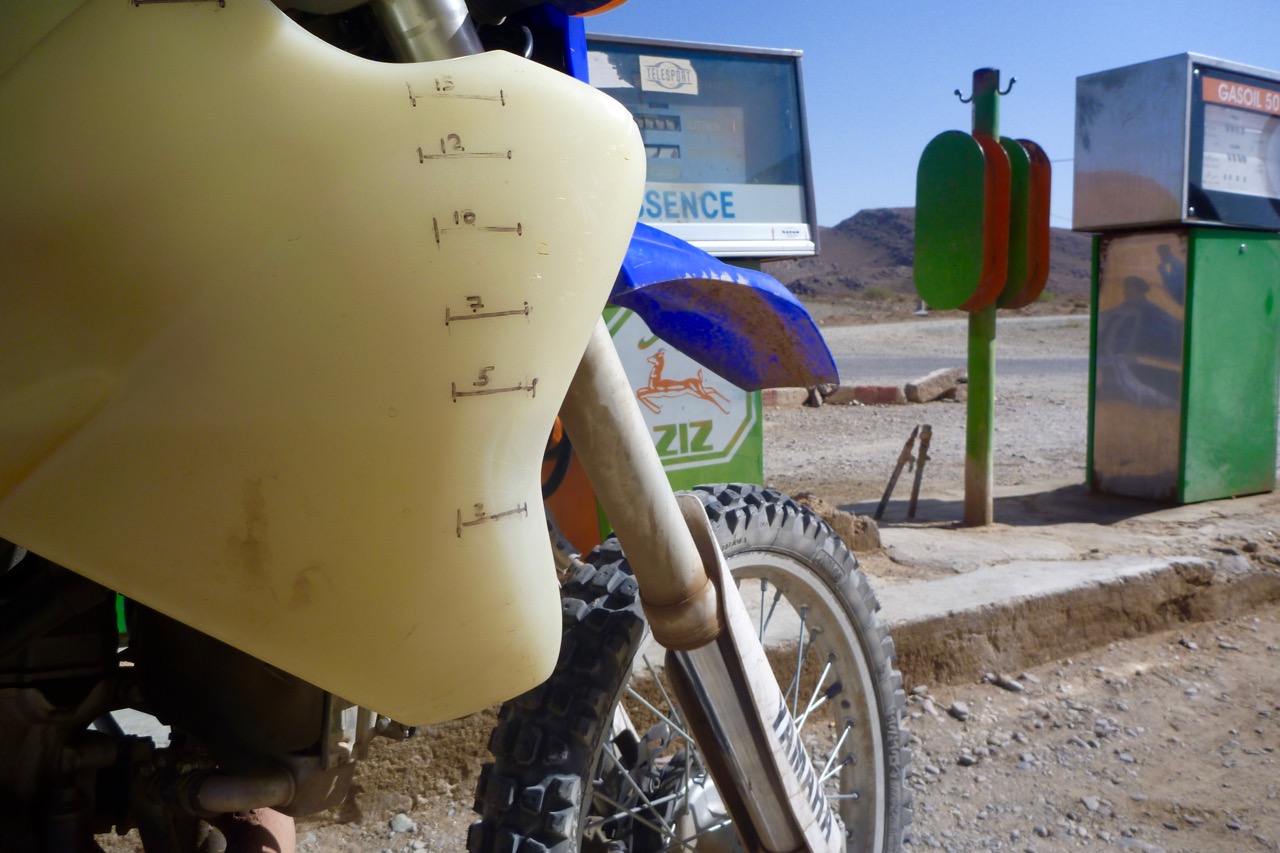
But as I reach the N10, before I’m even in neutral, I’m set upon by a teenager demanding money. The N10 is on what I call the Tourist Axis: Marrakech; Ouarzazate; Todra (do me a favour!); Erfoud; Merzouga (Chebbi), with branches down to Mhamid and up to Imilchil. A few years ago at Tinerhir there was a scam where they let fuel pumps run without actually dispensing fuel. (Harder to pull off on a bike with a translucent tank).
I ignore the rude boy and he goes back to work at the blacksmith nearby.
Keep off these axes and you’ll find another Morocco of genuine, friendly people.
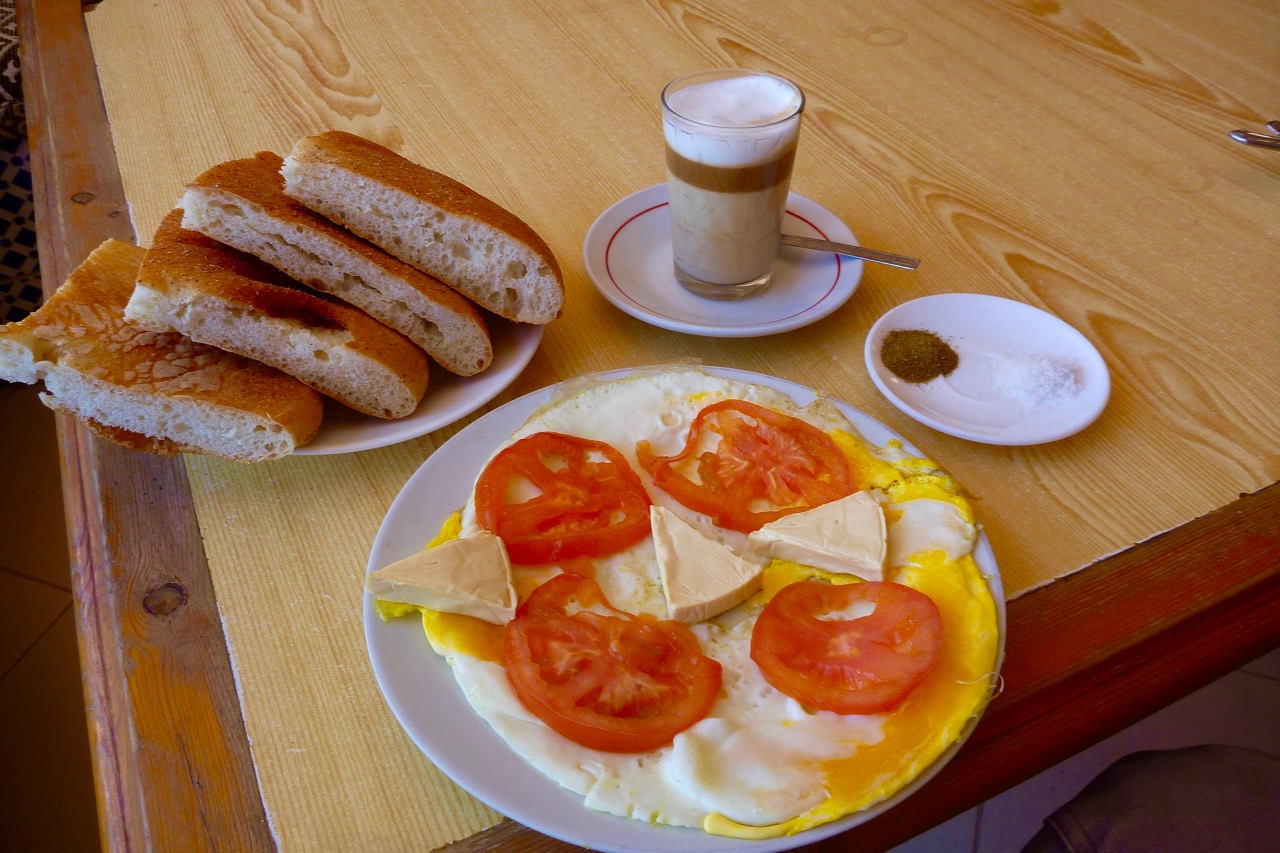
There a Ziz nearby – lunch is 40d, a bit more than normal, and a bloke points me in the wrong direction for the toilet. Ya got me! [dickhead].

Time to head up the Dades valley – one long line of auberges and axis activities, but there are scenic views to be had.

Higher and higher I climb. I plan to stop away from the over-priced ‘hello-mister’ throng, at the very last village with the very last auberge before the main ascent tomorrow.

Tilmi. End of the road.

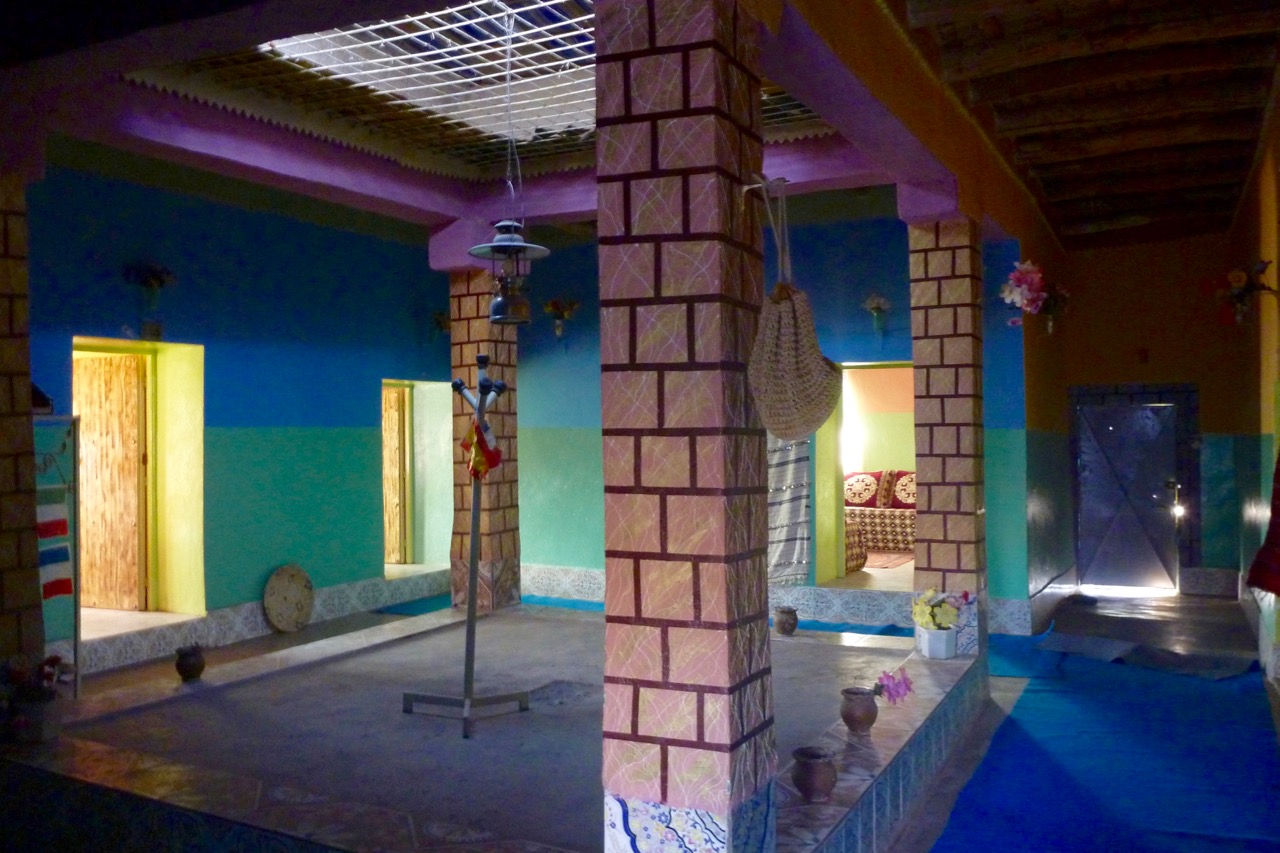
The Assaka auberge is basic, but Hussain cooks up a mean lamb tajine. A good one stews for two hours. He shows me his special, aromatic four-spice mix. Everyone had their own recipe.

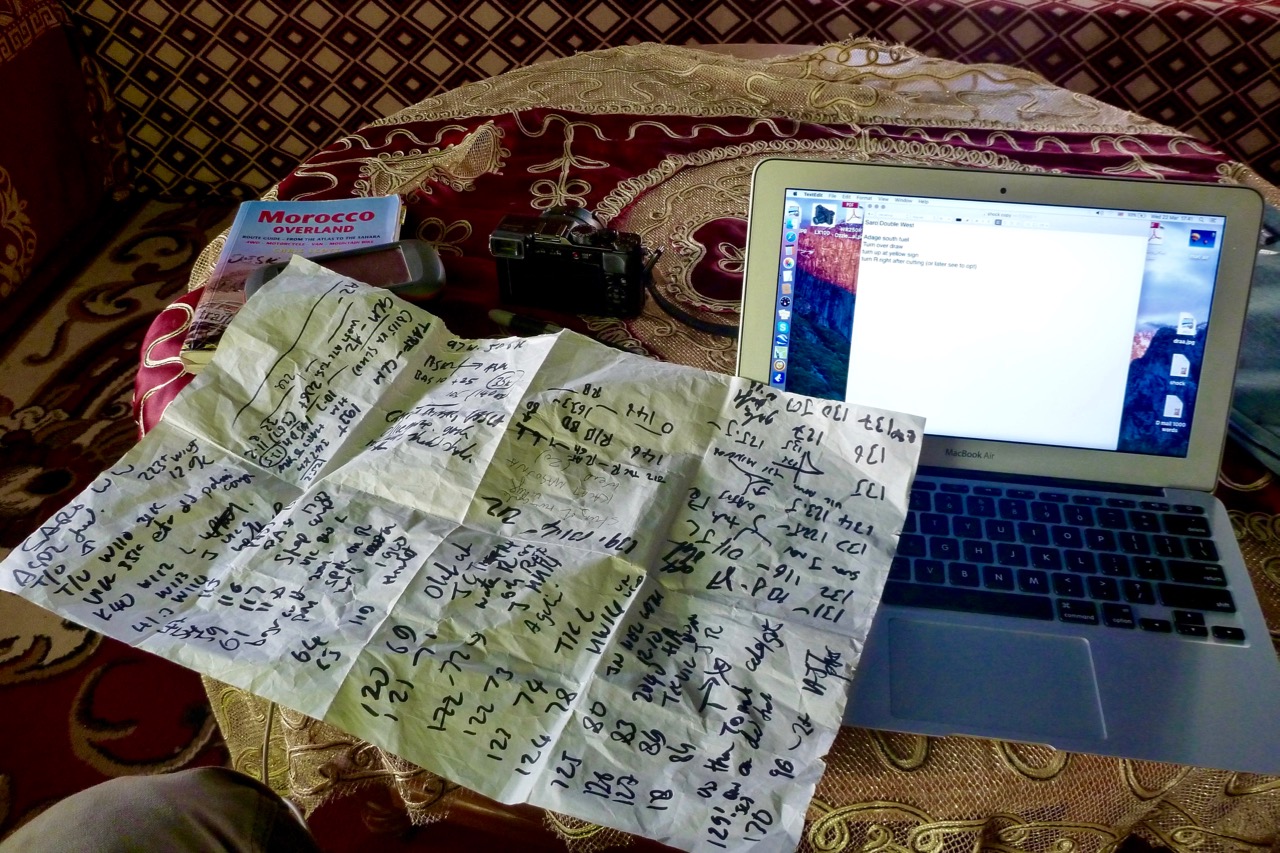
Time to translate the day’s jottings into legible data.
Tomorrow one last piste then homeward bound.

Part 9  > > >