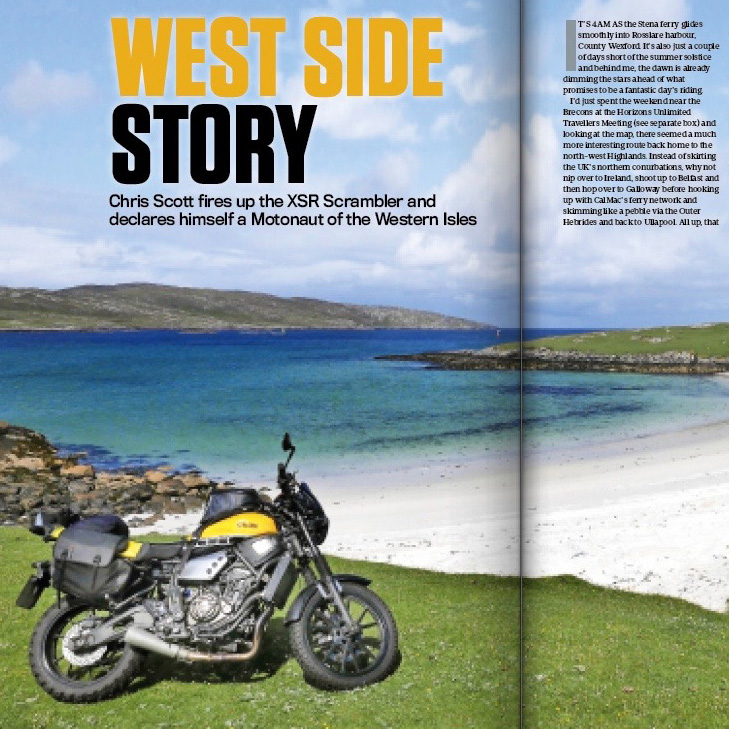
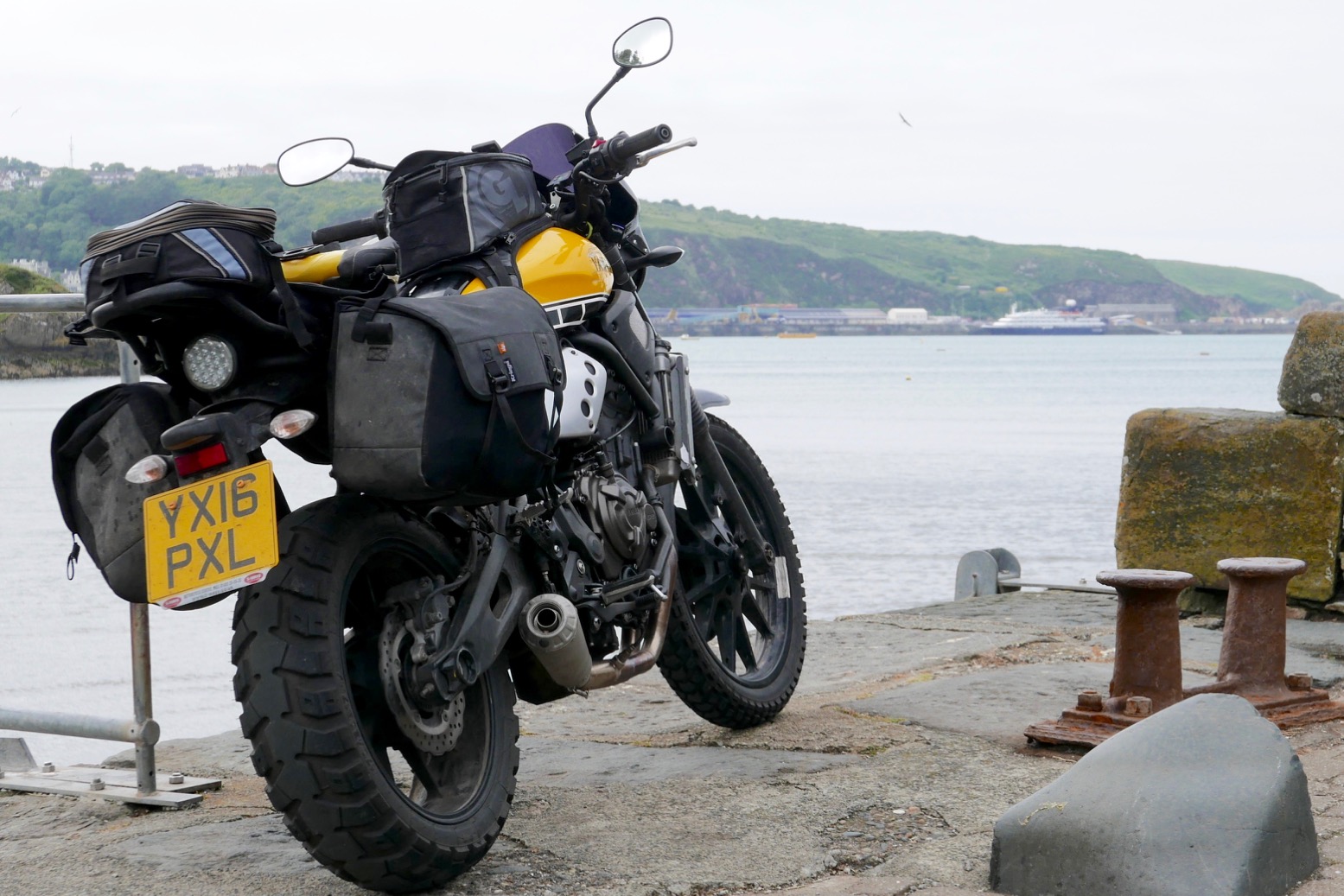
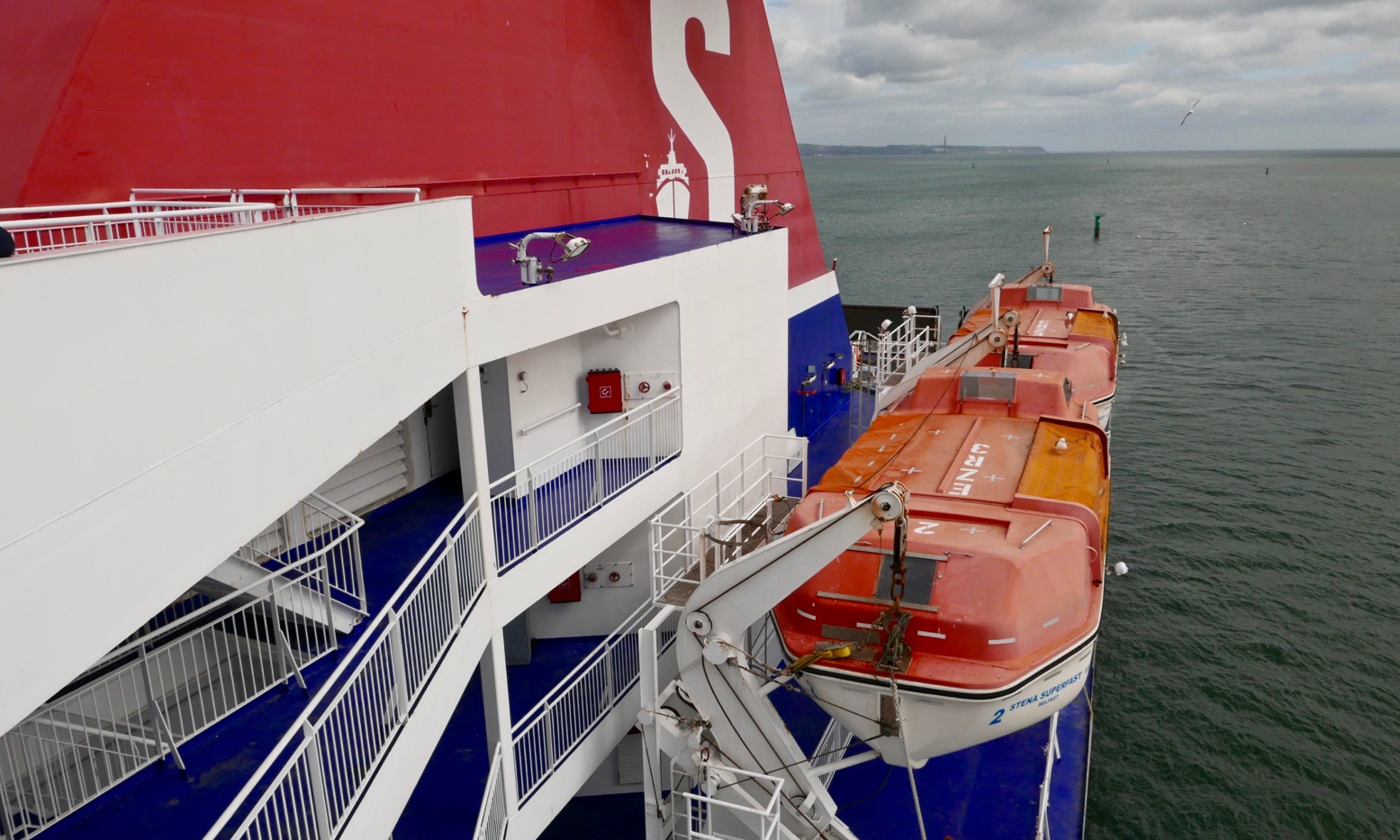
It’s about 900 miles from Hay-on-Wye on the Welsh border back to Ullapool near where we were living at the time, and including a detour via Tiree and the Outer Hebrides. But go via Ireland and it’s about the same, thanks to Stena’s handy Irish Sea ferries, including Fishguard to Rosslare, and Belfast to Galloway in southwest Scotland. I’d already done the ride up through England a few years back on the BMW XCountry, so after the HUBBUK 2018 meeting in Clyro near Hay, I decided via Ireland would make a great ride back north. The full story was in RIDE magazine’s February 2019 issue. You can read it below with a few extra photos.
It’s just after 4am as the Stena ferry glides smoothly into the harbour at Rosslare, County Wexford. It’s also just a couple of days short of the summer solstice and behind me the sky is already beginning to lighten, dimming the stars ahead of what promises to be a great day’s riding.
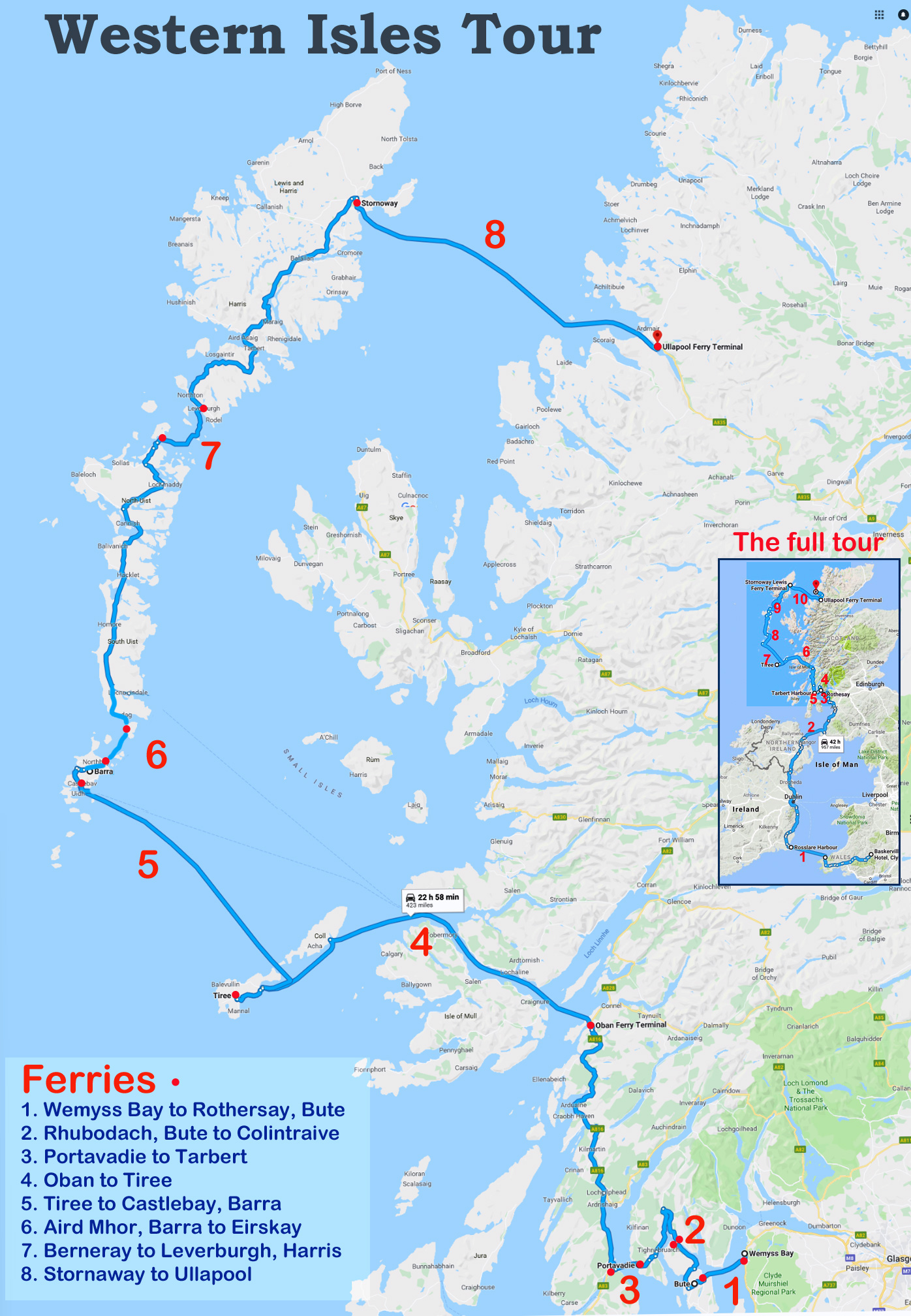
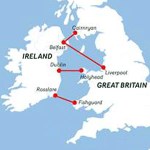
I’d just spent the weekend at the Horizons Unlimited Travellers Meeting near and, looking at the map of the British Isles, there seemed a much more exciting and seemingly more direct route back home near Ullapool. Instead of looking for another new way to dodge the conurbations of northwest England, why not nip over to Ireland, shoot up to Belfast, over to Galloway and then hook up with Calmac’s ferry network, skimming like a pebble to the Outer Hebrides and back to Ullapool – a Motonaut of the Western Isles.
With only a couple of hours sleep on the floor of the ferry’s lounge, I knew I’d not make Belfast Docks without succumbing to an urge to sleep. But I’d given myself a comfortable six hours to cover the 220 miles, which allowed for cock-ups, refills and a power nap behind a hedge.
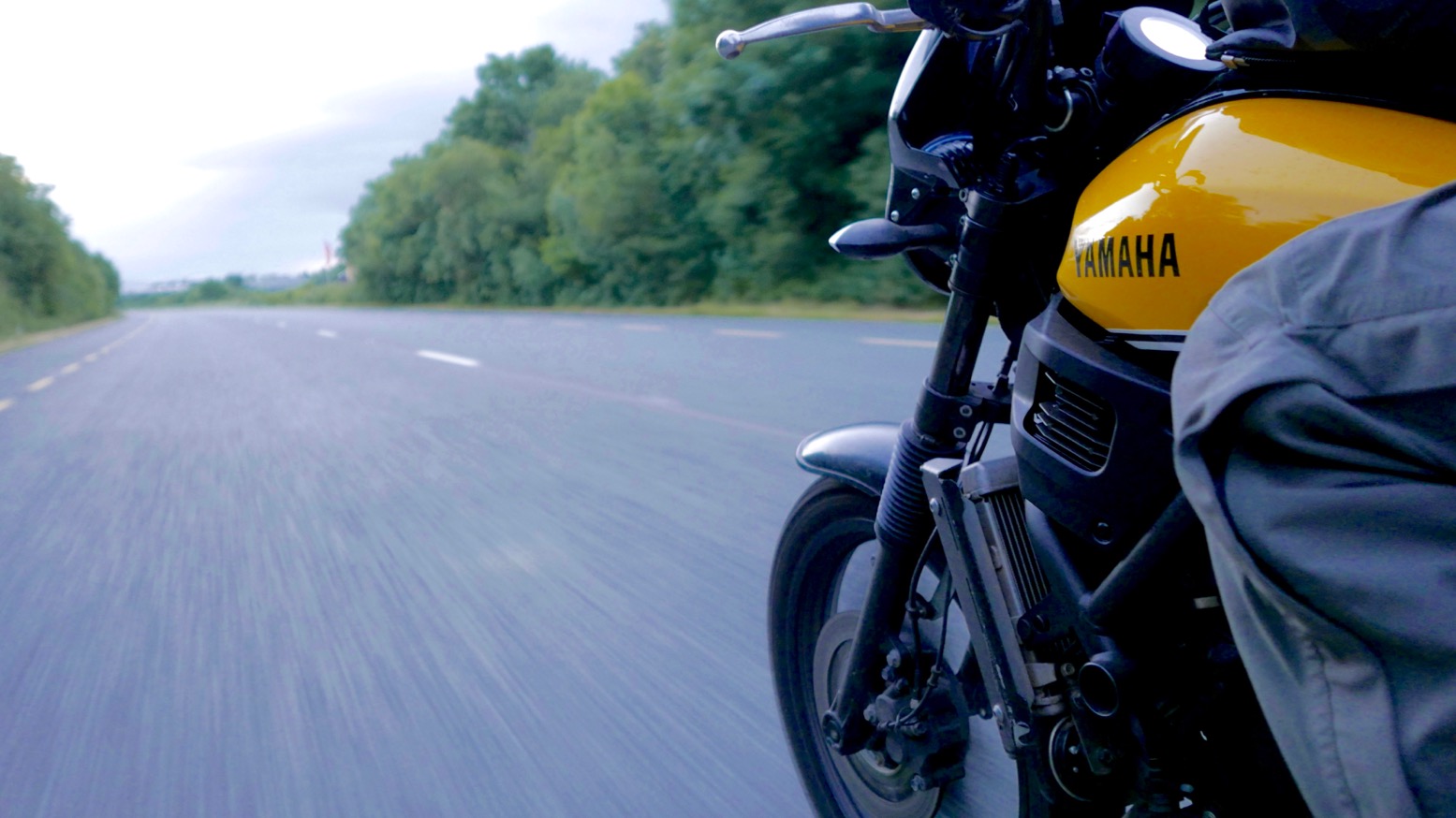
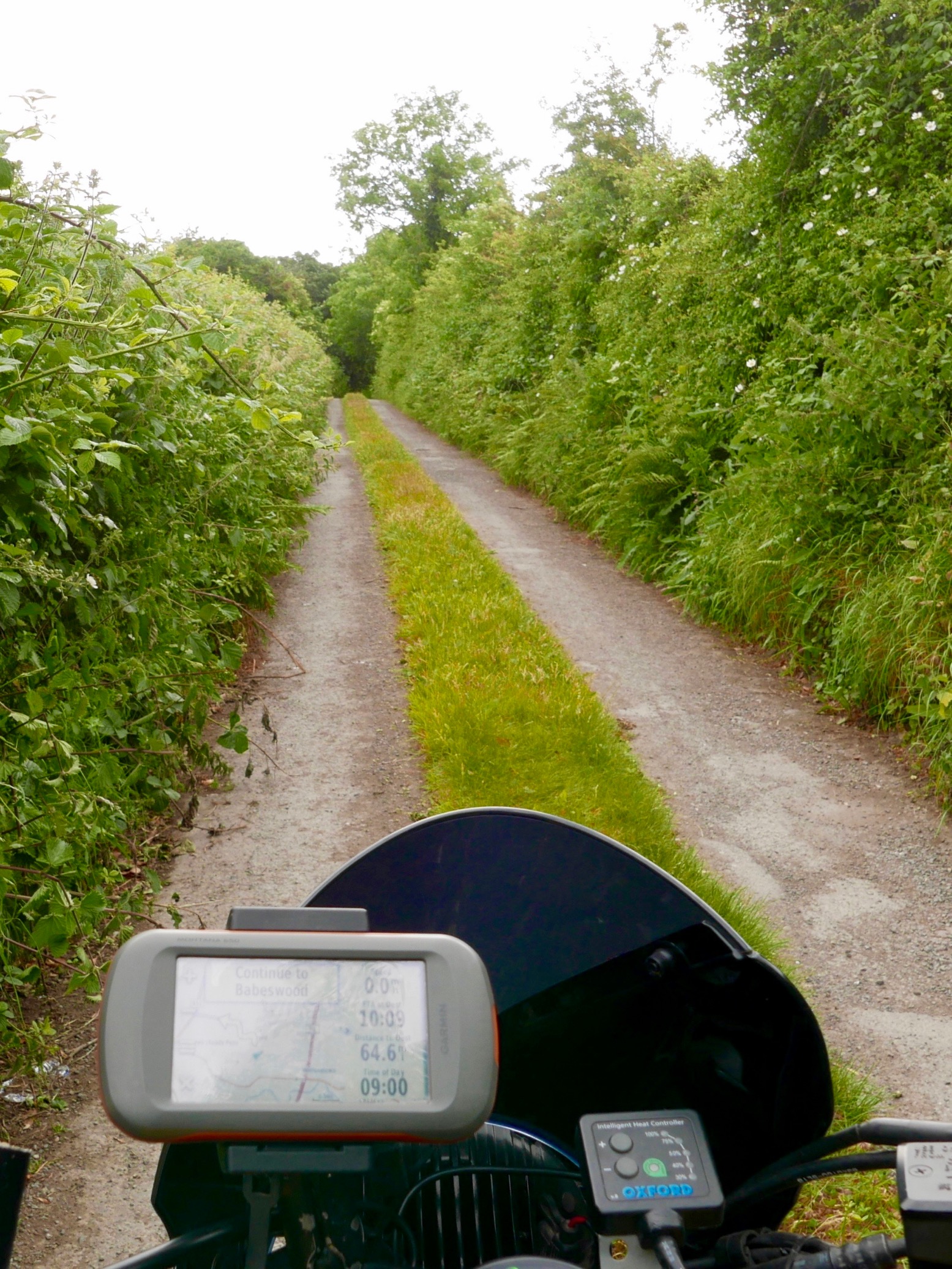
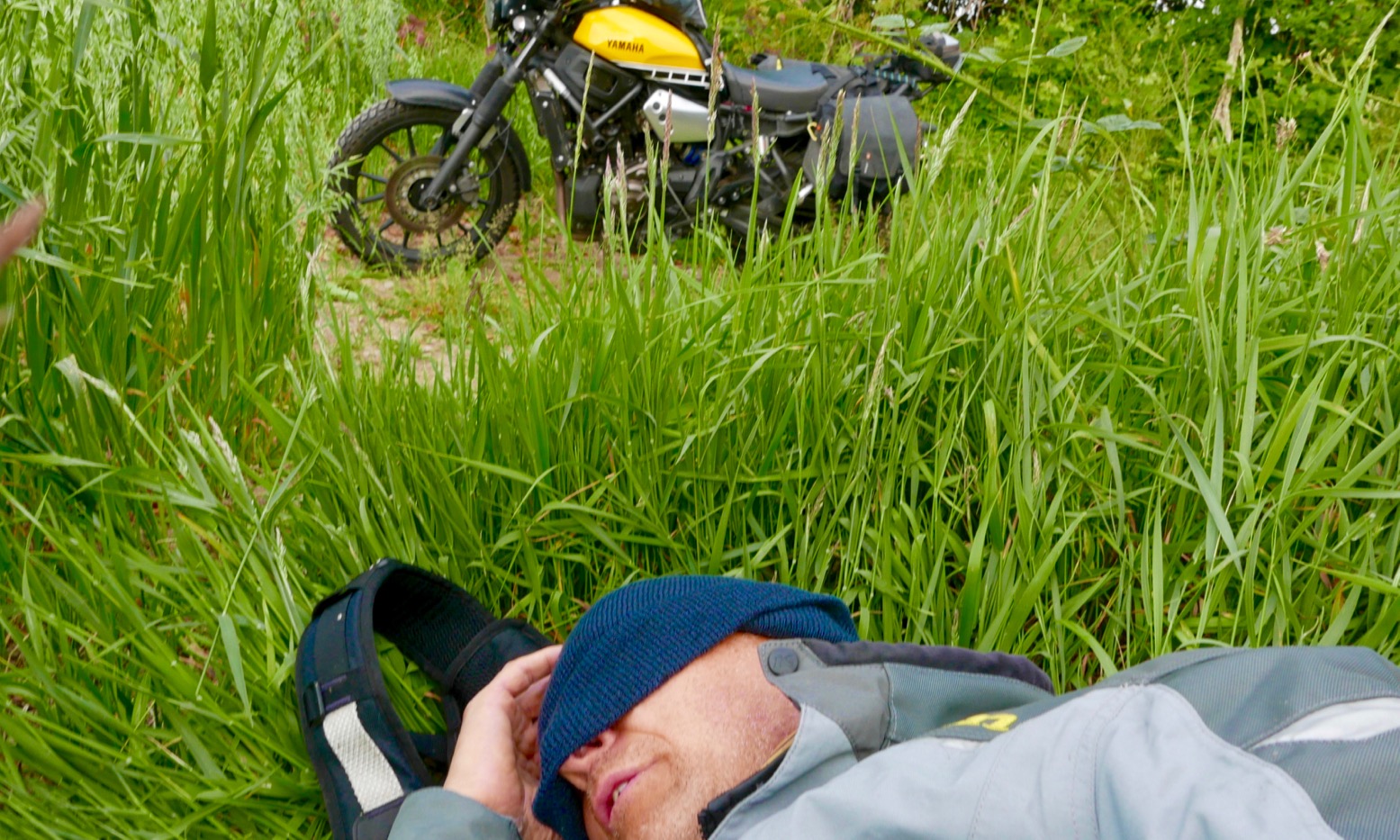
The XSR’s rorty pipe reverberated through the slumbering backstreets of Rosslare and once I’d picked up the N11 Dublin road and passed Wexford, I could open it up without frightening the horses. By the time it was fully light I’d split off the N11 which soon became a boring motorway. I may have a ferry to catch, but taking the N81 west of the Wicklow mountains was irresistible. If I got behind, at Dublin I could pick up the M1 to the Ulster border. The thrill of the new kept me alert till about 10am when all those well-worn tricks to stay awake couldn’t stop Humpty from falling of his bike if he wasn’t careful. I knew well that just 15 minutes could do the trick, so pre-emptively crashed out behind a barn and rolled into at Belfast docks with an hour to spare.
After snoozing my way back across the Irish Sea, heading along the A77 Ayrshire coast, road signs listed familiar names of towns I’d never actually visited, as well as one of Trump’s many Scottish golf resorts at sandy Turnberry Bay.
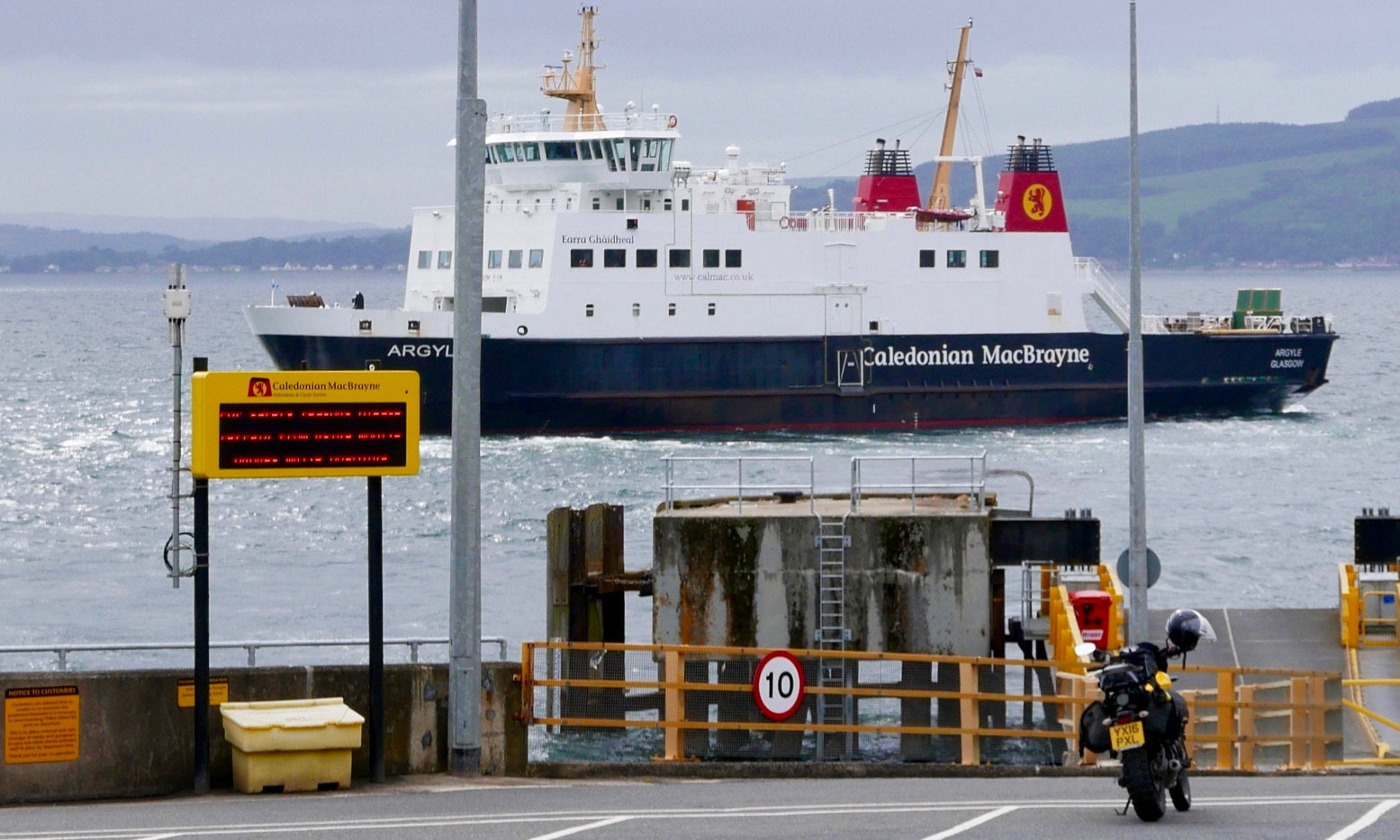
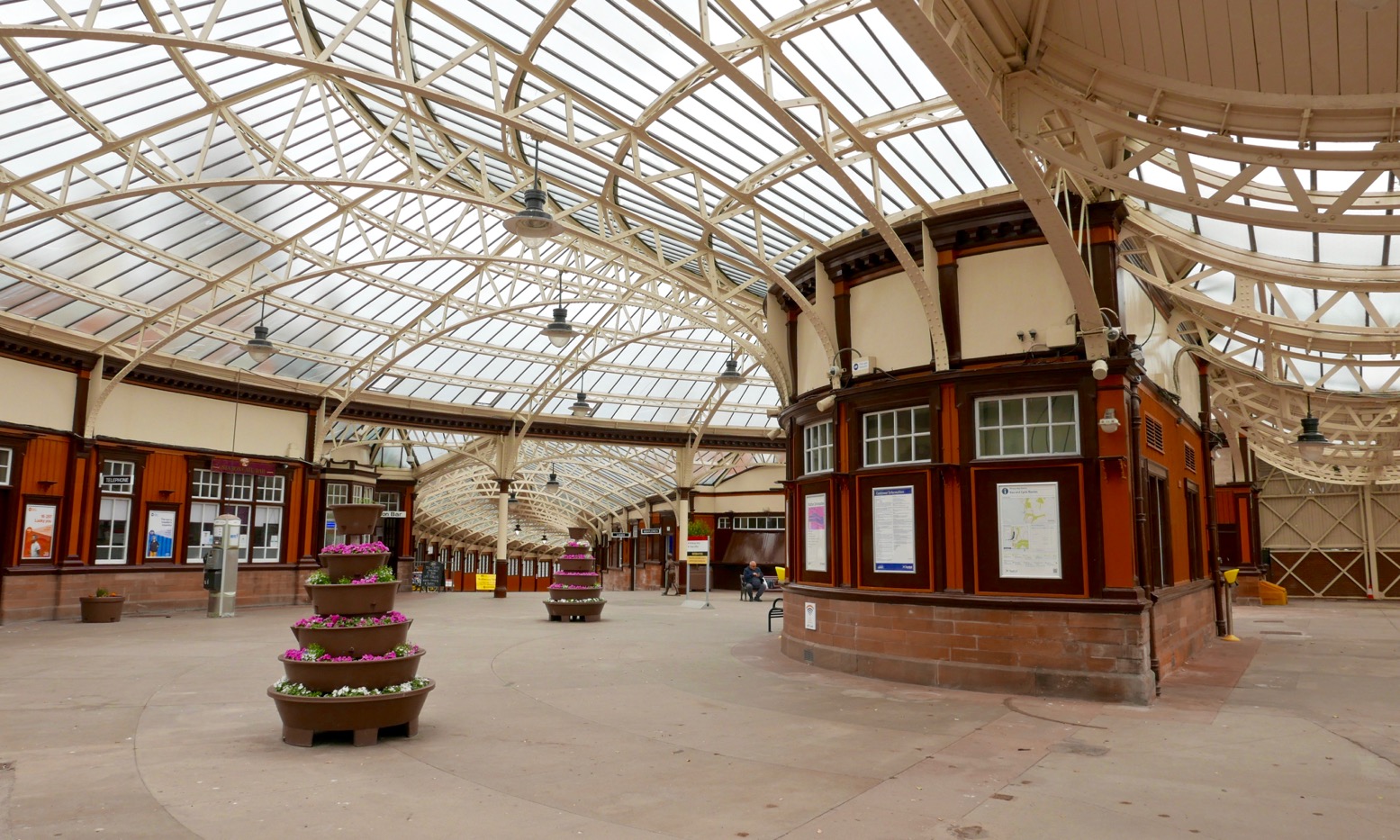
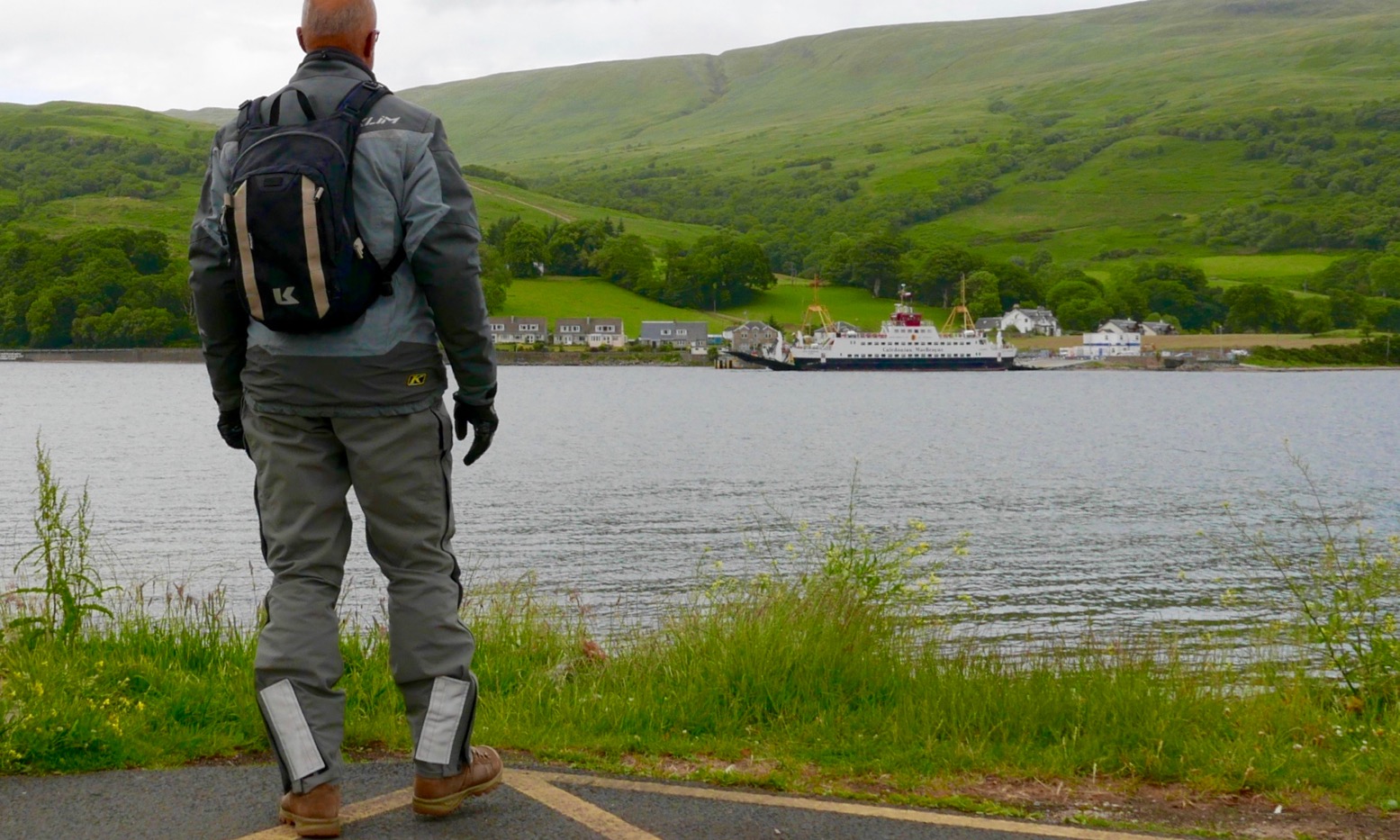
Ever heard of Wemyss Bay? Me neither until the other day, but it was here that the more intricate part of my ride kicked off. Three short ferry crossings via the Isle of Bute saved over 70 road miles via congested Clydeside to reach the Kintyre peninsula which dangles down just 13 miles off the Antrim coast. And now in 2021 there is talk of a bridge to Northern Ireland to help hold the Union together.
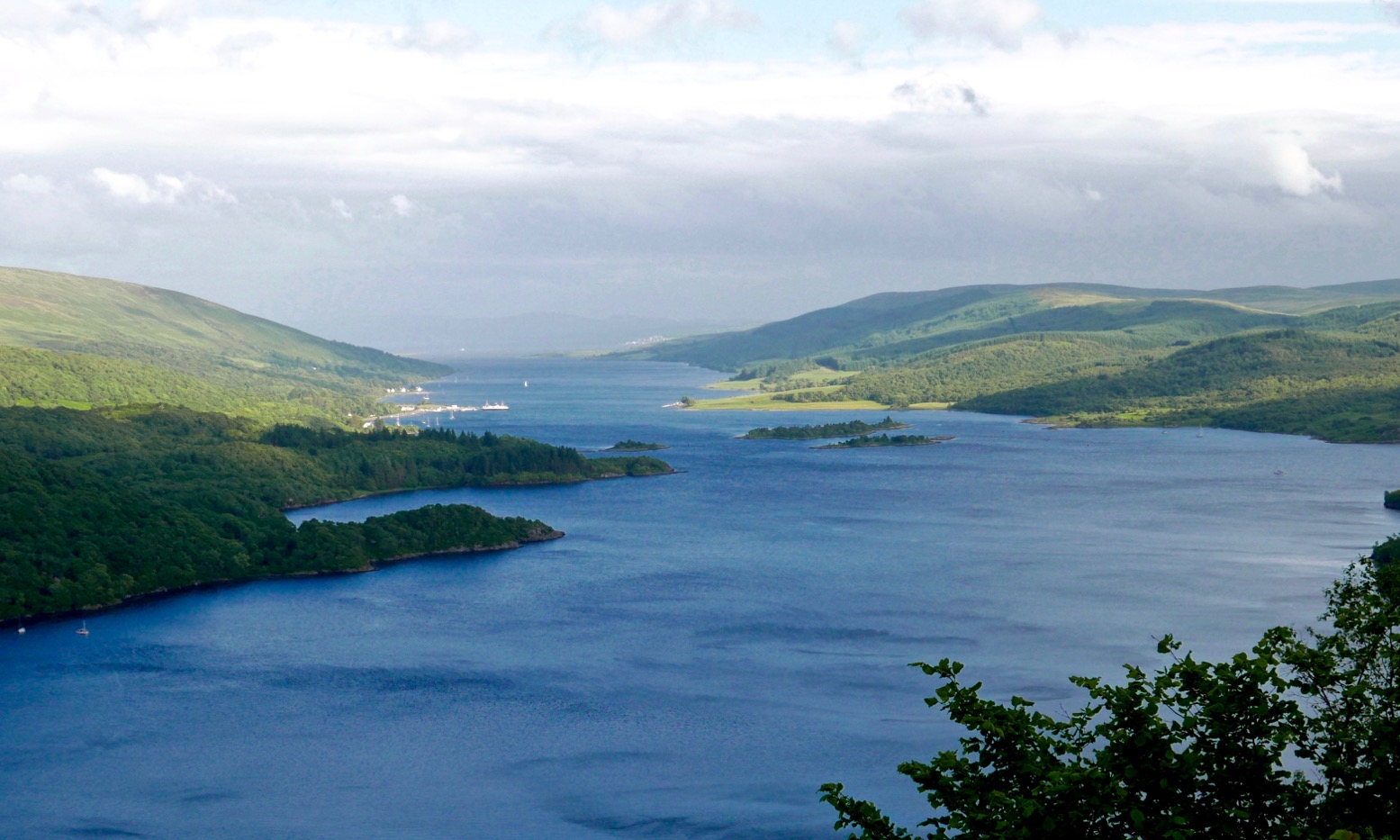
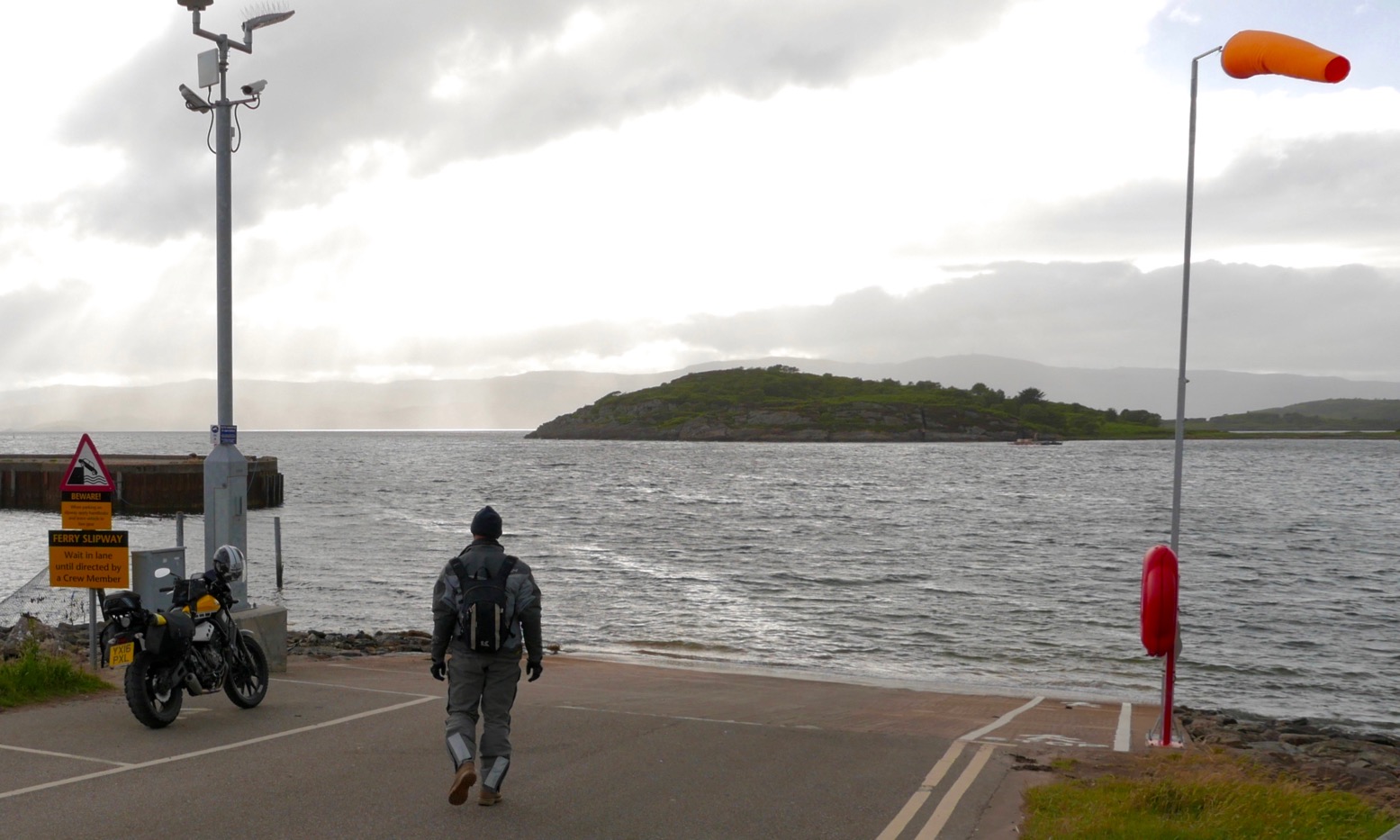
From Bute it was a short run up the road to Rhubodach and Britain’s shortest island-mainland ferry back on to the South Argyle mainland and a windy ride around Loch Riddon to Portavadie jetty for the boat over to Tarbert on the Kintyre peninsula.
Around here I was expecting to run out of steam, and with plenty of daylight and spare time to catch tomorrow afternoon’s ferry from Oban to Tiree, I checked in to a bed-sized room in the town’s somewhat dank hotel.
Part Two later today.
Some photos below from Hay on Wye to Tarbert.
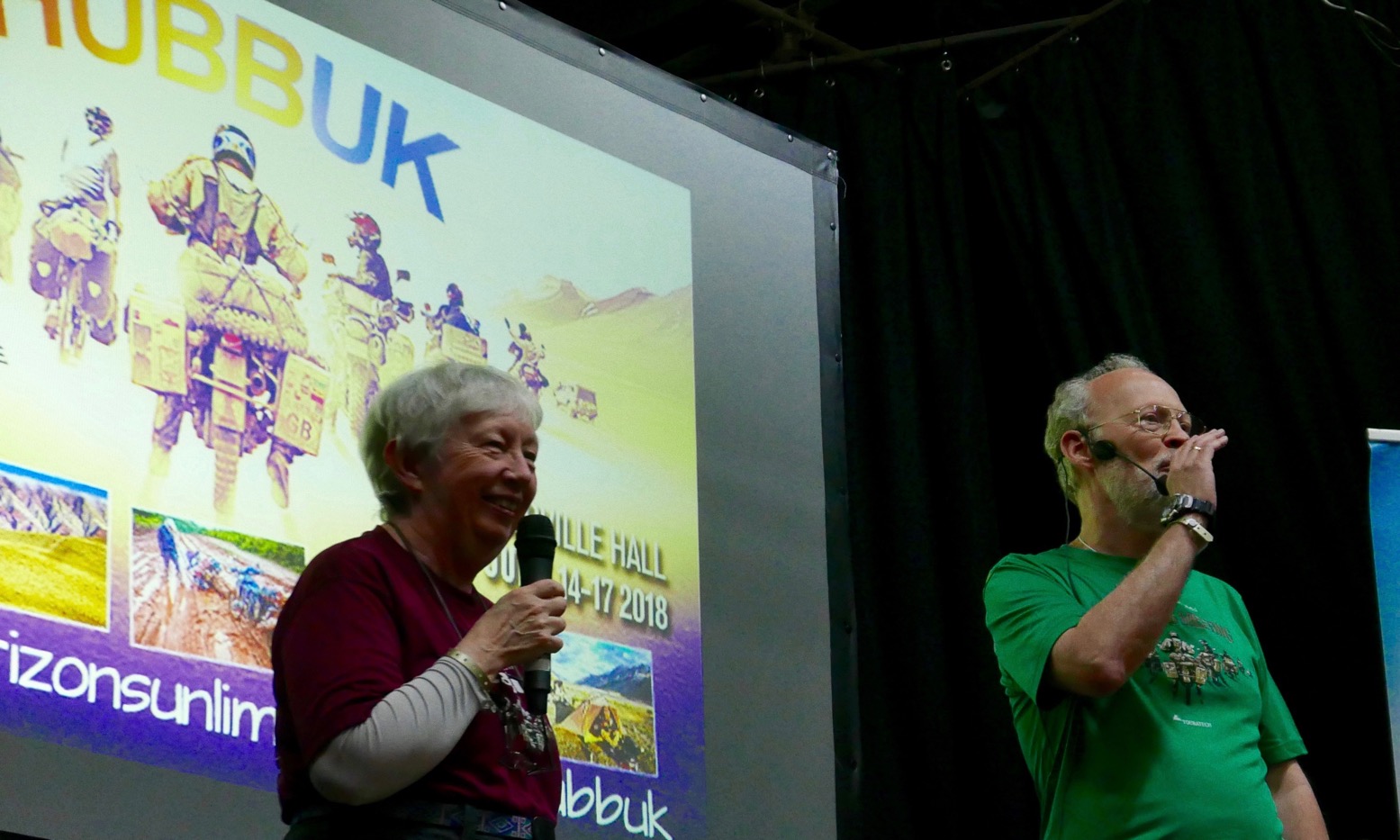
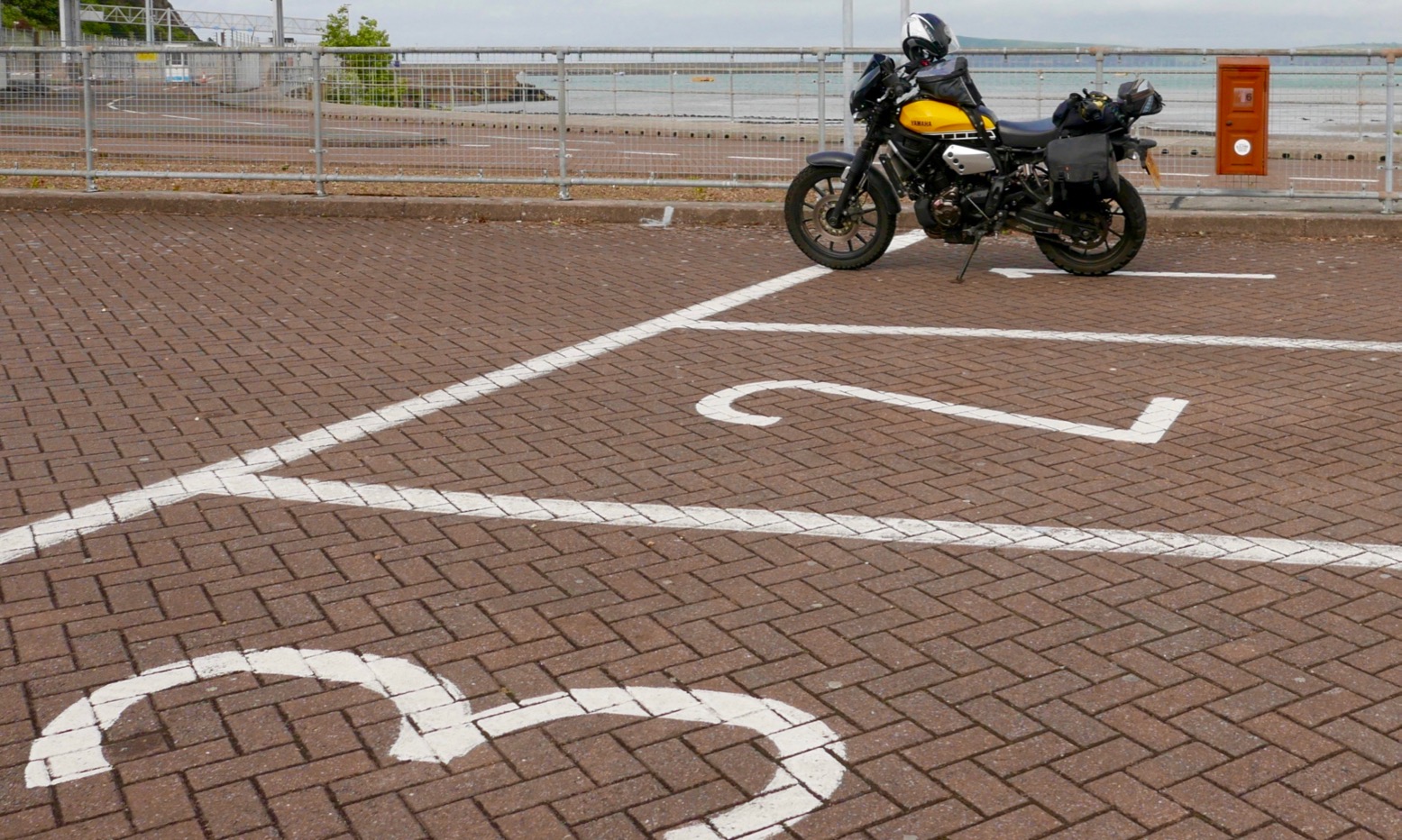
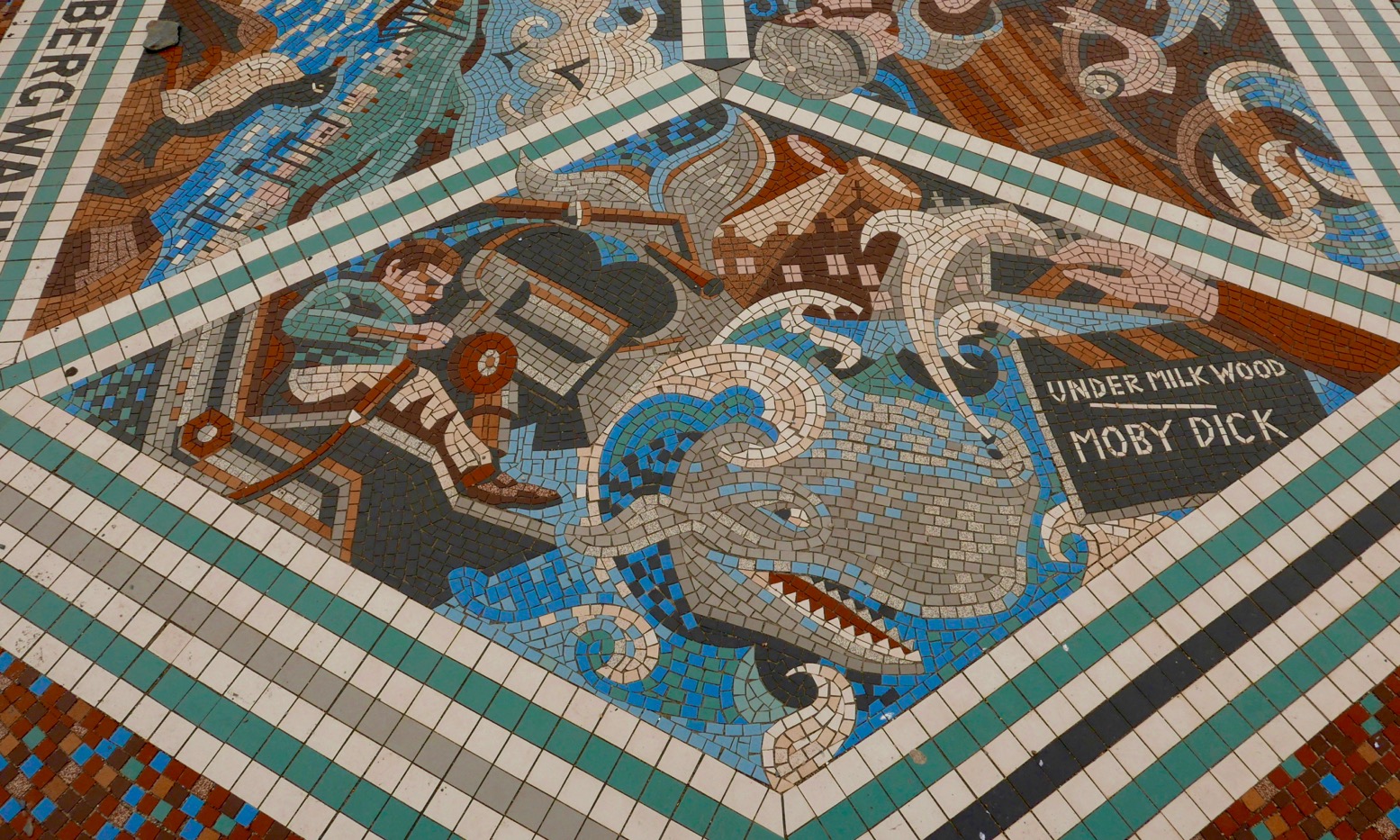
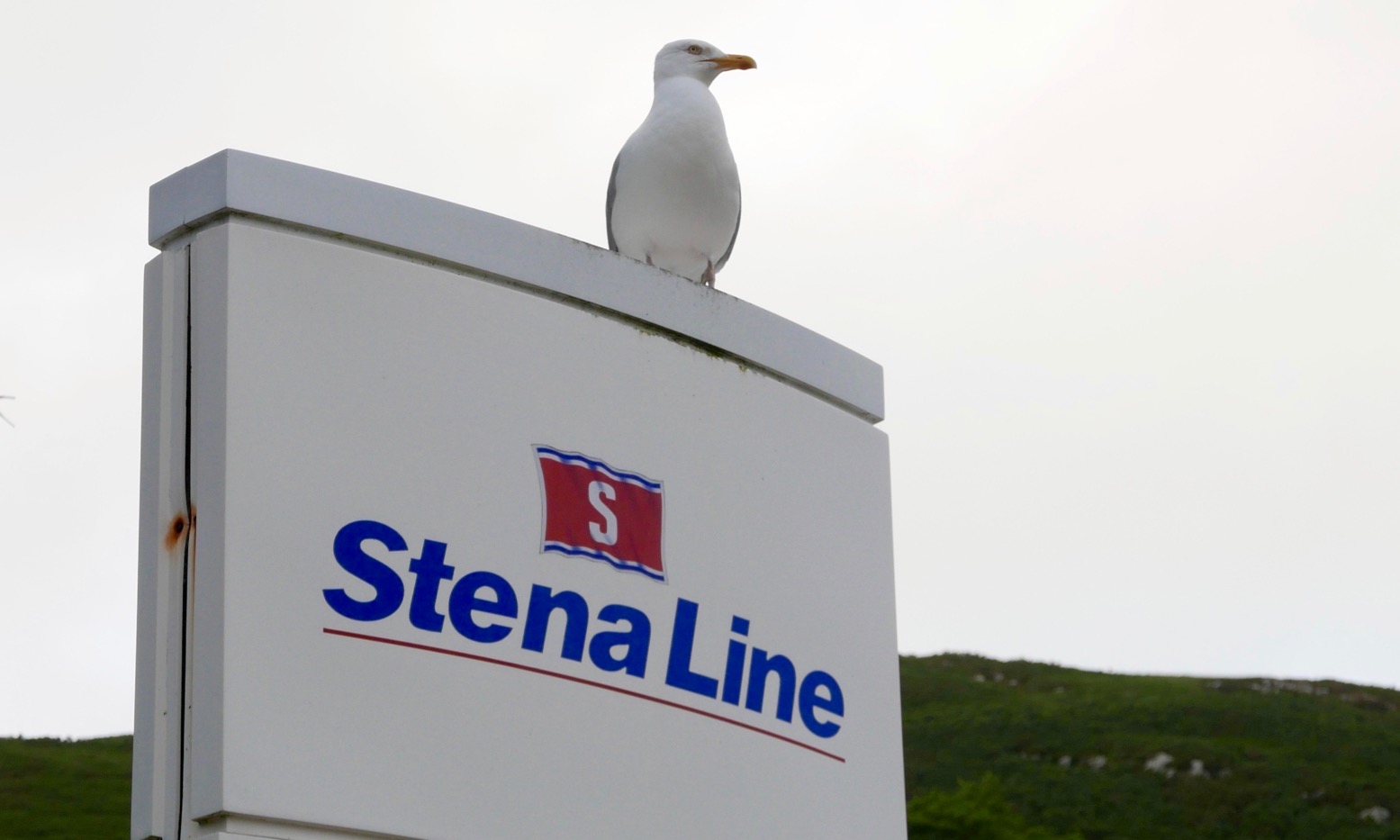
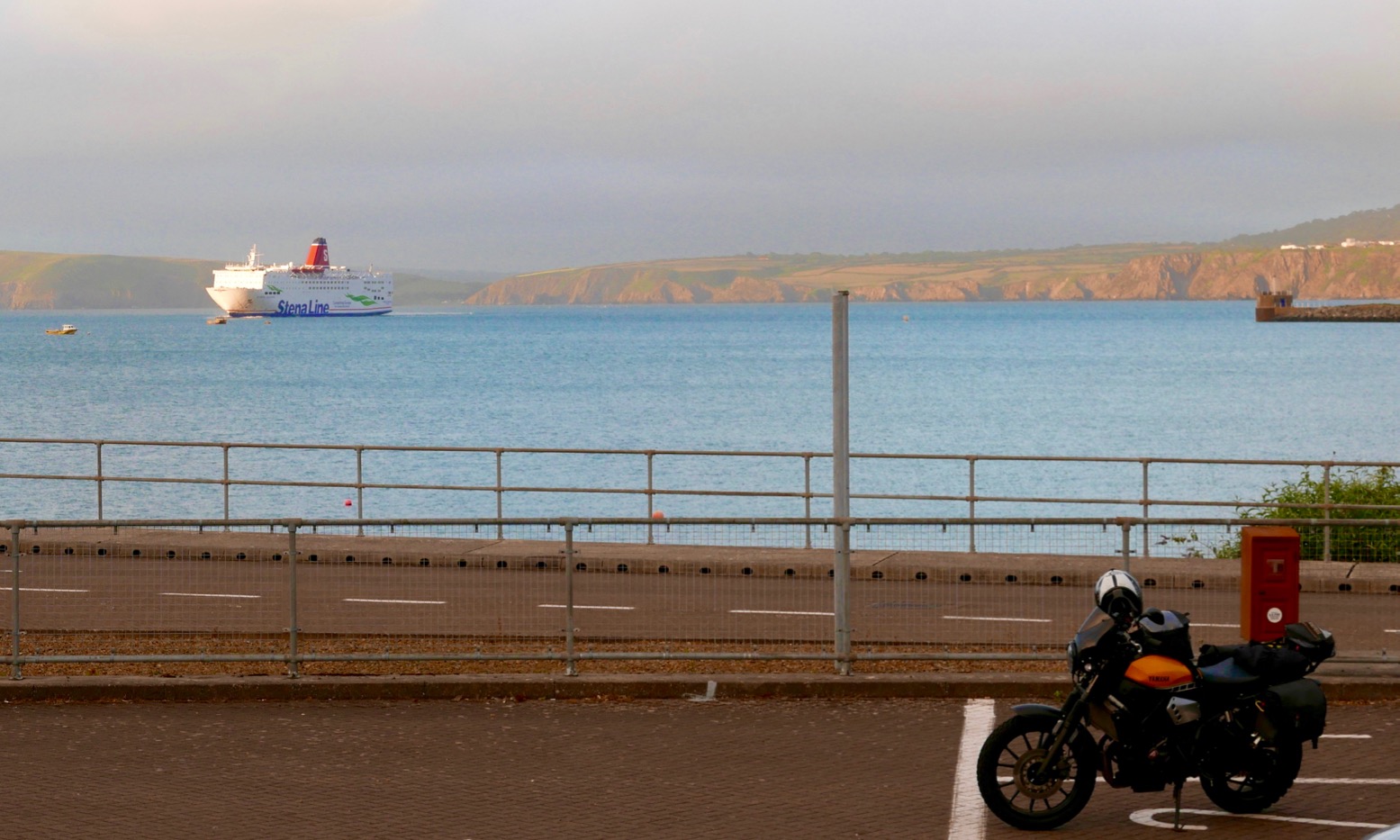
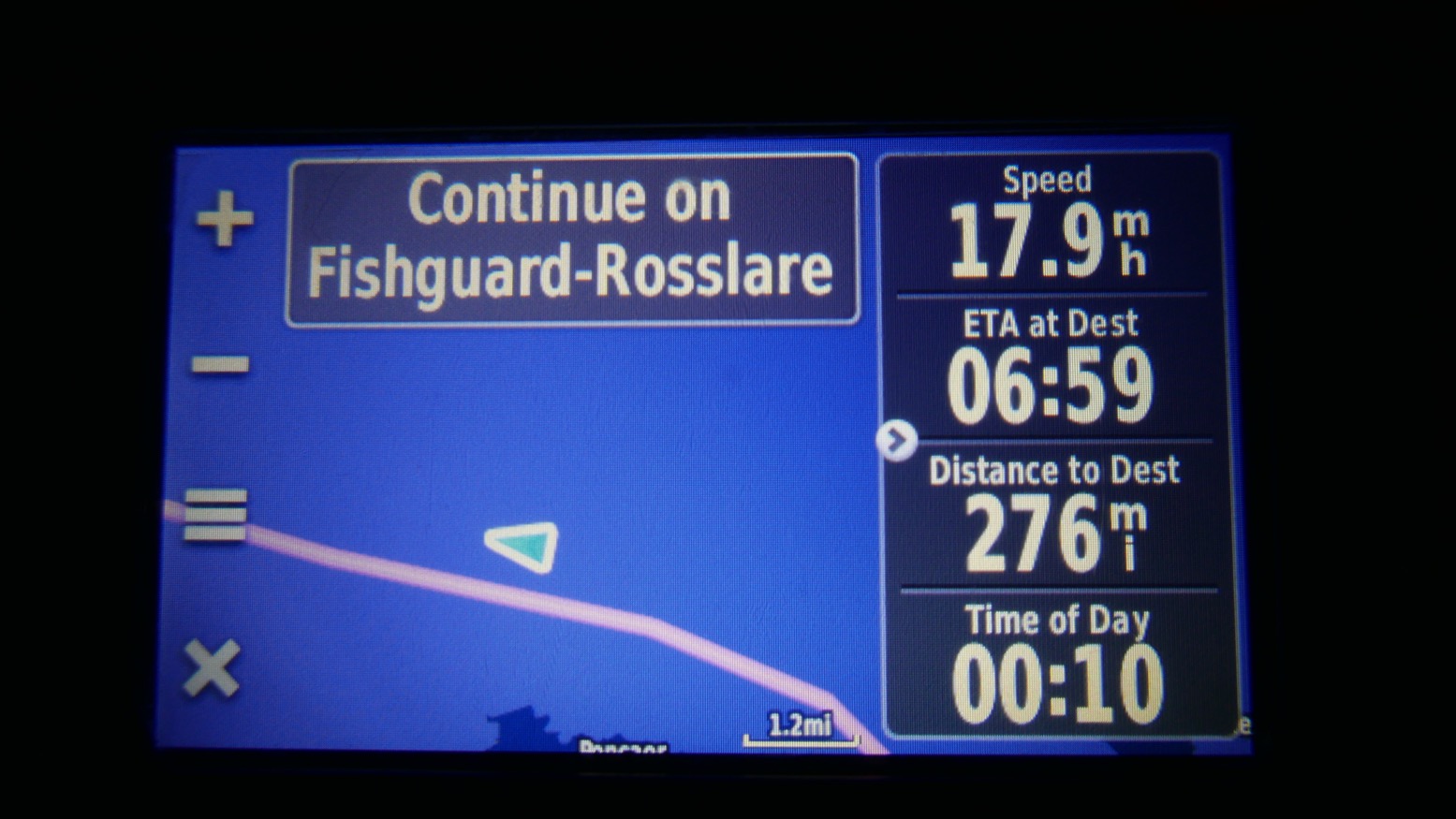
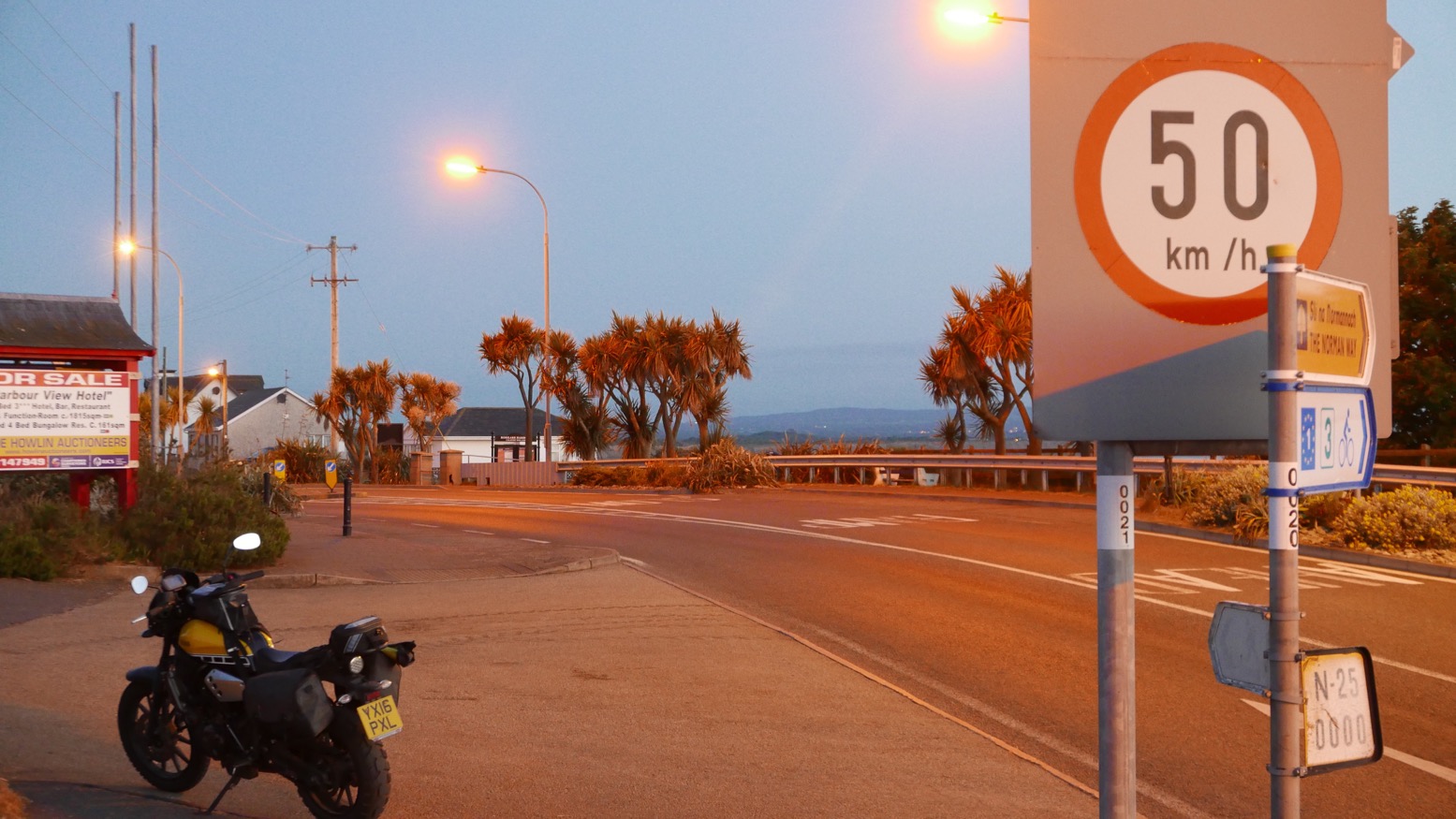
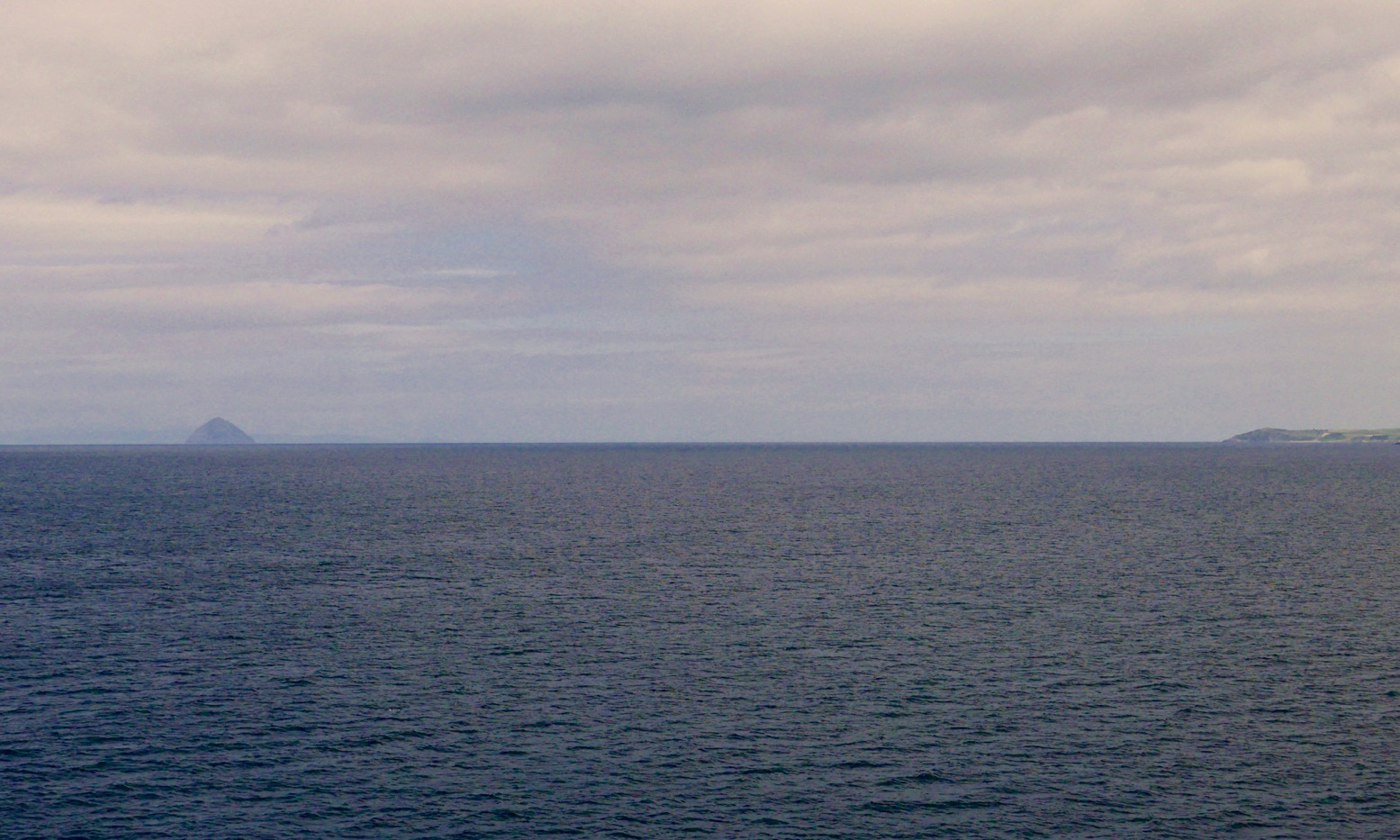
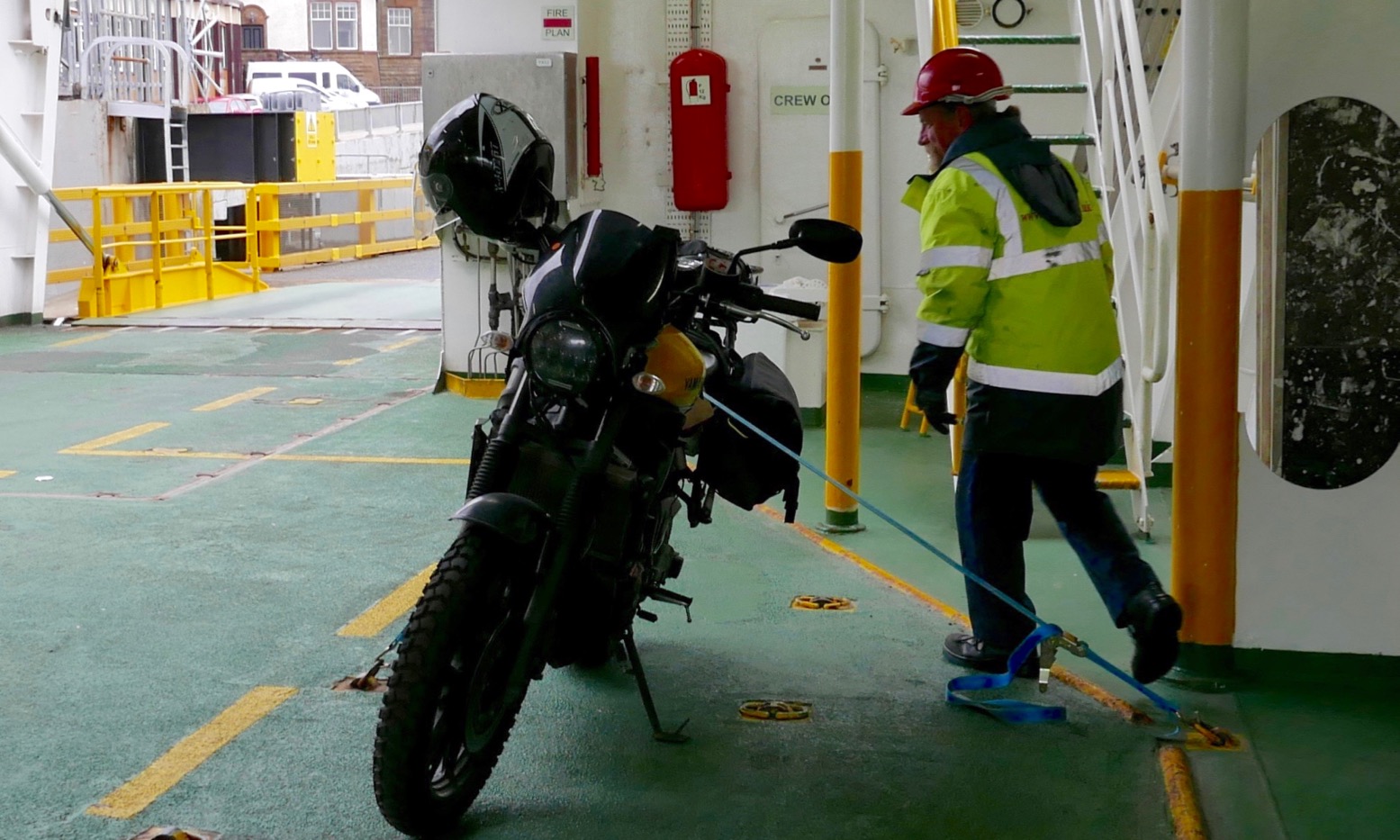
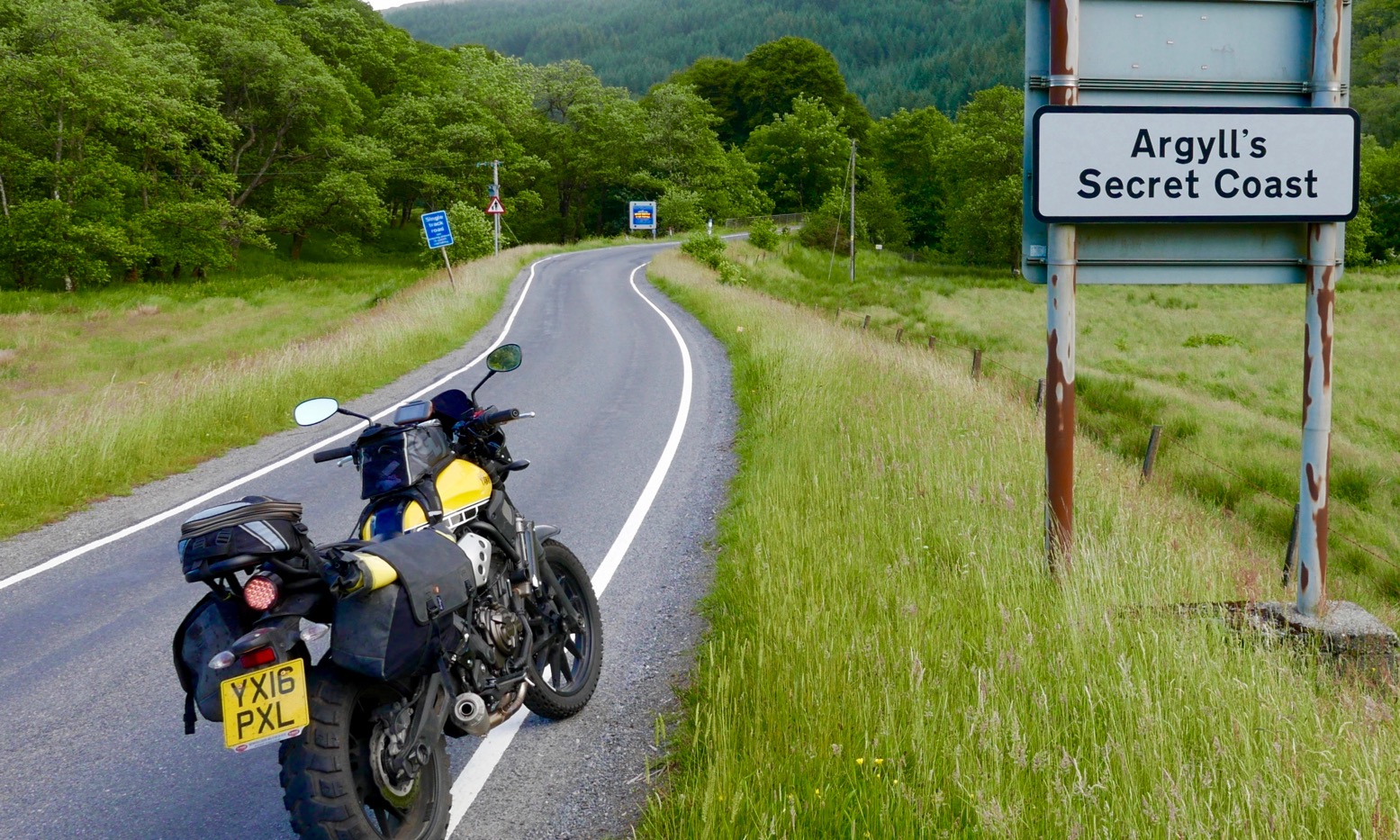
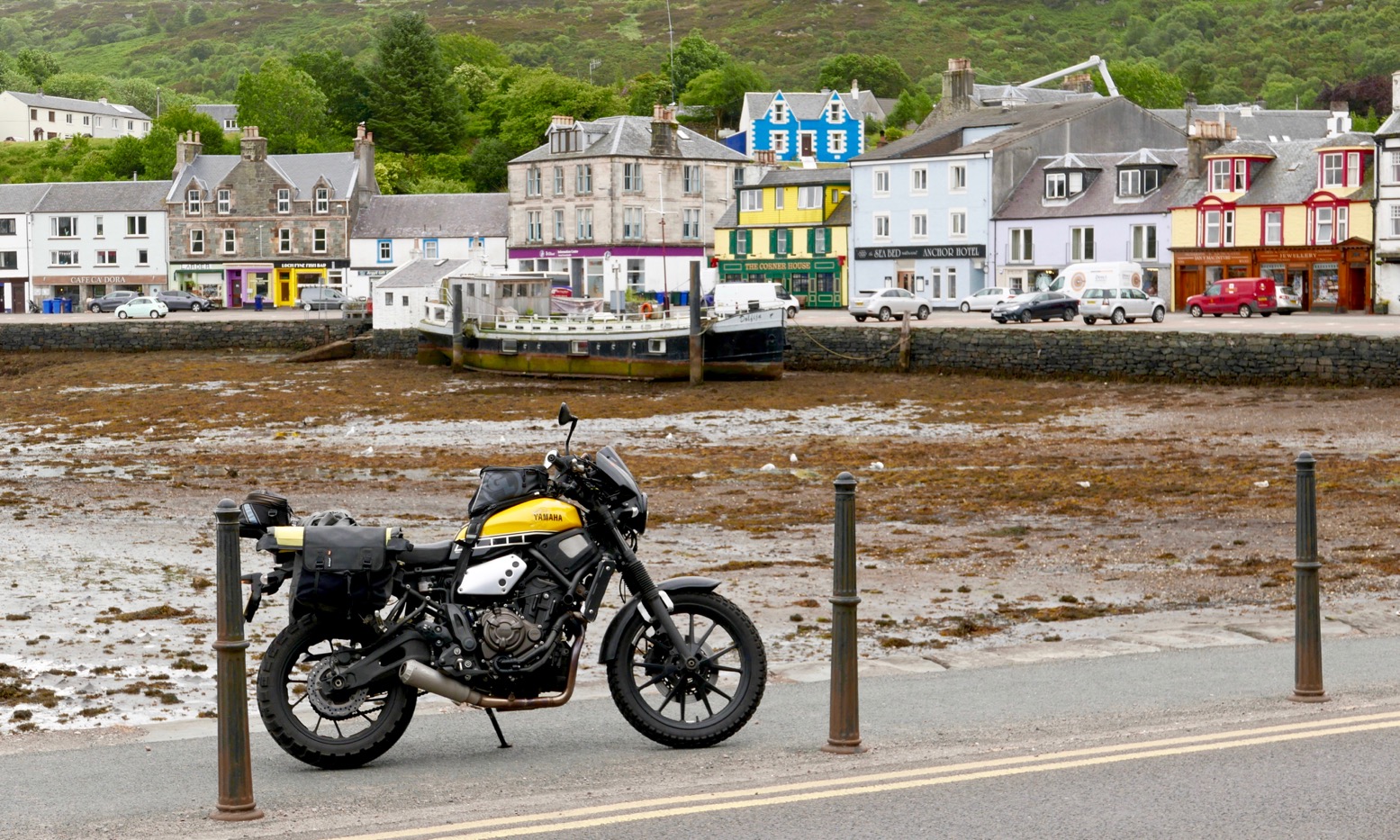
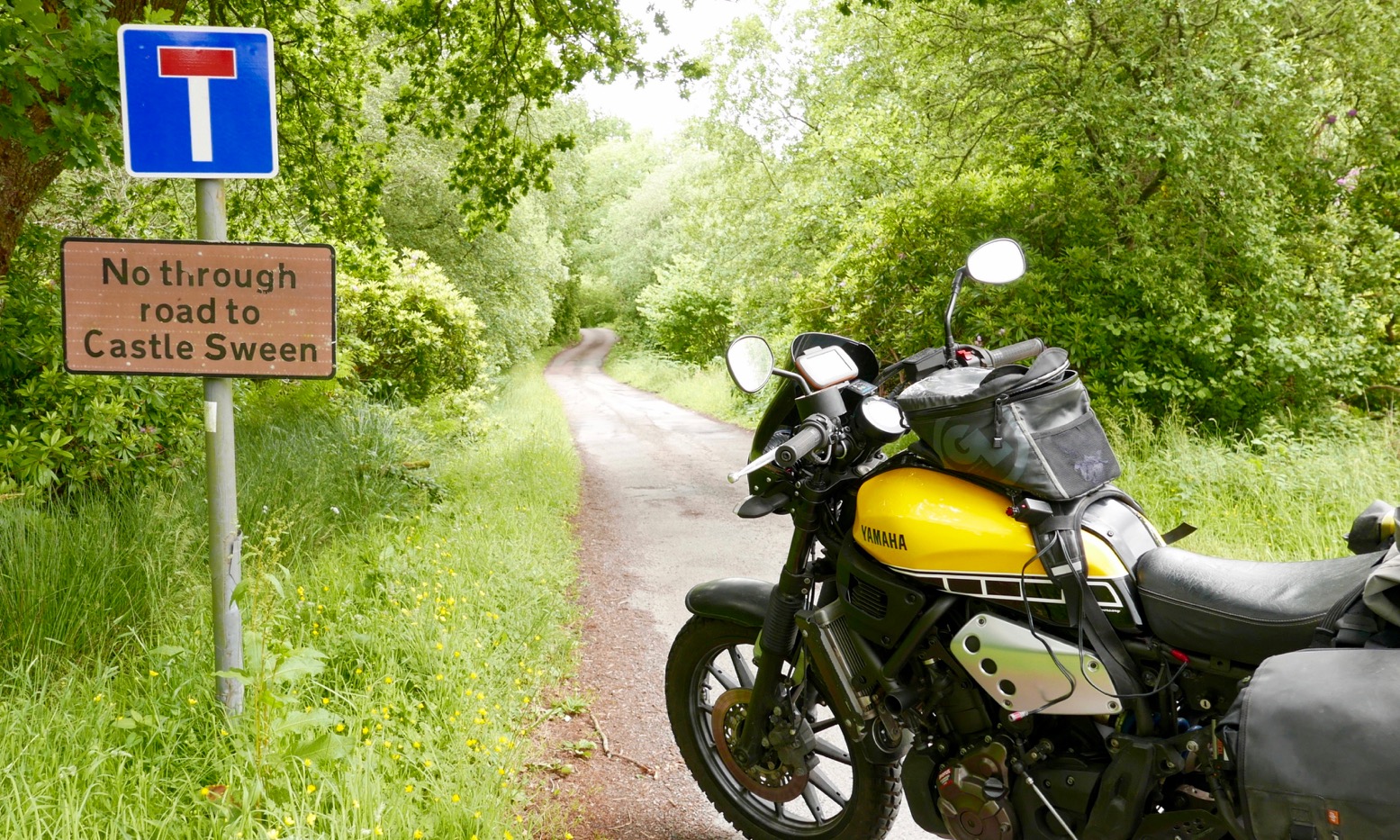
HUBBUK at Baskerville Hall in Wales.Horizons’ founders, Grant and Susan Johnson have an announcement…… I am honoured to win an award ;-)After the event I ride in the Welsh rain to Fishguard docks. Will a Stena ferry fit in here?Oh, wrong side of the docks. What an idiot.Pole position and the right docks.I go for a wander. In 1955 John Houston filmed Moby Dick here.“For there is no folly of the beast of the earth which is not infinitely outdone by the madness of men.” Tell me about it, bro!A border as soft as a toasty marshmallow. Happy days…Meet Jonathan – Stena’s steadfast yellow-beaked mascot. We’ll see more of him later.Stena swings into Fishguard Bay.Midnight, the horn parps and we sail into the cetacean abyss.Bloody satnavs. Distance more like 60 miles; ETA 4am.Four a.m. in Rosslare.An amber pre-dawn glow on balmy Gulf Stream palms.Only a few hours to get to Belfast Docks. Better step on it.But this EU funding for new roads is not all it’s cracked up to be.I’ve barely slept so I crash out in a cornfield.Back on the road. It’s good for you!Alwasy fancied a JPS Commando. JSP Vespa? Not so sure.Leaving Belfast. Like the Titanic 106 years ago, but with wifi and cappuccino.Jonathan escorts us back out into the glassy Irish Sea.Ailsa Crag, an old volcano and source of the world’s finest curling-stone basalt.Turning round the Rhins (headland) of Galloway.Bombing up the Ayrshire Coast. I got three more ferries to catch before sunset!Rats! Just missed the CalMac from Wemyss Bay to Bute.But it gives me time to explore the amazing Edwardian-era train terminus.Those were the days my friend. We thought they’d never end…XSR gets strapped down again. Might be getting a taste for bondage.Once on Bute, a short ride up to the end of the road at Rhubodach jetty.Another short CalMac back to the Argyll mainland.I squeeze aboard the UK’s shortest scheduled sea ferry crossing – about 420 metres.Great riding up here, but don’t tell anyone.View back down Loch Riddon to the ferry terminal.Waiting for the ferry at Portavadie, Argyle to Tarbert, Kintyre. Sunshine and showers.Only passenger again across Loch Fyne.‘Go on, do an Evel Kinevel’, says the ferryman.Tarbert. Actually still 3 hours of daylight left but I’ve been up since 4am.So I head for the town hotel. It’s seen better days but haven’t we all.Next day: backroads to Tiree, Rest of the story shortly….
Unlike most riders, I am curious to know what my bikes actually weigh – especially before and after a makeover. For years I’ve used the bathroom scales trick; balancing the bike with the scales under one wheel, then the other then add the two figures.
You will find this old thread on Advrider with the usual mix of sneering, humour, muddled thinking and bare-faced logic. Read to the end and you’ll see the single bathroom scales technique has been proved to vary at just 1% over other methods like recycling weigh stations or hanging scales. Also, the over-thought need to horizontally level one wheel to match the height of the other resting on the scales has proved not to be significant. But the ground surface must be horizontal and the actuating feet under the scales must all be in contact with the ground (or stick the scales on a board).
I went to a car park with lots of space and excellent horizontality. It can take a few goes to get consistency; eventually for my GS500R I got a reading: Rear: 104kg Front: 86kg Total 190kg with half a tank of fuel, or about the same as a BMW Sertao.
That is about what I expected: a few kilos added over the 186kg claimed stock weigh following the addition of a DR650 fork, crash bars, the pipe rack, SV shock, screen, bigger bars and a handful of other bits. Don’t know how the 19-inch SM Pro wheels with Tubliss compare to stock GS500 casts. You’d hope a small weight saving but cast wheels have a habit of being lighter
Since then I got some Salter Razor (right), now only 14 quid off amazon. Who knows about actual accuracy but this one is much more consistent than the round one above and much easier to use.
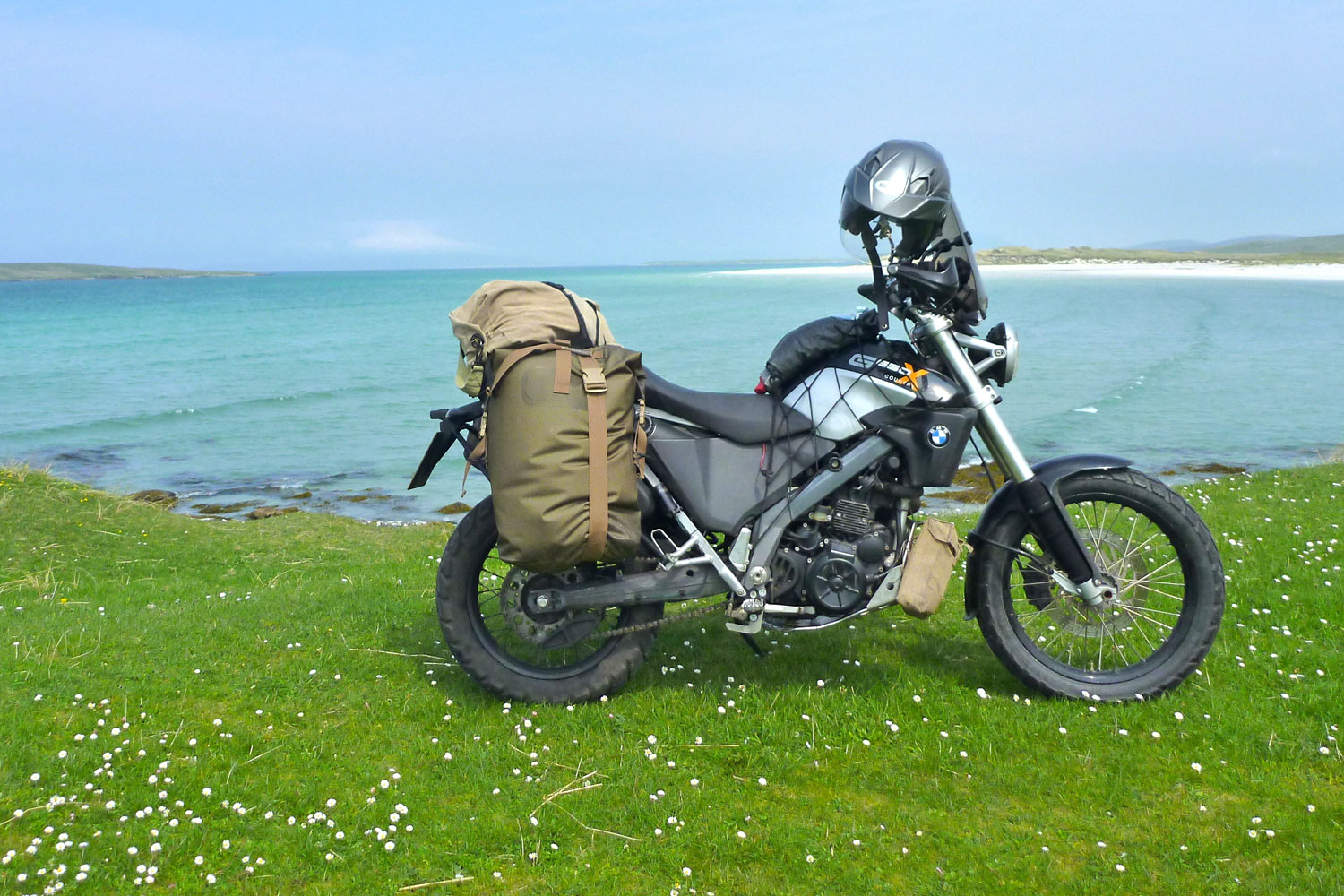
BMW X Country ABS, full tank, plastic handguards Front wheel 73kg Rear wheel 90kg Total 163kg – a very good weight for a pokey 650, if I may say so myself.
Additional pix by Dan W, Dave K and Robin W. For the full story on our tour read this.
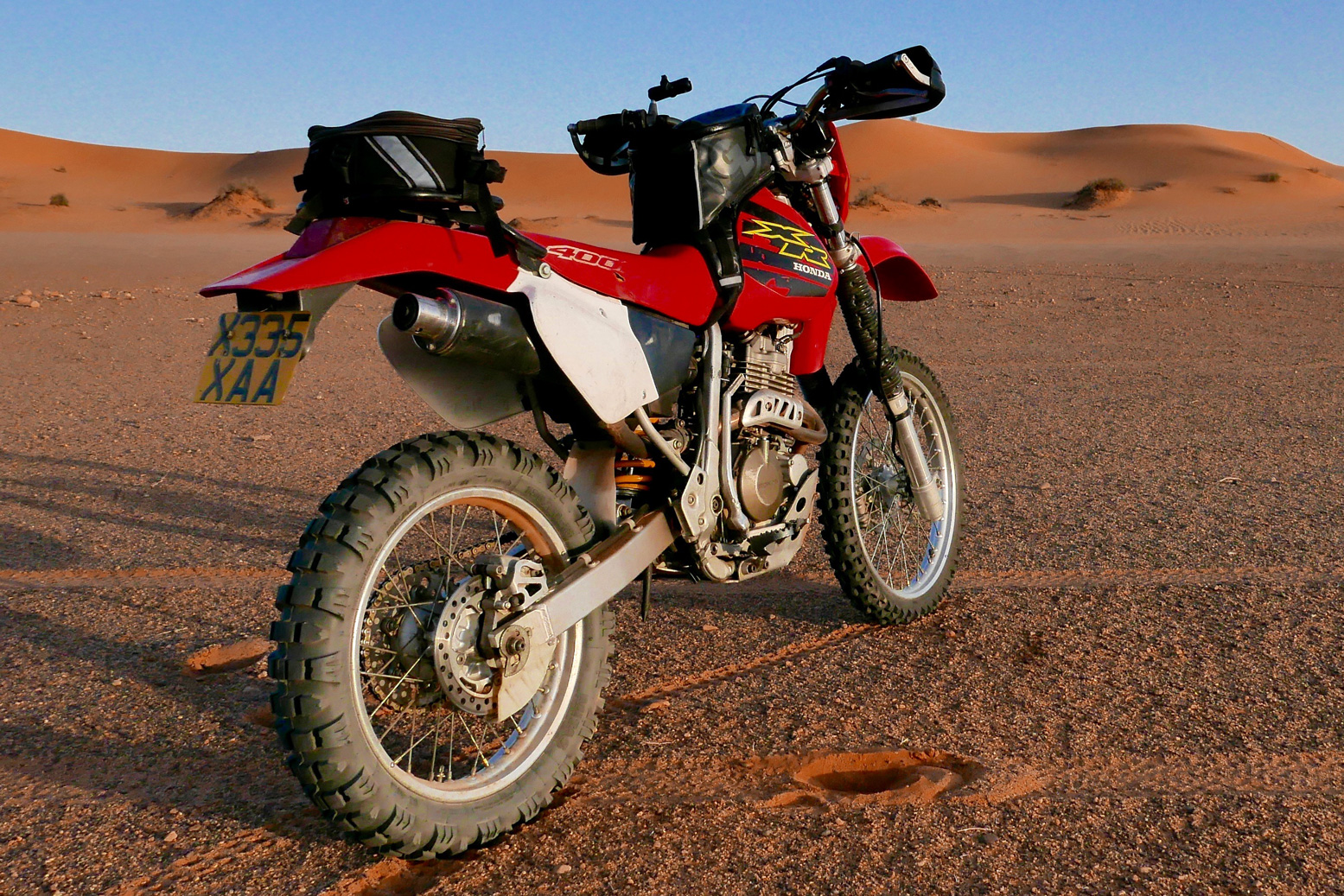
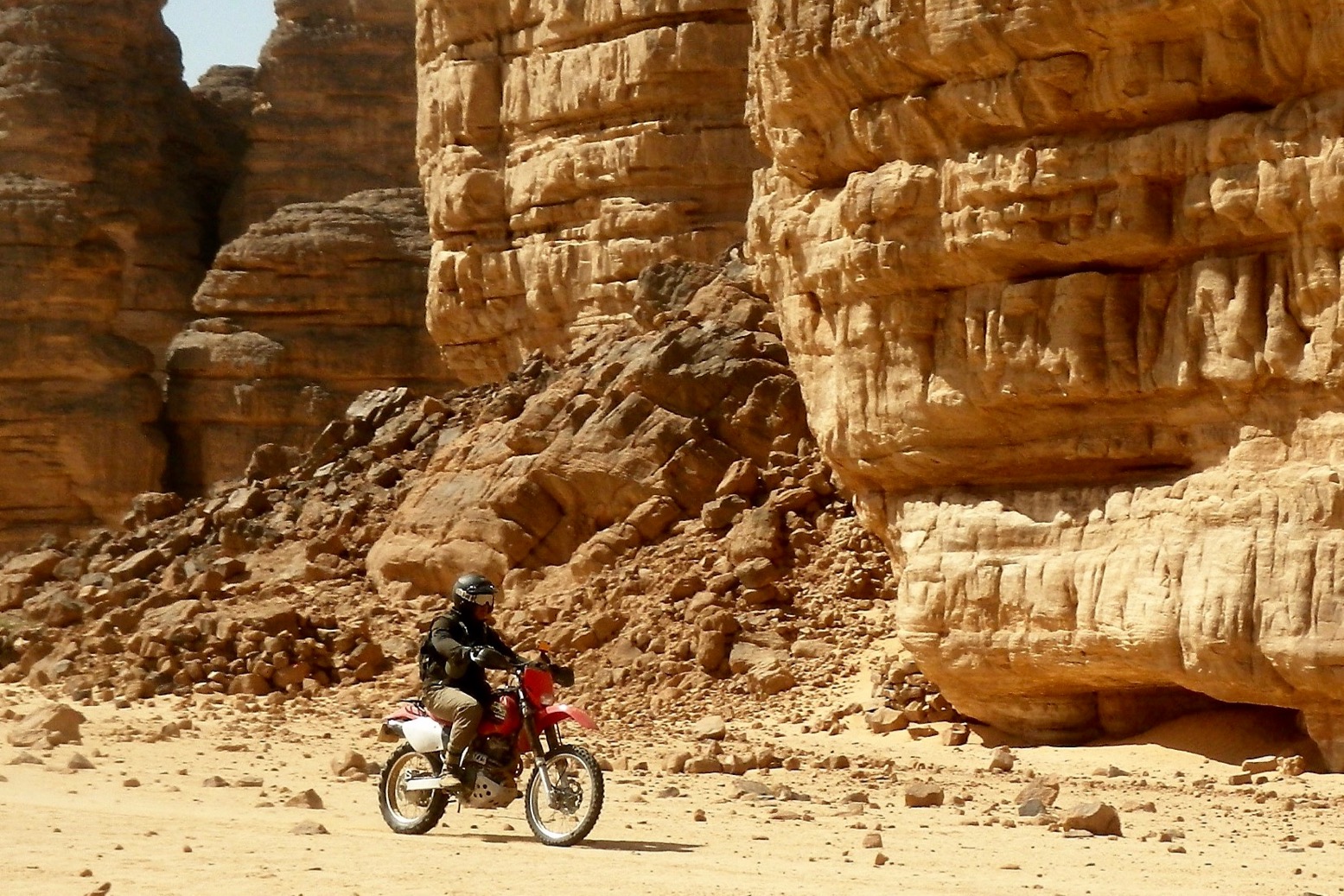
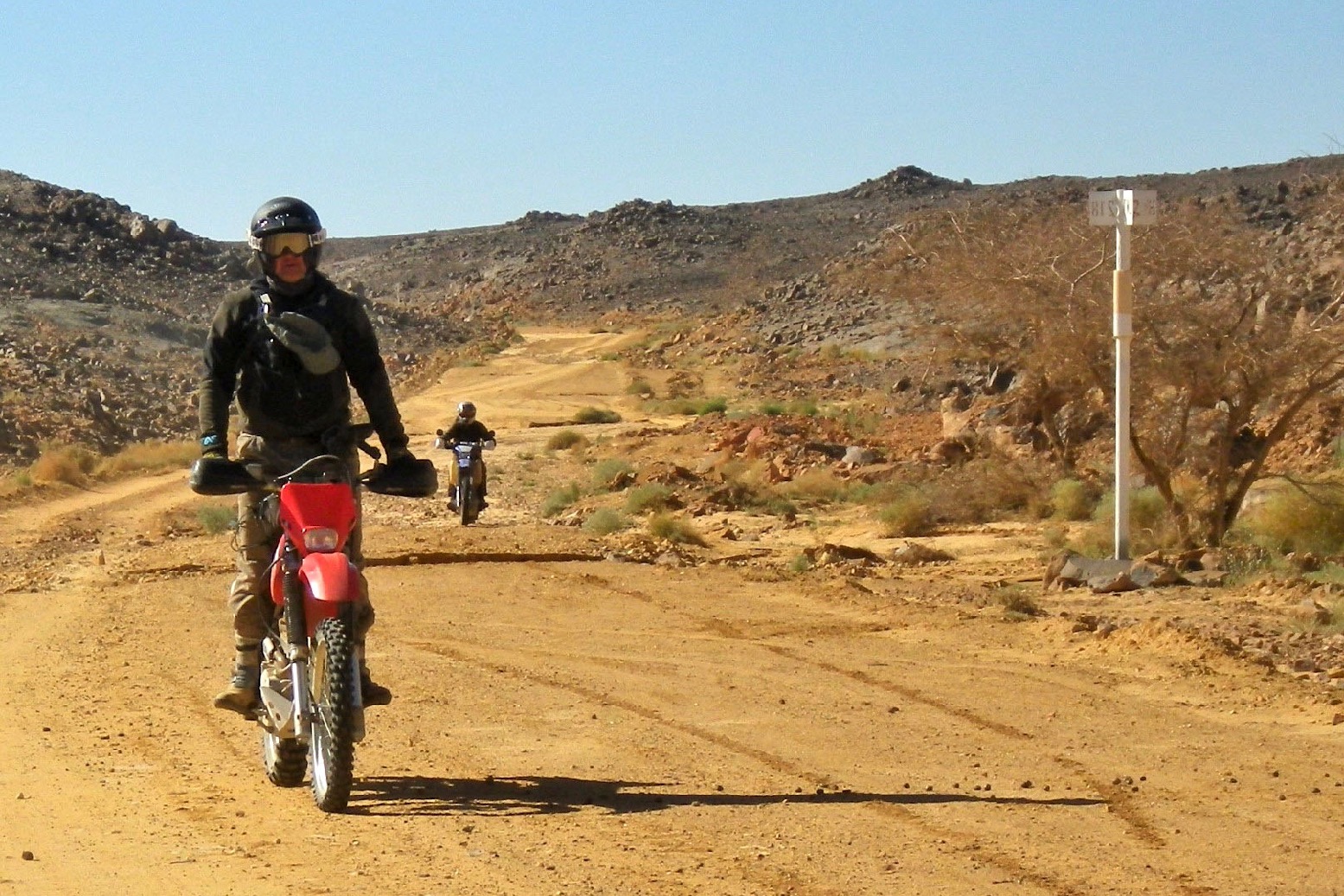
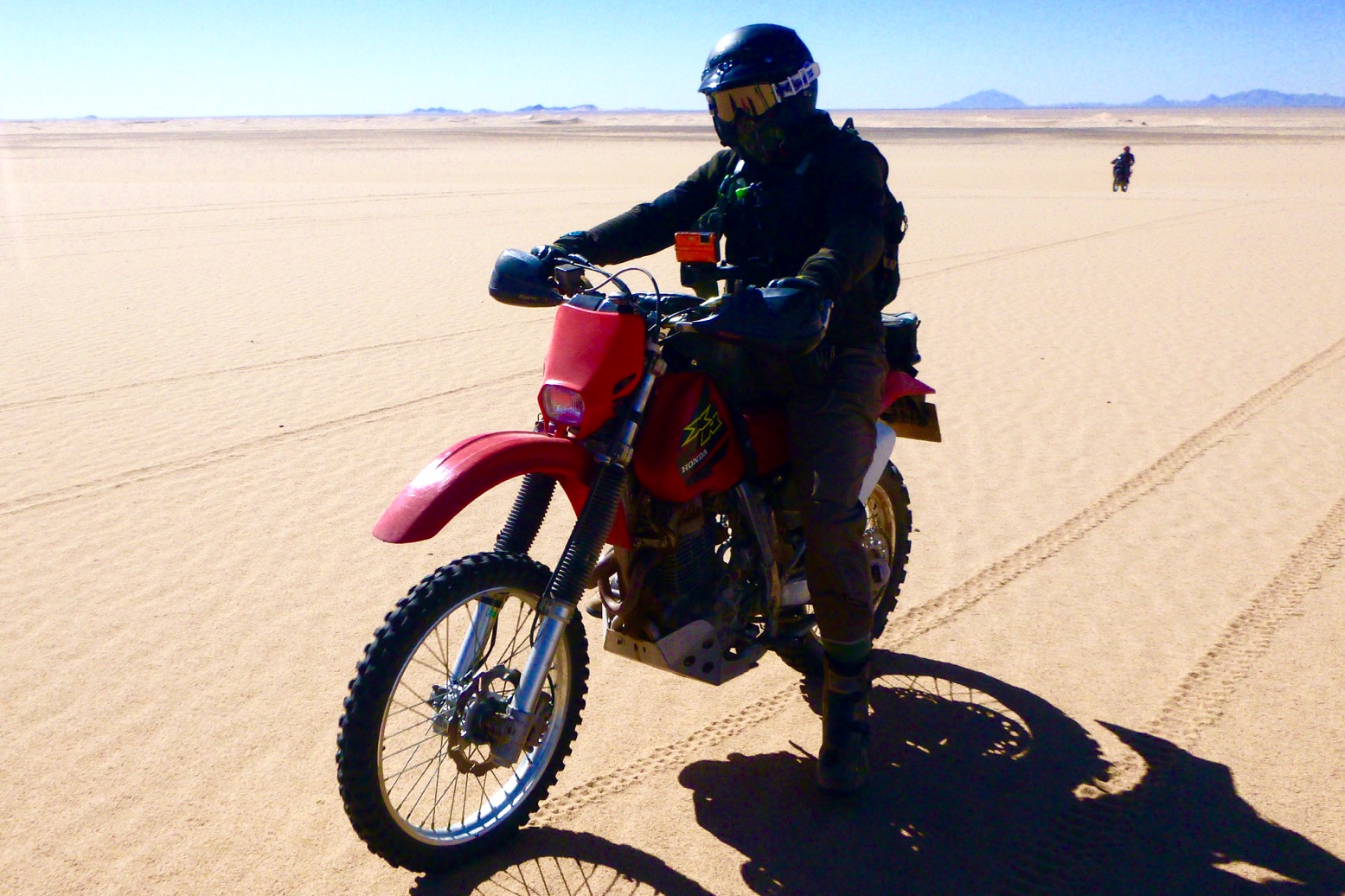
Having had a couple of XR400s on previous desert tours, I’ve long wanted to try one for myself and finally got a MY 2000 model in late 2017. I rode it up and down the road, got some man-caving mates to fix a few things up, then loaded it into a van bound for Germany and Algeria. Even if they’d have made easier work of it, I couldn’t bring myself to splash out at least twice as much for a KTM and the like. There’s very little in this old category but the XR was a safe, undemanding choice which I was pretty sure wouldn’t disappoint me on the sort of riding I was expecting.
Quick stats • Produced from 1996-2004
• Air-cooled, dry-sump, RFVC, 5-speed
• 34hp @ 6500rpm
• 116kg dry
• 36.6” / 930mm claimed seat height
• 9.5 litre tank (~150km range)
• Disc brakes and 18/21-inch wheels
• Go from around £2000 used in the UK
• Light • Easy kick starting • Enough power • Great suspension, all things considered • Looks great if you’re of a certain age
• Tall seat height • Unimpressive, carb-era economy • Kick only • Dry-sump oil-level checking faffery • Was never a contender as a good travel bike (skimpy subframe) • No modern version exits
Some other bikes I considered were:
• DRZ400 Has the button but 15-20kg heavier, more trail bike less dirt bike and finding a decent one with few owners and that’s not covered in naff Monster stickers is tricky. • Husaberg FE450 Liked the unusual engine and good reputation of later models but obscure = hard to sell on and anyway, it’s a hardcore enduro racer. • KTM 500 EXC` Less frantic than a 450, lighter than a 690 and easy to sell on, but efi ones cost thousands and anyway ‘KTM relaxed’ ≠ XT500. • KLX450R Unchanged since 2008 and said to be the ‘softest’ of the Jap 450 enduros but carb’d and rare in the UK. But again, softest is all relative. • KLX250S Better suspension than a CRF-L but it’s still only a 250. I’ve had enough 250s for the moment.
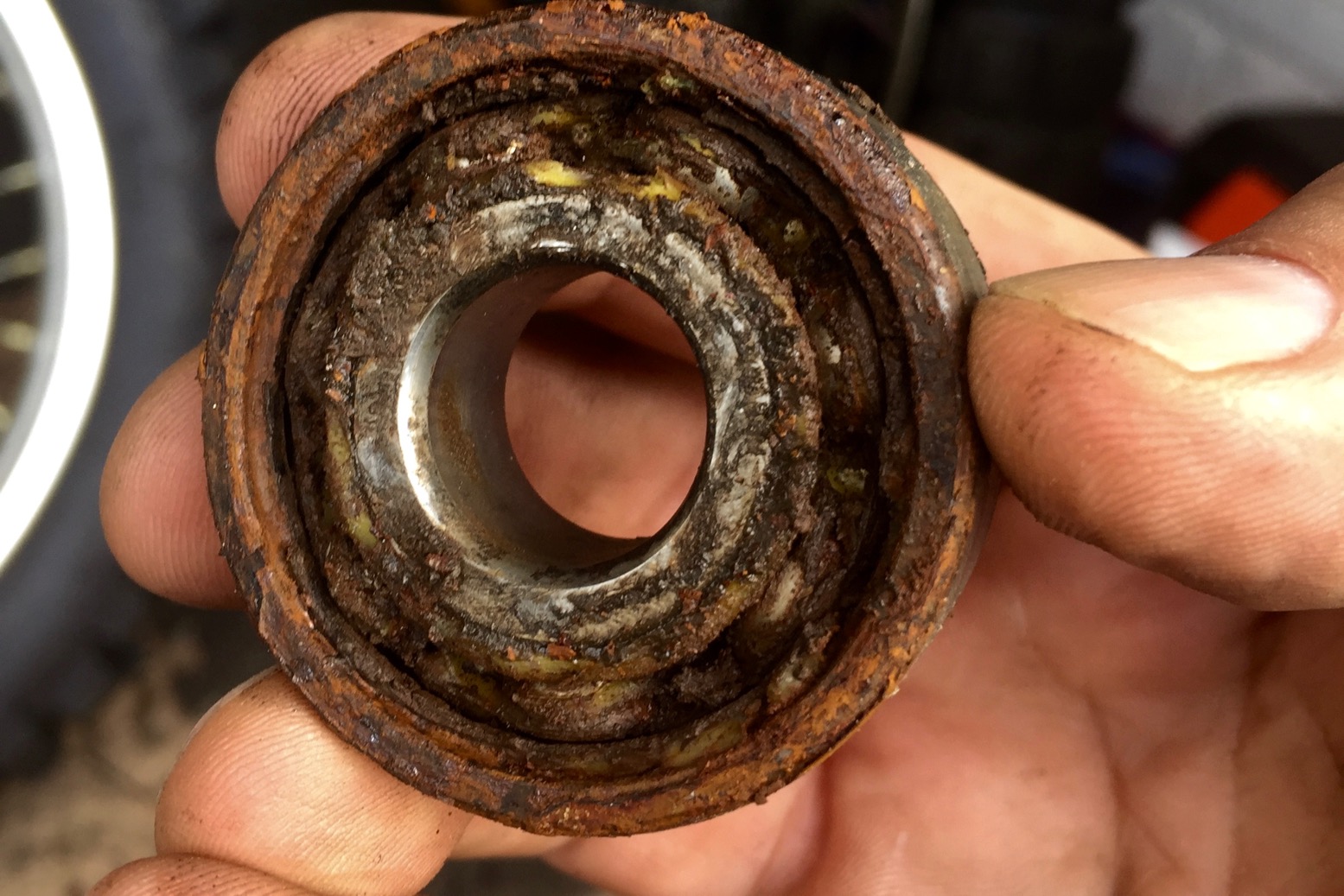
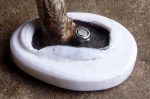
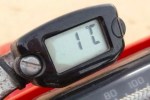
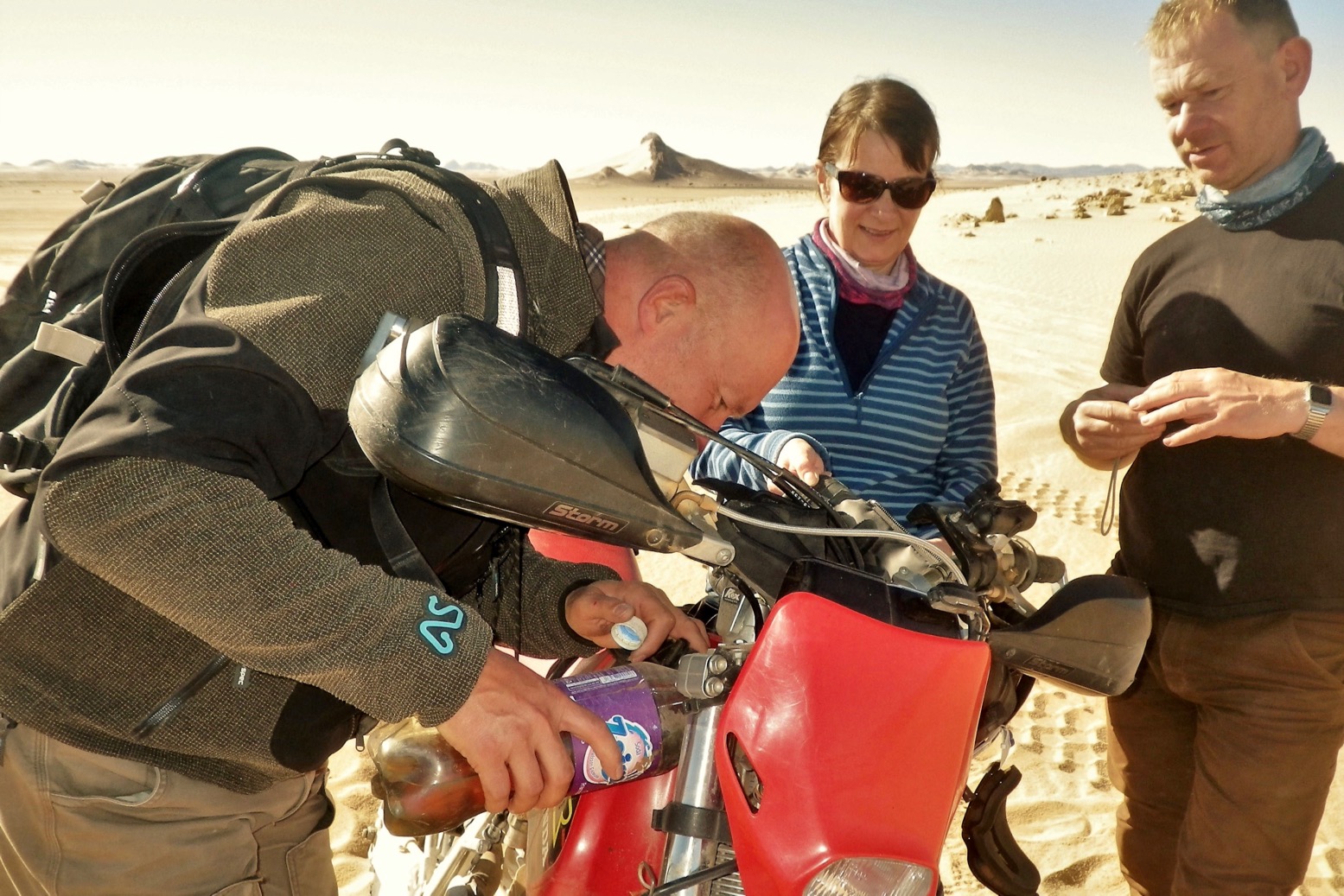
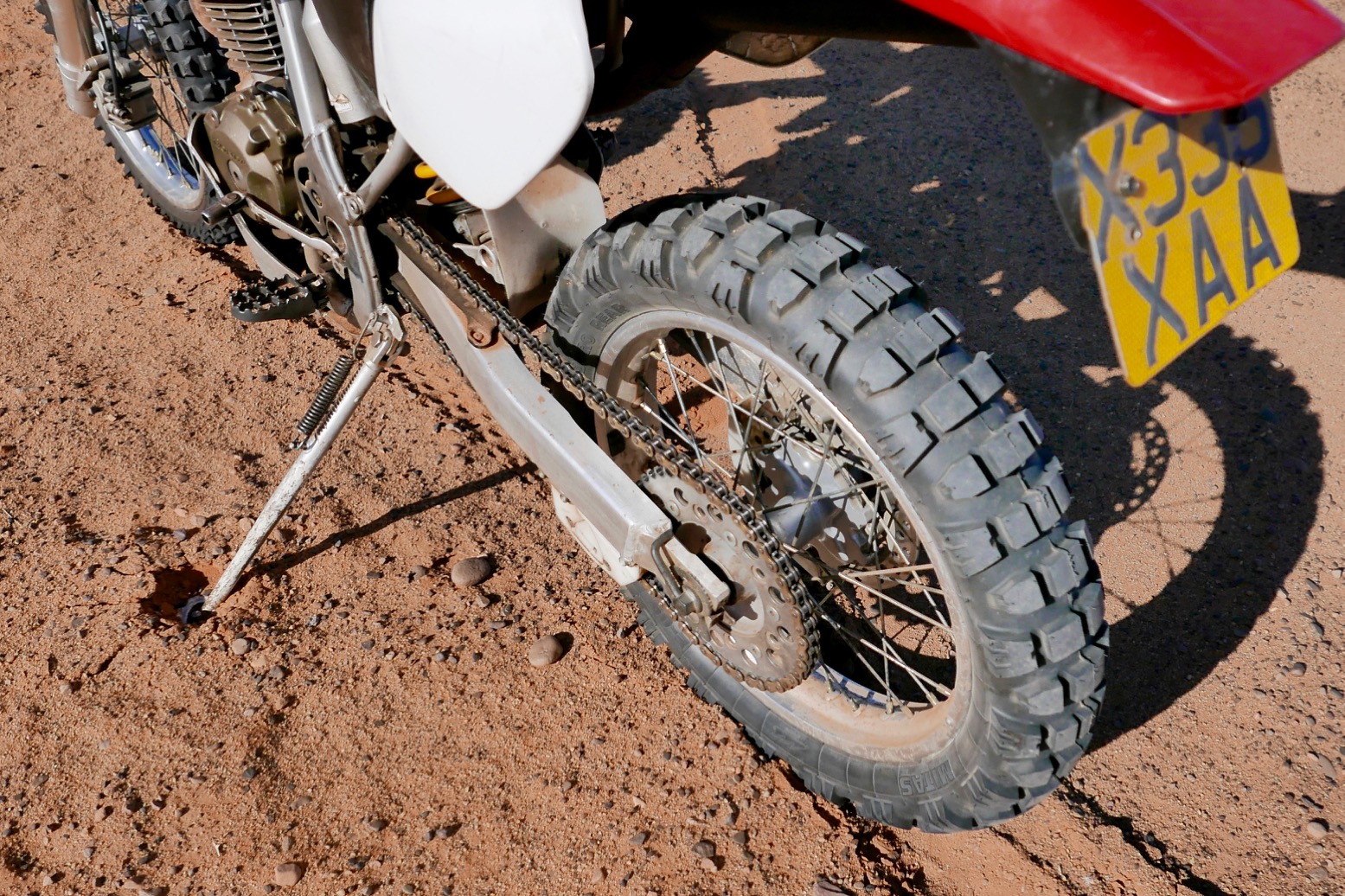
My XR showed 8550km (5300m) on the clock and looked in good nick. It had a small rack, bashplate and an OK front tyre so not much needed adding of fixing for a fortnight in the desert: a new Mitas E09 on the back with Slime in the tubes and self-tapers through the rims to stop tyre creep. New wheel bearings (old ones rusted right up – jet wash victims, I guess) plus fatter pegs and a Trail Tech temperature gauge. Air- or water-cooled, I’m a believer in closely monitoring actual engine temps in the desert. I also got TTR-Simon (on the tour) to add my old Barkbuster Storms and Rox risers, plus a disc of HDPE (chopping board plastic) melted and bolted under the side stand foot – a light and simple way of doing it.
Before flying out to Algeria I had a thought that my kick-only XR might take a lot of starting after being transported across the freezing Alps, the salty Med and half the dusty, arid Sahara. But came the day in Illizi I nearly fell off the seat when it lit up first kick and proceeded to do so throughout the rest of the trip, whether baking hot or freezing cold.
Once geared up, leaving Illizi we were thrown in the deep end with a short but sandy ride to our first dune camp. Those new to sand or who’d not ridden it for ages – like me – were a bit startled but eventually remembered what to do: gun it and hold on. The XR felt light, well sprung and reasonably responsive (this was on road pressures), though not enough to make me want to blast up wayside dunes for the hell of it. Most of us felt the same way; there was plenty of rugged riding ahead. FYI, the other bikes on the tour were a CRF250L (DNF); two BMW XChallenges (1 DNF; injury), two KTM 690s, Husaberg 450, two bored-out 315-cc Yamaha TTR250s, KTM 350 EXC, Husqvarna TE300 2T, XR250R and an old KTM 640 Adventure. All of these bikes appeared to cope as well with the riding and, like the XR, none of them needed anything more than the slightest attention. Read the full ride report on advrider.
Fast forward a few days and my XR had impressed me and saved my arse many times; most commonly when I was certain I was about to go over the bars following an unexpected drop-off, trench or general gnarliness. I thank the light weight – it really is the answer to so many issues on the dirt – and the Showa forks on whatever setting the bike came with. The rebuilt rear Showa shock also did a great job without any meddling. It goes to show that good quality suspension on a light bike works well over a broad spectrum – or how easily pleased I am.
The XR is relatively short and tall and George (who followed us in the pickup over the tour) observed that the Jap bikes (XRs and TTRs) appeared relatively less stable compared to the generally racier European bikes. My XR does look short and high alongside a long-swingarmed 690 and I can’t say it rode the sand seas like an ocean liner, nor trickled through grassy tussocks like a Montesa. That may have caused fatigue and palm blisters after a few days, but the relative skittishness never made me to crash outright.
Dave (690 fan) and I have an ongoing banter about why I should get ‘the best trail bike ever’. While the 690 KTM does appear to give you your cake (lightness, economy, power, tough build) so you can eat it; I still find it and the similar Husky 701 I rode in Morocco too full-on, narrow-saddled and vibey; still more enduro racer than trail bike. A quick spin on Rob’s 690 (left) didn’t change my mind and anyway, for the use I’d give it, with the attention it needs and my lack of secure parking/well-lit workshop space, such a bike would be an extravagance.
Kick-starting may be old school but the only time my XR took some starting was after it fell over long enough to drain the carb. Soon enough I learned to just keep kicking away whereupon it eventually coughed then fired up. This can be awkward (on a dune) or just plain tiring after a couple of minutes, so a button would be great. It can be done on an XR by fitting a motor (or crankcase?) from a Honda TRX400 quad – try and find one of those on ebay in good nick. TTR-Simon is currently engaged in such a project; he’s also producing a 350 barrel kit for the electric TTR 250s. Neither job’s an easy solution, but both these bikes – one too small cc, the other unbuttoned – comes with the great suspension and to make it worthwhile – possibly.
A couple of days in, looping some loops I smelled burning oil which turned out to be my bike. Dave (690 and ex-XR400) said the ‘RFVC‘ radial valve set-up tends to ovalise the valve guides due to non-inline forces. Sounds plausible and as the motor never started rattling as long as I kept the oil level up, I was sure it would complete the ride. The strain on the motor and transmission when hauling me over deep, soft sand or up a dune slope is not what I’m used to in the desert, but I never felt the XR needed to be nailed WFO to get the job done. That’s why we like 400-450s over 250s.
I’m guessing RFVC was an over-complicated way of optimising power by improving gas flow with the biggest possible valves. I was also told I might have released more power by easily removing the baffle, but I doubt it would’ve made a noticeable improvement – just a lot more noise which is often mistaken for the same thing.
Though I forgot to consider it before departure, the 14/45gearing on my XR turned out to be spot on for what we were doing; ie: on the low side. On the road, 90kph and once or twice 100 felt like enough and the close-ratio, 5-speed box never bogged (the XR250’s gearing was a lot wider). The chain was feeling the strain too, and needed two clicks during the 1600-km trip; what a pleasure those old school snail cams are to use. Low and close gearing also meant the clutch was never under strain.
Fuel consumption was pretty poor by my recent standards – down to just 100km to a tank or 150 to dry (45mpg). I bet the bigger efi 650s and 690s were doing much better – small engines aren’t always more efficient when you take into account power-sapping terrain or high-speed roads. I didn’t pull the spark plug but the bike did feel like it may have been running rich, even if starting and carburation were spot on. Better to leave it that way in the desert, even at the cost of mpg as the engine runs a little cooler.
Measured off the cylinder head, that temp gauge was handy for reading overnight ambients down to zero. On the road the bike ran in the 80s °C and up to 120 when pushed hard on slow dirt, heating briefly up another 10C or more when stopped or ticking over after a hard run. Though I didn’t like doing it, switching off after a couple of minutes seemed best as ticking-over saw the temps climb and climb, even with a breeze. Turned off, it only rose for a few minutes then dropped away quickly. I seemed to be the only one pre-occupied about cool running, but for an old, air-cooled engine I’m sure it’s important. Mechanic Simon (who knows XR4s and engines more than me – since diagnosed light glazing on my XR’s bore which will hone out with new rings and a lapping of the valve seats with new seals. As he says: ‘I think when stationary the engine should be off unless there’s a strong breeze. Combustion chamber temp should not rise further with no source of heat, but the temperature [spike] will move towards the outside of the engine as the temperature gradient changes (imagine it like a wave [of heat] radiating from the plug to the fins) which is why the sensor [briefly] records a continued rise.
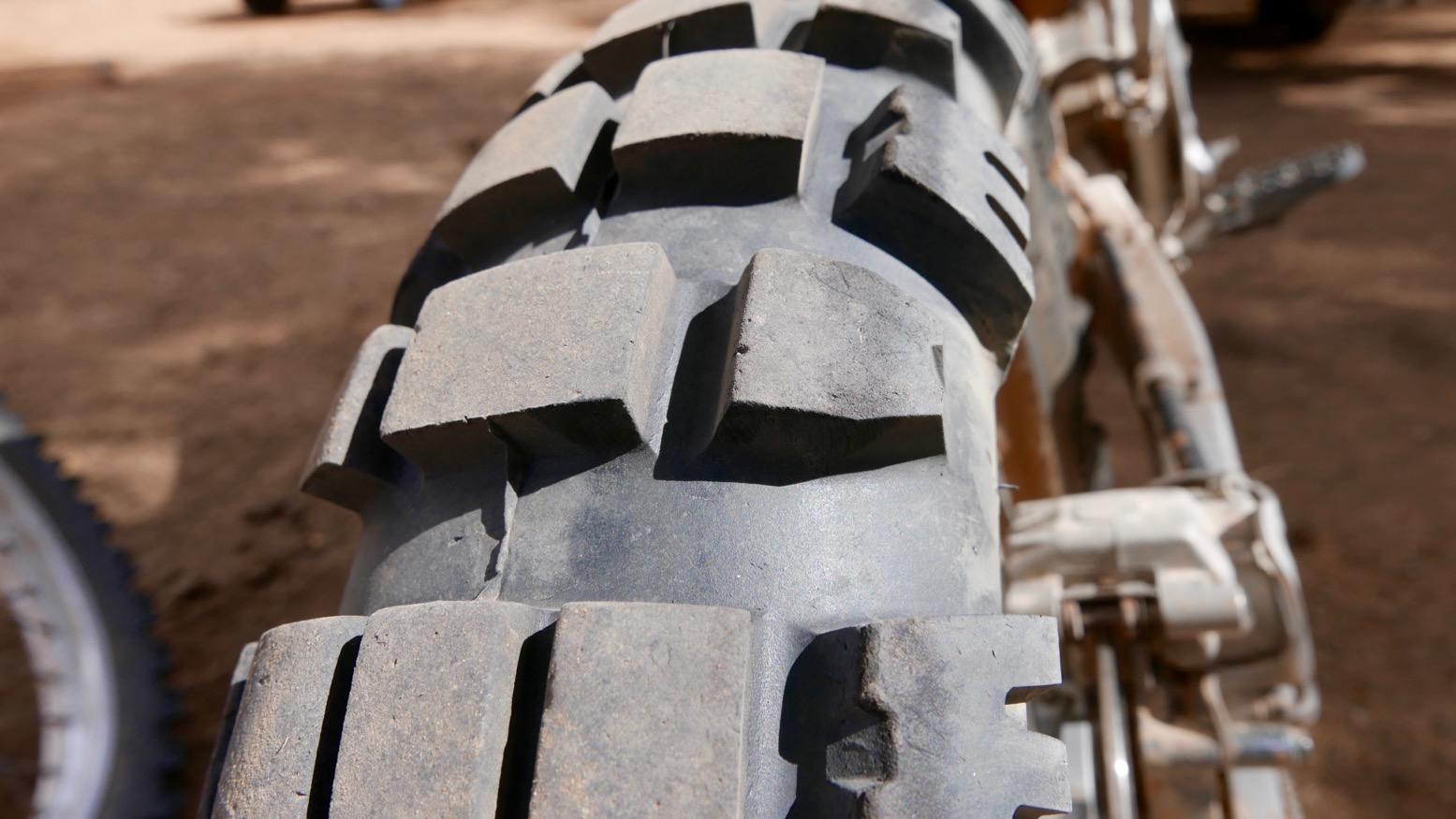
The rear Mitas E09 (non Dakar; 1 less ply and a bit lighter) wore very well, (right: after 1000 miles), but on the sands 1 bar / 15psi was still too hard for this stiff tyre on a light bike, even with my weight. On the last day on sand I tried 12psi (~0.8 bar) and noticed less squirreling when pulling away and improved traction elsewhere. Tough as a Michelin Desert but less than half price, I’d use one again for similar riding. I had no punctures (nor did anyone else on this trip).
So thumbs up for the classic XR4; one of the best trail bikes of its day and still with nothing newer taking its place, including the so-called 450L. I’m pretty sure that motor-wise, it was a better ride than the slightly heavier WR250R I used last year. The other day I put out a daring Twitter: ”Like’ if you want to see a modern XR400 such as a CRF450L’. I got the most responses to anything I’ve ever posted. Let’s hope that bike might come one of these years, while not weighing a ton. (It did, but it wasnt).
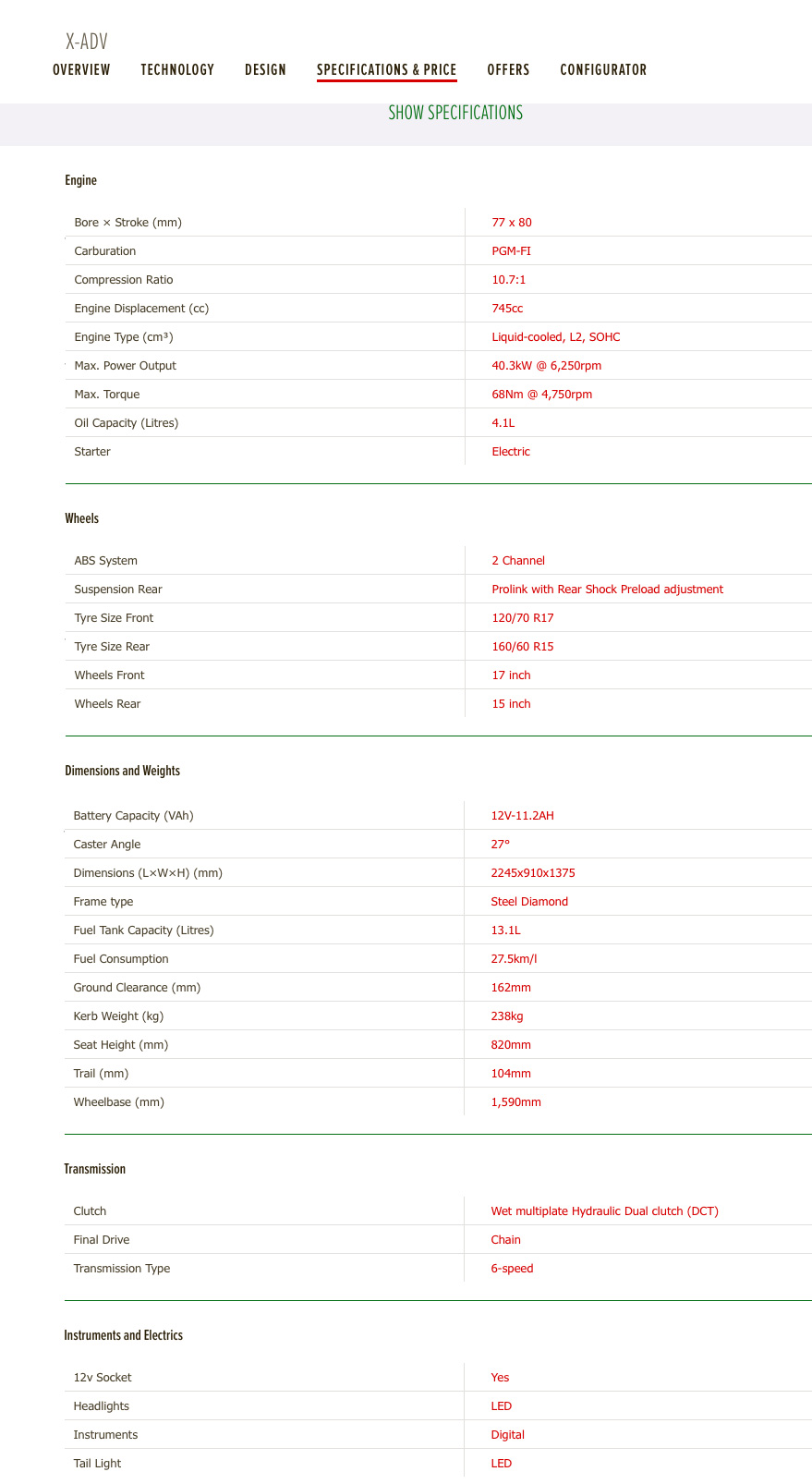
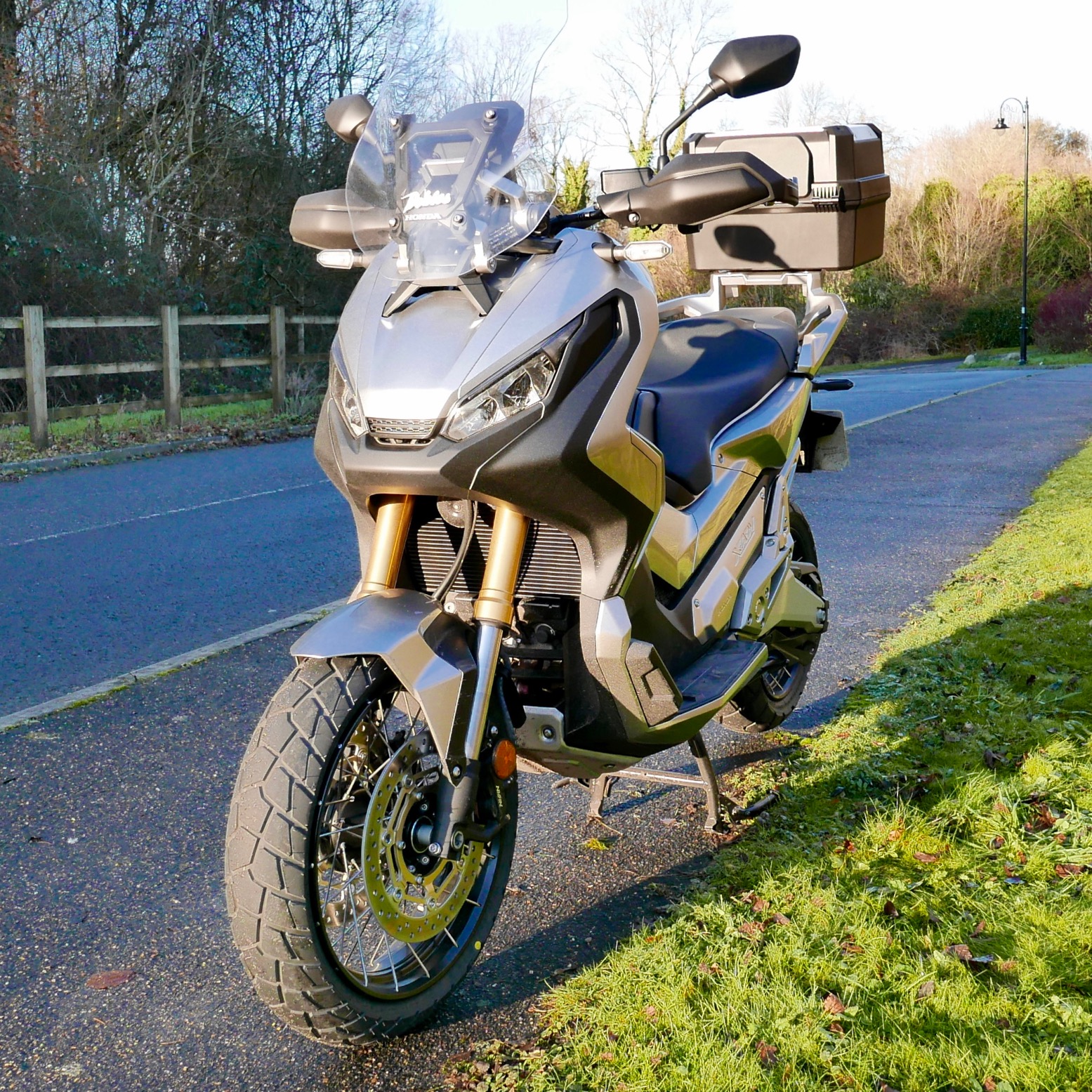
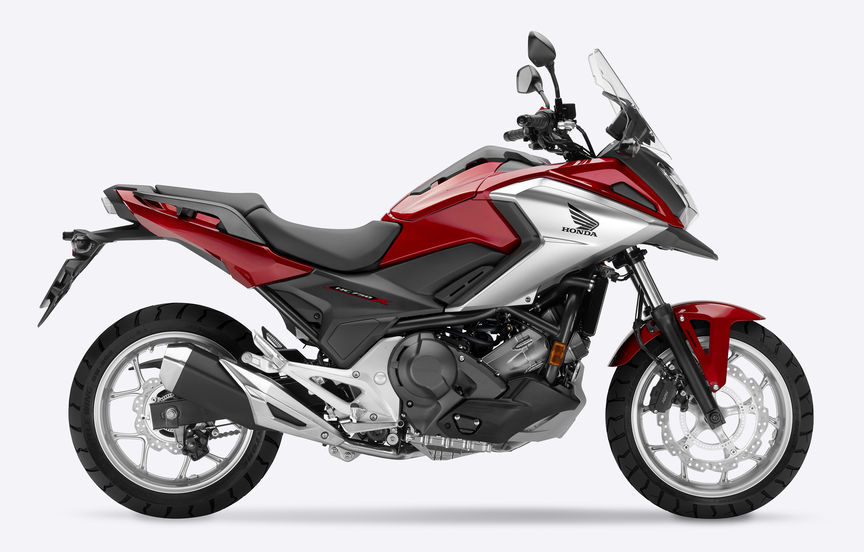
The reaction to Honda’s category-bending X-ADV ‘X-cooter’ seems to have been positive; most reviewers get it or accept it for what it is. Credit to Honda for trying new stuff, though it’s said good sales haven’t followed, probably due to the £9600 price alongside more conventional maxi-scooters used most commonly as commuters rather than travel bikes. The X-ADV suggests you could do both.
• Pricey • Tall for a scooter • Scooter seating position • Dreary in silver
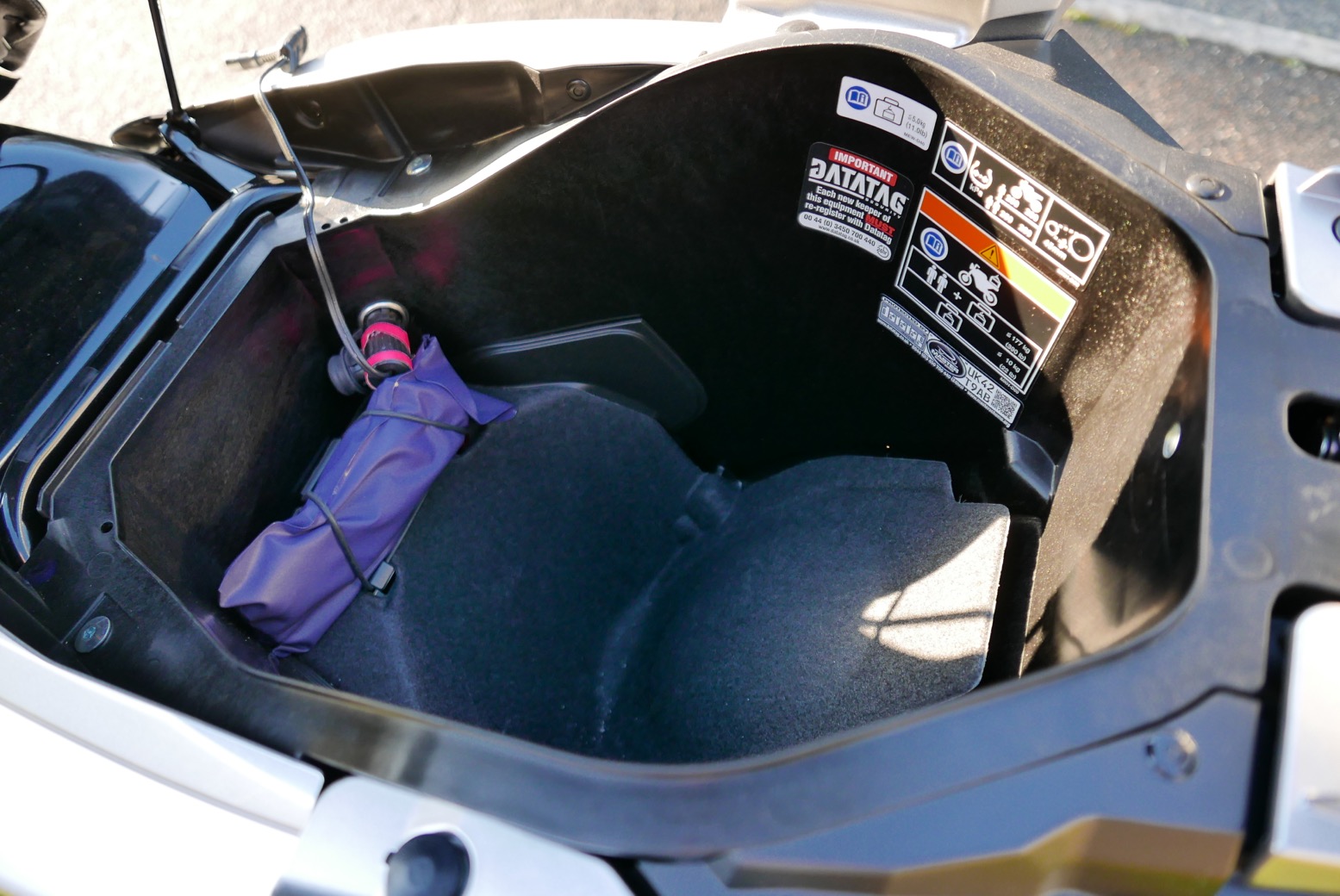
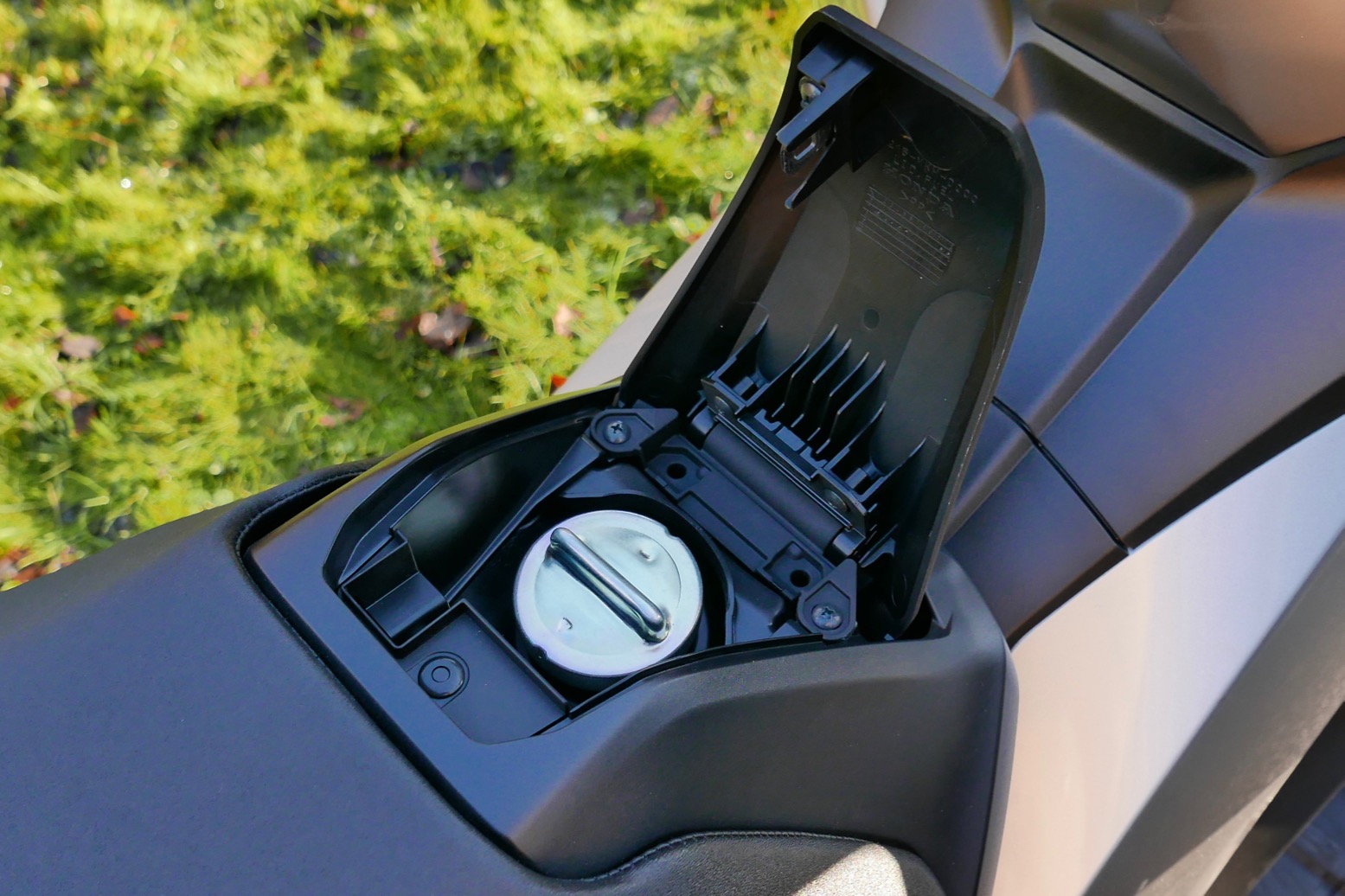
Under that bodywork and between those small wheels they’ve slung the low-tuned, 54-hp 750cc twin from the Integra scooter and NC range and best of all, the DCT auto/manual gearbox which – don’t ask me how – gives a real neutral plus a more direct drive, unlike a typical scooter’s mushier CVT and belt drive. And unlike the NC motorbikes, you stash your lid under the seat not ‘in the tank’. On the ADV that space is the air between your knees, though I was a little disappointed there was no ‘glovebox’ in the frontal bodywork – looks like the air filter sits in there. And getting on wasn’t so scooter-easy; you need to do an awkward frontal leg swing through the mid-section – I could see the plastics here getting all scuffed by clumsy boots. It’s quite high for a ‘scooter’ but maybe a better technique develops with use and some yoga. The 32-inch-high seat sounds low, but with the wide bodywork getting both feet flat on the ground wasn’t possible without shuffling forward.
One the move, sitting with your feet forward or even right forward ‘highway-pegs-style’, means your unfolded legs don’t take much weight so the bum-to-seat interface becomes all the more critical. Despite the X having a generous bucket seat, I can’t say I fully adapted to this position. Like a lot of riders on regular bikes, once in top gear I find putting your toes on the footrests is comfier for long rides; it pre-tensions the legs and angles you forward to take more weight off the butt. On the X you’re sitting upright, feet forward, like on a chair.
One thing you can’t grumble about is the near-seamless DCT gearbox. You hear the clicks as it changes, but you rarely feel them. What a pleasure it is to ditch all that clutch and foot-changing business. Some say quick-shifting has rendered DCT redundant. Never tried it, but I can’t see how; you still need to work a clutch and a foot-shift lever. With DCT it’s like an auto, with a Sport mode (higher rpm changes) plus a manual override with paddles on the left bar. It’s the cake-and-eat-it best of all worlds. Let’s hope they introduce DCT on some other smaller trail bikes before we all end up riding electric.
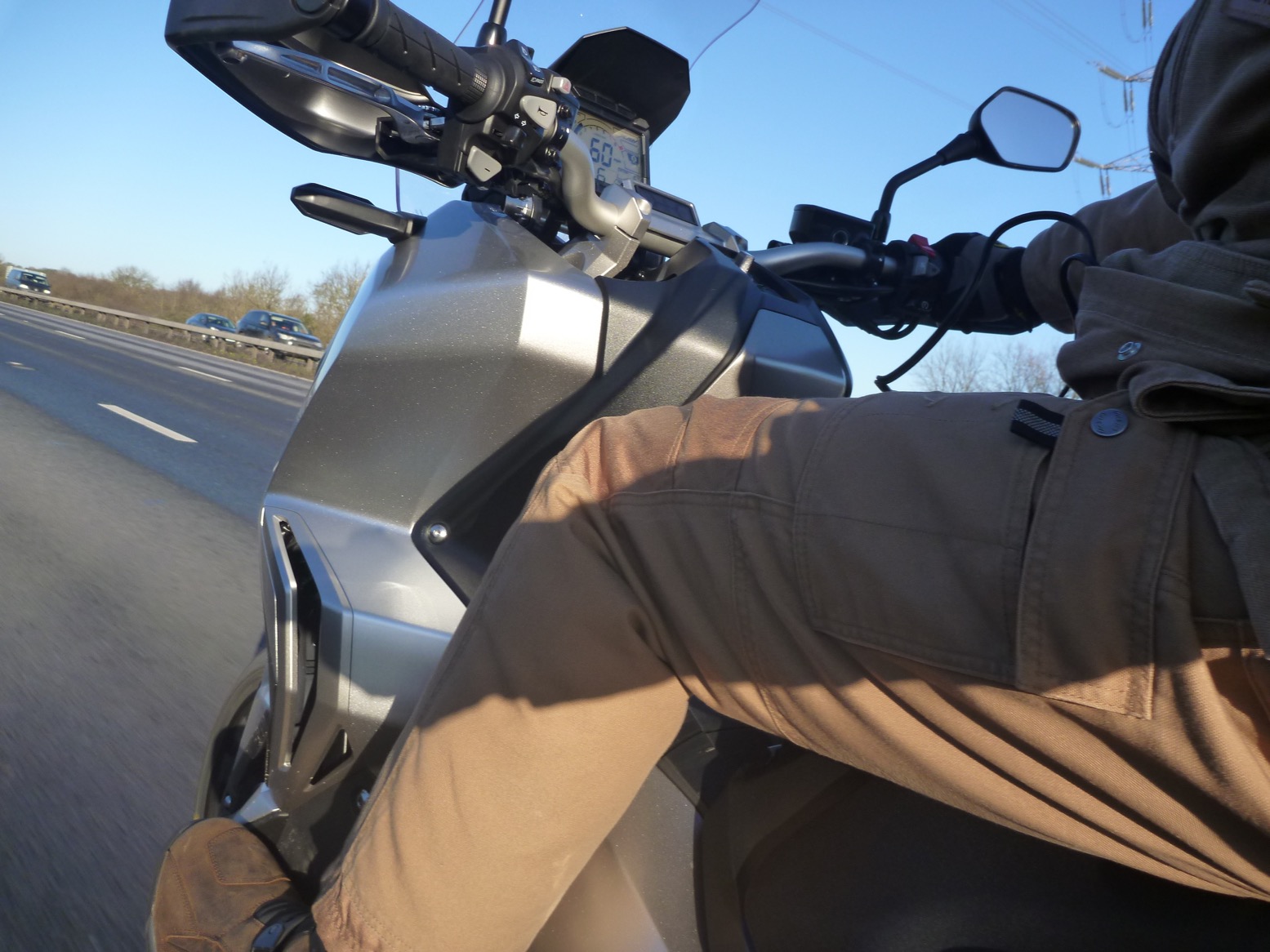
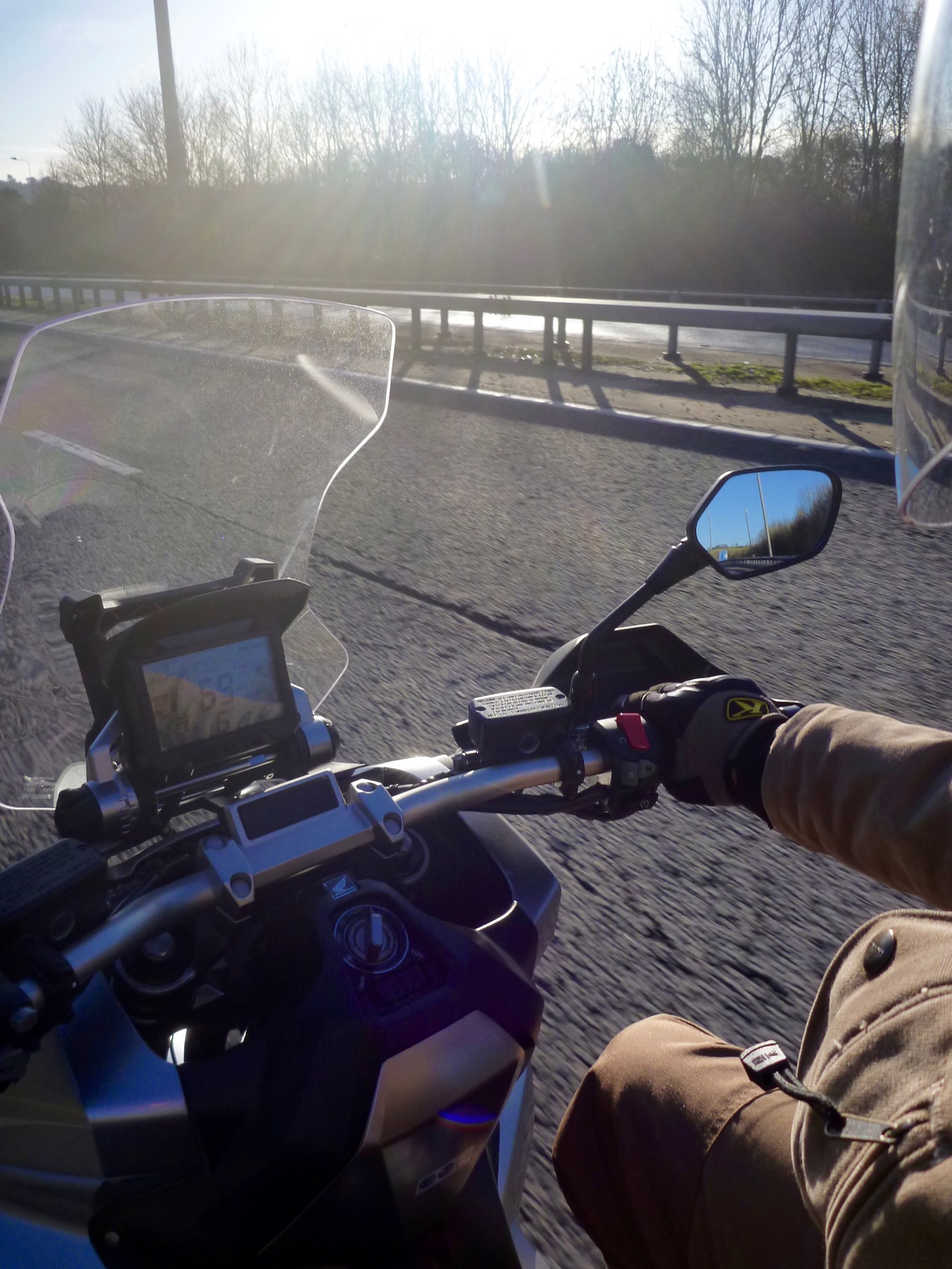
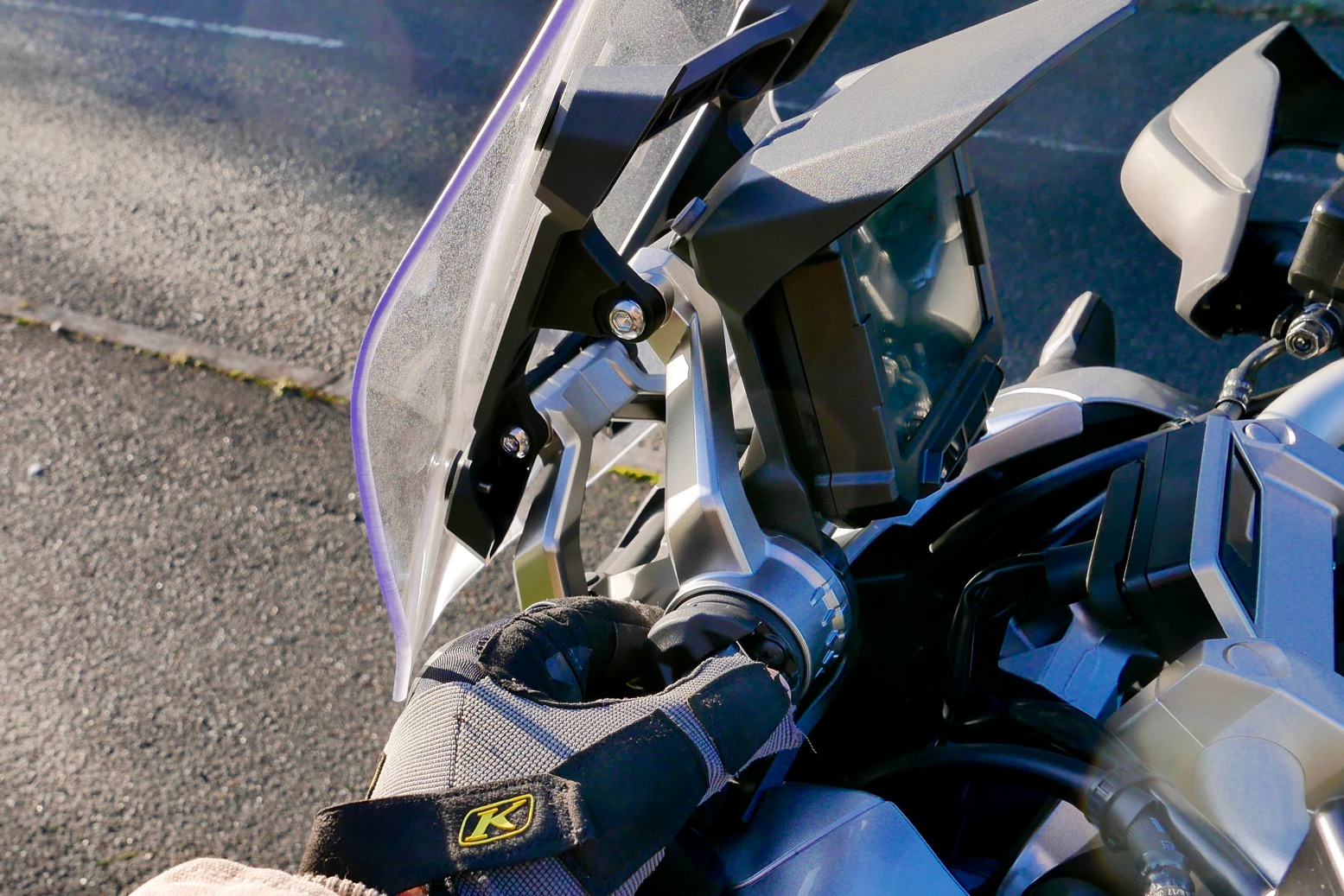
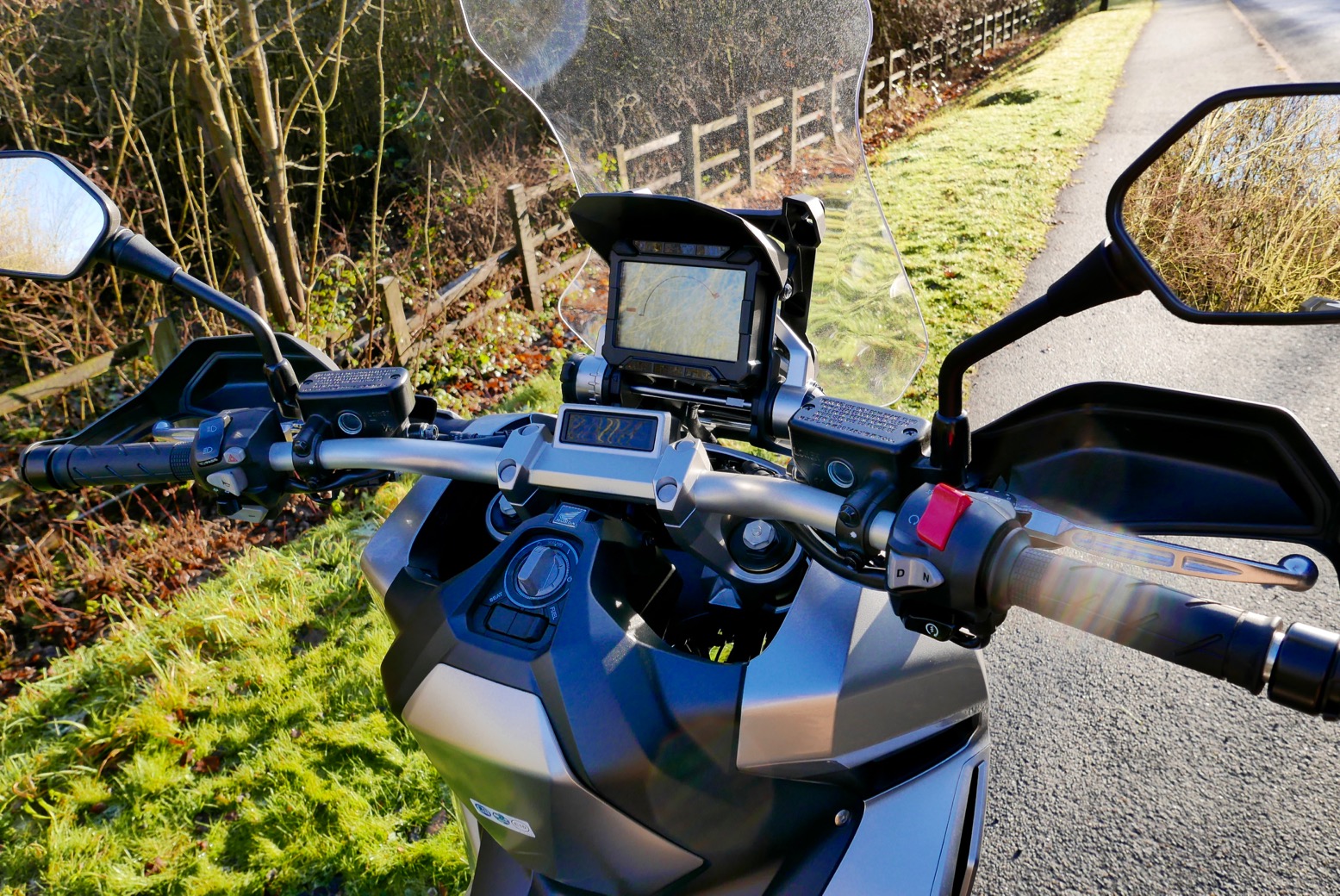
Just before getting on a motorway I pulled over and cranked up the adjustable screen to the max with the easy-to-figure-out knob (left) on a clever parallelogram hinge. Back on the move I can’t say I felt swathed in a hushed bubble of still air, but at 5°C, without that screen and the frontal bodywork keeping the legs out of the wind, I’d have been freezing, even with the heated jacket plugged into the cig plug under the seat. I bet there are wider, taller screens available and anyway, the X-ADV rolled effortlessly up to a stable 80mph which equals just 4000 rpm. The engine is another one of those characterful 270° twins as on my XSR700 (and ATs, TDMs, Super Teneres, some Triumphs, the forthcoming BMW 850s and 800cc KTM). The biking world has gone 270-° crazy and I’m all for it. It sounds a lot better on its standard pipe than my XSR, even if its twist-and-go acceleration isn’t as crisp. (One benefit of DCT autos over conventional CVT scooters is the reduced ‘rubber band’ lag.) The Honda has 30% less power than an unrestricted XSR700 (my XSR actually runs 47hp) and nearly 30% more claimed weight.
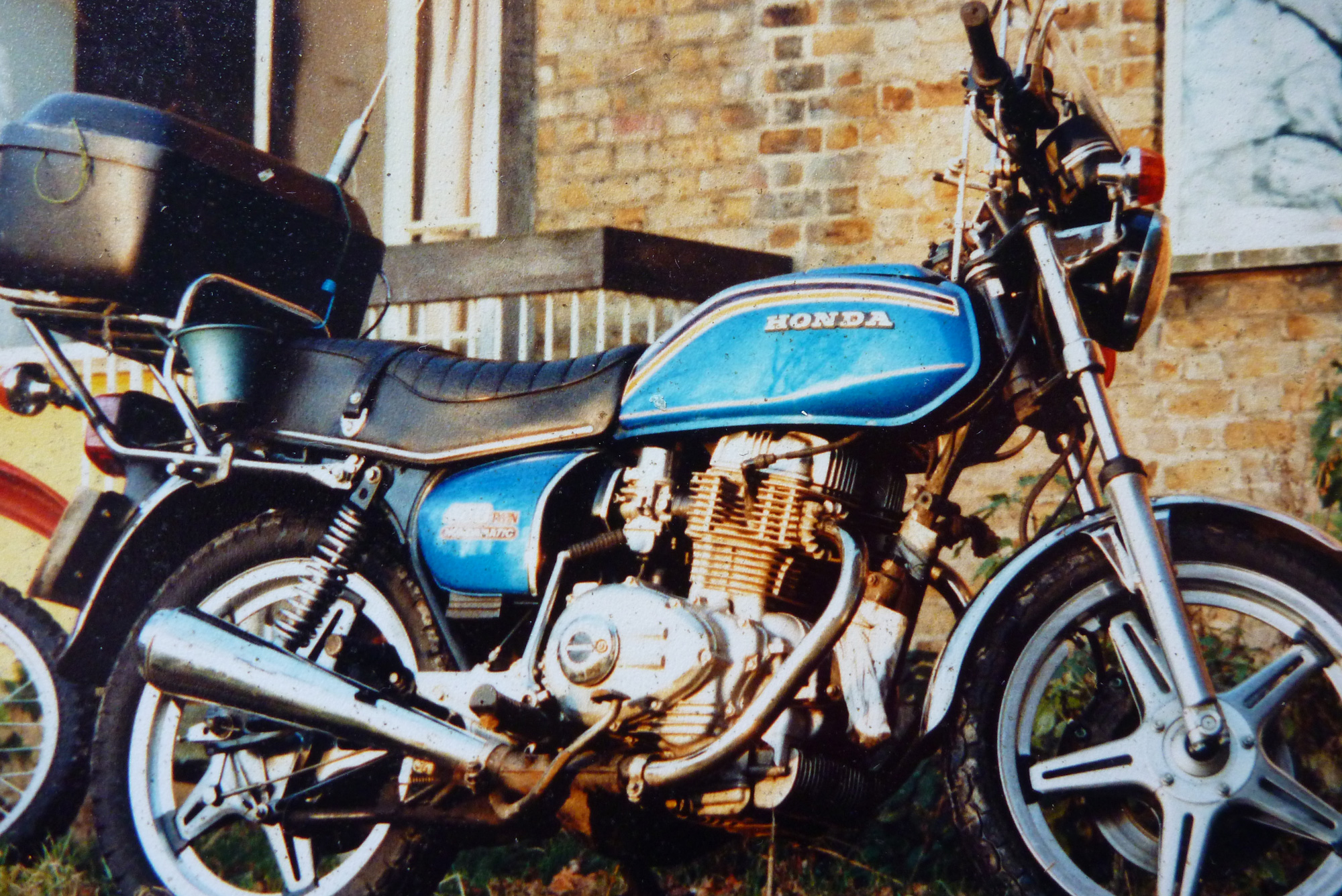
Good thing the brakes are brilliant twin, four-pot radials on the front; you want good brakes with a heavy auto. It wasn’t till nearly back at the shop that I remembered the left lever works the equally meaty back brake and is not a locking parking brake (as on my old 400AT Dream, above). That late 1978 bike was a doddle to despatch round town; a neutral + two-speed clutchless box which left the left hand free to operate a radio, eat a turkey and coleslaw bap or wave cheerily at tourists.
I should have taken the X-ADV down some backlanes but didn’t want to get caught out on a sunless icy patch. Even then, you could tell the suspension felt better than my XSR, especially the adjustable cartridge USD fork (I couldn’t see a way to the rear shock which comes with spring preload only, but no remote HP adjuster that I could see).
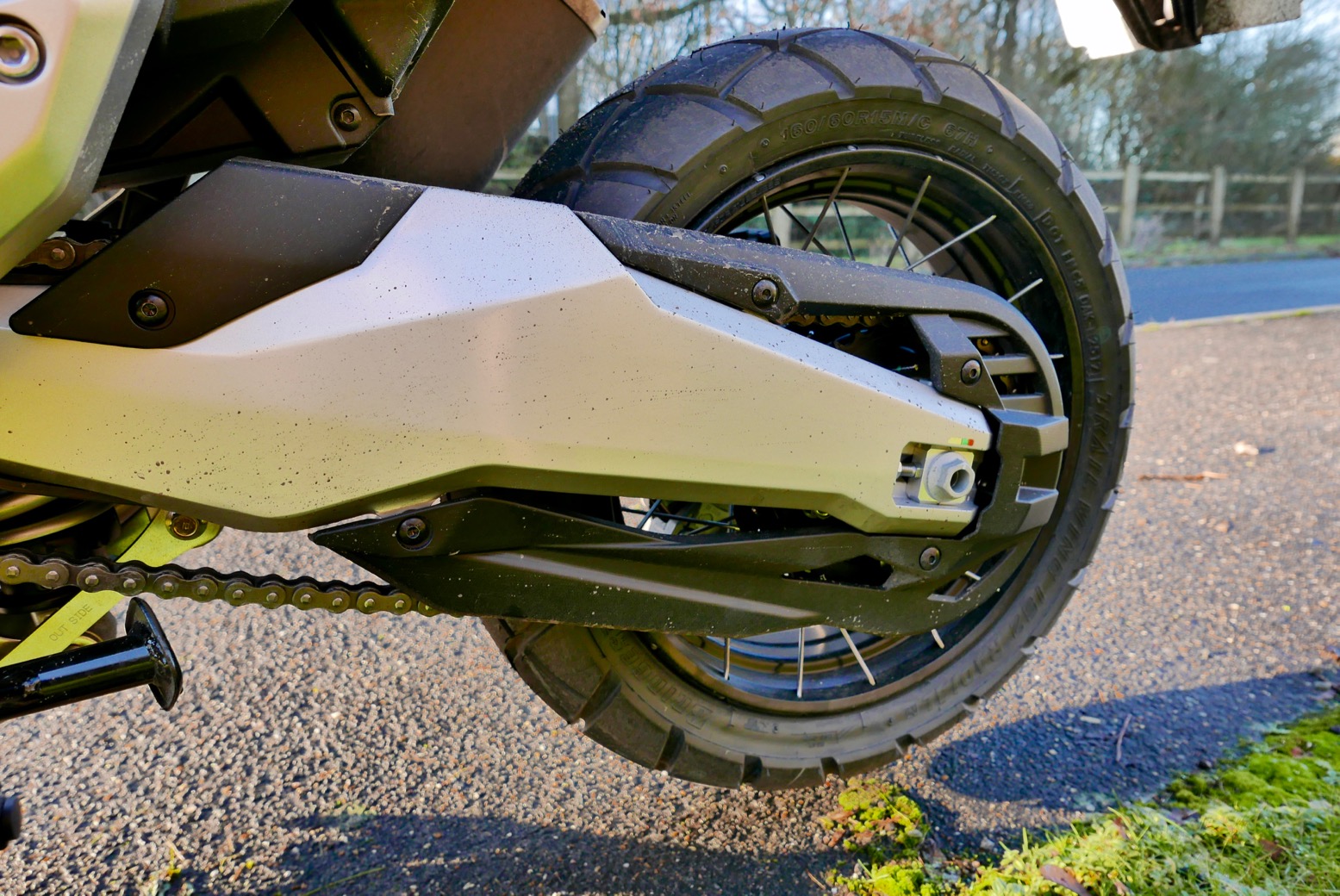
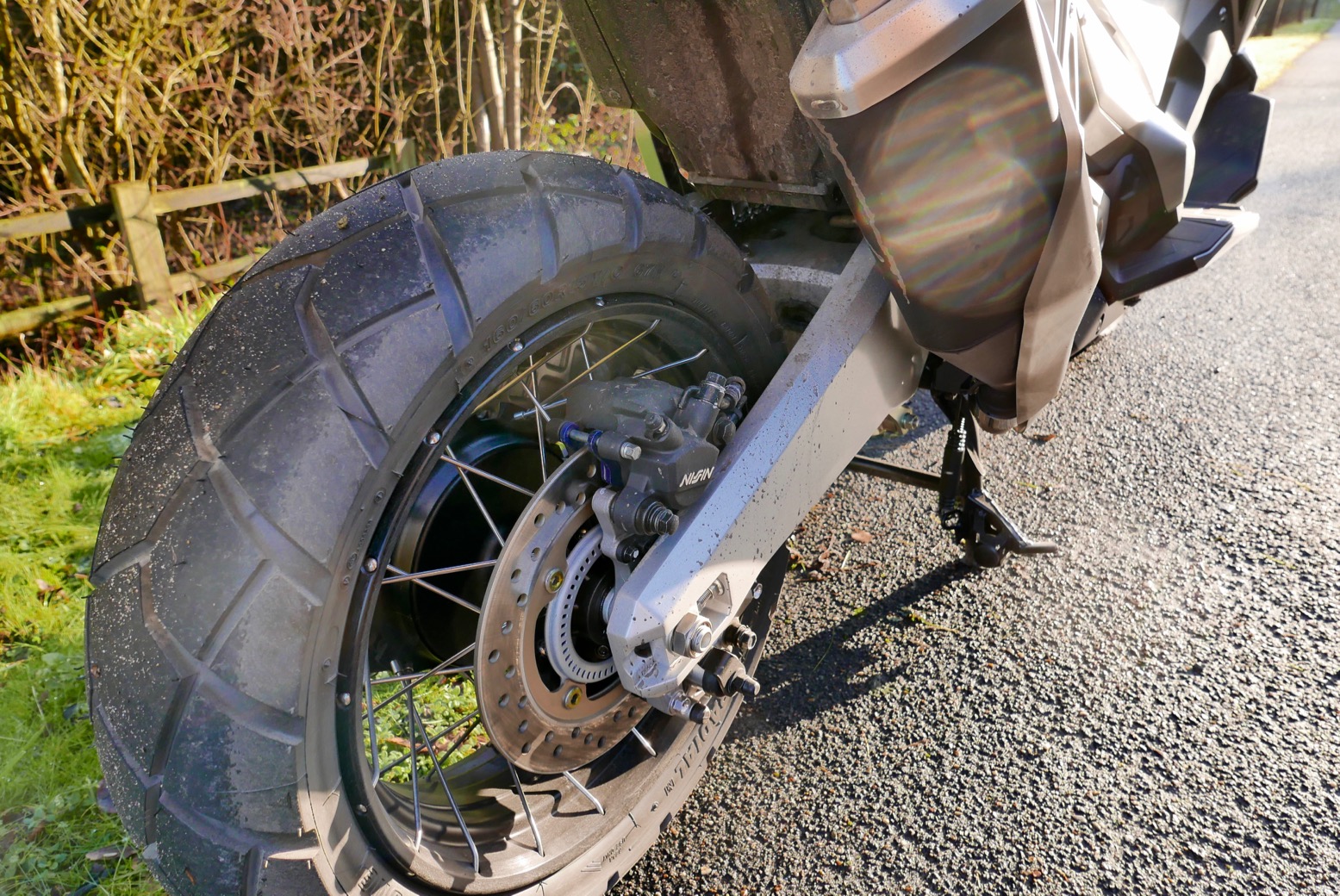
Oddly, even in official promo literature no mention gets made of the tubeless spoked wheels; shame the AT didn’t get something similar. What some reviewers described as a ‘fully enclosed chain’ is just a wraparound chain guard; more a chain-spray catcher than a proper crud-cover like an old MZ or a CD175.
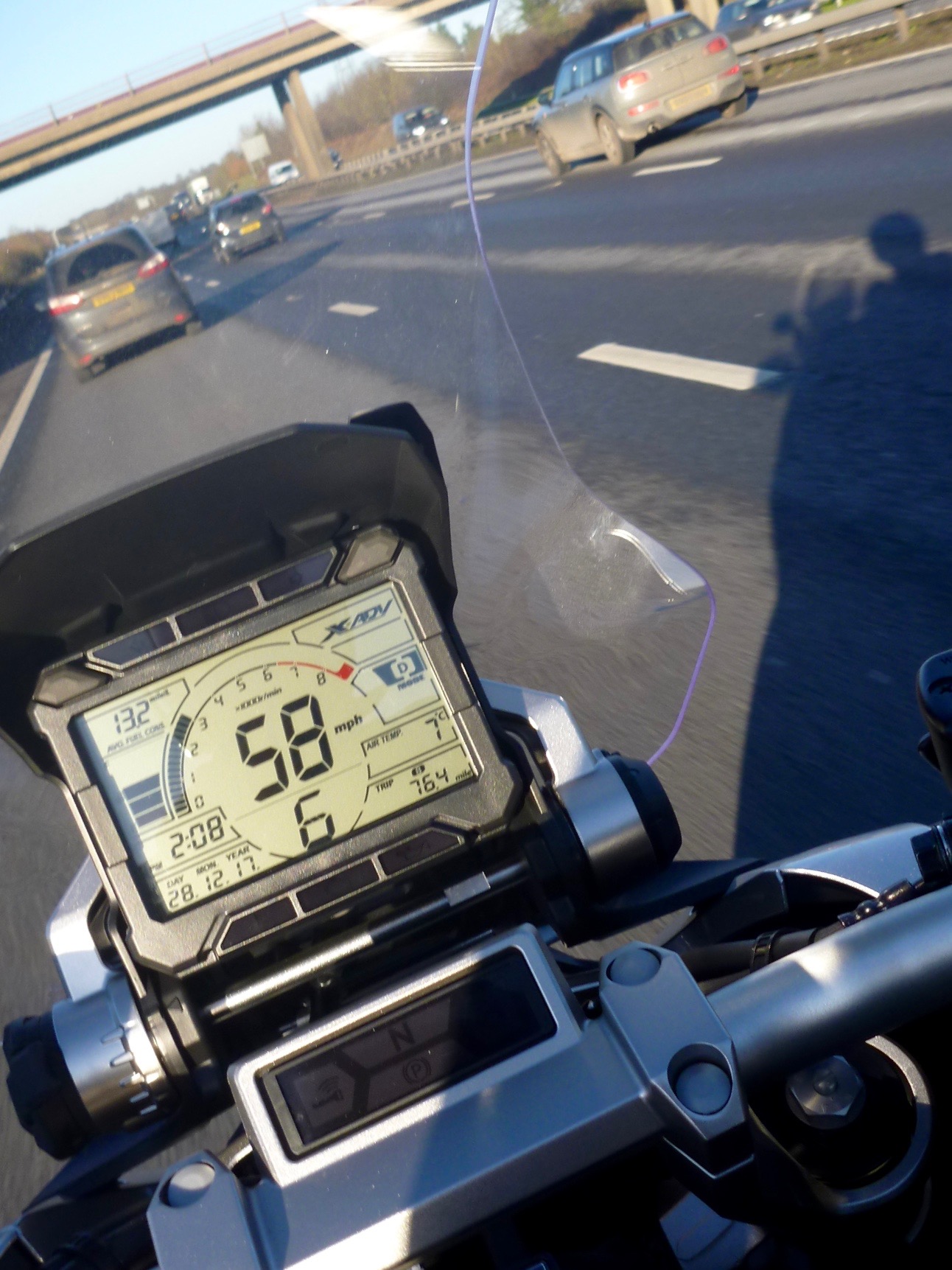
There’s plenty of easy-to-read data spread over the digital display which can doubtless be reconfigured. Fuel consumption was displayed in miles-per-litre; not seen that one before but makes sense in the UK; ‘13.2’ (left) adds up to just 60mpg average, but the NC twins are famously more frugal than that, getting closer to 100mpg is possible if really trying.
I’m won over by the DCT just like I was on an Africa Twin a couple of years back. One day I’ll get a DCT bike, but I didn’t warm the X’s scootery layout like I thought I might. It’s not much easier getting on and off – something that increasingly bugs me with tall saddled dirt bikes. Plus I miss that conventional poise which would feel more natural on the dirt, and couldn’t visualise enjoying riding this bike on my easy Morocco tour dirt routes.
I’m not sure that ‘sat-at-a-table’ seating would be comfy on a long ride either – too much pressure directly on the crumbling old spine, although the bars looked like they could’ve pivoted and raised forward without fouling the screen.
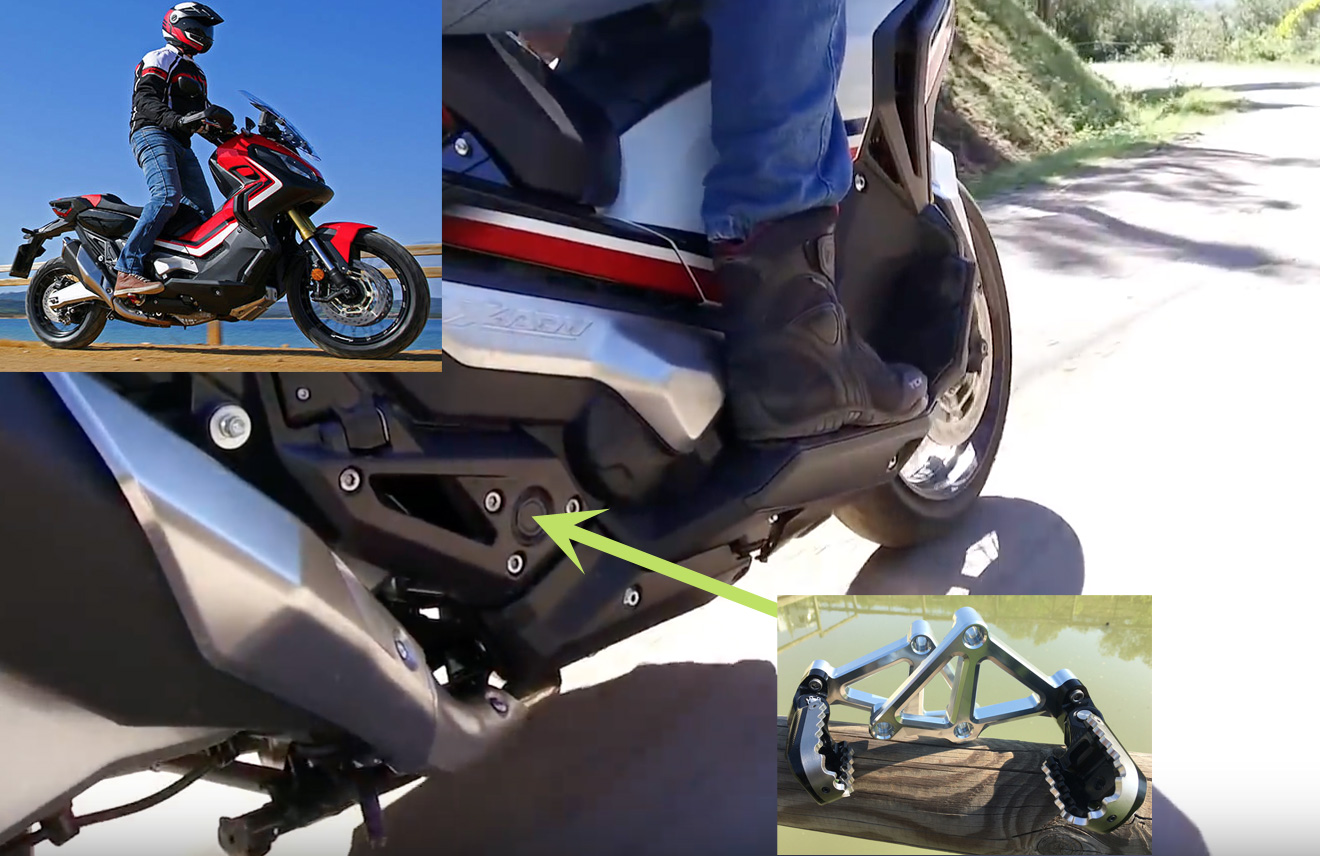
I’ve seen accessory front footrests which bolt on behind the boards around the swingarm pivot (left) and which may enable a better road / off-road stance, as well as possibly being able to grip the seat for better control when standing. Interestingly, all the dust-kicking promo shots below and in the link at the end for the 2018 model have these pegs fitted, but as I found on the XSR, this leg-to-bike contact area needs to be well thought out and comfy if it’s to work sustainably.
The bland 2017 silver ‘Mondeo’ livery didn’t really work for me and may have contributed to my tempered enthusiasm for the X-ADV. The red-black-and-whites look much more like it, but silver is clearly popular in Caterham as the shop had two other low-mileage silvers going used, presumably by commuters who didn’t get on with the genre-busting X-ADV.
If DCT is so good but an AT is too pricey, what about the much cheaper NC750X (left; I rode one in 2019)? I’ve thought about that one before, but the only real benefit over my XSR700 would be the DCT. The stock suspension is said to be as basic, and the claimed 220kg weight is 34-kg greater (but 18kg less than the X-cooter), even if it’s positioned lower. Getting suspension right is costly and can be hit and miss. What would be great is an NC750X-ADV with a 19-inch front and better suspension all round, but that would come too close to an Africa Twin.
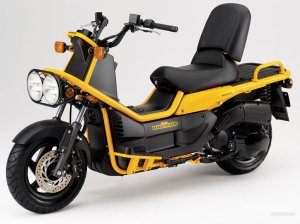
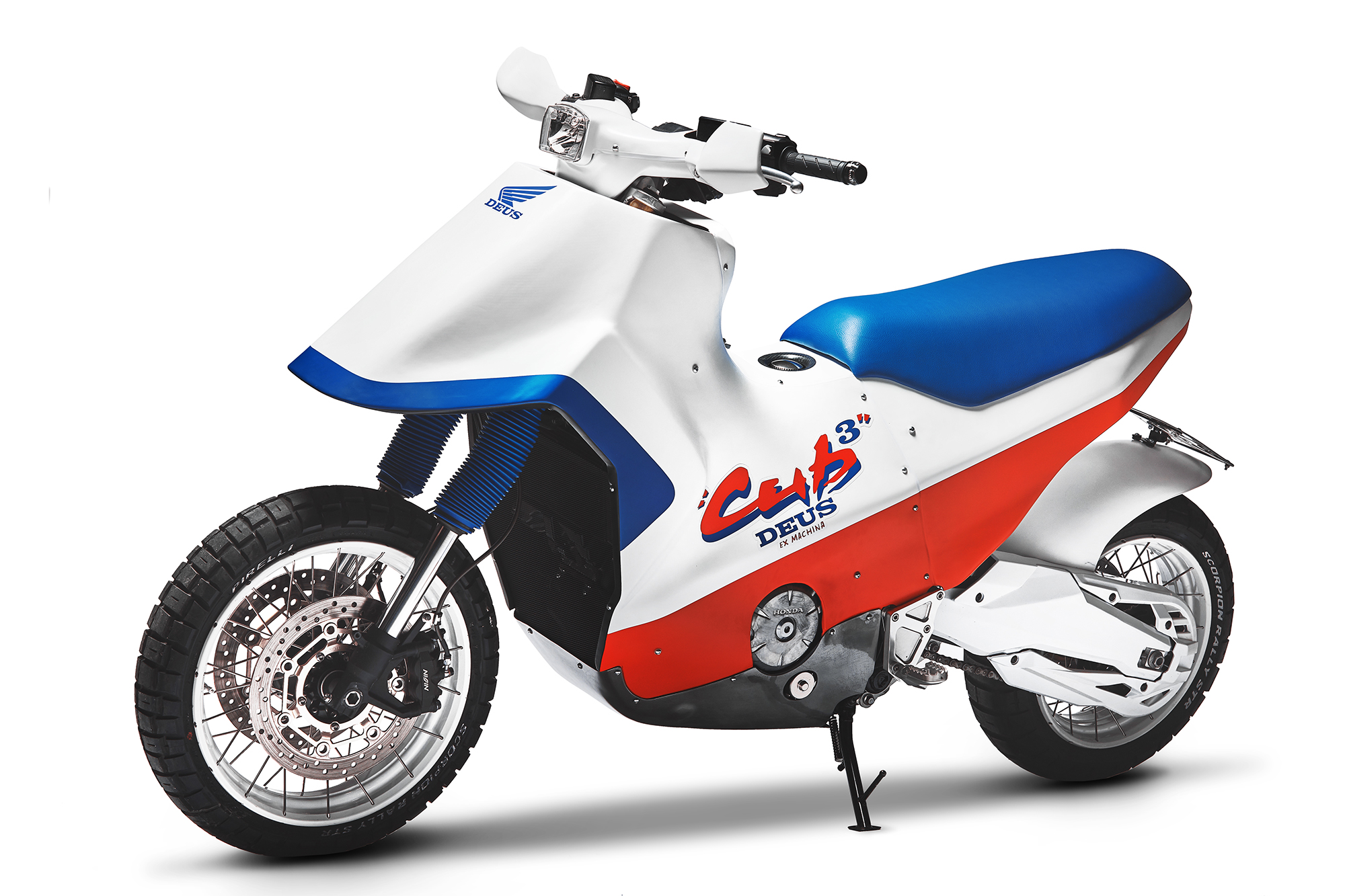
Scoot my Dirt I was recently reminded what would have been fun is a bigger-engined version of the Honda Zoomer or current Ruckus (left). Genuinely hop-on low and light enough to chuck about – sort of in the vein of the fat-tyred Yamaha Ryoku concept. In fact there was a Big Ruckus 250 about decade ago (right) more here), but at 160kg, it looks as heavy as it is and presumably never proved as popular as the Ruckus.
I was a bit surprised I didn’t take to the X-ADV for my intended use. Perhaps a longer ride on a warmer day may have made a difference. As a road bike it’s fine, but then so are just about all the other road bikes out there.
The 2018 model out in a couple of months will come in a 34-kw A2 license version (6kw less than normal). It will also have the AT’s G-switch (less clutch slip for off-road traction), as well as lower ratios than other DCT Hondas and switchable, two-level Honda Selectable Torque Control (HSTC). The engine’s red line is also set 950 rpm higher at 7500 and it will cost 200 quid more.
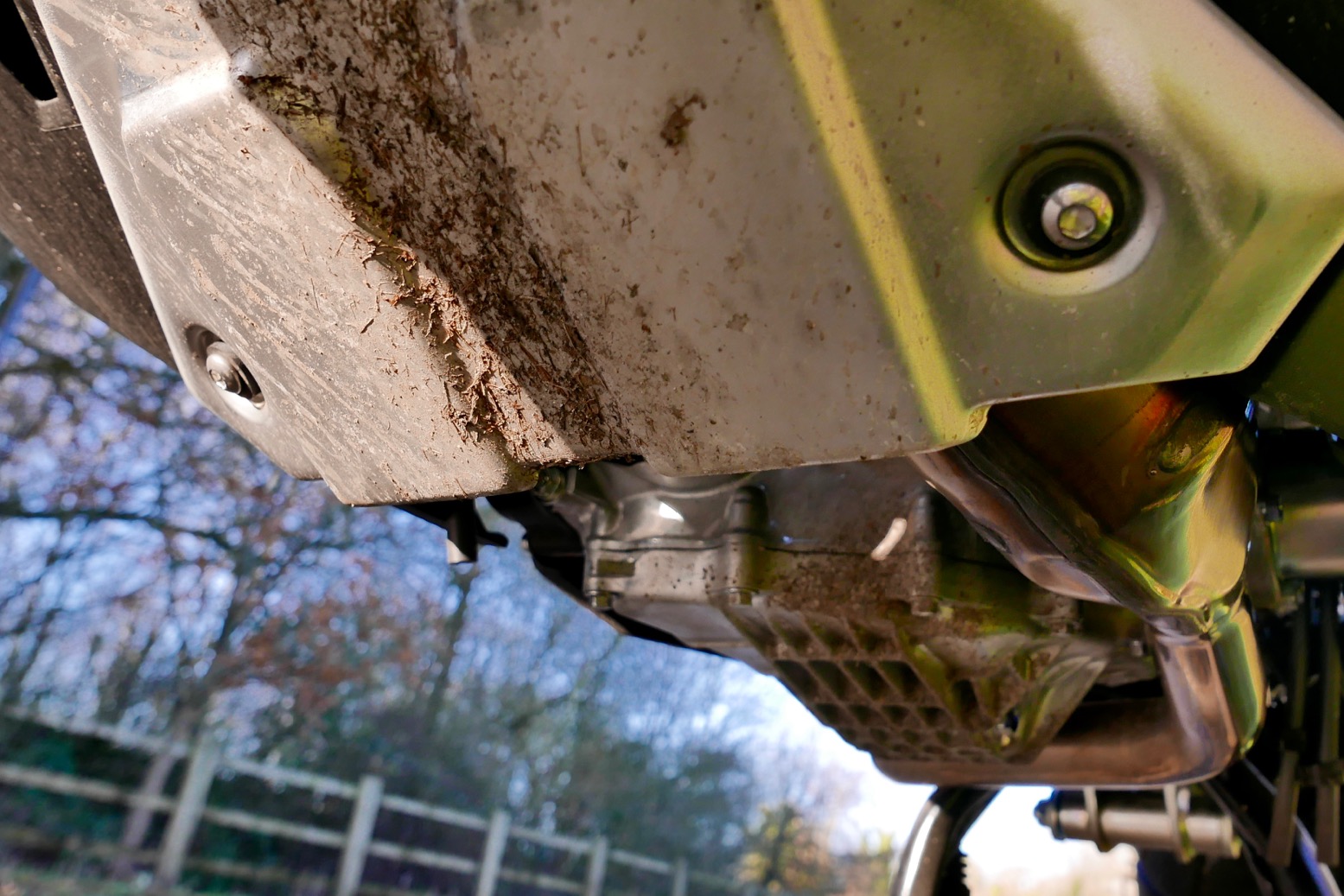
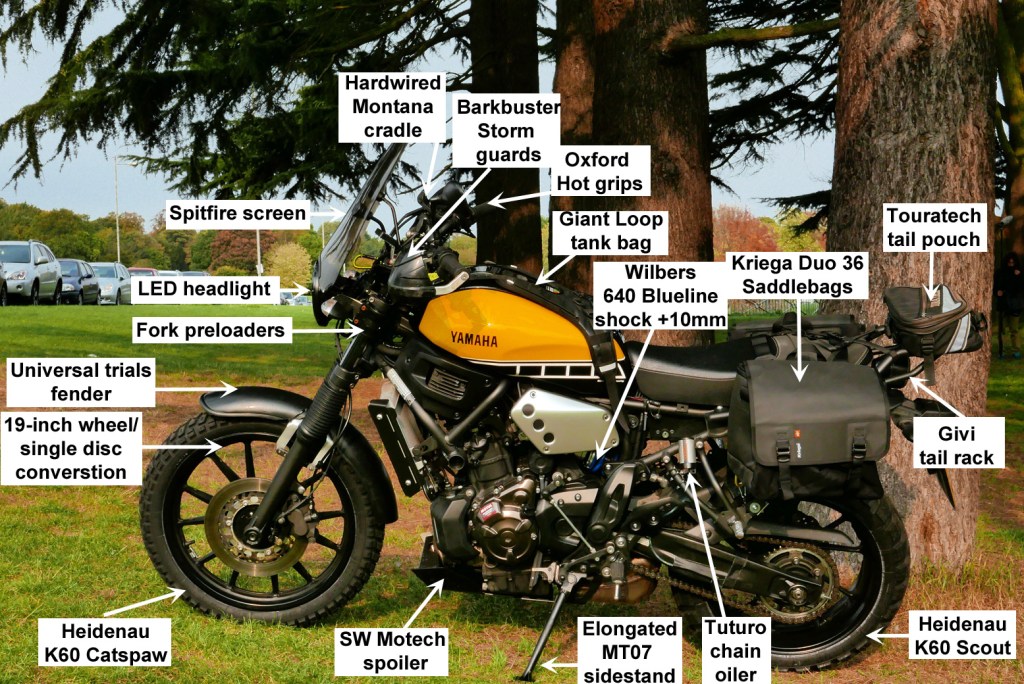
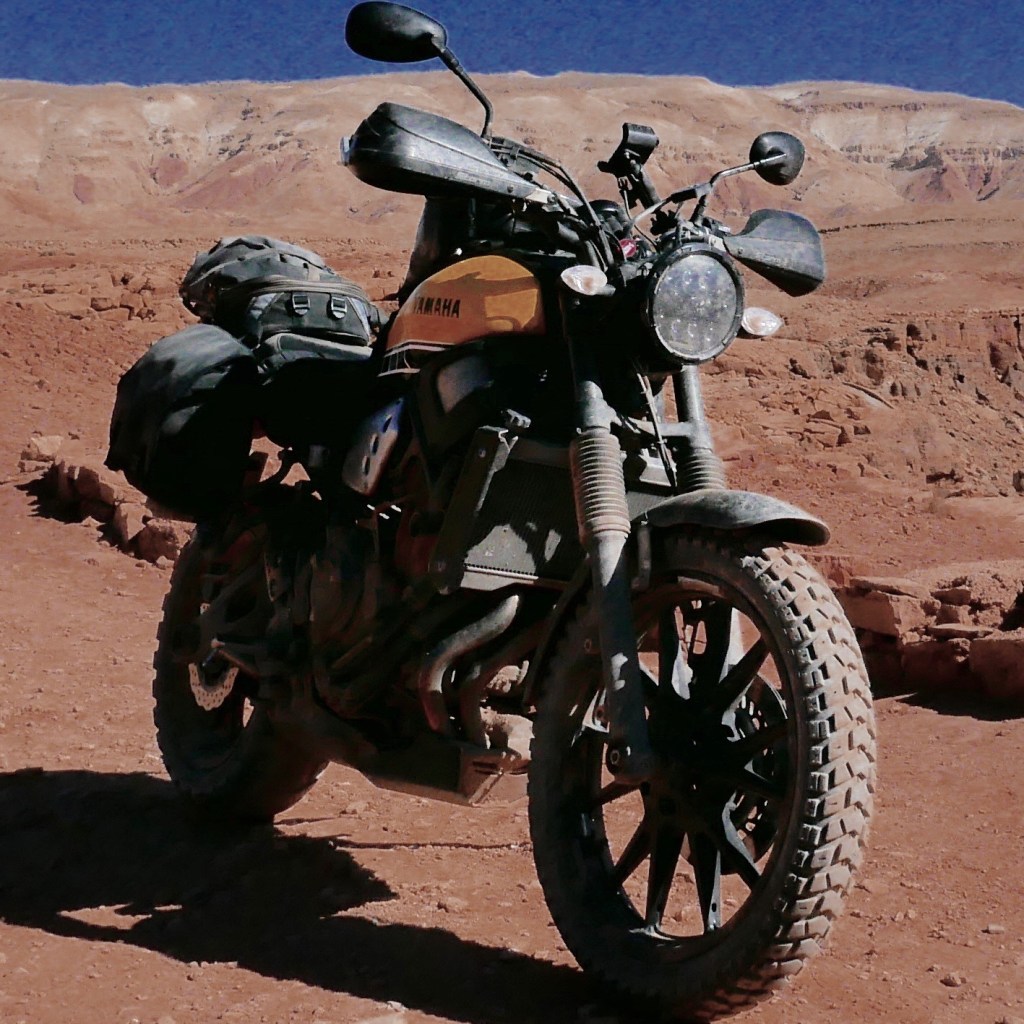
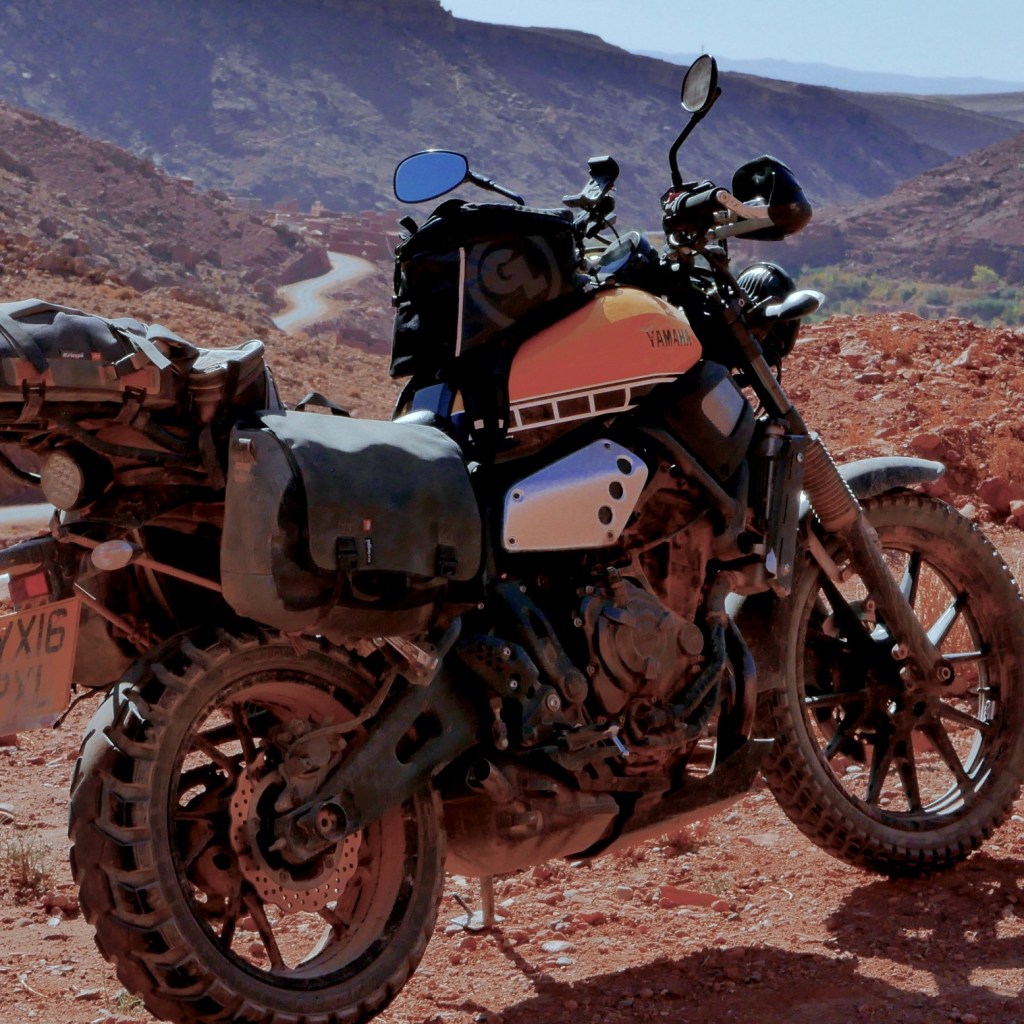
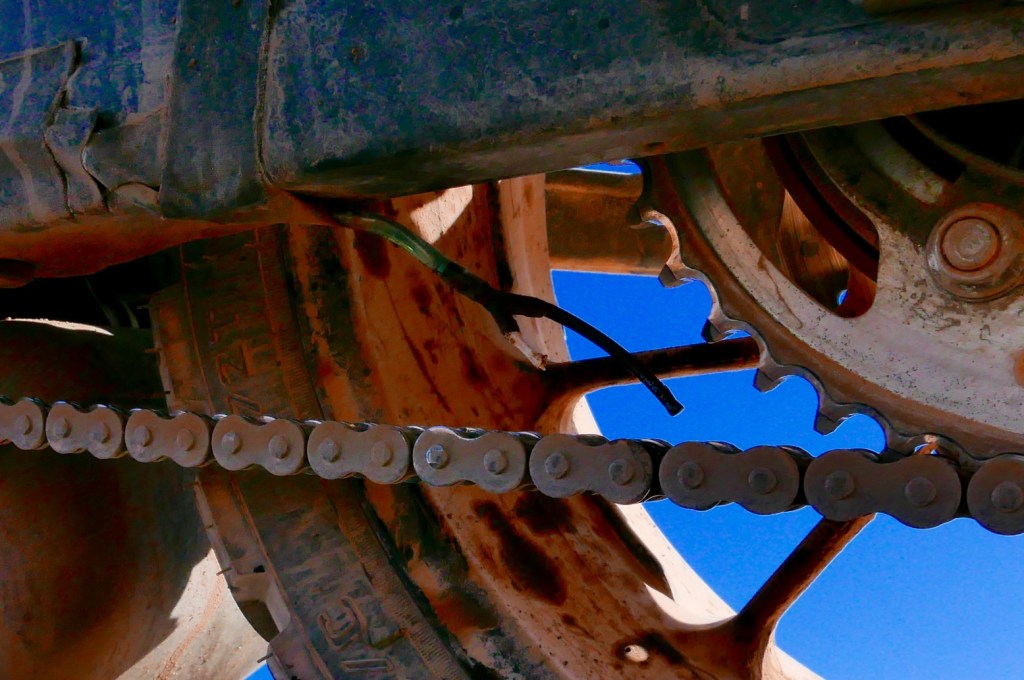
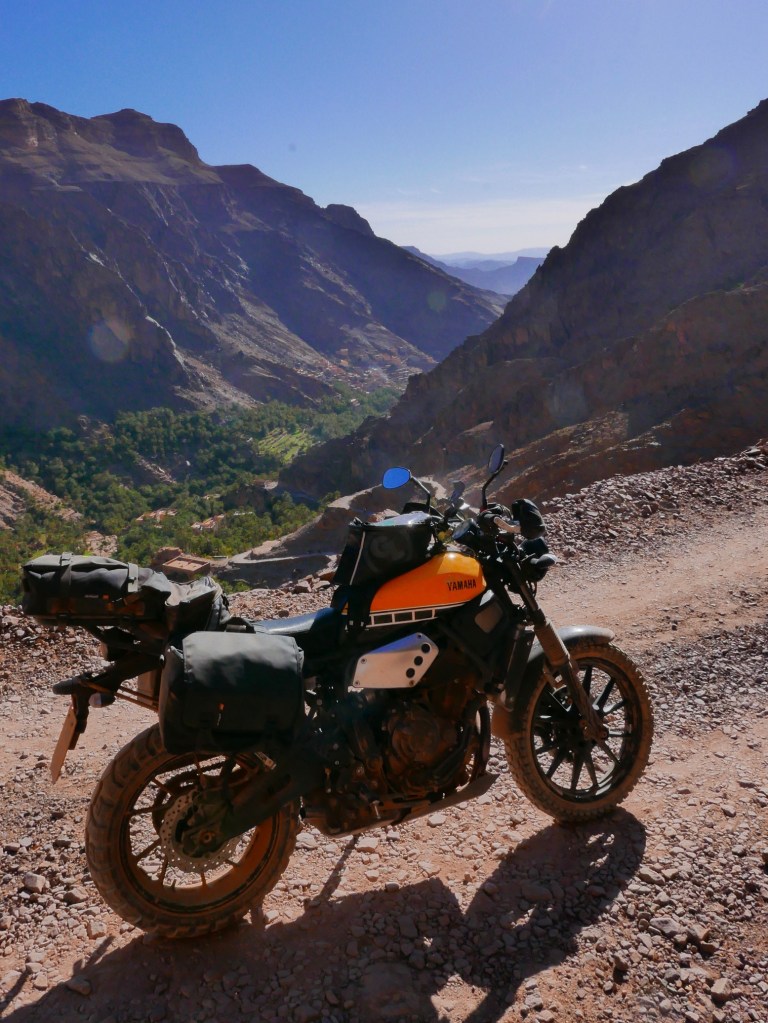
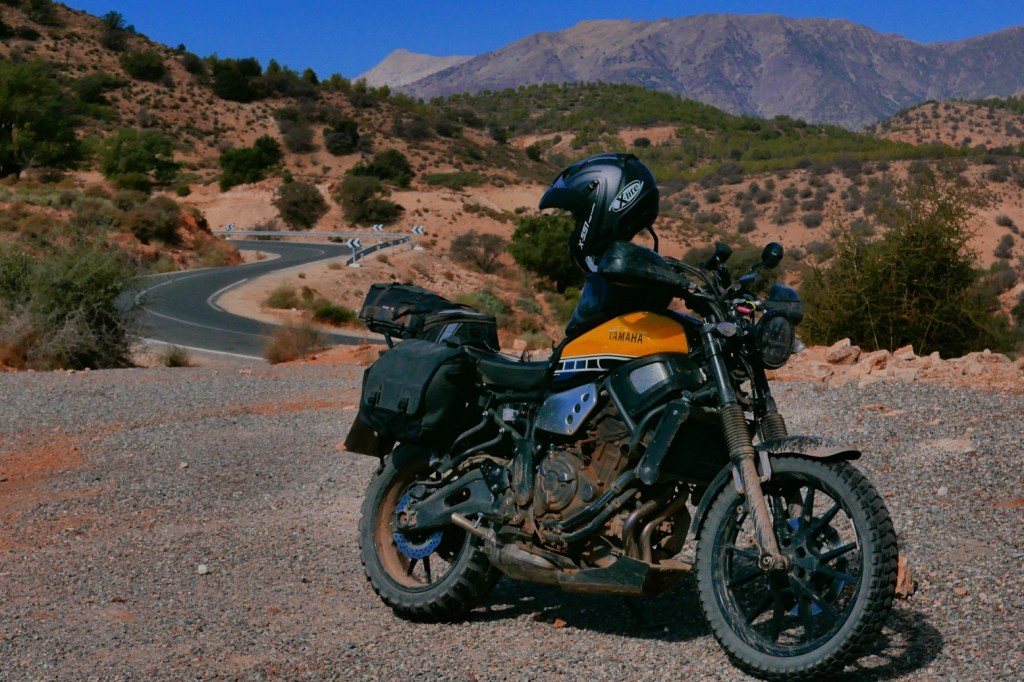
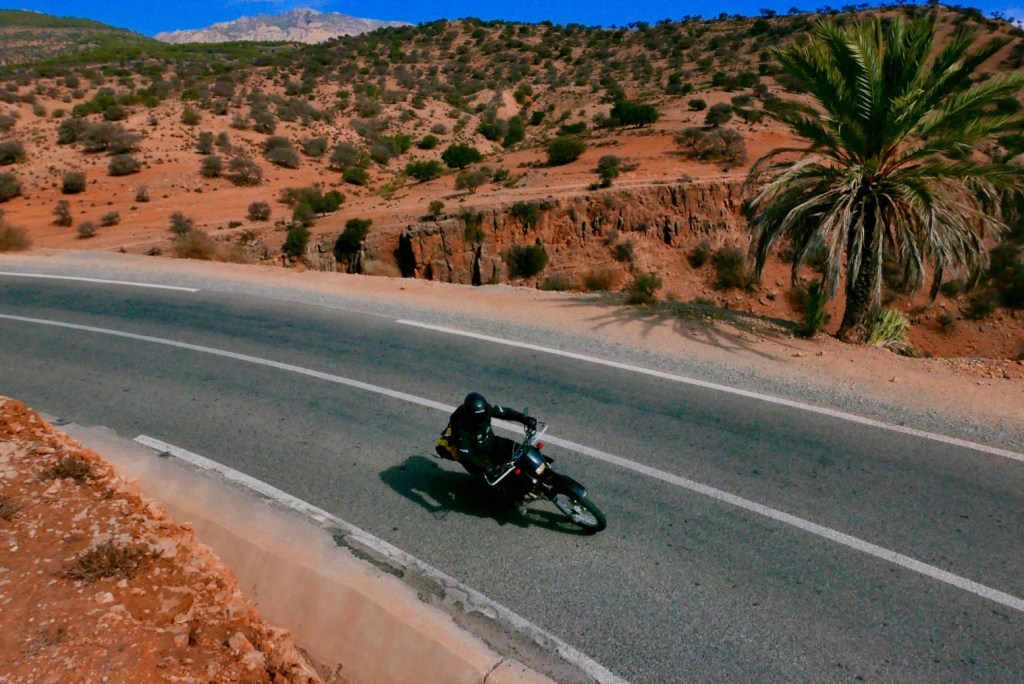
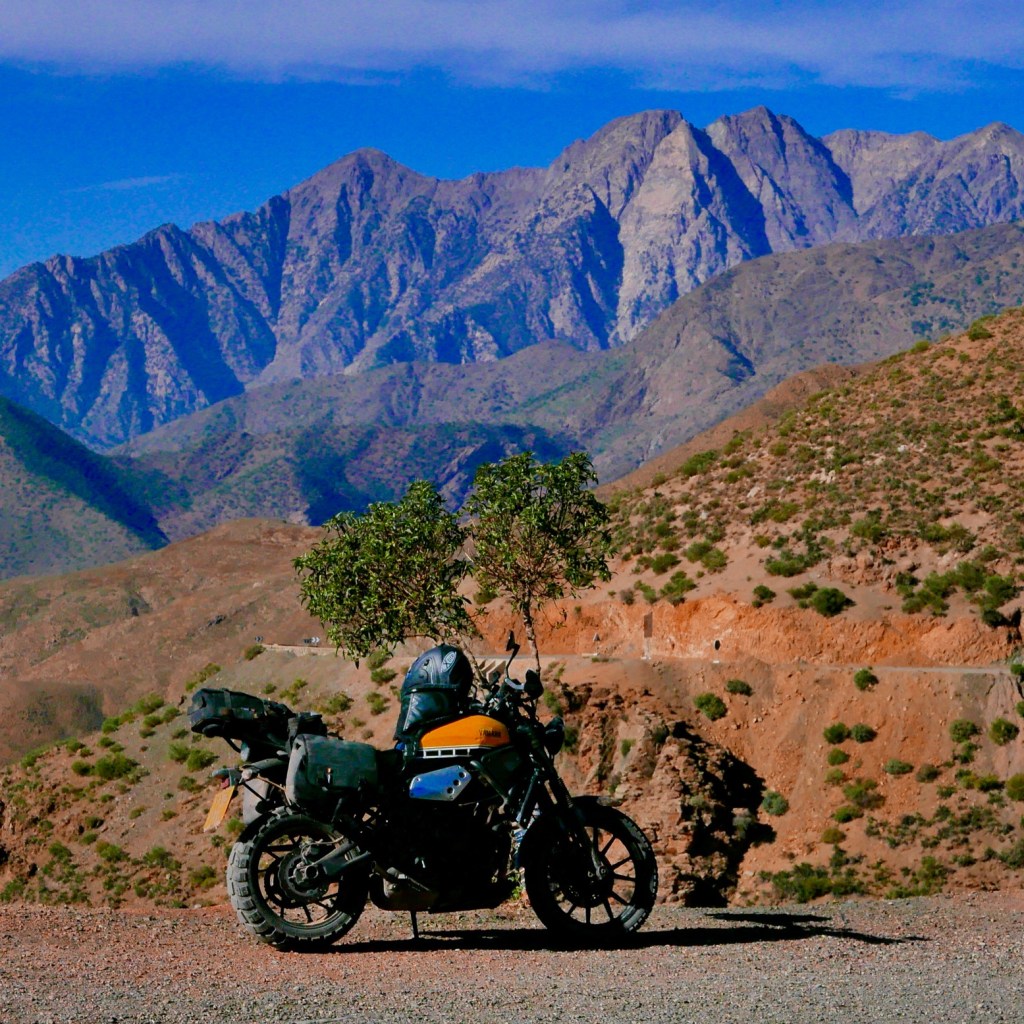
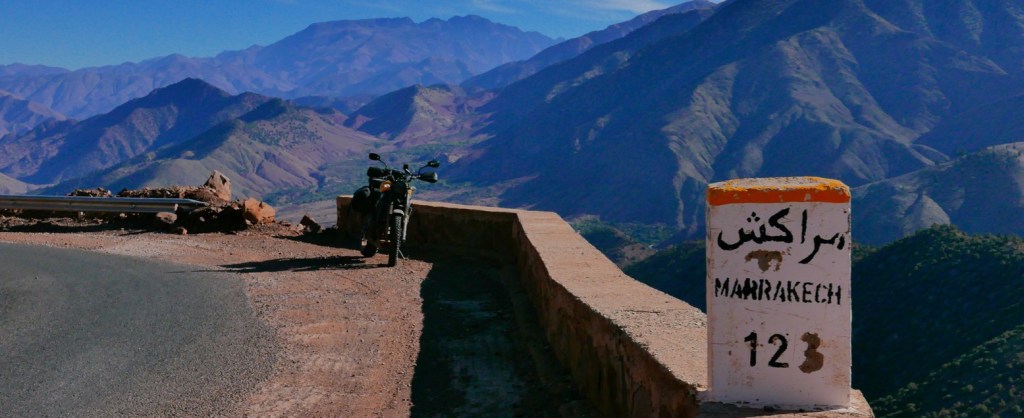
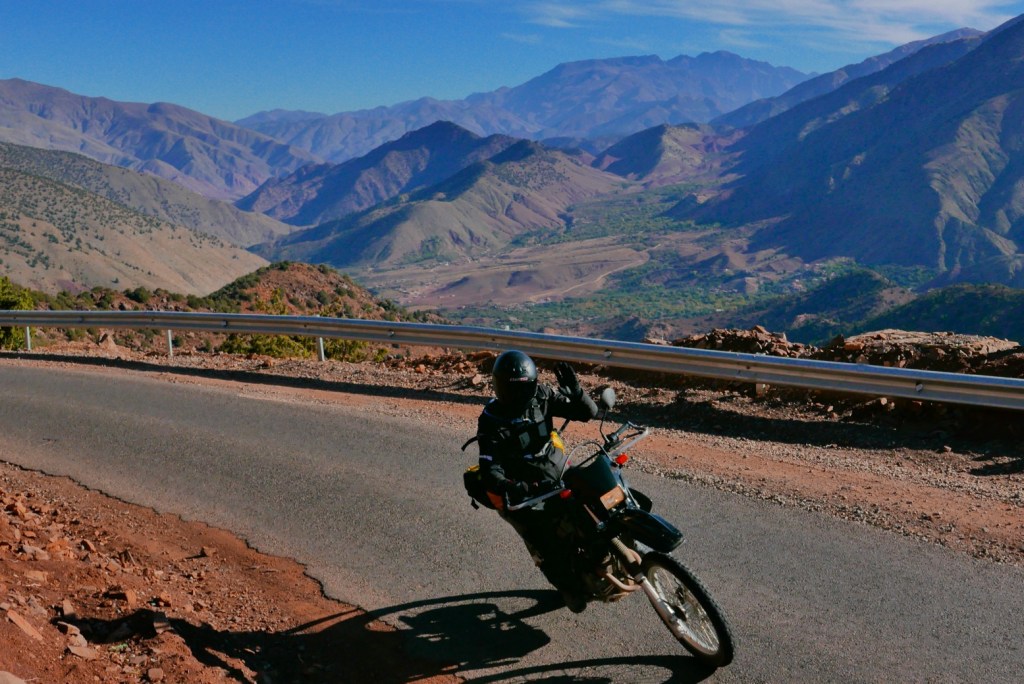
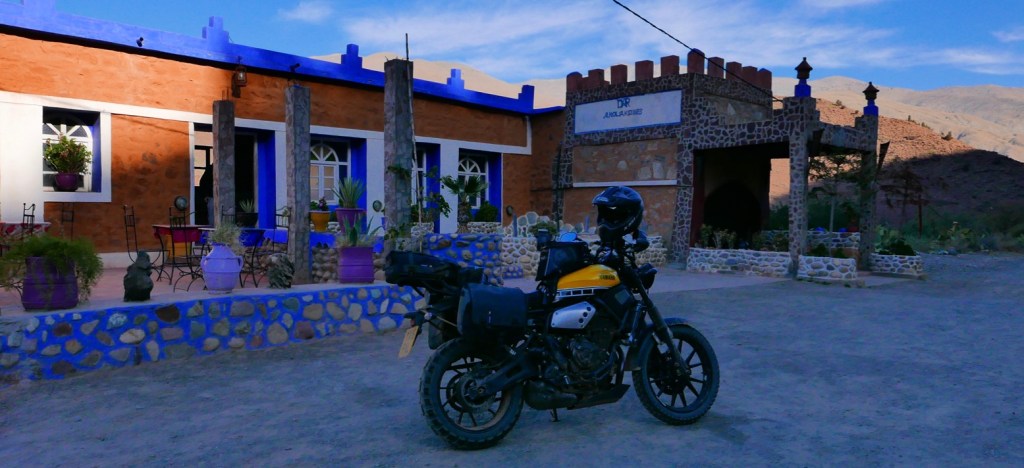
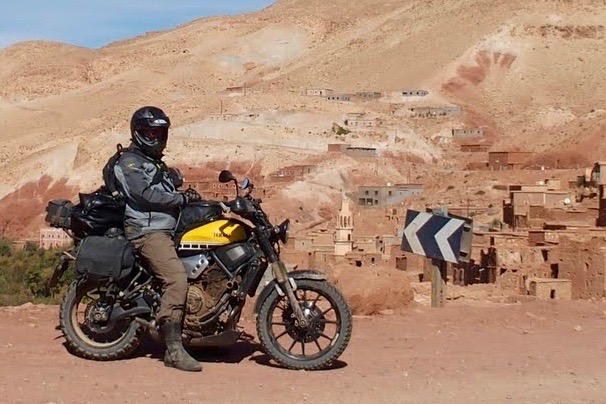
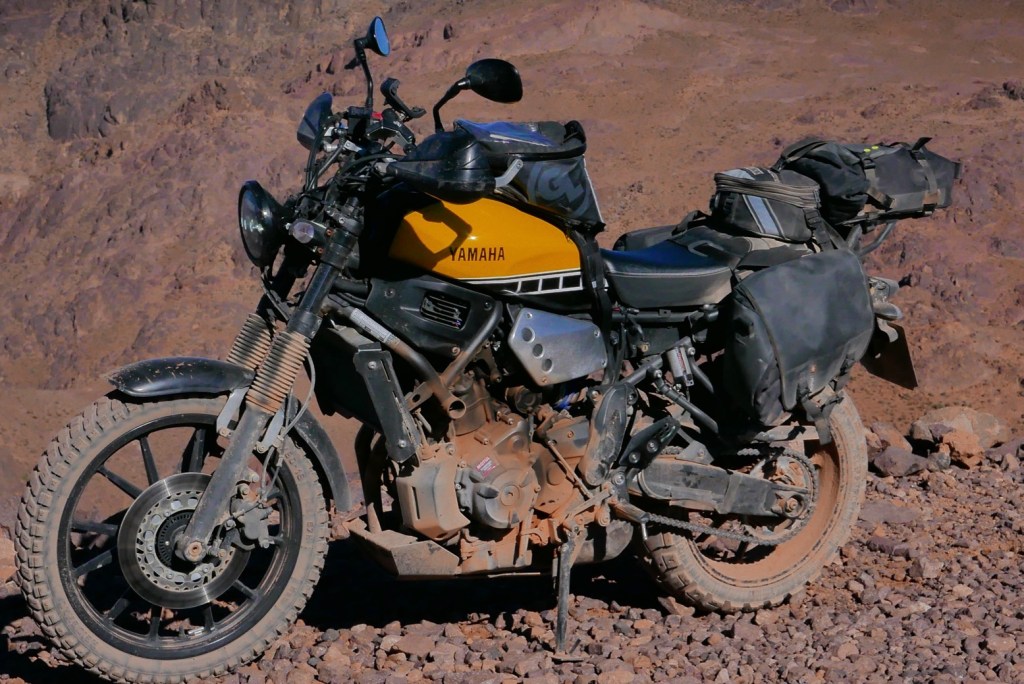
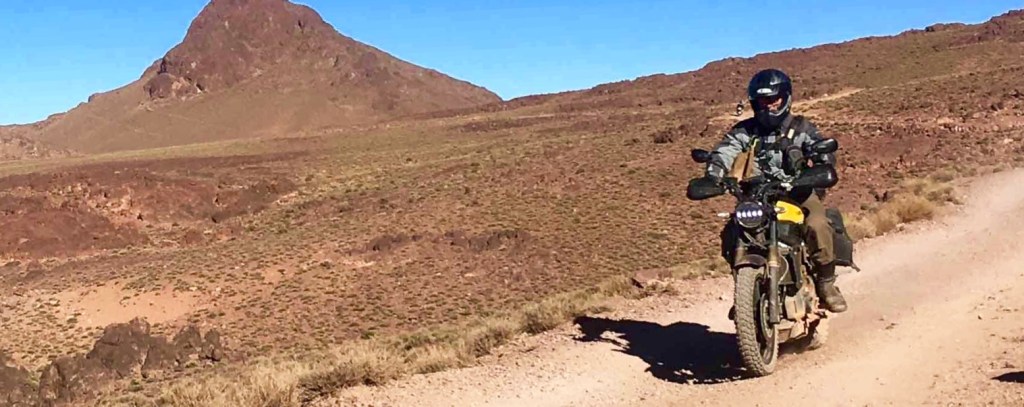
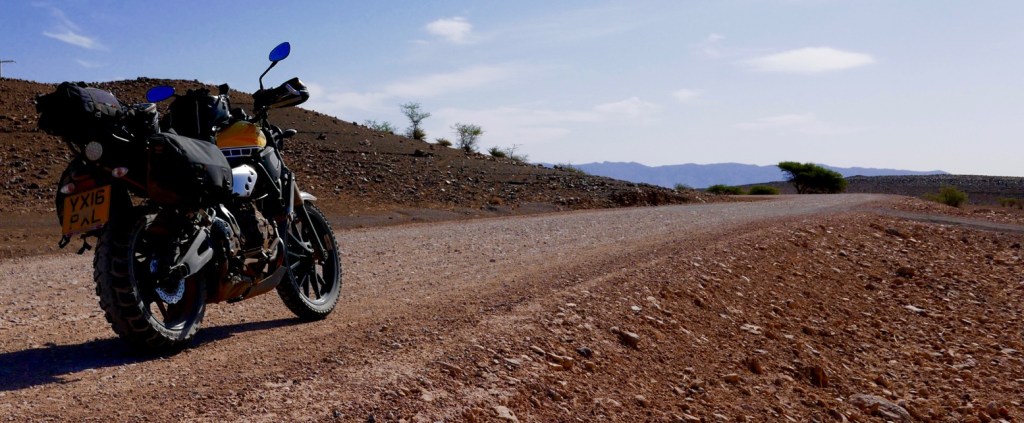
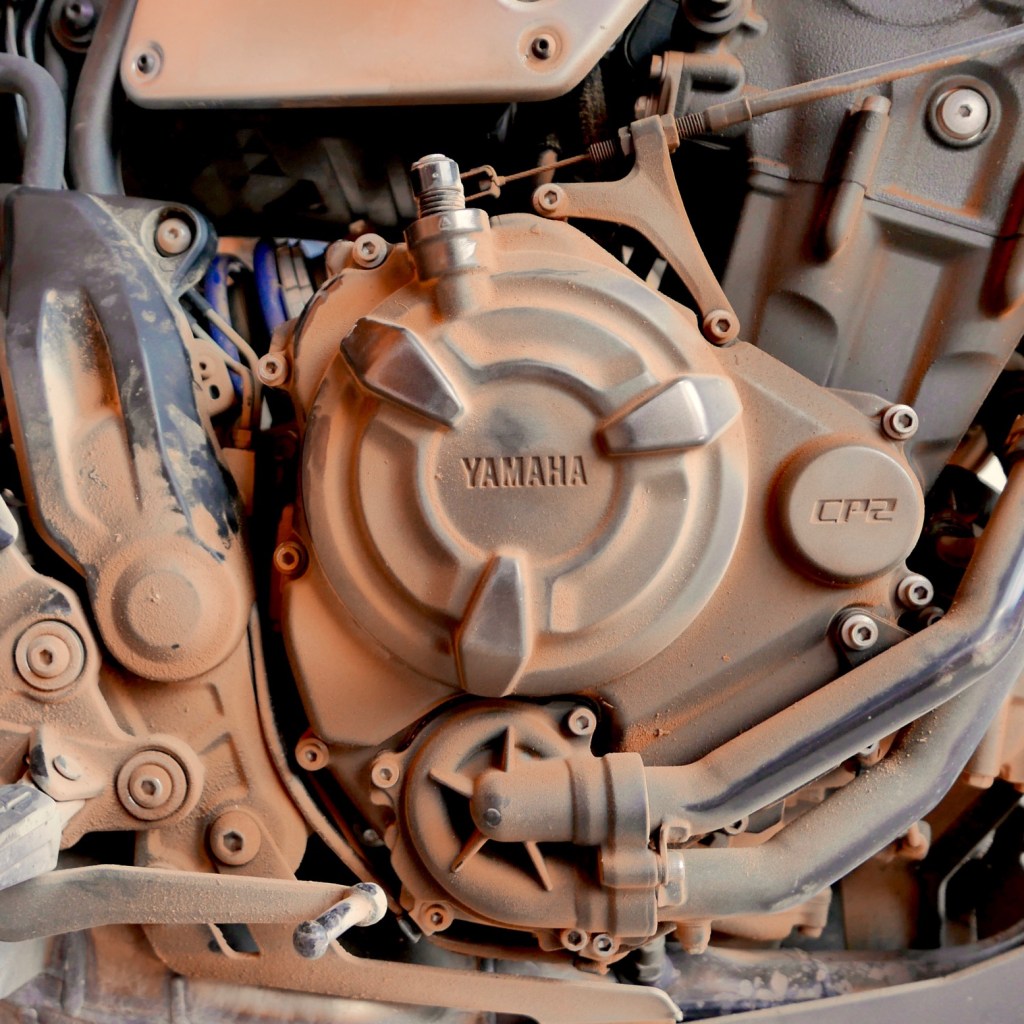
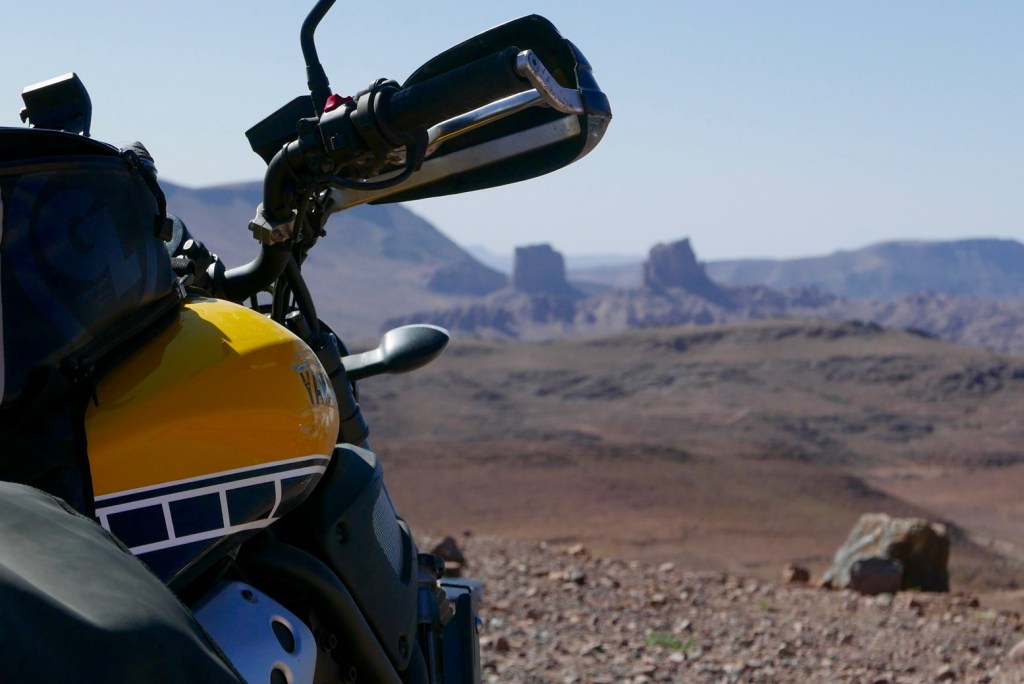
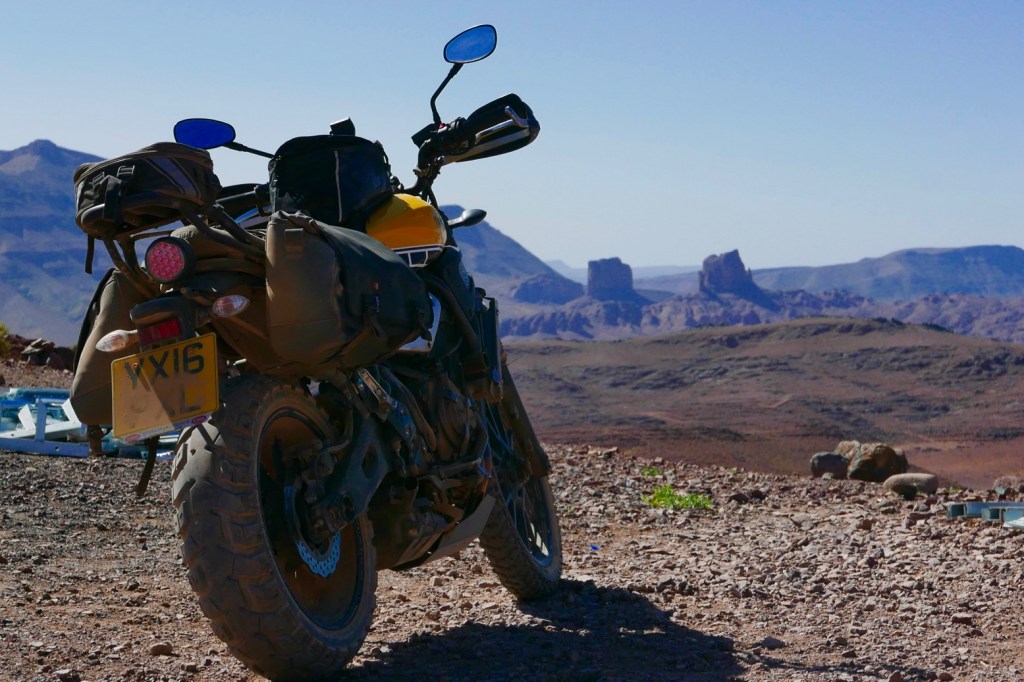
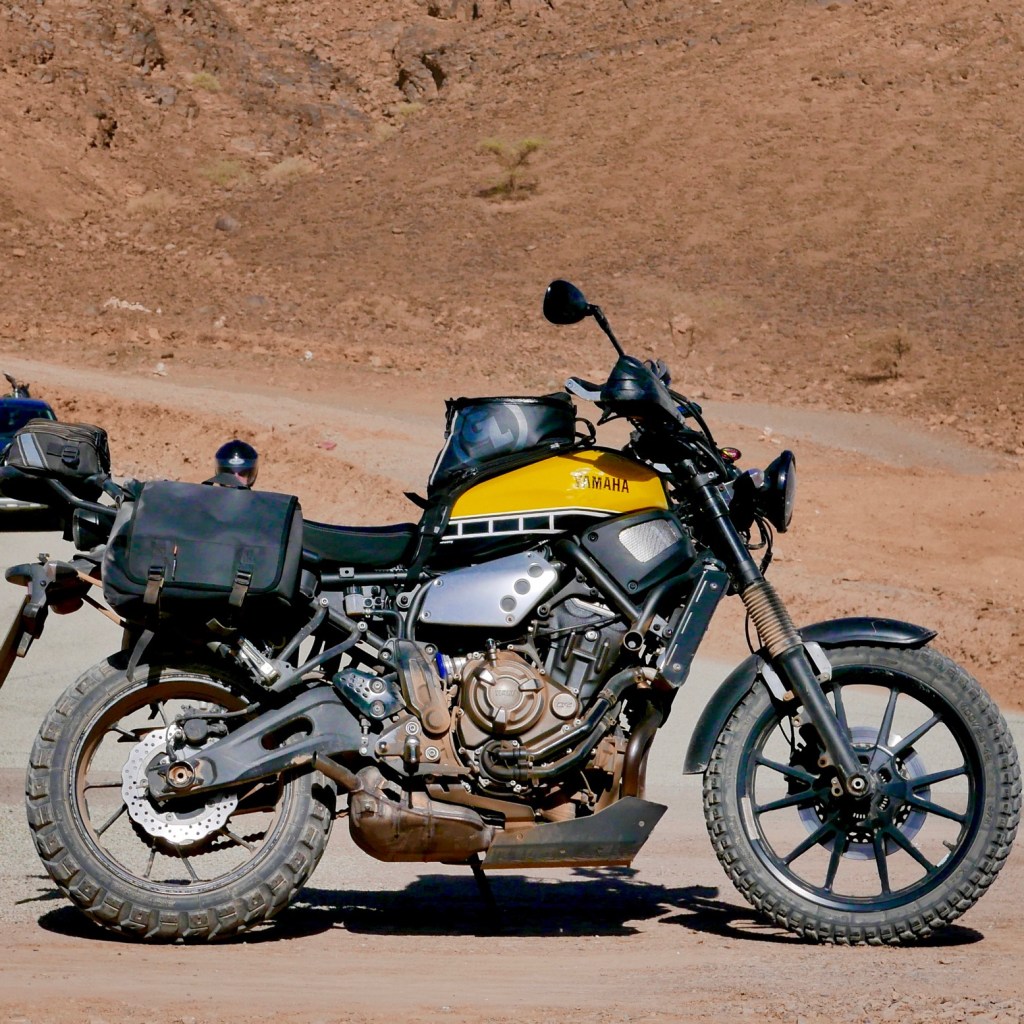
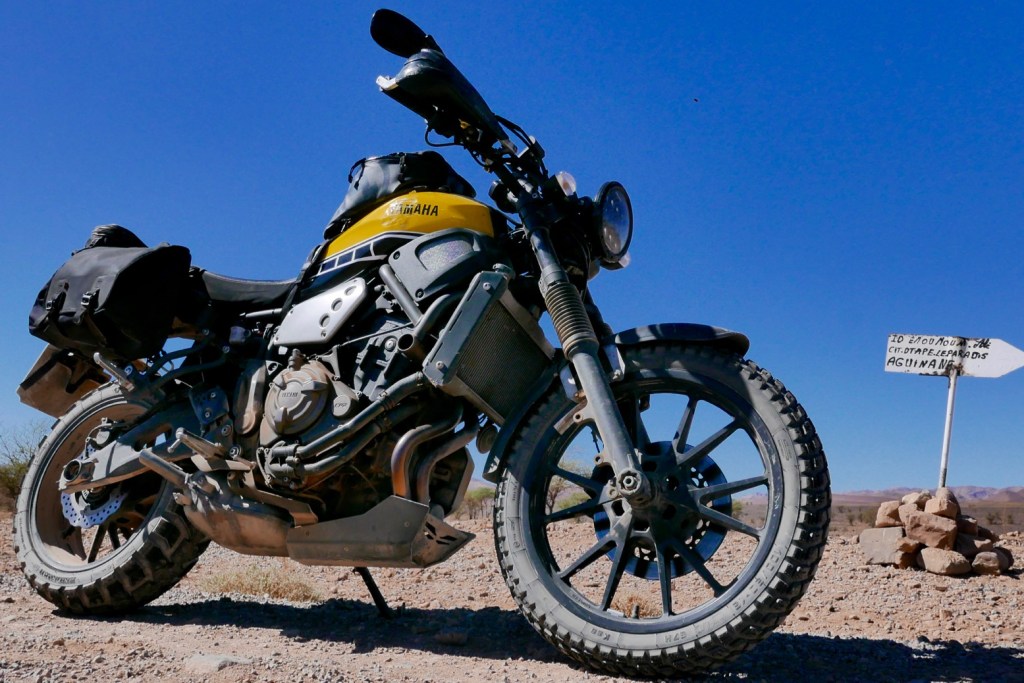
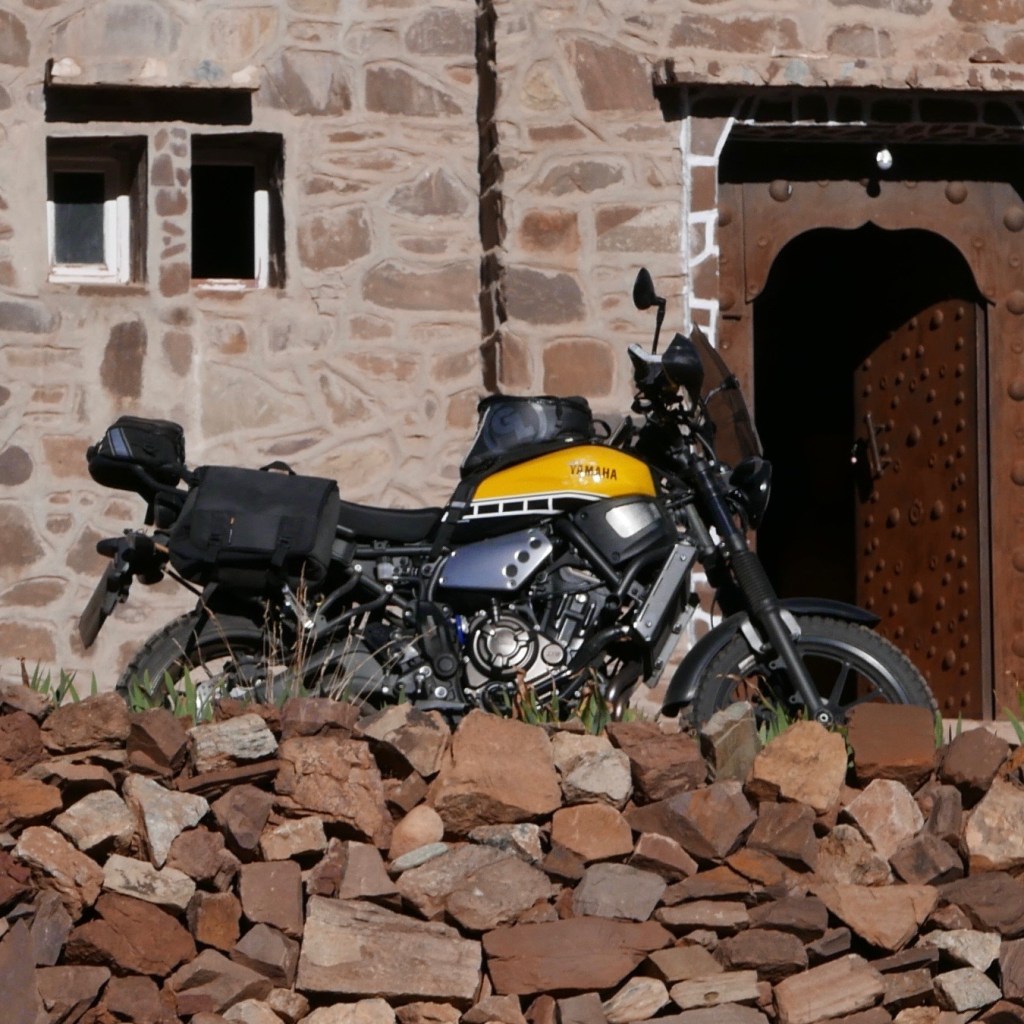
A few shots of my XSR700 Scrambler after a month in Morocco, leading three tours. I’m impressed with how it’s shrugged it all off, just like my old Teneres in fact. But then, why wouldn’t it? All I do is turn off the Tutoro chain oiler for the piste, then wipe it down and turn it on again for the highway.
The engine is just right. I keep forgetting it’s restricted to ~48hp (bought it like that and liked it). The Heidenau K60 tyres are just right too; letting a couple of seconds out makes a big difference on the piste where I’m glad the ABS is disabled. Could do with a bit more and better suspension at times, and standing up is like pushing a wheelbarrow, but it’s a Scrambler, not a trail or enduro bike. Within it’s limitations, I can now sling it about on the dirt and on road. It turned out well. Riding it home in a week or so. Full 7500-mile report.






















 • Light
 • Tall seat height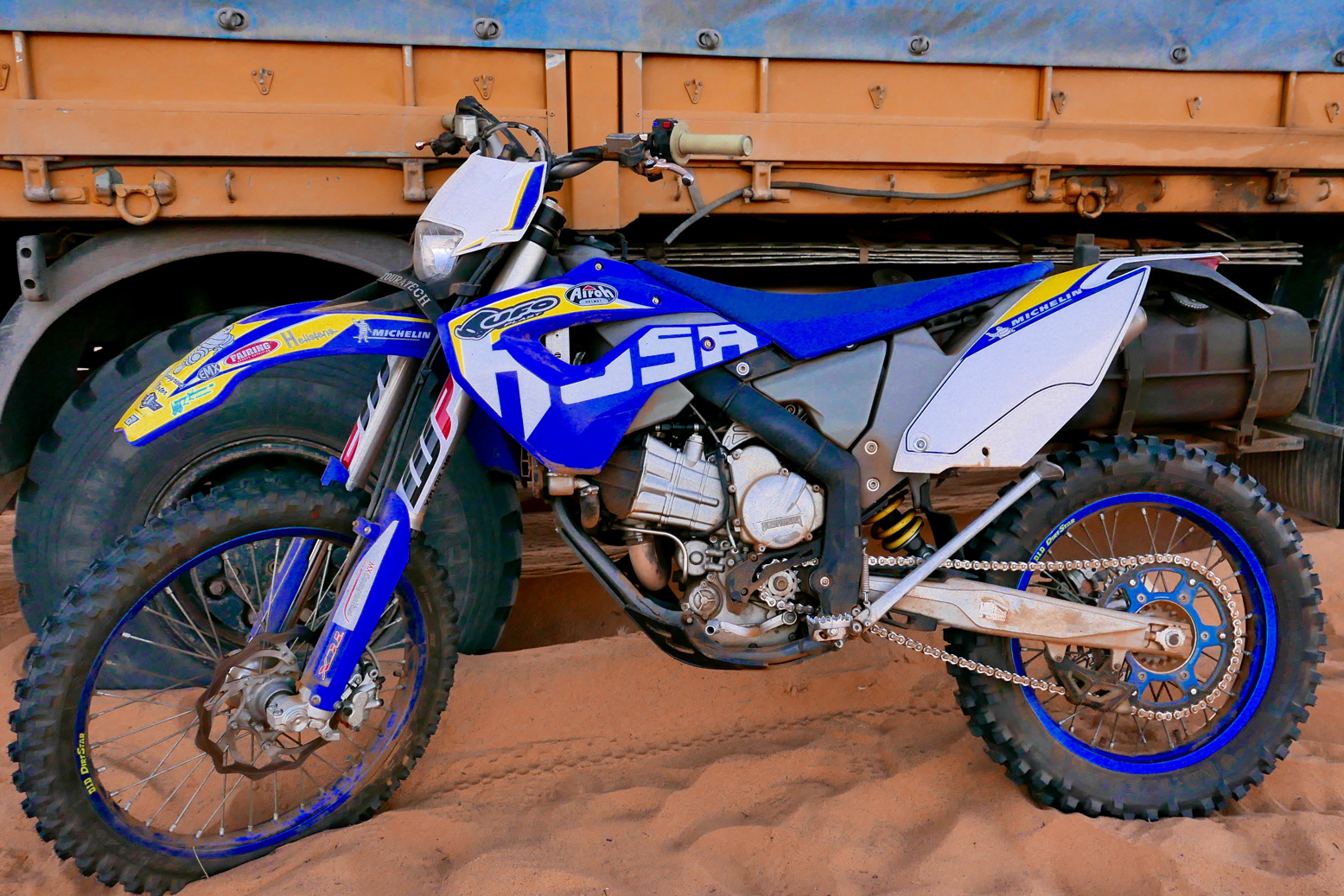
















 Adventure Motorcycling Handbook