Category Archives: Project Bikes

What I’ve ridden and what I’m riding

Yamaha WR250R Project – Stage 1

WR250R 4000-km review
WR Introduction
WR250R Stage 1
WRing about in Wales
WR250R ready for the desert
Morocco 4000-km trip report, 1–9
Fuel log
wrs11
wrs1-6

First up for the WR, an 18-litre IMS fuel tank that’s wider than it is long. And at the 31kpl I got on the way back from Holland, that should mean well over 500km, though 400 may be more realistic.
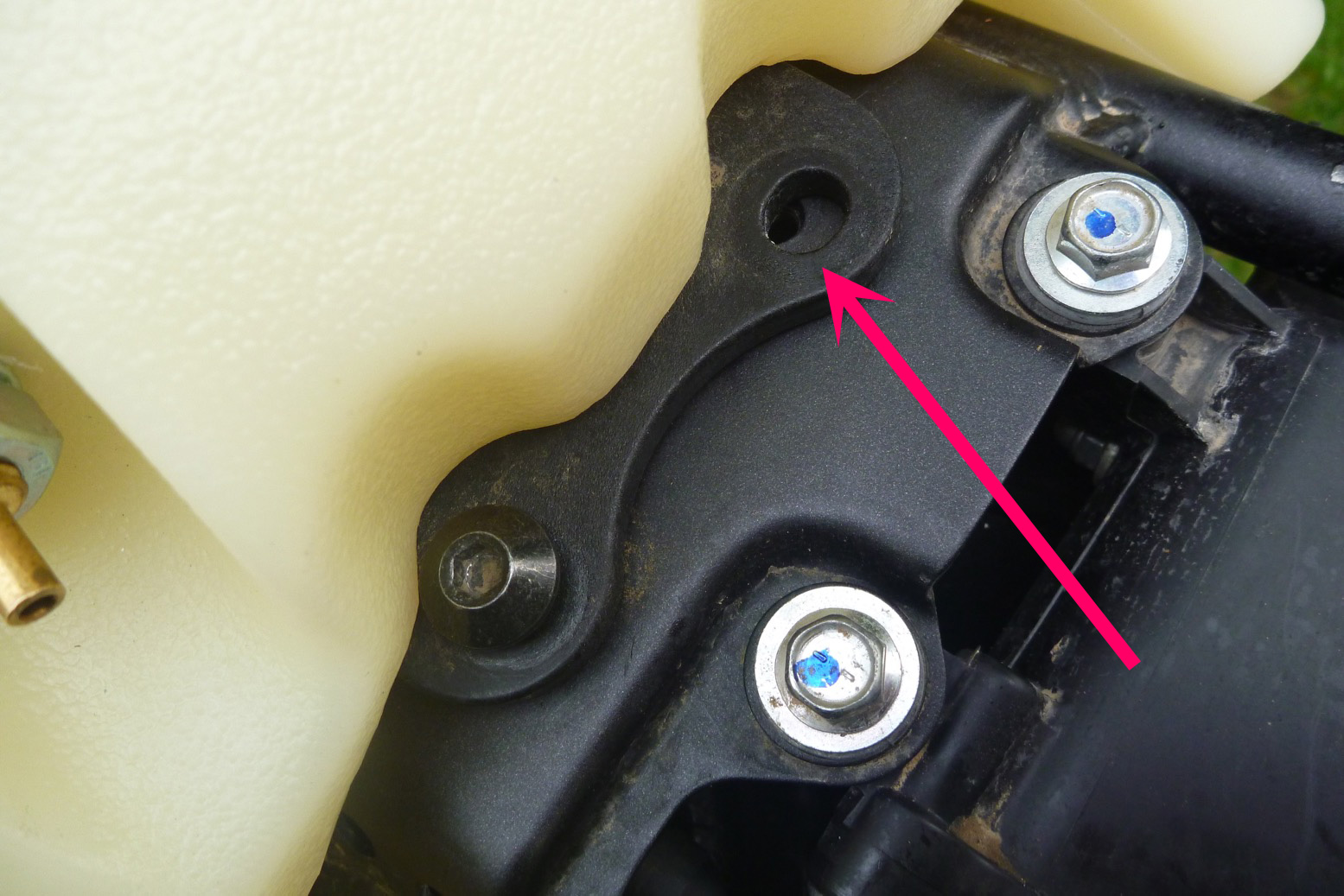
On the forums you read various horror stories about the IMS tank: misalignment, poor fittings, plugs falling out and so on. I was expecting aggro but it all went without a hitch or too much head scratching. The fuel line unclips from the pump, the OE tank lifts off, once unscrewed the pump lifts out of that and the chunky Yamaha tank mounts swap onto the IMS just fine. At the back though, no amount of jiggling could line up the mounts (above left) with the frame if using the locating washers. Without washers it crammed in OK. I didn’t bother with the screw-in stud on the back of the tank to locate the seat front either. It stays on well enough with the seat tongue going under the frame tab.
wrs1-8

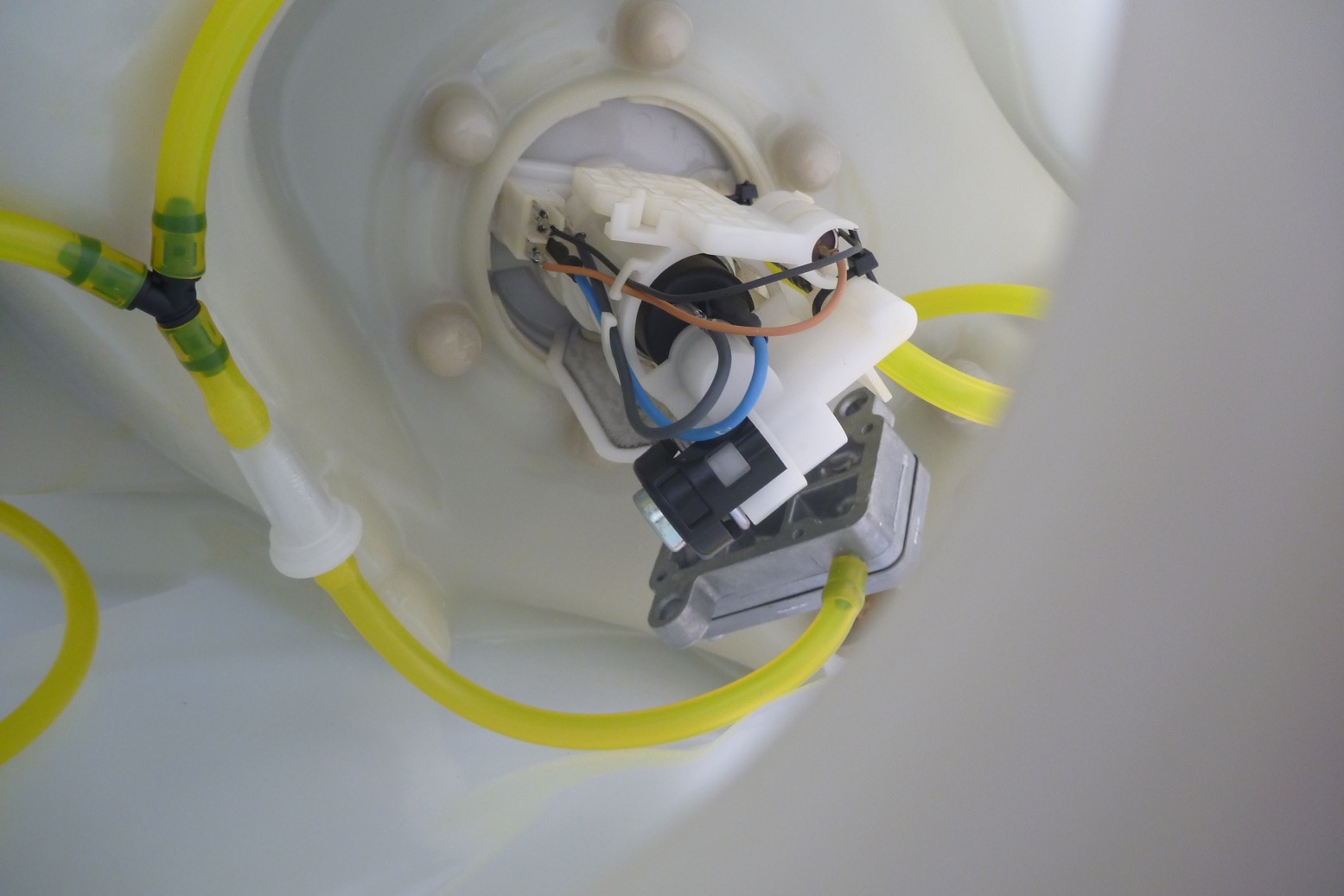
The IMS comes with a small low-pressure lift pump inside (the grey metal unit, left) to get to the fuel at the bottom. It’s powered by vacuum off some intake hose which you cut and tee into. Once all was plumbed up and bolted down, the bike started first press and ran normally. Hallelujah.
The tank splays out quite widely and the outer edges will get knocked about on falls, but they also protect the radiator better than the OE shrouds so it’s a good use of volume. On the road full up, I can’t say I noticed any unbaffled sloshing as some sensitive riders have reported. Looks like a good, solid unit. The pic at the bottom of the page shows it with 3 litres in and room for 15 more.
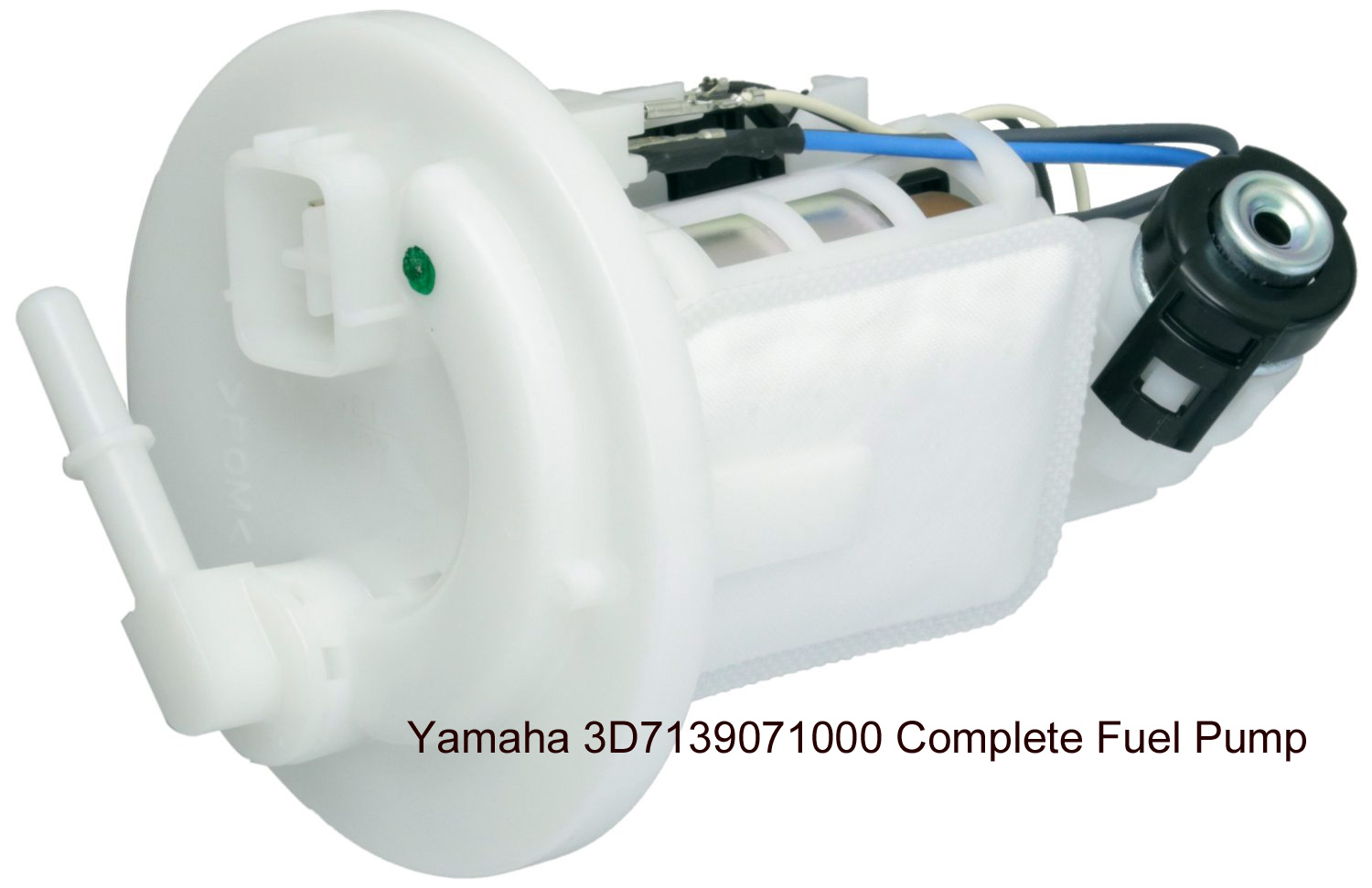

yamaha3d71390710WR250Rs are known for having dodgy fuel pumps (more here) which can behave erratically in hot weather after a few thousand kms, failing to prime (no buzzing on key turn). They might recover once cooled down but eventually will pack up for good. No one really knows what the problem is. One suggestion is fuel varnish coating the inside seizes the turbine when hot.
Early 2008s were very prone, although later WRs pack up too after a few thousand kms. It seems not living in Phoenix, AZ helps, and you do wonder if ropey US fuel has something to do with it or if it’s a case of the squeaky hinge getting all the oil? Don’t know but in the Sahara WR bike will get hot for sure.

A complete Yamaha pump with housing goes discounted for about $300 on amazon, and although the part number changed (from 3D7-13907-00 for 2008-12, to 3D7-13907-10 from 2013-onwards) suggesting an updated pump, some people still report failures on the newer pumps. wrfuelpump
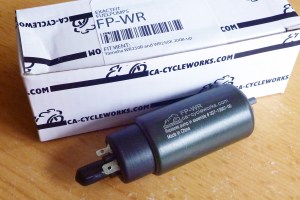
Being a popular bike in US and Au, there are various aftermarket pumps from just £20 cheapies on ebay to £105 for a California Cycleworks unit (left, also made in China). They all require carefully dismantling the white plastic housing as above, to replace the actual fuel pump unit. Not really a trailside job. Aftermarket ones fail too, especially the cheaper ones, which makes you think it’s modern fuel or an over-pressurised system, as I also read somewhere. I’ve not heard of other efi bikes having hot weather fuel pump issues, but anyway I cracked and bought a Cycleworks. I’ll will get round to fitting it and carry the OE unit as a spare.

wr250-rax
wrs1-11

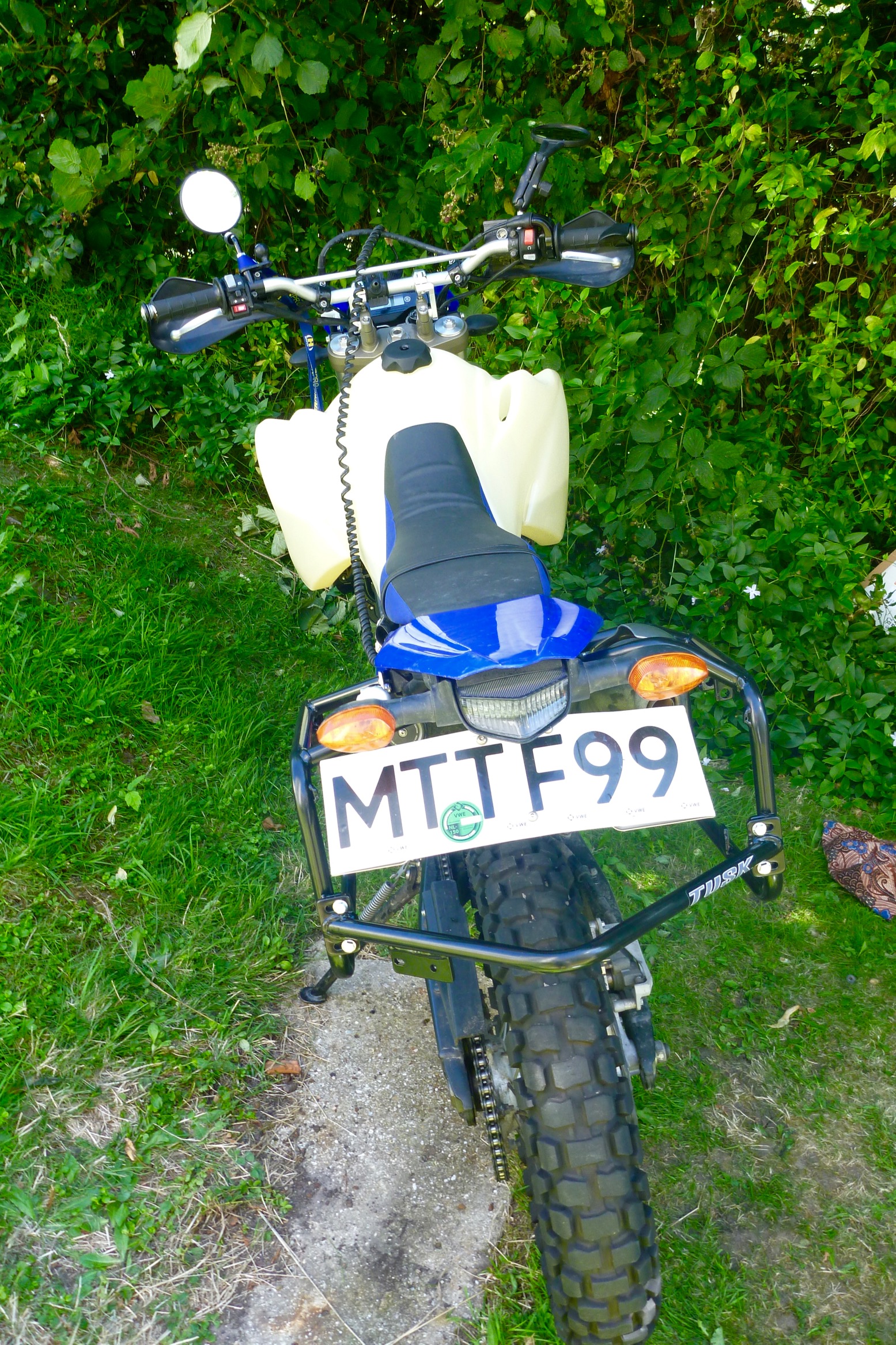
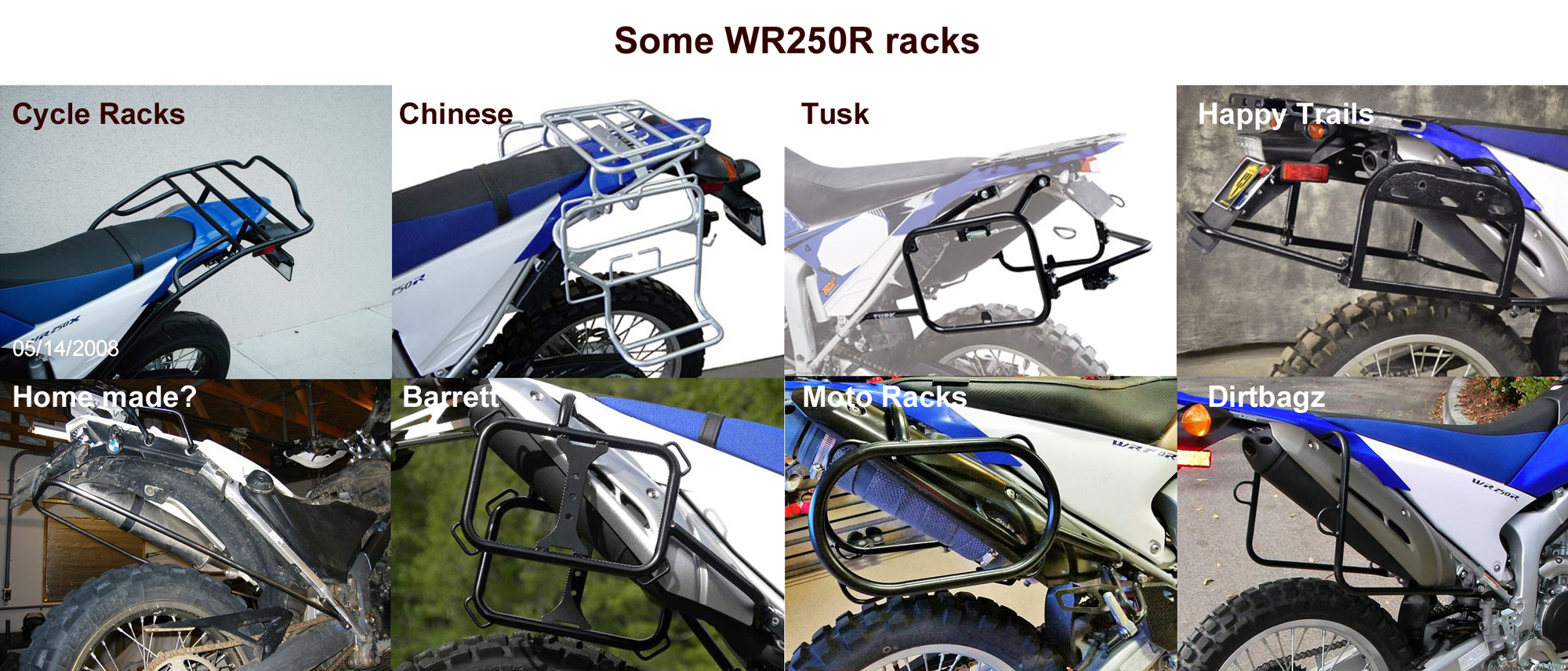
Next job: pannier racks. Long story short, choosing from the above selection, at $170 from Rocky Mtn Adv the US-made Tusk racks (a Rocky Mtn sub-brand, afaik) looked by far the best value for money, and when they turned up I was even more impressed – nice to see chunky ¾” and the all-important back brace to stop them folding in when heavily loaded on rough terrain. The unbraced Moto and Barrett may rely on heavier gauge tubing to not cave in. That looks neater but I found with the Rally Raid racks on the CB500X it didn’t really work out like that, to be bend-proof and light you need a back brace. Once I removed the unwanted bracketry for mounting Tusk hard boxes, the added weight was < 4kg.
wrs1-10

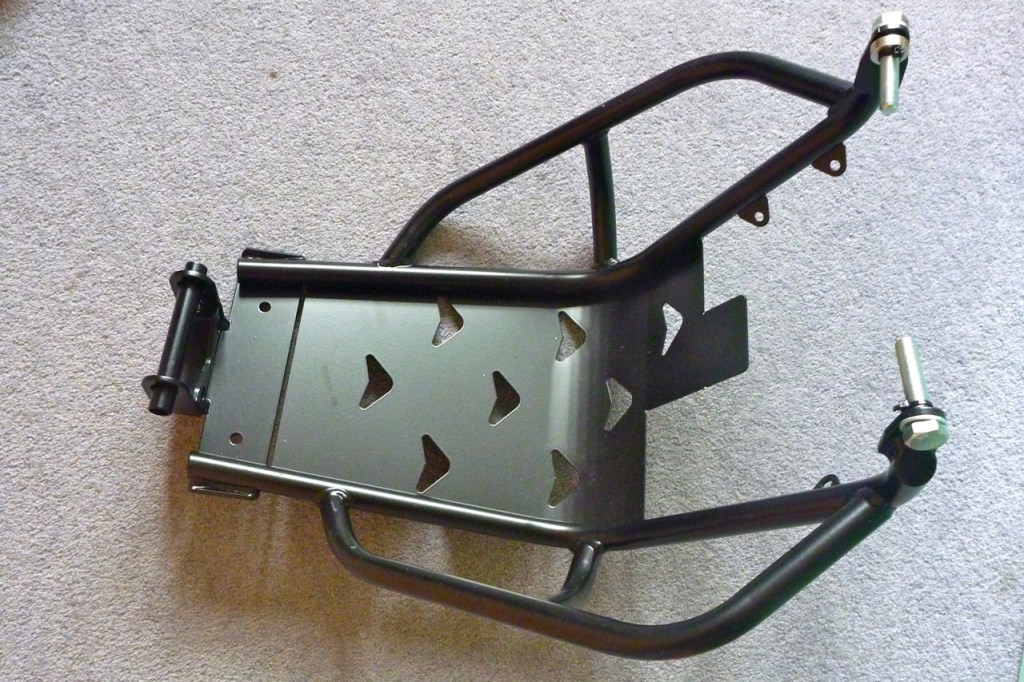
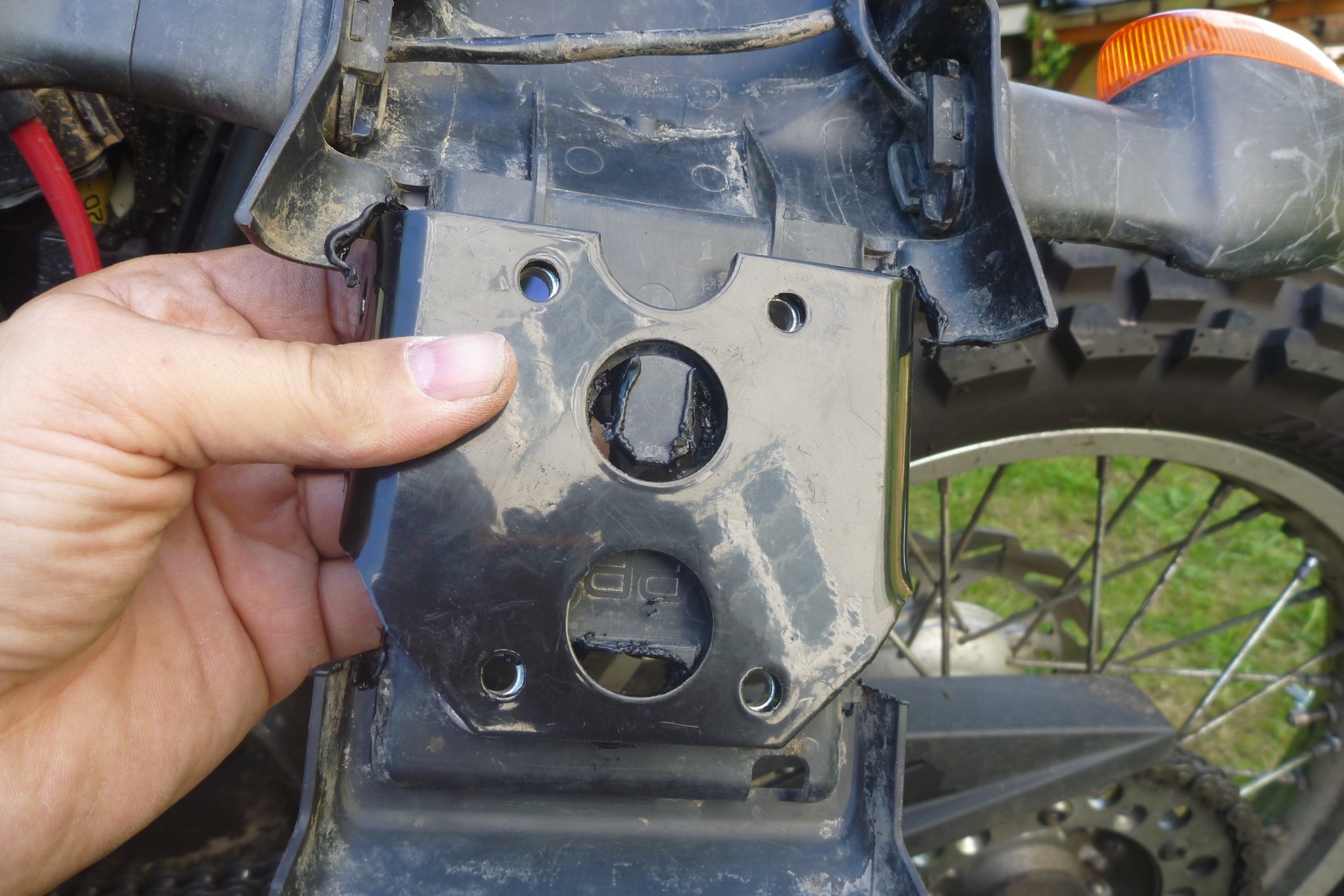
The fitting video on Rocky Mtn is especially helpful, but mounting the back underplate (right) could only be solved by cutting away with a red-hot knife. It’s possible my bike’s non-original plastic numberplate holder might have complicated things. That apart, the rack lined up just right elsewhere and will give something to grab when hauling the WR across a dune. There’s plenty of space behind the non-pipe side too, to stash stuff or mount a container.
wrs1-9
xco-shield

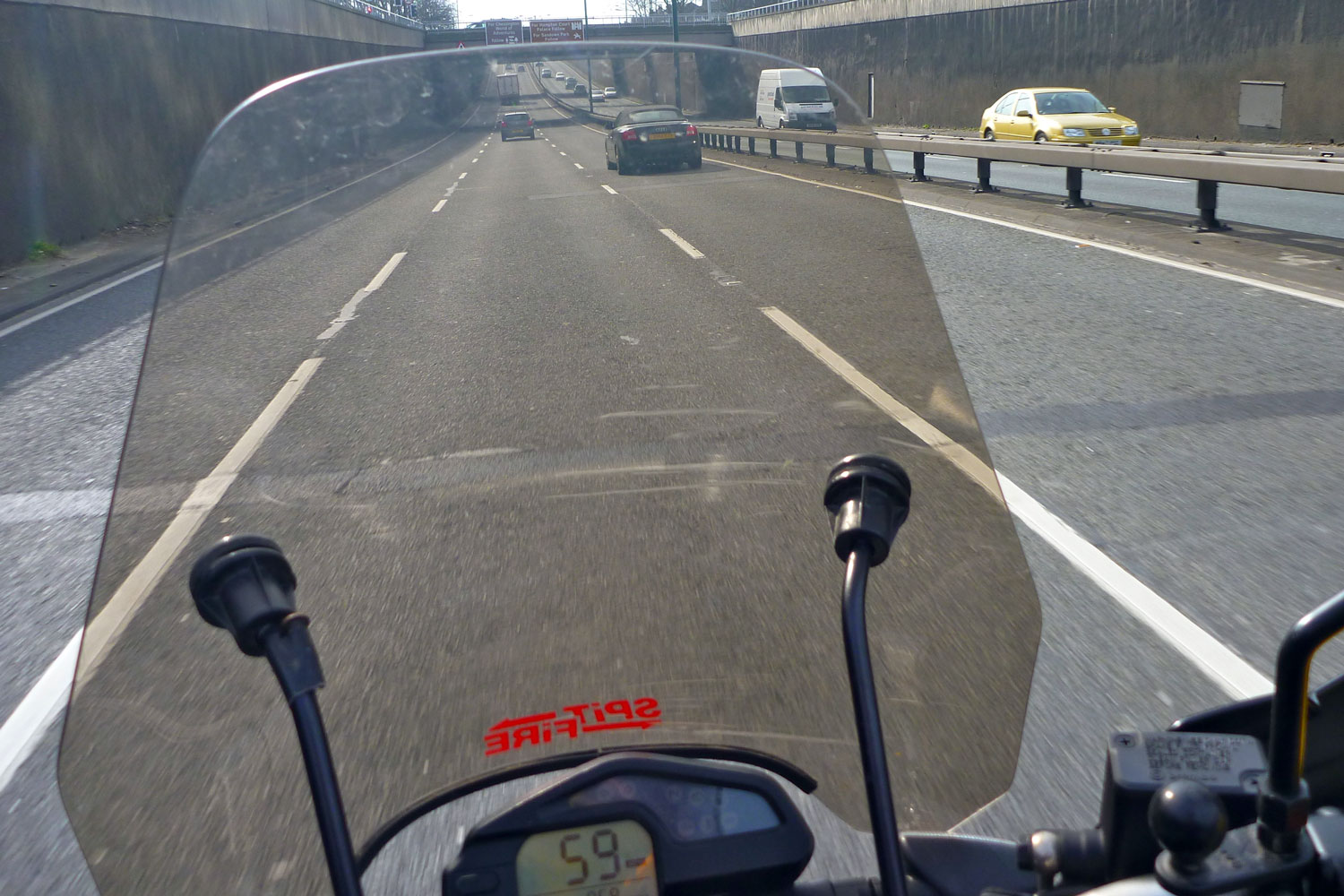
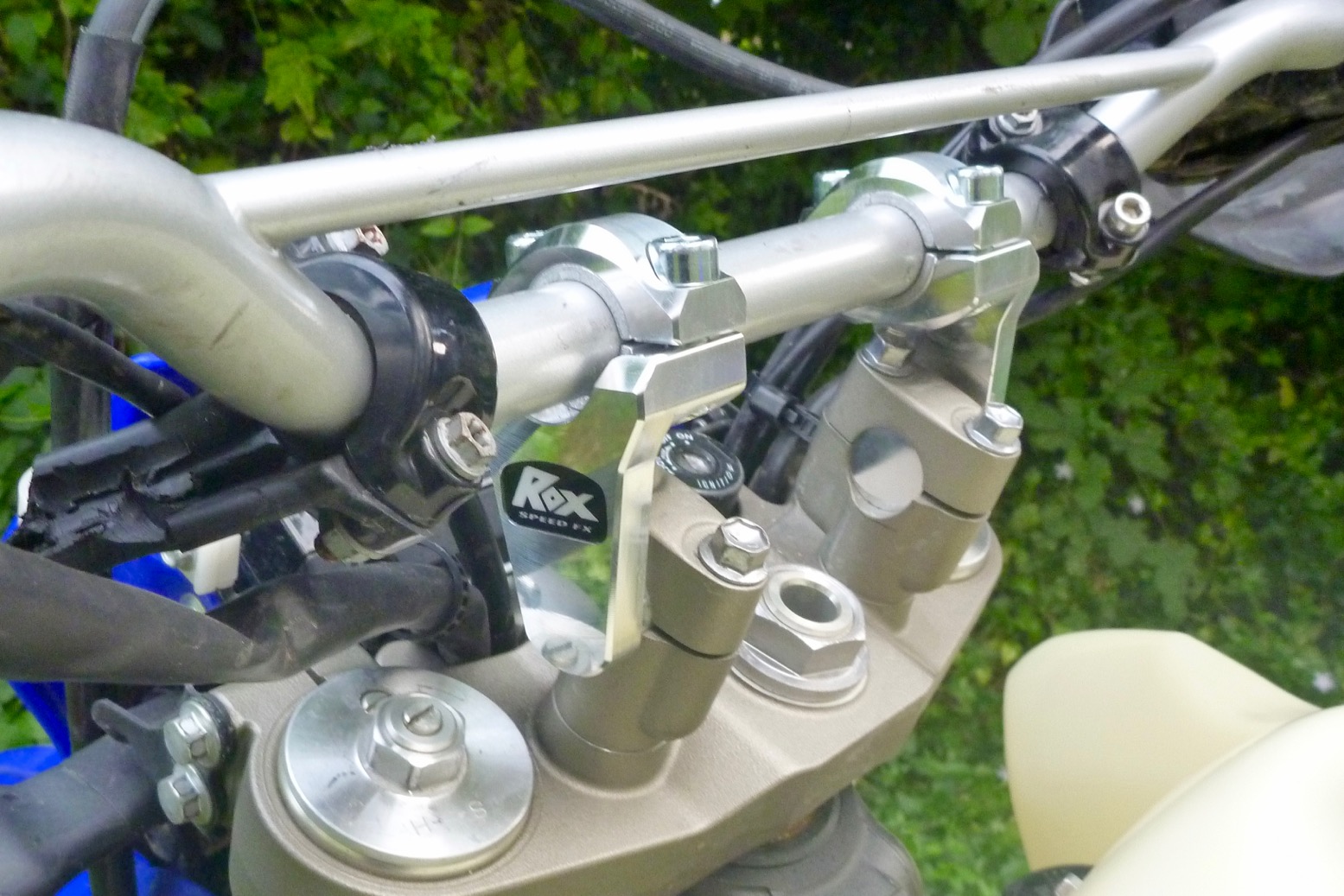
I splashed out on some Rox bar risers giving a 2-inch lift and a bit of fore and aft adjustment. Fat bar sized plus with adapters for ⅞s, they can carry over to later bikes, like my old Barkbuster Storms. Talking of which, the Barks can stay in the box as the handguards that came with the WR look OK. There’s just enough room left on the bars to add my Spitfire screen mounts (left).

I have a nice shiny Flatland bashplate waiting to clamp on, but the old hex bolts on the OE bashplate were not playing ball. Instead they wanted a game of rounders, and so rounded out they now are. One for the shop when they MoT it next week.

wrs1-18
screen-shot-2016-09-18-at-14-37-06

I put on my old round Double Take mirror; it helps where I park the bike. But a run to the Overland Event near Oxford proved it vibrates on the WR just like it blurred on other bikes I’ve tried them on. The new asymmetric Double Take Adventure model (right) has done away with the stalk to reduce vibration, but now means you have to buy a hefty 6-inch RAM arm for another 20 quid (plus a bar-ball mount for another tenner). As I have those bits I may give the new one a try as it is handy to have one bombproof mirror.
82-cassis

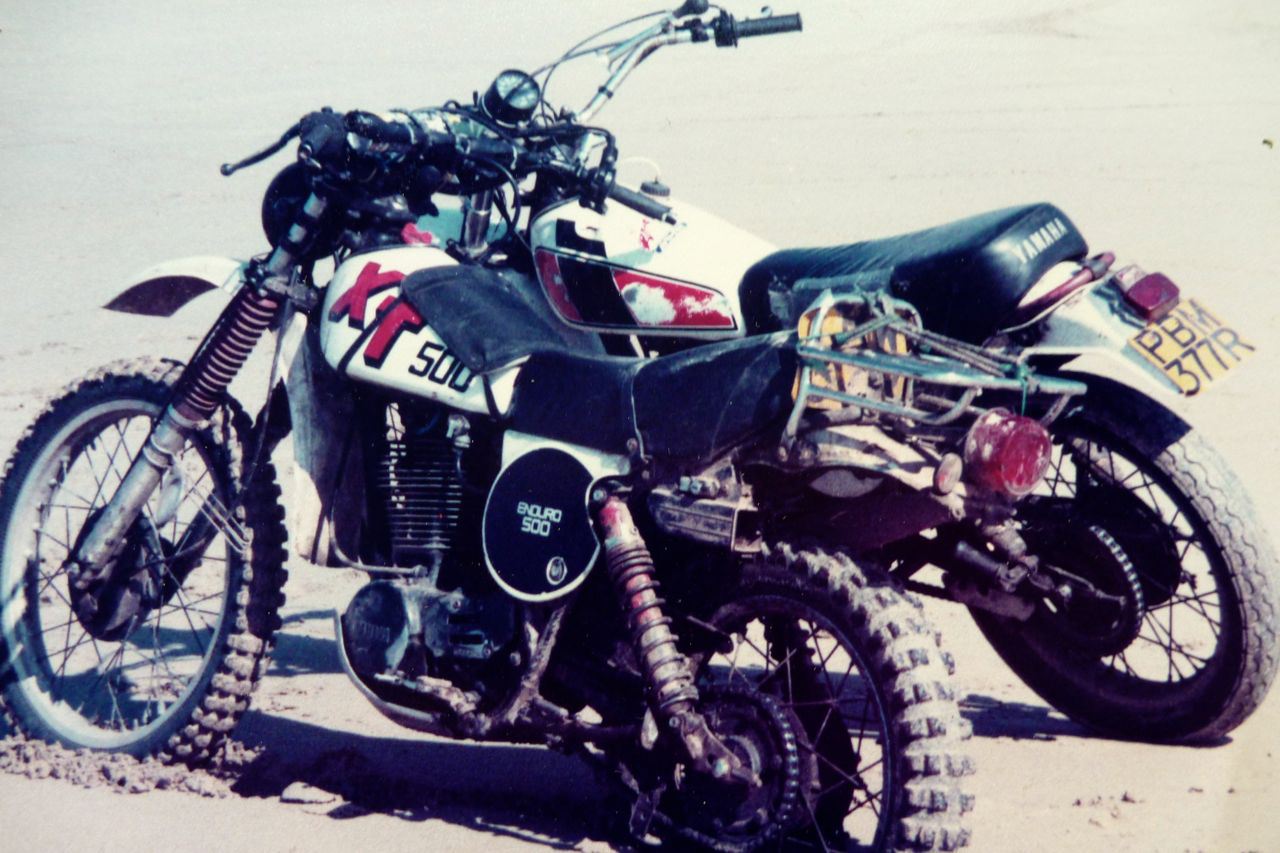
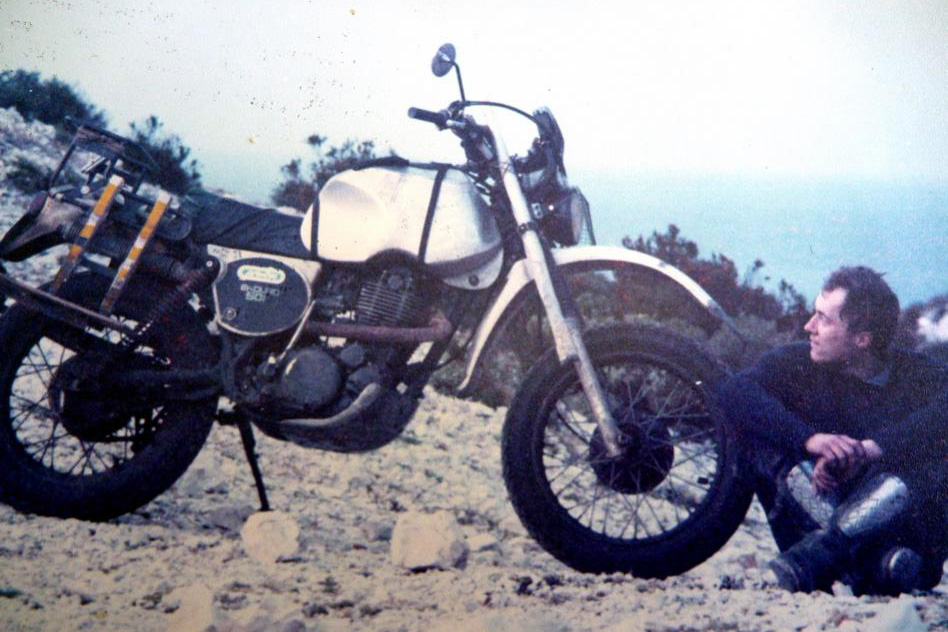
Picture right: my original desert bike, the ally-tanked ’76 XT500 I rode to Algeria in 1982. The WR is bike #57. For the first time since the 80s I’ve again had more bikes than birthdays.
wrs1-spd

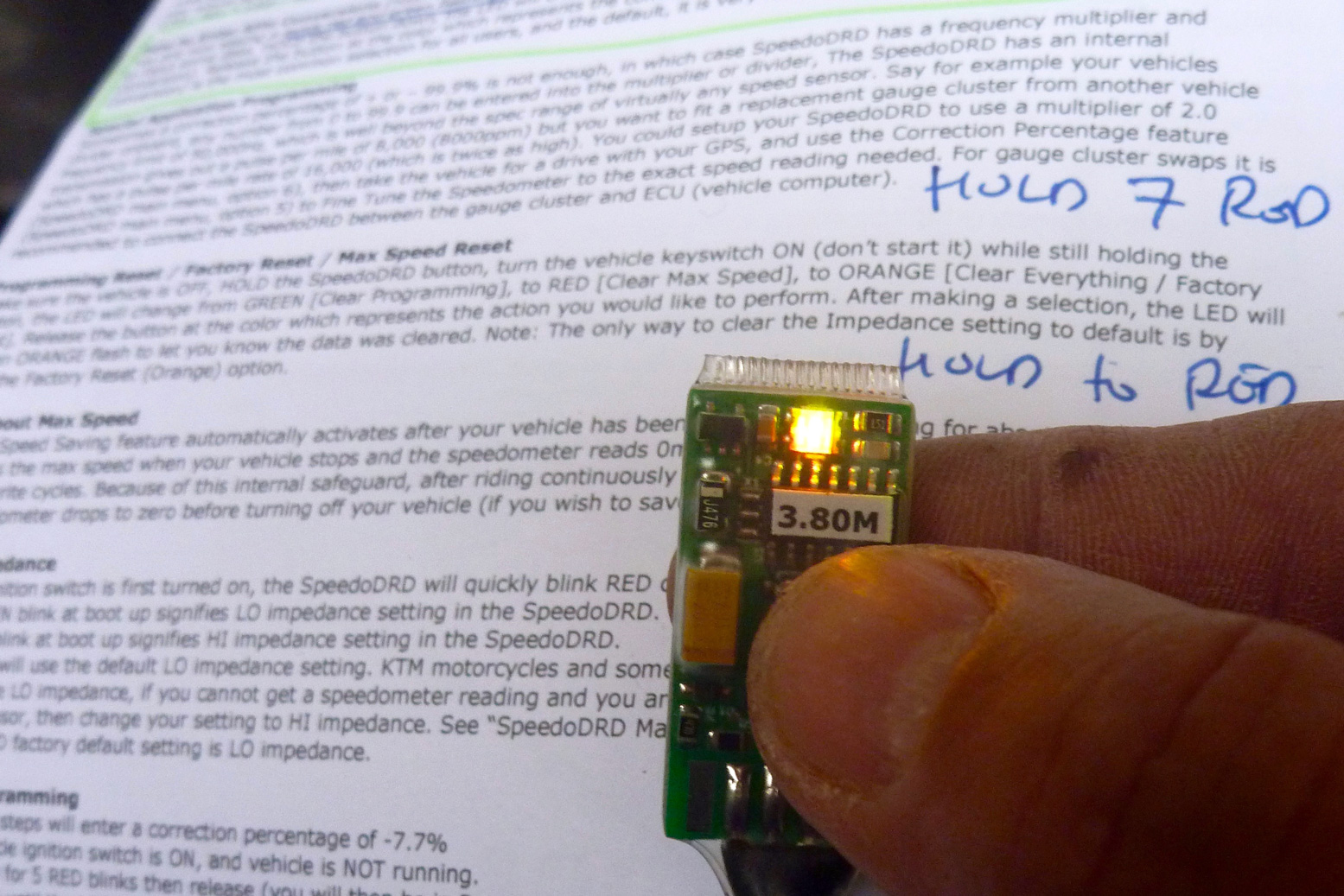
Other jobs include re-fitting my Trail Tech Vapor to give accurate speeds because, according to my GPS the WR speedo reads 12% fast and odo some 4% over. But I’ve also just fitted a Speedo DRD chip (left) from Totally TTRs. I was hoping the WR’s OE kph digital speedo could be reset to show mph, like my XT660ZE from the same era. But annoyingly, it seems WRs sold in kmh markets can’t flip their speedos to mph, while Brit and American mph WRs can changed to kph. WTF WR?
wrsi-drd

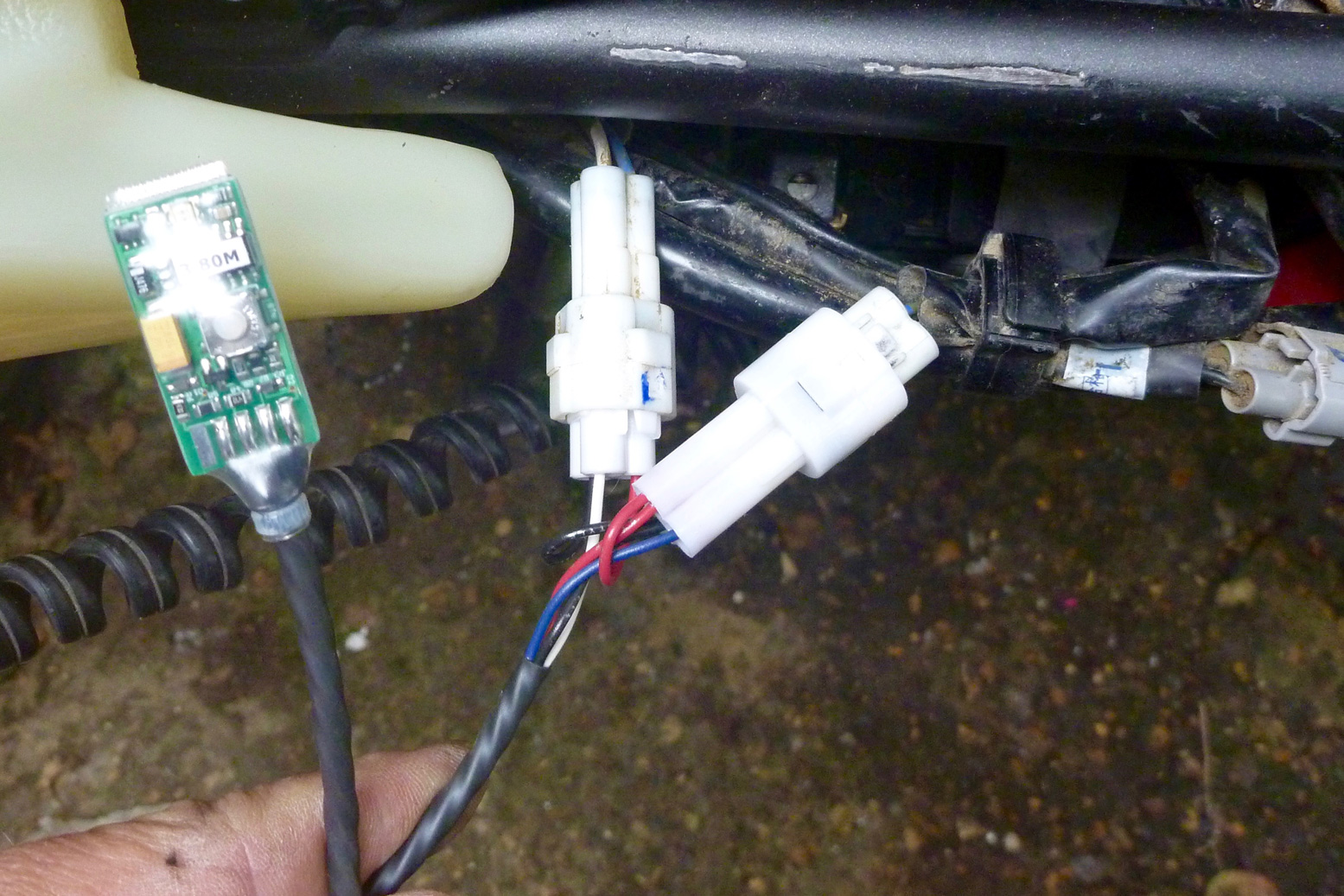
Like those nifty fuel controllers, the DRD is very easy to programme and can also flip to mph to make the bike UK legit, as well as correct the large speedo error, even though the Vapor technically does that job too. As a reminder the Trail Tech Vapor can also display ambient and engine temps – the latter a vital reading on any bike, IMO – as well as a GPS compass and altitude, rpm and, yes even the time of day.
vizx

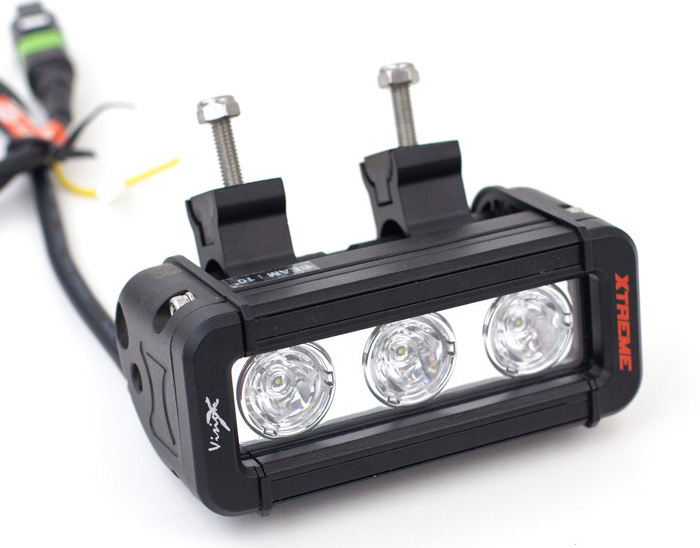
As for lighting, I’m assuming the standard little headlight will not wake the badgers. Some say you can fit a super-bright $60 HiD bulb and fry burgers with it; other find the cut off is unsuited for road riding. I must say on a travel bike I prefer the idea of a secondary light; a back up should the main one fail.
I’ve had a Vision X 5″ Xmitter narrow beam (left) sitting around for ages. They say this is the best model to get for travel bikes, so now will be a good opportunity it fit it to the WR.
wrs1-tyres

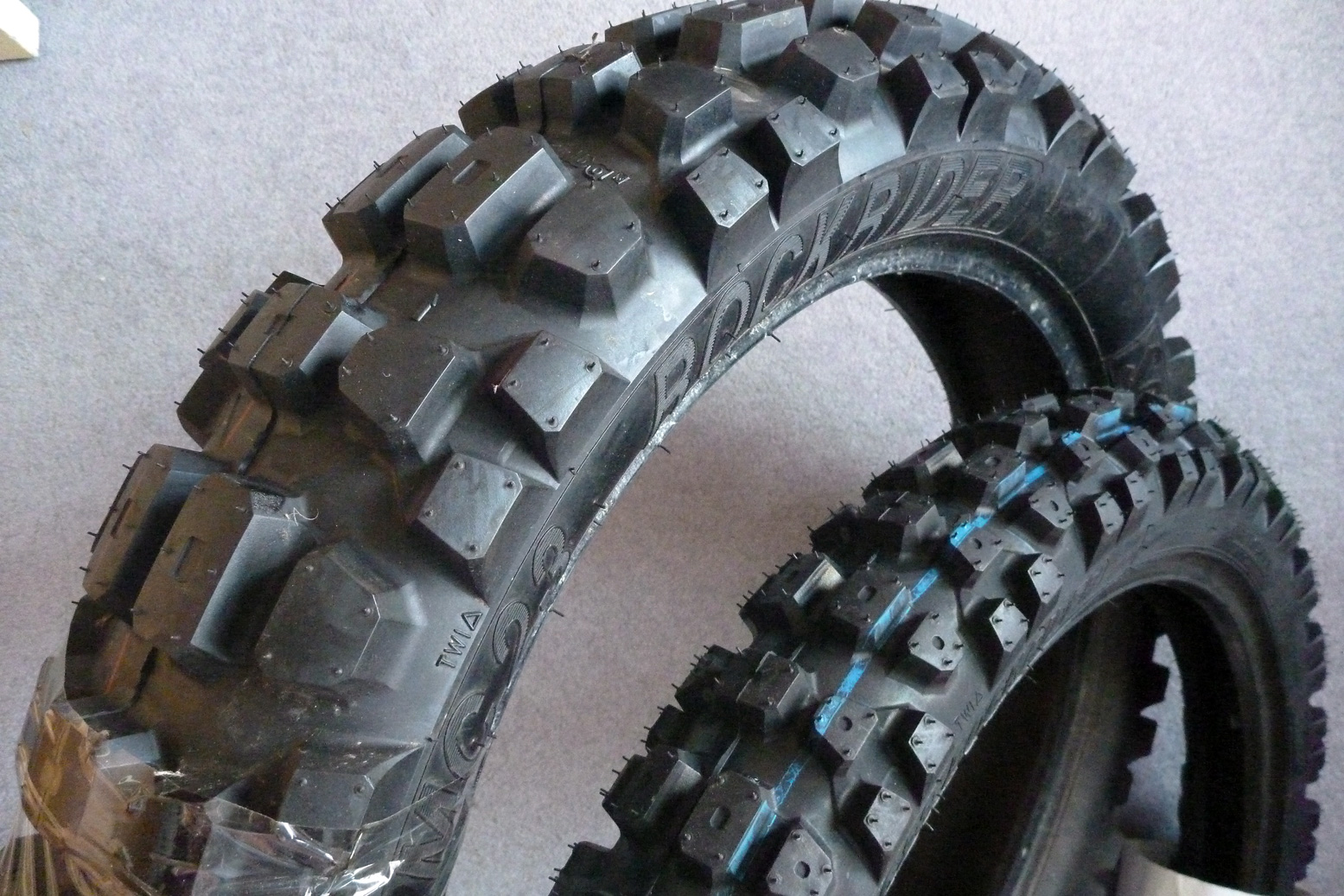
Wakey wakey! A mate gave me a rear Sava MC23 Rockrider which he reckons are the new black (and round). At 140-80 it didn’t fit his TTR250 and I don’t think oversized tyres work on a WR (120/80-18) any more than noisy pipes make more power. More weight; more drag and over-stiff tyres on light bikes can be counterproductive in deep, soft sand. They’re just too stiff to sag usefully, even at very low pressures, to give better traction, as I found decades ago running a Mich Desert on a Tenere right down to 5psi. The MC23 is 4 plies tread and 3 in the sides – sounds stiff. I won’t be that loaded up nor riding hard, and the WR will lack a Tenere’s grunt to hook up, for sure.
AMH-Tread-Chooser-Dirt

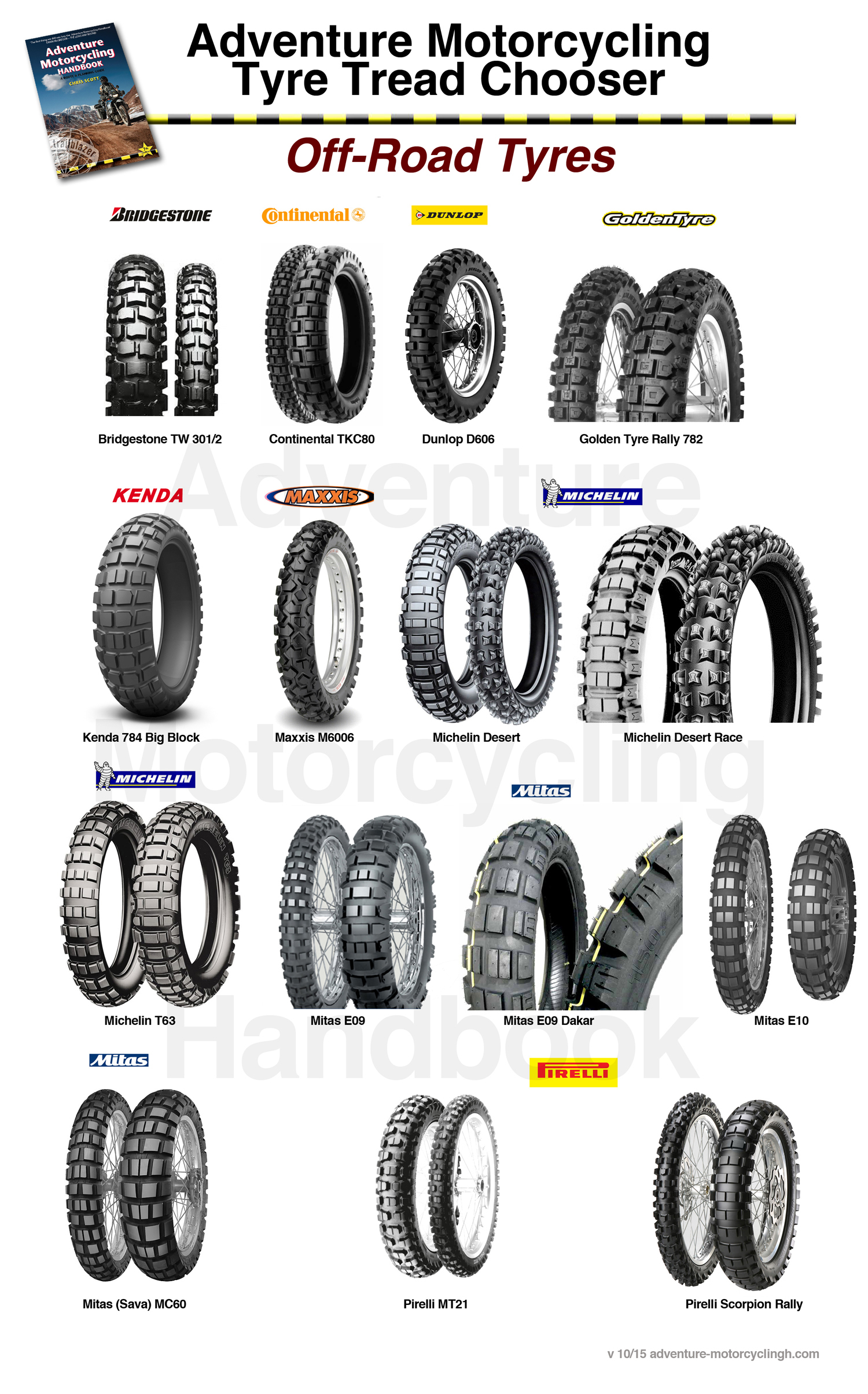
In the US they all rate the Dunlop 606 on WRs, but they don’t sell it in the UK. Either way, something from the list on the left will do the job. The Mitas E09/10s I’ve been wanting to try don’t come in WR rear sizes. With Sava/Mitas it’s the MC23 or nothing and in the end I succumbed to online tyre fatigue and clicked on a 120/90 Rockrider for £56. It may not hook up in the sands of the Erg Amatlich, but it won’t puncture up on the plateau, either.
To keep it company I also bought a front MC23 Rockrider – £42 from Oponeo, so that’s £98 all shod. This came branded as a Czech Mitas as Mitas have lately bought out Slovenian Sava. Just as well because as tyre names go, ‘Sava’ is even worse than Golden Tyre. I hope to at least mount the rear tubelessly, doing a better job than I did last time on the Tenere. Enough tyre talk.
wrs1-paps

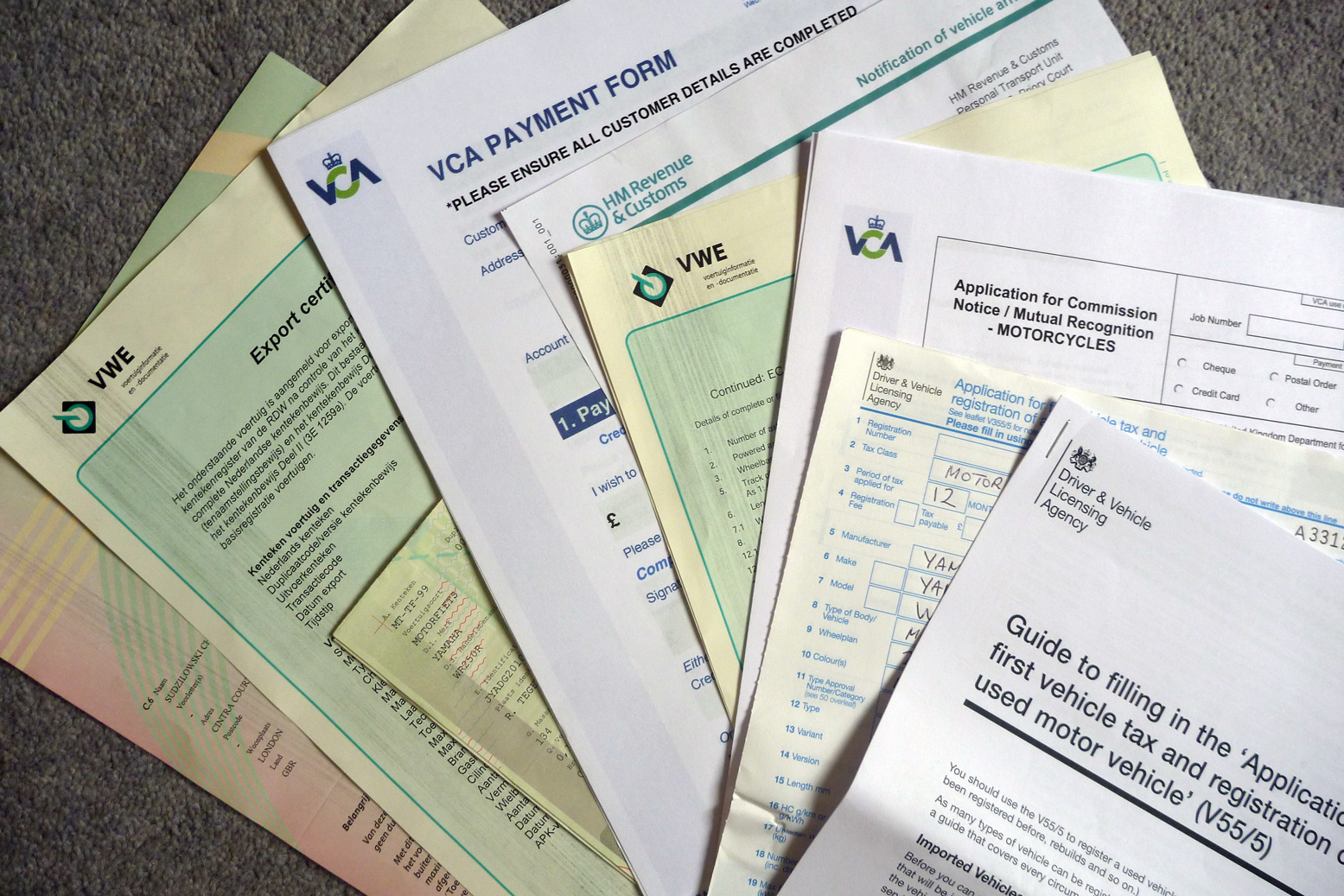
Unfortunately, delays in receiving paperwork to complete UK registration (added by my own confusion in how to set about the task efficiently) mean it’s unlikely I’ll have a UK plate and logbook in time for my Morocco tours in a few weeks. I’ll have to rent something down there. Can’t say I’m bitterly disappointed at missing the chance to cross Spain and back in early winter on an untried 250. Last couple of years I’ve been lucky with the rain in Spain. It can’t last and it all gives me a chance to get the WR in good shape for the proper desert trip we have lined up in the new year. It also means those rally tyres won’t get wasted running mostly roads.
hpwr
wrs1-12

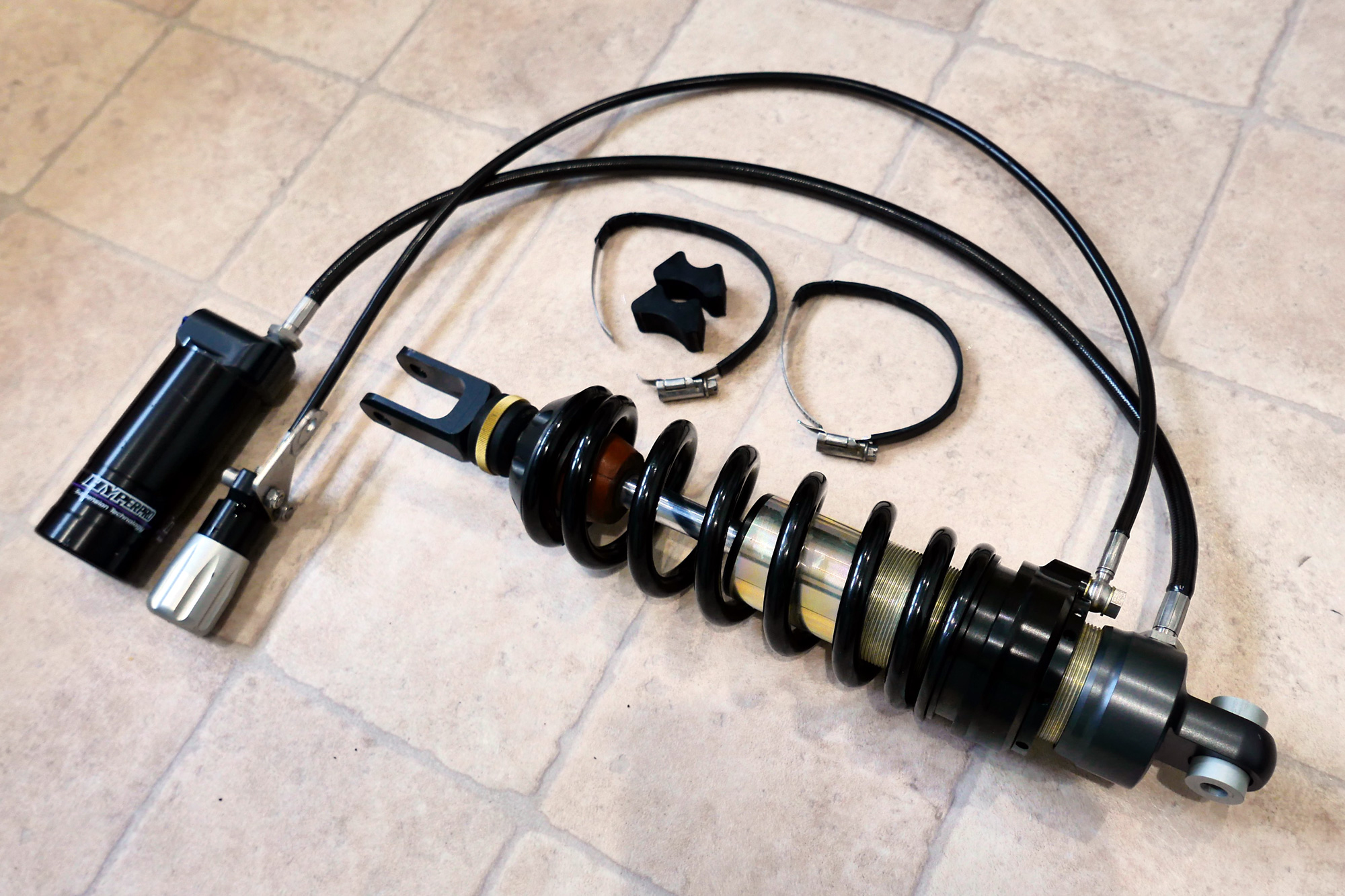
I do wonder if it has been worth the faff and expense of buying a bike from Holland just to get some top-grade Hyperpro suspension (this is the first WR250R to have HP). All I know is if it works as well as my HP X-Country, then the answer will eventually be yes. You just wonder how many trees have given up promising futures to certify the re-registering process of this motorcycle.

Have to say, after having a close look, so far I’m impressed by the WR. The easy disassembly and access to things, nifty hinged air filter door, minimal-sized components where possible and solid parts elsewhere, like triple clamp and subframe. It’s like a Jap KTM, and grails don’t come much holier than that.

wrs1-17

One thing I’m pretty sure I won’t be doing is meddling with the airbox flap, EXUP valve, silencer or other stuff to squeeze 3% more power out of it and save a few ounces. Like most things, the WR-R already is what it is: lighter and more powerful than any other Jap trail bike, with a travel workable oil-change interval and excellent mpg. That should do nicely for the next desert ride or two I have in mind.
wr-hpa

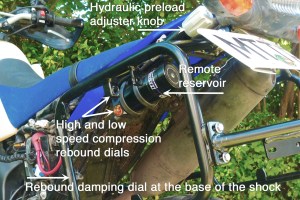
On the way to the Overland Event I had a pile of heavy books I was hoping not to bring back. Once loaded up it was great to just crank up the Hyperpro Hydraulic Preload Adjuster (HPA) knob which still fits nicely alongside the new rack. At a pinch you can almost do it on the move, though probably not while texting.
I haven’t yet had the heart to run the WR at the revs it’s supposed to handle. What’s probably a true 55-60mph seems fine for now, but unlike a CRF-L or KLX, you do have a bit of spare oomph when you need it. For the first time in years I’m very much looking forward to getting my latest project bike on the dirt.

wrs1-16

CB500X – Auxillary power + satnav mount

CB500X Index page

Normally I’d plug a 12-volt power plug for GPS etc direct to the battery via a fuse – not ideal but it’s less of a faff than finding a place to take power that’s switched via the ignition (usually off the always-on lights).

cbx-plug

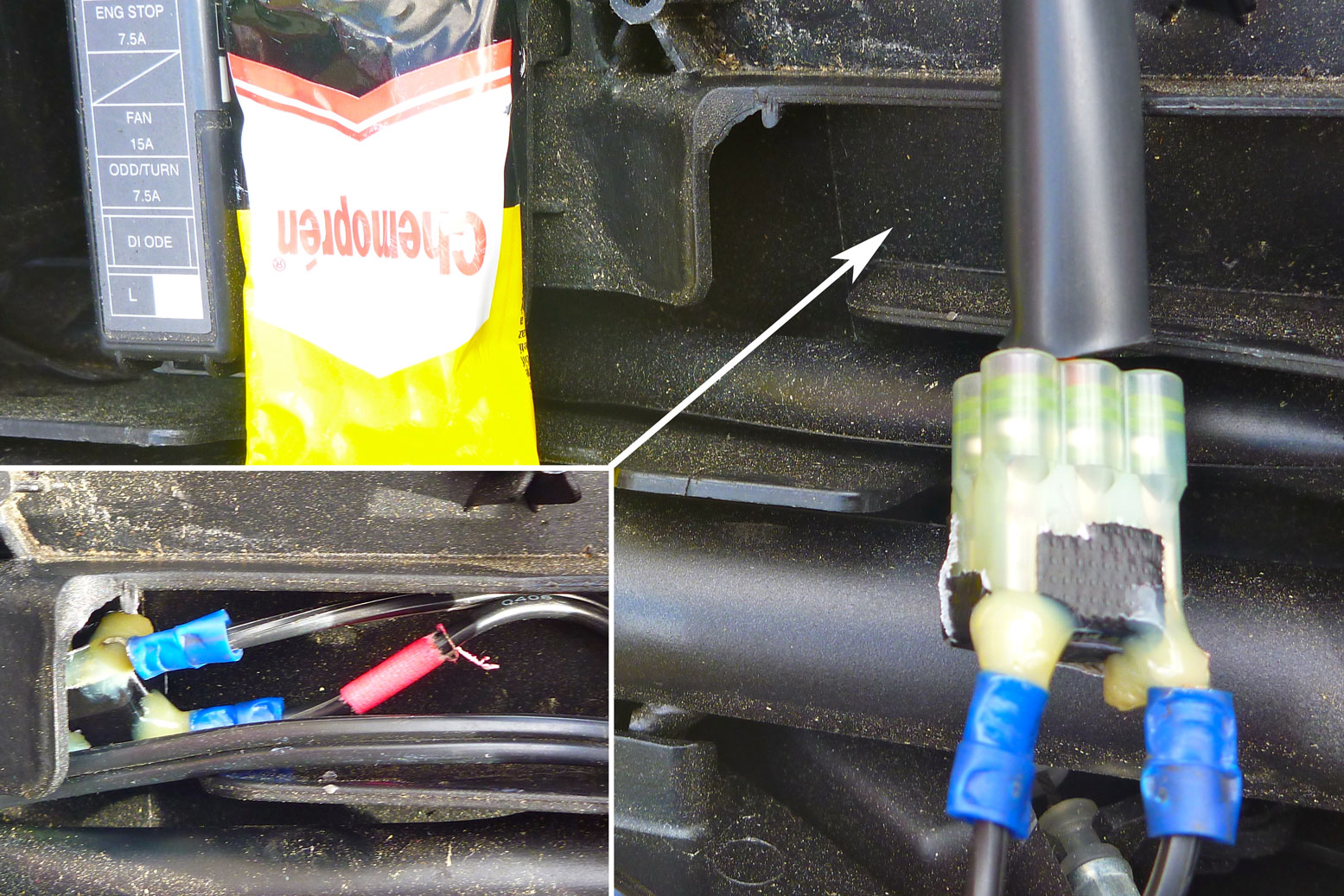
But on the CB-X forum someone unearthed a stray ‘options plug’ under the seat (left) that does just that and so is ideal for electrical accessories. It even comes with an unwired wiring block clipped to it that’s ready for spade terminals. In the UK it’s a 6-wire block but with only 5 wires (inset left). Trial, error and much discussion on the forum divined which wires do what. Short version: purple is switched live and green is negative. These are the two you want to wire up stuff that will only work with the ignition on.

cbx-plugg

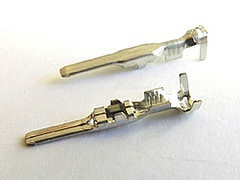
I thought about tracking down the exact correct terminals (right), slipping them into the unwired block with the seals and wiring it up, but realised it would be as simple if less neat to simply shove two wired spades directly into the live block’s end and ditch the unwired block. It all wants to be waterproof of course, so I carefully taped over the block and dabbed rubber solution where the chopped down spade connectors went in. I then repositioned the block in a plastic channel alongside (above left) and hopefully out of the way of any back-wheel spray. And while I was in the area, with a hacksaw blade I trimmed off bits of sticky-out plastic molded into the mudguard (right) to make more room for underseat tools and stuff.

cbx-pto

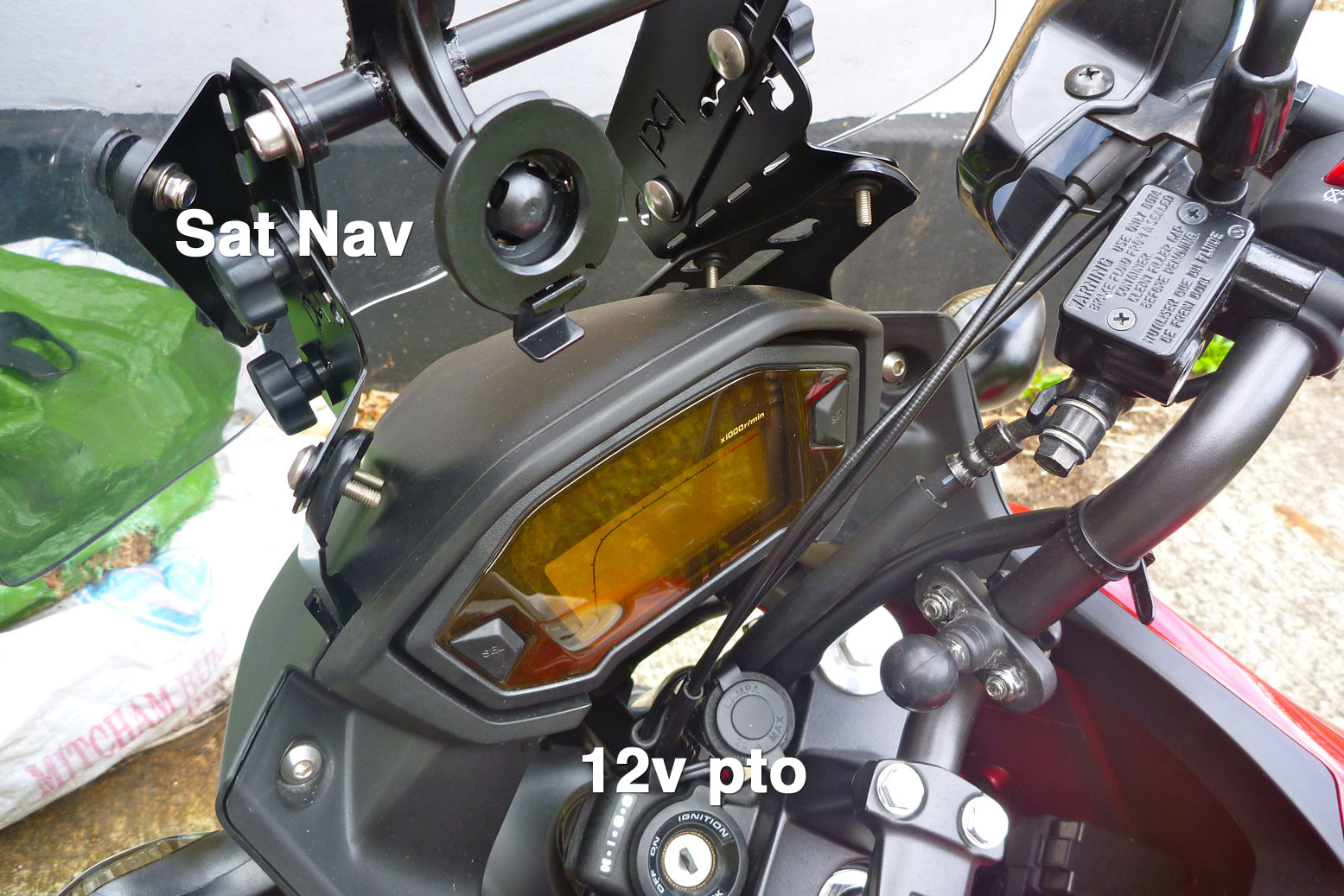
Getting the wire to the ignition key area  for the 12v PTO socket was easy too: just two hex bolts removed the black LHS side panel and the wire feeds through over the radiator. It would have been neat to set the PTO into a hole in the dash below the speedo but I’m told there’s not much room behind there and finding out for sure would require protracted disassembly. Life’s too short for that so a secure slot was zip-tied next to the ignition key (above left).

Still awake? From bike to bike I’ve been running my Nuvi satnav on a RAM mount off the mirror stalk, but it’s a cumbersome combination of hardwear, better suited to a camera. My Palmer screen mount came with a half-inch accessory bar for that very purpose. I wanted something tucked in close to the bar to avoid leverage and wobbling, and the only idea I came up with was taking apart a spare Nuvi sucker mount, cut it down a bit then drill a half-inch hole through the neck and glue it onto the accessory bar. The irresistible lure of bodging.

93mpg

Looking forward to a long, 700-mile ride to the other end of the country this weekend. A chance to test out the screen, assess the seat which I think may not be so good, and get a feel for the bike in readiness for Morocco and beyond this winter. Latest mpg is 93 and that was trying a little, so I reckon 100mpg might take some doing. Plus this is off the odo though unlike the speedo (7-8% over) is actually only 3% over. Had this same odd discrepancy with the CRF; you assume they’re linked. Anyway, more like a true 90.

Honda CB500X Rally Raid bashplate, Palmer windshield adjuster

Main CB500X Index page
cbx-jmo

The CB-X comes with an 80s-style plastic belly pan which then as now, just keeps the flies off te engine. Along the right side is a thin, stainless cat guard but none of this will protect the pipes or the sump from a heavy dump onto a rock or from flying debris.

cbxbash-12

cbxbash-14

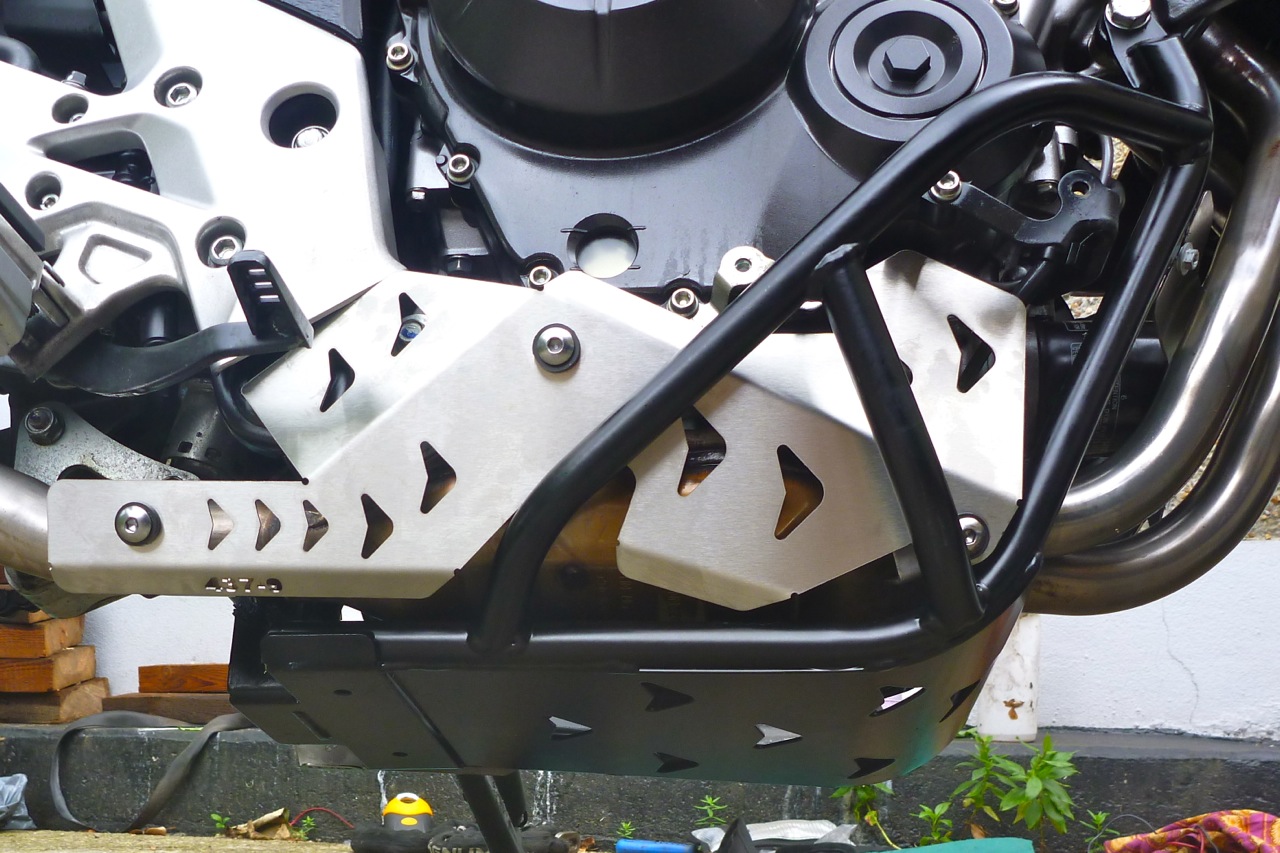
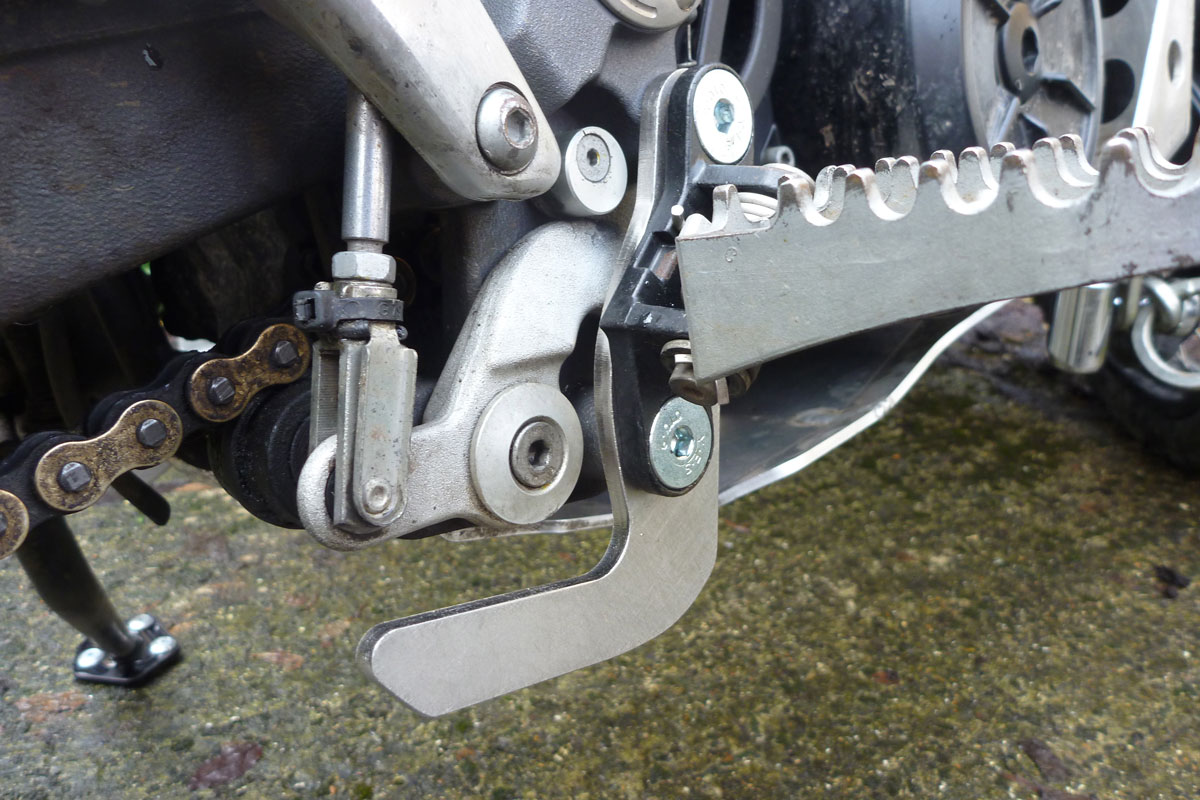
The Rally Raid bashplate crashbar cost a hefty £238 but is more than just a few slices of alloy bent, cut and welded into a protective clam shape. The CB-X is a bit different from a typical single cylinder trail bike in that the pipe goes under the motor. The slim cat is actually neatly integrated in the headers which tuck in alongside the sump (right) so cleverly, no extra depth is added unlike my last two ‘under pipe’ bikes. But the oil filter sticks out the front and the engine cases are vulnerable and so proper protection is needed all around.

plates
cbxbash-17

I didn’t look for alternatives but they are a couple out there (left) – both at around £100 but in relatively flimsy 3mm alloy and both retaining rather than replacing the thin stainless cat guard. SW Motech do make lower engine bars and upper tank guards at about €100 each, but it’s unclear whether their sump guard and the crash bar are compatible – it looks like it could be one of the other. With the Rally Raid unit the steel crash bars are integrated with the steel underplate and the whole thing weighs 3.4kg. Separate thin stainless panels are added behind the frame over the cat, across the front of the oil filter (right), and underneath the shifter on the left.

cbxbash-15

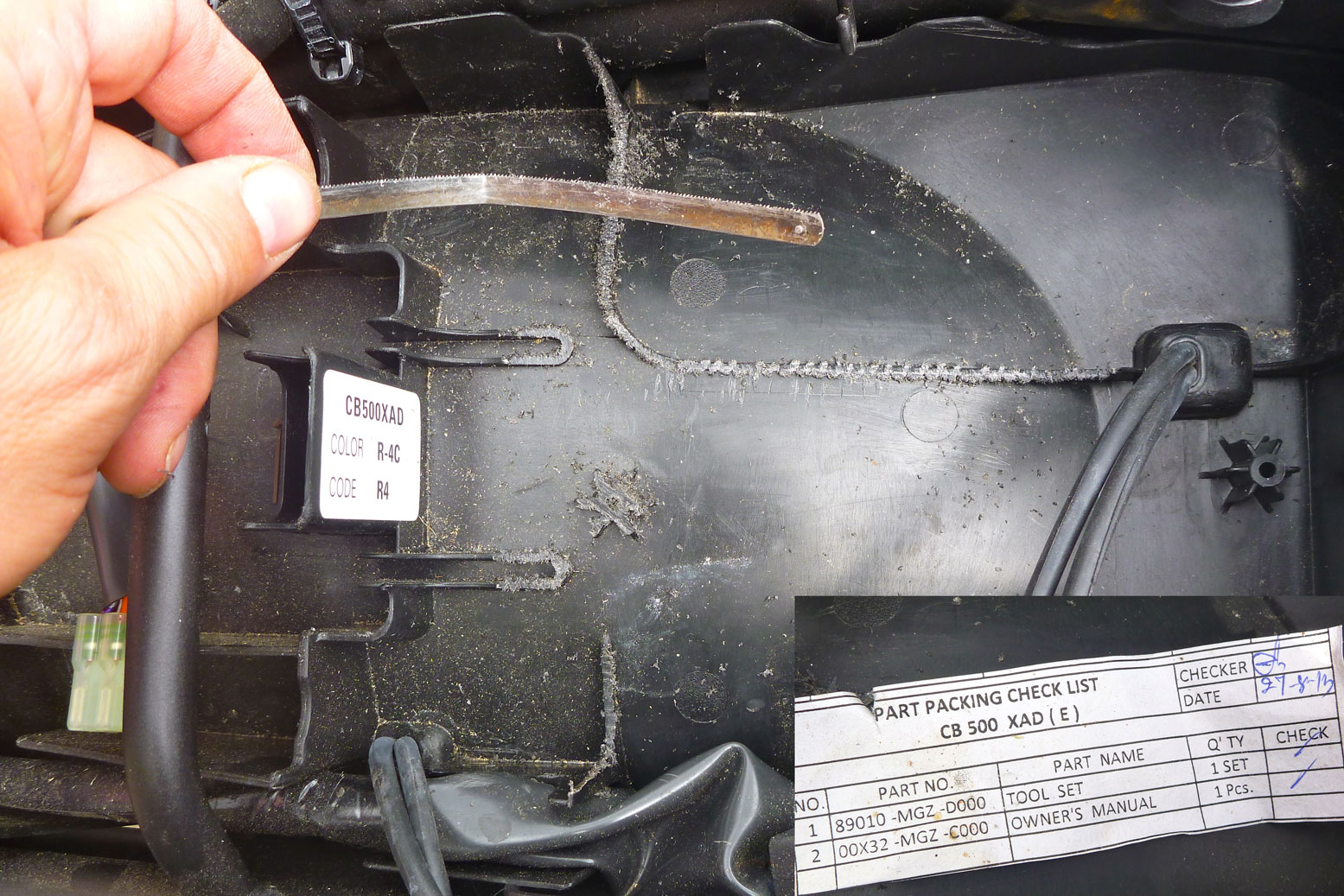
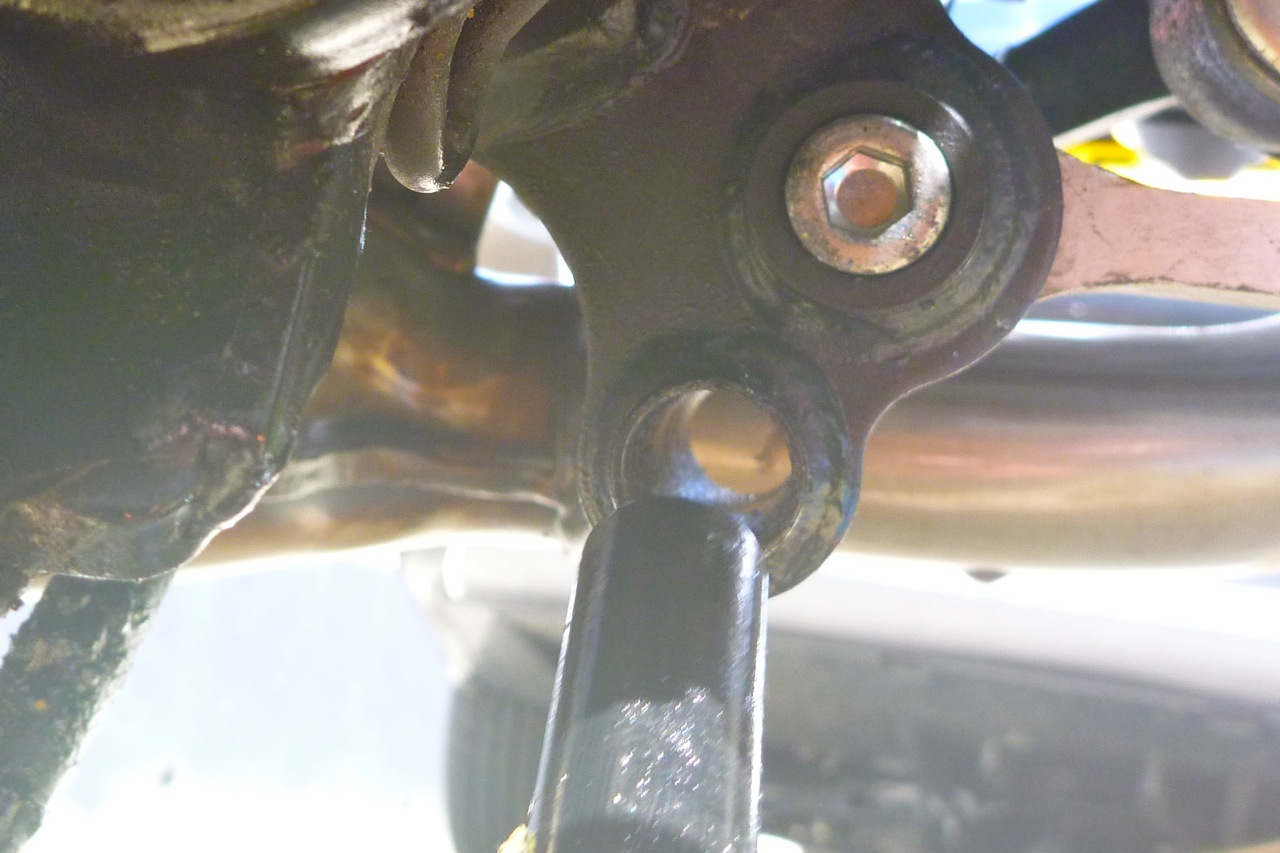
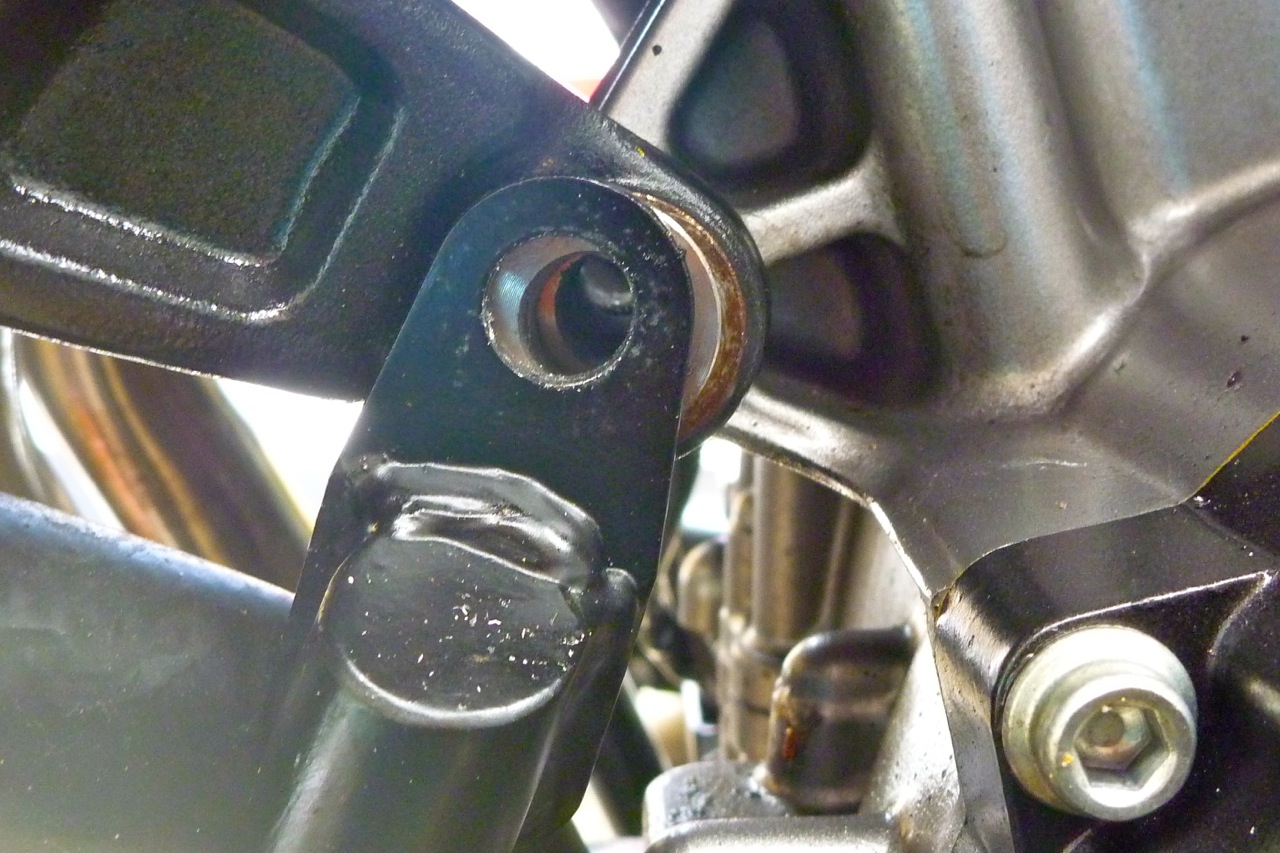
After removing the bellypan and cat cover, fitting started by slotting a pin to mount the back of the plate on the unused centre stand pivot tube. The powder-coated RRP pin felt just half a mil too thick, actually because a bit of rust has developed inside the centre stand pivot tube (left). Once that was scrapped out with a hacksaw blade it fitted in with some hammer aid, but even with a good greasing I get the feeling that pin may be in there for good.

cbxbash-19
cbxbash-16

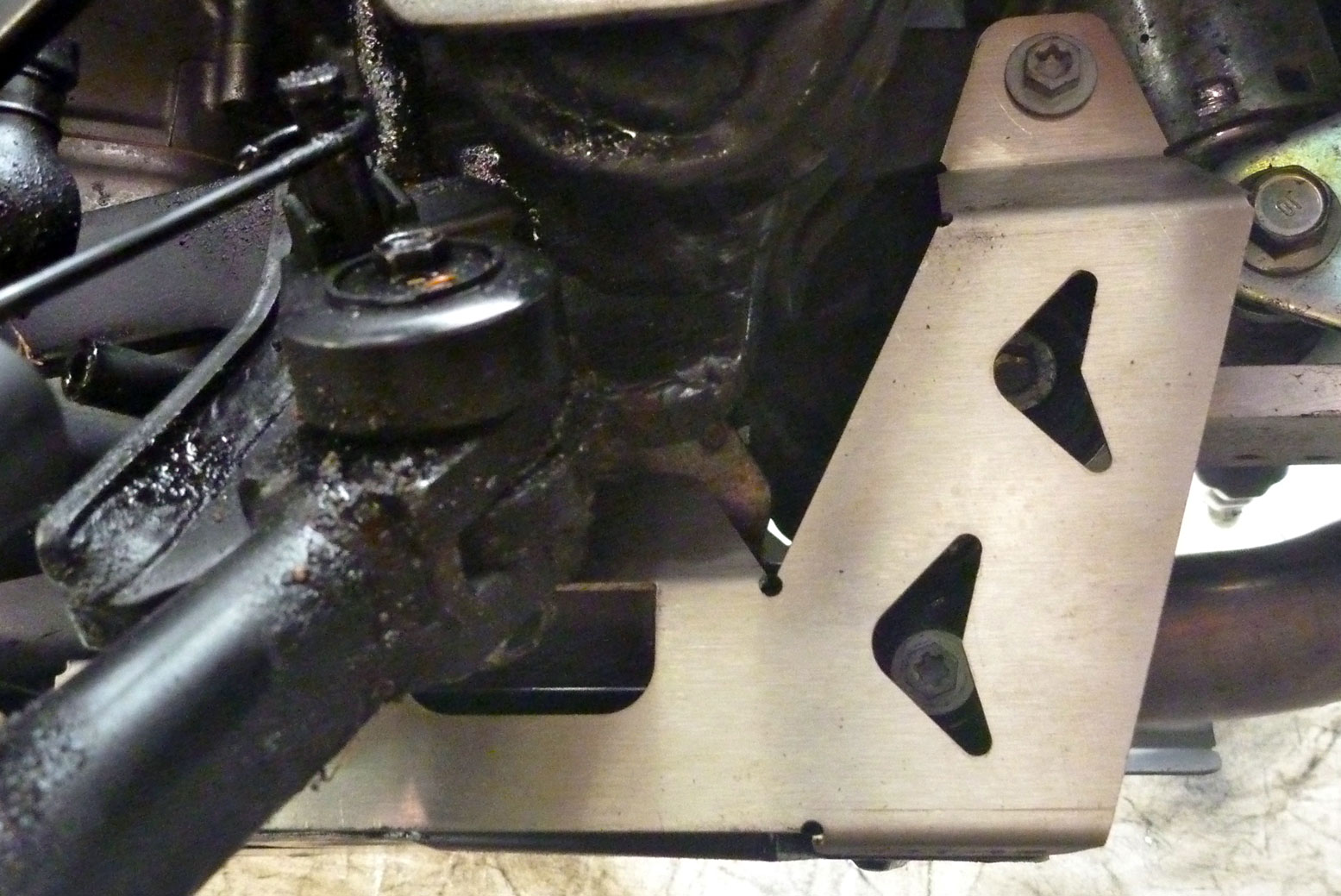
The RHS stainless cat cover (left) lined up just right – 10/10 for bend and cut – and the steel plate was ready to swing up into place to be bolted in place with the replacement front engine mounting bolts supplied. RHS bolt went in OK but on the left it was 5mm ahead (above right). Seems ‘they all do that, Sir‘ and some tactical levering with a hammer handle sorted the alignment to get the bolt in without cross-threading the engine’s alloy which would be deeply vexatious.

cbx-bashside
xtank7

I’m not quite sure what the separate plate behind the side stand is protecting (left). Something to do with the shifter linkage? That’s reasonably well protected by the side stand mount and held on with a single bolt the plate looks a bit flimsy to do anything substantial, assuming it’s trying to be similar to plates which Erik Bok makes for X bikes (right).

tr-waterbot
cbx2-bash

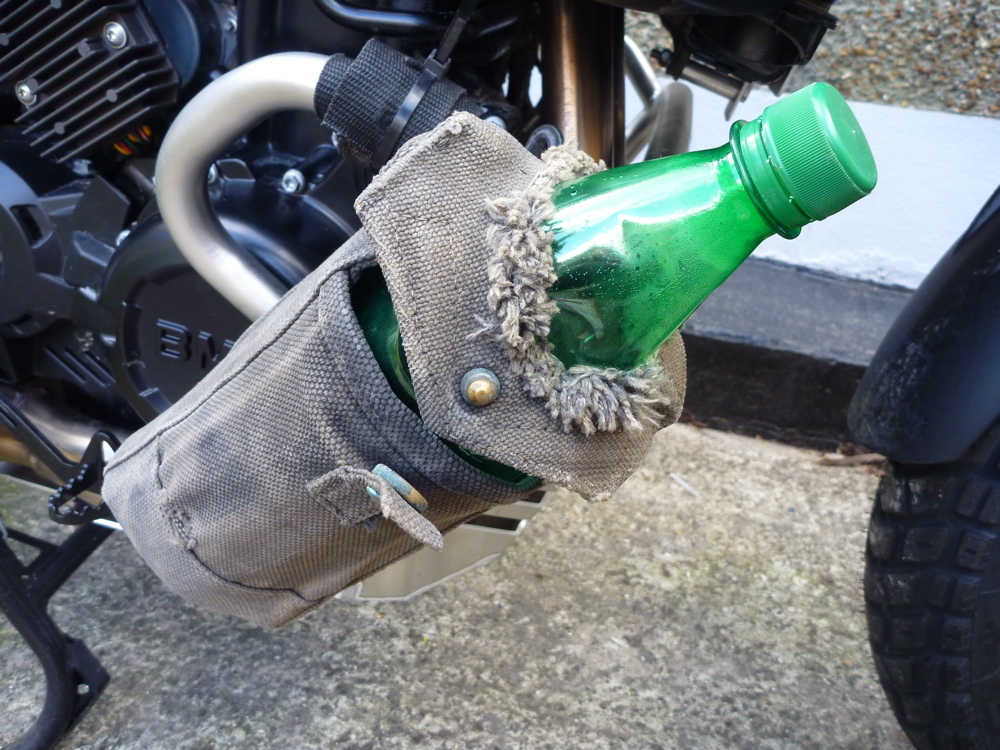
All up that took about an hour, plus another hour of going back and forth to the house to get extra bits and pieces, but I’m confident that any rock that dares to intimidate the steel base of this plate will end up with quite a headache. I did a 100-mile run and was pleased to noticed no resonance as you can get with some slabby bashplates, and the handy bars mean I can attach my ‘signature’ ammo pouch.


Rally Raid wheel wrenches

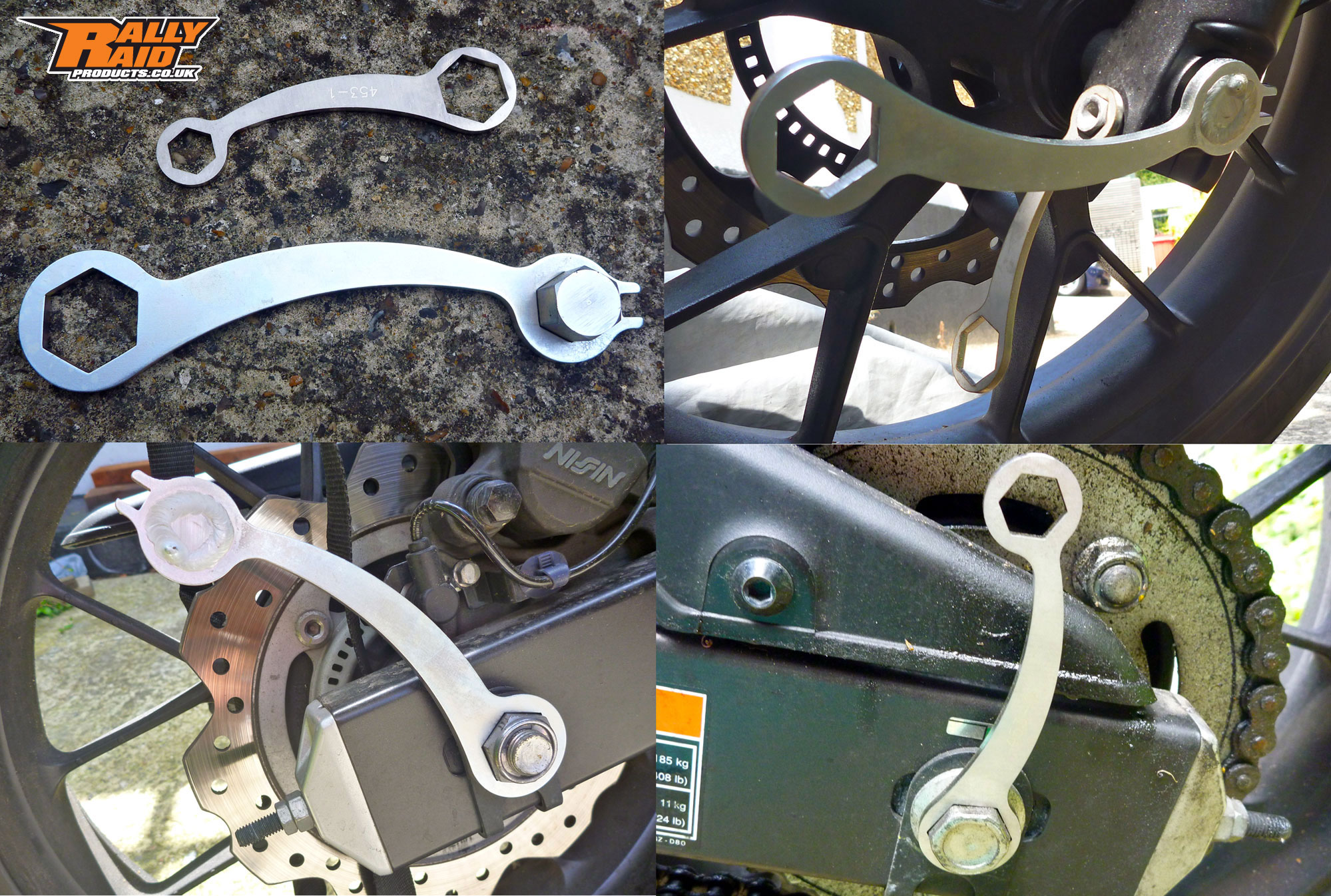
My bike came with no tools, even though the (used) test bike I rode in January had a set under the seat. Odd thing is they’re not even appearing on ebay or listed anywhere and word is some CB-X markets get them and some get nothing more than a hex key with which to pick your nose. Not even a C-spanner for the shock. It’s a bit like a car not coming with a jack. I know we know OE Jap tools aren’t exactly Snap-On Platinum Line but you do wonder if there’s some autistic bean-counter at Honda who isn’t able to fully appreciate the ill-will caused by absent tools with the tiny cost of sticking some under the seat. But we’ve been hearing this ‘spoil for a hap’orth of tar…’ business for years.

Rally Raid’s hard-working laser cutter to the rescue: two double-ended ring spanners in 2mm zinc coated steel (left) to cover all fittings for front and rear wheels and even a spoke key for the optinal wire wheel.

RRPspans

Windshield Adapter

cbx-beforescreen

On the CB500X forum there’s  a  l o n g  thread on screen options, and one thing you’ll soon learn is that what’s sauce for the goose is something else entirely for the gander. Some riders say stock is best, others find an aftermarket screen to be perfect/terrible and others even claim the bike is best with no screen at all. Well that just about covers it all then.

cbx-palmersid

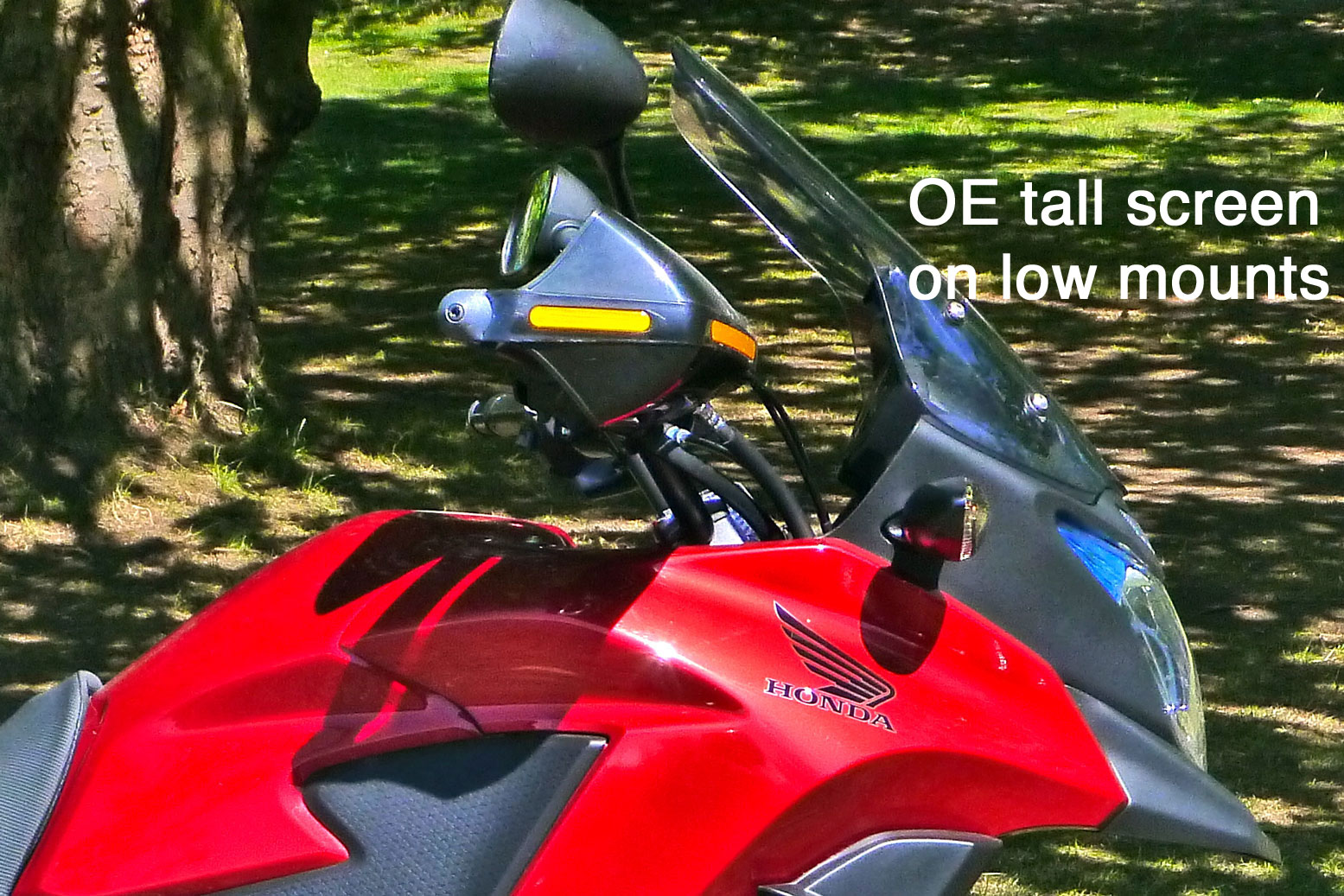
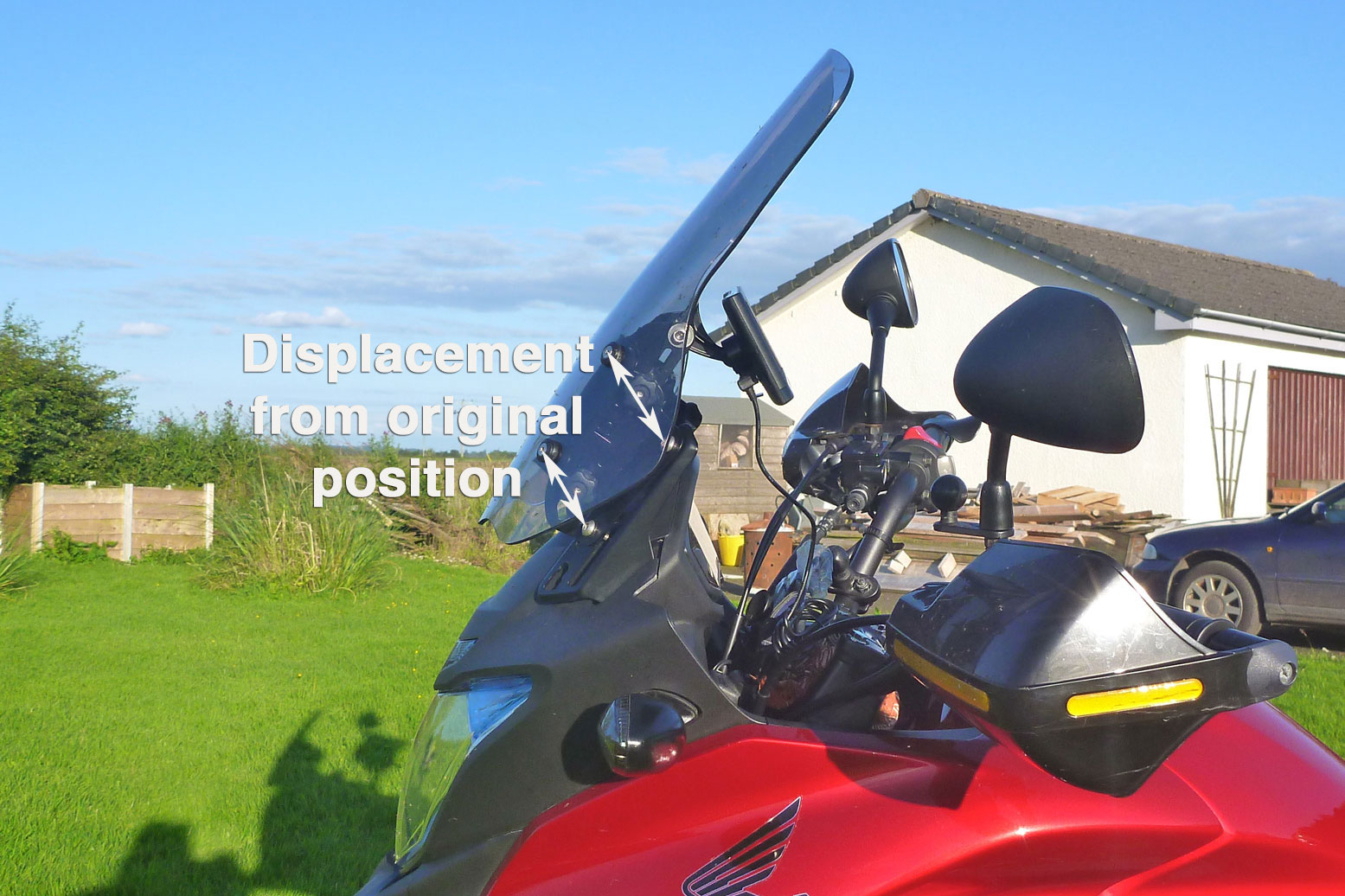
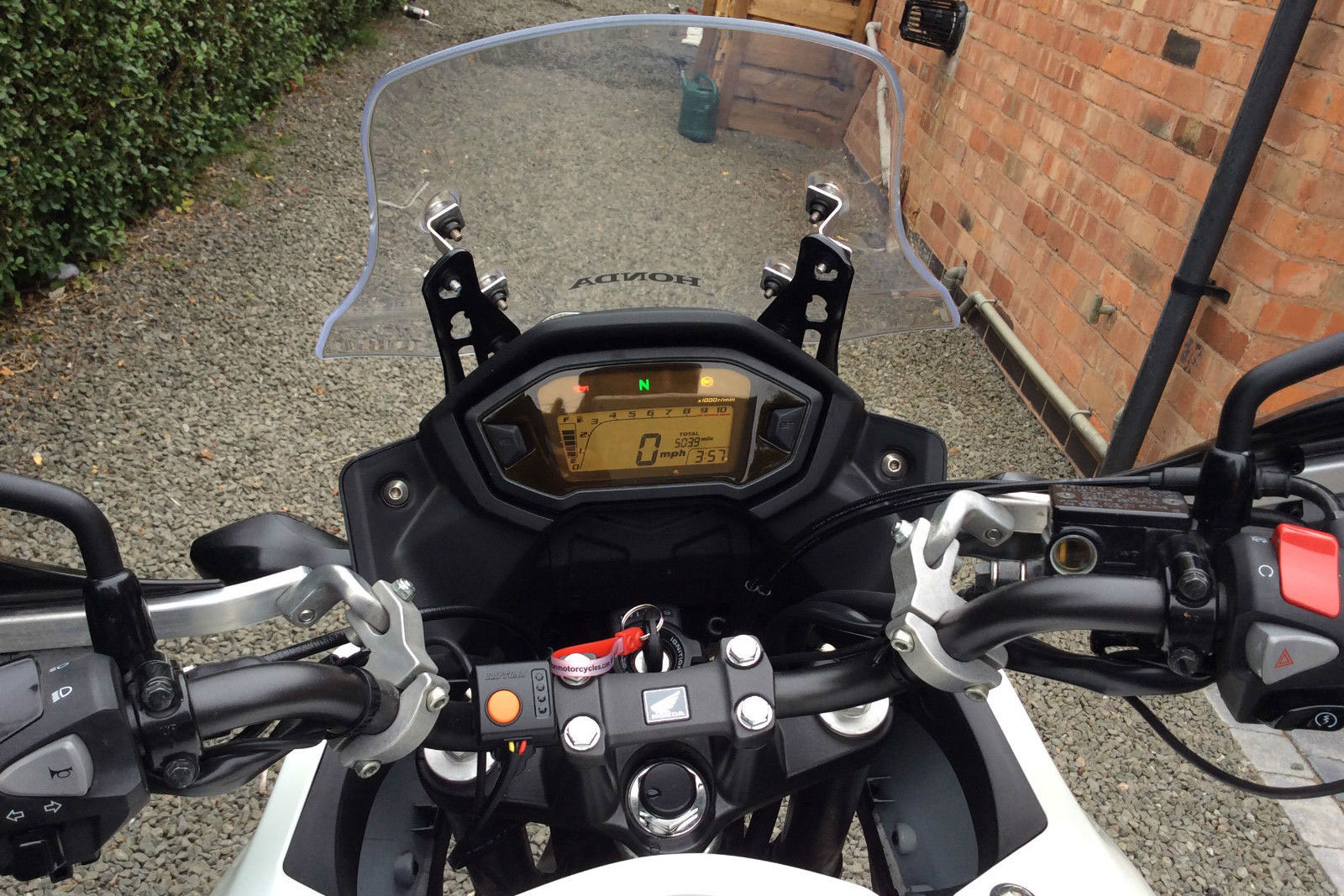
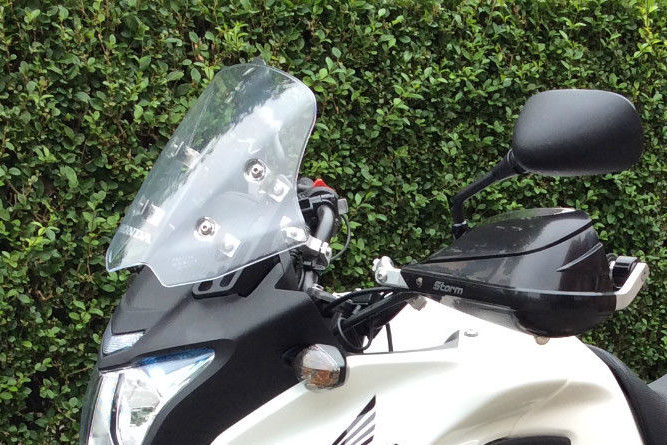
My bike came with a taller Honda screen installed which at 17″ (430mm) high x 15″ wide (curved) is OK but leans too far back (left). I can feel the air hitting the top 4 inches of my lid but I can’t say it’s unbearable buffeting or especially noisy. Let’s face it, I’m riding a motorbike not reposing in the back of a stretch limo listening to the Chemical Brothers. The bloke of the woman who sold me the CB-X suggested spacing the top mounts out by an inch or so to set the screen more vertically. It’s the sort of bodge I’d do without thinking on an old hack, but let’s try and keep this relatively new Honda looking proper for a while.

cbxbash-02

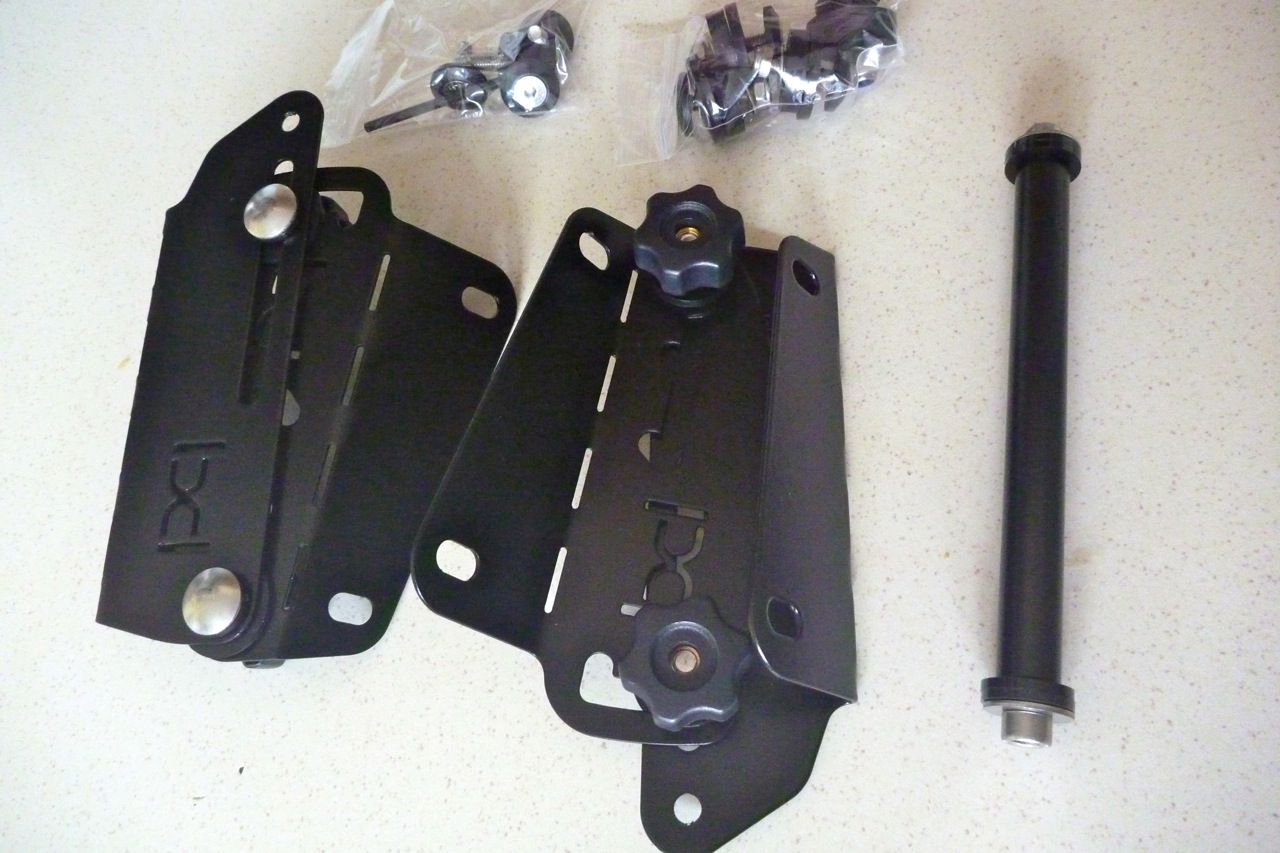
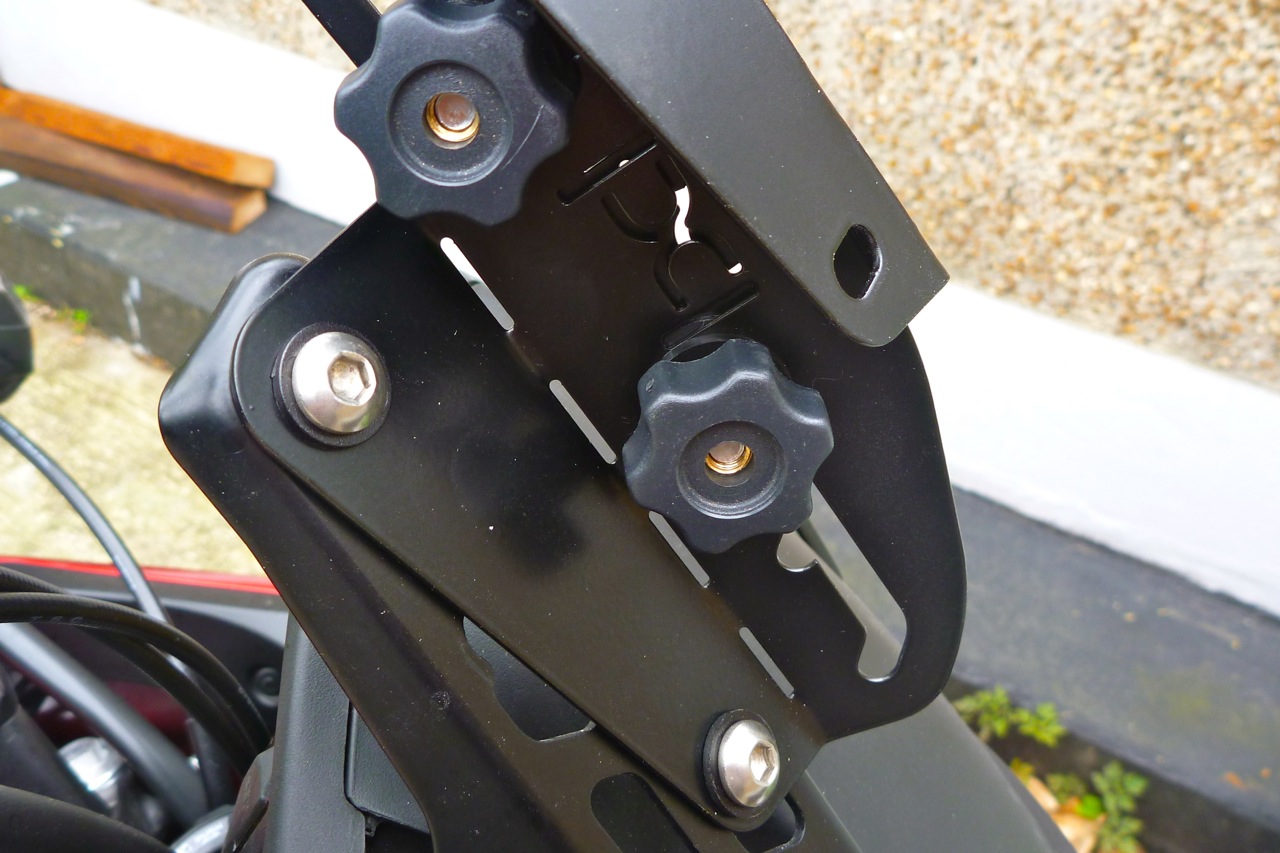
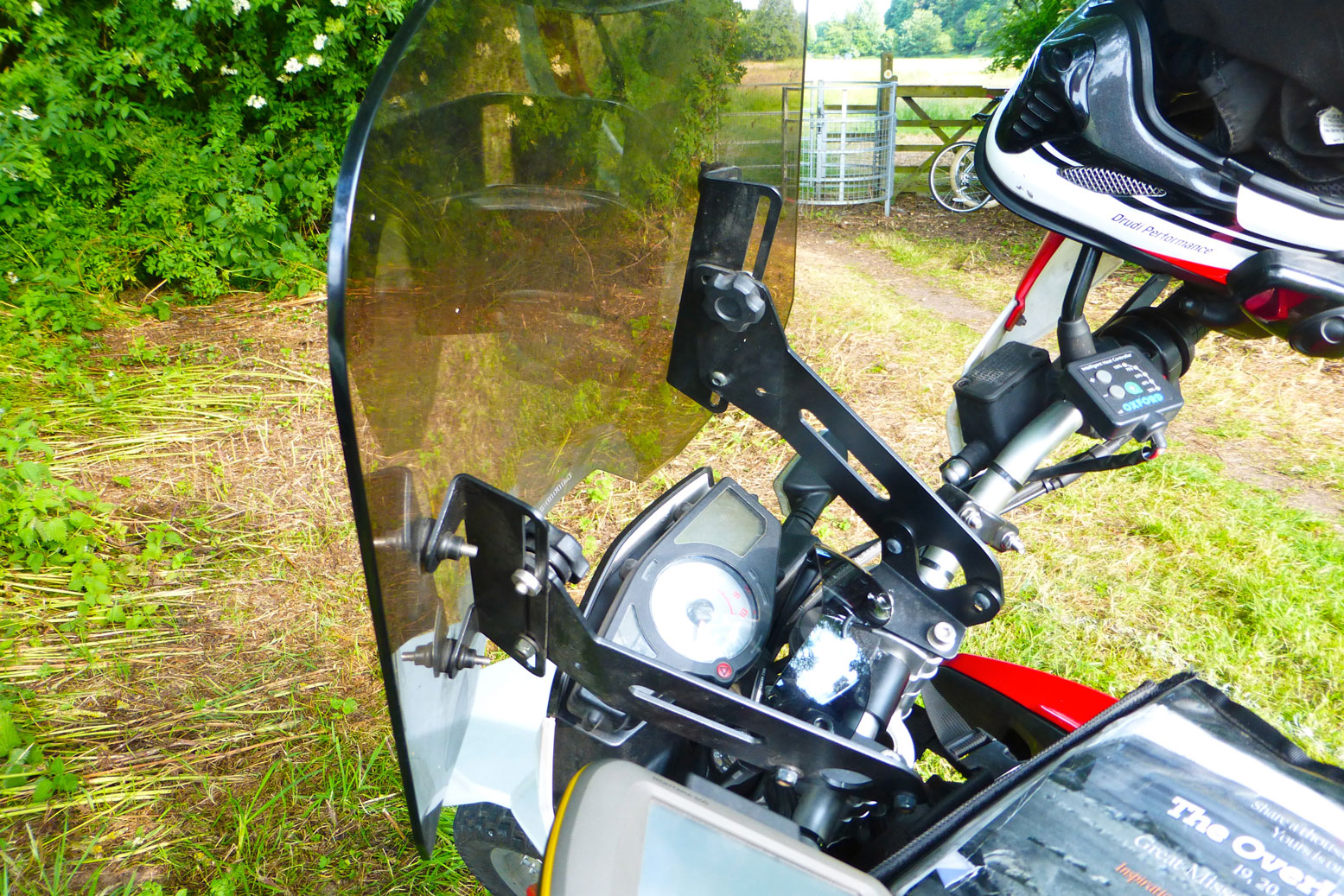
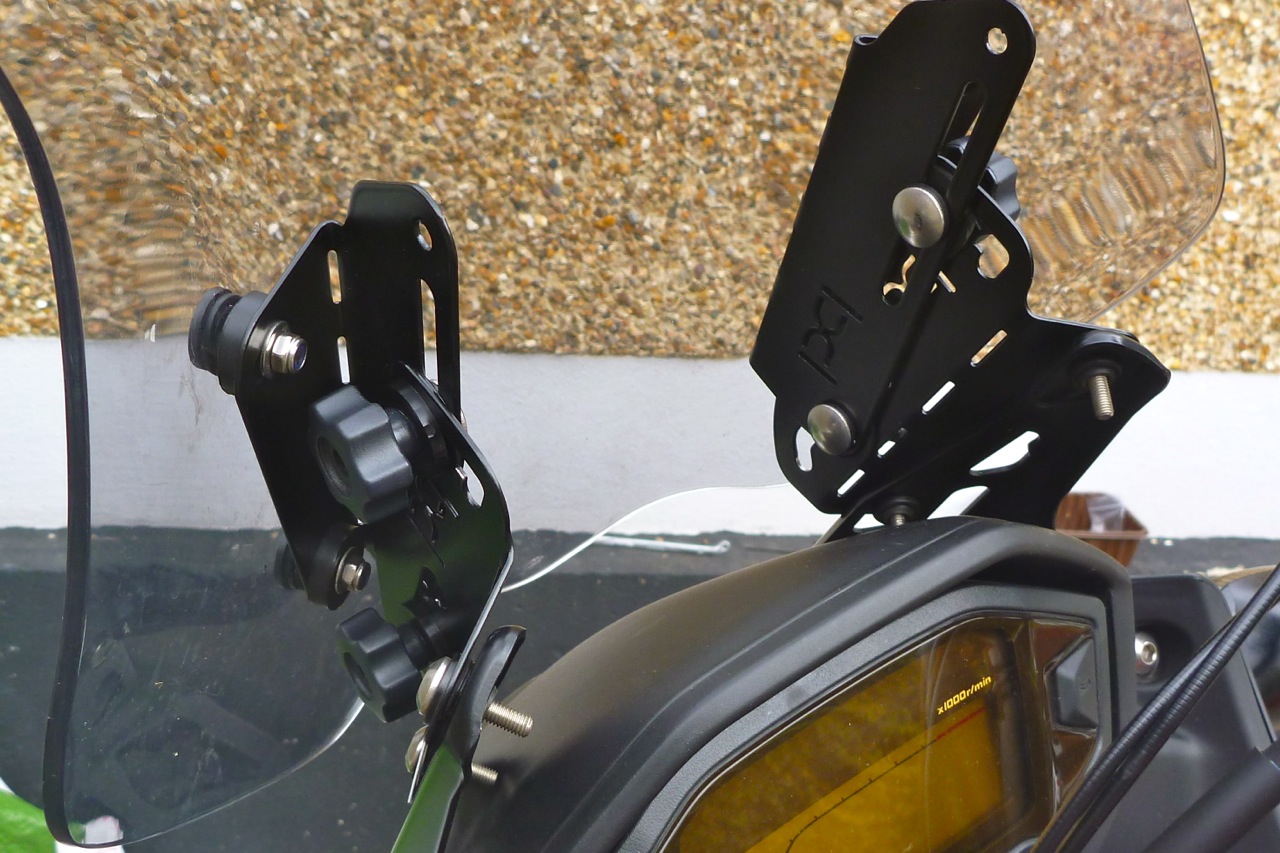
After reading that thread it seems to me that screen adjustability is the key if the goose and the gander are to be accommodated. There’s much more choice out there for CB-X windscreens than bashplates, from the likes of Givi, Puig, MRA, Madstad and others, some of them with fully adjustable mounting brackets. But because my screen is tall enough but just at a bad angle, I figured all I needed was a repositioning frame and the thread mentioned just such a thing: an adapter kit by Palmer Products who make them for dozens of bikes, and other stuff besides. Never heard of Palmer until now but their adapter fits between the OE screen and the fairing mounts to give three heights and three angles. Added to the Honda’s high or low position, that’s 18 possible positions. The full kit weighs 520g.

cbxbash-01
cbxbash-07

It took only 20 minutes to fit, reusing some of the Honda bolts despite a full set of fittings supplied. I paid extra for the knobs option to be able to adjust without tools, and in black rather than bare steel to perhaps make it less obtrusive on the move. With an accessory bar (not fitted yet), that came to £116, quite a lot but all nicely powder coated, well made and fitting right.

madstad

In the end I set mine up on the higher Honda level and then height 2/3 on the Palmer and 3/3 fully forward. The Palmer system looks broadly similar to a Madstad I saw recently at an overland show (right – a bar-mounted kit; they do CB-X too, see link below), but has indexing notches to give the three height and forward positions (though I suppose you could position between notches if you wanted). As it is with a US-made Madstad you have to buy their screen, costing over £200 although the few comments I’ve read not surprisingly rave about it because of the fine tuning.

cbxbash-11

I’m off on a long ride to far north Scotland next week and hope that before I arrive I’ll also have found an optimal position for the PP adjusted screen. More news about how it fared later.

Other bits lying in wait for the CB-X include a pair of fat Renthals to go with the RRP triple clamp when that gets in, and some RRP fat pegs which they kindly chucked in with the plate after John put me off some Pivot Pegz I was going to try off Adventure Spec. Right now I’m still enjoying the Honda’s  non-pivoting rubber-capped units but in the dirt they say wide platform pegs are the way to go and as part of my mission is to try new stuff, new stuff I shall try.

London to Ullapool ~ 777 miles later…

cbx-byrness

Even before I got to the end of Park Lane (a rare 40mph road in London) I could tell the Palmer wasn’t going to transform my ride to like sitting in the back of a stretched limo. Later, out on the A1 it didn’t feel much of an improvement, but as the OE screen wasn’t bad, this wasn’t bad either.
Good impressions (or indeed a comparison)  weren’t helped by the fact that I was now wearing my cheaper, noisier and more rattly Bell Moto 9 lid and not my X-Lite. And I keep forgetting to use earplugs.
At one point in the journey I moved it from Palmer height 2/3 and 3/3 fully forward to ⅔ and 2/3 – in other words angled a little more back. Well that didn’t make things worse so I’ve left it at that. The screen catches most bugs but a few still get to the visor – same with rain drops so the visor’s not out of the airflow which you’d think is the point. And the screen feels far forward for it’s slim width. The arms and shoulders catch some blast but, as has been said, I am on a motorbike. Later I noticed that over 70mph the flow does go right over which would suggest re-steepening the angle to 3/3 to make it do the same as slower speeds.

cbx-screener
cbx-cropper

Interestingly, a quick scan on ebay found a CB-X for sale and though he doesn’t mention it, at some point in 5000 miles of commuting he added some crude angle brackets to space his short OE screen forward an inch and at the same time raising the height a bit.  So there must be something to it. More experimentation is required with the Palmer, or just accepting I’m on a bike and remember the earplugs to retain what’s left of my hearing.

post
80mpg

Other observations: helped a little by an Aero wool pad, the seat actually supported a 520-mile day. While doing 70mph where possible and down to 50 in traffic, the mpg was 80, with the odometre some 3.2% over (measured against roadside PKs (right) over 20km. So that’s a true 78mpg. And all in all, a great machine that’s about to get even great-er.

cbx-sunnyscot

Honda CB400 SS – quick look

cb4-11

In my search for an optimal 400-450-engined travel bike that isn’t a CCM GP450 I remembered the Honda CB400 SS grey imports I’d seen on ebay.

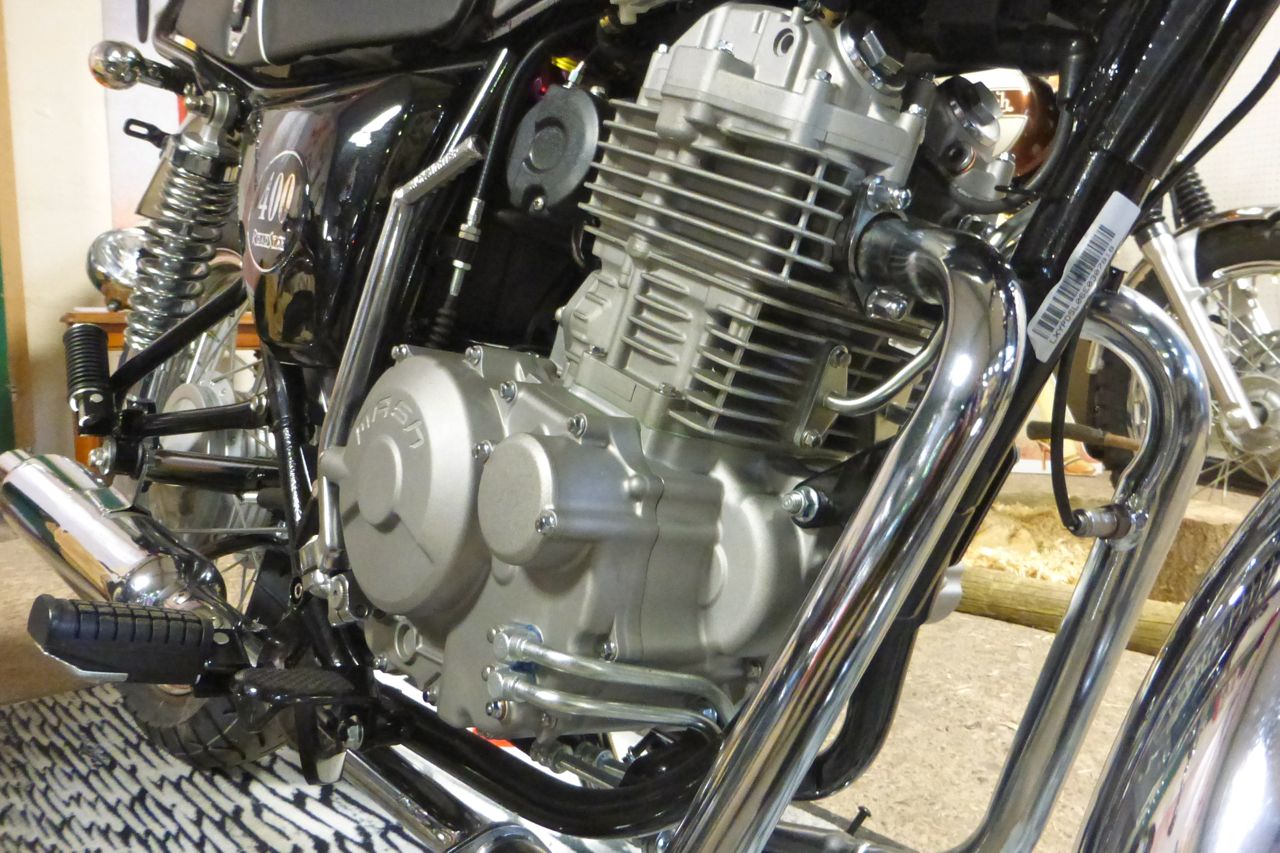
These Japan-only SOHC 400cc singles from the Noughties (about 2002-2009) look very similar to the Chinese Shineray-built 400 retros (branded ‘Mash’ in the UK) which I rode a couple of weeks ago and which go new in the UK for around £4000.

Even more than the Chinese versions, the CB SS really is 70s or 80s technology, right down to a carb. It too has a pleasing retro look and low seat that someone new to a full license might like. But are they worth from £3200 upwards? I nipped over to the shop in west London that sells all sorts of exotic Japanese stuff, including several CB400s for a closer look.

cb4-11
cb4-01

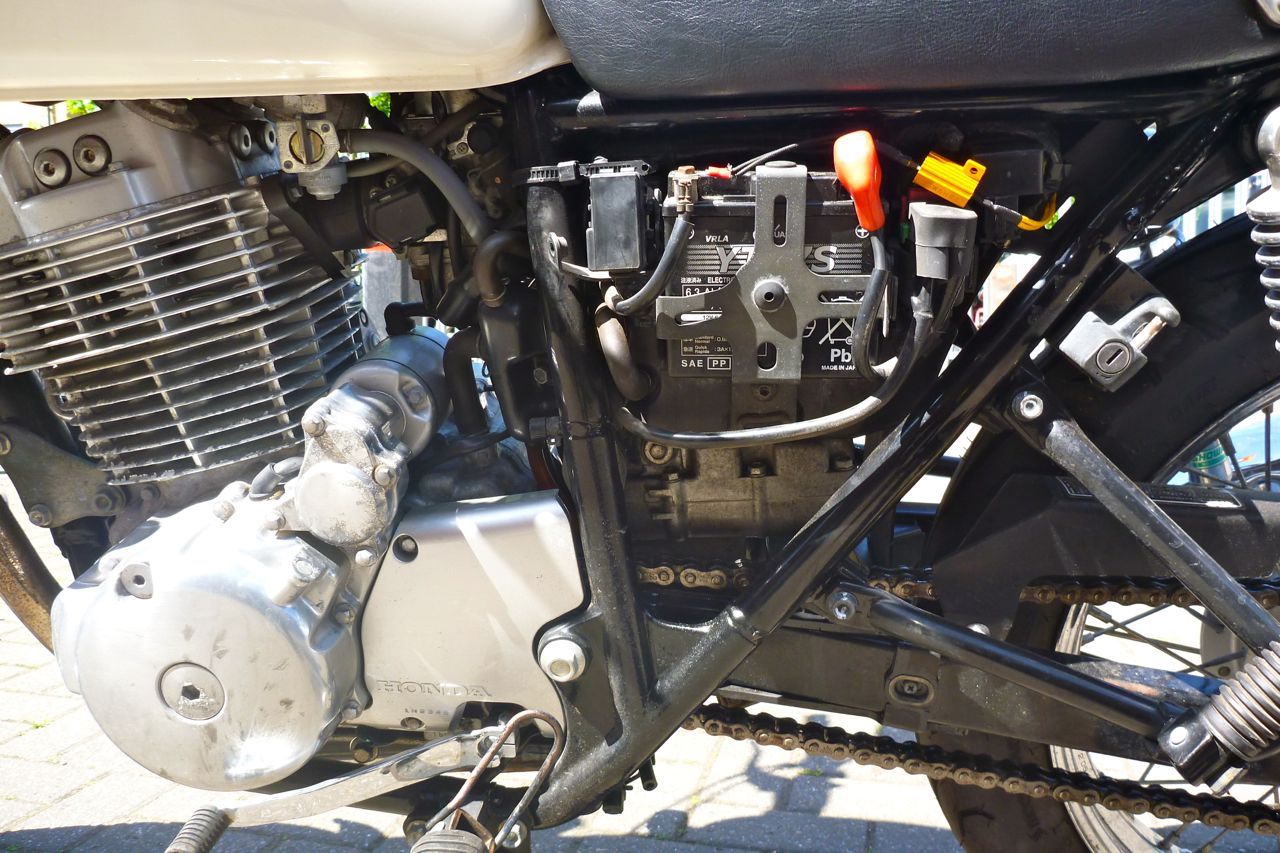
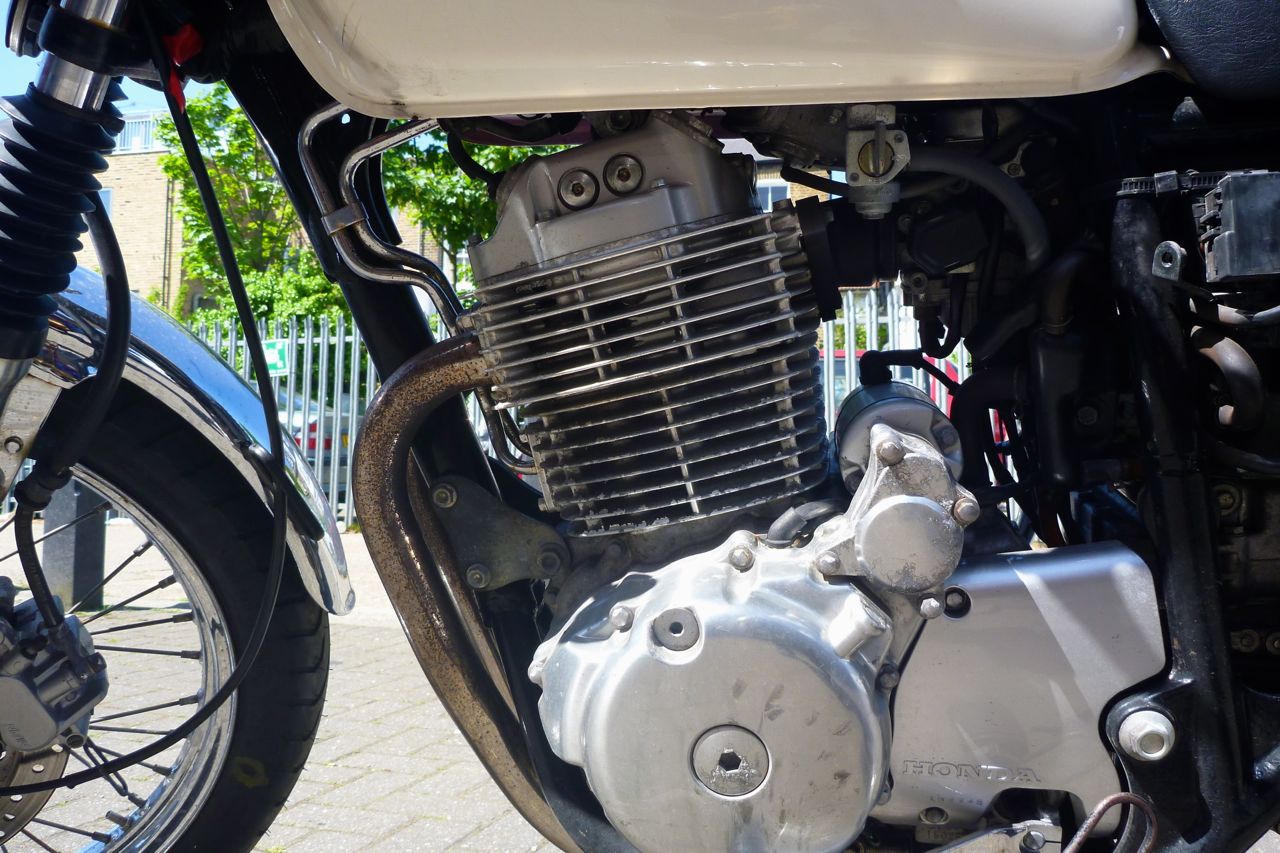
As you may have read, the CB’s engine is a version of the XBR500 we got here in the late 80s – an unusual kick and electric motor that made 43hp. With time and money to spare that might be a motor worth sticking into a trail bike frame. Why not just get an XR600-650? The subframes are too skinny for travel loads. Meanwhile, the 400SS makes a claimed 29hp, the same as claimed by the newer, injected Chinese versions.

I was hoping to see if the 8-year old Jap original might have more poke than the near-new Mash I tried but instead of a burn up along the Westway to Perivale I was limited to a 2nd-gear run alongside the railway arches – my progress further hampered by speed bumps. It’s hard to be certain but even then I did detect a bit more pull from the Honda than I recalled from the Chinese-made Mash. Other differences on the CB include a better operating front brake, a smaller tank, a box-section swingarm and – from the exterior castings at least – a different motor.

ENGINE
Engine: Air cooled, four stroke, single cylinder, 85 x 70 OHC, 4 valve
Displacement: 397cc
Bore and Stroke: 85 x 70 mm
Compression ratio: 8.8:1
Max Power: 29hp 21.2 KW @ 7000 rpm
Max Torque: 31 Nm @ 5500 rpm
DRIVETRAIN
Transmission: 5 speed
Final drive: Chain
CHASSIS
Front Brake: Single disc
Rear Brake: Drum
Front Tyre: 100/90-19
Rear Tyre: 110/90-18
DIMENSIONS
Seat Height: 790 mm (31 inches)
Dry weight: 139 kg (306 lb)
Fuel capacity: 11 Litres (2.9 Gal)

But like the Chinese-built bikes, they’re just asking too much for these decade-old CBs. My red example had just had about £500 dropped from the price down to £3200, but here and elsewhere in the UK they’re asking around £3800 – nearly the same as the new Shinerays which themselves aren’t bargains.
I got the feeling these CB400SSs weren’t exactly flying out the door, nor would I expect them to. Look at my 2009 ABS Versys bought for effectively £2100. So while I’m still not sure about the Chinese bikes, at current prices and with locally available XR400s, the CB400SS is not a contender, even if it does have the benefits of native Japanese engineering.

NX400

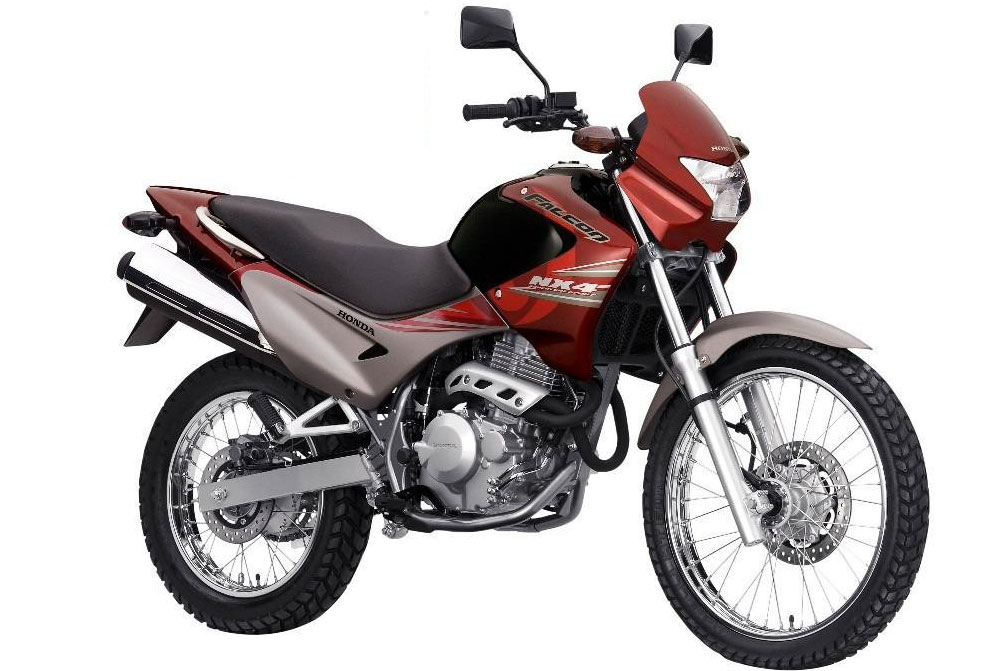
Other 400-cc bikes in the similar category include the more modern, Brazilian made Honda NX4 Falcon (left). They do pop up occasionally in the UK dealers going from between £2200 and an optimistic £3700.

honda-bulldogg

Or how about the Honda Bulldog 400 – only a concept and likely to stay that way, just like the 250 Ryoku Yamaha from a couple of years back. That’s a down-sized CB500 twin engine, in case you’re wondering. Round and round it goes.

Riding the Mash Roadstar 400

See also:
Chinese travel bikes article
Royal Enfield Himalayan

Updated 2020

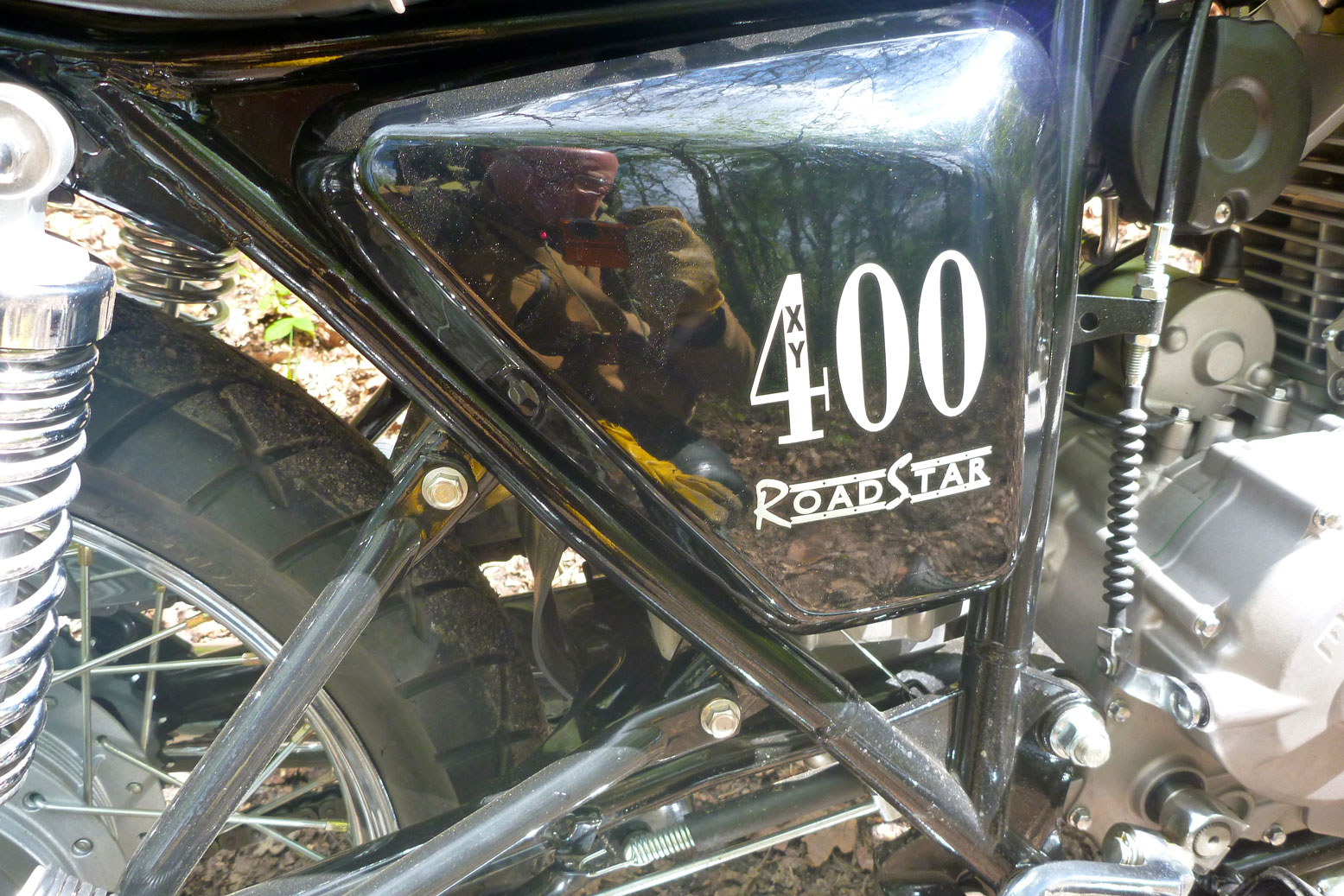
mashadv1For a while there was a bike I was curious about: the French-branded, Chinese-made Mash Adventure 400 (left) that was briefly available in France and the UK alongside other 400s. It was near identical to the similarly short-lived WK Trail 400 mentioned here. Both use the same Shineray XY 400 engine from Mash’s Roadstar retro.
In the UK you could pick up low-mileage WKs from £2500 and end-of-line Mash Advs were going new from £4750, complete with panniers.

mash-14
beaky

Other than the engine, those two Advs were quite different to the Mash 400 Roadstar I tried out (above). The frame’s monoshock back-end and bigger front forks made a much taller machine; both ends were said to be fully adjustable; the wheels are 18/21 and both run discs. There’s a bash plate, screen, handguards and digital clocks plus the mandatory beak.

wk400

The WK Trail 400 (left) was briefly sold in the UK and a couple of magazines, including Overland Mag and Rust Sports tested it. Its price dropped from around £4k to a more realistic  £2999 £2499 before they all went.

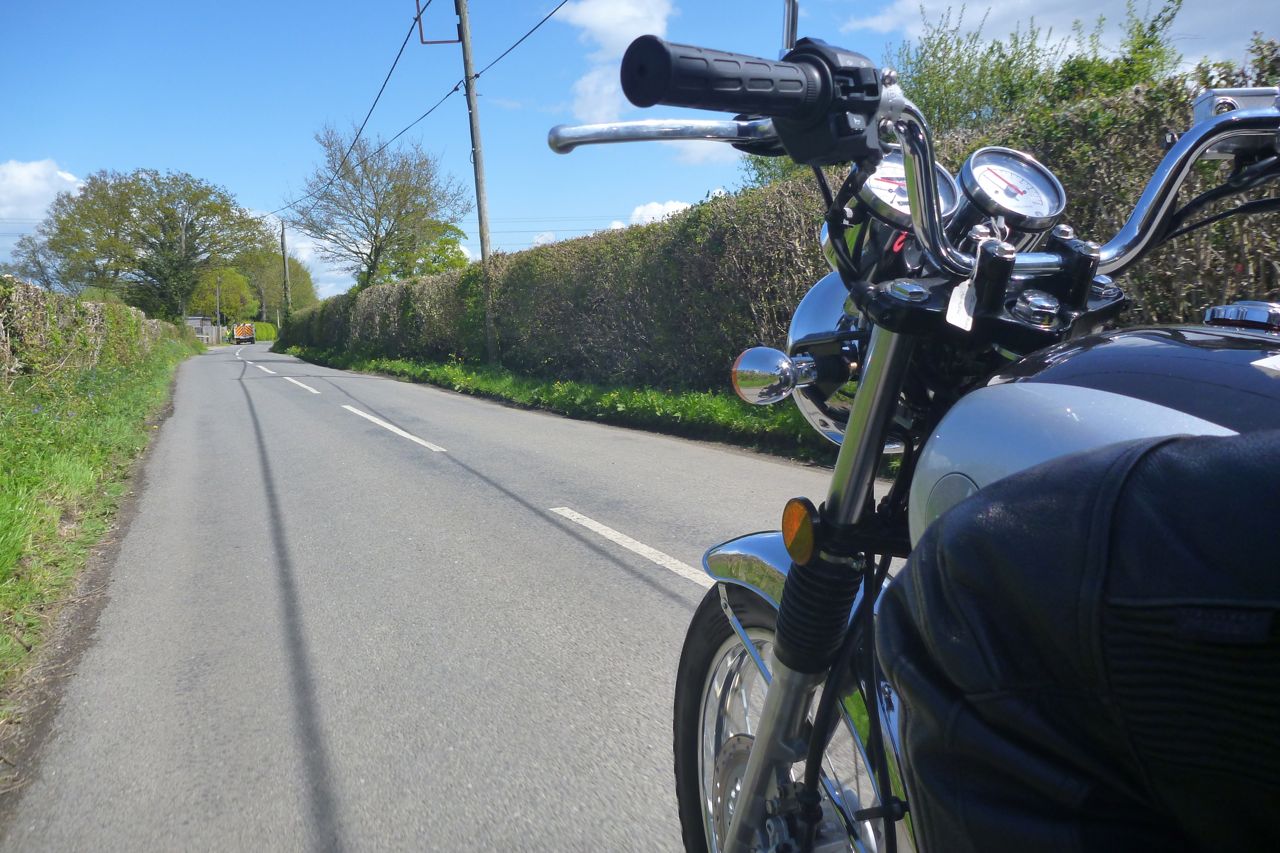
I spent about four hours on the Mash Roadstar provided by T Northeast, a small bike shop in Horley, near Gatwick (they no longer sell the 400s and Mash UK seems to have closed). The bike only had about 150km on the clock and I added another 120km riding the back lanes of Sussex and Kent.

Some specs
Engine: air-cooled 397cc SOHC 4 valve, EFI, electric and kick
Power: 26–29hp (sources vary) @ 7000 rp
Torque: 30Nm @ 5500rpm
Weight: 151kg claimed
Alternator output: unknown
Seat height: 78cm/31″
Fuel tank: 13 litres
Wheel size: 18″/19″
Brakes: drum rear, hydraulic disc front
Suspension: twin shock with preload, 35mm fork

For comparison
• Honda XR400: 31hp and 32Nm @5500, 130kg
• XBR500 43hp, 43Nm @6000, 167kg
• Yamaha’s short-lived SR400 23hp, 27Nm @ 3000rpm and 174kg
Himalayan 24hp, 32Nm @4500 and 192kg
Saturn V space rocket 10.6 million Nm @ sea level, 496,200kg

mash-11

t120

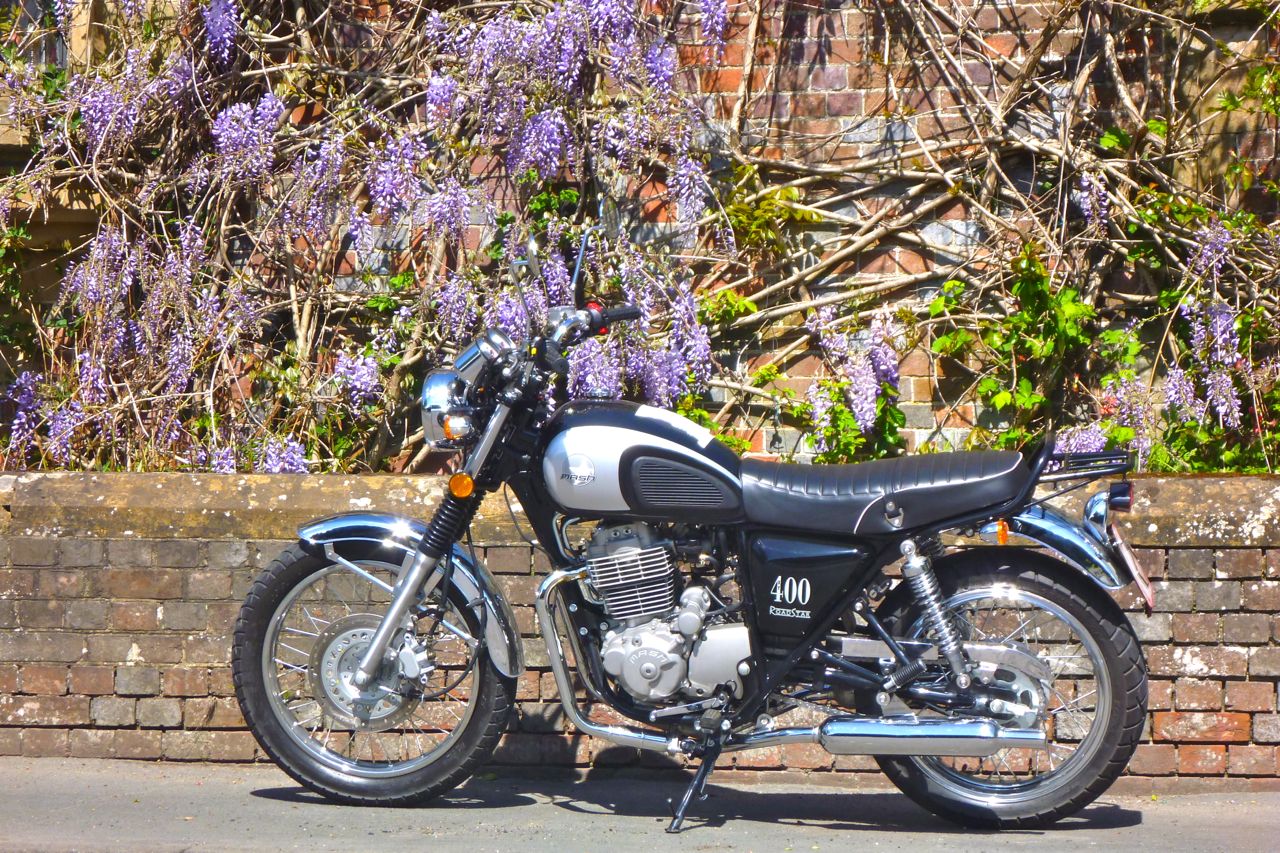
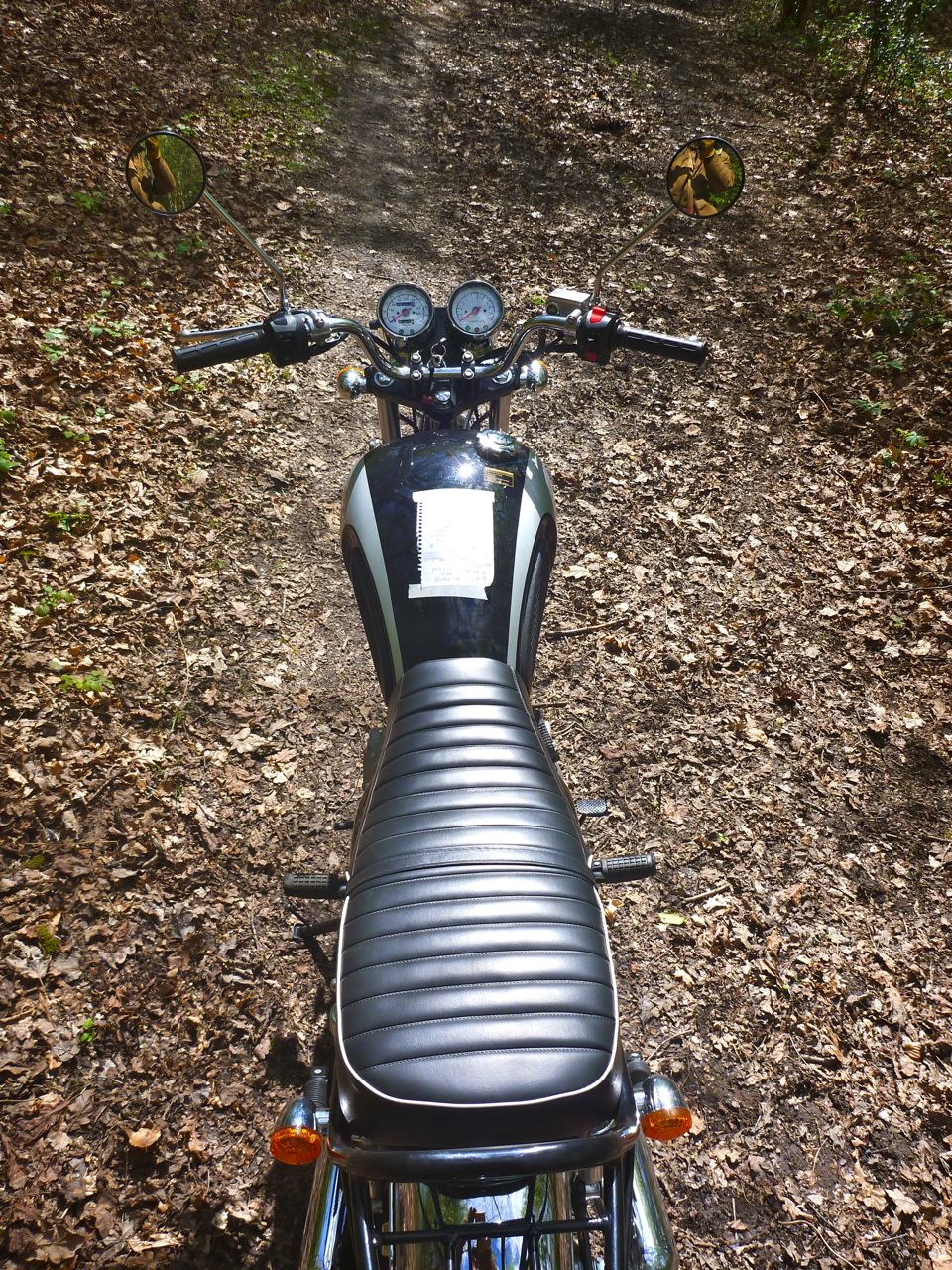
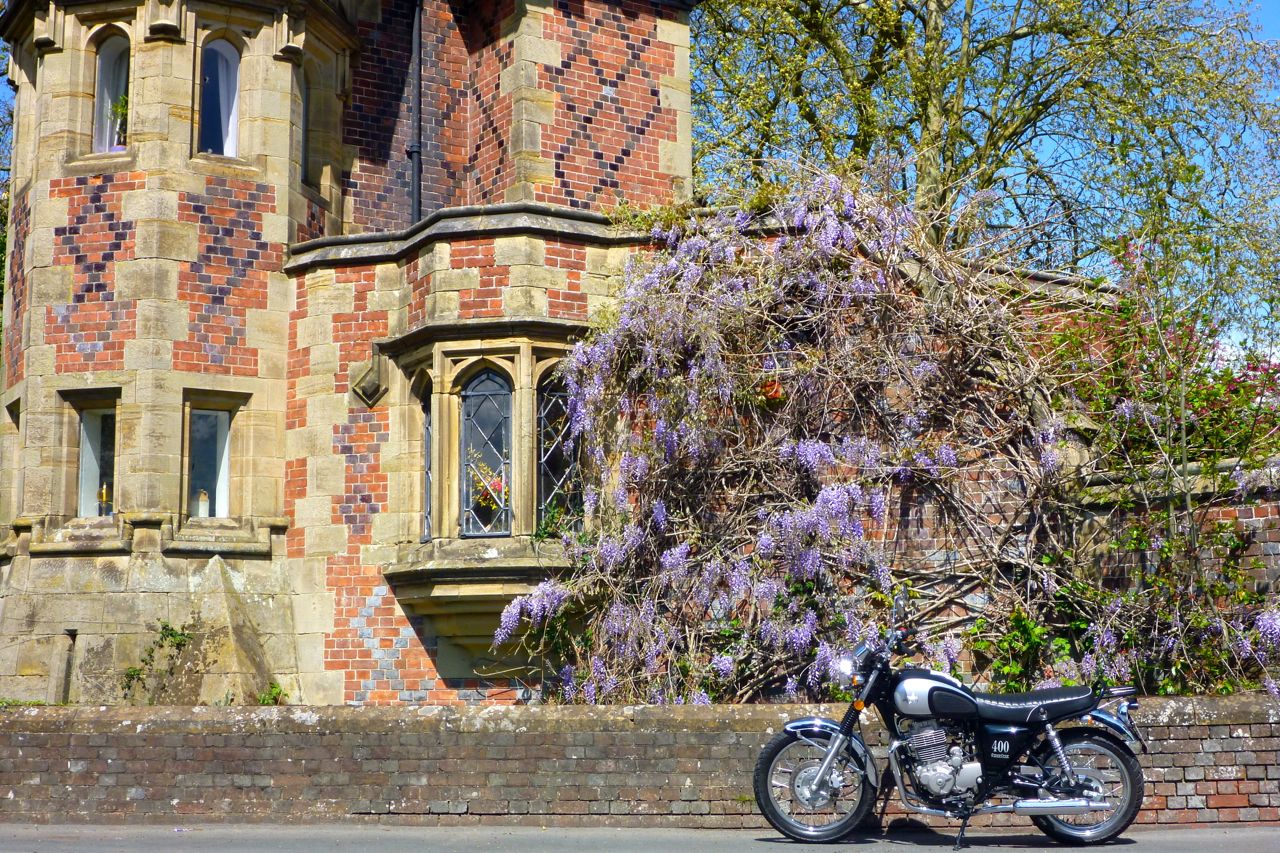
The Mash Roadstar is a great looking machine with an idealised Brit-retro ‘T120’ (left) profile that’s as cool as the originals it’s imitating. The flat bench seat, fork gaiters, peashooter pipes all set off the right cues.

You’d think it’s small but that’s mainly because it’s low. It fitted me (6′ 1″) fine: the footrests felt farther forward than normal with my thighs almost horizontal and me sat midway on the seat. I didn’t get a picture of myself sat on the machine – had I done that the proportions may not have looked as flattering as they felt. The gear lever was a bit short for my boots, but changing was light and near-silent compared to the granny-startling clunk into first on my Versys or my previous XCountry. Though it’s not a habit I’ve ever managed to maintain, clutchless changes up the ‘box were similarly effortless with no backlash.

mash-20
mash-21

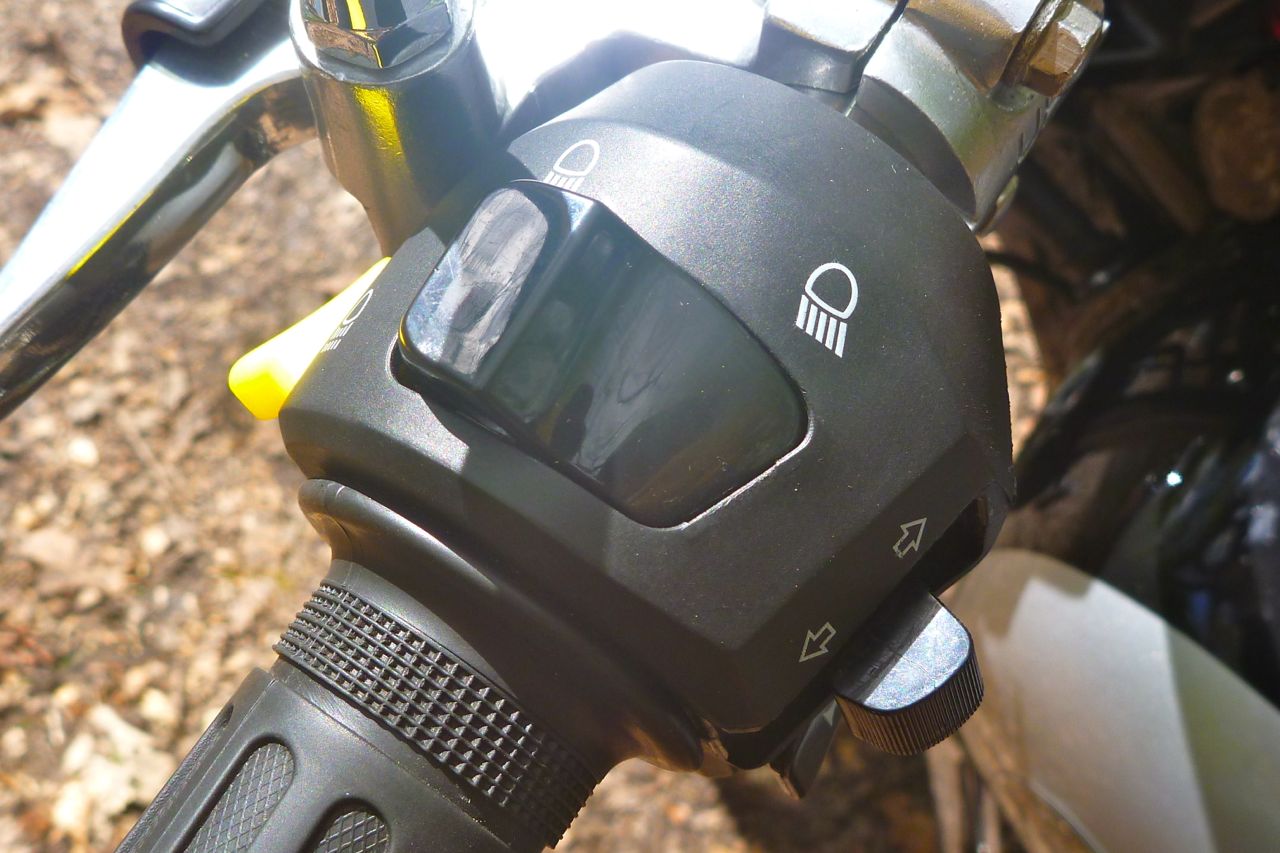
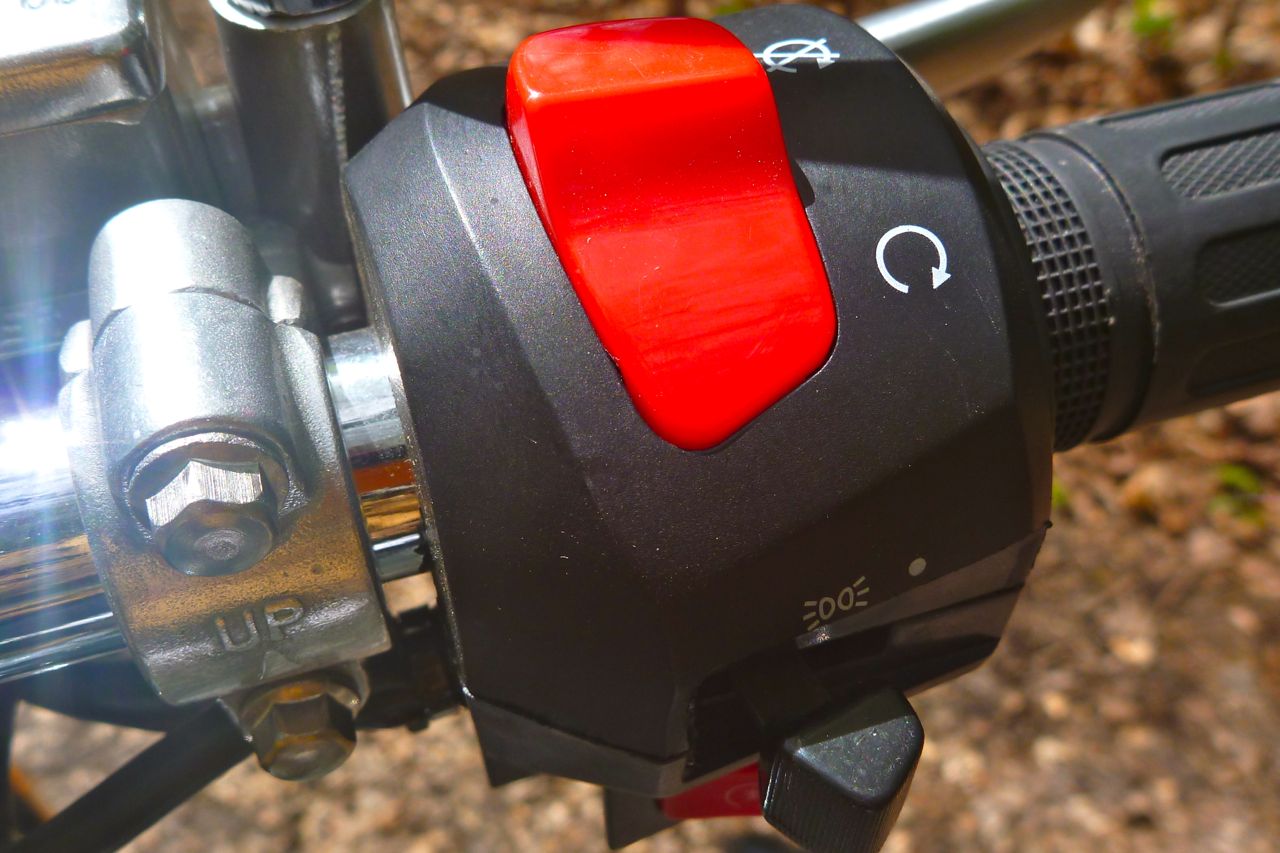
The switchgear didn’t quite give off that intangible feeling of solidness and quality you get from your Japanese or European machines, though all I used were the indicators. The headlamp is always on, though you slide a switch to turn the back light on.

sr400

The Mash Roadstar resembles Yamaha’s UK-reintroduced but soon dropped SR400 (left). The mini SR never caught on, despite the retro trend. First time round in the late 70s the original SR500 wasn’t such a big hit either, while the XT500 with which it shared its motor had already become the classic it remains today. Alongside the Roadstar, the £5200 SR400 merely looked overpriced and heavy. What it needs is some of this!

mash-02

Back at T Northeast I was warned the front brake was poor – a braided hose is said to be in the works. It was lame but over the hours I found applying more pressure than I’m used made it work like a normal brake. Of course you lose finesse yanking on a brake like that, and I’m not sure that can be purely down to a cheap rubber hose. The rear, rod-operated drum was fine and I dare say would lock up with a panic stomp. One old trick we used to do was remove the brake rod and put a light bend in it to reduce the over-direct actuation. Wheels are your classic 18/19 combo and the Kenda Cruiser tyres hardly got stressed on my ride. There was a downpour on the way back but riding with the conditions, they didn’t skip a beat.

mash-27

Initially riding away from the shop the bike felt as skimpy as a 125. This lack of bulk and the airy front end detracted from the planted feeling on my Versys (at the time), but that can’t all be down to an extra 70-odd kilos of weight. It could be due to the spindly 35-mm forks alongside the proportionally hefty front wheel.

mash-23

The suspension is basic on the Roadstar. Out of the shop on notch 2/5, my dressed-to-ride 100 kilos bottomed out the back-end on country-lane potholes until I cranked them up to 4/5 with some pliers I happened to have on me (no tool kit that I could find). It’s possible the steering feel improved on doing this too, or maybe I was just getting used to the bike. It takes some effort not to compare a new bike to your normal ride, even if it’s another type of machine entirely.

mash-26

I know the Roadstar is low but the bike does feel very light and I wonder if that claimed 151-kg figure could be wet. My XCo was supposedly just a few kilos over that weight before I layered on the travel clobber, but the Roadstar felt more like my CRF250L (144kg wet).

mash-18

And it’s not like the Roadstar goes out of its way to save the kilos. Just like the bikes from the period it evokes, sidepanels, mudguards and the chain stay are all metal. Even the oil tank sat behind the gearbox (left) looks like an unusually hefty casting and the chain this bikes runs is much heavier than what’s on my Versys with more than twice the power.
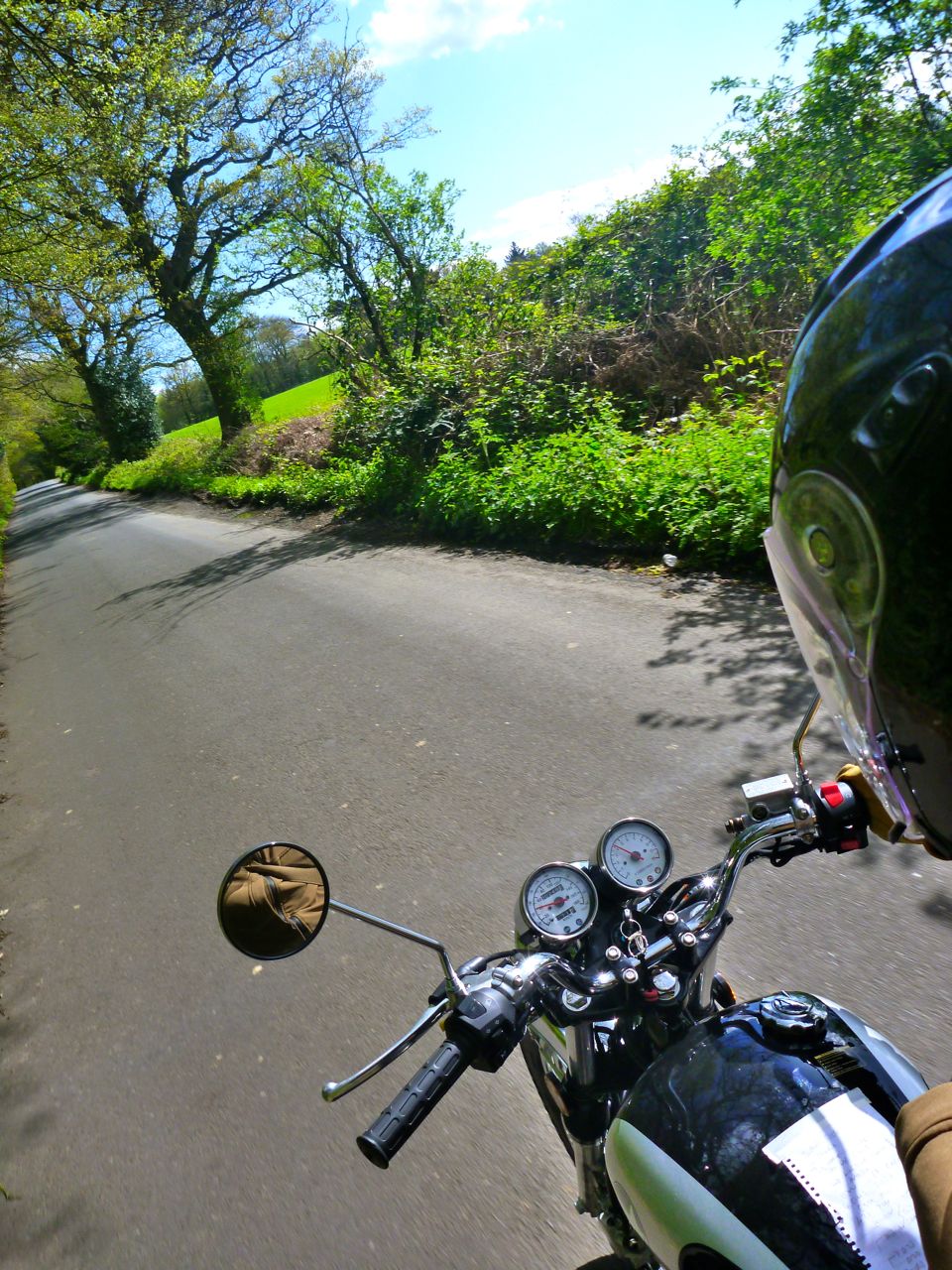
It may well be a Chinese cheapie, but once that’s shot and you slap on a DID I can imagine it would easily last 20,000 miles with something like a Tutoro drip luber. Along with the low seat height, this lightness has great benefits in doing a quick u-ey to nip back for a self-timed photo or follow a lane that looked like it went somewhere good. I had a delivery in Kent, but as there was no 12-volt plug to run a satnav I was navigating the old-fashioned way with a cryptically scrawled roadbook taped to the tank.

mash-speedo

mash-09

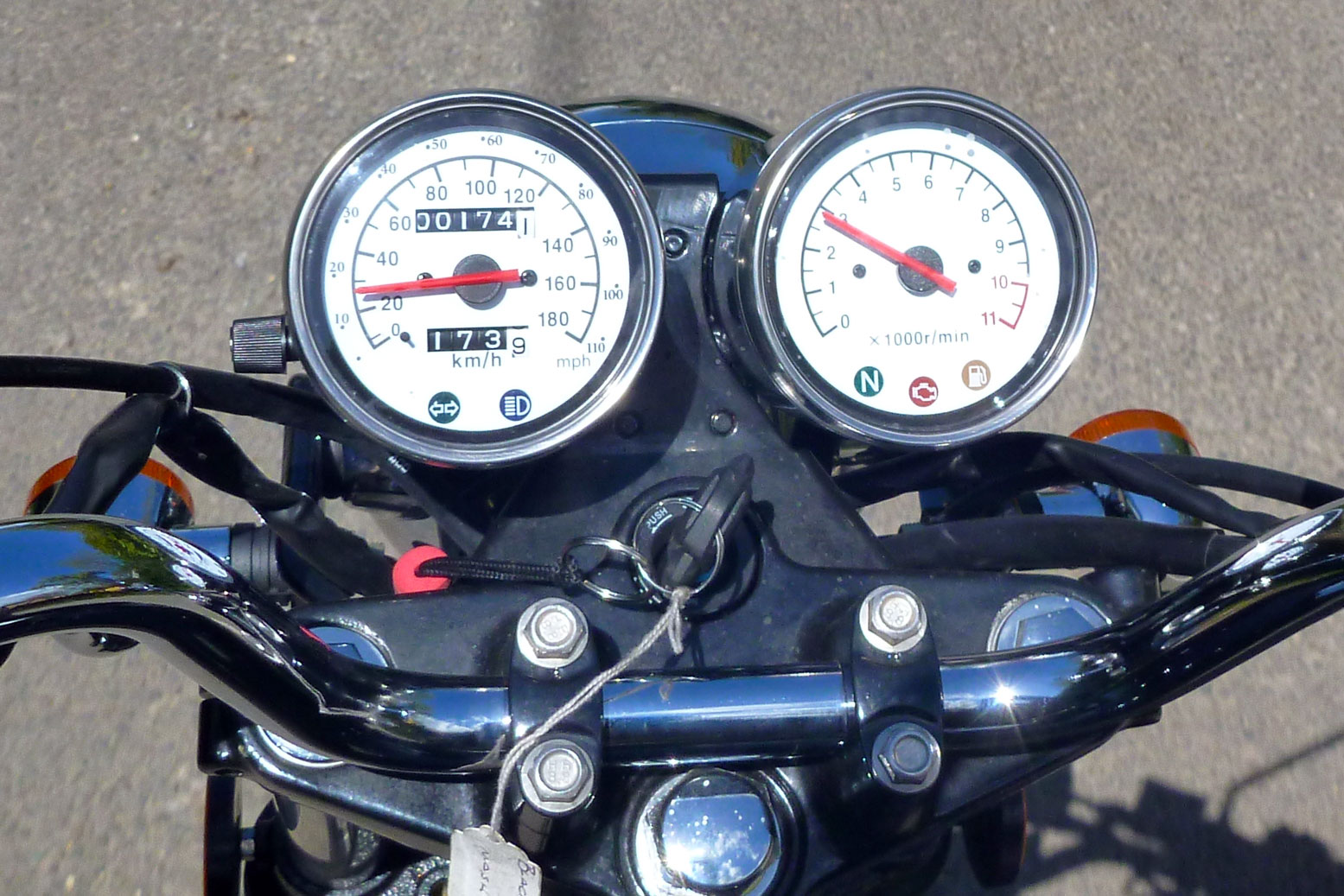
Running along Kent’s lanes at up to 50mph (clock and odo in km with mph scale on the speedo) the bike ran well, though I’m not sure I was doing the indicated speed. Push it to 60 and you start to ponder the limits of the brakes and suspension.

The five-speed gearing felt wide and tall: top gear was more of an overdrive rather than something with which you could usefully pull. It could be the very low mileage, but the Roadstar didn’t feel like it could have outrun my CRF250 or the XR250 Tornados we used in Morocco. And I’d expect to feel that power right off the bat, not by wringing the bike’s neck like it was a mid-80s two-stroke triple. For me the point of tracking down a 400 over the much more prolific 250s is either gaining a lack of balls-to-the-wall revviness or the ability to pull in lower gears with fewer gearchanges, but all without the weight penalties you get once you exceed 500cc. I was changing gear around 4000rpm – to rev much further would have felt a bit frenetic and unnecessary, but the 26-hp Roadstar’s motor felt more Jap 250 than XR400, let alone my old XT500 (below) which is listed as 27–31hp but 39Nm torque at broadly similar rpm. Another few hundred kilometres on the engine may have changed that, or it could be down to flywheel weight or the stroke of the motor. Mash don’t mention it, but the WK lists an identical bore and stroke to an XR400 just 0.4 bar less compression (8.9 vs 9.3). These are all just numbers off the internet where I found claimed power and weigh figures can vary by over 10 per cent for the same bike.

XT500s

mash-03
mash-17

Whatever the style of bike, one big attraction is fuel injection combined with a low-compression, air-cooled motor onto which it would be easy to graft an oil cooler. That might not be necessary or all that effective as with 8.9:1 compression ratio and the lowly power output, this 400 ought not get that hot in normal conditions. The low compression also means the motor ought to tolerate low-octane fuel out in the world, though I’ve found efi systems on big singles like the XCo and 660Z Tenere can handle detonation from low octane fuel, whatever the engine’s CR. Another benefit of all this is should be fuel consumption. I filled up at the start but forgot to fill up again at the end to work out what I used, but surely the retro Masher will return at least 25kpl or 71mpg. With the 13-litre tank that would deliver a fuel range of some 325 kilometres or 200 miles – about 80% of what I’d consider optimal for a travel bike.

mash-13

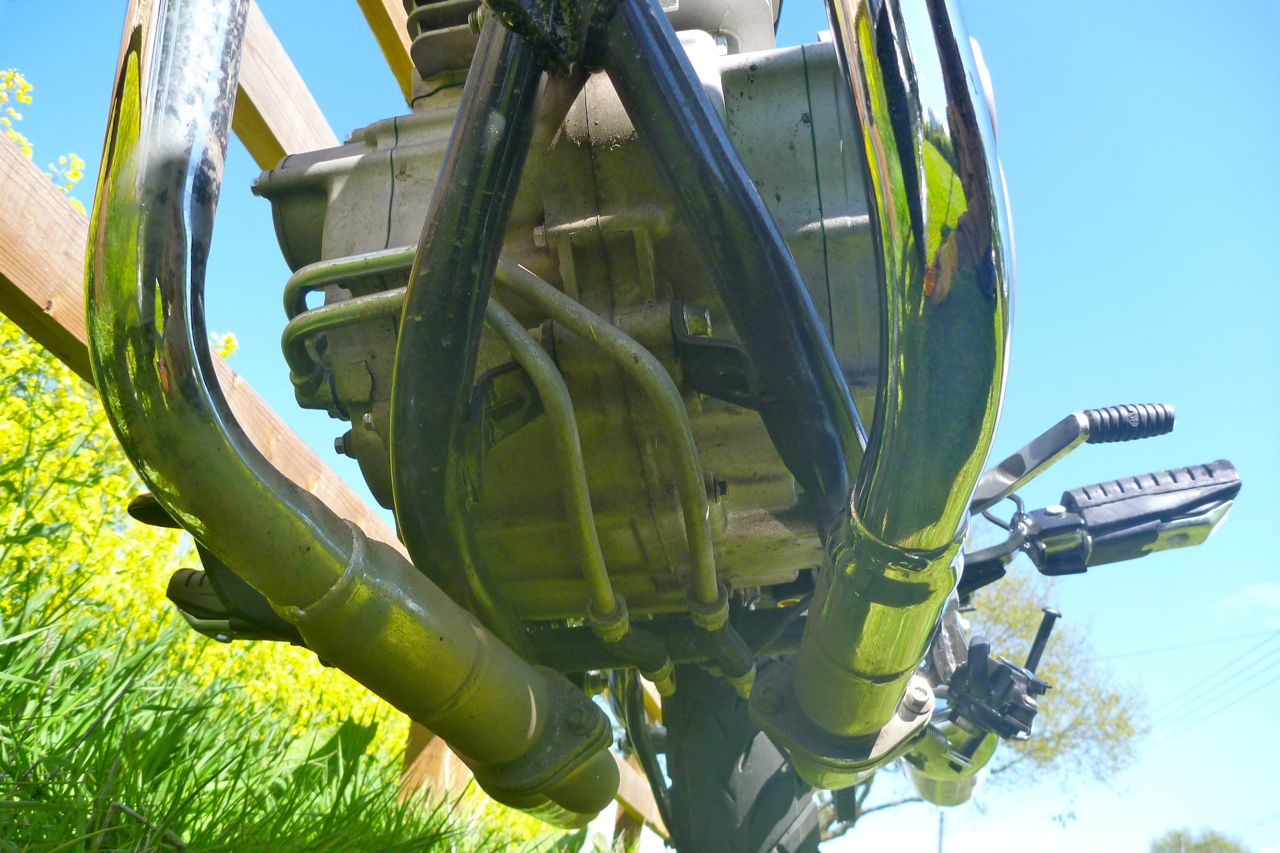
You might get used to the modest power but the main thing that would limit an adventurised Roadstar would be the suspension. At 35mm the unadjustable forks look skinny even if the preload-only twin shocks could be swapped out. The metal chain guard and front mudguard would be better in plastic too and the low-slung pipes as well as the under-engine oil lines would need protecting or moving over the top like an XBR. Without crash bars the foot controls might suffer in a fall too; the gear change could be easily swapped for a folding-tip item, but doing the same with the brake pedal would be tricky to pull off.

mashbrace
mash-30

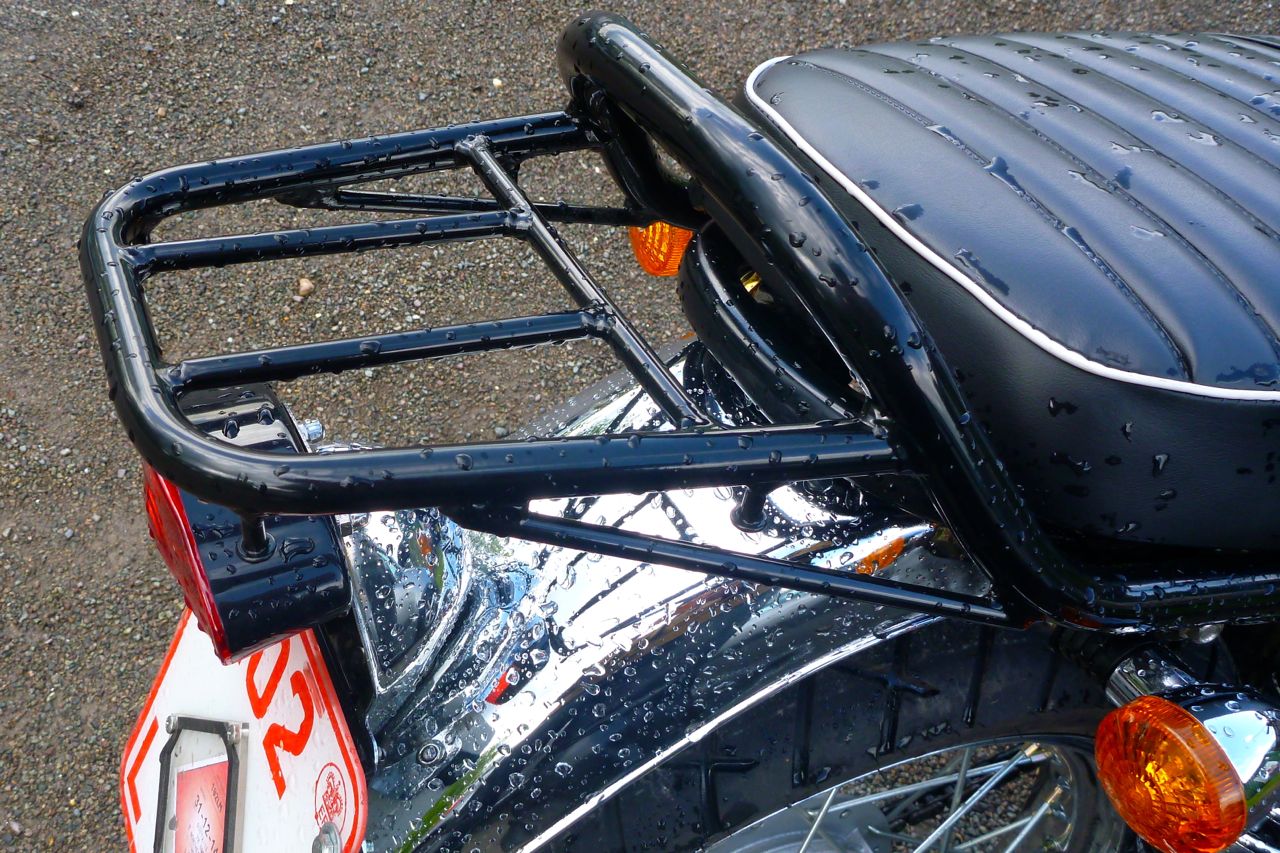
One good thing about being twin-shock is you could get away with using  throwovers without a rack to keep them out of the wheel. The little racklette (right) that comes with the bike is neither here nor there – I’d sooner take it off and fit a wide sheep rack as I did on the XCo. I couldn’t work out how to remove the seat other than with an awkwardly accessed 12mm, and only managed to remove one side panel, but the subframe does seem well up to the job compared to 250 trail bikes like the CRF and Tornado where it’s their biggest weak point. The Roadstar chassis has thick gussets inside the triangulated sections and, though slender by monoshock standards, the long swingarm looks solidly mounted via the back of the gearbox.

mash-25

I did something on the Roadstar I’ve not done on a bike for many, many years: swung a kickstart. I assumed the Mash would kick into life like a CG125 with one swing, but it seems I’ve lost the knack and it took a few stomps to the point where I lost interest in doing it ‘for old times’ sake’.
I recall how we lamented the dropping of kickstarts from motorcycle engines, but then and now a button just gets the your motor running. And should the Mash not start on the button I bet it would take a lot of huffing and puffing to fire up an engine with a kick. It’s been discussed before but a weak battery is likely not to have the spare juice to power up the efi and fuel pump as well as fire a juicy spark across the plug. Better to just do a jump start.

mash-15

My parting impression of the Roadstar was of a bike whose welcome lightness makes it effortless to ride along quite roads and in town, but which on the open road looked a bit better than it went. Compared to a 250, I didn’t get a sense of any added grunt from the 400cc motor, even if it wasn’t a revvy machine.

nx4
xr400r

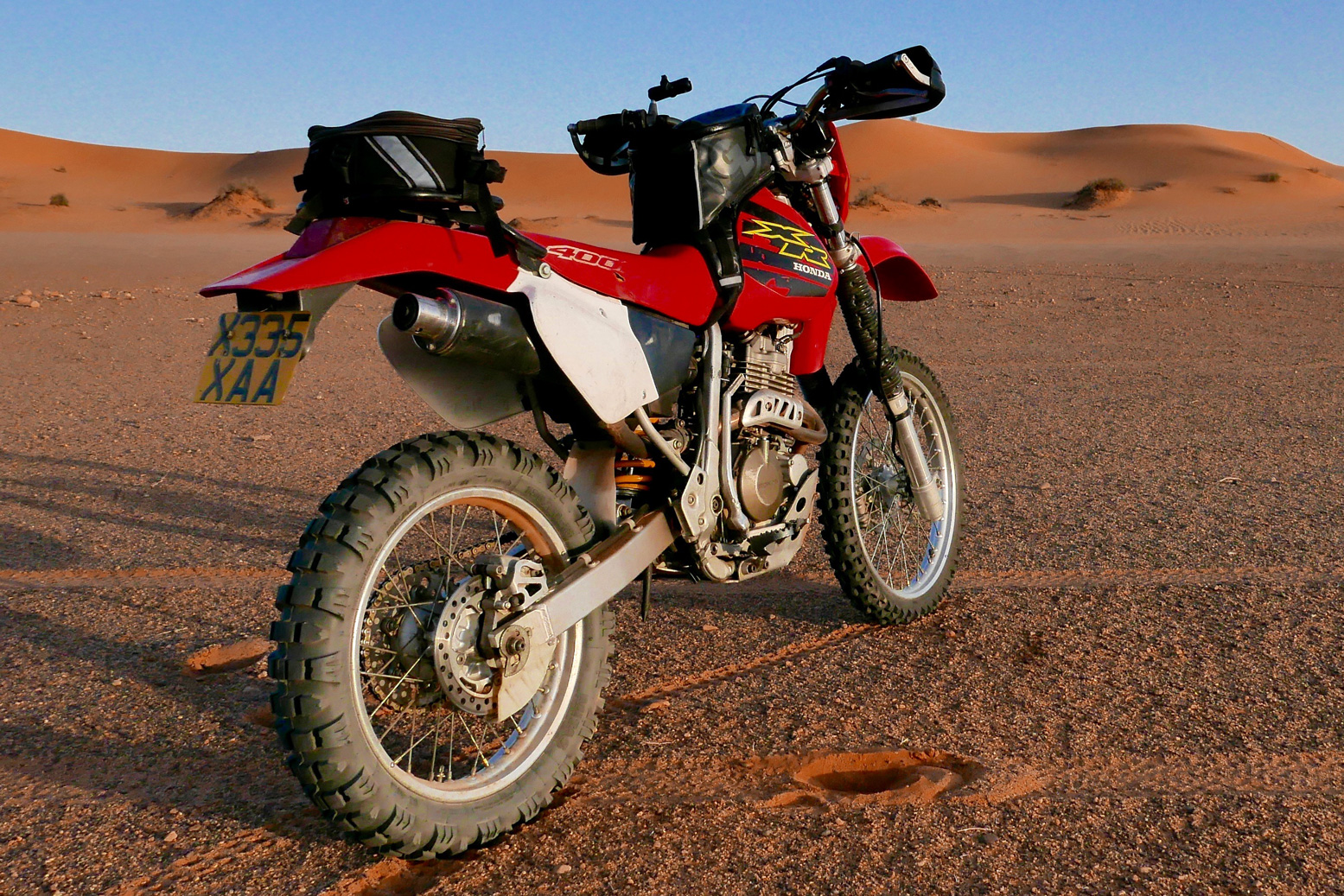
In 2018 I finally got to ride an XR400 – you definitely know you’re not on a 250. And that’s as it should be and why 400s are an overlooked ‘missing link’. Actually no so ‘missing’ as ‘not here’. Bikes like the Brazilian-built carb’d NX4 Falcon (above) went for £4000 new in Mexico, or the 250 Tornado never officially imported to emissions-conscious western markets.
The Roadstar’s widely spaced gears would need working to move along, though you’d want to get that front brake sorted first. The saddle probably wouldn’t sustain a day’s riding, but then even with a screen, the Roadstar isn’t intended for that sort of use and there are much more sophisticated bikes with truly terrible seats.

As for the price [at the time of testing]? Even with the warranty I still think nearly four grand in on the high side for a basically equipped Chinese 400 single. If it follows the UK imported and branded Honley 250 Venturer, that price may well drop after a while [still €4000 in 2020), because as things stand the depreciation on a used Chinese branded bike will surely be monumental. Otherwise, for that money I can take my pick from a used CB500X or buy any 250 I want.

Motorbike capacities come with certain expectations and on this test ride it was the 400cc engine I was keen to assess. In terms of more-than-250cc grunt, the Roadstar was a bit disappointing or perhaps just needed more running in. Add it all up and as a low-tech adventure tourer I think the Roadstar is a bit too basic for the money. You can pick up used low-mile Roadsters on eBay from around £3000 so the depreciation isn’t that bad, but in 2019, my same-priced Himalayan ticked more boxes.

mash-16

Thanks to Ian at T Northeast for the test ride on the Roadstar.