… full face visor protection without the ‘in your face’ visibility issues
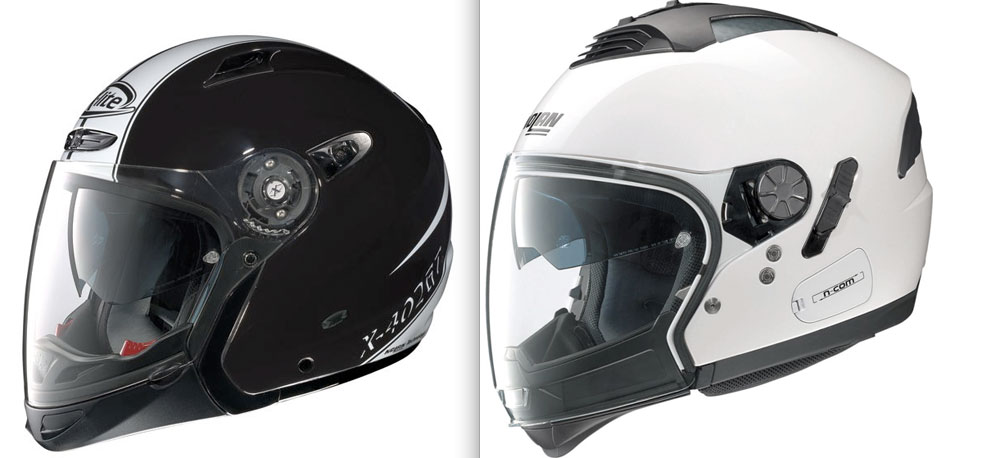
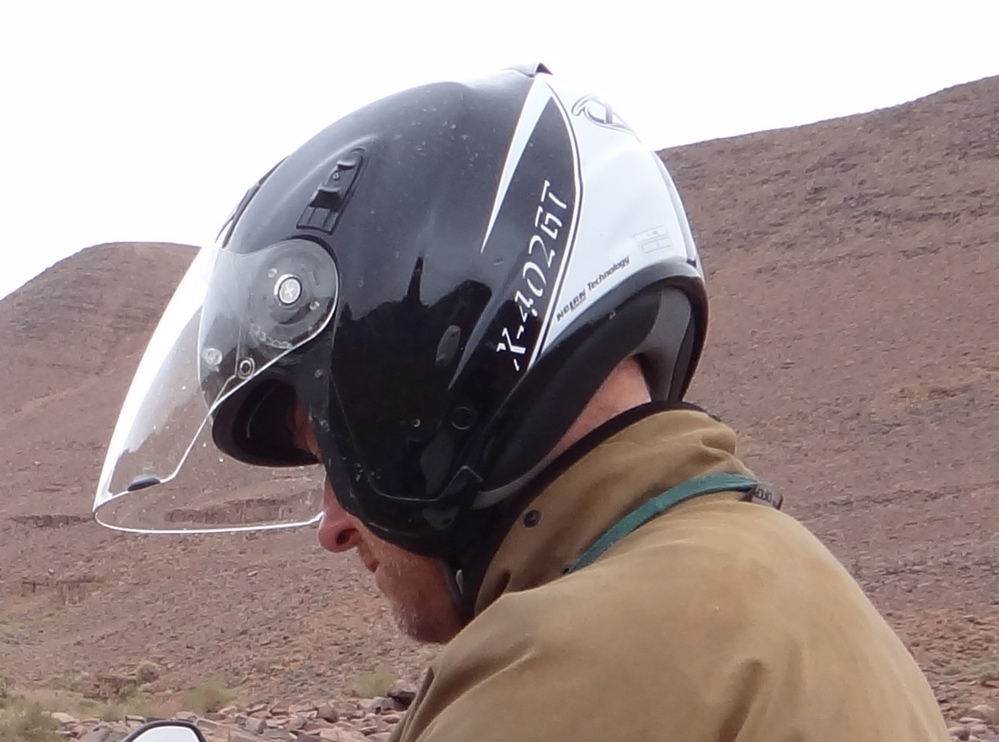
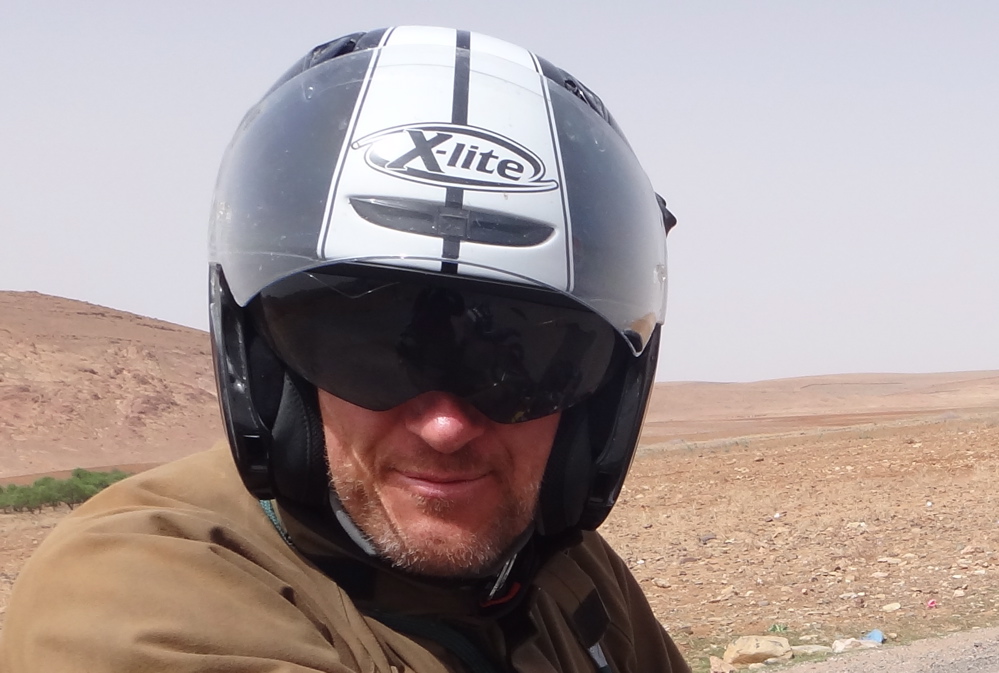
I’ve never seen one in use but I’m a fan of the Airoh TR1 (now called a J106) modular helmet which came out in 2008. But as you can read in my updated review of it, I rather hoped someone would come along and make a plusher, less plasticy version with the same features. Well Nolan (above right, white), X-lite (upmarket brand of Nolan, left; black), Caberg and others did just that.
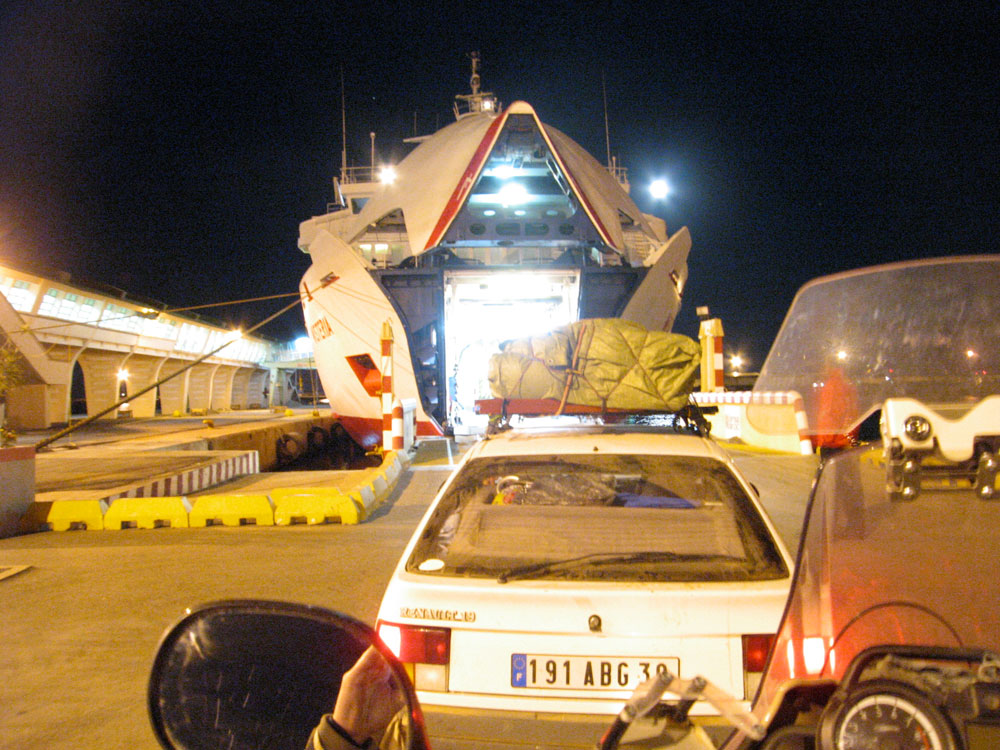
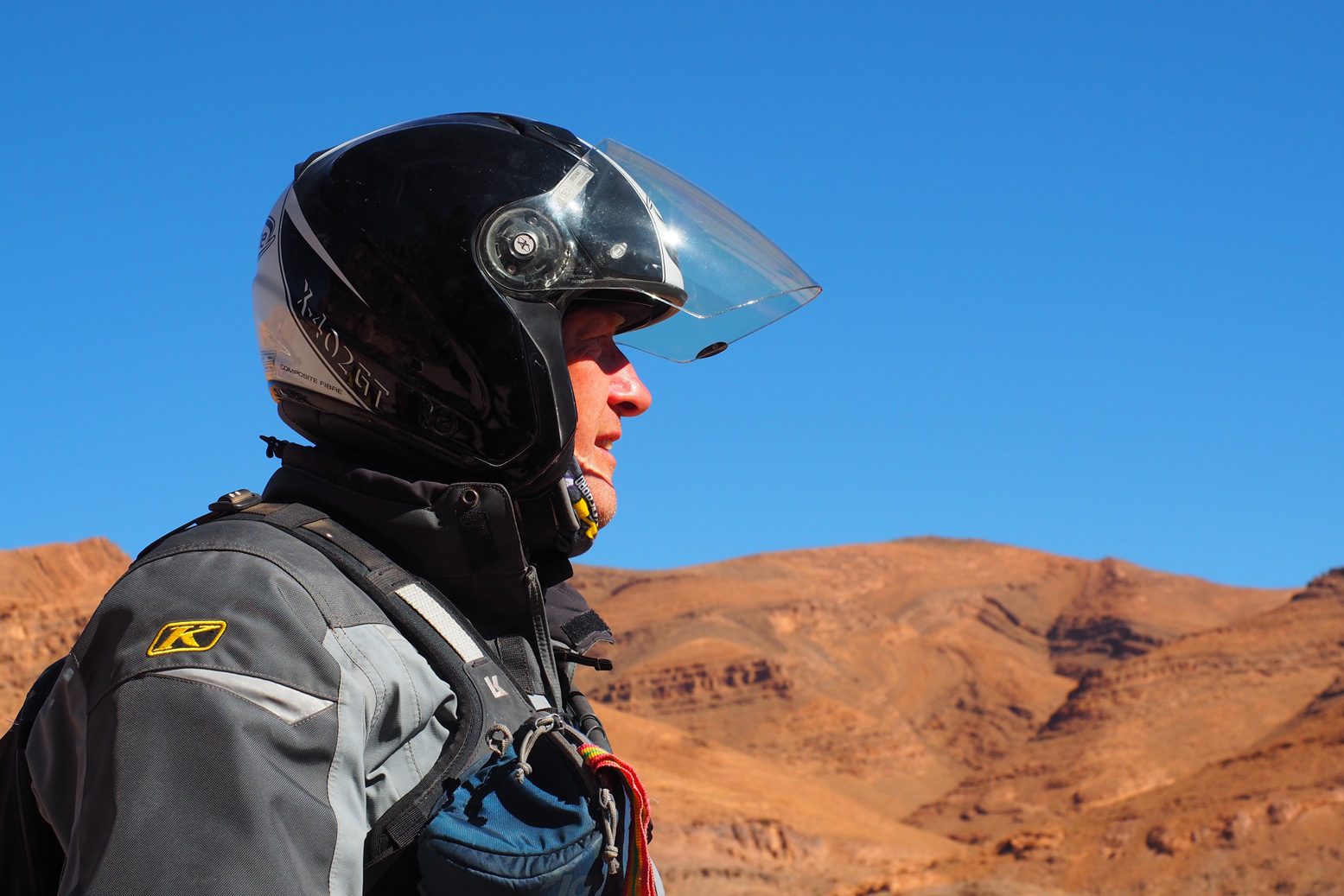
What is a modular helmet? The way I see it, it’s a full-face lid with a removable chin piece, and specifically not one that hinges up ‘like a ferry bow door’ (left), as I say in my Airoh review. The appeal is you get the protection you want on fast roads, but can unclip and stash the small chin piece to have an elegant open face helmet with a proper visor for whenever it suits you: in town or on dirt tracks. I prefer open face any day but recognise the advantages of full face.
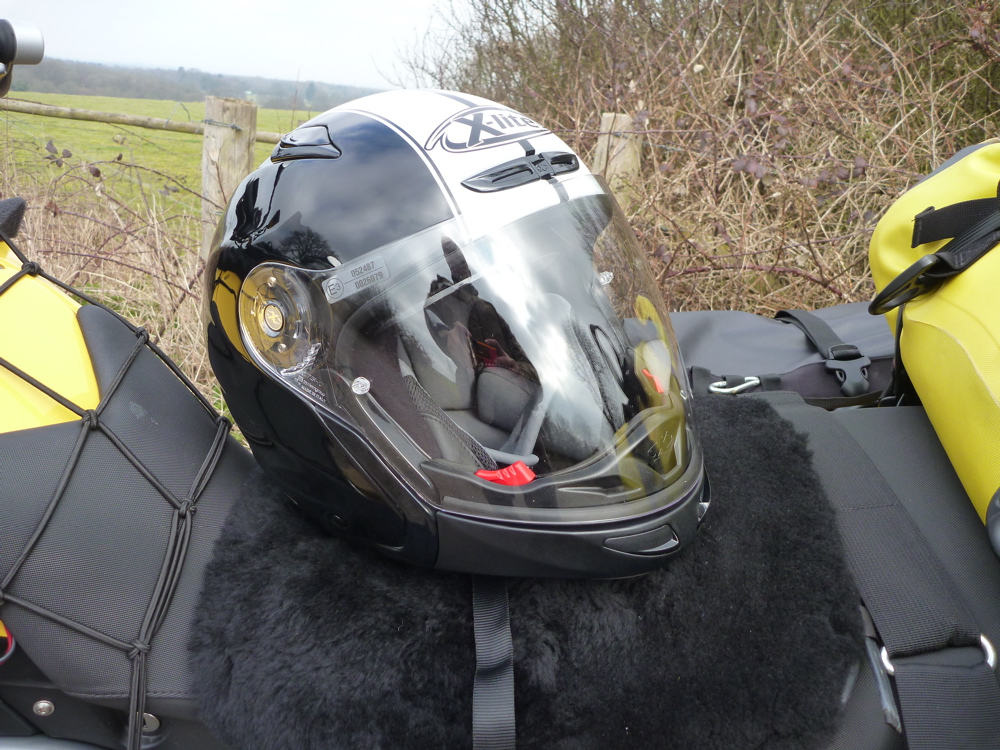
First impressions I’ve only worn it for an hour (on an F650GS with a low Metal Mule screen), but first impressions are that it’s clearly better made than my £100 Airoh – and so it should be at nearly £300. Cushiness seems on a par with velvety Arais I’ve owned in the past, and although I wasn’t belting along motorways as I have been recently with the Airoh, it does seem quieter, which was the point of getting it.
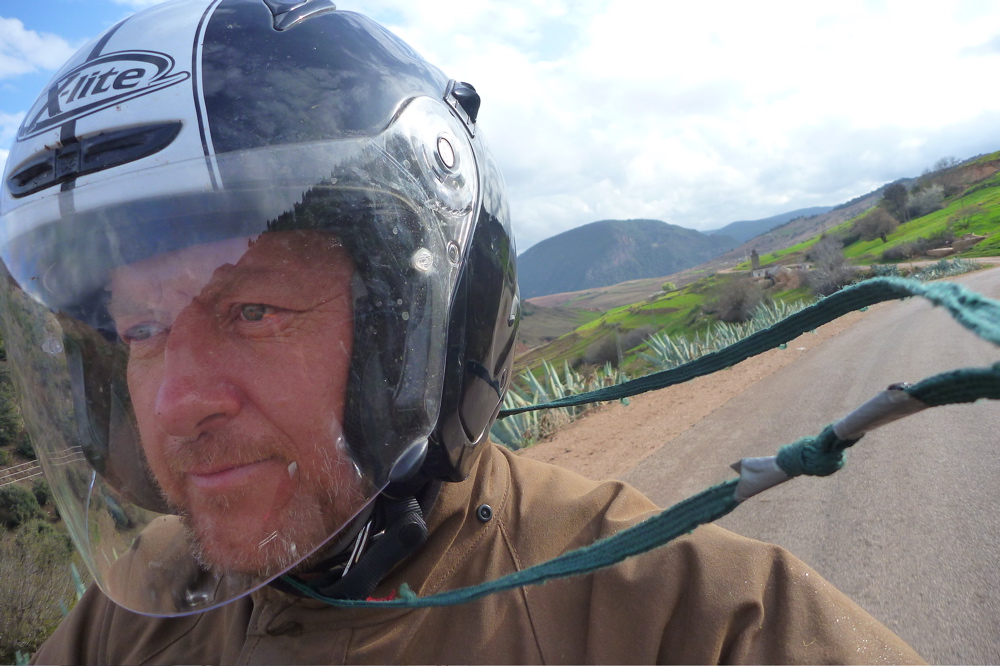
Part of that must be down to the big, flat visor as on the Nolan N30, a less complex shape than the Airoh moulded visor so making less turbulence. That, and the much softer, enveloping interior puts it on another level. The noise is a bit like the inside of a cruising airliner; it’s there but not a deafening roar. I don’t use earplugs. On the way back I removed the chin piece and stashed it (it detaches much more easily than the Airoh’s creaky, jam-prone fittings) and immediately recognised the full-viz appeal of open face, but with a crystal clear (for now) brow-to-chin visor. At <50mph there seemed very little extra noise. Looks-wise I’d say the Airoh still takes the prize, probably because it’s smaller at the cost of having the sculpted chin piece a little too close to the mouth. Both helmets have the integral sun shade with drops down using a left side lever, but a quick try of the X-Lite’s sun visor today proved it was much clearer, quality lexan and came right down to the nose too, not halfway like the Airoh, although the leverage is a bit inadequate (see below).
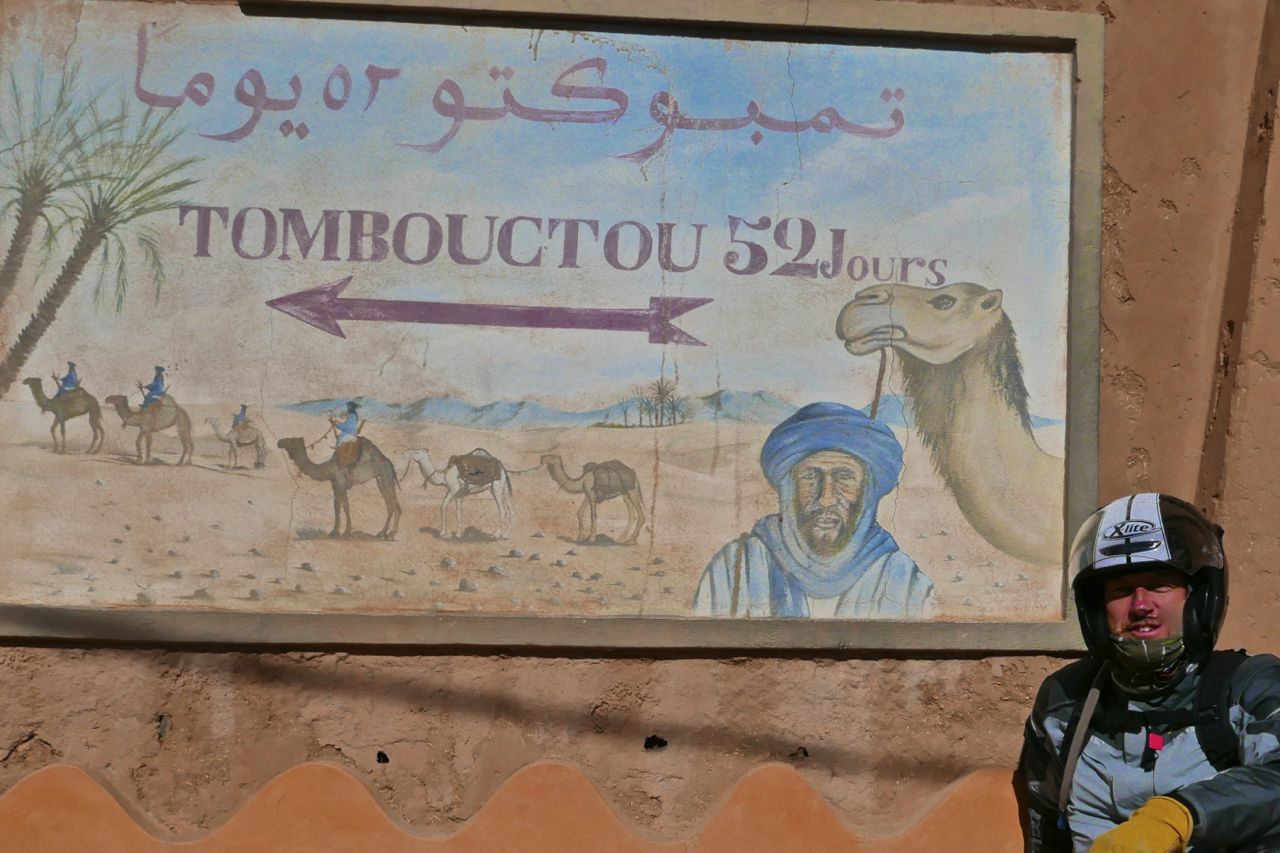
Across Spain the X-Lite was fine considering I don’t use ear plugs. Once I got to Morocco I removed the chin guard (which soon got nicked), and was very comfortable using the helmet in open face mode. The visor cleaned easily without scratching, and coming back across Spain at higher speed and downpours, I didn’t miss the chin bar that much, it can exacerbate steaming up.
The dark visor was great too at times, though you do feel that the leverage on the slider is a bit short and it might fail one day (it did). Also it sure would be nice to have the ratchet clip or the Airoh than the old style double D-ring buckle. The vents worked pretty well without contributing to the noise, with a sweaty head you can briefly feel the cooling effect.
As mentioned, the dark visor lever on the left has become stiff to the point that I feel it would break if pushed hard, so I just pull it down by hand. But very often when the low sun comes out it is handy to have it there rather than grope around for shades. I still don’t miss the chin piece, but do miss a peak for low sun angles. D-ring is a fiddle but I suppose could be modified. Best of all: it’s got the full face visor protection without a full face helmet’s poor visibility. So there it is, X-Lite modular, a versatile touring and off-roading lid that means you can take it off less because it lacks the annoying ‘in-your-face’ element of a full face lid. Not as snazzy looking as the Airoh, but much better made and more comfortable too.
Updated 2018 Five years on I’m still wearing it for most trips. I gave up on a replacement chin guard but don’t miss it. I prefer the wide view over the dash and the road ahead, plus the easy flip up. Great for work too (jotting down notes, fiddling with camera or GPS while logging routes, but just noticed the slide-button for the sun visor (right) had broken off. 7/10
I recently bought a full face X-Lite 551 GT. Didn’t get on so well with that one.
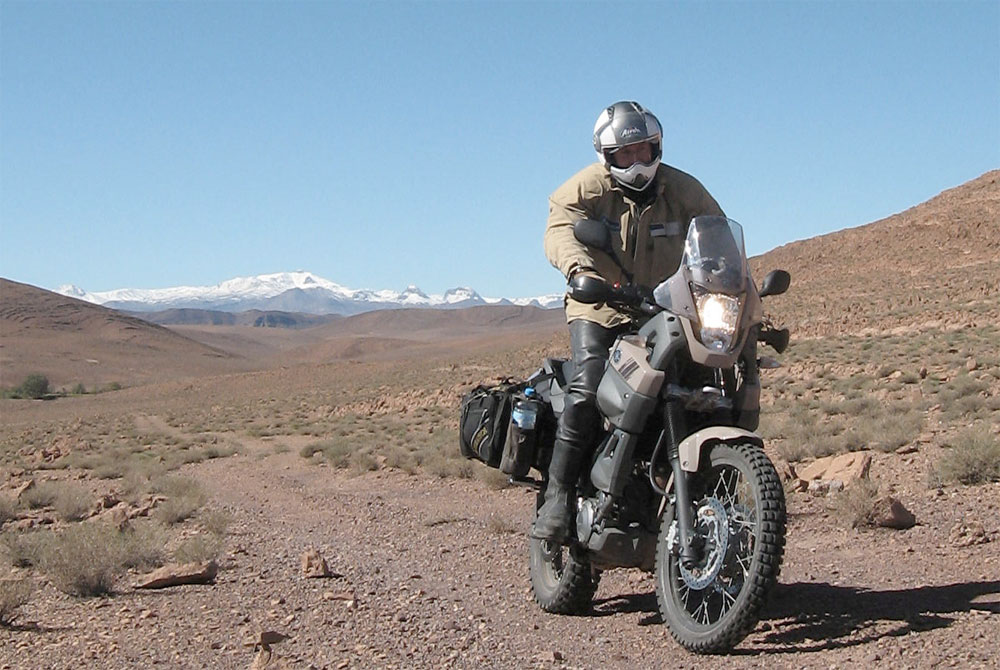
My impressions of the XT660Z Tenere after riding from London to Morocco and halfway back in November 2008, soon after the new bike came out. I’d only owned it a couple of weeks before setting off and happened to sell it a couple of weeks after I got back.
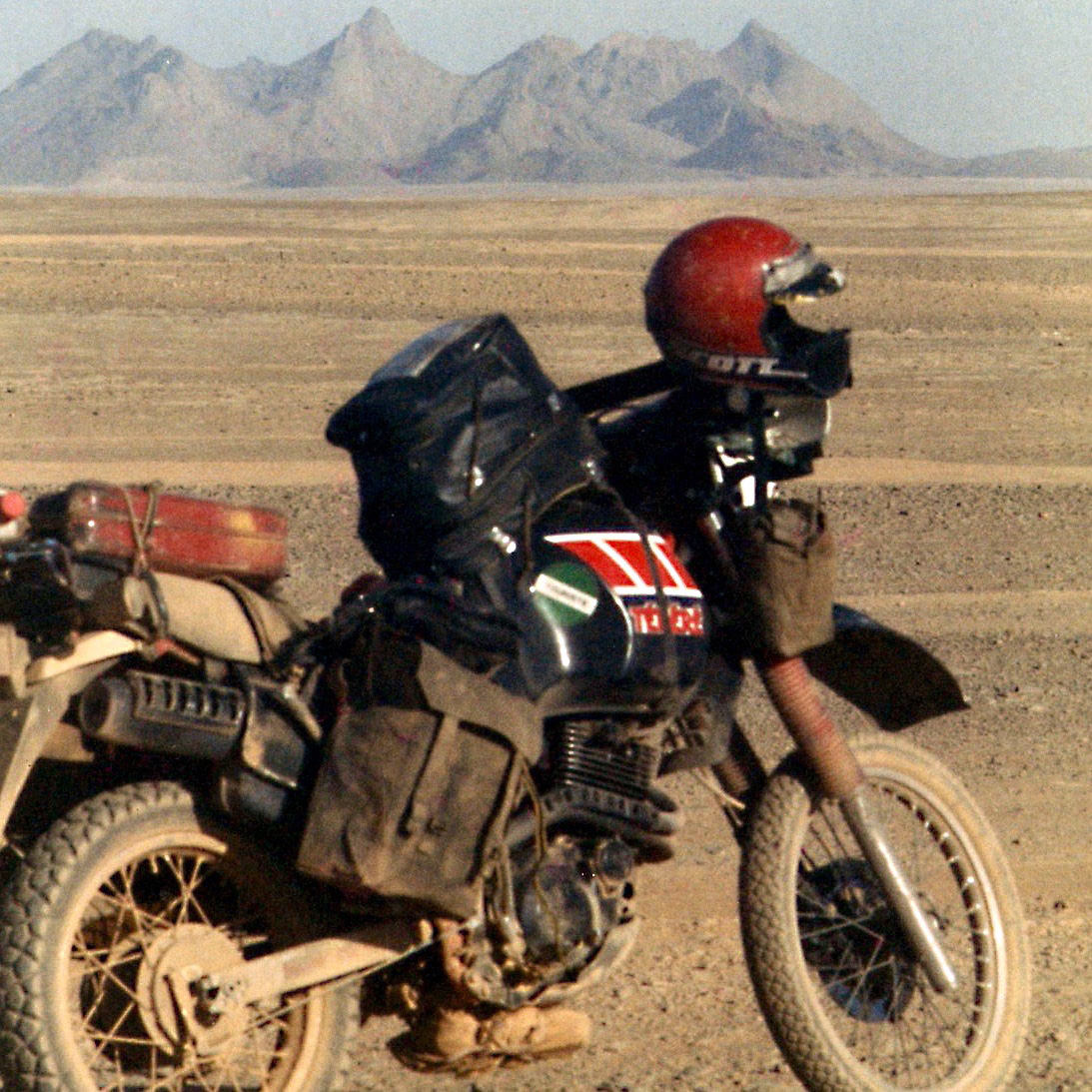
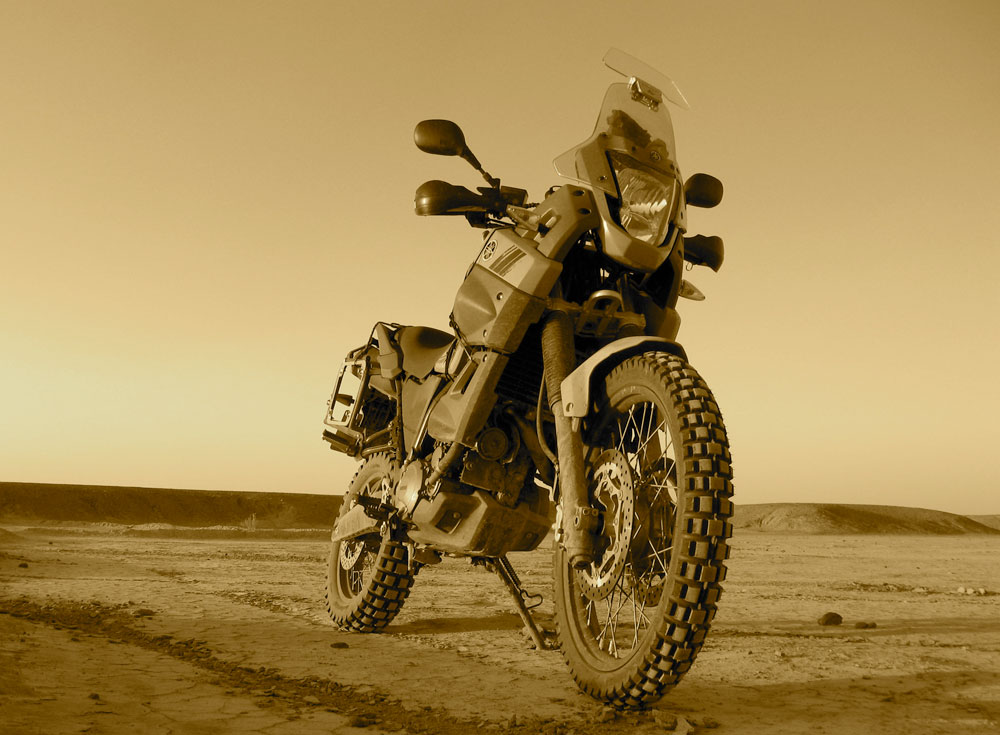
In Europe Yamaha’s Dakar-inspired Tenere has long been the definitive bike for desert travels. In the mid-1980s I rode the original kickstart XT600 Tenereacross the Sahara to Dakar (right), and a year or two later I rode the electric-start 1VJ model (below) around southern Algeria.
As a comparison, you may like the read a report on an XR650L, a BMW F650GS SE which I used for a similar Morocco trip from 2012, as well as G650 Xcountry I rode in 2014, a CB500X in 2015, a Husky 701 in 2016 and a WR250R in 2017. I make several comparisons with the Tenere.
For my detailed review of the Touratech Zega Flex panniers I used, click this.
For my detailed review of the Airoh TR1 helmet I wore, click this.
To read about my continuing experiment with tubeless tyres, click this.
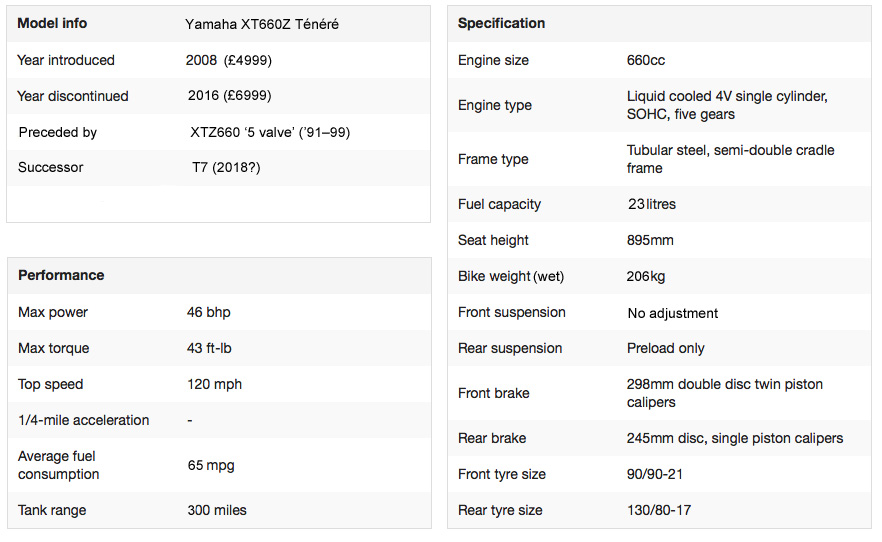
• Engine and FI /ECU problems from the 660X and R models ironed out • Pulls smoothly and feels nippy in town and stable at speed • Fuel consumption (71.7 mpg/25.4kpl = 380-mile/610km tank range) • Can change speedo/odos between mph and kph (but not as described in ‘TFM’) • Clear, eye-level dashboard display • Good-sized 23-litre tank • Seat seems good by trail bike standards after a 300-mile day • Screen • 9:1 comp ratio: good for poor fuel and long engine life • Fall-over tank protection • Suspension seems good and firm • 6000-mile service intervals (on semi-synthetic oil) • It doesn’t look too bad, either
• High centre of gravity • Heavy for what it is – it weighs over 200kg wet• • Screen too low – buffets my head • Twin front discs are OTT – look at a CB500X • Fuel gauge is way out – the digital bars disappear at around 240 miles with at least 100 miles left (common to many bikes, tbh) • Little bits of rust already – naturalmente, fatto in Italia!
Comfort All things considered I found the seat OK for days of up to 300 miles or more when you simply sit on the thing for hours. On the dirt it’s not so relevant as you stop and move around more. I agree with some that the scoop/two level is a bad thing and a fully flat seat would be better, but it seems the back of the seat has to be raised to get over the cat which is over the back tyre. Because of this scoop you can’t slide back and move around to reduce the aches or crouch down easily behind the screen. I also found that pushed forward like this, my ankles point down too much to use the foot controls. If I could slide back, my feet would be more horizontal and line up with the foot brake, already adjusted as low as it can go. But you get used to it. The foam I think is OK but like many bikes, may have softened after a few thousand rough miles. I like the neat and quick way the seat comes off. I’ve never had a pillion on it long enough to get an opinion on the back’s comfort. Usually, on these sorts of bikes it’s not so good.
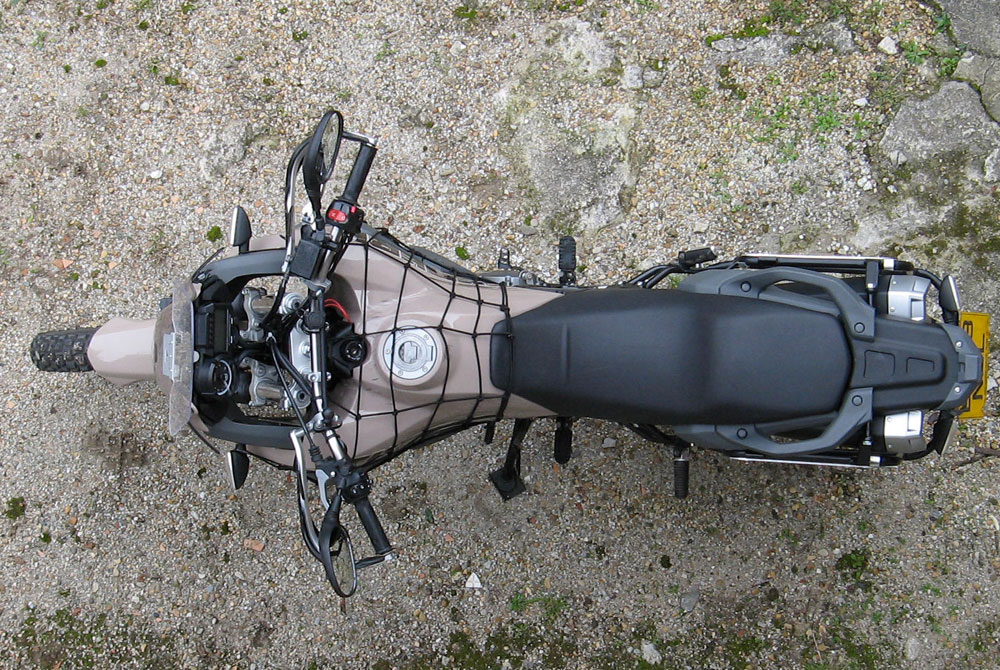
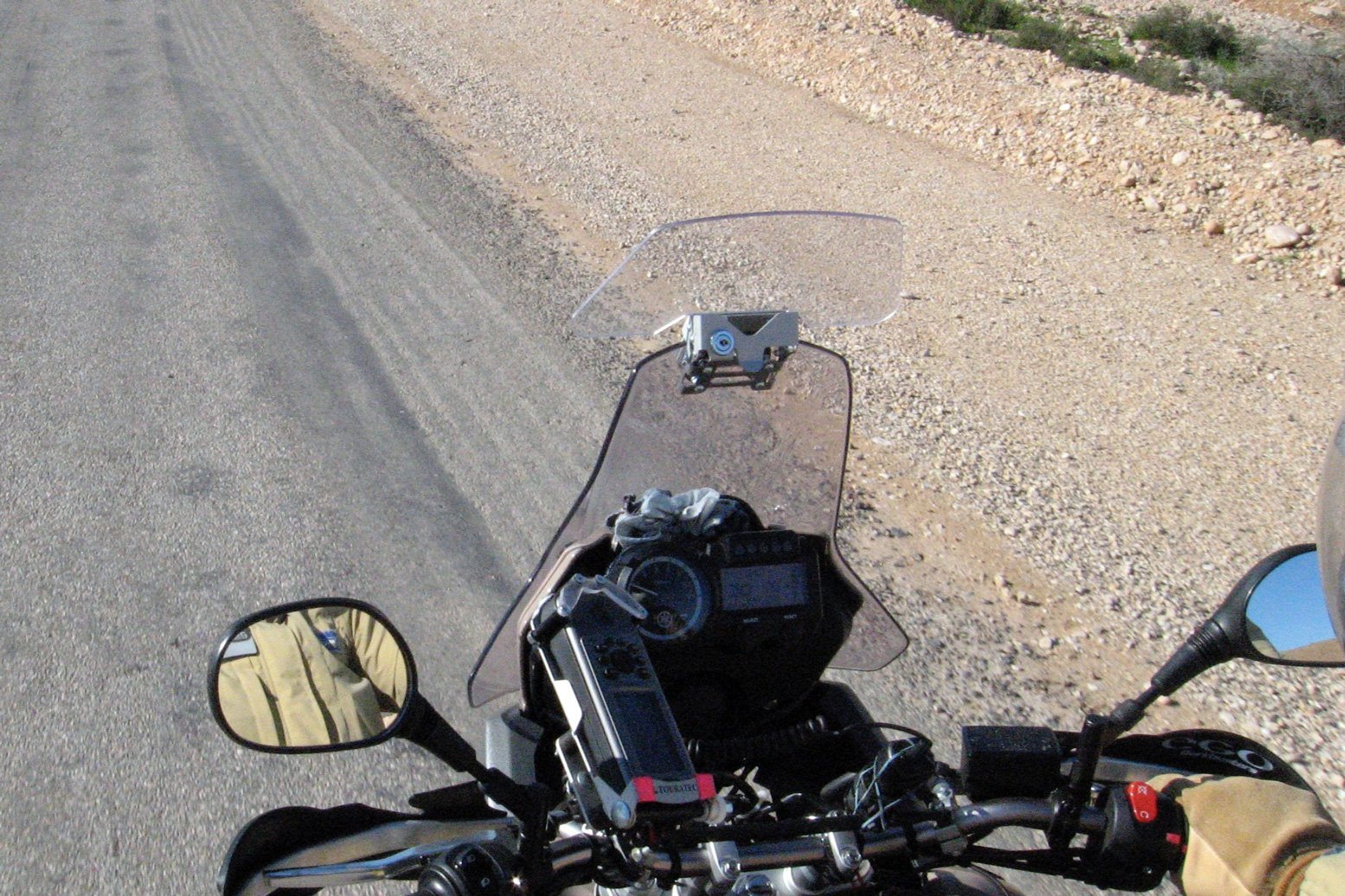
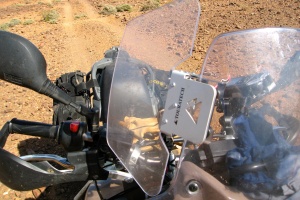
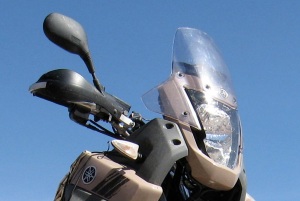
I believe some sort of screen is essential for long-range travels and it’s great that the new XTZ came with a good one fitted. Unfortunately for me at 6’ 1”/185cm, it’s still too low and buffets my head worse than if it wasn’t there. A crude, q/d Touratech extension clamped on well enough – a proper taller screen would have been better. On the dirt I found the extension got in the way for good visibility, especially if dirty, but I could quickly clip it on the side of the screen (above left).
Even at my height (or perhaps because of my age) I found the 895mm/35.2″ seat too high to get on and off easily, and too tall on the dirt. Of course this can be fixed by lowering the suspension of which there is more than enough. I do also wonder if the suspension is too firmly damped from stock. I didn’t meddle enough with it other than cranking up the back 2 or 4 clicks to take my luggage. I never weighed my bike myself, but they say it comes in at 206kg wet – a staggering 40kg more than the original 600 Tenere of 1983 which carried 18% more fuel.
I can’t say it was any more vibey than any other big single I’ve had (the Husky 701 was a shocker) and taking the bar end weights off at 500 miles to fit the Barkbusters didn’t make it any worse. As with many big singles, I find some days at some speeds/temperature/load/fuel/whatever it feels harsh – and at other times at the same conditions, it’s smooth. For a modern, water-cooled bike the engine does seem quite noisy. Maybe it’s just a big thumping single.
Economy I never had such variable results from a carb’ bike. it must be an efi thing – but overall it’s very good and was getting better. About time. For overlanding mpg is more important than mph. On previous Teneres I’ve got up to 80+ mpg in ideal conditions (backwind @ 50mph) but generally under 60mpg was normal, as I recall. My near-new XTZ averaged just under 72mpg or 25.5kpl for the last ten fill-ups. The worst figure was an as-expected riding all day into a gale-force dust storm at around 50mph: 52mpg or 18.3kpl. The best was interestingly, a necessarily slow ride over the High Atlas one bend-swinging night resulted in 86mpg or 30kpl. Nice. For my full records, see this.
Low-quality fuel Once or twice I had to resort to low-octane fuel in Morocco (‘essence’) but didn’t notice any difference in performance. I imagine this is a benefit of having a low compression ratio. I’ve also read that after a spell of leaded fuel, the Tenere’s catalytic converter ‘self-cleans’ when running on unleaded again, so technically no need to change the pipe to spare the cat, though you’d think several months on leaded would take some cleaning to return the cat to full low-emission efficiency. I never noticed any pinking or over-heating.
Oil and water consumption; drive chain In 5000 miles no oil was used, apart from a few drips out of the engine crack when it fell over at 2mph. What was interesting was that the semi-synthetic Petronas they put in at the first service still has some good colour in it after 4500 miles; ie: it wasn’t black. Along with the 6000-mile service intervals, this would convert me to semi-synthetic, despite the price. I wonder if efi helps in this regard: clean emissions = clean oil for longer? Water consumption was zero and once or twice the fan came on, but only in conditions you’d expect it too. I tried to keep on top of the chain with oiling but it still needed adjusting 3 or 4 times so it doesn’t seem to be as good as the best DIDs I’ve used in the past. At the end there were still several thousand miles left in it.
Performance It doesn’t feel that much more powerful than previous big singles I’ve had, but on the trip I never felt I needed more. Very rarely do I rev over 4000 rpm. In my opinion a low-tuned, 600 single or twin is just the right size for loaded, all-roads travel so I’m happy to give up KTM levels of power for a long-lasting and fuel-efficient engine. Inevitably I’m sure I’d have got round to tuning it a bit (while also trying to save weight), but only if the great mpg was not compromised.
The front twin discs feel pretty ordinary and surely one good SM-style disc would be adequate and save a lot of sprung weight? Were Brembo doing a 2-for-1 deal? For a trail bike, the front wheel weighs a ton, but it wouldn’t be hard to remove one disc and carrier, put a block in that side’s caliper and see how it stops. Most probably the other caliper is designed to work as one of two small units and may get over-worked so it’d be best replaced with a larger, 4 piston unit. Is it all worth it? Not really unless you’re greatly improving the fork. I have to say the flashy-looking twin bulb front headlight is not that brilliant in terms of spread, compared to less impressive-looking setups I’ve run before.
From first impressions the suspension felt firm front and back which makes a nice change from older Teneres and gave good road manners. When I loaded up with 25kg of baggage I turned the back up by 2 full- or 4 half-clicks. Hard to tell exactly, but neither end never got near bottoming out on the piste. I wish I’d experimented more with backing off both ends on the dirt. The front I left as it was, but one evening after a very rough rocky climb that punctured the front tyre and all the rest, to add to my woes the front forks ‘collapsed’. I could squash them right down. There were no leaks. I’ve never had this before on a bike and though an air or oil damping valve may have ‘burst’ or a spring broken from the hammering – or possibly the fork oil had become aerated. But I wasn’t exactly ripping across corrugations at MX speeds in 40°C. Next day I turned the fork up 5 turns (5 x 360°) to compensate but soon regretted it. The bike became even slower to turn on the dirt and on the road. In fact, the forks self-recovered and I wonder if I was making it all up as the shit had hit the fan at that stage and some of it may have lodged in my brain. Anyway, the fork was back to normal next day. I suspect aeration or hallucination.
Road riding Generally on the road I sit at an indicated 65mph or so – not so fast. At this speed riding is less tiring and safer and economy is good. With the screen extension this could be sustained all day with only the usual discomfort. Many road testers used to brilliant GSXR’s and the like don’t get on with the handling of 21”-wheeled trail bikes and in response many manufacturers chose 19” fronts for their bigger adventure bikes. They have a point: a 21”shod bike never feels planted in the bends and adding a semi-knobbly tyre doesn’t help. Fwiw, I felt the bike handled pretty well on the TKCs. On the highway they didn’t feel any worse than the original Tourances used for running in, though I don’t exactly throw the XT around like a super moto. Loaded up, I found the bike was sometimes hard to turn on tight bends and hairpins, both on or off road, as if the front was raked out too much or the weight was too high (it is). Short of getting your weight over the front end, MX-style, the usual way to tune this out is to soften the front- or jack-up the back. I don’t recall having this impression on previous bikes like this; they’re usually too softly sprung. So I blame the higher than average CoG (centre of gravity) not helped by the cats stuck way high out the back, along with my high luggage set up, and the firm suspension. If I’d kept the bike I’d have experimented with softening the springs and even lowering the bike (and possibly getting rid of the heavy twin cats for a lighter pipe). To be fair, some of the roads and tracks in Morocco are very narrow and tight, with thought-provoking drops. Even some tarmac mountain back roads have strips of gravel down the middle on which any bike would struggle to progress smoothly.
Cross winds One early owner’s impression I read said how great the bike was in high winds. Head winds maybe, but coming back over the edge of the Pyrenees towards Perpignan there were violent gusts coming from the west and I don’t recall ever feeling so unsafe on a bike and being on the verge of crashing. All the other road users were giving me a wide berth as I tried to predict the gusts and control the wildly bucking bike from running over the hard shoulder and off the edge. It may have been the same for all bikes that day, but keeping down to 50mph, a 600cc UJM passed me without any drama. Again I feel my high baggage set up would not have helped, but do wonder if again, this high CoG is to blame. We are talking about exceptionally strong gusts here, but I must have ridden in those sorts of conditions before and survived.
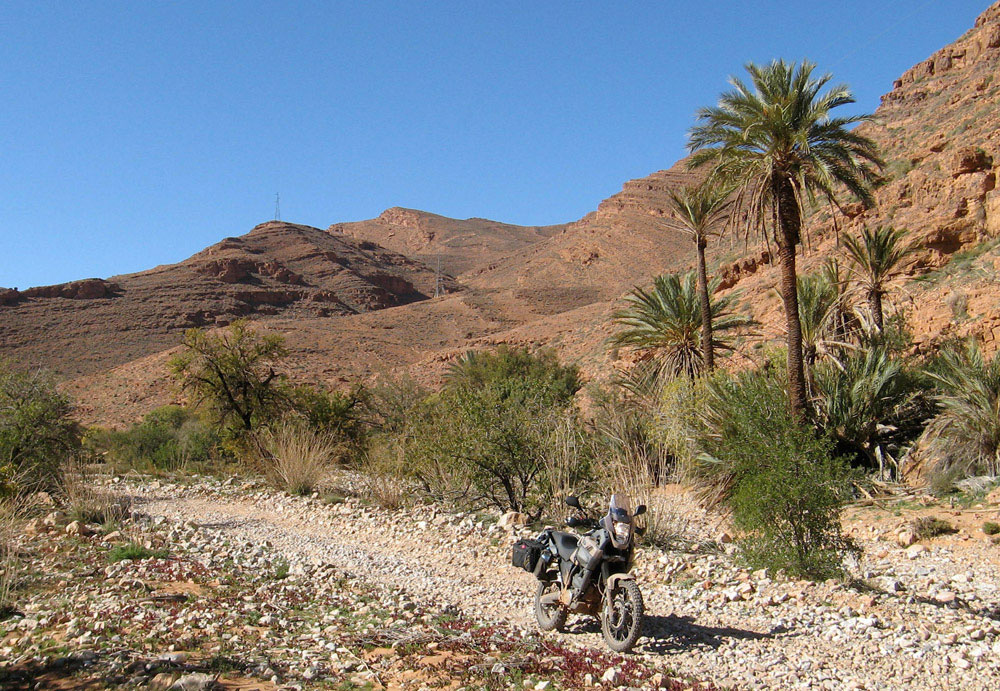
Off-road riding Off-roading in Morocco is mostly on rocky or gravel tracks as above and the TKCs made this much more predictable, easier and safer. The good thing with semi-knobbly road tyres like these is that you can keep the pressure high to avoid rock punctures while still benefiting from the aggressive tread pattern on loose surfaces. The idea of riding the trails on the OE Tourances doesn’t bear thinking about. I’ve never had a Jap trail bike with too firm suspension and I think I was a bit slow to recognise this. Although I take it fairly easy riding alone on the piste, the bike didn’t really respond to off-roading well enough to give confidence to ride it towards the limits – and with all that weight that can’t be that far off. Maybe just as well. Not surprisingly I found the handlebars were too low when standing up off road, causing me to crouch unsustainably. Most bikes are like this at my height and handlebar risers would have easily fixed it. I also found the gearing too high for slow off-roading – again, as expected. I’m not sure what the standard gearing is, but the bike does 8mph at the 1500rpm tickover which is too fast for some steep hairpins or loose descents. With a heavy load, the clutch would have got hot from slipping on the hairpins but the only time this happened – a bit of slack at the lever – was when the front mudguard jammed with mud for a couple of kilometres passing south of Jebel Sirwa.
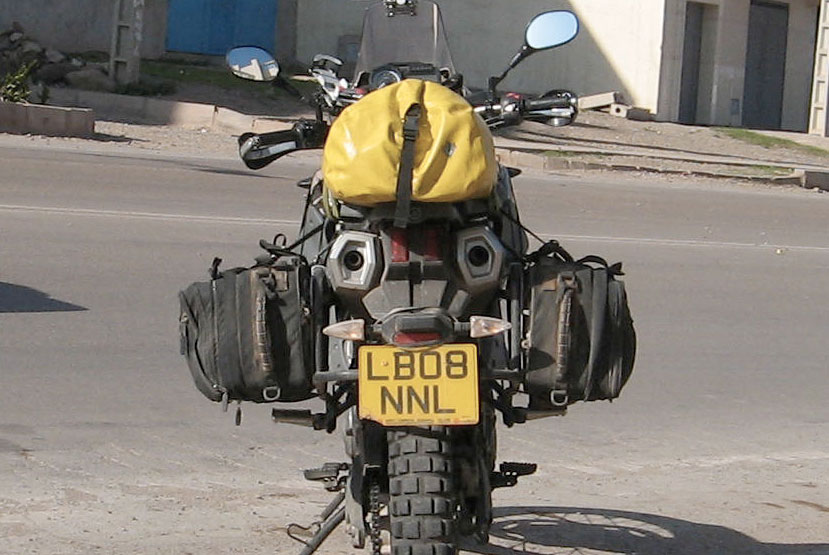
Loading Along with the economy and low-stressed engine, the seriously strong subframe is one of the best things about the XTZ. It has to be twice as thick and much stiffer than the steel straws which held up the back of my XR650L, or indeed previous Teneres I’ve owned. This is one part of the bike I don’t mind being over weight. Adding the simple, functional and tough Off The Road rack only made this better and is all the metalwork you need to pile it up with the heaviest alu boxes.
Equipment I like the near eye-level dashboard and digi speedo, even if it’s a bit basic. I would have liked an oil or water temp gauge. I didn’t discover till I got back that the Yam handbook and not the bike is at fault wrt changing from mph to kph. Click this for how to make this very useful feature work (as well as all the 660 chat that’s fit to print). I wired up my own 12 volt PTO plug directly from the battery onto the handlebars for the GPS. Everyone complains how way out (pessimistic) the fuel gauge is but at least it’s consistent! Once you get used to this you’ll know that if it re-zeros itself at around say 230 miles, you’re doing a good 70mpg and have at least 100 miles left in the tank. The tank is plastic by the way and notably warm on the leg. Checked against a GPS over 100 miles I found the odometre (distance recorder) to be accurate to within 1%. This means that the mpg readings are also virtually true. The same cannot be said for the speedo which, like all bikes at an indicated 70mph = 64mph true = 8.5% over. According to the speedo then, the bikes feels faster than it is.
Durability If you think about it, it’s asking a lot to take an untried bike just 500 miles old out for a 4500-mile off-road hammering with no preparation to speak of and to expect nothing to break. Nothing did and to this end I feel the Yam is well screwed together. The only things that came loose and fell out were a couple of screws holding on the screen, but this was almost certainly due to the extra leverage put on them by the TTech screen extension. Obviously I could have done with engine bars or a proper bash plate, as would any bike of this kind (they’re available for the XT-Z now, but weren’t then). The tank/radiator protectors are a nice touch and the Barkbusters are a no-brainer to the mods list. So, I still like everything I liked at 500 miles. Not so keen that it’s higher than it needs to be – but it can be easily lowered. Plus it feels heavy for what it is – a tall CoG not helped with my high luggage set up, but that usually comes with the territory.
Bikes like this will always be a compromise but for the Morocco job, when you think of the cost of the machine [in 2008] and the minimal ‘kerbside’ levels of preparation, the 660Z offered an ideal balance of continent-crossing comfort with adequate fully loaded off-road ability. Just like the Tenere always did in fact, only more so.
Back in 2002 the criteria for our ideal desert machine for Desert Riders added up to those listed on p.208 of my Sahara Overland book: • Lightness • Economy • Comfort • Robustness • Agility • Reliability • Mechanical simplicity
To give ourselves a good chance of success we wanted to buy new bikes and so the list was narrowed down to: • KTM 640 Adventure • Kawasaki KLR 650 (imported from Canada) • Honda XR650L (imported from Australia) • Yamaha TT600E (imported from Italy) • BMW F650GS Dakar
In recent years I’d travelled with all these machines, either on my desert tours or my own travels. The way we saw it then, in 2002 these were the pros and cons of each machine:
For
Against
KTM 640 Adventure
27L tank, desert-ready components, suspension and build quality
Expensive in the UK, variable economy, vibration and exceedingly poor comfort
Kawasaki KLR 650
23L tank, inexpensive, economical, reliable, good kit in the US
Import and registration hassles, average suspension
Honda XR650L
Inexpensive, economical, reliable, good suspension, proven air-cooled engine
Import and registration hassles, small tank, seat height.
Yamaha TT600E
Easy to import, air-cooled, well known in UK and Europe
Import and registration hassles, dated design, small tank, leaky USDs, ‘non-Japanese’ build quality?
BMW F650 Dakar
UK model, comfort, very good economy
Heavy, complex, pricier than Japs
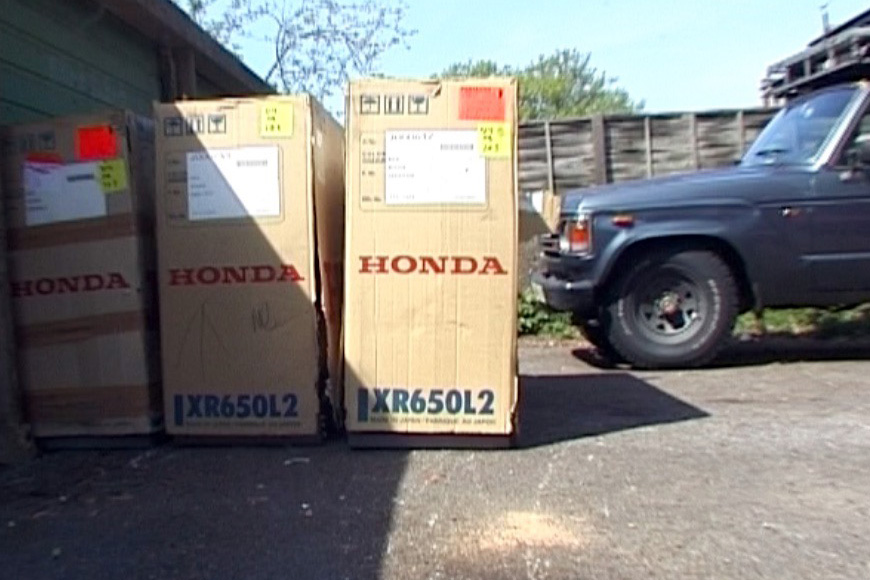
In a Burger King one evening we narrowed it down to a KTM or Honda with large fries. Then, once we considered the importance of economy and got a good price from Australia (about £4000 delivered), the Honda XR650L was the choice we were all confident with (until we rode them…). In case you don’t know, the XRL is an NX650 Dominator engine in an XR600 frame ~ more or less. With good springs and a trail bike motor, it’s the ideal set-up for a desert bike, even if we had to buy a tank and get racks made. In our opinion, for this ride Honda’s proven, decade-old technology was an asset. And now, they still sell them new in the US!









 Adventure Motorcycling Handbook