Author Archives: Chris S

Review: Utah Backcountry Discovery Route [UTBDR]

This package caught my eye the other day: a trans-state, mostly dirt road adventure across Utah, comprising of a dedicated paper map, an hour long dvd and track logs on the Utah BDR webpage to put it all together.
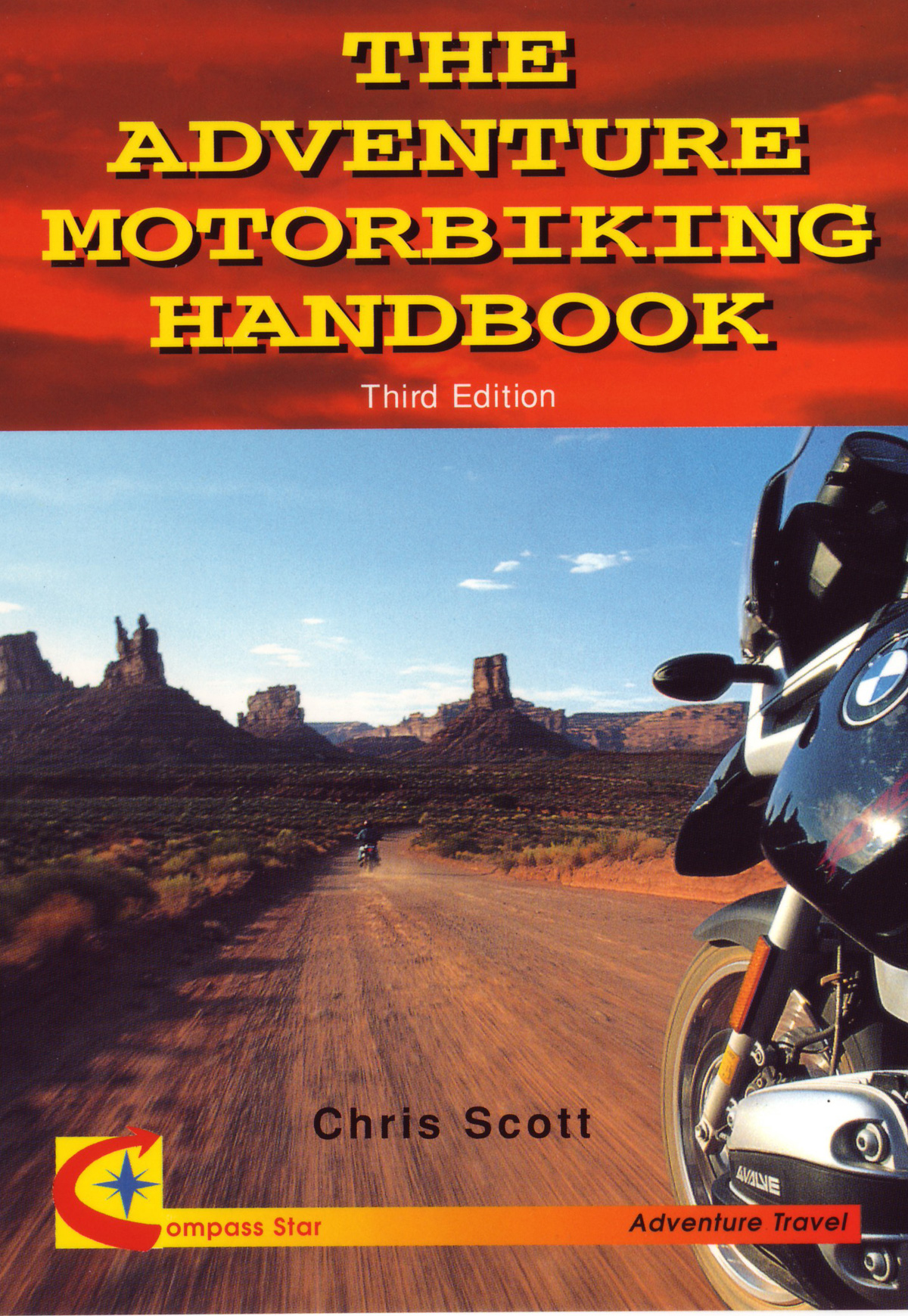
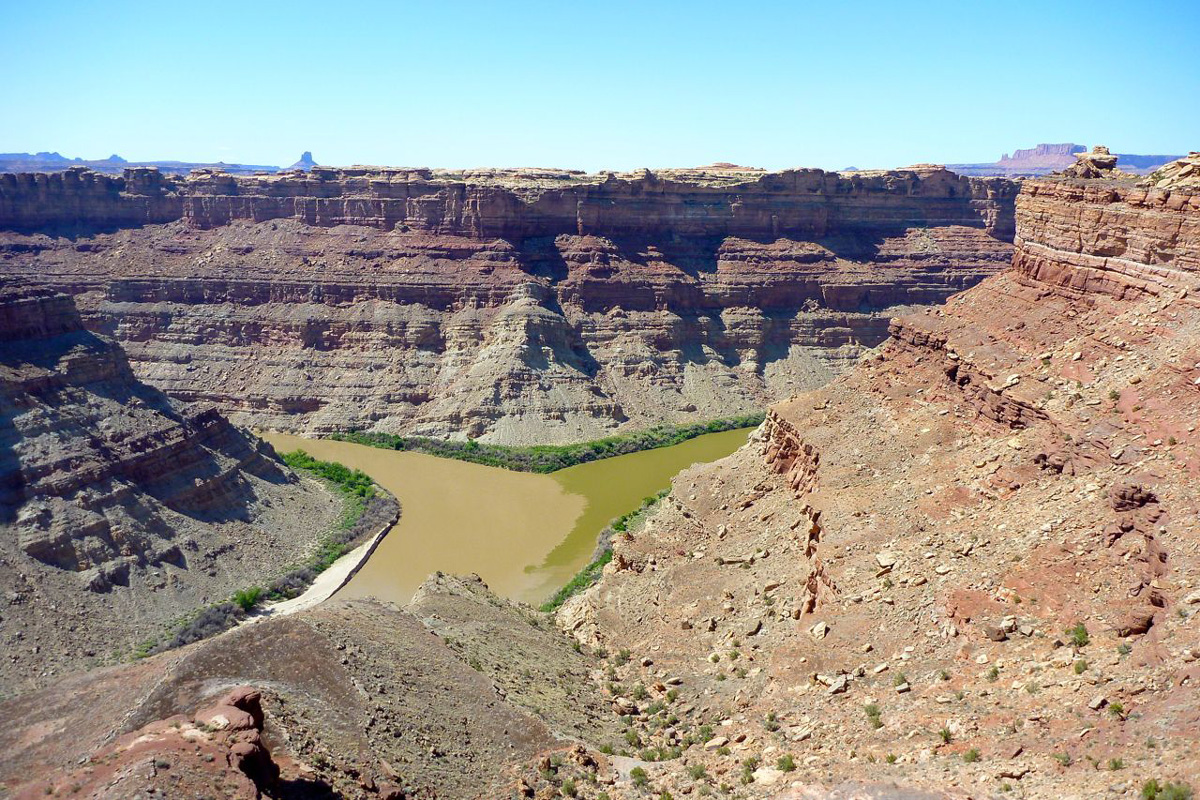
With the Colorado river cutting through the Canyonlands on its way to the Grand Canyon, southern Utah must be one of the most photogenic places on earth. It’s a wilderness spectacle I’ve visited a few times, and one that’s exemplified by the iconic buttes of Monument Valley (or is it Valley of the Gods, nearby?) which featured on the cover of an earlier edition of AMH in the late 90s.

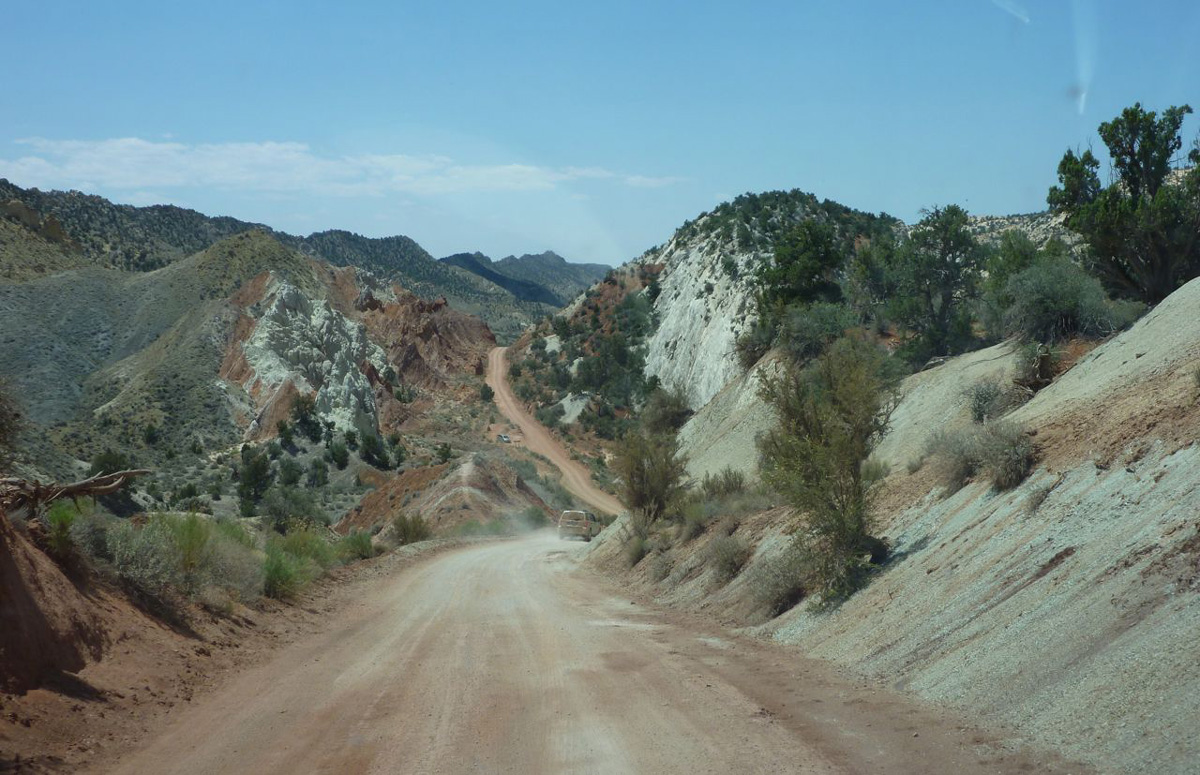
The Backcountry Discovery Route project seems to have been cooked by Touratech USA’s Paul Guillien, describing the idea as ‘a community based effort dedicated to establishing and preserving off-highway routes for adventure motorcycle and dual-sport travel’. It recces, plots and describes itineraries on public roads across the wild corners of the western states. They’ve done Washington in Touratech USA’s back yard. Here is Utah with the Colorado BDR out in February 2013 and other western states like Arizona, Oregon and Montana in the pipeline.

It’s a concept which reminds me of what may well have proved to be the over-ambitious Great Western Trail, itself parallel to the Can to Mex Great Divide Route (GDR) mapped by the Adventure Cycling Association. They may not have planned it that way, but much of the GDR happens to be usable by road legal vehicles and was featured in earlier editions of AMH.

I’ve always thought the GWT or GDR were much more inspiring rides than the better known Trans Am Trail. Surely the mountains, deserts and history of the American west trounce the interminable prairies and agri monoculture east of the Rockies?
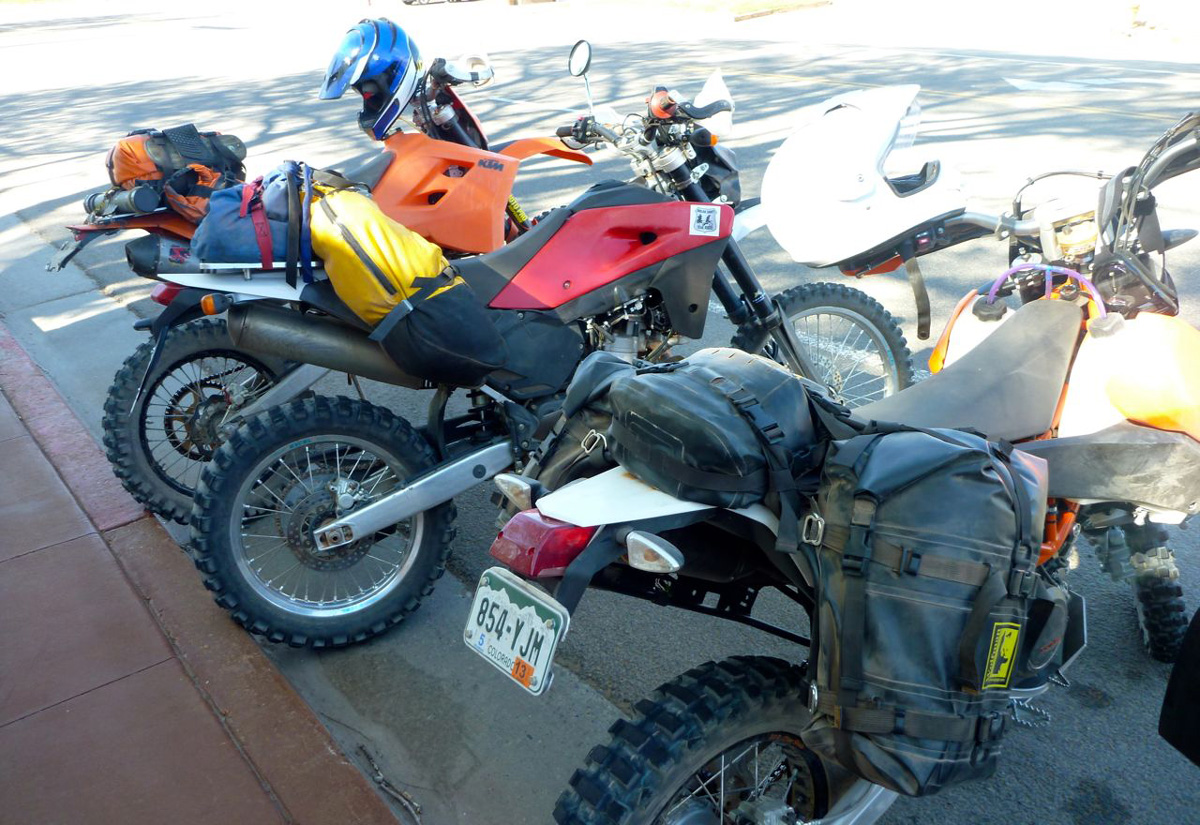
Years ago I had an idea to make a guidebook to the region, but knew it would need an online, track log and video element which was all beyond me at the time. So it’s great to see someone with the resources of Touratech and the associated BDR supporters taking on the task, state by state, to map and log the sort of multi-day mini-adventures that adv bikes are made for. And if Touratech, Klim and whoever else supports the project sell a bit more stuff to wannabe BDRoutards, then good luck to them.
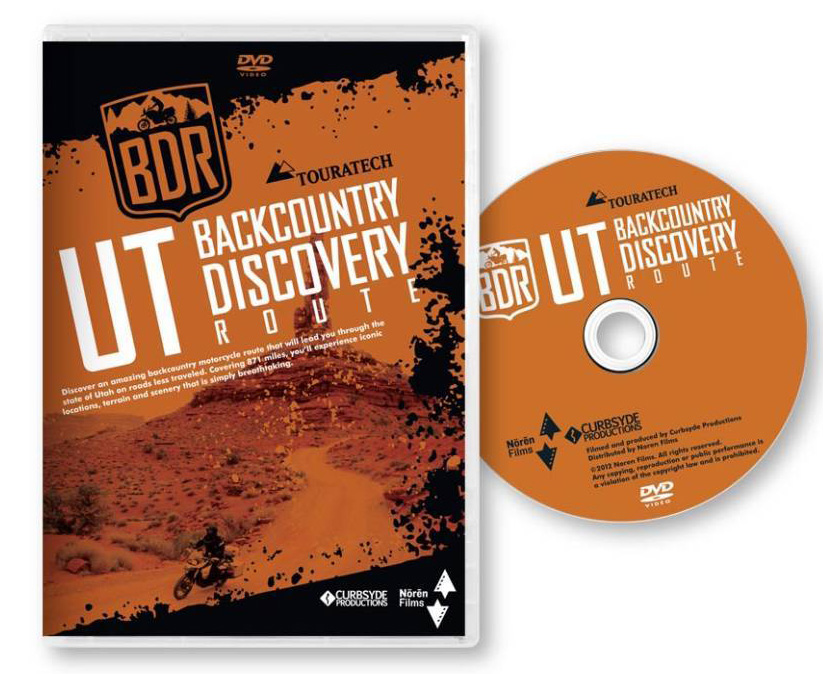
The DVD
The film was shot over a nine-day period as eight riders followed the trail from the Arizona border near Monument Valley up to Bear Lake which spills into Idaho. In the credits I recognised the name Stirling Noren who made a great film for Helge Petersen in Iceland a few years ago, though it seems his role with this production is merely as distributor. As you’ll read below, that’s a shame.

I don’t watch many dvds these days – does anyone? – but what immediately struck me having just watched Richard Grant’s sublime American Nomads doc on TV was the comparative ropiness of standard definition. How quickly we’ve got used to HD, but AFAIK you can’t make old tech dvds in HD unless they’re Blue-Ray. And although the original footage was almost certainly shot in HD, only the online trailers can depict the benefits of HD’s much greater resolution, as you can see here.
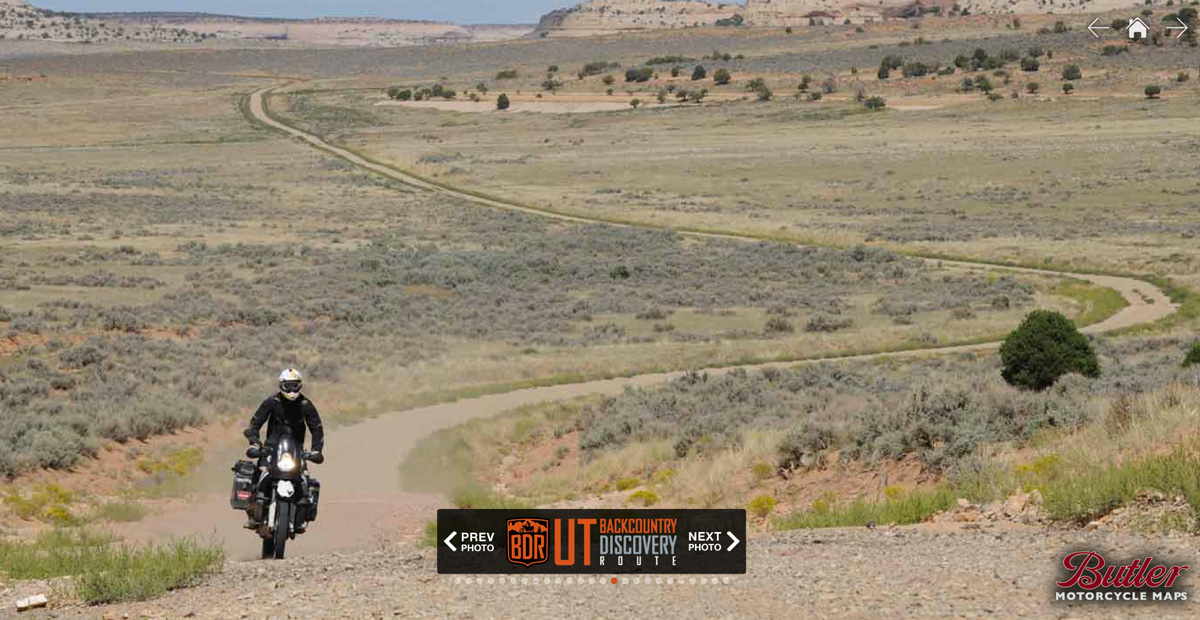
And so we set off to follow the octet of Routards aboard well-laden BMWs and KTMs, none smaller than an F800GS. It’s great to see big adv bikes actually being put through  the paces which their marketing claims they excel at; fully loaded for days riding the dirt highways of the American west. The film was presumably shot in high summer but the weather was not so summery, or maybe that’s normal for Utah which, despite its association with red rock desert canyons, is actually quite high. And with the shooting understandably taking place in the mid part of the day when desert light can be harsh, I missed what I knew to be the golden glow of Utah’s desert scapes.

So when you consider they’re riding though some of the planet’s most striking vistas I have to say I found the film a little disappointing for its hour’s length. Riding for several days is repetitive of course, but a little creativity in the shooting would have lessened this impression. I also thought the drama got a little overcooked at times, not helped by the occasionally portentous ‘my god, will we make it?’ score. I know from my own experience that getting a good score can be one of the most challenging aspects of editing a film, but when you get it right it can hugely improve a film’s watchability. The UTBDR film makes all this a little more difficult by dropping the ambient background soundtrack, except when the riders are doing their ‘P2C’ camera chats. This may have been a wind noise issue (a Jeep support vehicle was used), but you do miss the growl of the big twins hauling along the trail while the wind whistles across the mesas.
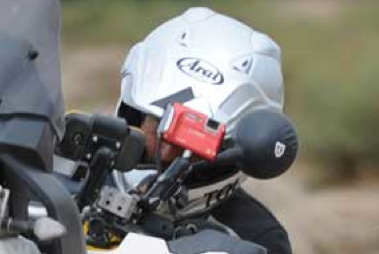
This film was directed, scored and edited by Curbsyde Production’s Flora and Joe Lloyd who seem to have developed a certain look of long, low shots in slo-mo. These work well in demonstrating the pounding suspension of the heavyweight adv bikes, but alternative views on the action would have made the dvd more involving to the target audience. We’re riding motorcycles here, not watching lions stalk their prey on the Serengeti. More on-bike or alongside-bike PoVs could have been mixed in with the long shots to emphasise the dynamism of big bikes rolling through the landscape. There are a couple of these and from one shot (right) there’s what looks like a Lumix FT  mounted on the bars – a great little camera which I now prefer over my recently sold GoPro. With this sort of hardware and some RAM mounts it’s not difficult to film anything moving from any angle.

I suspect the tight schedule and at times poor weather made all this too difficult. No one ever quite manages to shoot the film they hoped. Many of the better slo-mo shots are used over and over again in the hour-long film with what feels like 90% taken locked off on a trackside tripod with the bikes passing through the frame. That’s the stock shot in films of this type and works well in a short, youtube promo vid but as I said, over an hour there could have been more creative shooting: high on poles, low on the ground, anywhere you like on the bike or alongside it. I may have got the wrong end of the stick, but Flora Lloyd didn’t make the best of this opportunity.
Film the journey not the ride
The film sticks solely to the trail. Let’s see the mud-spalttered posse rolling in to a Ma and Pa fuel station, cutting loose in a cantina in Moab, or chatting with locals. Film the journey not the ride, with less of the straight-backed campsite asides about the awesome day’s ride – we know, we just watched it. I think the group was too big to be able to achieve this, but perhaps the many necessary supporters involved in the project wanted to be sure they got their share of face time in the finished product.

No one ever appears tired, hungry, fed-up or even dirty, heavily clad as they are in pristine Touratech or Kilm apparel. The cramming home of the corporate sponsors’ message gets a bit disengaging – at least to a UK viewer. Possibly in the US – where they’ve just spent $2bn promoting an election – this sort of hard sell is normal.

You’ve got to see it all to know it all of course, but once the riding is over many viewers would have wanted to see something like I tagged onto the end of my first moto video shot in western Canada in 2001: the group sat around discussing how their gear and their huge bikes performed following their 900-mile backroad adventure. Perhaps that all features on some blog somewhere, but if it exists you’d think it’d be linked off the BDR website.
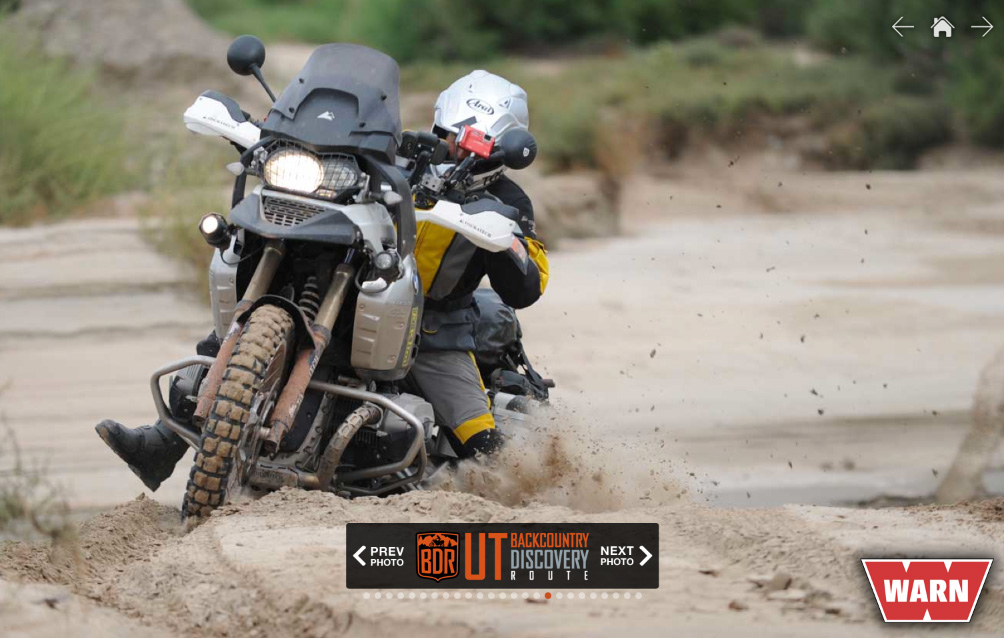
The BDR is not all dirt either, and so I think it would have be fun and no less ‘on message’ to see the big twins carving up a bit of Utah’s blacktop from time to time. The film has some great moments and there are some slick time lapse shots too, especially at night, that seem to be over too quickly. But all up it didn’t make the UTBDR look half as good as I bet it is, given the huge task of herding eight trail weary cats to try and grab a killer shot.

Clips like ‘I don’t know much about Newspaper Rock [Indian petroglyphs, Canyonlands] but that is where we are‘ and ‘… where we saw some great… err, I believe Anasazi… err, petroglyphs on the wall?’  would have been better left on the cutting room floor. If you’re going to talk about that sort of stuff, know what your talking about, otherwise it comes across as a lame token filler. Luckily the following voiceover claws back some credibility. The bonus material includes only adverts from the sponsors and supporters, plus some stills from the mission’s photographer, Jonathan Beck. You’ll get no goofy outtakes here!

It’s easy to be sniffy about paying for dvds these days when great stuff like the Nomads doc above can be found online for free. We’ve all become mini Spielbergs too, spotting flawed filming even if we couldn’t do any better. I recognised myself a few years ago that the effort required to shoot worthwhile footage and then assemble it into a sellable film takes up much more time and resources than you’re ever likely to earn back. Although the vid was disappointing, there can be no better format in vividly giving you an idea of what to expect on the trail, short of slapping it on youtube. As it is they give away the GPS tracklogs for free, so I don’t resent paying for the vid. Exploring southern Utah on a bike, including the Lockhart Basin, Onion Creek and the nearby White Rim Trail are certainly something I hope to have a crack at some time soon (I did: here and here).
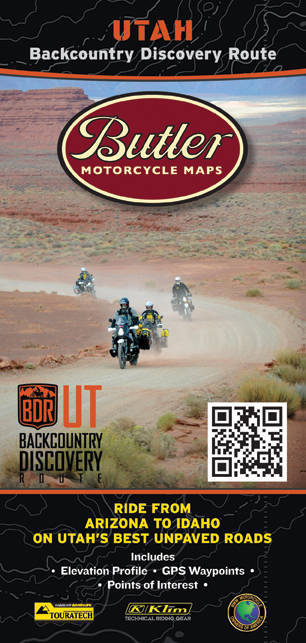
The Butler Map
Butler’s double sided map of the UTBDR covers the whole state at a scale of 1:714,000 which for some reason adds up to 11.2 miles to an inch (US map scales have always baffled me). The map measures just over 3 feet by just over 2 feet and is printed on tough plastic paper. As I’ve found in Morocco, this is the way to go with maps that’ll get rough use, specially on a moto. You can use such a map hard and it won’t fall apart like a Michelin.
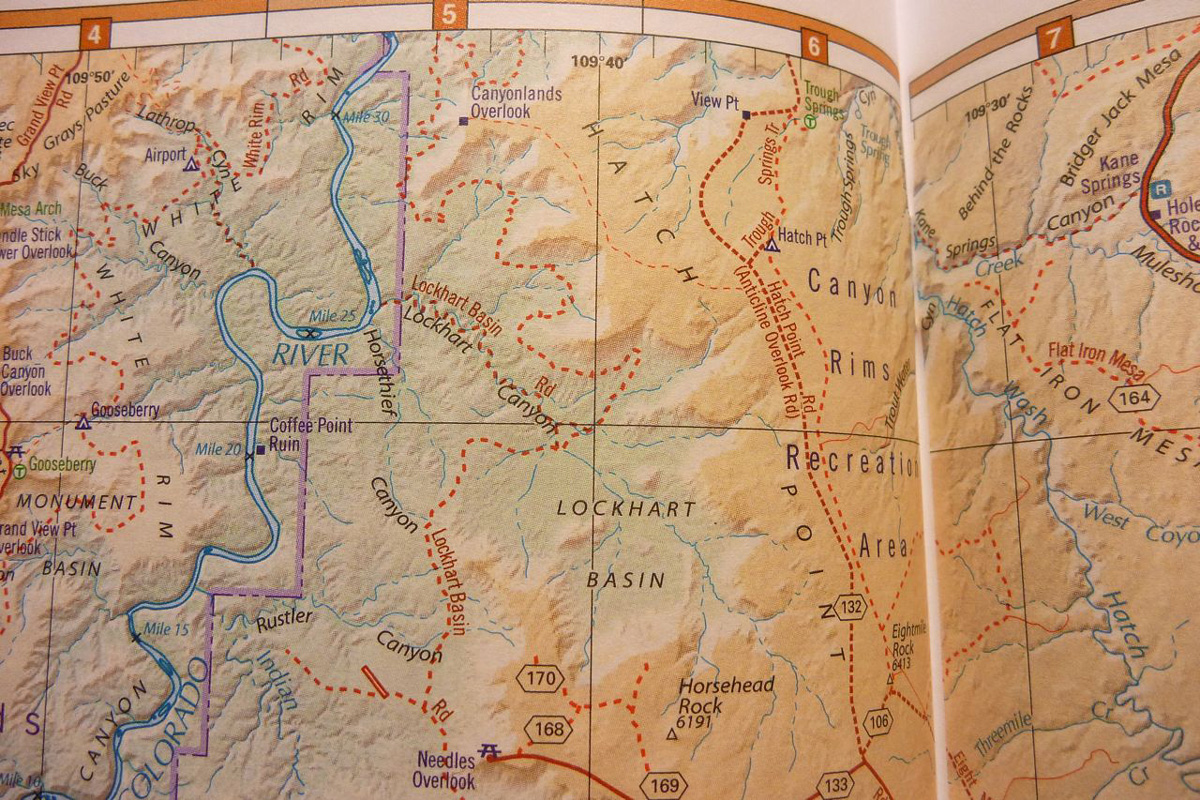
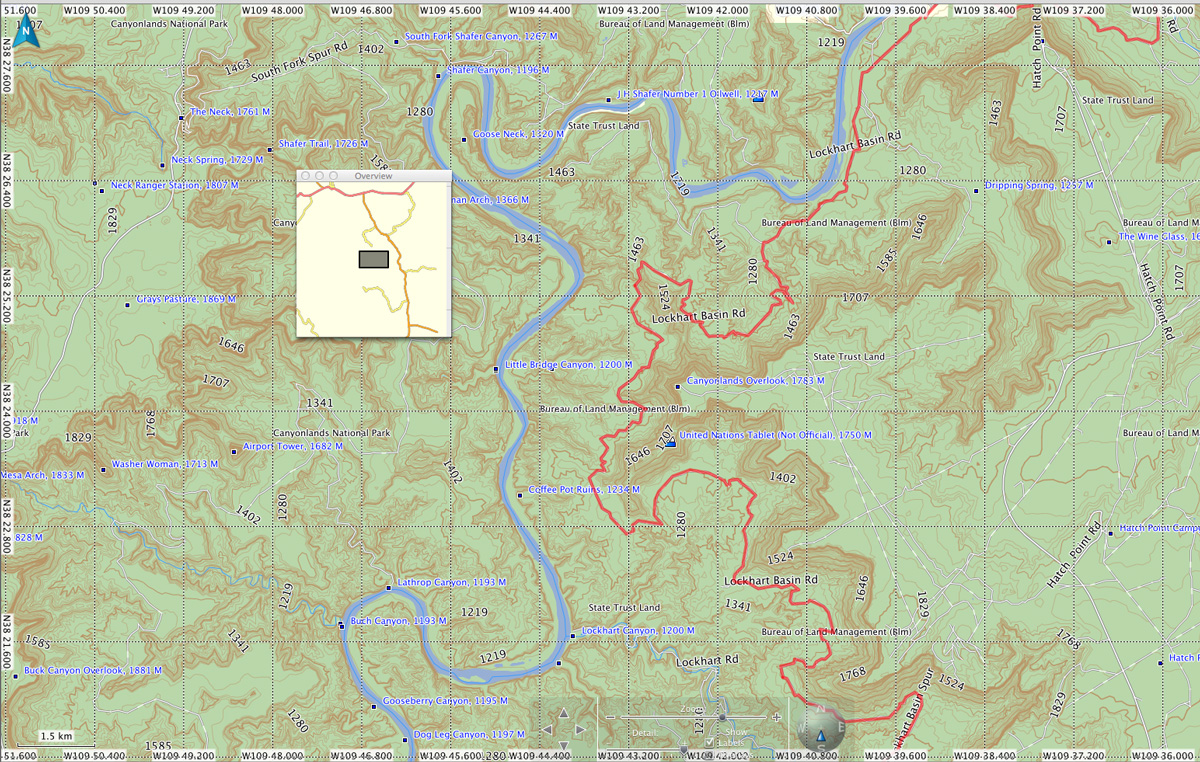
Clearly you’re expected to rely on the track logs downloaded from the UTBDT website; the Butler map probably won’t be enough to navigate with, but it gives you the big picture that a GPS screen never can. If you’re a heretic with something against satnavs (or your unit packs up…) you could try printing off Google maps, more accurate Utah topo GPS maps (left, with the UTBDR displayed using Garmin BaseCamp) or drawing the trail along something like a large-scale Delorme or Benchmark atlas (right) which goes down to 4 miles to an inch (1:250k) and provides a whole lot of guidebook-like info too, even if they are too bulky to sit on a tank like a Butler map. More on this below.
The map breaks the 870-mile trans-Utah route into six sections, although it’s not clear what separates these sections – it doesn’t seem to be obvious places like reprovisioning points. Nor could I find exactly how many miles are dirt, dirt options or sealed roads, all of which help get a measure of the task ahead. Another thing that would be useful are incremental mileage markers along the trail, starting at zero in Goulding and appearing at say, at every key junction such as Valley of the Gods start on US 163 (28.6m) and then another at where VotG Road joins UT 261 below Moki Dugway (54.1m), meaning you can work out that VotG dirt road between those two points is about 26 miles, or an hour or two’s riding.
Another thing that’s immediately apparent is the lack of a lat-long grid, something I go on about with Morocco maps used for similar sort of riding adventures.  The 1:714k-scale may be a bit small for this, but with a lat-long grid and a back up GPS (like a smart phone) you can pinpoint your position should your satnav go up the onion creek. Until there are helpful BDR signposts at each junction, this ability could help you avoid making a mistake by following the wrong track. Along the Route there seem to be several alternative dirt trails and countless junctions where a long-lat grid would be a useful navigation aid.

On the reverse side of the map you get a very neat elevation profile using the full width of the paper (although they miss out depicting the alternative routes which could mean the difference between going high or staying low). There are also a dozen or so insets of what you presume are tricky unsealed sections enlarged to 4 miles to an inch and which seem to use the same base map and scale as the Benchmark atlas mentioned above. I feel they could have dumped the rather lacklustre moto-action photos which haven’t printed very well on the plastic paper, and made those map insets either larger scale, or have them cover a larger area. Maybe I’m old fashioned, but on a ride I’m used to getting involved with the nav and tracking my route on a map, rather than relying solely on a line on a satnav screen. Out here a good paper map is vital.
A handful of QR codes lead you to online videos of each section, or are promotional/commercial links. You’d think it would be handy to have say, accommodation and eating options in the few towns along the route, even if it was just a third party site such as a local tourist board. One QR indicates gas, food and lodging, another links to ‘route conditions’, but there’s no indication of a url so if you don’t have a QR-reading smart phone you’re in the dark. There’s no indication on the UTBDR website what these links might be.

You have to congratulate Touratech, Butler and all the rest for coming up with a great concept that will be a shot in the arm for dirt road exploring in the western US: ready-made, bite-sized, week-long adventures that are guaranteed to get you riding your machine into the heart of the wilderness without inadvertently ending up at the end of a rancher’s shotgun, a dead end or in a ranger’s citation. Despite my criticisms the dvd and map are well worth $40 as it’s hard to think anyone’s going to make much on this whole deal when all the work is done – the value will be mostly promotional to all concerned. Yes you could pick over the web for days to get this all for free, but like a good guidebook, sometimes it’s just easier to pay up a little to gain a lot of inspiration from someone else’s hard work. I’m looking forward to the rest of the BDT series.
GS500R – A Ride Across Britain

Index page

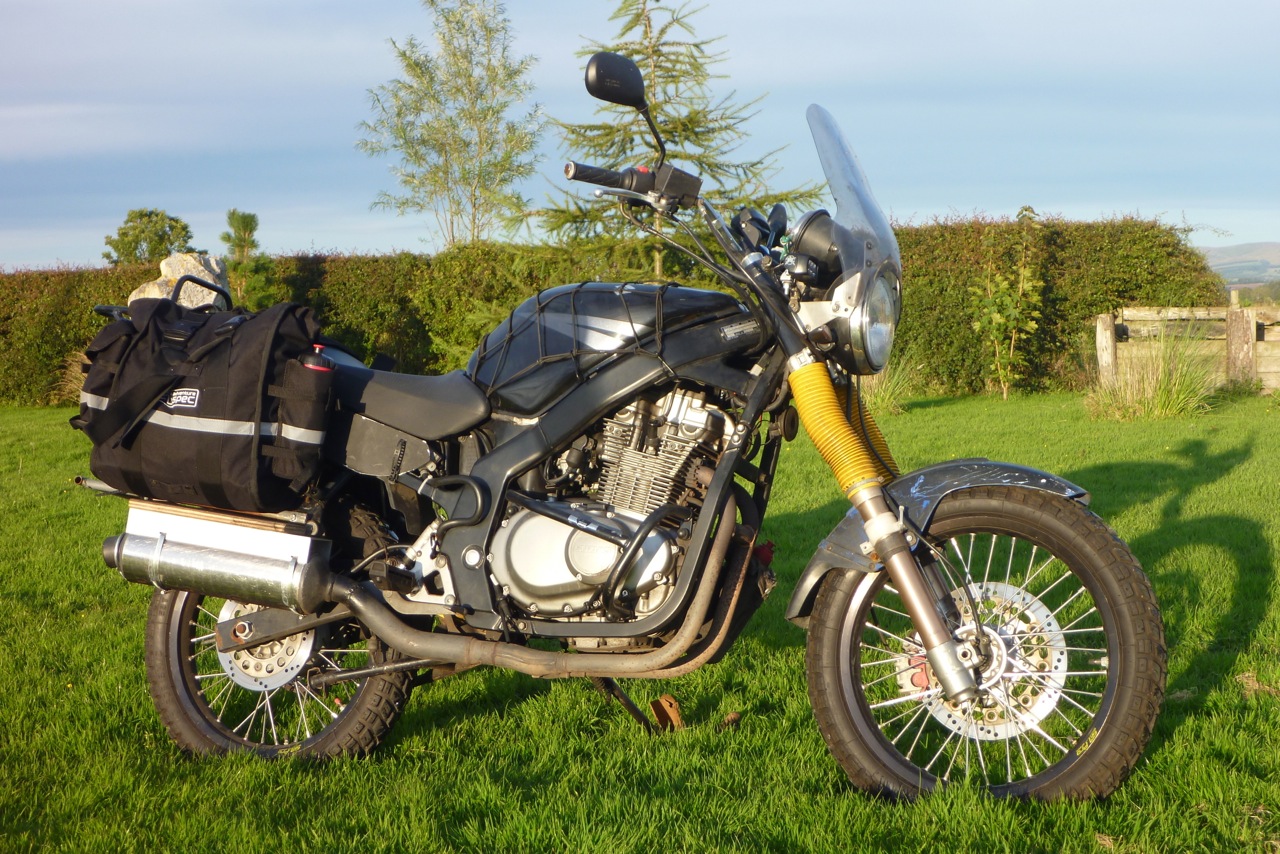
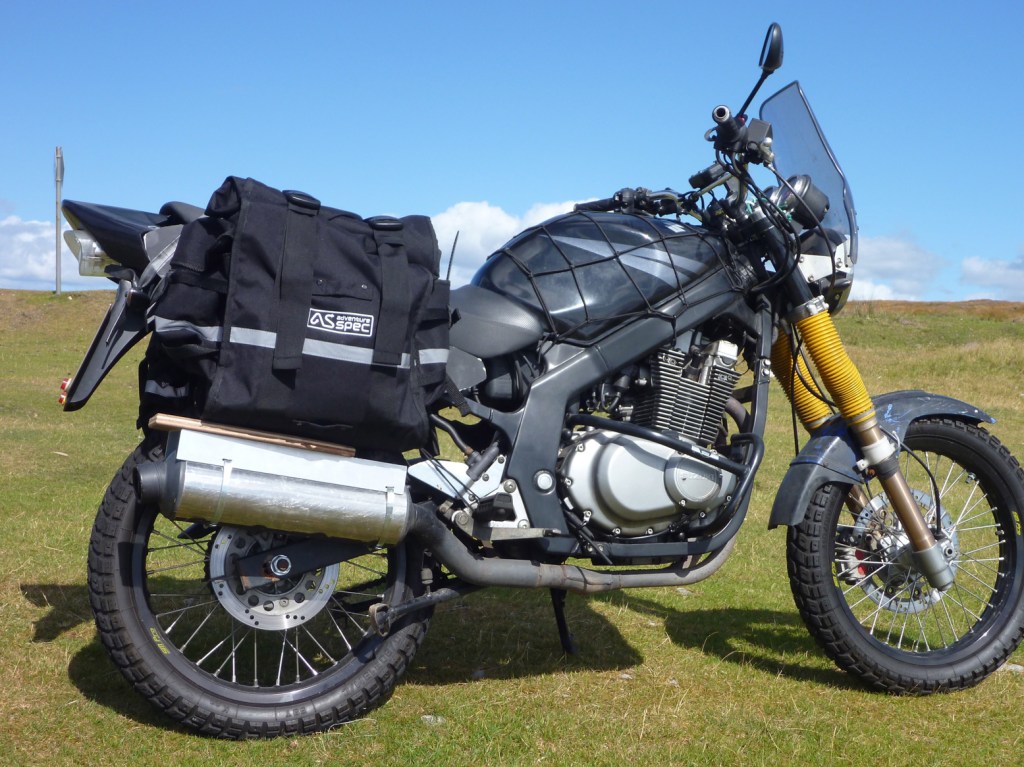
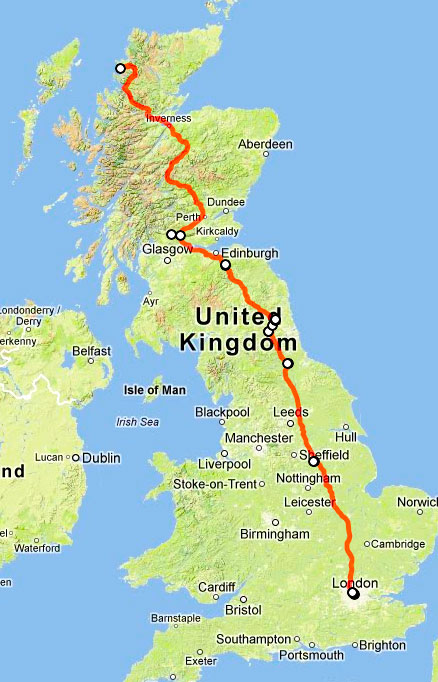
Since I rode the GS up to Scotland in June it’s received a few mods and the 700 mile ride back south (right) was a chance to put them to the test. Among other things I’d fitted K60 tyres on Tubliss liners with a splash of Slime. I made the back brake work, nearly finished my piperack, fitted flat track bars and an LED riding lamp.

Setting off for the first 250-mile stage to a mate’s near Stirling west of Edinburgh was a sparkling day (left), but already there were warnings that an incoming storm would wipe any traces of late summer warmth off the face of Britain. Any chance of enjoying a slow ride home would be better compressed into the usual dash. A day after I got back it was another ‘month’s rain in a day’ story we’ve been hearing all summer. Roads I’d ridden hours earlier were closed by flooding or high winds, the trains stopped running to Edinburgh and a coastal town near Aberdeen got caked in wind-borne sea foam.

Backing up, the ride over the Cairngorms proved I really should have remembered my Aero Kanetsu electric vest. Running it off the GS’s battery was one reason for fitting the SR-M LED lamp (to reduce the alternator load). Even in the sun the Trail Tech Voyager (to be reviewed) barely reached 9°C, so a hot soup in Aviemore spread a bit of warmth back into the limbs.

Day two was going to have to be a 10-hour, 450-mile haul right through to London if I was to miss the much forecast gales. Even then, I could’t bare the thought of the dreary but functional M6 and M1 motorways, with the statutory pile-up/hold-up somewhere in the Northamptonshire area. Instead, a more interesting line jumped off the map: A7 from Edinburgh to Galashields, hop over to the A68 which led over the border to Darlington, and from there slot onto the A1 to London. The variety made covering the necessary distance satisfying and I knew the run through Northumberland and County Durham would be fun.
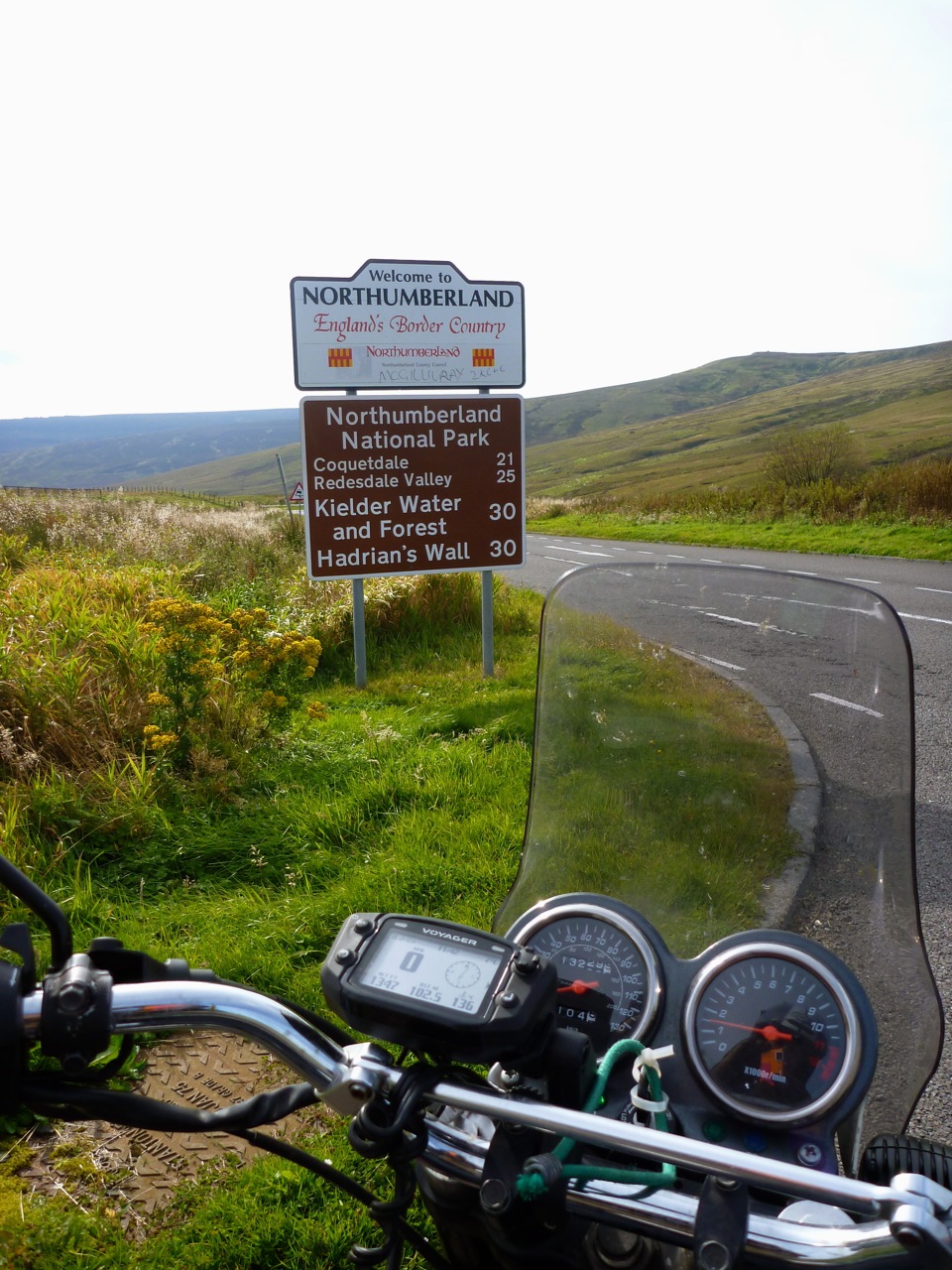
The miles piled on and the GS got notably smoother, as engies do. The lightly loaded Magadans sat behind me, tucked well in and attached or resting on the piperack, while the Voyager kept tabs on various aspects of my progress as I rode up some sweepers to the English border strung across the Cheviot Hills (right).

It was a sunny Sunday and there seemed as many road bikes out as cars, but it has to be said cars do get in the way of enjoying a smooth ride, even on a GS500. I must have been stuck behind one of these or eyeing up the Voyager when the A68 took an sneaky right just before Otterburn while I blundered on along the A689 towards Newcastle. Didn’t want to go there so I turned right onto single track farming roads which I knew would lead to the A68 somehow. Without maps or a satnav, the Voyager’s compass proved a handy aid to negotiating the angular byways until I popped out back on track near Corbridge where the weekend throng were enjoying pub lunches. A fill up saw the mpg improve to 62mpg after yesterday’s all time low of 57 (conversion table here).
I was due for a feed myself but wanted to catch up on my error and find an ambient eatery for a quick and casual refill. That turned out to be a Sunday bakery in a place called Tow Law near Consett. Consett I’d heard of – your man Edmund Blackadder (right) was born there, and in 1980 its steel mill – one of the oldest in the country – was not so much closed down as eradicated. The inevitable social consequences became a byword for post-industrial collapse.

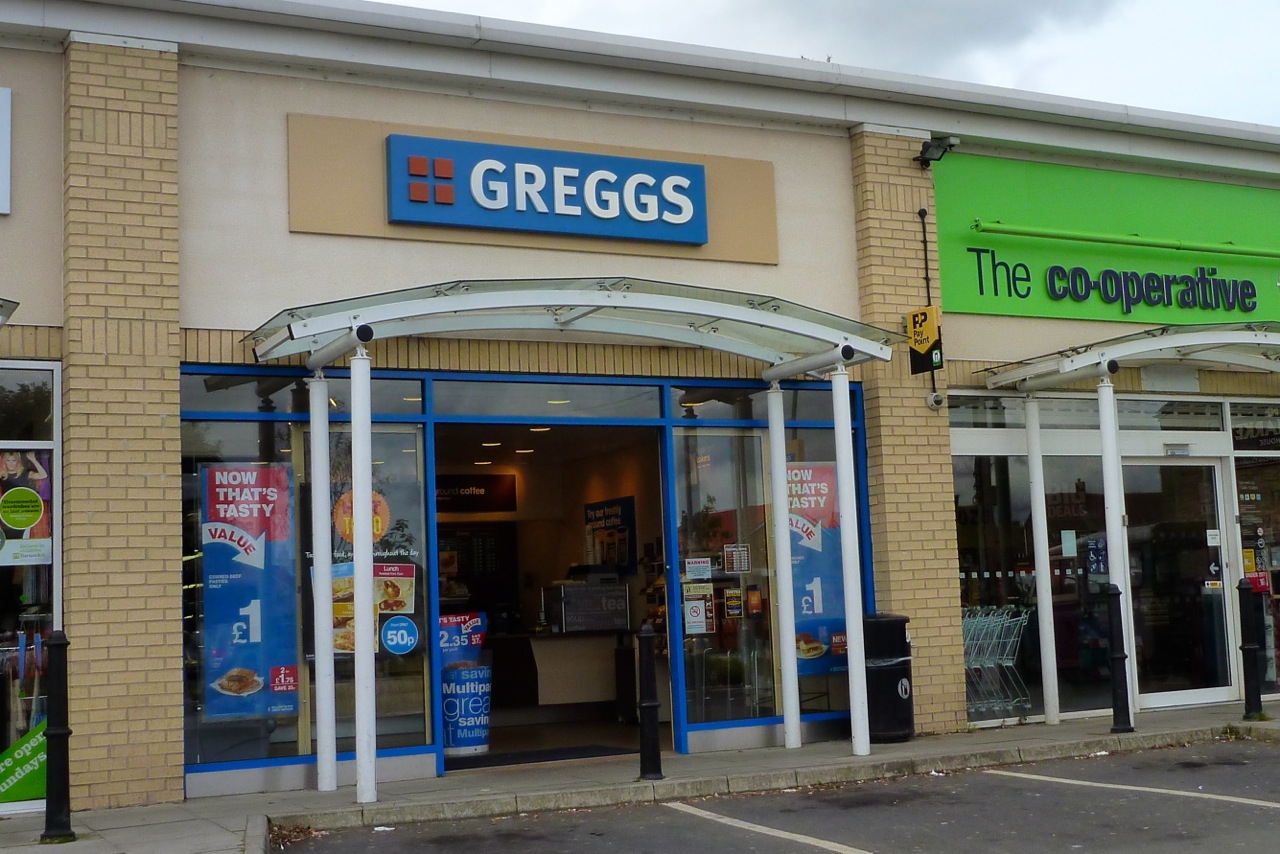
Sat at over 1000 feet in the east Pennines, nearby Tow Law was a smaller version of Consett, established after a Victorian era coal rush but now plateauing out following a steep decline at the end of the last century. But it had a Greggs (left) – the first I’d seen in months, so Tow Law is alright by me. Two hot pies, a cream cake and a coffee. I was primed for the next 6 hours.

Soon enough the A68 ran into the A1, the Great North Road built by the Romans. The better part of the day was over now, all that remained was to ride into the rain. That started somewhere in Lincolnshire, a light drizzle that the winds kicked up into a full-on lateral hosing. Like many bikers before and since, I sat on some Armco pulling my Rukka one-piece over my legs and wrapped the top half under the waxed Falstaff which was to be put to the test, along with the Magadans, the Rukka itself, the GS with it’s new K60 tyres and my X-Lite. I was also seeing how neoprene kayaking gloves worked as wet weather gloves (short answer: they don’t).

What rider isn’t familiar with that trance of concentration that envelopes you when riding a busy road in the wet. The bike is humming as you try to maintain momentum while knowing it takes just one slow- or too fast reaction by you or others to become the unwelcome filling in a pile-up sandwich. Meanwhile your gear slowly begins to succumb or resist the 70-mph onslaught. If I was looking at myself behind the cosy flip-flap, flip-flap of some wiper blades I’d be thinking ‘cripes, rather you than me, mate’. The temperature dropped to 6 degrees, not a long way from snow, and the rain washed off the bugs but started running down the inside of the X-Lite’s visor, further reducing visibility while I bored through the spray. It was the autumnal equinox and luckily some sort of daylight shone through the murk. The thin neoprene gloves were proving to be a fast track to rheumatism, but the PVC Rukka lowers and even my old Altberg boots stayed immune. So too were the Magadans it turned out later. The insides got damp (they don’t claim to be waterproof) but barely a drop licked the outside of the thick inner bags. And the K60 tyres never missed a beat on the motorway or while cutting across Sunday night traffic through the middle of London.

Using the Magadans
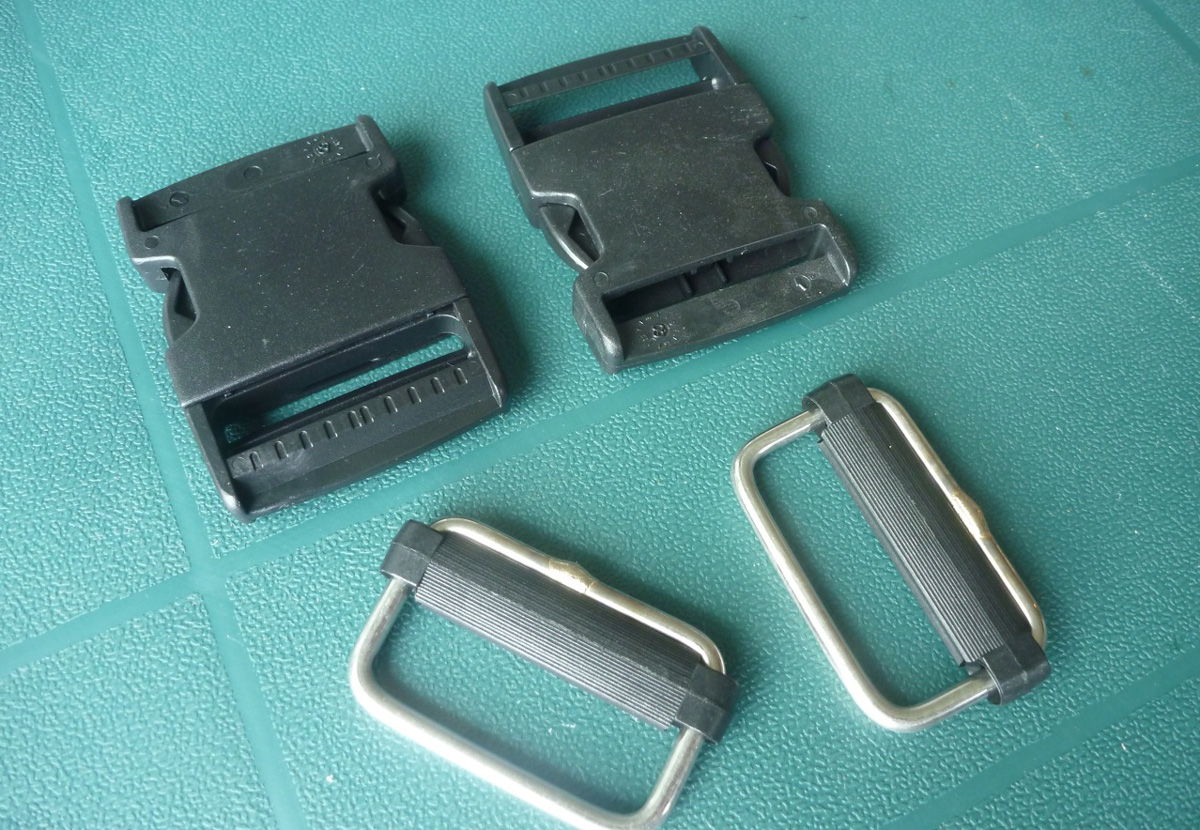
Although it was only a short ride, I got a bit more of a feel for using the Magadans. The buckle idea I mentioned is definitely the way to go to replace the over-seat velcro. As the bags sag or lift with different payloads you want to make small adjustments and doing that accurately with the double-sided velcro is a pain. With a ‘friction-bar’ buckle (right) a quick tug or release and you’re done.
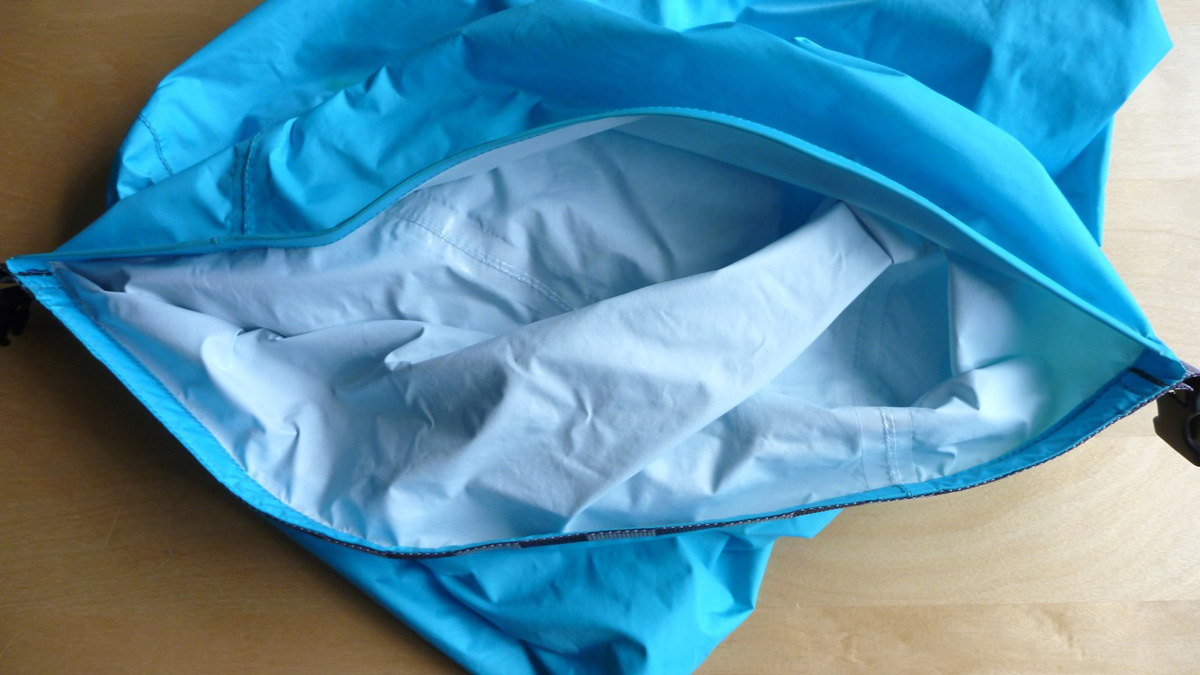
Opening the bags for access is of course easy but the inner bags are rather stiff when cold and so difficult to roll up and clip while complying with the outer form. But it was a cold day and anyway, the are scores of roll-top dry bags available, either full-size singles, or smaller multiples to help compartmentalise. Though it’s much thinner coated taffeta nylon, Exped make a light blue XXL 40-litre rucksack liner dry bag (left) with taped seams and a white interior. As with the Kriega Overlanders, a white or light colour would make digging around to find stuff a little easier.
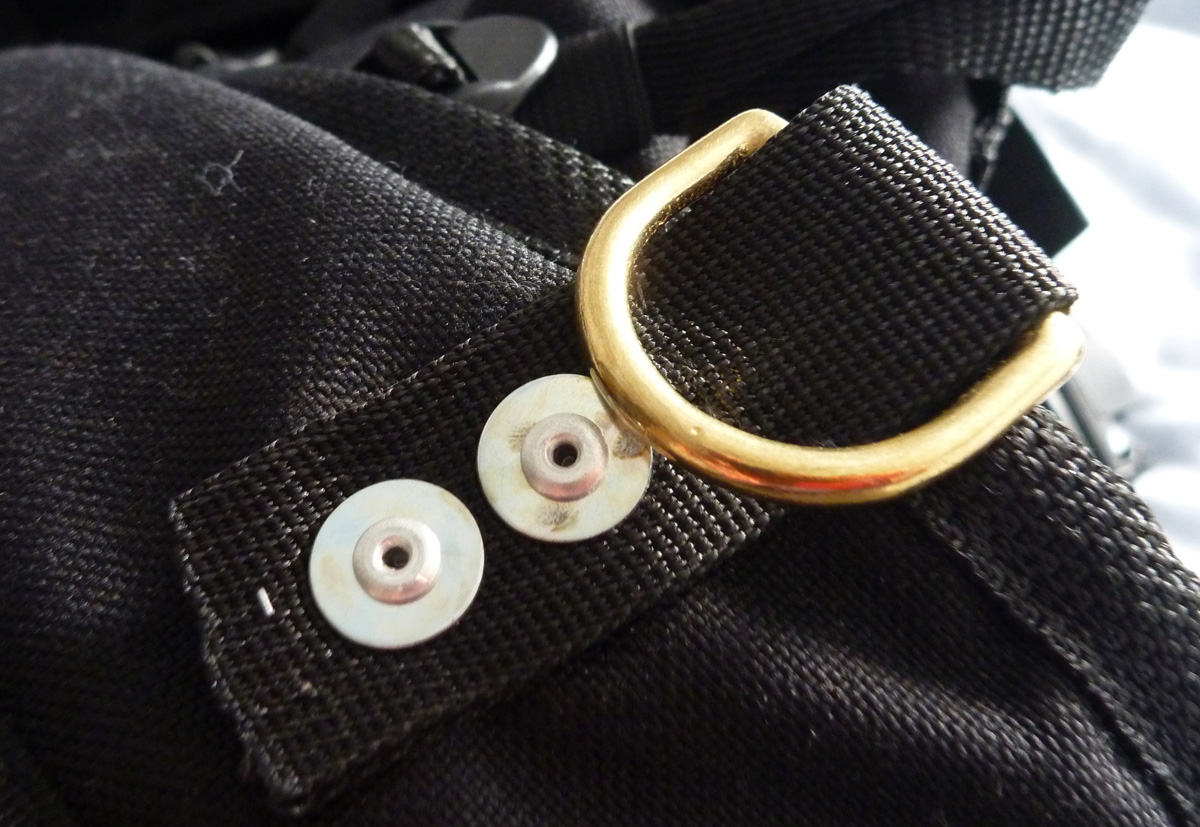
I lashed on my sewn on D-rings to  the rack rather crudely and with numb hands had to yank them off when I got home. Once I have the rack finished I’ll be able to make some permanent attachment points on it and figure out a quick clip-on system, probably a smaller, one-inch version of the black clips pictured right.

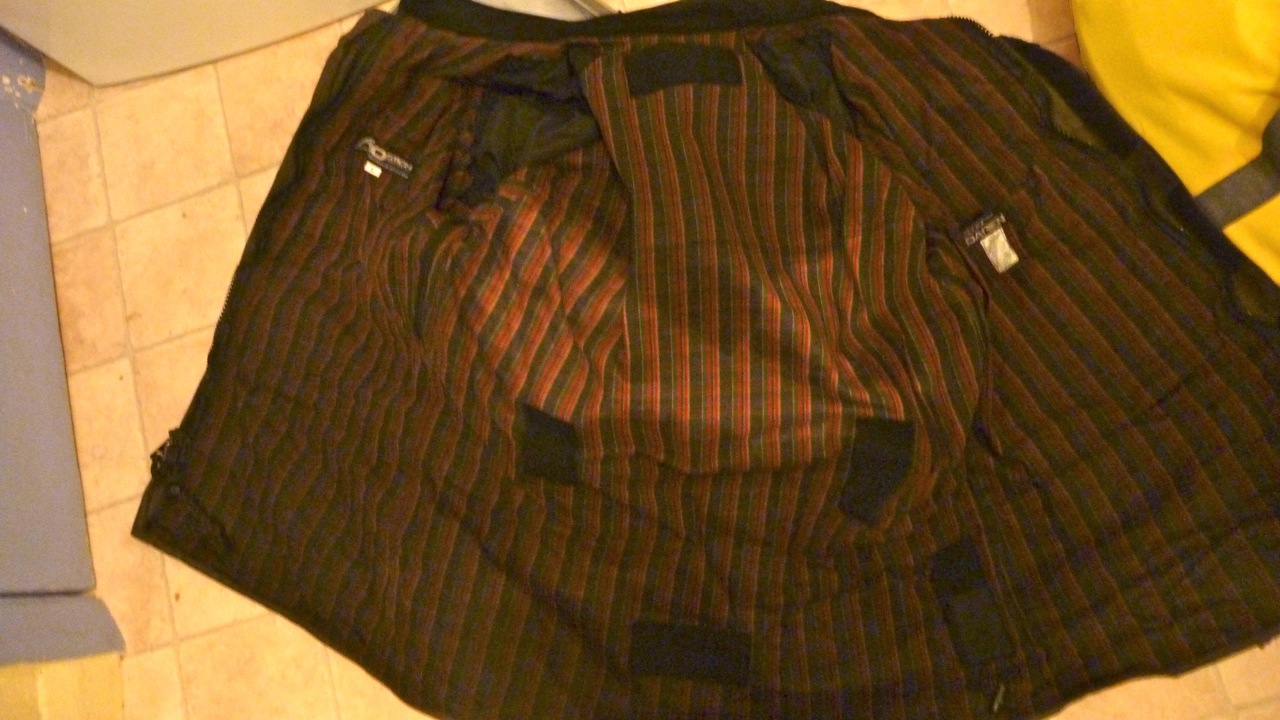
Not so amazing or surprising, was the Falstaff’s performance. After an hour I could feel the wet against my arms just as I’d done in Spain months earlier, but more so. It was only when I got home that I saw the entire lining bar a small patch on the back (right) was soaked. My wallet and phone in the inside pocket were on the way to saturation. What a shame. Design and construction wise it’s a great bit of kit, but it doesn’t do what it needs to so I won’t be wearing that again.

Still, now I know what works which so far still includes the Suzuki GS-R. I can’t say I notice any negative roadholding or handling issues from what might be seen as a thin rear tyre or indeed running identical tyres front and rear like an old Lambretta. Again I’m surprised how comfortable and endurable long days are on this bike, even in sub-optimal clothing. A big part of it must be the seat which engages well with the corresponding part of my anatomy, but I also wonder if it’s something to do with a modest engine and braking power which puts little stress on the body, while being enough not to feel vulnerable and under pressure in traffic. That was the reason for choosing and adapting an otherwise ordinary machine.

GS500R – rear wheel conversion

Index page

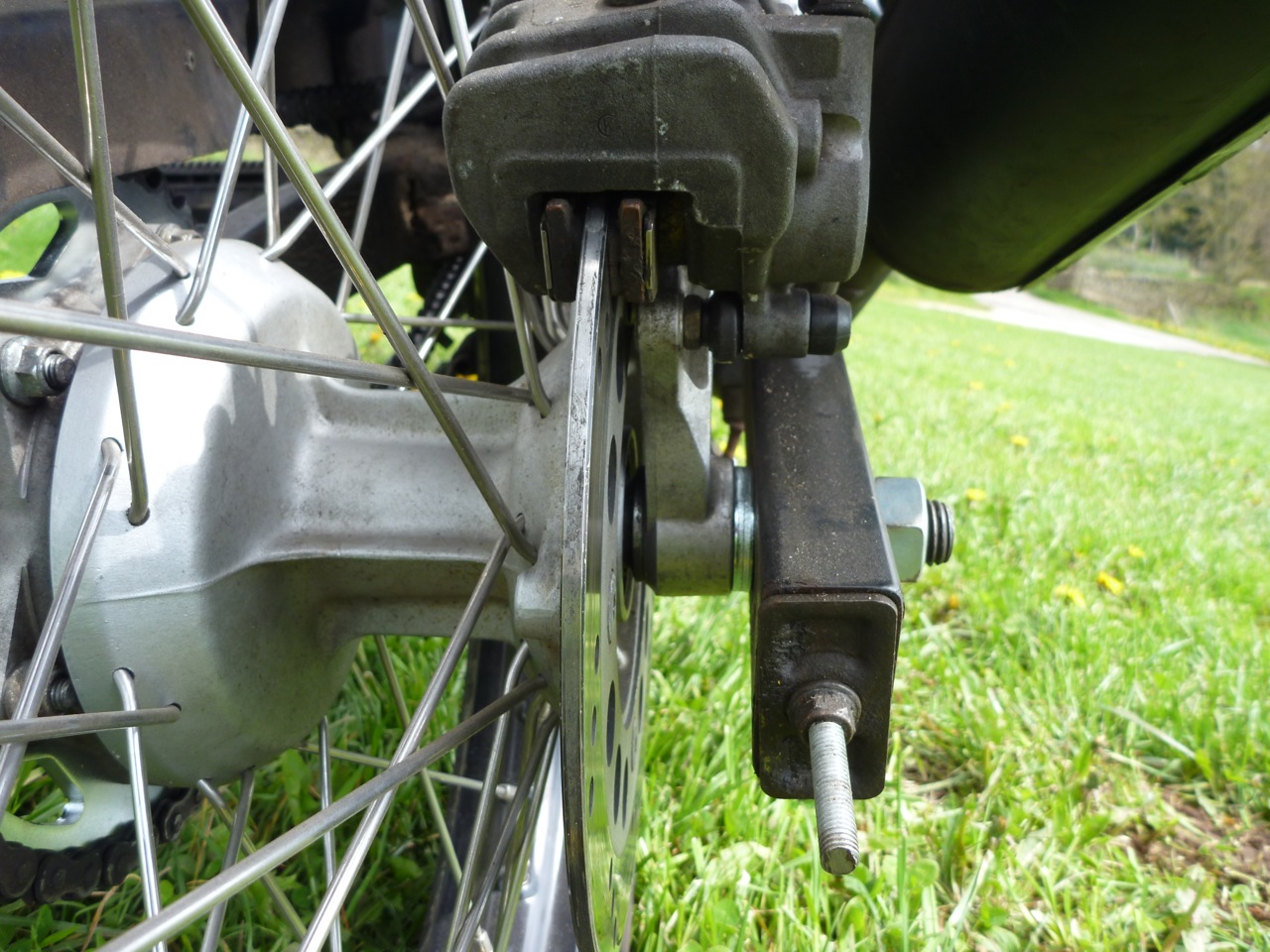
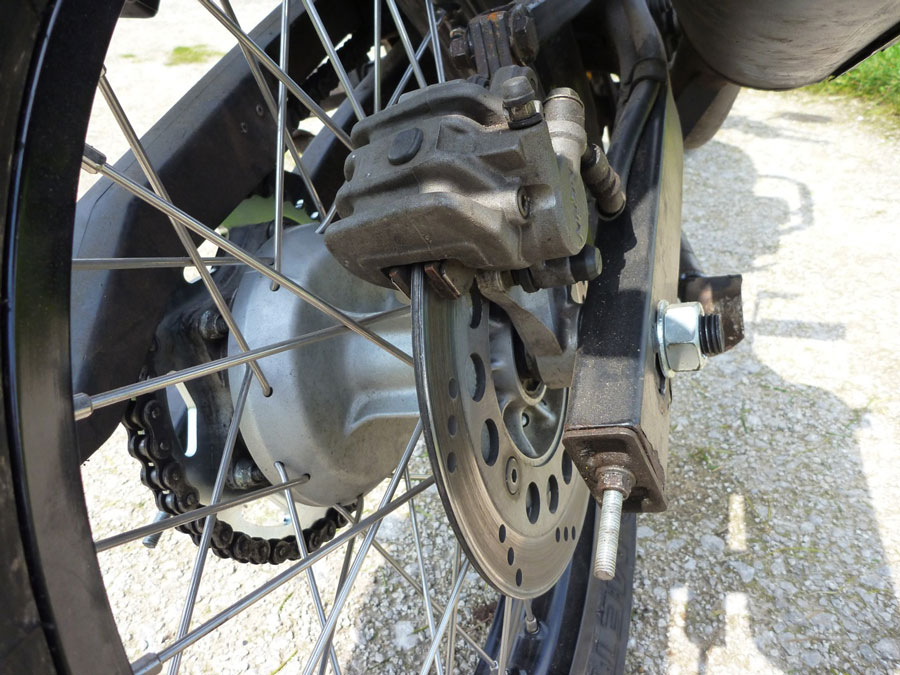
My 2004 GS runs a 2000 DR650 hub, rotor, calliper and just lately, a DR slave cylinder too, all fitted to a 19-inch Excel rim in the original swing arm. My non-bikey mechanic mate did the job, taking some suggestions from me.

The DR650 spindle is thicker than the GS so the swing arm slots and the spacers inside them were enlarged to take the DR size and a high tensile bolt was used. Can’t recall if this was because a used DR spindle was hard to find, a new one too expensive or the DR axle was just the wrong length so using a bolt was easier.

We considered lengthening the swing arm – apparently a DR650 will slot into the frame but is said to be rather long. Plus I thought the stresses on the already jacked up OE linkage with the SV650 shock might get too much and extending the GS5 swing arm a bit risky. But as it is, the bike handles normally within its limits. I can’t see myself skimming over the dune tops or powersliding like Gaston Rahier on his Marlboro BM.

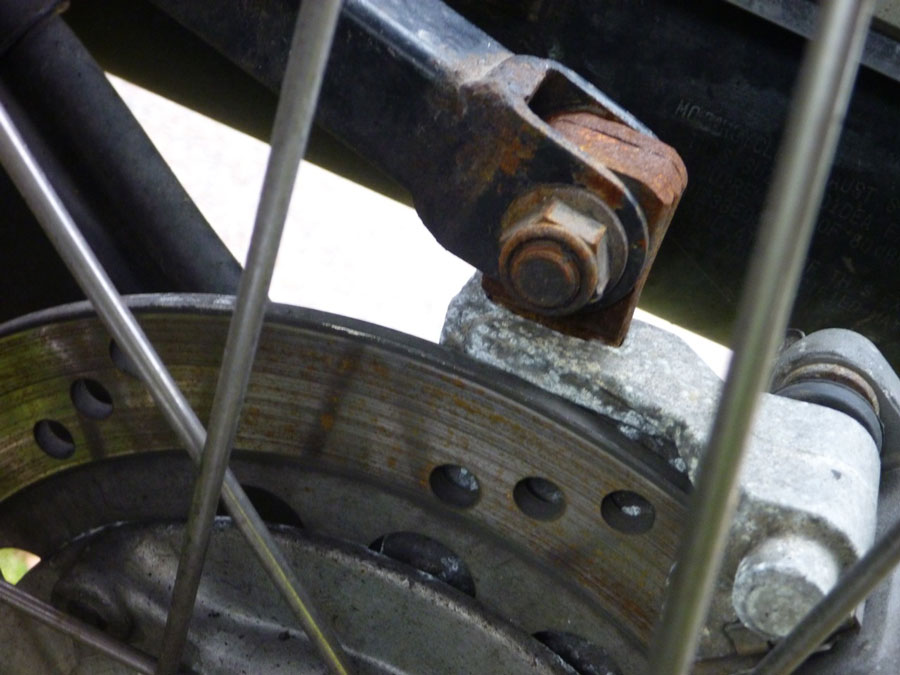
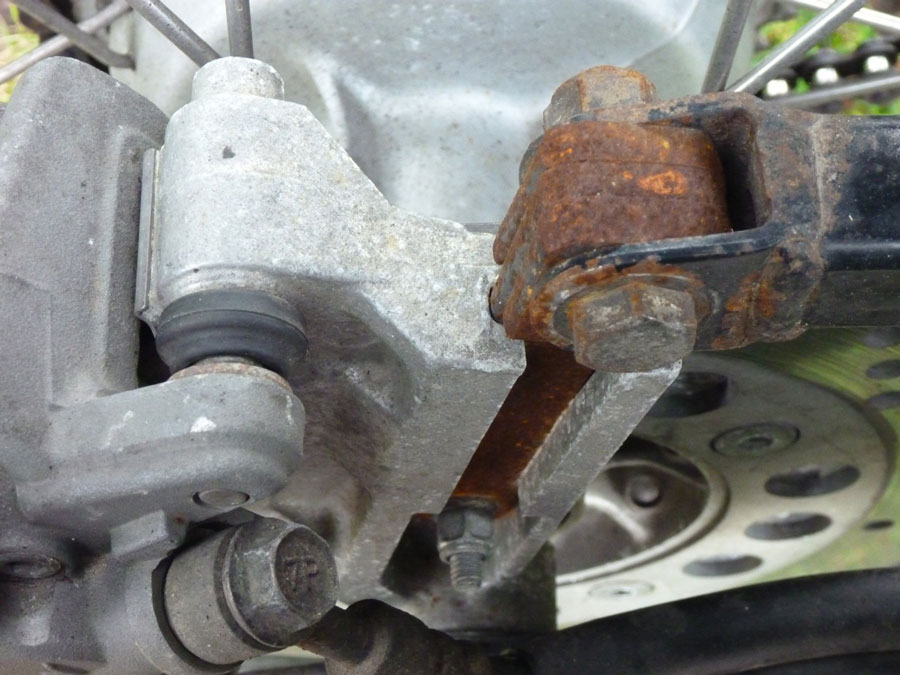
As for spacers and alignment of chain and rotor, we focussed on getting the chain lined up first (the new rim was offset to fit, I recall) and sorted the rotor after. From the picture left, it looks like the OS DR spacers or a very similar tube spacer were used with just a couple of washers between the calliper and the swing arm to fill out, so it was a pretty close fit.

A custom sprocket was ordered to fit the DR’s sprocket carrier with a guesstimate that 42T (rather than OE 44) with the OE 16T would make the gearing near identical to the original GS500 but now with a 19-inch wheel; the guess proved spot on. The same chain is used with no length changes, but with a couple of extra links I could run the wheel at up to 1.5 inches further back to lengthen the wheelbase which is currently about 58” (as short as possible on the swing arm slots – original is 55.5″) and feels fine. There are no chain tensioners needed, but an idler might be an idea to stop the lower run rubbing on the pad which makes a bit of noise.

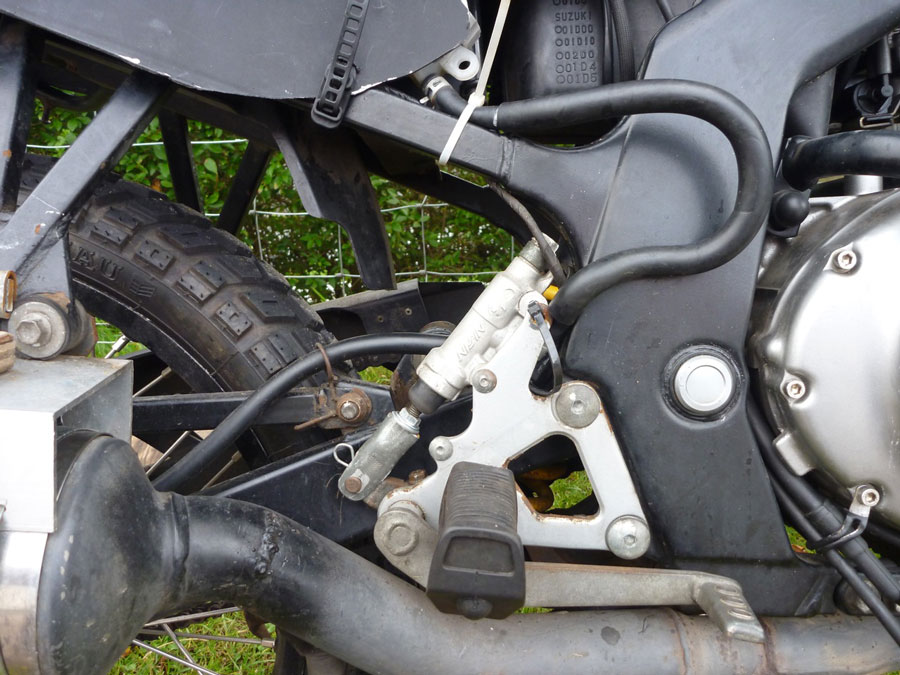
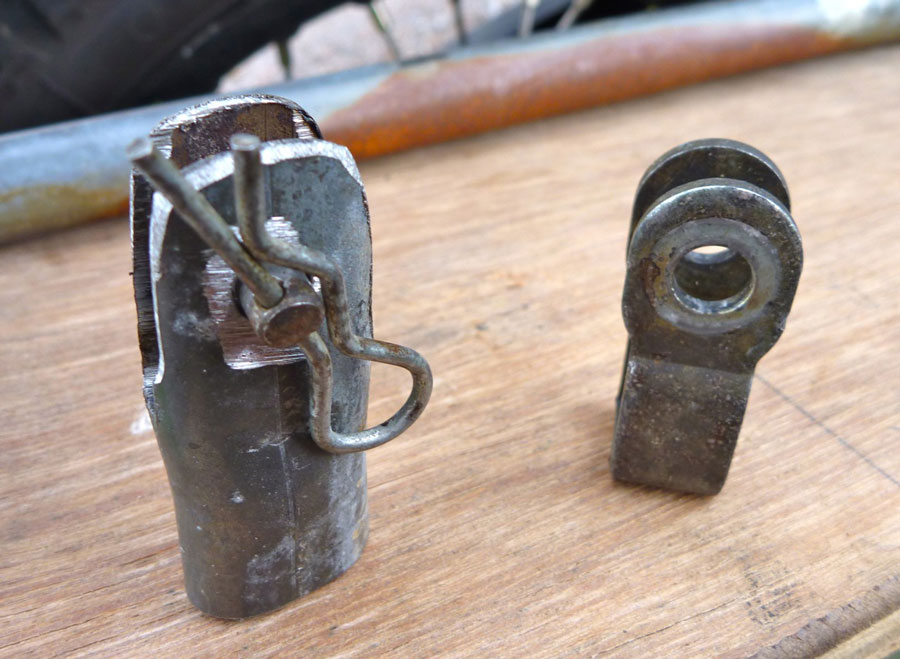
The OE GS slave cylinder didn’t work well with the DR rear calliper – mismatched hydraulic ratios meant weak braking, or so I thought. I eventually fitted a DR slave cylinder and rear braking improved to the point of being able to lock the wheel, but still requires a long throw of the pedal, even after replacing the linkage with a slightly longer item made from a bit of 3/4 inch tube (below right). I then found an image of a DR rear slave set up and the DR pedal pushes directly  up on the vertical cylinder, not leaning over at 45° like mine which effectively lengthens from the throw. The GS brake pedal mounting splines are rather coarse so moving it around one notch didn’t work either. Alignment of the DR slave on the GS mounts is a bit tight anyway as it is now, but now I know the brake is working better than it was, an adaptor plate can be made to verticalise the slave cylinder so hopefully making a shorter throw and snappier brake.

Pipe Rack

GS500R Overlander Index Page
Normal & Platform racks

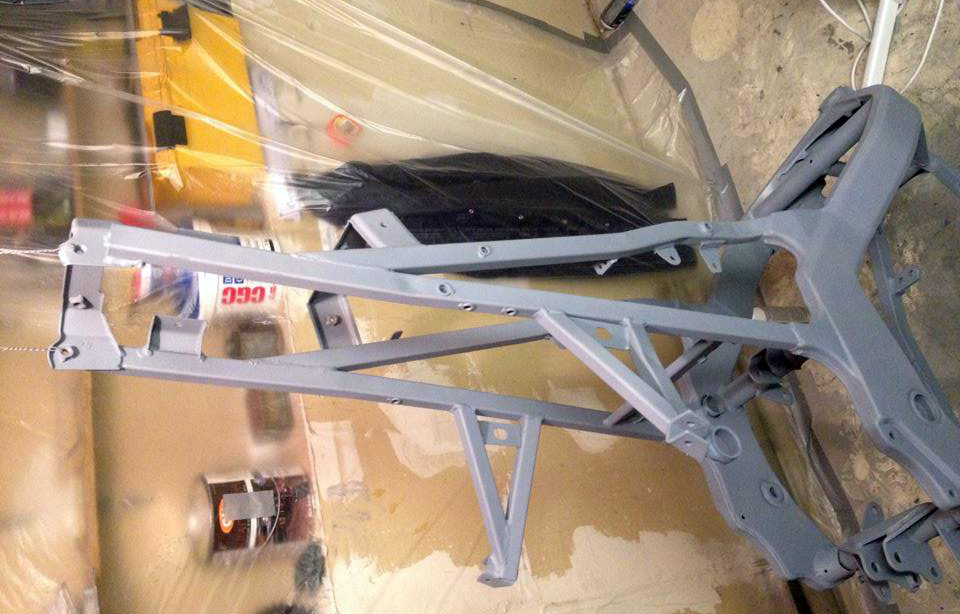
I don’t think you could describe a GS500’s chassis (left) as something that Brunel would have tipped his hat to. Thin bits of box section glued together with spit and braced with stamped bits of plate. You get what you pay for and GS500s are not to be mistaken with the GSX-R pocket rockets.

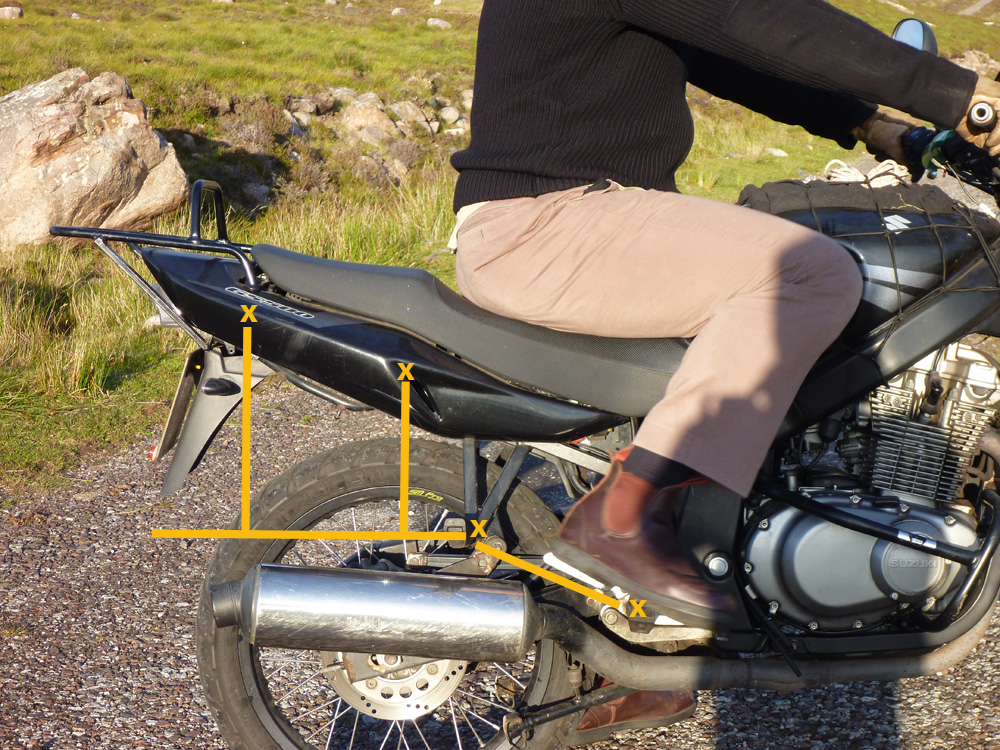
Anything too clever or hefty would merely see the GS’s subframe wilt like late summer corn. Up to a point a beam could be added from the pillion mounts down towards the footrests to help support the back end (right).

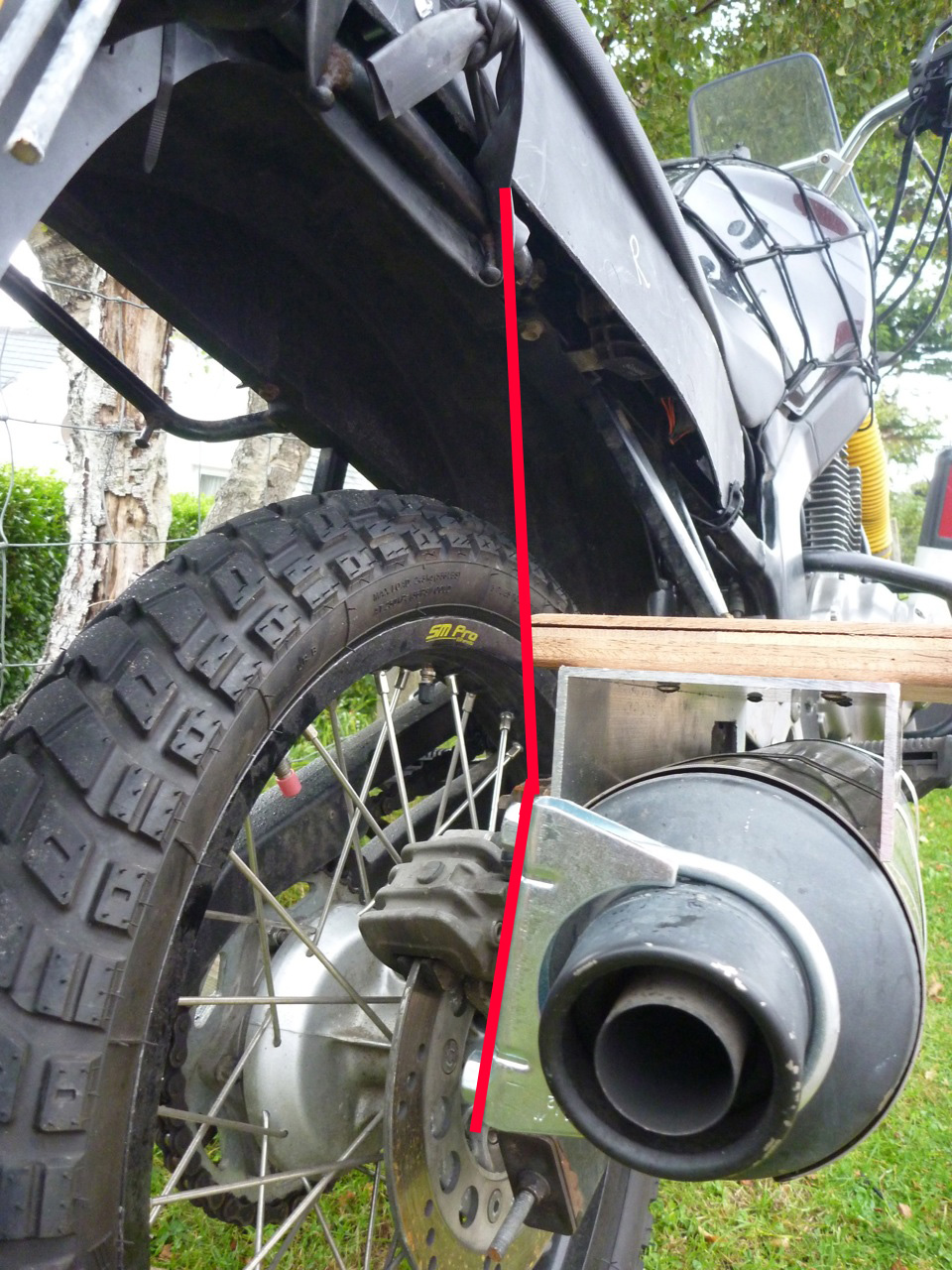
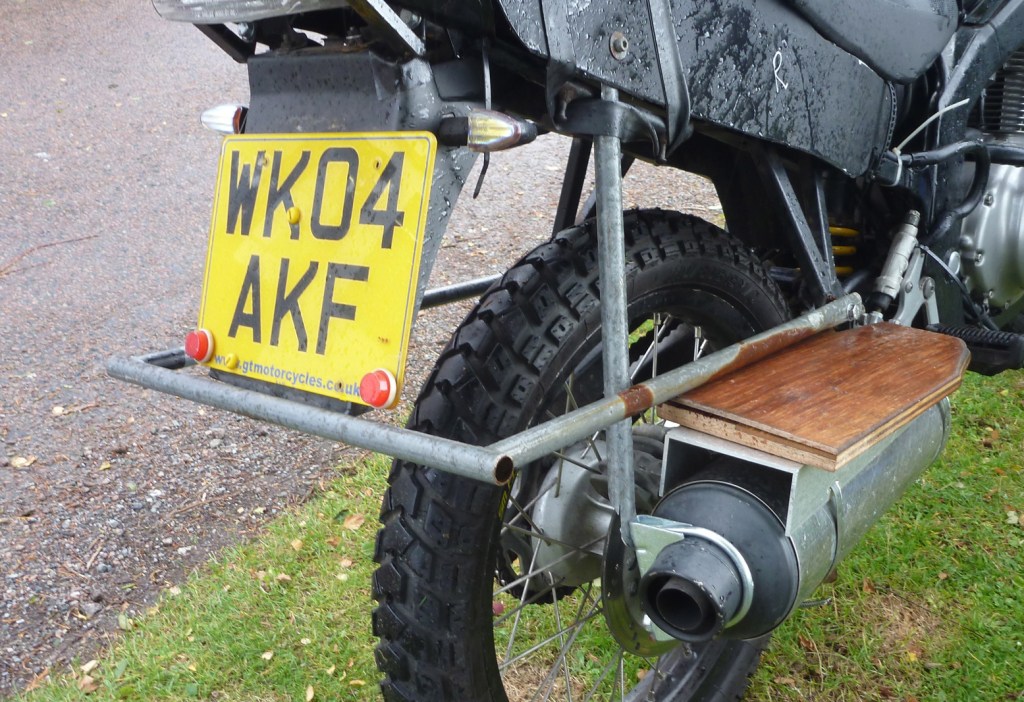
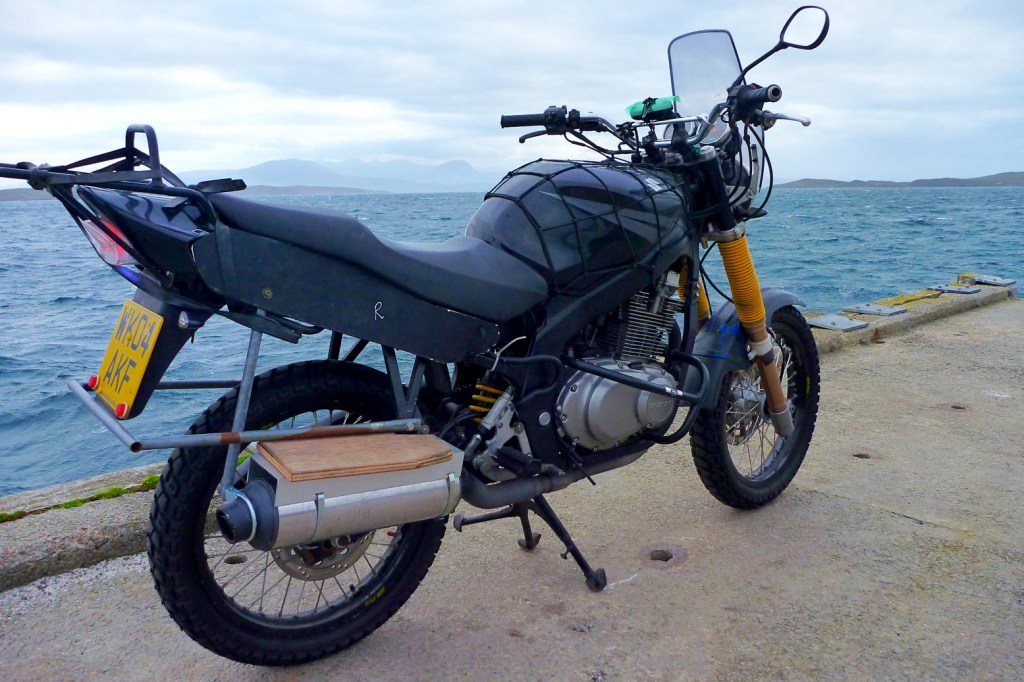
Trying to work out how to make the platform (or get it made), it occurred to me that a metal support tube as strong as any on the machine was staring me in the face: the silencer. By chance I’d had the pipe lowered to make room for my planned DIY panniers (which eventually became a set of Magadans) until a light bulb flickered momentarily: use the pipe.

rkg-exclamp

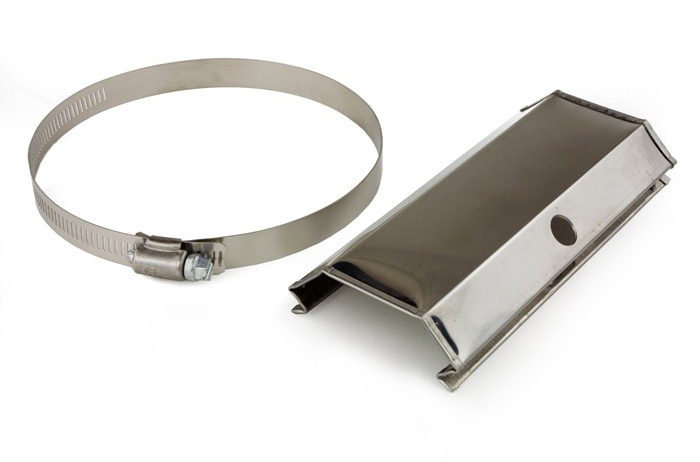
All that had to be done was separate the pipe’s heat (not that much on the pre-catalyzed GS5) from the bag’s base and possibly add support at the back. A mention of Giant Loop’s good-but-too-short stainless pipe guard (above right; £15) gave me the idea to make my own from a bit of 2 by 4 ally off-cut.

On top of that screwed a layer of plywood on which rests the pannier. The good thing is that my Mags are throwovers so the full weight need not be taken on the platforms. But there’ll come a time when that needs to be done so I added a support from the silencer’s snout to the subframe using a 2 1/2 inch exhaust clamp (left).

Adventure Spec Magadan Bags review

Soft Baggage Comparison

Update – autumn 2015
Had a pair ready for my next Morocco trip but sadly they didn’t fit the rack/pipe combination. So back under the bed, ready for next time.

Update – summer 2014
I bought a pair of Mag 2s and used them with a 650 XCountry in Morocco.

Update – May 2013
I finally got a chance to actually use my Magadans for a few weeks’ ride around the Southwest USA. Admittedly it was only America and I was mostly moteling, but I did enough off-roading to put them to the test. Full story on that ride here.

I am pleased to say – but not surprised to learn – that the Mags lived up to expectations on both trips. It’s only a bag, but the no-nonsense design is simply functional and effective – like the Steel Ponys below but much better construction and materials; there’s nothing there you don’t need – other manufactures take note.

elk05
c3-tpoazing

Mine were actually semi-permanently mounted on prototype Al Jesse platform racks – with each siderack removable, so I either pulled out the liner to take inside – or removed each side rack where that felt a better idea – or for day rides. More news of the Jesse MonoArm racks in a few weeks.

doomo12

It never poured with rain but it did when I used them last year so I have no reservations about that aspect. The corner tabs I added on not so elegantly (see below) may become a feature on future versions. For my sort of riding prefs they’re the best thing out there.

ABR magazine compared half a dozen soft bags. Highest score? Magadans.

magabrmag

Adventure Spec Magadans

Bags supplied in exchange for an Adventure Spec advert in my AMH6.

The Mags are based on the proportions on the 36-litre Steel Pony Gascyones [no longer made] Walter C used or my design if you include the pockets and which I feel is near perfect: bigger than the Andyz, narrower than the Monsoons, zip-free closures unlike the Zega Flexes, and with a chunky lift-out liner supplied unlike any of them.

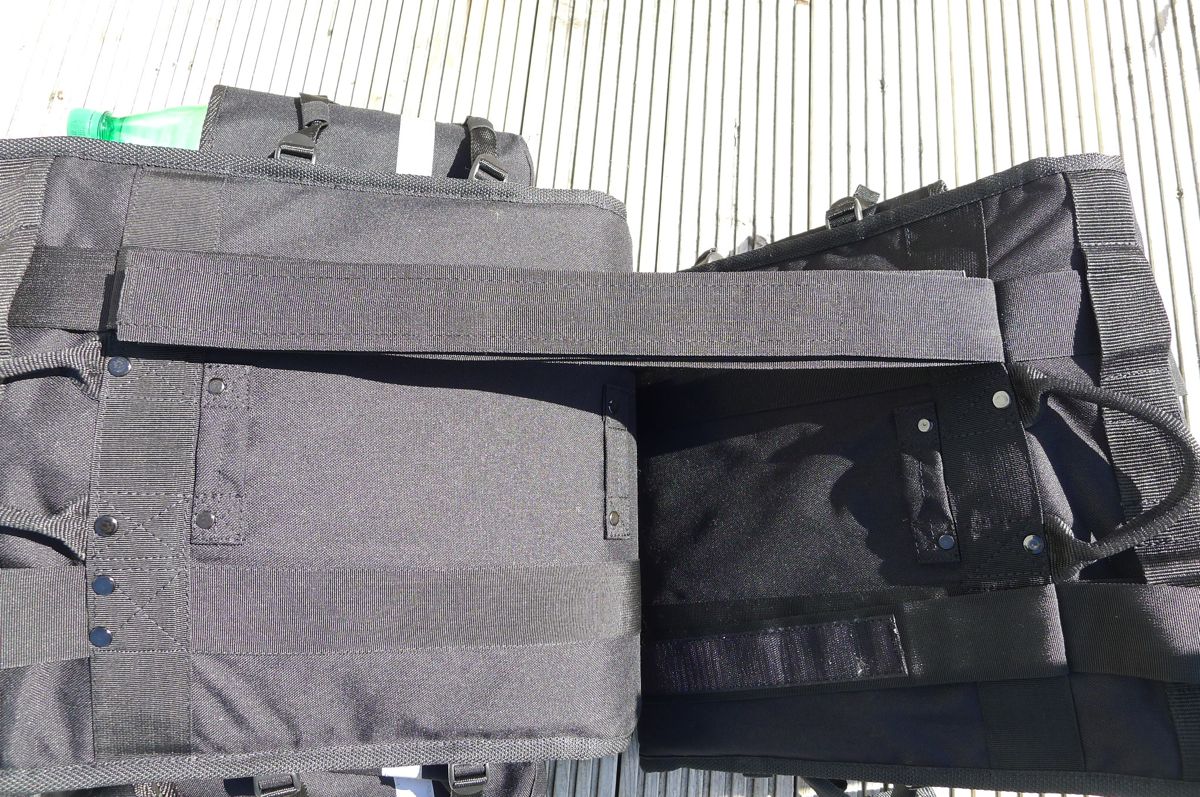
Two layers of regular-looking (PU-coated?) Cordura make up all the panels of the outer bags, joined with a thick edging. Can’t tell if one is or incorporates the mysterious and slash-proof Twaron, but one has a ‘ripstop’ like appearance in the  weave although it’s possible I may have felt the thin later of Twaron between them. Inside, as with many soft bags, a flexible panel behind a zip slips down the back panel and under the base to give a bit of shape while still retaining two panels facing the bike or the rack. Magadans are designed to be used against racks, as many other soft bag makers are beginning to realise. I made the dimensions about 24 litres rolled up with two folds (left image above) – the regular way of using them. In what I call expanded mode, with just one, less weatherproof fold on the velcro’d top edge of the outers, you can get 32 litres in each side plus 3 litres in the pockets. They weigh 4.7kg (10.3 lbs). The Gascoynes are about the same size but are 23cm wide – an extra two inches giving another six litres in the main bag. However, I’m happy to lose that extra width. The outer rolls up with a velcro closure and two chunky clippy clips incorporating enough slack to still work in expanded mode, or to lash things down on top with the bag fully rolled up in regular mode against the weather.

The two outside pockets are a great idea to keep fluids handy but also out of the main bag. It’s what’s always missing on vinyl Orliebs and something I’ve bodged on myself on other bags using army ammo pouches. Both with velcro flaps, one will take a 1.5 litre water bottle (green bottle) sticking out, or 1 litre flap closed; the back takes 2 litres sticking out with room to spare, or 2 litres closed.

The weight is taken on throw over straps, but as mentioned, with a rack. One bag gets doubled velcro ‘hook’ straps (4), the other gets the double sided ‘loop’ strap. A secure system sandwiching the loop strap from both sides to cope with the large hanging volume and onto which velcro can be re-sewn should it wear out, or a buckle easily fitted. With velcro the less you use it the longer it will last but with a buckle (two types shown right) macro adjustments up or down are much easier to make, especially when the bags are loaded. That’s what I plan to do. The distance on full velcro overlap is 50cm and I’d say you could run them out to 75cm (half overlap) if you’re bike is wide.

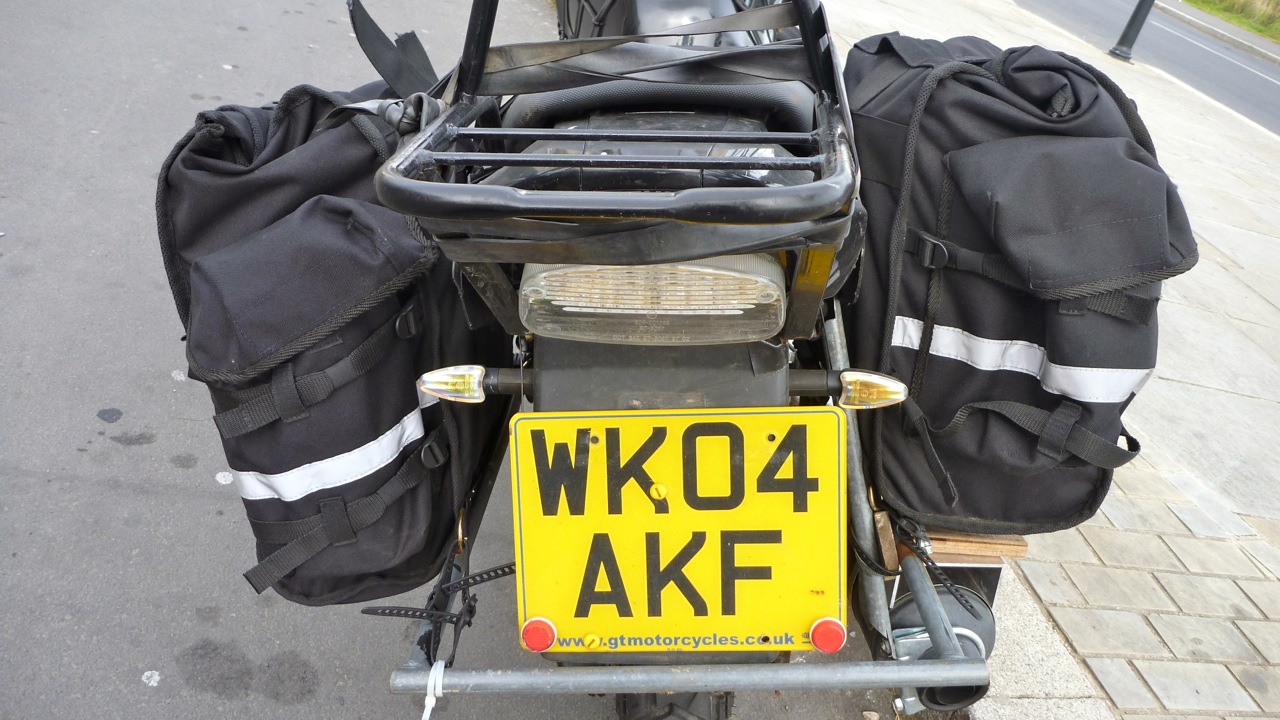
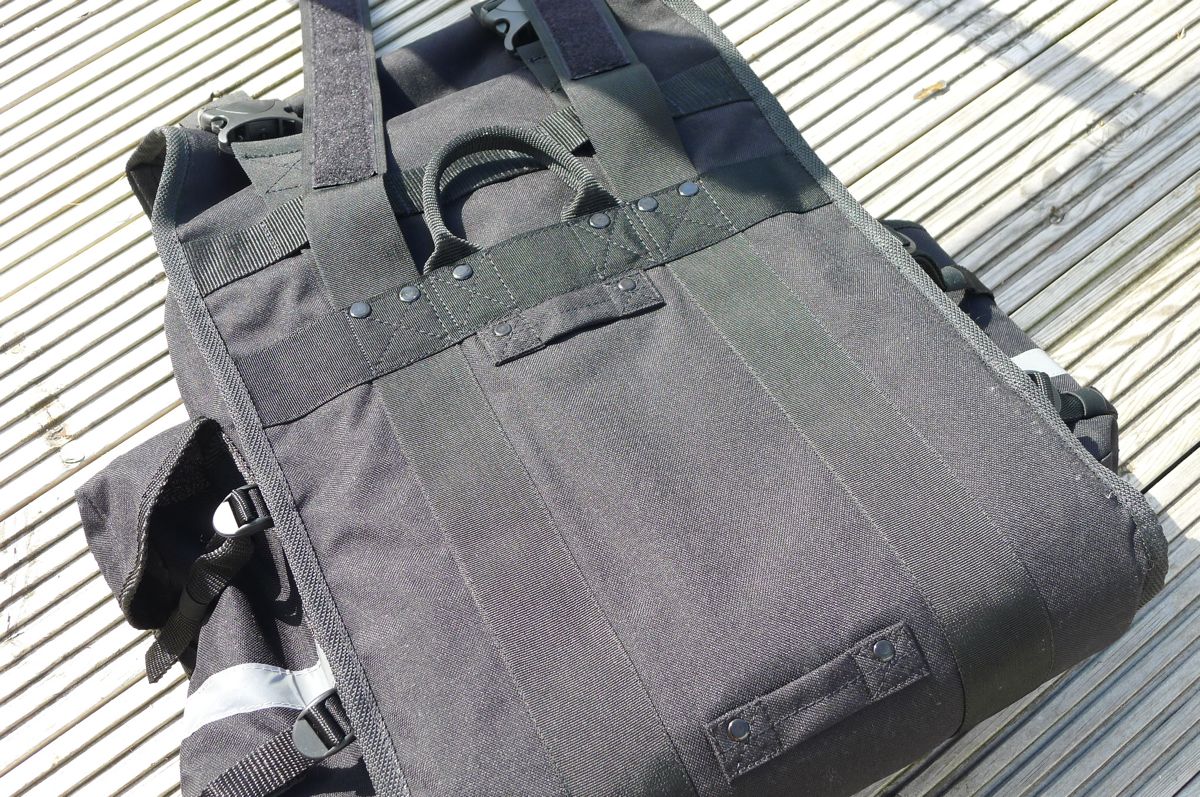
I was keen to see how the back of the Mags looked so as to work out how they could mount securely to my planned rack. The Magadans are designed to be merely held against a regular flat ‘hanging’ rack rectangle which most alloy box makers produce for all sorts of bikes. It does this with a horizontal strap which passes through slots behind the side pockets just above the level of the reflective stripe. To me this is not so effective, but is perhaps the best ‘one-size-fits-all’ solution for the moment. It’ll stop the bag flapping outwards but, depending on the width of rack verticals, will still allow some forward and (less common) back sliding which could get annoying on the legs, unless you add a retaining strap across the back as the Monsoons had.

The good thing with the fabric outer being separated from the inner (like the Monsoons) is that you can sew or rivet on whatever suits your needs and that’s what I did to mine (right) so there’s a direct attachment point. As it is I plan to use a platform rack so the attachment won’t be so critical and may even work without the throw over straps. If I was to suggest a solution it would be something like two horizontal rows of loops sewn across the back panel, a bit like was on the top back edge of the Monsoons (right – for what reason I was not sure). With two rows of such loops you could even eliminate the throw over element, or reduce its stress loads. But it’s unlikely that Magadans will be modified in this way. A mate asked Adv-Spec and was told:

We have always found that tags sewn onto panniers result in [them being] ripped off panniers as soon as there is any real load applied or a constant tugging or pullingThe Magadan panniers are designed to have a strap tied around the entire pannier and then around the frame. There are slots in the front and rear bottle holders which allow the strap to pass through to help hold everything in place.

I have to say that from my experience with similar panniers that’s not such a convincing explanation. And even if it was, a tough fabric mount could feature a ‘sacrificial’ ring or loop which could be replaced should the pannier be wrenched away in a heavy fall. But if that’s the Magadans’ biggest flaw then it’s not so bad.

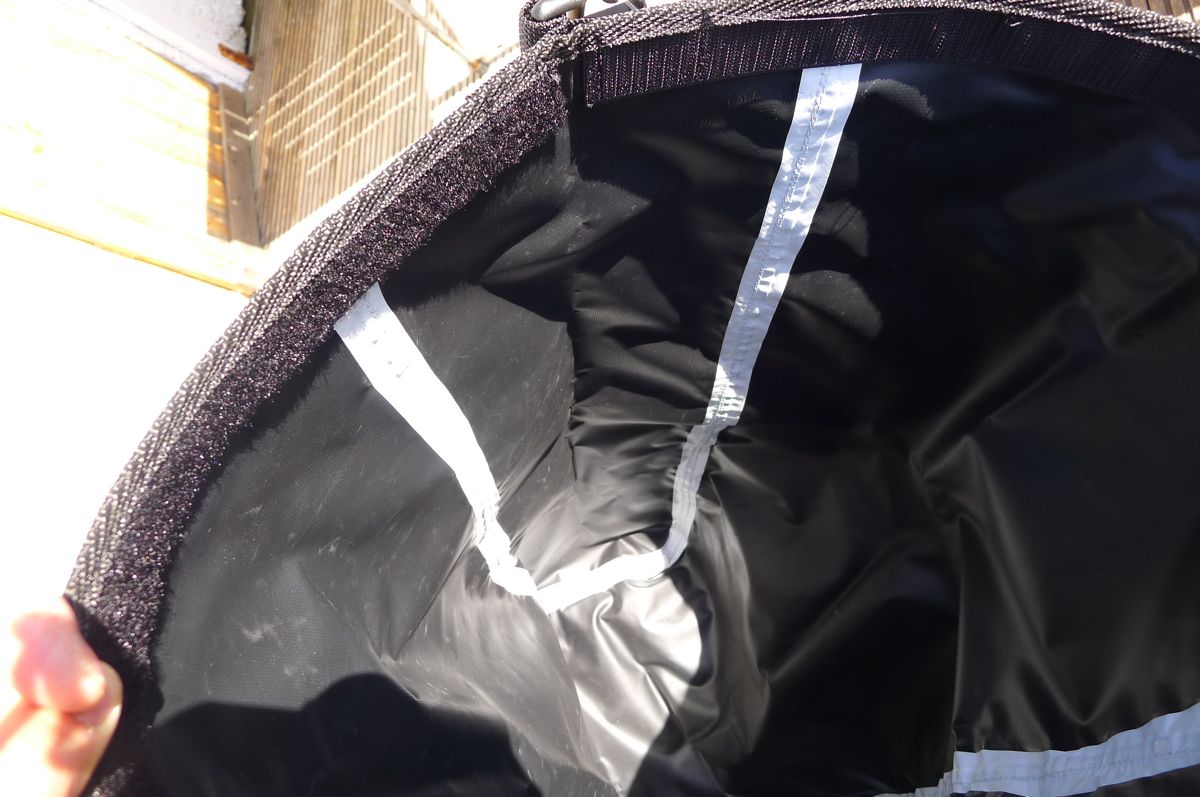
I was pleased to see the inner bags are not some cheap PU-coated drawstring stuff sacks, but full size, roll-top PVC ‘dry bags’ shaped to fit the outers. Sewn seams are taped (right). I suppose I’d have preferred heat welded, like an Ortlieb or Seal Lines. The great thing with separate bags is you can lift them out clean to carry into a tent or hotel room, leaving the mucky outers on the bike if you wish. These are chunky PVC bags that will resist the rubbing against the outers as well as impacts better than most things, and anyway, you can fit a selection of your own in there to compartmentalise better.

As well as the horizontal back strap to locate the bags, the Magadans feature a similar arrangement of loops to take a vertical strap or indeed an adjustable cable lock to wrap around a frame – where used – so securing the bags against opening or removal. Combined with the slash-proof fabric, this ought to make the Mags the most secure soft bags around. It’s hard to know how effective this slash-proof Twaron is without doing the obvious. There are a couple of vids on  youtube citing the wonders of Twaron for offshore and ballistic uses, but if nothing else, if you use a rack you’ll be able to cable the bag on (although you could sort of do that with any soft bag).

All up I’d say the Mags look the business: a great size, good features and modifiable for rack fitment. The quality of manufacture (somewhere in the EU) looks good too. Nice work Walter C and Adv Spec; you’ve save me doing a less good job myself. There’s more on using the Magadans here and here.

With Monsoons costing £220, old Kriega Overlanders from £500 all up, Steel Pony Gascoynes AUD350 and Andyz going for £245 in the UK, at £350 I’d say the Magadans are fairly priced when you think what a key component your luggage is on a genuine overland trip.