Author Archives: Chris S

Tubeless DIY: Techniques, Sealants & Tapes

Tubeless Conversion Index Page
TL-diy
TL-tyrewell

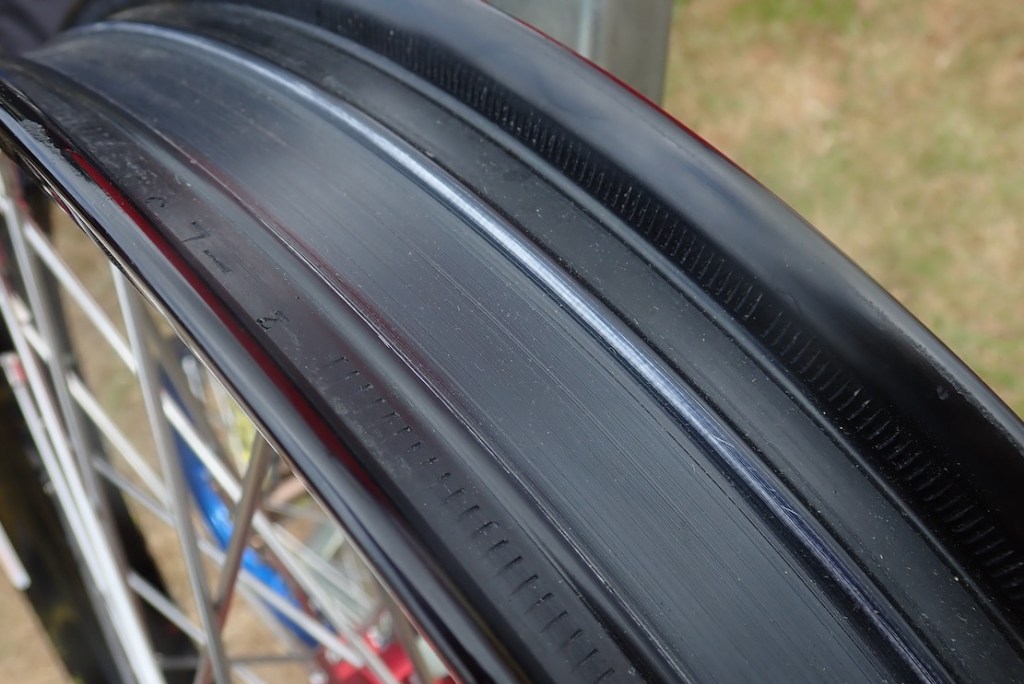
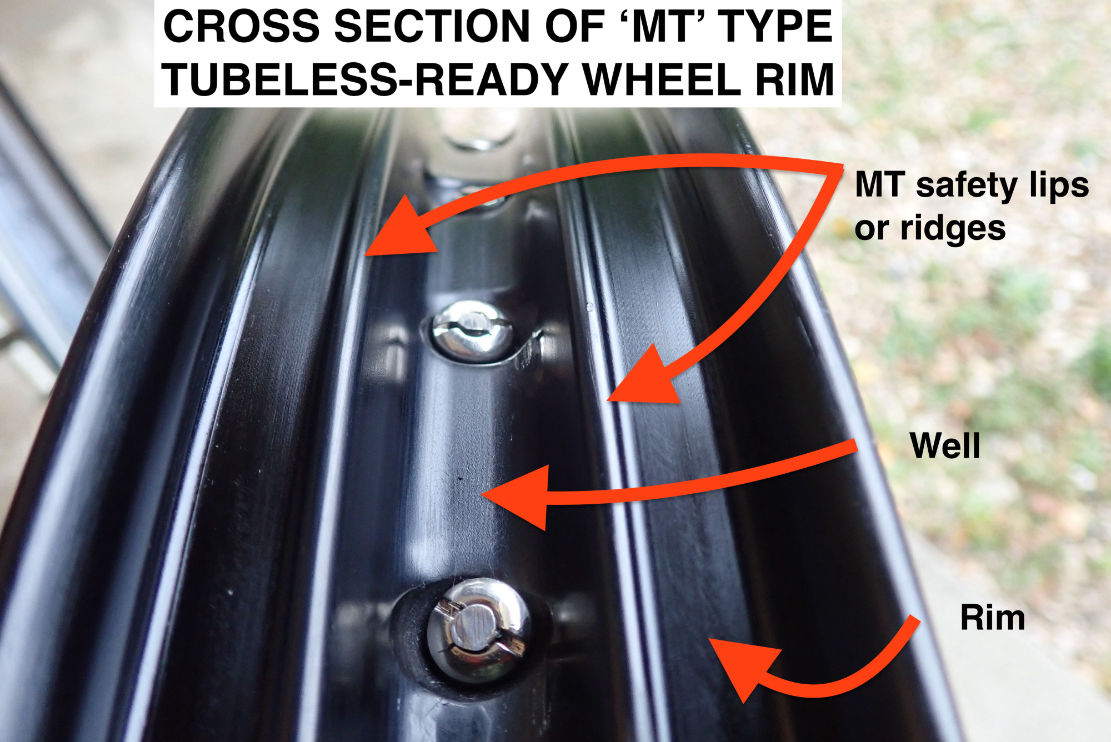
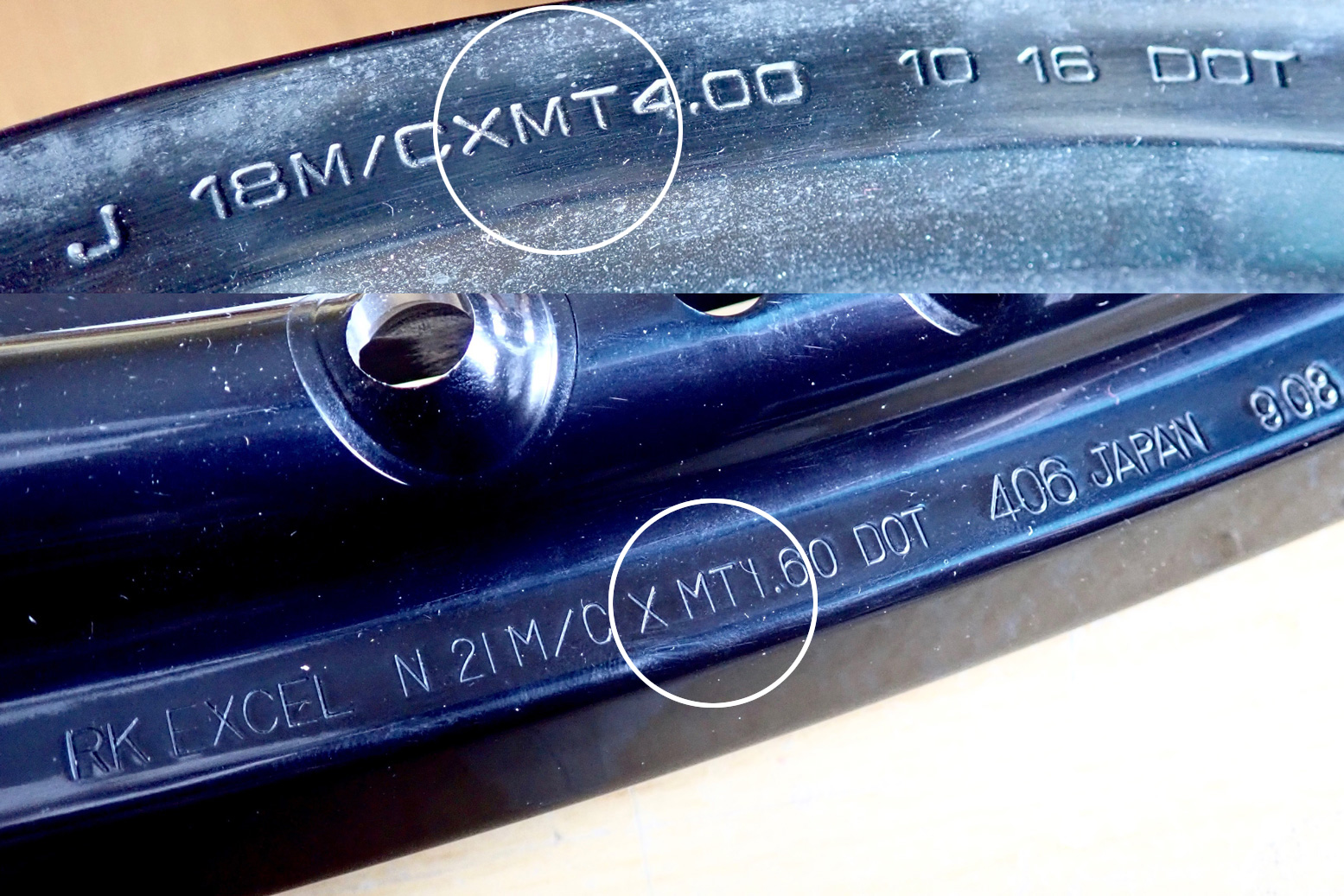
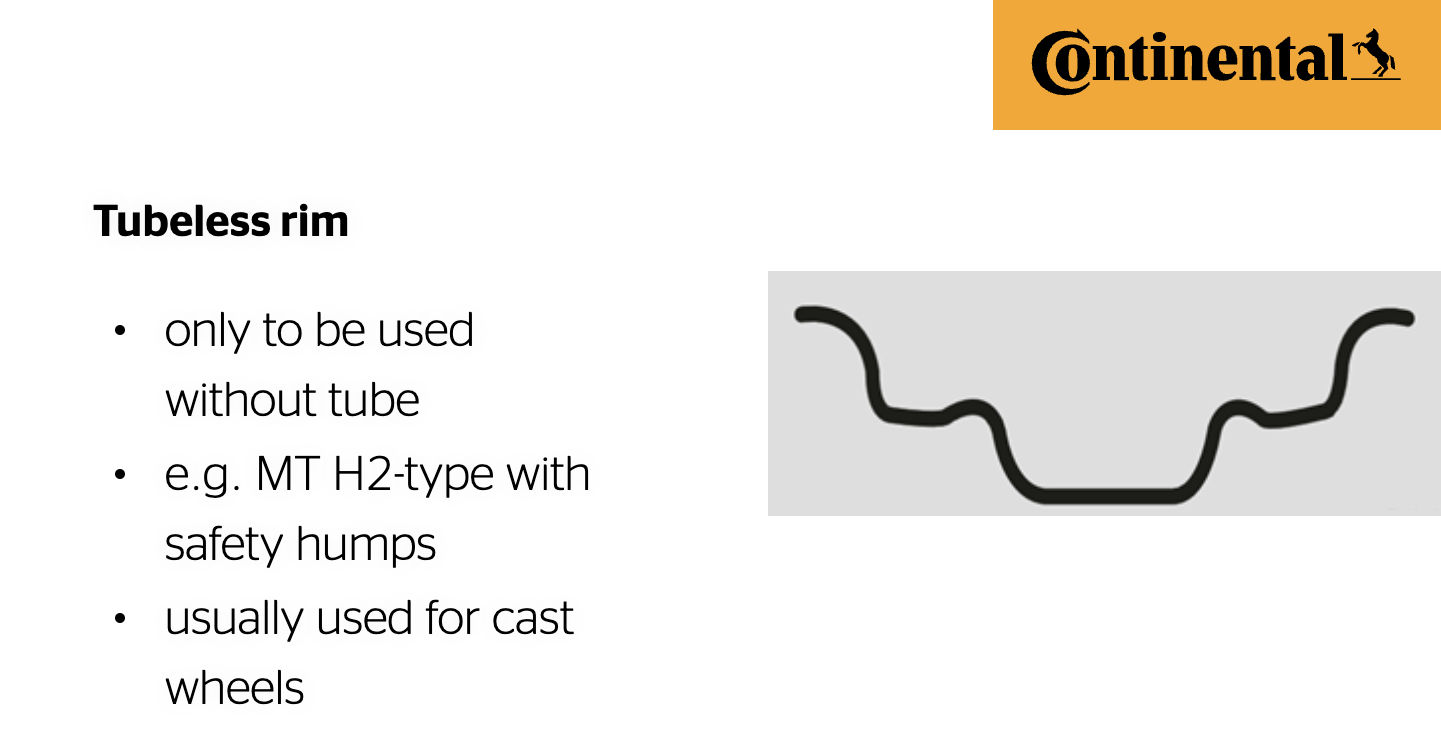
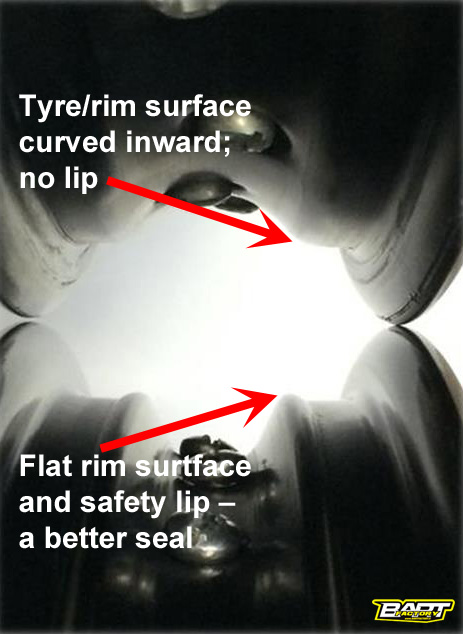
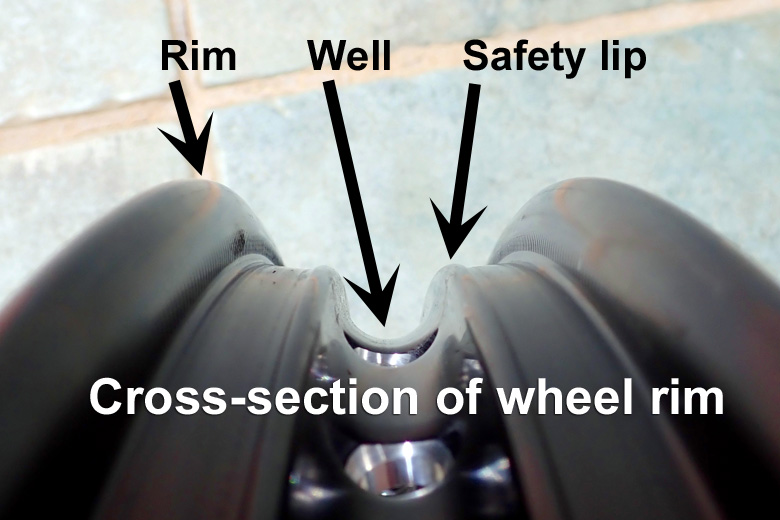
I and others have come to the conclusion that the key to successful and safe DIY spoke sealing is using a rim with the safety lips (right). These rims are stamped ‘MT’ as opposed to ‘WM’.

SHORT VERSION: AT rear wheel: easy to DIY • Front 21s: use an MT rim
at-wheels

L o n g e r  explanation
All cast tubeless wheels have these lips, and just about all rear spoked, tube-type rims have them too, right as far back as IVJ Teneres from the mid-80s. These humps/ridges/lips keep a tyre’s bead seated on the rim and out of the well (but make tyre changing harder).

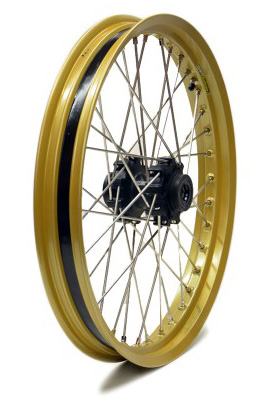
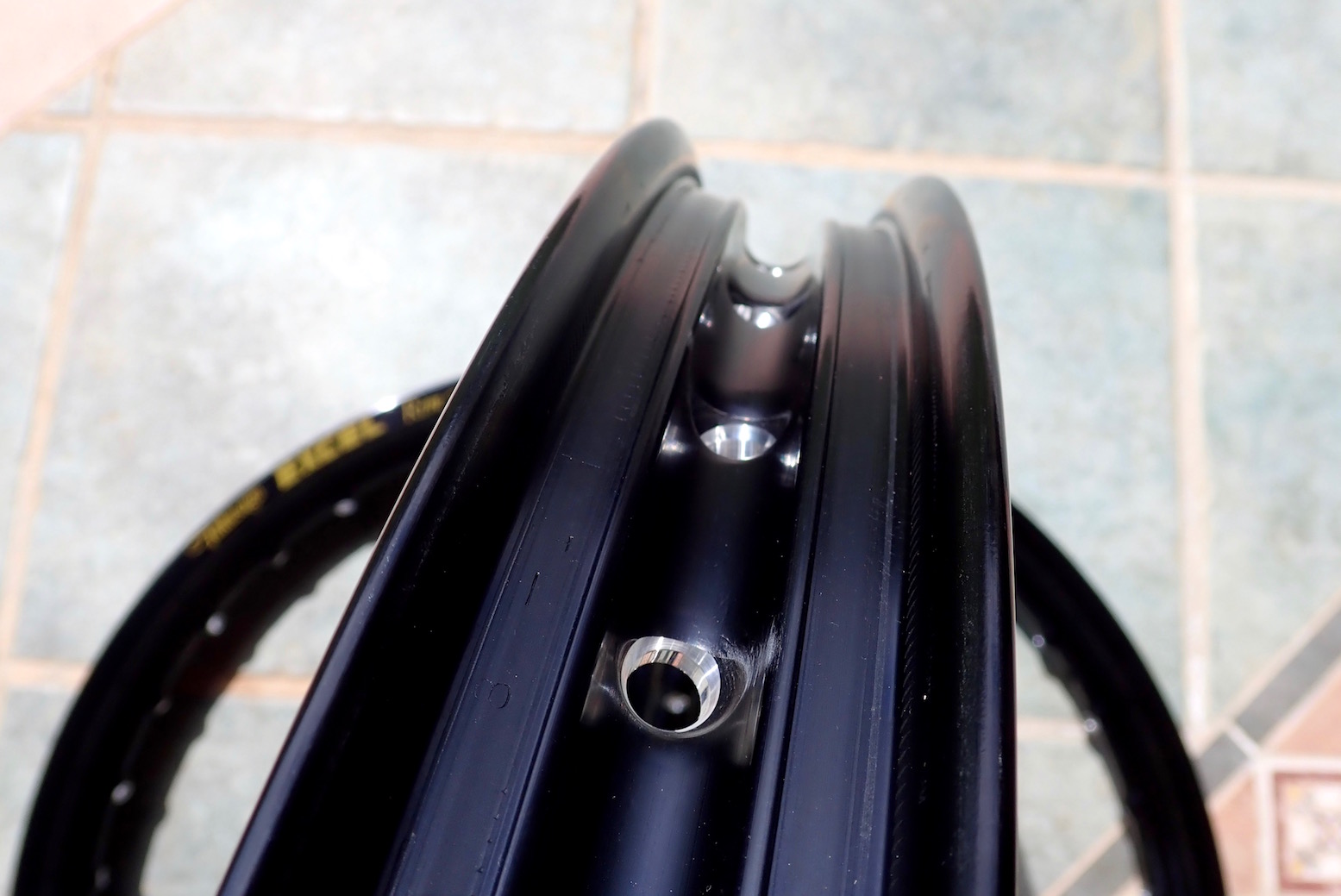
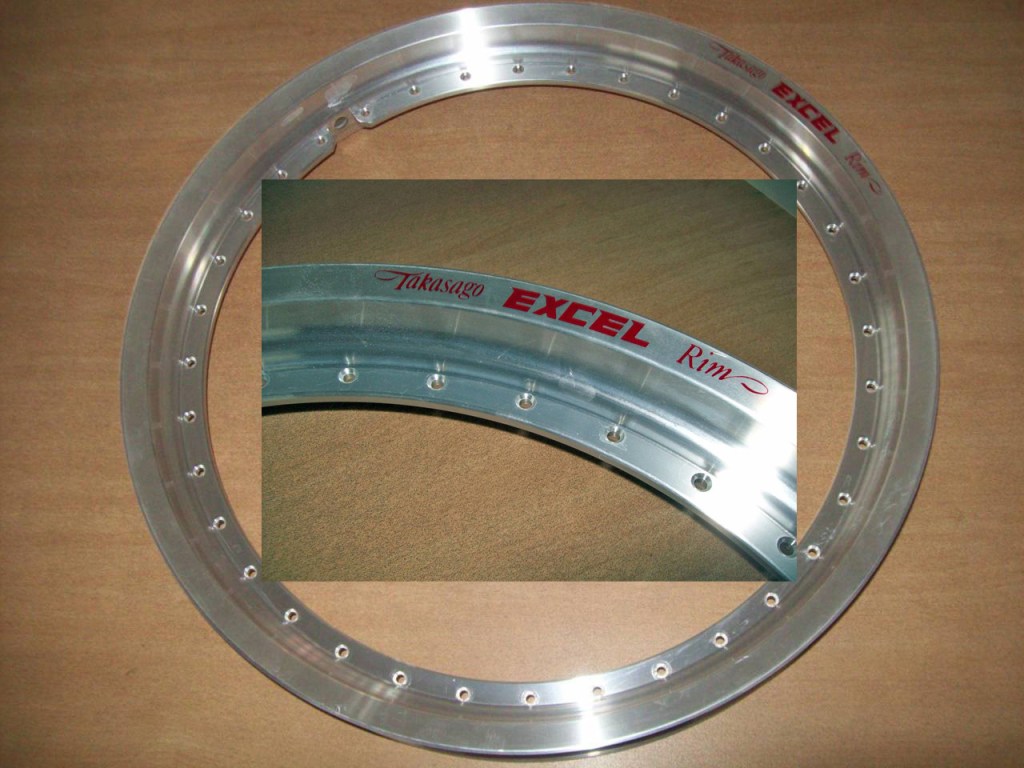
However, stock 21-inch tube-type spoke rims hardly ever have them. I don’t know why as having a flat tyre come off the rim is more perilous than on the rear. So with a typical 18/21 spoked bike, like my AT, DIY-ing the stock lipped back wheel is easy and safe. But the front requires tracking down a lipped 21. Giant and Takasako Excel (above right) make them from about £110 but you won’t find ebay flooded with them. Once you have laced that rim on you can try and DIY seal it too, or you can spend from £120 on a BARTubeless or Airtight professional sealing.

The video above demonstrates the rim sealing procedure. Nice job but can you see the big flaw?
The rims, even the rear, do not have the TL safety bead or lip to make a good seal. I see trouble ahead.
tl-ianwheel

PU sealants
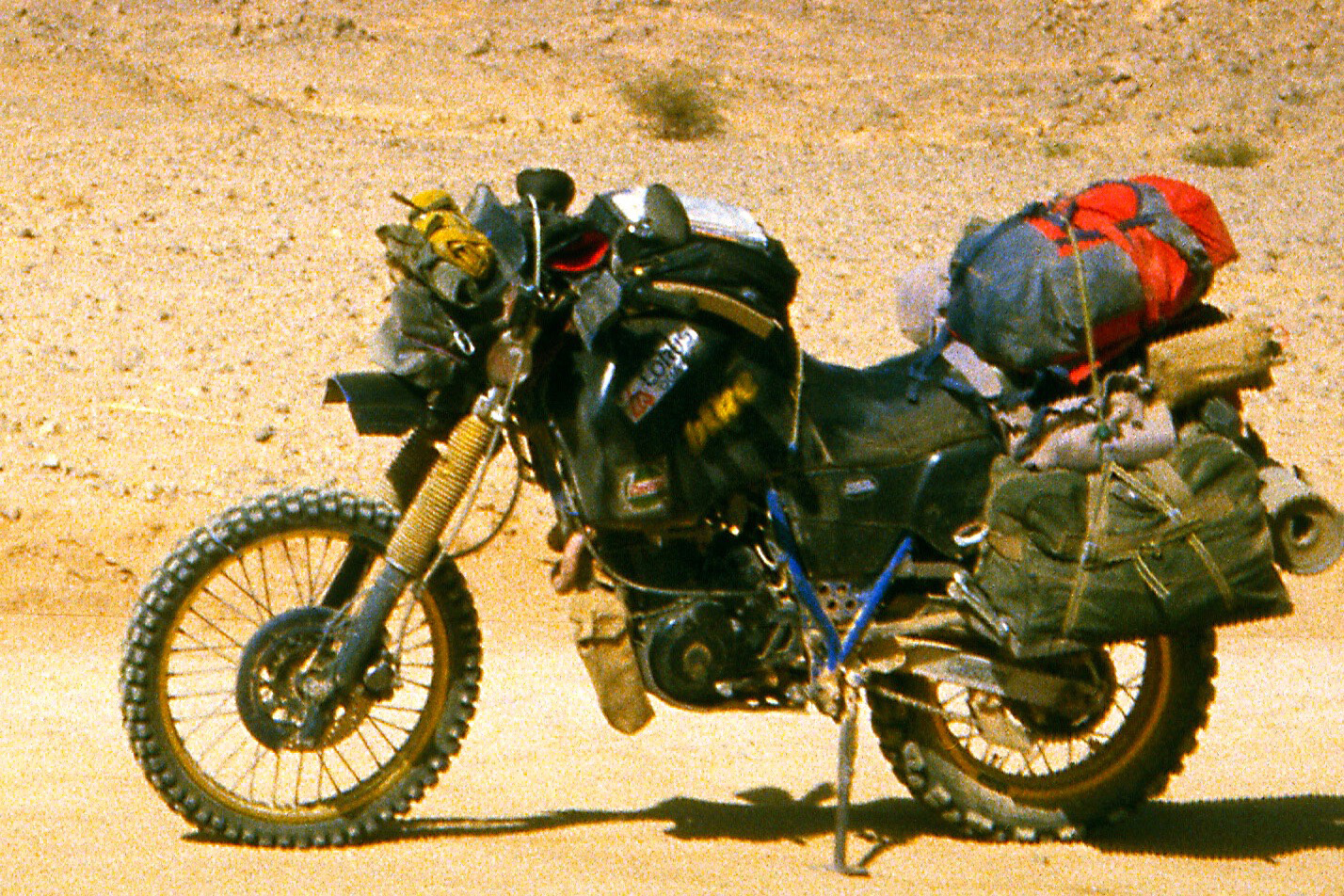
Way back in 2008 I bought the new XT660Z Tenere for a research trip in Morocco. I asked on Horizons if sealing the well of the spoked rims to make them tubeless (left) was a good idea. The discussion concluded it was do-able and had been done.

tubeless-sealed

I like to experiment with new ways of doing things, so I went ahead. Full DIY XT660Z article here. Short version: the stuff I used (right) didn’t adhere that well, plus I didn’t do a good enough job in preparing the rim: and then on the road, I forgot all about it, tyre pressures dropped after 1500km and I dinged a rim and lost the seal.

tL-selfetch

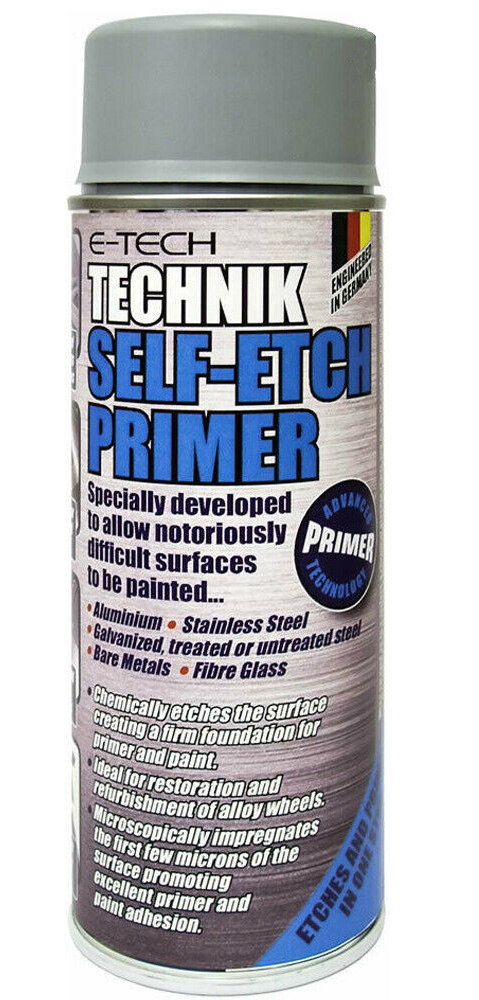
Above: over a decade later Ian C. tells me he once had good results on his KTM V-twin with Ever Build Puraflex 40 PU sealant; about £6 for 310ml. This was after thoroughly degreasing and then spraying etch primer (right) on the wheel before applying a couple of layers of black Puraflex and screeding it down smoothly.

tl-goop

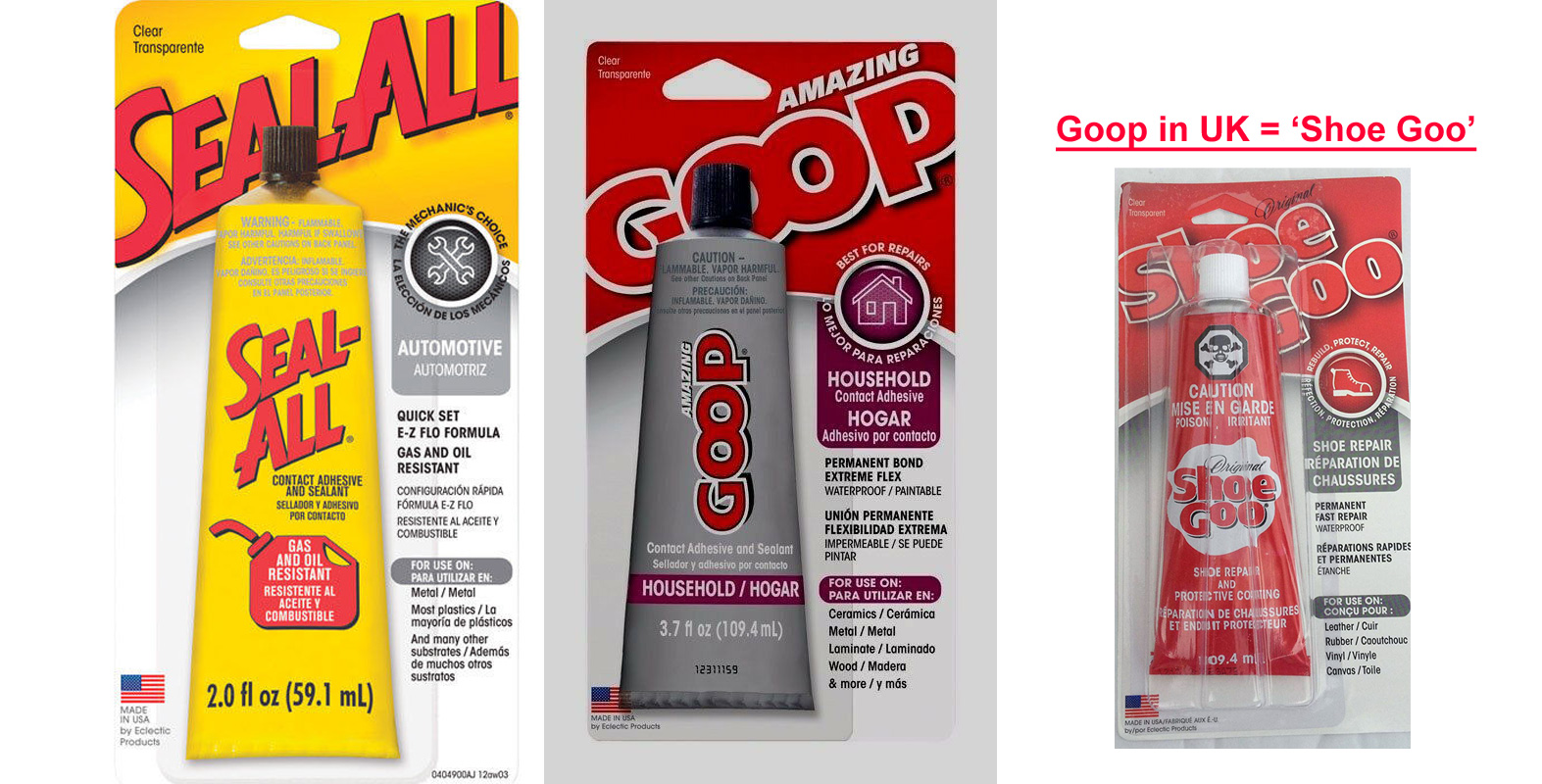
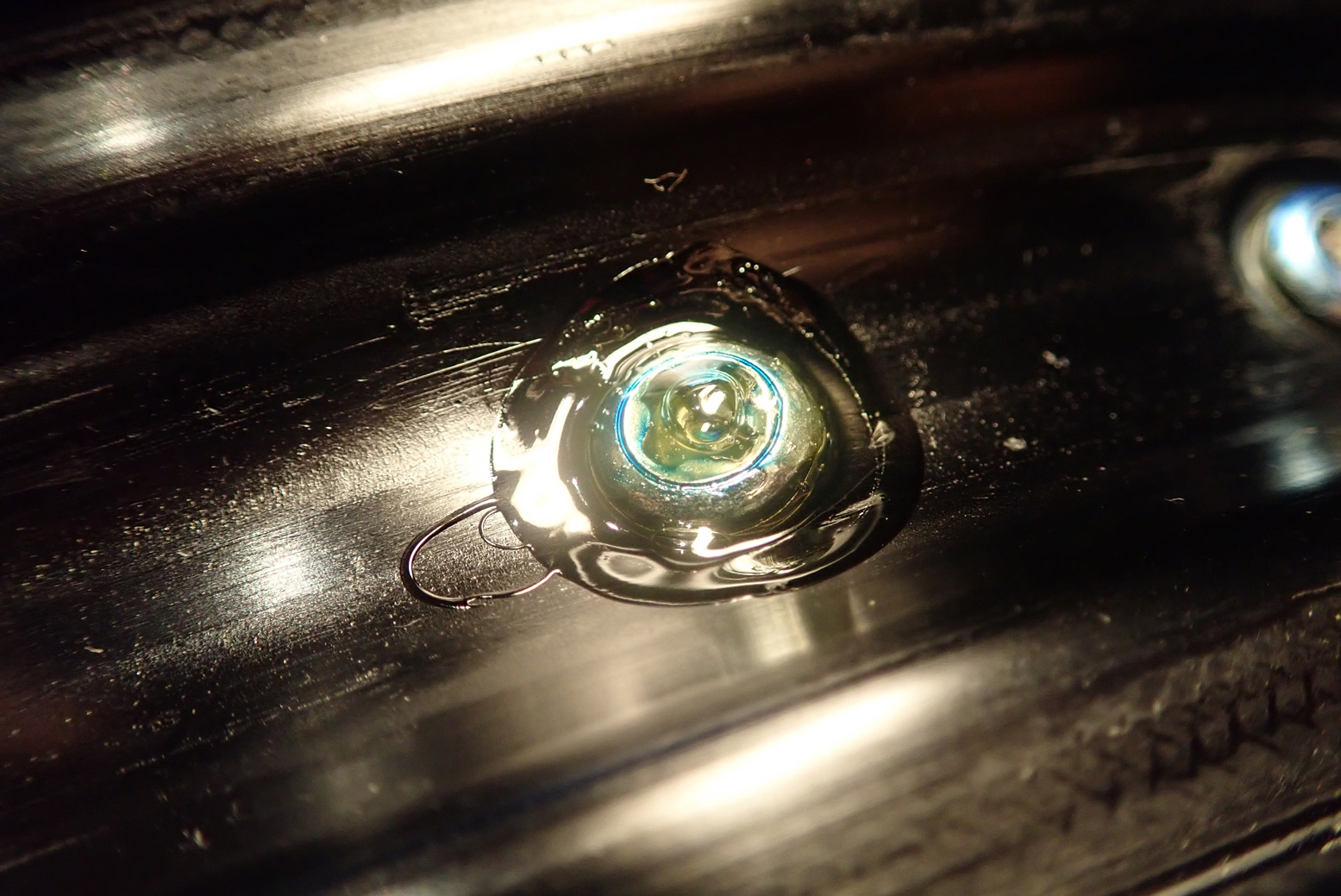
Cyb’s DIY procedure listed on the index page does it another way: carefully sealing each nipple with two types of sealant but not covering them in an overall band or even a tape. There’s much to be said to this: individual leaks can be more easily pinpointed and fixed. He recommends specific glues: which he seems to have researched rather than hoped for the best. First, two applications of runny Seal-All on each spoke nipple (see below). Runny – even like SuperGlue – is the key so it will seep down into the nipples’ threads and along the outer collar.

TL-spokwash

Don’t forget there’s a curved spoke washer (right) between the spoke nipple and the rim, so that’s an extra leakage surface to seal. Then, once cured, each nipple is capped with a thicker blob of Goop from the same manufacturer, Eclectic Products in Oregon.

TL-1782

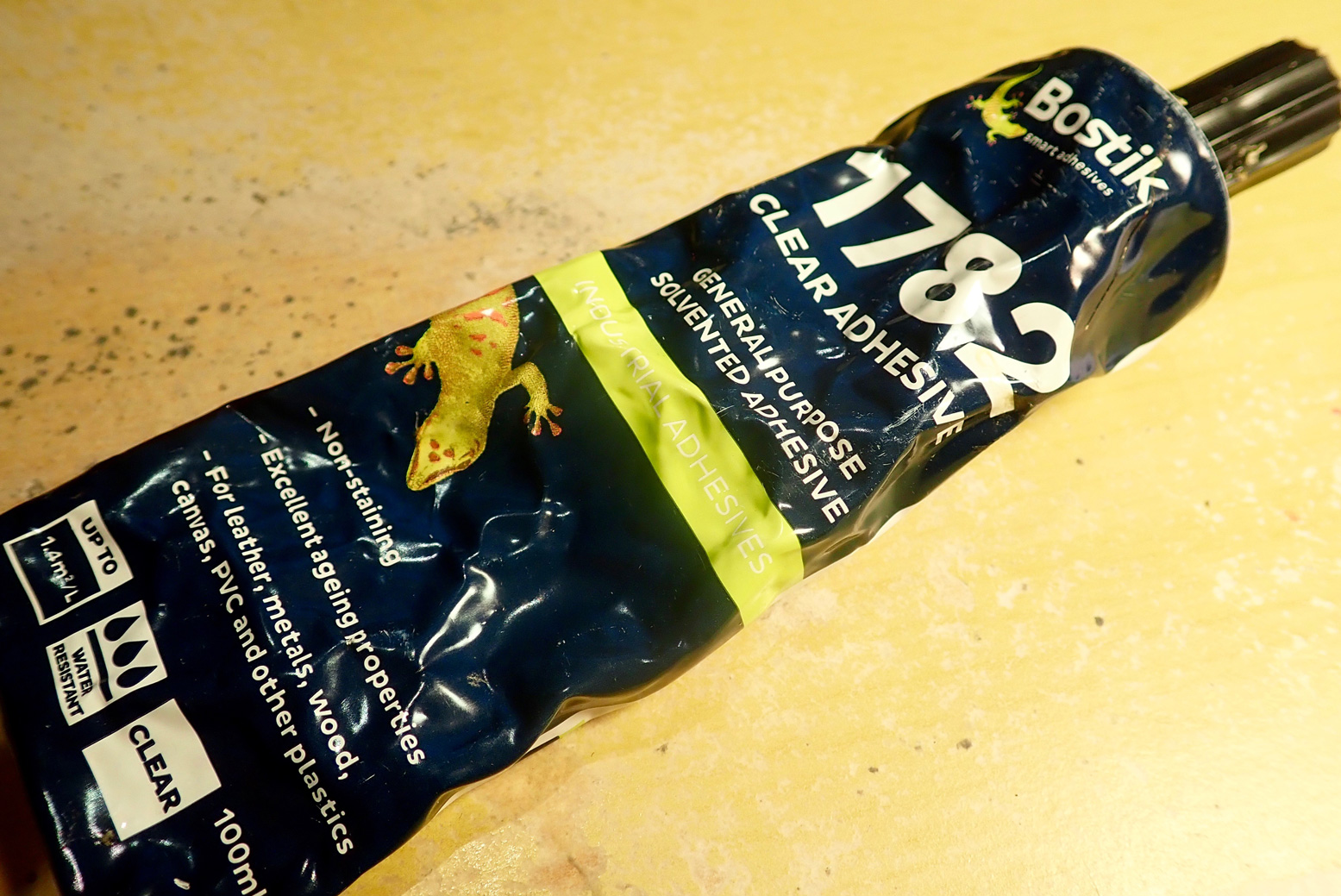
In the UK Cyb’s exact products are hard to find or are expensive if bought from the US where Seal-All is just a couple of dollars. I found Goop for a tenner. There must be something identical here to Seal-All – is it so different from the Bostik 1782 I have in the desk drawer? I put a test blob of 1782 on a rim to see if it would peel off easily. It didn’t so I used it on my Africa Twin’s back rim, then cap with the Goop.

TL-siloconesealant

Others have used plain old Silicone sealant. Something that’s designed for tent seam sealing (Seam Grip, Seam Seal) will be runny enough. Another good thing with Seal-All and Goop (and 1782) is they’re clear so you can see any too-big bubbles or lifting. They definitely look better than the creamy texture of the 3M 5300 mastic I tried years ago.

wrslime

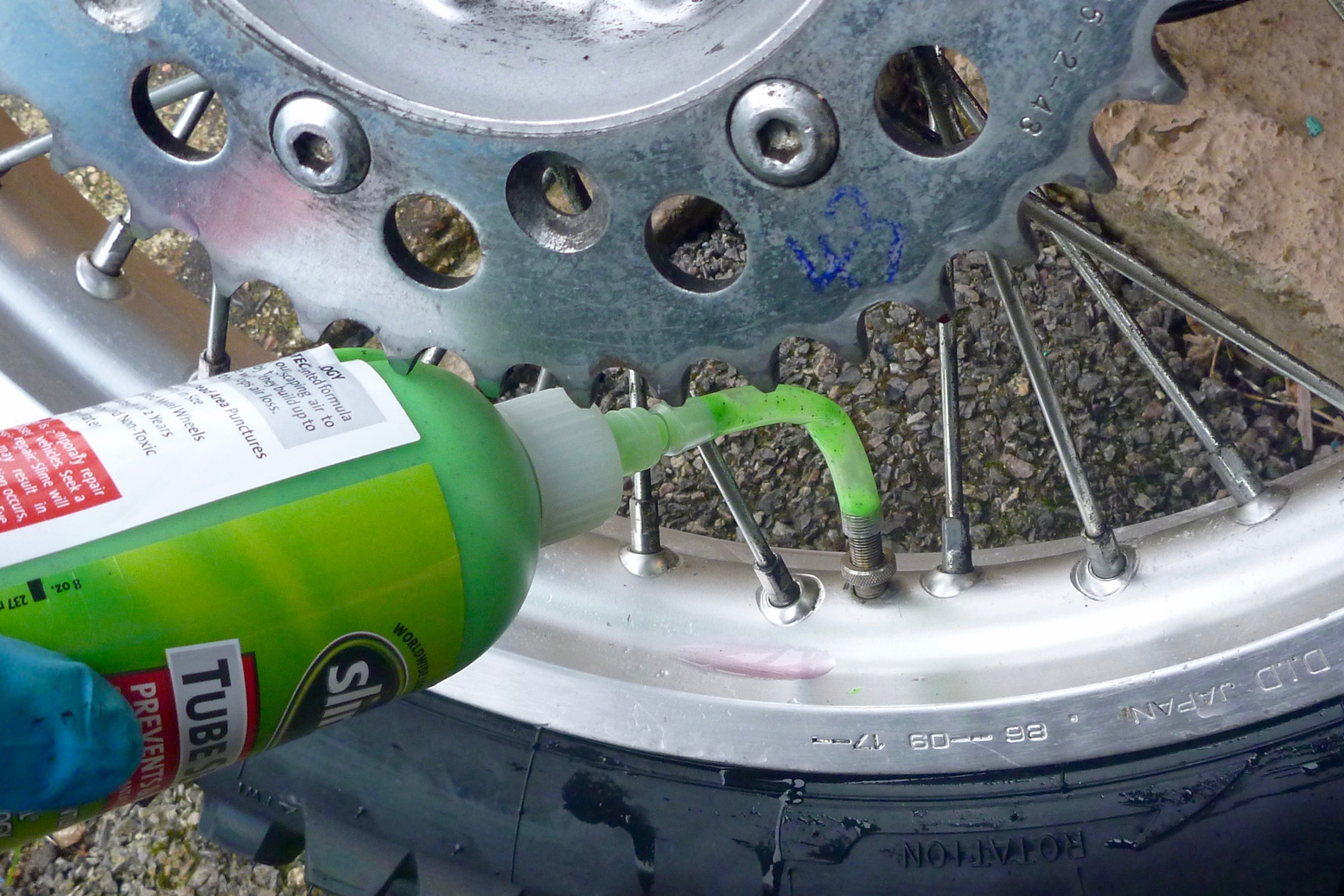
The good thing is tyre pressure pushes these tapes and sealants into the rim, so improving the seal. But if you inject water-soluble Slime or similar instant puncture sealant (right), it may not agree with your sealants and it will all come apart.
As it is, water can seep down a spoke collar from the outside and get under your sealant. If you’re doing wet trip, like Siberia, there’s something to be said from sealing the nipple/rim/spoke contact area from the outside too. Just a smear of whatever you got ought to do.

TL-blob

Glass sealant DIY
Another DIY suggestion is using glass sealant again, being meticulous with your pre-cleaning and patient with your sealant curing – see below. Sounds similar to Cyb’s process.

1. Glass (windscreen) sealant
2. 16″ Harley inner tube or rim band
3. Glass cleaner or oven degreaser

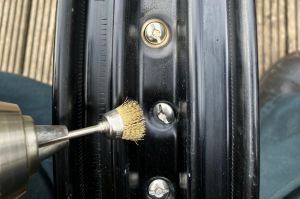
• Clean the wheels with the degreaser/cleaner, mini wire brush wash (left) if old, then with water to make sure any swarf or chemical is washed off. Wait for a day in dry. Use a blast of air if indeed
• Apply the sealant to each spoke nipple, wait for a day to cure, apply another layer, wait again
• Apply sealant to the inner part of the wheel. One layer for one day, do it twice then wait until it’s completely cured
• Fit the rim band (or tape, see below)

Good tip from CyclePump man: check spoke tension before your seal the nipples forever. A bit slow but worth watching in full.
TL-tapewheel

Builders’ Sealing Tapes
One guy told me he simply taped up his rims with duct tape and topped up his tyres once a week. Using something more airtight might even enable a proper job.

tl3mtape

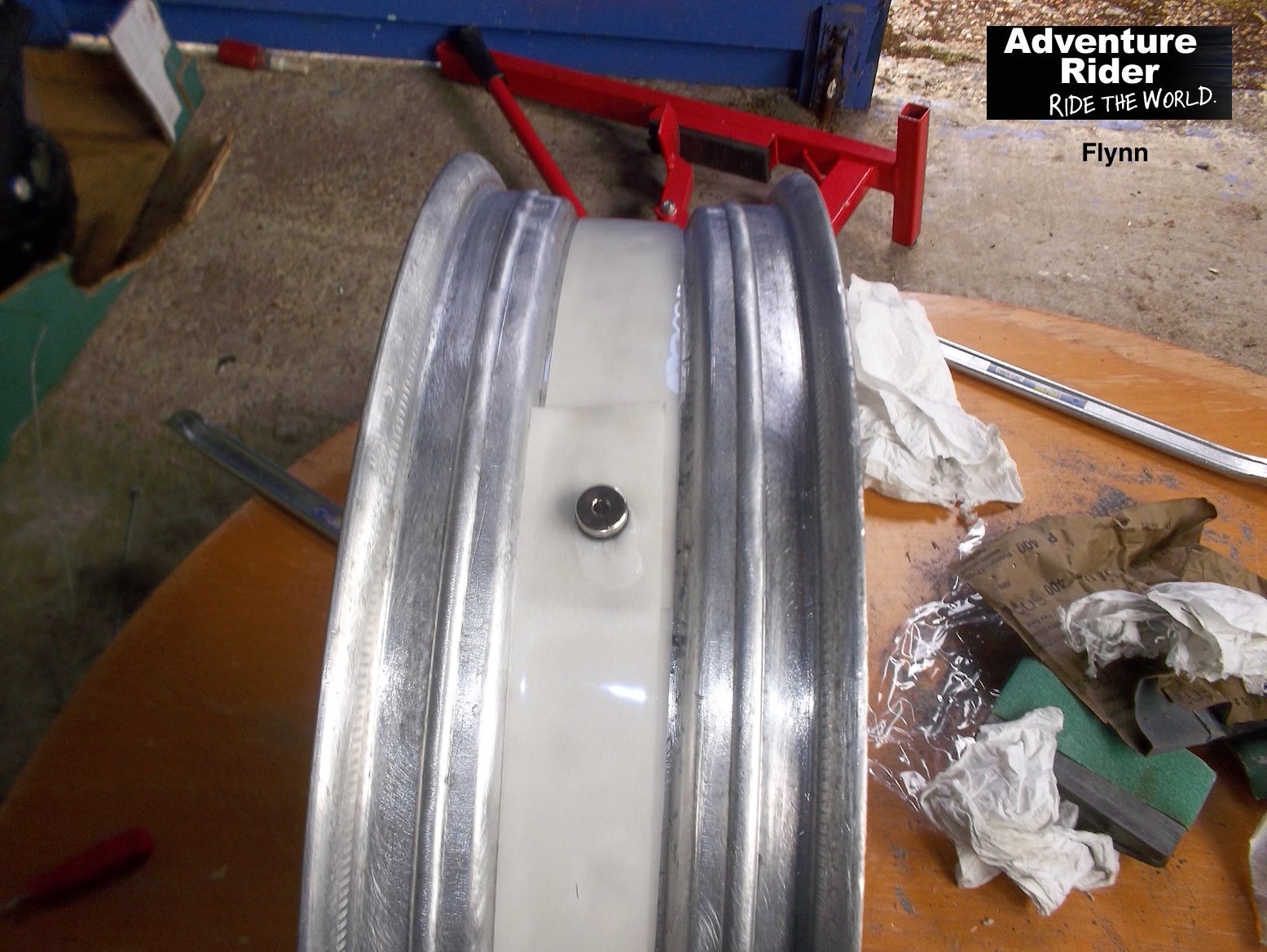
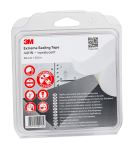
I’ve seen 3M 4411 Extreme Sealing Tape mentioned (right; technical sheet). In neutral (N), grey (G) or black (B), it’s 1mm thick (more pliable than the 2mm 4412N) and comes in 50mm width for big bike rims, or 38mm (1.5 inches; product code: BLA193840). A 5.5-m roll of 38mm costs £20 and is enough to do three ~1.5m circumference rim wheels once.

at-wheels

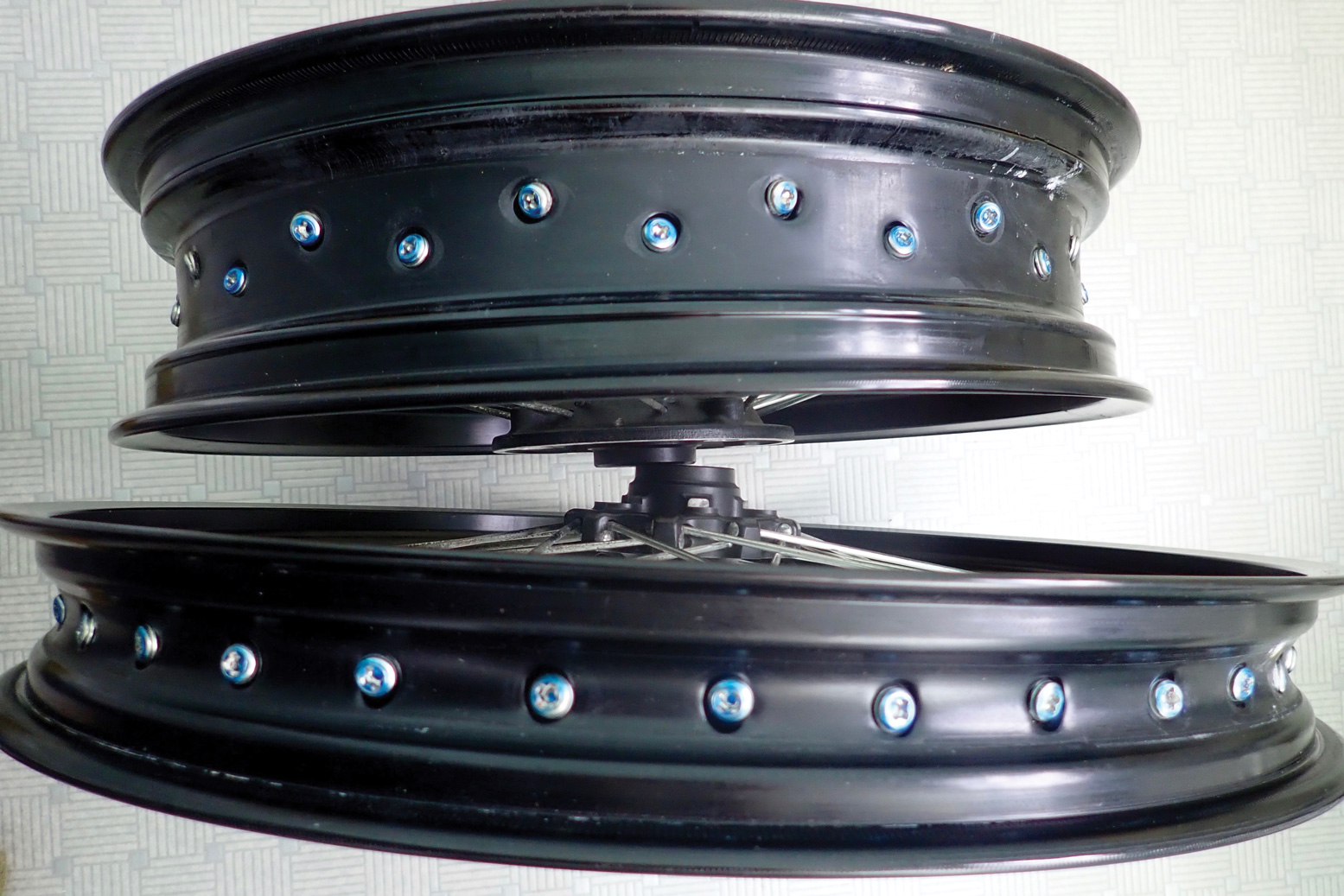
Another mile-long thread on Advrider with some good ideas and solutions. This tape works best where the well/drop centre of the rim is nice and flat, as on a wide supermoto rim shown above left, or my Africa Twin (left, upper wheel). You’d imagine a curved profile will work less well with tape, but see Cycle Pump vid above.

ap111

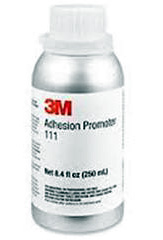
If I was doing such a DIY sealing job again, this time I’d consider forensically cleaning the rim with something like 3M Adhesion Promoter 111 (AP111; right; £20 for 250ml) (‘A quick wipe of AP111 on the ionomer is suggested for best performance of the overlapping tape. AP111 will approximately double Extreme Sealing Tape’s adhesion to its own ionomer backing).

glu-mek

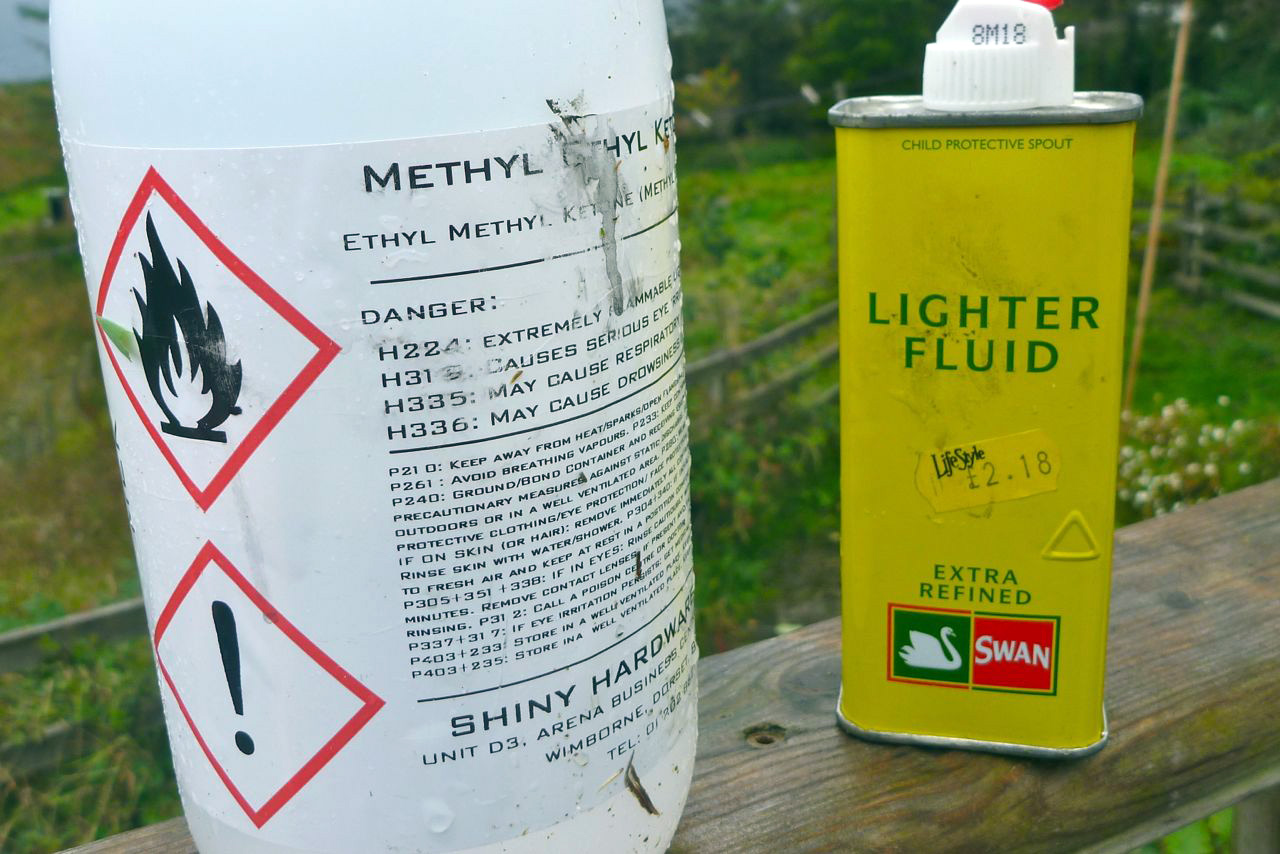
But £20 for a half pint is quite expensive. I know from kayaking that brake cleaner, acetone (paint or nail polish remover) or any number of other highly noxious solvents like rubber or plastic-eating MEK (Methyl Ethyl Ketone, (right) or Toluene also work.
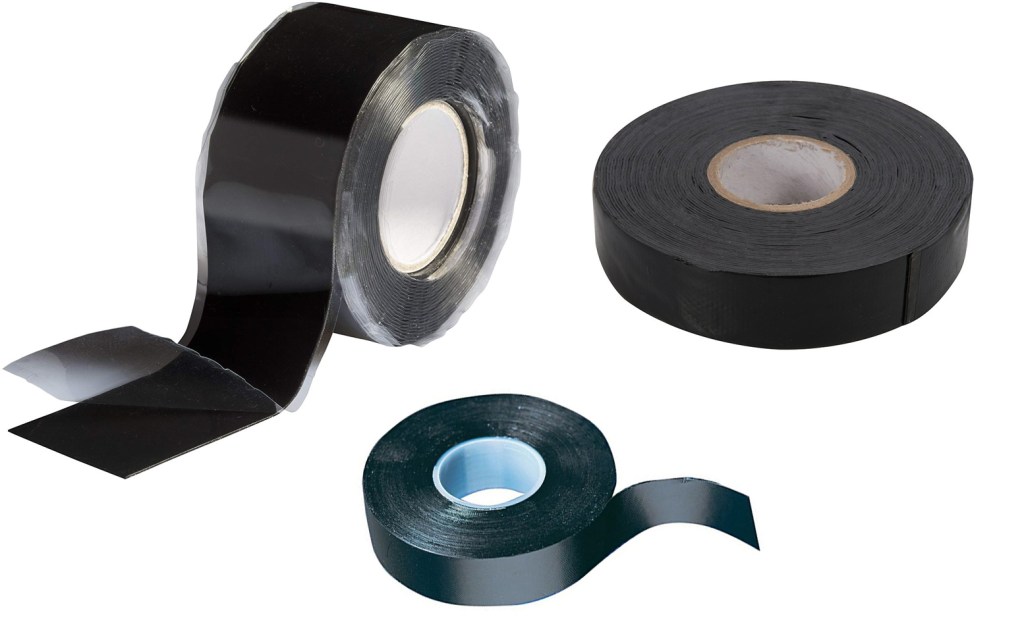
Then I’d seal each nipple with some runny glue so it seeps down into the threads. Let that cure, do it again then a dab of silicon like McNett Aquasure or Bostik 1782 or a mate tried EvoStik Sticks Like Sh1t. Then cap with Goop or whatever before letting it all cure again and taping it all up (so similar to Outex, then). I  note Cyb says silicone is not as oil-resistant as the glues he uses. 3M is a big name for industrial applications but there are all sorts of waterproof, self-amalgamating or self-fusing silicone tapes out there in rubber and plastic for household leaks.

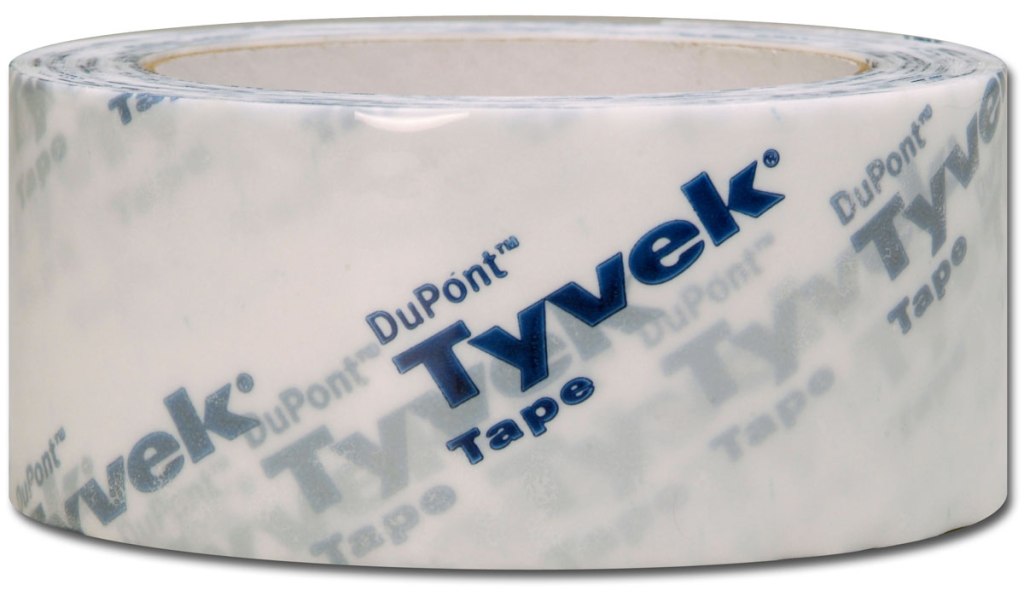
All it’s got to be is soft and pliable to contour the rim well closely, be stuck on to a very clean, oil-free surface, exceedingly non-porous and darned sticky, come what may. I’d hope 4411 or the DuPont equivalent: Tyvek, have all these properties, but Tyvek only seems to come in 60mm widths, a bit wide even for a giant adv rim.

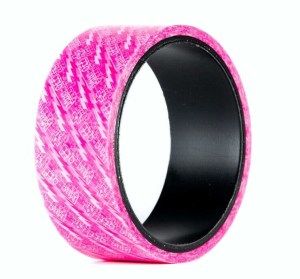
Another tape that’s been mentioned is Muc-Off MTB wheel sealing tape (left). Costs from £10 for 10m in Muc-Off pink up to 35mm wide for smaller moto wheels.
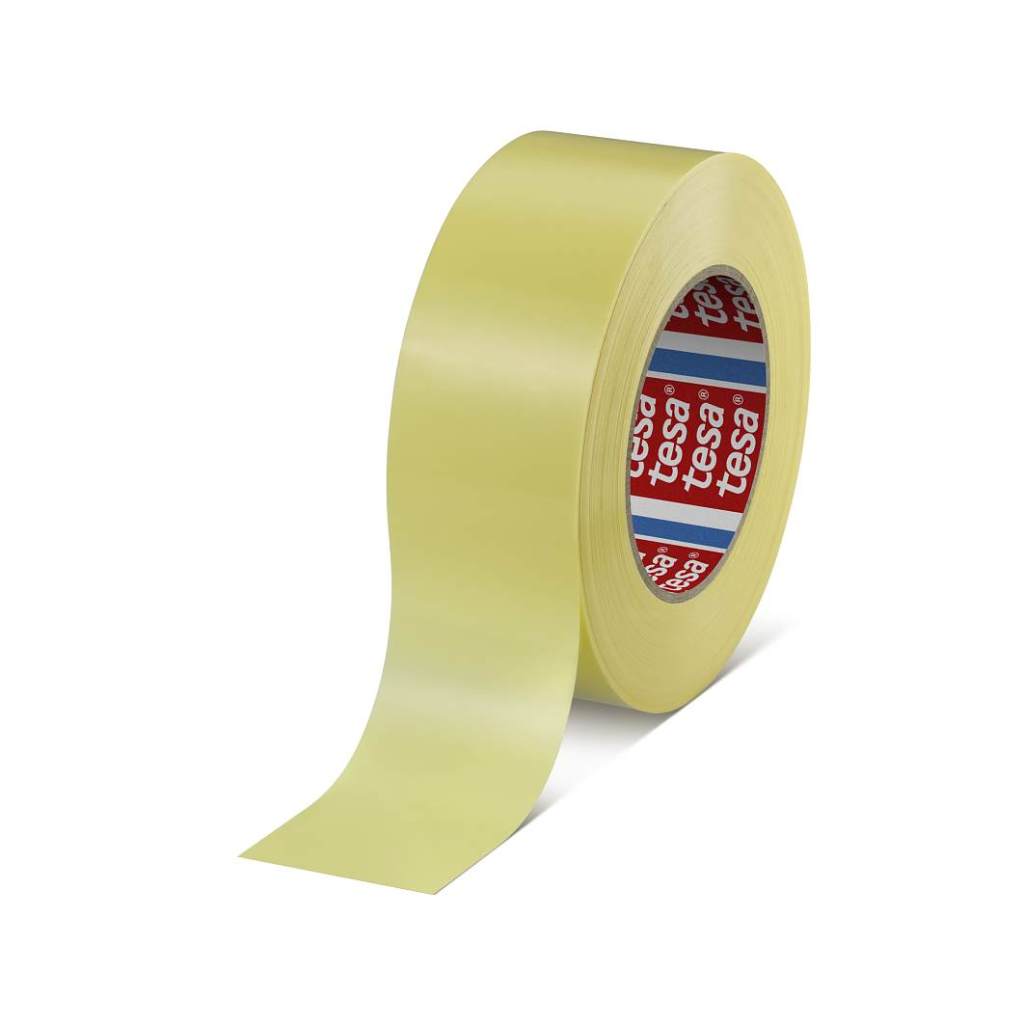
Tesa Tape 4289 (above left). It’s tensilised (stretchy), like self-amalgamating tape for leaky-pipe-repair (right). Not tried Tesa yet either but at 66 metres a roll it’s a fraction of the cost of 3M if you have several wheels to do. Yes it’s only an inch wide, but at 12 quid a roll you can do a few taut wraps round a wider back rim to get a good seal.
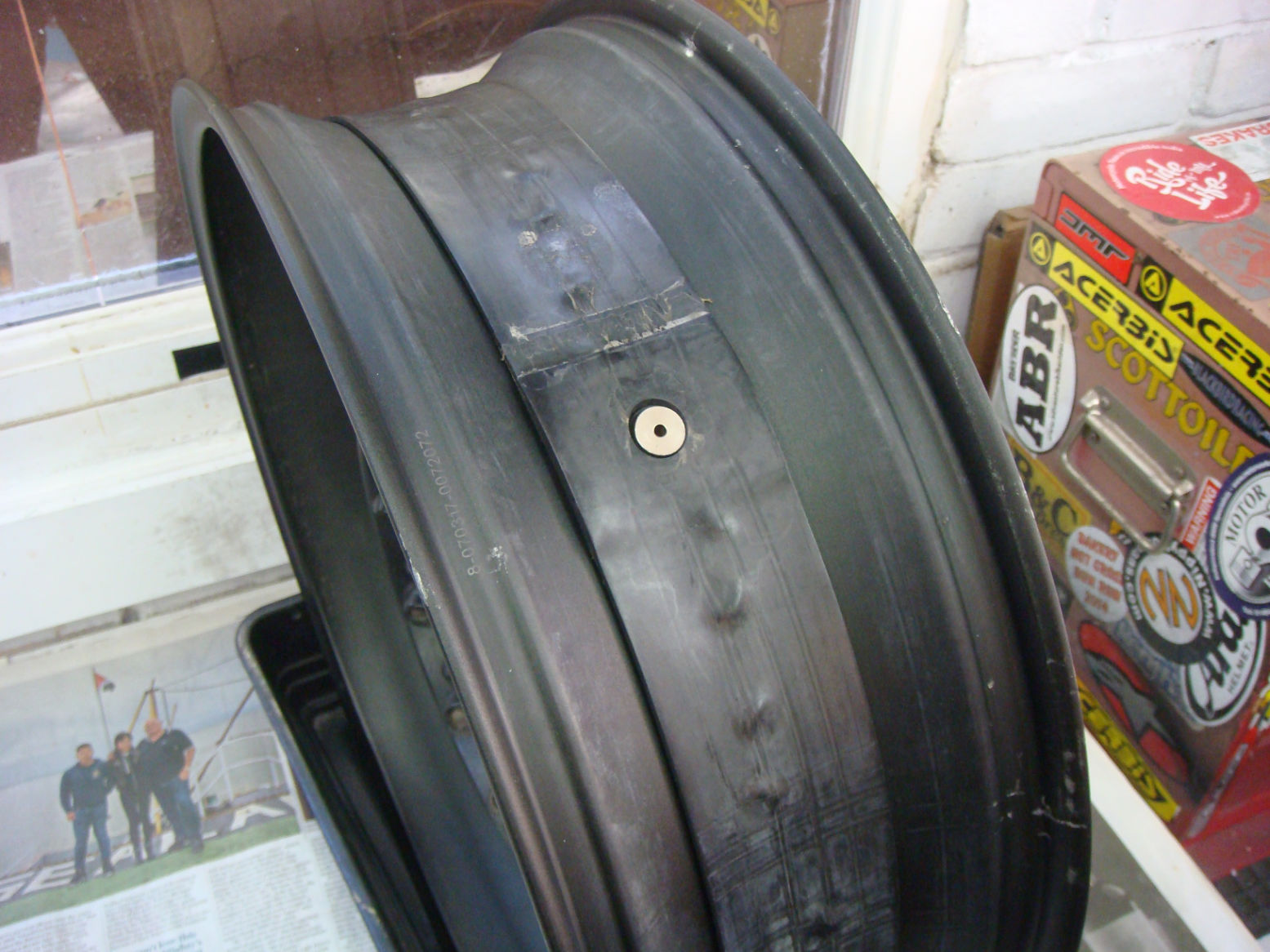
You might not bother with the laborious individual nipple gluing and go straight to tape (or do a continuous band, as above). It’s worth experimenting with at home before a big trip. The risk with tape-only is they might start separating when things get very hot. Don’t underestimate the centrifugal forces working on the tape inside your wheel. Warning below, the original rim tape put over a DIY sealing ‘for good measure’ span itself into pieces and blocked the valve. Things need to be glued down securely.

outex

Outex pads and tape
I came across Outex sealant tape which a mate has been using on his TTR for years. As with many of these DIY methods, some get on with it, some don’t as this post shows. Here’s another on Adv. Central Wheel in the UK used to sell it but stopped, presumably due to unreliable results from customers. IMO you can do as good a job with the off-the-shelf items mentioned above for half the price.

rollerrasp

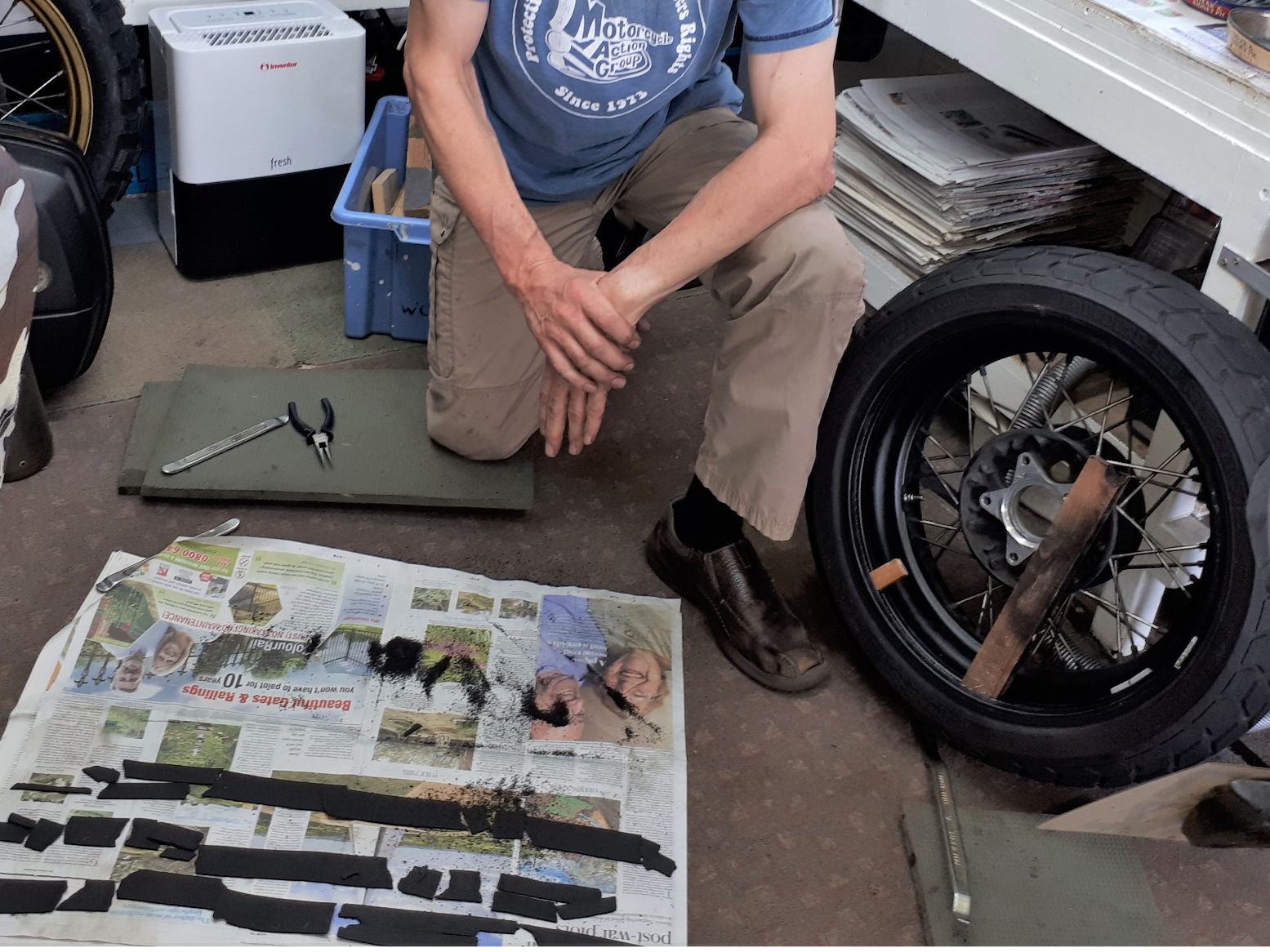
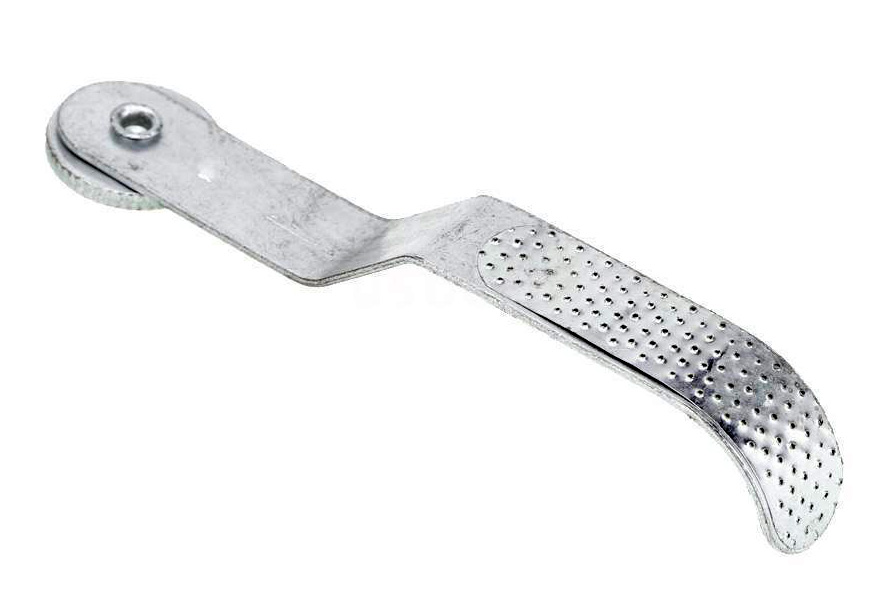
Basically, it’s nothing more than a set of sticky pads for each spoke nipple plus a very sticky and wide double-sided tape applied into the rim well with as few creases as possible. And then a thicker protective tape over the top. Application video below; a higher-res video here. Costs from £90 to £125 in the UK which seems a lot when you see the other tapes, above. As mentioned, I was about to fit it to my WR, but stopped once I saw my rims lacked the safety bead I go on and on about. Take your time they say, to try and get all the air pockets out. Using an inner tube patch roller rasp (right) helps; you often get them with better puncture kits.

Have I missed any ideas? Let me know.

Back to Tubeless Conversion Index Page

Tubeless: professional spoke rim sealing

Tubeless Conversion Index Page

These methods are the professional spoked wheel options I know of available in the UK. In the US Woody’s Wheel Works have been sealing rims for years, but even they admit it’s a tricky business. All will probably insist your supplied rim has a safety ‘MT’ bead.

Haan

Screensh

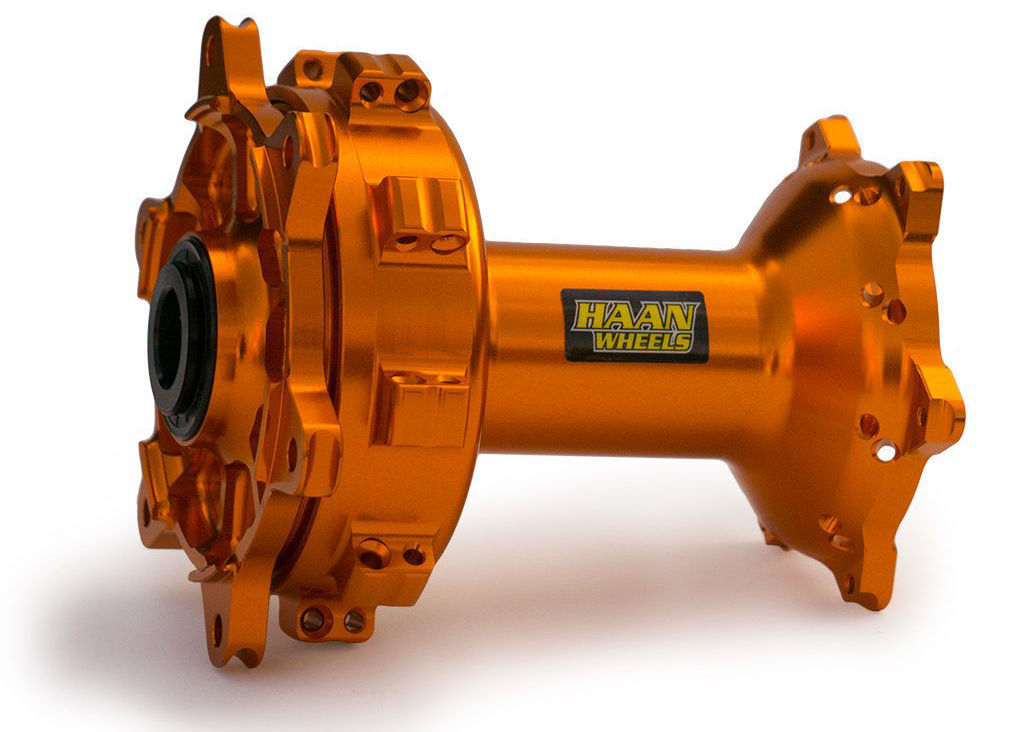
Based in Netherlands, Haan seal handbuilt wheels using Excel MT rims and their own CNC’d hubs (below left). They wrap the spoke nipples in a tape which allows tension adjustments (good for racers), then apply their secret sealant. It’s about £1500 for an Africa Twin wheel set. They also cater for retro-fitting spoke TL rims for looks, ie: replacing a bike’s perfectly good stock cast wheels which are tubeless anyway.

BARTubeless polymer band

cbxL311

I was one of the first in the UK to try this in late 2015 on my CB500X: permanent rim sealing by BARTubeless in Italy (left). They come with a 4-year guarantee. A polymer is applied and sets hard in the well of the wheel, which has been heated by steam.
The tyre was a Golden Tyre GT 201 tubeless on the back and a similar K60 on the front. More here and here. One thing with Bart and similar thick linings is that they take up a bit of well depth in the rim which reduces the slack needed for easy tyre fitting or removing. I recall the rear GT tyre was hard to fit.

x2k04

I thought I had no air loss but tbh I don’t think I checked much, and over a couple of months there was quite a lot of leakage. Could have been the tyre bead, the valve, even the alloy rim might be porous. At an MoT weeks later they noticed the pressures were well down, but the stiff TL tyres disguised this, as they so often do.
Note in the picture top left the label says not to drop below 1.6bar (21psi) because the rims used by RR then did not have MT safety lips. They probably offer safety-bead rims now; certainly on the Africa Twin Bart rims they now sell. In the UK, wheel specialists Central Wheel Services near Birmingham will BARTubeless two wheels for you.
Balance the cost of either of these proprietary rim sealings with the many hours but modest cost and possible satisfaction of doing it yourself.

tl-airtight

CWC Airtight
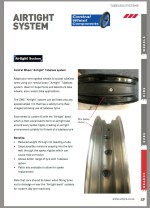
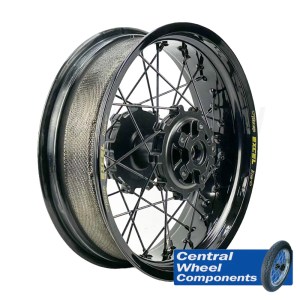
Central Wheel Components in the UK do a version of the Haan sealing band. They call it Airtight. and again, as far as I know, I was among the first to try it on my Himalayan ride to Western Sahara in 2019. It cost £120 a wheel then but it’s done in the UK (by ATS Euromaster, a UK tyre outlet owned by Michelin).

TL-CWCairtight
OLYMPUS DIGITAL CAMERA

A hooped band whose size matches the wheel rim is fitted to the rim and heated to vulcanise in two stages over two days. Alternatively, on narrow front wheels liquid rubber is applied in three stages and cures in air but takes four days.

Airtight new style

More on this page. Because the band version is vulcanised – a form of chemically assisted rubber ‘heat welding’ – rather than just glued like tapes or sealants, you’d hope the seal will be more secure and permanent, certainly more than tape which can come away when it gets hot.
I had this system on the rear wheel of my Himalayan on an Excel rim with the safety lip and fitted with a Michelin Anakee Wild 130/80-17 M/C 65R TL plus a splash of Slime.
In Morocco I’d guess it lost a pound or two psi a week judging by the readings off my TPMS – though with elevation and temperature changes it was hard to evaluate accurately. This was with Slime plus a small nail in the back which I chose not to remove.
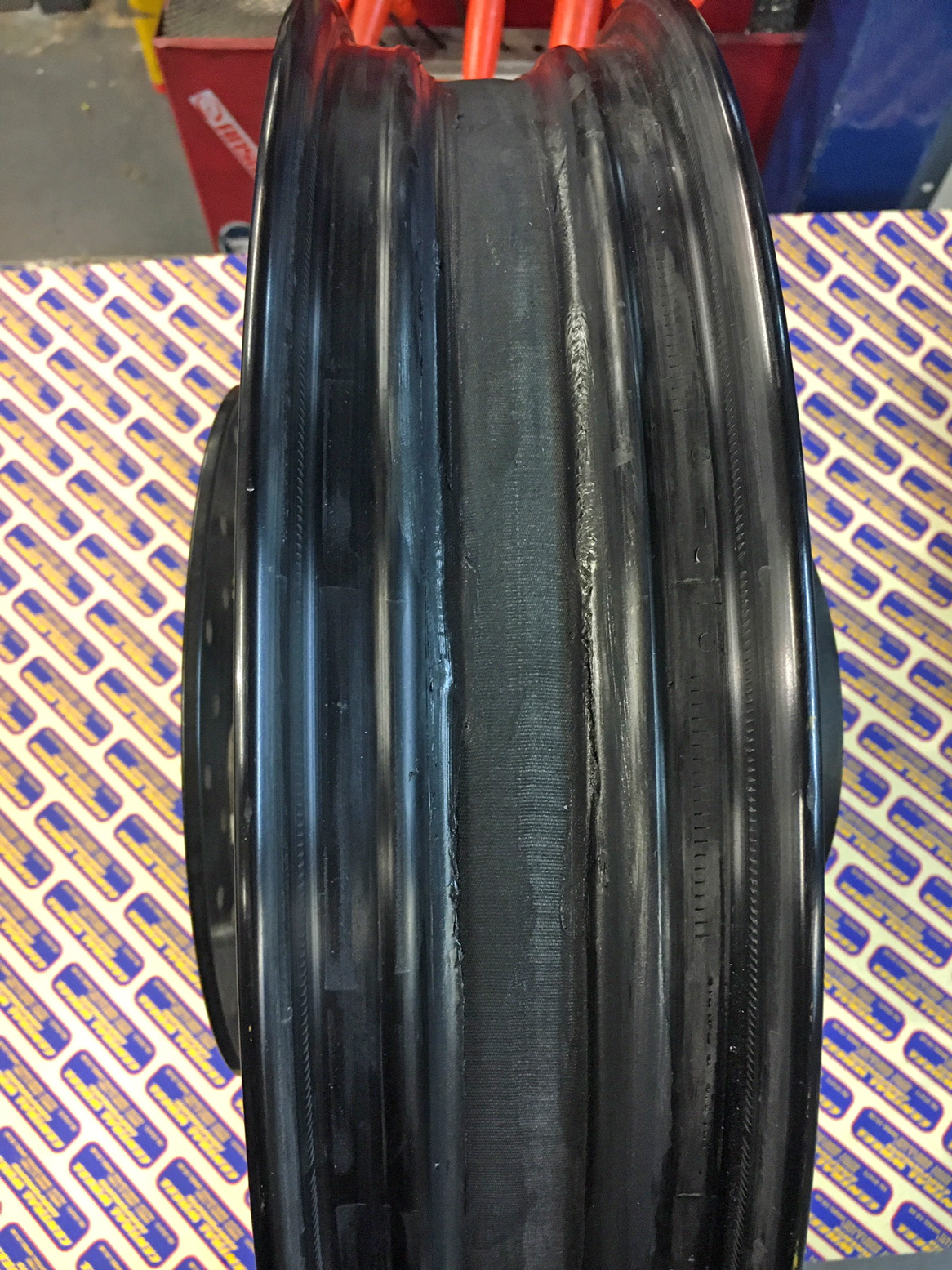
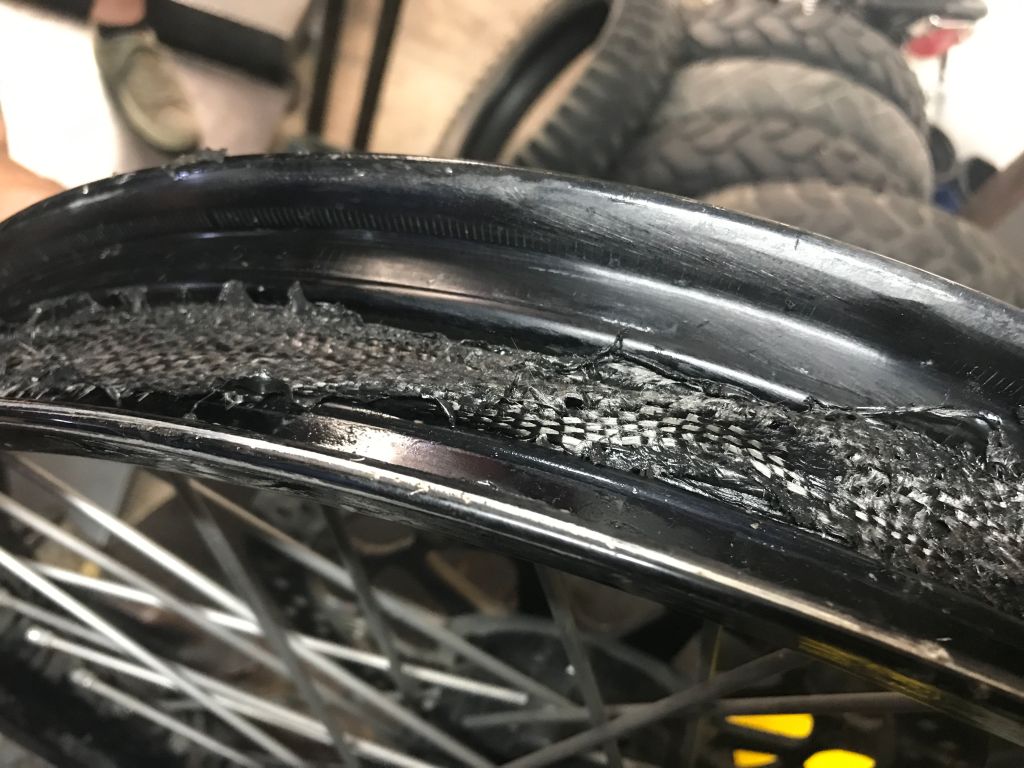
I prefer Airtight over the BARTubeless as the rubber may be lighter, would flex with the wheel and it takes less long. In late 2024 a mate Airtighted his Ducati Desert X, but a tyre swap in Marrakech revealed quite a messy application with some new woven covering mine didn’t have. It looked a right mess but didn’t leak.

Messy. Fraying from going too fast?

Alpina sealed spoke nipples
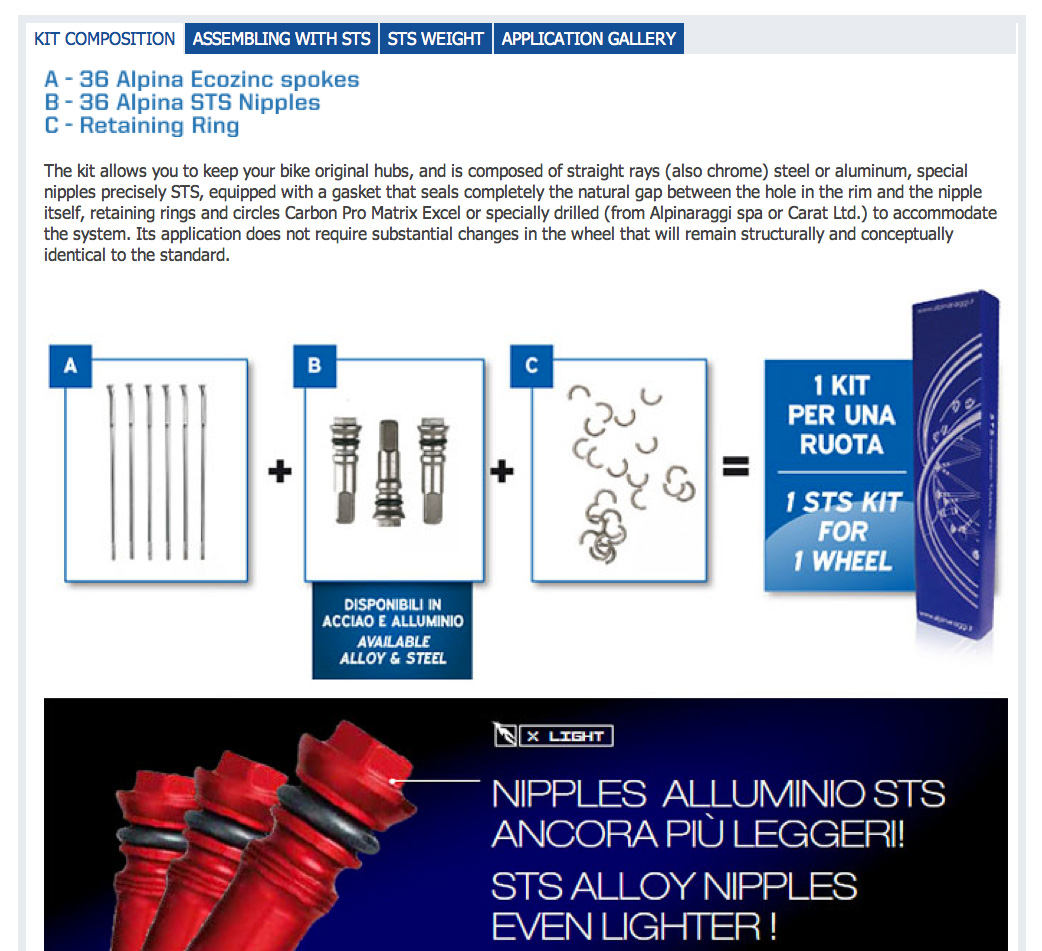
The Italian Alpina system individually seals each spoke nipple with a rubber o-ring, and is sold for many road bikes and so must be considered road legal.
The benefits of this system is that spoke tension can be adjusted while maintaining the tubeless seal. But how often do you do that on a decent rim? The permanently sealed bonding systems above may not work so well doing this, but as we know we’re usually talking very small turns of the nipple to adjust tension, and should a leak develop it can be re-sealed. Also, there are 36 potential leak points. It seems a way over-complicated way of doing it compared to a single band like Airtight or BARTubeless inside the well.

Kineo wheels
Beautifully forged after-market Italian Kineo tubeless rims, popular with custom builders. They’re the only ones I know of and for a Transalp will be at least €1000 each. You’re welcome.

kineotl

Back to Tubeless Conversion Index Page

Tubliss, Prolock and other tubeless cores

Tubeless Conversion Index Page

Short version: Imo, none of these cores are suited to travel biking.

him-bliss

Systems like the US-made Tubliss liner are primarily made for dirt bikes running low-psi. They are not recommended for highway use in the US by the manufacturer, most probably due to homologation issues rather than safety. But I know people who’ve run Tubliss for years on the road with no problems. The main limitations: they’ll only seal properly on WM3 rims (2.15”) or narrower, and they only come in 21, 19 and 18-inch sizes. So like they say: most suited to dirt bikes where such rim widths and sizes are the norm.

Nuetech Prolock
In 2025 Nuetech announced the Prolock system: half-a-dozen rubber-backed aluminium clamps you bolt to the rim like a rim lock, via several new holes. The rubber squidges out and seals the spoke nipples, while also sealing and pining the tyre bead in place, so there’s no need to run an MT rim, and low pressures ought to be doable. Each set weighs just under a kilo, but of course you lose a tube. It sure beats the need to run 100psi in the Tubliss system, but on a travel bike where you rarely run very low psi, I’m not sure it’s a huge benefits to simple spoke nipple sealing on an MT-type rim.

With nothing better available for a 21-inch wheel, in 2019 I reluctantly ran Tubliss on the front wheel of my Himalayan in Morocco. A few days in I’d noticed Slime coming out round the high-pressure core valve body which suggested it was getting from the tublessed tyre cavity past the Tubliss core seal.
Then, after about two weeks riding at road pressures and having checked the Tubliss at 7.5 bar just two days earlier, the core went flat in the middle of Western Sahara. It would not hold air and so neither would the tyre. But by luck, the body of the collapsed Tubliss core kept the flat tyre on the rim, so I was able to ride slowly 250km to Laayoune on the coast, find and fit a tube.

him-sarawi

Removing the Tubliss (left), it was hard to tell what was wrong as five hours riding at 30mph had probably pulled the valve out of the tube and anyway, I wasn’t planning on refitting it and bought an inner tube instead.
I never was that keen on Tubliss for travelling as opposed to recreational dirt biking. Even though mates have used it on the road without problems, I’d not risk it again. Next time I’ll seal an MT rim.

tubly
tublafaq
tubliss-section
tubeless-slimer

Tubliss and similar work by fitting an inner tube-like ‘core’  (‘HPC’) which inflates up to 110 psi to expand and seal the bead of the tyre firmly against the rim and so sealing off the tyre’s air chamber from the spoke nipples where leakage occurs – the key to converting wire wheels to tubeless. The core is a thick, plastic highly pressurised non-elastic red casing, but it’s kept away from the tyre sidewall or tread where punctures come through.

303

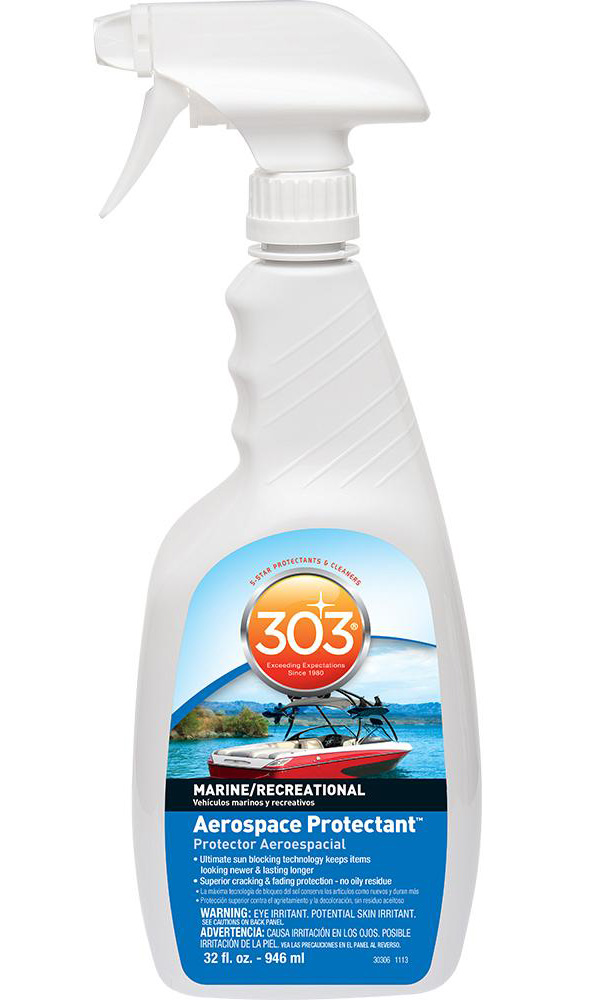
Years ago I fitted a pair to a GS500R project bike running custom 19″ spoked rims. Click the link. Short version: lube the possibly hard-to-fit core with 303 Protectant (right: £15 a pint; same as Armor All in the US). It’s much slippier and longer-lasting than soapy water which is good for the HPC inside. Then run Slime, Stans or similar to ensure sealing (about the same price as 303 but you can MYO). Me, I wasn’t convinced they’re suited to long-range overlanding compared to other simpler systems because of the need to maintain the very high 110-psi pressures in the red HPC with humble mini-compressors. You also need to drill another hole in the rim for the HPC valve/rim lock; no one likes doing that.
Long Tubliss thread on advrider; mostly dual-sporters. Some get on with it, some don’t. In 2019 I rather reluctantly fitted a Tubliss to the stock front steel rim of my Enfield Himalayan. But I’m on the lookout for a 21-inch alloy rim with the safety lips to seal myself with adhesive and tape.

himtublie
tlokk
tlok

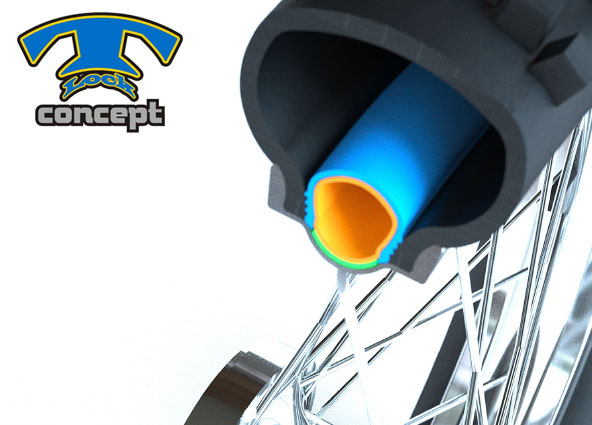
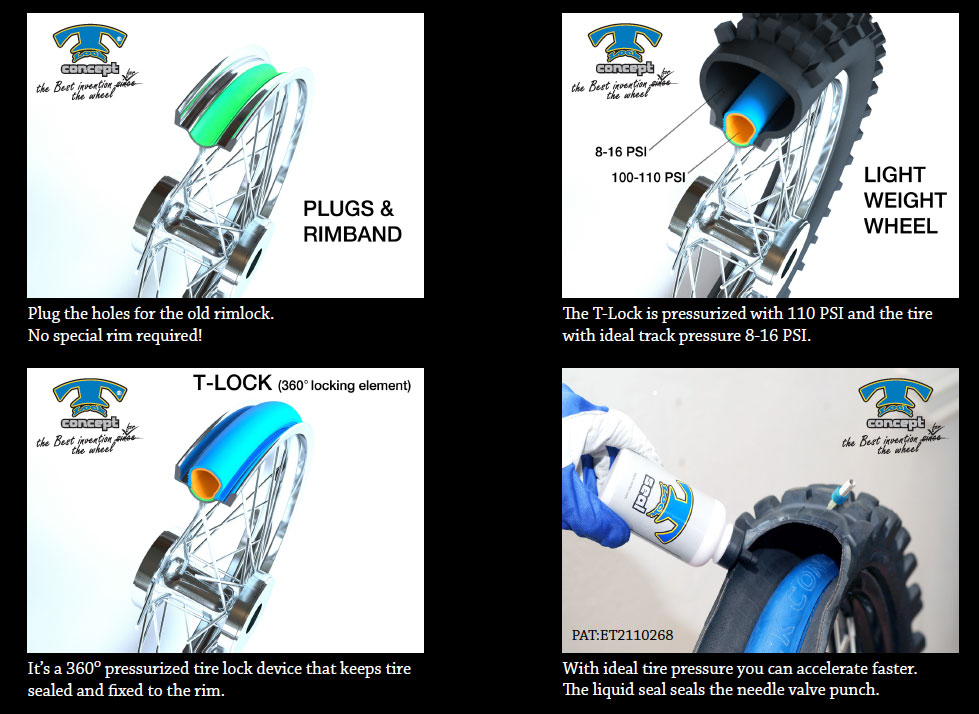
The Swedish T-Lock system is very similar as far as I can tell: the same non-elastic core (blue, left) presses the tyre bead against the rim with very high pressure to seal the tyre’s pressured chamber from the leak-prone spoke nipples and securing the bead to the rim (MT rims not needed?)

The blue tube utilises the rim’s valve hole. This means that unlike Tubliss with its two valves, the tyre must be filled with Slime-like sealant before final mounting and then pressurised by spiking the tyre carcass with a needle valve attached to a Schrader, then letting the sealant plug that hole. This seems to imply you set the tyre pressures once. To modify the pressure you’d have to spike-and seal again. Even more than Tubliss, T-Locks are intended only for motocross use, as the website’s imagery implies. Clearly then, not at all suited to overlanding.

Back to Tubeless Conversion Index Page

Tubeless motorcycle tyres and rims

Tubeless Conversion Index Page

Updated 2025

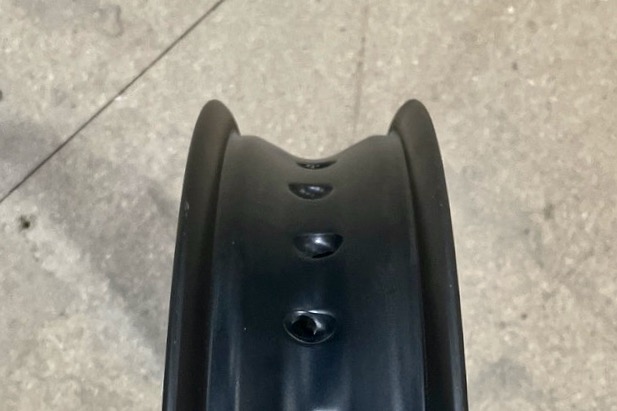
Tubeless rims are usually cast wheels with a lip or ridge (left) to help locate and seal the tyre bead securely on the rim. This lip is also considered a safety feature which stops any tyre coming off the rim should the tyre deflate on the move. In my experience, it works. You will feel the softened tubeless tyre long before it comes off the rim and can keep riding slowly without it coming off. These ridges have been a feature on the rear wheel only of some tubed motorcycles since the 1980s.

TL-MTrims

The ‘MT’ or ‘2H’ (‘H2’) rim code
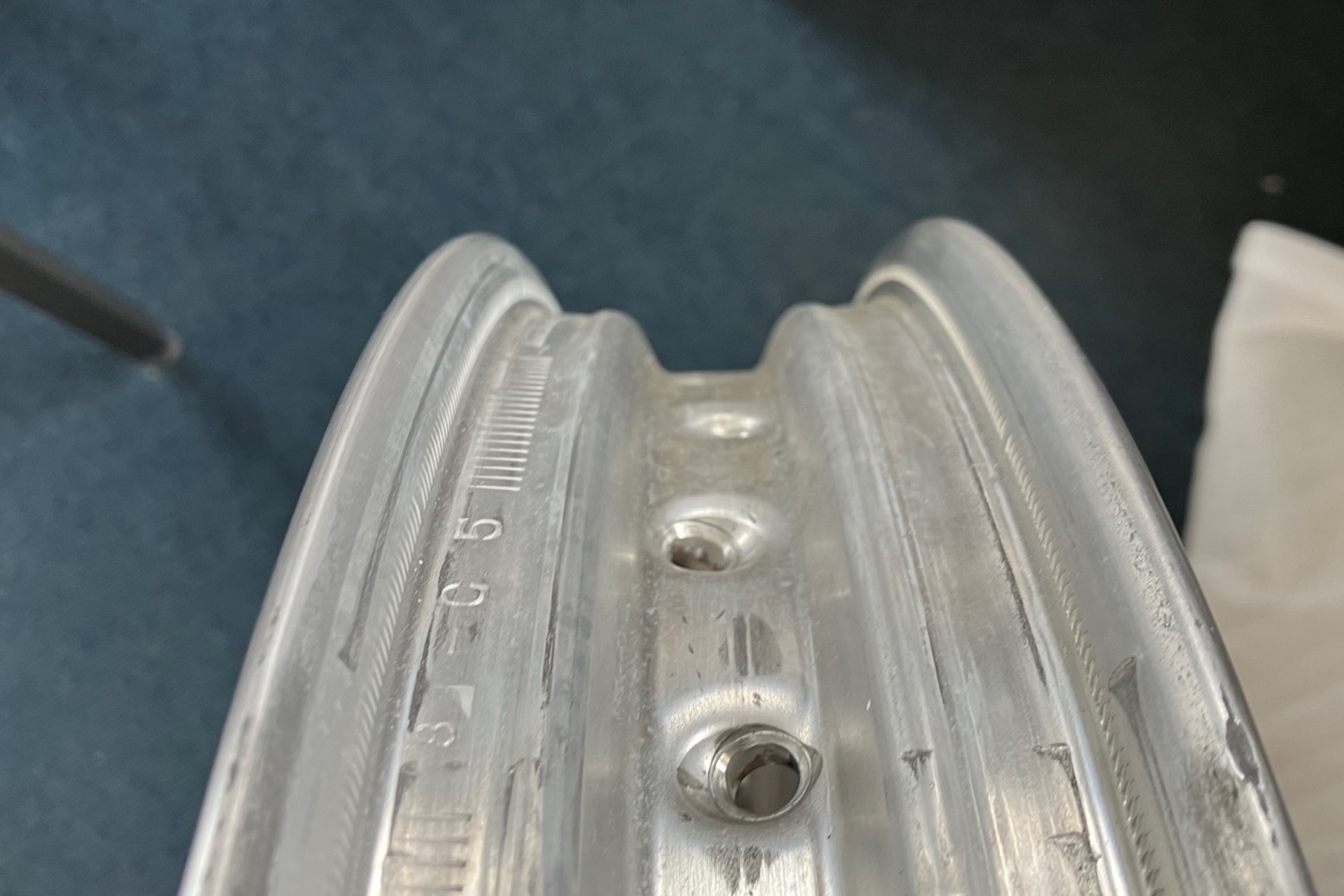
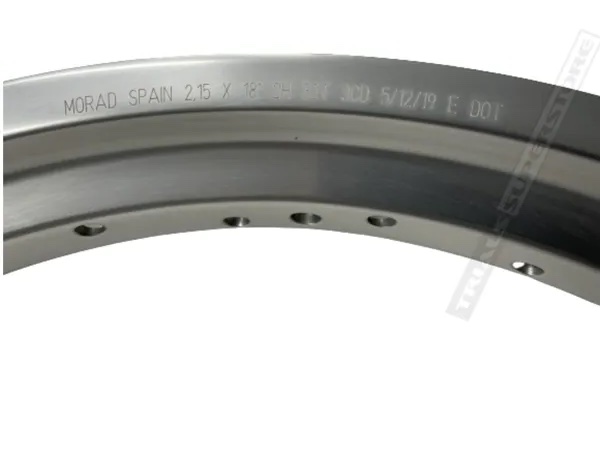
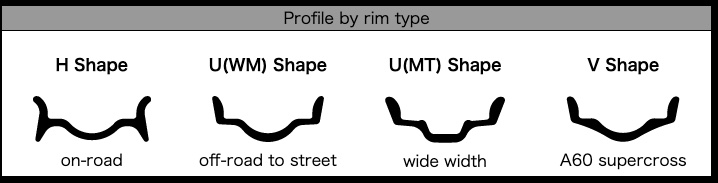
Spoked rims with the safety lip suited to TL tyres are often stamped ‘MT’ on the rim, as opposed to ‘WM‘ or nothing, but usually only by Asian rim brands like Excel Takasago, but not SM Pro. As said, even bikes running inner tubes may use an MT-type lipped rim (which questions the claim that ‘you can’t put a tube in a tubeless rim’). European brands may use ‘2H’ (‘2 hump’) to mean the same thing, as with the Motad wheel below right who now own the Akront brand.

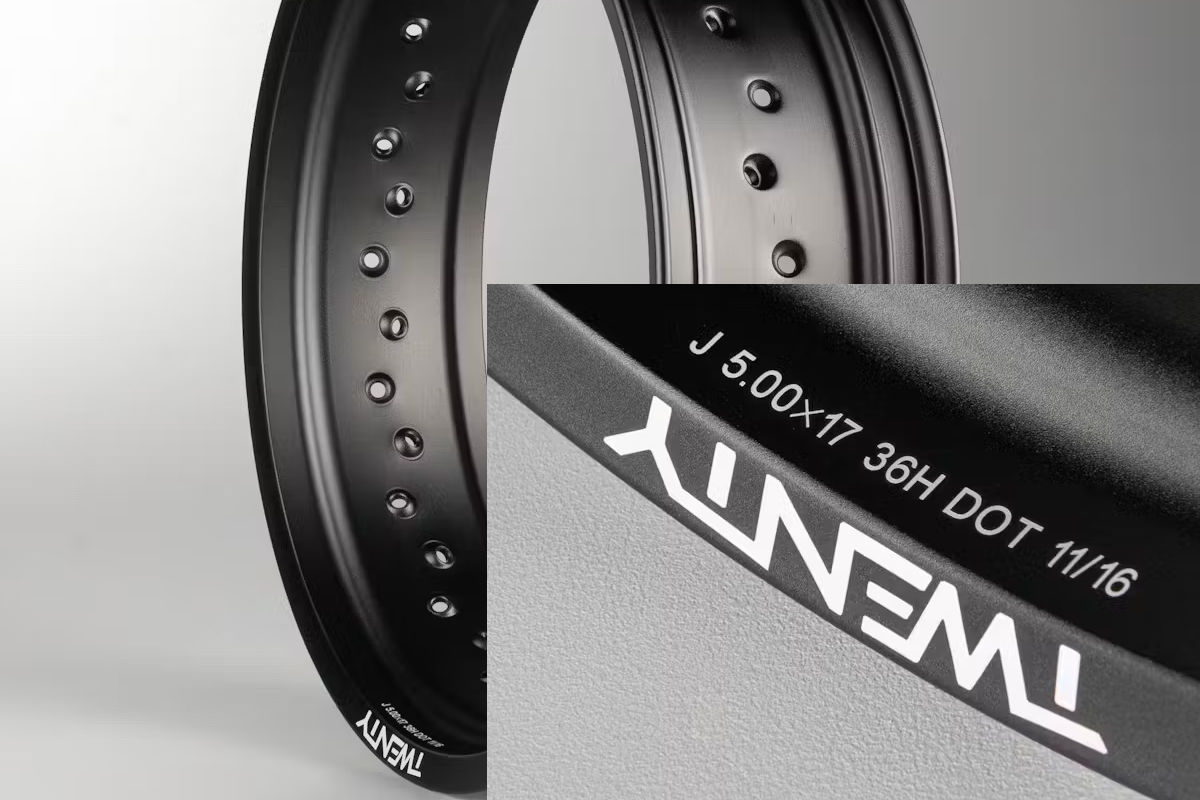
But as AD comments, his 2005 KTM’s German Behr rim (no longer made) was stamped MT but has no lips, so … [not] all MT-code wheels have the safety lip. What’s more, other rim brands like Twenty (below left) may have the lips but don’t use any discernible code on the rim. The only way to know for sure is to verify the profile of the rim.

This lip also makes removing and mounting the tyre difficult by the roadside if you need to repair an inner tube. It varies from bike to bike and tyre to tyre, but with tubeless you only need to remove a tyre to replace it when it is worn out (or destroyed), not to fix endless punctures. And unlike punctures, fitting a new tyre is usually done at a time of your choosing and in a tyre shop which has the know-how and tools, including a powerful compressor and lube to force the new tyre over the lips and into the rim’s groove with a nice ‘pop’. See this.

87tenere

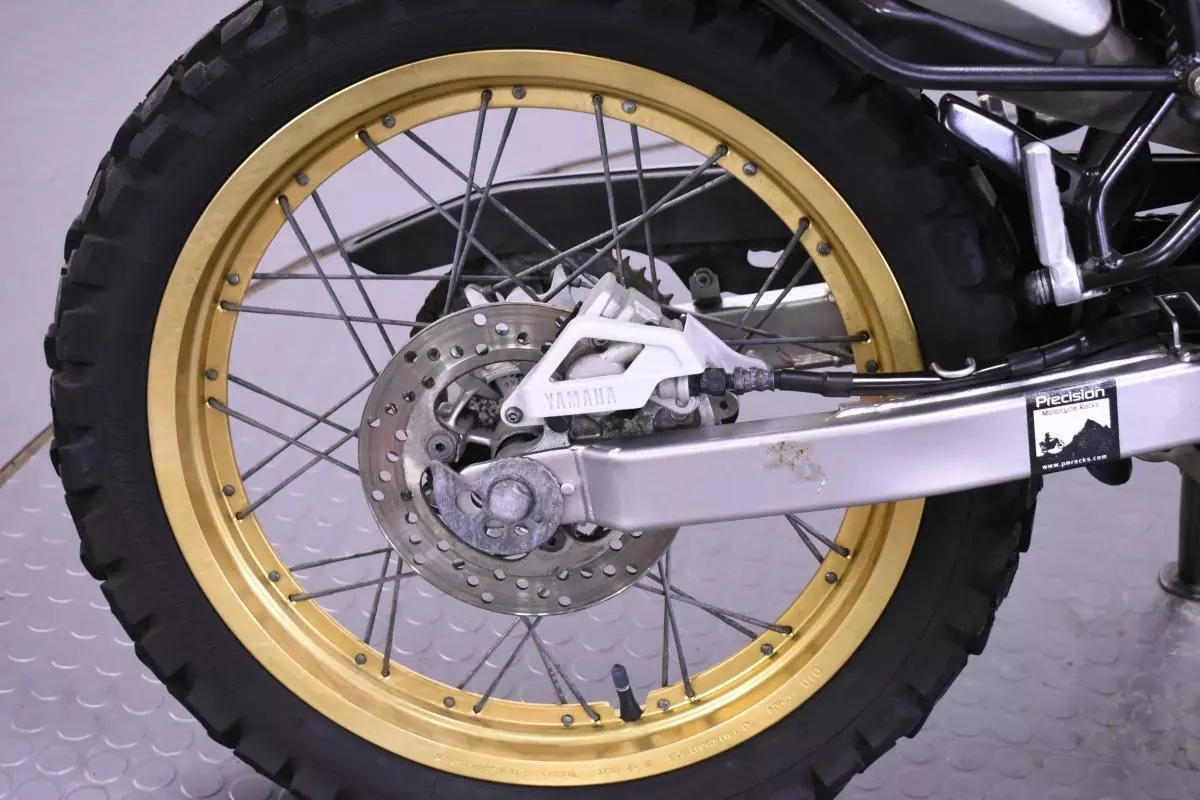
For years and years bikes running tubes also have this safety lip, but never on 21-inch wheels. Old Yamaha XTs like the one above had it on the rear wheel. Out of interest, this disproves another tubeless urban myth: you can only stick a tube in a TL rim to ‘get you home’ because it will eventually rub on the lip and explode with terrible consequences.
Well, clearly not on a stock tubed ’86 Tenere with a lipped DID rim (above). I know because I remember putting that bike on a crate with the rear tyre removed, sticking it in gear and ‘hand-lathing’ off that safety lip with a chisel so that I’d not get stuck in the desert trying to break the bead to fix a flat. And as importantly, remounting it with – back then – just a bicycle pump. All this faffing is why we like tubeless!

tententen
2008 XT660Z, heavy MT rear wheel but came with tubes

But to convert spoked tube rims to tubeless, these lips are an important safety attribute. My 2008 Tenere (above) had them on the back wheel. The front rim was normal which is a risk when converting to tubeless. But can it be any worse than a tubed tyre puncturing? Tubed tyres deflate faster and therefore more dangerously than tubeless tyres, so even without the safety lips or humps on the front, with tubeless you’re already ahead. But, as I found, with no lips you may get slow leakage along the seal. These days I would not convert any spoked wheel which did not have these lips (usually OEM 21s), even if it gets expensive.

tlrims

Pictured left: the top ‘WM’ rim has no sealing lip; the lower ‘MT’ rim does. Note also the angle of the tyre bead–rim interface; the lower rim with the lip is flat which helps make a better seal and keep the tyre bead in place. The upper lipless rim slopes into the well making it easy to mount by hand, but it won’t hold or seal a tubeless tyre half as well. My 2008 Tenere front-wheel sealing problems were because the rear wheel was like the lower rim – good for tubeless. The 21-inch front was like the upper rim; less good seal.

21-inch spoke rims with safety lips

tl-RRAThub
giant

I spent weeks online tracking down a 21-inch alloy rim with the safety lip suited to converting to tubeless. They used to be rare, but not anymore it seems, as OEM spoked tubeless wheels become a ‘thing’ on adventure bikes.
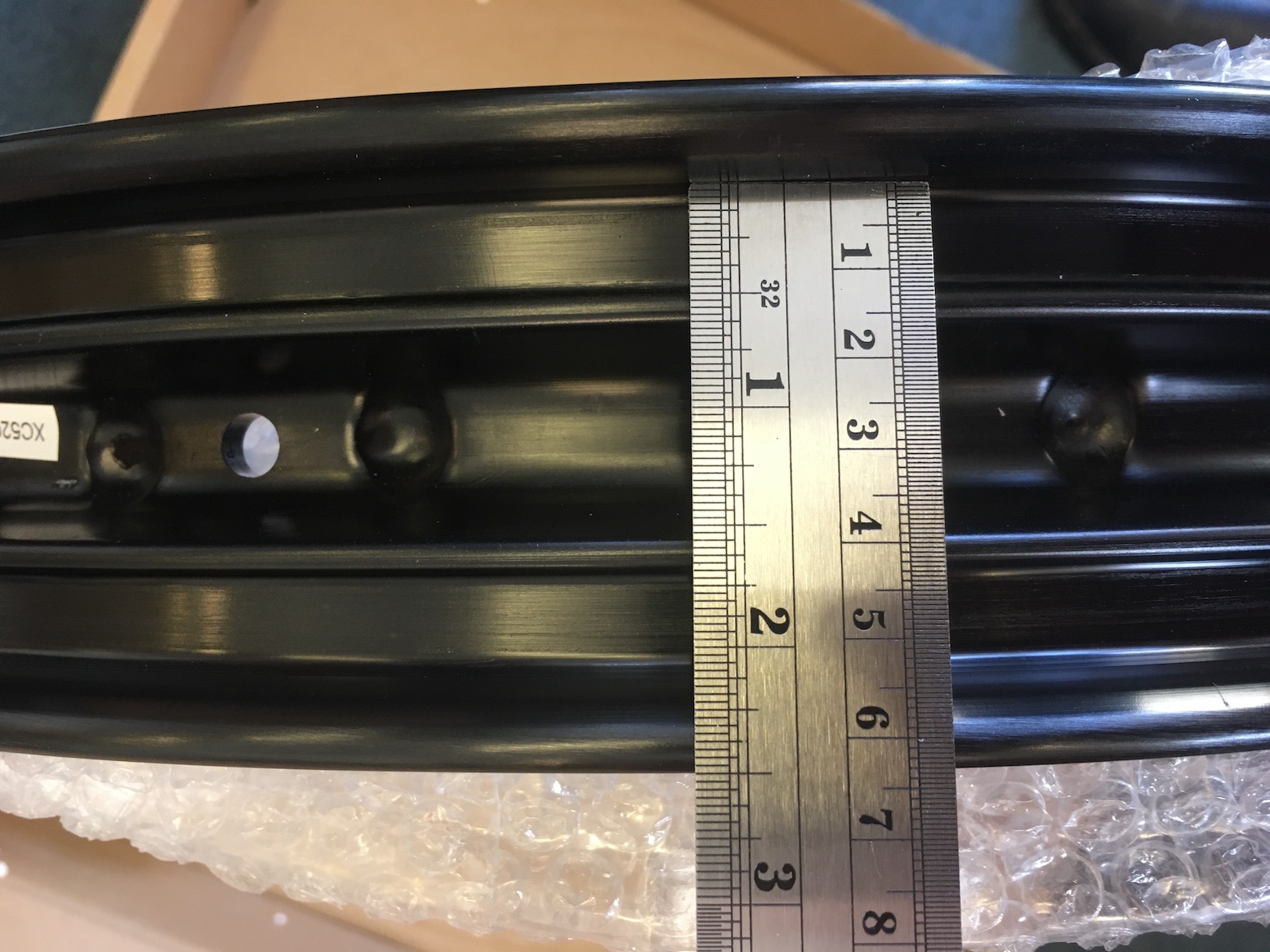
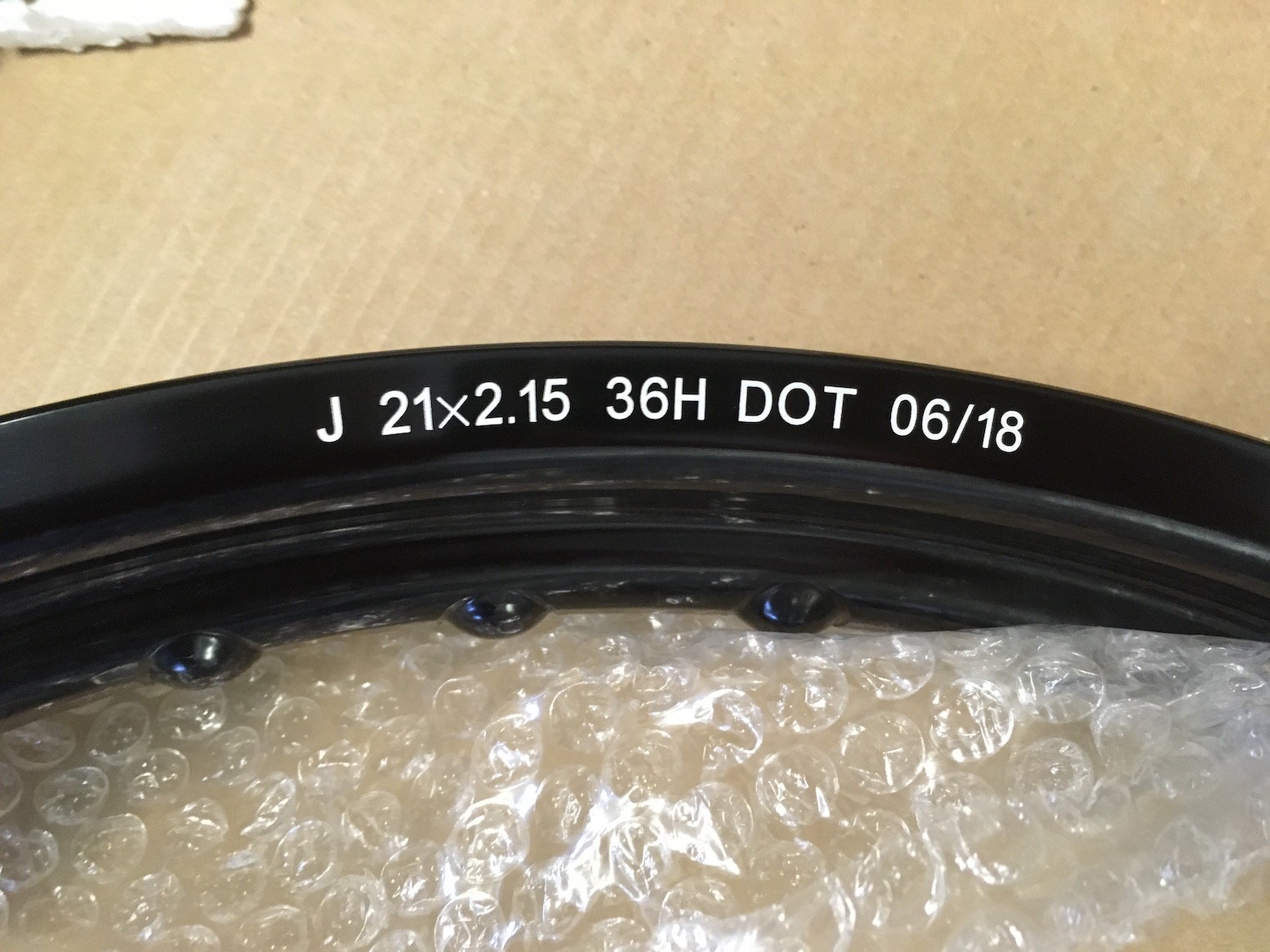
Taiwan-based Giant (or GLM) is the biggest bicycle and motorcycle rim manufacturer in the world. They make such a rim in ‘big bike’ 2.15 width with 36 holes (bigger BMWs have 40; lighter trials bikes have 32). In the UK Central Wheel Components sell them for £111 (2.15kg) + 24 quid to anodise. It may be branded SM Pro (see bottom of the page). Rally Raid use this rim on their own wheelsets with BARTubeless conversions for Africa Twins (left) at a staggering £1500 a pair.

tl-supermotocivitanova21

A quote to build that rim onto my Himalayan hub and seal it with BARTubeless (done in Italy) came in at £420. A quote to do the same for my AT: new 2.15 GLM rim £135; S/S spoke set and wheel build £105; Airtight TL band £120; post £21 (£381). Some claim the GLM rim is a bit soft.
More research unearthed Japanese Excel Takasago TL rims in 21-inch, but only a 1.60 size (left; p/n ICK408, and below) which is OK for dirt bikes but not adv twins. Talon in the UK import them at £165; I bought a pair in Italy for a lot less and have kept one for a rainy day. This rim has an unusually deep well which should make for easy tyre mounting, even after you’ve sealed it whichever way.

tl-exellp21.jpg

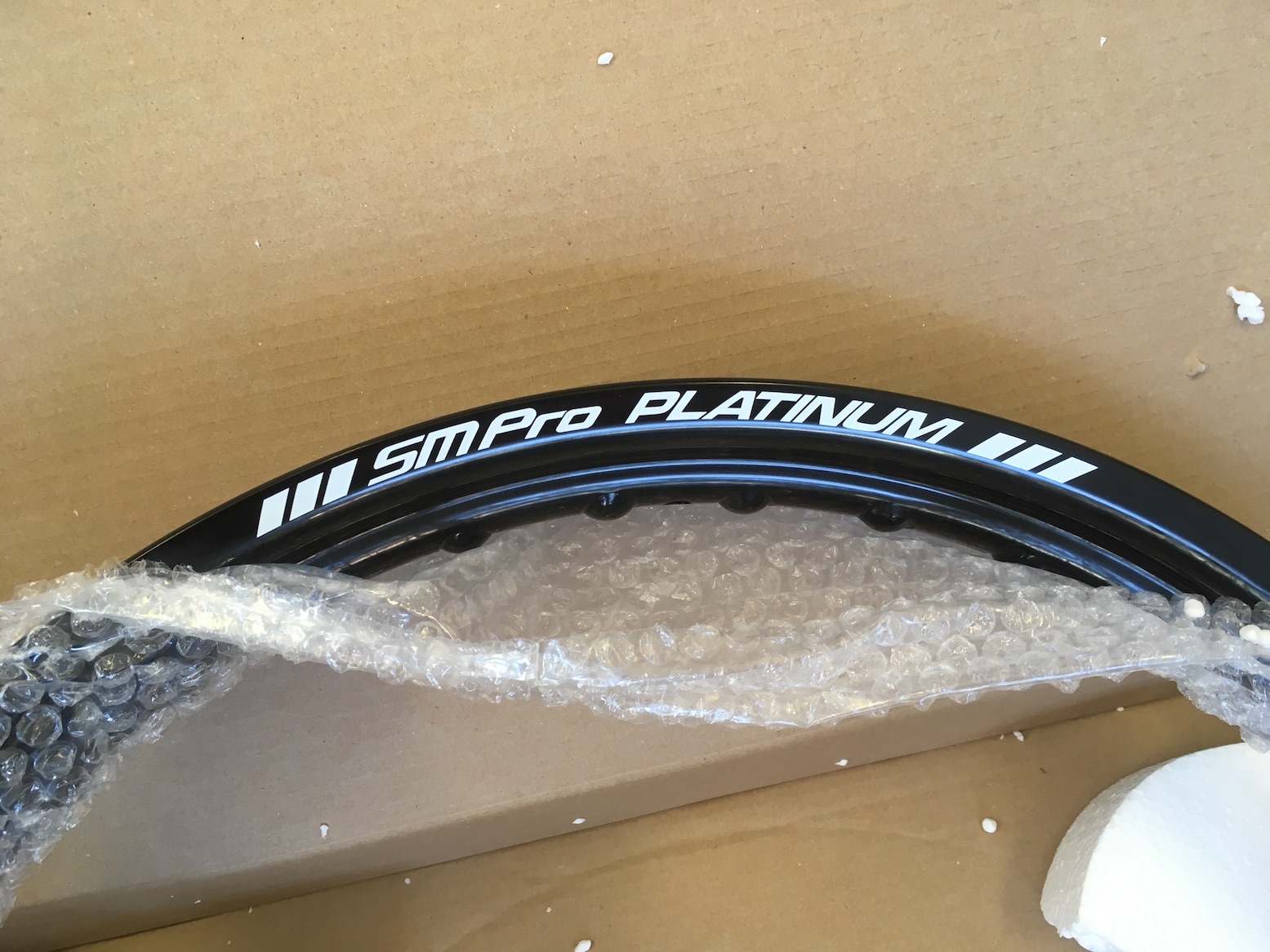
In 2018 there was talk of Excel making a wider 21 x 2.15 suited to bigger bikes and in 2019 it was produced, apparently. And in 2021 a mate bought a 2.15 x 21 SM PRO Platinum from Central Wheel for £135, as mentioned above. So these 21″ MT rims are out there now in black or gold.

Back to Tubeless Conversion Index Page

Tubeless: Spoked Tubeless Rims

Tubeless Conversion Index Page

Thinking of using these TL rims for your conversion?
Be aware that on these rims spoke nipples are in the hub, not the rim.
You’ll need to convert the whole wheel to fit your forks / discs / spacers and so on.
Suddenly it’s all a bit complicated.

Triumph-Tiger-Explorer-XC-wheel
GSArim

Many flagship travel bikes run ‘adventure-look’ spoked wheels, but OEM spoked + tubeless is only slowly catching on. Usually, they’re non-Japanese premium brands like BMW, Triumph or KTM. I updated a list here in 2023.

tl-at2020

The original one-litre Africa Twin and Yamaha’s XT700 were two bikes where youd have expected tubeless. The 2020 1100 AT featured tubeless (right). Front 21-inch wheels seem to be a problem, but it must well be a cost thing too. Spoked tubeless fronts in 19″ are much more common, even on Jap travel bikes.
These days manufacturers use spoked wheels on adv bikes as a signifier of ‘off-road adventure’, as well as the perception of being repairable, lighter, stronger, more shock absorbent and cool looking. Meanwhile tubeless is just plain safer and infinitely easier to repair flats. On a CRF450R motocrosser running rim locks at 10psi, a tube is probably a better idea as the van’s nearby. On a quarter-ton Adv battleship halfway down Patagonia’s Ruta 40, getting a flat is a pain.

OEM spoked tubeless wheels

tltrailtrialrims

Making a spoked tubeless wheel rim is expensive but its been done for decades, right back to the mid-1980s Honda XL600M (left), and almost certainly before that.

xadv - 5

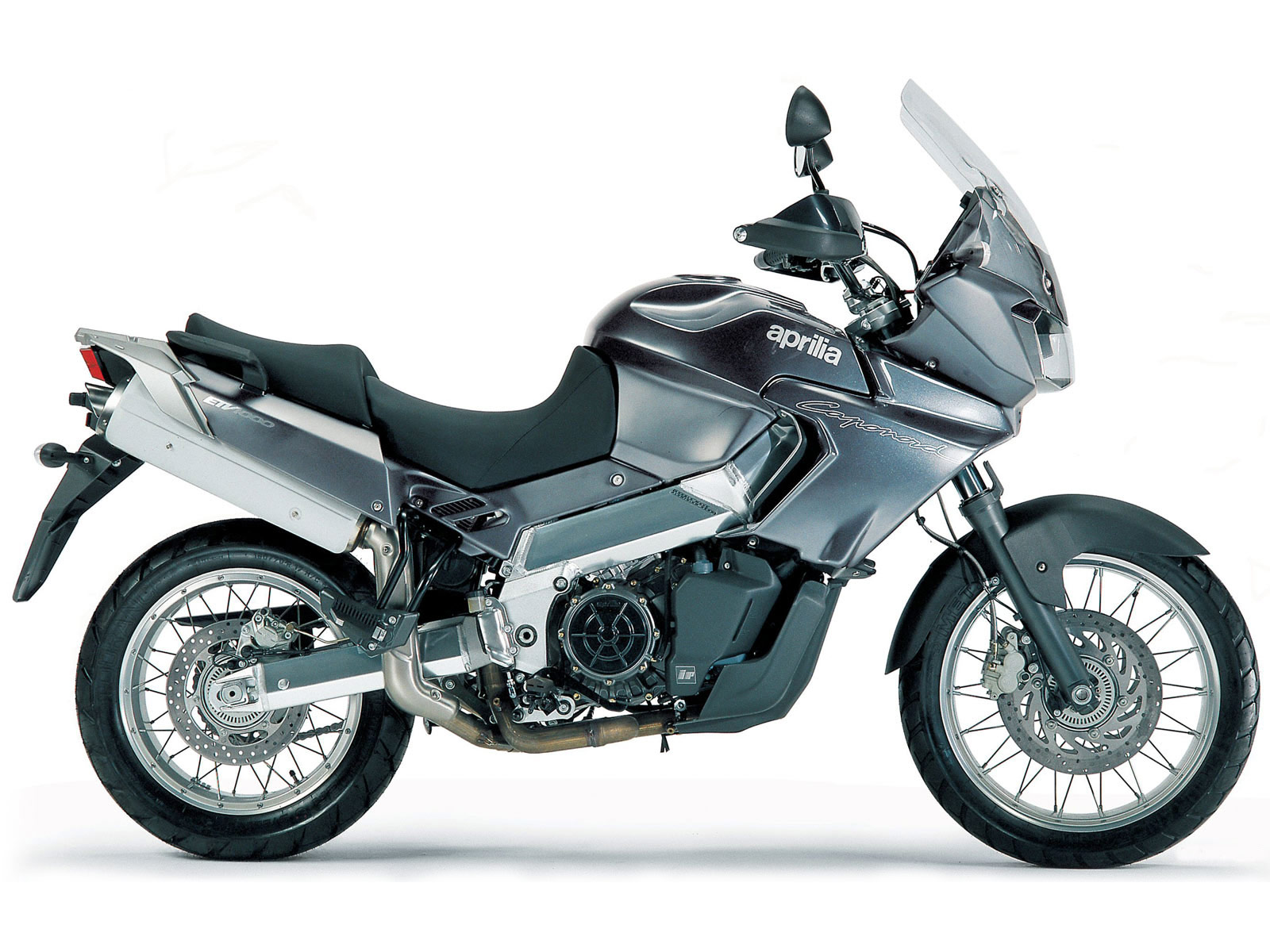
Recent bikes that come with them stock include the BMW 1200GSA, the original Aprilia Caponord (below), Yamaha’s 225 and 250 Serow on the rer only, Suzuki V-Stroms, Yamaha XT1200Z, KTM V-twins, some Triumph Tigers, Explorers (top of the page) and 1200 Scramblers. Even Honda’s oddball X-ADV scooter (right) has small spoked TL wheels. 

TL-vstrom

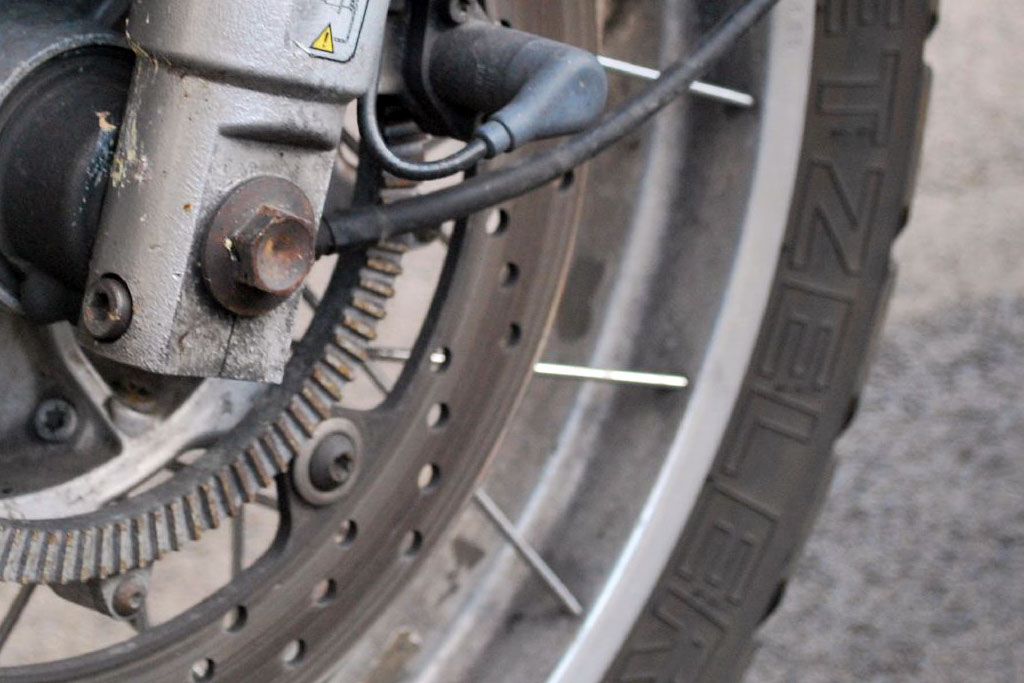
The picture below of a 2005 Caponord shows the main ways of designing a spoked tubeless rim. On the rear: spokes hook to ‘outboard’ flanges on the rim. The front uses a less well triangulated single ‘inboard flange’; V-Stroms (left) have paired inboard flanges up front. Note that the nipples (spokes tension adjustment) are at the hub, behind the rotors.

Caponord
Yamaha Serow rear

BMWs, including the 850GS twin  (below), run 40 straight-pull spokes directly into the protruding rim edge – there is no flange. I’ve noticed this relatively exposed edge can get scuffed about from stony terrain, although it would take a lot to damage the spoke mounts.

Such wheels can be heavier than same-sized cast wheels. Weight is saved by not using inner tubes, but the additional unsprung weight on any wheel is the last place you want it. It takes more force to get that mass turning, more braking to slow it and better suspension to control it.

f850gswheel

Trials Tubeless

trials

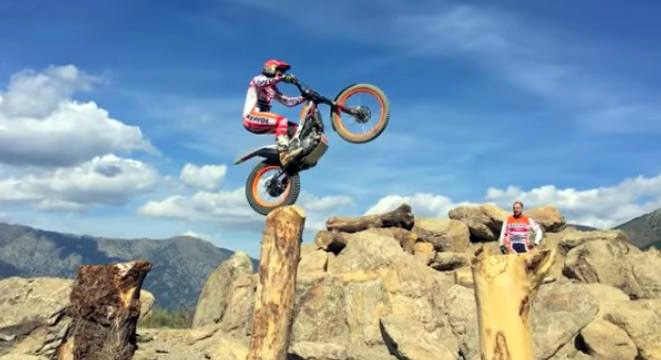
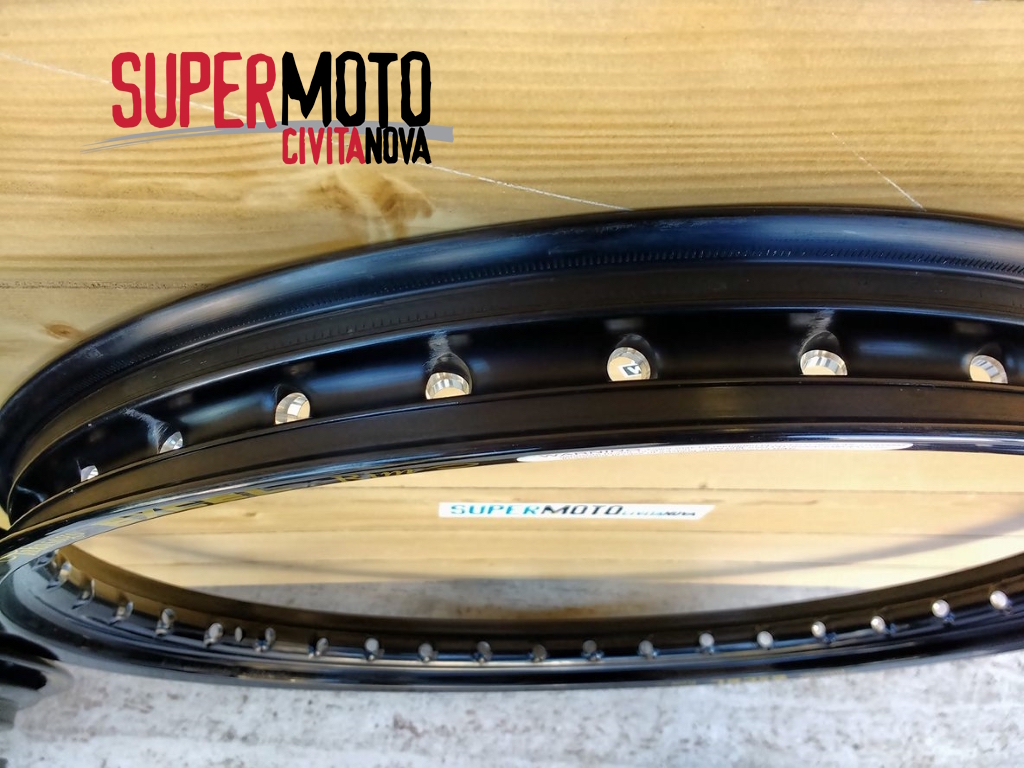
You could try and track down tubeless trials bike rims; they’re usually 32 spoke which will suit smaller Hondas, but no smaller than 18 inches. They do it with the usual inboard flange with hub-end nipples and straight-pull spokes, as below.
tl-akront21ktm1090Sband

A 2017 KTM 1090 Adventure (left) has a similar a regular 21-inch Akront rim but with a band rather crudely vulcanised or otherwise glued into the well.
Most bigger road bikes run 36 spokes or more in the back. DID 36-hole TL rims do or did exist, but so far only in pictures or cruddy, corroded examples on ebay. When changing the spoked rim you’re constrained by the number of spoke holes in the stock hub because changing a hub is a much bigger faff. Fitting a new rim is dead easy. Missing out a few spokes to make a standard 36-spoke hub use a 32-spoke trials rim is a bodge too far, even for me ;-)

risunrims

Branded or otherwise, it’s hard to find less expensive spoked TL rims off the shelf. The only ones I’ve seen are in China: Risun (Risen?) outboard tubeless rims in 17 or 18 inches only (left) and just $60 a shot. Problem is, you have to order a minimum of 200 units. And there is still the hub-nipple problem.


Especially with 21-inchers, finding an OEM TL rim is difficult or expensive. With 21s you may be better off buying a safety lipped rim (also rare) and sealing it by hand or using the processes described here.

Back to Tubeless Conversion Index Page