See also:
Full sus Marin e-bike in Wales
After 2.5 days riding a full sus e-MTB along New Zealand’s 300-km Alps to Ocean bike trail (A2O map below), again I wonder if e-MTBs are an answer to trail biking in the UK where there are way more bridleways than byways, let alone the wild expanse of the Scottish Highlands excluded to motos and 4x4s.
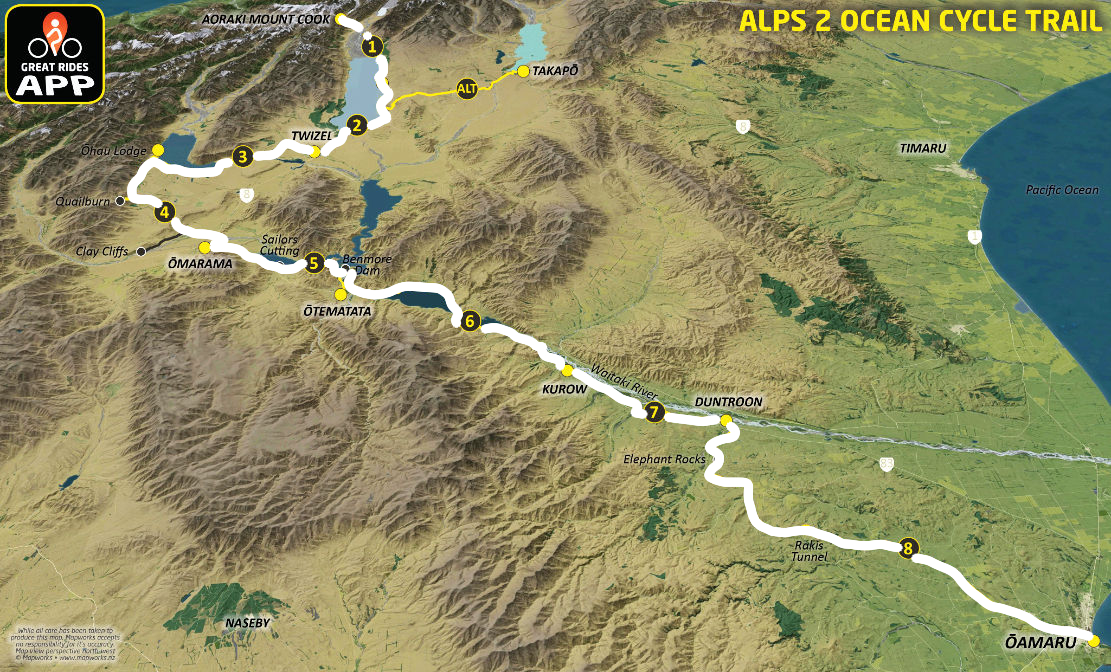
Many ride the popular A2O on regular bikes, even ultralight, no-sus MTBs. With the decadence of baggage transported daily, I like to think I could have managed this on my Merida Big Trail 500 home bike, but e-assistance was the safe option which deferred fatigue. And to paraphrase Mike Hailwood, ‘the on-off switch works both ways’.
I first tried an e-MTB in Wales in 2022 (video above), seeking to speed up map checking on a new walking guidebook. The Marin was a nice ride, leaving me pedal-tired but not beaten up at the end of the day. But at that time it cost more than a new CRF300L, and I got back thinking I quite like the simplicity of my 15-kilo Merida hardtail.
Now I’m wondering again: could an e-MTB with a day’s range of at least 100km, be my new trail & travel project bike? Even in my prime – and bar a couple of Himalayan trips which were mostly road (below) – I never really had enough grit to explore far off road with my hardtails. Day-ride road and trail loops are my limit.
But add a potential 100km+ of assistance and a suitable e-bike could be a contender. Part of this re-epiphany is I now realise most e-bikes are easily rideable switched off when you don’t need assist. The Marin rental shop advised the Bosch electronics didn’t respond well to this, but every e-bike I’ve tried since runs fine turned off. It’s just a bit heavier. The geef’s Yamaha PW-ST powered Lapierre home bike is an exception; there’s too much motor drag either to ride switched off or to keep accelerating once you hit the assistance limit at 25mph on the flat.
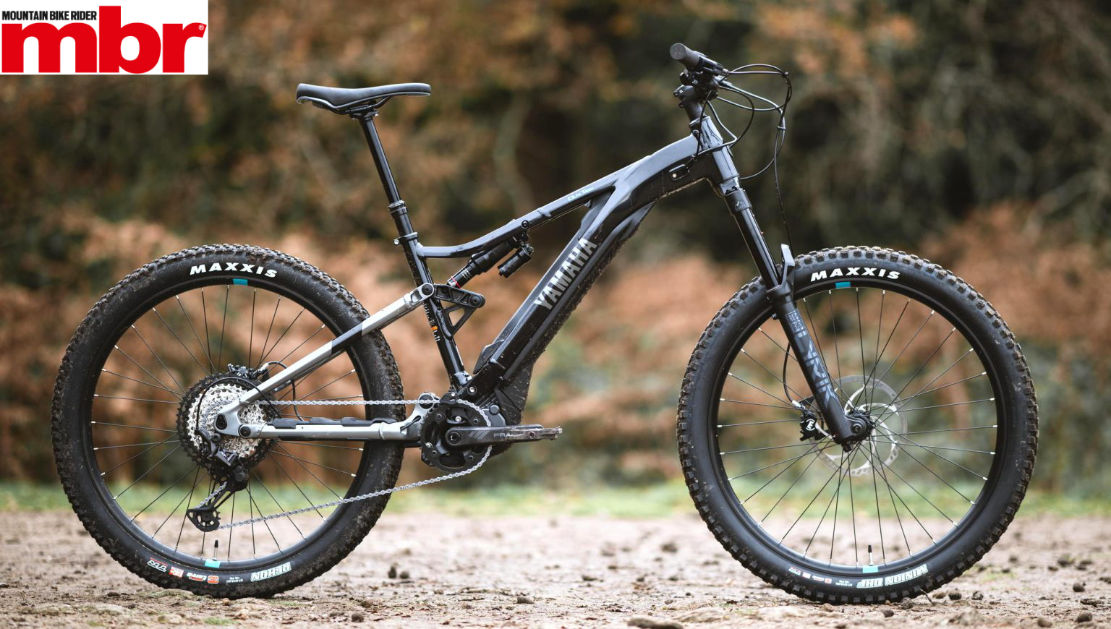
To segue less noticeably from moto to velo, I considered Yamaha’s Moro 07 of a couple of years ago (above). I’ve learned that along with Bosch and Shimano, Yamaha e-bike motors are one of the Big Three used by many brands (including the geef’s Lapierre Overvolt). But although Nick Sanders rode a Yam e-bike across Europe then RTW, it turns out that, unusually for Yamaha, the Moro 07 was a dud and soon slipped out of showrooms and off the radar.
E-biking Alps to Ocean
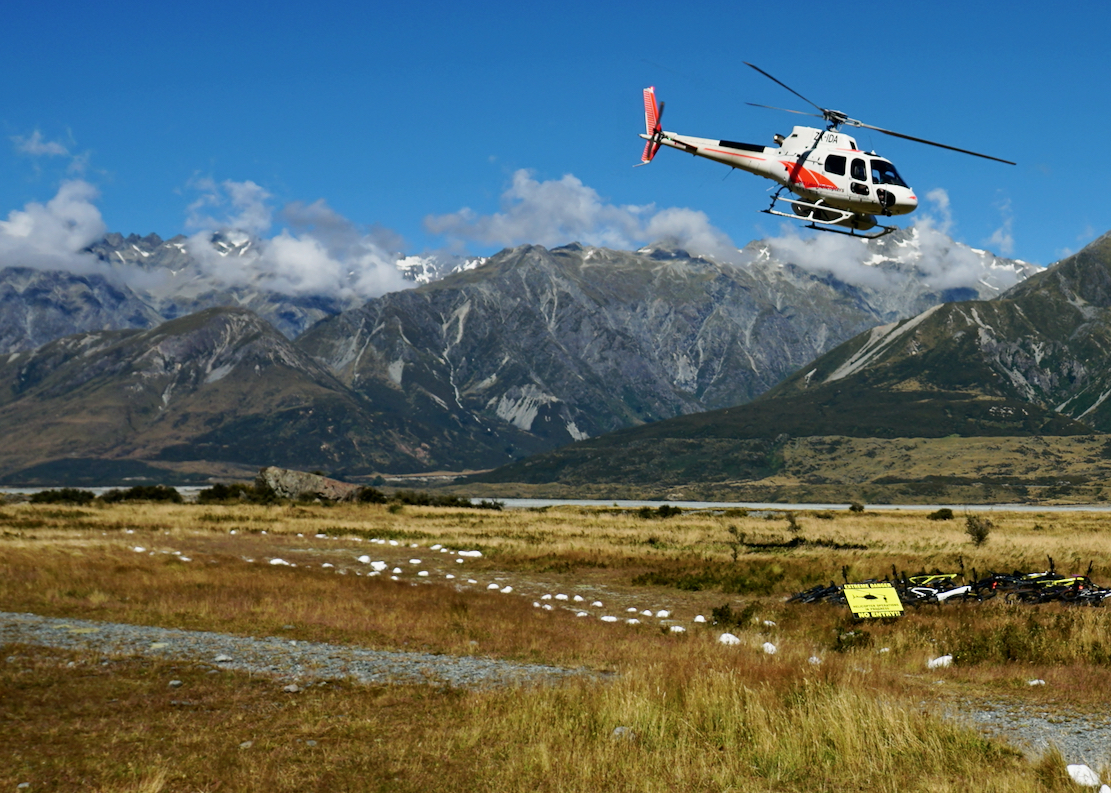
The A2O trail kicks off by getting choppered over a braided glacial river (below) to the trail head a few miles below the snowy, 3224-m summit of Mount Cook or Aoraki.
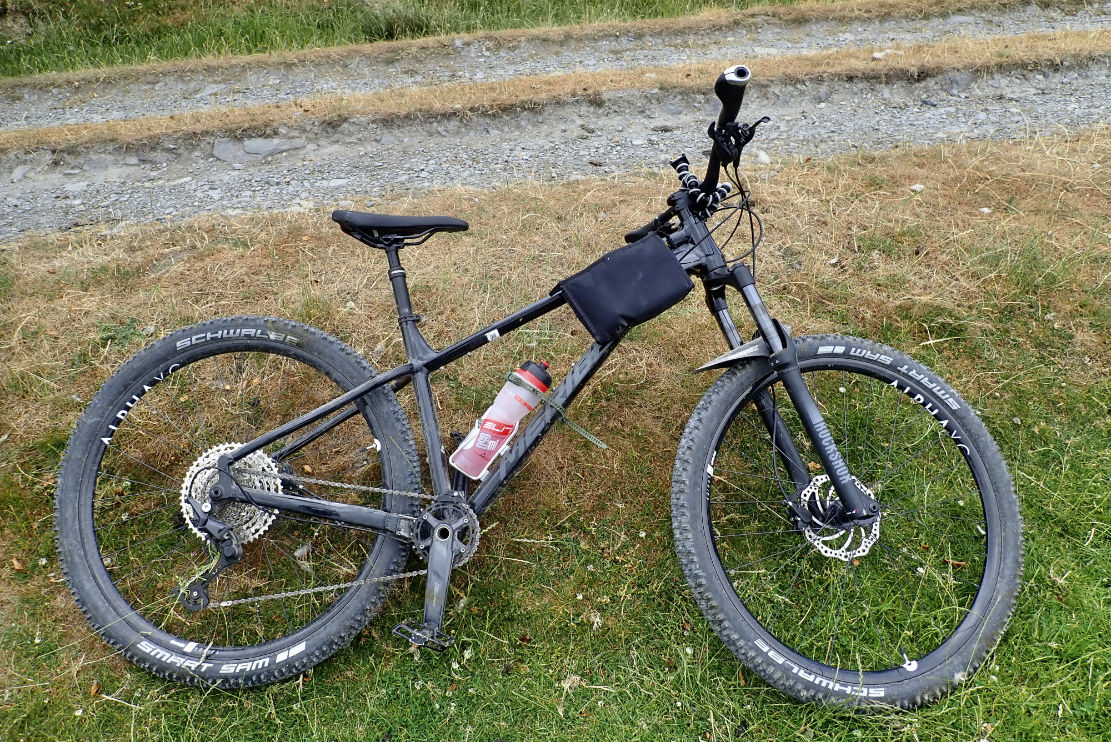
From here Day 1 is a 70-km ride along Lake Pukati. We were on Merida Big Tour hardtail rentals (below) but it soon transpired my bike, (with nearly 10,000km on the clock!) was cutting out e-assistance with each bump; the battery connection was probably breaking. I called it in, but though only an hour’s drive away, the shop didn’t offer to come straight out with a replacement. So instead I learned the Big Tour actually had little drag when pedalled switched off. On what few climbs there were, I could re-power up and snatch enough assist before another bump killed the connection.
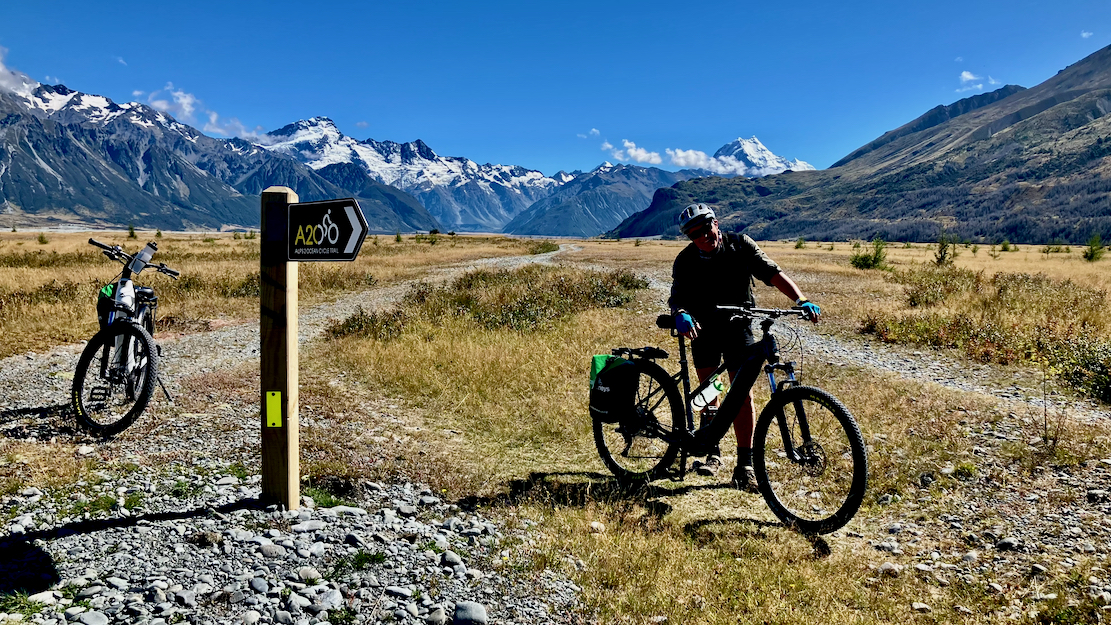
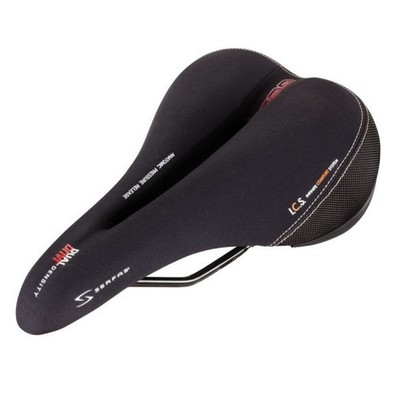
For a 70-km day, probably half pedalled unassisted and mostly dirt, I came in pretty fresh. Along with the thrill of the setting, I put much of that down to the unusually comfy saddle. It was so good I took a picture and back home, ID’d it as a Serfas Dual Density going from 22 quid on eBay. Just as with motos, if not more so, saddle comfort is vital. A few days earlier I rented a non-e Marin Stinson 2 hybrid in Christchurch. It’s a cool cruiser I’ve eyed up before, but the ‘Marin Comfort’ saddle was agony from the get go.
The Serfas’ lycra cover resembles one of those naff gel seat pads I tried years ago until I realised cycling shorts and even a little creme are a must. Anyway, I hope the Serfas’ comfort translates to my home bike.
A replacement Big Tour was delivered to our motel next morning, but in Large (not XL). Two more amazing days A2O days on that showed up a crappy spring fork with no rebound. By chance Day 3 ended at the bike rental outfit town where, long story short, the helpful woman offered an upgrade to a Sinch Force 4 EQ full sus in XL with just 17 hours/550km on the clock for just a tenner a day. Though it had been a spectacular ride so far, my A2O was about to get even better!
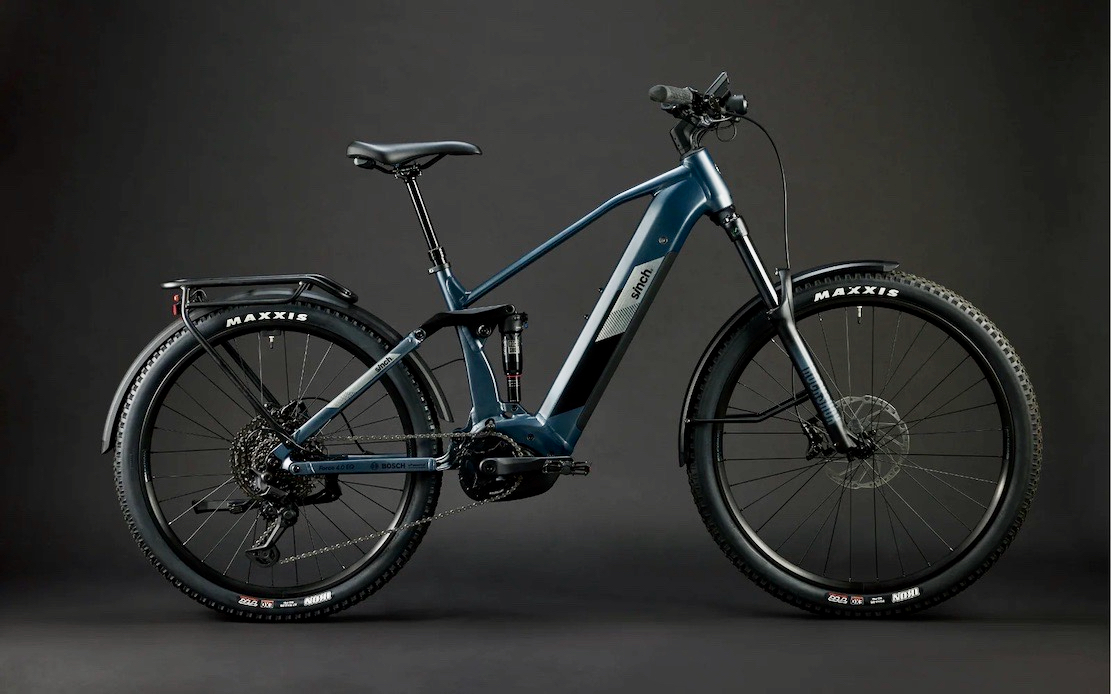
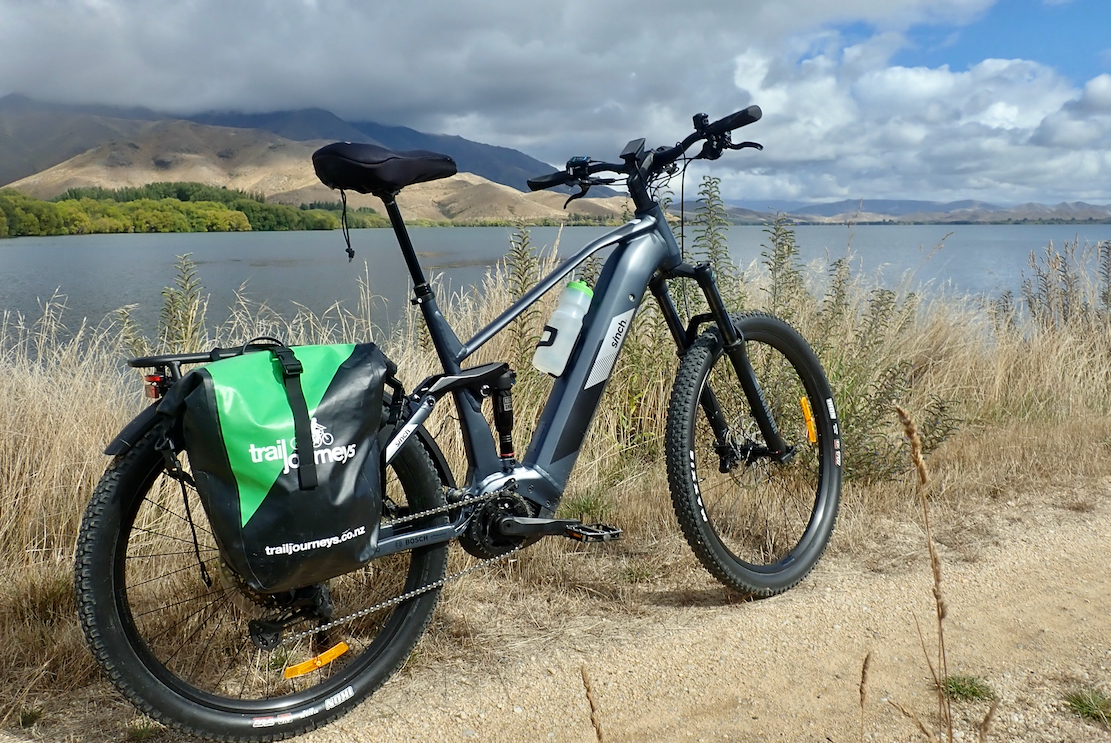
Sinch is a Kiwi bike brand, probably made in Taiwan, and the Force 4 EQ model comes with an 85nm Bosch CX motor, a 625w battery and a claimed weight of 29kg. Good numbers, though weight’s on the high side. In New Zealand e-bikes are assisted up to 32kph (UK is 25kph).
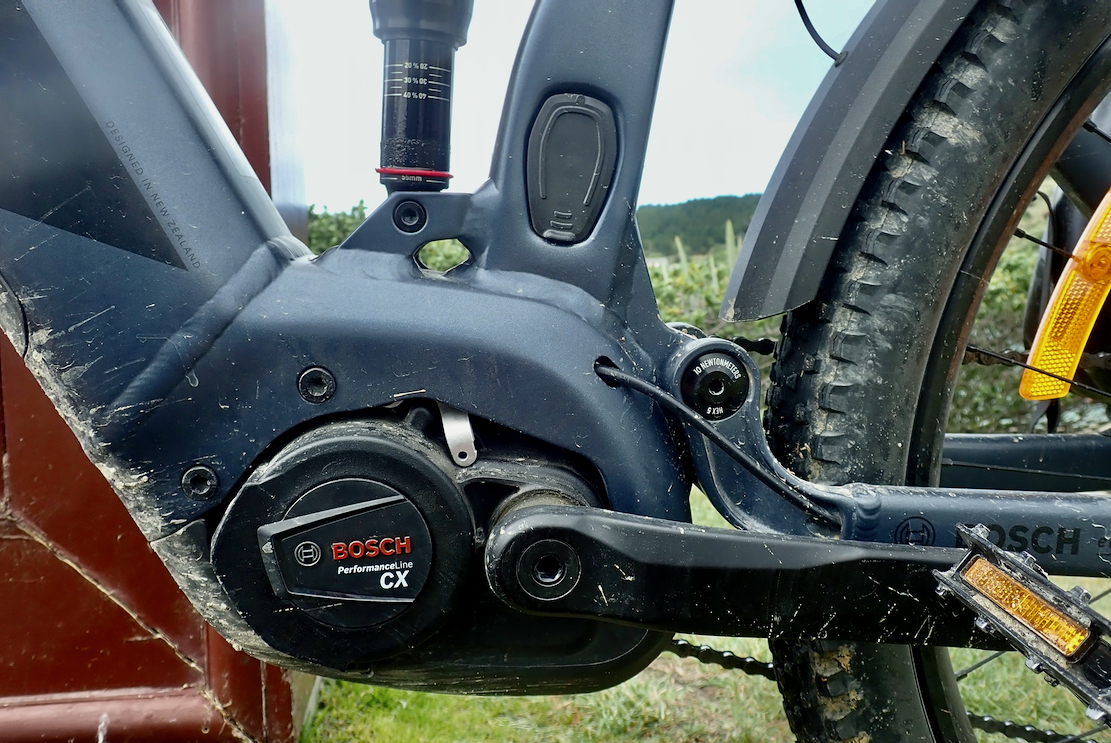
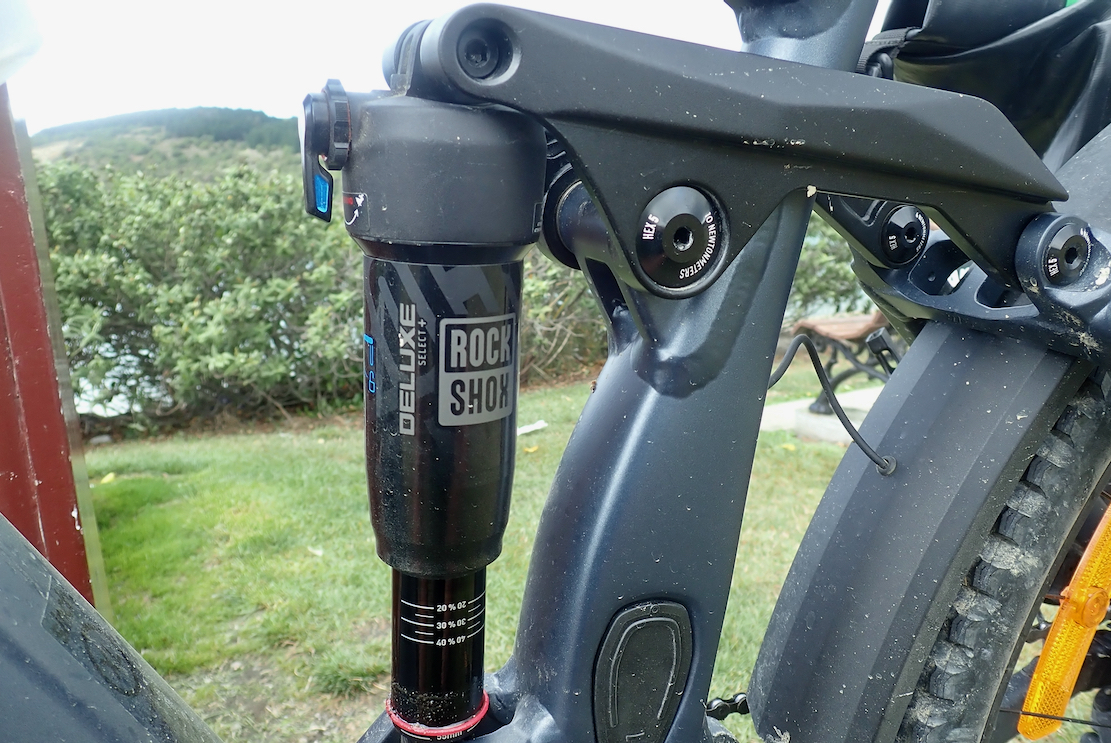
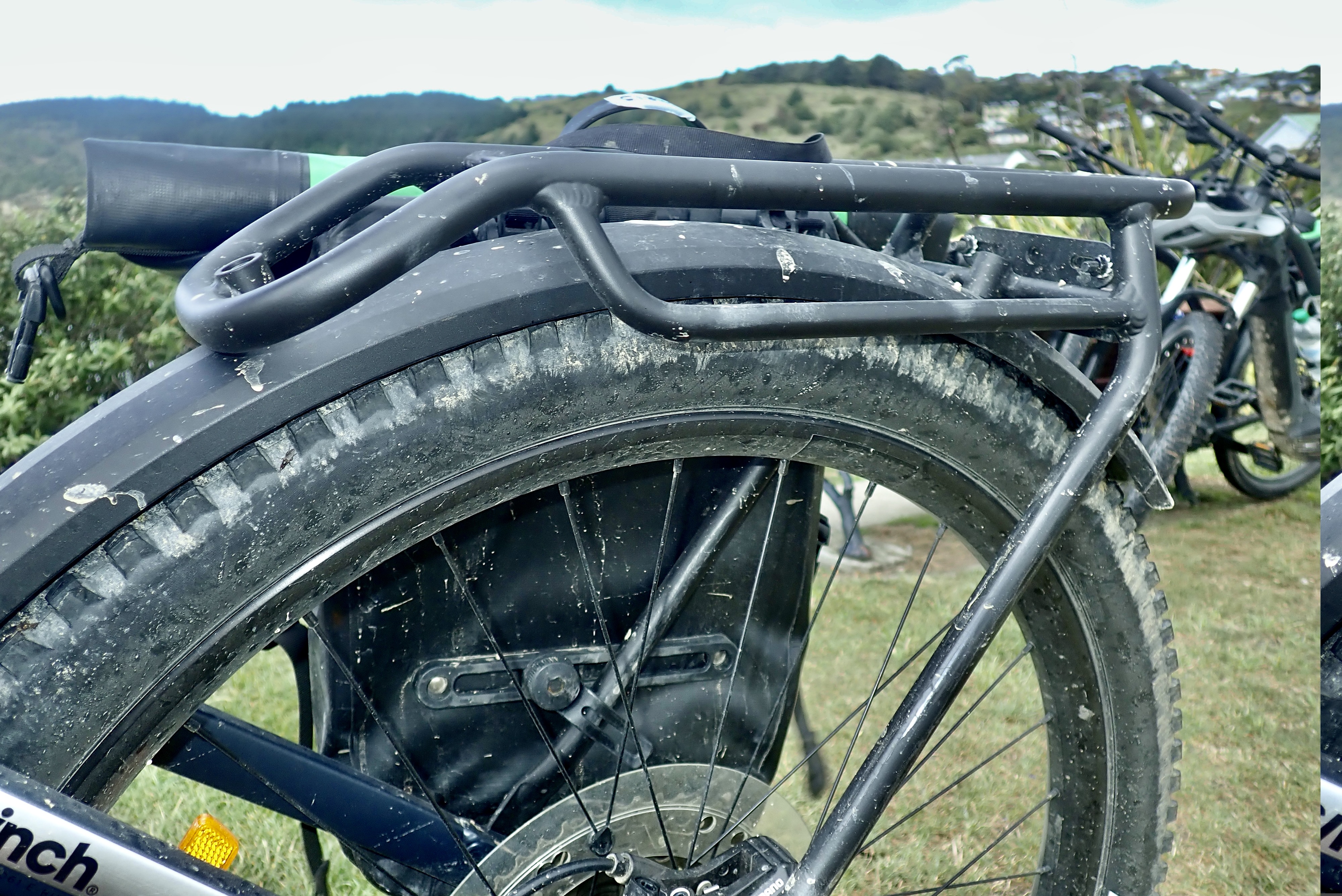
Suspension is Rock Shox 160mm front; 150mm rear. Gearing is Deore XT and the Force 4 comes with a sturdy rack, kick stand, fenders and built-in lights.
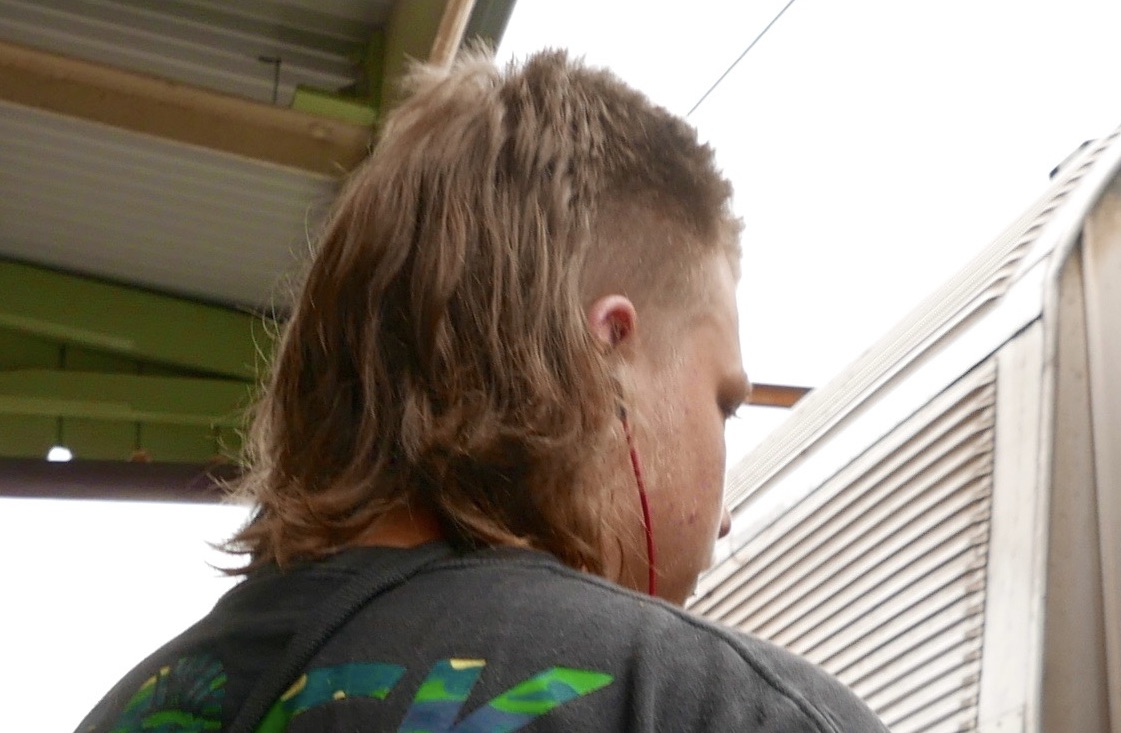
The front wheel is 29″; the back 27.5, like the Marin. ‘Mullet’ they call this arrangement – but if they mean like the haircut (left), isn’t that long at the back and short at the front? Maybe I’m over thinking it. Lately there’s talk of 32-inch MTB wheels where ‘safer’ seems to be the impression of most test riders.
Right now Force 4s are going for just NZ$6500 which is under £3000. I settled very comfortably into my EQ, and if I’d had a bit longer to ride it and think about it, I might have bought one right there. Even with a UK tax that’s still a lot of bike for the money.
Sat on the spacious Sinch with a gel seat cover thrown in, I felt right at home. The suspension felt compliant (probably in need of a pump), the display was easy to read, the remote easy to use, it braked confidently it pedalled effortlessly switched off.
The Bosch CX is configured with Eco, [Auto], Sport and Turbo assist levels. The shop advised me to leave it in Auto, but right away I could tell it selected way too juiced up ‘Sport’ mode, even on the flat and with my 95kg. The geef’s Yamaha powered e-MTB back home runs a similar Auto set up and she doesn’t get on with it either.
Had I known about the Bosch Flow App, I might have retuned the Sinch’s power levels. But I didn’t so just switched off when pedalling effort was minimal. On longer inclines I flipped briefly into Eco or even Sport. As with the Marin or any other e-bike I’ve tried, I never saw the need for Turbo and on the Sinch didn’t even try it. The steepest, longest climbs were all doable in Sport.
Also like the Marin, I didn’t notice any power absorbing bounce from the shock, so left it unlocked. Same with the front. I wonder if over the years they’ve sorted out damping and geometry. I just let the air springs do their work, enjoying not needing to brace or stand up for the hits.
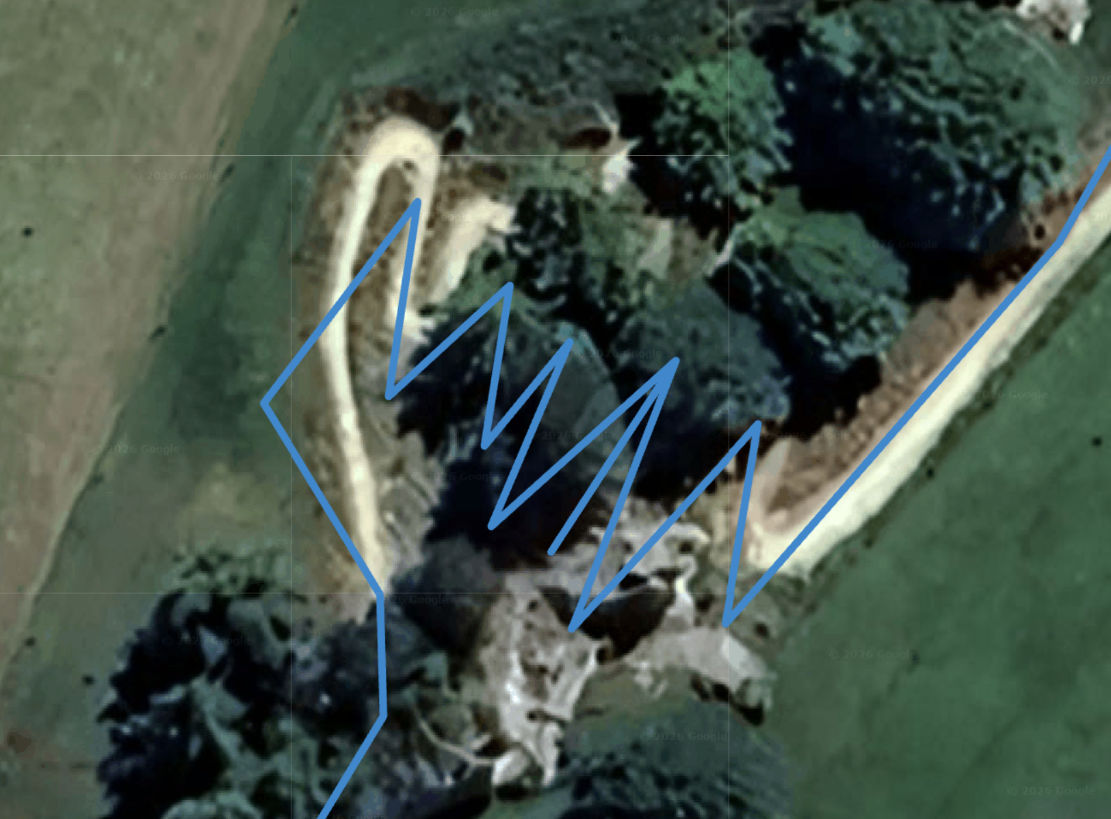
Maybe it’s the long suspension travel, but these modern MTBs are more raked out. With the 29 up front and perched on an XL, it makes the Sinch slow to turn tightly until you get the knack with weight distribution, like a moto. There were few naggery single track sections on the A20 but one notable short climb south of Duntroon was a half dozen very short and tight hairpins (left). Even with the saddle dropped, I lacked pedal-assist finesse and balance and only managed to clean a couple. It would have been fun to go back and try again. I like to think the low-saddled Serow would have made short work of this climb, feathering the clutch in first while knowing the ground was in easy reach.
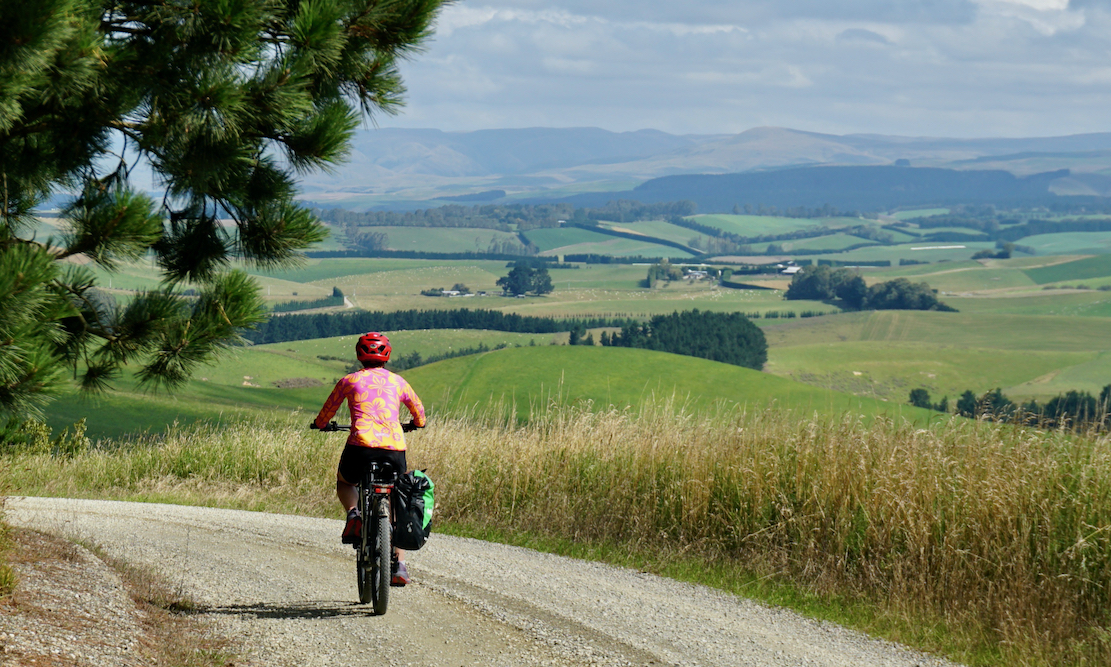
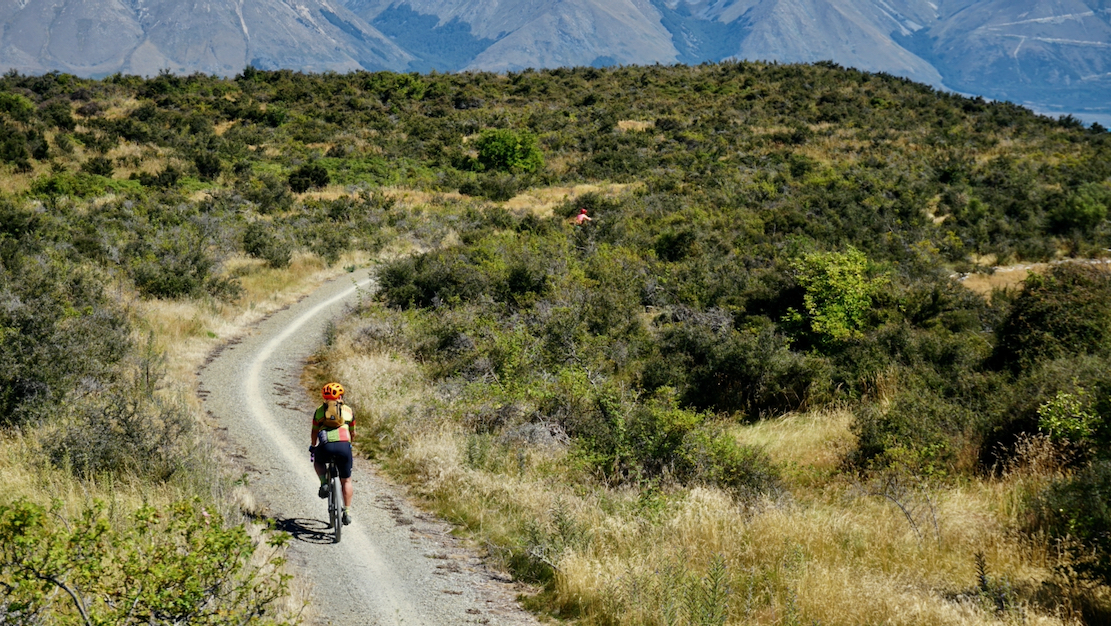
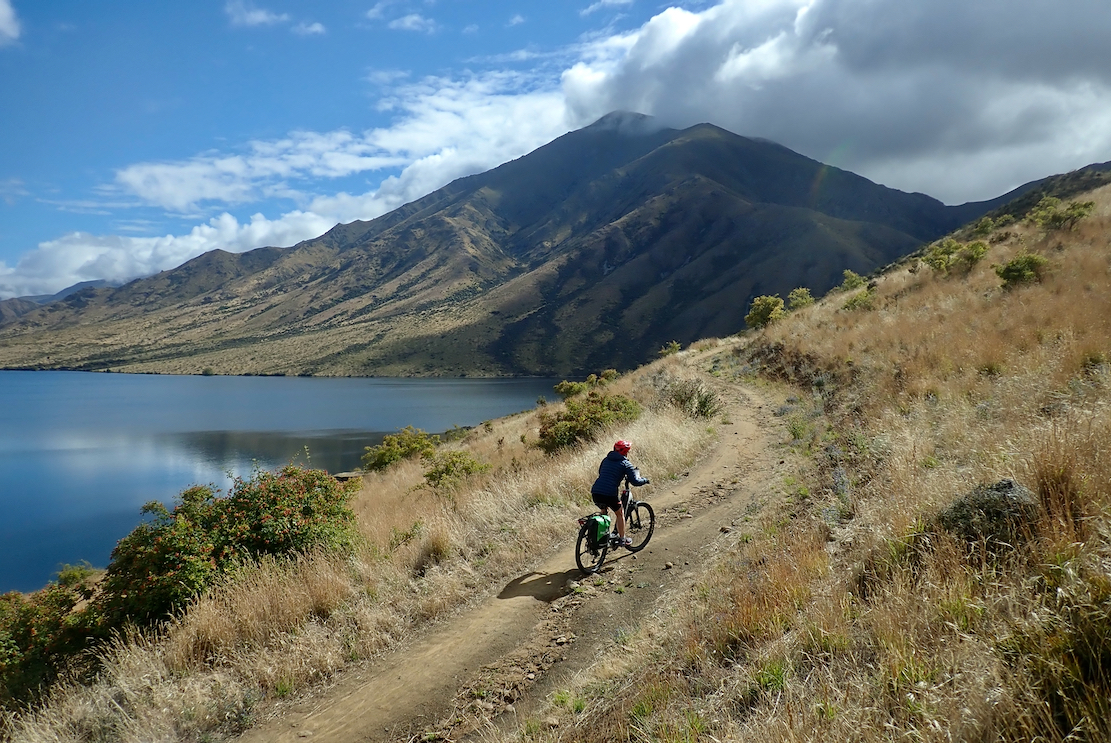
Elsewhere the A2O is technically dead easy, varying from single track and a few quiet roads, farm tracks (above) or bike trails paralleling a road. But Omarama to Kurow (68km; below) included a spectacular and exposed section above Lake Benmore, another of the South Island’s many dammed lakes.
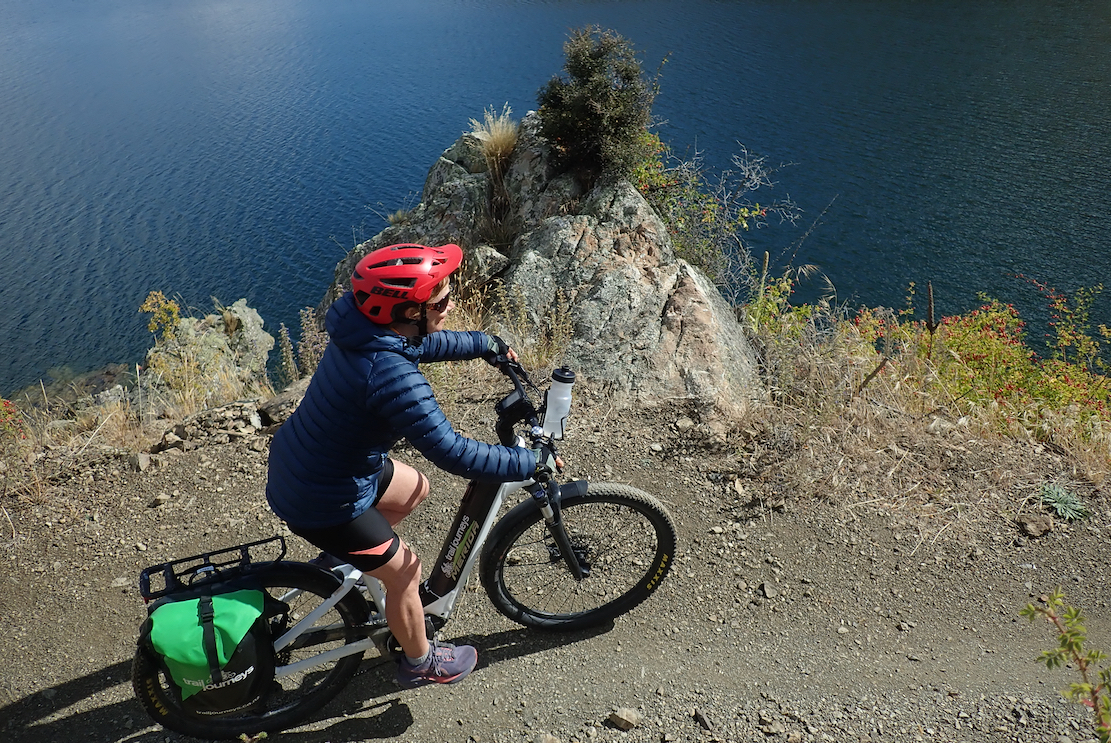
One misstep here would see a long tumble down the steep stony slope into the water. We came across a couple of accidents – one was possibly an ‘Selfie Insta Back Flip’ – a short tumble onto the rocks which left the old rider concussed and confused. And just 500m on a woman had gone off the edge but was luckily caught by a shrub. Soon we heard the drone of a helicopter coming in to take them both to Dunedin hospital where we heard later all ended well. This is not a stage where you’d want to start off in Turbo mode by mistake. Just touch the pedals and an e-bike can shoot ahead quicker than you can catch it.
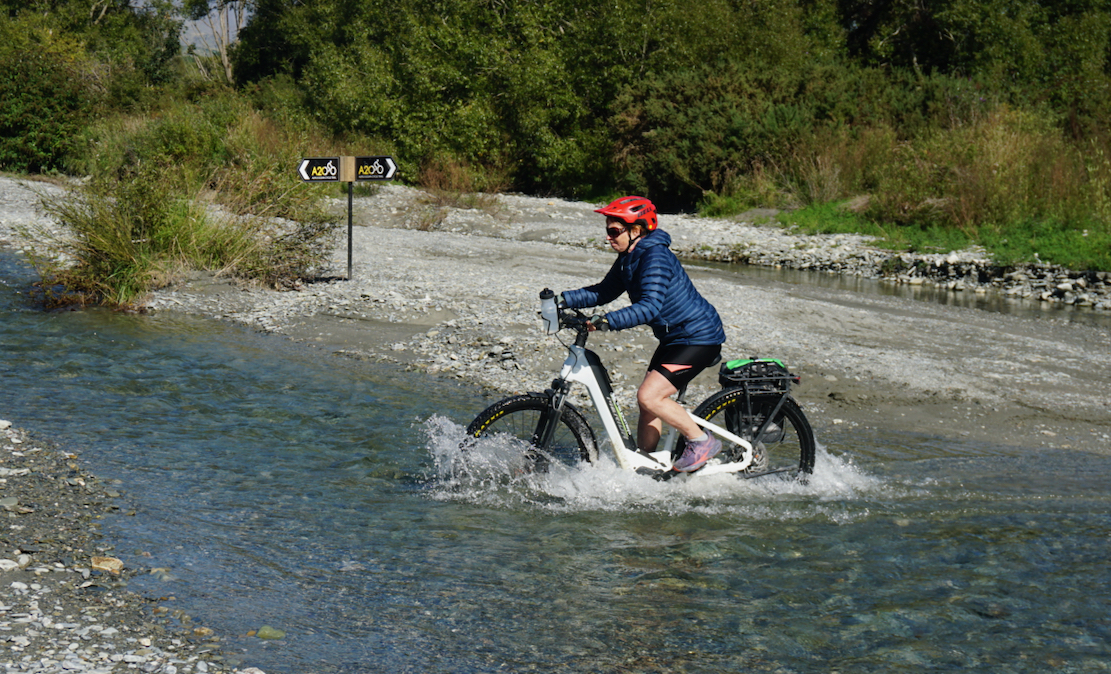
With the most climbing of the entire route, I used a lot of assistance and got in to Kurow with just 12% in the battery, and some 14km range. Not quite a 100km/day target, but attainable with some riding refinement.
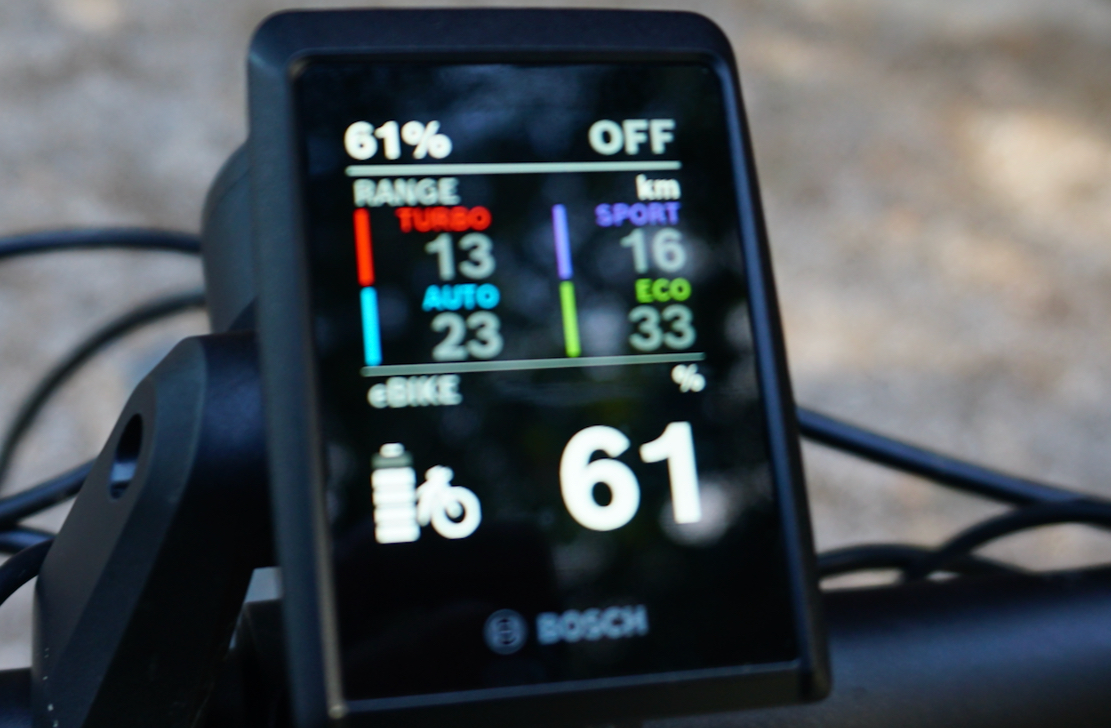
Next day was another 65km to Burnside. This time I was determined to eke things right out. Using about 10-15km of assistance over the day, I came in with 65% battery which would surely exceed 100km range. Target achieved, and at no point did I strain myself, powering up when needed as the trail passed into more agricultural terrain.
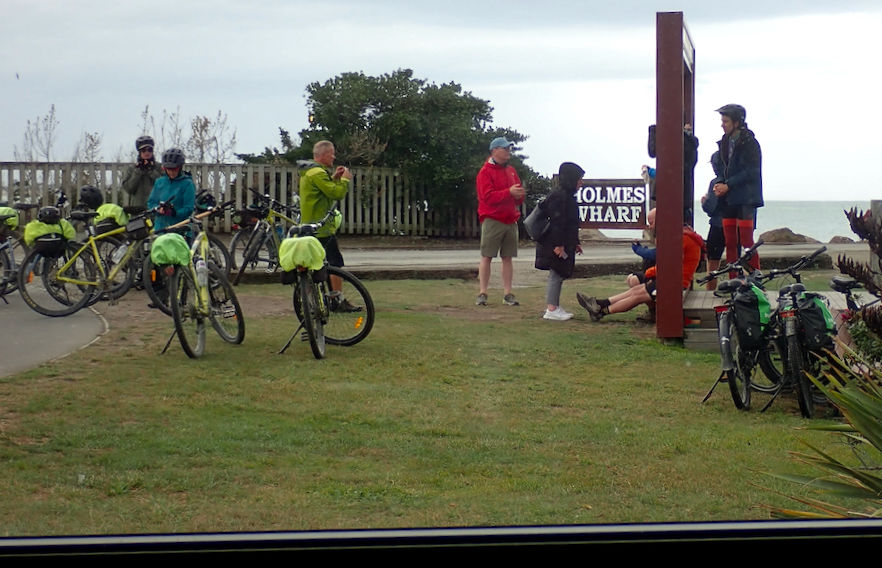
Eventually we reached the Pacific coast at Oamaru, the unheralded Steam Punk capital of the southern hemisphere. As we chowed down on a celebratory lunch in the cafe at Holmes Wharf jetty, successive groups of A2O-ers followed us up to the finish line to snap photos (below). Doubtless they’d all enjoyed the A2O as much as we had.
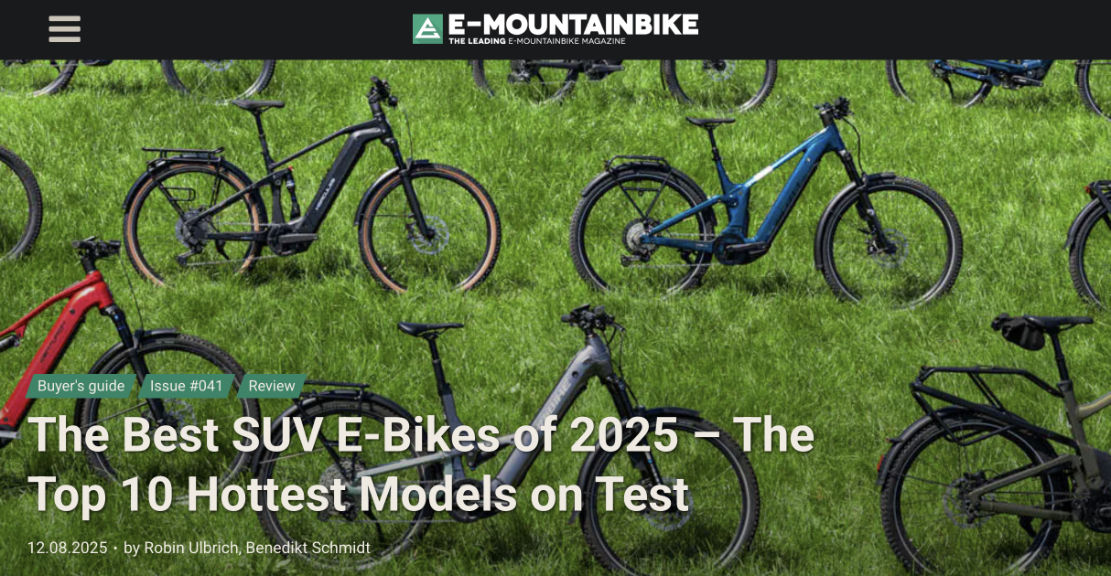
Back home I soon learned the fully accessorised Sinch was in a bike category I’d never heard of: SUV e-bikes; full sus MTB meets cargo/utility. The original definition of ‘Sports Utility Vehicles’ has of course evolved; half the cars in my London backstreet are SUVs. You might describe big adventure bikes as ‘SUV motos’: extravagant but feel-good machines marketed as go-anywhere do-it-alls, but used mainly on the road.
I like to think SUV e-bikes have more genuine potential for exploring; anyone wanting to look flash or rufty tufty will just get a full-sus MTB and an outfit to match. SUV e-bikes also get described as travel or adventure e-bikes with the range, load-carrying ability and all-terrain comfort to cover a full day’s ride to the next recharge. Have a read of this forensic 2025 review of ten SUVs which lays it all on the line. I did, and after going Full Rabbithole online for a couple of days, I came up for air and bought myself one of their choices for this summer’s project ride. More about that soon.
 Adventure Motorcycling Handbook