Category Archives: Tyres

Tested: Michelin Mini Rechargeable Tyre Inflator review

See also:
£20 USB rechargeable inflator
IN A LINE
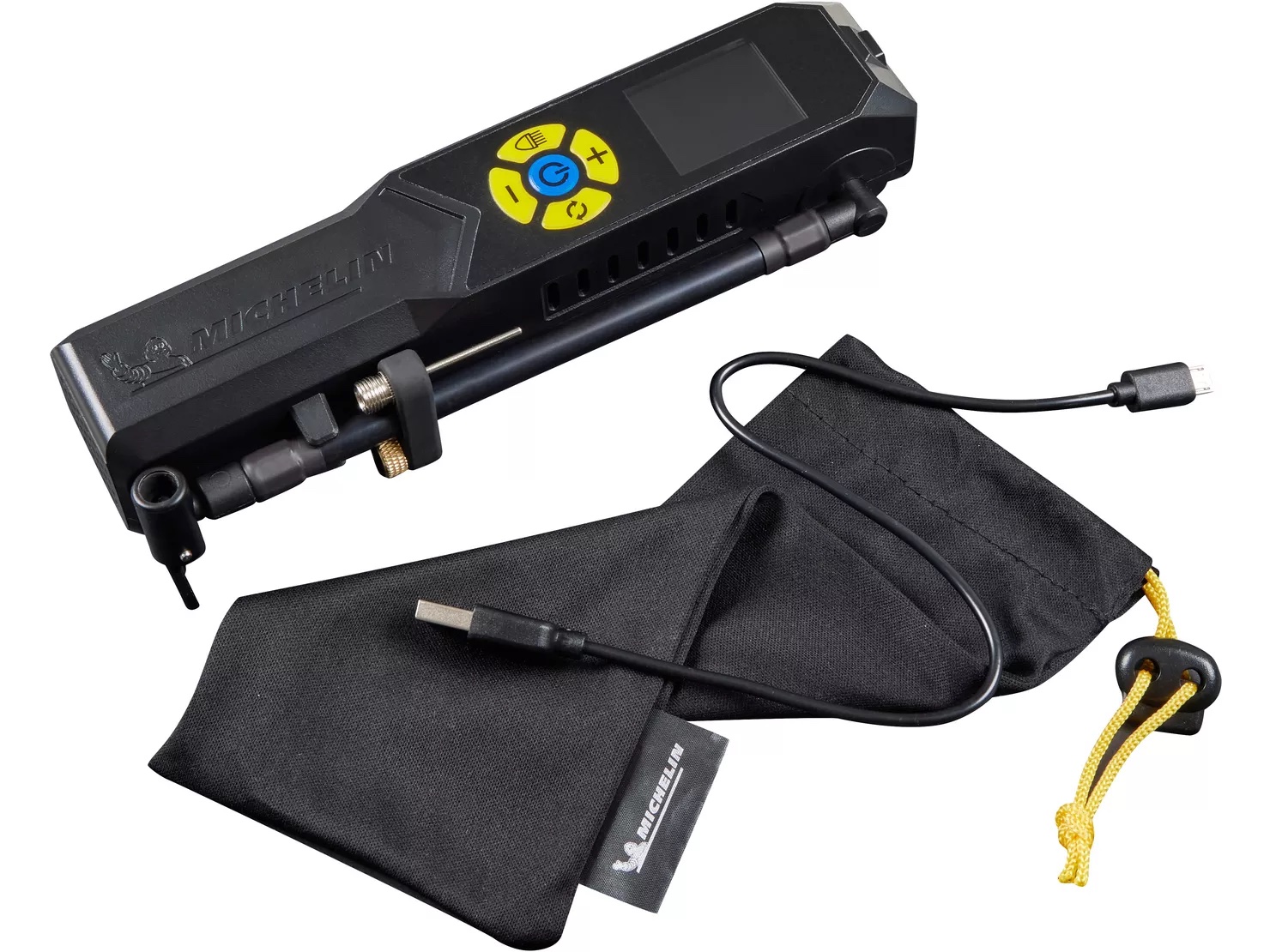
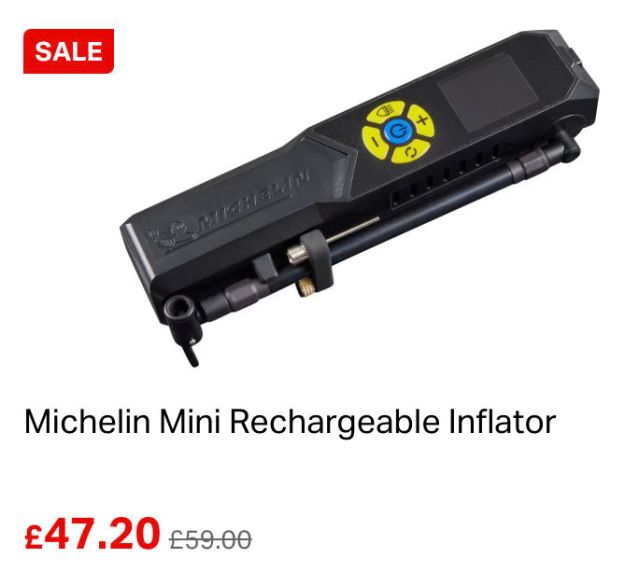
Handy Mich-branded tyre inflator with Presta adaptor, clear LED display and a light.

WHERE TESTED
So far, just the garage.

COST & WEIGHT
£47 at Halfords. 450g verified.

WHAT THEY SAY
Compact design fits in the glove box.
Designed for topping up tyre pressures.
Digital gauge is accurate to +/- 1 PSI up to 50 PSI. 
Switchable between PSI, BAR & KPA.     
Cordless, lightweight and portable, the Michelin Mini Rechargeable Inflator is remarkably easy to use. With four programmable pre-set pressure settings the cordless inflator is ready to inflate bicycle, motorbike and car tyres as well as a sports balls and other small leisure accessories. It’s
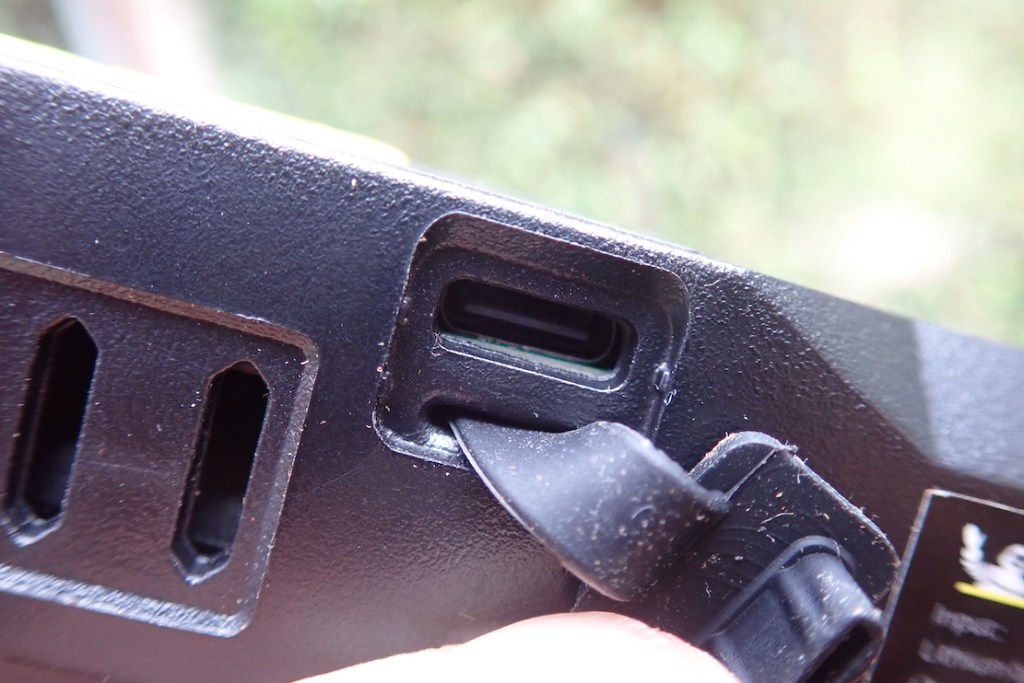
[sic] integrated lithium battery is rechargeable in aprox. 3hrs. Built-in high intensity LED light at the top, enables for use in emergency or low light situations.

  • OK price at Halfords
  • Clear, simple display and function buttons
  • Dead easy to use
  • Fairly quick fill for it’s size
  • Can’t turn on accidentally once hose is folded back in place
  • Presta pushbike adaptor included
  • Works as a tyre gauge too
  • Vibrates a bit
  • None of the presets can be stored after changing (I did RTFM)
  • Would have preferred a range of flashing lights in different colours

REVIEW
My £20 ebay cheapie died after two years, longer than expected. And the bulk and faff of my ancient, 12-volt wired Cycle Pump remains off putting. Once you go wireless it’s hard to go back. Bring on the day when all electrical household items are cable-free!
I like to think the 20% saving right now at Halfords on the Michelin Mini Rechargeable Inflator covers the extra you pay for Michelin branding. The handy pump is about 8 inches or 20cm long, and comes with a tiny LED ‘phone’ light, and adapter nozzles for pushbike Presta valves and a football clipped to the swing-out hose with a fold-lever tyre valve connector. Plus there’s a flimsy bag.
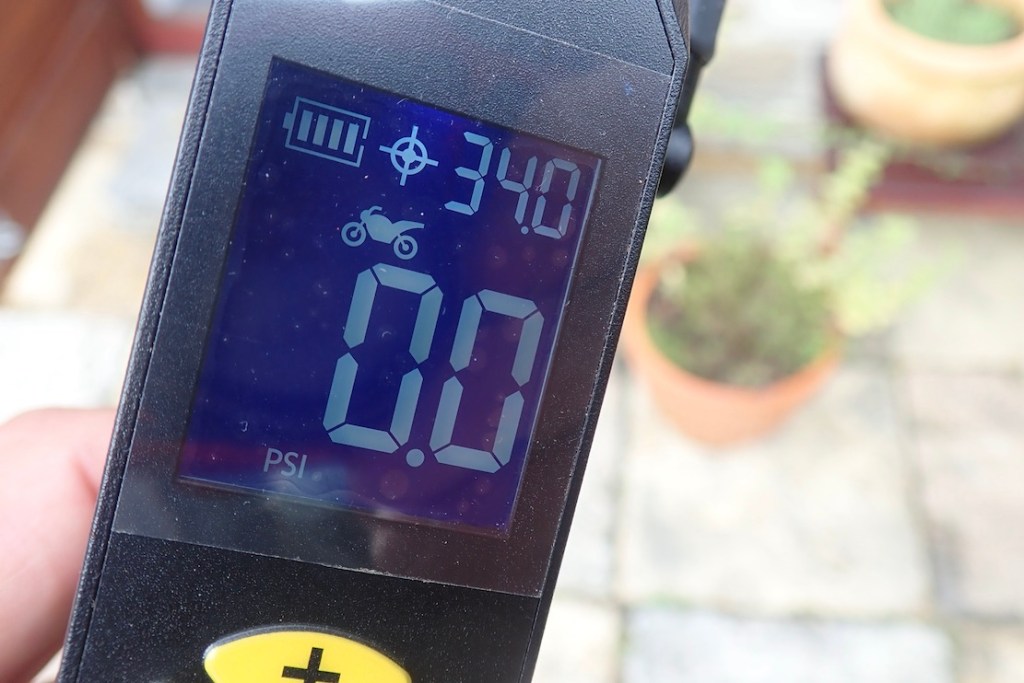
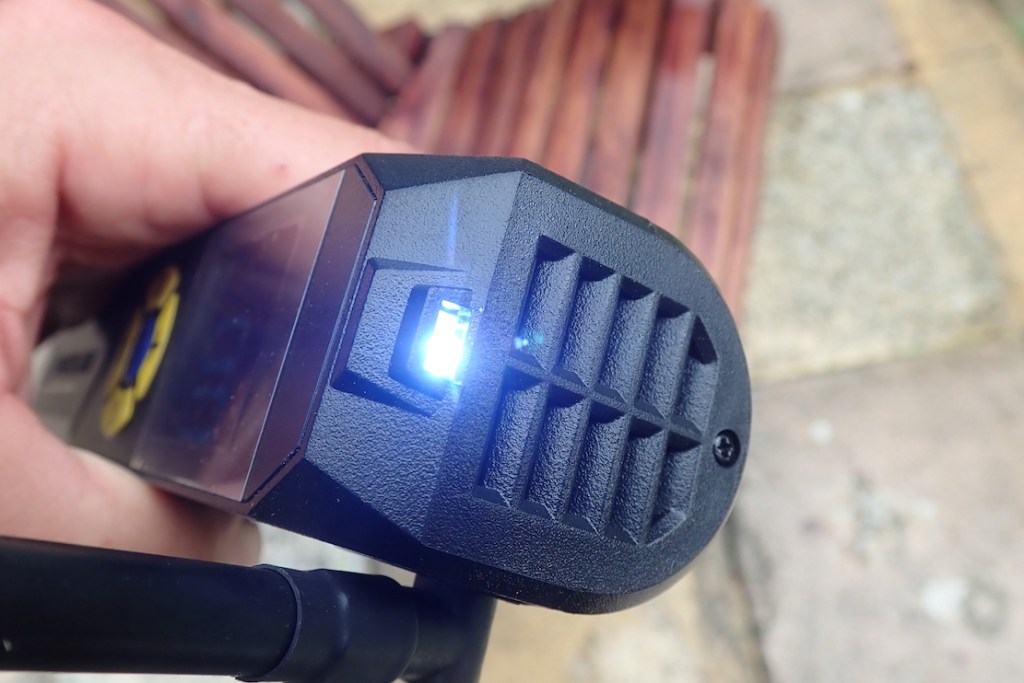
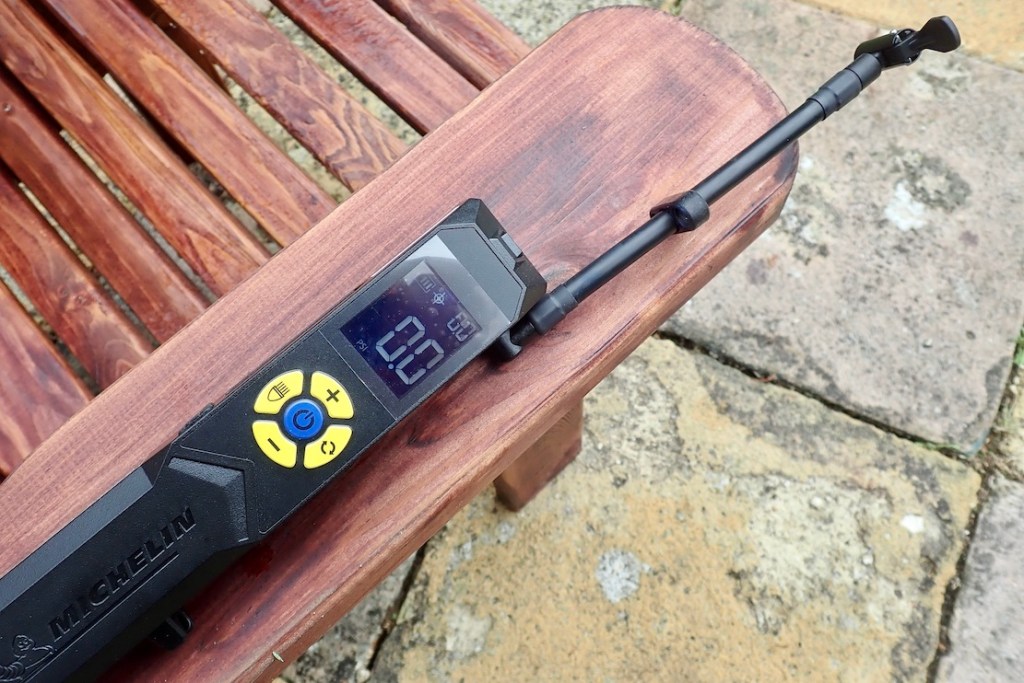
Jabbing the blue button won’t work. You wake it up by swinging out the hose at which point the LED lights up and the thing is live. Only then does the blue button set it off. You can scroll through four fixed-psi presets (bike 45, moto 34, car 32, football 8psi). It says adjustable which is true but that doesn’t mean ‘storable’ afaict. There’s a fifth, empty one to set as you like. But that isn’t stored either. I did read the leaflet and tried a few times. This all reminds me of the TPMS glitches (see below). Or maybe it’s as it was supposed to be
But honestly, you don’t really need presets. Just clip on, hit the blue button and watch the numbers rise to the pressure you want. Then hit the blue button again and it stops.
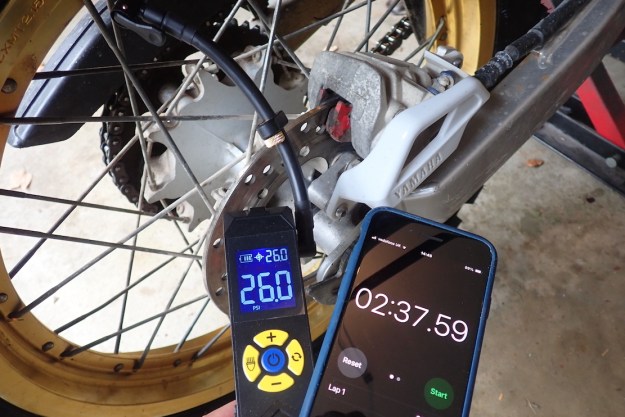
Fully charged out of the box, I inflated the new rear Michelin Wild tyre on my Serow from empty to 26 psi in 2:38s. The gadget vibrated a bit but didn’t get too hot. The battery dropped to ¾, but recovered back to full four bars in a few minutes.
All in all, so far so good. I hope it does better than the flakey Michelin branded TPMS I tried a few years ago. The rear factory tubeless wheel on the Serow tends to leak on some tyre combos, so the easy-to-use pump may be getting more use in Morocco this winter.

Serow: tubeless mounting trick

Tubeless index page
Serow index page

Update: fitting a new Mich Wild months later, none of the tricks below worked.
The answer was one of these. I should have bought one years ago.

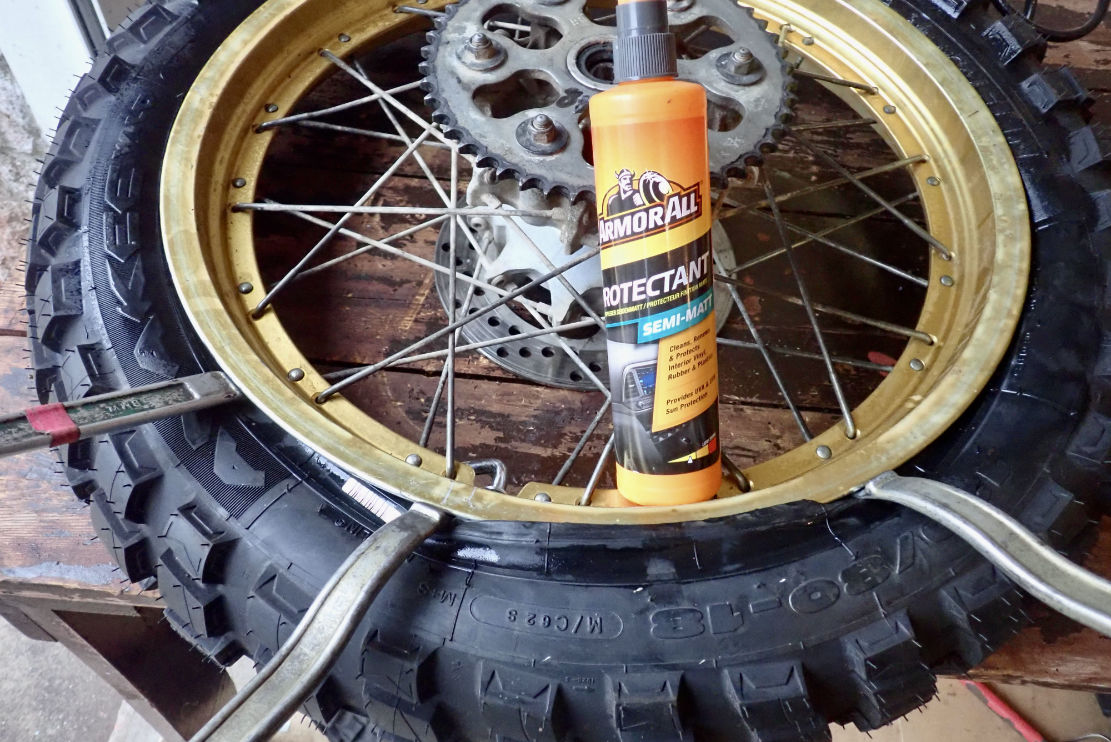
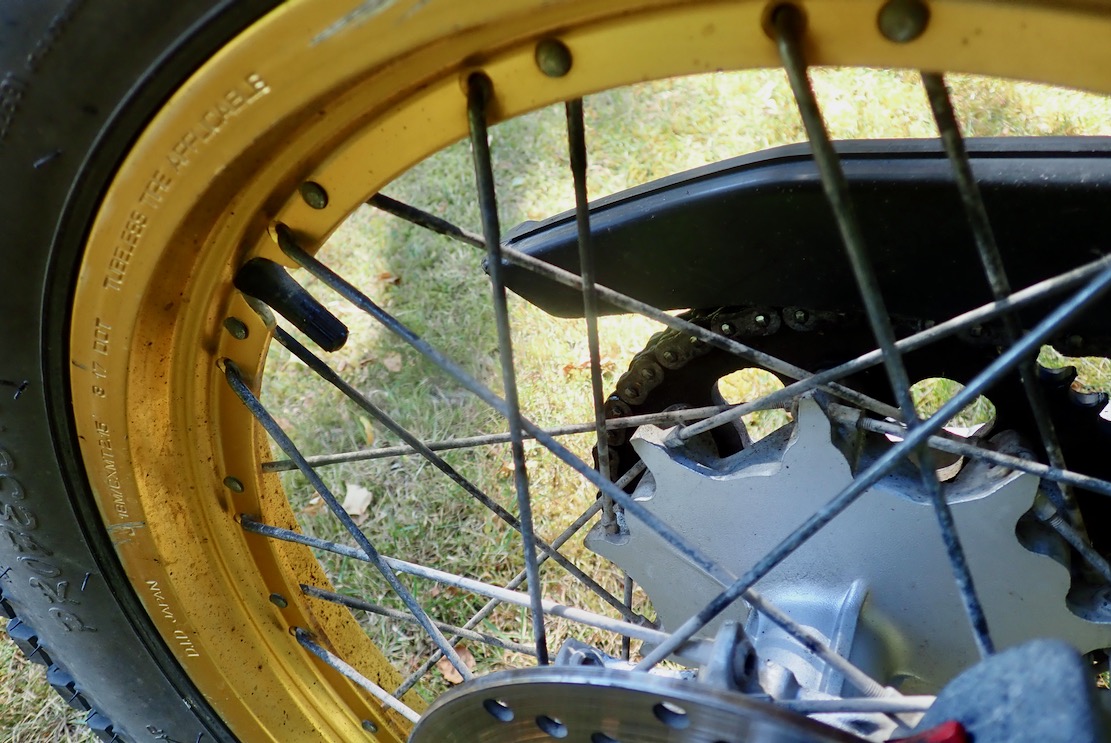
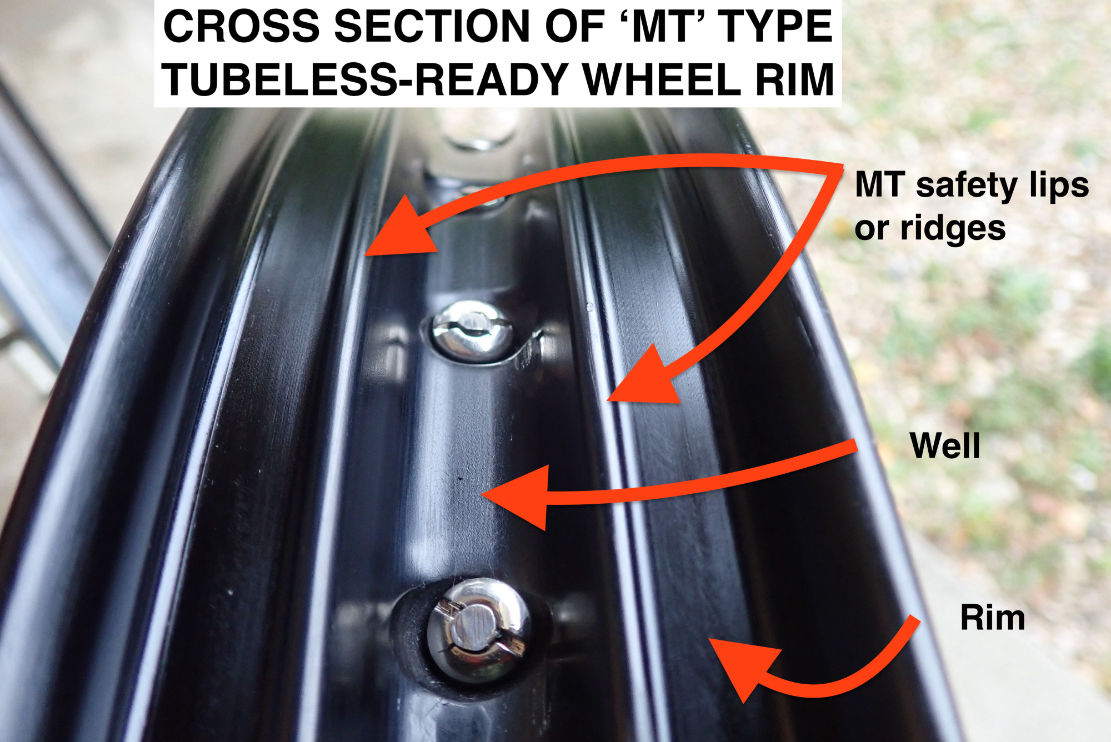
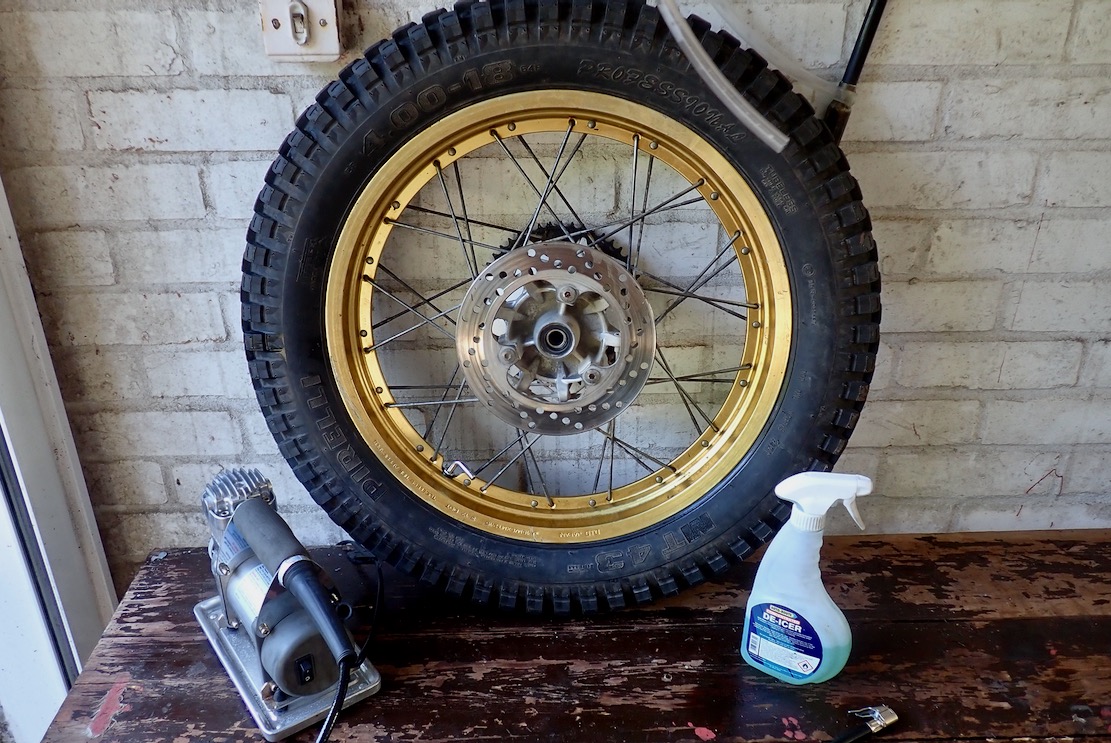
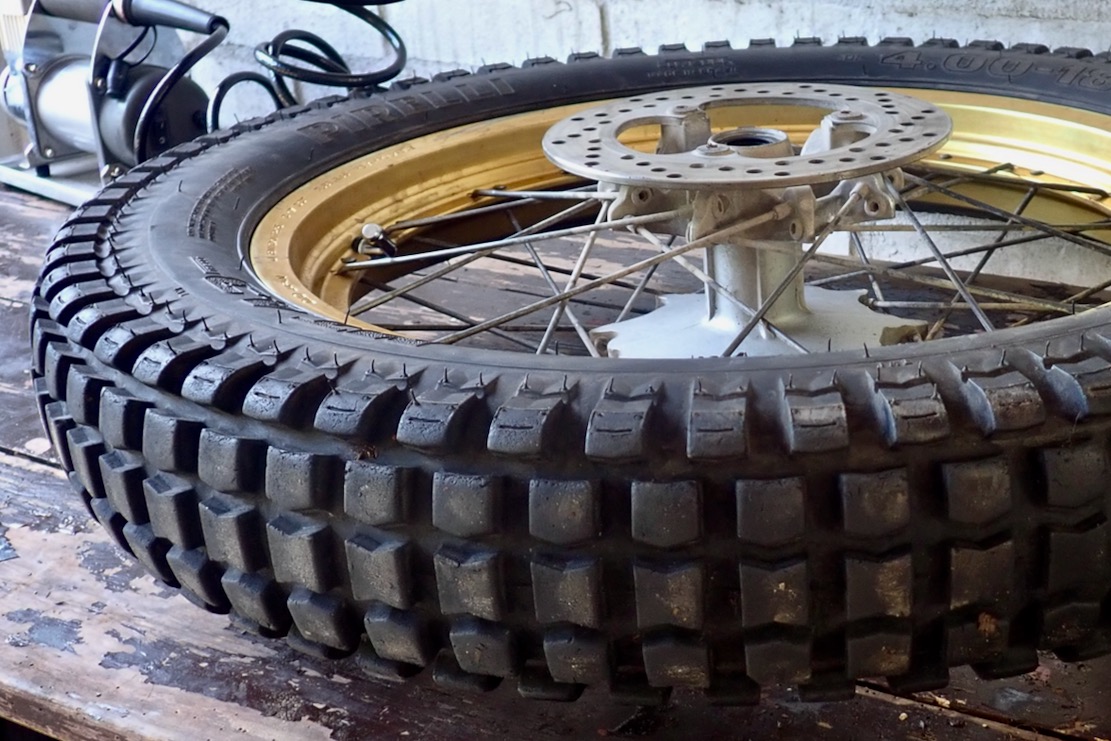
With the rear wheel off to check over and fit new bearings, I removed the Serow’s tubeless Pirelli MT43 trials tyre to fit a right-angle valve so as to end airline forecourt faffing once and for all. The Serow’s rear wheel only is an early example of OEM spoke tubeless. It’s even stamped with ‘tubeless tire applicable’.
Levering the tyre back on, as I aired it up the tyre beads (edges) would not seal and mount onto the rim. With no inner tube to push it out, more pumped air was escaping than stayed in. It’s a common thing fitting tubeless, but with the valve core removed to maximise airflow, a bit of jiggling and pushing usually gets air going in faster than leaking out, pushing the beads against the rim’s MT lip. Once that happens, pressure quickly builds up, forcing the beads to ease over the lip and onto the rim with a ‘pop’. The job’s helped with a fast compressor like my 2.3 cfm Viair.

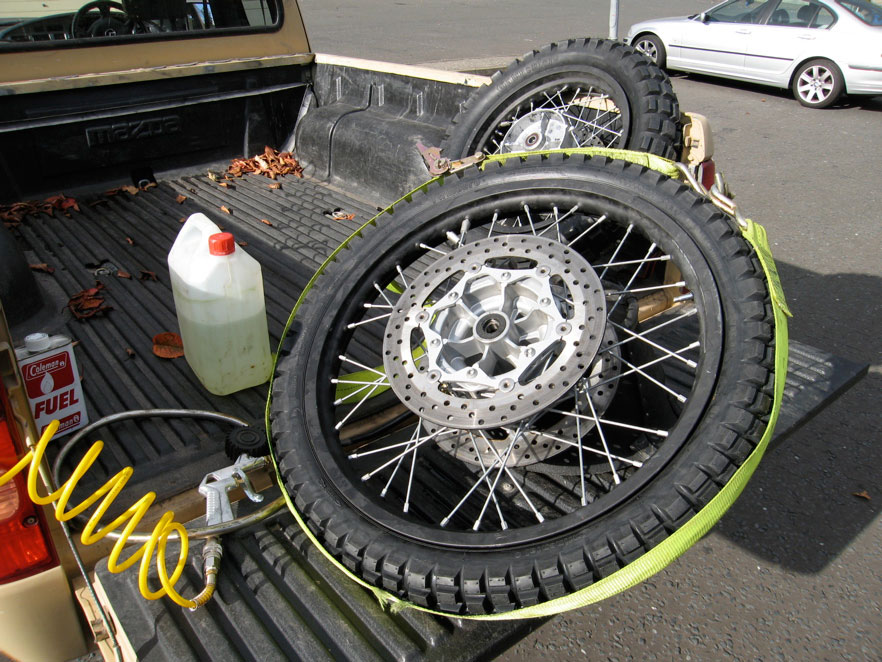
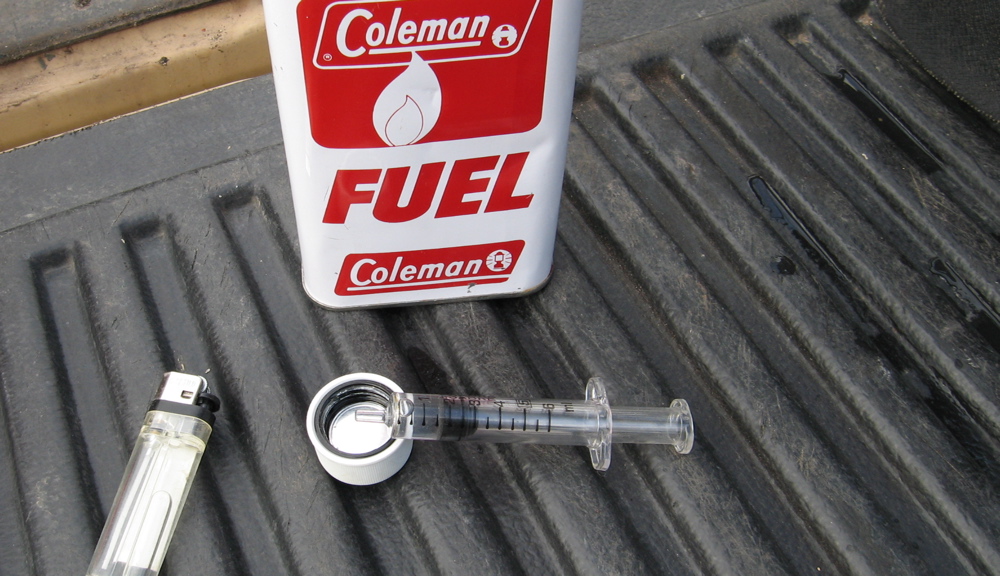
But not this time. Maybe it was something to do with the 4.00 18 Pirelli’s tall, thin sidewalls. Next, I tried the well known ratchet strap method, as I did on my XT660 years ago (below left). No luck. Rubbing my chin, I thought about the Icelandic method: injecting fuel through the valve hole, followed by a lit match. But that hadn’t worked on the XT either (below right). With the XT it had been just a matter of hours jiggling, pushing and pulling with the ratchet on, although having the brains to turn the car engine on gave the pump the extra poke it needed.

Bits of tube

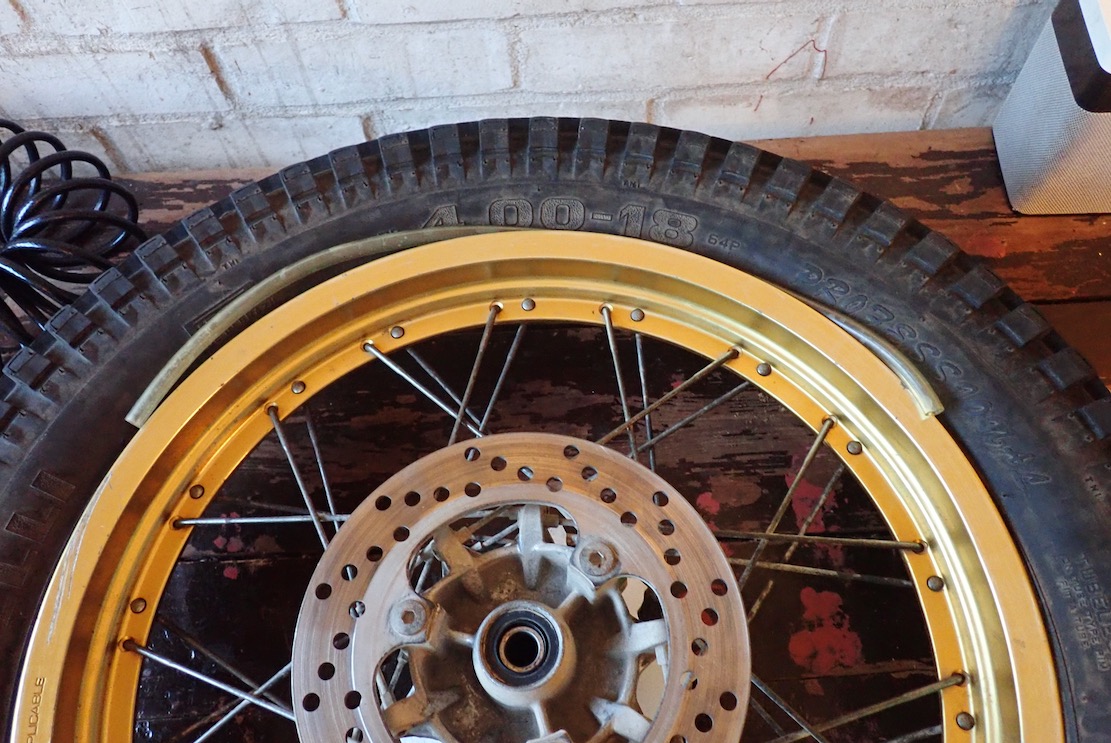
After doing a bit more of that on my Serow wheel without success, I tried jamming bits of plastic tubing into the unmounted gaps (left). They should slow the escaping air enough for pressure to build up inside for the beads to catch. Not this time (have I said that already?). All they did was push the bead further down into the well.
So I turned to the bicycle inner tube method which years ago worked on my Land Cruiser, fitting five tubeless tyres by hand in the back yard. Lay the wheel rim flat on a bench so the tyre is unsupported and the lower bead presses down onto the rim’s lower edge. When a moto wheel rests on its disc rotor or sprocket, this happens anyway. That should get the lower tyre bead to press or at least rest on the wheel rim, reducing air loss.
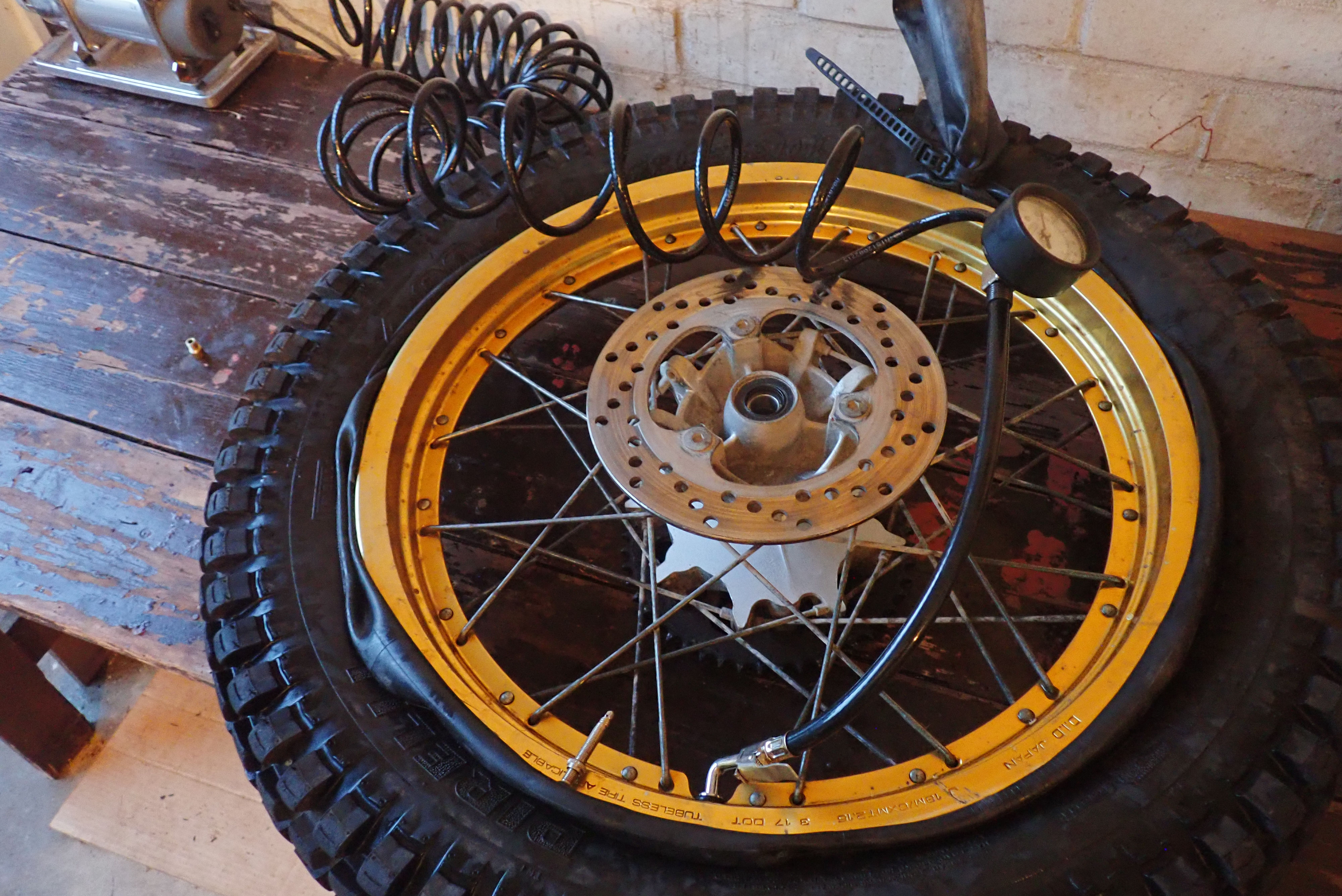
On the upper side, jam a soapy bicycle inner tube into that gap. I didn’t have an 18″ tube so I knotted a 29er, lubed it up, shoved it in and gave it some air. I tried for ages but this didn’t work either. I tried another compressor – same. It was the end of a hot day; perhaps the low air density was having an impact? I whacked in some CO2 cartridges I’ve had lying around for years. No change.

18-inch inner tube method

I emailed a pal who’s Mrs also runs a 250 Serow. He confirmed that for some reason, it’s near impossible with this rim/tyre combo, even with something called a beader mousse. Take it to a bike shop, he said.
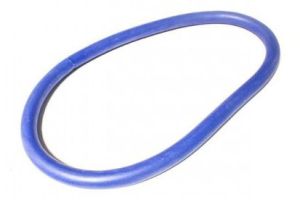
I’ve not heard of beaders. He linked to a Trials shop which sold them for 30 quid: basically an 18-inch neoprene ring, like a solid pushbike inner tube mousse and a bit like the pushbike inner tube trick. Maybe it’s needed with modern trials bikes which these days run 18-inch rear tubeless and like me, have mounting issues. Note in the video below how the well-lubed ring handily squeezes itself out as the tyre pressure builds up, even with a handpump. Iirc, with inner tubes you have to pull them out before they get jammed.

It cannot be that hard so next day I gave it another go, hoping some knack might have manifested overnight, as often happens. I tried rings on both sides with whatever I had lying around. No good. But this is what worked.
With the wheel flat on a bench and the tyre pressing down on the lower rim, as described above, where the upper tyre’s well-lubed bead was clearly off the rim, I lifted it out with a tyre lever then slowly levered it back down onto the rim. This either put it closer to the rim or right on it. No inner tubes, ratchets or mousse rings. With the tyre well lubed this simple move did the trick. Turning the pump on, in seconds the motor’s drone strained reassuringly as bead caught, and a few seconds later both beads popped in place. Now we know.

Pumped!!

Blocky trials tyres are actually pretty effective for technical UK trail riding, as opposed to the more obvious knobblies, though neither are great for setting IOM record laps and wear fast.

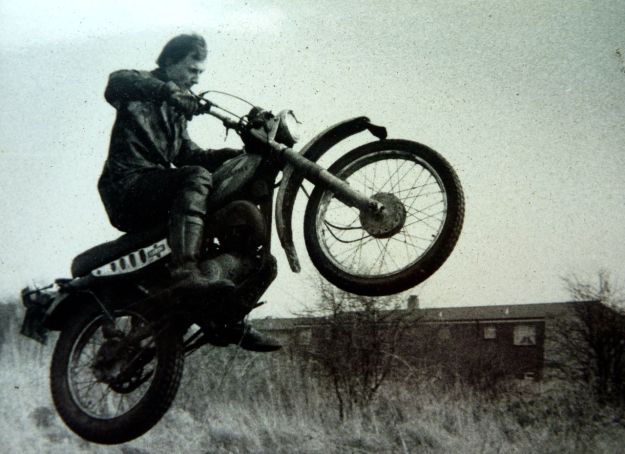
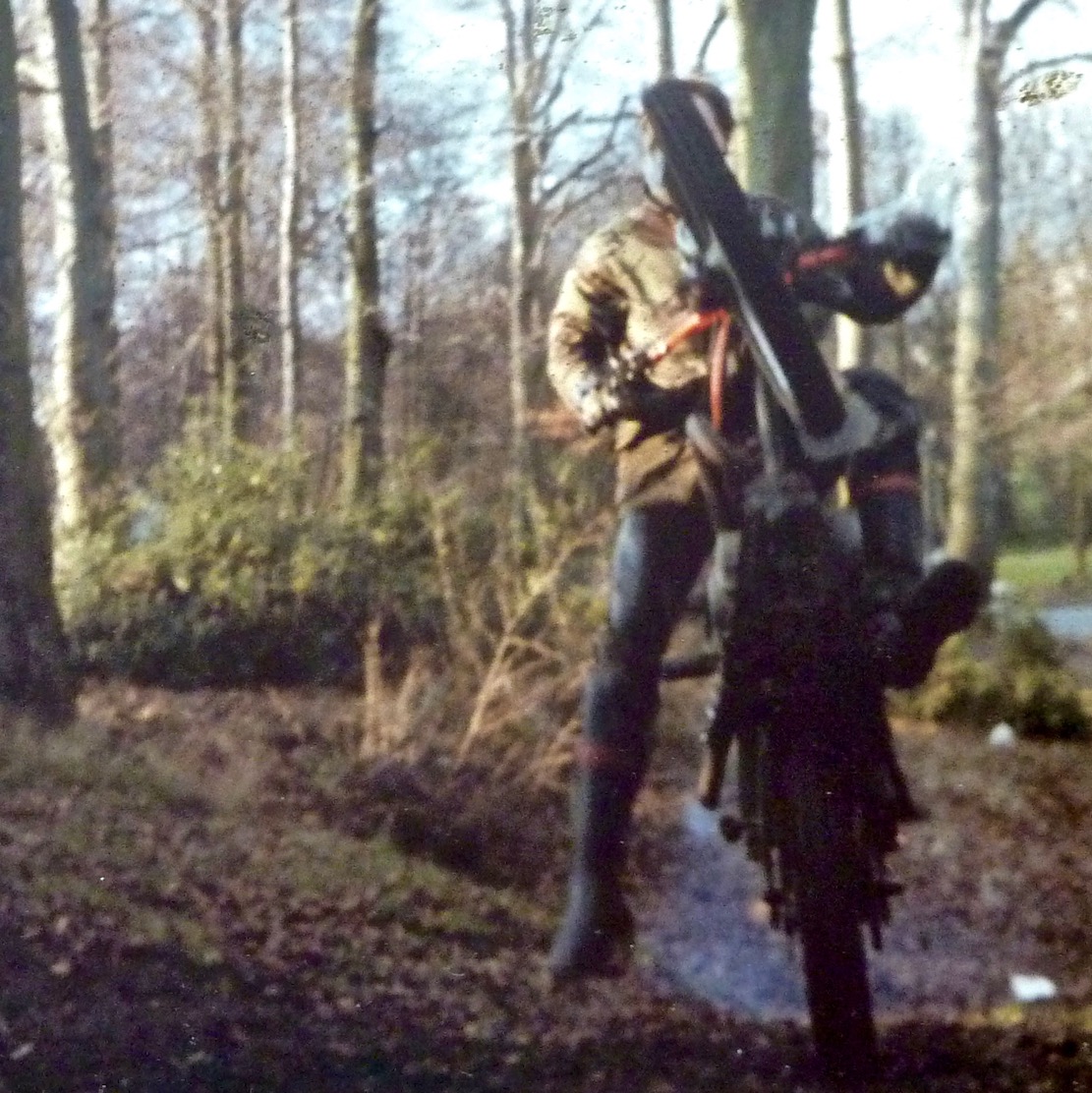
Like a 4×4 sand tyre, at very low pressures the thin sidewalls flex out to e l o n g a t e the tyre’s footprint, giving tank-track like traction. In the late 70s I remember doing a little enduro at Badgers Mount in Kent on my TS185 (above left and below). Against PEs, Bultacos and the like, I wasn’t a contender of course, but in the muddy woods at jogging speeds my trials-tyre shod TS had grip like no other tyre I’ve ever tried.

Tested: Kenda Big Block review

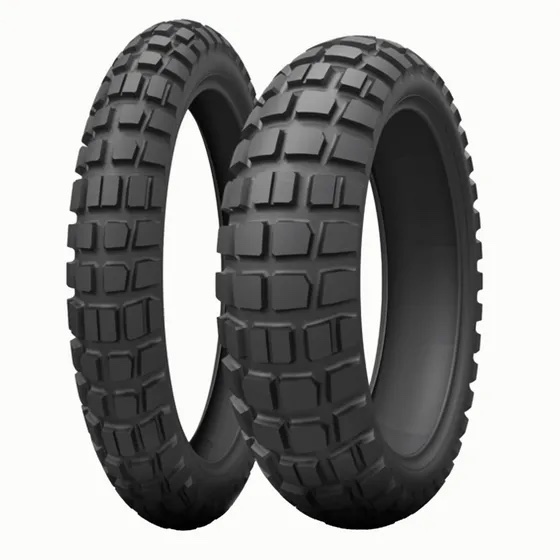
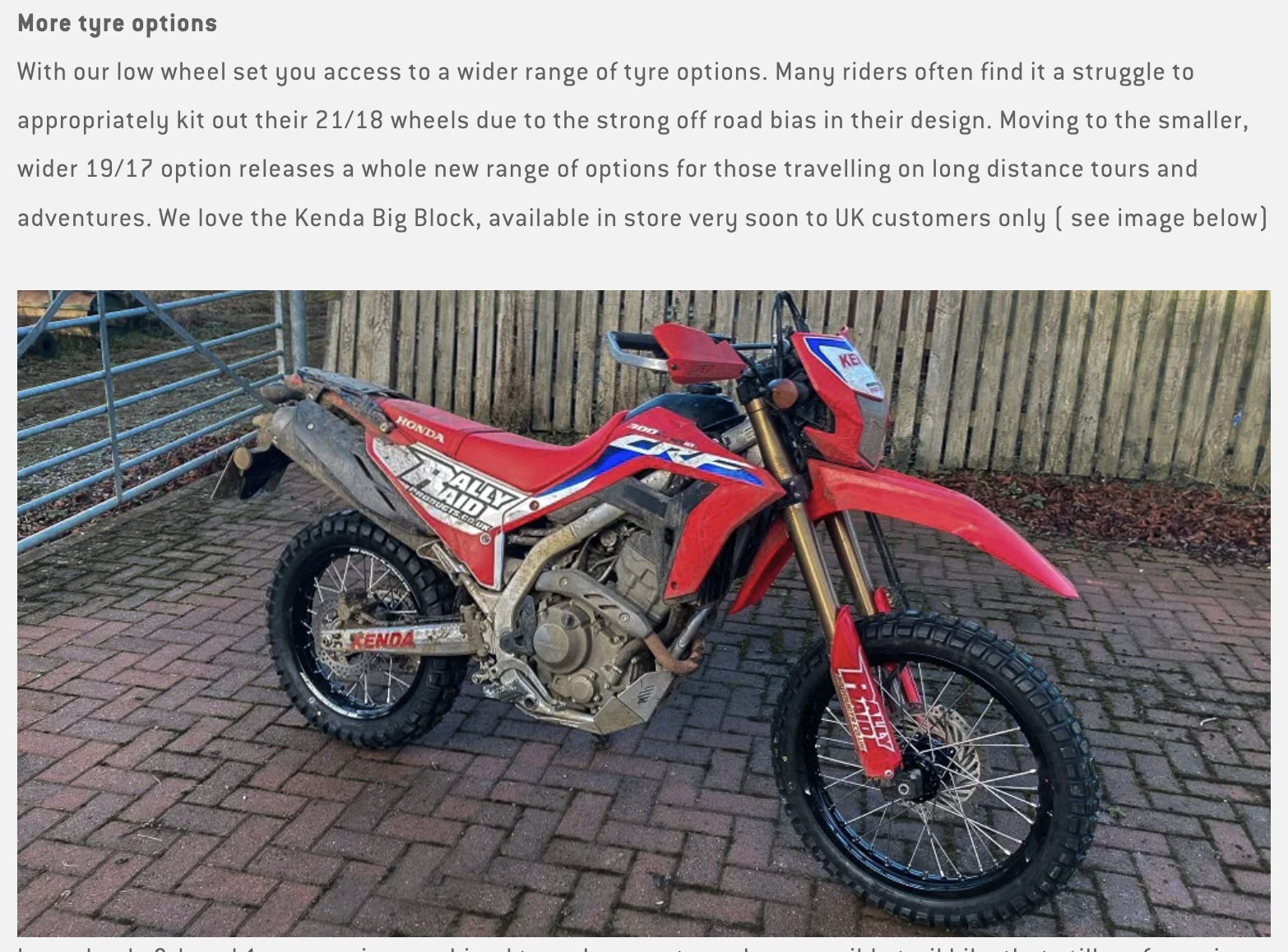
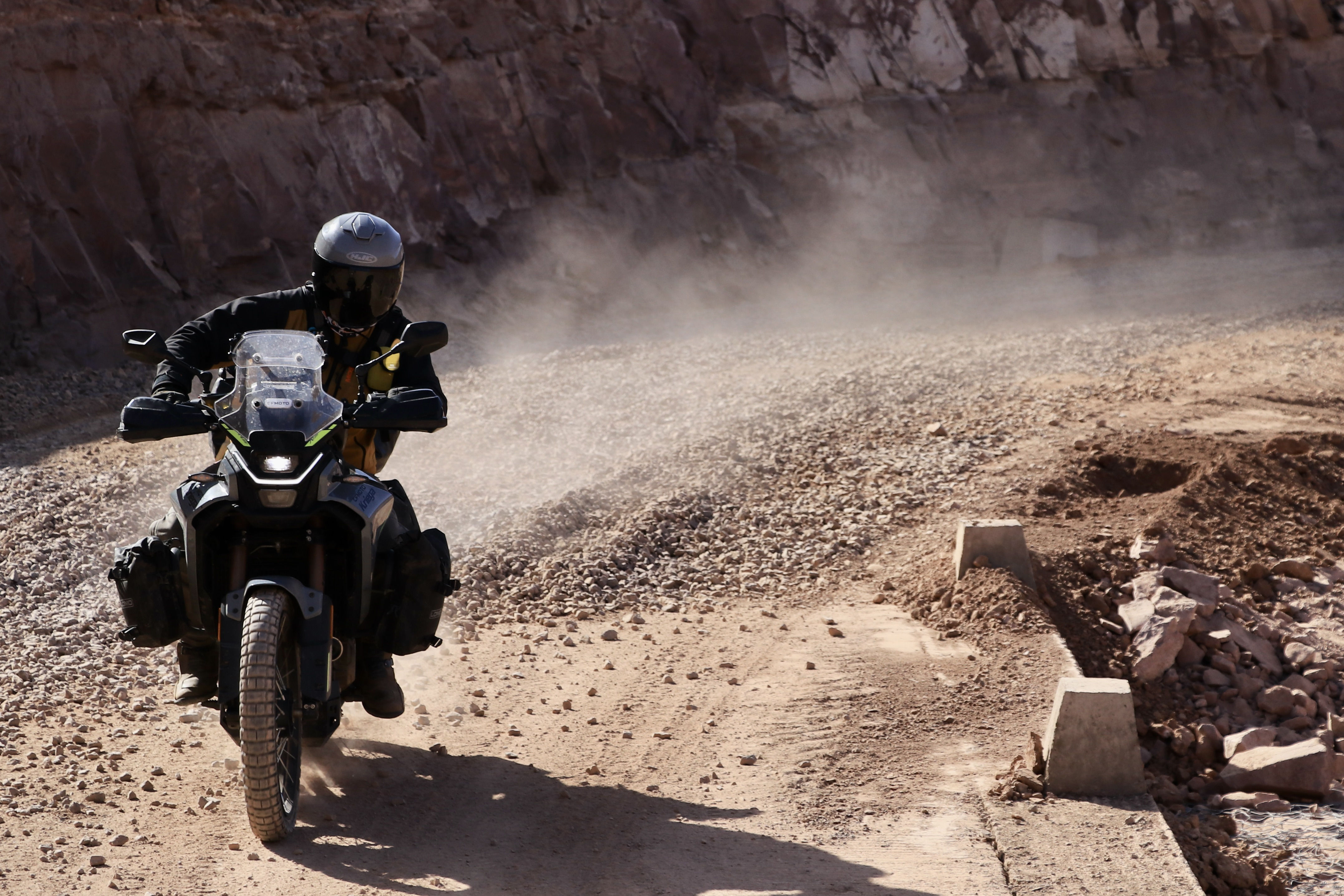
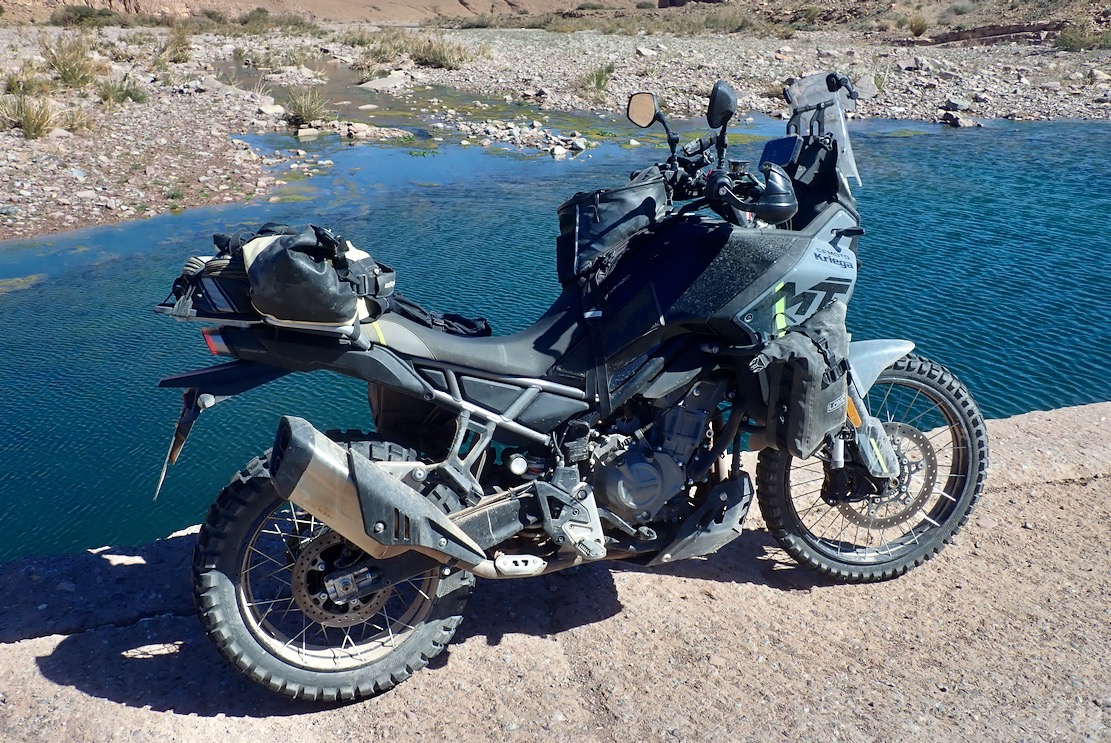
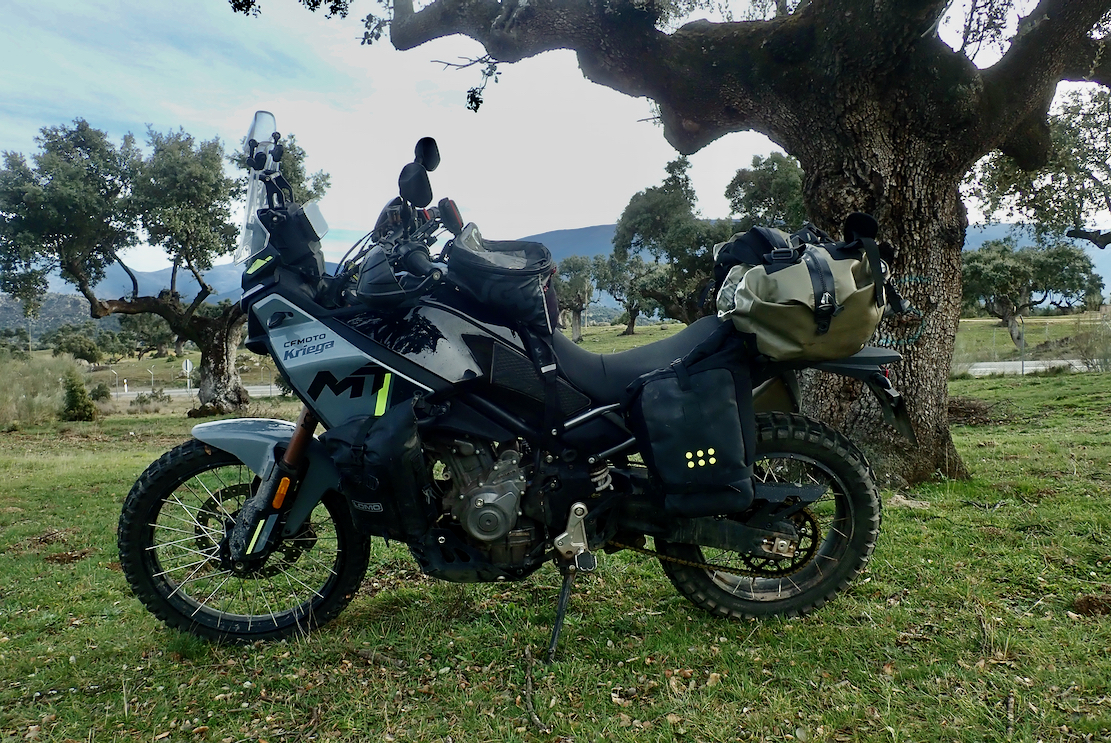
The chunky Kenda Big Block has been on my ‘tyres to try’ list for years, so when I set off for Morocco on my near-new 450MT last October, I arranged for a 140/80-18 (7.1kg) and 90/90-21 (5.2kg) to be dropped off in Marrakech, assuming the bike’s stock CSTs would not last long or soon degrade. I know John M from Rally Raid is a fan of the Kendas (below).
The rear is listed as 140/70-18, but I’m told this size is rare, so the 140/80 rear Kenda would be a bit wider, taller and probably heavier.

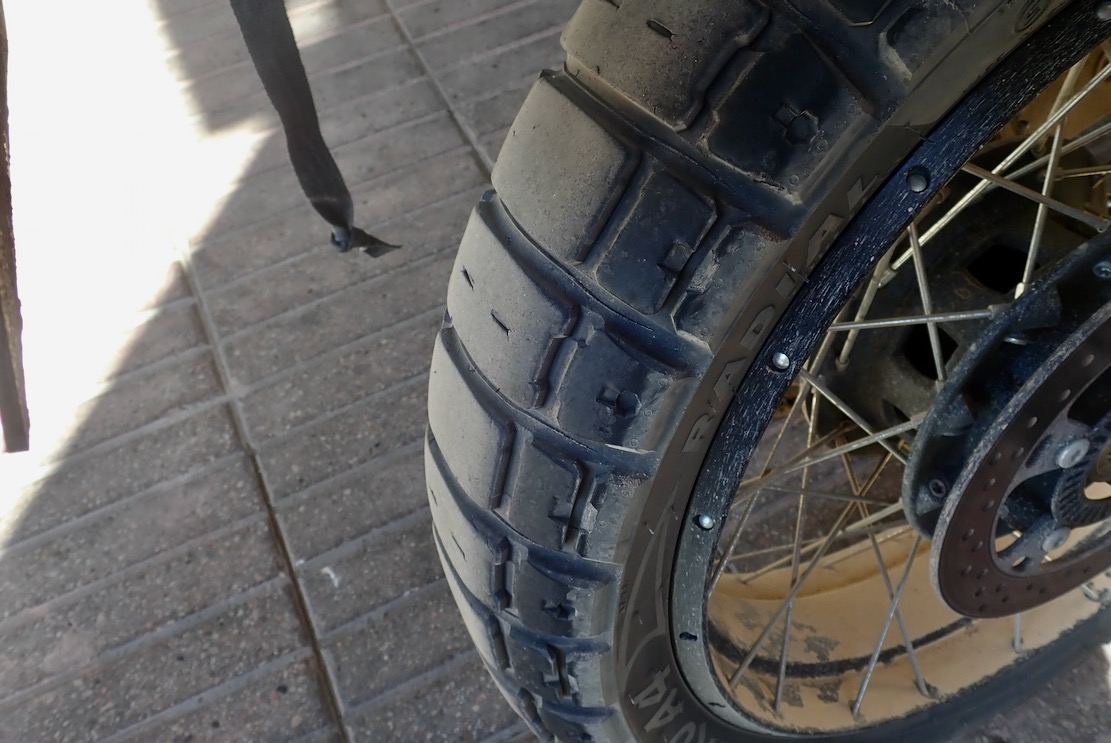
In the meantime, road and trail, I was quite impressed with the stock Cheng Shin (CST) Ambro 4s which bear a striking resemblance to the Pirelli Scorpion Rally STR.

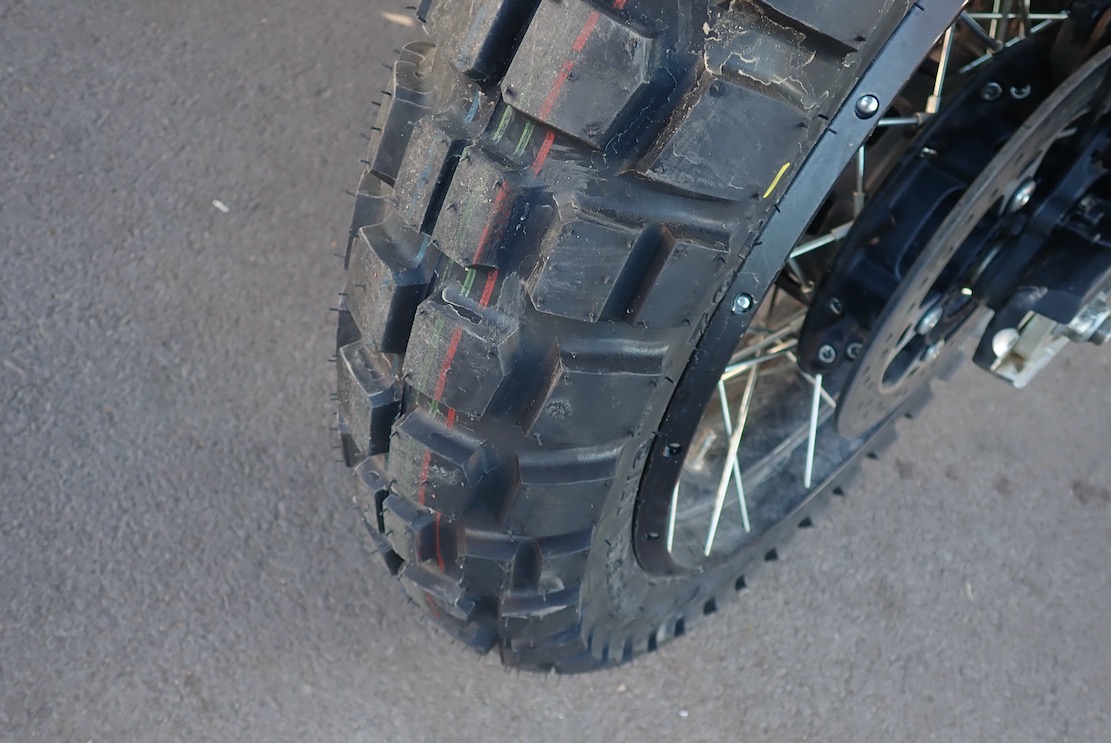
With probably a 1000 miles left in the Ambros (above left) at around 4600 miles, I decided to get the Kendas fitted in Marrakech while I still had a chance to test them on the trail, before heading back home across Spain. Out of town, as expected they initially felt odd on the road, like new knobblies can do. That settled down, hummed a bit more than the CSTs on smooth asphalt, but later on the dirt they felt too stiff at 30-psi road pressures (like many tubeless tyres), spinning out when stalled on a steep ascent, for example. I dropped to the mid/high 20s, but there felt little difference on the rocky or gravel tracks. Some bends I’d slice through like a pro, others I edged round like like a junior MX-er on their first day out.

On a heavy bike like the loaded 450 (195kg wet + gear) it can be hard to get your flow on some loose, stony bends. Meanwhile, on the few bits of deep sand (rare in Morocco), I did notice the 450 tracked well once you’d disabled the traction control. That’s as you’d expect with big blocks, though I think is also down to the 450’s unusually good steering and weight distribution.

On the road the Kendas still gave their moments: Once back on bendy mountain roads in southern Spain, I wasn’t cornering the way I could on the Ambros. A lot of this must be down to knobbly-on-asphalt syndrome: some rough or grooved surfaces set the tyres shimmying, even in a straight line. I’ve been used to that for decades and you just ride through this, but on the bends was another matter. Are the Big Blocks a knob too far?

Riding damp, winding mountain backroads from Seville to Granada, I had a couple of slips and at one point was so sure both tyres were punctured, I pulled over to check. Both were solid as. It wasn’t icy but I thought maybe I’d ridden through some unseen, oily agri-slime, or the dealer service in Seville the previous day had whacked up the pressures. Both tyres checked in at the regular 30psi.
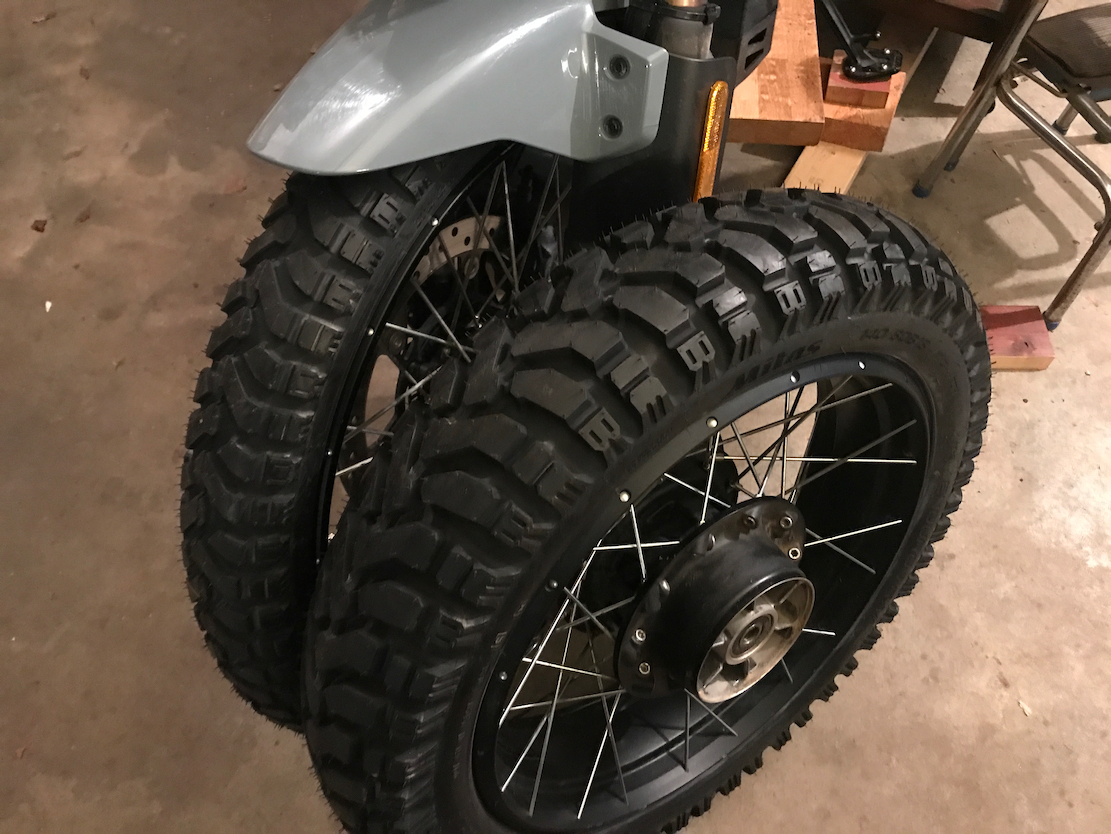
On other occasions I thought perhaps the rubber needed to warm up in the chilly morning temps. This uneasiness came and went right across Spain until I thought: I can’t sell this bike with these Big Blocks, even if they make the bike look rufty-tufty and purposeful. Whoever buys it is likely to be a road rider. Once back in the UK I fitted some Mitas E07s (below) and will flog the Big Bs.

CRF300L: Lowering link

CRF300L Index Page

35.2″? Do me a favour!

Writing up my 9000-km review over Christmas, I realised how much the Honda’s verified 35.2″/894mm seat height was bugging me. And it wasn’t just me. In 2023 Honda introduced a 2-inch-lower CRF300LS model, achieved by using slightly shorter suspension components. An appealing non-red colour scheme apart, it’s otherwise identical, though currently not sold in the UK.

According to the guy above, no seat foam was harmed in producing the LS: ‘Honda shortened the suspension…’. But he then goes on to say ’rear travel is reduced by 1.2”’. Does he actually mean shock length is reduced by 1.2”’ (to make 2” less vertical travel)? Probably.
Riding the trails, my suspension travel is way more than I ever need – an LS would have done me nicely – though once compressed the height’s rarely an issue unless I tackle technical terrain. Very occasionally the back bottoms out as it should; the front not yet. With me it’s more the getting on and off, which I do a lot of and gets more tiresome as the years pile on. Along with comfort, these two things hold back my enjoyment on the L. Fitting the 17/19 wheel combo didn’t lower the bike significantly.

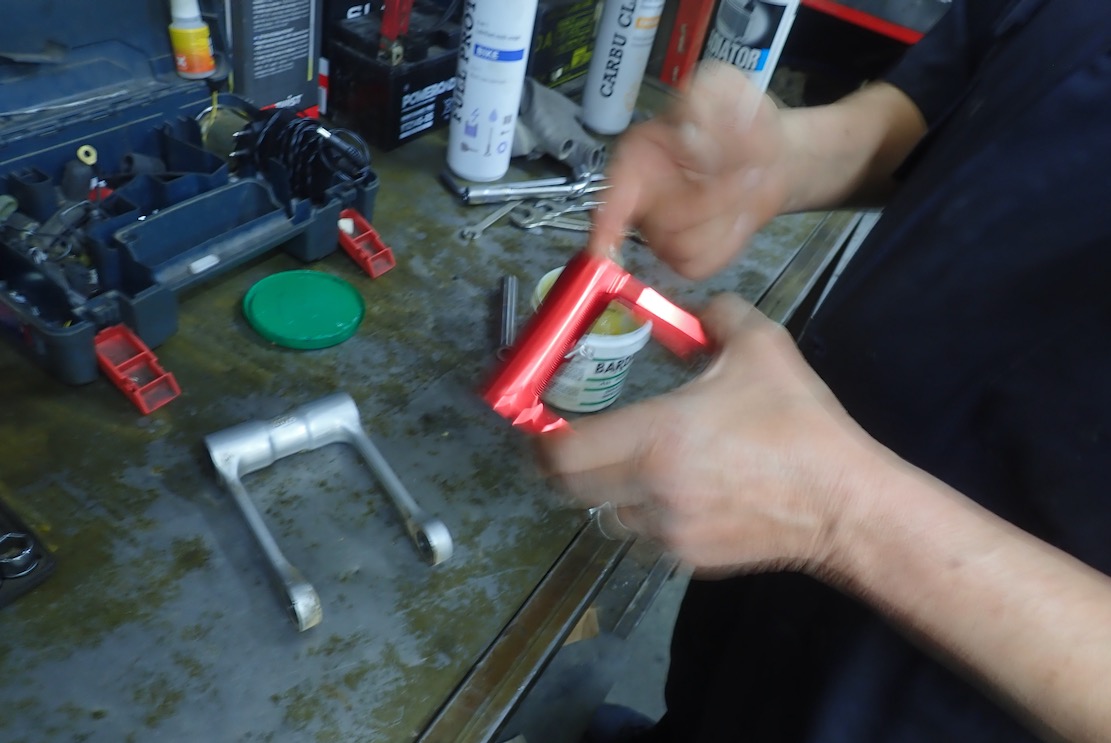
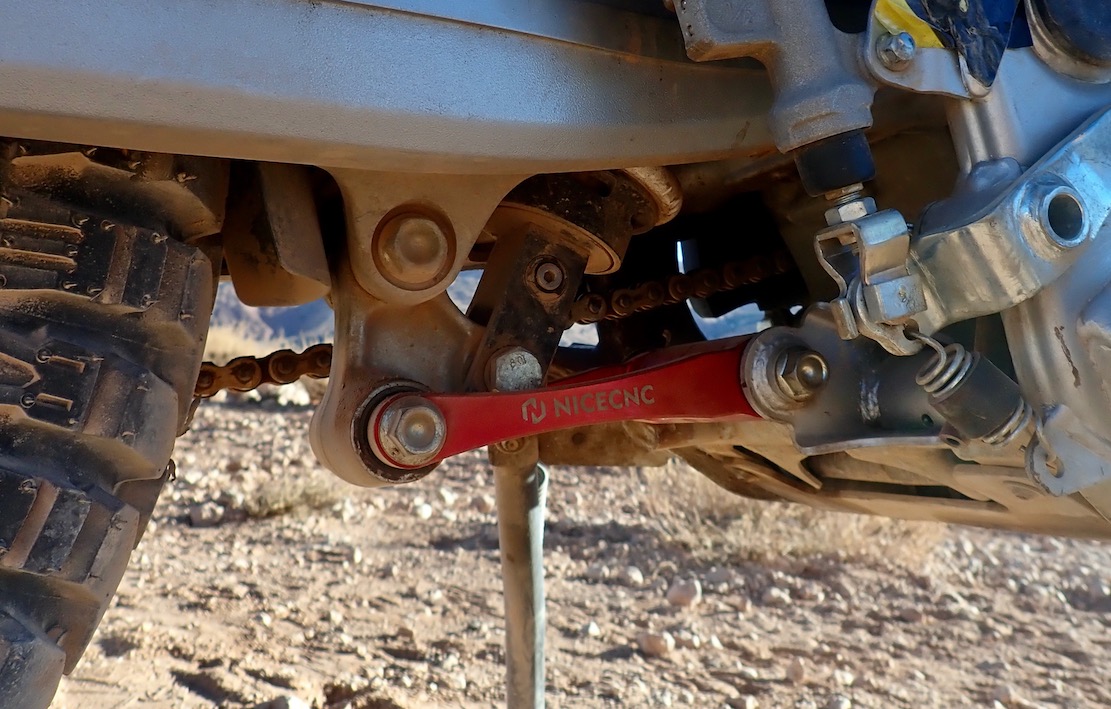
So I bought one of those suspension lowering links which I’ve read about for years. I recall my KLX had a clever adjustable link. US-made Kouba Link is the well known brand, but costs nearly £200 in the UK. I settled on a similar looking ‘Schmooba Link‘ off ebay for just £42 with the same needle bearings and grease nipple. NICECNC may be made in China but have a decent-looking website and a huge range of parts.
They say these links can mess up the carefully mapped factory linkage ratios working on the shock spring. That may be an urban myth or something that only applies to performance-sensitive racers. The link swap took just 10 minutes with a helping hand of Larbi in Marrakech.

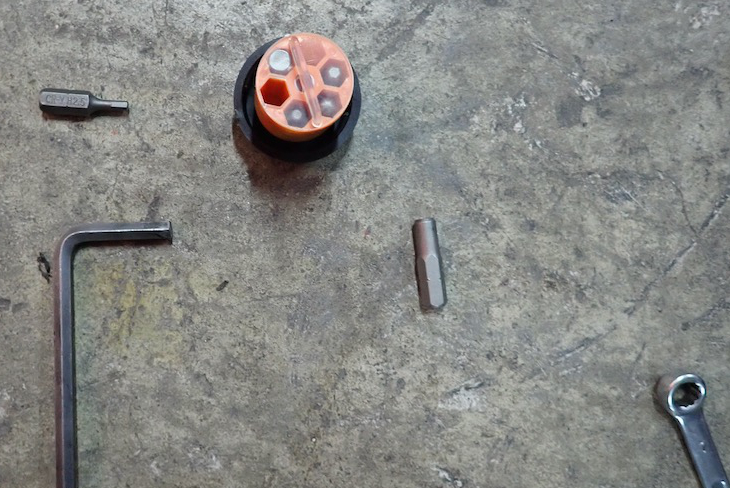
My Schmooba claims to lower the bike by 1.75″ (44mm; identical to Kouba) which is a bit more than I need, but tbh it didn’t look that much lower. Once fitted, I jacked the Tractive shock preload up a turn and a bit. What a faff that is. The shock is clearly made for an HPA and not manual adjustments. The job is made harder with the need to loosen a grub screw locking the preload collar in place. The supplied multi-bit tool has a 2-3mm bit to get in there (left); you then need a 5mm spanner to turn it, as long as the screw is in an accessible location.

There is no crenelated preload ring to hook with a c-spanner, but a series of holes in the collar, like on a wagon wheel hub (above). The multi-bit tool is too short and bulky; a 5mm rod or screwdriver works better, you inch the ring round; it’s easier on the RHS, and I found it best with a 5mm L-shaped Allen key and an additional extension/lever. Give it all a squirt of WD40 too. It takes about 12-15 micro-adjustments to get a full turn of the collar. I kept going until the annoying grub was accessible again and hope that’s enough.

Of course the forks need sliding up the triple clamps to match the rear drop – easily done. But without risers, the stock height bars limit the drop to about 25mm. So 25mm it will have to be; I hoped the jacked-up shock would compensate for the now moderately raked out fork.

RRP <20mm

If you’re lowering your 300 you’ll need a shorter side stand. RRP do 20mm shortie for £88. Or so I thought. With forks raised and link fitted it actually didn’t lean too bad. It turned out a new oversized Mitas E07 tyre on the back raised the bike back up an ~inch. Then, offering up the RR short stand, it turned out to identical. Have I been on a short side stand all this time or did they send the wrong one? Oh well, one less job to do.

Fatter Mitas 130/80 17 TL E07; actually a good idea.

Is an OEM stand for the 300LS on Partzilla US shorter?
Two are two stands listed but which was which? Knowing that the 300LS model code is probably CRF300LDA ABS is helpful.

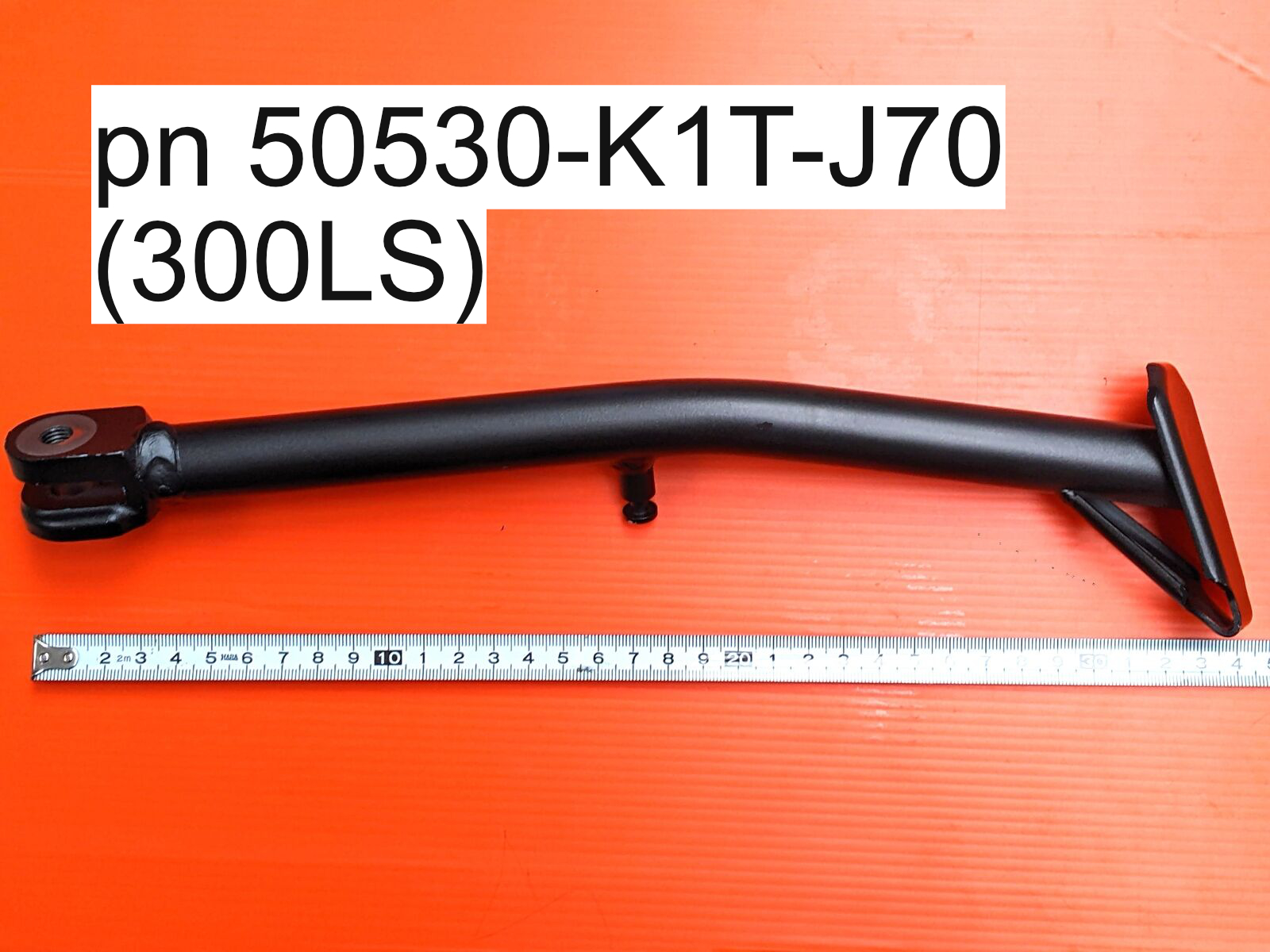
  • Lowered 300LS CRF300LDA ABS side stand: 50530-K1T-J70
  • My bike 300L ABS side stand: 50530-K1T-E50

In fact a -J70 shortie is bent; the normal height -E50 is straight. And if you look up 300LS reviews online you’ll see they have a bent side stand, unlike a normal 300L, even though the Honda parts fiche shows a straight stand for both parts. Hence my fiche confusion.

A J70 is discounted to $35 on Partzilla US. In the benighted UK an E50 is £48 but I actually got offered a bent J70, which was actually what I was looking for. Fascinating a?! But wait, there’s more! A bent J70 is shorter. The reason it was bent because a straight stand on the lowered LS might drag on full suspension compression. So it seems Honda bent and shortened a stock 50530-K1T-E50 to make 50530-K1T-J70 for the 300LS, but online fiche images appear identical.

Now, about an inch lower, I can afford to take some of it back with some neoprene seat padding, as before. But first I tried a pair of Moto Skivvies (review) – padded undershorts made for motos not cycling. I’ve known the name for years but the 300L has pushed me over the edge and into their shopping cart.

Loadsa legbend

Riding the lowered bike
By the time I’d jacked up the rear preload a bit and had a 130/80 17 Mitas E07 fitted, the bike didn’t feel a whole lot lower. Measured, it’s now 33.5″/851mm with the forks raised up in the clamps all the way, so almost exactly the 1.75″ claimed. For the next 4000km over a month, the bike rode the same on the dirt; maybe a bit better all round with a fatter Mitas all round (now properly sealed for TL by the mechanic).

Getting on and off still wasn’t a whole lot easier. I use the footrest where possible, but having the tail pack on the side would ease a leg swing. Thing is, a tailpack is so darned easy; on/off in 4-5 seconds with a pair of Rok Straps. No other actions required and no side-panel scuffing.

The suspension still works great, just like it always did. I think the taller tyre may have touched the mudguard on one or two bottoming outs. I have to take a little more care when stopping and putting the stand down, but all in all, an easy, inexpensive and recommended mod if your stock L is giving you nosebleeds.

Tested: £20 USB rechargeable tyre pump

September 2025. After less than 2 years the pump’s battery would not hold it’s charge. I suppose that was my 20 quid’s worth.

Robbo put me on to me this unbranded 4000 mAh USB rechargeable tyre pump. You’ll find the usual clones of clones of clones on ebay from around for even less now. Tbh, I don’t know exctly what 4000 mAh means in the grand scheme of things – battery capacity probably, not power, but it worked well for me.
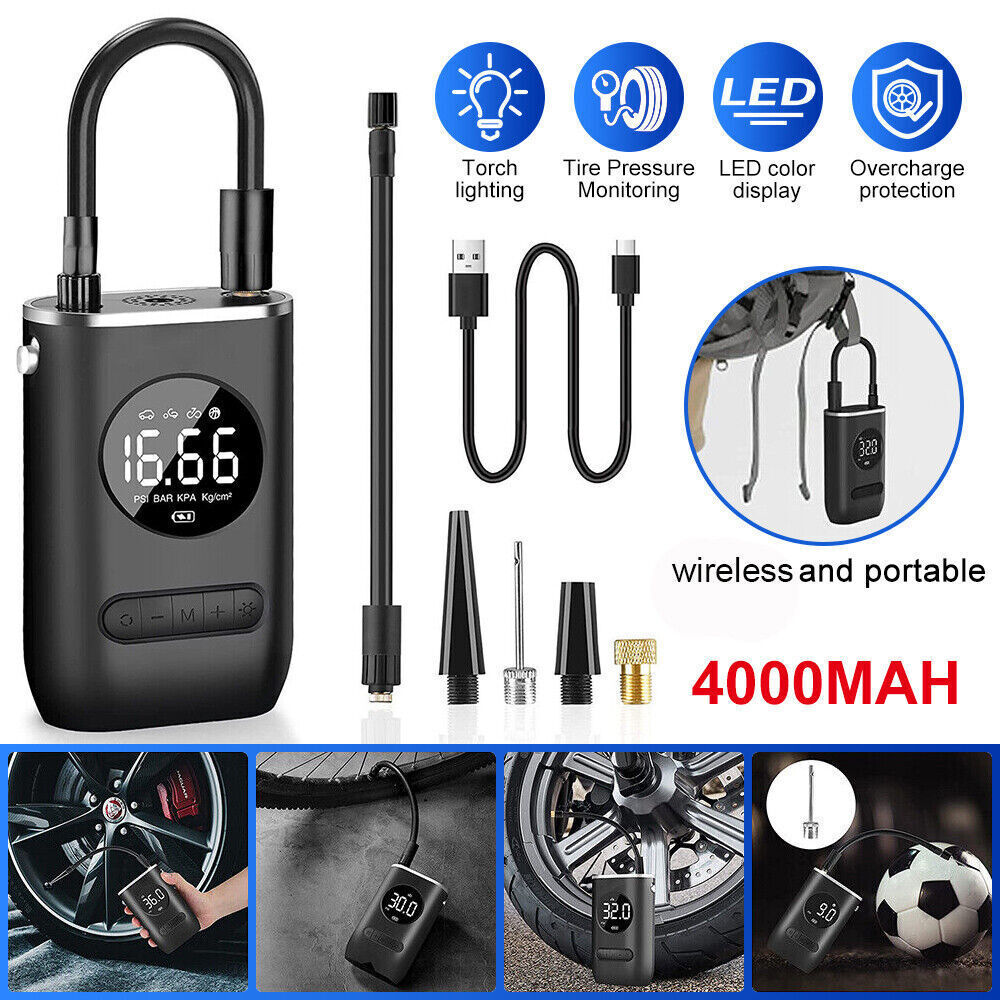
Mine came with a bunch of unneeded nozzles and a Samsung-type USB-C? recharge cable. You turn it on, set the pressure you want (which stays in the memory) and press the middle button. Off it goes, pumping up a G310GS rear tyre from zero to 27psi in about 5 minutes without getting hot and while being dead easy to read. There’s a torch, too. It weighs 420g. A handpump fyi, weights 100g.
Remember, with pumps ignore some notional ‘150psi!’ figure which they might manage in a small-volume pushbike tyre. It is the much less often quoted flow rate or cfm that counts. This one is probably a lot less than < 1cfm and all pumps will slow down as they pass 1 bar or so. It’s how fast they can keep pushing to a typical 25-30 psi (2 bar) that counts.

I also used it daily to top-up the slow-leaking rear tubeless tyre on my CRF. Yes, a bike-battery 12-volt powered compressor like my 2002 Best Rest Cycle Pump (left; 760g) is about the same size, weight and power, but for quick, cable-free top-ups it’s one less thing to wire-up or plug in. It vibrates less and makes less noise than my old Cycle Pump too, and recharges off mains in a couple of hours. I’d guess it would take at least 30 minutes of pumping to flatten the battery. I never got close, and of course you could do it on the move via a bike’s USB plug or off a power bank.

The elephant in the pump house is of course the durability of unbranded Chinese gadgets, but that applies to 12-volt pumps too, if not everything. I tumbled one time in front of some impressed village boys and rolled on my back which cracked the pump’s housing but it kept going fine. On a long trip I’d pack a manual back-up pushbike pump (search ‘Crank Bros’ and go from there). But for what I do in Morocco I retired the Best Rest and relied on this handy USB pump in the tank bag until it dies on me.
That day has come: two years in it’s not holding its charge. But the 20 investment has paid back. Next one will be a bit more compact

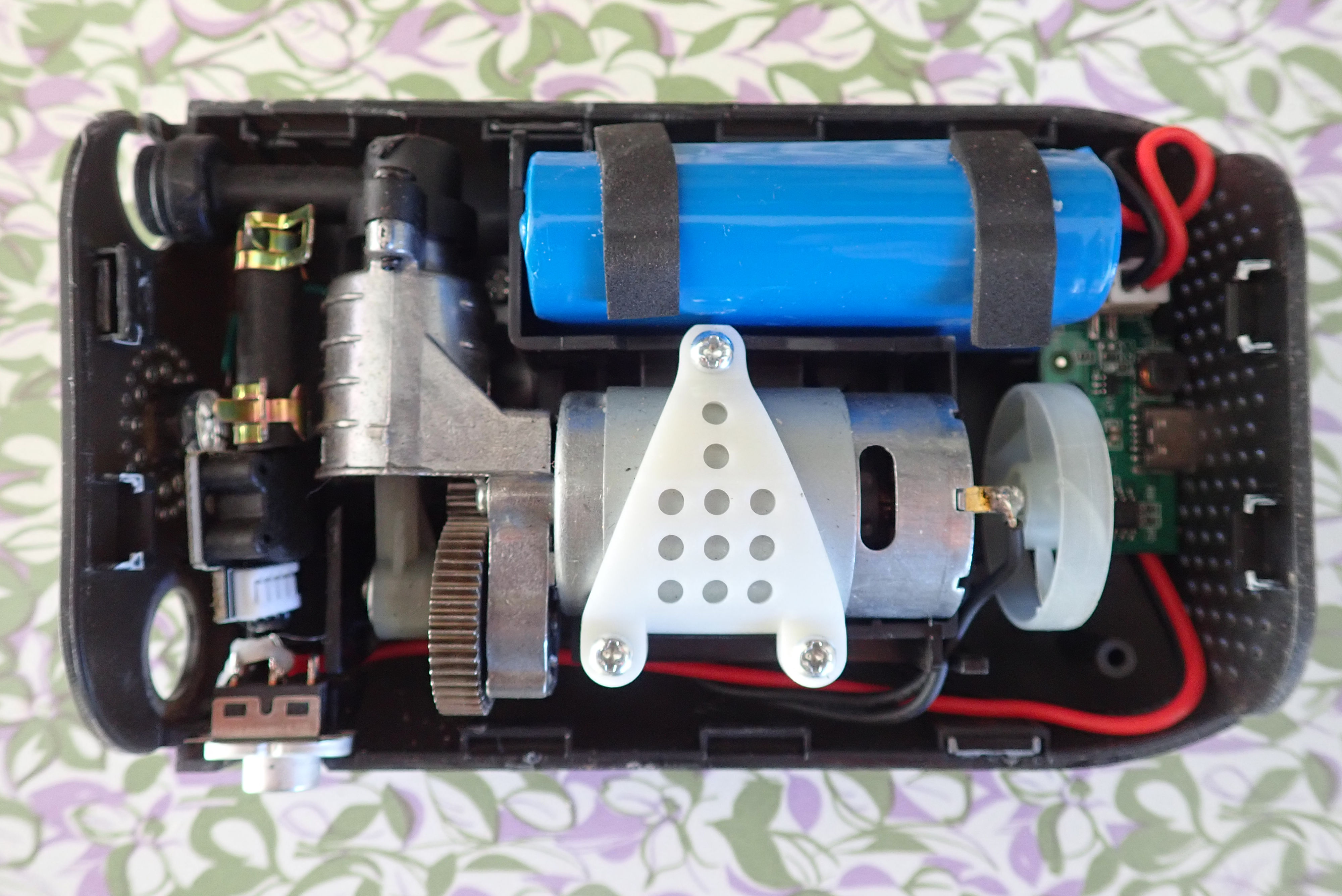
I can probably dig the pump out of the dead unit and wire it to the bike battery.