Category Archives: Jackets & Trousers

Tested: Mosko Moto Surveyor softshell jacket review

See also:
Adventure Spec Linesman
Mosko Moto Basilisk

Updated March 2024

It’s hot

In a line
Lightweight and stylish, warm-weather (or high output) jacket.

Price
€238 for an XL (remember: US ‘XL’ like this = XXL in European sizes/brands)

Where tested
Several months in Morocco since March 2023

Weight
802g (1.76 lbs).

What they say
When temperatures drop sometimes a hardshell is too much and a jersey doesn’t quite cut it. The Surveyor Jacket fills that gap. Wind resistant and highly breathable, the Surveyor Jacket is built for high-output riding in cooler temps.
Made from durable 4-way stretch Cordura® for increased abrasion and snag resistance with enhanced comfort and mobility on the bike. Cut for a close-to-body over-armor fit, the Surveyor Jacket can be worn with or without armor making it a solid choice on the trail and at camp.
The Surveyor Jacket is right at home in the woods on long rides as the days grow shorter or chasing a receding snow line as the season gets underway. DWR water protection and wind resistance keep you comfortable in mild weather.
Two oversized mesh-lined hand pockets double as vents with flow-through venting. With one external and one internal chest pocket to keep essentials close at hand. Inspired by road and mountain biking bibs, the lumbar game pocket features three internal pockets for on-body storage. These pockets sit low enough to be compatible with our Wildcat Backpacks. Load them up for added storage on big days or ditch the pack and pair with a Reckless 10L.

Original olive Surveyor supplied free for review by Mosko.
‘High Desert’ 2024 version bought in a sale.

tik

• Lightweight spandex fabric feels barely noticeable
• Looks good in Woodland green, plus many nice touches; looks even better in High Desert
• Vertical back vents access game pockets
• Has held back a rain shower or two
• Wouldn’t look out of place on other outdoor activities like MTB-ing

cros

• You’ll need separate on-body armour if you expect to crash
• Would like an Aerostich-style big Napoleon pocket in or outside
• Miss some mesh drop pockets inside the front, too
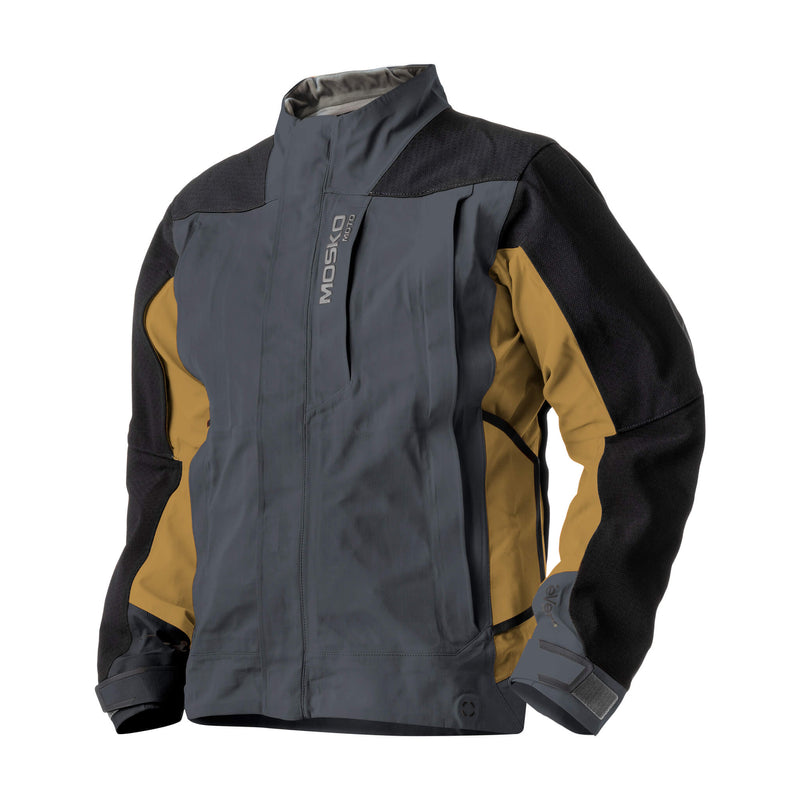
• My jacket’s body colour doesn’t match online imagery (but is fine)

Review
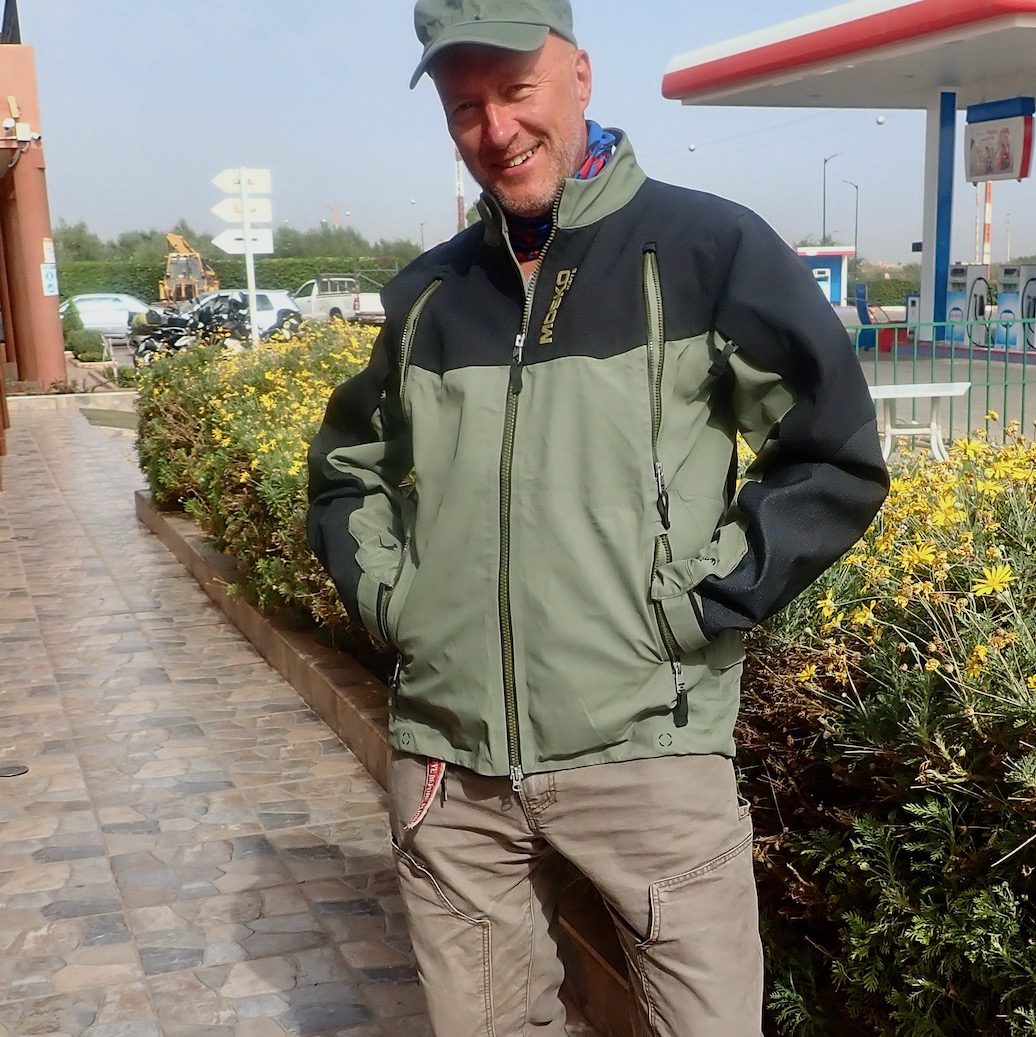
With temperatures rising up to the low 30s once over the Atlas, I decided my chunky, membrane Mosko Basilisk would be too warm and heavy for my spring ’23 tours, even with some showers forecast on the Marrakech side of the mountains. If it did rain it would be pleasant warm rain. Responding to my needs, Mosko sent me their softshell Surveyor to review. They say it’s built for high-output riding in cooler temps – but out here we’re mostly doing low output riding in warmer temps.

I know people go on about layering like it’s rocket science, and southern Morocco’s deserts and mountains may require that, but I prefer to just dress for the day and deal with a bit of temperature variation with the front zip, if needed. Give it an hour and things will change.
Underneath, most days I wore a long-sleeved Klim Aggressor base layer to keep the inside of the Surveyor clean, and some cooler days added an REI fleece gilet – one of my all-time outdoorsing favourites.

It was notable that when the other riders in various outfits de-jacketed, many were sweaty while I was as balmy and dry as a deodorant advert and never clammy or chilled. The thin and stretchy four-way Cordura Spandex fabric doesn’t look very breathable and the water-repelling DWR coating can’t help, but I never got over-hot riding up to the low 30s. I did get rained on months later over the Tichka and the Surveyor easily held back light rain and dry off quickly afterwards.
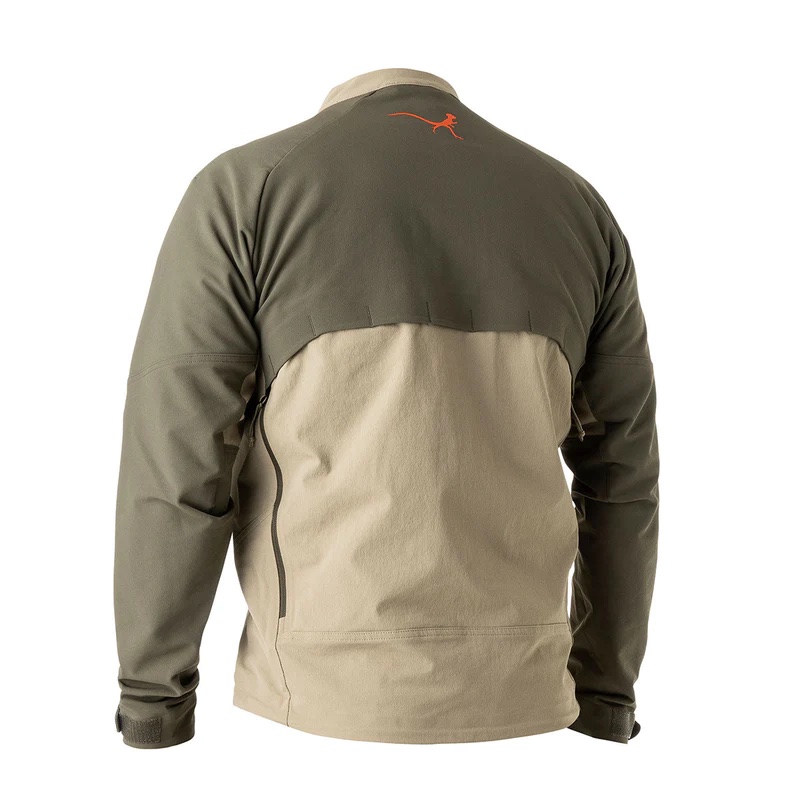
The light olive green body has a surface texture and a slightly lower gsm rating than the smoother, darker green shoulders and arms fabric, a polyester/Cordura mix that’s presumably more resistant to abrasion, though neither feel as tough as a regular Cordura jacket. Both have a bit of Spandex and the cut is bulky to accommodate separate armour which I don’t wear. Like the similar Adventure Spec Linesman, crashing hard in a softshell like this without armour will be painful.

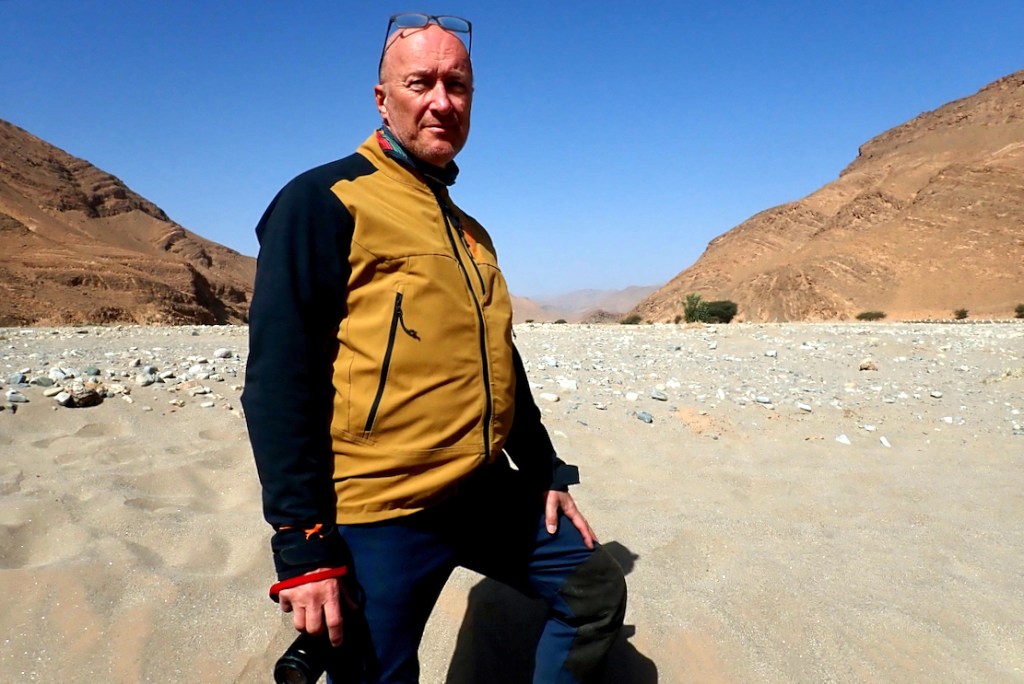
I like the ‘Woodland’ colour scheme contrasted with orange Mosko Moto logos, though as you can see my jacket’s body was not sandy tan and a tad more green all round than official Mosko imagery. As it happens, I see now my Basilisk was the same. Don’t know if my colours were an experimental one-off, but light colours absorb less heat radiation. Inside a partial orange mesh lining also houses the pockets.
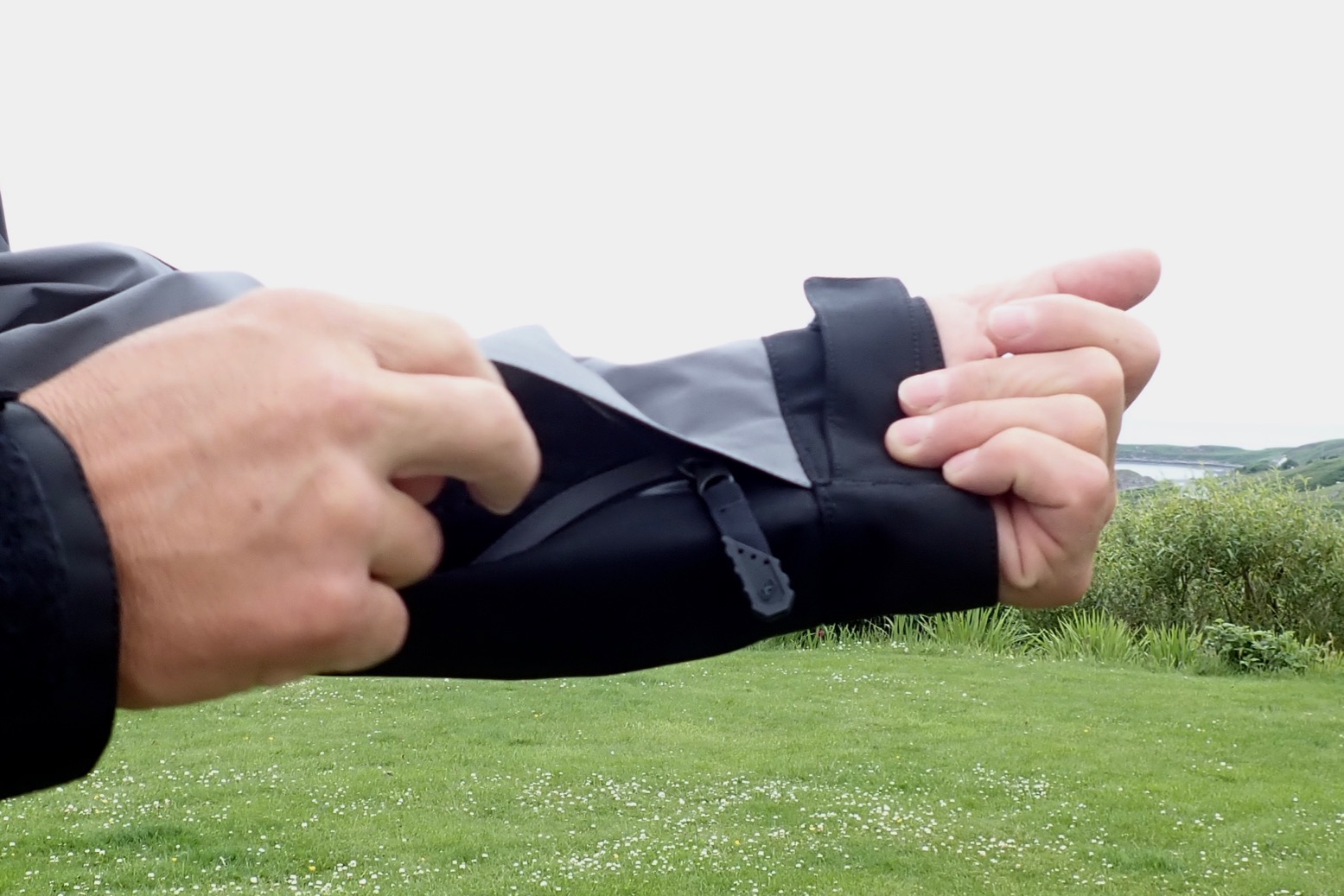
Not claiming to be waterproof, all zips flowed smoothly. I find zips get jammy in desert dust, but a quick wipe with a wet rag sorts that out. Fit adjustments add up to a pair of side cinch cords along the hem and velcro tabs at the cuffs. I’d have liked another inch in cuff circumference so the sleeves could be pushed up, Miami Vice style, when doing messy jobs.

Pockets and venting
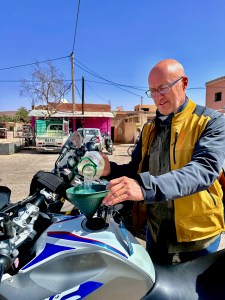
Though I usually end up wearing a daypack most of the time, I do like a jacket with pockets for stuff you want to have on you at all times. Many times I forget my backpack at roadside stops and on this trip I ditched the pack to allow the jacket to vent better. I kept a bottle of water in the tank bag.

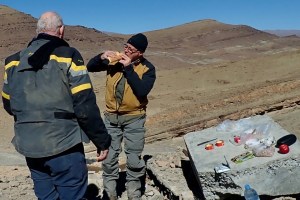
The Surveyor has two vertical side pockets which inside are about a foot in height so will take a big paper map or foot-long Subway. Running these pockets open will aid through-venting but of course means anything inside is not so secure. I kept them closed.
The chest pocket is bigger than the zip suggests – I kept my camera here for quick access. Inside the jacket is a small zipped pocket that’ll just about take a phone and a passport. I’d have preferred this one to be an inch or so wider to securely stash a dirham-packed wallet which will stay put even if you forget to zip up. Zipper pulls were skimpy bits of knotted cord; I added some plastic pullers on the ends to make them easier to grab with gloves on.

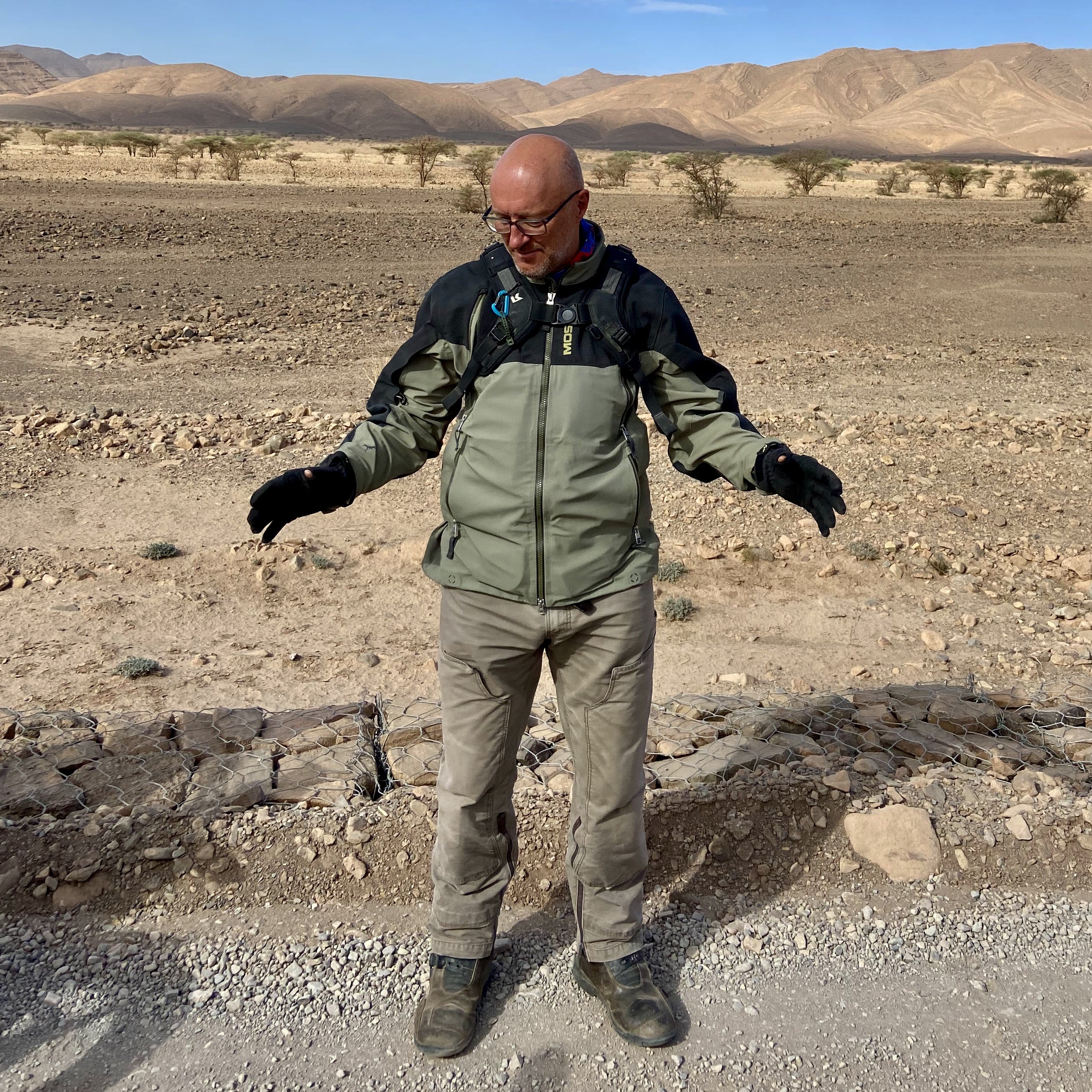
Is this how models pose?

Like the AS Linesman there’s a game pocket at the back: two vertical venting zips into the orange lining (left). The mesh lining has pouches sewn inside, like road cycling shirts, to stash an energy snack or similar. You could probably put a bladder in there and you can operate these rear vent zips with the jacket on. There are additional rear vents where a flap of the green shoulder fabric overlaps the body fabric below which might help a little more with airflow.

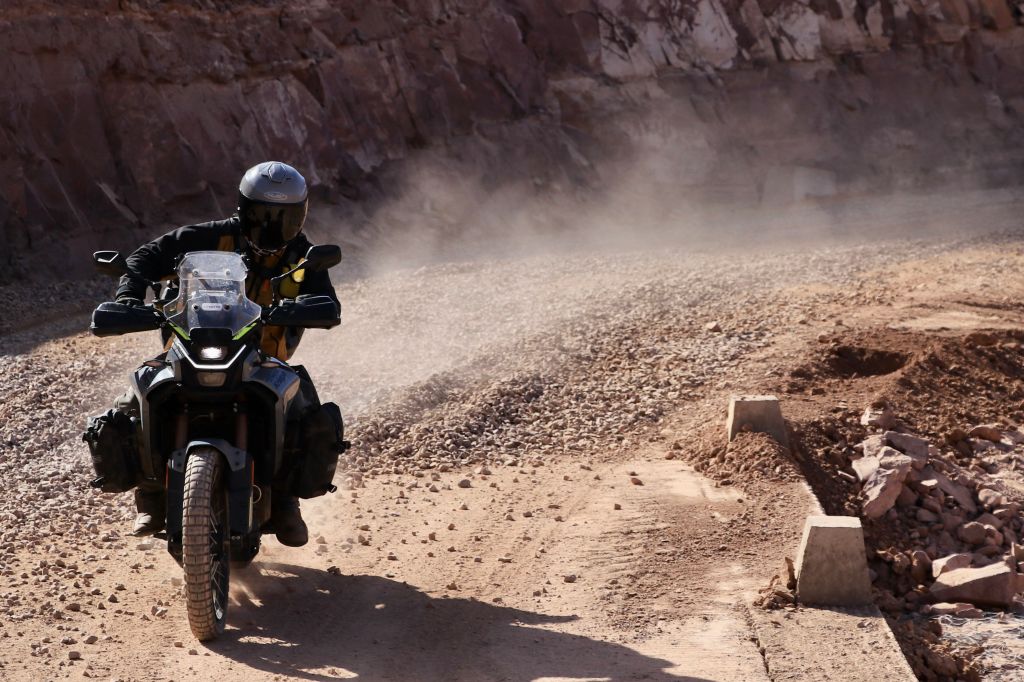
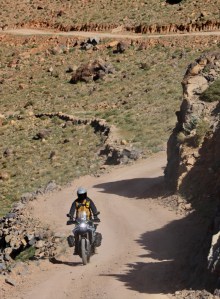
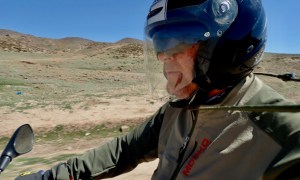
The second week-long tour I did was quite a lot warmer and where the Surveyor came into its own. Road riding up up to 100kph and trail riding at a third of that speed, the vents became useful. I am conscious that when it gets very warm, too much venting exacerbates water transpiration; ie: you lose a lot more fluid than you would zipped up which can see dehydration creep up on you. The Surveyor kept me comfortable and didn’t see me need much water through the day while reducing the feeling of wearing motorcycle clobber. You’d want another jacket for regular all-weather riding, but for somewhere like Morocco in springtime the Surveyor was just right.

Six months later … After a few hot weeks riding around from Malaga to southern Morocco, logging new tracks and leading groups, there’s nothing much more to add. I had my first slow-speed crash in years, but the jacket was unmarked (head and knee took the brunt). I wouldn’t want to be wearing anything heavier or less breathable out here, as at this time of year you still cook up a sweat paddling along stony oueds, no matter how many vents. The rear ones have been open 24/7. As before, I’m aware that with the tall screen on my 300L, you have to be standing for the jacket vents to work effectively. I tend not to stand much, but when I do it sure is nice to get breezed. Or I remove the screen for day rides.
Next two trips in December 2023 and Feb ’24 were chillier: 0°C to 20 and up to 3000m (nearly 10,000′). On the February two-weeker I wore my new, High Desert Surveyor over my Mosko Ectotherm electric puffa which I never had to plug in. I only felt cold one under-fed, 400-km day ending up at 10,000′ around dusk. So, for riding southern Morocco or chilly moorland walks, the Surveyor is suits me, sir.

Tested: Mosko Moto 2021 Basilisk jacket

See also:
Adventure Spec Linesman
Klim Overland
Aerostich Darien

Klim Traverse 2

Tested: Mosko Moto Basilisk 2021 jacket over a month in Morocco + wet winter’s weekend in UK

In a line: Smart looking, well vented with an eVent Expedition 3-layer membrane in a tough waterproof shell.

EU price: Was €475,20 (20% discount)

Weight: 1550g (verified)

Size tested: XL (me: 6ft 1in/186cm • 205lbs/93kg)

tik

• Good combo or lightness and crash-ready ruggedness
• Tough Super Fabric® abrasive panels on outer arms and shoulders
• Sleeves are good and long
• Bicep vents work well (out in the breeze)
• Looks good in a pale olive green and black
• Vertical back vents work with a daypack

cros

• Bulky sleeves obscure mirrors
• Would like an Aerostich-style big Napoleon pocket outside
• Mesh-backed vents don’t open wide


What they say:
Refined for our third round of production, the [discontinued 2021 Mosko Moto] Basilisk is our waterproof/breathable enduro-touring kit, for long-distance, multi-day trips through primarily off-road terrain. It combines super-premium materials with clean lines and minimalist design. With an articulated fit for freedom of motion and easy layering, the Basilisk is designed to work with separate armor systems for superior protection and versatility. It packs smaller than a traditional ADV jacket, for stashing on your bike when things get hot.


Update Mosko now call it the Basilisk IR which comes with armour – a change of direction for Mosko. Looks-wise, I liked my sage & black 2021, but the current models have great colours too, as well as rain flaps on all frontal zips (good). There’s only one small exterior chest pocket but loads of cinch-down adjustability and they’ve added cinch straps on the forearms too (a complaint I had with mine) so all-in-all, it’s a big improvement on my 2021, but at nearly twice the price.

Review
By the time I got to actually use my 2021 Basilisk they were bringing out new models (see above), but here are my impressions after a hot, dry month’s riding in southern Morocco.
When it comes to jackets I prefer a light but reliably waterproof shell like my old Klim Overland or the lighter Traverse II. 
Mosko call these trail-biking or enduro jackets to separate them from heavier high-speed touring coats, but the Basilisk comes with a reassuringly heavy-duty shell under which you can layer and armour up all the way up to an electric vest like their Ectotherm.

Second opinion by Ian T

When: End Dec full day road/trail ride.
Where: Wiltshire and Somerset 
Ambient temp: 12°C
Weather: Heavy rain most of the day, windy. 

Pros:
Shape and fit
to allow movement on the bike and extra layers.
Kept the rain out for most of the day, with a similar performance to the Darien pants worn on the same trip, considering the soaking from puddles and passing cars on flooded roads.
Reasonably warm with merino t-shirt, heated base layer and thick merino pullover underneath.
Adjustability is good.

Cons:
Could do with some more pockets. There were enough for keys, phone, wallet and spectacles but my Darien easily holds these as well as a balaclava, overgloves, travel wallet and visor de-mist.
Would it replace my Darien jacket? No, but maybe I’m stuck in my ways.

Features
The coloured shell is ’70d x 160d’ nylon with two layers of polyester 600D Super Fabric with ceramic plating across the black sections outer arms and which all contributes to the Basilisk’s heavy duty feel without making it a heavy jacket. Colourwise, I like the sage green and black combo. Anything’s better than dreary black or grey, but I do miss a bit of reflectivity for road riding.
It’s the little things that set a jacket apart from a bin bag with sleeves. The cuffs have a chunky velcro closure. Inside the hem is cinchable with a toggle easily accessed on the front left edge. The collar has a synthetic suede liner and another cinch cord toggle at the back. There’s also an in-built ‘dirt skirt‘ you can join up with studs to seal off the jacket’s lower edge with help from a stretchy silicone band, keeping the core warm which maintaining the shell’s articulation. Other snug fitting adjustments include two big and easily adjusted velcro flaps on the sides to help haul the belly in.

To get the air flowing in the warmer conditions I experienced, the Basilisk has three pairs of mesh-backed vents: a set in the upper arms; another pair at chest height neatly in line with the zip pockets, and two exhaust vents at the back. In my experience this set up works best for through-flow to cool you off while keeping the jacket zipped up and wearing a daypack. But in overly warm southern Morocco the small screen on the 890R I rode most of the time reduced the airflow on the body. The vents’ mesh backing reduced the aperture too, so standing up was the only way to get some venting going unless I undid the main zip. Apart from a couple of chilly mornings in the mountains, I rode with all vents open all the time.

Pockets add up to two exterior vertical zip-ups above the hem (deep enough to be secure if left unzipped) and two small chest pockets inside. I miss a huge map-sized vertical zip exterior chest pocket, as on the Aerostich Darien.

All exterior zips are chunky YKK Aquaguards but once desert dust gets on them they get stiff to operate; probably the price of being water resistant. A wipe with a wet cloth fixes that, but the newer models’ rain flaps will keep the dust off.
The Basilisk doesn’t include any pockets for armour. I’m with Mosko on this. If you’re serious about body armour (for my sort of riding, I’m not) then get one of those close-fitting strap-on MX body armour outfits which work best close to your body (ie: under the jacket).

Bulky sleeves…

If I’ve one complaint it’s that the sleeves are too bulky so the stiff shell obscures the mirrors’ rear view; I could easily get my legs down these sleeves! I spend a lot of time checking my mirrors on the occasions I’m leading a group, and pulling them in greatly improved rear visibility. Maybe there are XL riders with huge arms, but the simple solution for all would be a velcro cinch strap or two to draw the slack in, like Aerostich do on the Darien and Klim did on the old Overland.

Tested: Klim Traverse II jacket

See also:
Adventure Spec Linesman
Klim Overland
Aerostich Darien

Mosko Moto Surveyor
Mosko Basilisk

After 4 years, in 2020 Klim made the Traverse GTX reducing the vent system to a couple of pit zips and adding armour. In 2025 I bought one.

Tested: Klim Traverse 2 jacket

OLYMPUS DIGITAL CAMERA

In a line: Smart looking, well vented and lightweight waterproof shell

UK price: £500 (2025)
(bought discounted from Adventure Spec)

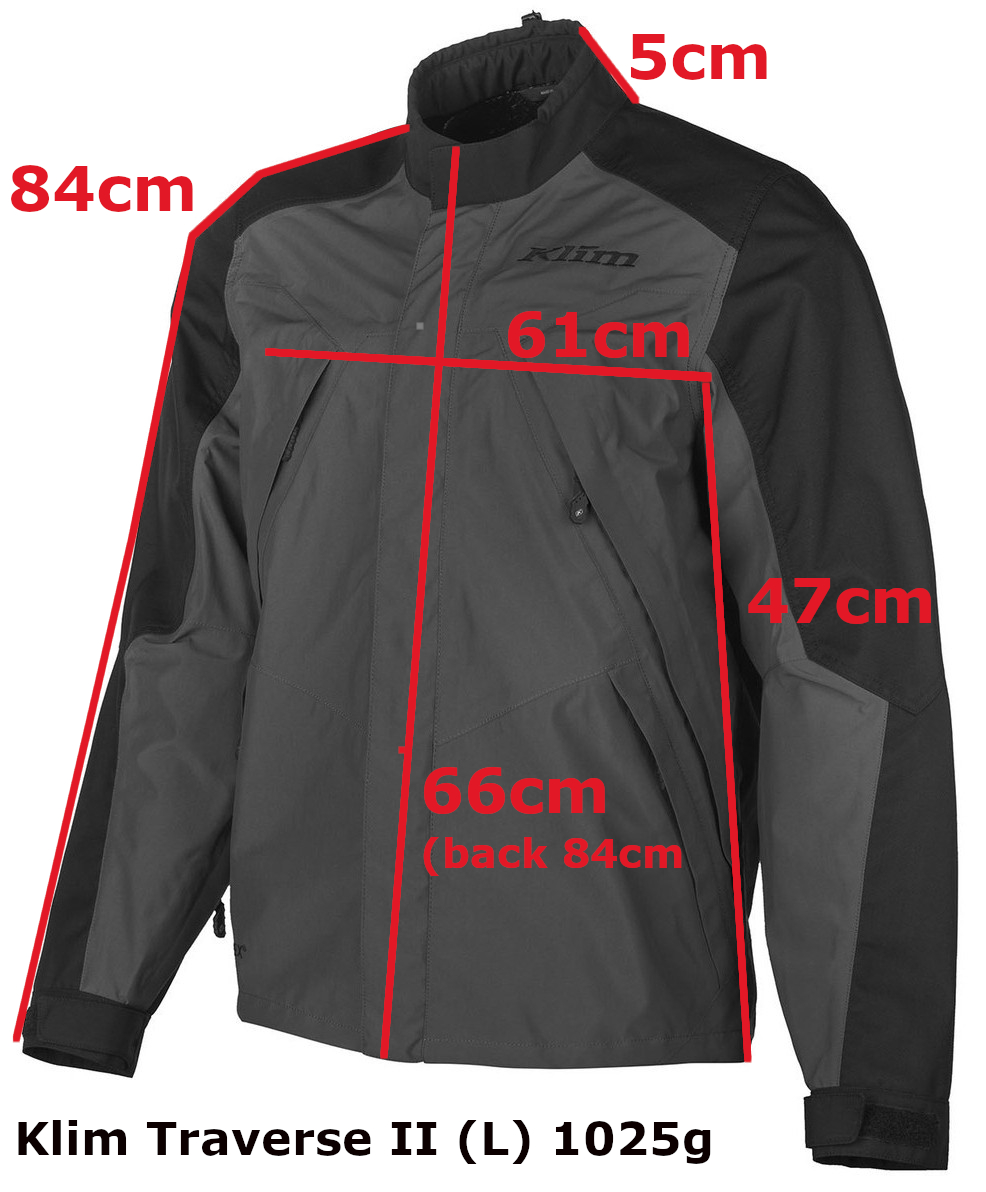
Weight: 1025g (verified)

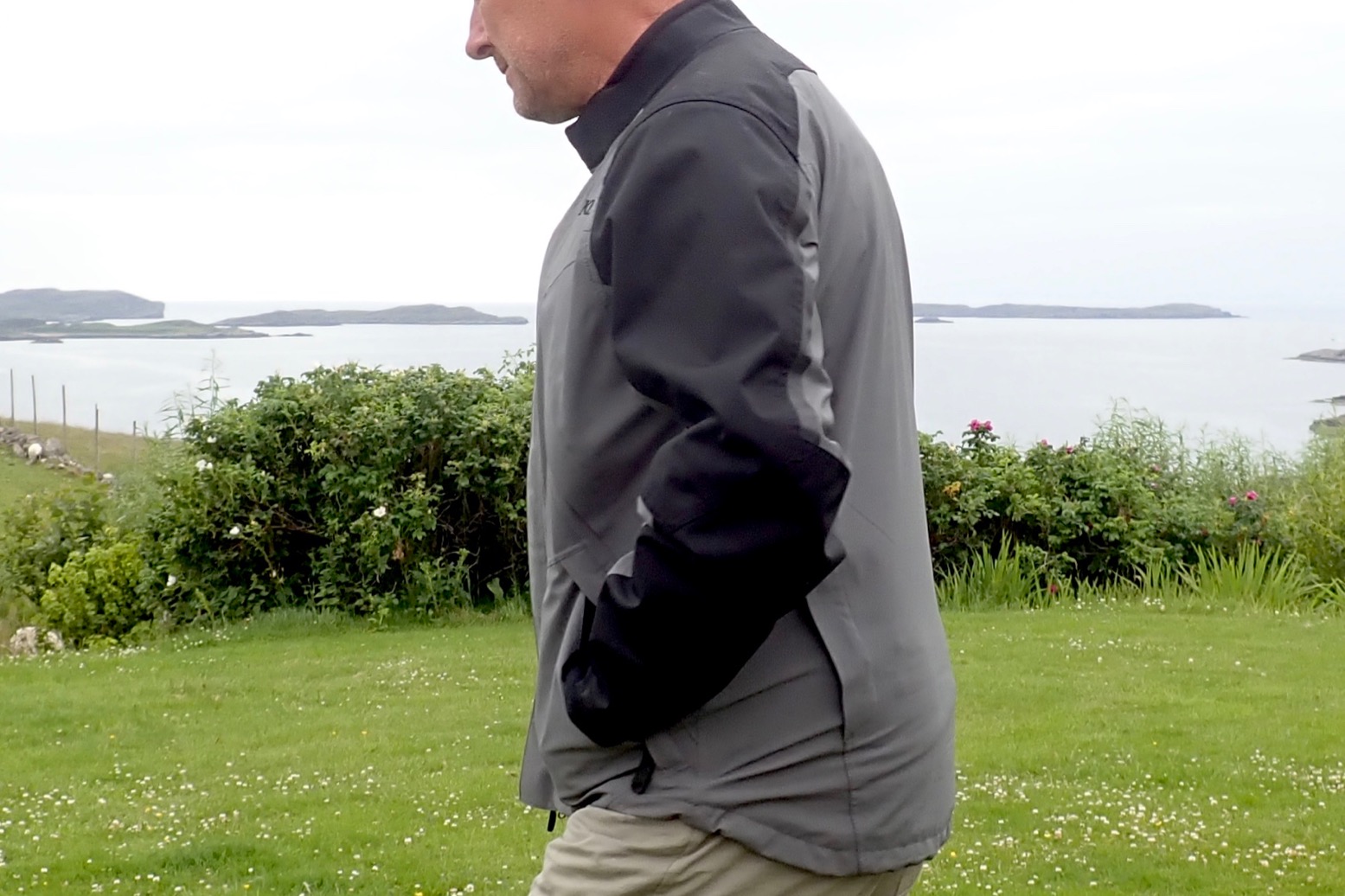
Size tested: Large (me: 6ft 1in/186cm • 205lbs/92kg)

tik
OLYMPUS DIGITAL CAMERA

• Light
• Has pockets for armour
• Dark grey is neither boring black not dull silver
• Vertical back vents work with a daypack

cros
OLYMPUS DIGITAL CAMERA

• Costs a lot
• Not an all-season coat without a heated liner or puffa
• Not convinced by cuff vents
• Miss the arm cinch straps from the Overland
• Left in a hotel in Spain in 2020 ;-(


What they say:
The KLIM Traverse line of completely waterproof, extremely durable and functional off-road outerwear is the benchmark in all-conditions comfort. Still unmatched in the industry, Traverse is the one solution trail and dual-sport riders can count on to deliver the most enjoyable ride in the most miserable conditions.
This generation of the Traverse receives an intelligent redesign to match the off-road legacy of our Dakar lineup’s improvements including a refined fit, updated reflective materials, and intelligent ventilation system improvements. As durable as ever, better fitting and with an increased comfort range, the Traverse is designed to take the threat of rain out of your riding equation. Ride all day, any day, every day in absolute dry comfort.


OLYMPUS DIGITAL CAMERA
klim-dim
OLYMPUS DIGITAL CAMERA

Review
As with some of my bikes, my Klim Overland was a jacket I’d have been happy to keep were it not part of my self-styled job to keep trying new things. Then in 2016 they dropped the Overland and replaced the original 2010 Traverse with the updated and much lighter Traverse II I have here. 
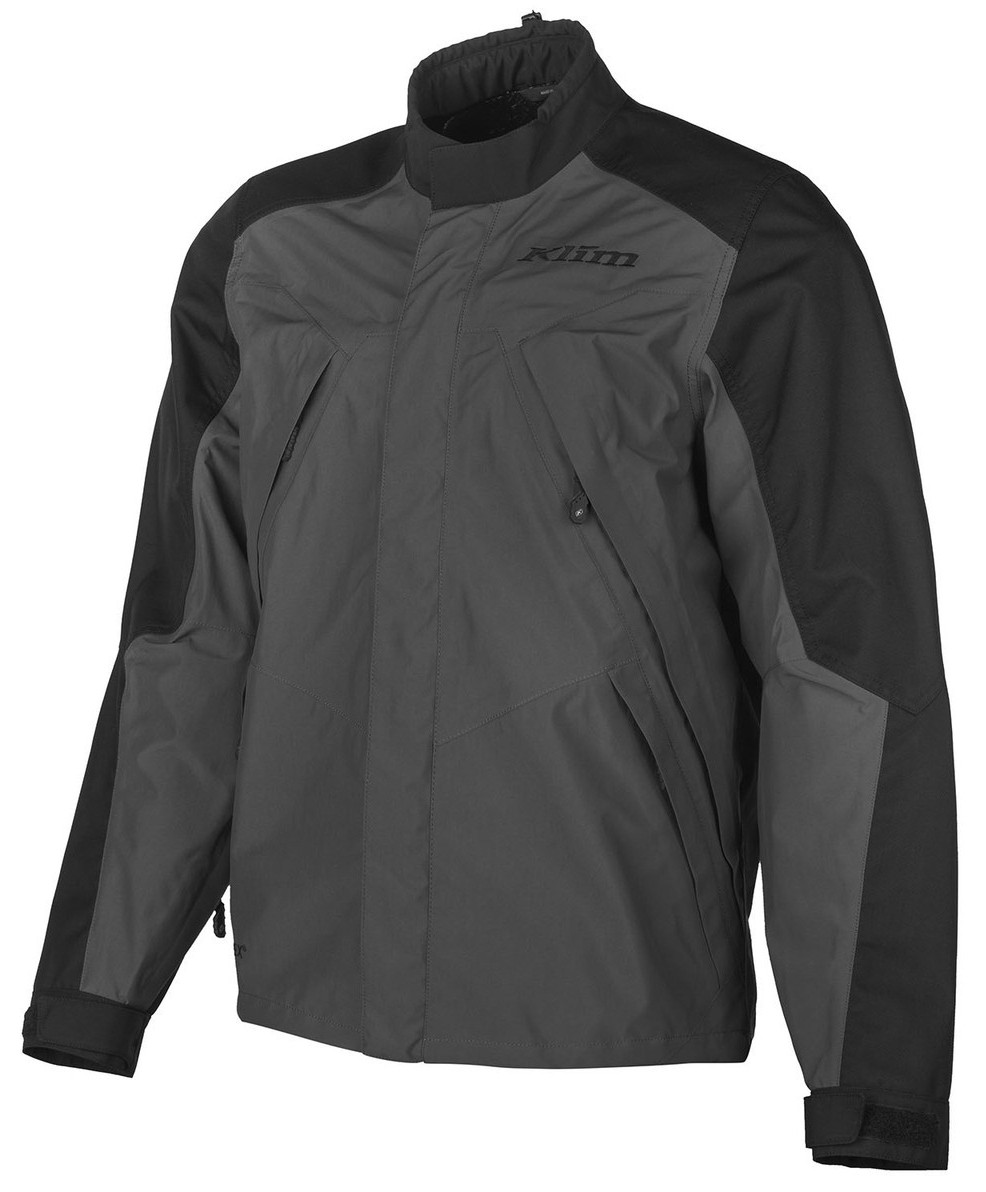
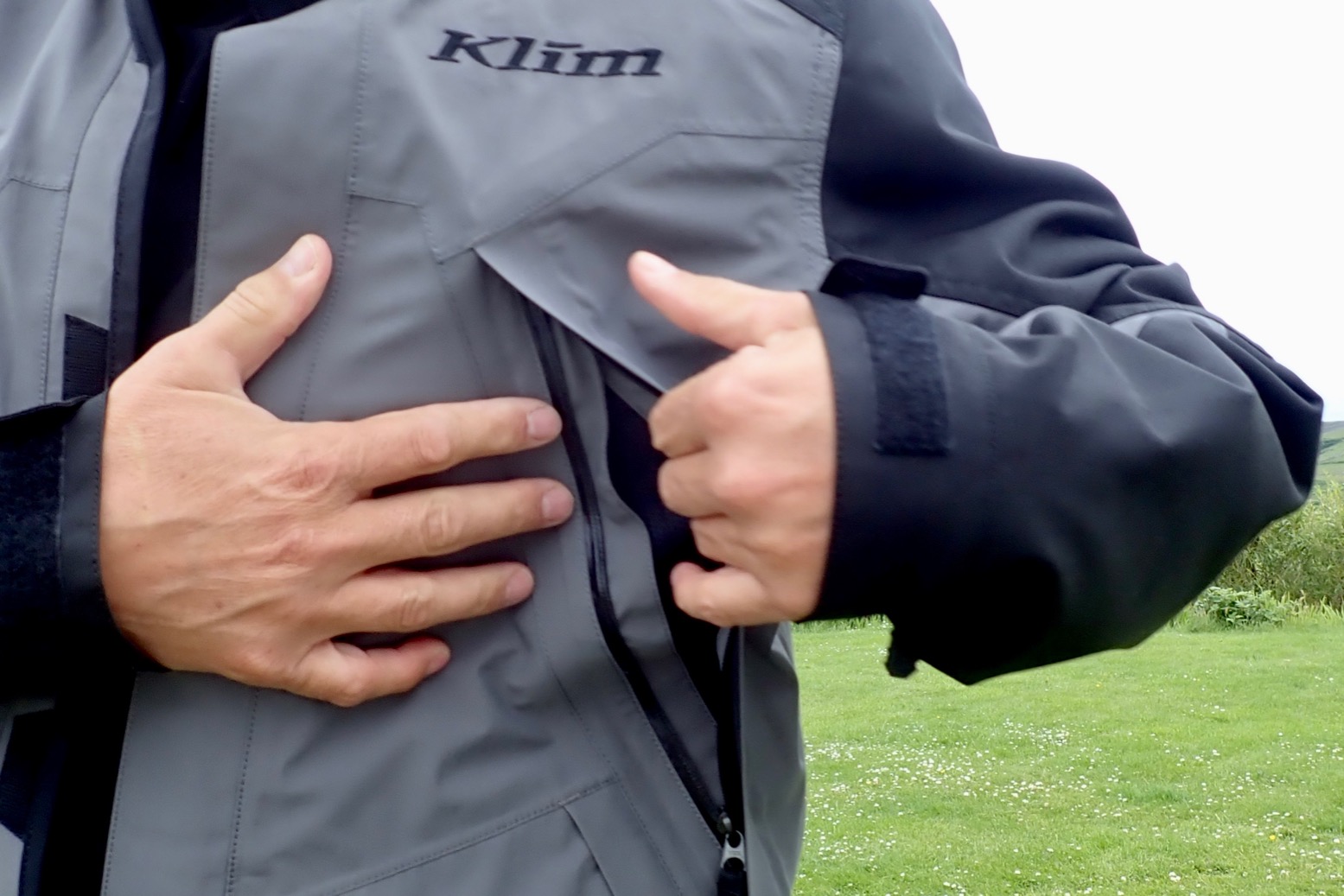
Pitched as a light, trail-biking jacket, rather than high-speed touring coat, it’s more or less the same as an Overland but without armour included, elbow cinch straps and less reflectivity too. Plus it comes in a less dreary range of colours. Besides the ubiquitous black there’s a dark olive green and the slate grey I have here.
OLYMPUS DIGITAL CAMERA

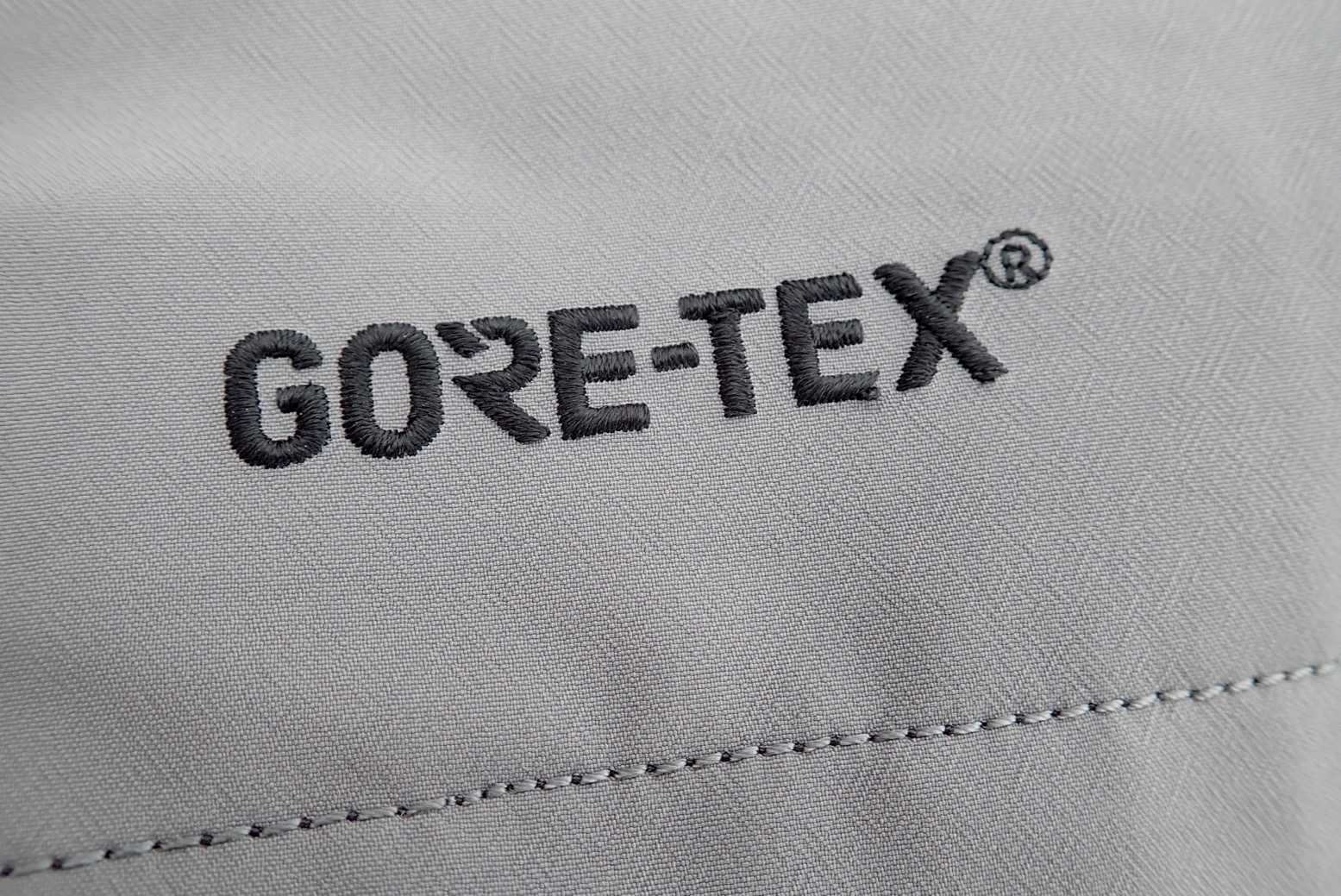
The light, Gore-Tex 2-layer nylon 66  body shell fabric and spread of durable 500D Cordura patches over the arms broad match the Overland – just about adequate for 4-season riding if helped by a heated vest, and up to crashing with a bit of armour. The main zip is two-way, with a velcro rain flap and rain gutter.
The adjustable, velcro-tabbed microfleece collar is less of a tight fit than the Overland – or at least it has a velcro closure, not pop studs. And there’s the same adjustable bottom hem to keep draughts at bay.

OLYMPUS DIGITAL CAMERA

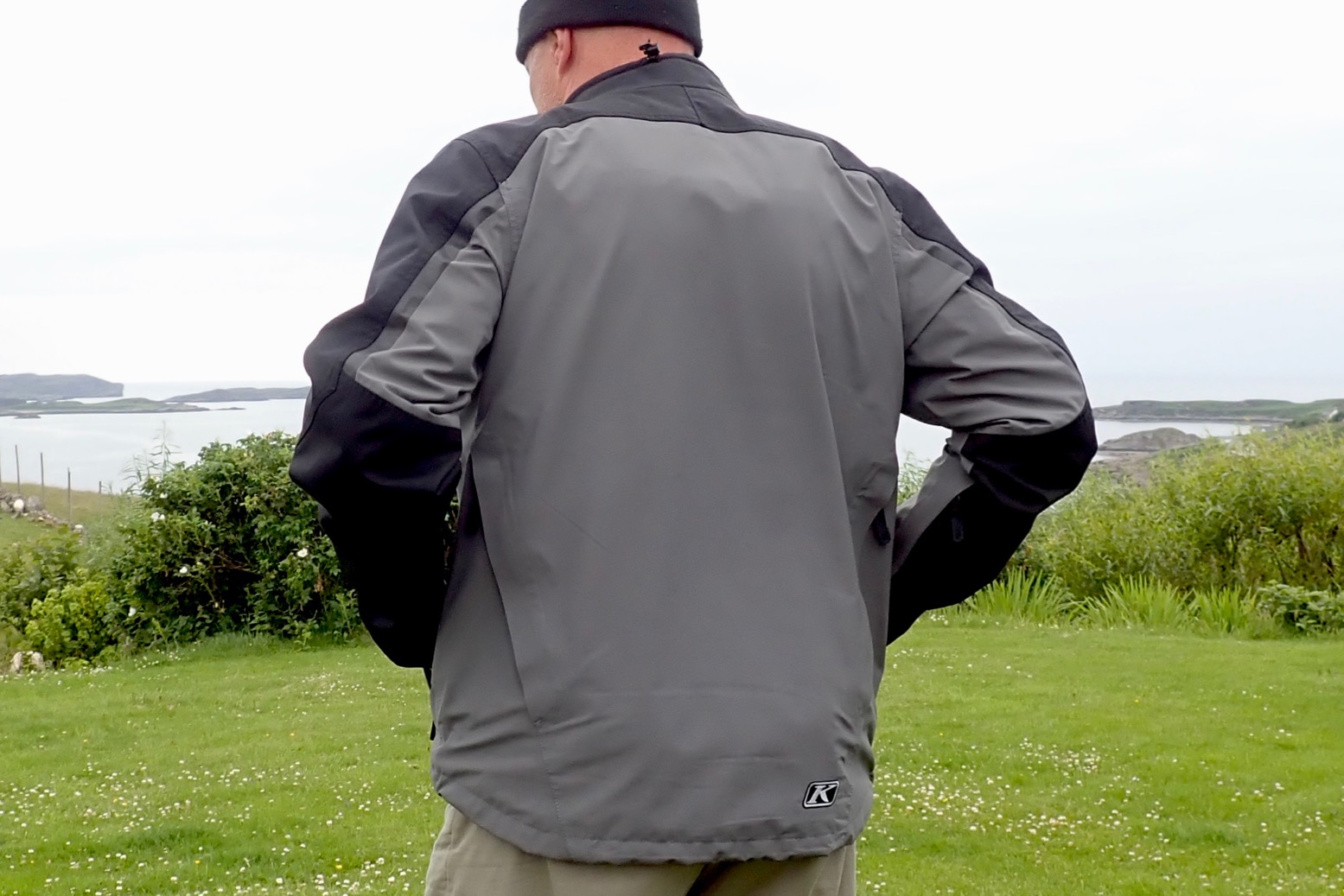
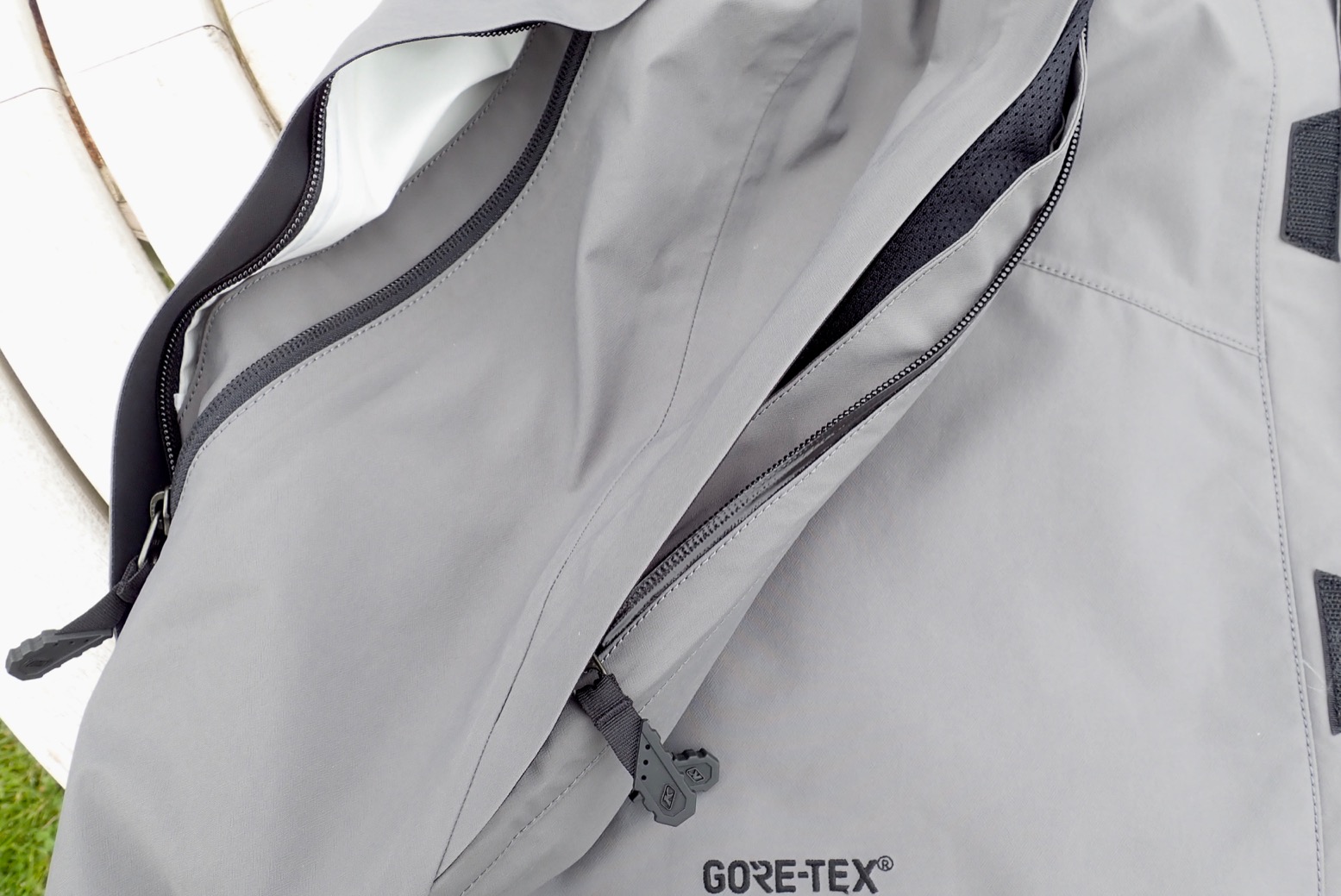
Vents are the best arrangement I’ve used for truly effective airflow: two huge slanted zip vents on the front (easily opened and closed on the move), with matching smaller exhaust vents at the back (less easily operated with the jacket on, even at a standstill). Vertical back vents still work when wearing the typical daypack.

OLYMPUS DIGITAL CAMERA

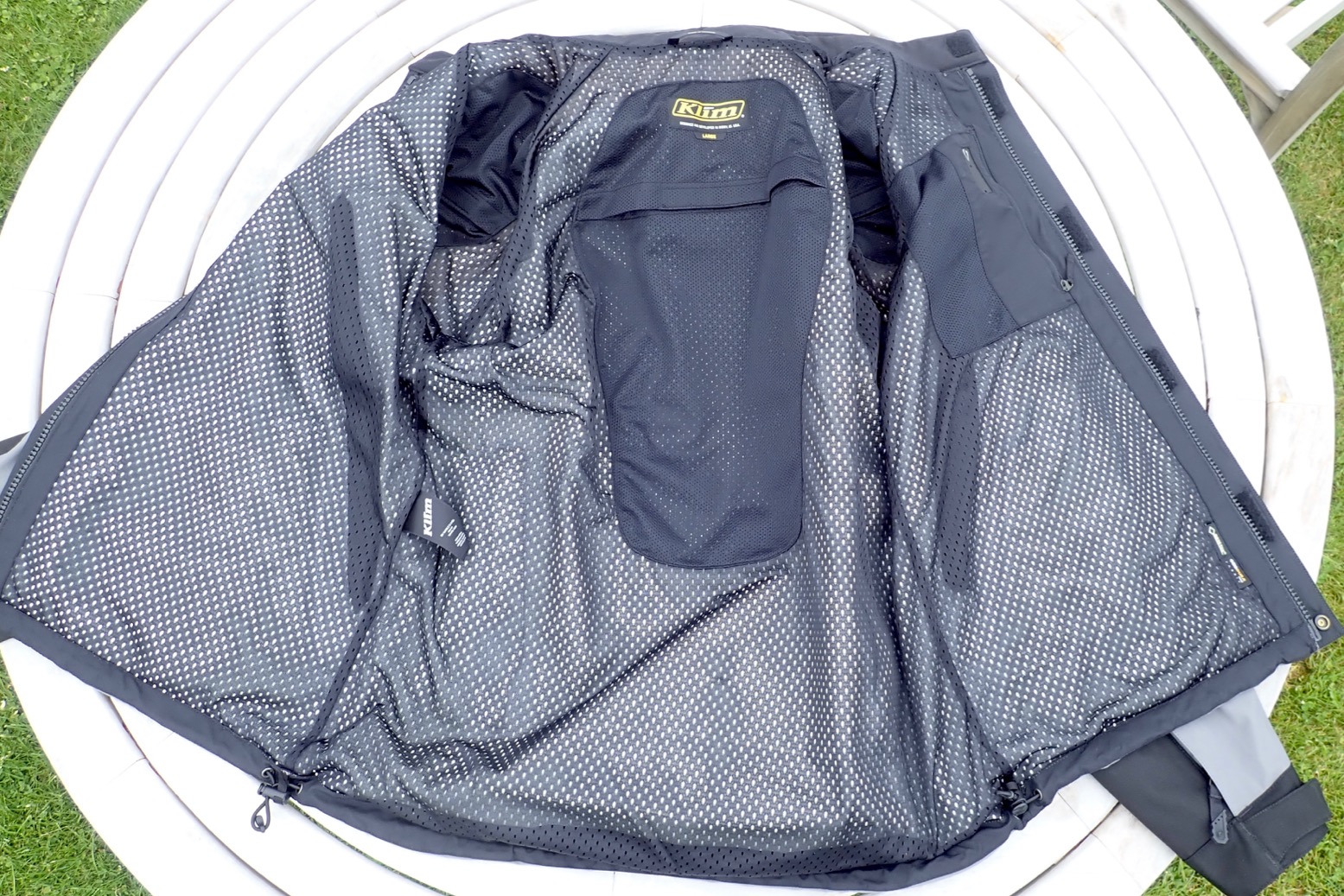
They’ve added lower arm vents to the Traverse II which I’m not convinced are that useful when you can just open the velcro cuffs. The rationale is that all vents enable you to keep cuffs, front zips and other adjustments closed so armour doesn’t dislodge too much when needed. Although I rarely use it, it’s good to have inner pockets for optional elbow, shoulder and back armour.

klimpox
OLYMPUS DIGITAL CAMERA

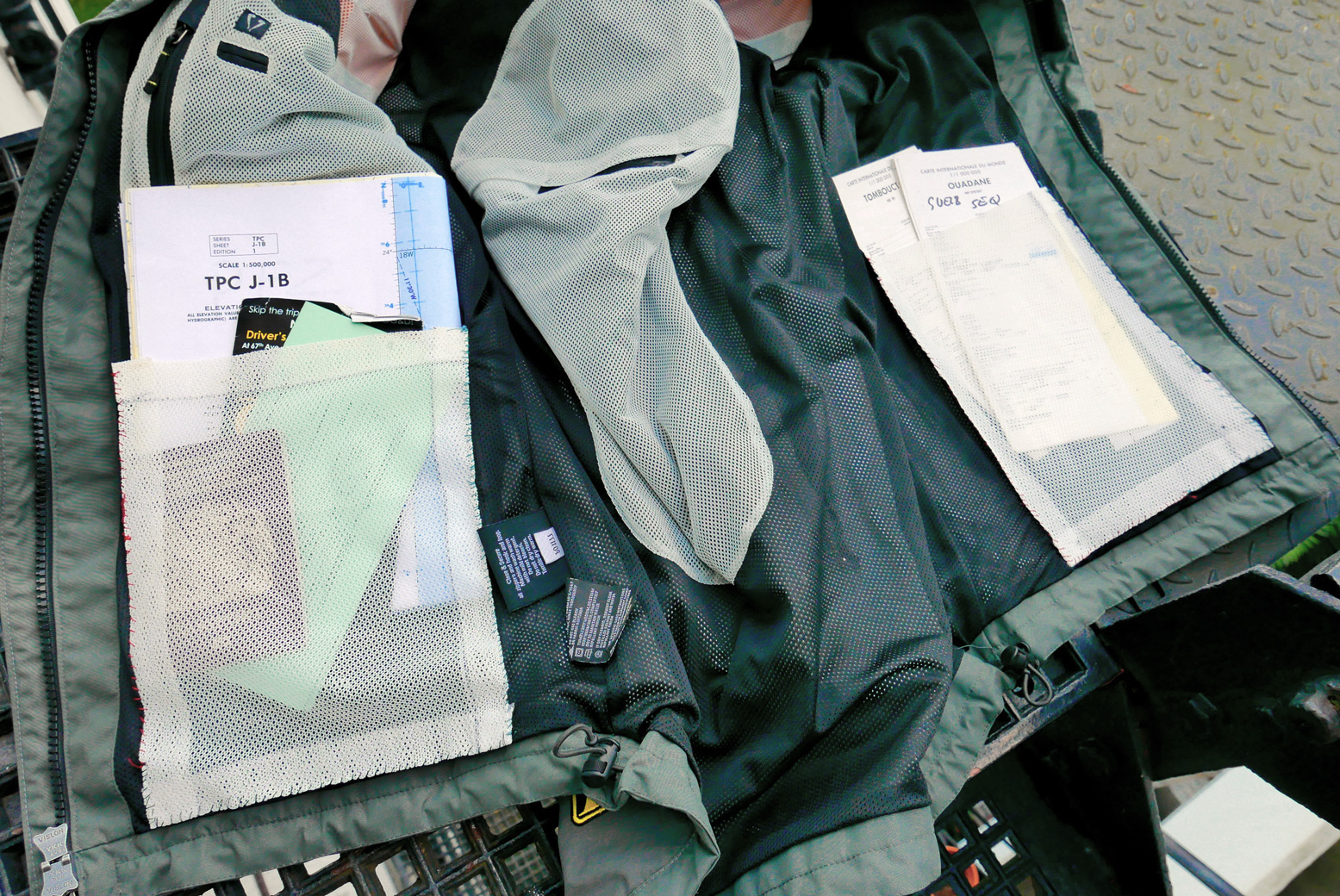
Inside there’s the same lightweight mesh liner while will support the addition of some mesh drop pockets, as I did on my Overland (left). Or, you can use the rear vents to access all the space between the mesh and the shell.
In large it’s a snug fit on me with not much room for too many bulky layers, but that’s what a good heated vest is for. For that, I found the arm-cinch straps on the Overland were good at pressing the heated liner down on to the arms for added warmth. If it’s a long ride you can do as much with elastic or straps.
Other than that, I much prefer the slate grey and nearly black colouring, even if reflectivity has taken a back seat on the Traverse II. Looking forward to Traversing some miles with testing downpours.

Sadly, in March 2020 I left my Traverse 2 in a hotel in southern Spain for what was to be a ride back from Mauritania a few weeks later. That didn’t work out then Covid struck. A year and a half later I doubt I’ll see my T2 again. I am sad.

I’d consider buying the redesigned 2020 Traverse GTX (left). It also looks smart but now simply has pit zips for vents so offers much less flow-through, but less leakage potential too. After a couple of seasons with a Mosko Basilisk then a much lighter Mosko Surveyor non-membrane softshell, I bought a Traverse GTX.

OLYMPUS DIGITAL CAMERA

Review: Aerostich AD-1 Light Pants

Updated 2025

aeroferi

Tested: Aerostich AD-1 Light overtrousers.

Where: Spain, Morocco, France, Ireland, Morocco and Spain.

Price: $367 $427 from Aerostich

image.png

Weight 1220g + armour. Available in grey, black and tan.

See also: Rukka PVC onesie.

aeroad1

What they say:
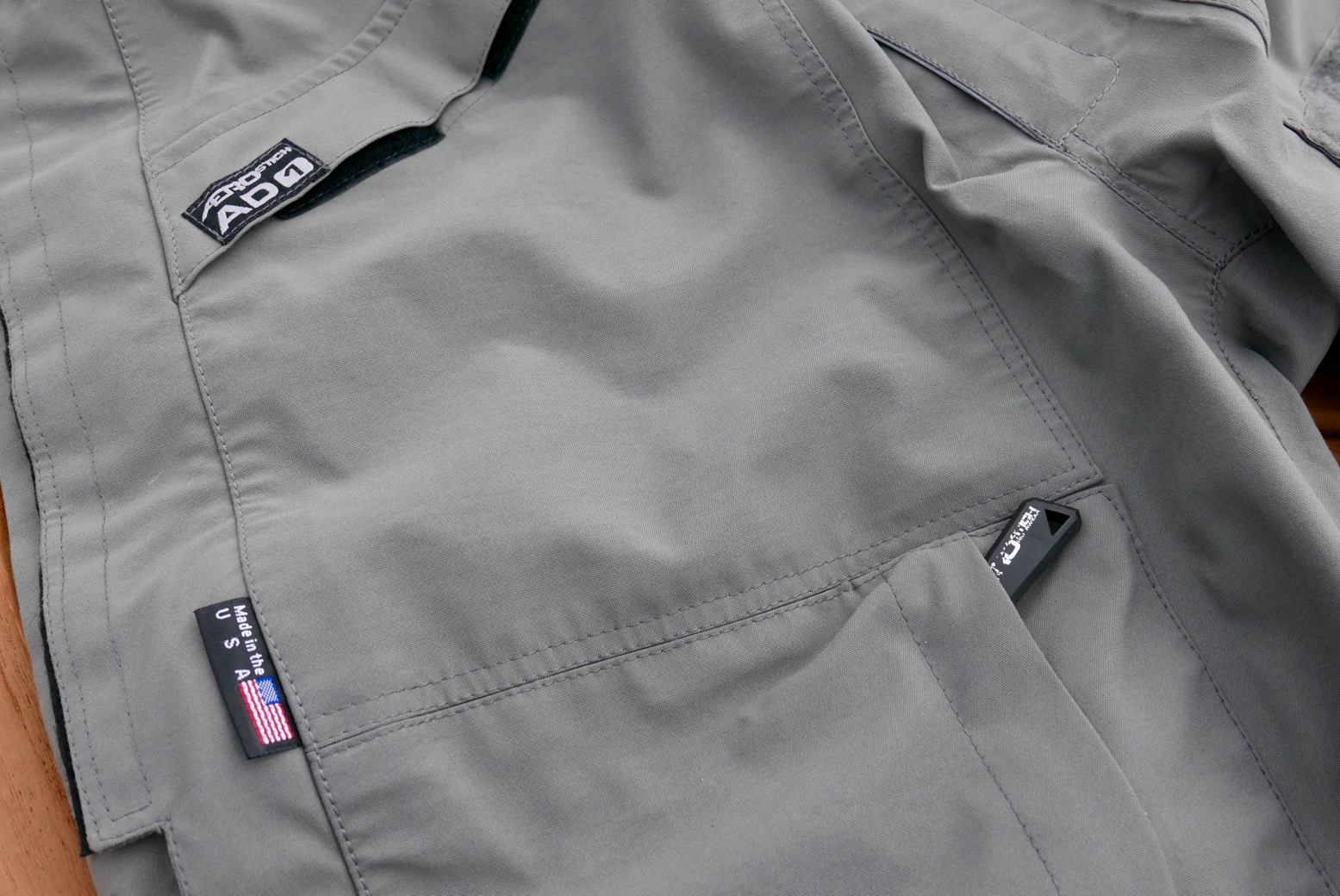
Perfect for dual-sport, adventure, touring and daily riding. Fully seam taped, unlined, HT200D Nylon GORE-TEX® jeans-cut pant with full length separating side zips inner and outer weather flaps to help the pants go on and off fast yet keep rain and wind out.

tik

• Usual excellent Aero taped-seam quality
• Dead easy to put on and take off
• The right amount of useful pockets
• Great contoured cut; don’t feel bulky
• Breath well and waterproof so far
• Long, but OK because ankle can be cinched in
• No complicated washing requirements

cros

• Quite pricey from the UK
• Sold only via Aerostich USA
• TF3 armour pads too bulky (others available)
• Bulky to stash when not wearing, but isn’t everything
• Need to be hot-ironed or tumble dried to revive the DWR

aerowaiter
aeroadd1

Review
About time I reviewed my Aerostich AD-1 Light pants. They’re pitched as lighter weight 200D Cordura Gore-tex overtrousers; less stiff to suit the occasional rider rather than ice-road commuters who’ll want Dariens or Roadcrafters in heavyweight 500D; two names which helped make Aerostich’s name in the US among Iron-Butt long-haul pros. Riding hard, fast and often, a 500D Roadcrafter is the best thing for 85-mph slides down the highway.
But who does that any more? Indeed, unlike many riders it seems, I rarely wear overtrousers at all, unless it’s actually pouring or very chilly. I don’t mind getting wet legs if the end is nigh, but when it isn’t I like the fact that I’m tucked, zipped, studded and velcro’d into my AD1s. Strict trademark laws make casual use of the V-word forbidden in the US. Jeez – and I thought I making a quick joke! Looks like I guessed right: in the US they must say ‘hook-and-loop’ which rolls off the tongue like a mouthful of old wool.

aeroad1 - 9
AeroSizingCharts

On me the AD-1s fit is just right: comfy and unobtrusive – as high praise as you can bestow on motorcycle clobber. You don’t feel like you’re schlepping around in a pair of baggy, swish-swooshing bin bags. The curved cut of the double-stitched seat and knees all help, and Aerostich do go out of their way to give you more than just S, M, L and XL. With their detailed sizing chart (right) you have little excuse to not get the right fit.
No complaints with breathability or waterproofing either – legs don’t really sweat or get cold. But when they do, one of the best things is with the full-length side zips the ADs are easy to put on and take off; a big incentive when you really ought to pull over and do one or the other, but don’t want to faff about or risk tripping over, banging your head on your rocker cover and waking up in a hospital corridor. 

aeroad1 - 2
aeroad1 - 6

What you get
I chose my ADs in ‘long’ to get right down over the boot. They have two-way 47-inch zips right down the outside of each leg, so if you want to vent you can modulate down from waist or up from ankle (or just use Twitter like everyone else).
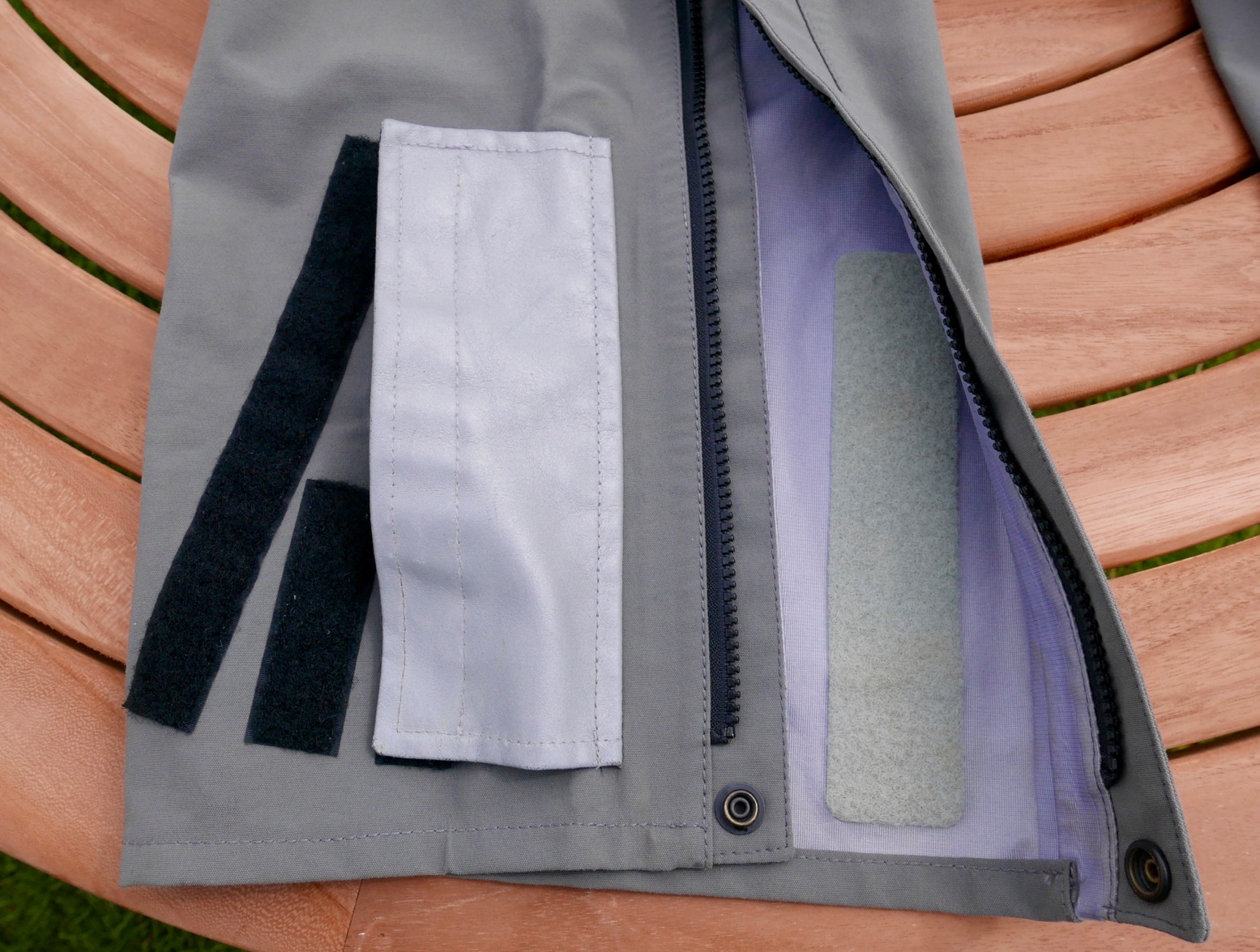
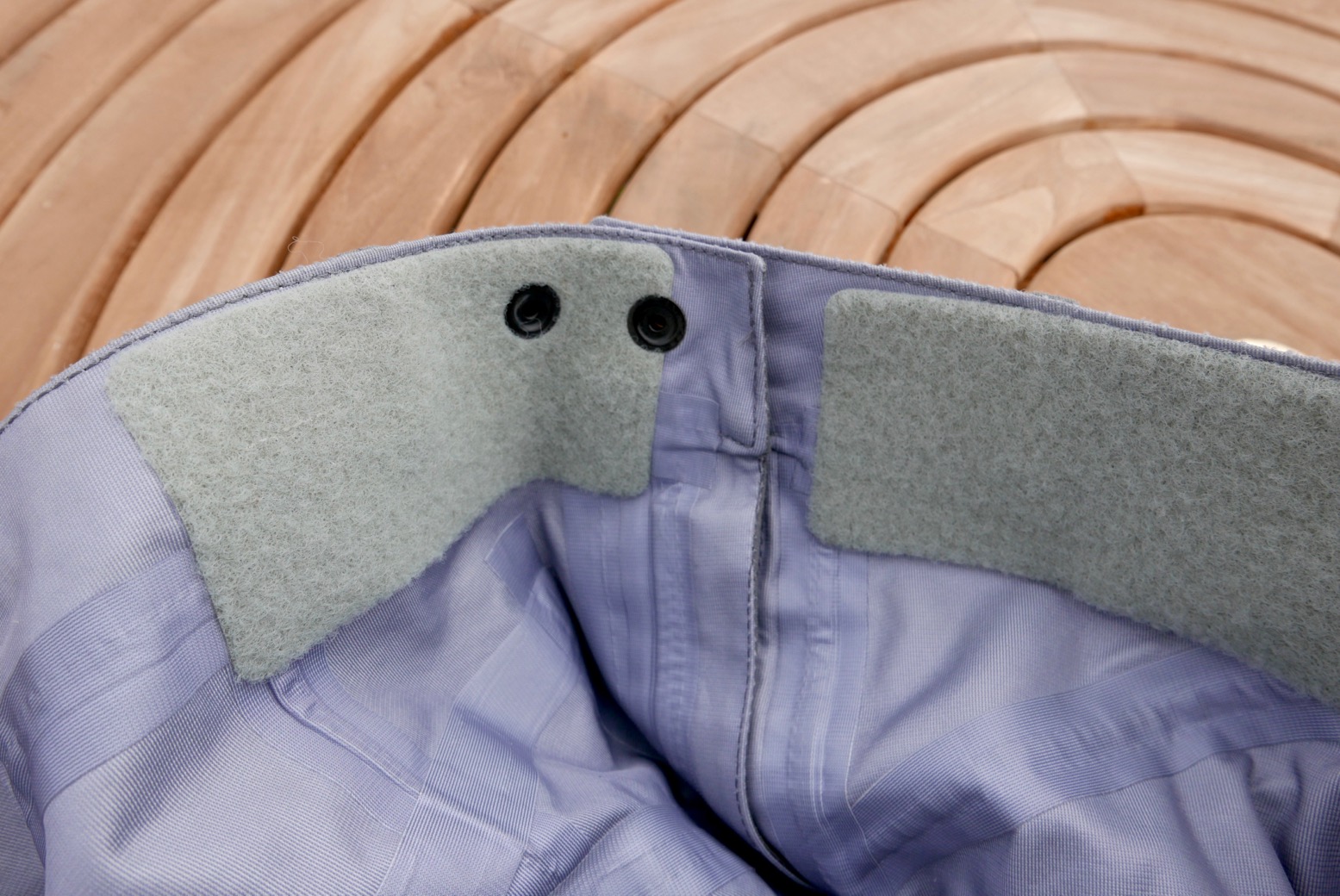
At the top you can also reset the waist circumference with studs by an inch on each side (above right). I have my 38″ Ls on the bigger setting and there’s a short elastic triangle at the back to take up the slack when lunch catches you with your trousers down. The zips have a full length rain flap of course, and the ankles have a big reflective panel (above left) allowing you to pull them in over boots or whatever. This is also effective in taking some of the 1220-g weight off the knees, especially as they’re so long (on my 38 Ls the inside leg is 34″). I wish my Klim Outriders did that (before I got it done myself). This support also avoids the need for braces.

aeroad1 - 8

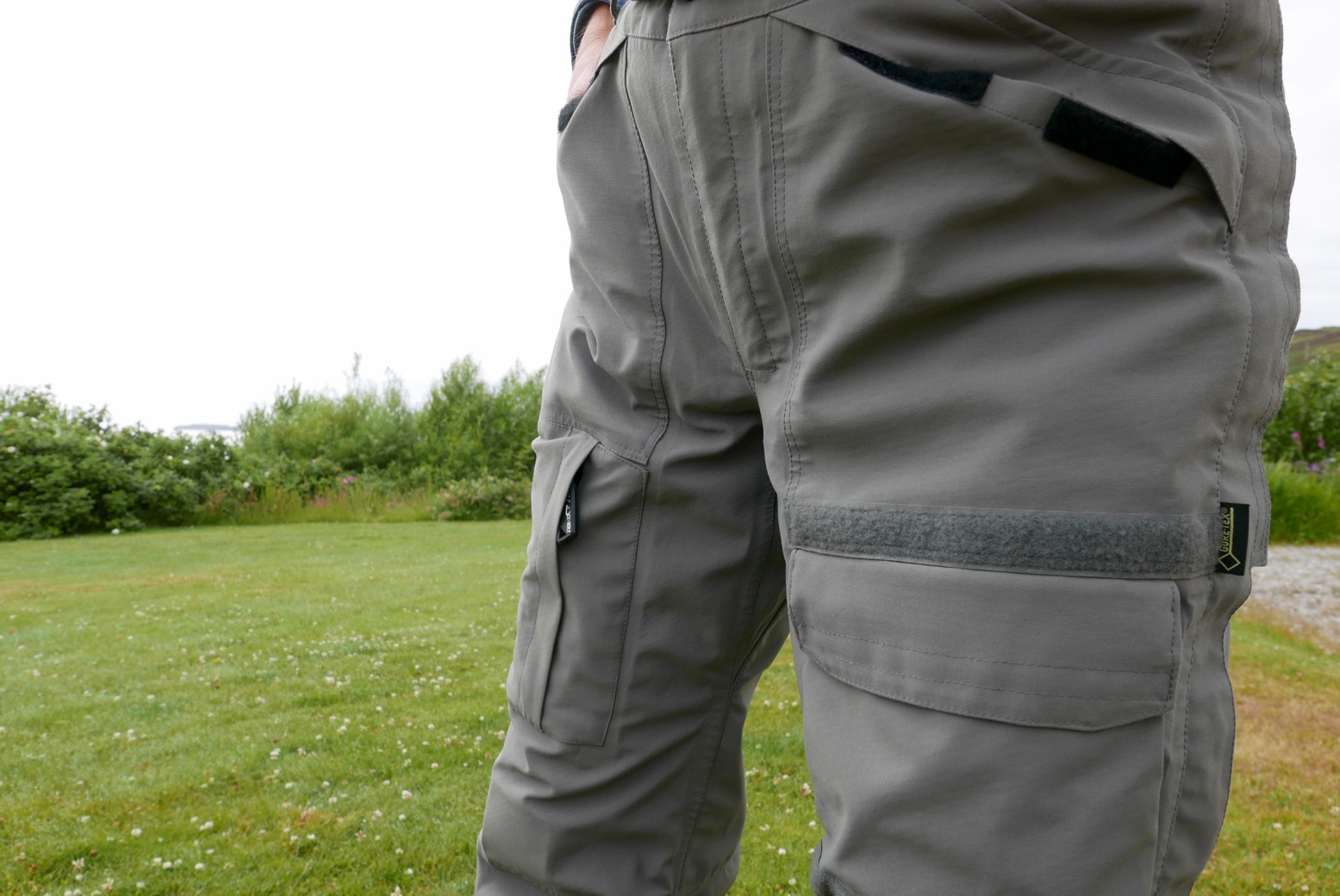
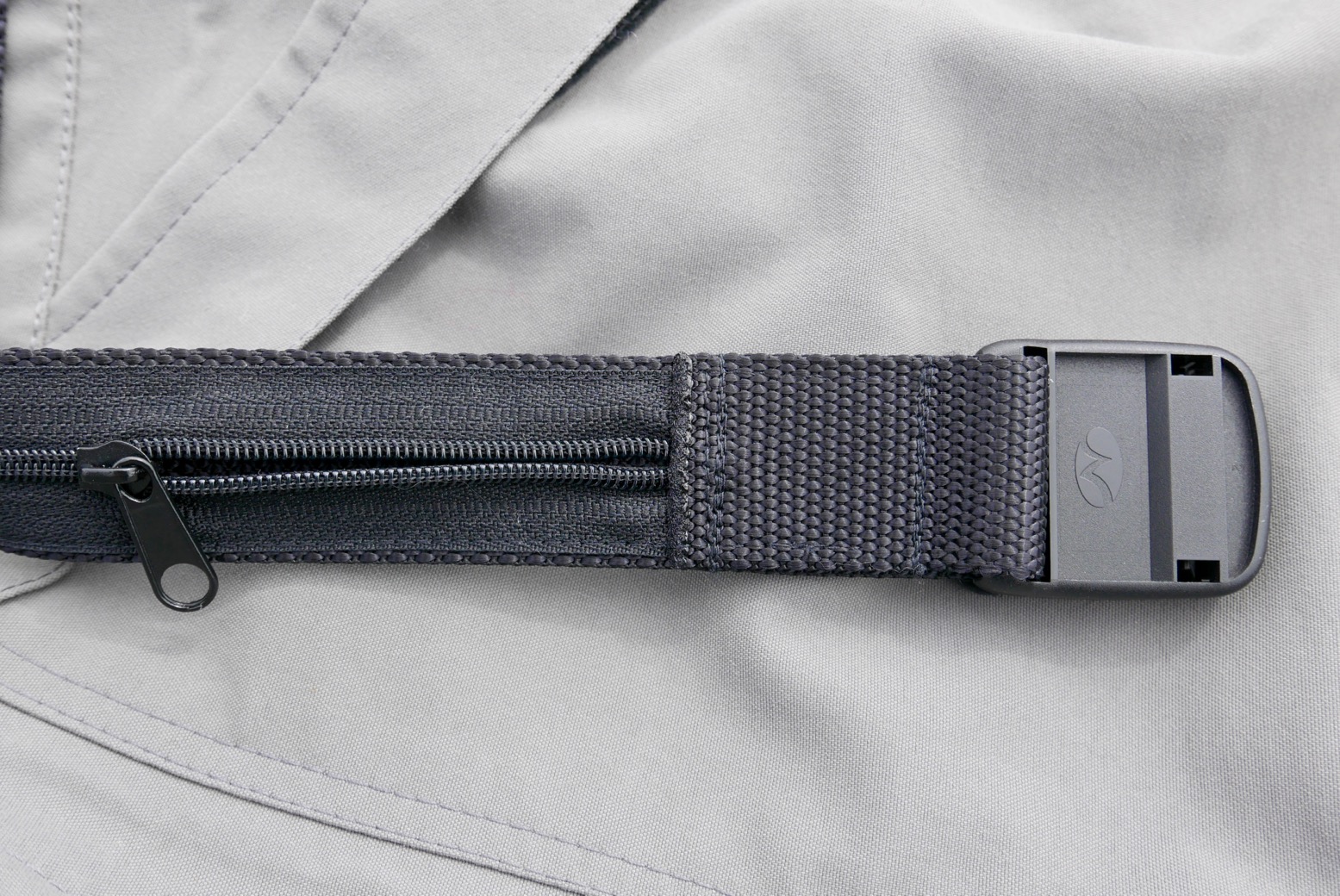
This is Aero County, Minnesota so you know there’ll be a few pockets knocking about. Left thigh has a 8 x 7-inch velcro™ flap pocket with more v*****™ over the top to take a map pocket. On the other thigh is a same-sized pocket with a water-repellant side zipper. At the hips are two more velcro™ flap pockets and there’s another v-free open pocket at the back, plus a cunning, easily missed SAS-style zipped stash belt (below).

tf33
kor-mr

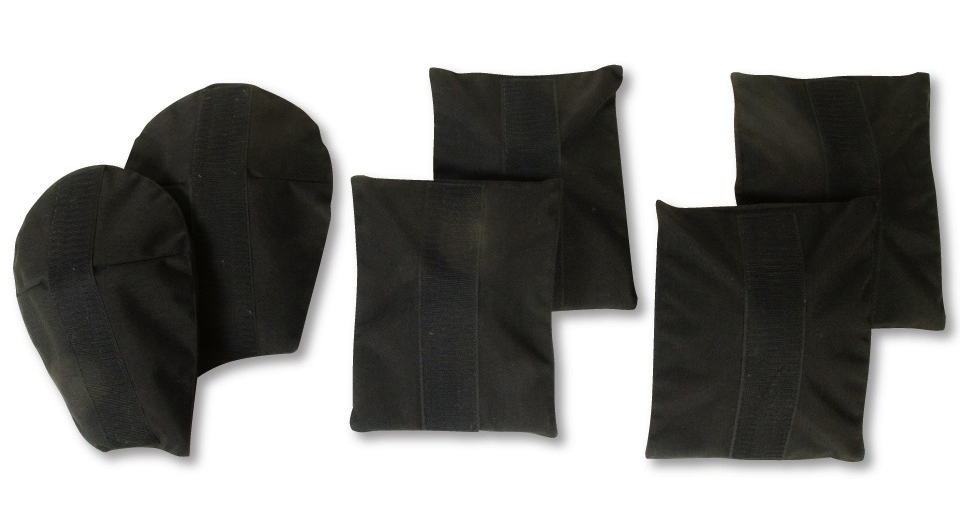
I’m not a great fan of the bulky TF3 Aero-armour (left), even if it might be technically better than slimmer examples like D30 (right) which will attach to the velcro™ inside the knee, or ForceField lattice armour which won’t. Knee pads are handy for kneeling by the bike of course, not just crashing. There’s more you-know-what™ along the sides of the waist hem and inside the shins, for more armour perhaps.

WI-map
aerojetta

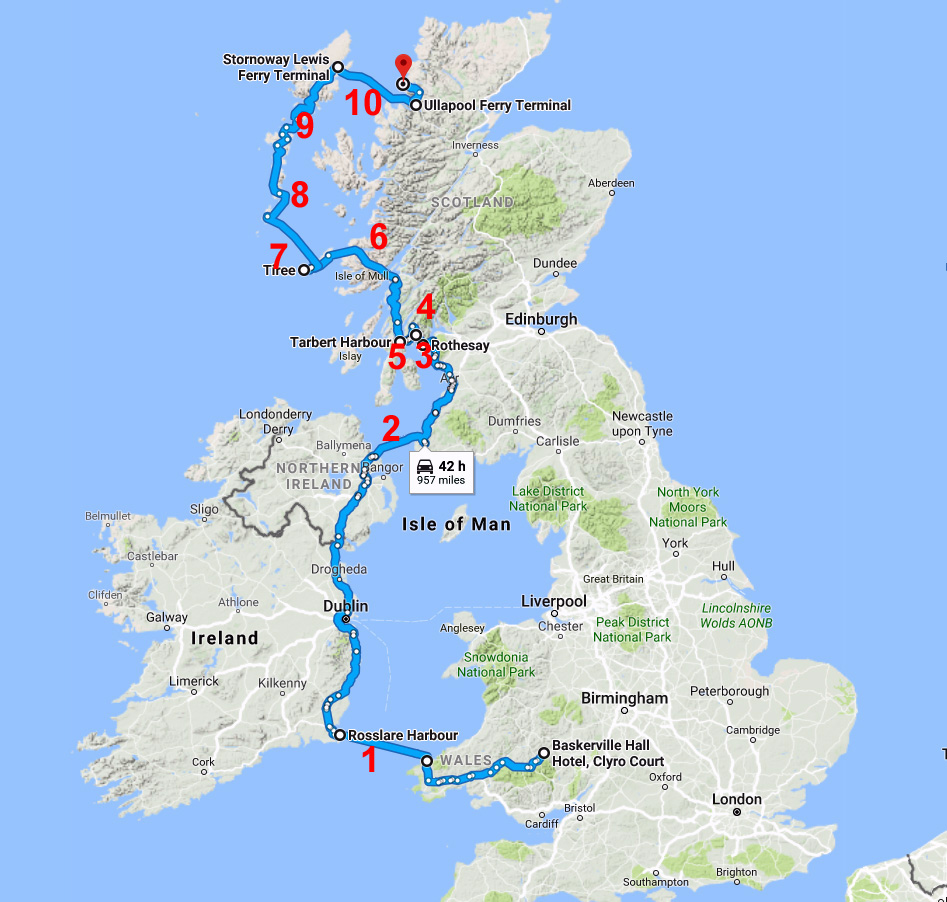
Recent trips have included coming back across close-to-freezing then rainy Spain one December, a dawn-to-dusk mid-summer ride up the left side of the British Isles where in June the chances of rain were high, a freezing ride across France in late 2021 on the Africa Twin,and see below 2024.
On all occasions the AD-1s did the job unobtrusively, keeping the chill out, the rain off and the stuff in [the many pockets]. A classic unfussy and functional design as you’d expect from Aerostich, and quite probably comparable with any other high-end membrane rainwear out there.
Update 2024-5
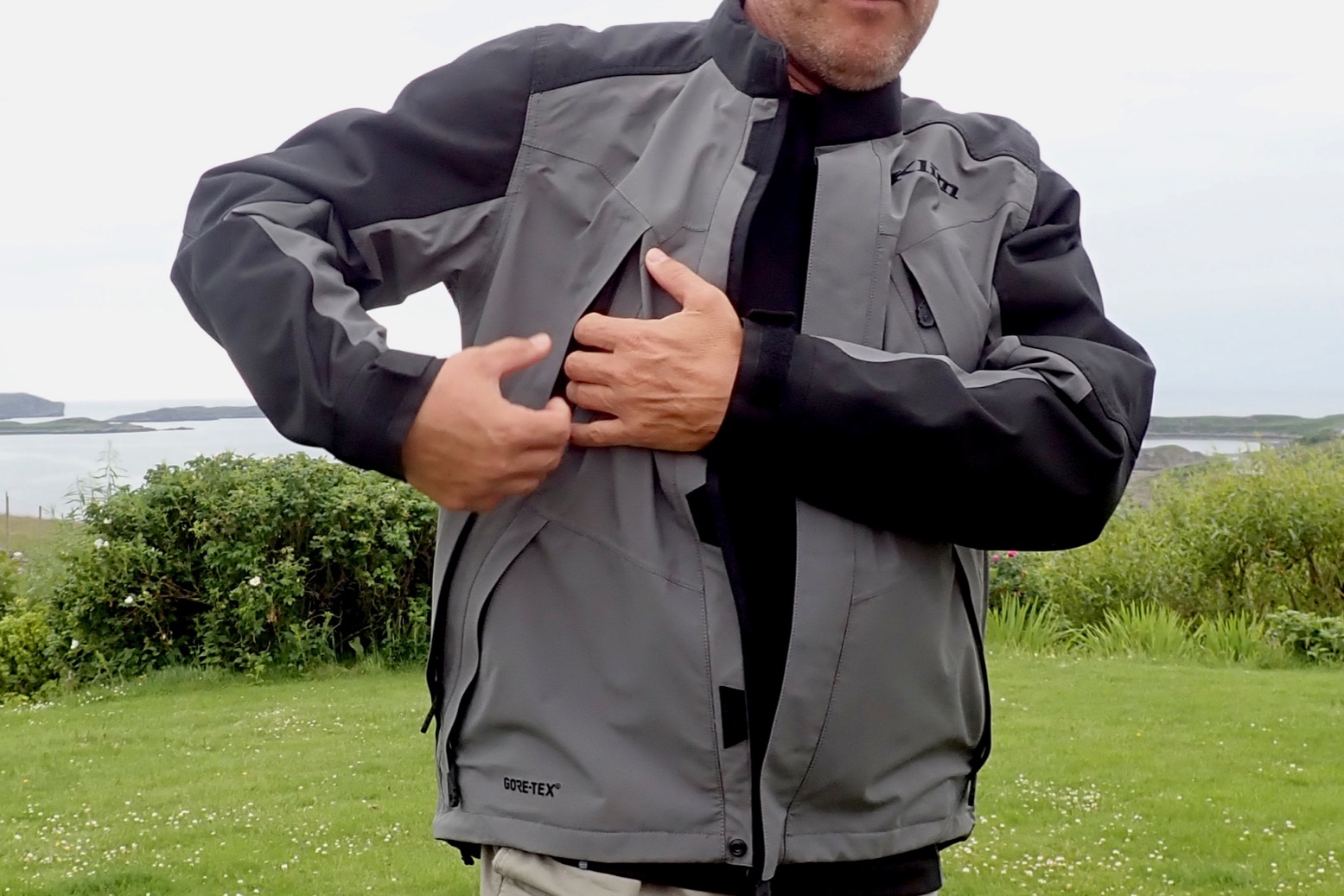
After ditching my well-worn Klim Outriders and waiting for some ASpec Linesman pants, I wore my much underused AD-1s (on bare legs) for a fortnight’s riding in Jan-Feb in the mountains of Morocco. It was expected to be a chilly trip up to 3000m and down to 0°C some mornings, but was never that cold in the sun (it was in fact the warmest February ever in Morocco and RTW).

I was surprised how comfy and unobtrusive the AD-1s were. I never felt like I was wearing heavy nylon trousers. Part of this may have been good quality Gore-tex breathing away quietly, but more likely it was those close ankle closures which lifted the weight off the spacious knees while riding, reducing drag when getting on and off. I’m not sure they would have been so comfy in March, or if I had to get physical, but at least you have a full-length zip down the sides so can open them out like a dress and vent yourself into a trance. Having now tried the AS Linesmans, I prefer AD1s for what I do.

October 2024 I rode my 450MT down across Spain and left it in Morocco for the winter. February 2025 was a lot chillier than 2024, and for the first time in a decade, I wore my AD1’s over my trousers every day, even down in the desert. Like I say, I barely notice I’m wearing them. Normally I sell stuff to try new, different or better. But I’m holding on to the 10-year-old AD1’s until they’ve had it.

Thanks for the pants, Aerostich

aerolderie

Tested: Adventure Spec Linesman jacket

jak - 4
linesman-jacket-01-front

Tested: Adventure Spec Linesman softshell jacket

Where: 1600km off-road tour in southern Algeria, a few days in Morocco in April and another month riding in Morocco in November.

UK price: £249 £349
Supplied free for testing by Adv Spec

Weight: 1011g + armour; size tested: Large (me: 6ft 1in/186cm • 205lbs/93kg)

See also
Mosko Moto Surveyor
Klim Overland and Aerostich Darien
Klim Traverse
Mosko Moto Basilisk

Additional photos by Dan W, Dave K, Karim H and Robin W


tik

• Light and comfy to wear
• Stylish, low-key design makes it wearable off the bike
• Ready for armour (not included)
• Lots of pockets, including on the back
• High collar
• Sleeves zip off
• Vertical back vents work with a daypack

cros

• Expensive now
• New colour scheme (right) looks less good than 1st-gen green
• Not that breathable; for warm conditions try the similar but open-weave Mongolia or the Atacama Race
• Don’t expect the protected feel of a fully armoured Cordura jacket


aspec

What they say:
A windproof and breathable trail riding/rally jacket reinforced with Du Pont™ Kevlar® fabric on the key abrasion zones. Reinventing the trail riding jacket, via the tracks of the Trans Euro Trail.
For decades the trail rider had very limited options when it came to riding jackets. Either big bulky motorcycle kit that was restrictive and heavy, or lightweight outdoor gear that offered little protection. It always seemed like too much of a compromise. The Linesman Jacket is the culmination of the depth of expertise that Adventure Spec has established helping many tens of thousands of riders travel untold miles around the world.

Review
In 2018 Adv Spec introduced a batch of own-branded jackets including the vented Atacama Race, the similar open-weave Mongolia and a softshell Linesman aimed at trail riders. It has been named after the volunteer researchers on the Trans Europe Trail (TET) which Adv Spec support – comparable with Touratech US’s Backcountry Discovery Routes (BDR); a riding gear outlet sponsoring and even under-writing well researched ride routes.

lineslable

I miss my old Mountain Hardwear softshell (right), left on a bus in Delhi after a couple of epic Himalayan bike rides. Back then, outdoorsy softshell was quite pricey; a stretchy polyester outer fabric bonded (sometimes via a breathable membrane) to a soft, micro-fleece liner producing a lightweight shell that’s nice and non-rustly to wear while keeping the windchill at bay.
jak - 18What makes Adv Spec’s Linesman different from an outdoor-sports softshell is the lack of a membrane (my Mountain Hardwear was annoyingly sweaty; not really breathable) or even a DWR coating. Instead you get a kevlar overlay on the high-wear or impact areas (the green parts) as well as front chest pockets which work as vents to purge through similar zipped slots on the back.

Your Linesman is not intended for tearing around Brands Hatch on you Gixxer, nor touring Alpine passes in late summer. It’s aimed at trail riders who’ll be doing their riding and crashing at much lower speeds. To make that less painful there are armour pockets at the elbow, shoulders and the back.

aspecline

If you add in a hook or velcro tab at the top, this back sleeve could double up as a bladder holder. The Atacama Race comes with this feature; however it’s done, it would be good to see it added to the Linesman, even if a useful two litres might put a strain on the jacket. It’s nice to not have to use a day pack to contain your hydrator.

aspecnoslev
jak - 1

The shoulder armour pockets thoughtfully pin up out of the way towards the collar because on the Linesman you can zip-off the sleeves. The theory is, with the sleeves stashed in the rear pouches, the jacket more wearable in hot conditions. While I’m pretty blasé about armour, I’d still rather ride with sleeves. If I’m getting stuck into a sweaty work like a tube puncture, I’d probably just take the jacket off. But I can see the value in removing them while retaining the security and utility of the pockets, perhaps on a warm TET evening in southern Europe for an amble down to the village bar. Update: In Morocco in April it was over 30°C so I did ride unsleeved and very pleasant it was too. The other two were cooking in their membrane jackets.

There are no less than eight pockets: two on the outside at the hem as big as your hand; two smaller vertical chest pockets which double up as vents (so probably not a place for your phone or wallet); two more zipped pouches above the back hem which you can just reach with the jacket on; and two huge and very handy mesh ‘drop pockets’ inside (below left). I find these most useful and have added mesh versions to my other riding jackets; an easy and secure place to stash gloves of maps without having to interact with zips apart from the front one.

I can see the thinking behind water-resistant YKK zips on the front pockets/vents, but unfortunately this makes them too stiff to operate one-handed on the move and as you can see left on the top zip, the press-seal doesn’t close up fully to keep water out.
Seeing as these are the more-used zips, I’d prefer the conventional, freer-flowing zips as used on the rear vents and pockets (the lower zip pictured above). After all, the main front zip is the same. This ease of use applies especially to the front chest pocket/vents which are handy to open or close on the move while leaving the rear vents open. Like on my Klim Overland, these rear vents are inaccessible with the jacket on, let alone on the move; it’s often easier to ask another rider to zip you up or down. If it’s raining valuables are better off in a waterproof pouch while you either get a bit wet or pull on a mac.

What did the others wear in Algeria?
I have a rather casual sense of dress in the desert and prefer not to feel hot or sweaty. I don’t like being weighed down or in-your-full-face lids or synthetic legwear and I don’t mind being cold for a short while. I wore: TKC Baja boots, Klim Outrider trousers, the Linesman with a wicky/merino undershirt plus a Shoei open face. I was comfortable with these choices and unlike many, couldn’t be bothered change once at the camp.
Of the dozen other riders; 10 wore full-face MX, most with goggles; 3 had neck braces; at least 5 wore full armour underjackets over vests or jackets; 7 wore Cordura riding jackets all the time and probably with armour – the rest wore jerseys most of the time; 1 wore waxed cotton + armour; 10 wore nylon riding (over?) pants probably with armour; 1 wore jeans with armour and 1 wore leather trousers.


xr4 - 17

The sort of riding I did in Algeria added up to a half-day on the plateau highway at elevations up to 1600-m, regular gravel pistes, gnarlier soft sand and 2nd-gear sandy tussock oueds, short dune crossings, churned up sandy canyons, and wide-open sand sheet down at 500m, all with regular stops to allow regrouping and playing the sand. Temperatures ranged from freezing mornings to the upper-20s Centigrade.

klimag
forcefield

Underneath I wore a wicky T-shirt or long sleeve, either synthetic (right) or merino when chillier. That’s quite a mix of terrain, speeds and temperatures wearing similar kit; I tend to put up with short-term discomforts rather than faff about with layers. Through it all the Linesman unobtrusively coped with the occasional opening or closure of the rear vents. I wore mine with only Forcefield elbow armour (left). I must admit I’d have felt better crashing hard in a Cordura jacket, with or without armour. Softshell has a rubbery feel which would snag as you slide and tumble, especially on the road where thick Cordura abrades almost as well as leather. Luckily that’s not something I’ve done for decades and on this trip it was just the usual slow/no speed spills.

xr4 - 27

Best of all, I like the Linesman’s plain styling while not being yet more boring grey or all-black. Others, including non-bikey types, commented on the stylish, look too; something you can wear off the bike without handing over a pizza. Maybe it’s the design or maybe it’s the stretchy fabric which see a total lack of adjustability using cinch-cord, poppers or velcro. The plain elasticated cuffs and neck don’t need doing up or pinning down once the Linesman’s on. It all helps enhance the look without detracting from the jacket’s function.

jak-17

It’s probably not the only biking jacket you’d want to own, and you do wonder how durable the softshell will be after a couple of years of inevitable scuffing, but the Linesman does represent a new type of biking jacket with as much optional impact protection and storage as a typical Cordura-and-membrane coat, but more on-the-road windproofing than the fully vented jackets like Revit’s Cayenne Pro, Klim’s Inverse or Adv Spec’s own Mongolia and Atacama.

mirror.jpg