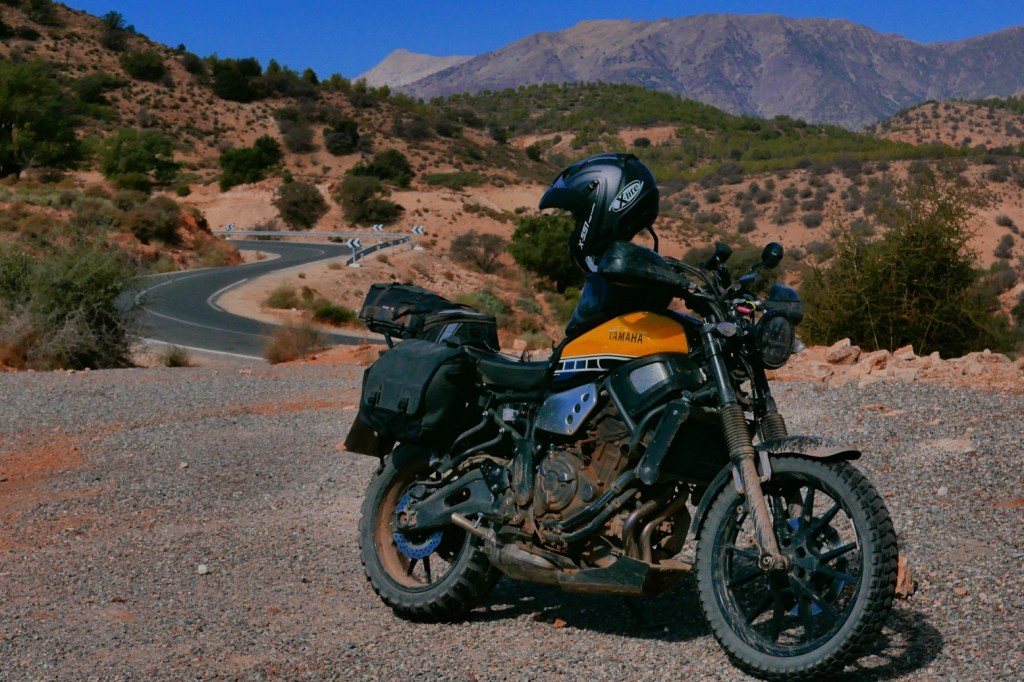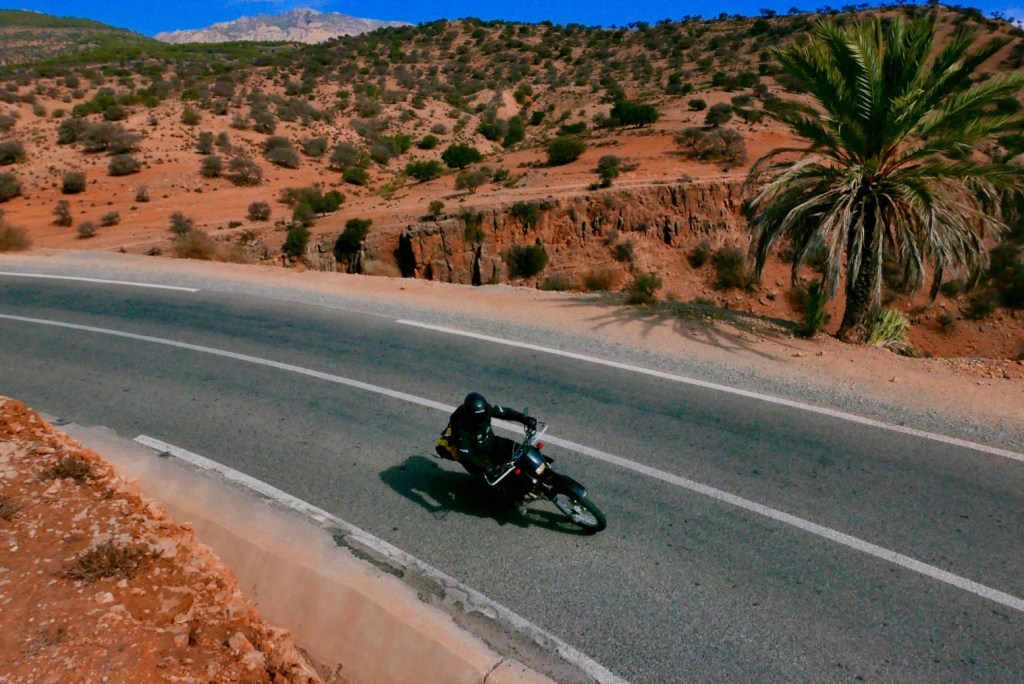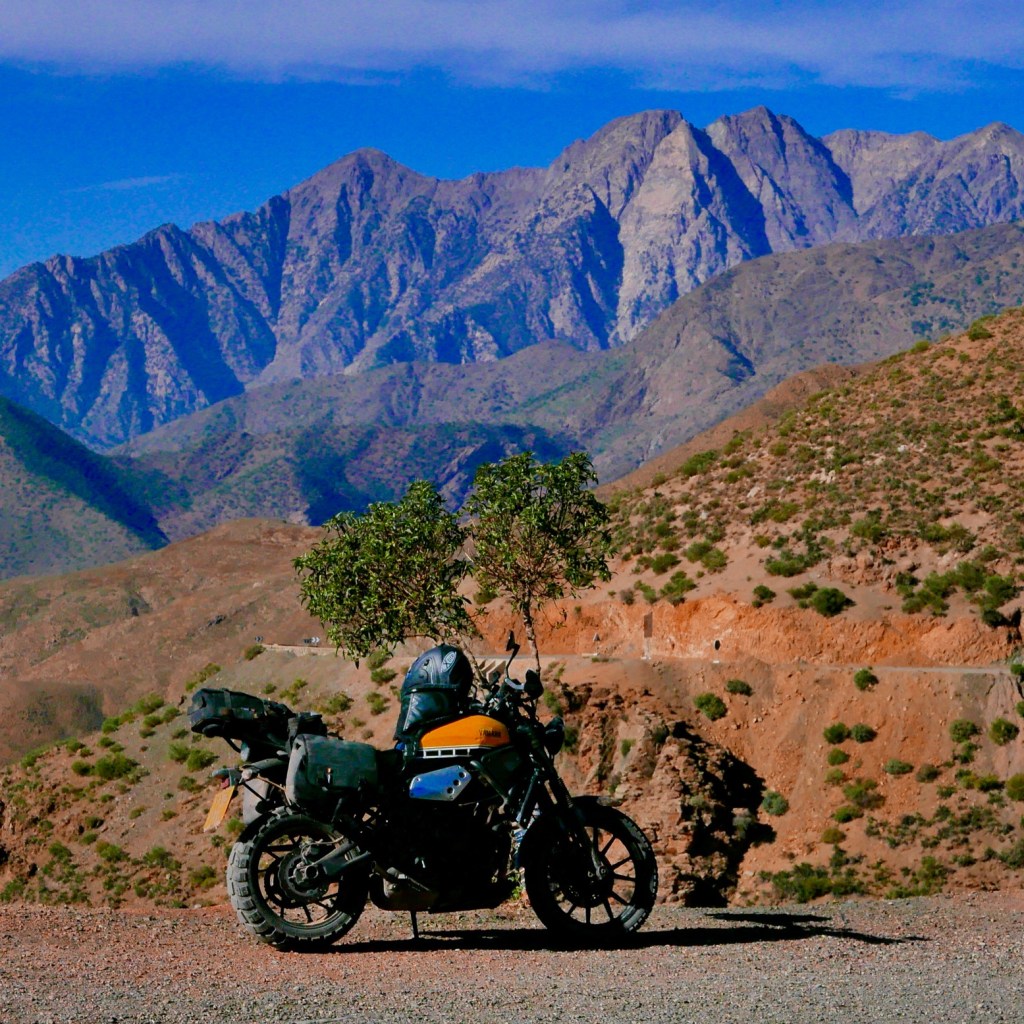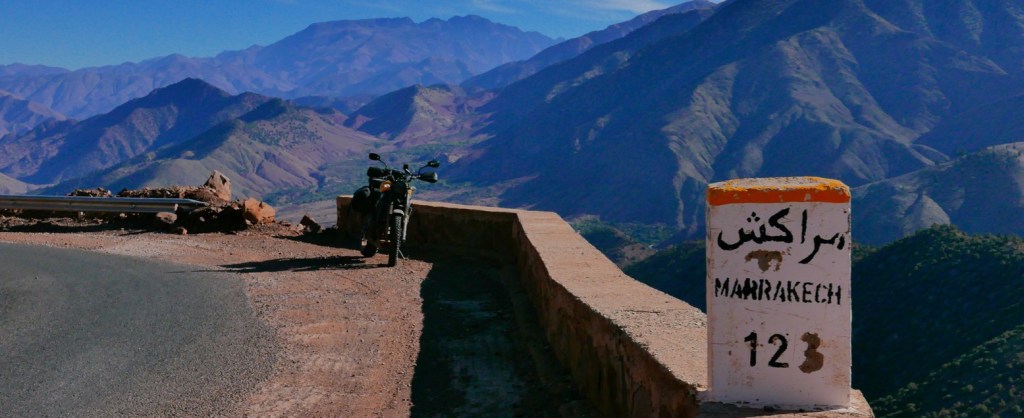
Category Archives: BMW F650GS SE long term test

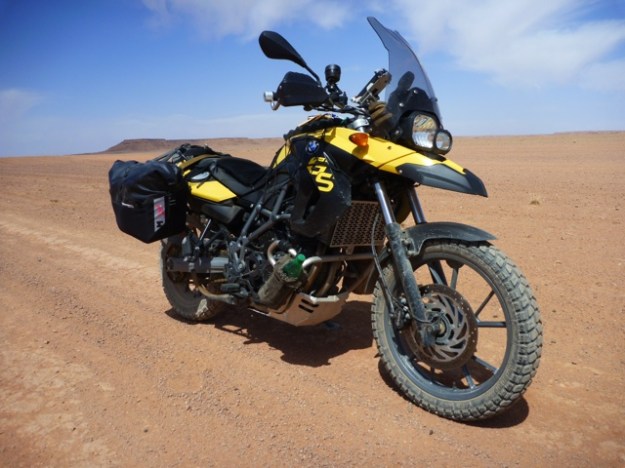
BMW F650GS in the Black Rock Desert

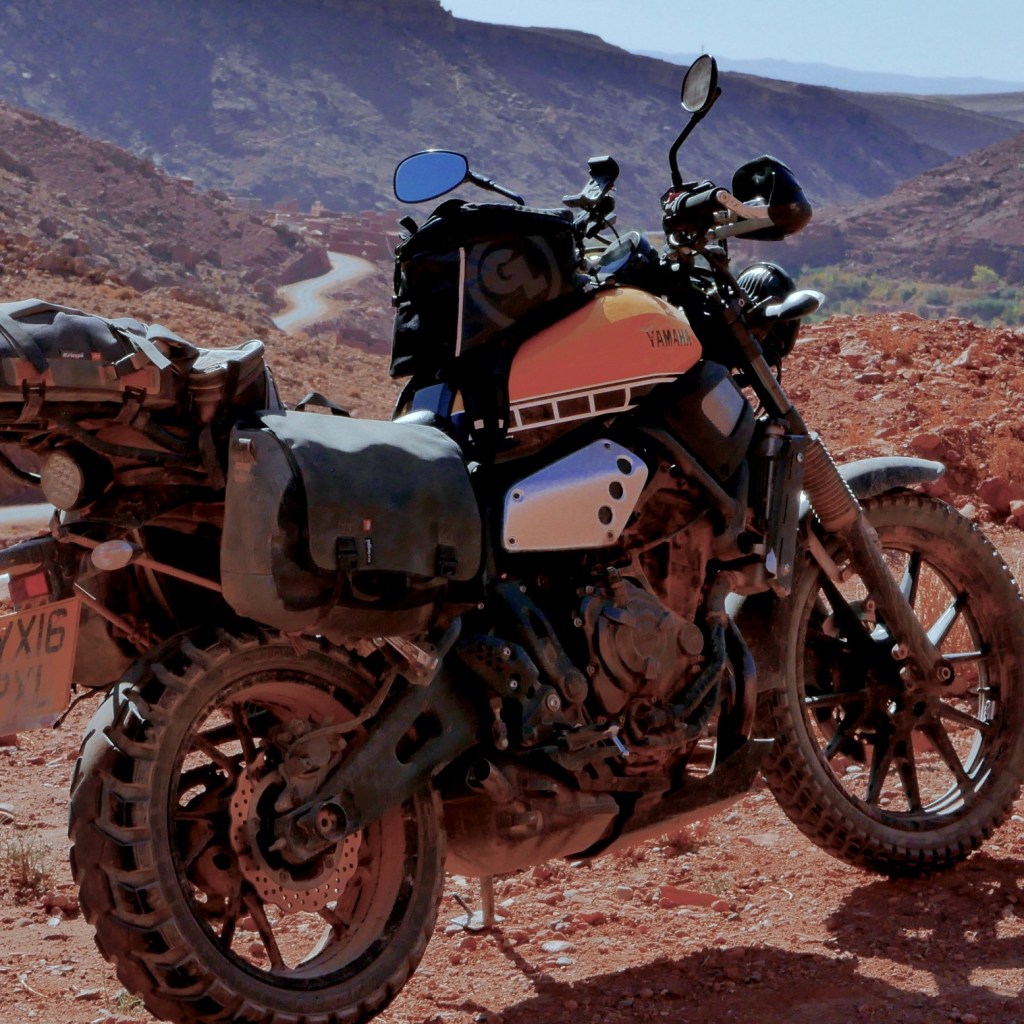
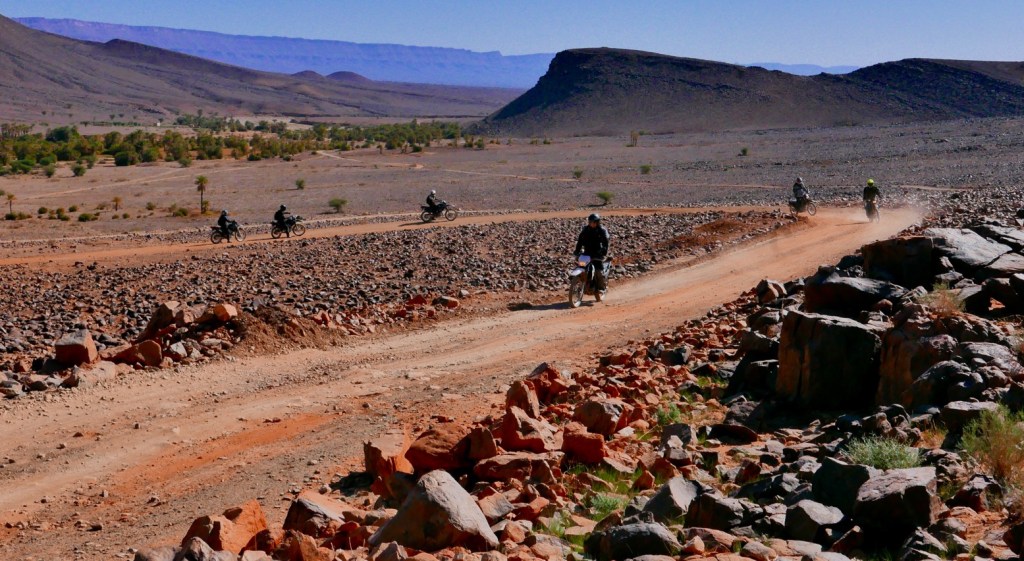
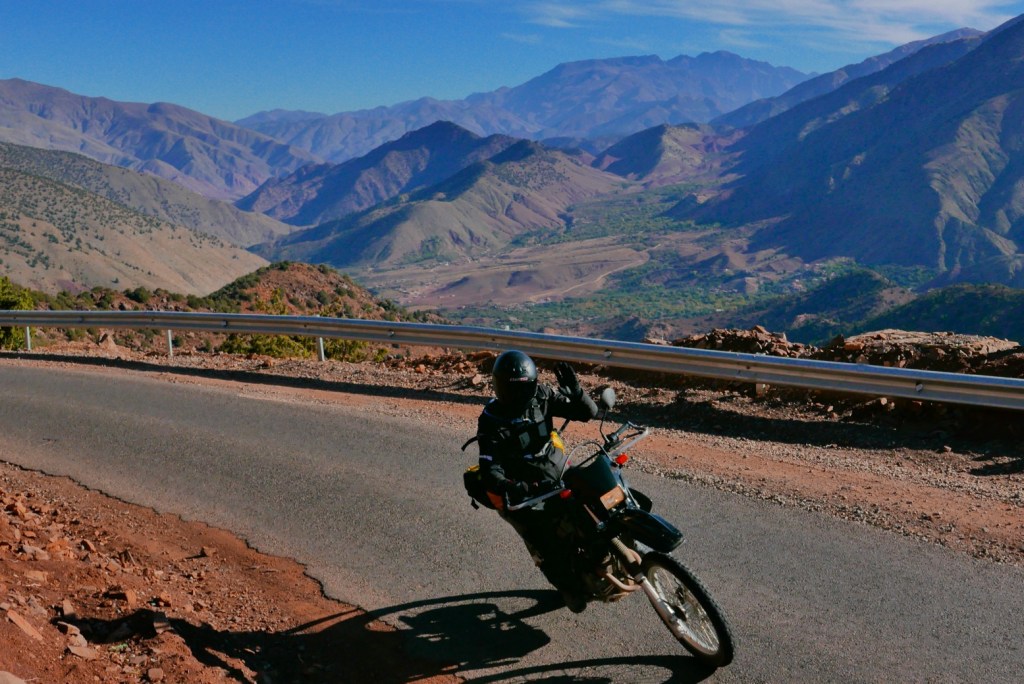
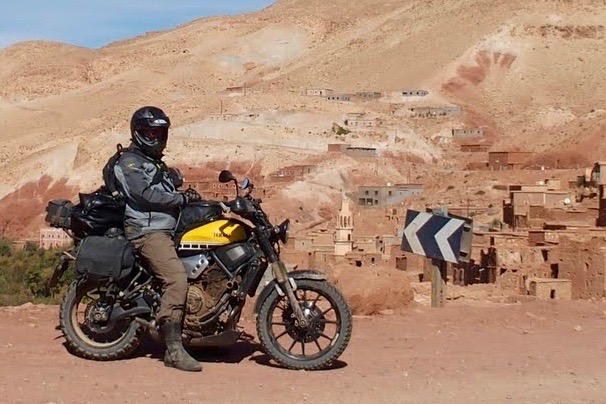
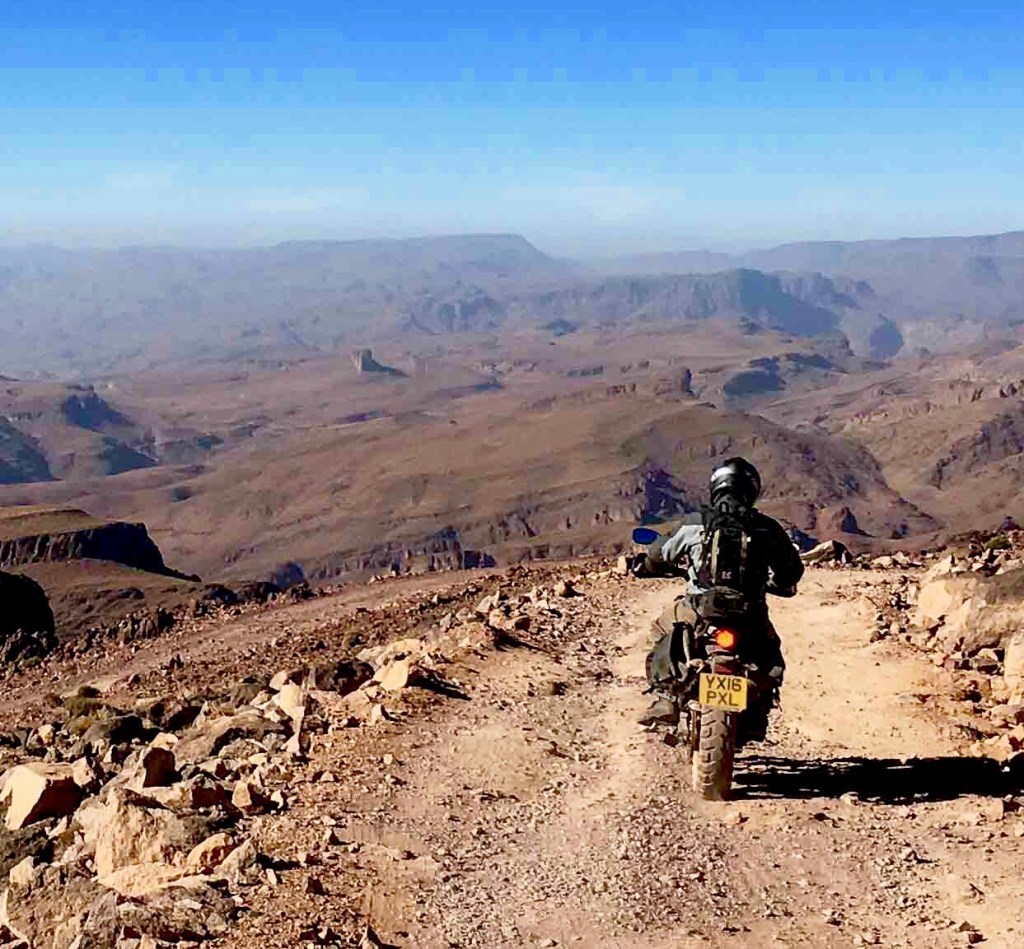
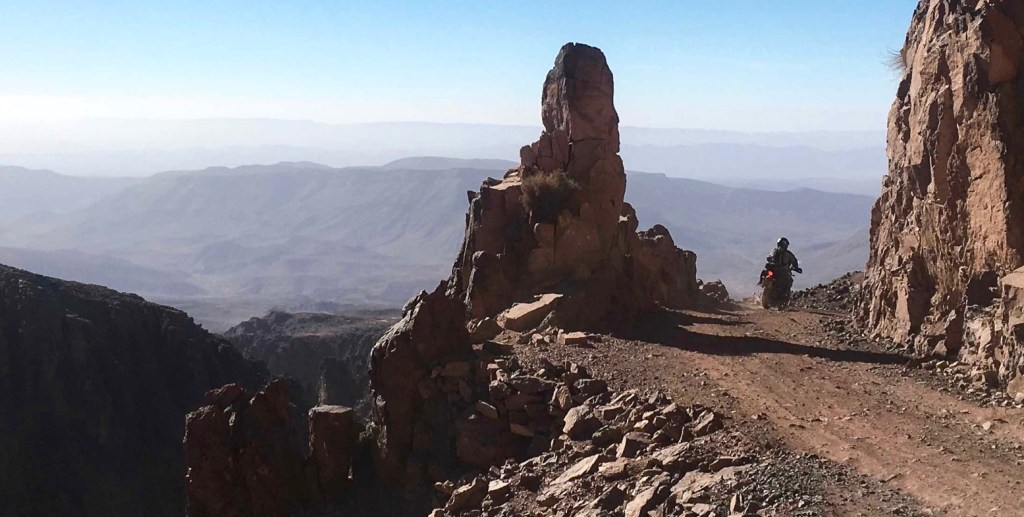
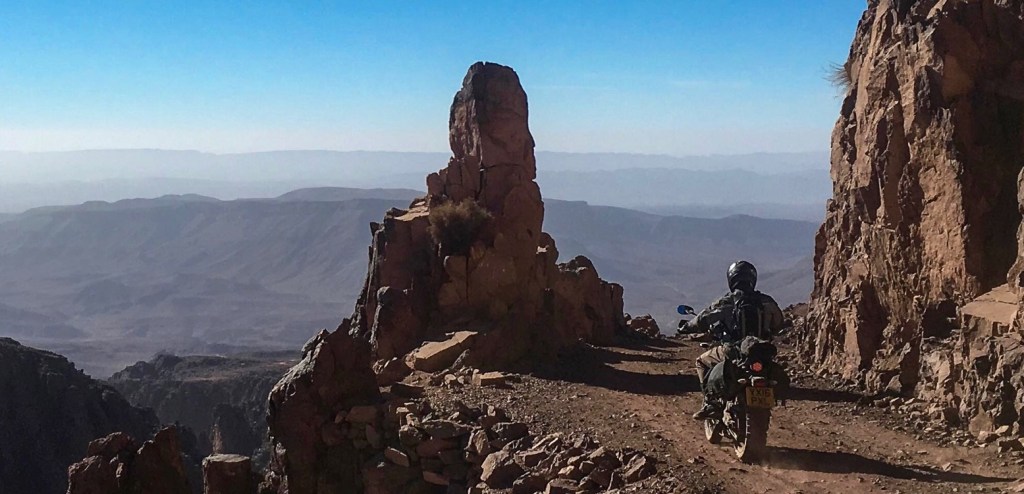
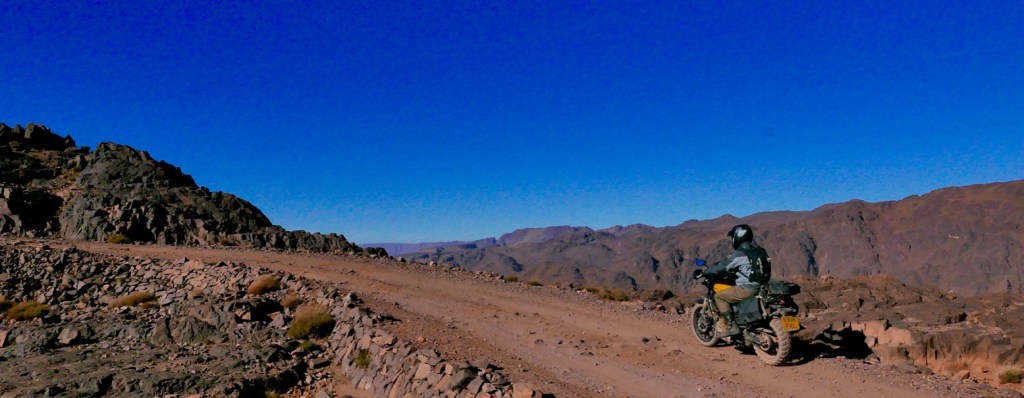
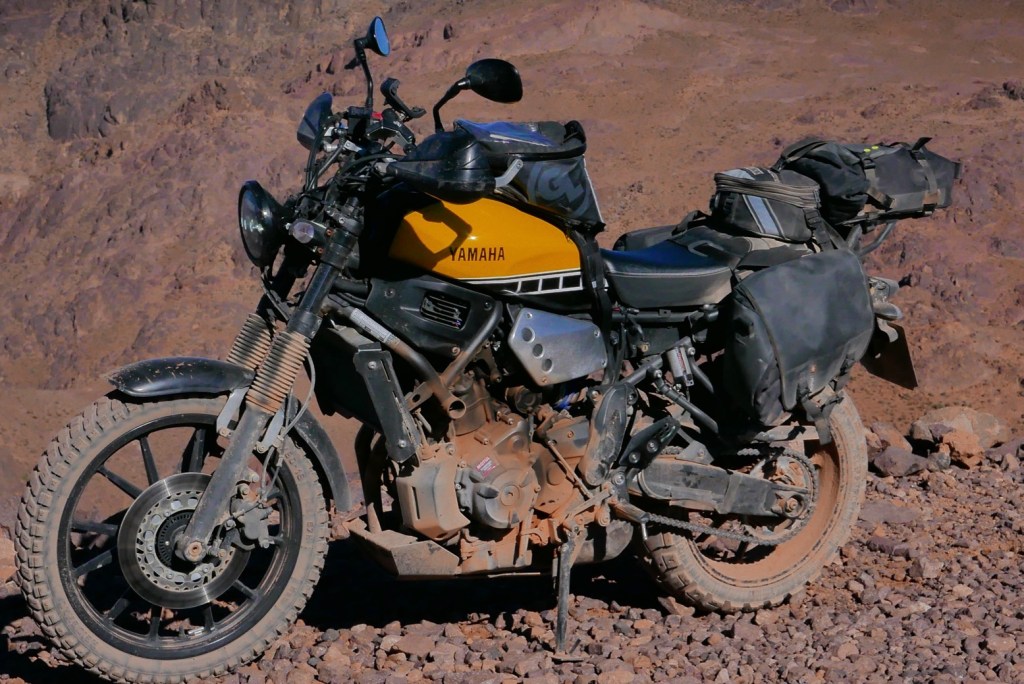
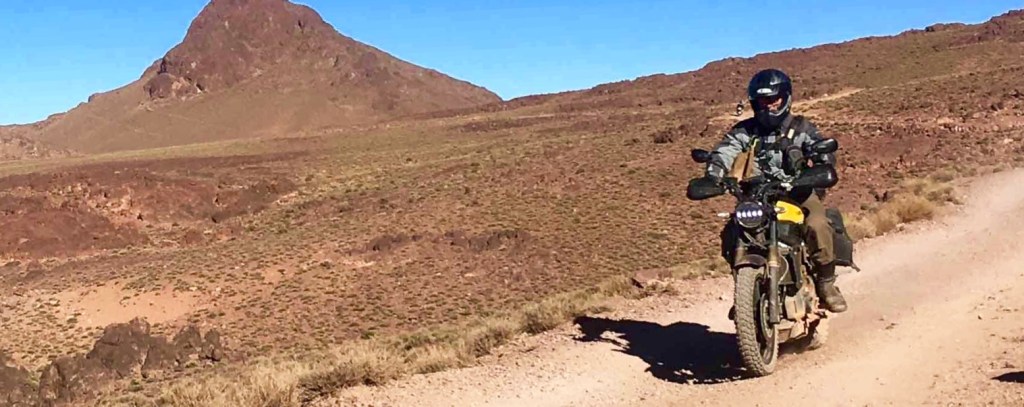
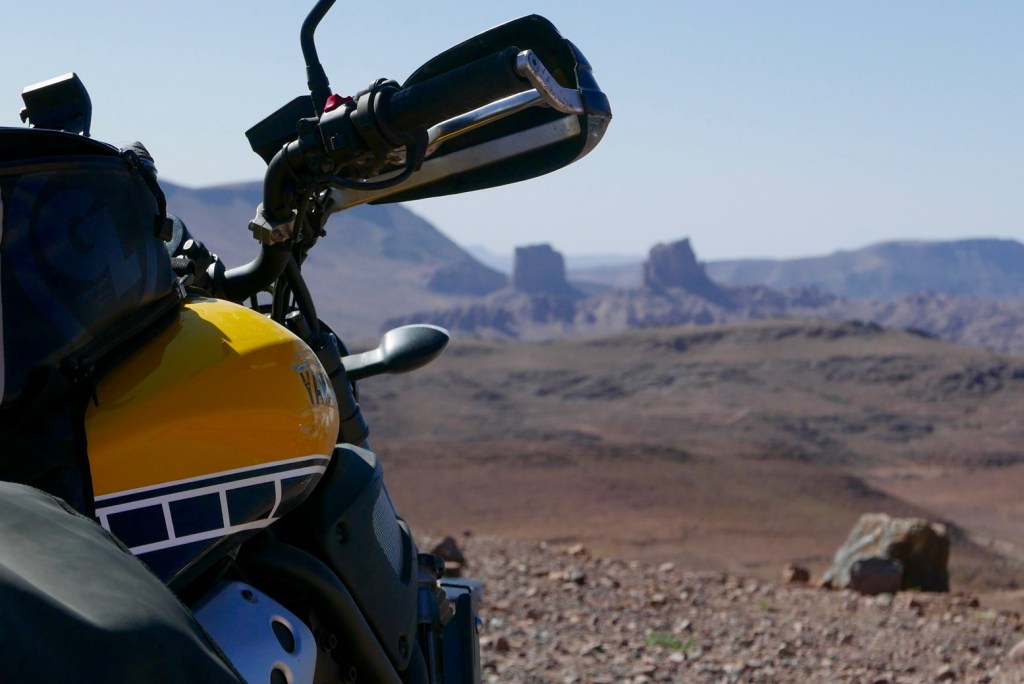
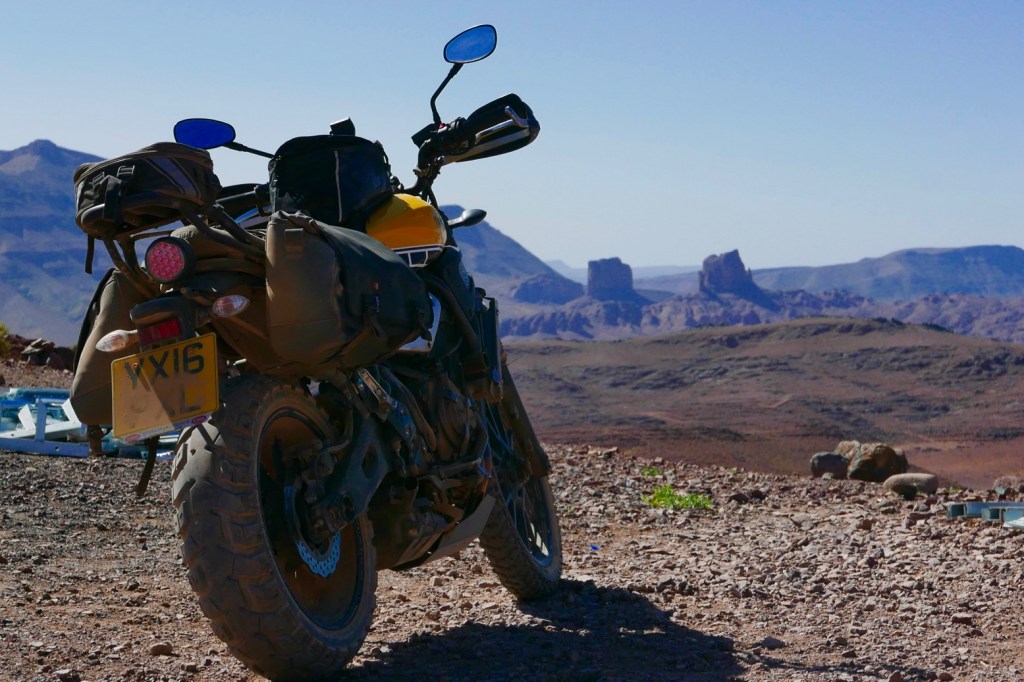
Originally published in Motorcycle Monthly in 2012, I just dug this out from the archive. It’s of interest as it describes how I came to choose the meaty part of Stage K of today’s Trans Morocco Trail, one of the trickier desert sections of the coast-to-coast ride. There’s more on the F650GS here. For a big bike I quite liked it. Long, low and easy to live with, as they nearly used to say.

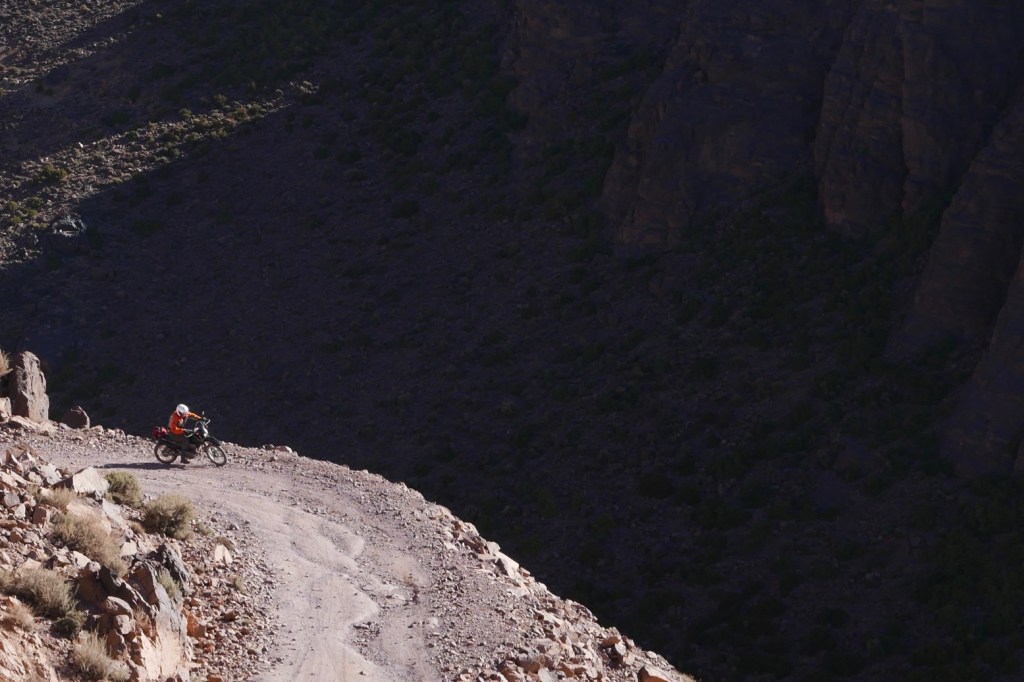
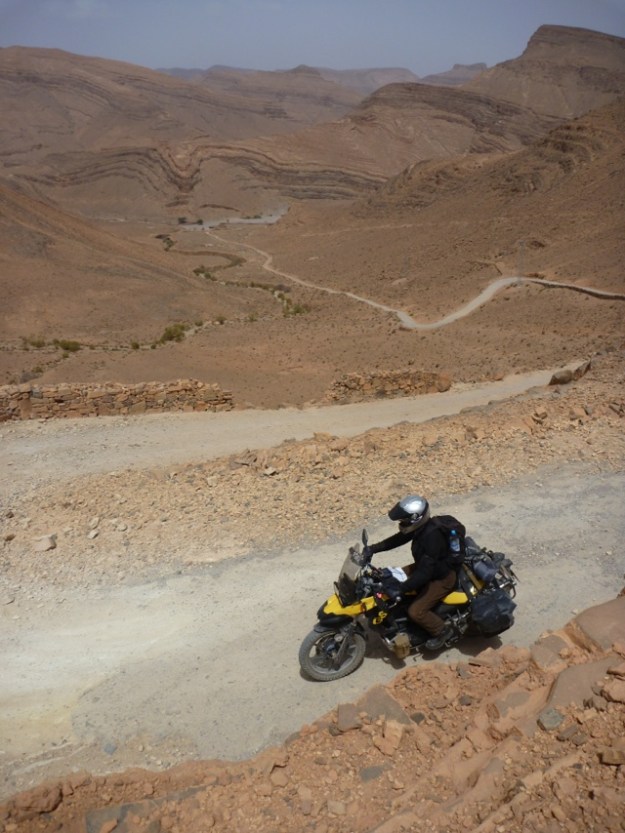
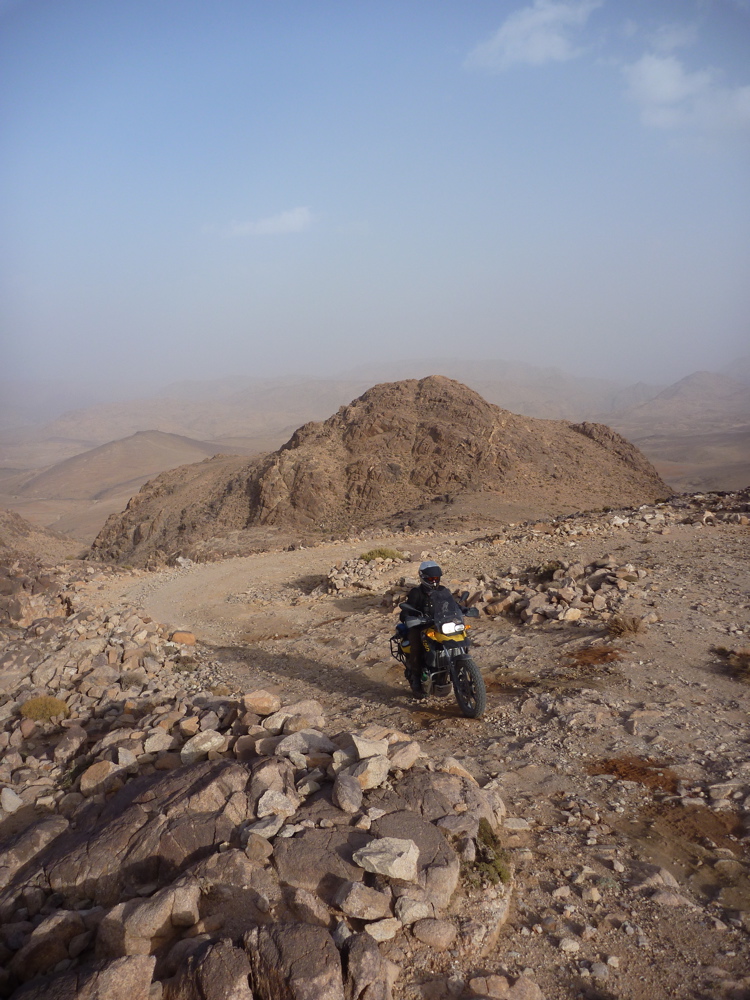
There’s always a sense of trepidation when you set off alone on an unknown desert track on an untried bike. The bike’s performance and set-up are added uncertainties. I’d done the first few miles of this route before, but once the creek passed a well and took a gnarly climb onto an escarpment I was on new ground.
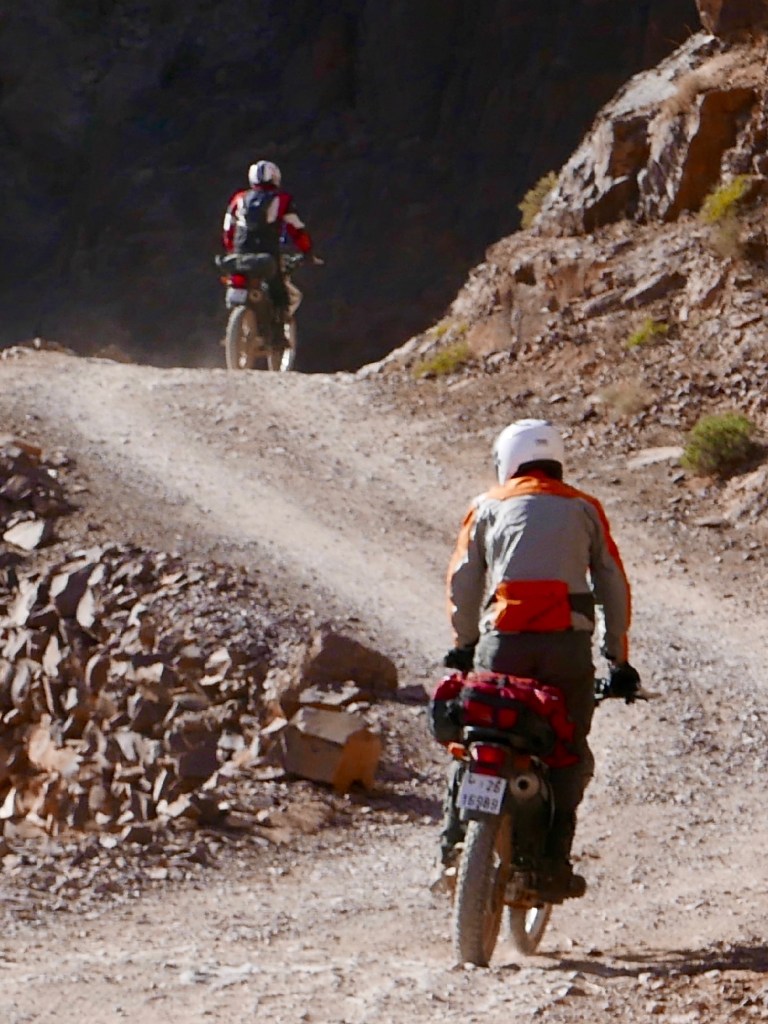
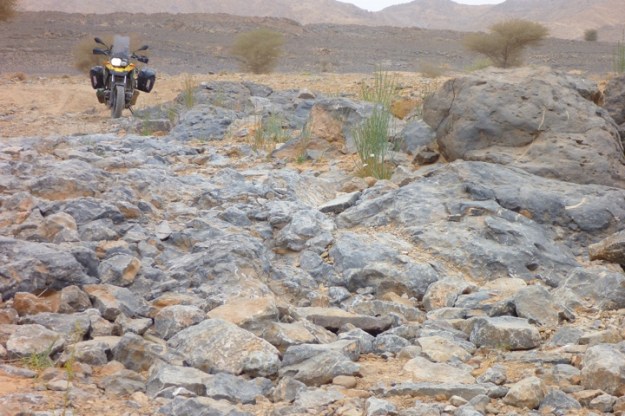
Left led north: I’d done that one before and had recently read about a guy on a DR who’d fried his clutch and in a panic called the British Embassy for help. A complicated and costly recovery followed. Hoping for better luck, I took the right fork towards the Algerian border. The coarse limestone bedrock kept speeds down, but the way was clear.
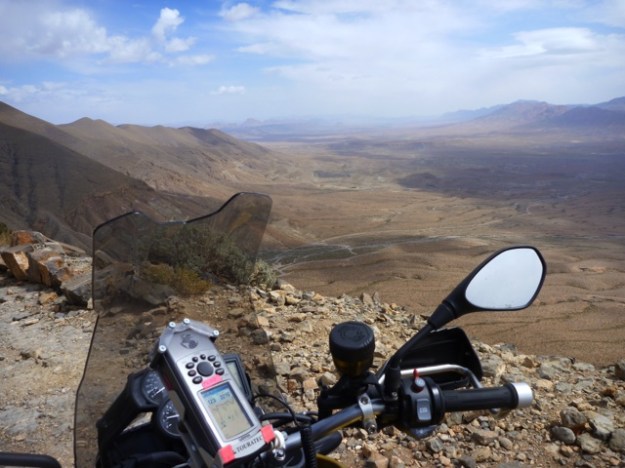
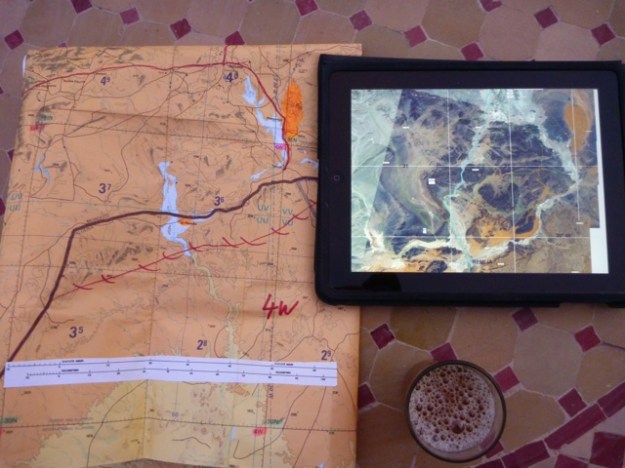
Up ahead flat-topped hills stacked up to the northeast but soon the helpful line of the Olaf [early digital] map dropped off the screen and I was back to pre-GPS nav, watching my orientation and seeking the most used track.
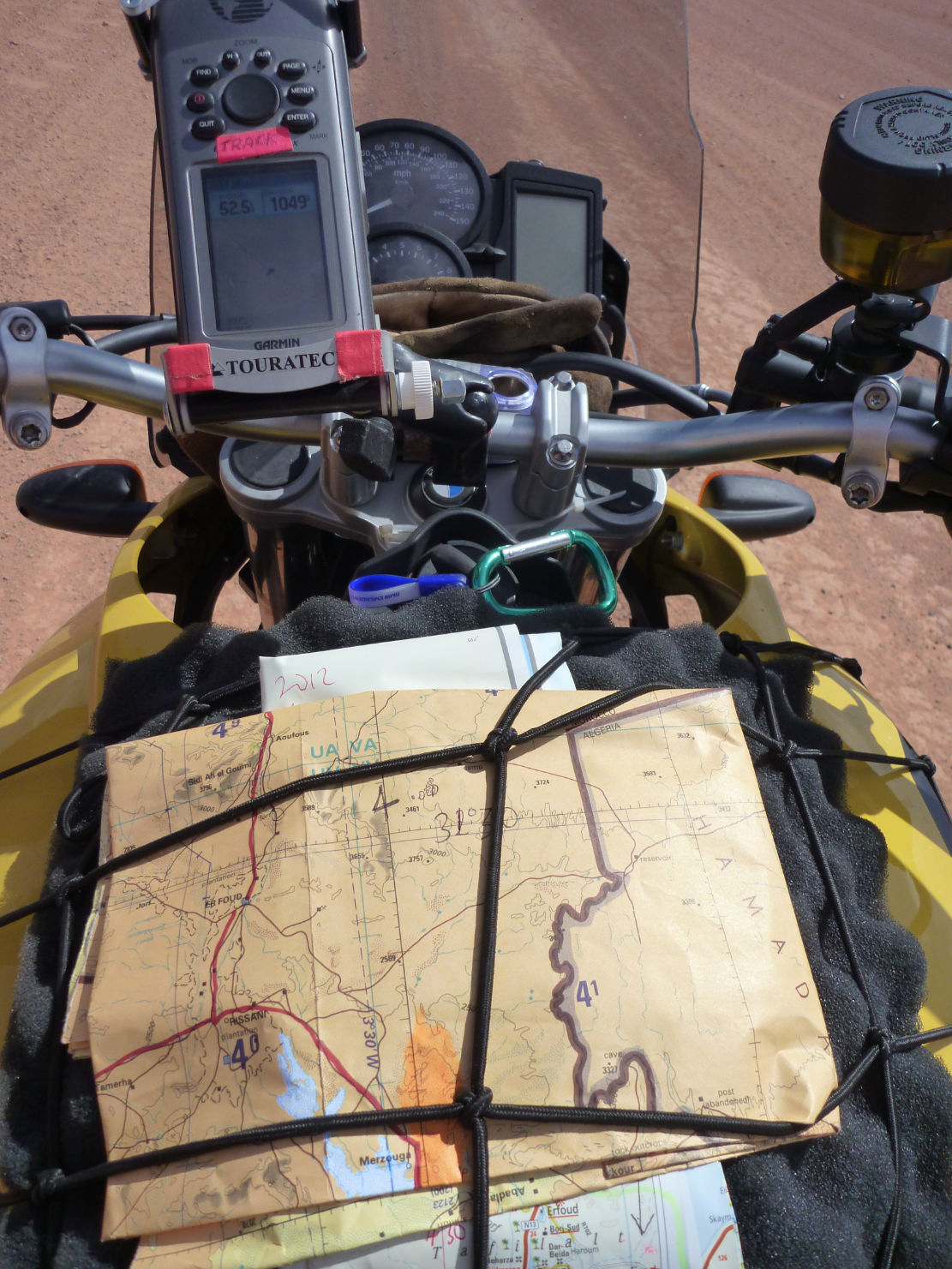
This trip was a couple of years before the Garmin 610 Montana came out which, in tandem with free OSM-based mapping, changed the whole game for desert nav. Iirc there were no such things as verified gpx tracklogs to show the way, there were only waypoint and the famous Olaf Maroc Topo map which was somehow complied by a German digital mapping enthusiast using submitted tracklogs. Tricking a pre-Montana Garmin GPS unit into displaying Olaf needed a visit from a tech-bro (in the old, non-billionaire-libertarian sense). Only on this trip I realised that not all of these user-submitted tracks where genuine recordings, they appeared to have been drawn from online sat imagery. Sadly, a similar situation exists with OSM today (at least in Morocco, to which I contribute): lashings of discontiguous, user-generated junk so you can’t see the track for the traces.

My plan for the second edition of my Morocco Overland guidebook was to sweep across the Kingdom from the east, much like the Muslim hordes some 1300 years ago, but causing much less of a disturbance. I’d log new routes from the Rekkam plateau in the east to the Reguibat tribal outlands of the Western Sahara, adding whatever took my fancy along the way.
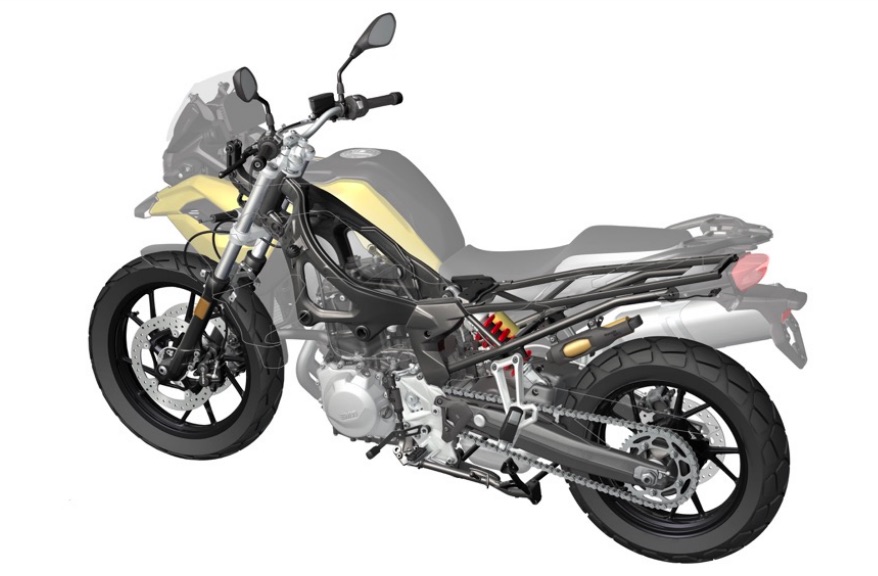
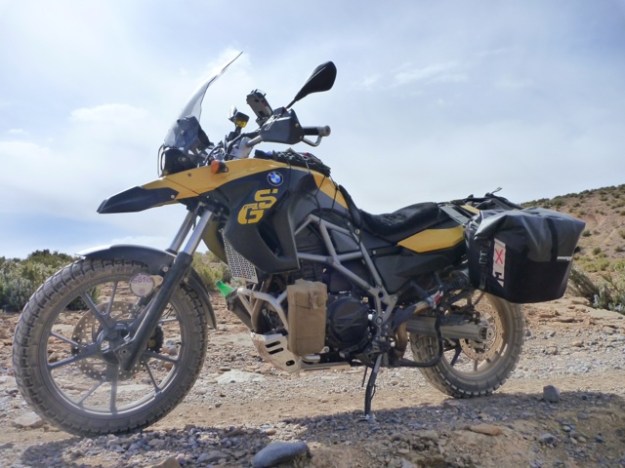
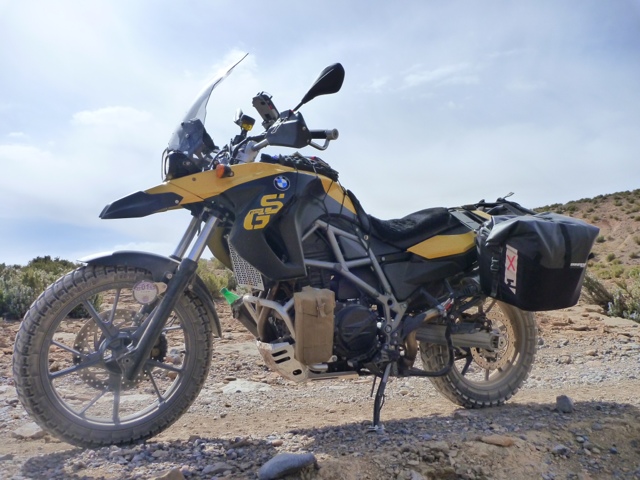
My own Suzuki GS500-based overlander was barely complete so I planned to rent out of Marrakech, but BMW Motorrad UK stepped up with a new F650GS SE twin, the modern iteration of my Suzuki project. According to my calculations the 650 ought to be the ideal Moroccan tourer: fast and comfy enough to bang out the
European stage, and an adequate dirt tracker once I got there.
Enter sand man
Most are attracted to the better-looking 800 model, but the confusingly named F650GS is actually the same 795cc motor, detuned by 15% to 71hp peaking some 1200rpm down the rev band. Suspension travel is shorter and with a 19in front wheel that makes the seat lower too. Tyres are tubeless and the gearing is said to be from the F800ST road bike, the only flaw on the piste.
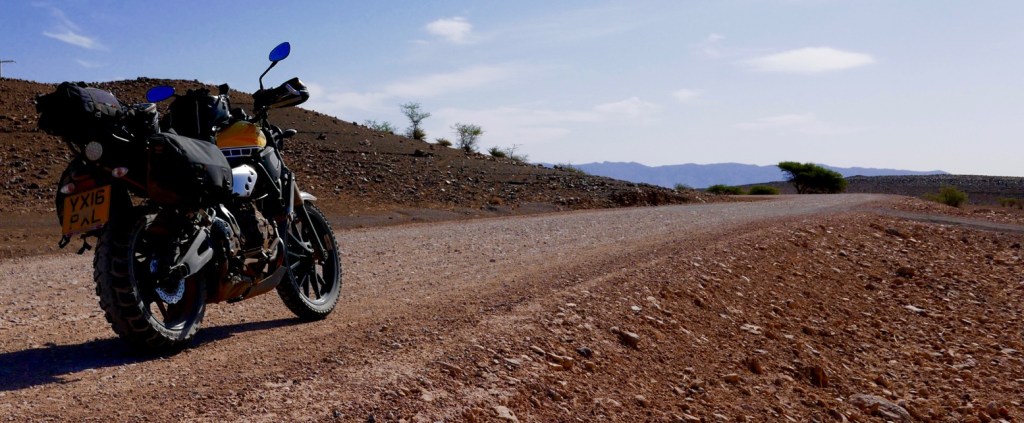
At the first service at Vines in Guildford a smaller front sprocket was fitted because swapping cogs was not a roadside job. A bash plate, hand guards and engine bars were also fitted, and Metal Mule supplied a rack, tall screen and radiator guard. With the Tourances replaced with a set of lumpiuer Heidenau K60s and some Enduristan throwovers, I was good to go.
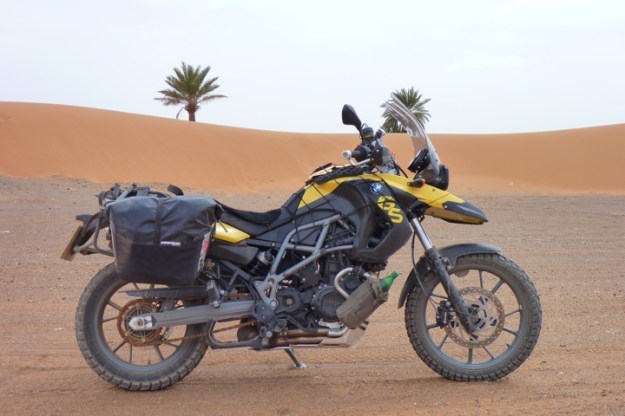
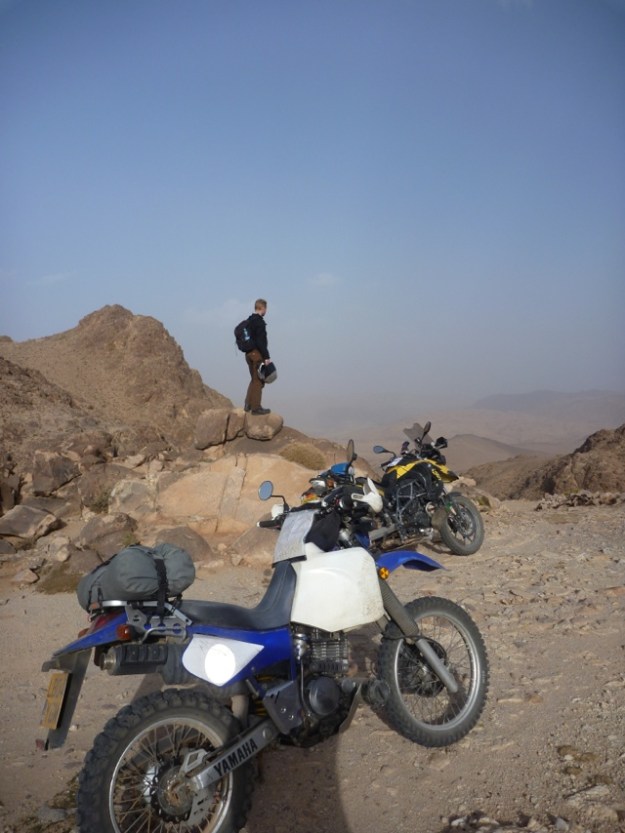
Now we were finally on the piste and so far so good. The track headed south back to the escarpment edge. Far below in the haze lay my destination, the dune-basher’s Mecca of Erg Chebbi, Morocco’s only distinctive sand sea. Just 20 miles long, they come to gaze in wonder at its forms or test themselves on its rosy flanks. I knew that once I dropped off the escarpment within sight of an Algerian border fort and headed towards Chebbi, things would get sandy; that’s rare for Morocco and hard work on 230 kilos of bike.
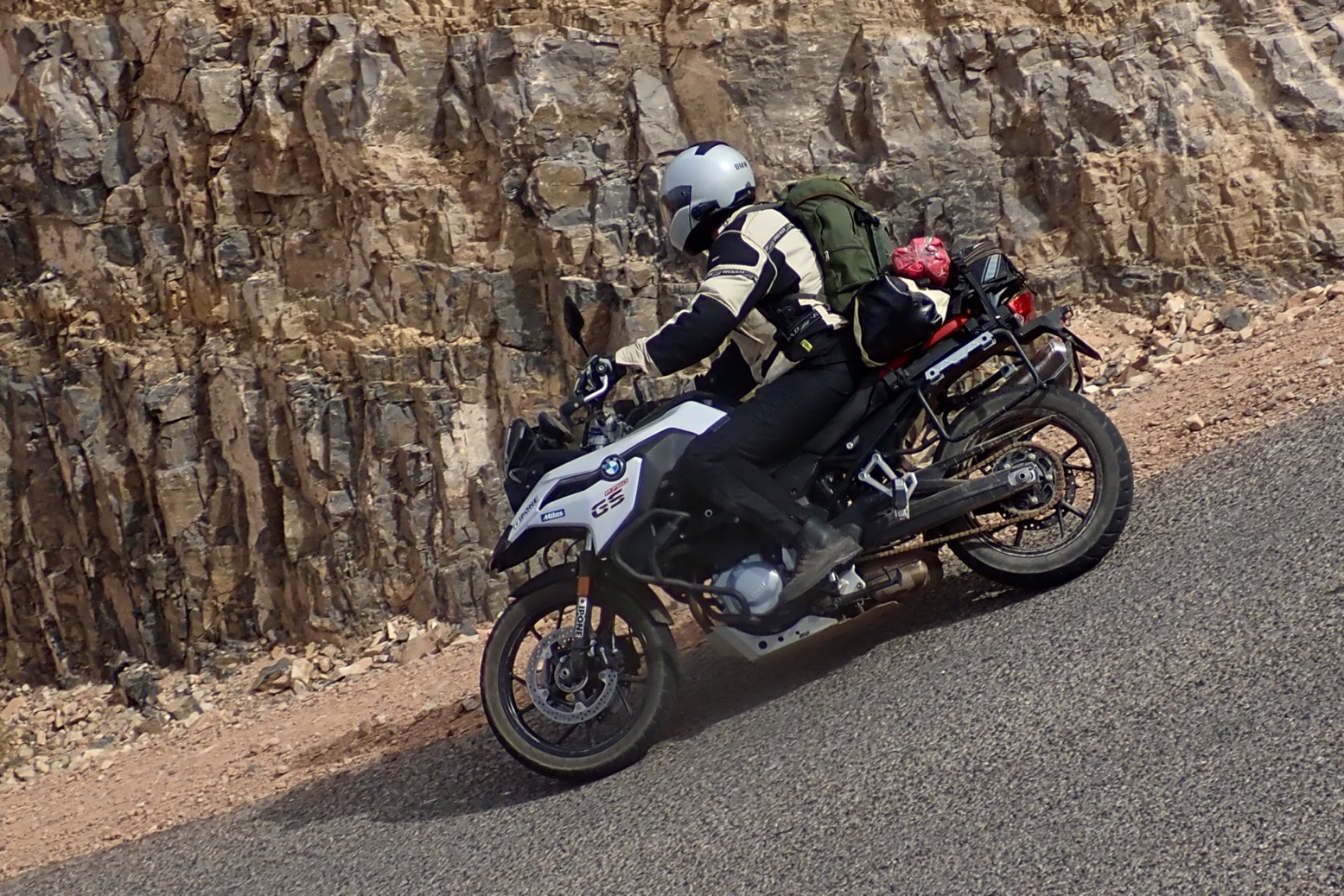
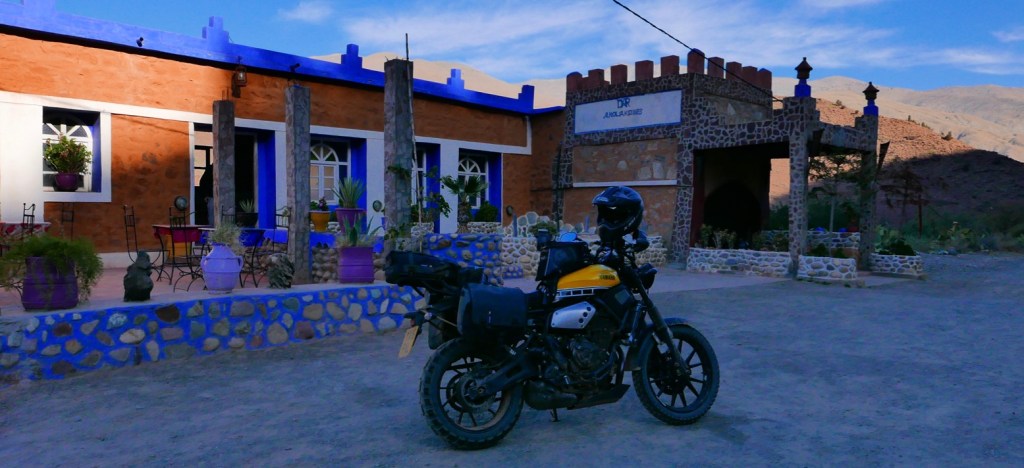
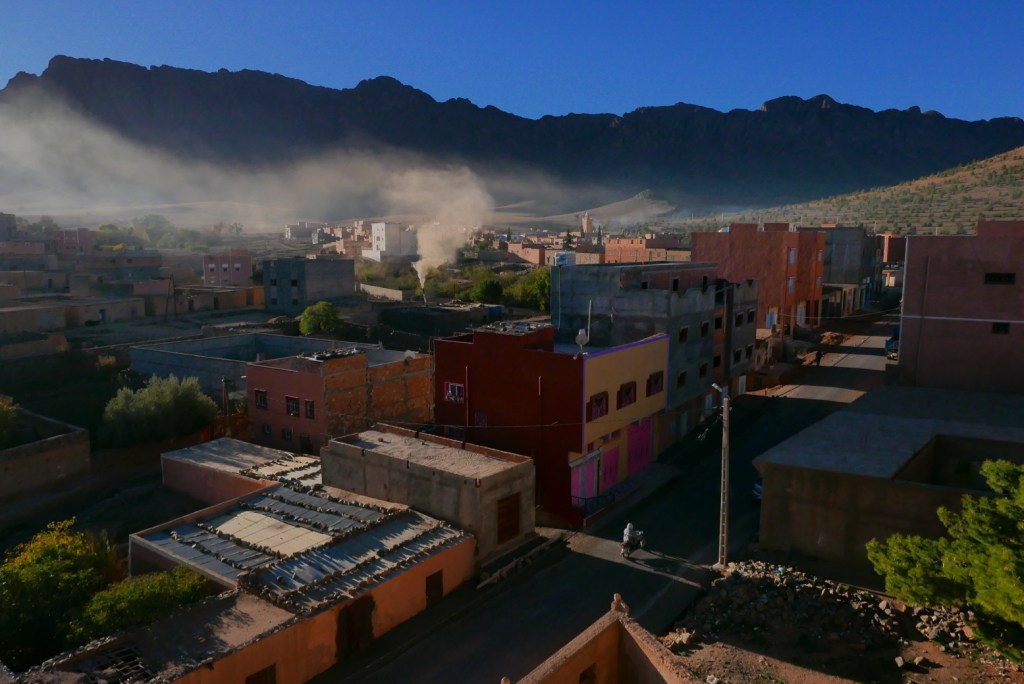
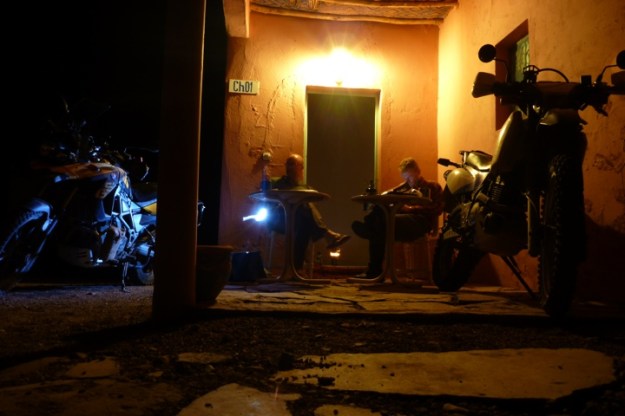
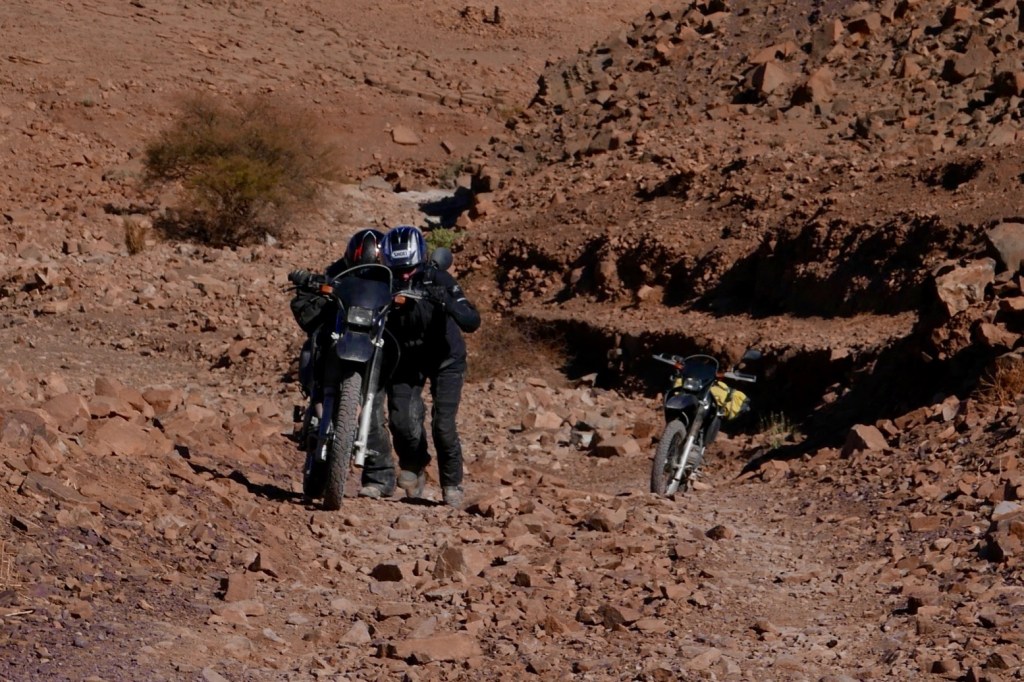
Sure enough, as the mid-afternoon heat peaked I found myself pushing alongside the GS in first, the tall gear churning the back wheel as the bike inched across the sands. Experimenting with the K60s still at road pressures, this was to be expected, so the slightest forward progress was better than losing momentum. It was only an hour or two’s effort but that was enough to drain me, and as I neared the firm gravel plains alongside the Erg, I unzipped my sweat-drenched jacket and cruised around lazily from one auberge (desert lodge) to another until one took my fancy.

I’ve done enough of these short adventure rides to know that at some point a spanner as long as a pool cue would be thrown through my spokes. That reversal had already come and gone so I felt myself in the clear. On berthing at the Moroccan port of Nador I noticed my tailpack of camping and riding gear was missing. It was one of the ferry crew for sure, but my protests were in vain; they blamed the passengers and I blamed my laissez faire attitude towards security. All that really mattered: GPS, maps, iPad and other valuables I’d kept with me for the six-hour crossing. I was fuming of course, but the mission had not been compromised. I just wouldn’t be camping as I’d hoped, and the bike would be a little lighter.
Black Rock Desert
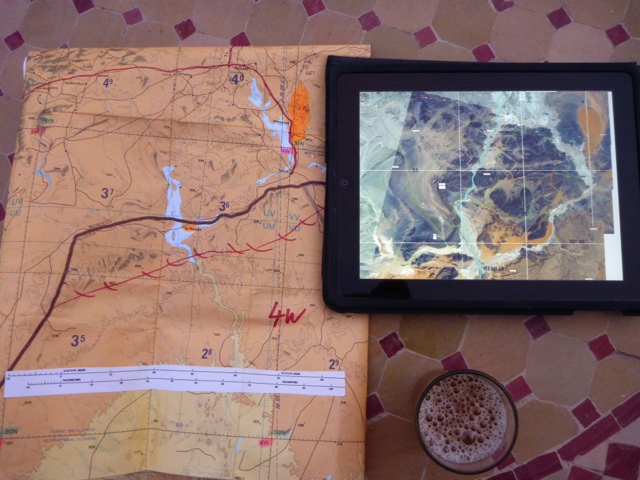
Encouraged by the low-seated 650 and the K60 tyres, I was ready to tackle a trickier stage I’d spent months preparing for. West of Erg Chebbi, between the N12 highway and the popular M6 route along the Algerian border, close scrutiny of Google Earth revealed a network of possible tracks. Unmarked on most maps and restrained by convoluted topography, many tracks ended at mines that scoured the blackened mountainsides which gave the region its name: sahra aswad sakhar (I made that up). I wanted to cut through the middle to the west, but was unsure how- or if it all linked up. One route looked like it might work out, but somewhere I’d need to cross the desert course of the Oued Rheris river.
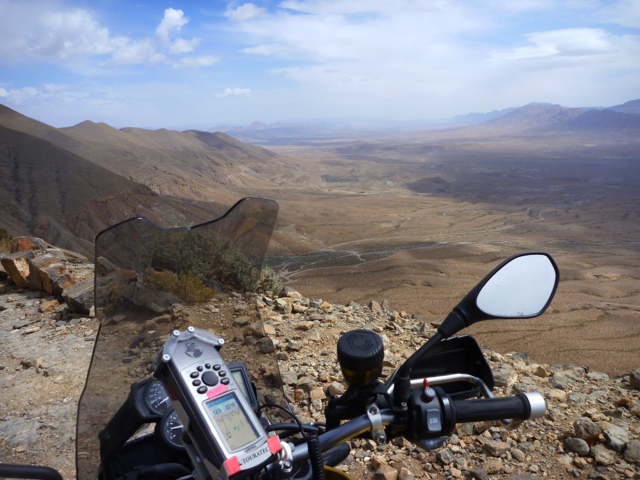
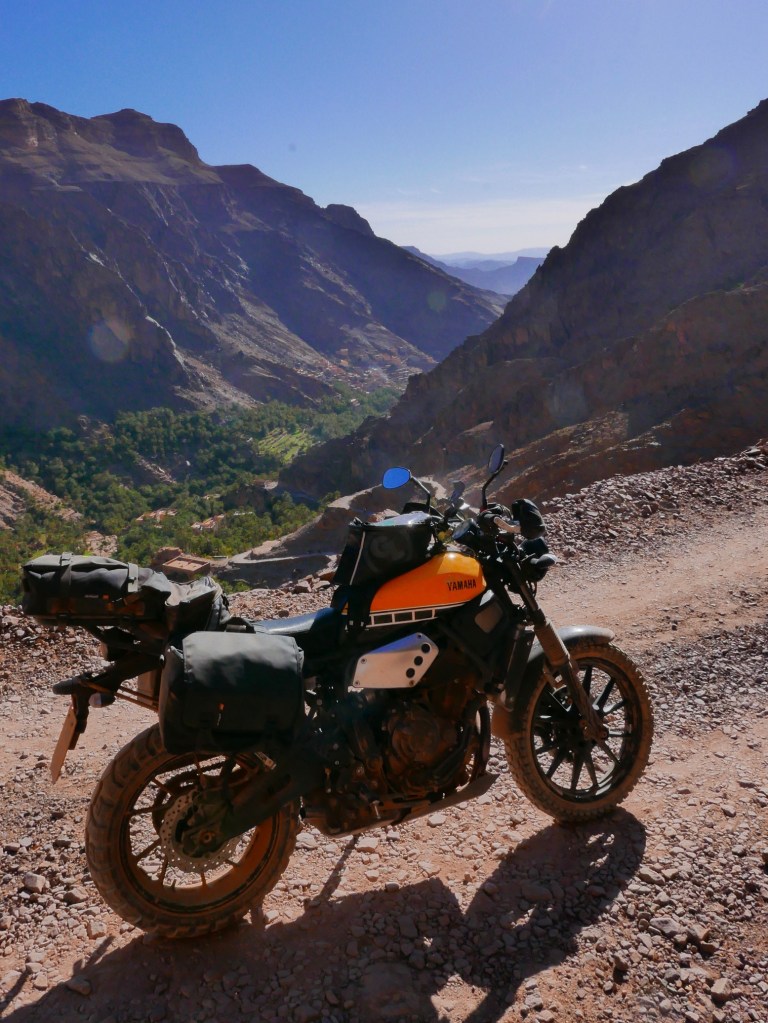
A few days earlier I’d passed close to the source of the Rheris up in the High Atlas. A tip from a local auberge owner had led me up a mountain track cut by the legionnaires in the 1930s high above a narrow gorge to evade ambushes by the as yet unpacified Berbers. Up at over 2200m in the sleet (above), the 650’s computer had read just 1ºC; and today down at Erg Chebbi overnight winds had smothered the skies with a desert haze that might bring rain.
Crammed between desert, ocean and mountain, erratic Moroccan weather can throw everything at you during a springtime fortnight. It was going to be an adventure for sure, nosing out a way though the valleys and around the escarpments of the BRD, but hopefully something would come of it.
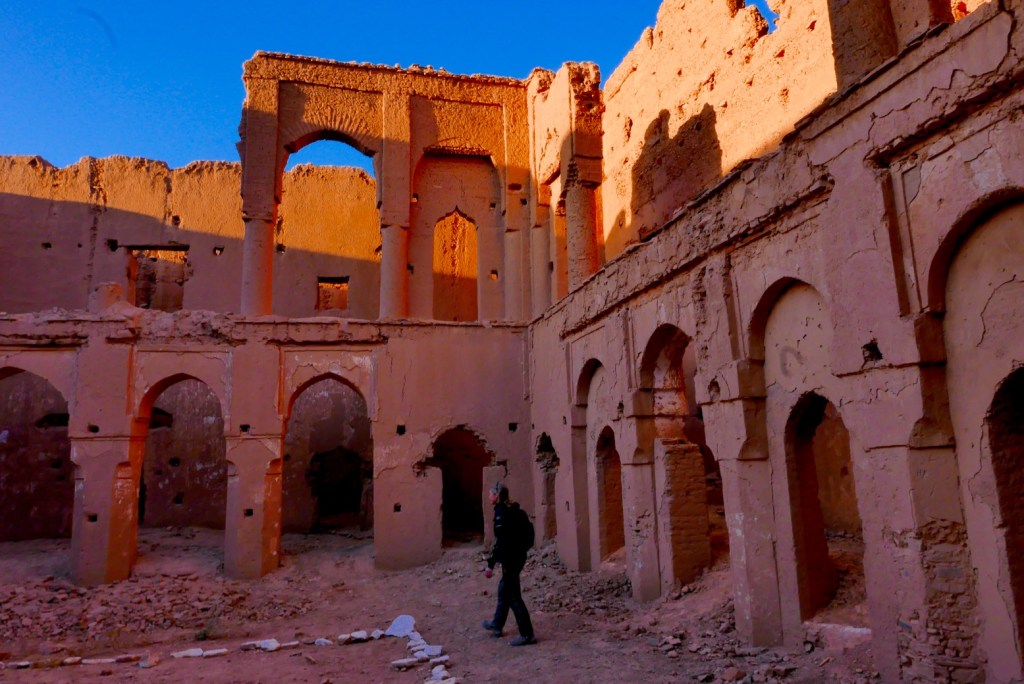
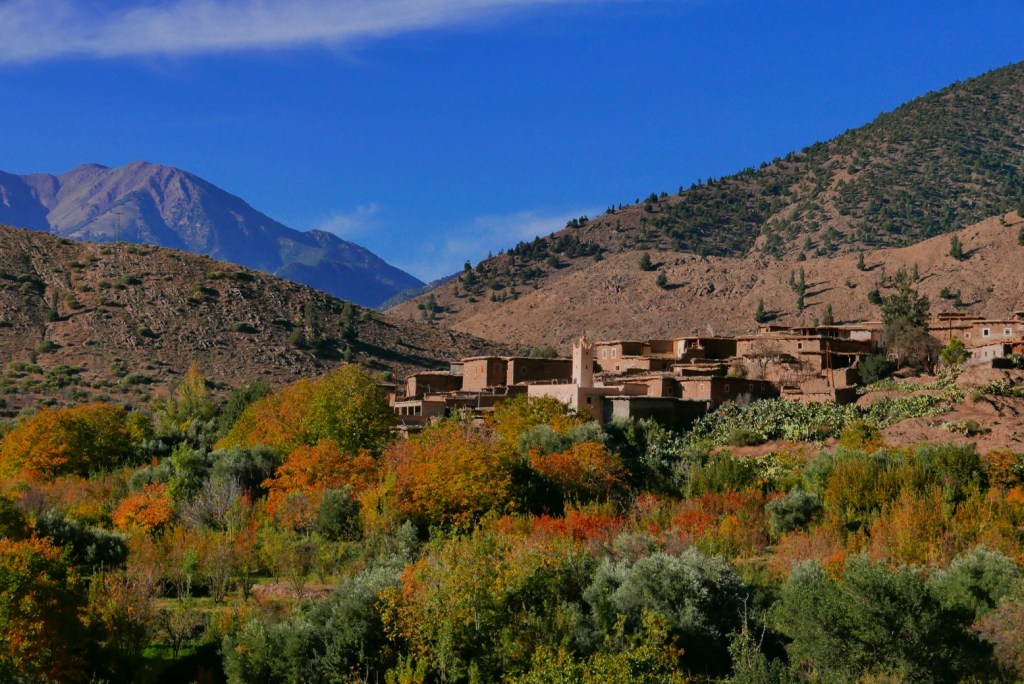
The great thing about riding in Morocco is that distances are short by the Saharan standards on which I cut my teeth in the 1980s. Few tracks exceed 200 kilometres between fuel or towns so there’s no need for extra tanks or – luckily this time – even camping gear. Follow a likely looking track and it’s bound to lead somewhere. It might be a dusty mine site or a stone clad Berber village, clinging to a canyon side and barely changed since medieval times.

I rode south past Erg Chebbi (above) as the forerunners of the Rallye Aicha des Gazelles tore along the base of the dunes. At the village of Taouz I set off on my own one-man rally, which initially required crossing the flood plain of another big desert river, the Oued Ziz. Three years ago on my Ténéré, the Ziz had been flowing past Erg Chebbi fit for rafting, nixing my chances of getting into the desert noire. This time round I had a few moments as the BMW sank into the chalky mud; getting mired within sight of the village would not be a great start to the day, and I reminded myself to take some air out of the tyres.
On the far side a moped-mounted tout soon zoned in and offered his services but I was determined to work it out myself. As is often the case, tracks can be confusing near a settlement, and after a bit of blundering with my moped mate never far behind (“ooh, you don’t want to go that way, chum…”) I picked up a likely trajectory to the northwest.
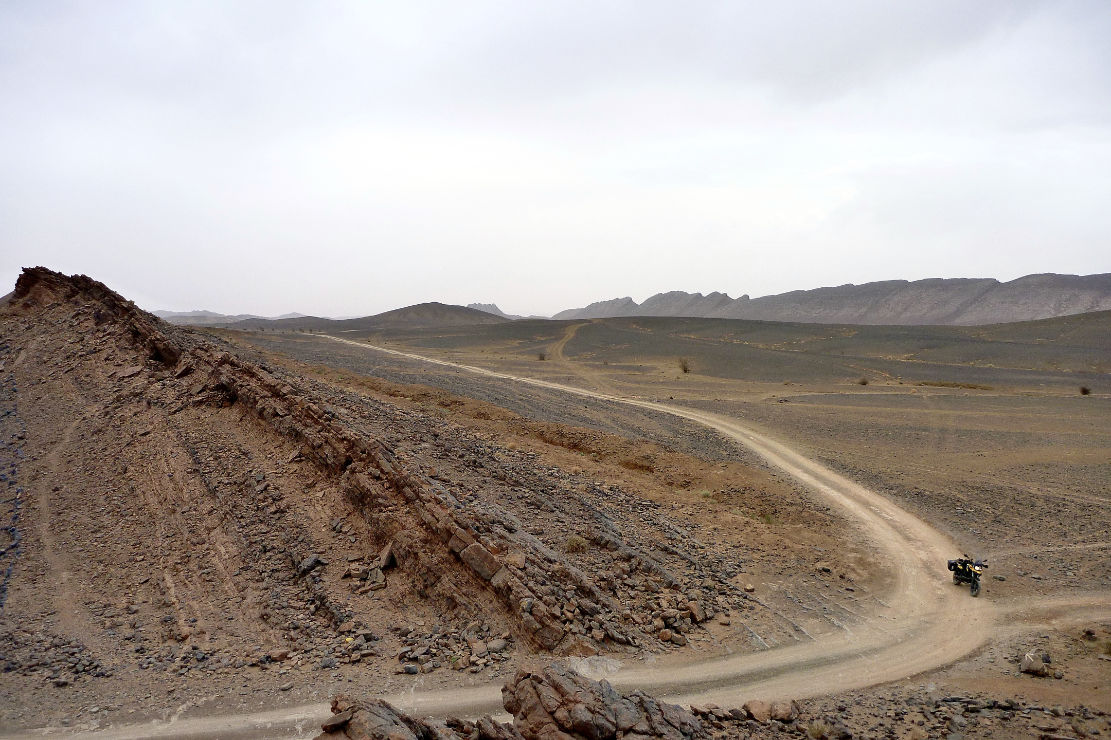
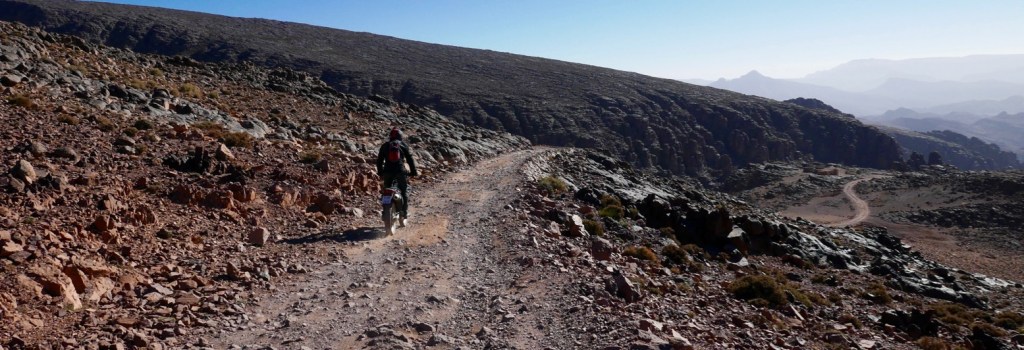
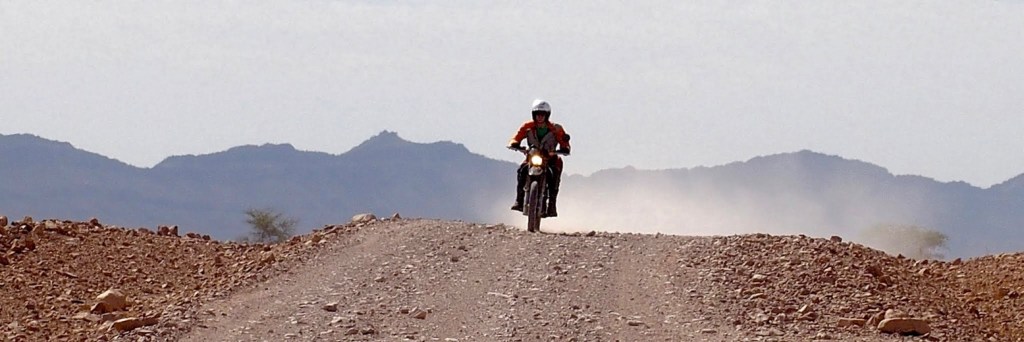
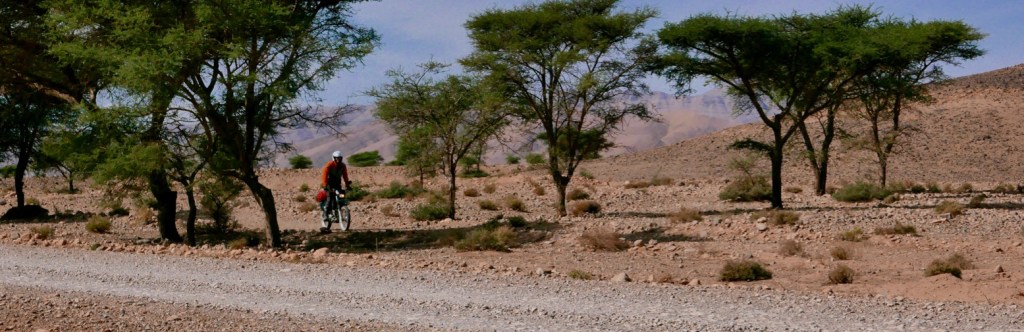
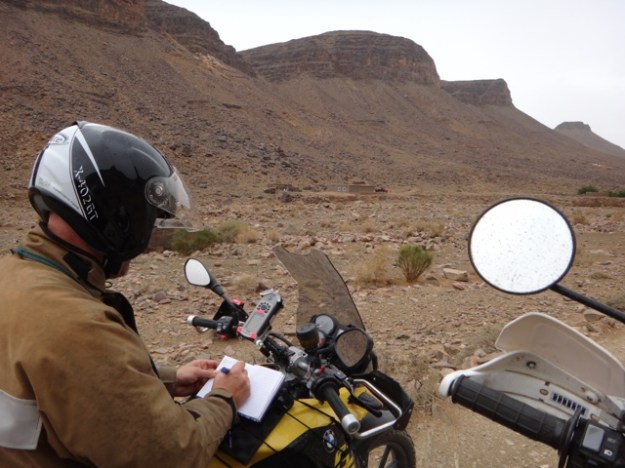
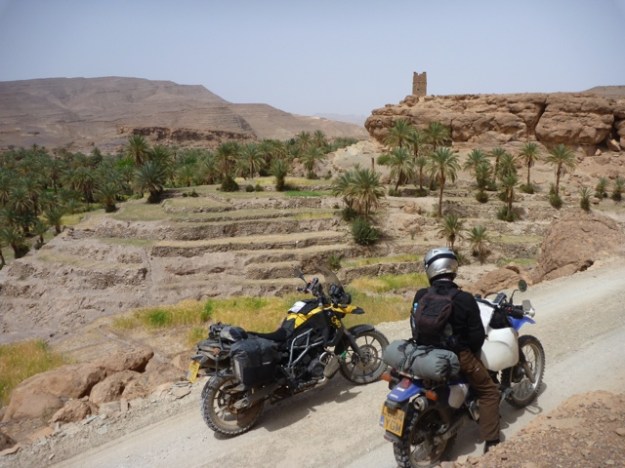
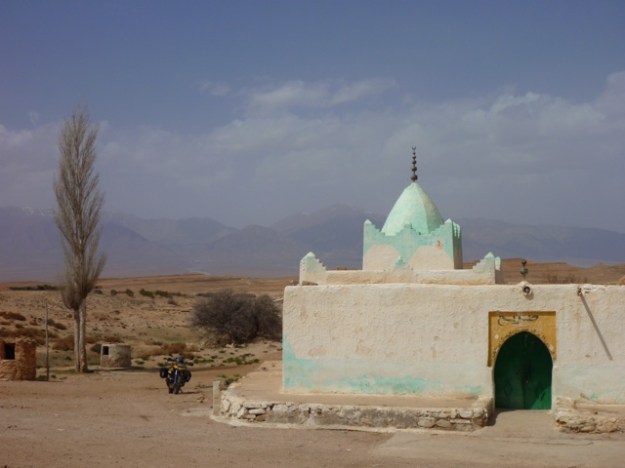
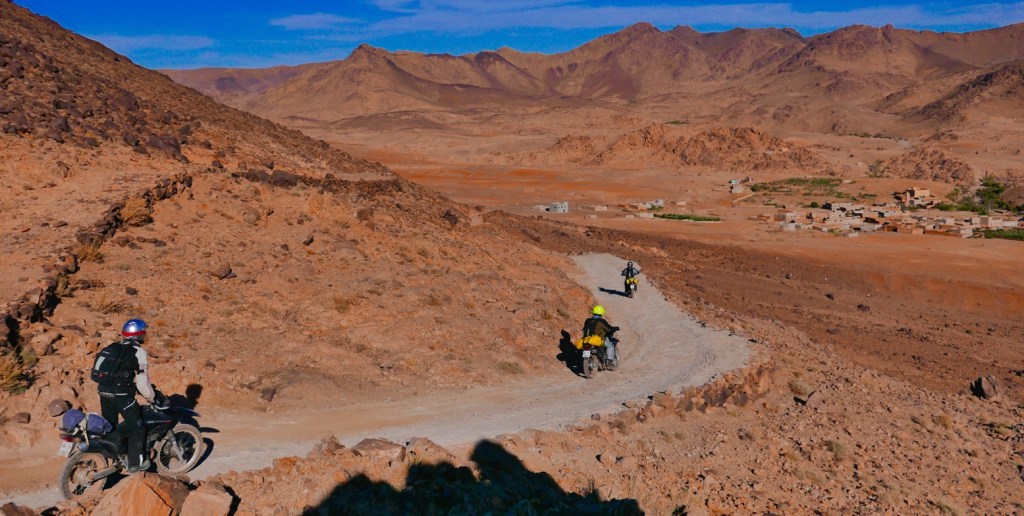
The track forked and reconverged around obstacles, a common trait in open deserts that can unnerve the inexperienced. After a few miles it picked up a bigger piste that had been pulverised into a flour-like powder by mine trucks. Even here the K60s kept their composure and I came to a junction where a passage led to an abandoned village I’d spotted on Google Earth. Down in a dry creek below the ruins I marked a waypoint and the depth of a well for the book, and rode on, taking any track that erred west. Stopping frequently to mark each junction, I came to a gap in the range (above) where the main track led north to the Rissani, a fall back destination if things didn’t go to plan. At this point a lesser route swung directly west into the Black Rock.

Cry me a river
The fast track soon swung off to the south, probably a service route for the village of Remlia on route M6. Heading there was another contingency should I get stuck, because I knew that up ahead the state of the Rheris would make or break my day. I lit off westwards cross-country and after a few miles picked up another track.
The valley narrowed and I squeezed through a sandy passage that in turn led to a basin, a kind of inland delta or reservoir filled when the Rheris was in flood. Soon I was jostling the GS over the salt-capped mounds of crusted mud, and with a fright, felt the GS sink and slow to the mud below. I dashed directly for the edge of the basin where firmer tracks skirted the hillside.
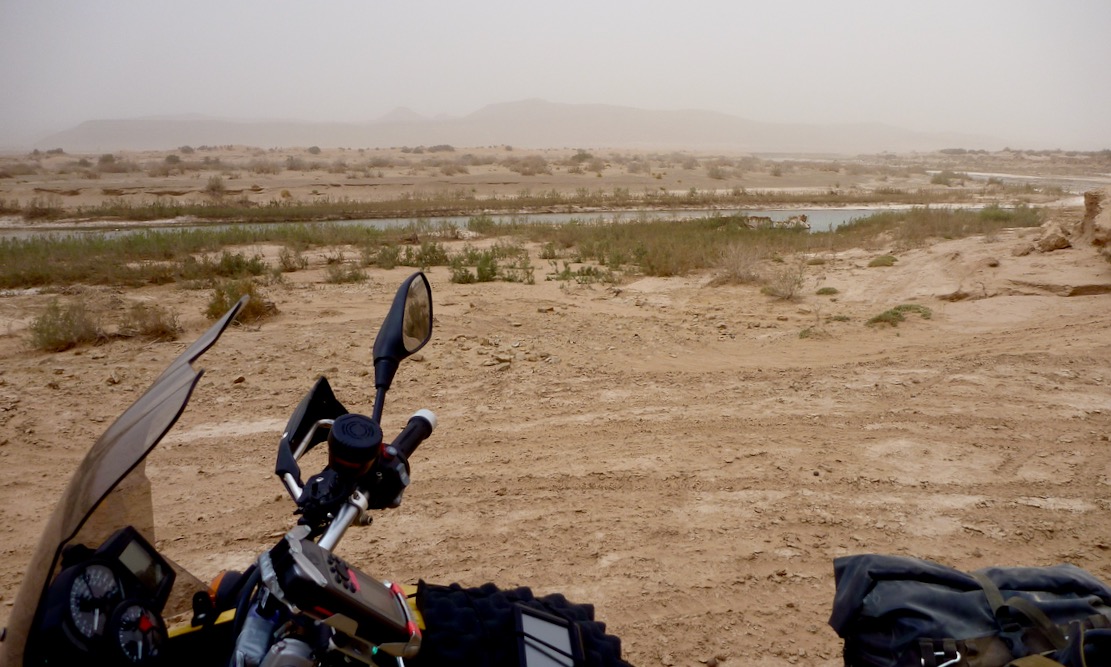
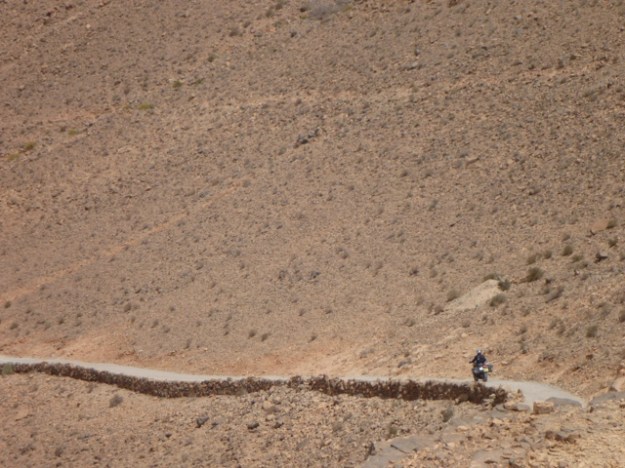
The baked rim of the muddy delta led over a rocky pass to a field of small dunes where the track ended abruptly on a flood-carved riverbank (above). Down below a ribbon of water separated me from the far side and another field of small dunes which stretched on who knew how far. I turned the running GS into the wind to cool off, hung my heavy jacket and lid on the bars and slithered down the sandy bank to the water’s edge. One thing was for sure, once l rode down that sandy bank there was no getting back up. This was a one-way trip to whatever lay beyond. At the river the water was only ankle high and the bed was firm; I could ride through this. But up ahead a long sandy ramp rose away from the channel and would sap the 650’s traction. I walked up and decided that it too was doable, then waded back to the bike, dropped a couple more pounds from the Heidenaus and paddled down the bank and through the water.
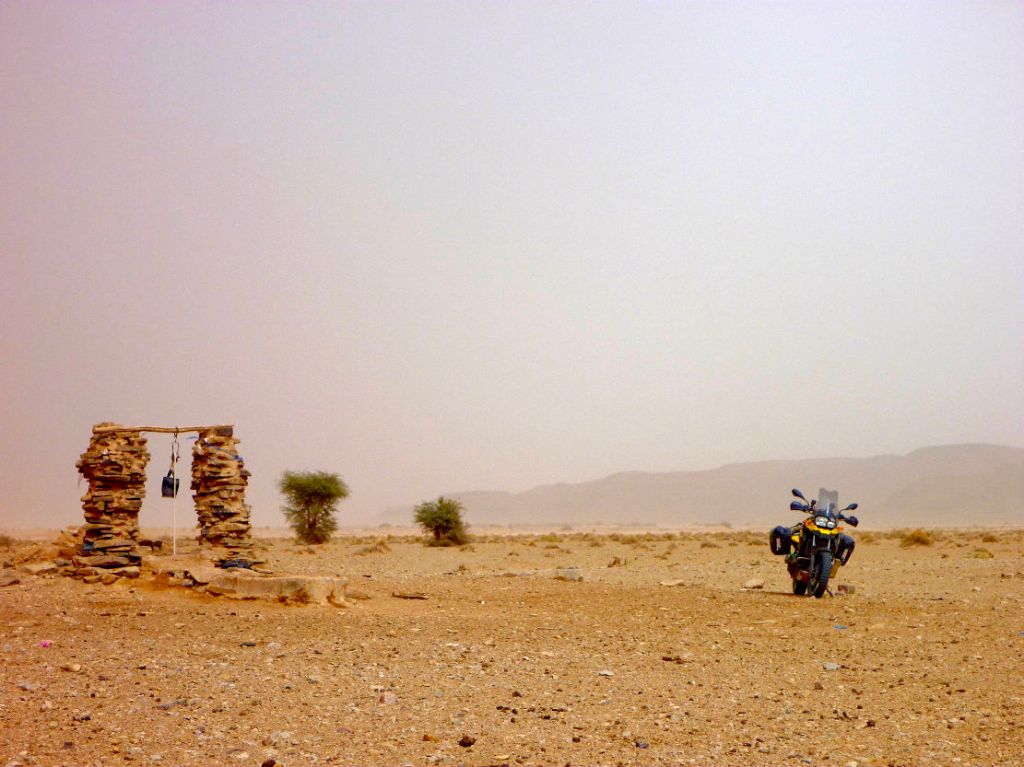
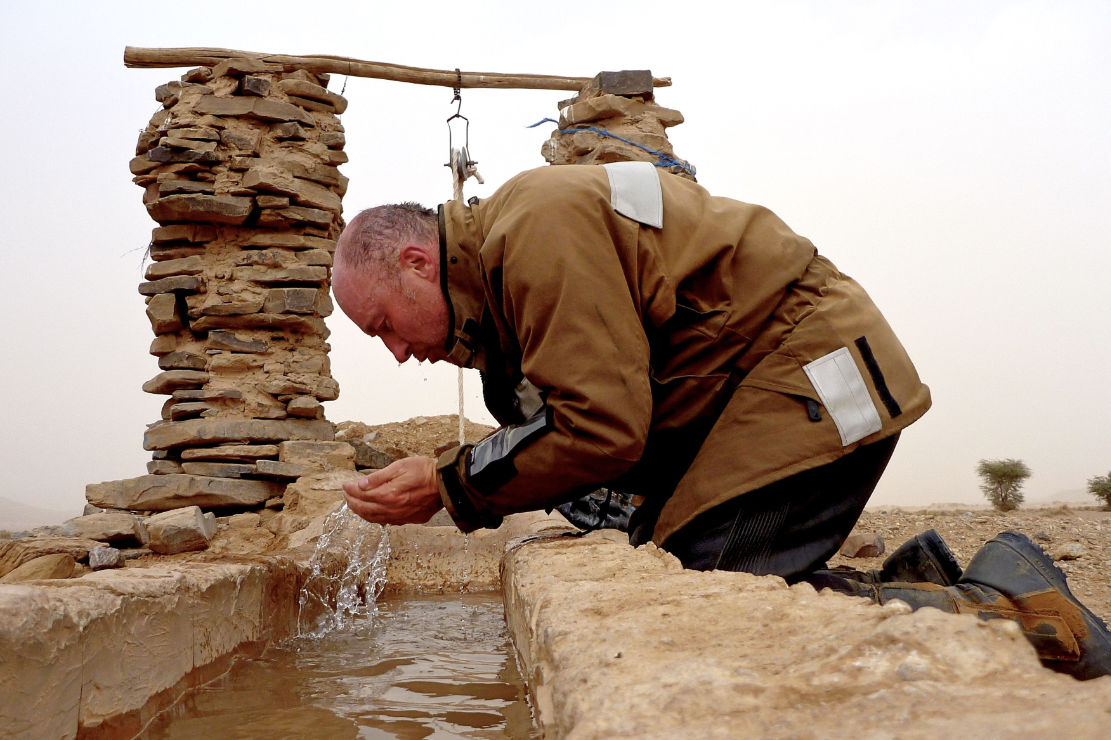
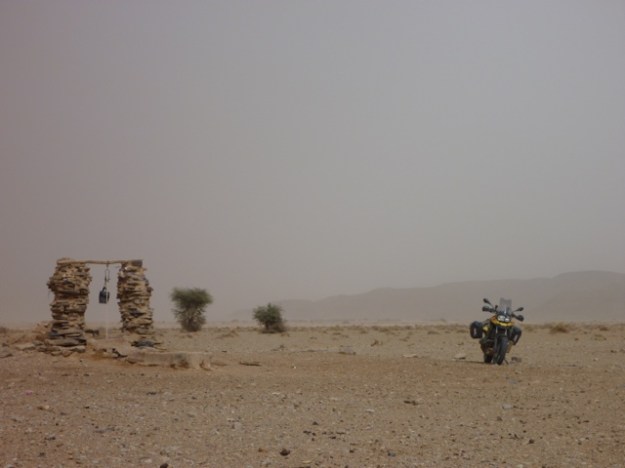
On the far side I paddled the GS hard up the sandy ramp with the engine pinking, tyre spinning and the fan whirring fit for takeoff. I kept at it until the terrain relented and I was out of the dunes. Up ahead a well caught my eye, the first I’d seen since the morning. I pulled up for a breather and kneeled by the camel trough for a cooling splash and a snack. An hour or so later a final expanse of sand led me out of the Black Rock’s escarpments and onto a sandy plain.
I ignored what tracks there were and instead rolled west cross-country towards a distinctive peak where I was sure a haul road led back north to the N12 highway. At one point a local guy joined me on his 125 and we diced in the dirt until he spun off on some unknown shortcut.
I’d taken a chance and my mini-adventure had panned out. I’d found a way through the Black Rock. It’s commonly said that the era of grand exploration is long past. That may be so, but the thrill of taking on the unknown, be it a transcontinental ride or just a day in the desert, is why they call it adventure motorcycling.
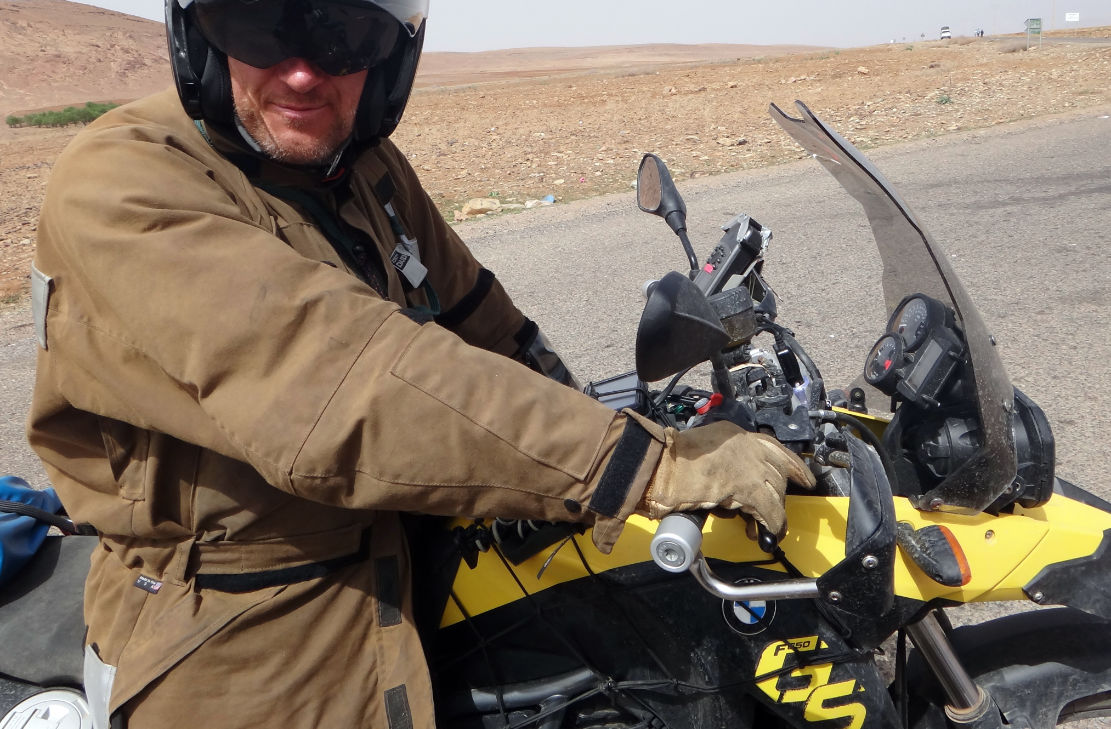
BMW F750GS in Morocco • 1200-km review

f75powers

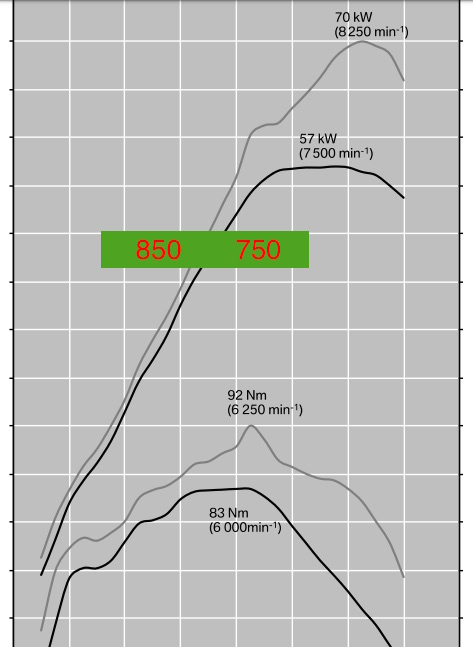
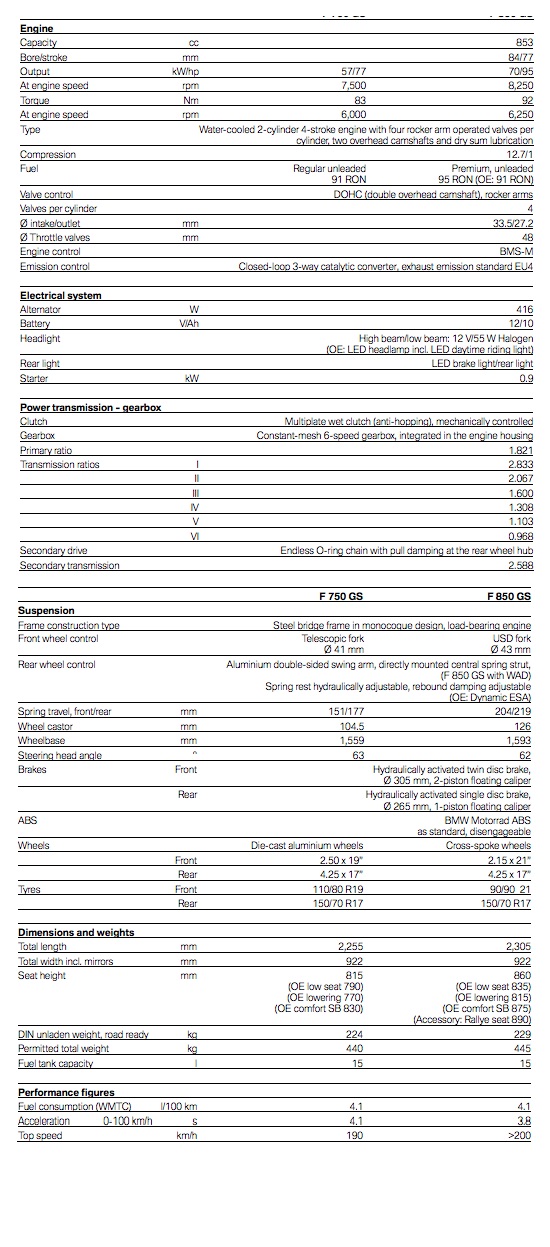
After ten successful years, in 2018 BMW Motorrad replaced the 700 and 800GS parallel twins with all-new ‘750’ and 850 versions. As before, the two models share an identical 853-cc engine but, along with other aspects, are significantly different. According to this detailed BMW press release (click and it downloads; worth reading if this bike interests you) the 750 makes 20% less power (77 / 95hp) but only 10% less torque (83 / 92Nm; see graph, right). It also has a lower seat, a little less weight and suspension travel, better fuel consumption as well as cast tubeless wheels with a smaller 19-er on the front. The 750 will also run stock on 91 RON fuel (unlike the 850 unless modified) and is significantly cheaper: in the UK it currently goes from £8225 vs £9875 for the 850 which makes it cheaper than an XT700.
I’ve ridden the old 700 and 650 twins in Morocco and for me, these lower, mildly less revvy, 19-inch and tubeless shod bikes have always been a better, real-world travel bike option to the flashier, taller 800 and now 850, even if the ‘bigger’ bikes probably outsell them.

Like many P-twins these days, the new engine uses a 270-degree crank to give an impression of more torque – or maybe just because it’s fashionable. They are no longer (or cannot be) engineered to sound like a 1200GS, but even at basic levels, both models come with an array of electronic rider aids and position the fuel tank back up on top, so lifting the centre of gravity.
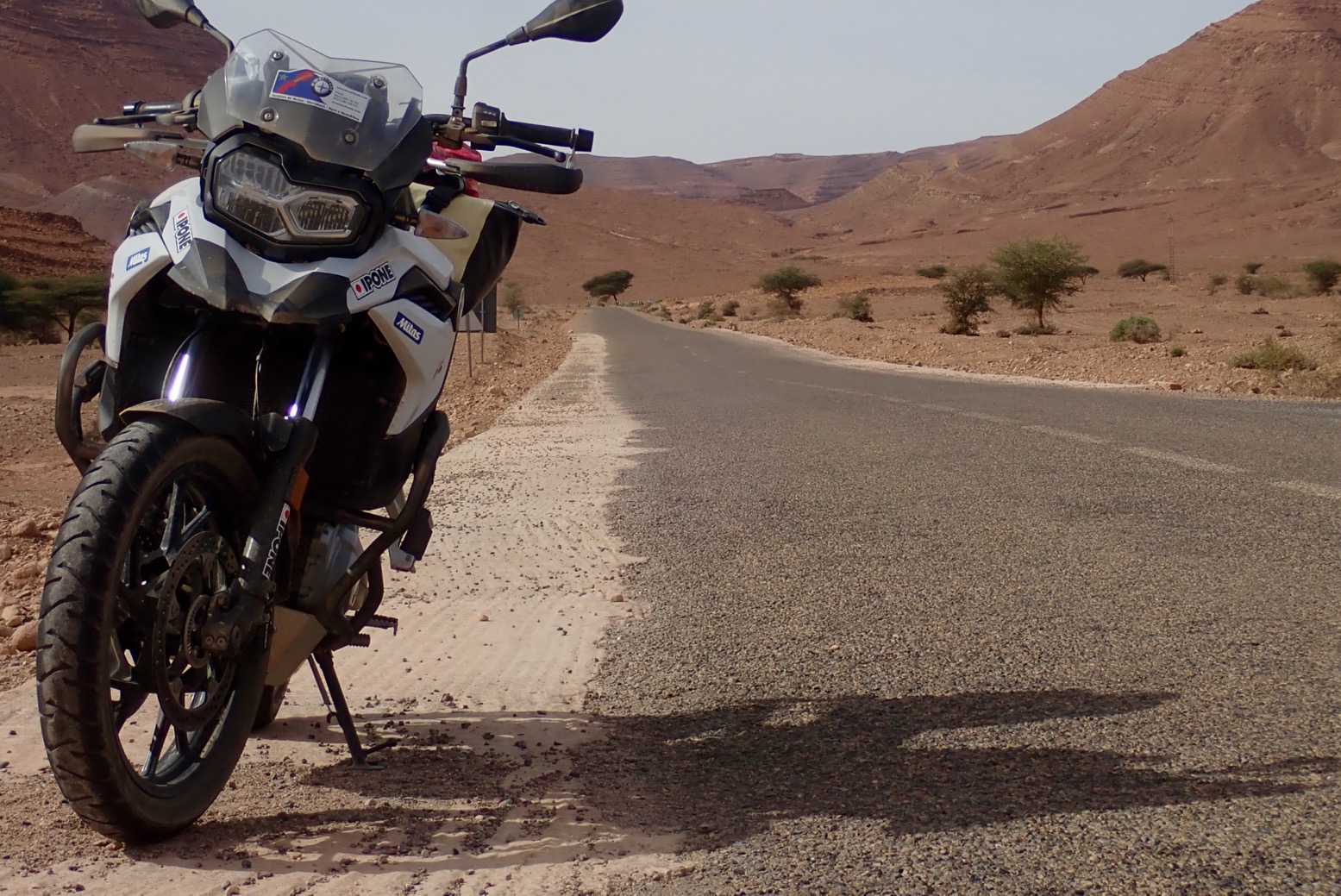
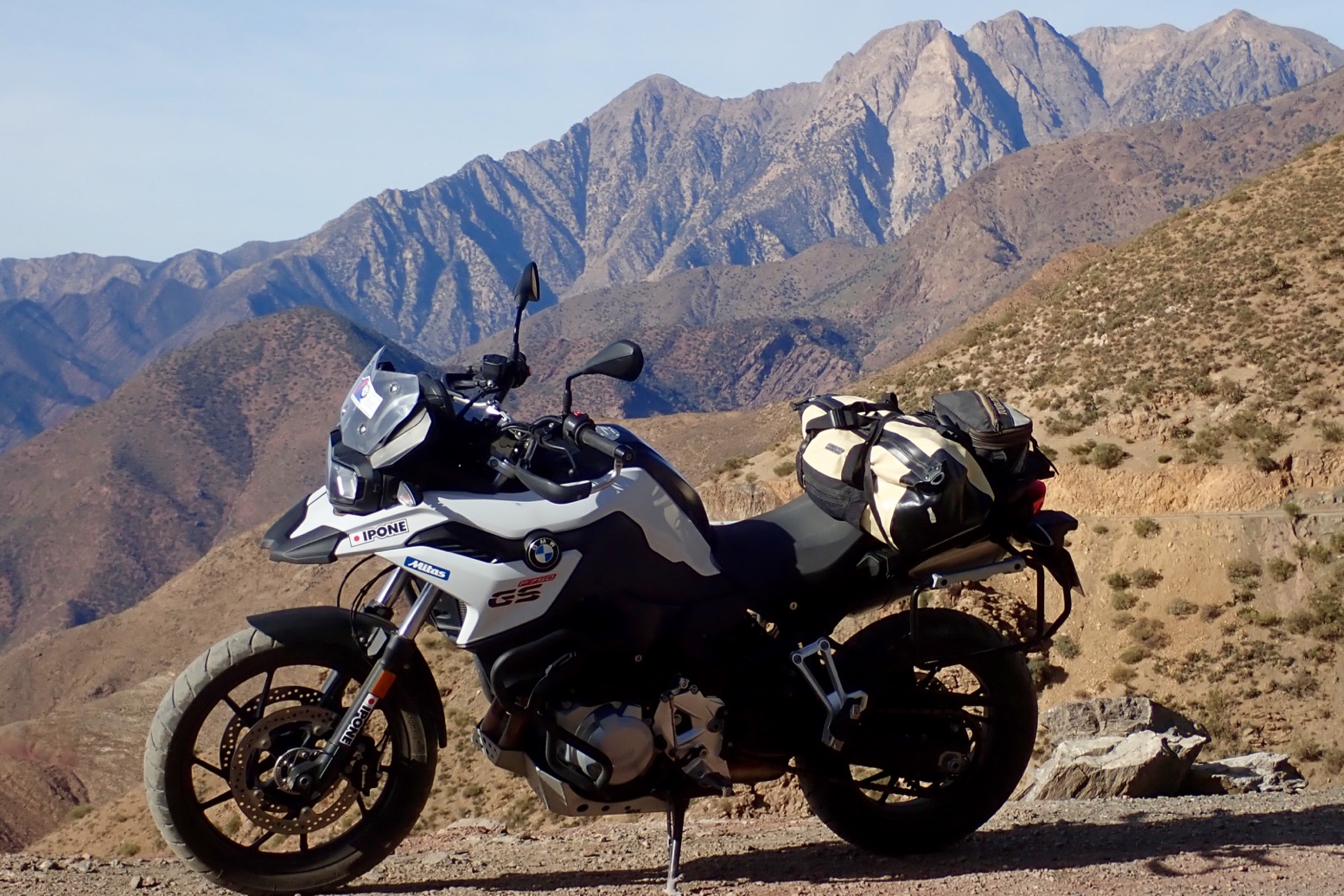
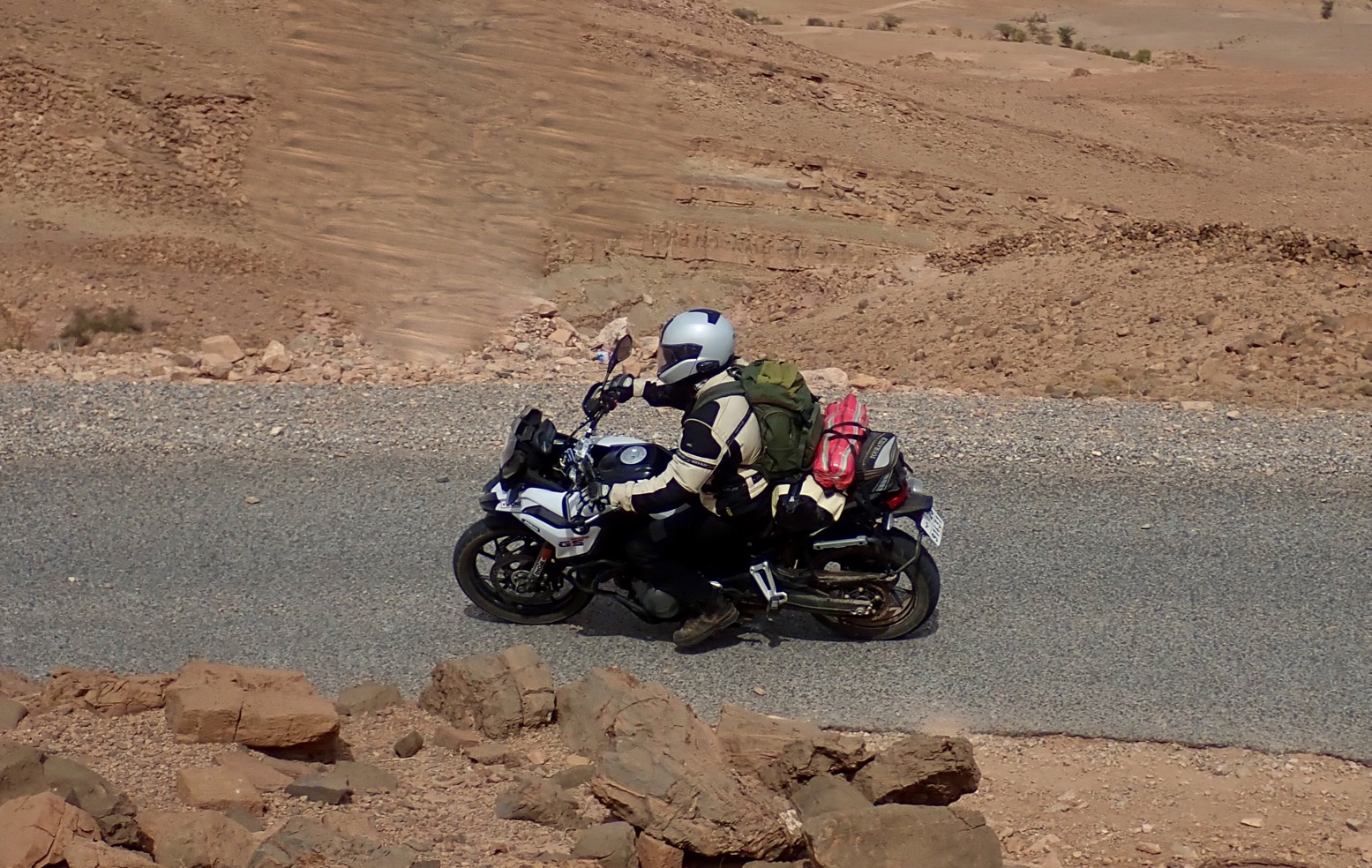
I rode a bottom of the range 750 (LED dash; no quickshifter, connectivity, ESA and so on) for a week, on winding Moroccan mountain backroads and easy desert trails, covering some 1200kms or 750 miles. The bike had 6300km on the clock (114 hours running time) and was fitted with a thick Givi bashplate, crash bars, handguards and rear racks.
In Adventure Moto World you might say it’s competitors include the KTM 790, Guzzi V85TT, XT700 or just updated Tracer 700, the V-Strom 650 (£6500 discounted new) or a 1000cc Africa Twin. The BMW is cheaper than all of them except the ageing Suzuki and the Tracer, new or old.

What they say

m75

It keeps your engine running, every day. Your heart beats to the rhythm of the BMW F 750 GS. It’s your ticket to the adventure. Because with the balanced Enduro all-rounder, you will master all paths, regardless of the road surface, and expand your horizons – because you want more. The F 750 GS gives you more power, more comfort, more spirit of GS. Feel the strong-charactered engine and enjoy the ease of handling of the F 750 GS. While you’re off discovering the world, you have the bike with the automatic stability control (ASC) and the ABS safely under control. And with the ex-factory option Connectivity, the 6.5-inch TFT-display shows you among other things which junction you have to turn off at or who is calling you. Clear and concise – without distracting you from the road. The entry into your next experience is – also thanks to the low seat height – easier than ever before.

tik
  • Compared to the 850, at just £8225 it’s a very good deal
  • Enough real-world power to get the job donef75spex
  • Great brakes with ABS 
  • Great suspension too. HPA shock with rebound damping
  • Stable in corners. Long and low, just like the old 700/650.
  • Turns better than old 700 – must be down to the higher CoG plus rake and trail changes.
  • Tubeless tyres with easy-access side valves
  • Traction control (‘ASC’) plus a rain mode
  • LHS scrollable menu with all the essential metrics
  • Seat – no complaints this time.
  • BMW-style 12-v power outlet on the dash
cros
  • Heavy With the added metalwork mine probably came in at 230kg wet, but only felt it when pushing around or trying to pick up.
  • Windscreen? More a small transparent plate which does nothing much.
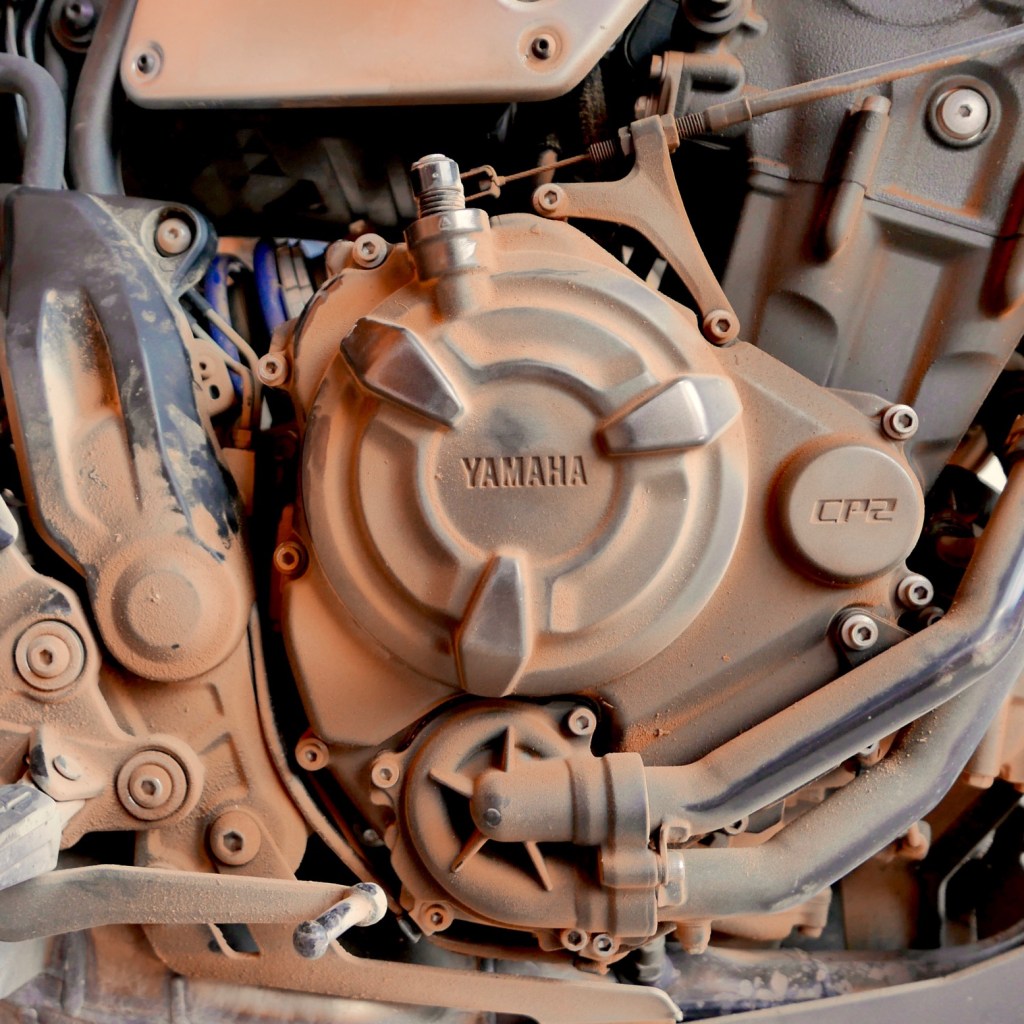
  • Engine lacks character compared to a Yamaha CP2 or even an NC750.
  • Fuel consumption worse than the 700 – averaged 70mpg (but only measured twice).
  • The thin digits on the LCD dash were hard to read easily or if not in direct sun.
  • Remaining range (400km when full) proved a little optimistic when pushed to the limit.

Review

As do-it-all gravel travel bikes, the old 650 and 700 twins were both better than most people thought. With some K60s, I took a 650 quite a way out of its (and my) comfort zone back in 2012. So I expected to like the new 750, even if I’d be held back by stock road Anakees.
The 750 retains what looks like a long wheelbase; there’s a cubic foot of collector box packed in behind the engine and in front of the back wheel. Initially, I found the cable-less, electronic throttle lacked damping and the steering had that sports-tourer ‘self-leaning’ thing (like my old TDM). It must be a calculated consequence of weight, rake and trail but as the miles passed by I soon didn’t notice either, instead revelling in the bike’s more positive attributes.


The gearbox has an uncharacteristic slickness for a BMW, easily tapped without the clutch, and I sure appreciated the correctly positioned foot controls after the well-used Sertao I rode the week before which needed foot lifts to brake or change gear. With a few accessories my bike probably weighed not much less than a GS12, but like the 12, it sure feels less once on the move.
A big difference between the 700 was locating the slightly bigger 15-litre tank back up front. This raises the mass of the bike, but as mentioned in the 700 review, too low a CoG can make a bike hard to turn easily. and on the dirt, including loose hairpins, the 750 didn’t exhibit the resistance I felt in the 700.

f75castor

The 750 and 850 are oddly fitted with a, to me, anachronistic telescopic steering dampers which I’ve not seen since the 70s and which to me signifies a way of disguising a bike’s instability due to poor frame design. It’s not mentioned under that name as in the long press release pdf. A few years ago there was a new version of the 1200GS which was soon recalled or somehow hampered with an unpredictable steering shimmy fixed by retrofitting a steering damper, iirc. Perhaps the 853-cc twins are set up with the same angles and weight distribution. I couldn’t see any way of adjusting the damper and it didn’t have any electronics attached to it.
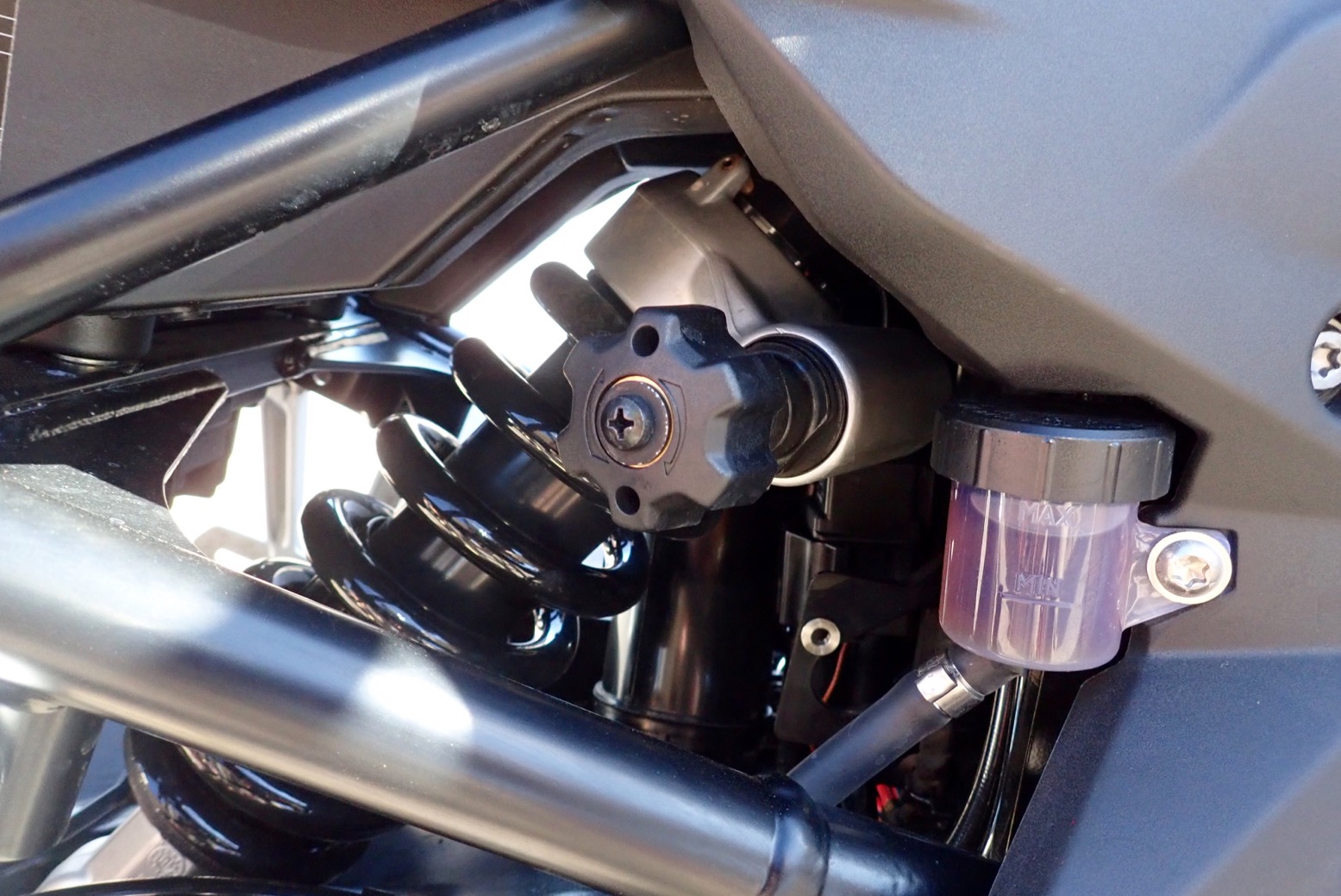
Road or trail, out of the crate the 750 retains the same excellent suspension without masses of baffling adjustments. For the first few days I left the rear preload as it was, then gave the HPA (left) several cranks (maybe 5 full turns) which stopped my boots dragging (and even being dragged off) on some bends. (I had the same problem with the Sertao the previous week; I’ve never had feet dragged off the pegs before, but they did point down at 45°). Once firmer up and raised a bit, much less boot dragging though I felt I should have increased the rebound damping a tad, but could not be bothered to meddle as it worked fine.

f75motore

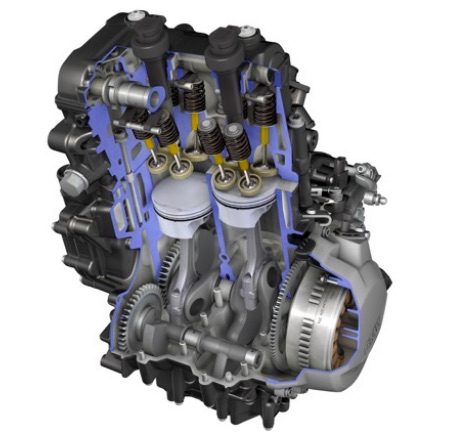
One sad day I’ll count them up, but the circuit I use in southern Morocco must have over a thousand bends. By the end of it I was confidently swinging through the less gravelly curves, never needing to rev over 5000 rpm (about 120kph) to make progress at a location-related pace (ie: not going berzerk).
On start-up it produces a cleverly engineered bark, but like the weight, that soon dissipates on the move and there’s little impression of the off-beat crank’s charismatic throb, even if the torque is all there. For a 270°, the motor lack the character of Yamaha’s CP2 700s (which make 10% less power) and even the NC750 I briefly owned.
On one very steep, rough and loose switchback climb I made the conscious effort not to slip the clutch (done to minimise the risk of stalling and then falling over) and the 750 managed to chug its way at walking pace round most bends until I lost my nerve or ran out of space. You’d not manage that on a big thumper, though next week I’ll try the same test on a 310. I only got to log two tanks to accurately estimate the fuel consumption which averaged 70mpg (58.2 US; 25kpl). One reading was 10% higher, the other 10% lower and pretty similar to the 2012 650 (68.2) but much lower than the 700 (81mpg) with 100,000 on the clock. This reading closely matched the displayed average of 4L/100km (25kpl).

This was my second chance to get to grips with traction control (or Automatic Stability Control: ‘ASC’). On gravelly tarmac the TC light fluttered briefly on the dash, and trying to activate it on the dirt, occasionally the power was notably constrained to hold the back-end in line. But this was me throttling on like an idiot; normally I’d exercise my own traction control to keep wheelspin as I want it. On the dirt letting the back-end step out is usually intentional, either because it’s fun or to rear-wheel steer and square off a tight corner. This is as opposed to the front, which once slipping usually ends in a fall. That’s what you’re really trying to avoid, especially on road tyres but there’s no way electronics can manage that; it takes better tyres or less speed.
It’s likely that on a long, steep and loose climb the TC would beneficially constrain wheelspin, but only up to a point. On low-traction slopes of sand, mud or wet grass I bet it would soon tie itself in knots. Only momentum and knobbly tyres work here but would take quite a nerve piloting nearly a quarter on a ton of 750GS.

f75plan

It seems to me that TC and modes are nifty but non-essential riding aids which – at negligible weight penalty (unlike ABS) – have become inexpensive enough to throw on to bikes which don’t really need either but which help give the impression of added safety getting more for your money. If they’re serious about safety, I’d sooner see TPMS included as stock, but you can buy a kit for 30 quid. TC and modes might suit riders without decades of pre-electronic riding experience under their belts. As with GPS or smartphones, you either merely find them handy; or you don’t know how or can’t see the point of managing without them.

They say the cast tubeless wheels have been strengthened. Good to know and I like the easy-access valves (left) which eliminate grovelling about with an inflation hose. Fitting a TPMS cap might make it a bit vulnerable to flying rocks, but the valves at least can be easily replaced. On a long trip I’d carry spares.
The ABS was never an issue on the dirt (though I didn’t do any emergency braking). I did find the brakes – or associated fork dive – a bit grabby, but better too much than not enough and the ABS safety net is always here. On the Sertao the previous week, the ill-positioned brake pedal saw me lose the back brake on long descents. No such problems on the twin.

Some LED dash figures like the clock were too thin and therefore hard to read at a glance, but once I got my head around it, the menu on the left bar displayed some useful data including 3 trip meters (including daily), average and live L/100km (hopefully changeable to another metric), ambient and water temperatures and remaining range. I can confirm that the bike I was riding had logged 114 riding hours in 6300kms.
I didn’t cover huge distances in one sitting but the seat on the 750 felt a whole lot better than previous iterations (not hard to do). I think it may even have been height adjustable, but though I took it off a couple of times for other reasons, this was not obvious.

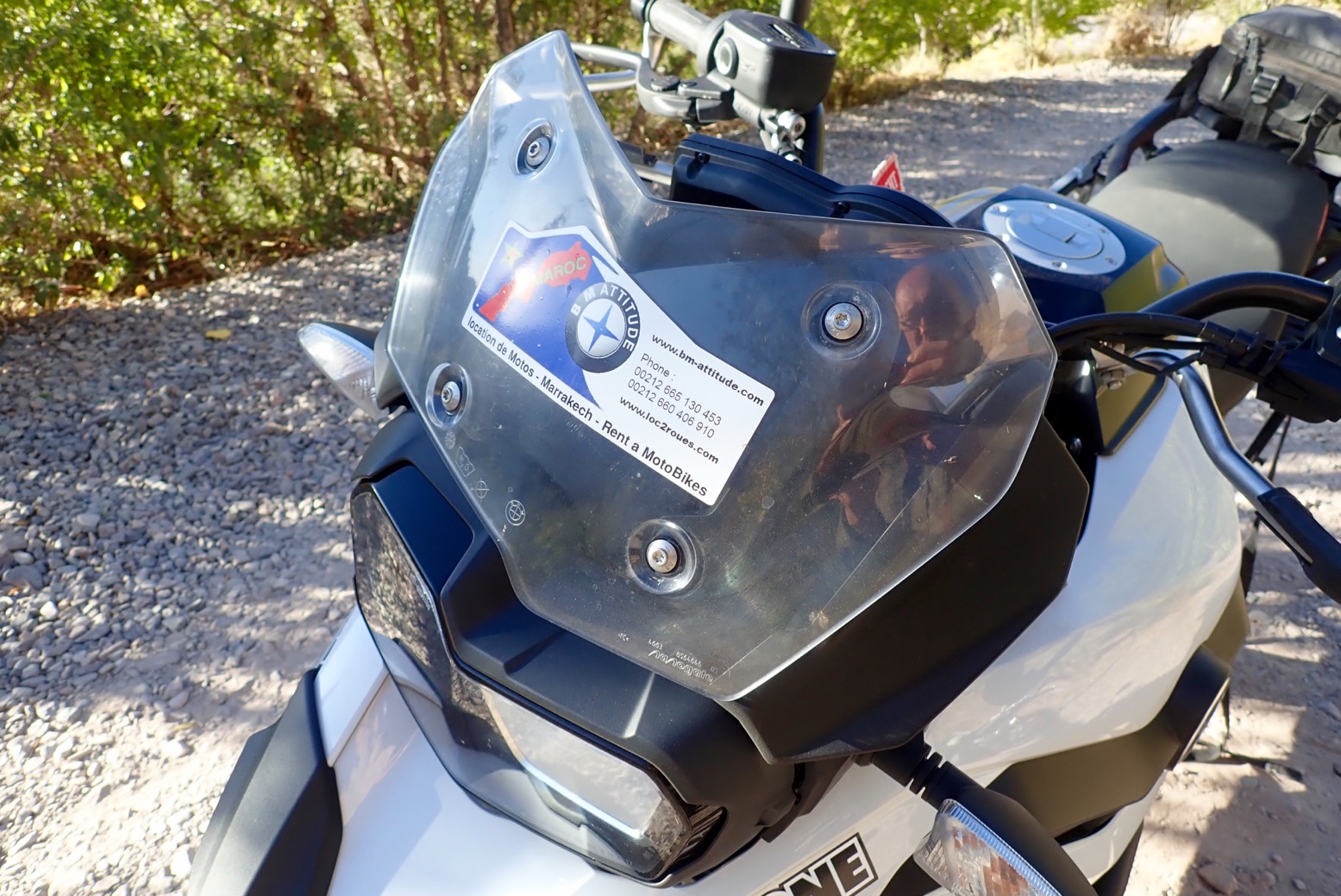
I can’t say the same for the near-useless piece of clear plastic screen (left) which just gives the mounting bolts something to do until you fit something actually useful. I did notice the slimness in the bike’s waistline did make standing up much more comfortable than on the older underseat-tank models. The bars were the usual 2 inches too low for me (6′ 1″). Under the seat there’s some useful stash space, partly because of the skimpy, three-piece toolkit (right).

Summary
On the road and easy trails there really is very little to dislike about the 750GS. I know everyone will ignore me but it’s got enough of everything you need in a travel bike with maybe a little too much weight and electronics. The looks are subjective but I’d say are an improvement and in line with the current humpbacked GS look, all the way down to the 310GS. It’s got a potential 400km range, plus the brakes, torque and stock suspension to do it all. Essential additions would include an actual screen, a centre stand plus pannier racks for your luggage and probably a bashplate and other protection. Having tried it, I could live without TC and a rain engine mode (which I forgot to try) and settle for a similar bike like a mechanically proven Tracer (old model from £6700; 2020 model £7400 claimed) or 19-inch V-Strom for less weight and a lot less money.

New Adventure Twins for 2019

TW-BMW_F 750 GSWe’ve been expecting them for ages, but the recent announcement of a slew of what’s now called mid-sized adventure bikes for 2019 is still exciting. You’ll find a lot more on these bikes all over the web, but for the moment, here they all are on one page – with pictures. Here we have a bunch of functional, travel-friendly machines without gargantuan weights, ridiculous levels of horsepower or mind-boggling ‘because-we-can’ complexity.
Such flagships, exemplified by the latest R1250GS, will always be popular. BMW’s pre-eminent adventure tank is doubtless great to ride, but is ever less likely to be used by the real-world travellers, if for no other reason than the cost of one new could fund a lap of the planet.

Calls for lighter, simpler, smaller, cheaper and lower have been partly answered. Bikes not only able to take on epic, all-road global adventures which, if we’re honest, few of us can undertake more than once a lifetime, but which are also fun, do-it-all rides – something ‘adventure bikes’xt6-86 (like MTBs before them) have come to symbolise. It may all be a shallow, aspirational, SUV-like lifestyle trend but, just like the original Dakar clones: the 800G/S and XT600Z – it also happens to produce great machines for genuine overlanding.
Given that these new bikes must take years to develop, it was probably the manufacturers’ plan all along: offer the eye-catching OTT adv behemoths and once the ‘yes, but…’ backlash sets in, dish out the less flashy but still highly capable machines and capitalise on them.

tonyThe bikes listed here are all parallel twins, an engine configuration which I’ve long believed is ideal for motorcycles: it’s not long like a longitudinal V-twin, it’s not wide like a boxer or a transverse multi; it need not be top-heavy like a triple but it won’t vibrate like larger singles. A parallel twin of well under a litre is all the engine a bike needs in terms of torque, economy, weight plus dealing with motorways, hills, elevation and payloads – and yes, even that intangible quality: character: My first twin was a ’78 Bonneville and my most recent has been the 700GS rental I’m currently riding in Morocco. Both were and are satisfying machines for my sort of riding.
twin_crank_shaft_angles

The current trend for a 270 degree firing order produces the pleasing off-beat throb of a Guzzi or Ducati with the ‘cross plane’ idea improving torque and smoothness
(even more once you add a balancer or two). It works because one piston is 2bikesswinging through its mid-stroke when the other stops dead, and was probably cooked up in a Black Country woodshed in 1905. Yamaha’s second-generation TDM was the first modern bike I know of to use this configuration. Now, just about all the bikes below as well as Royal Enfield’s new 650 roadsters and any other parallel twin you care to mention uses this ‘have-your-cake-and-eat-it’ offset.
So to recap: for the moment this under-represented selection of do-it-all adv P-twins in the 500-1000cc range include Honda’s CRF1000L Africa Twin, their CB500X and, dare I add the NC750X? OK, no I can’t. Plus BM’s old 700/800GS and the latest 850s mentioned below plus Suzuki’s ageing 650 V-Strom. I suppose you might add Ducati’s Desert Sled currently being overlanded by young Brit named Henry, although Triumph’s Scrambler and a Versys 650 would be pushing it. There’s a Benelli TRK too – can’t help thinking I’ve missed some. But anyway, by this time next year that list will double. The future looks bright – we’re gonna have twins.


BMW F750 and F850GS

f750GSIn Europe BMW are already selling the all-new 853cc parallel twins replacing the old F700 and 800GS. Having spent a couple of weeks on Moroccan trails pushing a rentaltw-700 700GS rental past 110,000kms, I can vouch that this under-rated ‘beginner’s’ bike (tubeless alloys and 19-inch front) would make a great travel machine. More about that ride here.
The new F750GS and F850GS (same 853cc engine, different cams and ECU) have all had good reviews, though there was a recall on a batch of the Chinese-built engines due to a dodgy oil pump drive, but it’s said none of this bikes were sold in the UK. Even then, it’s hard to believe people are still saying ‘you’ll never get me buying a Chinese bike!’ even though BMW has been successfully using the Loncin engine assembly plant for the X- and GS 650s since 2005. Bikes are assembled in Germany.
One thing I really noticed on the old 700 was the low centre of gravity, helped by having the battery right near the headstock, the airbox where the tank usually is and the actual tank below the seat, like the 650 Xbikes
or a Honda NC. Combined with the low seat and great suspension, it made a real difference in the dirt. The new 850s carry the fuel conventionally, we’re told to improved front/rear balance, but of course it could just be price- and assembly related. Note how the new KTM below carries its fuel down low on the sides.
Screenshot-2018-11-05-15.31.39-750x482With the 19-inch front, lower stock seat, cheaper price and tubeless all round, I’d take the 750 over the 850.
Specs on the 750GS are: 76hp and 61 torques, an 813mm (32”) stock seat,  15-l tank, 224kg wet and still about 15% cheaper than the F850GS (94hp, 68 ft lbs, 860mm seat with two lower and two taller options), 15-l tank and 224kg wet – only a full jerrican less than a 1200). An 800/850GS comparison and my 2019 750GS review.

f850gs


YAMAHA XT700 TENERE

t7renderTrying to emulate Honda’s well-managed release of info of their new Africa Twin a couple of years back, Yamaha’s drawn-out feed on the new 700 Tenere feels less successful. It’s taken too long but it’s here it finally is – nearly. To look at it’s pretty much the same bike we saw a year ago.
Motor is the xt7006torquey 72hp/50 ft-lb 689cc CP2 unit I liked so much in my XSR700 and the MT-07. In a proper trail bike chassis, I’d say that puts the 700 Tenere at an instant advantage. People are already decrying the 16-litre tank, but haven’t they noticed that efi is 20% more efficient than carb and fuel stations have proliferated around the world as vehicle ownership booms? You don’t really need 20-litre plus tanks any more, and you rarely did anyway. If the 700 sips fuel at the same average of 73mpg of my XSR, the range will be good for up to 370 clicks. Nearly the 400-km ideal for a travel bike.
xt7003The key figure of weight is tententenstill unknown but some estimate it at 205kg wet which is as good as can be expected considering the old 660Z single was officially a kilo more. By comparison the KTM 790 Adventure is 189 dry, so will top out at about the same – and any KTM is always lighter than anything else from Europe or Asia. And BYO oxygen as the commendably flat seat still sits at 880mm or 34.6 inches. Keeping it Yamaha-Tenere-700-specs-c-768x512at around that level is adjustable suspension: a 43mm USD forks and one of my favourite gadgets: a shock with a preload adjustment knob.
The Tenere singles were never sold officially in North America much until the hefty XTZ1200Z Super Tenere (also 270°) got imported. But telling them they’re not getting a Japan-made XT700 until late 2020, while Europe gets French-built XT7s in 2019 won’t win many US buyers. But here there and everywhere, the latest incarnation of Yamaha’s iconic Tenere is sure to be a hit in a way the XT1200Z never was.

TW-Tenere-700


HONDA CB500X

2019-honda-cb500xxjpg.pngThe only people who might not be thrilled by the announcement of Honda’s revamped 2019 CB500X are Northants engineering firm, Rally Raid.
For the last few years one of the most popular pages on this website has been the CB500X Rally Raid prototype I ran in 2015 – a 500X including a bigger front wheel, tubeless spoke rims, more and better suspension travel plus engine protection. Everything else about the bike, including the very economical if rather bland, cbsellxnon-270° motor, was Honda-perfect so for 2019 they have introduced CB500x19-dahsome of Rally Raid’s inspired mods. Up front you now get a road-and-trail optimised 19-inch front wheel and a little more suspension travel all round. A narrower seat helps shorter persons touch down plus there are some styling changes or an already great-looking bike, evoking the NC750s, plus a snazzy LCD dash, LED lights and a smidge more power. The new 500X will be the bike Honda should have made in the first place and if you want, RR will doubtless offer products to refine your machine for the rough road. Kerb weight is a claimed 197kg (mine was 195kg wet). The 2019 500X could be a bargain out-of-the-crate travel bike. If it had come with a two-seventy crank, I may well have kept mine.

cb500x-201.jpg


KTM 790 ADVENTURE & ADVENTURE R

Specs are in for KTM’s new 790 Adventure based on the 790 Duke which was Bike mag’s Bike of the Year. You get 95hp, 65 ft lbs, a breathless 880mm/34-inch seat height on the R, 850mm on the non-R, and a dry weight of 189kg plus 20-litre tanks giving a range of 450km at 22kpl or 52mpg. It bet I could get 30% more out of it at a steady 59mph!
And although they don’t make it clear tubeless spokes wheels are stock on both models. Hoo-bloody-ray. You can spec DID tubed rims, but why you’d do that is anyone’s guess. Very low-pressure running like sand dunes, perhaps? On a 200-kilo bike? Good luck with that,
tw-KTM-791Also not obvious are the ingenious low-slung pannier tanks either side of the engine where they also act as bash plate and crash bars. You can be pretty sure that plastic will be thick and repairable. With fuel pumps the norm with efi, it’s surprising more bikes don’t do this because, as mentioned above, it can make a real difference to handling off-road as well as picking a bike up with full tanks. Tanked up you’re over the 200-kilo mark – a vague benchmark for a functional, all-terrain travel bike. But the sort of minority who’ll be riding the KTM anywhere near its limit will take that all in their stride.
The rest of us will just appreciate the quality stock suspension. The 20% more expensive R model gets fully adjustable 48mm Ø WP-USDs (5mm fatter than the regular model) and a WP PDS shock. It all gives about 40mm (1.5″) more travel than the base model. Service intervals are a very generous 15,000km. Stick that in your 450L or Himalayan  and smoke it.


In skilled hands the Adventure will fly over the dirt, but for you and me it does almost seem a waste spec’ing all that quality WP when most won’t be able to use it for long before stopping for a breather. Still, it’s good to know it’s out there, it looks flash and the low tanks are the way things should go. We all gave up on roadside spark plug access years ago, didn’t we?
tw-KTM-790-Adventure-R


MOTO GUZZI V85 TT2018-Moto-Guzzi-V85c-1024x885

The very first story I had published in the early 80s was featured alongside a plucky woman who rode a Guzzi Le Mans across Africa.
But the fact is, Italian bikes have never been big in on the travel scene; probably down to perceptions of reliability despite characterful good looks. Guzzi’s latest take on the adventure look is unlikely to 2019-moto-guzzi-v85-tt-first-look-4change that even if the blurb you’ll find drones on about former Dakar contenders. Still, the V85 TT’s supposedly new 80-hp engine could be a step forward. Specs are lean for the moment, but last year’s concept has become a 2019 showroom hit. Nice paintwork.

Moto-Guzzi-V85-10.jpg


NORTON ATLAS RANGER 650

Atlas ranger 3Announced just ahead of the forthcoming Motorcycle Live Show in the UK, Norton’s parallel twin relieves the name from its Sixties twin which, iirc, was not one of their iconic models. The looks of the off-roady Ranger version are still more street scrambler than adv, with impractical hipster touches like suede on the seat. So it’s not really a contender as a travel bike for the trail to Kathmandu, Timbuktu or Macchu Pichu, but like the Guzzi, having ‘Norton’ on the tank sure looks cool and will kick off rosy-spec’d roadside chats with old timers.
Power is claimed at 84hp at 11,000 rpm which if true, makes it even less suited to docile overlanding, but the dry weight is 178kg so well under 200kg wet ought to be possible. Seat on the Ranger is a tall 867mm (34″) and the tank holds 15 litres.
They expect to deliver it by the end of 2019 – hopefully that will be less of the drama than the earlier Commando models of a few years back. Good luck to Norton.

Atlas ranger 4


XSR 700 Scrambler – some Morocco pics

XSR 700 Scrambler index page

Tender - 6

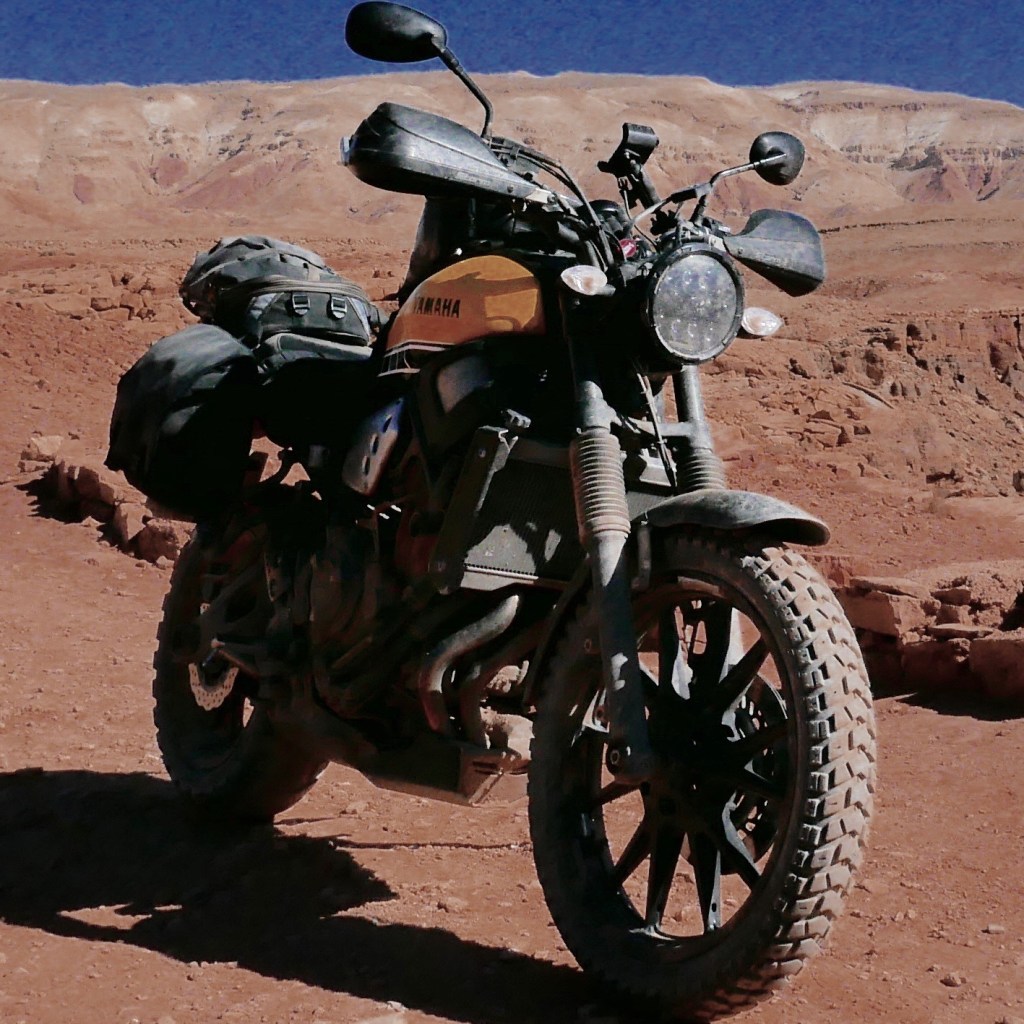
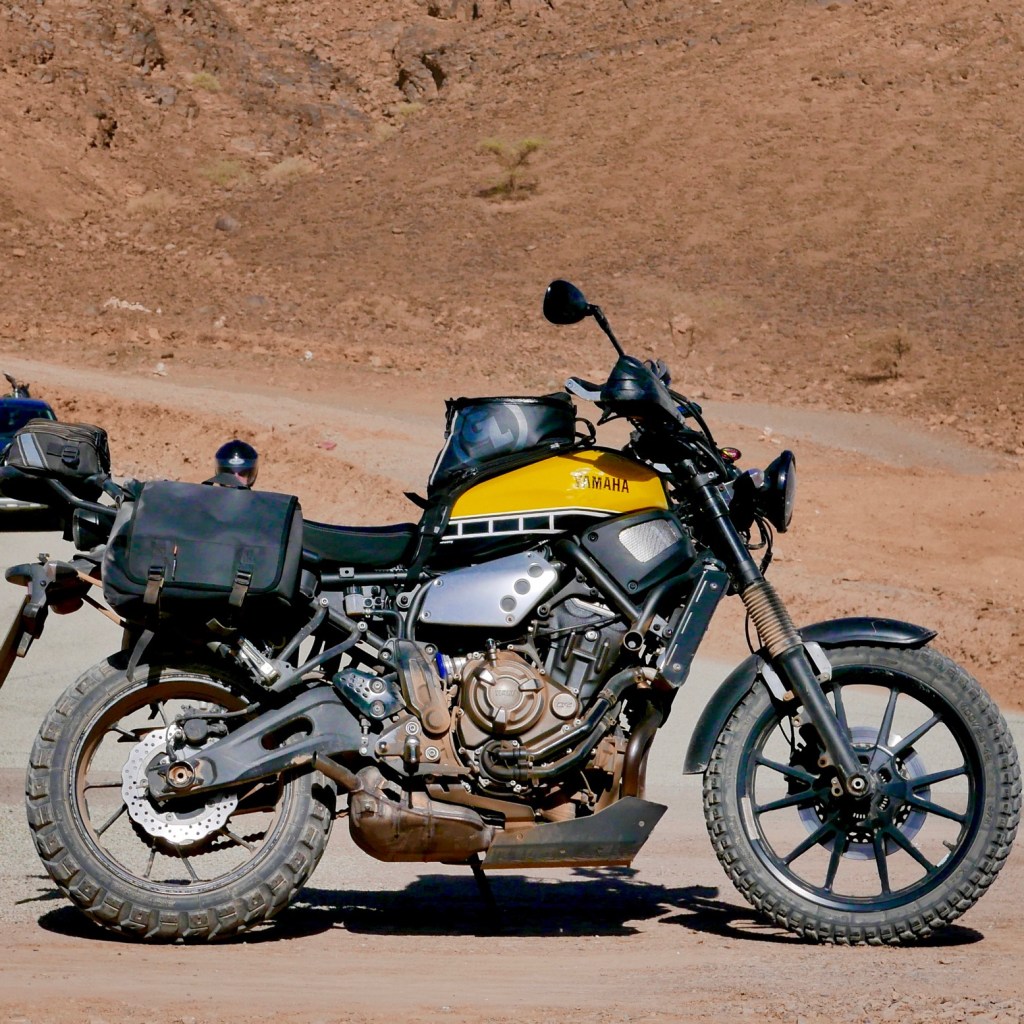
A few shots of my XSR700 Scrambler after a month in Morocco, leading three tours. I’m impressed with how it’s shrugged it all off, just like my old Teneres in fact. But then, why wouldn’t it?
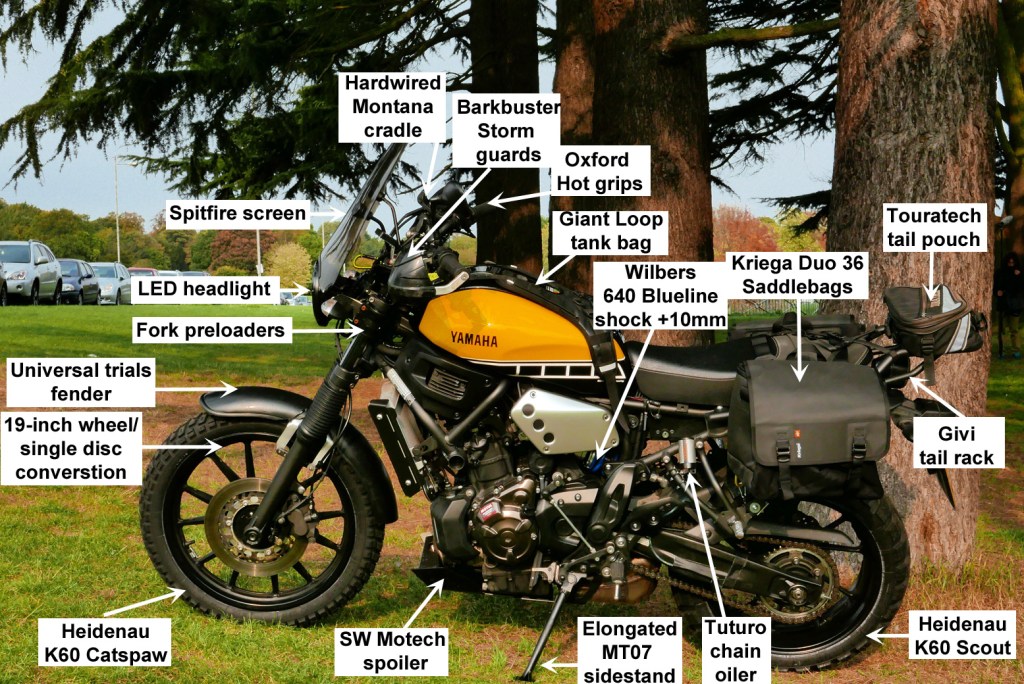
All I do is turn off the Tutoro chain oiler for the piste, then wipe it down and turn it on again for the highway.

Tender - 23

The engine is just right. I keep forgetting it’s restricted to ~48hp (bought it like that and liked it). The Heidenau K60 tyres are just right too; letting a couple of seconds out makes a big difference on the piste where I’m glad the ABS is disabled. Could do with a bit more and better suspension at times, and standing up is like pushing a wheelbarrow, but it’s a Scrambler, not a trail or enduro bike. Within it’s limitations, I can now sling it about on the dirt and on road. It turned out well. Riding it home in a week or so.
Full 7500-mile report.

Some pics by Jim B and Jim L.

Enduristan Monsoon review

See also: Soft Baggage Comparison

DESCRIPTION
Thirty-litre, nylon and TPU-coated fabric, roll-top, throwover panniers.
Enduristan web page.

WHERE TESTED
Spain and Morocco in March 2012 on a BMW F650GS SE. to update my Morocco book. The bags were used with a kit bag of camping stuff across the back seat but that got stolen early on so most of the time I just had the Monsoons along, plus a small tent and bag I got lent.

IN A LINE
Good volume and details, but too wide on this particular bike

PRO
• Will mount on most bikes
• Locate securely (against a rack)
• Well made
• Secure stiffener keeps shape well
• Several external attachment loops

CON
• Velcro straps were too short (but they now sell extensions for £8)
• A bit small, or could use a few more inches in roll-up height
• Wide. I’d prefer a slimmer, longer profile shape (don’t start me on that…)
• Not unique to Enduristan, but fabrics a bit light for long-range durability
• Lacks useful external pockets

COST
€290
Bags supplied in exchange for an Enduristan advert in AMH

monbaguette

DETAILED DESCRIPTION
According to my measurements the Monsoons are 33 tall x 25 wide x 36cm long so do have a genuine maximum capacity of about 30 litres as claimed which makes them a very useful four litres bigger than the Ortlieb Saddle Bags, their main throwover competitor in Europe at a stated 33 x 21 x 38cm or 26 litres. Australian Steel Pony Gascoyne’s are listed as 37 x 23 x 44 = 37 litres plus the nifty outer bottle holders. Andy Strapz Expedition Panniers say they are 30 x 18 x 33cm which comes out at 18 litres plus the outer mesh pocket, though they still claim up to 35 litres volume. I used a pair once in the desert and don’t recall them being anywhere near 35 litres when rolled up, but that was several years ago. Since I wrote this Adv Spec Magadans are around at 32 + 3 with the pockets.

Monattach

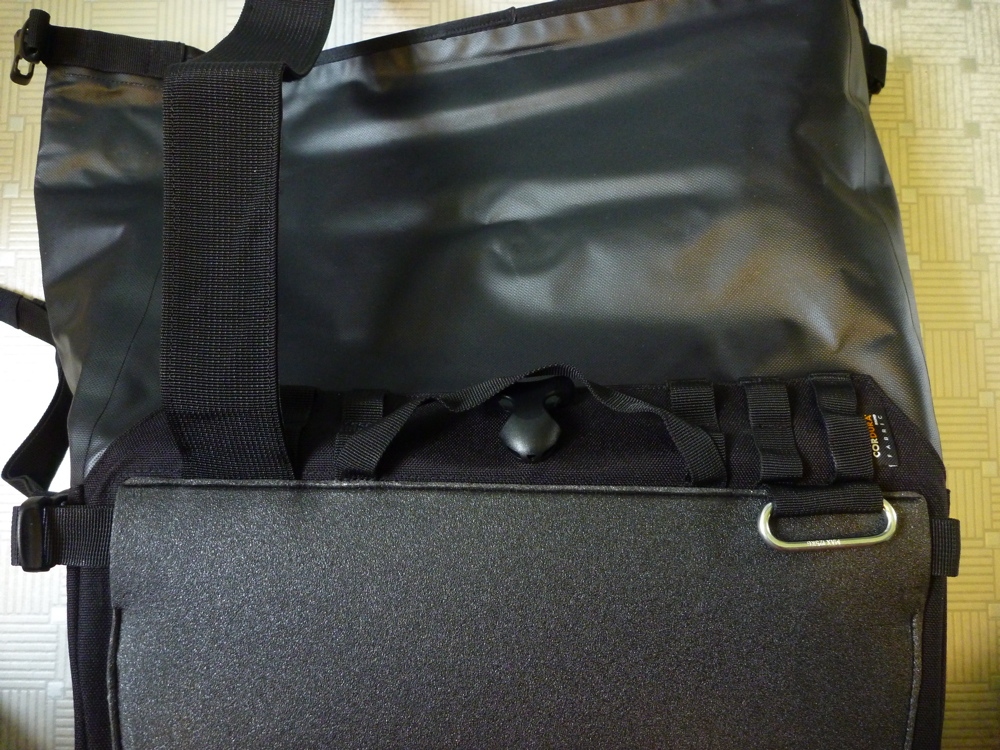
The Monsoons throw over and adjust with two-inch wide velcro straps, and to stop them moving forward or back an elasticated strap at the front lower edge attaches to a pillion footrest mount, while another non-elasticated adjustable strap runs across the back from the top of each corner to limit forward movement which studies have shown to actually be the greater dynamic load when riding.

Moninner

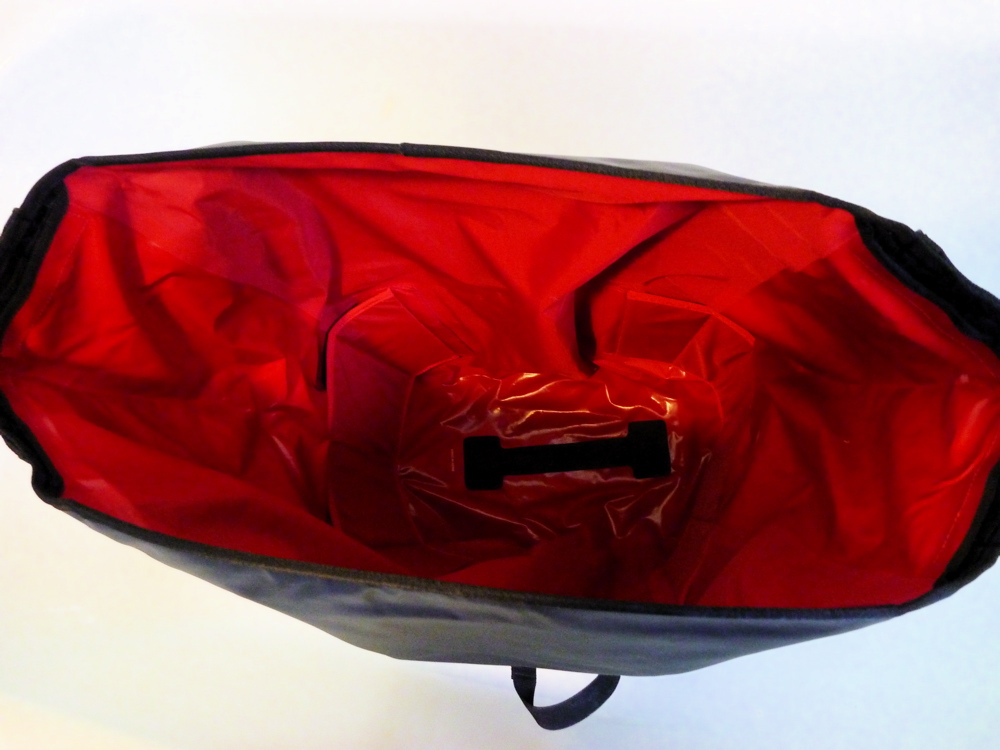
The outer bags are made of an unproofed 1000D nylon lower which is sewn to a thermally coated polyurethane (TPU) fabric upper for the rolling section which is welded to itself to make a cylinder. The top edge of the outer is then partly sewn to the inner, red TPU coated, thin nylon-like fabric lining (left). This waterproof red liner is also RF welded into a bag shape which I feel is better than stitching, and then taping. Separating outer abrasion from inner waterproofing differs from say Ortlieb Saddle Bags where the bag is made of thicker waterproof vinyl that is probably less resistant to abrasion than nylon.
Monisolater

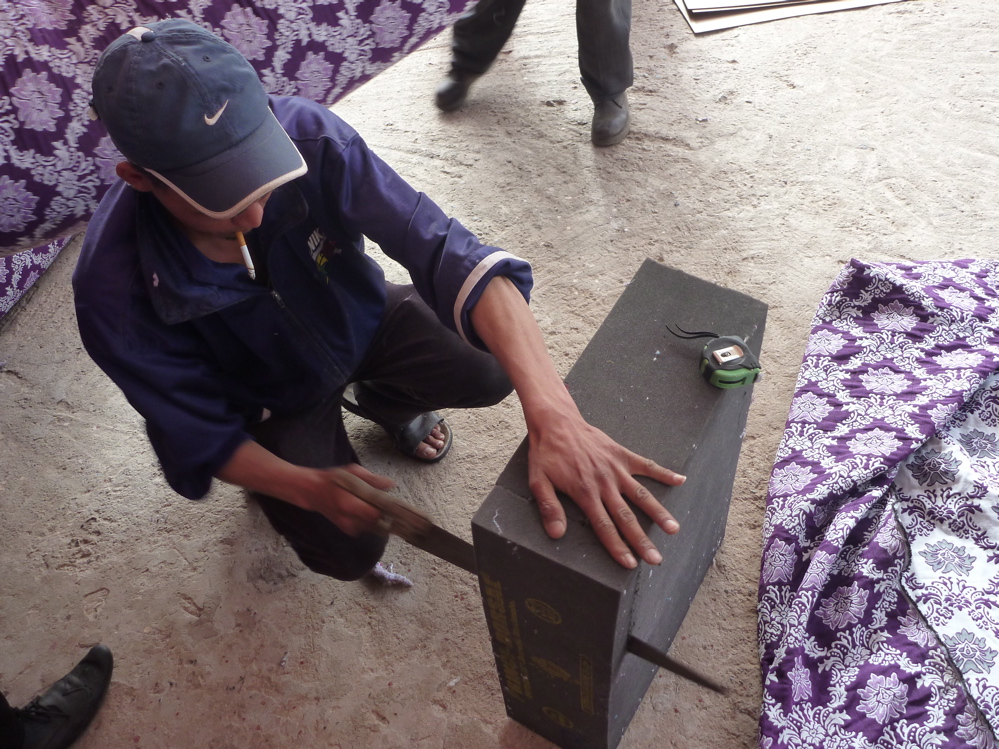
In between the Monsoon’s inner and outer layers you slip in a flexible plastic panel (not pictured) which fixes into position neatly with velcro tabs to give the bag its boxy shape. Enduristan claim that this panel gives a ‘third’ layer of protection from flung up debris which I suppose is true, but let’s face it, it’s really a shaping panel, like the Zegas had in box form. What’s more important is the front outer corner of any pannier which takes the brunt in a fall, and this vulnerable area was not reinforced.
The waterproof red lining had a pair of clever, flip-out dividers to make optional compartments in the lower half and into which slips the 7.5-litre Isolation Bag accessory (right). Unused, these dividers take up virtually no space.
There are no actual pockets inside on the red lining though up to a point you can slip stuff between the lining and the outer – a hidden compartment of sorts, but it won’t be within the waterproof inner. No pockets on the outside either, but plenty of attachment loops (left) for mounting stuff over the top. That’s not so convenient for easy bag access; I’d have prefered attachment points on the front/back panels as well, but  the clip down points for the roll-top get in the way which is why Steel Ponys roll tops clip as they do.

REVIEW
First up I must admit that while I like soft baggage, throwovers are not my preference for the age-old reasons. But although I had three offers of hard luggage for my Morocco guidebook updating trip, I was keen to compare these new Monsoons to the well established and recently redesigned Ortlieb Saddle Bags. Perhaps unusually, I used these bags over a Metal Mule rack. Had I not had this rack the bags would have swung around much more and probably got stressed or damaged on the wheel/swingarm. Or, to limit that would have had to be mounted awkwardly high. (Since writing this review Enduristan have told me that they testing a rack adapting kit for Monsoons). It’s notable that Andy Strapz now suggests that his bags mount much more securely on a light rack (which he can also sell you). He’s right; a pair of Andy Strapz panniers I lent someone melted in a short run on the back of an XR650L one time, though that would have happened to any throwover, as many, many of us have found over the years.

Mondriveby

With its wide, sub-seat fuel tank the F650GS may not have been an ideal candidate for Enduristan throwovers; it just doesn’t have the nice flat sides to suit them. Even then, I mounted the bags as low and as far forward as possible to centralise the weight and was typically running up to 10kg in each bag. Even in that position they never got in the way when I was paddling the bike hard through soft sand. Pushing the bike through even softer conditions was made awkward by the width of course, but better that than an alloy pannier’s hard edge. It never crossed my mind that the Monsoons might hurt me as it often did on Desert Riders with alloy Touratech Zegas.

At 30 litres I’d say they’re still a bit small. The fact is there’ll be times on the road when you want 40 litres and other days when 20 will do. I prefer bigger bags low down and as far forward as possible on the sides, then something small over the back seat/rack – a bag or even a small lockable box. At least with roll-tops you have the capacity to deal with varying volume needs, although to me the shape is not optimal – too wide. I’d have preferred a longer, slimmer profile, though it seems most soft panniers use width or height to gain volume, keeping the front-to-back length short presumably so as not to interfere with passenger legs, where present.

Moncrab

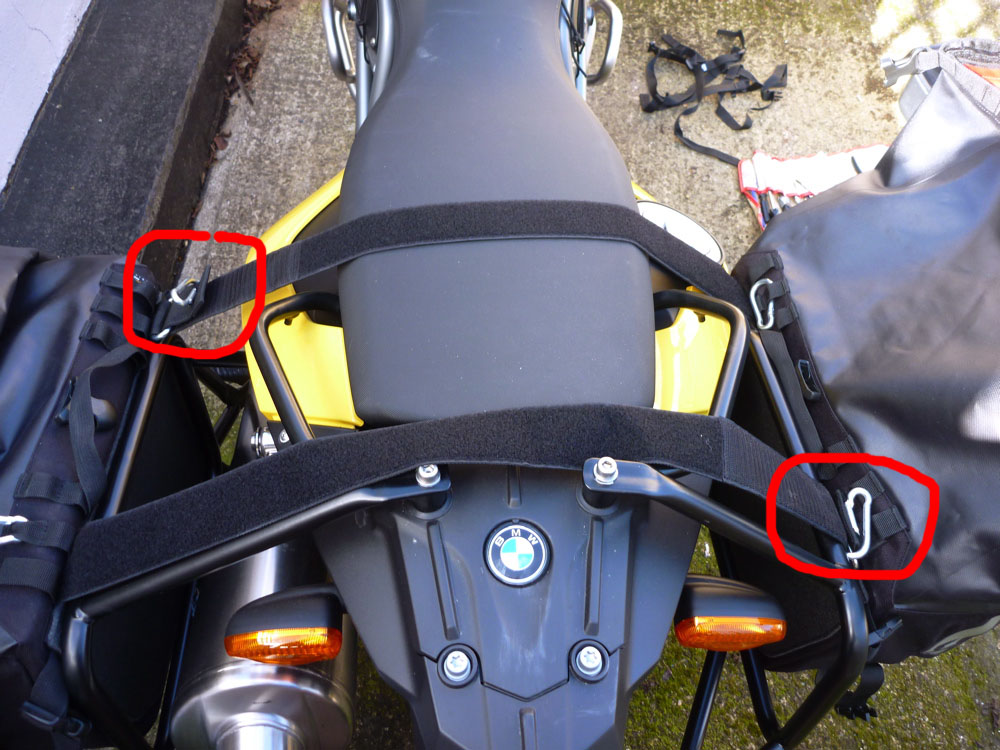
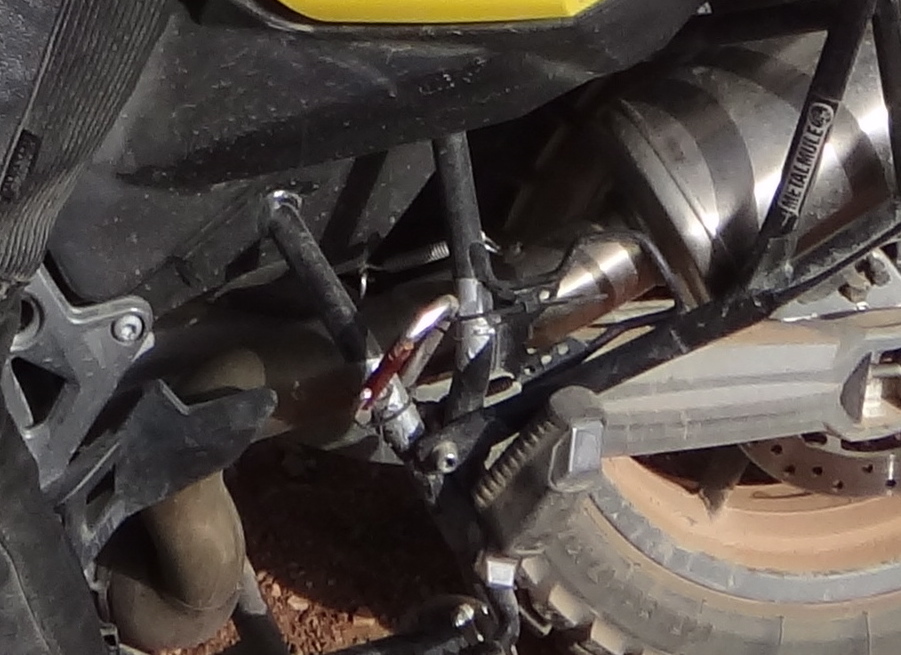
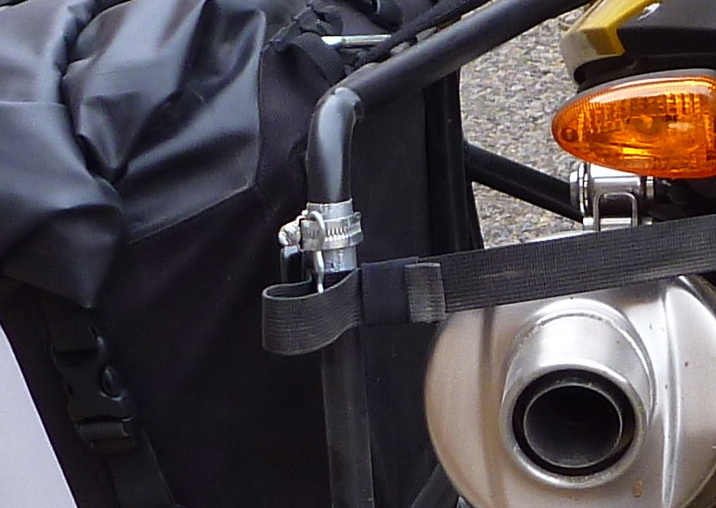
My first problem was finding that the velcro straps were way too short (right) to fit the F650, and would have been barely long enough even without a rack. I extended them by making two loops of two-inch strap I had lying around and adding some mini carabiners as buckles; that worked fine. On the GS the forward pillion footrest straps lined up just right, but on the exhaust side would have been way too close to the pipe, so I clipped and zip-tied a carabiner in there (left) to move the strap point further away. The back strap also wouldn’t have worked on my bike as it was set up had I not fixed on some R-clips with jubilee clamps on the back of the rack to keep the strap in position (right). That was a temporary fix which may have eventually worn through the strap. Had it been my bike I’d have come up with a better long-term solution.

Monstrapon

Once I did all that I have to say the bags never shifted in all the rough riding I did in Morocco or <80mph riding on the way back, although on the dirt I did use an extra belt between each bag’s handles (left) as I wasn’t convinced the velcro would hold. I’ve taken the same precaution on many other panniers I’ve used over the years.

monwide

I complain about them being too wide on the GS (right), but it’s just occured to me that the stiffening plate you insert to give the bags form could easily be trimmed or even removed altogether to make a more saggy but less wide profile. I wish I’d thought of that in Morocco. As it is, my bags picked up passing thorns as well as tears and scuffs off passing rock faces and were a nuisance on narrow mountain tracks where I was forced onto lines I’d have preferred to avoid. They are I suppose no wider than a hard-cased GS1200, and at least a soft bag deflects you less when you bump into something hard, and hurts less when you bump into someone soft or have the bike fall on you, all of which is reassuring and the reason we go soft, is it not?

Monbakpan

At the end of the day the bags clipped off easily and could be heaved over a shoulder to walk into a hotel, hands-free. Ortlieb QL2 Side Bags (31 x 18 x 43cm – 28L) would have clipped off a rack effortlessly. I’ve used smaller Ortlieb QLs on pushbike tours in the Himalaya and I can tell you when you’re shagged out it’s so nice to just lift the bag off the rack with the handle and then slot it on again next morning; no grubbing about with straps. Had it been a wet and muddy you’d get all mucky undoing the Monsoons, but that’s the way it is with all soft bags on motorbikes. Eventually, the bags got quite grubby and dusty, but so was the bike – hosing it all down at a car wash fixed that.
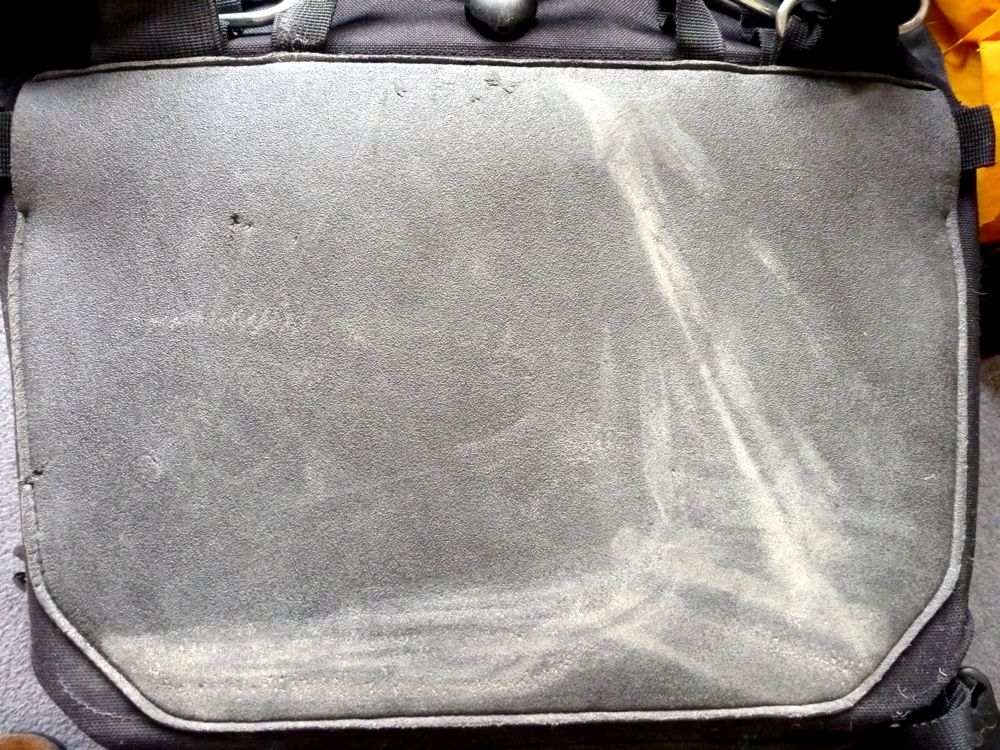
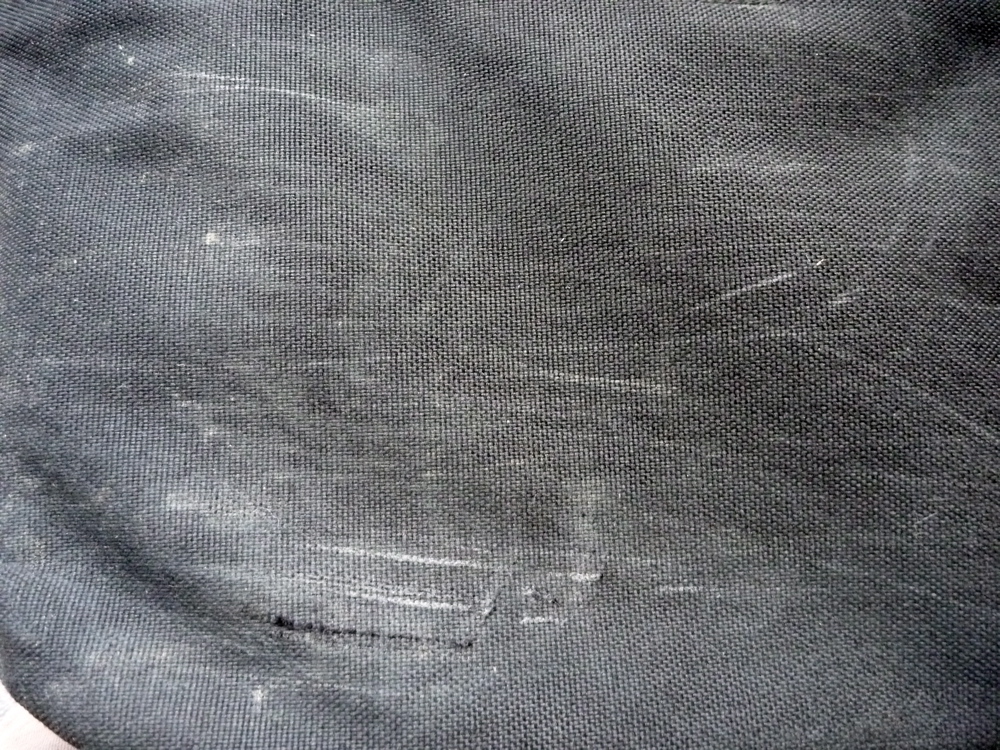
The back panel – a sort of dense closed-cell foam (left) – stood up pretty well to being rubbed on the rack for weeks. But the outer face of the left pannier (right) which stuck out more because of the pipe, had a harder time of it, even though I was trying to be careful and never consciously felt myself barge into the scenery.

The only chance I got to really test the Monsoon’s waterproofness was on an 800km-day back across Spain through several showers and one mega downpour with flooded roads with run-off. Even though I’d been expecting this and cinched the bags up nice and tight, when I got to the hotel that night there was some wetness inside the red liner along each forward end of the roll top where it clips down to the front panel of the bag. I’m not too surprised by this; roll top closures can’t really claim to have a waterproof seal, for that you need something like submersible Watershed Dry Bags (my 30-litre Watershed with new tent, bag and mat was among the stuff that got pinched off the ferry). Water being what it is, by pelting a roll-top bag at 70mph capillary action will eventually see it seep through to the insides. The top outer panel of the bag has a lightly textured exterior surface (uncoated side of a fabric?) which I believe may exacerbate this. A smoother surface to roll up (like thick PVC SealLine Baja bags) might help reduce ingress. It also occurred to me that the flat, flexible plastic, inch-wide stiffening ‘blade’ that’s sewn along the top edge to give you something to roll against might be better off being a piece of flexible tube or hose. That would be much easier to roll up tightly and without creases to stem the ingress of water.

So, all up I’m a bit lukewarm about the Monsoons even though nothing broke or failed in three weeks of hard use. The initial strap shortage was annoying, the width was also annoying and was made only a couple of inches so by the rack. I believe for actual overlanding rather than weekend camping, a soft pannier is much better off resting securely against a rack, or better still sitting on a platform rack (more about that later). Enduristan can’t be blamed for making a boxy shape like Ortlieb, but I’d much prefer a longer, thinner shape like the Steel Pony Gascoyne (seen but not tried), or a ‘suitcase’ shape (more about that later, too).

I also think the fabrics are a bit thin to survive a tough, trans-continental trip – that is the perspective taken and intended use for all gear reviews on this ‘website of the book’. I never fell off the GS or had it fall over but that, as well as rough use, is all part of motorcycling across the wilds of Africa, Asia and Latin America. The Morocco ride gave a good snapshot of that and if I was doing a longer trip with Monsoons I’d consider sewing on a second layer of material to protect the base and the damage-prone leading outer corner from wear and road slides. The fact that the Monsoon’s nylon lower is not waterproof makes sewing onto it no problem.(it doesn’t claim to waterproof; the base filled up as it seeped through when I washed them in the bath back home). Pockets could also be added here now I think about it. But making the bags slimmer as I suggested earlier by trimming/removing the flexible panel may not be that effective as the bags are cut to fit that panel.

Zip-free, roll-top is definitely the way to go, but what we want are big side bags mounting low down but without pedestrian-menacing width. I’d like to see Enduristan or anyone make a full-on, rack-mounting or rack-resting expedition pannier at 35 litres slim and in OTT tough abrasion-resistant fabric and similarly tough vinyl inner liners; separating the two is a good way of doing it because for resistance to rain and abrasion you need something like hypalon raft fabric (more about that another time). Since I wrote this Adventure Spec Magadans have come on the scene and answer many of my above requirements.