Category Archives: Bikes

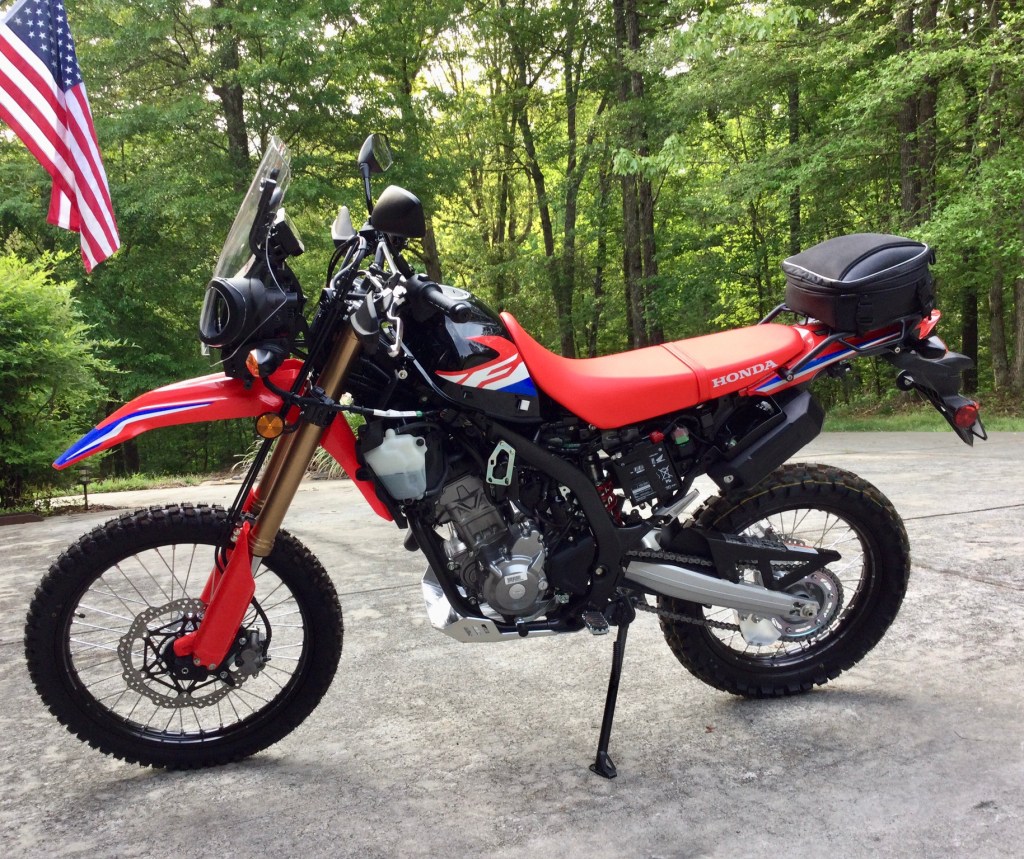
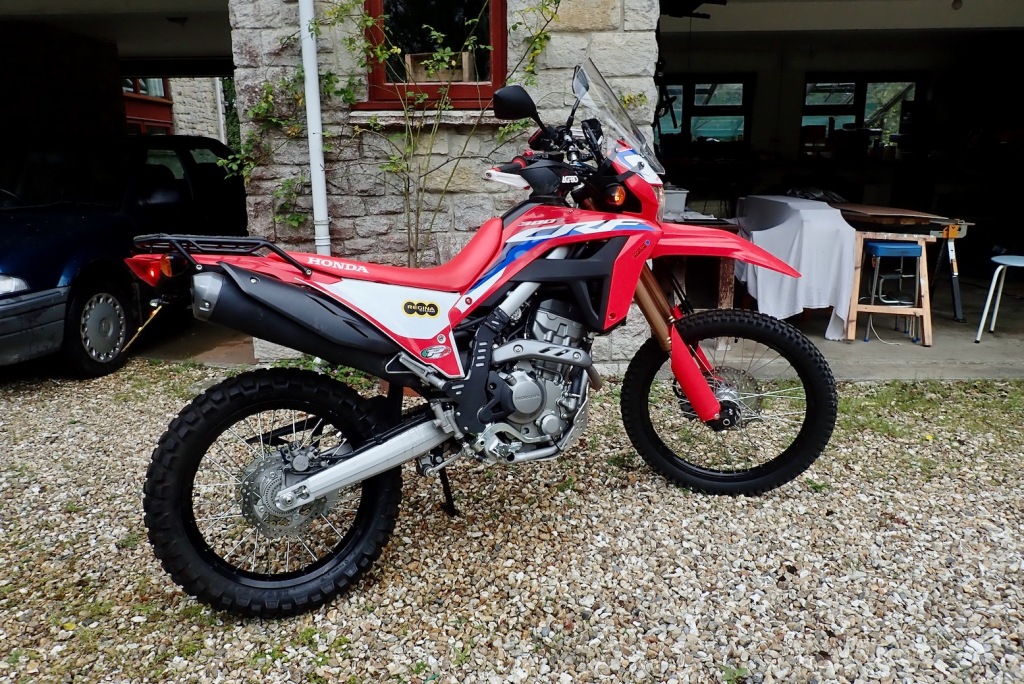
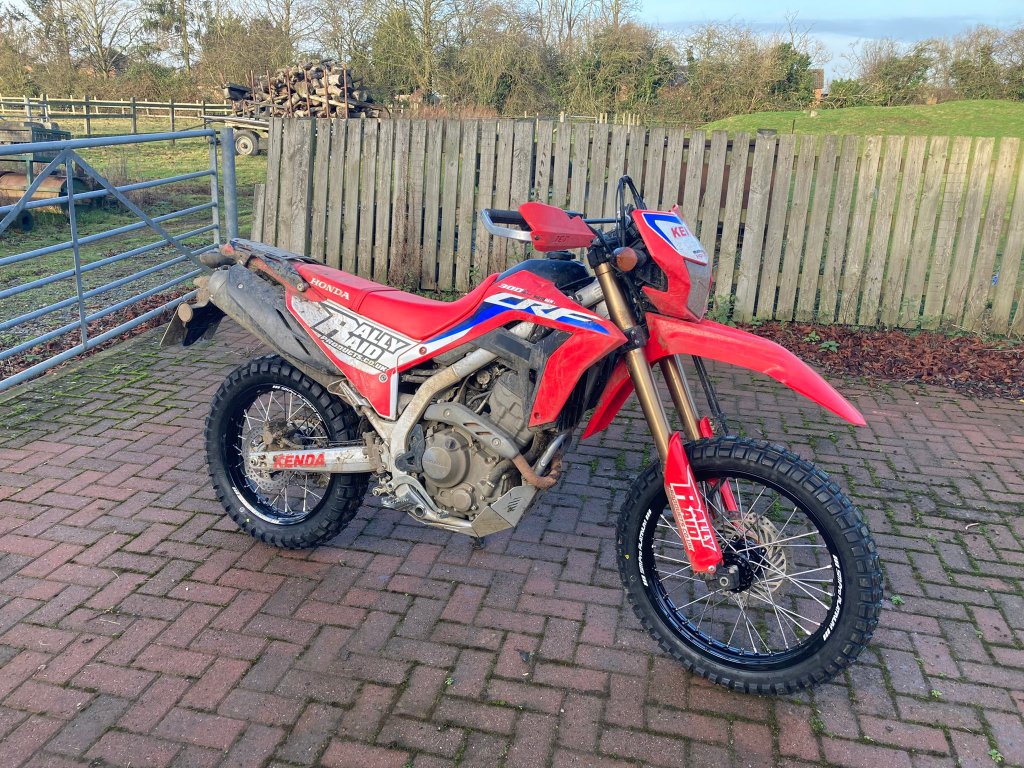
Honda CRF 300L: first impressions

Project 300L Index Page

Impressions after 120 miles

  • Light weight (146kg, as above)
  • Adequate power
  • Proper screen
  • Returned to stock gearing (now ticks over @ 4mph in 1st)
  • Rally Raid suspension
  • Tall bars and other functional accessories fitted by seller
  • Mpg
  • Thinned out seat
  • Swingarm chain alignment marks
  • Annoying white rpm warning light
  • Mitas trials tyres on the road
  • Pathetic tool kit
  • Tiny 7.8-litre tank
  • Vulnerable radiators

After replacing the front sprocket with the stock 14T and leaving the oversized rear for later, I set off for a 100-mile ride to Dorset. Had I looked properly I’d have realised the rear was actually a massive 45T not 42, as the seller claimed. Stock is 40T so that explained why I seemed to be belting along at 70mph+ along the A3 and M27, but cars were still passing me stuck in the slow lane.

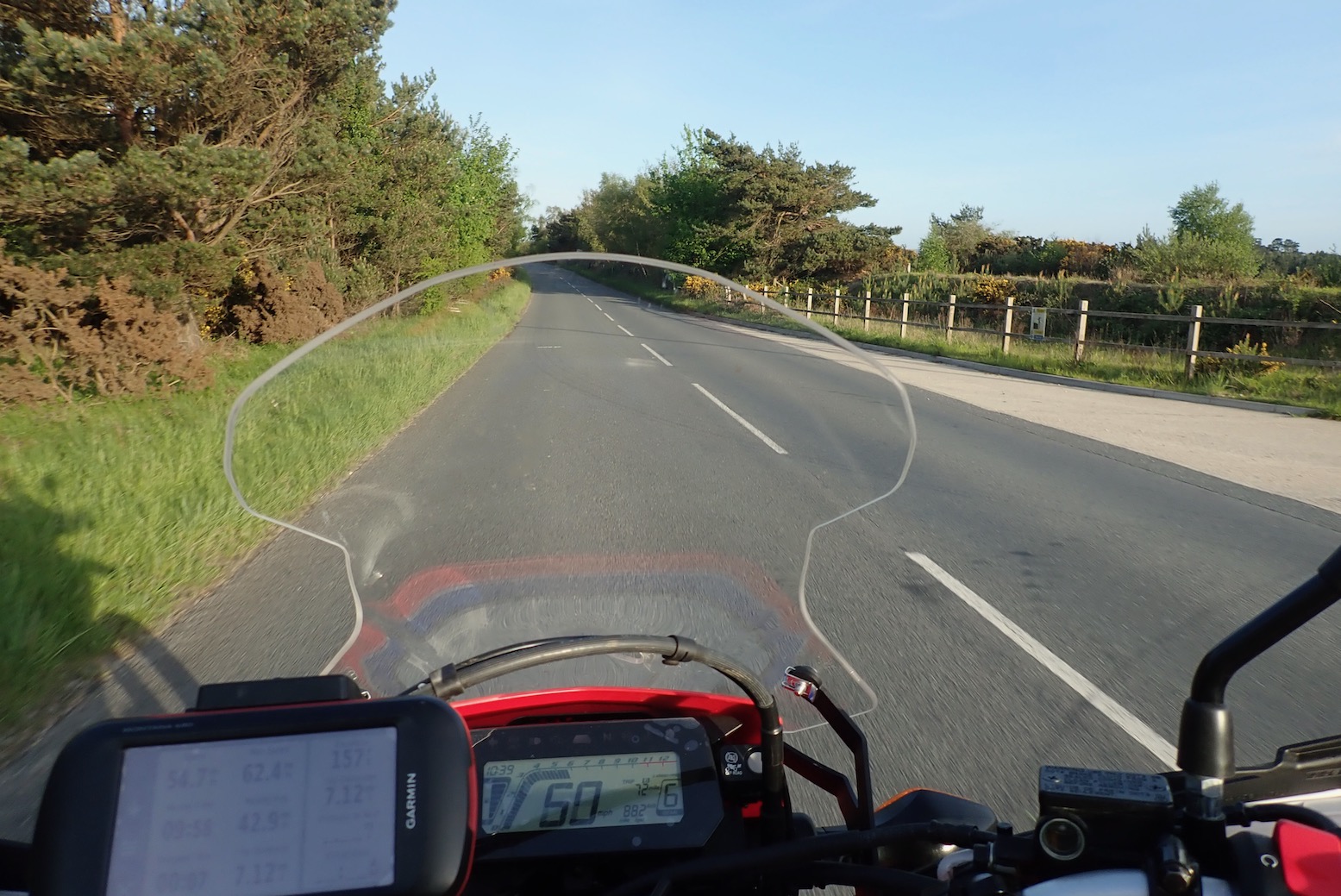
The 300L is so light it initially feels skittish; I wouldn’t fancy it in strong crosswinds. But the proper screen (and my Mosko jacket) helped hold back some heavy showers and the thinned-down seat (from Peak?) had just about 100 miles of padding left in it.
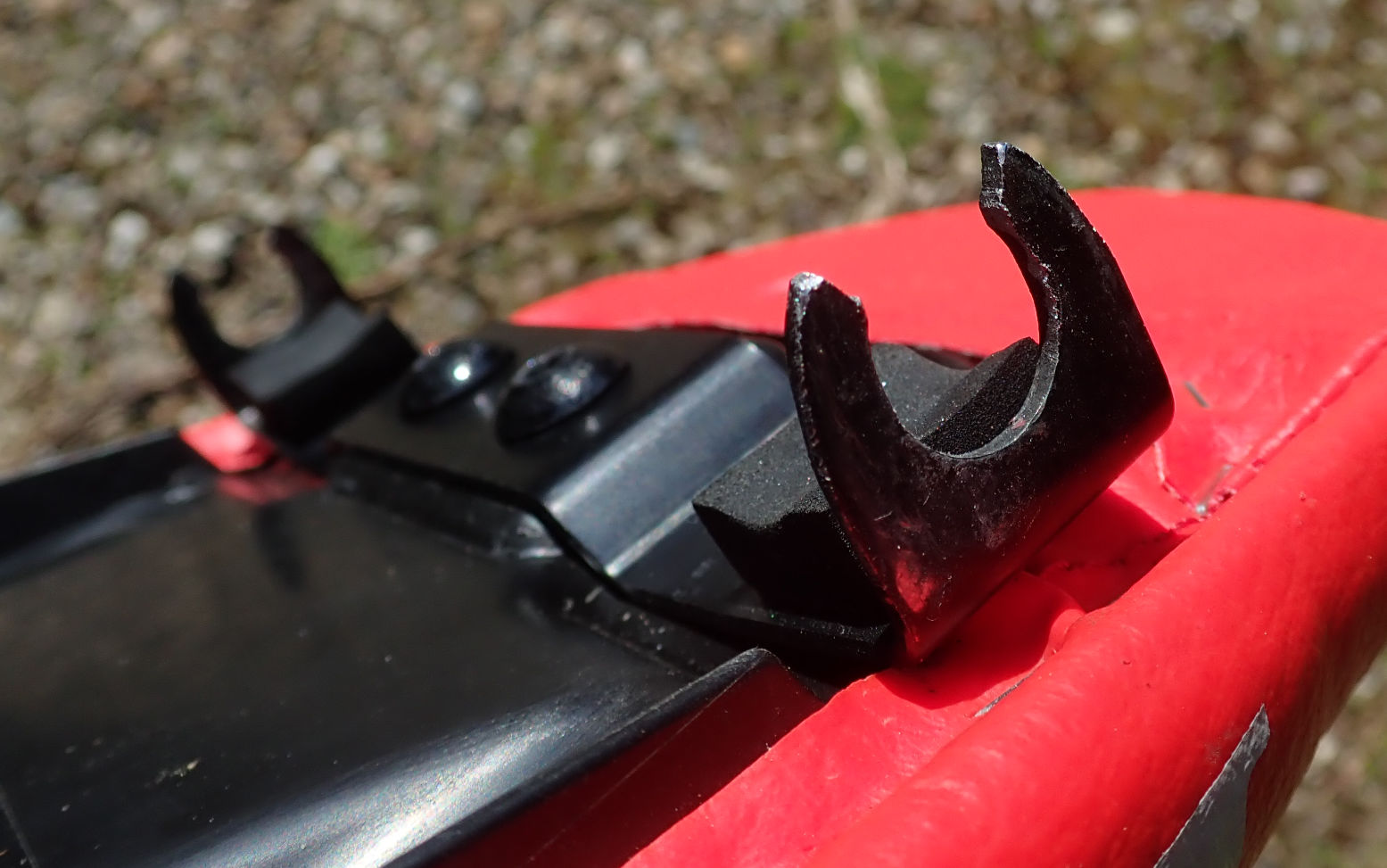
Talking of seat comfort and convenience, I reflexively removed the 1970s relic seat strap. Did Soichiro Honda impose some edict that they shall be fitted to trail bikes in perpetuity? The other thing I did was saw open the rear seat bracket so that removing the seat means just loosening the two frame/rack bolts either side, not removing them altogether with washers and spacers tumbling into the gravel.
Fyi my lowered seat height with the stock rear IRC tyre refitted is 34.5″ or 87.6cm which is 0.7 of an inch lower than Honda’s specs at 894cm.

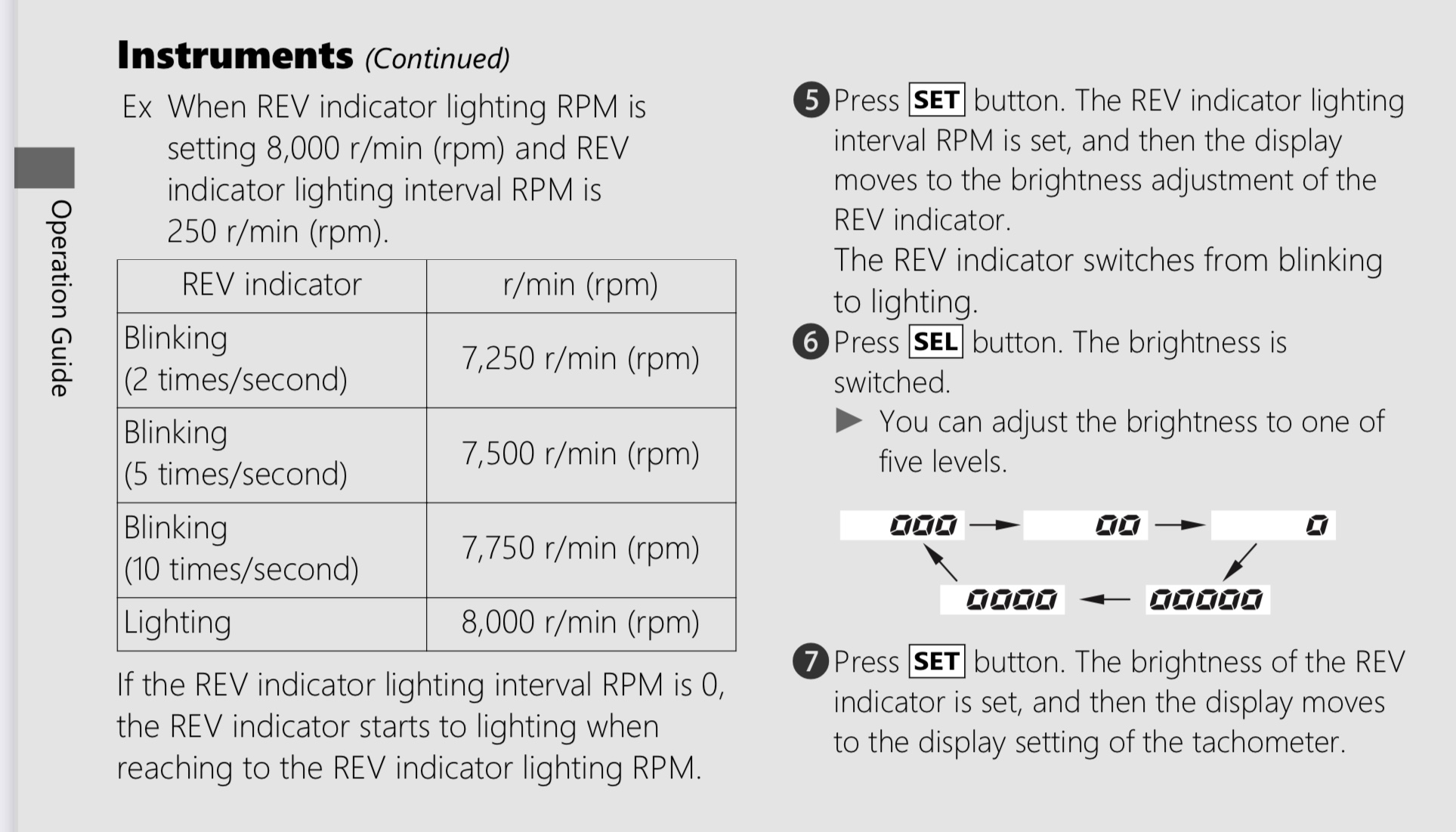
I’d never heard off the annoying white light in the console which starts flashing ever faster as you pass 7000rpm. The red line is another 3500rpm away, so what’s the point of it? To warn you to change gear or you’re going too fast? Whatever, it seems it can be adjusted up the rev scale and out of the way (left).

I’m not so keen on the ET 01 and 05 Mitas trials tyres either. The seller fitted them for the LET. I’m sure once aired down the grip is amazing in UK mud, but the soft, square knobs squidge about at fast road speeds.

With the gearing still lower than stock, I have to assume that the speedo was over-reading even more than normal, but on the open road it did feel like the L held up well against what I recall of my Himalayan, and is definitely much better at speed than my WR250 with similar power and weight. And, contrary to my impression of riding a near-new 300 Rally last year, there’s definitely a tad more poke than my old 250L. A few 300L owners have told me the bike loosens up substantially once past 1000 miles, which I did somewhere around Southampton.

Arriving with one bar on the fuel gauge, I filled up in Dorset with 5.7 litres at 110 miles on the odo. That means there was over 2 litres or 40+ miles in the 7.8-litre tank which seems unlikely over that distance. An average of 90mpg was shown on the console but I think the gearing may have messed with the odo reading. We shall see.

A couple of days later I refitted the stock 40T rear sprocket and IRC rear tyre. Now back to 14/40. With a thick Michelin tube, the 4.00×18 Mitas weighed 6.9kg, while the IRC and a cheap tube were only 6kg – not a huge difference. And amazingly, both tyres and tubes were heavier than the back wheel, now at 5.4kg with a 40T sprocket.
The near-new Regina chain fitted for the seller’s very low 13/45 gearing was now a link too long and I’d left my chain breaker in London (I knew this would happen…). The OEM 106 DID chain supplied loose was missing the joining link, plus I’m not sure I want to bother with it, even as a burner. I soon learned that you can’t bash out chain pins with a hammer and punch like you can on a pushbike; some serious force is needed, or YouTube suggested grinding off the end of the pin then prising the plate off. I don’t have a grinder either and a hacksaw didn’t work but luckily the Gear Box Bike Shop in nearby Poole was open on coronation Sunday and zipped off a link for a fiver.

Underside alignment mark – WTJOF?

While readjusting the cleaned-up chain, I took a moment to lament the passing of footproof snail cam adjusters, I bet there’s a way of retro fitting them to fiddly lock-nut adjusters. And is it me, or is the swingarm alignment marker maddeningly on the wrong, underside of the axle? I can’t bend like I used to could so had to lie flat on the ground, which means getting all the way up again. One… two… three… Ooof!

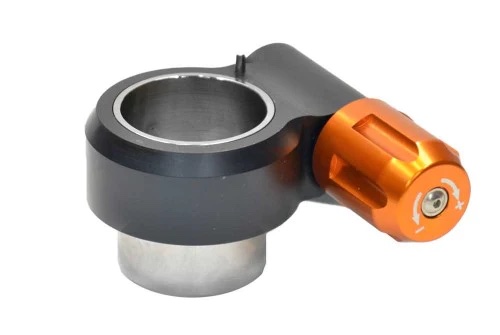
I checked the spring rate on the Rally Raid Stage 1 shock. On top of the spring was marked a surprising and reassuringly firm 100nm which is what it feels like. No wonder the seller found the 300 a bit tippy and decided to sell. I’m tempted to splash out another 200 quid on an HPA (above right) which seems to be a special order from Rally Raid, but am told it may need a change of spring.

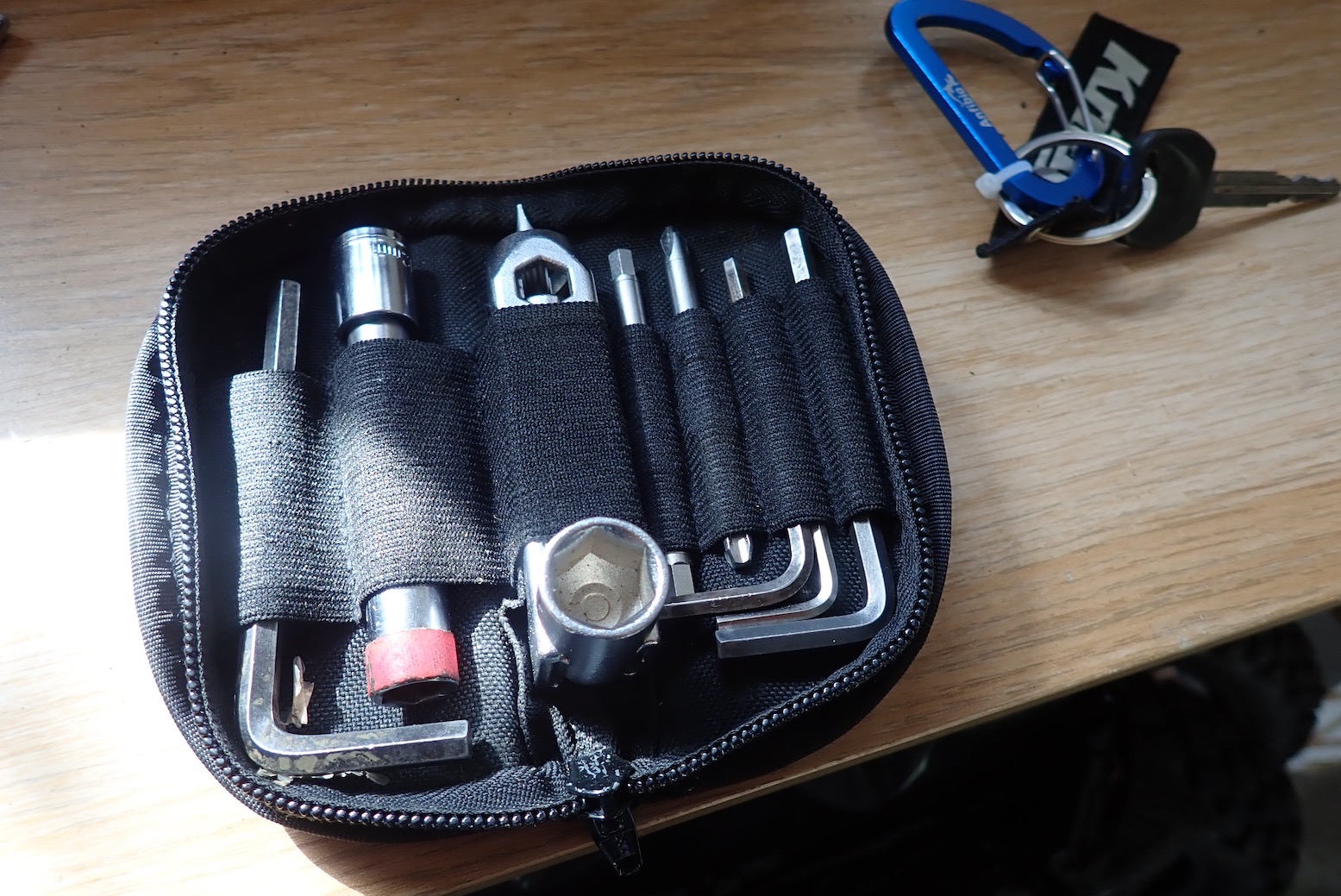
The bike’s tool kit sits in a space-wasting plastic box. I’m sure someone could fabricate a more functional replacement or even a 2-litre fuel cell in its place. Once opened I’m even more disappointed than expected: a single fat 14/17 open spanner and a pair of allens, enough to remove the mirrors, seat and side panels. Rally Raid make a nifty combo wrench (left) which does both wheels for under 30 quid, but it’s not in stock. Once I have that alongside my trusty Motion Pro Trail Toolkit with an added 8mm socket and a couple of allens I’ll be good to go.

3-4 mph at tickover – nice

Now back on stock gearing and rear tyre, I set off across the Dorset heathland to verify the odo against a GPS, while assuming the speedo will indicate the usual mandated 8% over. Speedo accuracy isn’t so important to me, but on a travel bike you want to trust the bike’s odo which are somehow engineeringly unlinked to the exaggerated speedo reading and often manage to be nearly spot on. Result: over 10 GPS miles the 300’s odo indicated 10.15, so odo is 1.5% over. I can live with that. Actually a 200-mile run with the GPS a few weeks later indicated 205 miles on the odo, so odo is 2.5% over.
Also, riding along at tickover in first, the speedo indicated 3-4mph which is about as slow as I can balance sat down, and just as it should be for low speed control for do-it-all trail biking. I really wonder why the seller lowered the gearing so drastically – he rode the Lands End Trial, not the SSDT. I remember my XT660Z did an annoying 8mph at tickover as do many bikes. Way too high for tricking along or not fragging the clutch on walking-pace climbs. As I mentioned in my quick ride on a 300 Rally last year, the 300s do seem to have ‘Goldilocks’ gearing: low 1st matched with an overdrive 6th.
Other good things I noted. Even though the seller was shorter than me, the Renthal bars he fitted are, for once, just right for me when standing. They don’t look that tall so I think this must be innate to the bike’s design. What a relief not to get bogged down in the usual risers and re-routed cables, even if I might have prefered brace-free FatBar.
Out of interest and with the luxury of a flat, garage floor for the first time in my biking life, I decided to do the bathroom scales trick and weigh the bike, one wheel at a time. Result: with an added rack, bashplate, screen, frame protectors, Rally Raid suspension, barks, tail tidy, and a full tank (‘kerb weight’), my 300L weighed in at 146kg. It feels like it too and if you deduct say, 4 kilos for the listed accessories (some of which – bars, shock tail tidy – save weight over stock), that matches up well with Honda’s 142kg kerb weight claim. Next jobs: get that weight up!

• Acerbis 14-litre tank
• USB power take-off
• Cool Cover
• Refit front OEM tyre

• Sort out some tubeless wheels
• Go somewhere good

Tested: Morocco with KTM 890 Adventure R

See also:
Africa Twin 1000
BMW F700GS
BMW F750GS

In a line:
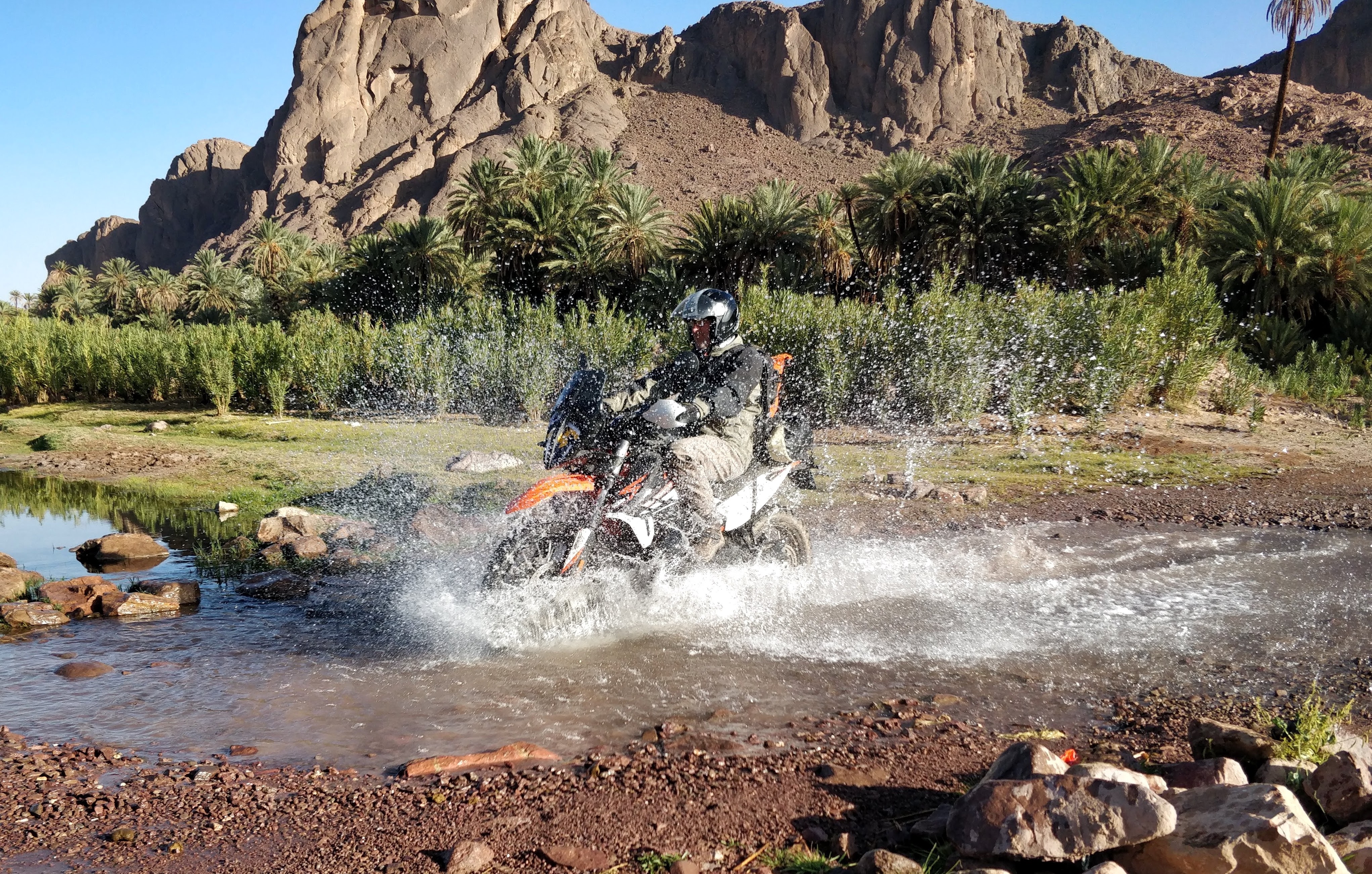
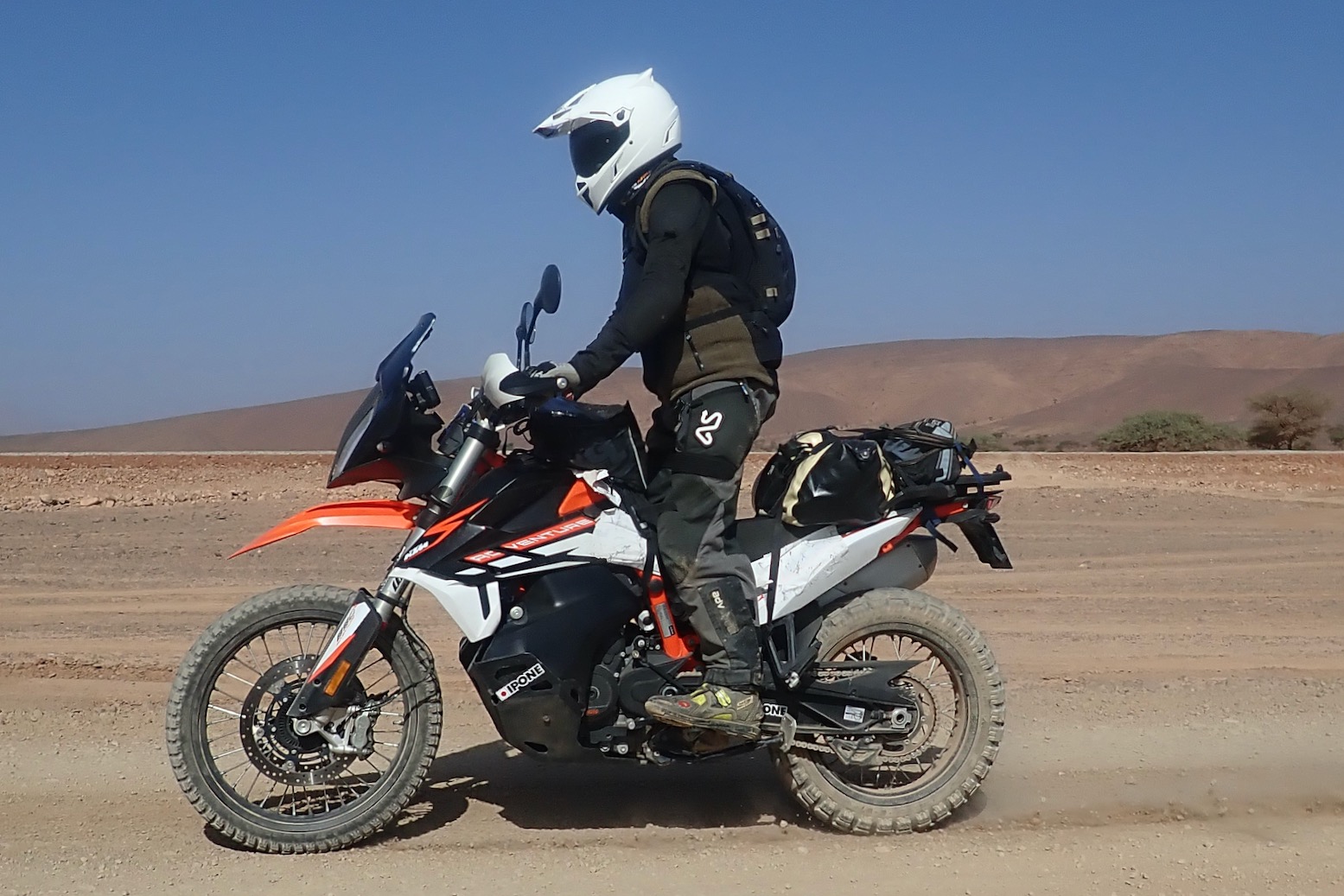
It took a second, 1200-km week’s ride to like the 890R a bit more, despite the harsh ride at times. (BIke used to guide my Morocco Fly & Ride tours).

 • Tubeless tyres
• On the move feels light for claimed 210kg tanked up
• Recorded up 72mpg (60US; 25.5 kpl) = 500-km range
• Great stability thanks to 20-litre pannier tank
• Fully adjustable stock suspension
• Easily understandable menu
• Cable clutch modulated well
• Big footrests
• Brilliant brakes
• Solid build quality
Modes aplenty and cruise control too, + USB, GPS 12v sockets
• Riding under 5000rpm, vibration was OK
• Mitas E-07/Karoo 3 tyres worked fine, road and trail
• Good aftermarket protection on the tank

Up at 2500m (8000′)

 • Engine sometimes felt/sounded rough as an air-cooled single, especially on start up
• Hard seat
• Not much engine braking
Screen too low to work on the road
• No stock attachment points on rear subframe
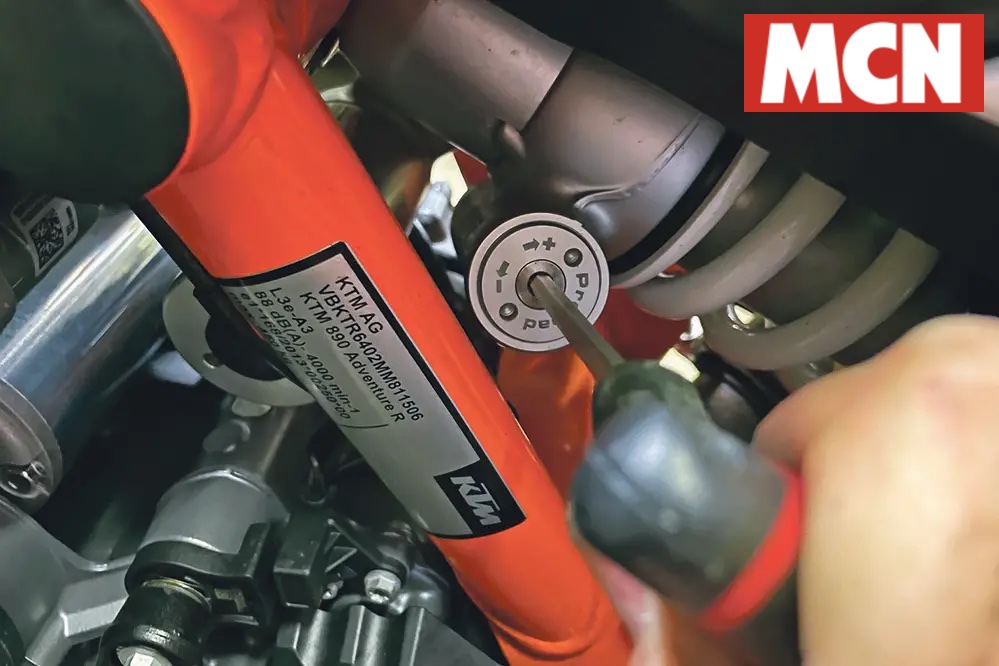
• No preload adjustment knob on the shock
Fuel gauge and range reading erratic or vague
Suspension harsh over small bumps
Quickshifter present but not enabled
• Display supplementary data too small to read

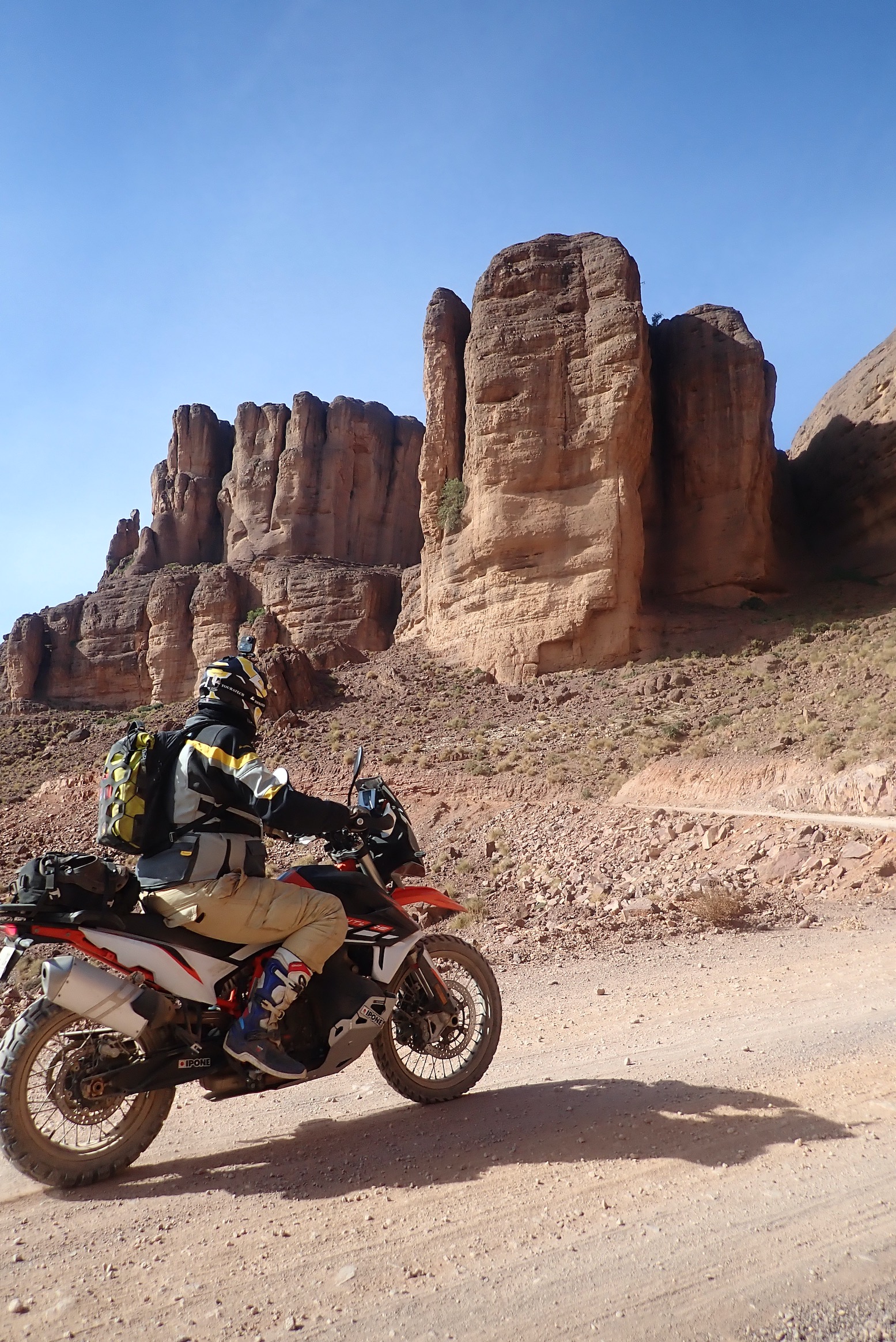
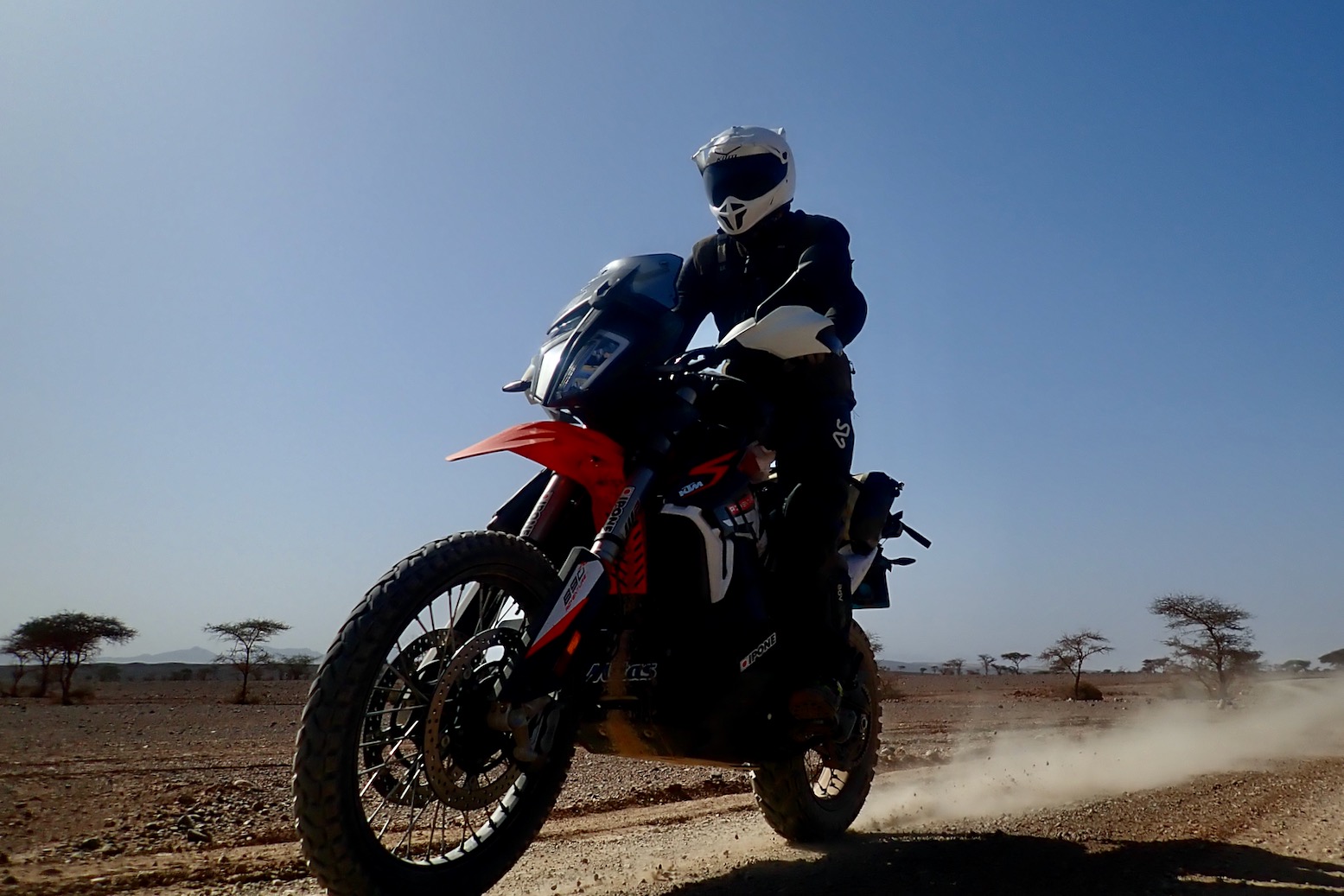
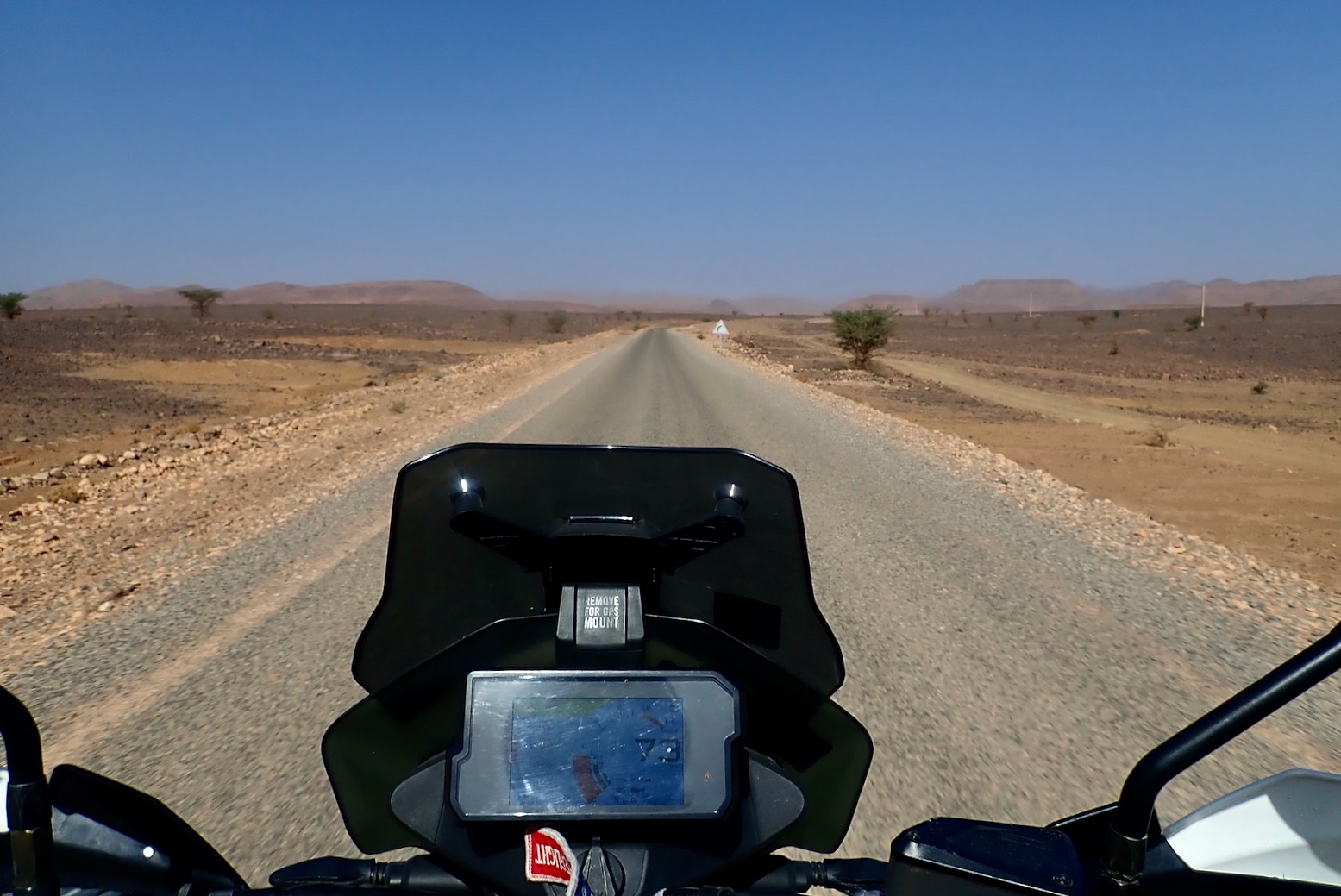
On a desert highway

Review
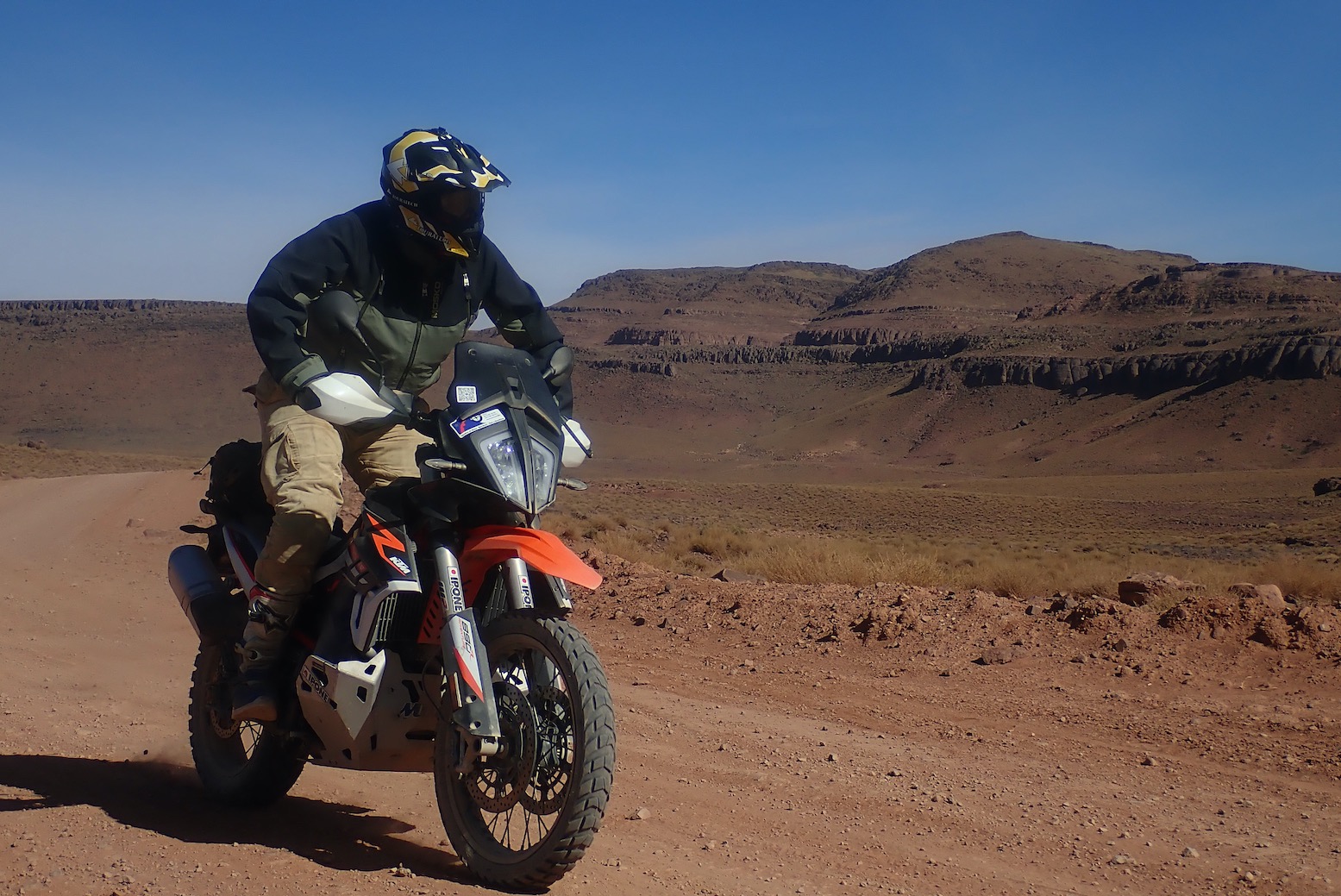
Looks-wise I don’t really get the KTM ‘alien insect’ thing; for me it all went wrong after the 640 Adventure and I marginally prefer today’s near identical Norden 901. But second time round in Morocco I got on with a 2021 890R a lot more.
Having ridden the 890 once already for a week, I set off for one last 1200-km tour lap on a huge BMW F800GS Trophy. Even with over 100,000 on the clock there was nothing much wrong with 800 and the engine delivery was creamy smooth (so much for 270° cranks…). But it didn’t feel right: ungainly, high seated and just a plain handful, even before I filled the underseat tank. Maybe it was just over-pressure tyres, but I was relieved when the cooling system burst a seal an hour or two into the ride (blocked thermostat?) and they brought up the same 890R I’d used a fortnight earlier that night.

Fyi this was only the second time I’ve ridden an 800GS, a hugely popular bike in its day. But I recall I wasn’t so impressed in northern Arizona over a decade ago. I’ll take the old tubeless ‘650’, ‘700’ or current ‘750GS’ every time. The rental shop got rid of the 850GSs after loads of problems.

Why no knob?

Normally I’m a bit blasé with what they rent me in Marrakech and both times was given the 890 out of the blue, knowing nothing about the bike. But second time I made sure the KTM’s tyres were down to 30 psi, I ditched my tail pack for a tank bag so I could set my own bag further back. Result: a better ride with proper room on the seat. I wasn’t able to access the KTM’s tools (if present) to soften the WP shock preload, but see now all it needed was a big Allen key, not some obscure 2-pin tool. Now I know.

An 890R owner on the last tour explained that from new, the bike’s ‘Tech Pack’ is activated for the first month and includes Quickshifter+, cruise control, ‘MSR’ (engine braking control, like the AT) and the ‘Rally’ mode. I’ve never encountered this sales upgrade ploy but it’s a good trick; if you decide you want to keep the Tech Pack after it expires that’ll be £769 please. Or, to quote a press release for the 2023 890″ ‘An innovative DEMO setting gifts the rider the chance to try the full gamut of optional Rider Aids for the first 1,500 km before deciding whether to purchase and keep them permanently.’

The 890R now makes 105hp, but I doubt I ever used more than half of that or exceeded 6000 rpm riding normally. It’s hard to see how 105hp could be useful on the dirt when combined with over 200 kilos. I got up to 70 mpg, 10% better than I managed to squeeze out of my AT but which was far less confidence inspiring off road.
After some 2400km over a couple of weeks, for me the best thing about the 890R was the stability road and trail, contributed by the low-slung 20-litre tank. But I think there’s more to it than just low tanks; there’s the light weight too and the seating position with feet and hands just right. I noticed an unadjustable steering damper too (loads of places offer aftermarket adjustable ones). Initially riding the loose switchbacks streaming across Sargho west was easier on the 890R than my AfTwin, but it was easier still a week later on a dinky 310GS. Then coming back on my better set-up 890R, it was a piece of cake, bar the odd slip from the worn front Karoo 3.


The 310’s seat is better than the plank hard 890 too, though standing up is more natural on the KTM as your knees squeeze the soft seat. The ill-formed 310 is hopeless in that respect. Another inch of bar height and I’d have been comfortable on the 890R, but they say there’s not enough slack in the cables for that.
The R’s small screen was too short to avoid helmet buffeting but worked rather too well in the unseasonal 30-°C heat we had for most of November. Standing up was the only way to get some airflow through my Mosko Moto jacket’s vents while also airing off the sore backside.

Feet on the crashbars; quite comfy

This bike has a quickshifter but I later realised it wasn’t faulty, just not enabled (like the cruise control and other ‘Tech Pack’ features). I recall the quickshifter worked amazingly well on a customer’s 790 a couple of years back, but on this 890, clutchless shifting worked surprisingly well most of the time; up was a little notchier and needed a dip of the throttle.

I fiddled a bit more with the engine settings second time – the menu is easy to use without RTFM, though I found the supplementary data too small to read easily on the move. I also found the fuel range was a vague ‘>190km’ instead of an actual figure, and as it emptied it had a habit of dropping by 30% when restarting the engine, then jumping up again. I was told many overly electronic modern bikes have this issue now; it’s not just a float in the tank anymore but calculated off your recent riding pace. On my last day’s ride I was certain that at up to 23kpl the tank’s 20 litres would easily do 400km to Marrakech, so trusted in my trip odometer and recent mpg readings rather than the flakey range reading.

Trip data too small to read easily on the move. Like a phone, surely they can offer bigger font sizes.

Full ‘Road’ power was nice but excessive for my needs; in southern Morocco there was little opportunity (or point) in exceeding 115kph for a few seconds. In the end I left it in ‘Off-Road’ mode (smoother power lower down?) with Road ABS on. The latter was especially effective and never an issue off-road; these days this whole ‘OMG ABS off-road!!’ is a red herring. ‘Off Road’ ABS disengages the back wheel so it can lock up (same as on the 310s); full ‘Road’ ABS worked on both wheels and was fine on the dirt. Now I’m not 16 anymore why would I want to lock up the back wheel? It certainly won’t be to kick off a power slide on some remote canyonside in the Anti Atlas

The bike came with a Mitas E07 on the back and a worn Karoo 3 on the front – both tubeless though the rims look normal. They felt secure enough on gravelly trails given the mass of the bike, and were fine on the hundreds of dry bends we swung through each day where the frequent spits of gravel moderated speeds and lean angles.

On faster rolling dirt tracks or deep road fords the suspension didn’t bottom out, but that just takes good preload and damping. On slow-speed irregularities the back chattered or kicked back violently. I dialled off the fork settings but it was the rear shock which needed less compression damping and maybe less preload too (there’s no preload knob, unlike the non-R 890). Dropping the tyres to 30psi certainly softened my second ride; another 5 psi off would have made it better still off road but things may have got a bit hot on the highway.

One thing I did miss hopping back on a 310GS after the first run were the KTM’s brilliant brakes, but other than that for what we do I’d settle on the lighter 310 every time. While less stable and with ordinary suspension, on loose switchbacks the little GS has less mass pushing your around.

With my bag shoved back, the KTM’s seat was more roomy but it’s still a plank. And my short day on the 800GS just underlined the KTM’s relatively rough engine (it sounded so bad we even checked the oil at one point).
All in all, the 890 was what I expected: an adventure bike which performs better off road than most of its 200-kilo+ class rivals. But with KTM’s shaky reputation for reliability (a previous rental had a clutch go in the middle of nowhere), for travelling I’d settle for less hardcore performance, smoother engines and plainer looks from Honda’s new 750 Transalp or Yamaha’s very popular XT700.

Long-term test from MCN

Welsh Enduro KLX250 1981

It’s the Welsh Two-Day – in Welsh!

One from the archives. Originally published in TBM years ago.
Got none from the actual enduro, but a few KLX250 photos survive.

One Twenty Three: ready to race

Monday morning and no way could I face going to work. I lay curled up like an armadillo with rigor mortis, then spent the day hobbling around like a mugging victim. I had been mugged all right; mugged by my first Welsh enduro.

Two days earlier I’d looked with pride at my bright green KLX250 (the early 1980s one, not the zippy four-valver). Tiny mods set it apart from your run-of-the-mill trailie: Barum knobblies, an axle wrench strapped to the swingarm for speedy wheel changes, bore and stroke Tippexed on the crankcases as required by the ACU, and those rrrrracing numbers. Not a sixteen-year old throttle-wanker’s ’69’ but 1 2 3. Did it mean I was rated hundred and twenty third? Probably, but later that day me and my race-prepped KLX caught the Aberystwyth train.

After no less than eight trail bikes in eighteen fun-filled months of riding all the nearby woods, bomb holes and wasteland to death, I’d quickly tired of congested southeast England’s feeble ’round-and-round-a-field’ so-called enduros. Following months of scanning the ‘Enduro regs available’ in the back of Trials & Motocross News, I took the plunge and entered my first Welsh enduro on my 14-hp mutton-dressed-as-dirtbike.

Twin-shock day trip: KLX and XR5 on the Ridgeway.

I knew all about the Big Ones, the Welsh Two Day and the Brecon, events I’d never survive, but here was a likely candidate: Cwm Owen (might have the name mixed up). It wasn’t a British championship round which must mean it’s dead easy – brain-out racers wouldn’t even get out of bed for this one. I sent off for the forms and promptly got my racing number, final instructions (just like Mission Impossible!) and a list of local B&Bs.

Enduro training or as we called it:
“Quick, take a picture or me doing a huge jump!”

Like renting a van, B&Bs were for the pampered elite, so on arriving at Aber late Saturday evening, I bought some Lucozade and a tube of Toffos from a late-night garage and rode out up the A44. Around midnight I figured a roadside plantation was a good place to sleep and, killing the lights, rode down into the forest, unrolled my sleeping bag and pretended to fall asleep.

Next thing I knew I was woken by the din of a rorty stroker tearing past me the on road above. Dying for just a few more minutes of dozing, I turned over – and rolled down the hill. In my weary haste to pass out last night, I’d ended up sleeping on the edge of a pine-clad slope and before I knew what was happening, I was tumbling through the trees trapped in my bag like a rolled-up taco. I fiddled frantically with the drawstring and zip as sky, trees and pine needles spun past. A tree caught my feet and swung me headfirst down the slope like a sledge just as I managed to get my arms out and kick off the bag. A few somersaults and I slithered to a halt against a fence.

Hill climbing on an old mine site in Cornwall. Today, a glamping theme park, probably.

Dazed and confused, I staggered back up to the bike, got dressed and 20 minutes later was signing-up for three 20-mile laps in the four-stroke Clubman’s (beginners?) class. In those days monoshockers like KDXs and ITs were beginning to impact the enduro world hitherto ruled by twin-shock chainsaws like Maicos, KTMs and the odd yellow PE, all of which were tearing off up the track at one-minute intervals. With his minute due, it was the turn of lip-chewing One Twenty Three to push his KLX up to the starting line alongside a purposeful XR250. “GO!” shouted the starter with a drop of the hand, and I fair broke off the KLX’s kick-starter to get the holeshot on the XR.

“Take it easy now, watch those ruts…” I warned myself as I neared the first bend where the track swung uphill, “…it’s not a race, it’s an e n d u r o”. An enduro it may have been, but for crap riders like myself it might as well be a race as flat-out was the only way to keep on the pace. Within seconds the XR shot past, never to be seen again leaving me a breathless, rigid-limbed, goggle steaming learner bouncing from rut to rut as I struggled to get the feel of the Kawasaki at ‘racing’ speeds.

Who knew that Brent Cross in the rain was North London’s answer to the Mohave desert?

Up on the moor top a long boggy section stretched ahead where several bikes had floundered. With no obvious line to left or right, all I could do was drop a gear, roll open the throttle, move back and see how far I’d get. Luckily the KLX’s 14-odd horses couldn’t spin the skin off a baked rice pudding and amazingly I got across and up the far side. With confidence boosted, a few miles later I found myself riding blissfully alone across the hills following the Castrol marker flags. I was doubtless last but who cares, it was this feeling of being truly in the wilds that gave Welsh events their special flavour.

Coming back to the bog on the next lap, I thought I’d be clever and try a firmer-looking route to the left. I soon realised why no one was going this way; the ground was broken up by treacherous peat troughs and eventually the KLX dropped into one such pit the size of a big bath but handlebar deep. Thirty miles of moorland hammering on a handful of Toffos had already taken its toll, but at times like this you don’t think about how knackered you are or your multitude of aches and pains – you just do what must be done. I heaved the front wheel up to one side of the pit and after much cursing, managed to get the back wheel onto the other side of the trench. Crawling out of the mire and straddling the bike on my tip toes, I was planning to attempt I’m not sure what – some kind of fanciful kick-start wheelie manoeuvre? One foot slipped and I toppled back into the slushy peat soup with a splat.

Wasteland off London’s North Circular. Great venue for the ISDE!

By the time I’d dragged myself out and got back on course, finishing the second lap was all I could think of as I sagged over onto the bars like a wet sheet. Coming down the hill leading to the starting area I lacked even the wit to ride off the easy drop offs: instead I’d brake hard at the last minute to tip myself over the handlebars again and again while formations of low-flying Maicos on their sixth lap accelerated overhead like scrambled Typhoons.

The third lap was a lonesome fog of agony and repeated prangs at the slightest obstacle until I finally dribbled into the parking area just as everyone was packing up.
“Oh there you are, One Twenty Three” said the nice Welsh lady, ticking me off her list. “We were wondering what happened to you. Is that your bag by the fence?”
“Urg” was all I could manage in response.

According to the brochure the KLX weighed just 105kg.
Apart from no lights and so on, how did they do it? Or why can’t they do it still?

I pumped up my tyres and, feeling like I’d been run over by a stampede of yaks who then decided to turn back and ran over me again, I weaved wearily back down to Aberystwyth to find a train strike had just begun.
“London is it? Oh I think Shrewsbury [77 miles away] is the nearest station, but you better hurry mind, last train leaves at 9.21…”

Months later, with bruises healed and KLX long gone, I got a weighty packet in the post. Inside was a bronze medallion centred with an enamelled bike mono-wheeling across the skies. My name was stamped on the back and an accompanying note said “Finisher, Cwm Owen Enduro, 1981”.

Mutton-bike spraying dirt in full attack mode.

Quick ride: Honda CRF300 Rally

See also:
Honda 300L project bike (2023)
CRF300 Rally vs CB500X

Who can fail enjoy watching the likes of Dakar racer Pablo Quintanilla on his 60-hp Honda CRF450 surfing and slicing over the Arabian dunes?

Me? I rode a substantially less potent CRF300 Rally for a couple of hours across the damp, leafy byways of north Surrey to see if it could be a contender for my next travel bike.

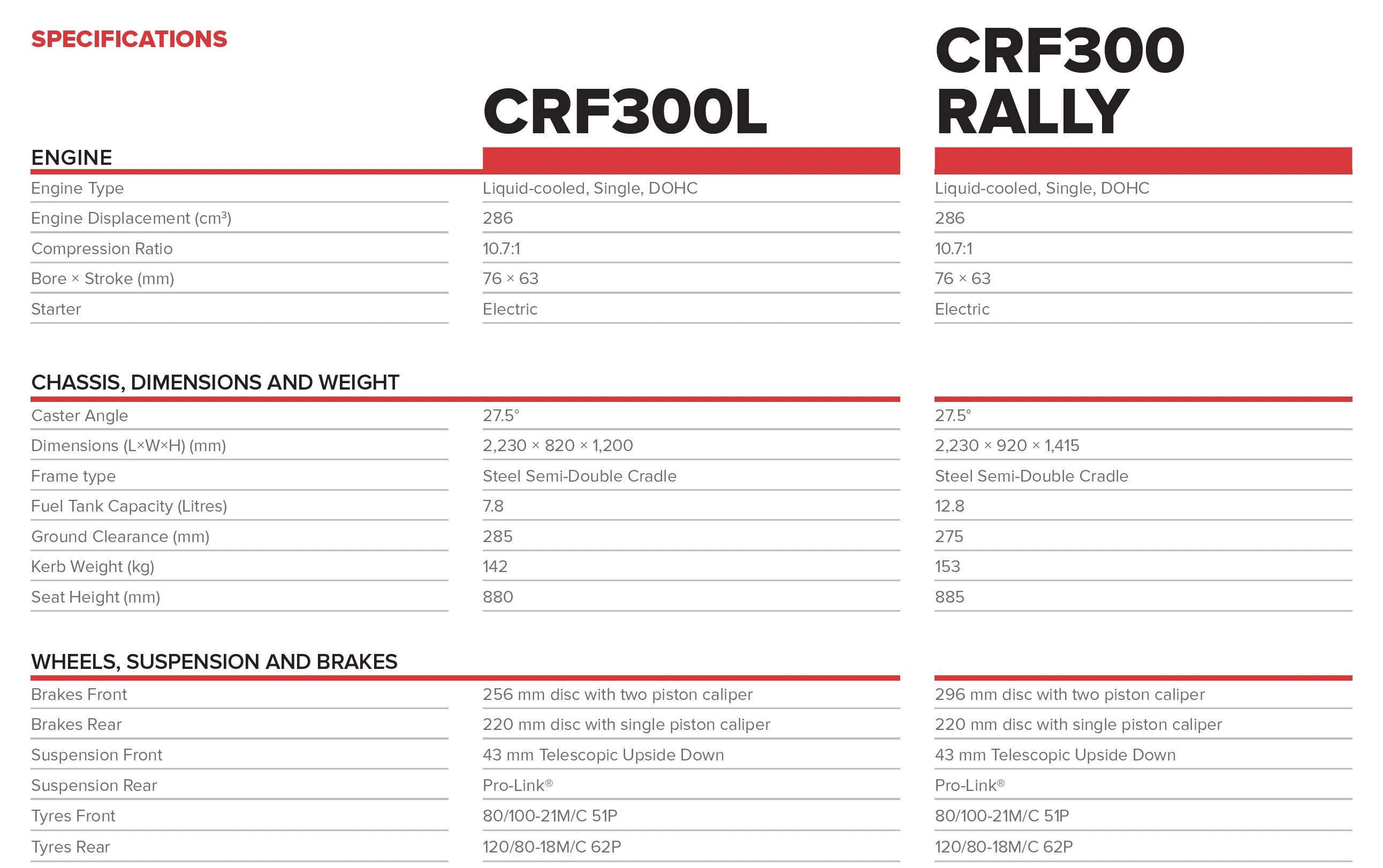
The 286cc 300 resembles the previous 250 Rally (and indeed the real desert racer) but loses 4kg, gains LED lights, a slipper clutch, 5mm seat height and 2.7L in the tank (now 12.8 litres). Less weight; more tank: all good. Some young youtuber was thrilled to calculate a 15% power-to-weight gain from the specs, but then admitted actually sitting on the bike would make that figure negligible.

Very light (147kg verified with a near empty tank)
Looks great
Very good mpg
Clever gearing: low 1st; overdrive 6th
Bigger fuel tank (12.8L = 500km range)
Welded subframe looks chunkier (162kg claimed payload)

For me, the 3hp gain is not a worthwhile improvement *
Lots of plastic to scratch and crack
Tall saddle (but sinks down loads – or was my Xmas better than I thought?)
Suspension probably needs upgrading
Nearly a £grand more than a 300L (at time of writing; now £700)
Acerbis now do a 14L tank for the 300L (+6.2L)
For another 250 quid you can get a 500X

* I have since heard from two owners that they can take a while to loosen up

Pulling away from Dobles my immediate thought was ‘oh dear…’ But of course so much depends on what you’ve been riding lately (me, an AT which barely needs the throttle turning). Reminding myself how to crank the handle and let it rev a bit got the Rally moving, but it wasn’t night and day over my 250 recollections. Just down the road I pushed it briefly up to an indicated 70 (64mph) where it felt OK.

I realised they’ve done a clever thing with the gearing: 1st is very low; ~4mph at tickover, just what is wanted on gnarly trails. Any other time you can easily pull away in 2nd without straining the clutch. And 6th sees the revs drop by 1000rpm – just don’t expect to be able overtake anything much. I’ve not noticed such a clever gearing spread on a bike before and like the idea.

The bike feels exceedingly light (again compared to the extra 80kg I’m used to). An lack of intimidating mass gives you confidence to throw yourself at pretty much any trail, knowing you can keep it in line and easily pick it up, if needed.

At the indicated mpg (I managed to bring it back up to 92) you’d have an amazing 500km range. But of course the seat (or your backside) would not last a third of that distance. But that is a £300+ expense spared over the tiny-tanked 300L.

There’s been a lot of online excitement about the full-fat ‘300s’, but while the emperor’s new clothes are sharp, they are verging on translucent. For domestic trail biking I’d be happier with the less damage-prone 300L (I bought one), especially once it got an Acerbis tank. The CRF 300 motor is just a stroked 250, so that’s as big as the barrel and crankcase will probably allow. Honda has no other suitable engines apart from the high-maintenance 450 dirt racers, as used in the stillborn 450L. Great for real rallies, not so much for the overland.

I know that my test bike had less than 100 miles on the odo when I returned it to Dobles so needs loosening up, but after this ride I’d sooner settle for a post-2019 250L with an IMS tank, plus some other worthwhile mods and save a grand or two. Or maybe I should try one again with a couple of thousand on the clock

More impressions with the photos below.

Just 60 miles in the clock. I better be gentle. 91mph looks promising
Still at the factory setting. But the bike sank equally as I sat on the machine
I briefly took it up to 70mph on the M25 but didn’t have the heart to push it. The screen felt OK
I spin off towards the country lanes of the North Downs
A Dakar Rally Replica, just like the Yamaha XT600Z nearly forty years ago!
Unfortunately that side panel is one huge piece of plastic
Stripped (not my photo)
A lot of travel and clearance. Could easily lose an inch each end
Rally Raid have made a lower 19/17 300L. Looks good
Sturdy pipework holds up the screen, lights and dash. Handguards not Quintanilla specials.
Standing up was not too much of a stoop for me
How many minutes would you give that, even with the 1980s gumby strap removed?
But it is thicker and wider than a 300L
162-kilo (390lb) overland payload. That will do me
Shrouds scoop the air and hopefully protect the rads
Brittle plastic but looks the part
Full LEDs on the Rally only, with a fake oil cooler guard hiding some cabling
Fork seals and radiator fins protected
A few too many of holes but better than nothing
Assuming the mounts are solid (probably not) I’d just rivet on some 2mm ally plate
Easy bend back steel brake pedal and filter access
Motorcycle tool kit 2022
Tool box. Unlike a the Tardis, smaller than it looks on the inside
Folding tip and rubber inserts. Nice touch
A handsome machine to be sure, but still something of a sheep in wolf’s clothing
Chunkier rear subframe, now welded. Small air intake stops you running away with yourself
Back into the leafy suburbs
Pillion pegs seem inordinately high. One snatchy clutch change and you’d roll off the back
I bet I could squeeze 100mpg out of this thing

Africa Twin 4 – post-Covid Travel World

Africa Twin Index Page
Previous post: Escape from Morocco

The ferry may had left TanMed five hours late, but it eased into the small port of Sete a few hours early. The skies were clear and a cold wind was howling down from the north.
I rode out of the hold and joined a mass of cars where a casually dressed guy who looked like a stowaway was nipping about snapping our vax certificates on his mobile. Was that it? I was expecting a harder time from French immigration but there is something to be said for these small ports.

Once clear of the docks I pulled over to wrap up and plug in, returning waves from the couple of other bikers on the boat. My Montana was playing up and not routing, but the free download map still worked so I could wing it.
Years ago when I used to transit France to Marseille for Algeria, I calculated the shortest, fastest, toll-minimising and big-city-avoiding route from the Channel to the Med. The key to this 900km route was the toll-free A75 La Méridienne motorway which snaked over the Massif Central between Clermont Ferrand and Beziers, close to Sete. Usually deserted, the A75 was a scenic way of ticking off big miles for free.

Now, buffeted by icy gusts, I worked my way out of Sete following signs for Clermont-l’Hérault and the A75. If it was freezing down here what would be be like up on the 3000-foot Massif plateau?

I’ve not ridden in France for years and, providing it didn’t snow, I was really looking forward to this ride. I had the gear to keep warm and dry and for me, an unusually fast bike to bat away the miles. Plus I love France and French living, for all the well known reasons.
Helped by the fact I once thad no permanent base in the UK, over the decades I’ve spent many happy months relocating in southern of France during the cheaper off-season. In the winter of 1995 I parked up in a little village called St Guiraud, not far off the A75 just north of Clermont-l’Hérault where, in between hiking and MTB excursions, I wrote Desert Travels. Now 25 years later with the wonder of Google StreetView, I was able to see the house I rented. It’s nice to know it’s still recognisable, but I’ve learned that the thought of revisiting old haunts is usually more satisfying than actually following through.

But I wanted an excuse to linger down in the familiar south for a bit. Ted ‘Jupiter’s Travels‘ Simon’s town of Aspiran was also right on my route to the A75, and as he’s contributed to AMH (below) and I’d met him at various shows and events over the years, it didn’t seem inappropriate to propose I swing by for a cafe au. Before the great plague swept the land, he generously offered his spare rooms as a writers’ retreat, and has a new book out about his pre-Jupiter years.

I pulled up in Aspiran main square but realised I’d not saved Ted’s number like I thought I had (smart phone / dumb user). Other means of retrieving this information failed.
No matter, I had an image of his place (left) in my mind’s eye and it’s a small place. I’ll wander round the old town and use my desert-honed routing-finding ability to nose it out.

Probing promising lanes and cul-de-sac was fun to try but it didn’t work out. In the meantime I learned that Aspiran had some unusual street names: Rue d’Enfer (Hell Road), and the equally jaunty Old Slaughterhouse Road where I take it property values are also a little more moderate.

The streets were deserted, as they always are in these places, so back in the square I popped into the bakery for some hot savouries to see me over the bone-chilling Massif. Even Greggs couldn’t have beaten the prices. She handed me my warmed-up nosh.
‘Merci. Do you know an old Anglais who lives in the town? He is called Ted Simon.’
I think I know who you mean but I don’t know where he lives‘ she said. But for all I know she could just as well have been saying ‘That’ll be 4 euros, now bugger off back to your sunlit uplands!’
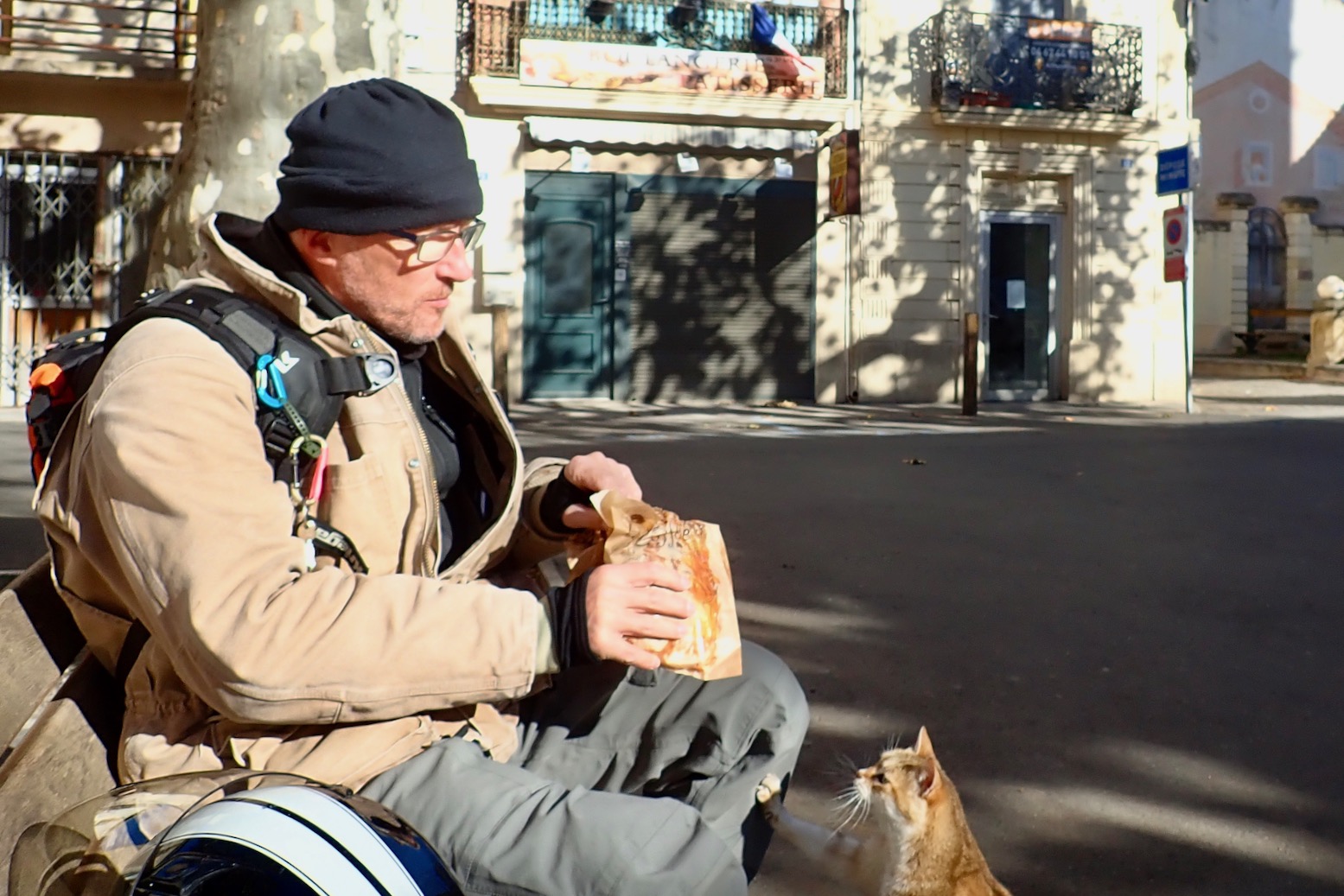
On a bench opposite the town hall I tucked into my steaming pizza slice while a cat peered up for a hand-out. Then I zipped up, strapped down and braced myself to hit the road.

Soon I was pushing into the headwind barrelling down the A75 as it climbed and curved into the Massif, while the fuel and temperature gauges raced each other to the bottom. The AT’s mpg read-out on the dash got so subterranean I stopped trying to work it out (probably < 50mpg).
Bags either side of the tank may not have been helping the range, but they sure helped keep the wind off my Aerostich AD1s, while the Palmer screen was adjusted out front offering all the aerodynamics of a Landrover. Still, this was a recovery mission so I accepted it would cost what it cost to to get the job done.

Within an hour I was past the snowline at around 1500 feet with the temperature reading a couple of degrees above freezing. I was trying to resist putting my heated jacket on full blast so I’d have something left after dark, but was surprised how tolerable I felt, even without heated grips.

I’d been planning this chilly ride for weeks if not months, and knew my outfit would be crucial. My setup was an thick Icebreaker merino top, the humming Powerlet jacket over that, then a down Mountain Hardwear puffa jacket to fill out the space under my heavy canvas Carhartt jacket.
As usual with heated gear on a bike, it’s not exactly like sitting by a crackling fire on a balmy evening but, recalling my crossing of the Spanish Picos on my XSR a couple of years ago in similar conditions, I was suffering a lot less than expected while not feeling like a sack stuffed with potatoes. Something made a difference, though it may have been no more than low humidity.

Massif online profile

I watched the signboard elevations climb: 770m, 888m. Somewhere I was sure the A75 peaked at over 1100m metres. There was a roadhouse there where I recall snowballing with the Mrs one time. [Oh dear, as I feared even that innocent pastime has now become repurposed as vulgar urban slang].

Clouds rolled in and the read-out dropped to 0°C. I knew I had to pitch my stages so that when I stopped I wouldn’t just fall over and shatter into glass, like the Terminator getting drenched with liquid nitrogen.
Hasta la vista. Baby.

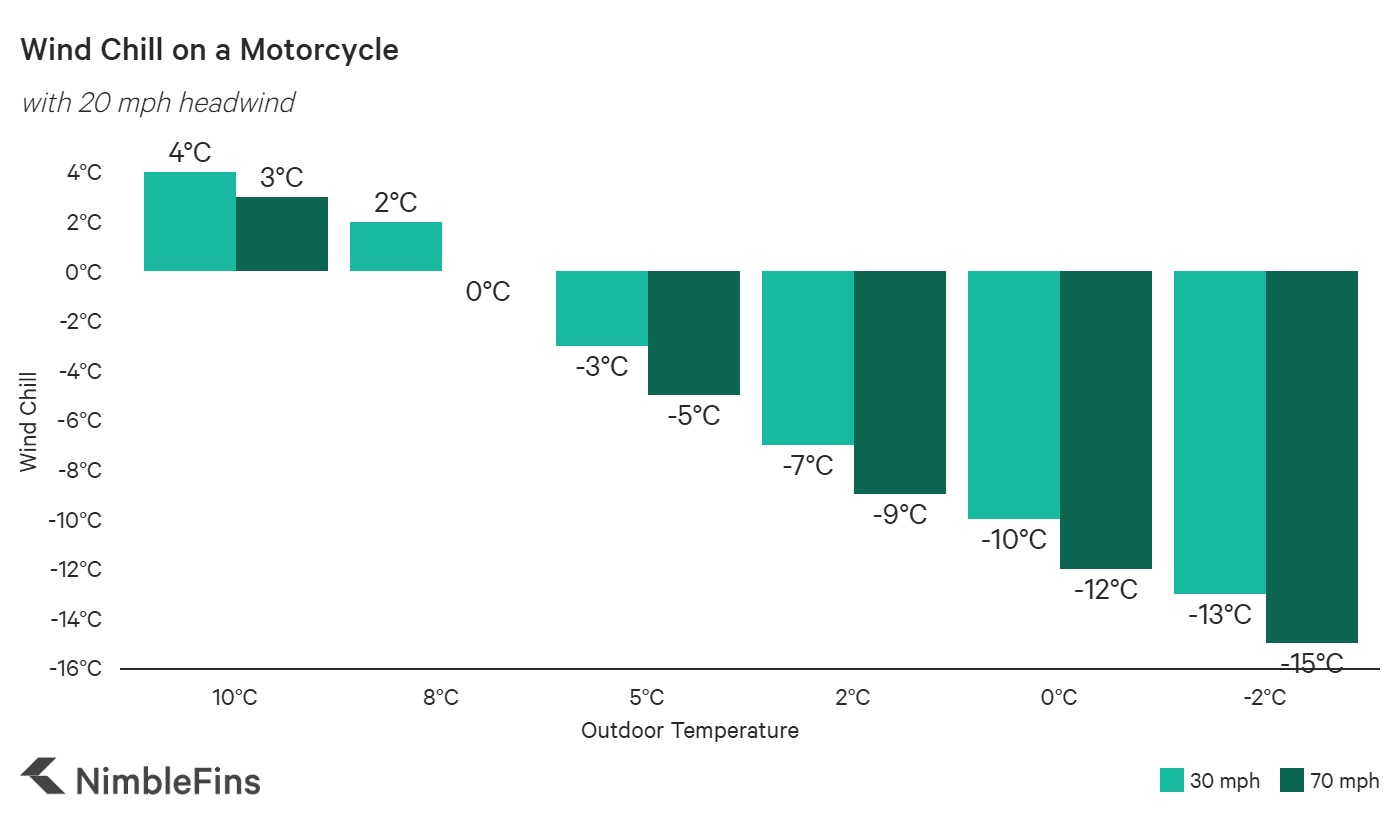
Other graphs are available, but according to this one left, freezing point at 120 clicks feels like minus 12°C or 10 Fahrenheits. The elevation was now hovering around 1000m (3300′) and I had to hug myself with my left arm to press the heated wires against my body.

At one point I must have fiddled with the dial or something because turn a jacket off at these temps and you soon feel the difference. Big chill panic set in fast. WTF’s up! Has the fuse blown? Nooooooooo… I felt like a diver whose air supply had been cut off.
I fumbled with the dial and turned it back to ‘6 o’clock’. Ahhhh that’s better, like having warm ketchup poured down your crotch.

I needed fuel but the next aire was that one at the A75’s summit at over 1100m. The thought of all those unheated minutes filling up the bike and paying for it were unbearable. So I set the display to ‘remaining range’, vowed to keep below 120 true, and take decisive action before the range dropped to 50 clicks.

The elevation fell, the temperature inched up to a balmy 5°C and just in time, the lights of a roadhouse lit up the dusk. A few minutes later by the bike, as I was warming my hands around a coffee, a passing motorist chipped in with something like:

Bonne courage mon ami. My AT is safely locked up in my heated garage till March at the earliest!’

By Clermont Ferrand I was over the Massif and well below the snowline, but now the setting sun would take the warmth with it. The A71 toll road began here too but still, this was metropolitan France, not Tajikistan. I’d stick at it till 7pm or creeping hypothermia, whichever comes first, then look for a hotel.

When that time came I was getting quite chilled and at another fill-up in the Centre de la France roadhouse, I asked where the nearest hotel was.
‘Bourges chum, around 50km.’
I can manage fifty – 25 minutes on an AT with a refreshed tank.

I pulled off for Bourges and brushed the toll booth pad with my credit card. Who knows what that cost but 550 darn-chilly clicks knocked off, less than 400 to Dieppe, tomorrow.
Another great thing with riding in France are welcoming gas, food & lodging enclaves right by the toll-gate turn-offs, avoiding the need to trudge into the city if you don’t want to. All lit up with shiny neon, the budget hotels shout out their prices and offer discount vouchers for cozy restos within walking distance.

After a good feed still wearing all my gear, back in the room it took hours online to book the ferry needed to fill out the UK Passenger Locator Form needed to book the newly required Day 2 PCR test needed to get let on the boat.
At one point the online data trail dried up: FFS, why is my test booking number not being accepted for the PLF? I emailed the test booking place (there are so many scammy looking ones to choose from) and got an auto FAQ reply explaining where to find the magic number so as to regain entry into the kingdom.
And this was just one European border. Imagine trying to cross Africa or Asia? Welcome to post-Covid Travel World.

Next day’s ride to Dieppe was as easy and dreary as expected. In winter, northern France can look as grim as southern France is pretty. Murky, mist-bound prairies (actually a French word) span the drab horizon broken by skeletal woodlands and villages splattered by the mud and grime of passing HGVs.

It was fun to try an AT but it’s not a keeper. Mulling away the miles, I’ve been wondering what next, and a CRF 300 Rally was near the top of the list. It would be great for effortlessly exploring more tracks in Morocco and general European TET-ery, but imagine banging out this ride on one? Let’s not kid ourselves; it’s still a 286cc, despite the snazzy Dakar livery. Loath though I am to admit it, a less flashy CB500X, especially the post 2019 with a 19-inch front wheel, ticks the boxes. And in the UK the latest 2022 CB-X costs just £250 more than a 300 Rally. A test ride should reveal all.

On my optimised Channel-to-Med route, Rouen on the Seine is the only big city to ride through, but the transit is well signed. Just north of here is Dieppe, a minor port, miles from the surge of desperate migrants trying to reach the UK in inflatables. This has its benefits with immigration; a little more amateur and flirty. It was a wet and windy Tuesday evening and I’m the only bike among a handful of second-home SUVers and campervans.

‘You have come from Morocco, you say?’

Yes.’

Did you buy anything there?’ Aye, aye, she’s onto me.

Not really; some cheese, some chocolate.’ I pass her that one for free.

‘Chocolate, eh? You know they make hashish in Morocco?’

‘Of course.’

‘You have some hashish with you?’

Course not. Have a look.’ I open my arms in invitation. I hold back from telling her that in the UK these days, most weed comes from hydroponic suburban hothouses.

Do you smoke le hashish?’ she said with a cheeky grin. Jeez, this interrogation is getting intense!

What sort of question is that?!’ I smiled back with mock indignation.

OK. Allez-y. Bonne route.’

Even in my most delirious sinsemilla reveries, I’d never pull off such a playful encounter with a lumpen UK immigration plod. When I first started travelling I used to think Customs people were secret agents trained by MI6. Maybe I’d seen too many Bond movies.

In the remnants of Storm Arden, the first Arctic blow of the winter, the half empty ferry tosses and turns across the Channel. Newhaven immigration is a piece of cake and leaving town, I manage to blunder onto one of the few main roads in the Southeast I didn’t recognise; the A275. Unused to the windy, wet backroads in the dark, I can’t get a handle on the big AT and ride like a lemon. Eventually I pop out at Forest Row on the Sussex border, back on terra cognita.

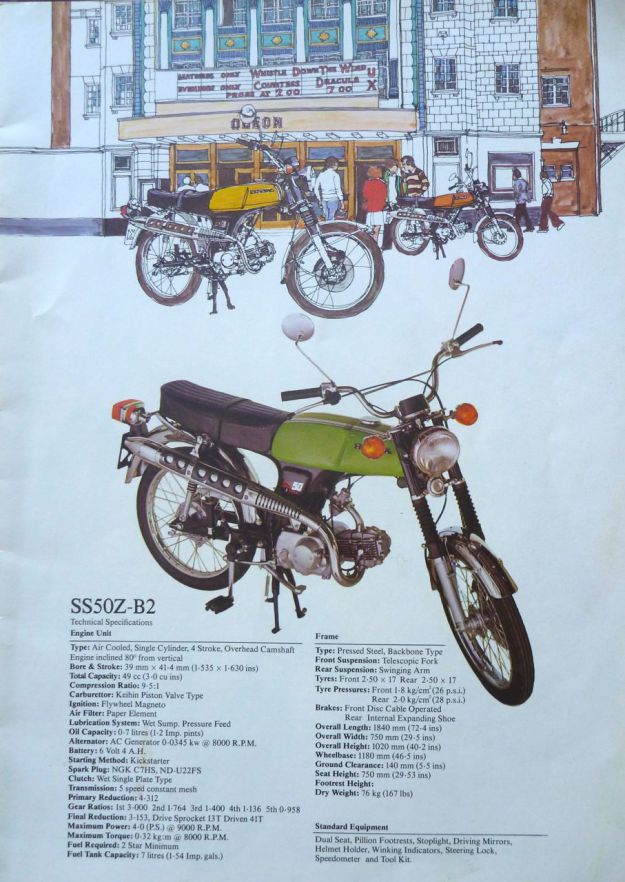
As sixteen year-old, probably my very first motorcycle adventure out of my neighbourhood was gunning my Honda SS50 the 32.3 miles overland from South London to Harrison’s Rocks, the Southeast’s lame excuse for rock climbing near Groombridge, east of Forest Row.
And coming over the Caterham bypass into the edge of built-up London, I always fondly recall bombing down to the roundabout on my new 900SS just two years after the moped, the Conti pipes crackling away on the over-run like fireworks. Over forty years and fifty bikes later the big question is: what next and where next?