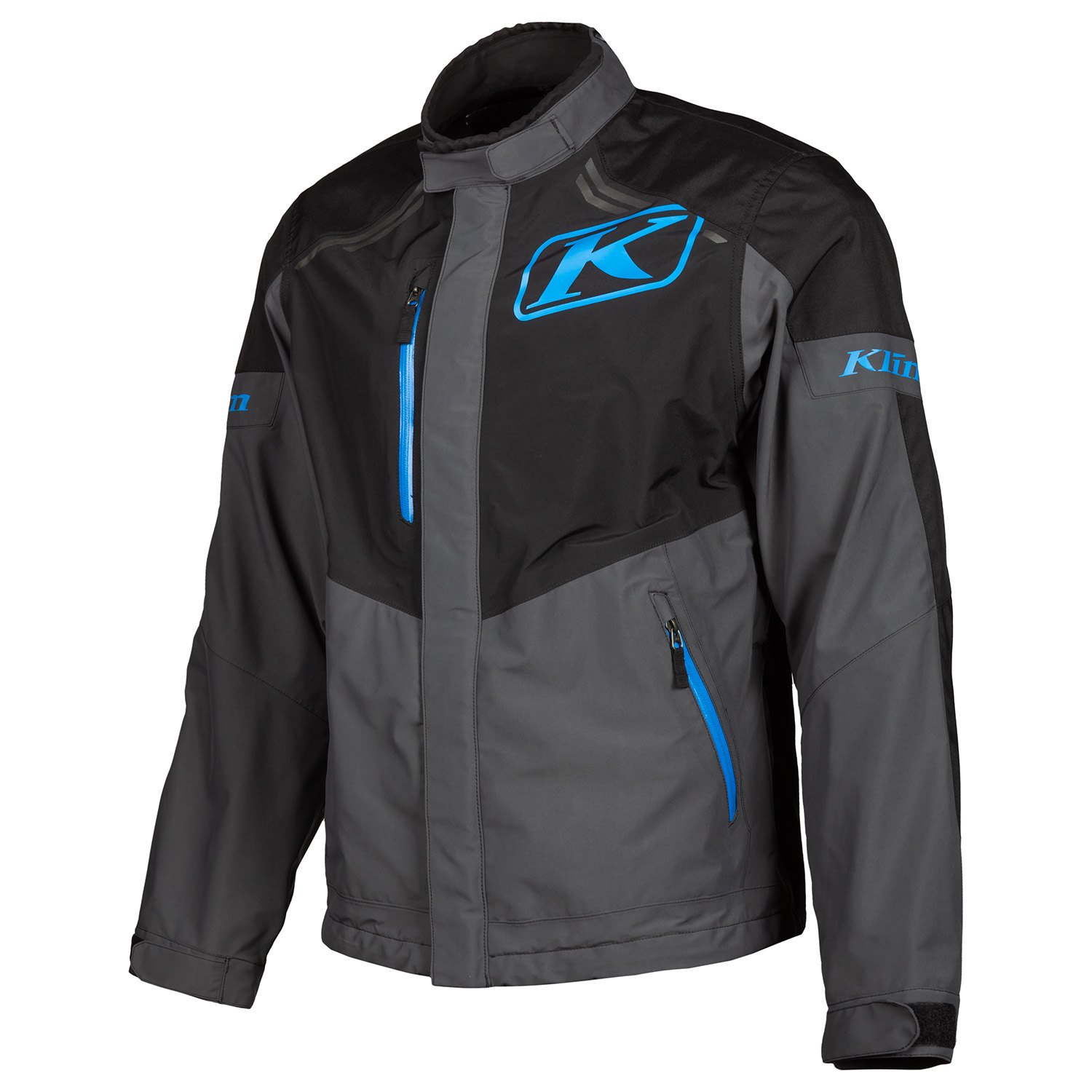
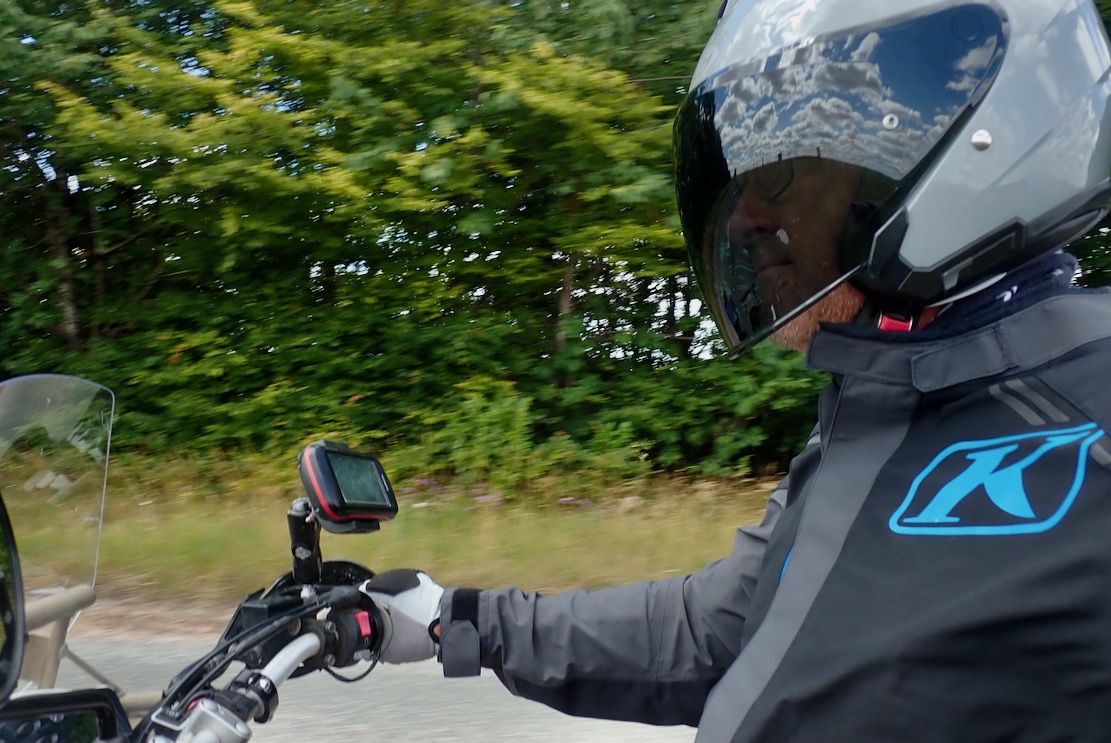
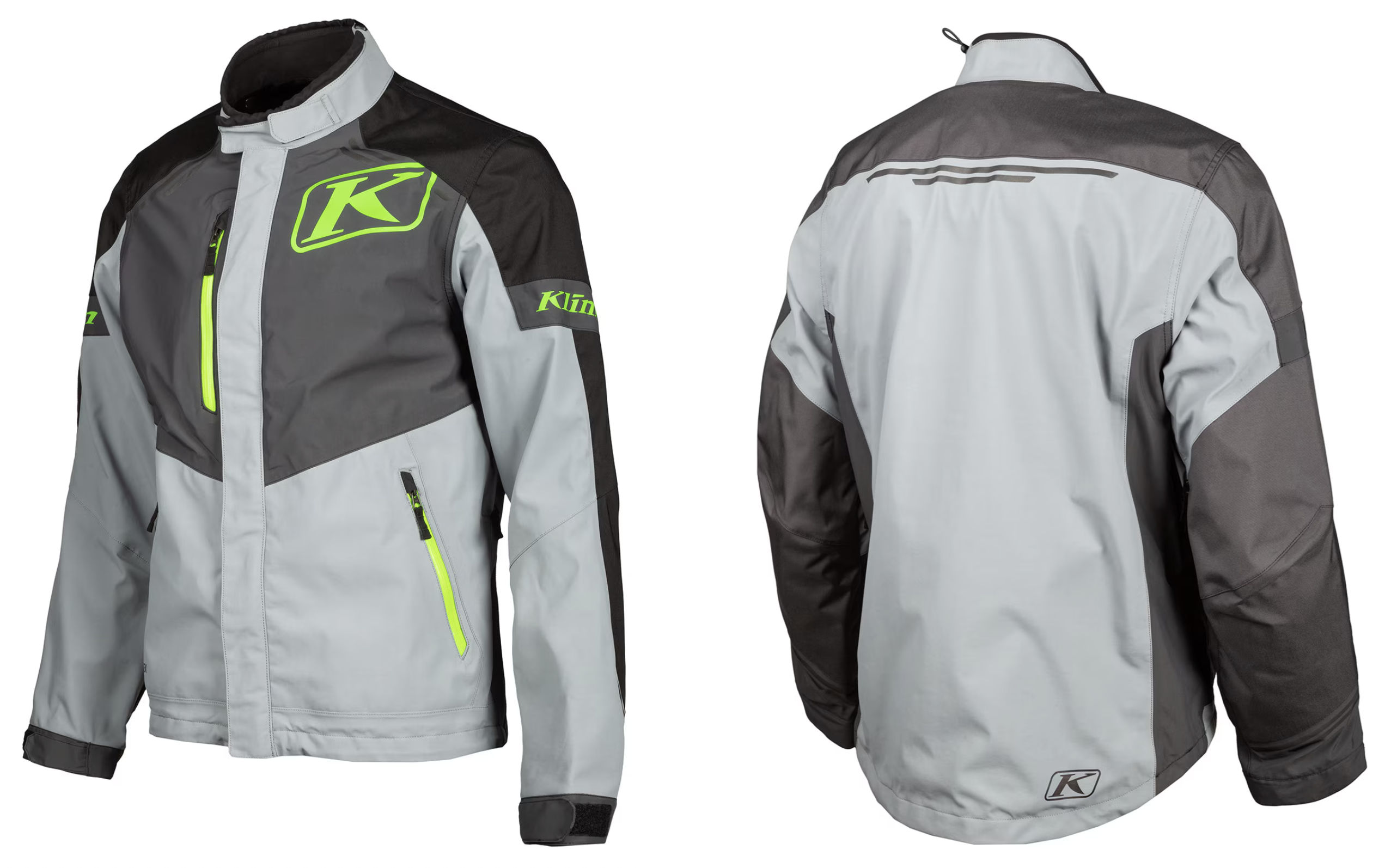
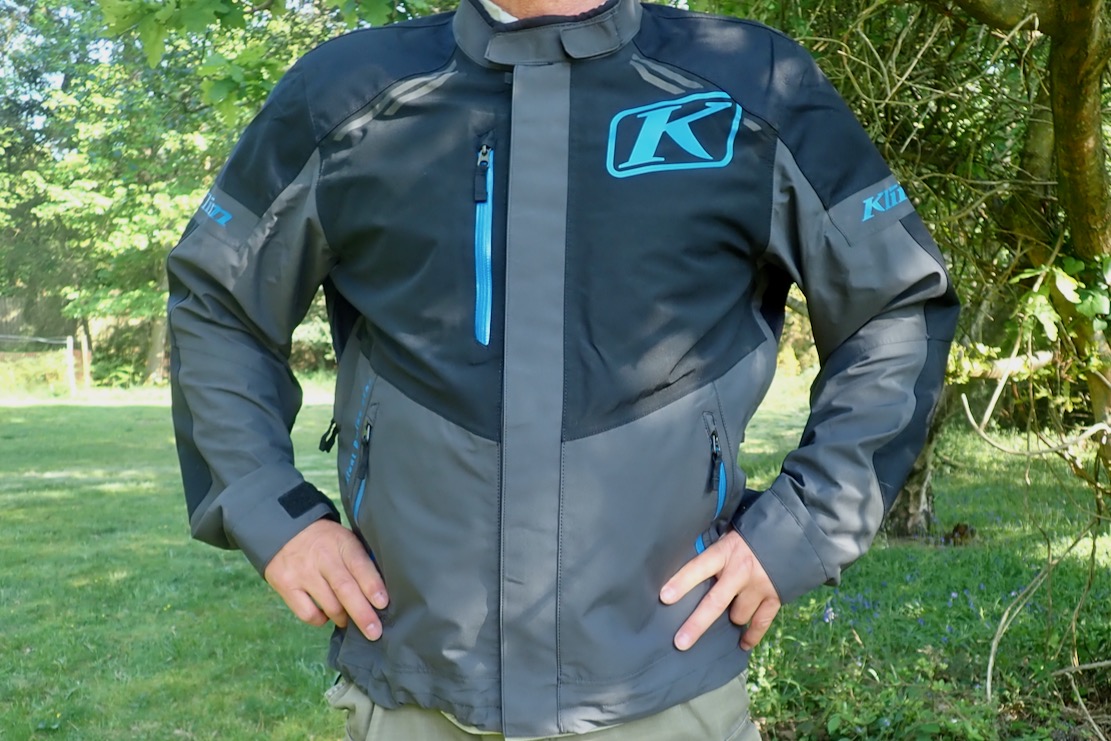
In a line: Smart lightweight Gore-Tex shell with unobtrusive armour.
Price: £350 from FC Moto.de + ~30% taxes
Weight: 1400g (verified)
Size tested: XL (me: 6″1’/95kg)
• Just enough to do the job • Looks smart • GTX Performance ought to keep me dry • Unobtrusive armour included • Inner pocket quite big
• For the money you could probably get something as good in the UK • Inferior venting to previous version • A bit too black irl – will get hot • XL = ‘US XL’ so a bit baggy on me
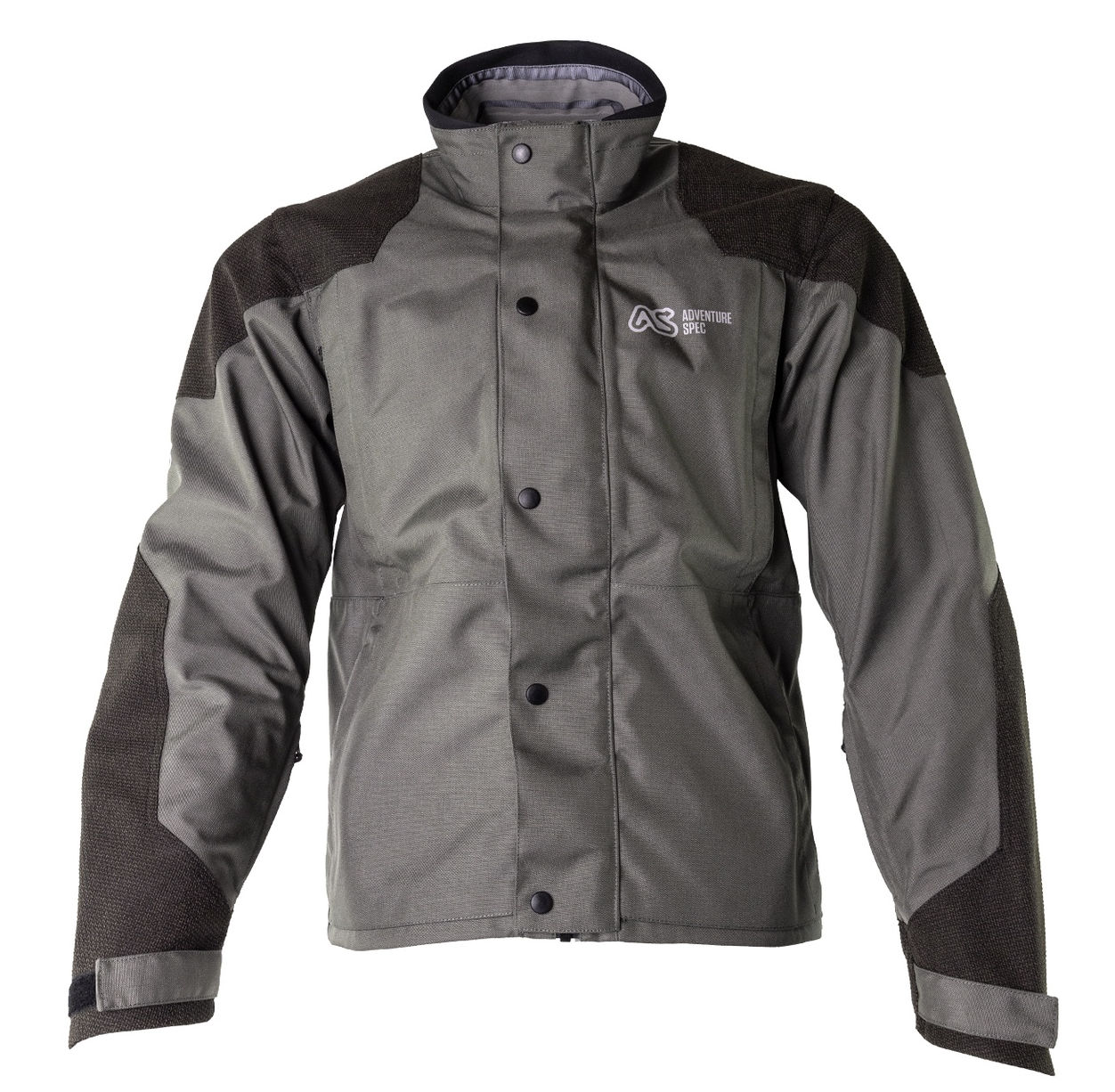
What they say: The redesigned [2020] Traverse is engineered to meet the demands of unpredictable weather conditions found in full seasons of dual-sport riding. Redesigned with a focus on increased comfort and reduced bulk, you get full weather protection with more durability than a regular rain jacket and less bulk than a fully built adventure jacket. The lightweight waterproof jacket will let you ride all season long with the confidence to conquer the weather.
Review This is my second Traverse, after owning Klim’s original Overland which got revised to become the Traverse 2 in 2016.
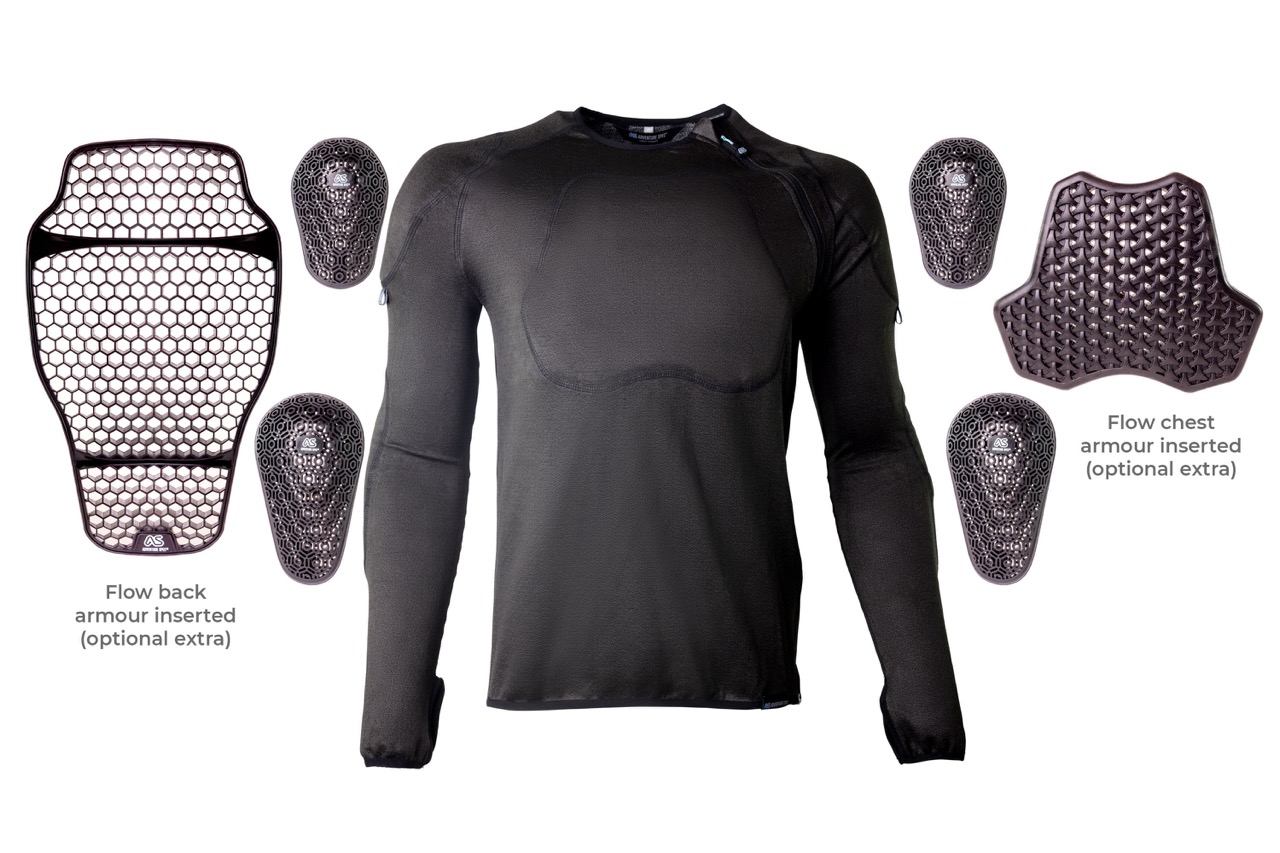
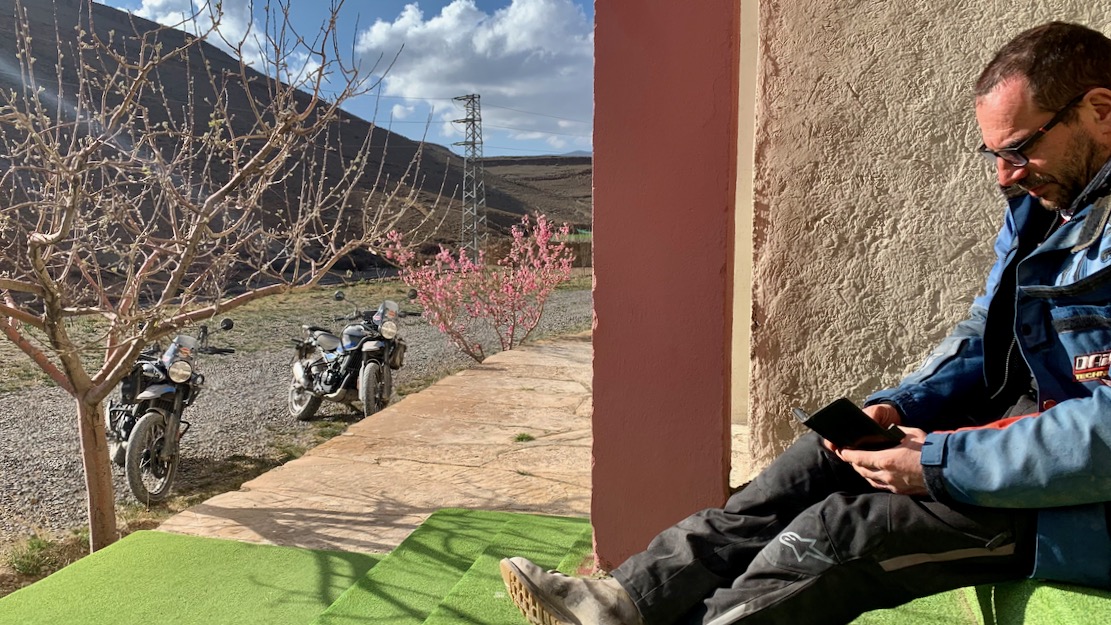
Though I haven’t crashed fast for decades, and fall over at low speed once or twice a year, I never felt protected in my two recent Mosko Surveyors. I’m not sure the Surveyors’ thin, elastic fabric would abrade that well, compared to what we call Cordura. They were perhaps an over-reaction to baking in the chunky Mosko Basilisk, better suited to harder-crashing rallying or non-tropical overlanding. Of course on my 800g Surveyors I could have worn on-body armour or an armoured pullover, like Adv Spec’s Supershirt 2 (right), but who wants yet more clobber? And even then, it didn’t claim to be showerproof so needed something else. What I really wanted was my old Traverse 2 back. I left it in a Spanish hotel to save weight on a ride to Mauritania that got nixed by Covid. Two years later I’m sure the Klim was long gone. For what I do (mostly to and from Morocco in the cooler months), a minimalist, wear-all-day, hard rain/rare crash protective shell suits me, with room underneath for layers, when needed.
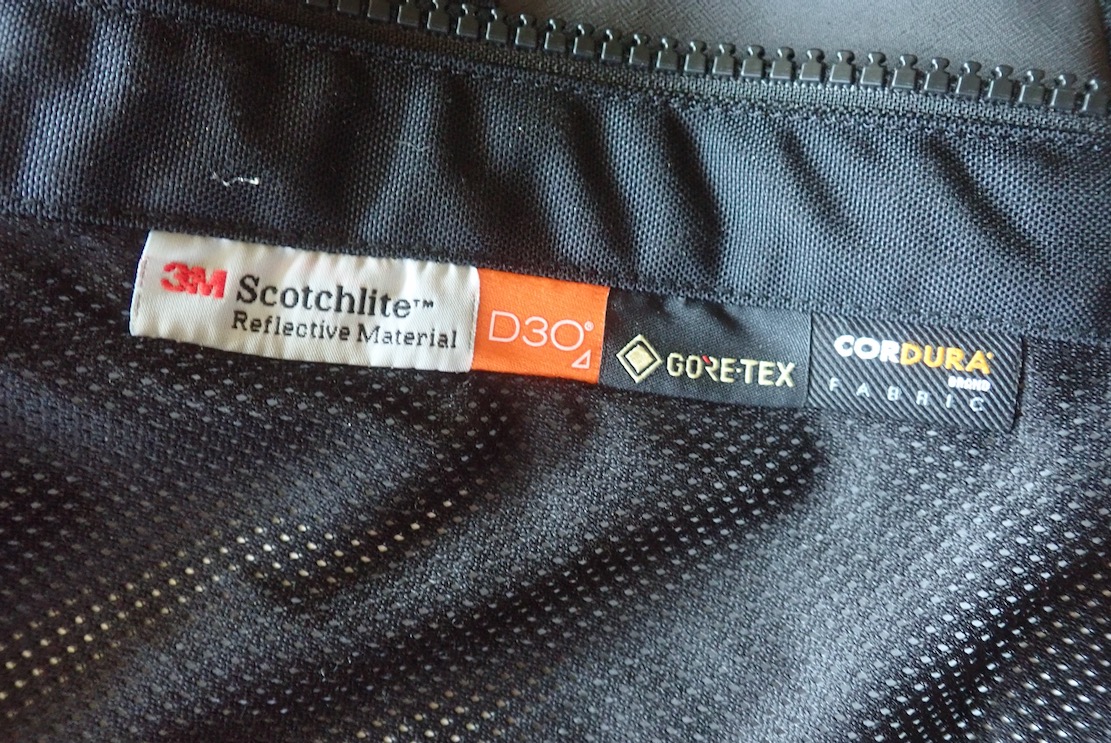
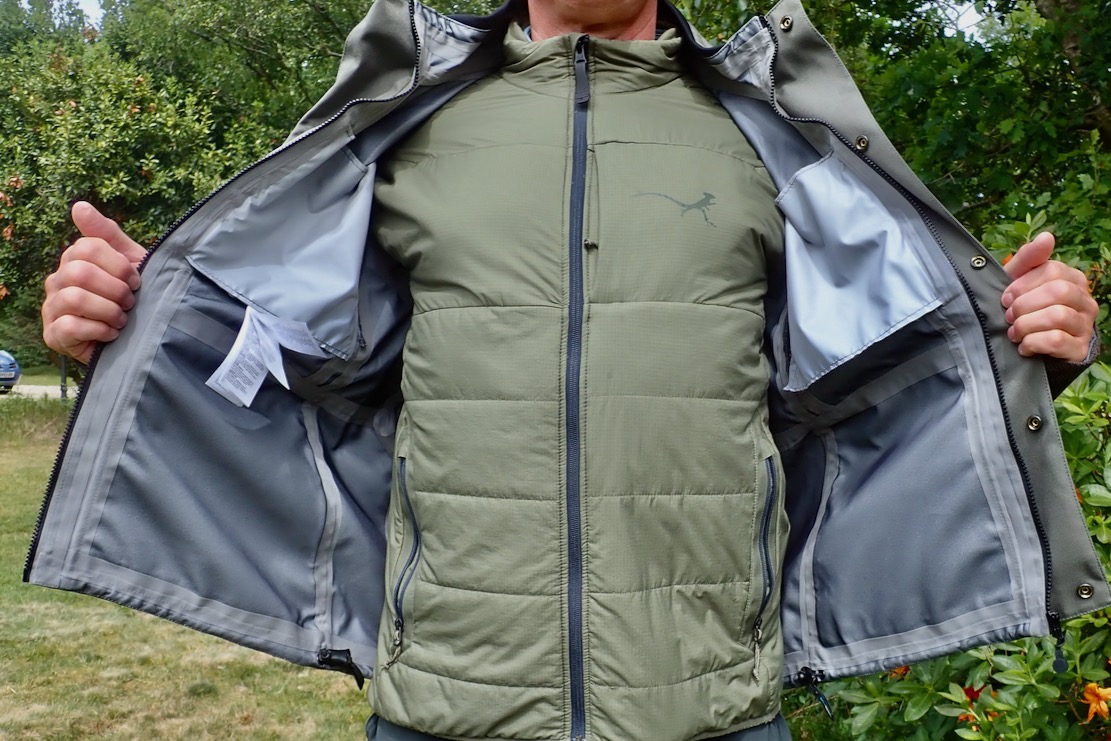
Your Traverve GTX comes in a ‘lightweight’ shell/body (200D?) with the black areas in tougher 500D – and all of it more robust than my Surveyor. The Gore-Tex Performance is I think one of the better levels. I find expensive membranes breathe properly while still being genuinely waterproof, where cheap membranes err towards waterproofness, and so soon get clammy. I expect the GTX to confidentially shrug off long downpours, at least for a couple of years.
Size wise, XL is a bit big on me; as we know US sizes are bigger than UK. The right fit would be best, but better too big than too small, and my Large T2 was on the tight side. XL will make room for my Mosko electric puffa.
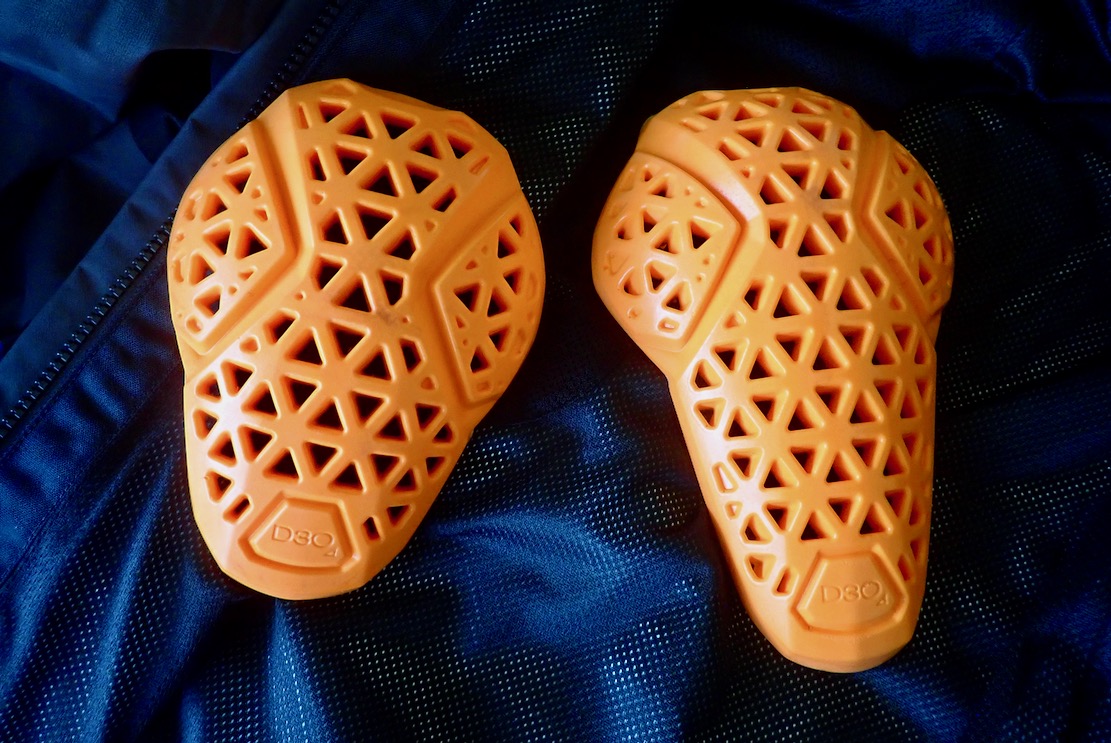
For the first time I’m not drawn to removing bulky shoulder and elbow armour which is unobtrusive, D3O Level 1 LP1. The whole elbow/shoulder armour thing is over-rated: it won’t stop broken collar bones, but will of course lessen more common low sides onto your pointy joints. The four pieces of armour weigh 380g; once removed the GTX weights 1020g, a bit less than the T2 previous version.
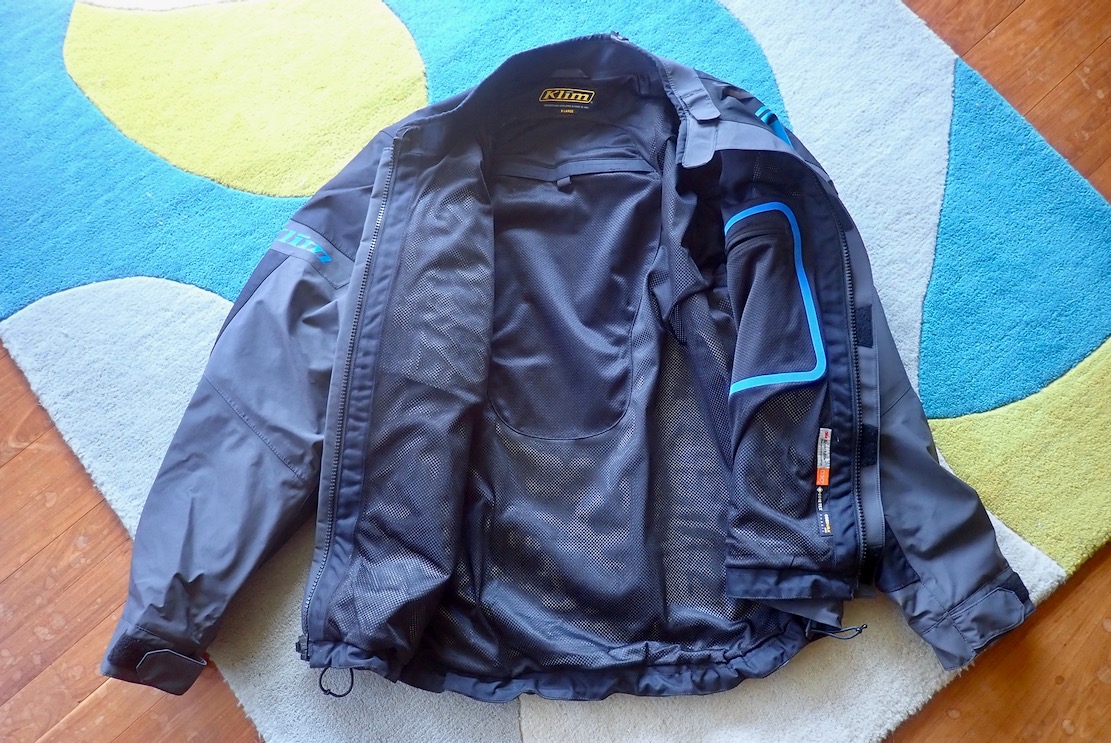
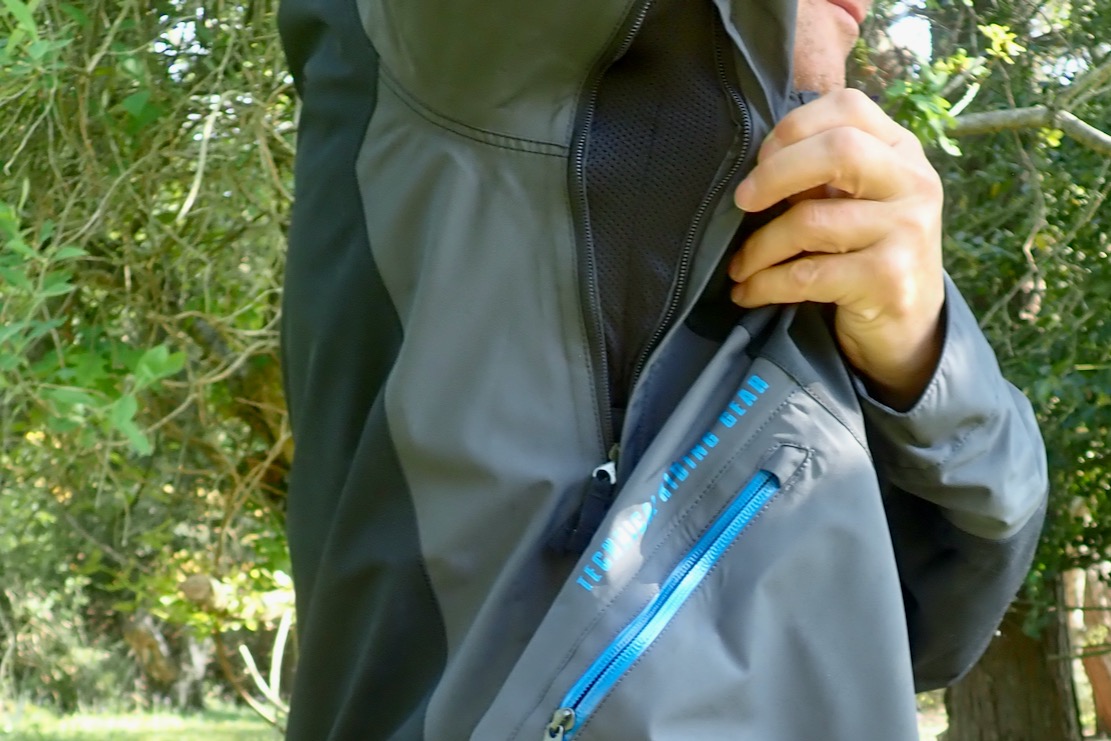
Venting may work on a basic dirt bike where you might be better off with a full breathing mesh jacket. I’m usually on a light travel bike with a screen which minimises any venting benefits, unless standing up.Unlike the huge front and rear ports on the old Traverse 2, the T-GTX merely gets two-way armpit vents, but my new small-screened Serow home the other day, I did notice the vents airing when I sat right back to try and ease saddle aches. I can already tell that on hot days, the black will generate more heat than the vents can purge, but online I liked the colour combo, so that’s what I have.
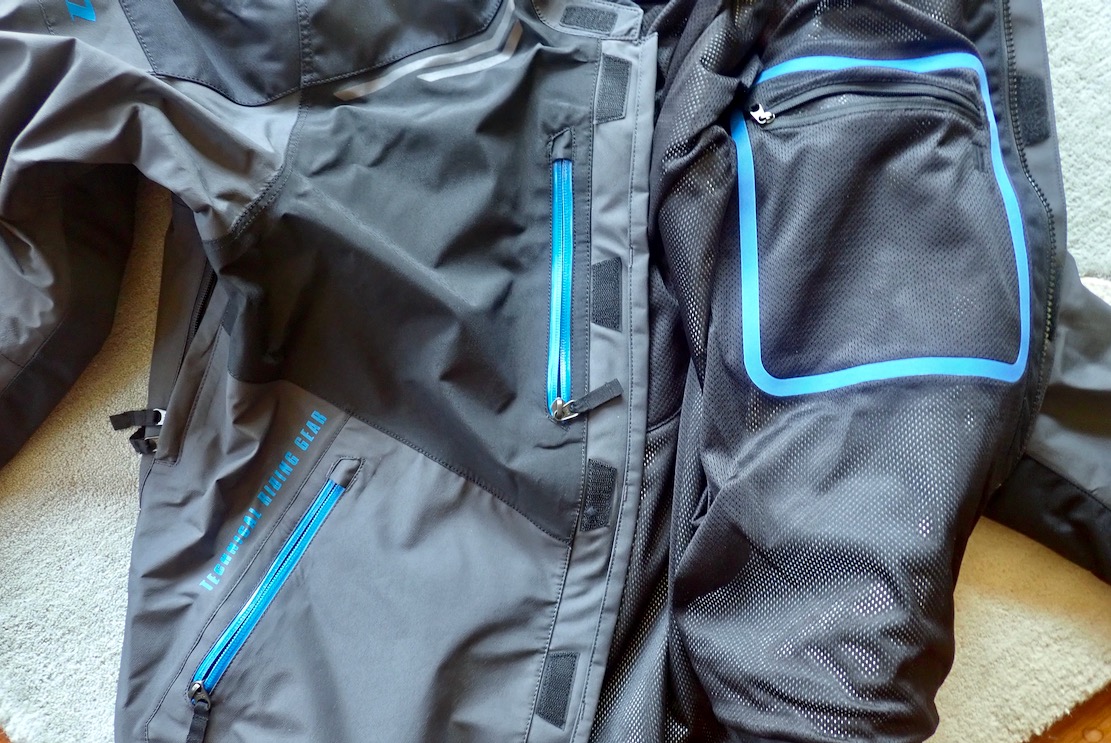
Pockets on the GTX are basic too: a couple at the hem, another outside on the chest, and all behind water-resistant zippers which will get clogged by dust until wiped down with a damp rag. Inside is a biggish zipped pocket that’ll easily take a passport, wallet and phone.
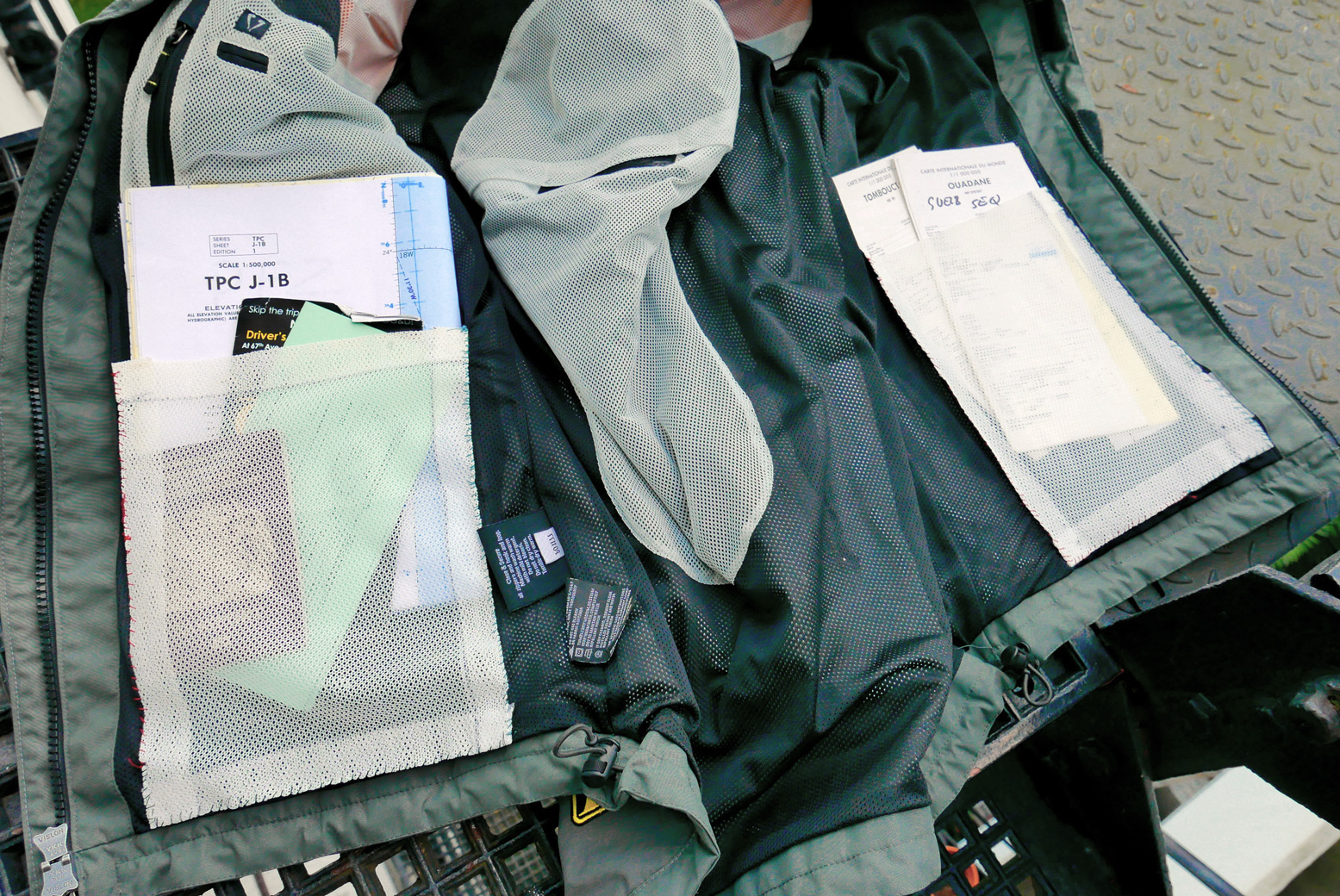
I’ll miss a rear game pocket which, on the Mosko’s, I found it handy to stash stuff you don’t need frequently but always want with you. The Traverse’s mesh sleeve for the back protector could be put to similar use and I’ll probably get round to installing a big inner drop pocket, as I did on my Overland (left).
The jacket is good and long at the back and in the arms and adjustability to keep out draughts and cold adds up to cinch cords at the hem and on the lined collar, plus velcro cuffs. More impressions of my Traverse GTX once I actually get to use it.
The other evening I had a great idea while riding my MTB along a Purbeck ridge. My Merida hardtail bike (left) has a dropper seatpost: thumb a lever and the saddle drops 6 inches under your weight; press again with your weight off and the post springs back up to full height for efficient pedalling effort. Far from another MTB gimmick, I use it all the time when approaching a gate, on steep downhills or even just getting on/off or stopping to look at the map. I think motos could use a similar feature when off road: there are times you want it high and times you want it low, with no faffing in between. Automatic ride height adjustment as found on some H-Ds and BMW 13GSs is not the same thing. Nor is static saddle height adjustment by repositioning the seat base on its mounts; the sort of thing you usually do once. The main reason I never got the otherwise great XT700 back in 2019, was the seat was too high for what I like to do.
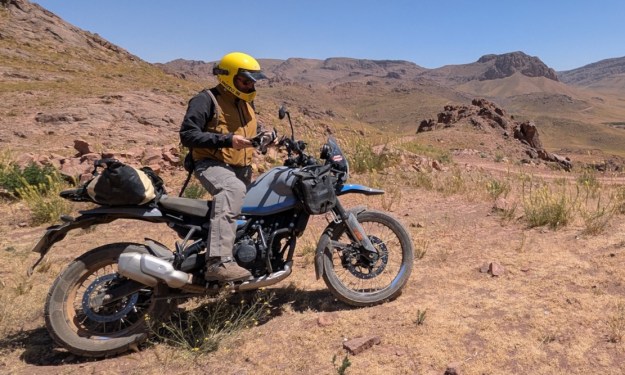
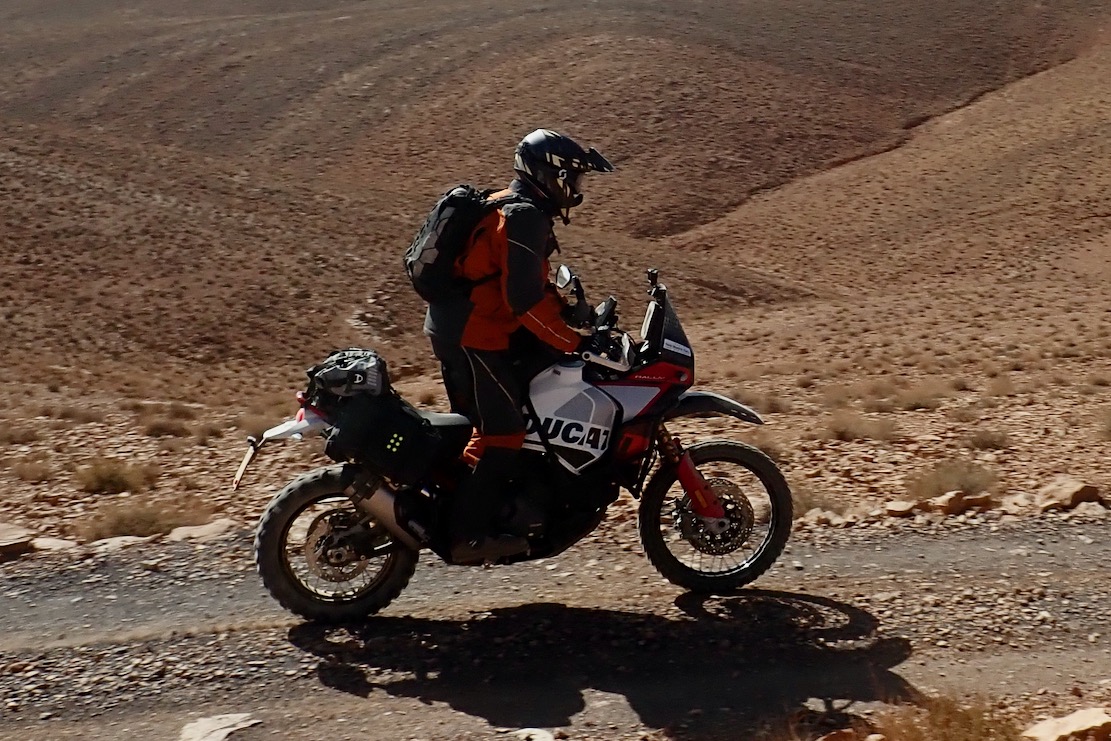
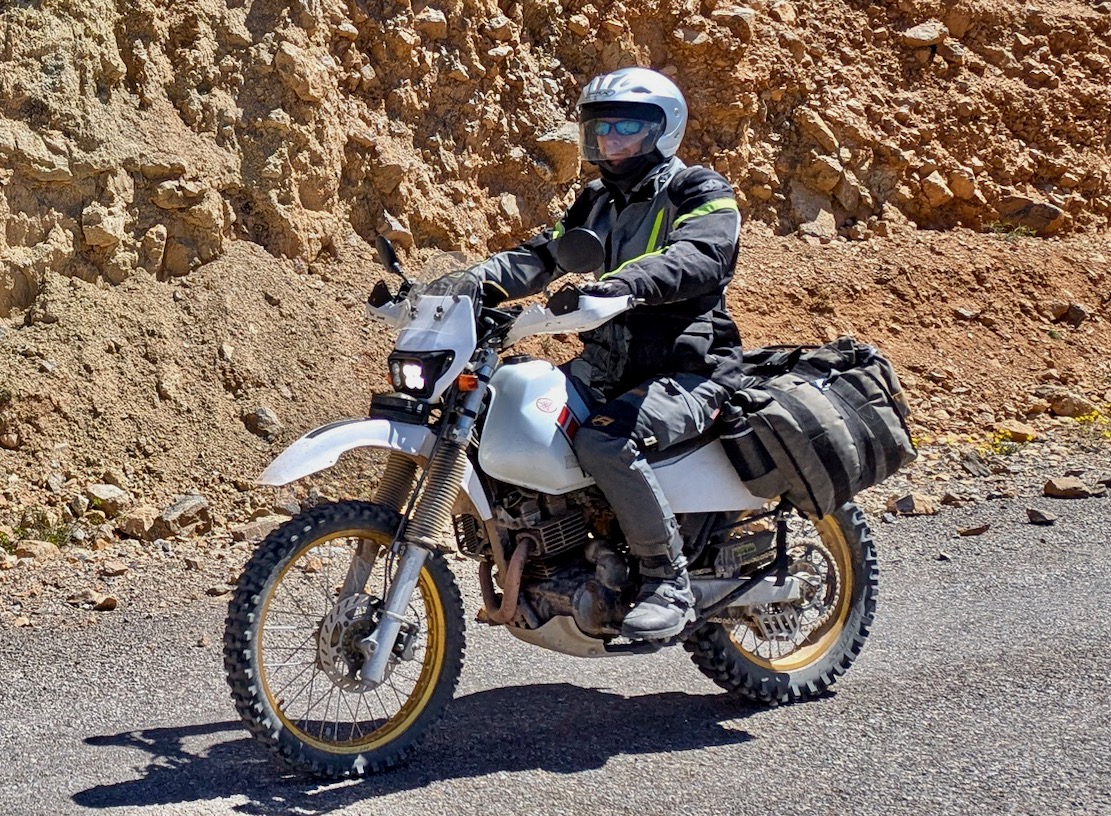
Do all-terrain motos really need dynamic seat height adjustment? Well, until MTB droppers came on the scene, I’d have said ‘no’ and managed by manually dropping saddle for rough descents. On a moto, a high saddle – or more precisely a long peg-to-saddle distance – reduces the effort of standing up and is why competition bikes have yard-high saddles: dirt racers are on the pegs most of the time. Those bikes are of course feather light and easy to manage in the rough. Bring a similar saddle height to a 230-kilo loaded travel bike, like the Desert X Rally I rode with (below), and tackling rough stages requires skill and commitment, assisted by plush suspension and good armour. I can tock off all four, but I do find some low saddles (above: Him 450) a bit hard on the knees, even if I can reassuringly get my feet down.
Desert X. Touchdown? No chance
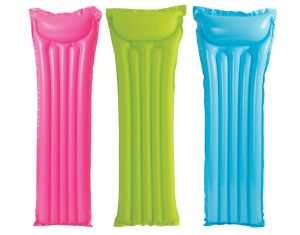
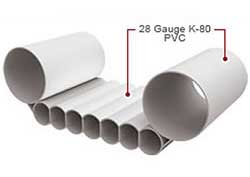
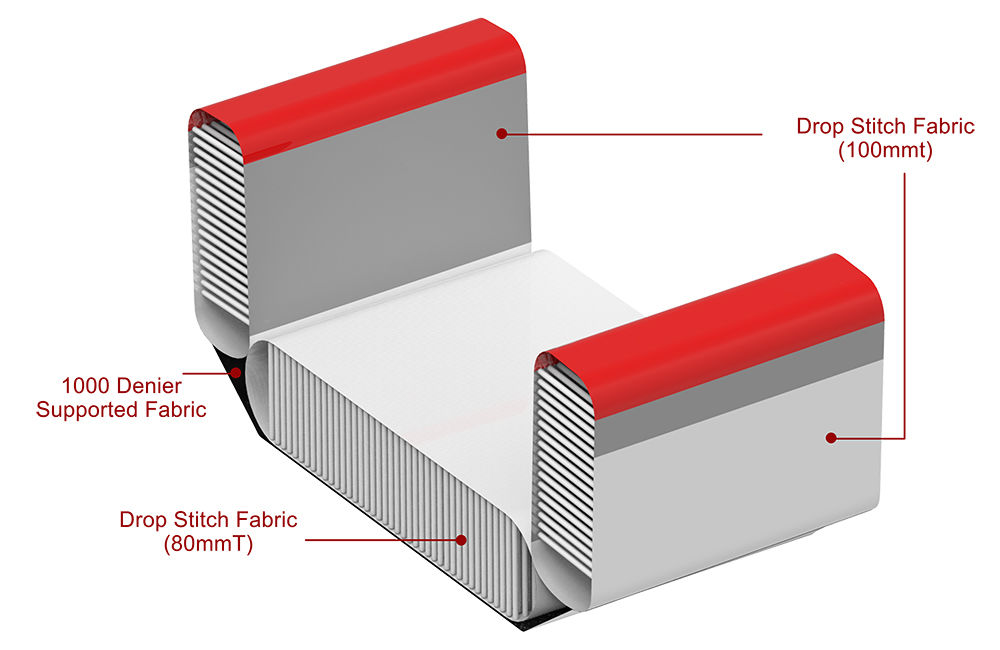
My brilliant idea uses an inflatable chamber integrated in the bike’s seat foam, tech I know from inflatable kayaks. IKs attempt to mimic the hydrodynamic form of a hardshell kayak and a few years ago drop stitch panels from paddle boards were adapted to make boxy, ‘3-plank’ IKs (below right).
Drop stitch (DS) panels hold much higher pressures than tubes (15psi+ vs 3psi on I-beams) while retaining the flat panel shape. The result is hardshell-like rigidity with the transport and storage convenience of a roll-up kayak. Decades ago, Goodyear even developed a drop stitch airplane for the US military.
For this moto seat application, it’s not about rock-hard rigidity, but being able to increase saddle height by 2-3 inches while retaining a normal looking moto seat. The bladder could be integrated in the seat vinyl which would need stretchy sides or some other idea so as not to look crumpled when set low and not to wobble about like some non DS air seat pads. Sadly, my pitch stumbles when it comes to inflating and deflating this chamber at the flick of a switch. Exhaust gas being too hot, some sort of separate on-board compressor would be needed which adds weight, cost and complication. And you’d want a fast purge valve because when you want less height, you probably want it fast.
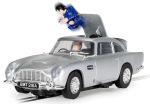
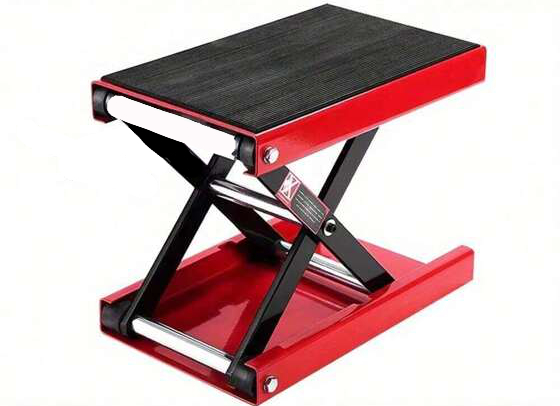
PS: I have to admit Dave K’s comment suggesting a scissored lever with similar click/release mechanisms to a pushbike dropper is much better. On the jack pictured below, the base is the bike’s subframe rails and the top is the seat base. The seat is raised by spring/s under compression to engage a lock-out to stay up. A thumb lever cable (a bit like the old compression release lever on an XT500) disengages the upper lock and, aided by body weight, the seat drops to lock in the lower position. Thumb the lever again and it springs up, but ideally with a bit less force than 007’s DB5 (right). Issues I foresee include retaining a secure seat when raised. You don’t want it wobbling about laterally when bashing about off road which may mean hefty beams. Alongside that, the inelegant gap in the raised position could be designed around.
In a line: Well featured, fully armoured, all-season shell for cooler or faster rides
Price: £549
Size andWeight: XL; 2520g or 1440g without armour (verified)
What they say: The Gravel Jacket is a CE AA certified, highly durable, lightweight, waterproof, breathable adventure touring jacket. It combines everything Adventure Spec has learned about extreme off road and trail riding into the lightest adventure touring package. The Gravel Jacket is designed to be partnered with the Gravel Pant. It is constructed from a three-layer waterproof fabric that features a blend of Cordura Nylon 6-6 for high abrasion resistance, and PU film for extreme water resistance and breathability. Additional protective panels and removable level 2 armour protects back, shoulder and elbow impact zones. The Gravel Jacket and Pant is designed to keep you comfortable and safe while adventure riding on road, gravel and trails.
I had a close look for review purposes, took some photos, then returned it.
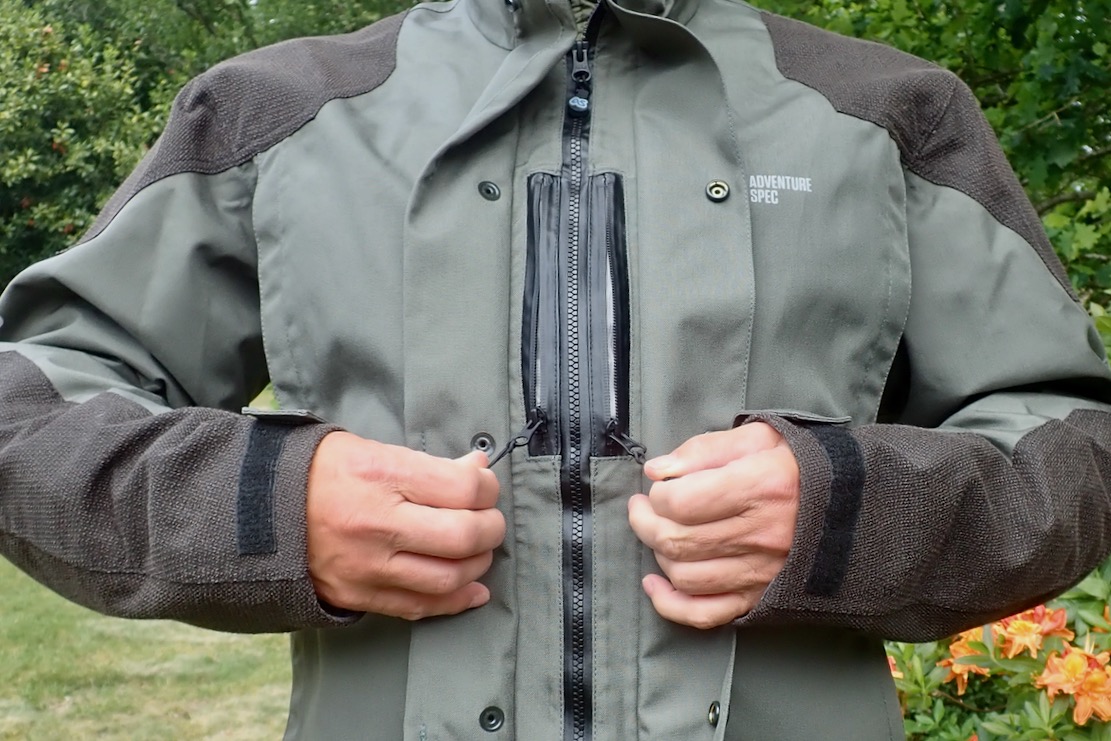
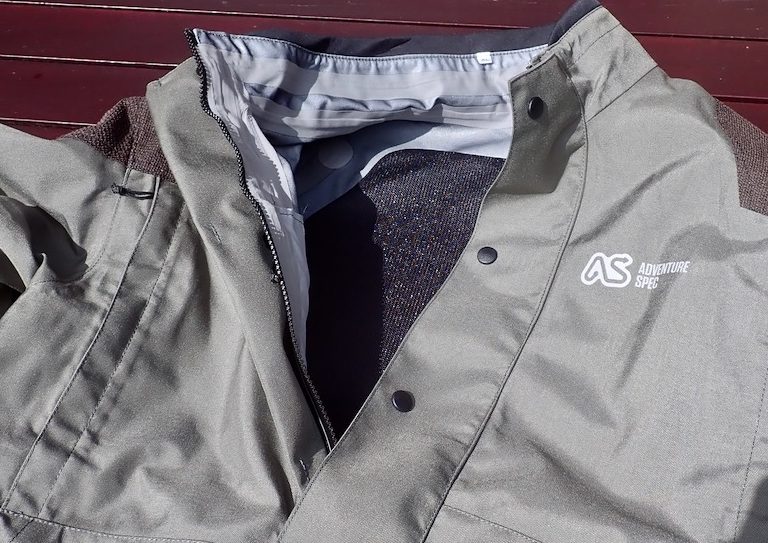
Front one-way zip is double storm flapped with an added ‘gutter’ fold on the inner flap to slow down water ingress
Quick Look Adv Spec’s Gravel Jacket came out in late 2024 with matching Gravel pants. Up till now most of AS’s apparel has been gear for more active enduro or trail bike riders who value minimal clobber and may be layering up and down throughout the day. At £549 The Gravel is their top of the range CE AA, all-season jacket pitched at touring riders on bigger Adv bikes which are suited to long road miles and easy gravel trails. Using non-proprietary armour and PU membrane help keep the price down, while ticking many other boxes.
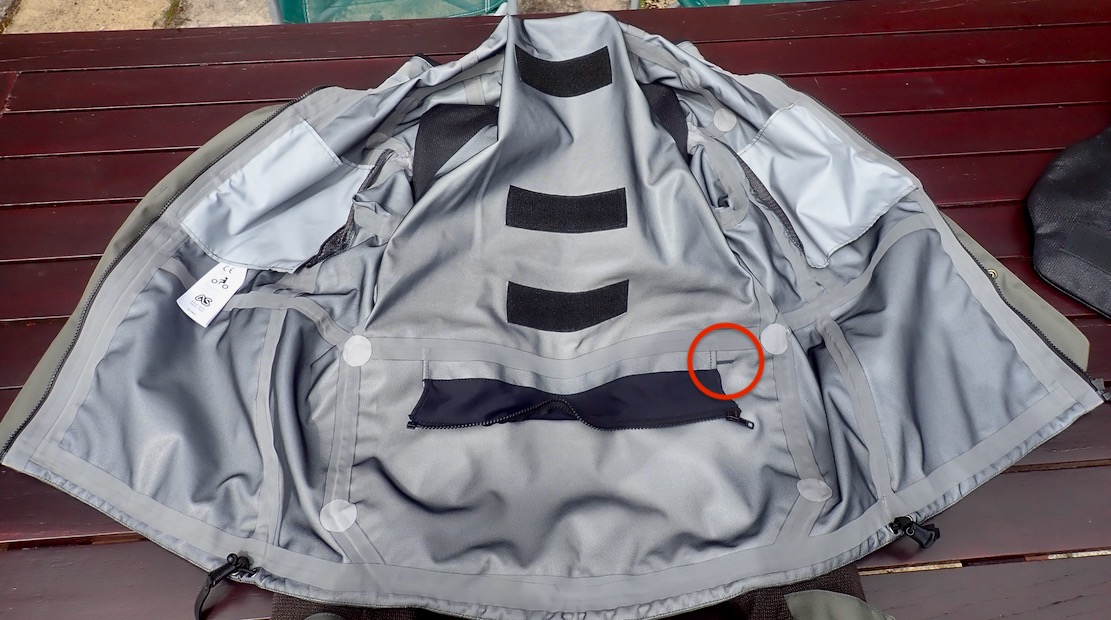
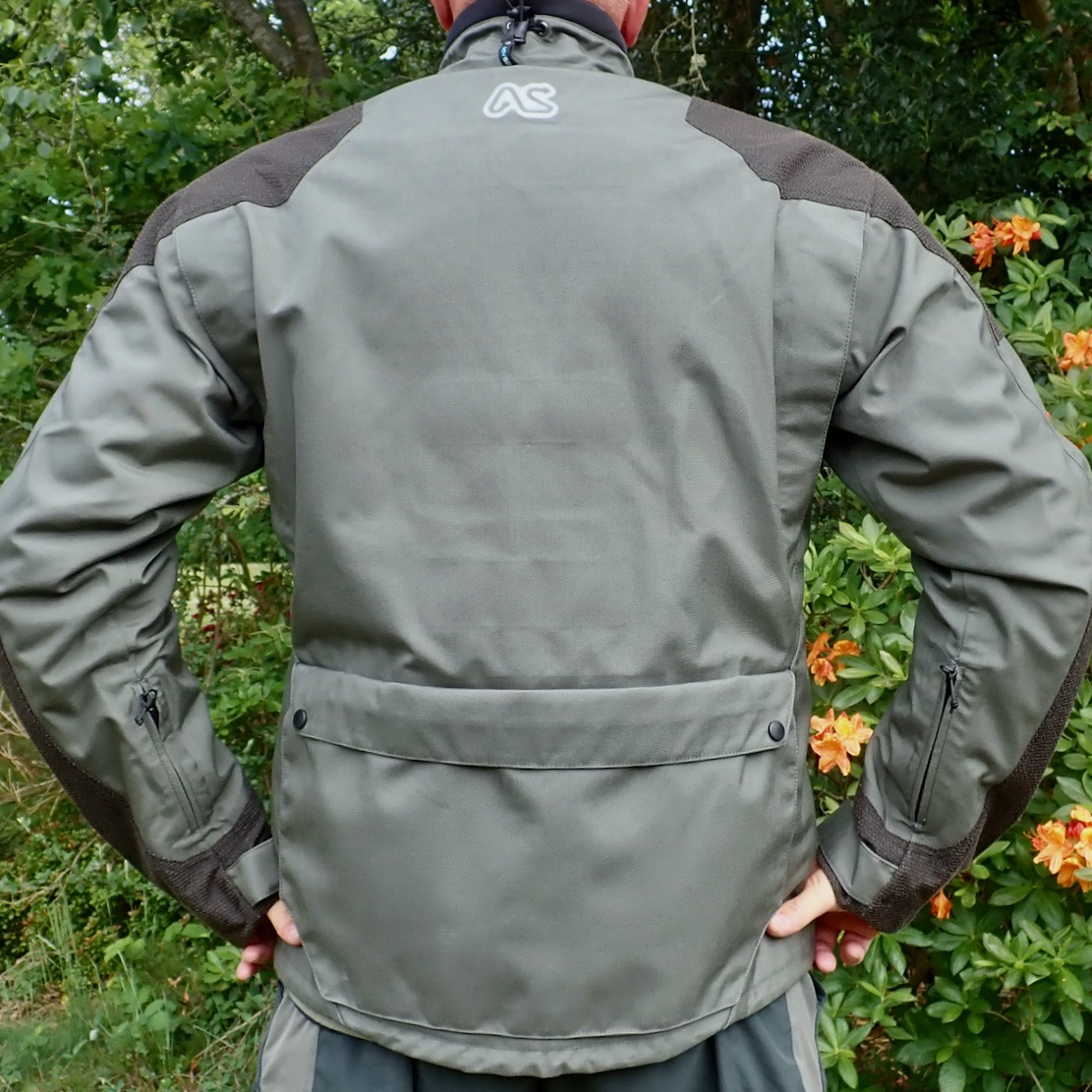
The wicking lining is bonded to the shell fabric, not a separate, loose mesh, which shows taped seams sealing the stitched panels. Ringed: a slot in the back pocket for a hydrator hose.
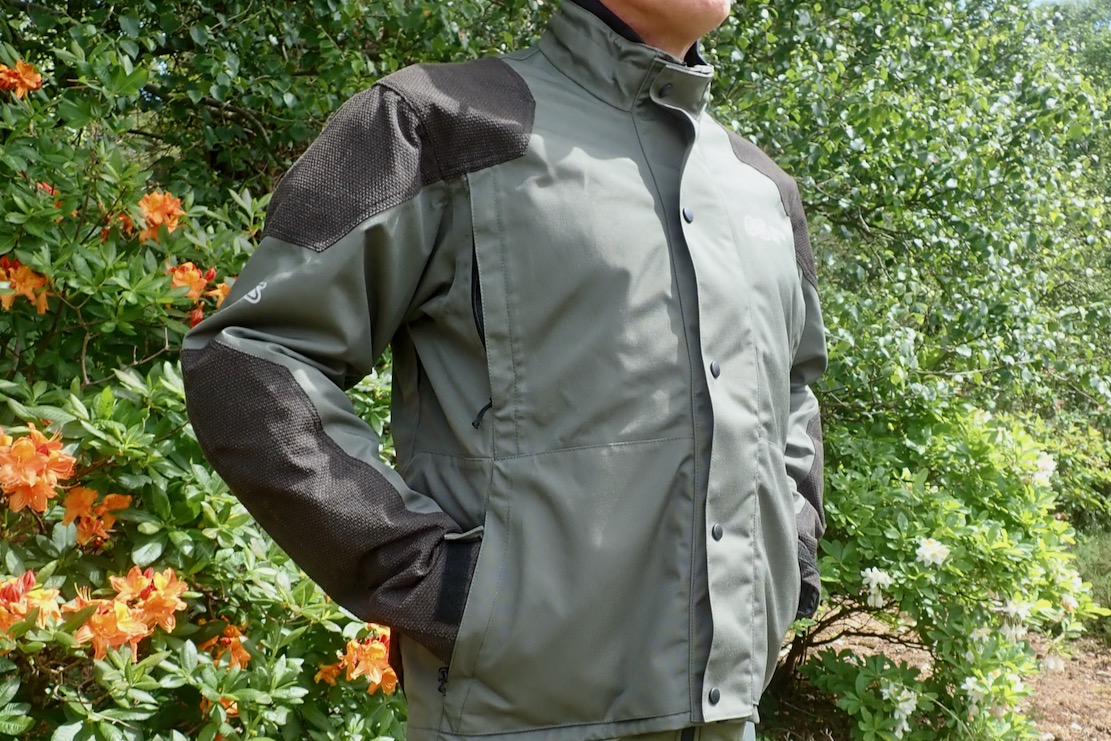
Out of the box the Gravel feels hefty with all the armour in place, and once on, the fabric is pretty chunky and stiff too – at least while new and compared to what I’ve been wearing lately. (Fyi: I am 6ft 1in/186cm, 210lbs/95kg.)
The 500D, grey nylon body fabric is an abrasion resistant, 3-layer bonded laminate, sandwiching a no-name membrane. That’s the best way to do it, compared separate zip-in liners found on cheaper gear which I like to think have had their day. Oddly, the contrasting woven, 240D kevlar reinforced polyester abrasion panels are also 3-layer. You’d think any simple, tough abrasion-resisting patch would do, and in fact according to the AS table, this 240D is less abrasion resistant than the plain old 500D shell fabric (which is how Aerostitch do their impact-area patches), but helps add a textured look to the jacket. This additional layering will improve water resistance but reduce breathability. It also means these impact-prone areas get no less than seven layers of protection if you include the armour pads underneath. You’re elbows, back and and shoulders will be well protected from impacts.
80-minute, feature-length video? Hard to think the salient facts could not also be packed into a snappy, Mosko-style <5 minute version.
Size wise, new and stiff out of the box the XL Gravel initially felt a bit tight on me. But once the back protector was removed it felt much more comfortable, even wearing my Mosko electric puffa over a denim shirt – a typical riding set up for cooler temps. Sleeves are long, so is the back while the front is short. More dims below.
Adjustability includes two cinch pull tabs along the hem sides – it took a close look to work out how to operate them – plus velcro cuffs and another cinch at the back of the neoprene-edged, unlined collar.
Dave K on the gravel
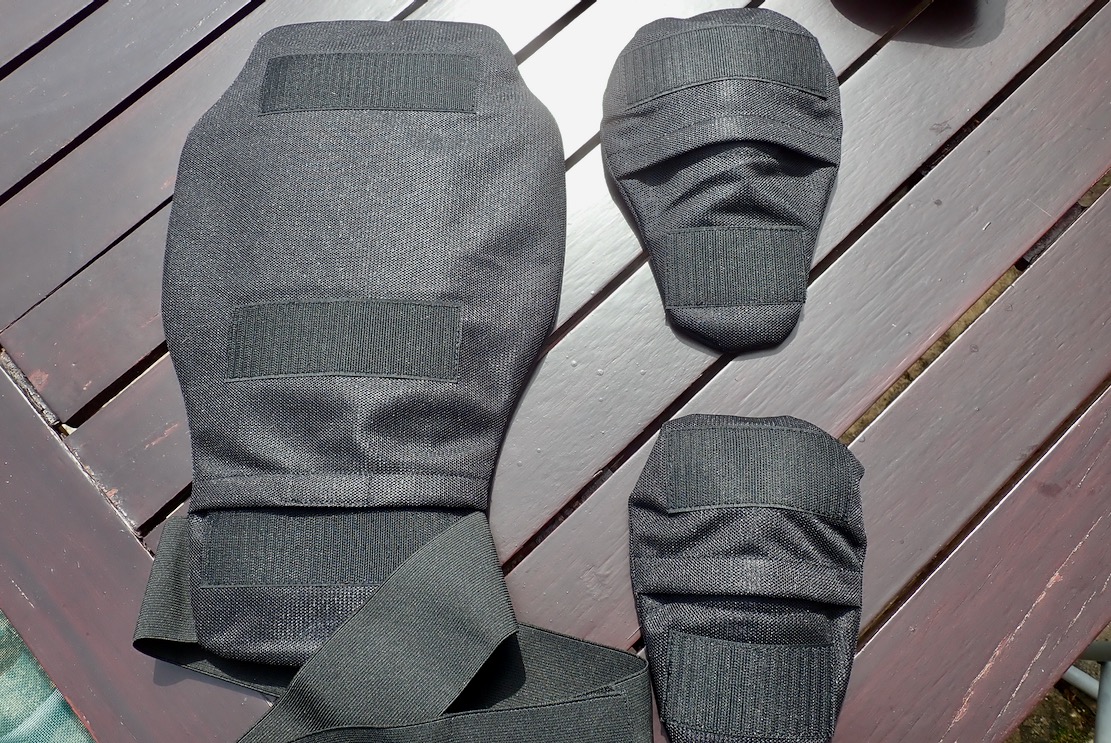
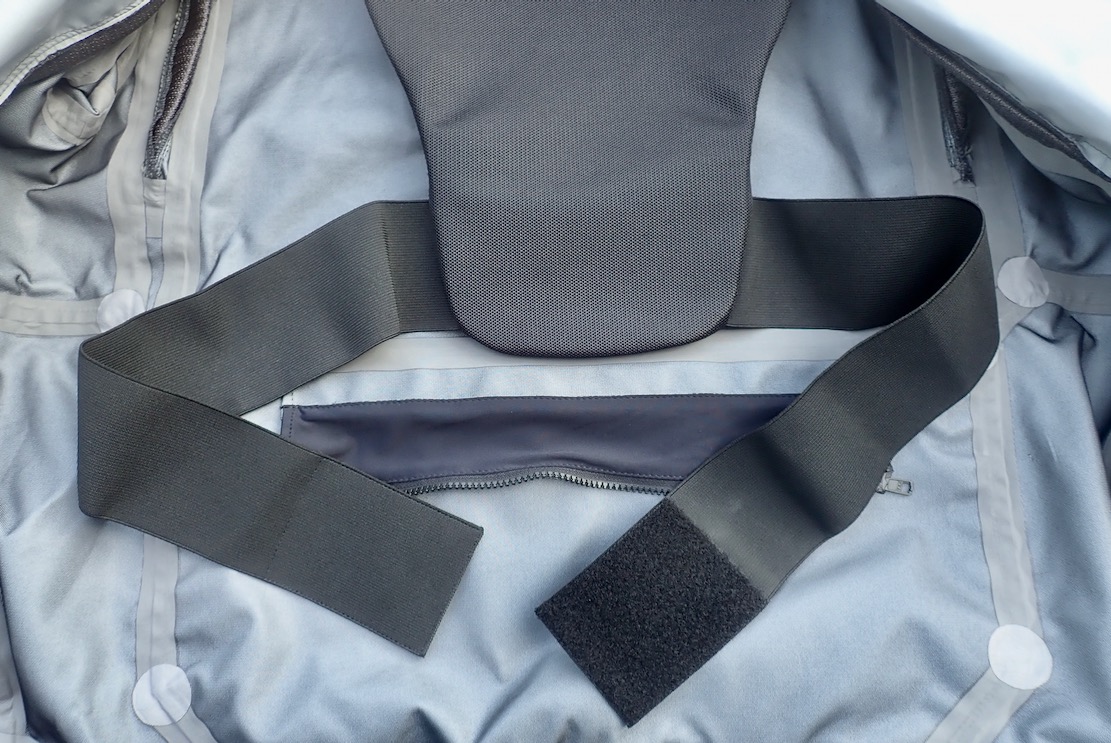
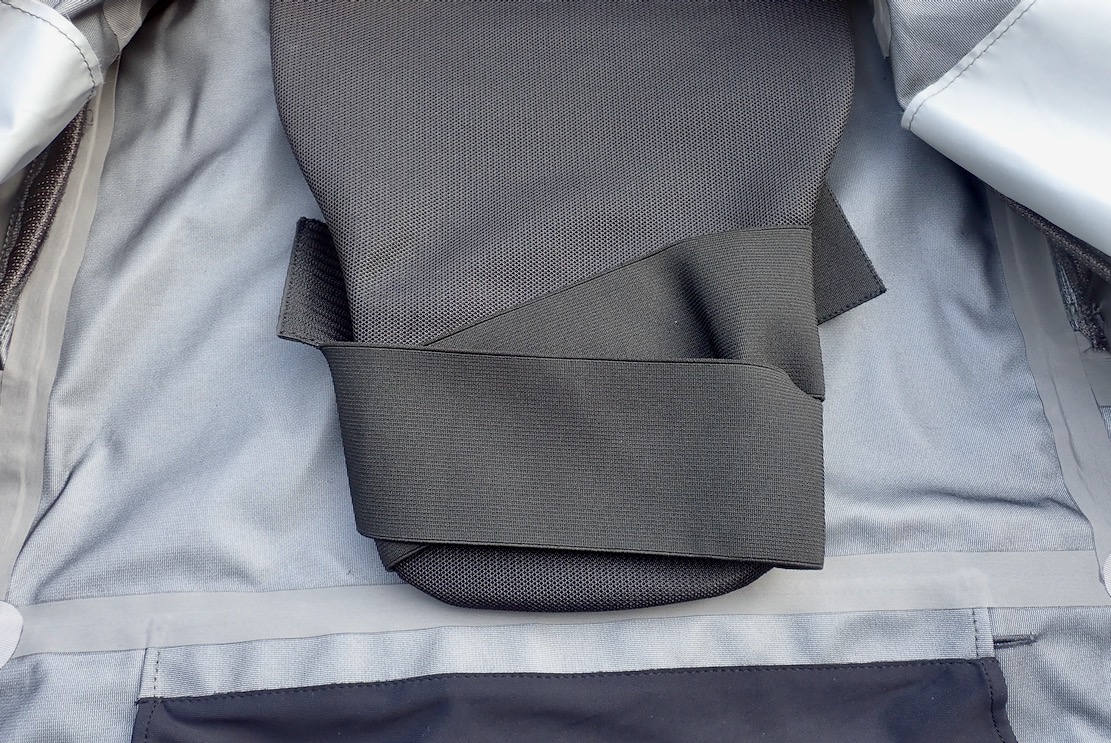
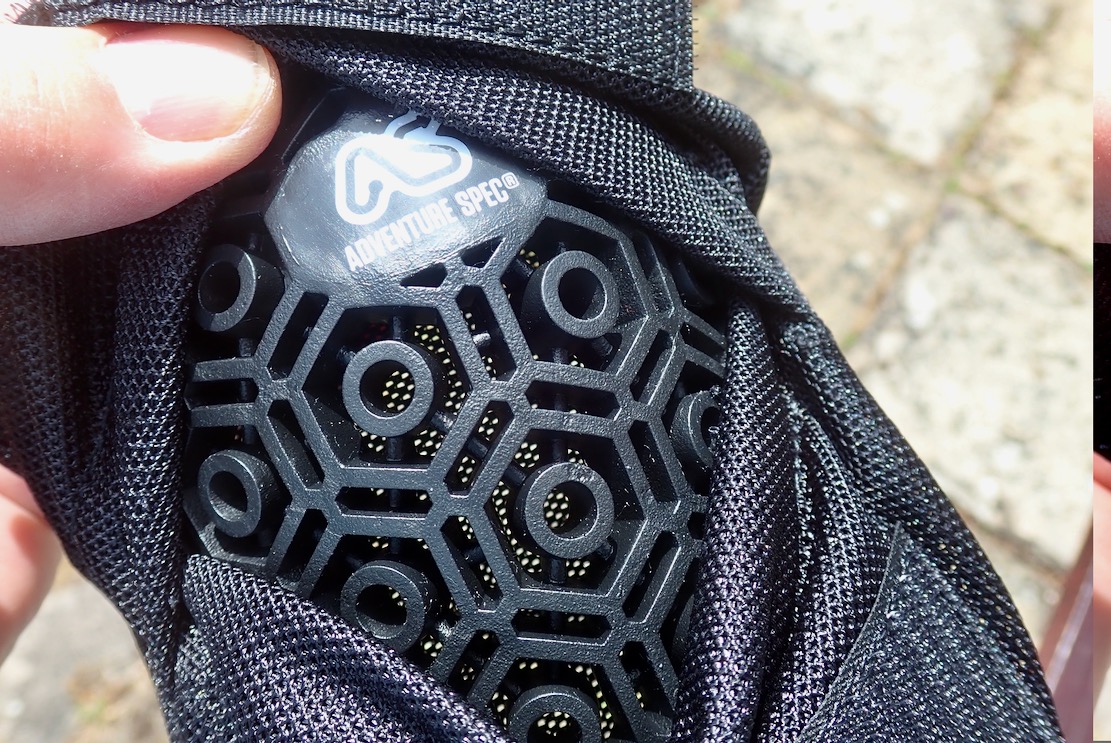
Armour Underneath and inside, five pieces of A-Spec-branded armour sit in pockets velcro’d to the shell’s interior. I wonder if an included back protector is mandatory to secure a CE AA rating. While good insurance for high-speed crashes, as said, I found the Gravel much more comfortable without the back plate (as I do with most jackets). On the scales this back pad weighed 565g, or over 20% of the jacket’s overall weight.
An elastic waist strap is sewn to the nylon sleeve housing the back pad (above left; below). They call it a ‘kidney belt’ but that’s something else: a stiff girdle-like band which MX racers use to support the lumbar region and keep their organs in place. All this stretchy band does is pull in the base of the back protector which may help keep out draughts. That could be even more effective with a couple of belt loops on the sides of the inner shell to pull everything in. When not used, the belt dangles down, or you can tuck it out of the way behind the back armour (below right). You’ll also notice a half-zip to join up to Gravel pants for the same draught eliminating effect.
On the arms, the two pairs of shoulder and elbow armour came in at 514g. I’d be happy to leave those in place, but by comparison the more pliable and slimmer D3O on my new Klim weigh 380g and could be easily swapped into the Gravel’s armour sleeves.
The whole elbow/shoulder armour thing must be another CE requirement, but it won’t stop over-the-bars broken collar bones. Some jackets I’ve had included a bicep cinch strap to pull in baggy arms out of the mirror line, while also keeping otherwise loose elbow armour in place. If you’re serious about armour, remove everything from the Gravel to save over a kilo, and wear something like A-Spec’s padded SuperShirt. It’s yet more clobber, but will probably be way more comfortable and effective.
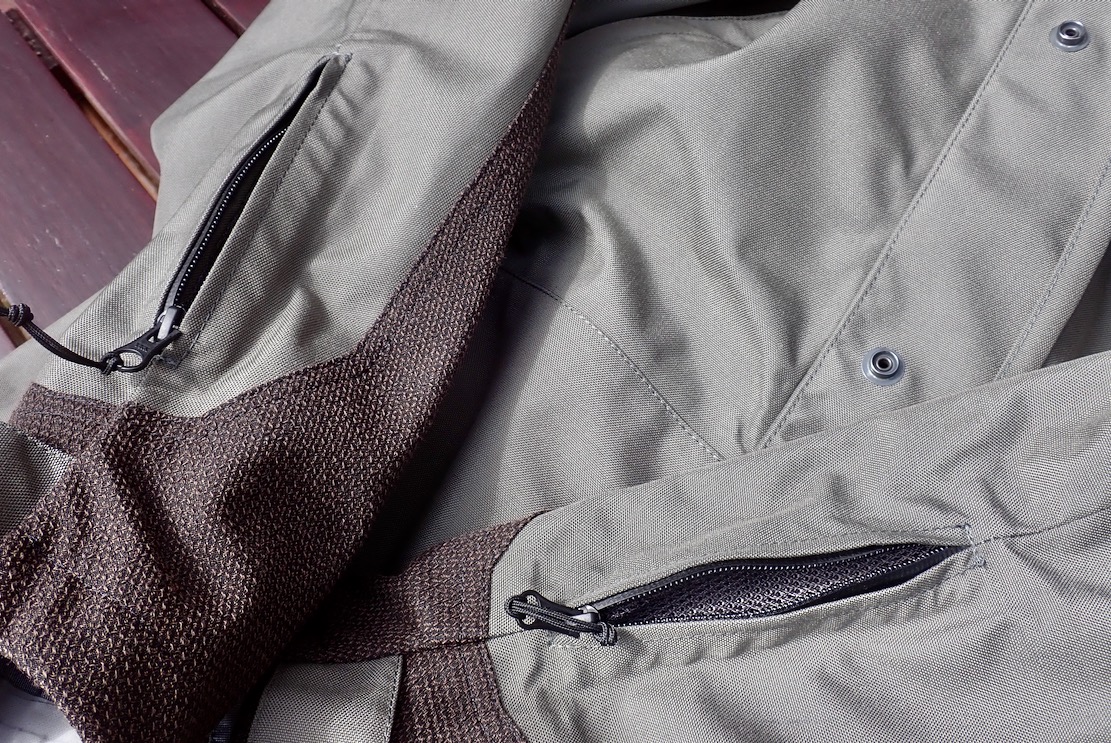
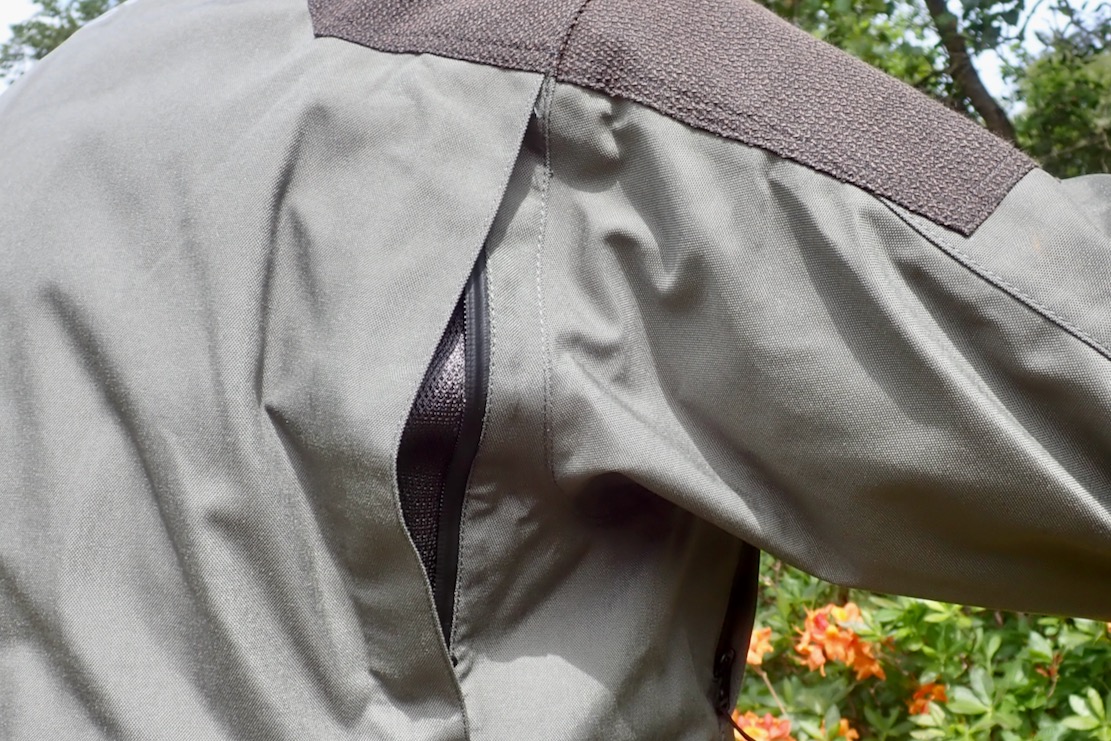
Short, mesh-backed arm vents
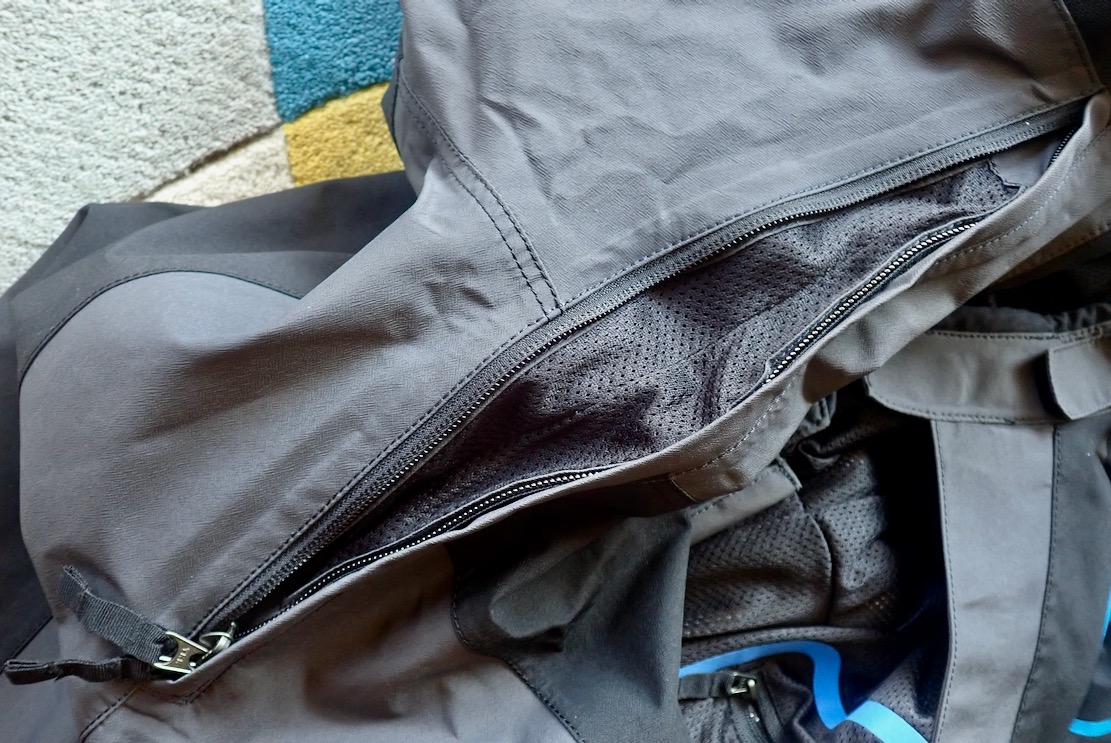
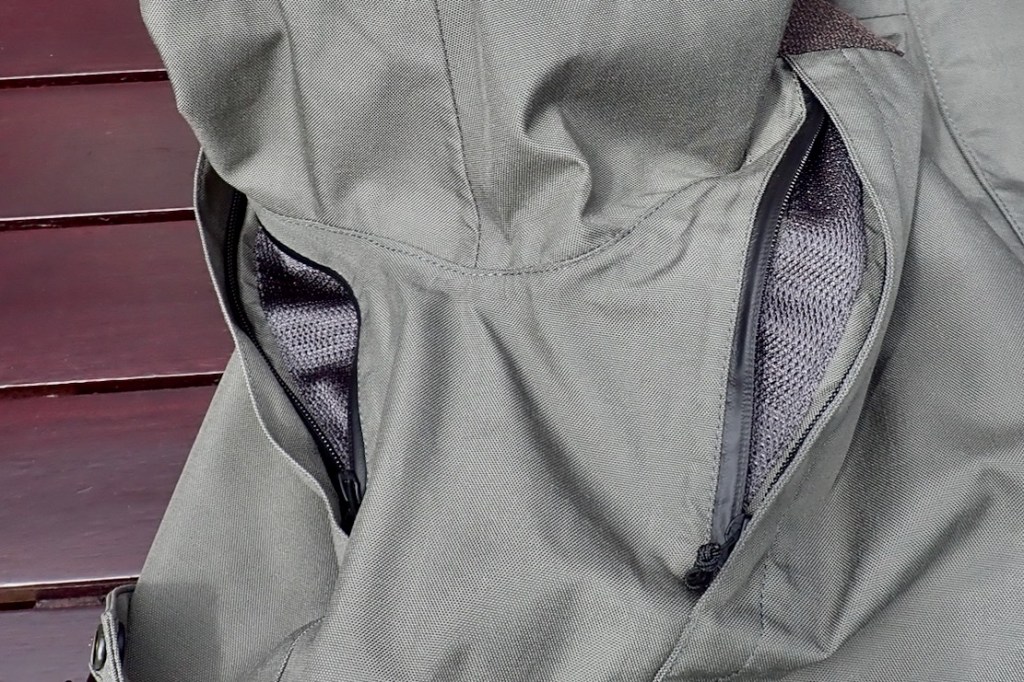
Venting air flow looks a bit constricted on the Gravel, but then I’ve not actually tried it. On the forearms you have a couple of short, mesh-backed zip vents (above) which it’s hard to see being very effective. There’s another set on the upper sides of the chest with exhaust vents on the shoulder behind (below left and right).
Apertures are on the small side and will be better than nothing, but as on other jackets, the trend for mesh backing means they can’t open fully to get a flow on. For more venting you might as easily open out the cuffs and unzip the one-way front zip, then do some of the poppers back up. Or, do as Dave did in the Comments, and cut open the mesh to maximise the flow.
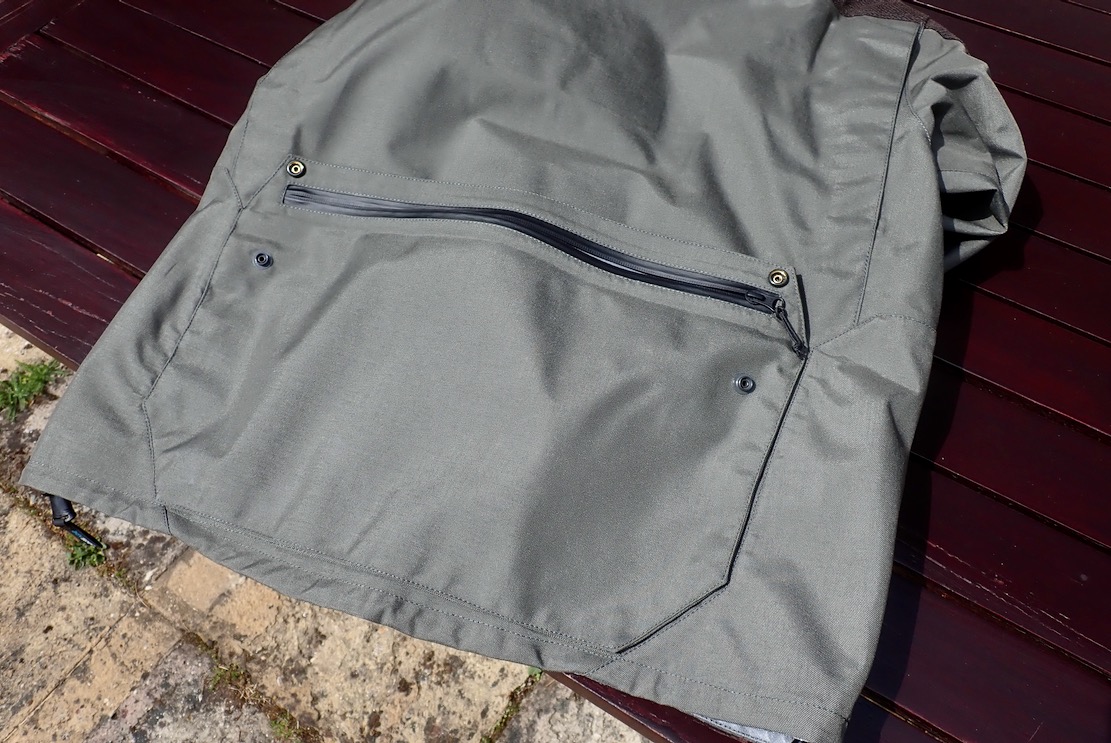
Pockets add up to a couple at the hem (below left), and another pair outside on the chest but behind the poppered storm flap (below right) which means you don’t need to open the main zip to access them. Water-resistant zippers up here mean that a passport, wallet and phone ought to be well protected from downpours, but condensation in a pocket may add humidity.
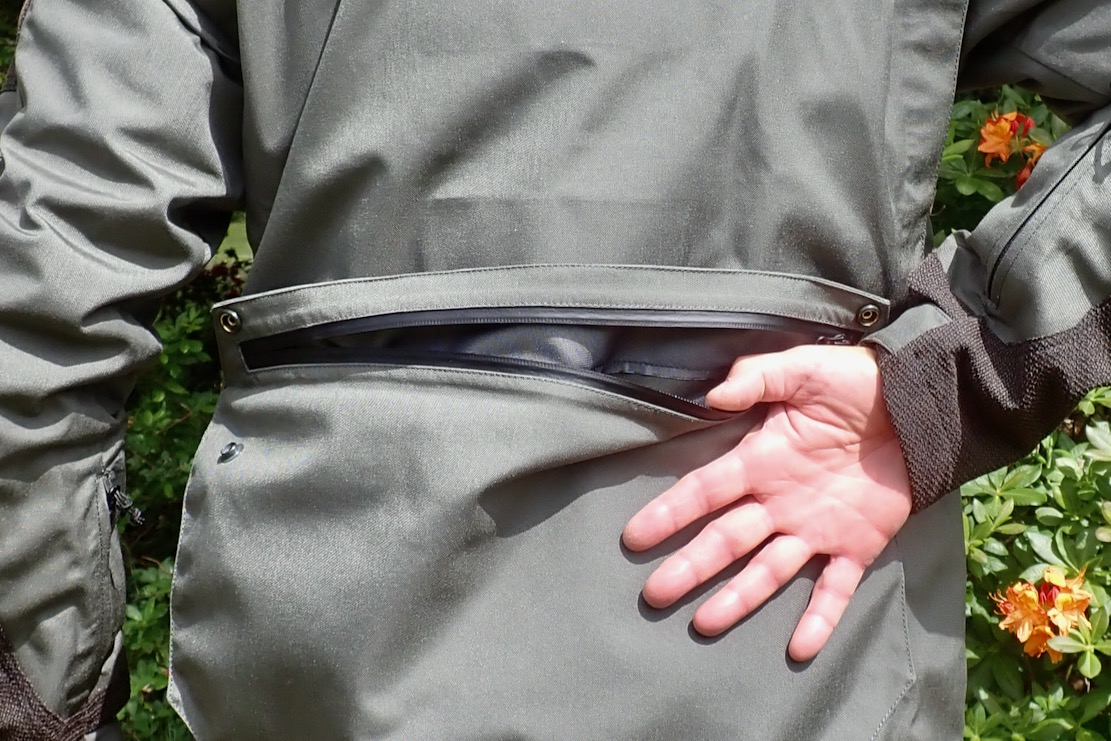
On the back is a huge ‘game pocket’ with studs over another water resistant zip. I find pockets like this a handy place to stash essential but rarely needed items which you never want to be parted from. It’s a long time since I’ve been as supple as Olga Korbut, but I was able to open both poppers and slide the zip while wearing the jacket. They don’t mention it, but inside the game pocket is a buttonhole slot to feed out a long hydrator hose. It would have to come out around the neck – close enough to your mouth – but means you can dispense with wearing a hydrator daypack, another clobber ‘win’!
For comparison I tried on my new Klim Traverse GTX (to be reviewed). It felt flimsy by comparison – or you could say it felt a whole lot lighter and less clobber-like, while still being Gore-Tex waterproof and armoured at the arms.
As I found with Mosko’s similar Basilisk, the Gravel Jacket would be too heavy for the sort of easy trail biking I do in Morocco. Road touring on a big Adv you’ve already surrendered off-road agility for all-conquering road manners, and something like the Gravel Jacket, or even the full outfit, will add to your feeling of invulnerability. Thanks to Adventure Spec for sending out the Gravel for a quick look.
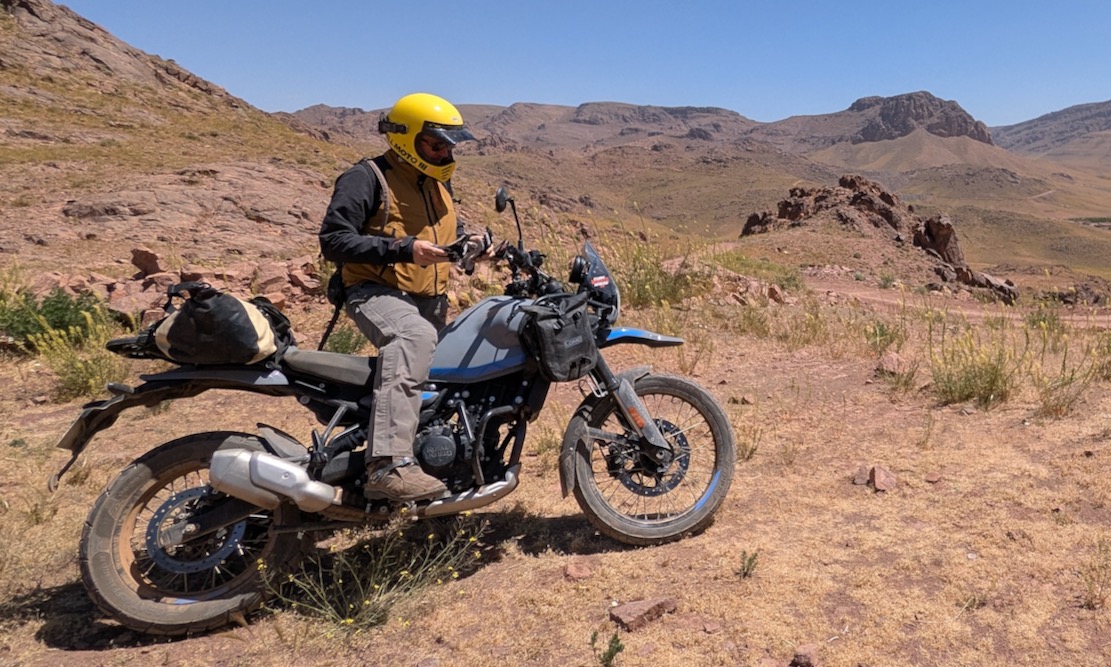
After selling my Honda 300L, summer 2024 I was all set to buy Enfield’s new Himalayan 450, but in tubeless it cost well over £6k; 10% more than the more unusual CFMoto 450MT. so I went Chinese and didn’t regret it. I sold the MT after 8 months/7000 miles and, still Himi-curious, just got back from eight days in the Moroccan Atlas with a mate on a pair of Himalayan rentals, covering 2900km. My MT was a bit juicy for a 450cc, plus I knew at first sight its size would limit solo off-road exploration, even with the low seat height. Luckily, I did loads of that the previous winter on the 300L for my new Morocco 4 guidebook from which I span off the Trans Morocco Trail. I missed my 300’s go-anywhere ability, even if crossing Spain was a slog. Could a Him 450 pull off both? We were here to find out. I was in Morocco with Jon. We last rode together in 2003 on Desert Riders out as far as the northern Tenere’s Lost Tree.
I also owned the Him 411 a few years back and loved its ploddy thumper vibe; my sort of bike for slowly exploring trails, despite the weight being similar to the new 450. But I did get it transported to southern Spain and back which meant that like the 300L, it wasn’t a true contender as an all-round travel bike.
In a line: Economical, but heavy for what it is, we both agreed the Him was better off-road than on, but wasn’t great at either.
• Carries its mass low which results in good tracking and stability • Low seat height, and can go lower still • The economy of my 300, giving up 600km range • Stock, the minimally adjustable suspension is pretty good • Optional tubeless wheels (ours weren’t) • Feels better made– and fixed many of the 411’s shortcomings • No low-speed fuelling issues! • Stock CEAT road tyres have at least 18,000km in them (which is annoying) • Almost don’t need bar risers • Centre stand – some added weight is worth having • Tail rack and tank bars; ditto • Shock preload easy to access (but I didn’t)
• Tanked up, it’s heavy and feels it on the trail • Saddle soon gets uncomfortable • Needs softer grips • ‘Screen’ does nothing useful other than offer mounting points for something effective • Display selection is a bit tiresome, and always resets • Should an engine crash bar bend that easily?
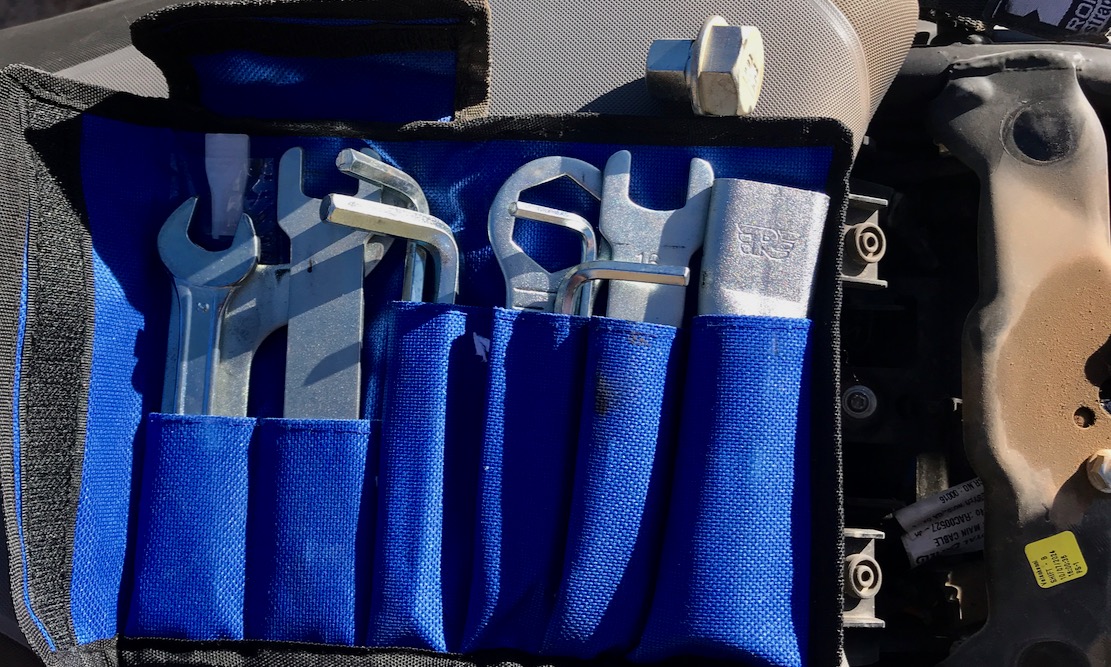
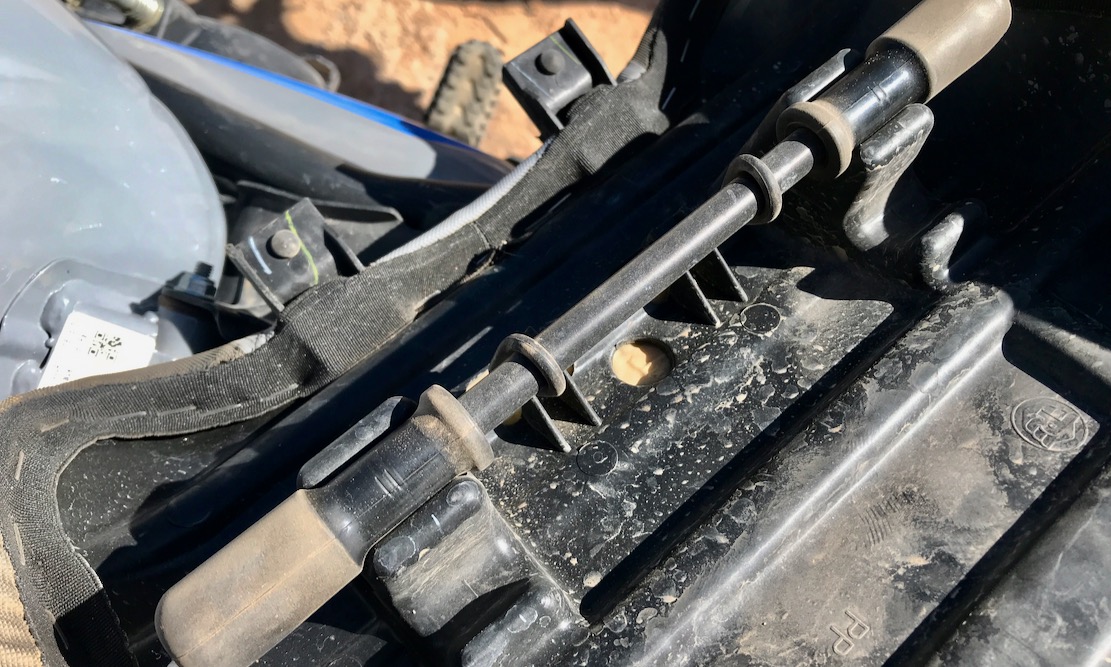
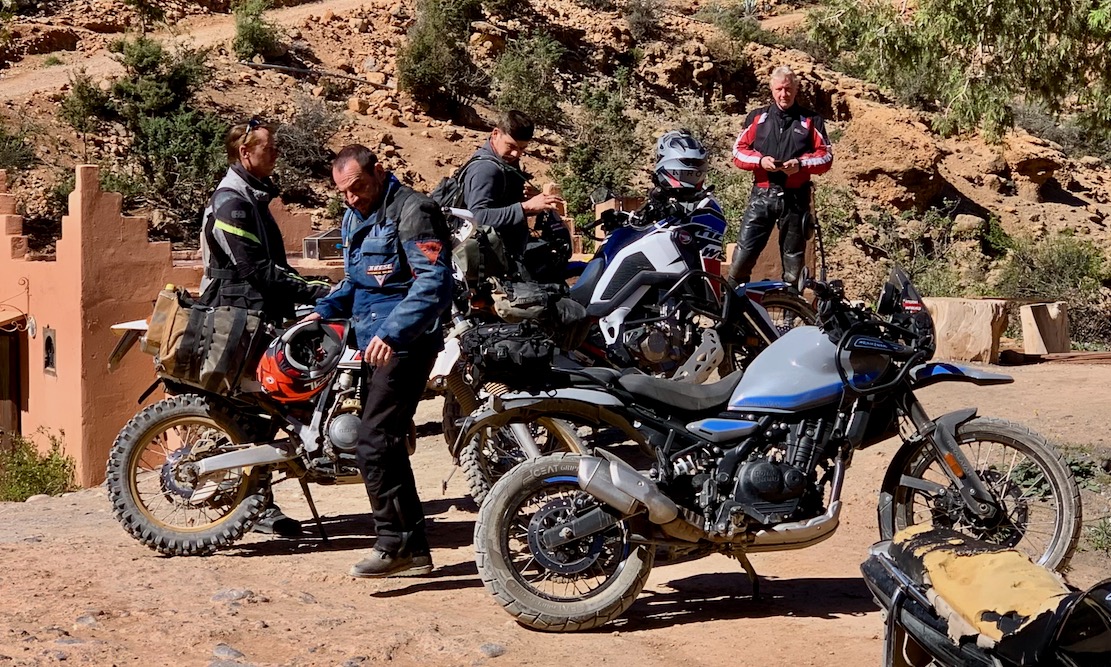
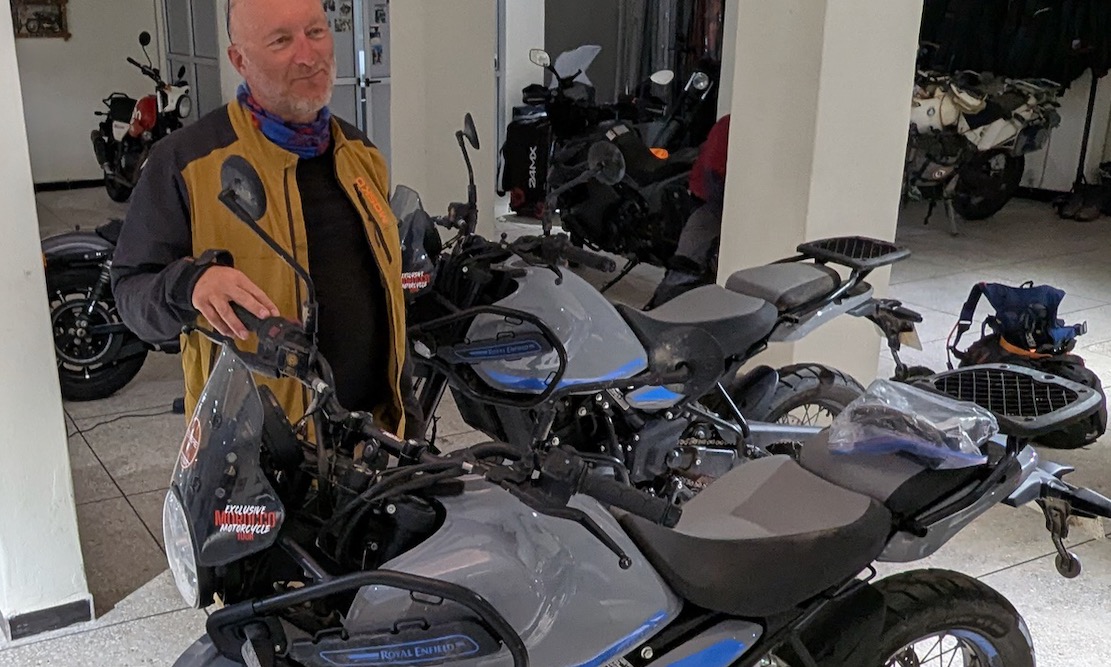
Review There are a couple of places renting Him 450s in Marrakech now. Ours had around 15,000km and cost €65/day with worn-out stock CEAT tyres (despite me requesting good tyres in advance). So far, so Moroccan. But both bikes looked in great nick and my bike had engine crash bars. And I have to confess: what I thought was an ugly bike in late 2023 now looks pretty good, even with the naff graphics. I checked for a toolkit and was amazed to find something resembling a 1970s BMW or MZ. Everything’s there (below left), including an adaptor nut to remove the front wheel with the rear wheel wrench. What a shame the rental shop didn’t think it through and import tubeless models; I’d have happily paid more. We borrowed a rear tube, expecting to need it. With the seats off, I also noticed the height adjustment pegs on the front saddle (below right). I left mine on high which is still pretty low.
Nice tools, misterSeat height easily adjustable
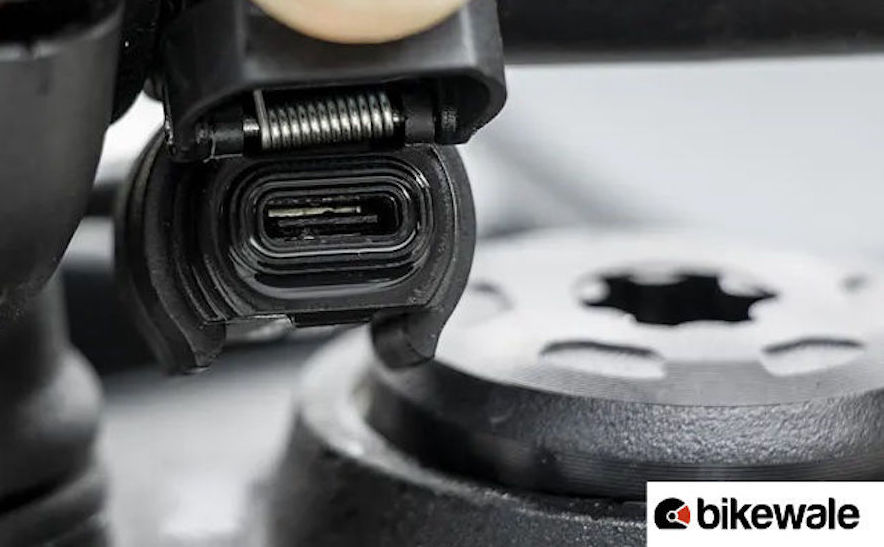
One annoyance was the USB-C charging port under the handlebar mounts. I was hoping for a regular USB2/3. I suppose I might have tried to buy an adaptor in Marrakech, but luckily my Garmin runs for up to two days on a battery, so I made do. Sorry, but I didn’t waste my time trying to make the display’s Tripper mapping app work, even had my phone been Android, as it uses inadequate (for Morocco) Google Maps and can’t run offline. Lifting the bike off the side stand and turning the bars, with tank ¾ full, the front end felt incredibly heavy, and even getting it onto the centre stand took quite a heave. It was a sign of things to come. We were on our way to Anergui, about 300km to the east, tucked in a remote High Atlas valley.
On the road the Him’s brakes were fine; the rear perhaps over leveraged, but ABS sees to that. The dash was clear enough, but doesn’t save settings afaict, and unlike Jon, I didn’t bother getting to grips with it. My gear change was nothing special, the clutch a bit heavy and the screen little more than a console G-string. Jon and I were initially underwhelmed: the power-to-weigh ratio didn’t add up. We realised later we were on Eco mode which reduces power in the bottom four gears, though we were rolling along mostly in the upper two. And does 40-hp actually need softer power modes, or was it just a ‘because we can’ gimmick? On top of that, while looking wide and feeling soft, the saddle got painful after less than two hours and would remain so. Had 15,000 rental kms done the foam in? It didn’t feel like it, and had been the same on my 411 which I adapted with neoprene slabs and a Cool Cover. Shoulda brought my Skivvies. This was the only part of our ride on fast, straightish roads. Perhaps the vibration might have eased up, but with no screen and my wind catching Bell lid, I didn’t have the urge to push on beyond 100kph and hold it there. Jon was the same.
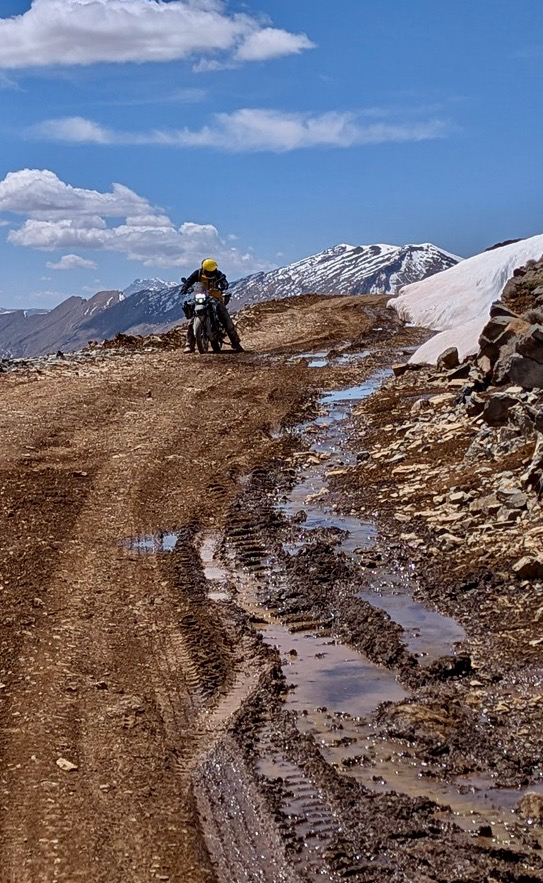
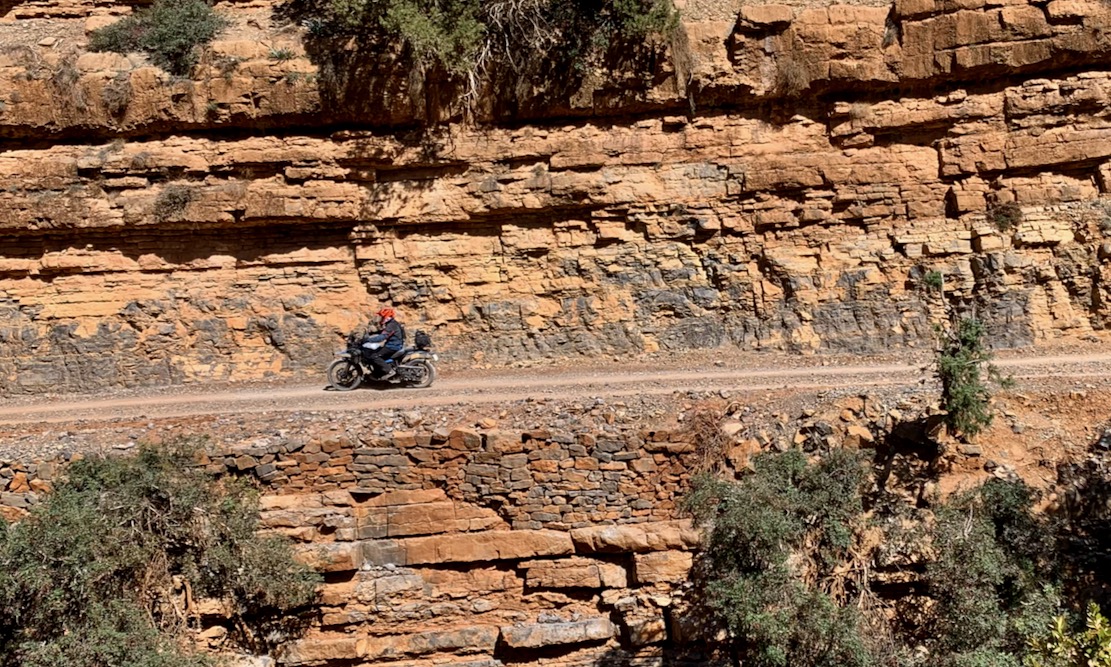
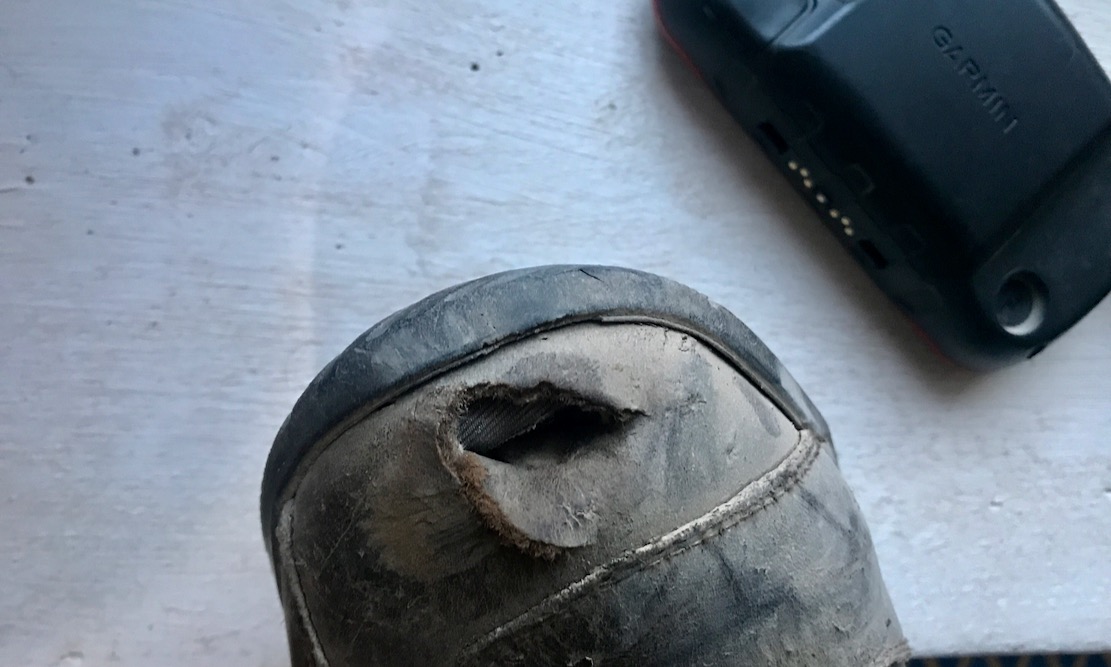
The last 40km into Anergui follows the precipitous Assif Melloul gorge (above; video below) with some big drops into the river you’d not want to attempt. Getting weary, I did overcook it a couple of times – perhaps the ABS led me astray. I even managed to poke a hole in the toe of my ageing TCX boots (left) without anything clouting the bike, far less spotting a sharp rock. I know the pegs are low, and sliding forward on the saddle points feet downwards, but this was a first for me. The wide gearing felt fine providing you kept it above 3000rpm. First was a tad tall as usual ~6-7kph @ tickover? – but clutch slipping and grunt pulled it round steep switchbacks.
Ouaouizaght to Anergui via Assif Melloul gorge
On arriving in Anergui we both decided the Him was better off-road than on, but it wasn’t great at either. The weight – 200 kilos with the 17-litre tank brimmed – is set low and combined with the low seat height made the Him stick to tracks like glue, but it still took a fair amount of effort to ride. The barely adjustable suspension felt good, especially the cartridge? forks. I could’ve backed off the rear rings a bit to reduce chattering, but neither end bottomed out during our ride. Nor did the bash plate scrape. We checked the tyre pressures, and dropped them from 36 to 30psi.
At the Anergui auberge we met up with Simon on his nicely set-up, over-bored TTR315 (left), as well as a couple of Germans on an AT and a 901 who’d both just discovered the TMT. They’d got here via TMT Stage N which had just become accessible again after months, but not without a few fall-overs. By November 2025 Stage N was rideable again. Until the next big storm. I rarely visit Morocco this late in the season, but was staggered by the size of tourist bikes used out here. Maybe they weren’t all piste bashing, but as it is, regular mountain roads are often missing the surface or capped with dried mudslides, so a giant Adv trounces a giant tourer. Old Man Norden said he was on his Last Bike Adventure, recognising he was becoming a bit of a liability. ‘Get a lighter bike!’ and give yourself another decade, we all thought. Feeling the same loss of ability, that’s what I’ve done.
On Day Two a rattle became evident under load. It had probably done it out of the shop but now unplugged, I could hear it. Jon’s bike was fine and his gear change was better too: I traced the latter down to a loose lever. It took a thread-stripping amount of cranking to close up the gap with a bit of added soap. Over the next day or two we prodded various bits to try and pin down the noise: cush drive looser than Jon’s; tightened my chain (centre stand – yay!); loose rad or crash bars? Nope. Eventually I placed the rattle under the tank and, as it didn’t get worse or affect anything, I left it. Probably like the previous customer and the next one.
Both Jon and I were amazed how well the rubbish tyres tracked on dry trails, providing we backed in appropriately. In that way the low CoG is a benefit; light bikes can feel skittish. But my new thin gloves didn’t agree with the Him’s hard plastic grips combined with the need to manhandle the 450. Weeks later I still have calluses on my palms. Along with the seat, this discomfort may have jaded our impressions of the Enfield.
Economy Having covered nearly 400km since filling up, in the Ait Boumengueze valley and with 50km range showing on the read-out, we took on a couple of litres. By the time we topped right up at the Kelaa servo next morning, I recorded 26.6kpl / 75mpg with a lot of steep and slow trails. That was already better than my MT ever managed. The next fill up after crossing Jebel Saghro off-road and recrossing back to Dades came in at 34.5 kpl or 96mpg. These match the impressive 450 figures I’d seen bandied about and add up to a potential 600km range. I read that Acerbis have produced a 24-litre tank for the Him. Why bother? The final fill-up back in Kelaa after crossing and recrossing the High Atlas was around 86mpg / 30.5kpl which was the average. This frugality was partly what had attracted me to the new Him. And unlike my CF Moto, the low-rpm fuelling was spot on, while briefly over 3000 metres – nearly 10,000′ – the loss of power was barely noticeable at the sorts of speeds we were able to ride at.
Arriving in Imilchil the next night after long road ride recrossing Saghro and the High Atlas, it sure felt nice not to have been pummelled. Is it the weight of the bike, or my advancing years? Probably the latter, as others manage fine.
My impressions waxed and waned, but in the end settled on wane. Not helped by the discomfort, the Him wasn’t fulfilling all my expectations and Jon, who rides a 690SM, was even less impressed. Even with inner tubes, I was rather hoping the Him could become my fly-in rental hack to save me running a bike in the UK, but without improving the comfort, it’s not for me – the bane of WYRIWYG rentals. Were I to own one, I’d fix the saddle, change the grips, fit an actual screen and change the shock and tyres. That’s pretty much a regular list you’d do to any bike – unless it’s a CFMoto 450MT, of course!
Still, all this grumbling didn’t stop Jon and me having a brilliant last couple of days in the High Atlas. We recce’d a new start to Stage N out of Imilchil that dodges a sometimes troublesome gully, then winged it off the map to discover a fabulous 50-km off-road crossing of the High Atlas back to the Dades valley, peaking at over 3000m. You really need to set the bike on full-power mode in this sort of terrain; the day or so we wasted in Eco we’ll never get back.
I was expecting the Him to be my sort of bike – more Trail than Adv which is the way my riding prefs are going – with better economy than the 450MT but still with enough grunt to chug around steep switchbacks. I also expected the lack of frontal bulk to make it less cushy on the road while giving an impression of greater agility on the piste. But for me, along with the discomfort, the weight just kills any benefits. The former could be fixed but the latter is largely there to stay and only increases once the bike gets outfitted for travel. Looking back at my 411 review, they’ve fixed many of the flaws and even made the 450 more economical and a lot faster on the road. Yet, perhaps because I improved my 411, as we do with all our own bikes, I think I got on with my old Him better than this rental.
It was great to have tried the Him 450 on the sort or terrain I like to ride. My replacement is waiting for me on a farm up north and is a bike I’m quite excited about. What could it be?
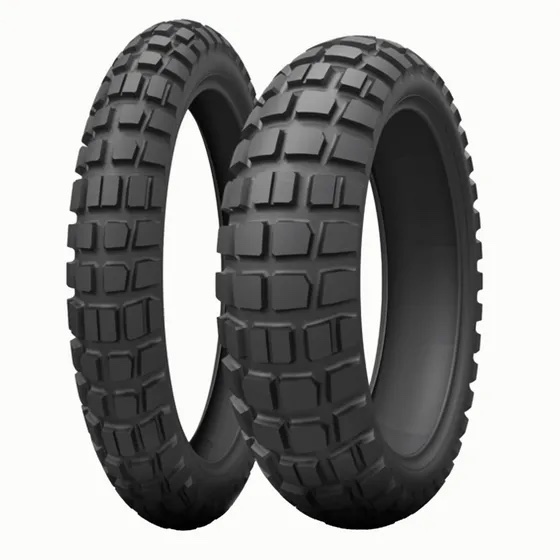
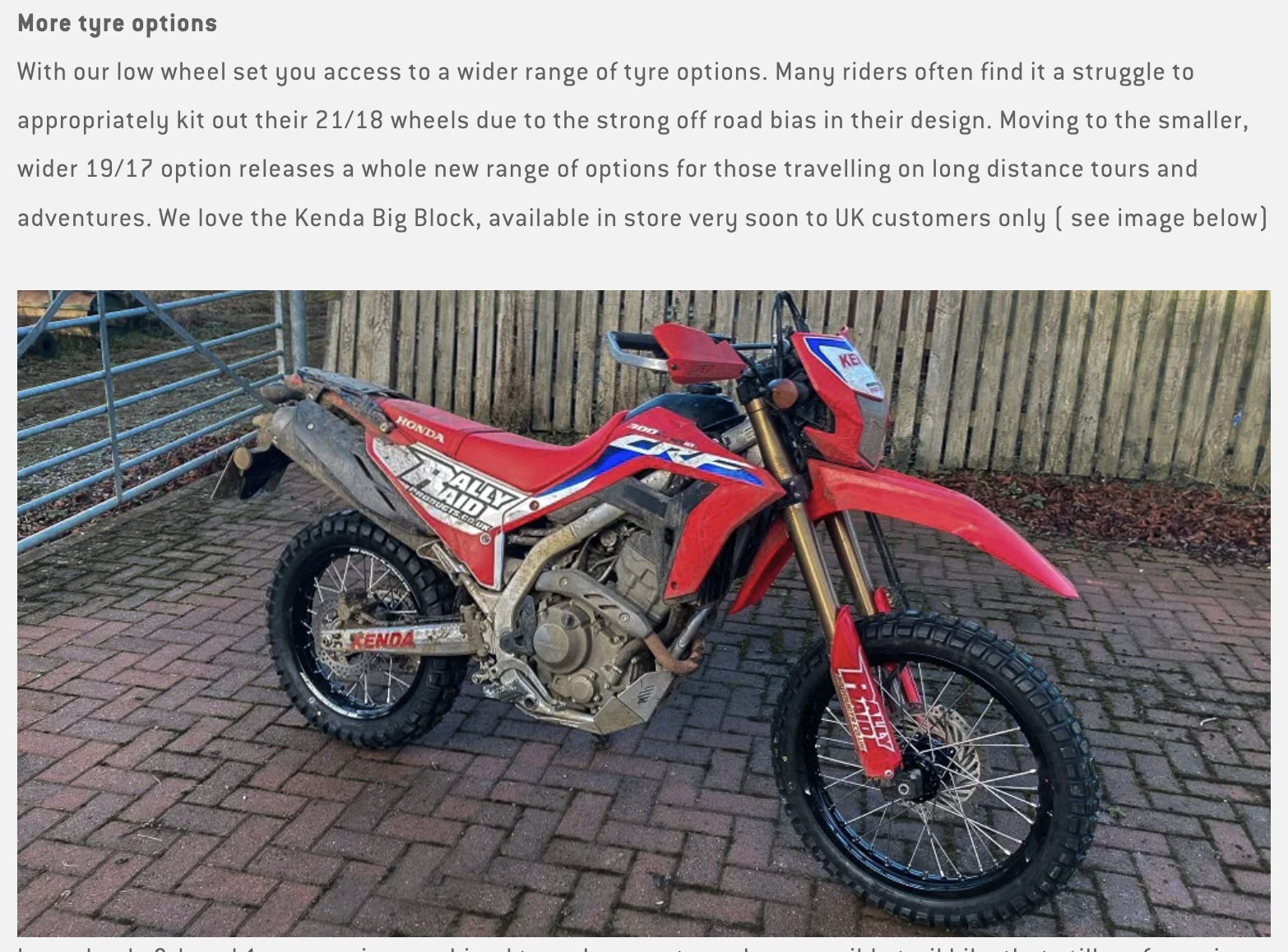
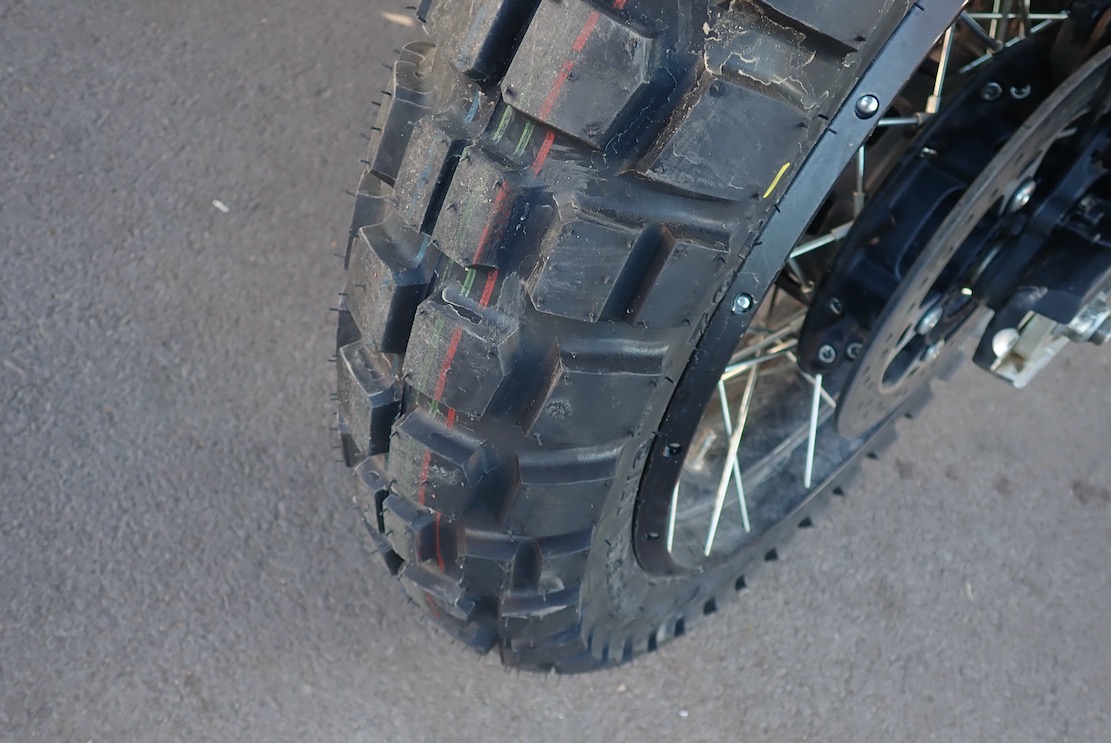
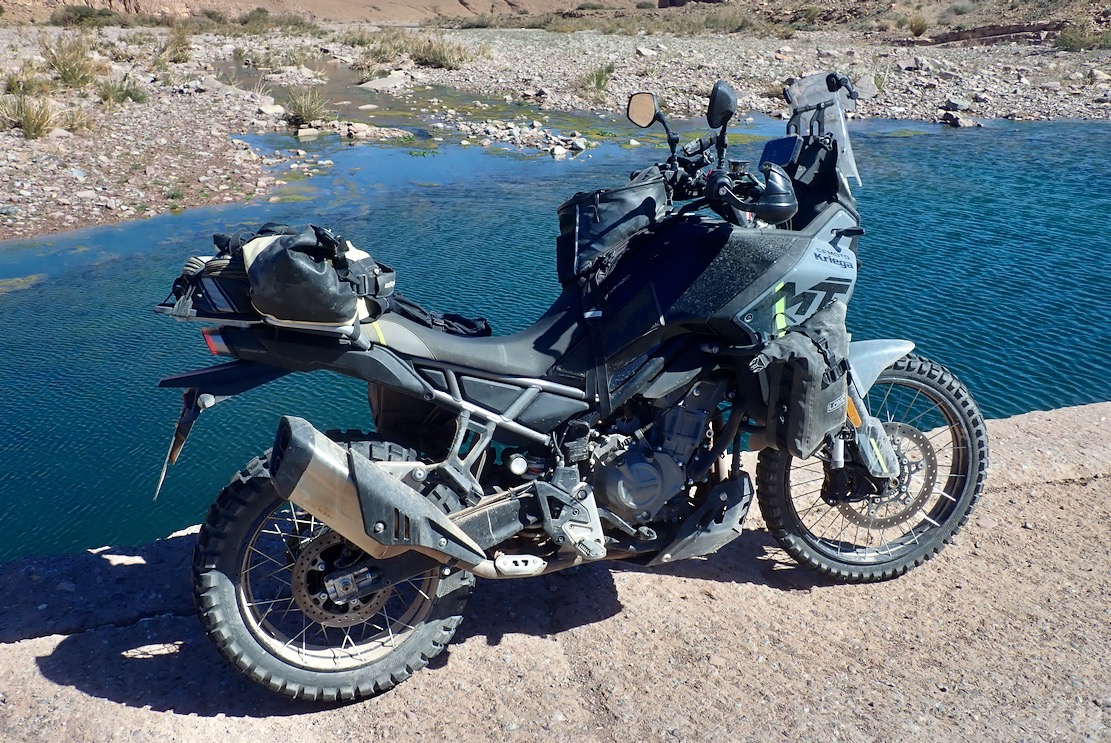
The chunky Kenda Big Block has been on my ‘tyres to try’ list for years, so when I set off for Morocco on my near-new 450MT last October, I arranged for a 140/80-18 (7.1kg) and 90/90-21 (5.2kg) to be dropped off in Marrakech, assuming the bike’s stock CSTs would not last long or soon degrade. I know John M from Rally Raid is a fan of the Kendas (below). The rear is listed as 140/70-18, but I’m told this size is rare, so the 140/80 rear Kenda would be a bit wider, taller and probably heavier.
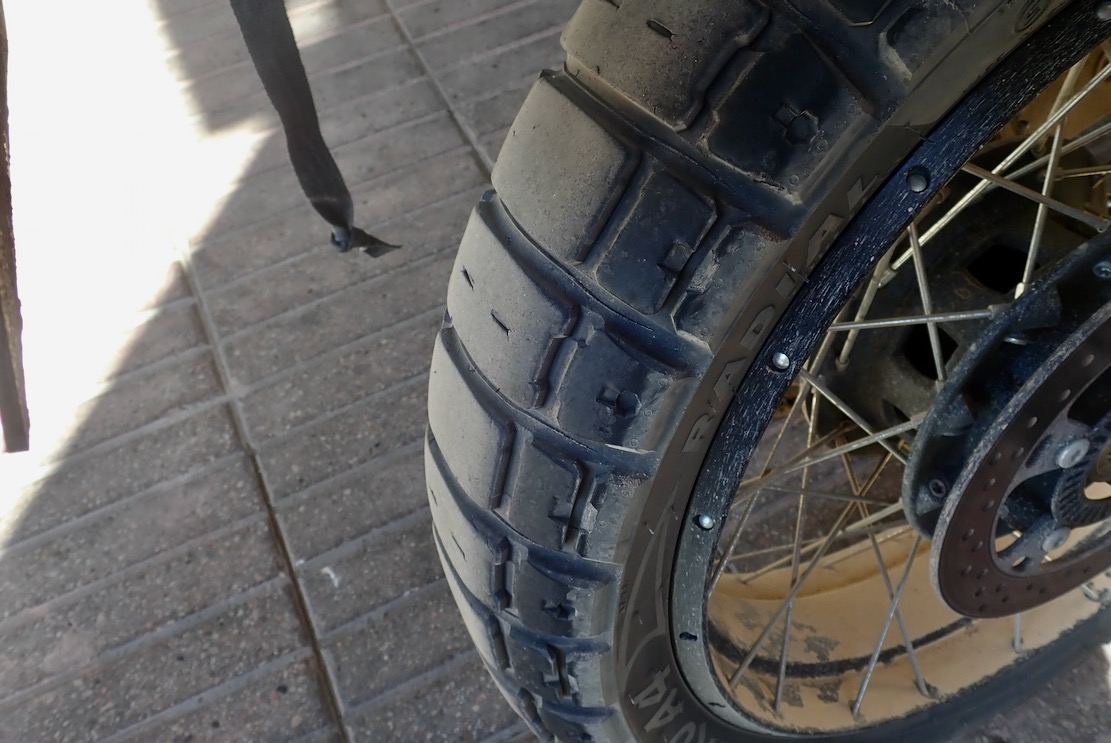
In the meantime, road and trail, I was quite impressed with the stock Cheng Shin (CST) Ambro 4s which bear a striking resemblance to the Pirelli Scorpion Rally STR.
Stock CST Ambro changed at 4600 milesKenda Big Block
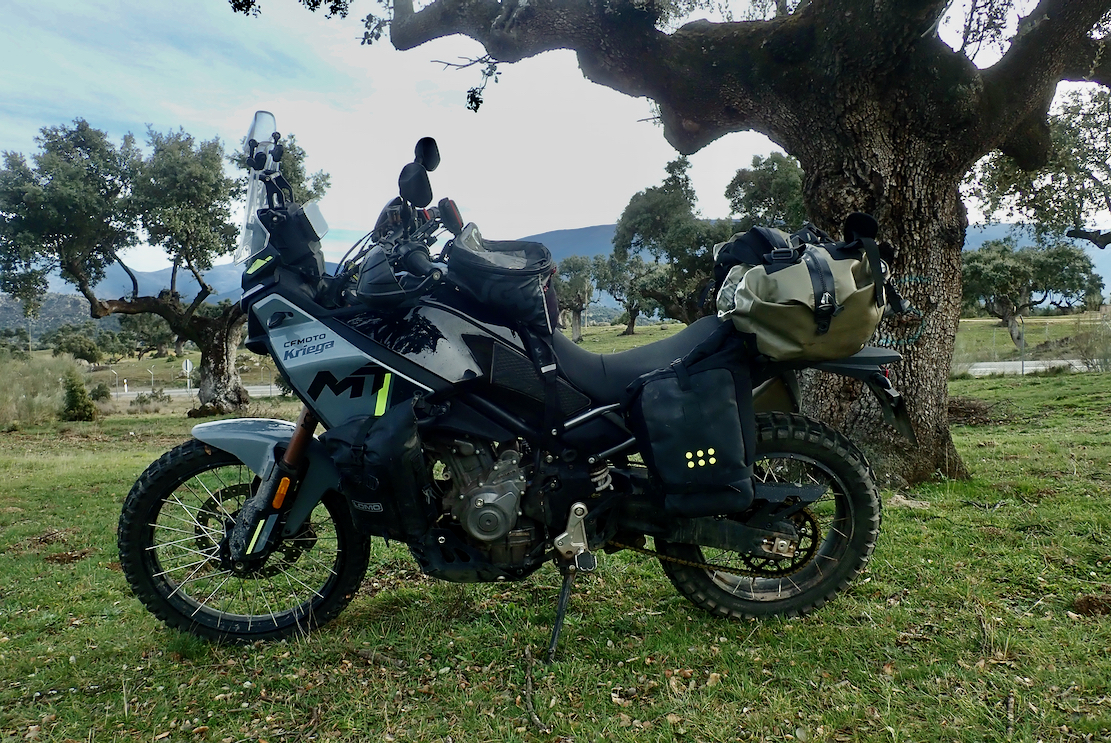
With probably a 1000 miles left in the Ambros (above left) at around 4600 miles, I decided to get the Kendas fitted in Marrakech while I still had a chance to test them on the trail, before heading back home across Spain. Out of town, as expected they initially felt odd on the road, like new knobblies can do. That settled down, hummed a bit more than the CSTs on smooth asphalt, but later on the dirt they felt too stiff at 30-psi road pressures (like many tubeless tyres), spinning out when stalled on a steep ascent, for example. I dropped to the mid/high 20s, but there felt little difference on the rocky or gravel tracks. Some bends I’d slice through like a pro, others I edged round like like a junior MX-er on their first day out.
On a heavy bike like the loaded 450 (195kg wet + gear) it can be hard to get your flow on some loose, stony bends. Meanwhile, on the few bits of deep sand (rare in Morocco), I did notice the 450 tracked well once you’d disabled the traction control. That’s as you’d expect with big blocks, though I think is also down to the 450’s unusually good steering and weight distribution.
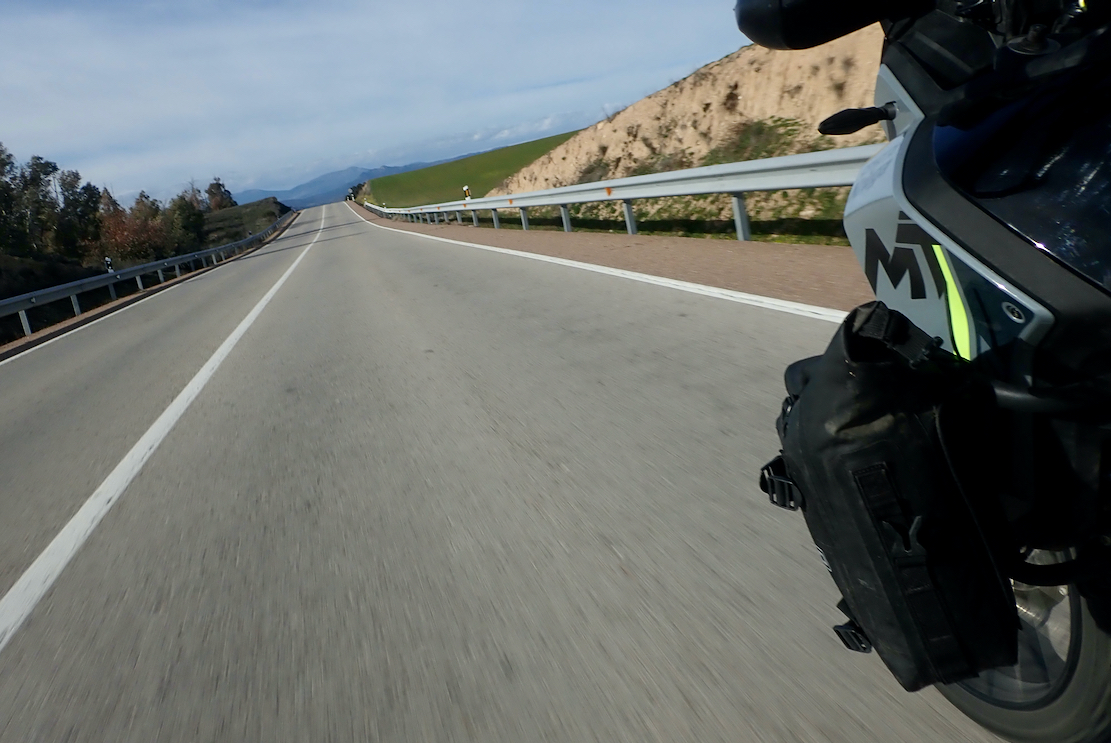
On the road the Kendas still gave their moments: Once back on bendy mountain roads in southern Spain, I wasn’t cornering the way I could on the Ambros. A lot of this must be down to knobbly-on-asphalt syndrome: some rough or grooved surfaces set the tyres shimmying, even in a straight line. I’ve been used to that for decades and you just ride through this, but on the bends was another matter. Are the Big Blocks a knob too far?
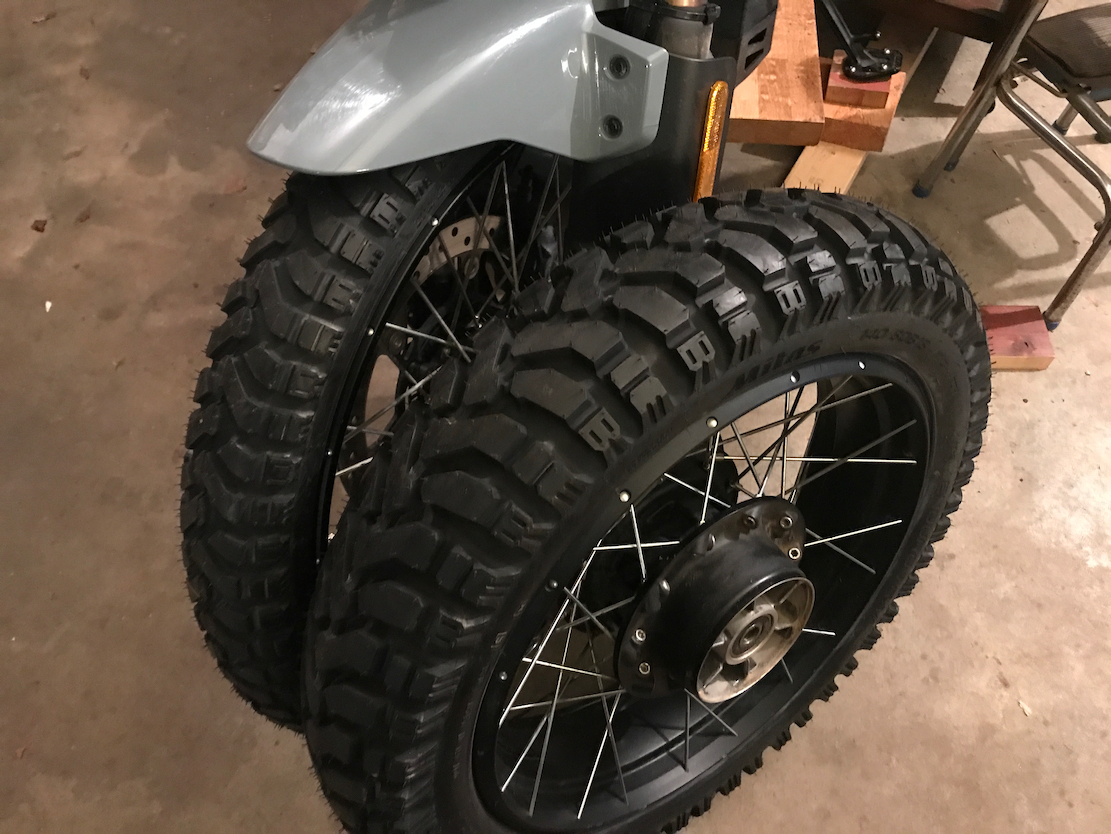
Riding damp, winding mountain backroads from Seville to Granada, I had a couple of slips and at one point was so sure both tyres were punctured, I pulled over to check. Both were solid as. It wasn’t icy but I thought maybe I’d ridden through some unseen, oily agri-slime, or the dealer service in Seville the previous day had whacked up the pressures. Both tyres checked in at the regular 30psi. On other occasions I thought perhaps the rubber needed to warm up in the chilly morning temps. This uneasiness came and went right across Spain until I thought: I can’t sell this bike with these Big Blocks, even if they make the bike look rufty-tufty and purposeful. Whoever buys it is likely to be a road rider. Once back in the UK I fitted some Mitas E07s (below) and will flog the Big Bs.












 Adventure Motorcycling Handbook