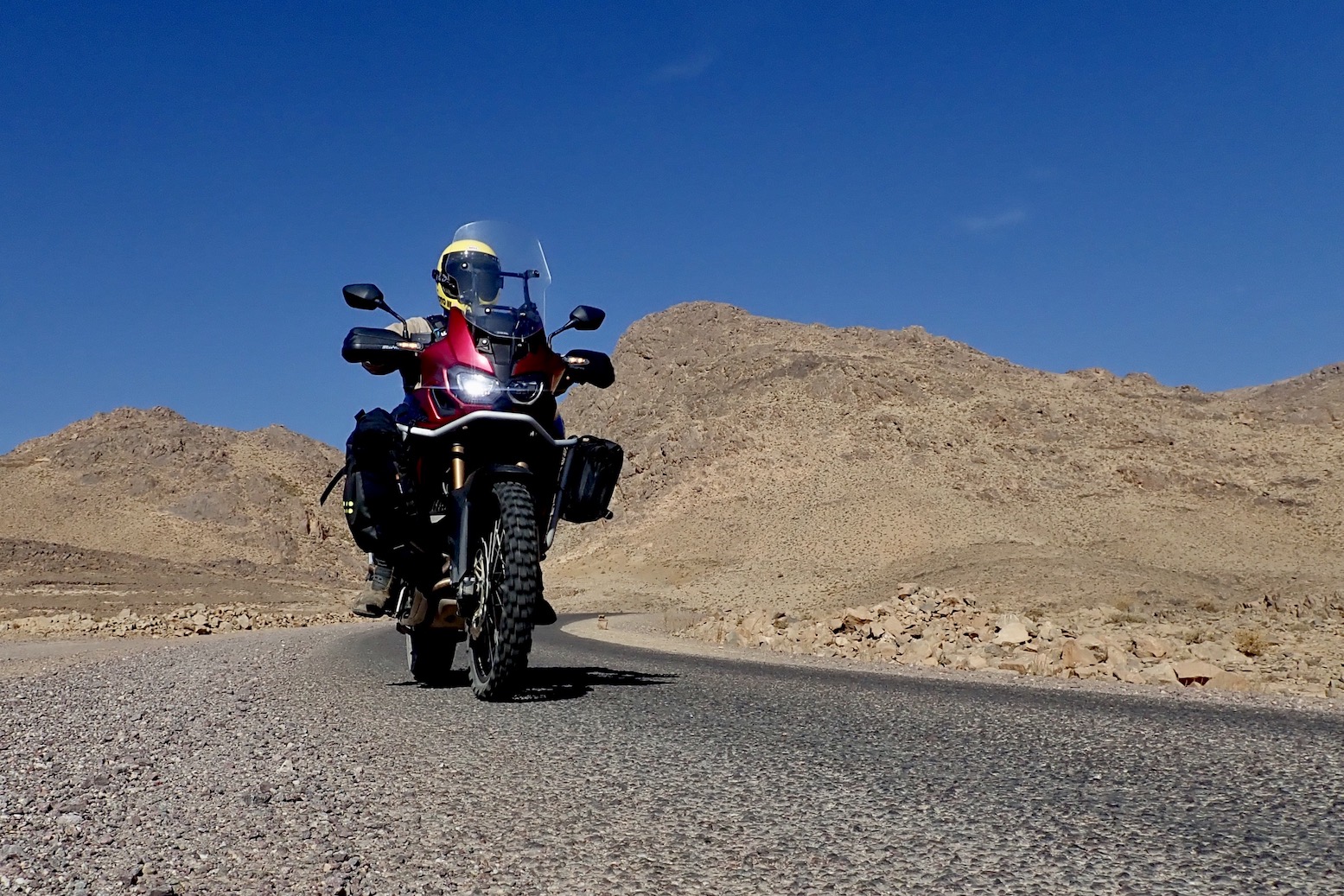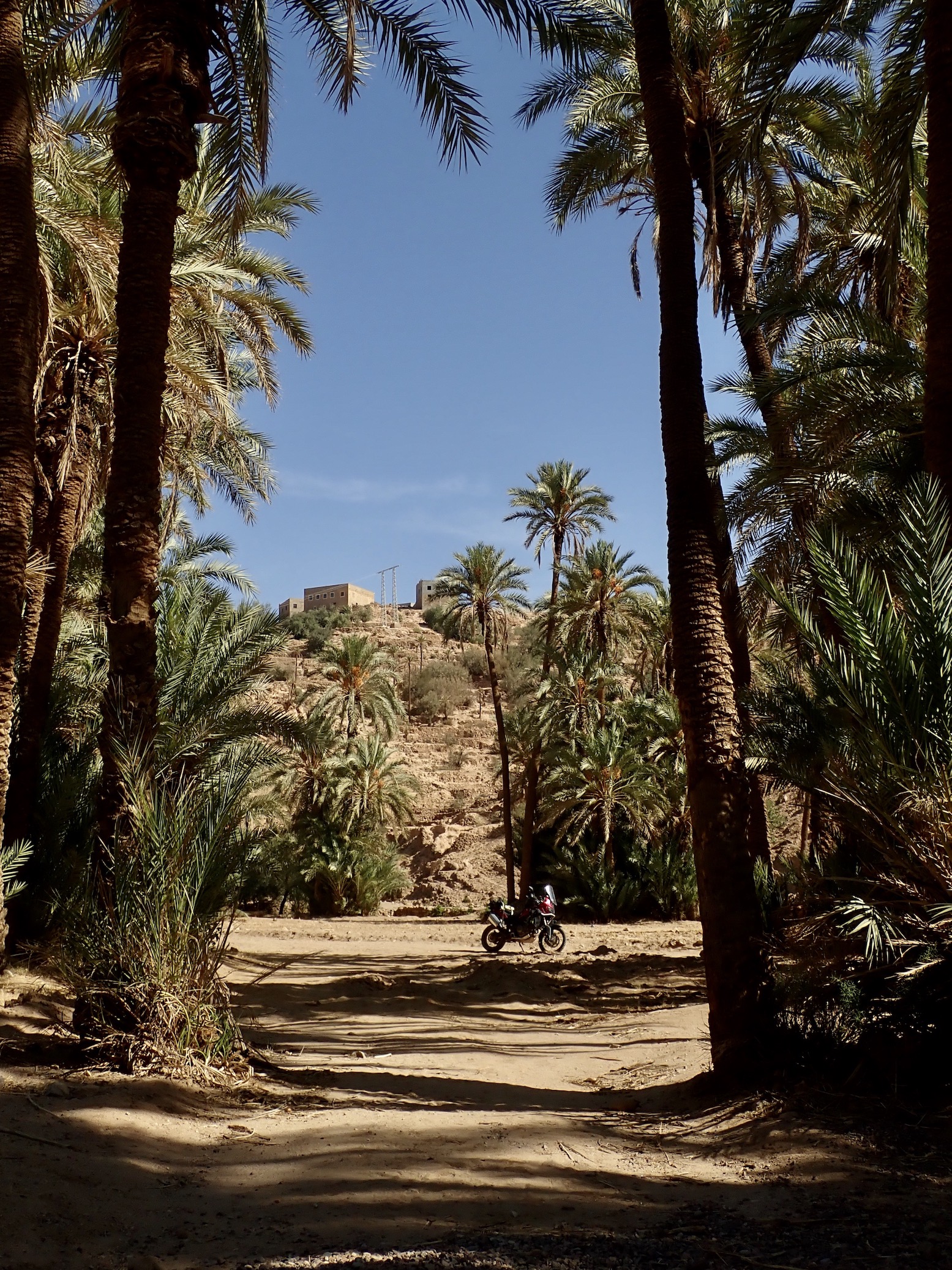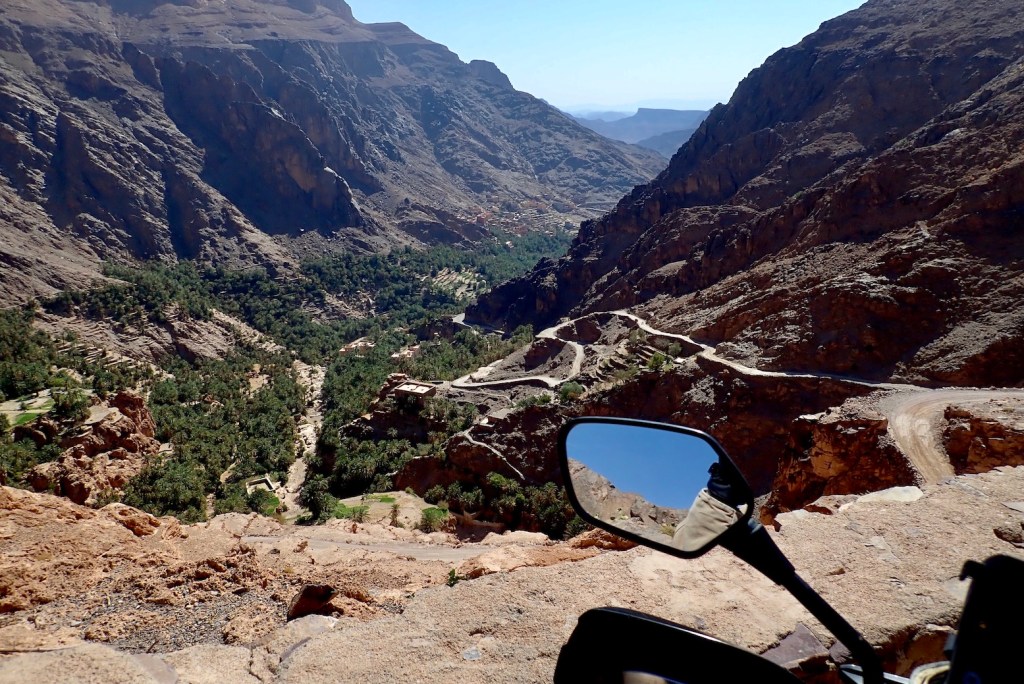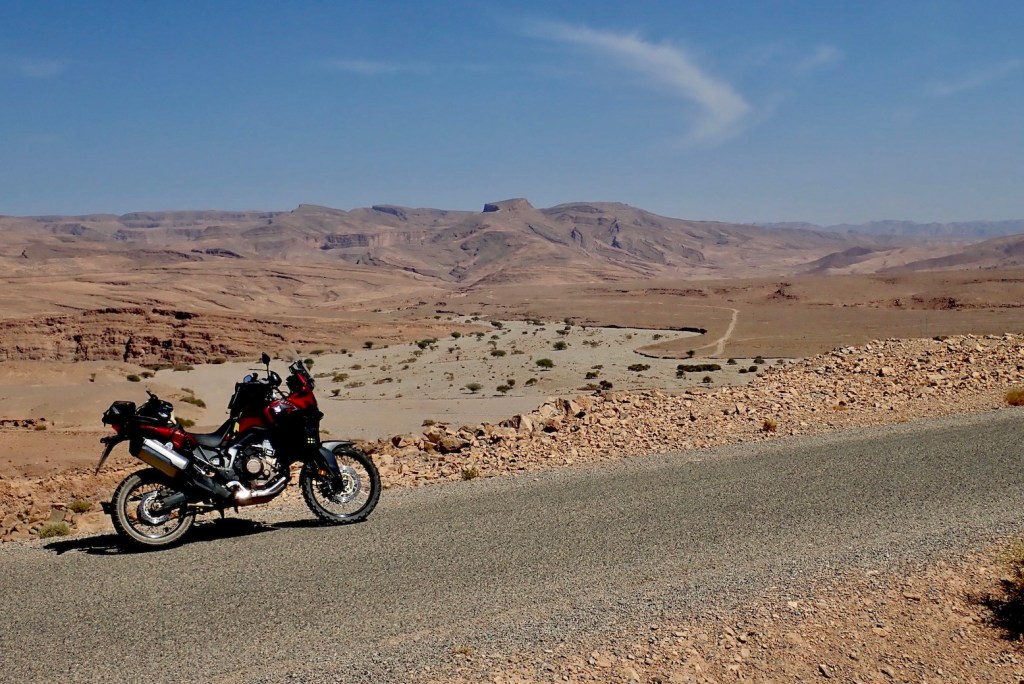
Category Archives: AMH News

Africa Twin – Off Road in Morocco 2

Africa Twin Index Page
Morocco Overland
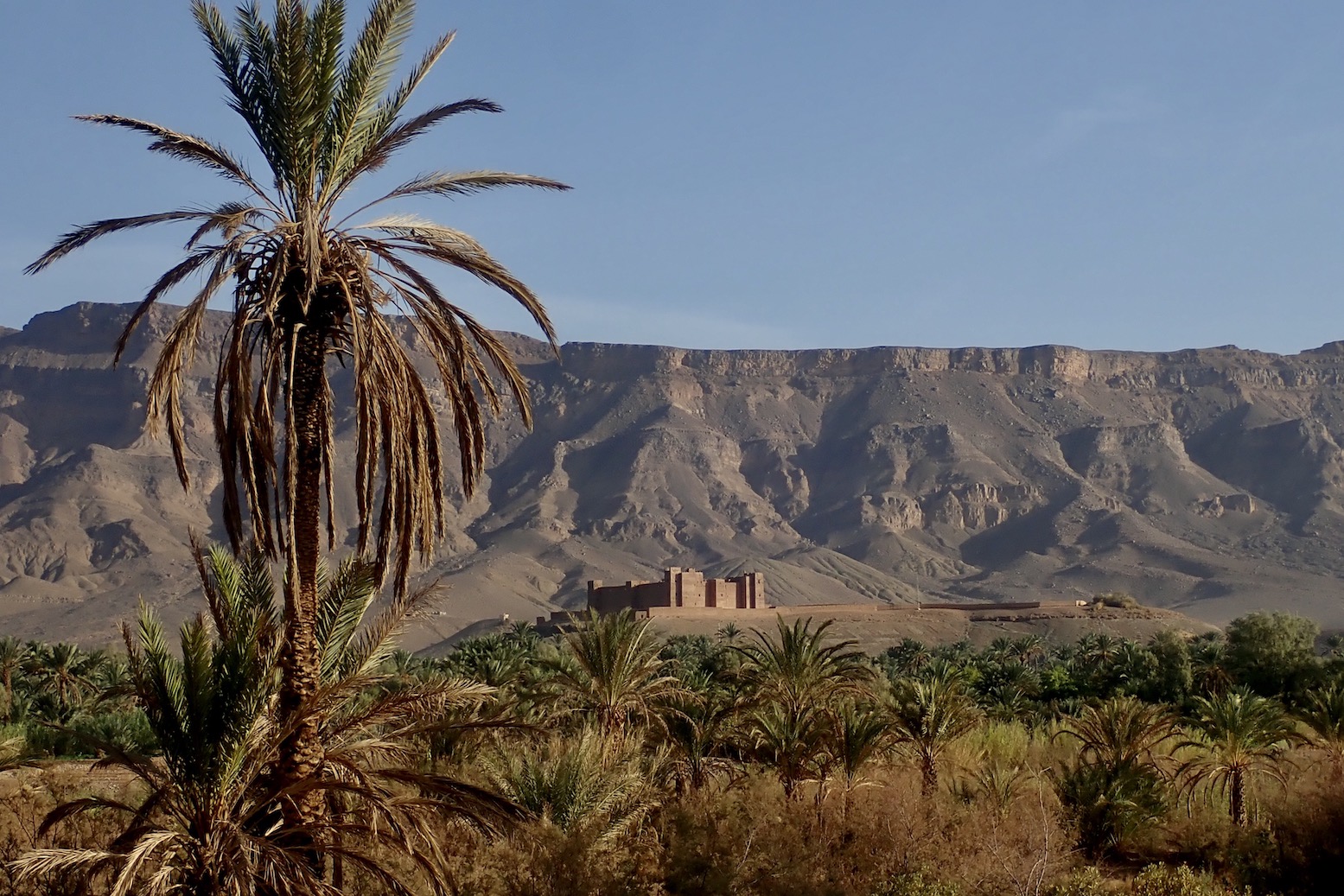
I’m parked up below the ramparts of the Saghro massif, just over the road from an old French-era fort where they filmed one of those ‘SAS: Are You Tough Enough?’ shows. Up in the hills, new-to-me tracks wait to be logged, but by the time I get rolling I realise I’ve left it way too late to do what needed doing before dark. I nose up a new track just to check it’s there, and up another new road over the jebel, but going for a there-and-back excursion seems silly.

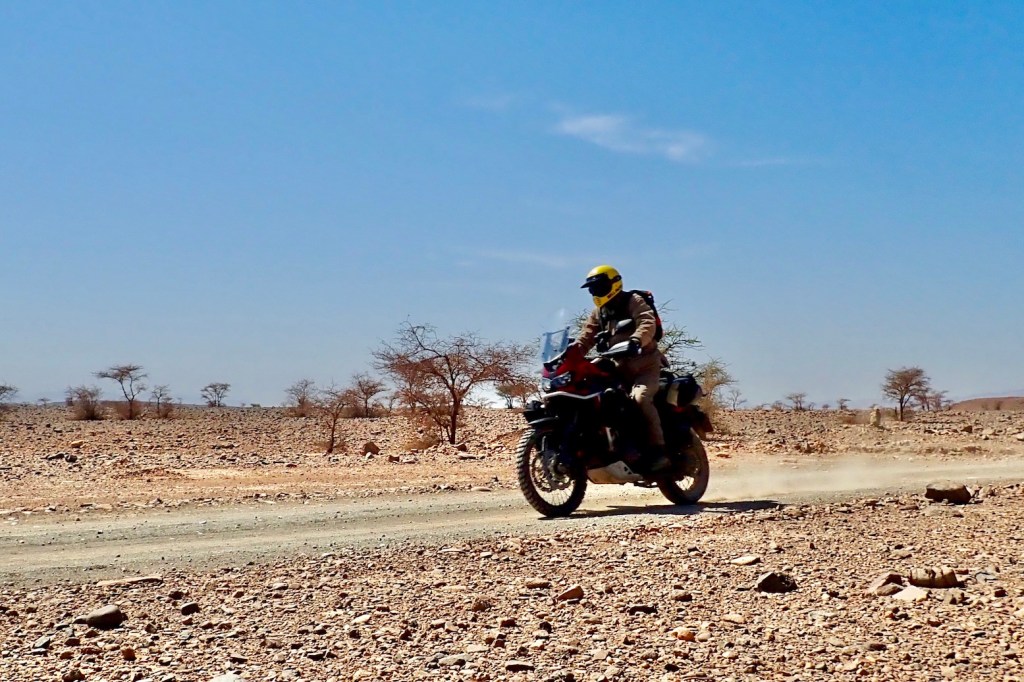
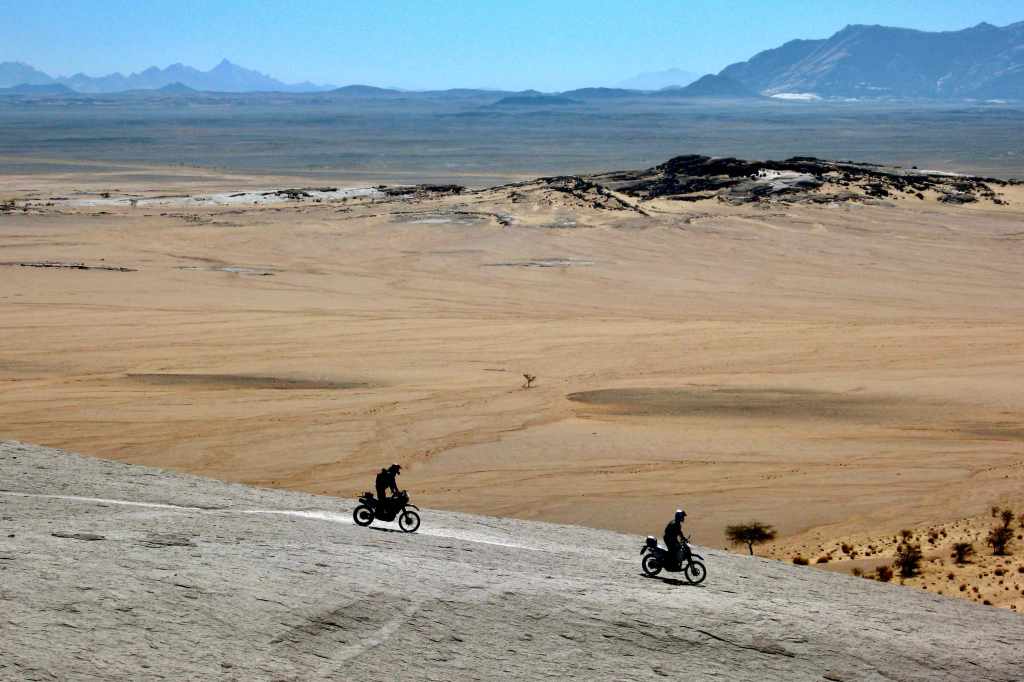
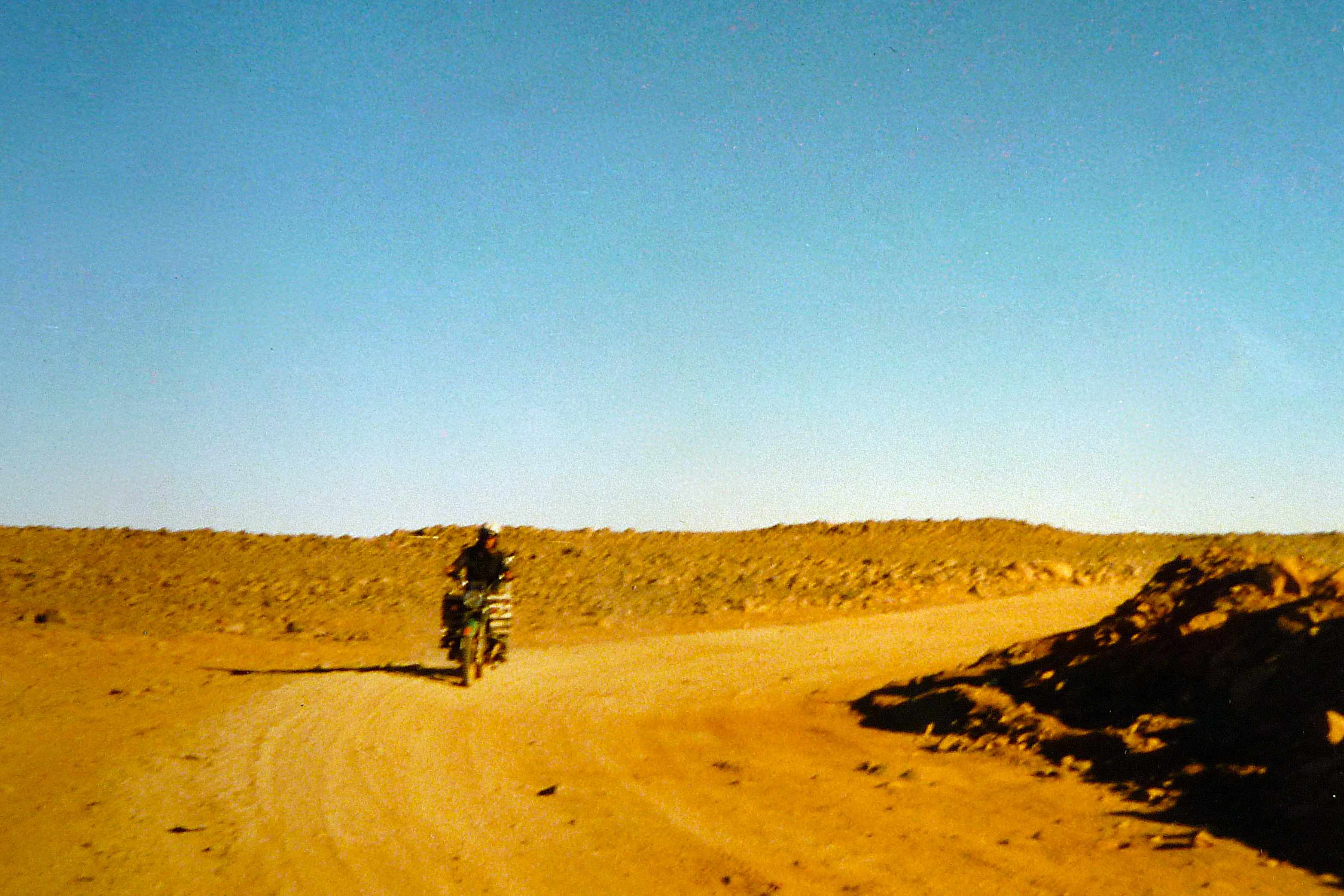
Heading back to the hotel in the late afternoon heat, huge dust devils spin menacingly by the roadside. There must be some way of doing something new and saving the day. Yes: cross the ridge and ride Route MS1 out through Tafetchna and into the stony desert, then come back up the little-used east bank of the Draa river on a new backroad. I haven’t done MS1 for years and as elsewhere, tarmac has seeped up from the south and shortened the off-roading.
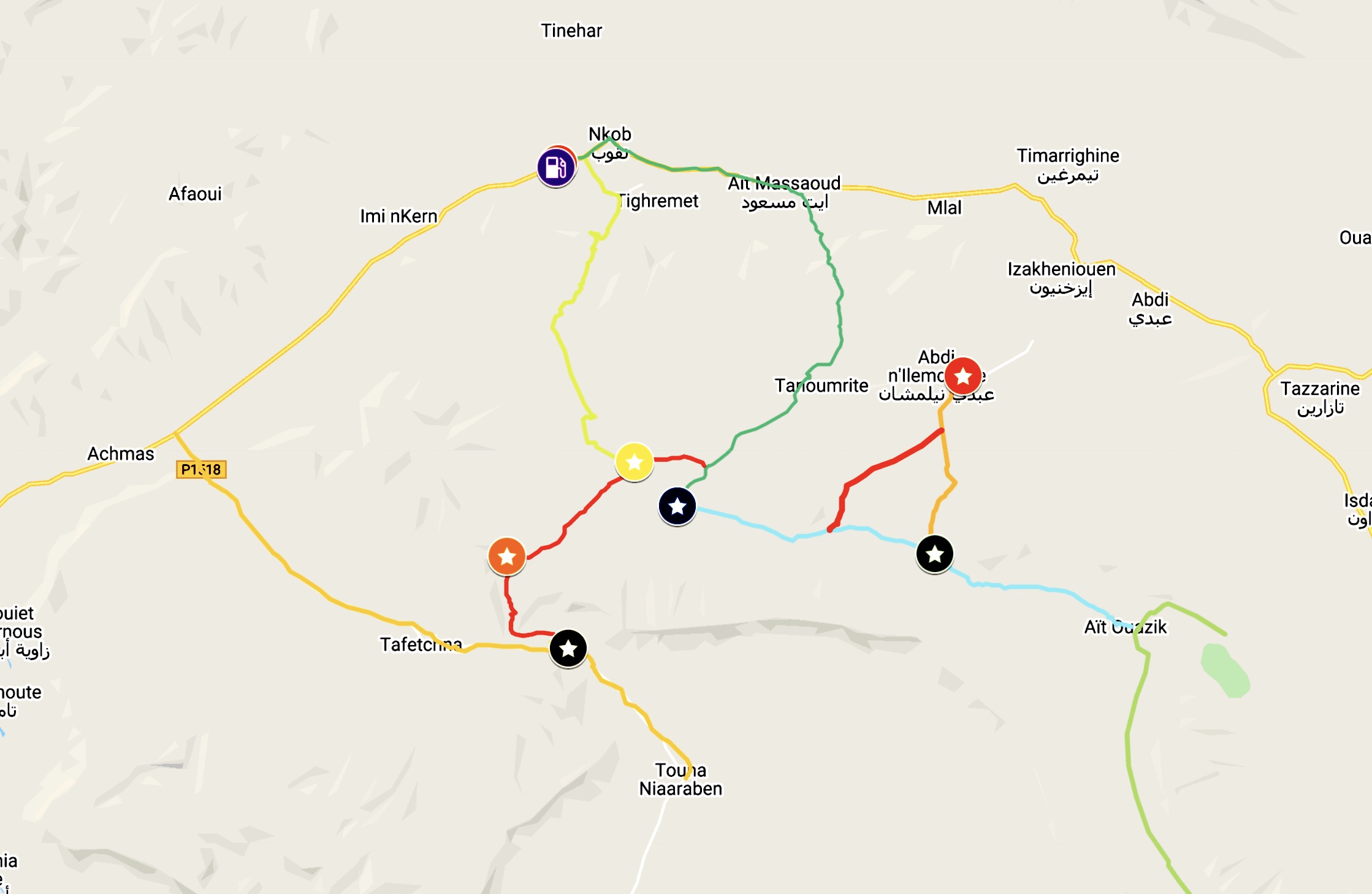
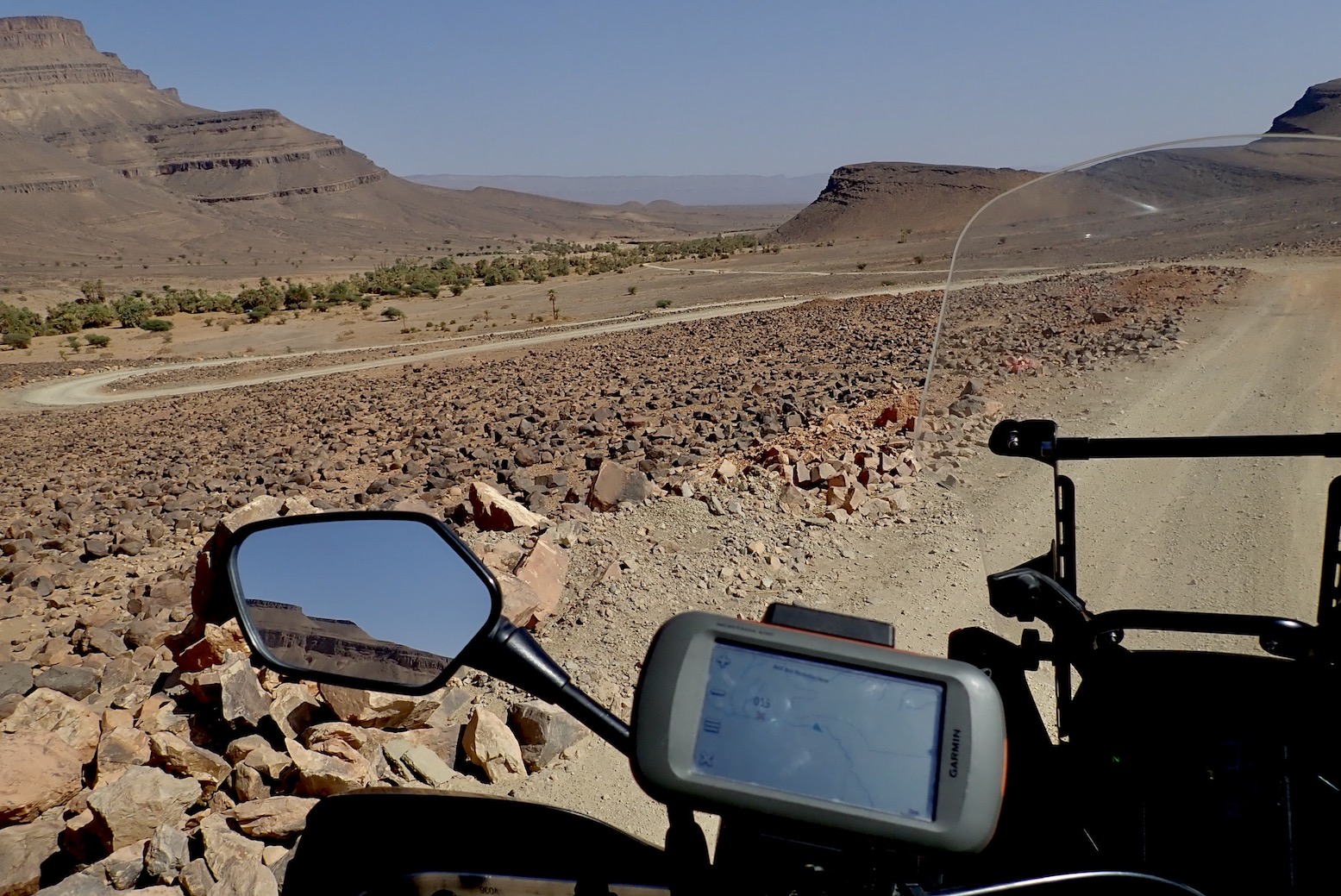
It’s only about 12km through the shallow gorge, but as always, it’s miles more engaging to be on the dirt and follow the track weaving through to the other side. In the shallow gorge, an abandoned track leads over the riverbed and back north, but I’ve never managed to make the link. One for next time on something lighter.
As more and more pistes in southern Morocco get sealed, obscure trails become TOIs or ‘tracks of interest’, but because they’re largely unused and unmaintained, they’re rougher and slower going. It’s a bit like mountaineering in the second half of the 20th century; once all the highest peaks had been knocked off, climbers had to start looking for harder ‘north face’ routes.
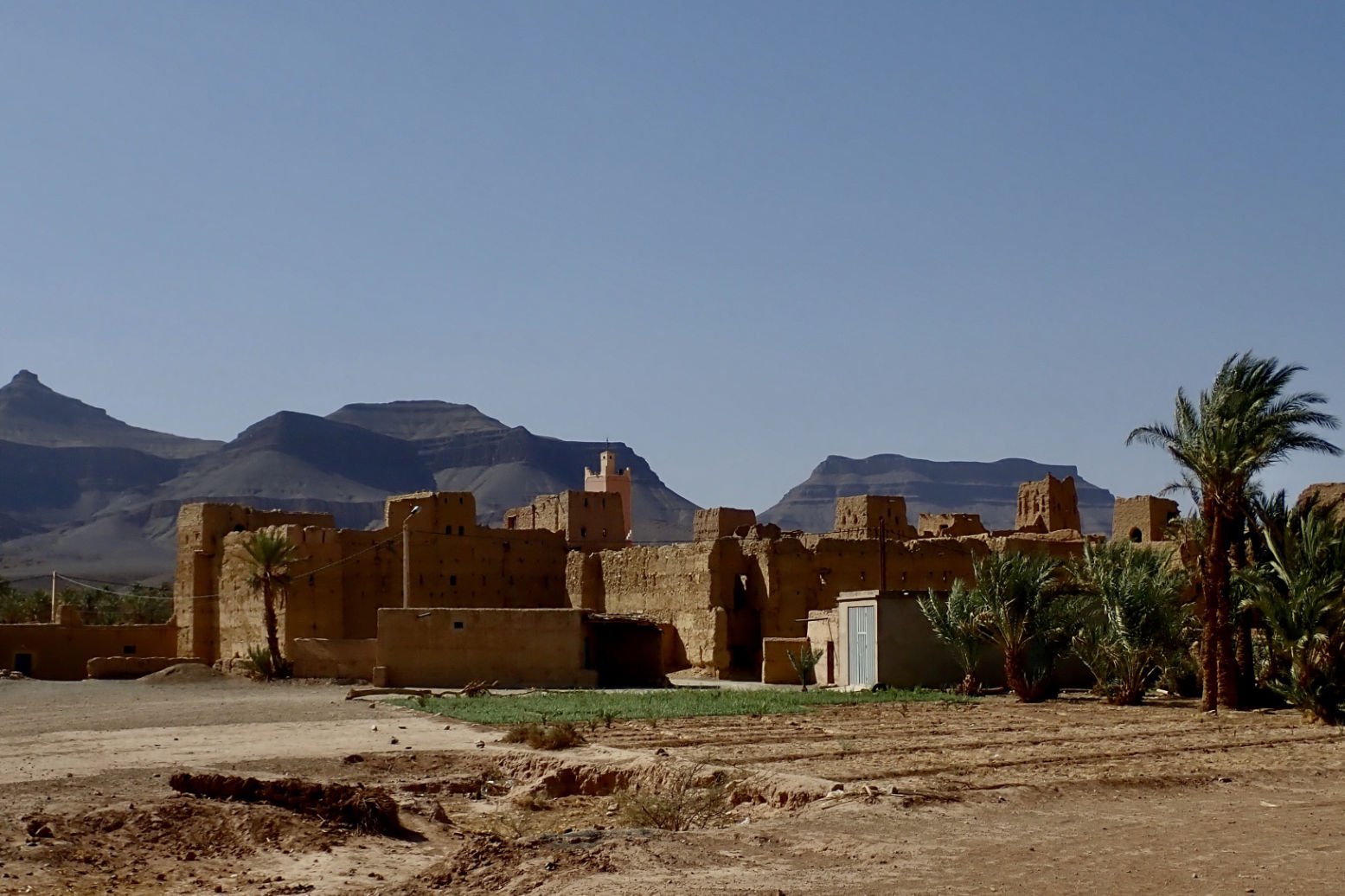
Once through the gorge, up ahead I remember the water tower landmark visible at the village of Touna Niaaraben where the asphalt now runs to the N9 over the stony plain.
Back on the bitumen, I nip down to Zagora for some fuel: the AT has peaked at 63mpg (52 US) on a mixture and 2nd and 3rd gear tracks and 120-kph road stages.
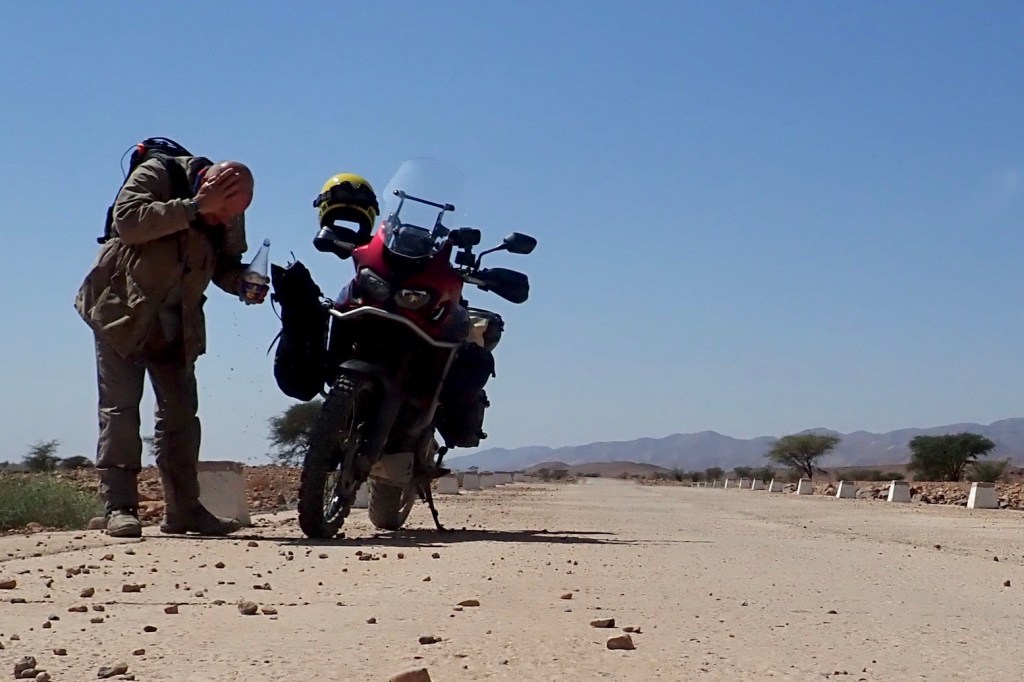
I then turn back up the Draa backroad – an east-side alternative to the main N9 but it turns out to be nothing special. On the edge of a village I pull over by a ditch alongside some shady palms for a snack, then get back to the hotel pleased I’ve done something new today. Tomorrow I’d need to crack on.

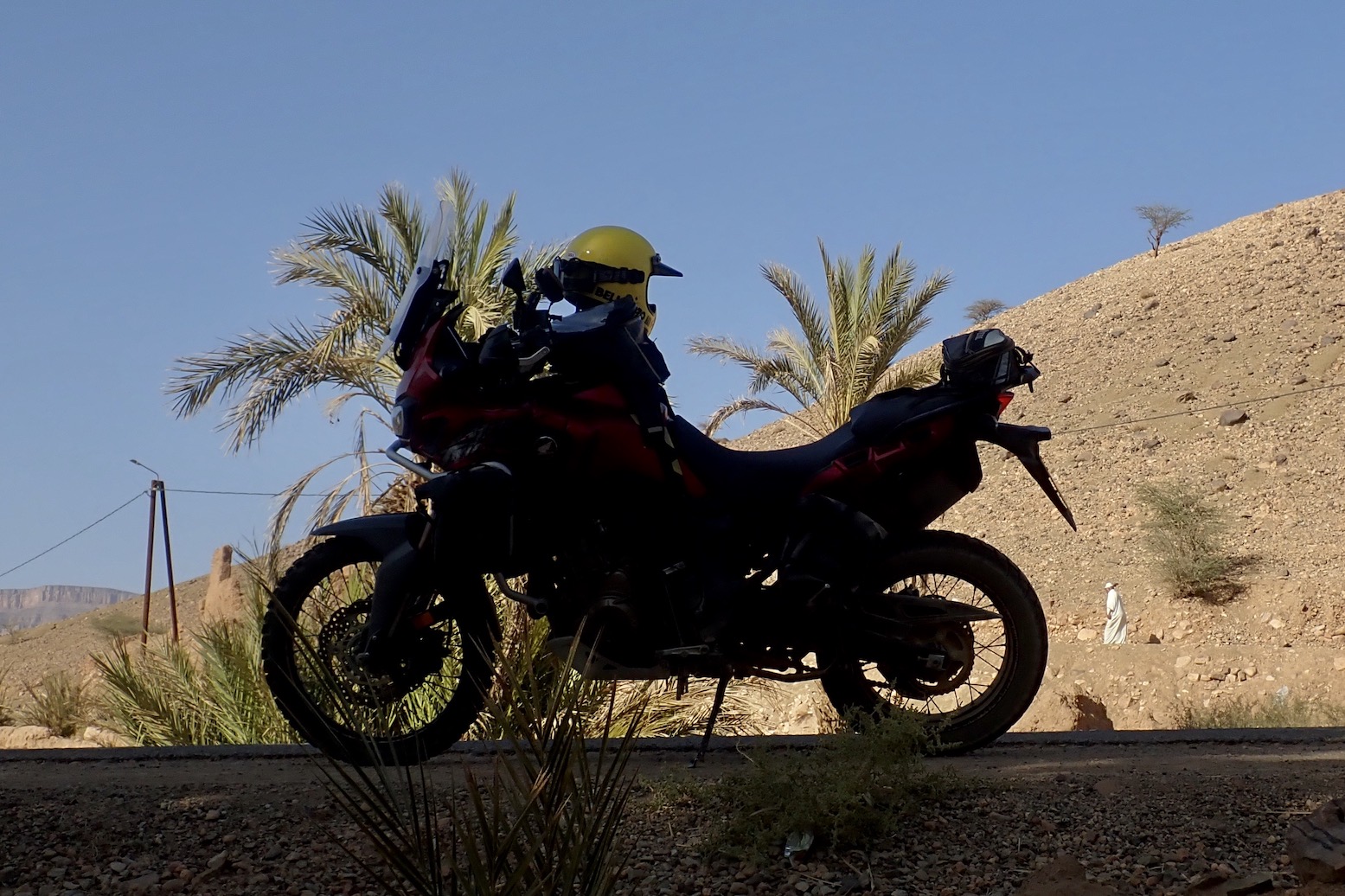
A few weeks ago a Moroccan geologist got in touch. He’d spent the summer in the mineral-rich massif of Saghro on his Himalayan and told me of a couple of new tracks traversing the ranges. I traced one 100-km crossing from Nekob on Google sat – for me the most reliable way to find new routes online because unlike maps, WYS is WYG. Once over on the north side, I could turn east via the new Kelaa bypass and finish off by closing the loop via the classic Saghro route over the newly sealed, 2316-metre Tazazart Pass (MH4) back to Nekob. An action-packed 400+ km day of discoveries lay ahead.

At the fuel station west of Nekob I remember to reset my Montana correctly, then set off to see what I might find. Not far out of town, three dump trucks roll in which suggests the piste will be better than average and may well have been built for- or by the mining outfit. Once I pass through a small gorge and the ascent starts, there’s only one semi-deserted hamlet for 90km; not enough reason a track might get built or improved.

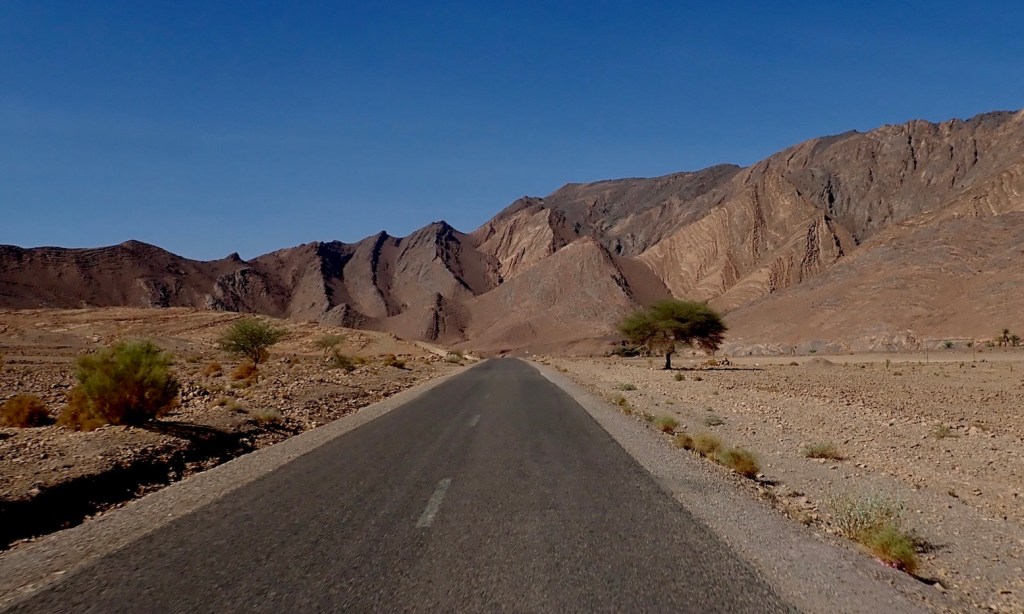
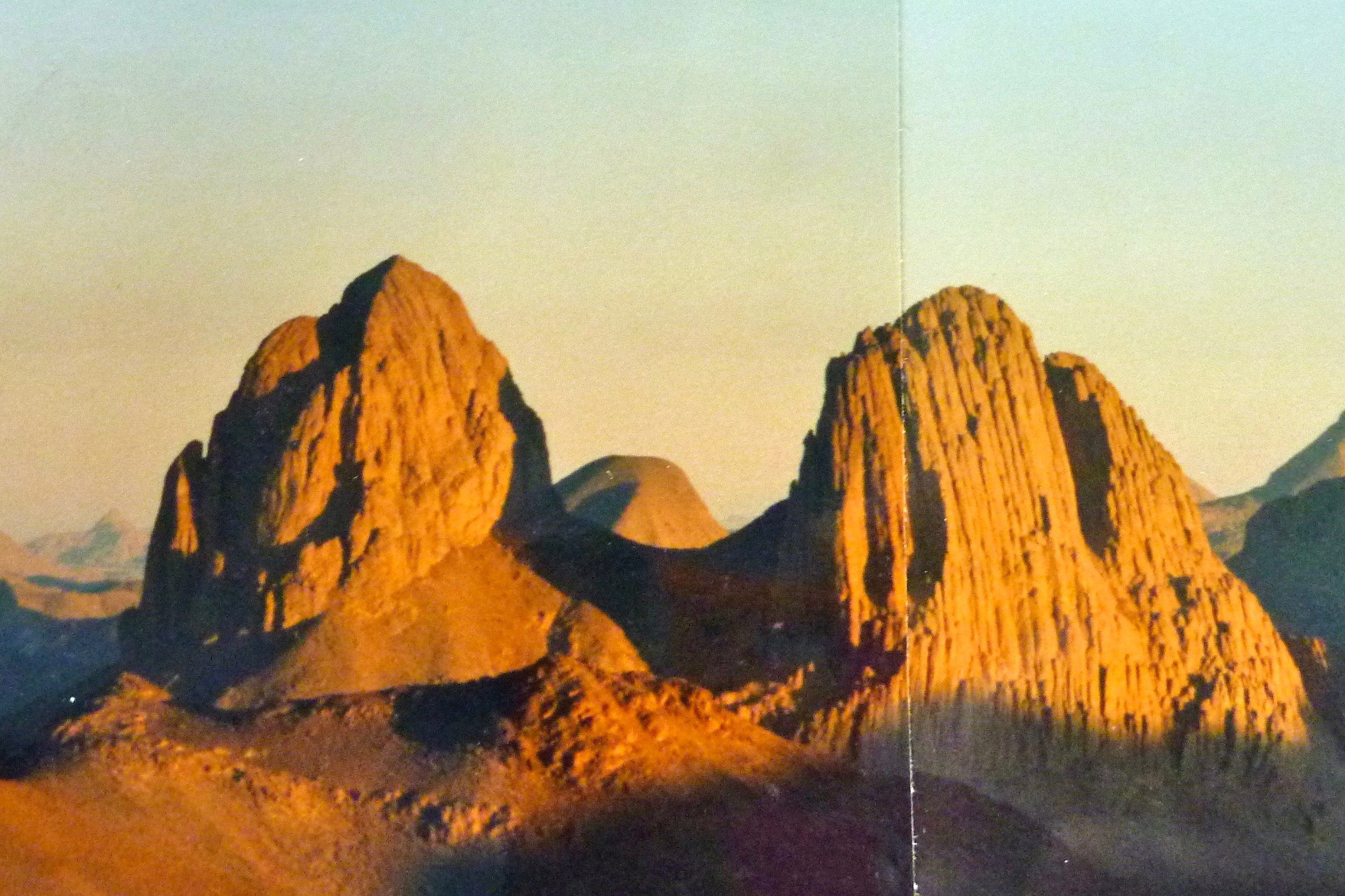
Soon, the distinctive Saghro vistas rise around me, different from any other range in the Atlas mountains complex. Buttes and spires jut abruptly from the dust and rubble, recalling Algeria’s Hoggar. It’s no place to be a lettuce. Through it all the smooth, wide piste swings around the heads of chasms and across the arid valleys.

It’s not all plain sailing. As the twin rear axles of the heavy trucks scrub round the more acute switchbacks, the tyres grind the sand and gravel into a fine powder which I just can’t get to grips with on the Africa Twin. And that’s with a Motoz knobbly on the front. I’m definitely struggling to find my off-roading mojo today. I put it down to the heat and the weight of the machine, plus riding alone on an unfamiliar track. After KM3 out of Nekob I didn’t pass any other vehicle.

Soon I reach the junction where the much gnarlier and even more dramatic MH14 and MH15 routes come up from the south. I last came this way on the little WR250R in 2017. A great bike for those sort of pistes, but less of a high-speed highway sofa. MY zen-like search for the Middle Way continues. Could this be the unicorn?

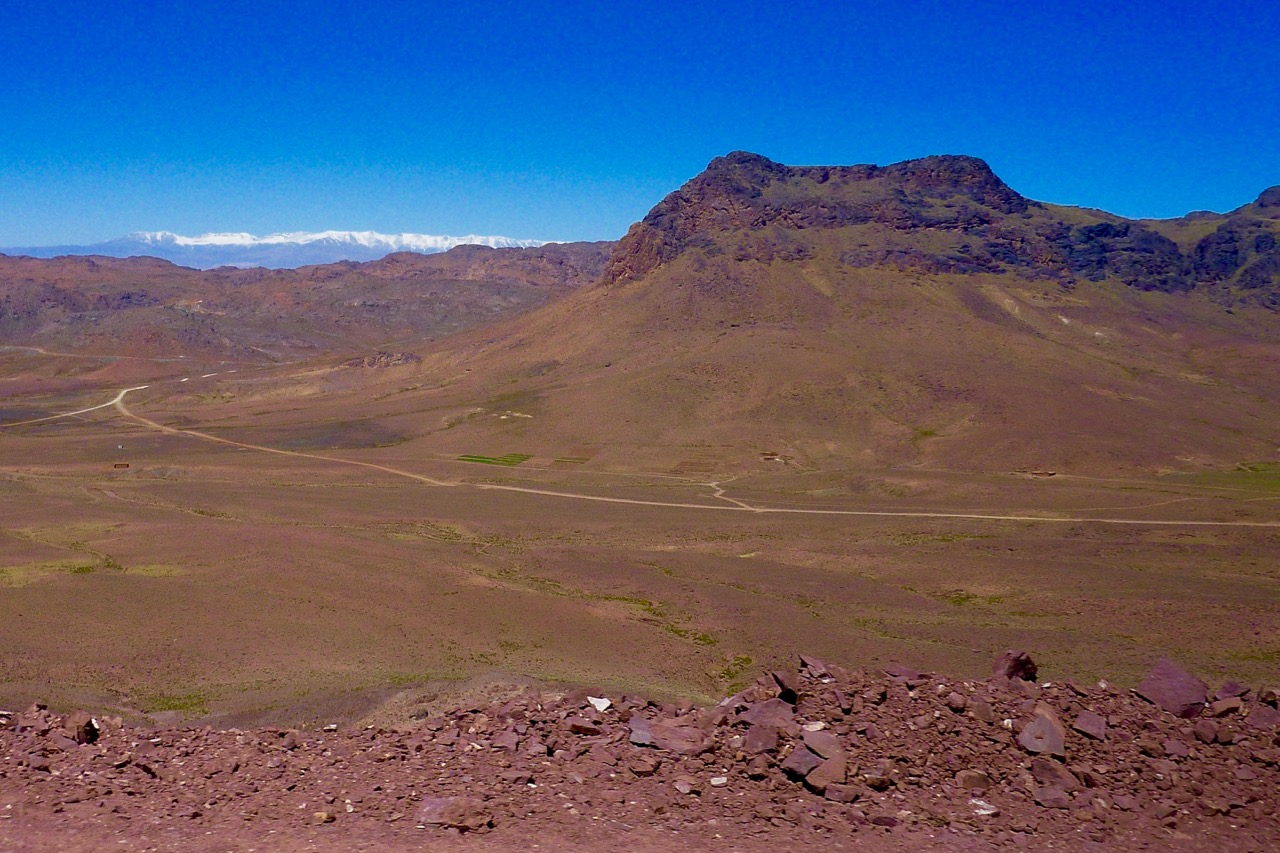
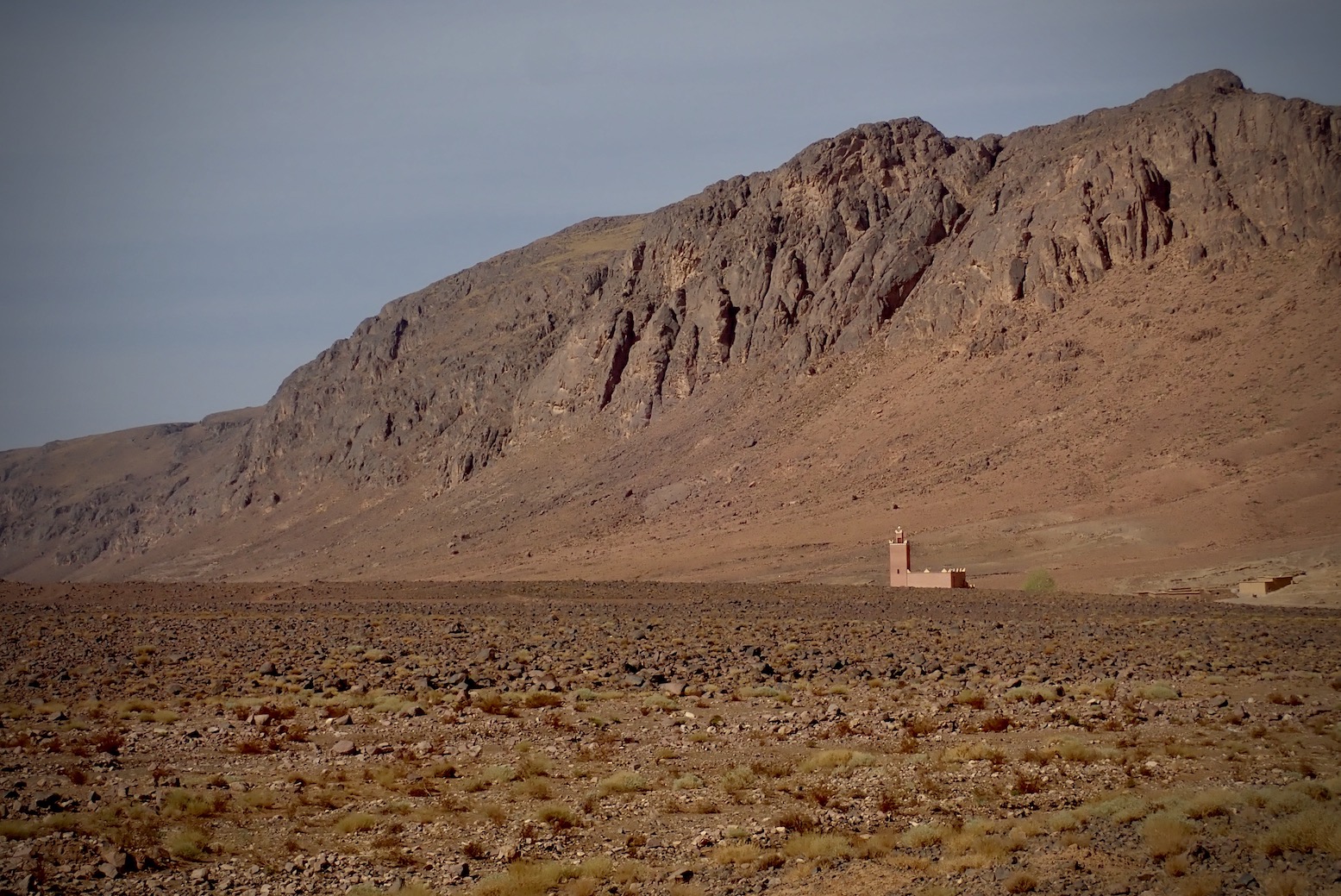
I pass the 2100-metre high point above the basin with Tagmout village and the new copper and gold mine – which explains why this track got built or improved. Tagmout may have been big enough to justify a mosque once. Now it’s just a dozen scattered dwellings with adjacent gardens drawing on the groundwater of the basin’s dry river course.
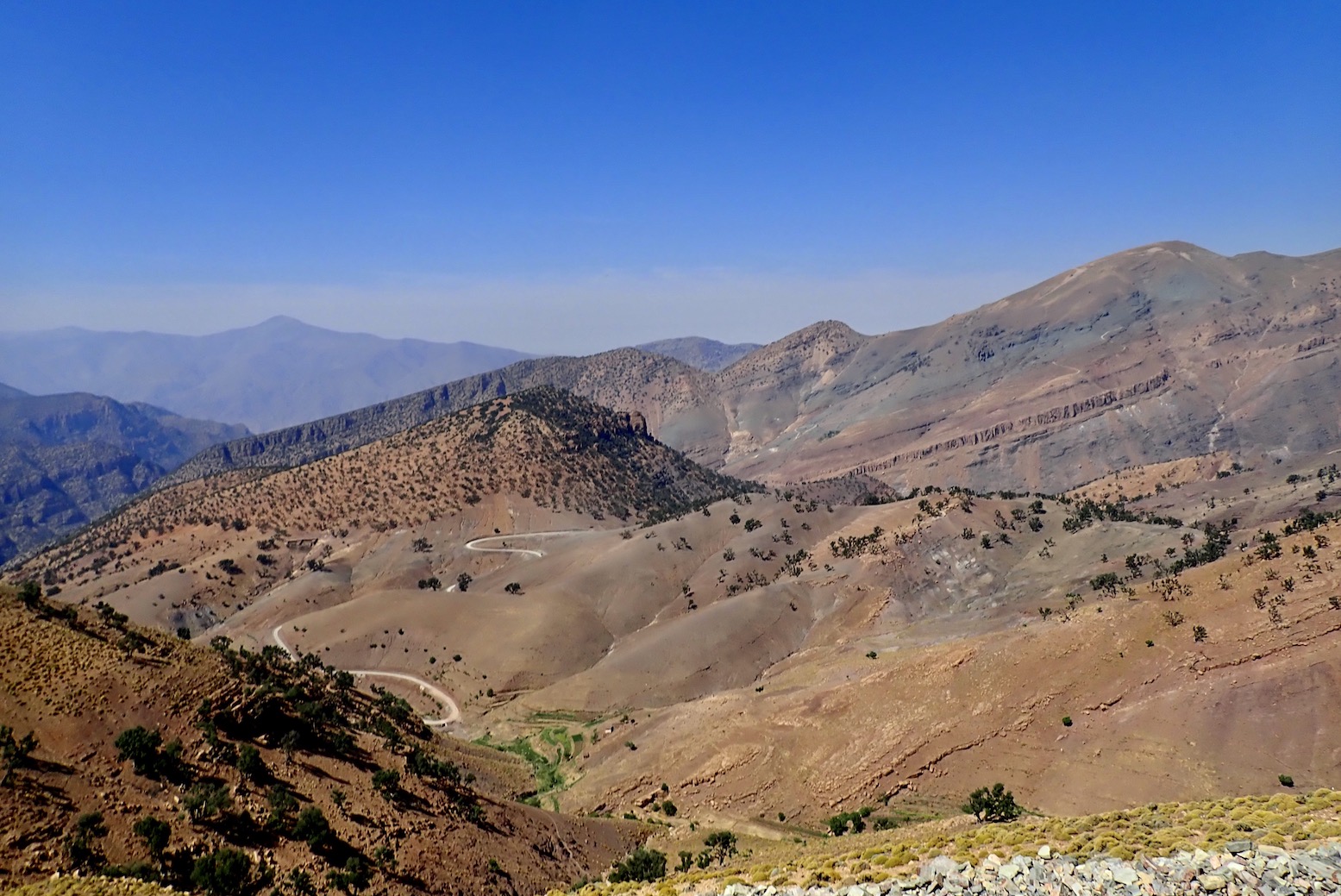
I ride out of the Tagmout basin (there are a couple of left turns to get right, here), back up over a pass that leads westwards to the winding piste, a lovely trail curving through the scrub and rock at over 1500 metres.
Apart from those tricky hairpins.
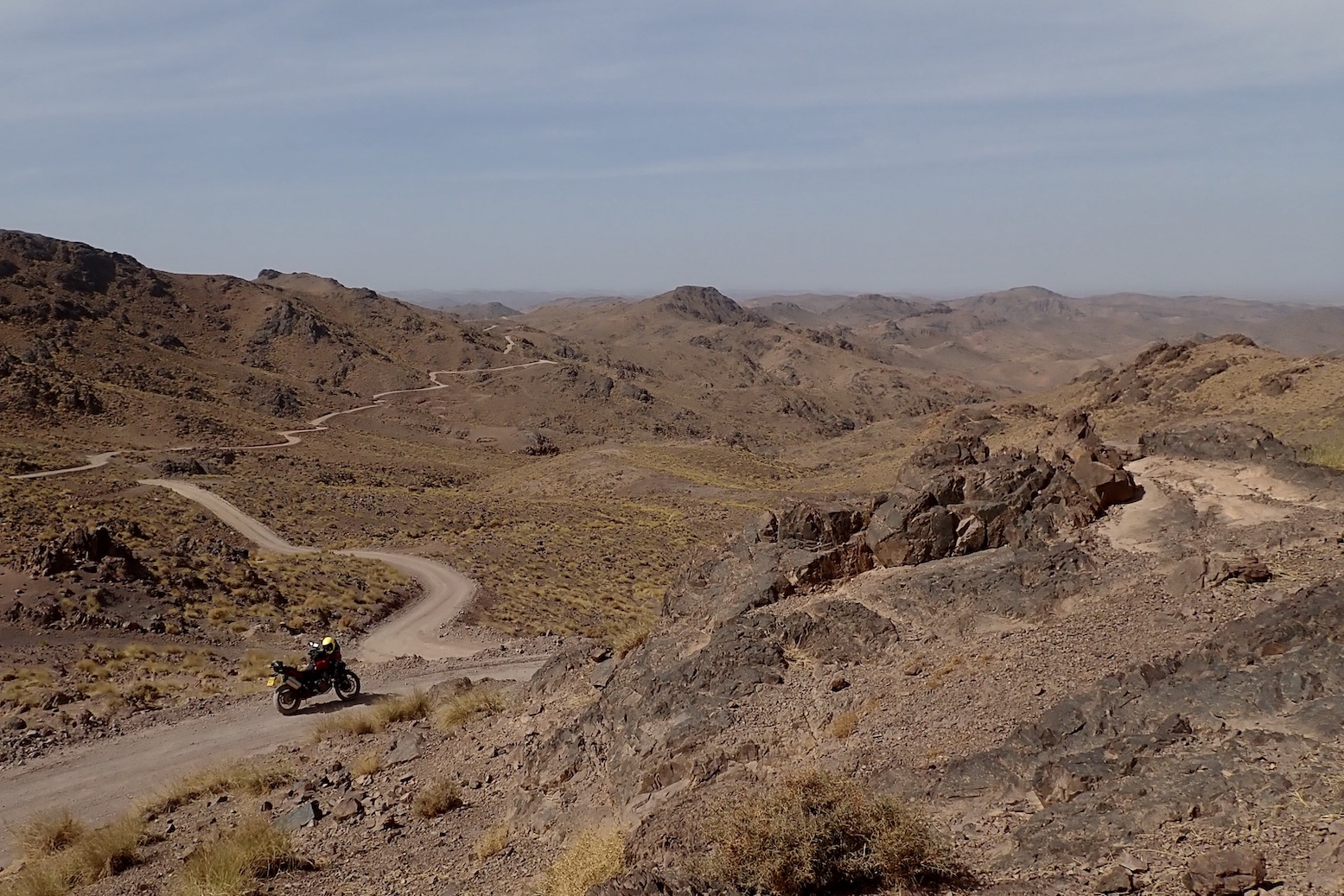
Within an hour the track drops towards Bou Skour and the high mountain drama is over. A couple of forks guide me around the old Bou Skour mine, past the village of Sidi Flah on the Oued Dades, and finally down into Skoura itself on the N10.
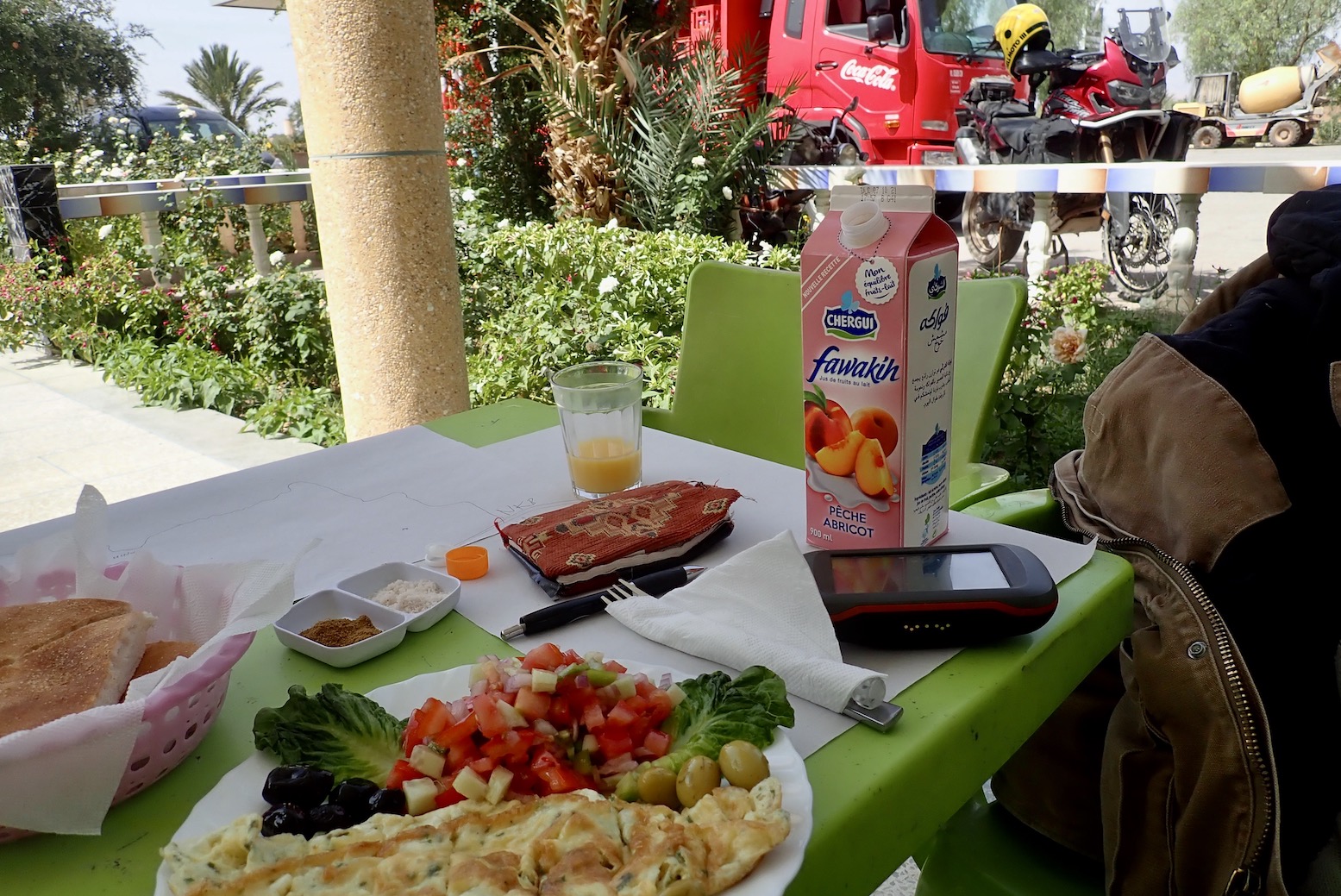
I pull into the roadhouse for an omelette salad and a litre of yoghurt drink. While I’m waiting, before I forget I jot down the route’s twists and turns on the handy paper tablecloth.
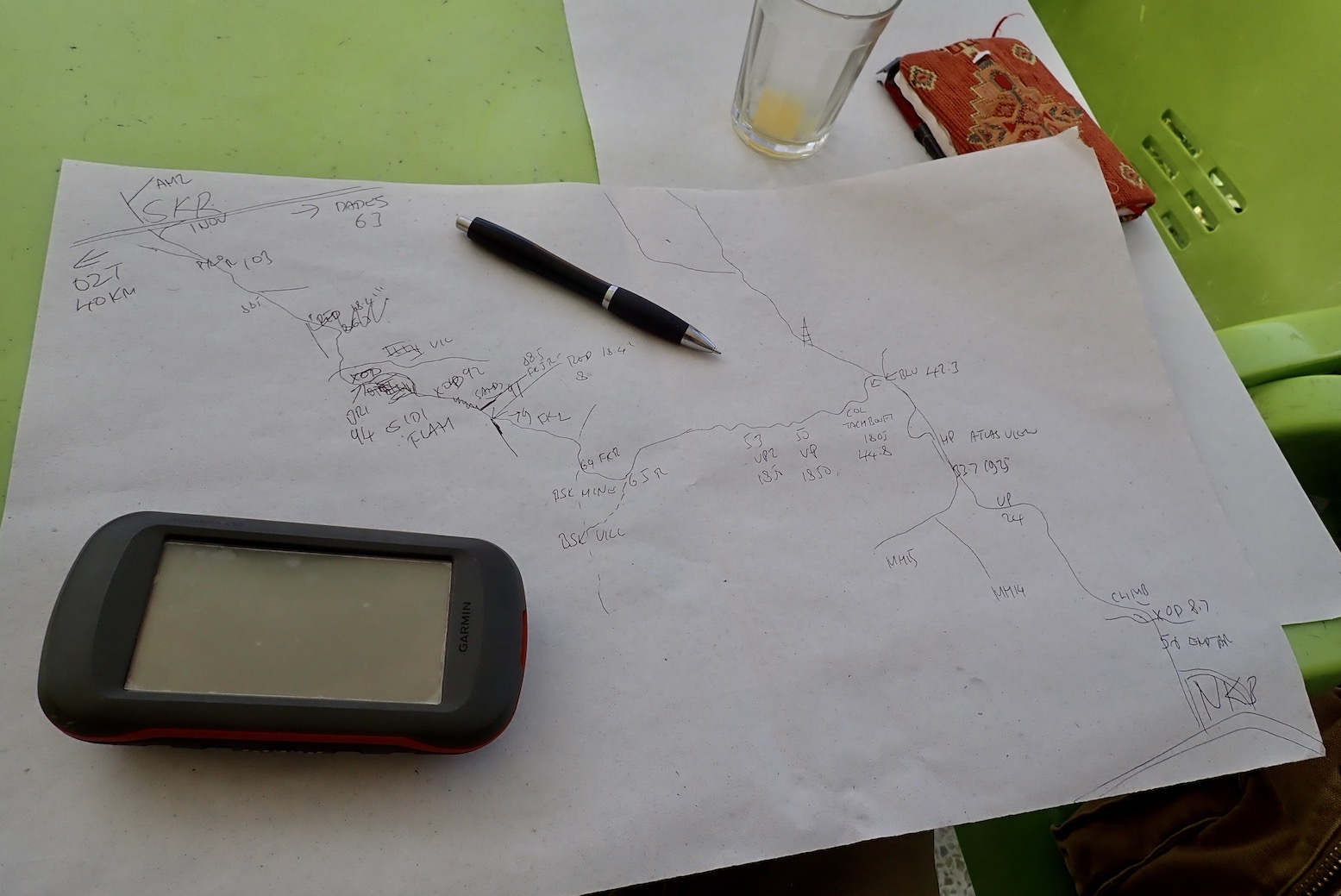
I whizz along the new Kelaa bypass (left) in 30 minutes; handy to know for next time. They really must have asphalt and roadbuilders to spare if they’re starting to build bypasses in southern Morocco, although it’s true the section of the N10 between Kelaa and Dades is a near-continuous built-up stretch with attendant distractions. We used to come back this way on my tours after crossing Jebel Saghro via MH4, but the mildly more aggrressive driving on the N10 added with the sun setting straight in our faces on the way to Ouarzazate was not a safe way to end the day.
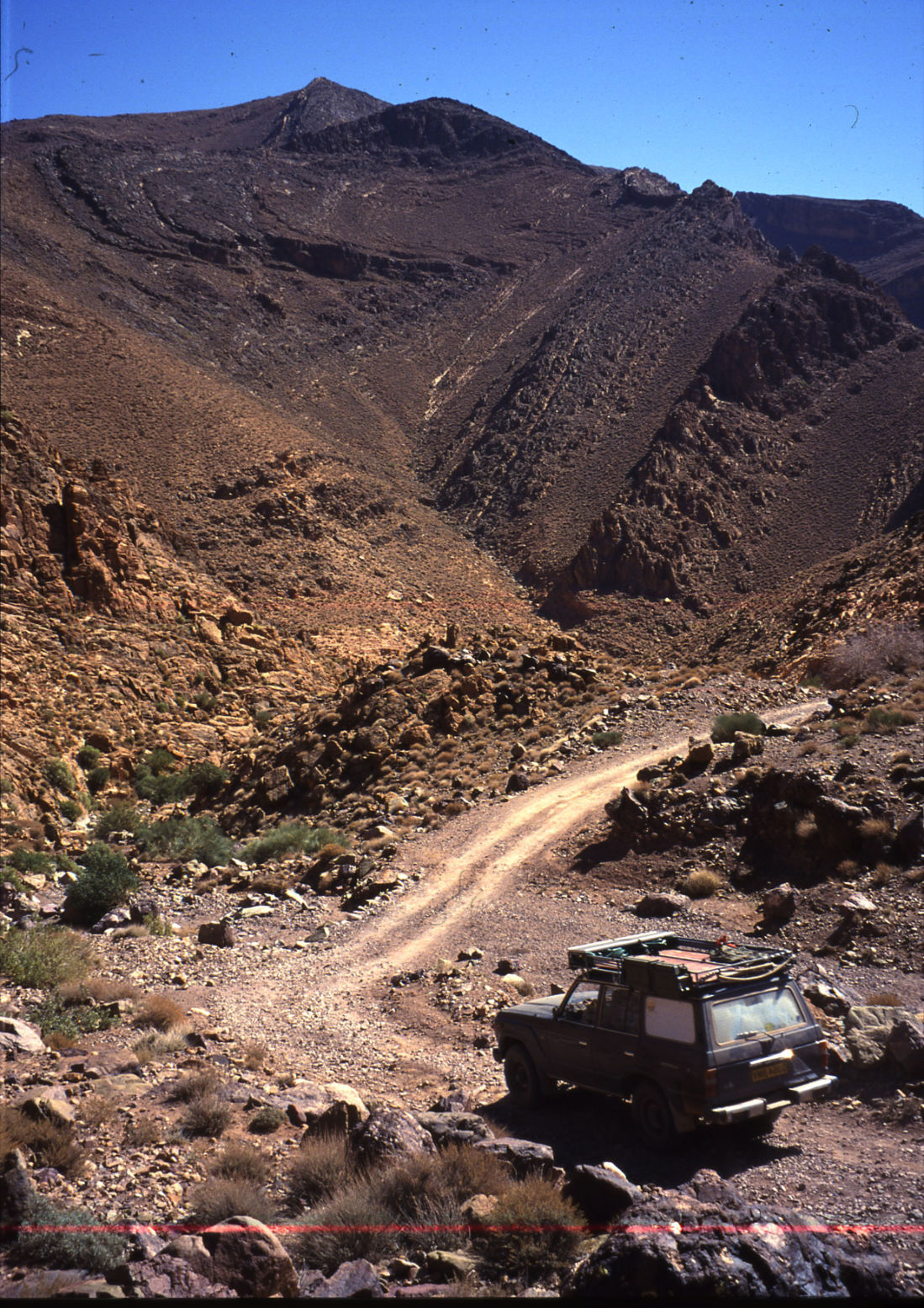
Back to now, soon after Dades, I turn back south into the Saghro massif and climb up to near Iknioun, then take the newly built spur over the 2300-m Tin Tazazert back down to Nekob. What used to take the gasping XR250 Tornados half a day now takes the AT just 35 minutes of asphalt and Armco.
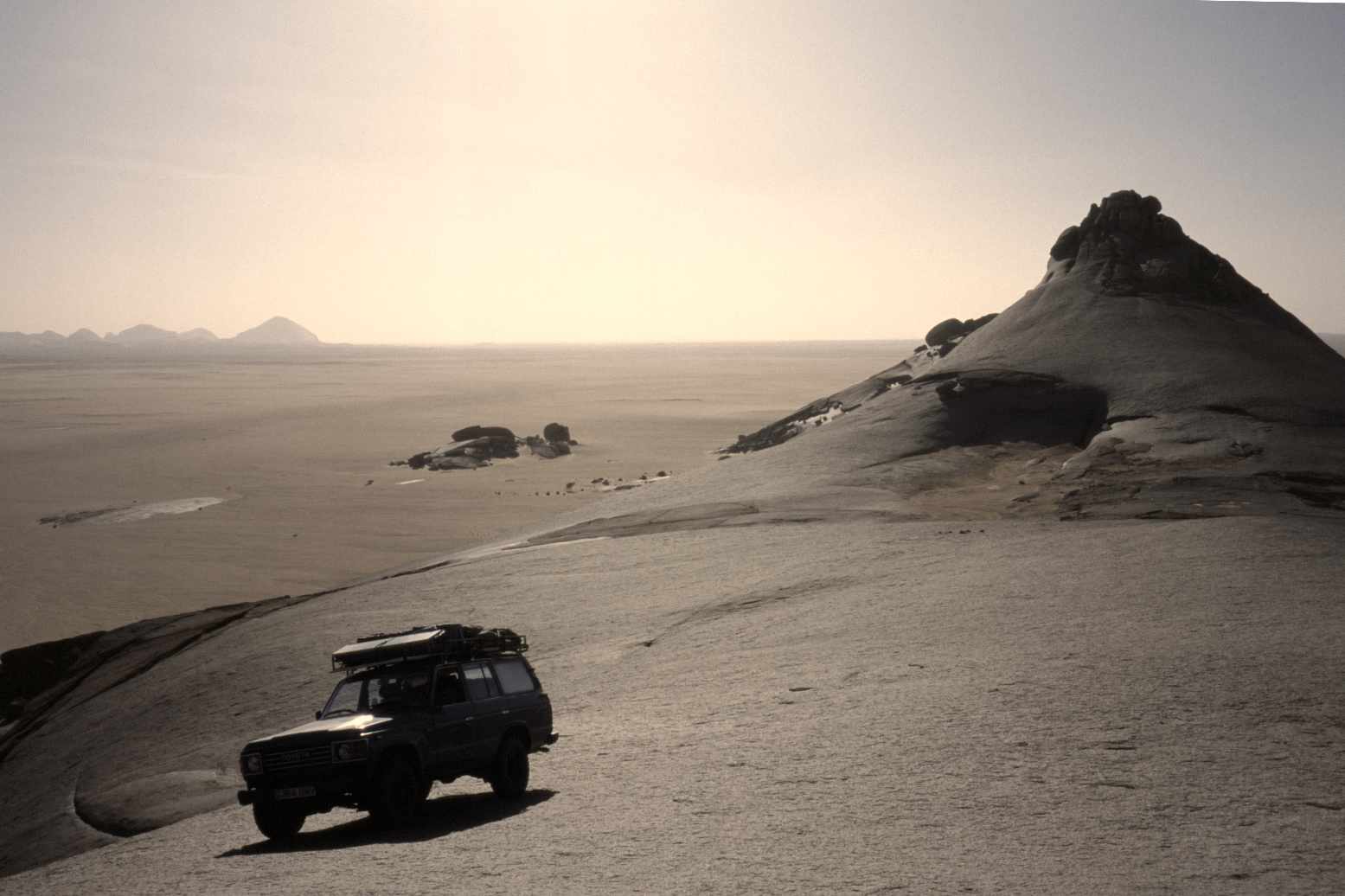
We first came this way in the late 1990s in the Land Cruiser (left), looking for routes for my Sahara Overland book at a time when so much of this part of Morocco was only linked by rough tracks.

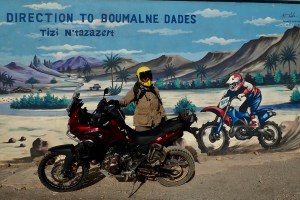
Back down in Nekob, I get a young chappy on a pushbike to do me a selfie in front of the mural. All that remains is to bomb back to Tamnougalte, back to Marrakech next day and fly out the day after.

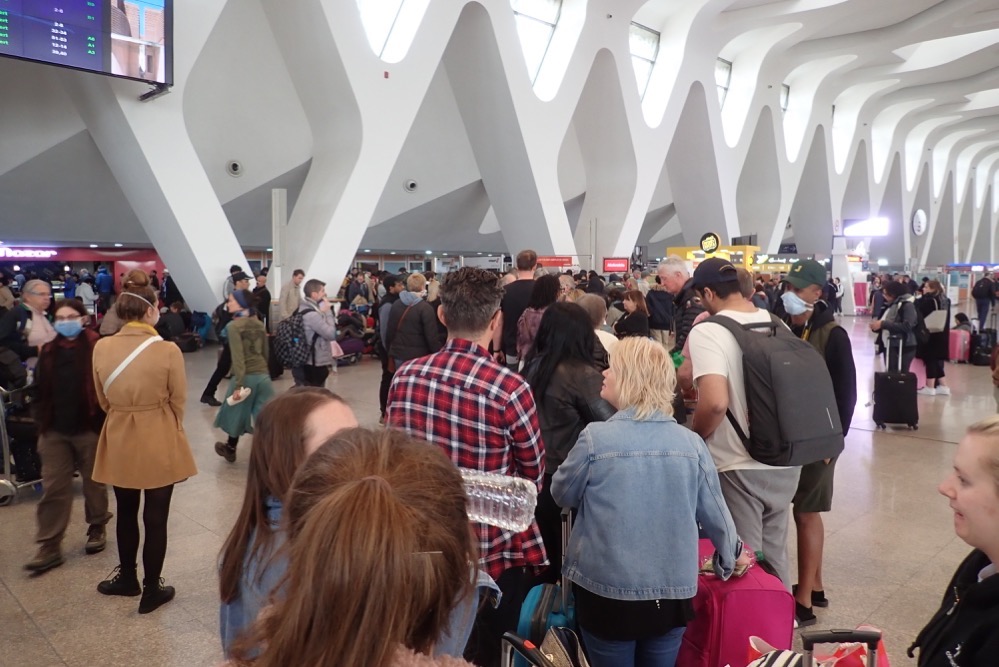
The plan was to come back for the Honda after leading a tour in early November, but rising Covid numbers in the UK (as well as DE and NL) saw Morocco suspend flights. Mass cancellations all round.
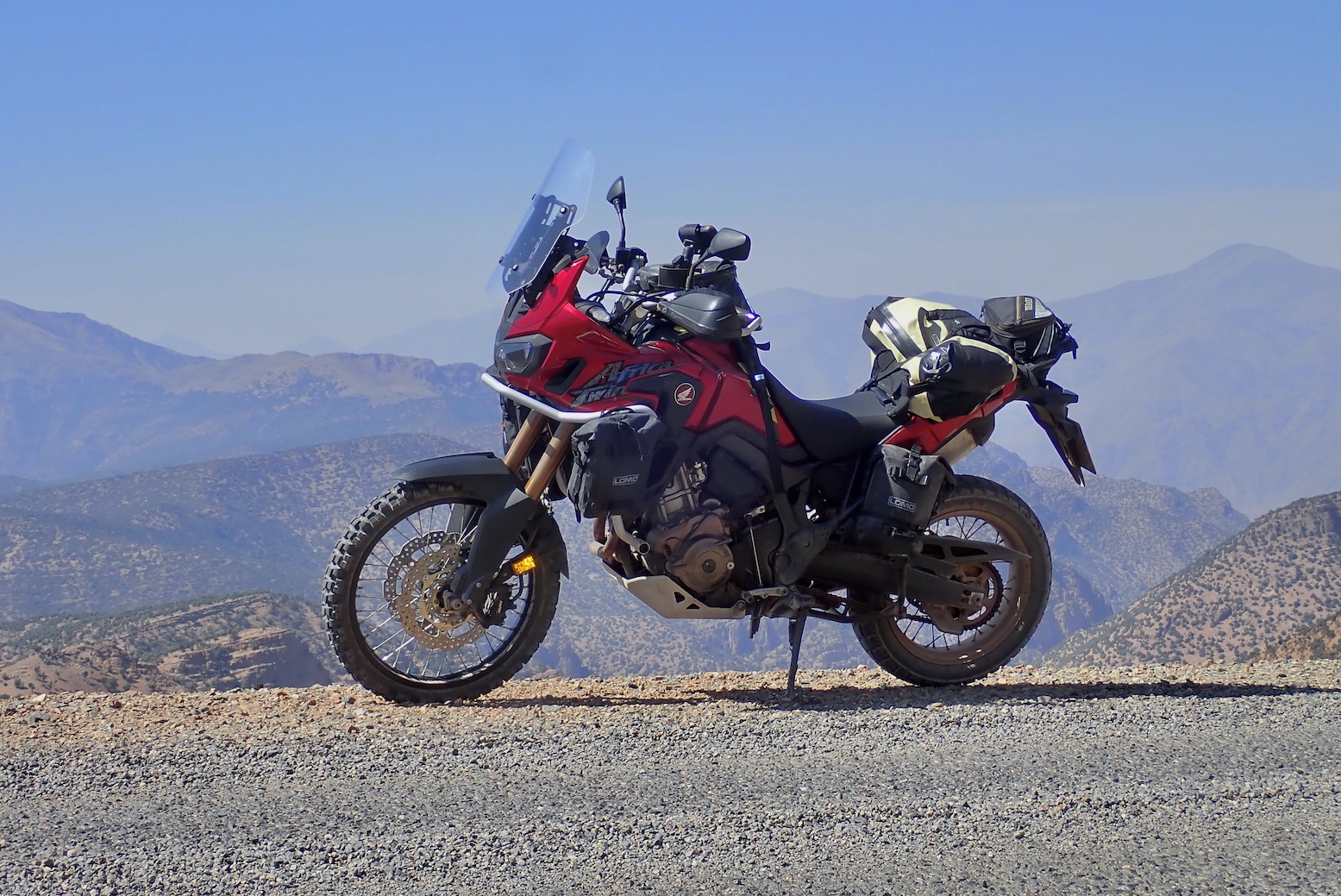
So the Af’Twin is stuck again in Morocco, but at least I know it’s running well. By the time it gets back I’ll need to retrain it on how to ride on the right.
C’est la vie.
Africa Twin – Off Road in Morocco 1

Africa Twin Index Page
Morocco Overland
Part Two here

Previously on Adventure Motorcycling…

March 2020, Tiznit

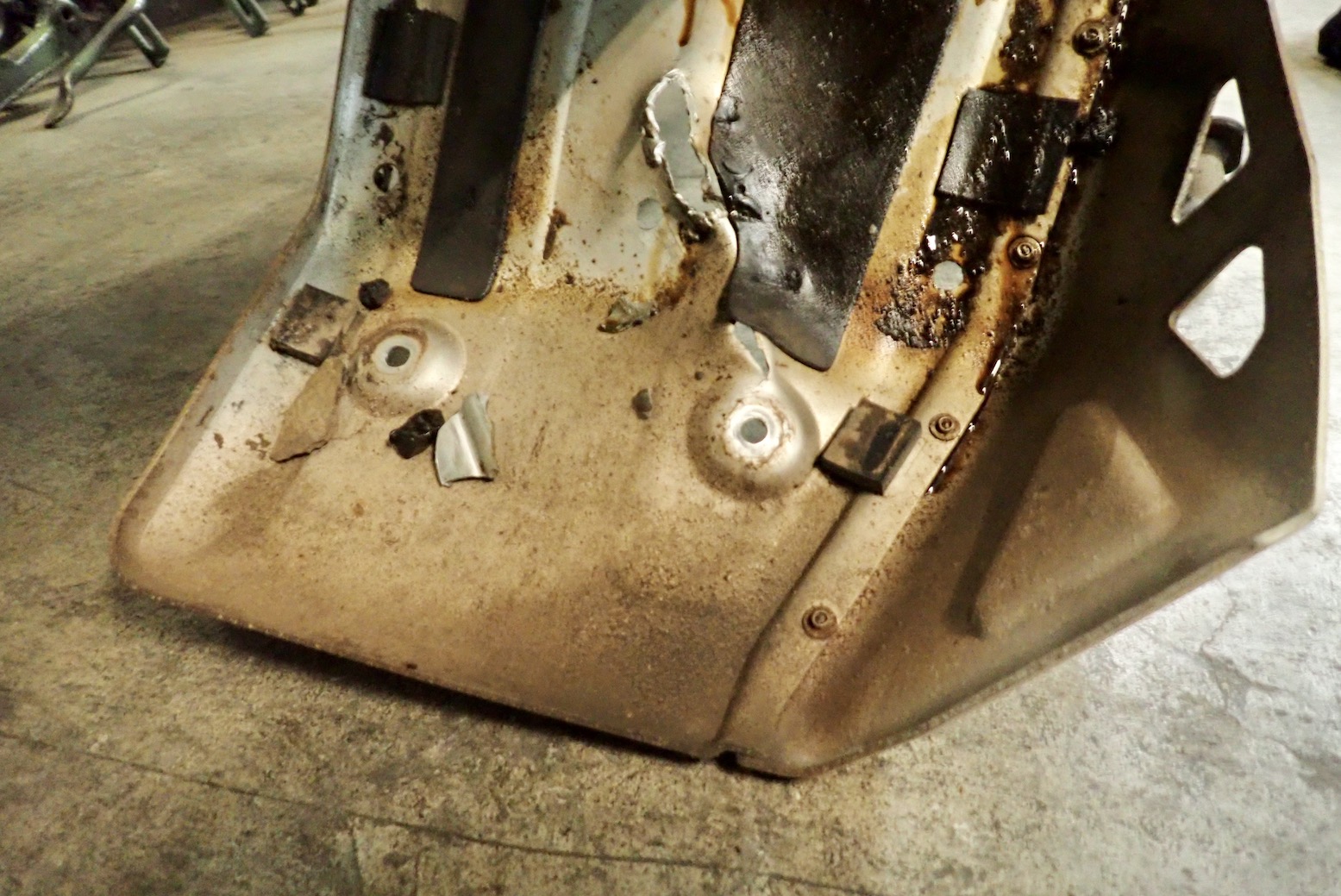
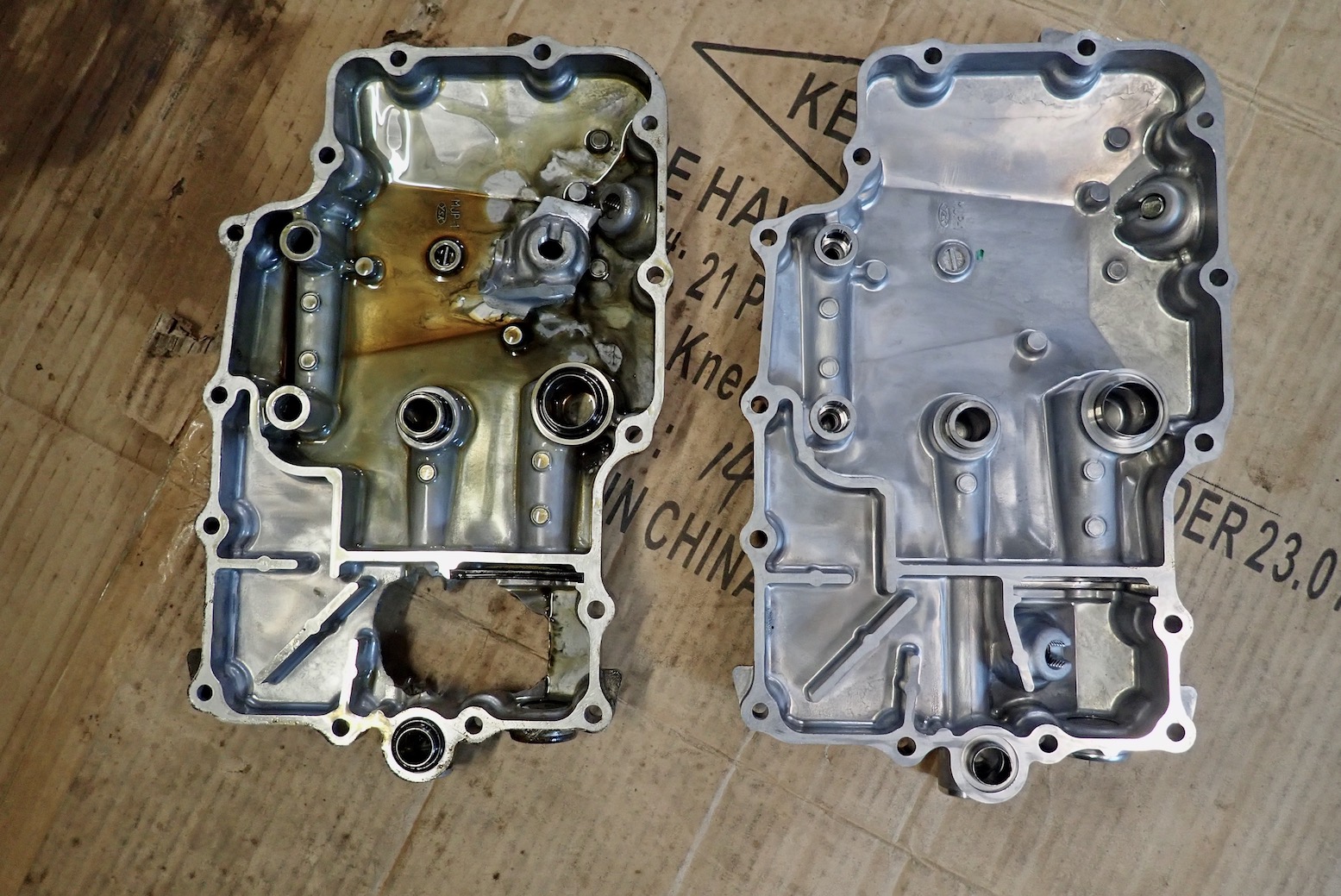
Everyone remembers where they were in March 2020. Me, I was hurrying back from the Mauritanian border ahead of a nationwide transport shutdown when debris on the road punched a hole through my Africa Twin’s sump (left) as the Corona tsunami crashed into Morocco.
With two days to get out or be trapped for months (as some were), what might have been a fairly easy roadside bodge with putty, dragged on for well over a year as my attempts to fly back to Morocco stalled. Read that story here.
By October 2021 travel impediments cleared and travel confidence rose, so I flew out to 41°C Marrakech with a new battery and oil pan. Amazingly, the stock lithium battery took a slow charge and lit up the dash just like it should. Even the tyres (the rear an MYO tubeless) weren’t totally flat and the chain was in good shape.
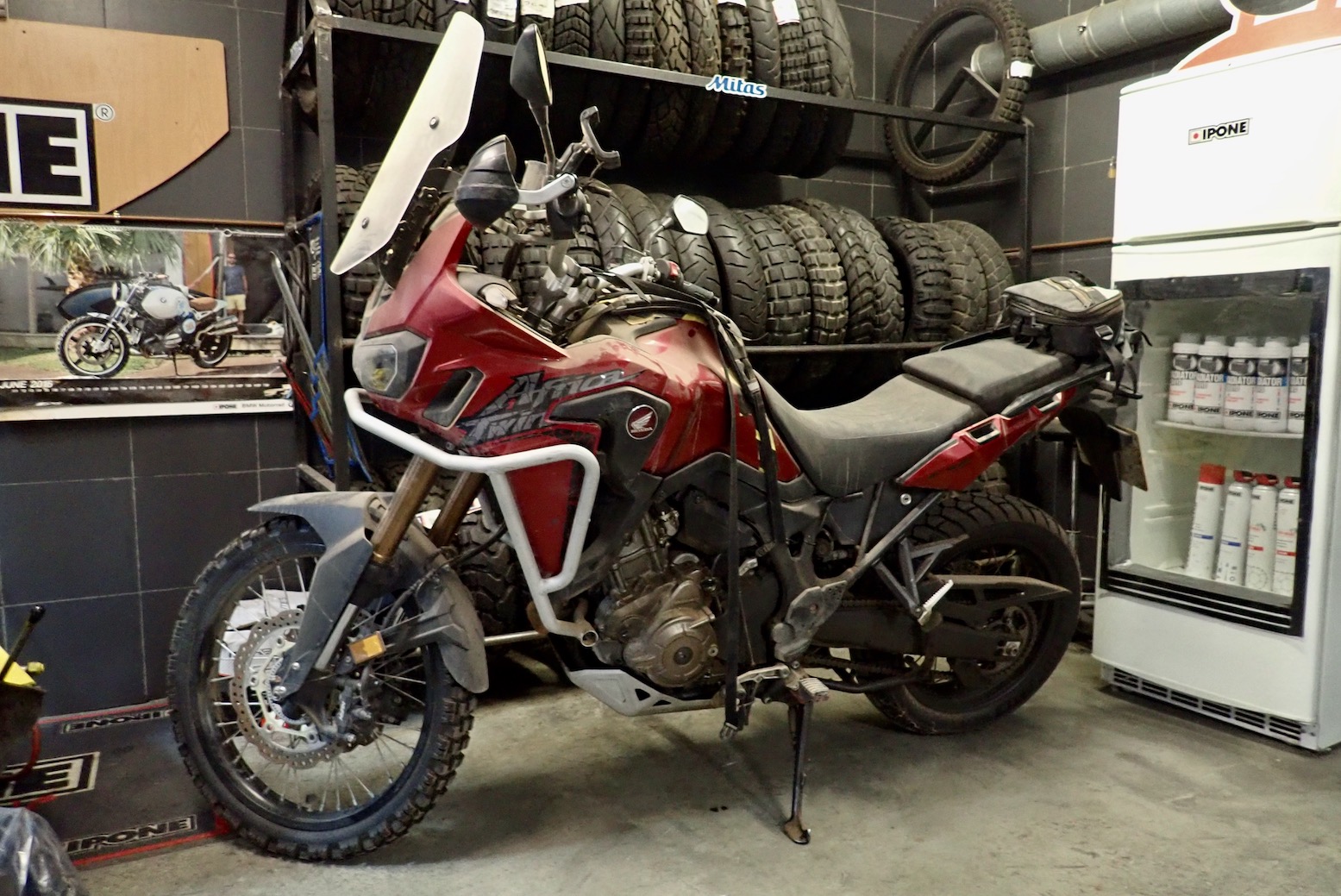
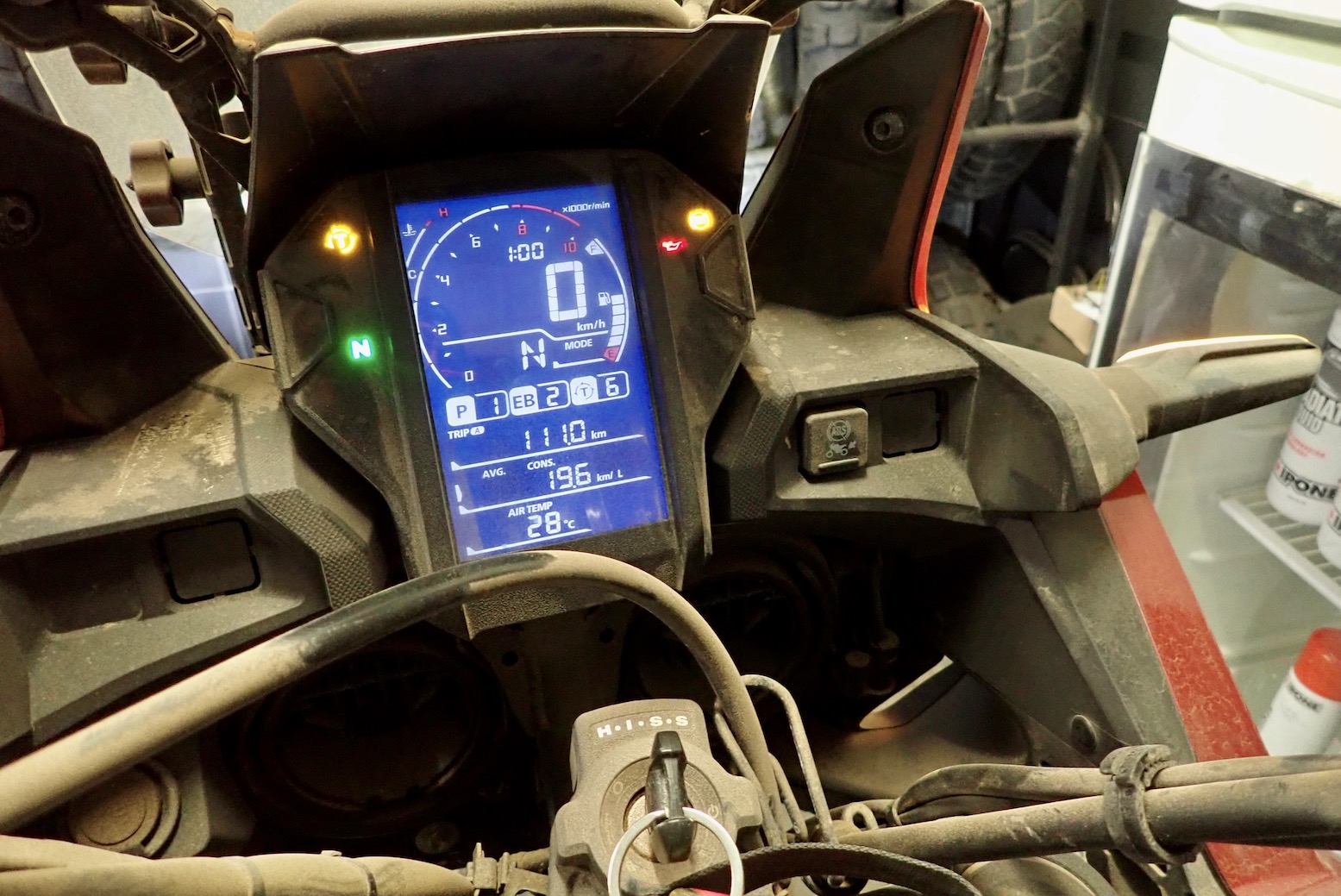
With these vitals established, I replaced the sump, oiled the motor and – with Hail Mary on redial – pressed the Button of Destiny. She fired right up to a steady tickover with no clattering or error codes!
Nice one, Honda.
Actually, the ‘MIL’ icon did light up on a test ride, but I wasn’t too bothered as those things can come on if your shoe lace is undone. It did remind me to check the coolant level which I did and it went away.

Next day I packed up and headed south to pre-run my Fly & Ride tour route ahead of November’s group. Even though it’s first year had been at Honda’s off-road centre in Wales, I’d only ever ridden the AT on the road so it would be a chance to actually discover how it handled the dirt.

Having not ridden in a year and a half, once swinging into the High Atlas’ bends, the creeping front Motoz Tractionator Adv knobbly took some adjusting to. I’ve had tyres like this before, though not on such a big and powerful bike, so I kept things smooth and gentle as I got accustomed to the feel. As so often happens, a day or so later odd felt normal: the very nub of the human condition.

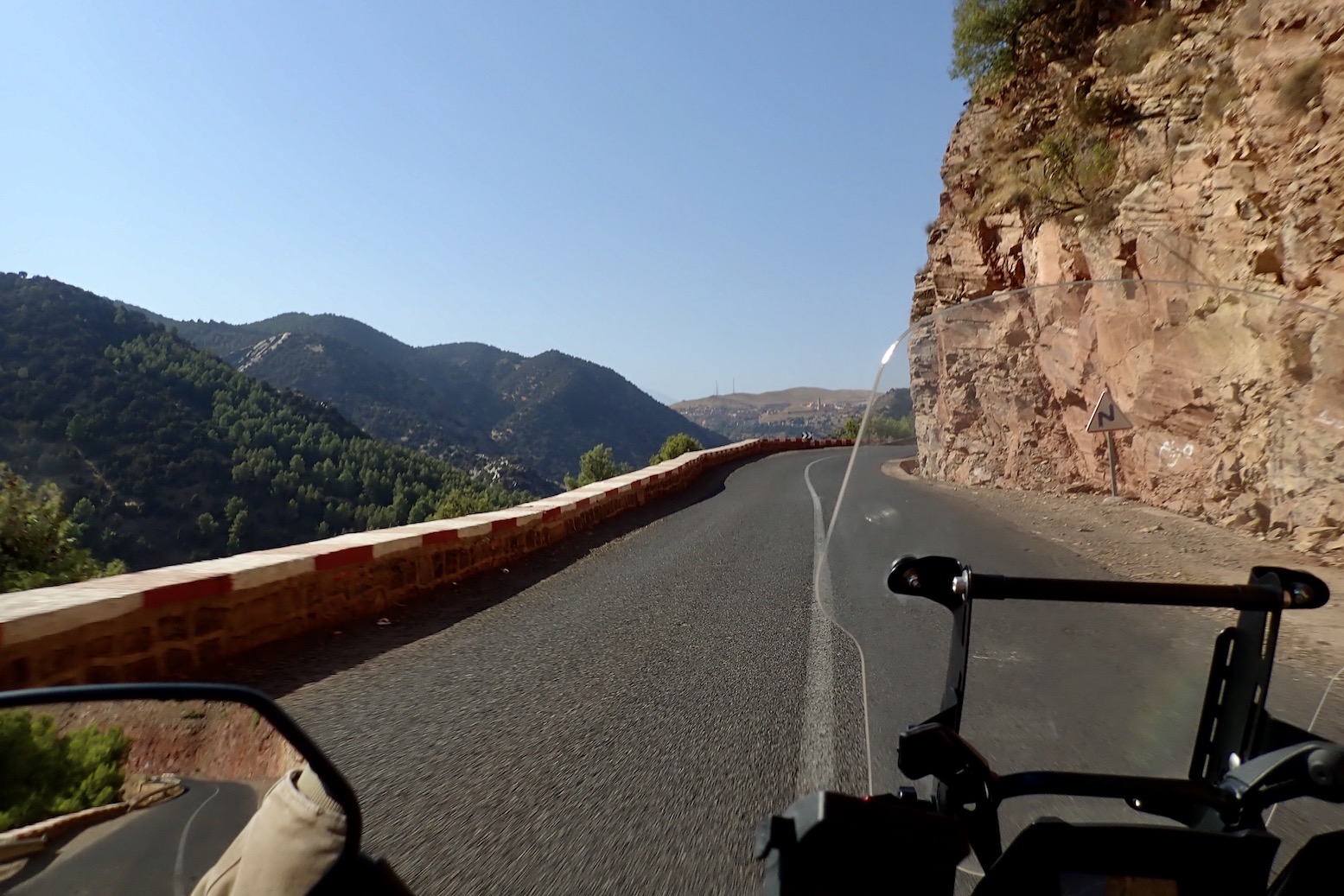
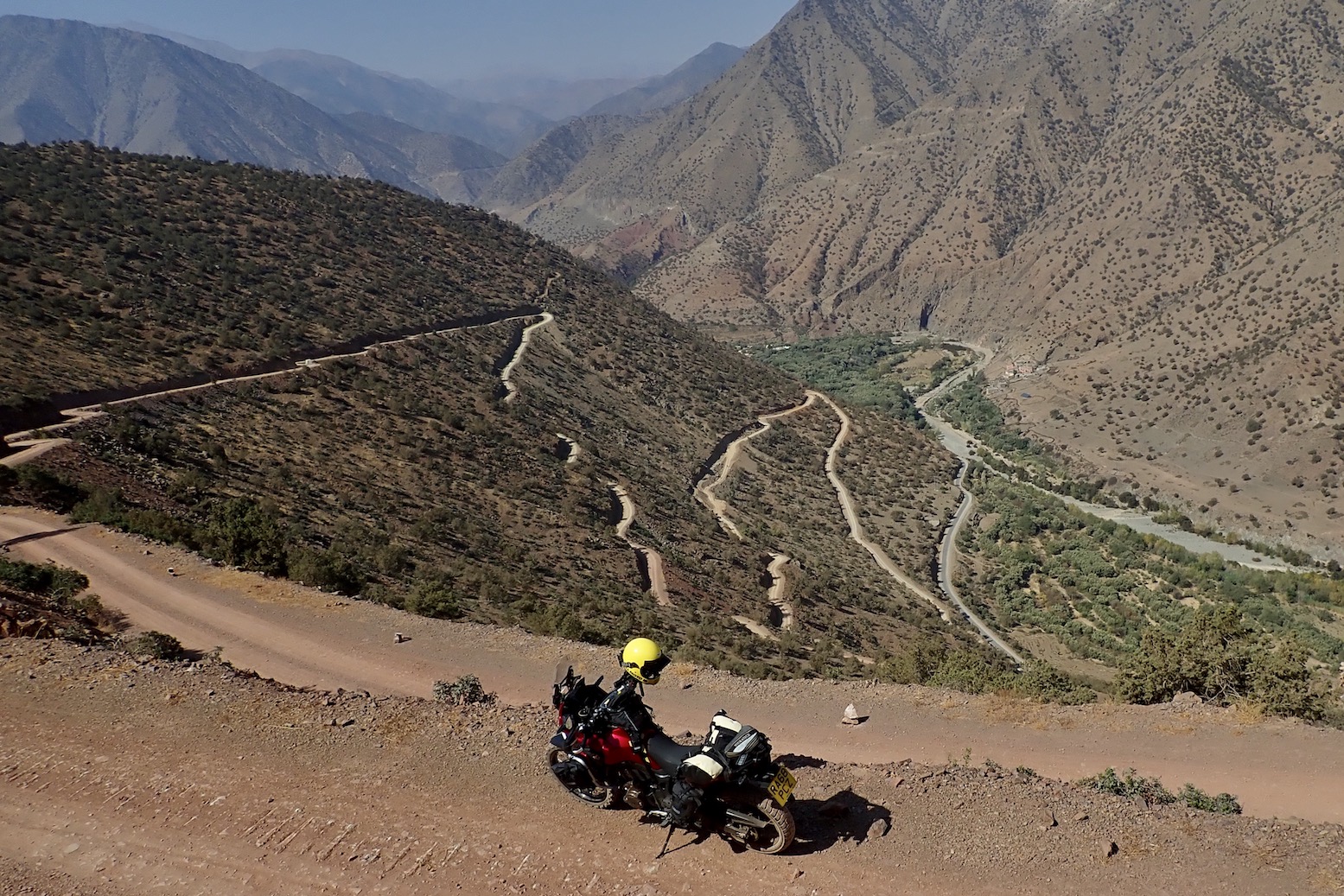
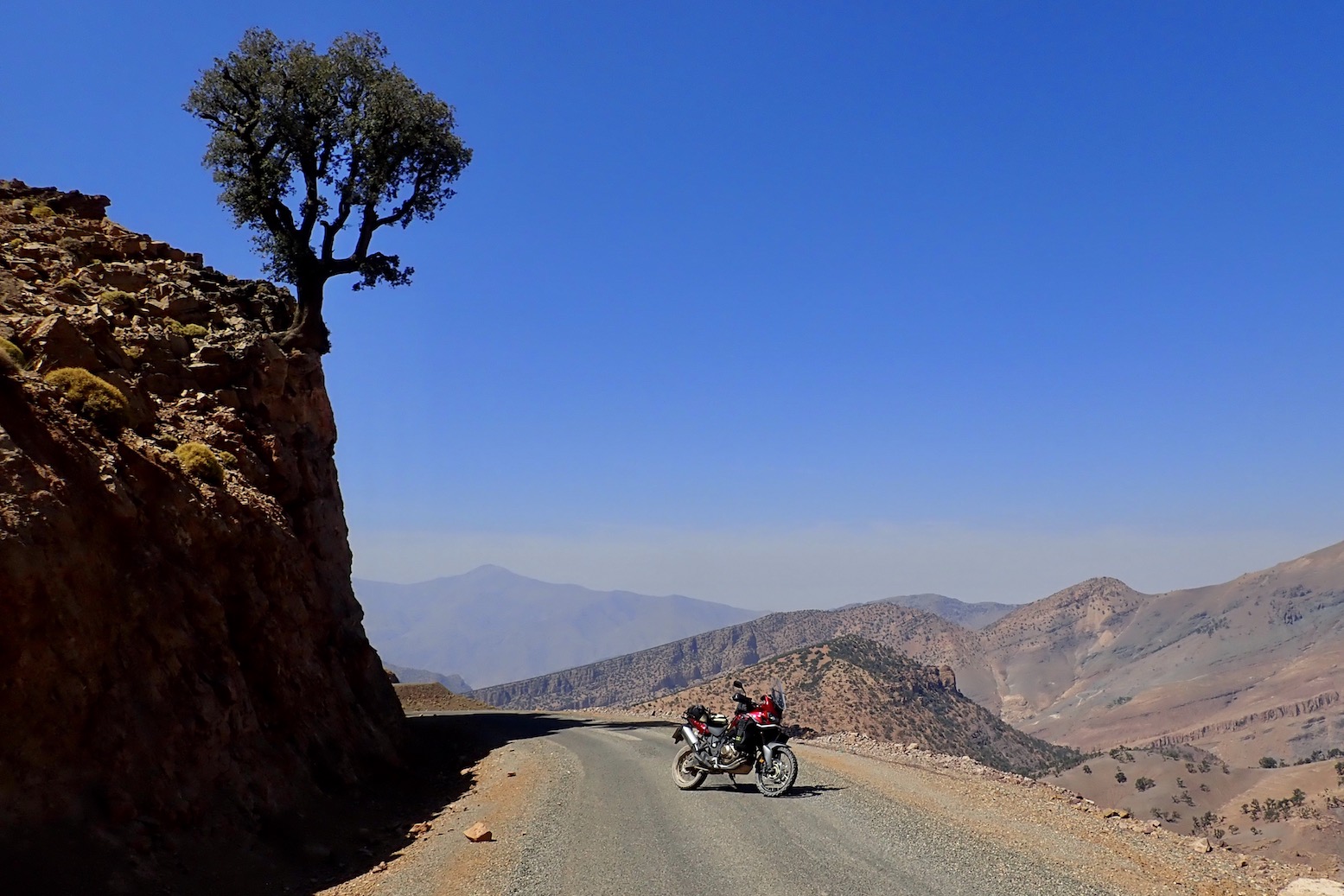
Heading south without a group I was free to divert up a series of switchbacks climbing a hillside, just to see where they went. I didn’t think twice about it and the AT took to the gravel like the giant trail bike it is. I sometimes feel the trail bike layout and riding position is embedded in my muscle memory so then when I’m doing it everything feels fine.

I free-wheeled back down passing a few MTB-ing Marrakshis and near Ijoukak popped in to see one of my tour hosts, Houssain, who told me of a new track over the High Atlas which reached a high col further down my route but bypassed an initially gnarly climb. On the AT I was happy to dodge that particular ascent which anyway, was never a great start to my tour’s off-roading.

It joined up near the newish road which climbs up to over 8200 feet (2500m+) before dropping down the far side of the Atlas. A great way of breaking into the hills

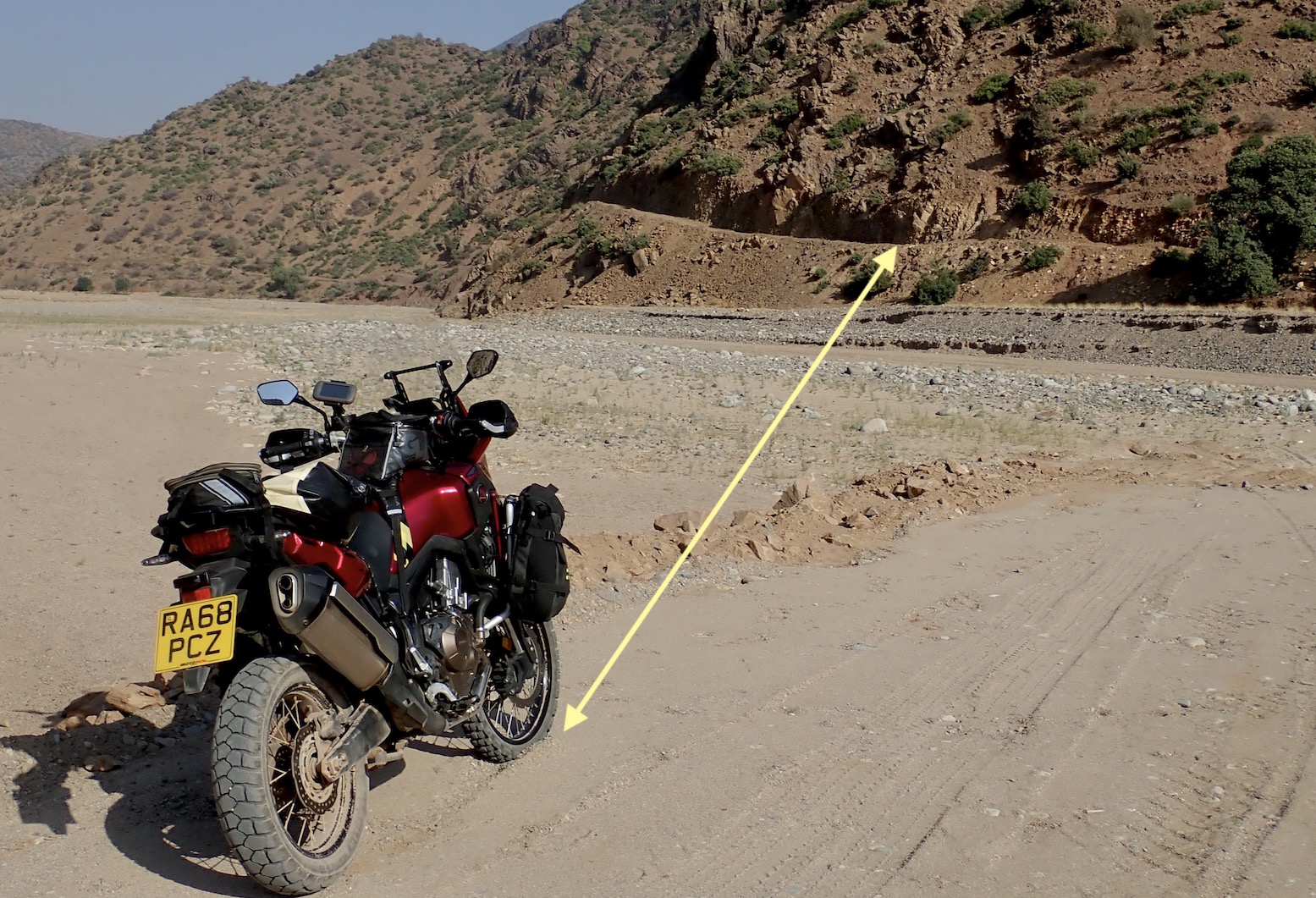
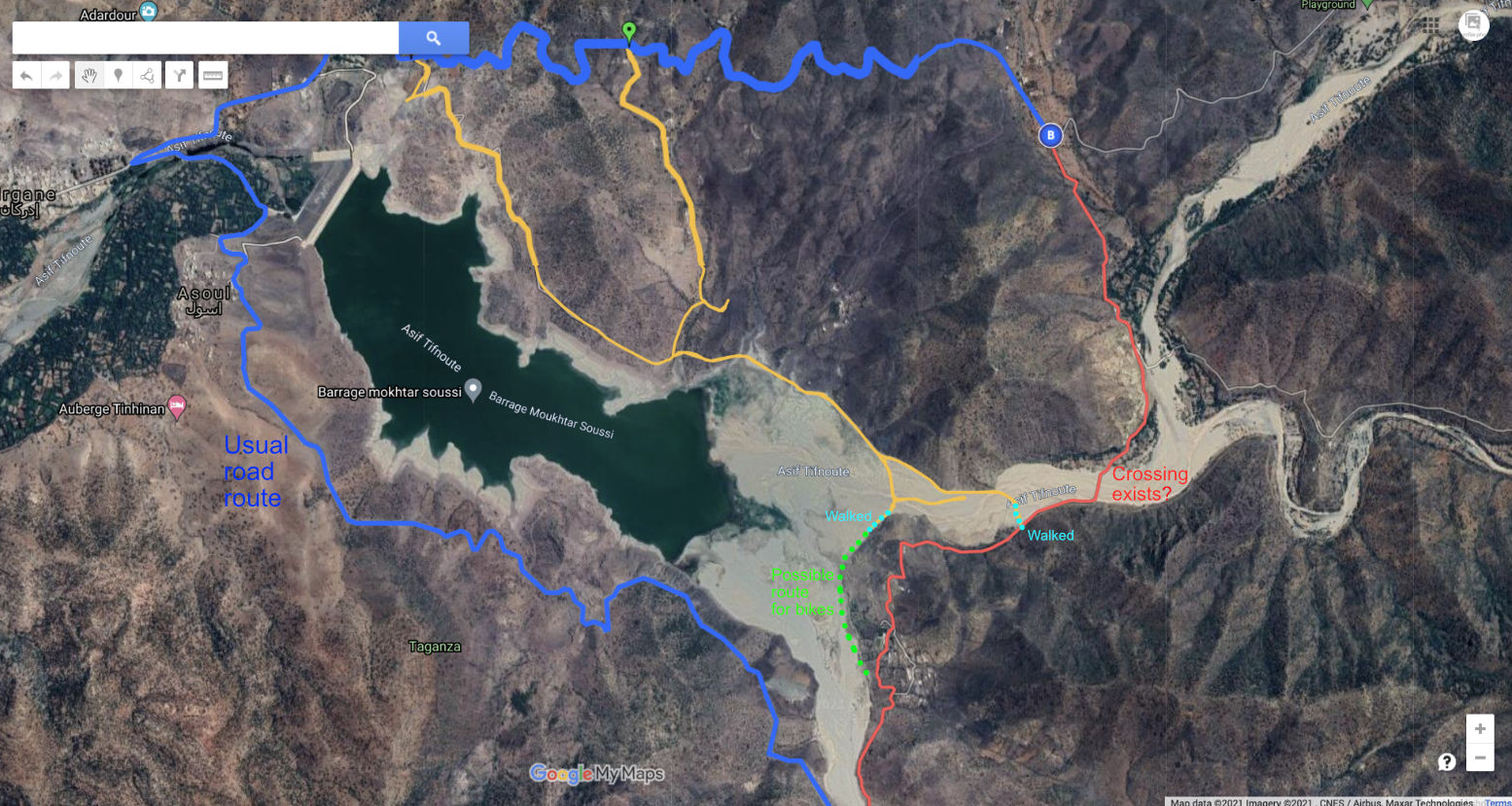
After a tasty feed in Igli, down the valley I decided to check out a way across a river bed feeding a drying reservoir which I’ve been wondering about for years. But that soon proved to be beyond the limit of me and AT, and without going cross-country, the link suggested on Google Maps probably wasn’t there.

I scooted on along the highway over to Taliouine for the night, appreciating the effortlessness with which the big Honda knocked out these flat, main road stages. That was two tour days ticked off in one, and in the heat it was enough adventuring. Time for a brew.

Next day I headed into the Anti Atlas, following the new road east out of Agadir Melloul (MA13) to swing by a homestay in the oasis of Assaragh and see if they were still up for it. They were, so after another chai, I said I’d see them in a month.

From here it was down the ‘waterfall’ into the Aguinan valley (MA13), always an impressive descent.

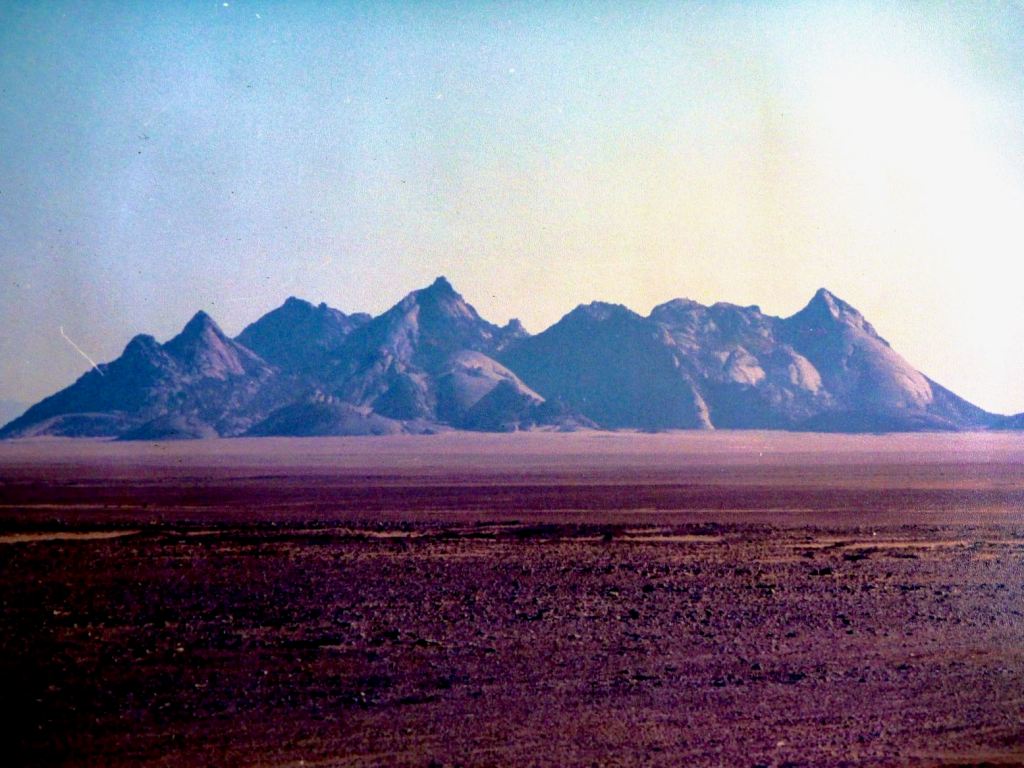
Then out through the cool serpentine canyons and into the baking desert. That’s Jebel Timouka on the horizon below – an abandoned piste and no place for an AT.

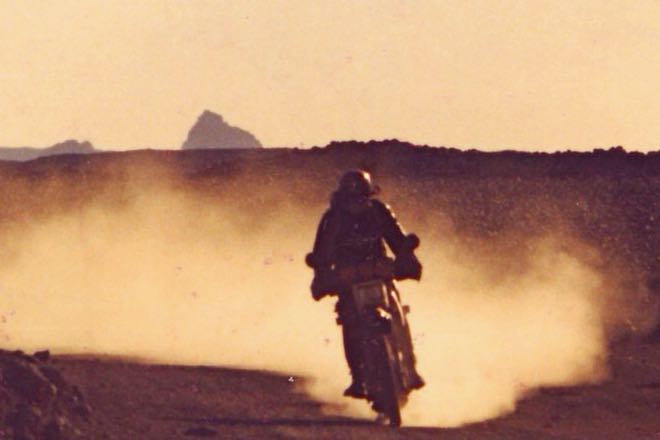
Far south and at a much lower elevation, I knew it would be cooking down on the desert floor, so the best thing was to keep moving. As long as you remember what you’re riding and where you are [heavy bike; middle of nowhere], the AT zipped along the desert trails well enough. I very much doubt I’ve ever used more than half of the 88hp in all the time I’ve owned it. Topping up in Taliouine from the same servo guy who’s been there for years had returned 60mpg (21kpl; 50 US). I don’t think it will get much better than that; one of the juiciest bikes I’ve had for years.
One benefit of a high-end Adv is you get quality – or at least, adjustable – suspension. Up to a point that means you can get by with tyres left at road pressures and let the springs absorb the shocks. And the knobbly front Motoz lead the way with a reassuring bite.

It’s only and hour or two but this is a desolate stage and the thought of having a flat on my still-tubed front was not appealing. I stop off on a ford a schnik-schnak and a cool down.

Once back on the asphalt the Palmer screen is working too well and I can bear it no longer. I stand up into the breeze to decompress the backside and generally air the heck off.

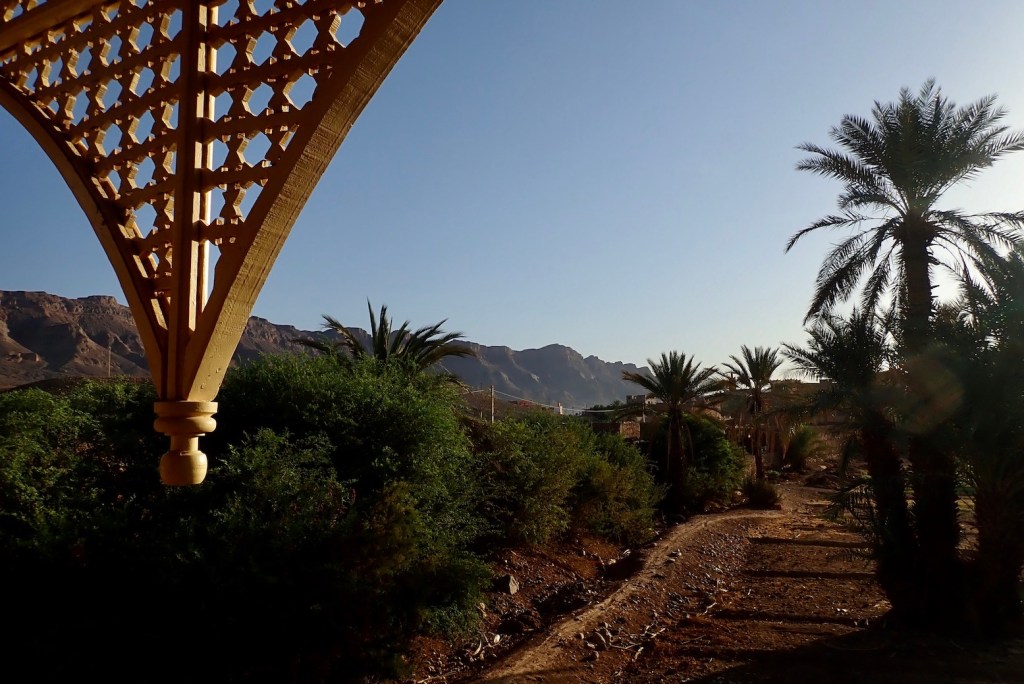
I get to my usual roadhouse where the tour 310GSs often arrive on fumes, but the coffee machine has packed up and there is no fresh OJ. Quelle horreur! So all that remains is a late-afternoon, 100-click ride ride back out of the desert and over to Tamnougalte where I’ll spend a couple of days to explore some new tracks.

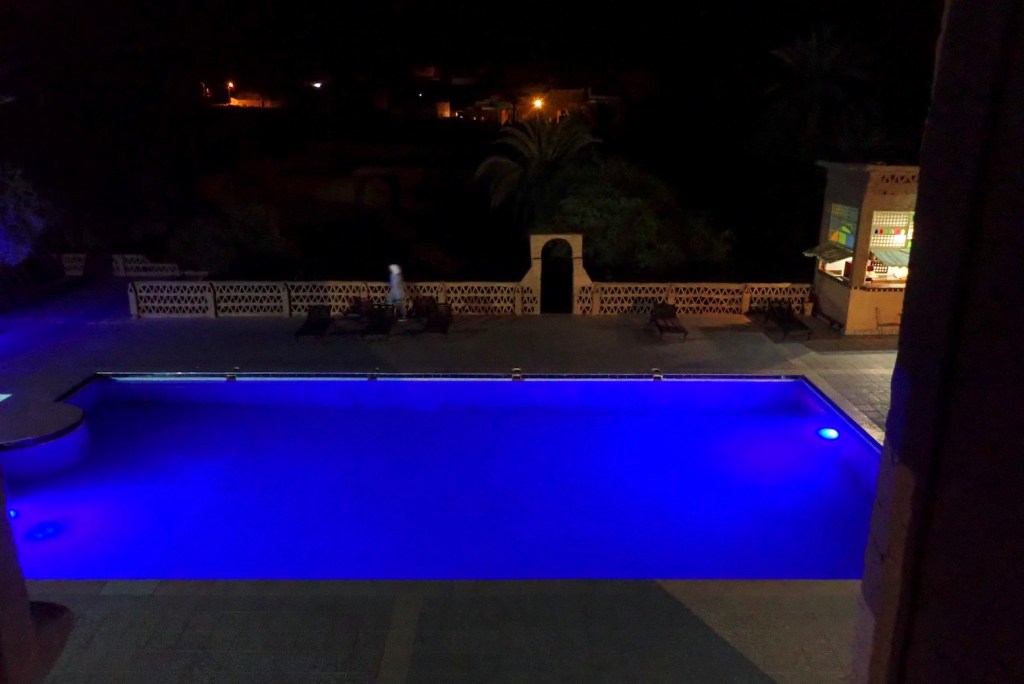
The pool looks tempting.

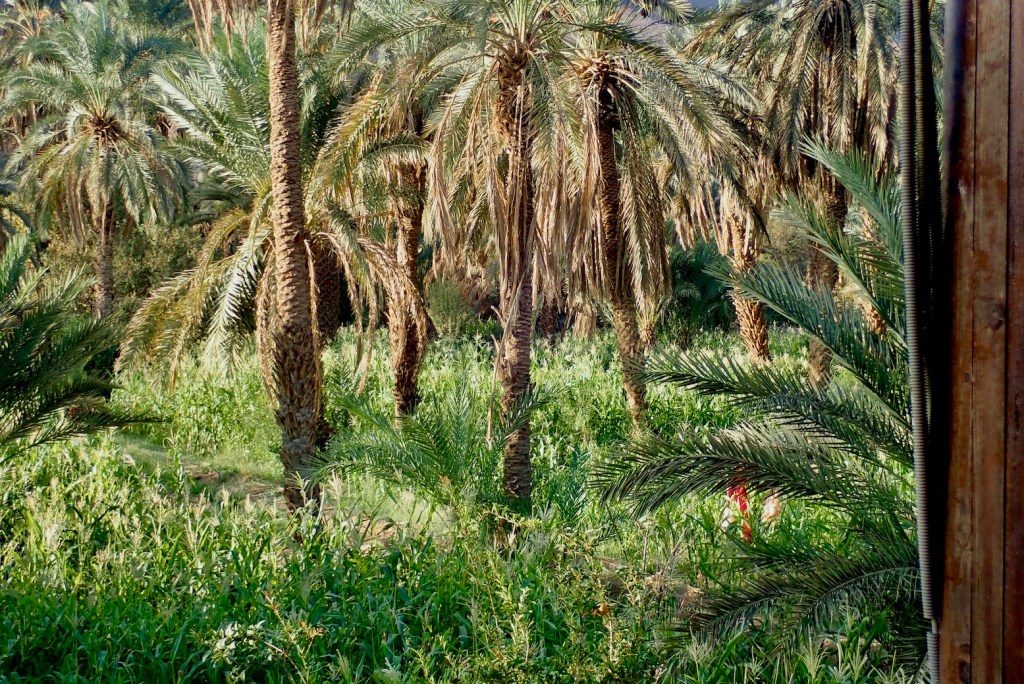
All the veggies come from the adjacent garden irrigated by the nearby Oued Draa. And they taste like it too. Potatoes with actual potato flavour. Remember them?

A cool dawn. I should have got out there but fancied a day off – this heat really wears you down. There’s no wifi so I get absorbed into my interesting book.

Part Two here

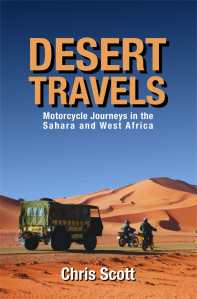
Desert Travels • London–Dakar 1986

Desert Travels Index Page

Buy Desert Travels 2021 on Amazon

Book Chapters:
16 Arak
17 Bad Day at Laouni
18 The Far Side
19 A Blue Man
20 The Hills are Alive 

After my batty Benele excursion of 1984 I brushed my hair, straightened my tie and bought myself a sensible XT600Z, just like I always knew I would.
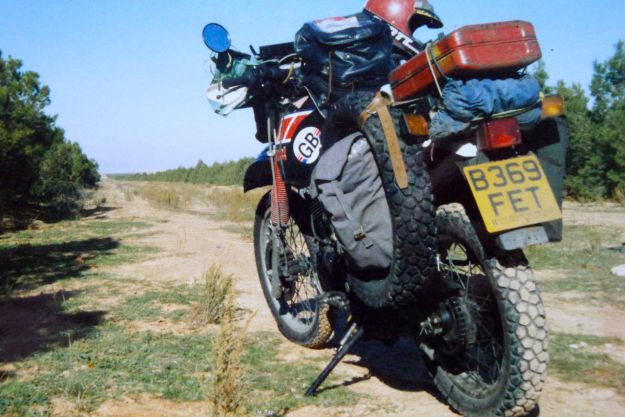
This was the slightly better 55W version of the original kick-only Tenere, distinguishable by sloping speedblocks on the tank (more here).
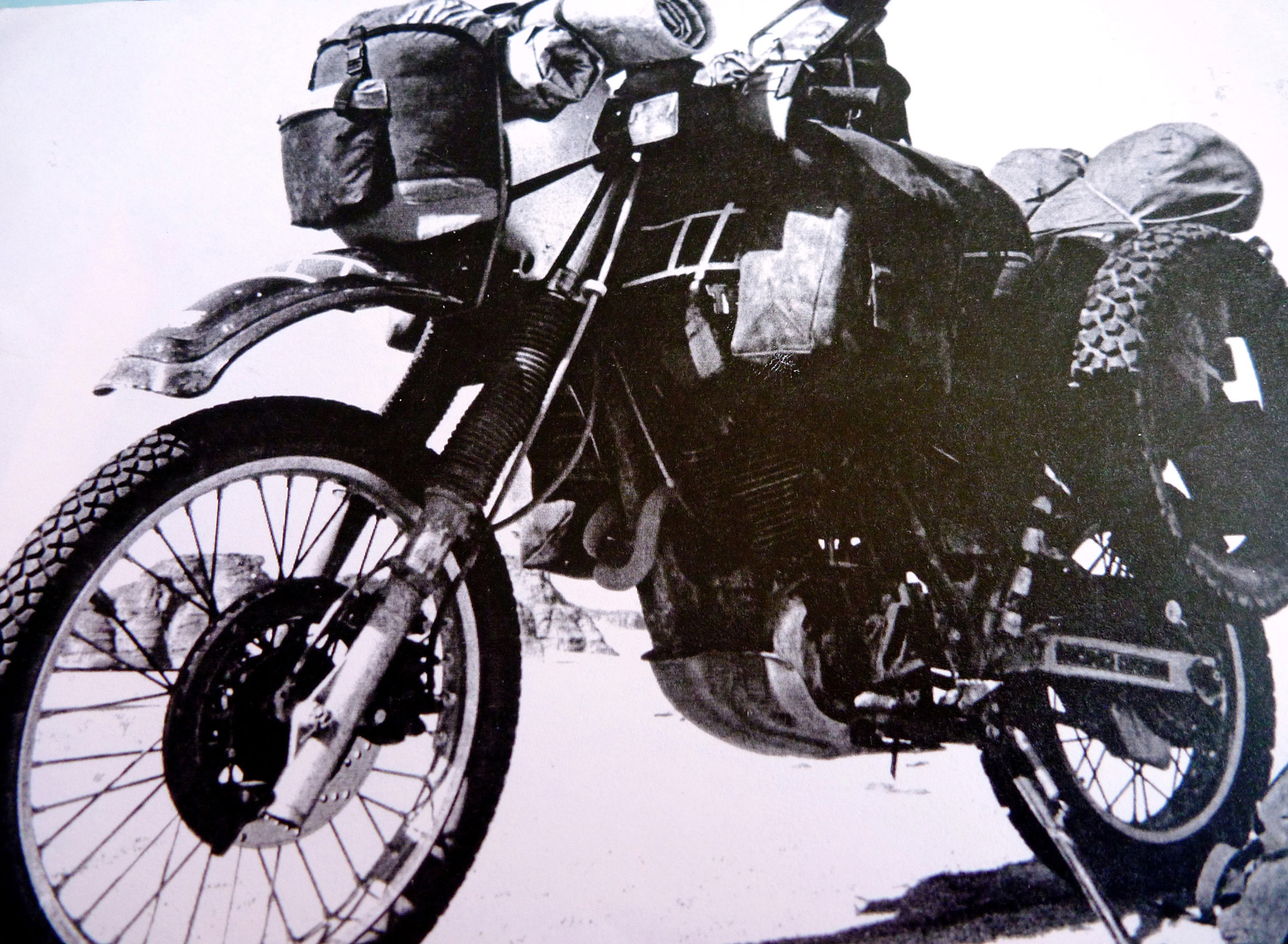
All I did was add thicker seat foam and fit some Metzeler ‘Sahara’ tyres – a rubbish choice for the actual Sahara, as I was soon to learn. Using no rack was another mistake which nearly cost me the bike. My learning curve was still as steep and loose as a dune slip face.
In fact, there was so little that needed doing to the Yamaha that I moved the oil cooler from down by the carbs up into the breeze over the bars. And I painted the bike black because I still hadn’t shaken off my juvenile Mad Max phase.

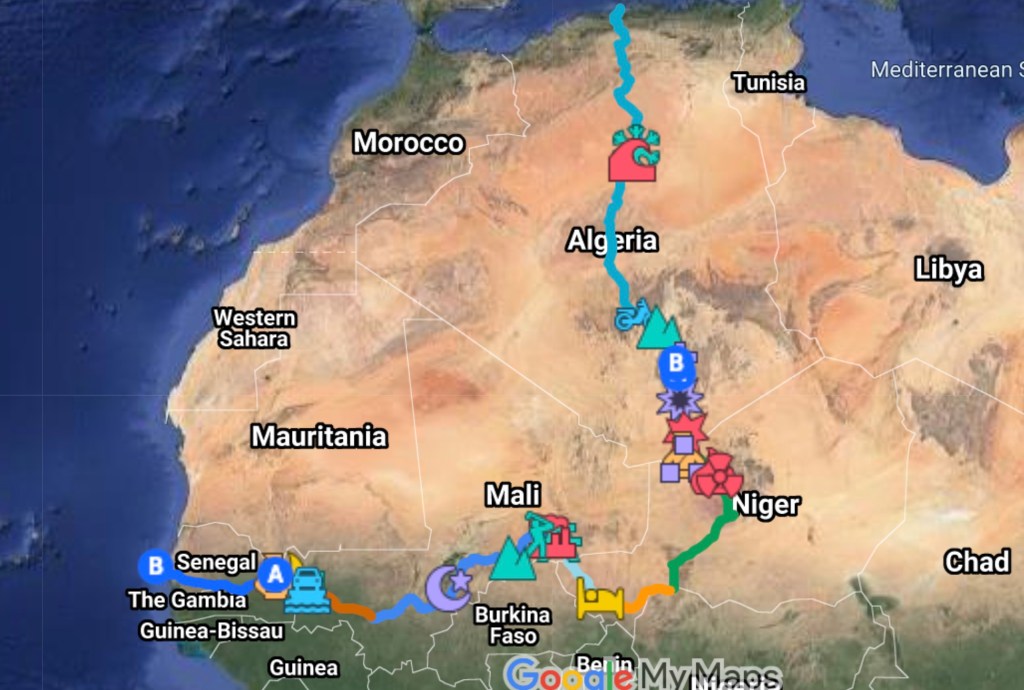
With my £5 ex-army panniers slung over the back, in December 1985 I set off for Marseille, bound for Dakar via Algeria, Niger and Mali.
As I mention in the book, I was adopting a new ‘go with the flow’ strategy’. Instead of being ground down and seething with resentment by the setbacks of my previous calamities, I’d just take the reversals on the chin, bounce back, and move on.
On this trip that stoic philosophy was to get a thorough road test!

Zoomable Map Link
A chilly desert morning somewhere south of Ghardaia. Further south it may also freeze at altitude but there isn’t enough humidity to produce overnight frost.
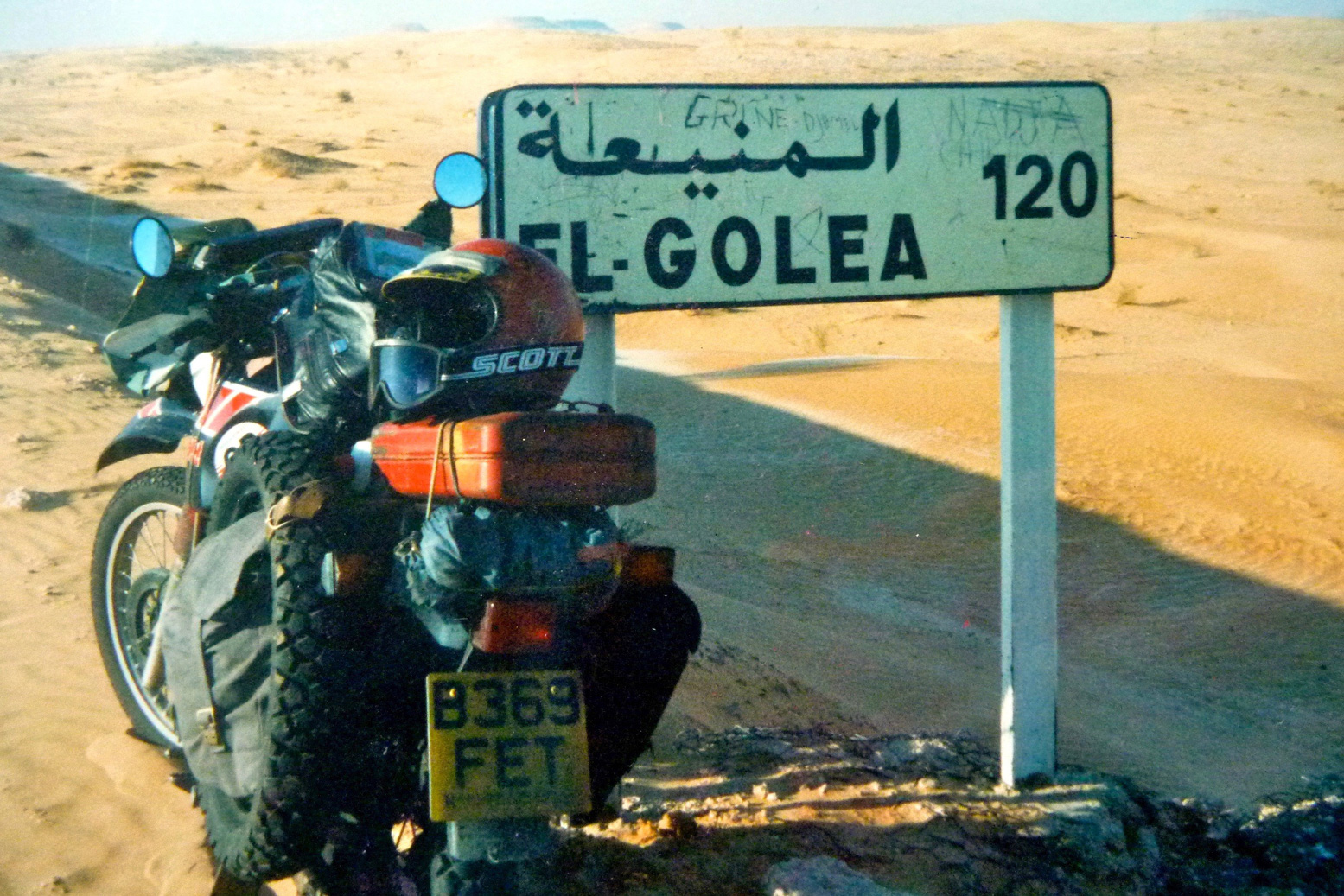
Back at those first desert dunes north of El Golea (today: El Menia). What a crappy, lashed-up baggage system!
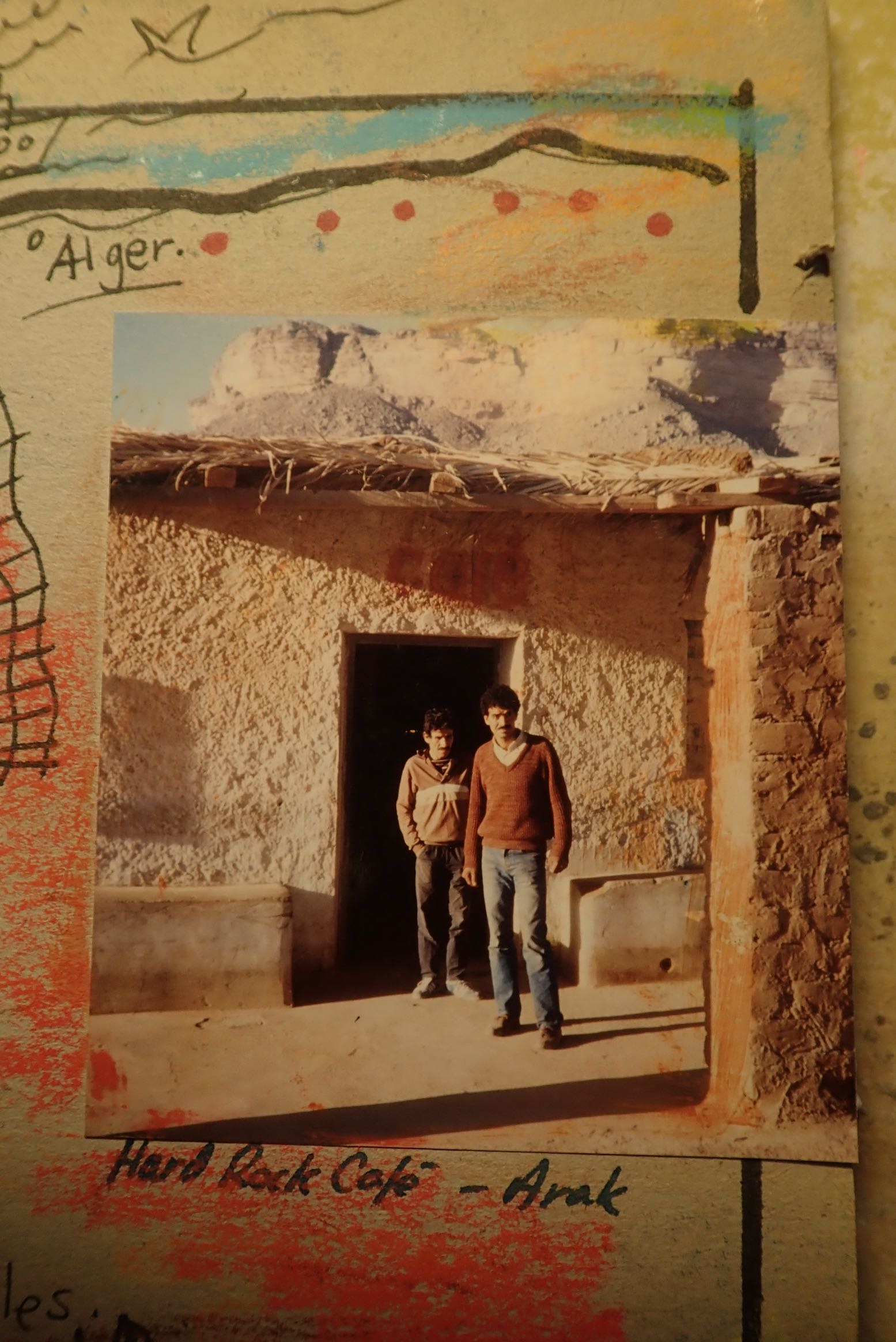
I return to Arak where I’d got detained on the Benele trip the previous year for being an idiot.
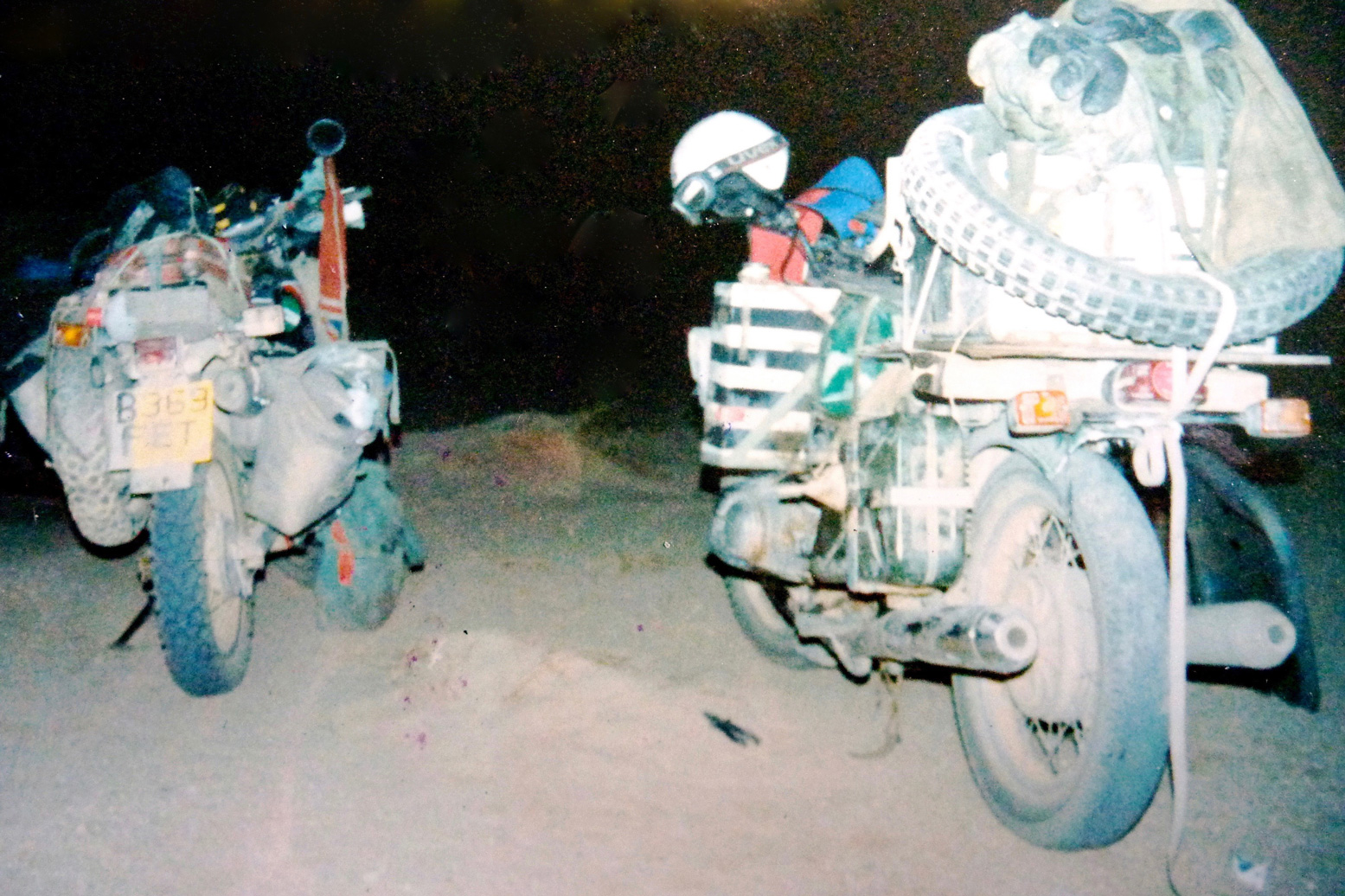
Here I meet German Helmut on an old, ex-police R90 BMW.
We are both planning to cross the Sahara so agree to meet up in Tam a couple of days down the road and do it together. ‘Crossing the Sahara’ back then meant riding off the end of the trans-Sahara Highway and following sandy tracks for 600km out of Algeria and into Niger. As I found out in 1982, alone on the XT500 (when I got less than halfway), there was no clear single track anymore, but a mass of winding, braiding trails many miles wide, with occasional 2-metre high marker posts every few kilometres.
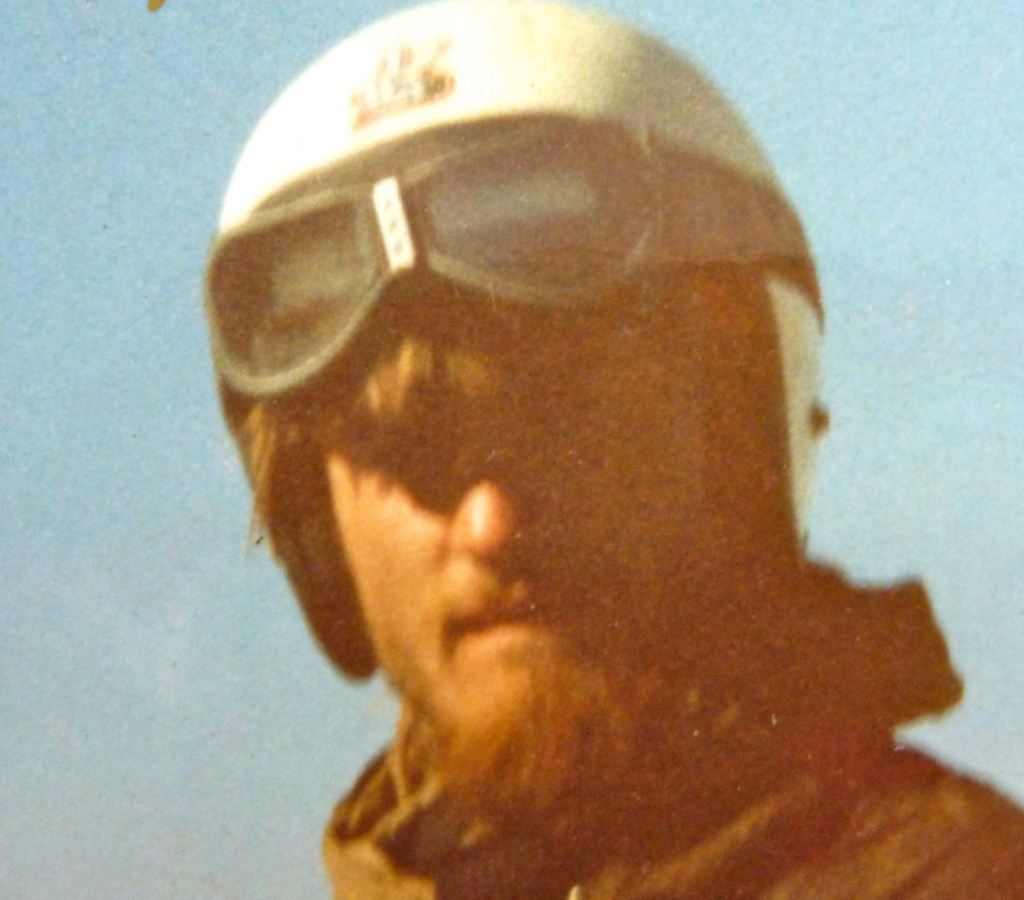
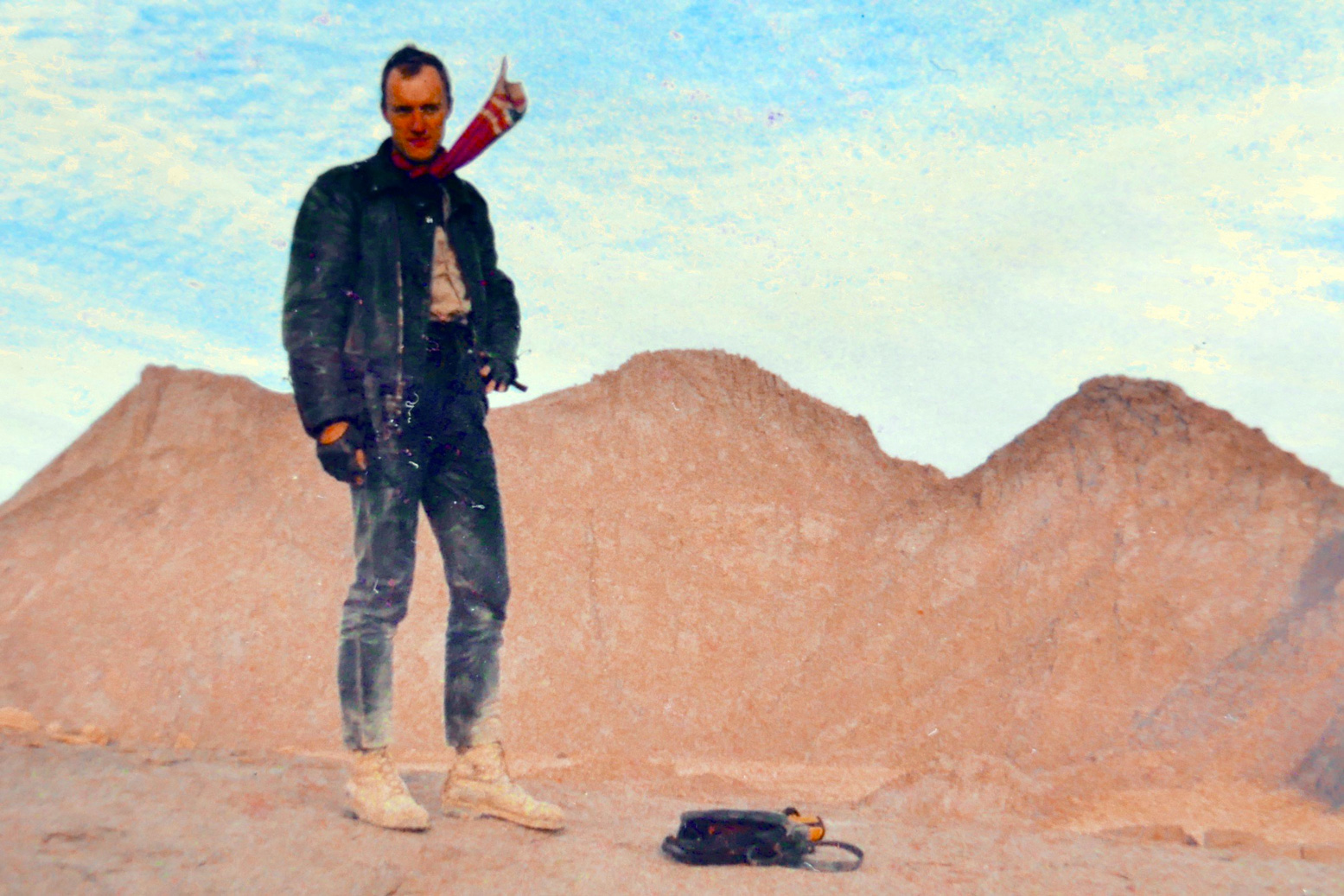
Young Narcissus; a quick selfington south of Arak.
Full black leathers, HiTec Magnum desert boots, and my dainty British Airways nylon scarf.
View of Sli Edrar: my aborted destination on the Benele trip. Even now I was too nervous to ride the 10km across the desert to the hills. What would happen if I hit quicksand?!
It takes years to get used to being out there. Or it did me.
Mysterious Sli in 1982 on the XT500 trip.
I finally got to Sli Edrar 17 years later from the other side while laying out fuel caches for Desert Riders.
And in 2008 we had a fantastic afternoon riding Sli’s granite domes on one of my epic Algerian bike tours.
The worse thing about those rubbish 2-ply Metzeler Saharas, was that I bought a spare.
Back then there were no hard-wearing Heidenau K60s or Mitas E09s.
In Tamanrasset I meet up with Helmut again and we take an overnight excursion up to Assekrem in the Hoggar mountains.
Helmut on the R90. The overnighter was a good chance to test our bikes.
Sunset from the Hermitage at Assekrem. ‘There was no one there..’.
A chilly camp, high up in the bleak Hoggar.
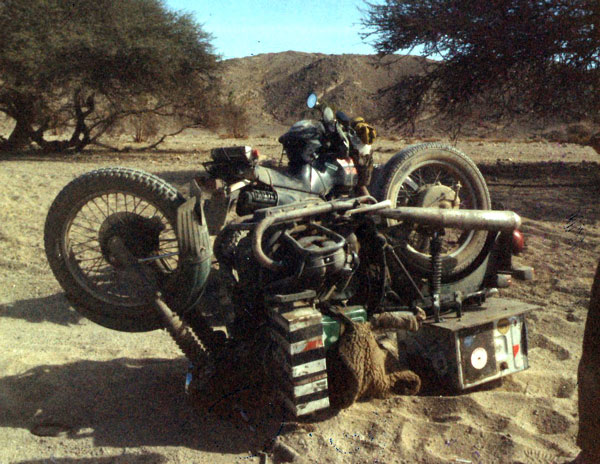
On the less used western descent down from Assekrem, near the village of Terhenanet, Helmut deftly flips his BMW. The rounded gravel in this particular oued is unlike anything I’ve found in the Sahara. I barely made it across myself.
A day or so later, Helmut radically lightens his load after the lessons of the Assekrem excursion and we set off into the night to cross the Sahara to Niger.
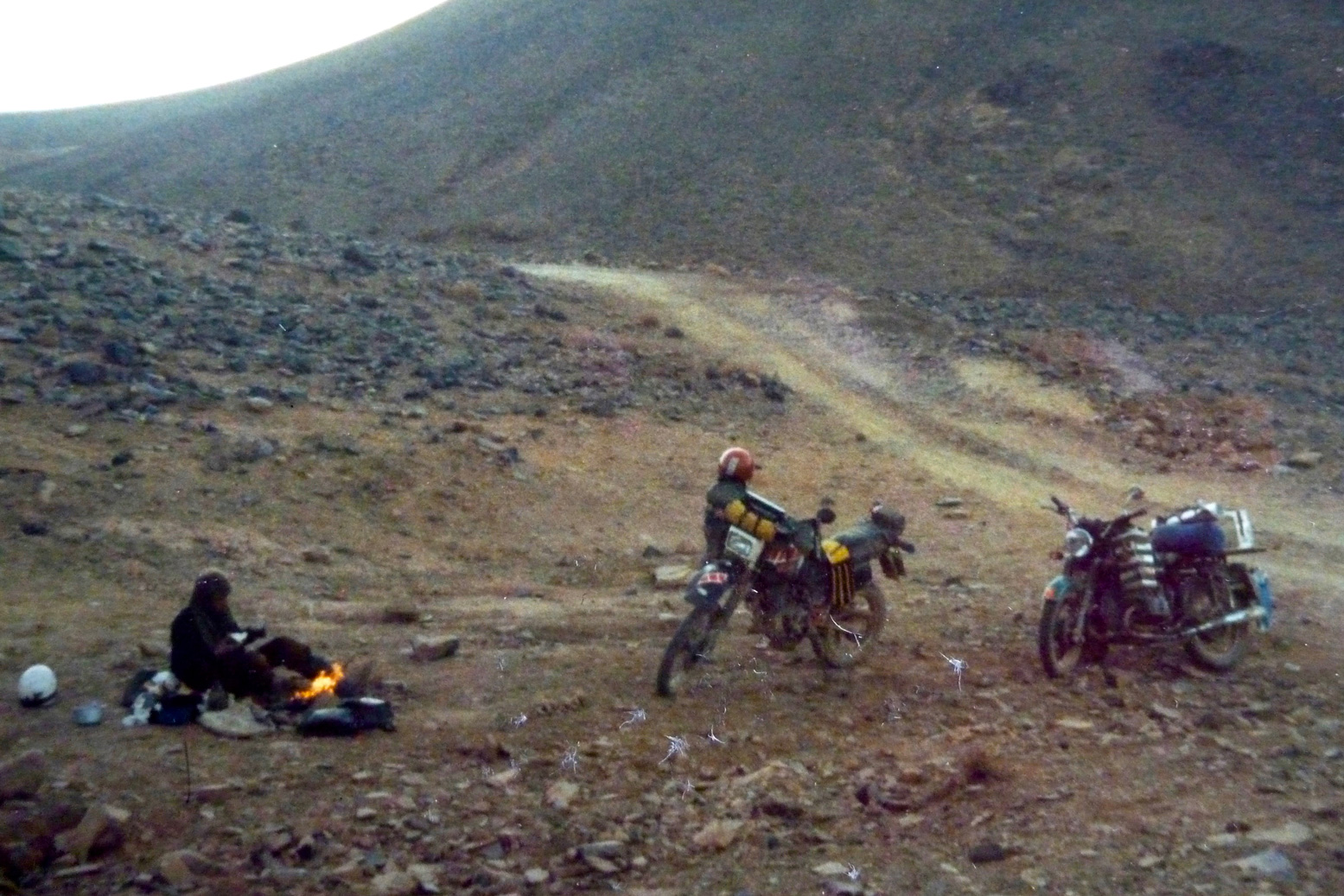
We camped a short distance out of Tam in the hope of next day getting a good run for the 350km to the border.
Next morning we come across some Swiss riders. One of them flipped and cartwheeled his 80G/S and now it won’t start.
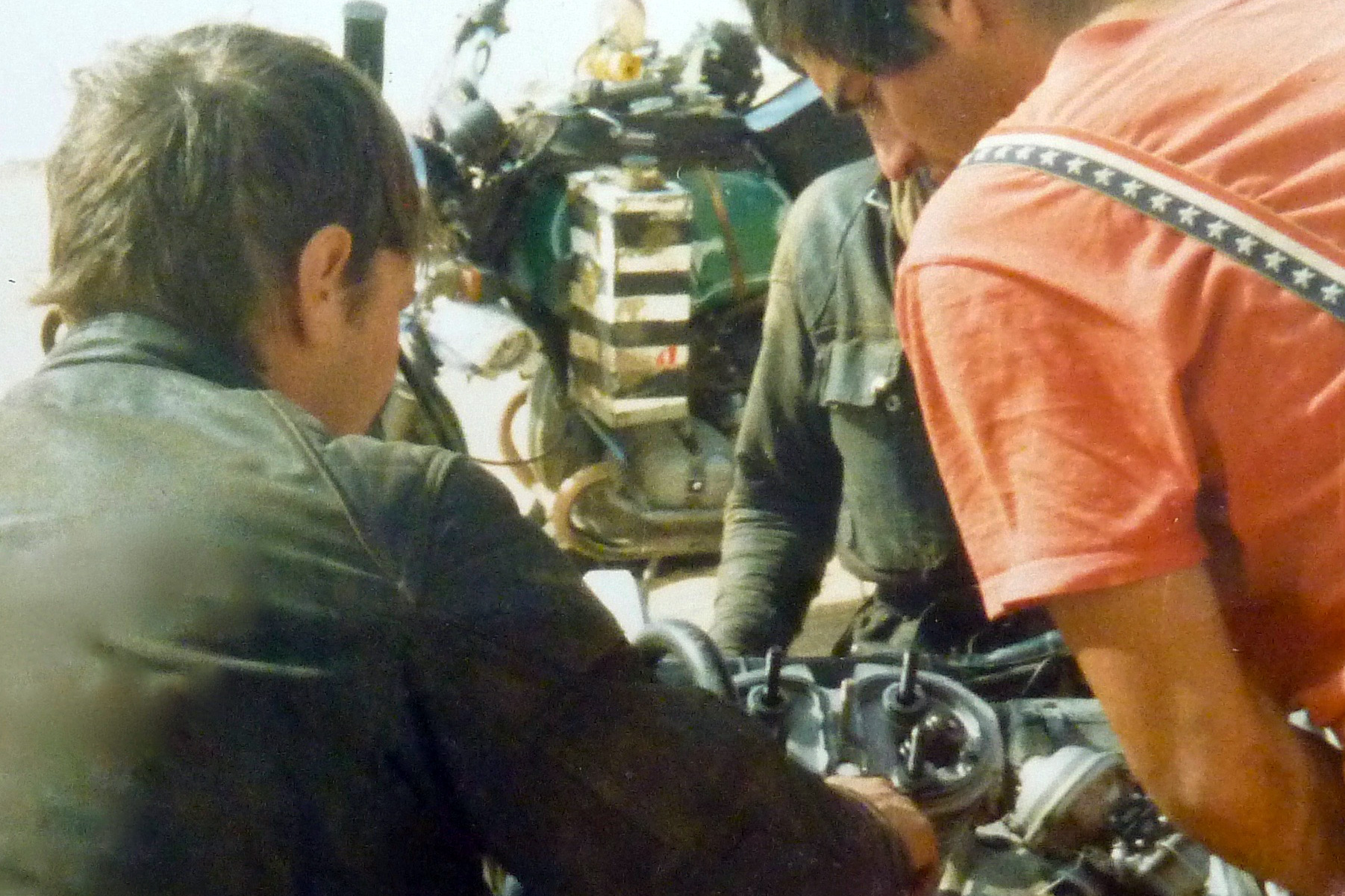
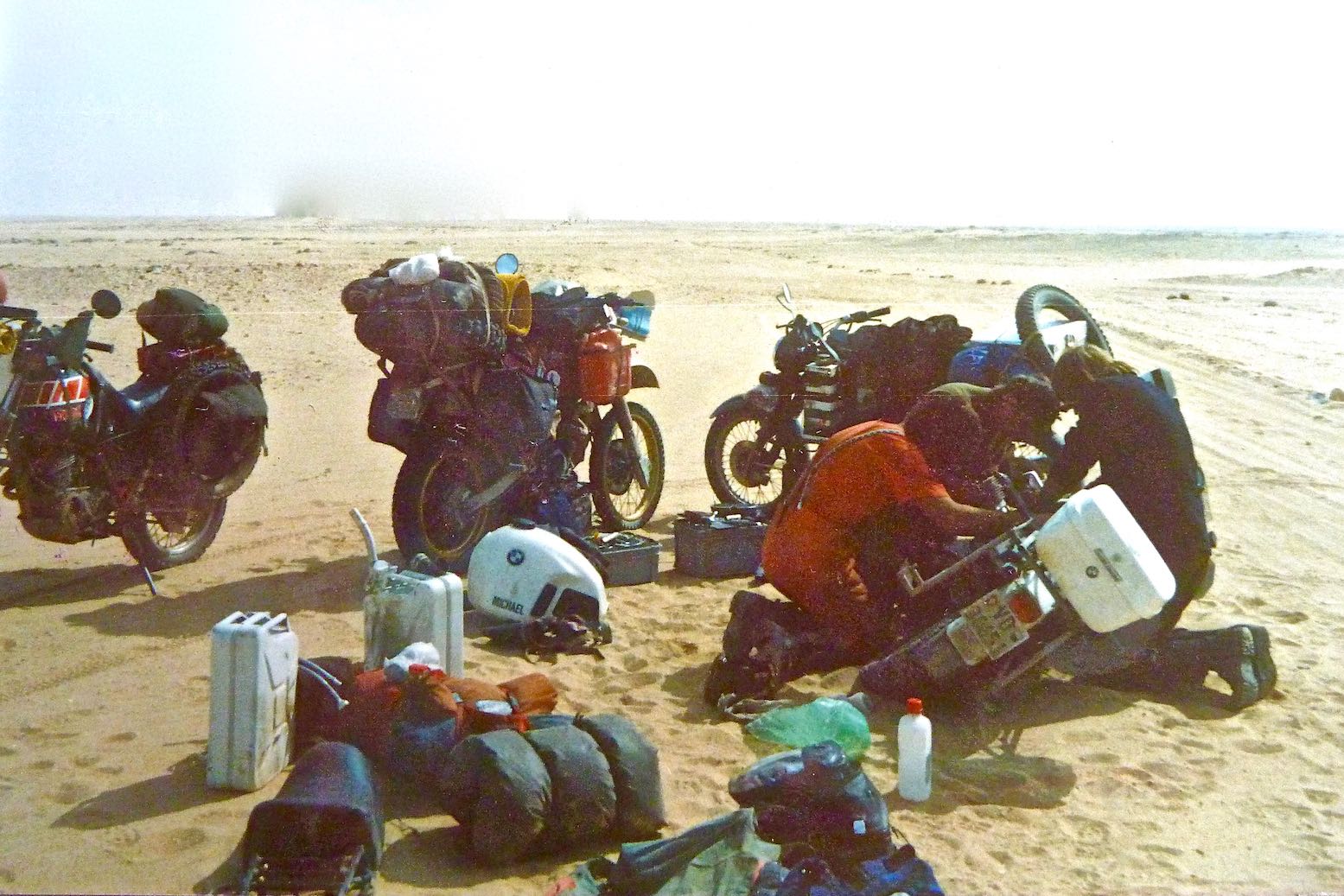
Helmut knows his BM from his elbow and sorts it out: a barrel flooded with oil.
Look at the huge load on that other Tenere compared to mine. This was one of the reasons why I felt it was my honour-bound duty to write Desert Biking a few years later.
That book evolved into the Adventure Motorcycling Handbook and here we all are.
As that day wore on, Helmut got progressively more and more tired from frequently falling off his bike.
One final crash around dusk finished him and the BMW off.
With his shoulder damaged and so unable to ride, I persuaded him to give his BMW a Viking burial with the loads of spare petrol he had left over.
The remains of Helmut’s trans-Sahara ride next morning. We abandoned most of his gear and he squeezed on the back of my XT. It was galling for him; he came off quite a lot worse than I did on my first attempt at crossing the Sahara in 1982 on an XT500.
After leaving Helmut at In Guezzam, the Algerian border post, I set off across No Man’s Land for Assamaka: the Niger border.
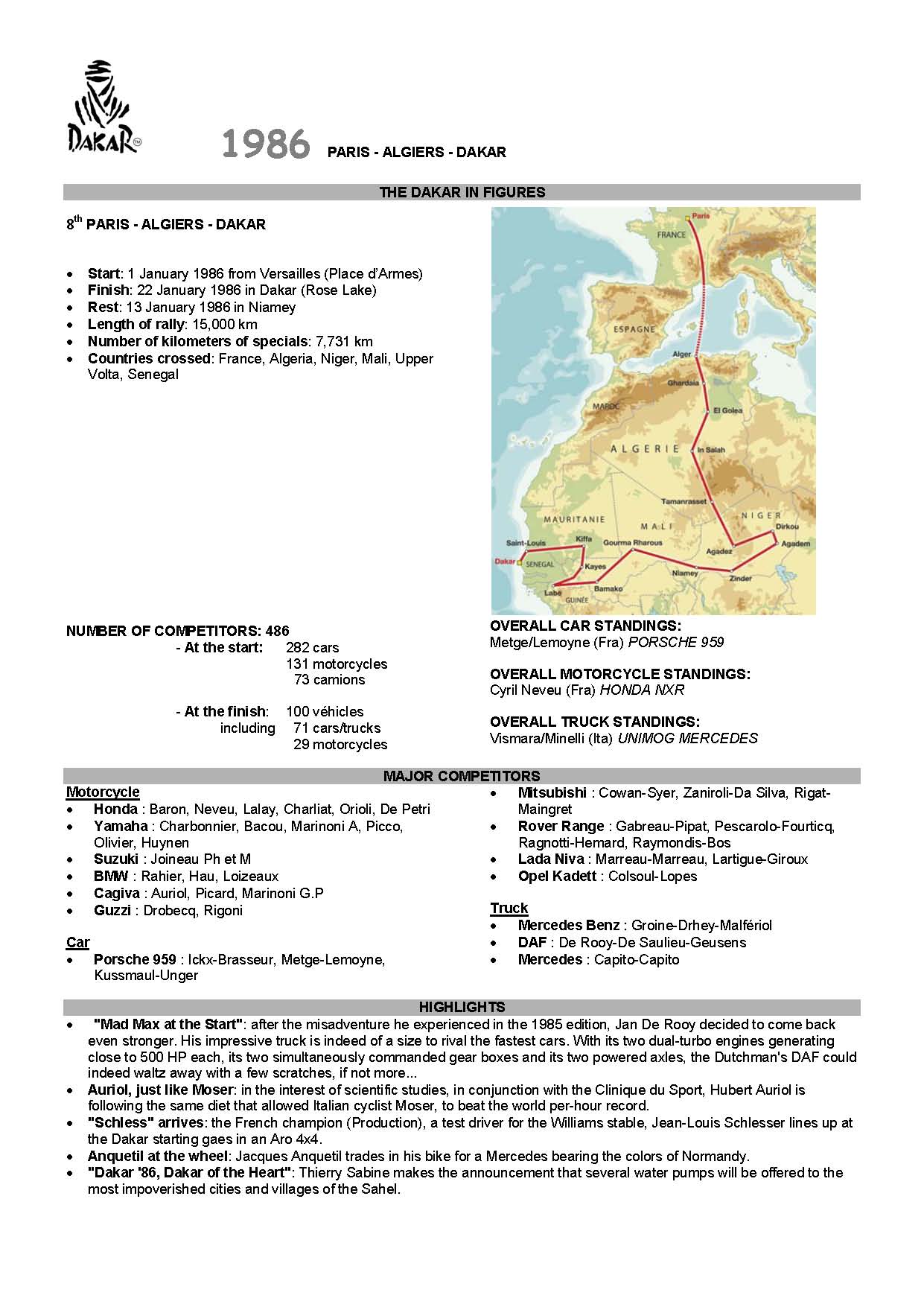
It was New Year’s Day, 1986 and the Dakar Rally was setting off from Paris.
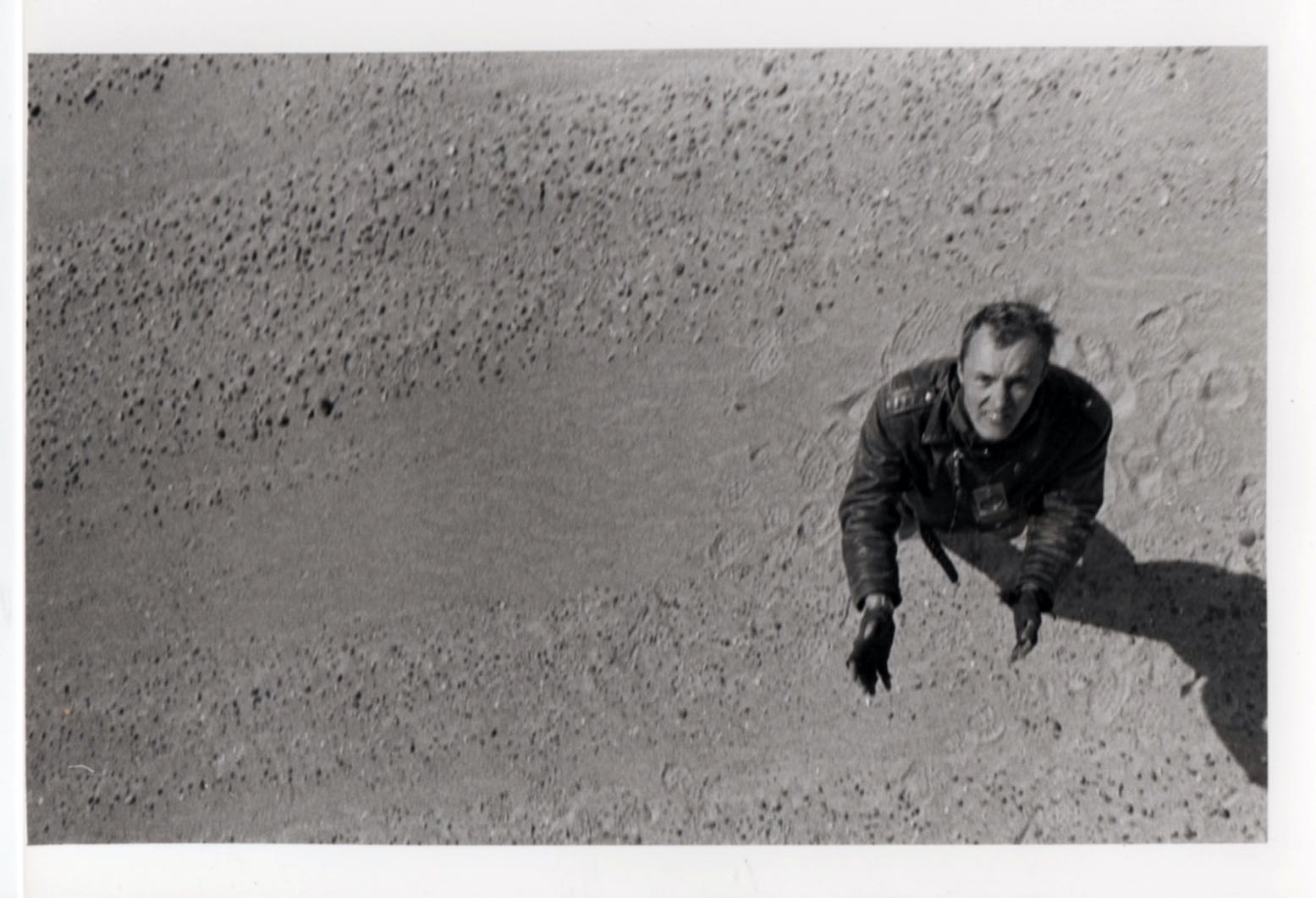
As I say in book, the Sahara Handbook of the time warned of the very sandy conditions in No Man’s Land, but in fact the terrain wasn’t so bad. When things are tough or tense I tend to press on; when they ease up I feel it’s safe to stop for a breather. So even though it wasted precious film, I had the notion to take some innovative aerial selfies by setting the camera on self timer and throwing it up in the air.
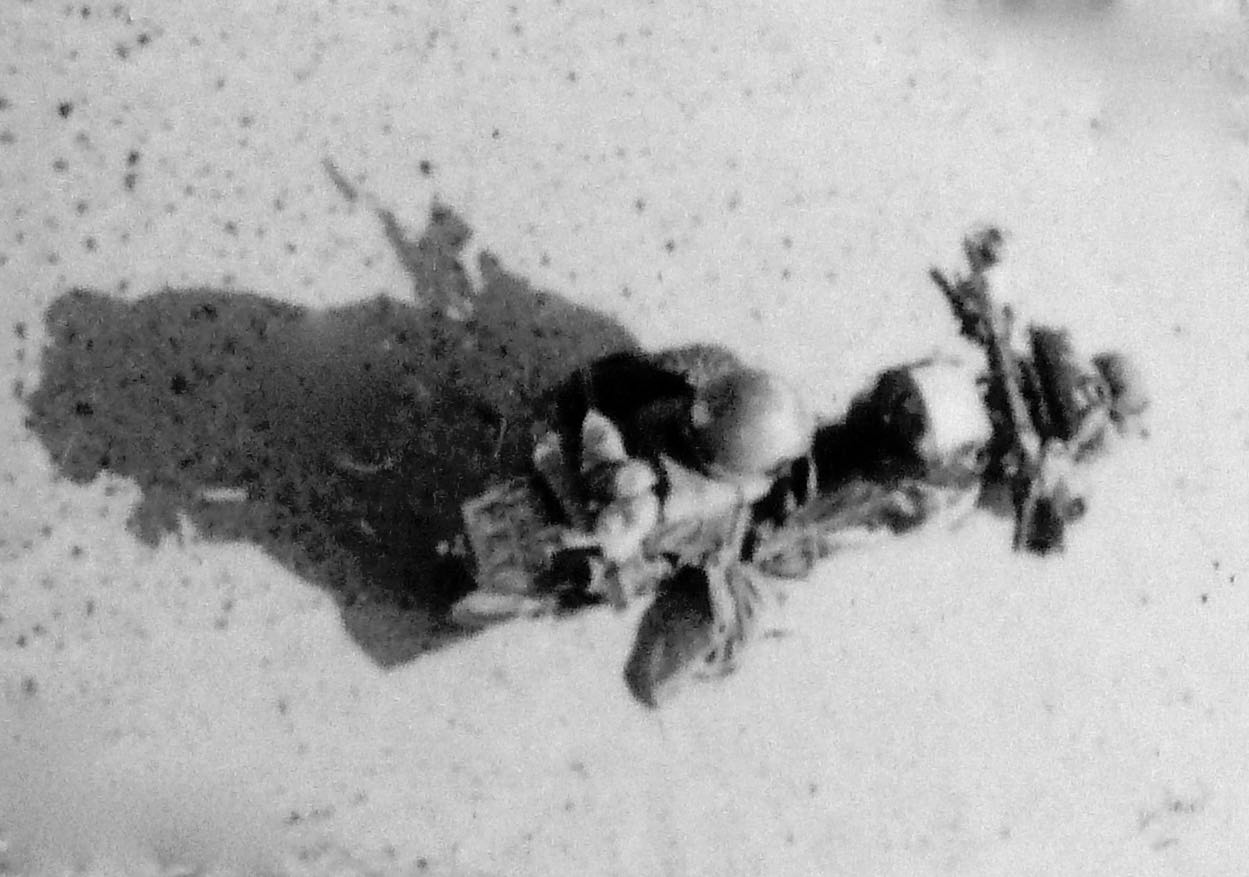
Most shots were of gravel or sky, but here’s a superb pre-drone-era snap of the Tenere from 20 feet up.
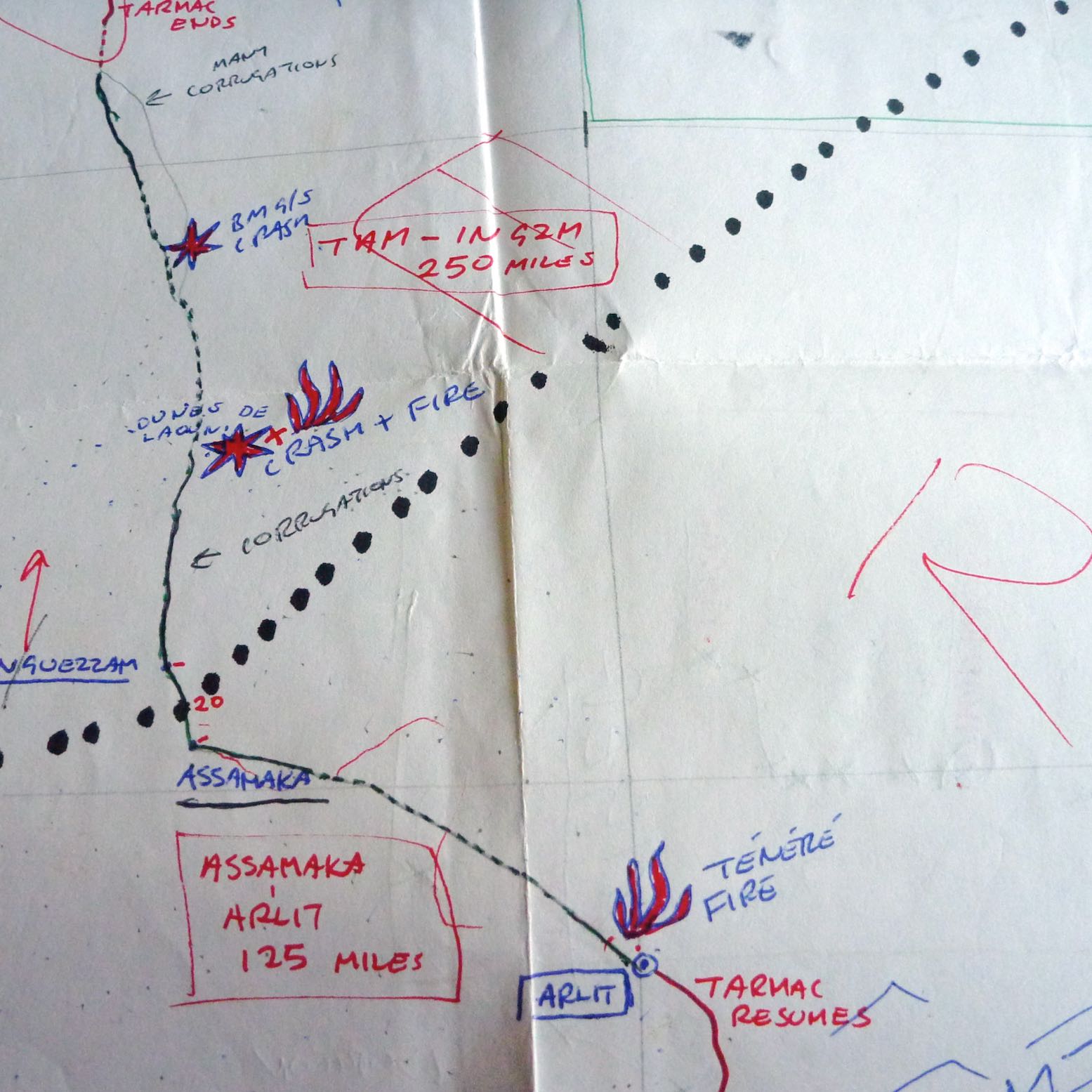
After checking into Niger at Assamaka – a portacabin and mud hut in the middle of nowhere – next day I got lost on the last 200-km stretch to Arlit where the highway resumed. This section in Niger still remains unsealed in 2021; banditry has made the job of completing the trans-Sahara Highway too risky.
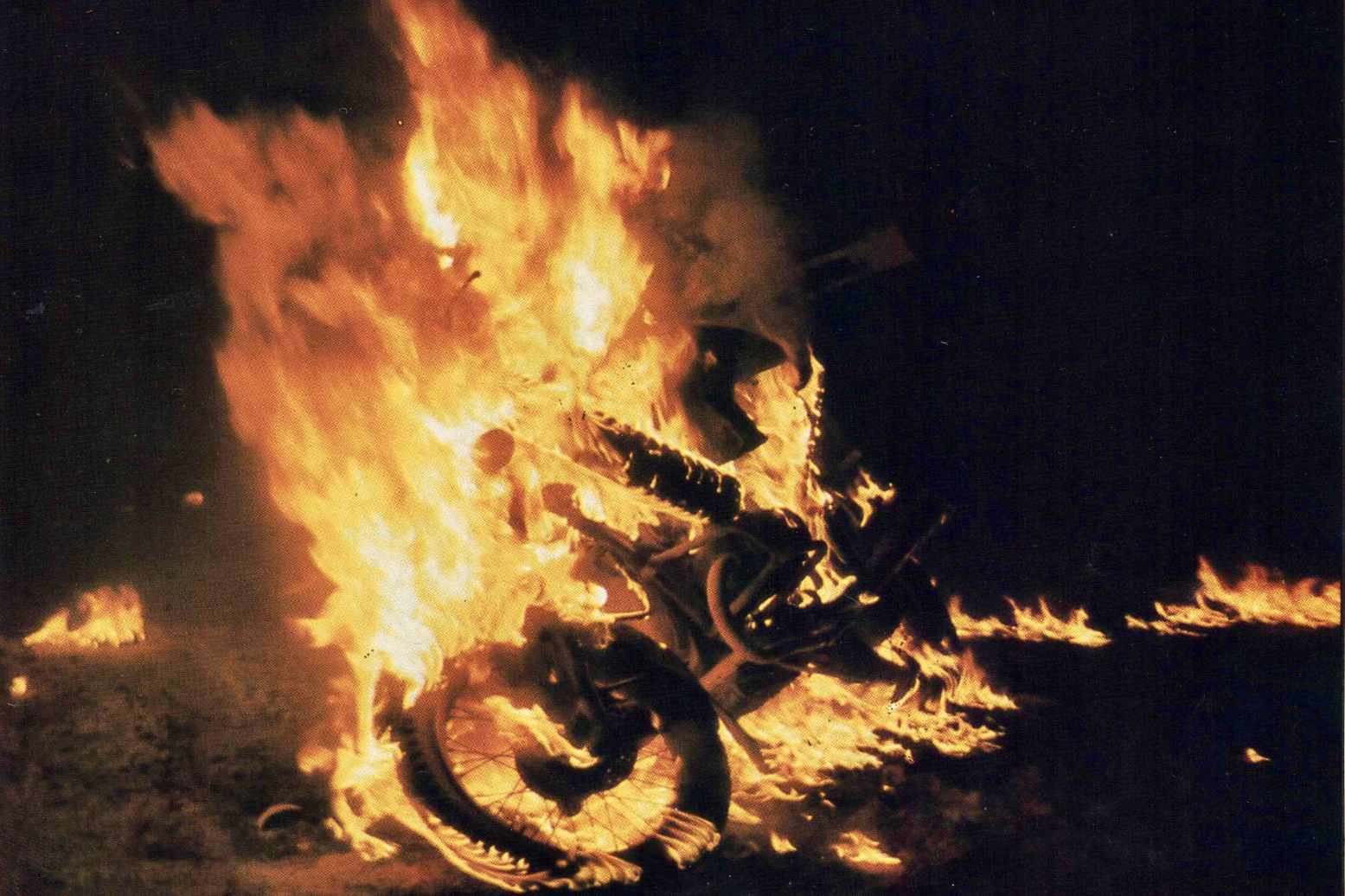
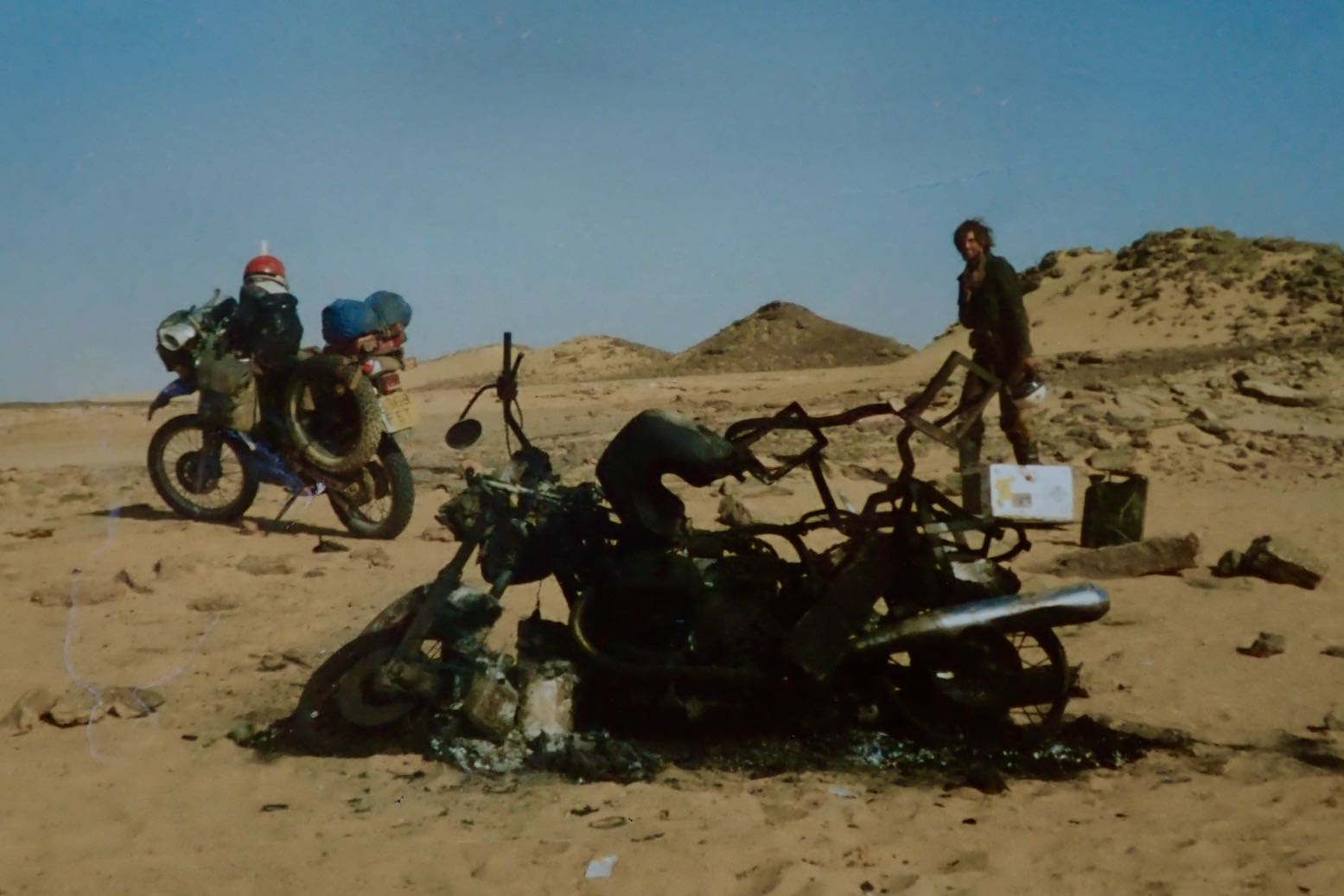
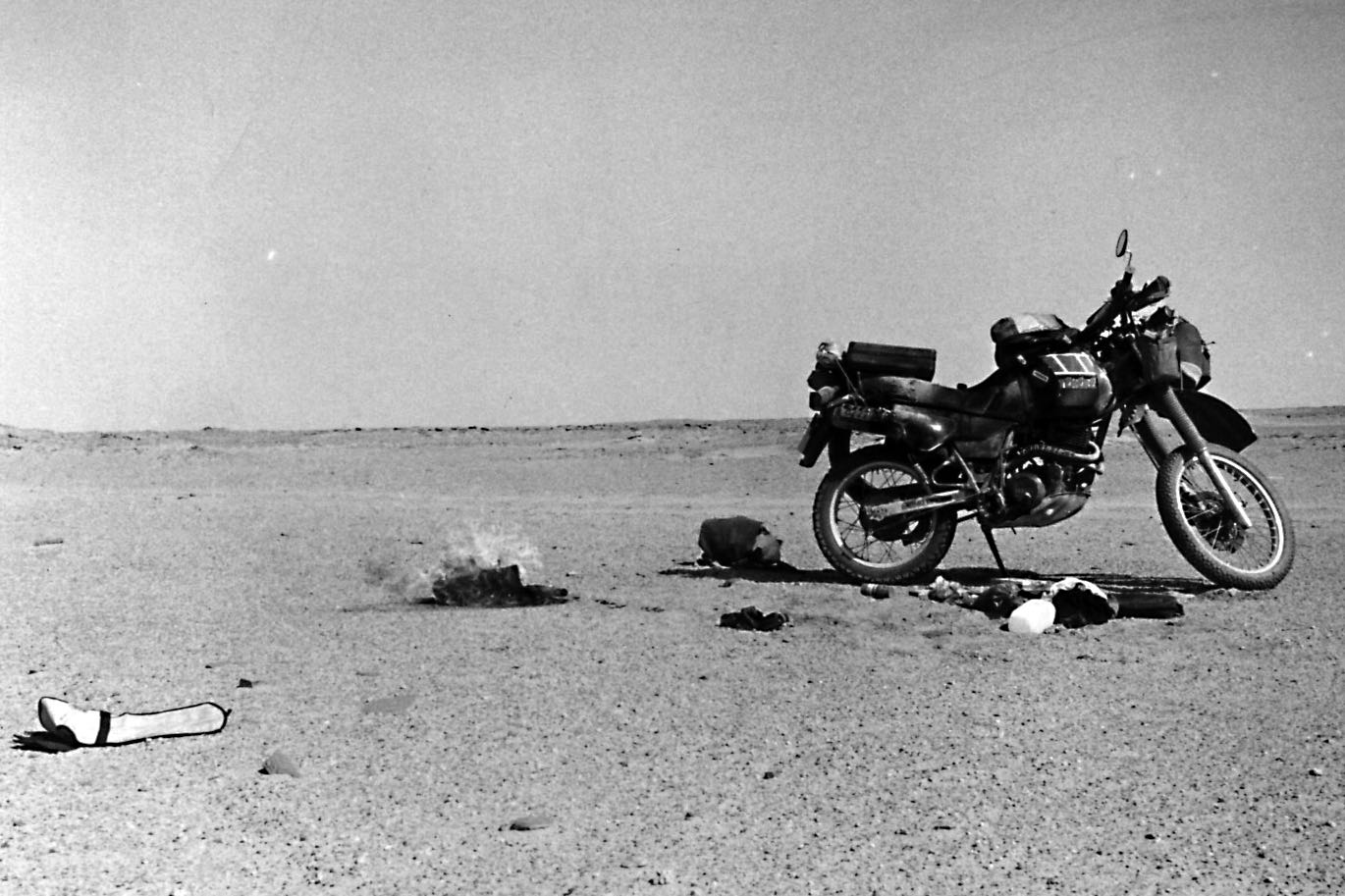
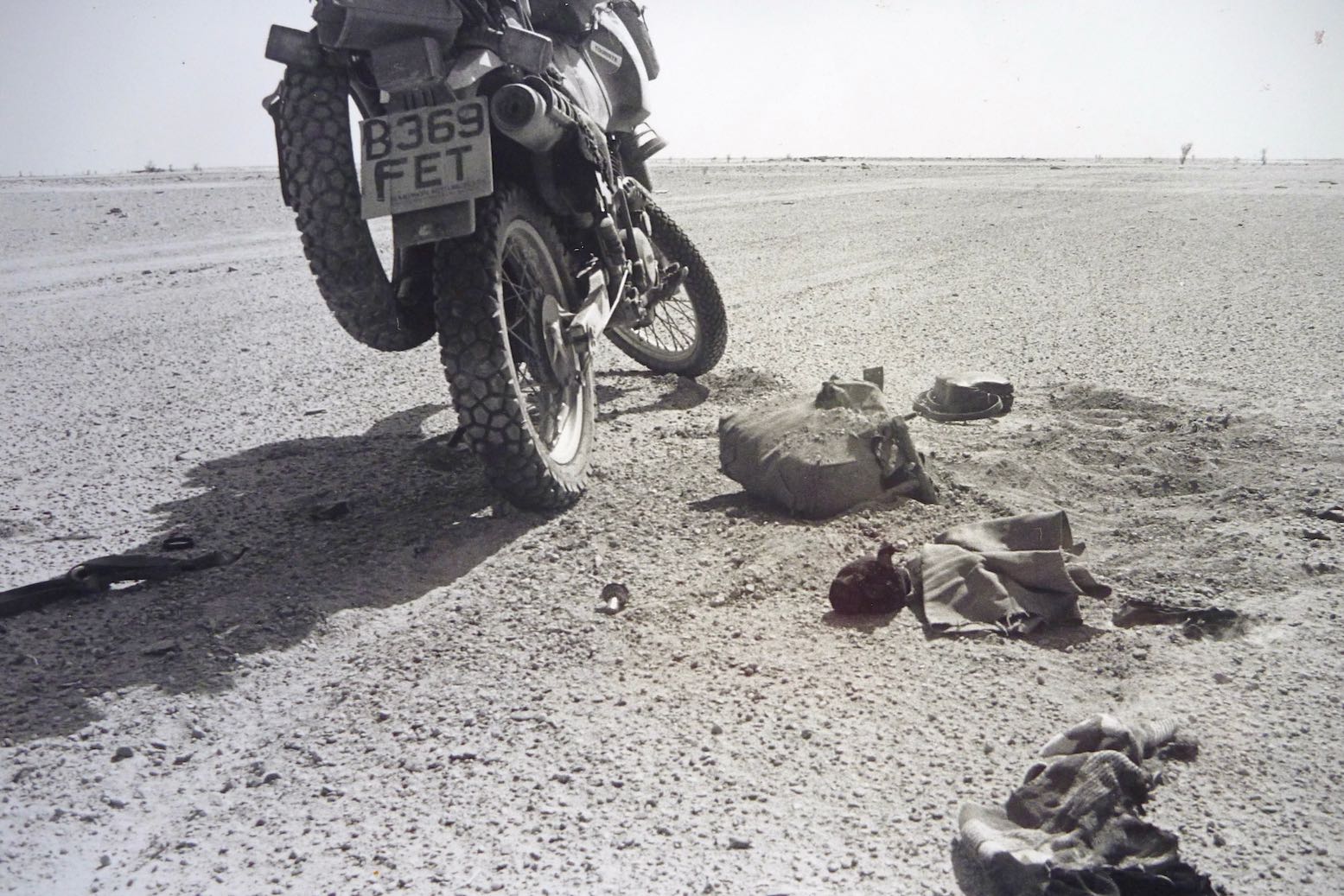
And not only that but just before I got there, my canvas baggage caught fire (pressing on the pipe; the usual story). One pannier burns merrily in the stiff Saharan breeze.
I wasn’t carrying that much stuff; now I had a bit less. Notice the H4 light bulb.
My first Saharan crossing had been quite eventful. See the Google Map.
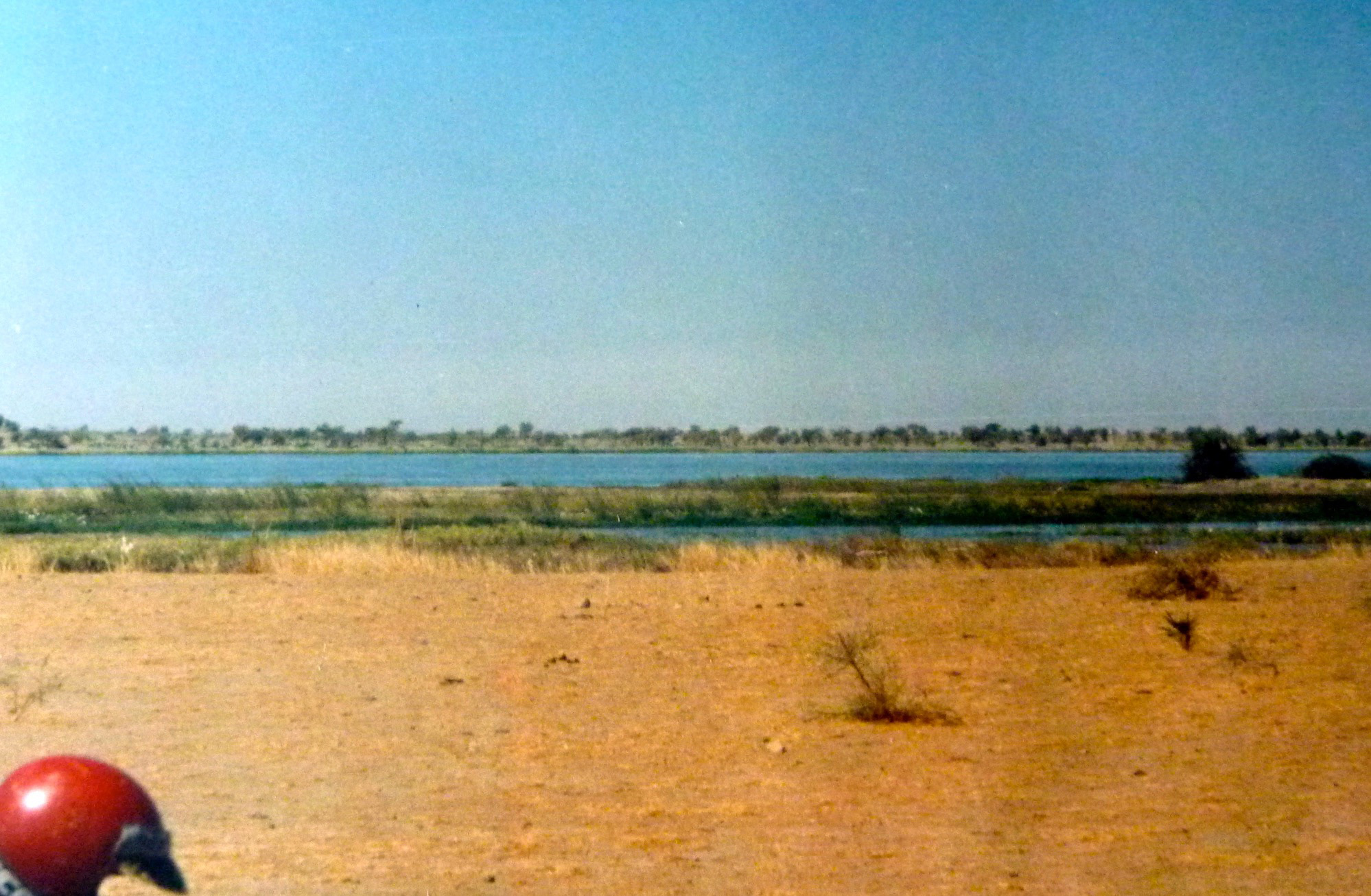
A few days later I arrived at the banks of the Niger river.
West Africa was a whole different vibe from the Sahara and North Africa.
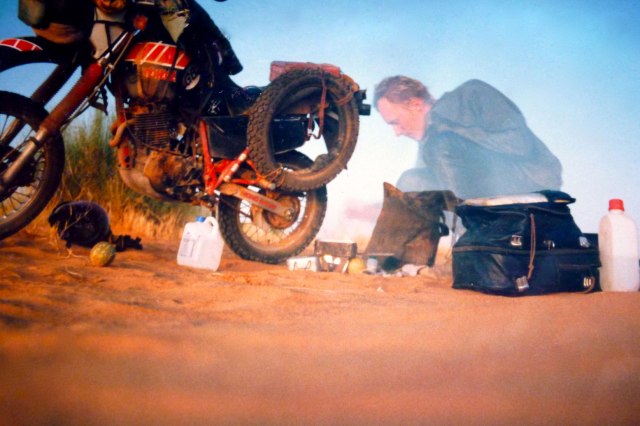
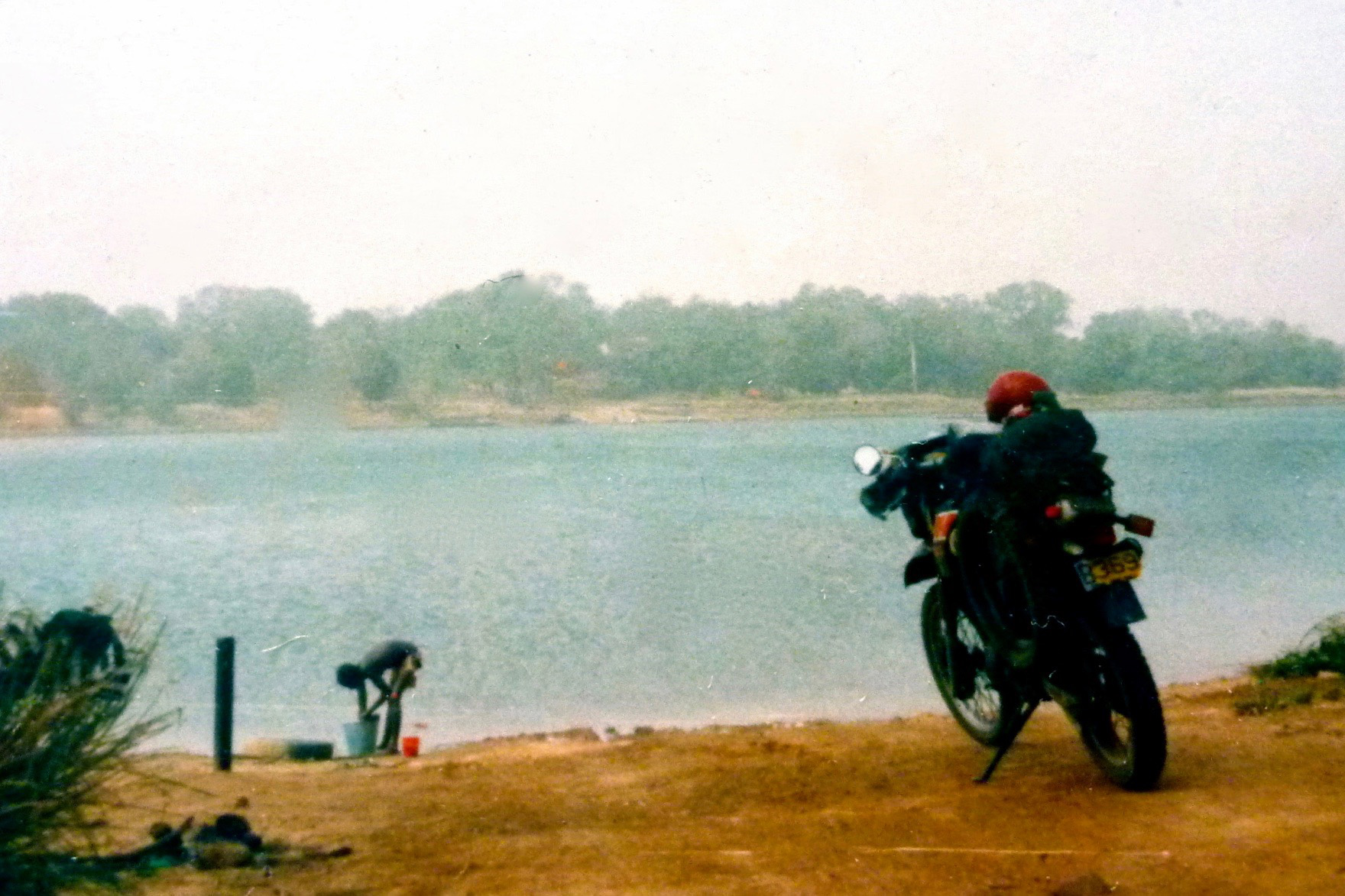
After struggling along the very sandy riverside track from Niamey (Niger) into Mali on those crap tyres, I camped on some dunes above the river. As the sun set, over the river I could hear drums beating in the villages.
This was Afrikah, just like in the movies!
Next morning I reached Gao, located the ferry over the Niger (there’s a bridge now), and headed straight to Bamako as my Mali visa only lasted a week. But I soon got a puncture and encountered the Blue Man as described in the book. From here on I’d have many punctures from thorns picked up while battling along the sandy bush track to Gao.
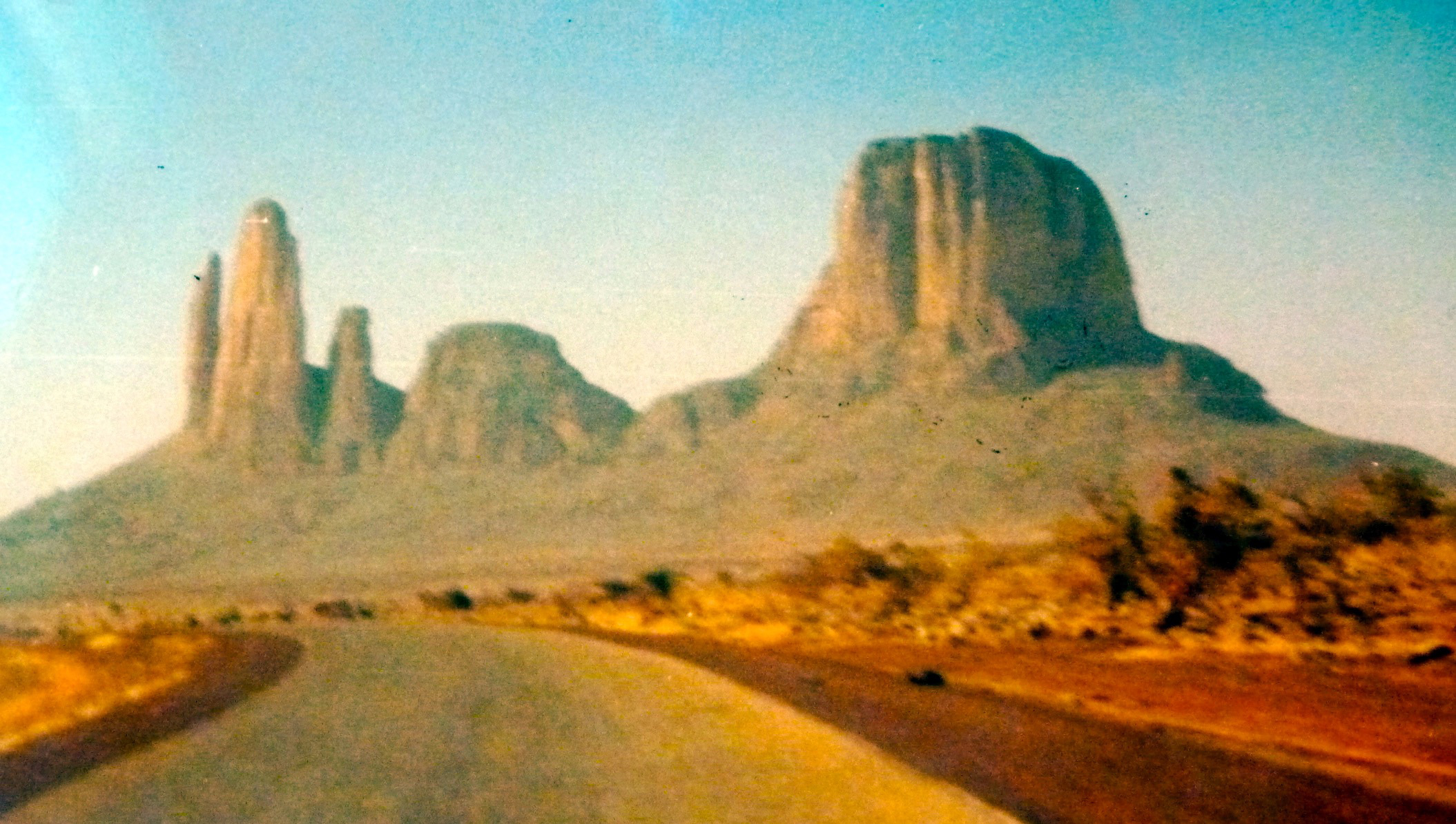
The famous monoliths near Hombori, Mali.
Another monolith in the morning haze.
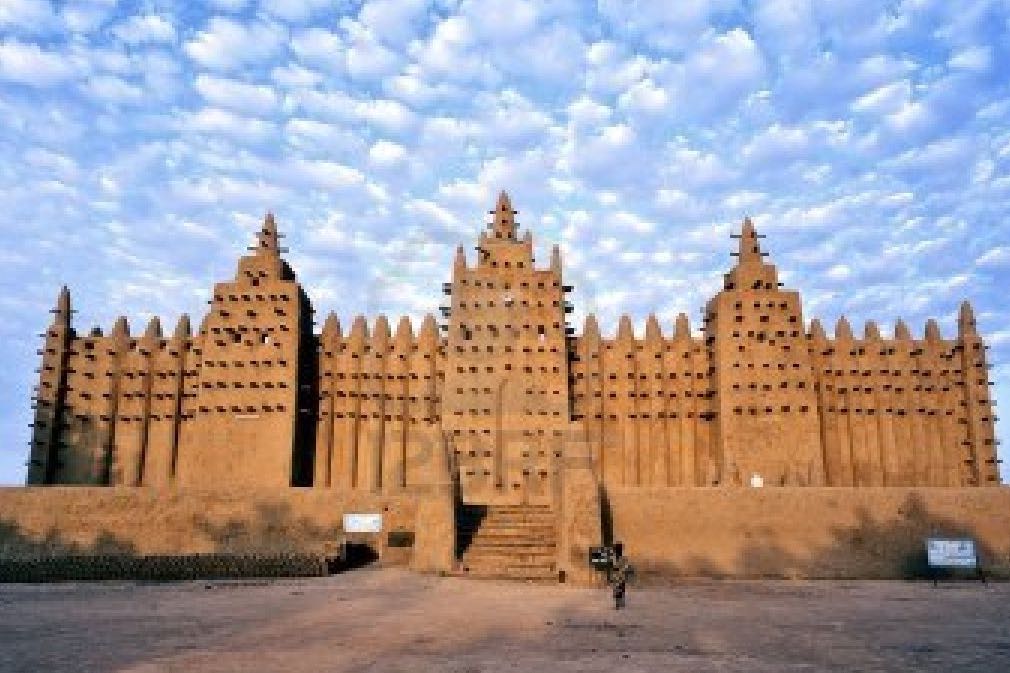
The fabulous Grand Mosque of Djenne (not my picture, can you tell?).
I’m now sick with the shits but need to rush on to Senegal before the visa expires.
In Bamako I gave up trying to put my bike on the train to Dakar, as most people did back then because the roads were so bad.
So I take the direct route to Kayes and the border. After all, I’ve crossed the Sahara and am on a trail bike. How hard can it be?
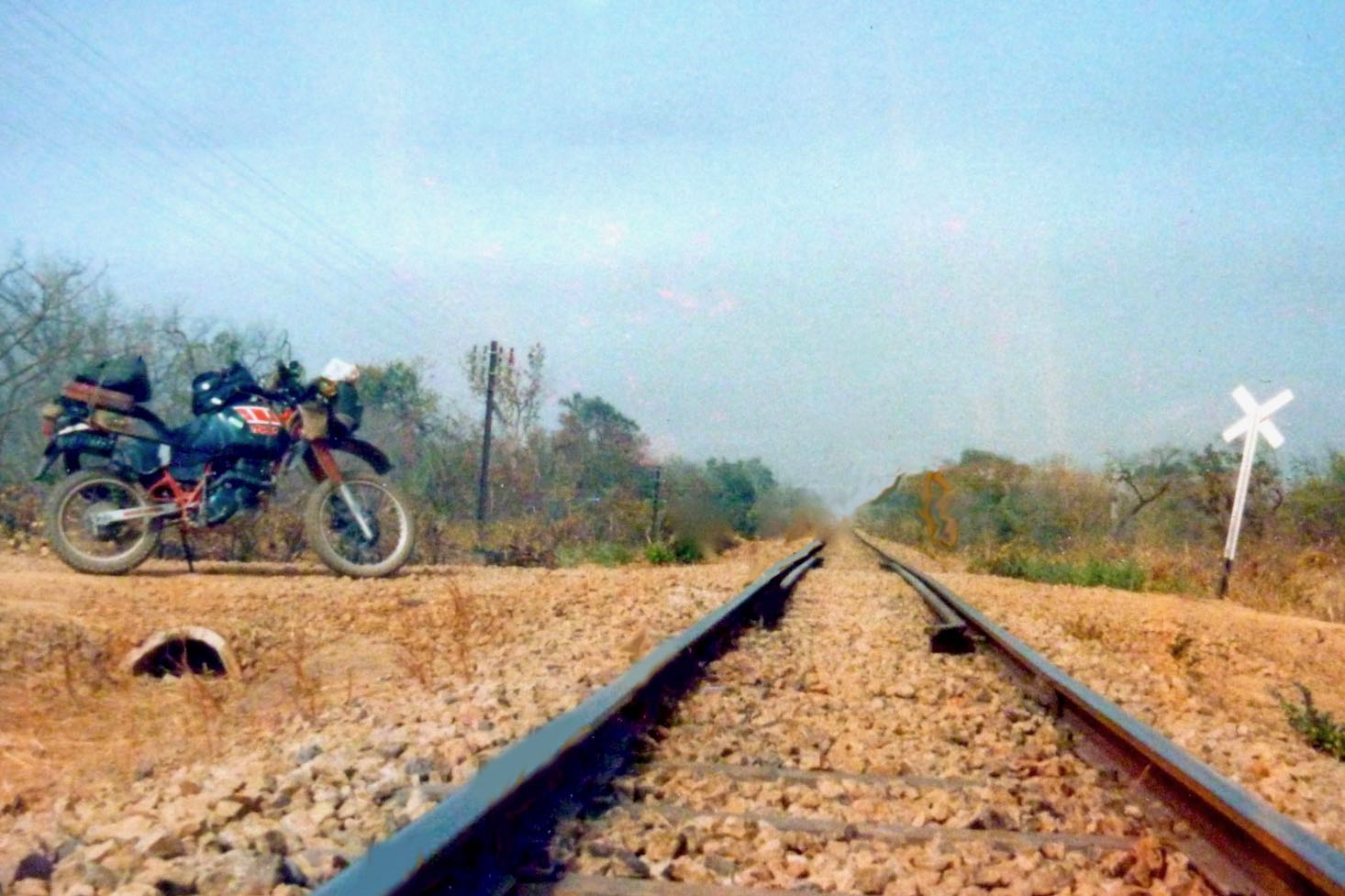
The track follows the Dakar railway which helped with orientation. Just as well as I got lost again and again.
Unlike the desert, there are loads of bush tracks linking village to village. Most locals don’t venture much further.
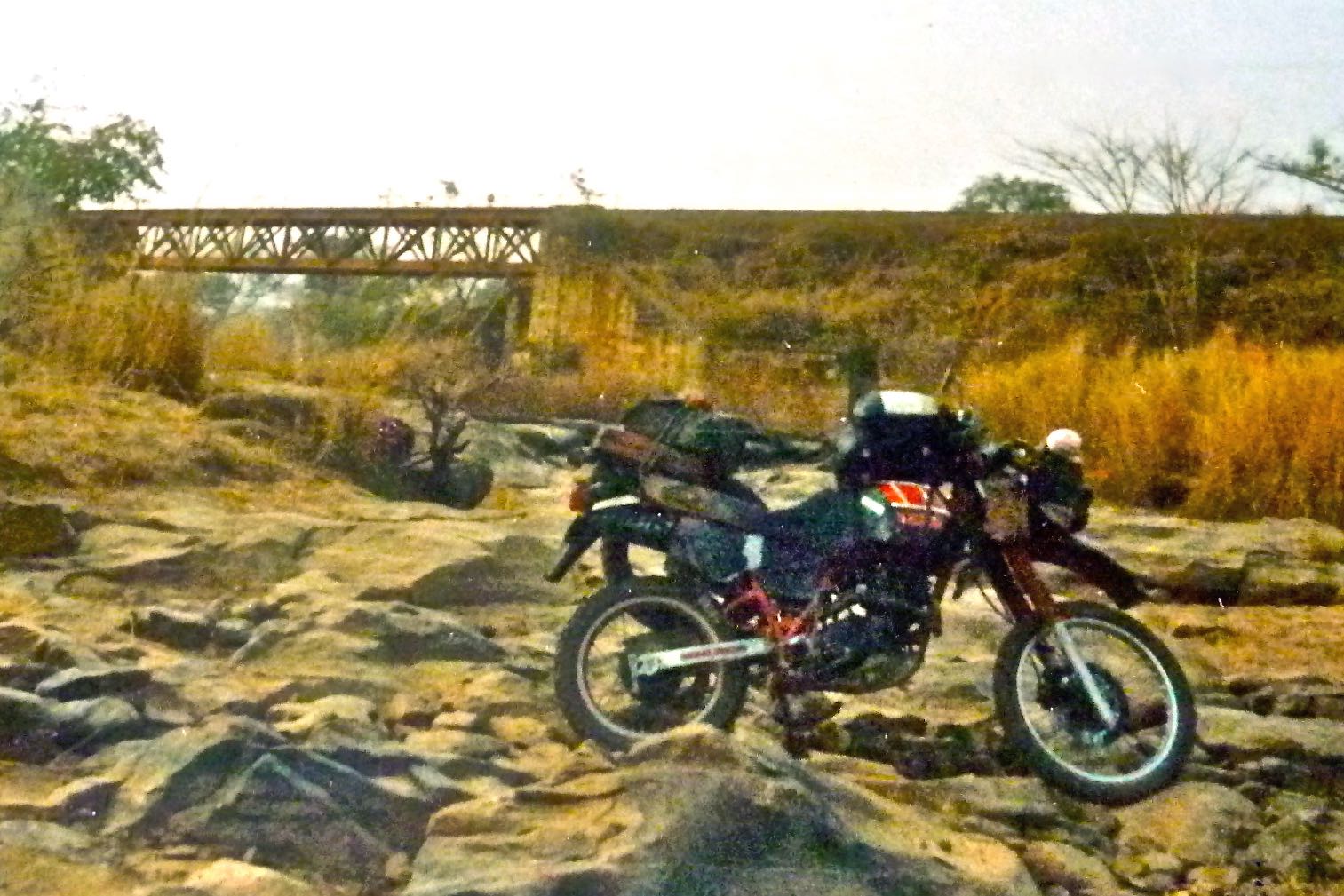
Waiting for the non-existent ferry at Bafoulabe. After a while I realised there was a bridge just upriver. How else would the train get across?
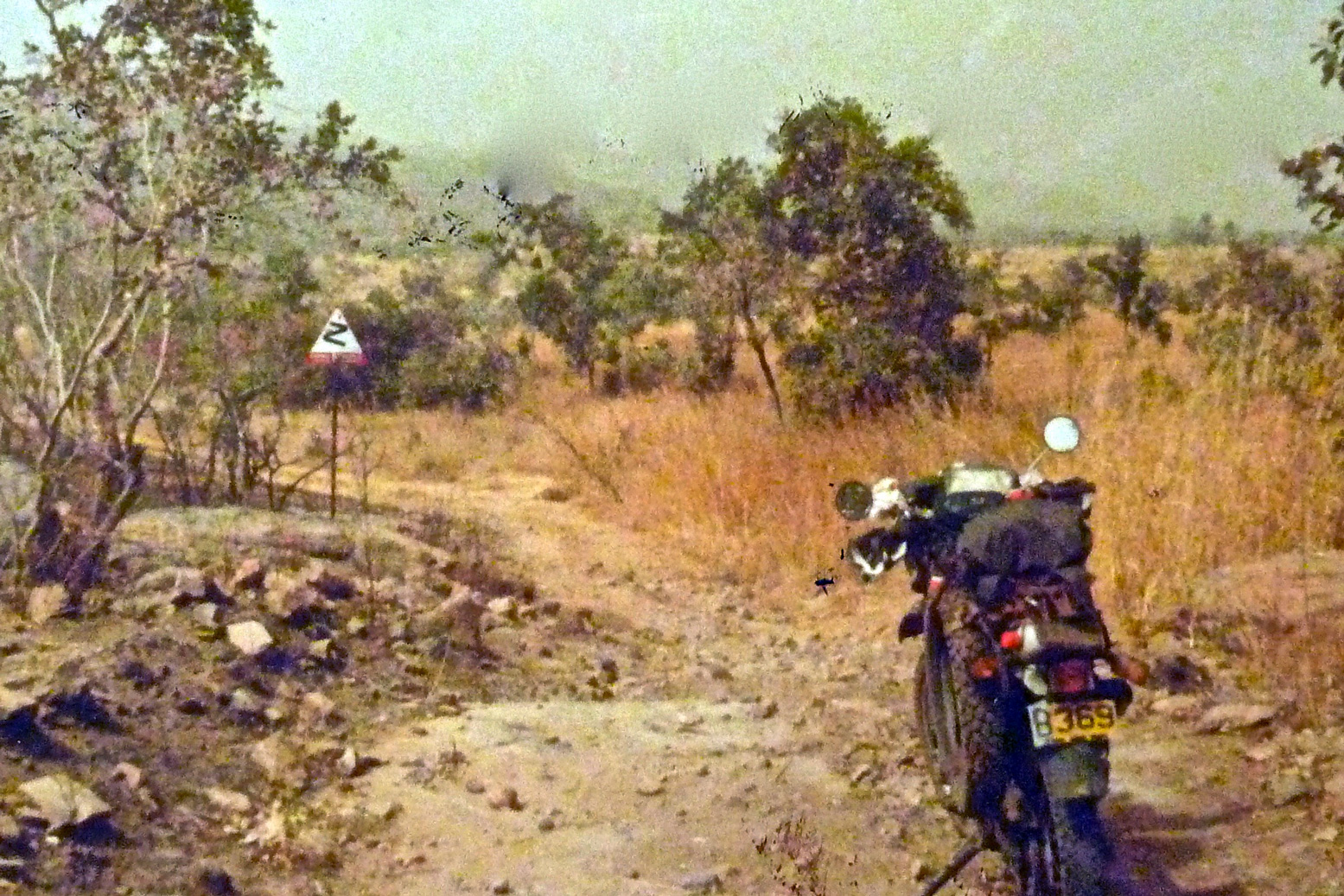
This was the era before tail tidies and you can see my perspex numberplate has succumbed to the piste; a common problem back then. Small metal plates are better.
Rough tracks in west Mali heading towards Kayes. Few people took this route and now I think about it I don’t recall passing any other vehicles in two days.
From Kayes it was another 100km to the border which I had to reach that night or I’d turn into a pumpkin.
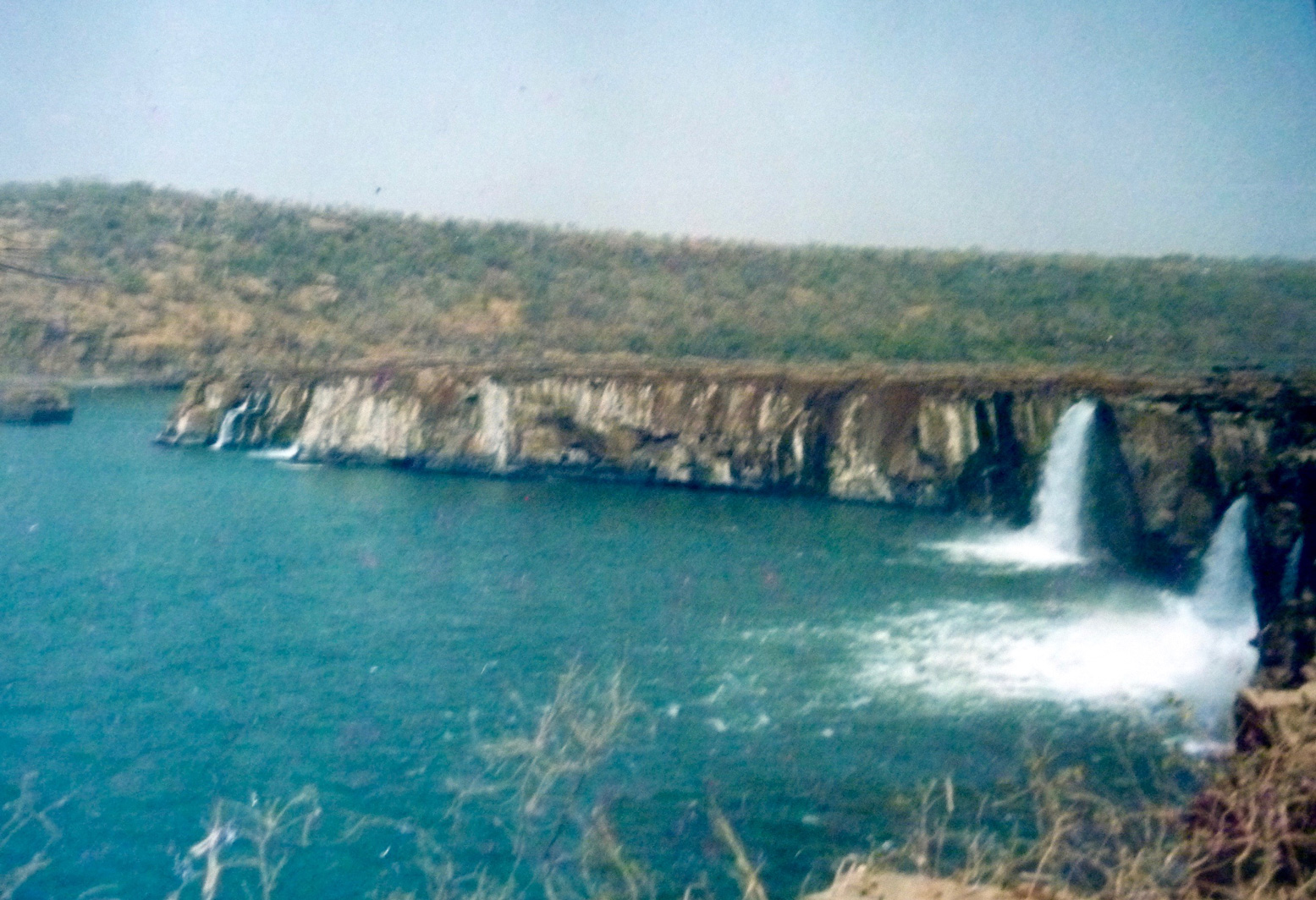
But there was time for a quick look at the Chutes de Gouma, west Mali (see map).
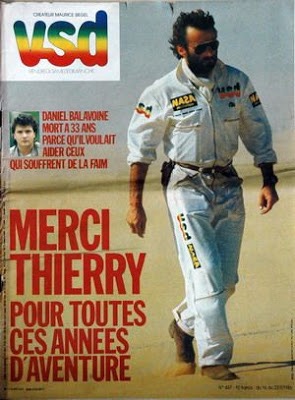
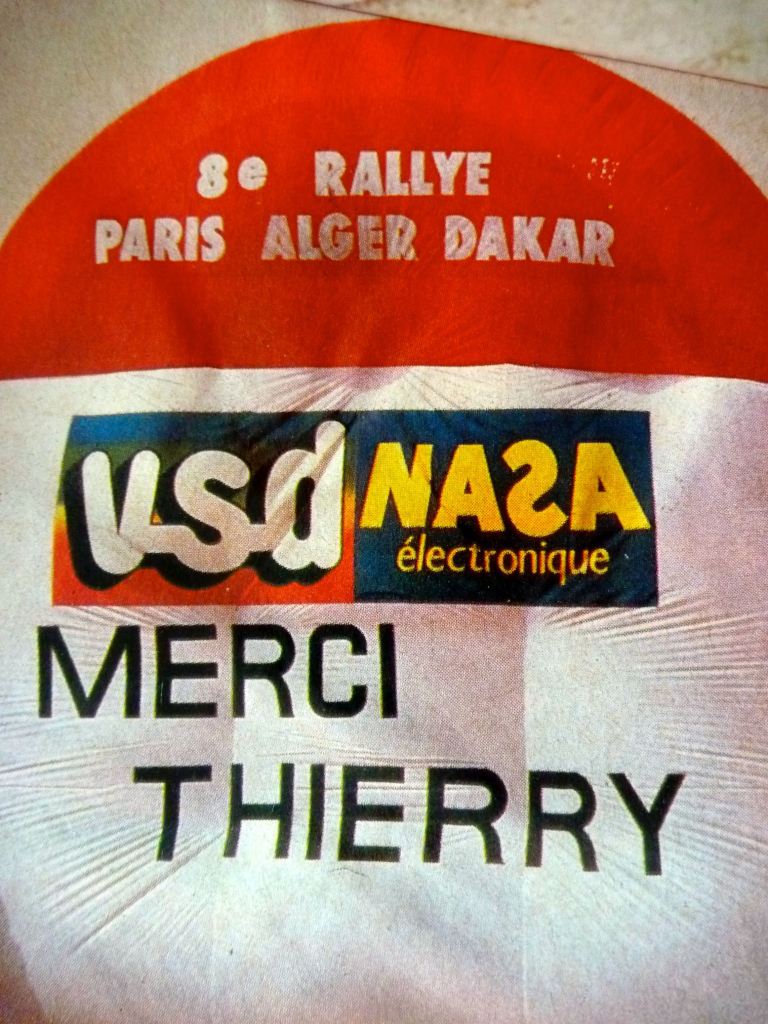
Passing through Kayes that evening, I learned that Dakar Rally founder Thierry Sabine, had been killed with several others in a helicopter crash near Timbuktu. It was January 14, 1986.
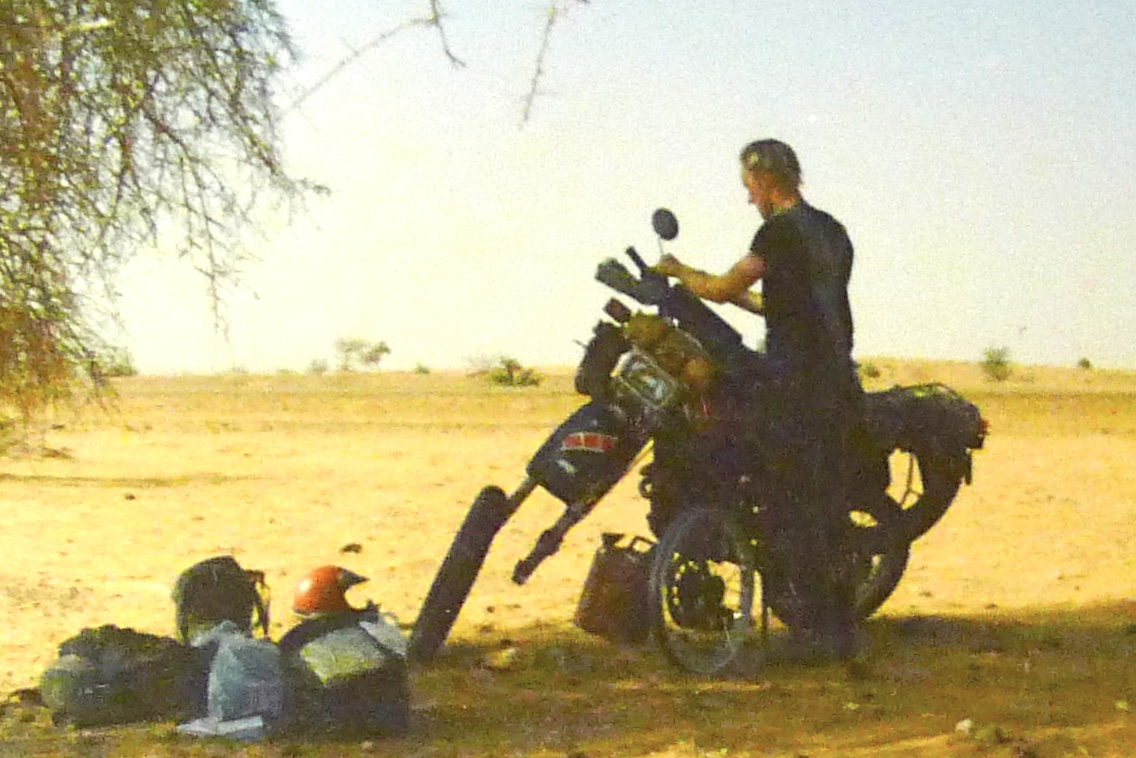
Somewhere after Ambidedi, I crash out under some baobab trees. I was still sick and too tired to carry on, visa or no visa.
Next morning I reach the border, now with two flat tyres, but accidentally manage to slip out of Mali unnoticed. With no more patches, I get a train to Tambacounda where I meet Al Jesse, of Jesse Luggage fame.
He gives me a spare tyre (my own got ruined from being run flat with the rim lock done up).
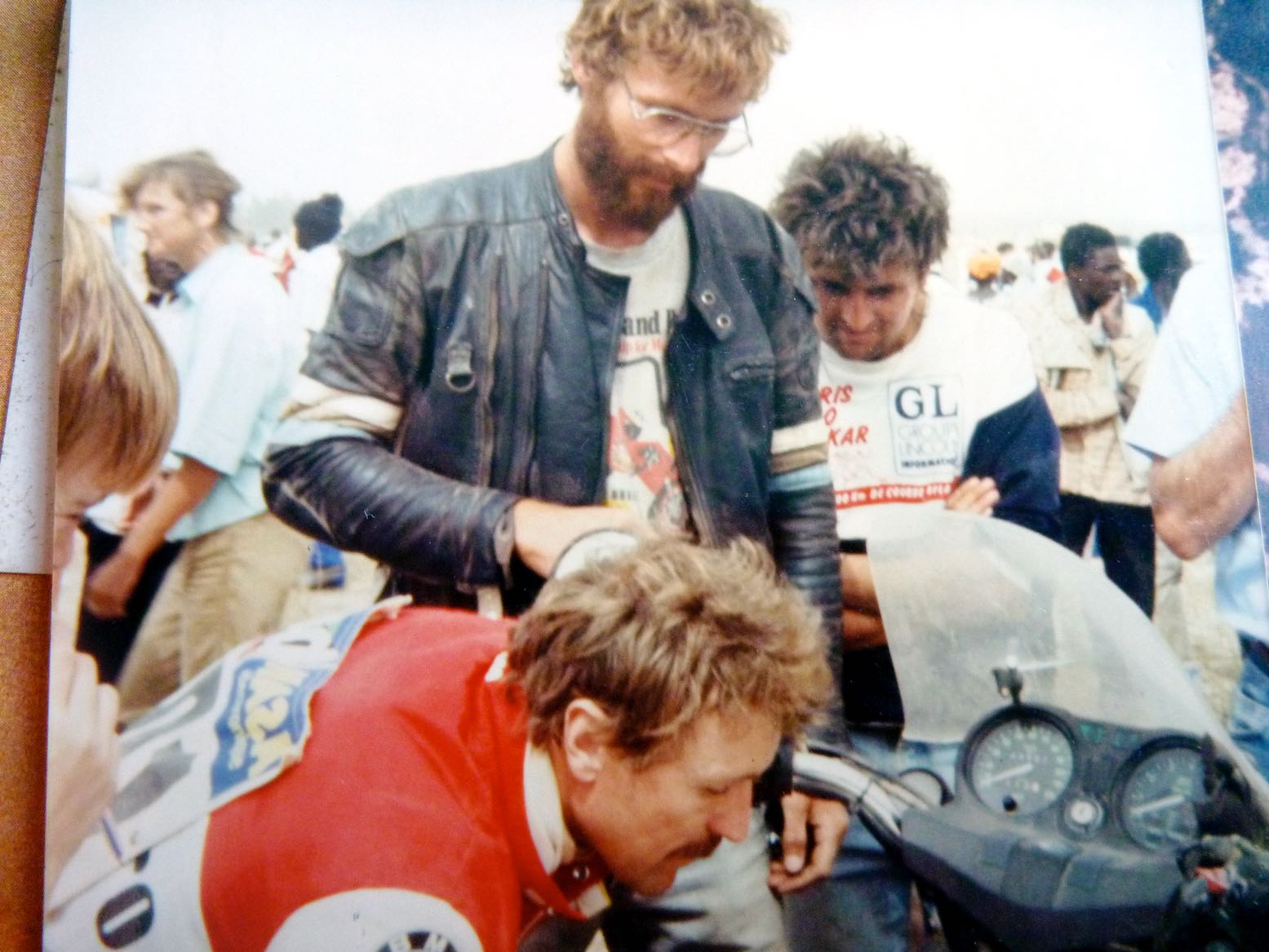
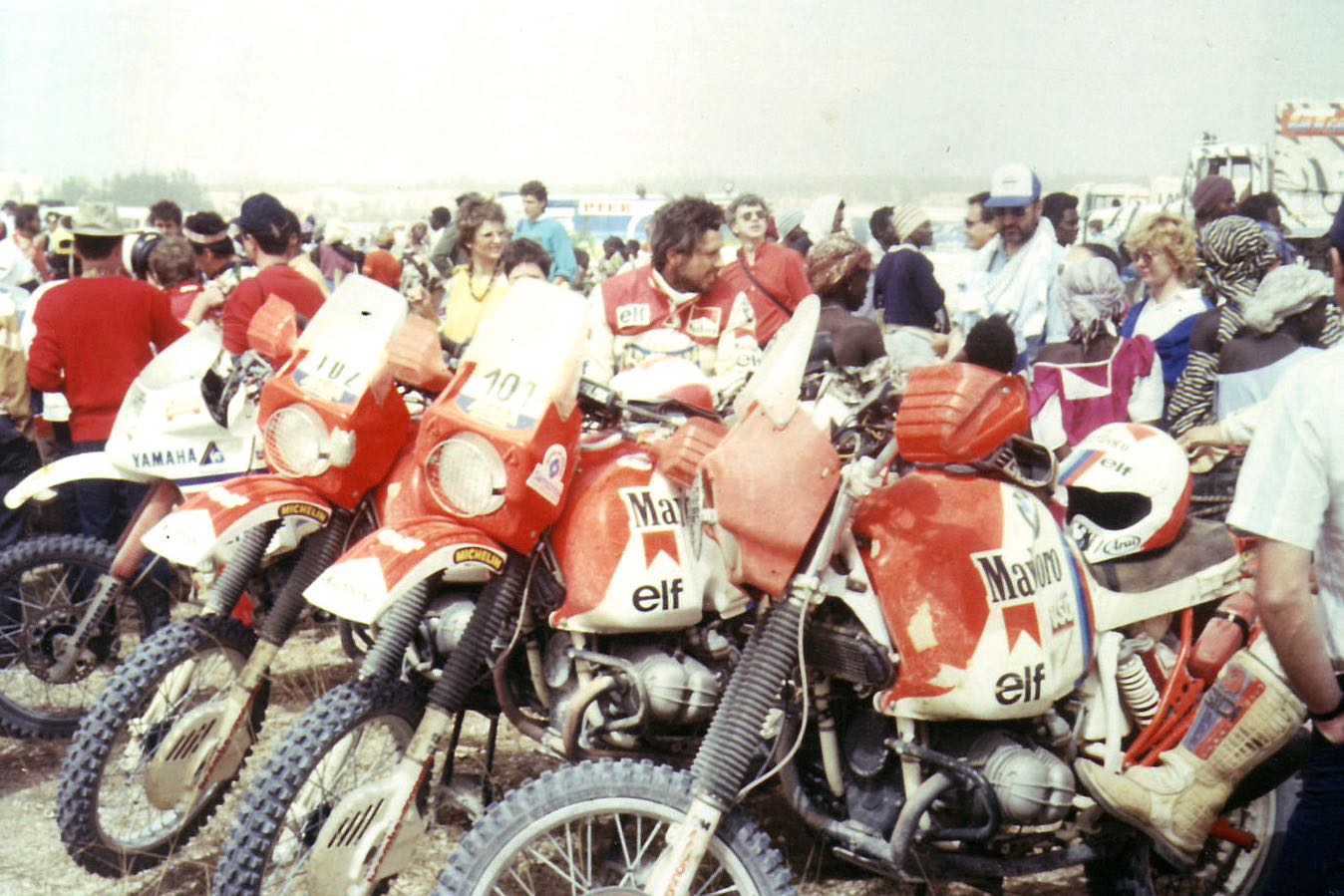
My cameras had packed up by this stage (another common problem of the era) but I still had film, so Al took some pictures of the Dakar finale for me. Above; Al and Gaston Rahier #101, signing Al’s BMW 80ST which he’d ridden down from the Arctic Circle in Norway, two-up.
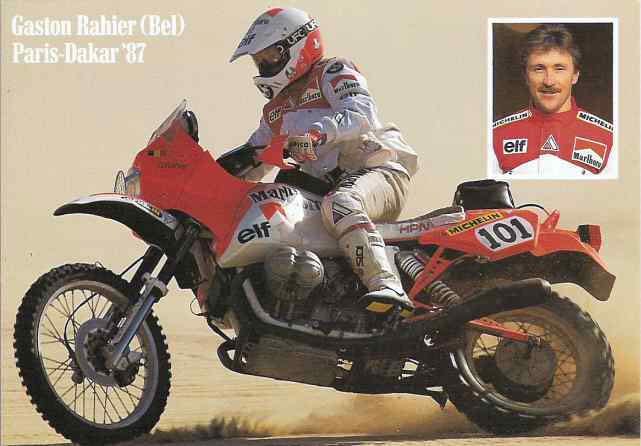
Gaston Rahier in action.
The Marlboro-Elf team. Imagine racing those tanks off road for up to 1000km a day.
Luckily they weren’t shod with Metzeler Sahara Enduro tyres.
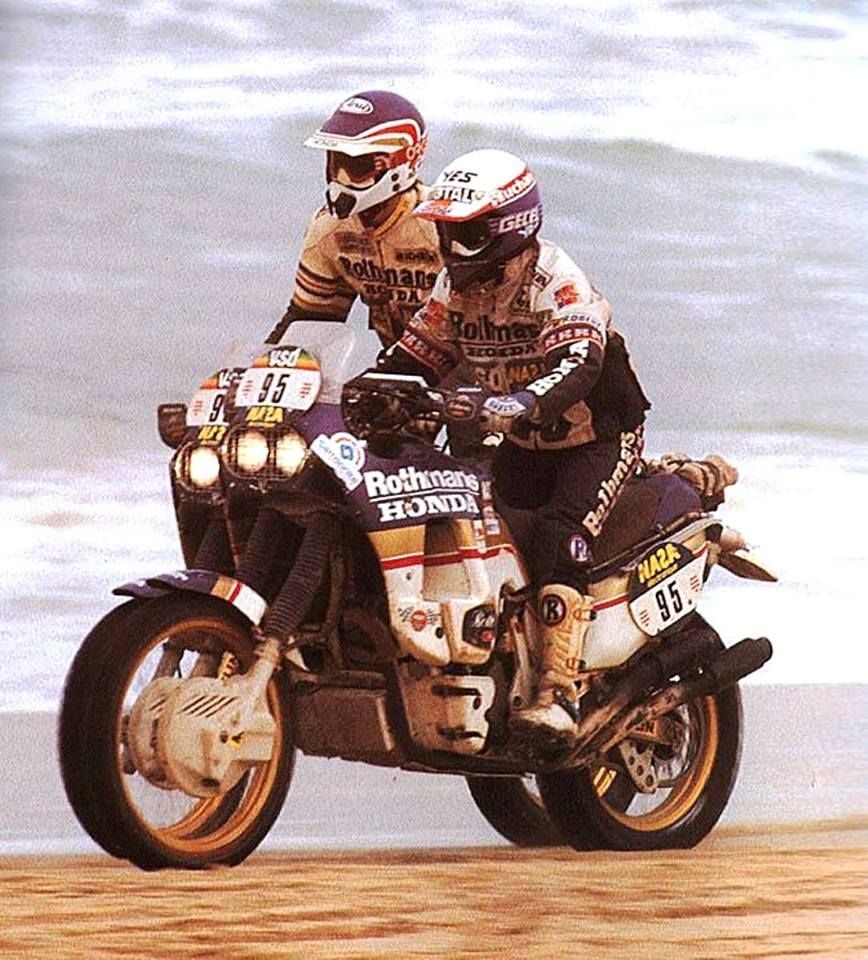
That year Rothmans Porsche 959s got first and second, and so did Cyril Neveu and Giles Lalay (above) on Rothmans Honda NXR 780s (which became the original XRV 650 Africa Twin two years later).
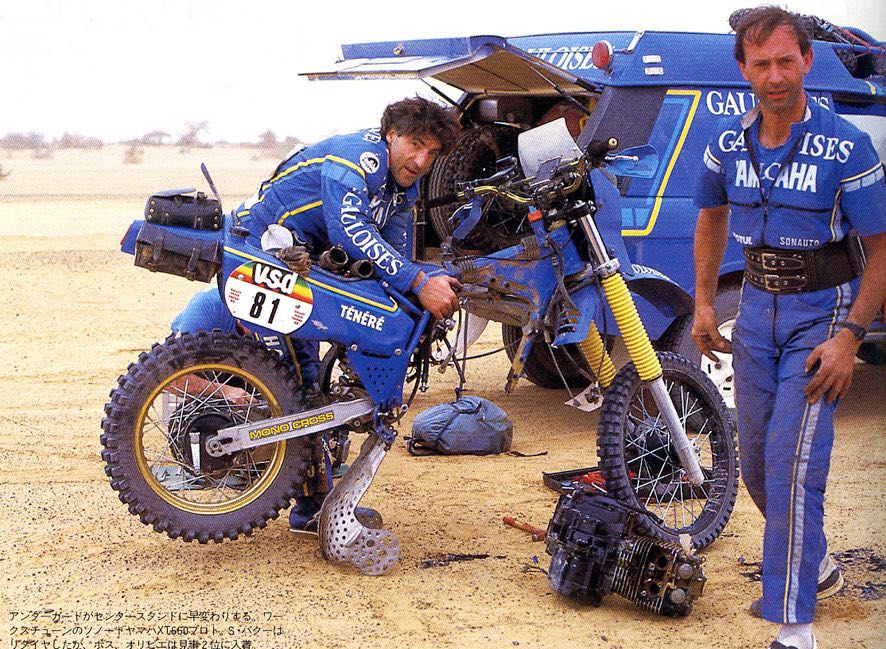
Go Rothmans. Go Gauloises; Go Chesterfield. If that won’t get you smoking, nothing will!
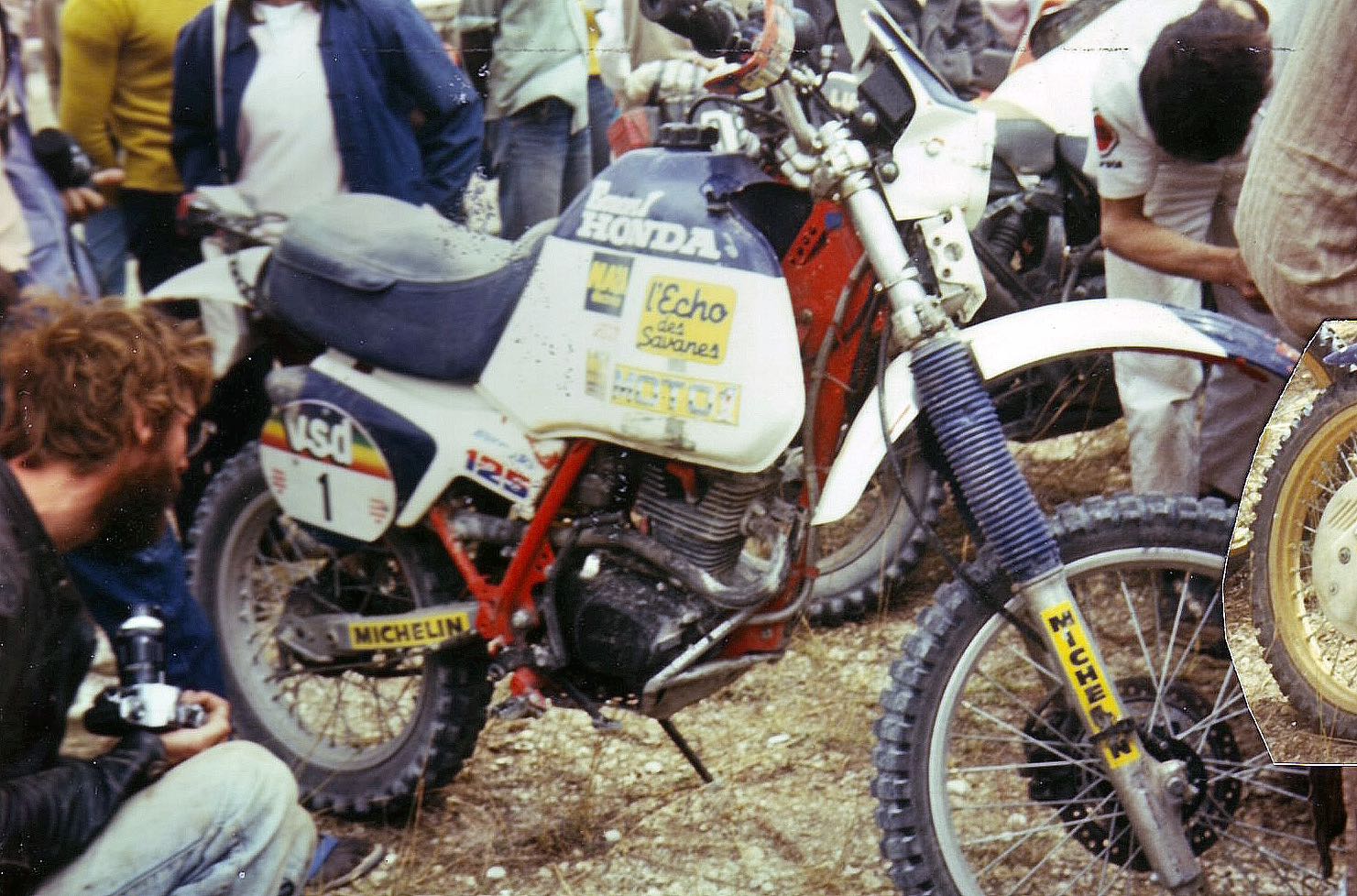
Al inspects a Honda 125 #1. Thanks to this handy website – the best I’ve found for all things Dakar bikes – I was told it was the bike of Gerald Barbezant who was a DNF in ’86.
.
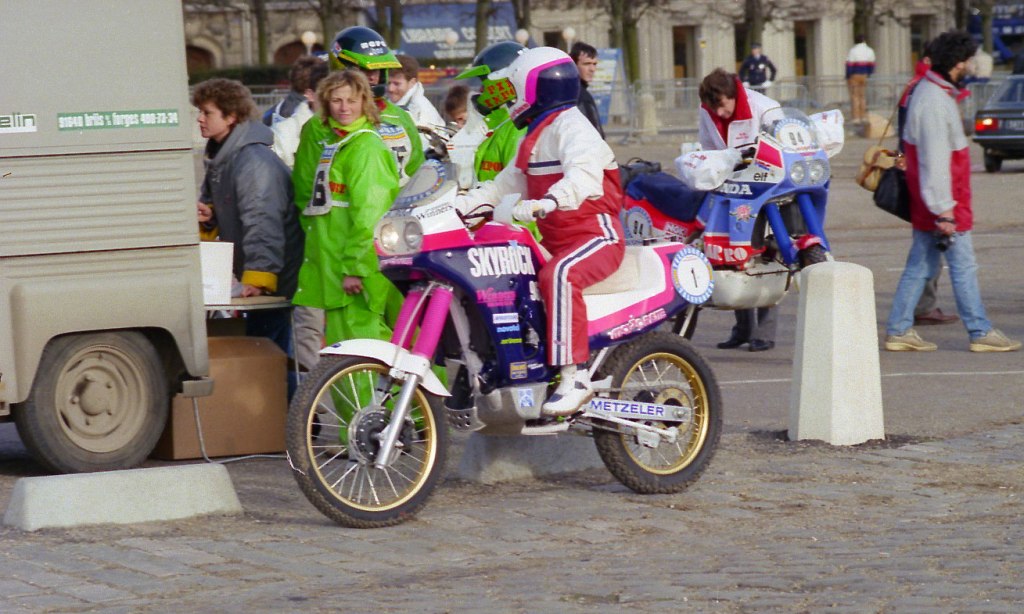
Here he is again, setting off in 1987 on his 3rd Dakar on a somewhat flashier 30-hp Skyrock MTX 125 two-stroke and getting his lurid fork gaiters admired by a lurid lady in lime green PVC.
Aged 57, Gerald Barbezant went on to finish the ’93 Dakar (actually Marseille to Red Sea) on his 10th attempt riding a 125 KTM EXC. He started another four Dakars, riding 125s because ‘he never got a full bike licence’.
Interview here. Fellow 2001 Dakar competitor Lawrence Hacking was not so complimentary in his book.
From Dakar I ship the XT to Spain and fly on after it. What an adventure that was!
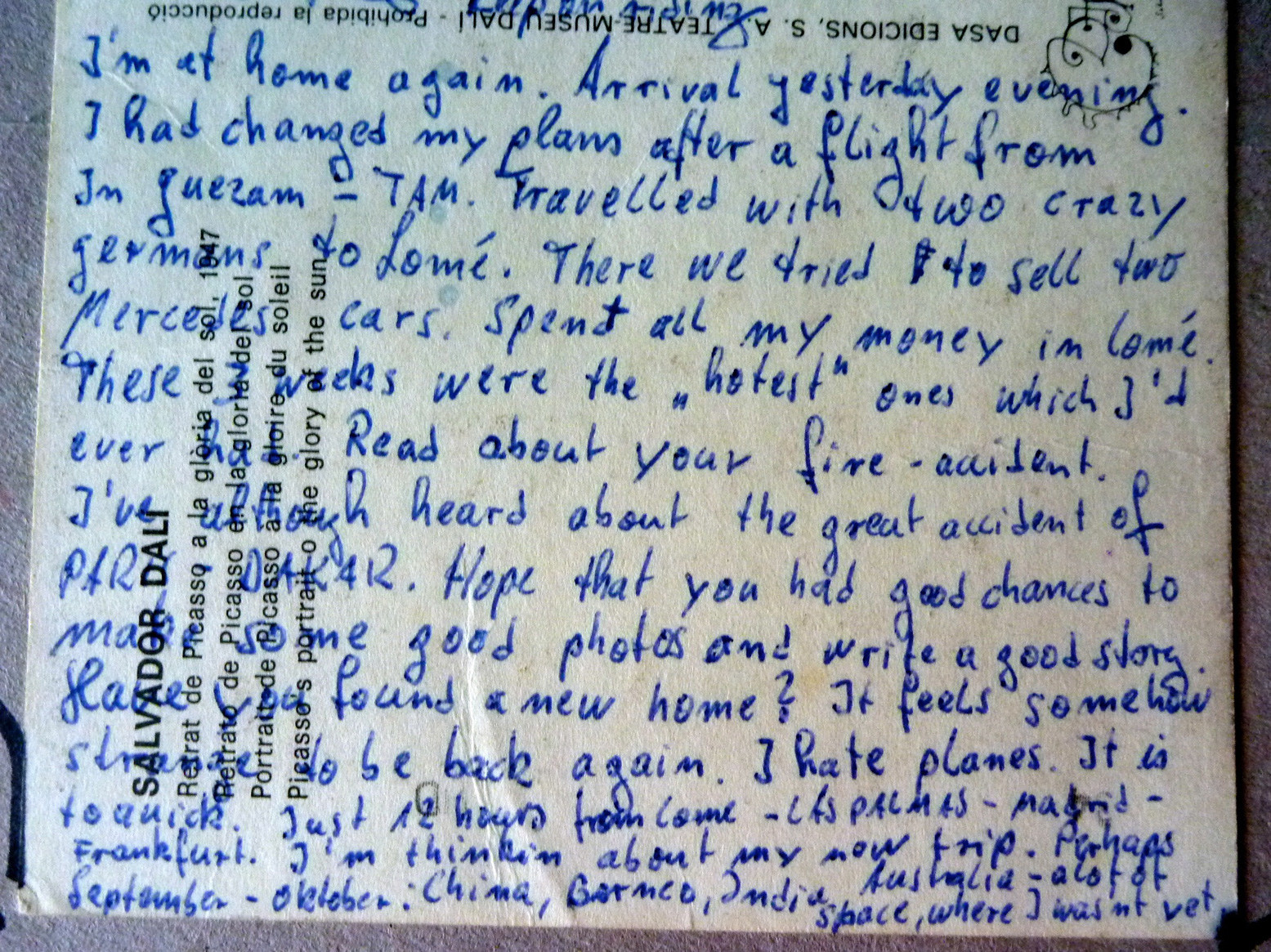
Weeks later I got a postcard from Helmut.
London to Dakar on an XT660Z Tenere. Next?!

Desert Travels • Bénélé 1984 • Part 1/2

Desert Travels Index Page
Part Two

Buy Desert Travels 2021 on Amazon

I don’t write about this mad, two-week trip in Desert Travels, so lap it up here for free.

You’d think I’d have learned something after my 1982 Saharan fiasco on the XT500. Well I did. Despite it all, I was still fascinated by the Sahara and wanted to go back and do it properly this time. When it was good it was epic and other-worldly, and if you came from one of the less edgy suburbs of South London, the Sahara made quite an impression: nature stripped back to its raw bones of sand and rock. And right down the middle lay the frail ribbon of road they called the Trans Sahara Highway which I’d ridden off the very end of a couple of years earlier on the XT.

By 1984 I’d settled for an easy way of despatching for a living: working long but steady hours for a London typesetting outfit, delivering advertising copy on the one mile between Holborn and the West End. (You can read all about that and a whole lot more in The Street Riding Years.)
There was no longer a need to ride an IT250 or a 900SS should you get sent to the other side of the country on a wet Friday evening. For this job a dreary commuter bike was sufficient. And none came drearier than Honda’s CD200 Benly twin (below left), a single-carbed commuter ridden by stoical Benlymen. Riding up to 12 hours a day on a hyper-dull CD can drive you a bit crazy at 24 years of age. Your mind begins to wander.

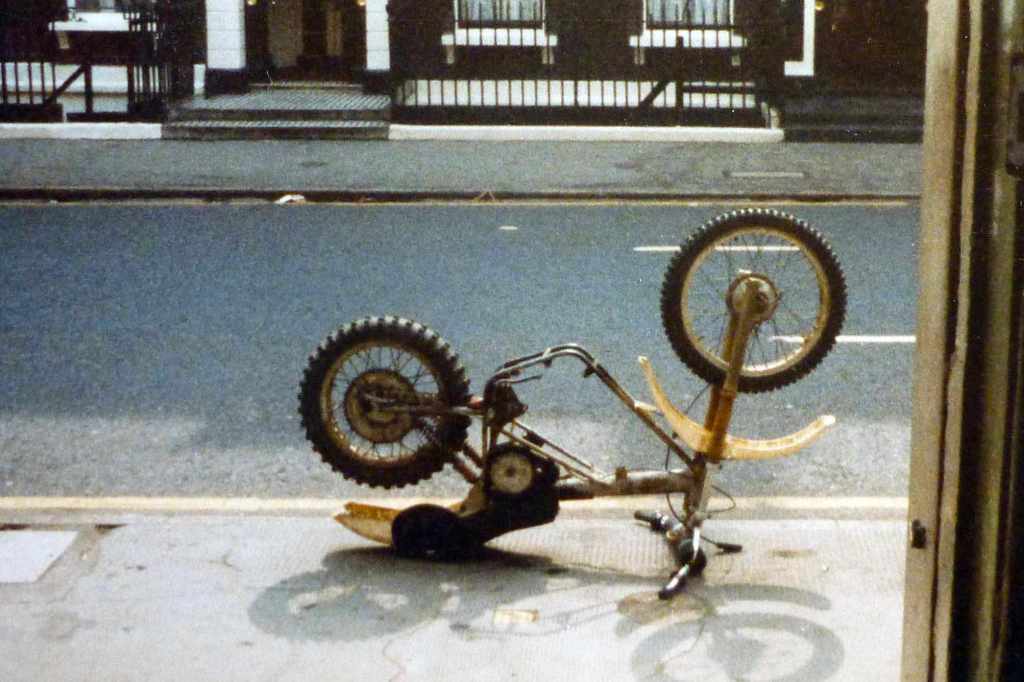
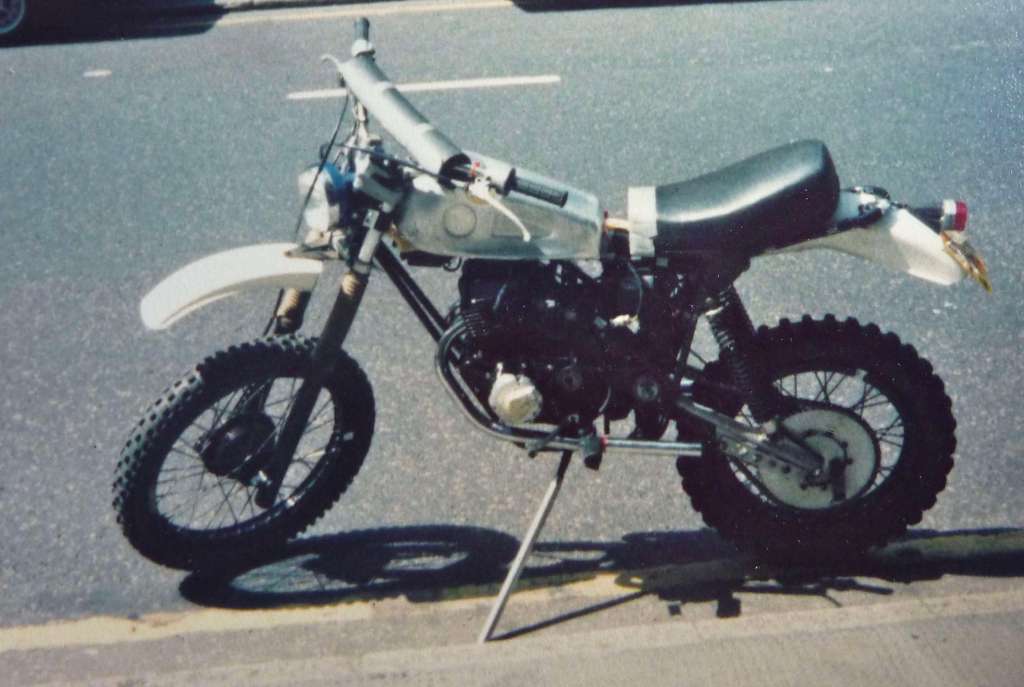
Knowing I was into trail bikes, a mate put me on to a mate flogging an AJS 370 Stormer (above right) for fifty quid. The Stormer was a vile, shin-kicking British two-stroke motocrosser that was the polar extreme of the Benly. In a flash of brilliance which years ago had given birth to the Triton cafe racer cult, I figured I could marry the two and make something more desert rideable and less boring: a Benly-engined, MX-framed desert racer!

Over the summer of 1984 the machine took shape in my artfully appointed design studio in London’s literary Bloomsbury district. It took two goes to get a bike shop to correct the engine alignment mistakes of the former. But here it was, suspended by some Honda XL250S shocks as long as truncheons, and silenced by VW Beetle tailpipes, a cunning, lightweight trick you may recall from the BMW I rode with in Algeria in 1982.
The job was finished off by replacing the dinner-plate rear sprocket with gearing more suited to horizontal applications. Topped off with a classic speedblock RD250 tank, I added a ‘Moto Verte’ sticker so there’d be no mistaking what an international, Franchophilious guy I was.
I took it out to the woods near Addington to see what it could do. The result was similar to dragging a dead dog around on a lead. The VW pipes reduced the power at the rear wheel to quite possibly single figures. The foot of clearance needed a running jump to get on the bike. And the AJS conical hub brakes where a requirement by the then powerful Ambulance Drivers’ Union to ensure their members were never without work scraping Stormer riders off the sides of buses.

I dubbed the joke-bike ‘Bénélé‘ in mock-envious recognition of Yamaha’s near-perfect XT600Z Ténéré which I’d spotted in a Sydney bike shop a year earlier, and which was itself based on Yamaha’s Dakar Rally desert racers. More about them, later.
So what do you do with a dumb-arsed desert racer? You ride it to the Sahara of course, but in a little less time than was available. You pack a 3500-mile trip to North Africa into two-weeks and schedule it for September when you imagine peak summer temperatures are on the wane. This time there’d be no miserable mid-winter transit of Europe and the northern Sahara, as in 1982.

Sli Edrar – my destination at 53mph

My goal that year was a mysterious massif of conical peaks which I’d photographed south of Arak on my way to Tamanrasset in 1982, and which I’ve since learned is called Sli Edrar.
The Bénélé’s top speed was no more than 53mph, and even at that speed it felt unsafe, should a squirrel run out in front. So to get a good run-up I rode straight from work on Friday night down to a mate’s in Canterbury, close to the port of Dover, ready to catch an early ferry next morning.

By maintaining momentum, Monday night found me camped back among the magical limestone outcrops of Cassis, near Marseille, ready to hop on the ferry to Algiers the following morning.

Cassis
Windsurfeurs, Marseille

After the rubbish set up of the XT500, you can see I had an all-new ultralight soft luggage arrangement. No more sawn-off chemical tins poorly lashed to Dexion racking.
A small canvas pannier hung on one side with a 10-litre jerrican inside; a thin cotton Times newspaper delivery bag dangled off the other with 10 litres of water. And an over-huge tank bag sat on the flat-topped RD tank. A sleeping bag was lashed in front of the headlight – Easy Rider style – and kept the bugs off the Benly headlight. Cunningly, I lashed a tool bag with other heavy items under the lofty engine. If my mass had been any more centralised I’d have become a Black Hole right there and then.

hi-res-c-scott-1984

My first memory of Algeria that year was being a little unnerved that as far north as El Golea it was already 35°C by 9am. If you live in Yuma that’s probably no big deal in September, but for a South London boy it was a bit of a shock.
I filled up in town and set off across the Tademait plateau which had spooked me on my first transit in ’82. The next town (or anything) was 400km away. I buzzed along at 9.8hp/hour and by early afternoon dust devils or mini tornadoes were whipping across the baking gibber to either side of me. I recalled how a mate said he’d been knocked off his XS650 by one in Turkey earlier that year.

I was already tired, thirsty, sore and hot when up ahead what looked like a huge wall of sand hundreds of feet high hurtled right across the blacktop like a train at a level crossing. Only as I neared it did I realise it was the mother of all whirlwinds, a huge cauldron of rotating sand. I turned the wick up and the motor droned as I punched the Benele into the sand wall.
Inside, visibility was lost as grains pelted me from all directions and I struggled to keep upright or even know which way upright was. And then, as I slipped into the windless eye of the maelstrom, the sand grains briefly turned into pelting raindrops. WT jolly old F was going on!? Search me, but before I knew it, I’d blasted out of the spinning tornado’s opposite wall, this time shoved left onto the roadside gravel. Now I knew how those roadsigns got flattened into the dirt…

Just as in 1982, the Tademait had terrorised me and I vowed to ride into the dark to be off the plateau before stopping. I continued into the dusk, pulling up briefly with the engine running to remove the sleeping bag off the headlight, before pushing on from the big switchback descent from the Tademait to the desert floor.
That night I stripped off and lay in the dirt by the bike, listening to what sounded like the oil boiling in the crankcases, hours after switching off.
I wasn’t hungry but I drank and drank and soon fell asleep where I lay. Tomorrow I was passing In Salah, the hottest town in Algeria, before heading deeper into the Sahara.

Part 2

Review: Kriega Trail18 daypack

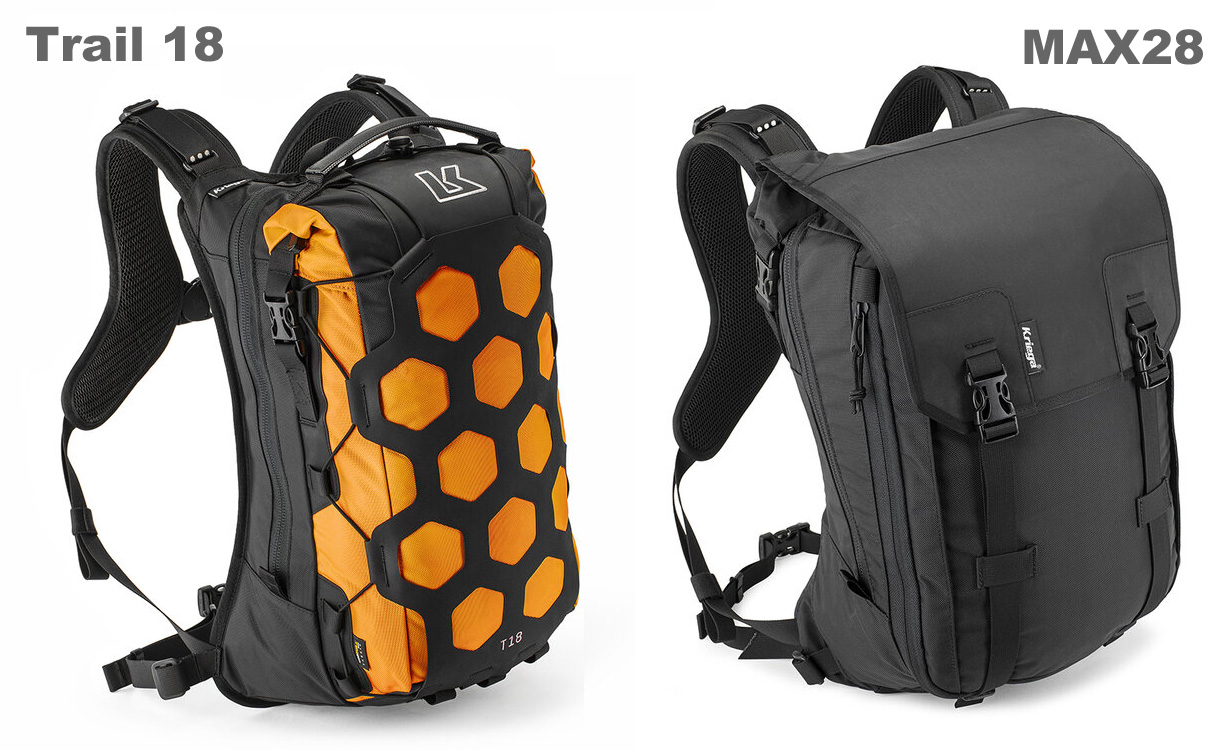
New daypacks join Kriega’s long-established five-strong R range from 15 to 35 litres. You got the snazzy colour-backed Trail in 9 and 18-litres and the bigger more urbanesque Max 28 which expands to take a helmet.

Supplied free for review and testing


What they say
The TRAIL18 Adventure Backpack utilises Kriega’s groundbreaking Quadloc-Lite™ harness, combined with high-tech construction materials to meet the needs of the adventure rider.
Composed of three sections:  A heavy-duty zip access 7-litre rear compartment which is a perfect storage area for a Tool-Roll and water bottle or the optional 3.75L Hydration Reservoir. This area also has a small internal waterproof pocket for a phone and wallet, combined with the main roll-top body providing a total of 12-litres 100% waterproof storage. The innovative Hypalon net also provides more external storage for wet gear.


What I think:

tik

• Roll-top compartment
• Comfortable to wear; sits well on the back
• Removable waist straps (never used)
• No compression straps
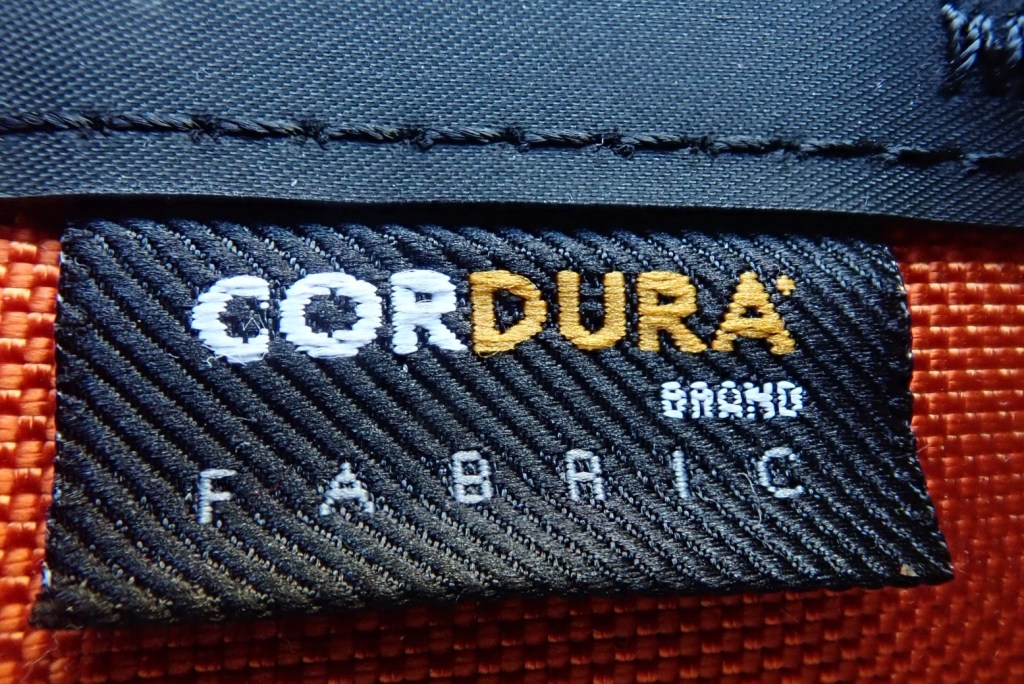
• Durable 420D Cordura body
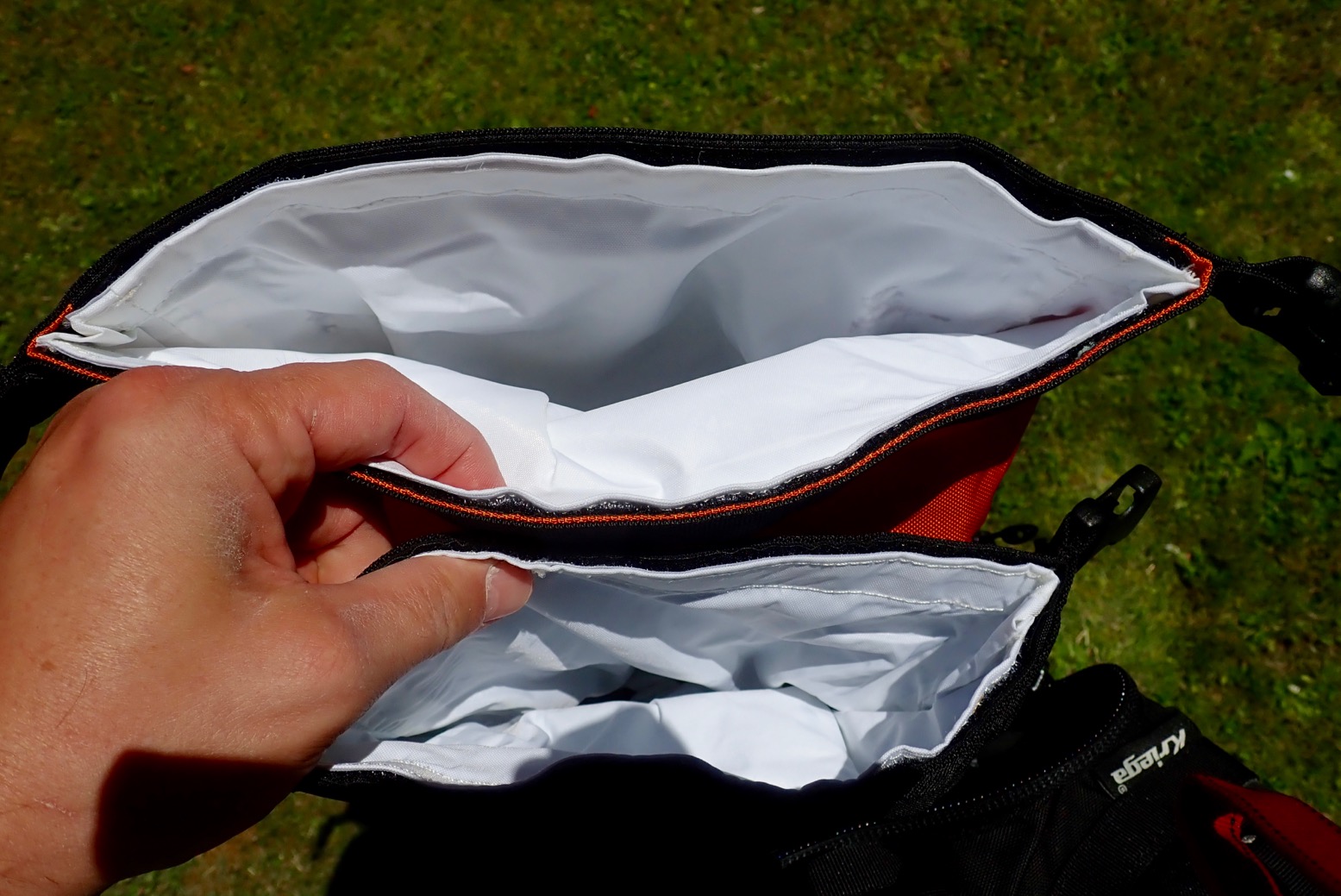
• White waterproof liners in two compartments
• Hydrator-ready
• External hypalon net
• Smooth-gliding main zipper
• Colour-backed Trails aid visibility
• 10-year guarantee

cros

• Bulky roll-top small inner pouch
• Expensive
• Quadlock-Lite interferes with jacket pocket access
• Weighs in at over 1.7 kilos with the hydrator


Review
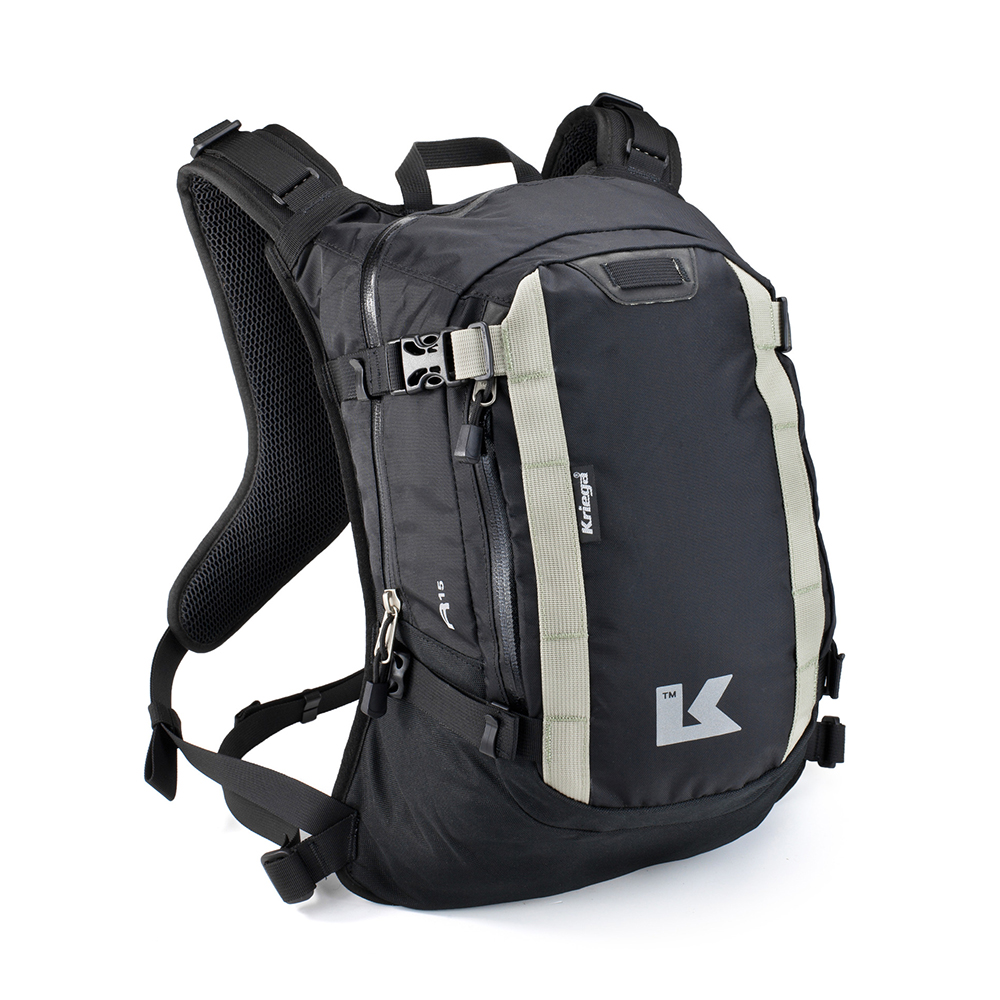
For years I’ve been happy enough with my dinky R15, once I cut off the unneeded compression straps and removed the unnecessary waist strap. I’ve used it for weekends in Wales, backroads and tracks in the Colorado Rockies and Baja, and of course on my Morocco tours and rides. The main compartment was big enough for my laptop in a dry bag plus the hydrator, with bits and pieces in the PVC mesh inside pocket and the bigger outer pocket.

The longer Trail18 will be a nifty replacement. Straight away I like the coloured back panel. Often on my tours I try to ID riders up ahead, and anything non-black makes it a whole lot easier. I dare say it will be for them to spot me with an orange pack too.
You often get those thin bungy elastic laces across daypacks as a quick and easy place to stash stuff. Kriega have thought it through a bit further by using a distinctive hypalon net panel with the elastic strung along the edges and attached closely at the base. This way, whatever you stuff in there – mucky bottles, baguettes, wet cloths – won’t fall out the bottom. And if you want more colour or don’t like this arrangement, you can easily unlace the elastic and remove the hypalon panel.

I can see a use for this feature buying some food on the way to a night’s lodging, or securely stuffing a jacket or overpants in there on a hot day when you don’t want to dick about with the closures. It’s possible the excess elastic and cinch fittings above may flap about in the wind behind you, but tucking the end in is easy enough.

Behind this panel is a full-length 11-litre compartment with a removable white waterproof liner and a clip-down roll-top. The great thing with roll-tops is that even if you forget to do them up, stuff stays in. No more clattering laptops on leaving airport baggage scans with unzipped zips.

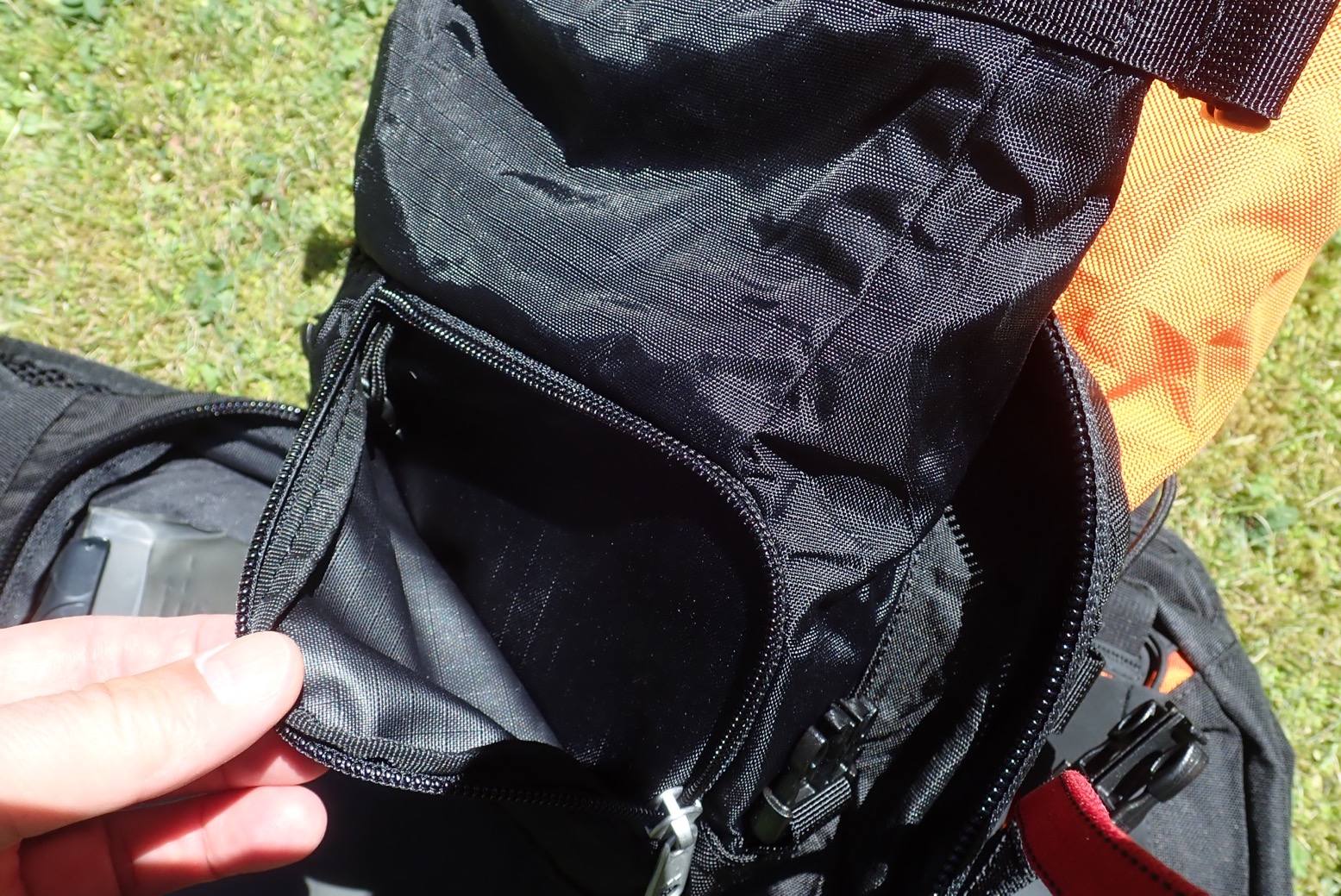
Behind that compartment against your back is a smaller 7-litre zipped compartment with no liner. Inside are a couple of tabs to hook up your hydrator (more below) and down below a couple of sleeves for drinks cans or 500ml water bottles. A smooth-running (non water-resistant) one-way zipper only comes right down on one side (below) so forgetting to do it up ought not see things fall out so readily. It includes a finger-hooking ring pull which can only be in one place when closed, but I always add a bit of bright tape to make this puller easier to locate.

My only mild gripe with the Trail is the bulkiness of the roll-top/clip-down waterproof liner’d 1-litre pouch with a phone-sized zip pocket attached in the inner compartment. I know it’s waterproof but the roll-up takes a lot of space and clipping it down would be a faff. I’d have preferred a bigger version of the plastic ripstop zip pocket from the R15. But then again, you can easily drop a big camera in here and be reasonably sure it will stay dry.
After a year I chopped off that pocket’s roll-up sleeve, taped it up and cut a hole behind the zip to access the pocket without losing any volume.

The long mesh-padded back panel seems stiffer than my old R15 so the whole thing doesn’t rest quite so unobtrusively on your back, which may actually be a good thing. The waist strap can be removed and there’s also a door hook tab plus a chunky carry handle. On the front are loops to clip in mini karabiners for quickly attaching stuff like hats or Kriega accessory pouches. I zip tie a small camera case on there for quick access.
My Trail18 weighed in at 1550g and costs £179.

The Trail is hydrator-ready with a slot for the hose to come over either shoulder and a velcro tab inside the back from which to hang the bladder.
Kriega’s stubby new 3.75L (7.9 pint!) Hydrapak Shape-Shift reservoir is made to fit both Trail models by fully expanding to fill the space below that bulky top pocket.
Nearly 4 kilos of water is a lot to carry on your back, but maybe that’s what some riders need. The rubbery TPU bladder has an easy-to-use and reliable fold-and-clamp closure with a big aperture which makes it easy to fill and clean/dry the inside, as well as the clip-on, insulated and UV-proof hose with hopefully a less-brittle bite-valve on the end. I tucked my nozzle end under a tab on the front of the strap, but Kriega offer a velcro attachment tab which may well work better if the hose is on the short side for you. It costs £45.