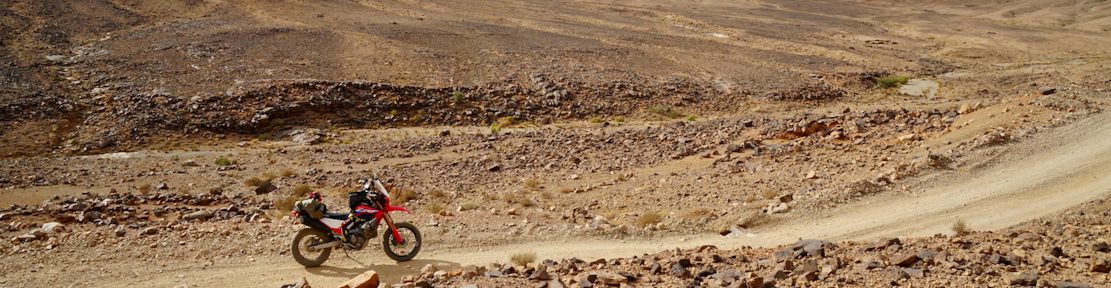
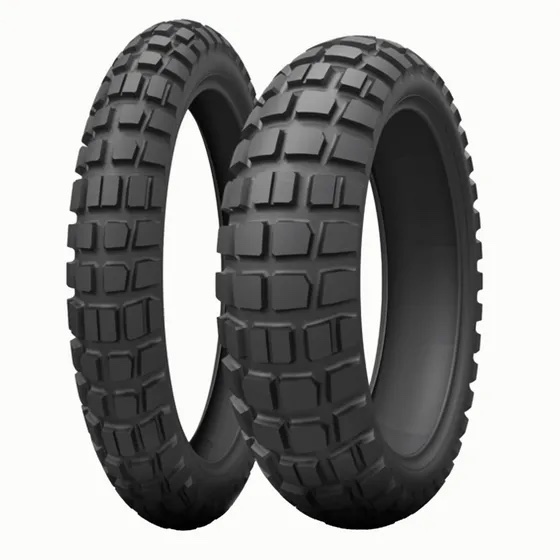
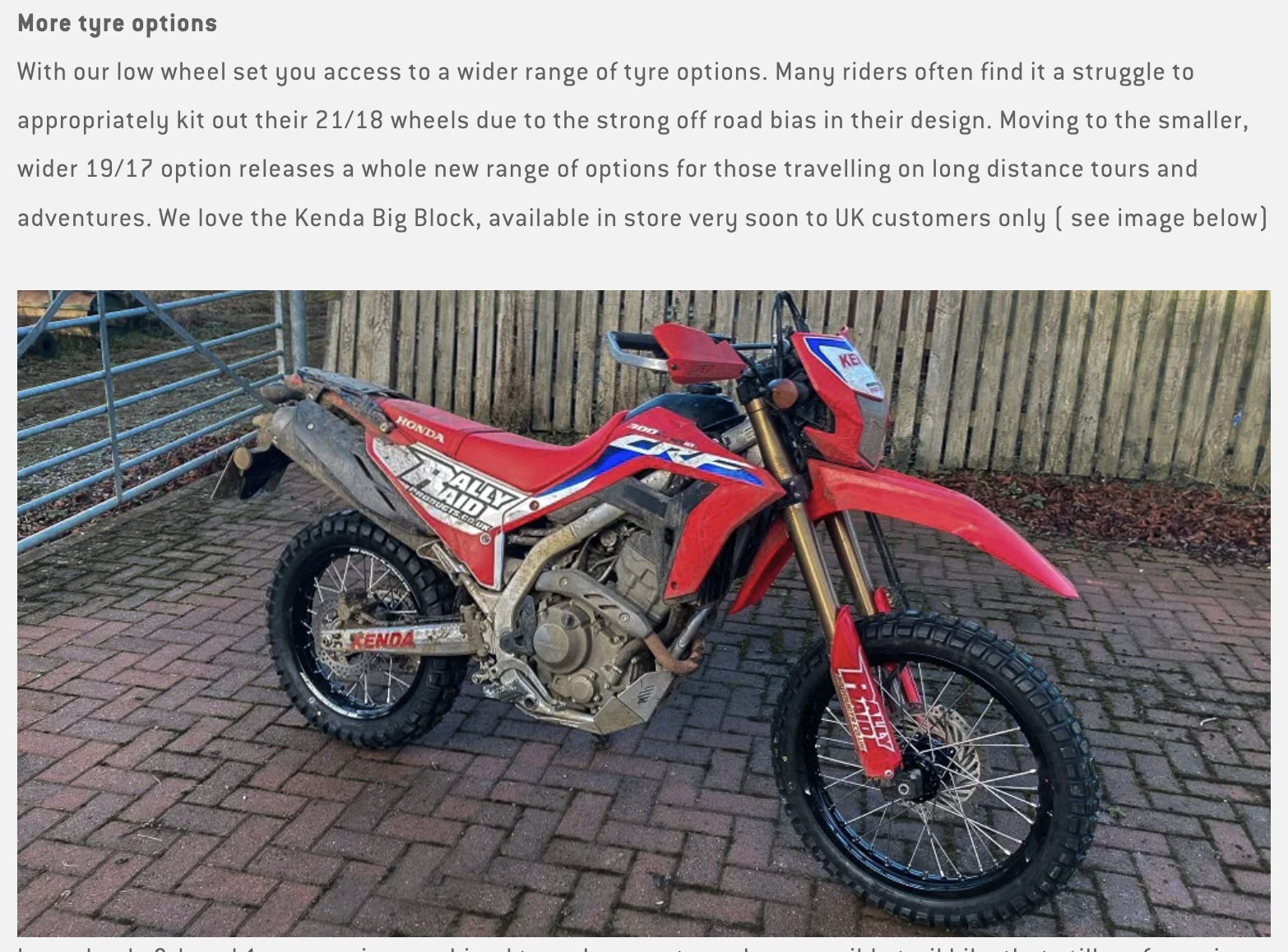
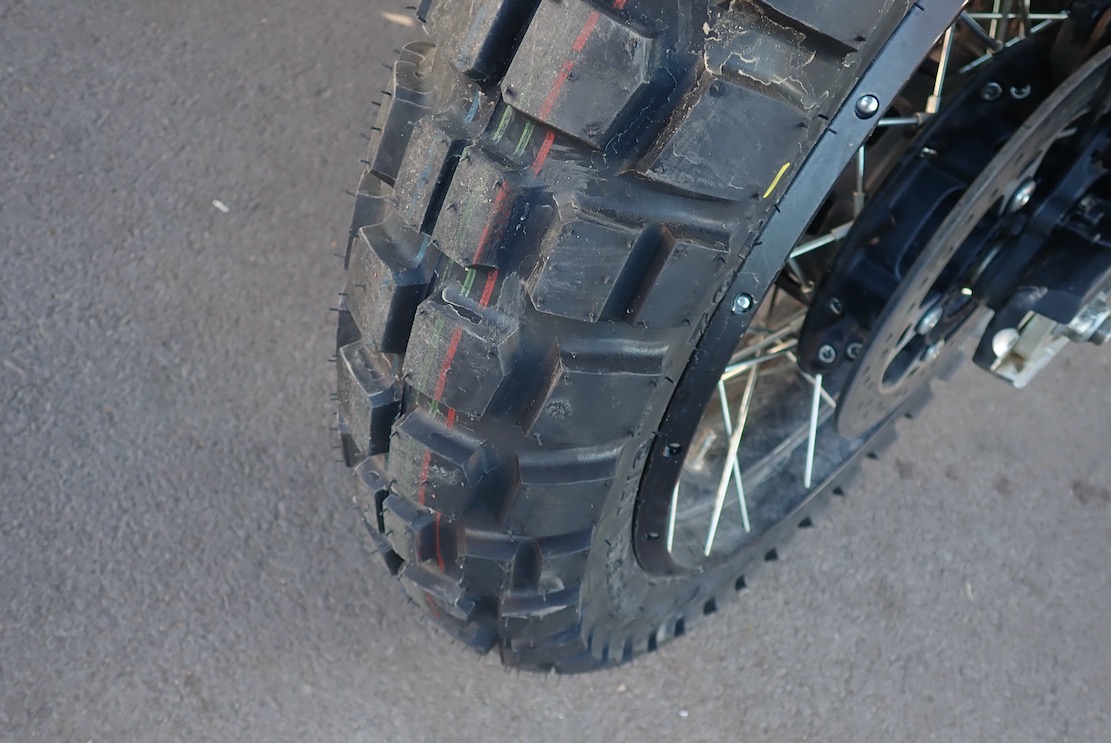
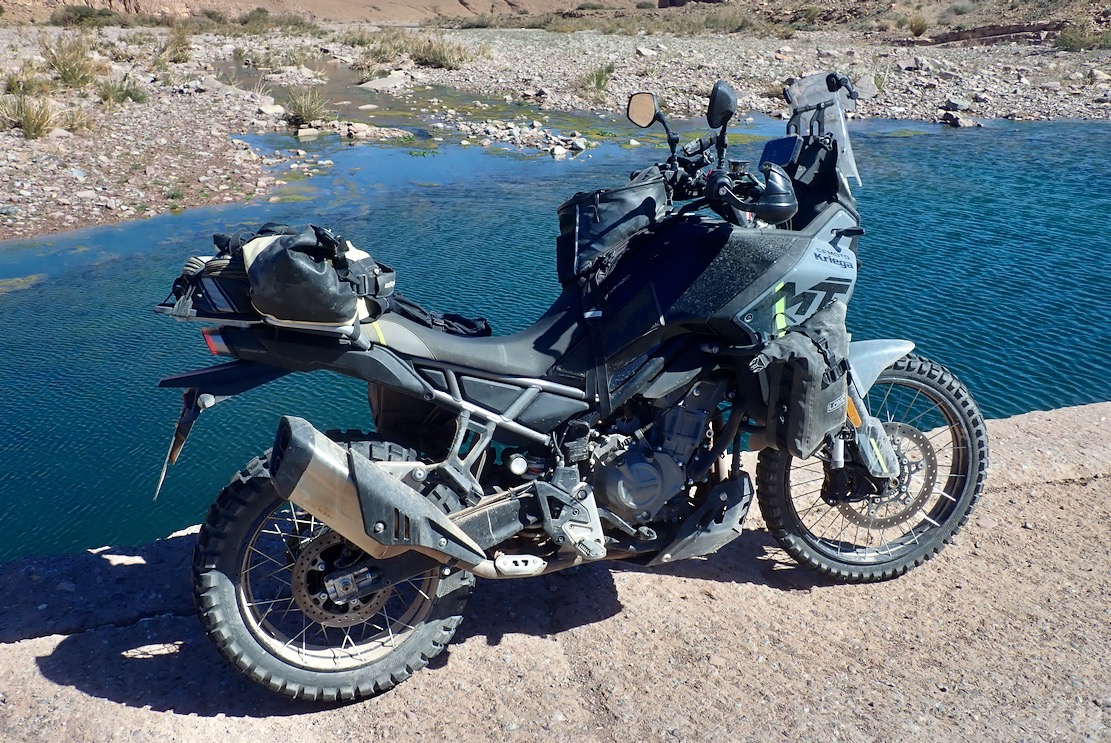
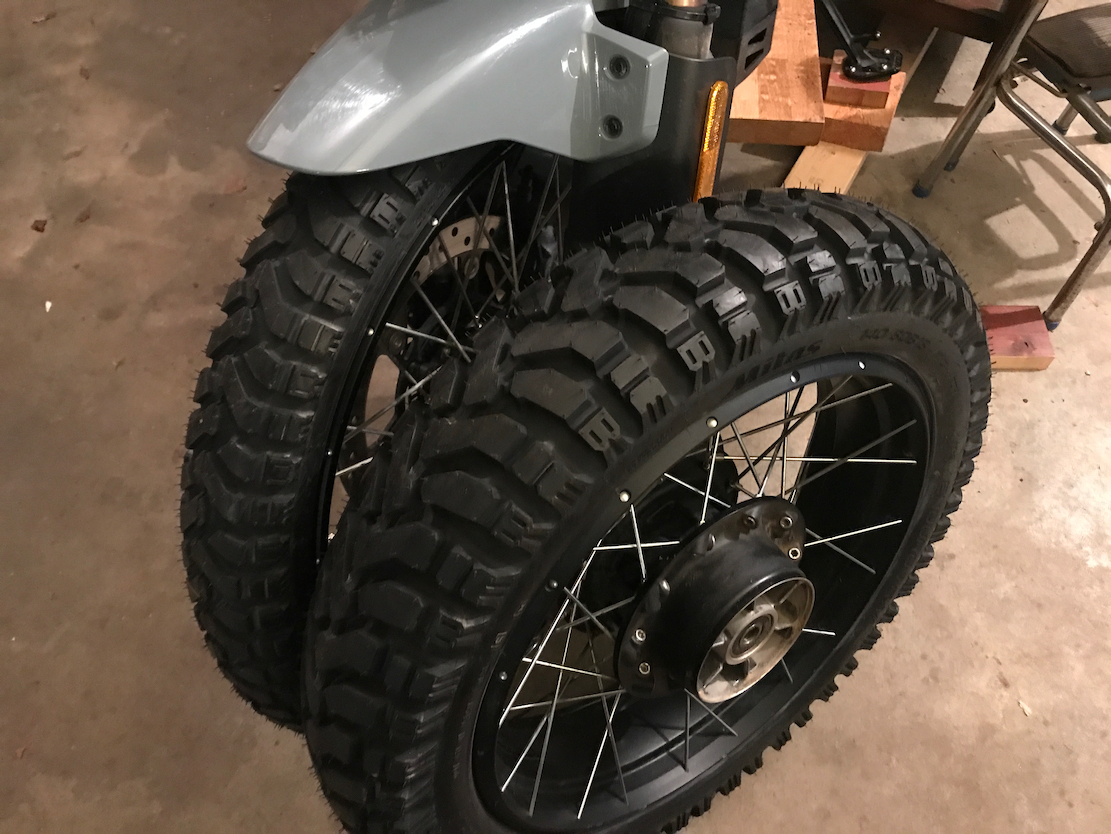
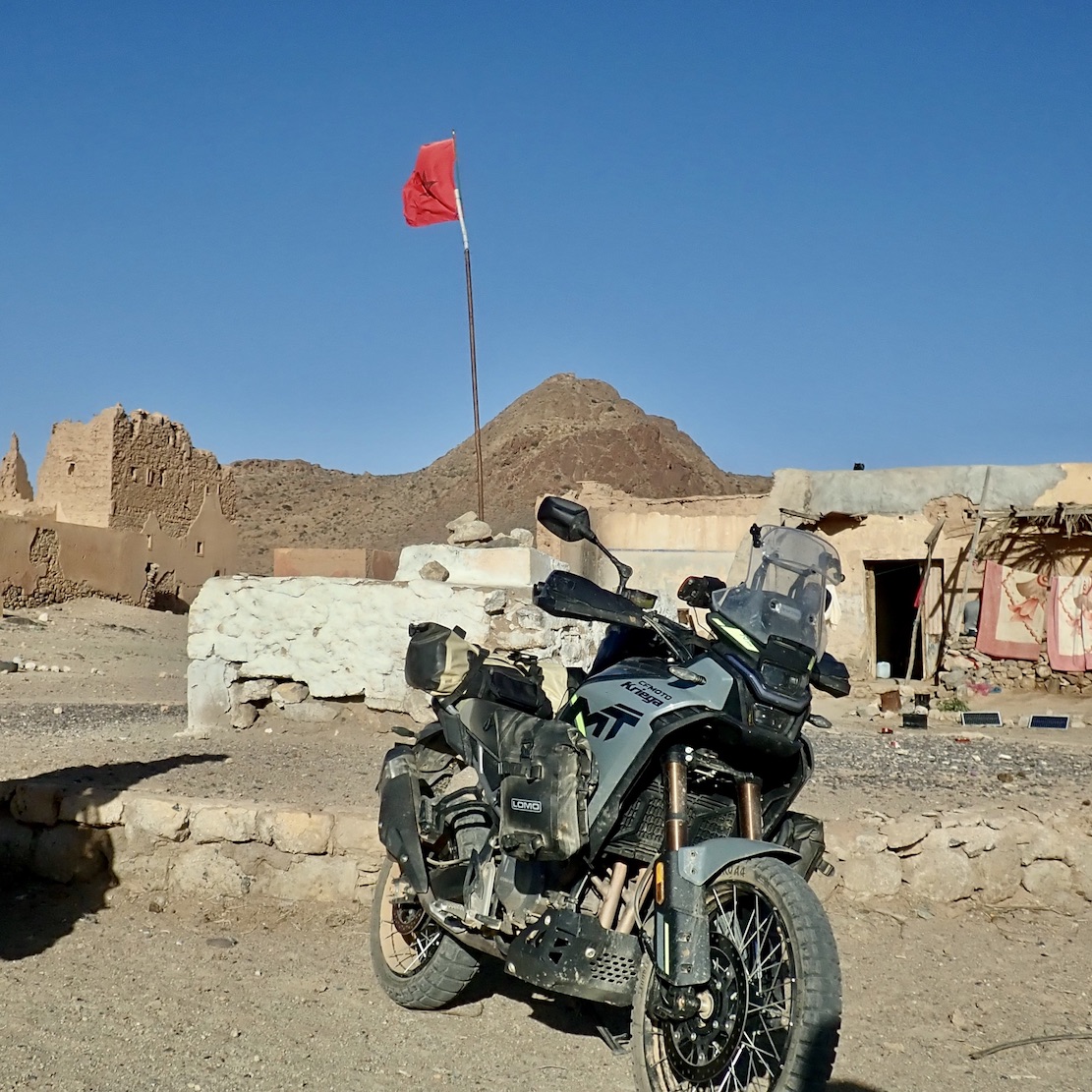
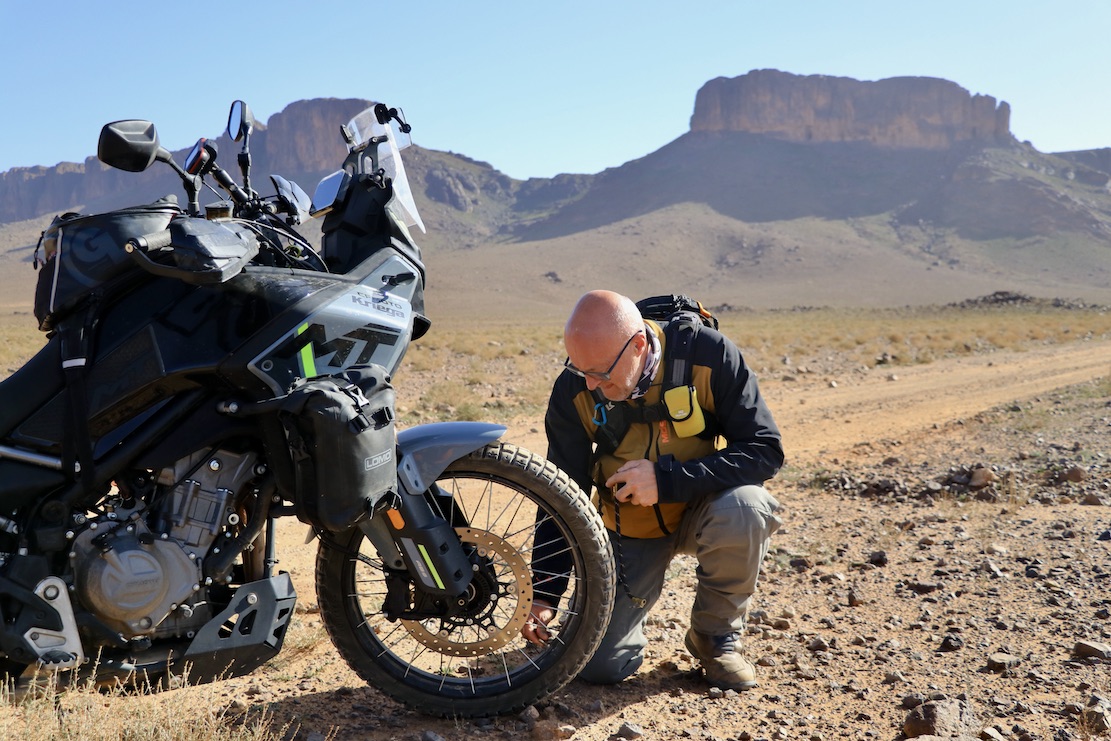
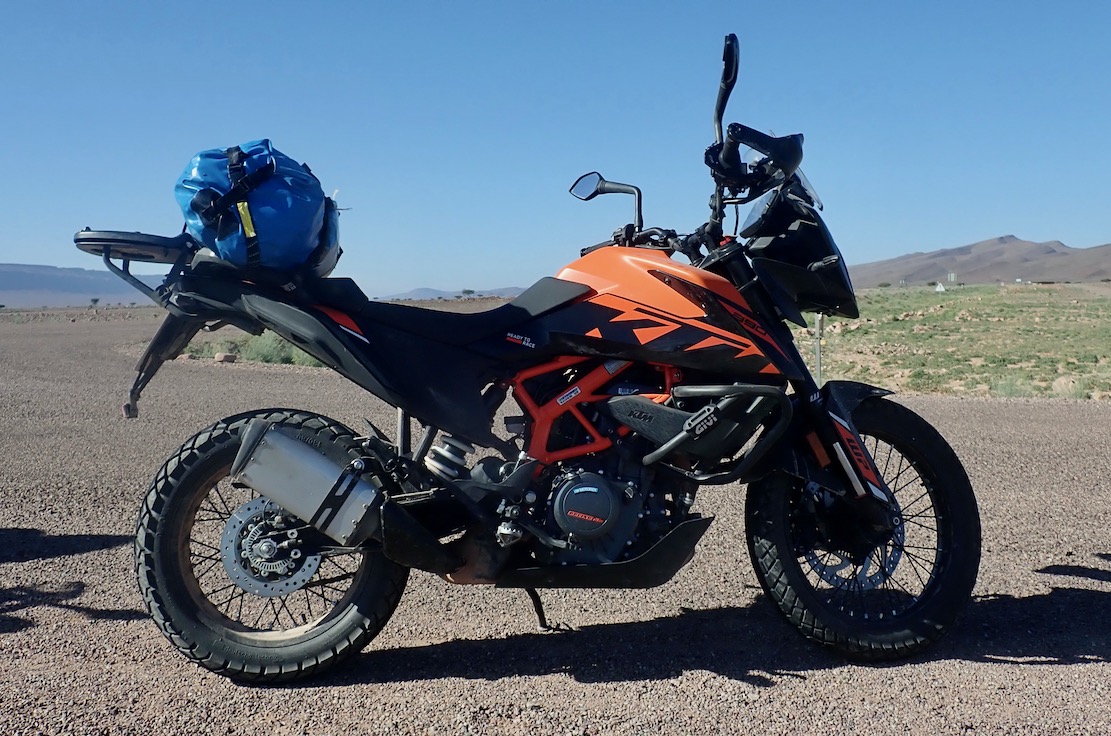
The chunky Kenda Big Block has been on my ‘tyres to try’ list for years, so when I set off for Morocco on my near-new 450MT last October, I arranged for a 140/80-18 (7.1kg) and 90/90-21 (5.2kg) to be dropped off in Marrakech, assuming the bike’s stock CSTs would not last long or soon degrade. I know John M from Rally Raid is a fan of the Kendas (below). The rear is listed as 140/70-18, but I’m told this size is rare, so the 140/80 rear Kenda would be a bit wider, taller and probably heavier.
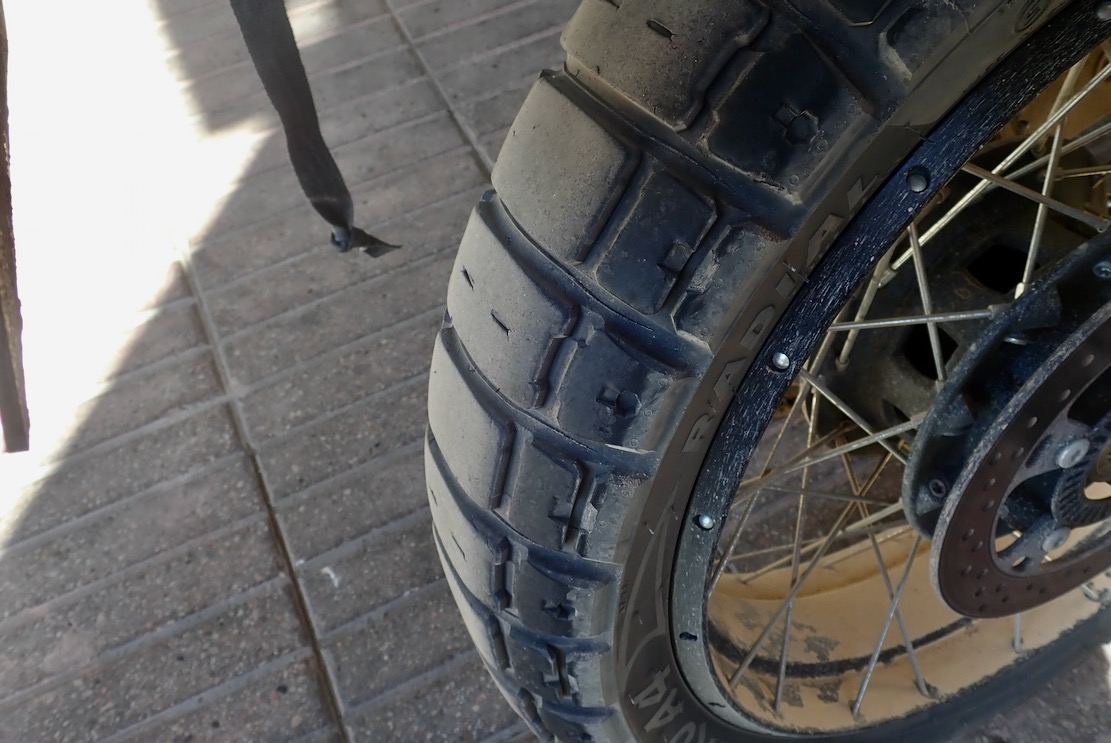
In the meantime, road and trail, I was quite impressed with the stock Cheng Shin (CST) Ambro 4s which bear a striking resemblance to the Pirelli Scorpion Rally STR.
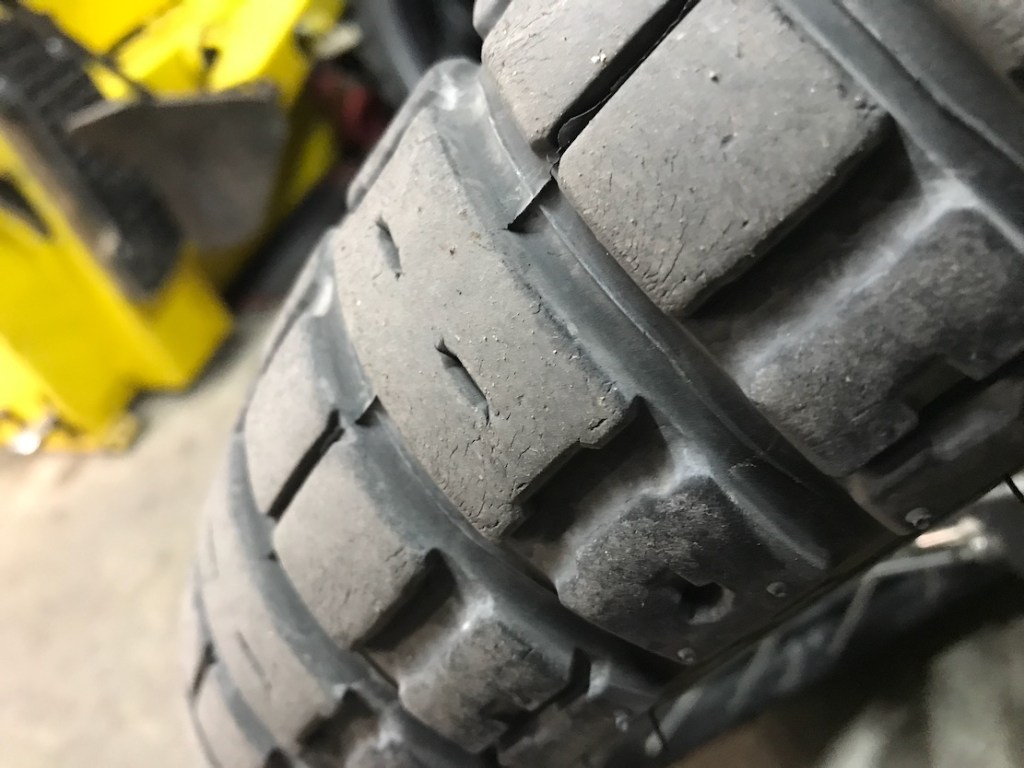
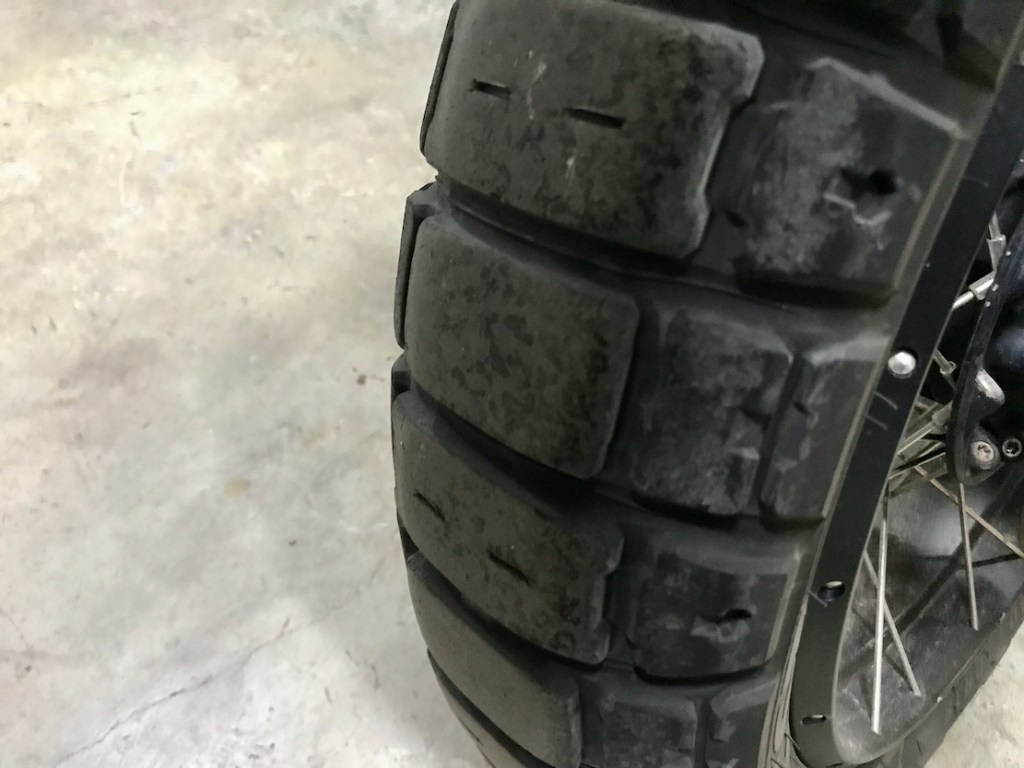
Stock CST Ambro changed at 4600 milesKenda Big Block
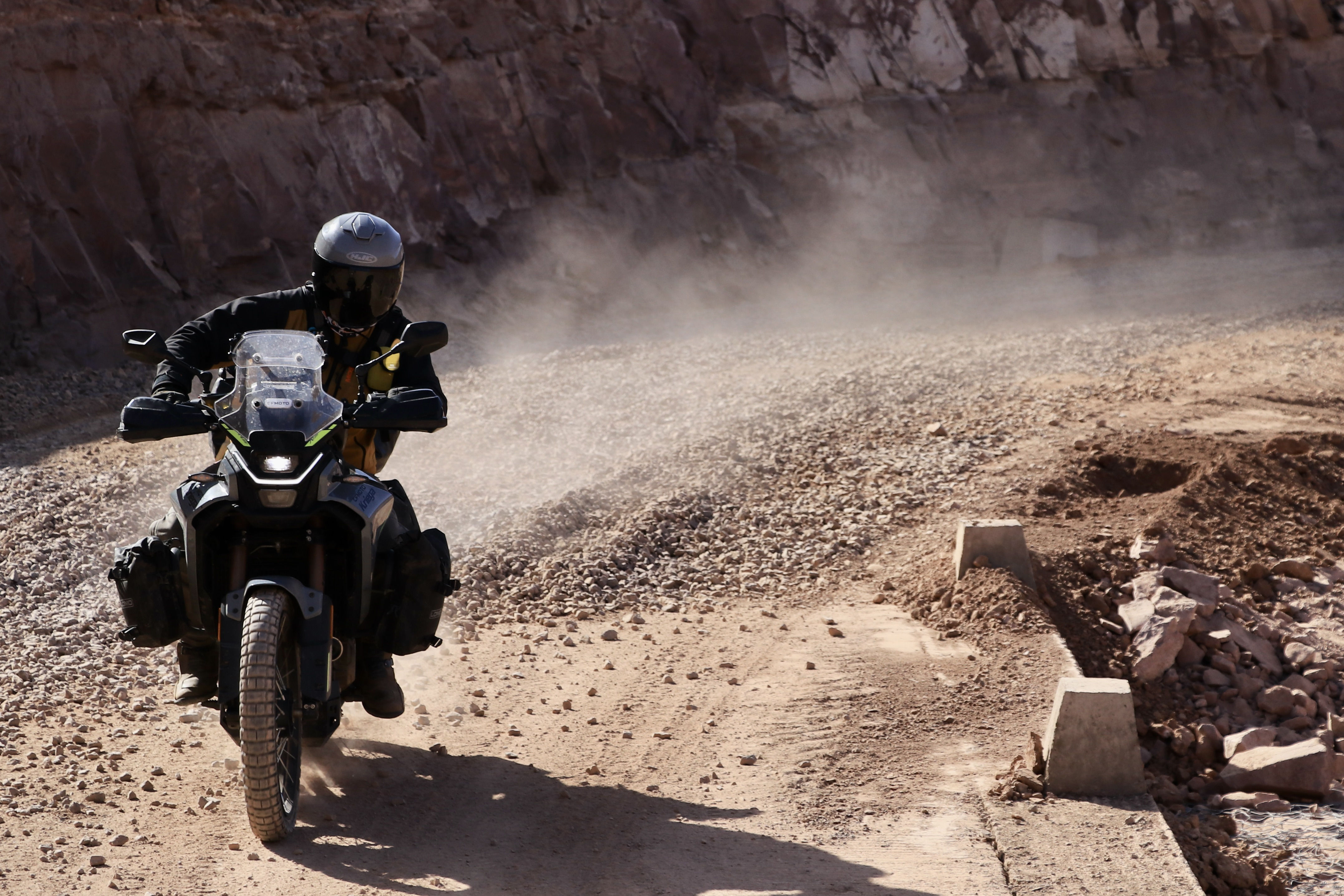
With probably a 1000 miles left in the Ambros (above left) at around 4600 miles, I decided to get the Kendas fitted in Marrakech while I still had a chance to test them on the trail, before heading back home across Spain. Out of town, as expected they initially felt odd on the road, like new knobblies can do. That settled down, hummed a bit more than the CSTs on smooth asphalt, but later on the dirt they felt too stiff at 30-psi road pressures (like many tubeless tyres), spinning out when stalled on a steep ascent, for example. I dropped to the mid/high 20s, but there felt little difference on the rocky or gravel tracks. Some bends I’d slice through like a pro, others I edged round like like a junior MX-er on their first day out.
On a heavy bike like the loaded 450 (195kg wet + gear) it can be hard to get your flow on some loose, stony bends. Meanwhile, on the few bits of deep sand (rare in Morocco), I did notice the 450 tracked well once you’d disabled the traction control. That’s as you’d expect with big blocks, though I think is also down to the 450’s unusually good steering and weight distribution.
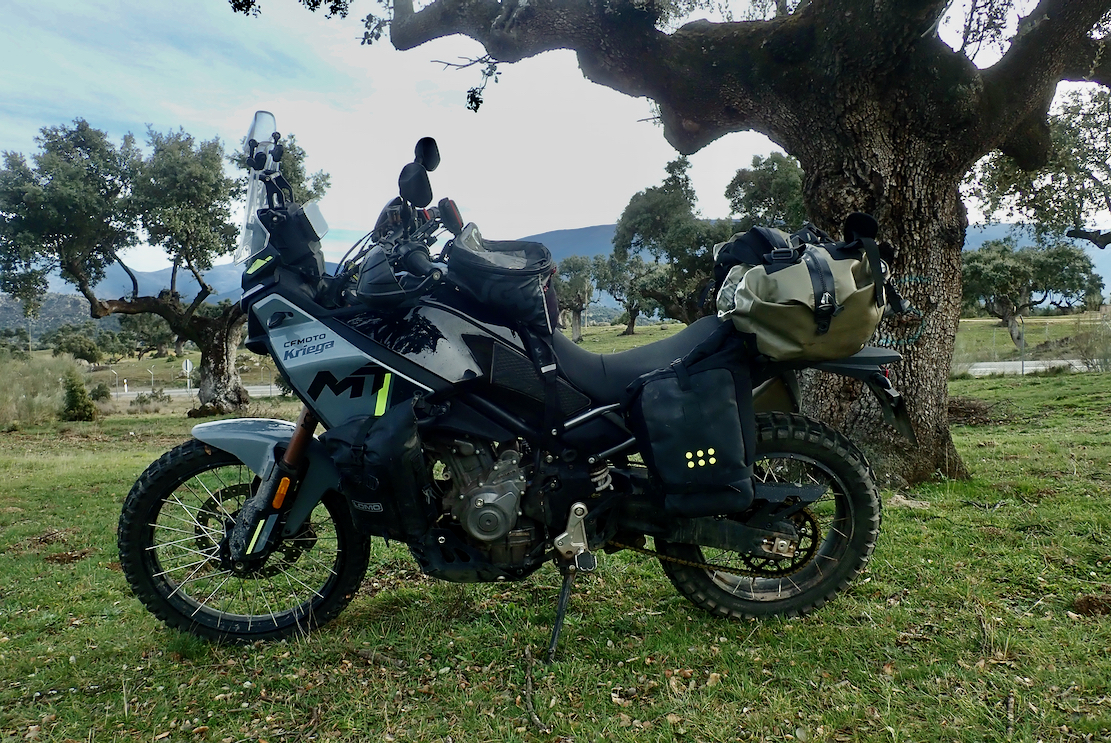
On the road the Kendas still gave their moments: Once back on bendy mountain roads in southern Spain, I wasn’t cornering the way I could on the Ambros. A lot of this must be down to knobbly-on-asphalt syndrome: some rough or grooved surfaces set the tyres shimmying, even in a straight line. I’ve been used to that for decades and you just ride through this, but on the bends was another matter. Are the Big Blocks a knob too far?
Riding damp, winding mountain backroads from Seville to Granada, I had a couple of slips and at one point was so sure both tyres were punctured, I pulled over to check. Both were solid as. It wasn’t icy but I thought maybe I’d ridden through some unseen, oily agri-slime, or the dealer service in Seville the previous day had whacked up the pressures. Both tyres checked in at the regular 30psi. On other occasions I thought perhaps the rubber needed to warm up in the chilly morning temps. This uneasiness came and went right across Spain until I thought: I can’t sell this bike with these Big Blocks, even if they make the bike look rufty-tufty and purposeful. Whoever buys it is likely to be a road rider. Once back in the UK I fitted some Mitas E07s (below) and will flog the Big Bs.
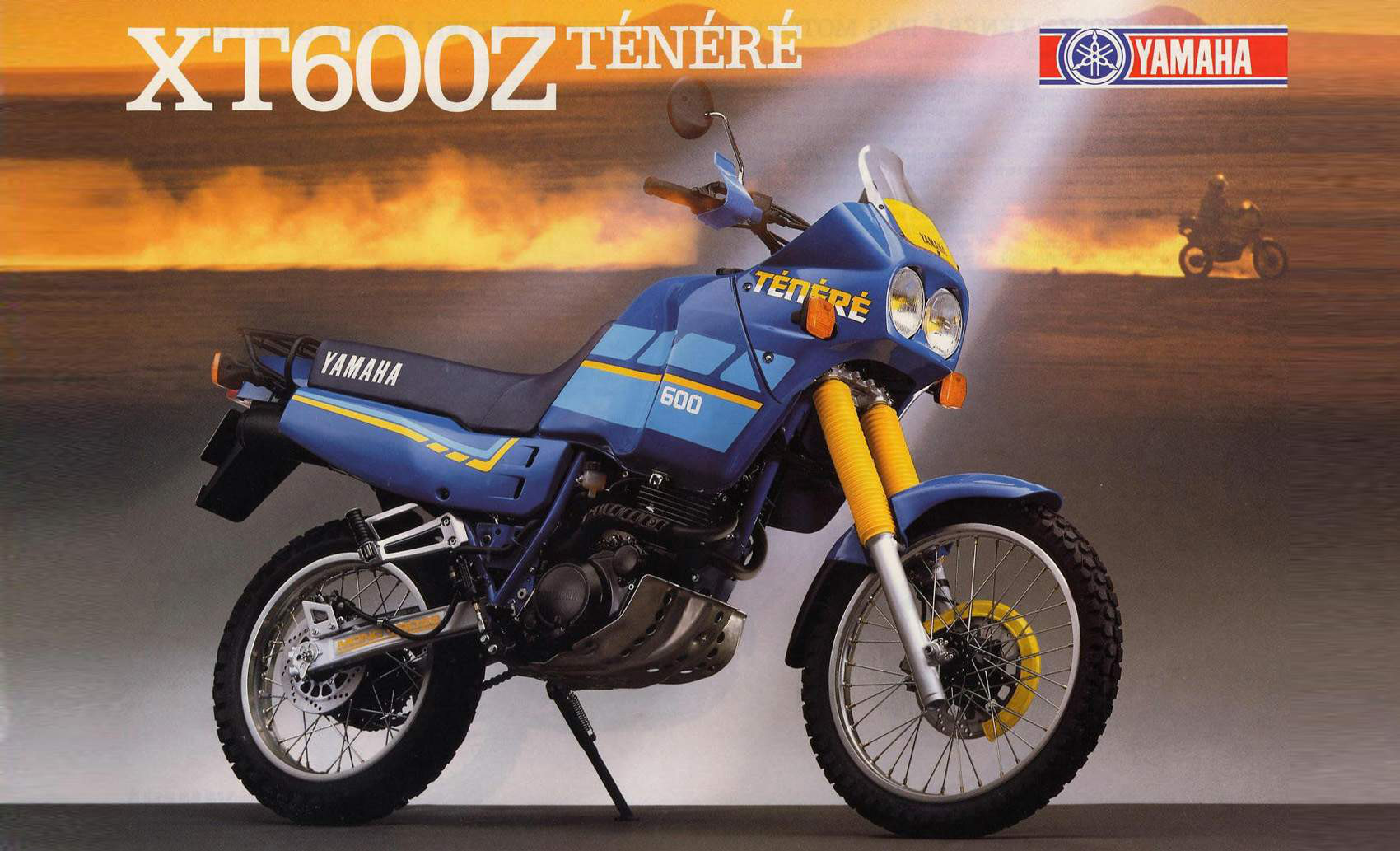
I well remember the day in 1983 when I first clocked Yamaha’s original XT600Z Ténéré outside Maxim Motorcycles in Parramatta, west Sydney.
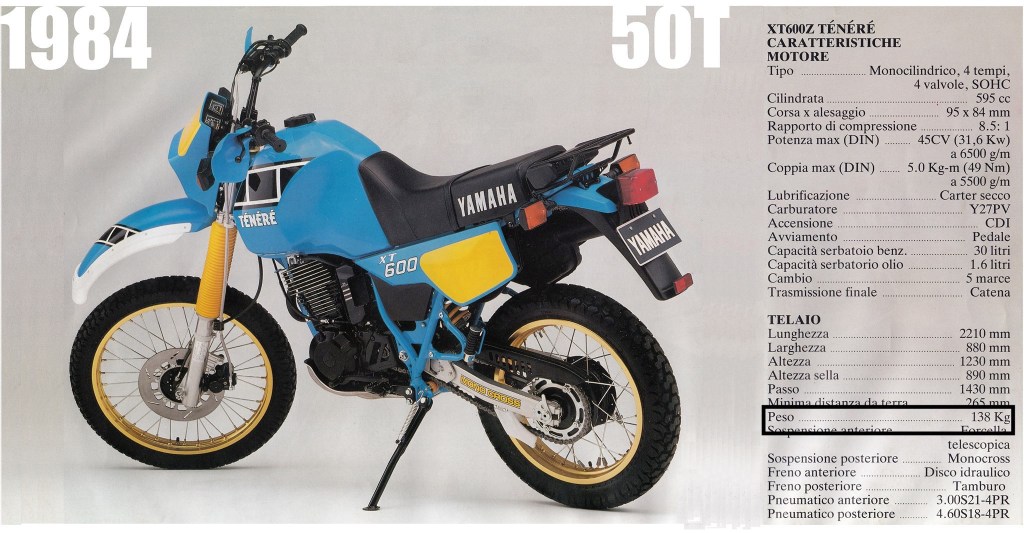
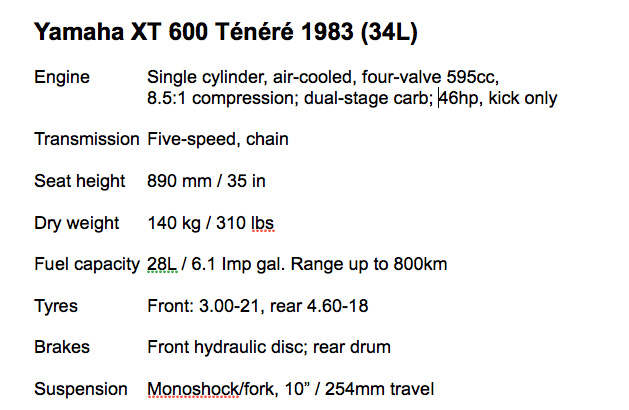
I crouched down for a good look at the machine which appeared to have addressed just about all the deficiencies of my 1982 XT500 desert bike: front disc brake, huge 28-litre tank, monoshock back-end, 12-volt electrics, folding lever trips, oil cooler and a thrifty ‘twin-carb’ set up. And all at around 140 kilos dry.
The 34L XT600Z Ténéré, named after the most gruelling Saharan stage of the Paris-Dakar Rally (see below), was desert-ready right off the showroom floor.
‘Tenere’ – What’s that then?
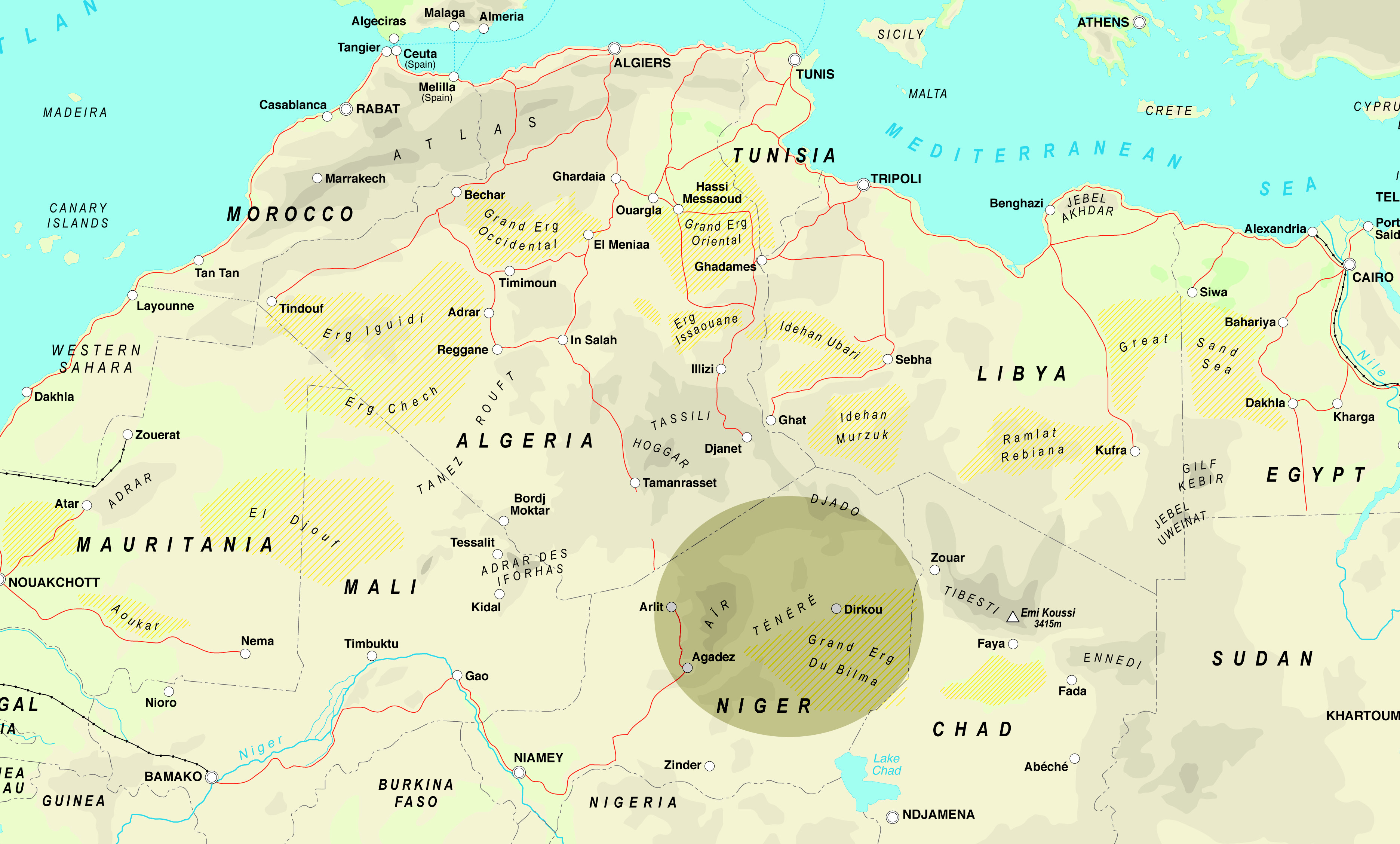
Tenere – or as the French write it: Ténéré – is one of the many Tuareg words for ’emptiness’ or ‘desert’. The more familiar Arabic Sahra [Sahara] means the same thing, but like the Inuit and their snow, the nomads of the Sahara distinguish between many types of desert and regions. The Tenere is a particularly desolate and waterless flat expanse which fills the northeast corner of Niger (left).
In the Dakar Rally’s 1980s heyday, the crossing of the Tenere from Algeria to Agadez in Niger via the dunes of the Bilma Erg, typically decimated the field and helped establish the Tenere’s already notorious reputation of the ‘desert within a desert’.
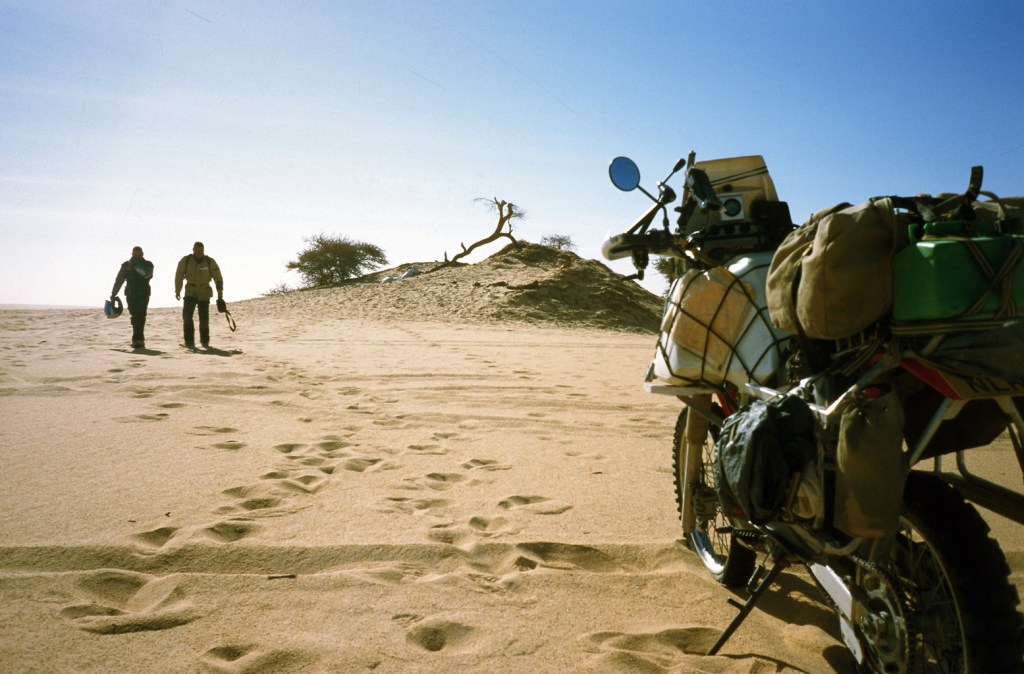
In 2003 we rode to the famous Arbre Perdu or ‘Lost Tree’ in the northern Tenere (below) where Dakar Rally founder Thierry Sabine had his ashes scattered following his death during the ’86 rally. Good French page on vintage Dakar and all the Teneres and similar bikes.
Hang on: that’s an XR650L!
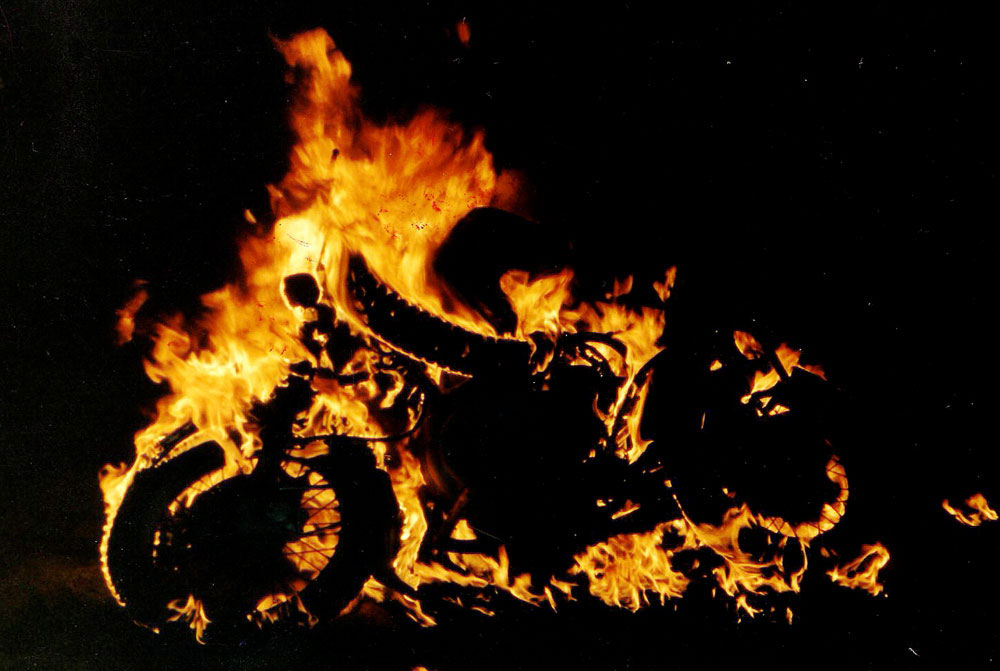
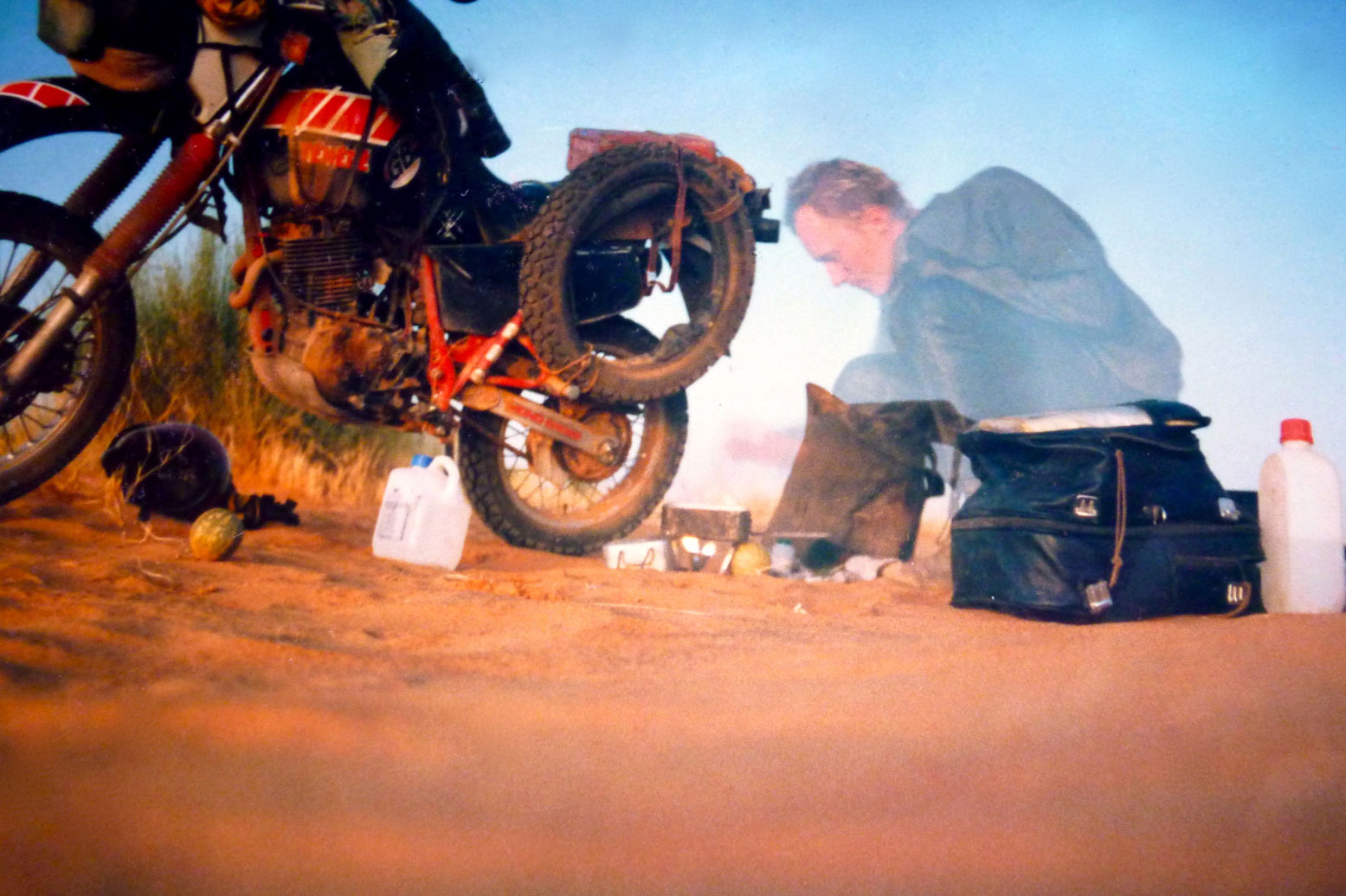
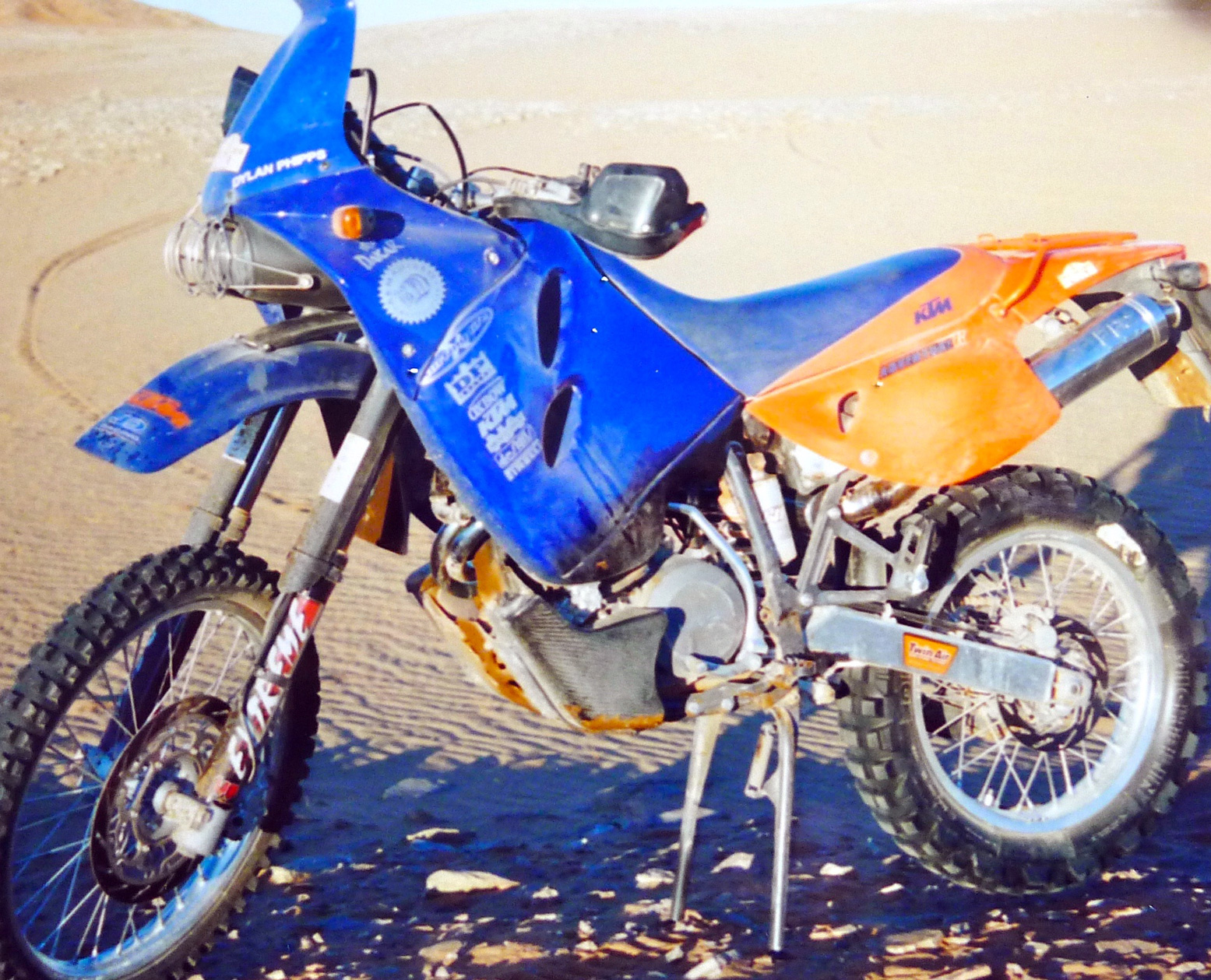
I bought my first Ténéré in London in 1985 to tackle my own London–Dakar adventure. This was the slightly modified 55W version of the original 1983 34L, produced for just one year. The changes were small: front disc brake cover, stronger DID rims, revised chain adjuster, longer, all-red or blue seat and most easily spotted: sloping speed blocks on the tank. Modifications to my 55W amounted to nothing more than adding thicker seat foam and some Metzeler ‘Sahara’ tyres – a rubbish choice for the actual Sahara, even back then. Using no rack was another mistake which nearly cost me the bike when my baggage caught fire.
In fact, there was so little to do that I went to the bother of moving the oil cooler from next to the carbs up out into the breeze over the bars. And I painted it black because I was still hadn’t shaken off my juvenile Mad Max phase. With my £5 ex-army panniers slung over the back, in December ’85 I set off for Marseille, bound for Dakar via Algeria, Niger and Mali.
My 1985-86 route to Dakar in green.
This was my first overland trip which succeeded in actually crossing a few African borders – and it proved to be as eventful as my first Sahara ride on the XT500 (and the Benele quickie which followed). On the way I learned many must-do-next-times as well as several more never-do-agains, all useful material for my Desert Biking guide published a few years later and which evolved into the current AM Handbook.
Blazing saddles near the Niger border
I met Helmut in Tamanrasset and we set off across the Sahara together. Sadly he crashed and burned, never to reach the Niger border. I also had a smaller fire a day or two later, but was thrilled to have finally crossed the Sahara into West Africa. As I wrote later, reaching sub-Saharan Africa was like switching a TV from black and white to colour. A few weeks later, with many more adventures and worthwhile lessons under my belt, I shipped my charred Tenere out of Dakar and flew on to Spain to catch up with it. You can read the long version of that trip here.
Camped by the Niger river, Niger
Yamaha’s original 34L and 55W Ténéré was the first proper, well-equipped lightweight travel bikes, created on the back of Yamaha’s success in the Dakar Rally which I encountered on a few occasions out there. That bike – not the BMW R80G/S everyone goes on about – was a game changer, with the brakes, range, suspension, economy, power and lack of weight which ticked all the boxes. In Europe they absolutely loved them; over a decade the French alone bought 20,000 Teneres; over 30% of all production. They were never officially imported into North America. From 1987 the KLR650 filled the same niche but in Europe the KLR was largely ignored and Suzuki DR600s and 650SEs made a bit more of an impact. A good early-Tenere page.
The next Tenere was the 1VJ model (left and above) with kick and electric start, firmer suspension and the air filter positioned, rally-style, under the back of the tank. But costs were cut elsewhere, it supposedly had over-heating problems and it just didn’t seem as durable as the original kickers. Mine sounded pretty clapped-out by the time I returned from a 3000-mile Sahara trip. You can read about my 87-88 trip here.
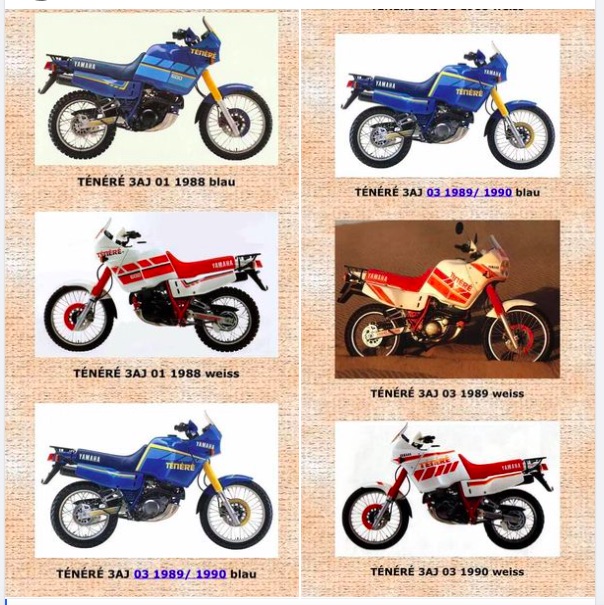
I never owned one, but the classic twin-lamp3AJ Teneres (above and left), was said to be a better machine, even if it had by now gained some 25kg. There was said to be a 5th gear problem common to other 600 Teneres, but only if you rode them very hard and lugged the motor.
The 5-valve XTZ660 Tenere from the 1990s (left) still looked great but by now had gained even more weight and lost some cred. On top of that, poor electrics and other flaws managed to lose the Ténéré mojo in the face of KTM’s dirt-focussed 640 Adventure (right). After the 5-valve was dropped, for nearly ten lean years in the Noughties there were no Teneres in production. BMW’s 650 Dakar became popular big single travel bike; Teneres were seen as an 80s throwback.
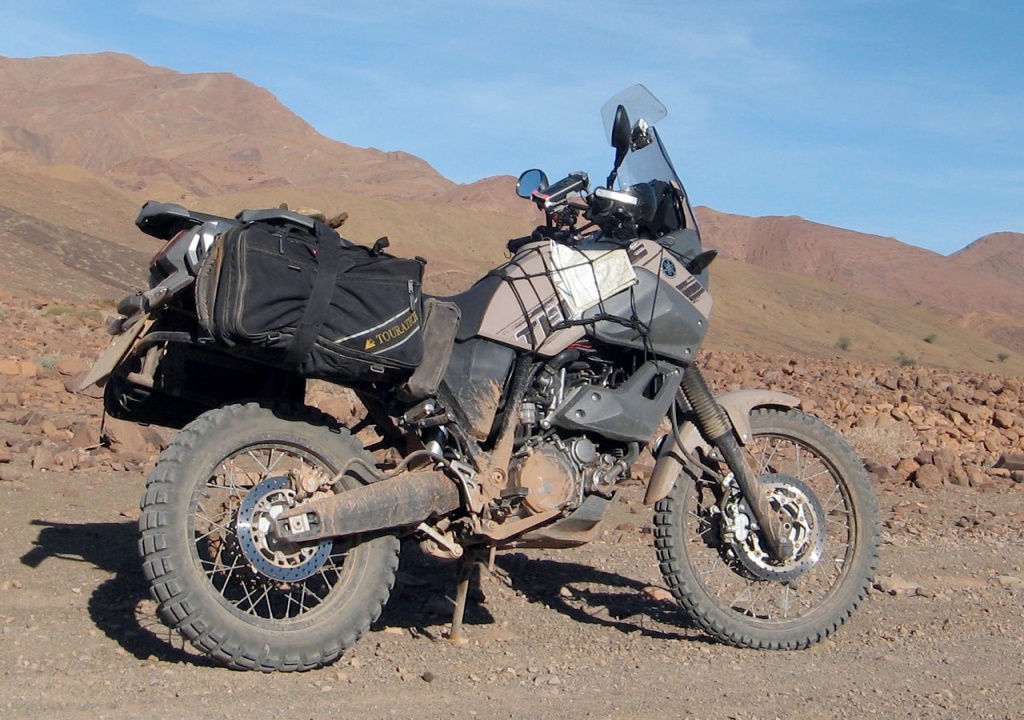
Then, in 2008 Yamaha’s legendary desert bike returned as the XT660Z. Based on the injected XT660R and X produced from 2004, the fuelling was much improved and again, it ticked many boxes, even if it now weighed over 200 kilos and, at times, felt it. Fuel consumption varied widely but averaged 25 kpl, giving a range of about 570km/360 miles from the 23-litre plastic tank.
I bought a barely used one soon after they came out, did the usual kerbside makeover and set off for Morocco to research the first edition of Morocco Overland. Read about that bike here.
T7 in Morocco
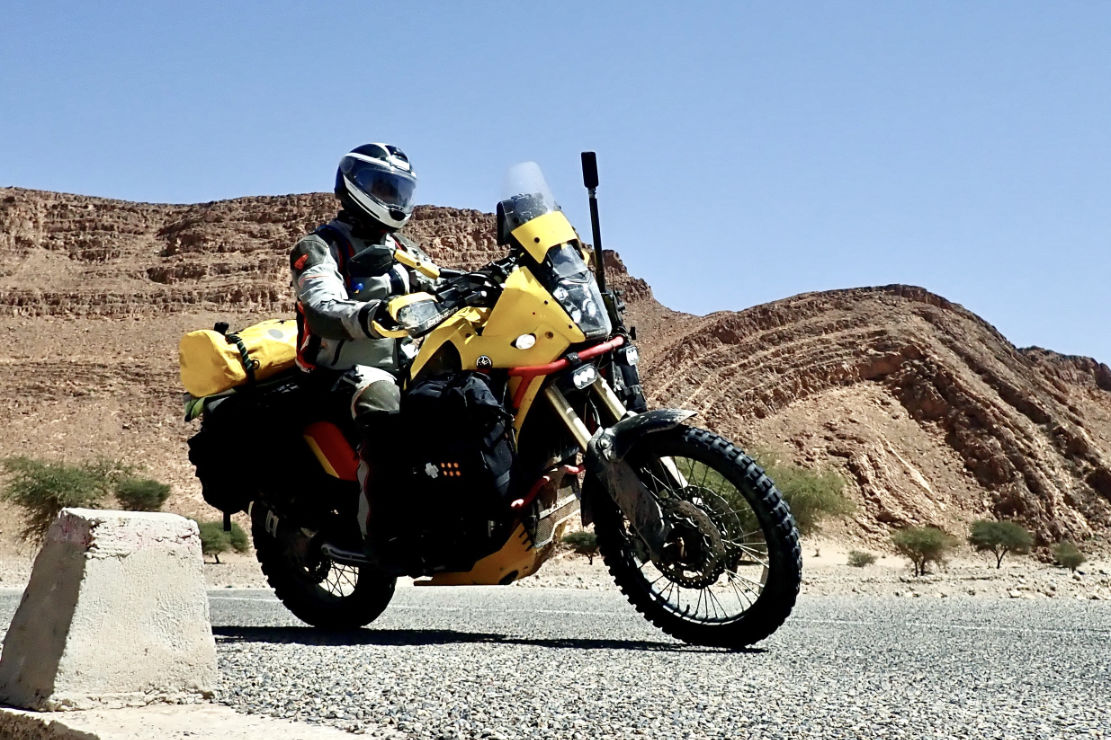
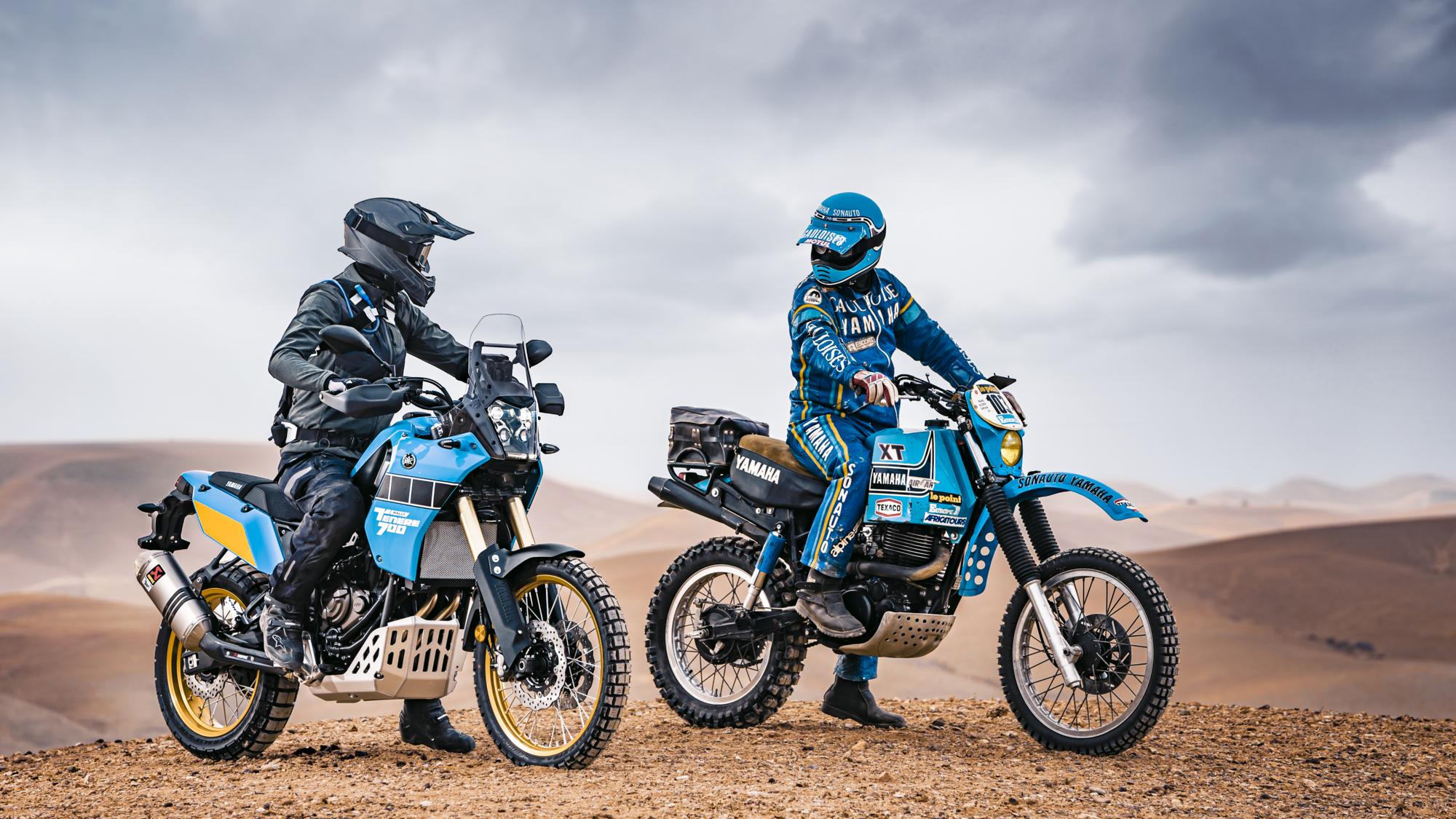
By 2016 ever-tightening emissions regs killed off the hefty 660Z Ténéré. but 2019’s long awaited XT700 Ténéré, based on the brilliant twin-cylinder CP2 motor, as in my 2017 XSR700 has become a worldwide hit (read my early impressions here). Though taller, a T7 is not much heavier than the 660Z and just like the original 34l, is another desert-ready hit right out of the crate.
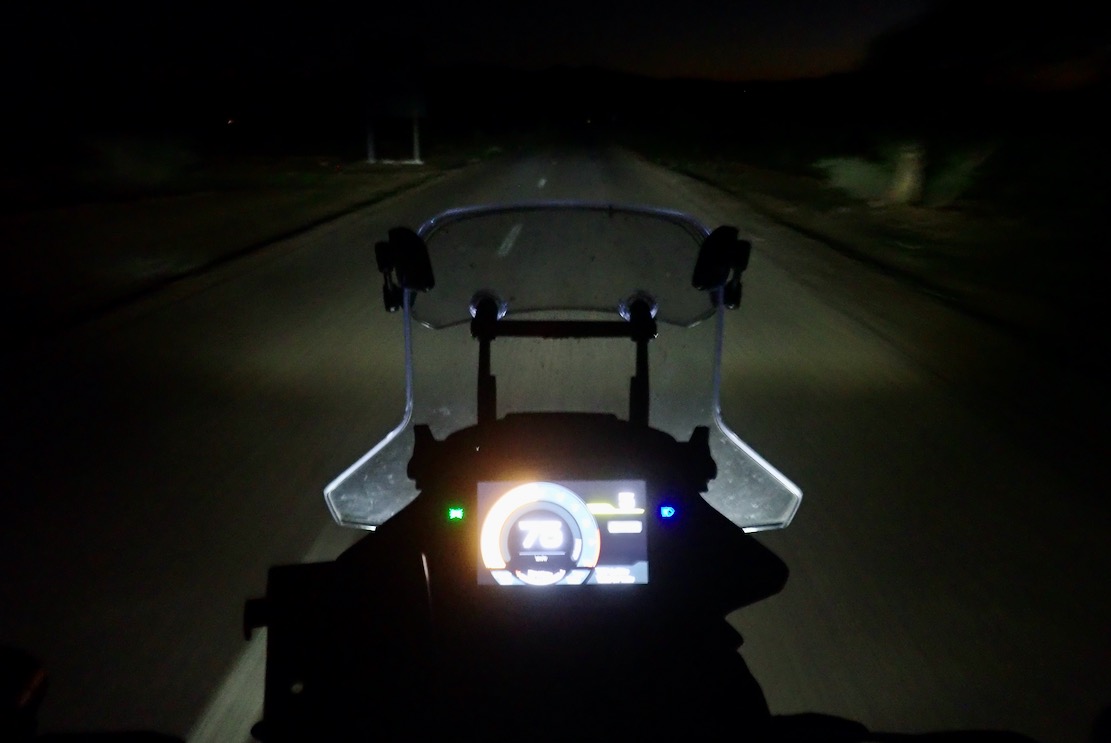
• Stock CST Ambro tyres good on dry dirt, great on road and could have got 10,000km from them • Smooth, grunty engine easy to manage and great sound • Zero issues in 11,000km • Suspension soaks it all up when laden (stock settings changed) • Seat is low and good for up to 600-km road days • Standing just about sustainable with 25mm risers on stock pegs (me: 6′ 1″/183cm) • Lights light up the night like lights should • Spoked tubeless wheels held up very well
• Wet weight feels high off road when tanked-up and laden (+15kg baggage) • ~70mpg fuel consumption nothing special for a 450 • Gear change not brilliant • Jerky throttle at low rpm sometimes (mapped out at 10,000km service?) • Kenda Big Blocks were no better on the dirt and gave a few moments on tarmac
Review Back in the UK after leaving the MT in Morocco for the winter, doing two one-month spells on backroads and tracks with groups on mostly KTM 390s, plus a 5-day run along the TMT with big twins. Some rain damaged pistes were quite brutal, but still rideable with outriggers extended, the odd over-balance or best idea of all: stock suspension settings adjusted!
Richard Fincher
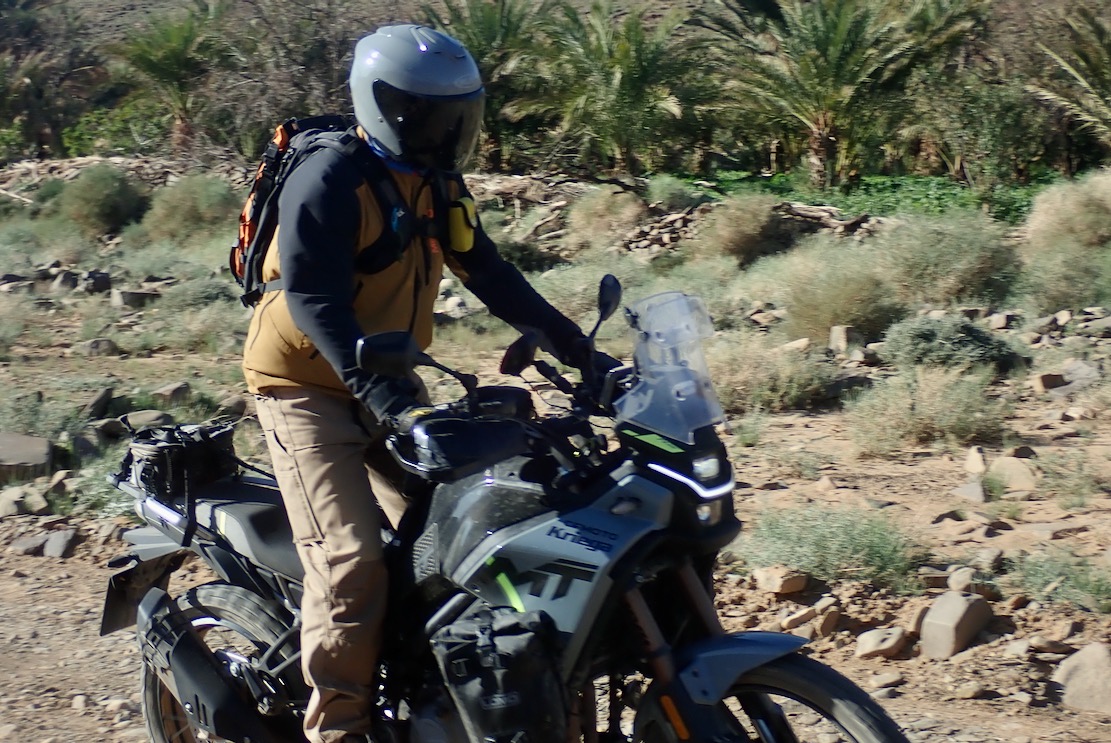
I stuck with the stock CST Ambro 4 tyres (Pirelli Scorpion Rally copies) mostly run at 30psi to protect the untested protruding tubeless rims which have held up very well. I just tapped the spokes and all are ringing nice and taut. Next time I’d feel confident to drop to 25 for a cushier ride. Wet roads, dry trails and everything I’ve encountered in between, I’m impressed the Ambro tyres, and when I changed them at around 8000km, there was a good 1000km left. That wasn’t enough to do one more lap plus get me home, so I had some Kenda Big Blocks fitted in Marrakech for the Last Tour and the 2000-km ride back.
7000k in
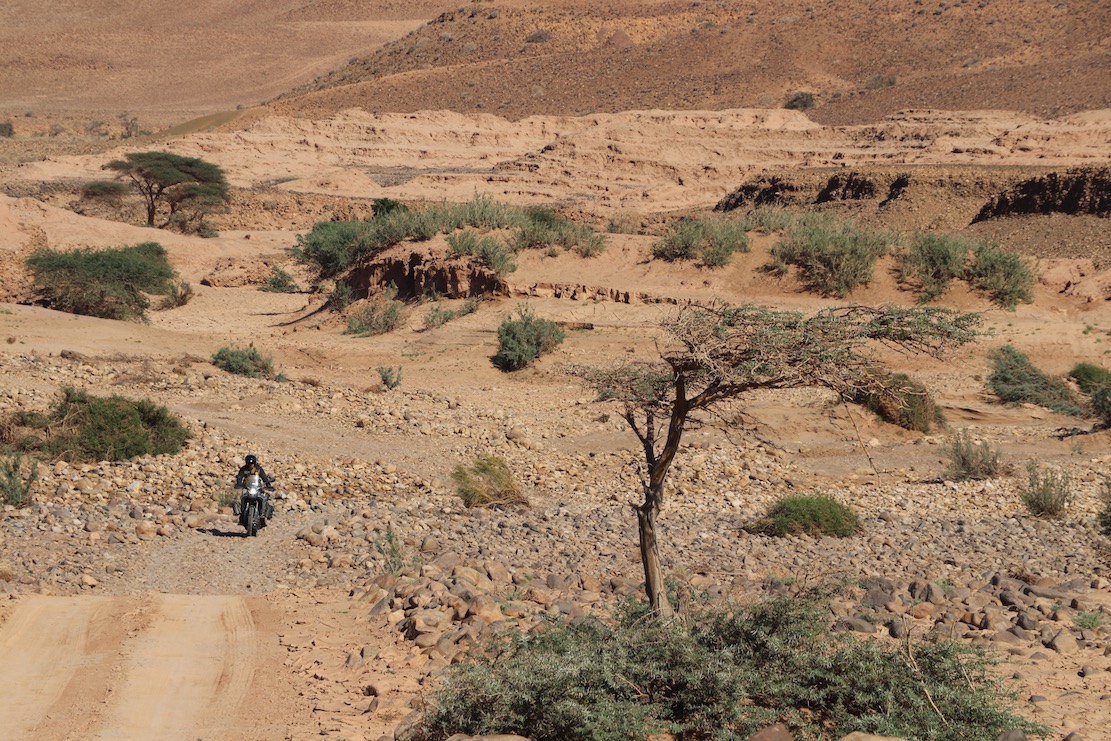
After 5000km it was definitely time to meddle with the stiff but fully adjustable suspension. Result: much better. Now it bottoms out where it should and handles all sorts of rocks and other roughage if taken at appropriate speeds. Prior to that, dropping the tyres to 26psi didn’t really make much difference along stony Acacia Avenue near Foum Zguid.
‘You coming or what?!’ Richard Fincher
The grunty engine is so satisfying to use on tight trails and bendy roads. Suboptimal gear? No probs: the engine picks up from low rpm without the shudder of a big single, and the offbeat ratta-tat-tat from the pipe adds to the enjoyment you don’t get on a CRF300L. Sometimes I think the kangarooing at low throttle openings has gone away (having the chain tension right helps), at other times it’s there but not enough to make me want to rush to some good internet and upload an OTA remap. Could it be to do with air pressure/humidity/ambient temps/fuel grade? Who knows, but a new chain and a full service in Spain made it less noticeable and may have gone altogether.
The MT’s gear change was never that slick from new and was only shown up by the quick-shifting 390s I rode with for a while – let alone the Desert X Rally which was like clicking a dial. Then I had the bright idea to adjust the clutch cable tension at the bar even though it felt fine and guess what: now the gear change is normal. And with a new chain on the way back it was better still, but never that snickey.
With regular hand lubes, chain hung in there for 11,000km. Another example of quality consumables, unlike my recent Jap bikes
I’ve been trying to unlearn the clutch habit and change just with the foot and a blip – it’s often seamless up and even down. I really need to try and do that more, but a long decade of urban despatching has made clutch use a reflex.
Real-world fuel consumption was nothing special for a 450, especialy when compared to my early CB500X. All up I averaged 24kpl – 68UKmpg – 56.6US – probably no better than a T7. I did get a suspiciously good 81mpg (28.7kpl) one time without really trying. Sometimes I wonder if my tankside bags create the drag you’d expect. But my 300L had the same set up and got nearly 100mpg, so I don’t think so. Either way, the range is good for 400km, but with 17 litres up high, I try to stretch out the range on the piste.
Bob I
No complaints about the brakes. One good front disc is all you need for a bike of this weight and power. On the dirt I leave the ABS and TC on. One day on a steep climb I looked back to check on the group and nearly steered myself over the edge (like you do), but the ABS caught me. I had to be pulled back. Similar happened a couple more times when I was too tired to react to yet another bend. The MT’s ABS hauled me up safely. Why would you ever turn it off.
Richard Fincher
I did not noticeably activate the TC as the 40-hp cross plane motor just hooks up and does the work for you. That was until one dark night when the 6km track to our lodgings had stretches of deep soft sand. With tyres at road pressures, the TC got in the way and I was going down, not forward. It had been a long, hard day and it took me a while to remember and then fumble for the easily accessible TC/ABS kill button on the bars which did the trick. Another time, stalling on a steep climb, the back wheel span then cut with the TC. Again, killing the TC did the trick. I’ll keep the ABS on 24/7 but TC can get in the way on loose dirt. I really don’t think this bike needs TC at all.
Richard Fincher
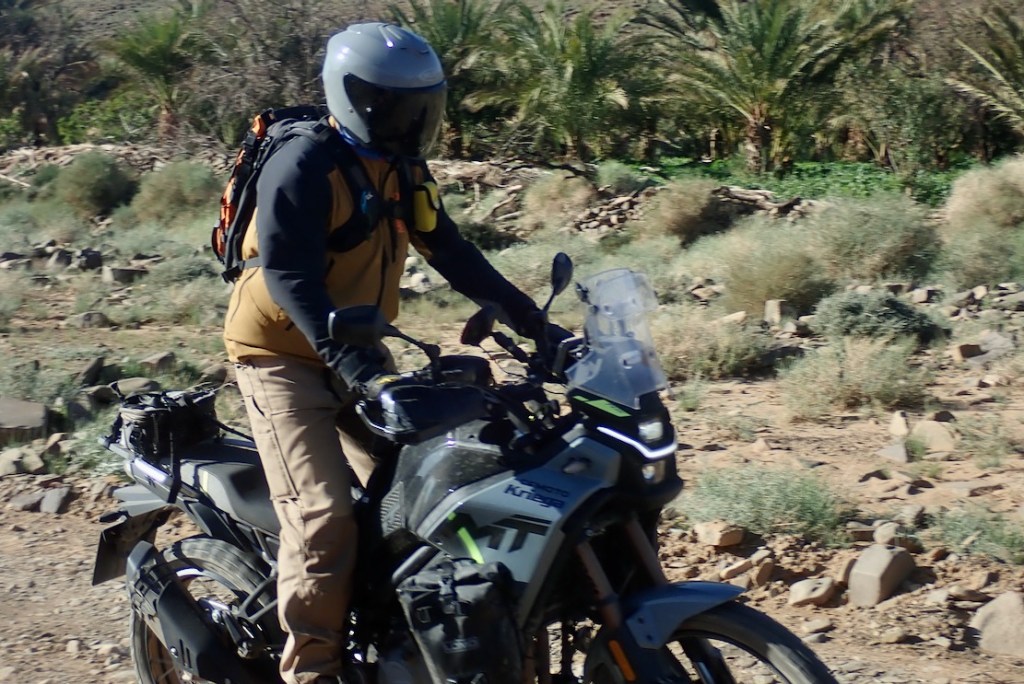
My unconventional rackless placement of a Kreiga low and forward on the LHS pillion footrest worked faultlessly, even with plenty of paddling through oueds and over rocky sections. I never even noticed it was there. The weight position must be as optimal as it gets, and it hasn’t budged. It’s such a neat idea next time I’ll do both sides and ditch that tail pack which, handy though it is, makes getting on and off elegantly a pain.
I fell over once with a 3/4-full tank, inching down a rain-gouged switchback. The bike landed downhill but with all the others ahead, I was relieved to find I could lift it myself, helped by those grab handles at the back. But the Chinese plastic on the aftermarket handguard cracked like an egg. I replaced it with proper ABS Barkbuster guards. There could have been a couple more such low=speed falls-overs, but they’re avoidable thanks to the low seat. Yes, the lowness takes a bit more leverage to stand up on the pegs, but I’ll take getting my feet on solid dirt every time. On the trail, I’ve lowered the screen and MRA deflector to better see what’s ahead; a 2-minute job. Meanwhile, the bash plate batted back the odd flying stone but I never scrapped the base.
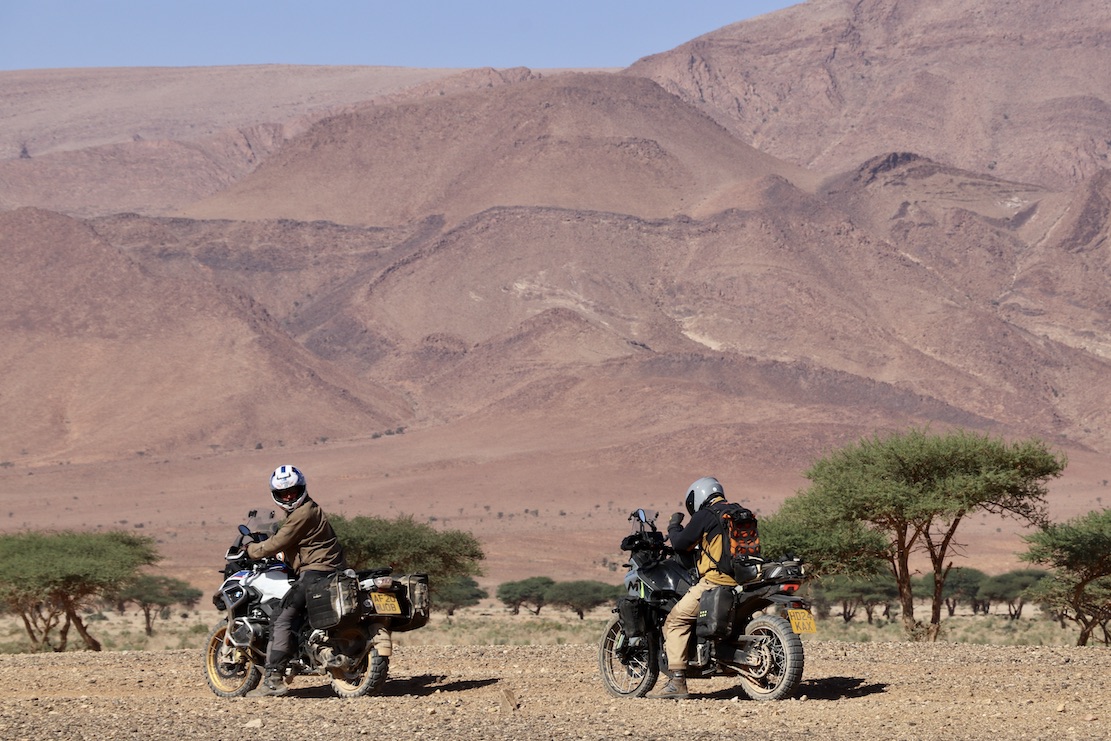
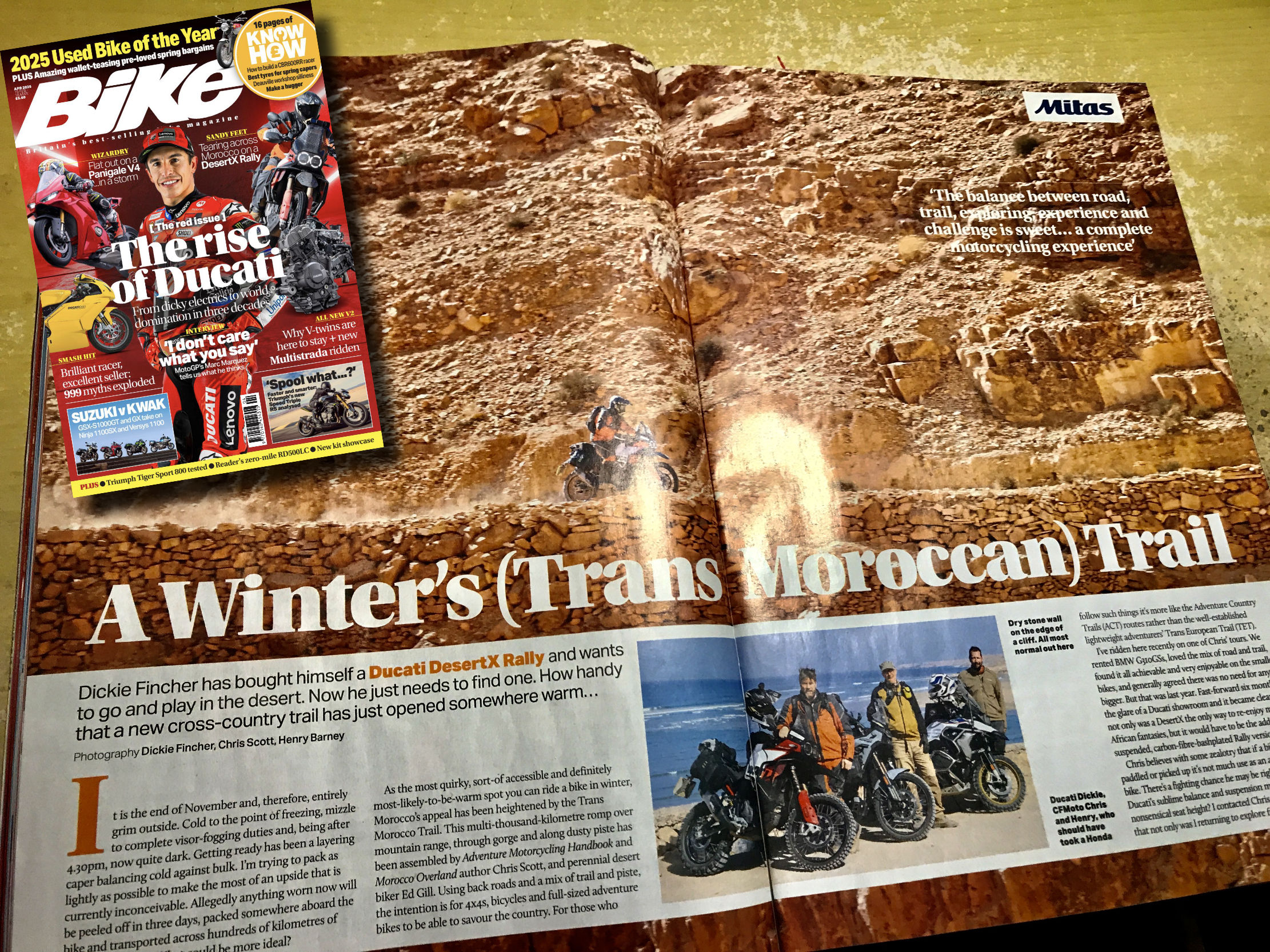
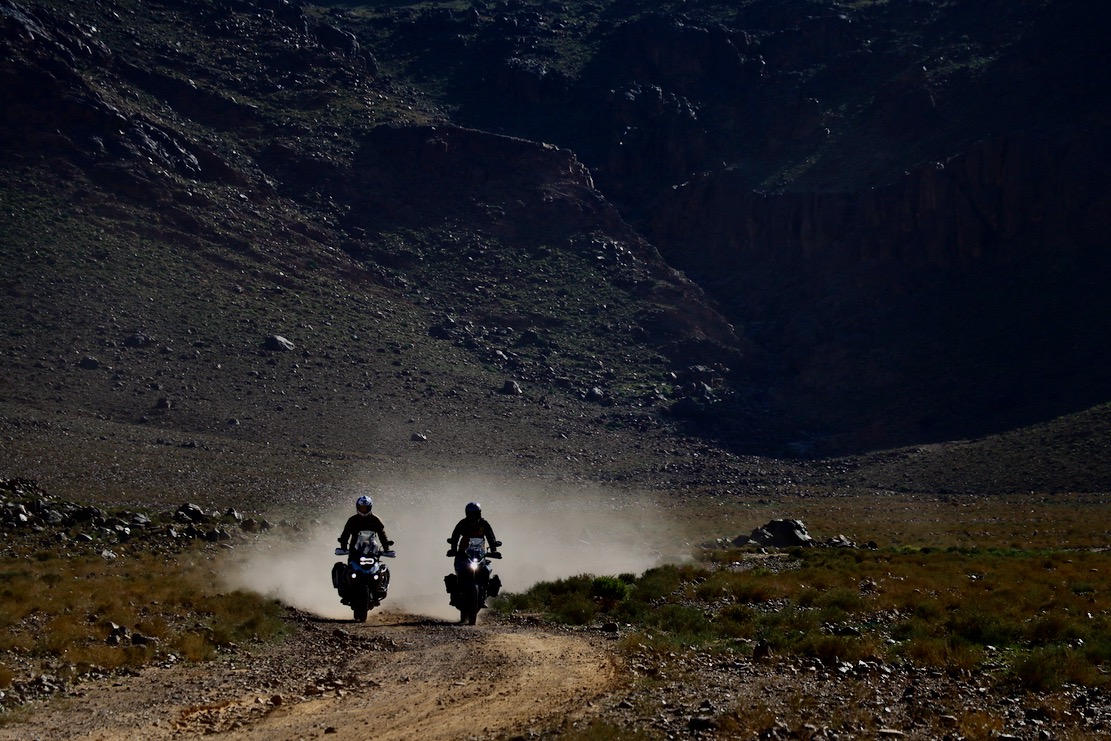
The 450MT is a mini T7, just like they say, but a bit big and heavy for solo trail exploring. Read about following the TMT with a 1250GS and a Ducati Rally X.
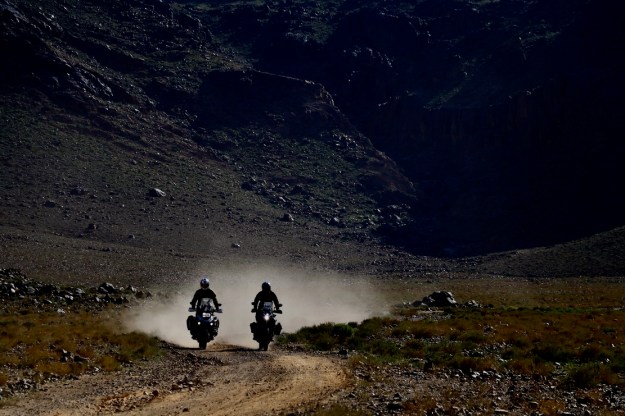
Once I got to Morocco I rode a couple of 1000 clicks on tracks and trails before deciding yes, it was time to fiddle with the suspension settings which I’d not touched from new. Some tracks – made rougher by the September floods – were giving me a hammering. The suspension was too harsh as many reviewers attest, especially at the lower speeds I ride at. I did try one stony stage with tyres aired down to 26psi, but it didn’t seem to make much difference, TL tyres being natively stiffer. I didn’t want to go lower on the untried rims – though they’ve since proved to be up to the job. On one ride without my 15kg of travel baggage (above) the bike was nice and agile but even harsher on very rough ground without the extra payload.
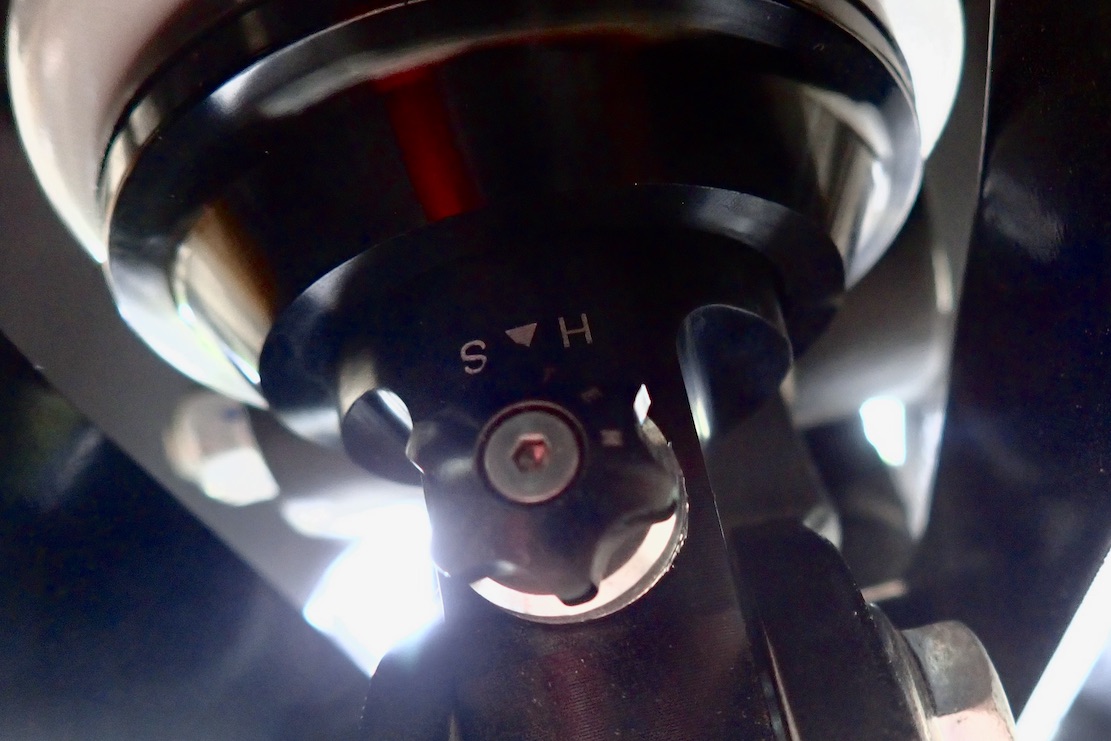
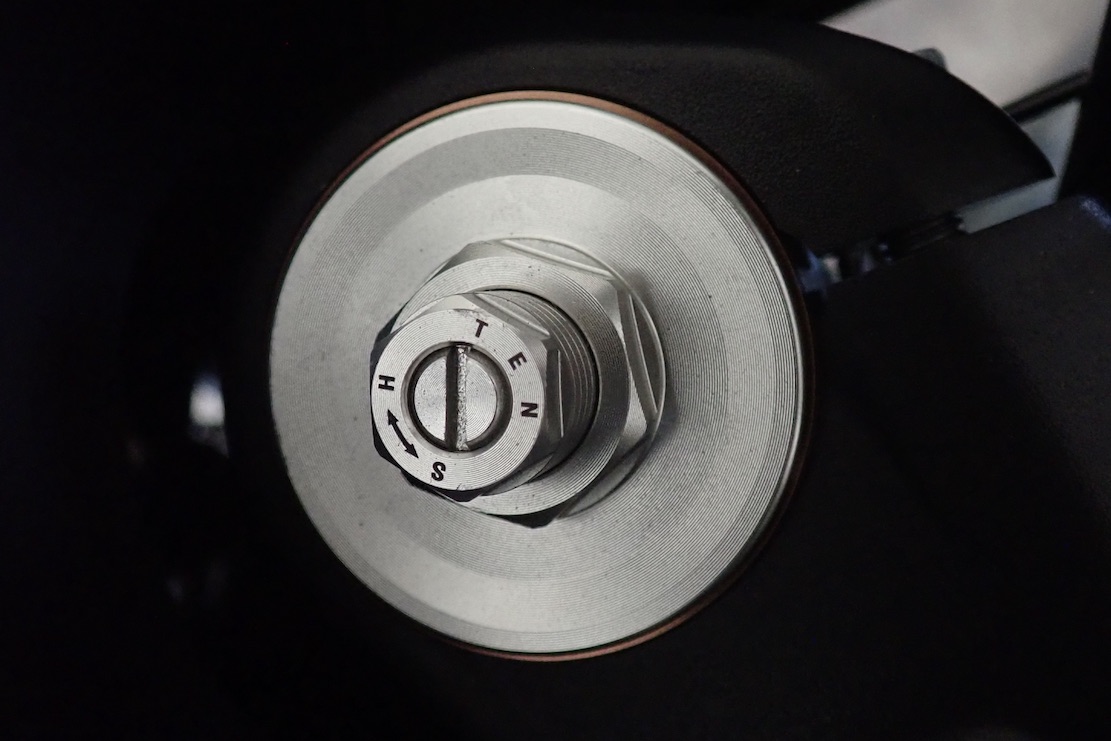
Amazingly for the price, the CF has fully adjustable suspension, and taking a cue from this ADVRider 450MT suspension thread, I should have started by setting the rear sag – a well-known metric for getting the rear suspension in the ballpark – but I didn’t. I never do. But I should. Instead, I dialled back – unscrewed – the shock’s combined compression/rebound setting (below left; no tool needed; nice) from 11 down to 3. Then with a flat screwdriver I backed off the fork rebound (left fork) and fork compression (right fork) by one full turn (360°), and unscrewed the fork preload with a 14mm spanner by half a turn – and later another half turn. This was a definite improvement, especially on the trail.
Shock rebound/comp dialFork preload and R or C damping
By now I was riding with £22k of top-of-the-range Desert X Rally, and an HP 1250GS with similarly sophisticated suspension. On the roughest trails I was unable or reluctant to keep up with them. Three times more hp may have helped, but the MT’s springs lacked the solid yet plush feel of the Ducati which I rode briefly and which lapped up anything that was thrown at it.
Kriega USD fork seal covers
So the stock set up is far from plush, but just a couple of minutes of easy tweaking has improved things a lot. The back-end bottoms out now (as it should on the biggest hits) and the fork has done the same on a couple of fast ditch impacts. When I get back in February I may crank the rear preload up half a turn which should help tighten up the steering and reduce G-outs. Plus try dropping the tyres again to 24-ish.
As it is now the 450MT is not quite as good as my Rally Raid sprung 300L from last year, nor my factory set-up Hyperpro 650 XCountry, but both had €1-2000 of added springware. I’ve spent nothing on the MT, bar a few minutes on adjustments. It all just underlines what a well configured machine the MT is.
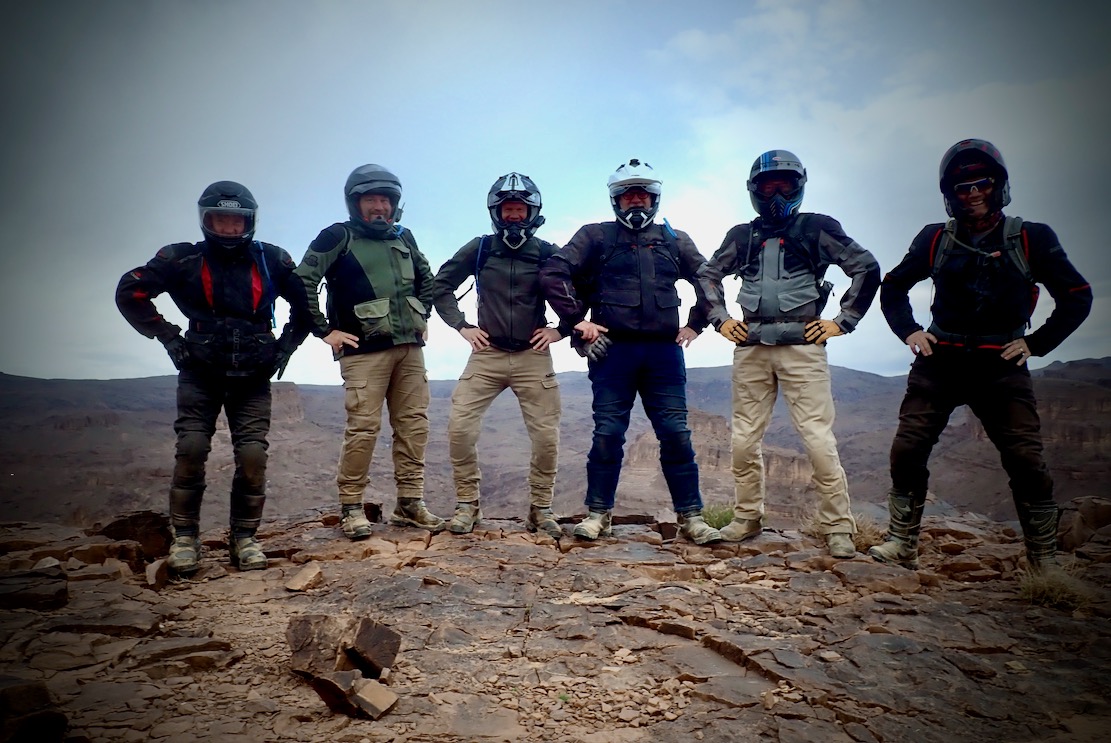
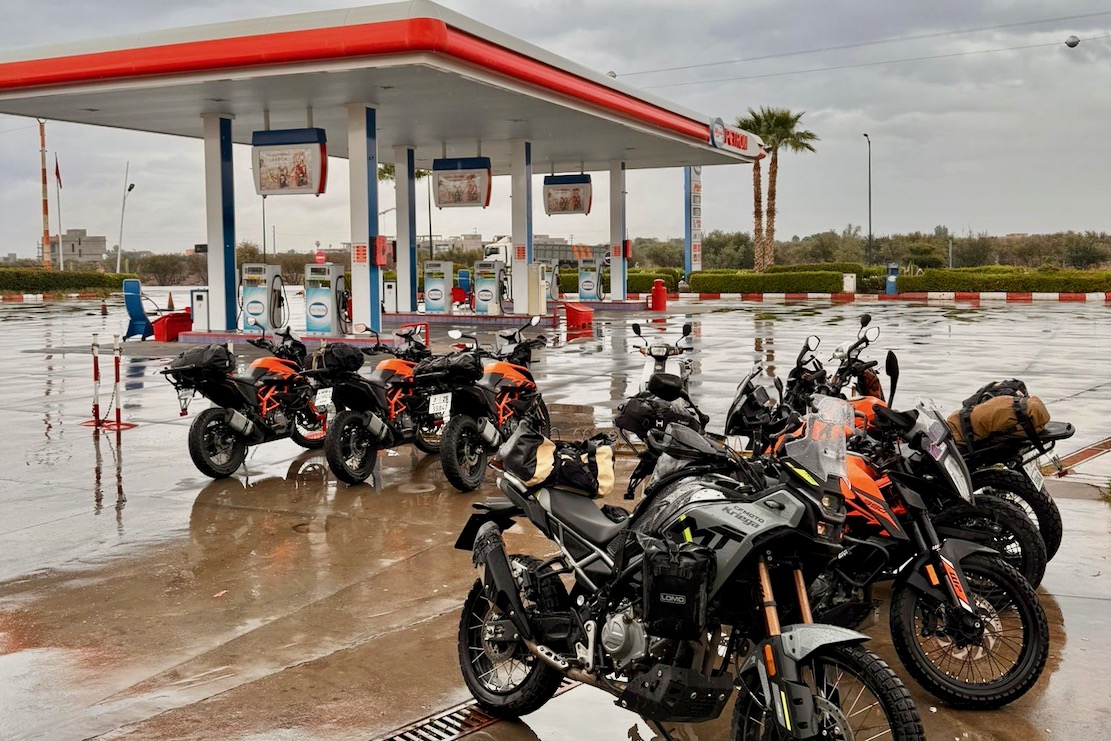
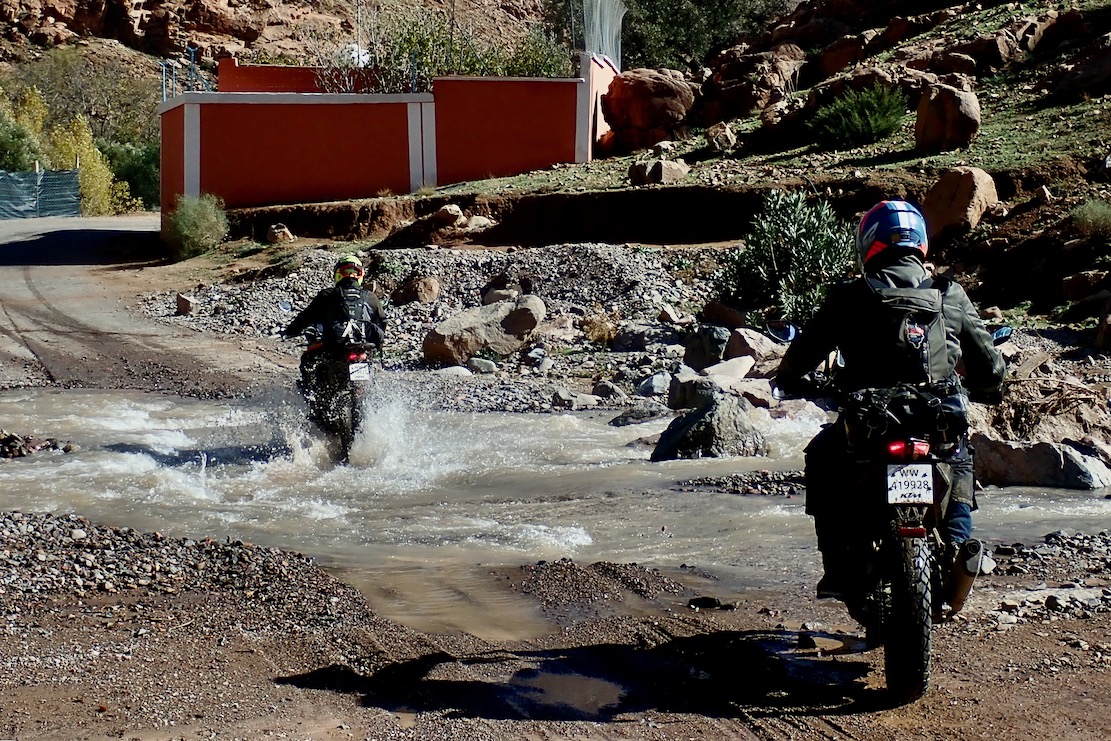
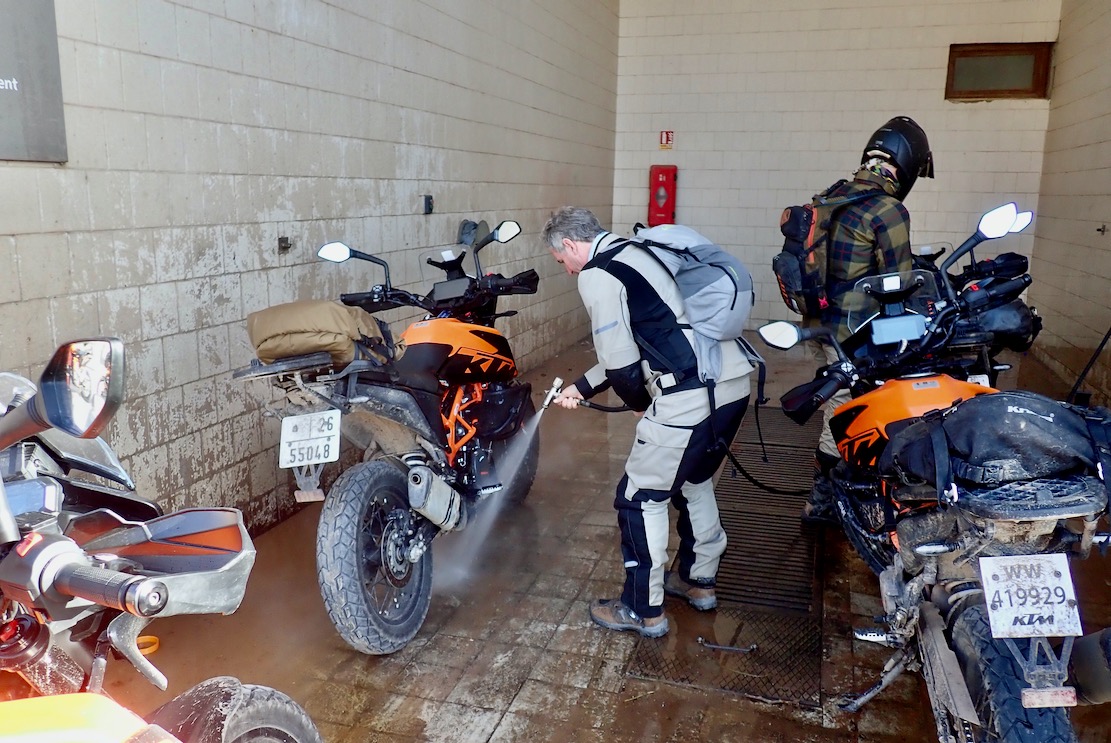
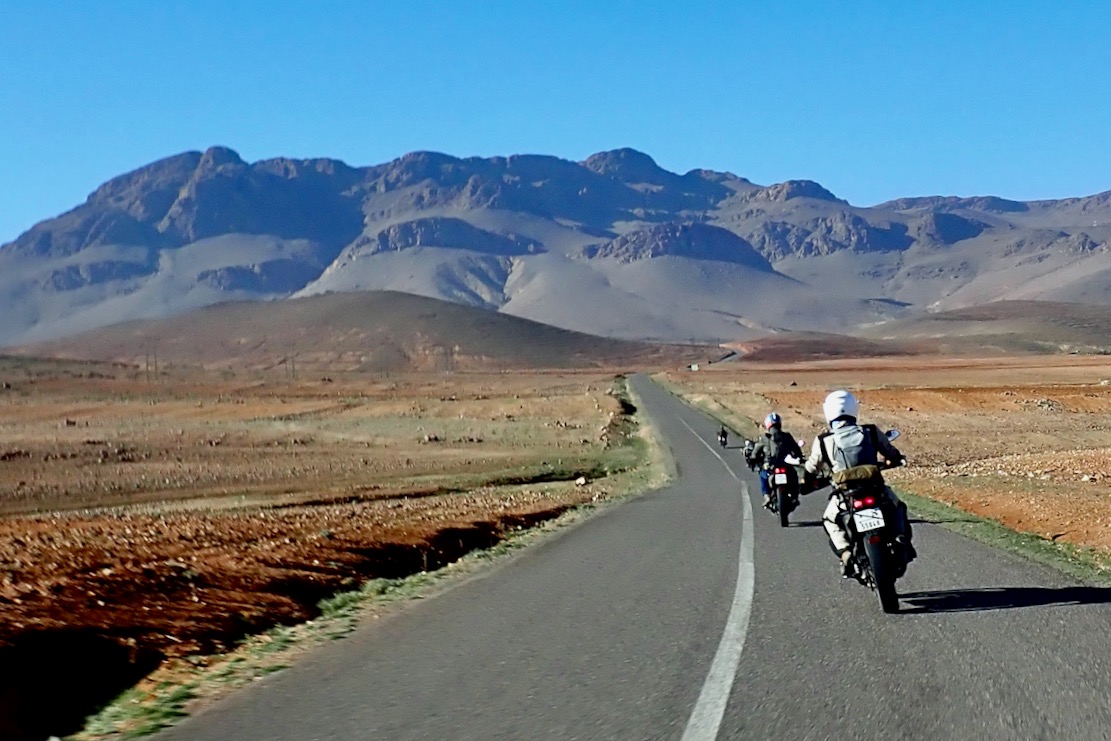
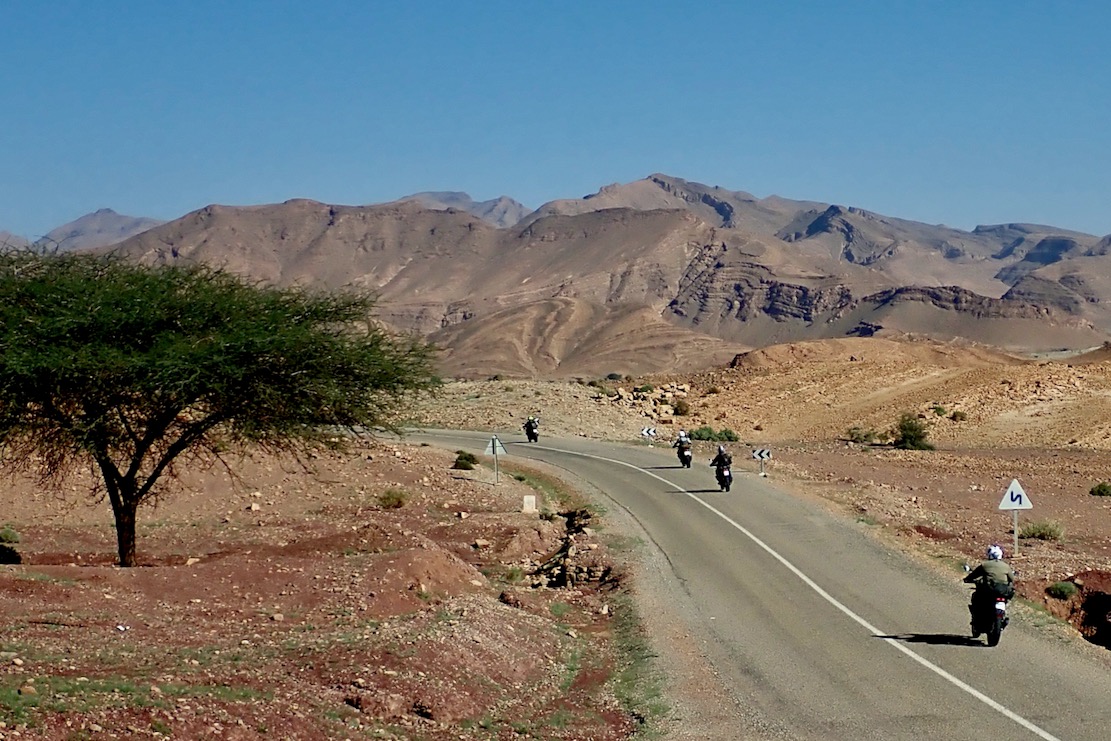
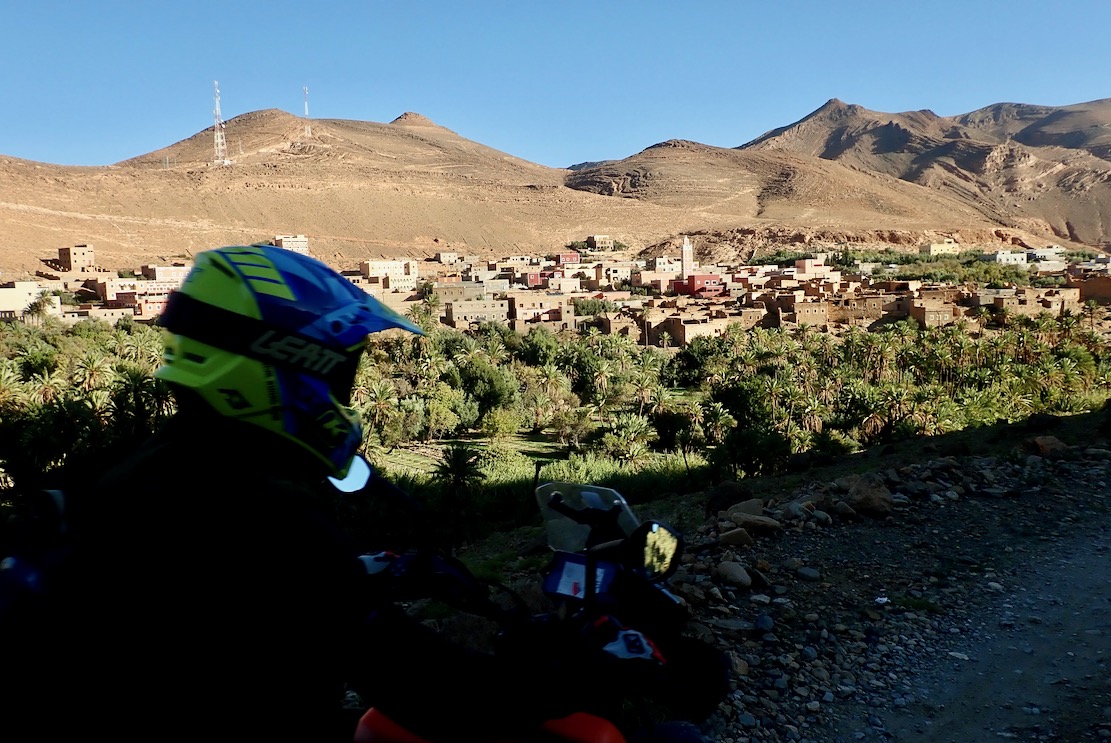
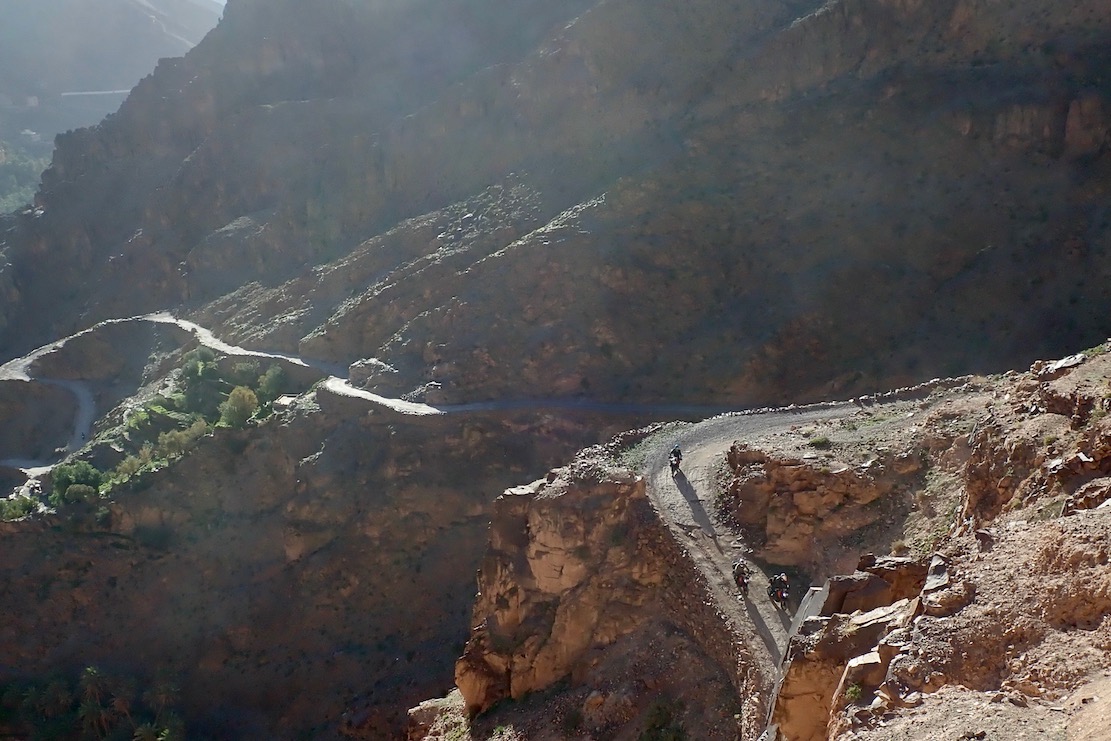
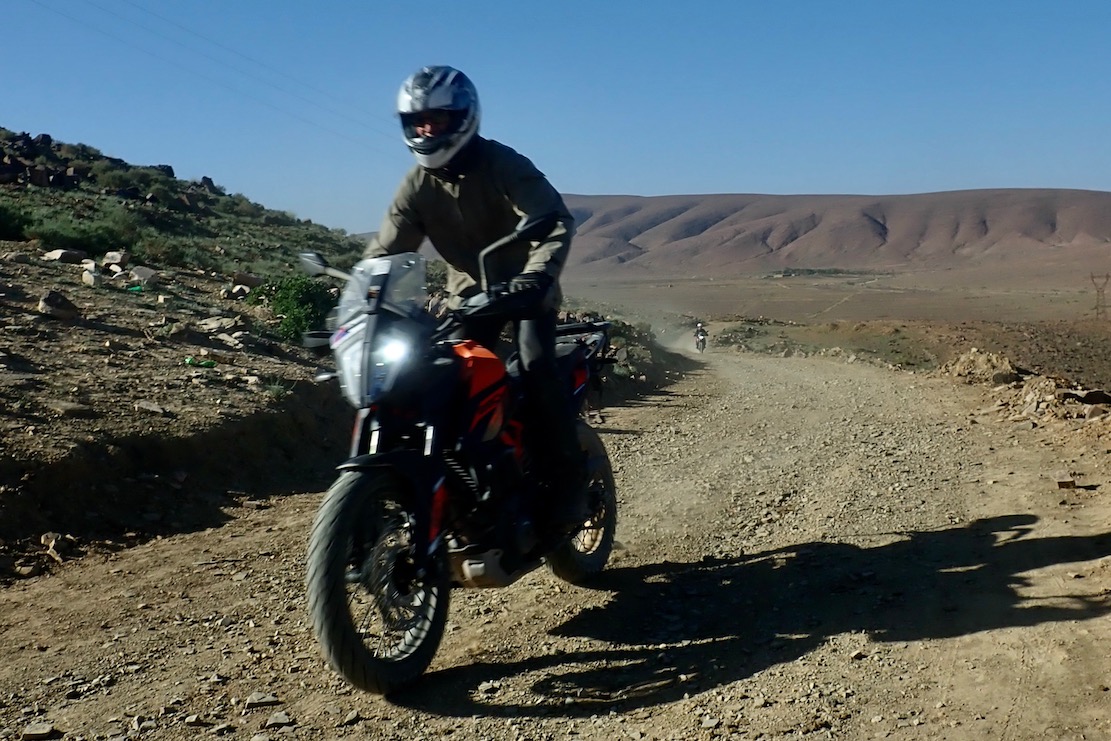
A few shots from November tours on the new KTM 390s. Severe September floods in the south wrecked many routes, or made them rougher than normal.
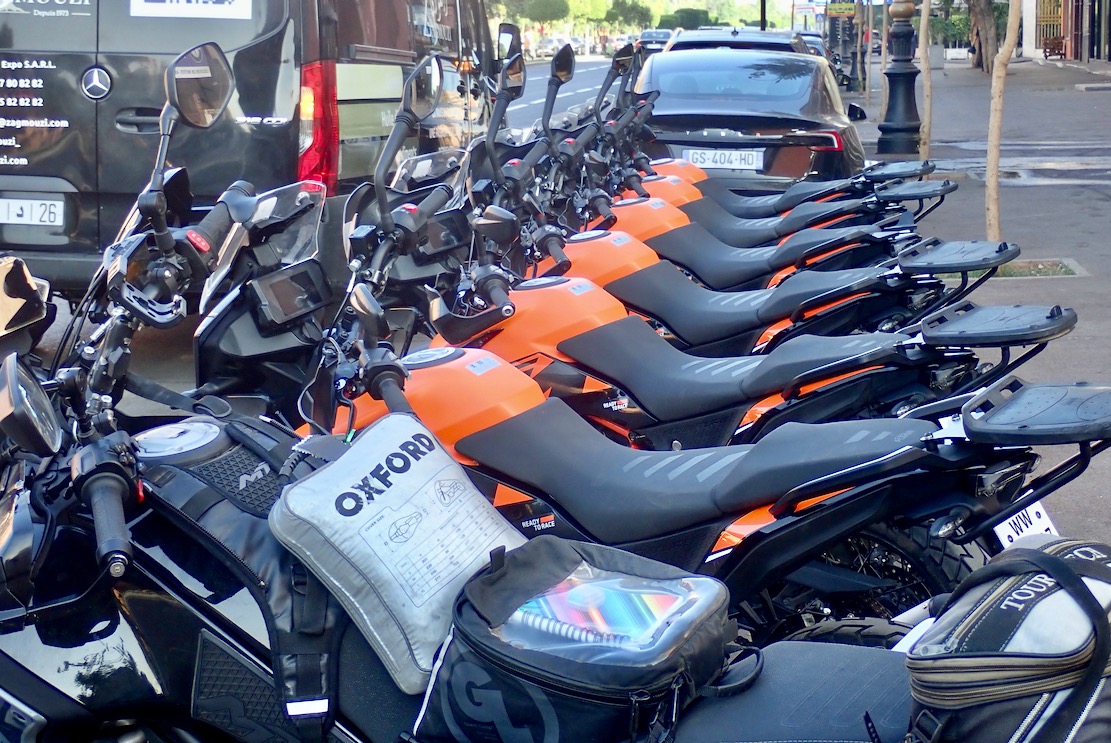
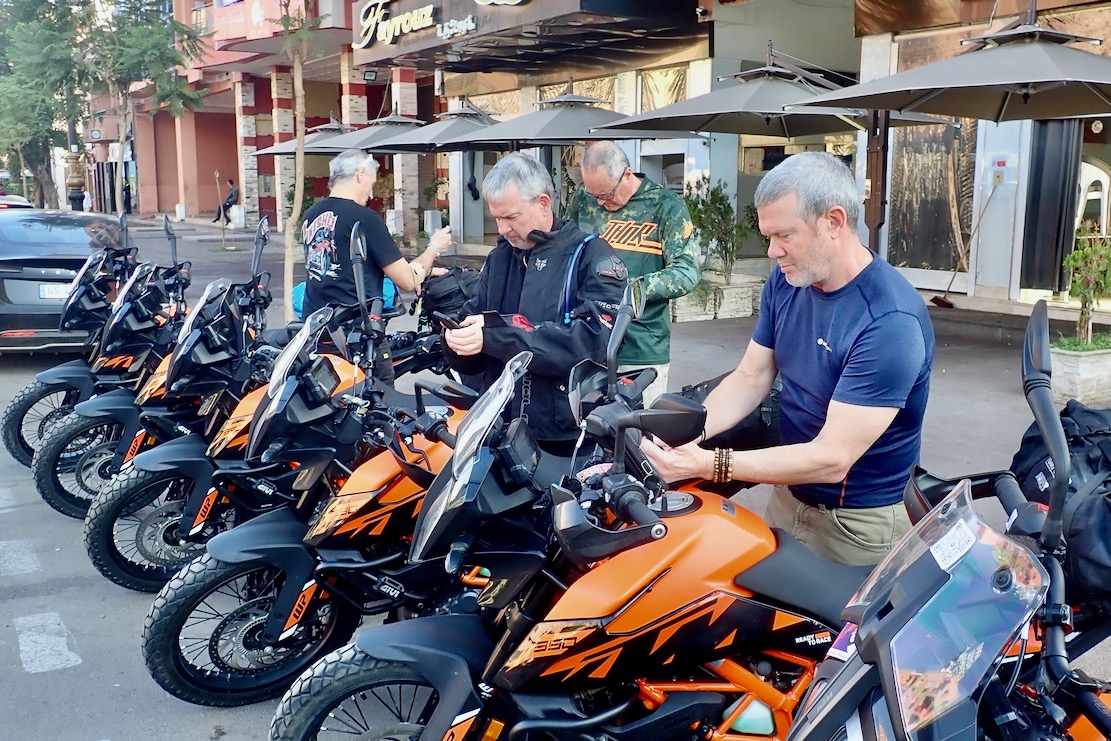
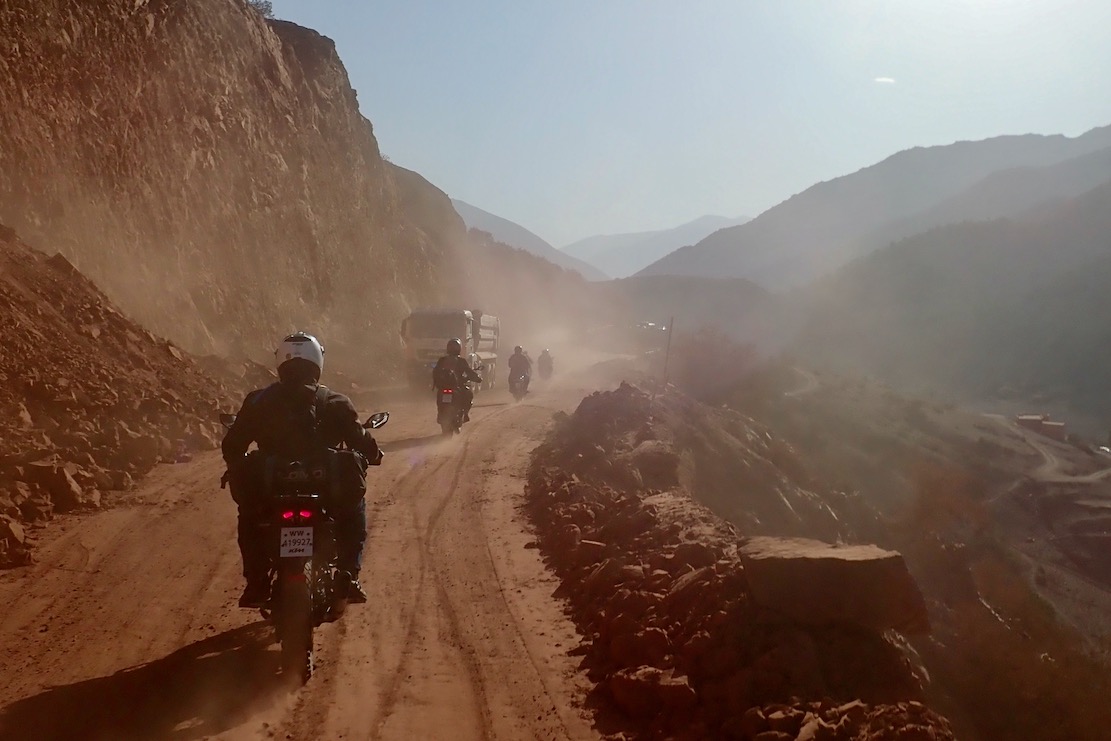
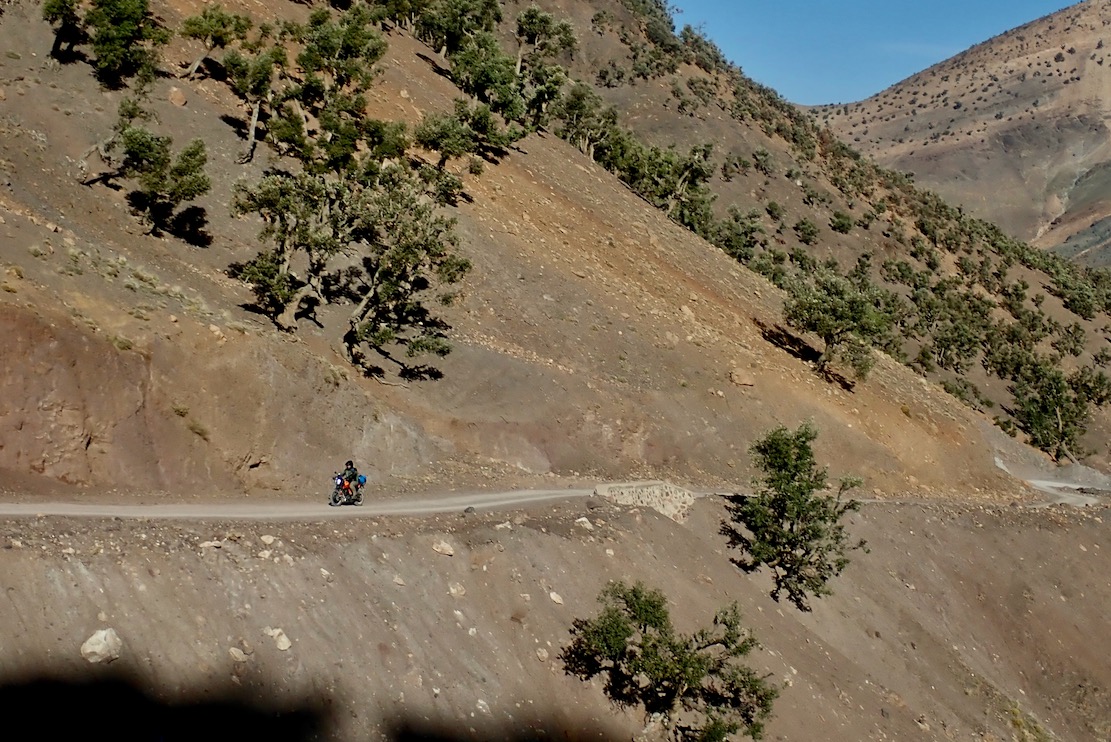
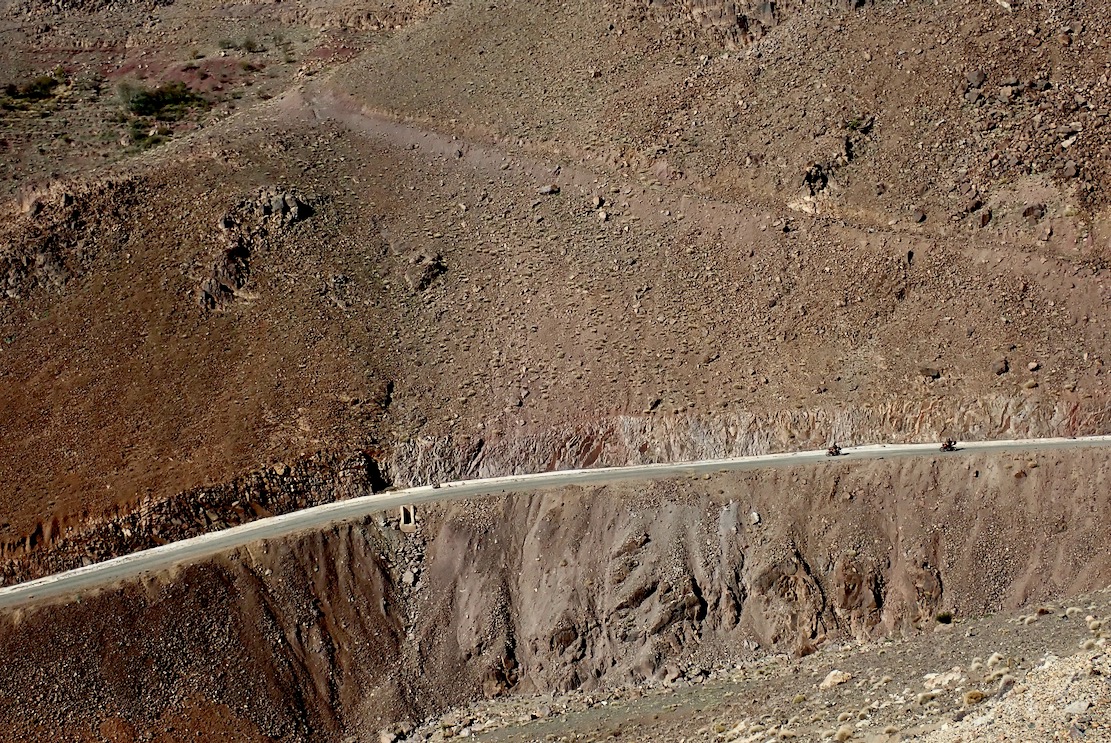
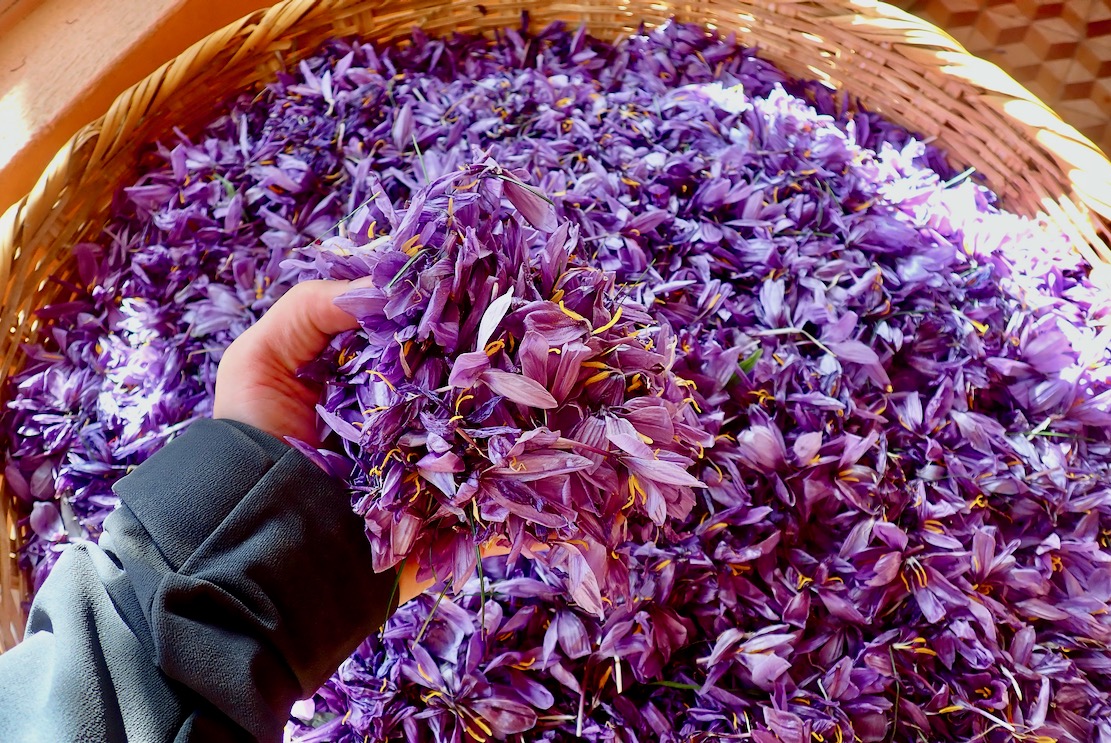
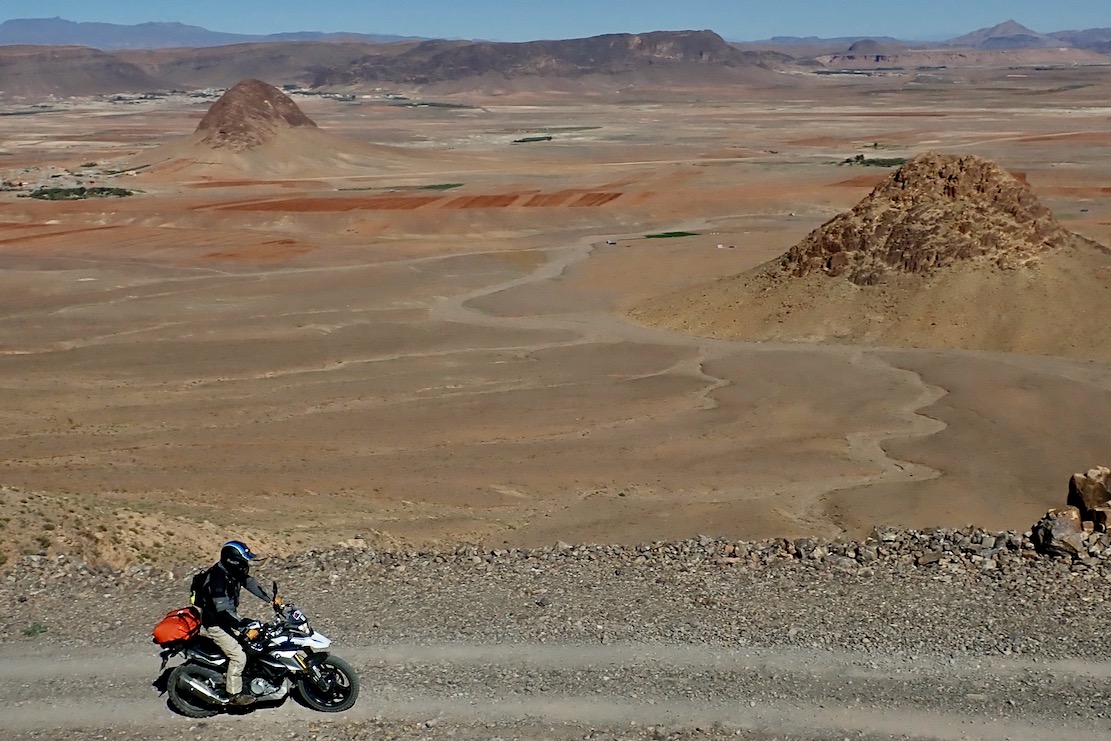
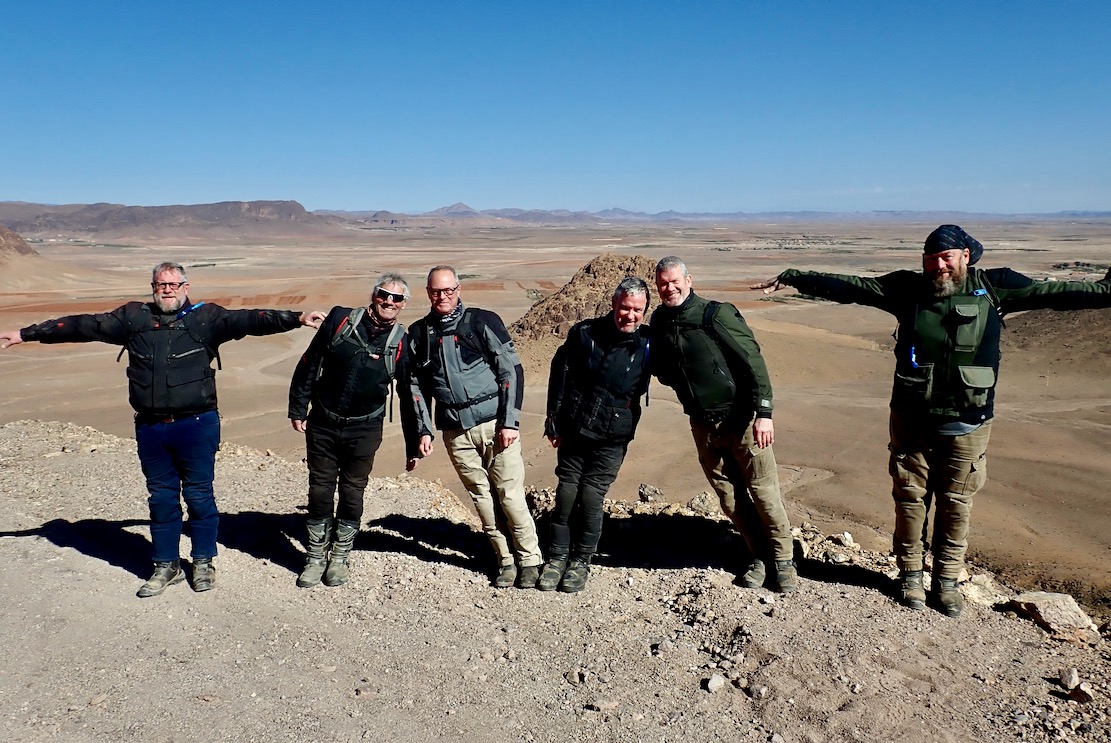
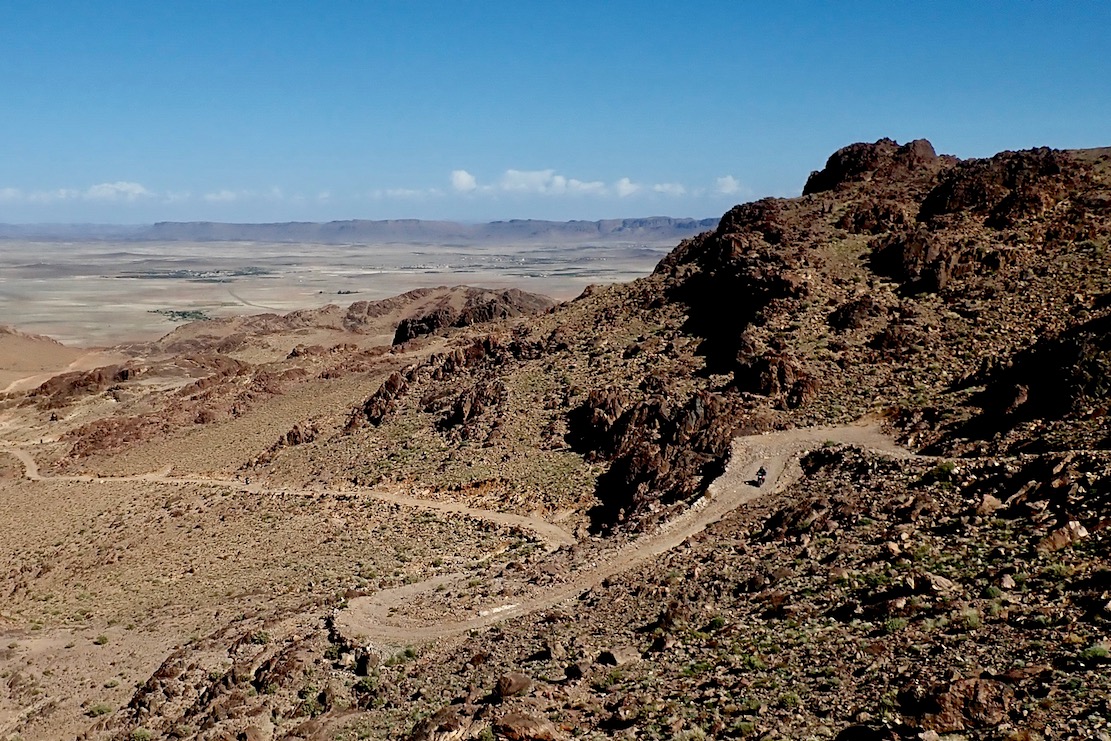
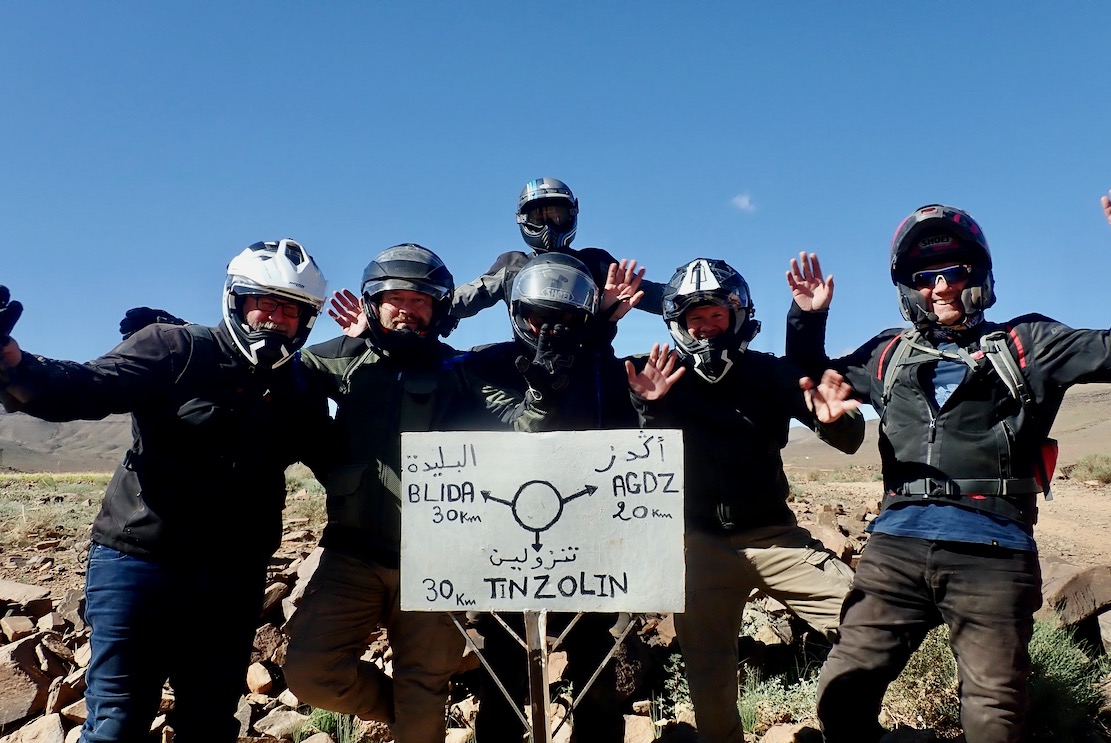
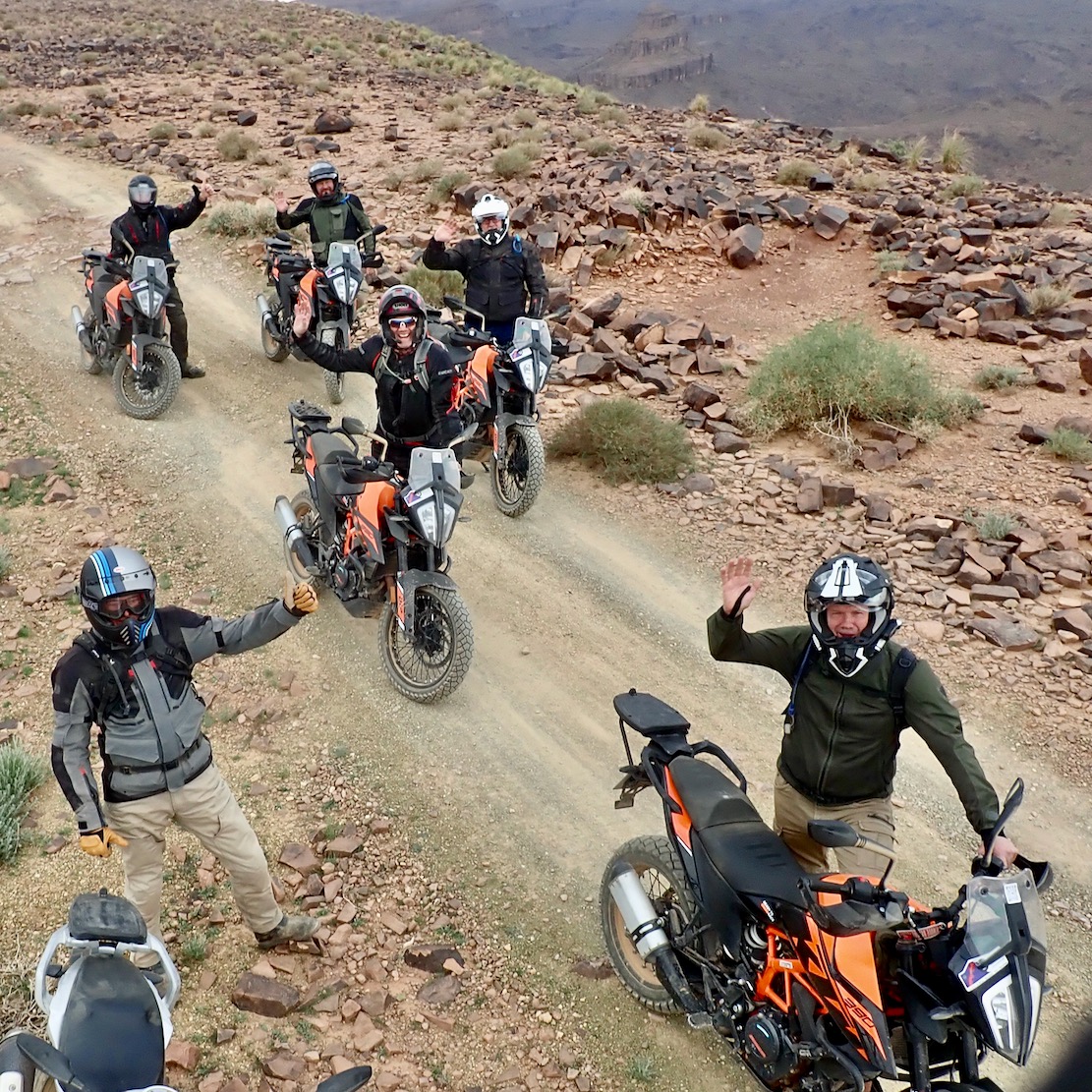
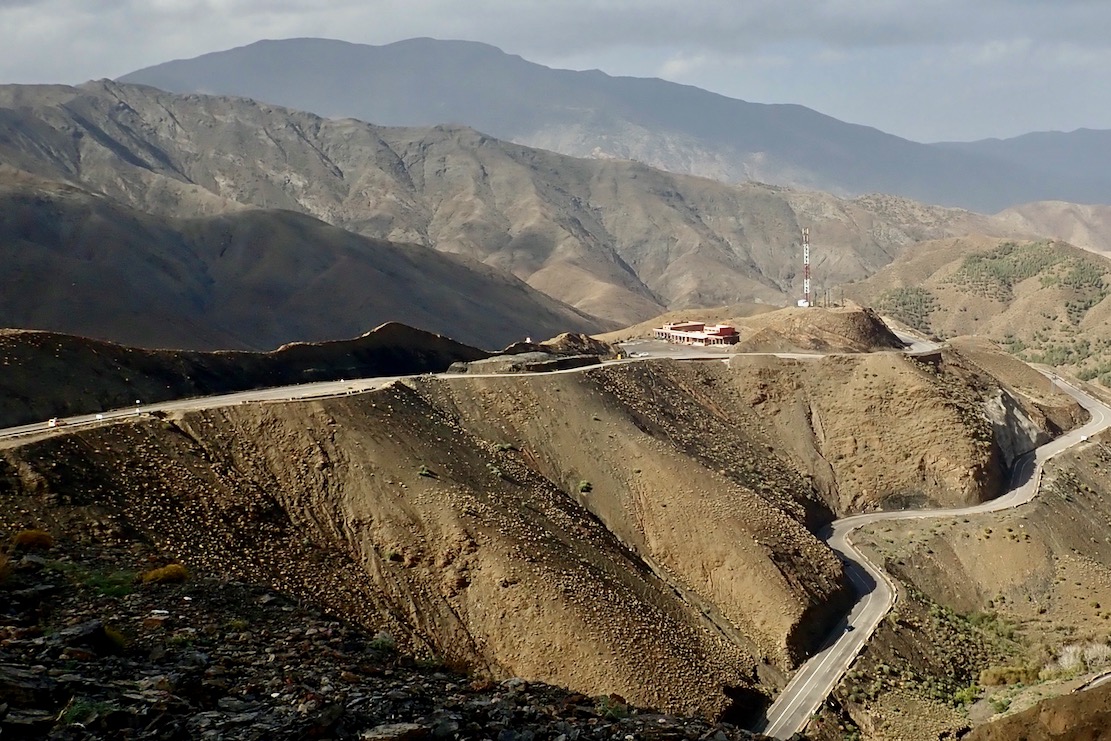
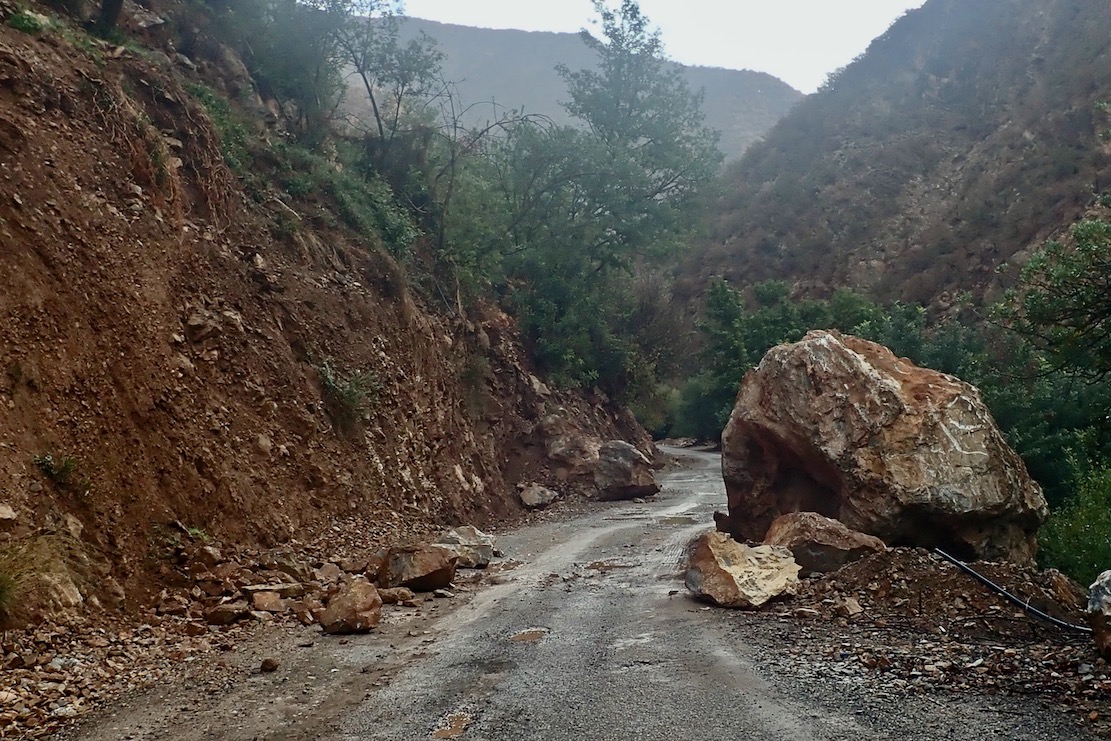
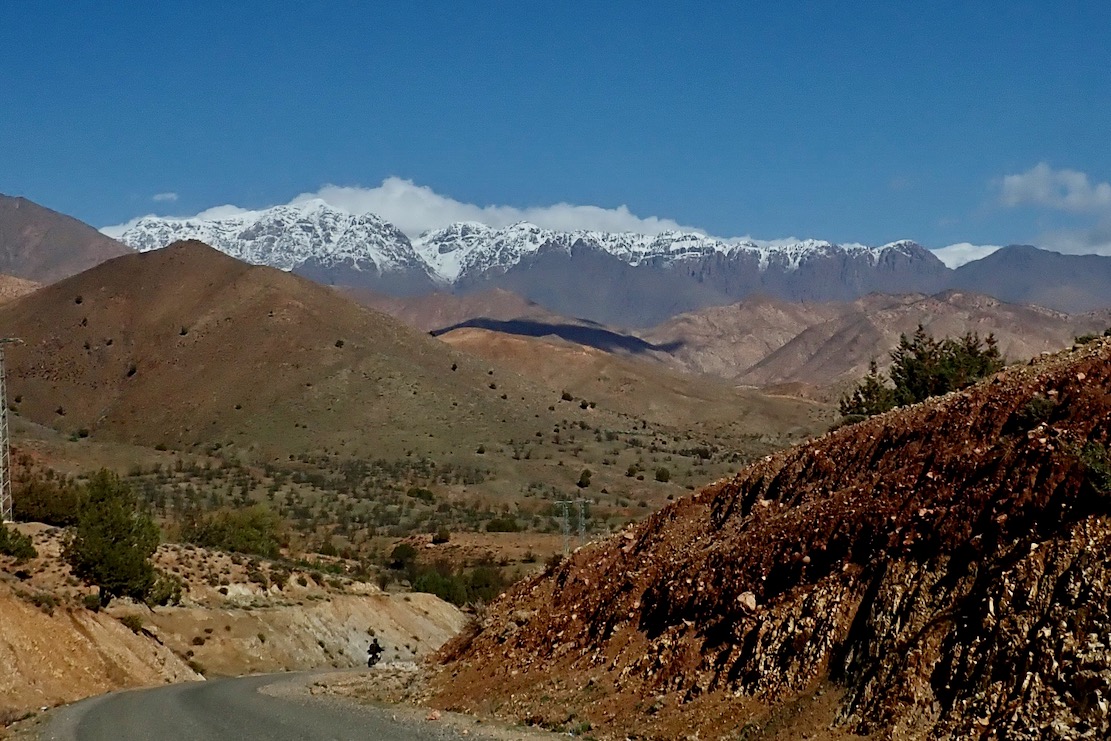
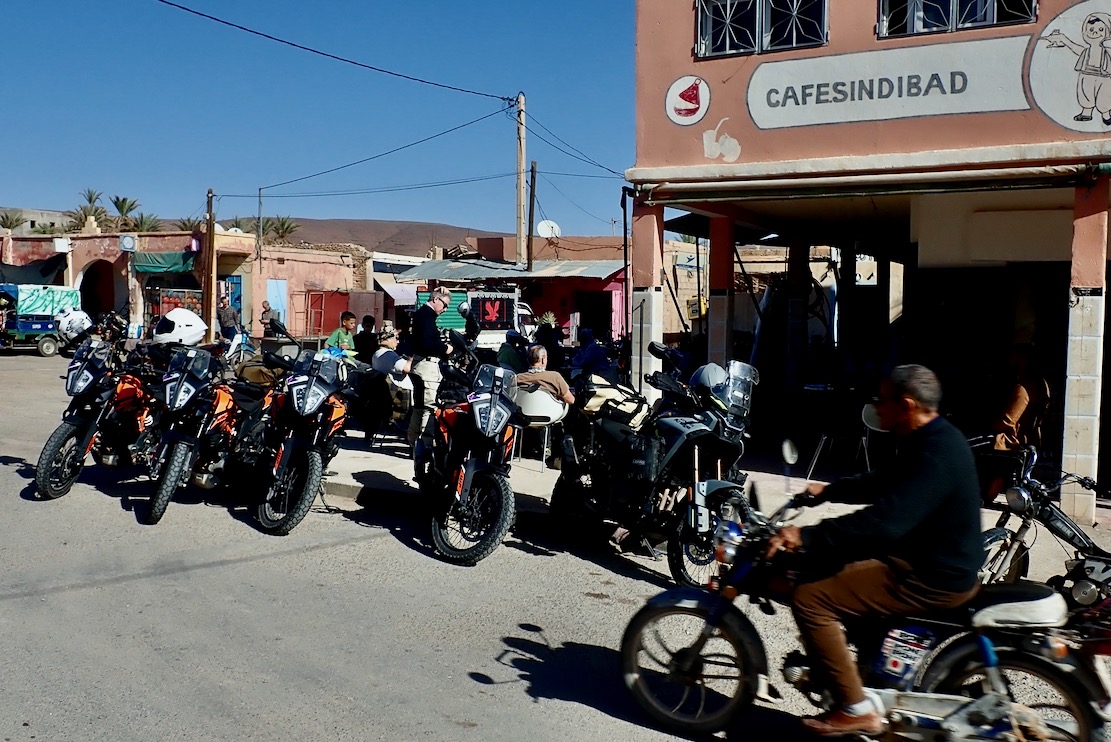
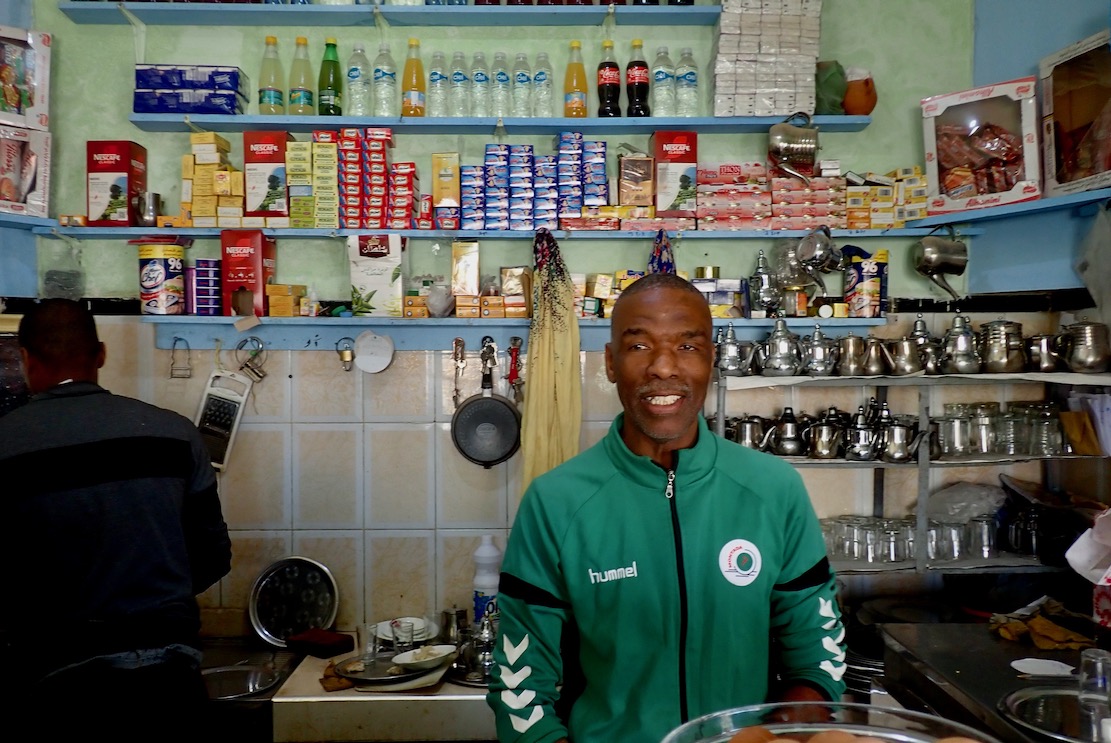
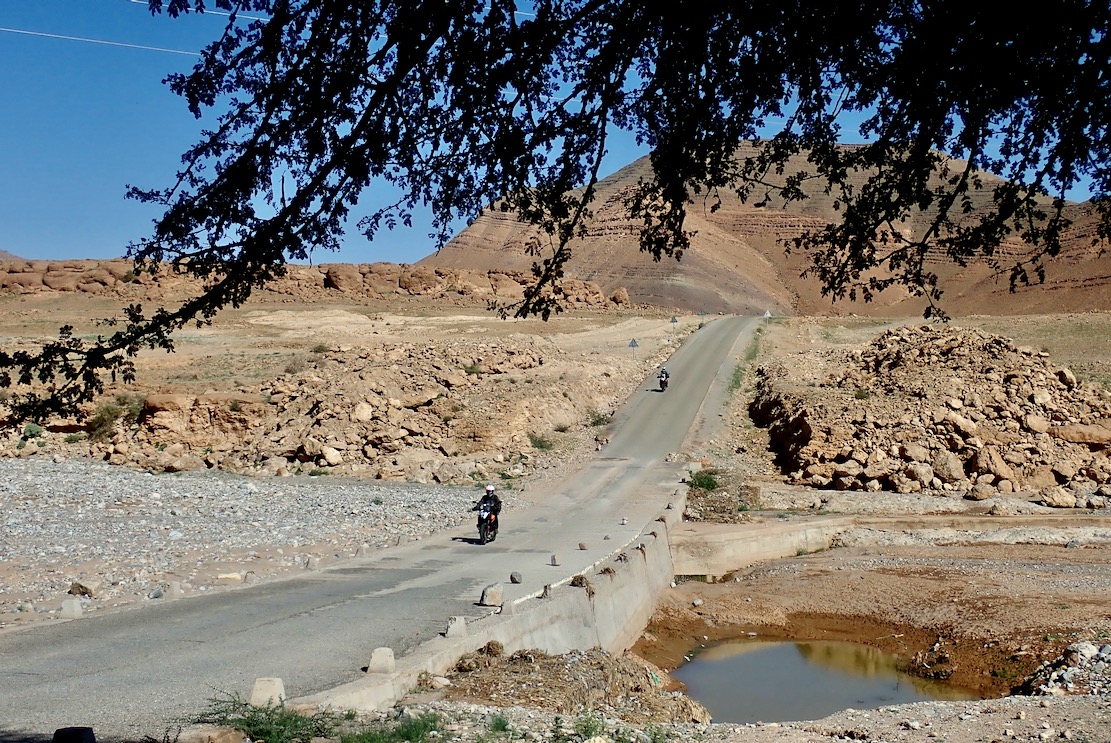
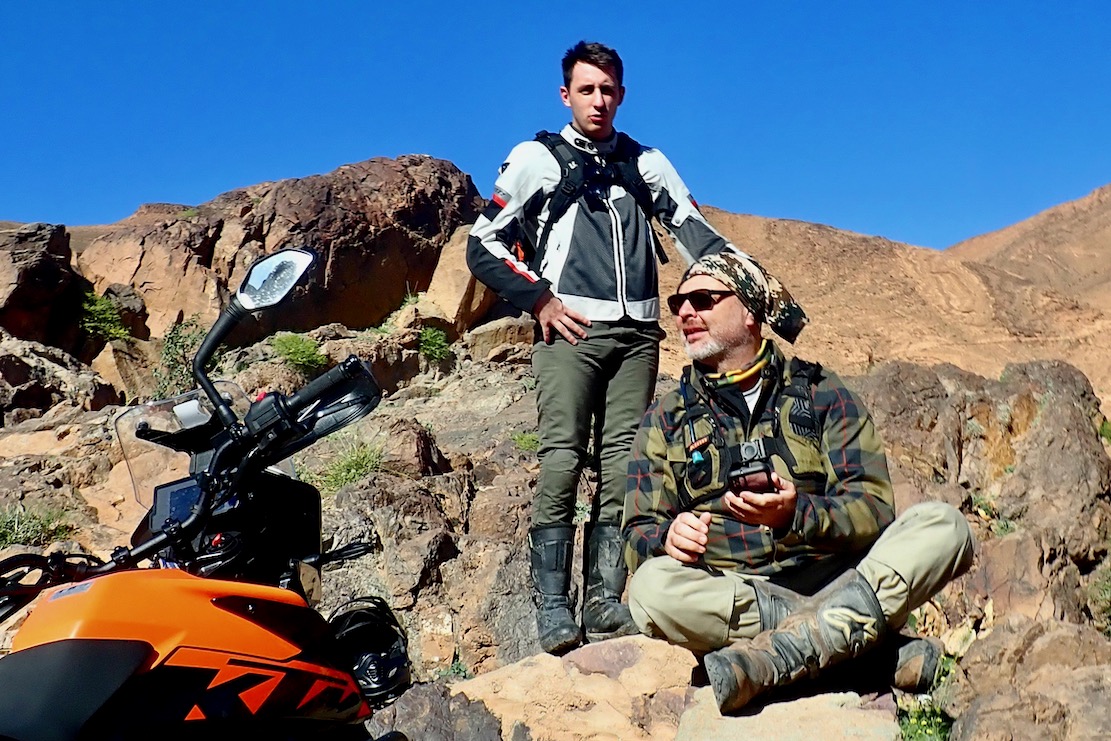
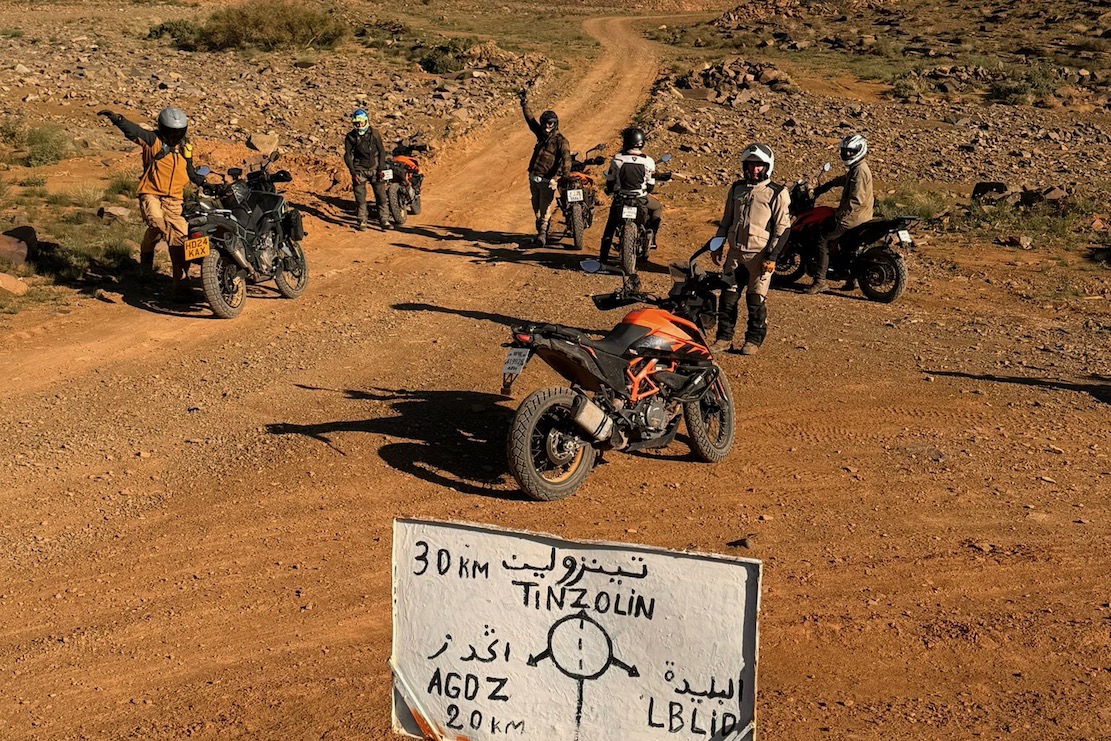
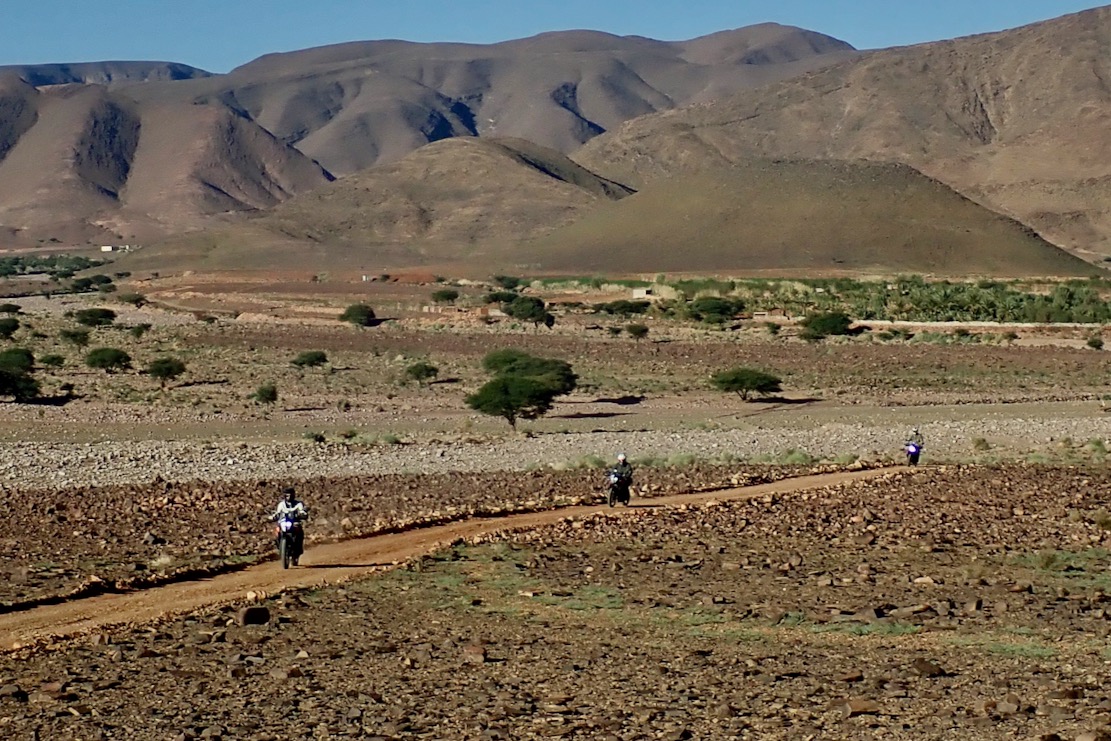
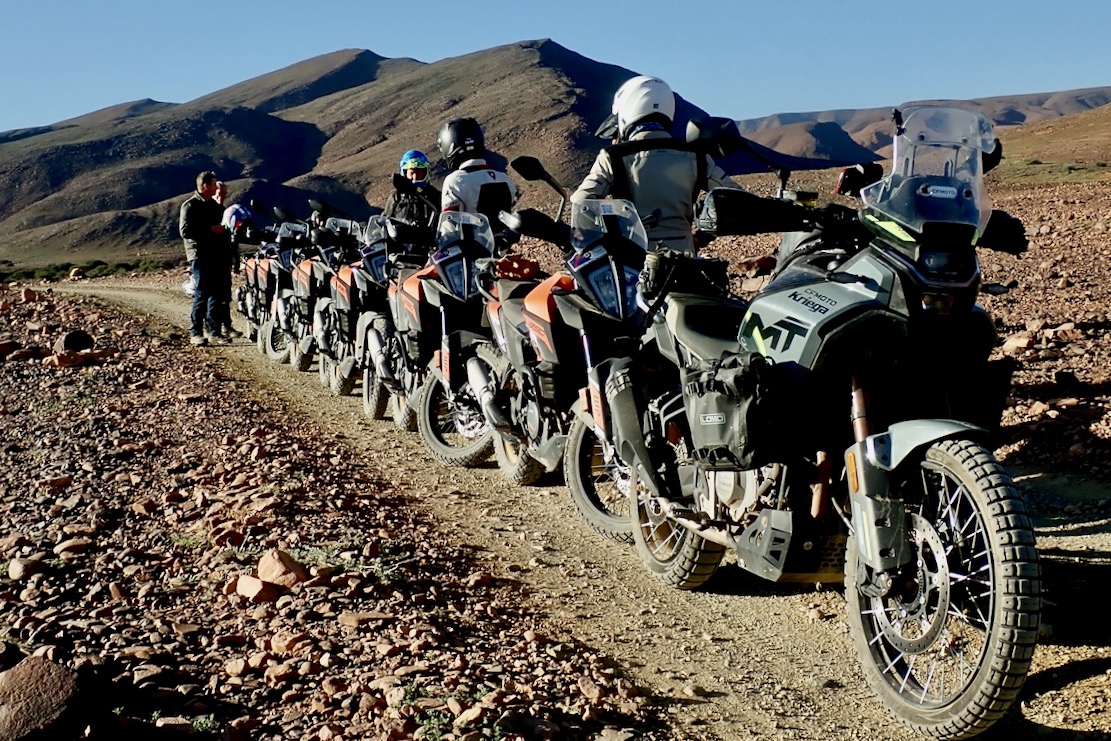
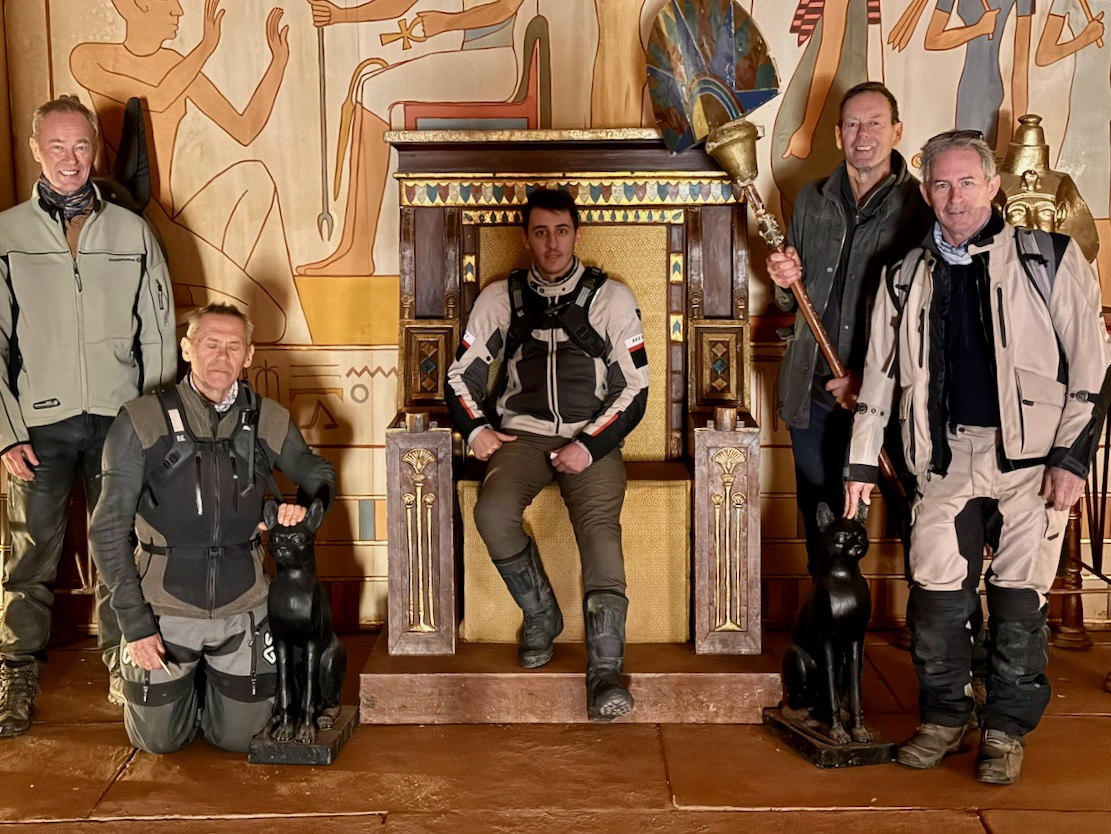
A swath of near-new 390 Adventures in MarrakechBut one zero-miler has no brakes so we come back for a 310GSWe set off up the dusty N7 Tizi n Test roadNext day we cross the 2500-m High Atlas watershedAnd come down the other sideWe spend a relaxing evening separating the saffron stamens from crocus flowers.Group 1 came two years ago so I try a new route on them – A3 from the new book.Then I rope them in to a crass publicity stunt for the TMT (Trans Morocco Trail)From Anissi village the track is unused, pretty rough and slow. Many of us over-balance negotiating run-off gullies, even me! Good to know I can pick up my MT450. Above, the Tawzart pass back down to the Issil plainNot for the first time my instructions to ride ahead are vague and an hour is lost. We ride into the night and top up on fumesDawn over AmerzouI let Keith ride my 450. He might want to buy it laterI have a blast on the 390 but as expected, I am not thrilled. No worse than a 310 on the dirt, I suppose.We reverse Route A11 to Agdz – a fun haul road little damaged by the rains Next day we try Z3 up into Saghro, but it’s now a bone shaker in places. Give it a few months.It may be the main N9 road but the Tichka pass is a blast and a 390 is just the job. ‘Everyone, just step back a bit…’group 2 and for the first time in a dozen Novembers, we leave Marrakech in the rain. The roadworks up to Ijoukak are messy and rocks are rolling down the hillsides and blocking the road for carsEvidence of fresh rockfalls (alongside earthquake debris from last year)The rain fell as snow on the High Atlas summitsAnd the streams are running.We hose the mud-splattered bikes off in TaliouineAnd head into the Anti AtlasAnd down into the desert – greener than normal after the September rainsLunch at Sinbad’sCapt Sinbad himselfUp into the Aguinane valley. Note the plunge pool below the ford gouged out by the rainsRJ and Luke at the top of the dry waterfallLeaving Assaragh for the last time. Finally found a better place down in AguinaneThe big descentChecking the socialsA day ride up A11We decide to try out the Tinzolin OUT. Now it’s a VOR (Verified Other Route – all explained in the book)It’s both rough and sandy in places and above takes a big diversion round a washed-out oued bank. I’m getting beaten up again and need to have a fiddle with my MT’s suspensionThe gang on the plateau above TinzolinThe group demands a visit the film studios at Ouarzazate. I watch the bikes in the car park.Back in muggy RAK. All’s well that ends well.