Author Archives: Chris S

BMW Xcountry – Hyperpro suspension

Xcountry index page
smacbike

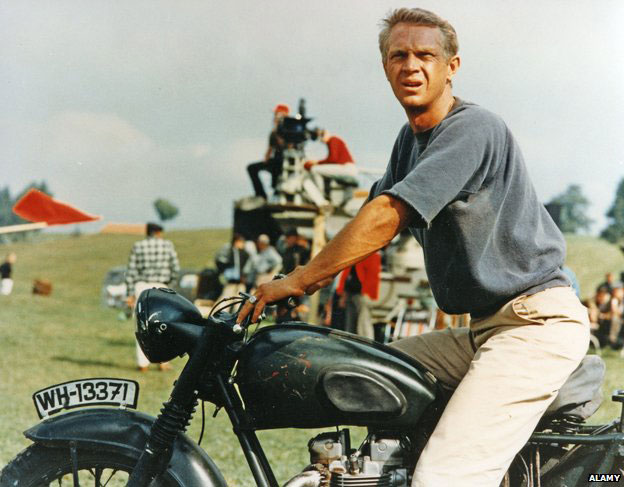
When I imagine a good handling bike I often visualise Steve McQueen in The Great Escape. Not the famous barbed wire jump which was actually done by a mate of his, but the riding he does beforehand while trying to outrun the jerries along the lanes and across the fields. The way he chucks that 170-kilo TR6 around on ordinary tyres and suspension, skid-turning with the back brake and sliding around but in control, always struck me as optimal moto/rider interaction. With a hefty old dog like the Triumph it must be down to skilful riding too, as well as a low slung machine, but if a bike can bring out that sort of confidence I’d be pleased with it.

My 650X wasn’t in such good shape when I rocked up at Hyperpro’s workshop, halfway between Erik’s Hot Rod Bar and the Hook van Holland ferry port. It felt like the head bearings were notching, and in the last 1000 miles the shock felt shot too. I didn’t feel like the Cooler King throwing it into roundabouts while in fact heading for the kerb. I thought oh well, I’ve finally lost much touch but at least the Xco is jolly economical and the switches fall easily to hand.
Bas at Hyperpro suggested I came over for a custom suspension fitment. In his experience, being there with your bike makes all the difference. Everyone told me I’d spend the whole day at his workshop watching him work and they weren’t wrong.
P1150346

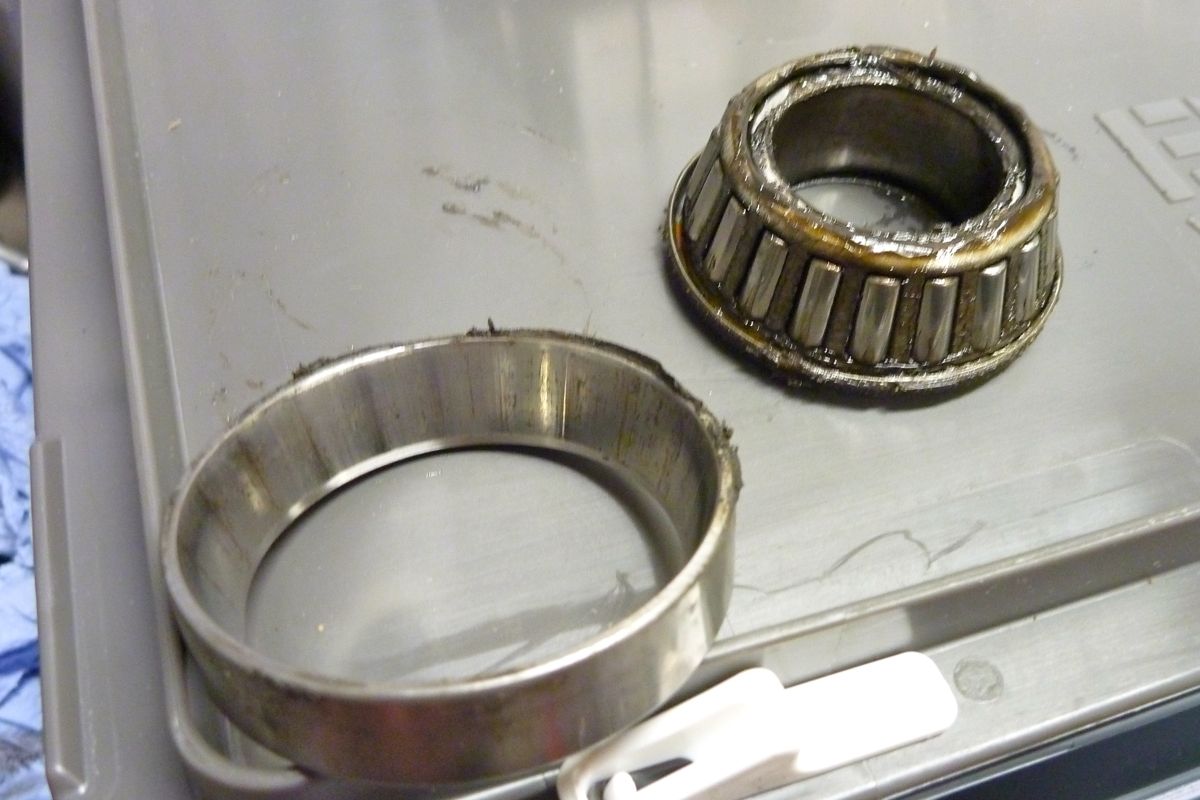
For weeks I’d suspected the head bearings were gone, something most noticeable at low speed. But lifting the front wheel I couldn’t detect anything and thought it might just be tension from the brake hose arrangement. Erik suggested cupping from the Tourance which was down to 2-3mm. With the bike yanked over, it took Bas a couple of seconds to diagnose the notch in the bars’  arc and which now felt obvious.
During suspension transplants he told me they get through a lot of headsets at the HP workshop. The Xco’s relatively elastic alloy stem doesn’t help in this regard, though Bas admitted his hard running BMW G/S (see below) eats a set every 5000km or so.
xhypertopcap

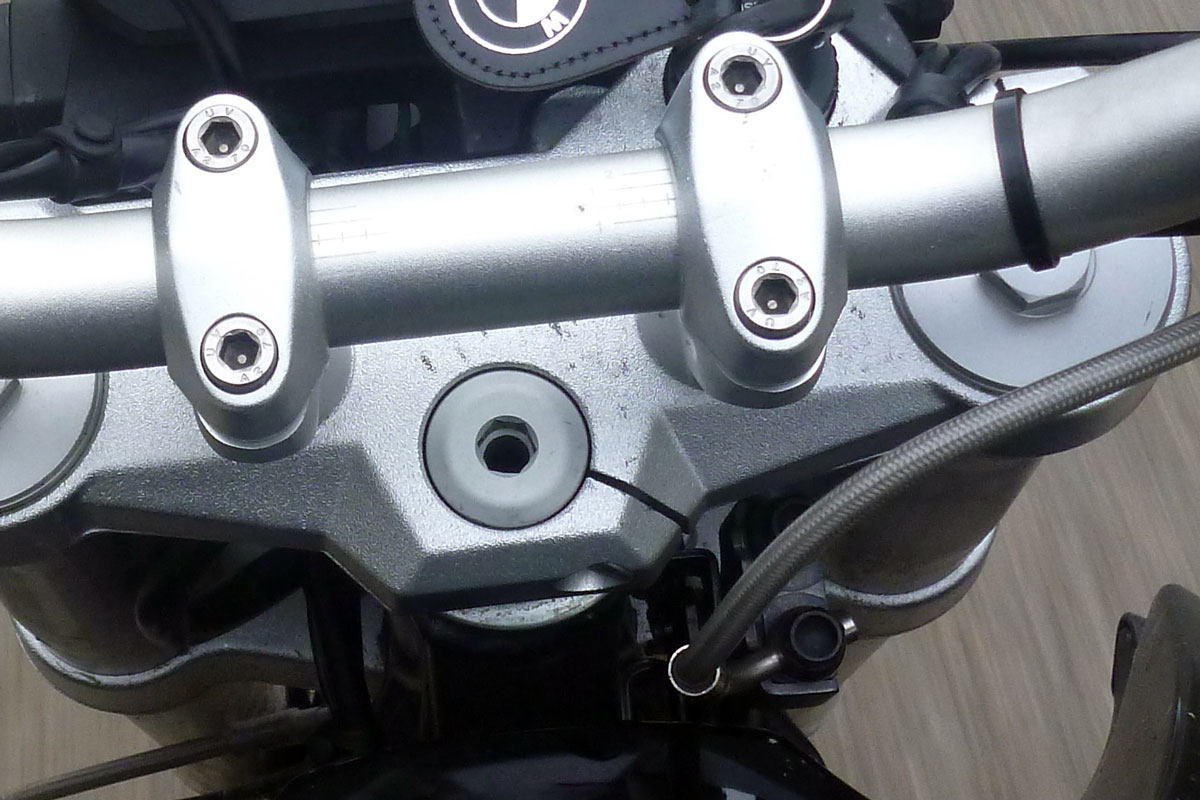
I wasn’t expecting it, but Bas got stuck in and replaced my worn bearings. I still don’t get how this notching occurs; fork impact + wear + lack of care and grease I guess. Once fitted, he pointed out the noticeable change in resistance when tightening the 10mm hex headstock adjustment nut (left) by just a couple of degrees. That’ll need doing in 1000 miles as the bearings bed in.
P1150376

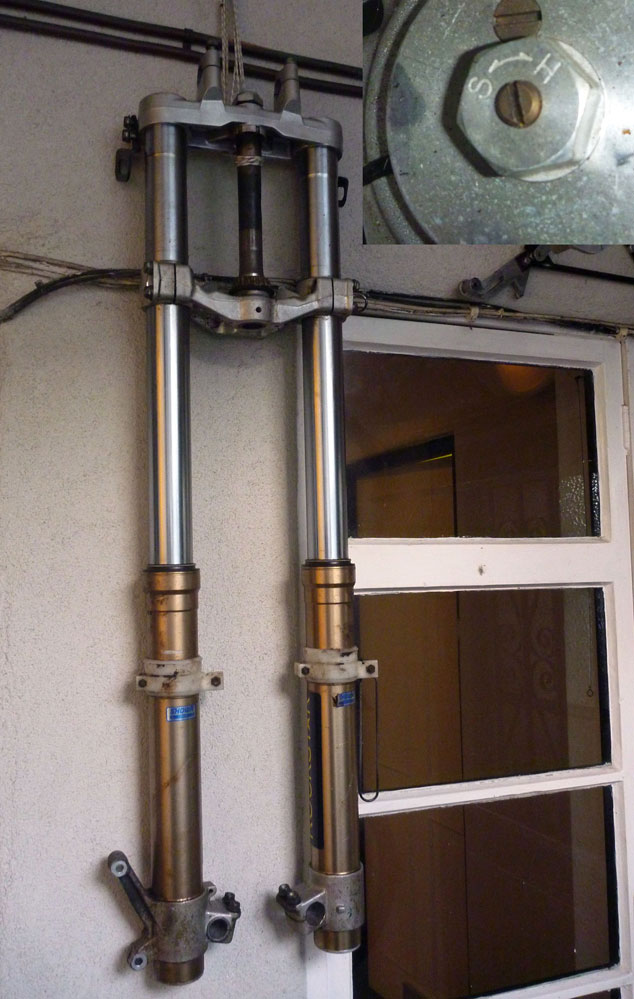
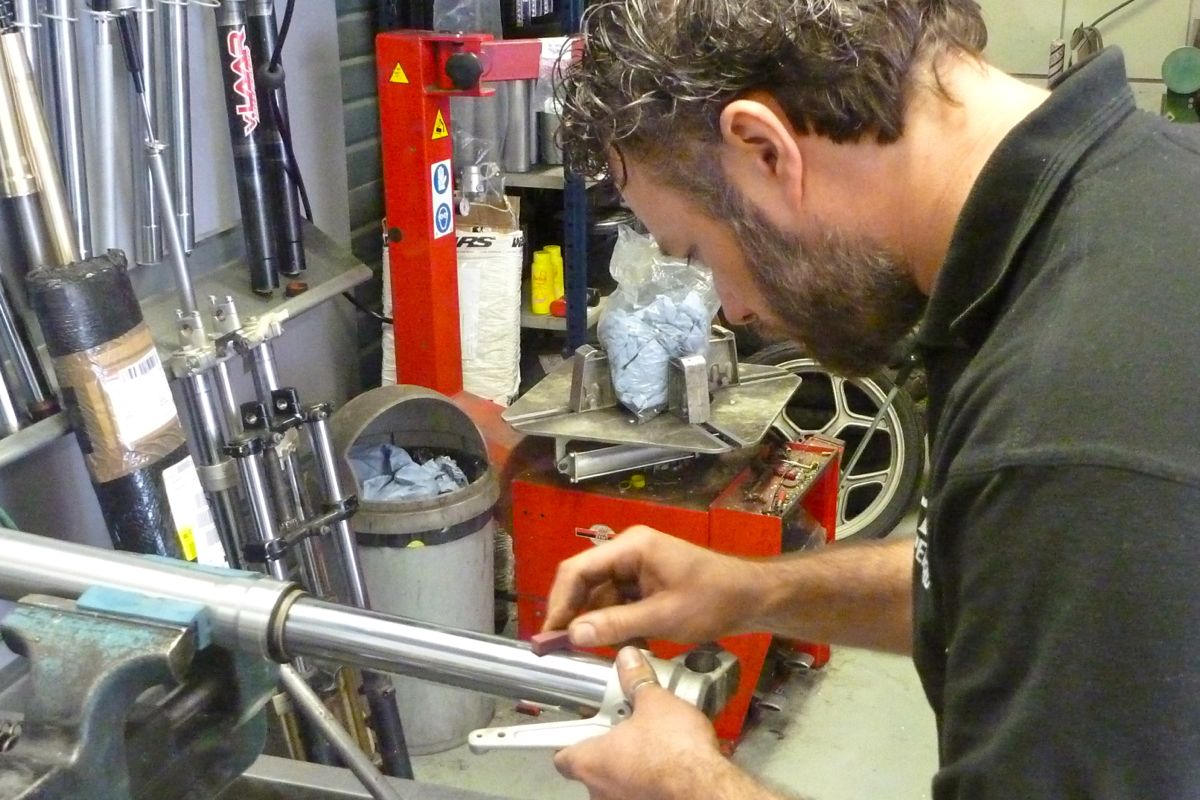
He then got to work on my forks, identifying barely visible scratches on the chrome sliders which he buffed out with a strop and a file (right).
I’ve always doubted the genuine advantage of USD forks. The best explanation I recall reading is that the heavy steel slider element sits lower for lower CoG, but then the alloy needs to be thicker to withstand the triple clamps and the steel is undesirable unsprung weight. I’ve also since been told it was a way to get more travel. To me they just look ‘upside down’ with a vulnerable slider out in the stone-strewn breeze.
It’s well know that telescopic forks are a regretable compromise on a bike: neat and cheap to make but with drawbacks that we all learn to ride around. In fact I’m convinced a huge part of a GS12’s appeal is the poise it gains from its Telelever front end. To paraphrase something I read recently on adv ‘For a two-story building a GS handles pretty well’.
P1150379
drz

There’s only so much you can do to Xforks unless you replace them with something else. It doesn’t have to be anything flash either, Bas recommends a 48mm right-way-up 48mm DRZ400 forks (right) which are easily found on ebay for around 100 quid plus clamps. I bought a set and plan to get them Hyperpro’d and fitted to the X. [In the end kept them for another project].

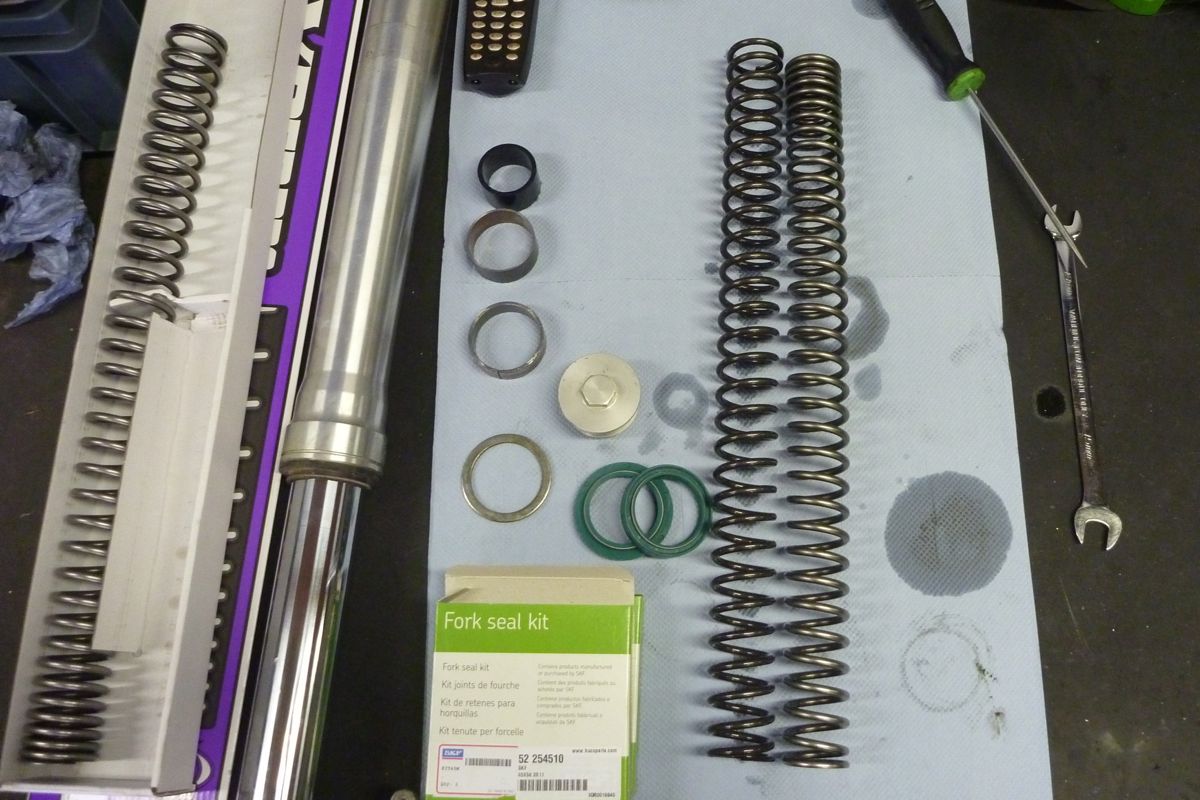
Once the sliders were as clean as they could be, Bas renewed the seals and cleaned up the bushes which run between the telescoping sections. He then slotted in the appropriate Hyperpro forks springs (left) and slipped in a lesser quantity of lighter oil (heavy oil is used to disguise soft forks). Bas explained why fork oil should be changed; not so much because it breaks down like motor oil but because it collects contaminants and humidity so needs flushing if you’re to avoid tedious seal failure. To stop that happening too soon, before remounting the forks Bas slipped on a pair of neoprene socks to protect the sliders.

xhyper-springs

A quick word on progressive springs. Most bike springs are linear; wound at a consistent rate end to end. While some riding applications are said to benefit from linear springs (road racing on smooth tracks, for example), the main reason we get linear is cost, as with so much in bike suspension. Up to a point, the pivot on a mono rear ends adds a progressive element, and in the 70s twin-shock era it was thought laid over shocks had a similar effect.

Also from the twin shock era, you may recall dual rate springs which at a glance look progressive, but merely have a more dense section at one end. Only progressive springs have a constantly variable spring rate right across their length. Because of this the spring can react to small surface irregularities, full-on hits and everything in between.
Linear springs can be factory wound by the mile and then chopped up like salami, but each progressive spring has to be made individually; it’s a more sophisticated and higher end solution and Bas had a good trick to demonstrate their efficacy: two little finger springs (above), one linear, one progressive. The purple progressive spring is easier to compress initially but, unlike the yellow linear one, is impossible to compress fully. Progressive compression in a nutshell.
Looking into suspension earlier I noticed the ‘P’ word bandied around disingenuously. Hagon’s aftermarket monoshocks claim ‘fully progressive spring pre-load adjustment’. Examine that phrase closely and you’ll see it means not much at all, but I bet a few have been caught out.

According to Bas, stiction is the nemesis of smooth suspension response and the reason many riders misdiagnose ‘harshness’. Of course ensuring friction-free operation while hammering your telescoping tubes over corrugations or flexing them under hard braking is all asking a bit much, but with careful assembly and maintenance, stiction can be minimised. Only then can the full effects of a finely tuned shock be appreciated.
P1150341

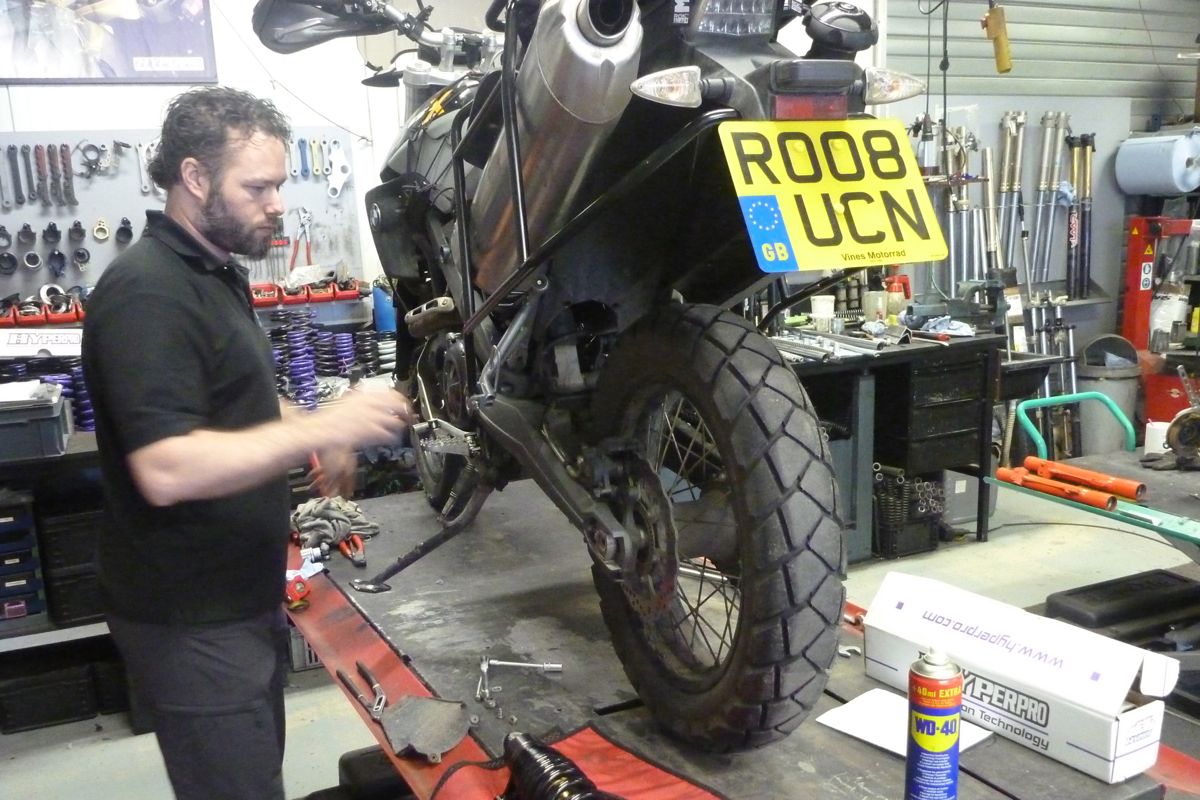
Now for the shock. I’d felt the Sachs unit go on a recent ride up to Scotland. Perhaps the bike’s early life at the BMW Off Road School had included more than the usual amount of play jumping. It certainly had when I’d visited. The headlight beam now shone higher than it used to, but when I tried to adjust the shock, the preload was maxed out and I didn’t even notice the rebound damping which was ineffective anyway. I’d originally planned to just whack on a Hyperpro spring on the shock body, but that would have been a mistake. It’s not the spring that wears out (though the original may be too soft for your needs, especially when loaded), it’s the seals and gas and ill-specified valving inside.
P1150409

Most bikes run what they now call emulsion shocks, as that’s what happens to the oil and gas once it all froths up following a series of bumps. Once the oil is aerated much of the damping effect gets the lost until it all settles down and the gas and oil separate. An emulsion shock will be fine for regular road riding, but soon reaches its limits when you add heavy and variable loads and rough terrain.
dr-borderlands-mc

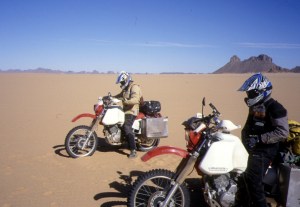
All these years I managed fine on my Teneres and whatnot, just jacking them up at the back and stuffing a bit of sawn off bar end under the fork caps for some pre-load. The one bike I had with good OE suspension – the XRL650 for Desert Riders – was notably better than the previous XTs. Many times I’d get out of shape and expect to be going over the bars, only to have the superior front forks save the day. On that trip we all fitted K-Tech progressive springs.
hyperpro461

The problem had always been on the back where nothing short of several hundred quid’s worth of WP or Ohlins seemed a lot of money for an uncertain result. As long as it didn’t bottom out, that was fine with me. The fatigue and boat-like handling just came with territory when riding heavily laden travel bikes in the desert.

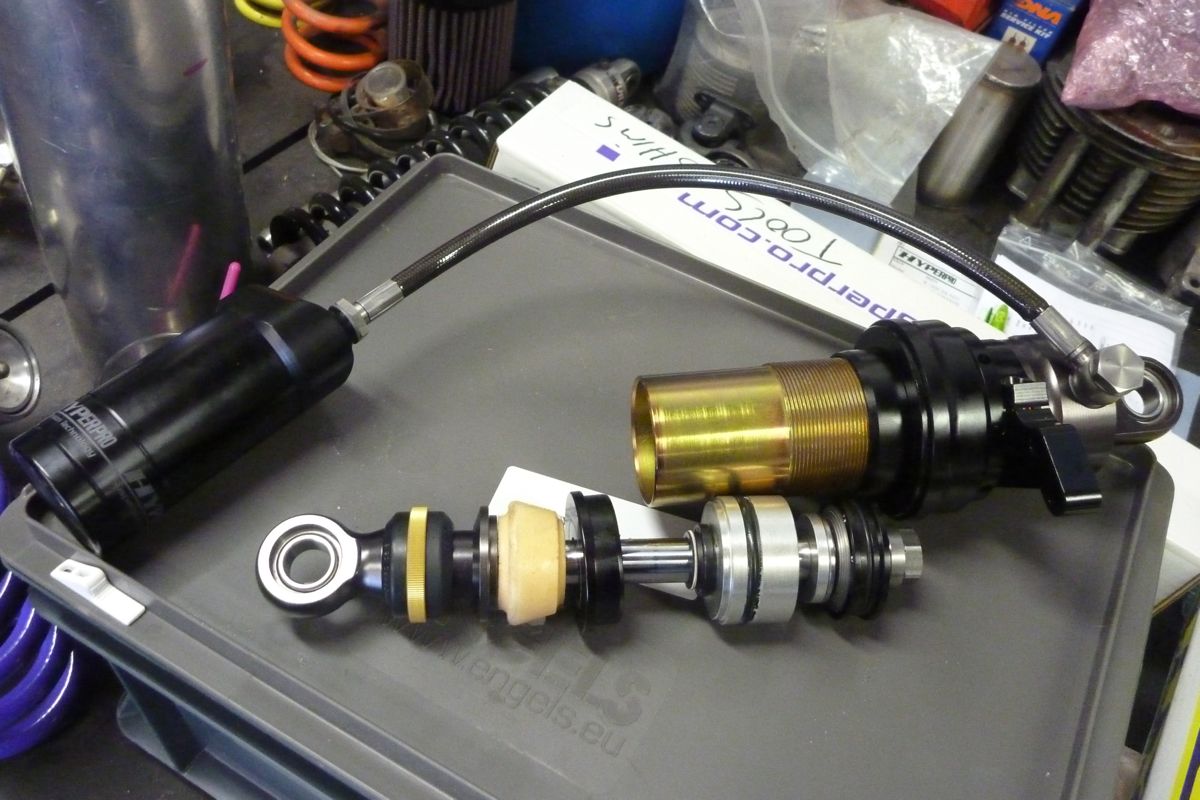
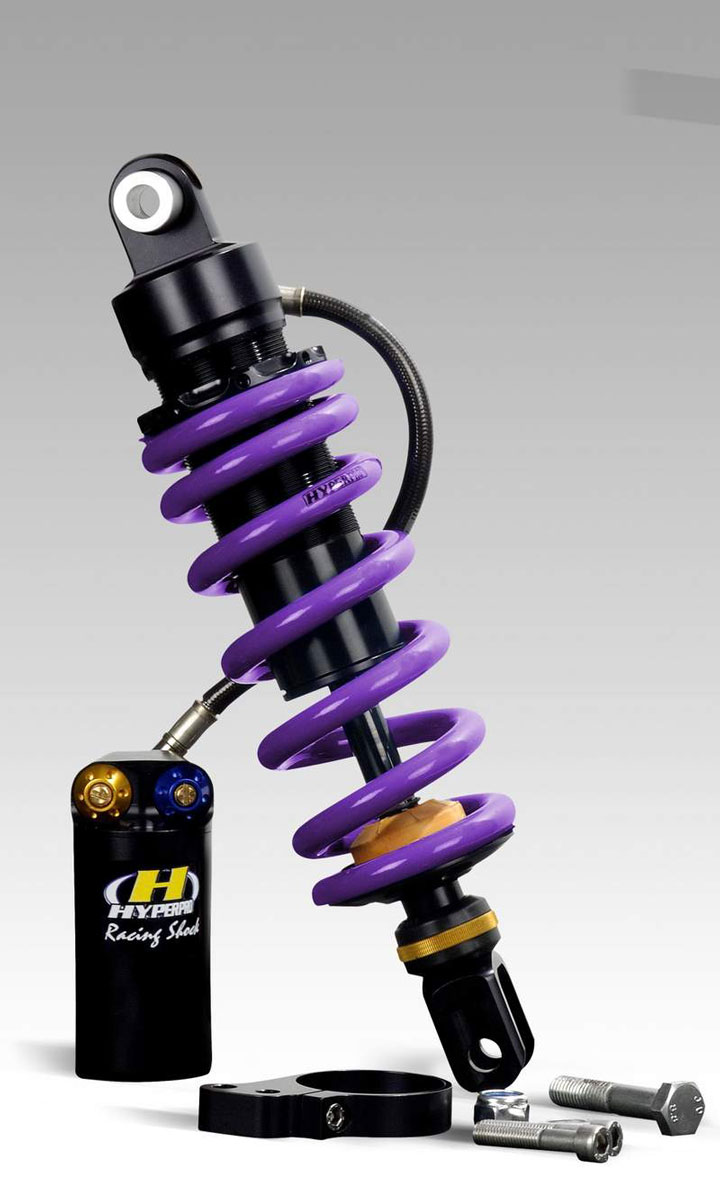
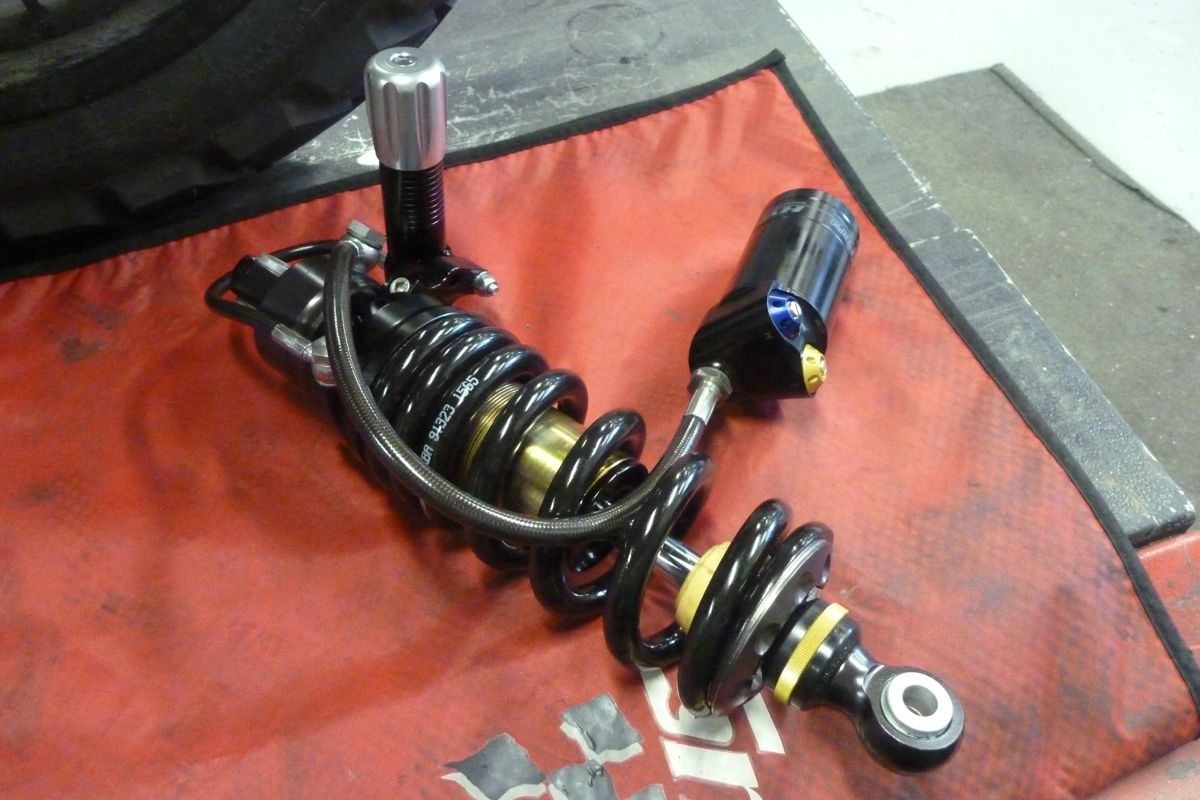
Bas doesn’t just invite you to lounge by the coffee machine while he whips a shock off the shelf and pops it on your bike. He builds the unit up from scratch, adding in shims across the damping apertures to suit your bike, weight, riding style and anticipated loads. I was getting Hyperpro’s top end 461 model (similar to left) with hydraulically adjusted preload (like the OE Sachs unit), 45 clicks of rebound damping at the base, and two settings covering low-speed plus high-speed compression damping on the remote reservoir. This latter feature is what’s missing from most average shocks but adds to the spring’s downward resistance and is what makes a big difference to fine tuning with changing loads.
P1150413
The hydraulic preload adjuster at the top

Once the insides were assembled, the unit was charged with oil and the remote reservoir attached. In here there’s a bladder of nitrogen gas separated from the shock’s oil which feeds into the reservoir via the hose. A separate gas bladder can just as easily be located in the body of the shock if there’s room, though it runs cooler outside. Nitrogen is used as it’s dense and so less prone to leaking away, compared to regular air (which is 78% nitrogen anyway).
Once a location was fixed for the remote reservoir with its high/low-speed comp damping dials, the static sag was assessed; about 3cm felt at the tail rack. Sag is important as it sits you midway (more or less) in the shock’s stroke so it can extend fully before settling down. The whole point of suspension is to allow the wheels to move up and down as much and as responsively as necessary while the sprung weight (bike and rider) remains isolated and level.
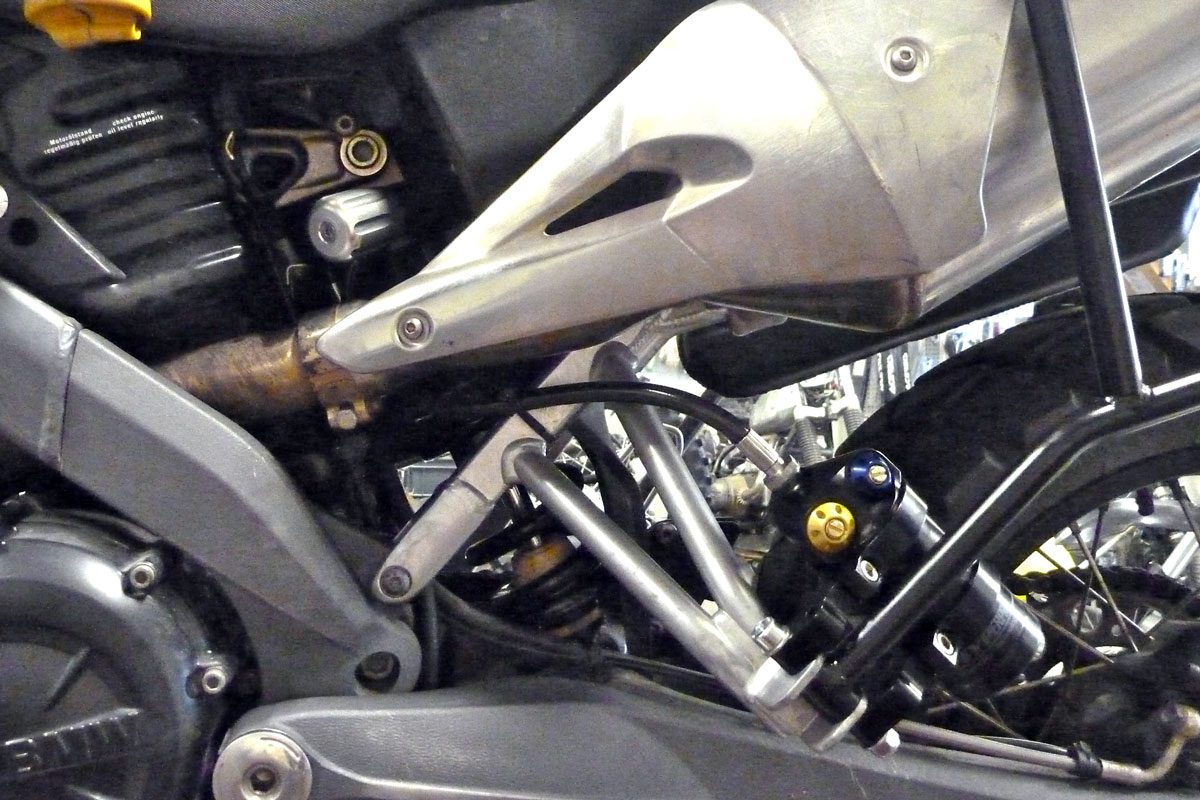
hypershock

After at least ten hours of methodical work, my Xco had been resprung. It sat maybe half an inch higher, though I could still get both feet flat on the floor. A quick blast round the block wasn’t night and day but revealed improved steering on the first bend; it went where I wanted in a predictable manner. Then a few dried mud bumps along the edge of a field got both ends pumping smoothly. All well there.
A 461 shock for the Xco costs about €950 with the optional hydraulic preload adjuster (miles better than using the supplied C spanner). A set of fork springs is €150 plus €50 for a pair of fork seals. Custom fitment is well under €200 for both ends (not including head bearings). If you’re planning a day visit to Hyperpro you may like to know that the overnight ferry from Harwich arrives around 8am local time and returns at 10.30pm, so you can get Hyperpro’d in a day. I paid £220 for the boat with cabin.

Having no less than four adjustments on the shock is going to take some experimentation to see the best results, and they’ll vary with load and terrain. That will be something I’ll get to grips with in North Africa later in the year.

Read 10,000-mile report

XCountry in Morocco. Hyperpro made all the difference. More details soon.
XCountry in Morocco. Hyperpro made all the difference.

In return for the work and suspension Hyperpro have been offered an advert in the future 6.2 reprint of AMH.

P1150354
GSbikesales

Other stuff I saw at the Hyperpro workshop
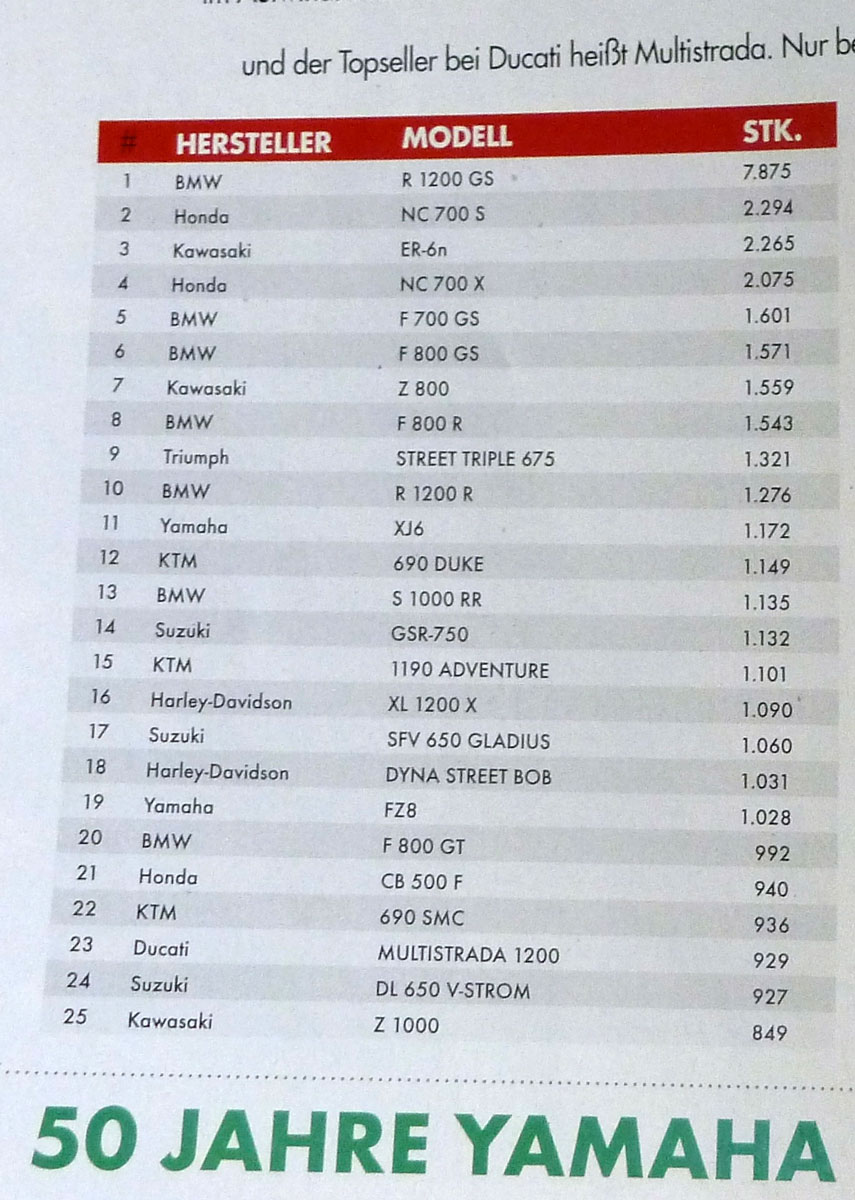
Though he’s a big fan of the early 90s R80 Monolever (the post 7 series Boxers), one of Bas’ bikes is a cool 800 G/S from the previous decade. Alongside a parked up GS12 you can see the different paths that ‘adventure motorcycling’ has taken over the intervening years. Actual adventure and the other type. Where did BMW go so wrong? Well, look at the table on the right and you’ll see that perhaps they’ve got it very right. The 12 is by far the most popular big bike in Germany and many other places too, including the UK. But the Kawa ER-6 third? Perhaps they were on special in 2013.
505018991_jtcea-xl
baswater

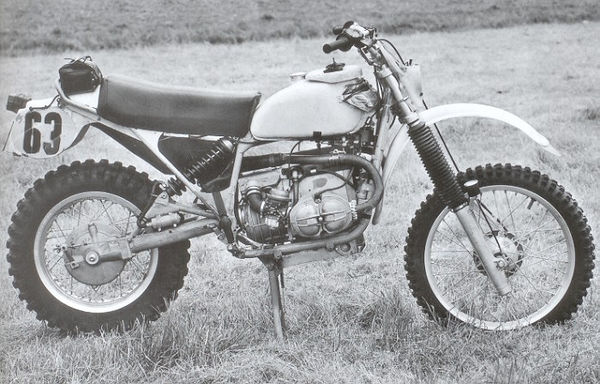
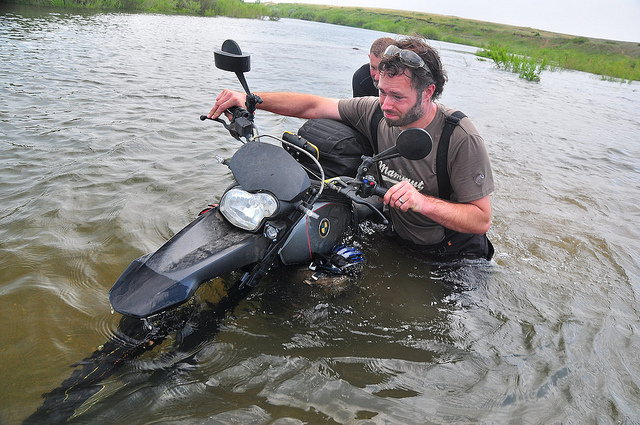
Bas’ 180-kilo G/S reminded me of those ISDT enduro racers from the 1970s (left) from which the Dakar desert racers took their lead. His G/S has a longer swing arm, possibly a one-litre motor, forks from a dirt bike, Excel rims and a mini tank behind the battery in the space opened out by the longer swing arm. Best of all, it just looked like you could take it anywhere you can manage with an XChallenge. In 2012 he did just that, riding with Walter in Mongolia and Far Eastern Russia for five weeks. Walter’s pics and report start here. Bas is currently rebuilding Walter’s tired old Xch around an Xco donor bike.
P1150369

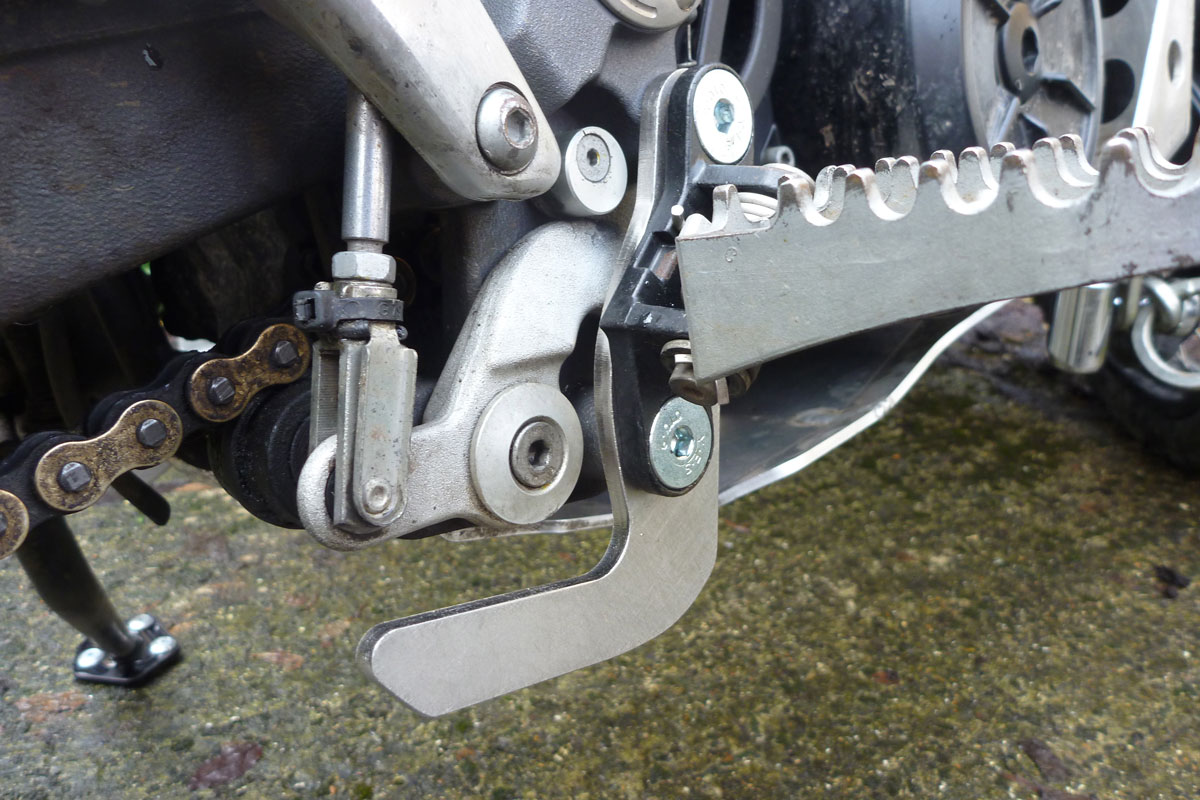
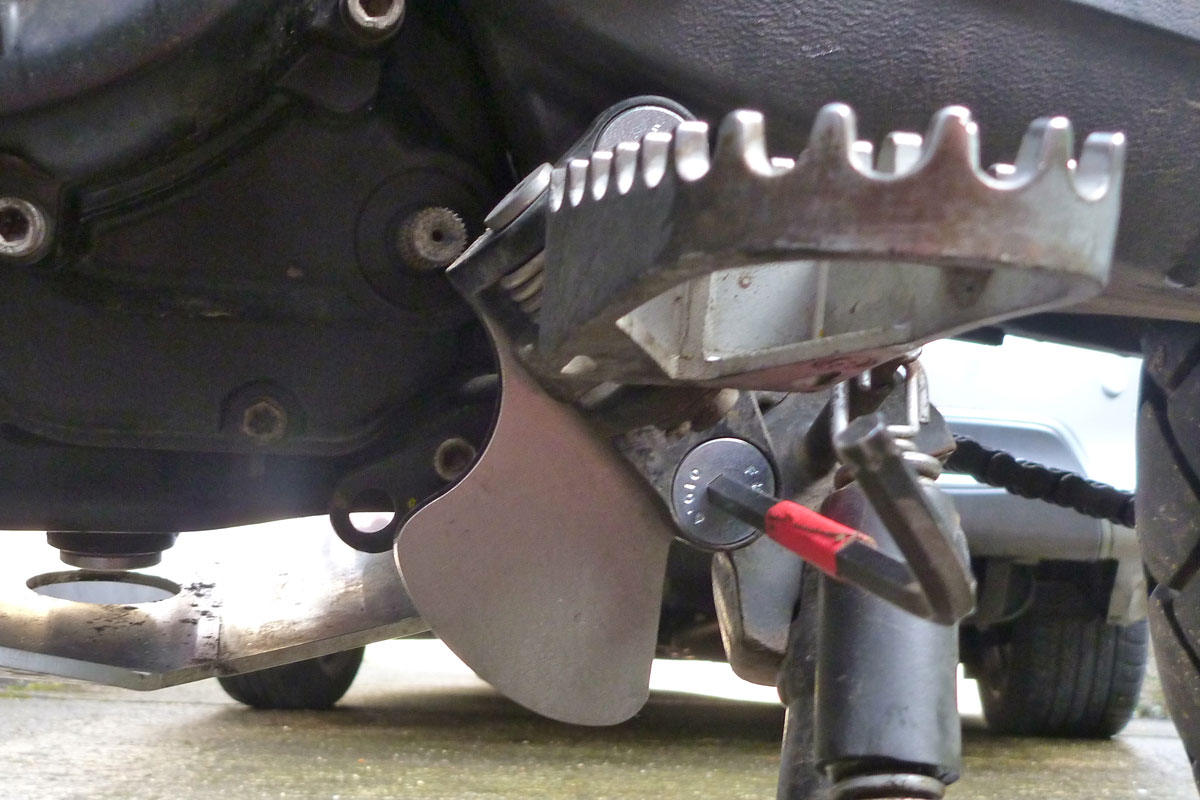
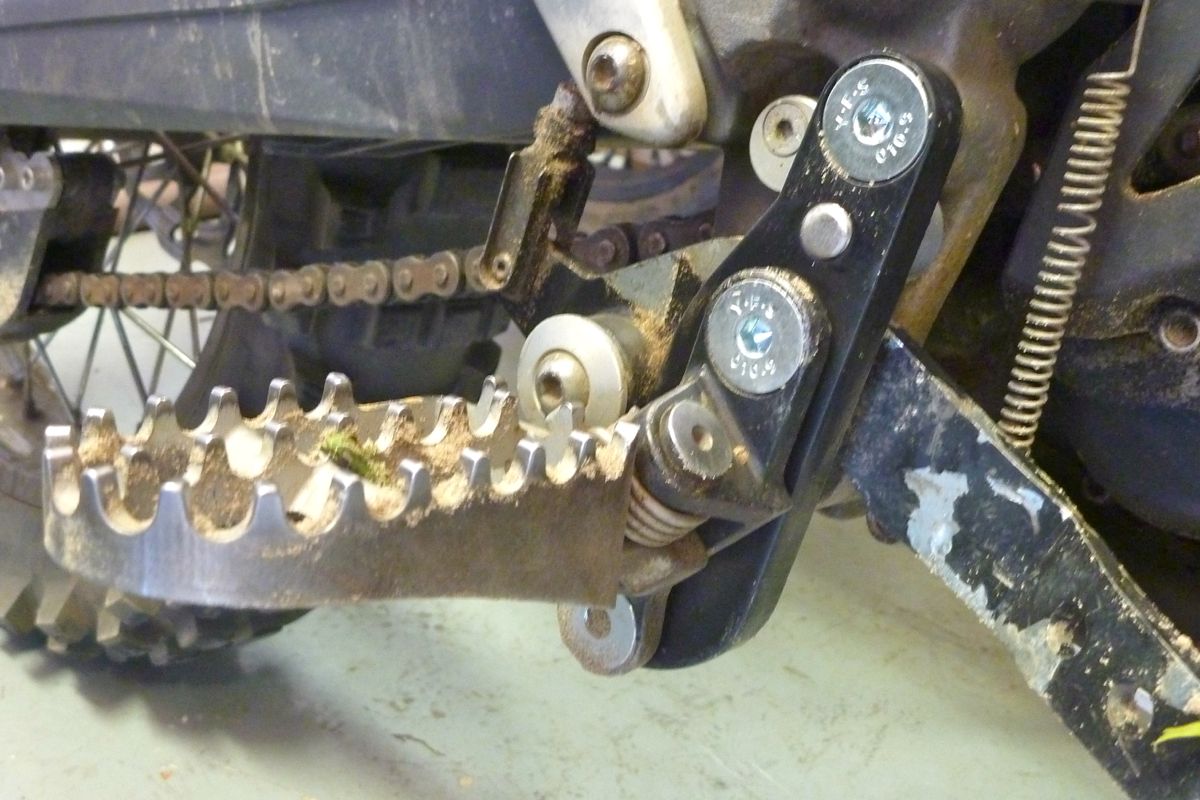
Bas’ g-friend Linda was also on that Russian ride with her Xco and when she turned up at the shop I took a close look at her set up. All the Xs in the shop seem to be running lowered footrest plates, (left), either DIY jobbies or made by Erik. Seems to improve comfort despite the greater chance of rut bashing. I may look into a set myself, as it’s easy to do.
P1150387

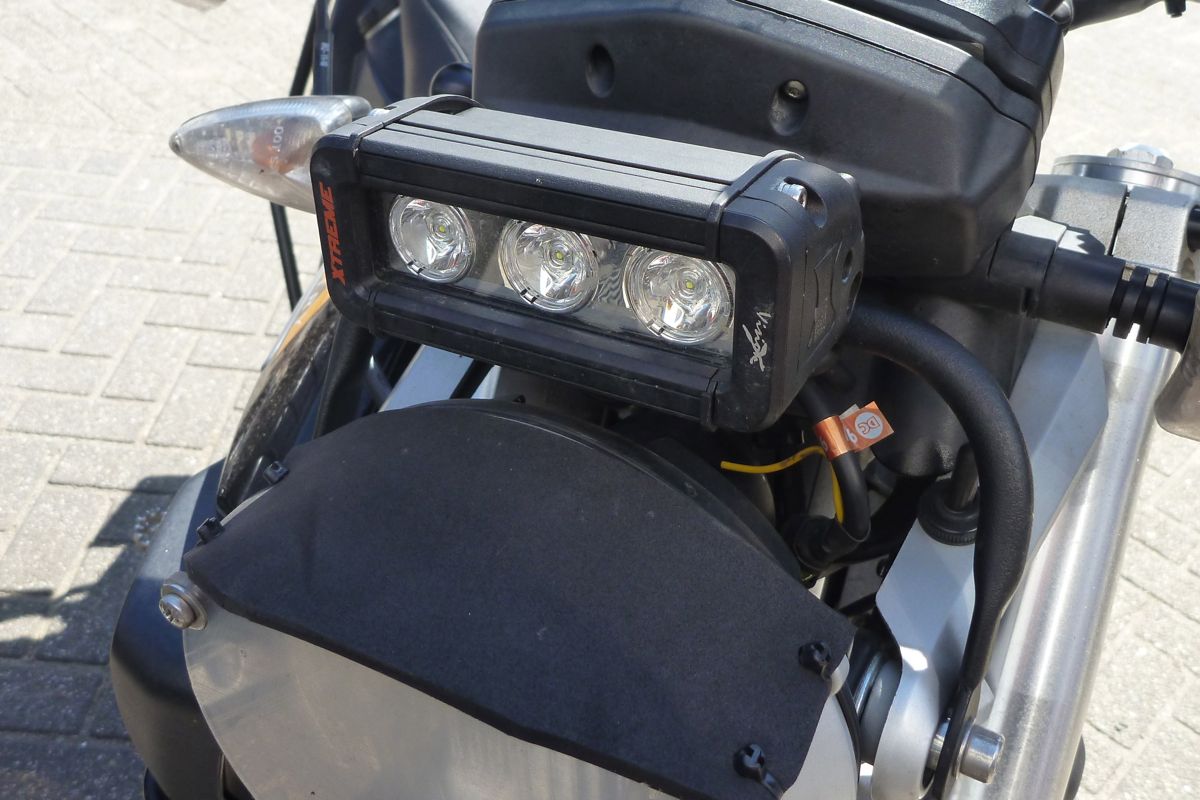
Both their bikes were also running a 5-inch VisionX Xtreme 3 x 5w LED light bar as sold by Adv Spec. Narrow beam is the one to go for according to Bas; it still puts out plenty of light to the sides and is what I feel my bike needs. I haven’t been so inspired to refit the Rigid SR-M light from my GS-R, bright though it was.
P1150213

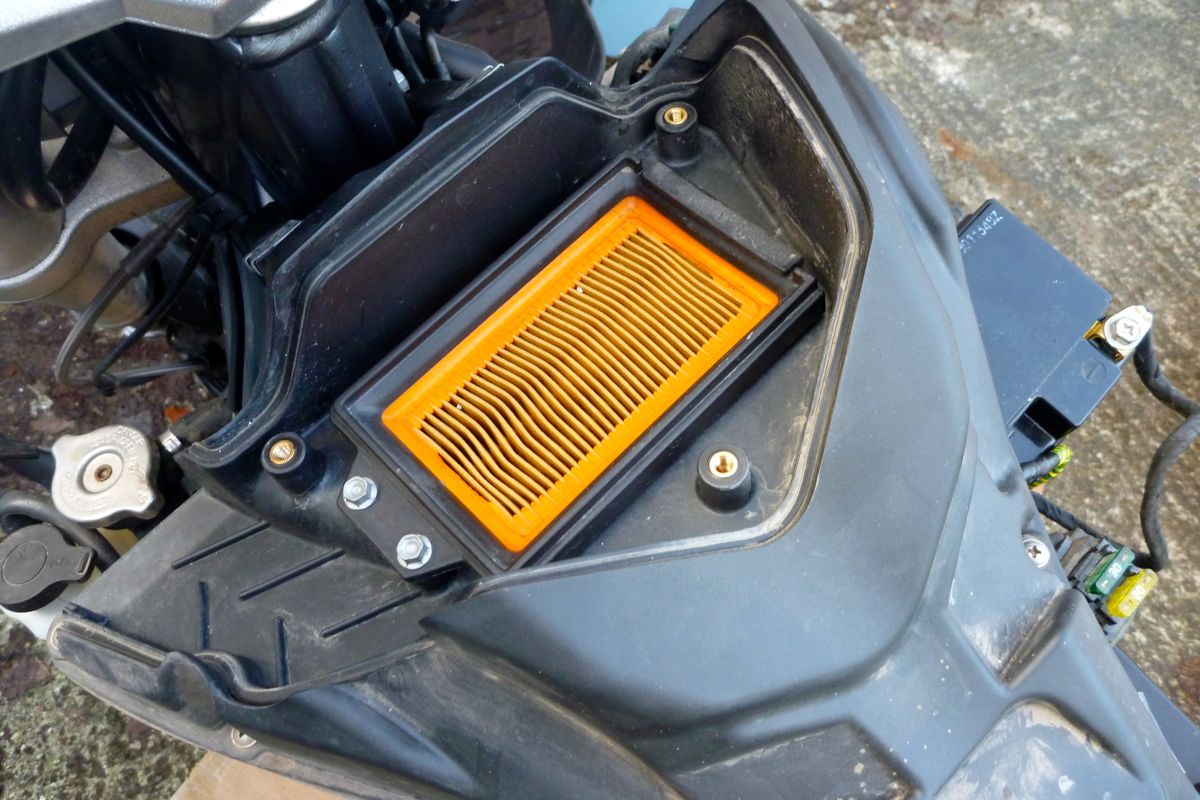
One thing Erik mentioned the day earlier was that the flat upper face of the OE paper air filter tends to shake and sieve desert dust in desert areas. So even though paper works well, oiled foam cleaned regularly is a better way to go on this bike.
P1150368

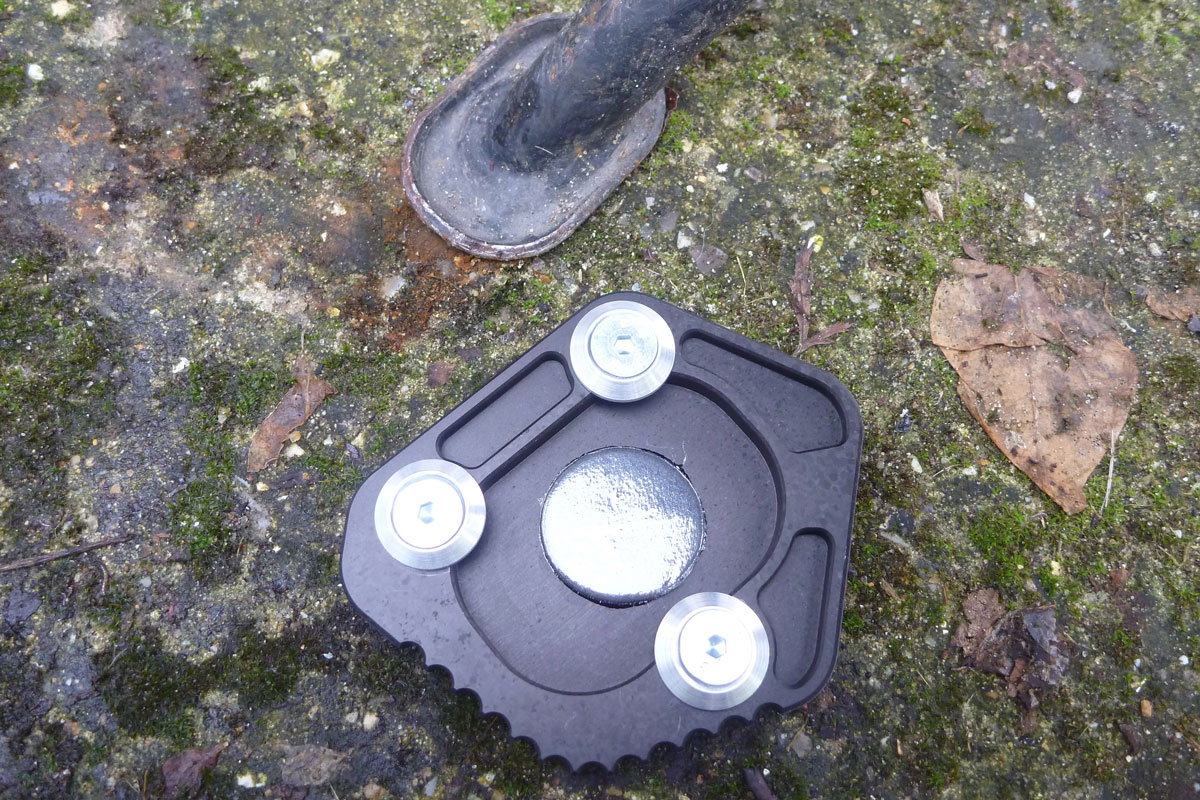
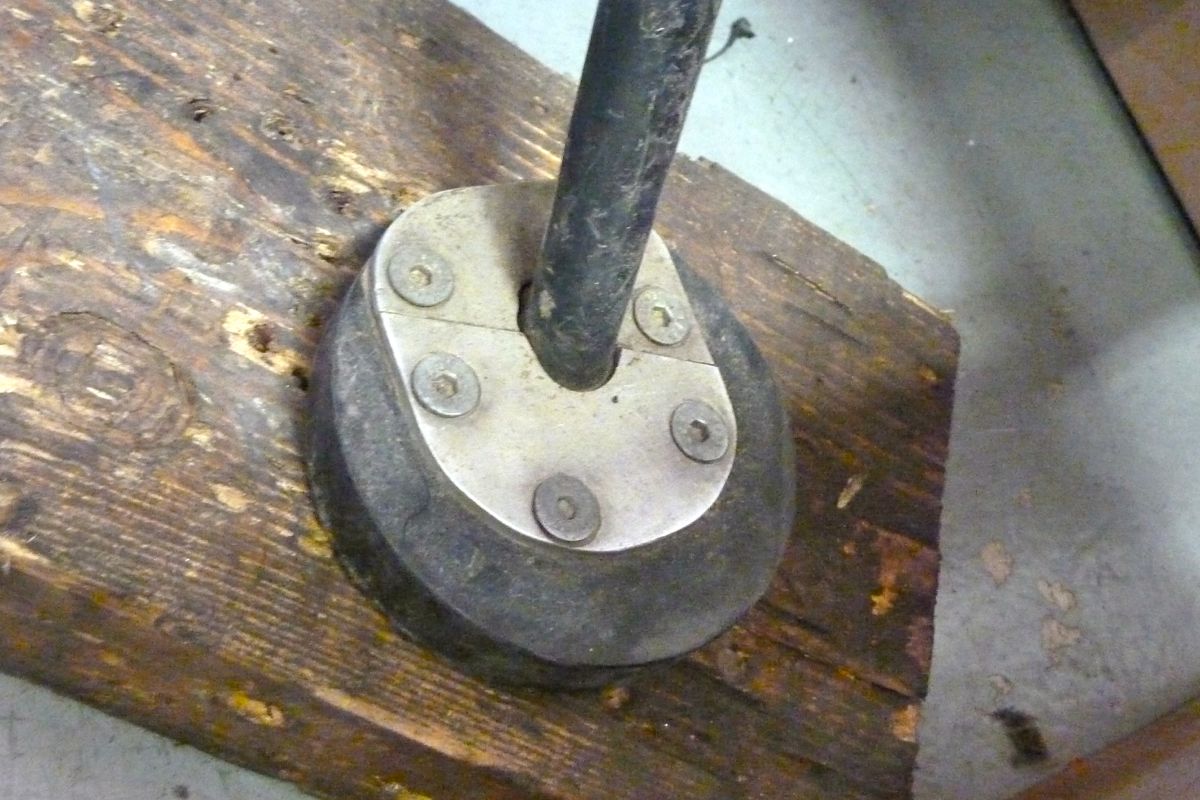
Though my screw on side stand foot plate was just a temporary measure added to a Wunderlich order, Bas was not such a fan of these as they come loose and fall off. I noticed one of the bikes had done a clever DIY job (right) giving the stand extra height to cope with the taller suspension, but it seems welding, just like I did in the old days, is the best way to do it. I now need to position a new plate carefully so as not to foul the shock’s reservoir.
P1150385
P1150348

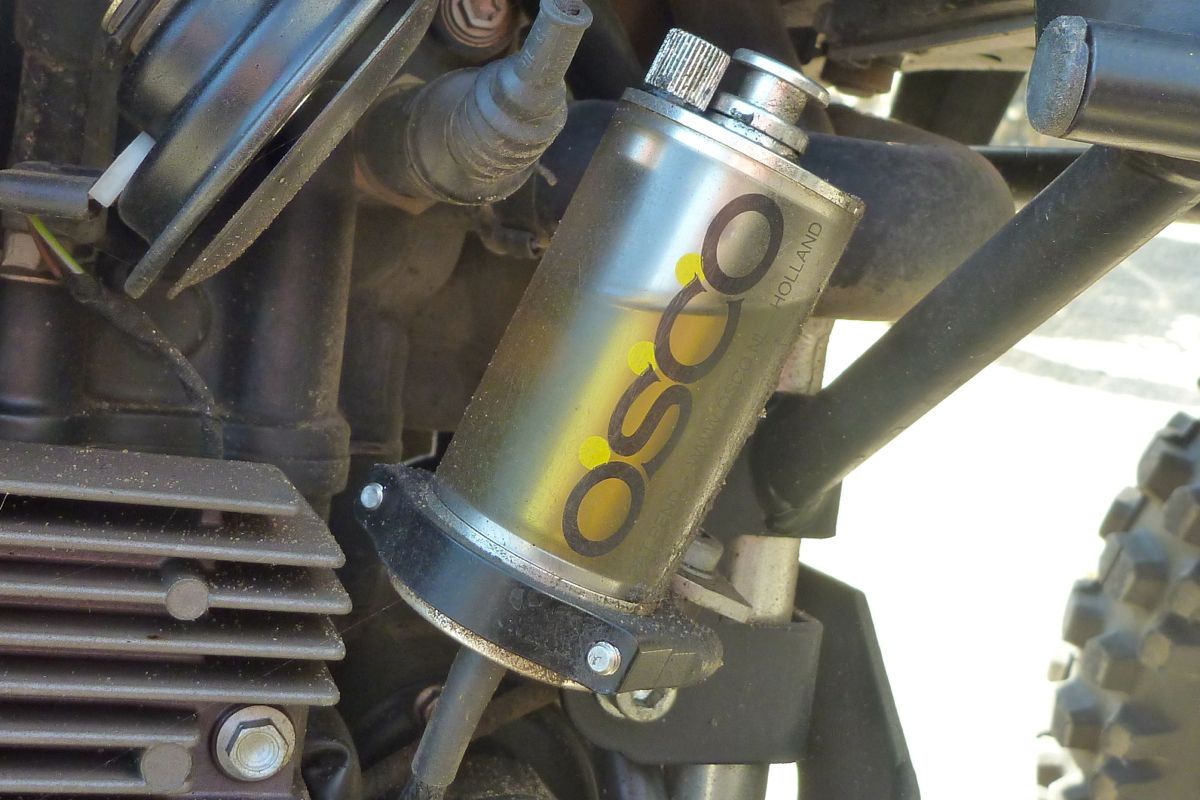
All the chain bikes in the shop were running chain oil drippers and I finally concede this is a way to go and plan to fit one in the near future. For a job that needs doing daily on the road, a can of Wurth Dry lube is just too bulky to carry around and anyway, without a centre stand, hand oiling is a pain.
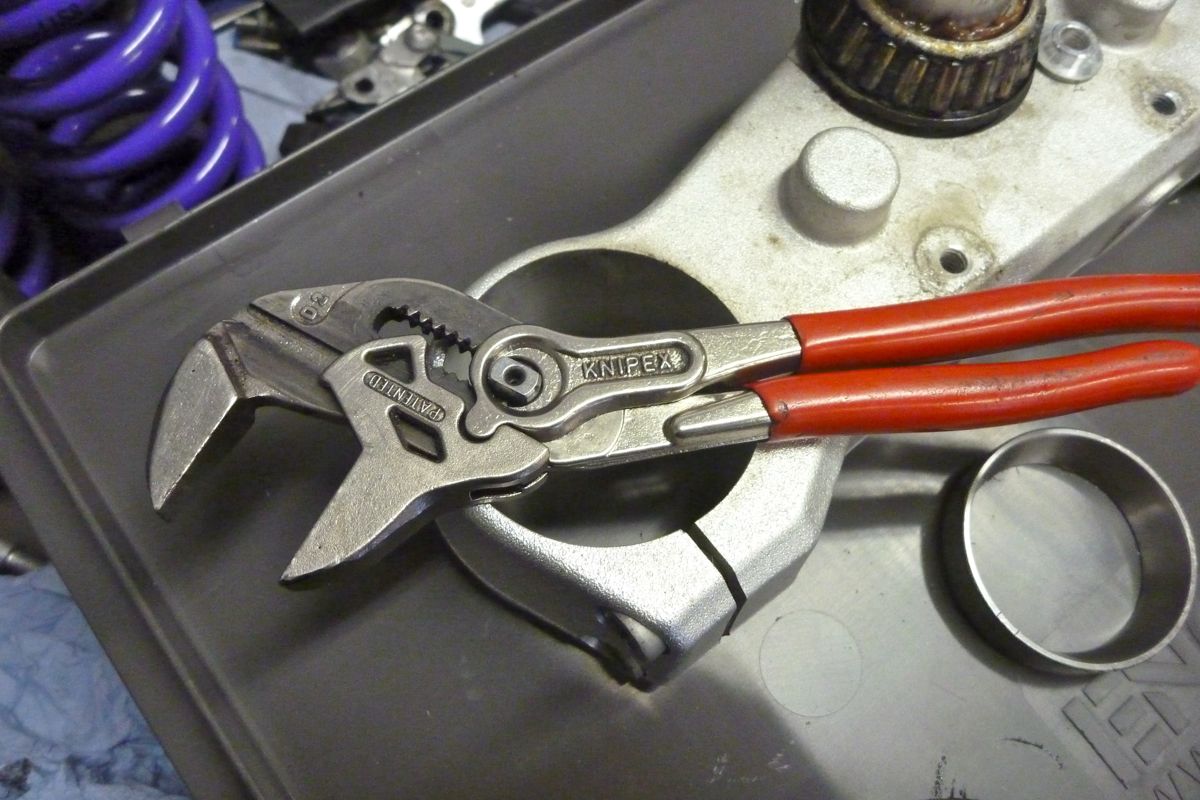
Among the array of fine tools in the Hyperpro shop was this Knipex adjustable spanner that uses grooves and a push button location to eliminate play, unlike those old knurled screw types. It looks like a very nifty general purpose too; I just ordered me the 86 05 180mm model off amazon for £34.
P1150335
P1150380

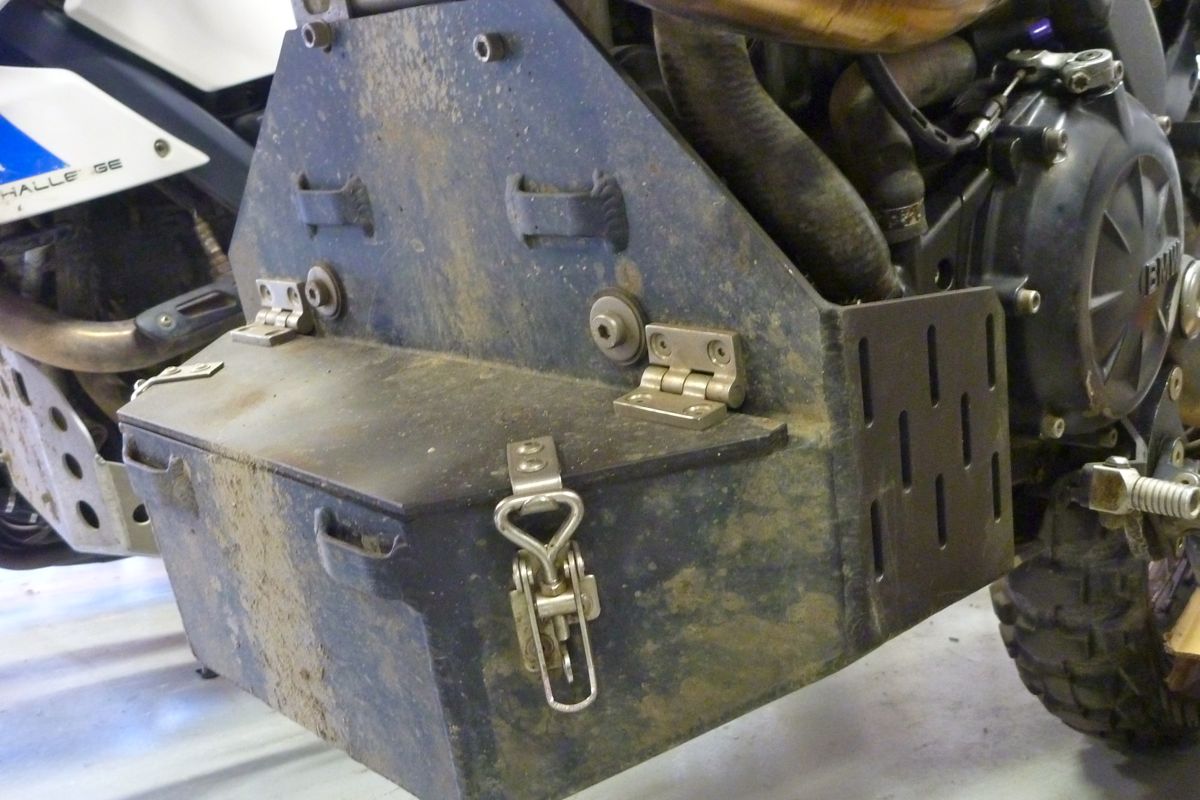
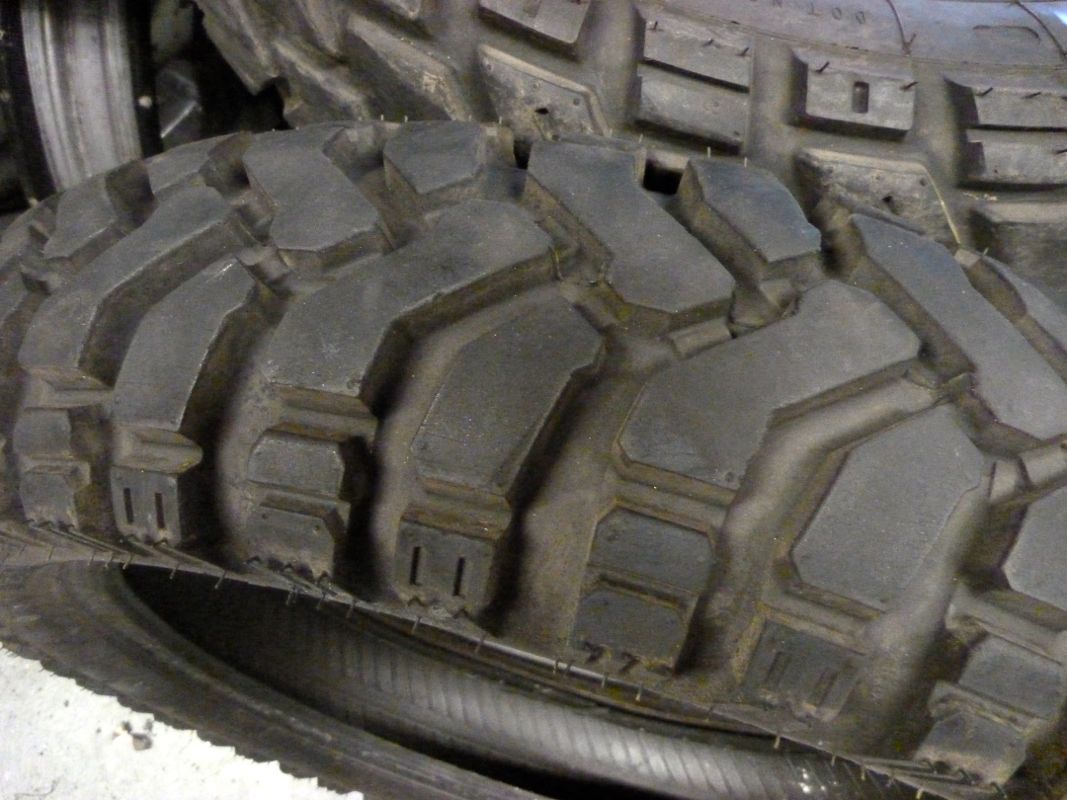
Talking tools, nice case on this XCh’s bash plate (right), though now I’m not putting a tank there my tool pouches are as good I’ve decided. And I had a closer look at a Mitas E07 tyre which is what I’ll try for the next trip, at least for the back. Same properties as the Heidi K60, but possibly better.
triscram
steve-mcqueen

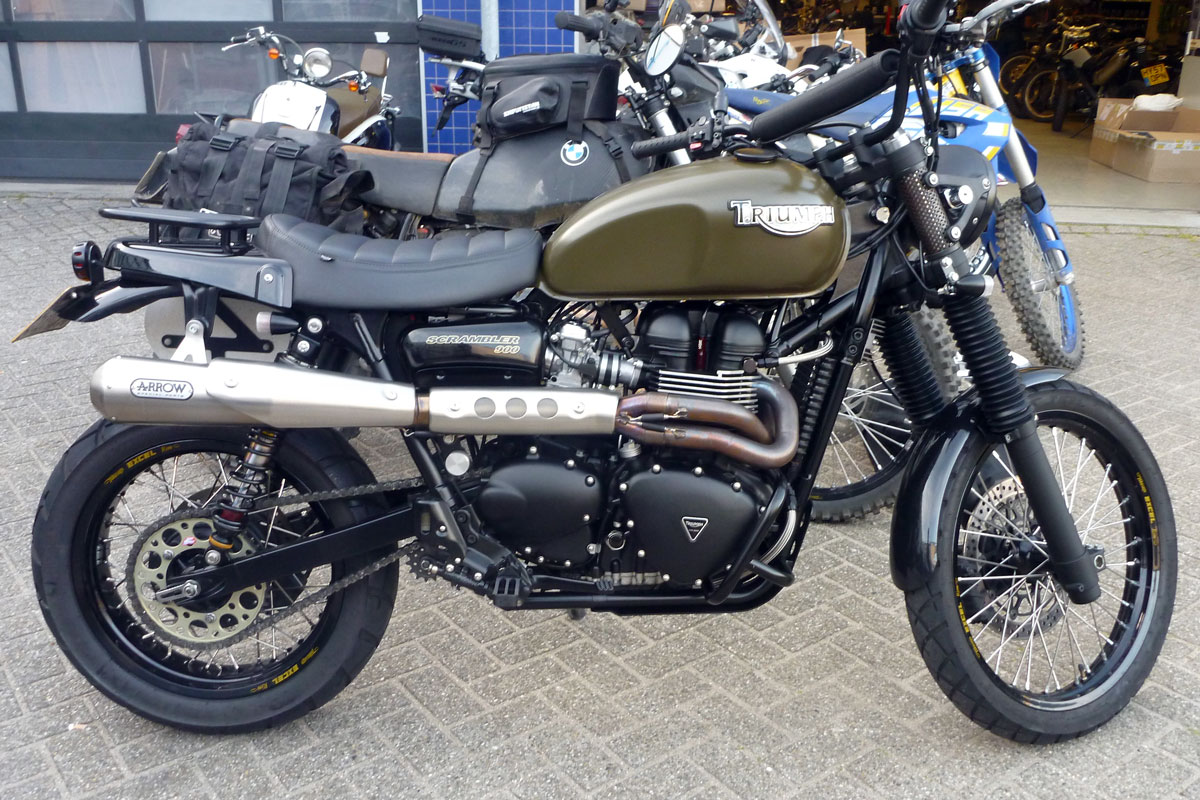
Finally, talking of Steve McQueen, a customer turned up on a Triumph Scrambler 900 similar to the McQueen Special produced last year to commemorate the film’s half-centenary. Great looking machine, like most Triumph twins, but heavy and when I briefly sat on it it didn’t feel right; seat way too wide. Couldn’t see me sliding confidentially around alpine meadows on that one. I’ll take a regular Bonneville or Bas’ elongated G/S.

BMW Xcountry ~ Xtra fuel and Xrack

Xcountry index page

“frequent refuelling interruptions are not the journey”

The Xmachine is a pretty economical bike – over the last 2500 miles I’ve averaged nearly 74mpg (26 kpl) with backwind best of 83.5 (29.5kpl) while cruising at 70 where possible. Even then, with the 9.5-litre tank the light comes on at around 120 miles with a potential range of 150 miles before you suck crap into the fuel filter and start pushing. Not enough on a bike like this.

crgr-can

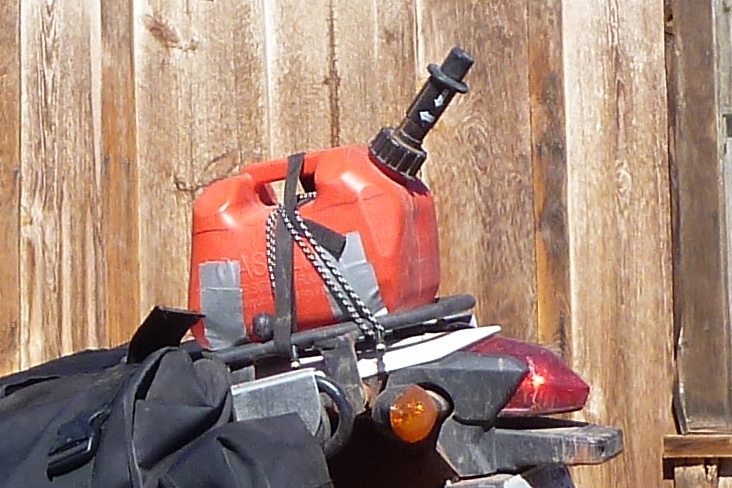
The simple and cheap solution is a 5-litre can on the back (left). I managed fine like this with the even-smaller tanked CRF-L in the US last year as there were no larger tanks available.
But on the faster X bike the refuelling interruptions are not the journey.

zank

My original plan was to either build a 6-7 litre tank onto the bash plate, nice and low and out the way. Others have fitted side tanks (left), another good way of keeping things low, but none gets around the need to stop at 120 miles unless some sort of pump is organised (the one left may be auto sucking, see below).

xtank10
h&benginebars

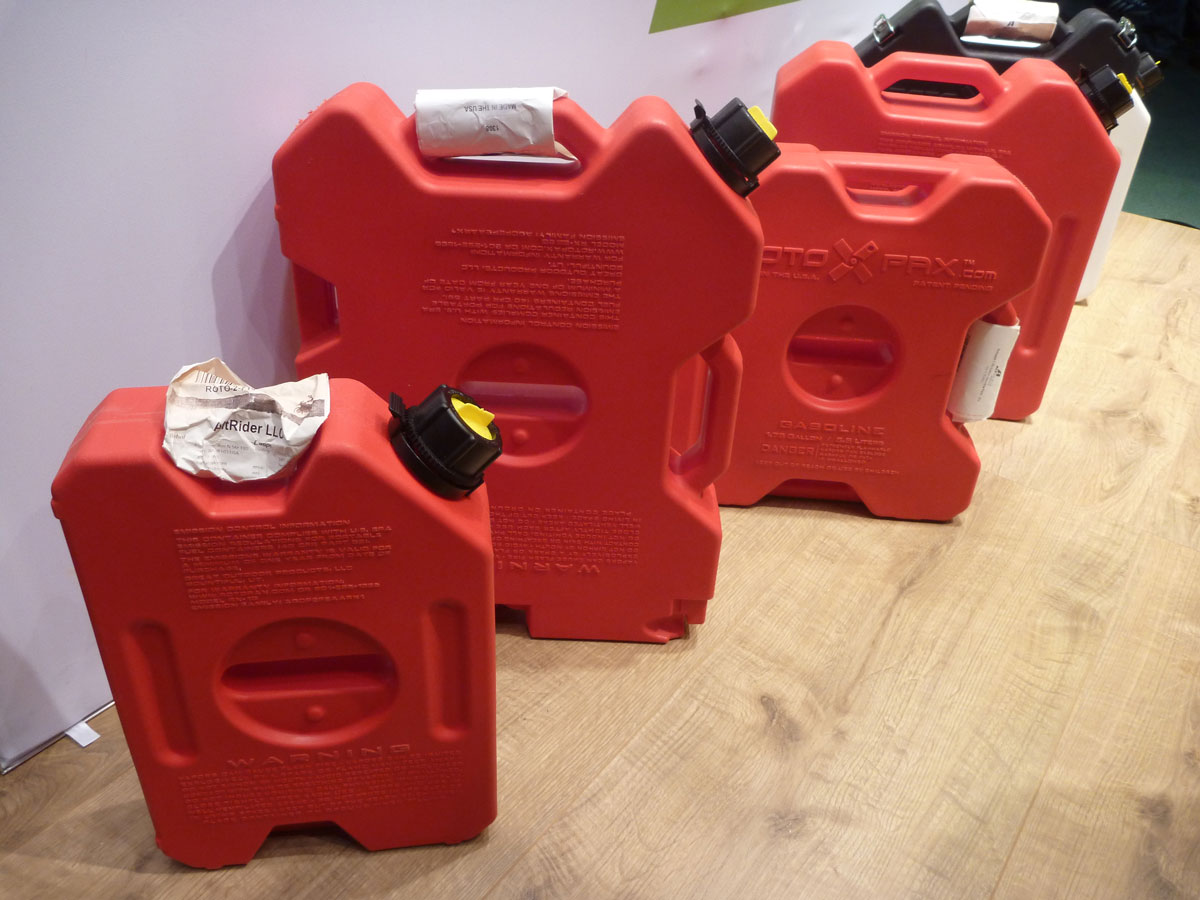
Then I thought fit a 6.6-litre Rotopax can (left, 3rd along) either under the bash plate with added protection, or one each side of the engine on H&B crash bars (right). The 6.6 can is 9cm thick which would cost clearance, be less work than building in alloy but still require decanting.

HOT-ROD

Those were my plans until AMH-contributor Walter Colebatch suggested to fellow xfan Erik from Hot Rod Welding in NL that he may like to supply an Xtank and an Xrack for my bike, as well as hard part xplates to project the underparts (see bottom of page). Erik runs his own XCh and happened to know the X series’ production volume. The first batch of Xbikes – Cha, Co and little Mo – were all built at once in 2006 and flogged from 2007, then the Xcountry was built in China for 2008. All up the run amounted to 13,000 bikes. Good to know.

Xtank

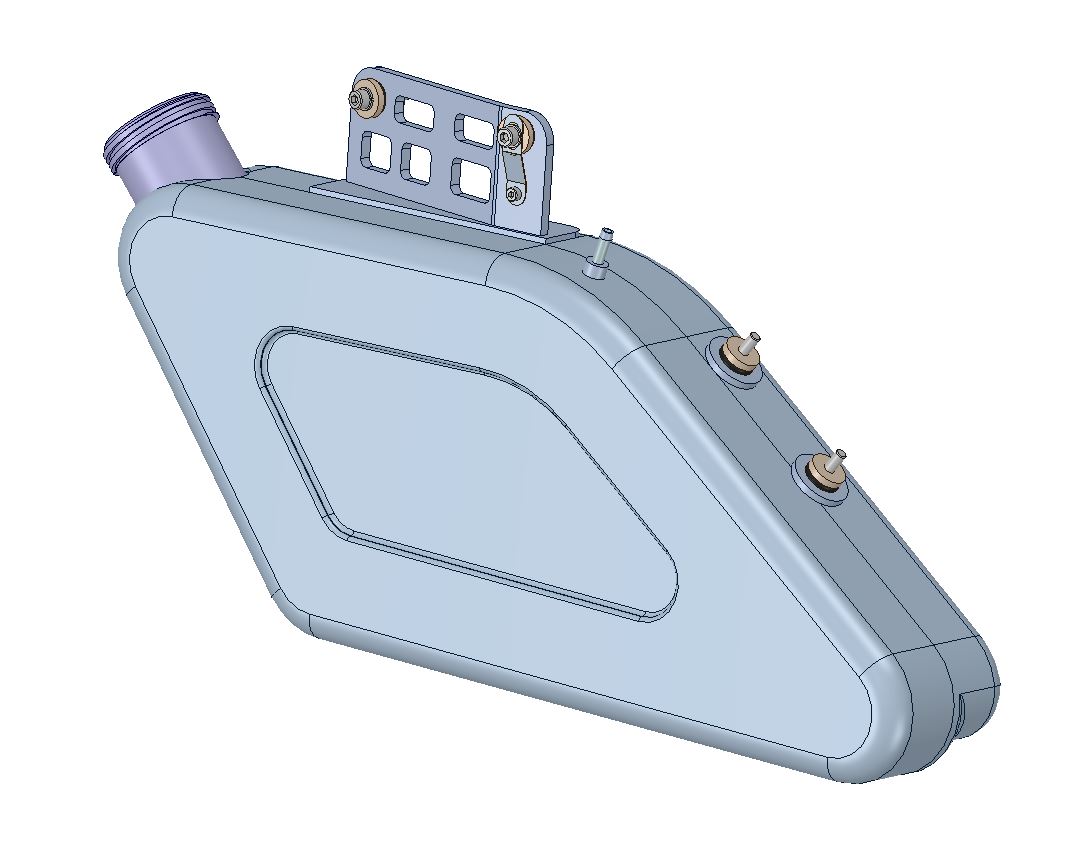
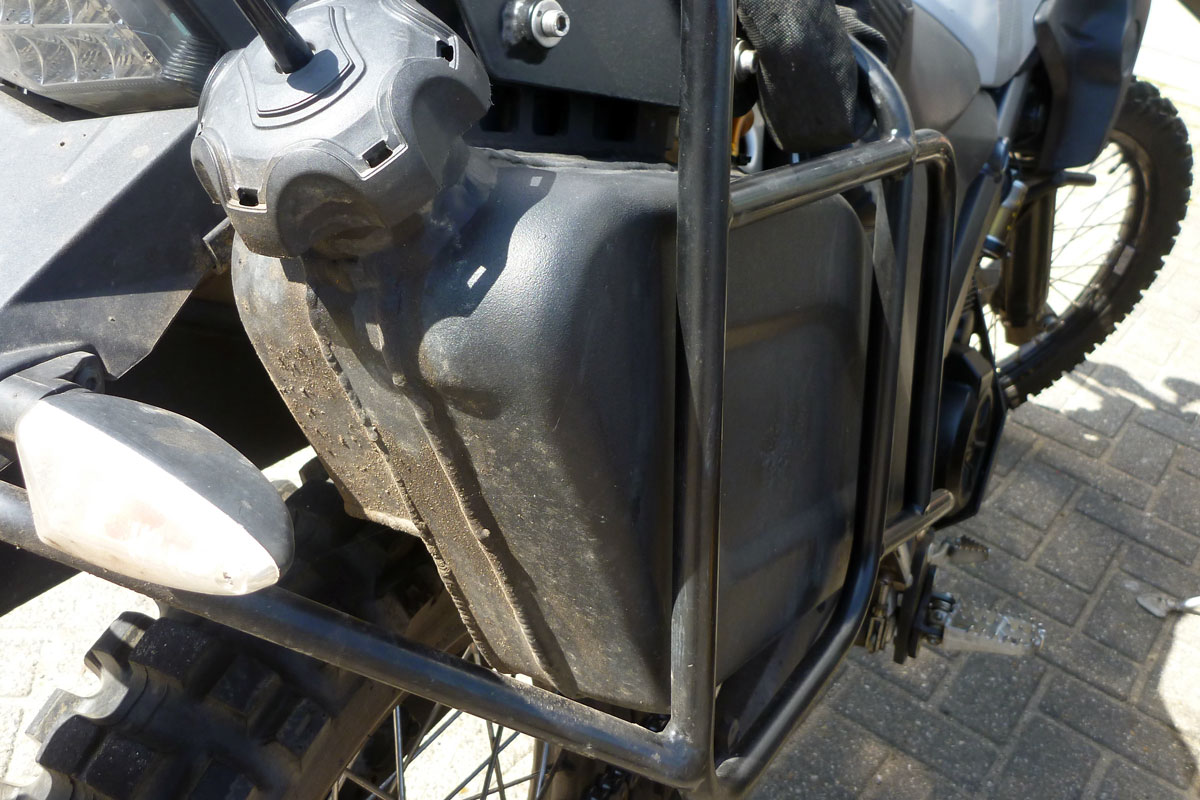
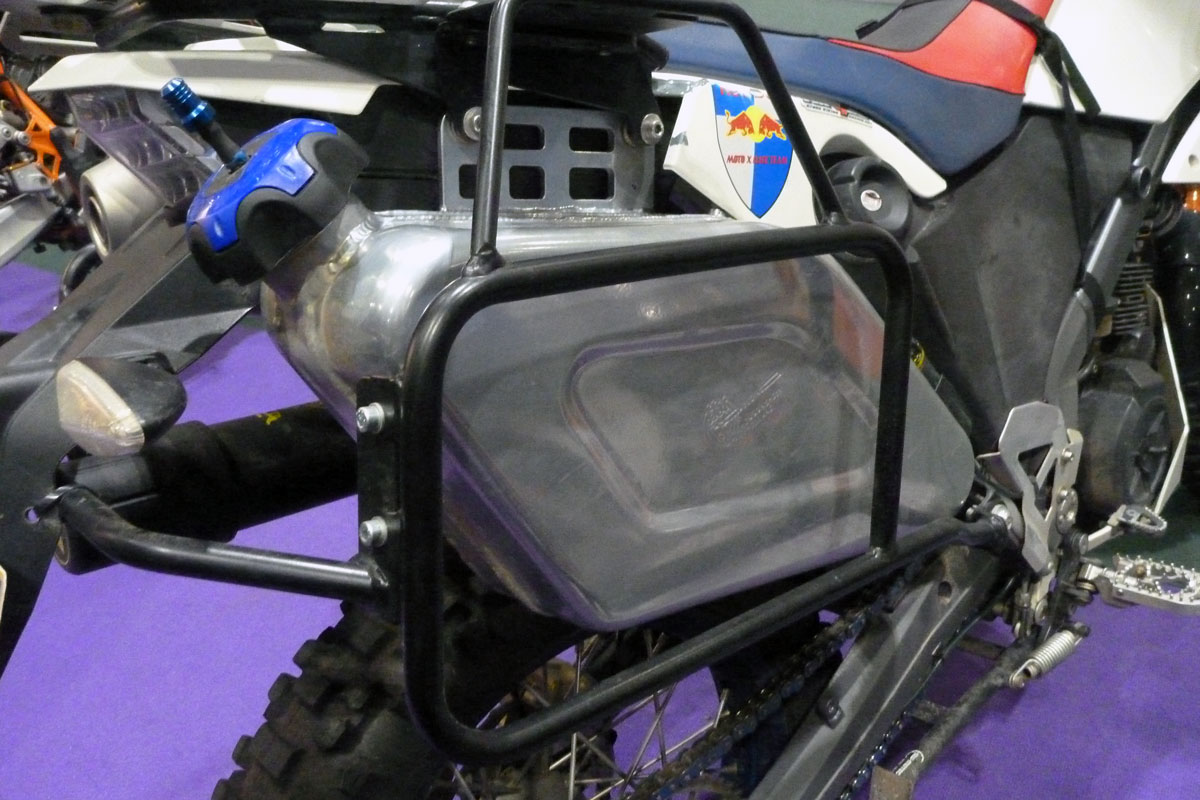
The €500 Xtank fits in the crook of the RHS subframe – mine is the regular 6.5-litre size (a wider 9.5-litre version also available for not much extra cost, pic below. And fyi I regularly got 6.7 litres in mine).
The tank hangs from the former back handle mooring points and then plugs into the diagonal beam, adding a bit of support to the subframe while being less wide than the pipe on the other side. Better still, all it needs to flow in series with the main tank is the main tank’s black breather pulled off and the clear xhose plugged in.

xtank3.jpgThat black breather happens to suck and once sucking on the Xtank’s fuel pick up at the base of the Xtank, it will create a syphon and drain that tank before seamlessly moving onto the main tank. Result: 200 miles doable without thinking and a potential range with 9.5 + 6.7 = 420km or 260 miles which happens to be my ideal suggested fuel range in AMH. That will do nicely.

xtank4

The tank requires removing the chain guard which sits quite high, and even then it’s said the chain can hit the tank on hard compression of a bottomed-out shock. That’s no longer an issue for me, and even then, I’m sure my shagged-out OE shock bottomed a couple of times without touching the underside of the xtank.

If your injected bike runs a subseat tank and has a similar sucking breather, this principle of a second tank working on a suction feed may be worth investigating on non Xbikes.

xtank2

Xrack
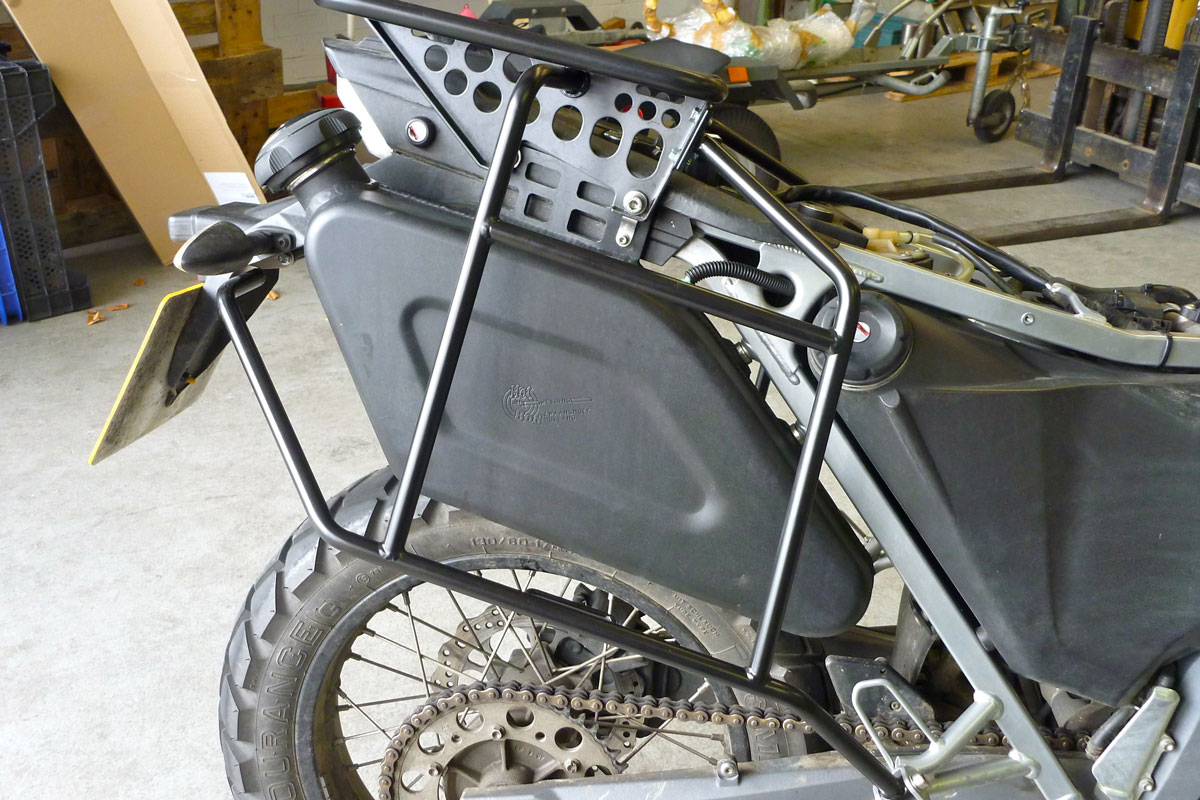
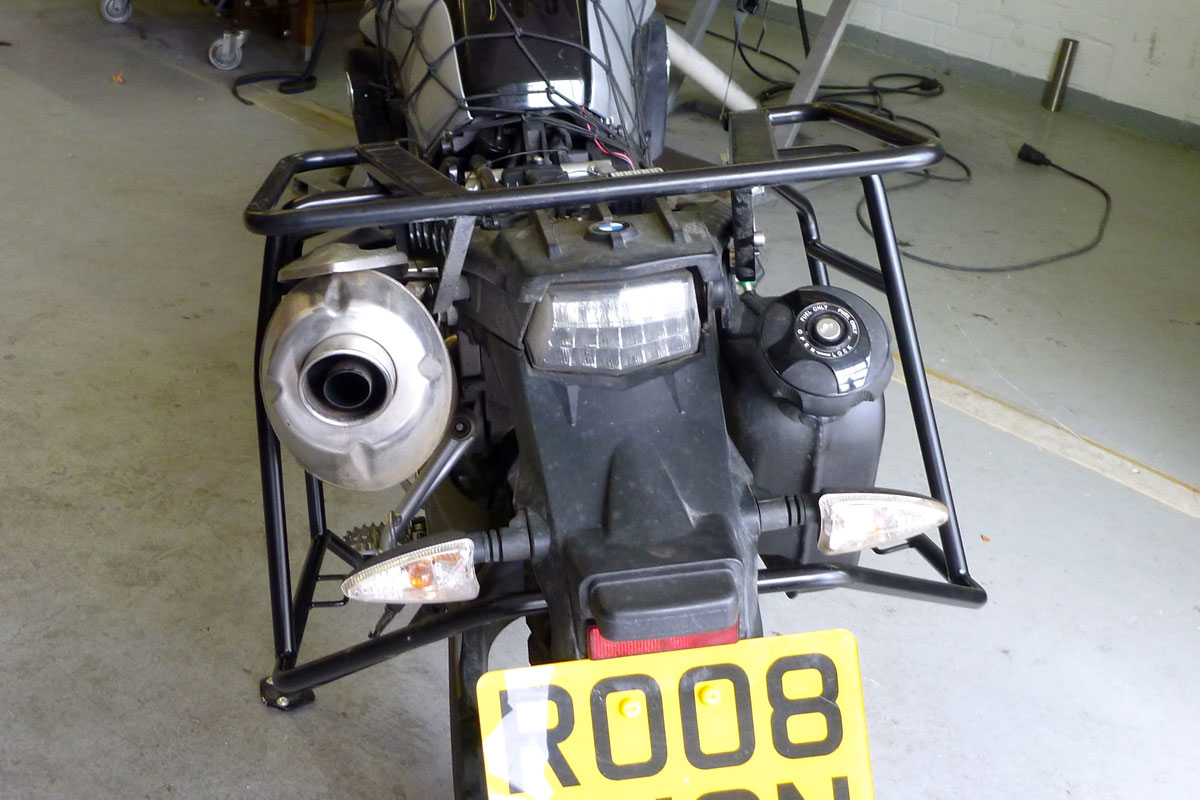
Although I prefer soft luggage I still believe a light side rack is worthwhile to keep bags in position come rain or shine. For his Siberian travels, Walter C also got Erik to build him a rack to keep his excellent Magadan bags (now in MkII form) out of the back wheel. The racks, 2.2kg for both sides, follow the standard formula of mounts near the pillion footrest, the back of the subframe plus a link underneath to stop them caving in. I like that Erik doesn’t just flatten tube ends and drill a hole through – he does a proper job. And the back cross brace mounted behind the number plate performs the useful function of reducing lethal number plate waggle over rough ground. I’m sure without support that thing would have broken off at the first sight of corrugations.

xtank5

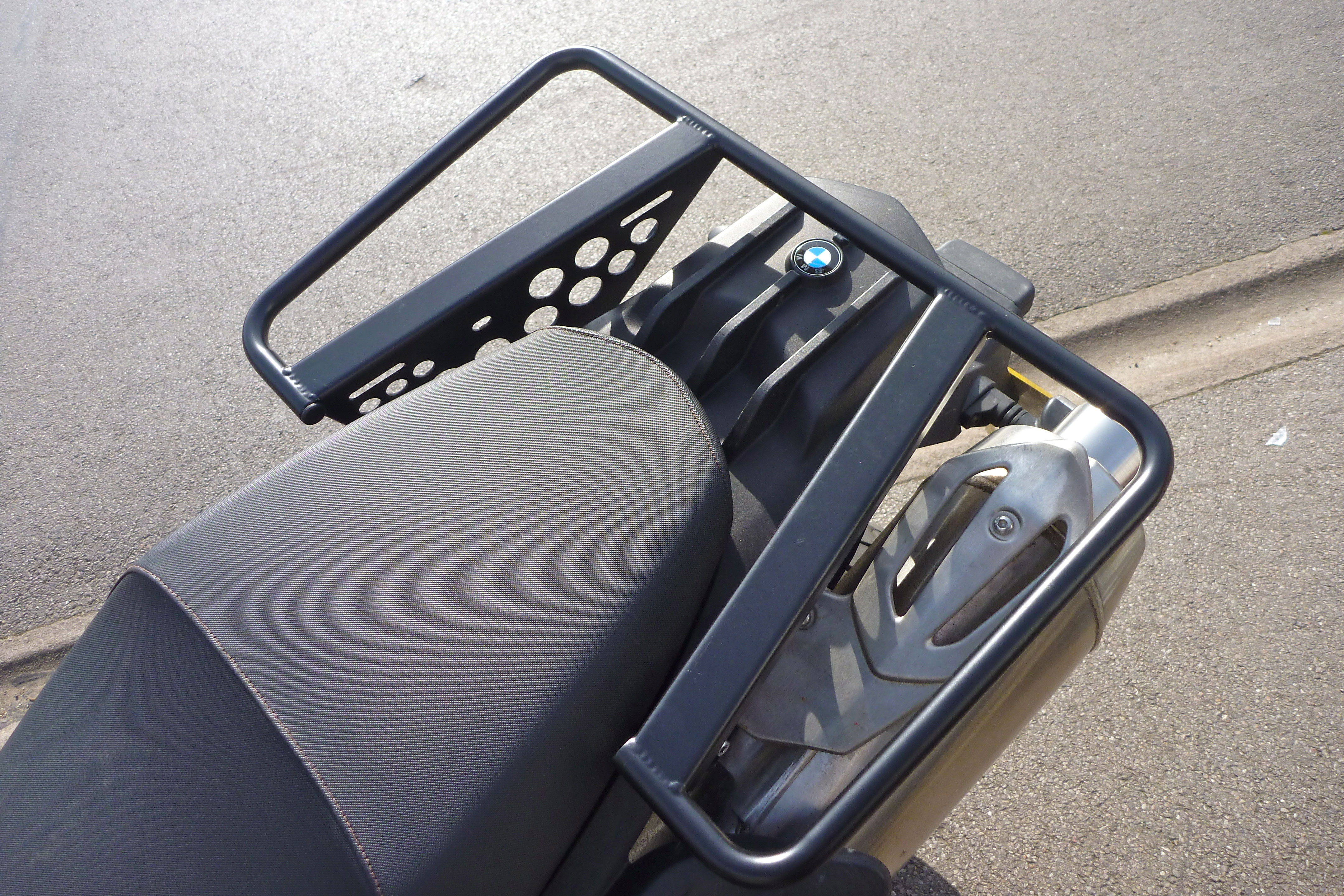
Erik and Walter also seem to have adopted the ‘sheep rack‘ platform idea which I mentioned in AMH6. That is, a substantially wide rack, not these skinny ‘flower pot stands’ like I had on my CRF-L, or nasty edged CNC plates that have become all the rage because they look flash and are cheap to mill. With a roll bag across the back you want a  w i d e  base to spread the load and reduce rubbing. Plus it can make a good table or work surface.
Ingeniously, Walter and Erik went one better and designed the tail rack to come forward round the back of the seat (right). Again, this compels you to mount stuff as forward as possible, at the very point where you don’t want weight hanging out back. The 1.7kg tail rack doesn’t interfere with passengers and makes a good solid grip when you end up with the bike in a ditch.

xtank1

On the right side (left) you’ll see the side rack sticks away from my xtank so there’s room to fit the larger 9.5-litre Xtank (below) should you wish, or just slot stuff behind it. The whole rack assembly comes in at just 3.9kg. These light racks are designed only to support and secure soft bags. They wouldn’t be suitable for mounting hefty ammo boxes, but Erik can build you a light, soft bag rack for any bike. On the right, a rack he made from some trans-Africa CRFs.

hotplates

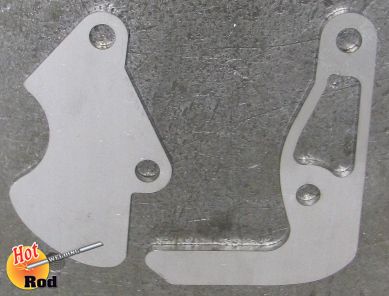
Left and right are Erik’s hard parts to protect the vulnerable rear brake assembly in particular.
As for panniers, the MkII Magadans would be the obvious choice, but my contract penalises me from using the same thing twice. I have an idea I’ve been wanting to try. More about that later.

Erik at Hot Rod supplied his Xparts in return for an advert in AMH.

BMW 650 Xcountry – Stage 1 mods

Xcountry index page

During sunny spells over the last week or two the XCo has been slowly gaining weight on its way to becoming a functional desert bike.

x-bash
x-under

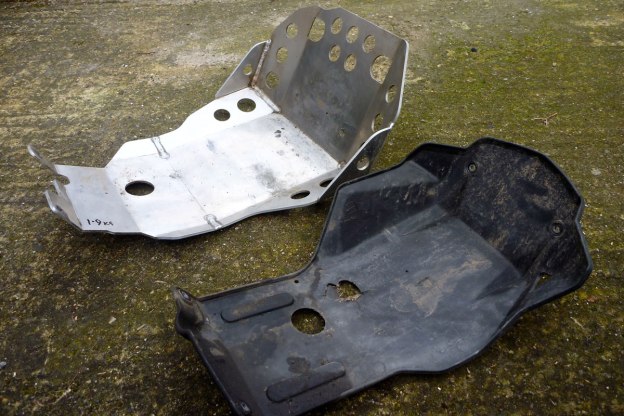
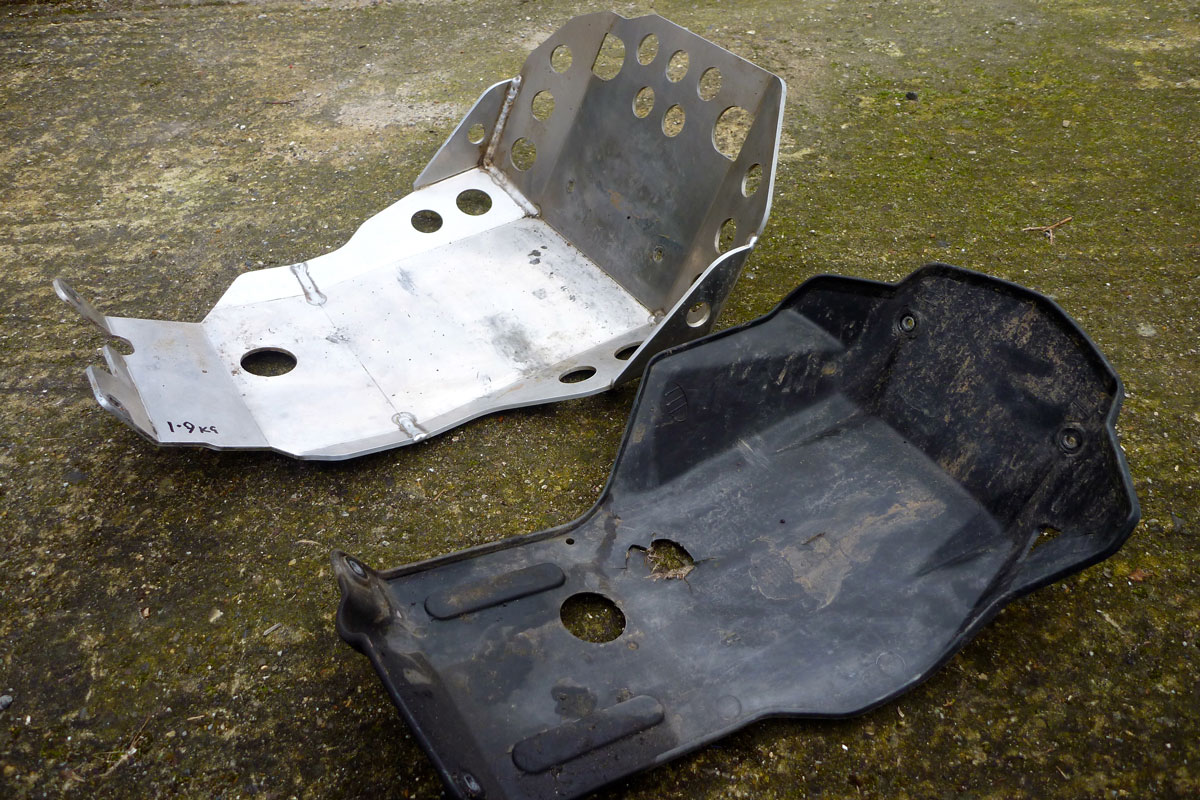
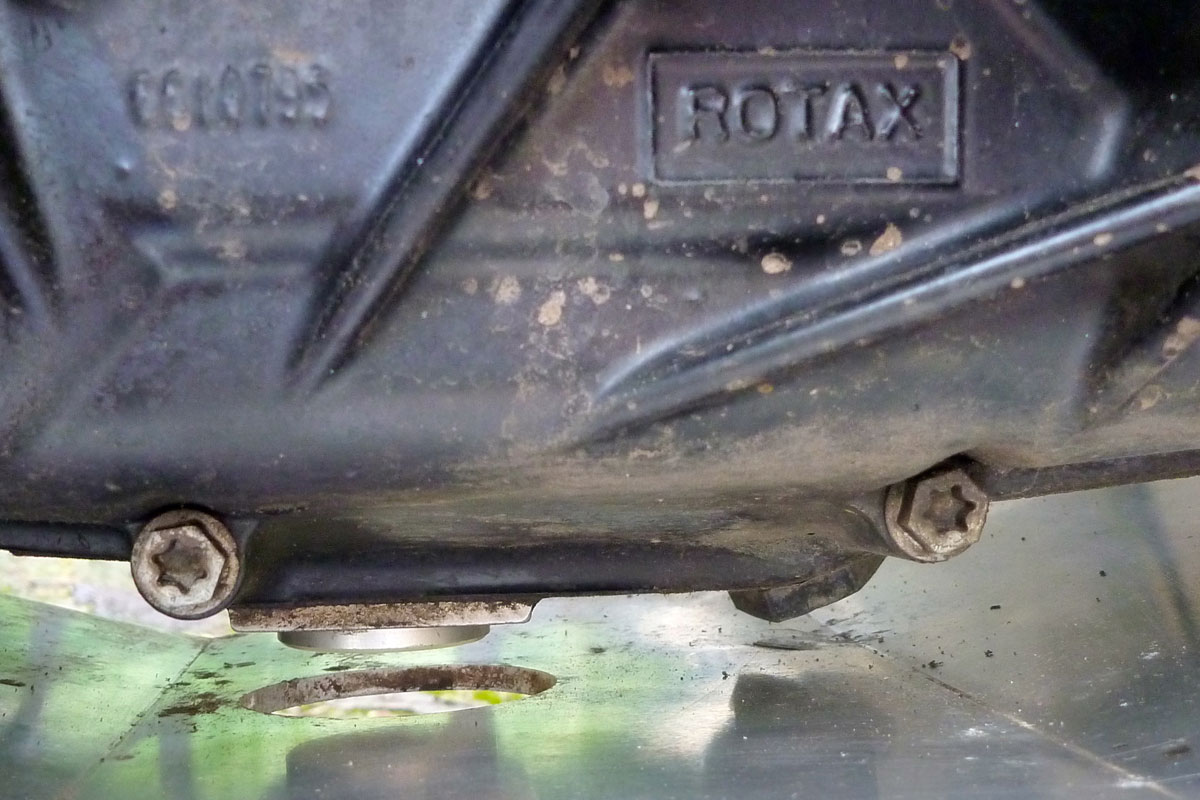
A mate running an XCh sold me his Touratech Rally bash plate (1.9kg vs 430g). Adding one of these is a no brainer although surprisingly it’s about the same size as the OE unit except of course it’s made for the job not the look. As it was, removing the original unit revealed it had already been holed, not at the drain plug (which looks like a TT low profile replacement – £27 saved, hallelujah!) but at the adjacent oil line junction which is now the lowest point (right). It looks like the used TT plate also took a hit there in a previous life. With no frame rails under the engine to rest on, the plate is unsupported between the mounts at each end which may explain how it got dinged off the oil nut. I may stuff some dense closed-cell foam in there, especially around that oil nut, to help dampen  a heavy smack on the middle of the plate.

x-fender
x-foot

Normally I’d have made one out of plastic or rubber, but along with other stuff from Wunderlich (40% cheaper in Germany – where have you hear that before? So much for the EU), I treated myself to their fender extender (left; 100g?) to stop crap clogging up the radiator. It fits on in a jiffy but needs a longer replacement bolt which Wunderlich don’t supply, although they do supply you with a 3-kilo catalog.
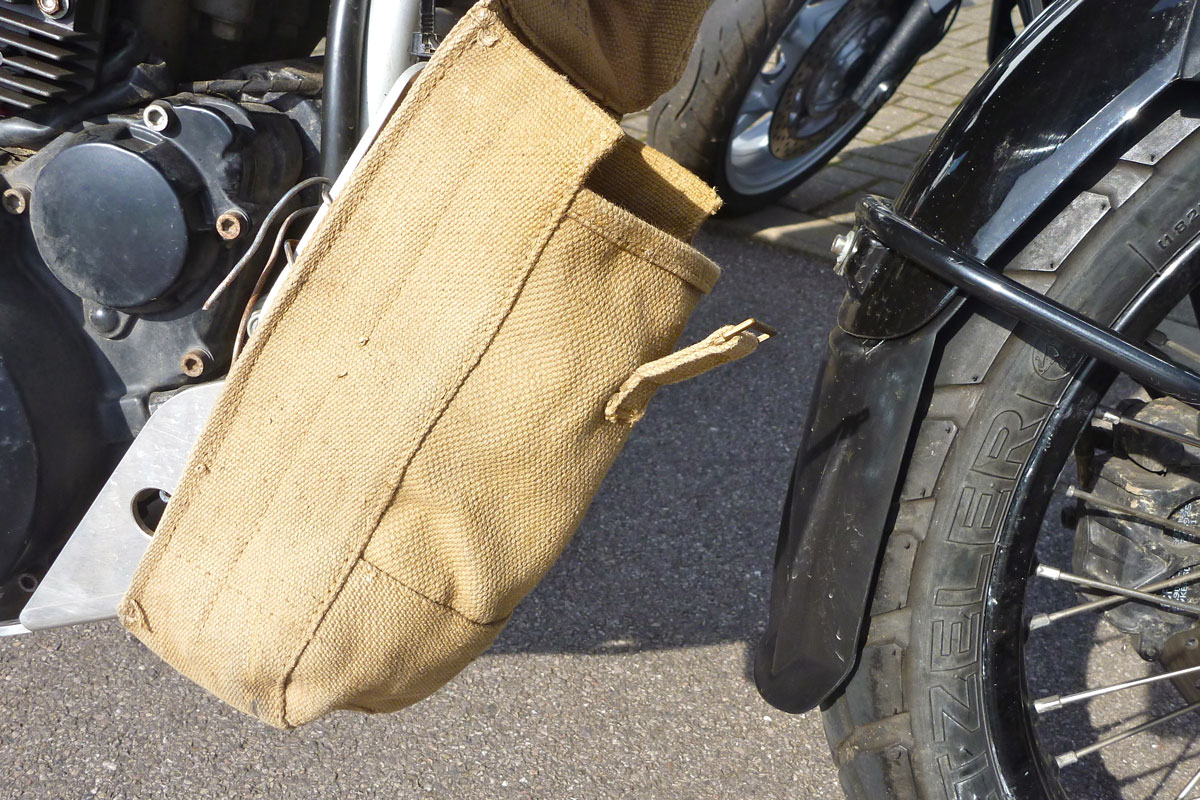
As you can see I’ve also fitted my ‘signature’ canvas tool pouch (left; 200g?). You read about adapting tractor tool tubes but I like the pouch; it’s bash proof, rugged, easy to close and takes a 1.5L water bottle, my tool roll or whatever’s needed. You’ll find them on ebay for around a fiver. Search: ’58 pattern canvas ammo pouch’.
I am definitely getting old and lazy as I coughed up for a Wunderlich enlarged sidestand foot too (50g). It will be OK on soft ground but I know for sure it won’t be big enough on soft desert sand. Perhaps I’ll extend it when the need comes and anyway it saves welding permanently onto the bike.

x-shifters
x-shiftdista
x-shiftclamp

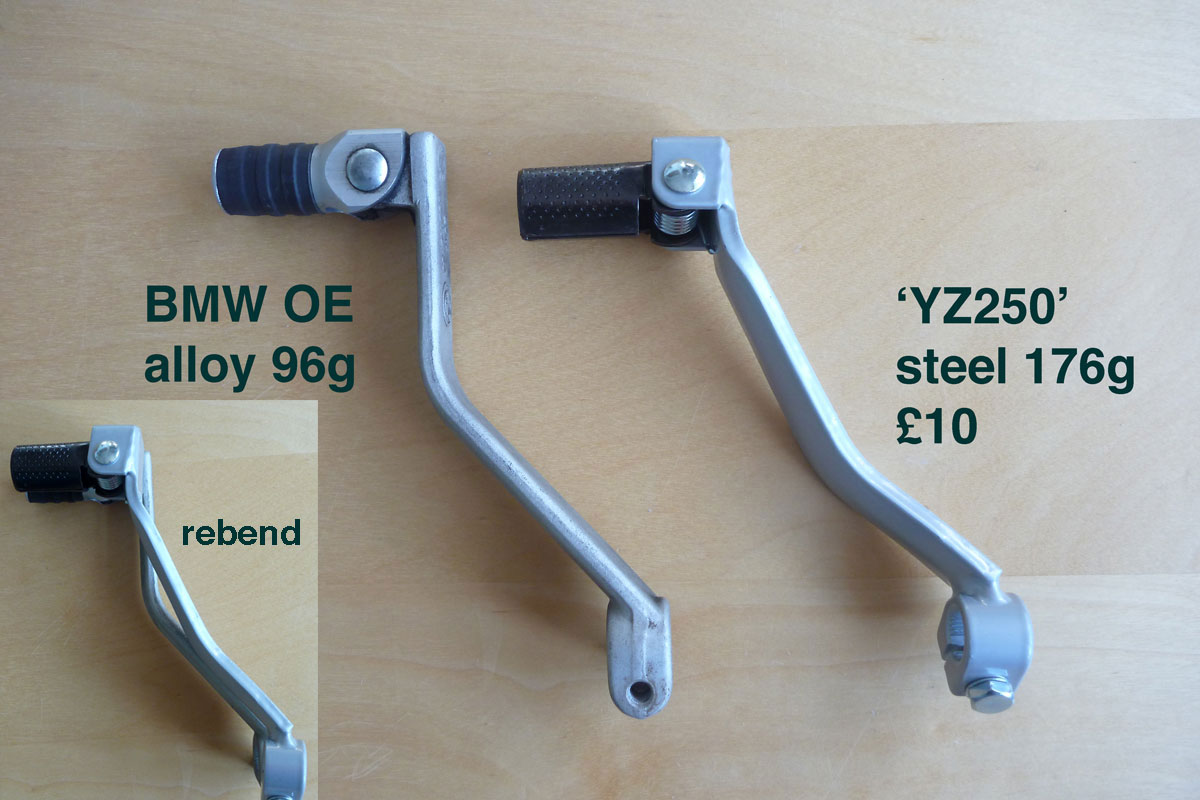
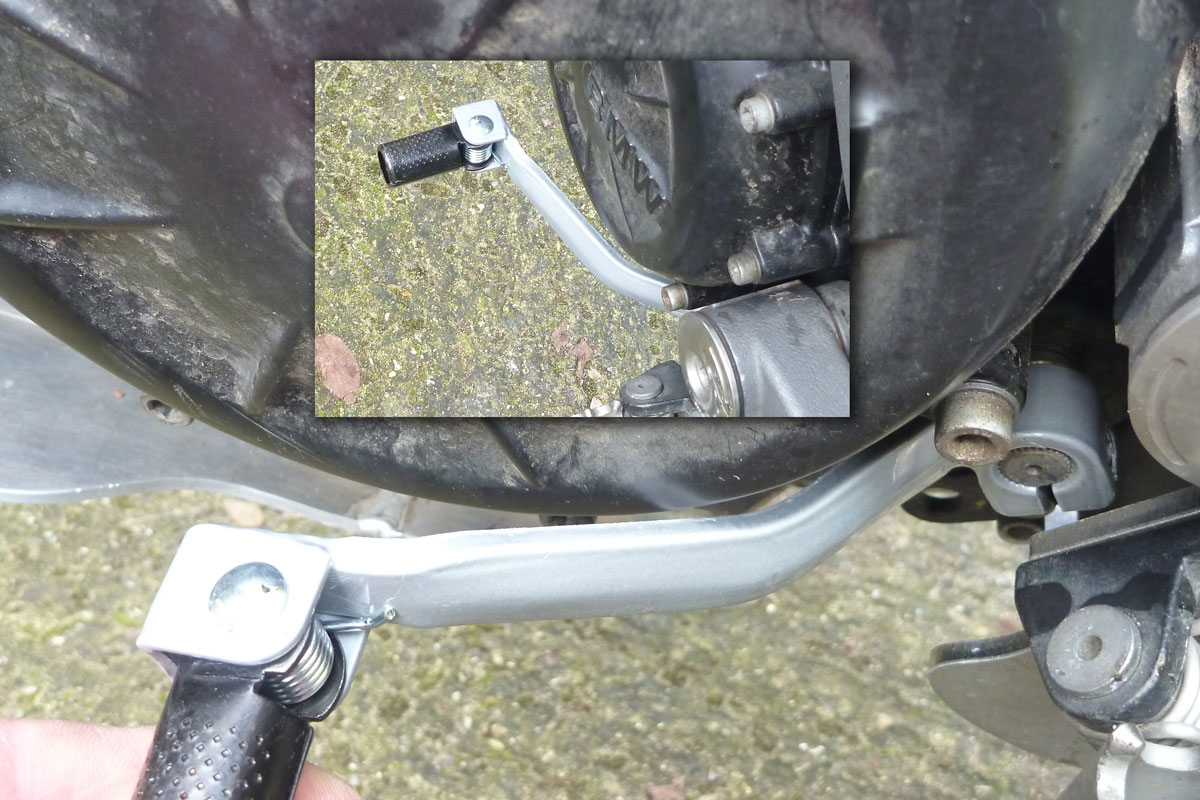
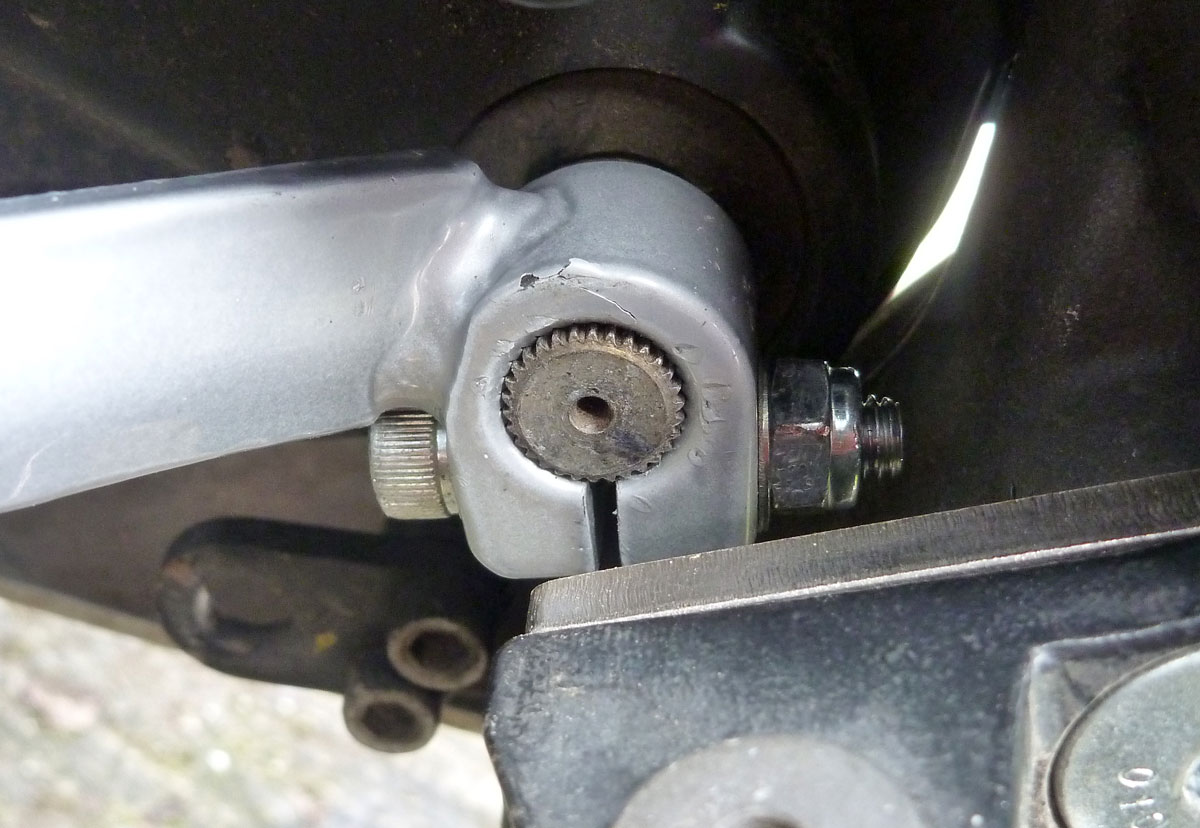
The alloy shifter on the X bikes sticks out vulnerably from the narrow engine and is said to be too rigid to the point where it can snap or damage the selector shaft. You don’t want that. They say old 650 Funduro steel ones fit or later F650 Dakar shifters, but the selection (so to speak) on ebay looked like they’ve all been over an IED and most didn’t have a folding tip which is as useful as bendy steel. New ones are £60 but on a tip I found a YZ250 cheapie from MD Racing posted for a tenner (176g vx 96g). It gets very close to the case so needs a little rebending to match the OE item which I’ll get round to with some Mole grips or a vice. I also found there’s no room to get the bolt in once on the splines, so I put a longer bolt in from other end with a nut (right).

x-nuts
x-thinut

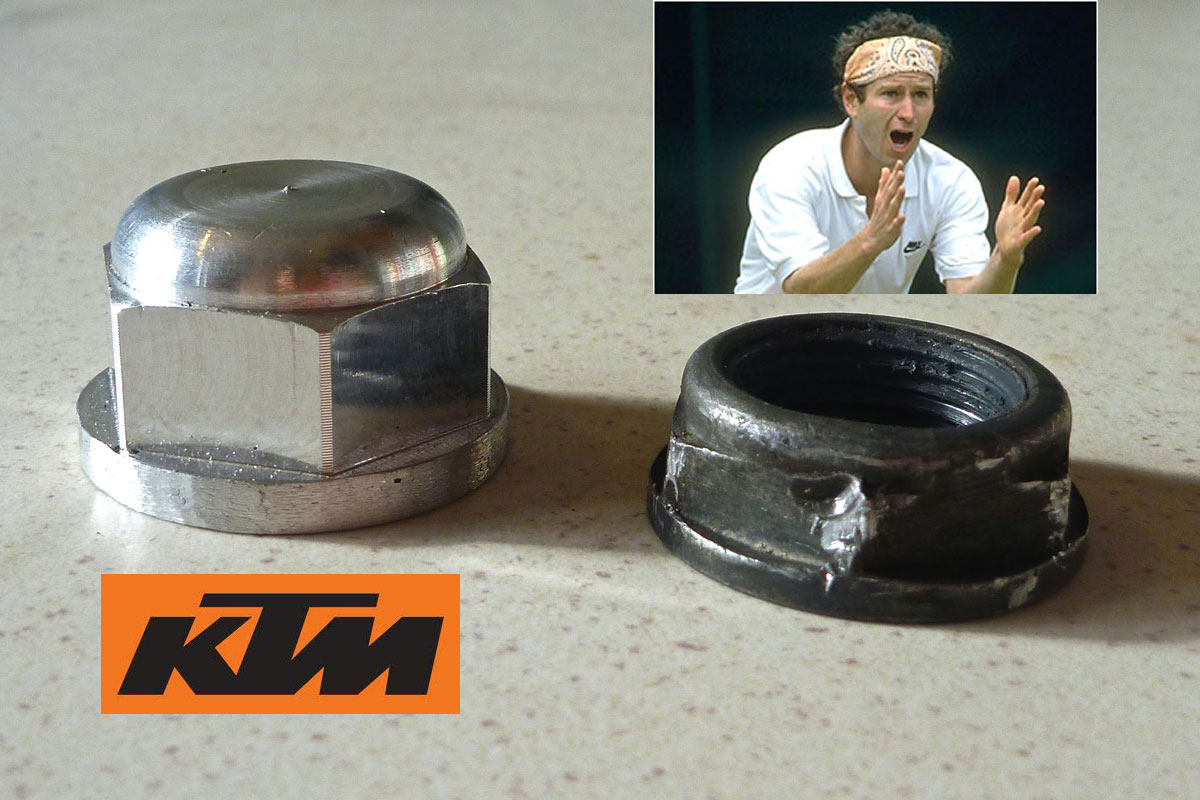
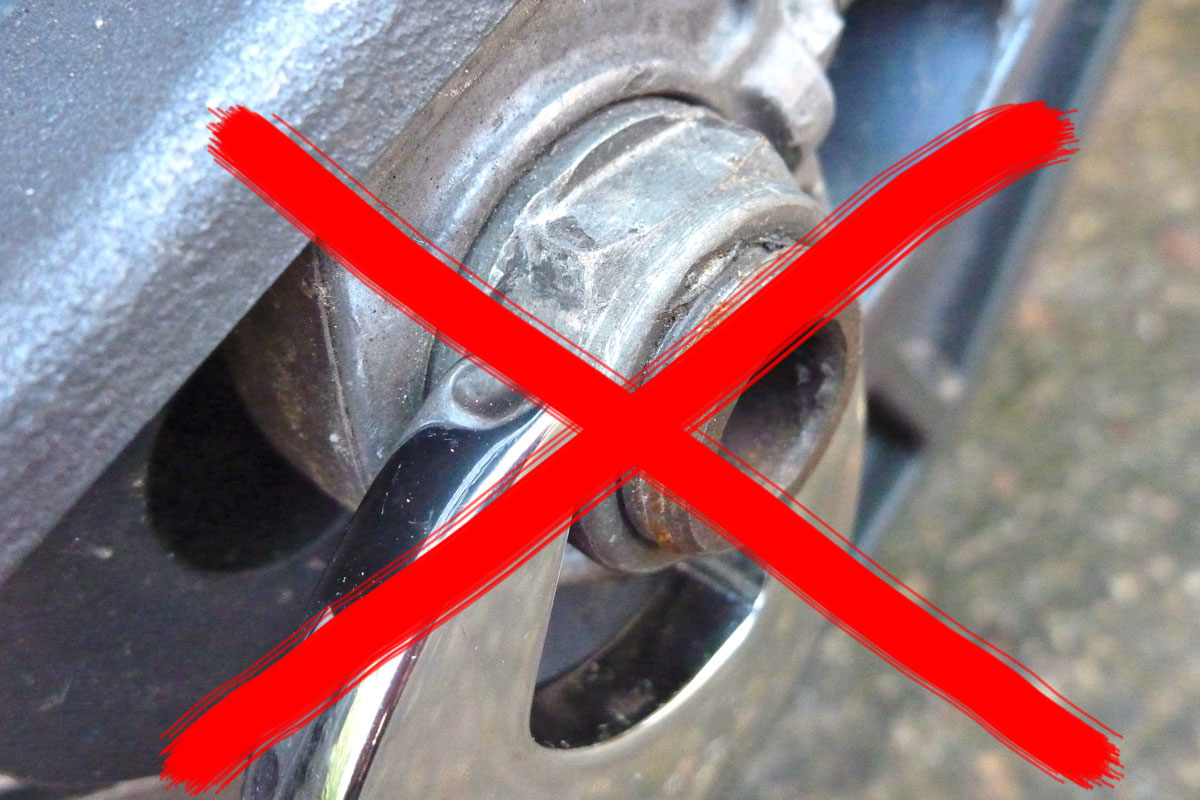
One of the less bright ideas to save weight on the X bikes was to use wheel spindle nuts with faces about 5mm wide. What chance has a commonly used nut like that got of not getting mashed? None at all I can confirm; the front one undid OK but the back nut soon turned into a fat washer and had to be chiselled until the bugger split right off the spindle. Luckily, Xbike gurus out there have found that  lighter domed alloy 27mm KTM 450 nuts fit (p/n 50310099000; about £4). Sort of. Again, the front fits fine but for the back you have to trim a millimetre off the radius of the collar so it fits against the sunken chain adjuster (more details at the excellent mattsnook Xcountry resource). I don’t have access to a lathe to do a neat skim job but found that chamfering a bevel on the collar’s edge with a grinding stone on the end of a drill did the trick. Overall I’d have preferred a regular steel wheel nut – 27mm in M20 1.5mm is what you need – but gave up finding anything close to the price of new KTMs nuts so I’ve  bought a third as a back up in case one gets mashed.

x-gsxr-tool

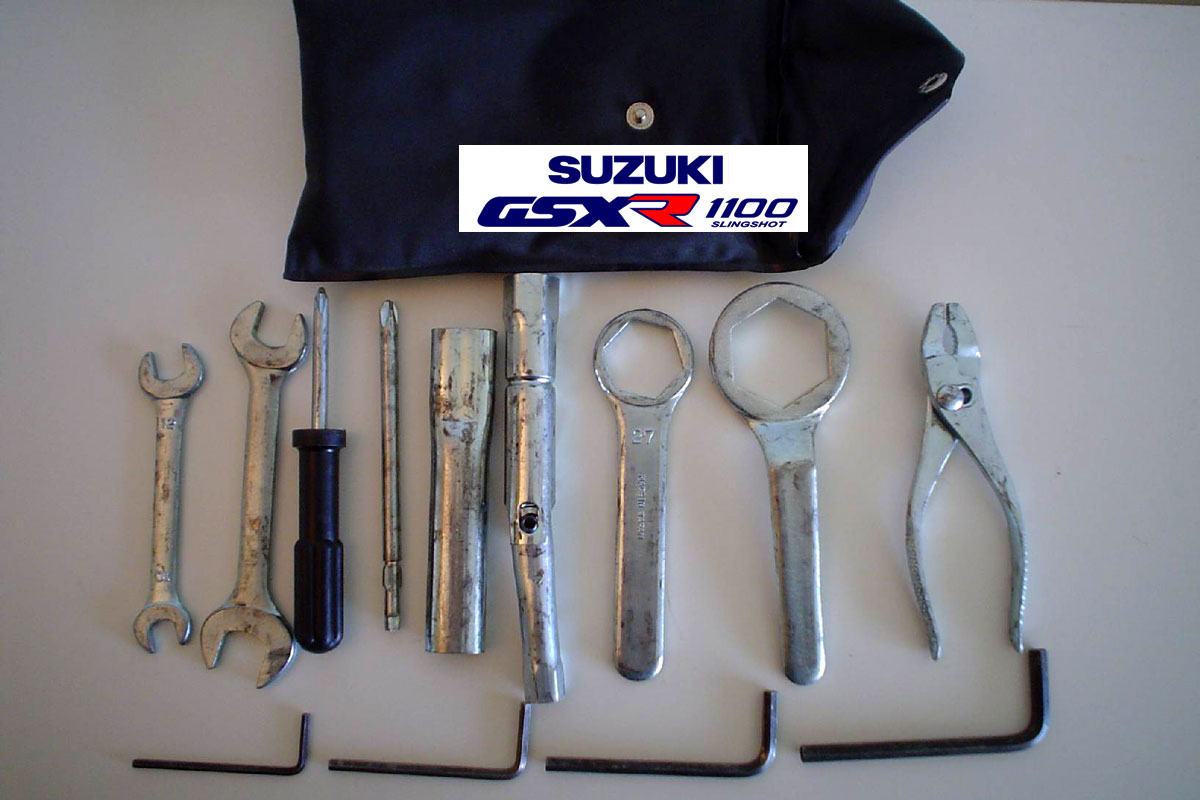
My bike was missing its BMW toolkit and guess what, a new one only costs £112 (though many other BMs share it; see link). Now I have the wheel nut size sorted at the more regular 27mm size, I started looking for one of those flat ring spanners you get with Jap bikes plus some mini pliers to add under the seat with a few spanners and hex keys.
After hours on the web trying to save a fiver, the cheapest solution I found was something like a used toolkit off an early-ish GSXR1100. Plenty of them around once so  plenty in the breakers. I got one as shown above for £15 posted. It comes with the vital  flat ring 27mm with extension handle, pliers and all four hex keys match exactly what the BMW uses. With a 12mm for the chain tension and a combo 8/7mm ring I’ll be in business.
If not hex, then the 650X uses a lot of 8mm head, plus a couple of 7s and 13/15 on the mirrors where I’ve fitted some RAM ball mounts (see windscreen image below; 50g) for GPS, cameras and so on.

x-screen
x-R1200screen

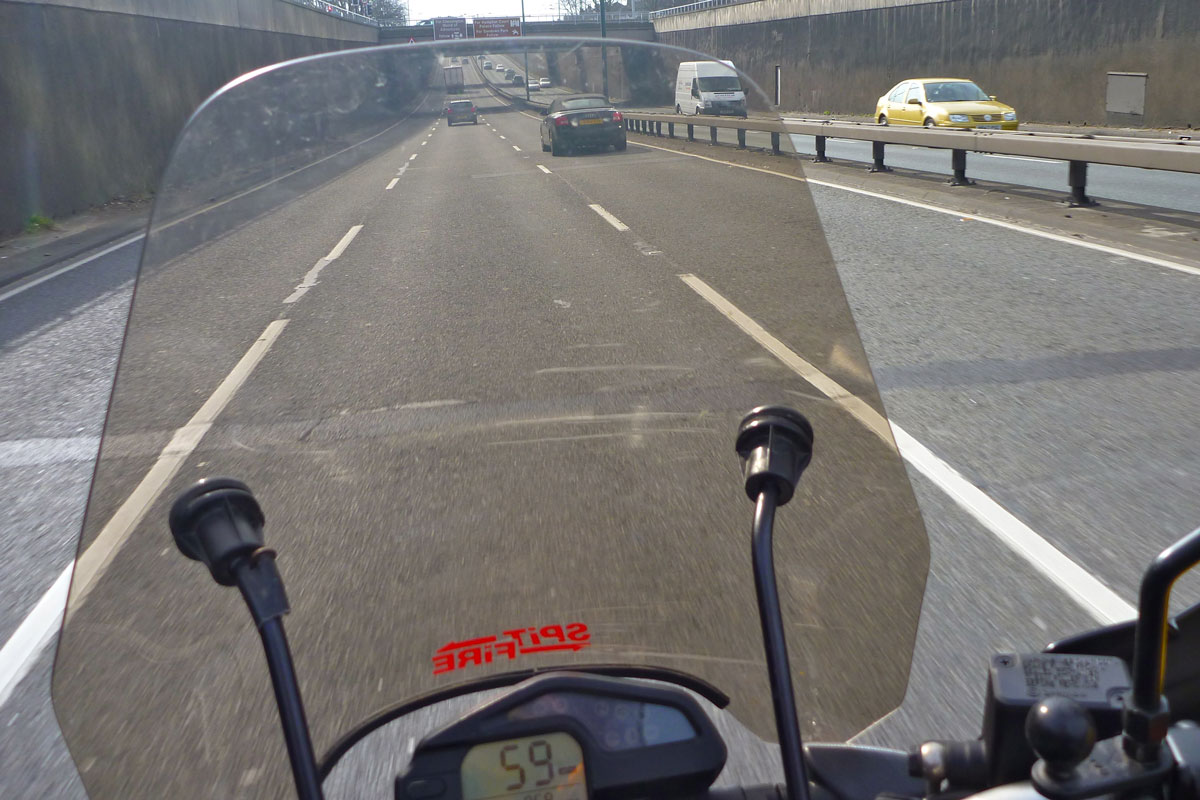
I’m not convinced it’ll be up to it, but seeing as it’s around, I re-fitted my US-made Slipsteam Spitfire windscreen (~1kg?) off last year’s CRF-L. There are plenty of windscreens to be had in the UK, but for just $20 for some larger 1 1/4 inch clamps to fit the BMW’s fat 1.125 (28.5mm) bars, it was worth the gamble.
On the 30-mile run down to Vines in Guildford along on the A3 to get the subframe, I fully expected it to play up, but it held firm at 70mph, despite its single pair of mounting stalks. I can’t say sitting behind it was like being in the back of a Mercedes sedan in full repose, but it must lessen the wind pressure  and didn’t seem to affect the handling. That may yet prove an issue as the BM is faster the old 250 CRF. The great thing with the Spitfire is it comes off in a jiffy if heading off road.
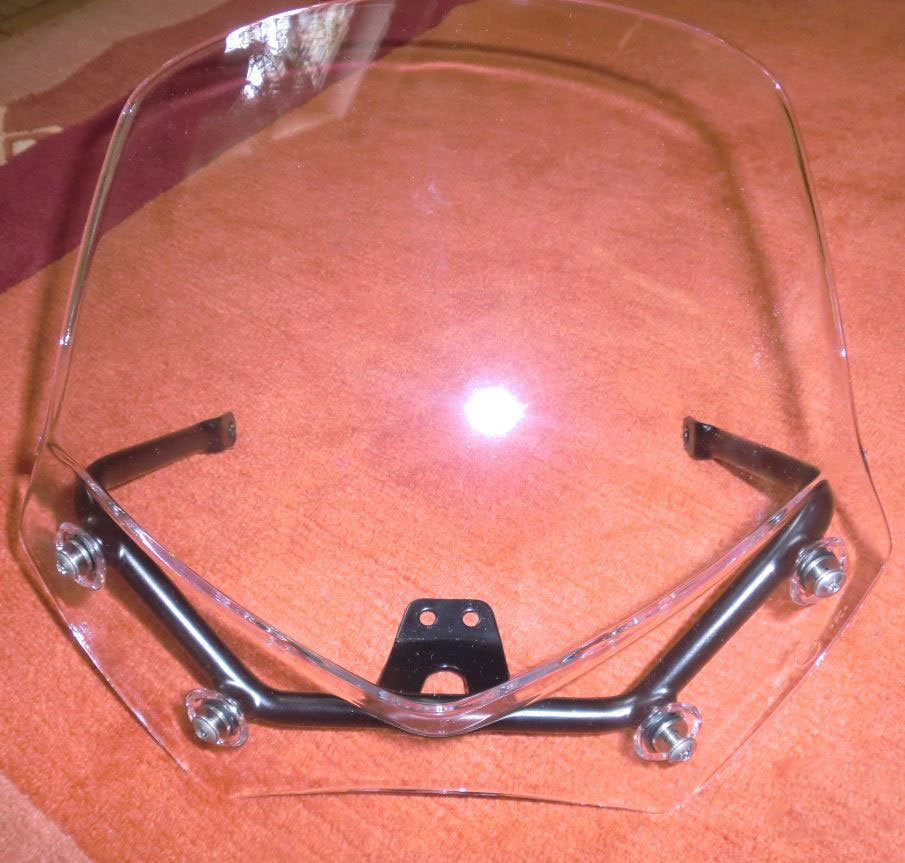
Apparently a smaller screen off a BMW R1200R (right) fits right onto an Xcountry too – the price for the screen and frame new from BMW? – don’t ask – but I picked up a used one on ebay.de for around €100 in case the Spitfire proves to be a misfire.

x-raisers

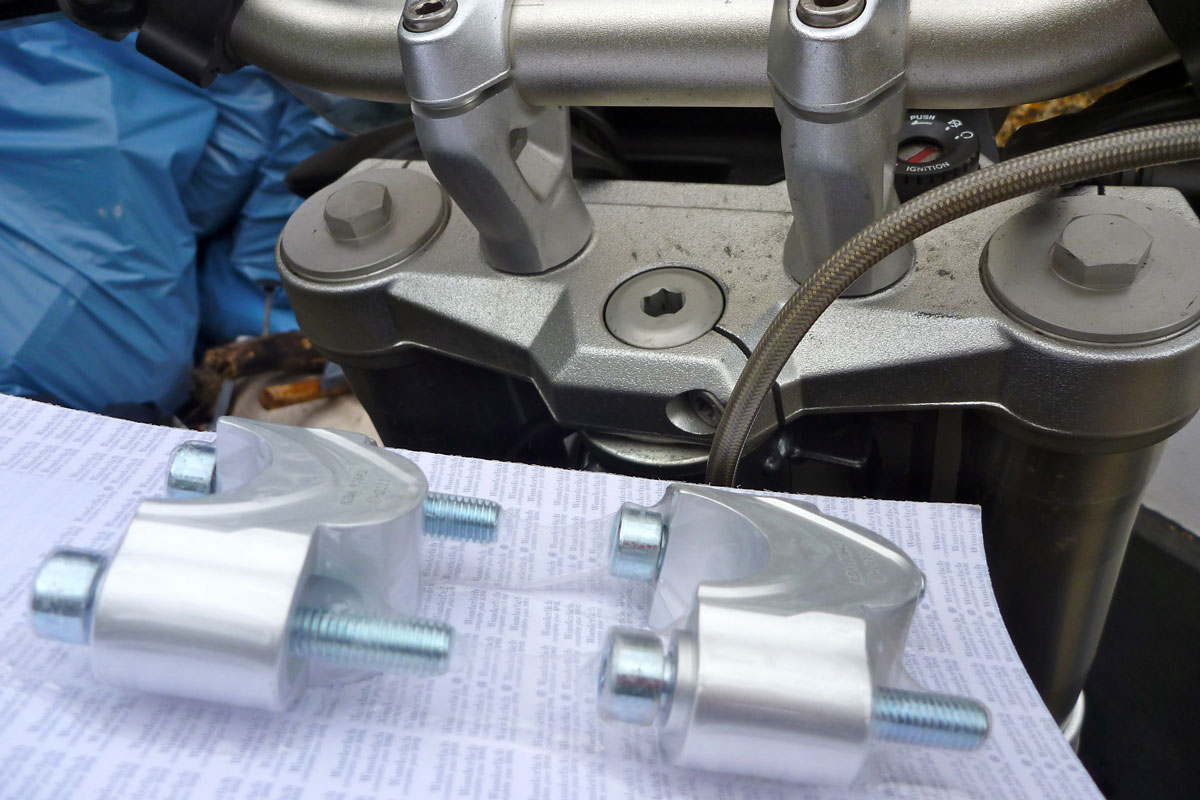
In my  Wunderlich shopping frenzy I bought some ~25mm bar risers but I’m not sure there’s an urgent need for them just yet, as I’ve found briefly standing was not too much of a stoop. Maybe one for later when the off roading begins in earnest.

So all up with these adaptions I’ve spent around £300 including the spare screen and added about 3.5kg.

Still to come on Project X
Fitting a tail rack and increasing the woeful 9-litre fuel capacity. Fit a 12-volt power socket. Fit my ex-CRF-L Barkbusters when the fatbar clamps turn up (current ones are all-plastic cheapies). I also noted with regret that the shock is on max pre-load so at the very least I’ll probably need a heavy duty spring from Hyperpro, if not the Wilbers stick they all rave about.

x-silencer-5.6kg

Looking into the huge silencer which weighs in at 5.6kg, the word seems to be that nothing else works as efficiently, despite the great noise they might make and the 2 kilos of weight they may save, so put your money into something else.
It may be worth performing a catsectomy to cut out the cat converter in the silencer’s end cap. I’m told by Hot Rod Erik this only saves about 300g but it significantly reduces the heat built up (which cats need to work properly) at the front of the pipe. That may affect emissions for future roadworthy tests, but is probably a good idea for the desert if I can get hold of a bashed up X-silencer.

For the steel subframe swap click this.

BMW 650 Xcountry subframe swap

Xcountry index page
LoncinG650XCo

One of the flaws BMW addressed on the Mk II 650 Xcountry (right) was an overlight alloy rear subframe. Of the three models the Xco was especially prone to failures as it was was the only one in the Xrange with pillion footrests.

For solo bumbling around the alloy frame will doubtless be fine, but with a passenger on an XCo, let alone riding a loaded XCh off road, the subframe proved inadequate. Presumably enough warranty failures occurred for BMW to upgrade the yellow Xcountrys from 2009 with an identical unit in steel. About twice as heavy but much stronger. Only problem is yellow Xcos are considered a bit to low and under suspended for all-terrain travel biking duties.

allysubbrace

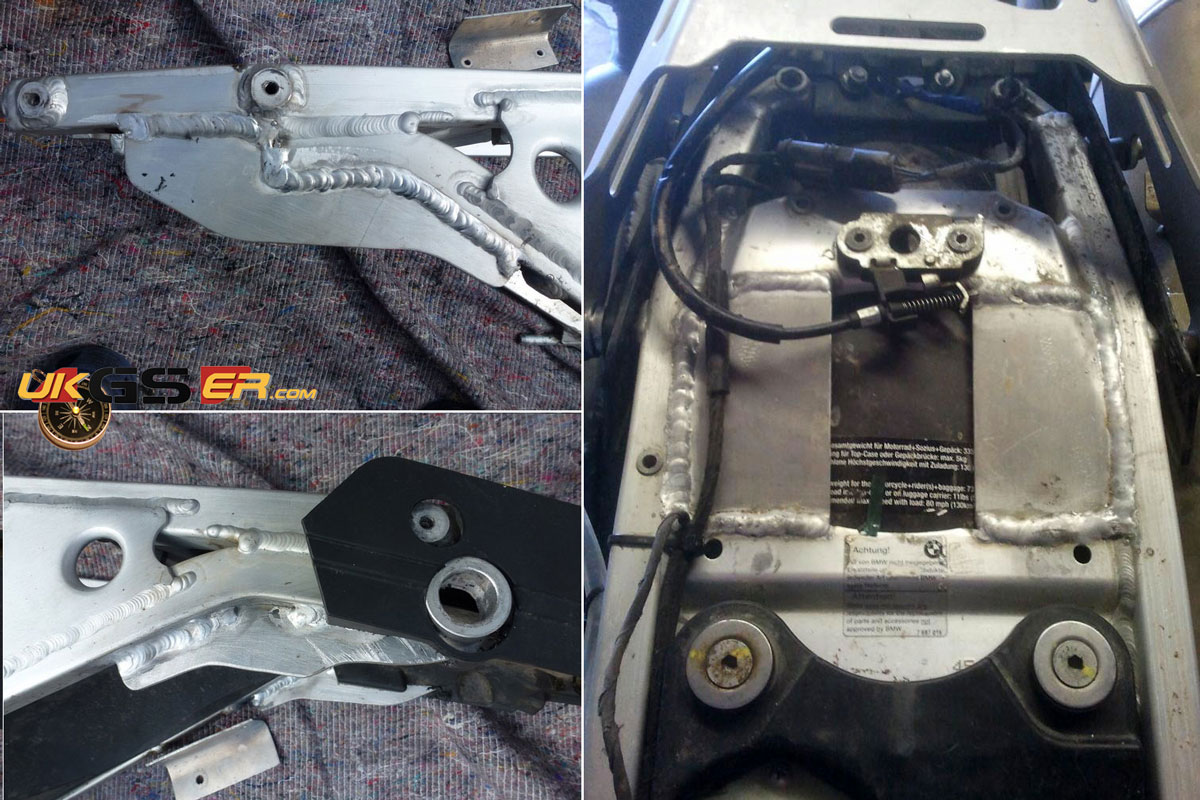
There are other options which work on all the X bikes, not least the popular XChs: strengthen your original alloy subframe around the back where it commonly cracks with horizontal and vertical plates (right). Easily done but long term the subframe needs more than that. With heavy loads, rough terrain and the passing of time the stressed alloy fabrication clamped to the steel main frame will flex and slowly wear at the four mounting bolts. It may also distort sideways when you fall heavily with bulky side luggage. Within reason skimpy steel subs can handle being bent back straight and many XR owners know. Alloy does not like that sort of abuse and 

x-uri

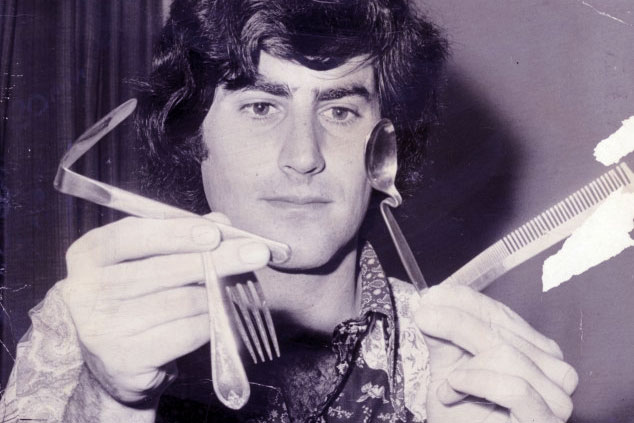
will eventually fail like Uri Geller’s spoon. Furthermore the bolt threads at the back of the alloy subs where steel racks get mounted are also prone to wear and although it may be a bit of an adv myth, out in the field it’s certainly easier to get steel welded than alloy.

alloy-X-tweaks

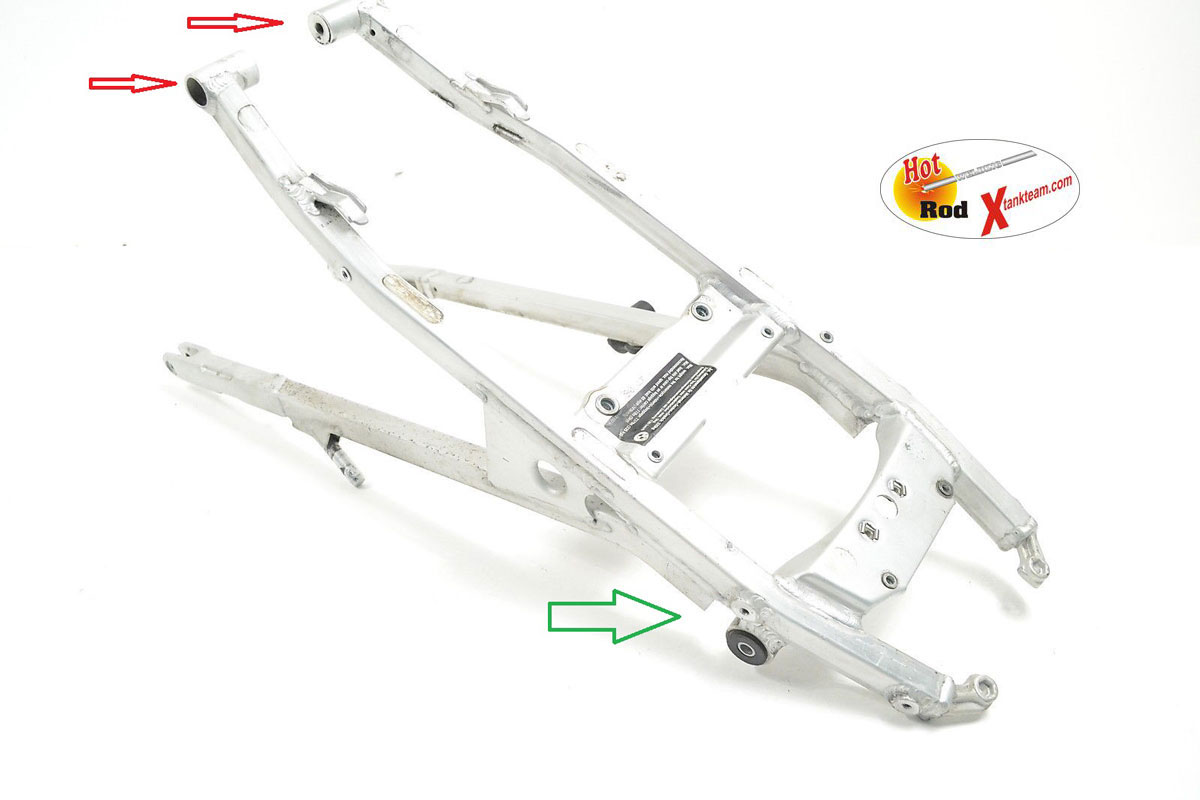
Xman Erik in NL can upgrade your alloy subframe; beefing up the stressed-upon upper mounts (red arrows) and replacing the alloy threads with steel inserts (green arrows). That plus the bracing as shown above right will make your alloy Xbike subframe as good as it can be and may work for most overlanders.

tt-sub

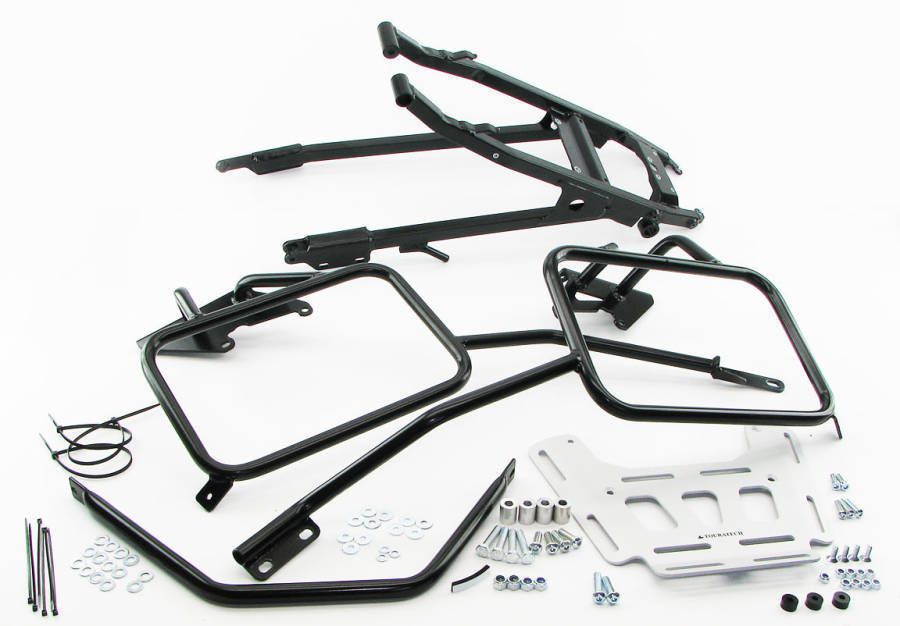
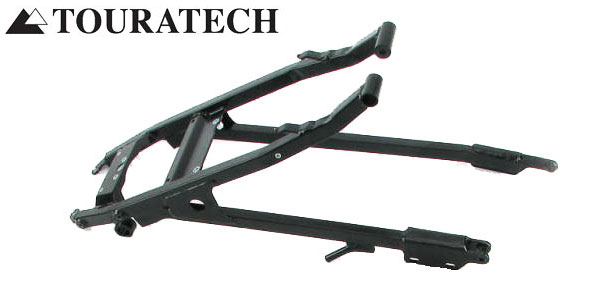
A better option: fit a Touratech steel subframe (left) which TT brought out early on for the XChallenge to carry their luggage frames and alloy boxes. The original alloy frame would never handle that sort of weight on rough ground, whatever you did to it. Those steel subframes (TT p/n: 05-049-0600-0; left) can be bought independently from the whole luggage kit for £420 in the UK, but I was told were unavailable for months. Hot Rod Erik often takes in TT steel subs and modifies them to suit his Xracks and Xtank.

BMW-sub-£478inc-46517716439

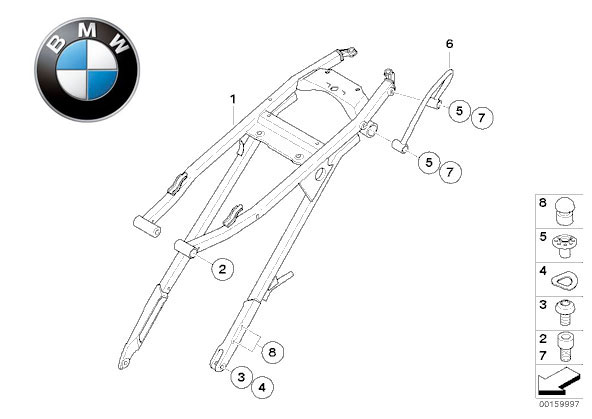
Last option: fit a BMW steel subframe from the yellow Xcountry (p/n: 46517716439; right). Brace yourself for the price… only £480 inc. These were also said to be in short supply in the UK so I got wondering about getting one fabricated. A frame builder turned the job down while suggesting ~£450 was actually a good price. Then a weldy mate offered to make one for ‘about £300 – but it won’t be pretty’ but  out of the blue BMW came through with a yellow steel frame.

x-subs

Five hundred quid for a steel subframe – is that nuts? If you’re adapting an Xco into a travel bike I don’t think so. Whether from BMW or TT, I believe a steel unit is the single best solution to the Xbike subframe issue. A full Hot Rod upgrade on an alloy one (even done in the UK) might cost up to £200 and it will still be a torsionally weak alloy sub. I didn’t hesitate long before ordering a BMW steel unit and if money’s that tight, when my bike’s job is done I can swap the alloy back on and flog the steel on for a good price.

Subframe weights
BMW alloy (with pillion mounts but pegs removed) 2.7kg (verified)
TT steel (no pillion mounts) 4.7kg (unverified)
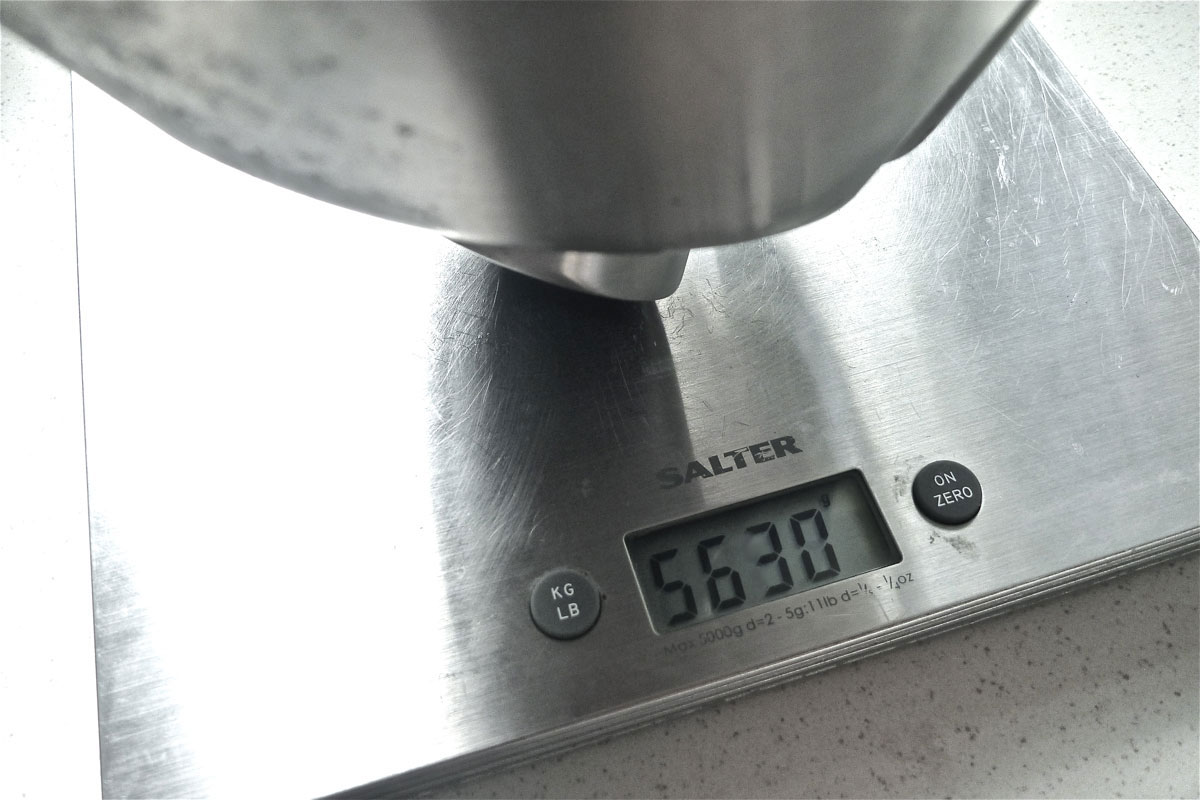
BMW steel (with pillion mounts but no pegs) 5.6kg (verified)
x-steelsub

Fitting the subframe
Knowing how it can get when you start working on old bikes in the street, I was all set for two days of teeth gnashing and knuckle skinning.
As it was, the job was completed well before lunchtime which left me so stunned I had to take the rest of the day off. Plus now I know the minor blunders I made during reassembly, next time I could do the whole swap in two hours with just three hex keys, a 10mm ring for the silencer and the iPod on shuffle.
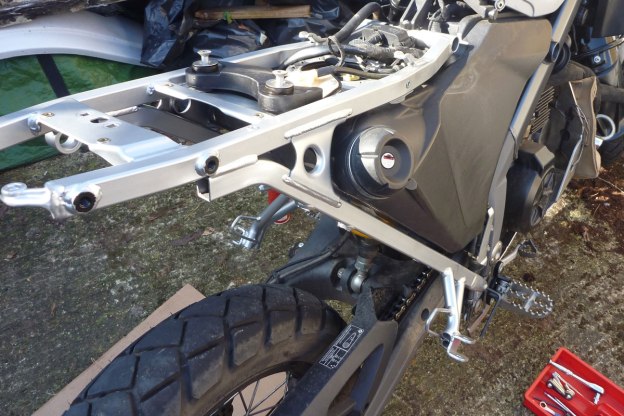
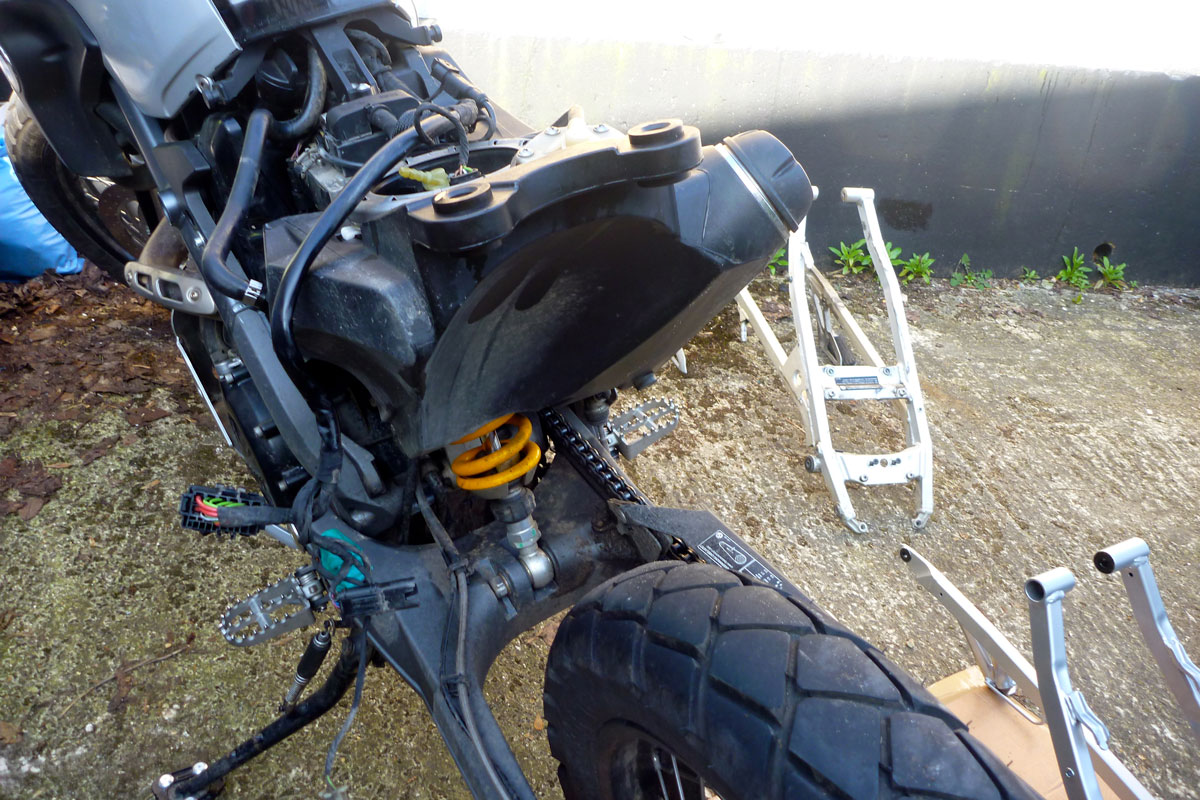
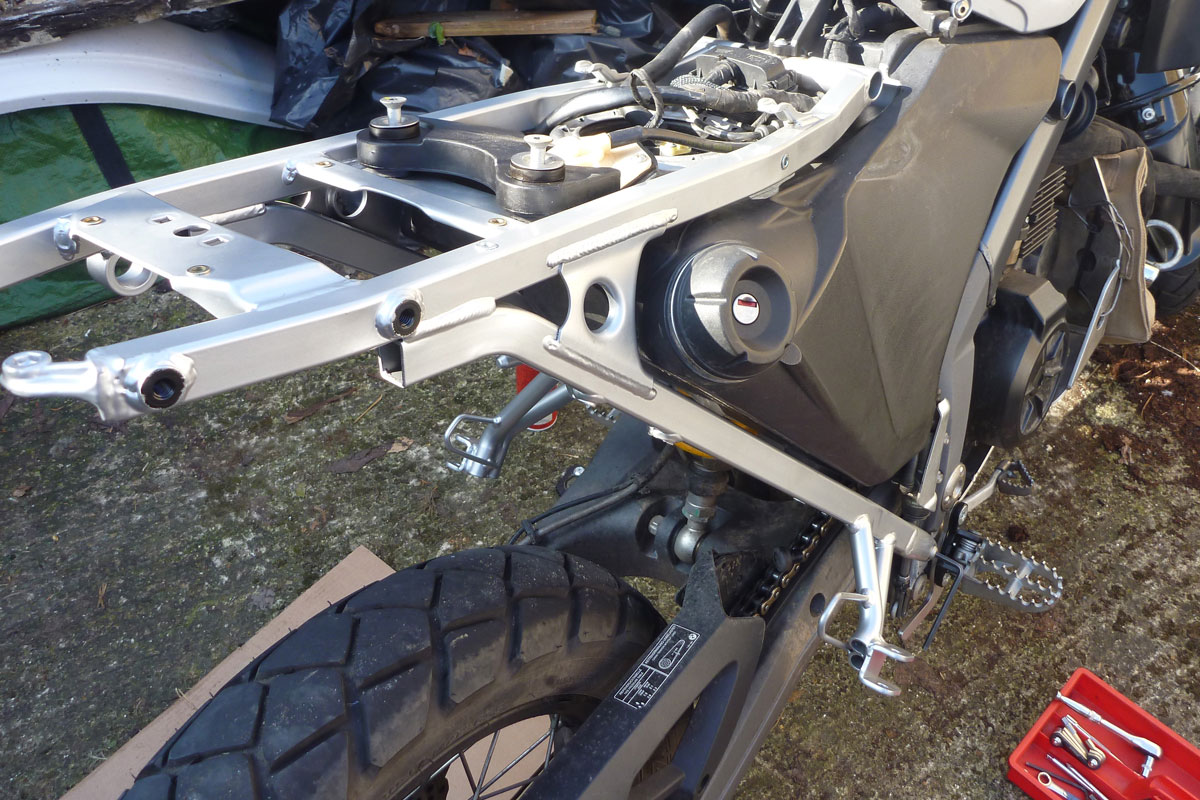
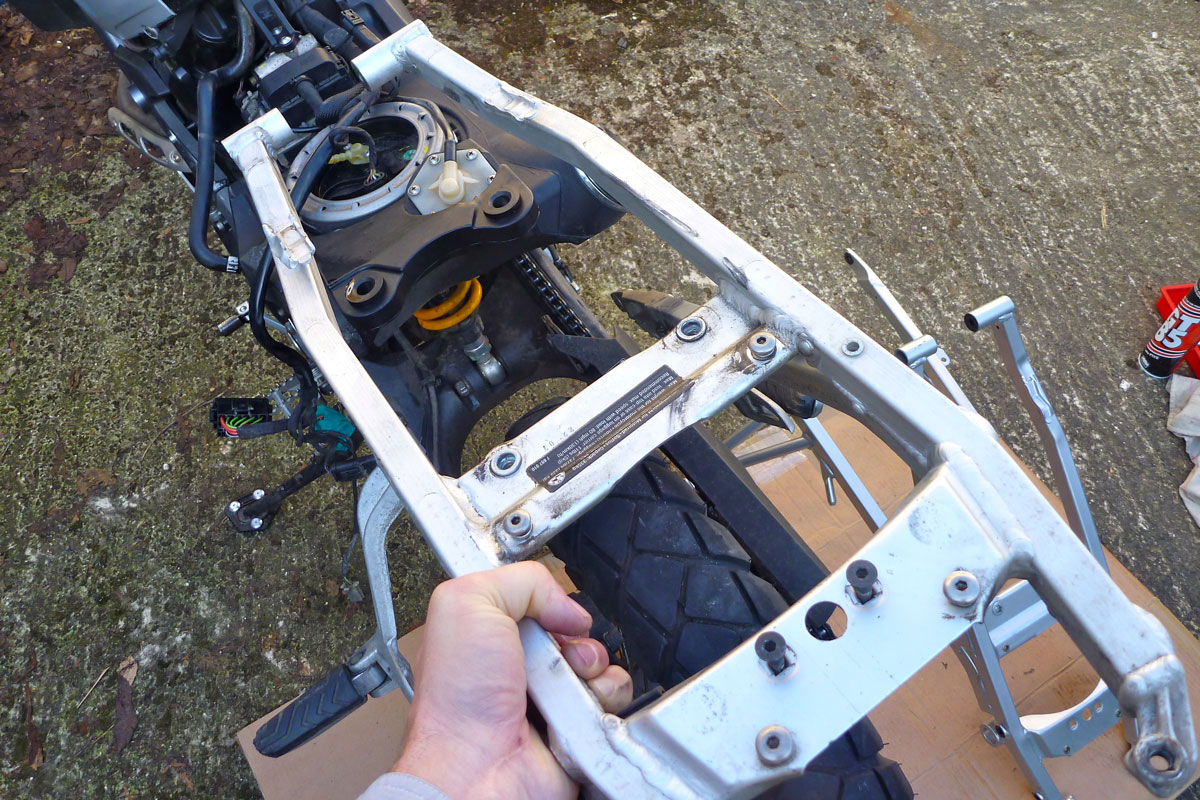
Press ‘play’; Remove seat; silencer; rear light assembly; mudguard and undo associated wiring and the fuel breather. After about an hour you’re at the point where you can undo the four (pre sprayed) subframe bolts and the two rear fuel tank bolts. Then just tug the frame backwards (right). Away it comes and the tank stays in place. As simple as that. The new steel unit is an exact replica. Everything goes back on just like it came off. No gnashing of teeth. The only thing I missed was spotting the rubber bung which dropped out from between the tank and diagonal frame rail below the filler cap. That should slip back in later if I loosen the tank mounts.
So all up the steel subframe has added an extra three kilos bringing the bike’s weight up to 161.5kg dry.

x-sub

BMW X Country – Introduction

XCountry Index
• Stage 1 mods
• Swapping the subframe
• X-tank and X-rack
• Suspension
• Tutoro chain  oiler
• Midsummer update
• The Spanish Plain
• 10,000 mile review 
P1140807

Time and need for a new project bike so next on my list is the BMW G 650 Xcountry (that being the correct BMW appellation). I snatched a 2008 model off ebay for £2300 with just 6300 miles and seemingly in great nick. Even with just a month of tax, for that sort of money it’s hard to think what else comes close.

strada

Over the last few months I’ve been watching the discounted prices on the similar and recently discontinued Husqvarna Strada (right; similar to the Terra I rode in Morocco). But at least for the moment the reduced prices never added up to more than about £4500-5000 for a low mileage ex-test bike that still weighs a good 20-25 kilos more than an XCo.

I like to think the X bikes are belatedly becoming recognised as an under-rated travel bike for the simple reason that, compared to the post-Funduro F650s and the current G-GSs which followed after a two-year hiatus in the UK, the X bikes were powerful and light. With bathroom scales I combined the upright wheel weight on my ABS machine (as I did with my GS500R) and came up with 163kg with a full tank, very close to the official wet figure. Deduct the 9 litres (6.5kg) and you get a more broadly comparable 156.5kg dry. The only accessories my bike has are plastic hand guards so let’s call it 155.5kg. Compare that to the following claimed dry weights.

  • BMW XChallenge 149.5kg
  • Husqvarna TE630 151.5kg
  • BMW XCountry ABS 155.5kg (verified)
  • Yamaha XT600R 170kg
  • TR650 Terra ABS 176kg
  • Suzuki GS500R 181.5kg (verified)
  • BMW Sertao and G650 GS 182kg
xbikeadvertYou probably know all this but I’m going to say it anyway. Ready, here goes: the Xs were only sold in the UK from 2007 to 2009 using the same Rotax engine in three models: the XChallenge was pitched as an off-roader 18/21-inch wheels and taller air suspension (below left), the XMoto was a blacktop canyon basher with 17-inch wheels (below right), and in the middle below, the XCountry was a retro/street scrambler with 17/19-inch wheels and normal suspension. For me the XCo was always the best compromise for a dirt-capable travel bike and from the figures below, the best selling model. No dodgy air shocks, a much lower seat (see image below left), a steel rear subframe (or so I thought) and a do-it-all 19-inch front wheel. You know how I feel about 19s.
bmw-650x-xersesprod
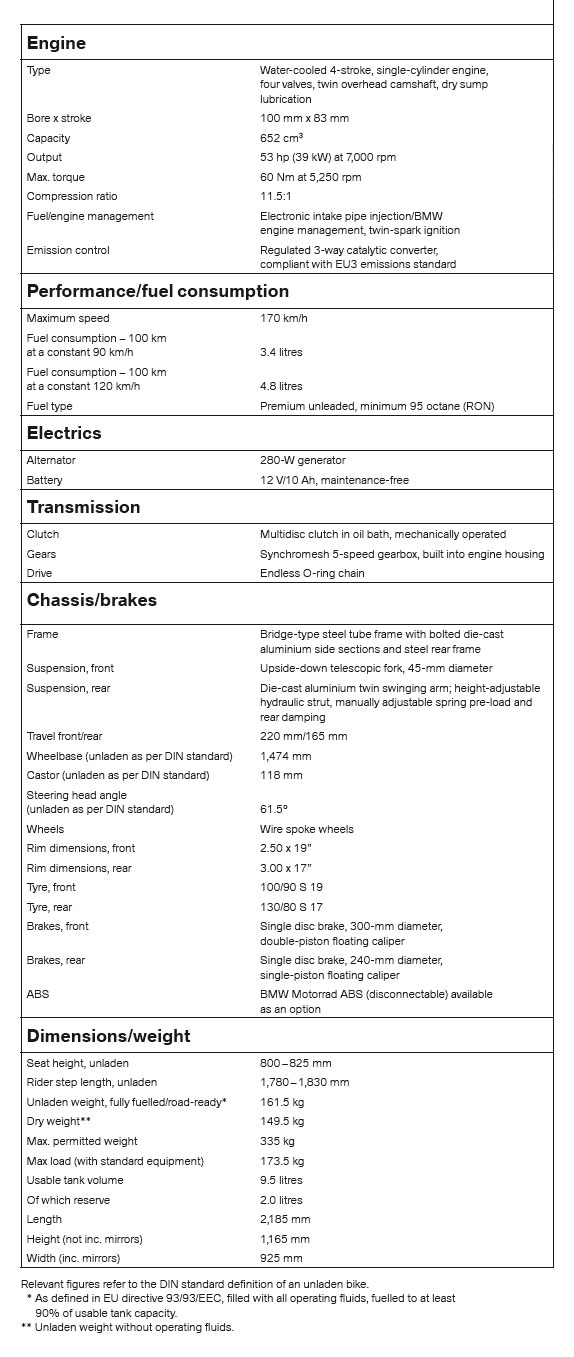
xcospex

At a bike show one time I asked the BMW Motorrad marketing bloke why they’d been a flop but he couldn’t pin it down to one thing. Perhaps it was just a ‘perfect shit storm’ of too high asking price (around £7000 back in 2007 when a Tenere went for £4500); spartan equipment levels, lukewarm reviews, not such great looks and whole lot of teething problems. They included clutch covers which led to early wear of the unit, premature battery failures and all sorts of starter solenoid/non-starting/charging issues. The full list is here and it put me off buying a well equipped XCh when I was in the US in 2013. The thought of being stranded out on a southern Nevada track was just too galling. I got a Honda CRF 250L and never looked back. But I did miss the satisfying stomp of a 650.

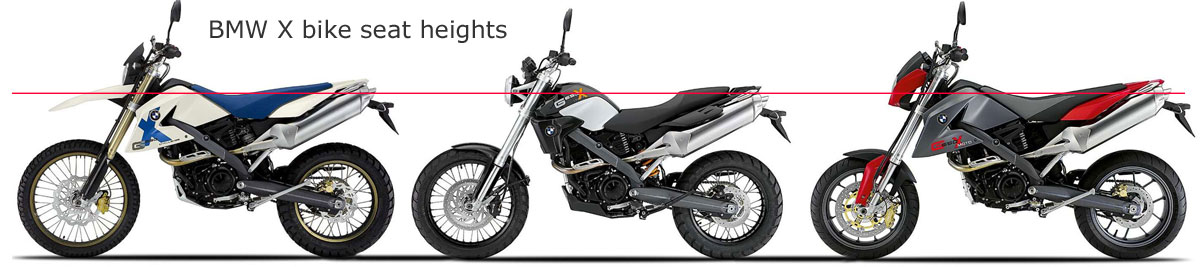
bmw-650x-seat-heights
LoncinG650XCo

The 2009 XCos was the only makeover that any of the three models got. They used engines still made from parts manufactured by Rotax in Austria, but the engines and the entire bikes were assembled by Loncin in China. Some of these bikes had hot-starting issues, but $50 replacement exhaust decompressor fixes that. The main difference on these Loncin XCos was the yellow paint job as well as a lower seat with less suspension travel, softer springs and adjustable levers. You can see above how much lower a Mk1 XCo is compared to the two other models. A more useful improvement included a steel rear subframe.

steelsub 46 51 7 716 439

Blink and you’ll miss the fact that the XCountry was the only Xbike that came with pillion footrests and too much wayward pillioning on the original alloy subs common to all three models brought up cracking issues so a steel version was quietly slipped on. As is well known, Touratech sell a replacement steel subframe for all the early Xbikes (separately from the pannier rack, also shown below right). It weighs 4.7kg against the original alloy’s 1.9 – another example of overzealous weight savings on the X range, though of course it depends very much how you load and ride your Xbike. The yellow XCo’s steel subframe bolts onto an earlier alloy model without a hitch.

When BMW finally pulled the X plug prices crashed at what were seen as overpriced turkeys. I see from the papers that came with my bike that after just over a year at the BMW Off Road Centre in Wales, it had any scratched or bent bits replaced and was sold in 2009 by Vines for just £2600. Since then it’s clocked up a thousand miles a year and just got a new clutch fitted. Presumably it was the usual problem of ruined clutch fixed by an updated clutch cover plate with a proper bearing or steel bush to support the actuating mechanism.

Sounds like a nightmare but I’m prepared to take a chance; unusual as for me reliability is a high priority for the sort of riding I do. My plan is to use the bike to support my Morocco tours later this year and then take it on a longer desert trip of its own.

P1140810

XCo, first impressions
I picked up the bike in flood-struck Somerset and rode down to flood-struck Cornwall which has been the source of some phenomenal pictures over the last week. I then rode it back to London, all up about 600 miles. Rain gear report here.
Out of the guy’s house it felt a bit odd, not much up front, but everything worked as it should and by the time I’d sat in the pouring rain and headwinds for a couple of hours I was warming to the bike despite being a little underdressed myself. The Metz Tourances were rock solid in the wet, and the unscreened bike sat easily at 70mph while returning about the same mpg (average over 600 miles was 72.7mpg or 25.7kpl or 60.6US or 3.88L/100km).

blackcountry
P1140817

Mirrors were good, so surprisingly was the stepped seat with the hump far enough back. Hand and foot positions suit me too, though the levers felt a bit far away, dash info is basic with a huge speedo read-out. I have yet to meddle with the setting buttons.
Front light seems a bit lame, the gear lever doesn’t click n’ snick like my mate’s 45,000-mile old Transalp (below right), though there’s notably no driveline lash on the BMW, and that is an annoying Jap characteristic in my experience. I can’t fault the glitch-free fuelling and engine sounds reassuringly whirry rather than rattley; quieter than my 1000-mile old Tenere. Looks wise, the XCo is a bit ungainly; along with the massive cat the front end looks odd though may well be remedied or subdued with blackened fork uppers (right). Apart from black rims – good to see on the XCo – the quickest way to improve the looks of a bike like this is to lever on some knobbly rubber! Suspension is pretty firm, especially round town, though I’ve not meddled with that yet either. They say a Hyperpro spring can help out back.

P1140844
xcoxtank

The machine looks like it has a better than average build quality, something I can’t say for last year’s CRF-L or of course the Suzuki before it. Biggest nag is the 9.5 litre fuel tank which at the above fuel consumption is good for just 150 miles (244km) though I’ve yet to calibrate the BMW’s speedo and odo against a GPS. Something will have to be done about fuel range. The 6.5-litre Xtank (left – XL version) looks neat in that it uses what little dead space the X has and could be integrated into a rack, but costing nearly £70 a litre it’s more of an RTW investment. I’m mulling over various other ideas to improve the X’s fuel range.
Less weight: it’s as simple as that
Best thing by far is the power and the weight. They say it makes 53hp which is 3.05 when divided by the 162kg weight. The very similar Husky Terra (186kg/58hp) which I tried a year ago and also enjoyed running in Morocco is 3.2 – less good by a factor of 0.15. Write that down!
The Terra felt more cammy and crisp, though that could partially be down to the noisier pipe. In Morocco the Terra’s fuel consumption over 1000 miles was 67.9 mpg. So the significantly lighter and slightly less powerful BMW is more efficient and may well match a Terra on performance if not noise. One thing’s for sure; it’s nice to have that surge of power after running the otherwise excellent CRF-L up on the high plains.
And like I say, compare that power and weight to the current G650GS/Sertao, both claiming 48hp at 192kg which equals a staggering 4 – you read it right: FOUR or about 30% less good/more bad than an XCo. Mark my words, soon they’ll all be analysing bikes like this.

P1140824

Looking more closely at my mud-splattered bike to fix a front wheel puncture, you can see where they made efforts to save weight. The front wheel nut is barely half a centimetre thick, the spindle wall is thin and doubtless other stuff like the front mudguard and fuel tank were all pared down to lighten the scales.
There’s not even anything to attach a hook or loop to on the back and I saw a picture of a broken swingarm on advrider which makes you wonder. You occasionally hear about failed alloy sub-frames too, but that won’t be unique to this or any travel bike. See this thread and how the XCh was loaded on page 2; you’ll probably agree with the comments which follow.

As for handling and roadholding, the bike inspires more confidence than I can currently deliver. Much of this is down to that 19-inch front and Tourance road tyres and ABS brakes which I’m still not sure are working but read somewhere that they are ‘unobtrusive’. All in all I’m pleased to be more impressed with the XCo than I expected to be. Just as long as the electrical gremlins keep away I hope to stay that way.

advxch

WTF is happening to this Country?
It’s going to be a shame to plaster over that 163kg but the thing needs the usual functional junk to become a travel bike. Even with its XCh bias, this adv thread (right) will be useful while this one is all XCo and is over 500 pages long. One night soon when there’s nothing on telly I might wade through it.
The fuel range was mentioned above – I like frontal and low tanks; time will tell. Meanwhile a mate has sold me a full metal bash plate off his XCh. I’m waiting for new clamps from the US for the fat bars to re-use my q/d Spitfire windscreen from my CRF-L. A brief stand on the pegs found the bars were not too much of a stoop (and the legs/knees slotted in better than a Sertao) but some bar risers may help.
Front guard needs an extender if not replacing with a full length item; crap was thrown all over the bike from both ends. And some sort of rear rack is needed as well as engine bars on which I’d like to mount extra fuel cans. I see now my hand guards are only plastic but my CRF’s Barkers are going spare. I also have an LED light which will hopefully spare the 280W charging system once I  disable the headlight for day riding. Plus the Trail Tech Computer to fill up the data gaps on the dash. And as ever, a plate needs welding on the side stand for soft terrain support. That lot shouldn’t add up to more than 8 kilos.  Would be nice to save that on an alternative silencer but scanning this lengthy adv thread, X-Man Walter C finally nails it: noise ≠ power. The best you will do is lose 3.4kg off the 5.6kg stocker with an SR Racing stainless pipe for a cool €600. This late 2013 thread shows all the optional pipes as well as cat removing instructions.

First though, I ought to run my X for a while to make sure it doesn’t spit back in my face.

P1140805