Book Chapters: 16 Arak 17 Bad Day at Laouni 18 The Far Side 19 A Blue Man 20 The Hills are Alive
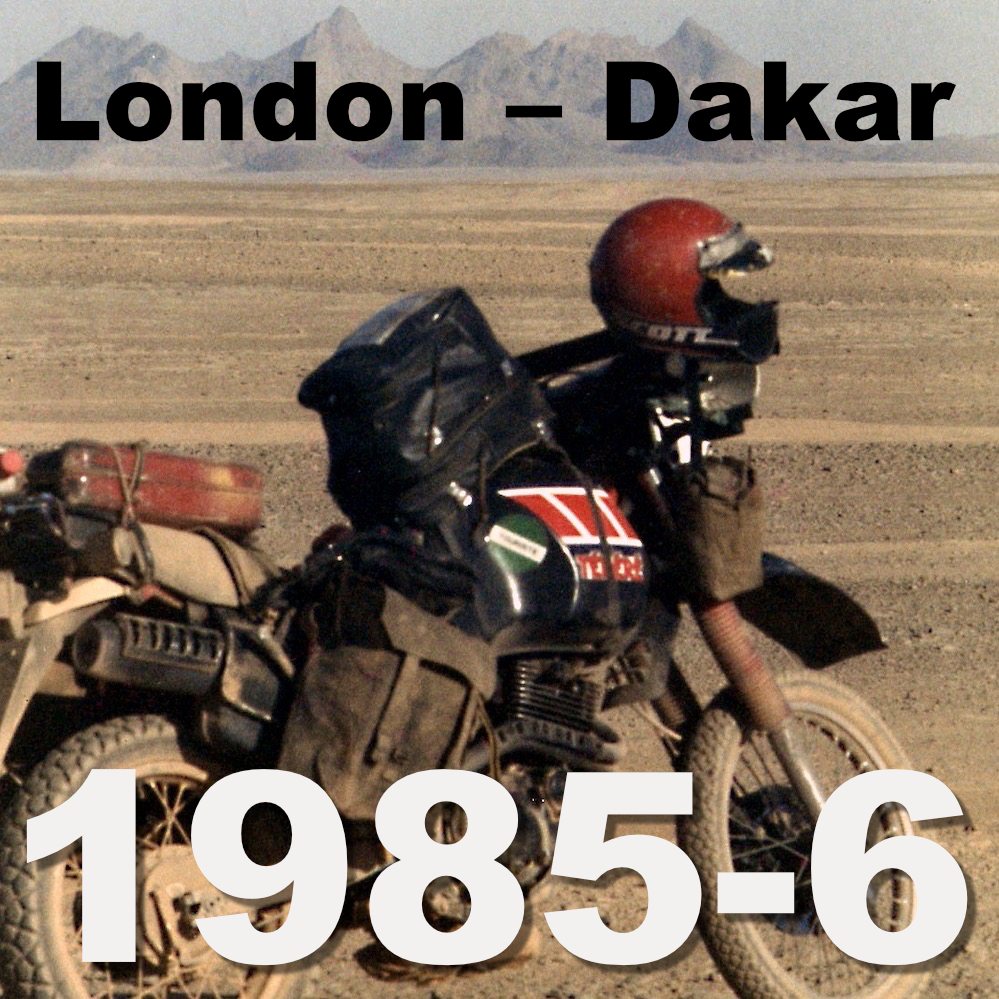
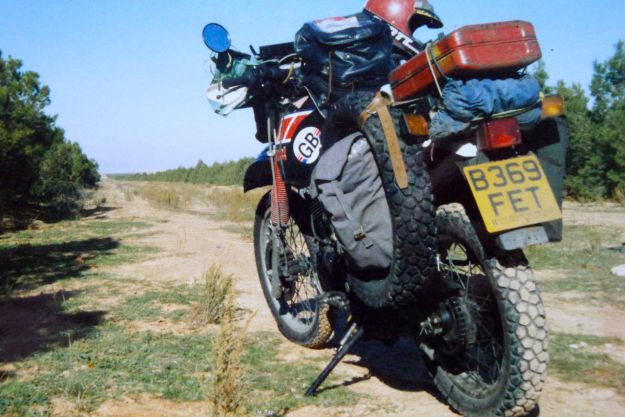
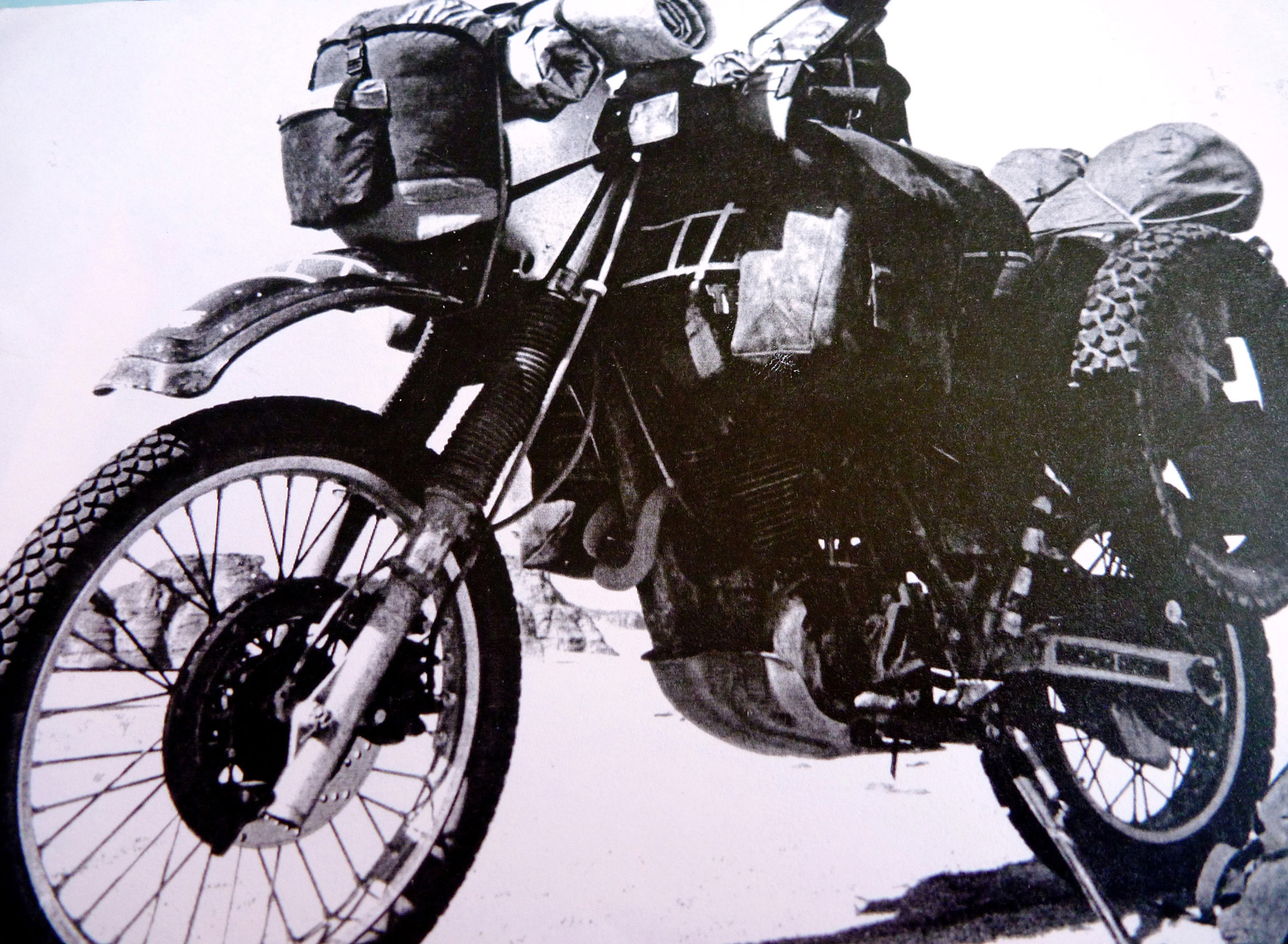
After my batty Benele excursion of 1984 I brushed my hair, straightened my tie and bought myself a sensible XT600Z, just like I always knew I would. This was the slightly better 55W version of the original kick-only Tenere, distinguishable by sloping speedblocks on the tank (more here). All I did was add thicker seat foam and fit some Metzeler ‘Sahara’ tyres – a rubbish choice for the actual Sahara, as I was soon to learn. Using no rack was another mistake which nearly cost me the bike. My learning curve was still as steep and loose as a dune slip face. In fact, there was so little that needed doing to the Yamaha that I moved the oil cooler from down by the carbs up into the breeze over the bars. And I painted the bike black because I still hadn’t shaken off my juvenile Mad Max phase.
With my £5 ex-army panniers slung over the back, in December 1985 I set off for Marseille, bound for Dakar via Algeria, Niger and Mali. As I mention in the book, I was adopting a new ‘go with the flow’ strategy’. Instead of being ground down and seething with resentment by the setbacks of my previous calamities, I’d just take the reversals on the chin, bounce back, and move on. On this trip that stoic philosophy was to get a thorough road test!
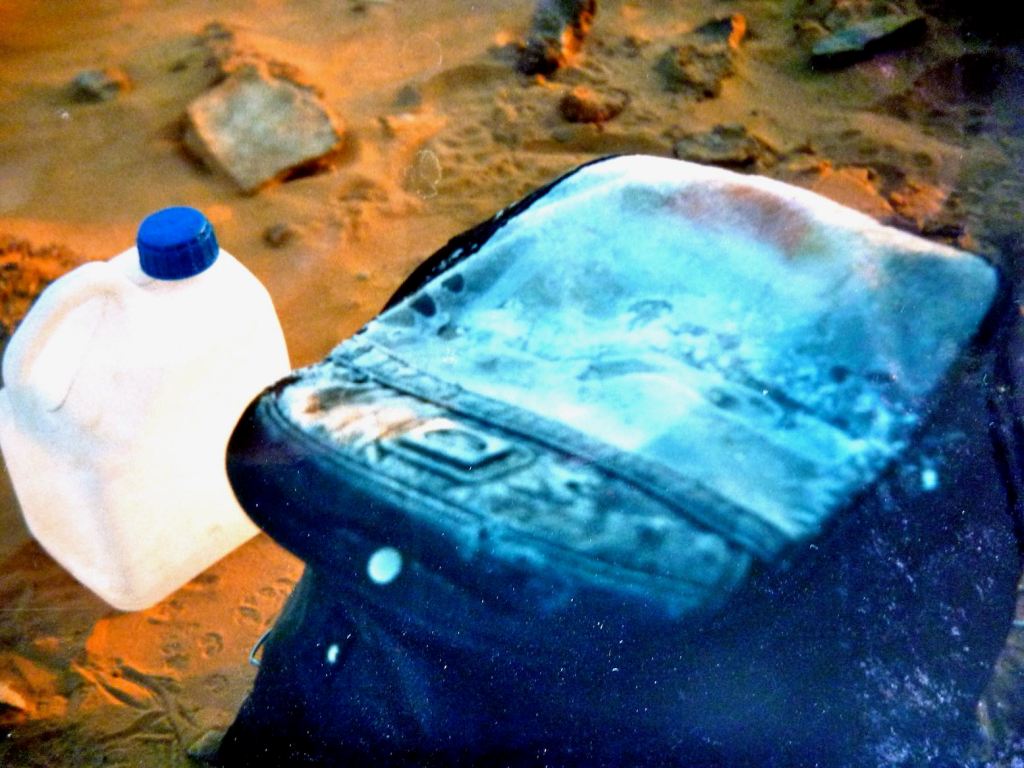
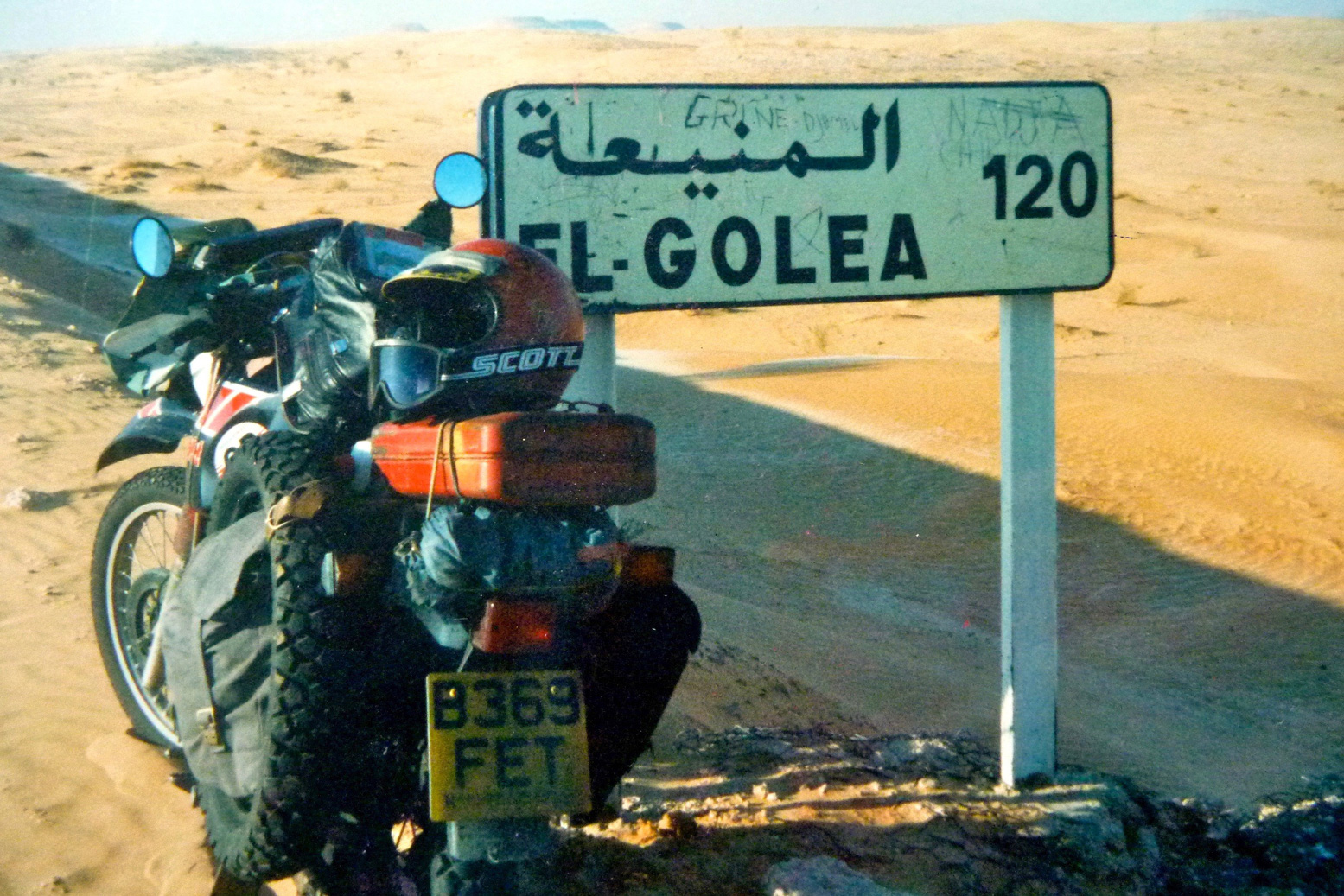
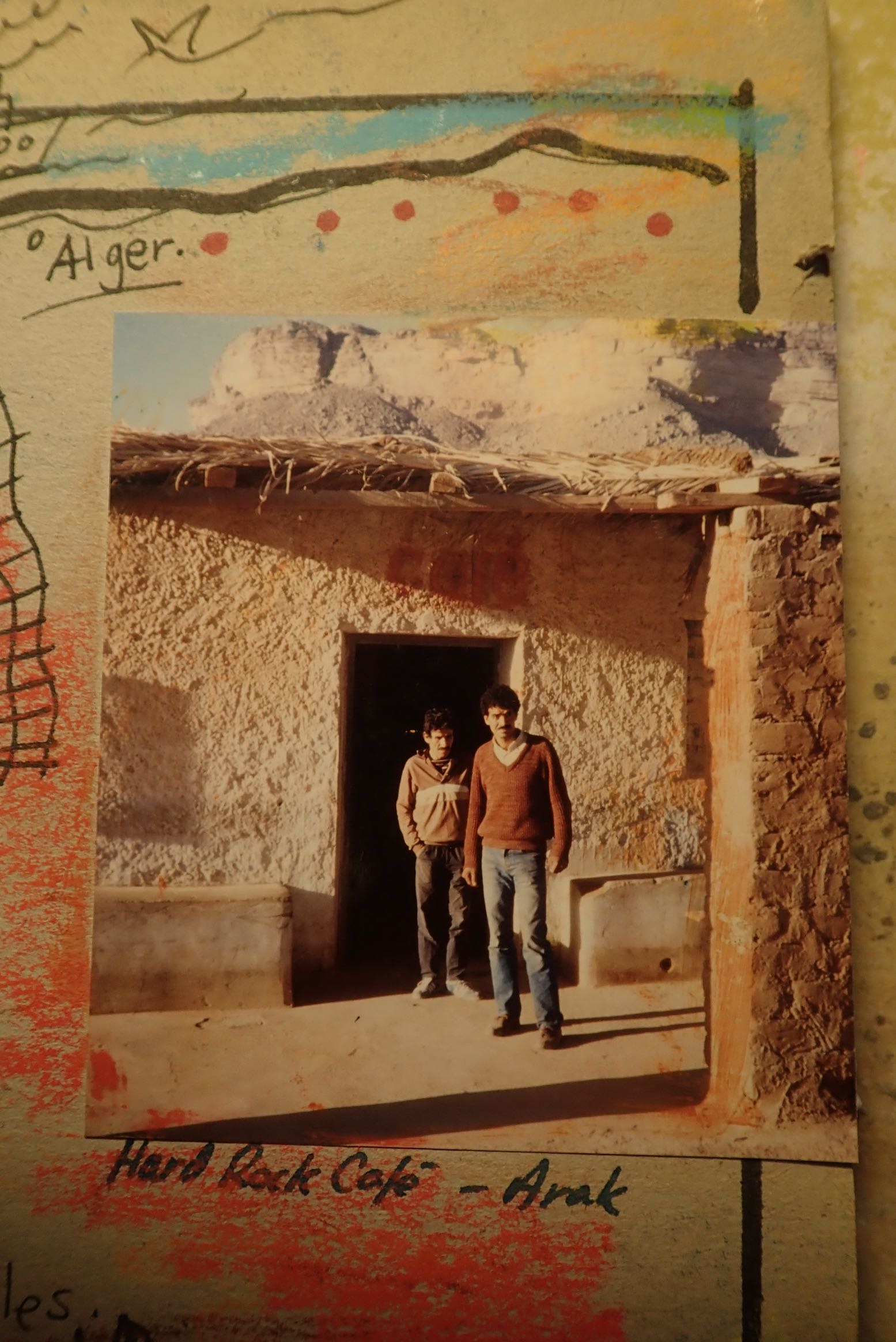
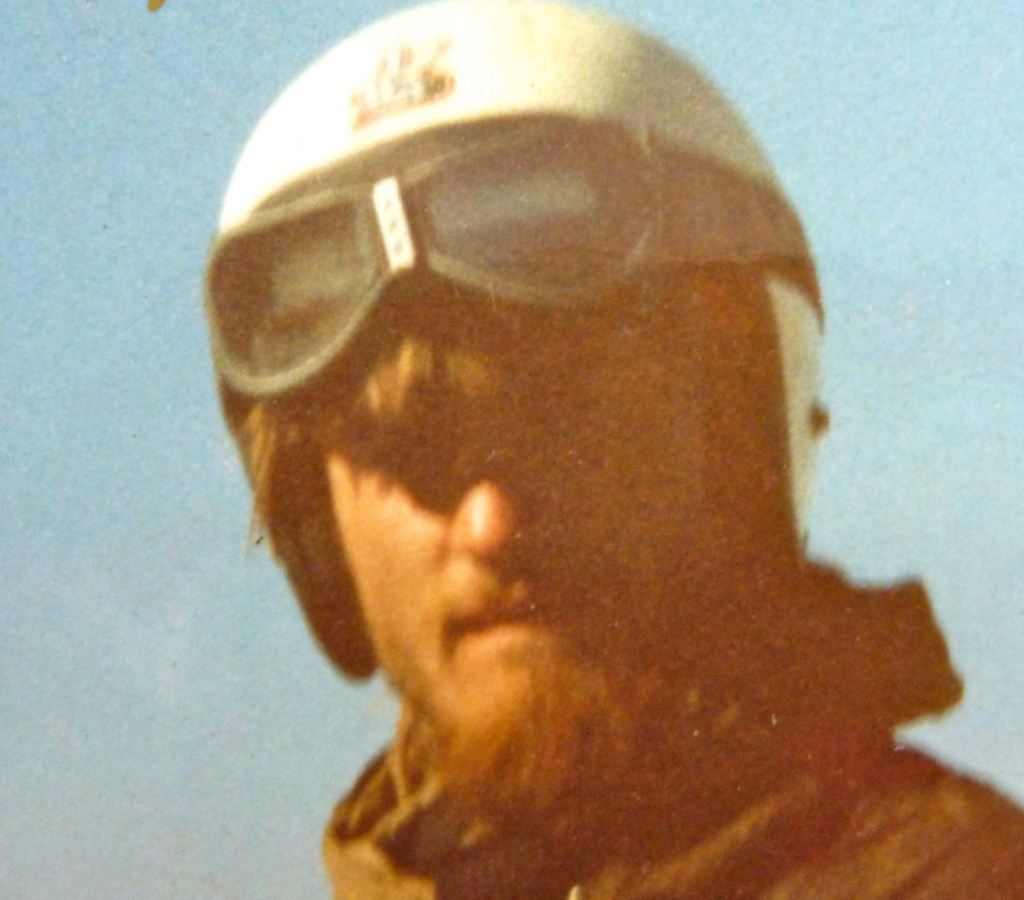
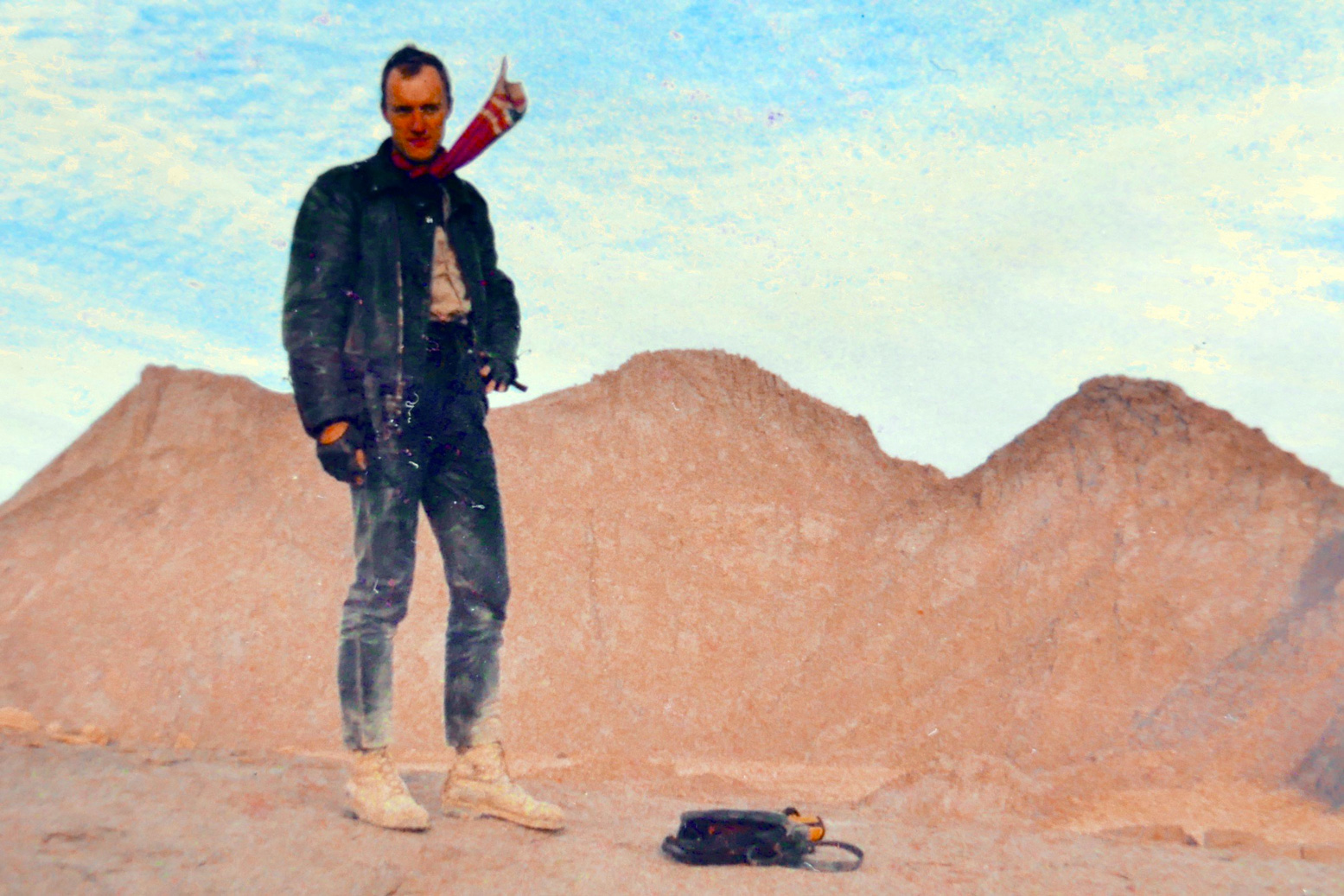
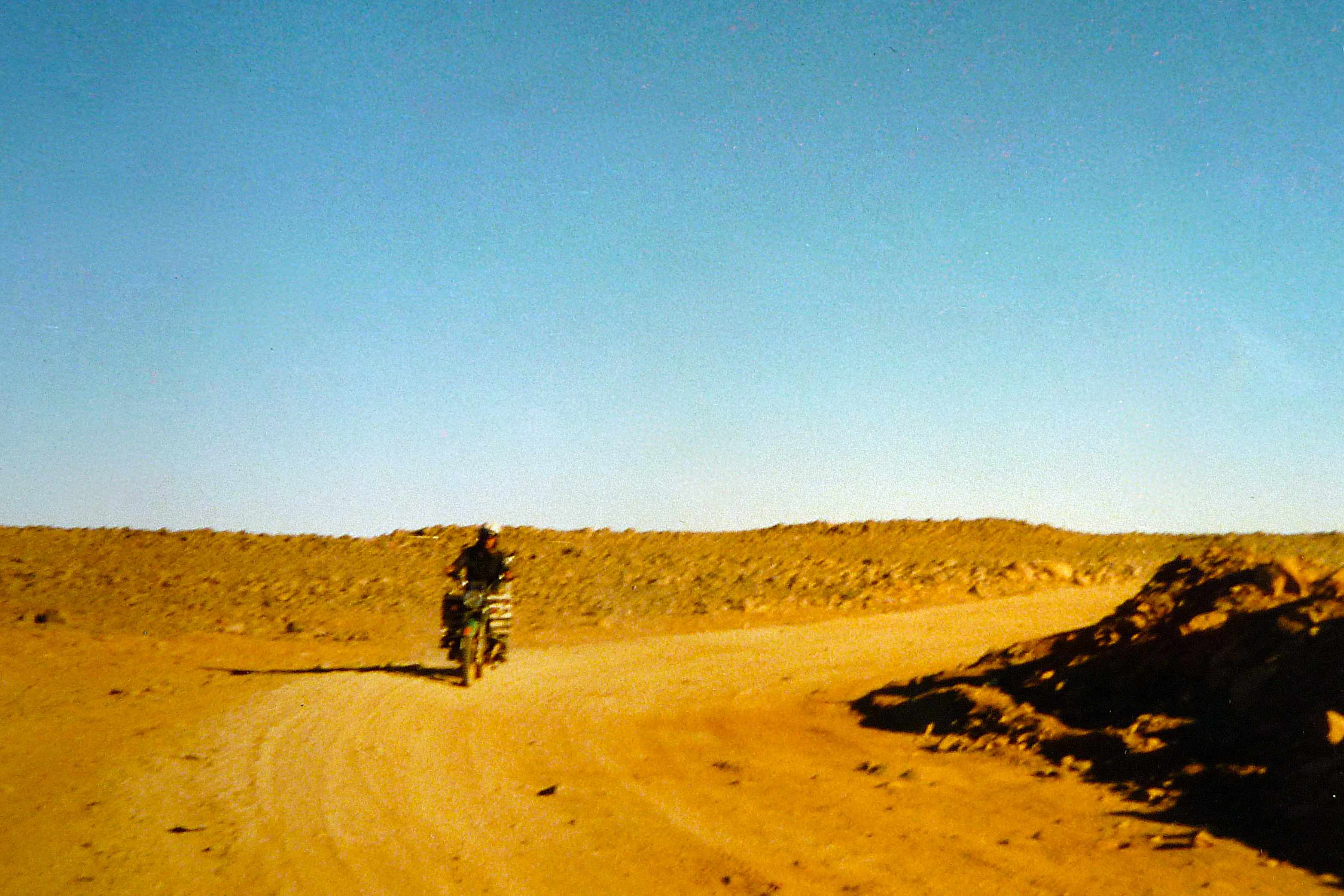
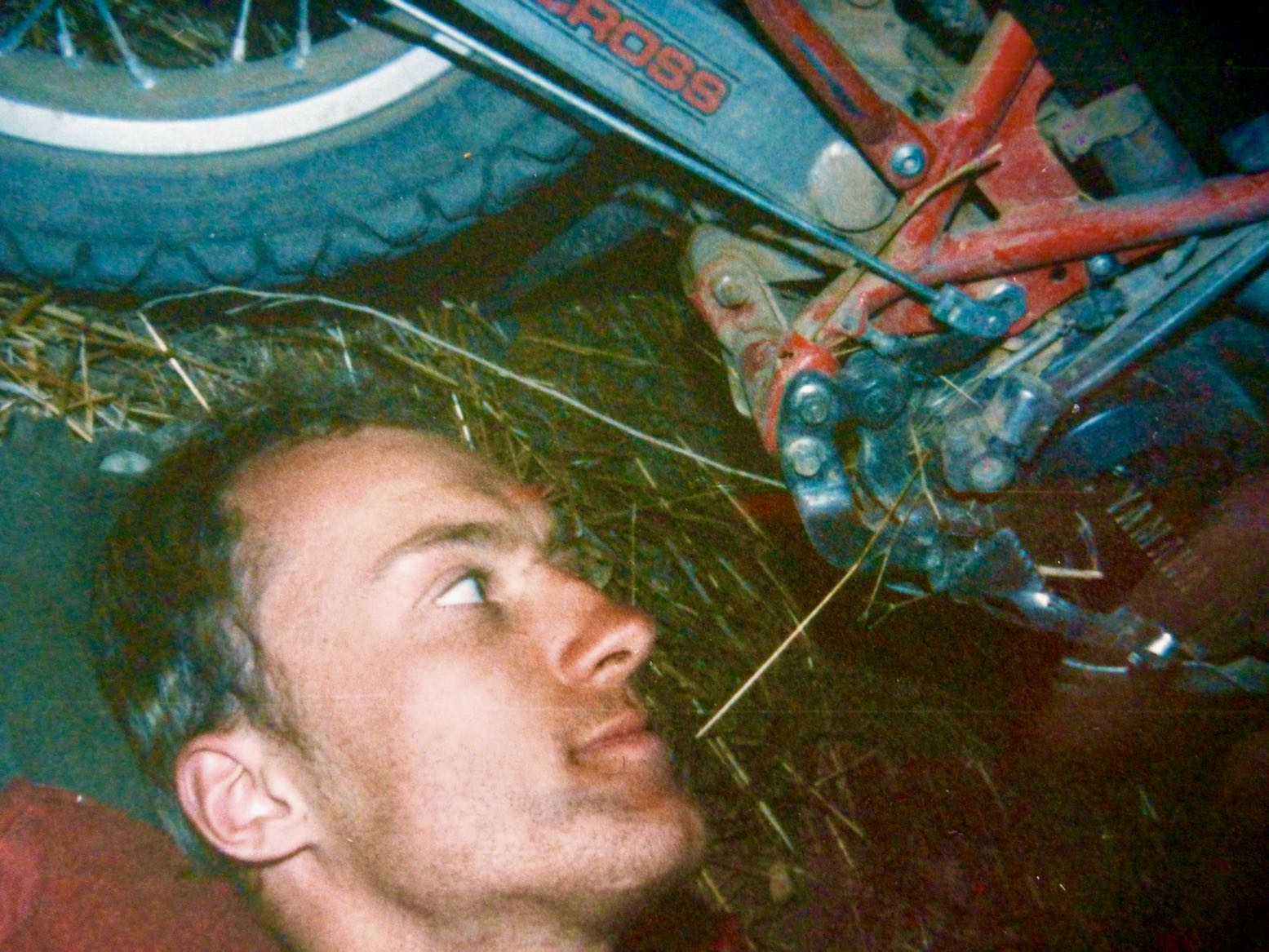
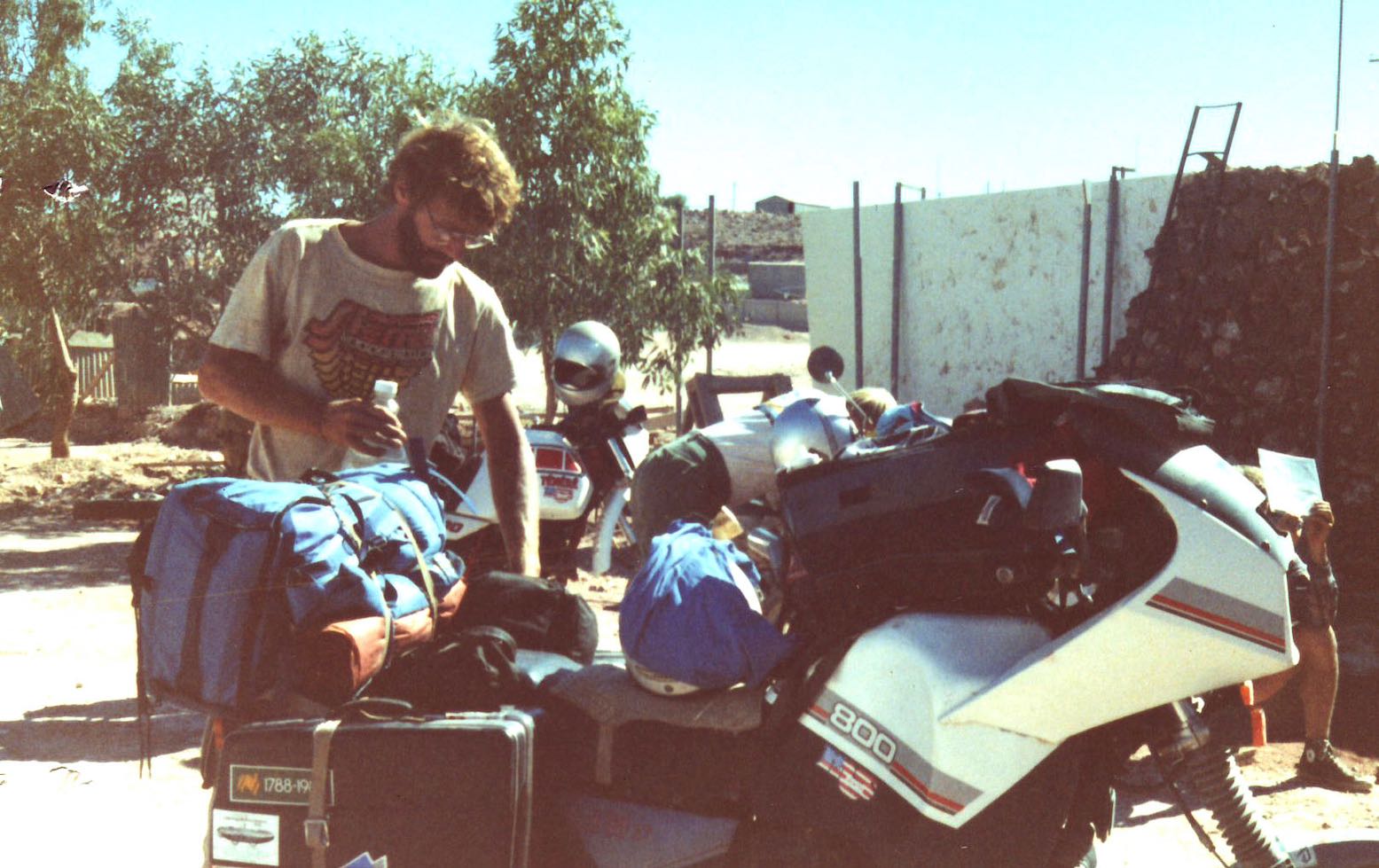
Zoomable Map LinkA chilly desert morning somewhere south of Ghardaia. Further south it may also freeze at altitude but there isn’t enough humidity to produce overnight frost.Back at those first desert dunes north of El Golea (today: El Menia). What a crappy, lashed-up baggage system!I return to Arak where I’d got detained on the Benele trip the previous year for being an idiot.Here I meet German Helmut on an old, ex-police R90 BMW. We are both planning to cross the Sahara so agree to meet up in Tam a couple of days down the road and do it together. ‘Crossing the Sahara’ back then meant riding off the end of the trans-Sahara Highway and following sandy tracks for 600km out of Algeria and into Niger. As I found out in 1982, alone on the XT500 (when I got less than halfway), there was no clear single track anymore, but a mass of winding, braiding trails many miles wide, with occasional 2-metre high marker posts every few kilometres.Young Narcissus; a quick selfington south of Arak. Full black leathers, HiTec Magnum desert boots, and my dainty British Airways nylon scarf.
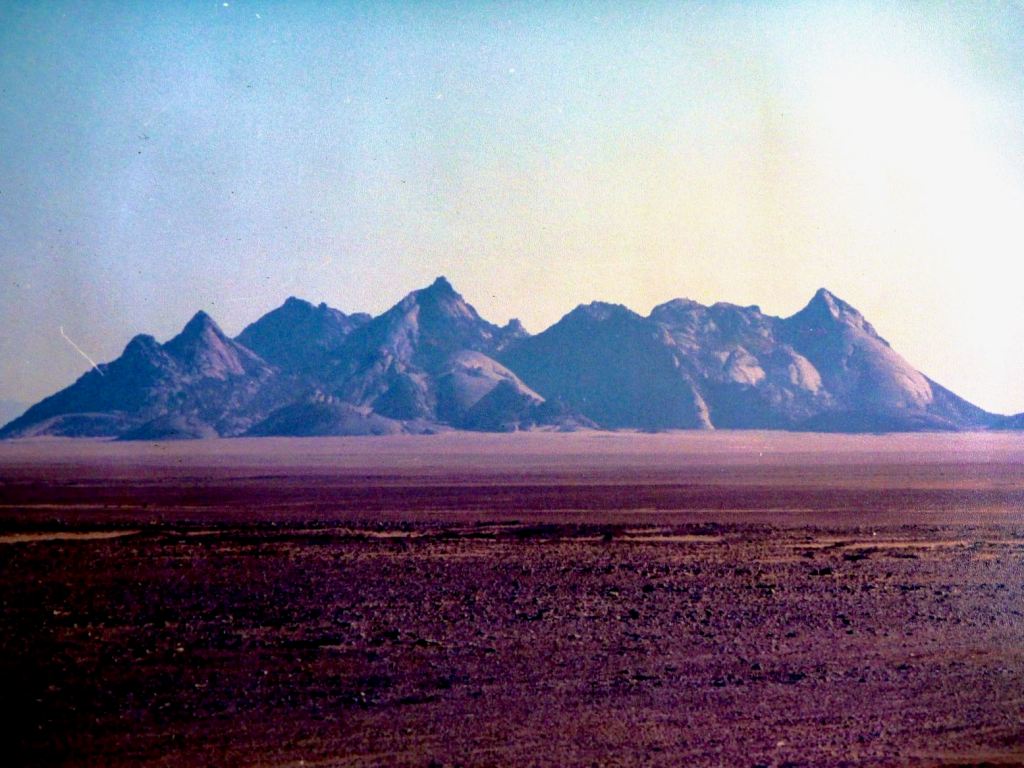
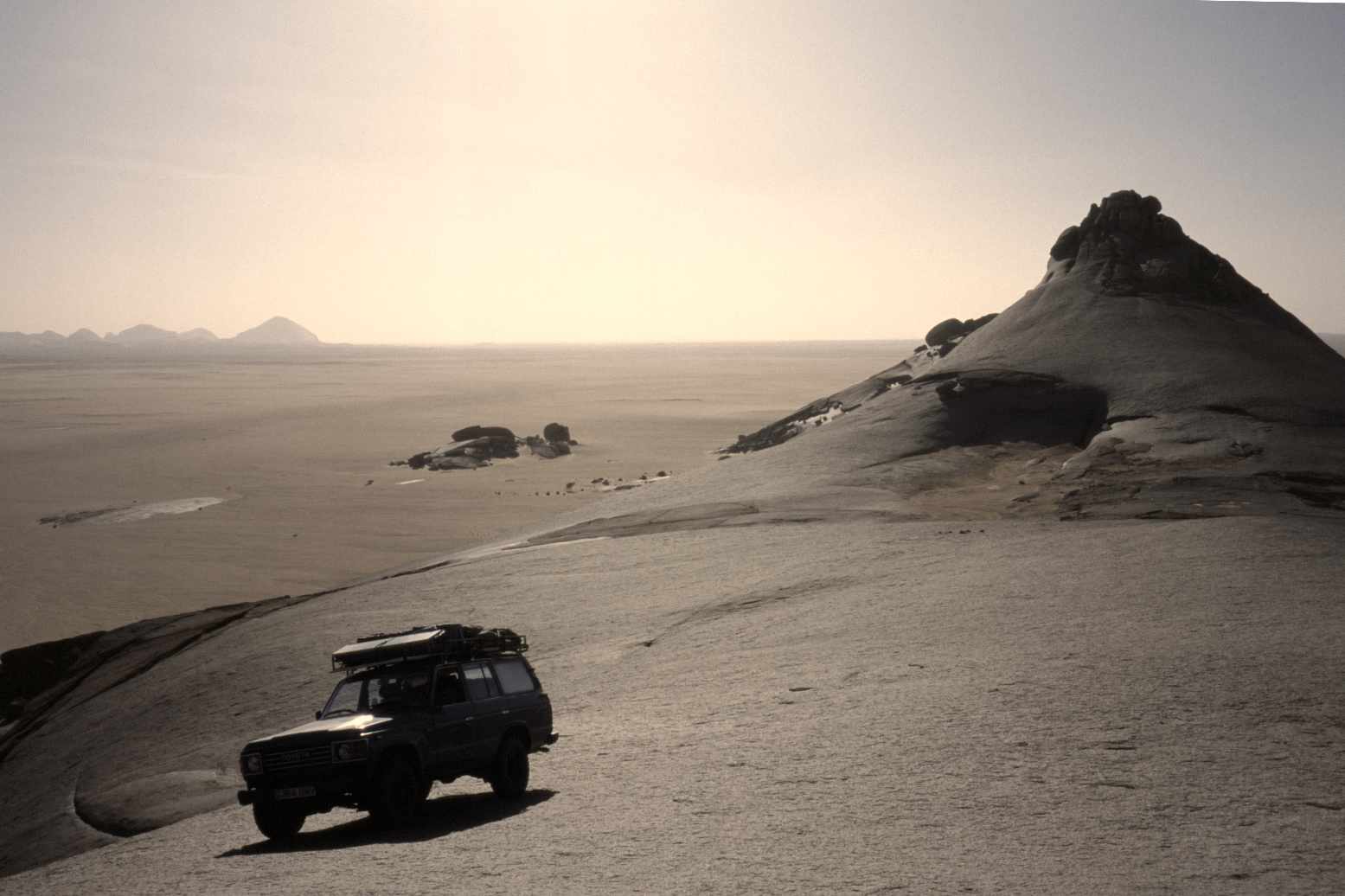
View of Sli Edrar: my aborted destination on the Benele trip. Even now I was too nervous to ride the 10km across the desert to the hills. What would happen if I hit quicksand?! It takes years to get used to being out there. Or it did me.
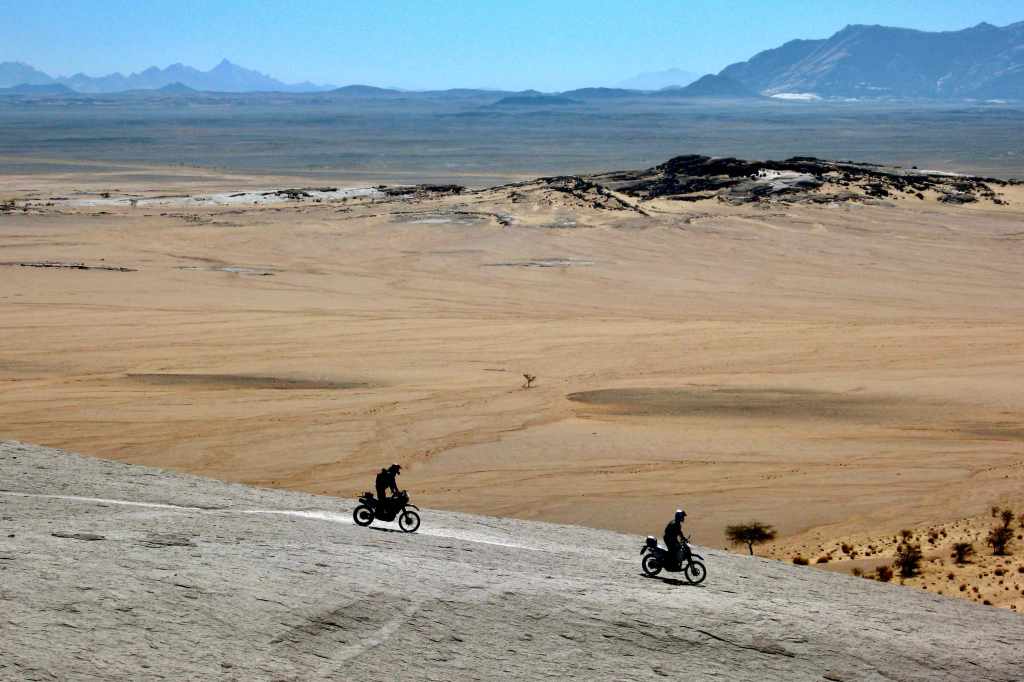
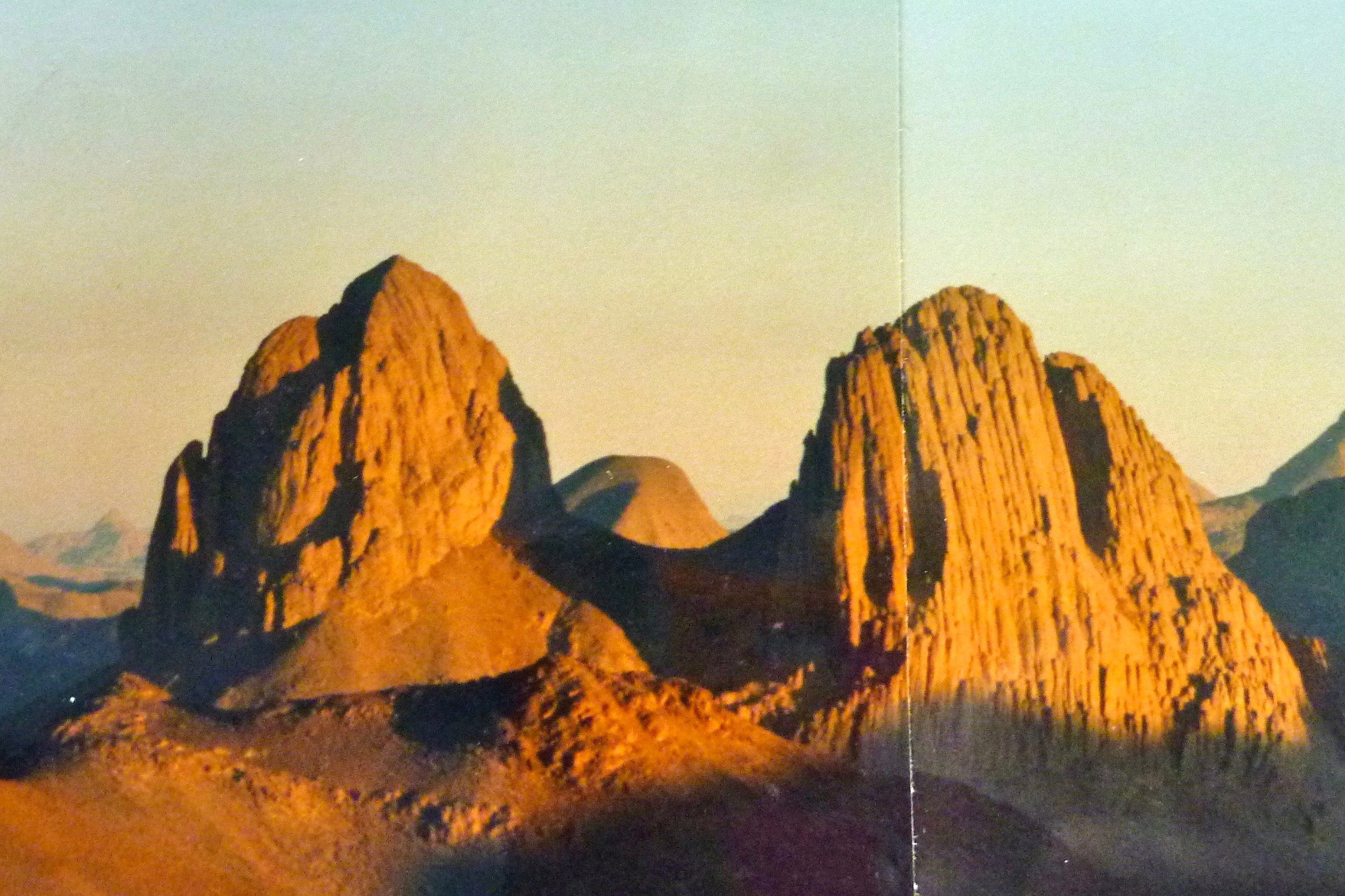
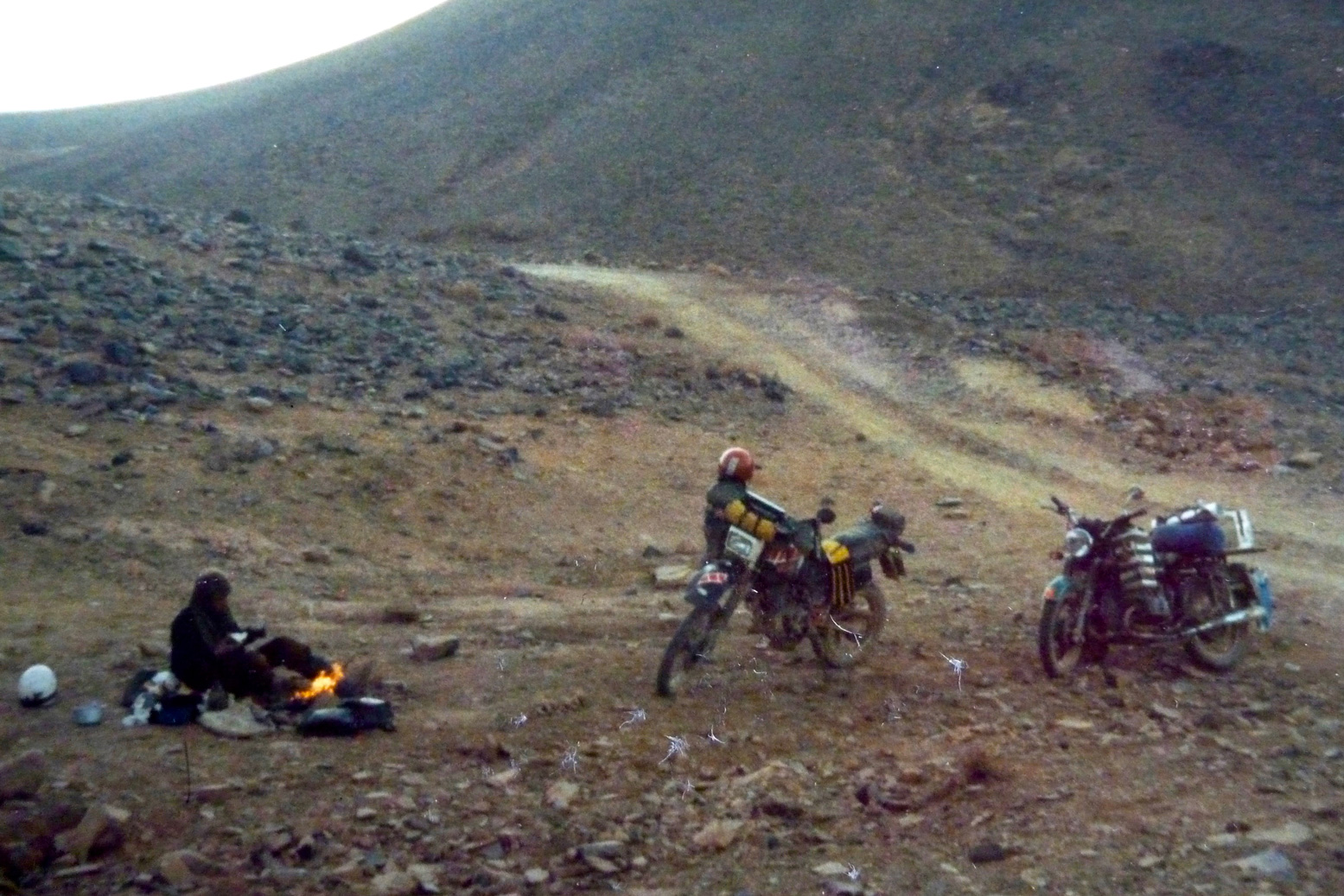
Mysterious Sli in 1982 on the XT500 trip.I finally got to Sli Edrar 17 years later from the other side while laying out fuel caches for Desert Riders.And in 2008 we had a fantastic afternoon riding Sli’s granite domes on one of my epic Algerian bike tours.The worse thing about those rubbish 2-ply Metzeler Saharas, was that I bought a spare. Back then there were no hard-wearing Heidenau K60s or Mitas E09s.In Tamanrasset I meet up with Helmut again and we take an overnight excursion up to Assekrem in the Hoggar mountains.Helmut on the R90. The overnighter was a good chance to test our bikes.Sunset from the Hermitage at Assekrem. ‘There was no one there..’.A chilly camp, high up in the bleak Hoggar.
On the less used western descent down from Assekrem, near the village of Terhenanet, Helmut deftly flips his BMW. The rounded gravel in this particular oued is unlike anything I’ve found in the Sahara. I barely made it across myself.
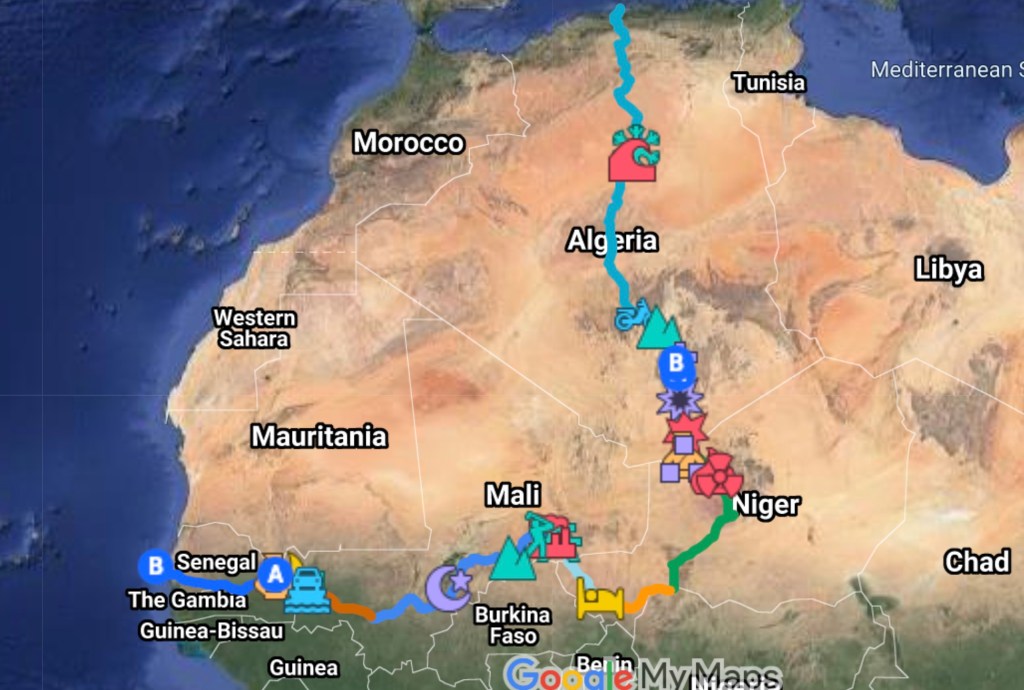
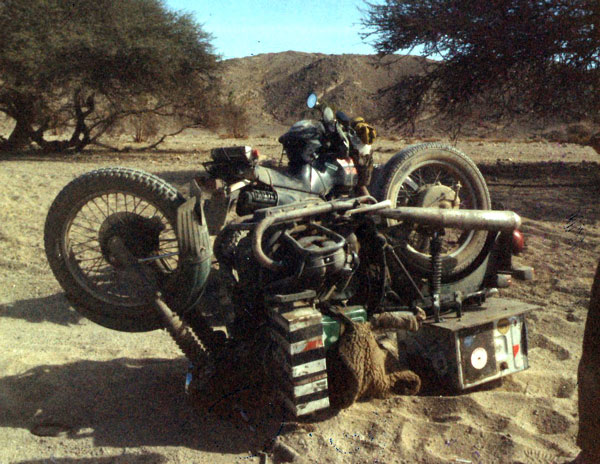
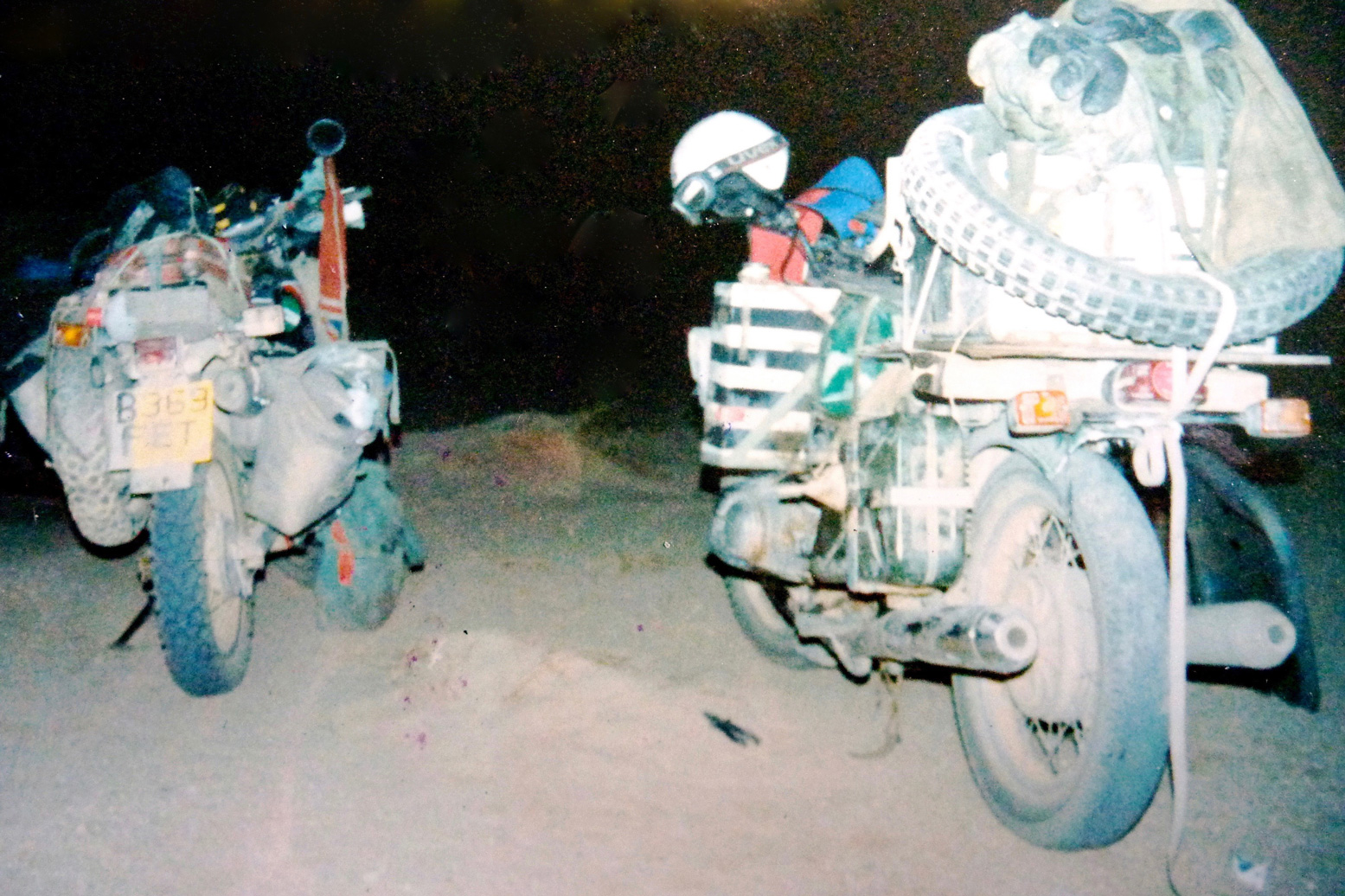
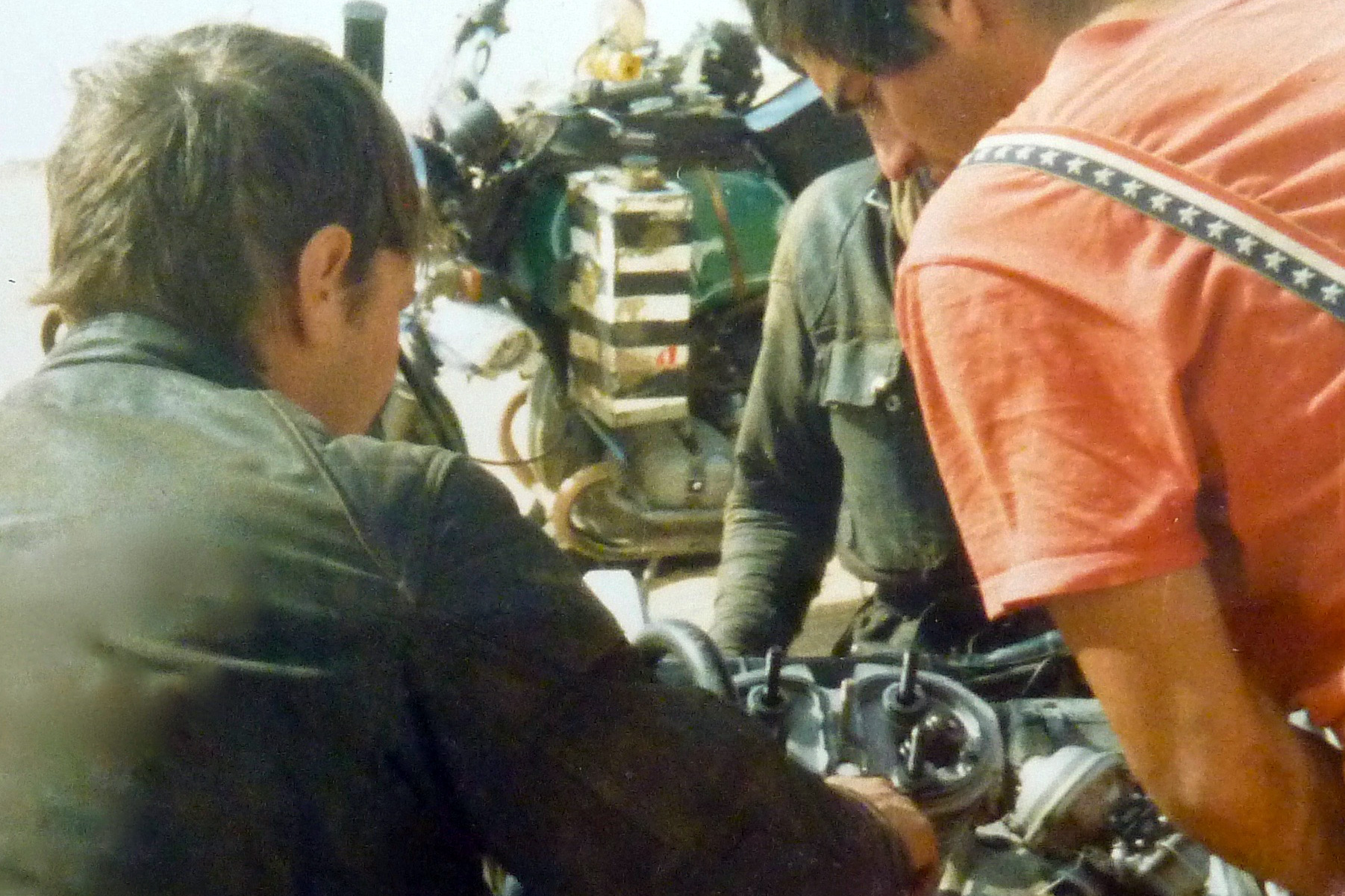
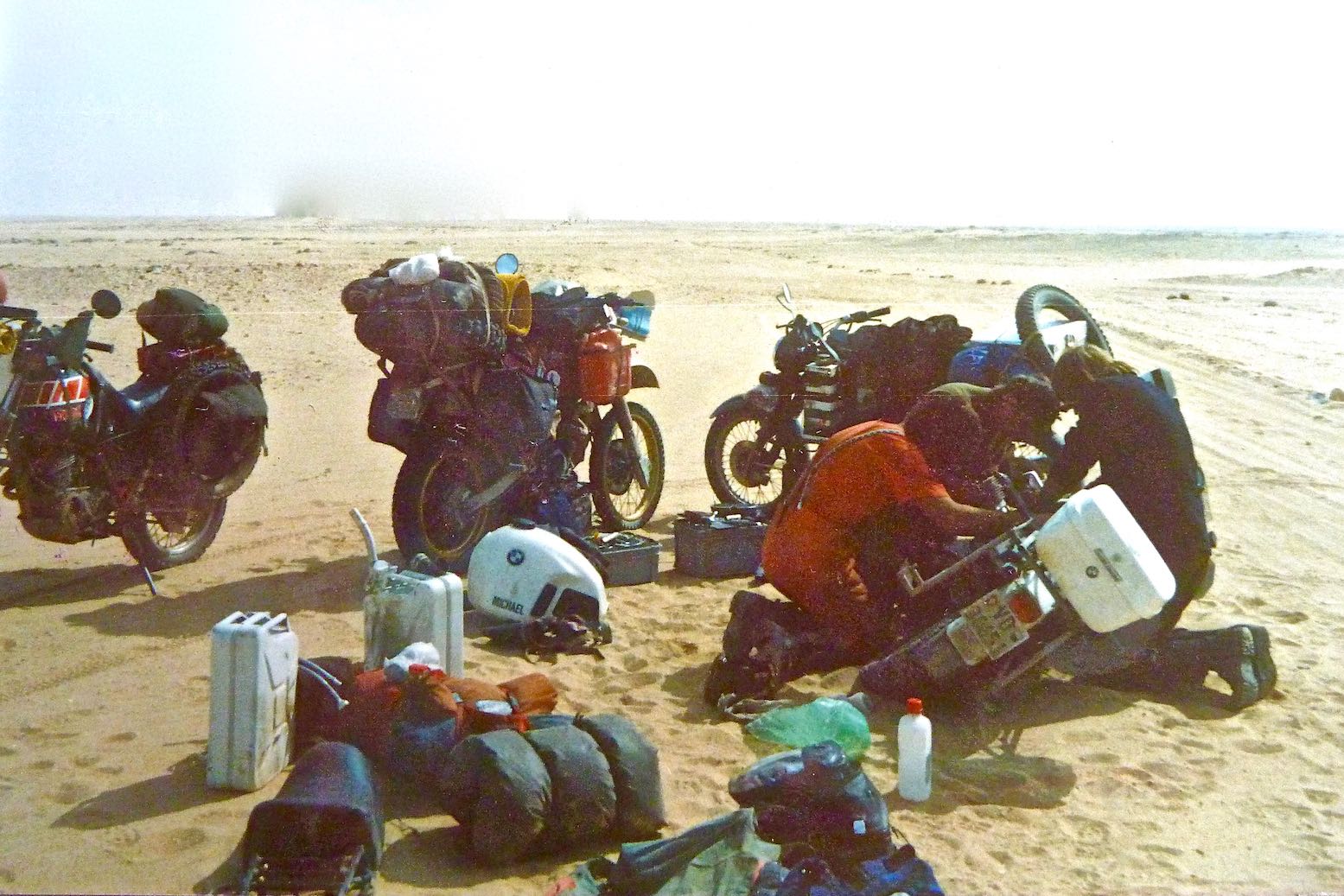
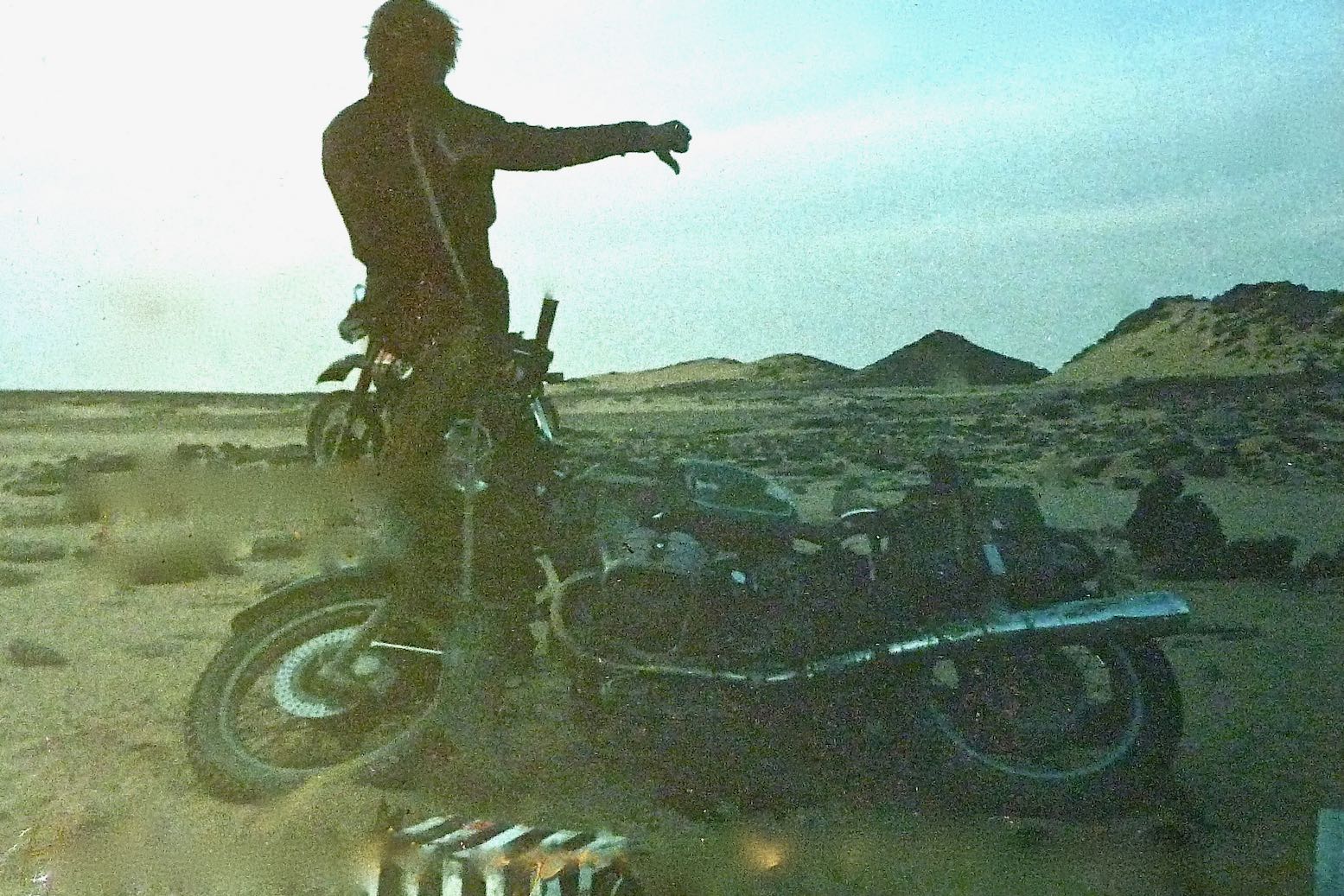
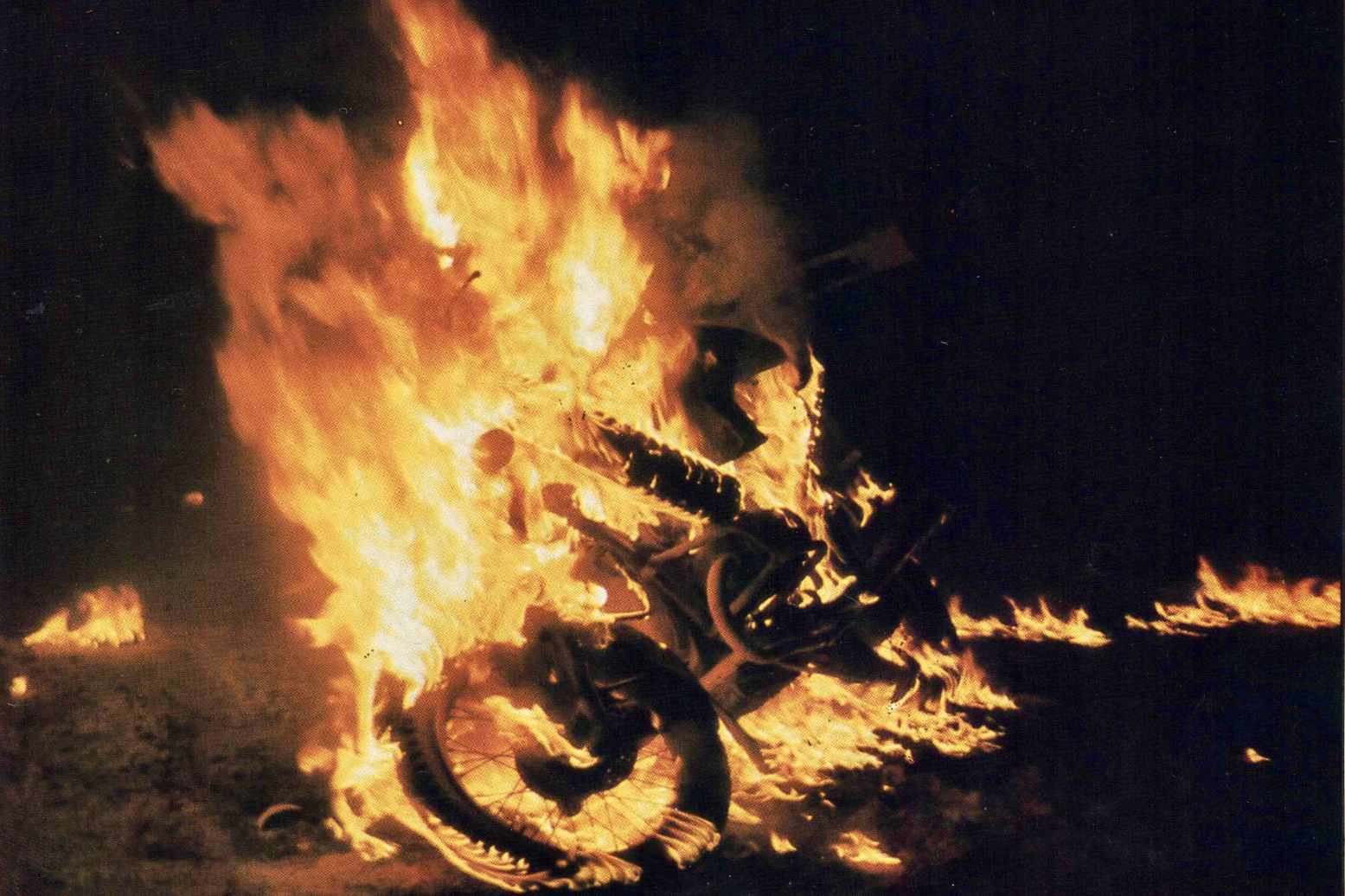
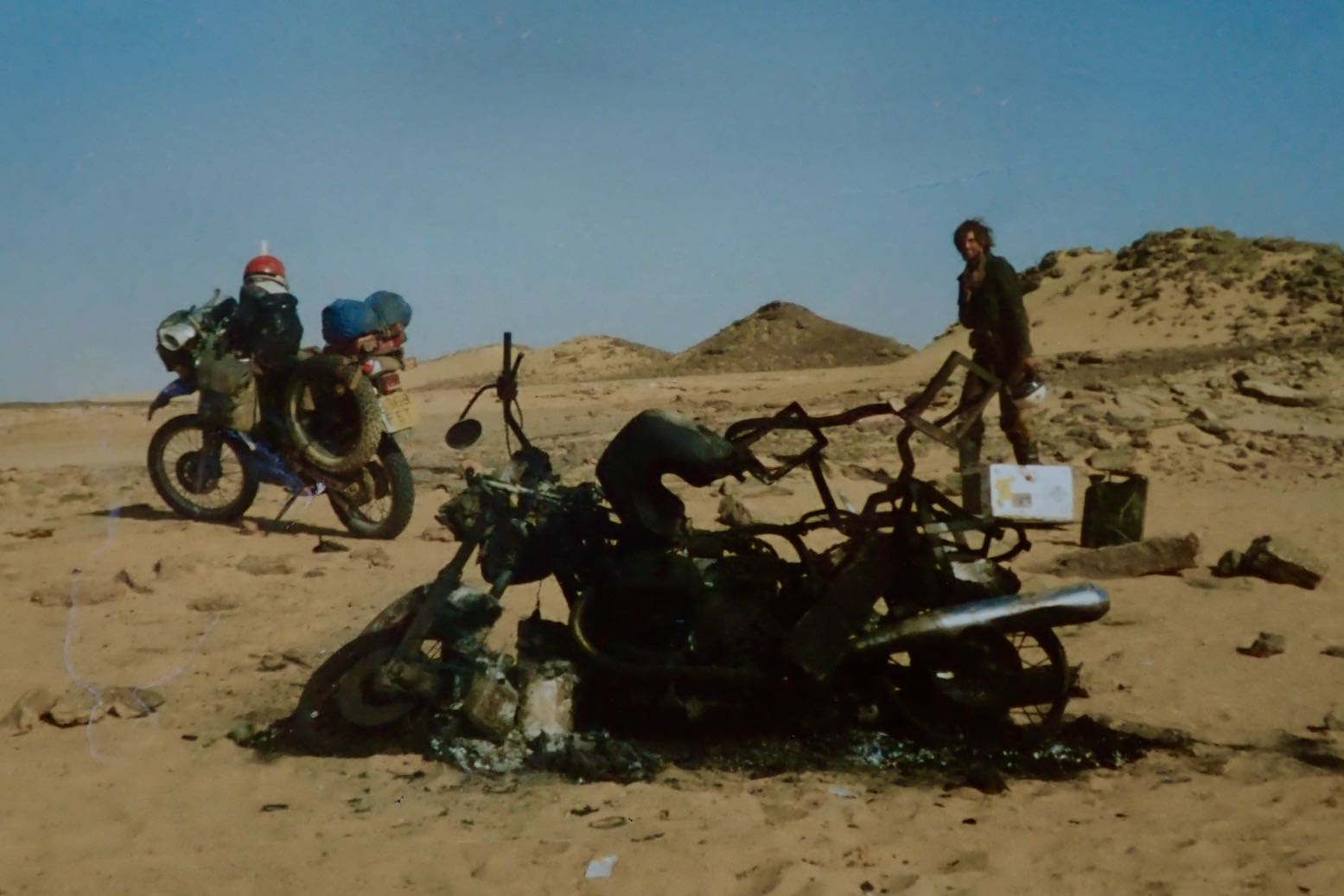
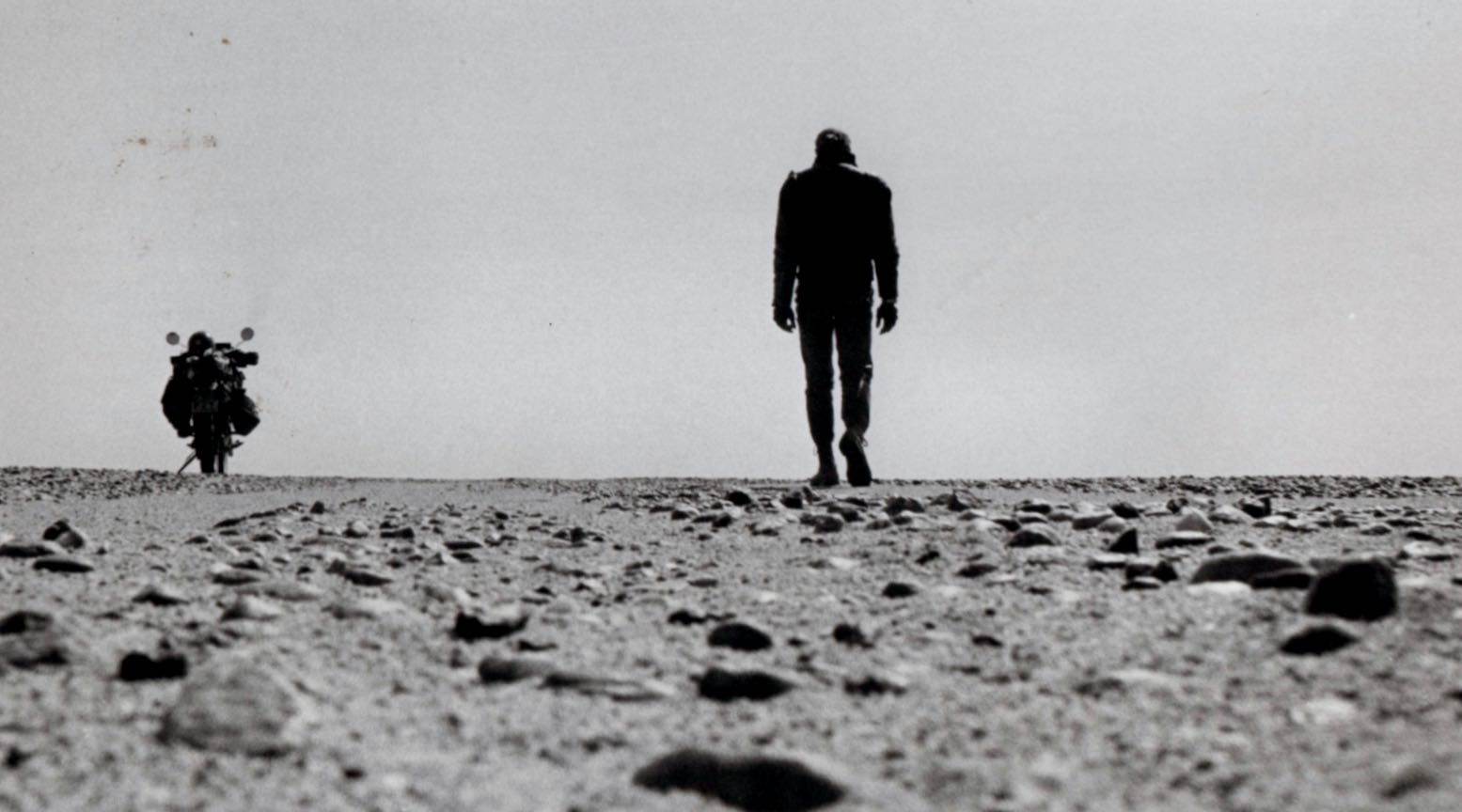
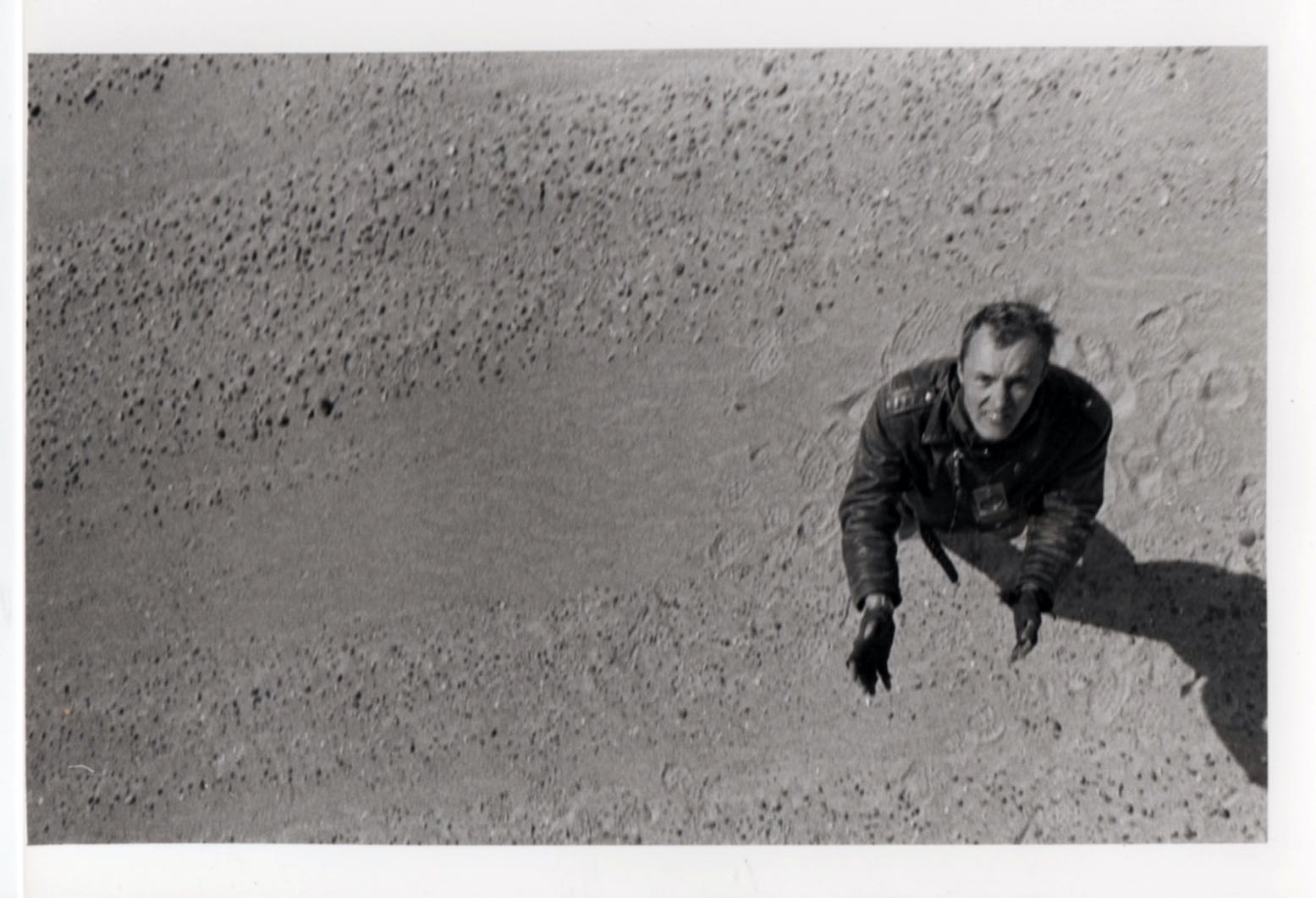
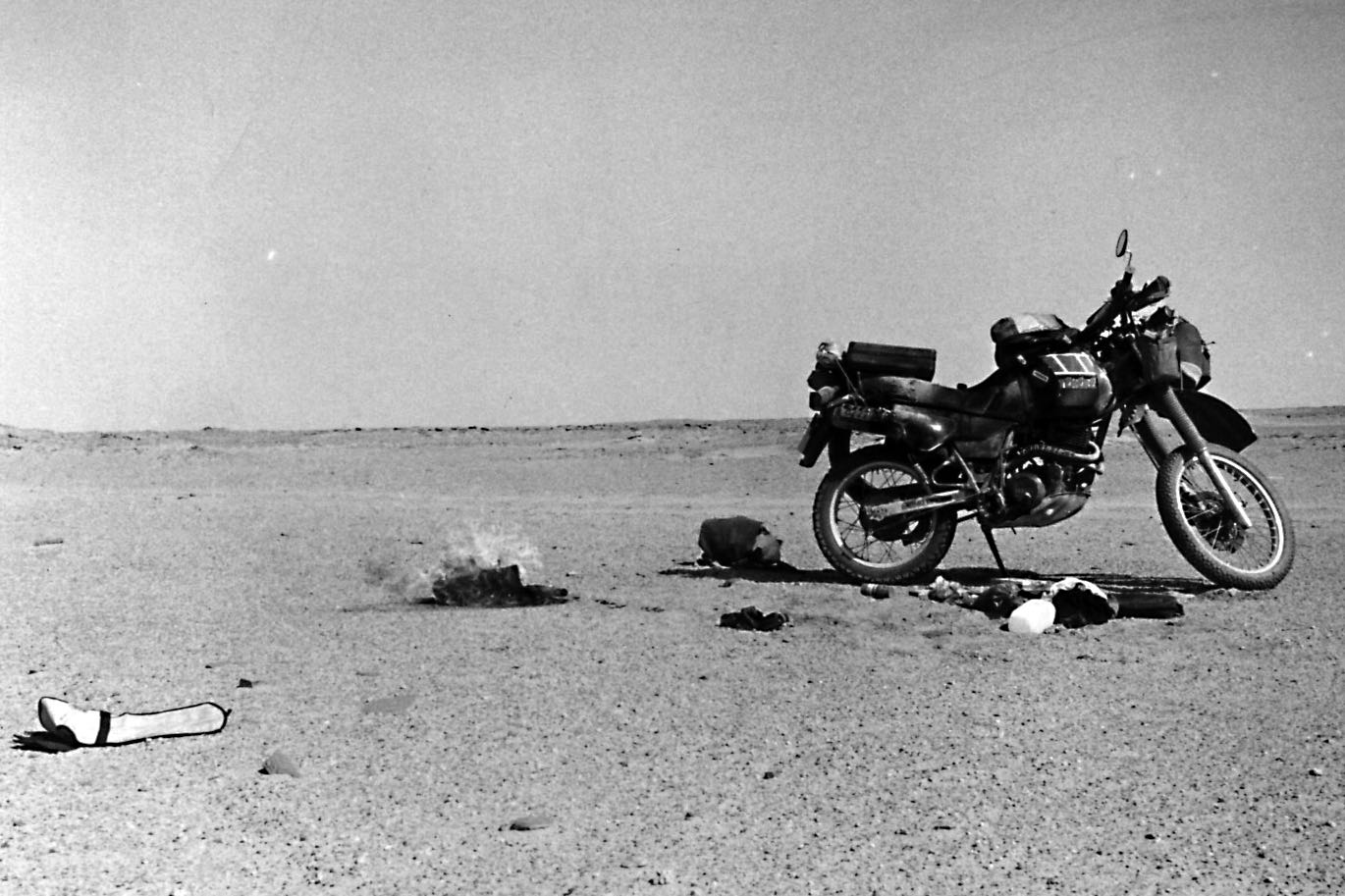
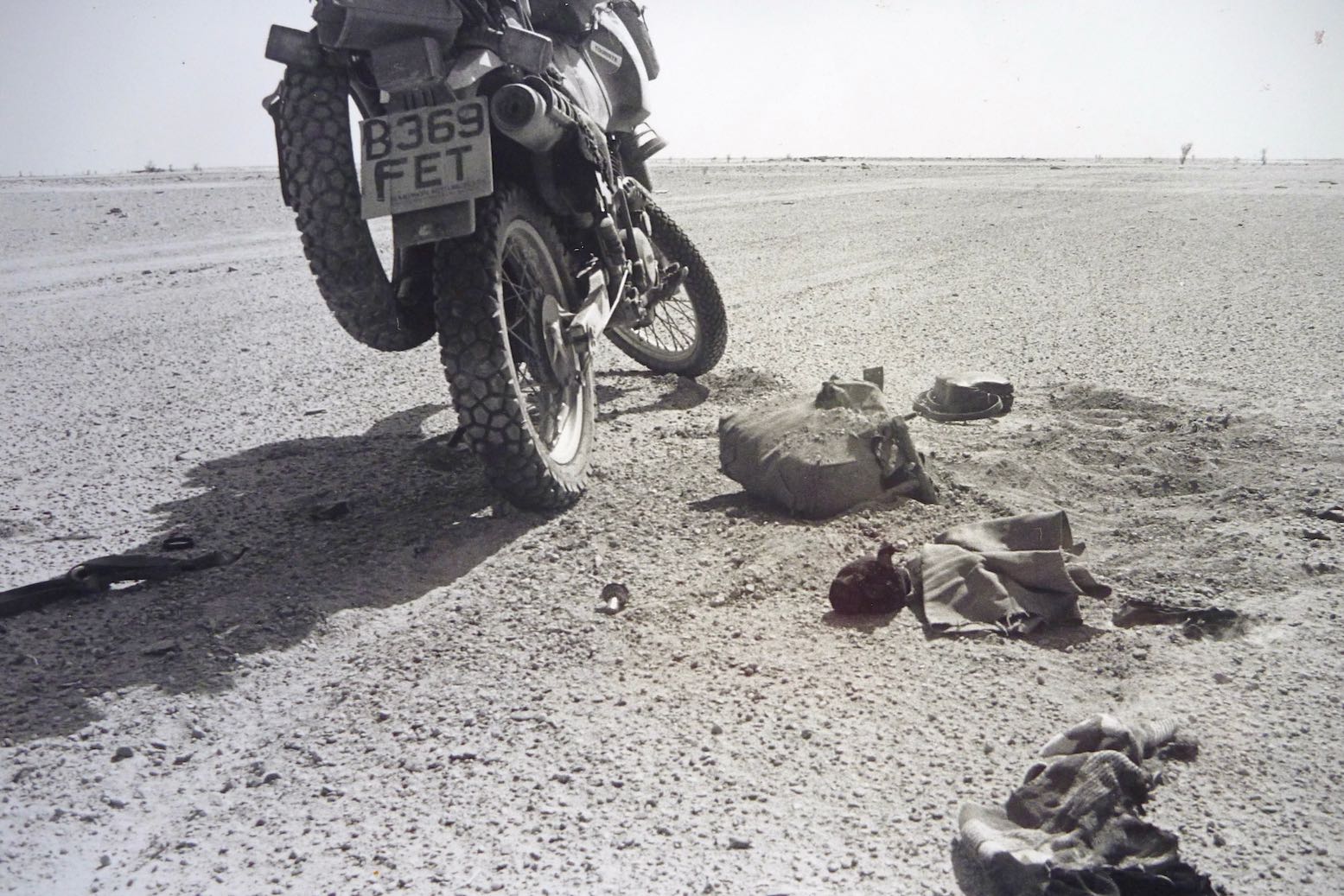
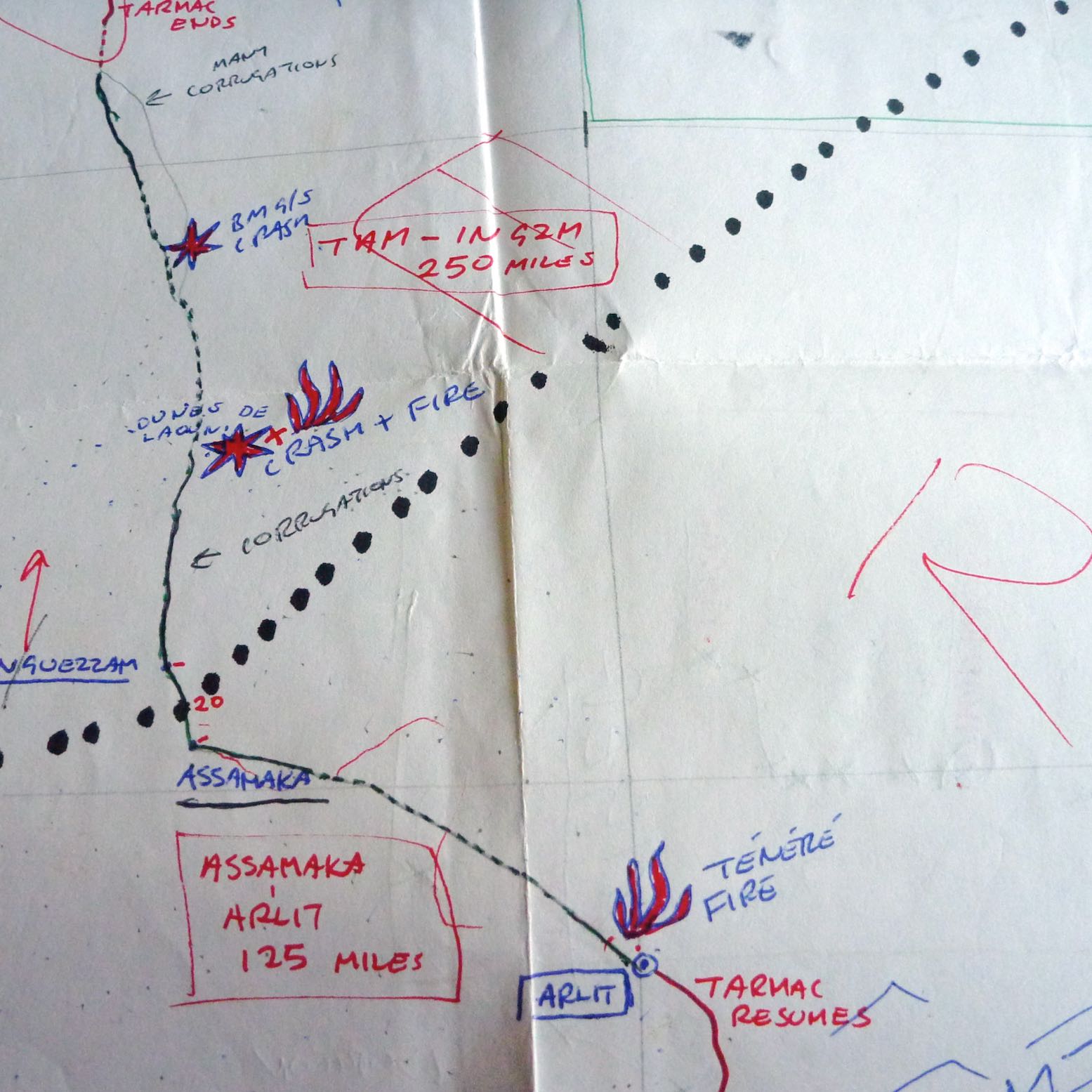
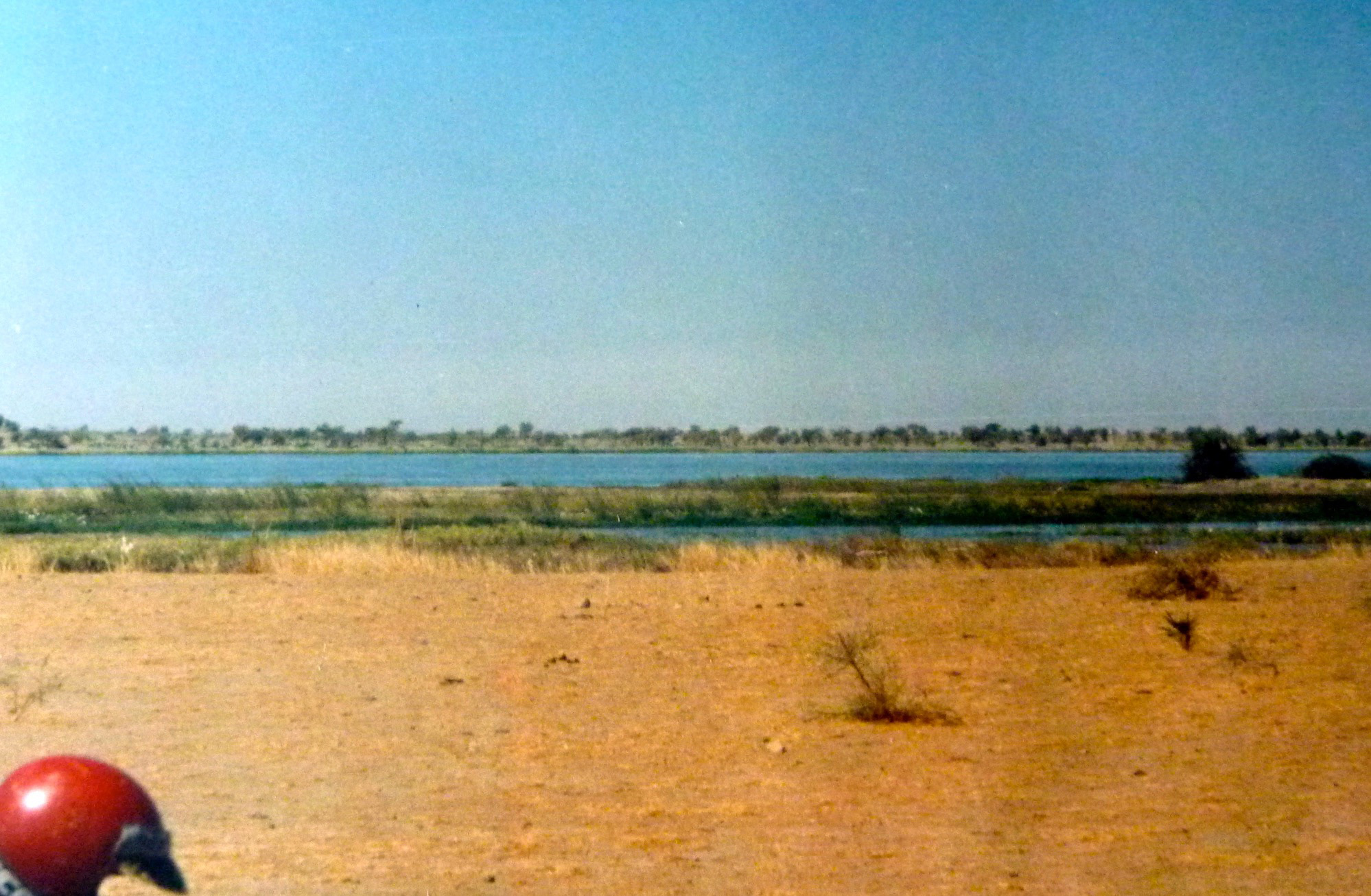
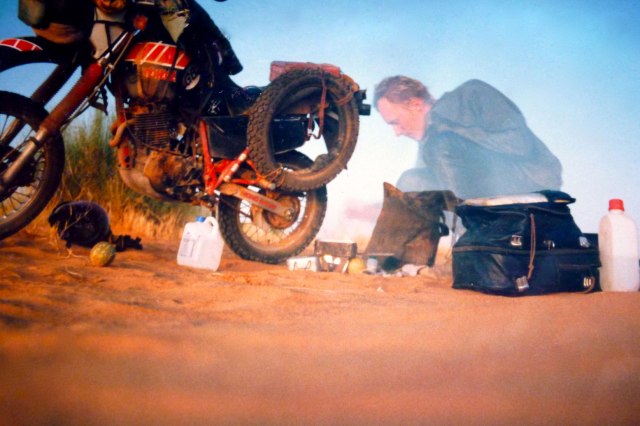
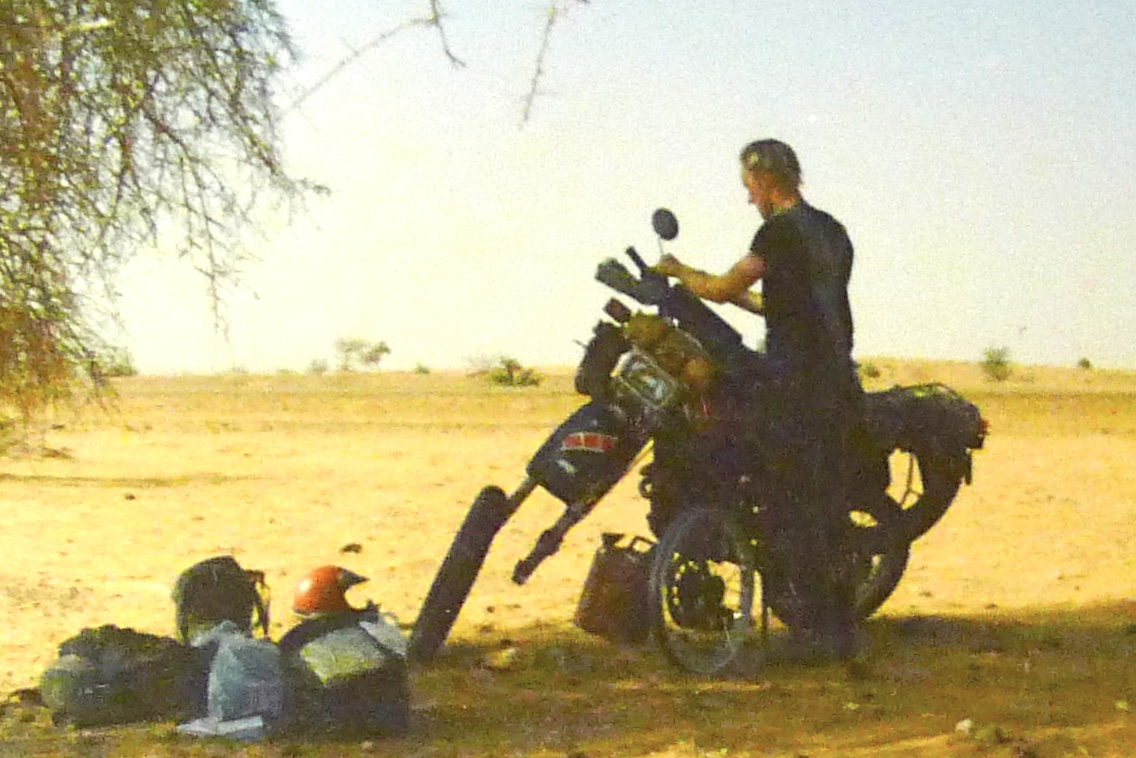
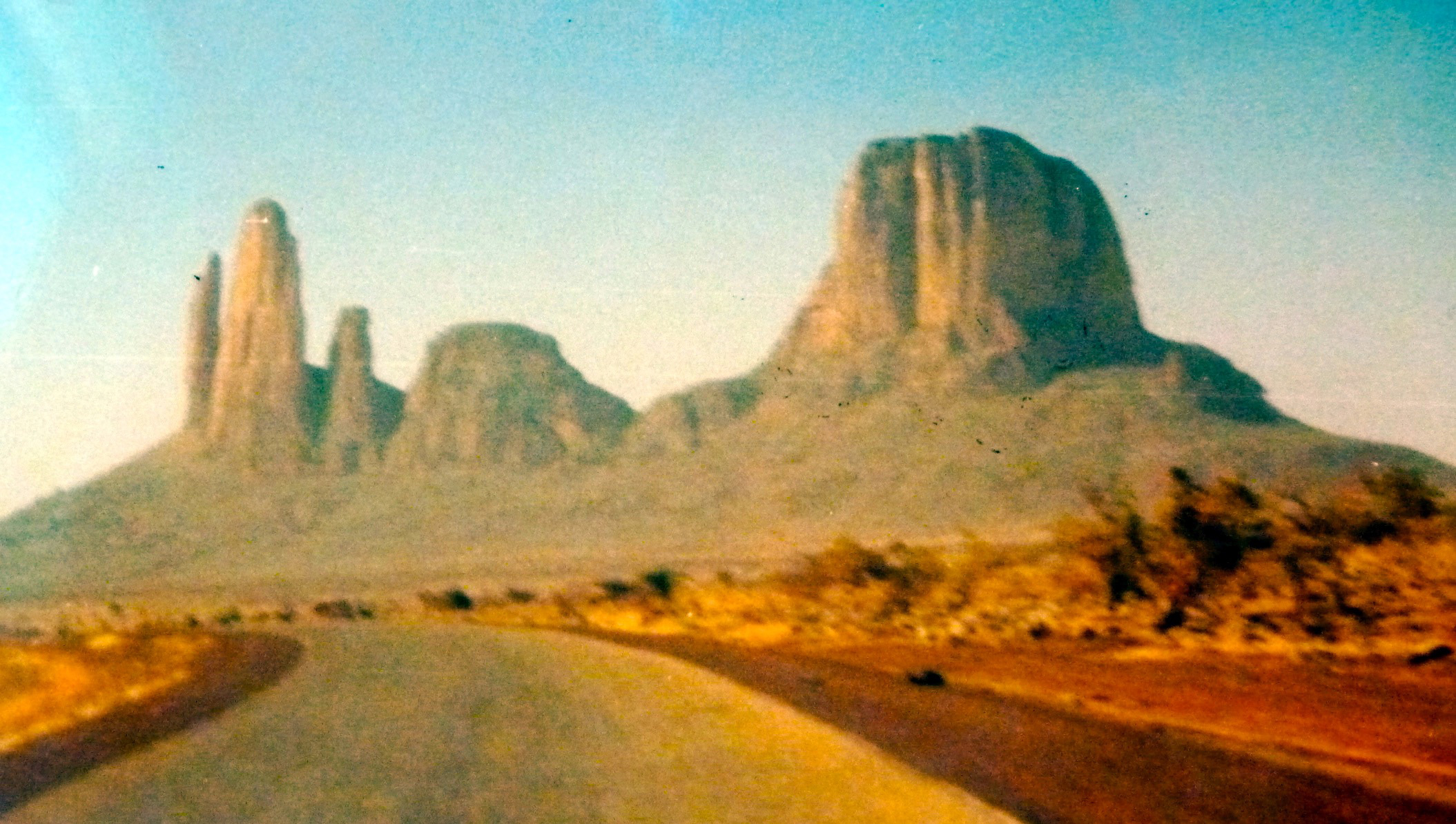
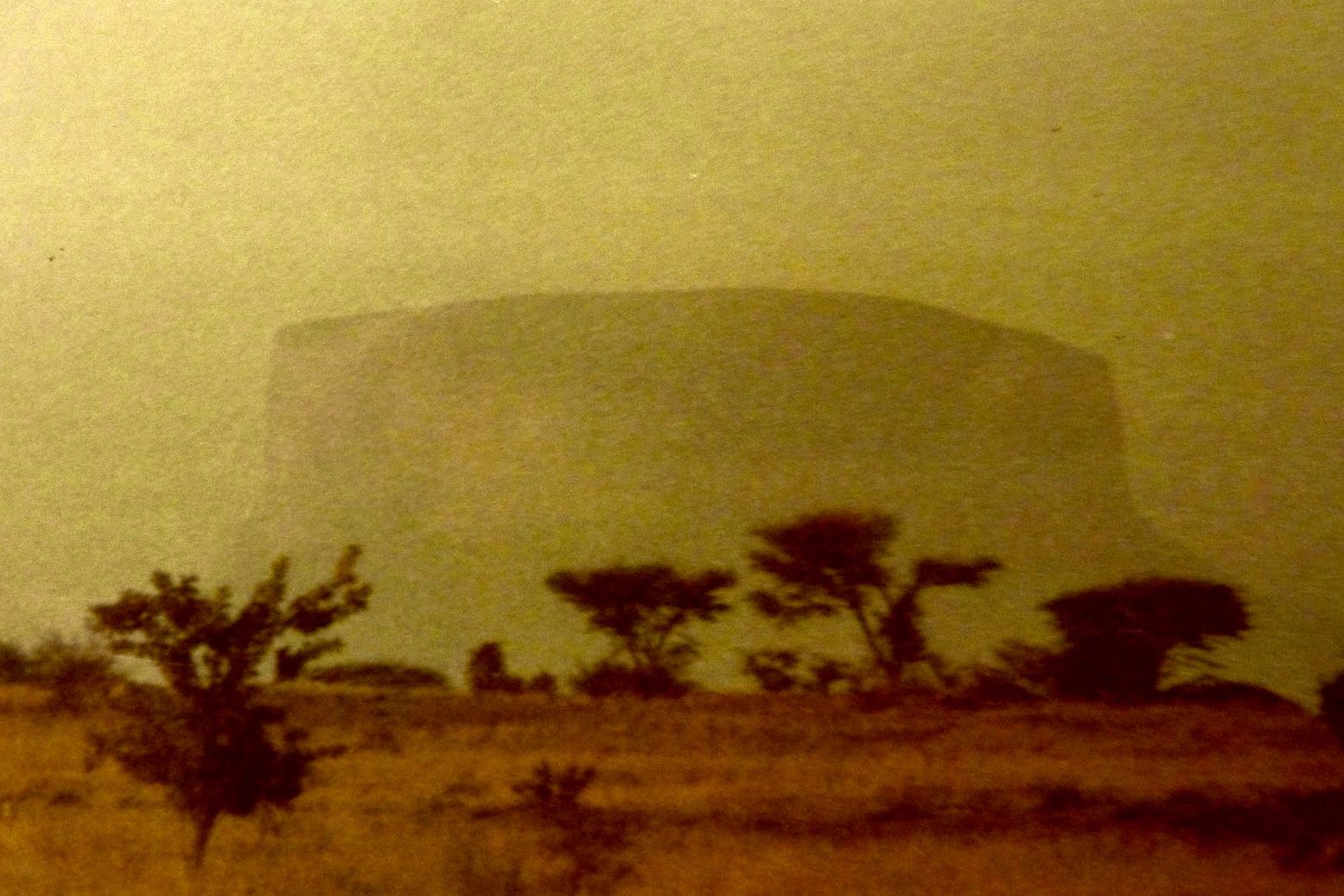
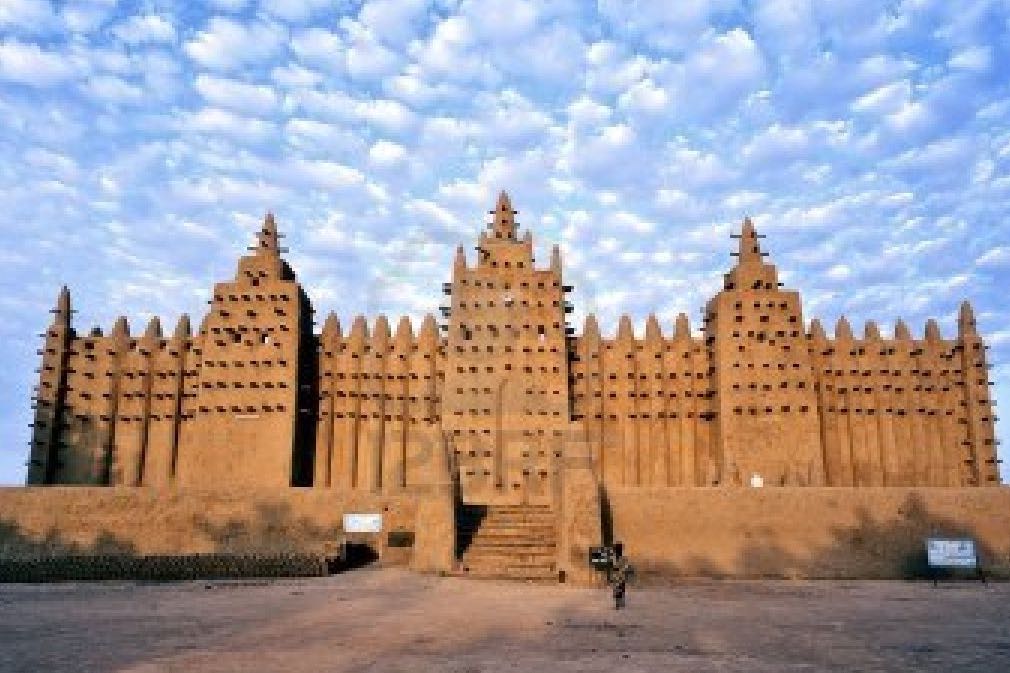
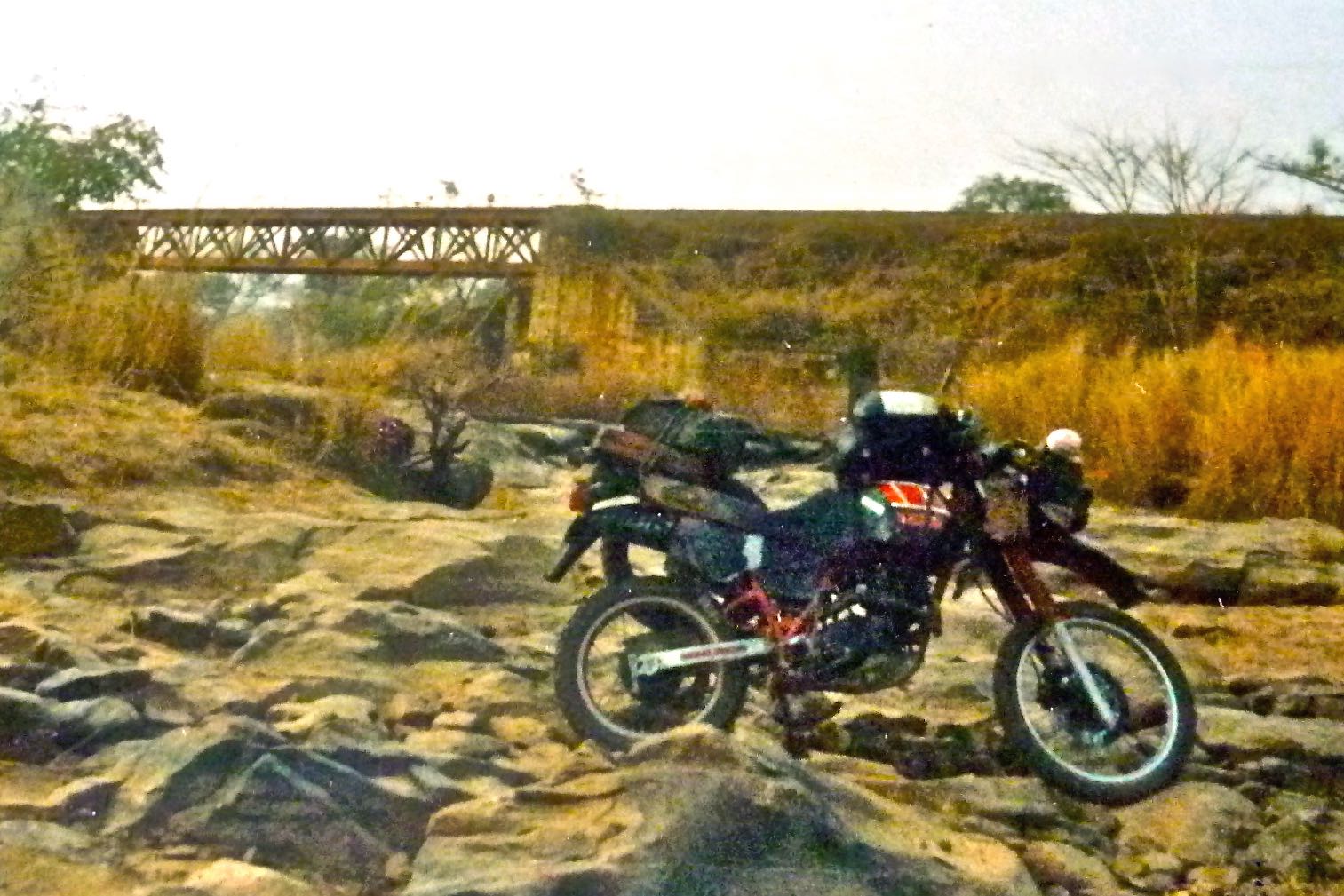
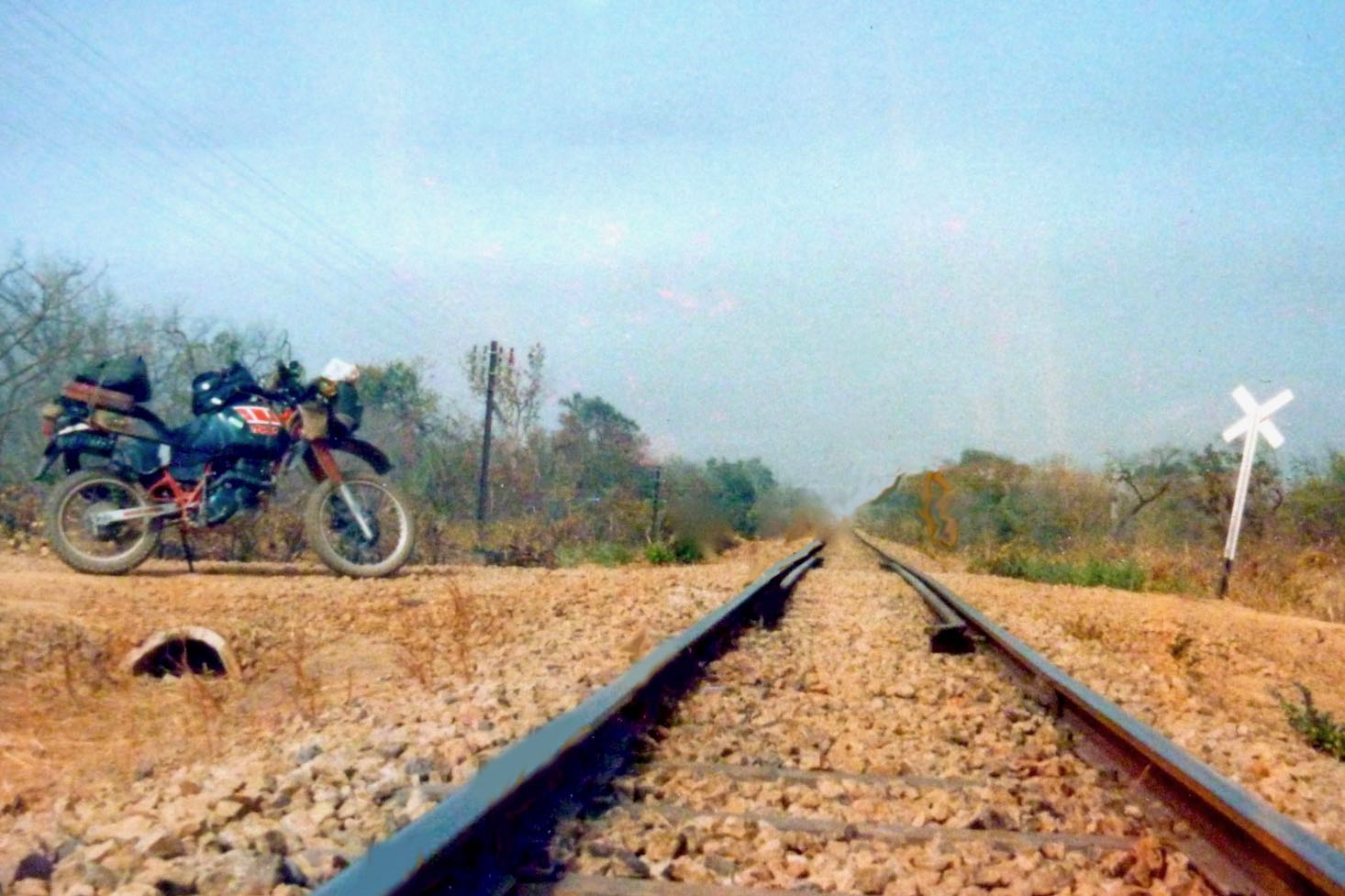
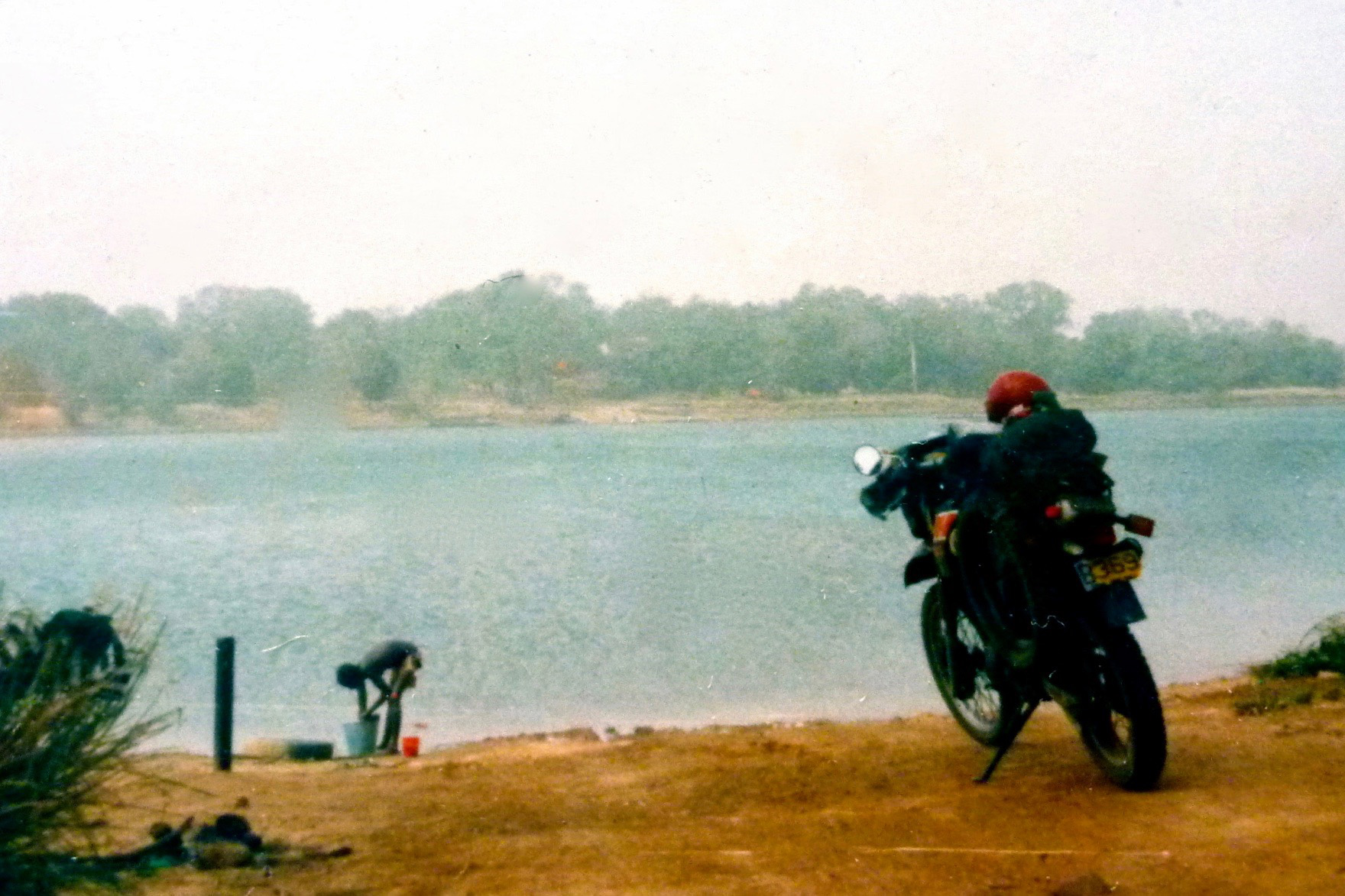
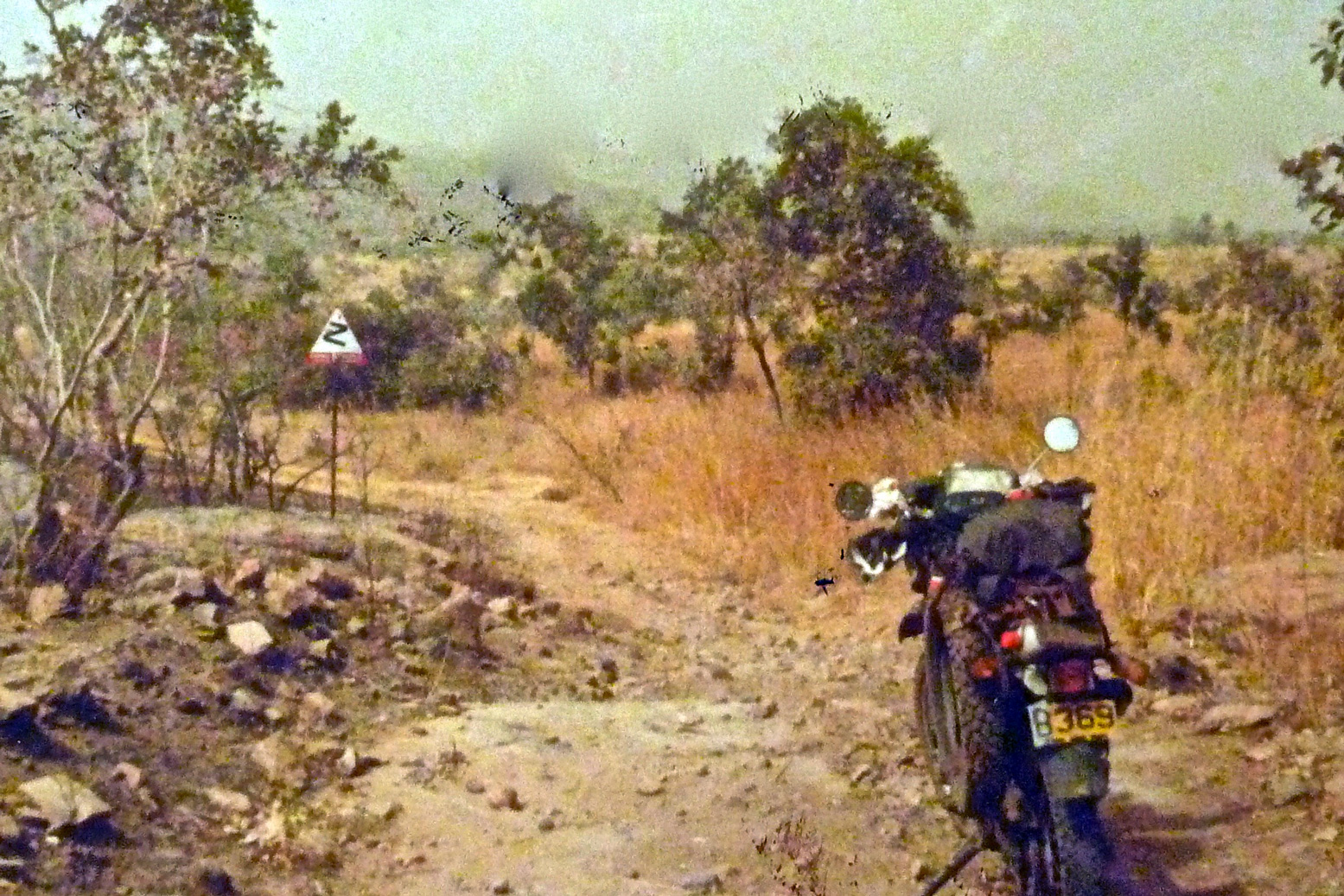
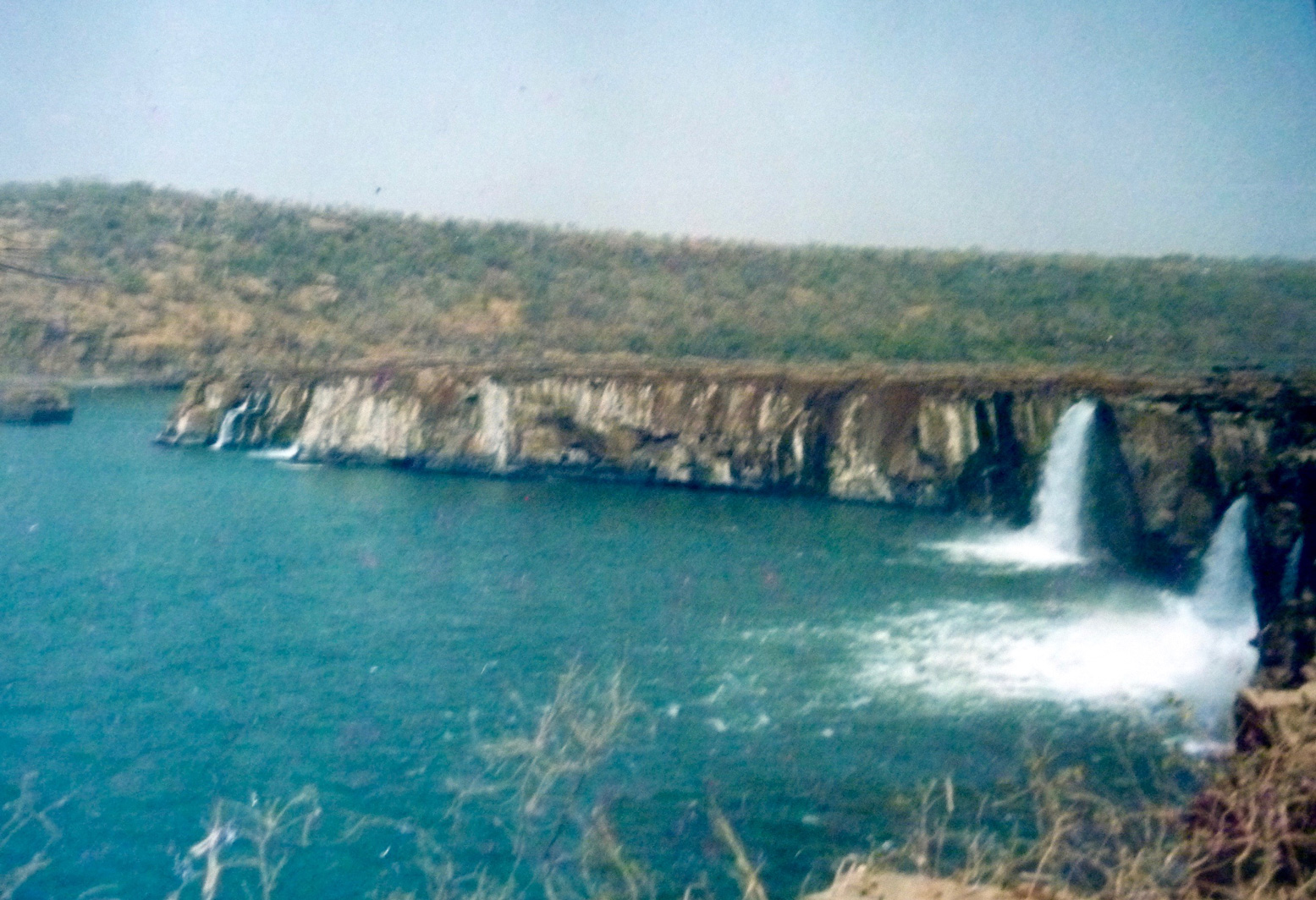
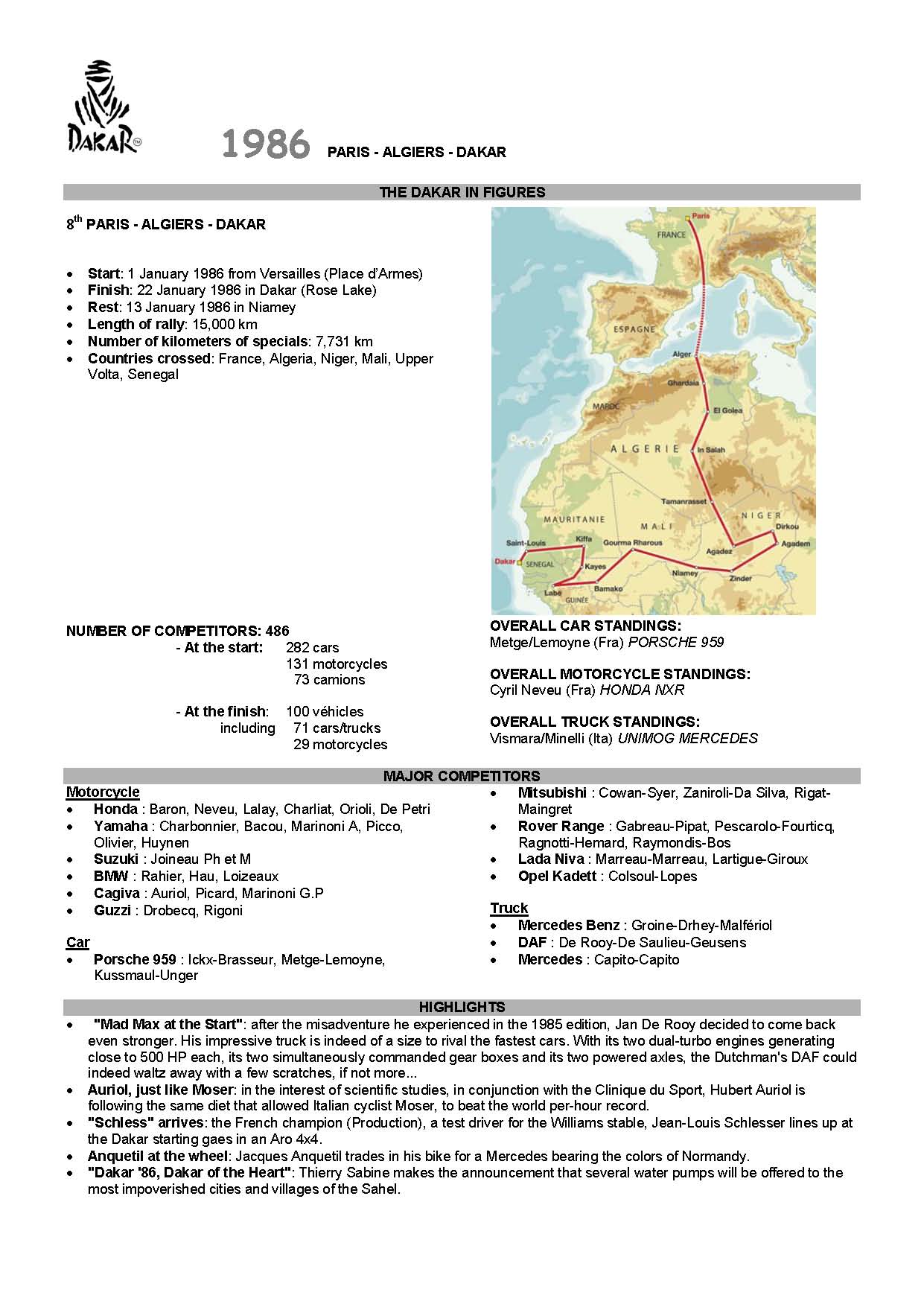
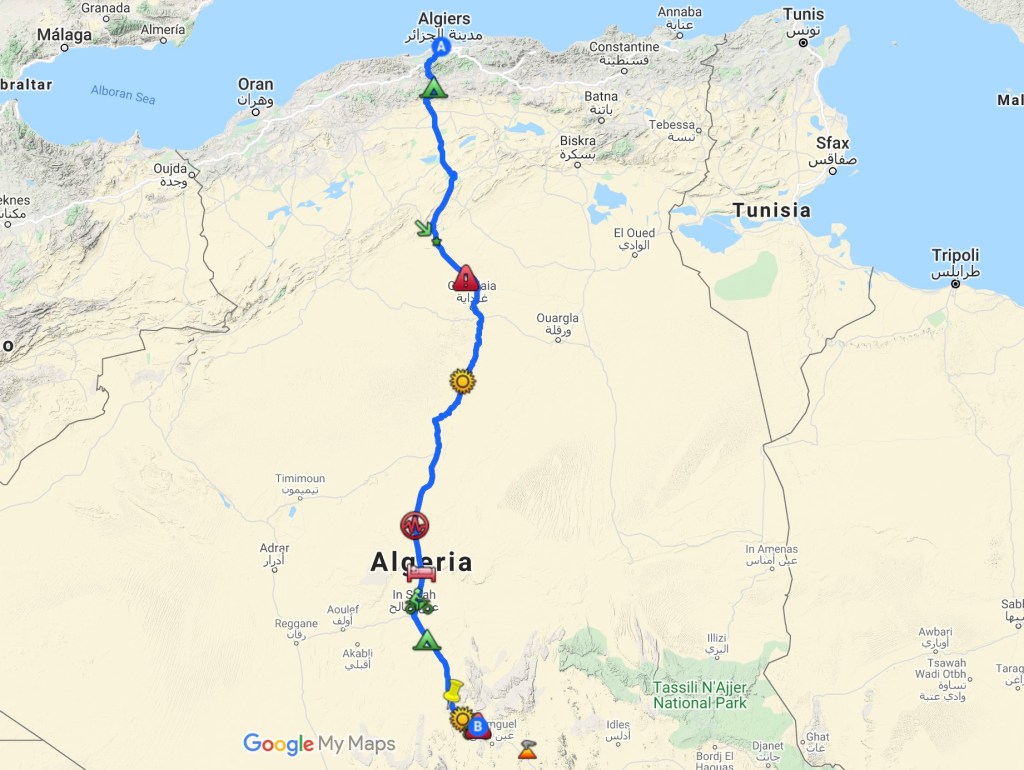
A day or so later, Helmut radically lightens his load after the lessons of the Assekrem excursion and we set off into the night to cross the Sahara to Niger. We camped a short distance out of Tam in the hope of next day getting a good run for the 350km to the border.Next morning we come across some Swiss riders. One of them flipped and cartwheeled his 80G/S andnow it won’t start.Helmut knows his BM from his elbow and sorts it out: a barrel flooded with oil. Look at the huge load on that other Tenere compared to mine. This was one of the reasons why I felt it was my honour-bound duty to write Desert Biking a few years later. That book evolved into the Adventure Motorcycling Handbook and here we all are.As that day wore on, Helmut got progressively more and more tired from frequently falling off his bike. One final crash around dusk finished him and the BMW off.With his shoulder damaged and so unable to ride, I persuaded him to give his BMW a Viking burial with the loads of spare petrol he had left over.The remains of Helmut’s trans-Sahara ride next morning. We abandoned most of his gear and he squeezed on the back of my XT. It was galling for him; he came off quite a lot worse than I did on my first attempt at crossing the Sahara in 1982 on an XT500.After leaving Helmut at In Guezzam, the Algerian border post, I set off across No Man’s Land for Assamaka: the Niger border. It was New Year’s Day, 1986 and the Dakar Rally was setting off from Paris.As I say in book, the Sahara Handbook of the time warned of the very sandy conditions in No Man’s Land, but in fact the terrain wasn’t so bad. When things are tough or tense I tend to press on; when they ease up I feel it’s safe to stop for a breather. So even though it wasted precious film, I had the notion to take some innovative aerial selfies by setting the camera on self timer and throwing it up in the air.Most shots were of gravel or sky, but here’s a superb pre-drone-era snap of the Tenere from 20 feet up.After checking into Niger at Assamaka – a portacabin and mud hut in the middle of nowhere – next day I got lost on the last 200-km stretch to Arlit where the highway resumed. This section in Niger still remains unsealed in 2021; banditry has made the job of completing the trans-Sahara Highway too risky. And not only that but just before I got there, my canvas baggage caught fire (pressing on the pipe; the usual story). One pannier burns merrily in the stiff Saharan breeze.I wasn’t carrying that much stuff; now I had a bit less. Notice the H4 light bulb.My first Saharan crossing had been quite eventful. See the Google Map.A few days later I arrived at the banks of the Niger river. West Africa was a whole different vibe from the Sahara and North Africa.After struggling along the very sandy riverside track from Niamey (Niger) into Mali on those crap tyres, I camped on some dunes above the river. As the sun set, over the river I could hear drums beating in the villages. This was Afrikah, just like in the movies!Next morning I reached Gao, located the ferry over the Niger (there’s a bridge now), and headed straight to Bamako as my Mali visa only lasted a week. But I soon got a puncture and encountered the Blue Man as described in the book. From here on I’d have many punctures from thorns picked up while battling along the sandy bush track to Gao.The famous monoliths near Hombori, Mali.Another monolith in the morning haze.The fabulous Grand Mosque of Djenne (not my picture, can you tell?).I’m now sick with the shits but need to rush on to Senegal before the visa expires. In Bamako I gave up trying to put my bike on the train to Dakar, as most people did back then because the roads were so bad. So I take the direct route to Kayes and the border. After all, I’ve crossed the Sahara and am on a trail bike. How hard can it be?The track follows the Dakar railway which helped with orientation. Just as well as I got lost again and again. Unlike the desert, there are loads of bush tracks linking village to village. Most locals don’t venture much further.Waiting for the non-existent ferry at Bafoulabe. After a while I realised there was a bridge just upriver. How else would the train get across? This was the era before tail tidies and you can see my perspex numberplate has succumbed to the piste; a common problem back then. Small metal plates are better.Rough tracks in west Mali heading towards Kayes. Few people took this route and now I think about it I don’t recall passing any other vehicles in two days. From Kayes it was another 100km to the border which I had to reach that night or I’d turn into a pumpkin.But there was time for a quick look at the Chutes de Gouma, west Mali (see map).
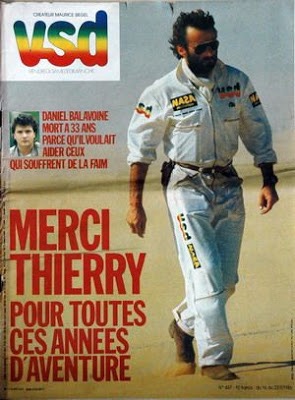
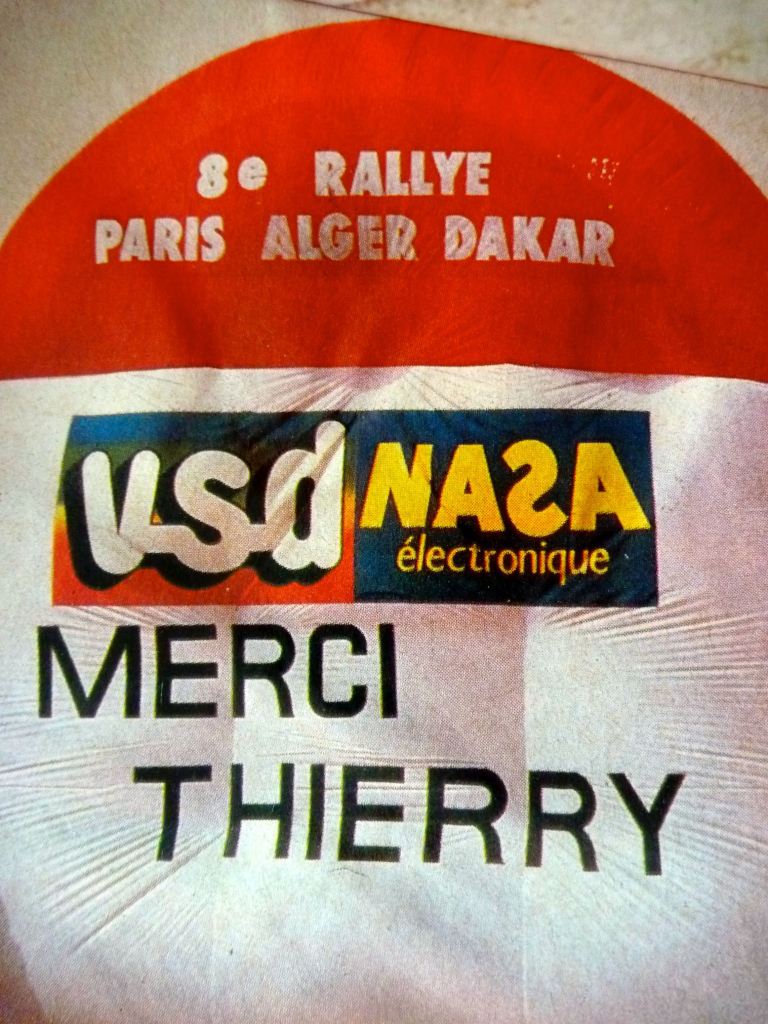
Passing through Kayes that evening, I learned that Dakar Rally founder Thierry Sabine, had been killed with several others in a helicopter crash near Timbuktu. It was January 14, 1986.
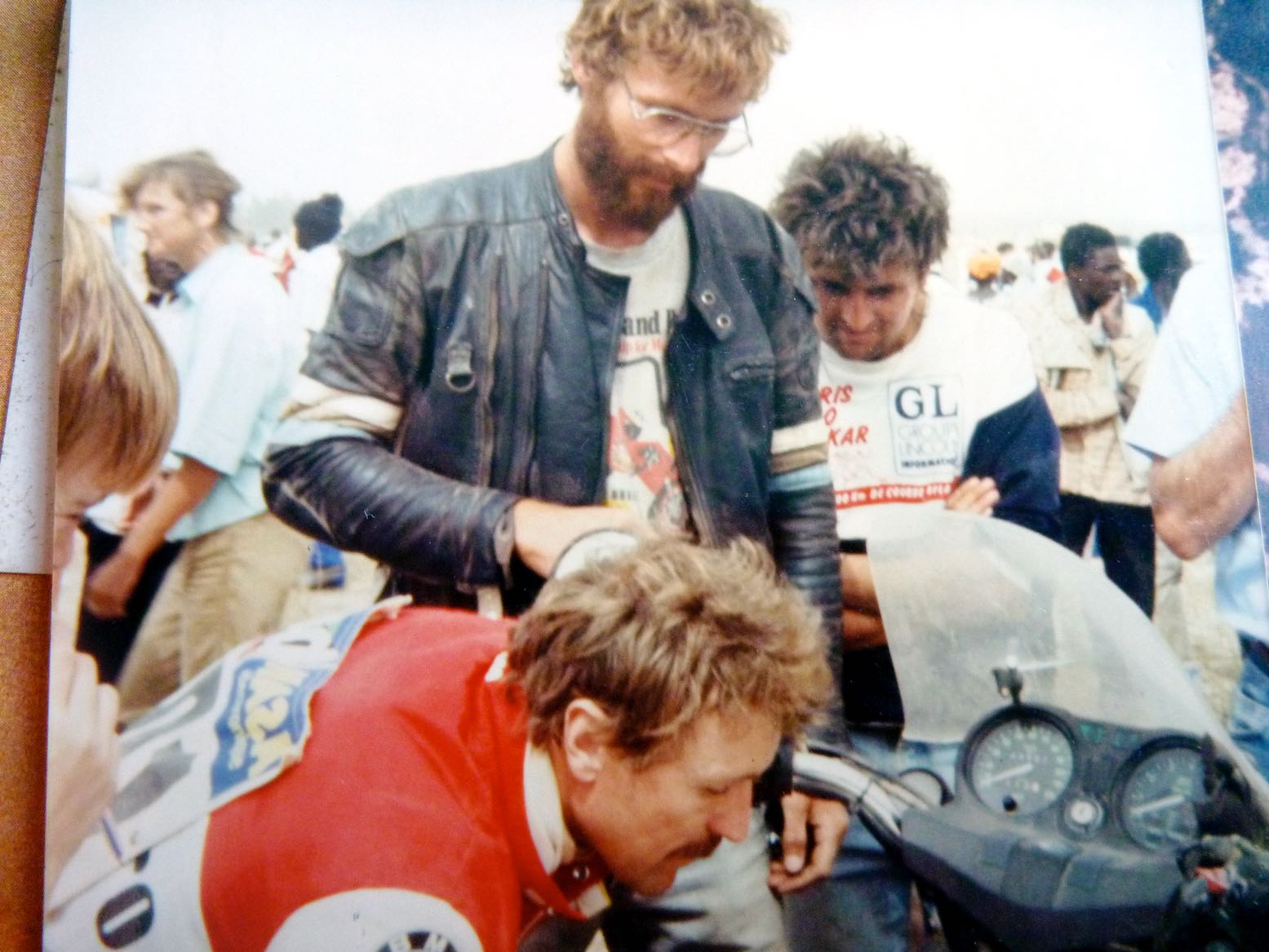
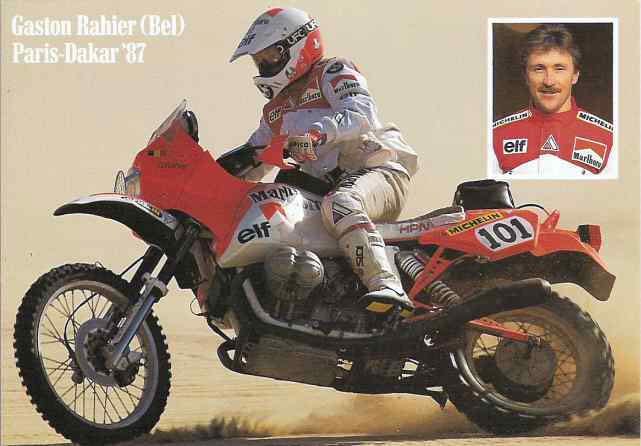
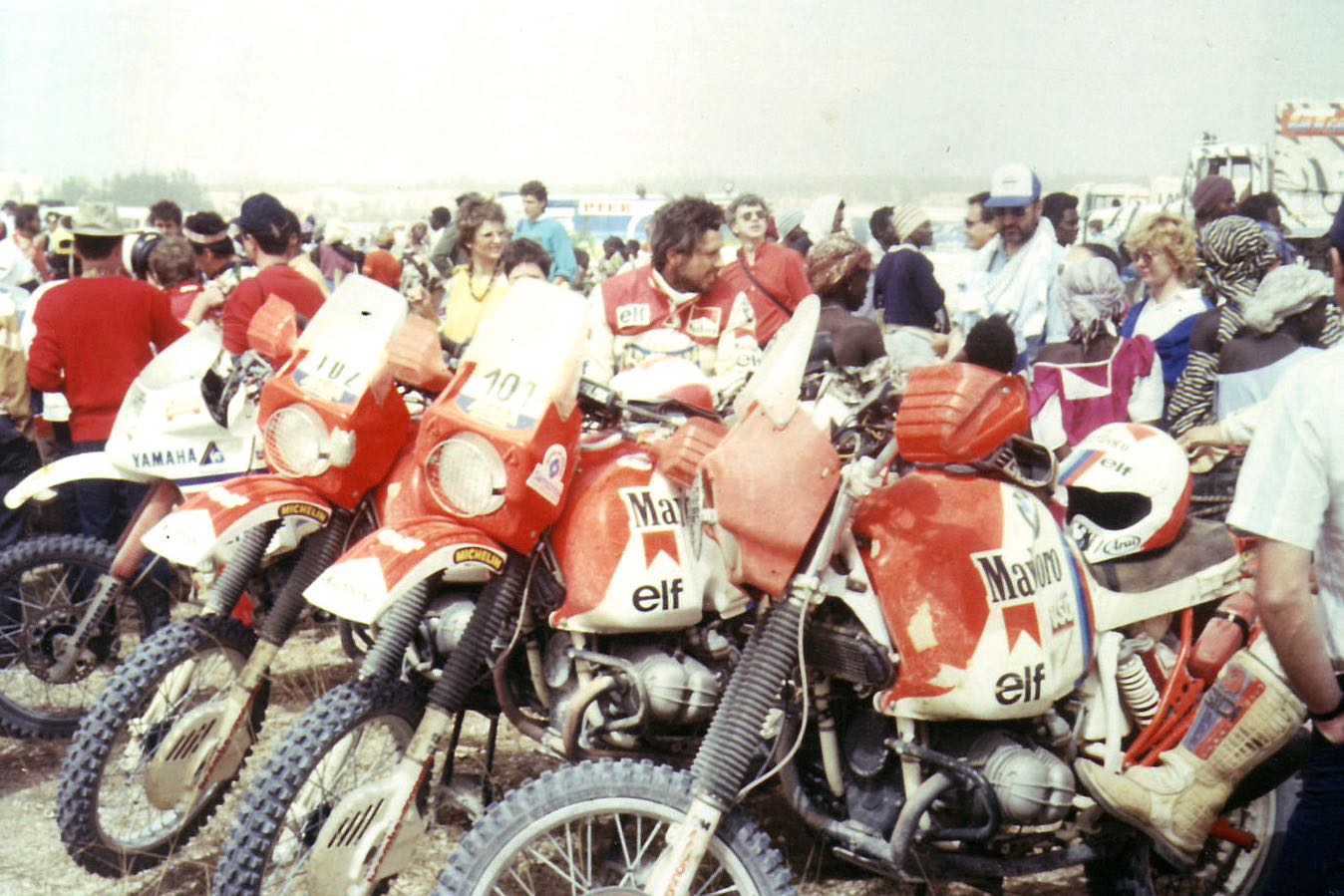
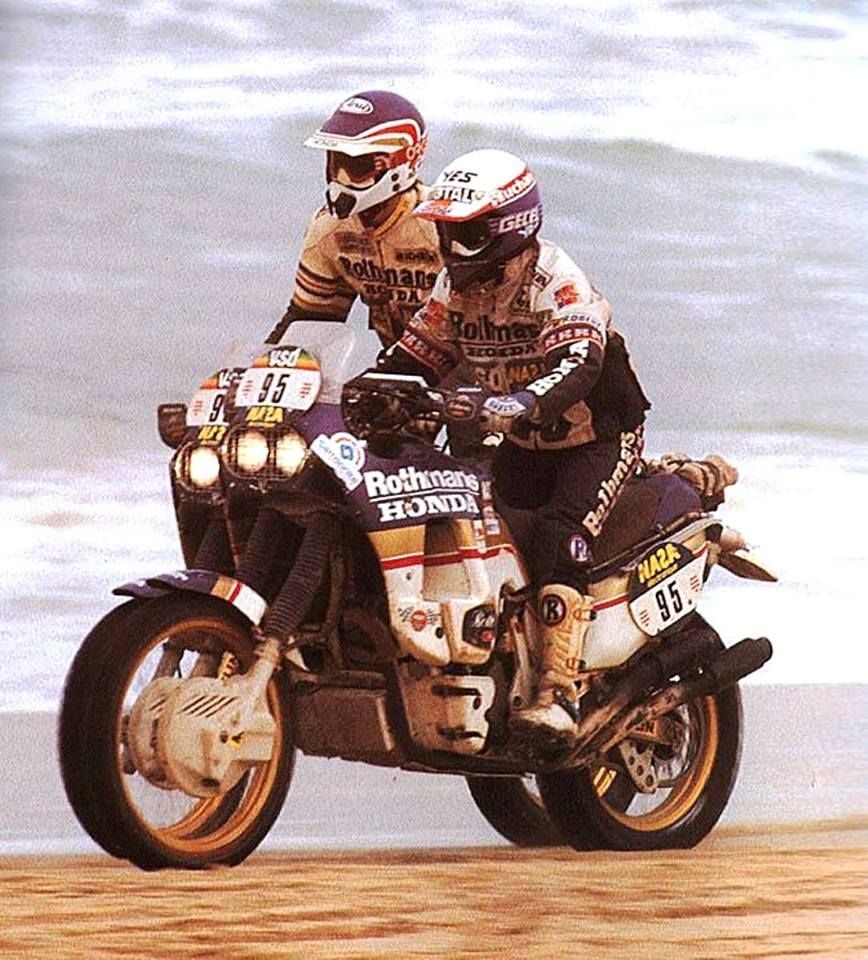
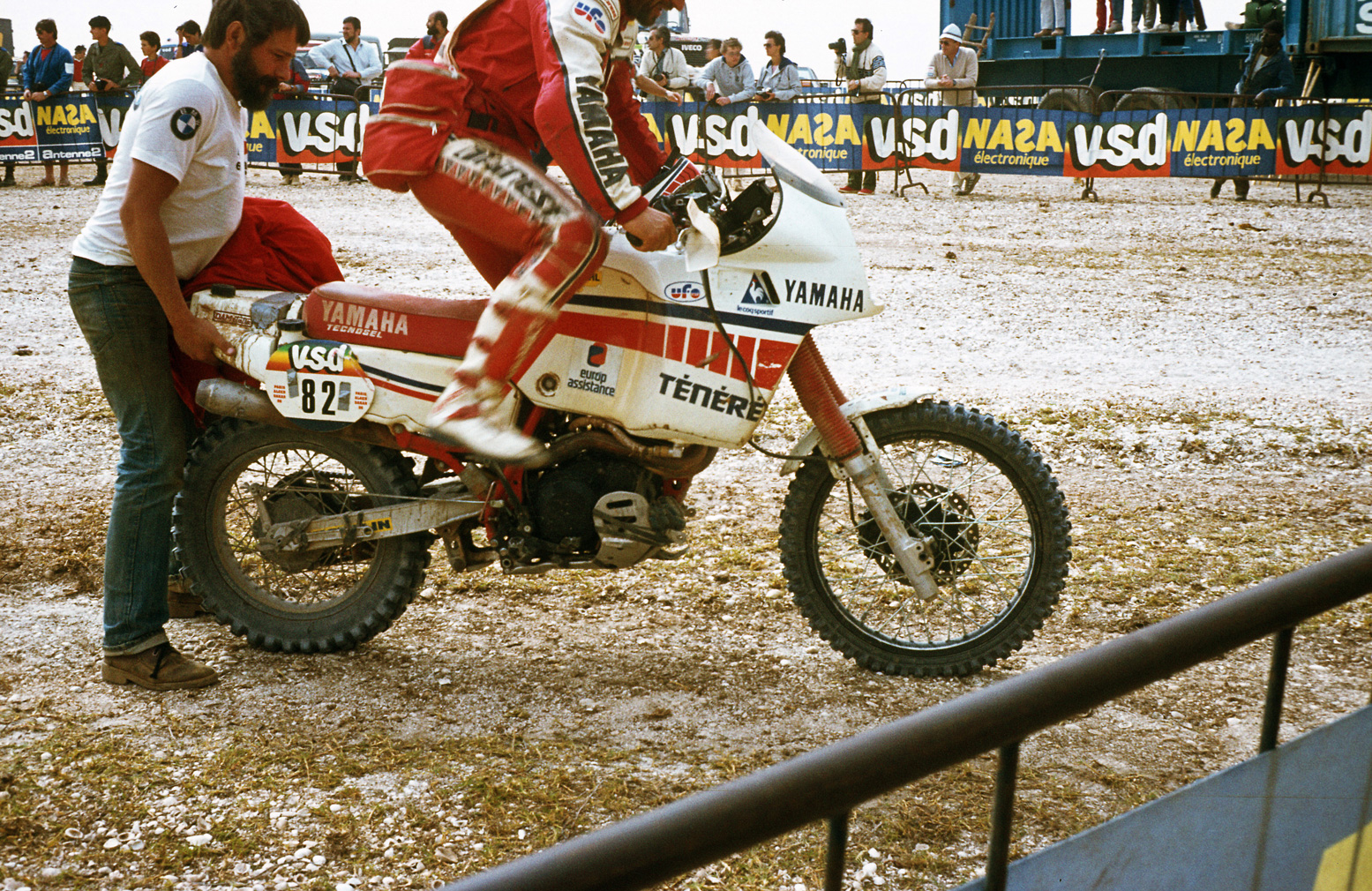
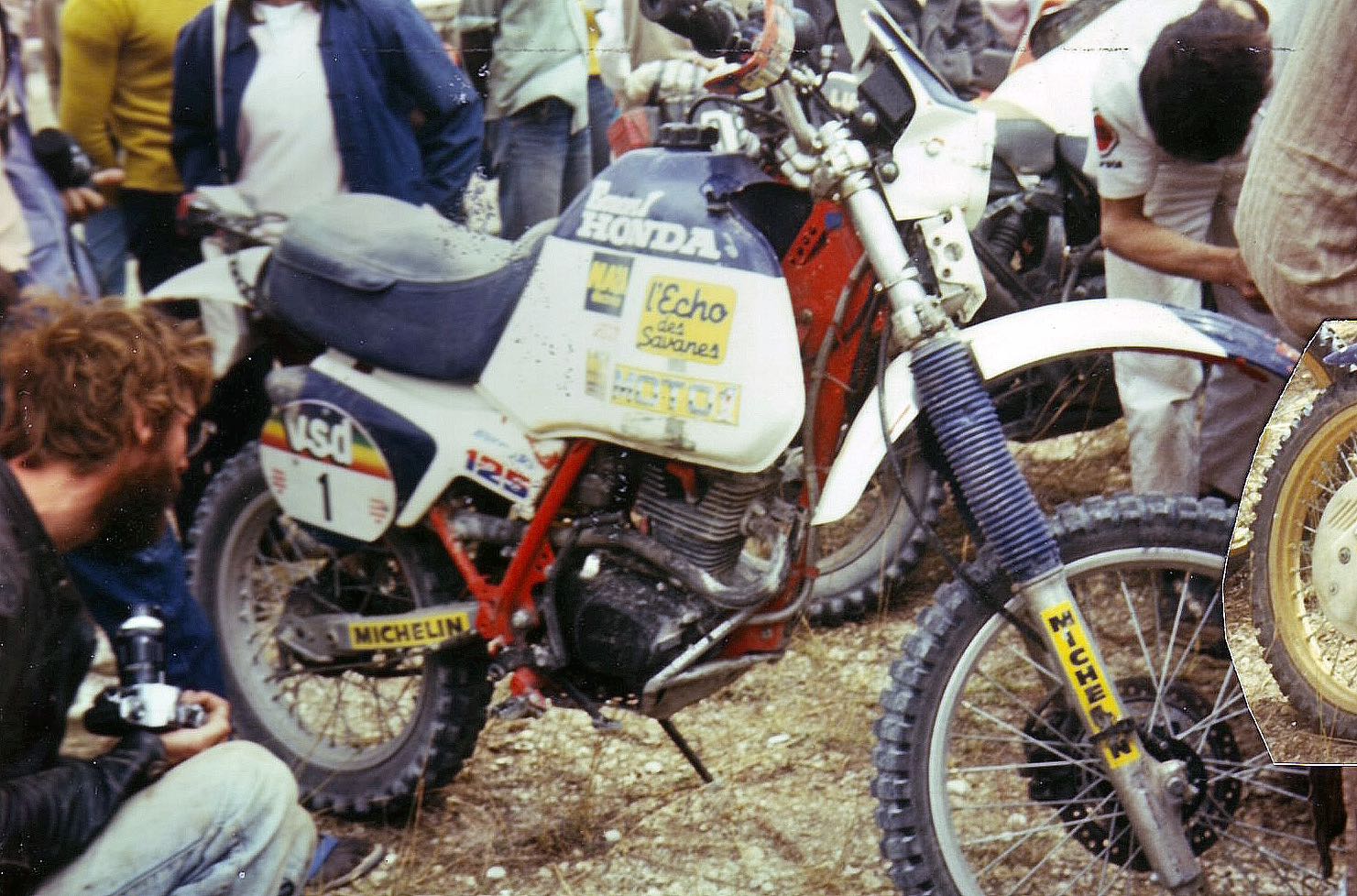
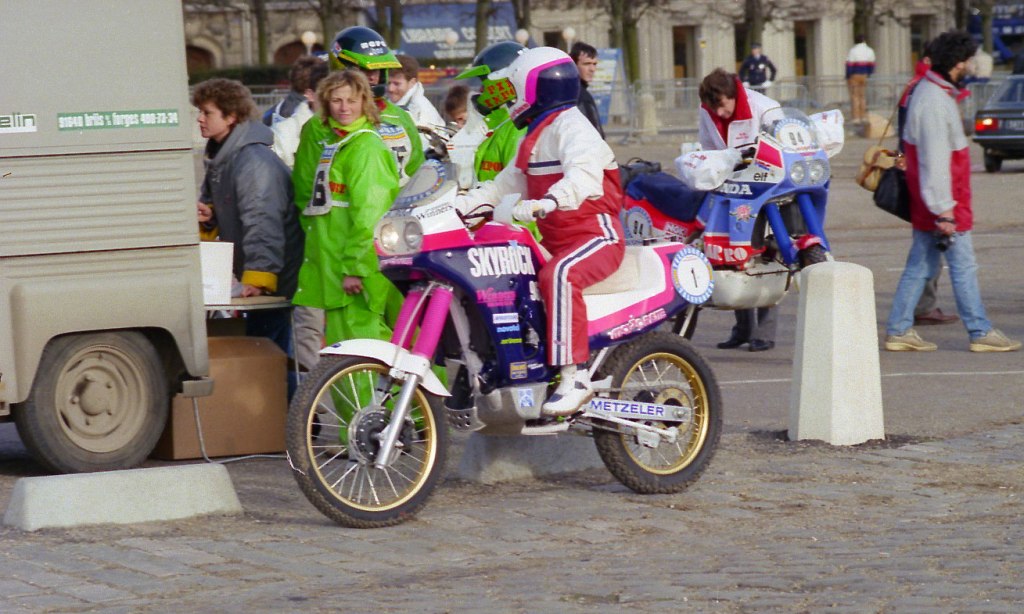
Somewhere after Ambidedi, I crash out under some baobab trees. I was still sick and too tired to carry on, visa or no visa.Next morning I reach the border, now with two flat tyres, but accidentally manage to slip out of Mali unnoticed. With no more patches, I get a train to Tambacounda where I meet Al Jesse, of Jesse Luggage fame. He gives me a spare tyre (my own got ruined from being run flat with the rim lock done up).My cameras had packed up by this stage (another common problem of the era) but I still had film, so Al took some pictures of the Dakar finale for me. Above; Al and Gaston Rahier #101, signing Al’s BMW 80ST which he’d ridden down from the Arctic Circle in Norway, two-up.Gaston Rahier in action.The Marlboro-Elf team. Imagine racing those tanks off road for up to 1000km a day. Luckily they weren’t shod with Metzeler Sahara Enduro tyres.That year RothmansPorsche 959s got first and second, and so did Cyril Neveu and Giles Lalay (above) on Rothmans Honda NXR 780s (which became the original XRV 650 Africa Twin two years later). Go Rothmans. Go Gauloises; Go Chesterfield. If that won’t get you smoking, nothing will! Serge Bacou – cool centre stand (not my pic)Yamaha factory racer Andrea Marinoni in DakarAl inspects a Honda 125 #1. Thanks to this handy website – the best I’ve found for all things Dakar bikes – I was told it was the bike of Gerald Barbezant who was a DNF in ’86. .Here he is again, setting off in 1987 on his 3rd Dakar on a somewhat flashier 30-hp Skyrock MTX 125 two-stroke and getting his lurid fork gaiters admired by a lurid lady in lime green PVC. Aged 57, Gerald Barbezant went on to finish the ’93 Dakar (actually Marseille to Red Sea) on his 10th attempt riding a 125 KTM EXC. He started another four Dakars, riding 125s because ‘he never got a full bike licence’. Interview here. Fellow 2001 Dakar competitor Lawrence Hacking was not so complimentary in his book.
The route was similar to mine, but twice as fast, taking half as long and many, many times harder
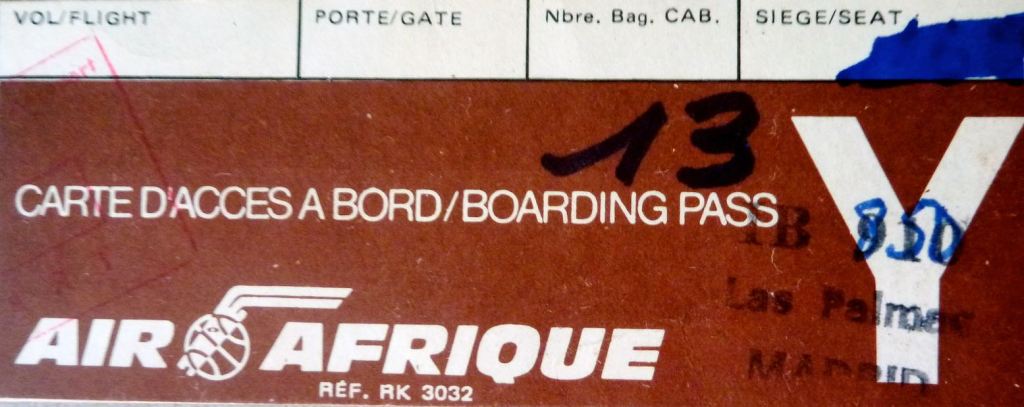
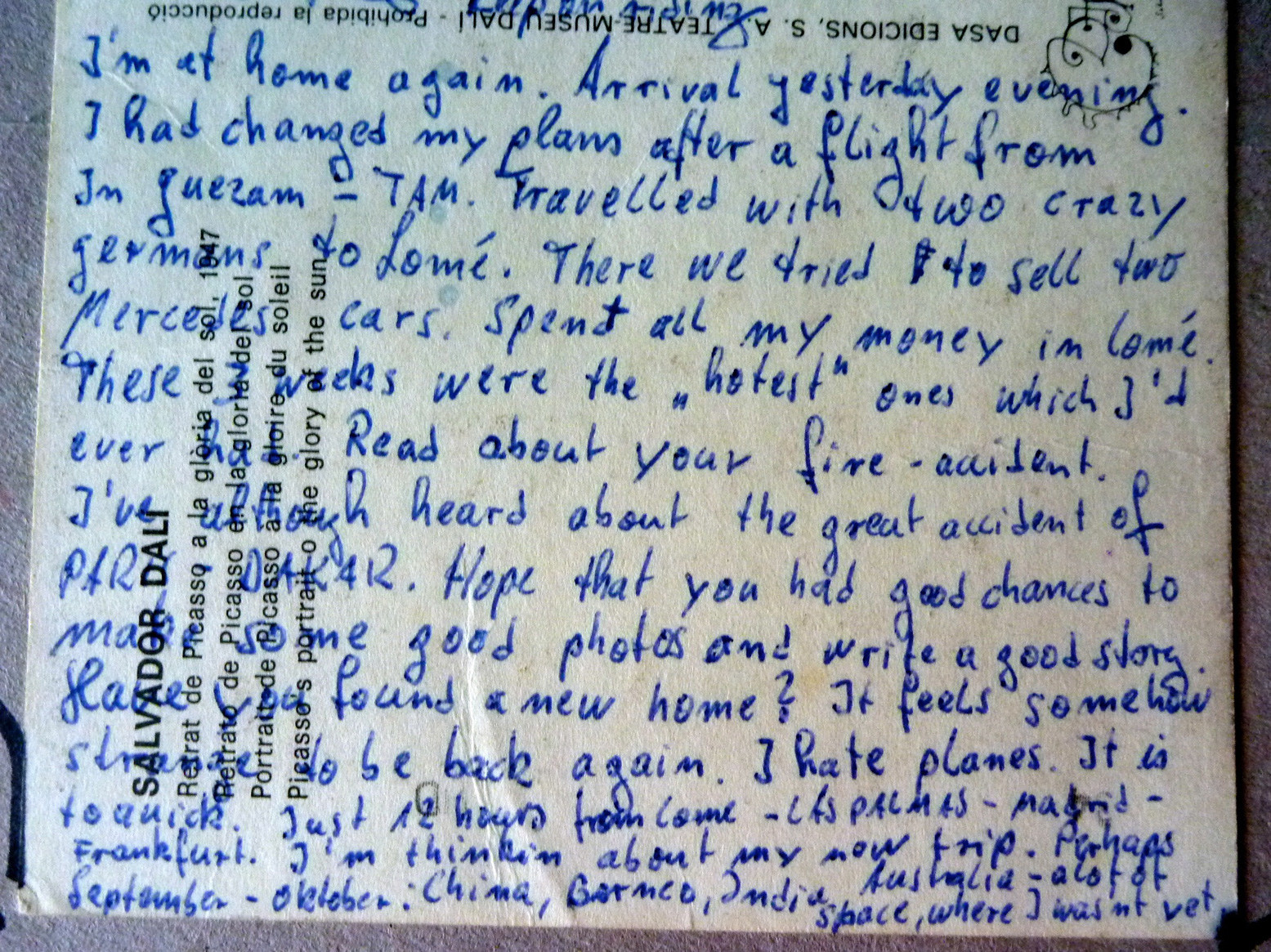
From Dakar I ship the XT to Spain and fly on after it. What an adventure that was!Weeks later I got a postcard from Helmut.London to Dakar on an XT660Z Tenere. Next?!
Recap: I’m taking a two-week touring holiday in Algeria, late summer 1984, and it has become very hot indeed. I’m riding a 200cc mash-up of AJS, Honda CD200, VW and Yamaha, with enough ground clearance to become an Olympic sport, but barely enough power to stir a tea bag.
Yesterday I rode through a tornado and right now I’m just south of the Tademait plateau: it’s Day 3 in Algeria. This is part two of a bonus chapter which does not appear in the book.
I got up before sunrise but it was still as warm as a hot summer’s day in the UK. I packed up and rode towards In Salah, a hour or so down the road. Soon I came across a French guy on a Z750LTD – that’s a Kawasaki early 80s mock-chop in case you’ve forgotten. Clearly, 1984 was the year to ride the Sahara on dumb bikes. He was sat by the side of the road looking a bit how I felt: shell shocked. Yesterday on the Tademait, the sand storms had also freaked him out too and he was beginning to realise his spine-wrecking ‘factory custom’ was not such a cool highway cruiser after all. He’d had enough and was heading back north.
I carried on south, passing the denuded outliers of the Tademait plateau.
The old fuel station in In Salah was always fighting to keep its chin above the sands, and I pulled in to fill up for the next stage: 270km along the Trans Sahara Highway to Arak Gorge with not so much as a well on the way.
A short distance out of town I passed another fallen truck, as I’d done near here in 1982 in the XT, only that time it had been flat on its back with its wheels were up in the air. As before, the road was perfectly flat and straight. You presume the driver dozed off in the heat of his cab and jack-knifed. It’s not the greatest picture I’ve ever taken but you’ll notice there’s someone camped by the truck’s under-carriage. He’s watching the wreck so it doesn’t get stripped bare before someone comes along with whatever it takes to get it back on its wheels.
Time for a quick pose why not. Young kids these days think they invented self obsession and selfies! We were doing that years ago!
I liked my trusty Bell Moto 3 but I’m sure glad I never had a crash in it. The padding inside was about as inviting as the inside of a cylinder head. I also see I’m wearing a natty nylon British Airways cabin steward’s scarf picked up in Laurence Corner’s army surplus ‘boutique’ in Camden, just up the road from our Blooomsbury squat.
Bell ’84
Bell 2020
They say the Beatles bought their Sgt. Pepper outfits there, and the likes of, Adam Ant, Kate Moss and Jean-Paul Gaultier have all rummaged around in the junk at LC, looking for something to cut a dash. As trendy London despatchers looking for the ultimate outfit, we did too, and I think the scarf was an impulsive £1 purchase. Decades later Bell brought back the Moto 3, but with a 21st-century velvety interior.
Back to the desert where the only fashion was to get to the next water before what you had ran out. The low elevation hereabouts meant it was becoming exceedingly hot. I’m guessing about 45°C or over 110 F. That’s nothing unusual at these latitudes I’m sure, but I’d never experienced temperatures like this. I was being baked alive by the air I was riding through, and so I wrapped up tight to keep the blast from turning me into a shrivelled Peruvian mummy.
I’m hot
In this pre-Camelbak era, every half hour or so I just had to stop for a drink. I was getting through water at a rate of 10+ litres a day. As I rode along, by the time I could stand it no more I’d feel the desiccation creeping down my throat. I realised how fatal dehydration actually gets you: from the insides out as you helplessly breath in air at well over body temperature (36°C). The survival manuals were right all along: without water or shelter, consciousness could be measured in a matter of hours in this sort of heat.
At one point I thought I simply must cool myself down and poured a helmet’s worth of water into my Bell and put it on. The delicious deluge soaked down through my clothes with a steamy hiss. But half an hour later I was again throat-parched and dry as a roadside baguette.
I’m thirsty
The Trans-Sahara Highway that had finally linked Algiers with Tamanrasset just a couple of years earlier was already breaking up, and in this heat, you could see why. Black tar which sizzled as you spat on it wouldn’t stand a chance as another over-loaded lorry hammered the scorching highway to a pulp. Diversions shoved traffic onto the sands so repairs could be undertaken, and I had my first chance to be forced to ride the Benele off road. All things considered it managed well enough, even with horsepower barely into double figures. The trials tyres and light baggage all helped.
The Erg Mehejibat, near Arak.
Then, as I neared the Arak Gorge something changed in the ride, the suspension seemed to tighten up. I hopped off, dreading some problem with the Honda motor which could surely not handle such heat for much longer. It was a simpering commuter hack brutally abused by being thrown into the deep end of a Saharan summer. A quick look revealed the chain was as tight as a bow string. On this trip I was experimenting running a non-o-ring chain dry to avoid oily sand wrecking the seals. I can tell you now that was a bad idea. Years later I rode a BM in Morocco with an o-ring that got plastered in sand, and even with daily oiling it needed adjustment just once in 4000 miles. The lack of lube and high ambient temps had caused the dry chain to somehow shrink – perhaps the rollers expanded and took up the slack.
Modern bike chains are incredible when you think what they do, but back then I was worried my hyper-taught chain and bouncing suspension – three times longer than any CD200 had imagined in its worse malarial dream – might rip out the engine sprocket and ping it across the desert floor like a Coke bottle cap. I soothed the creaking chain with engine oil and watched it sag before my eyes. Now it was way too slack but the AJS frame had some nutty eccentric swingarm pivot like 1970s Ducatis which was a faff to adjust in the state I was in. I was out of water and the mercury was again pushing at the end of the dial. Just as I’d panicked when my XT500 had leaked away half its fuel on the way to Niger in ’82, I felt the compulsion to flee towards shelter so rode on to Arak just a few miles down the road, with a slap-slapping chain.
Arak Gorge
Relieved I’d just caught a bike catastrophe in time, I decided to remount the closed-off blacktop under repair to save any strain on the transmission. The gorge walls of Arak rose up ahead, but then the tar suddenly took on a darker shine and I sunk into a sludge of thick, freshly laid bitumen as the gutless Benele lurched to a crawl. I yanked on the throttle to spur the slug onward, the tyres pushed a trench through the oily slush and bitumen sprayed up across the mudguards with a clatter of sticky gravel. What a mess. I steered off the unset mush and continued to the roadhouse, hoping my tar trench would melt back smooth again, like divided custard. Now safely at the roadhouse I crouched in the shade clutching a drink and looked forward to a rest before the final stage on to the Cone Mountains, 100km on where the desert landscape begins to get interesting. As I pondered my near miss with wrecking the bike, an army jeep pulled up, two guys jumped out and marched up to me.
‘Is this your moto?’ ‘Yes.’ ‘Why did you drive on the closed road!’ I pathetically tried to play dumb until they pointed our the sticky black splat coating the undersides of my bike. ‘I am sorry. I was panicking. You see my chain was…’ ‘Shut up. Did you not see the signs ‘Road Closed? and the stones blocking the road’ ‘Yes. Sorry. Look I will go back and repair it myself’, I reasoned, thinking I could smooth it all back with a plank of wood. ‘I said shut up! You will pay for this. Give me your passport!’
One snatched it out of my had and they tore off back to the fort in a flurry of wheel-spin. The other people in the roadhouse looked down at me with the pity of one who was rightly in the dog house, gagged up and tied down. Another heat-frazzled wannabe adventurer disrespecting locals regs. There began my three day ‘hut arrest’ in Arak.
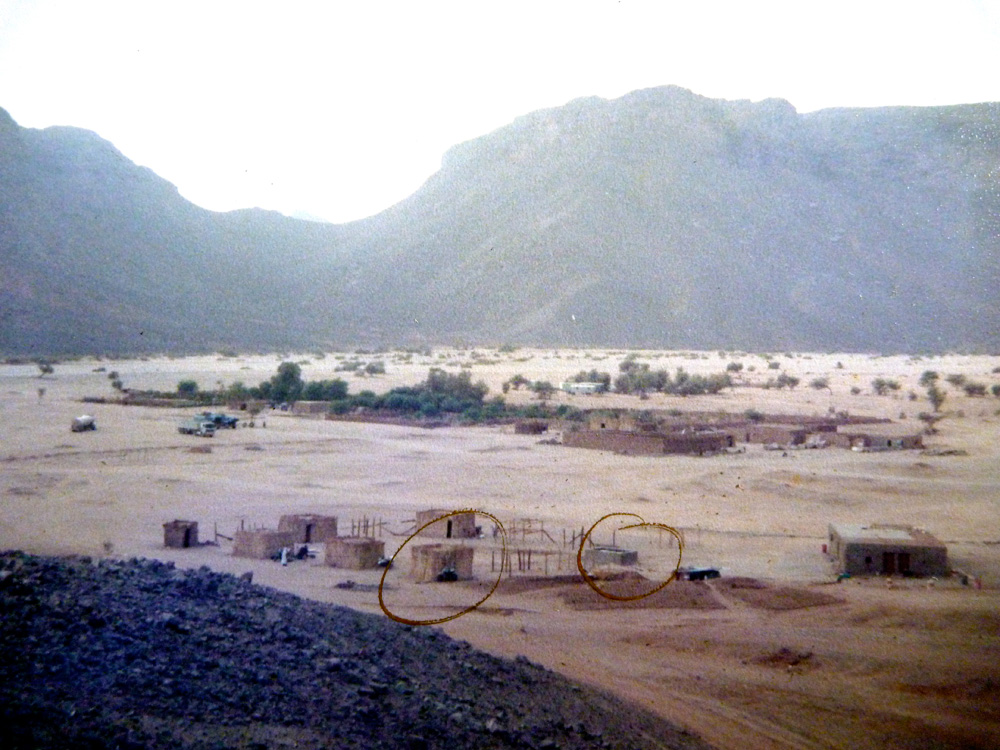
My detention hut in Arak
Everything I had was hot. Nothing had cooled down for days. As I unpacked my stuff I found candles drooped into Dali-esque blobs and weirder still, opening a tin of luncheon meat or ‘Spam’, the contents poured out like water, flecked with pink particles of fat-saturated gristle. I’ve not eaten that shit since. I spent the days reading J. P. Donleavy or chatting with other similarly heat-struck bikers passing through, while dust storms periodically ripped through the gorge. By night it was just too stifling inside the hut, so I slept outside in what little breeze there was. Even then, I’d wake up once in a while with my lips and throat parched fit to crack, and struggle to douse my mouth from the water bottle.
As the days passed I knew I was running out of time to visit my goal: the mini massif I now know as Sli Edrar (below).
Then one morning the army jeep returned with my passport with nothing more than an admonition to not do it again. Ashamed of my stupidity, I’d got off lightly and vowed to oil the chain as often as it damn well liked. I packed my ragged bags and set off on the 1000-mile ride back to Algiers port where a boat left in three days’ time.
A day or so later I wasn’t feeling well. I got past In Salah and found myself lightheaded and weak. Just up ahead was the climb back onto the dreaded Tademait plateau, not a place I wanted to tackle in the shape I was in. So halfway up the switchback ascent I pulled off the road and crawled into the shade of a metre-high culvert. What was wrong with me? I was surely drinking enough: 10 litres a day and a couple more by night. Then it struck me. Water was not enough. I needed to ingest salt and other essential minerals flushed out in my sweat which evaporated unseen. That must be it. I made myself a salty-sugary drink and lay back while it took effect, wary that this was just the sort of place snakes and scorpions might also like to pass a siesta. Despite, or perhaps because of my dozy state, I clearly thought a picture of my other camera on a tripod would be a fitting souvenir of my in-culvert recuperation.
The drink (1 spoon salt, 8 spoons sugar per litre) quickly did the trick and revived, I set off across the Tademait, tensed up in readiness for something bad to happen – a piece of the sky falling on my head, perhaps? Nagging me were the 1100km that still lay between me and the Algiers boat. It was time to lay down some miles. For once the 400-km crossing of the the Tademait passed without event which in itself felt creepy. I filled up in El Golea and another few hours got me past Ghardaia, the gateway from the Sahara. Only now it was late afternoon, time for the headwinds to kick up. At times the feeble motor strained to reach 25mph while I crouched over the bars, crippled with stiffness, watching the odometer numbers click by in slow motion.
By this stage the UV had seen to my thin cotton Times delivery bag which had fallen apart. I lashed it to the bike with a piece of plank and some nice 7mm climbing rope. Around Berriane the rising heat from the south sucked in a dust storm and visibility dropped to a few feet. I edged to the side of the road, wondering if I should get off it altogether, not least because cars still rushed past, confident that whatever risk they took, it was OK because All Was Written. By Laghouat I’d chewed a good 1100-km chunk out of the map. I unclawed my hands from the ‘bars and hobbled into the only hotel in town. But the uppity ponce behind reception had no room for the likes of me, so I rode out to some edge-of-town wasteland. As I slumped against a litter-strewn, shit-riddled ruin, a guy living in a cardboard hovel I’d not even noticed hailed me over.
I’d never actually met a regular Algerian civilian. He invited me in and we chatted as well we could while his unseen wife prepared a meal. He proudly told me how was a veteran of the recent Western Sahara war against Morocco (Algeria lost that one and it eats them up to this day) and gave me a picture. When the time came I was invited to sleep on his living room carpet.
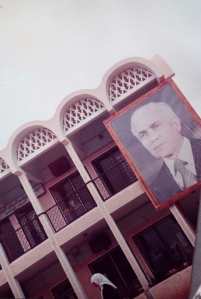
Sadly, the carpet turned out to be agonisingly flee-ridden and try as I might and worn out as I was, I couldn’t drop off as another bug took a jab. I moved out into the donkey yard but it was too late, the fleas had latched on and in turn went on to infest my favourite mattress back in my London squat for months. I did everything I could to delouse it, repeated dousing with flea powder and even gently torching it with hairspray and a lighter. But as the flames licked over it, those Algerian bloodsuckers just yawned and sharpened their mandibles. Eventually I had to chuck it. Leaving Laghouat next day, I passed billboards of whichever corrupt Big Brother was dictating over Algeria at the time, and just out of town I found the time to wander up to Pigeon Rocks, not realising they were the site of prehistoric etchings.
Thanks to the killer, 12-hour, day from Arak, only 400kms remained to the port. I was well on target to catch the boat at noon tomorrow. After a week of relentless day and night heat, the temperatures finally began to subside as I rose into the Atlas mountains north of Ain Oussera. Late afternoon, unready to face the congested capital, I bought myself a roadside melon and bounced over some roadside scrub down into a ditch, stalled the bike, and passed the night there. Another big mistake. I’d carelessly left the ignition on after stalling the bike (something I’ve caught myself doing since, when dirt camping). Next morning the battery was as dead as week-old roadkill and, try as I might, no amount of jump starting could get the Benele going.
It was just 100km to the port with hours before the ferry left. I pushed the bike into a lay by, made a sign ‘Alger port SVP’ and eventually two kind blokes responded to my plea and loaded the Benele into their pickup. ’What’s with this tar all over the bike?’ Don’t ask, mate… Following a battery acid transfusion and a cafe noire injection in Medea, I was good to go. I spun down the Atlas bends into Algiers and blundered my way to the port gates. I was late but so was the ferry. Even today I can tell you: nothing beats the feeling of a ferry steaming away from a North African port. Did I say that already about the 1982 trip? Well, it was even more true in 1984 and on most years since. Let Somali pirates steal us to their thorny lairs; let sudden storms rain down hail and brimstone. I was out of Algeria. Yippey–aye-yay!
A day later the boat docked at Marseille. It was probably Friday and I had to be back at work on Monday. So I’m still not sure what possessed me to make a casual visit to the Bol d’Or 24-hour endurance race scheduled for that weekend nearby at Le Castellet raceway. Maybe I had some energy to spare. Bike magazine had enshrined the Bol as a biker’s rite of passage – France’s one-day equivalent to the Isle of Man or Daytona; as much a moto-carnival as a race spectacle. I rode in and watched the 3-man teams flip their slick-tyred UJM’s from bend to bend and also enjoyed some baffled looks at my bike, battle scarred from its recent desert detour. The trail-bike loving Frenchies, who went on to buy more Ténérés than anyone else, at least would get something like Le Bénélé.
Heads down for the Mistral straight
Wandering above the pits, I even had the presence of mind to check out #53: an RD500LC popping in for a fill up. I bet that team spent more time filling the tank than the rider did on the track.
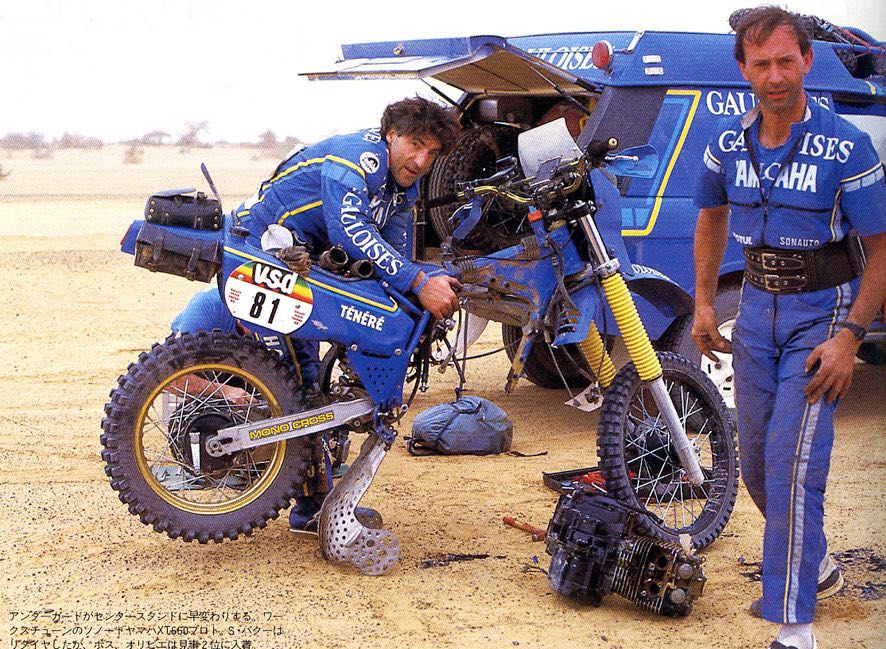
But my abiding memory from the ’84 Bol was a vision of my desert biking future. In fact it was a future that was already two years old, and its name was Yamaha. XT600Z. Ténéré.
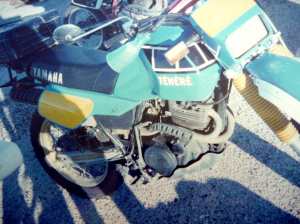
On the Sonauto Yamaha stand was TT-Z Dakar factory racer looking slick in the sexy, pale blue Gauloise livery (left) which we never got in the UK. The desert racer had it all: 55-litre tank, discs all round, 12-volt lights and a side stand as long as your arm. Even if the road-going XT-Z was less extreme, what was not to like? My Bénélé joke-bike had been a cocky two-fingers flicked at the Yam. Why? Search me, but 30 years later I found myself engaged in a similarly pointless project.
OK, I concede. The Tenere ticked all the boxes, but it had been fun doing it my way. I’m sure there’s some pithy Armenian proverb that spells it all out, something like: ‘The eagle never lost so much time as when he submitted to learn from the crow‘. Actually that’s William Blake as quoted in Dead Man movie.
Anyway, a Tenere could (and did) come later, right now It was time for the final haul, another 1100 clickety-clicks to Calais and a boat back to the UK. I spent that night in some slug-riddled forest, and Sunday morning saddled up bright and early to get a good run up for the ferry ramp. Tonight I’d be back home, but as I’ve learned so well over the years: it’s never over till it’s over. I don’t know where I was – the middle of France somewhere – but within an hour or two of setting off, a slate-grey death cloud crawled up onto the horizon, unzipped itself, and with a shrug proceeded to empty its bladder right in my face. My desert desiccated leathers soaked up what they could, before passing it onto my next layer of clothing, until within just a few minutes I was a sodden spongebag of saturated rags.
Splashing through a village, I overcame my Britannic reserve, swung into a farmyard and rode the bike into a barn. Inside was an old steam-powered lettuce thrasher. There I slumped, dripping on a workbench, exhaustion welling up from the previous fortnight’s moto mania. I was dropping off and ready to tip over in a heap when the farmer wandered in and said dryly: ‘Fatiguée, eh?’ I perked up with glazed eyes and luckily looked the part of a road-weary, waterproof-scorning wayfarer, rather than some deviant trespasser. He let me be.
Later that afternoon the P&O ferry disgorged me at the end of the A2 which reeled me back into London. Spinning along at 45-50, clogging up the slow lane, I snapped this defiant shadow shot as I went by.
Back home, what the Germans call derdurchfall began to form, as my shrunken stomach reacted violently with longed-for snacks. My drenched leather coat fell to the floor with a squelchy thud and I was surprised to see there were still dry patches on some parts of my clothes. I had just enough energy left in me to glare at the camera which had become my cherished companion this last fortnight and snarl like an alcoholic on New Year’s Day: No more sodding motorbikes! Ever! Well, not until 8am tomorrow, that is.
I don’t write about this mad, two-week trip in Desert Travels, so lap it up here for free.
You’d think I’d have learned something after my 1982 Saharan fiasco on the XT500. Well I did. Despite it all, I was still fascinated by the Sahara and wanted to go back and do it properly this time. When it was good it was epic and other-worldly, and if you came from one of the less edgy suburbs of South London, the Sahara made quite an impression: nature stripped back to its raw bones of sand and rock. And right down the middle lay the frail ribbon of road they called the Trans Sahara Highway which I’d ridden off the very end of a couple of years earlier on the XT.
By 1984 I’d settled for an easy way of despatching for a living: working long but steady hours for a London typesetting outfit, delivering advertising copy on the one mile between Holborn and the West End. (You can read all about that and a whole lot more in The Street Riding Years.) There was no longer a need to ride an IT250 or a 900SS should you get sent to the other side of the country on a wet Friday evening. For this job a dreary commuter bike was sufficient. And none came drearier than Honda’s CD200 Benly twin (below left), a single-carbed commuter ridden by stoical Benlymen. Riding up to 12 hours a day on a hyper-dull CD can drive you a bit crazy at 24 years of age. Your mind begins to wander.
Honda CD200 Benly
AJS Stormer 370
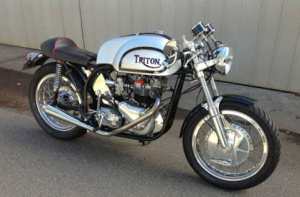
Knowing I was into trail bikes, a mate put me on to a mate flogging an AJS 370 Stormer (above right) for fifty quid. The Stormer was a vile, shin-kicking British two-stroke motocrosser that was the polar extreme of the Benly. In a flash of brilliance which years ago had given birth to the Triton cafe racer cult, I figured I could marry the two and make something more desert rideable and less boring: a Benly-engined, MX-framed desert racer!
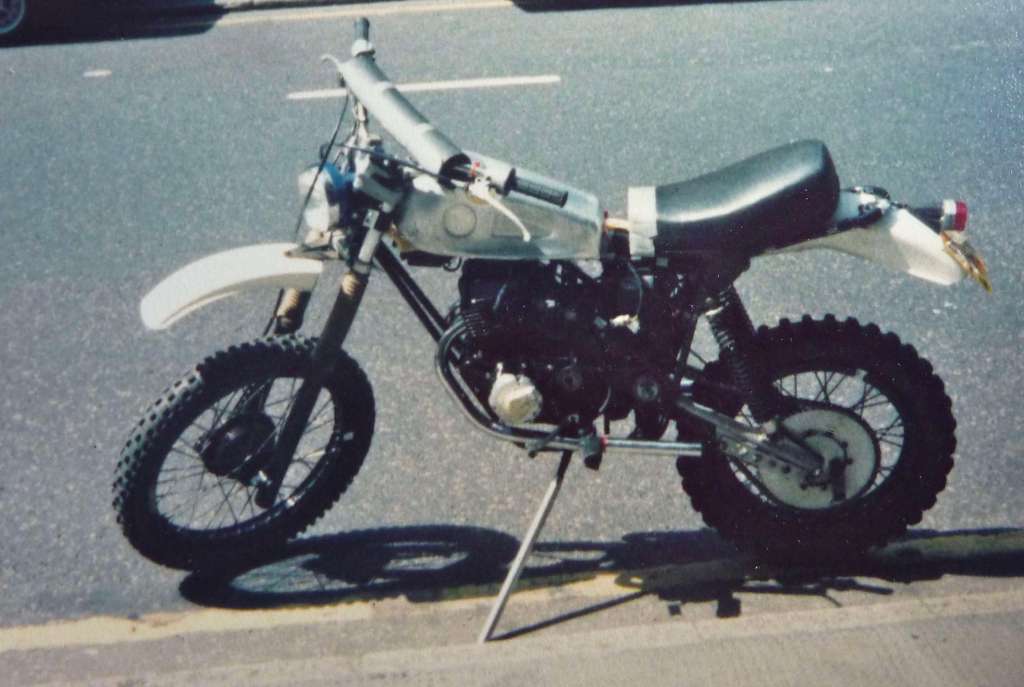
Over the summer of 1984 the machine took shape in my artfully appointed design studio in London’s literary Bloomsbury district. It took two goes to get a bike shop to correct the engine alignment mistakes of the former. But here it was, suspended by some Honda XL250S shocks as long as truncheons, and silenced by VW Beetle tailpipes, a cunning, lightweight trick you may recall from the BMW I rode with in Algeria in 1982. The job was finished off by replacing the dinner-plate rear sprocket with gearing more suited to horizontal applications. Topped off with a classic speedblock RD250 tank, I added a ‘Moto Verte’ sticker so there’d be no mistaking what an international, Franchophilious guy I was. I took it out to the woods near Addington to see what it could do. The result was similar to dragging a dead dog around on a lead. The VW pipes reduced the power at the rear wheel to quite possibly single figures. The foot of clearance needed a running jump to get on the bike. And the AJS conical hub brakes where a requirement by the then powerful Ambulance Drivers’ Union to ensure their members were never without work scraping Stormer riders off the sides of buses.
Testing the Benele
I dubbed the joke-bike ‘Bénélé‘ in mock-envious recognition of Yamaha’s near-perfect XT600Z Ténéré which I’d spotted in a Sydney bike shop a year earlier, and which was itself based on Yamaha’s Dakar Rally desert racers. More about them, later. So what do you do with a dumb-arsed desert racer? You ride it to the Sahara of course, but in a little less time than was available. You pack a 3500-mile trip to North Africa into two-weeks and schedule it for September when you imagine peak summer temperatures are on the wane. This time there’d be no miserable mid-winter transit of Europe and the northern Sahara, as in 1982.
Sli Edrar – my destination at 53mph
My goal that year was a mysterious massif of conical peaks which I’d photographed south of Arak on my way to Tamanrasset in 1982, and which I’ve since learned is called Sli Edrar. The Bénélé’s top speed was no more than 53mph, and even at that speed it felt unsafe, should a squirrel run out in front. So to get a good run-up I rode straight from work on Friday night down to a mate’s in Canterbury, close to the port of Dover, ready to catch an early ferry next morning.
Total
Gumby
By maintaining momentum, Monday night found me camped back among the magical limestone outcrops of Cassis, near Marseille, ready to hop on the ferry to Algiers the following morning.
Cassis
Windsurfeurs, Marseille
After the rubbish set up of the XT500, you can see I had an all-new ultralight soft luggage arrangement. No more sawn-off chemical tins poorly lashed to Dexion racking. A small canvas pannier hung on one side with a 10-litre jerrican inside; a thin cotton Times newspaper delivery bag dangled off the other with 10 litres of water. And an over-huge tank bag sat on the flat-topped RD tank. A sleeping bag was lashed in front of the headlight – Easy Rider style – and kept the bugs off the Benly headlight. Cunningly, I lashed a tool bag with other heavy items under the lofty engine. If my mass had been any more centralised I’d have become a Black Hole right there and then.
My first memory of Algeria that year was being a little unnerved that as far north as El Golea it was already 35°C by 9am. If you live in Yuma that’s probably no big deal in September, but for a South London boy it was a bit of a shock. I filled up in town and set off across the Tademait plateau which had spooked me on my first transit in ’82. The next town (or anything) was 400km away. I buzzed along at 9.8hp/hour and by early afternoon dust devils or mini tornadoes were whipping across the baking gibber to either side of me. I recalled how a mate said he’d been knocked off his XS650 by one in Turkey earlier that year.
I was already tired, thirsty, sore and hot when up ahead what looked like a huge wall of sand hundreds of feet high hurtled right across the blacktop like a train at a level crossing. Only as I neared it did I realise it was the mother of all whirlwinds, a huge cauldron of rotating sand. I turned the wick up and the motor droned as I punched the Benele into the sand wall. Inside, visibility was lost as grains pelted me from all directions and I struggled to keep upright or even know which way upright was. And then, as I slipped into the windless eye of the maelstrom, the sand grains briefly turned into pelting raindrops. WT jolly old F was going on!? Search me, but before I knew it, I’d blasted out of the spinning tornado’s opposite wall, this time shoved left onto the roadside gravel. Now I knew how those roadsigns got flattened into the dirt…
Just as in 1982, the Tademait had terrorised me and I vowed to ride into the dark to be off the plateau before stopping. I continued into the dusk, pulling up briefly with the engine running to remove the sleeping bag off the headlight, before pushing on from the big switchback descent from the Tademait to the desert floor. That night I stripped off and lay in the dirt by the bike, listening to what sounded like the oil boiling in the crankcases, hours after switching off. I wasn’t hungry but I drank and drank and soon fell asleep where I lay. Tomorrow I was passing In Salah, the hottest town in Algeria, before heading deeper into the Sahara.
It was 2001 and with a quiet summer ahead, I was in the mood for a long ride. So when Adventure Motorcycling Handbook contributor Tom Grenon offered his spare KLR650 for a trip into the wilds of western Canada, I booked a flight to Vancouver and started oiling my boots.
Tom GNorm and Bill
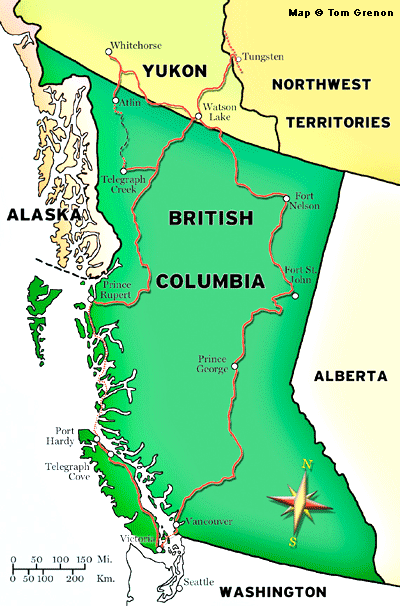
Mid-August at Tom’s place on Vancouver Island: Bill and Norm rock up and the all KLR-mounted Northern Foursome saddled up for the 500-km ride to Port Hardy at the island’s northern tip. From here a ferry saved our tyres 2000km by transporting us along the mist-shrouded coast to Prince Rupert in northern BC.
Thumbnail graphic by simon-roberts.com
Prince Rupert is among the wettest places in the temperate world and docking around midnight, a storm was rolling in off the Pacific as we pressed down velcro flaps and splashed into town and a cheap motel.
Tom’s plan for the trip was to boldly go where no bike had gone before. First up, we’d try to follow the long abandoned 400-km Telegraph Trail which started a couple of days up the road. We had little chance of making it through: long-collapsed bridges or rivers two KLRs deep would soon stop us. But it should be fun trying.
Telegraph Creek is a quaint old town where the southern end of the Trail begins, or should that be: began. Situated on the Sitkine River, it gets by on logging, mining and a trickle of adventure-seekers like us. At the general store we got the drum from a helpful Mountie: on bikes it would be tough and he didn’t rate our chances much beyond KM20 unless we came back in winter on skidoos.
We camped by the Sitkine that night, and next morning headed up the Trail, nothing more than an overgrown ATV track leading into the thick forest.
“It’ll be rude” said a local, leaning on the door of his pickup.
Streamsand slopesand sludge
Splashing through a couple of creeks was fun, but after four hours of sweaty, bug-infested pushing, paddling and wheel-spinning we had to concede the Mountie’s prediction was on the money. We found a patch of level dry, ground and by 9pm were fed, watered and zipped into our bags for the night.
Firewood, large amounts
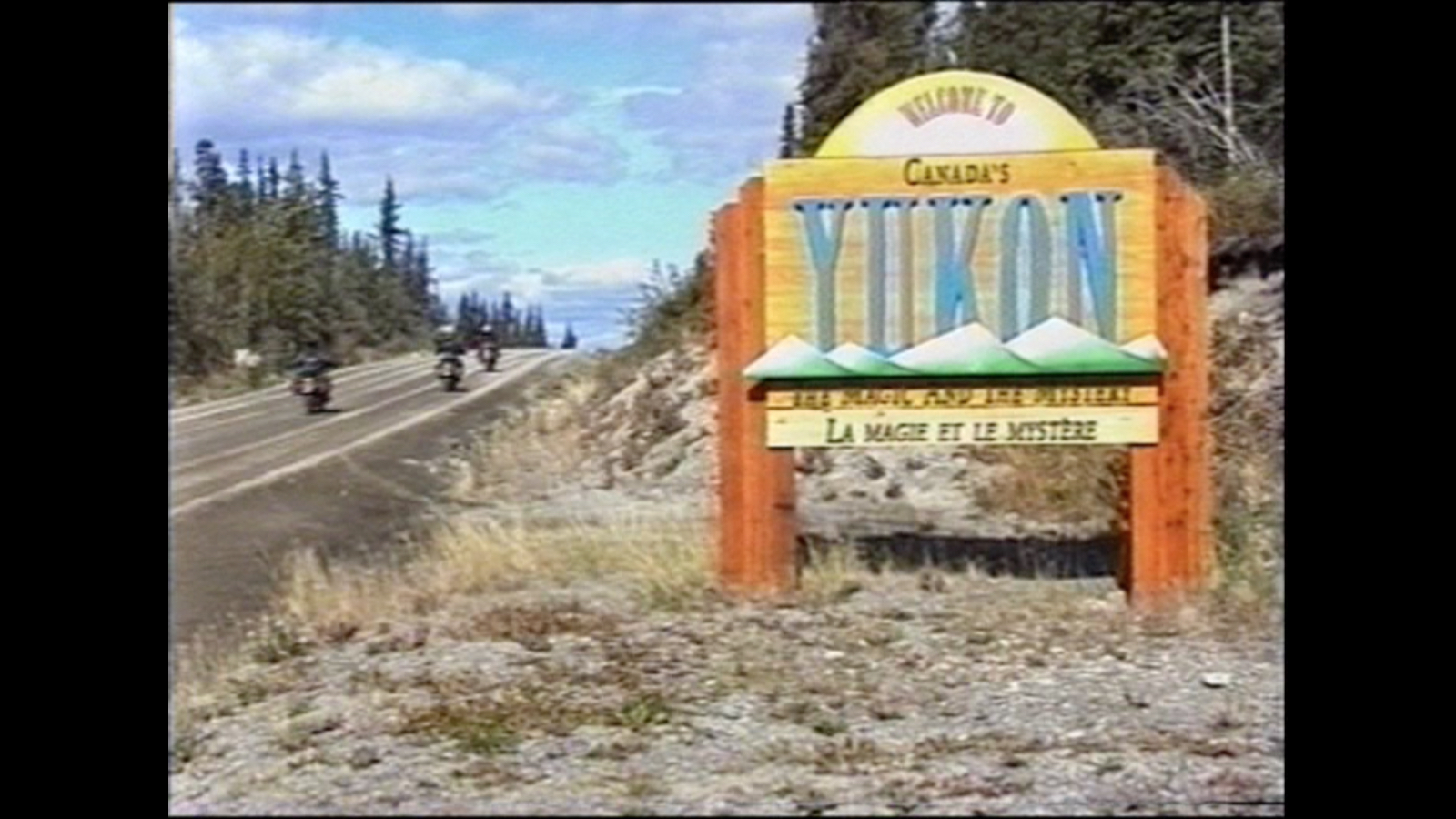
Next morning the 20km ride back to Telegraph Creek was a doddle, but an 800km detour through the Yukon to the Trail’s northern end revealed the same story. Without an Argo (an amphibious ATV) or a skidoo (plus snow) we didn’t have a chance. We left the Telegraph Trail to the beavers and the caribou.
Now back on the Alaska Highway, we oppped into Whitehorse for a steak and then knocked out another few hundreds clicks to our final jaunt into the Northwest Territories. At Watson Lake (and its famous ‘sign forrest’) we tanked up with 40 litres each for the few days exploring along the valleys on the far side of the Mackenzie Mountains.
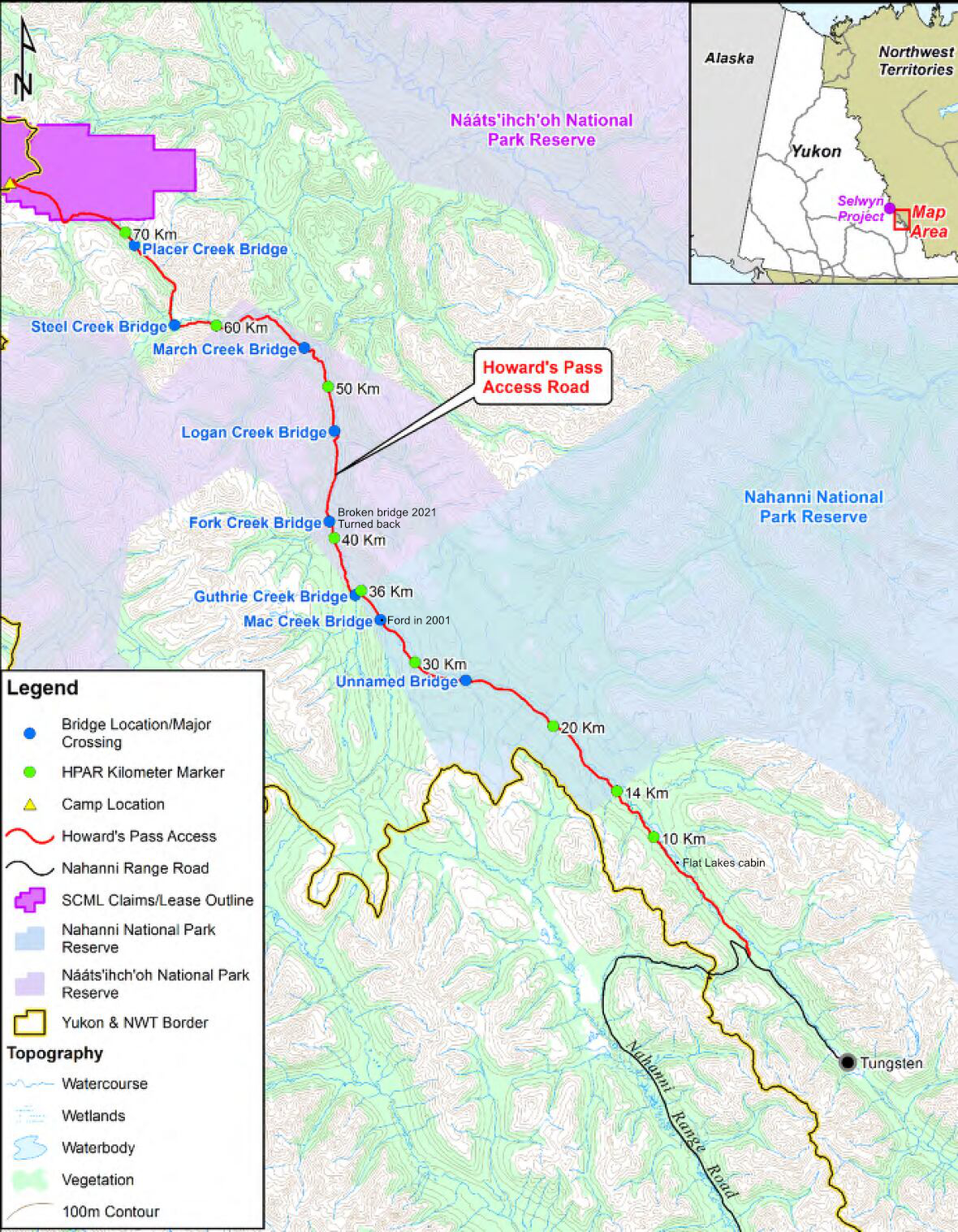
Our destination was the dormant company town of Tungsten atop the largest deposits of you-know-what in the free world. In the 1980s bolshy unions and undercutting saw the mine close, but in the summer of 2001 it’s said Tony Blair did the local economy a favour by banning the use of super-hard depleted uranium by the UK’s arms producers. Tungsten is the second hardest metal, perfect for the business end of a missile and so Tungsten town was back in business which for the Foursome (if not others) was good news. A phone call to the local Roads Department confirmed that a river which had blocked Tom’s progress on a previous visit was now bridged. Nevertheless, to save fuel we kept it down to fifty, and 80 miles from Watson poured in a gallon can, stashed another for the ride back, and kept a third for later.
Mackenzie Mountain watershed
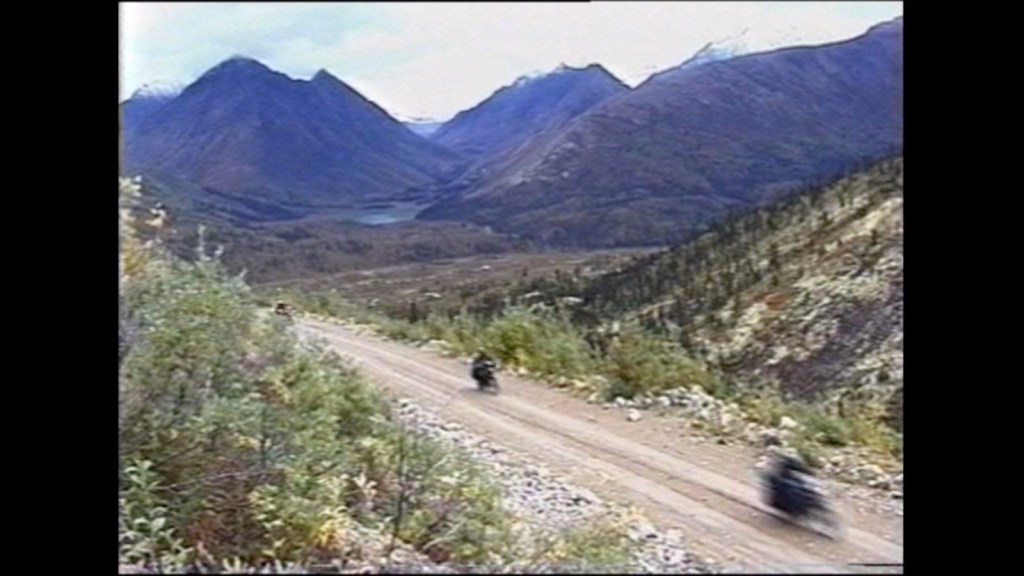
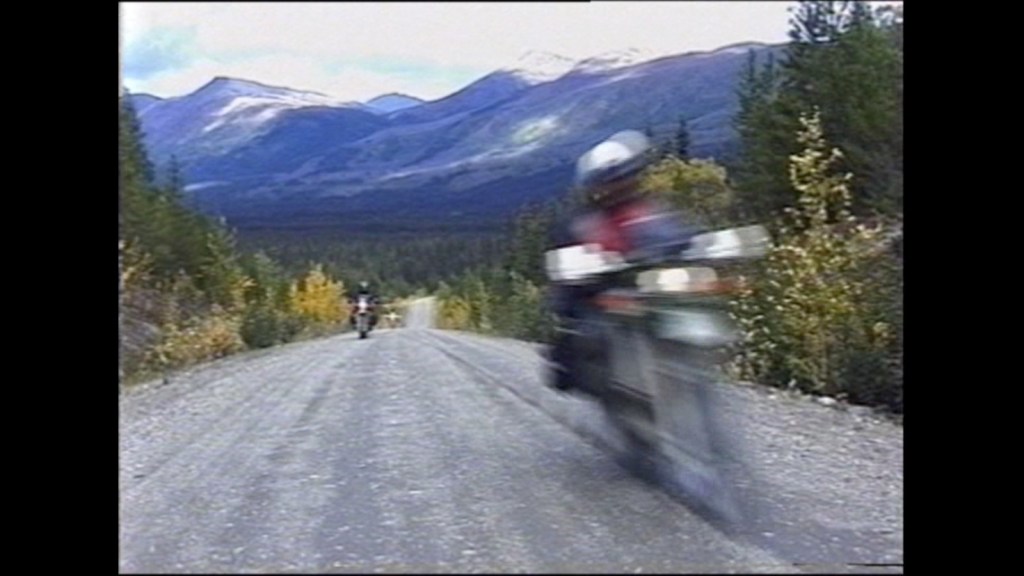
For me this ride alomng the Nahanni Range Road went some way to fulfilling the promise of impressive scenery. Up till now I’d seen a lot of trees resembling the drabber parts of the Scottish Highlands on a monumental scale. But as we neared the pass on the Yukon-Northwest Territories border it all looked glorious, and even the showers chasing us up the valley couldn’t dampen our spirits.
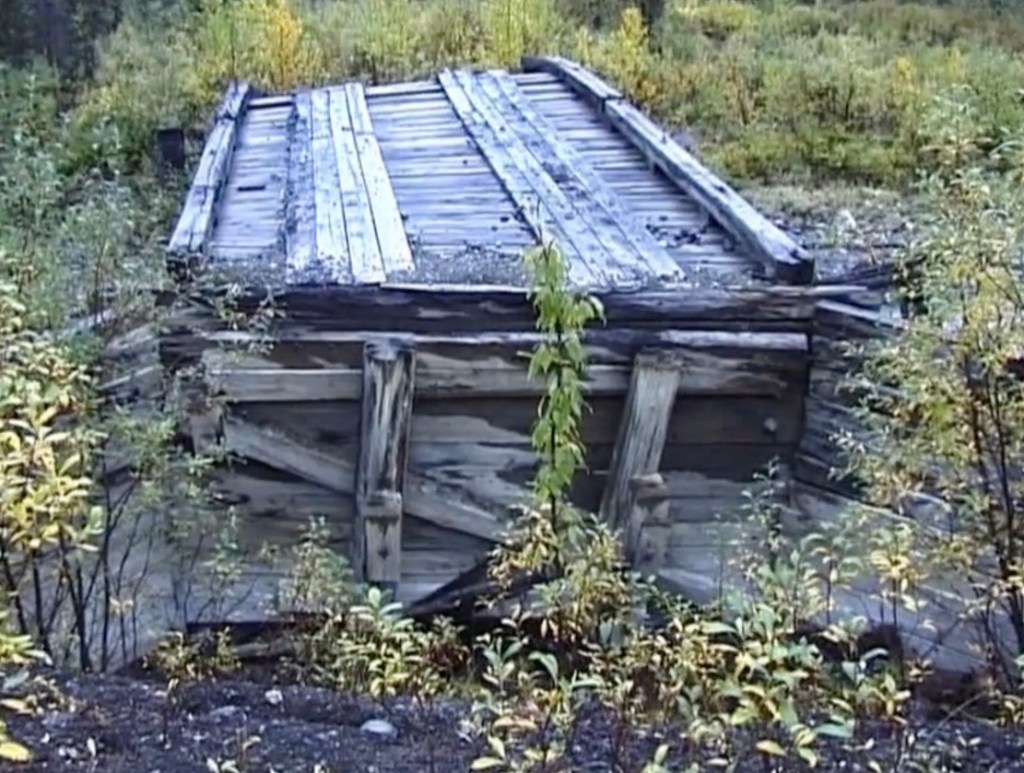
Part of that reason was on the way in we’d finally located a cozy hunter’s cabin described in a local guidebook. Out here on so-called ‘Crown Land’ (undeveloped wilderness) you can sort-of build a cabin wherever you want. Effectively you’re squatting, but that’s how much of the New World got colonised in the first place. Locking up a place would only see it get broken into, so an unwritten custom states: ‘Make yourself at home, please leave it as you find it and cut some extra firewood before you leave’.
After breakfast we nailed up the door and window shutters, filled up from the stream and continued up to the pass where the amazing colours of the turning foliage filled the lower half of the spectrum. We eased over the watershed into the NWT and, ignoring ‘Keep Out’ signs and hard-hatted jobsworths, rode through Tungsten like Gary Cooper in Gore-tex. In Tom’s view the access road had been built with tax dollars so we all had a right to ride it through town and beyond.
There was said to be a hot spring near the airstrip just south of town and sure enough there it was, a warm outdoor pool and just beyond, a little A-frame where a stone tub bubbled at an ideal, muscle-soothing temperature.
Suitably revived, the meatier exploration prospects lay north of Tungsten, where in the 1970s a track once led to a sister zinc mine at Howards Pass [this track has since been rebuilt and called the Howards Pass Road, see map above]. We rode back through town and took the turn-off down into the valley. The day before we’d met some hunters with an Argo who reckoned we’d get about 40kms in before a bike-proof broke-bridge stream stopped us. By now the skies were clearing again to give a grand view up the LittleNahanni River valley which we would parallel. Although I didn’t realise it at the time, Tungsten happened to be right on a watershed where the Little Nahanni River flowed north to join the famous South Nahanni River, while the Flat River ran southeast to join the Nahanni some 300km downstream.
Fast tracking into the Nahanni Ranges
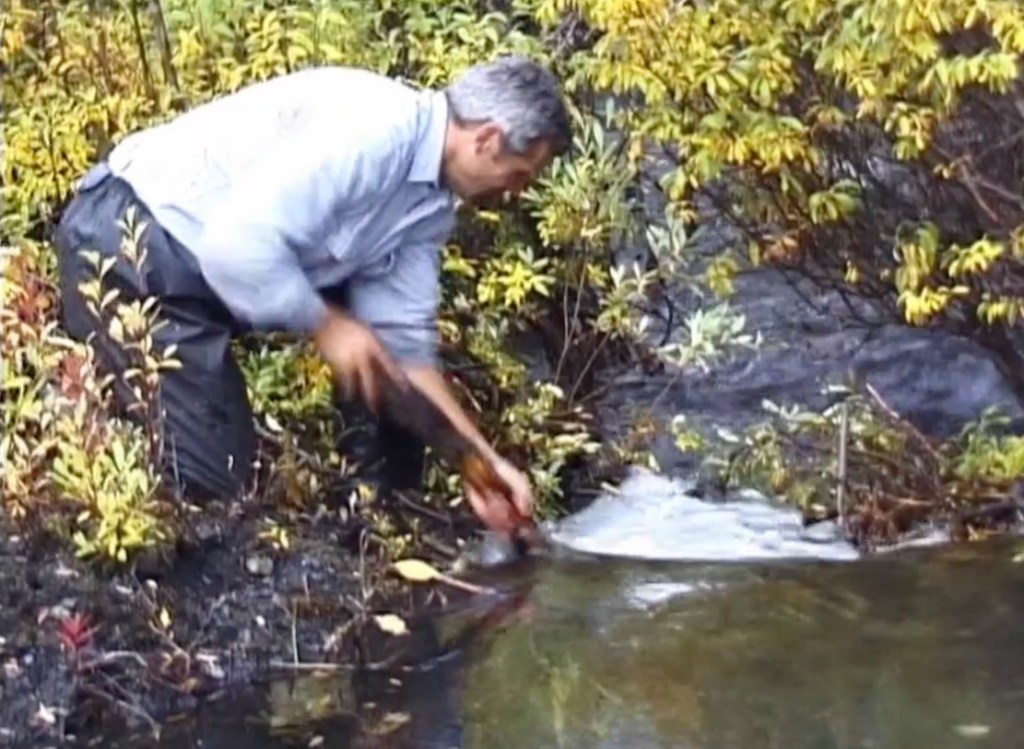
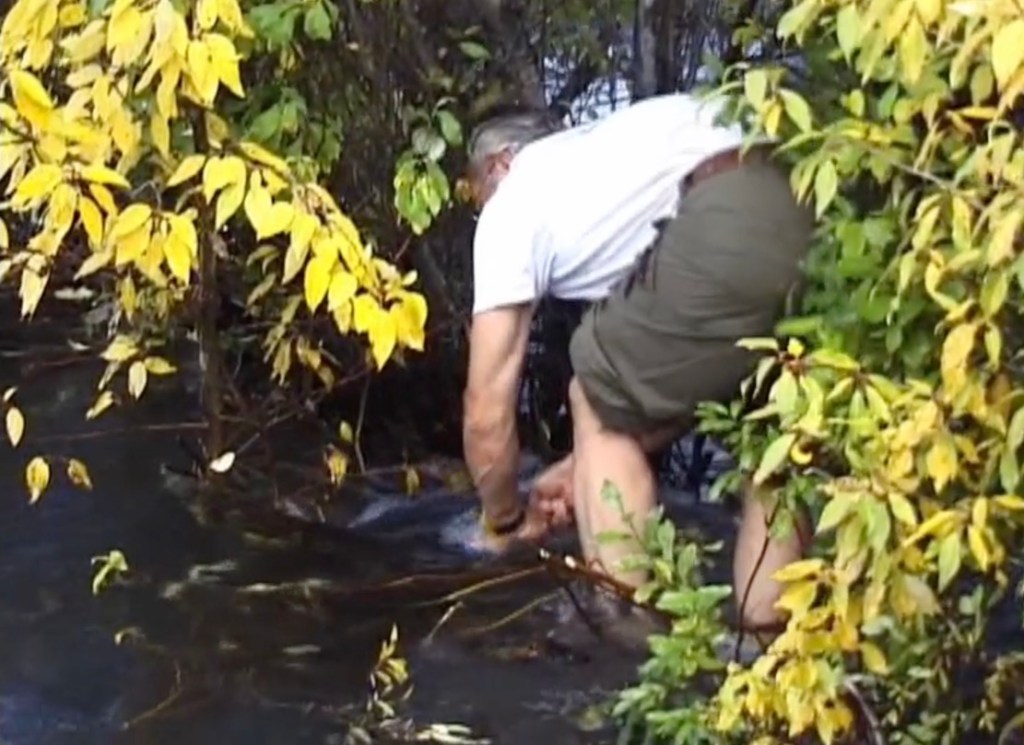
After a kew kilometres we clocked some rangers’ cabins (handy if the weather turned) but soon came to a large flooded area. A family of busy beavers had woven a twig dam, turning a stream into a lake that backed-up half a kilometre and submerged the track under a metre of water. The only way forward was to roll up our trousers and pull it apart.
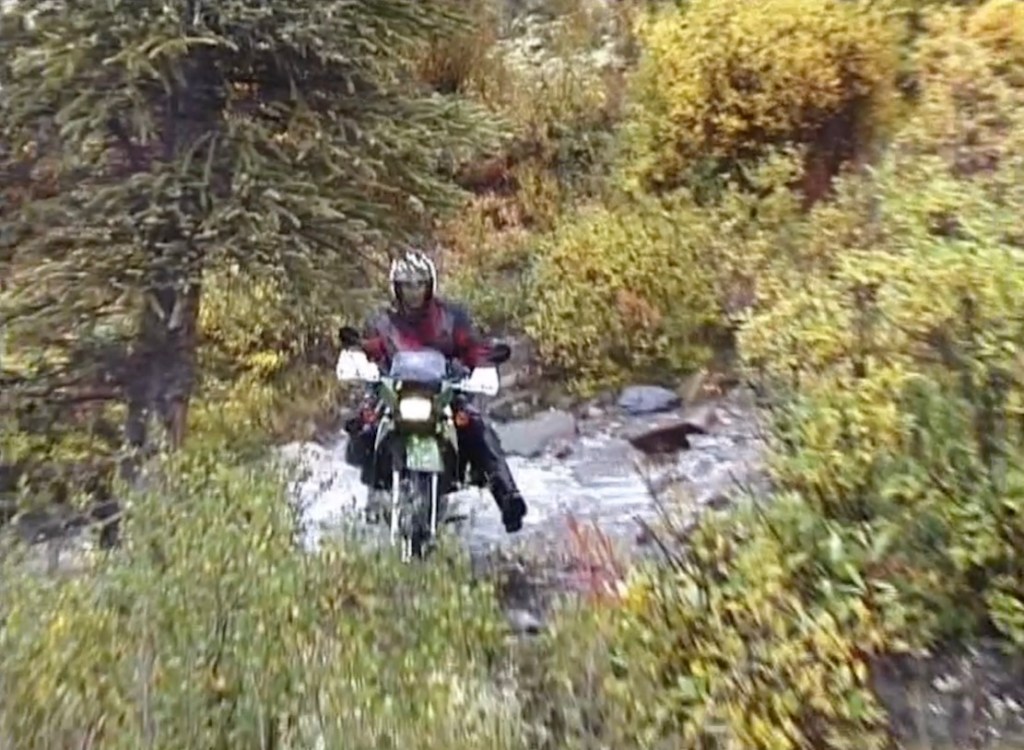
After an hour’s work the water had dropped significantly, so I undertook a test-wade up to my knees after which Norm rode across. Beavers tend to rebuild these things overnight, but we’d face that problem on the way back.
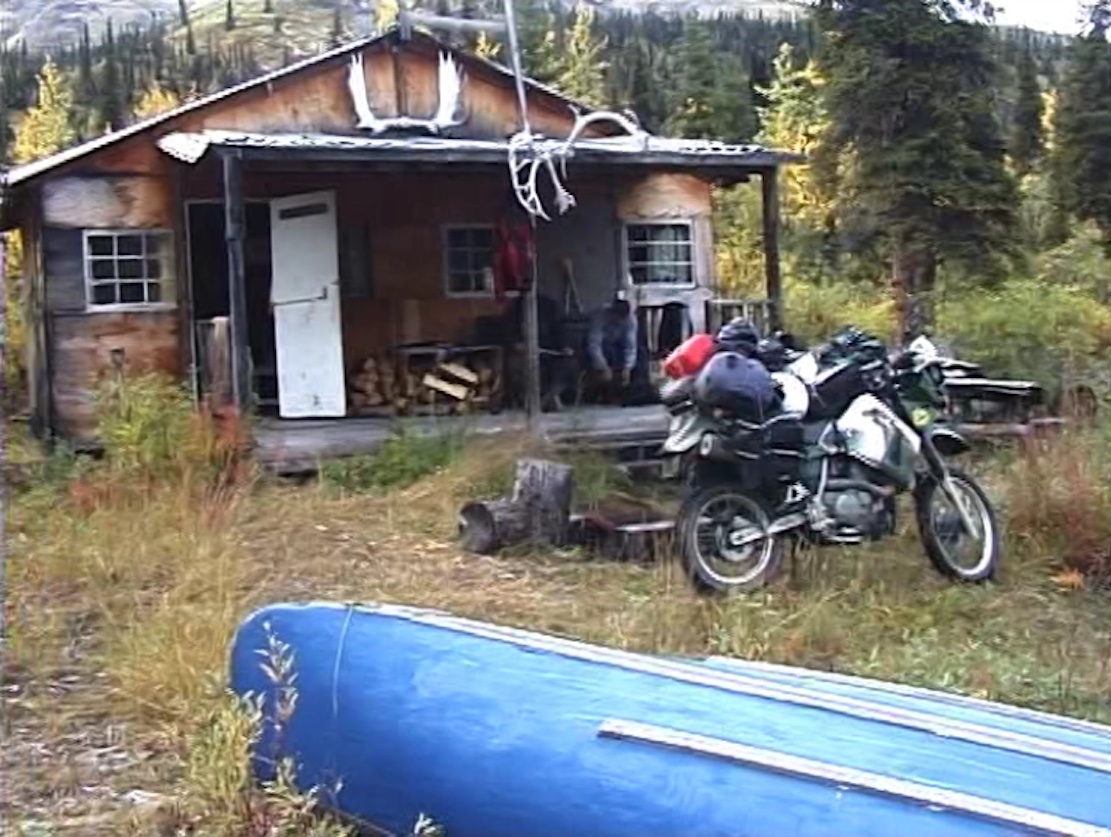
Beyond the stream we were on the look-out for a trail that led down to Flat Lakes and another cabin. Luckily we didn’t all blink at the same time and spotted the overgrown path dropping steeply through the trees to what was indeed the Perfect Cabin, complete with moose antlers.
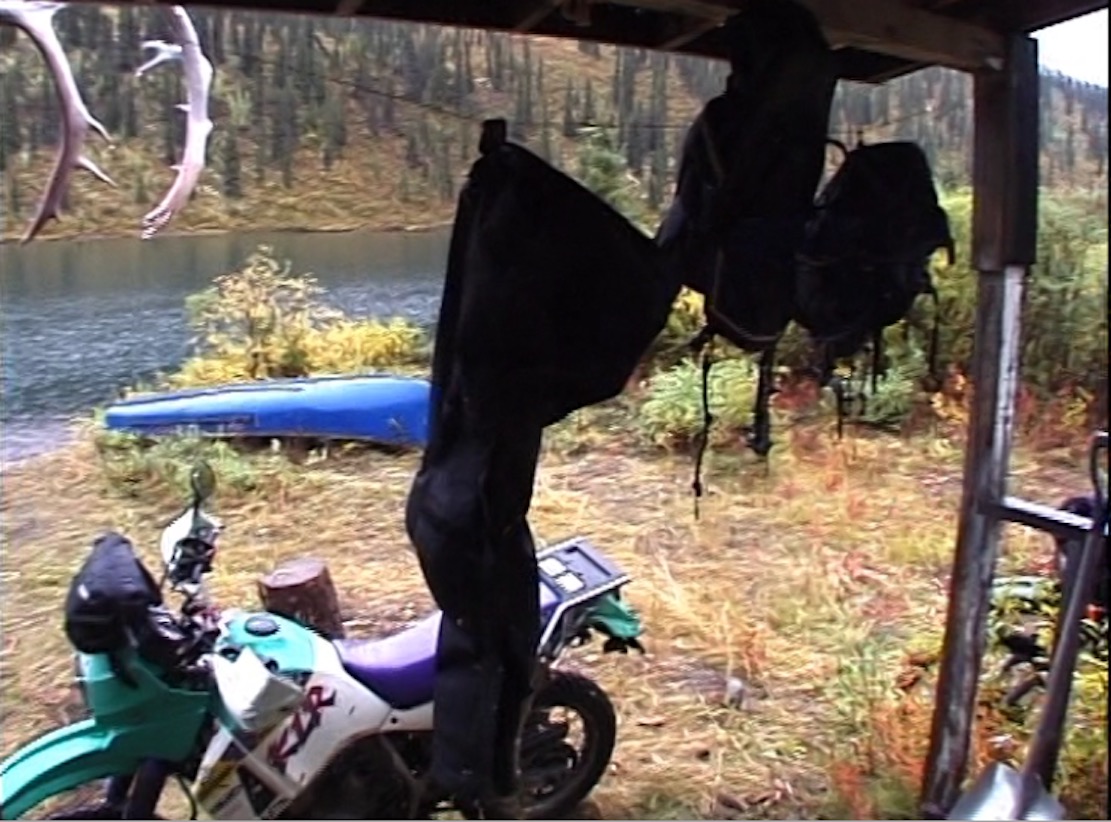
This one had it all: a porch and deck to dry out our clothes, gas to cook on, five bunks to choose from and more condiments than Safeways. We changed and hung up our soaking gear, loaded up the wood-stove and went out fishing in the row boat just as the sun set over the lake.
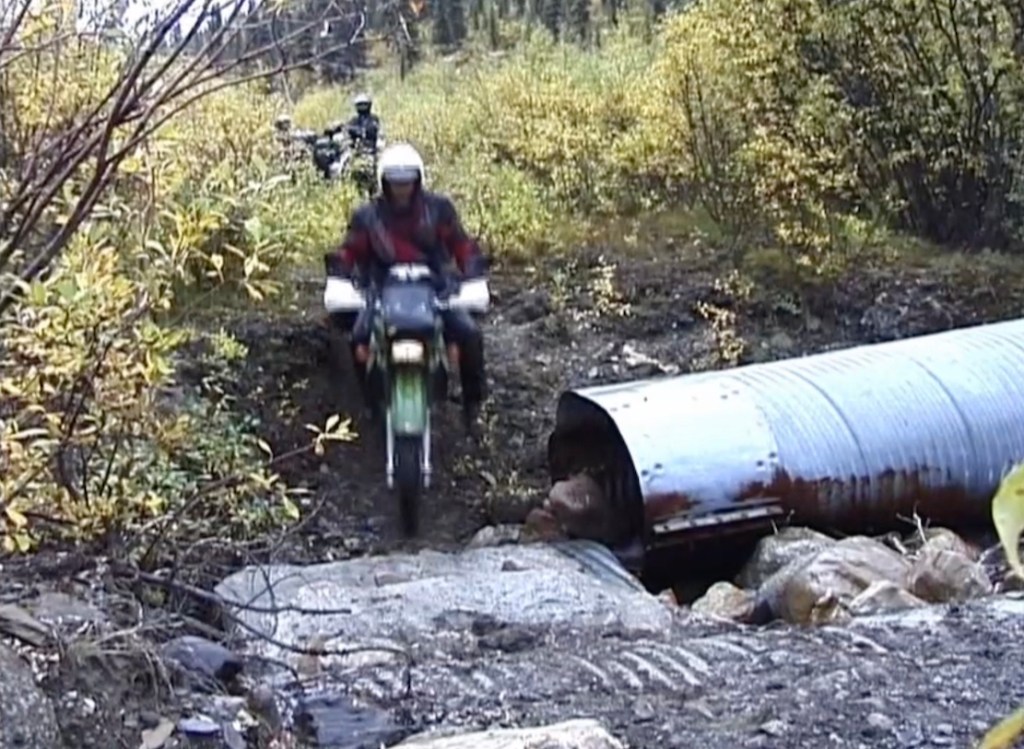
The following day the difficulties started almost straight way. Within a kilometre a steep sided ditch lay where a culvert had been ripped out in the spring thaw. Where the Argo had gone a KLR can just about follow: along a side ditch, over the stream and up the steep opposite bank.
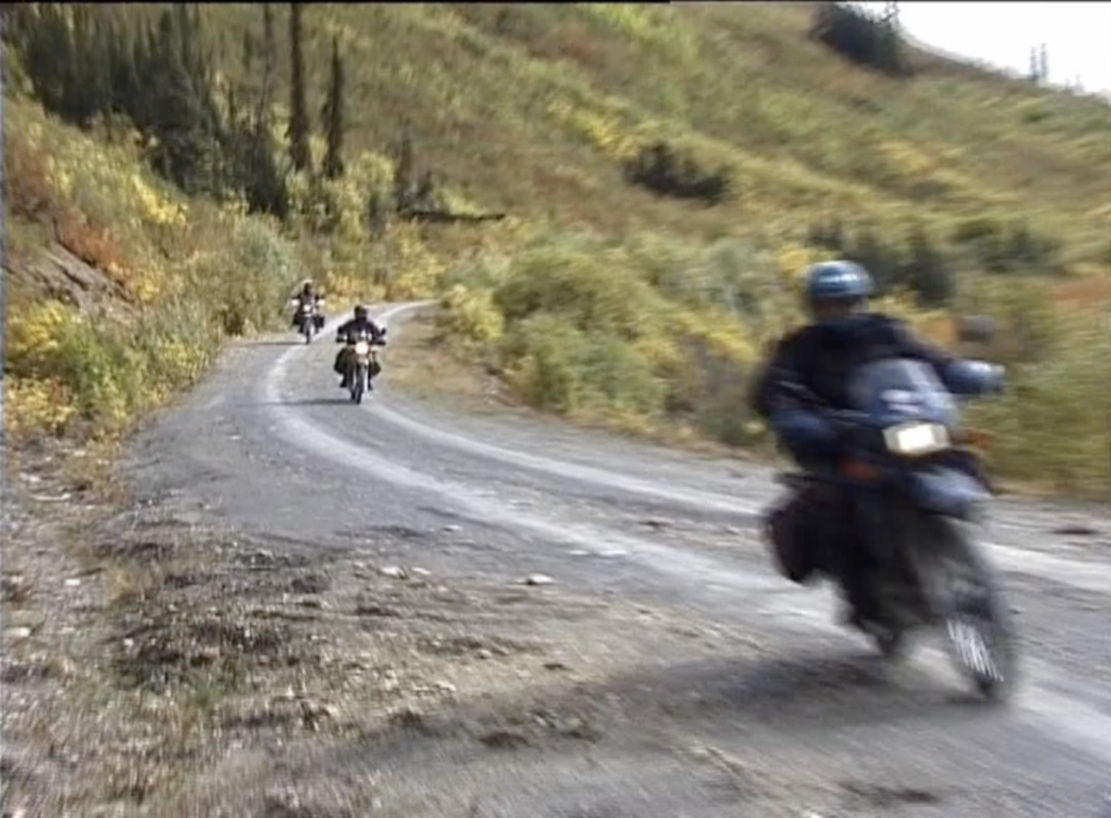
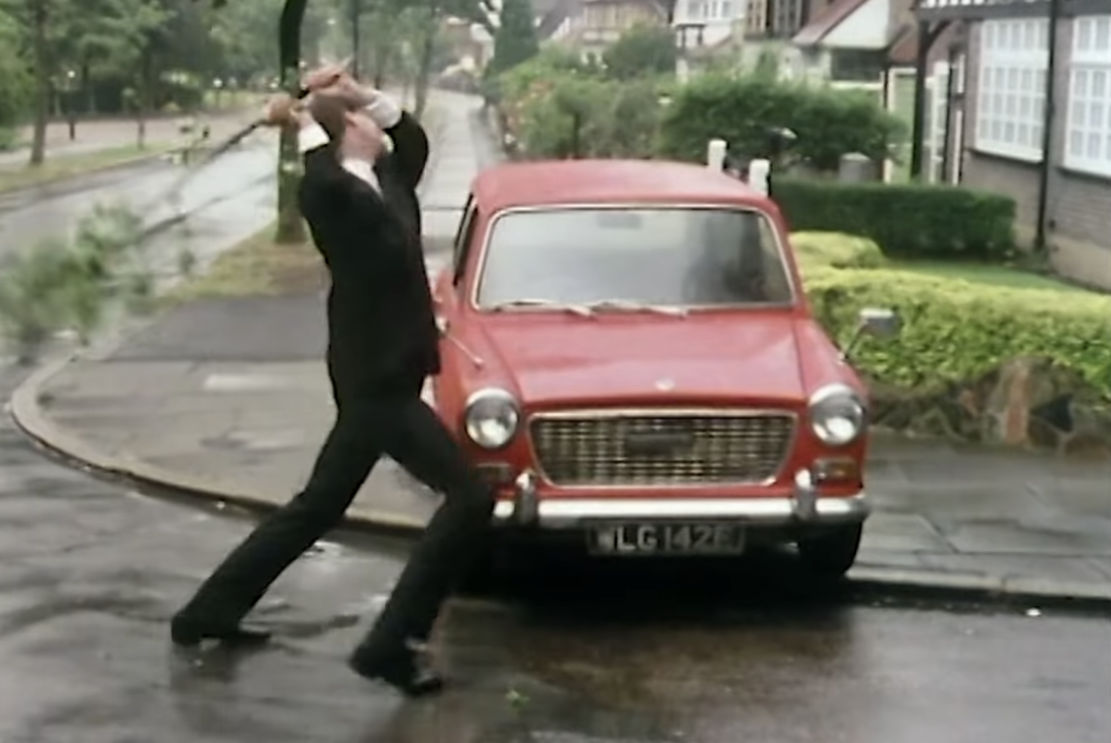
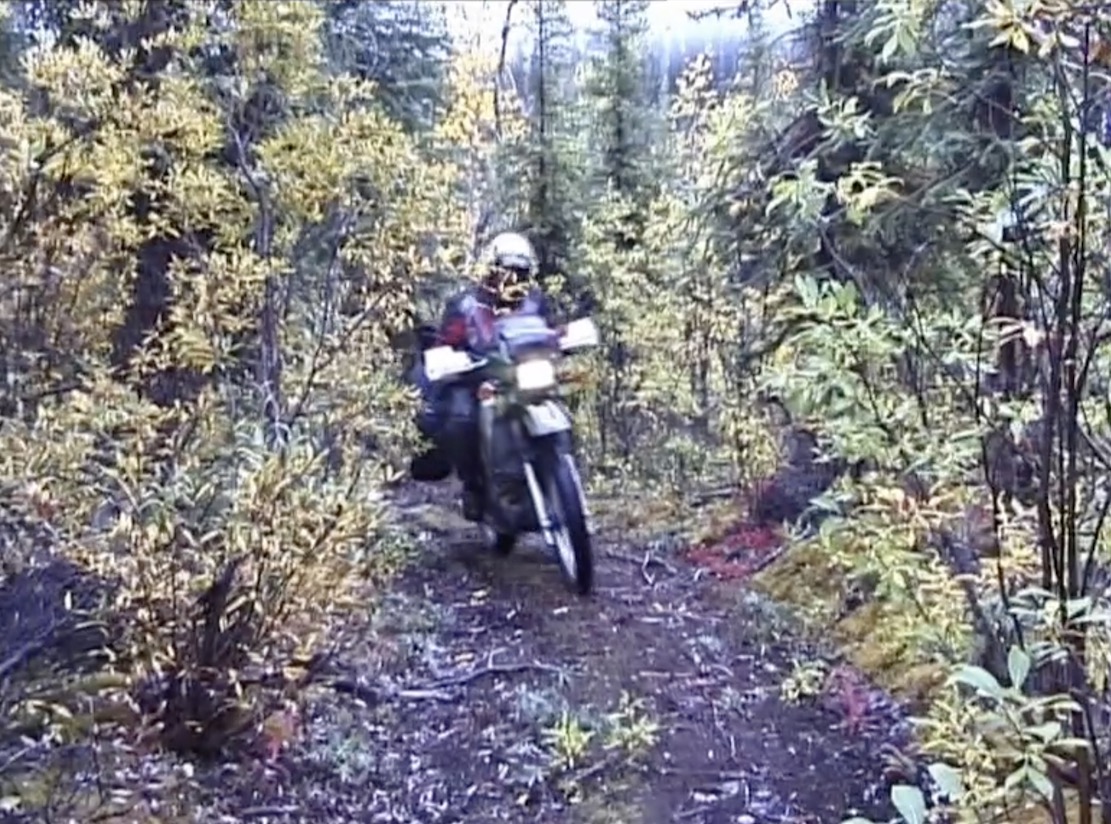
These challenges continued with variations. In places we had to dig away at steep banks, flip half-ton slabs out of the way and fill ditches with boulders just to get through. Clearly, only Argos had been up here for years. The trail narrowed through thick willow brush and we bashed ever onward, wincing at the continuous thrashing not seen since Basil Fawlty turned on his Austin 1100. Boggy holes and slimy patches taxed us further; at one point I was convinced the 650’s triple clamps had snapped. Surely the front wheel doesn’t normally flop around like that? ‘Fraid so: this was a pepperoni-forked KLR in dire need of a brace.
As it was, I’d been aware that I’d been riding like a lemon the whole trip, while the others, notably Tom, rode their KLRs with skillfull precision. I could blame the trail-tyred KLR, my anxiety about old injuries, or protecting the camcorder from the rain. But the truth was, I wasn’t really into this relentless, sodden tree-bound battling up dead ends in the rain, even it might make a great video. Give me the Sahara’s far horizons.
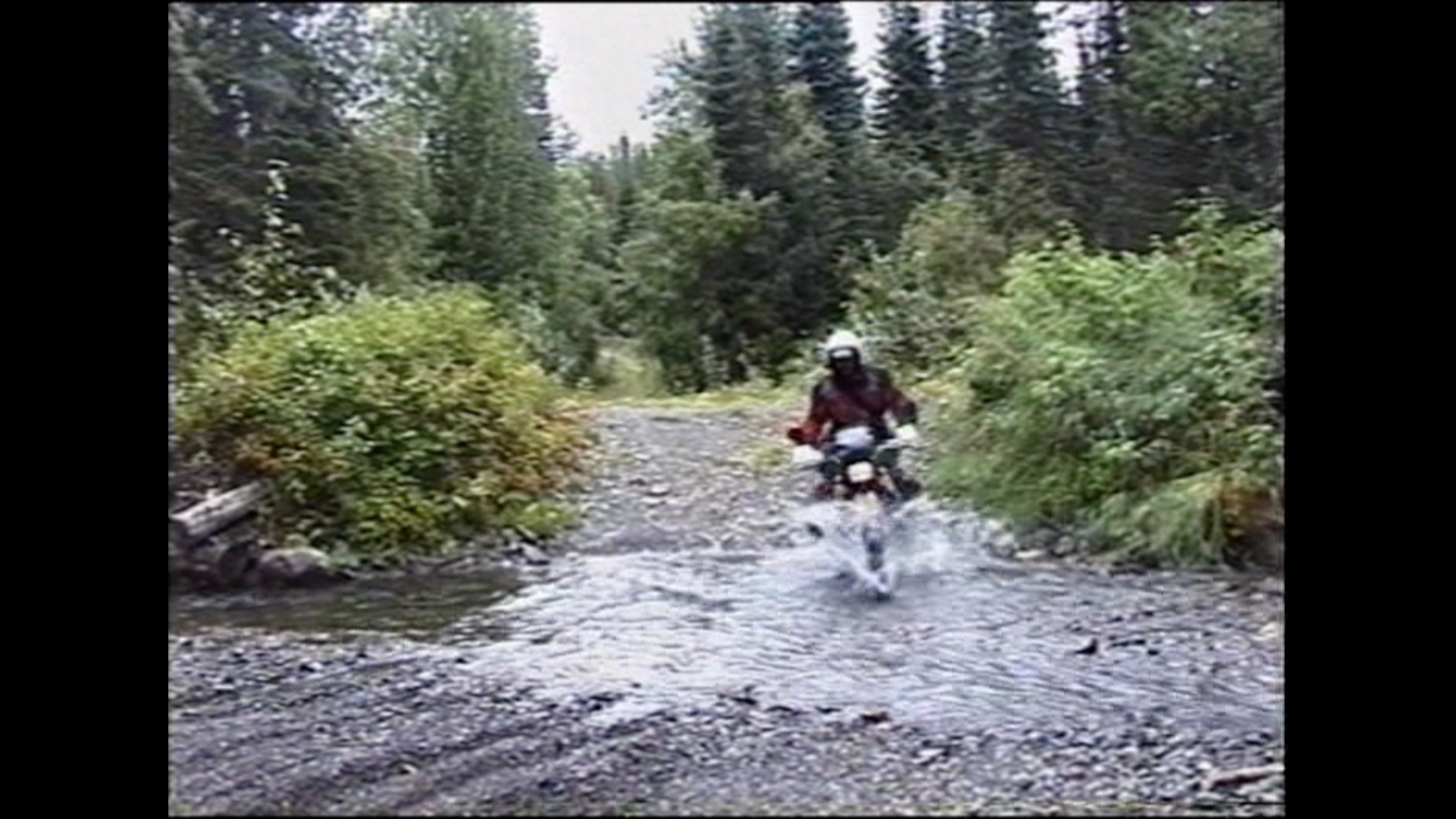
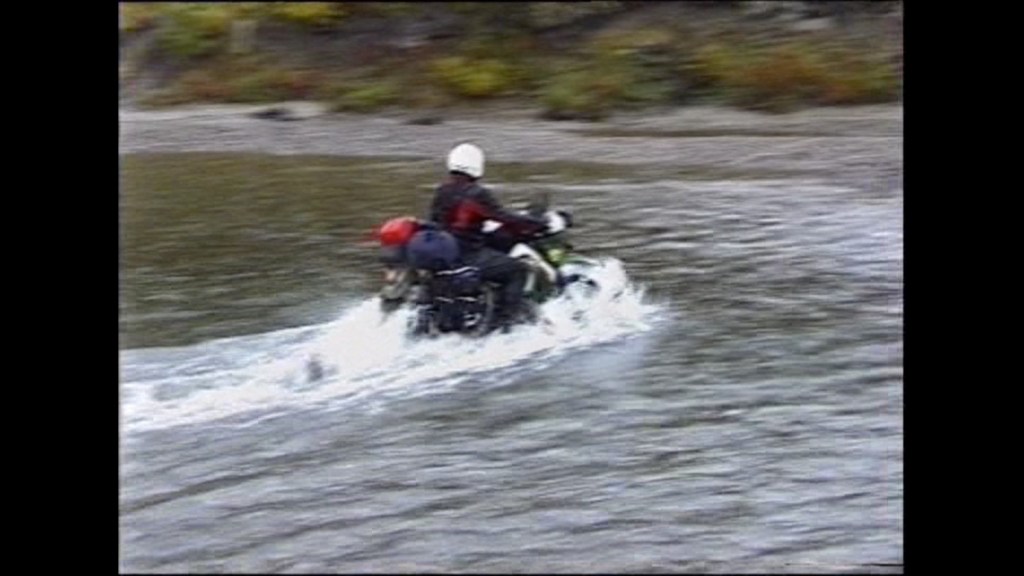
After about four hours and 25kms of this we got to a wide river spanned by a collapsed bridge. This must surely be it, back to the cabin we go! But closer inspection proved the broad stream was actually not that deep, and Tom proved it by wading over then riding through.
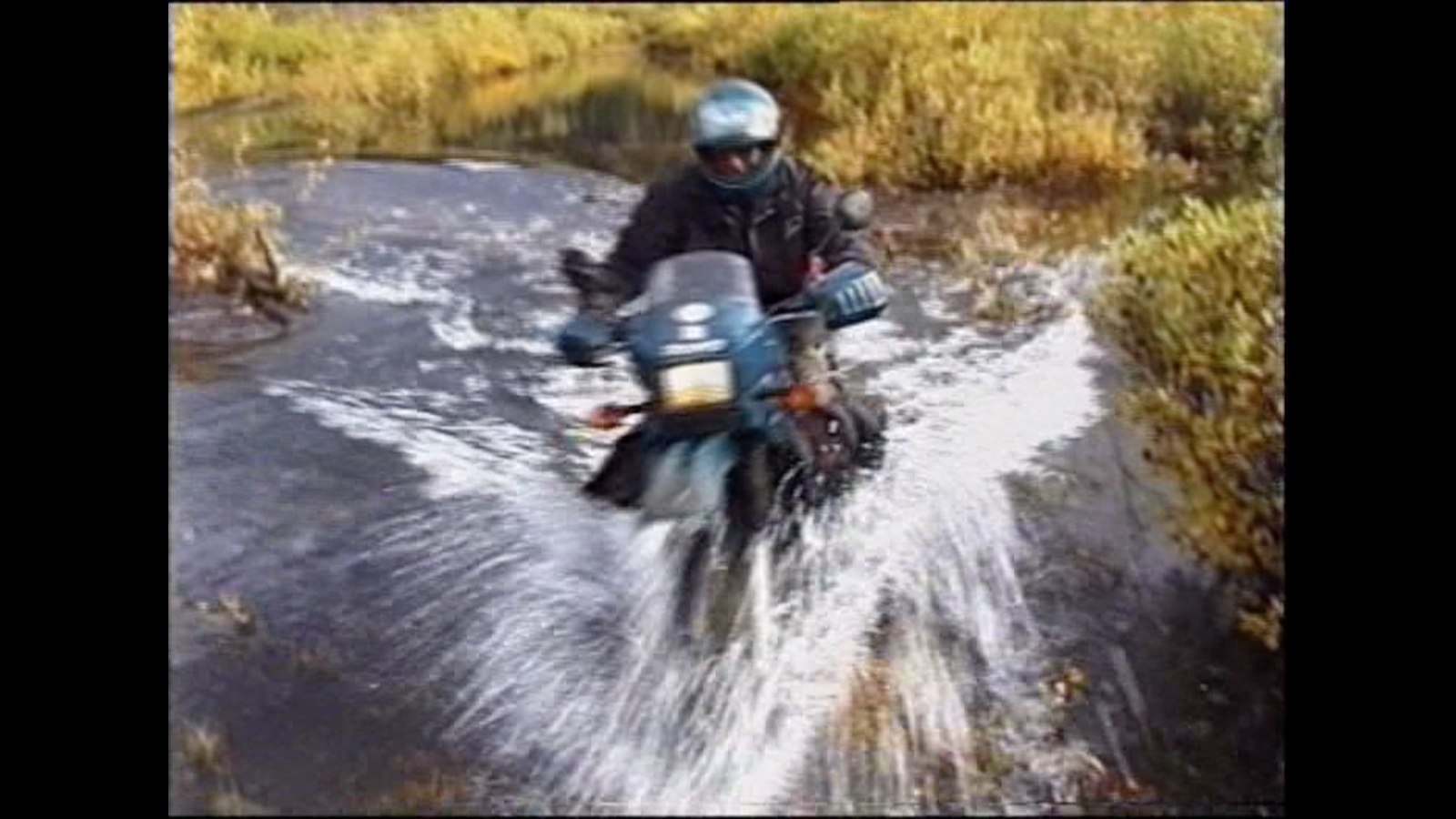
“Come on guys, it’s easy”
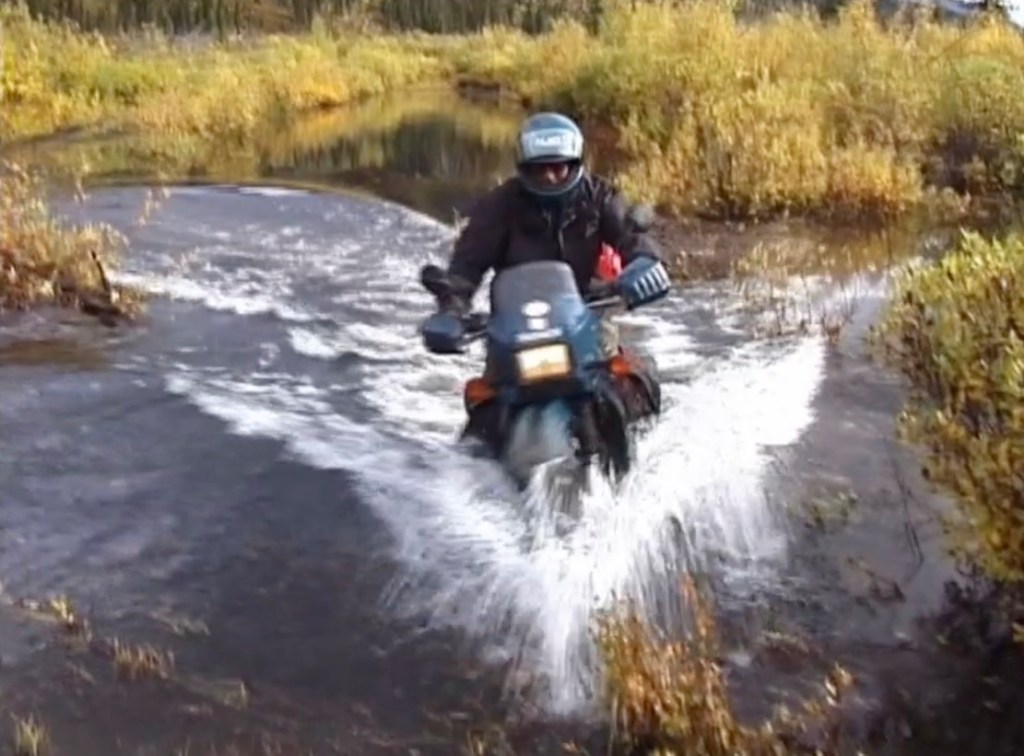
We dithered about but in the end rode in on steady throttles, the engines momentarily muffled by the deep water, but not missing a beat. In fact none of the KLRs so much as coughed during their entire 6000-km drenching.
Easier than it looks – until it isn’t
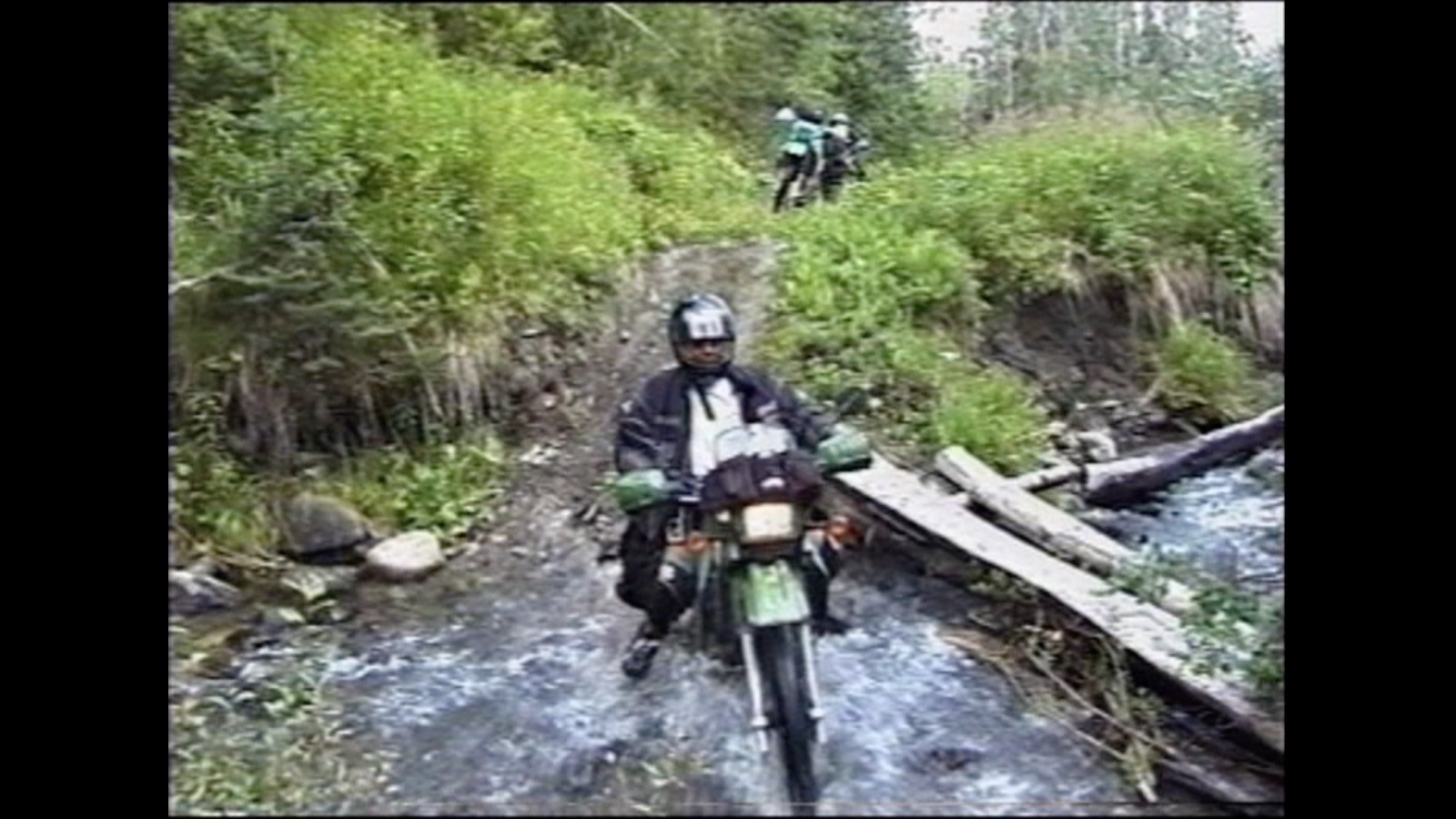
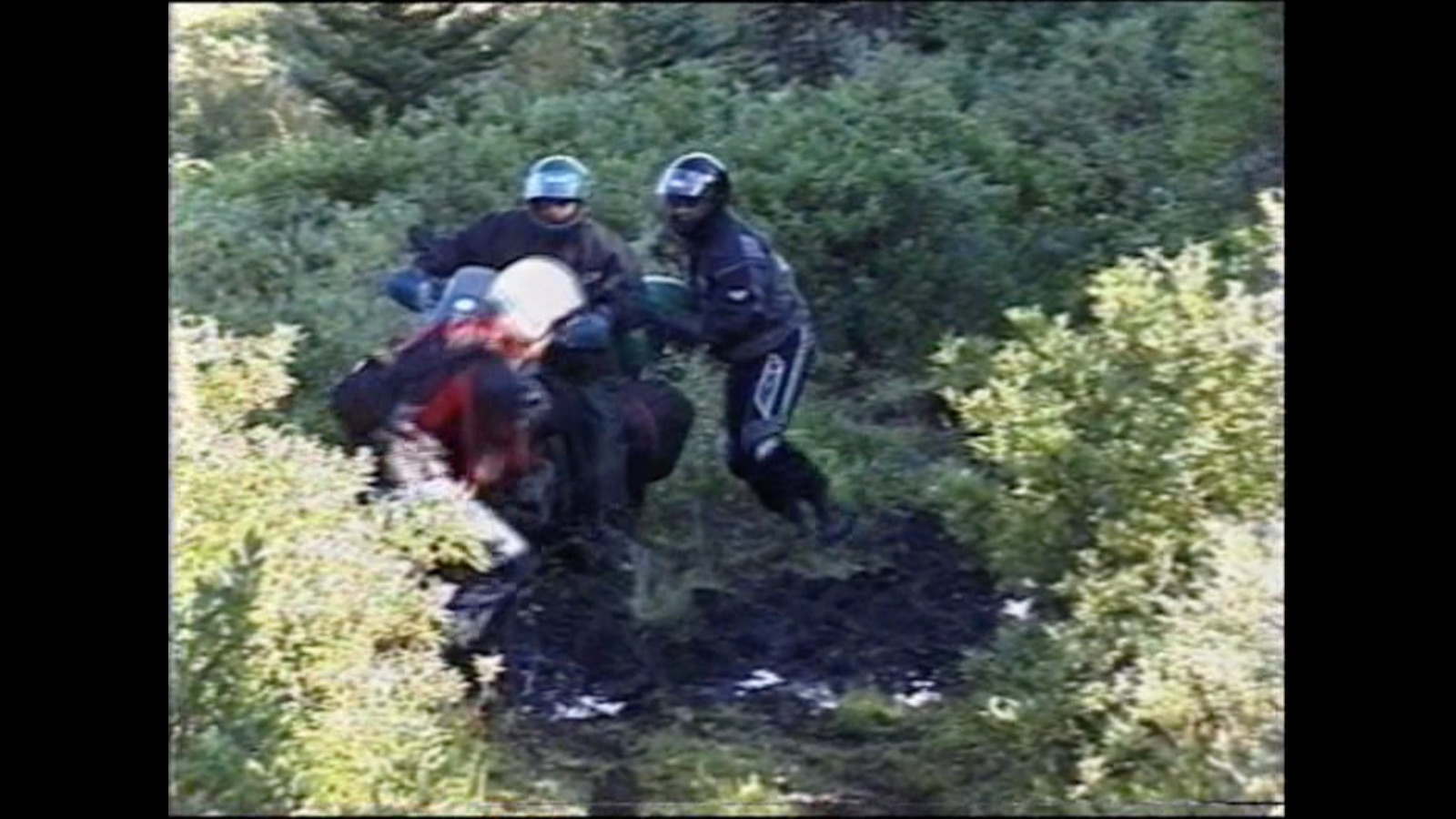
On the far side the greasy riverbank initially spat Bill back down but led to a grassy slope where some of us needed a push. Then it was back to more willow-thrashings, sawing at fallen logs we couldn’t ride round, tiptoeing over slimy bridges and powering out of ditches with gritted teeth … until we came to the bridge at Fork Creek that was ten feet shorter than it ought to be.
Forked at Fork Creek
Though narrow, the creek below was full of fridge-sized boulders. We might have manhandled the bikes across or spent the rest of the day sawing down trees to bridge the gap, but by now it was half-two, still pissing down and so, about 35 clicks from the cabin, we called it a day and turned back.
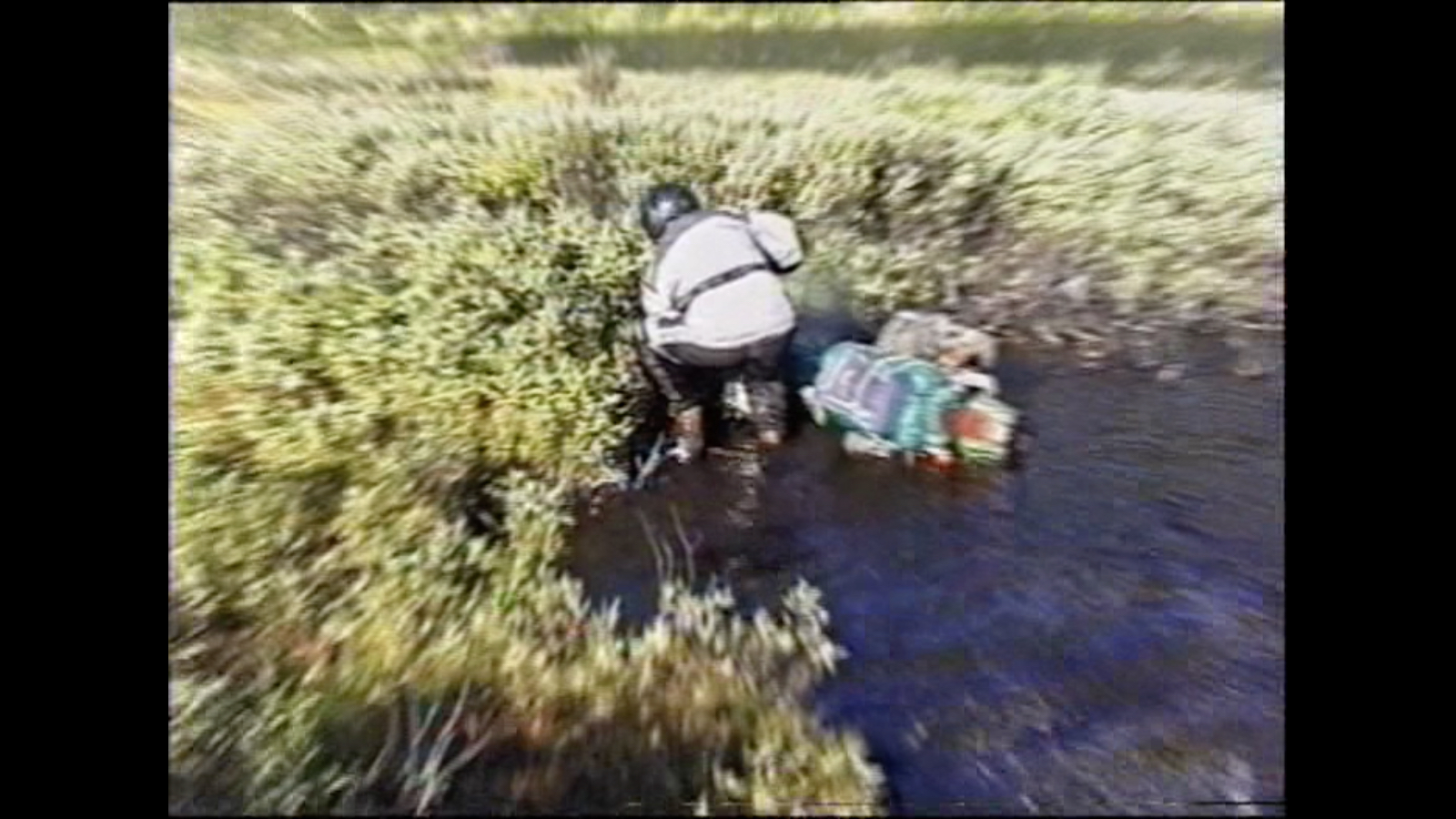
Used to bringing up the rear, I now led the way back, delighted that the film was in the can and the Sony had survived. Miraculously, the triple clamps welded themselves up, the tyres grew some knobs and I finally found myself in the groove, leaving the others behind. Flat Lake Cabin was locked into my internal GPS and despite one shin-twanging face plant, nothing could stop me, even if some wash-outs demanded a double take. ‘Did we really ride out of there? I we must have’, so down I went, paddling like a duck and blasting out any which way to get through.
Last one back washes up
“That was a prime ohr-deal” observed Norm as we drained our boots off the cabin’s porch, two hours later.
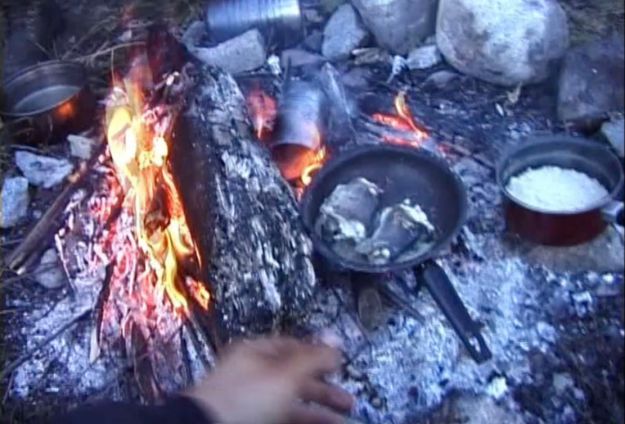
By now my mission was accomplished and I was in going-home mode, even if two scenes still remained on my filming list: catching and frying a fish, and the Northern Lights. I needn’t have worried. The following night, fuelled up from our cache, we camped about 120kms out of Watson Lake on the Frances River. Previously failed fishing attempts were all forgotten as each of us reeled in an arctic grayling within a minute of casting.
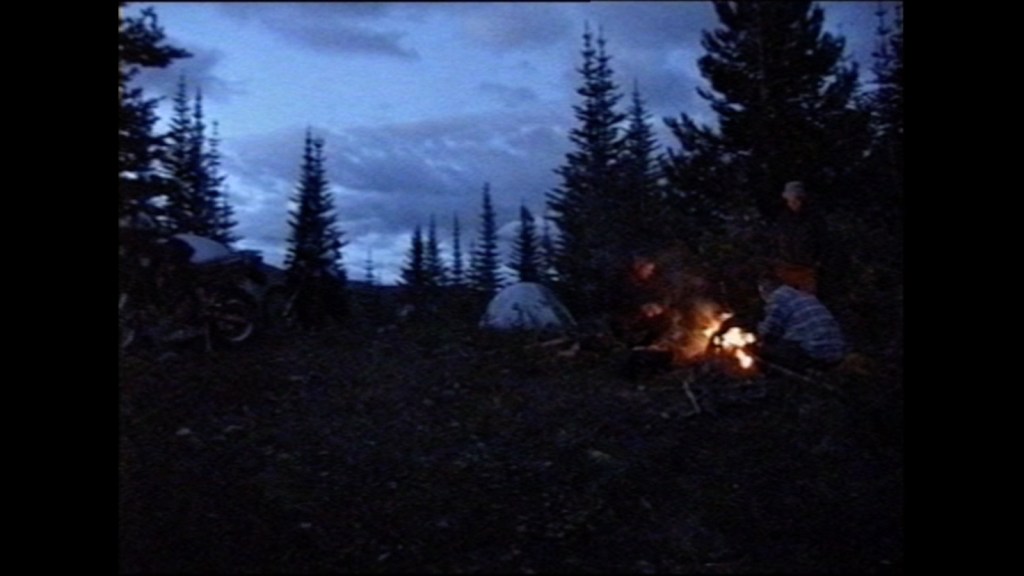
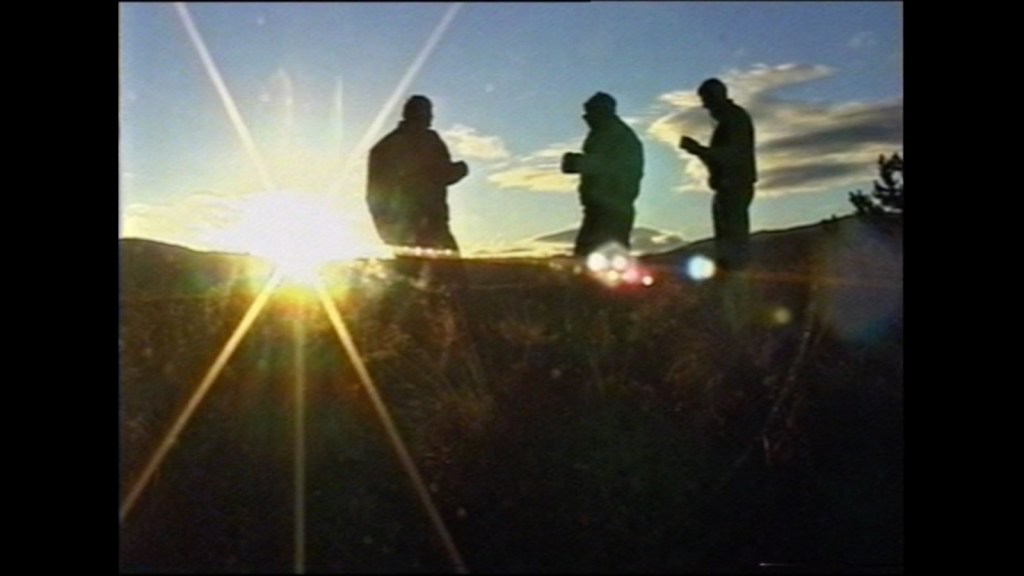
And later, popping out about 2am to check the chain tension, I watched a sallow moon setting over the river through a thick blanket of mist. Turning to grab the Sony I was transfixed as before me neon green veils of ionized oxygen appeared to sway in the boreal breeze. Crouched by the frost-coated tent, it was a fitting finale to our call of the wild.



















 Adventure Motorcycling Handbook