CFMoto 450MT: set up for Morocco

CFMoto 450MT index page

Not since my ’84 Yamaha XT600Z Tenere (left) have I had a bike that needs so little doing to make it ready to travel all roads. Last year’s 300L swallowed a couple a grand. But just like last year, it’s been been waiting and waiting then doing all the prep days before departure.
Stock or aftermarket, there’s nothing much in the UK last time I looked. You have to order direct from China where it all comes from anyway and where it’s cheaper.
I’ve never used Ali Express, the Chinese eBay, fearing getting lumbered with shoddy items 4 months late. Some bits arrived within a week, two inexpensive items didn’t and one item was misaligned, which is what you’d expect. Uncle Wang’s is a one-stop shop with a good range of MT bits. But both times they took two weeks to even despatch the order – it’s not they have to source it from China, is it! First order arrived a week later but with wrong of missing parts. On and on it went but in the end they did right my me and replaced faulty or missing parts.
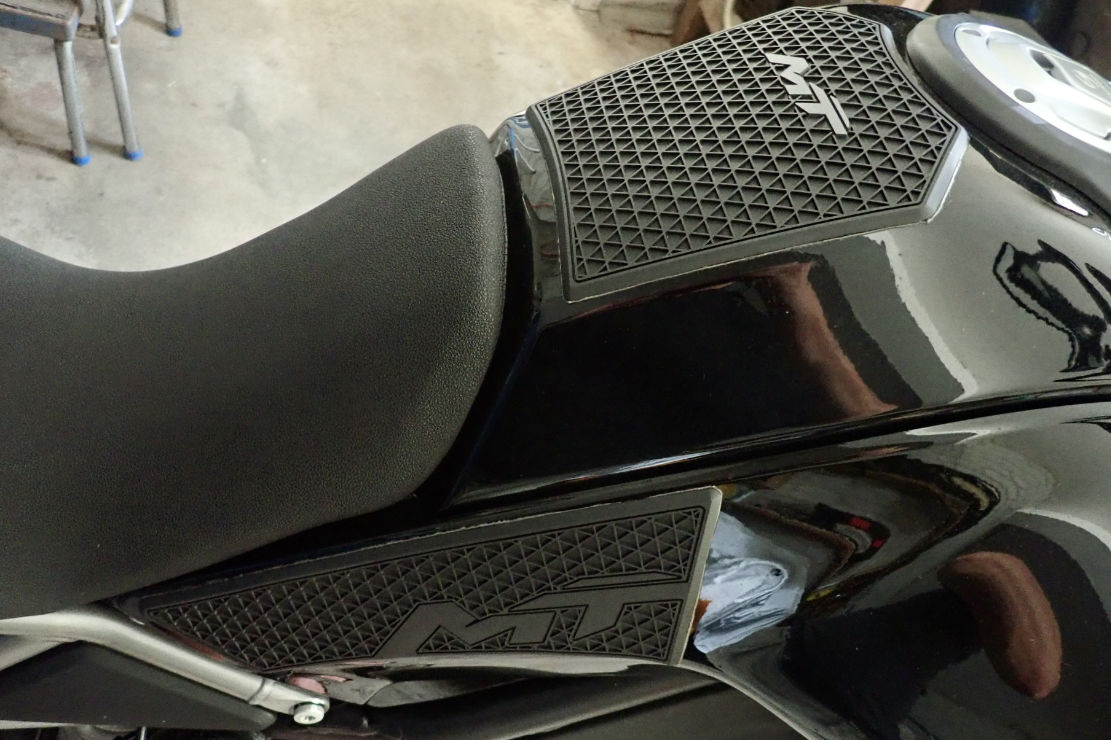
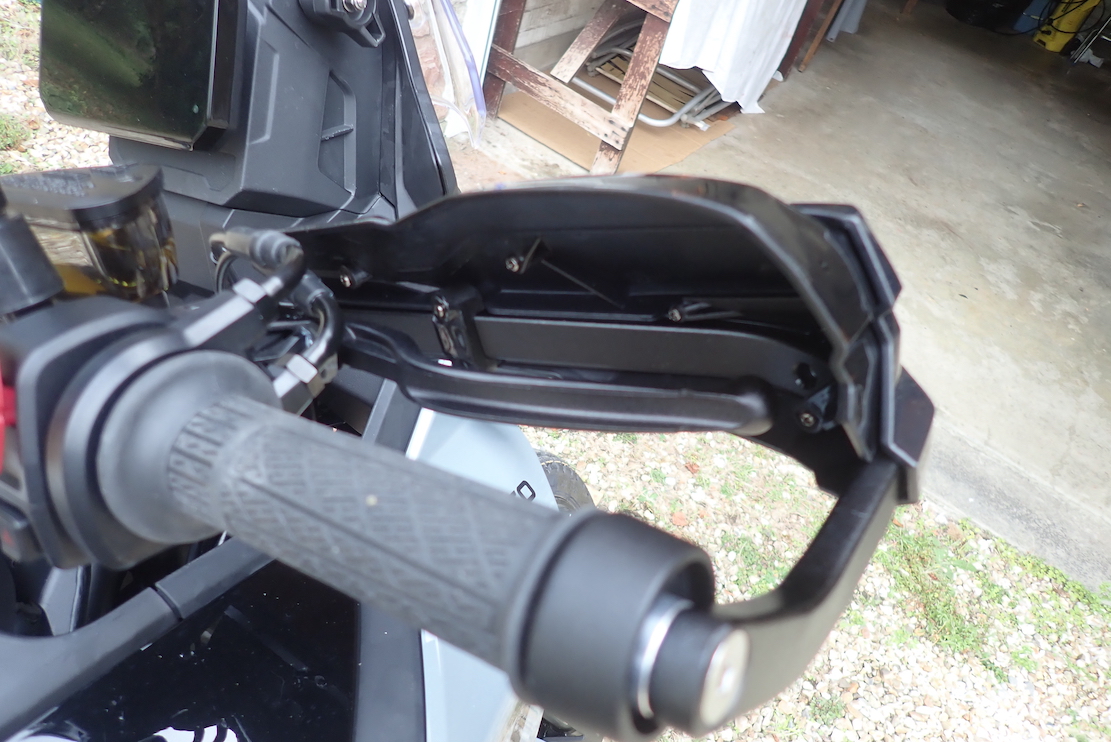
For 20 quid I splashed out on a set of sticky rubber tank mats. No need to gaffer to protect the tank from tank bag straps.

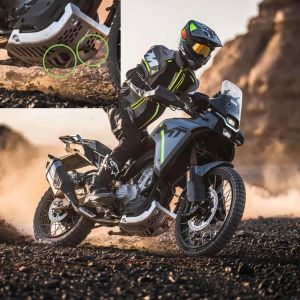
Like the hand guards, the stock, 2-mil alloy bash plate isn’t up to much. Look closely left at official CFM promo imagery. The MAD TV video review mangled their plate after just one day and merely trying to get mine onto a bike stand dented it.
A bodge which I see others have done was simply riveting on a 3mm plate of ally on the flat base. Instead, I ordered one for about 110 quid but should’ve looked more carefully. It’s actually only 3mm thick, though with fewer vents so should be stronger, adding a kilo over than stock (1700g). It may need a flat base plate after all.
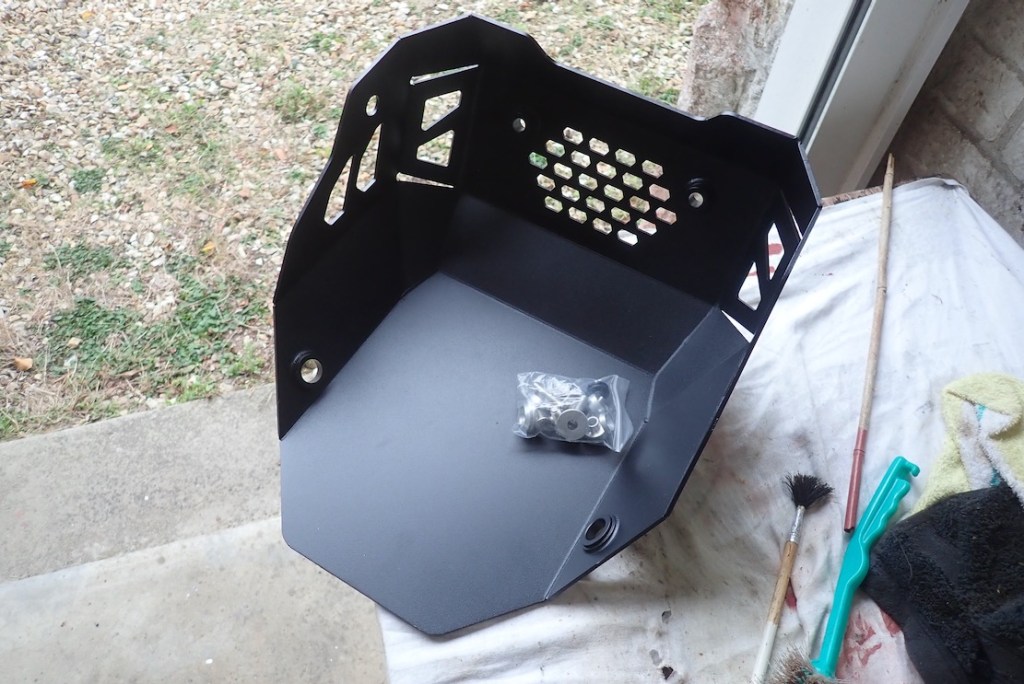
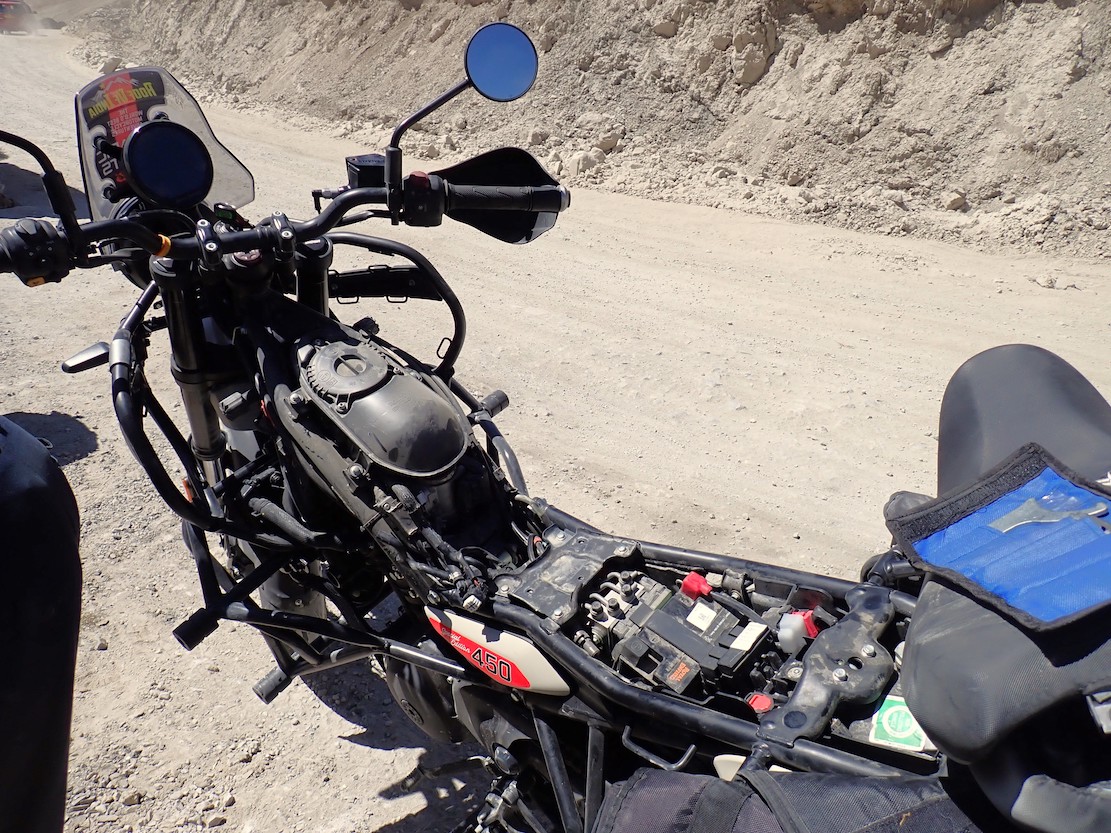
Fitting the sump guard wasn’t as seamless as the hand guards, possibly because I’d just removed the RHS engine subframe rail to check for water retention as reported by some owners (right – LHS).
No rusty water poured out of my rail and though I’ve not ridden in heavy rain, it’s hard to think a tiny hole where a cable tie plugs in was the point of ingress. Either way, I gave the tubes a shot of ACF-50, taped up the holes, and used regular cable ties instead.
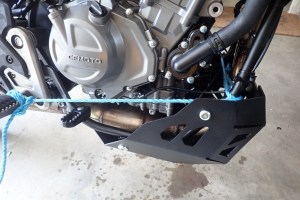
Fitting the new bashplate at 6 points, the two subframe rails were now too far apart for the bolts to line up. I pulled them together by twisting some blue rope but still ended up with 2 spacers left over.

At the same time I got some one-inch risers for the fat bars. I probably could’ve managed by turning the bars forward to get a similar lift, then realigning the levers. And I may do that too as the risers are not quite enough to eliminate stoop (me: 6′ 1′). About 15 quid.

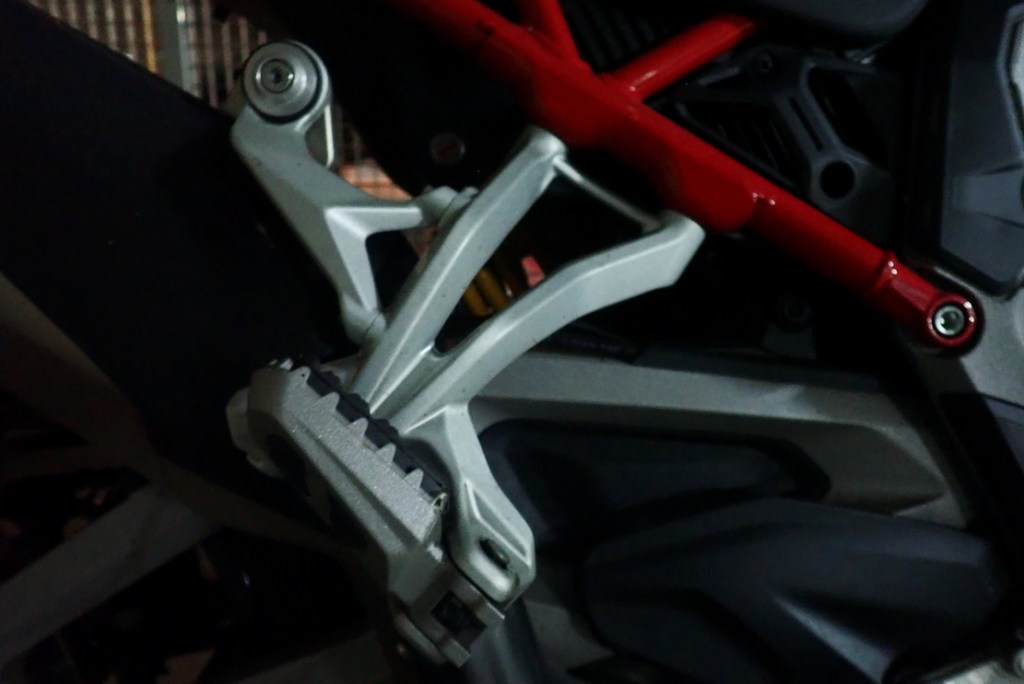
I’m hoping the stock wide pegs will enable foot ache-free standing in my TCX boots. I’ve been wanting to try are some Pivot Peg copies which Wang sent, but decided against fitting them. I realised the stock pegs are as wide and come with rubber.

Load Carrying
The MT is heavier than what I’ve been used to lately, so I’ve been keen to get the baggage down on the sides as low and as forward as possible. This doesn’t actually make the bike lighter but it’s less weight high up which helps dodge embarrassing low-speed fall-overs.
The bike has an integrated grab rail/rear rack that can be removed in one piece to probably save >2kg. But I actually like easy to grab hand rails and want to avoid extra scaffolding while positioning some baggage on the sides.
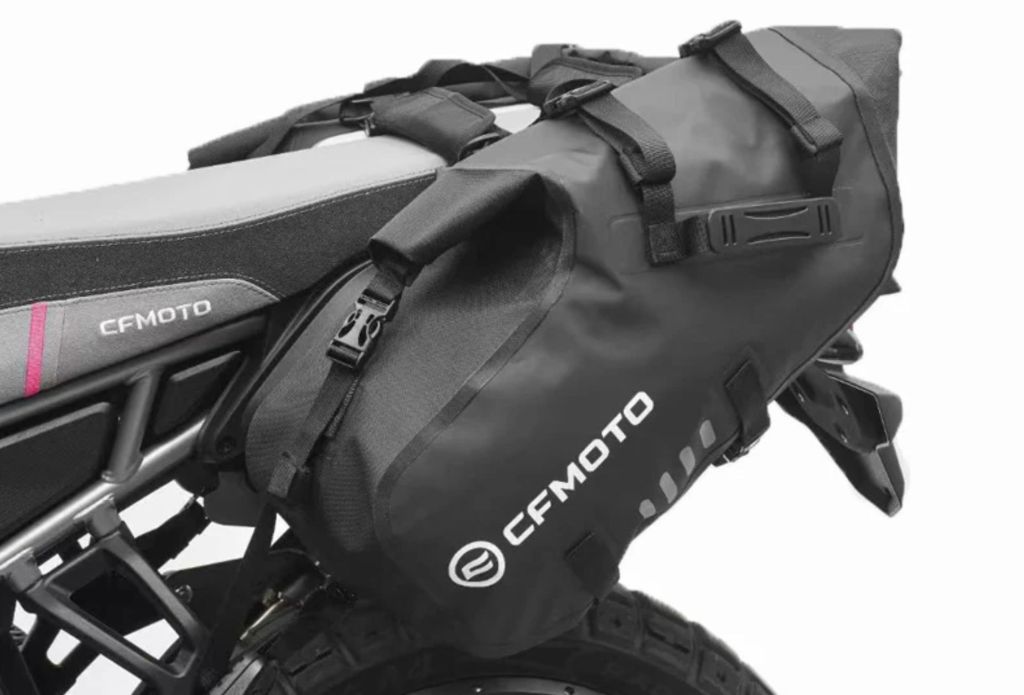
This branded Rhinowalk bag looked good. I should have bought it, a?
But I bet it’s a pipe melter without added cladding.
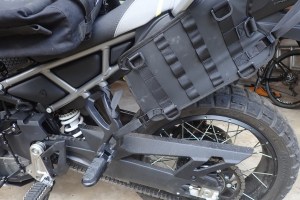
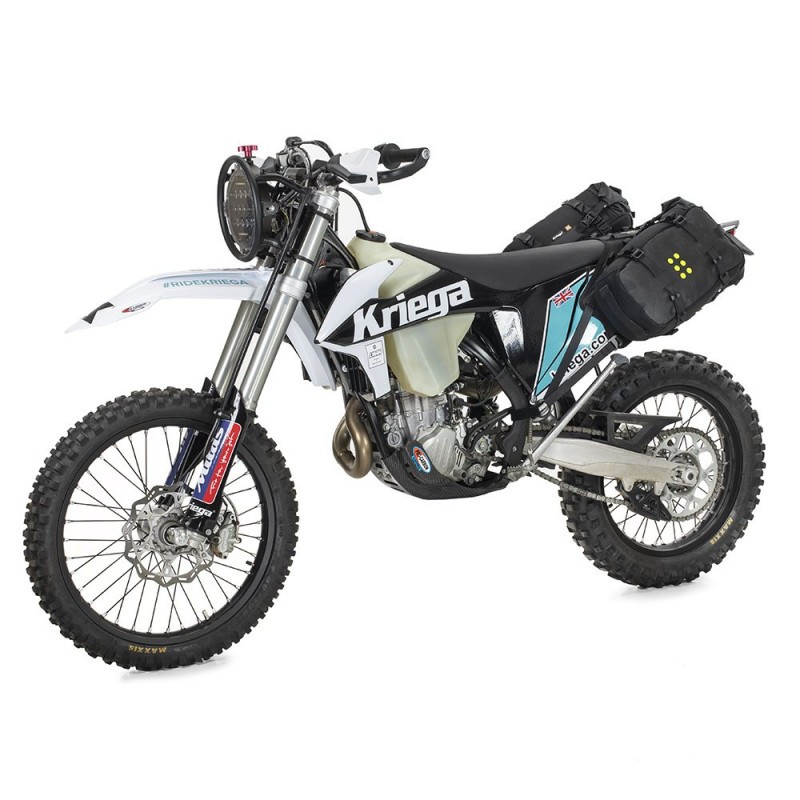
For 40 quid I bought a RhinoWalk pannier harness (left), as I’ve long wanted to try this ‘soft rack’ idea which I think Kriega invented. But with no side panels like the CRF, the MT isn’t suited to them without adding a rear support stick from peg to rear rack to stop it swinging into the chain guard.
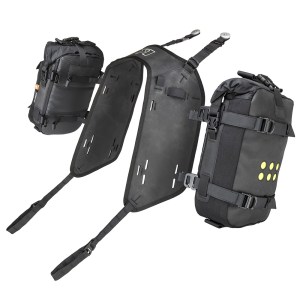
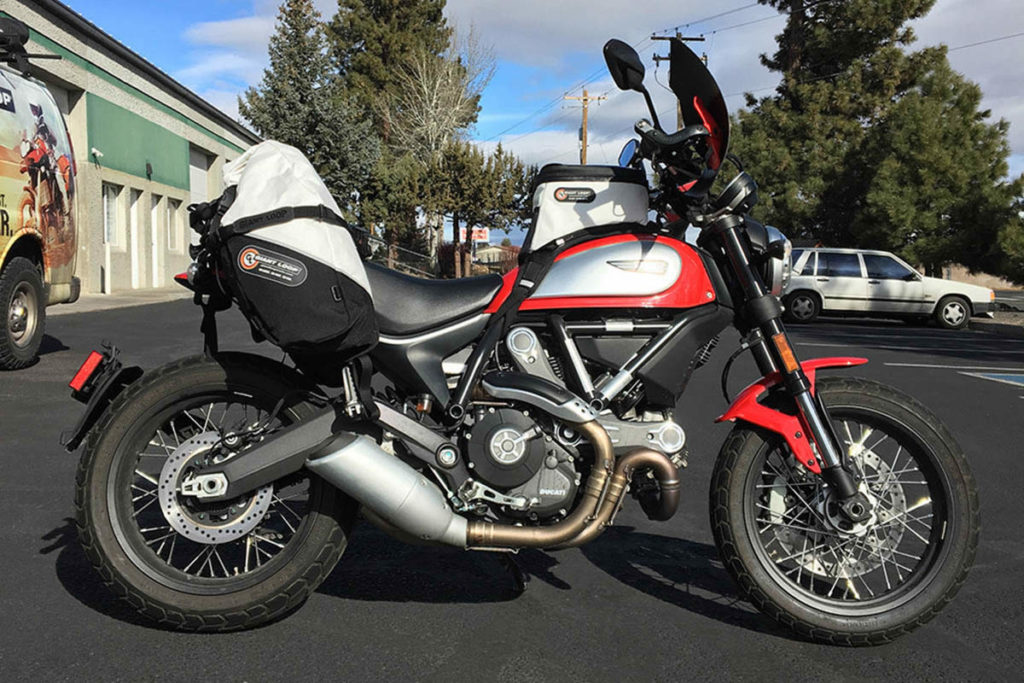
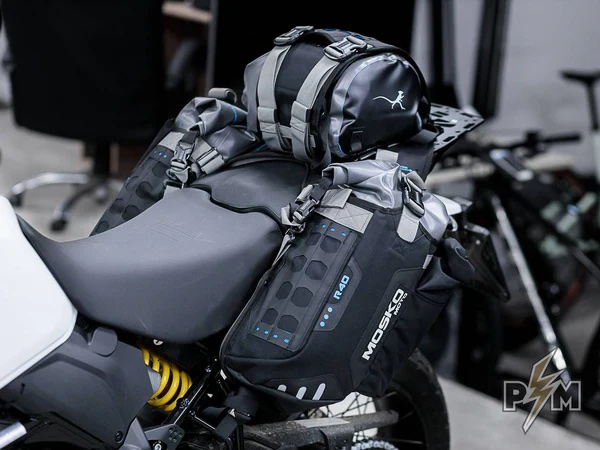
Kriega sent me their similar new Universal Base set up. It’s like the Rhino harness and similar to what’s left but I think with more horizontal sides plus 3 bags including a nifty zippered tail pack ‘softop box’. But I couldn’t find a way to make the prototype fit well without ditching my grab handles (and so, the rear rack) so back it went.

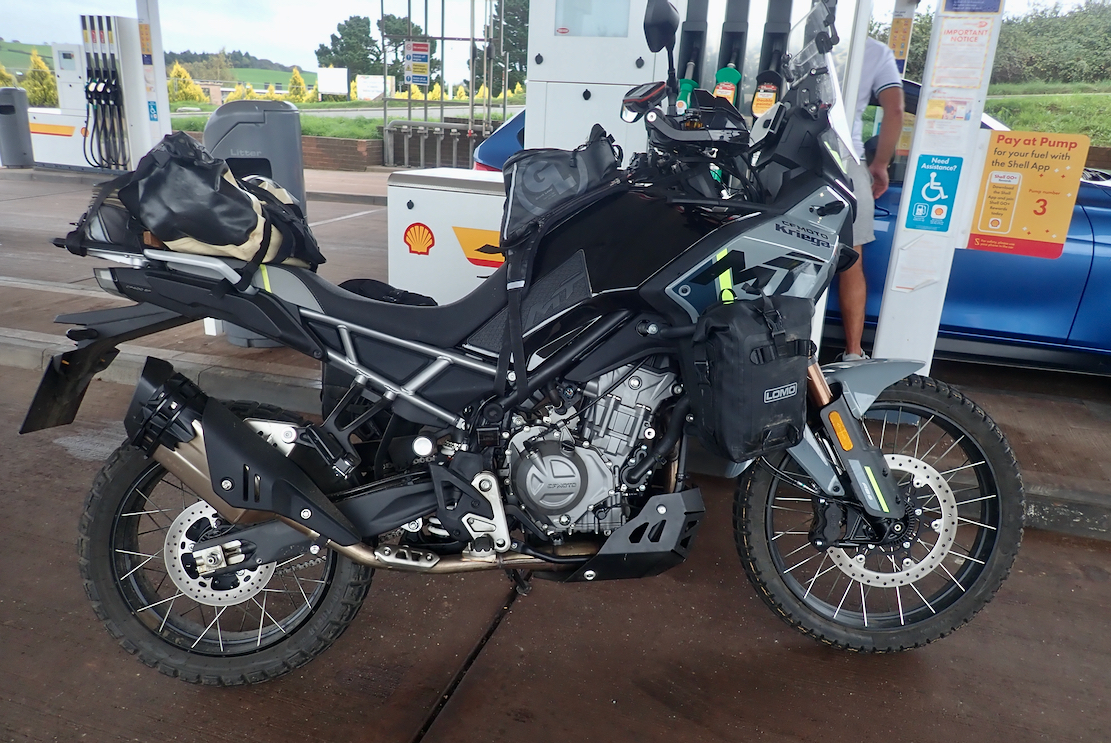
In the end I was able to tuck an old Kriega OS18 nicely on the LHS, resting on and lashed to the pillion peg (the old OSs have a strap here). I zip-tied the upper bag to rear subframe/grab rail; there are loads of tabs on an OS. This is such a clever revision of the rackless idea I’ve given it it’s own post!
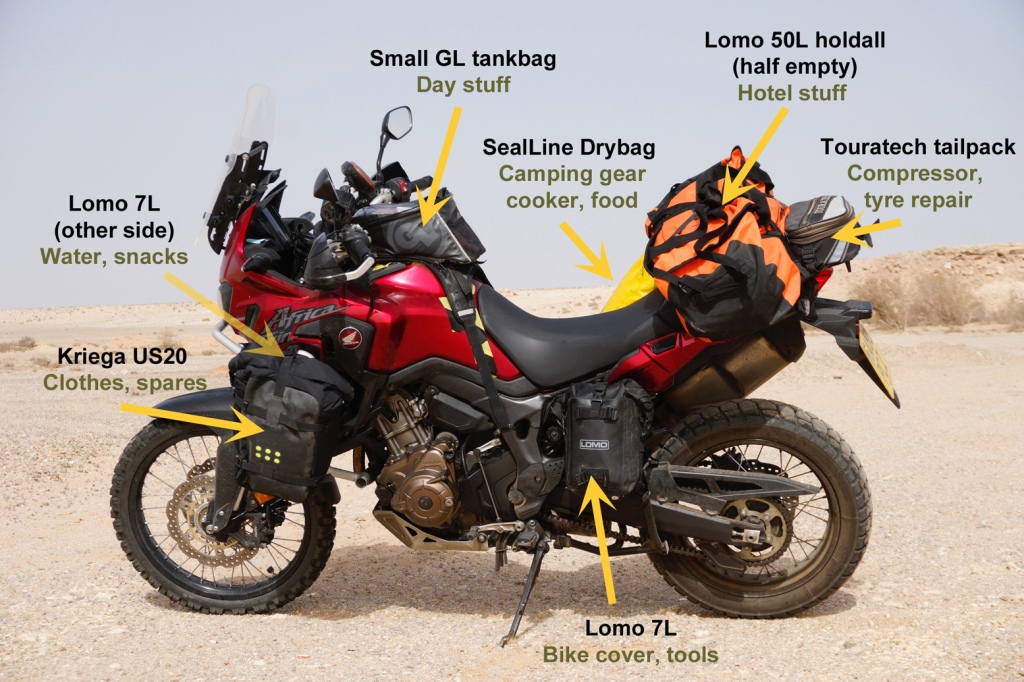
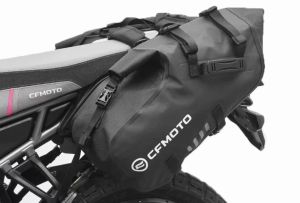
The rest goes either side of the tank on some old Lomos to further help protect the bulky tank side plastic from falls. With a daypack on my back for can’t-lose valuables, my ancient Touratech a tail pack which has seen more of North Africa than I have, and old Ortlieb Travel Zip tail pack, I have space to spare or stash my Aero AD-1 overtrousers and cag with weight as low and forward as possible.
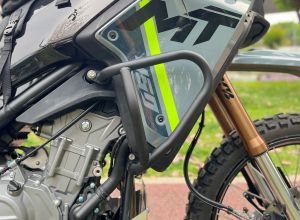
Wangbars – minimal, effective, misaligned

I’m a fan now of radiator/tank guards which double up as small bag holders. The bag softens any impact, is handy to spread the load and I had some old Lomos anyway.
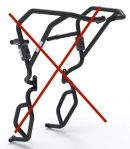
The Wang rack left weighs a hefty 1.1kg per side as it only has two mounts, but is chunky enough to take the blows without weighing like last year’s Outback Motorek bars or looking like the thing on the right.
The LHS guard fitted spot on. Nice when that happens. RHS was 5mm out and worse still, to open up the misaligned mount I cut a slot in the wrong place. Pillock! So it now sits on 1.5 bolts but will handle light fall overs which is mostly what I do, if ever. About 110 quid. Don’t buy them.
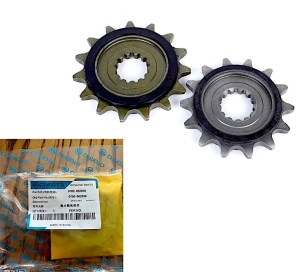
I ordered a 15T front sprocket for the long ride down across Spain and northern Morocco. They say the easily bought JT copy is a loose fit. Don’t want that so I ordered an OEM from Wang for about 12 quid.
But with the ferryman calling, I was annoyed to find the big 32mm output shaft nut was barely 5mm deep and done up to buggery. Reminds me of the similar X-Country rear axle nut; a dumb place to ‘save weight’. You have to put a broom through the back wheel to stop it turning as you try to undo the sprocket, but I still didn’t have the strength to undo it without risking rounding the nut. It might need an airgun or a socket with grooves right to the edge.
As it is I’d need to swap back to 14T for Moroccan trails, so it’s one less job to do when I get there. I’ll fit it when I change the chain but after a few 100km on the Spanish high plains, I don’t find the MT undergeared as some say. For all-road go 15T; for road and trail which the MT was made for, leave it as it is.
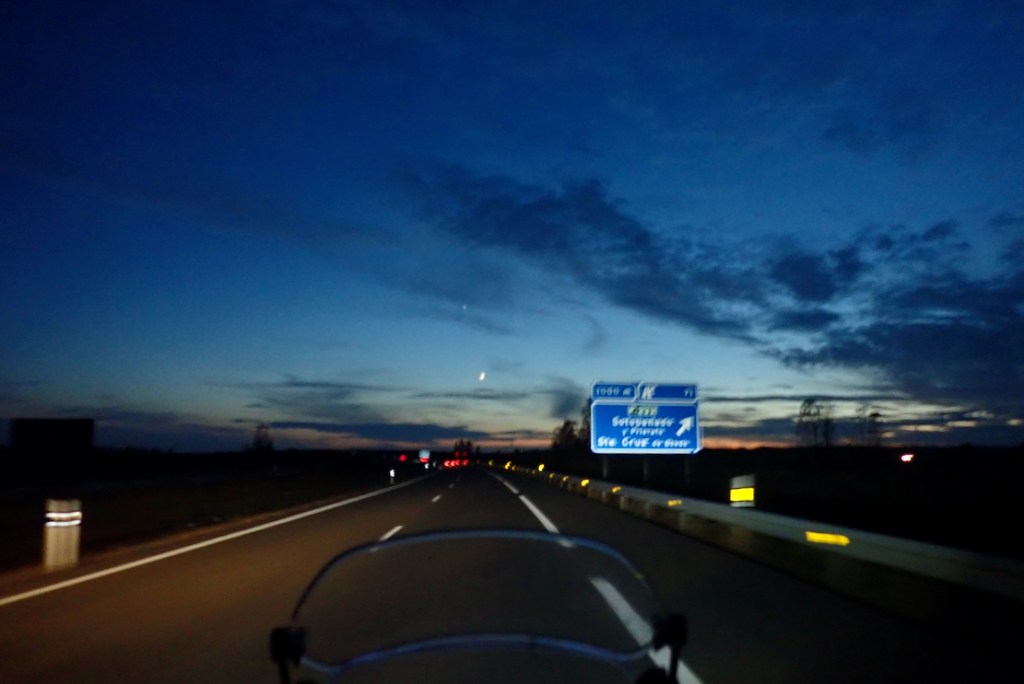
I contacted the dealer to see if there was a remap for the on-off throttle response at very small openings – a common efi flaw. But no reply from them – same as with the missing shock C-spanner which I ended up getting from China for 3 quid. The Aussie vid below suggests it’s possible to do a DIY the remap using the CFM Ride mobile app with great results. I’ve only just watched it. Assuming my UK bike is included in the update (read this – it seems not a couple of months ago), it’s good to know it can be done. Got the app and may get round to trying it.
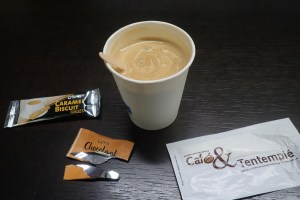
That’s it for now. Halfway across Spain and the CF bike is humming along under 110. A decent garage coffee costs £1.40 with a chocolate, a biscuit, a spoon and a wet wipe. Lodging €50 a shot. Supermarkets are like a munchy hallucination. What a great country! Still getting fit for long rides and got a big 600km day day tomorrow. May need my padded shorts.
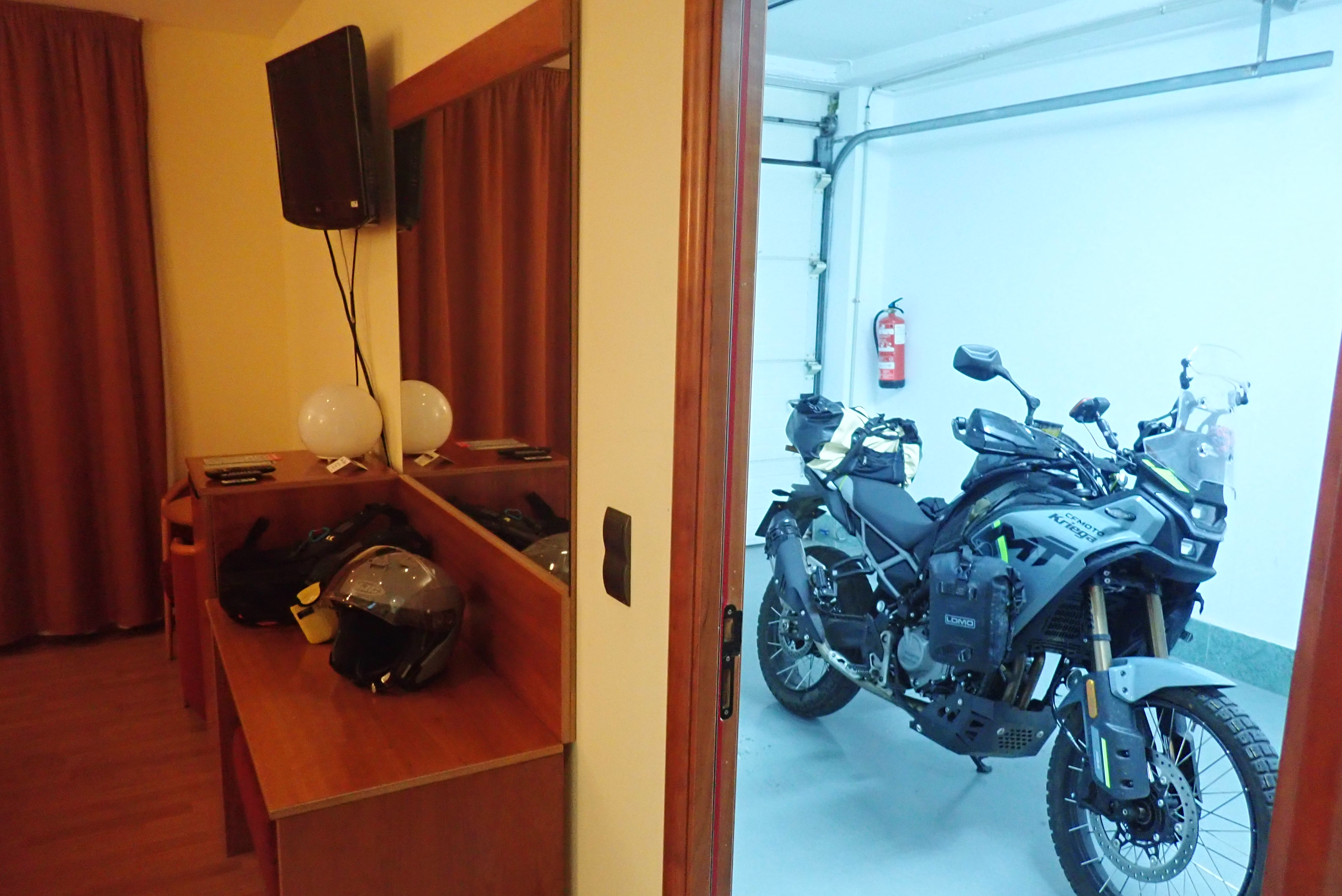
Ride-in motel. Me gusta!

Pillion Peg Panniers: the Mis ing Link

Travel bikers rightly obsess over wet weights because on the road a bike will pile more weight on anyway. A well braced rear rack might add 4-5kg and when using soft baggage eliminates the chances of pipe melts. But these old school ‘racktangles’ are always too far back, probably to allow room for pillion riders’ legs. How often you you take a pillion on the trail?

Rackless designs mount directly on the bike, just like old-school throwovers derived from horse saddlebags. These days they can attach via a harness lashed to the pillion pegs and the tail rack. Where present, the melt/fire issue can be managed with heat guards on the pipe but depending on the bike, they can still be prone to swinging into the chain.
The only way to ensure this doesn’t happen is to mount them high, effectively on the side of the seat like the Kriega below left. But this negates the ethos of as low and forward as possible or ‘ALAFAP if you’re in a hurry. They may save rack weight but are still higher and farther back than ideal. OK for minimal loads but still bad for CoG and bike control.

But just about every bike has a solid structure designed to take way more weight than a loaded pannier and which is in just the right spot. Have you guessed what it is yet? Correct:

The pillion footrest!

I first tried resting a bag on a footrest on my top-heavy Africa Twin trip a few years ago. I loaded a small Lomo bag with tools; probably the heaviest item in my gear. The bike was still a tank because a kilo of tools makes little difference on a 230-kilo machine. But the positioning worked well.

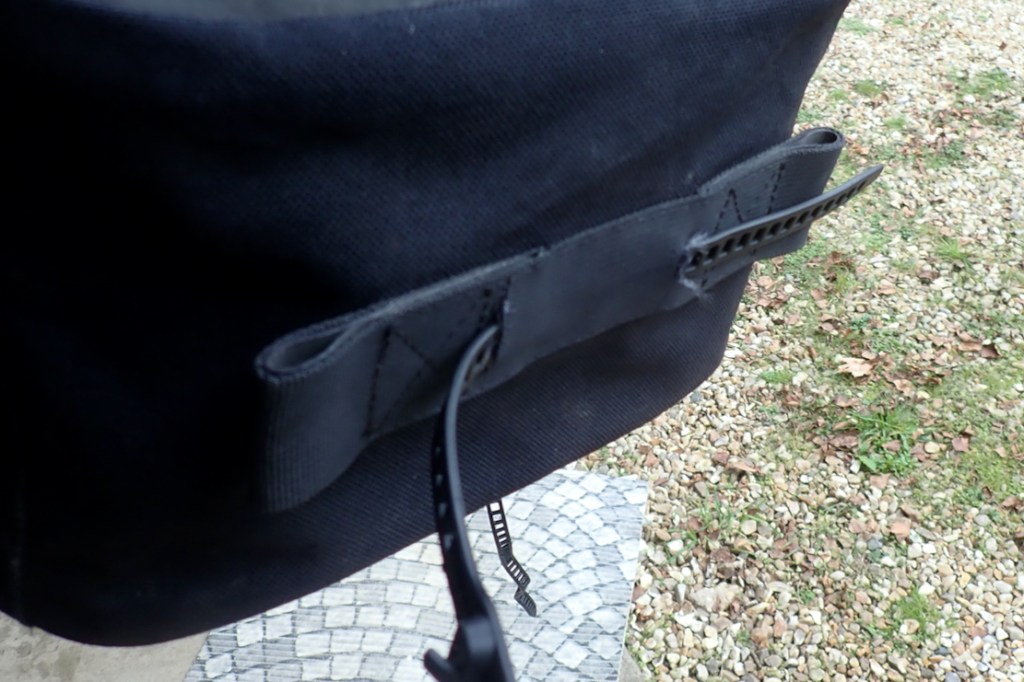
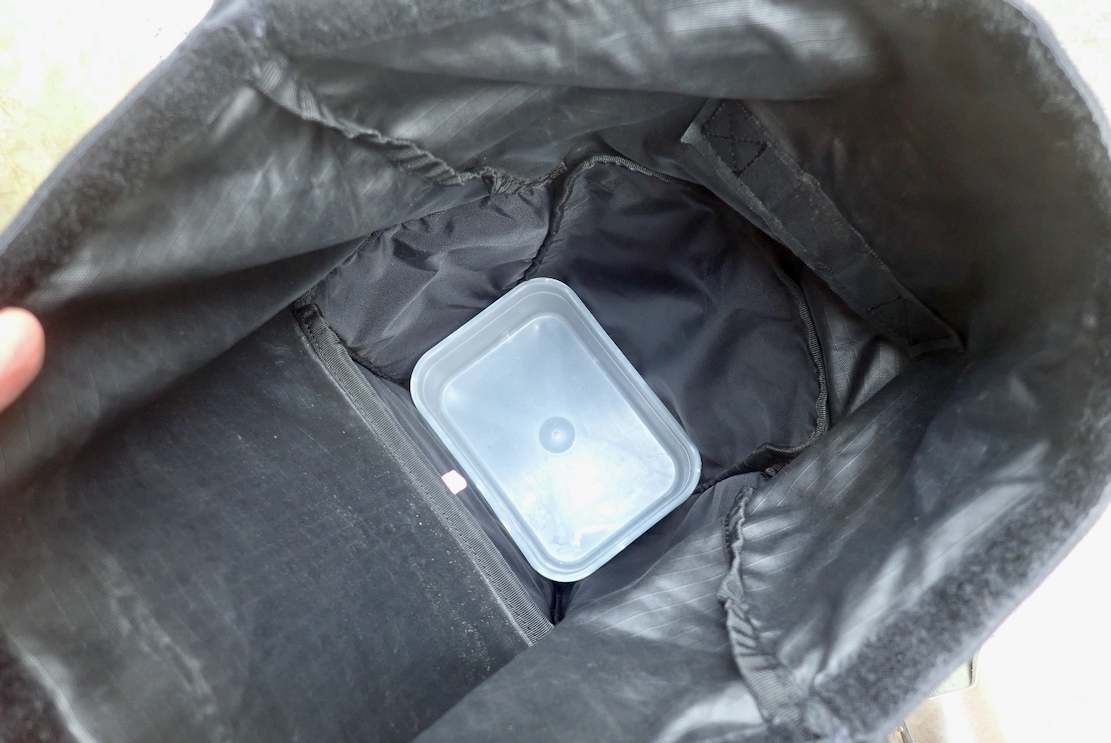
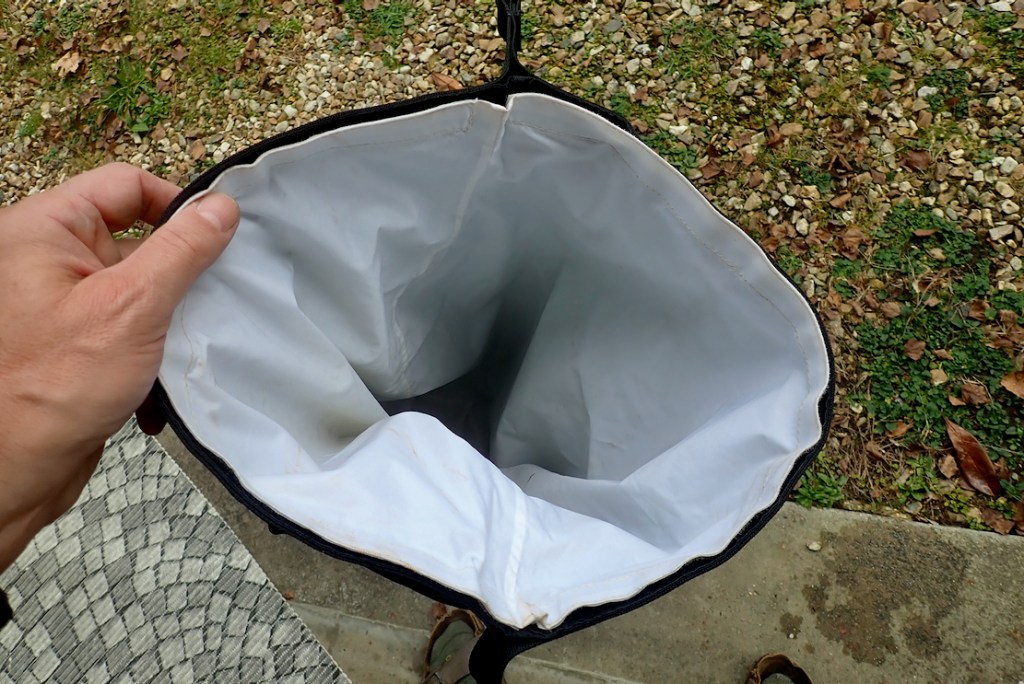
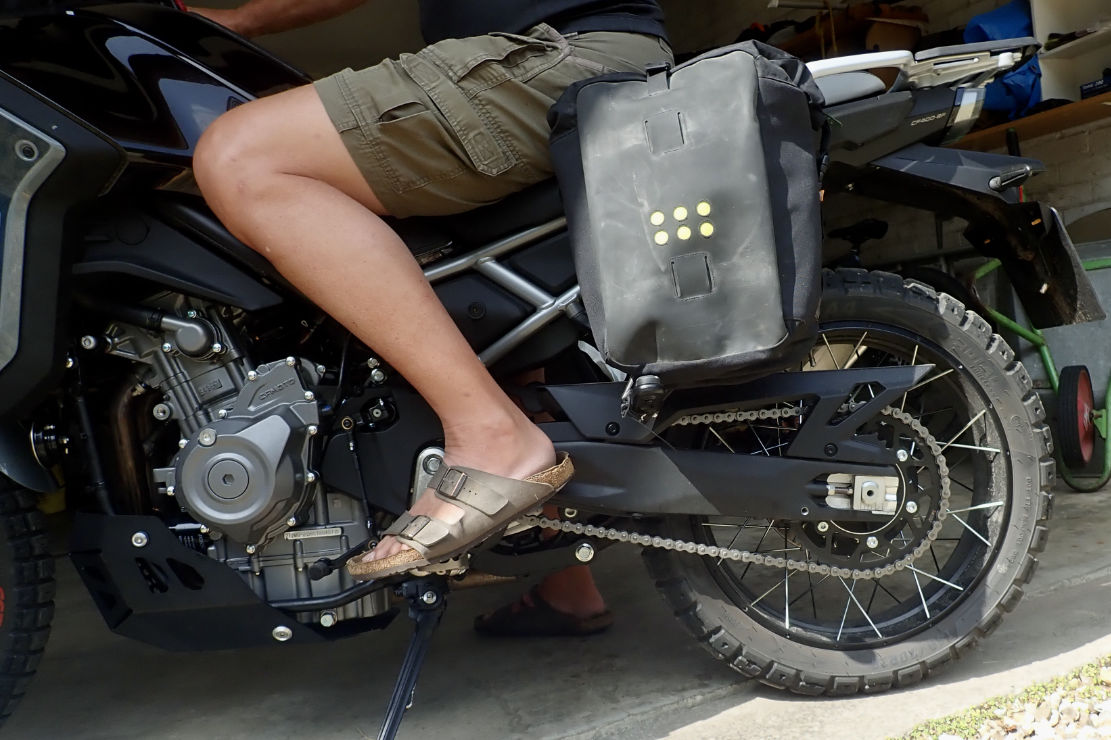
For my CF Moto ride to Morocco I went one better and fitted the old Kriega OS18 (‘US20’) from the AT’s LHS tank-side down on the 450 MT’s LHS pillion peg. Old OS18s have a tab on the bottom for a zip-tie – the new OSs don’t. To spread the load when perched on the peg a lunchbox neatly filled the bag’s base, then I refitted the waterproof liner (below).

3P I’ll call them for now: Pillion Peg Panniers. You really couldn’t get any lower or more forward, but the bag sits securely, is still easy to access and doesn’t get in the way. It would be handy if the velcro’d-in white liner had carry handles to take stuff into a hotel easily, but Kriega must have thought of that years ago and expect you to use another carrier bag or remove the whole bag every night – a buckling faff.

This is where panniers should sit when not two-up.

I’d have done the same set-up on the other side but tbh, a shoulder strap Ortlieb tail pack attached to the back of the seat with a couple of ROK Straps is just so easy to whip off in seconds when popping in for a coffee with valuables not in my day pack.

Rhinowalk 20

Depends on the bike but I think a 20-litre sized bag is optimal for this application, sitting centrally on the peg and not sticking out or up too much.
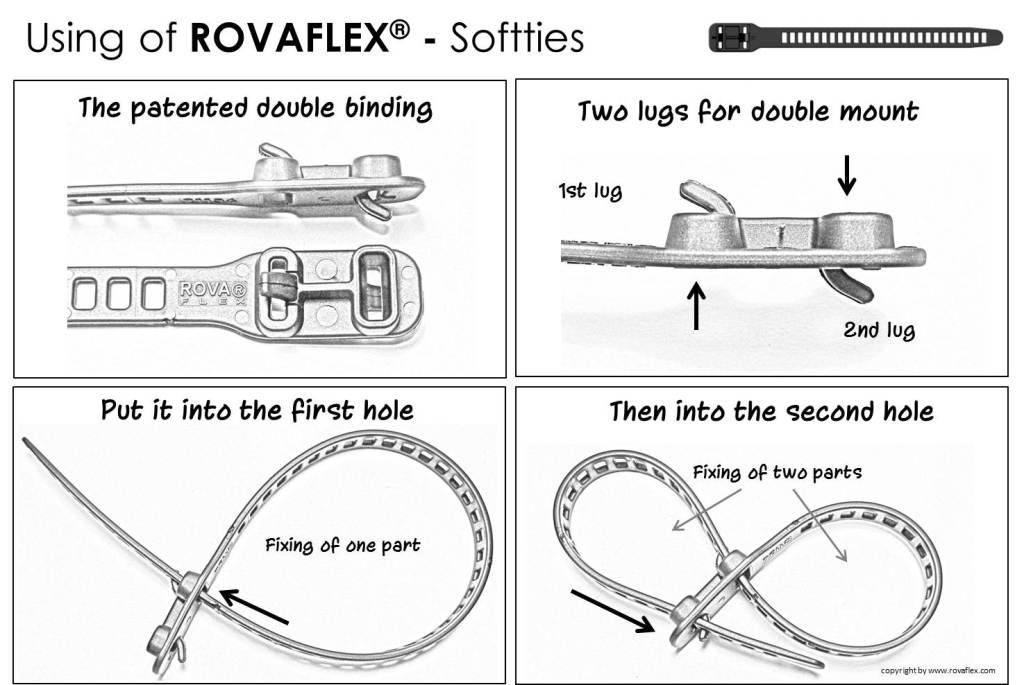
You can get a Rhinowalk 20-L roll top (left) for 35 quid (it’s a lot more flimsy than a Kriega) and I used chunky TPU reusable RovaFlex Soft Ties. Like a London rat, I’m never more then 3 metres from a Rovaflex when on the road.

Assuming mounting soft bags on footrests with reusable zip ties is seen as a bodge, your rackless baggage makers ought to consider a redesigned harness that hooks to a pillion peg, has enough attachments to additionally strap to sub-frame rails, and is then counter tensioned in the usual way off the tail rack. Then make the bag q/d off that harness so there’s no faffing to fit/remove; just clip off and jog on. You’re welcome ;-).

Feedback 6000km later
This pillion-peg mounted set up worked much better than expected. Despite the scoffing from naysayers, there was never a moment in five weeks when I had to adjust the loose bag or when it got in the way getting on the bike or paddling through soft sand. It would be nice if it just clipped on like the Bumot rack set up on the 1250GS I rode with, but the whole thing could not have been lighter, more secure, better positioned or cheaper.

Himalayan 450 in the Himalaya

by Dave K

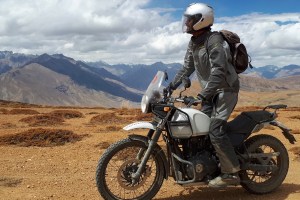
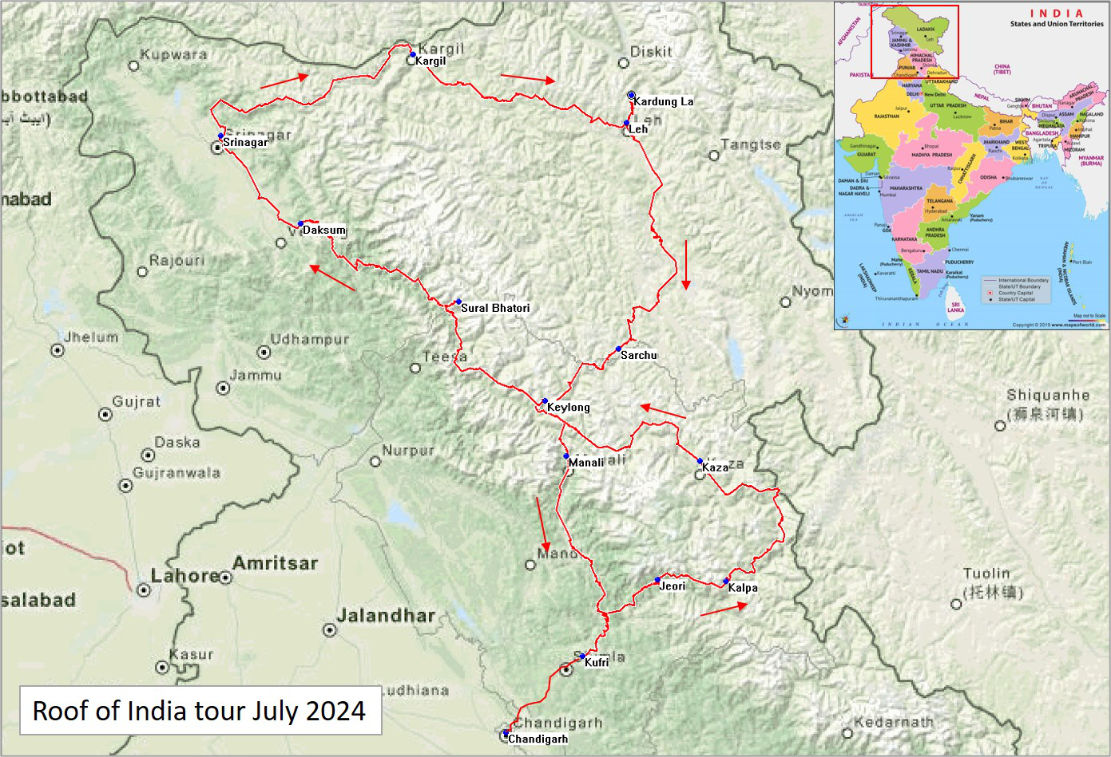
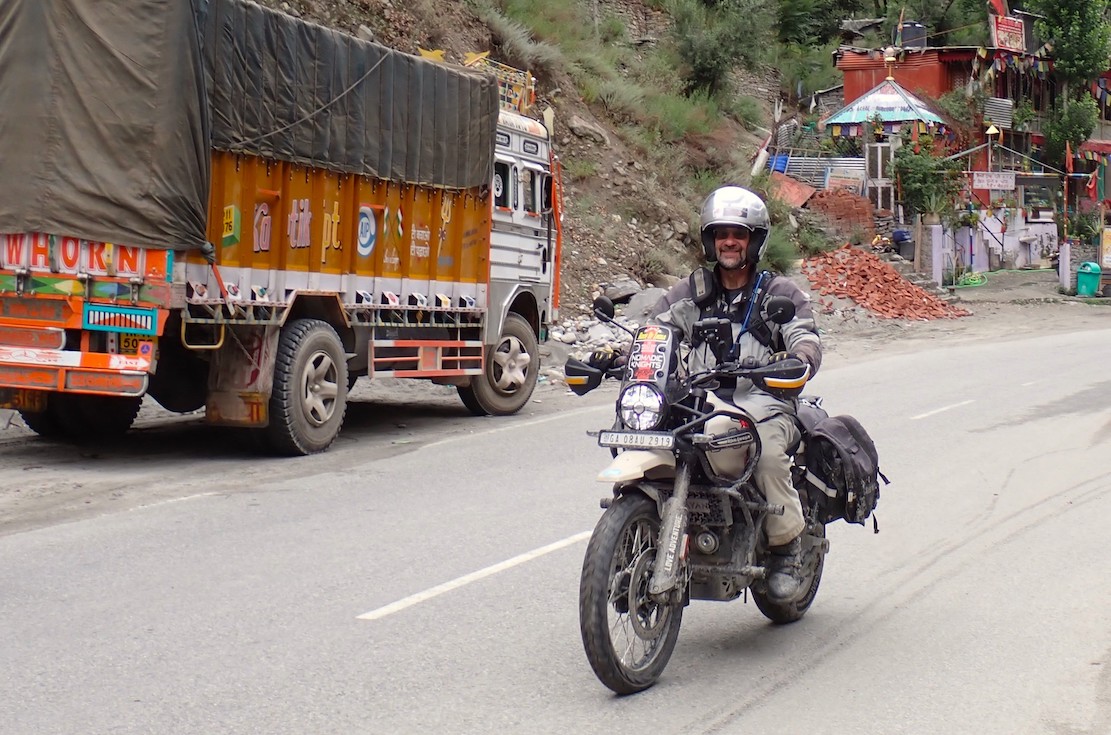
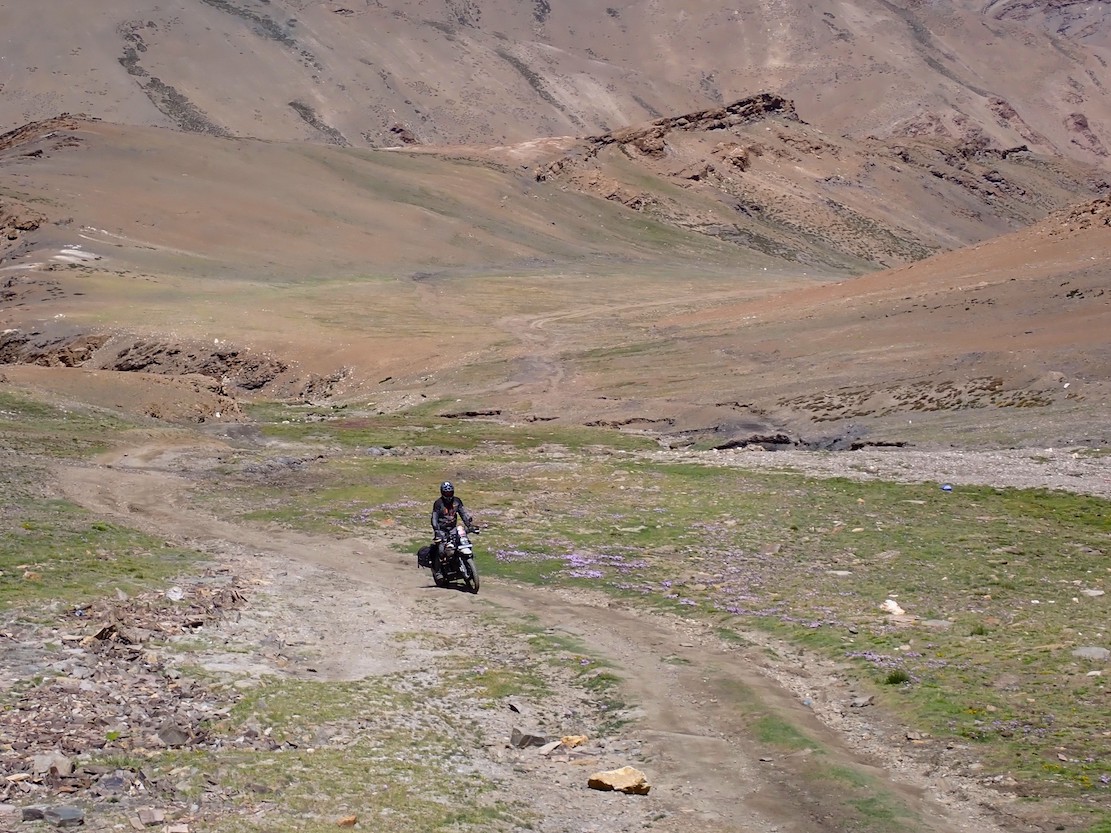
Danielle (Dan) and I recently returned from a two-week bike tour round the Indian Himalayas, riding the new Himalayan 450 adventure bikes. The Roof of India tour, organised by Nomadic Knights, was billed as ‘extreme adventure’, rather than a holiday. It certainly lived up to its billing, with a faster pace, greater distances, and longer days than previous trips we have undertaken in the Himalayas, including the month-long trip we undertook in 2017 on the original Himalayan 411s (left).

The new 450s were perfectly suited to the trip. They had better engines and suspension than the Himalayan 411s, although were noticeably heavier and (arguably) less attractive to look at. According to the Royal Enfield website, the 450 has a kerb weight of 196kg, which is actually lighter than the 411 kerb weight of 199kg.
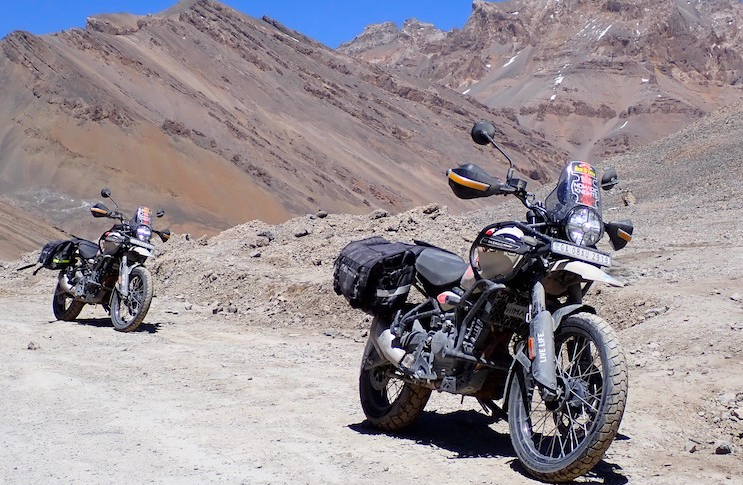
However, the 450s we rode on this tour had substantial additional crash bars (with steel bobbins), a rear racking system, stronger hand guards and a larger bash plate. I suppose if you are encouraging punters to have an extreme adventure, you can expect them to crash from time to time. The weight is felt most when using the side stand or centre stand. The bike leans over a long way on the sidestand but this does result in it being quite stable when parked on uneven ground.

Once the handlebar levers had been rotated down a bit and the seat raised to the higher position, the ergonomics were very good, both standing and sitting. Because of my height (a bit over six foot) I fit bar raisers to most of my bikes but didn’t feel this to be necessary with the 450. The seat was very comfortable, although this would have been helped somewhat by the padded cycling shorts I always wear under my enduro jeans.
The engine feels quite torquey and pulls strongly between 4000 and 6000rpm. My first impression was that first gear was rather too tall but this is countered by the engine’s reluctance to stall at low revs and so I soon got used to it. Tight manoeuvres require a bit of clutch work but that is also true of the Husqvarna 701 I ride at home.

Him 450 vs MT450 vs KTM390 vs 300 Rally

The bikes we were using were new and the fastest I saw on the speedo was 122km/h. I didn’t want to push it further than this because the engine still felt a little tight and it was just not appropriate for most Indian roads. A top speed of ‘over 150km/h’ (94mph) has been quoted by Bike India magazine and I have no reason to doubt this. Other reports have suggested that the 450 is more than comfortable on UK dual carriageways, which, from personal experience, was not really the case with the 411.

The brakes were fitted with braided lines and were very good. Like many modern adventure bikes, the rear ABS can be switched off for off-road use. This is done using the Mode switch on the right switch cluster. However, if the ignition is switched off then on again, the system reverts to full ABS. This feature resulted in my only concerning moment of the trip. I applied the brakes while traversing loose stones in an off-road section and the bike took an uncomfortably long time to come to a halt.
The suspension on the 450 is made by Showa. The only adjustment is the rear preload but I found the default spring rate and damping to be perfect for me. It might have helped that I am close to the ‘standard’ weight of 75kg but nobody in our group had any complaints about the handling or stability.
The standard SEAT tyres are not particularly knobbly but worked very well on this trip, both off-road and on. The only time they were a bit challenged was on a short section of snow and soft mud. For UK trail riding, I would replace them with something slightly knobblier, probably Michelin Anakee Wilds, but for the roads and tracks in the Himalayas, the original tyres were perfect.

The clear screen is quite small but, being located fairly far forward, did a good job of reducing wind blast without excessive wind roar. Most of the time I didn’t use or need ear plugs although I put them in before a couple of relatively fast road sections, just in case.
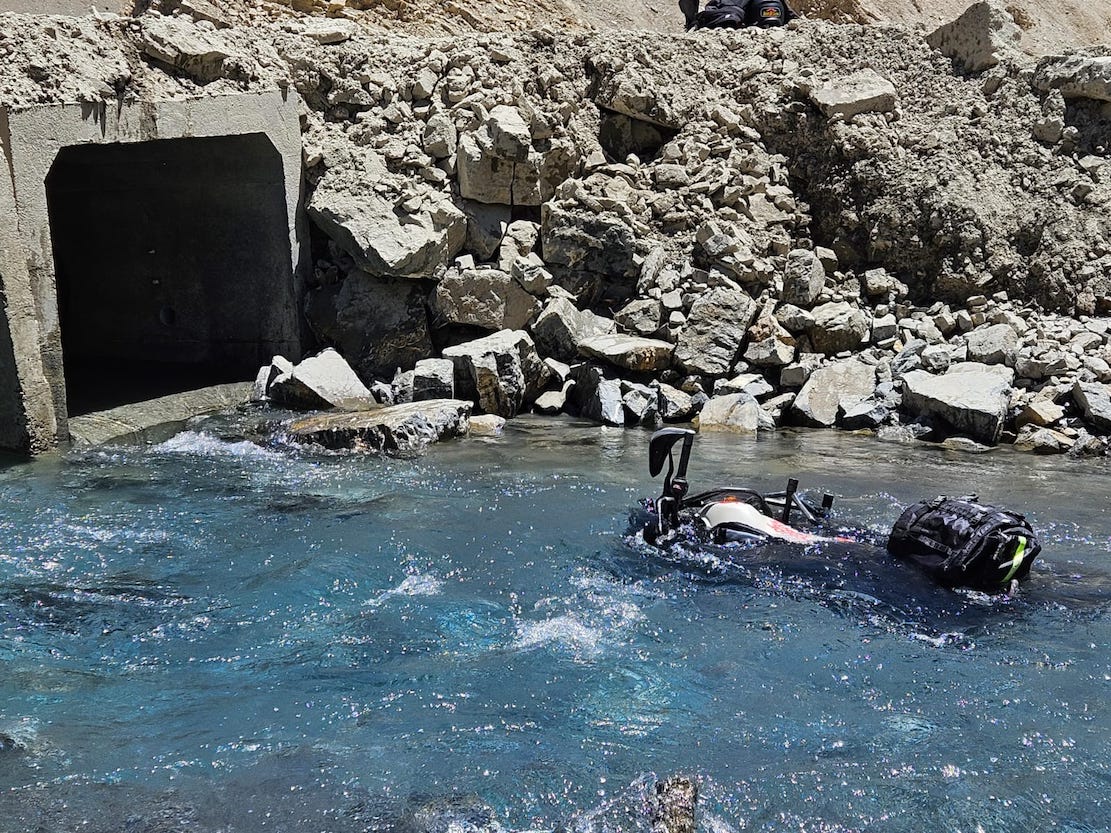
None of us had punctures and the only reliability issue was a dodgy fuel pump on Bob’s bike. Benny damaged his bike by riding off the road and into a water-filled culvert but that was not the bike’s fault.

New water-cooled 450 Him

Royal Enfield had quite a large stand at the 2024 ABR Festival, which included a Himalayan 450 without its tank, seat, side panels etc. to make the frame more visible. The stand also included a sectioned 450 engine. The impression given by both frame and engine was of components relatively cheap to make, designed to last, and easy to work on, with a fine finish only applied where functionally necessary. It made an interesting comparison with KTMs, where components are made as light as possible and appear delicate and almost watch-like compared to their Royal Enfield equivalents.

I toyed with the idea of buying a Himalayan 450 in the UK and stripping off the tank crash bars, centre stand, etc, to reduce the weight a bit. However, I already have a Husqvarna 701 and I have no doubt that this would always outperform the 450 off-road. However, I also considered what would happen if relatively inexperienced rider were let loose on 701s in the Himalayas. I suspect it would be expensive carnage. So, for trips like the one we just completed, the 450 is just about perfect. Out of interest, the Himalayan has a similar weight and power to an old KLR650, which I rode across Tibet one time. So much for forty years of progress.
Soon after the India trip, I rode my CRF1000L Africa Twin on two days of the UK ACT in Wales. It felt significantly more top-heavy than the 450 and, overall, didn’t appear to be as good off-road. Also, during the Wales trip, my friend and I had cause to pick up his Tenere 700 from flat on the ground. This took about as much effort as doing the same thing with my Africa Twin. Certainly the 450 has a lower centre of gravity than both the Japanese bikes and is easier to pick up.

So, in summary, I rather liked the new Himalayan 450. The Indians appear to have thought long and hard about what people need and done their own thing, rather than make a copy of somebody else’s design. I’m also getting more used to the way it looks and might still buy one.

While editing this post, out of interest I decided to click this option which has cropped up on WP lately (and in many other places like ebay):
“Create and use an AI generated featured image for your post.”
Below is what it came up with, presumably based on the post’s words and pictures. As bad as expected – or have I accidentally rendered RE’s imminent 650 twin Himalayan! Who knows but I won’t bother again.

CFMoto 450MT Mileage Diaries

CFMoto 450MT index page

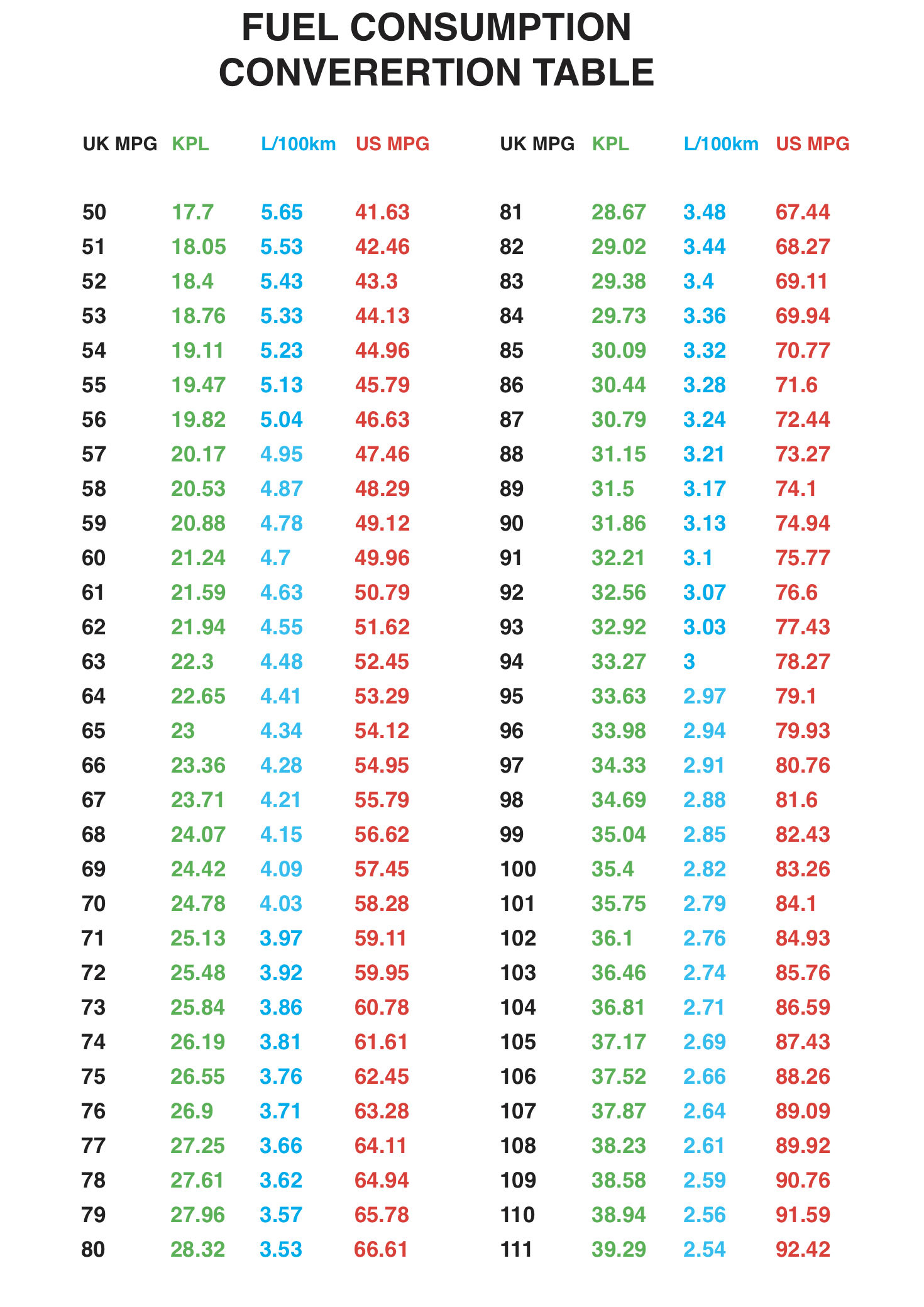
Fuel consumption on my CFMoto 450MT from new. I’ve yet to work out if the odometer reading is accurate against a GPS. The tank is a claimed 17.5 litres. The speedo shows a better-than average 5-7% over reading. Click the table right to convert UKmpg or kpl to other formats.

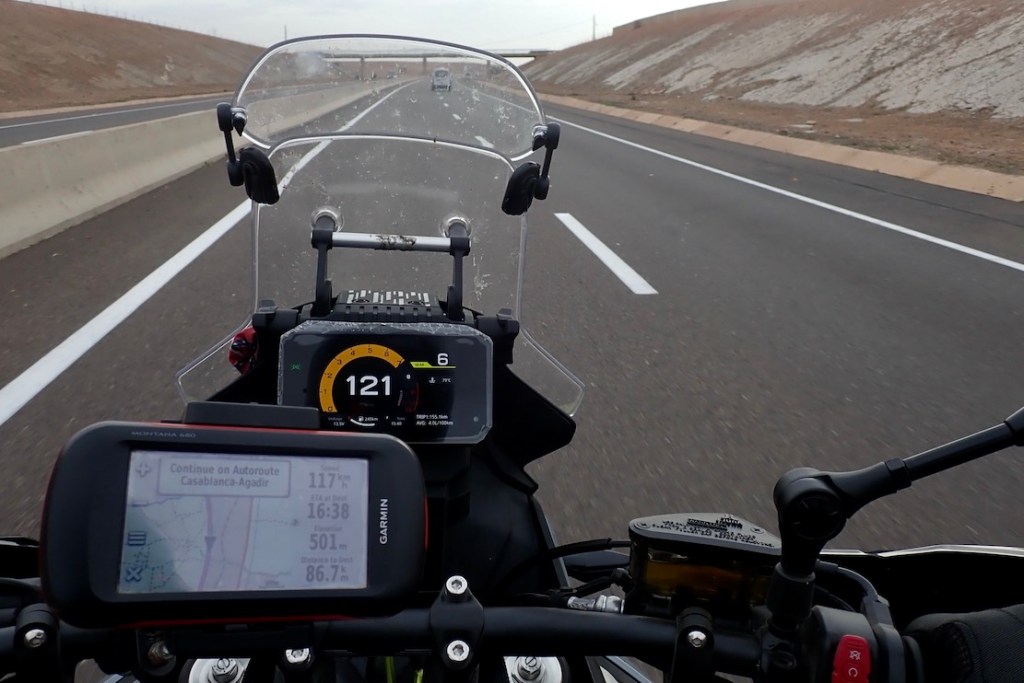
First reading at a true 73mpg was a bit poor considering the running-in speeds I was dawdling at but it never really improved. The bike’s L/100km/mpg read-out is up to 10% optimistic than the true figure, but it becomes more accurate as the mpg improves, same as the speedo reads more accurately at higher speeds (<3% over; see image below).
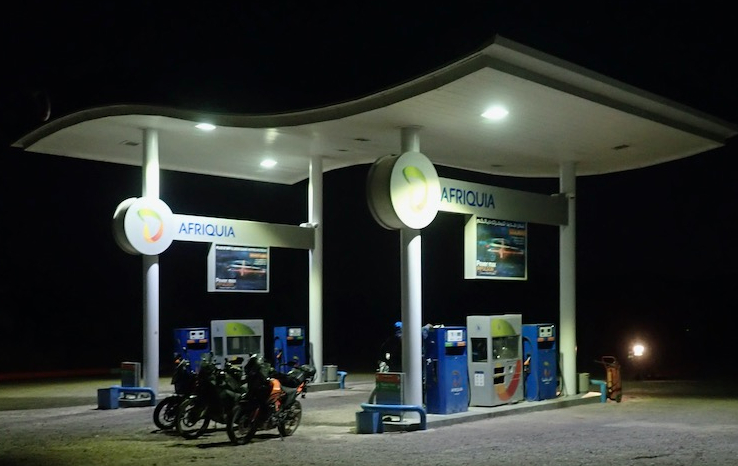
In the UK I’m still not convinced E5 is more economical than E10 which is 10% cheaper. But I suspect running-in on the higher octane E5 was a good idea before filling with E10. In southern Morocco I get the feeling Unleaded is only E5. Here the bike is wide at the front and carrying 15kg but mpg has generally improved. Tyres @ 30psi road or trail and speeds are rarely over 100kph for long.

Average @ 7000km: 24kpl – 68UKmpg – 56.6US

WHEREDISTANCEFILL VOLUME‘READ-OUT’VERIFIEDNOTES
UK246 miles15.2 litres‘74.4’73.5 / 26kplE5, running in, <65mph
UK to Spain340km13~26.1kpl / 73.8Night <110kph
Trans Spain269km13‘4.2’ L/100km20.7kpl / 58.5Autoroute 110kph
Trans Spain33415.2‘4.4’ L/100km22kpl / 62mpgAutoroute 110kph, E5
Morocco, Autoroute30113.5‘4.2’ 22.3kpl / 63Autoroute 110kph
Morocco, Autoroute24211.9~20.3kpl / 57.5Autoroute 110kph
High Atlas backroads25010.3‘3.8’ 24.3kpl / 69some slow piste
Anti Atlas trails/roads32414.2~22.8kpl / 69rough piste, night roads
Anti Atlas trails/roads38515.5‘3.8’ 24.8kpl / 70slow roads, easy trails
Over High Atlas2177.9‘3.4’27.5 / 78 mpgAll road
High Atlas26710.8‘3.7’ 24.7 / 70Rain, trails roads
Desert roads28211.5‘3.7’ 24.5 / 69
High Atlas36512.7‘3.3’ 28.7 / 81 mpgOver Atlas
High Atlas1807.3‘3.8’ 24.7 / 70Back over Atlas
Anti Atlas trails/roads28911.7‘4.1’ 24.7 / 70
Anti Atlas trails/roads26011.2‘3.9’ 23.2 / 65.5
Desert trails/roads35014‘4.1’ 25 / 71
Main road30314.7‘4.3’20.6 / 58.5Headwind?

CFMoto 450MT – Actual Quick Look

CFMoto 450MT index page

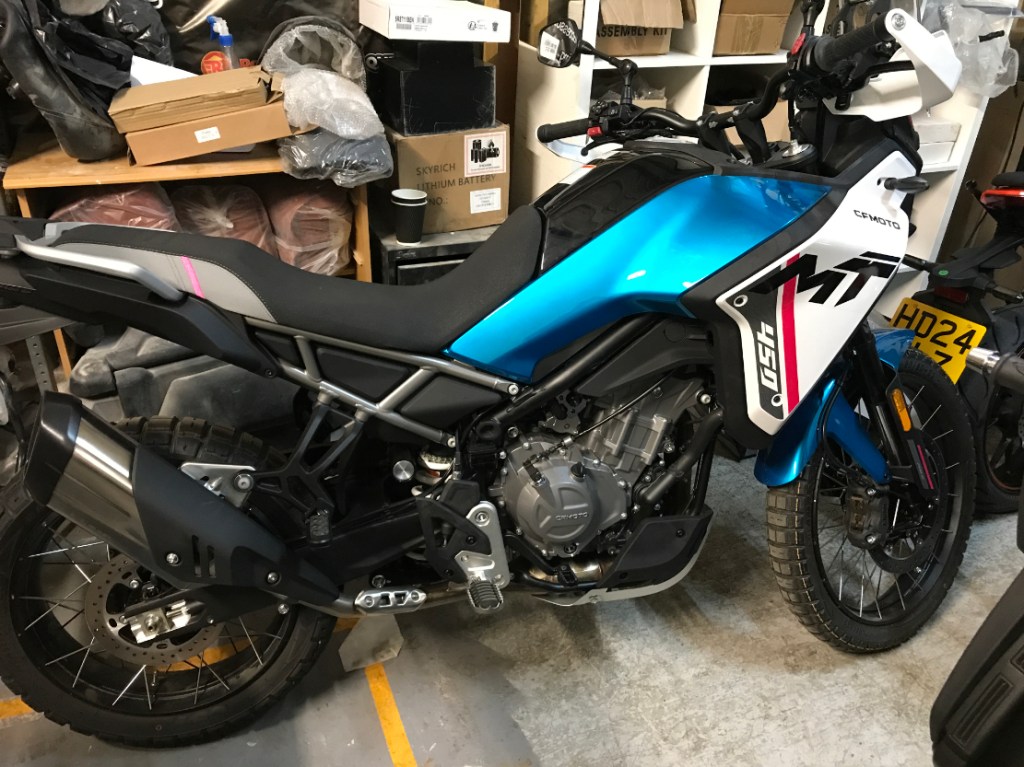
My internet-sourced CFMoto 450MT preview last year has been a very popular post, and was even referenced by this repetitive, AI-generated review. Now the 450MTs are in UK showrooms, but most are long sold to the fearless early adopters who bought the bike unseen, months ago. I’ve made this mistake before and am not in a great rush, but had a chance to look over one in a packed storage shed at my LBS.

Impressions
It’s a whole lot of bike for £5699 with a 4-year warranty. You do wonder if that price is set to jump once it catches on. Alongside a Him 450 (which this shop also sold), the MT is clad in plastic like a 300 Rally vs a 300L. Sat on it, the ‘tank’ feels about 2 feet wide, reminding me of my Africa Twin. We don’t want that.
Behind the panels seems to be a lot of space and maybe some hidden ancillaries, where the Him has crash bars, but unlike the AT or 300L, the radiator looks protected.

As with the new Him, it looks long and low with a spacious feel which you hope will mean on-road comfort, but results in a lot of off-putting ‘visual mass’ to handle on the trail. I’d hope that impression may disappear once the bike gets ridden.
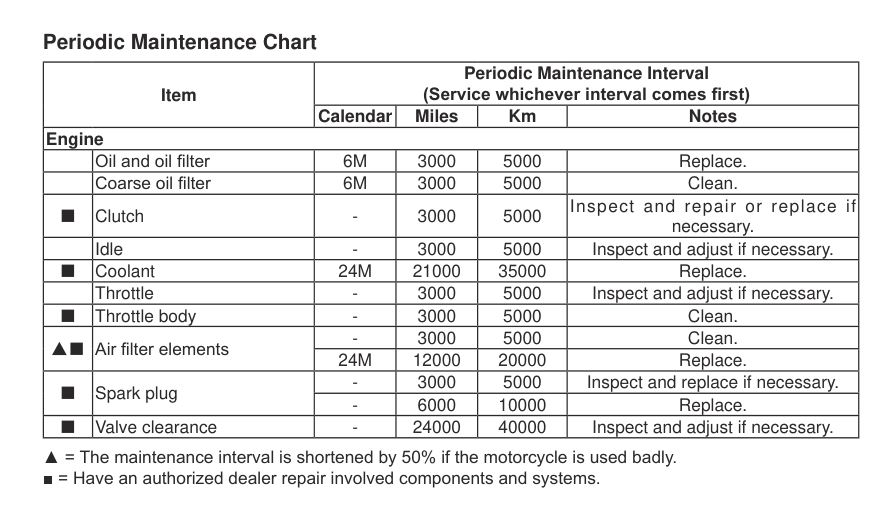
One fly in the ointment I’ve since learned is oil changes at 3000m/4500km and even new plugs at 6k. Oil capacity is 2.5L (full specs here) which seems to be adequate. Surely it’ll last longer than 3000 miles? Or is it a dodge to cover/pay for the 4-year warranty? My 300L was 8000 miles on 1.8 litres (though I didn’t leave it that long).
175-kg dry they say and swinging it side to side it didn’t feel top heavy, but I assume the tank was empty. The quality of the finish looks as good as anything from better known brands; there’s nothing cheap and shoddy here. Taking off some of those panels or the seat might reveal some rough edges, but it doesn’t look like it.

Attention to detail

  • Screen adjusts with big hand knobs, but only by 2-3 inches
  • Seat is long, low and wide, with a grippy surface texture
  • Clutch is very light
  • Single front disc is big
  • Stock wheels are tubeless and seem to look good
  • Rear shock has relatively easy to get to preload adjustment rings
  • Thin plastic handguards are flimsy
  • Both gear and brake lever fold
  • Mirrors pivot in easily
  • Wide footrests
  • Bashplate is thin pressed steel with a few too many slots, but has a flat base for added protection. There’s also a whole lot of space up front – for a rally-style water tank?
  • Tyres are CST Ambro A4 – no, never heard of them either
  • Pipe is as tucked in as it can be

With wall-to-wall rave reviews, I was set on a 450 Himalayan in tubeless for about £6300, despite the hideous graphics (which might have hair-driered off). I still think the Him would feel easier to manage on the trails, like a 300L. But once you factor in the irresistible appeal of a 270° twin, swinging a leg over and pressing the button takes on a whole new thrill.

Himalayan 450 vs 450MT

  • The weight, power and tank volume are about the same
  • I imagine the Him’s economy will be a bit better
  • I prefer a rectangular dash and can live without engine modes
  • MT is loads cheaper

Himalayan 450 lacks
Adjustable screen
TL wheels on base models
Handguards
Fully adjustable suspension

CF450MT lacks
Centre stand and tank crash bars
Proper handguards
Ride-by-wire/engine modes (good)
Naff graphics (also good)

Tbh, that list was scrapping the barrel. Both of these are two of the best real-world travel bikes we have at the moment, but the Him costs 10% more in tubeless. Having seen one up close, there’s nothing I’d revise in last year’s preview.