Yes you have to pedal it (and probably transport it), but once you reach an age when you can’t tear around on MTBs like you used to, but recognise that you must ‘use it or lose it’ to maintain good health, an e-MTB can open up a huge range of trails in Britain’s wilder corners that you can’t legally ride on a trail bike.
“It had been a darn good work-out and revealed a whole new way of enjoying the UK countryside.”
When it wasn’t a job, motorcycling to me has long added up to travel and trail riding. Ideally a bit of both. In the late 70s it was the limited opportunities for trail biking in the UK (compared to say, the western US) that drove me to the Sahara in the first place. I can’t imagine UK access to green laning has got any better since.
It may not be Algeria, but mid-Wales is a much overlooked and sparsely populated area of hill farms and old droving roads. With John, a guide from the nearby Yamaha dirt school, in 2016 we spent a great couple of days out of Llanidloes riding backroads and trails, me on my WR250R. And way back in I981 I remember my first proper enduro south of there on a lame KLX250.
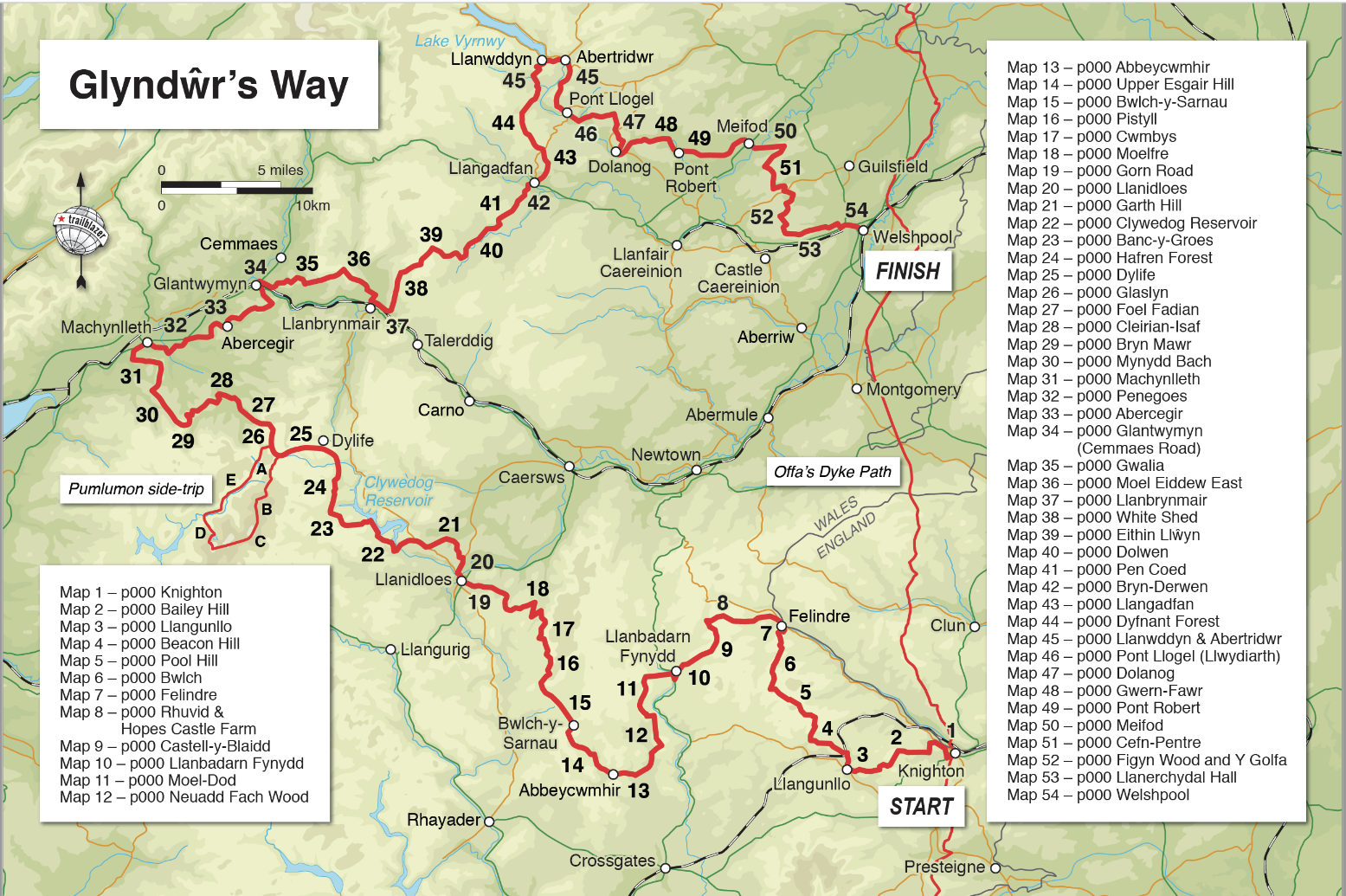
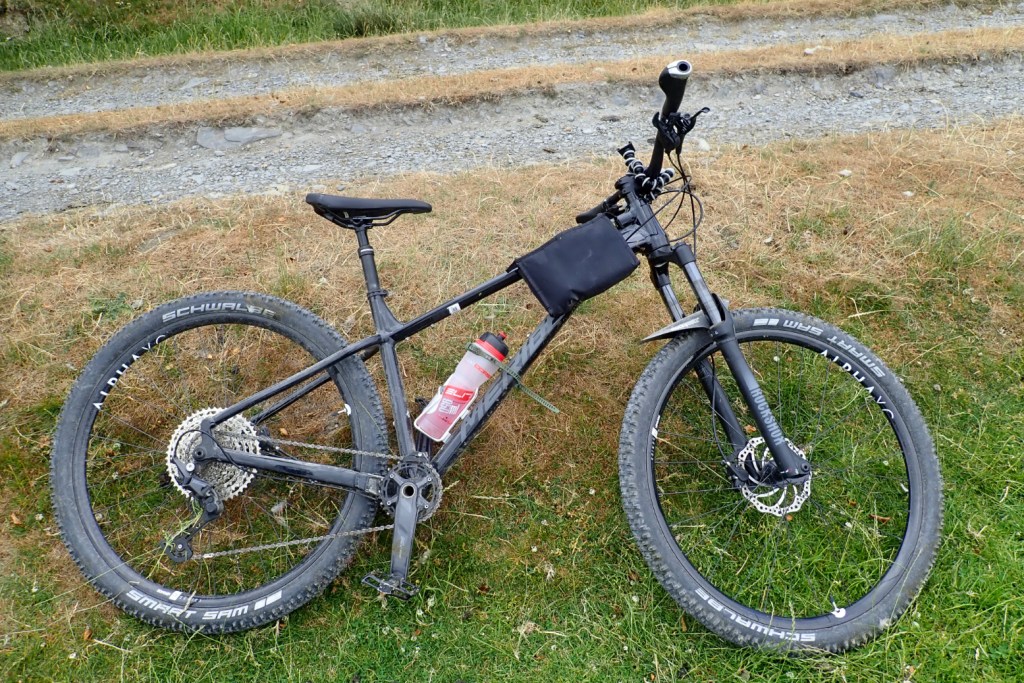
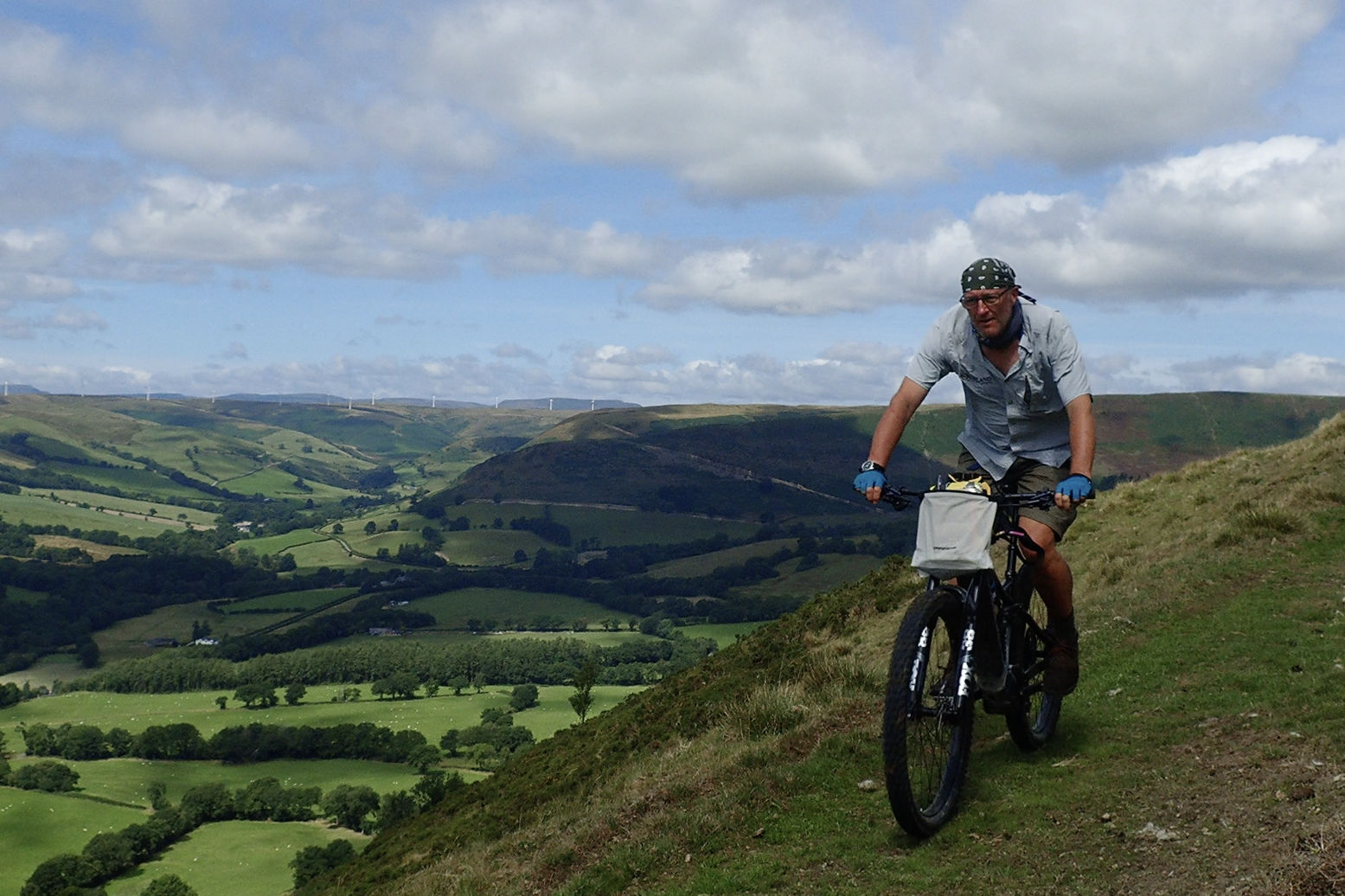
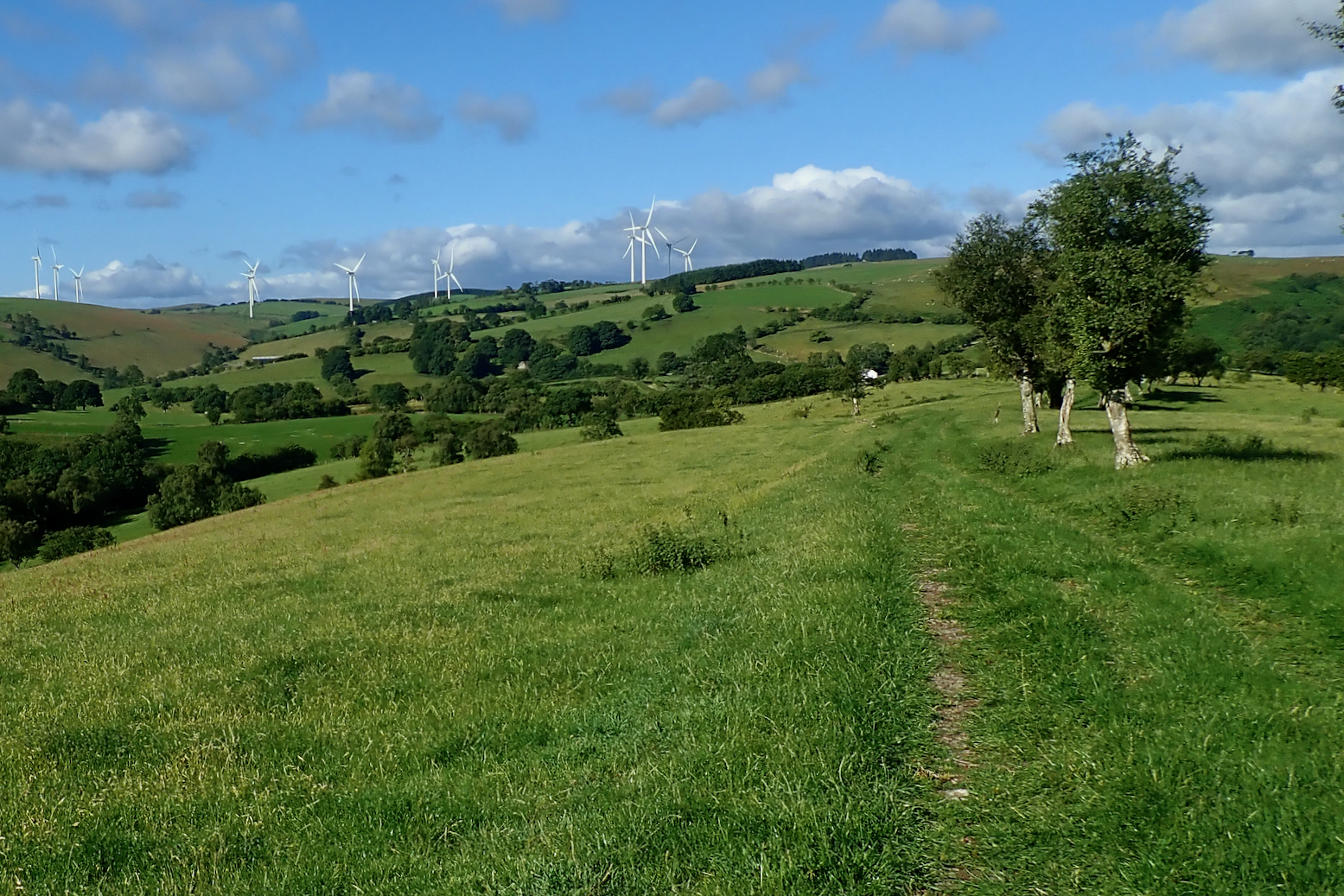
Traversing that region is the Glyndwr’s Way (right), a 134-mile National Trail no one’s ever heard of. It crosses Powys, Wales’ biggest county but with the population of Canterbury. Walking the 9-day route for a new guidebook back in March 2022, I clocked loads of sections that would’ve been a blast on an MTB. So in August I came back on my Merida hardtail MTB. With new guidebooks like this, it takes a couple of passes to get the mapping and detail right, and a pushbike sped up the job and so saved a bit of money.
Kashgar
And a blast on my Merida Big Trail 500 I did have, even if it was no lighter than the Specialized Stumpjumper I bought way back in the mid-1980s. Like most people, I’ve owned MTBs pretty much no-stop since that time. In 2007 we cycled the Karakoram from China to the Hindu Kush, then came back the following year to do the Himalayas (video below). Compared to motos, cycle overlanding is so simple: fly a bike in (or buy used in China, like I did); no paperwork, simple mechanics and when you get puffed out at 5000 metres on the way to Tanglang La, sling it in the back of a passing lorry.
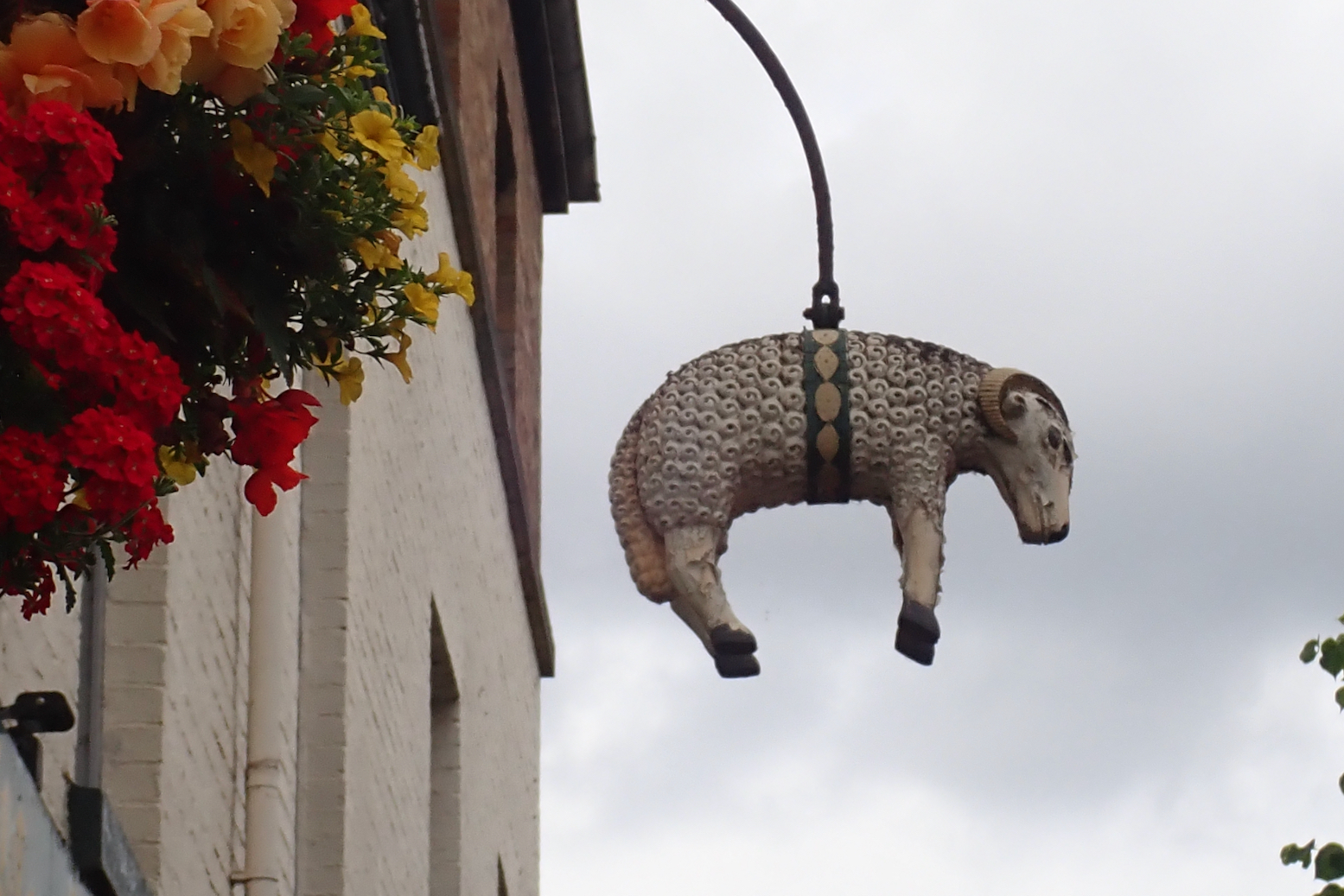
Do sheep dream of electric sheep?
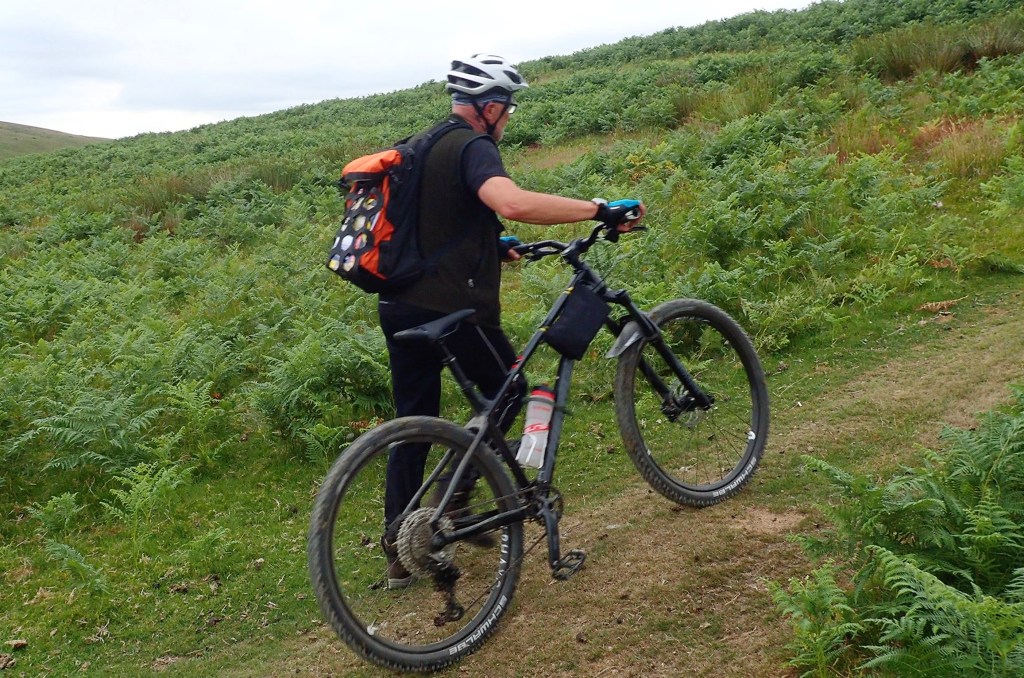
But guess what! I’m not 45 any more and hardtailing the Glyndwr’s I soon remembered cycling up a rough trail consumes loads much more energy than simply walking. Soon I ended up feeling like a hung sheep.
Makes sense to me!
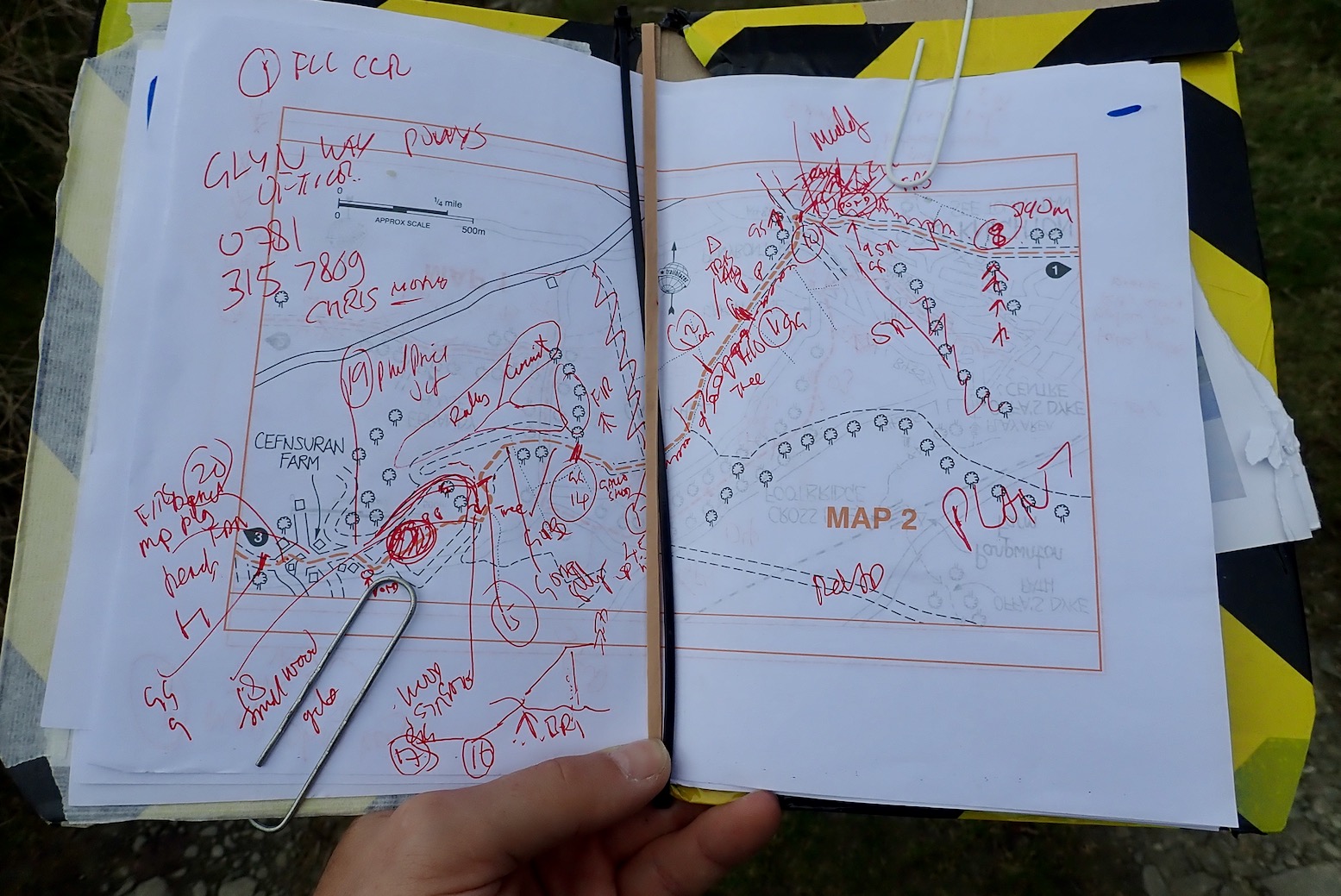
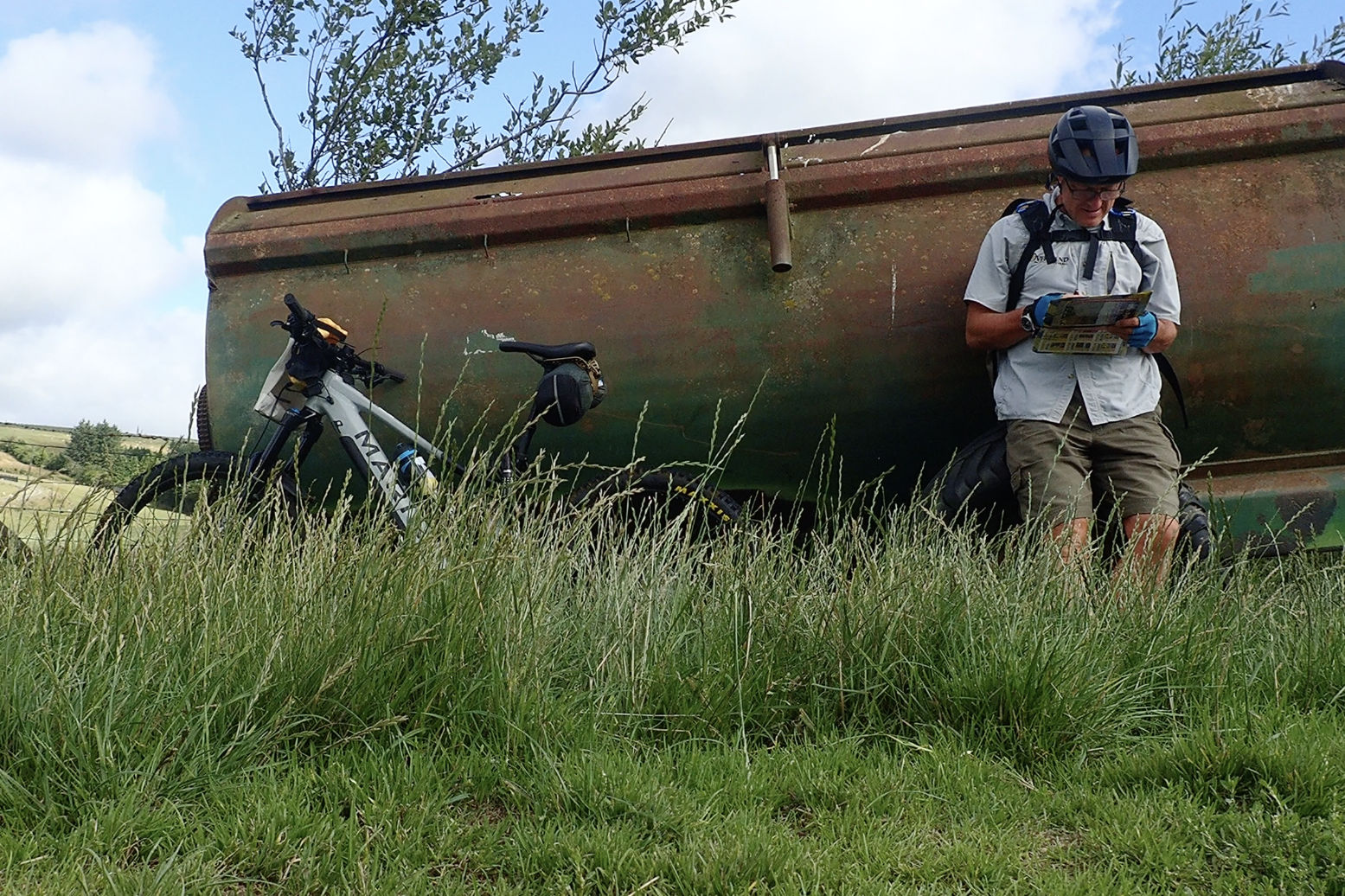
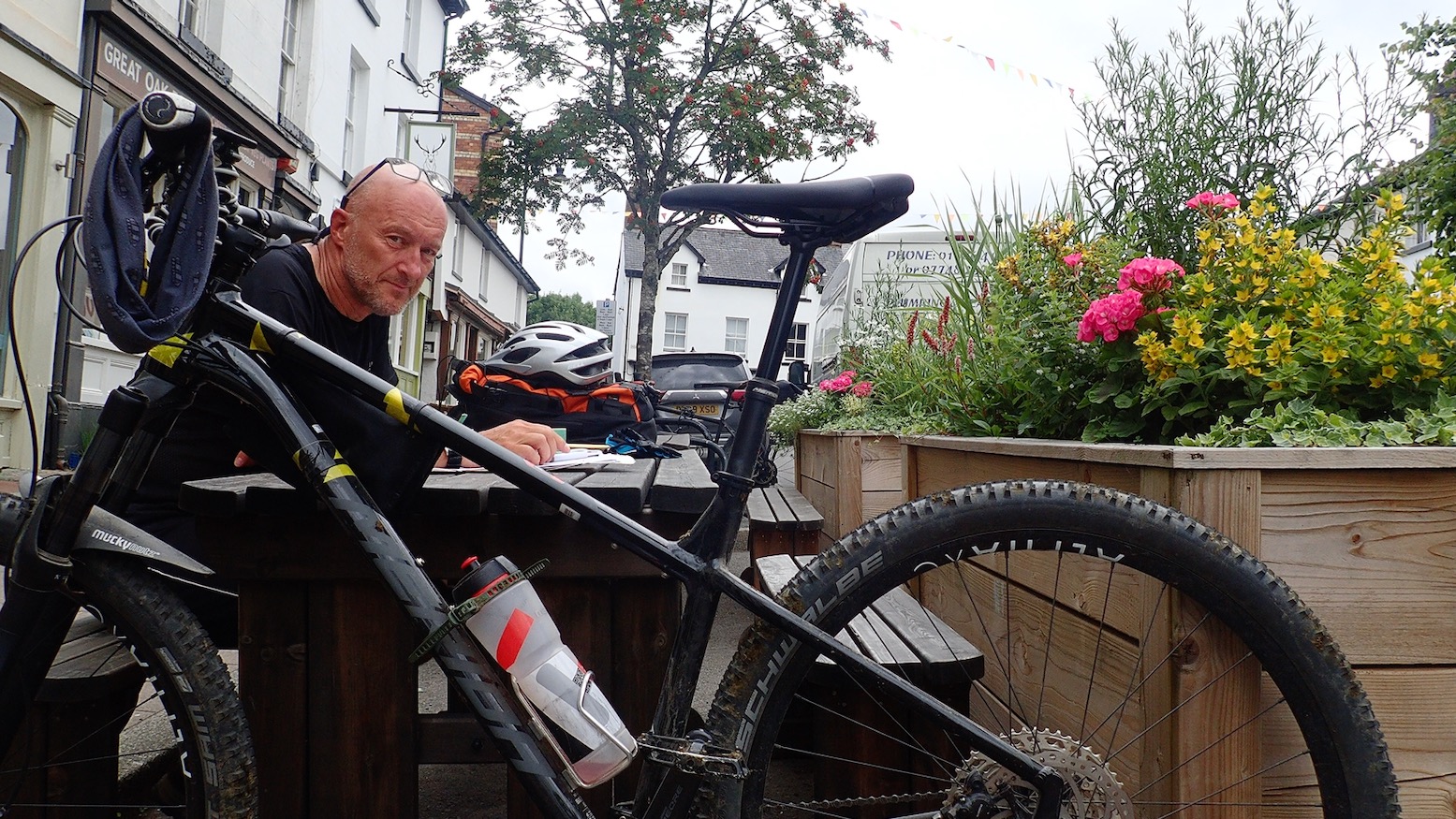
My time and money saving plan to cover two typical 15-mile walking days in one soon got stretched, not least because I have to stop constantly to annotate the maps (right) and negotiate the endless gates. On the Glyndwr’s it’s around 15 miles of nothing to get to the next lodgings and with no public transport to speak of.
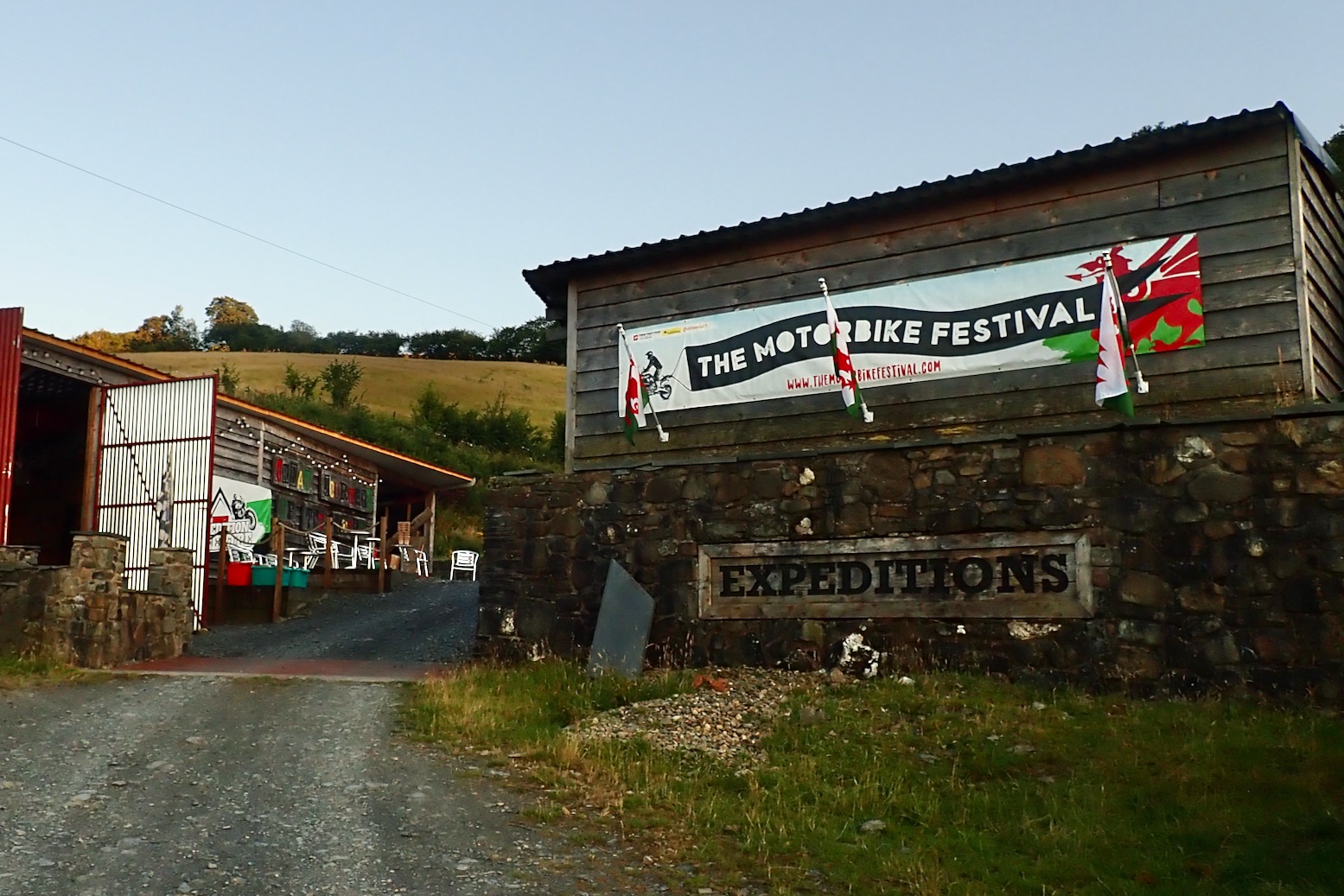
I ticked off a couple of the walk’s nine stages, then realised this wasn’t going to work so left the Merida at Nick Sanders‘ place near Machynlleth (left) where I was doing a moto talk later that month. Then I thought again about renting an e-bike. With a bit of help I could achieve my two-days-in-one target plus enjoy trying out e-bikepacking.
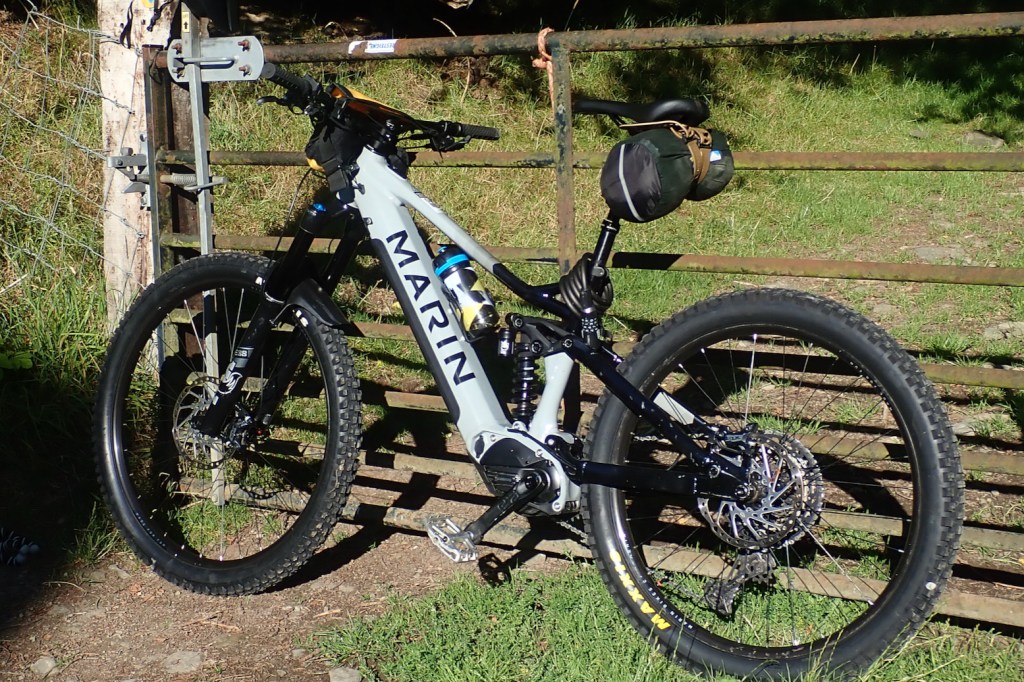
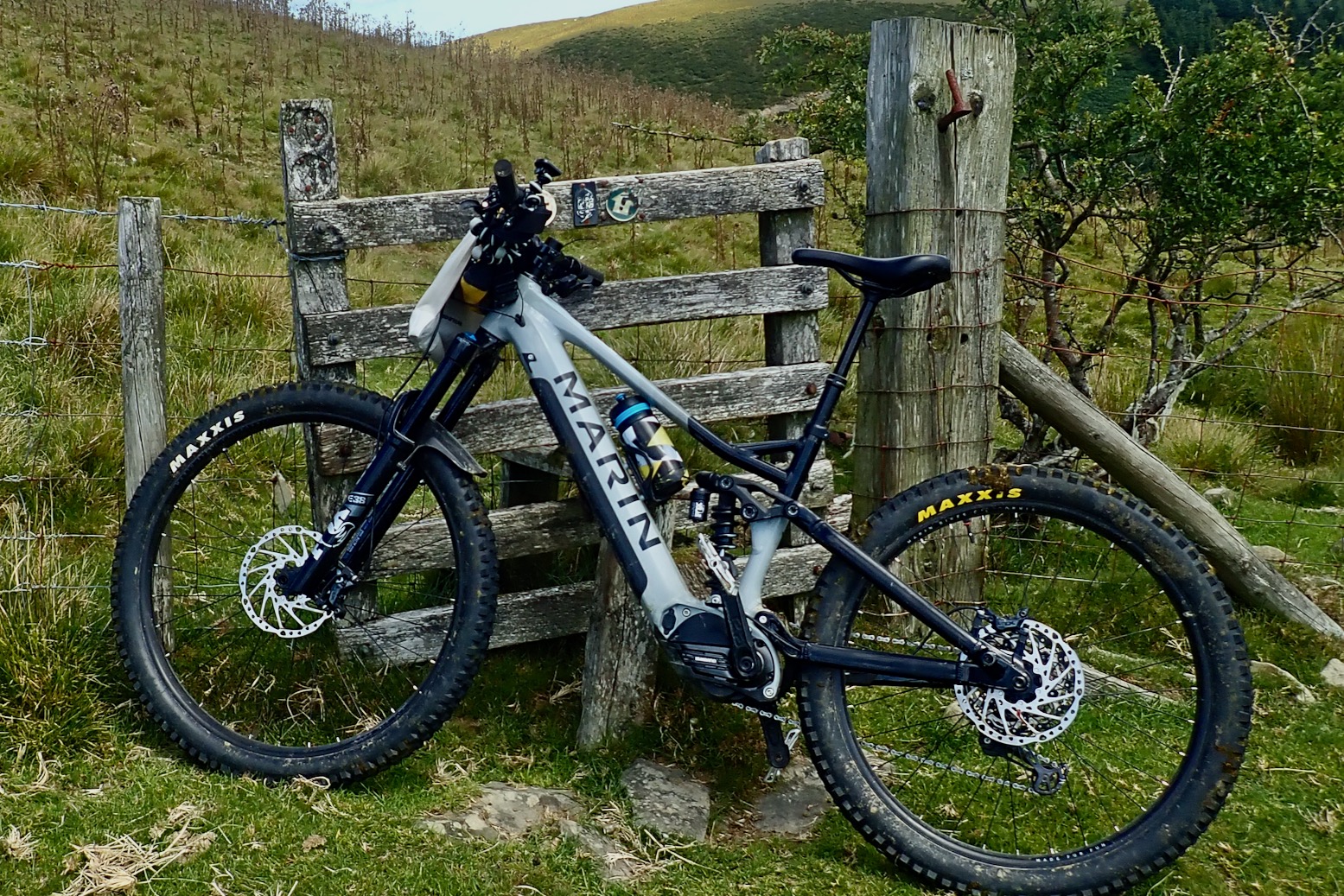
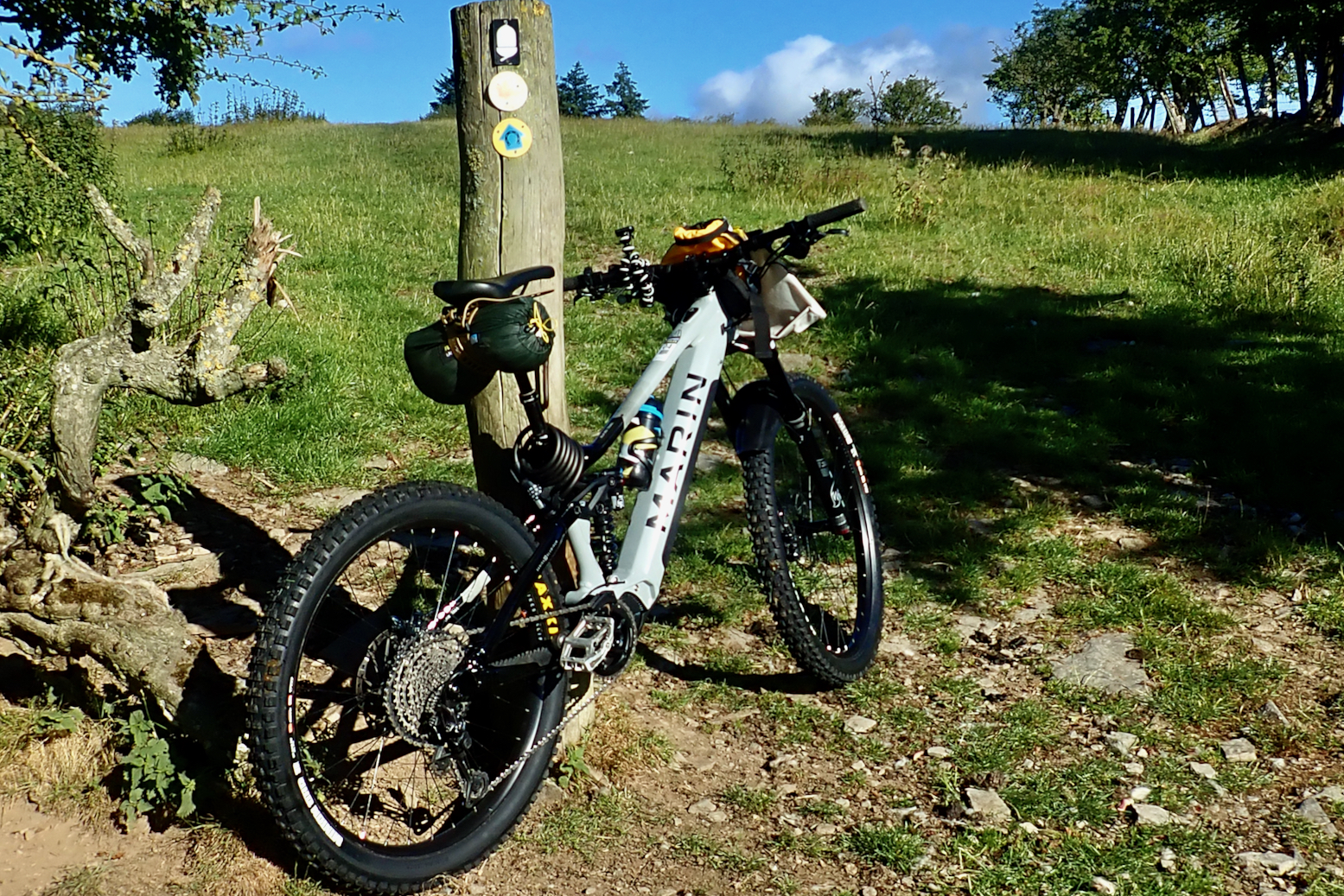
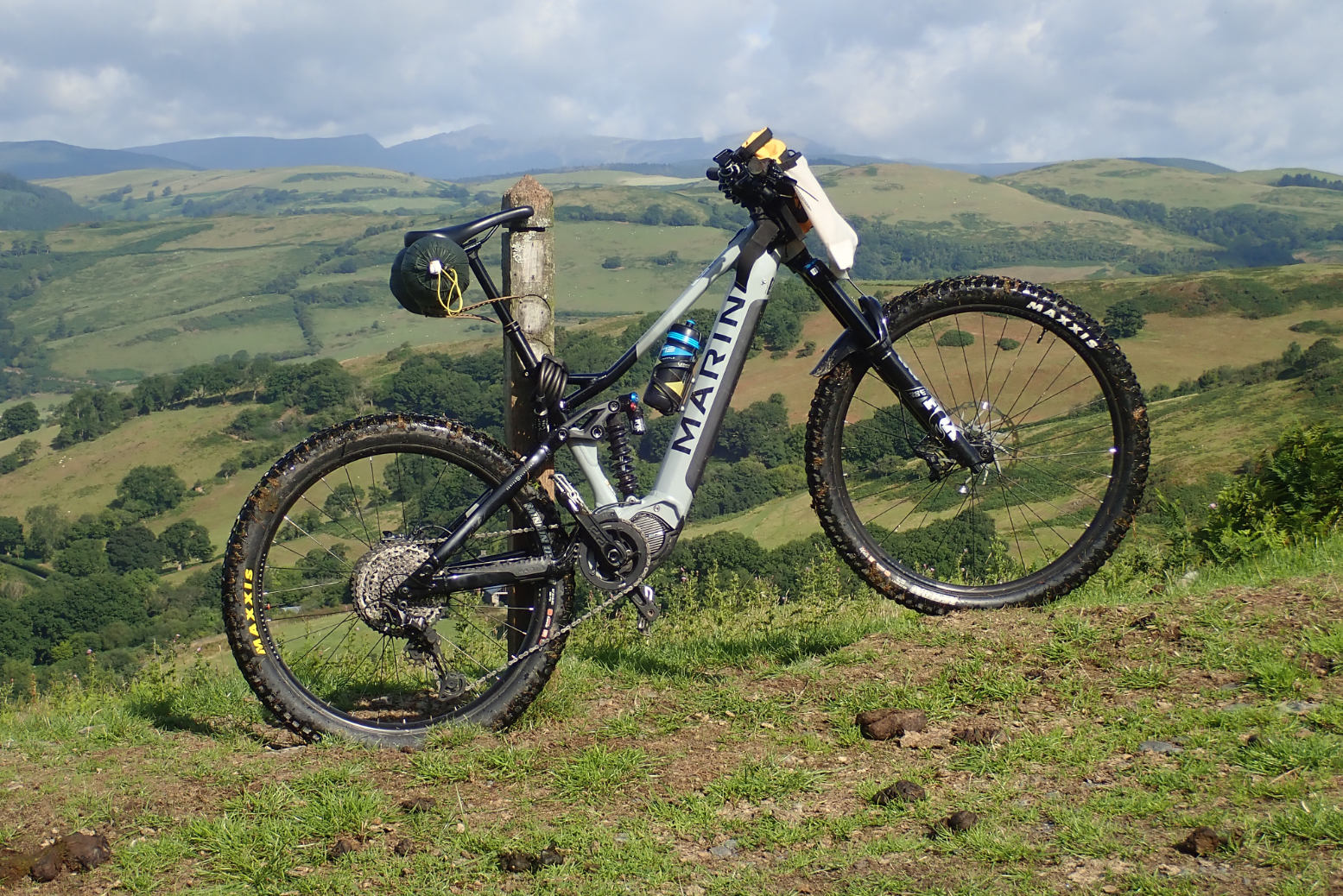
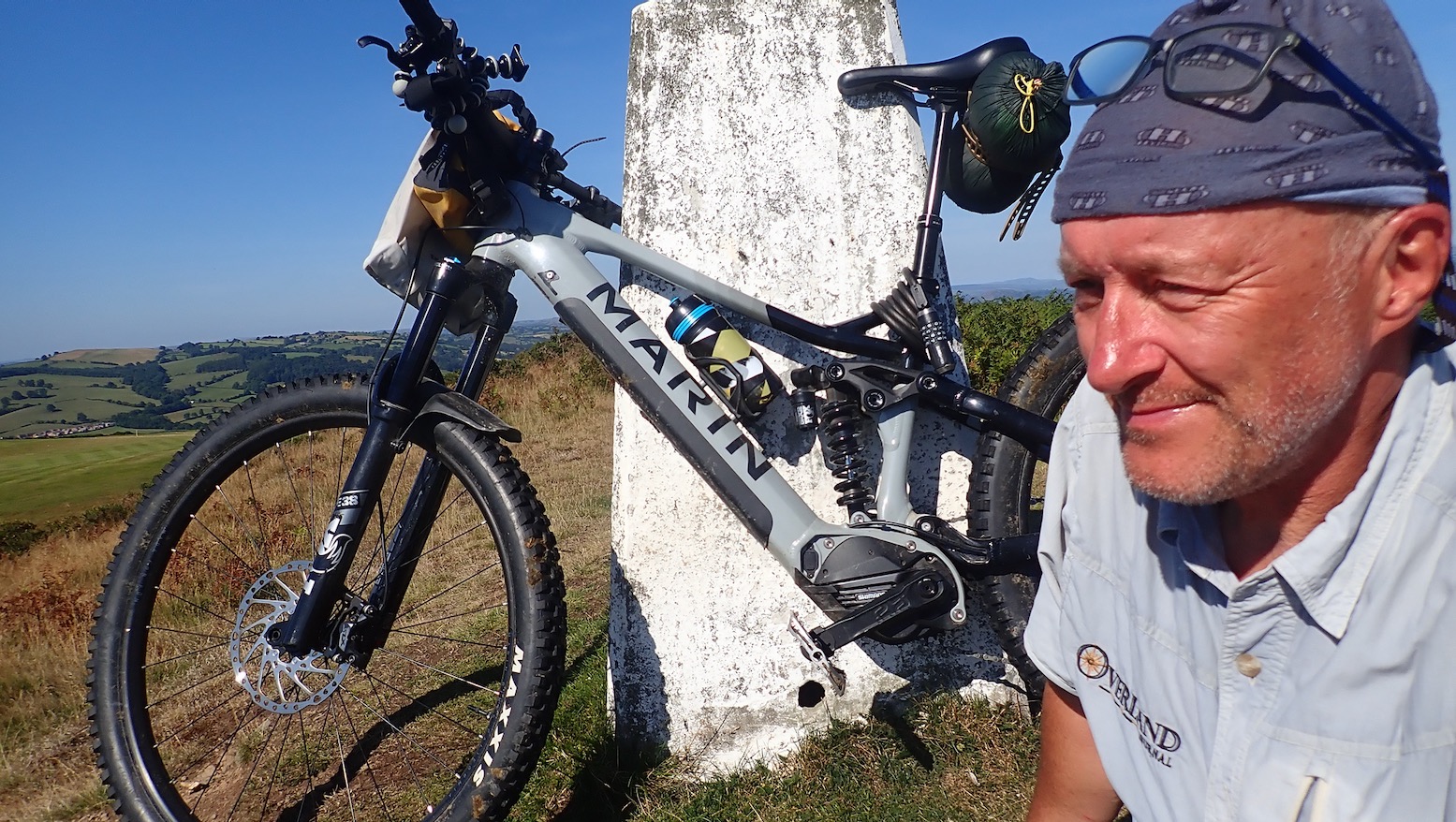
Range anxiety Most e-MTB rental places want you to go round and round their closed courses, but I found a go-where-you-like outfit in Hay, 38 miles from my start in Felindre, on the English border. Leaving it all a bit late, all they had left was nearly six grand’s worth of Marin Alpine Trail E2 in Large, when I’m more of an XL. The full suspension was a bit of a novelty, as of course was the latest Shimano EP8 motor. It gave three levels of pedal assistance: Eco, Trail and Boost and claimed up to 60 milesof range.
Clean and fully charged Marin – not for long
With my gross weight of 105kg with gear and intended use, I translated that to 40 real-world miles, and soon I was huffing and puffing along hilly back roads from Hay to Felindre. Sticking resolutely to Eco until I knew better, the reality of e-pedalling soon became clear: climbs are far from effortless – when it’s steep you have to give it some welly, even with 12 gears.
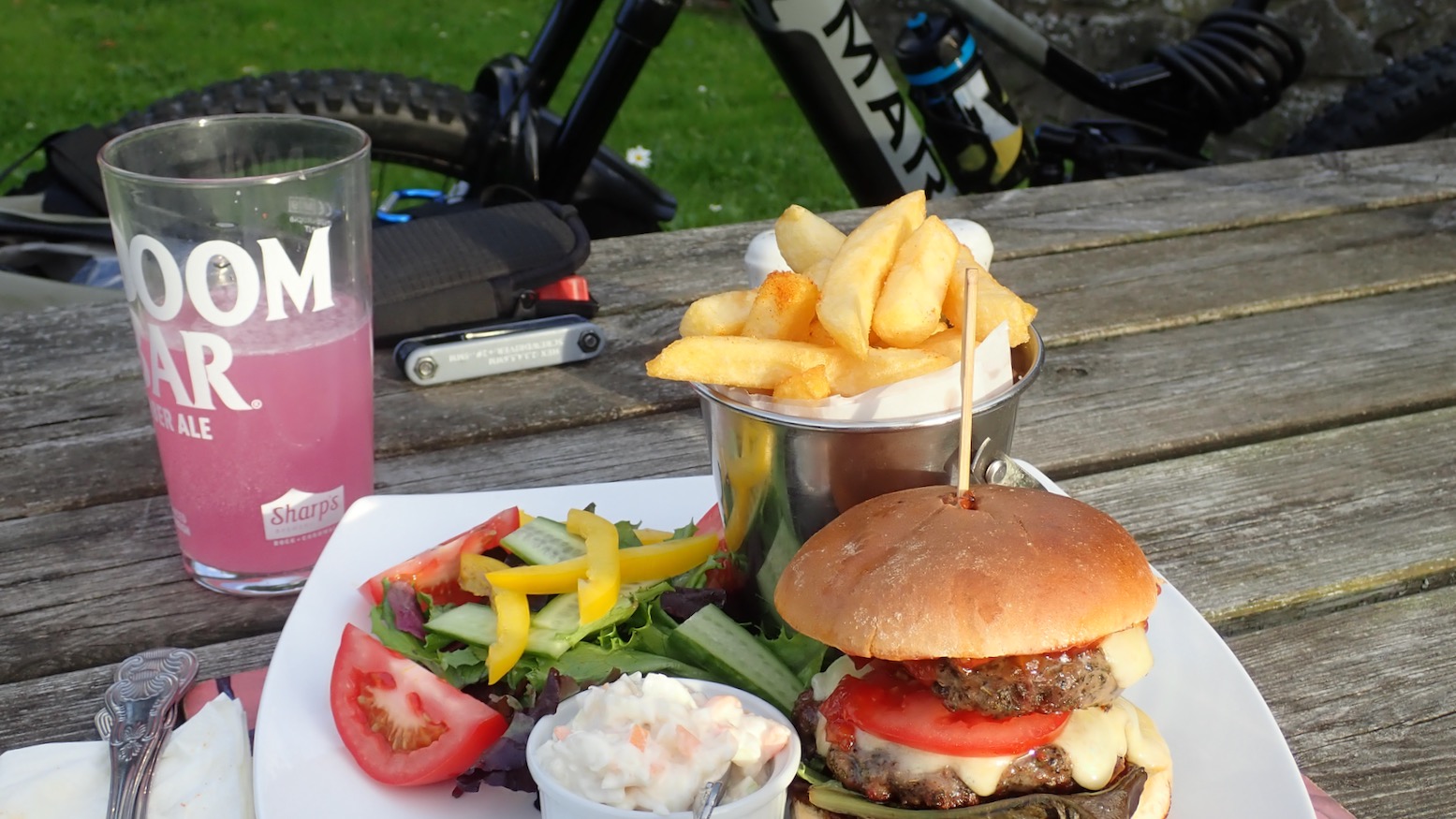
According to UK laws, e-assistance cuts out at 15mph but despite the knobblies I still managed to hit over 40mph on some longer downhills. After a fat-tyre dinner at the Radnorshire Arms in Beguidy (left), I camped in Felindre (the only place which charged for an overnight charge), ready next day to cover about 35 miles on road and trail to Abbeycwmhir and beyond Llanidloes to a B&B on the far side of the Clywedog reservoir.
Keep the white power bar off the spikeThe winding trail of Glyndwr
Stile. You can do this…
One good thing about having previously walked the trail was that good or bad, I knew what to expect. And one of those good and bad things was there are very few stiles (left) on Glyndwr’s Way. Lifting 25 kilos of Marin without damaging it or yourself soon takes it out of you.
Managing the Economy I was warned that engaging ‘Boost’ would kill the battery, and that switching off on smooth flats or long downhills (to save battery) could temporarily boggle the electronics. Initially I was over worried about ending up pedalling 30+ kilos of flat-batt bike on the dirt, though of course that’s exactly what we did in the Himalayas once you factor in baggage weight. So for the first few days I only blipped into ‘Trail’ mode for a few minutes a day and never used Boost.
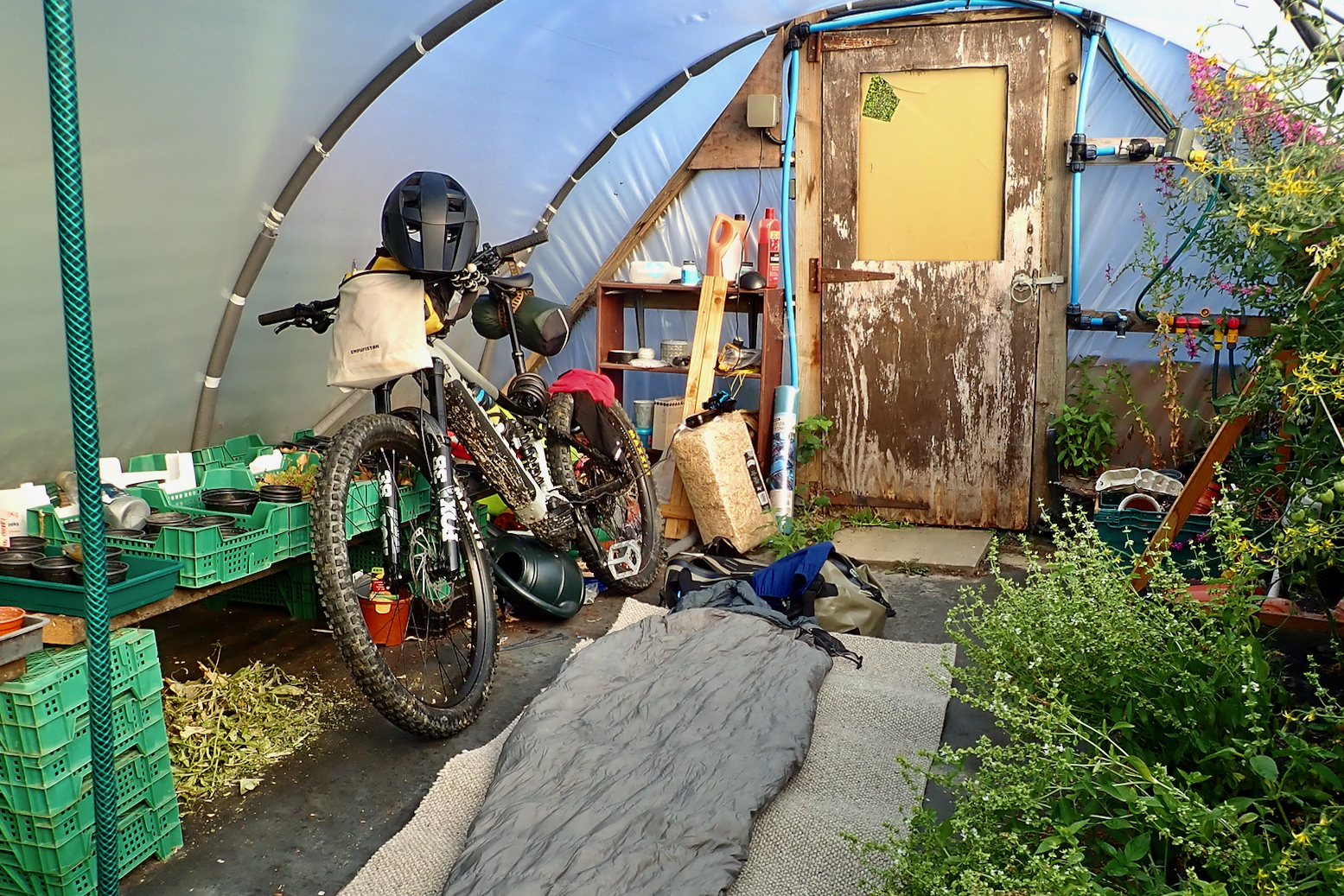
Arghhh Got the B&B date wrong – but there was room (and a wall plug) in an aromatic polytunnel
Nick Sanders in Finland
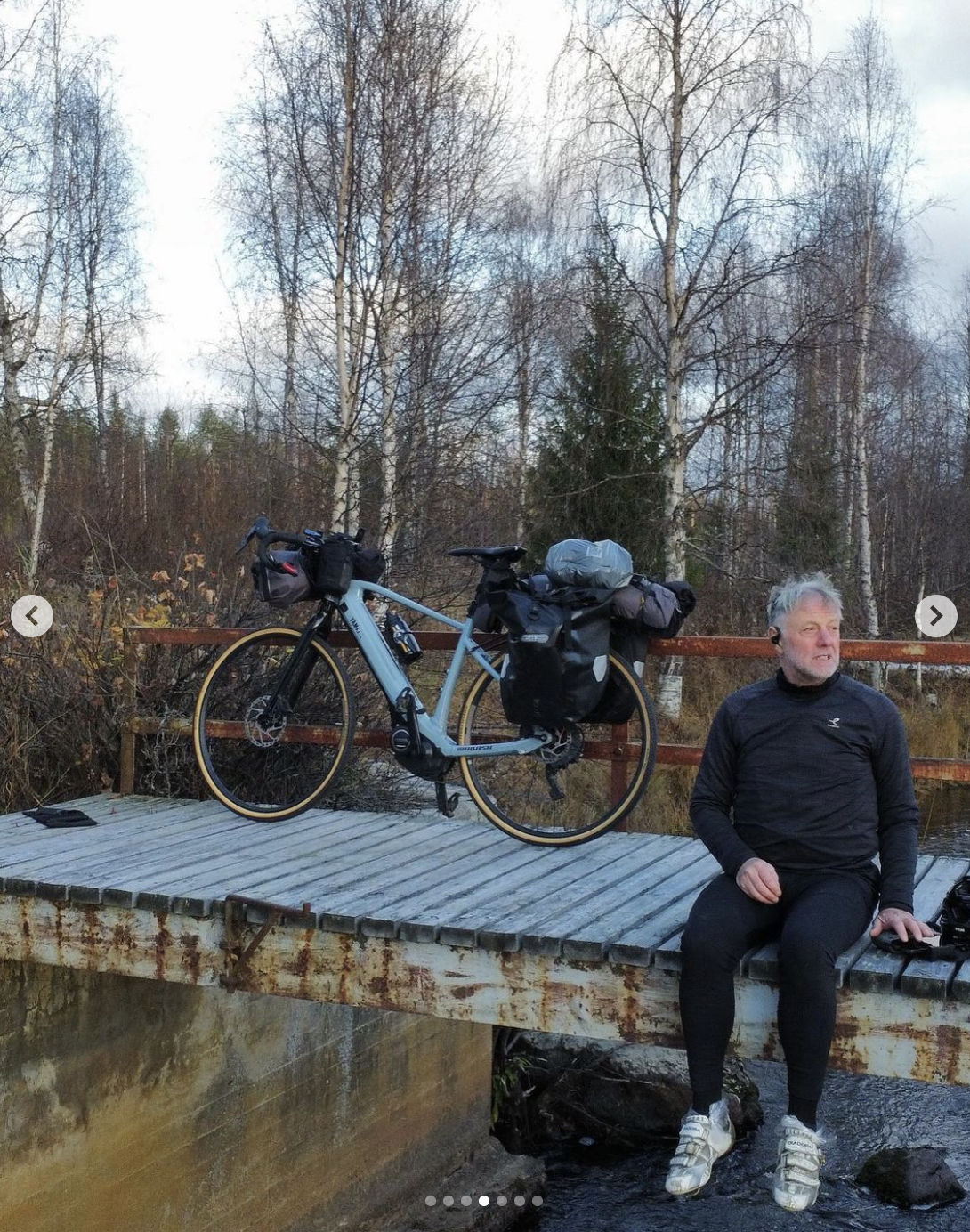
That evening I reached my remote B&B with one bar flashing and pretty knackered, even though it had been 60% hilly roads. In my rush to plan this trip, I got the date wrong so ended up sleeping in a polytunnel out back. On reason I was stuck here (the next possible place was 5 hilly miles) was that this £6k bike only had a slow (overnight) charger, not the ‘1 hour for 80%’ fast charger I’d read of somewhere. You plug it directly into the motor, through the downtube battery can be removed with tools. Imagine the game changer fast charging would be. As well as being able to switch off reliably. Though realistically 30 full-on off-road miles is all you could cycle in a day, on the road you could do 30-40 miles, recharge over a leisurely lunch, then do the same in the afternoon. In fact Nick Sanders is doing that right now from Nordkapp to Gibraltar on one of Yamaha’s new Wabash e-bikes.
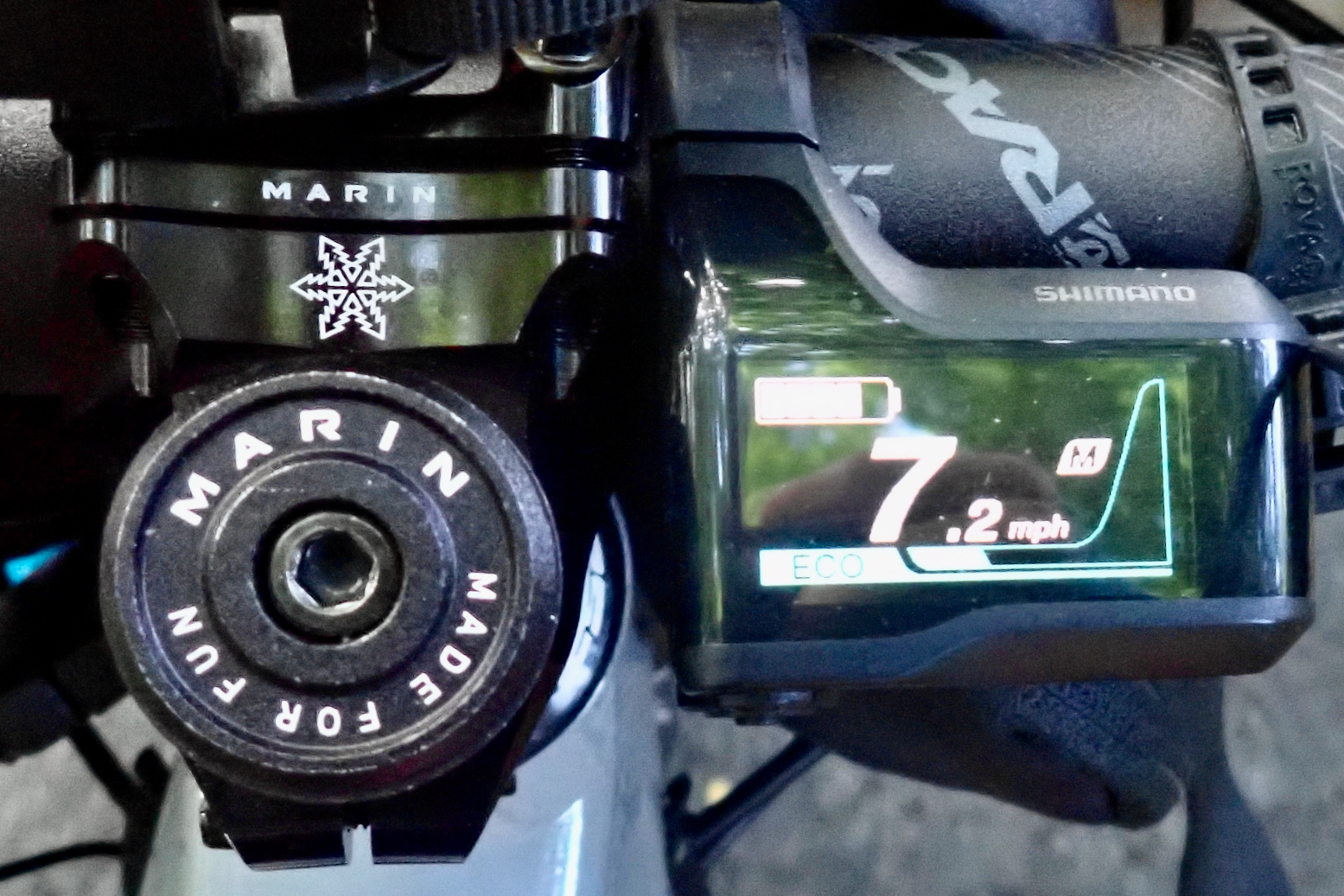
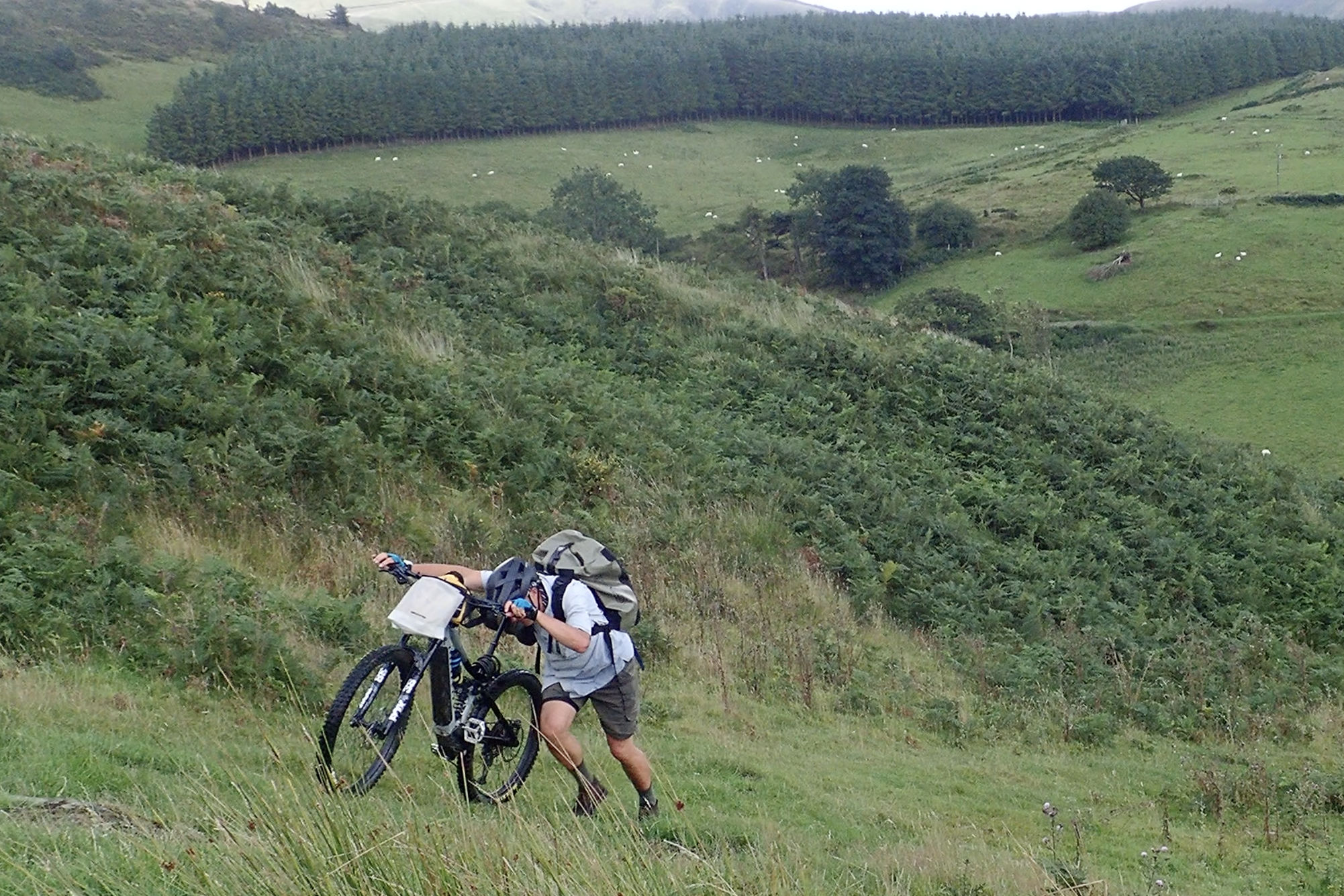
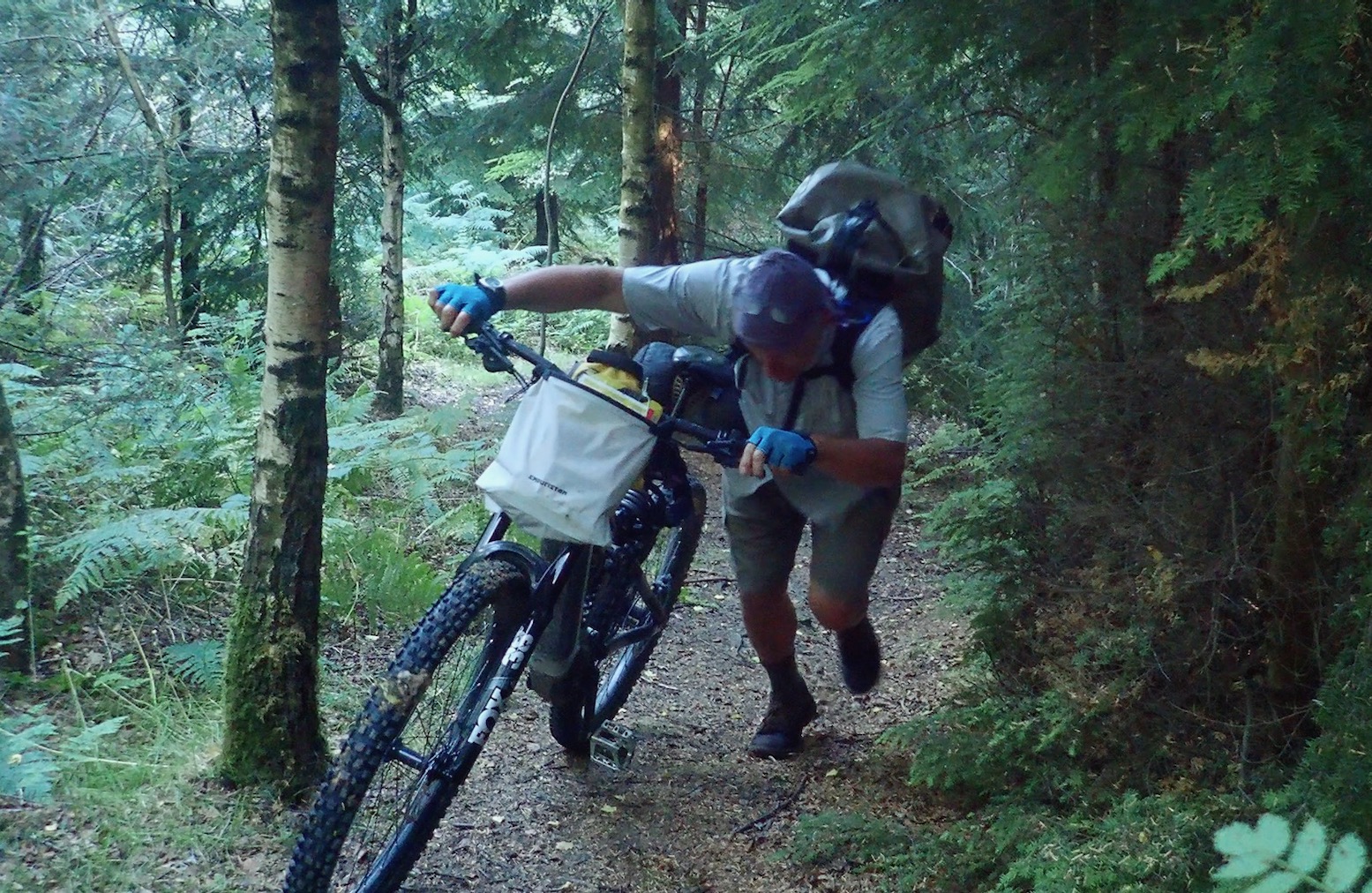
Walk-Assist Mode One huge annoyance I blame on both Marin’s online blurb, bike manual and the bike rental place is there’s no mention of walk-assist mode – a ‘hand throttle’ you can use to help push the bike up steep or rough slopes that are barely rideable or are too battery-devouring. Without it, many times I ended up pushing the bike like Chris Bonington on Annapurna: stagger 5-10 paces; rest; stagger 5-7 paces; rest… Only on the very last day did I accidentally nudge the toggle switch into walk-assist which popped up on the display. But I didn’t know (or was too knackered) to know what had happened, so struggled on upward. That really would have eased my week on the Marin, along with being able to rely on the seat post dropper which was set right on the limit for my leg length and tended to collapse (ruining my Exped sleeping mat on the rear tyre). An Xl sized bike may have dodged that.
Walk Assist explained
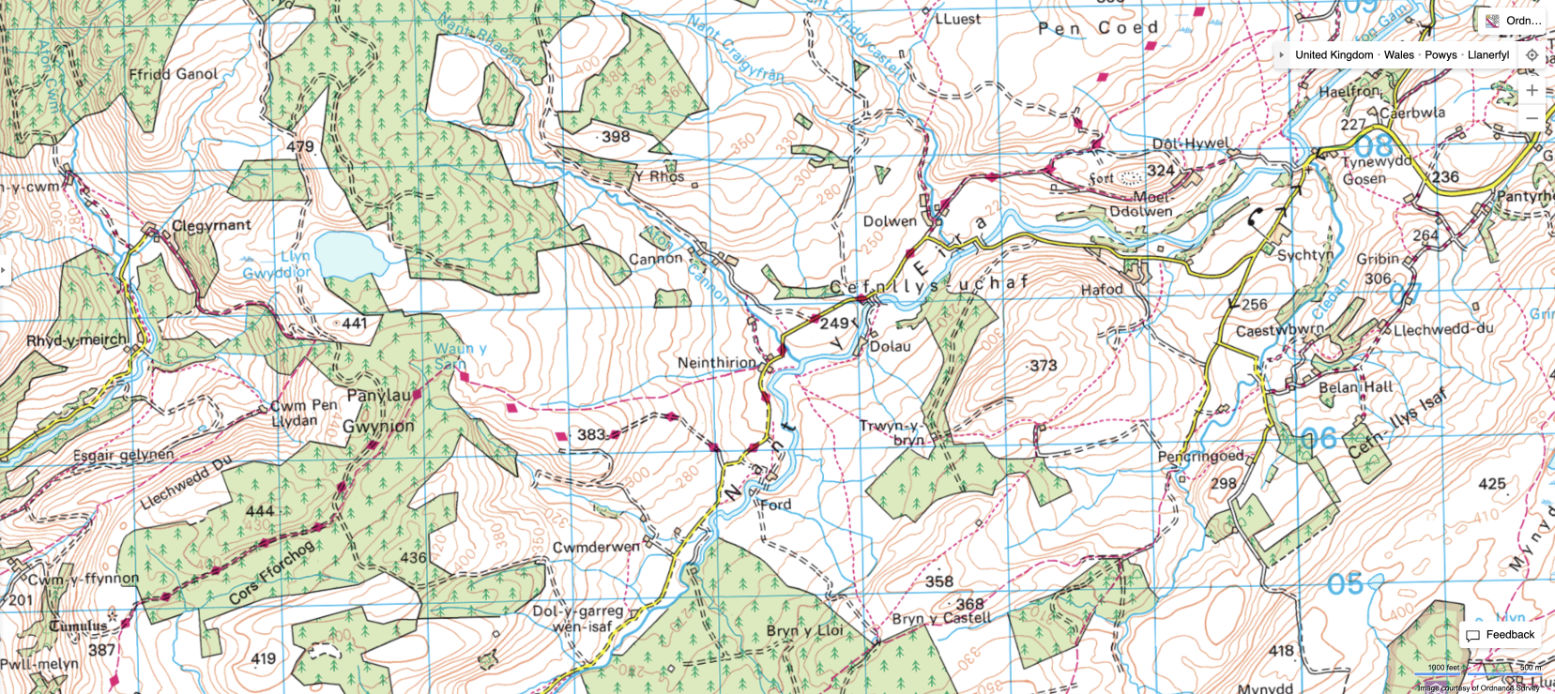
In fact, even with e-assist, 30 miles a day got a bit much for me after a while. Stage 6 out of Mach was 80% trail with no less than 70 gates to Llanbrynmair (LBM). By the time I got there, overdid lunch and chatted with a very rare GW walker, I realised I probably didn’t have it in me to navigate the 11 miles rising steeply up onto the tussocky moors and over to Llangadfan. Instead. I took a lovely road ride to pick up the GW in the Nant yr Eira valley, then backtracked next day from Llangadfan back to LBM with no baggage, to tick off the missing section – much more fun!
The heavenly valley of Nant yr Eira east of Llanbrynmair. Check it out next time you’re there.
I was now getting the hang of optimising the bike’s economy and came in off that 30-mile day still with 3/5 bars. I even treated myself to a spot of turbo Boost but was surprised how little it did, compared to switching from Eco to Trail (but see comment from Ian, below). Time it right in the right gear and Trail really can feel like the hand of god giving you a gentle but firm push uphill.
No overnight clobber – much more fun!
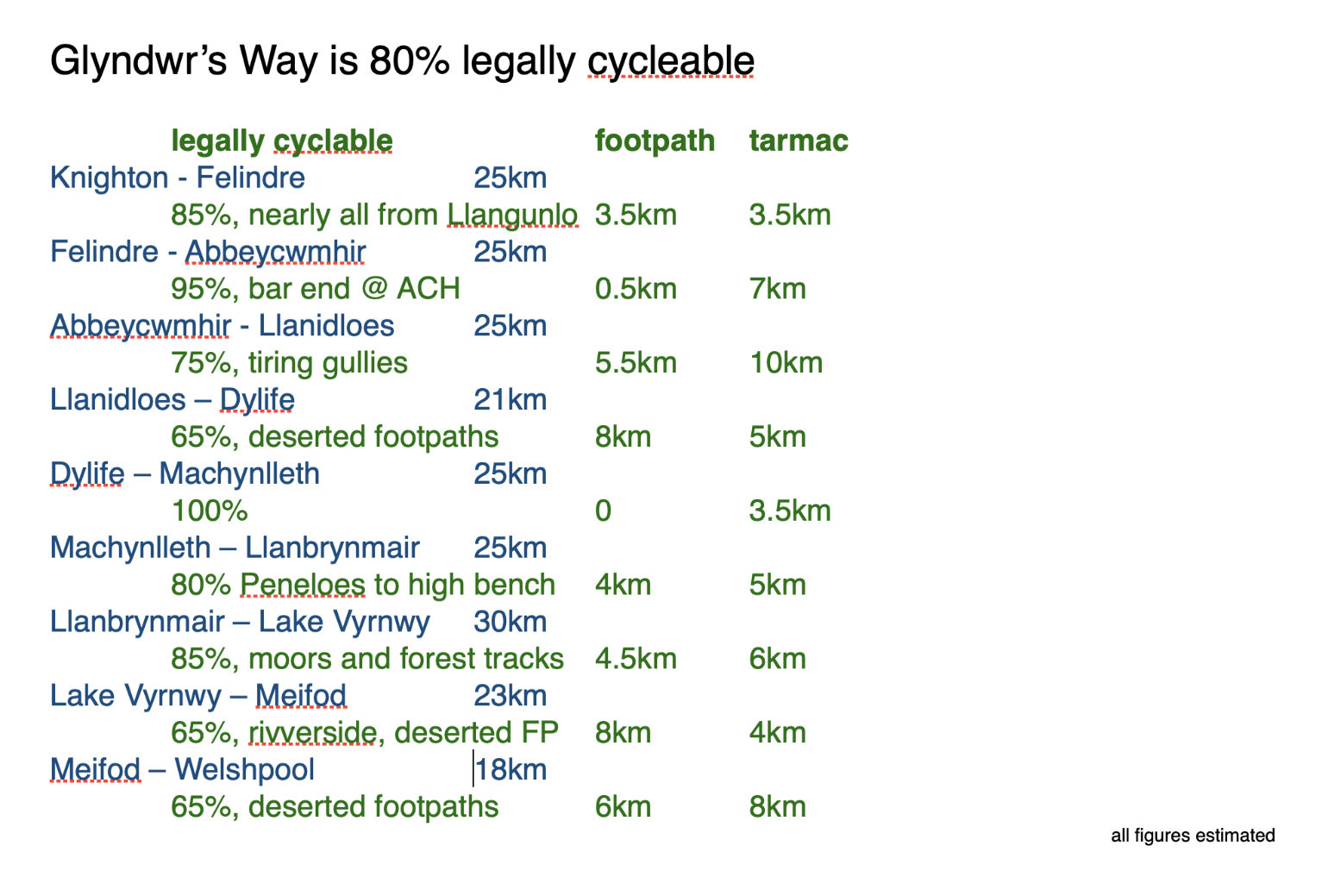
About UK Rights of Way Just as motos must stick off-road to the few remaining byways, BOATs etc, pushbikes and horses cannot ride footpaths and must stick to bridleways and the above. Glyndwr’s Way switches constantly between footpath and bridleway (plus tracks and backroads. The GW is 27% asphalt and is 80% legally cyclable – in other words only 20% is footpath.
Regarding that 20%, while I agree that in the congested Peaks or the Lake District riding footpaths would be bad form and is in fact a civil wrong or tort – in the lost paradise of mid-Wales I rarely saw anyone anywhere, and when I did, none batted an eyelid as they’d rightly have done had I been on a cackling WR450 dressed like a transformer.
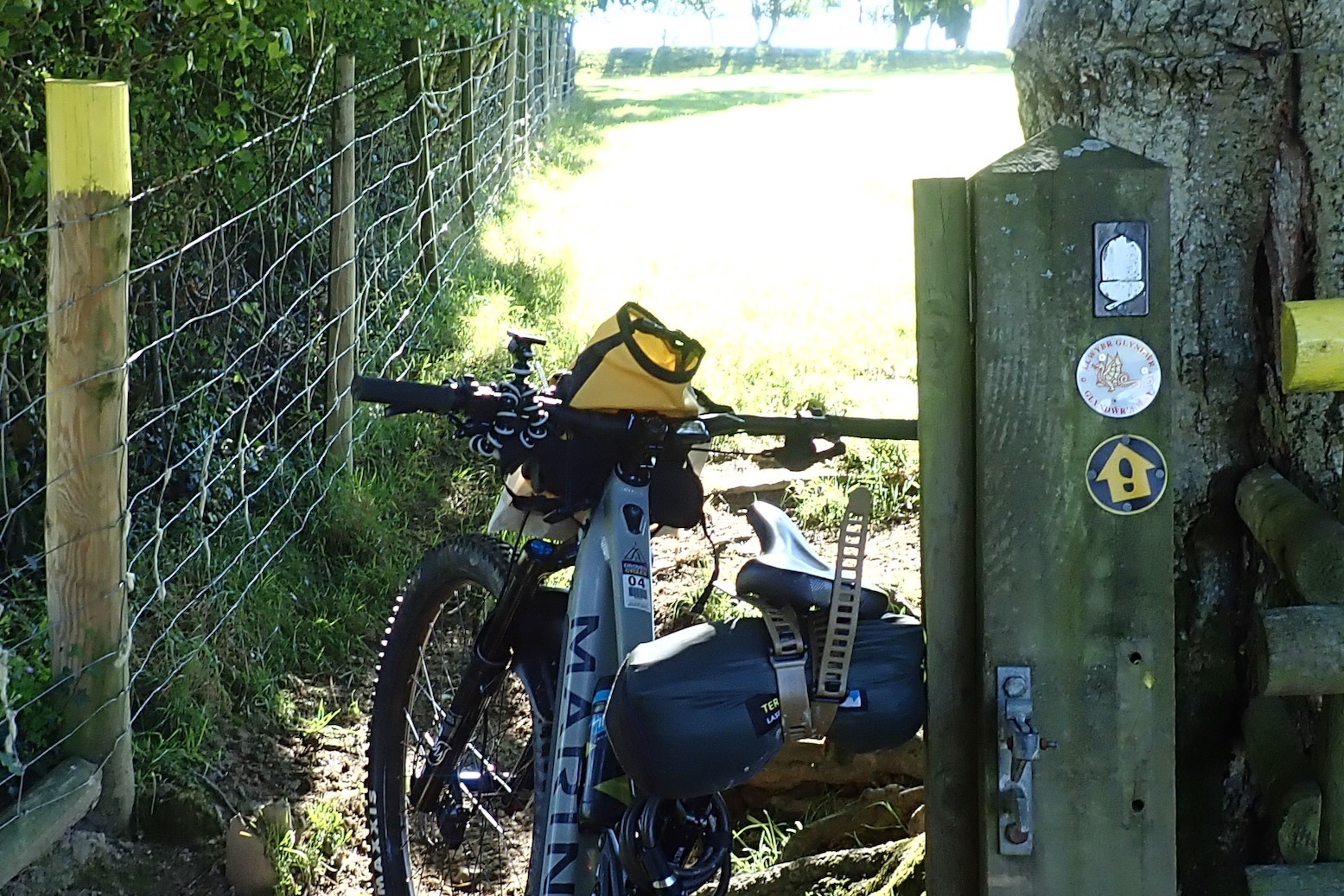
Blue arrow = bridleway ✅ Yellow = gerroffmoipaaaath!!
After a week and some 200 miles, temperatures were creeping back up to the 30s making riding more tiring. In Welshpool I completed my job and caught a train to Hereford where they picked up their sheep-shit splattered Marin. My shins were all scratched to buggery from the pedals and I was still picking thistle thorns out of my knuckles and legs weeks later. But I’d had a great mini-adventure.
2022 Marin Alpine Trail E2 250W, 85Nm Shimano STEPS EP8 motor and 630Wh removable downtube battery
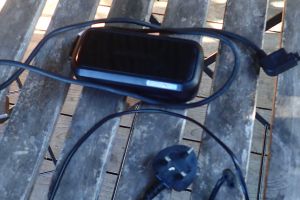
Charger, about 500g. Cable lock, the same
Clean, integrated design and subtle graphics Low standover height – really helpful when stopping all the time SLX 4-piston brakes Firm suspension (did not meddle) Pleasing boost from Eco to Trail mode Stay in Eco where possible and range exceeds what I can ride off-road on a good stay Seatpost dropper (seat on max; could not use reliably) No flats or slips on Maxxis Assegai tyres (tubed) Clear, simple display Though I locked out the front as needed, I can’t say I detected any suspension bobbing from the unlockable rear spring. Maybe e-assist helps I’m a big fan of 1x drivetrains; did that to my old Charge Cooker years ago Ended the days tired but not beaten up (ie; full sus may well work, even for touring)
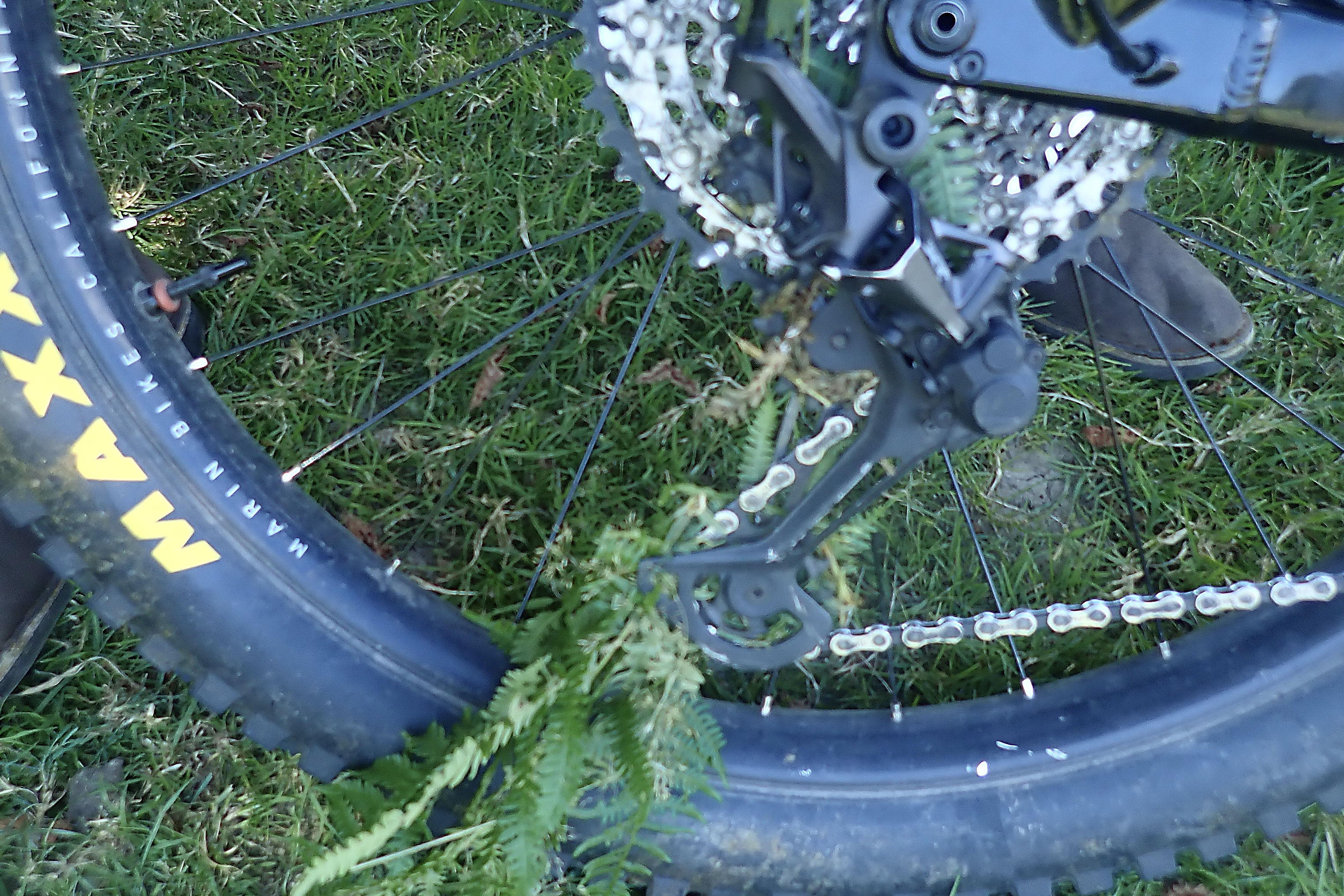
Fern catcher
£5765 (but apparently it’s a bargain and going for under £5k late ’22) Weight when pushing unassisted or lifting No mention on marin.com about ‘Walk Assist’ mode!!! Slow, 1.8A Shimano 6002 charger takes all night ‘Trail’ –> ‘Boost’ was imperceptible – won’t pull you out of a steep climb Pedals low, due to 27″ rear wheel or my weight? Downtube fork ‘bumpers’ broken off on collection Small wheel/big 1st gear means derailleur eats ferns Feels like electronics get a bit confused sometimes ‘Large’ frame too small for me (6′ 1″) but was only one available
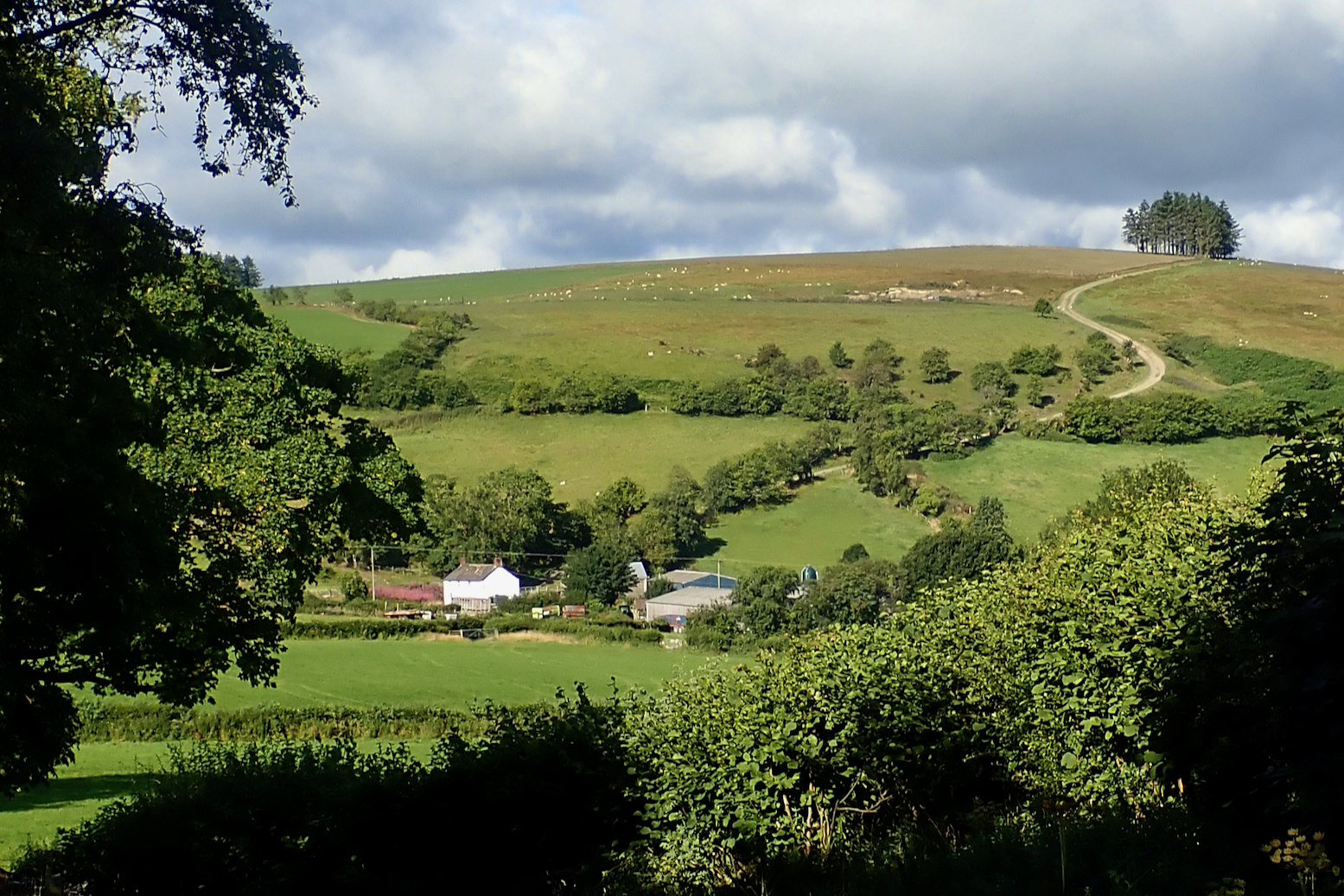
Above the Dyfi valley out of Abercegir
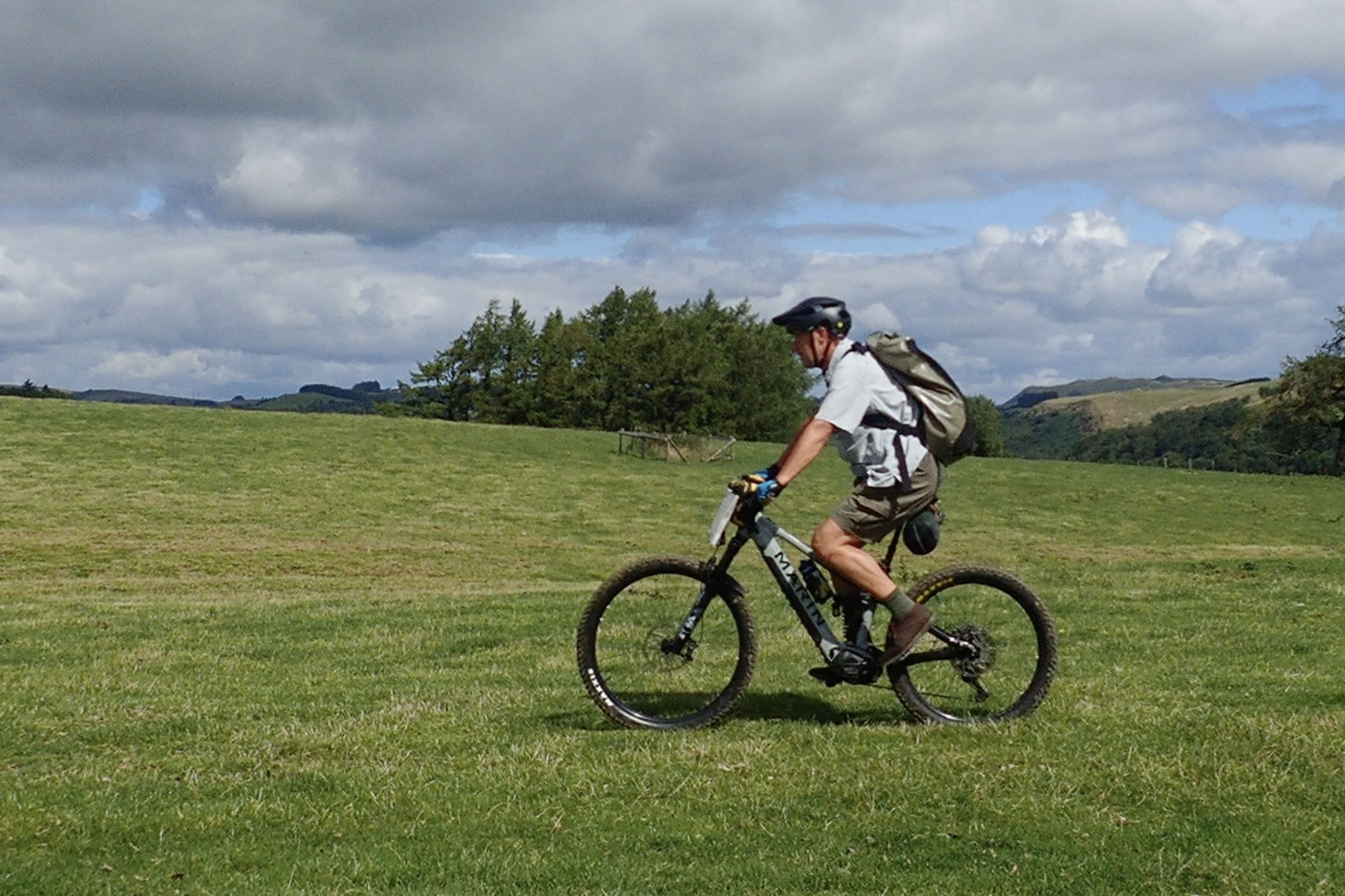
It had been a darn good work-out and revealed a whole new way of enjoying the UK countryside. Though I was leg tired at the end of most days, I didn’t feel beaten up which must be a testament to full suspension combined with my slow, interrupted pace. The e-assist helped when I was in a marginal spot crossing some muddy hump at 1mph – the extra pedal boost drove me over where I’d have otherwise stalled and fallen over. But stalling on a steep stony track, there’d often be too much torque from the motor to get going again and the wheel spun, while the bike was too heavy (or me lacking strength and finesse) to get back on restart (working dropper would have helped hugely). And on a ride where range wasn’t so critical, using more of the Trail setting would add up to loads of fun. Just don’t think for a minute that you won’t break a sweat!
A tad too small but it got me there
I made things harder for myself by sticking to Eco 99% of the time, getting off and pushing when Trail may have got me up some hills. Tbh, it was nice to walk sometimes and air le derriere. And I also had things made hard for me by not knowing about Walk-Assist, plus having the weather warm up on me. In Wales? Who’d have thought.
On the G-Way, your PoW Steve McQueen fantasy comes true, but without the Nazis on your tail
The question is: will owning an e-bike get you riding more and for longer than your regular MTB, or is it just another toy? Setting aside motivation which overcomes all excuses, I think much must depend on opportunity and access to worthwhile riding. I’d say in the Southeast e-bikepacking would be wasted but in the remoter upland locales of western and northern Britain there must be loads of great riding nearby and where the climbs need not always be daunting.
Will I be getting an e-bike? Not at £6000 tvm, and not any more than I’ll be getting a small trail bike. Where I live what I consider the worthwhile stuff is just too far away. But it sure was fun trying out e-bikepacking. I’ll definitely be renting one again some time.
* A couple of weeks later I picked up my Merida from Nick’s and ended up riding it from Upton to Cheltenham to catch another train. Costing me just £800 near-new, I was reminded what a great hardtail it is – and what a great thing a seat post dropper is when you’re stopping every 10 minutes to open a gate. Something between the Marin and my Merida could do nicely. They even sell clamp-on Bafang motors for a grand, and in 2025 ordered a dinky Kamingo wheel motor of GoFundMe, to give my Big Trail a bit of a boost. Still waiting on that.
One from the archives. Originally published in TBM years ago. Got none from the actual enduro, but a few KLX250 photos survive.
One Twenty Three: ready to race
Monday morning and no way could I face going to work. I lay curled up like an armadillo with rigor mortis, then spent the day hobbling around like a mugging victim. I had been mugged all right; mugged by my first Welsh enduro.
Two days earlier I’d looked with pride at my bright green KLX250 (the early 1980s one, not the zippy four-valver). Tiny mods set it apart from your run-of-the-mill trailie: Barum knobblies, an axle wrench strapped to the swingarm for speedy wheel changes, bore and stroke Tippexed on the crankcases as required by the ACU, and those rrrrracing numbers. Not a sixteen-year old throttle-wanker’s ’69’ but 1 2 3. Did it mean I was rated hundred and twenty third? Probably, but later that day me and my race-prepped KLX caught the Aberystwyth train.
After no less than eight trail bikes in eighteen fun-filled months of riding all the nearby woods, bomb holes and wasteland to death, I’d quickly tired of congested southeast England’s feeble ’round-and-round-a-field’ so-called enduros. Following months of scanning the ‘Enduro regs available’ in the back of Trials & Motocross News, I took the plunge and entered my first Welsh enduro on my 14-hp mutton-dressed-as-dirtbike.
Twin-shock day trip: KLX and XR5 on the Ridgeway.
I knew all about the Big Ones, the Welsh Two Day and the Brecon, events I’d never survive, but here was a likely candidate: Cwm Owen (might have the name mixed up). It wasn’t a British championship round which must mean it’s dead easy – brain-out racers wouldn’t even get out of bed for this one. I sent off for the forms and promptly got my racing number, final instructions (just like Mission Impossible!) and a list of local B&Bs.
Enduro training or as we called it: “Quick, take a picture or me doing a huge jump!”
Like renting a van, B&Bs were for the pampered elite, so on arriving at Aber late Saturday evening, I bought some Lucozade and a tube of Toffos from a late-night garage and rode out up the A44. Around midnight I figured a roadside plantation was a good place to sleep and, killing the lights, rode down into the forest, unrolled my sleeping bag and pretended to fall asleep.
Next thing I knew I was woken by the din of a rorty stroker tearing past me the on road above. Dying for just a few more minutes of dozing, I turned over – and rolled down the hill. In my weary haste to pass out last night, I’d ended up sleeping on the edge of a pine-clad slope and before I knew what was happening, I was tumbling through the trees trapped in my bag like a rolled-up taco. I fiddled frantically with the drawstring and zip as sky, trees and pine needles spun past. A tree caught my feet and swung me headfirst down the slope like a sledge just as I managed to get my arms out and kick off the bag. A few somersaults and I slithered to a halt against a fence.
Hill climbing on an old mine site in Cornwall. Today, a glamping theme park, probably.
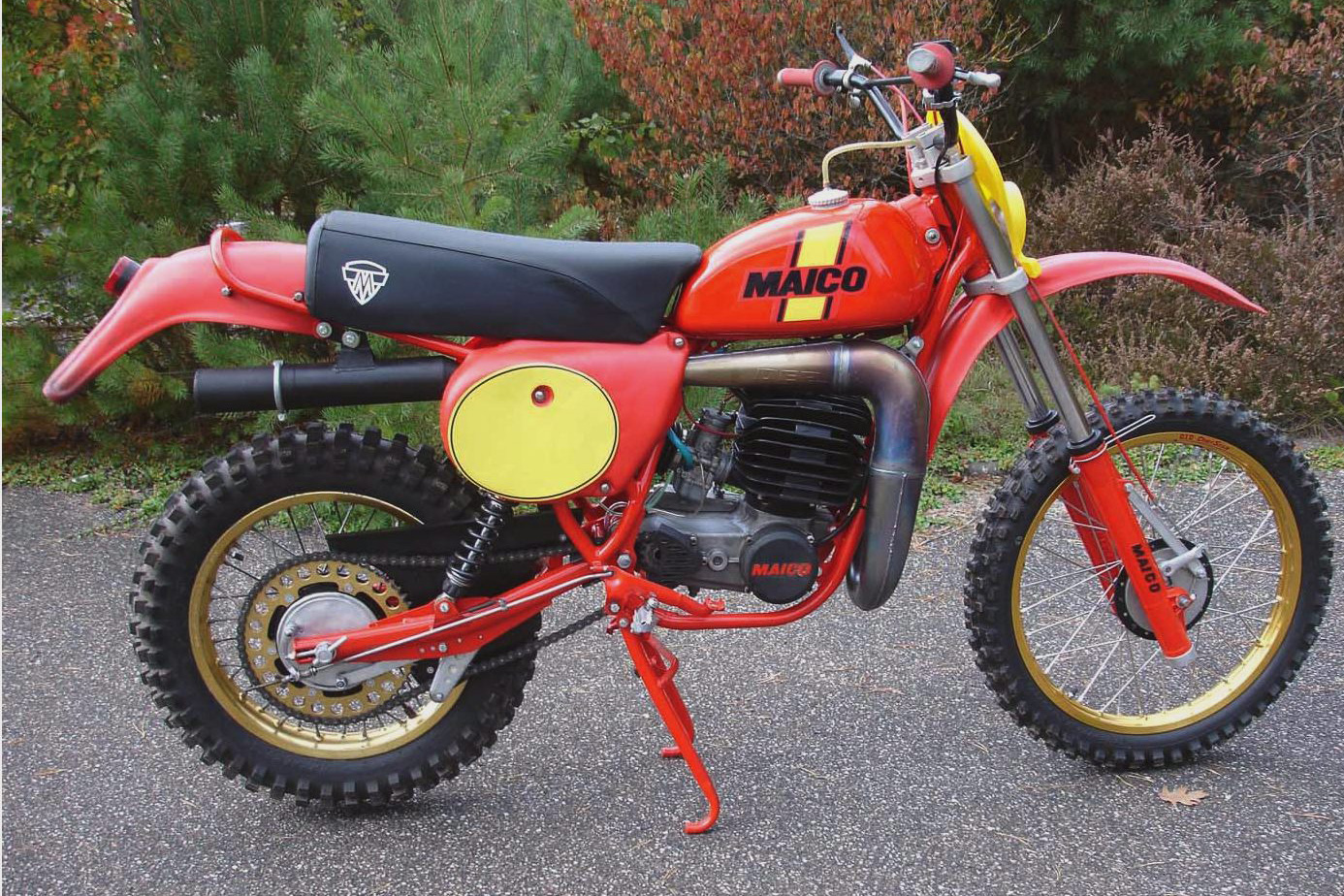
Dazed and confused, I staggered back up to the bike, got dressed and 20 minutes later was signing-up for three 20-mile laps in the four-stroke Clubman’s (beginners?) class. In those days monoshockers like KDXs and ITs were beginning to impact the enduro world hitherto ruled by twin-shock chainsaws like Maicos, KTMs and the odd yellow PE, all of which were tearing off up the track at one-minute intervals. With his minute due, it was the turn of lip-chewing One Twenty Three to push his KLX up to the starting line alongside a purposeful XR250. “GO!” shouted the starter with a drop of the hand, and I fair broke off the KLX’s kick-starter to get the holeshot on the XR.
“Take it easy now, watch those ruts…” I warned myself as I neared the first bend where the track swung uphill, “…it’s not a race, it’s an e n d u r o”. An enduro it may have been, but for crap riders like myself it might as well be a race as flat-out was the only way to keep on the pace. Within seconds the XR shot past, never to be seen again leaving me a breathless, rigid-limbed, goggle steaming learner bouncing from rut to rut as I struggled to get the feel of the Kawasaki at ‘racing’ speeds.
Who knew that Brent Cross in the rain was North London’s answer to the Mohave desert?
Up on the moor top a long boggy section stretched ahead where several bikes had floundered. With no obvious line to left or right, all I could do was drop a gear, roll open the throttle, move back and see how far I’d get. Luckily the KLX’s 14-odd horses couldn’t spin the skin off a baked rice pudding and amazingly I got across and up the far side. With confidence boosted, a few miles later I found myself riding blissfully alone across the hills following the Castrol marker flags. I was doubtless last but who cares, it was this feeling of being truly in the wilds that gave Welsh events their special flavour.
Coming back to the bog on the next lap, I thought I’d be clever and try a firmer-looking route to the left. I soon realised why no one was going this way; the ground was broken up by treacherous peat troughs and eventually the KLX dropped into one such pit the size of a big bath but handlebar deep. Thirty miles of moorland hammering on a handful of Toffos had already taken its toll, but at times like this you don’t think about how knackered you are or your multitude of aches and pains – you just do what must be done. I heaved the front wheel up to one side of the pit and after much cursing, managed to get the back wheel onto the other side of the trench. Crawling out of the mire and straddling the bike on my tip toes, I was planning to attempt I’m not sure what – some kind of fanciful kick-start wheelie manoeuvre? One foot slipped and I toppled back into the slushy peat soup with a splat.
Wasteland off London’s North Circular. Great venue for the ISDE!
By the time I’d dragged myself out and got back on course, finishing the second lap was all I could think of as I sagged over onto the bars like a wet sheet. Coming down the hill leading to the starting area I lacked even the wit to ride off the easy drop offs: instead I’d brake hard at the last minute to tip myself over the handlebars again and again while formations of low-flying Maicos on their sixth lap accelerated overhead like scrambled Typhoons.
The third lap was a lonesome fog of agony and repeated prangs at the slightest obstacle until I finally dribbled into the parking area just as everyone was packing up. “Oh there you are, One Twenty Three” said the nice Welsh lady, ticking me off her list. “We were wondering what happened to you. Is that your bag by the fence?” “Urg” was all I could manage in response.
According to the brochure the KLX weighed just 105kg. Apart from no lights and so on, how did they do it? Or why can’t they do it still?
I pumped up my tyres and, feeling like I’d been run over by a stampede of yaks who then decided to turn back and ran over me again, I weaved wearily back down to Aberystwyth to find a train strike had just begun. “London is it? Oh I think Shrewsbury [77 miles away] is the nearest station, but you better hurry mind, last train leaves at 9.21…”
Months later, with bruises healed and KLX long gone, I got a weighty packet in the post. Inside was a bronze medallion centred with an enamelled bike mono-wheeling across the skies. My name was stamped on the back and an accompanying note said “Finisher, Cwm Owen Enduro, 1981”.
I haven’t been trail biking in Wales since my 20s. Makes me wonder what I’ve been doing all these years. Part of the reason is I’ve not had a bike worth riding up there, and then there’s the issue of untangling where you can ride legally. Desert biking can spoil you, but Wales gets a lot more inviting with a light and pokey WR250R and knowing the right people. Dan and Dave were on my 2007 Algeria tour along with their own trips to all corners of the globe. John, an old mate of theirs, works at the Yamaha Off Road Experience near Llanidloes, and generously offered to take us for a ride out.
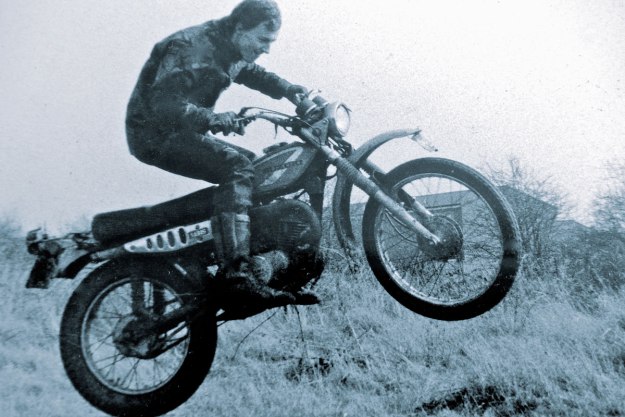
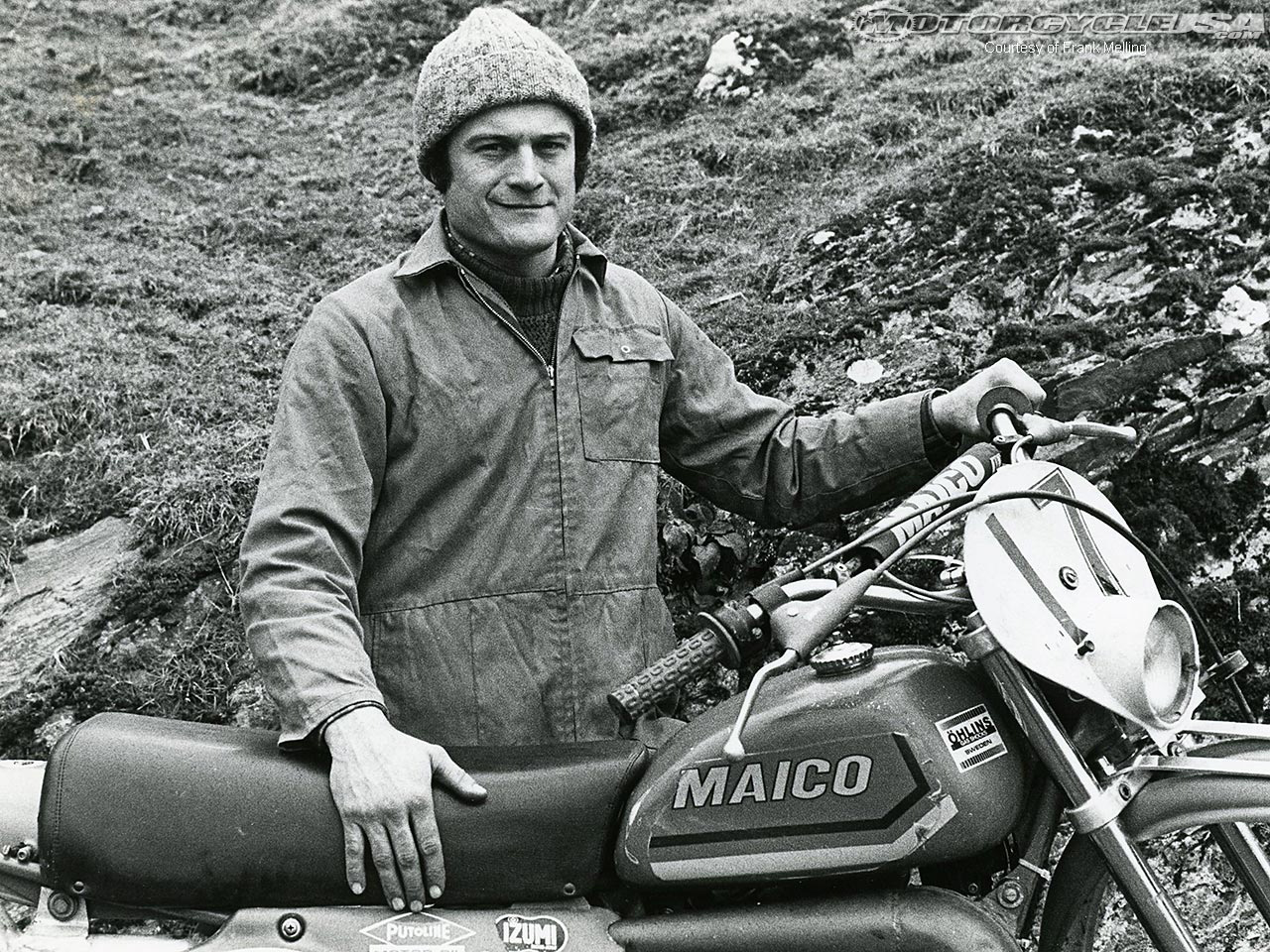
We vanned up to Llani, lubed up the bikes and rode over to Geraint Jones‘ hill farm where the Yam school is based. Back in the late ’70s when I was dirt-bike mad, I remember Geraint Jones (left, old pic) was ‘Mr Maico’. He was to enduros what Graham Noyce was to motocross, Barry Sheene to GPs and Martin Lampkin to trials. In amateur hands the big Maicos he rode had a reputation for being hard to handle. I remember the red devil machines flying overhead as I floundered about during the nearby Plynlimon Enduro in 1981 aboard a KLX250 – the original sheep in wolf’s clothing.
As I recall in Street Riding, I was so slow they were literally packing up as I rolled over the finish line. And if you ever wondered what happened to those red devil machines, this is an interesting read from our man, Rick Sieman.
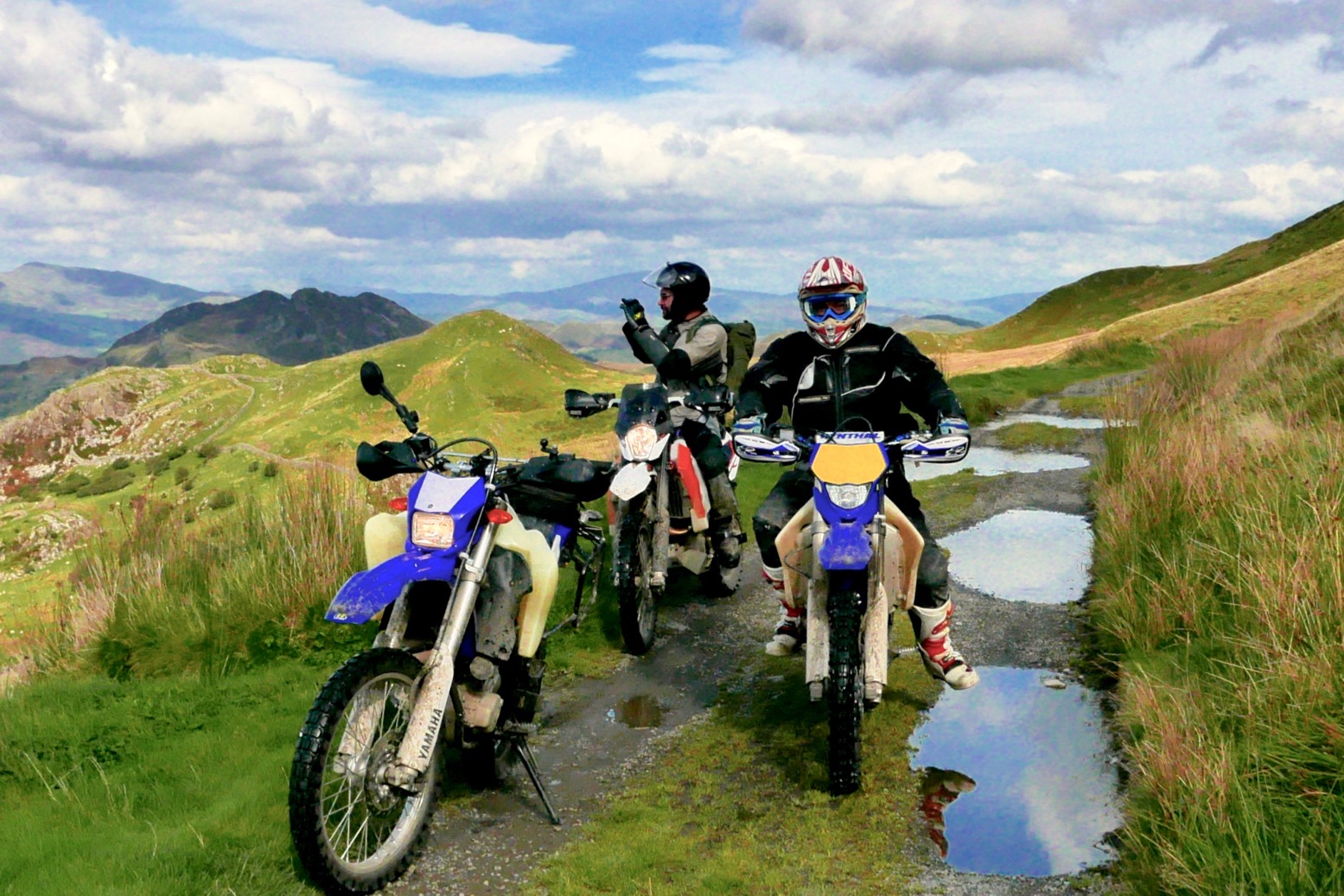
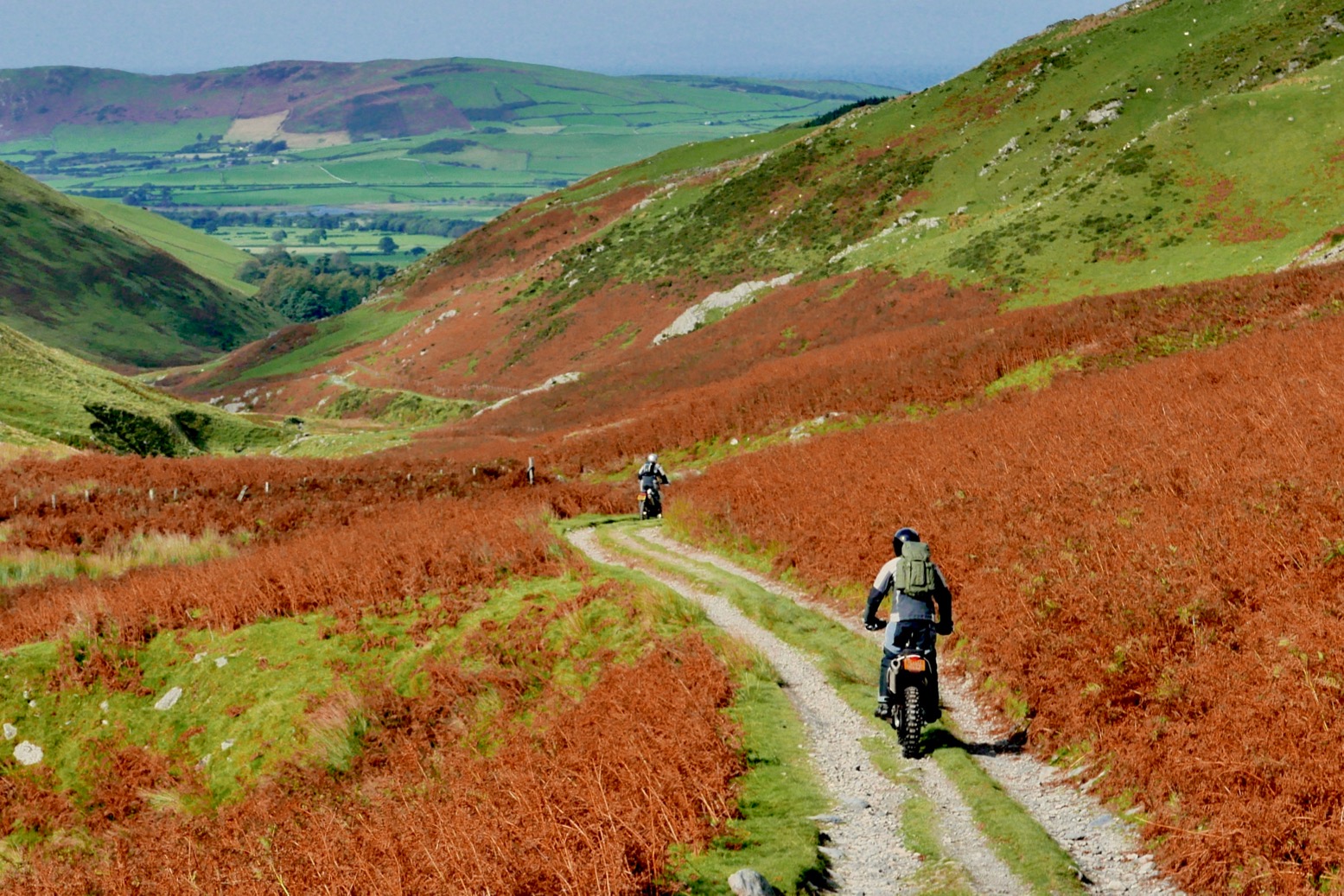
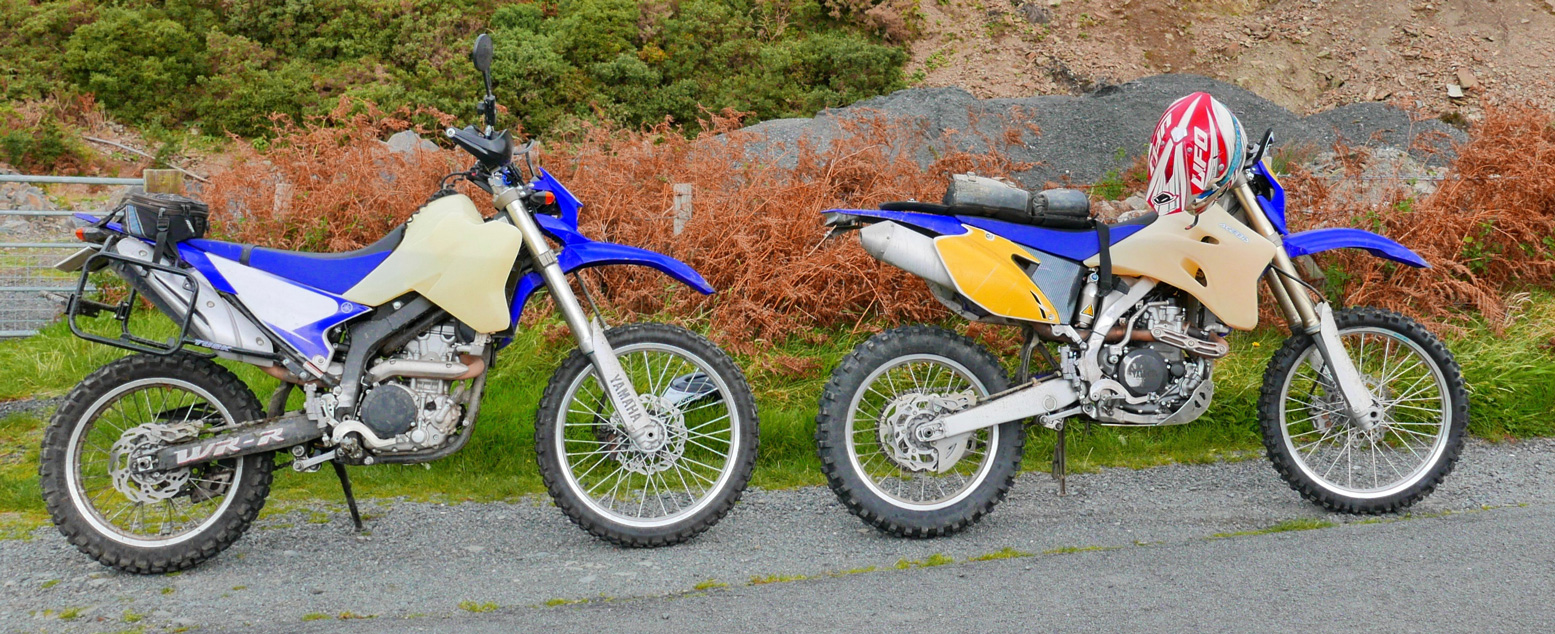
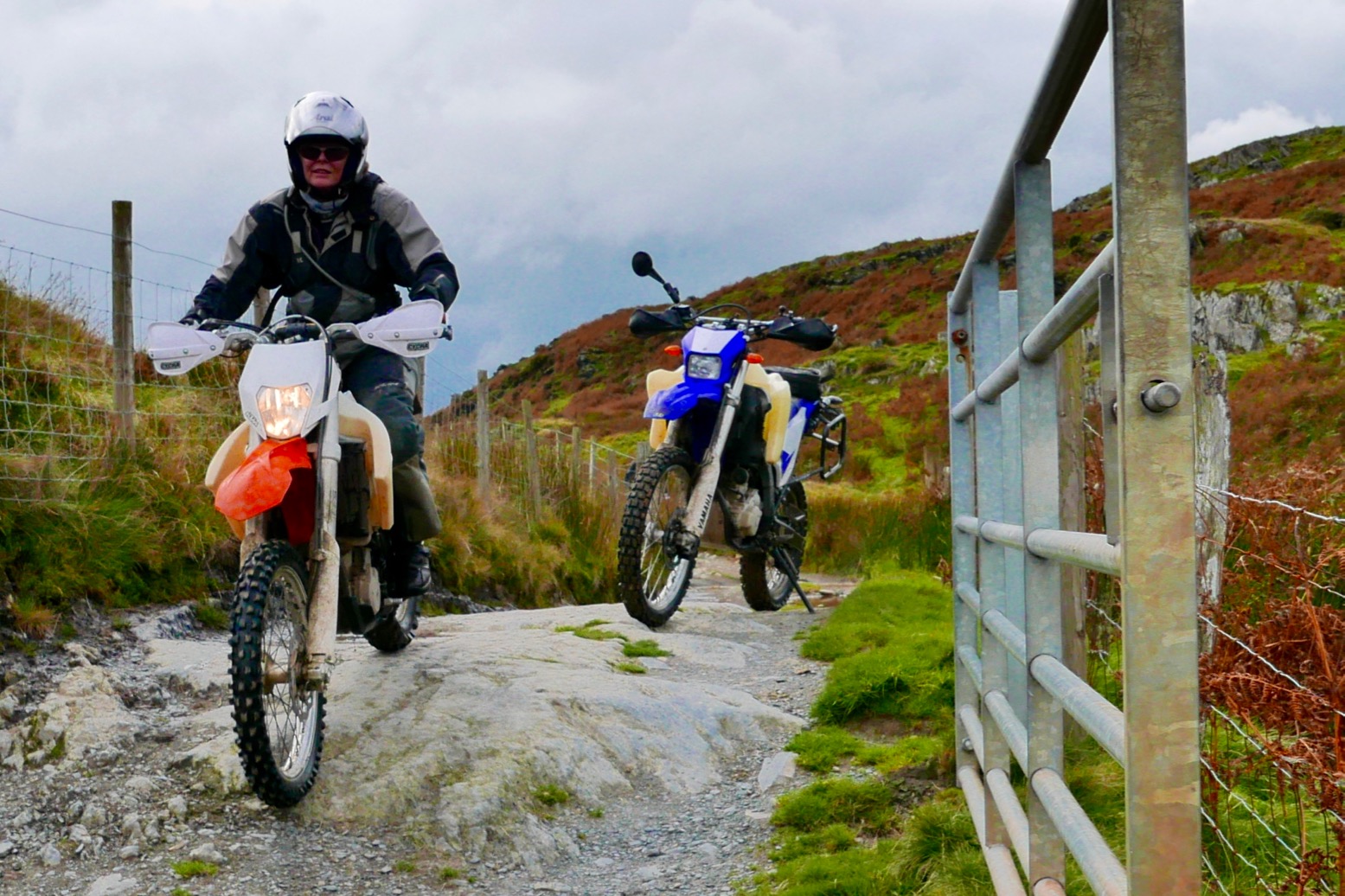
The benefit of riding with John from the school was that he knew the lanes, which ones would suit the day’s weather and the groups’ abilities, plus he had special access to trails in the adjacent Hafren Forest. Hafren becomes ‘Severn’ in English and a few minutes into the ride we passed within a mile of the River Severn’s boggy source on the side of Plynlimon mountain. Dave was on his third and near-new 690, Dan was on a 100-kilo 350 EXC and John was riding a Yam WR250F, as used by the school. This is a full-on, super-light enduro machine and despite similarities is an entirely different bike from my heavier and less powerful 250R, below left.
For me it was a real eye-opener how gorgeous the Cambrian mountain of northern mid-Wales could be. I’d always considered it a No-Mans’s Land between the better know Brecons and Snowdonia to the north which explained why green laning (using off-road vehicles on unsealed but public roads) was permitted to survive here.
I can now see it as a great destination its own right – a compact Scottish Highlands but without their near-total ban on green laning, and without the rambling crowds of Snowdonia. And never mind the trails, much of the fun to me was cruising the deserted single-track backroads that snaked across the moors – the yellow C roads on the map you could do on any bike.
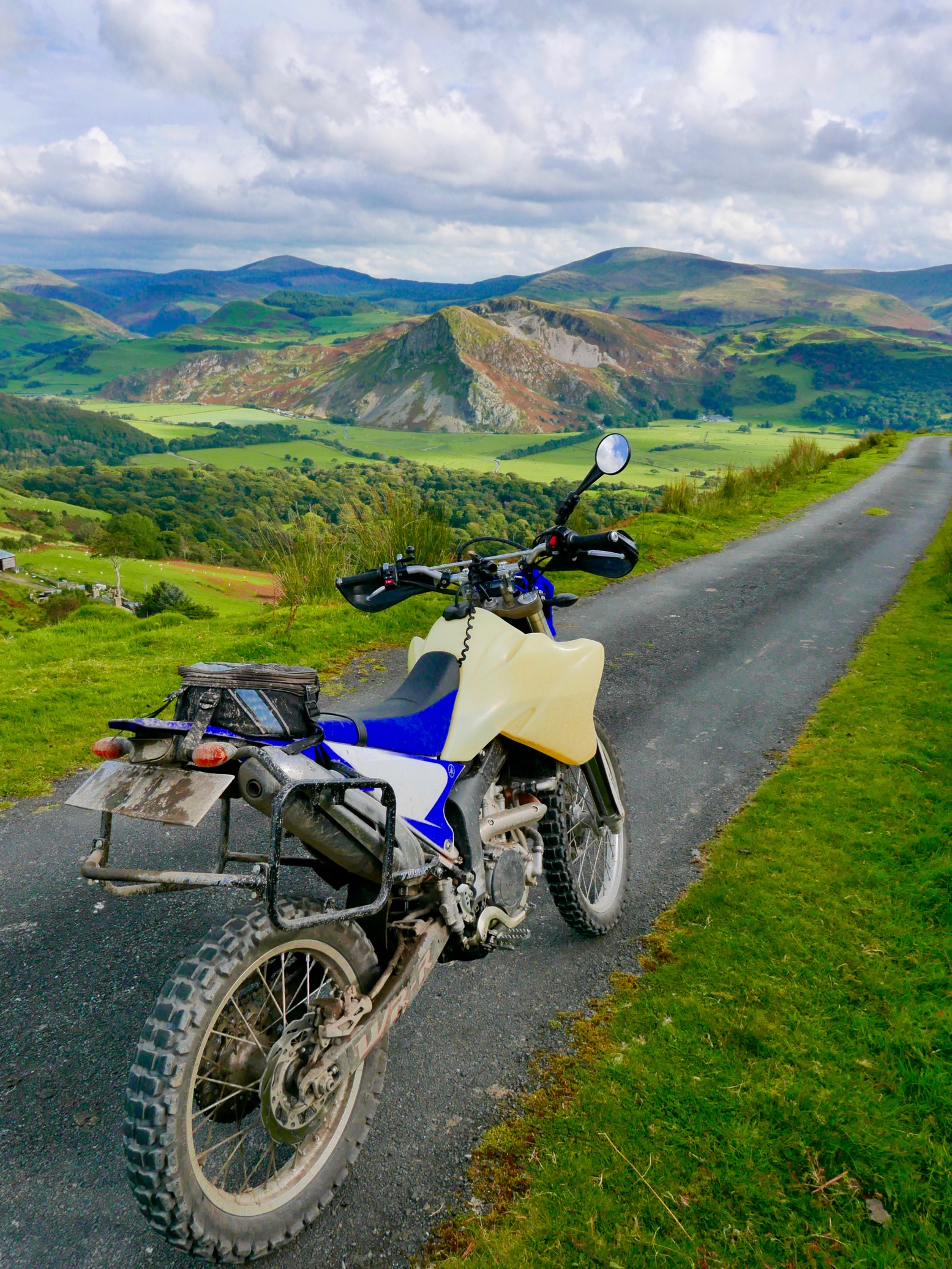
After Machynlleth, heading up the gnarly ‘Happy Valley’ green lane reminded me my WR was still without a proper bashplate (the OE one is seized on). In the meantime I was amazed how well the unfashionable Bridgestone TW301/302s tyres were managing. These came with the bike in 2008, were refitted by Hyperpro on selling it, and I can say did not miss a beat. My snazzy Hyperpro suspension soaked up the easy pace too, just as you’d expect, though I dare say I could have refined it by playing with the knobs. Like the TTR250 I used in Spain in the summer, I never wished for more power on the trails or backroads – but then we did cheat by vanning the 200 miles up from London. The good thing with modest power is the tyre won’t spin out readily, but if caught in the wrong gear that WR still had enough to chug its way out – I never stalled it.
After reading so much about them, Dave let me have a quick spin on his 690 (recently fitted with Evo 2 aux. tanks) but can’t say I’m a convert yet. The KTM’s thumping vibration really struck me, soon followed by realising how quickly the sharp brakes and more than double the WR’s power could turn on me if tired or not concentrating. But the bike had a solid feel that even a new WR might not match, and out in the open desert I bet it would be in its element. A quick spin on Dan’s 350 EXC (right) on soft power setting was much more like it, but that bike needs new oil every 1000 miles so isn’t a contender as a travel bike. What I’d like is a 450 version of the 690, but pitched as a less tyre-shredding travel bike. Press the red button if I’ve said this before.
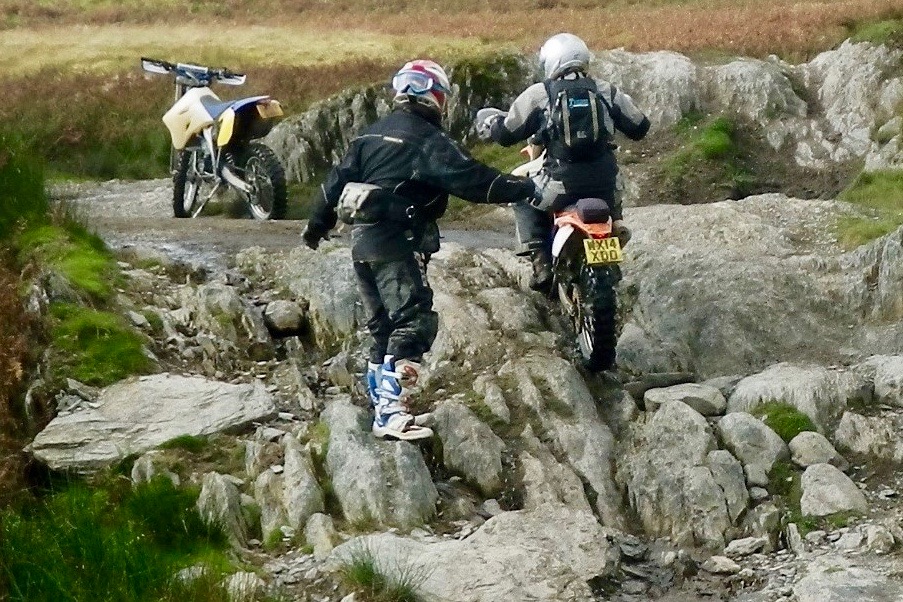
There sure are a lot of gates on the green lanes of the Cambrian mountains. It was rare to ride more than five minutes without doing the gate dance – and sometimes less than a minute. It breaks the rhythm of the ride but they contain the sheep which can easily jump a cattle grid if spooked. The trail north into Dolgellau between Cader Idris and the Barmouth estuary was a notable exception – a good ten minutes riding or more between gates. We came across a few ramblers and dog walkers who didn’t look too put out – they’re walking along a ‘road’ after all, even if they don’t realise it. And we nearly ran into a big group of lads bursting out of the forest on unlicensed dirt bikes. Damage wise, their impact was minimal and who knows, the new Geraint Jones could be among them, but I bet they’d all rather be legit. Wouldn’t be it be great to have a huge trail park out here where people could roll up and ride round at their own pace, instead of the scurrying around on wasteland or dodging the rangers.
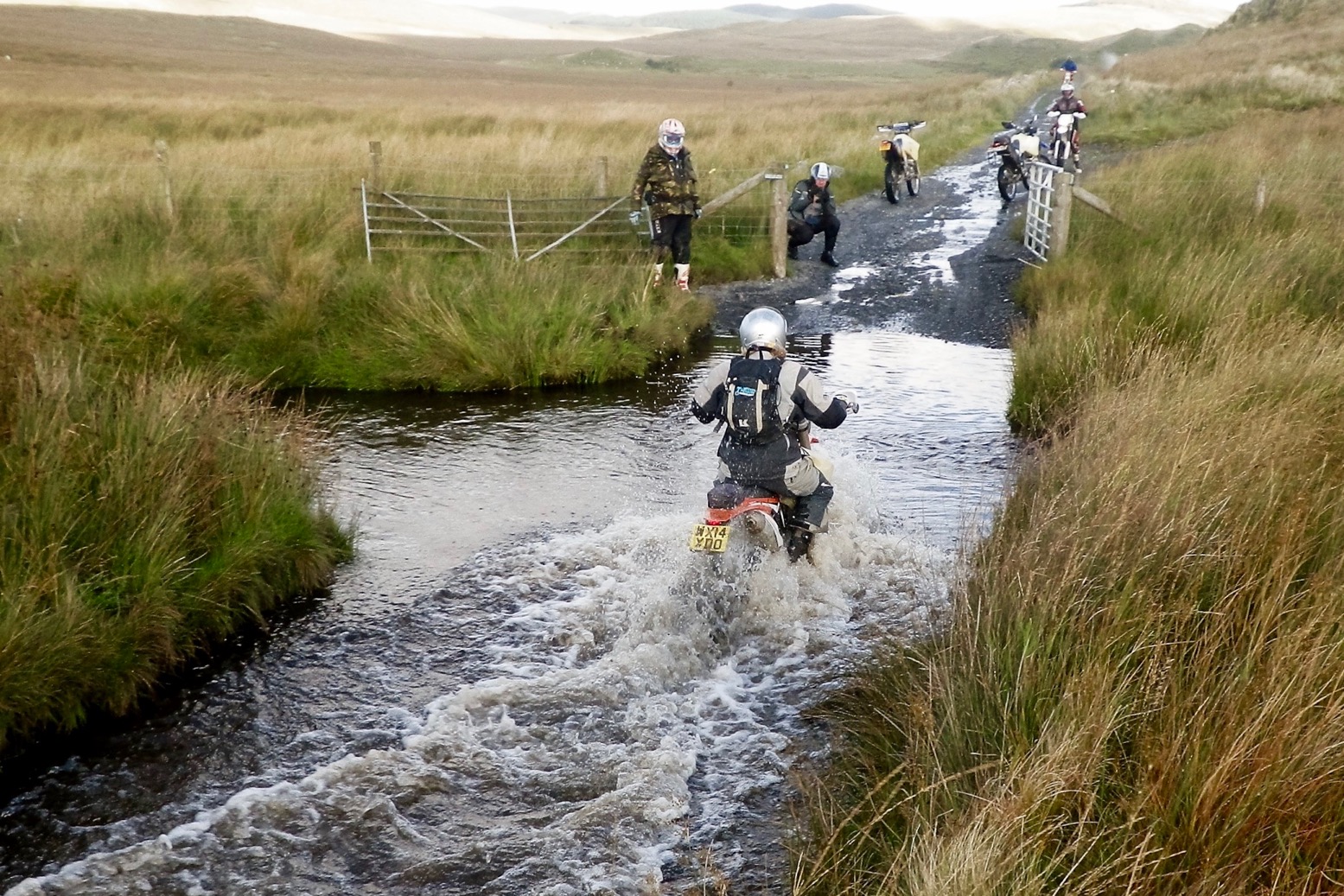
It poured overnight but day two actually dawned even brighter, apart from a well-timed downpour as we ate lunch in Talybont. Either the riding was easier or I was getting to grips with the WR. On rougher trails I did find it hard to ride smoothly; balancing the jerkiness of the engine with the right gear and the rebounding suspension while looking at what’s coming up and steering away from rocks, but this is just the nature riding a light, small-capacity bike at slow speeds. Turn up the wick if there’s room and things would smooth out. After the rain there were some bigger puddles today too. Initially they were a worry as I’d read the WR was prone to cutting out in a splash, but even with the engine note muted in two feet of water, it never even coughed. I don’t know if it’s been a dry spell – in Wales, what are the chances? – but the ride John led us on was pleasingly free of mud and to me was all the better for it. My recollection of bombing around Rhayader on XTs 30 years ago was plunging into one peaty morass after another which just makes a mess of you and the landscape.
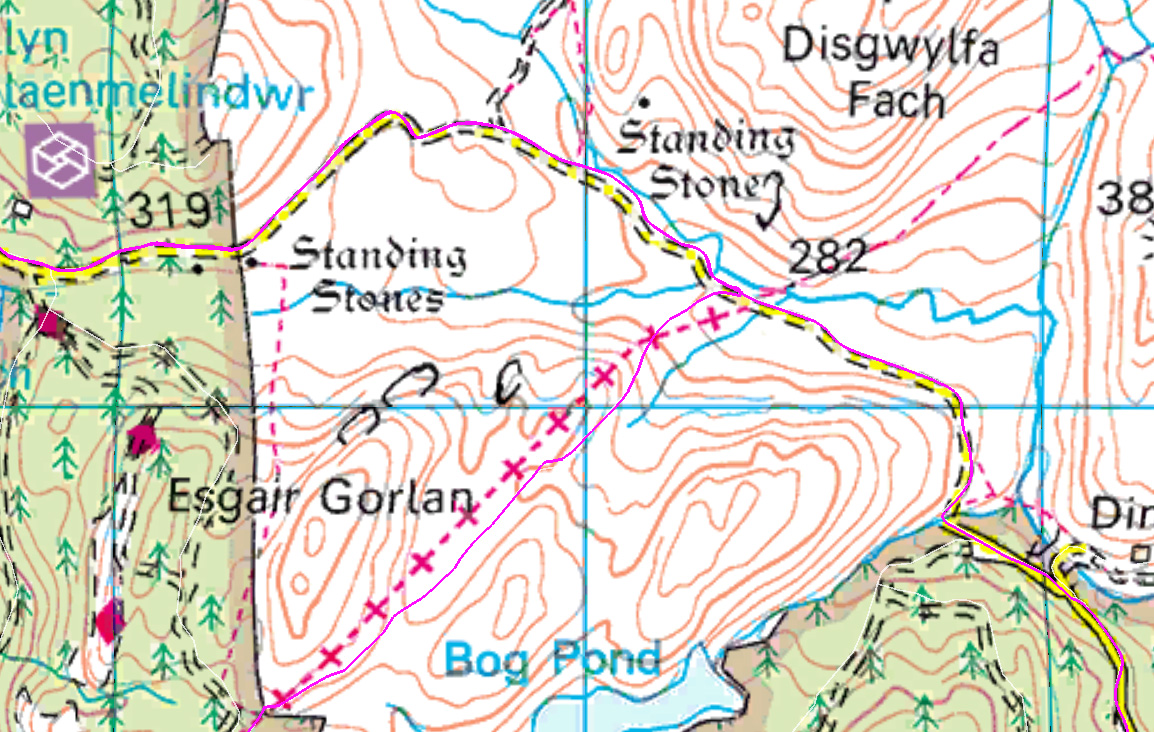
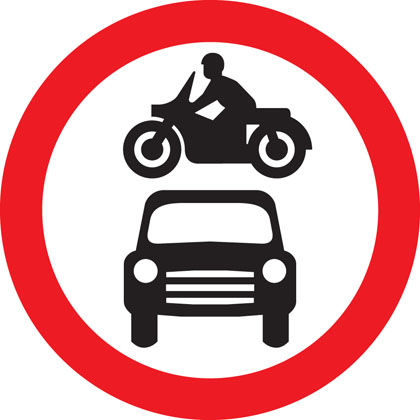
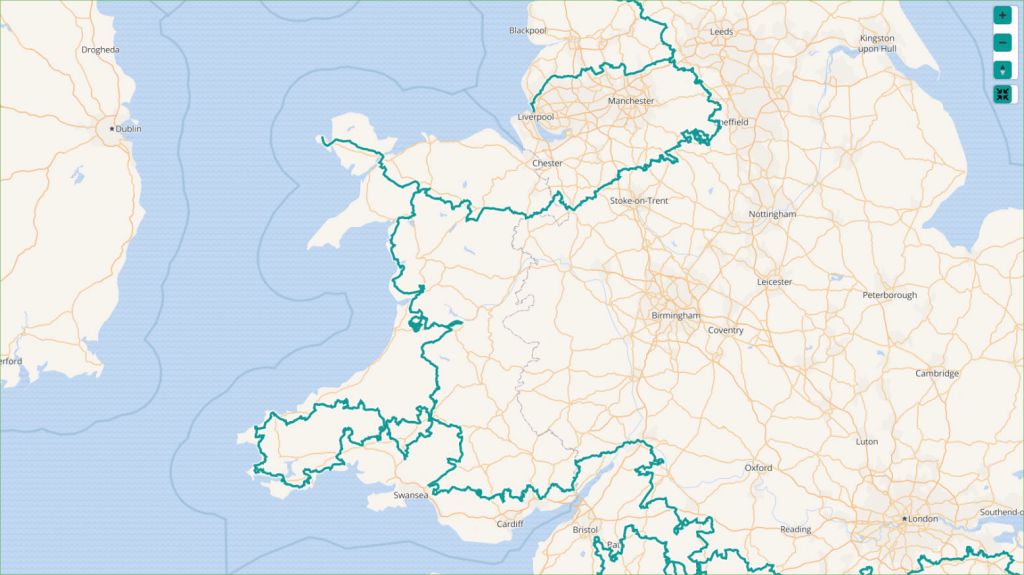
It would be great to do more riding around here on my own, as it’s as wild and extensive as you’ll get in the UK (there’s virtually no green laning in Scotland). But unless you live nearby or do the research, it would be hard to get a handle on which trails are legal and then put together a satisfying two-day route like the one we followed with John. Now of course we have the TET (see map below). Every year more and more green lanes in England and Wales get downgraded to paths. I haven’t a clue which of the trails we did were open to all, but promisingly I only saw one ‘no vehicles’ sign. Lacking a local pro like John, the answer is to hook up with the TRF or join an escorted tour from £50 a day with four of you. That’s just the way it is living in a small, crowded country and why I set off for the wide open Sahara in the first place – and why I’m off to Utah next week!








 Adventure Motorcycling Handbook