Category Archives: Project Bikes

What I’ve ridden and what I’m riding

Tested: Mosko Moto Alpine R60 Rackless review

See also
Soft Baggage 2026
Serow Index page

Everything in two, well positioned big bags

In a line
Mounted separately and semi-permanently to a light rack and without rear duffle – not as Mosko intended – but was exactly what I wanted.

Price and verified weights
Bags £476.
Right side 1350g; left 1530g; hardware 130g, Duffle 650g. Total: 3.7kg/8.1lbs
Gnoblin q/d mount (optional; £39) 182g.
As mounted (no duffle or Gnoblin): 2.5kg

  • Mounts low and forward, ideal shape for optimal load distribution
  • Well put together and clever design elements
  • Light: my adapted set-up just 2.5kg
  • Looks more than 22 litres per side
  • The outward flex of the CURV board (not used) limits pressure on sidepanels
  • With CURV board sits high on some bikes
  • If you want the q/d element make sure the CURV board suits your bike
  • OTT strap hard to cinch down with changing bag volumes

Alpine R60s supplied free by Mosko for testing and review

What they say
The Alpine 60L Rackless is Mosko Moto’s lightest weight dual sport and ADV luggage setup with the capacity for multi-day trips. Designed for riders who seek minimalist, lightweight luggage, it provides the three-bag organization and packing system of a traditional pannier setup (two side panniers and a rear duffle) in a lightweight, waterproof, abrasion-resistant ripstop nylon rackless bag. Featuring our super durable CURV® chassis, the universally-mounting A60 can be easily swapped between multiple bikes, and can be packed and checked for fly-to-ride adventures.

Alpine Style
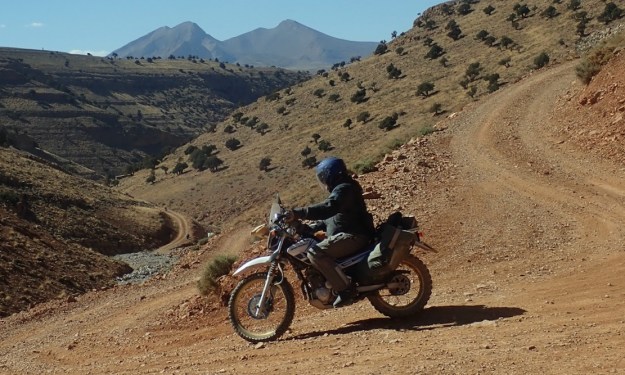
For this autumn’s recce of the High Atlas Traverse I wanted to try something different. Though never a fan of the one-piece Giant Loop Coyotes and the like, I’ve been interested in separate throwover side-bags which can manage without a full racktangle™ (right). I also like the idea of tough drybags sleeved in a holster, as on Mosko’s Rackless 40 and 80, although these look a bit heavy and over-designed for my little Yam 250 on this trip.
You should make something in between the 40 and 80, and simpler‘, I suggested to Roel as Mosko EU.
Give it a month or two and I’ll have our new Alpine 60L to show you‘, he replied.

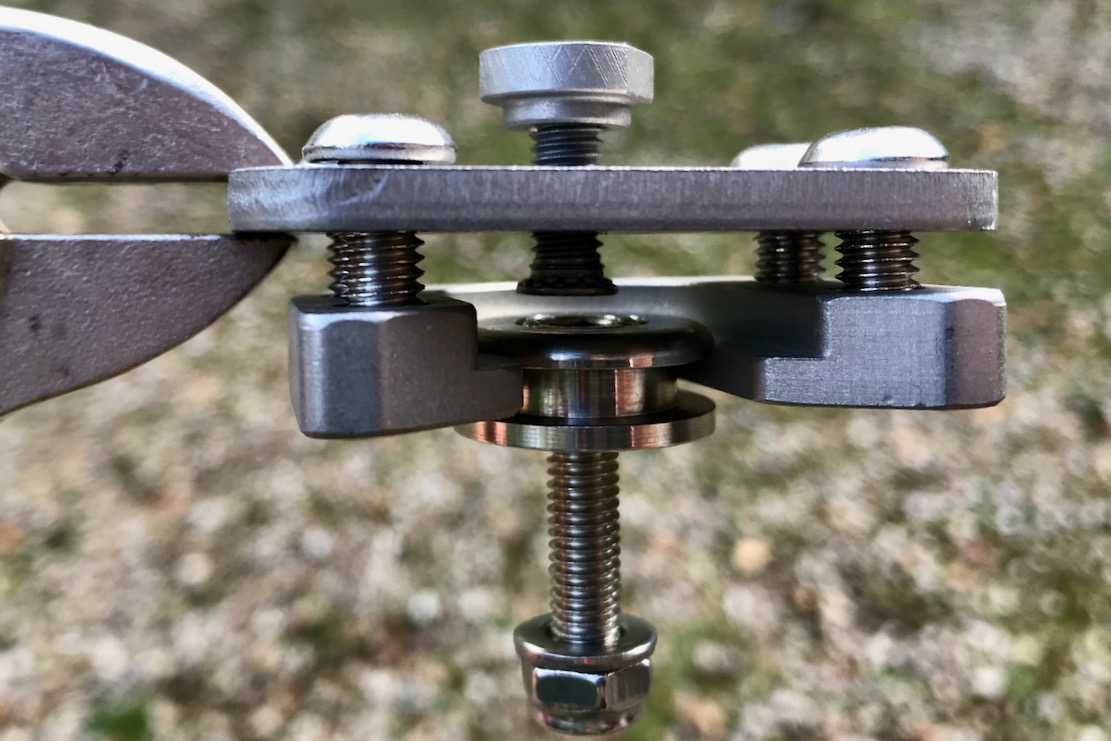
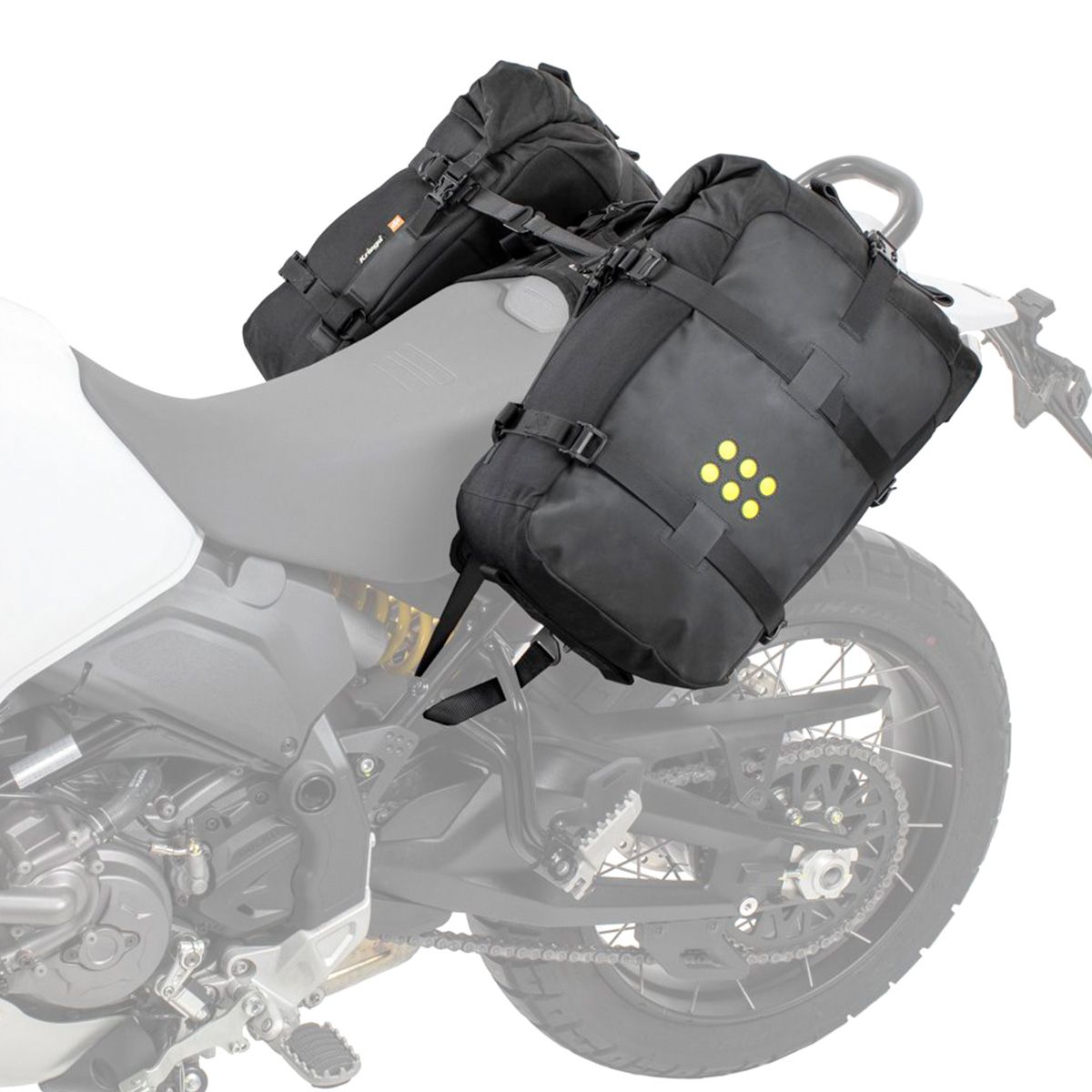
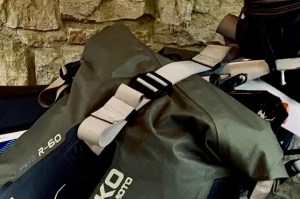
A week before wheels-up and Mosko’s Alpine R60 arrive in Woodland Green and Black. Two sidebags of 22 litres (but look bigger), plus a 15-litre top duffle which I didn’t plan to use. Each bag comes mounted on a bendy, two-piece U-shaped composite CURV® backplate which you bolt together with supplied hardware. That straps to the bike at the pillion pegs or rear downtube, to be tensioned from the tail rack, either with an optional and neat peg called a Gnoblin (below), or just a strap or two. Result: a quickly detachable 3-point fitting using the backplate to part-stabilise the load. Mosko are pitching the Alpine 60s at the harder-riding, ‘light-is-right’, crowd, but anyone who appreciates a minimalist, light throwover that’s easily removable will like the R60.

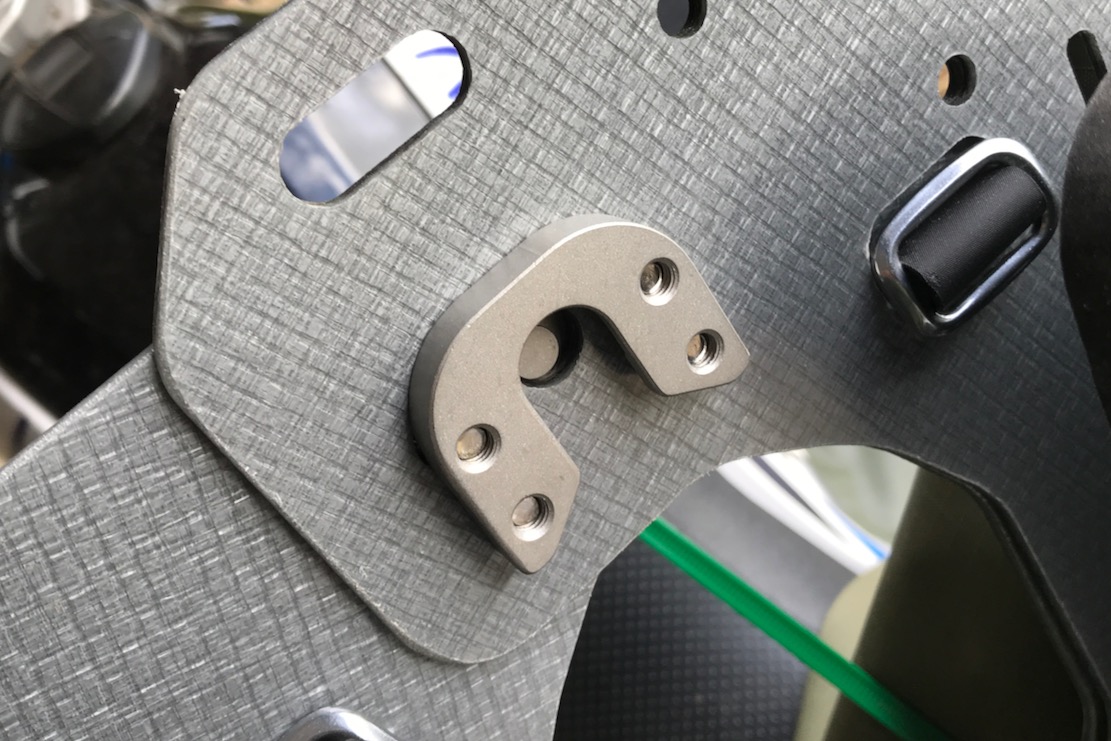
The clever thing about the composite CURV® plate to which each bag is semi-permanently buckled, is that the flexible board naturally bows outwards to resist pressing on the sides of the bike causing rubbing; a quasi-rack. A replaceable, full-length, 8-mil EVA foam pad is velcro’d to the plate. The bags come securely anchor-buckled to the plate which is velcro’d to the EVA pad. To avoid pipeburn use the Mosko heatshield, at only £22 it’s cheaper and neater than a C-channel off-cut and clips.
Set up this way, removing the whole rig is a 10-second job (discounting the duffle), while secure mounting in the morning might take as long as 30 seconds, so make sure to set the alarm. I’ll take q/d soft bags if they have a bombproof and foolproof attachment system which can be used daily without thinking too much. Otherwise, most nights in Morocco I leave partly loaded bags on the securely parked bike and bring what I need into the room.

Too far back as usual… sigh

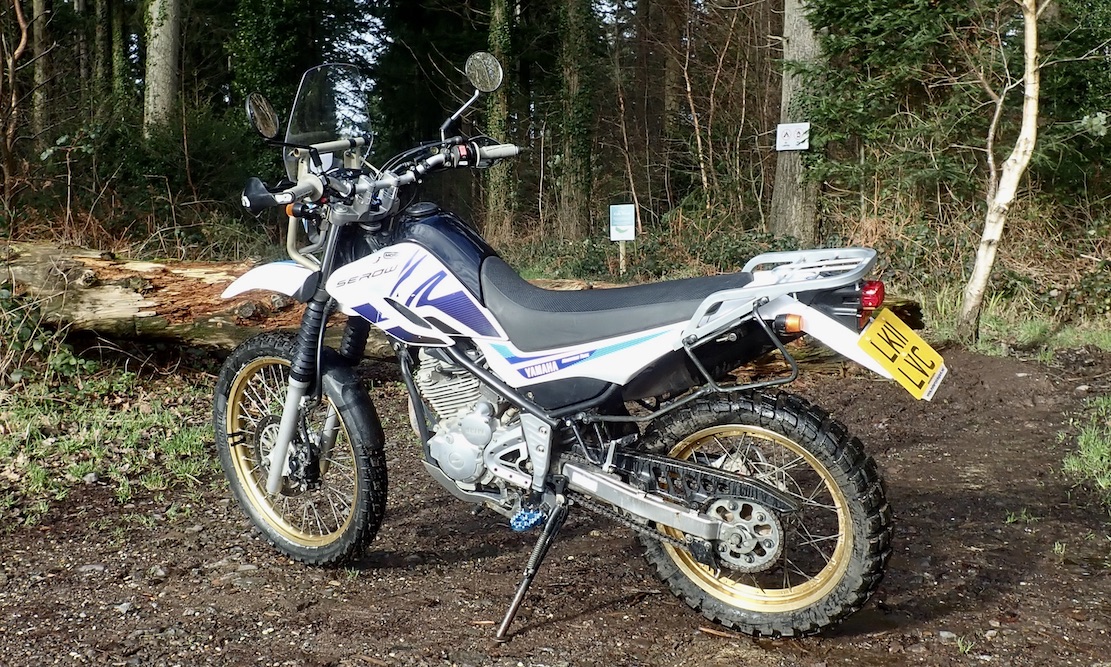
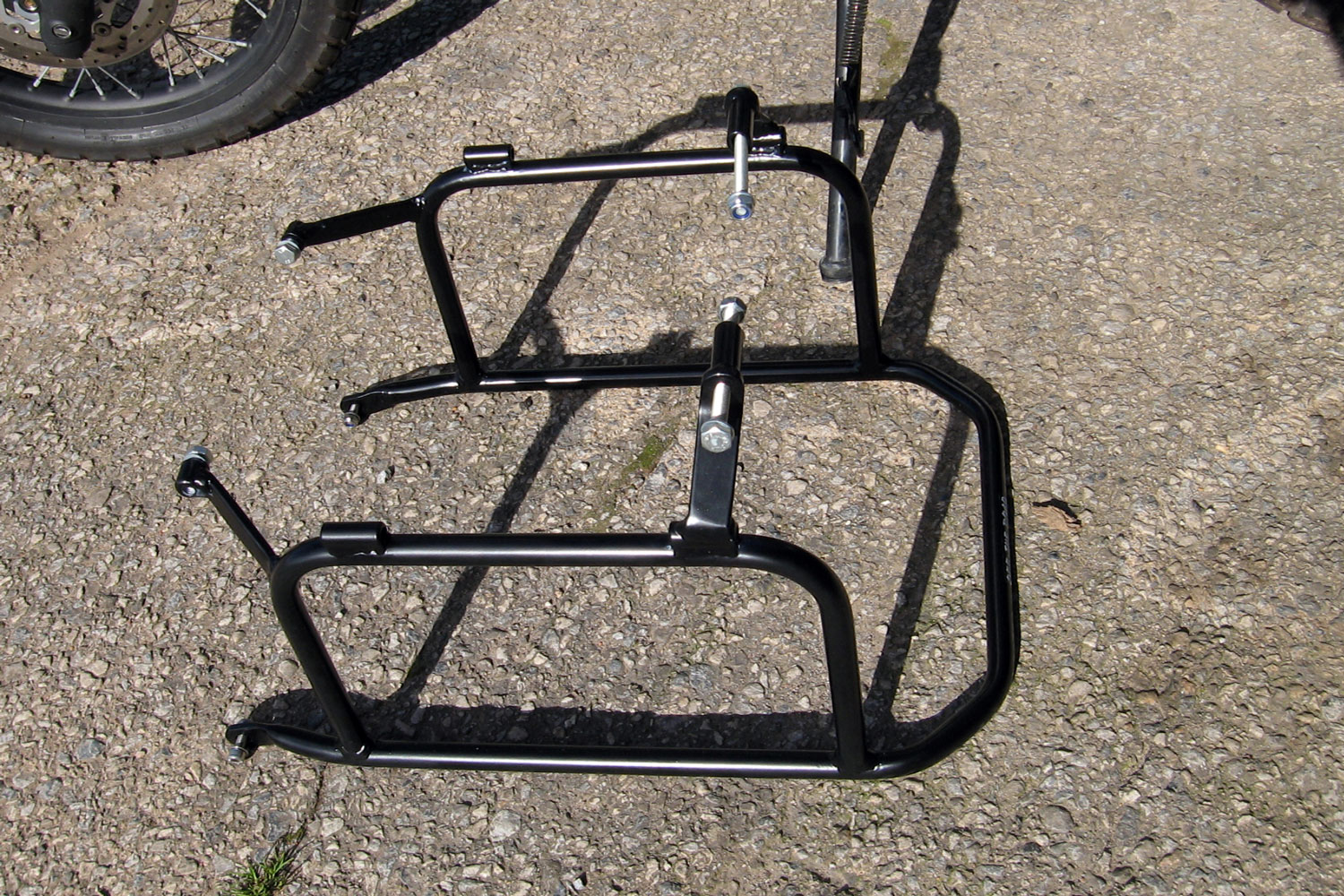
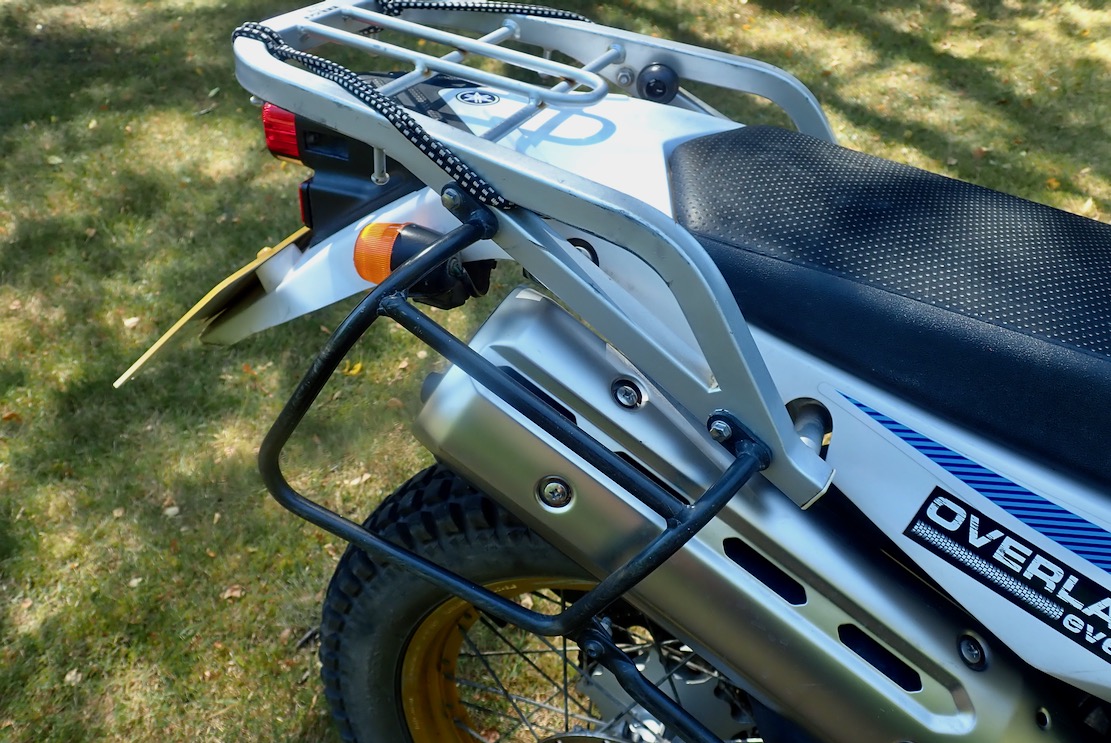
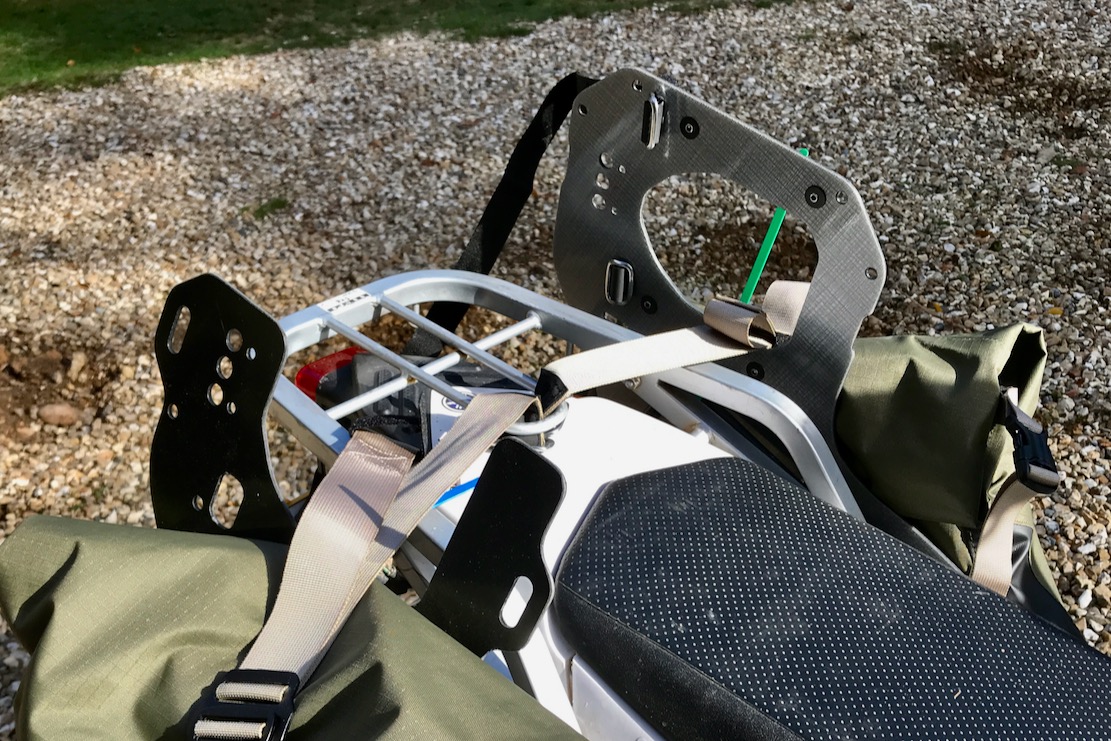
My Serow Touring came stock with an old-school alloy tube tailrack and light-gauge steel side frames (left) which are way too far back as usual, but otherwise ideal for stabilising the low weights I typically carry in Morocco, lodging each night, as I do. Out of the box I could see issues fitting the Alpine 60s onto my racking, but could also see a solution.

Looking at the vid above. Either those bags are full to overflowing, or the stiffness of the flexible backplate means they sit high on that Kove, even without the duffle which might be hidden from view.
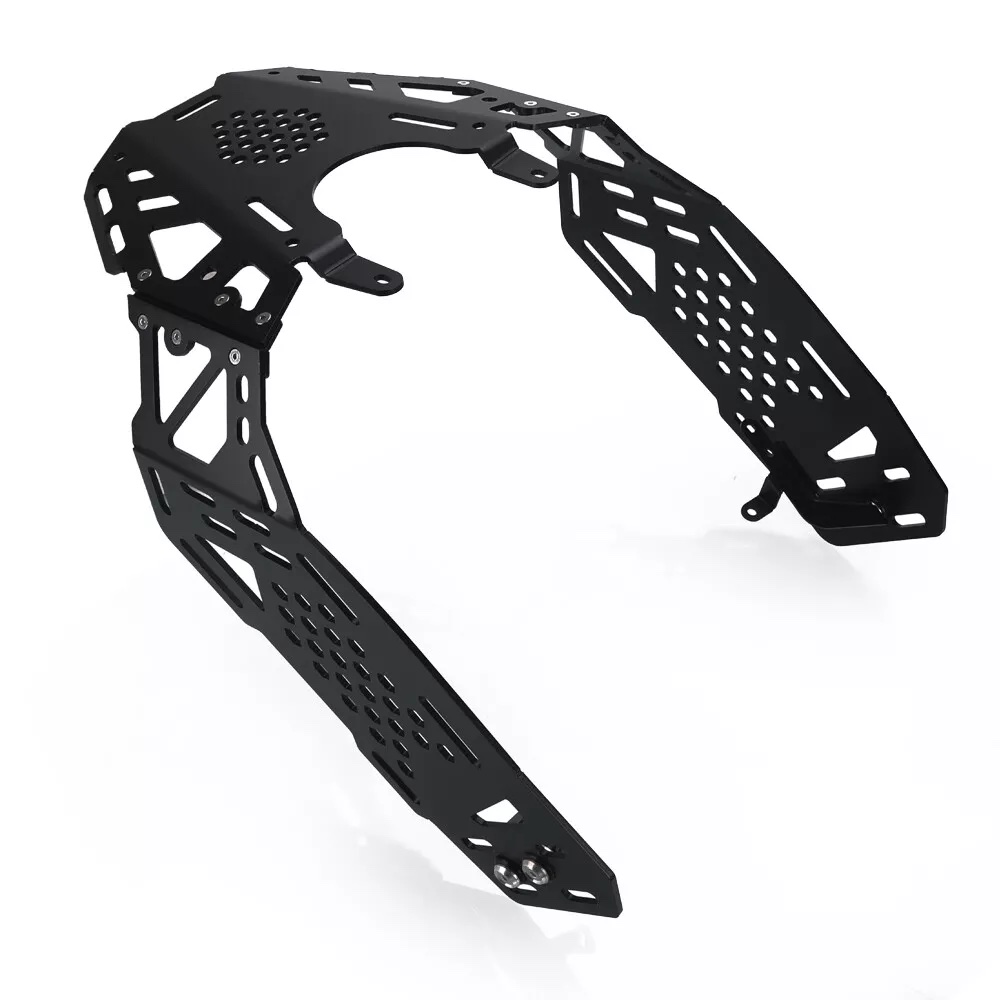
The A60 is a rackless system” says our man Coleman at 0:52, but at that point you can see the Kove has been fitted with a CNC FishRacing integrated full rack system (right), or the 25-quid Ali-X knock-off. It’s much wider than my Serow set up which may explain why the bags sit so high. I’m not a fan of this current, easily cut (aka: cheap) CNC trend, when hand-formed and braised tubing uses less metal for half the weight (rant ends ;-).
As said the R60 baggage appears to sit high on the racked Kove, but it also does in the Mosko video (below), fitted to a Moroccan T7 rental with only a tail rack. I think it’s a seat-width thing. As we know modern pipes are huge.

There are some long-winded R60 video reviewers out there. MoskoPete is not one of them. Job done in 3:29.

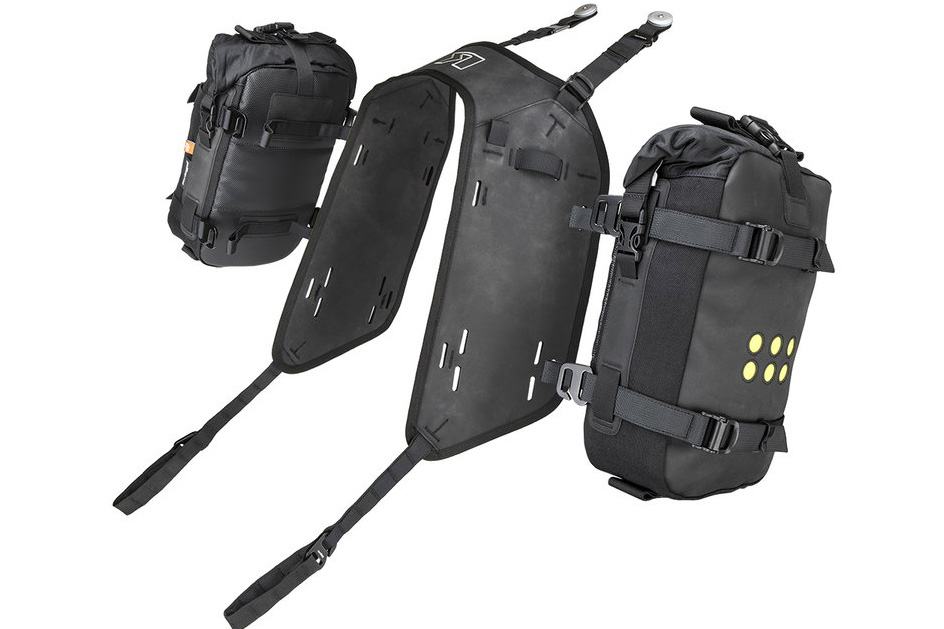
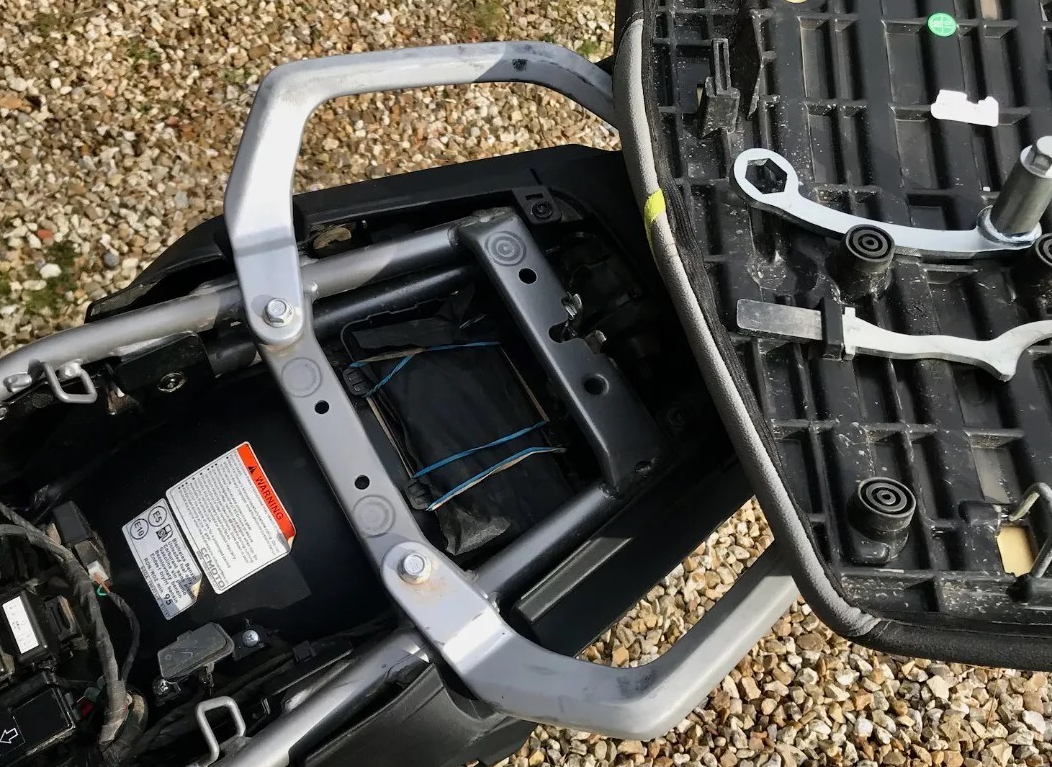
Last year I tried to fit the Kriega OS-Base Universal harness (below left) for my 450MT but the one-piece grab handles/tail rack got in the way. I could have swapped in an aftermarket CNC tail rack (and lost the handy handles), or cut a hole in the harness for the alloy handle to pass through, before rebolting.
I liked the idea of being able to lash anything to the harness, not just Kriega’s OS bags, but again, their fitted bags seem to sit high, effectively resting on the side of the seat (below right) to limit swinging about in the rack-free void below. This is the weak spot of the rackless idea on monoshockers: the side panels become a necessary but over-high support point.
For me the ethos has long been as low and forward as possible – or ‘AL&FAP if you’re in a hurry. These set ups may save rack weight, but are higher and further back than ideal. With minimal loads it’s not critical, but it’s not great for CoG and bike control, especially weaving around off road, picking up or when getting out of shape.

This is where panniers should sit when not two-up.

I returned the Kriega harness and went with the usual tailpack-sat-on-a-tailpack, plus my novel and as yet unrecognised 3P idea, as well as small tankside bags on radiator crash bars (left). Baggage ends up all over the bike which is handy for daytime access and organisation, but a bit of a faff to bring it all in overnight (if necessary), plus a messy look.

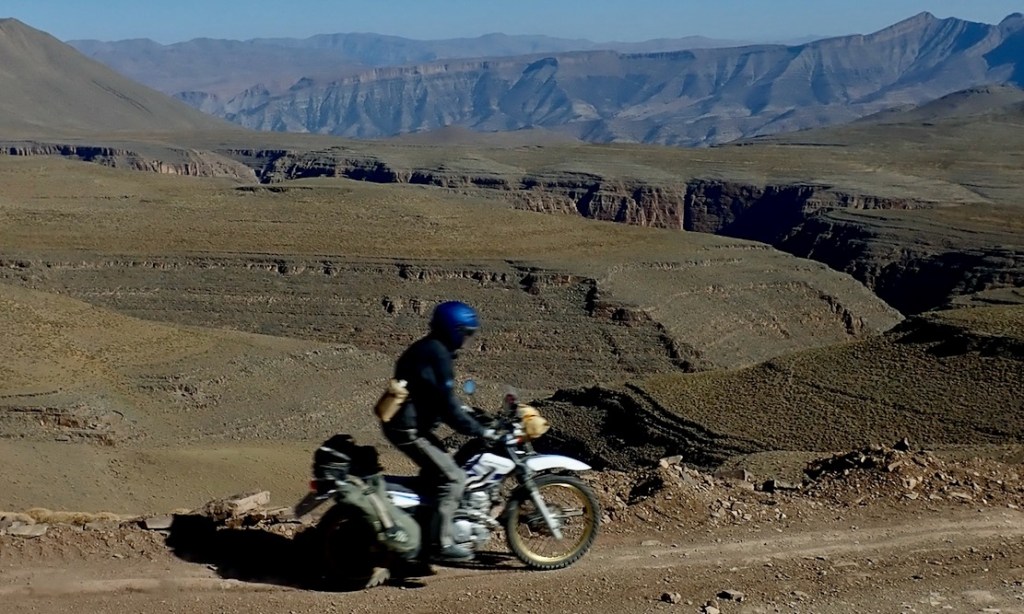
Up at 3200 metres on the High Atlas Traverse

This time I wanted to try everything in one place. I could see the R60s might not sit well on my bike but I liked the bag shape more than the q/d feature. The R60’s ‘short sock’ shape potentially puts loads in the right place. Heavy or rarely used Items like tools and tubes can go it the bag’s ‘toe’; light stuff up top with all the rest in between.

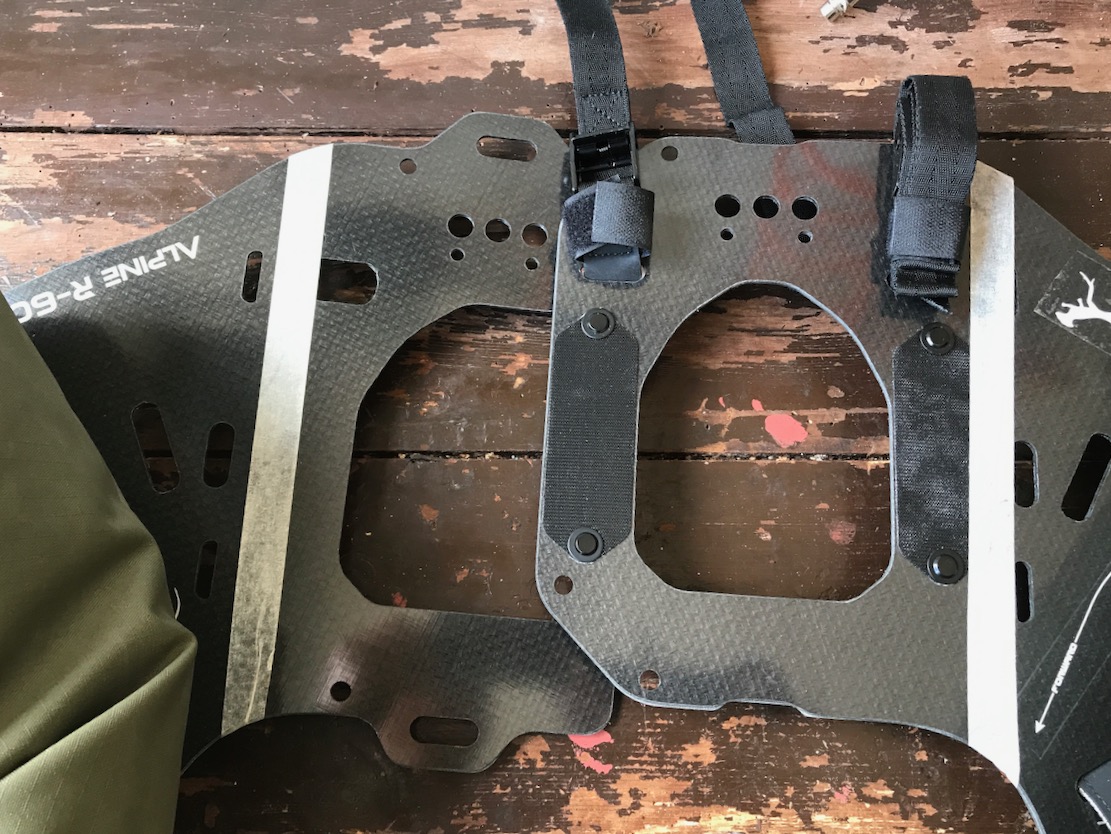
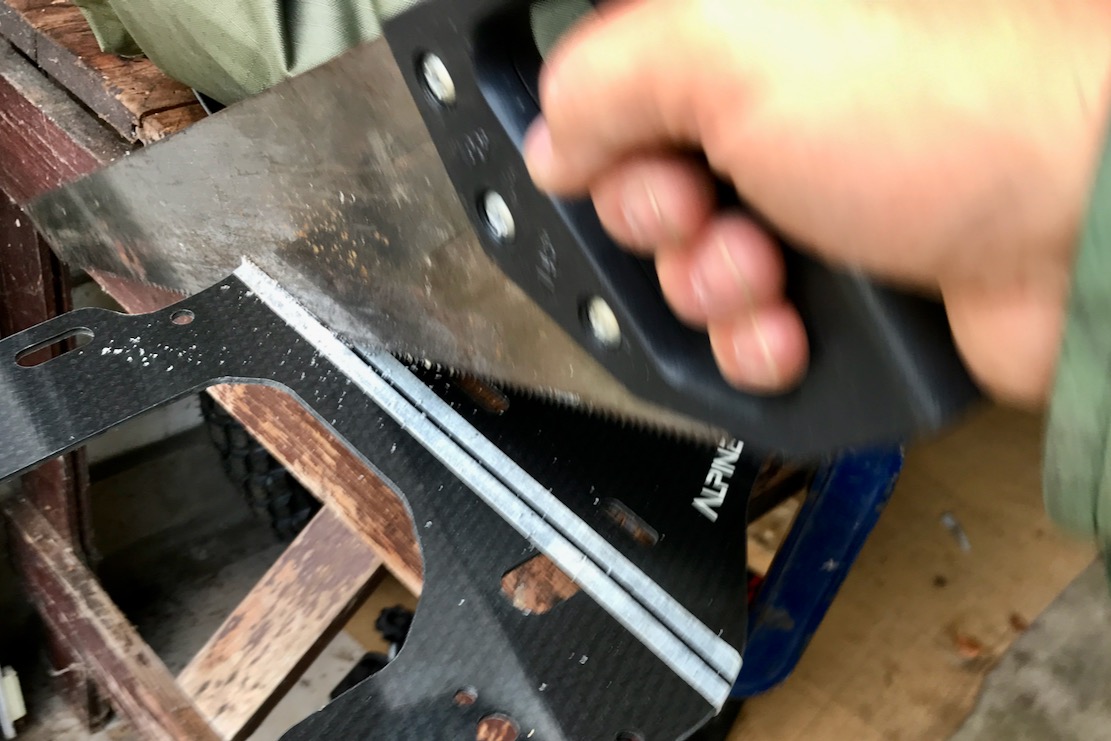
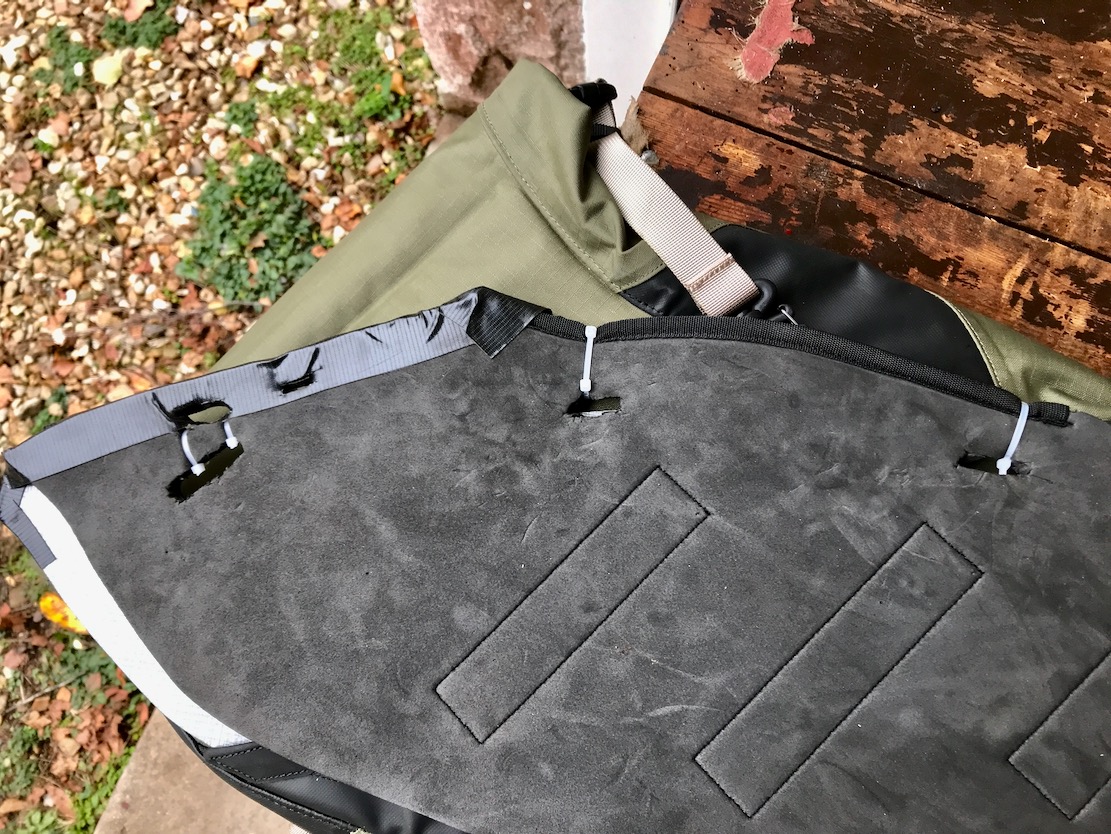
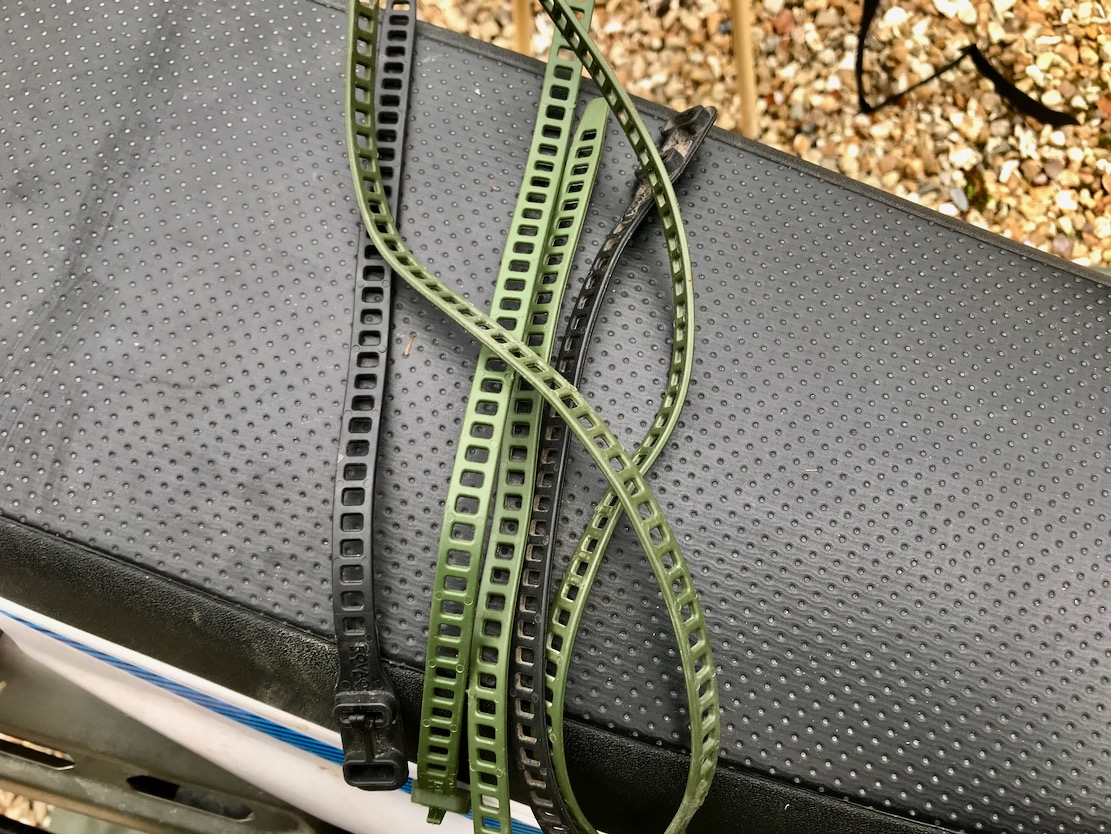
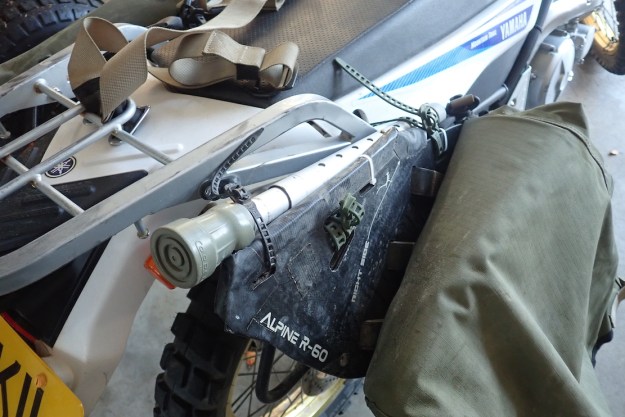
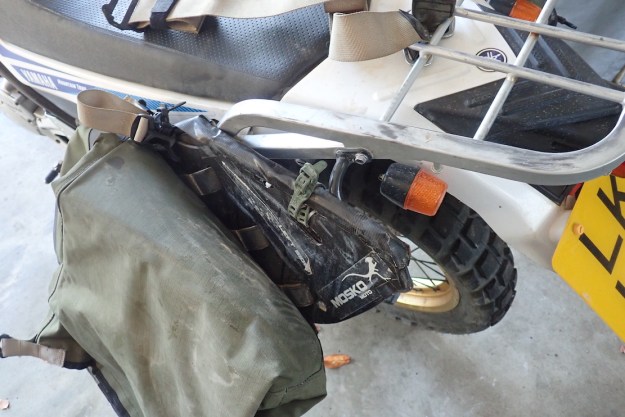
I test mounted the unjoined Alpines with zip ties; holes pre-cut into the CURV-plate make this easy. After seeing that it could all fit very well, I removed the bags and sawed off the rear parts of the plate and EVA pad, making two separate panniers. I then taped and zip-tied the trimmed board and foam (below left) and re-attached each 1.25-kilo bag using the much shortened strap to the front of the pillion peg hanger and at three more points along the upper edge of the board with reusable TPU RovaFlex SoftTies (below right) which adorn just about all of my outdoor gear.

By chance, the bag’s lowest point also rested on the Serow’s unfolded pillion peg, additionally supporting heavy weights positioned in that area, reviving my unsung 3P idea mentioned above and effectively giving up to five contact points per side.

The 50-mil OTT-straps anchored themselves through a gap in my tail rack (left) to pull the bags close in against the rack. There was no need to run an additional strap around the whole bag and rack to hold it in, as Adv Spec suggest with their Magadans.
As it’s set up now, the seat can be removed as normal, the side panel can be accessed by undoing the pillion strap and lifting each bag. For insecure overnight parkings, I just fill a light 70-litre sack with what I need for the night.

All in all, the trimmed R60s could not have fitted better: secure, low, forward and as light as you’ll get for the volume and durability.
In Morocco a couple of tumbles didn’t affect the bags, though we didn’t have any pelting rain to test the waterproofing. On the road load volumes vary from day to day depending on what you’re wearing an so on. So the only complaint I have was that it was hard to cinch down the 50-mm male metal anchor buckle to pull the top down tightly. The strap was jammed too tight. It was more easily done on the upper part of the strap which is less intuitive for a good yank. Other than that, the OTT strap and two clips per side made things easily to access during the day. You soon learn to pack a day-access bag on one side so the other can be left till the evening. Everything in several pouches or bags shoved down inside easily, using all the space.
Once I get the Serow sorted, I’m looking forward to taking out the R60 for another run.

Yamaha’s XT Ténéré travel bikes

My Tenere Travels
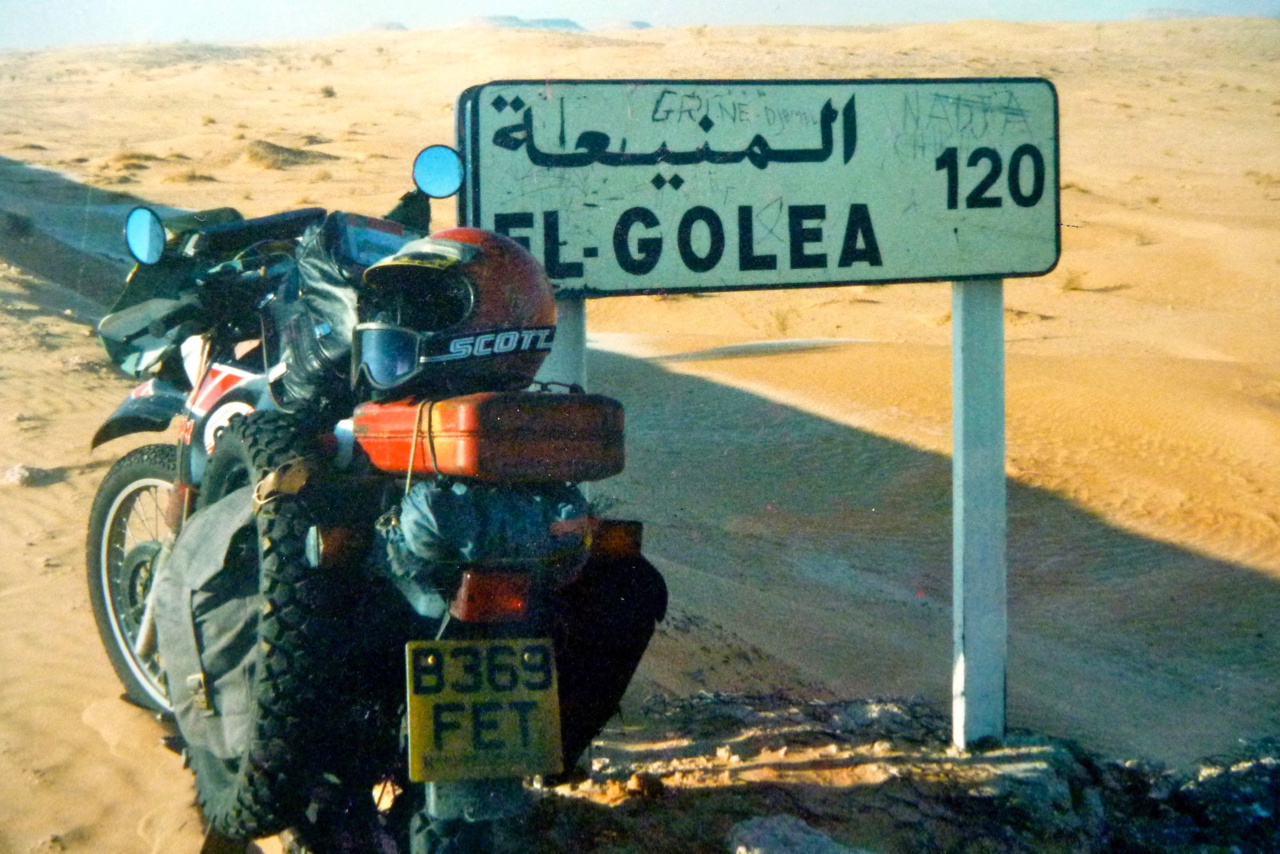
1982: XT500 • Algeria
1985-86: XT600Z 55W• London–Dakar
1987-88: XT600Z 1VJ • Algeria
1990: XT600Z 55W • Marseille–Mauritania
2007: XT660Z • Morocco
2018: ‘Tenerised’ XScrambleR 700

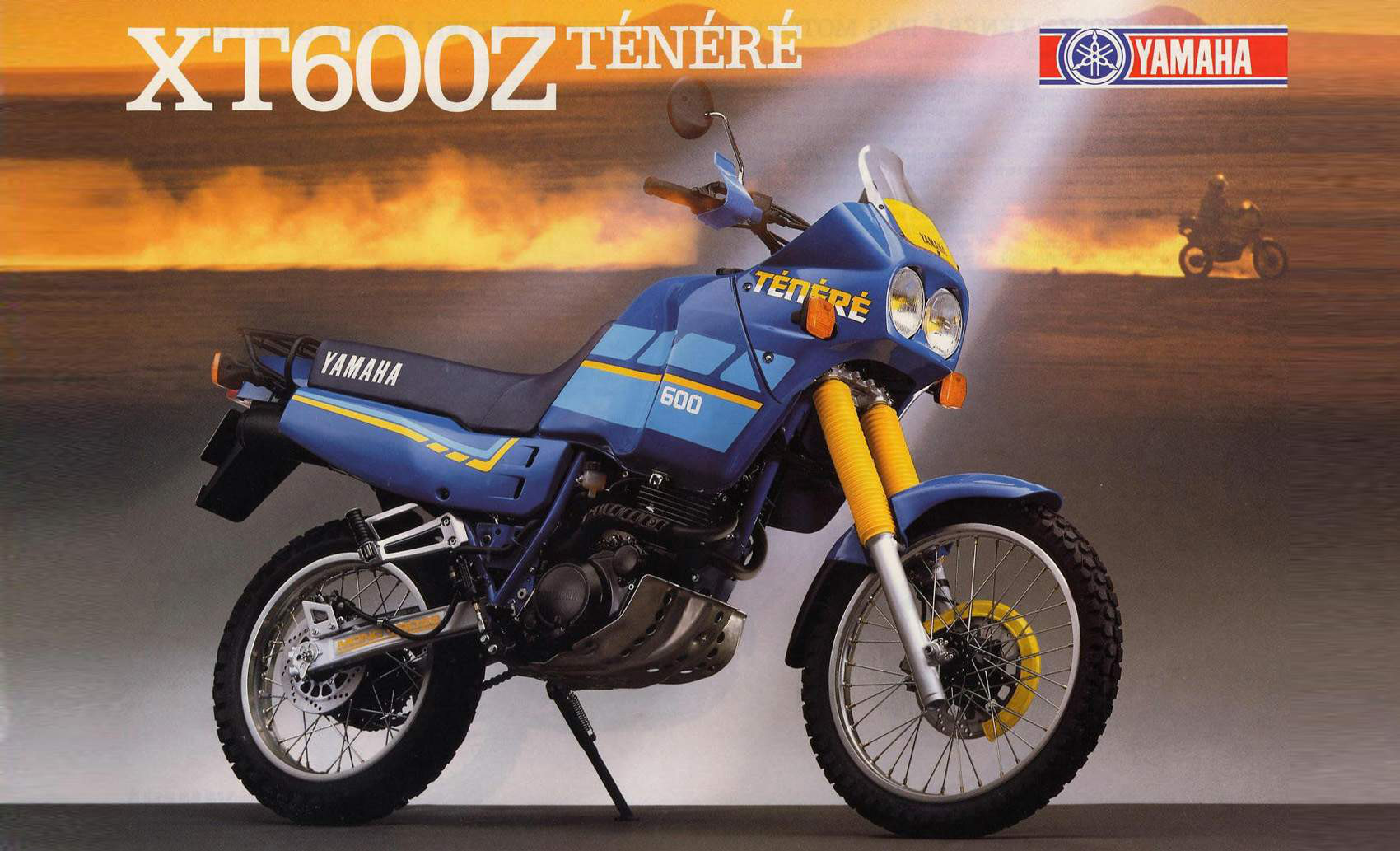
I well remember the day in 1983 when I first clocked Yamaha’s original XT600Z Ténéré outside Maxim Motorcycles in Parramatta, west Sydney.

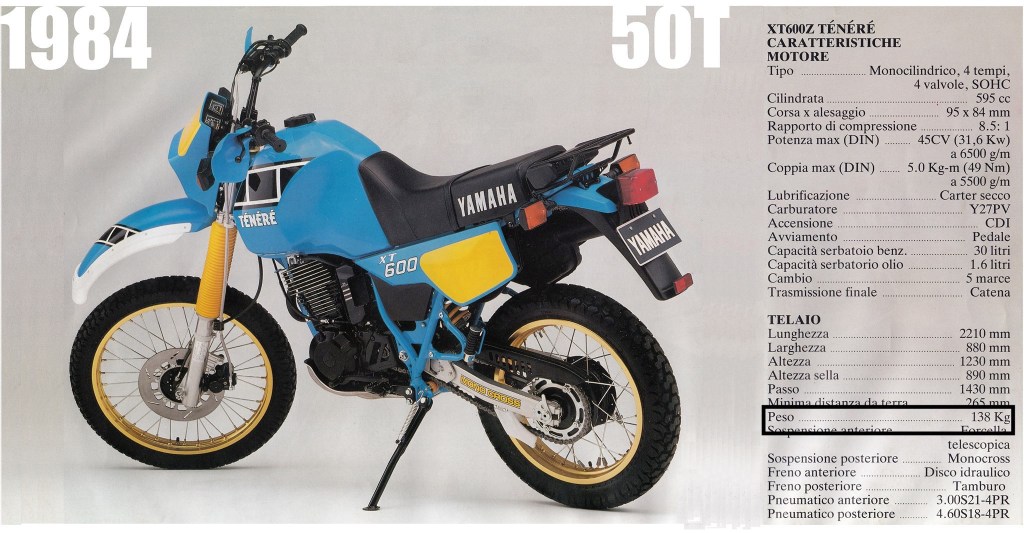
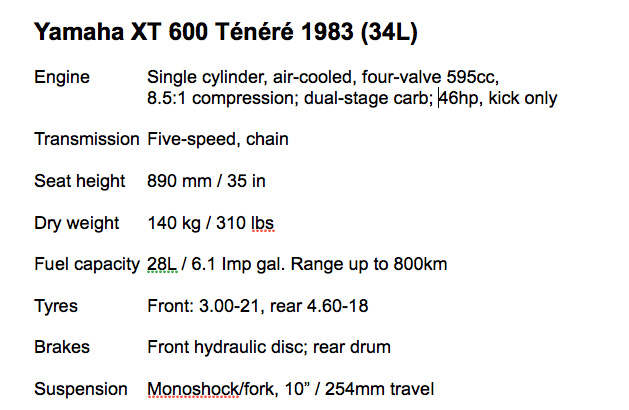
I crouched down for a good look at the machine which appeared to have addressed just about all the deficiencies of my 1982 XT500 desert bike: front disc brake, huge 28-litre tank, monoshock back-end, 12-volt electrics, folding lever trips, oil cooler and a thrifty ‘twin-carb’ set up. And all at around 140 kilos dry.

The 34L XT600Z Ténéré, named after the most gruelling Saharan stage of the Paris-Dakar Rally (see below), was desert-ready right off the showroom floor.

‘Tenere’ – What’s that then?

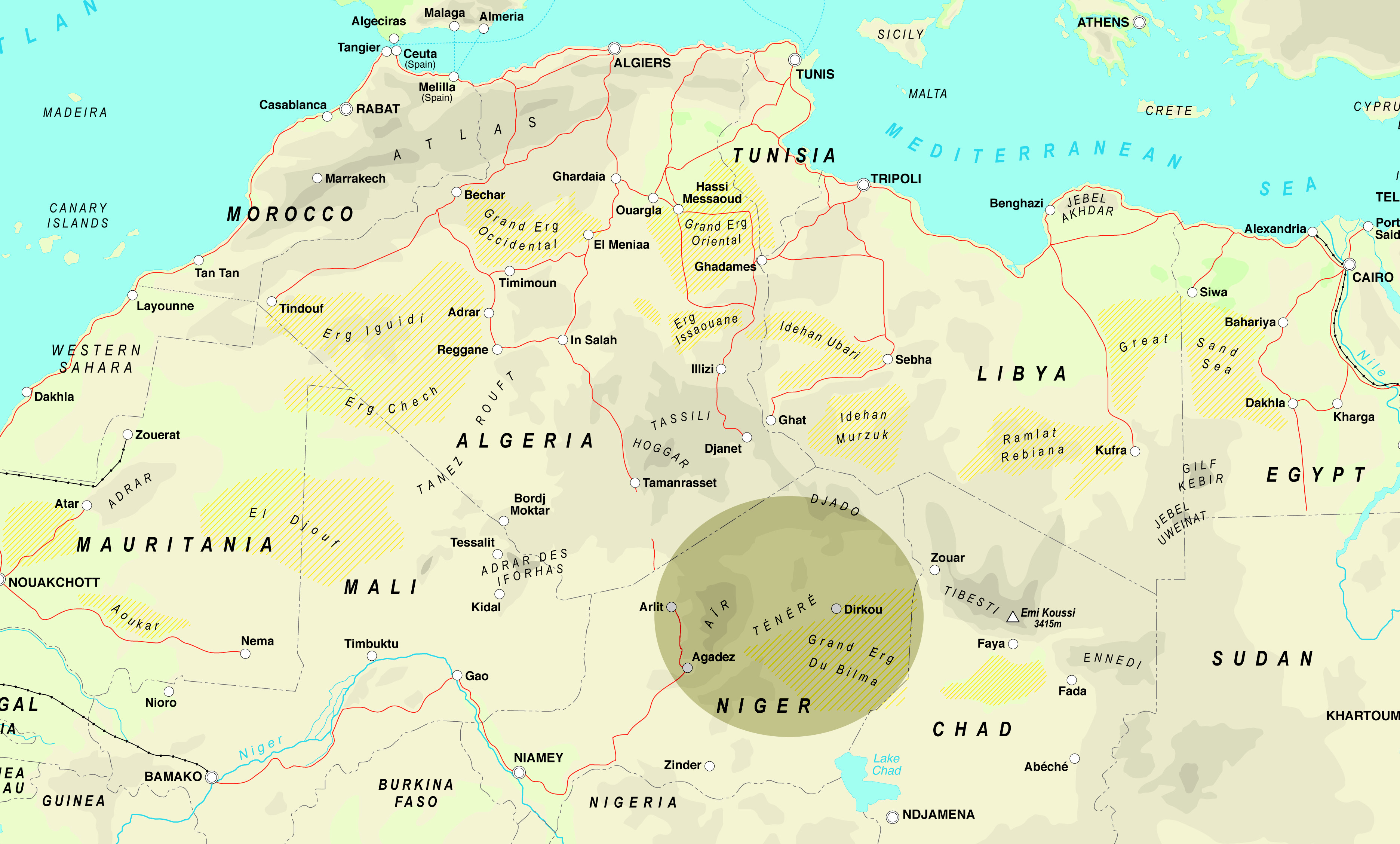
Tenere – or as the French write it: Ténéré – is one of the many Tuareg words for ’emptiness’ or ‘desert’. The more familiar Arabic Sahra [Sahara] means the same thing, but like the Inuit and their snow, the nomads of the Sahara distinguish between many types of desert and regions. The Tenere is a particularly desolate and waterless flat expanse which fills the northeast corner of Niger (left).

Marinoni85

In the Dakar Rally’s 1980s heyday, the crossing of the Tenere from Algeria to Agadez in Niger via the dunes of the Bilma Erg, typically decimated the field and helped establish the Tenere’s already notorious reputation of the ‘desert within a desert’.

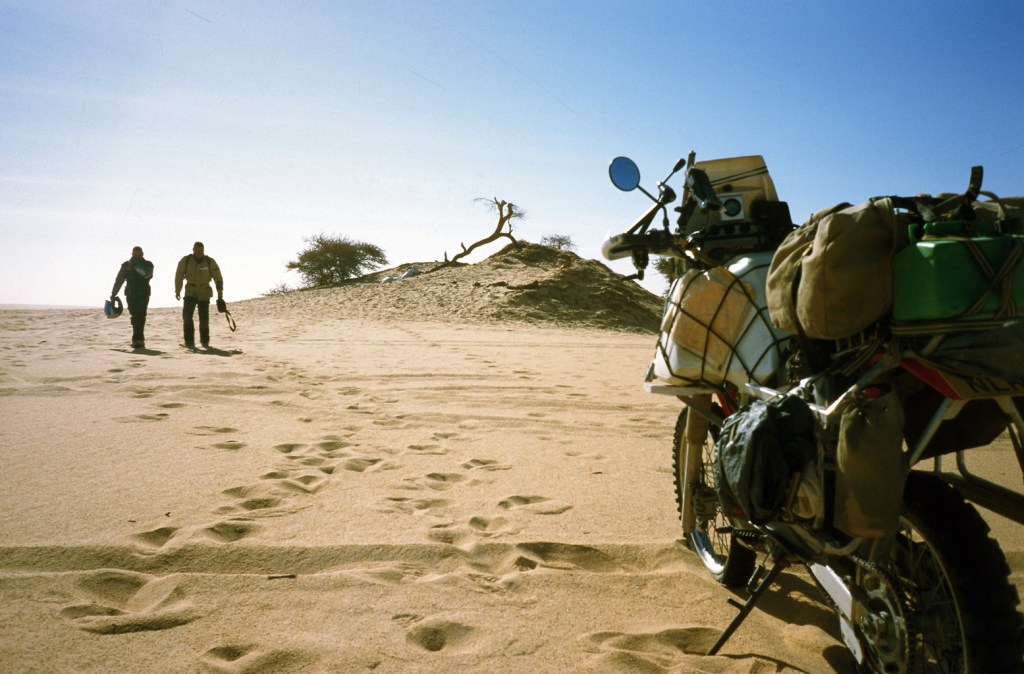
In 2003 we rode to the famous Arbre Perdu or ‘Lost Tree’ in the northern Tenere (below) where Dakar Rally founder Thierry Sabine had his ashes scattered following his death during the ’86 rally.
Good French page on vintage Dakar and all the Teneres and similar bikes.

Hang on: that’s an XR650L!
xt6spex

I bought my first Ténéré in London in 1985 to tackle my own London–Dakar adventure. This was the slightly modified 55W version of the original 1983 34L, produced for just one year. The changes were small: front disc brake cover, stronger DID rims, revised chain adjuster, longer, all-red or blue seat and most easily spotted: sloping speed blocks on the tank.
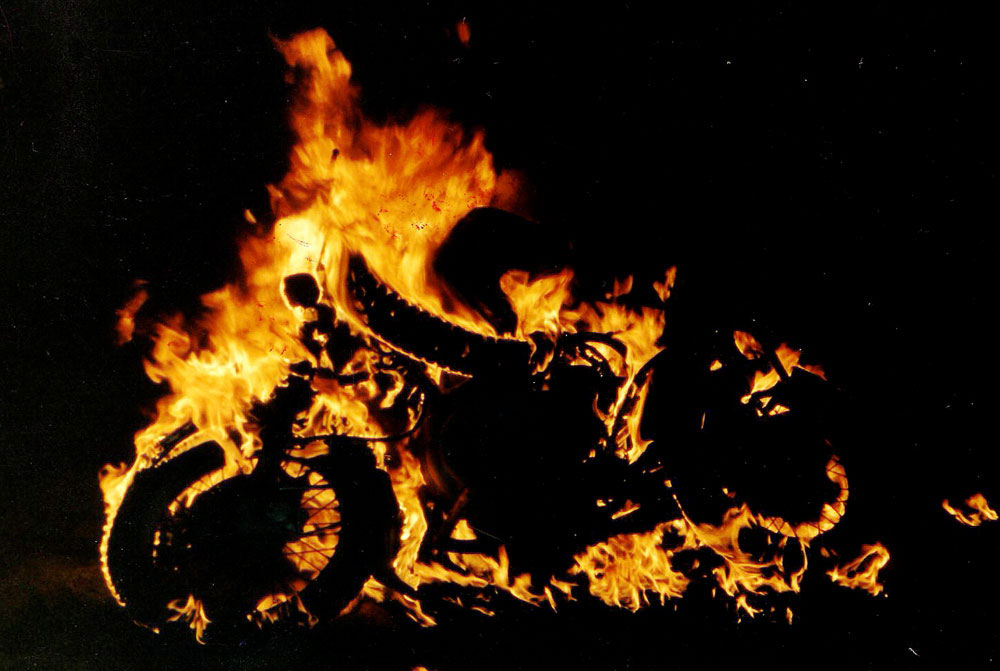
Modifications to my 55W amounted to nothing more than adding thicker seat foam and some Metzeler ‘Sahara’ tyres – a rubbish choice for the actual Sahara, even back then. Using no rack was another mistake which nearly cost me the bike when my baggage caught fire.

xt60-6
80-madmax

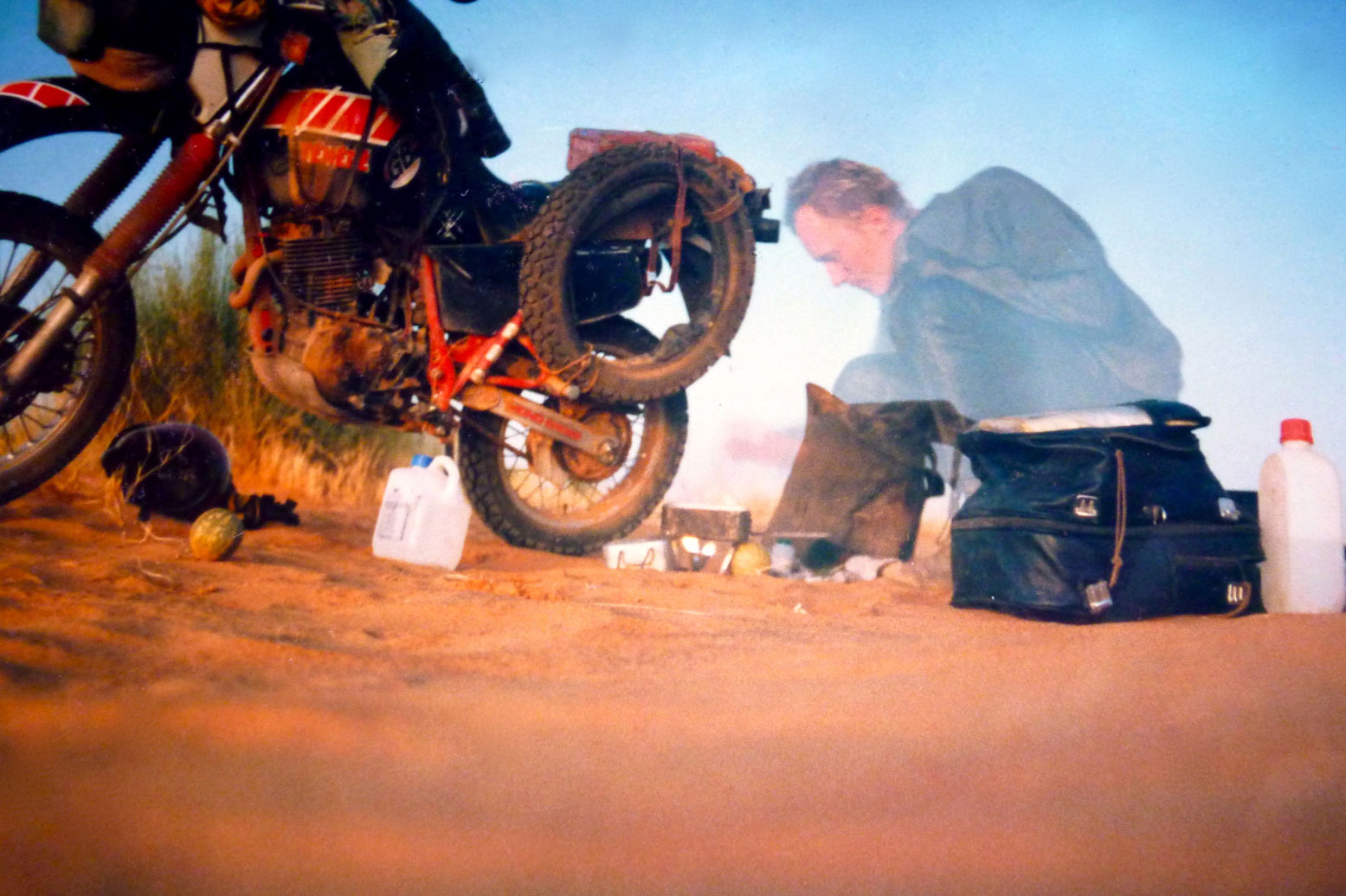
In fact, there was so little to do that I went to the bother of moving the oil cooler from next to the carbs up out into the breeze over the bars. And I painted it black because I was still hadn’t shaken off my juvenile Mad Max phase. With my £5 ex-army panniers slung over the back, in December ’85 I set off for Marseille, bound for Dakar via Algeria, Niger and Mali.

85xt60-dakarmap
My 1985-86 route to Dakar in green.

This was my first overland trip which succeeded in actually crossing a few African borders – and it proved to be as eventful as my first Sahara ride on the XT500 (and the Benele quickie which followed). On the way I learned many must-do-next-times as well as several more never-do-agains, all useful material for my Desert Biking guide published a few years later and which evolved into the current AM Handbook.

86-burning

Blazing saddles near the Niger border

I met Helmut in Tamanrasset and we set off across the Sahara together. Sadly he crashed and burned, never to reach the Niger border. I also had a smaller fire a day or two later, but was thrilled to have finally crossed the Sahara into West Africa.
As I wrote later, reaching sub-Saharan Africa was like switching a TV from black and white to colour.
A few weeks later, with many more adventures and worthwhile lessons under my belt, I shipped my charred Tenere out of Dakar and flew on to Spain to catch up with it. You can read the long version of that trip here.

tenere85
Camped by the Niger river, Niger
xt6-polo

Yamaha’s original 34L and 55W Ténéré was the first proper, well-equipped lightweight travel bikes, created on the back of Yamaha’s success in the Dakar Rally which I encountered on a few occasions out there.
That bike – not the BMW R80G/S everyone goes on about – was a game changer, with the brakes, range, suspension, economy, power and lack of weight which ticked all the boxes. In Europe they absolutely loved them; over a decade the French alone bought 20,000 Teneres; over 30% of all production. They were never officially imported into North America. From 1987 the KLR650 filled the same niche but in Europe the KLR was largely ignored and Suzuki DR600s and 650SEs made a bit more of an impact. A good early-Tenere page.

87-tenere
87-xt-hoggar

The next Tenere was the 1VJ model (left and above) with kick and electric start, firmer suspension and the air filter positioned, rally-style, under the back of the tank. But costs were cut elsewhere, it supposedly had over-heating problems and it just didn’t seem as durable as the original kickers. Mine sounded pretty clapped-out by the time I returned from a 3000-mile Sahara trip.
You can read about my 87-88 trip here.

Yamaha XT600 3AJ

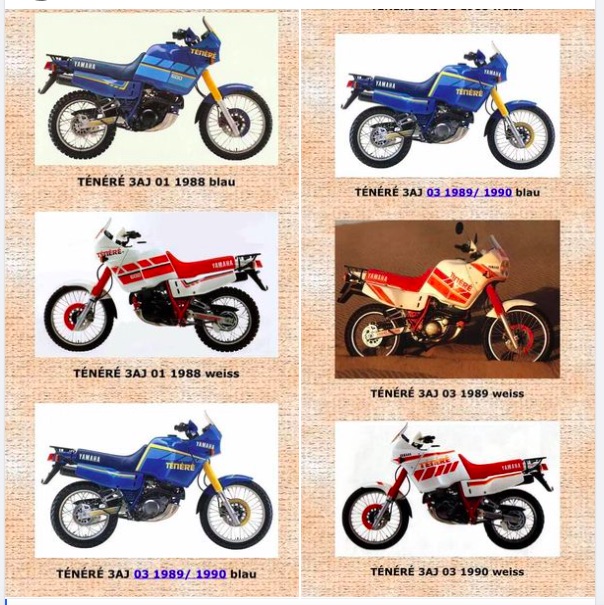
I never owned one, but the classic twin-lamp 3AJ Teneres (above and left), was said to be a better machine, even if it had by now gained some 25kg. There was said to be a 5th gear problem common to other 600 Teneres, but only if you rode them very hard and lugged the motor.

Yamaha XTZ 660-5v

The 5-valve XTZ660 Tenere from the 1990s (left) still looked great but by now had gained even more weight and lost some cred. On top of that, poor electrics and other flaws managed to lose the Ténéré mojo in the face of KTM’s dirt-focussed 640 Adventure (right).
After the 5-valve was dropped, for nearly ten lean years in the Noughties there were no Teneres in production. BMW’s 650 Dakar became popular big single travel bike; Teneres were seen as an 80s throwback.

tententen

Then, in 2008 Yamaha’s legendary desert bike returned as the XT660Z. Based on the injected XT660R and X produced from 2004, the fuelling was much improved and again, it ticked many boxes, even if it now weighed over 200 kilos and, at times, felt it. Fuel consumption varied widely but averaged 25 kpl, giving a range of about 570km/360 miles from the 23-litre plastic tank.

I bought a barely used one soon after they came out, did the usual kerbside makeover and set off for Morocco to research the first edition of Morocco Overland. Read about that bike here.

T7 in Morocco

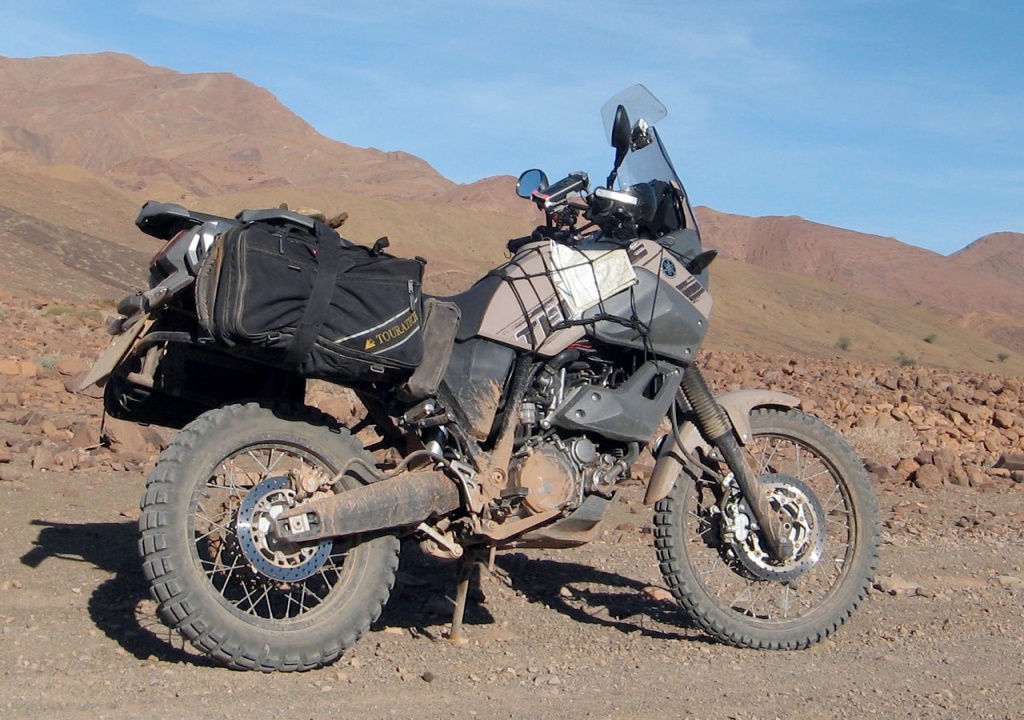
By 2016 ever-tightening emissions regs killed off the hefty 660Z Ténéré. but 2019’s long awaited XT700 Ténéré, based on the brilliant twin-cylinder CP2 motor, as in my 2017 XSR700 has become a worldwide hit (read my early impressions here). Though taller, a T7 is not much heavier than the 660Z and just like the original 34l, is another desert-ready hit right out of the crate.

CRF300L: 10,000 miles • Final Thoughts

CRF300L Index Page
300L 9000km review

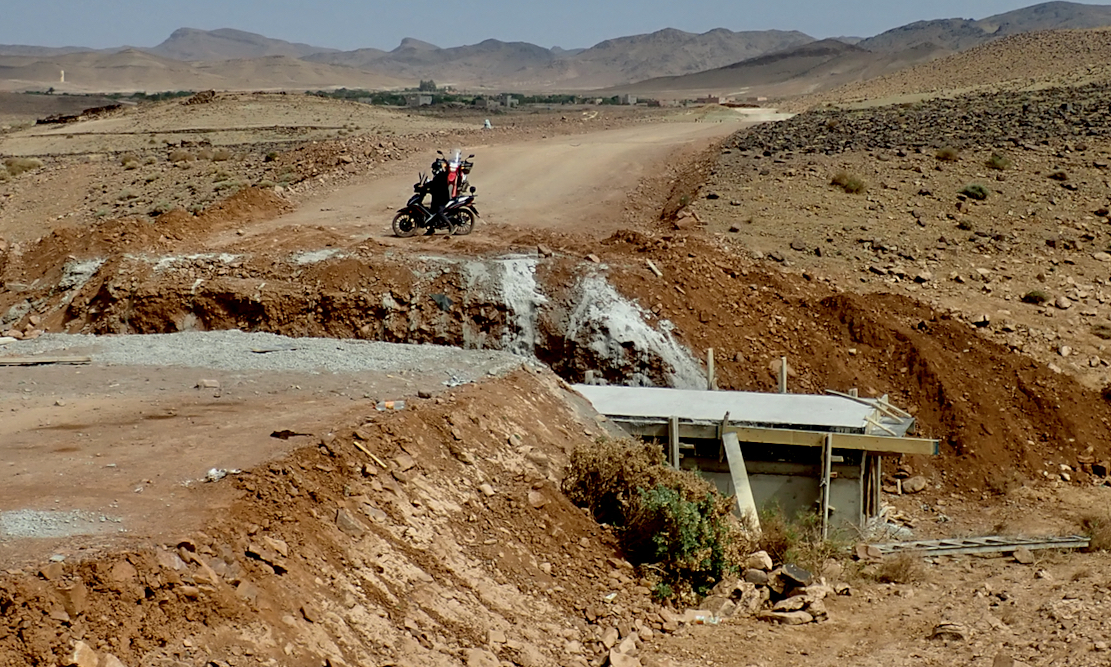
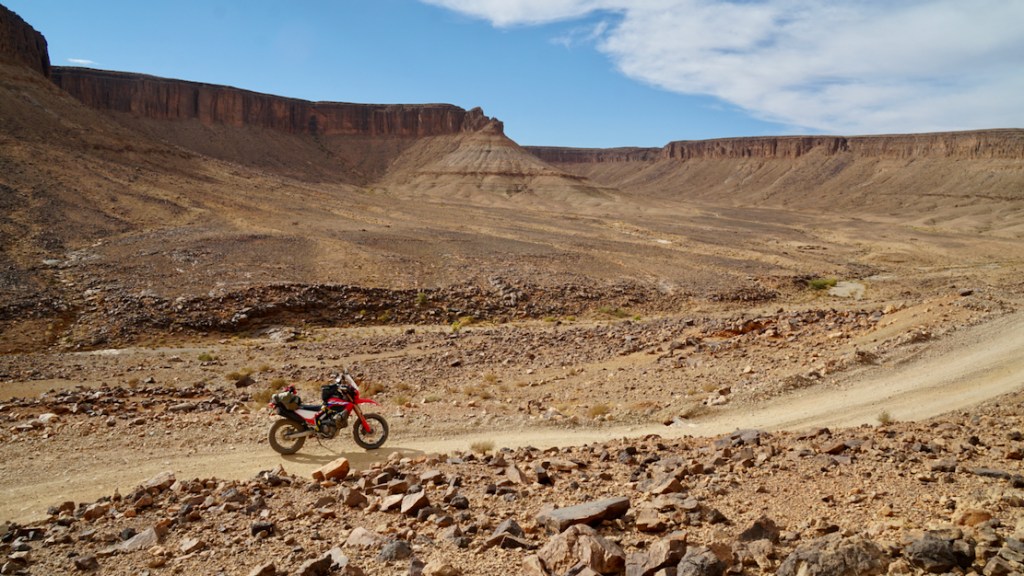
After a year of logging routes in southern Morocco – most intensely with several visits since last October (including occasionally renting 4x4s) – just a mile from completing my final piste on Jebel Ougnat I came across a pipe trench dug across the track that had yet to be filled in. They were improving this entire route but oddly, there was no way round this one. To one side, a local on a 125 had slithered down the steep bank and up the other side. I scrambled down to see if it would be rideable, and as I did so, a guy on a moped turned up, took one look and turned back (below).

Hmm. Would those planks take the weight of a jury-rigged launch ramp?

I cleared a few stones and figured I could do it, getting off and pushing if I had to. It’s always easier than it looks and anyway, I was one sodding mile away from finishing months of research. I wasn’t going to turn back now and mess up my final hard-won GPS tracklog!
I managed it with ease, but it was the anticipation of tackling such rare obstacles – not least an exhausting riverbed in the Anti Atlas a few months earlier – which validated my choice of getting the 300L for this big Morocco guidebook update. Whatever its other shortcomings, the CRF was as light and lowered as practicably possible, while having enough power, range and protection, plus more than enough suspension and clearance to complete the task.

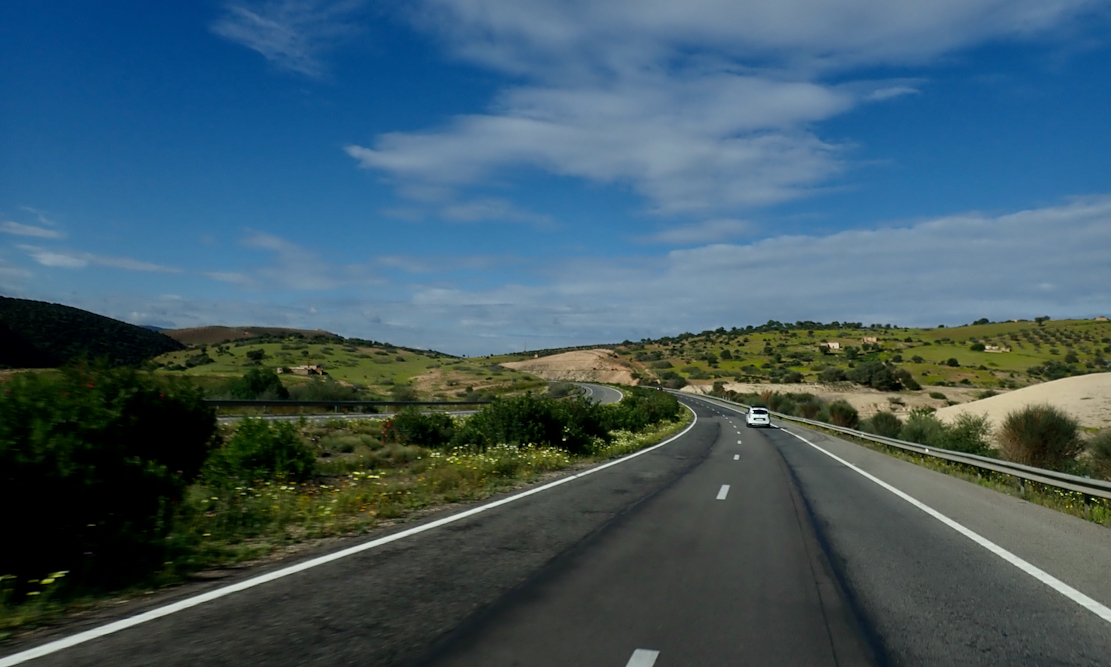
Full-frame greenery near Meknes. Quite a shock on the eye after a month down south

Another late revelation came on the ride back across Spain which I was dreading, principally at the thought of enduring saddle soreness while wanting to get the miles in with a ferry to catch. I gave myself spare days just in case, but came the day that agony never materialised. I got another agony instead.

I’d had an amazingly good run this winter, often achieving more than I planned, but the turbulent springtime weather had broken in Morocco, with a violent overnight dust storm sweeping through Tinejdad. That meant I had to abandon a final high-altitude recce on Jebel Ayachi so, lacking the time to sit it out and wait, I may as well head home.
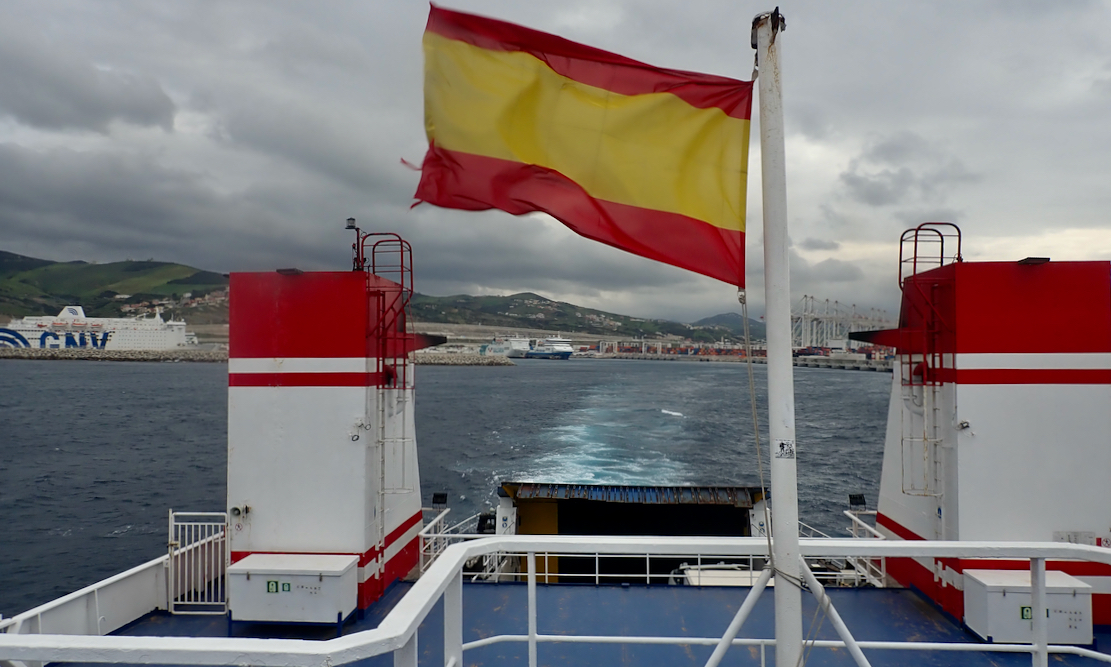
I started with a 400-km day from the desert up to Meknes, covered it with ease and getting in just as a hail storm rolled off the hills and hammered at the hotel room windows. Next day, neither of the forecast heavy downpours (one said morning, the other, afternoon) materialised, so I whizzed past the Hotel Sahara in Asilah to Tan Med and caught the next ferry to southern Spain, ending in wind and rain to Alcala.

I’d underestimated the Honda and my ability to cover distance, so decided to put it all on red and next day went for 600km along the familiar and effortless A66 ‘Ruta de la Plata’ to Salamanca – effectively a deserted motorway. It was a gamble made easier by knowing fuel and leche bars were frequent, as well booking a couple of days at a roadside hotel in Mozarbez, while in a holding pattern for the Santander ferry.
Unfortunately I didn’t anticipate single-figure temps and a numbing southwesterly. I was cold for the entire 9-hour ride to Mozarbez which ended in sleet at around 3°C. I arrived seriously frozen, but comfort-wise, had magically acclimatised to the CRF’s seat with the help of the Moto Skiveez.

Putting it all on red

I was grossly under-dressed for all this, recalling teenage biking sufferings when I knew no better. Increasingly desperate stops for fuel and hot food were needed. On-bike exercises – a new ploy – eased the long distances in the bitter cold and occasional showers, which saw me edging towards hypothermia.
I rarely exceeded a true 100kph, but had the weather been what I’d hoped for in March, that 600-km ride might have been stretched to 700 or around 440 miles. A pretty amazing distance on a 286cc donkey. All you need to do is try not to ride for more than two hours at a time.
That said, even with the strong southwesterly pushing me, fuel consumption was down to 70mpg/25kpl; an all-time low. (Fuel log here). Imagine what a CB500X would return holding a true 100kph in the same conditions? My guess is a lot more – or a much faster transit if riding at whatever 70mpg is – probably 120kph. This is the often overlooked payback with small motos. The only benefit is lightness, but of course that matters a whole lot when roaming around alone on the dirt. Sadly, you don’t gain good economy at highway cruising speeds as well. After >10,000km the 300L averaged a verified 30kpl / 85mpg / 70.8US. I tried but never quite managed to get a true 100mpg, but I think a lighter rider could.
I was the slowest private vehicle on the Plata, inching past trucks while cars raced up to my mirrors, but the Honda did a lot better than I expected. Was I wrong about the 300L being a compromised travel bike?

Stepping back a bit
The bike I rode home was a little modified to what I’d ridden out from Malaga in October. By now both tubeless wheels had been properly sealed with a continuous band of Puraflex 40 by the mechanic at Loc in Marrakech. I’m a bit slack on checking; turns out the tyres still lose a bit of air, same as I’ve found with proprietary sealing systems like BARTubless. But on typically stiff TL tyres, it has to get really low – 1 bar or less – for you to notice. It might be leaking from the bead/rim face and it might settle down. DIY TL sealing needs to be checked regularly, just like tubed tyres. Or fit TPMS.

Pic: Matt W

By now the stock-sized AX41s had worn out and I was running over-fat Mitas E07s as that’s all they had in Marrakech. These bigger tyres – 130 80 17 and 110 80 19 – improved cornering confidence on the road and were fine on the dirt for what they are. The front did slip a bit more on the loose stuff than the knoblier AX41, but felt more reassuring on wet or dry asphalt.
By the time both fat Mitaii had been fitted, the NiceCNC ‘Schmouba’ link didn’t lower the bike that much. And the Skiveez ended up the best all round solution to saddle woes. That and trying to stand more which is actually quite enjoyable until my insteps start to ache. Refitting rubber inserts into the pegs didn’t solve this; it must be my TCX boots or I need massively wider pegs.

The Rally Raid suspension hasn’t sagged that I can tell. The fork seals have held up amazingly, and the DID chain has been adjusted once in 10,000 miles with hand cleaning and lubing as often as practicable.
The lame front brake holds me back from going full WFO supermoto in the canyons – well, that and a lack of nerve and skill. There’s still loads left, but I’ve ordered some EBC pads even though I may not reap the full benefit before the bike gets serviced and sold.
I tried swapping the grips in a bid to reduce vibration at the bars, but fell for some ‘duo-foam’ marketing with no improvement. Perhaps fatter, Moto Gloveez are a better idea.

So the answer is no, I wasn’t wrong about the 300L as a travel bike. It’s still a 28-hp ‘300’, bought for on-trail lightness, not it’s ability to generate motorcycling joy as you pull away or power out of a bend. It’s about where you can take it with confidence. Thanks to the low first gear (resorted on fitting the same-tyre-ø-as-OE Mitas) the power is absolutely adequate on the sort of dirt I ride and loads I carry. But I bet most 300L owners have another bigger ride or two in the garage.
Satisfaction may be found with something with a bit more poke, machine #65 I think it’ll be. As I won’t be off-road exploring so much and my skills in recognising what’s doable will have improved over the last year, the expected added weight of <200kg juiced up will have to be manageable, providing the seat height isn’t in the clouds. And ideally, unlike the Honda, it won’t need masses of added kit and mods to turn it into a good traveller for road and trail.
What is that bike, you ask? Click this.


CRF300L: Lowering link

CRF300L Index Page

35.2″? Do me a favour!

Writing up my 9000-km review over Christmas, I realised how much the Honda’s verified 35.2″/894mm seat height was bugging me. And it wasn’t just me. In 2023 Honda introduced a 2-inch-lower CRF300LS model, achieved by using slightly shorter suspension components. An appealing non-red colour scheme apart, it’s otherwise identical, though currently not sold in the UK.

According to the guy above, no seat foam was harmed in producing the LS: ‘Honda shortened the suspension…’. But he then goes on to say ’rear travel is reduced by 1.2”’. Does he actually mean shock length is reduced by 1.2”’ (to make 2” less vertical travel)? Probably.
Riding the trails, my suspension travel is way more than I ever need – an LS would have done me nicely – though once compressed the height’s rarely an issue unless I tackle technical terrain. Very occasionally the back bottoms out as it should; the front not yet. With me it’s more the getting on and off, which I do a lot of and gets more tiresome as the years pile on. Along with comfort, these two things hold back my enjoyment on the L. Fitting the 17/19 wheel combo didn’t lower the bike significantly.

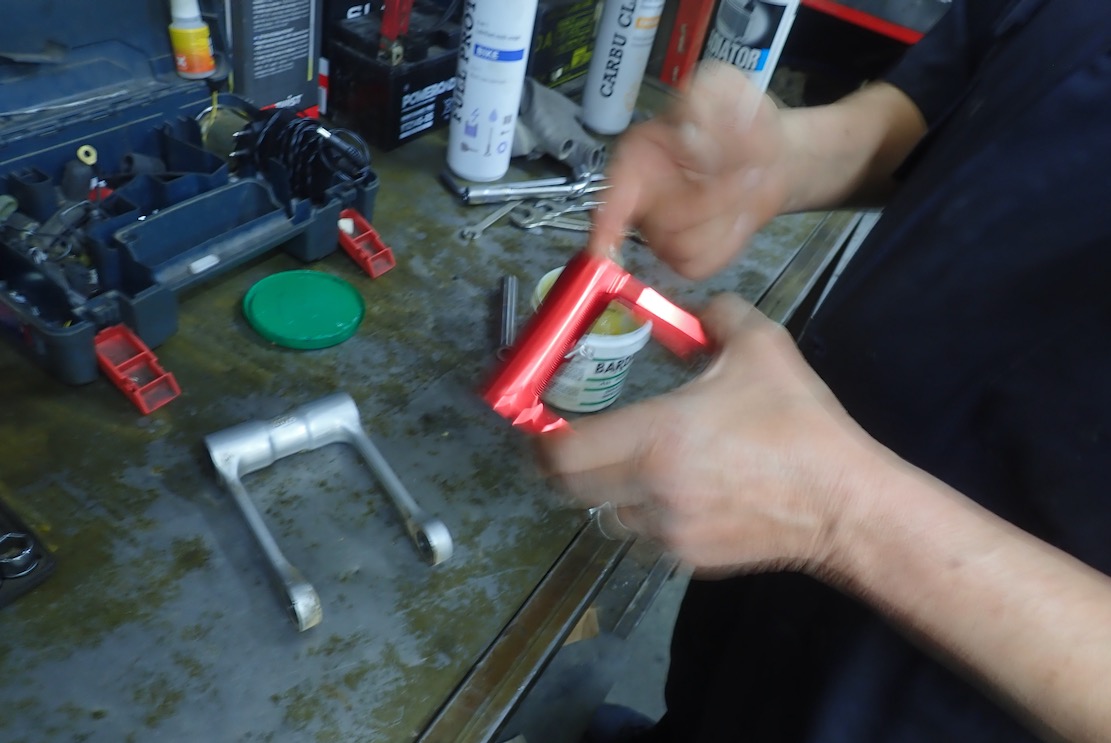
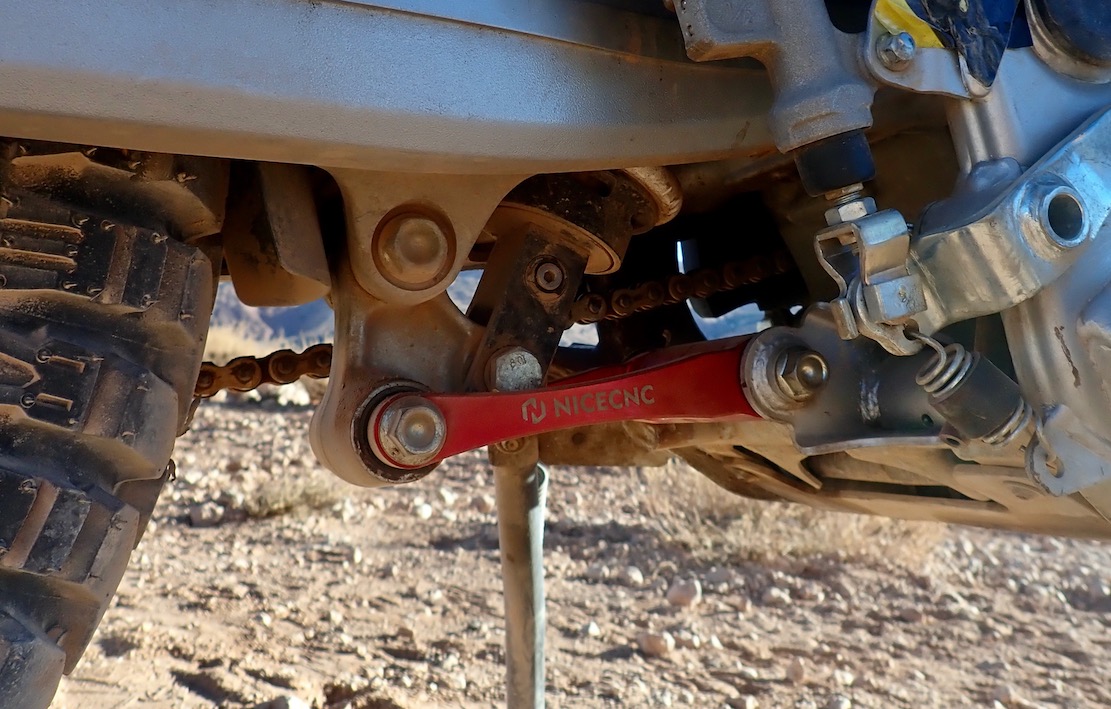
So I bought one of those suspension lowering links which I’ve read about for years. I recall my KLX had a clever adjustable link. US-made Kouba Link is the well known brand, but costs nearly £200 in the UK. I settled on a similar looking ‘Schmooba Link‘ off ebay for just £42 with the same needle bearings and grease nipple. NICECNC may be made in China but have a decent-looking website and a huge range of parts.
They say these links can mess up the carefully mapped factory linkage ratios working on the shock spring. That may be an urban myth or something that only applies to performance-sensitive racers. The link swap took just 10 minutes with a helping hand of Larbi in Marrakech.

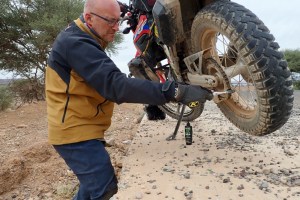
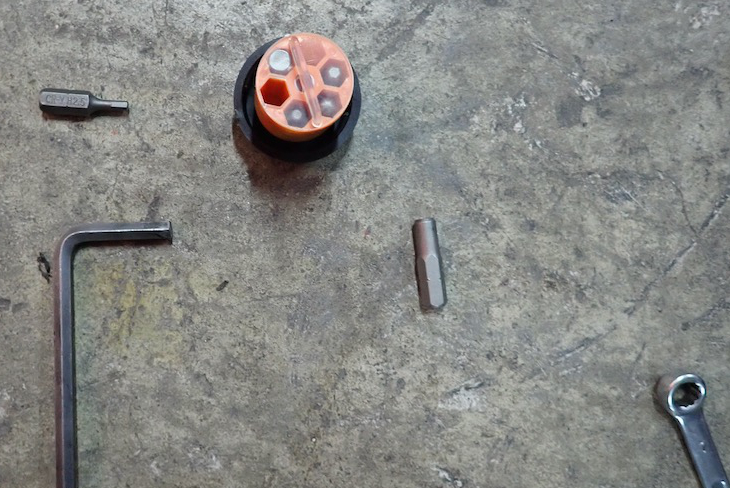
My Schmooba claims to lower the bike by 1.75″ (44mm; identical to Kouba) which is a bit more than I need, but tbh it didn’t look that much lower. Once fitted, I jacked the Tractive shock preload up a turn and a bit. What a faff that is. The shock is clearly made for an HPA and not manual adjustments. The job is made harder with the need to loosen a grub screw locking the preload collar in place. The supplied multi-bit tool has a 2-3mm bit to get in there (left); you then need a 5mm spanner to turn it, as long as the screw is in an accessible location.

There is no crenelated preload ring to hook with a c-spanner, but a series of holes in the collar, like on a wagon wheel hub (above). The multi-bit tool is too short and bulky; a 5mm rod or screwdriver works better, you inch the ring round; it’s easier on the RHS, and I found it best with a 5mm L-shaped Allen key and an additional extension/lever. Give it all a squirt of WD40 too. It takes about 12-15 micro-adjustments to get a full turn of the collar. I kept going until the annoying grub was accessible again and hope that’s enough.

Of course the forks need sliding up the triple clamps to match the rear drop – easily done. But without risers, the stock height bars limit the drop to about 25mm. So 25mm it will have to be; I hoped the jacked-up shock would compensate for the now moderately raked out fork.

RRP <20mm

If you’re lowering your 300 you’ll need a shorter side stand. RRP do 20mm shortie for £88. Or so I thought. With forks raised and link fitted it actually didn’t lean too bad. It turned out a new oversized Mitas E07 tyre on the back raised the bike back up an ~inch. Then, offering up the RR short stand, it turned out to identical. Have I been on a short side stand all this time or did they send the wrong one? Oh well, one less job to do.

Fatter Mitas 130/80 17 TL E07; actually a good idea.

Is an OEM stand for the 300LS on Partzilla US shorter?
Two are two stands listed but which was which? Knowing that the 300LS model code is probably CRF300LDA ABS is helpful.

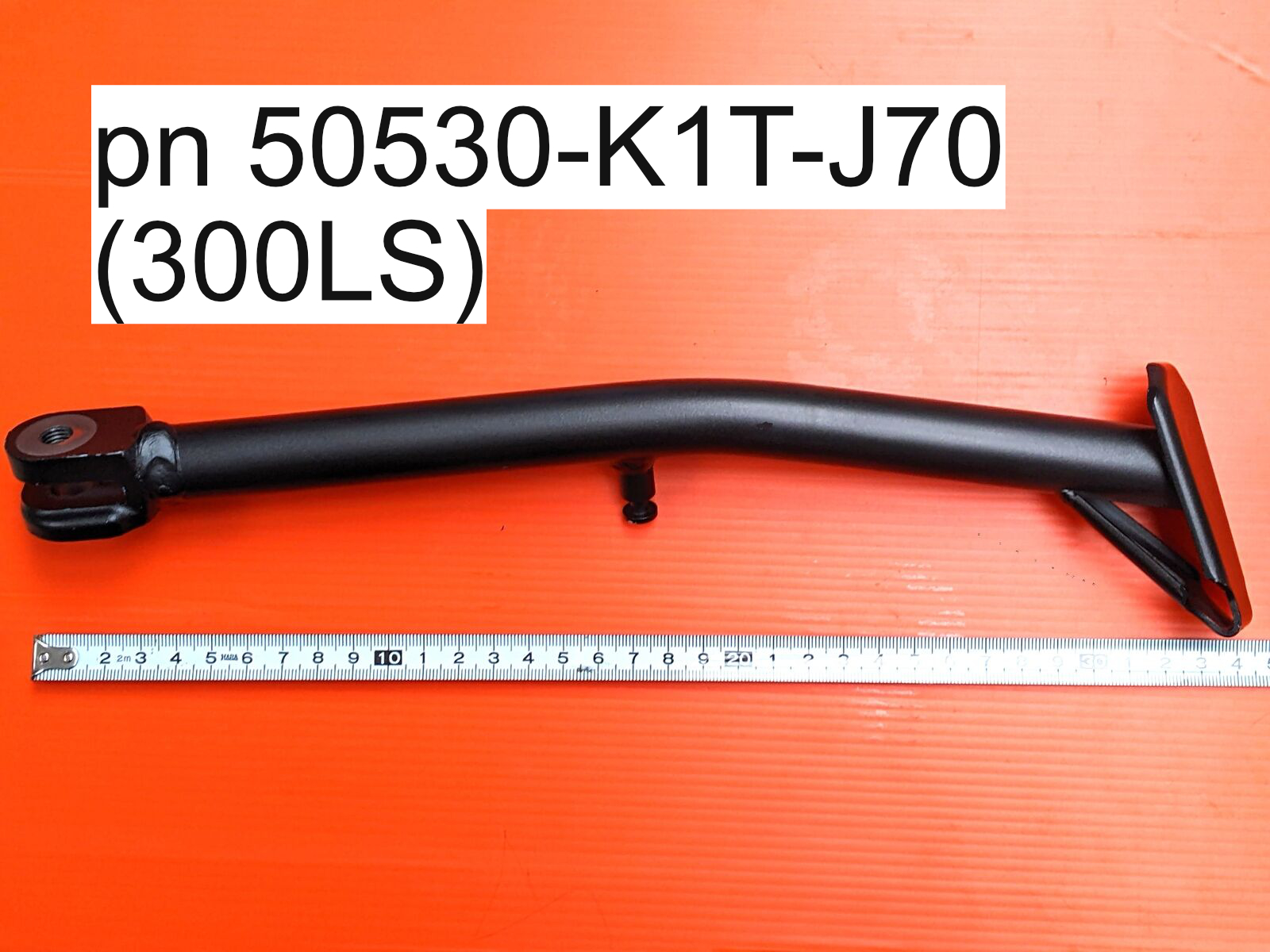
  • Lowered 300LS CRF300LDA ABS side stand: 50530-K1T-J70
  • My bike 300L ABS side stand: 50530-K1T-E50

In fact a -J70 shortie is bent; the normal height -E50 is straight. And if you look up 300LS reviews online you’ll see they have a bent side stand, unlike a normal 300L, even though the Honda parts fiche shows a straight stand for both parts. Hence my fiche confusion.

A J70 is discounted to $35 on Partzilla US. In the benighted UK an E50 is £48 but I actually got offered a bent J70, which was actually what I was looking for. Fascinating a?! But wait, there’s more! A bent J70 is shorter. The reason it was bent because a straight stand on the lowered LS might drag on full suspension compression. So it seems Honda bent and shortened a stock 50530-K1T-E50 to make 50530-K1T-J70 for the 300LS, but online fiche images appear identical.

Now, about an inch lower, I can afford to take some of it back with some neoprene seat padding, as before. But first I tried a pair of Moto Skivvies (review) – padded undershorts made for motos not cycling. I’ve known the name for years but the 300L has pushed me over the edge and into their shopping cart.

Loadsa legbend

Riding the lowered bike
By the time I’d jacked up the rear preload a bit and had a 130/80 17 Mitas E07 fitted, the bike didn’t feel a whole lot lower. Measured, it’s now 33.5″/851mm with the forks raised up in the clamps all the way, so almost exactly the 1.75″ claimed. For the next 4000km over a month, the bike rode the same on the dirt; maybe a bit better all round with a fatter Mitas all round (now properly sealed for TL by the mechanic).

Getting on and off still wasn’t a whole lot easier. I use the footrest where possible, but having the tail pack on the side would ease a leg swing. Thing is, a tailpack is so darned easy; on/off in 4-5 seconds with a pair of Rok Straps. No other actions required and no side-panel scuffing.

The suspension still works great, just like it always did. I think the taller tyre may have touched the mudguard on one or two bottoming outs. I have to take a little more care when stopping and putting the stand down, but all in all, an easy, inexpensive and recommended mod if your stock L is giving you nosebleeds.

Honda CRF300L 9000km review

CRF300L Index Page
CRF300 Rally quick ride

In a Line
Light enough to tackle any trail I dare, but too tall and uncomfortable as a do-it-all travel bike for most.

  • Rally Raid suspension
  • Great range with Acerbis tank
  • 19-inch front wheel conversion
  • Screen with MRA lip
  • You know it will start and run like clockwork
  • Inexpensive and easy fit NiceCNC lowering link
  • Weighs about 162kg tanked up and with all the gear
  • Needs loads of add-ons to make it a functional traveller
  • For a trail bike, stock 894mm seat height is ridiculous
  • Negligible power increase over CRF250L
  • Seat comfort on long or rough rides
  • ‘Average Mpg’ or ‘remaining fuel level’ read-outs both out by 10%+
  • Reduced stability with big tank and other add-ons
  • 17-inch rear knocks out speedo accuracy (unless you size up the tyre)
  • Acerbis fuel cap always cross threads
  • Front brake is weak
  • Front brake switch failed ;-O
  • Negligible lowering with 17/19 wheel combo

Review
October 2023 I got my CRF shipped to southern Spain to leave in Morocco for six months. I flew down to carry on scouting new tracks for my next Morocco route guide, while also leading my one-week tours with 310GSs in between times.
I’m not quite finished with the 300L yet, but last week it turned 10,000km (6200 miles). High time to share my impressions after 8 months of riding.

Taking comfort
I bought a very well equipped 2021 300L from its second owner with just 1000 miles on the clock. It still needed a bigger tank, radiator protection and tubeless wheels (plus whatever’s shown in the graphic above). The bike came with a lowered seat (read: thinned out). At 34.5″/876mm it was 0.7″/18mm lower than Honda’s claimed OE specs of 35.2″/894mm. I tried to make the thin seat more comfortable by adding a 20mm neoprene pad under a Cool Cover which increased my back end’s mileage. But judged by side stand angle, the 17-inch rear wheel with a stock width AX41 tyre didn’t lower the back noticeably.
I then bought a stock black seat (full foam) and, with my added padding, probably went up to 35.7″ or a whopping 907mm. Then one day in Morocco I knew I’d need a low seat for a tough day, so removed the padding and Cool Cover. My backside was pummeled at the end of that 300-km ride, but I never refitted the Cool Cover and kept the neoprene slab held down with a bungy.

Later, I ditched the neoprene too and wore some Moto Skivvies and have settled for these plus opiates on a bare stock seat in a bid to keep it as low- and me as comfortable as possible. It’s still too high for easy mounting/dismounting, though the anterior agony got muted on some days. As we all know, once the drugs wear off, getting off/standing up for just a few minutes can offer respite.

High Atlas near Toubkal

286cc
The 300 is only 36.4cc bigger than a 250L when you’d hope that’d be nearer to 50cc. I owned a 250L in the US a decade ago and for what it was (left) enjoyed it greatly. Along with other factors (like the existence of the CBR300R and worldwide >300cc licensing regs), I guess there’s only so much metal in a 250L barrel to bore out.
I knew it before I bought it of course – a quick ride of a 300 Rally didn’t set my hair ablaze – but the increase in power on the 300 is negligible. It’s still essentially a ‘250’ with the same-ish 27hp as a WR-R, along with all the inherent benefits and limitations: light enough to tackle or turn around on anything the seat height allows, while being a slog on long uphills or a headwind, plus uncomfortable after more than an hour or two. So not much different to my previous WR250R or KLX250 then. In many ways my less powerful Himalayan 400 suits my ‘old man’s’ riding style better, but was no faster on the road.

The best things about my 300L are the easy 400-km range from the Acerbis tank (despite the maddening cap) and the Rally Raid suspension. While both ends might benefit from a bit of tweaking for my mass, it just works; very occasionally bottoming out at the back and never at the front. After a few weeks in Morocco I thought the rear shock was sagging a bit, raking out the forks and slowing the steering. So, lacking the shock tool, I dropped the clamps around the front forks 5mm to produce the same levelling-off effect, but can’t say it rode any better.

Ten inches of suspension and clearance?! Way higher than it needs to be for most users.

Something’s Off
The way I’d set it up something felt off on my bike. For a while I thought it was the tubeless AX41 tyres. No so much the tread pattern which is pretty conventional, but perhaps the added sidewall stiffness in the tubeless carcass, intended for GSs and the like, not dinky ‘250s’ weighing 100 kilos less. Airing down to as much as 20psi didn’t help.
Then I tried dropping the forks 5mm, as mentioned; no noticeable change. So was it a high CoG, especially with a full 14 litres on board and exacerbated by the tall screen, radiator bars with side bags and so on? It certainly felt less stable tanked up, but no more than you’d expect. I tried to avoid setting off for potentially tricky unknown tracks with a full tank. I even blamed the hefty Outback Mototek rad bars, but while heavy, they’re actually set pretty low down.

17/19 wheels. Was it worth it?
My main motivation was to convert the stock wheels to tubeless, not have smaller wheels. I knew the stock front 21 rim wouldn’t have the required ‘MT’ safety lips. As MT 21s are rare anyway, I thought I may as well try a 19 as an experiment; it’s a better all-round travel size and there’s more tubeless tyre choice. Then it turned out the rear 18 wasn’t MT either, so I may as well try a 17 which also offers greater do-it-all travel tyre choice and might even lower the bike. Note: fitting a 17 raises the gearing a bit – you won’t pull away in 2nd so often. But it also throws the speedo out from ~8 to 14%. You’re going a lot slower than the speedo indicates and may want a DRD or similar black box
to correct it. But: fitting an oversized Mitas E07 at 10,400km put the speedo error back in the ~8% ballpark. DRD not needed.
I rushed the original job and had a manageable slow leak from the 17 and a meltdown on the 19 front arriving in hot Marrakech (fitted a tube). But the 21 I left at home has held its air fine for months. In Marrakech the mechanic re-sealed the rear in between my trips, cleaning then applying a continuous band of Puraflex. He then did the same to my 19 front and both hold air fine now. Summary: technique works if you take your time and allow a day or two of curing.
All done, the bike was barely lower and, as mentioned below, the 19’s benefits only became evident with the screen removed. Obviously, I can’t tell a 17 from an 18 on the back, but running a front 19, at the donkey speeds I ride at I can’t say I noticed any detrimental effects on the dirt over a 21. Crossing gravelly oueds, I did try riding feet-up, but the front soon tucked in and deflected, as you’d expect. Through thick bull dust same thing: go deep and the wheel folds. So much for improved flotation from the fatter front: you need to attack such crossings with momentum to push the front through (see AMH8, p205), while wrangling the bucking bike and spinning back end. We know how that can end, so I often paddle like a duck.
Bend swinging on the road the AX41’s ‘50% vacant’ contact patch held me back, but I did perceive – or persuaded myself – the 19 tracked better through bends than a 21 would. Occasionally banked over
it would twitch, but the asphalt surface is rarely pristine and debris-free in Morocco. So 19: no difference over a 21 on dry, loose dirt at trail riding speeds. Deep sand, mud ruts and snow may be different. On dry asphalt it corners with more perceived confidence, depending on tyres and minimal CoG interference.

Talking of the Bridgestone AX41s, the rear TL had had it by the time I rolled back into Marrakech, having covered only 7000km or 4400 miles. I ran it at around 25psi, though it would lose about 7-8psi overnight. I went out of my way to select a tyre of identical width to the stock 18-inch IRC, but next tyre am going fatter all round: a less knobblesome 130 80 17 Mitas E07, partly because that’s the nearest the shop in Morocco can get in TL. It span less readily on loose dirt and certainly rode the roads better, like a 310 with its massive 150 rear. The front AX41 got replaced 2000km later with a bigger 19″ E07. Initially it felt heavier but the bike rode more like a supermoto on the road and is OK on the piste.

Returning in December for a week, I got to the bottom of it. Undertaking day rides, I left my baggage in the hotel (<6kg), but also removed the screen (1.5kg?) with an MRA spoiler. The bike now felt a lot more chuckable and connected. I could even ‘feel’ the 19-inch tyre’s benefits and managed the odd side-slip on the dirt, as on other bikes.
Was it purely height + weight, or also a ‘vision’ thing? Who knows, but after a week I refitted the screen and all my clobber for the ride back to Marrakech over Jebel Saghro, including a tricky a ‘4WD only’ descent, and the bike felt OK. My parameters had been reset, though I’ll definitely remove the screen again for day rides and even tours. It’s not needed and only takes 5 minutes.

In the late 70s I remember my 900SS was mysteriously transformed once I removed the half fairing. On that bike it was definitely about being able to see the front wheel (or just the front) directly, a bit like a forward control (‘cab over’) vehicle like a a VW Kombi or my old 101.

Ditching what little overnight baggage I carry certainly helped (and no tailpack made swinging the leg over so much easier), but removing the screen turned the 300L to what I’d expect: a fun, nippy, lightweight trail bike.
And yet every bike I’ve had for the last 15 years has had a screen of some sort, including the 250L (a plain, light Slipstream windshield which I reused on several later bikes). With the 300L I think it was a cumulative amassing of stuff, not just the screen, but the bigger tank, heavy radiator bars with side bags, handguards, tankbag, GPS, breakfast. From the Mototek crashbars upwards, and with a full tank, that’s up to 18kg of added mass over a stock 300L all up on the front, or way over 10% of the bike’s stock weight. Too much.

With that sorted, it’s only really comfort that holds me back, not helped by the fact that my knees are going (or are having a bad year). I’ve always been a lazy ‘sit when you can; stand when you must’ rider, but now I’m less able to hop onto the pegs or even just weight the footrests like I ought to to spare the hit when crossing a run-off ditch. Standing up is actually a good stance (compared to a 310GS), with knees pressing into the cushy sides of the seat just like they should. There’s a bit of a stoop for me (6′ 1″) at the bars, but that’s without any risers that I usually have to fit.

I do stand up on smoother terrain at the end of a ride to revive the backside and stretch out, but find, even in my TCX dirt boots, that my insteps ache after 20 minutes. Fitting wider footrests is something I overlooked in the prep, I now realise. Africa Twin Rally footrests fit right on they say, and have a third bar to support the load, but I bet other pegs fit too. The cheapest AT pegs I found were £80 on ebay, with DRC, or similar but unbranded Chinese alloys, costing around £50. Then I realised that replacing the missing footrest rubbers for 20 quid a pair will probably have the same effect, but same soreness so must be much TCX boots.

300LS – a lot lower

On the dirt I wouldn’t want any more weight nor need more power, but would love an inch less height for what I do. In the US (and maybe elsewhere one day) they now offer a 300LS, with inch less suspension and an inch less in the seat. For those without a calculator to hand, that’s two inches lower seat height.
The 300LS should have been the stock 300 back in 2021, with an ‘HS’ option for the lanky hardcore. Over ten inches of travel is excessive for a trail bike like the L; the CoG is too high making it twitchy, and it discourages ownership by less tall folk. I’ve never came close to hitting the bashplate which could easily be 2 inches lower, as on the LS. Honda could even take another inch out of the springs and put some padding back on the saddle where it’s still needed.
It’s a shame the TracTive shock from Rally Raid isn’t length-adjustable like the Wilbers on my XSR700 or YSS on the Him, though of course there’s nothing to stop me fitting a lowering Kouba Link (or similar knock off), then raising the forks in the clamps some more. In fact I have talked myself into trying just that for the next lap.

There were some long spells of oued paddling (too loose or rocky to ride) at which time the low first gear was just right, ticking over at 2mph or so, with no need to feather the clutch. But as mentioned, my speedo read-out was way out until I fitted a fatter Mitas when it went back to stock 8% error.

All in all, while the 300L was a great deal and is making my task out there easy, I’m at an age where I want a lower saddle alongside the low weight to be able to chuck it about with greater confidence, and get on and off without scuffing the saddle with a boot. I’ve matured into one of those old guys I met on my 250L in Canyonlands 10 years ago who’d ditched their KTMs for TW200s (left). Plus I’d like more day-long comfort, like a 310GS, though am not sure I’ll ever get it. All this holds back the fun of being on a planted bike like the 400 Himalayan.

On one of the tours one of the riders who owned a 450L wanted to try my adapted 300L, so I hopped on his rental 310GS. What a great bike that was, and not just the cushy, full-width saddle! Something about the steering also felt just right (this was before my de-screened epiphany). He also thought my 300 was off, and put it down to the 19-inch conversion. As John M at Rally Raid will tell you, the 310 (especially with his RR mods) is a much under-rated bike, though he rides a low-wheel 300L too.

Snatchy throttle? Can’t say I’ve noticed by found this tip on Advrider.

Of course I never expected a 27-hp 300 to be the long sought after do-it-all travel bike. That machine is more likely to be a twin or single around the 450cc mark, like the forthcoming CFMoto 450T or the Himalayan 450. I bought the more dirt-focussed CRF for the specific purpose of bagging pistes in southern Morocco while leading a few tours. I could’ve saved myself the transit costs by hiring a 310GS, but the Rally Raid sprung 300L is a better ride off road, especially if you don’t know what’s ahead. And anyway, I wanted to try the popular 300L, and can’t wait to do another couple of months riding in Morocco. The long ride back to northern Spain in late March, not so much.


Coulda, Shoulda, Woulda.
Next time I will…

  • Not rush the DIY tubeless sealing, or just cough up for CWC Airtight.
  • Get the Adv Spec radiator brace instead of the heavy Outback Mototeks and find a way of hanging the side bags off the tank to cushion the rads in a fall
  • Hardwire in the GPS, then [buy] a proper USB plug, not the unreliable cigarette-bodge
  • Leave the Cycle Pump at home and rely on the handheld USB pump
  • Try some Moto Skivvies for long runs
  • Get a Rally Raid HPA for the shock
  • Try a lowering link