Category Archives: CFMoto 450MT project bike

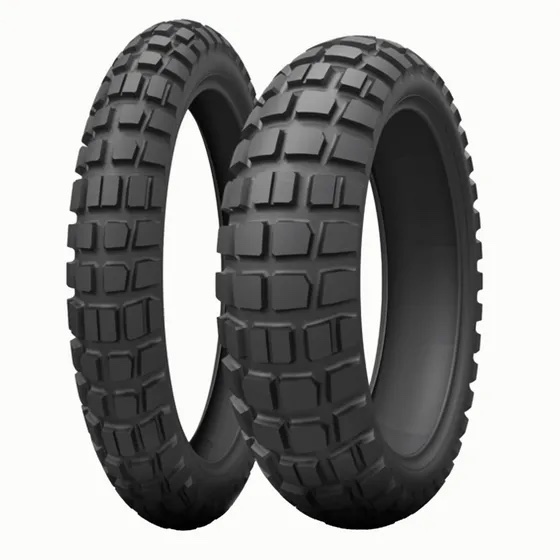
Tested: Kenda Big Block review

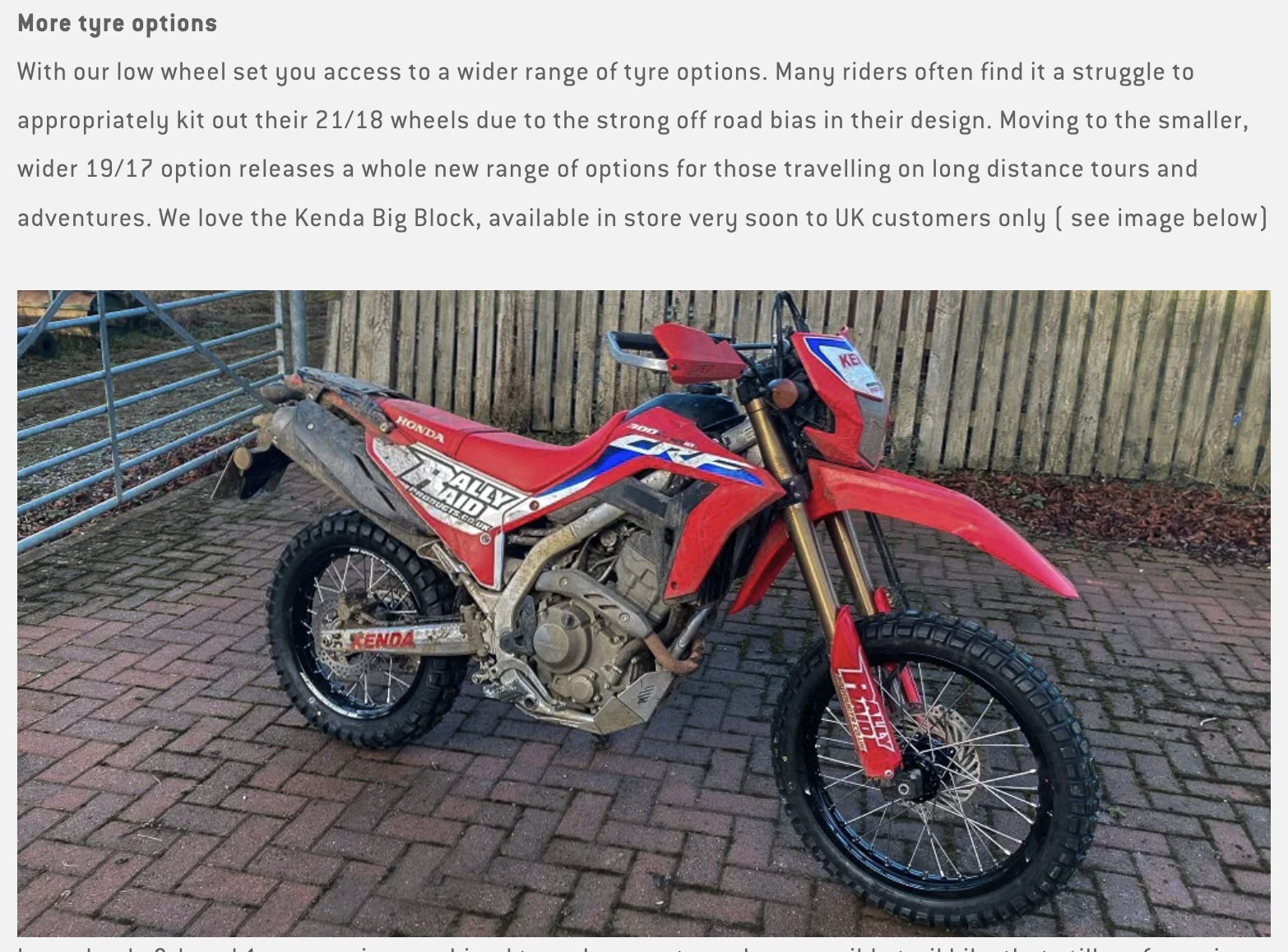
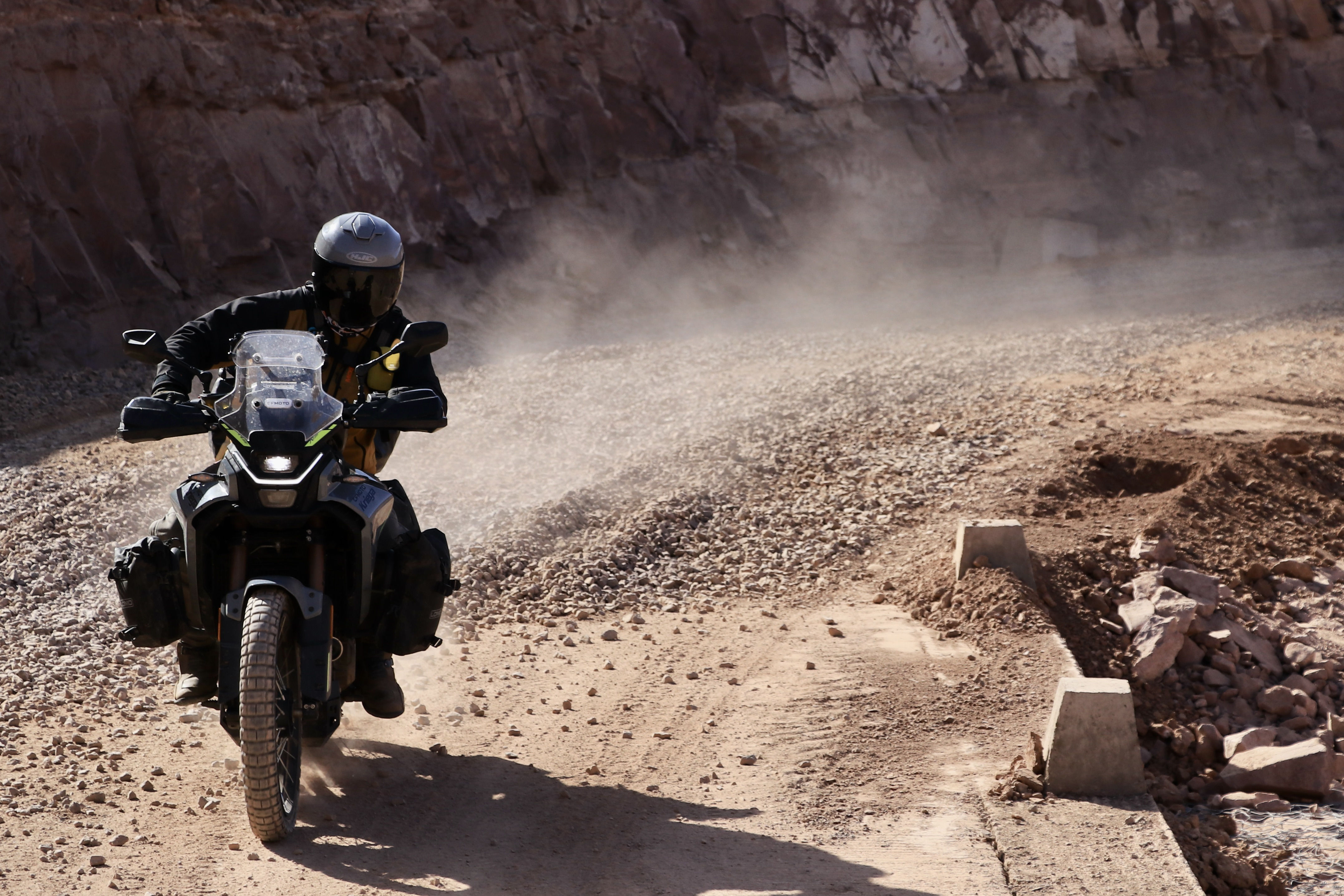
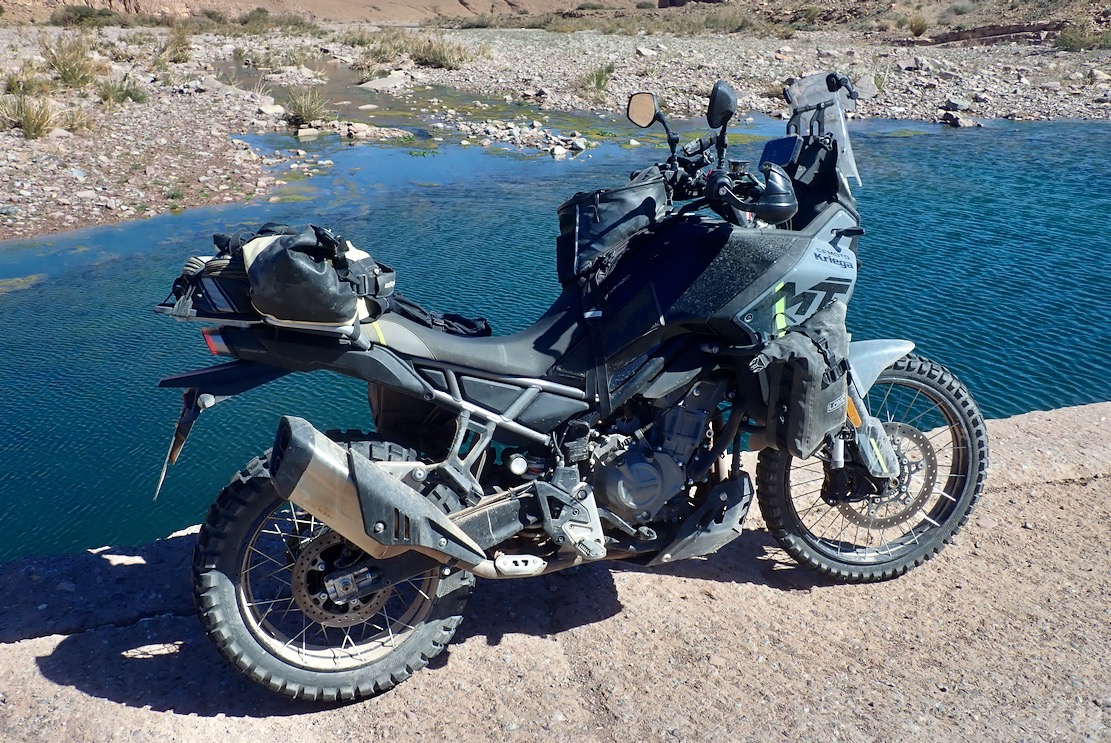
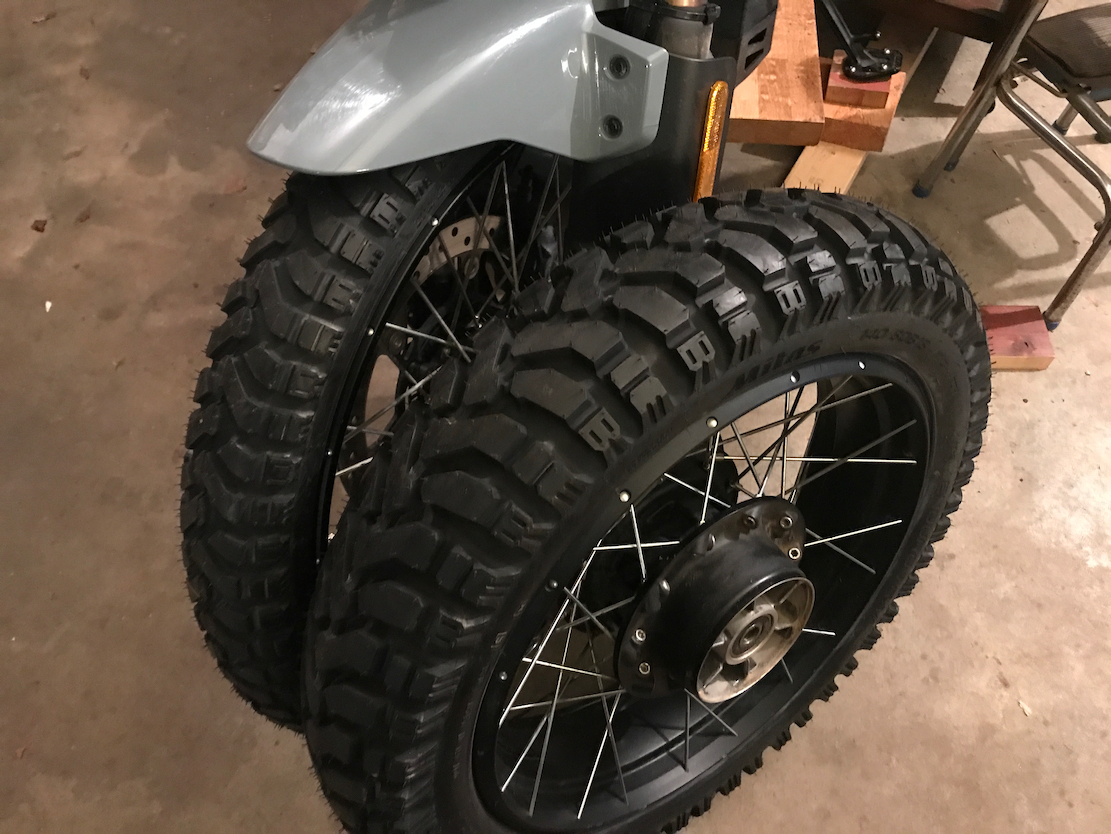
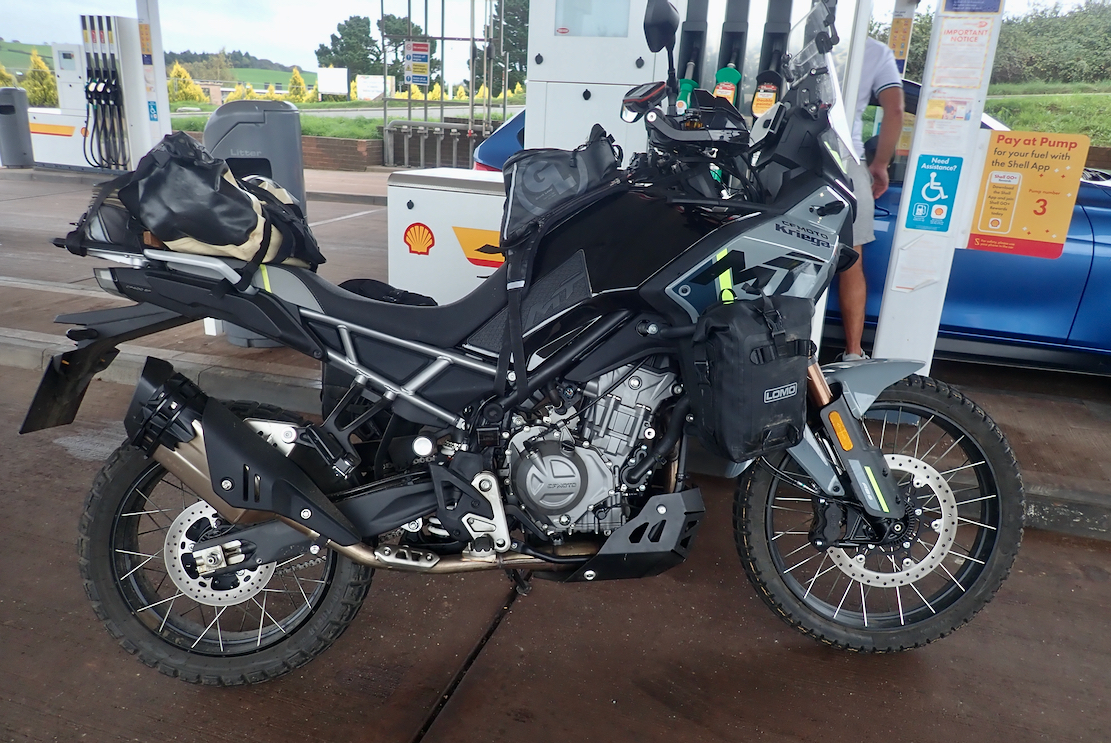
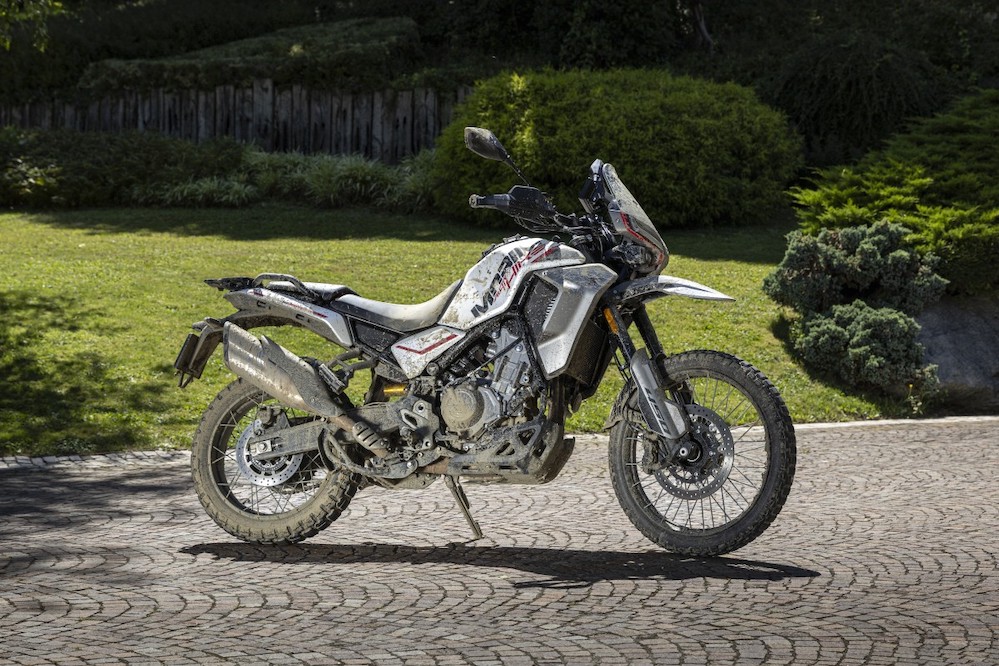
The chunky Kenda Big Block has been on my ‘tyres to try’ list for years, so when I set off for Morocco on my near-new 450MT last October, I arranged for a 140/80-18 (7.1kg) and 90/90-21 (5.2kg) to be dropped off in Marrakech, assuming the bike’s stock CSTs would not last long or soon degrade. I know John M from Rally Raid is a fan of the Kendas (below).
The rear is listed as 140/70-18, but I’m told this size is rare, so the 140/80 rear Kenda would be a bit wider, taller and probably heavier.

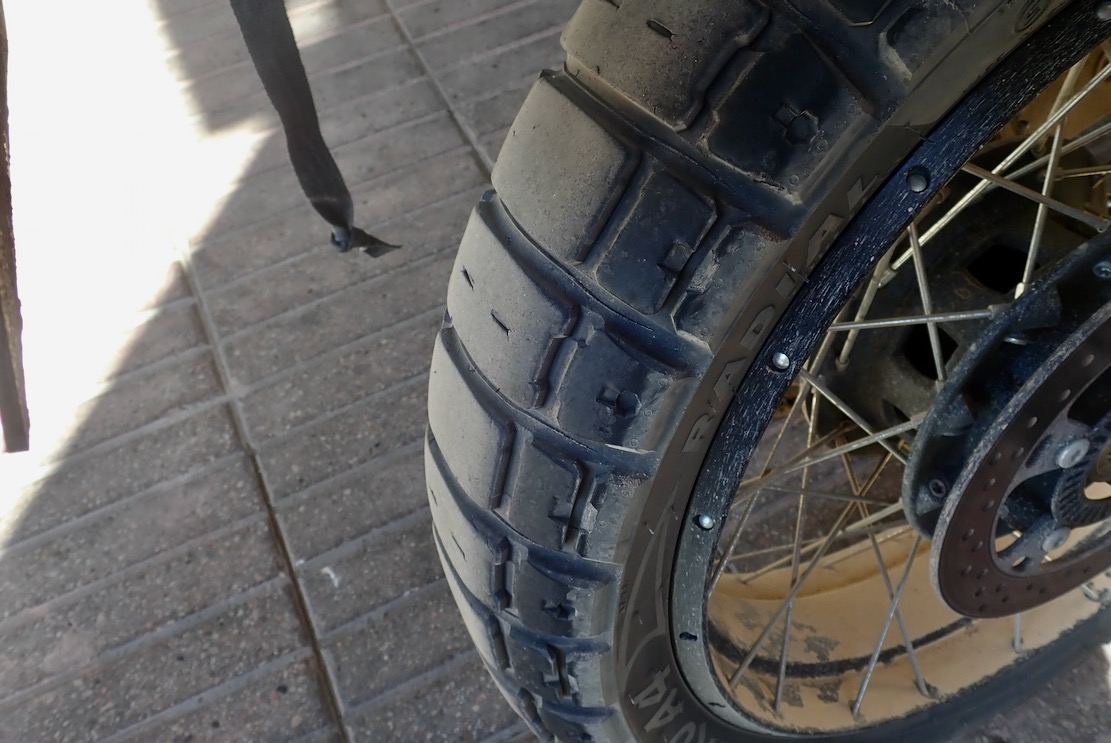
In the meantime, road and trail, I was quite impressed with the stock Cheng Shin (CST) Ambro 4s which bear a striking resemblance to the Pirelli Scorpion Rally STR.

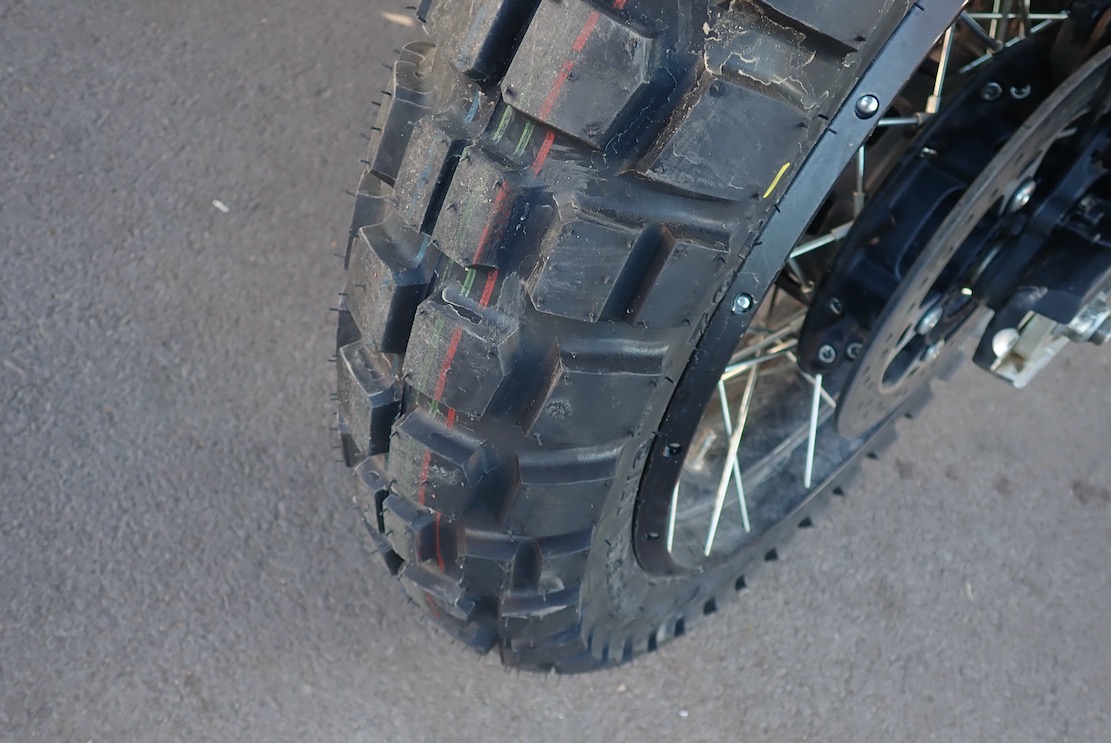
With probably a 1000 miles left in the Ambros (above left) at around 4600 miles, I decided to get the Kendas fitted in Marrakech while I still had a chance to test them on the trail, before heading back home across Spain. Out of town, as expected they initially felt odd on the road, like new knobblies can do. That settled down, hummed a bit more than the CSTs on smooth asphalt, but later on the dirt they felt too stiff at 30-psi road pressures (like many tubeless tyres), spinning out when stalled on a steep ascent, for example. I dropped to the mid/high 20s, but there felt little difference on the rocky or gravel tracks. Some bends I’d slice through like a pro, others I edged round like like a junior MX-er on their first day out.

On a heavy bike like the loaded 450 (195kg wet + gear) it can be hard to get your flow on some loose, stony bends. Meanwhile, on the few bits of deep sand (rare in Morocco), I did notice the 450 tracked well once you’d disabled the traction control. That’s as you’d expect with big blocks, though I think is also down to the 450’s unusually good steering and weight distribution.

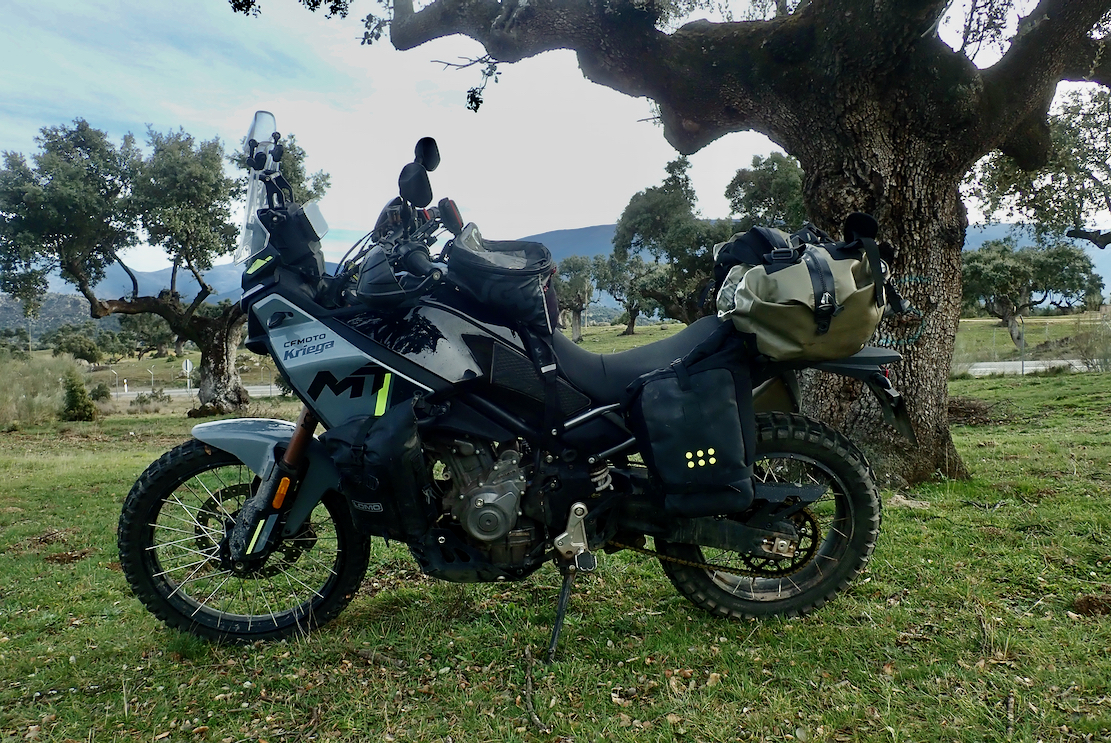
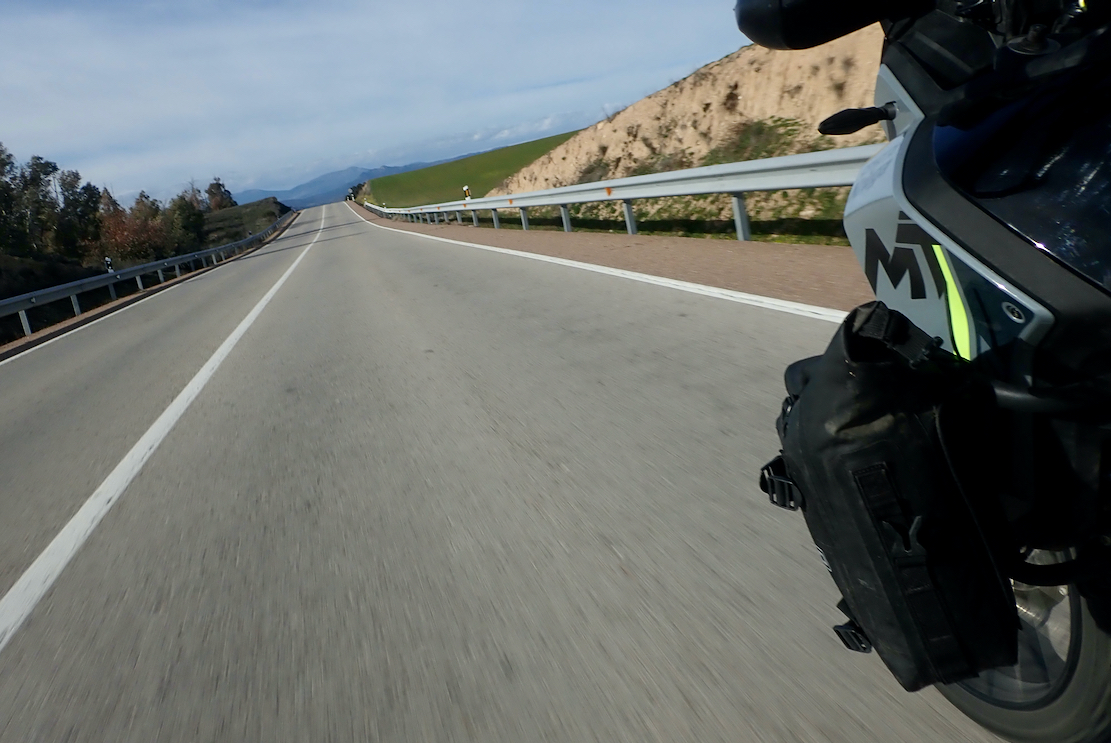
On the road the Kendas still gave their moments: Once back on bendy mountain roads in southern Spain, I wasn’t cornering the way I could on the Ambros. A lot of this must be down to knobbly-on-asphalt syndrome: some rough or grooved surfaces set the tyres shimmying, even in a straight line. I’ve been used to that for decades and you just ride through this, but on the bends was another matter. Are the Big Blocks a knob too far?

Riding damp, winding mountain backroads from Seville to Granada, I had a couple of slips and at one point was so sure both tyres were punctured, I pulled over to check. Both were solid as. It wasn’t icy but I thought maybe I’d ridden through some unseen, oily agri-slime, or the dealer service in Seville the previous day had whacked up the pressures. Both tyres checked in at the regular 30psi.
On other occasions I thought perhaps the rubber needed to warm up in the chilly morning temps. This uneasiness came and went right across Spain until I thought: I can’t sell this bike with these Big Blocks, even if they make the bike look rufty-tufty and purposeful. Whoever buys it is likely to be a road rider. Once back in the UK I fitted some Mitas E07s (below) and will flog the Big Bs.

CFMoto 450MT – suspension fix

CFMoto 450MT index page

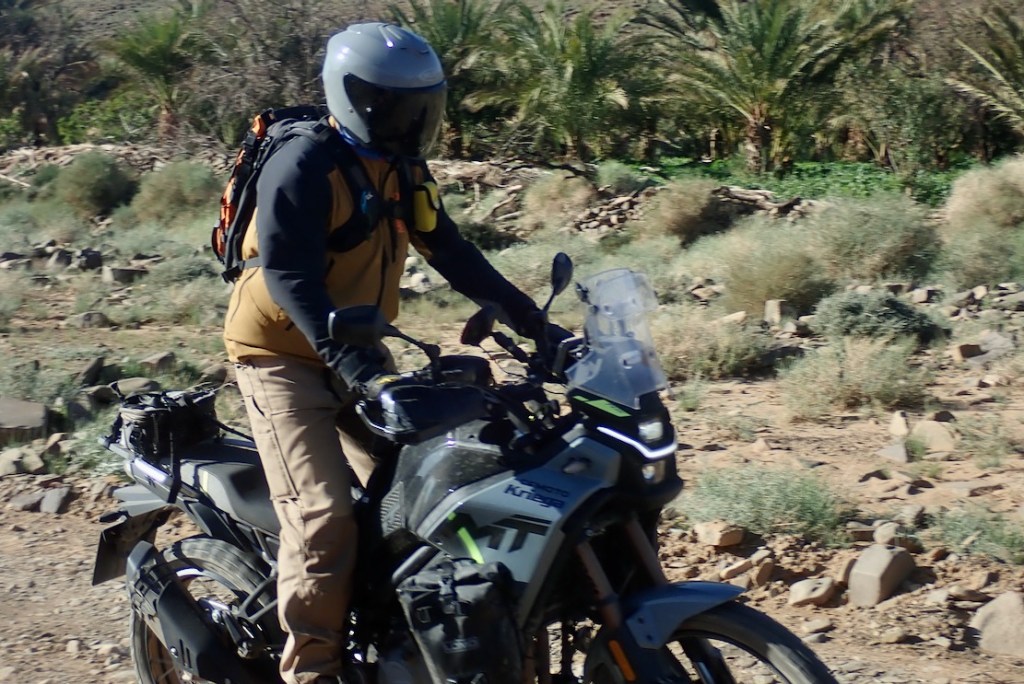
Once in Morocco I rode a couple of 1000 clicks on tracks and trails before deciding yes, it was time to fiddle with the suspension settings which I’d not touched from new. Some tracks – made rougher by the September floods – were giving me a hammering. The suspension was too harsh as many reviewers attest, especially at the lower speeds I ride at. I did try one stony stage with tyres aired down to 26psi, but it didn’t seem to make much difference, TL tyres being natively stiffer. I didn’t want to go lower on the untried rims – though they’ve since proved to be up to the job. On one ride without my 15kg of travel baggage (above) the bike was nice and agile but even harsher on very rough ground without the extra mass.

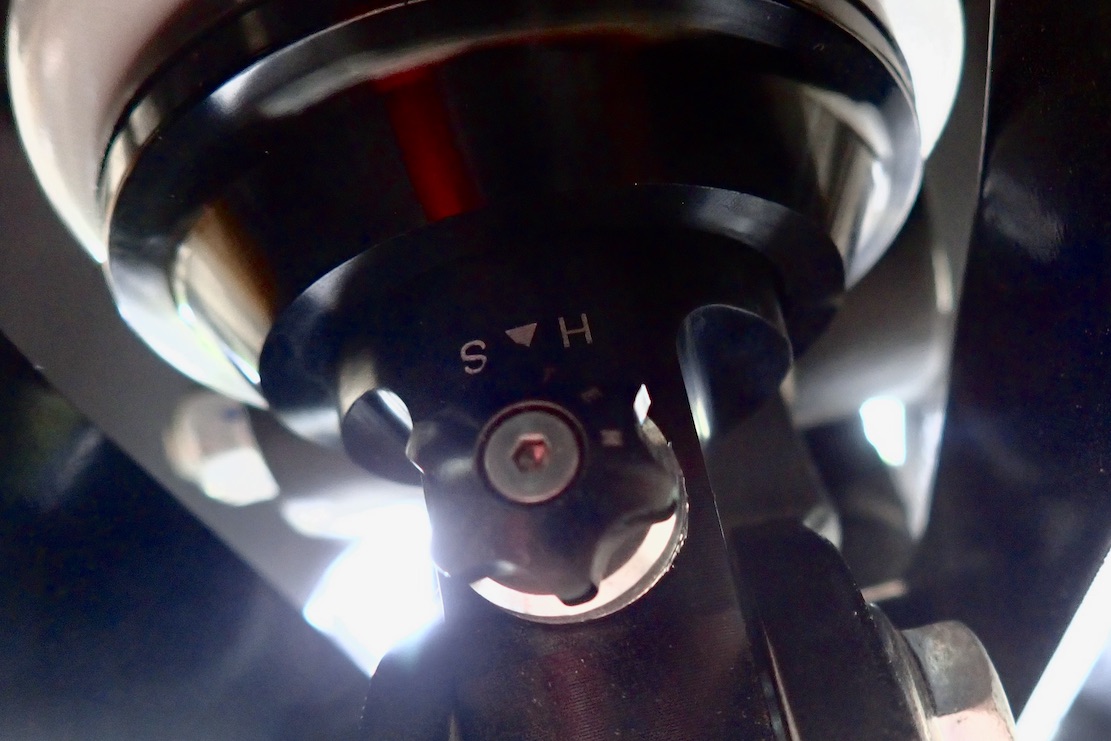
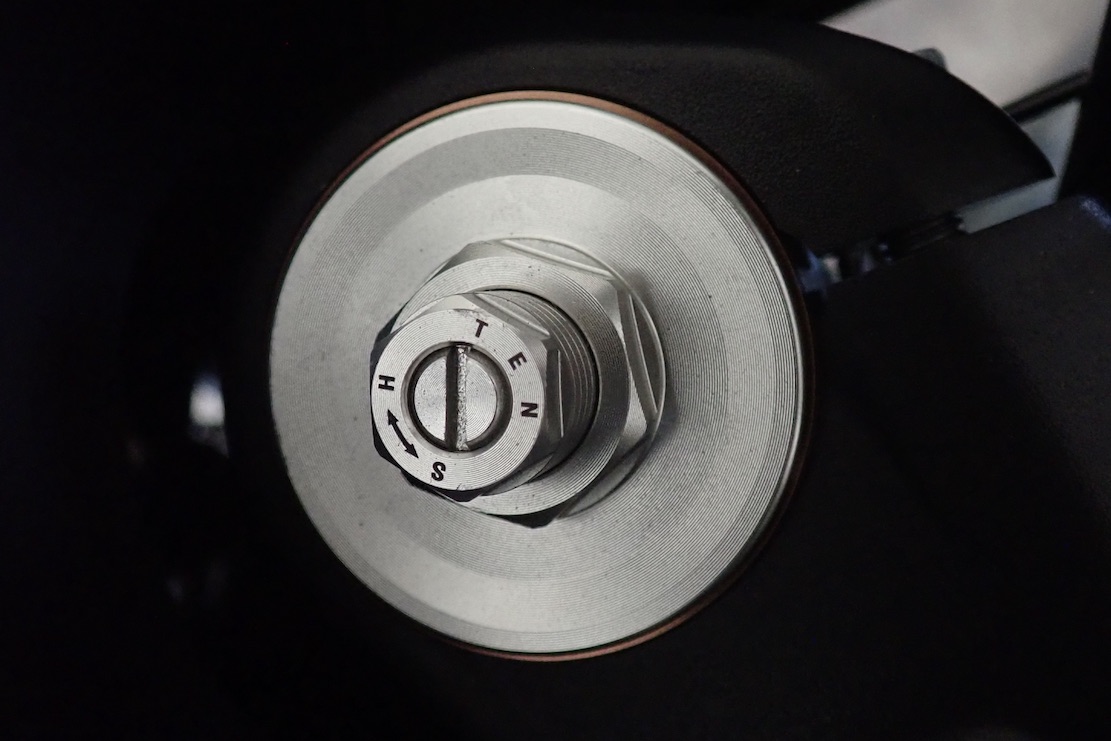
The CF has fully adjustable suspension and taking a cue from this ADVRider 450MT suspension thread, I should have started by setting the rear sag – a well-known metric for getting the rear suspension in the ballpark – but I didn’t. I never do. Instead I dialled back the shock’s combined compression/rebound knob (below left; no tool needed; nice) from 11 down to 3. I then backed off the fork rebound (left fork) and fork compression (right fork) by one turn and undid the fork preload with a 14mm by half a turn – and later did another half turn.

This was a definite improvement, especially on the trail. By now I was riding with £22k of top-of-the-range Desert X Rally, and an HP 1250GS with similarly sophisticated suspension. On the roughest trails I was unable or reluctant to keep up with them. Three times more hp may have helped, but the MT’s springs lacked the solid yet plush feel of the Ducati which I rode briefly and which lapped up anything that was thrown at it.

Kriega USD fork seal covers

So the stock set up is far from plush, but just a couple of minutes of easy tweaking has improved things a lot. The back end bottoms out now (as it should on the biggest hits) and the fork has done the same on a couple of fast ditch impacts. When I get back in February I may crank the rear preload up half a turn which should help tighten up the steering and reduce G-outs. Plus try dropping the tyres again to 25-ish.

As it is now the 450MT is not quite as good as my Rally Raid sprung 300L from last year, nor my factory set-up Hyperpro 650 XCountry, but both had €1-2000 of added springware. I’ve spent nothing on the MT, bar a few minutes on adjustments. It all just underlines what a well configured machine the MT is.

Pillion Peg Panniers: the Mis ing Link

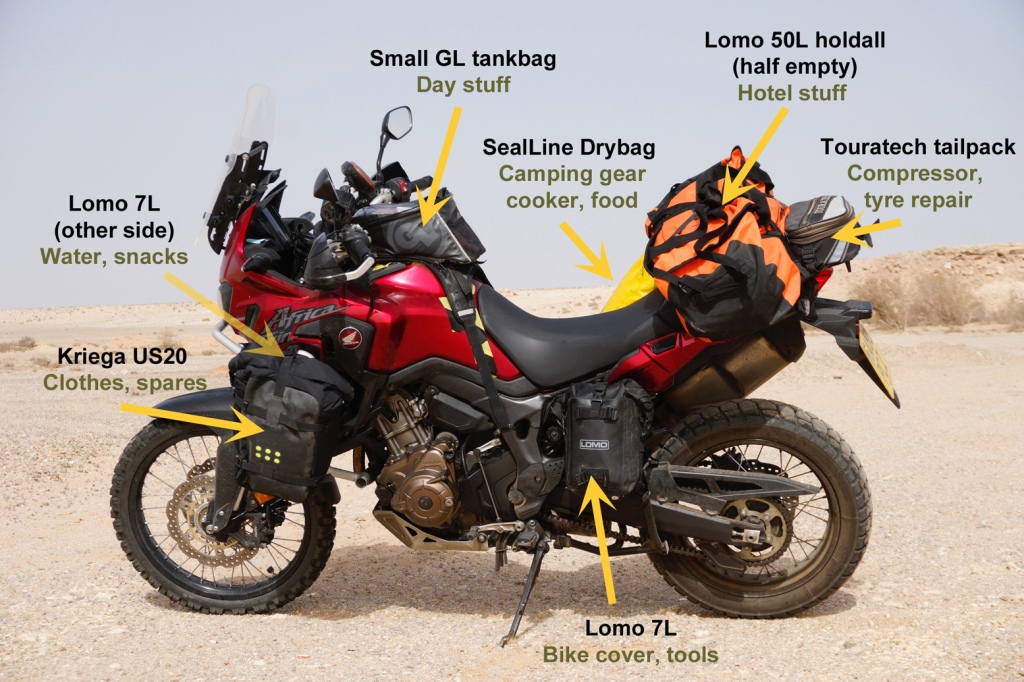
Travel bikers rightly obsess over wet weights because on the road a bike will pile more weight on anyway. A well braced rear rack might add 4-5kg and when using soft baggage eliminates the chances of pipe melts. But these old school ‘racktangles’ are always too far back, probably to allow room for pillion riders’ legs. How often you you take a pillion on the trail?

Rackless designs mount directly on the bike, just like old-school throwovers derived from horse saddlebags. These days they can attach via a harness lashed to the pillion pegs and the tail rack. Where present, the melt/fire issue can be managed with heat guards on the pipe but depending on the bike, they can still be prone to swinging into the chain.
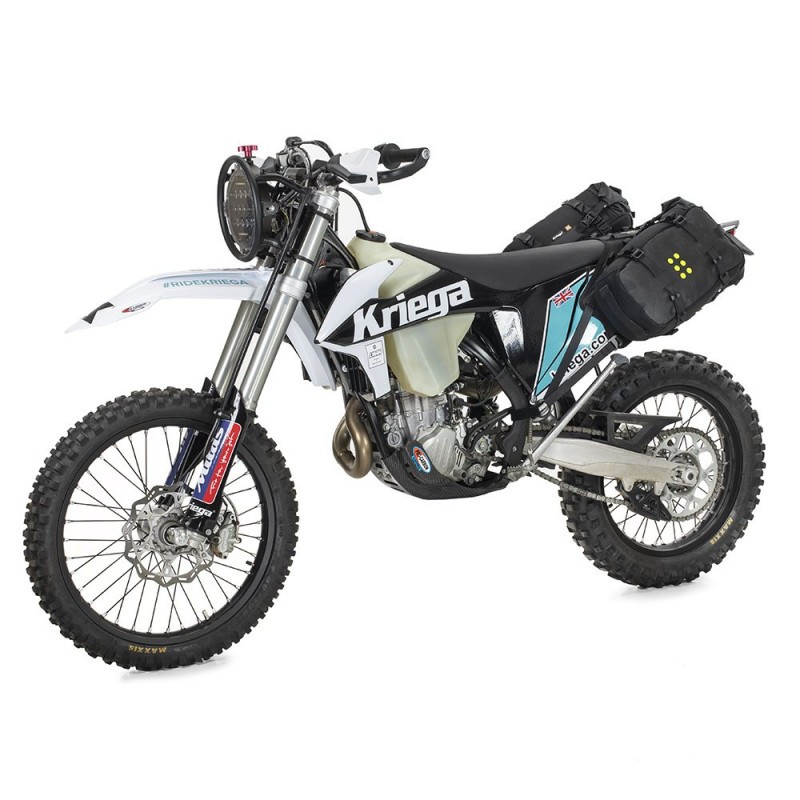
The only way to ensure this doesn’t happen is to mount them high, effectively on the side of the seat like the Kriega below left. But this negates the ethos of as low and forward as possible or ‘ALAFAP if you’re in a hurry. They may save rack weight but are still higher and farther back than ideal. OK for minimal loads but still bad for CoG and bike control.

But just about every bike has a solid structure designed to take way more weight than a loaded pannier and which is in just the right spot. Have you guessed what it is yet? Correct:

The pillion footrest!

I first tried resting a bag on a footrest on my top-heavy Africa Twin trip a few years ago. I loaded a small Lomo bag with tools; probably the heaviest item in my gear. The bike was still a tank because a kilo of tools makes little difference on a 230-kilo machine. But the positioning worked well.

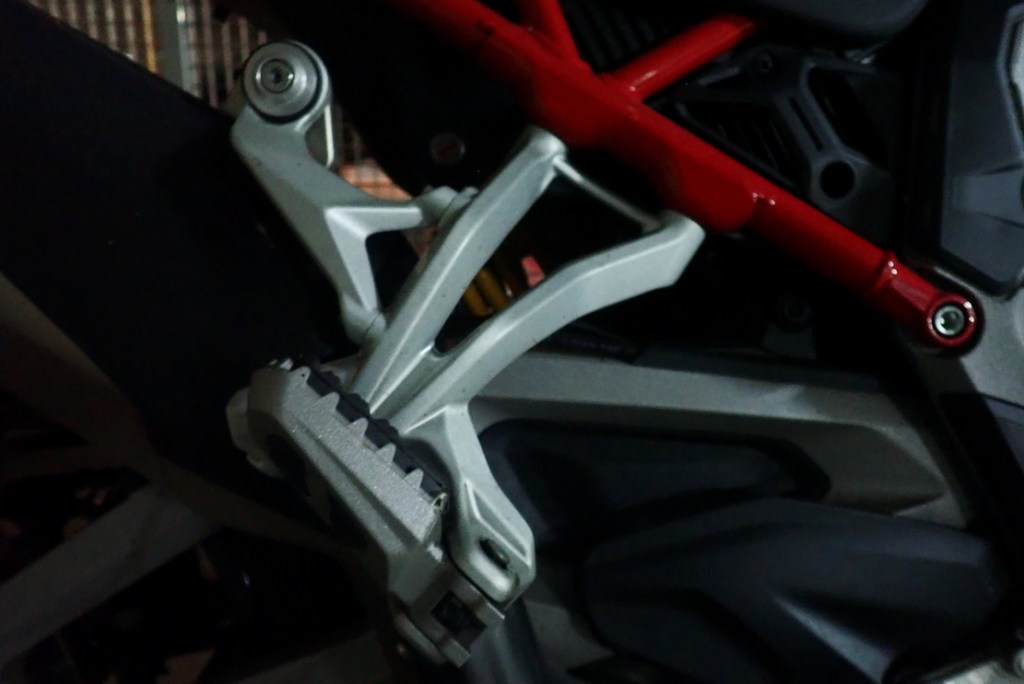
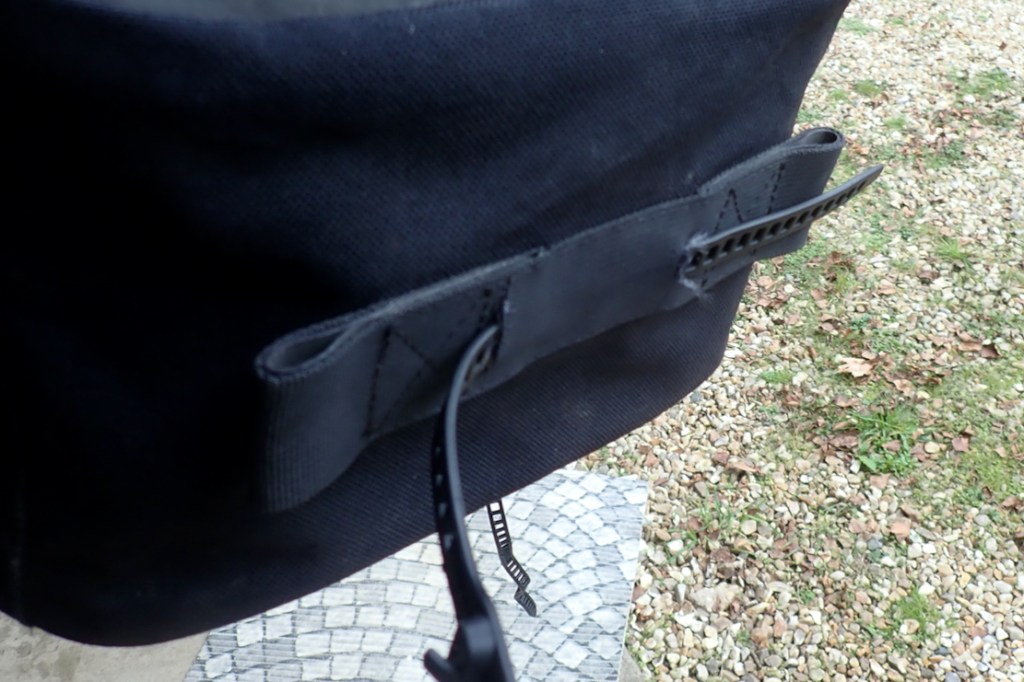
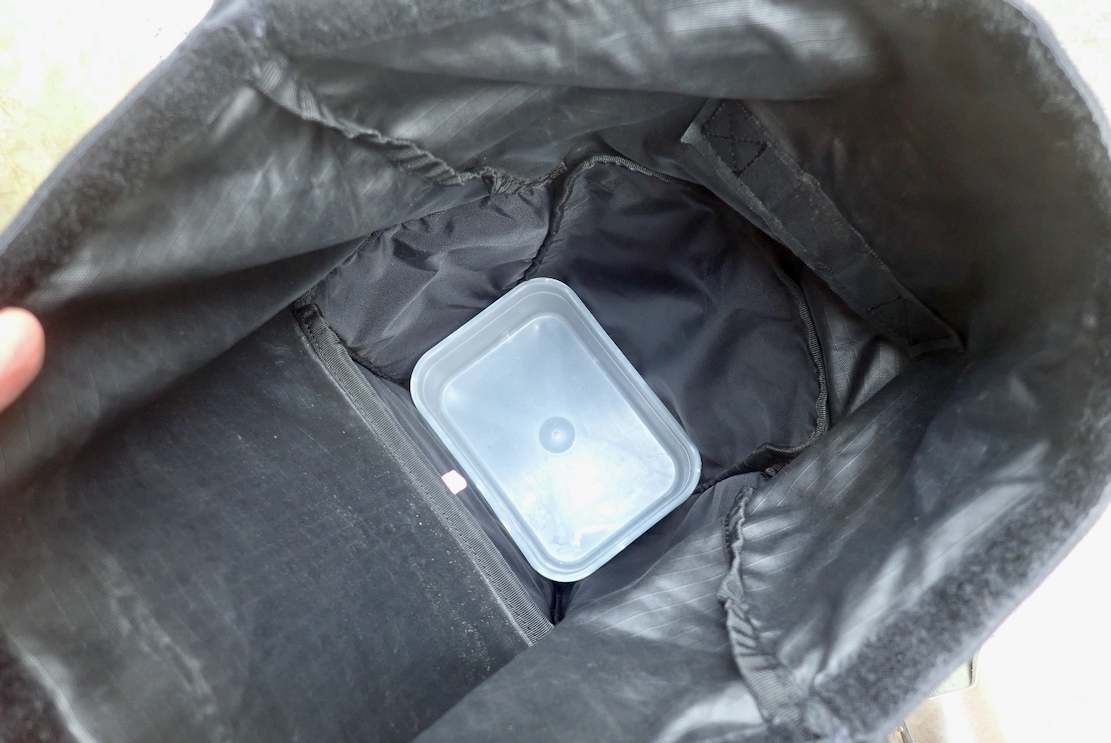
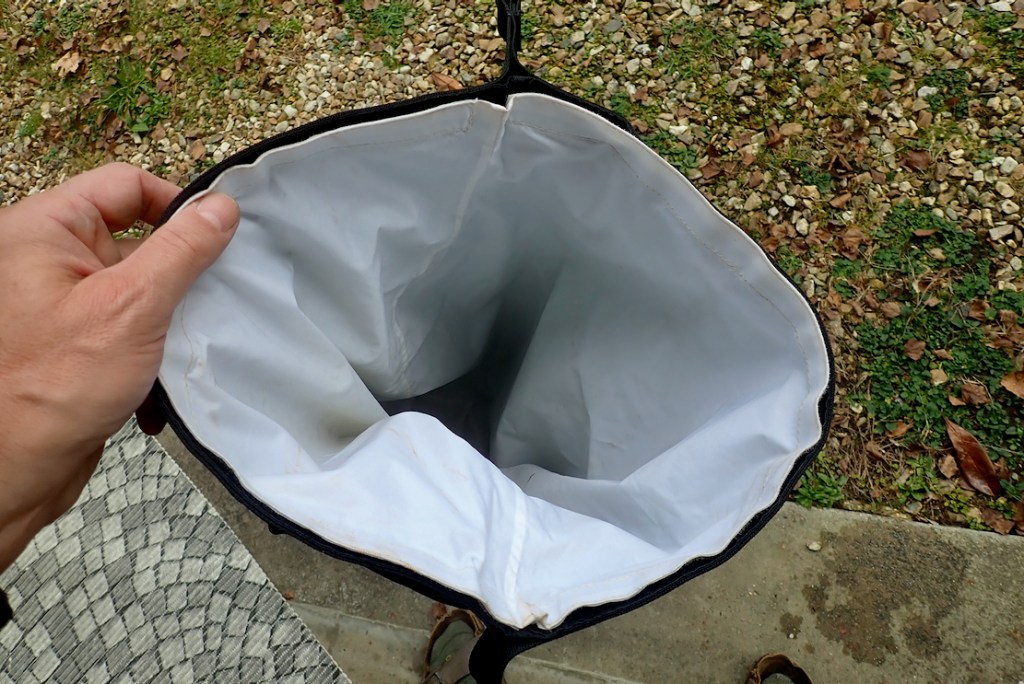
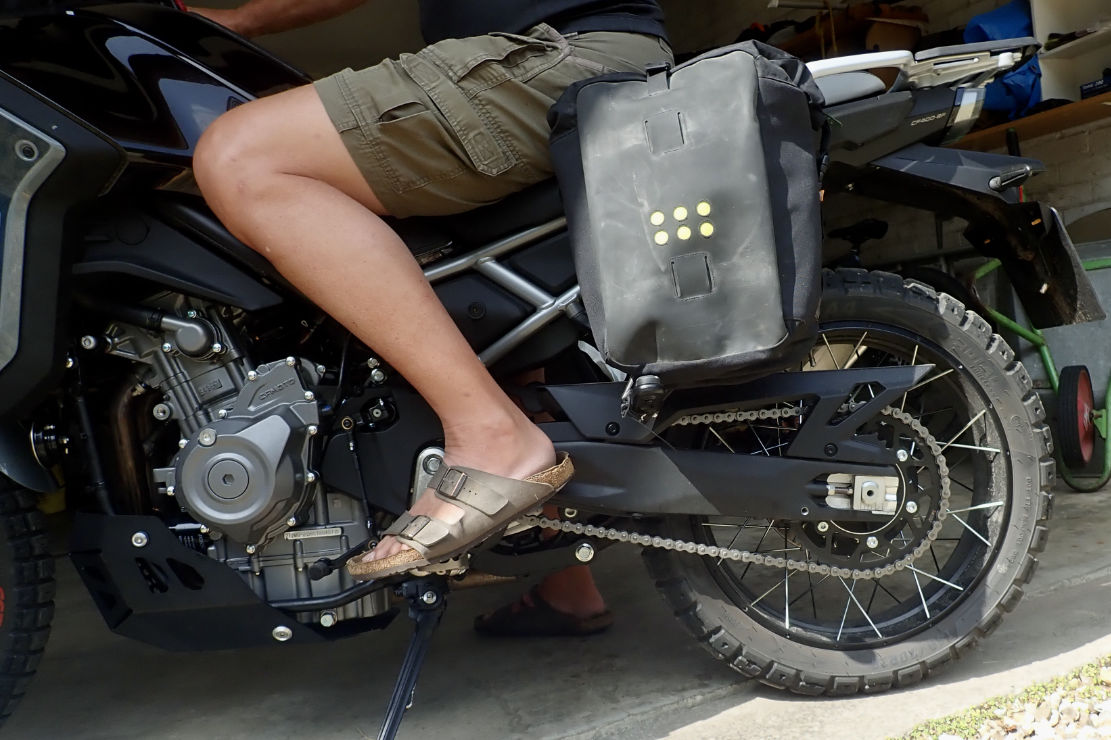
For my CF Moto ride to Morocco I went one better and fitted the old Kriega OS18 (‘US20’) from the AT’s LHS tank-side down on the 450 MT’s LHS pillion peg. Old OS18s have a tab on the bottom for a zip-tie – the new OSs don’t. To spread the load when perched on the peg a lunchbox neatly filled the bag’s base, then I refitted the waterproof liner (below).

3P I’ll call them for now: Pillion Peg Panniers. You really couldn’t get any lower or more forward, but the bag sits securely, is still easy to access and doesn’t get in the way. It would be handy if the velcro’d-in white liner had carry handles to take stuff into a hotel easily, but Kriega must have thought of that years ago and expect you to use another carrier bag or remove the whole bag every night – a buckling faff.

This is where panniers should sit when not two-up.

I’d have done the same set-up on the other side but tbh, a shoulder strap Ortlieb tail pack attached to the back of the seat with a couple of ROK Straps is just so easy to whip off in seconds when popping in for a coffee with valuables not in my day pack.

Rhinowalk 20

Depends on the bike but I think a 20-litre sized bag is optimal for this application, sitting centrally on the peg and not sticking out or up too much.
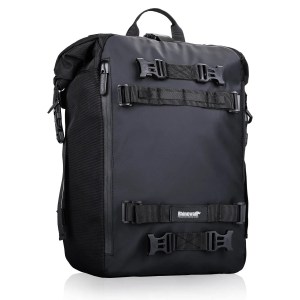
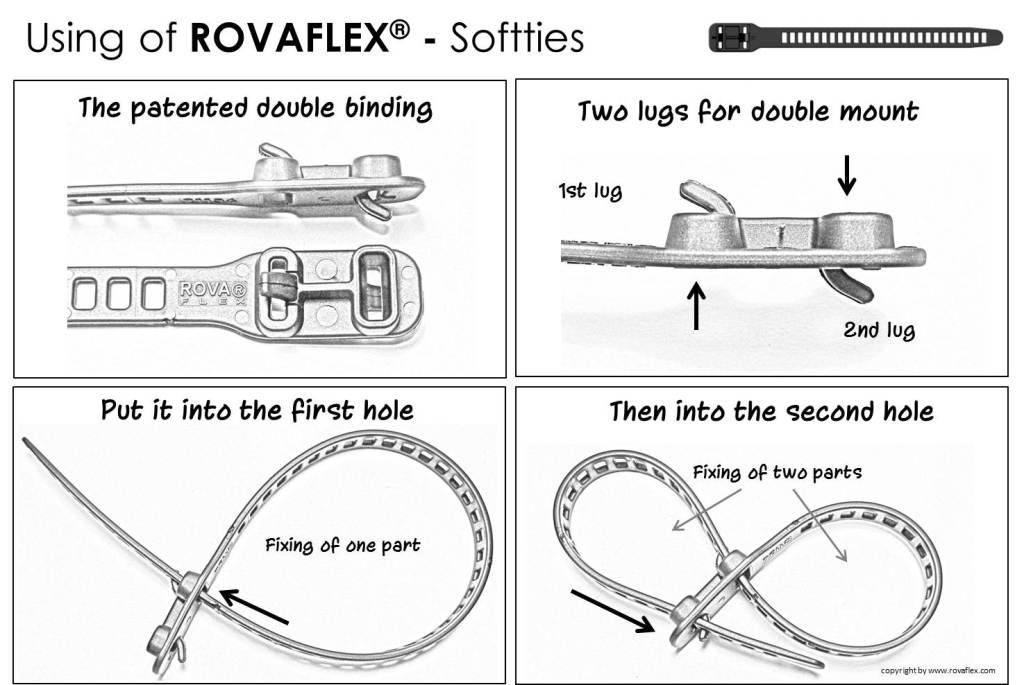
You can get a Rhinowalk 20-L roll top (left) for 35 quid (it’s a lot more flimsy than a Kriega) and I used chunky TPU reusable RovaFlex Soft Ties. Like a London rat, I’m never more then 3 metres from a Rovaflex when on the road.

Assuming mounting soft bags on footrests with reusable zip ties is seen as a bodge, your rackless baggage makers ought to consider a redesigned harness that hooks to a pillion peg, has enough attachments to additionally strap to sub-frame rails, and is then counter tensioned in the usual way off the tail rack. Then make the bag q/d off that harness so there’s no faffing to fit/remove; just clip off and jog on. You’re welcome ;-).

Feedback 6000km later
This pillion-peg mounted set up worked much better than expected. Despite the scoffing from naysayers, there was never a moment in five weeks when I had to adjust the loose bag or when it got in the way getting on the bike or paddling through soft sand. It would be nice if it just clipped on like the Bumot rack set up on the 1250GS I rode with, but the whole thing could not have been lighter, more secure, better positioned or cheaper.

CFMoto 450MT – Actual Quick Look

CFMoto 450MT index page

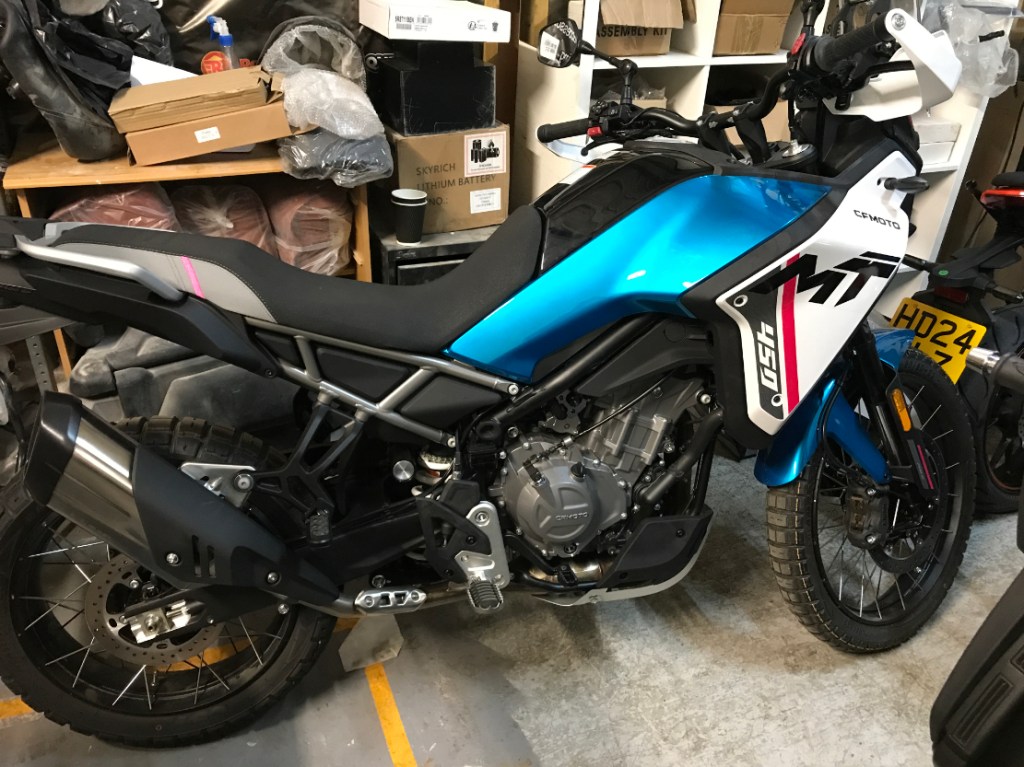
My internet-sourced CFMoto 450MT preview last year has been a very popular post, and was even referenced by this repetitive, AI-generated review. Now the 450MTs are in UK showrooms, but most are long sold to the fearless early adopters who bought the bike unseen, months ago. I’ve made this mistake before and am not in a great rush, but had a chance to look over one in a packed storage shed at my LBS.

Impressions
It’s a whole lot of bike for £5699 with a 4-year warranty. You do wonder if that price is set to jump once it catches on. Alongside a Him 450 (which this shop also sold), the MT is clad in plastic like a 300 Rally vs a 300L. Sat on it, the ‘tank’ feels about 2 feet wide, reminding me of my Africa Twin. We don’t want that.
Behind the panels seems to be a lot of space and maybe some hidden ancillaries, where the Him has crash bars, but unlike the AT or 300L, the radiator looks protected.

As with the new Him, it looks long and low with a spacious feel which you hope will mean on-road comfort, but results in a lot of off-putting ‘visual mass’ to handle on the trail. I’d hope that impression may disappear once the bike gets ridden.
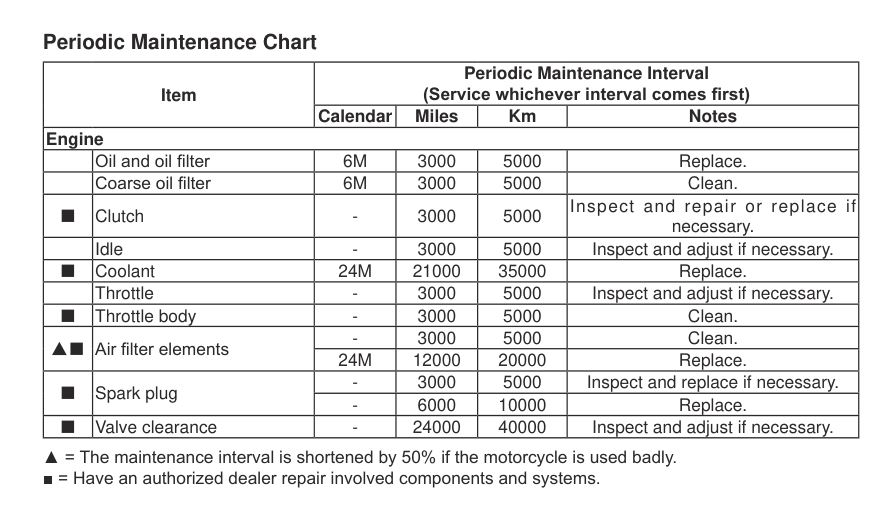
One fly in the ointment I’ve since learned is oil changes at 3000m/4500km and even new plugs at 6k. Oil capacity is 2.5L (full specs here) which seems to be adequate. Surely it’ll last longer than 3000 miles? Or is it a dodge to cover/pay for the 4-year warranty? My 300L was 8000 miles on 1.8 litres (though I didn’t leave it that long).
175-kg dry they say and swinging it side to side it didn’t feel top heavy, but I assume the tank was empty. The quality of the finish looks as good as anything from better known brands; there’s nothing cheap and shoddy here. Taking off some of those panels or the seat might reveal some rough edges, but it doesn’t look like it.

Attention to detail

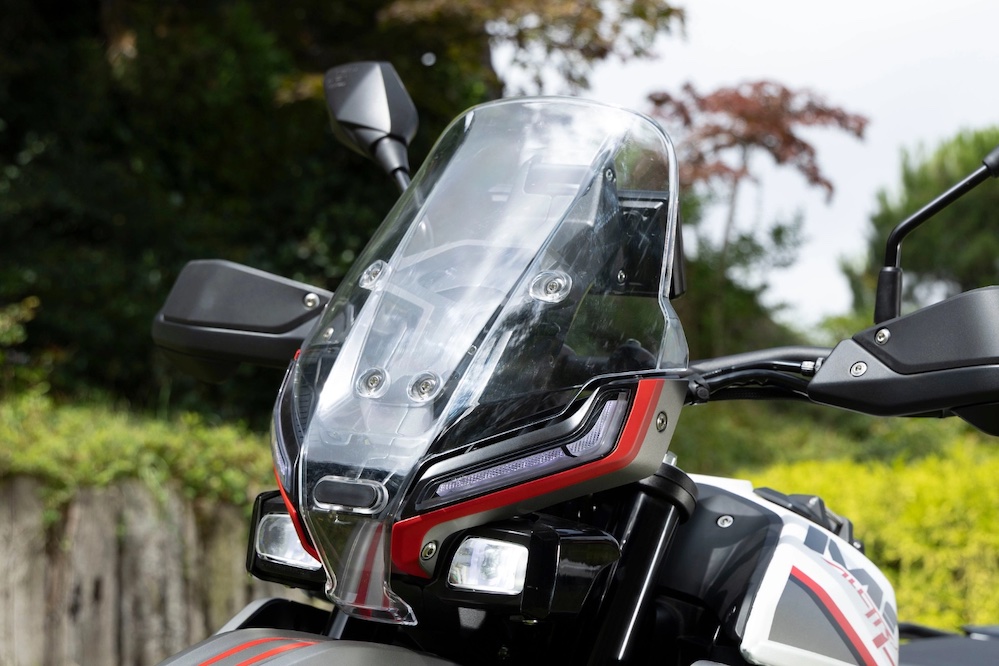
  • Screen adjusts with big hand knobs, but only by 2-3 inches
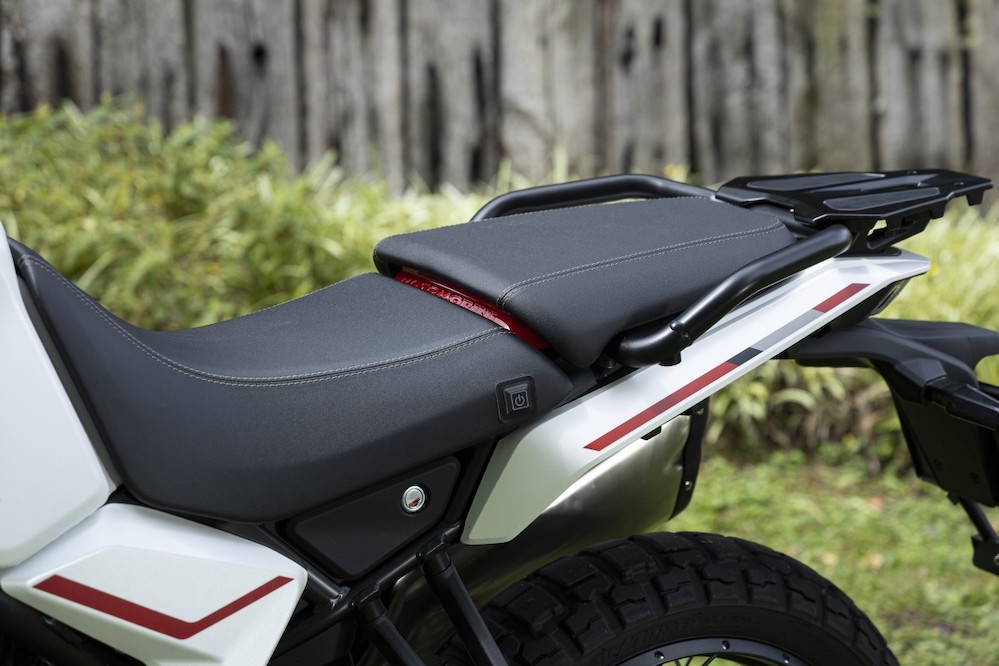
  • Seat is long, low and wide, with a grippy surface texture
  • Clutch is very light
  • Single front disc is big
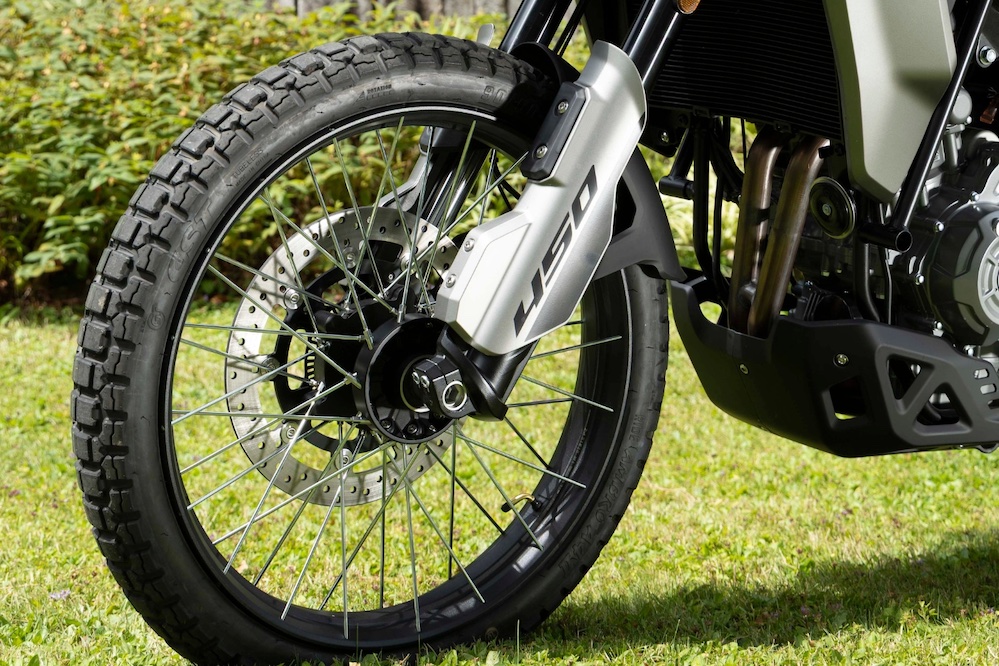
  • Stock wheels are tubeless and seem to look good
  • Rear shock has relatively easy to get to preload adjustment rings
  • Thin plastic handguards are flimsy
  • Both gear and brake lever fold
  • Mirrors pivot in easily
  • Wide footrests
  • Bashplate is thin pressed steel with a few too many slots, but has a flat base for added protection. There’s also a whole lot of space up front – for a rally-style water tank?
  • Tyres are CST Ambro A4 – no, never heard of them either
  • Pipe is as tucked in as it can be

With wall-to-wall rave reviews, I was set on a 450 Himalayan in tubeless for about £6300, despite the hideous graphics (which might have hair-driered off). I still think the Him would feel easier to manage on the trails, like a 300L. But once you factor in the irresistible appeal of a 270° twin, swinging a leg over and pressing the button takes on a whole new thrill.

Himalayan 450 vs 450MT

  • The weight, power and tank volume are about the same
  • I imagine the Him’s economy will be a bit better
  • I prefer a rectangular dash and can live without engine modes
  • MT is loads cheaper

Himalayan 450 lacks
Adjustable screen
TL wheels on base models
Handguards
Fully adjustable suspension

CF450MT lacks
Centre stand and tank crash bars
Proper handguards
Ride-by-wire/engine modes (good)
Naff graphics (also good)

Tbh, that list was scrapping the barrel. Both of these are two of the best real-world travel bikes we have at the moment, but the Him costs 10% more in tubeless. Having seen one up close, there’s nothing I’d revise in last year’s preview.

Preview: CFMoto 450MT

Sit back and allow me to confidently evaluate CFMoto’s 450MT as a travel bike, based solely on online imagery, claimed data and other people’s opinions and vids. Turning Ch-Chinese? I really think so.

CFMoto 450MT Index page

Update 2: I bought one. Index page here.
Update: there was a global media launch for the 450MT in the Philippines in March and a few reviews have appeared. Plus there’s more (of the same) info on the CFMoto EU site here.
There’s a review at motorcycle.com and here’s probably the best launch video review from Ozzie. As the guy says at the end: “after riding the 450MT, we have little doubt other manufacturers will jump into this capacity. Don’t be surprised to see a T4 somewhere down the line…”

The vid below is a bit gushy by comparison, but gives some good information and close-ups. My text below has been refined following these vids.

Didn’t I say ten years ago that had my 1st-gen CB500X Rally Raider had a 270° crank I might have kept it a bit longer and enjoyed riding it a bit more? Just like I did with my later XScrambleR 700, NC750X, Africa Twin as well test rides on an Enfield Interceptor, MT07, KTM 890 and the like. Along with the forthcoming 450MT, all 270s, and all the better for it.

Compact CFMoto 450 P-twin

In case you don’t know, a parallel twin motor with ‘offset’ 270-° crank timing feels and sounds like a torquey V-twin. One piston always moving when the other is changing direction may have some ‘bearing’, but whatever the reason, I have yet to encounter a dislikable 270° P-twin. Now, almost every P-twin made is a ‘cross plane’ 270, Honda’s 500s are an unfortunate exception; Kawasaki’s 300 is another.

At 270 you get all the distinctive throb of a wide-angle V-twin like a Ducati or a V-Strom, but without their complexity and space (wheelbase) issues. And all the while you dodge the blandness of a typical ‘Japanese’ 180°, or the converse bone shaking vibration of a 360 (old Brit twins).
But featuring 270° timing in a small, 450 P-twin is an inspired move. KTM have collaborated with CFMoto since 2011 and CFMoto build their smaller bikes and bigger engines. It’s speculated that the 450MT might even be a version of the much anticipated ‘490’ which KTM recently cancelled.

in 2015 I wrote a prescient article: the Chinese Bikes Are Coming. Well, they’re well and truly here, but even back then CFMoto – around since 1989 – was one of the bigger and better established players. In the UK they’ve been marketed as WK including the short-lived WK400 proto-Himalayan (see link above).

Not bad looking as Chinese bikes go

But while the MT is a new model, the 450 motor is out there already in CFMoto’s 2023 450NK and 450SS (and now a 450CL-C) road bikes (going for £5000 and £5600 respectively) and which seem to get the thumbs up. The MT gets detuned by ~10% to 44hp they say, producing more torque at lower rpm. They’ve thought through what’s wanted in a travel bike and it’s not a five-figure red line. So, I’m potentially sold on the motor; let’s list what I feel are some of the 450MT’s other highlights.

Tubeless ;-)

Why do so many reviewers (but not more engaged commenters) have a blind spot for the no-brainer benefits of tubeless wheels? Few mention it in their critiques, but must understand the real-world benefits in quickly repairing flats in the middle of nowhere.

Low ;-) Maybe even too low?

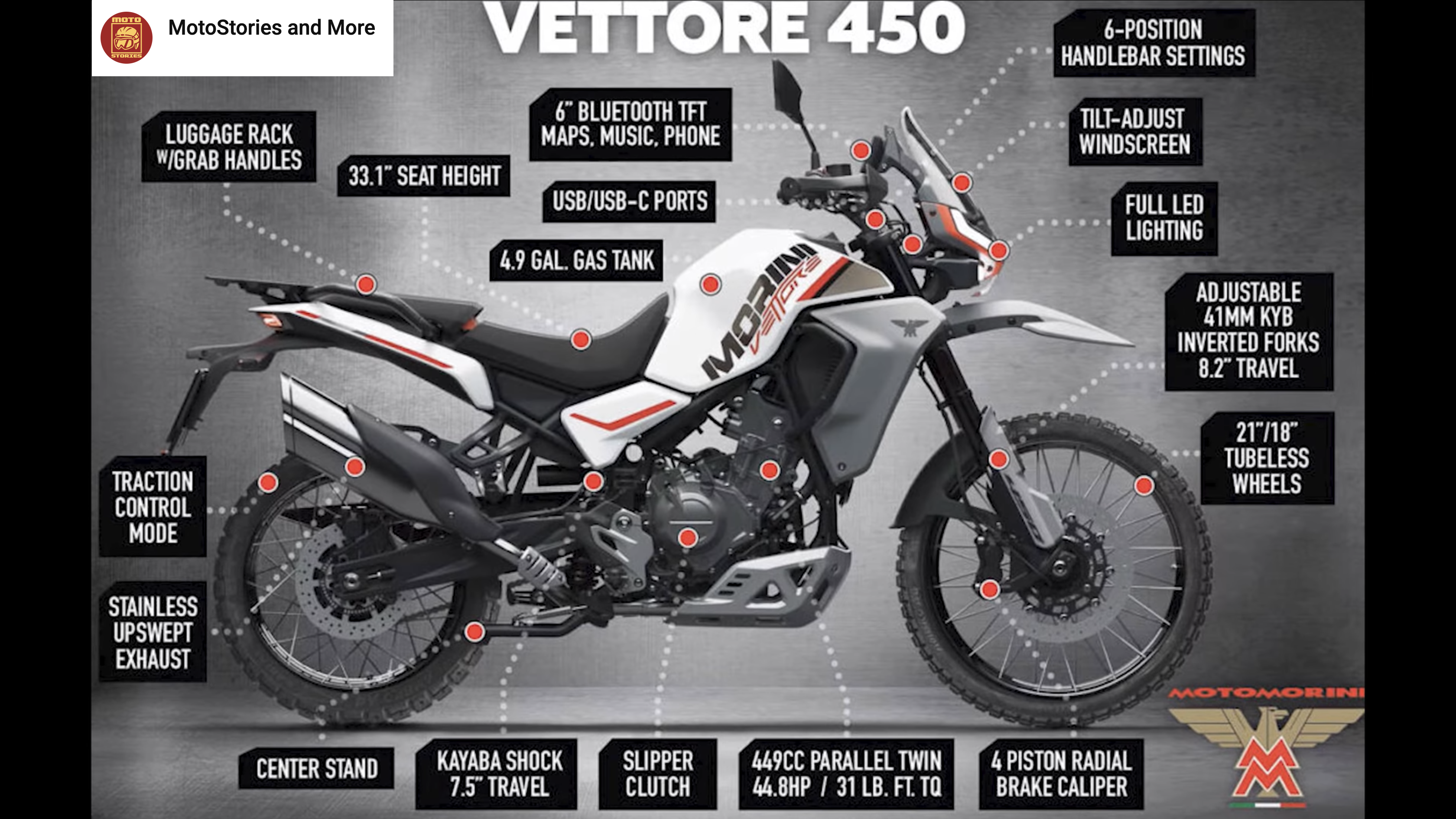
Low seat height. It does look low and the reviewers above say so too. The claim is 800-820mm adjustment stock or 31.5″/32.3″ in old money. So around the same as my old Him whose low saddle I still recall fondly. There’s an 870 mil bench seat option, too.

Big ;-)

17.5 litre tank (4.6 USg). Combine that with a, let’s say, 26.5kpl (75 UK mpg) potential and that’s over 460km range. Nice.

Unlike a lot of over-designed Chinese Adv bikes – and some KTMs for that matter – the MT looks good, doesn’t it? Kiska, who work with KTM had a hand in it, and have done a much less eye-straining job. The pipe is not some hideous cannon, like Honda’s CT500, the lines flow and… I’d better stop before I get out of my moto design depth. A mini T7 without the nose bleeds. It’s a 42-horse unicorn.

Eight inches or 200mm of fully adjustable KYB suspension travel. To me 200 mil is a ballpark figure for a bike this size. And did I hear talk of a remote adjustment device (HPA) on the back? No. On the bike in the Philippine video there’s a dial but it’s for damping. Old-school crenelated rings on the right tell the true story. Oh well.

Juiced up, they estimate the 175-kilo claimed dry weight rising to nearly 195kg in the real wet world. That’s about the same as my old CB500X before I started adding protection, racks, better suspension, tubeless 19-er front wheels and so on. We’ll know for sure on the day, but the 450MT appears to have much of this kit out of the crate.

A screen that’s adjustable. In a world where people’s height varies. The range may be minimal but it all helps to reduce buffeting and fatigue for various rider sizes. I see a nice, easy-to-use knurled knob on both sides. That’s the way to do it.

Dash

No OTT twin front discs. But as long as the four-piston radial front caliper delivers a good, modulated bite on the 320-mm rotor, that ought to be all you need on a sub 200 kilo, 42-hp bike. My similar CB500X was fine; now they come with twin fronts and a bold new colour schemes because ‘more must be better’. The vids suggest the front brake is OK.

Hand guards (actually: crap), tail rack, and a small adjustable screen all seem to be stock, though the OEM bashplate is thin steel option. The usual crash bar and hard cases also shown as accessories.

Other stuff

facebook.com/StreetMoto01
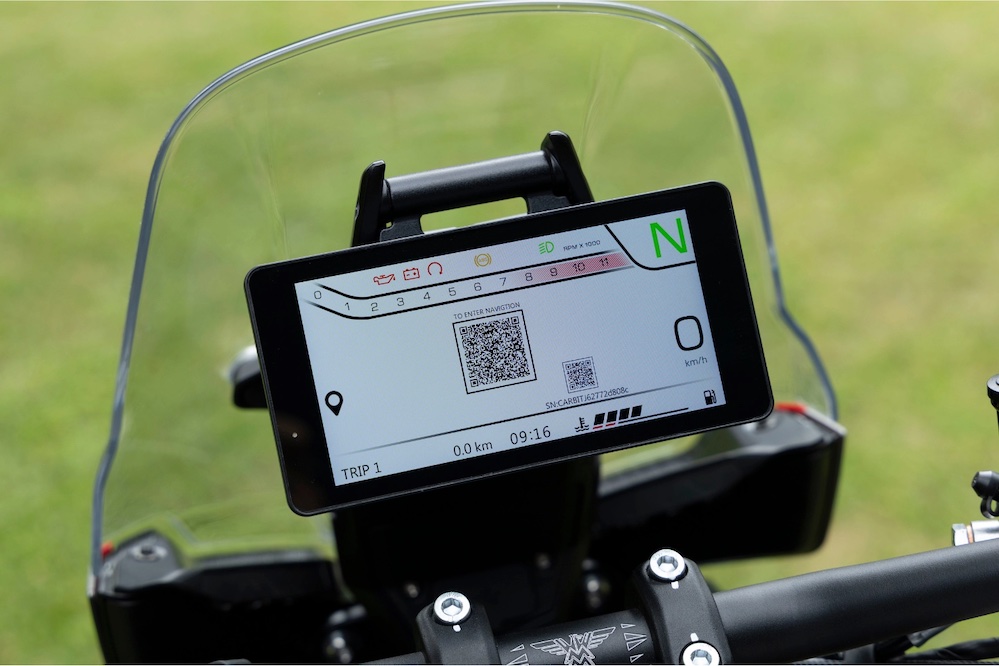
  • Colour TFT screen looks well laid out
  • Bluetooth connectivity. Whatever
  • The pegs are wide, the radiator appears tucked in, the subframe is detachable; so are the pillion pegs
  • LED lighting. OK then
  • Traction control at 42hp? With the necessary switchable ABS I suppose it’s easily incorporated

CF Moto’s 450MT is a significant bike, the first to fill the ‘450’ gap by narrowing the ‘getting there / being there’ [fast on highway / manageable on dirt] paradigm, thanks to its seat height, combined with adequate power and great range. The good looks and 270° soundtrack you get for free. You’ll easily find an official YT video of a bloke tearing up the desert on his MT.
It’s in the UK from July and, compared to the other CFMoto 450 prices, you’d looking at £5700. While a 1290 with ten inches of travel and 160hp will appeal to some, the longed-for and practical 450s Advs are coming – and about time too.

Wheel sizes. Do they matter?
People blindly praise the 18/21 ‘dirt bike’ wheel combo on the MT) as if it magically transforms a bike. A bit like spoke wheels are a must-have for Advs in any size (don’t start me on that).
True, on a 120-kilo MX-er, a front 21 cuts through mud and sand, but can feel less secure on roads where most road-legal dual sports ride. That’s why I prefer do-it-all front 19s for gravel roading, as on my 300L. On the dirt I barely notice the Honda’s 19 front as I’m plodding along; on the road the CRF corners much more securely, road surface, road surface and tyre design limits notwithstanding. A 310GS definitely rides better on its 17/19 combo and is OK on the dirt.
But on the back a 17-inch rear opens up lots more tyre choices, especially in tubeless, and ought to lower the seat height. Eighteen-inch tyres typically have tall side walls for more off-road squidge as well as longer footprints once substantially aired down, though the 140/70-18 CST on the back of the 450MT looks fairly low profile/road oriented. And 17/18 on the road – dynamically could anyone detect a difference?