While scanning aerial mapping for new pistes in Morocco’s High Atlas I came across an intriguing possibility. A seemingly good track lead 25km off the N9 highway to the 2500-mTizi Telouet pass on the High Atlas watershed (31.3372, -7.2663), a few miles east of the famous Tichka pass on the N9 trans Atlas. From that point southwards the way ahead became an obliterated mule path, but picked up rideable terrain in just two kilometres, with Telouet town visible nearby. Downhill on a light bike, walking where necessary, it might be doable, no? ‘Who wants to go first?’, I quipped on Twitter.
Like the grand old Duke of York and his 10,000 men, a column of pylons marches up and over the col, bound for the massive Nour solar plant, 50km away near Ouarzazate. You’d assume some sort of vehicle crawled over the slope to erect those pylons, but no service track is evident on the south side. Still, at the very least, riding the switchbacks up to the col for a quick look should be possible.
I mentioned this recce to a mate who’ll join me out there next week. He soon found some Spanish KTM-ers behind a YT channel called Enduro Aventura. They pulled off the Tizi Telouet descent (and a whole lot more) in 2002, filmed it all and capped it off with a tracklog on Wikiloc, classified as ‘Very Difficult’. They call the Tizi Telouet ‘Collado Torretas’ or ‘tower/pylon col’? They confirm ‘the north face has been fixed with a track with a thousand curves and somewhat broken by the rain‘ but continue… ‘thesouth face on the way to Telouet is a narrow and broken trail with a lot of stones… This hill [trail] seems to be disappearing…‘. They speculate that the truncated northside track suggests a new road might get put in, but I’ve found tracks or roads often come to a dead halt at provincial boundaries, which this watershed is. The col was just an efficient direct route for the power cables from Nour to Marrakech.
Their 80-minute vid below is timed to start at the Collado Torretas stage (just a few minutes). It’s soon turns gnarly af (stills above). But scan any other random minute in their vid and you’ll see just what light and lightly-loaded KTMs (including 2T) can achieve off-road in the hands of a fit and determined crew. You’ll be staggered to see what these guys blithely ride over. Chapeau to Enduro Aventura I say! The Men who Ride like Goats. Me, I’ll take the long way round.
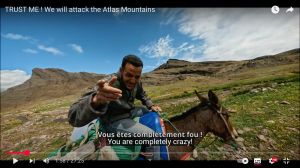
Fast forward to midsummer 2025, and Kriega have released a film of two guys riding over-bored, early 1980s Honda 125s on the even more sketchy Yagour Plateau, west of the Tichka pass, towards Toubkal mountain. Trust Me? Thanks, maybe I’ll pass.
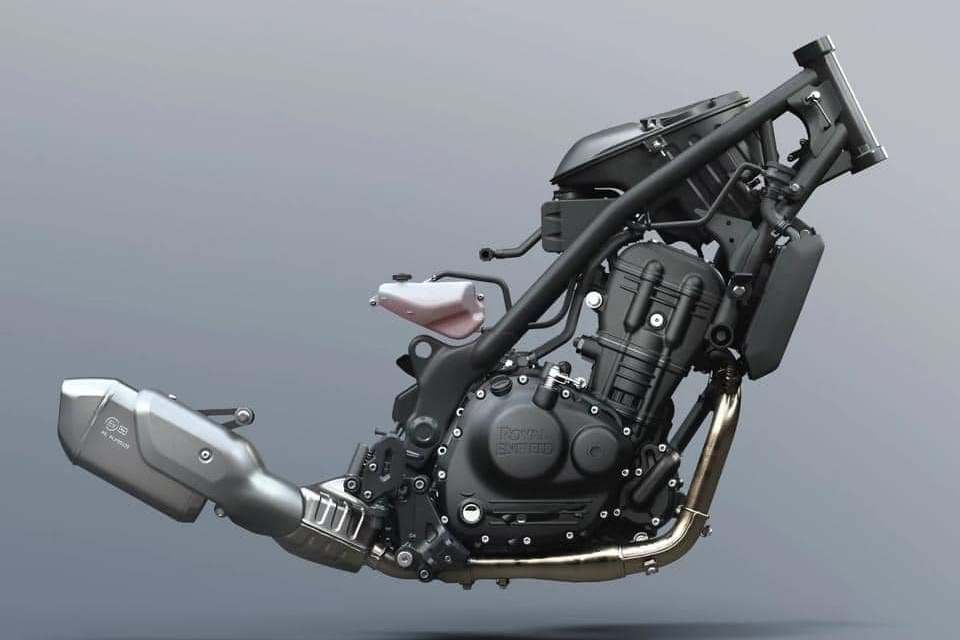
Royal Enfield scored an unexpected success with 2016’s Himalayan 410, selling some 200,000 units worldwide. Despite early issues, a 23-hp, 200-kilo, air-cooled single worked for many people, including me. Now they’ve responded with a load more power from the modern, higher-revving, 6-speed, 11.5:1, DOHC, water-cooled Sherpa 452cc motor.
New DOHC Sherpa 452; 10kg lighter than the 410LS
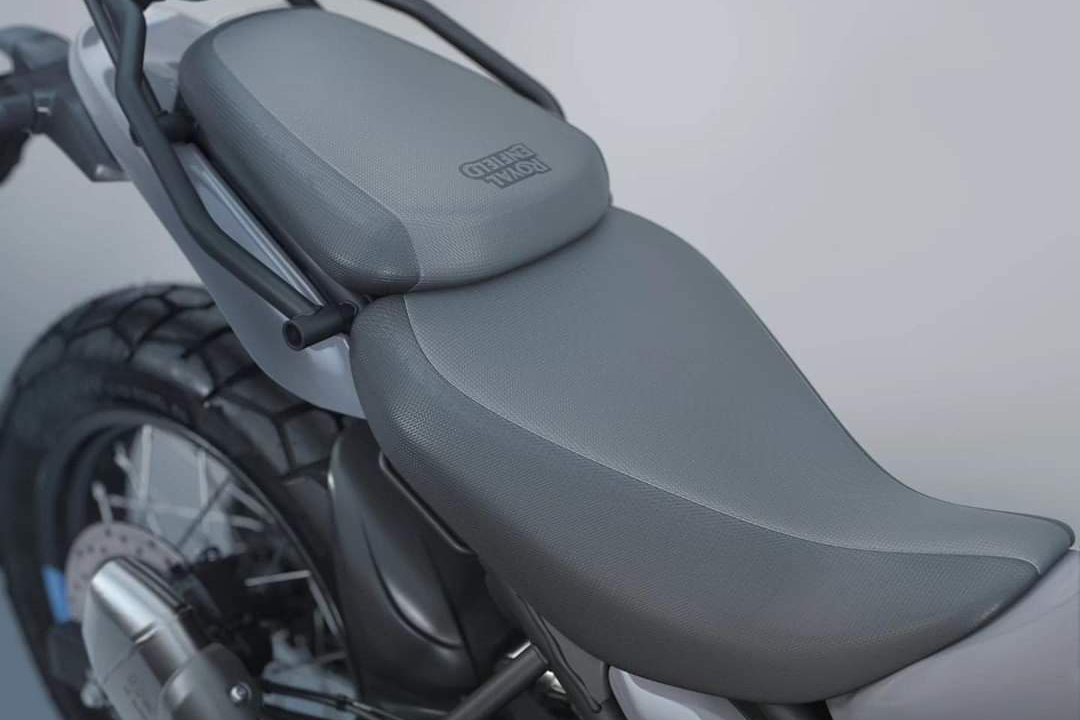
Claimed weight of the bike is still around 195kg tanked up, but that’s with an extra 2 litres of fuel and the same screen, tank bars, tail rack and centre stand. Though an inch higher, the stock adjustable saddle remains low at 825/845mm (32.5″/33.3″), with an even lower 805/825mm option. RE gets it with the Him; leave the yard-high seats to 690s and clowns on unicycles.
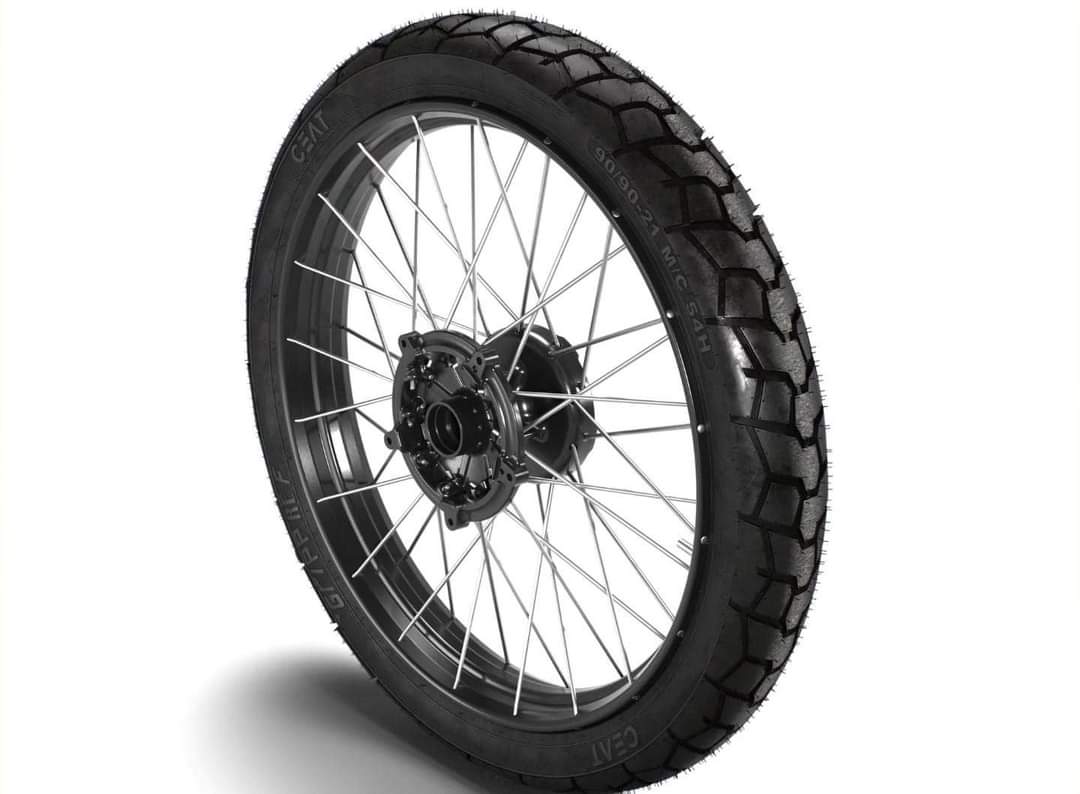
There’ll even be optional tubeless spoked rims. Again RE responds by offering what some real-world riders want: the confidence that roadside flats can be fixed quickly and easily. And unlike the steel rims on the 410, wheels are now alloy, though weight wise, you may find there’s only about 10% in it.
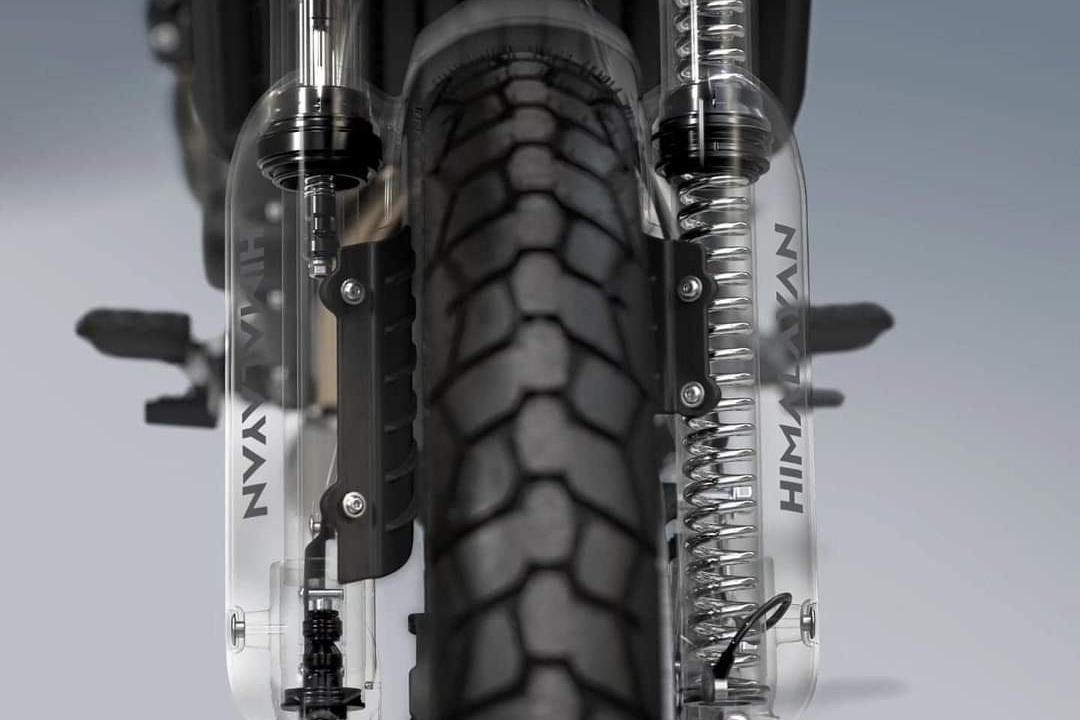
Easy to preload shockCartridge USD forks
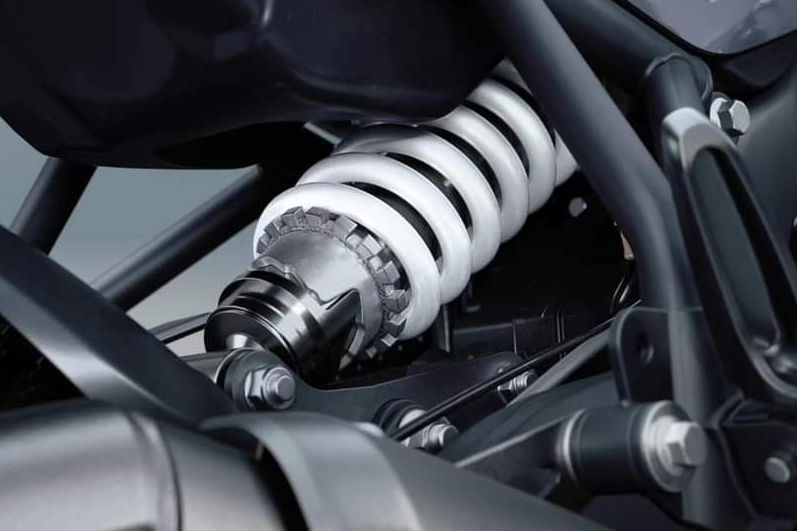
Suspension is in the same 200-mil ballpark too, but with USD cartridge Showas up front and a link-less shock with easy preload adjustment access. Neither have damping adjustments, but presumably there’s a benefit to cartridge forks. I forget what it is, exactly.
All change please
‘We change’ The 410’s air-cooled appeal lay in its plodding motor combined with a low centre of gravity. Experienced or newb, it made the original Him easy and fun to ride, despite the tedious 3000-mile valve checks (450: 6000m). It’s hard to think the new 450 will match the 410’s characteristics, including the low-slung weight [actually it does], even if it’s said ‘90% of the extra torque is available at 3000rpm’. You often read claims like that, but it’s very unlikely the higher-revving 452 will have the tractor-like chug of the long-stroke 410 which made it so satisfying on backroads and easy trails. As a road bike, the new 450 will be a whole lot better.
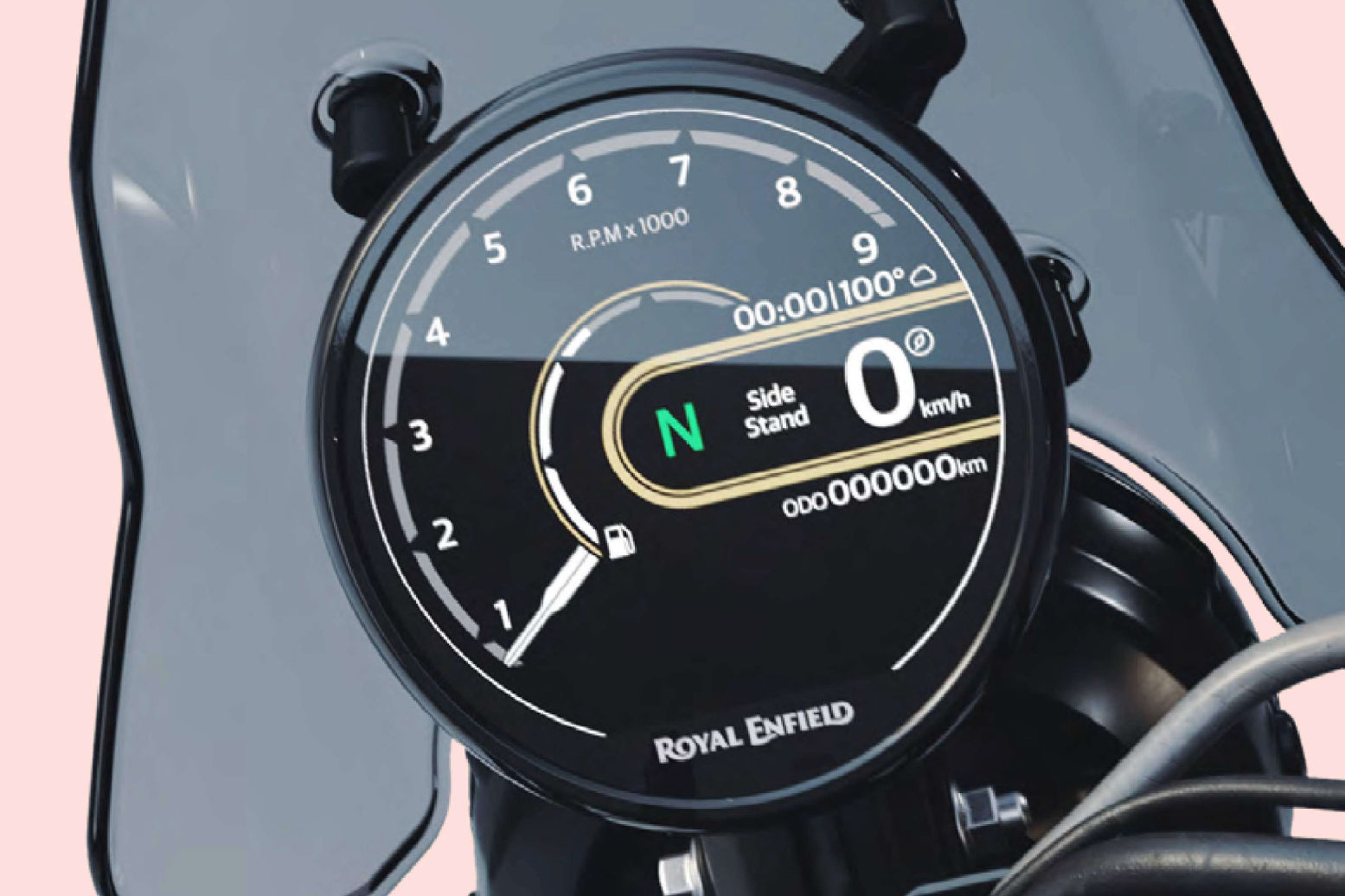
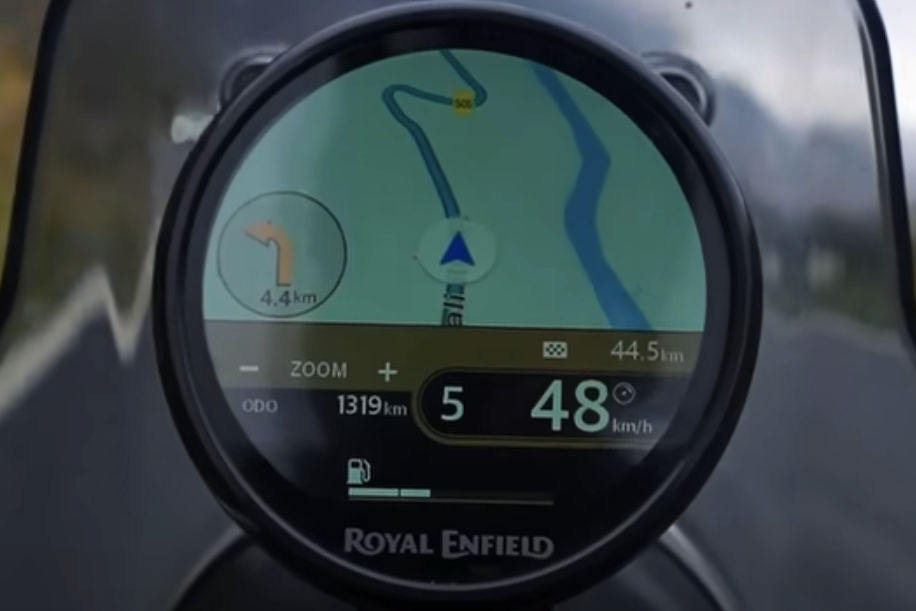
The round, 5-inch TFT, Tripper Dash is another big improvement over the 410’s dial, looks clear and has a good range of info across various toggle-able screens. But I’m not convinced by the integration with Google Maps when it comes to serious exploring as opposed to basic road nav.
Photo: MCN video still
The idea is it replaces your vulnerable [Android only] smartphone which still needs to be in your pocket and paired to the display via wi-fi and using an RE app and plugged in. Afaict, the Tripper is merely displaying a simplified version of GM to suit the bike’s round display. And will a map downloaded in the phone for offline (no 4G) use display on the Tripper? I doubt it. I’ve read these in-built, phone-pairable nav systems aren’t always so seamless or versatile. But I’ve never actually used G Maps or even a smartphone for moto nav either. Anyway, if the Tripper proves to be an unworkable backcountry navigator, just revert to a cheap Android phone, a bigger tablet or handheld GPS, all with more readable and free OSM mapping.
Photo: MCN video still
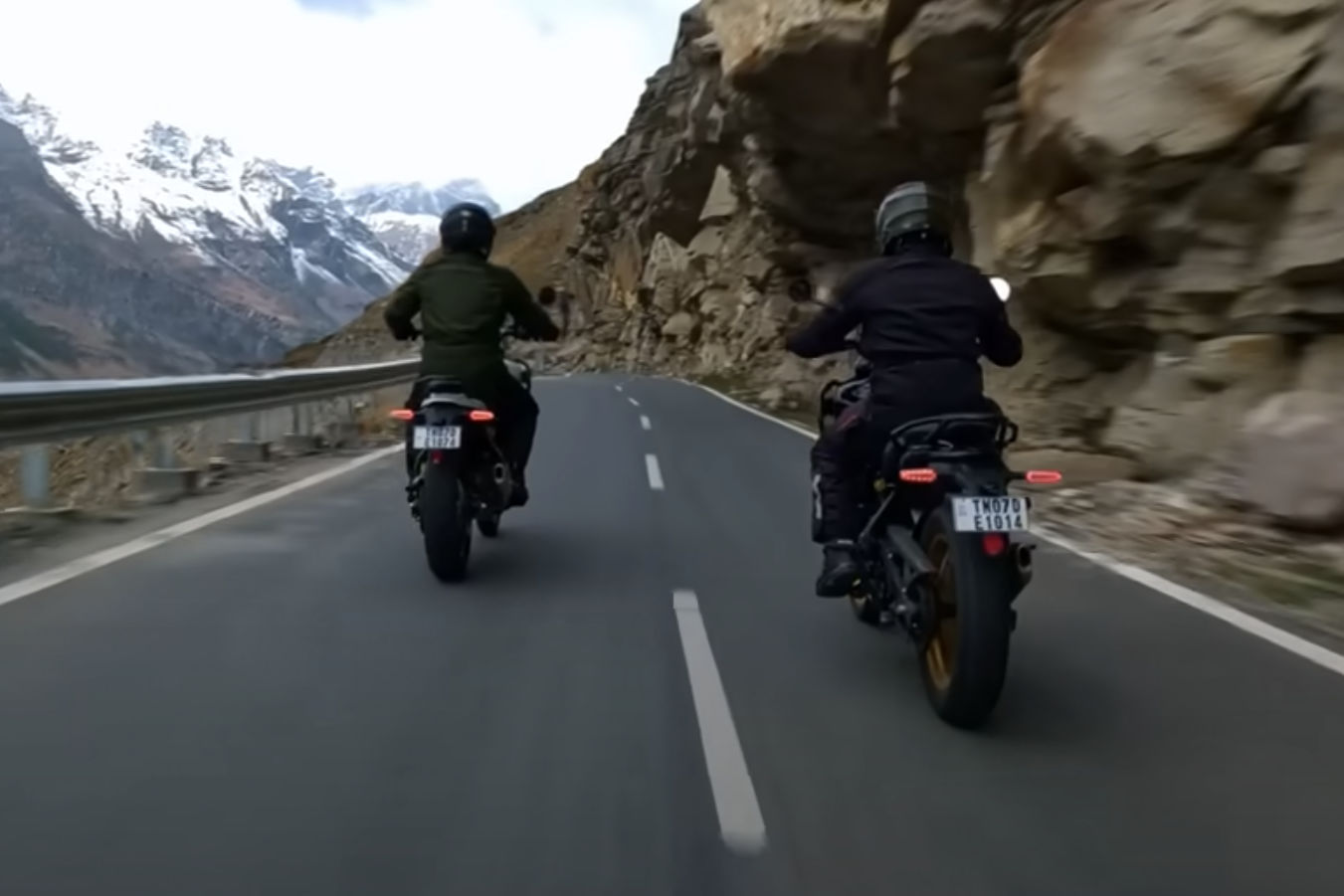
The 40-hp bike also comes with a somewhat superfluous Eco mode (unless economy really does leap up), switchable ABS (another thing I never switch off), and LED lighting. There’s no rear light (left); it’s integrated into the LED indicators. Not seen that before but I can tell you it actually works quite well. Just the other day I was noticed how car tail lights have all gone freestyle.
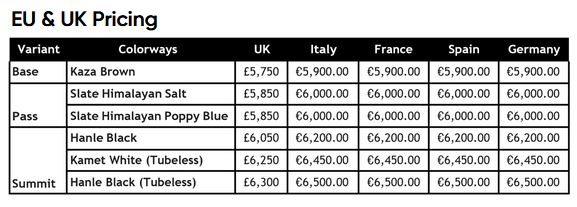
The only other fly in my soup is the design and paint choices; not as cool as the original 410 Him. They say bikes will be in UK shops in April 2024 from £5700 depending on colour choice, and from £6250 for tubeless spoked wheels. With the 410 now at £5050, that’s a great price. As the bike’s are bound to be so different, you do hope they’ll keep selling the air-cooled Himalayan. After years, bikes like 2024’s CFMoto 450MT and even the Triumph 400X, are opening up the 400cc Adv class alongside KTM’s decade-old 390. Newsflash! It’s spring 2025! Read my Him 450 review.
Not all of it bought this year, but all of it used.
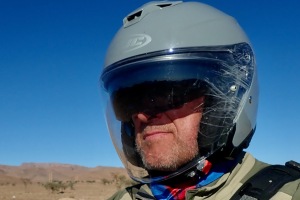
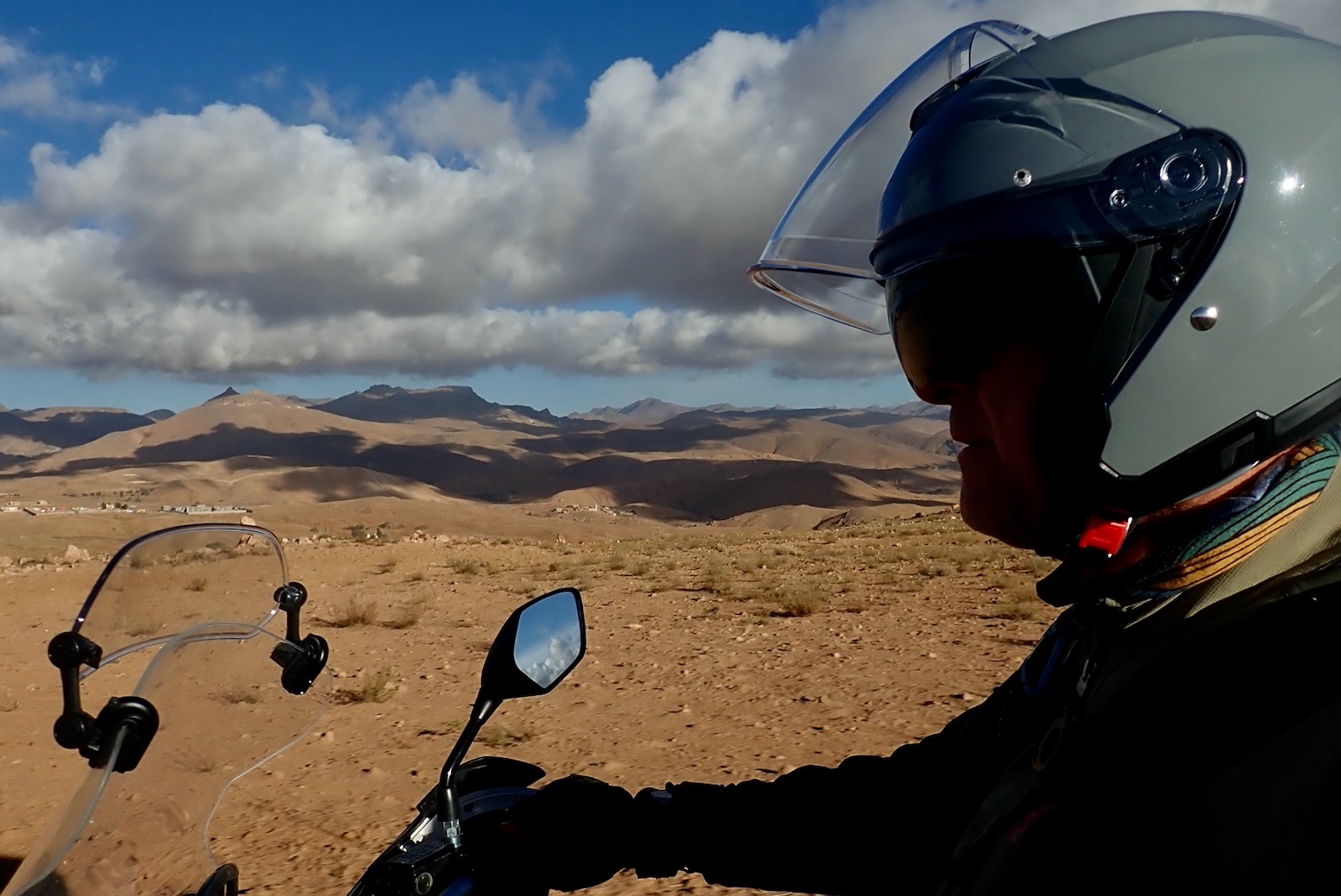
HJC i30 helmet Will I get back the ten years of wearing the ‘premium brand’ X-Lite X402GT? Probably not. Will this Open Face/Full Visor HJC, at a quarter of the price (£111), last that long? Who knows, but I like the design and looks, the operation of the visors and strap, the top venting and quietness (with ear plugs) and not least, the ease with which the lining can be removed, washed and refitted without feeling the need to punch something in the face. On day I fell off and noticed I’d scratched the side of the visor. It didn’t affect vision but looks a bit grubby so I bought a tinted jobby for a hefty £42. My best buy this year.
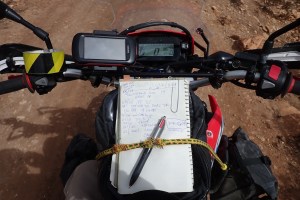
Garmin Montana 680T Do people still need a staggering £570 worth of handheld Garmin now a spare, big smartphone with a nav app can do the same job (and just about everything else?)? Probably not. In 2010 Montanas changed the game by enabling the loading of superior third-party digital maps with whom Garmin eventually collaborated. I was unsure about touch screen but it’s been largely fine (use screen protector film) and most of all, once set it up for my needs, the interface is great for what I do: recording tracks and points, or loading a Google-traced tracklog to follow and verify using the BaseCamp App. All the other hunting, fishing, tide and sunset bollocks I ignore, just so I can have the capacity to store detailed background maps and save tracklogs. You can route ir too, like a car satnav, but I rarely use that. It’s best to hardwire a Montana to the bike on a RAM mount, or just use it on battery which lasts two days on screen saver mode.
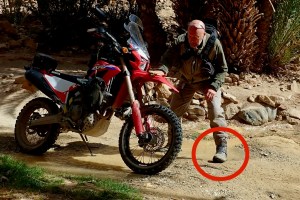
Spot the boot
TCX Midi Boots I’ve worn these for nearly six years and about 30,000km and can easily see another five years or more in them. They slip on, clip up and off I go. I like the natural hide colour and don’t see the need for bulky, full-height MX boots; it’s the ankles and feet that need protecting. The odd wade in a stream (left) sees no leakage but they don’t feel too sweaty for membrane boots
Olympus TG5 Tough ‘The Top Gear Hilux’ of all-weather cameras. Unkillable and takes good pics too. My aged Samsung phone camera was rubbish but this year I had to buy an iPhone (7) to work an app. I’ve heard how amazing cameras are on modern smartphones so one day last week I tried to get to grips with shooting on the 7. It’s only got one lens and the quality is about as good as the TG5, but to whip out or use easily on the move one-handed, the TG wins every time. I’d need to get a two-lens iPhone X or higher to get a much better camera, but it’ll still be an arse-ache for banging out a quickie.
Carhartt canvas jacket I like to think I came across Carhartt in the American West just before they became a fashion brand. As seen in many movies, I wore their classic Detroit shortie in Libya in ’98. Now, when it’s cold enough, I love an excuse to wear my quilted, chunky ‘duck canvas’ Carhartt Montana (or some such), a horse riding coat made for prairie blizzards which I got for just $110 in the US one time. Cotton is so much nicer to wear than any membrane Cordura jacket, even if nylon is waterproof and might crash better. The eight pockets are near perfect for my needs, including a drop-in RHS chest pocket for quick camera access. If it rains heavily I’ll wear my 1980s Rukka or stay at home. My 2016 Carhartt is now sun-bleached but still going strong. Carhartt don’t make this one any more; the nearest looks like the blanket-lined Chore Coat or quilted Super Dux.
Ecce Carhartt
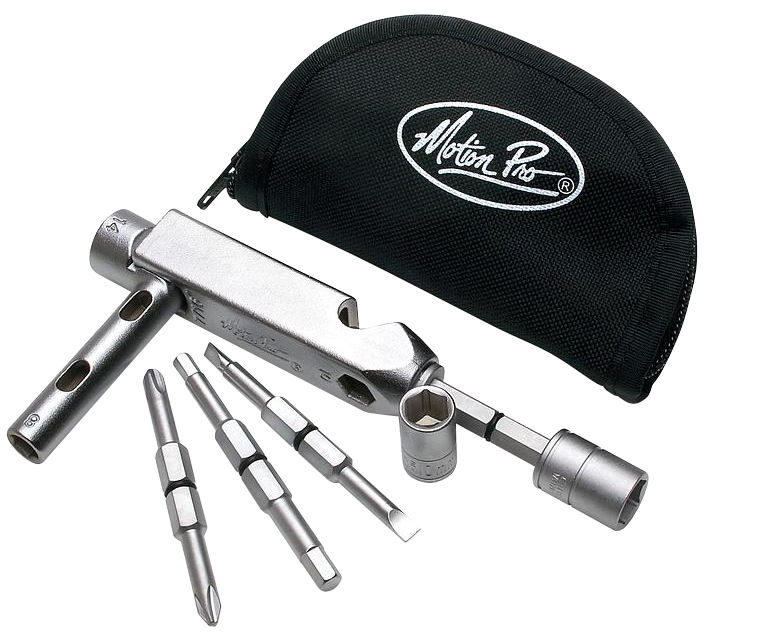
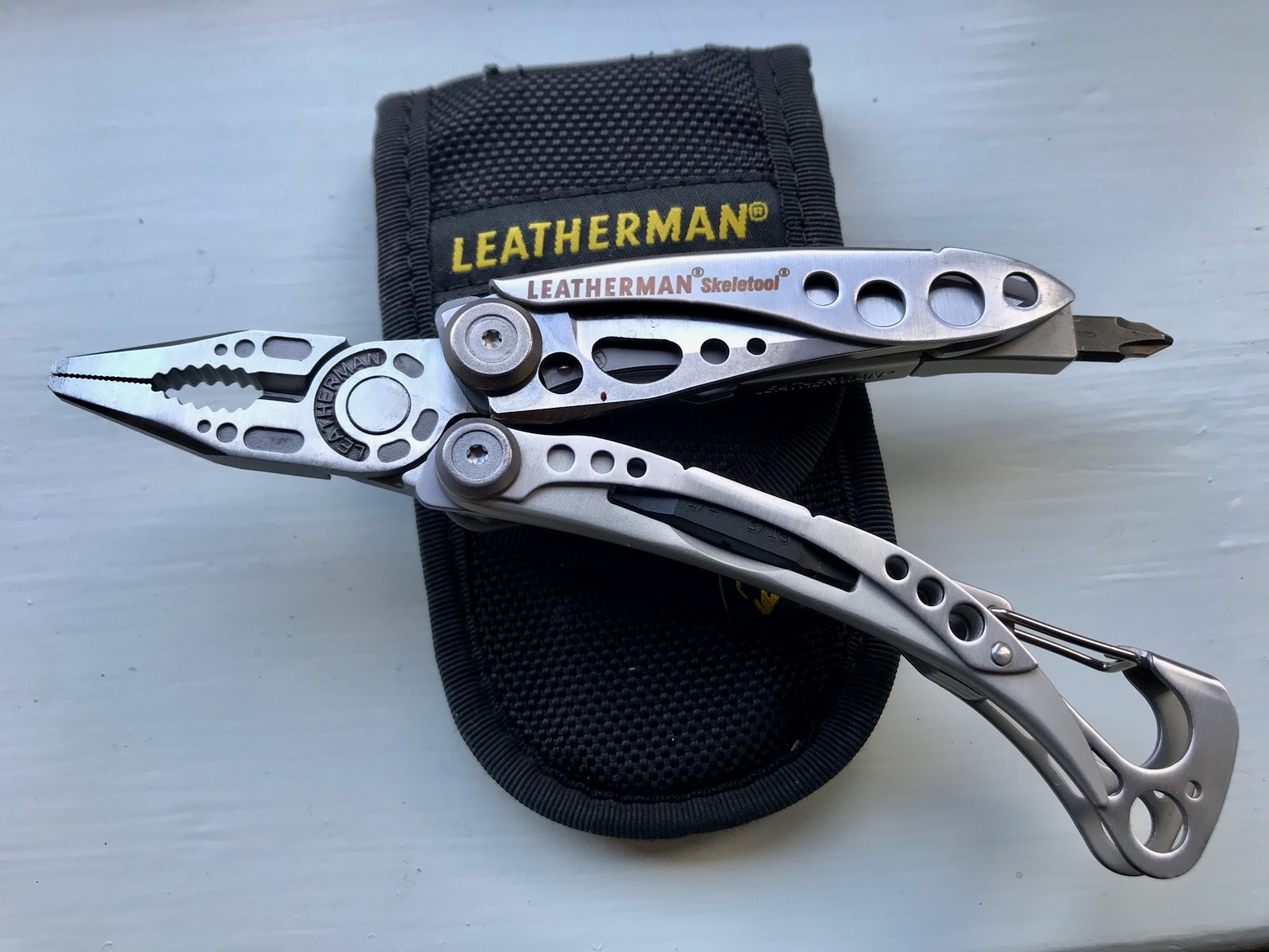
Motion Pro Trail + Leatherman Skeletool With these two tools (about £70 each) plus a wheel wrench, I’ve got all I ever use on the trail. With a couple of extra socket sizes and allen keys, the MoPro pouch covers most small jobs, while the Skeletool knife does lunch and its pliers pull out nails from tyres.
The other day I broke the thin pliers trying to yank out a bolt that had pushed its nut into the tyre (imagine the chances of that!). Even though it was my fault, Leatherman’s 25-year warranty came to the rescue. I sent it back for assessment and a new Skeletool dropped on the mat a week later.
Rechargeable USB pump A mate showed me his and I got one. From 20 quid on ebay under all sorts of listings, it’ll do a tyre from flat to 25 in 5 minutes, or top up from 17 to 25psi in about a minute (as I had to do daily in Morocco on my ill-sealed rear tubeless tyre).Yes it’s another cheap and cheerful Chinese gadget but it vibrates a whole lot less than my ancient Best Rest 12-volt pump and being cable-free, is much handier to use. I’m yet to flatten it but it’ll recharge from half done? in an hour or two off the wall. While it works, it works.
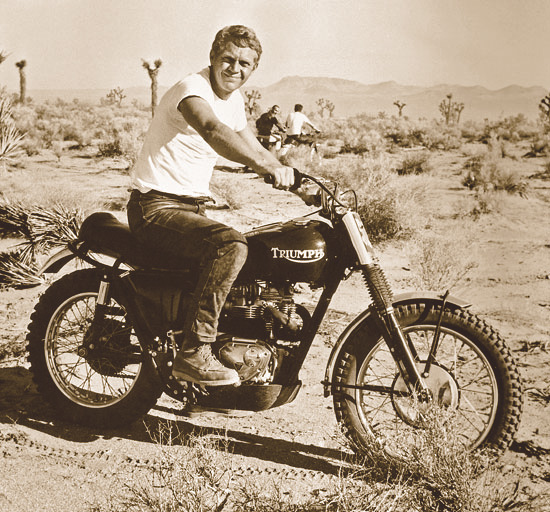
Everybody loves a scrambler, always have, always will. It’s no new thing, just an old trend coming back round. Street scramblers were invented in southern California in the 60s; Mojave desert racers – cool as you like. Slap on some wide bars and trail tyres, lower the gearing and you’re street scrambling for real. On Any Sunday. Project XScrambleR 700
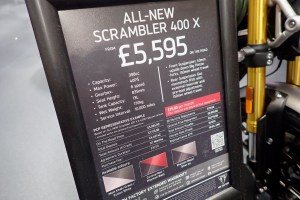
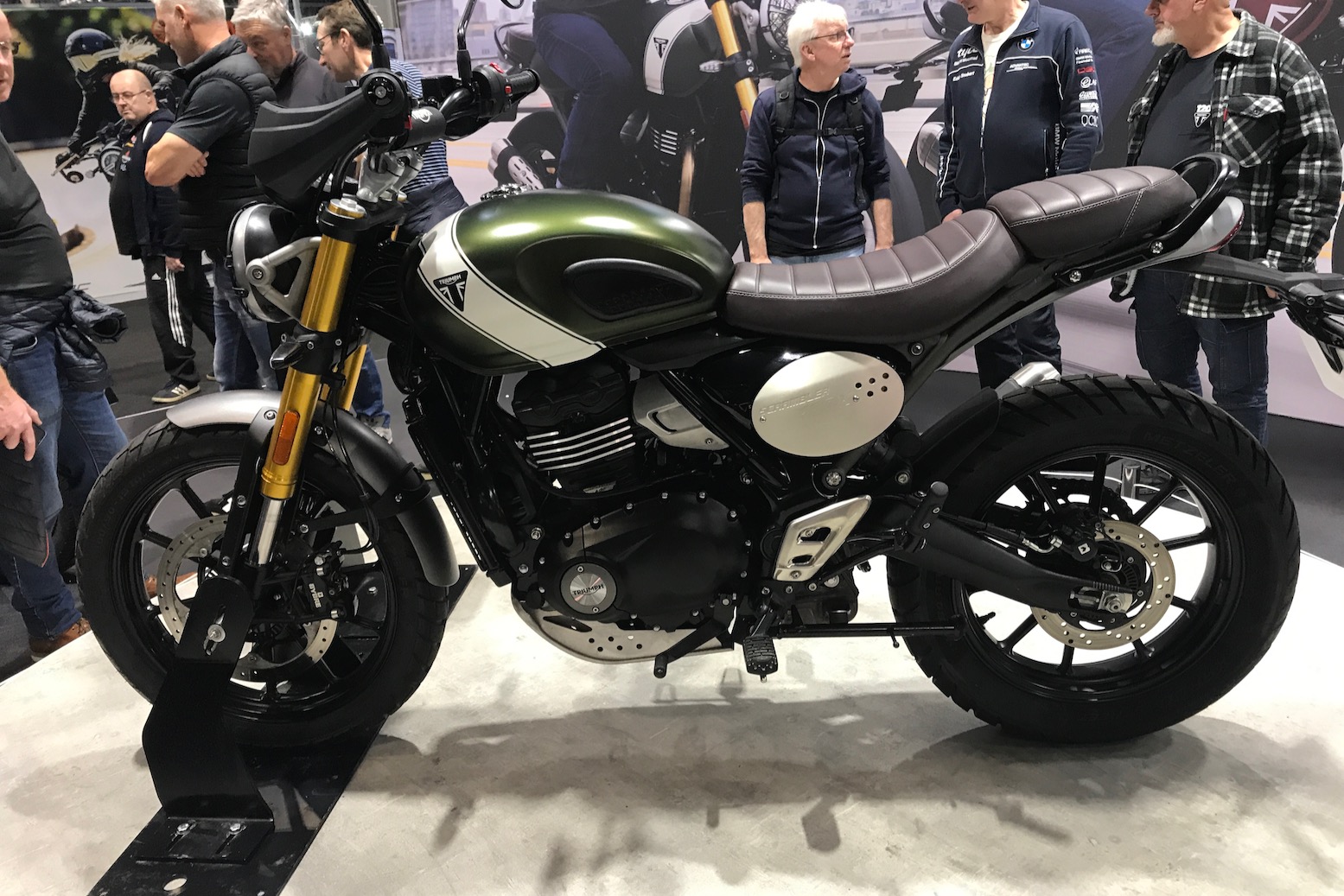
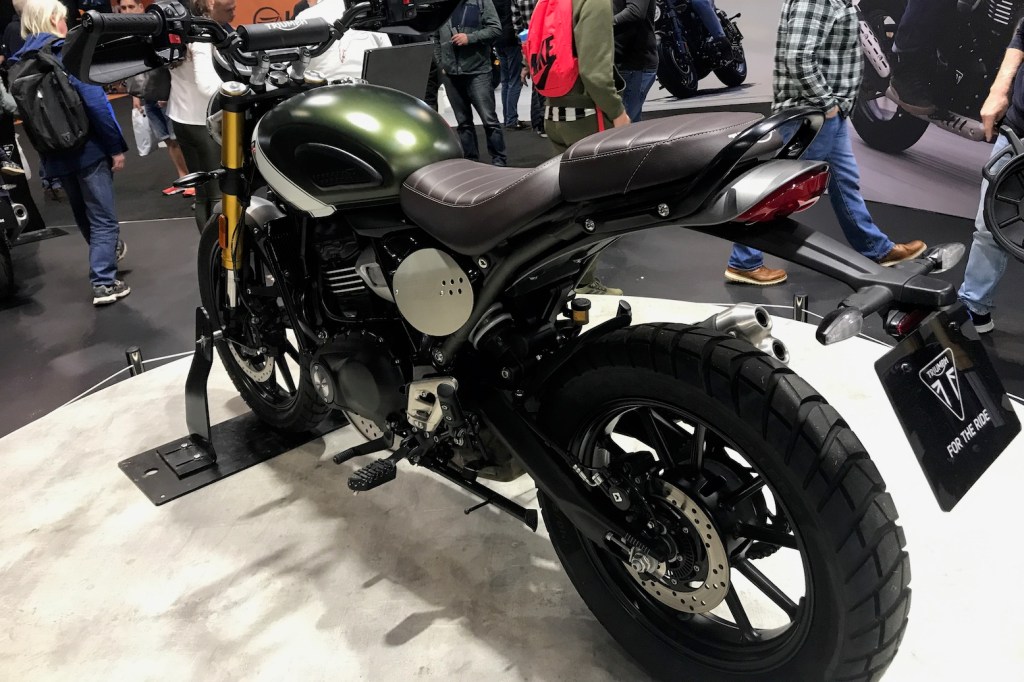
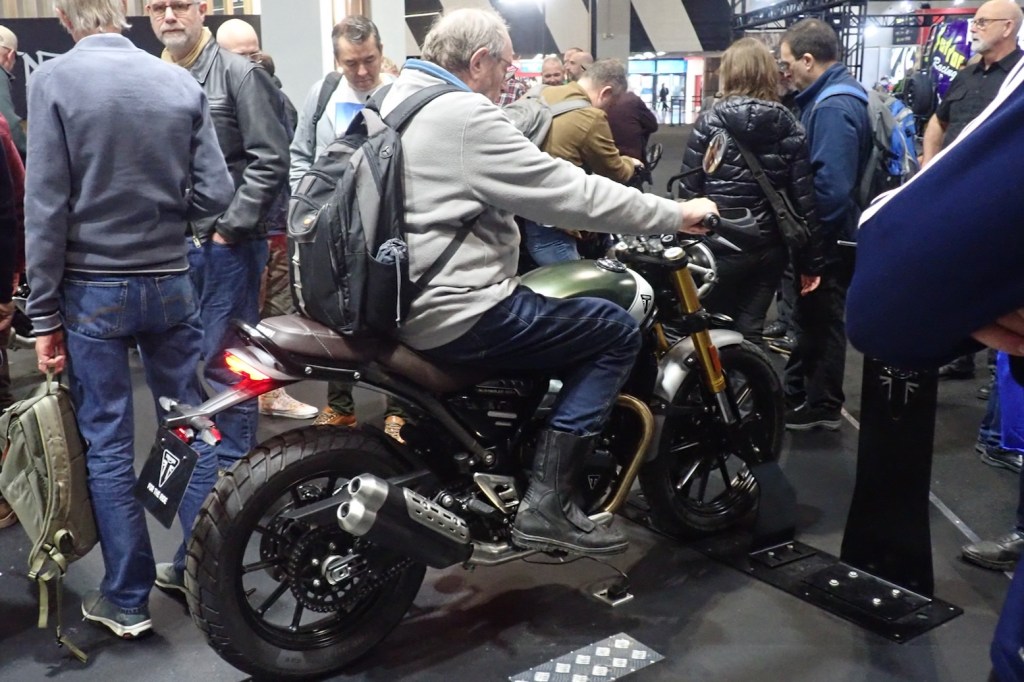
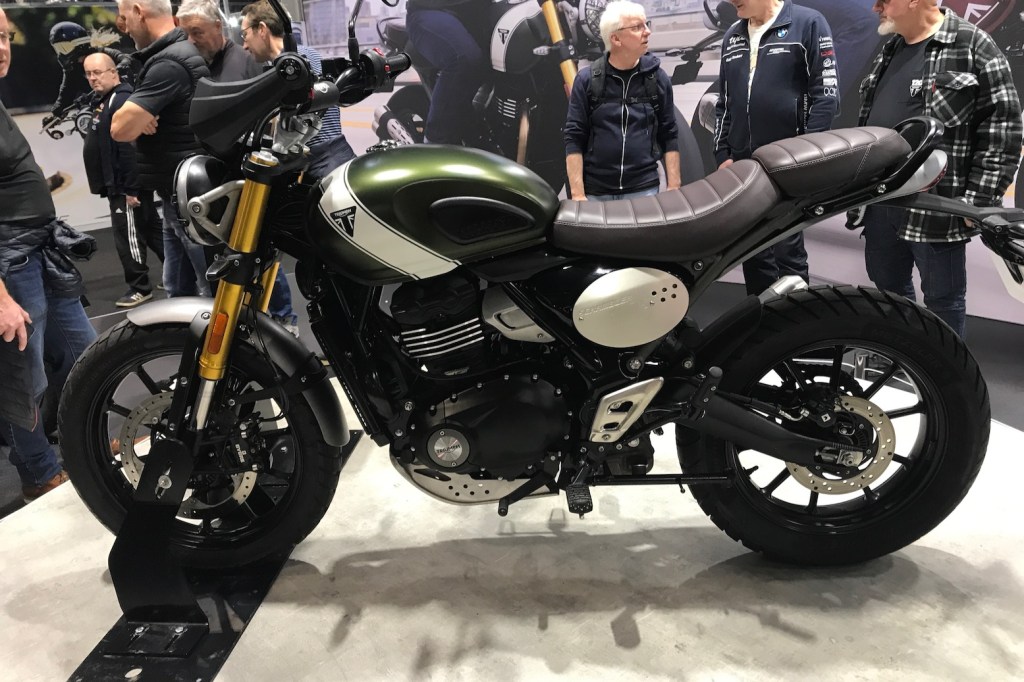
Triumph’s new Scrambler 400X caught my eye at the Birmingham bike show. And I wasn’t the only one. Every few seconds another individual closely resembling my mature demographic swung a leg over the Scrambler to bounce up and down and twiddle the controls. Like me, they may have been fondly recalling their teenage Triumph days in the 1970s. Along with its modern triples, the reborn brand has successfully capitalised on that proud heritage with a line of modern classic big twins. Matching that visual ‘DNA’ very closely, the smaller 400s are said to be pitched at attracting image-conscious young blood into biking, but judging by the leg-swingers above, most customers may prove to be more bike-in-a-shed oldies looking for a lighter ride than well-groomed Bike Shed hipsters.
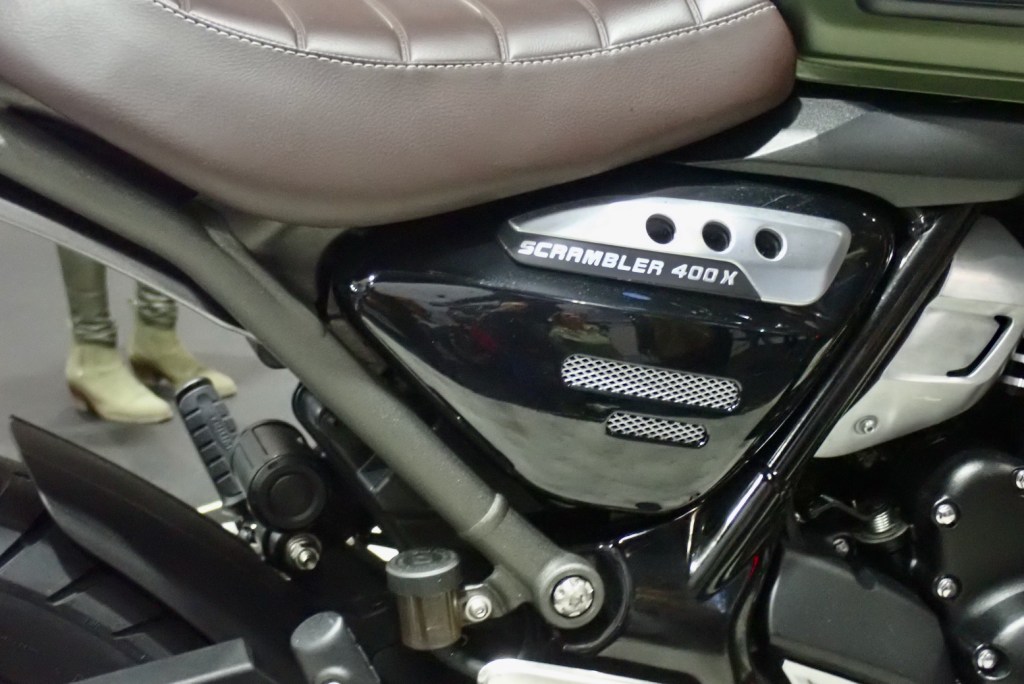
Along with a road-oriented Speed 400 with 17-inch wheels and a 45mm lower seat height, the 400X Scrambler gets a 19 inch front with a bigger rotor, 150mm of travel, switchable rear ABS and largely cosmetic protection. The stock alloy sump plate is a necessity to disguise and protect the low-slung coolant reservoir.
All that somehow manages to cost an extra £600 (£5600) over a Speed 400 – as with Honda’s 300L/Rally price chasm, the off-road aspirational look always costs more. Claimed wet weight varies even within the brand’s source material: the show board left claims 170kg, the Triumph website says 179kg and Indian reviews (see below) come in at 185 kilos, though it’s said Indian spec tyres and wheels will be heavier to cope with the sub-continental pounding. Both bikes get switchable traction control – for 39hp? – and lengthy 10,000-mile service intervals.
The 400s are being assembled in India by Bajaj who among other things, also produce KTM’s 390s while probably selling more of their own branded bikes in a year than all European manufacturers combined. I read 400s will also be made in Thailand (where bigger Triumphs are assembled) and Brazil. Wherever UK units come from, if the 400s’ durability proves to be anything like the also-Indian-made BMW 310GS we use in Morocco – some now on 80,000 rental kms – there’ll be little to worry about.
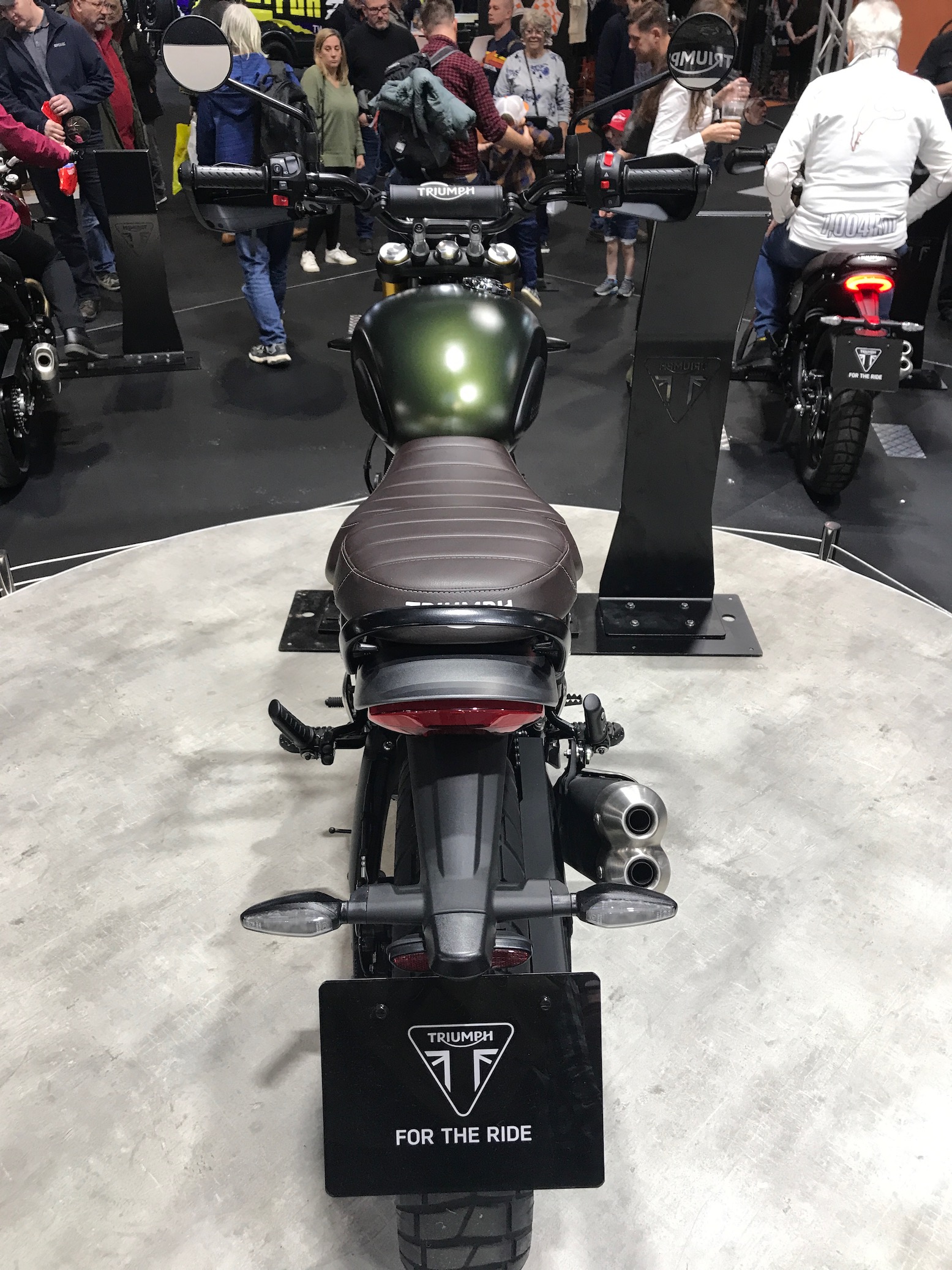
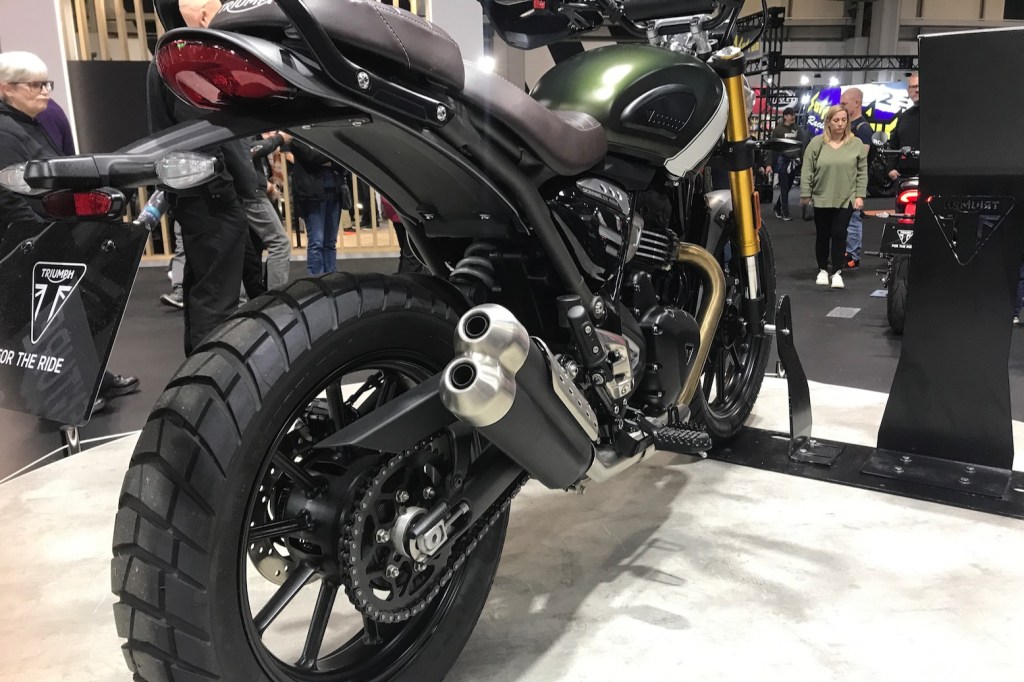
For me scramblers have always been Goldilocks travel bikes – fine on the road, at home on gravel and OK on the dirt. And they look like a proper motorbike. So along with its cool retro look, the 400X ticked a lot of boxes for me at the NEC: tubeless wheels, adequate suspension travel, basic metal bash plate (an uprated £130 accessory is fitted on the green show bike) and a ‘portrait’ aspect radiator tucked out of the way on the front down tubes, like an RE Interceptor. The seat looks promisingly wide, though CTXP (below) found the forward slope annoying. You do wonder if the pillion perch is detachable. If yes, it could be removed to sit a tail pack lower, another win. At a potential 90mpg (32kpl; 75US), the 13-litre tank will return over 400km. Most of these stock features were mods I had to make to my current 300L to make it a functional travel bike, not least a £300 tank and some £200 crash bars to protect the vulnerable radiator. I’ve not managed to improve the seat. Interestingly, UK-based Rally Raid, who a decade ago found a wide audience with their popular CB500X upgrade kits (which I used myself in prototype form in Morocco), are planning to develop kits for the 400X too: tubeless spoked wheels, suspension, sump guards, risers. They already run a range of such accessories for the similar G310GS.
Some reviewers grumble about the lack of spoked wheels to complete the retro look. Spoked or alloy, I’m not bothered as long as they’re tubeless for easy repairs. These days just about all alloy wheels are tubeless, but to make spoked TL wheels requires expensive assembly and tensioning of outboard spokes, being optionally offered on the new Himalayan 450 (left). I’ll take the Scrambler’s 10-spoke alloys; with a good set of tyres and location-appropriate riding they ought to resist leak-inducing dings. Got a bad leak? Bung in a tube.
There are a couple of actual riding reviews from BHP India and Autocar India matched with equally wordy video reviews. A couple of months back US-based Common Tread XP took a pre-production Speed and Scrambler on a 2000-mile round trip from Delhi via Zanskar Valley to the ‘highest motorable [asphalted] road in the world’ which these days is the 19,024’/5798m Umling La in southeastern Ladakh (left) close to the Chinese border. This was not another of CTXP’s goofy, Top Gear-like stunts, but a proper travel adventure that snatched some of the wind out of Enfield’s 450 Himalayan sails – and maybe sales too. RE also chose Umling La as the destination of their Final Test, and their drone heavy YT vid (see below) trounced CPXP by a couple of weeks. Currently both vids are neck-a-neck at about half a million views. Watch the Triumph Himalayan vid here or listen to Zack C’s honest, post-trip appraisal of the Scrambler below. It’s not all rosey – no small bike every is once you’ve ridden big – but the aroma’s promising enough. Both are on about half a million views right now.
Other things I saw at the NEC I’d have liked to have had a closer look at the new Chinese-engined, water-cooled 350 Beta AlpX which had been presented at the EICMA show in Milan. They claim about 155kg juiced up, but Beta didn’t attend the NEC and tbh, it’s probably on the tall side for me and dynamically no better than my sported 300L.
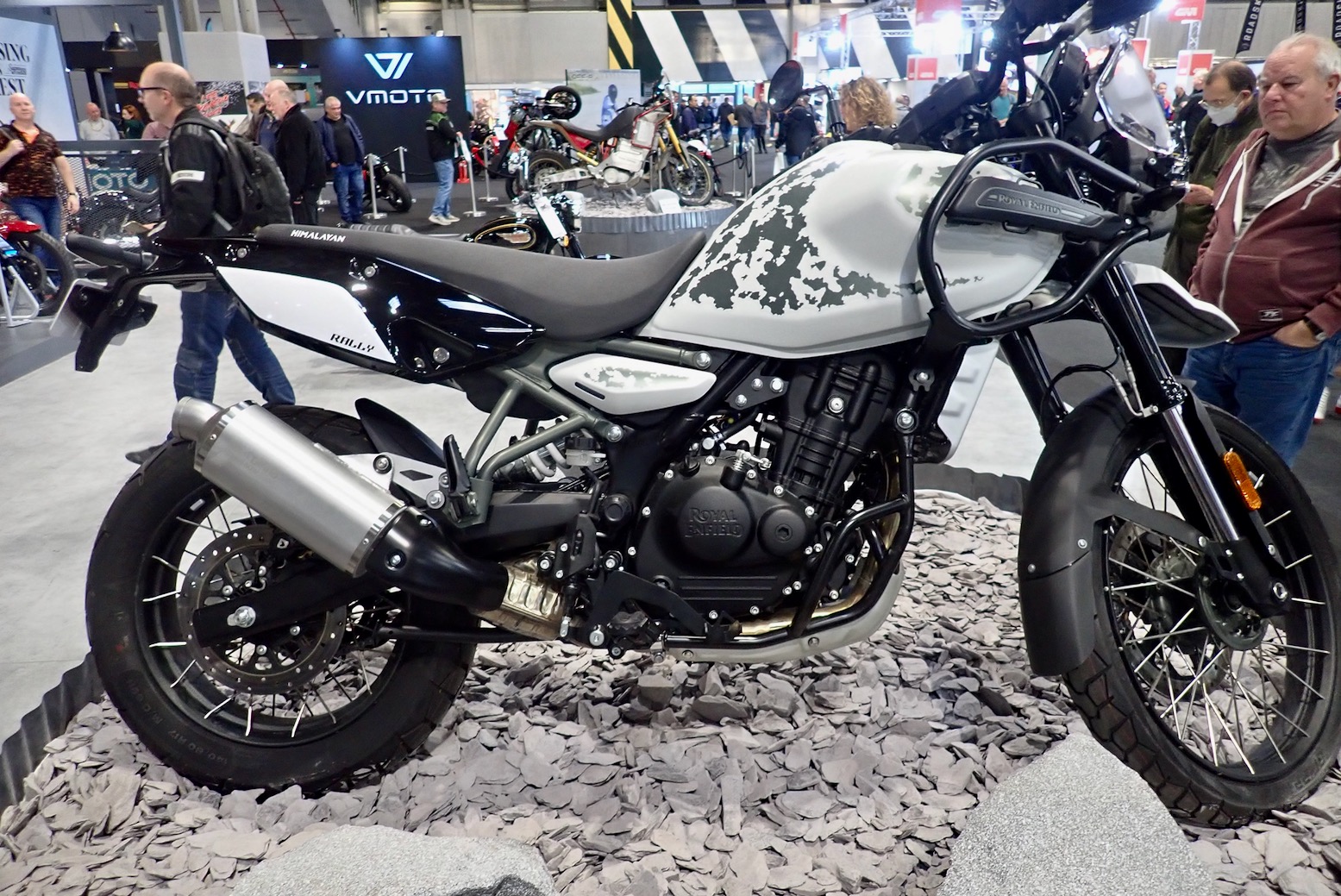
A few years back I got on well with my old 400 Himalayan in Morocco so I cast a look at RE’s much revised water-cooled 450 Himalayan which will doubtless soon be pitted against Triumph’s 400X. Same price, same claimed 40hp at 8k, but with 10% more torque at 1000rpm lower down. Front and rear remain 21/17 (greater rear do-it-all tyre choices) and with tubeless spoke wheels an option. It’s at least 15 kilos heavier than the 400X, though that includes a centre stand, 50mm more travel (200mm all round) and those nifty tank racks alongside the 17-litre tank. The small 4″ console/dial pairs with a phone to show Google Maps or similar; though it’s on the small side let’s hope that proves to be as seamless and reliable as it could be.
My old Him 400’s gimmicky digital compass rarely pointed north. But as one tester observes in the vid below, he’s lost loads of smartphones clamped to the bars as nav devices; for me that’s always been a sketchy idea. I feel they’ve lost out on the great look of the old 400 (right); Triumph’s understated style works better for me, but the drastically improved 450 Him will be a travel contender for sure. Read impressions from a two-day Himalayan test ride from AdvPulse or my chin-rubbing preview here. It’s great to see the ‘400cc’ class opening up at last.
For nearly three times the price of either I could have a beautifully made, 150-kilo CCM Tracker or any of their other scrambly iterations around the pokey, ex-Husky 600-cc motor. There are loads of low milers on sale now for around half the new price which, not matter how good they are, suggests they’re weekend playthings.
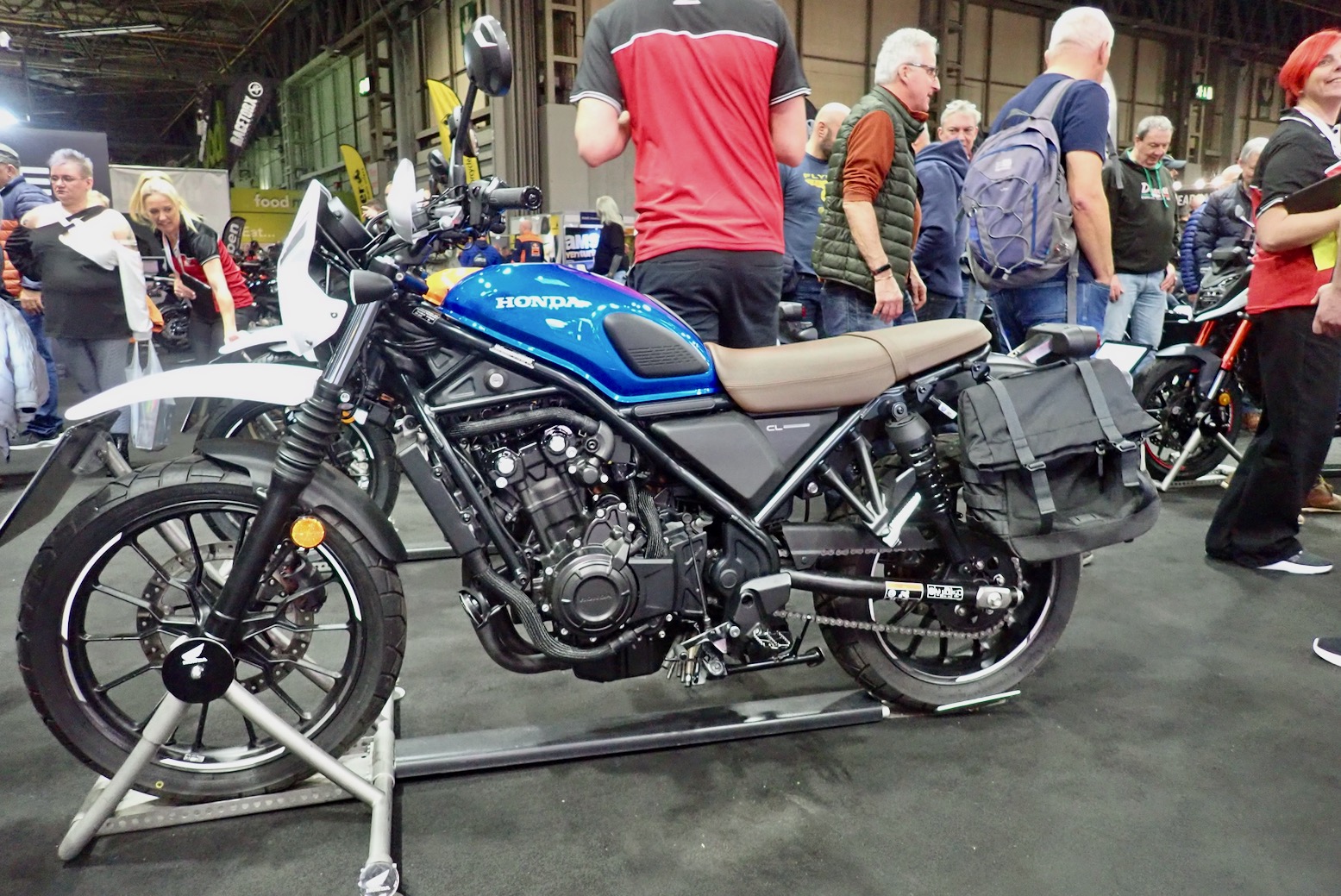
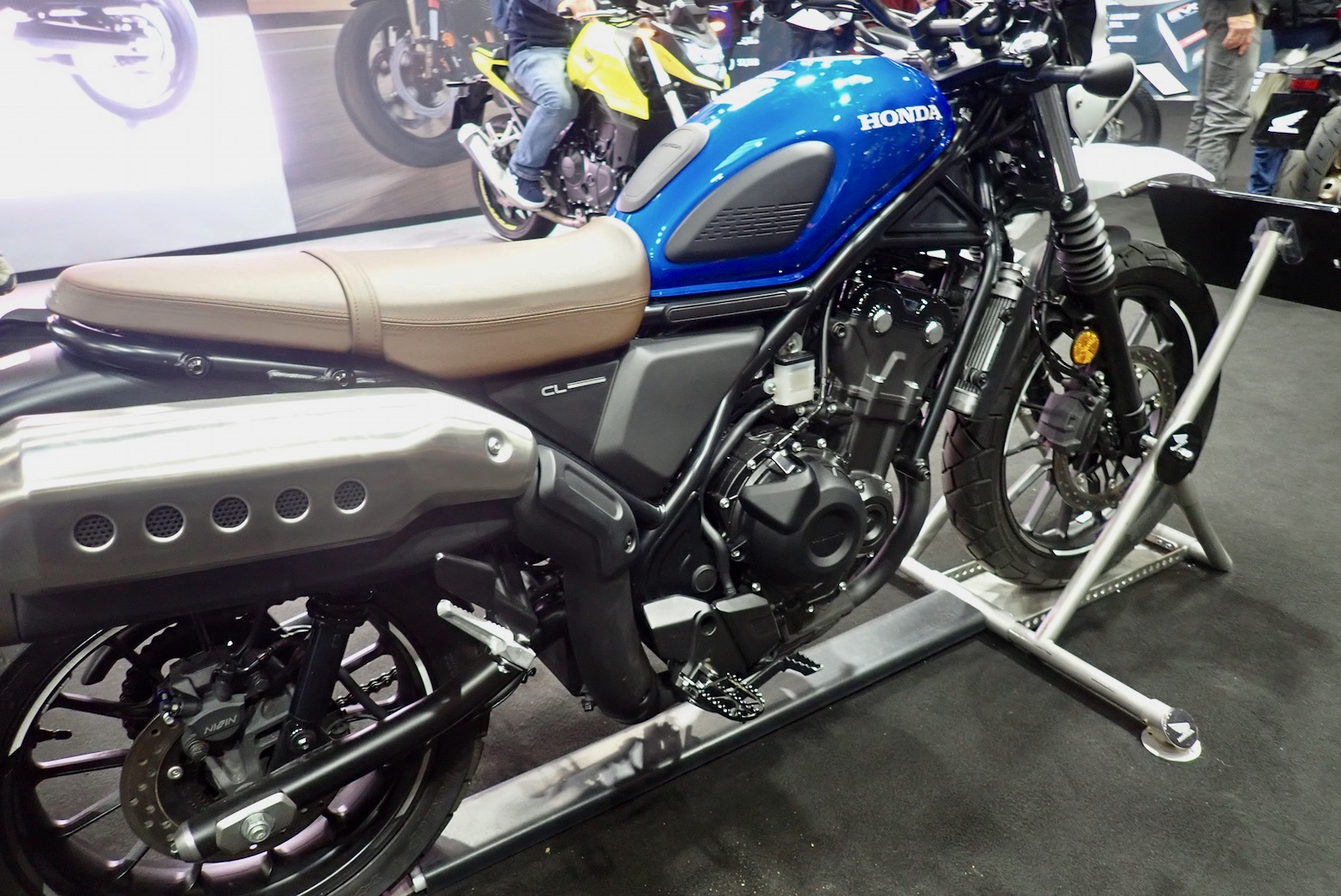
What a shame Honda’s CT500 scrambler spin on its 500 platform looks a bit too much like their Rebel cruiser or just not as good as it could have been. There’s no doubt it would be a better all-rounder than the Triumph, with effortless cross-country speed, near-as-good economy and low, flat-seat comfort. But it would need the usual grand or more of extras to be a traveller. And that gigantic pipe!?
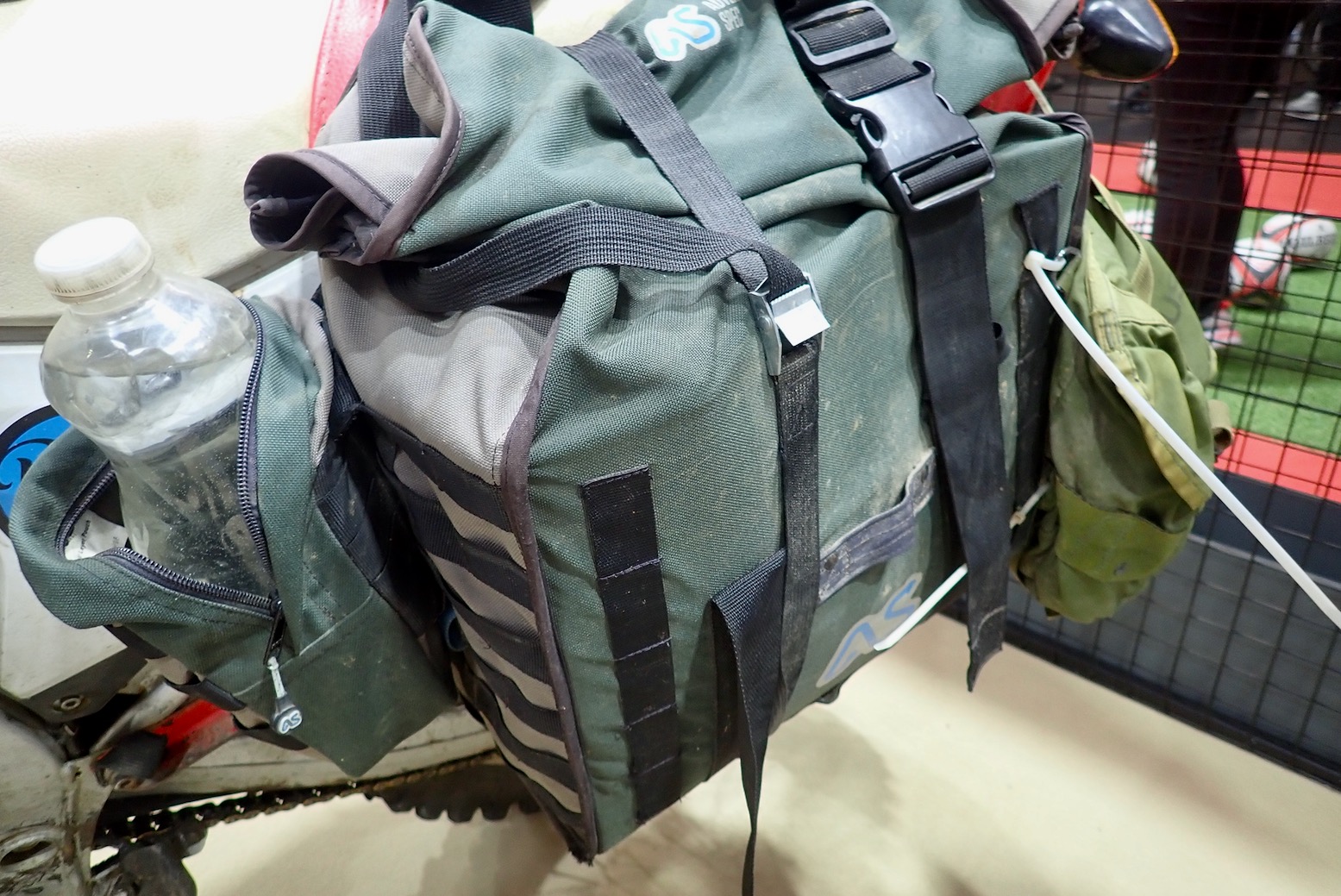
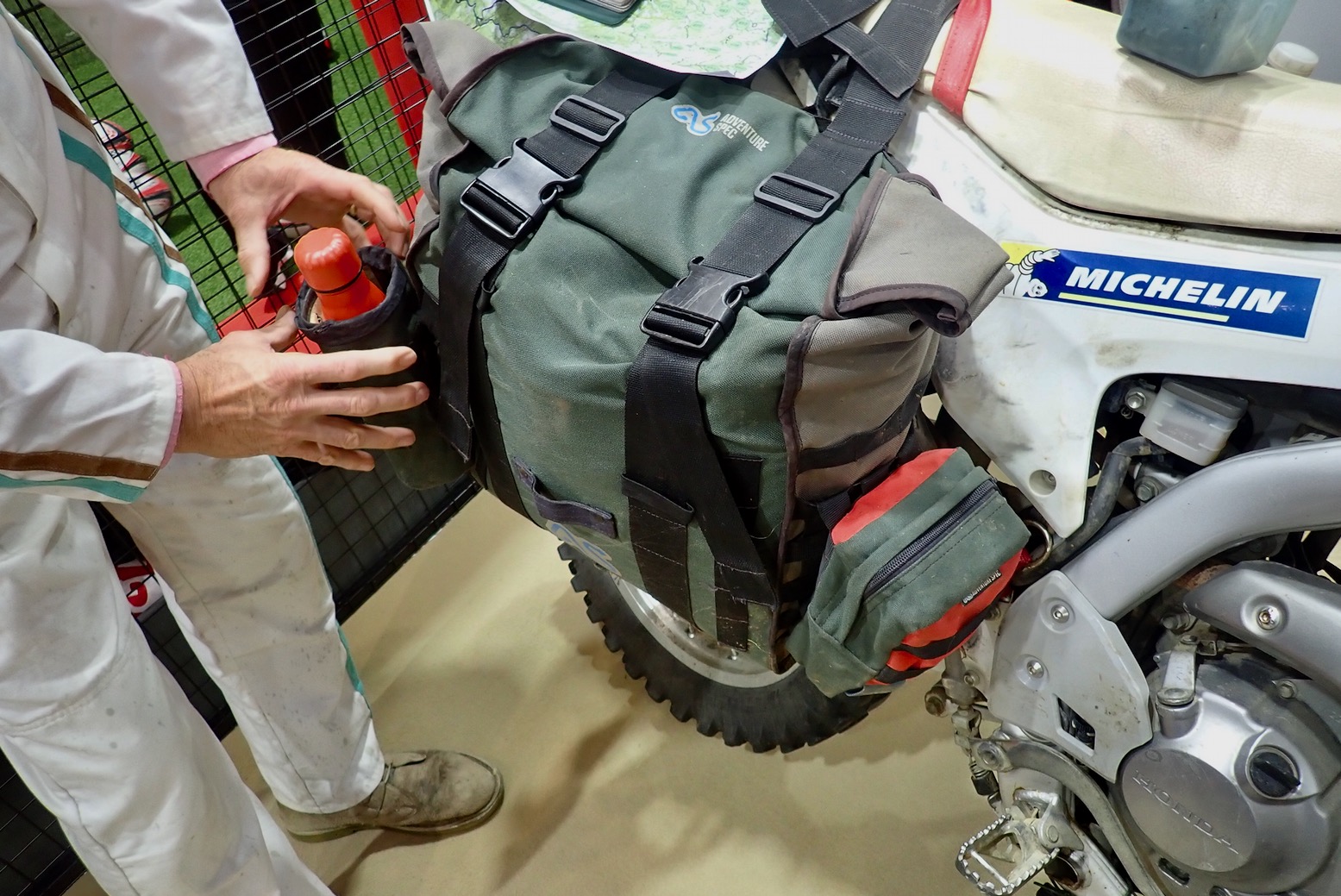
Austin Vince was on duty on the Honda stand and showed me round his Adventure Spec Magadan 3 panniers now with Molle strapping and non-black fabric, but no longer featuring the novel slash-proof aramid lining. Right now they’re on sale at 20% off at ASpec. That’s about 260 quid.
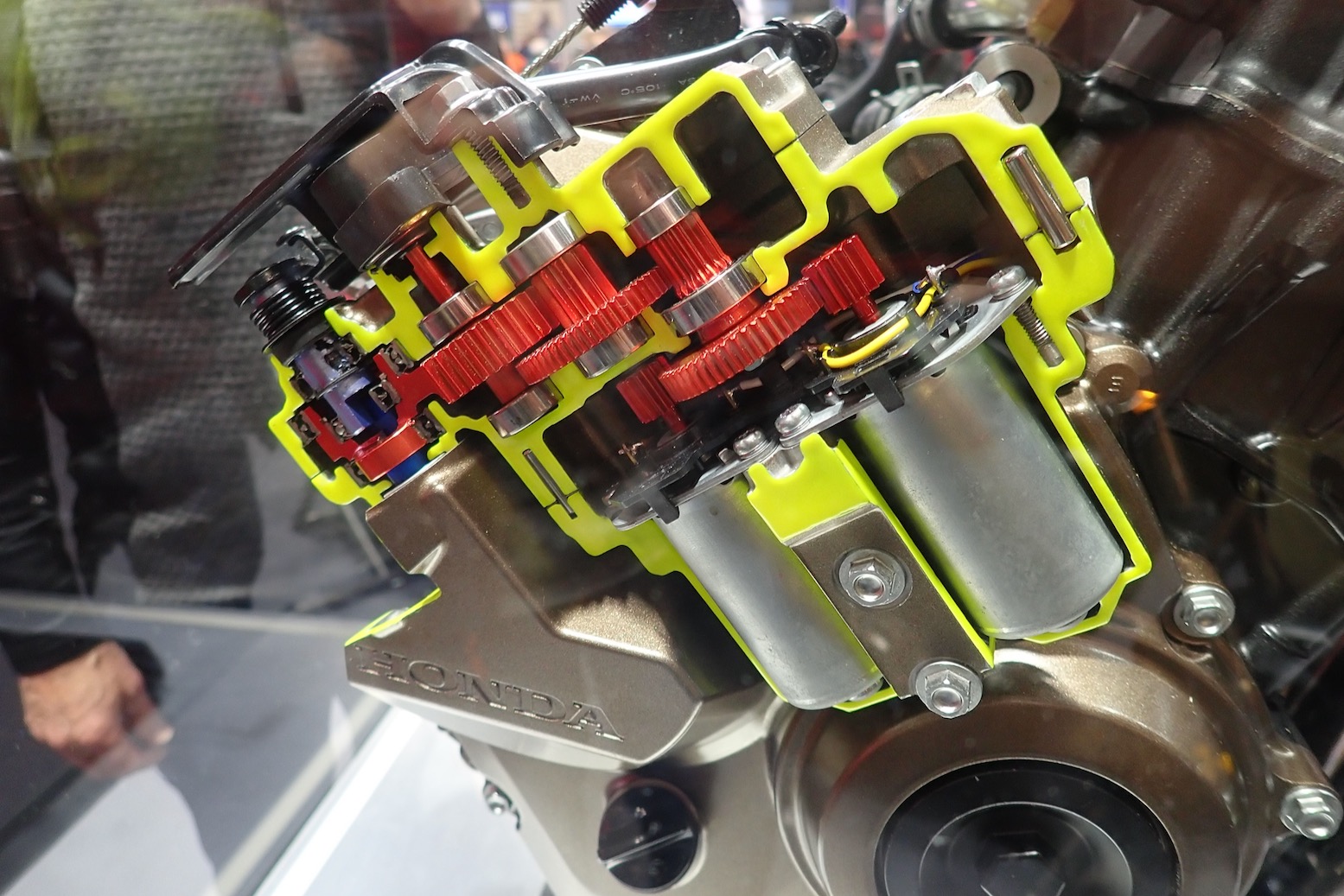
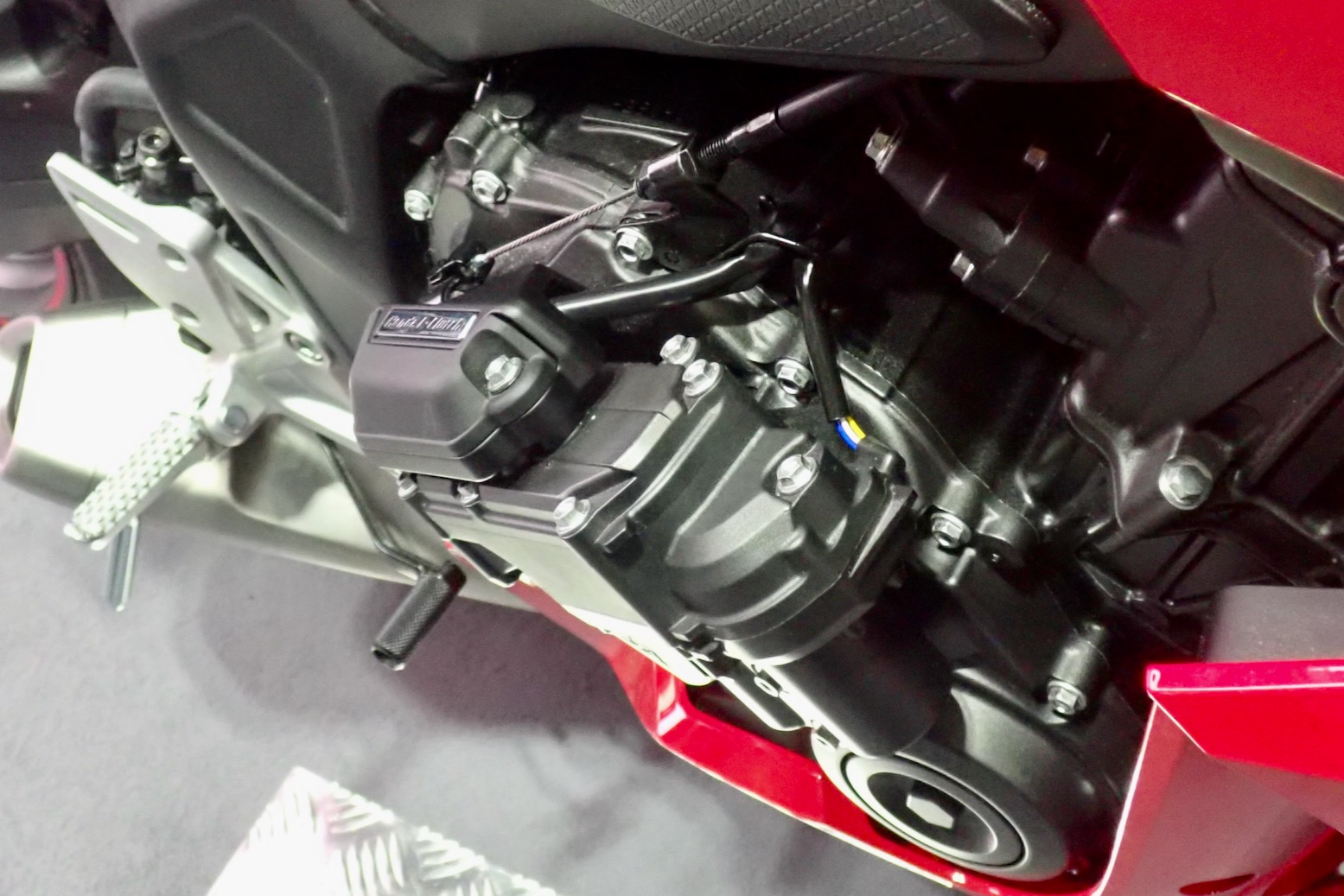
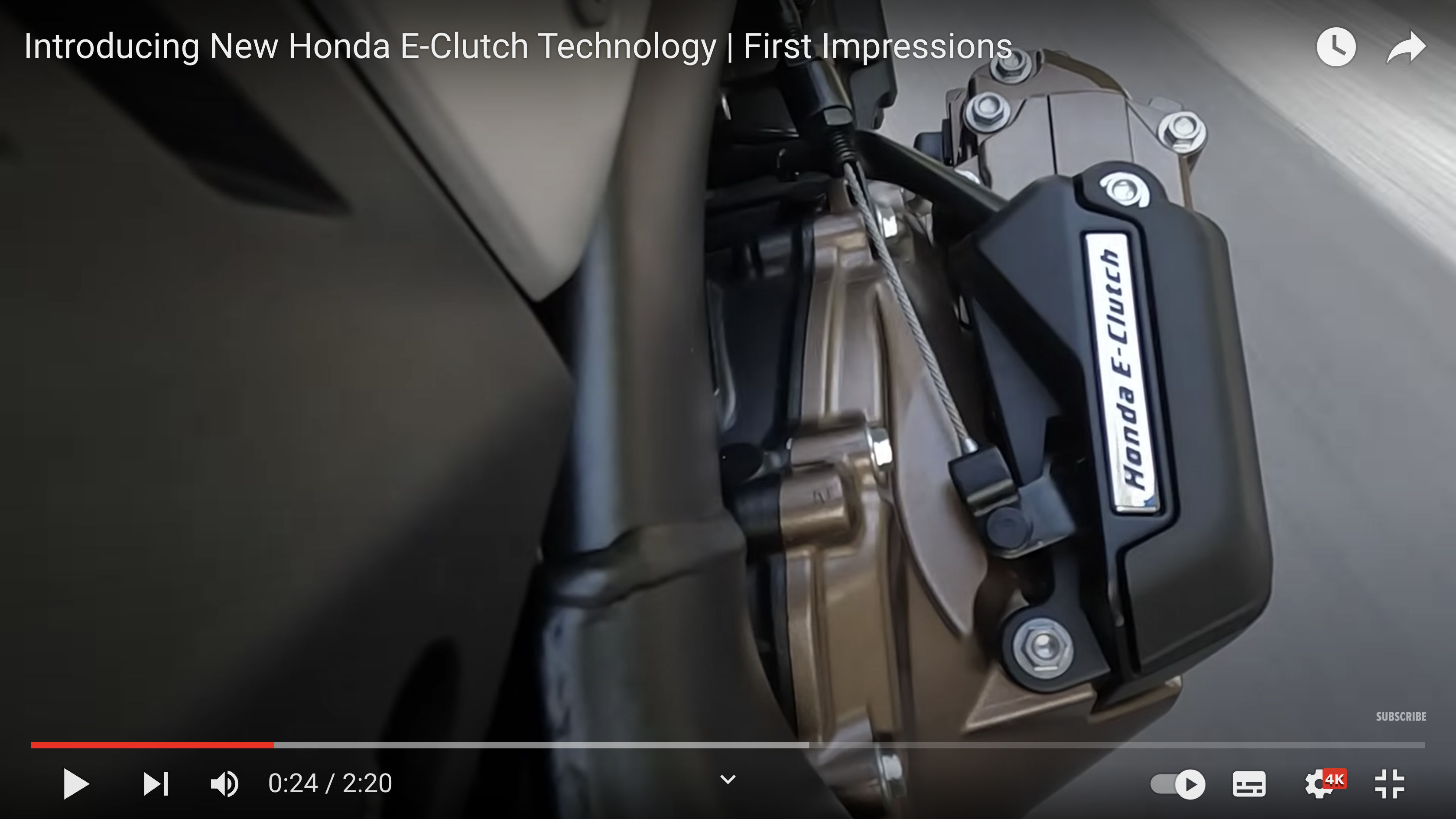
Being a fan of DCT but not its 10-kilo added mass, I also had a look at Honda’s new E-clutch. It’s an ingenious system of ECU-controlled servos to enable clutchless foot changing and even pulling away (while retaining a clutch lever), but as others have noted, it stills look a bit clamped-on and bulky. It’s only on the CB650 for now, but you can be sure it will spread to other models if it goes down as a smooth operator. I bet I’d be a convert.
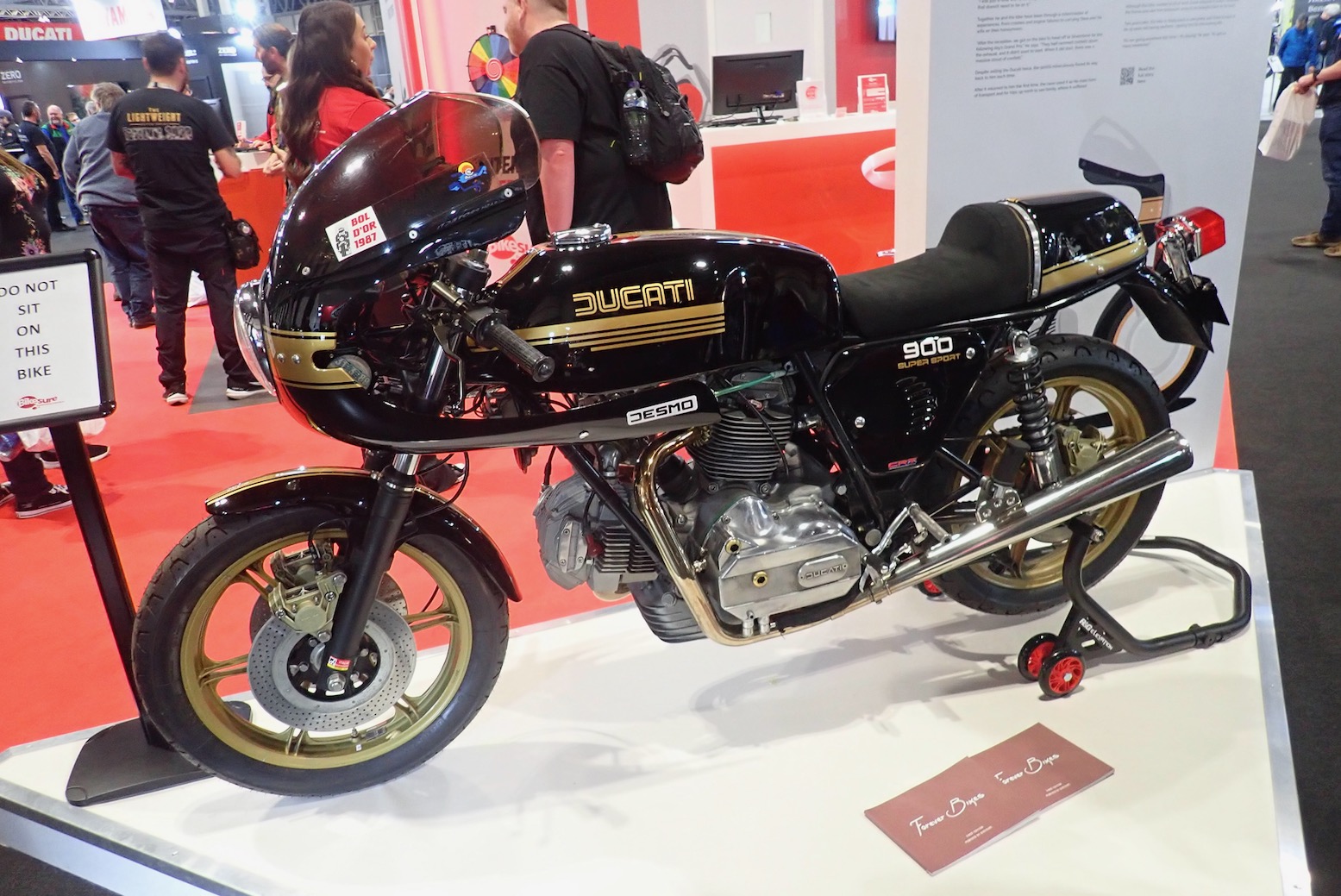
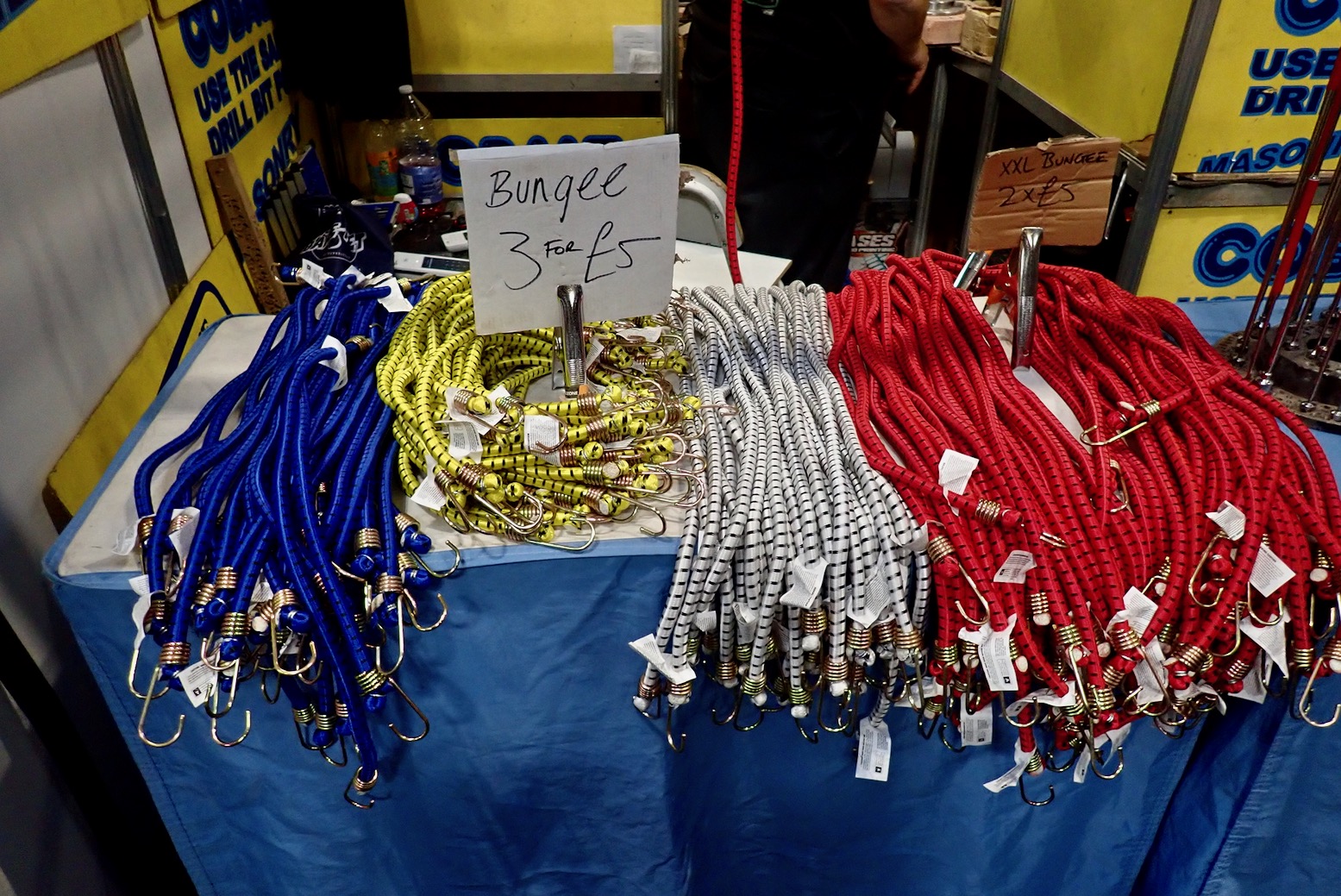
Nice also to see an example of my late 70s Ducati 900SS. What a machine to have at just 18 years old!Mosko Moto have a snazzy new range of colours in their apparel. I like this Rak pullover anorak idea as a bombproof, no-front leakage solution with a big roo pouch and other thoughtful detailing. For the last few weeks I’ve been wearing my MM Surveyor softshell jacket in Morocco which works just right in the warm temps down there. I’m considering going softshell on my trousers too – my sun-bleached, 6-year-old Klim Outrider jeans are now on ebay. I’ve deduced it’s not just the weight of the jeans, but the drag when getting on an off the bike. Stretchy fabric will see to this but without armour, won’t quite offer the same feeling of rugged Cotton-Cordura protection.Bungeeeeee!!
September 2025. After less than 2 years the pump’s battery would not hold its charge. I suppose that was my 20 quid’s worth.
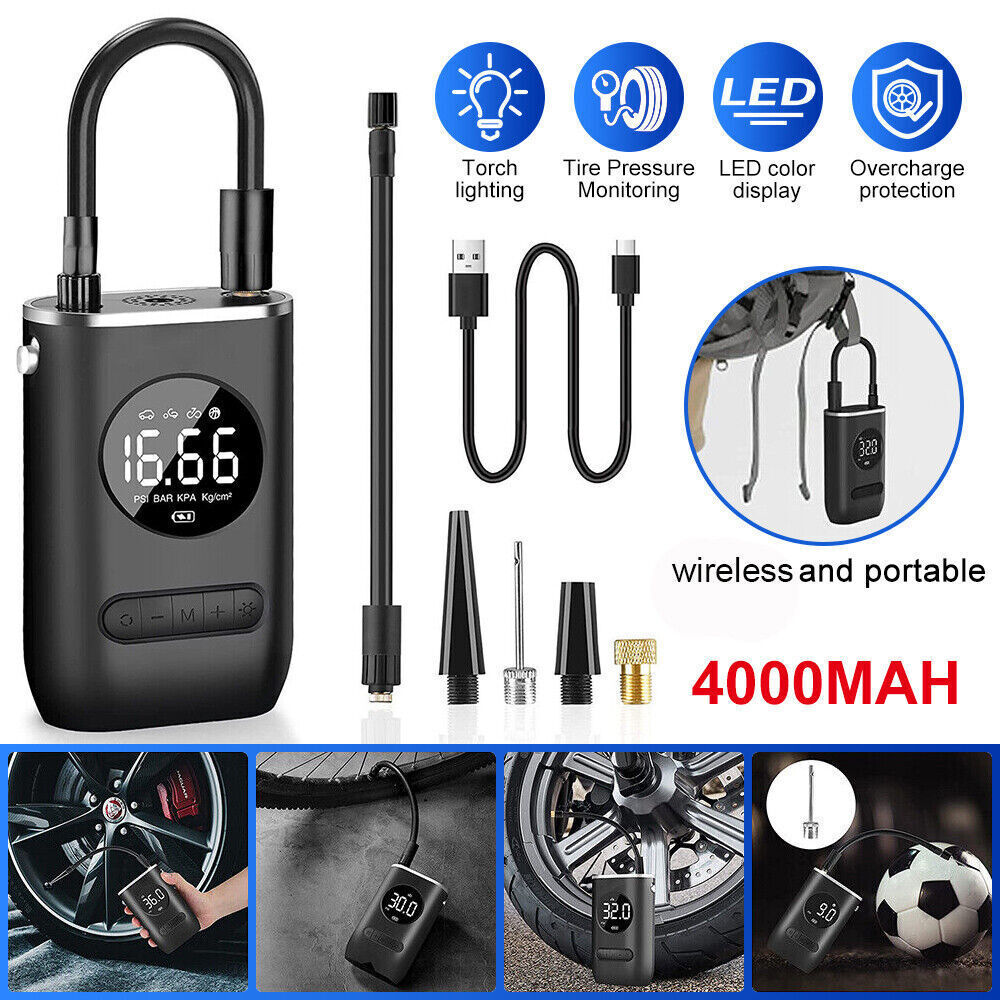
Robbo put me on to me this unbranded 4000 mAh USB rechargeable tyre pump. You’ll find the usual clones of clones of clones on ebay from around for even less now. Tbh, I don’t know exctly what 4000 mAh means in the grand scheme of things – battery capacity probably, not power, but it worked well for me.
Mine came with a bunch of unneeded nozzles and a Samsung-type USB-C? recharge cable. You turn it on, set the pressure you want (which stays in the memory) and press the middle button. Off it goes, pumping up a G310GS rear tyre from zero to 27psi in about 5 minutes without getting hot and while being dead easy to read. There’s a torch, too. It weighs 420g. A handpump fyi, weights 100g. Remember, with pumps ignore some notional ‘150psi!’ figure which they might manage in a small-volume pushbike tyre. It is the much less often quoted flow rate or cfm that counts. This one is probably a lot less than < 1cfm and all pumps will slow down as they pass 1 bar or so. It’s how fast they can keep pushing to a typical 25-30 psi (2 bar) that counts.
I also used it daily to top-up the slow-leaking rear tubeless tyre on my CRF. Yes, a bike-battery 12-volt powered compressor like my 2002 Best Rest Cycle Pump (left; 760g) is about the same size, weight and power, but for quick, cable-free top-ups it’s one less thing to wire-up or plug in. It vibrates less and makes less noise than my old Cycle Pump too, and recharges off mains in a couple of hours. I’d guess it would take at least 30 minutes of pumping to flatten the battery. I never got close, and of course you could do it on the move via a bike’s USB plug or off a power bank.
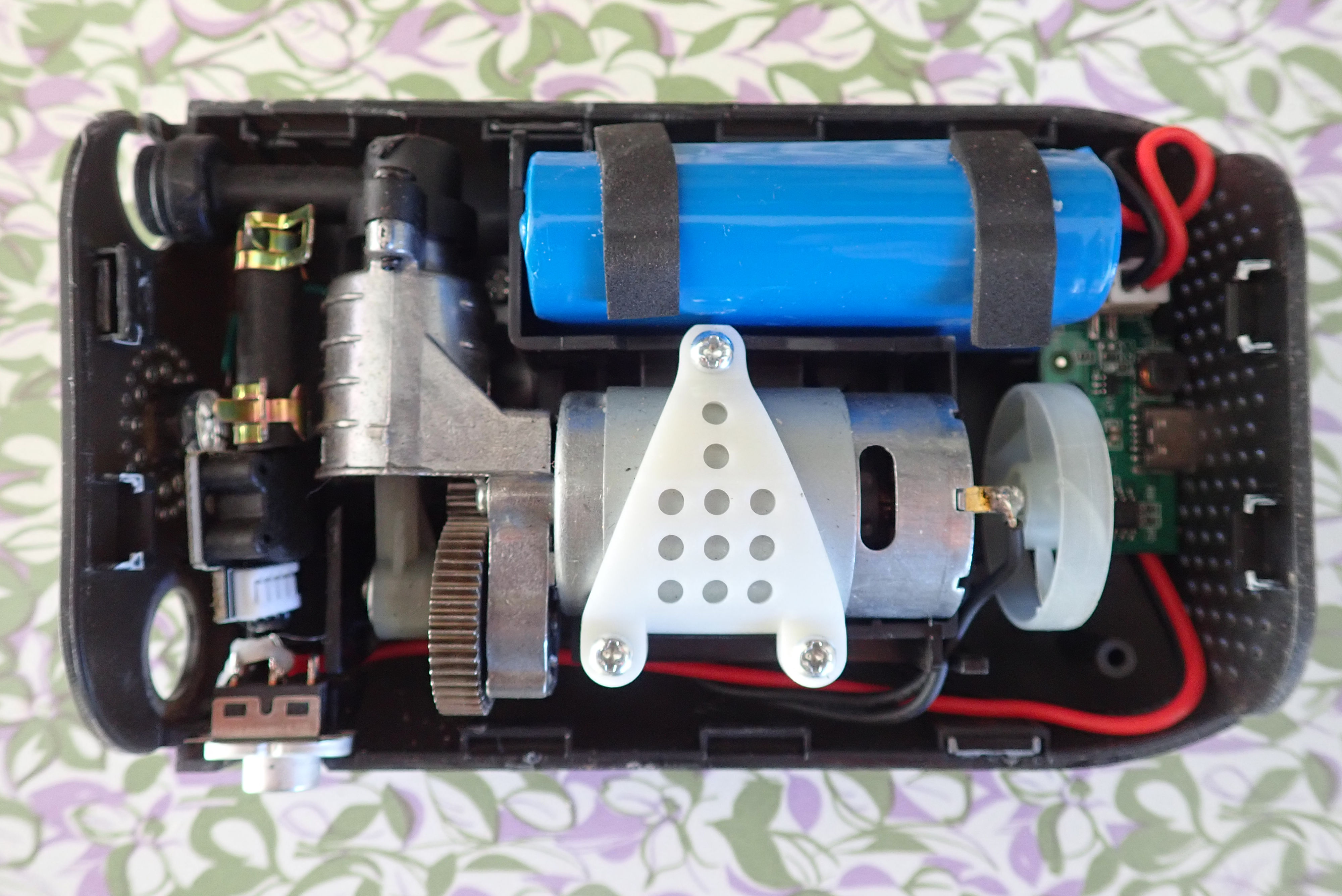
The elephant in the pump house is of course the durability of unbranded Chinese gadgets, but that applies to 12-volt pumps too, if not everything. I tumbled one time in front of some impressed village boys and rolled on my back which cracked the pump’s housing but it kept going fine. On a long trip I’d pack a manual back-up pushbike pump (search ‘Crank Bros’ and go from there). But for what I do in Morocco I retired the Best Rest and relied on this handy USB pump in the tank bag until it dies on me. That day has come: two years in it’s not holding its charge. But the 20 investment has paid back. Next one will be a bit more compact
I can probably dig the pump out of the dead unit and wire it to the bike battery.
















 Adventure Motorcycling Handbook